Requirements-Driven Mediation
for Collaborative Security
Amel Bennaceur*, Arosha Bandara*, Michael Jackson*,Wei Liu*,
Lionel Montrieux*,TheinThanTun* ,YijunYu*, Bashar Nuseibeh*
*The Open University, UK
+Lero, Ireland
SEAMS 2014
+
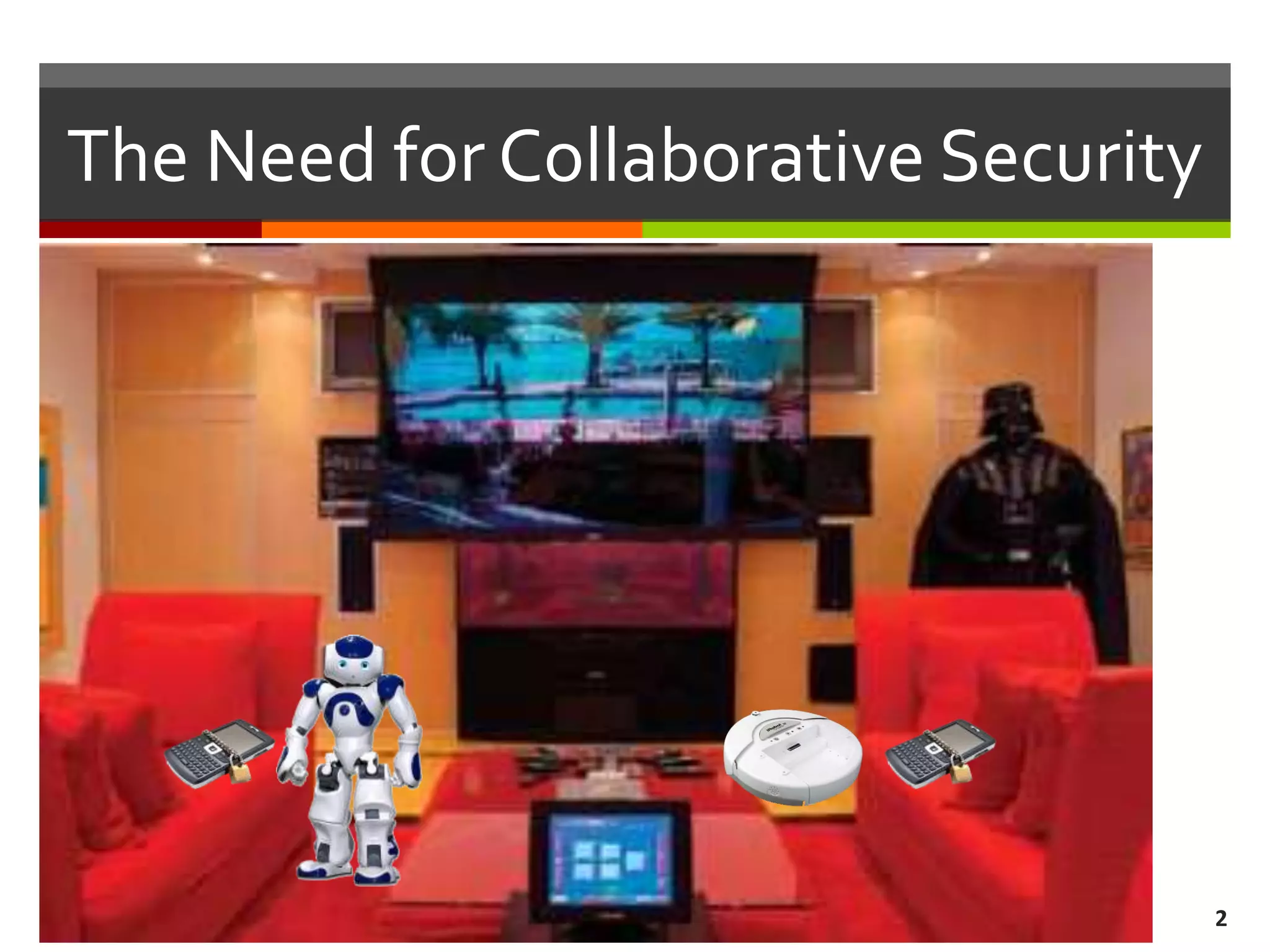
The Need for Collaborative Security
2
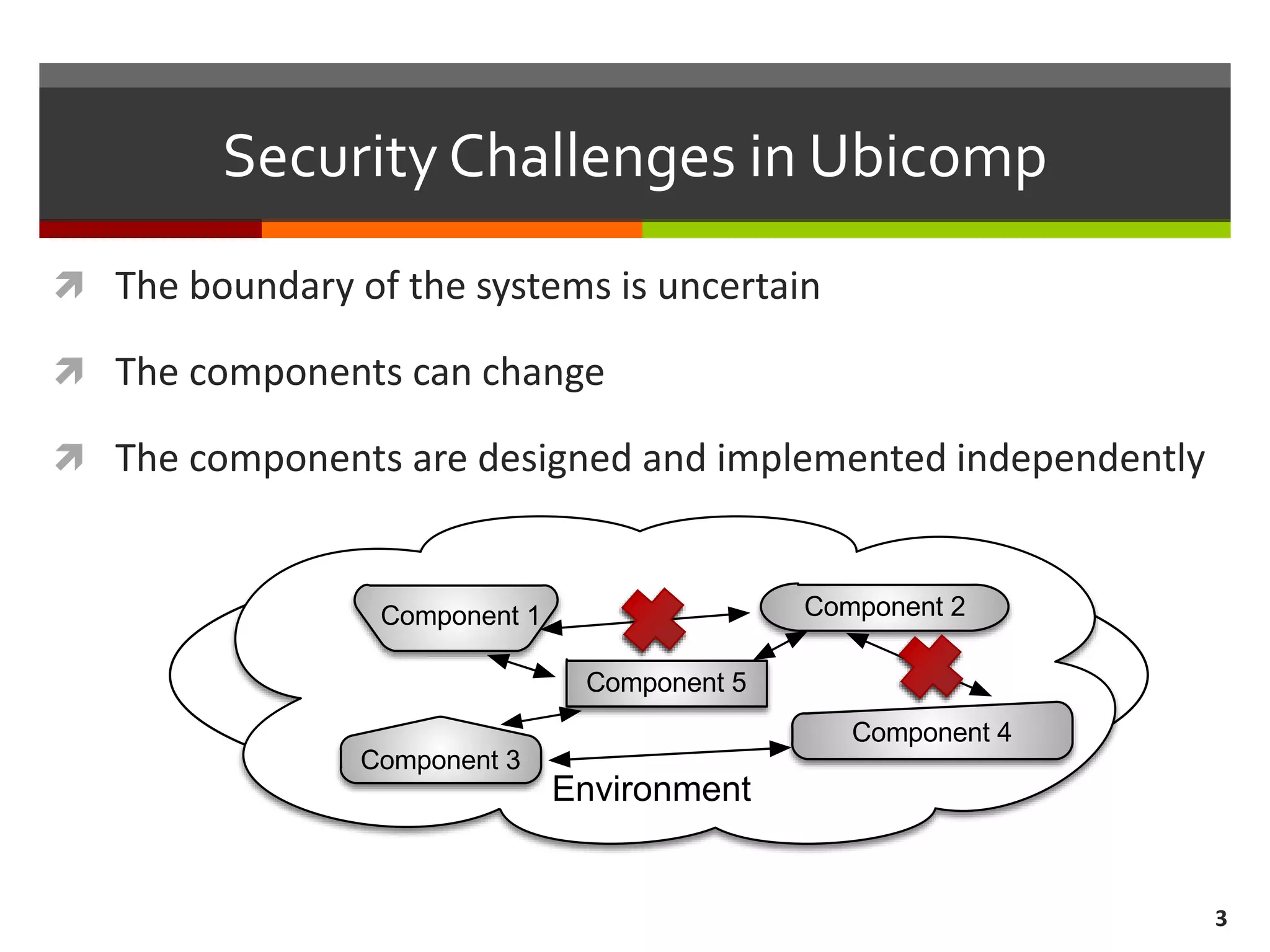
Security Challenges in Ubicomp
 The boundary of the systems is uncertain
 The components can change
 The components are designed and implemented independently
3
Environment
Component 1
Component 3
Component 5
Component 2
Component 4
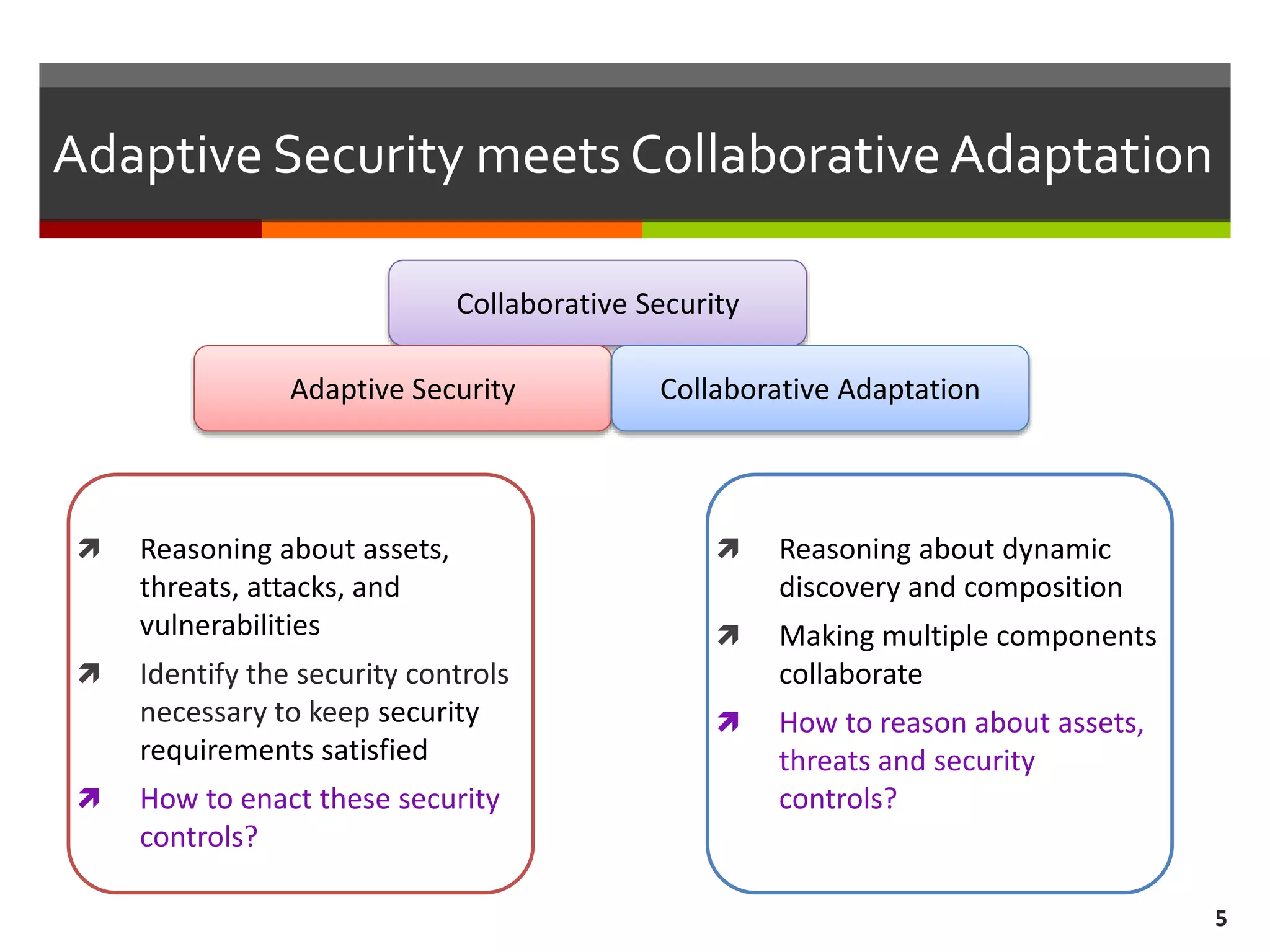
Collaborative Security
 Making multiple, heterogeneous, software-intensive
components collaborate in order to meet security
requirements
 Coping with changes in
 Changes in the environment
 Changes in the assets under protection and their values
 Discovery of new threats and vulnerabilities
4
5
Collaborative Security
Adaptive Security
 Reasoning about assets,
threats, attacks, and
vulnerabilities
 Identify the security controls
necessary to keep security
requirements satisfied
 How to enact these security
controls?
 Reasoning about dynamic
discovery and composition
 Making multiple components
collaborate
 How to reason about assets,
threats and security
controls?
Collaborative Adaptation
Adaptive Security meets CollaborativeAdaptation
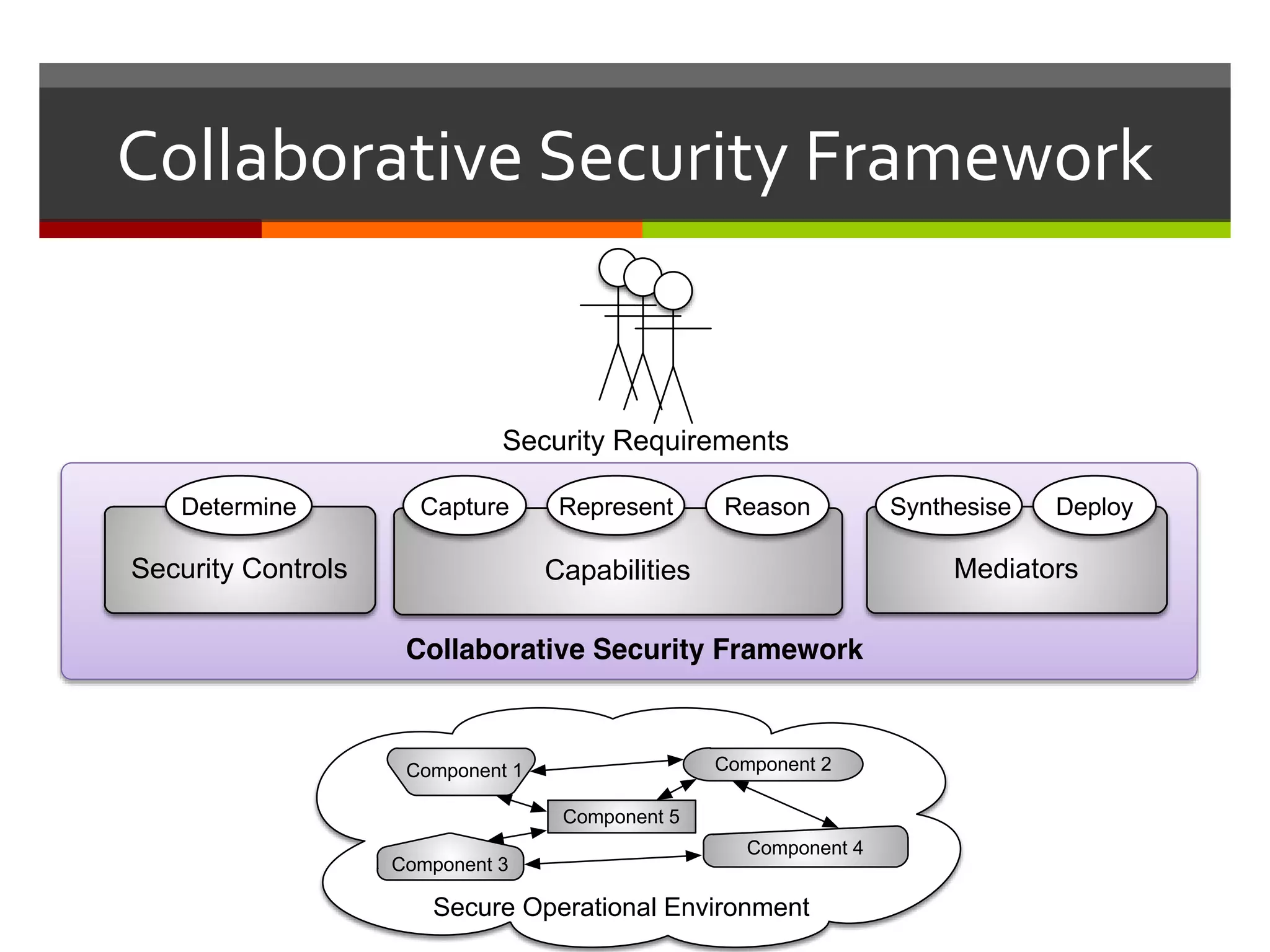
Capabilities
Collaborative Security Framework
Component 1 Component 2
Component 3
Component 4
Secure Operational Environment
Component 5
Security Requirements
Security Controls Mediators
Determine Capture Represent Reason Synthesise Deploy
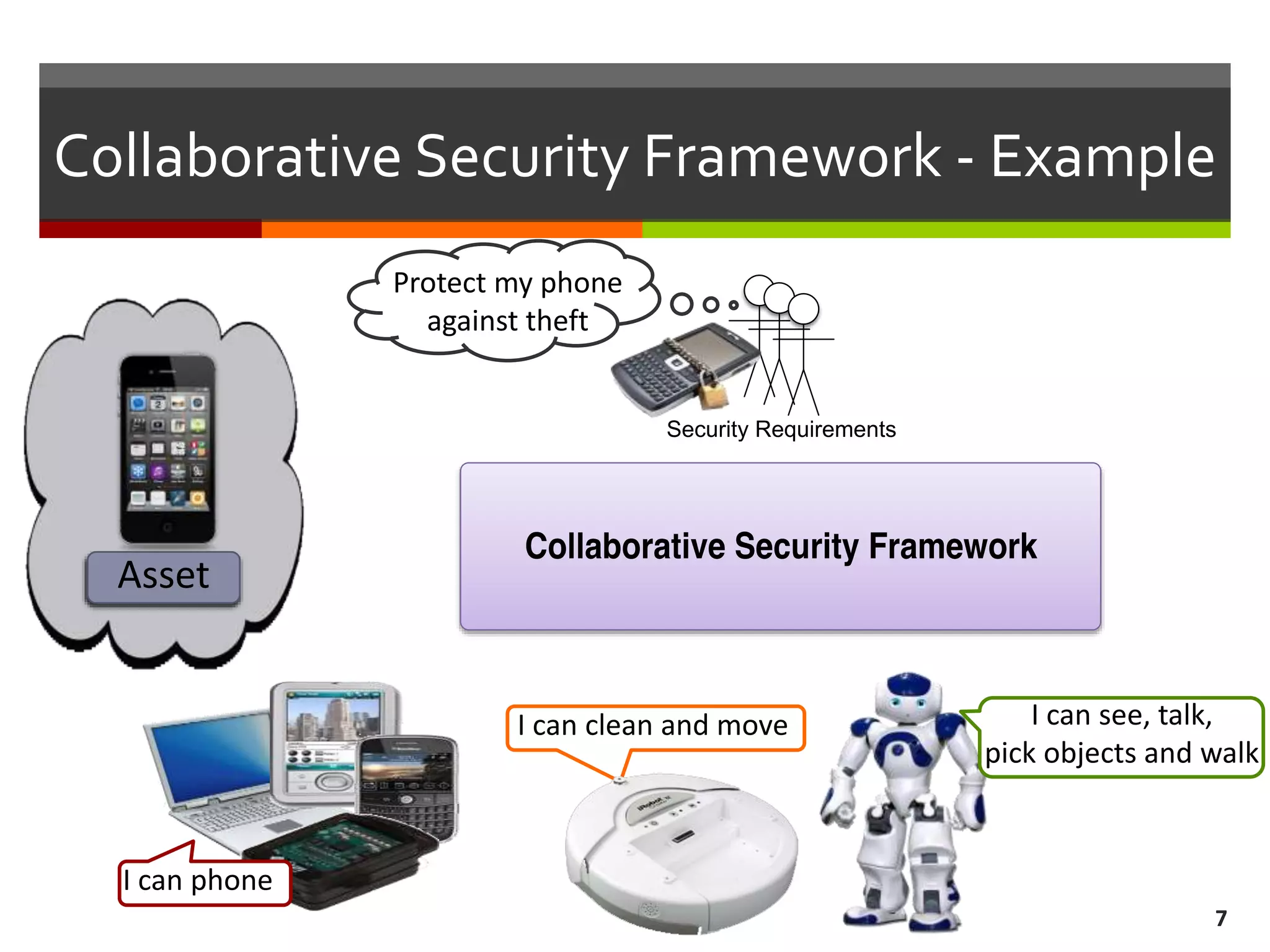
Collaborative Security Framework - Example
7
Security Requirements
I can see, talk,
pick objects and walk
I can clean and move
I can phone
Asset
Protect my phone
against theft
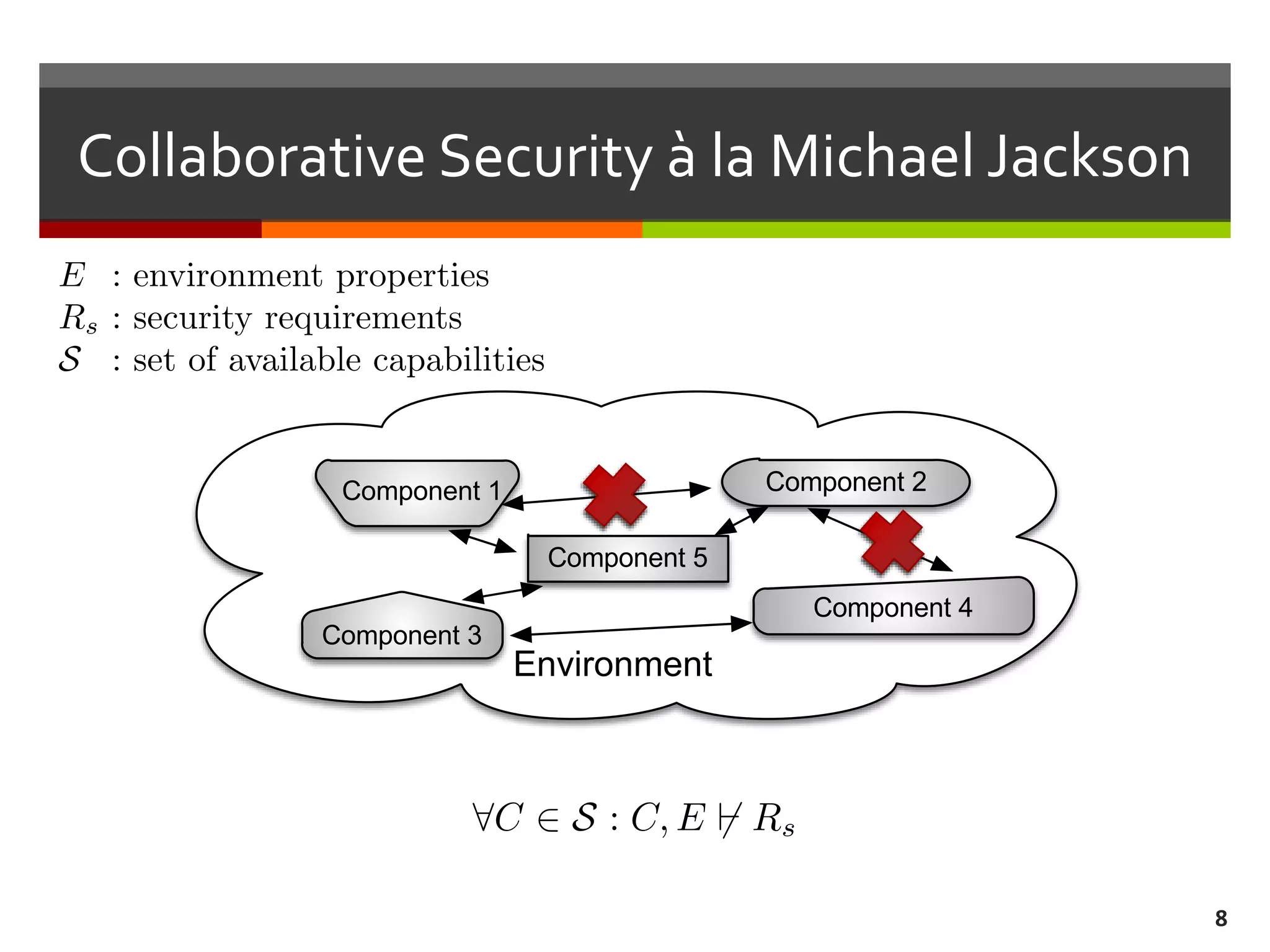
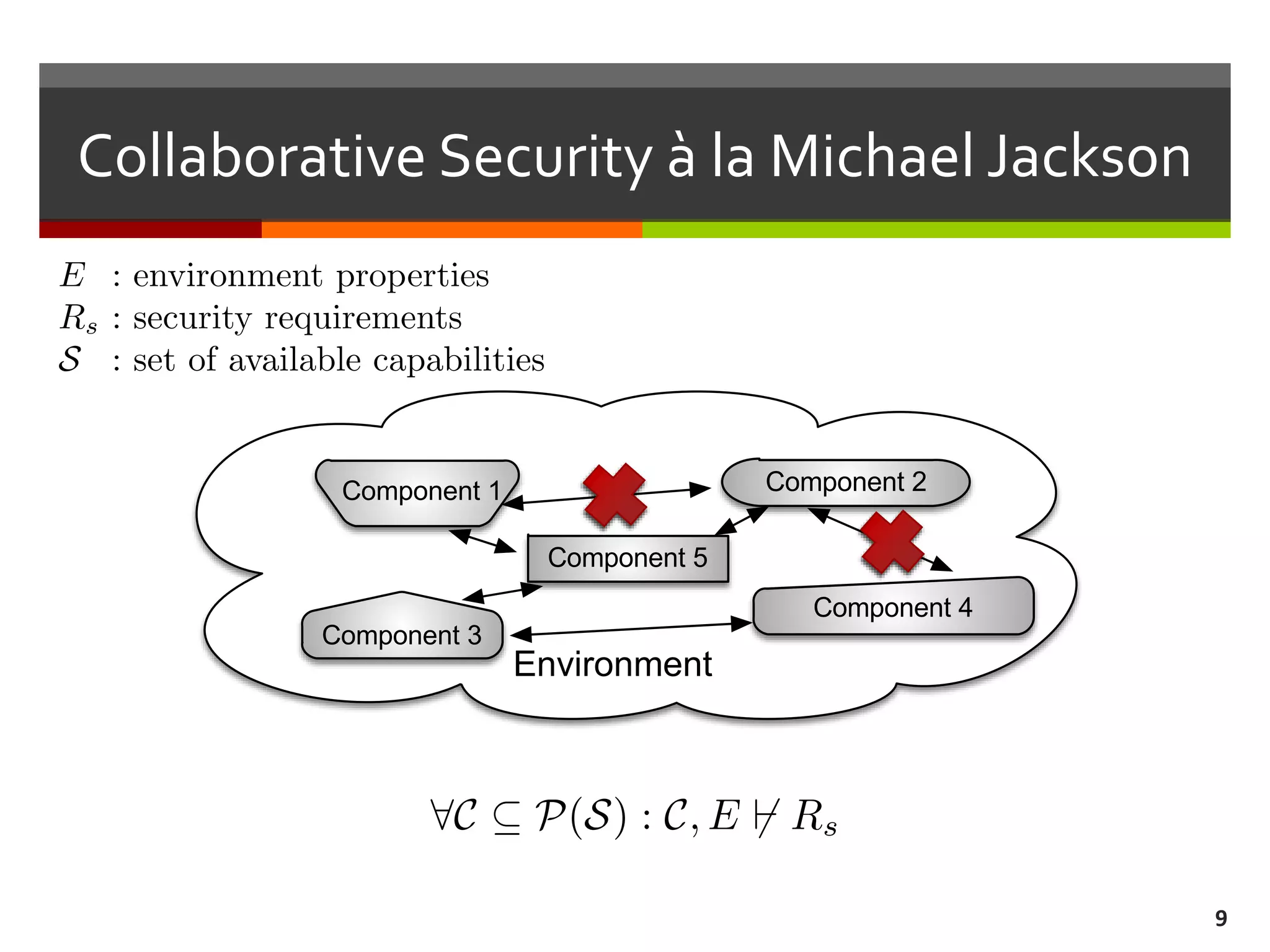
Collaborative Security à la Michael Jackson
8
Environment
Component 1
Component 3
Component 5
Component 2
Component 4
Collaborative Security à la Michael Jackson
9
Environment
Component 1
Component 3
Component 5
Component 2
Component 4
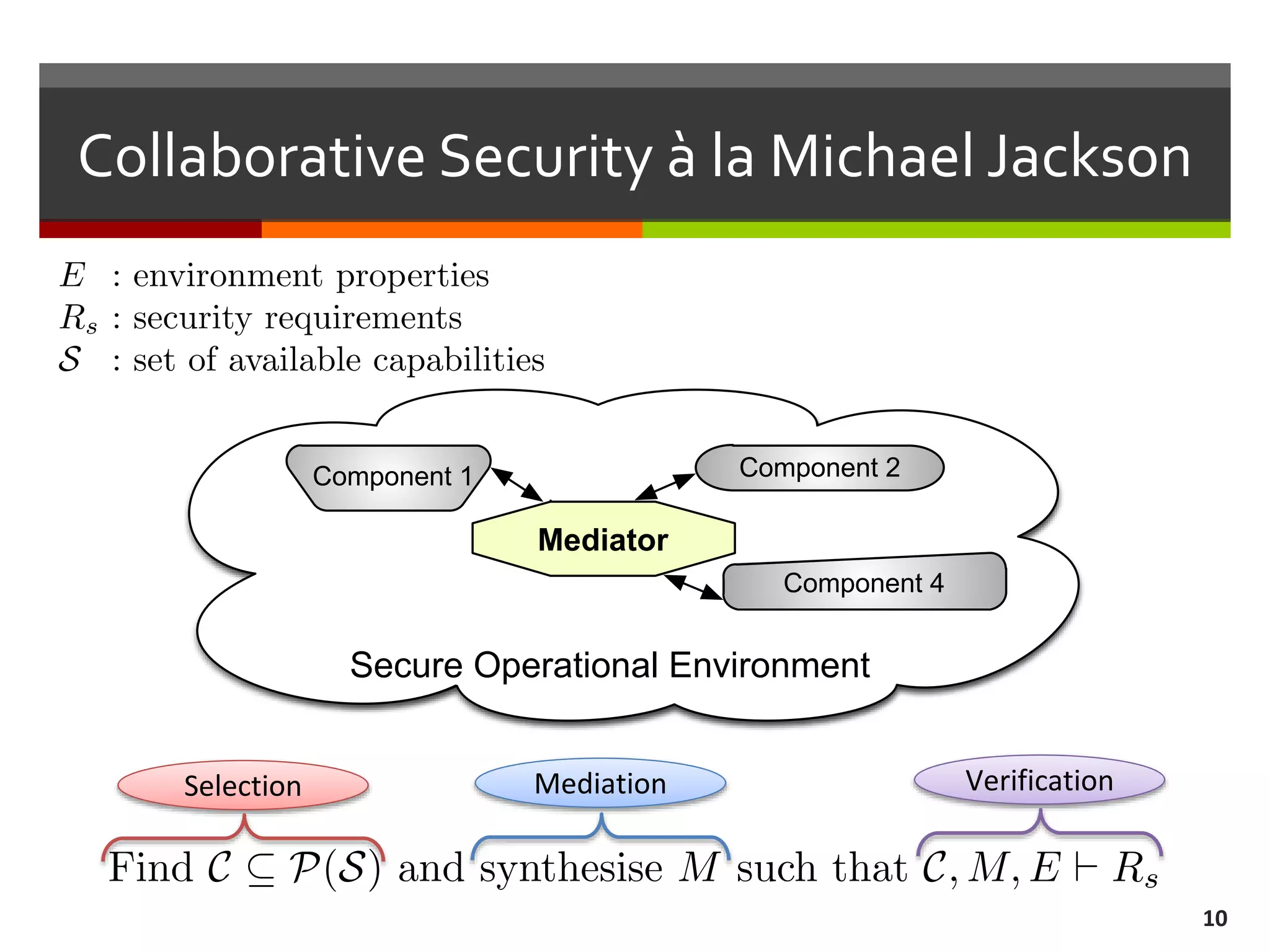
Collaborative Security à la Michael Jackson
10
Environment
Component 1
Component 3
Component 5
Component 2
Component 4
Component 1 Component 2
Component 4
Secure Operational Environment
Mediator
Selection Mediation Verification
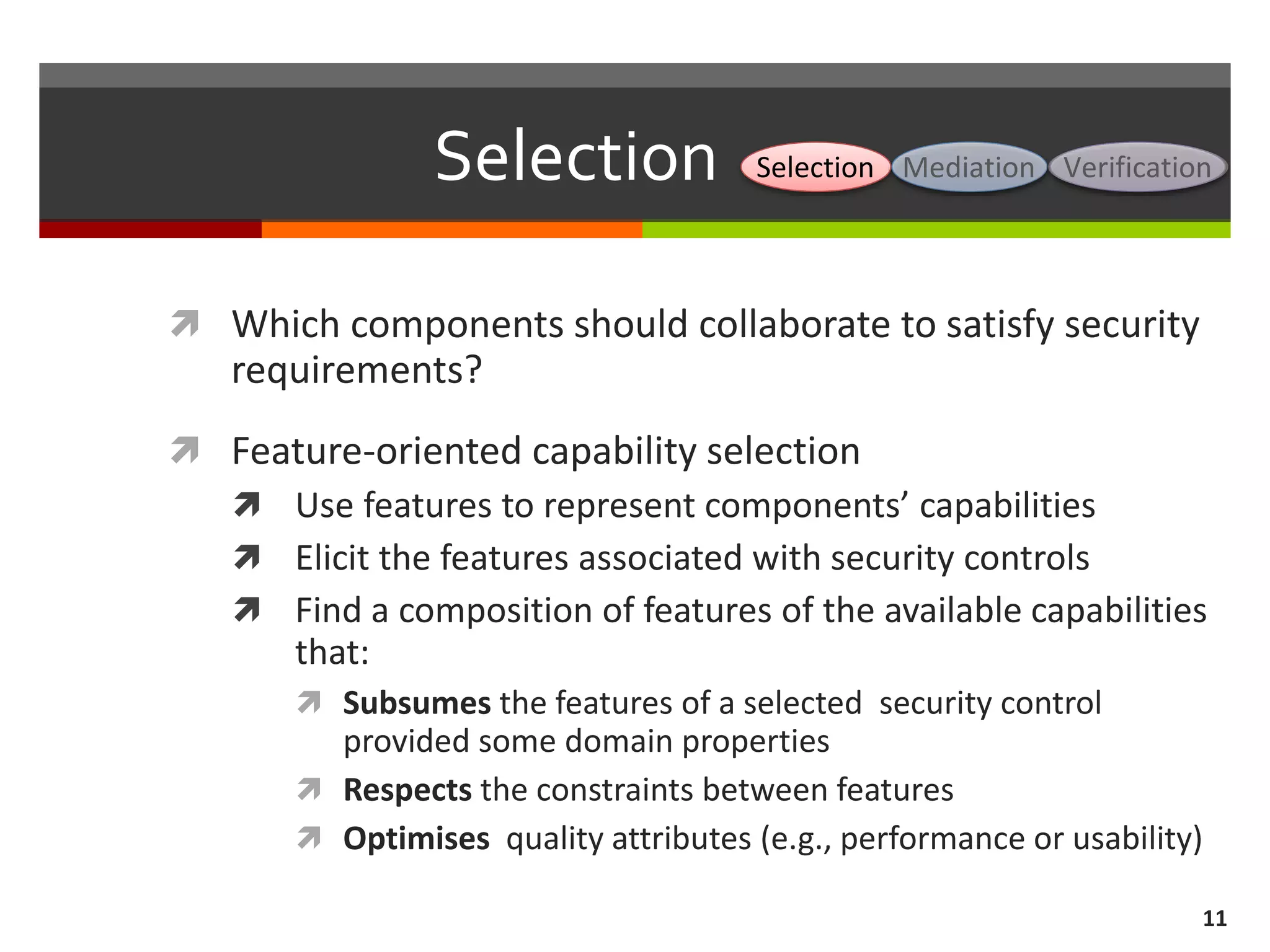
Selection
 Which components should collaborate to satisfy security
requirements?
 Feature-oriented capability selection
 Use features to represent components’ capabilities
 Elicit the features associated with security controls
 Find a composition of features of the available capabilities
that:
 Subsumes the features of a selected security control
provided some domain properties
 Respects the constraints between features
 Optimises quality attributes (e.g., performance or usability)
11
Selection Mediation Verification
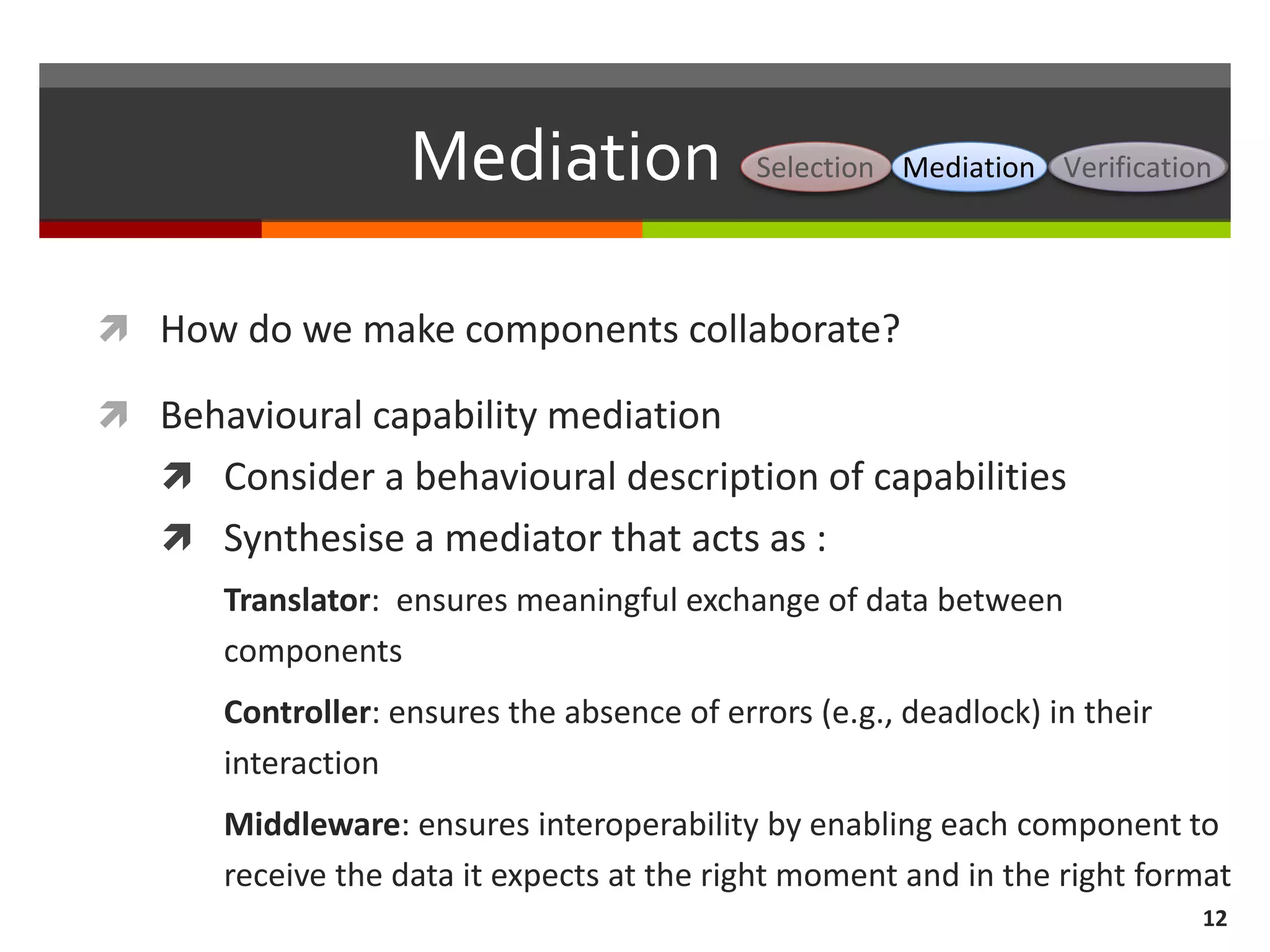
Mediation
 How do we make components collaborate?
 Behavioural capability mediation
 Consider a behavioural description of capabilities
 Synthesise a mediator that acts as :
Translator: ensures meaningful exchange of data between
components
Controller: ensures the absence of errors (e.g., deadlock) in their
interaction
Middleware: ensures interoperability by enabling each component to
receive the data it expects at the right moment and in the right format
12
Selection Mediation Verification
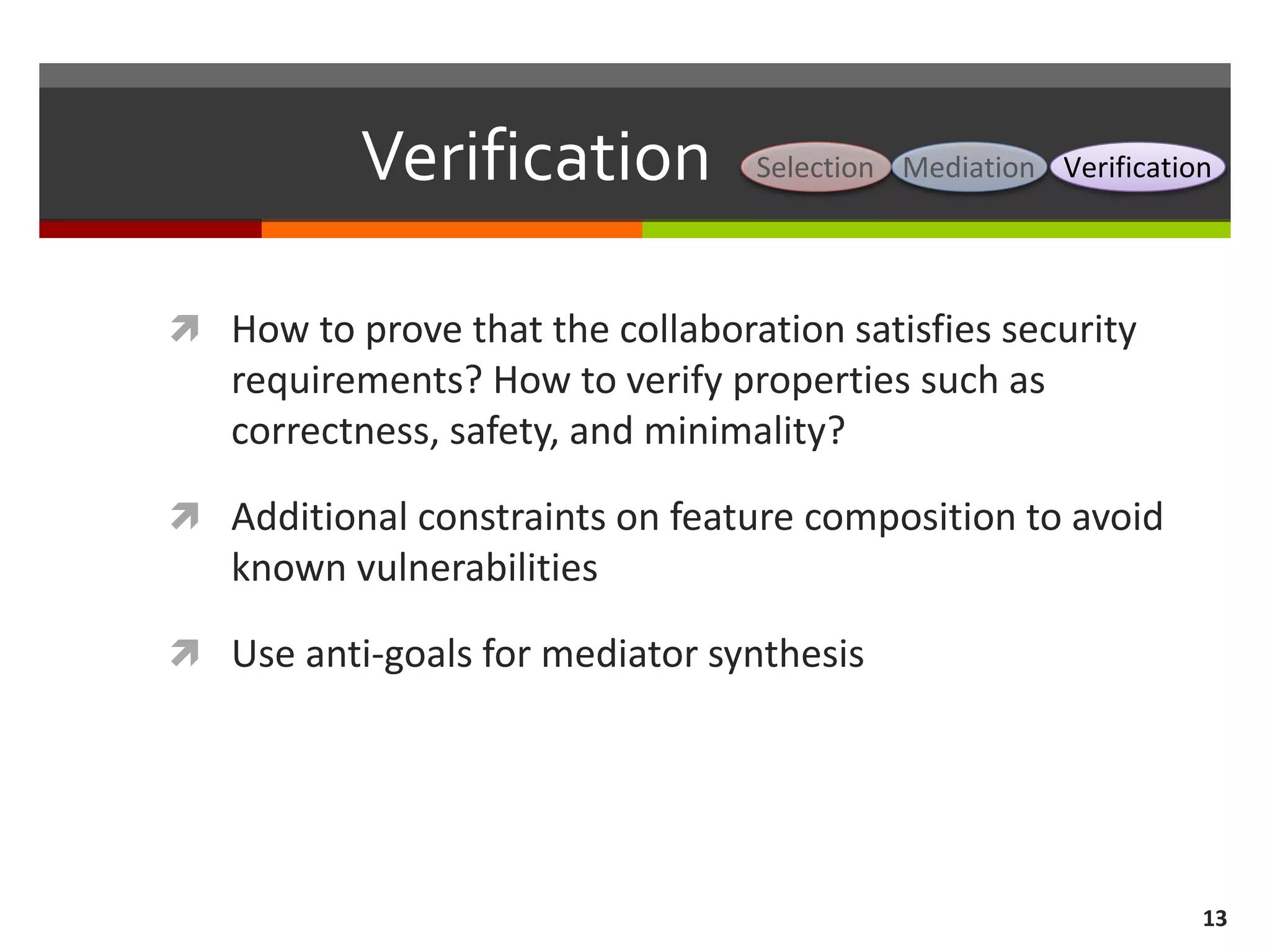
Verification
 How to prove that the collaboration satisfies security
requirements? How to verify properties such as
correctness, safety, and minimality?
 Additional constraints on feature composition to avoid
known vulnerabilities
 Use anti-goals for mediator synthesis
13
Selection Mediation Verification
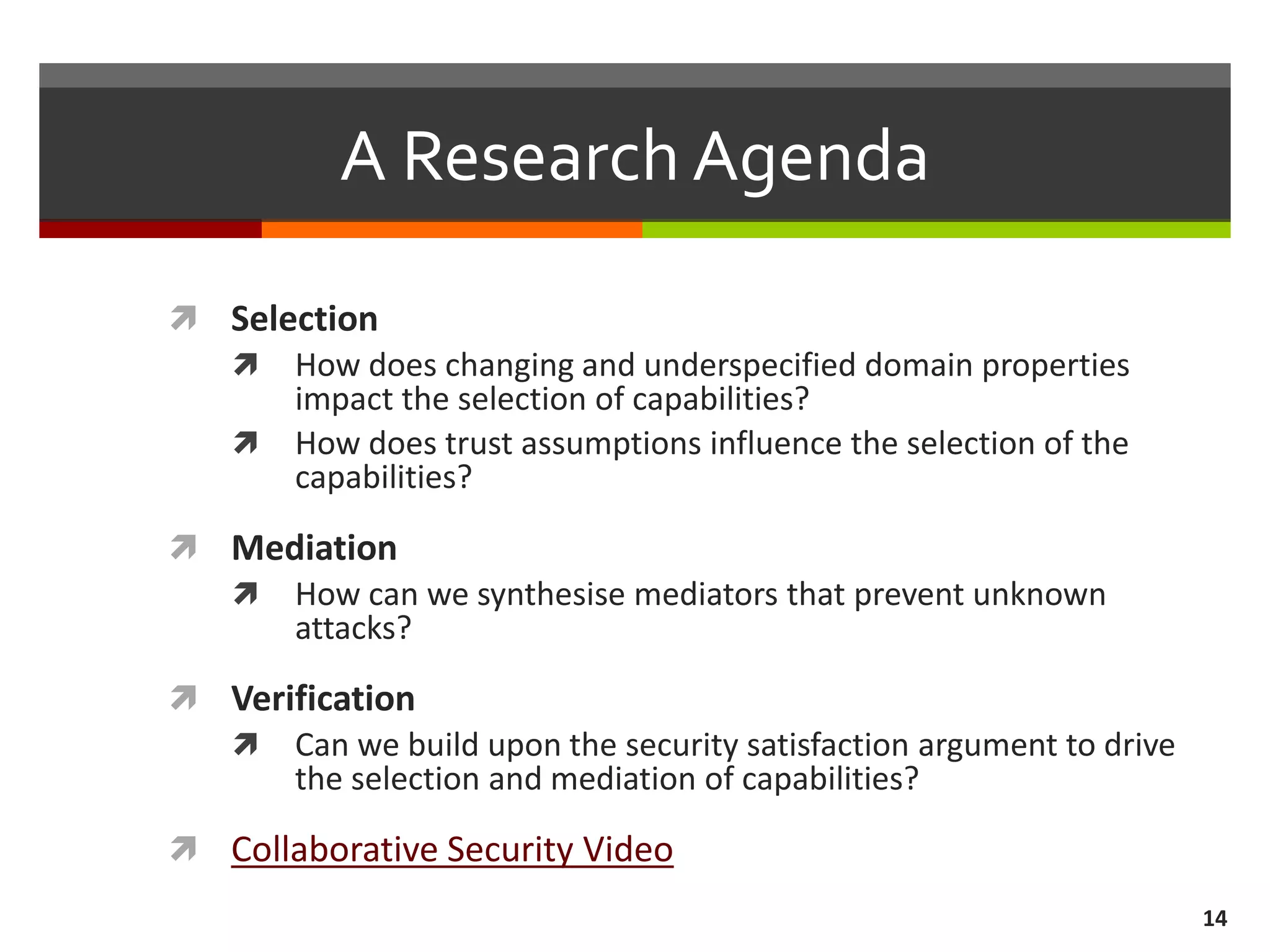
A Research Agenda
 Selection
 How does changing and underspecified domain properties
impact the selection of capabilities?
 How does trust assumptions influence the selection of the
capabilities?
 Mediation
 How can we synthesise mediators that prevent unknown
attacks?
 Verification
 Can we build upon the security satisfaction argument to drive
the selection and mediation of capabilities?
 Collaborative Security Video
14
Thank you
www.amel.me
Adaptive Security and Privacy
www.asap-project.eu

Requirements-Driven Mediation for Collaborative Security

  • 1.
    Requirements-Driven Mediation for CollaborativeSecurity Amel Bennaceur*, Arosha Bandara*, Michael Jackson*,Wei Liu*, Lionel Montrieux*,TheinThanTun* ,YijunYu*, Bashar Nuseibeh* *The Open University, UK +Lero, Ireland SEAMS 2014 +
  • 2.
    The Need forCollaborative Security 2
  • 3.
    Security Challenges inUbicomp  The boundary of the systems is uncertain  The components can change  The components are designed and implemented independently 3 Environment Component 1 Component 3 Component 5 Component 2 Component 4
  • 4.
    Collaborative Security  Makingmultiple, heterogeneous, software-intensive components collaborate in order to meet security requirements  Coping with changes in  Changes in the environment  Changes in the assets under protection and their values  Discovery of new threats and vulnerabilities 4
  • 5.
    5 Collaborative Security Adaptive Security Reasoning about assets, threats, attacks, and vulnerabilities  Identify the security controls necessary to keep security requirements satisfied  How to enact these security controls?  Reasoning about dynamic discovery and composition  Making multiple components collaborate  How to reason about assets, threats and security controls? Collaborative Adaptation Adaptive Security meets CollaborativeAdaptation
  • 6.
    Capabilities Collaborative Security Framework Component1 Component 2 Component 3 Component 4 Secure Operational Environment Component 5 Security Requirements Security Controls Mediators Determine Capture Represent Reason Synthesise Deploy
  • 7.
    Collaborative Security Framework- Example 7 Security Requirements I can see, talk, pick objects and walk I can clean and move I can phone Asset Protect my phone against theft
  • 8.
    Collaborative Security àla Michael Jackson 8 Environment Component 1 Component 3 Component 5 Component 2 Component 4
  • 9.
    Collaborative Security àla Michael Jackson 9 Environment Component 1 Component 3 Component 5 Component 2 Component 4
  • 10.
    Collaborative Security àla Michael Jackson 10 Environment Component 1 Component 3 Component 5 Component 2 Component 4 Component 1 Component 2 Component 4 Secure Operational Environment Mediator Selection Mediation Verification
  • 11.
    Selection  Which componentsshould collaborate to satisfy security requirements?  Feature-oriented capability selection  Use features to represent components’ capabilities  Elicit the features associated with security controls  Find a composition of features of the available capabilities that:  Subsumes the features of a selected security control provided some domain properties  Respects the constraints between features  Optimises quality attributes (e.g., performance or usability) 11 Selection Mediation Verification
  • 12.
    Mediation  How dowe make components collaborate?  Behavioural capability mediation  Consider a behavioural description of capabilities  Synthesise a mediator that acts as : Translator: ensures meaningful exchange of data between components Controller: ensures the absence of errors (e.g., deadlock) in their interaction Middleware: ensures interoperability by enabling each component to receive the data it expects at the right moment and in the right format 12 Selection Mediation Verification
  • 13.
    Verification  How toprove that the collaboration satisfies security requirements? How to verify properties such as correctness, safety, and minimality?  Additional constraints on feature composition to avoid known vulnerabilities  Use anti-goals for mediator synthesis 13 Selection Mediation Verification
  • 14.
    A Research Agenda Selection  How does changing and underspecified domain properties impact the selection of capabilities?  How does trust assumptions influence the selection of the capabilities?  Mediation  How can we synthesise mediators that prevent unknown attacks?  Verification  Can we build upon the security satisfaction argument to drive the selection and mediation of capabilities?  Collaborative Security Video 14
  • 15.
    Thank you www.amel.me Adaptive Securityand Privacy www.asap-project.eu

Editor's Notes

  • #12 Add the service pt of view