INFORMATION TO USERS
This dissertation was produced from a m icrofilm copy of the original document.
W hile the most advanced technological means to photograph and reproduce this
document have been used, the quality is heavily dependent upon the quality of
the original submitted.
The following explanation of techniques is provided to help you understand
markings or patterns which may appear on this reproduction.
1. The sign or "target" for pages apparently lacking from the document
photographed is "Missing Page(s)". If it was possible to obtain the
missing page(s) or section, they are spliced into the film along with
adjacent pages. This may have necessitated cutting thru an image and
duplicating adjacent pages to insure you complete continuity.
2. When an image on the film is obliterated with a large round black
mark, it is an indication th at the photographer suspected that the
copy may have moved during exposure and thus cause a blurred
image. You will find a good image of the page in the adjacent frame.
3. When a map, drawing or chart, etc., was part of the material being
p ho to g rap h ed the photographer followed a definite method in
"sectioning" the material. It is customary to begin photoing at the
upper left hand corner of a large sheet and to continue photoing from
left to right in equal sections with a small overlap. If necessary,
sectioning is continued again - beginning below the first row and
continuing on until complete.
4. The m ajority of users indicate that the textual content is of greatest
value, however, a somewhat higher quality reproduction could be
made from "photographs" if essential to the understanding o f the
dissertation. Silver prints of "photographs" may be ordered at
additional charge by writing the Order Department, giving the catalog
number, title, author and specific pages you wish reproduced.
UniversityMicrofilms
300 North Zeeb Road
Ann Arbor, Michigan 48106
A Xerox Education Company
13-860TLD3907 1 J
.23 Viggiano, F. Anthony, 1908-
1942 The production of musical programs in
•V5 senior high school; the administration,
production, and psychology of effective
musical performance... New York,
1942.
ix,153 typewritten leaves, illus.,
m a p , d i a g r s f o r m s . 29cm.
Final document (Ed.D.) - New York
university, School of education, 1942.
Bibliography: p.129-134.
A89477
Shelf List

Xerox University Microfilms, Ann Arbor, Michigan 48106
T H IS D IS S E R T A T IO N HAS BEEN M IC R O F IL M E D E X A C T L Y AS R E C E IV E D .
— ^
Pinal Doennenti ^ '* ■
Accepted, D a t e - D C l i ^ - ^
THE PRODUCTION OF MUSICAL PROGRAMS
IN SENIOR HIGH SCHOOL
The Administration, Production, and Psychology
of Effective Musical Performance
F. ANTHONY VIGGIANO
Submitted in partial fulfillment of the
requirements for the degree of Doctor of
Education In the School of Education of
New York University
19*2
PLEASE NOTE:
Some pages may have
indistinct print.
Filmed as received.
Univers ity Microfilms, A Xerox Education Company
ACKNOWLEDGMENTS
The writer ie indebted to the members of his sponsoring
committee for encouragement and guidance throughout the period
of the preparation of this study. This committee was made up
of Dr. Alonzo F. Myers, chairman; Assistant Professor Luther W.
Goodhart and Professor Hughes Mearns.
Gratitude is also expressed to Mr. Edgar Acker and Mr.
Thurston Munson for drawings; to Mr. Albert Raschi, a student
at the High School of Commerce, Springfield, Massachusetts, for
the photographs; to the executive staff at Radio City Music Hall;
to my wife Betty and to many others who aided in the study.
11
A S i 7 7
1
1
2
2
5
5
6
7
7
7
9
9
10
10
11
12
13
14
15
16
17
18
19
23
24
24
24
25
25
25
25
26
TABLE OF CONTENTS
PART I
THE PROBLEM
THE PROBLEM ..............................
Introduction .......... ..........
Purposes ...................... .
Scope........ ......................
PROCEDURE IN COLLECTING D A T A ......... .
Survey of Current Practices • • • • • •
Questionnaire....................
Literature •
Study of Professional Practices • • • •
Radio City Music Hall • • • . . .
Small Theatre Visitation ........
Experiments ................ .
QUESTIONNAIRE RESULTS...................
Findings......... • • . . ...........
Program Types ...................
Sponsoring and Financing • • . • •
Publicity . . . .................
Staging • .......................
Lighting.............. .
Printed Materials • • • • • • . .
Costuming ........... • •
Commencement Music • • • • • • •
GENERAL SUMMARY AND CONCLUSIONS ........
PART II
A PRODUCTION GUIDE FOR DIRECTORS OF MUSIC
IN SENIOR HIGH SCHOOLS
(A Handbook)
TYPES OF MUSICAL PROGRAMS . .
Naming the Program • • •
Formal Concert • • • • .
Assembly . . . ........
Christmas Program • • •
Music Festivals . • . .
Band Pageantry . . . .
Opera, Operetta, Pageant
Other Forms ..........
Ill
>
Chapter
VI.
VII.
VIII.
IX.
PROGRAM BUILDING.......................... |7
Attention •• ............ . . . . . . 27
Contrast ......... 28
Variety.......... ...................
C l i m a x ......................... 29
Novelty................. 29
Familiar Music ........... 31
Continuity • • • • • ................ 32
Unity ......... 32
Length ................. 32
ORGANIZATION AND ADMINISTRATION . . . . . . 33
Scientific Management • 34
Scheduling . . . . . . .............. 35
Committees • • • • . • • .......... • 36
Co-workers • • • • .................. 37
Financing ........................ 39
Miscellaneous Items • • • • • • • • • • 40
PUBLICITY................................ 42
Planning . . . . . ............ . . . 42
Writing.............................. 43
Photographs............. 43
Posters......... 46
Assembly S k i t s ............... 46
Mimeographed Announcements • • • • • . 46
Other Forms . . • • • • • • • ........ 47
PROGRAMS AND TICKETS...................... 49
The Program.......................... 49
Creating the Mood ......... 50
Design . . . . . . . . . . . . . . 52
Program Content • • • • • • • • • 54
Tickets .................... • • • • • 57
As an Advertising Medium • • • • • 58
Price of Admission • • • • • • • • 58
S T A G I N G .................................. 60
Purpose . . . . . . . . . . . . . . . . 6l
Organization and Planning . • • • • . . 61
Properties • • • • • . • • • • • • • • 62
Stage Crew • • • • • . . • • • . • • • 62
Levels . • • • • • • • • • • • • • • • 64
Tableau • • • . . . ........... 68
Overture Visual Aids . . . • • • • • • 70
Humor ............ • • • • • • • • . . 75
Scenery............ 75
Curtain 76
iv
Chapter
XI. LIGHTING.................................. 78
Planning • • • • • • • • • • • • • • • 78
Switchboard • • • • • • • • • • • • • • 79
Purposes of Lighting • • • • . • • • • 79
Color Psychology ........... 81
Light Plot • . • • • • • • • • • • • • 83
Stroblite ............ . 83
Christinas Program L i g h t i n g .......... 84
XII. MOTION.................................... 90
Relative Values of a Stage • • • • • • 90
Groupings • • • • • • • • • • • • • • • 91
Gestures 92
Dances ............. 92
A c t i n g ............................. 92
XIII. COSTUMING................................ 96
The Band • • • • • • • • • • . • • • » 96
The Orchestra....................... 98
The Chorus ............ . . . . . . . 98
Opera and Pageant • • • • • 100
General Considerations in Costuming . • 102
Make-up • • • • • • • • • • • • • • • • 103
XIV. THE ASSEMBLE SING FOR THE GENERAL STUDENT . 107
Systems in Handling Music and Text . • 108
The Song Book ......... 109
Mimeographed Sheets . • • • • • • 109
Song Slides • • • • • • • • • • • 110
XV. THE MARCHING BAND . . . . • • • • • • • • • 115
P l a n n i n g ..................... 116
The Drum Major and Twlrlers . • • « . . 117
The Color Guard . • • • • • • • • • • • 118
The Bell lyre ............. 119
Suggestions • • • • • • • • • • • • • • 119
XVI. RADIO BROADCASTING...........................121
Educational Values ........ . • • • • 121
Preparation • • • • • ........ • • • • 122
Production Hints .......... • • • • • 123
XVII. FOLLOW THROUGH
Finale •
126
127
Zsse
BIBLIOGRAPHY........................... . 129
APPENDICES . . • . . ......... 135
A. Questionnaire • • • • • • • • • • • • 136
B. The Copyright Law • • • * • • • • • • 141
C. Code of Ethics for School Musicians • 145
D. Flexibility In Stage Levels • • • • • 147
E. Sample Programs • • • • • • • • • • • 149
▼1
LIST OF TABLES
Table Page
I. Types of Programs and Number of Each Type
Presented as Reported by 154 Music Directors
In Senior High Schools................... 11
II. Sponsoring and Financing Productions ......... 12
III. Publicity .................................. 13
IV. Number of Senior High Schools using Special
Staging for Music Productions • • • . • • • • 14
V. Frequency of Types of Lighting used in Musical
Productions as Reported by 15? Selected
Secondary Schools • 15
VI. Number and Per Cent of Directors of Music who
Report Specific Attention toPrinted Materials
for a Musical Production • • • • • • 16
VII. Methods of Providing Costumes for Opera Type
Musical Productions • • • • • • • • ........ 17
VIII. Main Types of Programs used at Secondary
School Commencements as Reported by 154
Directors of Mu s i c.......................... 18
rii
LIST OF PLATES
Plate Page
I. Novelty In Program Building • • • • • • • • • • 30
II. Planning for Unity .............. • 41
III. Newspaper Publicity Photographs........... • 44
IV. Posters................ 45
V. Publicity Ideas.................................48
VI. Programs..................................... 51
VII. Silk Screen P r o c e s s ......................... 53
VIII. Program Cover Ideas • • . . . . • • • • • • • • 56
IX. Novel Large T i c k e t ............................. 59
X. Stage Planning........... 63
XI. Faysen Collapsible Rostrums • • • • • • • • • • 65
XII. Vocal Improvement through the use of Levels • • 66
XIII. Pageant Stage Levels . . . . . • • • 67
XIV. Tableau Effect......................... • • 69
XV. Overture Visual Aids . . . . . . . 71
XVI. "H.M.S. Pinafore” Visual A i d s ................... 73
XVII. Pinafore Visual Aids(concluded) . . • • • • • 74
XVIII. Staging Humor.............................. • 77
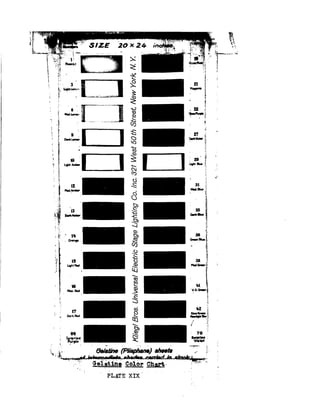
XIX. Gelatine Color Chart .......................... 82
XX. Christmas Program Lighting................... 86
XXI. Comparison of Light and PaintMixing • • • • • 87
▼ill
Plate I§S2
XXII. Silhouette Effect through Lighting . 88
XXIII. Opera Lighting .............................. 89
XXIV. Naturalness in Stage Movements......... • • 94
XXV. Chorus Groupings . . . ........ • • • • • • • 95
XXVI. Costuming......................................106
XXVII. Song Slide Techniques ................ 113
XXVIII. Visual Aids for S o n g s .........................114
XXIX. Band Details...................................120
XXX. Hand Signals...................................125
XXXI. Scope of Questionnaire Returns................. 139
XXXII. Flexibility in Stage Levels . • • • • « . • • 147
XXXIII. Music Festival Program & . • • . • • • • • • 149
XXXIV. Music Festival Program B • • ......... • • • • 150
XXXV. Christmas Concert Program ......... 151
XXXVI. Youth Concert Program . • • • • • • • • • • • 152
XXXVII. "H.M.S. Pinafore" Program .................... 153
ix
PART I
THE PROBUEU
CHAPTER I
THE PROBLEM
Introduction
During the past twenty years music education in the United
States has enjoyed a phenomenal growth. Public performances of
senior high school music have been greatly improved by trained
music specialists who are well versed in educational aims and ob­
jectives. This practical side of music education has found its
main outlet in the formation and development of school bands,
orchestras, and choral organizations.
Although educationally ooncelved experiments in the pro­
duction of musical programs have been going on in many villages,
towns, and cities throughout the United States, the neglected as­
pect in the production of these programs has been a thorough and
systematic study of the non-musical details to which music educa­
tors generally give too little consideration. It too often occurs
that directors do not see beyond the limitations of subject matter
with the result that the potentialities of a musical production
are frequently not realized.
In addition to teaching music, the successful music director
in a senior high school assumes many other responsibilities in the
field. Being the organizer of musical performances, he may dis­
play his talents as an instructor by the way the young musicians
2
perform, but a good performance can be elevated to one of excel­
lence by attention to such things as staging, lighting, printed
materials, and costuming. Keen observation of professional per­
formances, plus skill In adaptation to high school needs, can
lead to superior results In high school muslo activity.
Purposes
The purposes of this study are to examine the nature and
scope of non-musical problems as they affect school music perform­
ances; to determine to what degree music teachers should be famil­
iar with technicalities Involved; to ascertain to what extent direc­
tors are called upon to handle them; and to prepare a handbook
suggesting means of dealing with them successfully.
floope
This study Includes an analysis of the types of musical
programs presented by representative senior high schools (grades
9-12 Inclusive) throughout the country, and the methods used to
deal with their non-musical details. A comparison of school
practices with professional practices has been made to determine
the extent to which professional techniques can be adapted to
secondary school musical presentations.
Correlation with other Departments
To realize fully the scope of this study It Is neoessary
to analyze the non-musical details themselves. The correlation
of the art, drama, English, commercial, home economics, shop,
3
science, and electricity departments with the music department
offers opportunity for the discovery and development of student
talent. In the drama departments of our high schools for instance,
a wealth of background and experience exists, waiting to find
broader expression through correlation with music.
In a recent survey, Kenneth Macgowan states*
Drama is a very new thing in the high schools. Not
student attempts at mock trials and senior plays, of
course, but the serious business of teaching boys and
girls to produce plays. It is a product of the past
six or seven years, and It is growing with Immense
speed • • • , A third of the 22,000 high schools of
America are probably studying and applying production
methods to a rather decent grade of play. These 7000
have definite courses with an average of fifty students
to a course. Some hundreds of thousands of young actors,
designers, stage-hands, and managers are producing plays
for an audience that runs into the millions. They have
every sort of stage to work on, from auditorium plat­
forms to plants so well equipped that the Theatre Guild's
Repertory Company plays there in preference to local
halls or opera houses. In many places the students prac­
tice playwrltlng and scene design as well as acting, and
Indulge in state-wide tournaments, 1
Substantiating these statements, Katherine Anne Ommanney
asserts that "in the United States, the drama is being democrat
tized as a practical means of developing more appreciative and
expressive human beings. From kindergarten to university, from
informal dramatizations to productions of high artistic caliber,
2
the drama is a recognized phase of modern education. H
1. Footlights Across America. P. 169.
2. The Stage and the School. P. xiii.
4
The thousands of hands, orchestras, choruses, a cappella
choirs, and soloists appearing In the various contest-festivals
sponsored by the National School Music Competition Festivals
represent only a small phase of the great musical development
in the senior high schools. The 80,897 students participating
in festivals in 1941 represent entries from 2400 schools, hut
they comprise only a small portion of the number of schools
and students enrolled in the state and district contests pre-
1
llmlnary to the national.
The development of a self-sufficient democratic society
within the school itself can he brought about through the inte­
gration of several subjects of the ourriculum. It is from this
point of view that the investigator has noted the dependence of
the arts on each other in successful musical productions.
1. National fiohool Music Competltion-Festlvals, Report. 1941, P, 8,
CHAPTER II
PROCEDURE IN COLLECTING- DATA
//
/ During the past fourteen years the Investigator has ob­
served hundreds of high school musical groups. Notable are
those which appeared before members of the Eastern and National
Music Educators Conferences.
The dramatic principles of costuming, staging, lighting,
and motion were used to enhance the performance of many of the
superior groups. This led the Investigator to realize that each
/
musical director had met his problem through one means or another.
Inasmuch as little scientific data were available as to how these
successful groups met their non-musical problems, It was necessary
to collect data on the problem.
Survey of Current Practices in Schools
The questionnaire method was selected as being the most
direct and comprehensive In discovering just how non-musical
1
problems were being solved. In addition, a study was made of
the literature In the fields of drama and music.
1. Appendix A, P. 137.
5
6
Questionnaire
Questionnaires were sent to the directors of music In
four hundred senior high schools throughout the country. The
mailing list was compiled from four sources*
1. One hundred and fifty directors of winning contest
groups covering ten major regions of the United
States. 1
2. One hundred directors who had produced a Gilbert
and Sullivan opera during the previous two years. 2
3. Seventy-five directors who were recommended by their
state directors of music as having been particularly
successful in the development of educationally worth­
while musical programs. 3
4. Seventy-five directors of performance groups which
received publiolty in the professional literature of
music education. 4
These names were secured from the sources mentioned in
the footnote references.
It was the belief of the investigator that a study of the
non-musical techniques used by these recognized groups would be
of more value than a study of those used by groups chosen at
random, since it is reasonable to assume that the skill with
which non-musical details were handled was to some extent respon­
sible for the recognition given the former groups.
Additional data were made available by asking directors
to append to the questionnaire sample copies of recently pre­
sented musical programs.
1. National School Music Competition Festival. Report. 1941.
2. From the private file of the Bass Music Publishers. Gilbert
and Sullivan specialists. 34 V. 33'rd St.. New York. N.Y.
3. Pennsylvania. Massachusetts. Delaware. Louisiana. Virginia.
New York. Missouri and Ohio.
4. Music Educators Journal. Educational Music Magazine, and the
School Musician. 1929-1941 inclusive.
Literature
Research through literature bearing upon the educational
and dramatic aspects of the problem brought to light many texts
written by teachers of dramatics In public schools. Study of
these texts makes It evident that teachers of dramatics and teach­
ers of music have many similar problems. A further investigation
disclosed several articles from music education periodicals pre­
senting the Ideas of music directors on many of the problems.
Thus the experience of both teachers of drama and of music are
significant in fully understanding the problem.
Study of Professional Practices
Since a major aim of the study was to determine to what
extent professional practices can be applied to school situations,
several procedures were used In collecting data on such practices.
Radio City Music Hall
Unique in Its position as an American show place and an
international institution. Radio City Music Hall, located in
Rockefeller Center. New York City, has been the subject of more
wonder and admiration than any other amusement enterprise of
modern times.
This center of entertainment may take its full share of
glory for bringing to the heterogeneous public of a great metrop­
olis an awareness and appreciation of art and beauty. It achieves
8
this by the skillful blending of the so e&lled "high-class"
forms— opera, ballet, symphonic music— with the everyday life
of its audiences. Originally referred to as NThe World's Largest
Theatre,M It has now taken its rightful place as the world's
greatest.
Since its opening on December 27, 1932, the investigator
has attended over eighty Music Hall performances. Notes were
taken as to how the scenic beauty, the Instrumental and vocal
music effects, the amazing lighting effects, and the methods of
designs in motion may have been achieved.
It became necessary to substantiate this observation by
going behind the scenes to learn just how these effects were
created. Through the cooperation of the executive staff at Radio
City lfusie Hall, a backstage tour was arranged. It was possible
to observe methods employed in dealing with problems of organiza­
tion, stage techniques, costuming, motion, music arranging, timing,
and publicity.
Interviews as to Nhow it is done" were arranged with Leon
Leonldoff, Vice-President and Senior Produoer; Erno Rapee, Director
of Musio, and Fred L. lynch, Publicity Director, all of Radio
City Music Hall. The courtesies extended by them to the investi­
gator, their patience in answering questions, and their eagerness
to cooperate with the public schools resulted in the collection
of valuable data on the whys and wherefores of Music Hall magic.
9
Small Theatre Visitations
Visits to small theatres where the stage problems were
most nearly analogous to the high school situations were made*
Notable among these were two theatres which specialize In the
1
production of Gilbert and Sullivan operas* Backstage visits and
Interviews with stage technicians* music, publicity, and costume
directors completed these observations*
Experiments
During the past fourteen years the Investigator has been
able to conduct production experiments under varying school con­
ditions. Professional techniques were applied in so far as they
were practical in school situations.
In Oreensburg, Pennsylvania High School, the stage facil­
ities were unusually fine. The switchboard, curtains, lighting
equipment, stage areas, and acoustics were splendid. In Allen­
town, Pennsylvania High School, the facilities were average. In
Springfield, Massachusetts High School of Commerce, the stage
was small, possessing little depth and meager lighting equipment*
In the latter school several interesting adaptations were made
resulting in effects which equalled and in some instances sur­
passed those in other schools*
1. Savoy Dpera Guild, dherry Lane Theatre, 38 Commerce St., New York.
The Light Opera Theatre, Provineetown Playhouse, 133 McDougal
St., New York.
CHAPTER III
QUESTIONNAIRE RESULTS
The procedure used In analyzing questionnaire data was
to discover the types of programs being presented and the fre­
quency of each; to note the activities included in their pre­
paration and presentation; to classify technical and psycho­
logical details; and to evaluate practices in the light of
modern educational philosophy and practice.
Findings
Questionnaires were sent to four hundred directors of
senior high school music in the forty-eight states. One hundred
and fifty-four, or thirty-eight and one-half per cent, were
1
returned by directors from thirty-four states. Submitted with
these questionnaires were three hundred and sixty-three sample
programs which included music festivals, operas^ band concerts
and demonstrations, orchestral concerts, choral concerts, pag­
eants, recitals, creative projects, and commencement programs.
1* Appendix A, P. 139,
10
11
J
The scope and frequency of musical performances shown
in Table I Indicate the latitude of experiments being conducted
In the schools responding, since all reported that some type of
performance had been presented during the school year.
TABUS 1
Types of Programs and Number of Baoh
Type Presented as Reported by 154
Music Directors In Senior High Schools
Type A B d i> total %
Formal concerts 53 36 35 24 148 96.1
Christmas programs 49 33 34 20 136 88.3
Assemblies 52 33 31 20 136 88.3
SoloistB 52 31 31 17 131 85.
Music festivals 47 28 27 18 120 77.9
Vlstting artists 38 31 16 16 101 65.5
Operettas 32 28 18 11 89 57.7
Gilbert and Sullivan
operas 11 29 21 9 70 45.4
Marching bands 25 15 17 9 66 42.8
Pageants 15 12 6 4 37 24.
Grand operas 4 8 5 6 23 14.2
Pantomime 6 4 3 6 19 12.3
Shadowgraph 0 0 0 1 1 .6
1. I?or purposes of analysis, all tables are divided Into four
groupst directors of winning oontest-festival groups are
designated by Gilbert and Sullivan high school pro­
ducers by B; state directors of music list by C; and those
obtained through periodicals by D. ~
2. Figures represent percentages of 154 returned questionnaires.
J
12
Sponsoring and Financing
The responsibility of financing a program rests primarily
with the school or its music department, as shown In Table II,
The extent to which the music department takes the initiative in
sponsoring programs, and the dependence for the financing of these
programs on the receipts realized from the sale of tickets is
significant. This finding Indicates that the skill and resource­
fulness of the school music director determine the financial
success or failure of a school musical production,
TABLE II
Sponsoring and FInanelng Productions*
Sponsored by A B d £> total *
Uuslc department 35 18 13 16 82 53.2
School 11 6 8 6 31 20.1
Board of education 1 1 1 0 3 1.9
P.T.A. 3 0 1 0 4 2.5
Financed bv
Sale of tickets 34 18 13 16 81 52.5
School 6 10 9 4 29 18.8
Uuslc department 7 5 6 4 22 14.2
Board of education 2 1 1 0 4 2.5
♦Numbers in table Indicate positive answers.
13
Table III shows the media used for publicizing school
productions and who of the school personnel handles them.
It is apparent that this problem is a major one since
newspapers are the most frequently used medium. This implies
that material for publicity must be expertly handled. Whereas
the director of music may coordinate the details, it is satis­
fying to note the number of directors using students in planning
and writing. The use of committees as evidenced in the faculty-
student group indicates that the details can be successfully
managed by cooperating groups.
TABLE III
Publicity*
Media A B C D total i
Community newspapers 56 36 33 24 149 96.7
School newspapers 53 36 32 21 142 92.2
Posters 51 35 31 18 135 87.6
Bulletin boards 52 33 20 21 126 81.8
Assembly skits 32 33 22 14 101 65.5
Radio announcements 24 17 20 7 68 44.1
Stunts 2 1 2 1 6 3.8
Planned by
Director 24 12 13 13 62 40.2
Faculty-student s 16 8 11 8 43 27.2
Director-students 10 8 9 4 31 20.1
Principal 2 1 2 1 6 3.8
Written by
Director 29 20 9 8 66 42.2
Students 27 2 4 10 43 27.2
Faculty-students 0 9 14 6 29 18.8
Principal 2 1 2 1 6 3.8
Director-facuity 0 0 3 1 4 2.5
♦Numbers in table indicate positive answers.
14
Staging
One hundred-thirty or eighty-four and four-tenths of
the directors responding to the questionnaire Indicated that
they do consider the problem of staging In producing a musical
program. Although this is a function of the art department or
a stage craft class it Is apparent that several methods are
being used.
The fact that students often design and paint the scenery
Is indicative of the desire to use the project for laboratory
experience.
TABLE IV
Number of Senior High Schools using
Special Staging for Music Productions*
A B C D total r
Schools using stage
decorations 45 36 30 21 130 84.4
Schools using various
stage levels 40 29 31 18 118 76.6
Designed bv
Art department 20 12 18 13 63 40.9
Student stage crew 13 8 4 3 28 18.1
Music director 6 5 3 3 17 11.
Professional 2 3 3 0 8 5.1
Drama department 0 5 0 0 5 3.2
Painted bv
Art department 23 14 17 10 64 41.5
Student stage crew 14 13 7 7 41 26.6
Professional 2 4 3 0 9 5.8
Drama department 1 1 0 0 2 1.2
♦As compiled from 154 returned questionnaires.
15
Lightlug
The music director generally selects the type of lighting
to he used. This can he explained hy the fact that the formal
concert program is the most commonly performed. A program of
this type generally requires simple lighting and directors usually
have confidence in their own ideas.
TABLE V
Frequency of Types of Lighting used
in Musical Productions as Reported
hy 154 delected Secondary Schools
A B C D total *
Schools using special
lighting 47 35 32 19 133 86.3
Types used
Footlights 45 36 32 19 132 85.7
Colored lighting 47 34 30 20 131 85.
Borders 47 33 32 18 130 84.4
Floodlights 47 31 30 20 128 83.1
Spotlights 45 32 29 20 126 81.8
Stroblite 13 2 4 1 20 12.9
Planned hy
Music director 20 8 7 6 4l 26.6
Director and students 13 8 6 4 31 20.1
Art department 4 5 4 3 16 10.3
Professional 5 2 5 0 12 7.7
Faculty 2 1 5 0 8 5.1
Familiarity with the Jargon of lighting is indicated in
1
this table. The technique of strobllte is very seldom used,
probably because this type is highly technical and its "secret"
is not generally known.
1. A phosphorus luminous paint which is reflected into brilliant
colors through the use of an ultra-violet ray light, seemingly
in total darkness. Painted areas are the only ones visible.
16
Printed Materials
Table 71 shows the questionnaire responses in regard to
printed materials used in connection with school musical pro­
ductions. Three hundred and sixty-three programs were Included
with the returned questionnaires. It was the exception to find
programs striking in design and general make-up. Seven directors
submitted programs which were unusual as to size, shape, type,
cover design, and color.
TABLE VI
Number and Per Cent of Directors of Music who
Report Specific Attention to Printed
Materials fog 3 Musical Production
Directors who A B d D total i
Plan programt size 49 27 32 19 127 82A
shape 47 28 31 19 125 81.1
color 48 26 31 19 124 80.5
Use a program cover design 38 25 27 20 110 71.4
Use a program design requir­
ing a zinc cut 22 19 19 9 69 44.9
Methods of printins programs
Commercially printed 33 26 16 12 87 56.4
School printed 21 22 20 15 78 50.6
Mimeographed 27 17 18 12 74 48.7
Multigraphed 0 2 3 3 8 5.1
Multilithed 1 1 2 0 4 2.5
Posters
School designed and made 44 34 32 21 131 85.
Commercially printed 22 14 10 6 52 33.7
Silk screen process 5 5 3 2 15 9.7
Tickets
Specially designed 31 19 18 15 83 53.8
17
Costuming
The term HoostumeH was used to Indicate the type of
dress worn hy choral and Instrumental performers at conoerts
as well as those used In operas and pageants. It was believed
to be unnecessary to secure data regarding band uniforms as
practically every high school maintaining a band provides them.
The type of costume used for choral concerts varies, al­
though ninety-three, or 60,3 per cent of the directors reporting,
use choir robes or vestments,
Quite unexpected was the response on costumes for orchestra
members. Forty-one directors indicated a practice of using
formal attire at orchestral concerts. Only one school reported
a specially designed costume.
Table VII deals with the methods used in providing opera
type costumes for musical productions. Directors employ several
methods in handling this problem,
TABLE VII
Methods of Providing Oostumes for
Opera Type Musical Productions*
Method A B C D total *
Rented 24 33 17 10 84 54.5
Designed in art or home
economic classes 21 21 15 13 70 45.4
Made in homes of students 21 13 22 5 61 39.6
Made in home economic
classes 18 16 11 10 55 35.7
* Numbers in table indicate positive answers as compiled
from 154 replies.
18
Commencement Music
Table VIII concerns commencement programs.
TABLE VIII
Main Types of Programs used at Secondary
School Commencements as Reported
by 154 Directors of Music*
Tvoe of program used A B C D total %
Concert 22 20 19 17 78 50.6
Senior class project 8 17 15 9 49 31.8
School project 6 6 5 7 24 15.5
Pageant 5 6 4 4 19 12.3
Participating groups
Orchestra 32 29 20 20 101 65.5
Choral groups 24 30 30 17 101 65.5
Soloists 22 31 19 16 88 57.1
Senior class 24 19 23 11 77 50.
Band 18 5 8 3 34 22.
* Numbers Indicate positive answers.
The planning of a commencement exercise is largely deter­
mined by school tradition. The procedure of a speaker and formal
music is deep-rooted in American school commencements. This
probably explains why comparatively few high schools hare adopted
the Benior class project or pageant presentation at commencements.
Additional data show that the tempos used for a processional
or recessional vary considerably. The most frequent rate of march
speed reported was eighty-four steps to the minute.
CHAPTER IV
GENERAL SUMMARY AND CONCLUSIONS
It becomes apparent from the data presented that music
teaching and directing involves more than a knowledge of music
as subject matter. The administration, production, and psychol­
ogy of musical production demand several talents in addition to
music. A creative activity such as music, if one wishes it to
be appreciated by as large an audience as possible, requires a
sensitivity to the means of creating mood.
Current practices show that the extra details of staging,
lighting, printed materials, and costuming are used to enhance
musical performances. The opportunity for using one's artistic
sense in blending the various elements within a production, is
thereby made possible.
It seems obvious that it is necessary to coordinate the
various phases of a production although the problem of providing
artistic unity is one which must be keenly felt. Therein lies
the solution to the problem. Consciously or subconsciously,
directors of music are coordinating directors. To what extent
they clarify in their own minds the demands of production is
partly dependent upon their ability to sense the proportionate
responsibilities of each component part.
19
i
20
The fact that these extra details are being considered
In a majority of school situations reveals a tendency to use
what may be termed the "dramatic approach" in musical production.
As an example, the striking robes worn by school a cappella
choirs have helped to Increase Interest in the group as well as
in the music itself.
The tables further show that whereas extraneous details
of costuming, staging, lighting, and attractive programs are
being frequently used to enhance productions, the opportunity
of letting them serve as a means of motivating students outside
the music department has only been partially realized. Musical
productions can therefore give "umph" to the "learn by doing"
philosophy.
Motivating several departments within a school using
student-faculty committees presents a challenge to those who
may wish to energize the curriculum.
Greater use should be made of English and Journalism
classes for publicity; art, shop, electricity, and dramatic
departments for staging; art and printing departments for pro­
grams, tickets, and posters; and the commercial department for
the business details.
The newer techniques such as the silk screen process, the
multilith, indirect lighting, levels, strobllte, and commence-
*
ment pageants can add to the scope of music production.
A guide in the form of a handbook outlining workable ideas
in producing effective musical programs for the average senior
21
high school can serve as an aid In the development of the
"dramatic approach." Drawn from successful experiments of
professional producers, these Ideas can he the means of cre­
ating more convincing productions.
Finally, an understanding of the fundamental concepts
of these non-musical problems will be of value to music educa­
tors who aspire to unify and amalgamate the elements of a
musical program to effect an artistic and cohesive whole.
PART II
A PRODUCTION GUIDE FOR DIRECTORS OF MUSIC
IN SENIOR HIGH SCHOOLS
A Handbook
22
CHAPTER V
TYPES OF MUSICAL PROGRAMS
In the production of musical programs in senior high
school a consideration of the types feasible with student talent
is of prime importance.
The psychology of the school and community and an under­
standing of the musical-dramatic resources within a school oan
help to determine selection. The requirements of each type of
program should be clearly established in the mind of the crea­
tive director before making a final decision,
A study of practices in the field of music education re­
veals several interesting types of programs, which usually are
initiated by one of the teachers of music. If the dramatic or
art department takes the initiative, the role of the music direc­
tor will be that of a cooperating agent or perhaps that of a
coordinating director.
It becomes necessary for the teacher of music to act as
coordinator in production details in a program initiated by the
music department. Such organizational control will produce the
best results.
23
24
Naming £he Program
There is a psychological Implication in naming a musical
program. The opera, operetta, and musical comedy, although
similar in nature, carry a connotation strongly established
through tradition. The word concert implies formalism. The
addition of the dramatic technique may change a concert into
a festival. Such terms as "Anniversary Band Concert," "Youth
on Parade," "Choral-Symphonic," "All American Program,"— may
help to create Interest. To illustrate: Leopold Stokowski,
world renoved orchestral conductor is well known for his inter­
est in the principles of showmanship. He dramatized the idea
of the symphony concert when he organized a youth orchestra. He
further dramatized it when he named it the "All American Youth
Orchestra."
Formal Concert
The formal concert type program is a traditional pattern
requiring little assistance from other departments. This form
of expression usually concerns the orchestra, the band, the glee
club, the a cappella choir, and soloists. The simplicity of pro­
duction details makes this form a desirable one for the average
high school.
Assembly
Short musical programs featuring student talent are com­
monly presented at school assemblies. The program may have a
theme, such as "Stephen Foster Day," "Solo Day," "Talent on Parade,"
or a "Student Sing." The last named is educationally worthy
because the entire student body participates.
25
i
Christmas P£o&£M}
A focal point In the year’s musical activities Is the
presentation of the Christmas program* Here the correlation
with art and drama offers great latitude of expression* The
Christmas program may take the form of a pageant, a carol sing,
Christmas vespers, a cantata, wYe Olde English Christmas,* or
tableaux*
MUSIS Festivals
The music festival offers a fine opportunity for the Inte­
gration of the instrumental and vocal music activities* It may
embody one or more performances during a stated period such as
National Music Week*, or It may present one or more groups in a
single production*
Bfigd Pageantry
The well-planned band parade, customarily presented during
the halves of a football game, is a popular means of expression
for the school band. Military formations, a feeling for design,
and a sense of showmanship are needed for effective results*
Opera. Operetta. Pageant
More difficult forms of expression are those of the opera,
the operetta, or the pageant* The complexity of preparation de­
tails is challenging to the skill of a coordinating director be­
cause several component parts, each a specialty in itself, must
* Beginning the first Sunday in May*
26
be blended Into an artistic whole. This artistic unity Is
difficult to conceive and more difficult to achieve. The wan­
ing interest in this form may be traced to the complexity of
production requirements as well as to a lack of worth-while
compositions adaptable for schools.
Other Forms
Less common types of music programs Include demonstrations,
visiting artists, tableaux, shadowgraph, and pantomime.
CHAPTER VI
PROGRAM BUILDING
Many of our directors feel they are missionaries and are
imbued with the idea of "educating" their audiences, stuffing
them with museum pieces, so that they never return for a second
"exposure" to education • • . • "The aim is to create a crescendo
of Interest and enthusiasm as the program reaches its climax at
M1
the end.
In building a program, several psychological facts should
be observed. To say that a musical production should be enter­
taining is not necessarily derogatory. Entertainment can have
educational values and the wise director will try to build and
sustain audience Interest throughout a performance.
Attention
As first impressions are lasting ones great care should
be given to the opening selection. A selection which will lmme*
dlately arrest the attention of the audience should be used. Bril­
liant and objective music will most easily accomplish this. Once
the attention has been secured, the problem is to maintain it.
1- DeJarnette. Reven S.. Hollis Pann. P. 144.
27
28
Contrast
Contrast is obtained by using various moods, tempos,
dynamics, rhythms, keys, and modes, A subjective selection
may be followed by one that is objective, A fast number fol­
lowed by a slower one, or music that has forceful rhythms con­
trasted with music which is stronger in melodic or harmonic
make-up can produce this feeling of contrast.
Variety
Variety is closely related to contrast. Its difference
lies in the fact that variety is concerned with the balance of
the entire program, but contrast is more concerned with a unit
of a program. It requires several selections to produce variety,
but two contrasting selections will provide contrast. As an ex­
ample, a unit of religious music may have subjective and objec­
tive songs within a single unit— thereby producing contrast. In
an attempt to create variety it would be in poor taste to follow
such a unit with a Hfunw unit. The contrast would be too violent.
This MfunM unit could be used later in the program, preferably
towards the end in providing necessary variety, A secular unit,
not a "fun" unit could follow a religious group of numbers if
some means of breaking the religious mood could be provided. For
example, some choirs leave the stage after the religious unit,
change from robes to evening wear, and return for a second group
of songs which are secular in nature.
29
Climax
A program may be planned with one or more climaxes, with
the predominating one appearing either at the close or near It.
Climaxes can be determined only by studying the type of program
being presented. The creative director sees a program as a whole
and observes the high and low spots in his program material, blend­
ing them harmoniously. In an opera or pageant, such climaxes are
taken care of by the librettist and composer. The director, how­
ever, must be able to note where such climaxes are. The same analy­
sis technique applies as in the program of individual selections.
Novelty
Judicious use of novelty has good sales value. It is the
unusual that attracts in any good advertising campaign. The novelty
should be in keeping with the general character of the program
Itself.
Plate I, (P. 30) illustrates the use of novelty. A modern­
istic playing card served as inspiration for an original ballet
entitled "Romance of the Cards." The King of Spades, and the
Jack and Queen of Hearts pantomimed in ballet and gesture a love
story, while the school band played appropriate accompaniments.
This was used as a climax to a band concert program. This novelty
sold the concert to the extent of three hundred and fifty dollars
profit, whereas a previous concert did not make expenses. The
familiarity of subject, dramatic publicity, and unity of idea were
mainly responsible for its success.
30
M U S IC FESTIVAL
T»c* * t SAUh
STARTS iQ O A Vi
fvnOof
_ a t * «
Note unity of modernisltle playing card Idea with
publicity, program and stage.
Nonrelty In Program Building
PLATE I
31
Familiar Music
Mot all good music Is difficult nor Is all difficult
music good. Simple music well performed Is preferable to
difficult music faultily played. These principles should be
observed in selecting familiar music for a program. The lay
publlo Is more alert to good musical performance than it is
generally credited to be. Even though a person may not know the
technicalities of music, he does know whether or not he likes a
composition. A common ground of understanding can be established
through the use of familiar music. Fritz Kreisler has used the
familiar music technique for years. He incidentally is one of
the most popular serious artists the world possesses. John Philip
Bousa, famous band leader, used the device in all his tours.
The problem is to make unfamiliar music popular. Popular*
ity Is brought about through frequent repetition. Dr. Hollis
Dann has stated! "Frequent repetition of good music effectually
M1
develops good musical taste and a love for the beautiful. This
explains In part the acceptance of what is often termed "popular"
music. The constant repetitions over the radio help to make
music "popular. " In communities where a performing group is
heard several times within a school year, it might be desirable
to repeat previously performed numbers in an effort to build up
a background which will eventually make unfamiliar music familiar
and familiar music "popular."
1. DeJarnette. Reven B.. ftollls Dann. P. 1*7.
32
Continuity
Even though the elementb of contrast and variety are being
applied, the program should be continuous in feeling. This is
achieved to some extent by moving properties, music stands and
the like, as unostentatiously and as quickly as advance planning
will allow.
Unity
Not only should the principle of unity be persistently
followed in the musical program make-up but it should function
in the matter of printed programs, publicity, staging, lighting,
costuming, and movements. This artistic unity is the largest
single responsibility of the coordinating music director. Unity
of general mood and purpose should be constantly in the mind of
the creative director.
length
The psychological principle of sending the audience away
wanting more Is not possible in the very long program. There is
a saturation point, and even though school groups perform well,
and an increasing number of them do, a consideration of the length
of a program must be observed.
A concert type program should not last more than an hour
and a half, two hours or less would be sufficient for an opera.
To aohleve this, the director must carefully time each number
before a concert. He will allow ample time for in-between num­
bers, stage movements, and intermission.
CHAPTER VII
ORGANIZATION AND ADMINISTRATION
When a musical director undertakes to present a musical
program he assumes the role of an administrator. He must he
able to outline needs, plan schedules, and determine production
requirements. In addition to being a musician, an artist, a
diplomat, a zealot, and a showman; he must be an organizer.
The musical director analyzes his needs as to finance,
printed materials, stage and lighting requirements, tickets,
sponsorship, committees, scheduling, and rehearsing. The pop­
ular prejudice that a musician is generally poor in the handling
of business details will bring him little sympathy in actual
practice in music education.
Administrative and organizing skills are learned through
intelligent exercise in actual school situations. A director
grows in authority when he demonstrates his understanding of the
details that productions require.
Directors often are discouraged by a lack of audience
appreciation. Placing music in an ivory tower of classicism
does not help to make it palatable. To popularize his music
Ideal, the director need not lower standards to the level of
Juke-box tawdryness. The point to keep in mind is that a per­
formance, regardless of the type, must have finish, polish, and
beauty, as they are the magic means of sustaining interest.
33
34
SolentIfle Management
F« H. Leffingwell, Management Engineer, very ably sums
up and explains scientific management in his statement "Hot* to
Manage" as follows*
1. Define your purpose.
You must know what is to be done before
you can know how. This is your master
work.
2. Analyze your problem.
Your master work will then break up Into
many detail tasks. Consider them all-
neglect none.
3. Seek the facts.
Study every condition governing eaoh
task, find the undesirable elements,
the desirable elements to be retained.
Then standardize right conditions.
4. Devise the one best method.
Aim to conserve energy— time— space-
material.
5. Find the person best fitted.
For each task certain personal qualities
are essential. In each person certain
qualities predominate. Find the oerson
best fitted.
6. Teach the person best fitted the one best
method.
Not by driving, but by thorough, patient
teaching are understanding and skill
developed•
7. Plan carefully.
Right planning of arrangements and sequence
of work will enable you to accomplish tasks
in logical order— accurately— quickly—
economically.
8. Win cooperation.
Cooperation means working together. It
cannot be demanded. It must be won.
Accept your share of responsibilities.
Respect the rights and aspirations of
others. 1
1. Cornell, William B., Syllabus of Industrial Management.
pp. 11-12.
35
Many administrators evaluate a music education program
by the results apparent to them. They think in terms of effi­
ciency and educational objectives. These may be achieved by
a director if he will apply the principles of scientific man­
agement to production technique.
Scheduling
Long range planning Is needed to set up an adequate and
workable rehearsal schedule. The date of a program can be set
after cheoklng the school and community oalendar. The amount
of rehearsal time available in school and the actual rehearsal
needs may require the setting up of an after school schedule.
In doing so, one must fully consider the student's responsibil­
ities toward other departments within the school. A schedule
should be set several weeks prior to a program, with sufficient
flexibility to permit necessary changes.
Final rehearsals requiring several groups, costumes,
properties, scenery, lighting, and stage directions should take
place at least two days before a performance. Such a policy
will relieve the emotional strain brought about through inten­
sive drilling.
The detallB of the production schedule should be posted
at least a week in advance of actual rehearsals. It is a cour­
tesy to students to inform them of the weekly demands, particu­
larly if after-school rehearsals are needed. The individual will
then be willing to cooperate more fully.
36
Committees
One of the major purposes of this handbook Is to provide
the musical director with an understanding of the requirements
necessary In building musical productions. It Is obvious that
this Includes more than a knowledge of music. The purpose of
such Information Is that he may Intelligently discuss and sug­
gest to others plans which make for more effective outcomes.
This does not imply that the director should himself do the de­
tail work. The musical demands generally require considerable
time in rehearsing, and the director will need to conserve the
greater proportion of his time for this duty.
It must be understood at the outset that the authority
and the chief responsibility for the preparation and final per­
formance rests upon the coordinating director. This presupposes
his ability to understand and get along with people. His conta­
gious enthusiasm and confidence will be reflected in the produc­
tion Itself.
Uuslc education Implies that music in school should have
basic educational alms to justify its existence. With this in
mind the program should reach as many participants as possible.
Student talent should be used whenever possible In connection
with the tasks of production.
Three methods of delegating responsibilities are In com­
mon use. They are* faculty committees, student committees, and
faculty-student committees.
In general, the faculty-student committee works best in
practice. Faculty supervision tends to draw out the students'
37
beet abilities. The initiative, the talent, the energy, and
the resourcefulness which young minds often possess should be
used to the full in preparation of musical productions. Nat­
urally students are selected with reference to their abilities*
A carpenter hobbyist would be wasted on the publicity committee.
It is therefore necessary to know a student's interests and
capabilities. Production details can provide an outlet for the
artist, the writer, the builder, the research student, the radio
enthusiast, the salesman, the stenographer, the electrician, the
designer, and the composer.
Engaging as many faculty members as are willing to con­
tribute to a production has a good psychological effect in build­
ing a favorable attitude toward the muBlc program throughout the
school and community.
Oo-workers
The term, "co-workers," is used to denote those members
of a school faculty who help the music director in administering
musical programs. On this phase of administration, the opinion
of a superintendent oan shed light. Ur. Ben Gfrraham, formerly
superintendent of schools in Pittsburgh, Pennsylvania statedi
The school administrator finds one of his chief problems
in mutfle is securing close and sympathetic cooperation
between the music teachers and other teachers of the
faculty in the high school* This is due in part because
music has but lately become a part of our high school
program of studies. Therefore, there are many teachers
of the traditional subjects who have not yet come to
look upon music as of equal Importance to the subjeots
they teach. Naturally, the music teacher resents this
attitude, and therefore conflict between teachers ensues*
38
It is Impossible to arrange orchestra practice, chorus
practice and band practice in school time, without
occasionally conflicting with assignments of pupils
to other subjects. The teacher of an academic subject
resents having a puoil taken from her classroom for
music practice. The music teacher feels that her work
is interfered with if pupils are absent from scheduled
practices. There must be developed on the part of all
teachers the spirit of give and take, which comes
only when all teachers of the faculty have come to
realize the Important part music plays in our high
school organization today. The music teacher with a
winning personality, who can gain the sympathy and
friendship of other members of the faoulty, will prob­
ably accomplish more in the space of the school term
in promoting the advancement of music in the school,
than the teacher of high technical skill who can not
win such a degree of cooperation.
The sympathy of the principal and other members of the
faculty can be secured best by music teachers who have
broad training, and who understand the importance of
fields other than their own. The director of an orches­
tra who can Intelligently discuss the problems of the
science teacher or the mathematics teacher will gain
their cooperation and Interest in his music far more
quickly than the one who is entirely ignorant of these
fields.
There is no place for the temperamental teacher in the
high school organization. Broad training, winning per­
sonality, cooperative spirit and a high order of skill
as a teacher are required to obtain the best results in
the field of high school music today. 1
Personal likes and dislikes among members of the faculty
should be forgotten and a professional relationship substituted.
Departments assisting should be made to realize the importance of
their contributions not only to the production Itself, but more
Important, to the motivation of student talent in their own de­
partments.
1. Ben Graham, Music Education from the Standpoint of the
Administration Officer, Music Educators Journal. XIX
(October, 1932), P. 21.
39
Take It for granted that cooperation will be forthcoming,
and win cooperation by being cooperative. For example, the art
department may plan to have an art exhibit of students' work.
Suggest the oosslbility of having music at the opening.
Financing
The handling of school money is important in any phase
of public education. The size of budget does not alter one's
responsibility for its wise expenditure. Extreme care should
be exercised in the business of budgeting, selling, collecting,
depositing, accounting, and auditing. Students may gain valu­
able experience in handling money. Such a detail lends Itself
well to cooperation with the commercial department within a
school.
Underwriting
The simplest plan is to have the board of education under­
write the expenses of a musical program. In practice this is
rarely done. It is commonly financed by the music department,
the school, or the general organization (G. 0.*). The sale of
tickets usually constitutes the main source of income. Profits
Bhould not be the guiding purpose unless they are to be used in
making subsequent programs more artistic.
* Several schools have what is known as a general organization
(G.O.) or student association (S.A.). Membership may in­
clude admittance to athletic contests, musicals, dramatic
presentations, subscription to school paper, and yearbook.
Student membership fees serve as a means of setting up bud­
gets for the various departments within the organization.
This cooperative plan works to the advantage of both students
and departments, supplying larger audiences at school func­
tions and cutting the oost per benefit per pupil to a minimum.
40
Budgeting
Past experience Is the best guide In setting up a budget
for a school musical program. Assuming that the program Is to
be self-supporting, and this Is general practice, the budget
should be determined by studying past practices and present
needs. The traditions of the school, previous presentations,
ability of the community to pay, other community events, and
the number of students participating In the project are items
to be taken Into account, as veil as the artistic demands of a
program. Good programs pave the way for better programs which
in turn stimulate greater student interest in participation.
Miscellaneous Items
Miscellaneous items which should be Included are house
arrangements such as making provision for ushers, ticket collec­
tors, proper ventilation, heating, cooling, etc. The hiring of
a policeman for protection is required by law in many communities*
41
YOUTH 25* ADULTS 40*
YOUTH CONCERT
JOSEF WAGNER
Opened nrogram
Poster
Keyboard motif
Unifying poster,
program, ticket,
and newspaper
advertising.
t i c k e t
J l i i i i i J i j i i i i i i1 Newspaper advertisement
closed program
Planning Unity
PLATE ii
CHAPTER VIII
PUBLICITY
The activities involved in the presentation of a musical
program lend themselves to display. Publicity concerning these
activities should reflect the tone and dignity appropriate to
public education.
Publicity is used to draw audiences and to create goodwill,
the latter receiving major emphasis. Details of publicity should
be primarily concerned with the students involved in the prepara­
tion and presentation of a project. Professional ethics would
suggest that directors use publicity as a means of interpreting
the aims of music in public education.
Planning
Although directors furnish data concerning a production,
a committee consisting of students and faculty from the English
and commercial departments could do the planning. Faculty guid­
ance is an aid in maintaining dignified and purposeful publicity.
A publicity committee considers the various methods of
publicity— community and school newspapers, photographs, posters,
assembly skits, bulletin boards, radio, direct mall, and stunts.
42
43
Writing
In preparing copy for newspapers, essential facts should
be provided. Publicity should be submitted while It Is still
news, two or three days in advance of publication. Typewrite
material using triple spacings for easy editing. Use one side
of a sheet, number pages, and place the subject along with the
publication date on the upper right hand corner of the cover
page. Duplicate or oarbon copies filed with dippings, photo­
graphs, and sample programs will be useful for reference and
checking. Material can be drawn from the sources of inspiration
for the production, the type of program, the date, the make-up,
participating groups, appointment of committees, creative aspects,
patrons, guests, dress rehearsals, and ushers.
Photographs
The advertising value of an attractive and striking photo­
graph surpasses lengthy written accounts, A policy of planning
interesting photographs paves the way for pleasant relations
not only with the press but with the public to be reached.
Aotion photographs showing students rehearsing, building,
designing, painting, sewing, and planning are of general public
interest. Angles, levels, lighting, unusual properties, and
1
costumes produce dramatic and interesting photographs.
1. Plate III, P. 44.
Newspaper Pulallolty Photographs*
♦High School of Commerce
Springfield, Haas*, May, 1938.
P1AVS III
£ v
W)hJtden
lAncp
i
i
Posters
i
PLATE IV |
i..
46
Posters
The art department may be able to design and produce
1
attractive posters. An excellent method of duplicating, true
2
to the original, Is through the use of the screen prooess.
Several colors may be used and the cost Is relatively low*
Medium sized posters are more likely to be placed In
windows than are huge ones.
Assembly Skits
To create Interest and enthusiasm, a skit containing por­
tions of a coming program may be presented at a student managed
assembly. An announcement would mention type of program, date,
hour, and price of admission. Clever stereoptloon slides can
be made and flashed on the screen to supplement the announcement.
Mimeographed Announcemente
The following mimeographed announcement concerning a high
school operetta was Initiated by a superintendent of schools In
a Pennsylvania community. It was given to elementary school
pupils to be taken home to their parents.
PUBLIC SCHOOLS
For a number of years the High School Operetta has been
one of the outstanding events of the school year. It
has been the big contribution of a number of departments.
Many students participate in this production. Besides
those who appear on the stage, many assist In making
costumes and In building and decorating scenery.
1. Plate IV, P. 45.
2. Biegeleisen and Bussembark, The Silk Screen Printing Process.
47
On the stage appear 160 students. They receive train­
ing in singing, acting and dancing over a two month
period. In the orchestra, 35 more receive intensive
training over a similar period.
Believing that such training is of inestimable value,
we make no apology for calling the operetta to the
attention of all school pupils, teachers and parents.
Interest in the music program of the high school will
be felt in the lover grades. Young pupils will, we
hope, begin a study of voice or start Instruction on
a musical instrument early enough to enable them to
share in the High School program.
The Operetta this year will be a beautiful performance.
Laid in Spain, it is colorful in setting and charming
in music, ^e sincerely hope that many of you will be
able to attend this performance.
The Operetta will be given for one evening only. Every
seat in the High School auditorium is a good seat. We
thought that you would appreciate having your attention
called to it so that if you have not already done so you
may get seats reserved.
HIGH SCHOOL AUDITORIUM - - FRIDAY EVENING -- MARCH 8, 1935
Other Forms
Less frequently used forms of publicity are bulletin
board displays, direct mall penny post-card announcements,
1 2
blotters, tags, radio skits, homeroom announcements, and
contests.
1. Plate V, Eigure 4, P. 45.
2. Ibid., Figure 2.
48
Figure 1 - Photograph
angles
Angles
Publicity Ideas
PLATE V
Figure 2
Tag
! MUSIC FESTIVAL
TICKET SALE
STARTS TODAY
Adult* 23c
Figure 4
Figure 3 Blotter or bookmark
Music director as guide and teacher
CHAPTER IX
PROGRAMS AND TICKETS
Psychologically, a first impression is an important one.
Accepting this, a program or ticket may set the tone of a pro­
duction well in advance of the presentation. Parents, friends,
school people and school patrons— each is represented in the
audience, and each has a particular interest in the production.
His ticket of admission and the program handed him on entering
the auditorium create for each member of the audience a first
impression of what is to come. It is advisable, therefore, to
give as careful thought and planning to these seemingly lesser
items as to the production itself.
The music director, in planning for tickets and program,
should take advantage of the assistance to be obtained through
the cooperation of other departments of the school. The art de­
partment, the printing, the shop, the commercial department—
all can take part in planning and producing the program. Not
only is this sound educational practice, but it may well cut the
costs of production.
The P ro g ra m
The purpose of a program is to give the audience informa­
tion concerning the production, and to give credit to all who made
49
50
the production possible. Whether or not the program Is read In
its entirety, thus accomplishing Its purpose, depends largely on
the manner In which the content has been arranged.
The program director should have in mind the mood to be
created for the particular production, the design, the content,
and the printing. His firBt and greatest problem will be in
adapting his ideas to a budget. However, through careful plan­
ning, it is possible to create an artistic program even with
limited funds.
Creating the Mood
In certain types of productions the music director may
wish to create a mood in his audience before the rising of the
curtain. This can well be accomplished through the medium of
the program. Color, quality of paper, size, shape, design— all
1
can help in the attainment of his purpose.
The psychology of color is important. For the formal
concert program, the conservative white paper with black let­
tering is traditional. For this type of program it would be
incongruous to have colored paper or inking. The plain black
and white spells formality and creates the mood. For less for­
mal occasions colors or various tones of a single color might
be used.
The size of the program can be adapted to the impression
desired. A huge program may suggest grandeur, regality, pomp,
but if poorly treated may result in mere awkwardness. A tiny
program may suggest daintiness, simplicity, or timidity. A
1.Plate Vi, Figure 1,P. 51.
r.ONCI»1
figure 1
Program display
Figure 2. Various program interpretations of H.M.S. Pinafore.
Programs
PLATE VI
/
52
s
feeling for design and color in fostering a mood can be acquired
through the study of the program which one receives at operas,
concerts, lectures, theatres, and ballets. The length to which
the professional music-dramatists have gone in this respect re­
flects the growth of art appreciation by the general public. The
care in harmonizing color and design in the modern home is another
manifestation of this same idea.
Design
Simplicity of the front page is preferred to a design
which includes considerable information. One word in the title
page can often create the desired effect. Cuts would rarely be
used on a single page program, except as a border or heading.
The program shape, size, and fold have a bearing on its practi­
cality. Folded in such a way that it will easily fit in the
average pocket, a program is more likely to be taken home. Tfhen
the data are brief, medium and small-sized programs can be used.
If large programs are necessary, attention to spacing can facil­
itate reading.
The art students can be of tremendous help in designing
the program. An entire class might adopt it as a project. Such
motivation gives stimulus to creative talent. The original de­
signs of the students can be made into zinc cuts and reproduced
in the printed program.
A most satisfactory method for producing cover designs in
which one or more colors may be used is the silk screen process.^
1. Plate VII, P. 55.
IP 53
SewnfMrf"
Silk Screen Process*
PLATE VII
* Designed at Springfield, Mass. Trade School
54
It is relatively inexpensive and eliminates the need of a cut.
Comparatively few schools have adopted this modern teohnlque.
Program Content
The name of the school, the place of the performance (in­
cluding street, city, and state), the organizations participating,
the date, and the time are essential data for the program. Include
the name of every participant and committee member and acknowledge
borrowed properties, special courtesies, and administrative support.
Such a policy is both courteous and psychologically sound. A per­
son1s name inadvertently omitted can make a sensitive adolescent
quite unhapoy. To avoid this, place a carbon copy of the program
on an accessible bulletin board. Inform participants that it is
their responsibility to check the manuscript and to make certain
that their names are not only there, but that they are properly
spelled. If errors are noted, the person concerned should print
his name on a small piece of paper and hand it to the program com­
mittee chairman. Corrections are then made on both the original
and bulletin board copy. It works. Here is where the commercial
department will be of assistance.
Program notes concisely stated may add to the enjoyment of
the musical performance. Information concerning the composer and
the composition may make the performance more meaningful to the
audience. In an opera program one might mention backstage details
or how a committee functions In preparing the production.
One cannot expect a good program proof unless extreme care
has been taken in suggesting the relative importance of items
within a program manuscript. This can be easily suggested on
55
a typewriter by using small or large letters, spacinge, and
underlinings.
If the budget is limited, a less expensive form may be
desired. In this instance, one of the following methods of
reproduction may be used to advantage*
Mimeograph* The mimeographed program is the least ex­
pensive. Good results can be obtained when the stenciled cover
1
design has been carefully made. A heavy paper is needed to
prevent the ink from showing through. For covers,the stylus
and guides are needed tools. For shadings, screen plates are
used.
Mult111th* A new duplicating process which will repro­
duce typing, drawings, photographs or writings has been recently
2
developed. The multilith duplicator is unique among duplicating
methods for school use. From the original image on a planographic
surface, a thin film of quick-drying ink is laid on the sheet.
Spreading and distortion are eliminated. Slip-sheeting is un­
necessary, greatly speeding up production. Sheets can frequently
be used on both sides, reducing paper cost. Impressions are clear
and unbroken, whether the line is fine or heavy, whether the type­
writer characters are small or large. The work will not smudge,
nor fade from age or strong light. Color can be used freely to
add emphasis and interest to text matter.
1. Plate VIII, Figure 3, P. 56
2. Ibid., Figure 1.
f t
Figure 1
Multillth possibilities
Cemmcwuf of tL 9Gn^, *£eul6 XIV,
a>« M bJ to M m Ji
Si flpm-Cnwlyi
SiKa ^V ontic S ^ltjoician
£ImIIi (y SUim
^|(||||^ 0^^|| ^gmigj
<fiL
JCmmmindVtte
8.6tCJ^4&r*1666
Figure 2
Cover as a personal invitation
frY.
(y/ H. IA. S.
pinafore
Crilberf- <SulW an
Ki*ti School (.udllorlia
Portnber 16, lejg
Proi
Figure 3
Mimeographed
Cover Ideas
ATE VIII
57
Tickets
Handling several hundred tickets constitutes a major
problem in the business side of musical productions to which
an admission is charged.
In theory it would be better if educationally-conceived
school programs were financed by the board of education. This is
seldom the case in practice, since school boards rarely appreciate
artistic aims to the extent of approving large expenditures.
The common practice of financing a program is through the
sale of tickets. Some system should be devised for efficient
distribution and accounting of tickets. A number placed on the
back of the ticket, and an inventory prior to distributing the
tickets for sale is one efficient method.
A padlocked box with a small opening can be used in "hlch
to place collected tickets or stubs (if seats are reserved) when
presented at the door. The business manager later checks these
with receipts. In practice, it often happens that more money is
turned in than tickets or stubs indicate. The reason for this
is that many patrons purchase school tickets and for one reason
or another do not attend the performance.
Each ticket should include the following data:
1. The type of presentation offered
(i. e., concert, opera, festival, etc.)
2. Sponsor
(music department, school, P.T.A. etc.)
3. Date, including day of week, month and year.
A. Place
5. Cost
(it is now necessary to comply with s
government tax regulations)
6• Hour
7. Reserved seats must Include section,
row, and seat number.
58
As an Advertising Medium
Experiments as to size, shape, type of card, font of
type, color, and design may produce Interesting results. A
large ticket is novel and, if not overworked, attracts favor-
1
ahle attention to a coming program. Once the novelty has worn
off, It would be necessary to create another Individual type of
ticket, possibly a round one. The principle is stated because
It has produced results.
Price of Admission
Local conditions will determine the price of admission
for school musicals. In the case of reserved seats, it is a
courtesy, as well as good business, to permit participants to
purchase, or to have seats set aside, one day prior to the
general public seat sale. This alone can often sell fifty per
cent of a house, thus creating a positive psychological effect
upon hesitant purchasers.
Whether faculty members should receive complimentary
tickets is a matter of policy. If this is to be done, have a
student committee prepare personal invitations for each faculty
member and present two choice seats to all who accept.
1. Plate IX, P. 59.
59
MUSIC FESTIVAL
HIGH SCHOOL of COMMERCE
featuring
AMERICAN FANTASIA
THURSDAY, APRIL 24, 1941
Ticket 25 cents
Tax Exempt
Assembly Hall
8 O ’clock
Novel Large Ticket
PLATE IX *
CHAPTER X
STAGING
Modern stage design arose from a dire need for art In the
theatre. It has taken too long a time to live down the misdeeds
of the past committed in the name of decoration. This "theatrical"
aspect was Interpreted as artificial and garish. It was.
Modern architects, stage designers, and creative artists
have given the modern theatre a new hope by applying the elements
of good design and art to stage decoration.
As a musician, the director must remember that the music
Is the primary element and that the stage decoration Is secondary.
Dramatic directors Insist that "the play Is the thing." It Is
true. Similarly, "music Is the thing" for the musician. There
has been much hesitancy In the matter of using stage properties
for purely musical programs because of this belief. However, It
Is foolhardy to disregard the element entirely,
Leopold Stokowski, the master-showman, recently used a
modernistic blue background setting for his NA11 American Youth
Orchestra" on its second tour. The tremendous transportation
problems involved in moving the elaborate staging would probably
have discouraged using the idea had it not been considered essen­
tial. This background device was called a tone reflector and Its
modern design also served as decoration. The idea may be traced
60
61
to the opening minutes of Walt Disney'b Fantasia where a colorful
and dramatic background was created to arrest attention.
When and where to use "dramatic" staging is simply a
matter of taste. The extremes to which directors of music go
can be observed by attending a dozen different school productions.
The artistic concept being relative, it is sufficient to say that
stage decorations should be simple, direct, and in the mood of the
music to be performed,
gvrppqt
The purpose of staging in musical production is to create
the proper mood for the reception of the music itself. The human
eye is as receptive to impressions as is the ear. It is a psycho­
logical truth that the span of attention of either faculty is
limited. The eye appeal technique directs attention momentarily
to the visual aspects and "rests" the ear. The relaxing nature
of this duality should be understood.
Organization and Planning
The type of urogram, the mood needed, the size of the stage,
and the number of participants all influence staging. The type
of program to be presented should be kept constantly in mind. For
Instance, the music festival generally has several groups appear­
ing. Stage waits are common and do much to destroy previous good
effects. It is safe to say that the attention of an audience will
be better retained through a carefully worked out stage plan.
i
62
Hava the stage committee Fork out each detail In Its
entirety— from the moving of a single second violinist's chair
to the setting of a cathedral scene for the a cappella choir.
Give full resDonsibility for each detail to capable persons.
1
A miniature stage built to scale of the stage itself, with the
assistance of the shop, electricity, and art department, can be
of valuable aid in planning operettas, pageants, and tableaux.
Designs can be made from art materials. Interesting interpre­
tations of the same idea Fill be forthcoming from the art design
classes.
Properties
One simple means of creating a stage effect is through
the use of a property often known as a "cut-out." It may be a
design placed in the rear of the stage or it may be a piece of
scenery or part of a curtain. A stained glass window effect
would be appropriate for religious music or a papier mache
American Eagle could be used for a chorus or band performing
patriotic music.
Stage Crew
The stage crew helps build and paint stage decorations as
well as take care of backstage details during the performance.
They should fully rehearse all details much in the same manner
that one drills for technical accuracy in the orchestra or chorus
1. Plate X, figure 2, P. 63.
V J
. > * « ? . , , ' ^ } f r "1 4 : f' * • *
» * * r ■■’,7 * U ■- * - ! ■ • > - * 1 't I
1 , ‘ ' ■' ■* :I-f H Hj f r l - t - f- f * - •
,•« < *>1 n m *1 H v w ^ h tin f;l}r '•>"
^ I* • ?• <k_i
Figure 1
Joliet Illinois High School Band and Choir
Figure 2
Miniature stage*
gt.afie Planning
PLATE X
* Radio City Music Hall
64
rehearsal. This can be accomplished only when clarity has been
established In the minds of each member of the stage crew. First
the director must know what he wants, and should then transmit
this Information to the stage committee head, who In turn will
train the stage crew.
Levels
Standing or sitting at various levels In band, choir, or
orchestral concerts has been adopted by many school groups. Not
only does It nrovide better visibility for both the performer and
the audience but It also imoroves the music. Paysen1s patented
1
collapsible rostrums are used successfully for this purpose. The
resulting compactness of the performers will help them to blend
better, a finer sense of balance and an improved tone quality will
result, and the effect from the point of view of staging is arrest
ing.
The correlation possibilities of band and chorus was sug­
gested when the Joliet, Illinois high school musical groups Joined
2
forces in a recent concert. Note the levels, the balance, and
the attention to stage details. This eye appeal Just did not
happen— it was created by means of a carefully worked out plan.
A third example from the field of school music represents
several stage levels which were used to create a magnificent pa-
3
triotic pageant entitled Muslca Americana. It took organizing
and planning skill, to coordinate the efforts of twenty-five
1. Plates Xl and XII, pp. 65-66,
2. Plate X, Figure 1, P. 63.
3. Plate XIII, P. 67.
65
iEkTA R E THREE SECTIONS STACKED ALONG' TRL' V A L L
Space Required; Length 7 feet 1/ 2 inch; Depth 14 inches; H eigh yfjr& ic& r
A STAND
FOR EVERY BAND
~^5p
1 J C'*3r rail.ni,-)
r-o^V
W^
•dfe'QNL SfCTtON
 y y Tw o S t l p B a n d S ta n d
Paysen Collapsible Rost rums
PLATE XI
66
B e f o r e a n d ^ A f t e r
^ .V . >
X
H IG H SCHOOL A CAPPELA CHOHL Holland Michigan — Miss Trixie Moore, Director
Vooal Improvement Through the Use of Levela
PLATE XII
67
SCENES FROM THE CENTENNIAL FESTIVAL PAGEANT "MUSICA AMERICANA" .
P resented by the St. L ouis public high schools, “ M usica A m ericana" w as n o t only a rem arkable production fully justifying itsim portanceas the:
official presentation of th e centennial anniversary observance; it w as also a significant exam ple of practical integration, and it afforded a new ;
challenge, by th e artistic and professional standards achieved, in a school m usic project of th is kind. Compiled, supervised and directed by a
staff m em ber of the St. Louis public schools m usic departm ent, E rn e st H ares, a s sista n t supervisor of m usic, th e en tire production, w ith a, student
orchestra and w ith a stu d en t c a st to tallin g tw enty-five hundred, w as "hom em ade" throughout. Even th e costum es, scenery, and properties w ere
m ade in th e schools. T h e perform ance provided a thrilling experience th a t will never be forgotten. A com plete synopsis of th e pag ean t and a >
descriptive analysis of th e production w ill,be published in th e 1938 M. E. N. C. Yearbook. „ j
Pflgeant Stage Levels
PLATE XIII
68
hundred high school students. So successful was this pageant
that another was presented at Milwaukee, Fisconsin, on the occasion
of the biennial convention of the Music Educators National Confer-
1 ..
ence in that city in April, 194-2. Both these pageants were home
made" throughout, providing opportunities for the expression of a
wide range of students'talents. Of course pageants including
twenty-five hundred students can occur in large cities only where
several schools cooperate, but the principles of modern staging
can be applied in making musical presentations more effective,
regardless of the size of the group*
2
Tableau
The tableau is a vivid representation and is particularly
effective in creating mood. Though it presents a simple stage
problem, the results more than Justify the cost and time needed.
The use of the tableau with music is capable of a much wider and
more varied development than it has generally been given.
The effectiveness of a tableau may be increased by setting
the characters Inside the opening of a large gold frame. This
opening may be covered with scrim curtain. The scrim curtain, the
lights, the frame, and familiarity of subject create dramatic power.
The scope which the tableau suggests is unlimited. For
example, a series of religious paintings identified with the Christ­
mas season may be used. An a cappella choir singing carols back­
stage can enhance the total effect.
1. Educational Policies Commission, Free Men. The Drama of
Democracy, Fashington, 1942.
2. Plate XIV, P. 69.
69
Signing of the Declaration of Independence
The characters remain stationary while a narrator— unseen
to the audience reads pertinent and familiar lines from
the Declaration document, A flute and muted strings may
he used as "background.*
Tableau Effect
PLATE XIV
*Musict My Days Have Been So Wondrous Free
by Francis Hopkinson, one of the
original signers.
70
Overture Visual Alda
Opera composers have long been aware of the psychological
principle of arresting attention at the beginning of a performance.
One reason for an overture was to wrench the audience from a talk­
ative. carefree mood to the mood of the opera. Visual aids as
a means of adding Interest to the overture are outlined in the
following three experiments.
Instrumental Techniques
A composite photograph of the hand and finger motions in­
volved in playing the various orchestral instruments was projected
1
on a silver screen while the orchestra played an overture. Amber
lights were directed over the orchestra itself from spotlights
placed upon right and left sides of the balcony, drawing essential
attention to the orchestra and its music.
Shadowgraph Visual Aid Combination
The drawing of the Chinese dragon was made into a colored
stereopticon slide and shown above a silhouette screen in the style
2
of a shadowgraph. Principal characters from the operetta "The
China Shop," by Arthur Penn, pantomimed characteristic motions
used in the operetta itself while the orchestra played the music
of the overture. The silhouette figures of Chinese characters
fanning briskly while taking mincing steps helped to place the
audience in the mood for the opening of the operetta itself.
1. Plate 3tV, figure 1, P. 71#
2. Ibid., Figure 2.
71
Figure 1
Instrumental techniques
Figure 2
Shadowgraph-visual aid combination
1
PLATE X V : Overture Visual Aids
72
Introducing Characters of an Opera
An Interesting overture novelty was developed to Introduce
1
the cast of characters of H.M.S. Pinafore.
Black and white drawings were made of each character depict­
ing In a rather humorous way the characterizations. Sir William
Gilbert, librettist of H.M.S. Pinafore was a genius In creating
strongly contrasting characters. This simplified the task.
A photograph 3£x4J was taken of each drawing. The nega­
tive film, which Is the reverse of the drawing, was placed between
2
two glass slides; colored by painting upon the emulsion side of
the film; Inserted between the slide glasses and edged with cellu-
3
lose tape to keep the slide together. Each slide cost a total
of sixty cents.
The lights lowered, amber spots were directed from the
balcony sides upon the orchestra and the overture began. The stage
4
curtains parted and the first slide was projected on the lowered
sliver screen. As the overture progressed the various characters
appeared singly, first one on the extreme stage right and then
another on the extreme stage left. Each assumed a characteristic
pantomimic pose. A concealed R40, 150 watt spotlight was thrown
on each character as she appeared. The audience1s attention
traveled from screen to character, to screen and to another char­
acter until all characters had been properly Introduced.
1. High School of dommerce, Springfield, Mass., May 17, 1942,
with an all girl cast.
2. Eastman Kodak color outfit.
3. Plate XVI, Figure 1, P. 73.
4. Plate XVII, Figure 1, P. 74.
Figure 1
School made stereoptican slides used In the overture
H.M.S. Pinafore
LITTLE
BUTTERCUP
A POM/MOUTH iUM&OAT W O M AN
IREN
Dialed LLj
PAULO
Figure 2
"Introducing
little
Buttercup"
H.M.S. Pinafore Visual Aids
PLATE XVI
7 *
C E L E B R A T I N G
T H E O N E H U N D P v E T H A N N I V E M A R Y
O F T H E 5 I A T H O F 11A ARTHUR, iULUVAM
W H O W I T H W . i . G I L B E R T C O M P O I E D
H.M.S. PLWAFORE
C A S T OF
CHARACTERS
/
Figure 1
Opening slide
CAPTAIN
(OKOtAK
C O M M A N D IN G H.M.5. PINAFORE
ILAYED 3Y
LORRAINE
COUGHLIN
Figure 2
"Introducing Captain
Corcoran"
H.M. 3. Pinafore Visual Aida
(concluded)
plate XVII
o
E C K TT H E SHIP 5 C A k P E N T E k
a</6a ot/
ANNETTE
GRANT
75
Humor
Humor 1 b a welcome relief to any tense situation. It
Is obvious to the artistic sensitive mind that this element
should not be used In certain types of programs, religious onee
for example. There is ample opportunity however, to add a dash
of humor to give zest to most types of programs. Extremes should
of course be avoided, and as in the case of stage decorations,
becomes a matter of taste. Young people of high school age have
a balanced sense of humor that oldsters might well emulate.
The photographs of Plate XVIII, P. 77, were taken at a
rehearsal of American Fantasia— an original compilation of epi-
1
sodes in American history. The gay nineties period followed
several units of contrasting moods. The humor served as a means
of lightening the program and still it kept within the bound­
aries of the theme of American history.
Scenery
Scenery is an important element of staging. Local condi­
tions and facilities for designing, building, and painting will
determine the methods to employ. There are many excellent books
on stage-craft, outlining methods of designing, building, and
painting opera scenes. The inspiration, the ideas, and specifi­
cations, however, should come from the coordinating head. In
musical programs this would be the music director.
1. Plate XXXIII, P. 149.
76
Curtain
The simple task of opening and closing a curtain will
have a psychological effect in maintaining atmosphere. The
speed and smoothness of the curtain draw will be determined
by the type of setting. An a cappella choir ready to sing a
religious number would probably require a slowly drawn curtain.
The finale of an opera may require a fast curtain draw. Common
sense and a feeling for mood will serve as adequate guides.
Figure 2
Life with father
Figure 1
Playing croquet
Figure 3
"On route to California, 1849" Staging Haa&E
PLATE XVIII
A 
Figure 4
On a bicycle built for two"
CHAPTER XI
LIGHTING
Modern lighting is a most effective instrument in
creating moods. Its flexibility is a revelation to the novice.
It is the very core of a stage picture, for it is vibrant and
atmospheric. It can unify, accentuate or diminish relative
values within a setting. Old scenery and properties can be
made to look fresh and rich through skillful manipulation of
lights. It further provides contrast, variety and balance— all
necessary phases of the artistic stage picture.
Lighting details should not be left to the last moment.
Even in the formal concert thought must be given to the possi­
bilities of improving the performance by means of lighting.
Planning
It is more desirable to have many Bmall lights rather
than a few ultra-bright ones, since the former permits greater
control and flexibility of effect.
A creative artist may through the careful choice of
colors and lights enhance the beauty of a stage, but a poor
techniclan may destroy what beauty there is by spilling light
indiscriminately. Through careful color choices and manipula­
tion of equipment he can create several interesting effects.
78
79
Incidentally, it la desirable to keep from the view of the
audience as many sources of light as possible.
Unless special lighting adds to a musical presentation,
it should be omitted. The determining factor is achievement of
a desired effect, not merely the use of lighting simply because
it Is being done. A single light stream will often produce the
required effect.
Switchboard
The most important single element of good lighting is the
switchboard. In the perfect switchboard, every individual light
or series of lights is wired with its own individual switch and
dimmer, with a rheostat controlling the amount of current that
flows to every individual light. Every spotlight and every flood­
light, or every receptacle leading to these units, should have its
own switch and dimmer, so that it not only can be cut off independ­
ently of every other unit, but that it also can be made of any
desired degree of brightness up to its full capacity,
Purposes of
!• Visibilityt The purpose of lighting is to illuminate
the performing groups and the staging in proper ratio. Over-
lighting is a common fault, but underlighting is a worse condition
for the audience. Shadows should not be entirely eliminated, as
they often produce interesting effects. A lighting effeot must
help a setting; otherwise it should be omitted.
80
2. Interpretation of mood: The type of lighting, and
more Important, the colors used will help to Interpret a mood.
Light being mobile, has great flexibility In suggesting whether
a mood Is gay, comic, dramatic, or tragic.
3. "Painting” the scenery: A colored light brings out
Its own color and kills all others. This suggests the Importance
of the lighting committee. It Is a simple matter to destroy all
the beauty painted In a set. However, proper lighting will bring
out the tones and relative values of a set in' the proportion that
the art committee had In mind If time is taken to experiment with
types of lights and colors.
Light— a, Factor In Itself
All things reflect light. We are able to see objects
because the light rays are reflected by them to the eye.
The power of an object in reflecting light is called its
luminosity. Those objects that are most luminous we
call white, those least luminous we call black. Magne-
Bium carbonate reflects the most light of any substance
known and is called the whitest. Black velvet, reflect­
ing the least light, is called black . . . . Another
point is that we see depth and solidity because of light
and shadow. Therefore, too much light destroys the sense
of depth. If an object is lighted evenly from all sides
we fall to see its details of form. 1
Color Mixing
These colors we have arranged in a series known commonly
as the spectrum or color wheel . . . . They are: red,
orange, yellow, green, blue, and violet. It is because
of the fact that white light Is composed of all colors
that we can behold colors. 2
1. Victor D'Amlco. Theatre Art. P. 93#
2. Ibid., P. 96.
81
Te have two kinds of color sets: a light set and
a pigment set. 1 The primary colors In light are
red, blue and green. From the mixture of these we
can get any color. From the mixture of the three,
we get real white light. 2 . . . . One Important
factor in using light and pigment colors is that
colored light thrown against a pigment of the same
color will emphasize that color. For example, a
blue light thrown on a blue surface will make that
surface appear a richer blue. However, any other
color thrown upon the blue surface will make the
surface appear black because a color reflects Its
own color and absorbs all other colorB. The prin­
ciple is that a colored light will pick up its own
color: red light will pick up red colored pigment,
green light will pick up green, and so on. 3
Color Psychology
Every color has a mood of its own. For instance, purity
is suggested by white, and blue suggests a "cool" mood, because
of psychological associations— skies are blue and cool, glaciers
are tinged with blue, and so on. Gray suggests somberness,
yellow is warm and cheerful, and red is vibrant and arresting.
Moods are quickly created through the use of color, but it should
be used only when it will add to a musical performance, not for
its intrinsic beauty.
Selection
Color values are as variable in peoples minds as are
musical tone values. The color blue may mean a light, medium
or dark blue and each may have sub-tones. Exact color tones are
necessary. A safe method is to use a gelatin chart and signify
choice by numbers rather than by colors. Thus, when a director
1. Plate XXI, P. 87.
2. Victor D'Amico, Theatre Art. P. 97
3. Ibid., P. 98.
Surprise
Purplr'
Surfrts*
Vie1st
QeJatine (PUaphana) stoats
•^siaoJk^
Gelatine Color Chart
p l a t e XIX
83
or light committee head says “thirty-eight green," he has
1
Indicated a specific shade of that color.
Light Plot
If detailed and changing lighting effects are to be
used, then a careful lighting plot should be made, taking into
consideration the types of equipment available, the number of
outlets, and the amperage for each.
Light cues may be marked in a musical score, which may
be followed by a stage crew member who will carry out the effect
at the exact time needed. Changes should be made unostentatiously
and gradually. It may be difficult to do thiB without dimmers,
but several small lights brought on one at a time may be sub­
stituted. However, purposeful lighting effects can be achieved
only through careful experimentation.
StrobiIte
Stroblite is a method of producing new spectacular color
and lighting effects in darkened surroundings, obtained through
a combination of ultra violet light and specially prepared lumi­
nescent colors. Stroblite is no ordinary light, nor does it
enroloy ordinary colors, but invisible ultra violet light and
2
newly developed stroblite colors. This patented paint is
commonly used for striking effects in the theatre. Its use should
probably be confined to pageants, tableaux, and operas and of
course would not be used without a definite purpose.
1. Plate XIX, P. 82.
2. Obtainable from Stroblite Co., 35 West 52'nd St., New York, N.Y.
84
Christmas Program Lightlng
The festive nature of a Christmas musical program lends
Itself to stage lighting. Plate XX, Figure 3, P. 86 shows the
results of indirect lighting.
The stained glass window in the background Is school made
from a piece of building board with designs cut out with a jig
saw. The effect of the various colors of glass was produced by-
using a good grade drafting paper as a back to the window. This
was painted in various colors to represent a cathedral window.
Concealed white light thrown on the back of the window brought
out each color.
The candelabras on each side of the chorus were made from
mailing tubes, electrically wired, with amber flame-like bulbs,
and a plastic halo around each bulb— giving the effect of natu­
rally-lit candles.
The Christmas trees were trimmed with small white lights,
which were dimmed. A strong sootlight, throwing a number thirty-
eight green stream of light on the tree, brought out the life
1
of the tree itself. In referring to Plate XX, note the spot­
lights in Figures 1 and 2 showing how side lighting was used to
illuminate the chorus. The white dresses of the choir reflected
a number nine amber light, giving ample light for the singers to
read their music by.
1. Plate P. 82.
85
The rays of light back of the choir were obtained through
the use of six R40 150 watt reflector flood lamps. The low coat
of this lamp makes it ideal for school purposes, because several
1
of them may be used. This permits control of light sources,
thus producing effective lighting.
Note the orojected song-slide above the choir in Plate XX,
Figure 3, on page eighty-six. This carol was sung by the entire
student body. It eliminated the necessity of full lighting in
the hall proper, and made it possible to sustain a mood before,
during, and at the conclusion of the program.
1. Ninety-five cents for a 150 watt and §1.40 for a 300 watt.
Behind t
87
am«-»WgP-»GWN-»WHITE
ecutiw lOUJK >*. iSG
H4''cio jto.ft cn:«i
. g«!«»SEh e o -» eme-aBMN
Diagram Showing the Principle of Mixing Colored Light
Comparison of L i ^ ^ Paint Mixing
PLATE XXI
VtOULT.
Q E O lY C U O W tO L U E - B U C K .
Diagram Showing the Prinqile of Muting Colored Pigment.
88
Lincoln1e Gettysburg Address
This effect Is created by using a tall boy who resembles
Lincoln in stature. The illusion is Increased through a
beard make-up, Prince Albert coat and Windsor tie. The
young man is standing on a covered box as close to the
draw curtain as is possible. Two number thirty-eight
"death green spotlights are projected on the rear cyclo-
rama from left and right backstage. House lights and foot­
lights are off thus creating the effect of a silhouette.
A muted violin plays very slowly and softly the "Battle
Hymn of the Republic while a narrator recites the Gettys­
burg Address over the school public address system. The
microphone is plaoed in an ante-room off stage. Curtain
is opened and closed slowly.
Silhouette Effect through Lightlng
PLATE XXII
89
p l a t e XXIII
This plate illustrates the compexlty of light details
for an operetta performance. On the lower right is a sample
light plot indicating the wattage and outlets needed. In
practice the light plot would be more complex.
>
CHAPTER XII
MOTION
The focus of attention la often accomplished by visual
means. For this reason a brief analysis of motion as an extra
aid In musical production Is discussed.
The problem of motion Is negligible In a formal concert-
program, although the planned manner In which many a cappella
choirs move to and from the choir risers might be cited as an
exception.
The stage Itself Is a phase of what Is known as artistic
detachment. The groups appear to be behind a huge picture frame.
Although an Illusion of reality Is felt by the audience the fact
remains that the artistic detachment has helped to create this
feeling.
Relat Ive Values of .§ Stage
Some areas on a stage carry more dramatic foroe than
others. The relative values In dramatic punch should be known
in order to obtain the most convincing effect. The following
diagram will Illustrate the points
90
91
One and five are for Intimate, plotting, reminiscent,
thoughtful, or mysterious scenes. Two and six are for dreamy
and lyrical Interpretations. Three and four are the strongest
positions and are often used for soloists. Number four in
particular has unusual power when a level above the stage has
been placed. It Is good for triumphal entries and grandeur
scenes.
In using a chart of this type for placing soloists in
an opera, care should be taken to vary the positions of the
characters in keeping with the dominance of their song. Thus
the elements of variety, balance, and contrast are brought
into play.
Qrouplngs
By grouping is meant the placing of characters or chorus
1
on a stage, to create a pictorial effect. Such a grouping should
be determined primarily by its utilitarian purpose; otherwise it
will be unconvincing. Informality and naturalness are points to
keep in mind.
1. Plate 5&V, figure £, P. 95.
92
Gestures
In Gilbert and Sullivan comic operas for Instance, precise
and rhythmic gestures are traditional. The movements of hands
and arms energizes the stage. The waving fans In rhythm add
lilt and Interest to the comic opera choruses.
Simple gestures are preferable. Give Instructions in
gestures at the music rehearsals. The association of gesture
with text helps students to learn chorus parts. It should be
done well In advance of a performance to develop naturalness
and precision.
Dances
The director of music is interested in the dance in so
far as It may be essential as part of an opera or pageant. His
natural rhythmic sense will be his guide in noting precision and
accuracy of movements. The dance itself should be created and
developed by a specialist. The layman Is able to recognize good
or bad dancing, but it takes one skilled in the art to oreate or
develop dances, a wide range of activities is possible, by cor­
relating with the work of the music department modern dancing and
other phases of a physical education program.
Acting
Five principles of acting are included to make the director
of music aware of what goes on in the dramatic department1s
93
conscientious attempt to make young adolescents appear as pro­
fessionals. They are:
1. Stage energy: The character must appear alive to
arrest attention, even on depressing or slow mov­
ing scenes.
2. Concentration: The ability of the actor to keep
his mind on what he is doing. He should know
what he wants to do to the exclusion of every­
thing else.
3. Motivation: This Is the heart of acting. The line
sung or spoken must appear to have sprung naturally
from the lips of the singer or actor. The Idea must
sound fresh— it must seem real.
A. Connection: The idea of blending one idea of action
and mood into a logical sequence.
5. Characterization: The Imaginative skill of both the
character and the director will suggest vivid and
natural means of handling this most Important part
of acting.
Naturalness in characterization Is to be eagerly sought
after in high school students who appear in any musical produc-
1
tlon requiring movement or acting. They must live and feel the
part they are portraying. In fact, they must be the characters.
Using the student's own imagination as the springboard, the direc­
tor, by persistent drilling, will produce quick and effective
results.
The director of music should be conscious of the existence
of these general principles. As his greatest problem Is unity,
he should be able to inject unity Into the production as a whole,
or detect a lack of it in the movements of his soloists and
choruses.
1. Plate XXIV, P. 9A.
i n S t a g e M o v e m e n t s
PLATE XXIV
95
F i g u r e 1
Figure 2
F i g u r e 3
Chorus Groupings
PLATE XXV
CHAPTER XIII
COSTUMING
An understanding of the art of costuming may seem
unrelated to music unless an operetta or pageant is being
contemplated. However, the mushroom growth of the uniformed
band and the robed a oappella choir is a source of encourage­
ment to the music director who wishes to add to the artistic
possibilities of his production.
The individuality of a music group is emphasized through
its adopted dress. The multi-colored variegated styles of
dresses and suits in the large chorus have given way to the
dramatic technique of uniformity of dress patterns in choirs,
bands, and, to a lesser degree, in orchestras. The common prac­
tice of purchasing uniforms before a band is fully equipped
musically can hardly be justified. Attractive costuming helps,
but it is not a substitute for good music.
The Band
A small committee consisting of the teachers of music,
art, and home economics may meet with a member of the school
96
97
administration to discuss problems of cost, materials, style,
color, and psychological effect of a prospective school band
1
uniform. A uniform has personality and affects not only the
band itself but also a school and community.
Whenever possible, school colors should be blended In a
uniform, otherwise an unobtrusive tone such as blue or black
should be employed, and the school colors added in small details,
such as citation cords, belts, buttons, or trouser stripes.
The following Ideas are suggested, since the experience
of the writer has proved their worth*
1. One hip pocket and one side pocket should be ample
for personal needs. Coat or Jacket pockets may be
suggested through the use of flaps. Bulging pockets
are thus reduced to a minimum.
2. An Inventory of the original measurements of uni­
forms should be placed on a card and changed from
time to time according to any authorized altera­
tions. This Is a means of controlling the reissu­
ing necessary with a changing personnel.
3. Accessories such as white gloves, citation cords,
pom-poms, and Sam Brown belts may be placed with
each uniform when hanging.
4. Frequent brushing and pressing are good habits to
encourage.
5. Teach students that the word uniform means one form.
Personal whims as to added dashes of individual de­
corations should be discouraged.
1. Plate XJfcfa, Figure 3, P. 10(>.
98
The Orchestra
A common practice In "costuming" a school orchestra Is
to use white or white and black combinations, conservative
suits and dresses, or formal clothes* The white and black
technique is effective as well as democratic. It lends itself
to interesting lighting effects as it reflects color values of
light most satisfactorily*
The Chorus
The "white and black" technique may be used for large
high school choruses. Boys in such choruses generally wear dark
suits with white shirts and dark fore-in-hand ties.
The advent of a cappella choirs has placed the large
chorus in the background, as far as dramatic costuming is con­
cerned. The variety of robe and vestment designs in use staggers
the imagination. Whether ecclesiastical robes should be worn
while singing "fun" songs is a matter of individual taste. How­
ever, the dramatic effect of a tastefully robed choir has been
important in the popularization of this advanced form of vocal
1
art.
2
An interesting experiment by Robert Walls in solving the
problem of providing an inexpensive though effective choir robe
follows*
A committee of students was appointed to obtain from
local stores samples of inexpensive cotton materials
of good quality and suitable color, in this case black.
Several materials were submitted for consideration, and,
with the help of the high school sewing teacher an im­
partial and thorough examination was made of each.
1. Plate XXVI, Figure 2, P. 106.
2. This Vestment Problem, Music Educators Journal. XXV (December,
1938), P. 31.
i
99
The eommlttee finally selected a black cotton poplin
which retailed at between fifteen and twenty cents a
yard, as being the most suited tothe use from the
standpoint of reasonable durability and freedom from
wrinkling, coupled with low price.
After being instructed carefully on the matter of tak­
ing measurements, the committee assumed full charge of
that important phase of the project. A pattern of a
standard model had been orocured,and the amount of
material computed from its recommendations.
Under the supervision of the sewing teacher, the girls
of the choir cut out the various pieces of the gown
during sewing classes and after school hours, tying
each bundle of pieces together and labeling with the
name of the student to whose measurements they had
been cut.
When this stage of the work had been completed, a simple
set of instructions and diagrams to assist in sewing the
pieces together was prepared with the help of the sewing
supervisor, and copies were made on a duplicator. Bach
choir member took home his bundle of pieces, and mother
or sister sewed them together with the aid of the in­
struction sheet. Quite a number of the girls did their
own sewing, and several of them (as did several mothers)
made up more than one gown, thus taking care of those that
would have gone to homes in which there were no seam­
stresses.
A small quantity of a white material was secured, from
which the girls manufactured white collars for their robes
at a cost of about ten cents each. The final result of
this project was a complete set of attractive, durable,
tailored black robes for a choir of forty. The total
cost was ninety cents per gown, which sum was advanced
personally by each member of the organization. They were
reimbursed later out of funds raised through choir activ­
ities. 1
Such a project realized important objectives. It put into
practice the "learn by doing" philosophy, it stimulated creative
activity, and it taught cooperation. The fact that the money
was returned indicates the sincere desire to democratize the
entire problem.
1. Plate XtfVI, figure 2, P. 106.
100
Opera and Pageant
There are three practical methods of costuming for high
school operas and pageants: renting costumes, making costumes,
and adapting productions to modern dress.
Rentlng Costumes*
Professional costumers can usually provide costumes for
any period. It Is difficult for them to carry out an Idea of
unity unless detailed information as to type of staging, light­
ing, characterization, and mood of the opera are furnished.
Intelligent budgeting would consider rental costs, as
cost affects the type of opera that may be presented. It Is more
economical to rent than to make elaborate period costumes in
which large quantities of materials are used such as tailored
suits, brocades, uniforms, etc. This is generally true of the
historical costume which can represent almost any period of the
past. Gilbert and Sullivan comic operas are good examples. There
are some excellent operettas and pageants available with this
costume background.
The ideas listed below were found to be useful in the
experience of the writer:
1. Measurements should be accurate and complete.
This Is not only an aid In obtaining good fittings,
but is helpful to the costumer in visualizing the
individual.
* Present costume laws require cleaning of costumes and fumiga­
tion of wigs.
101
2. The costume committee Inventories all parts and
accessories of a costume upon arrival from the
costumer. This Information Is recorded upon a
3x5 card on which the students name and other
Information Is placed. Costumes are checked In
and out as to eaoh detail. Properties such as
fans, canes and lorgnettes can also be handled
by this same committee.
3. A costume room accessible to the school stage with
ample facilities for neat hanging of costumes is
an aid In the efficient handling of them. In gen­
eral, committee members should be the only ones
permitted within the room. An additional room,
possibly the sewing room, should be provided for
fittings.
4. Dressing rooms should be located near the make-up
rooms. They should be away from the view of the
incoming audience. (The element of surprise is a
showmanship principle). t
5. Two dress rehearsals are recommended. Naturalness
Is possible with large period or fantastic costumes
only when students have practiced walking, singing,
and acting In them.
6. Reputable costumers have ingenious methods of adapting
adult costumes for adolescents. There should be very
few alterations. The effect should be Judged from the
point of view of an audience before taking any action
for adjustments.
7. The costume committee checks all items before packing.
8. Return costumes immediately. This is a courtesy to
costumers and more effective service for all con­
cerned will result.
Ha&lBS Costumes
There is far more Joy in designing and making costumes
than in renting them. Students of art and sewing enjoy being
important factors in a production. Such a plan will provide
motivation and experience to their creative personalities.
Many professional looking costumes have been made by
students. This Is particularly so In the matter of chorus and
pageant costumes. Designed In the art, home economics, or art
102
craft classes, made In the home economics department or at
students' homes, such costumes can often produce excellent
effects with Inexpensive materials.
The designing and making of the fantastic type of costume
can develop the creative minds of talented students. Before
accepting this type of costume for use in a high school produc­
tion, one should consider the adolescent's point of view.
Modern Dress
Clothes worn at the present time are known as modern
clothes. They may be sport clothes, street clothes or formals.
Several operettas have been written with this in mind,* A num­
ber of schools have banned modern operettas because of the flood
of mediocre ones on the market. The school directors themselves
can bring about a change by demanding musically worth-while
operettas adapted to the capacities of high school students.
G-eneral Considerations In Costuming
A costume should realistically represent a type, character,
race, country, or period in history. It may be decorative, sty­
listic, expressionistic, or symbolic.
In form, color and line, a costume should be in character
with the background of a setting. It should not be more dominant
than the person wearing It,
* It Is a challenge to our serious American composers to consider
the feasibility of writing in an idiom for high school
student s*
103
Major characters stand out through emphasis of color and
line. Blending with choruses and setting Is needed to fully
realize this. Eye appeal and retention of audience Interest Is
best accomplished through the medium of Intensity of color In the
picture as a whole. The artistic massing, the position and bal­
ance of color combinations are realized through sensitivity of
design.
The psychological effect of color Is significant in cos­
tuming as it is In staging and lighting. For instance, blue Is
associated with the sky and thereby is pleasing; red suggests
action and danger; black, the color of night suggests fear, sad­
ness, and mystery. Dark colors show up best against a light
background, and light colors against a dark one. The latter
suggests distance; the former gives the appearance of decreased
size.
Fabrics may be tested under colored lights before final
selection thus determining the changed color values caused by
the lighting. Not all colors are intensified through the use
of light of the same color.
Make-up
In providing finish to any costume the element of make-up
must be considered. It is particularly useful in operettas, operas,
pageants, and character sketches. An art difficult to master,
a keen sense of color and light values are essentials.
Modern make-up for the stage is an art in itself requiring
great skill, experience, taste, and Judgment. It is recommended
that the musical director understand the problem, but it is not
generally practical to apply the make-up himself. Make-up should
J
104
be handled by persons who are particularly adept at the art*
However, an understanding of the underlying principles Involved
In artistic make-up will help In providing unity of expression
and mood to the production as a whole.
Young people In particular do not adapt themselves read­
ily to older roles, and great care must be exercised in avoiding
that "tacked on'* amateur look. Neither should natural young
beauty be covered up, unless It is a strong character part*
For educational purposes this detail could be assumed by
a class In drama which has learned the fundamentals of make-up
through careful supervision and practice. There are practical
make-up kits on the market especially adapted to student use for
1
practice purposes. These kits cost but one dollar. A musical
production usually requires large groups and a student make-up
corps would not only aid the production in adequately providing
acceptable make-up, but In so doing would gain real laboratory
experience in developing skills.
The modem stage does not require that performers have
thick make-up as was the practice in the era of ultra-bright
light8* The overlighting tended to wash out all the natural
pigments necessitating thick applications of make-up.
In actual practice it is desirable that large choruses,
particularly girls, apply their own normal make-up with a sug­
gestion that a little more than is usual for street wear be used.
An exception to this rule would be in choruses composed of de­
finite characters such as the sun-tanned sailors In H.M.S. Pinafore.
In this case expert help Is essential and should be provided*
1* M. Stein Cosmetic Co., 430 Broome Bt., New York, N.Y.
105
Beards, aide burns, moustaches, and the like are often
needed on boys In high school productions* Crepe hair treated
with white or black mascara and applied with a wet toothbrush
can make effective gentlemen, pirates, or southern colonels. One
should know that alcohol will remove the spirit gum used to hold
crepe hair firmly attached. All character parts should be ana­
lyzed as to age and character. They should blend with the dram­
atic Implications of the musical score.
The following Ideas have been found useful in the writer's
experiences
1. Provide separate make-up rooms for principal girl
choruses, and boy choruses. Provide large tables
and cover with paper.
2. Each person should provide his own towel. It Is used
both for protecting costume while make-up Is being
applied and for removing it.
3. Provide plenty of Kleenex as a modern aid In adjust­
ing make-up.
4. Make-up should be experimented with prior to the dress
rehearsal and Judged by various cooperating heads and
student make-up assistants. Actual lighting conditions
should be used.
5. Remove make-up for a photograph. One exception to this
would be strong characterizations. A camera tends to
accentuate make-up, thereby producing a smeared effect.
6. Fresh hair outs on high school boys tend to give them
that neeled look. Girls tend to look unnatural with
fresh hair do's.
7. Train students to remove make-up at the conclusion of
a performance,
8. Make-up rooms should be cleared of all debris by the
make-up committee.
106
£ # A
' $ a i
% >. -
Figure 1
School made costumes
Figure 2 Figure 3
Costuming
PLATE XXVI
CHAPTER XIV
THE ASSEMBLY SING FOR THE GENERAL STUDENT
Educationally and sociologically, the assembly sing pre­
sents a fine opportunity for the general high school students'
musical growth. It is the most neglected phase of high school
music though it has most potential value for the student body
as a whole. The students who do not take formalized music
courses find little opportunity to acquire an appreciation of
fine music. Probably one of the best means of providing this
experience Is through the well-planned assembly sing.
It is not always possible nor desirable that the entire
assembly period be given over to singing, but It is Important
to develop a program wherein some singing is done at every as­
sembly .
Psychological planning Is a prerequisite to purposeful
sings. A knowledge of adolescent psychology will aid In knowing
what musical experiences to present, and when and how to present
them.
There are some who say that the assembly sing should be
exclusively a "fun" release, while others arbitrarily advocate
educational objectives. The writer believes that both objectives
can be achieved if directors will become sensitive to audience
reaction.
107
108
Following are some general suggestions regarding the
assembly sing program which In the writer's experience proved
useful;
1. Students should be made to feel that the assembly
sing Is their program, and that they alone are res­
ponsible for Its success.
2. Appeal to the students' imagination either through
brief-veil pointed remarks or by suggesting the
Mrlght" song at the "right" time. 1
3. Mechanical details should be routlnized.
4. The sohool orchestra or band should be used as the
accompanying unit. Two pianos may be used as a
satisfactory substitute particularly for large
groups.
5. Announce your song clearly.
6. Think of your audience as Individuals.
7. Give constructive criticisms only. Approve all
sincere attempts to take active part.
8. Develop a climax to each song group. Sendstudents
away wanting more.
9* Co not take more time than allotted. Instead take
a moment less. This creates healthy cooperation
for future sings.
Systems In Handling Music and Text
Three major means of providing the audience with the
necessary physical materials are in current use: song books,
mimeographed sheets of songs, and song slides.
1. Clark. Kenneth d.. Stories of America's Songs. New York;
National Bureau for the Advancement of Music.
109
The Song Book
1
Song books such as those listed below are suggested
because they all contain familiar songs which high school
students like to sing.
School room techniques of "teaching" should not be used.
They are better adapted to the chorus or glee club rehearsals.
Provide each student with a book. If this is not possible,
no more than two persons should look on a single book. Problems
to be encountered are those of the equal distribution of books,
the time consumed in locating a selection, the tendency of an
untrained group to look down at their music, and the collection
of books.
Mimeographed Sheets Containing Texts
This method is not the most desirable because it suggests
to the student that possibly he cannot read music. This should
be avoided, since his doubts on that subject may be already too
great. Students should be made to feel that they can read music
and given ample opportunity they will.
Another condition that discourages the use of this form
2
is the necessity of checking copyright restrictions.
1. Twice 55 Community Songs. No. 1, The Brown Book and No. 2,
The Green Book. C. C. Birchard and Company, Boston.
Golden Book of Favorite Songs and Gray Book of Favorite
Songs. Hall and McCreary Company, Chicago.
Favorite Songs of the People. Theodore Presser Company,
Philadelphia.
Sociability Songs. Rodeheaver Company, Chicago
2. Appendix B, P. 141.
110
1
Song Slidesg
Copyright-free song slides containing words and music
are available at low cost. Great flexibility In the choice of
3
materials Is possible through this plan.
General objection to this plan by many directors Is that
a darkened auditorium Is conducive to poor discipline. This Is
easily remedied when sufficient light Is provided. For example,
use a few lights underneath the balcony, rear lights, or a day­
light screen. On the other hand a dimmed (not black-out) assembly
helps to rid the adolescent of his fear that he cannot sing.
Nominate a committee to take charge of the projector, dim­
ming of lights, opening of the curtain, and the lowering of the
silver screen.
These details should be typed and duplicated. They should
then be handed out in advance to the program chairman, the musical
director, the projectionist, the stage technician, and the accom­
panists.
Owing to the darkened condition of an assembly hall, it
is not always possible for all students to see the leaders' ges­
tures. This Is easily remedied by conducting with a special
4
illuminated baton.
The use of the song-slide device has definite advantages
over the other methods. The students look toward the stage for
1. Plate 3&VII, P. 113.
2. Precaution! Do not attempt to make your own slides unless the
copyright has been lifted or permission to do so has been
granted.
3. Sims Visual Music Co., Inc., Quincy, Illinois.
4. Obtainable through the Gamble-Hinged Music Company, Chicago.
J
111
their music and text, and they ean easily follow the leader since
he is between them and the screen. Holding heads high in looking
towards the stage is conducive to good posture. And, too, the
use of slides is a more effective means of holding the attention
of the students.
The following ideas have proved helpful to the writer:
1
1. Use visual aids in creating mood. Colored lantern
slides of Interesting subjeots have dramatic power.
2. Have student solo talent introduce songs by presenting
them in appropriate costume and with Interesting instru­
mental accompaniment. To illustrate: Latin American
songs with accordlan accompaniment, Gypsy airs with a
violinist, or H0h Susannah with a banjolst.
3. Develop a central theme such as love songs on Valentines
Day, college songs, patriotic songs, or Christmas oarols.
4. ISake a slide from a photograph of the school football
team; projecting it while singing the school song prior
to an Important game. A slide made of the official
school seal could be used for the same effect.
5. Take an Imaginative Journey through several countries
by singing a song or two from each country.
6. Have a good pianist play a thirty second prelude before
the singing of an opening hymn. The brevity retains
interest, sets the necessary reverent mood and provides
opportunity for several school pianists to gain valu­
able experience. (Omit applause).
7. Use Instrumental colors when praotloal to help students
feel the significance of a song. To illustrate, use
background of muted strings for a hymn or ehimes for
Christmas carols.
1. Plate 30&III, P. 114.
112
8. Direct a ooncealed spotlight on the American Flag
while singing the Star Spangled Banner* Follow
this with the Pledge of Allegiance accompanied
by muted strings playing the last eight measures
of America. Make a crescendo on the final tone.
9. Use humming and MooH effects sparingly In the
style of *red Waring.* One section may sing the
text while the rest provide the background of
humming.
10. Suggest an NA11 Request Day Sing." Permit voting
to be carried on through the home rooms. This Is
an excellent way to build morale and greater stu­
dent participation.
Regardless of the system used, smile when a smile Is
needed, have a constructive sense of humor, learn to like your
audience and enjoy leading the songs wholeheartedly, and the
assembly sing can become a creative activity for both the teacher
and student.
* Well known radio male chorus.
Song Slide Techniques
PLATE XXVII
Figure 1
School sealed flashed on
screen as background to the
singing of a school song#
Figure 2
The Star Spangled Banner.
Finure 3 Figure 4
"Valentine’s Day on chopjs of Background for the announcement
Loves Old Sweet-Song. "introducing the high school band.
Visual Aids for Songs
PLATE XXVIII
CHAPTER XV
THE MARCHING BAND
The marching band as a part of the music program is a
matter of controversy in the field of music, principally because
of standards in practice. There is no question, however, that
its educational objectives are v-orth-while. Fundamentally, the
marching band presents opportunity for the teaching of many de­
sirable habits. It is from this point of view that the marching
band is accepted as a potent force in the development of young
citizens. William D. Revelli, director of the University of
Michigan band, states:
It Is the writer's belief that a properly drilled and
rehearsed marching band can offer educational advan­
tages to young musicians far beyond many of the bene­
fits found in any other form of musical activity . . . .
The marching band provides valuable lessons in cooper­
ation, responsibility, and mental discipline. Every
movement, in marching, is subject to scrutiny, and the
movement is noticed whether it is good or bad. Every
individual must be alert, and must coordinate mind and
muscle in the execution of each maneuver and in a mu­
sical performance fittingly timed and rehearsed to the
various formations. 1
Another authority clarifies the problem when he states:
Today the trend is toward maintaining a balance between
concert and parade activities, which marks the band as
an excellent type of musical organization. There are,
perhaps, still in'existence prudish bands which make a
1. The Marching Band, Etude, LVI (September, 1938), P. 575.
115
116
J
display of their newly found cultural standing and who
look down upon all parade work and hand pageantry as
beneath their dignity* Others are content to remain on
the lower level as far as music Is concerned, and to devote
themselves to the exploitation of the sensational, without
regard to deep and lasting values and musical significance, 1
The educational values which can be fostered through the
maintenance of a senior high school marching band would lnolude
the followings student motivation; health Improvement (outdoor
training, posture, carriage, physical alertness, muscular and
mental coordination); good habits of grooming (band uniform de-
tails); courtesy; community service, and school morale.
Accepting the premise that educational alms can be achieved,
It is the purpose of the investigator to show how a senior high
school marohing band can function, regardless of the varying stand­
ards of practice.
Planning
An effective marching band demonstration requires care­
ful planning. Imagination, showmanship, and taste are needed
to create an artistic effect. As a matter of policy the artistic
aim should be paramount, for it is in this respect that a bizarre
quality incongruous with the purpose of maintaining a marching
band might easily creep in. The popular appeal of the marching
band at school athletic contests has been instrumental in the
rapid rise of band pageantry. The awareness of the showmanship
values of precise motion can result in elaborate pageantry whioh
is pure art.
1, Mark fit. Hindsley, fland Pageantry, Etude. LVIII (July, 1940),
P, 457*
117
The size of a band and the purpose of the demonstration
will determine the type of program to be developed. A carefully
worked out music sequence in which the band is continually play­
ing Is but one method In maintaining interest.
Letter formations and designs are worked out either on
1
graoh paper or through the use of miniature lead soldiers. This
phase of planning approximates the detail of a well-conceived
ballet. Simple motions, neatly performed, are to be preferred
to elaborate routines which are beyond the limits of rehearsal
time possibilities. As one band usually appears at a time during
the half of a football game, agreements with visiting bands should
be made well in advance of the demonstration and the rehearsals
to insure proper timing.
The Drum Mai or and Twlrlers
The drum major is the leader of the band while on parade.
Qualities of leadership, alertness, and poise are requisites. His
authority is limited to maneuvering the band and timing signals.
It is a matter of policy whether the drum major should be funda­
mentally a leader or a twirler. As his function is primarily that
of a leader, many directors use additional students skillful in
the art of twirling.
The number of twlrlers to be used is a matter of taste.
This is one of the questions on which controversy rages in march­
ing band practices. Two twlrlers can provide adequate showmanship.
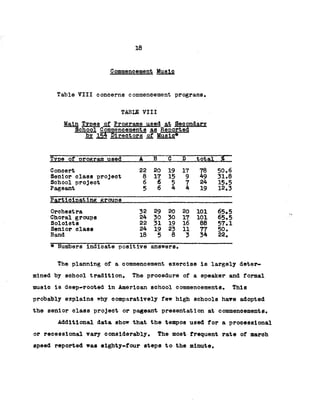
They may also be used to check alignments and intervals.
1. Plate figure 3, P. 120.
118
The "shov" aspect is ever present, but should not dominate.
The general effect of ^ell-played music blended vith precise move­
ments places the marching band in the realm of creative art.
The Color Guard
"The color guard is a very important part of the marching
organization and gives the final "dressed up" touch to the band , .
, . The color guard should be an honorary group, composed of the
highest caliber of individuals from the band or student body. The
color guard should have the utmost respect of the band members,
should be veil versed on flag courtesies, and able to instruct
1
others on the subject,"
^hen carrying the National Flag, the color guard precedes
the drum major in position. The number of accompanying flags
varies and may include the stage flag, the school flag, or the
band flag. The National Flag is carried in a higher position than
accompanying flags. The national headquarters of the United States
Flag Association states that it is proper to carry the National
Flag unfurled at night football games. It is also proper to carry
it furled to and from the scene of the patriotic occasion for
2
vhich it is. being used.
"^hen carried in a procession vith another flag or flags,
the flag of the United States of America should be either on the
marching right, or vhen there is a line of other flags, the flag
of the United States of America may be in front of the center of
3
that line.'
1. S. M. Maynard and L. TP. Velier, Color Guards. School Musician.
XII (November, 1940), P. 13.
2. John R. McCoy, Use of the United States Flag »’ith Marching
Bands, Presser* s Or-Ba-Chor-Journal. (1942), P. 13.
3. United States Army Recruiting Service Folder. Your Flag.
1
Traditional at West Point, the bell lyre or glockenspiel
has been adopted by many high school marohlng units to add color
and dramatic "umph.” Its striking appearance and piercing tone
is easily recognized by both the ear and eye. Several lyres
playing harmonized arrangements can be used to advantage in large
bands.
Suggestions
1. Low-heeled shoes are preferable (girls) for marohlng.
2. White gloves and pressed uniforms add finish. (It Is
necessary to cut holes In fingers of gloves for reed
instrument players).
3. Shined Instruments and matched drums add eye appeal.
4. Inclement weather conditions should be anticipated.
(Use uniform raincoats or overcoats).
5. Weather-proofed band folios save wear and tear on
music. 2
6. Marching cadences vary from 120 to 144 beats a minute
in practice. A cadence should be selected that is
within the comfortable playing and marching abilities
of the sohool musicians.
7. Integration and morale may be developed by engaging
the singing services of the student body while in
attendance at an athletic contest.
1. Plate XXIX, figure, 2, P. 120.
2. Godard*s Loose Leaf Band Polio or the Iyman Visi-Fold.
The color guard
Figure 2
Note bell lyre in center
* Joliet High School Band at Radio City Music Hall in 1936
HOW FIELD RMMATIONS ABE BLOCKED OUT
PLATE XXIX
CHAPTER XVI
RADIO BROADCASTING
Opportunities for broadcasting of school musical programs
exist in a number of American communities. Until comparatively
recently the experience was limited to exceptional groups re­
siding in the larger cities.
There is a "technique" of broadcasting, and although there
is great flexibility in professional practice, fundamental prin­
ciples have remained constant since the earliest days of radio.
Educational Values
Consideration of radio broadcasting as an educational tool
bears analysis.
Provides Motivation: Young people truly "love" to broadcast.
They will work many hours to perfect a program, which is to
be presented 'on the air." Radio "talk1 is understandable
Jargon to them.
Stimulates a Higher Degree of Perfection: It is compara­
tively simple to educate adolescents to the fact that the
microphone is the microscope of sound. They quickly see
that a good program is dependent upon careful and adequate
preparation.
Makes Rehearsals More Objective: As a microphone picks up
exactly what music is being produced, the students work
much more seriously and painstakingly. The microphone,
being a scientific instrument, tends to develop the im­
personal attitude.
121
122
Extends Background* The "learn by doing process is
admirably realized when a performance group broadcasts.
Students observe and experience what actually is nec­
essary in the production of good broadcasts. The im­
portance of careful planning, attention to minute de­
tails, self-discipline, and the seriousness of purpose
of technicians and announcers are fully comprehended
by young people.
Develops Communltv Service: An ideal of public service
is imbued through the realization that the program is
a part of community life.
Preparation
It is assumed that one has a group which is musically
worthy to bepublically heard and that proper and complete
arrangements have been made well in advance of the program. In
the preparation of a broadcast, several details are worthy of
consideration.
An advance visit to the broadcasting studio is necessary
to determine its size, shape and acoustics. If the studio is too
small, arrangements should be made to broadcast in a suitable hall
or auditorium possessing a radio station outlet, as it is rather
expensive to have one installed. This is to be preferred to the
cutting of the number taking part, as a major aim is to provide
the experience for as many students as can benefit by it.
Study the acoustics of the place of broadcast and try to
approximate it in the rehearsal room or hall. It may even be
necessary to use stage scenery, drapes, properties, elevations
or reseatings to accomplish this. Use student talent within your
groups who are Interested in the technical phase of broadcasting
for carrying out such experiments.
123
At least an hour before going on the air plan a final
rehearsal at the actual place of broadcast to permit adaptation
to actual conditions. Such a rehearsal should have a definite
objective. Technical staffs have little time to care for details
that could easily have been cared for in the school preparation.
Suggestive suitable continuity can be written up as part
of the preparation by both the director and students. Such con­
tinuity should identify the performers as well as include inter­
esting and pointed comments about the music. The production
staff at the studio is usually very willing to edit such material
in the light of experience.
Ernest LaPrade, director of music research at the National
Broadcasting company, states thatt
One of the most essential functions in the preparation
of a musical broadcast is the clearance of music num­
bers by the copyright staff of the network. Music in
the public domain may be broadcast freely, but it often
takes an expert to determine whether a given composition
is or is not in the public domain. Music published more
than fifty-six years ago is unprotected by copyright in
the United States, but a later arrangement of it may be
protected, and that arrangement may not be broadcast except
by agreement with the copyright owner. 1
Laws governing the use of materials are constantly changing
and it is well to be fully alert to the current interpretation.
Production Hints
1. Time accurately the length of each musical composition
through the use of a stop-watch. Consider the time to
be consumed with announcements and continuity.
2, Recognize the tendency to gain speed at a performance.
1. The Broadcaster and Music Education, Music Educators National
Conference Yearbook. 1938, P. 212.
124
3. Substitute quality and intensity to very loud
effects. (There are limitations to the dynamic
range of radio)•
4. Build a program which considers the audience,
time limits, and the opening and closing of
the broadcast.
5. Experiment with a public address system or
recording outfit if available.
6. Place accompaniments away from the microphone
to obtain natural balance.
7. Monitor* your own program and make adjustments.
8. Publicize the broadcast well in advance.
9. Use a blackboard for proper sequence of selec­
tions or for any change during the broadcast Itself.
10. Become familiar ^ith the hand signals used by the
technical staff.
* To monitor means to hear the performing group from the control
room prior to the broadcast to note balance, tone, Intensity
and general effect.
Hand Slmalfl
PLATE XXX
i
CHAPTER XVII
FOLLOW THROUGH
The responsibilities of the musical director are not
concluded at the end of the performance. There is the “follow
through" aspect of the production to keep in mind— return of
properties, costumes, lighting equipment, etc., acknowledgments
to co-workers, and record keeping with the next production in
mind.
Advance arrangements should be made to return costumes,
properties, scenery, lighting equipment, and music to their
respective owners or places of storage. Such work should be
considered as part of the production itself.
Written and personal acknowledgments should be made to
co-workers. Thank members of the school administration for being
alert to the educational values which the production has provided.
Statements should be sincere, humble, and grateful. Merited
praise is food for the soul and co-workers should be made to
feel the importance of their contributions. Thank the partici­
pants for cooperating at rehearsals, as well as providing enthu­
siasm at performance. Praise or criticize objectively only in
so far as it will be of value.
126
127
Though it may he time-consuming, the director should
give whatever time is necessary to make such acknowledgments
more personal than a mere standardized "thank you" note.
With future productions in mind, the director may keep
several types of records on file--publicity materials, programs,
photographs, motion pictures, recordings, and a scrap hook.
Framed photographs hung In the music room where future students
can orientate themselves to the objectives of the music depart­
ment will serve as a means of gaining support and cooperation
early In the preparation of another production.
The policy of carrying the task of production to Its
logical conclusion will establish a reputation of efficiency
for the director.
Such a reputation Is invaluable in seeking cooperation,
funds, etc., when the time comes for the next production. Good­
will Is built on just such seemingly minor details.
Final*
The musical director therefore has a unique opportunity
In creating new media of expression. As an artist, he will use
a super-color palette to bring about a blending of the various
art forms. His super-color palette will consist of music, staging,
lighting, costuming, design, and motion. The machinery of pub­
licity, program building and administration will help to permit
this ideal to be more fully realized.
i
128
"Orohestrating" these beauties of sound and sight will
open new vistas for artistic expression* Not only will the
creative impulse of the music director be keenly felt* but more
important, rill be the discovery and development of student in­
terests to new heights usually not obtainable through music alone.
This creative feeling, finding more complete expression through
the blending of the elements of production than with the music
alone, will help to unify the arts*
When the young music educator becomes aware of the fact
that all arts have common principles of balance, contrast,
variety, and unity, he will then see how his subject oan bring
about a fuller expression of the allied arts. He will further
realize that a fusion of these arts can serve the community and
nation in bringing about a new art era for all the people*
Therefore, the music educator truly becomes a master
"orchestrator" of auditory and visual beauties in the develop­
ment of a culture which can be made by the people and for the
people*
129
Bibliography
Bassuk, Albert 0., How to Present the Gilbert and Sullivan Operas.
New York: Bass Publishers, 1934.
Bates, Esther W., Tjaa M i °!Producing Pageants. Boston: Walter
Baker Company, 1925.
Beaoh, Frank A., Preparation £Qd Presentation of thg Oay^etta.
New York: Oliver Bitson Company, 1930.
Bennett, George T., The Uareh of Time, The School Musician.
IX (November, 1936), P. 8.
Blegelelsen and Busembark, The Silk Screen Printing Process.
York, Pennsylvania: McGraw Hill Book Company, 1941.
Blrge, Edward B., History of Public School Music Is thfi SaliSd
States. Philadelphia: Theodore Presser Co., 1937, pp. 301-11.
Bradley* Edward, Showmanship, The School Musician. VIII (March, 1936),
P. 17.
Brandenburg, Arthur H,, Frequent Programs by School Units, Music
Educators National Conference Yearbook. 1933, P. 147.
Burrls-Meyer, Harold and Cole, Edward C.. Scenery for the Theatre.
Boston: Little Brown and Company, 1938.
Burrows, Gwynee, Light Opera Production. Philadelphia: Theodore
Presser Co., 1929.
Cain, Noble, Broadcast Pickup, Music Educators National Conference
Yearbook, 1939-40, P. 355.
Carr, Eugene, What Radio Can Do for the School Chorus, Supervisors
Service Bulletin. XIII (November-December, 1933), P. 15.
Clark, Kenneth S., Community Singing Community CfrQEUfl.
New York: National Bureau for the Advancement of Music.
___________ Stories of America1s Songs. New York: National Bureau
for the Advancement of Music.
Cornell, William B Syllable si ladHfitJrtftl QKflahUfttdqn ££&
Management. New York: New York University Bookstore, 1925.
Curtis, Louis Woodson, How the Need of the Fine Arts in the
Secondary Schools can be met by Music Eduoation, Music
Educators National Conference Yearbook. 1937, P. 18.
130
Curtis, Elnora W., The Dramatic Instlnct In Education. New York*
Houghton Mifflin Company, 1914,
Cutts, Charles R., Gaining Community Support for School Music
Activities, Music Educators National Conference Yearbook.
1931, pp. 280-84.
D'Amico, Victor E., Theatre Art. Manual Arts Press, Peoria, 111.,
1931.
DeJarnette, Revin S., Hollis Dann. Boston* C.C, Birchard Co.,
1940, pp. 144-47.
Dodd, Harold W., Operetta Do's, Educational Music Magazine, XIV
(September-October, 1938), P. 54.
Dolman, John Jr., The Art of Plav Production. New York* Harper
and Brothers, 1926.
Donovan, Mary C., Assembly Singing, Music Educators National
Conference Yearbook. 1937, P. 291,
Drama League of America, Report of the High School Survey,
Chicago* Drama League of America, 1927.
Dykema, Peter W., and Gehrkens, Karl W., The Teaching and Admin­
istration of High School Music. Boston: d.C. Birchard Go.,1941.
Educational Policies Commission, Free Men. The Drama of Democracy,
Washington: 1942.
Ehlert, Nyda, E., So You're Giving an Operetta, Educational Music
Magazine, XVI (January-February, 1936), P. 31.
Fields, Frances F., Solving Your Operetta Worries, Educational
Music Magazine. XI (November-Deeember, 1931), P. 23.
Galvin, Eileen G., and Walker, Eugenia M., Assemblies for Junior
and Senior High School. New York: Professional and Technical
Press, 1929,
Geffen, M. M., Radio City Music Hall Pictorial Booklet. New York*
Select Printing Co., Obtainable at Radio City Music Hall.
Gordon, Edgar B,, The Extra-Curricular Aspects of High School
Choral Musio. Music Educators National Conference Yearbook.
1932, P. 115.
Graham, Ben G., Music Education from the Standpoint of the
Administrative Officer, Music Supervisors Journal. XIX
(October, 1932), P. 19.
Harmon, Effle E,, The Operetta Pro and Con, Music Educators
National Conference Yearbook. 1932, P. 292.
131
Hamer, James C.. It Pays to Advertise the Band, The School
Musician. XI (April, 1940), P. 10.
_________ Lenoir Rings the Bell Lyre, The School Musician, Till
(November, 1936), P. 21.
Harper, James C., and Long, Carl H., Gentlemen be Seated, The
School Musician. IV (February, 1933), pp. 10-12,
Heeter, Eugene F., Don't Say it, Write it, The School Musician.
Ill (October, 1931), P. 19.
Hetrick, Harold F., Music Publicity, Educational Music Magazine.
XV (March-April, 1936), P. 7.
_________ Staging a Revue, Educational Music Magazine. XVI
(March-April, 1937), P. 19.
Heylbut, Rose, Television and the Music of Tomorrow, Etude. LVIII
(January, 1940), P. 11.
Hill, Ruth B., Operetta Check List, Educational Music Magazine.
XIX (November-Deeember, 1939), P# 27,
Hinckley, Helen, Robing the School Chorus, Educational Music
Magazine. XXIII (November-December, 1936), P. 8,
Hindsley, Mark H., Band Pageantry, Music Educators Journal. XXVII
(December, 1940), P. 17.
_________ Band Pageantry, Etude. LVIII (July, 1940), P. 457.
The Band Scores a Touchdown, The School Musician. V
(September, 1933), P. 8.
_________ Some Aspects of the Marching Band, Music Educators
National Conference Yearbook. 1934, pp. 189-91.
Hollingsworth, Helen, Does Your Local Press Know Your Department?
Music Educators National Conference Yearbook. 1931, pp. 187-90.
Honson, Lawrence B., Publicity in Music Teaching, Music Educators
Journal. XXIII (October, 1935), P. 15.
Hughes. David W., The Boys are Marching. The School Musician. VIII
(October, 1936), P. 12.
Hutchinson, Herbert E., The Motivation of Music Study, Music
Educators Journal, XXII (March-April, 1935), P. 12.
Jacobs, Miehel, The Art of Colour. London: Batsford, Ltd., 1926.
Knapp, Jack Stuart, Lightlng the Stage with Homemade Equipment.
Boston: Walter H. Baker company, 1931.
132
LaPrade, Ernest, Technique of Broadcasting Instrumental Groups,
Music Educators Journal. XXIII (September, 1935), pp. 25-28.
Le Compte, Pearle, Dramatics. New York; A.S. Barnes and Company,
1931.
Lee, Adele Bohllng, Enrichment through Operetta. Educational
Music Magazine. XIX (September-Octoher, 1939), P. 5o.
Lemmon, Blanche, School Music Broadcasts Everywhere, Etude. LIX
(October, 1941), P. 654,
Lindsay, Richard V., A Principal Sets the Musical Alms of His
School, Educational Music Magazine. XXIII (November-December,
1935), P. 30.
Lueck, Clemens E.f Good Publicity Builds a Good Band, The School
Musician. VII (March, 1935), P. 8.
Macgowan, Kenneth, Footlights across America. New York; Harcourt,
1929.
Markham, Harold, The Amateur Theatrical Handbook. New Yorks
Pitman and Sons, 1927.
March, Lucille, The Musical Lure of the Ballet, Etude. LV
(December, 1937), PP. 779-81.
Mason, LeRoy F., Padding the Small Band for a Big Grid Show,
The School Musician. XIII (September, 1941), P. 14.
Maybee, Harper C., Organization Governs the Success of Large Groups,
Educational Music Magazine. XVI (January-February, 1937), P. 28.
McConathy, Osbourne, Is High School Music Making Progress? Music
Educators National Conference Yearbook. 1933, P. 50.
Mitchell, Roy, The School Theatre. New York; Brentanos, 1925.
Mursell, James L«, The Educational Value of the School Band.
Music Educators National Conference Yearbook, 1935, P. 244.
Some Fundamental Principles of Music Instruction, Music
Educators National Conference Yearbook. 1930, pp. 104-106.
Music Education Research Council, Music in Senior High Schools,
Report of a survey, Music Educators Journal. XXIII (October, 1936).
Music Educators Exhibitors Association, Business Handbook of
Music Education. 1941, pp. 11-12.
Music Educators Journal, Code of Ethics for School Musicians,
Music Educators Journal. XXIII (February, 1936), P. 34.
National Music Competition-Festivals, Report. Chicago; 1941, P. 8.
133
Nelson, Viola W., Creative Dramatlos for Secondary Education*
Boston* Expression Publishers, 1932.
O'Hara, Geoffrey, Operetta in Schools, Music Educators National
Conference Yearbook. 1933, P. Ill#
Ommanney, Katherine Anne, The Stage and the School* New York*
Harpers, 1932.
Otis, Florence I., Greek Opera by High School Students, Muslo
Sduoators Journal. XXVI (September, 1939)» P. 19*
Overton, Grace Sloan, Drama in Education. New York* The Century
Company, 1926.
Paine, John G., The Copyright Law, Music Supervisors Journal.
XVIII (February, 1931), P. 20.
Parsons, Charles S., Amateur Stage Management andProduction.
New York: Sir Issac Pitman and Sons, 1931.
Prescott, Gerald R., and Ohidester, Lawrence W., Getting Results
with School Bands. New Yorks Carl Fischer, Inc., 1938.
Pressors' Or-Ba-Chor Journal. Philadelphia* Theodore Presser
Company, 1942, P. 13,
Rapee, Erno, Encyclopedia of Music for Pictures. New York* Belwin,
1925, pp. 7-2?.
Revelll, William D., How to Build an Alluring Program, Etude.
XLVII (August, 1939), PP. 505-08.
_________ The Marching Band, Etude. LVI (September, 1938), pp.575-78.
Ruddlck, Leon J., Broadcasting, The School M u s i c i a n . VI (February,
1935), P. 17.
Ruddlck, Leon J., and Crawford, John A.. A Pageant of Marching
Bands, Music Educators Journal. XXV (March, 1939), pp. 29-31.
Schlabach, Karl W.. The Grand Entry, The School Musician. VIII
(December, 1936), P. 19.
Scott, Andrew V.y Showmanship for Solo Drummers, The School
Musician. IV (May, 1933), P. 8.
Seashore, Carl E., Color Music, Music Educators Journal. XXV
(October, 1938), P. 2€.
Simpson, Lylian Niquette, Music Study Correlated with other Arts,
Music Educators National Conference Yearbook. 1927, pp. 110-11.
Sister May St. Ruth, Christmas in Merrle Old England, Music
Educators Journal. XXVII (September, 19^0), P. 26.
134
Smith, Augustine H., Enlarging the Hymn Repertoire. National
Bureau for the Advancement of Uuslc, 1929*
Smith, Herman F., Music Teachers or Music Educators? Music
Educators National Conference Yearbook. 1935, P. 64,
Smith, Milton, The Equipment of the School Theatre, New York*
Bureau of Publications, teachers College, rfolumbla University,
1930,
Steckel, Edwin M.. Cantata or Operetta? Educational Music
Magazine. XVI (September-October, 1936), P, 21.
Stein, M., Modern Make-up. New York* M, Stein Company.
Strlckllng, George F., Unusual Program Building. Educational
Music Magazine. XIX (September-October, 1939;, pp. 34-36,
_________ Pepping up Assembly Singing, Supervisors Service
Bulletin. X (March-April, 1930;, pp. 10-12,
__________ Some Things we have Learned about Broadcasting, Music
Educators Journal. XXI (March-April, 1935), 21.
Thomas, Mittie S., Singing in High School Assemblies, Educational
Music Magazine. XXII (January-February, 1942), pp. 45-47.
United States Army Recruiting Service, Your Flag.
Van Bodegraven, Paul and Wilson, Harry Robert, The School Music
Conductor. Chicago* Hall and McCreary Company, 194£.
Velier, Maynard L. W., Attention^ Color Guards, The School
Musician. XII (November, 1940), P. 13.
Walls, Robert B., This Vestment Problem, MubIo Educators Journal.
XXV (December, 1938), P. 31.
West, Stephen, Let's Go to the Music Hall, Etude. LVII (February,
1939), P. 83.
Wheelright, Lorin F., Tastes in Assembly Songs, Educational
Music Magazine. XV (March-April, 193o), P. 20.
Wllllston, George B., Mozart Comes to Life, Educational Music
Magazine. XX (January-February, 1941), P. 21.
Wllsbach, John, Projects in the Interrelation of Music and other
High School Subjects, Music Educators National Conference
Yearbook. 1933, P. 278,
Wood. Harry L.. Buying Uniforms? The School Musician. XII
(March, 1941), P. 12.
Woodruff, Harvey L., Have you Tried an Olde Folkes' Concert?
Music Educators Journal. XXVIII (September-October, 1941), P. 20.
APPENDIX A
136
SPRINGFIELD PUBLIC SCHOOLS
SPRINGFIELD, MASSACHUSETTS
High School o f Commerce
VIGG1ANO
f Music
May 13, 19U2
Dear colleague:
The modern music educator is often called upon to
perform many functions only distantly related to his specialty of
music. Perhaps it has been within your experience to deal with
musical programs in which staging, lighting, decoration and dramatic
"umph" have been called into play.
I am preparing a handbook suggesting ideas which
would enhance the artistic effect of amateur oerformances.
Like many other alert nrusic educators, you orohahly
have learned a great deal from direct observation in the concert
hall, the opera, and the theatre,
A description of your own practice will help in
learning of effective means of enhancing the dramatic element in
music performances.
I would also appreciate sample programs or data
concerning any music program which you have presented.
A copy of the pertinent findings will be sent on
request to all who helo by returning the enclosed questionnaire.
Very truly yours,
F. Anthony Viggiano
Director of Music
The enclosed program may be of interest to you.
F. Anthony Viggia.no
Director of Music
High School of Commerce
Springfield, Massachusetts
"How you do it" is of primaxy concern
Undoubtedly, your experience can contribute to
the art of program development in schools.
Comments and suggestions most welcome.
*
A. TYPE OF PROGRAMS
Check types which you have presented
Formal concert
{.Susie Festivals
Christmas programs
Operetta
Gilbert & Sullivan
Opera (serious)
Add to the list:
Bc-md pageantry
Assemblies
Soloists
Visiting artists
Pageants
Pantomime
Shadowgraph
Comments:
r
I
t
- 2-
B. &EIIERAL QUSSTIONS
Have you any time limit which you consider maximum
for school performances? yes ____ no_____
If so, indicate length _____________________________
Who generally sponsors program?_____________ ______
How is program financed? _________________________
Do you interpolate? yes no
Do you make special choral or instrumental arrangements
for your programs? yes ___ no ___
Do you use:
(check)
Comments:
a. student committees? ____
h. faculty committees? ___
c. student-faculty committees?
C. STAGING
Do you use stage decorations? yes ____ no____
Who designs staging? _________ _
Who paints staging? ____________________________
Do you plan various stage levels for a musical performance?
yes ___ no____
% p e s used outside of opera scenes ______________________ __
D. LIGHTING
Do you use special lighting? yes ___ no ___
Who plans lighting? _______________________________
Check types of equipment used:
Footlights _ _ _ _ _ Borders _ _ _ _ _ Spots ___
Floods _______ Colored______ _ Stroblite
Any other types:
Comments:
Ee COSTUMES
Type used for choral work___________________
Orchestra___________________ _ _ _ _ _ _ _ _ _
Who designs opera or pageant type costumes?
Check:
Designed in school
School made
Home made
Rented
What other methods? _____
F„ PRINTED MATERIALS
Programs
Check types used
Commercially printed ____
School printed ■
Multigraphed ___
Multilithed _ _
Mimeographed__________ __
Do you plan: Size? ___
Shape? _____
Color? ___
Do you usually plan a cover design? yes ____ no ___
Does such a design require a cut?_____ yes____ no___
Posters
School designed ____
Screen process
Commercially printed _ _ _
Tickets: Specially designed? yes no____
Do you consider a ticket an advertising medium? yes
Comments:
C-.
- v
PUBLICITY
77xio plans?
Vi'no writes?
Check: Co!;,:.;u:uty ri«7rsofj.p'.
School ne-s'oa oers
Bulls tin boards
Assembly skits
Add to the list:
posters
Radio
Stunts
H. C0RISHC3N5NT
What musical groups participate? check:
Orchestra ___
Senior Class _____
Other types ____
Chock types used:
Pageant ___
Senior Class project
Choral groups
Soloists
Concert types
School project
’ther types: ________________________________________
-v you use a processional and recessional? Yes ___ No
Indicate your own (auoroximute) metronomic marking
per quarter note _____half note (alia breve) _____
■notted quarter (in 6/S)_______________
What music do you us . in the processional? ____________
Recessional?
If you wish a copy of whut may be considered general
practices, check here ___
Name
Position
Address
138
SPRINGFIELD PUBLIC SCHOOLS
SPRINGFIELD MASSACHUSETTS
High School of Commerce
May 4, 1942
• • • • • • • • • •
State Director of Music
My dear Mr........ t
Not all superior music teachers appear in
print or receive wide publicity.
Beoause of this I wish to ask you as State
Director of Music to kindly send me a list of a dozen or more
names of senior high school music directors in your state who
are outstanding In your state in presenting educationally worth­
while musical programs in their schools.
I am preparing a handbook on the subject of
high school musical programs and would appreciate this pertinent
information.
Thank you kindly.
Cordially yours,
F. Anthony Vigg
FAV/FAV Director of Music
139R A N D M 9 N A L L Y LOOSE LEAF OUTLINE M AP UNITED STATES
W n n t k T »T U l l t W dA ltV II COMPANY. C H IcIS !
l~
Questionnaire
Returns
y.'-llap showing statss Included I
/ in the questionnaire results and
''the number of direetors of music -
in each state who responded* *
APPENDIX B
141
THE COPYRIGHT LAV
Copyright infringement is a criminal offense punishable
by prison sentences or the assessment of fines.
Copyright means "the exclusive right to reproduce (by
writing, or otherwise,) publish, and sell the matter and form
of a literary or artistic work in various other ways, as in
dramatizing, novelizing, motion picture production, reciting in
public, etc. In the United States, the Constitution (article 1,
section 8) empowers Congress to promote the progress of science
and the useful arts, by securing for limited times to authors
and inventors the exclusive right to their respective writings
and discoveries. The first statute was passed in 1790; the act
now in force went into effect July 1, 1909* amended in 1912. The
term of copyright is twenty-eight years, with right of renewal
for twenty-eight years on due application with a corresponding
renewal right as to existing copyrights obtained under previous
statutes. 1
Some Instructors have gained the mistaken impression that
copying of copyrighted material is permissible and legal as long
as the copied material is not sold for profit.
Composers and publishers Invest their talent, efforts, and
capital in publications. They are entitled to the income from the
sale of these items. Any practice of copying which deprives the
composer and publisher of Just and deserved royalties and sales is
an unfair practice and is definitely a violation of the copyright
law of the United States of America.
following are phrases taken directly from the copyright
laws: "... any person entitled thereto, (the person securing
the copyright) ... shall have the exclusive right (a) to print,
reprint, publish, copy, and vend the copyrighted work; (b) to
arrange or adapt it if it be a musical work; (c) to make or to
procure the making of any transcription or record by or from
which ... it may in any manner or by any method be exhibited,
performed, represented, produced, or reproduced; (d) to perform
the copyrighted work publicly for profit if it be a musical compo­
sition; (e) to make *ny arrangement or setting of it or of the
melody of it in any eystem or notation.
1. debaters New International Dictionary.
142
I
"That any person who willfully and for profit shall
Infringe any copyright secured by this Act, or who shall know­
ingly and willfully aid or abet such infringement, shall be
deemed guilty of a misdeamer, and upon conviction thereof shall
be punished by imprisonment for not exceeding one year or by a
fine of not less than one hundred dollars nor more than one
thousand dollars, or both, In the discretion of the oourt •
Following, is a copy of a statement Issued by the Standard
Music Publisher s Association of the United States:
Unauthorized Copying of Copyrighted Material Illegall
"Copying by any process— by hand on paper or blackboard,
by multigraphing, mimeographing, photostating or any other method—
of any part of a copyright work, no matter for what purpose or
use (religious, educational, theatrical or otherwise), without
the permission of the copyright owner, is a serious offence
against the United States Law, punishable with heavy fines begin­
ning at one hundred dollars, plus minimum damages of two hundred
and fifty dollars. The United States copyright laws are very
strict in this particular and many actions are now being conducted
against teachers, directors and other offenders making unauthor­
ized arrangements or copies. The practice is unfair to composers,
authors and publishers.
You are violating the law, if:
(1) You reproduce copyrighted words or music through the
use of mimeograph stencils,
(2) You make a song slide ofa copyrighted song.
(3) You write the words or music of such a song on the
blackboard,
(4) You copy extra parts foryour band or orchestra,
(5) You make any arrangementof copyrighted numbers
without first seouring permission of the copyright
owners.
If you are in doubt as to what is "copyrighted music" we
would point out that the United States Copyright Law requires
that notice of copyright ownership, showing the name of the owner
and the year of copyright, be printed on all copies of a copy­
righted work. Therefore, when such notice appears, it is definite
evidence that permission for copying must be secured from the
copyright owner before it may be copied.
To avoid the hazard of infringement, check carefully the
copyright ownership as shown in this notice, and first obtain the
desired permission or leave it alone.
In the case of materials published outside the United
States the laws require no specific notice of copyright, and
inquiry as to copyright status should therefore be made of the
publisher or his American representative.
J
143
Permission for public performance Is necessary for most
operas and operettas and for some choral and Instrumental works.
It is well to Inquire concerning requirements and restrictions
before scheduling the performance of such works. All performance
rights are property of the copyright holder and subject to his
permission.
Firms ... of such materials will gladly provide full
information regarding performance requirements on any materials
which they supply.
The contemporary composer must have some means of support.
His compositions are the result of his labor and he is entitled
to a Just lnoome. The music educator can greatly aid the composer
through seeing that his copyrighted property Is not violated. 1
1. Music Educators Exhibitors Association. Business Handbook of
Music Education. 1941, pp. 11-12.
APPENDIX C
145
A CODE OF ETHICS FCR SCHOOL MUSICIANS
(This represents the Code of Ethics"
recently approved by-the Pennsylvania
State Education Association and the
Conference of Pennsylvania Locals of
the American Federation of Musicians).
.... It Is recommended that public school organizations
contribute music only as herlnafter provided*
(1) For school functions. Initiated by the schools as
part of a school program, whether In sohool buildings
or other buildings.
(2) For community functions organized in the interests
of the schools strictly for educational purposes, suoh
as those that might be originated by the Parent-Teacher
Association, educational committees of community organi­
zations such as Civic Clubs, Women's Clubs, Music Clubs,
Rotary Clubs, Kiwanis Clubs, etc.
(3) For sohool exhibit purposes as part of the school
district's courtesies to educational organizations or
educational conventions being entertained In the district.
(4) For olvlc occasions of local, state, or national
patriotic Interest, of sufficient breadth to enlist the
sympathies and cooperation of all persons, such as the
G.A.R., American Legion, and Veterans of Foreign Wars
In connection with their Memorial Day services in the
cemeteries, but only when such participation would not
in the least usurp the rights and privileges of local
professional musicians.
(5) For worthy local charity, such as the WelfareFedera­
tion, Red Cross, hospitals, etc., when and wherelocal
professional musicians would likewise render their serv­
ices gratuitously.
(6) For any educational and civic service that might be­
forehand be mutually agreed upon by the Superintendent
of Schools and the official representative of the local
professional musicians. 1
1. rtusic Educators Journal, Code of Ethics for School Musicians,
Music Educators Journal. XXIII (February, 1936), P. 34.
>
APPENDIX D
146
147
S C E N E R Y 12
terrace with lew ap p fN d i itreleM nm of ite m•m Ii* a targe plalfem .Tar** parallots and three m p i
Stain with turning. reverse at landing, review ing a t speaking stand, Inlarlat balcony, lanaal stain with caatar I
PARALLELS, PLATFORMS AND STEPS
This It a treatm ent of
a d ailg n by Adolph
Appla, showing how
wall tha unit parallal
and platform and slap
units shown onthls P«0*
land tham salvas to ln-
tarastlng arrangam ants.
On account of the dramatic Importance of levels these units are
a vitalpartof interiorand exteriorsettings,whether suggestive,
realisticor stylized.By the use of the units as shown at the top
and bottom of this page, almost every arrangement can be
worked out.
The parallels and platforms listed are constructed so as to take
the maximum amount of weight intended, and light and col­
lapsibleso as tobe easilyhandled and stacked in:.?thesmallest
possible amount of space— 5 to6 inches as shown Inillustration.
Emil Orlk's design for
this Greek tolling It
easily created with tho
w lngt lltto d on tho pro*
viout p a g o t. Tho Idoat
advantago of tho unlti
It that an unlimited num­
ber of tattin g s can bo
com posed from thorn.
PLATFORMS AND PARALLELS
Unpointed Painted
He.S -ttl rx 4* x 2 ’ high .
Ne.S-412 2'10" x S'S” x 2' high .
No. f*4U S' x S' x 2’4" high .
N o.S-IM 4' x 5*8” x 3’ high .
No. M R 4' x S 'B "x 4 ' high .
STEPS
The interiorsillustratedon thispage can allbe planned with theunitflatsand
wings thatappear on the preceding pages, and by using the unit doors, win­
dows, etc,thatareon the preceding pages. Whether the setting you wish to
create Is strictly realistic, suggestive, or stylized— all of the units are easily
adapted to any type of setting. The two largersettings shown are rearrange­
ments of practically the same units, from designs of Cleon Throckmorton.
Unpalntod Painted
No. M U Two «top 4" rite, 11" troad, 4* w ldo . %1 M
No. S-4J7 Throo H op 4" rite, 9" troad, 2*10" wldo . 4 1
No. M IS Four slop 4" ilto, 11" troad, 5' w ldo . 11 12
While tho abovo parallel*, platforms end slopscan bo formod
Inio practically ovary shape, special tiro s are m ade on order.
CLEON THROCKMORTON, INC
CATALOO OF THE THEATRE
gitslfr.kUtarJLaSfcaKBbasin
PLATS XXXII
J
APPENDIX E
148
149
PLATE XXXIII
149
The High SchoolofCommerce
presents
Music Festival
High School Orchestra A Cappella Choir
High School Band Combined Glee Clubs
“American Fantasia”
Assembly Hall April 24, 1941 8 O’clock
DIRECTED BY
F. ANTHONY VIGGIANO
P R O G R A M
Fanfare
Anthony Serafino
Star Spangled Banner John Smith
America the Beautiful Samuel Ward
AUDIENCE
I
HIGH SCHOOL ORCHESTRA
Richard Wagner
Pietro Mascagni
Johannes Brahms
Amilcare Ponchielli
March from Taonhauser
Intermezzo Sinfonico (Cavalleria
Rusticana)
Hungarian Dance No. 5
Ballet Music (La Gioconda)
II
A CAPPELLA CHOIR
Bless the Lord Ippolitow-Iwanow
Words adapted from Psalm CIII: Verses 2; 3, 8,13,18
All in the April Evening Hugh Roberton
God So Loved the World (Crucifixion) Sir John Stainer
INTERLUDE
Adoration Felix Borowski
Edward Larson, Evelyn Barsom, Stacia Filipiak, violinists
Laura Sterns, accompanist
HI
COMBINED GIRLS'
Emitte Spiritum Tuum
Fly, Singing Bird
Echo Song
Rose Marie
Czecho-Slovakian Dance Song
Laura Sterns, Alice Anderson, Kathleen Griffin,
accompanists
IV
MILITARY SUITE
Typomania James L. Buckborough
Novelty for typewriters and. musical instruments
(Manuscript through courtesy of composer)
1. On the Hike
2. At the Officer’s Ball
3. On Parade
GLEE CLUBS
Fr. Jos. Schuetky
Edward Elgar
Orlando DiLasso
Rudolf Friml
Arranged by Manney
A CAPPELLA CHOIR
SOPRANOS
BODHA BLOOM8TEIN*
LORRAINE COUGHLIN
ANN DAVISON
SHIRLEY DUNN*
ADELINE DIPIETRO
DORIS GOSSELIN
IRENE GRONDALSKA
SYLVIA HARRIS*
HELEN EAZAWICH*
BARBARA LONG
ELEANOR PLOUFF*
DORIS RAPISARDA*
LOTTIE NALEPA
ALTOS
IRENE AMELISKO
MARJORIE ANDERSON
PHYLLIS BARTON*
ELEANOR BECK
IRENE CRAWFORD
JEAN DICKINSON
MARTHA JOHNSON
GLORIA NATALINI*
ELAINE PLOUFF
HELEN YOUNG
TENORS
EDWARD AHERN
GEORGE CALLAHAN
WALTER LEWIS
NICHOLAS HORACE
SIMON PAVA*
RAYMOND ROBERTS
BASSES
HAROLD COLEMAN
IRVING GOLD*
SHERMAN GREENBERG*
KENNETH MACLEOD
GEORGE MOLLER*
GIRLS GLEE CLUB
SOPRANOS
LILLIAN AREL
ELLA BIERMAYER
PRISCILLA BLANCHFIELD
RODHA BLOOMSTEIN
CONCETTA GARDINALE
CONSTANCE CAROTHERS
LOUISE CELLILLI*
JUDITH CHAITOWSKY
VIVIAN CRISTOFORI
THELMA COE
PHYLLIS CONANT
DOROTHY CORBIERE
ANITA COTE
LORRAINE COUGHLIN
HILDA CUMMING
SHIRLEY DAKIN
ANN DAVISON
HELEN DAUTRICH*
ADELINE DI PIETRO*
SHIRLEY DUNN*
MARJORIE EDSON*
DOROTHY ELKAS*
MARY FERGUSON
VIOLET FORSYTHE
GRACE FORTINI
MARY GARVEY
LOIS GIRARDEAU
RUTH GOLDMAN
DORIS GOSSELIN
IRENE GRONDALSKA
SYLVIA HARRIS*
MARIE HASSION*
ALTOS
IRENE AMELISKO
MARJORIE ANDERSON
MATILDA ANZALOTTI
SHIRLEY ASCHER
ZELVA BARBER
PHYLLIS BARTON
EDNA BASCOM
ELEANOR BECK
ALICE BIDWELL
RUTH BLISS
FERN BUTLER
EILEEN CAVANAUGH
JUNE CERVENY
HELEN CHEKOWSKA
IRENE CRAWFORD
MARY DEANE
ANGELA DEFIUPPO
PRISCILLA DEMAS
LILLIAN DEPRETTO
LORRAINE DESJARLAIS
JEAN DICKINSON
ROSE DEPALMA*
HELEN DUBOSE
MADELINE FIGONI
GENEVIEVE EP.ONC
MARGERY GOODSET.L
VIVIENE HARRISON
RITA HEALEY
MARION KELLTHER
MARILYN JOHNSON
MARIE JOUBERT*
MARY KAROUTAS
HELEN KAZAWICH
HORTENSE KELLY
ELAINE KNOX
EMMA LE FRANCOIS
BARBARA LONG
ANNA LUNDERVILLE
MARIE MARSH____
m a r io n McCa r t h y
DOROTHY McCORMICK
AGNES McCULLOUGH
JAMILLA MOSES
LOTTIE NALEPA
LORRAINE NEWTON
JEAN NORMANDIE
CONSTANCE PEPPER
RHODA PHILLIPS
ELEANOR PLOUFF
DORIS RAPISARDA
HELEN SOYKA
ANNETTE SCHREIBER
MARGIE LEE SCOTT*
CLARA SEARLES
ALICE SHEPHERD
FRANCES WALSH
JANE Wh k F.LKR
ALICE WRIGHT
MARIE ZARLENGO
YOLANDA ZURUNO
MILUE LAINO
MYRTLE LONGUEL
JEANNE LUCAS
MARION LUCEY
MURIEL MARSH
DOROTHY MASKO
BARBARA MINER
MARY MULLIN
GLORIA NATALINI
SHIRLEY NOONAN
DOROTHEA O’NEIL
VIRGINIA PARKER
CAROLINE ROCCISSANO
AGNES SANDS
MATILDA SEARS
FLORA SMITH
HELEN SOSNOWICH
JUNE STETSON
IRIS STREETER ____
ELIZABETH THORSTENSON
LUCILLE TIGHE
DOROTHY VIGNONE
LORRAINE VIGNEAULT
BEVERLY WHITE
MARGUERITE WHITE
HENRIETTA WIESKL
DOROTHY WRIGHT
SHIRLEY WRIGHT
PLATE XXXIII
150
JL^LlJLUJULiiLiJLUmiiJUiLUJUlLliJLUUlJU
HIGH SCHOOL OF COMMERCE
PRESENTS
M U S I C FESTIVAL
HIGH SCHOOL ORCHESTRA A CAPPELLA CHOIR
COMBINED GIRLS’ GLEE CLUBS BOYS’ GLEE CLUB
HIGH SCHOOL BAND
SOLOISTS
Nelson Monica!, violinist Norman Hadley, clarinetist
Laura Sterns, pianist
HIGH SCHOOL OF COMMERCE ASSEMBLY HALL
MAY 17, 1938
8:20 P. M.
Under the direction of F. Anthony Viggiano
I
V*y f
■4'
3
m r n m r n m m m M m
PLATE XXXIV
I
PART ONE
HIGH SCHOOL ORCHESTRA
MARCH—Tannhauser ..................................................... Richard Wagner
Inspiring, dramatic and compelling, describes the music of the
master-composer who lived to have his music accepted after many
critics had been unsympathetic to the “weird noises.”
ADORATION Felix Borowski
Poetic beauty on wings of a melody of grandeur gives this se­
lection its proper setting. Mr. Borowski was formerly director
of the Chicago Musical College. (Solo played by members of
the first violin section.)
PROCESSION OF THE SARDAR ............................ Ippolitow-Iwanow
Describes a procession of military officers, who in the days of
the Czar disclosed their high rank by surrounding themselves
with a train of brilliantly dressed followers from the Orient.
ALLEGRO FROM CONCERTO No. 2 3 ................................ G. B. Viotti
This very popular violin concerto although often played by
violinists and pianists is rarely heard in its original setting for
orchestra and solo violin.
Nelson Monical, violinist
HUNGARIAN DANCE No. 5 .................................... Johannes Brahms
The Hungarian Dance is exactly what the title indicates. Hun­
garian themes that were put into the present shape by Brahms.
Many of them were of gypsy origin, but some were in the native
hungarian style, which does not show the gypsy scale. They
are invigorating!
HUMMING CHORUS FROM
Proving the exception Mr,
setting of the famous ins
present number was take
MY LORD WHAT A MOUR]
Charles
The spiritual is rapidly
of American music. Its
votion and demonstrativ
US
PART TWO
A CAPPELLA CHOIR
O BONE JESU ................................................ Giovanni P. Da Palestrina
The beauty of this number lies in its simplicity and directness
of message. Its sincere reverence and noble text.
OPEN OUR EYES .................................................... Will C. Macfarlane
Catherine Lynch, soloist
ALL IN THE APRIL EVENING.................................... Hugh Roberton
This simple tone picture by the famous choral adjudicator from
Seotland is a living example of his expressed philosophy of
music; namely that spirituality is the governing force of all
music.
BLESS THE LORD (O My Soul) ........................... Ippolitow-Iwanow
Words adapted from Psalm CIII: Verses 2, 3, 8, 13, 18.
VIOL
PERPETUM MOBILE (perp
AUTUMN, a modern descrip
Violins: Nelson Monical,
Vacillios Pavoglou. Pian
PA
COMBINED
Accompanists: La
CHORUS FROM “L’ALLEG
“Or Let the Merry Bells I
The gay spirit of this it
the great classicist Hand
A SNOW LEGEND ...........
Delicate, imaginative, ant
and thoughts with mast<
CREOLE SWING SONG ...
Mr. Denza has succeedet
that invites receptive lis
THE BIG BROWN BEAR (s:
OLD KING COLE
Traditional air with desc
character depicted is knc
natured personality.
II
THE FLIGHT OF THE BUI
From the opera “The Le
flight of a persistent ye
Norman Hadley, clarinetist
MUSIC BOX ..........................
Recalling the powder pui
instrument preceding th<
Norman Hadley, Warren I
R
PLAl
1 5 0
agner
if the
many
owski
is se-
rector
:rs of
iranow
iys of
selves
nt.
Viotti
;d by
lg for
rahms
Hun-
rahms.
native
They
:strina
■ctness
arlane
aerton
from
hy of
of all
vanow
HUMMING CHORUS FROM “FINLANDIA” ............. Jean Sibelius
Proving the exception Mr. Noble Cain has arranged an attractive
setting of the famous instrumental composition from which the
present number was taken.
MY LORD WHAT A MOURNIN’
Charles Knower, soloist
The spiritual is rapidly taking its proper place in the annals
of American music. Its expression is mainly in the intense de­
votion and demonstrativeness.
INTERLUDE
VIOLIN QUARTET
PERPETUM MOBILE (perpetual motion) ................. Jules Reynard
AUTUMN, a modern descriptive ............................................ Zamecnik
Violins: Nelson Monical, Margaret Collins, Howard Hurwitz,
Vacillios Pavoglou. Piano: Rachel Barson.
PART THREE
COMBINED GIRLS’ GLEE CLUBS
Accompanists: Laura Stems, Sadie Glassanos
CHORUS FROM “L’ALLEGRO”—by John Milton
“Or Let the Merry Bells Ring Round” .... George Friedrich Handel
The gay spirit of this music well exemplifies the versatility of
the great classicist Handel.
A SNOW LEGEND ........................................ Joseph W. Clokey, Op. 26
Delicate, imaginative, and soaring. Mr. Clokey paints his moods
and thoughts with master strokes.
CREOLE SWING SONG ...................................... LuigiDenza
Mr. Denza has succeeded in giving us a straight-forward tune
that invites receptive listening.
THE BIG BROWN BEAR (said woof!) .... Mana-Zucca Op. 52, No. 1
OLD KING COLE
Traditional air with descant, arranged by Thomas Dunhill. The
character depicted is known the world over for his jovial good-
natured personality.
INTERLUDE
THE FLIGHT OF THE BUMBLE BEE ............... Rimsky-Korsakoff
From the opera “The Legend of Tsar Salton.” It describes the
flight of a persistent yellow jacket.
Norman Hadley, clarinetist; Laura Stems at the piano.
MUSIC BOX .................................................................. Wolpaw-Viggiano
Recalling the powder puff music box, the familiar parlor musical
instrument preceding the victrola with metal discs.
Norman Hadley, Warren Davis, clarinets; Pauline Phinney, bells.
FANFAR
GARDES
THE MIK
From
Entra
Flowt
IN A MO
DRUMS
The M
Band-
Two selec
a. E
b. T
RIO VER
EL CAPI
A tri
has a
bands
THE GRi
TYPOiO
This
Janu£
Illino:
his st
1. O
2. A
3. O
Queen of
p l a t e XXXIV
s
jANDIA” ........... Jean Sibelius
Cain has arranged an attractive
tal composition from which the
er, soloist
its proper place in the annals
ion is mainly in the intense de-
UDE
ARTET
otion) .................. Jules Reynard
......................................... Zamecnik
iret Collins, Howard Hurwitz,
hel Barson.
IREE
’ GLEE CLUBS
ems, Sadie Glassanos
by John Milton
>und” .... George Friedrich Handel
ell exemplifies the versatility of
Joseph W. Clokey, Op. 26
rig. Mr. Clokey paints his moods
kes.
..................................... Luigi Denza
ving us a straight-forward tune
of!) .... Mana-Zucca Op. 52, No. 1
■ranged by Thomas Dunhill. The
e world over for his jovial good-
pUDE
BEE ................ Rimsky-Korsakoff
ETsar Salton.” It describes the
cket.
i Stems at the piano.
......................... Wolpaw-Viggiano
box, the familiar parlor musical
la with metal discs,
larinets; Pauline Phinney, bells.
PART FOUR
HIGH SCHOOL OF COMMERCE BAND
FANFARE
GARDES DU CORPS MARCH .......................................................... Hall
John Swift, drum major
THE MIKADO, selection Arthur Sullivan
From the comic opera of the same name including the melodies:
Entrance of the Mikado, A Wandering Minstrel, Tit Willow,
Flowers that Bloom in the Spring, Here’s a How-De-Do.
IN A MONASTERY GARDEN ...............................Albert W. Ketelbey
Monk Chorus by the Boys’ Glee Club
DRUMS ........................................................................ Francesco DeLeone
The Marines’ Hymn—Arranged by A Tregina of the U. S. Marine
Band.
Boys’ Glee Club
Two selections from “The Nut Cracker Suite” by Tschaikowsky.
a. Elves Dance.
b. Trepak (Russian Dance)
RIO VERDE, Mexican Serenade ....................... James Fulton Op. 962.
EL CAPITAN MARCH .............................................. John Philip Sousa
A tribute to the “march king” whose interest in school bands
has aided greatly in the development of thousands of high school
bands.
THE GRASSHOPPERS’ DANCE Ernest Bucalossi
Piano Soloist: Laura Sterns
TYPOMANIA...........James L. Buckborough
This clever novelty for typewriters and band was first given last
January by the composer and his high school band at Hinsdale,
Illinois. By special arrangement Mr. Buckborough has lent
his score for the use of the high school band.
1. On the Hike.
2. At the Officers’ Ball.
3. On Parade.
ROMANCE OF THE CARDS
An Original Comic Ballet
Choreography by F. Anthony Viggiano
CAST
Queen of Hearts: Barbara Beebe Jack of Hearts: Fred Carmody
King of Spades: Louis Grimaldi
Pages: Doris Flebotte, Louis Galvotti
Attendants: Arthur Abrahamson, Robert Wheeler
Attendant Partners: Verna Letendre, Sara Young
XIV
MUSIC EMPLOYED
1. NYMPHS OF THE NILE, air de Ballet ..................
2. SERENADE ......................................................................
3. BLUE DANUBE WALTZ ..............................................
4. INTRODUCING THE KING OF SPADES ..............
5. THE THUNDERER ........................................................
6. FUNERAL MARCH ........................................................
7. Finale.
MARCH EXULTANT .....................................................
(Audience will please rise on “America”)
ALMA MATER ....................... Viggiano
Alma Mater, Commerce High School,
We will loyal be.
White and crimson lead us forward,
Blazing endlessly.
Industry, integrity, guide us to the heights.
Alma Mater, Commerce High School,
We all pledge to thee!____________________
ORCHESTRA PERSONEL
Nelson Monical, Concertmaster
VIOLINS: Margaret Collins, Marion Connelly, Virginia Gay_,
Howard Hurwitz, Tony Mazza, Muriel Loud, Vacilleos Pavoglou„
Philip Randall, Elaine Stickles, Vernon Wayne, Ellen Whalen.
’CELLOS: June Sparrow, George Serandis, Gertrude Powers.
DOUBLE BASSES: Dorothy Reynolds, Evelyn Rivard, Dorothy
Tetreault.
OBOE: Helen Berman.
CLARINETS: Norman Hadley, Warren Davis, Shirley Rush-
ford.
BASSOON: Catherine Pilalas.
Trumpets: Lawrence Donovan, Malcolm Hanson, Kenneth
Roberts.
Trombones: William D’Epagnier, Joseph Zieminski.
HORN: Edward Buckley.
PERCUSSION: Lawrence Dimetres, Pauline Phinney, John
Swift.
PIANO: Rachel Barsom, Marion Leary.
LIBRARIANS: Mary D’Aniello, Marion Leary.
A CAPPELLA CHOIR
SOPRANOS: Patricia Allen, Mary Contrino, Ida Lamothe, Cath­
erine Pfrommer, Dorothy Shapiro, Mercedes Roberts, Doris Watt.
ALTOS: Dorothy Aussant, Catherine Lynch, Marjorie Mills,
Joan Ott, Winifred Theobald, Virginia Thompson.
TENORS: George Chadwick, George French.
BASSES: Charles Knower, Norman Jalbert, Carl Winterle.
Accompanist: Laura Sterns.
COMBINED GIRLS’ GLEE CLUBS
Accompanists: Laura Sterns, Sadie Glassanos
SOPRANOS: Rita Alix, Patricia Allen, Andreana Anastos, Gen­
evieve Berberian, May Bushuyzen, Eileen Casey, Leslie Chapman,
Verna Clark, Mary Contrino, Lucille D’Aoust, Lillian Ebbins, Mary
Fronc, Grace Falzone, Juanita Goodrich, Marion Grise, Catherine
Higgins, Ruth Johnson, Minerva Kamfer, Eileen Kuczarski, Ida La-
mcythe, Anita LaReau, Lillian Larsen, Cecile Mathews, Catherine Mc-
Grady, Mary Molinari, Katherine Pfrommer, Catherine Pilalas, Ruth
. Hersom
Schubert
.. Strauss
Viggiano
.... Sousa
.. Chopin
... Hayes
PLATE XXXIV
1 5 1
PLATE XXXV
1 5 1
GUfnstmaa (Emuprt
★
Ijiglj &rlfnnl o f dummrrrr
(Hhnrua anb ©rrhratra
finriithtj Sirrhari) fflitlmnri) A lirr fflikuB $tu»irk
organist harpiBt
Sipbnrabay. B rrfm b rr 2 0 . 1 9 3 3
fl:2DJI.M.
iBr. 3F. Anthnmt Himiiann
(InnJiiirtur
Xote: Tho audience will please refrain from applause until
the conclusion of the performance.
PLATE XXXV
1 5 1
program
*
O Come All Ye Faithlul...................................................... Reading
Brass sextet, violin quintet, girls double trio,
Chorus, Orchestra and Organ
The First Noel................................................................ Traditional
Chorus, Orchestra and Organ
Joy to the World!.................................................................. Handel
O Little Town of Bethlehem.............................................. Redner
Chorus and Organ
Hark the Herald Angels Sing!................................Mendelssohn
Chorus, Orchestra and Organ
Priere .............................................................................Hasselmans
Alice Stusick, Harpist
Ave Maria Schubert, Op. 52. No. 6
Girls Double Trio
Noel sur Les Flutes....................................d’Aquin (1694-1772)
Two variations on Carol “Puer nobis nascitur” Guilmant
Dorothy Birchard Mulroney, Organist
at the Everett Orgatron'
Berceuse Heroique...............................................................Sevasta
Fraicheur ...............................................................................Salzedo
Melodic ...................................................................................Lebane
Alice Stusick, Harpist
Ave M aria.................................................................... Bach-Gounod
Combined Girls’ Glee Clubs
Violin Quintet
Silent Night............................................................................ Gruber
Chorus, Orchestra, Harp and Organ
March of the Magi................................................................Dubois
(.'antique De Noel(O Holy N ight)........................................Adam
Dorothy Birchard Mulroney, Organist*
*
T H E W O N D R O U S S T O R Y
A CHRISTMAS CANTATA
Text by Raymond Earl Bellaire Music by Richard Kountz
THE SHEPHERD
THE ANGEL CHOIRS
THE THREE WISE MEN
INTO THE TOWN OF BETHLEHEM
THE MANGER
CHRISTMAS DAWN
“Hallelujah” from the Messiah........................................Handel
(During the singing of this number the audience will
please rise)
PLATE XXXV
1 5 1
She fflmthriutfl *tori|
- - • ¥ - - -
THE SHEPHERDS
Upon the distant hills by night
When day had softly fled,
The shepherds saw a wondrous sight.
A star that shone o’er head.
Its rays were all so silv’ry bright,
It filled the heavens with glorious light.
The shepherds look’d on it with fright.
And felt a holy dread.
The wind of night did gently blow
And back and forth did play,
As though unwilling yet to go.
And then it seem’d to say.
“The star that shines o’er-head so clear,
A Message brings that each one shall hear,”
And while it spoke it linger'd near.
Then softly stole away.
THE ANGEL CHOIRS
Through the darkening night the angel choirs arc
coming,
And the trumpets of heaven attend.
As the choirs of angels descend,
While the world hears with wonder the message
the angels bring.
“Go ye to Bethlehem, there you will find a Saviou!
is born.
Peace on earth good will to’rd men,
Go ye to Bethlehem, there you will find a Saviour
is born.”
THE THREE WISE MEN
The camels' tread is soft and low.
As patiently they plod,
And bear the three wise men who go to find the Son
of God.
From distant eastern lands they’ve travel'd far.
Their only guide the brightly shining star.
A Sign to guide their wand’ring way,
And lead their steps aright.
That they may not go far astray
Throughout the lonely night.
CHORALE—"INTO THE TOWN
OF BETHLEHEM"
Into the Town of Bethlehem.
Came Shepherds, angels, kings.
There to behold and ne’er forget
Most wonderful of things,
The Saviour coming down to each
From glorious realms above.
That all the world might know the jo y
Of His unbounded love.
The angel voices through the night.
Their carols did repeat.
The kings their gifts of homage brought.
And laid them at His feet.
PLATE XXXV
151
The shepherds had no gifts to bring
For lowly folk were they,
But they were welcome for they brought
Their humble hearts to pray.
THE MANGER
Here by light of early morn,
See the child of heaven born,
In the manger fast asleep,
While we all the vigil keep,
O, Morning Sun! come gently on,
How beautiful shall be His first earthly dawn!
Let each thing awake
Silently nor break
Into his dreams until slumber be gone,
Oh, soft be the footfall of each and all,
And sweet be the call of the world unto Him!
CHRISTMAS DAWN
Far o’er the distant hills comes the morning light,
Slowly as fades the last lonely star from sight,
And the sun in splendor sends forth
Its myriad waves of flame,
A halo of glory wondrous bright,
As the dawn comes forth the Babe awakes,
And a joyful song sounds o'er the world.
"Joy unto all the world. On this great day of days,
The Son of God is born. Sing we His Praise!
Loud let the chorus rise into the tow’ring skies,
Sing joy that never dies,
Alleluia!’’
*
(Chorus Jlrraumicl
* -------
SOPRANOS
Myrtle Baillcul, Phyllis Barton, N'ortna Bent, Alice Bid-
well, Rodha Bloomstein, Virginia Brooks, Shirley Bushey,
Louise Cellilli, Vivian Cristofori, Pearl Cignoni, Edna Con­
ger, Mary Contrino, Dorothy Corbiere, Adele Cornell, Lucille
D’Aoust, Lillian De Pretto, Lorraine Desjarles, Adeline Di
Pietro, Shirley Dunn, Juanita Goodrich, Irene Grondalska,
Rita Healey, Shirley Hirt, Verna Hodgson, Hortense Kelley,
Elaine Knox, Marie Liberty, Marie Marsh, Amelia Martin-
elli, Agnes McCullough, Florence Motherway, Lillian Obin,
Tina Panetta, Rhoda Phillips, Eleanor Plouff, Mercedes
Roberts, Caroline Rocciano, Agnes Ruddock, Dorothy Sha­
piro, Genevieve Skiba, Geraldine Thibeault, Ruth Tovet,
Elizabeth Wallace, Alice Wright, Mary Front*.
ALTOS
Marjorie Anderson, Eleanor Beck, Viola Bjork, Fern
Butler, Irene Crawford, Lucy Curto, Ida Daniele, Angela De
Filippo, Annie Dobush, Jessie Farmer, Rose French, .Gene­
vieve Fronc, Carmella Gobbi, Martha Herchuck, Martha
Johnson, Catherine Julian, Doris Lantaigne, Myrtle Longueil,
Evelyn Lunderville, Margaret "Lust, Dorothy Masko, Muriel
Marsh, Cecile Matthews, Dorothy McCarthy, Marion Lucey,
Florence Ower, Ruth Pehrsson, Bernice Provost, Ruth Re-
feigne, Hannah Roth, Beatrice Smith, Virginia Thompson,
jWary Veronesi, Inez Wayne, Beverly White, Dorothy Wright.
PLATE XXXV
151
TENORS
Donald Cohen, William Devine. Armando Di Mauro,
Ralph Dunham. George French, Walter Lewis. Nicholas
Morace.
BASSES
Donald Doyle. Sherman Greenberg, Ellery Jones. Alter,
Lan, Sidney I.annon, Paul Leavitt. Frank Mazza, George
Moller. Wendell Moore, Renzo Pasehetto, Isadora Rulniek.
RobeH Teeee. William Wilson.
GDrrljPstra PrraniittM
Violins: Mavion Reynolds, Howard Hurwitz, Vasileos
Pavlaglou, Edward Larson, Evelyn Barsom, Beatrice Dick­
son, Anthony Mazza, Frank Kuczarski, Paul Gagnon, Crisso
Carranza, Michael Swedt, Muriel Loud, Mary O’Donnnell.
Viola: Philip Randall. Violoncello: George Sarandis. Dou­
blebass: Dorothy Reynolds. Flute: Helen Kwajewski. Oboe:
Helen Berman. Clarinets: Virginia Dawes, William Foskit,
Wendell Love, William Moriarty. Bassoon: Catherine Pila-
las. Trumpets: Lawrence Donovan, Carol Ingram, Kenneth
Howe, Fred Winkley. French Horn: Edith Snow. Trom­
bone: WTilliam D’Epagnier. Chimes: Pauline Phinney. Per­
cussions: Harold Clinton. Tympani: Lawrence Dimetres.
Piano: Rachel Barsom.
Student accompanists: Girls’ Glee Club, Laura Sterns,
Rachel Barsom. Boys’ Glee Club, Sadie Glassanos.
Stage crew: Alton Nadeau, Raymond Camyre, Walrath
Beach, Alfred Shepherd.
I*
Violin Quintet: Howard Hurwitx, leader. Edward LaewJ*
aon, Marion Reynolds, Evelyn Barsom, Vasileos PavloglouTrT
Brass Sextet: Lawrence Donovan, leader and cometV'; •
to o l Ingram, comet. Edith Snow, French Horn. Dorothy,
Donnachie, William D’Epagnier, trombones. Margaret Tar**,
pinian, baritone.
Girls’ double trio: Rodha Bloomstein, Ruth Tovet, Ruth
Pehrsson, Mercedes Roberta, Marjorie Anderson, Martha^ ' a
Johnson. r '
1
Us]
Bracci,
Gauthie:
lette,
is great
our pet’
ic de
indeb
e
Muriel Guy, Mary Elisabeth Barhydt, Thereat
nor Cooley, Edna Cronin, Lucille Digeaaro, wiM f
"»ry Miller, Mary Naisternig, Lawrentine Ouel-
nith, Rita Stewart.
of the High School of Commerce
"iany who have aided in making
iduding:
the High School of Commerce.
*
, . Ol '0.;,
L. ^Bfces Tfeirtellotie—ushers
Beraf^-White-^-gowmi
Belding F. Jackson—Boys’ Patrol
Mr. Bert Cropley for use of chimes
Charles H. Oswald—stage s-..
Elbryn H. B. Myers—terraa|§F:
Gilbert Walker—tickets W
Lloyd H. Hayes . -
. ‘ The Everett Orgatron use# in this concert is furnished
through the courtesy of the local representative.
J. G. Heidner & Son, Inc.
93 State Street — Springfield, Mass.
PLATE XXXV
152
sir
PLATE XXXVI
THE HIGH SCHOOL OF COMMERCE
DEPARTMENT OF MUSIC
P R E S E N T S ------------
YOUTH CONCERT
JOSEF WAGNER
PIANIST-COMPOSER
P R O G R A M —
Sonata in A major (K. V. 331)
Andante con variazioni
Menuetto
Alla Turca (Turkish March)
n
Nocturne in D flat major
Three Prelndes
Fantasie-Impromptu
Toccata
Mozart
Chopin
Chopin
Chopin
Josef Wagner
I N T E R M I S S I O N
III
Sonata Appassionata, op 57
Allegro Assai
Andante con nuoto
Allegro, ma non troppo
Presto
Beethoven
rv
Poissons d’or (Goldfish) Debussy
March (from opus 12) Prokofieff
Gay Variations and Fugue on a German Folk Tune
Josef Wagner
Theme — Exercise in counterpoint — Canon —
Galop — Chorale — Serenade — Bagpipe —
Siciliano — Valse — Chromatic Fantasie —
Mechanical Music — Elegie — Little Burlesque
— Fugue.
Soiree de Vienne Strauss-Gruenfeld
(Paraphrase on Viennese Waltzes)
Baldwin piano, courtesy J. Q. Heidner & Son, Incorporated
FRIDAY, MARCH 8, 1940
ASSEMBLY HALL, 8:00 O’CLOCK
PLATE XXXVI
5920122884618608
^^40112884618608
1 5 3
% m. &
PLATE XXXVII
1 5 3
IN OBSERVANCE OF
THE CENTENARY OF
SIR ARTHUR SULLIVAN’S BIRTH
MAY, 1842 MAY, 1942
*11**StudztUl
of the
School of Gommeoce
Mu&ical UumbeAA.
THE STAR SPANGLED BANNER
AUDIENCE
John Smith
OVERTURE
Introducing the Cast of Characters Commerce Orchestra
PRESENT
J l. M. S . PiH&frviO
or
A LASS THAT LOVED A SAILOR
By
Sir William Schwenk Gilbert Sir Arthur Sullivan
MAY 15, 1942
ASSEMBLY HALL 8:20 P. M.
DRAMATIS PERSONAE
The Rt. Hon. SIR JOSEPH PORTER, K. C. B..
MARJORIE DAVISONFirst Lord of the Admiralty
CAPTAIN CORCORAN, Commander H. M. S.
P inafore
RALPH RACKSTRAW. Able Seaman
DICK DEADEYE, Able Seaman
BILL BOBSTAY. Boatswuin
BOB BECKET, Carpenter’s Mate
TOM TUCKER, Midshipmite
JOSEPHINE. The Captain’s Daughter
HEBE, Sir Joseph's First Cousin
LITTLE BUTTERCUP, a Portsmouth Bumboat Woman IRENE PAULO
First Lord’s Slaftbra, Cousins, and Aunts. Sailors and Marines.
SCENE—Quarter-Deck of H. M. S. Pinafore, oft Portsmouth, England >/-' y'
LORRAINE COUGHLIN
m a r io n McCa r t h y
CLARA SEARLES
MYRTLE DYKEMAN
ANNETTE GRANT
PRUDENCE MOSES
SHIRLEY DUNN
GLORIA NATALINI
A C T I—NOON ACT II—NIGHT
ABOUT 1878
F. ANTHONY VIGGIANO
Production Director
•"■.r
to. ’
ASSISTED BY
M!m Grace L. Bulkeley
Mis* Anna G. Carmody
Mr. Clarence I. Chatto
Mr. Daniel E. Fenton
Mr. Lloyd H. Hayes
Mr. Beldlnf? F. Jackaon
Mr. Harold Jones
Miss Winona F. Libby
Miss Edith F. Mamlen
Mrs. Margaret O. Palmer
Miss Sara C. Porter
Miss Frances L. Tonrteliotte
ACT I
We Sail the Ocean Blue ........................................... Sailors
I’m Called Little Buttercup .............................. Buttercup
The Nightingale’s Song .............................................. Ralph
A Maiden Fair to See ................................................... Ralph
My Gallant Crew......................................................... Captain
Sir, You Are Sad..................................................... Josephine
Over the Bright Blue Sea ................................. Sisters, etc.
Now Give Three Cheers .... Sir Joseph, Captain, and Hebe
When I Was a Lad ............................................... Sir Joseph
For I Hold That on the Seas ............................. Ensemble
A British Tar is a Soaring Soul
Ralph, Boatswain, and Carpenter
Refrain, Audacious Tar ......................... Joseph and Ralph
Finale ....................................................................... Ensemble
I N T E R M I S S I O N
TE N M INUTES
(P L E A S E RETURN AT ’'TH R EE BELLS’’)
ACT II
Introduction ........................................................... Orchestra
Fair Moon, to Thee I Sing .................................... Captain
Things Are Seldom What They Seem
Captainand Buttercup
The Hours Creep on Apace ............................... Josephine
Bell Trio ..................... Josephine, Captain,and Sir Joseph
The Merry Maiden and the Tar ........... Captain and Dick
Carefully on Tip-Toe Stealing ........... Captain and Sailors
He is an Englishman ..................................... Boatswain
Farewell My Own ................................................... Ensemble
A Many Years Ago ............................................... Buttercup
Finale ..................................................................... Ensemble
....................,.r-v-.—............ r~""n -> ' ' ■* lYM*
PLATE XXXVII
153
L IL L IA N A R EL
PO LD IN A A RTIO LI
IR E N E BARBEAU
C A TH ER IN E CAIN
H E L E N DALY
R U TH FIL L IO N
A N N ET TE GRANT
E L A IN E HAMM
ROSEM ARY H EA RN
M ARION K E L L IH E R
H O R T EN SE K ELLEY
CLA RICE L A FLEU R
SISTERS,
ZELVA BARBER
P H Y L L IS BARTON
E L L A BIERM AYER
ELEA N O R C ELETTI
H ILD A CUMMING
A NN M A RIE DAVISON
AIDA D IPRIM IO
M A R JO R IE EDSON
LO R R A IN E FO U N TA IN
JE A N E T T E G HA REEB
MARY HOLM ES
M ARILYN JO H N SO N
BARBARA LONG
A NITA COTE
R ITA COTE
SAILORS
JO Y C E MACDONALD
BETTY JA N E M AHAN
RU TH PARADY
E L A IN E P L O U FF
JU L IA PO R T ER I
O LY M PIA SAVIDES
A LIC E SH E PH ER D
CAROL TENANBAUM
BETTY VIVIA N
FRA N CES W A LSH
JA N E W H EE LER
COUSINS, AND AUNTS
JE A N N E LUCAS
JE A N E T T E PA PY
CONSTANCE P E P P E R
CLA RICE TA SSIN A RI
L U C ILL E TIG H E
DOROTHY VIGNOv E
H EN R IETT A W IE SE L
REG IN A W O JTK IELEW IC Z
A LIC E W RIGHT
MARY YOUNG
M A RIE ZARLENGO
YOLANDA ZURLINO
MARINES
ANASTACIA LEOPO ULOS
ORCHESTRA
EDW ARD LA RSO N , C onccrtm aslcr
V IO LIN S
STACIA F IL IA P IA K
EV EL Y N BARSOM
M ARIO N TO M PK IN S
BEA TRICE DICKSON
G ERTRU D E G AO U ETTE
ETH E LM A E H EN D RY
P A U L IN E M ATTHEW S
DOROTHY TA LBO T
A R P P IE CHARKOUDIAN
CELLO S
JE A N FA LV EY
JA C Q U E L IN E W O L F
BASSES
P A U L GAGNON
JA M ES COTTLE
ED W IN HERD
F L U T E
BETTY H EN DRY
CLA RIN ETS
PA T R IC IA FA LV EY
V IVIA N SPANO
JA Y N E M ORRISSEY
BASSOON
K EN N E TH MACLEOD
CORNETS
A NTHONY SERA FIN O
BARNEY JU L IA N O
T IIE R E S E M ARSH
H ORN
M ARTHA M ATCHETT
TROM BONES
JE A N D ICKIN SON
E L EA N O R LOFGREN
TY M PA N I
M ARY ROBINSON
DRUM S
GEORGE COOK
FRA N K SHAW
JA C Q U ELIN E BAKER
MARY ROBINSON
ORGAN
BARBARA ARNOLD
ACCOM PANISTS
A L IC E ANDERSON
RITA BEAUCMEMIN
K EN A R CHARKOUDIAN
STAGE CREW
W A LR E TH BEACH. m anager
W ILLIA M BEN N ETT, stage
H A RO LD H ART, booth
SH IR L EY RO URBEAU , cu rtain
nnd prom pter
IR E N E LA COURSE m icrophone
SCENERY
ROBERT CREAN
R U TH F IL L IO N
H E L E N CH EK NA IK
PO STER S
H E L E N CH ERN A IK
SCEN E DESIGN
RO BERT CREAN
PR O P E R T IE S
JU L IA PO RTERI
ZELV A BARBER
The cast of P inafore w ish to thank most
h eartily those who have m ade this program
possible.
A dm inistration: Mr. Stanley O. Sm ith, p rin c ip al; M r. Stillm an E.
M cKerley. assistan t principal.
M r. Sidney V. D oane and students o f Technical H igh School, m akeup.
Miss Louise Mnzr.uchelli, M r. T hurston M unson, Mr. W arren W ells,
Mr. A lbert M agee. M r. George Mack of Trade School, special cour­
tesies.
C aricatures in O verture by T hurston M unson.
M r. A lbert O. B assuk, Bass Music Publishers, New York, for pro­
fessional advice and loan of original D’Oyly Cartf* program .
C ast of Savoy O pera Guild, C herry Lane T heatre, New Y ork, sug­
gestions.
M iller Costum ier, P hiladephia, Pennsylvania.
S troblite, New Y ork.
•pringfield N ew spapers.
PLATE XXXVII

Sdewsdweddes

  • 1.
    INFORMATION TO USERS Thisdissertation was produced from a m icrofilm copy of the original document. W hile the most advanced technological means to photograph and reproduce this document have been used, the quality is heavily dependent upon the quality of the original submitted. The following explanation of techniques is provided to help you understand markings or patterns which may appear on this reproduction. 1. The sign or "target" for pages apparently lacking from the document photographed is "Missing Page(s)". If it was possible to obtain the missing page(s) or section, they are spliced into the film along with adjacent pages. This may have necessitated cutting thru an image and duplicating adjacent pages to insure you complete continuity. 2. When an image on the film is obliterated with a large round black mark, it is an indication th at the photographer suspected that the copy may have moved during exposure and thus cause a blurred image. You will find a good image of the page in the adjacent frame. 3. When a map, drawing or chart, etc., was part of the material being p ho to g rap h ed the photographer followed a definite method in "sectioning" the material. It is customary to begin photoing at the upper left hand corner of a large sheet and to continue photoing from left to right in equal sections with a small overlap. If necessary, sectioning is continued again - beginning below the first row and continuing on until complete. 4. The m ajority of users indicate that the textual content is of greatest value, however, a somewhat higher quality reproduction could be made from "photographs" if essential to the understanding o f the dissertation. Silver prints of "photographs" may be ordered at additional charge by writing the Order Department, giving the catalog number, title, author and specific pages you wish reproduced. UniversityMicrofilms 300 North Zeeb Road Ann Arbor, Michigan 48106 A Xerox Education Company
  • 2.
    13-860TLD3907 1 J .23Viggiano, F. Anthony, 1908- 1942 The production of musical programs in •V5 senior high school; the administration, production, and psychology of effective musical performance... New York, 1942. ix,153 typewritten leaves, illus., m a p , d i a g r s f o r m s . 29cm. Final document (Ed.D.) - New York university, School of education, 1942. Bibliography: p.129-134. A89477 Shelf List Xerox University Microfilms, Ann Arbor, Michigan 48106 T H IS D IS S E R T A T IO N HAS BEEN M IC R O F IL M E D E X A C T L Y AS R E C E IV E D .
  • 3.
    — ^ Pinal Doennenti^ '* ■ Accepted, D a t e - D C l i ^ - ^ THE PRODUCTION OF MUSICAL PROGRAMS IN SENIOR HIGH SCHOOL The Administration, Production, and Psychology of Effective Musical Performance F. ANTHONY VIGGIANO Submitted in partial fulfillment of the requirements for the degree of Doctor of Education In the School of Education of New York University 19*2
  • 4.
    PLEASE NOTE: Some pagesmay have indistinct print. Filmed as received. Univers ity Microfilms, A Xerox Education Company
  • 5.
    ACKNOWLEDGMENTS The writer ieindebted to the members of his sponsoring committee for encouragement and guidance throughout the period of the preparation of this study. This committee was made up of Dr. Alonzo F. Myers, chairman; Assistant Professor Luther W. Goodhart and Professor Hughes Mearns. Gratitude is also expressed to Mr. Edgar Acker and Mr. Thurston Munson for drawings; to Mr. Albert Raschi, a student at the High School of Commerce, Springfield, Massachusetts, for the photographs; to the executive staff at Radio City Music Hall; to my wife Betty and to many others who aided in the study. 11 A S i 7 7
  • 6.
    1 1 2 2 5 5 6 7 7 7 9 9 10 10 11 12 13 14 15 16 17 18 19 23 24 24 24 25 25 25 25 26 TABLE OF CONTENTS PARTI THE PROBLEM THE PROBLEM .............................. Introduction .......... .......... Purposes ...................... . Scope........ ...................... PROCEDURE IN COLLECTING D A T A ......... . Survey of Current Practices • • • • • • Questionnaire.................... Literature • Study of Professional Practices • • • • Radio City Music Hall • • • . . . Small Theatre Visitation ........ Experiments ................ . QUESTIONNAIRE RESULTS................... Findings......... • • . . ........... Program Types ................... Sponsoring and Financing • • . • • Publicity . . . ................. Staging • ....................... Lighting.............. . Printed Materials • • • • • • . . Costuming ........... • • Commencement Music • • • • • • • GENERAL SUMMARY AND CONCLUSIONS ........ PART II A PRODUCTION GUIDE FOR DIRECTORS OF MUSIC IN SENIOR HIGH SCHOOLS (A Handbook) TYPES OF MUSICAL PROGRAMS . . Naming the Program • • • Formal Concert • • • • . Assembly . . . ........ Christmas Program • • • Music Festivals . • . . Band Pageantry . . . . Opera, Operetta, Pageant Other Forms .......... Ill
  • 7.
    > Chapter VI. VII. VIII. IX. PROGRAM BUILDING.......................... |7 Attention•• ............ . . . . . . 27 Contrast ......... 28 Variety.......... ................... C l i m a x ......................... 29 Novelty................. 29 Familiar Music ........... 31 Continuity • • • • • ................ 32 Unity ......... 32 Length ................. 32 ORGANIZATION AND ADMINISTRATION . . . . . . 33 Scientific Management • 34 Scheduling . . . . . . .............. 35 Committees • • • • . • • .......... • 36 Co-workers • • • • .................. 37 Financing ........................ 39 Miscellaneous Items • • • • • • • • • • 40 PUBLICITY................................ 42 Planning . . . . . ............ . . . 42 Writing.............................. 43 Photographs............. 43 Posters......... 46 Assembly S k i t s ............... 46 Mimeographed Announcements • • • • • . 46 Other Forms . . • • • • • • • ........ 47 PROGRAMS AND TICKETS...................... 49 The Program.......................... 49 Creating the Mood ......... 50 Design . . . . . . . . . . . . . . 52 Program Content • • • • • • • • • 54 Tickets .................... • • • • • 57 As an Advertising Medium • • • • • 58 Price of Admission • • • • • • • • 58 S T A G I N G .................................. 60 Purpose . . . . . . . . . . . . . . . . 6l Organization and Planning . • • • • . . 61 Properties • • • • • . • • • • • • • • 62 Stage Crew • • • • • . . • • • . • • • 62 Levels . • • • • • • • • • • • • • • • 64 Tableau • • • . . . ........... 68 Overture Visual Aids . . . • • • • • • 70 Humor ............ • • • • • • • • . . 75 Scenery............ 75 Curtain 76 iv
  • 8.
    Chapter XI. LIGHTING.................................. 78 Planning• • • • • • • • • • • • • • • 78 Switchboard • • • • • • • • • • • • • • 79 Purposes of Lighting • • • • . • • • • 79 Color Psychology ........... 81 Light Plot • . • • • • • • • • • • • • 83 Stroblite ............ . 83 Christinas Program L i g h t i n g .......... 84 XII. MOTION.................................... 90 Relative Values of a Stage • • • • • • 90 Groupings • • • • • • • • • • • • • • • 91 Gestures 92 Dances ............. 92 A c t i n g ............................. 92 XIII. COSTUMING................................ 96 The Band • • • • • • • • • • . • • • » 96 The Orchestra....................... 98 The Chorus ............ . . . . . . . 98 Opera and Pageant • • • • • 100 General Considerations in Costuming . • 102 Make-up • • • • • • • • • • • • • • • • 103 XIV. THE ASSEMBLE SING FOR THE GENERAL STUDENT . 107 Systems in Handling Music and Text . • 108 The Song Book ......... 109 Mimeographed Sheets . • • • • • • 109 Song Slides • • • • • • • • • • • 110 XV. THE MARCHING BAND . . . . • • • • • • • • • 115 P l a n n i n g ..................... 116 The Drum Major and Twlrlers . • • « . . 117 The Color Guard . • • • • • • • • • • • 118 The Bell lyre ............. 119 Suggestions • • • • • • • • • • • • • • 119 XVI. RADIO BROADCASTING...........................121 Educational Values ........ . • • • • 121 Preparation • • • • • ........ • • • • 122 Production Hints .......... • • • • • 123 XVII. FOLLOW THROUGH Finale • 126 127
  • 9.
    Zsse BIBLIOGRAPHY........................... . 129 APPENDICES. . • . . ......... 135 A. Questionnaire • • • • • • • • • • • • 136 B. The Copyright Law • • • * • • • • • • 141 C. Code of Ethics for School Musicians • 145 D. Flexibility In Stage Levels • • • • • 147 E. Sample Programs • • • • • • • • • • • 149 ▼1
  • 10.
    LIST OF TABLES TablePage I. Types of Programs and Number of Each Type Presented as Reported by 154 Music Directors In Senior High Schools................... 11 II. Sponsoring and Financing Productions ......... 12 III. Publicity .................................. 13 IV. Number of Senior High Schools using Special Staging for Music Productions • • • . • • • • 14 V. Frequency of Types of Lighting used in Musical Productions as Reported by 15? Selected Secondary Schools • 15 VI. Number and Per Cent of Directors of Music who Report Specific Attention toPrinted Materials for a Musical Production • • • • • • 16 VII. Methods of Providing Costumes for Opera Type Musical Productions • • • • • • • • ........ 17 VIII. Main Types of Programs used at Secondary School Commencements as Reported by 154 Directors of Mu s i c.......................... 18 rii
  • 11.
    LIST OF PLATES PlatePage I. Novelty In Program Building • • • • • • • • • • 30 II. Planning for Unity .............. • 41 III. Newspaper Publicity Photographs........... • 44 IV. Posters................ 45 V. Publicity Ideas.................................48 VI. Programs..................................... 51 VII. Silk Screen P r o c e s s ......................... 53 VIII. Program Cover Ideas • • . . . . • • • • • • • • 56 IX. Novel Large T i c k e t ............................. 59 X. Stage Planning........... 63 XI. Faysen Collapsible Rostrums • • • • • • • • • • 65 XII. Vocal Improvement through the use of Levels • • 66 XIII. Pageant Stage Levels . . . . . • • • 67 XIV. Tableau Effect......................... • • 69 XV. Overture Visual Aids . . . . . . . 71 XVI. "H.M.S. Pinafore” Visual A i d s ................... 73 XVII. Pinafore Visual Aids(concluded) . . • • • • • 74 XVIII. Staging Humor.............................. • 77 XIX. Gelatine Color Chart .......................... 82 XX. Christmas Program Lighting................... 86 XXI. Comparison of Light and PaintMixing • • • • • 87 ▼ill
  • 12.
    Plate I§S2 XXII. SilhouetteEffect through Lighting . 88 XXIII. Opera Lighting .............................. 89 XXIV. Naturalness in Stage Movements......... • • 94 XXV. Chorus Groupings . . . ........ • • • • • • • 95 XXVI. Costuming......................................106 XXVII. Song Slide Techniques ................ 113 XXVIII. Visual Aids for S o n g s .........................114 XXIX. Band Details...................................120 XXX. Hand Signals...................................125 XXXI. Scope of Questionnaire Returns................. 139 XXXII. Flexibility in Stage Levels . • • • • « . • • 147 XXXIII. Music Festival Program & . • • . • • • • • • 149 XXXIV. Music Festival Program B • • ......... • • • • 150 XXXV. Christmas Concert Program ......... 151 XXXVI. Youth Concert Program . • • • • • • • • • • • 152 XXXVII. "H.M.S. Pinafore" Program .................... 153 ix
  • 13.
  • 14.
    CHAPTER I THE PROBLEM Introduction Duringthe past twenty years music education in the United States has enjoyed a phenomenal growth. Public performances of senior high school music have been greatly improved by trained music specialists who are well versed in educational aims and ob­ jectives. This practical side of music education has found its main outlet in the formation and development of school bands, orchestras, and choral organizations. Although educationally ooncelved experiments in the pro­ duction of musical programs have been going on in many villages, towns, and cities throughout the United States, the neglected as­ pect in the production of these programs has been a thorough and systematic study of the non-musical details to which music educa­ tors generally give too little consideration. It too often occurs that directors do not see beyond the limitations of subject matter with the result that the potentialities of a musical production are frequently not realized. In addition to teaching music, the successful music director in a senior high school assumes many other responsibilities in the field. Being the organizer of musical performances, he may dis­ play his talents as an instructor by the way the young musicians
  • 15.
    2 perform, but agood performance can be elevated to one of excel­ lence by attention to such things as staging, lighting, printed materials, and costuming. Keen observation of professional per­ formances, plus skill In adaptation to high school needs, can lead to superior results In high school muslo activity. Purposes The purposes of this study are to examine the nature and scope of non-musical problems as they affect school music perform­ ances; to determine to what degree music teachers should be famil­ iar with technicalities Involved; to ascertain to what extent direc­ tors are called upon to handle them; and to prepare a handbook suggesting means of dealing with them successfully. floope This study Includes an analysis of the types of musical programs presented by representative senior high schools (grades 9-12 Inclusive) throughout the country, and the methods used to deal with their non-musical details. A comparison of school practices with professional practices has been made to determine the extent to which professional techniques can be adapted to secondary school musical presentations. Correlation with other Departments To realize fully the scope of this study It Is neoessary to analyze the non-musical details themselves. The correlation of the art, drama, English, commercial, home economics, shop,
  • 16.
    3 science, and electricitydepartments with the music department offers opportunity for the discovery and development of student talent. In the drama departments of our high schools for instance, a wealth of background and experience exists, waiting to find broader expression through correlation with music. In a recent survey, Kenneth Macgowan states* Drama is a very new thing in the high schools. Not student attempts at mock trials and senior plays, of course, but the serious business of teaching boys and girls to produce plays. It is a product of the past six or seven years, and It is growing with Immense speed • • • , A third of the 22,000 high schools of America are probably studying and applying production methods to a rather decent grade of play. These 7000 have definite courses with an average of fifty students to a course. Some hundreds of thousands of young actors, designers, stage-hands, and managers are producing plays for an audience that runs into the millions. They have every sort of stage to work on, from auditorium plat­ forms to plants so well equipped that the Theatre Guild's Repertory Company plays there in preference to local halls or opera houses. In many places the students prac­ tice playwrltlng and scene design as well as acting, and Indulge in state-wide tournaments, 1 Substantiating these statements, Katherine Anne Ommanney asserts that "in the United States, the drama is being democrat tized as a practical means of developing more appreciative and expressive human beings. From kindergarten to university, from informal dramatizations to productions of high artistic caliber, 2 the drama is a recognized phase of modern education. H 1. Footlights Across America. P. 169. 2. The Stage and the School. P. xiii.
  • 17.
    4 The thousands ofhands, orchestras, choruses, a cappella choirs, and soloists appearing In the various contest-festivals sponsored by the National School Music Competition Festivals represent only a small phase of the great musical development in the senior high schools. The 80,897 students participating in festivals in 1941 represent entries from 2400 schools, hut they comprise only a small portion of the number of schools and students enrolled in the state and district contests pre- 1 llmlnary to the national. The development of a self-sufficient democratic society within the school itself can he brought about through the inte­ gration of several subjects of the ourriculum. It is from this point of view that the investigator has noted the dependence of the arts on each other in successful musical productions. 1. National fiohool Music Competltion-Festlvals, Report. 1941, P, 8,
  • 18.
    CHAPTER II PROCEDURE INCOLLECTING- DATA // / During the past fourteen years the Investigator has ob­ served hundreds of high school musical groups. Notable are those which appeared before members of the Eastern and National Music Educators Conferences. The dramatic principles of costuming, staging, lighting, and motion were used to enhance the performance of many of the superior groups. This led the Investigator to realize that each / musical director had met his problem through one means or another. Inasmuch as little scientific data were available as to how these successful groups met their non-musical problems, It was necessary to collect data on the problem. Survey of Current Practices in Schools The questionnaire method was selected as being the most direct and comprehensive In discovering just how non-musical 1 problems were being solved. In addition, a study was made of the literature In the fields of drama and music. 1. Appendix A, P. 137. 5
  • 19.
    6 Questionnaire Questionnaires were sentto the directors of music In four hundred senior high schools throughout the country. The mailing list was compiled from four sources* 1. One hundred and fifty directors of winning contest groups covering ten major regions of the United States. 1 2. One hundred directors who had produced a Gilbert and Sullivan opera during the previous two years. 2 3. Seventy-five directors who were recommended by their state directors of music as having been particularly successful in the development of educationally worth­ while musical programs. 3 4. Seventy-five directors of performance groups which received publiolty in the professional literature of music education. 4 These names were secured from the sources mentioned in the footnote references. It was the belief of the investigator that a study of the non-musical techniques used by these recognized groups would be of more value than a study of those used by groups chosen at random, since it is reasonable to assume that the skill with which non-musical details were handled was to some extent respon­ sible for the recognition given the former groups. Additional data were made available by asking directors to append to the questionnaire sample copies of recently pre­ sented musical programs. 1. National School Music Competition Festival. Report. 1941. 2. From the private file of the Bass Music Publishers. Gilbert and Sullivan specialists. 34 V. 33'rd St.. New York. N.Y. 3. Pennsylvania. Massachusetts. Delaware. Louisiana. Virginia. New York. Missouri and Ohio. 4. Music Educators Journal. Educational Music Magazine, and the School Musician. 1929-1941 inclusive.
  • 20.
    Literature Research through literaturebearing upon the educational and dramatic aspects of the problem brought to light many texts written by teachers of dramatics In public schools. Study of these texts makes It evident that teachers of dramatics and teach­ ers of music have many similar problems. A further investigation disclosed several articles from music education periodicals pre­ senting the Ideas of music directors on many of the problems. Thus the experience of both teachers of drama and of music are significant in fully understanding the problem. Study of Professional Practices Since a major aim of the study was to determine to what extent professional practices can be applied to school situations, several procedures were used In collecting data on such practices. Radio City Music Hall Unique in Its position as an American show place and an international institution. Radio City Music Hall, located in Rockefeller Center. New York City, has been the subject of more wonder and admiration than any other amusement enterprise of modern times. This center of entertainment may take its full share of glory for bringing to the heterogeneous public of a great metrop­ olis an awareness and appreciation of art and beauty. It achieves
  • 21.
    8 this by theskillful blending of the so e&lled "high-class" forms— opera, ballet, symphonic music— with the everyday life of its audiences. Originally referred to as NThe World's Largest Theatre,M It has now taken its rightful place as the world's greatest. Since its opening on December 27, 1932, the investigator has attended over eighty Music Hall performances. Notes were taken as to how the scenic beauty, the Instrumental and vocal music effects, the amazing lighting effects, and the methods of designs in motion may have been achieved. It became necessary to substantiate this observation by going behind the scenes to learn just how these effects were created. Through the cooperation of the executive staff at Radio City lfusie Hall, a backstage tour was arranged. It was possible to observe methods employed in dealing with problems of organiza­ tion, stage techniques, costuming, motion, music arranging, timing, and publicity. Interviews as to Nhow it is done" were arranged with Leon Leonldoff, Vice-President and Senior Produoer; Erno Rapee, Director of Musio, and Fred L. lynch, Publicity Director, all of Radio City Music Hall. The courtesies extended by them to the investi­ gator, their patience in answering questions, and their eagerness to cooperate with the public schools resulted in the collection of valuable data on the whys and wherefores of Music Hall magic.
  • 22.
    9 Small Theatre Visitations Visitsto small theatres where the stage problems were most nearly analogous to the high school situations were made* Notable among these were two theatres which specialize In the 1 production of Gilbert and Sullivan operas* Backstage visits and Interviews with stage technicians* music, publicity, and costume directors completed these observations* Experiments During the past fourteen years the Investigator has been able to conduct production experiments under varying school con­ ditions. Professional techniques were applied in so far as they were practical in school situations. In Oreensburg, Pennsylvania High School, the stage facil­ ities were unusually fine. The switchboard, curtains, lighting equipment, stage areas, and acoustics were splendid. In Allen­ town, Pennsylvania High School, the facilities were average. In Springfield, Massachusetts High School of Commerce, the stage was small, possessing little depth and meager lighting equipment* In the latter school several interesting adaptations were made resulting in effects which equalled and in some instances sur­ passed those in other schools* 1. Savoy Dpera Guild, dherry Lane Theatre, 38 Commerce St., New York. The Light Opera Theatre, Provineetown Playhouse, 133 McDougal St., New York.
  • 23.
    CHAPTER III QUESTIONNAIRE RESULTS Theprocedure used In analyzing questionnaire data was to discover the types of programs being presented and the fre­ quency of each; to note the activities included in their pre­ paration and presentation; to classify technical and psycho­ logical details; and to evaluate practices in the light of modern educational philosophy and practice. Findings Questionnaires were sent to four hundred directors of senior high school music in the forty-eight states. One hundred and fifty-four, or thirty-eight and one-half per cent, were 1 returned by directors from thirty-four states. Submitted with these questionnaires were three hundred and sixty-three sample programs which included music festivals, operas^ band concerts and demonstrations, orchestral concerts, choral concerts, pag­ eants, recitals, creative projects, and commencement programs. 1* Appendix A, P. 139, 10
  • 24.
    11 J The scope andfrequency of musical performances shown in Table I Indicate the latitude of experiments being conducted In the schools responding, since all reported that some type of performance had been presented during the school year. TABUS 1 Types of Programs and Number of Baoh Type Presented as Reported by 154 Music Directors In Senior High Schools Type A B d i> total % Formal concerts 53 36 35 24 148 96.1 Christmas programs 49 33 34 20 136 88.3 Assemblies 52 33 31 20 136 88.3 SoloistB 52 31 31 17 131 85. Music festivals 47 28 27 18 120 77.9 Vlstting artists 38 31 16 16 101 65.5 Operettas 32 28 18 11 89 57.7 Gilbert and Sullivan operas 11 29 21 9 70 45.4 Marching bands 25 15 17 9 66 42.8 Pageants 15 12 6 4 37 24. Grand operas 4 8 5 6 23 14.2 Pantomime 6 4 3 6 19 12.3 Shadowgraph 0 0 0 1 1 .6 1. I?or purposes of analysis, all tables are divided Into four groupst directors of winning oontest-festival groups are designated by Gilbert and Sullivan high school pro­ ducers by B; state directors of music list by C; and those obtained through periodicals by D. ~ 2. Figures represent percentages of 154 returned questionnaires.
  • 25.
    J 12 Sponsoring and Financing Theresponsibility of financing a program rests primarily with the school or its music department, as shown In Table II, The extent to which the music department takes the initiative in sponsoring programs, and the dependence for the financing of these programs on the receipts realized from the sale of tickets is significant. This finding Indicates that the skill and resource­ fulness of the school music director determine the financial success or failure of a school musical production, TABLE II Sponsoring and FInanelng Productions* Sponsored by A B d £> total * Uuslc department 35 18 13 16 82 53.2 School 11 6 8 6 31 20.1 Board of education 1 1 1 0 3 1.9 P.T.A. 3 0 1 0 4 2.5 Financed bv Sale of tickets 34 18 13 16 81 52.5 School 6 10 9 4 29 18.8 Uuslc department 7 5 6 4 22 14.2 Board of education 2 1 1 0 4 2.5 ♦Numbers in table Indicate positive answers.
  • 26.
    13 Table III showsthe media used for publicizing school productions and who of the school personnel handles them. It is apparent that this problem is a major one since newspapers are the most frequently used medium. This implies that material for publicity must be expertly handled. Whereas the director of music may coordinate the details, it is satis­ fying to note the number of directors using students in planning and writing. The use of committees as evidenced in the faculty- student group indicates that the details can be successfully managed by cooperating groups. TABLE III Publicity* Media A B C D total i Community newspapers 56 36 33 24 149 96.7 School newspapers 53 36 32 21 142 92.2 Posters 51 35 31 18 135 87.6 Bulletin boards 52 33 20 21 126 81.8 Assembly skits 32 33 22 14 101 65.5 Radio announcements 24 17 20 7 68 44.1 Stunts 2 1 2 1 6 3.8 Planned by Director 24 12 13 13 62 40.2 Faculty-student s 16 8 11 8 43 27.2 Director-students 10 8 9 4 31 20.1 Principal 2 1 2 1 6 3.8 Written by Director 29 20 9 8 66 42.2 Students 27 2 4 10 43 27.2 Faculty-students 0 9 14 6 29 18.8 Principal 2 1 2 1 6 3.8 Director-facuity 0 0 3 1 4 2.5 ♦Numbers in table indicate positive answers.
  • 27.
    14 Staging One hundred-thirty oreighty-four and four-tenths of the directors responding to the questionnaire Indicated that they do consider the problem of staging In producing a musical program. Although this is a function of the art department or a stage craft class it Is apparent that several methods are being used. The fact that students often design and paint the scenery Is indicative of the desire to use the project for laboratory experience. TABLE IV Number of Senior High Schools using Special Staging for Music Productions* A B C D total r Schools using stage decorations 45 36 30 21 130 84.4 Schools using various stage levels 40 29 31 18 118 76.6 Designed bv Art department 20 12 18 13 63 40.9 Student stage crew 13 8 4 3 28 18.1 Music director 6 5 3 3 17 11. Professional 2 3 3 0 8 5.1 Drama department 0 5 0 0 5 3.2 Painted bv Art department 23 14 17 10 64 41.5 Student stage crew 14 13 7 7 41 26.6 Professional 2 4 3 0 9 5.8 Drama department 1 1 0 0 2 1.2 ♦As compiled from 154 returned questionnaires.
  • 28.
    15 Lightlug The music directorgenerally selects the type of lighting to he used. This can he explained hy the fact that the formal concert program is the most commonly performed. A program of this type generally requires simple lighting and directors usually have confidence in their own ideas. TABLE V Frequency of Types of Lighting used in Musical Productions as Reported hy 154 delected Secondary Schools A B C D total * Schools using special lighting 47 35 32 19 133 86.3 Types used Footlights 45 36 32 19 132 85.7 Colored lighting 47 34 30 20 131 85. Borders 47 33 32 18 130 84.4 Floodlights 47 31 30 20 128 83.1 Spotlights 45 32 29 20 126 81.8 Stroblite 13 2 4 1 20 12.9 Planned hy Music director 20 8 7 6 4l 26.6 Director and students 13 8 6 4 31 20.1 Art department 4 5 4 3 16 10.3 Professional 5 2 5 0 12 7.7 Faculty 2 1 5 0 8 5.1 Familiarity with the Jargon of lighting is indicated in 1 this table. The technique of strobllte is very seldom used, probably because this type is highly technical and its "secret" is not generally known. 1. A phosphorus luminous paint which is reflected into brilliant colors through the use of an ultra-violet ray light, seemingly in total darkness. Painted areas are the only ones visible.
  • 29.
    16 Printed Materials Table 71shows the questionnaire responses in regard to printed materials used in connection with school musical pro­ ductions. Three hundred and sixty-three programs were Included with the returned questionnaires. It was the exception to find programs striking in design and general make-up. Seven directors submitted programs which were unusual as to size, shape, type, cover design, and color. TABLE VI Number and Per Cent of Directors of Music who Report Specific Attention to Printed Materials fog 3 Musical Production Directors who A B d D total i Plan programt size 49 27 32 19 127 82A shape 47 28 31 19 125 81.1 color 48 26 31 19 124 80.5 Use a program cover design 38 25 27 20 110 71.4 Use a program design requir­ ing a zinc cut 22 19 19 9 69 44.9 Methods of printins programs Commercially printed 33 26 16 12 87 56.4 School printed 21 22 20 15 78 50.6 Mimeographed 27 17 18 12 74 48.7 Multigraphed 0 2 3 3 8 5.1 Multilithed 1 1 2 0 4 2.5 Posters School designed and made 44 34 32 21 131 85. Commercially printed 22 14 10 6 52 33.7 Silk screen process 5 5 3 2 15 9.7 Tickets Specially designed 31 19 18 15 83 53.8
  • 30.
    17 Costuming The term HoostumeHwas used to Indicate the type of dress worn hy choral and Instrumental performers at conoerts as well as those used In operas and pageants. It was believed to be unnecessary to secure data regarding band uniforms as practically every high school maintaining a band provides them. The type of costume used for choral concerts varies, al­ though ninety-three, or 60,3 per cent of the directors reporting, use choir robes or vestments, Quite unexpected was the response on costumes for orchestra members. Forty-one directors indicated a practice of using formal attire at orchestral concerts. Only one school reported a specially designed costume. Table VII deals with the methods used in providing opera type costumes for musical productions. Directors employ several methods in handling this problem, TABLE VII Methods of Providing Oostumes for Opera Type Musical Productions* Method A B C D total * Rented 24 33 17 10 84 54.5 Designed in art or home economic classes 21 21 15 13 70 45.4 Made in homes of students 21 13 22 5 61 39.6 Made in home economic classes 18 16 11 10 55 35.7 * Numbers in table indicate positive answers as compiled from 154 replies.
  • 31.
    18 Commencement Music Table VIIIconcerns commencement programs. TABLE VIII Main Types of Programs used at Secondary School Commencements as Reported by 154 Directors of Music* Tvoe of program used A B C D total % Concert 22 20 19 17 78 50.6 Senior class project 8 17 15 9 49 31.8 School project 6 6 5 7 24 15.5 Pageant 5 6 4 4 19 12.3 Participating groups Orchestra 32 29 20 20 101 65.5 Choral groups 24 30 30 17 101 65.5 Soloists 22 31 19 16 88 57.1 Senior class 24 19 23 11 77 50. Band 18 5 8 3 34 22. * Numbers Indicate positive answers. The planning of a commencement exercise is largely deter­ mined by school tradition. The procedure of a speaker and formal music is deep-rooted in American school commencements. This probably explains why comparatively few high schools hare adopted the Benior class project or pageant presentation at commencements. Additional data show that the tempos used for a processional or recessional vary considerably. The most frequent rate of march speed reported was eighty-four steps to the minute.
  • 32.
    CHAPTER IV GENERAL SUMMARYAND CONCLUSIONS It becomes apparent from the data presented that music teaching and directing involves more than a knowledge of music as subject matter. The administration, production, and psychol­ ogy of musical production demand several talents in addition to music. A creative activity such as music, if one wishes it to be appreciated by as large an audience as possible, requires a sensitivity to the means of creating mood. Current practices show that the extra details of staging, lighting, printed materials, and costuming are used to enhance musical performances. The opportunity for using one's artistic sense in blending the various elements within a production, is thereby made possible. It seems obvious that it is necessary to coordinate the various phases of a production although the problem of providing artistic unity is one which must be keenly felt. Therein lies the solution to the problem. Consciously or subconsciously, directors of music are coordinating directors. To what extent they clarify in their own minds the demands of production is partly dependent upon their ability to sense the proportionate responsibilities of each component part. 19
  • 33.
    i 20 The fact thatthese extra details are being considered In a majority of school situations reveals a tendency to use what may be termed the "dramatic approach" in musical production. As an example, the striking robes worn by school a cappella choirs have helped to Increase Interest in the group as well as in the music itself. The tables further show that whereas extraneous details of costuming, staging, lighting, and attractive programs are being frequently used to enhance productions, the opportunity of letting them serve as a means of motivating students outside the music department has only been partially realized. Musical productions can therefore give "umph" to the "learn by doing" philosophy. Motivating several departments within a school using student-faculty committees presents a challenge to those who may wish to energize the curriculum. Greater use should be made of English and Journalism classes for publicity; art, shop, electricity, and dramatic departments for staging; art and printing departments for pro­ grams, tickets, and posters; and the commercial department for the business details. The newer techniques such as the silk screen process, the multilith, indirect lighting, levels, strobllte, and commence- * ment pageants can add to the scope of music production. A guide in the form of a handbook outlining workable ideas in producing effective musical programs for the average senior
  • 34.
    21 high school canserve as an aid In the development of the "dramatic approach." Drawn from successful experiments of professional producers, these Ideas can he the means of cre­ ating more convincing productions. Finally, an understanding of the fundamental concepts of these non-musical problems will be of value to music educa­ tors who aspire to unify and amalgamate the elements of a musical program to effect an artistic and cohesive whole.
  • 35.
    PART II A PRODUCTIONGUIDE FOR DIRECTORS OF MUSIC IN SENIOR HIGH SCHOOLS A Handbook 22
  • 36.
    CHAPTER V TYPES OFMUSICAL PROGRAMS In the production of musical programs in senior high school a consideration of the types feasible with student talent is of prime importance. The psychology of the school and community and an under­ standing of the musical-dramatic resources within a school oan help to determine selection. The requirements of each type of program should be clearly established in the mind of the crea­ tive director before making a final decision, A study of practices in the field of music education re­ veals several interesting types of programs, which usually are initiated by one of the teachers of music. If the dramatic or art department takes the initiative, the role of the music direc­ tor will be that of a cooperating agent or perhaps that of a coordinating director. It becomes necessary for the teacher of music to act as coordinator in production details in a program initiated by the music department. Such organizational control will produce the best results. 23
  • 37.
    24 Naming £he Program Thereis a psychological Implication in naming a musical program. The opera, operetta, and musical comedy, although similar in nature, carry a connotation strongly established through tradition. The word concert implies formalism. The addition of the dramatic technique may change a concert into a festival. Such terms as "Anniversary Band Concert," "Youth on Parade," "Choral-Symphonic," "All American Program,"— may help to create Interest. To illustrate: Leopold Stokowski, world renoved orchestral conductor is well known for his inter­ est in the principles of showmanship. He dramatized the idea of the symphony concert when he organized a youth orchestra. He further dramatized it when he named it the "All American Youth Orchestra." Formal Concert The formal concert type program is a traditional pattern requiring little assistance from other departments. This form of expression usually concerns the orchestra, the band, the glee club, the a cappella choir, and soloists. The simplicity of pro­ duction details makes this form a desirable one for the average high school. Assembly Short musical programs featuring student talent are com­ monly presented at school assemblies. The program may have a theme, such as "Stephen Foster Day," "Solo Day," "Talent on Parade," or a "Student Sing." The last named is educationally worthy because the entire student body participates.
  • 38.
    25 i Christmas P£o&£M} A focalpoint In the year’s musical activities Is the presentation of the Christmas program* Here the correlation with art and drama offers great latitude of expression* The Christmas program may take the form of a pageant, a carol sing, Christmas vespers, a cantata, wYe Olde English Christmas,* or tableaux* MUSIS Festivals The music festival offers a fine opportunity for the Inte­ gration of the instrumental and vocal music activities* It may embody one or more performances during a stated period such as National Music Week*, or It may present one or more groups in a single production* Bfigd Pageantry The well-planned band parade, customarily presented during the halves of a football game, is a popular means of expression for the school band. Military formations, a feeling for design, and a sense of showmanship are needed for effective results* Opera. Operetta. Pageant More difficult forms of expression are those of the opera, the operetta, or the pageant* The complexity of preparation de­ tails is challenging to the skill of a coordinating director be­ cause several component parts, each a specialty in itself, must * Beginning the first Sunday in May*
  • 39.
    26 be blended Intoan artistic whole. This artistic unity Is difficult to conceive and more difficult to achieve. The wan­ ing interest in this form may be traced to the complexity of production requirements as well as to a lack of worth-while compositions adaptable for schools. Other Forms Less common types of music programs Include demonstrations, visiting artists, tableaux, shadowgraph, and pantomime.
  • 40.
    CHAPTER VI PROGRAM BUILDING Manyof our directors feel they are missionaries and are imbued with the idea of "educating" their audiences, stuffing them with museum pieces, so that they never return for a second "exposure" to education • • . • "The aim is to create a crescendo of Interest and enthusiasm as the program reaches its climax at M1 the end. In building a program, several psychological facts should be observed. To say that a musical production should be enter­ taining is not necessarily derogatory. Entertainment can have educational values and the wise director will try to build and sustain audience Interest throughout a performance. Attention As first impressions are lasting ones great care should be given to the opening selection. A selection which will lmme* dlately arrest the attention of the audience should be used. Bril­ liant and objective music will most easily accomplish this. Once the attention has been secured, the problem is to maintain it. 1- DeJarnette. Reven S.. Hollis Pann. P. 144. 27
  • 41.
    28 Contrast Contrast is obtainedby using various moods, tempos, dynamics, rhythms, keys, and modes, A subjective selection may be followed by one that is objective, A fast number fol­ lowed by a slower one, or music that has forceful rhythms con­ trasted with music which is stronger in melodic or harmonic make-up can produce this feeling of contrast. Variety Variety is closely related to contrast. Its difference lies in the fact that variety is concerned with the balance of the entire program, but contrast is more concerned with a unit of a program. It requires several selections to produce variety, but two contrasting selections will provide contrast. As an ex­ ample, a unit of religious music may have subjective and objec­ tive songs within a single unit— thereby producing contrast. In an attempt to create variety it would be in poor taste to follow such a unit with a Hfunw unit. The contrast would be too violent. This MfunM unit could be used later in the program, preferably towards the end in providing necessary variety, A secular unit, not a "fun" unit could follow a religious group of numbers if some means of breaking the religious mood could be provided. For example, some choirs leave the stage after the religious unit, change from robes to evening wear, and return for a second group of songs which are secular in nature.
  • 42.
    29 Climax A program maybe planned with one or more climaxes, with the predominating one appearing either at the close or near It. Climaxes can be determined only by studying the type of program being presented. The creative director sees a program as a whole and observes the high and low spots in his program material, blend­ ing them harmoniously. In an opera or pageant, such climaxes are taken care of by the librettist and composer. The director, how­ ever, must be able to note where such climaxes are. The same analy­ sis technique applies as in the program of individual selections. Novelty Judicious use of novelty has good sales value. It is the unusual that attracts in any good advertising campaign. The novelty should be in keeping with the general character of the program Itself. Plate I, (P. 30) illustrates the use of novelty. A modern­ istic playing card served as inspiration for an original ballet entitled "Romance of the Cards." The King of Spades, and the Jack and Queen of Hearts pantomimed in ballet and gesture a love story, while the school band played appropriate accompaniments. This was used as a climax to a band concert program. This novelty sold the concert to the extent of three hundred and fifty dollars profit, whereas a previous concert did not make expenses. The familiarity of subject, dramatic publicity, and unity of idea were mainly responsible for its success.
  • 43.
    30 M U SIC FESTIVAL T»c* * t SAUh STARTS iQ O A Vi fvnOof _ a t * « Note unity of modernisltle playing card Idea with publicity, program and stage. Nonrelty In Program Building PLATE I
  • 44.
    31 Familiar Music Mot allgood music Is difficult nor Is all difficult music good. Simple music well performed Is preferable to difficult music faultily played. These principles should be observed in selecting familiar music for a program. The lay publlo Is more alert to good musical performance than it is generally credited to be. Even though a person may not know the technicalities of music, he does know whether or not he likes a composition. A common ground of understanding can be established through the use of familiar music. Fritz Kreisler has used the familiar music technique for years. He incidentally is one of the most popular serious artists the world possesses. John Philip Bousa, famous band leader, used the device in all his tours. The problem is to make unfamiliar music popular. Popular* ity Is brought about through frequent repetition. Dr. Hollis Dann has stated! "Frequent repetition of good music effectually M1 develops good musical taste and a love for the beautiful. This explains In part the acceptance of what is often termed "popular" music. The constant repetitions over the radio help to make music "popular. " In communities where a performing group is heard several times within a school year, it might be desirable to repeat previously performed numbers in an effort to build up a background which will eventually make unfamiliar music familiar and familiar music "popular." 1. DeJarnette. Reven B.. ftollls Dann. P. 1*7.
  • 45.
    32 Continuity Even though theelementb of contrast and variety are being applied, the program should be continuous in feeling. This is achieved to some extent by moving properties, music stands and the like, as unostentatiously and as quickly as advance planning will allow. Unity Not only should the principle of unity be persistently followed in the musical program make-up but it should function in the matter of printed programs, publicity, staging, lighting, costuming, and movements. This artistic unity is the largest single responsibility of the coordinating music director. Unity of general mood and purpose should be constantly in the mind of the creative director. length The psychological principle of sending the audience away wanting more Is not possible in the very long program. There is a saturation point, and even though school groups perform well, and an increasing number of them do, a consideration of the length of a program must be observed. A concert type program should not last more than an hour and a half, two hours or less would be sufficient for an opera. To aohleve this, the director must carefully time each number before a concert. He will allow ample time for in-between num­ bers, stage movements, and intermission.
  • 46.
    CHAPTER VII ORGANIZATION ANDADMINISTRATION When a musical director undertakes to present a musical program he assumes the role of an administrator. He must he able to outline needs, plan schedules, and determine production requirements. In addition to being a musician, an artist, a diplomat, a zealot, and a showman; he must be an organizer. The musical director analyzes his needs as to finance, printed materials, stage and lighting requirements, tickets, sponsorship, committees, scheduling, and rehearsing. The pop­ ular prejudice that a musician is generally poor in the handling of business details will bring him little sympathy in actual practice in music education. Administrative and organizing skills are learned through intelligent exercise in actual school situations. A director grows in authority when he demonstrates his understanding of the details that productions require. Directors often are discouraged by a lack of audience appreciation. Placing music in an ivory tower of classicism does not help to make it palatable. To popularize his music Ideal, the director need not lower standards to the level of Juke-box tawdryness. The point to keep in mind is that a per­ formance, regardless of the type, must have finish, polish, and beauty, as they are the magic means of sustaining interest. 33
  • 47.
    34 SolentIfle Management F« H.Leffingwell, Management Engineer, very ably sums up and explains scientific management in his statement "Hot* to Manage" as follows* 1. Define your purpose. You must know what is to be done before you can know how. This is your master work. 2. Analyze your problem. Your master work will then break up Into many detail tasks. Consider them all- neglect none. 3. Seek the facts. Study every condition governing eaoh task, find the undesirable elements, the desirable elements to be retained. Then standardize right conditions. 4. Devise the one best method. Aim to conserve energy— time— space- material. 5. Find the person best fitted. For each task certain personal qualities are essential. In each person certain qualities predominate. Find the oerson best fitted. 6. Teach the person best fitted the one best method. Not by driving, but by thorough, patient teaching are understanding and skill developed• 7. Plan carefully. Right planning of arrangements and sequence of work will enable you to accomplish tasks in logical order— accurately— quickly— economically. 8. Win cooperation. Cooperation means working together. It cannot be demanded. It must be won. Accept your share of responsibilities. Respect the rights and aspirations of others. 1 1. Cornell, William B., Syllabus of Industrial Management. pp. 11-12.
  • 48.
    35 Many administrators evaluatea music education program by the results apparent to them. They think in terms of effi­ ciency and educational objectives. These may be achieved by a director if he will apply the principles of scientific man­ agement to production technique. Scheduling Long range planning Is needed to set up an adequate and workable rehearsal schedule. The date of a program can be set after cheoklng the school and community oalendar. The amount of rehearsal time available in school and the actual rehearsal needs may require the setting up of an after school schedule. In doing so, one must fully consider the student's responsibil­ ities toward other departments within the school. A schedule should be set several weeks prior to a program, with sufficient flexibility to permit necessary changes. Final rehearsals requiring several groups, costumes, properties, scenery, lighting, and stage directions should take place at least two days before a performance. Such a policy will relieve the emotional strain brought about through inten­ sive drilling. The detallB of the production schedule should be posted at least a week in advance of actual rehearsals. It is a cour­ tesy to students to inform them of the weekly demands, particu­ larly if after-school rehearsals are needed. The individual will then be willing to cooperate more fully.
  • 49.
    36 Committees One of themajor purposes of this handbook Is to provide the musical director with an understanding of the requirements necessary In building musical productions. It Is obvious that this Includes more than a knowledge of music. The purpose of such Information Is that he may Intelligently discuss and sug­ gest to others plans which make for more effective outcomes. This does not imply that the director should himself do the de­ tail work. The musical demands generally require considerable time in rehearsing, and the director will need to conserve the greater proportion of his time for this duty. It must be understood at the outset that the authority and the chief responsibility for the preparation and final per­ formance rests upon the coordinating director. This presupposes his ability to understand and get along with people. His conta­ gious enthusiasm and confidence will be reflected in the produc­ tion Itself. Uuslc education Implies that music in school should have basic educational alms to justify its existence. With this in mind the program should reach as many participants as possible. Student talent should be used whenever possible In connection with the tasks of production. Three methods of delegating responsibilities are In com­ mon use. They are* faculty committees, student committees, and faculty-student committees. In general, the faculty-student committee works best in practice. Faculty supervision tends to draw out the students'
  • 50.
    37 beet abilities. Theinitiative, the talent, the energy, and the resourcefulness which young minds often possess should be used to the full in preparation of musical productions. Nat­ urally students are selected with reference to their abilities* A carpenter hobbyist would be wasted on the publicity committee. It is therefore necessary to know a student's interests and capabilities. Production details can provide an outlet for the artist, the writer, the builder, the research student, the radio enthusiast, the salesman, the stenographer, the electrician, the designer, and the composer. Engaging as many faculty members as are willing to con­ tribute to a production has a good psychological effect in build­ ing a favorable attitude toward the muBlc program throughout the school and community. Oo-workers The term, "co-workers," is used to denote those members of a school faculty who help the music director in administering musical programs. On this phase of administration, the opinion of a superintendent oan shed light. Ur. Ben Gfrraham, formerly superintendent of schools in Pittsburgh, Pennsylvania statedi The school administrator finds one of his chief problems in mutfle is securing close and sympathetic cooperation between the music teachers and other teachers of the faculty in the high school* This is due in part because music has but lately become a part of our high school program of studies. Therefore, there are many teachers of the traditional subjects who have not yet come to look upon music as of equal Importance to the subjeots they teach. Naturally, the music teacher resents this attitude, and therefore conflict between teachers ensues*
  • 51.
    38 It is Impossibleto arrange orchestra practice, chorus practice and band practice in school time, without occasionally conflicting with assignments of pupils to other subjects. The teacher of an academic subject resents having a puoil taken from her classroom for music practice. The music teacher feels that her work is interfered with if pupils are absent from scheduled practices. There must be developed on the part of all teachers the spirit of give and take, which comes only when all teachers of the faculty have come to realize the Important part music plays in our high school organization today. The music teacher with a winning personality, who can gain the sympathy and friendship of other members of the faoulty, will prob­ ably accomplish more in the space of the school term in promoting the advancement of music in the school, than the teacher of high technical skill who can not win such a degree of cooperation. The sympathy of the principal and other members of the faculty can be secured best by music teachers who have broad training, and who understand the importance of fields other than their own. The director of an orches­ tra who can Intelligently discuss the problems of the science teacher or the mathematics teacher will gain their cooperation and Interest in his music far more quickly than the one who is entirely ignorant of these fields. There is no place for the temperamental teacher in the high school organization. Broad training, winning per­ sonality, cooperative spirit and a high order of skill as a teacher are required to obtain the best results in the field of high school music today. 1 Personal likes and dislikes among members of the faculty should be forgotten and a professional relationship substituted. Departments assisting should be made to realize the importance of their contributions not only to the production Itself, but more Important, to the motivation of student talent in their own de­ partments. 1. Ben Graham, Music Education from the Standpoint of the Administration Officer, Music Educators Journal. XIX (October, 1932), P. 21.
  • 52.
    39 Take It forgranted that cooperation will be forthcoming, and win cooperation by being cooperative. For example, the art department may plan to have an art exhibit of students' work. Suggest the oosslbility of having music at the opening. Financing The handling of school money is important in any phase of public education. The size of budget does not alter one's responsibility for its wise expenditure. Extreme care should be exercised in the business of budgeting, selling, collecting, depositing, accounting, and auditing. Students may gain valu­ able experience in handling money. Such a detail lends Itself well to cooperation with the commercial department within a school. Underwriting The simplest plan is to have the board of education under­ write the expenses of a musical program. In practice this is rarely done. It is commonly financed by the music department, the school, or the general organization (G. 0.*). The sale of tickets usually constitutes the main source of income. Profits Bhould not be the guiding purpose unless they are to be used in making subsequent programs more artistic. * Several schools have what is known as a general organization (G.O.) or student association (S.A.). Membership may in­ clude admittance to athletic contests, musicals, dramatic presentations, subscription to school paper, and yearbook. Student membership fees serve as a means of setting up bud­ gets for the various departments within the organization. This cooperative plan works to the advantage of both students and departments, supplying larger audiences at school func­ tions and cutting the oost per benefit per pupil to a minimum.
  • 53.
    40 Budgeting Past experience Isthe best guide In setting up a budget for a school musical program. Assuming that the program Is to be self-supporting, and this Is general practice, the budget should be determined by studying past practices and present needs. The traditions of the school, previous presentations, ability of the community to pay, other community events, and the number of students participating In the project are items to be taken Into account, as veil as the artistic demands of a program. Good programs pave the way for better programs which in turn stimulate greater student interest in participation. Miscellaneous Items Miscellaneous items which should be Included are house arrangements such as making provision for ushers, ticket collec­ tors, proper ventilation, heating, cooling, etc. The hiring of a policeman for protection is required by law in many communities*
  • 54.
    41 YOUTH 25* ADULTS40* YOUTH CONCERT JOSEF WAGNER Opened nrogram Poster Keyboard motif Unifying poster, program, ticket, and newspaper advertising. t i c k e t J l i i i i i J i j i i i i i i1 Newspaper advertisement closed program Planning Unity PLATE ii
  • 55.
    CHAPTER VIII PUBLICITY The activitiesinvolved in the presentation of a musical program lend themselves to display. Publicity concerning these activities should reflect the tone and dignity appropriate to public education. Publicity is used to draw audiences and to create goodwill, the latter receiving major emphasis. Details of publicity should be primarily concerned with the students involved in the prepara­ tion and presentation of a project. Professional ethics would suggest that directors use publicity as a means of interpreting the aims of music in public education. Planning Although directors furnish data concerning a production, a committee consisting of students and faculty from the English and commercial departments could do the planning. Faculty guid­ ance is an aid in maintaining dignified and purposeful publicity. A publicity committee considers the various methods of publicity— community and school newspapers, photographs, posters, assembly skits, bulletin boards, radio, direct mall, and stunts. 42
  • 56.
    43 Writing In preparing copyfor newspapers, essential facts should be provided. Publicity should be submitted while It Is still news, two or three days in advance of publication. Typewrite material using triple spacings for easy editing. Use one side of a sheet, number pages, and place the subject along with the publication date on the upper right hand corner of the cover page. Duplicate or oarbon copies filed with dippings, photo­ graphs, and sample programs will be useful for reference and checking. Material can be drawn from the sources of inspiration for the production, the type of program, the date, the make-up, participating groups, appointment of committees, creative aspects, patrons, guests, dress rehearsals, and ushers. Photographs The advertising value of an attractive and striking photo­ graph surpasses lengthy written accounts, A policy of planning interesting photographs paves the way for pleasant relations not only with the press but with the public to be reached. Aotion photographs showing students rehearsing, building, designing, painting, sewing, and planning are of general public interest. Angles, levels, lighting, unusual properties, and 1 costumes produce dramatic and interesting photographs. 1. Plate III, P. 44.
  • 57.
    Newspaper Pulallolty Photographs* ♦HighSchool of Commerce Springfield, Haas*, May, 1938. P1AVS III
  • 58.
  • 59.
    46 Posters The art departmentmay be able to design and produce 1 attractive posters. An excellent method of duplicating, true 2 to the original, Is through the use of the screen prooess. Several colors may be used and the cost Is relatively low* Medium sized posters are more likely to be placed In windows than are huge ones. Assembly Skits To create Interest and enthusiasm, a skit containing por­ tions of a coming program may be presented at a student managed assembly. An announcement would mention type of program, date, hour, and price of admission. Clever stereoptloon slides can be made and flashed on the screen to supplement the announcement. Mimeographed Announcemente The following mimeographed announcement concerning a high school operetta was Initiated by a superintendent of schools In a Pennsylvania community. It was given to elementary school pupils to be taken home to their parents. PUBLIC SCHOOLS For a number of years the High School Operetta has been one of the outstanding events of the school year. It has been the big contribution of a number of departments. Many students participate in this production. Besides those who appear on the stage, many assist In making costumes and In building and decorating scenery. 1. Plate IV, P. 45. 2. Biegeleisen and Bussembark, The Silk Screen Printing Process.
  • 60.
    47 On the stageappear 160 students. They receive train­ ing in singing, acting and dancing over a two month period. In the orchestra, 35 more receive intensive training over a similar period. Believing that such training is of inestimable value, we make no apology for calling the operetta to the attention of all school pupils, teachers and parents. Interest in the music program of the high school will be felt in the lover grades. Young pupils will, we hope, begin a study of voice or start Instruction on a musical instrument early enough to enable them to share in the High School program. The Operetta this year will be a beautiful performance. Laid in Spain, it is colorful in setting and charming in music, ^e sincerely hope that many of you will be able to attend this performance. The Operetta will be given for one evening only. Every seat in the High School auditorium is a good seat. We thought that you would appreciate having your attention called to it so that if you have not already done so you may get seats reserved. HIGH SCHOOL AUDITORIUM - - FRIDAY EVENING -- MARCH 8, 1935 Other Forms Less frequently used forms of publicity are bulletin board displays, direct mall penny post-card announcements, 1 2 blotters, tags, radio skits, homeroom announcements, and contests. 1. Plate V, Eigure 4, P. 45. 2. Ibid., Figure 2.
  • 61.
    48 Figure 1 -Photograph angles Angles Publicity Ideas PLATE V Figure 2 Tag ! MUSIC FESTIVAL TICKET SALE STARTS TODAY Adult* 23c Figure 4 Figure 3 Blotter or bookmark Music director as guide and teacher
  • 62.
    CHAPTER IX PROGRAMS ANDTICKETS Psychologically, a first impression is an important one. Accepting this, a program or ticket may set the tone of a pro­ duction well in advance of the presentation. Parents, friends, school people and school patrons— each is represented in the audience, and each has a particular interest in the production. His ticket of admission and the program handed him on entering the auditorium create for each member of the audience a first impression of what is to come. It is advisable, therefore, to give as careful thought and planning to these seemingly lesser items as to the production itself. The music director, in planning for tickets and program, should take advantage of the assistance to be obtained through the cooperation of other departments of the school. The art de­ partment, the printing, the shop, the commercial department— all can take part in planning and producing the program. Not only is this sound educational practice, but it may well cut the costs of production. The P ro g ra m The purpose of a program is to give the audience informa­ tion concerning the production, and to give credit to all who made 49
  • 63.
    50 the production possible.Whether or not the program Is read In its entirety, thus accomplishing Its purpose, depends largely on the manner In which the content has been arranged. The program director should have in mind the mood to be created for the particular production, the design, the content, and the printing. His firBt and greatest problem will be in adapting his ideas to a budget. However, through careful plan­ ning, it is possible to create an artistic program even with limited funds. Creating the Mood In certain types of productions the music director may wish to create a mood in his audience before the rising of the curtain. This can well be accomplished through the medium of the program. Color, quality of paper, size, shape, design— all 1 can help in the attainment of his purpose. The psychology of color is important. For the formal concert program, the conservative white paper with black let­ tering is traditional. For this type of program it would be incongruous to have colored paper or inking. The plain black and white spells formality and creates the mood. For less for­ mal occasions colors or various tones of a single color might be used. The size of the program can be adapted to the impression desired. A huge program may suggest grandeur, regality, pomp, but if poorly treated may result in mere awkwardness. A tiny program may suggest daintiness, simplicity, or timidity. A 1.Plate Vi, Figure 1,P. 51.
  • 64.
    r.ONCI»1 figure 1 Program display Figure2. Various program interpretations of H.M.S. Pinafore. Programs PLATE VI
  • 65.
    / 52 s feeling for designand color in fostering a mood can be acquired through the study of the program which one receives at operas, concerts, lectures, theatres, and ballets. The length to which the professional music-dramatists have gone in this respect re­ flects the growth of art appreciation by the general public. The care in harmonizing color and design in the modern home is another manifestation of this same idea. Design Simplicity of the front page is preferred to a design which includes considerable information. One word in the title page can often create the desired effect. Cuts would rarely be used on a single page program, except as a border or heading. The program shape, size, and fold have a bearing on its practi­ cality. Folded in such a way that it will easily fit in the average pocket, a program is more likely to be taken home. Tfhen the data are brief, medium and small-sized programs can be used. If large programs are necessary, attention to spacing can facil­ itate reading. The art students can be of tremendous help in designing the program. An entire class might adopt it as a project. Such motivation gives stimulus to creative talent. The original de­ signs of the students can be made into zinc cuts and reproduced in the printed program. A most satisfactory method for producing cover designs in which one or more colors may be used is the silk screen process.^ 1. Plate VII, P. 55.
  • 66.
    IP 53 SewnfMrf" Silk ScreenProcess* PLATE VII * Designed at Springfield, Mass. Trade School
  • 67.
    54 It is relativelyinexpensive and eliminates the need of a cut. Comparatively few schools have adopted this modern teohnlque. Program Content The name of the school, the place of the performance (in­ cluding street, city, and state), the organizations participating, the date, and the time are essential data for the program. Include the name of every participant and committee member and acknowledge borrowed properties, special courtesies, and administrative support. Such a policy is both courteous and psychologically sound. A per­ son1s name inadvertently omitted can make a sensitive adolescent quite unhapoy. To avoid this, place a carbon copy of the program on an accessible bulletin board. Inform participants that it is their responsibility to check the manuscript and to make certain that their names are not only there, but that they are properly spelled. If errors are noted, the person concerned should print his name on a small piece of paper and hand it to the program com­ mittee chairman. Corrections are then made on both the original and bulletin board copy. It works. Here is where the commercial department will be of assistance. Program notes concisely stated may add to the enjoyment of the musical performance. Information concerning the composer and the composition may make the performance more meaningful to the audience. In an opera program one might mention backstage details or how a committee functions In preparing the production. One cannot expect a good program proof unless extreme care has been taken in suggesting the relative importance of items within a program manuscript. This can be easily suggested on
  • 68.
    55 a typewriter byusing small or large letters, spacinge, and underlinings. If the budget is limited, a less expensive form may be desired. In this instance, one of the following methods of reproduction may be used to advantage* Mimeograph* The mimeographed program is the least ex­ pensive. Good results can be obtained when the stenciled cover 1 design has been carefully made. A heavy paper is needed to prevent the ink from showing through. For covers,the stylus and guides are needed tools. For shadings, screen plates are used. Mult111th* A new duplicating process which will repro­ duce typing, drawings, photographs or writings has been recently 2 developed. The multilith duplicator is unique among duplicating methods for school use. From the original image on a planographic surface, a thin film of quick-drying ink is laid on the sheet. Spreading and distortion are eliminated. Slip-sheeting is un­ necessary, greatly speeding up production. Sheets can frequently be used on both sides, reducing paper cost. Impressions are clear and unbroken, whether the line is fine or heavy, whether the type­ writer characters are small or large. The work will not smudge, nor fade from age or strong light. Color can be used freely to add emphasis and interest to text matter. 1. Plate VIII, Figure 3, P. 56 2. Ibid., Figure 1.
  • 69.
    f t Figure 1 Multillthpossibilities Cemmcwuf of tL 9Gn^, *£eul6 XIV, a>« M bJ to M m Ji Si flpm-Cnwlyi SiKa ^V ontic S ^ltjoician £ImIIi (y SUim ^|(||||^ 0^^|| ^gmigj <fiL JCmmmindVtte 8.6tCJ^4&r*1666 Figure 2 Cover as a personal invitation frY. (y/ H. IA. S. pinafore Crilberf- <SulW an Ki*ti School (.udllorlia Portnber 16, lejg Proi Figure 3 Mimeographed Cover Ideas ATE VIII
  • 70.
    57 Tickets Handling several hundredtickets constitutes a major problem in the business side of musical productions to which an admission is charged. In theory it would be better if educationally-conceived school programs were financed by the board of education. This is seldom the case in practice, since school boards rarely appreciate artistic aims to the extent of approving large expenditures. The common practice of financing a program is through the sale of tickets. Some system should be devised for efficient distribution and accounting of tickets. A number placed on the back of the ticket, and an inventory prior to distributing the tickets for sale is one efficient method. A padlocked box with a small opening can be used in "hlch to place collected tickets or stubs (if seats are reserved) when presented at the door. The business manager later checks these with receipts. In practice, it often happens that more money is turned in than tickets or stubs indicate. The reason for this is that many patrons purchase school tickets and for one reason or another do not attend the performance. Each ticket should include the following data: 1. The type of presentation offered (i. e., concert, opera, festival, etc.) 2. Sponsor (music department, school, P.T.A. etc.) 3. Date, including day of week, month and year. A. Place 5. Cost (it is now necessary to comply with s government tax regulations) 6• Hour 7. Reserved seats must Include section, row, and seat number.
  • 71.
    58 As an AdvertisingMedium Experiments as to size, shape, type of card, font of type, color, and design may produce Interesting results. A large ticket is novel and, if not overworked, attracts favor- 1 ahle attention to a coming program. Once the novelty has worn off, It would be necessary to create another Individual type of ticket, possibly a round one. The principle is stated because It has produced results. Price of Admission Local conditions will determine the price of admission for school musicals. In the case of reserved seats, it is a courtesy, as well as good business, to permit participants to purchase, or to have seats set aside, one day prior to the general public seat sale. This alone can often sell fifty per cent of a house, thus creating a positive psychological effect upon hesitant purchasers. Whether faculty members should receive complimentary tickets is a matter of policy. If this is to be done, have a student committee prepare personal invitations for each faculty member and present two choice seats to all who accept. 1. Plate IX, P. 59.
  • 72.
    59 MUSIC FESTIVAL HIGH SCHOOLof COMMERCE featuring AMERICAN FANTASIA THURSDAY, APRIL 24, 1941 Ticket 25 cents Tax Exempt Assembly Hall 8 O ’clock Novel Large Ticket PLATE IX *
  • 73.
    CHAPTER X STAGING Modern stagedesign arose from a dire need for art In the theatre. It has taken too long a time to live down the misdeeds of the past committed in the name of decoration. This "theatrical" aspect was Interpreted as artificial and garish. It was. Modern architects, stage designers, and creative artists have given the modern theatre a new hope by applying the elements of good design and art to stage decoration. As a musician, the director must remember that the music Is the primary element and that the stage decoration Is secondary. Dramatic directors Insist that "the play Is the thing." It Is true. Similarly, "music Is the thing" for the musician. There has been much hesitancy In the matter of using stage properties for purely musical programs because of this belief. However, It Is foolhardy to disregard the element entirely, Leopold Stokowski, the master-showman, recently used a modernistic blue background setting for his NA11 American Youth Orchestra" on its second tour. The tremendous transportation problems involved in moving the elaborate staging would probably have discouraged using the idea had it not been considered essen­ tial. This background device was called a tone reflector and Its modern design also served as decoration. The idea may be traced 60
  • 74.
    61 to the openingminutes of Walt Disney'b Fantasia where a colorful and dramatic background was created to arrest attention. When and where to use "dramatic" staging is simply a matter of taste. The extremes to which directors of music go can be observed by attending a dozen different school productions. The artistic concept being relative, it is sufficient to say that stage decorations should be simple, direct, and in the mood of the music to be performed, gvrppqt The purpose of staging in musical production is to create the proper mood for the reception of the music itself. The human eye is as receptive to impressions as is the ear. It is a psycho­ logical truth that the span of attention of either faculty is limited. The eye appeal technique directs attention momentarily to the visual aspects and "rests" the ear. The relaxing nature of this duality should be understood. Organization and Planning The type of urogram, the mood needed, the size of the stage, and the number of participants all influence staging. The type of program to be presented should be kept constantly in mind. For Instance, the music festival generally has several groups appear­ ing. Stage waits are common and do much to destroy previous good effects. It is safe to say that the attention of an audience will be better retained through a carefully worked out stage plan.
  • 75.
    i 62 Hava the stagecommittee Fork out each detail In Its entirety— from the moving of a single second violinist's chair to the setting of a cathedral scene for the a cappella choir. Give full resDonsibility for each detail to capable persons. 1 A miniature stage built to scale of the stage itself, with the assistance of the shop, electricity, and art department, can be of valuable aid in planning operettas, pageants, and tableaux. Designs can be made from art materials. Interesting interpre­ tations of the same idea Fill be forthcoming from the art design classes. Properties One simple means of creating a stage effect is through the use of a property often known as a "cut-out." It may be a design placed in the rear of the stage or it may be a piece of scenery or part of a curtain. A stained glass window effect would be appropriate for religious music or a papier mache American Eagle could be used for a chorus or band performing patriotic music. Stage Crew The stage crew helps build and paint stage decorations as well as take care of backstage details during the performance. They should fully rehearse all details much in the same manner that one drills for technical accuracy in the orchestra or chorus 1. Plate X, figure 2, P. 63.
  • 76.
    V J . >* « ? . , , ' ^ } f r "1 4 : f' * • * » * * r ■■’,7 * U ■- * - ! ■ • > - * 1 't I 1 , ‘ ' ■' ■* :I-f H Hj f r l - t - f- f * - • ,•« < *>1 n m *1 H v w ^ h tin f;l}r '•>" ^ I* • ?• <k_i Figure 1 Joliet Illinois High School Band and Choir Figure 2 Miniature stage* gt.afie Planning PLATE X * Radio City Music Hall
  • 77.
    64 rehearsal. This canbe accomplished only when clarity has been established In the minds of each member of the stage crew. First the director must know what he wants, and should then transmit this Information to the stage committee head, who In turn will train the stage crew. Levels Standing or sitting at various levels In band, choir, or orchestral concerts has been adopted by many school groups. Not only does It nrovide better visibility for both the performer and the audience but It also imoroves the music. Paysen1s patented 1 collapsible rostrums are used successfully for this purpose. The resulting compactness of the performers will help them to blend better, a finer sense of balance and an improved tone quality will result, and the effect from the point of view of staging is arrest ing. The correlation possibilities of band and chorus was sug­ gested when the Joliet, Illinois high school musical groups Joined 2 forces in a recent concert. Note the levels, the balance, and the attention to stage details. This eye appeal Just did not happen— it was created by means of a carefully worked out plan. A third example from the field of school music represents several stage levels which were used to create a magnificent pa- 3 triotic pageant entitled Muslca Americana. It took organizing and planning skill, to coordinate the efforts of twenty-five 1. Plates Xl and XII, pp. 65-66, 2. Plate X, Figure 1, P. 63. 3. Plate XIII, P. 67.
  • 78.
    65 iEkTA R ETHREE SECTIONS STACKED ALONG' TRL' V A L L Space Required; Length 7 feet 1/ 2 inch; Depth 14 inches; H eigh yfjr& ic& r A STAND FOR EVERY BAND ~^5p 1 J C'*3r rail.ni,-) r-o^V W^ •dfe'QNL SfCTtON y y Tw o S t l p B a n d S ta n d Paysen Collapsible Rost rums PLATE XI
  • 79.
    66 B e fo r e a n d ^ A f t e r ^ .V . > X H IG H SCHOOL A CAPPELA CHOHL Holland Michigan — Miss Trixie Moore, Director Vooal Improvement Through the Use of Levela PLATE XII
  • 80.
    67 SCENES FROM THECENTENNIAL FESTIVAL PAGEANT "MUSICA AMERICANA" . P resented by the St. L ouis public high schools, “ M usica A m ericana" w as n o t only a rem arkable production fully justifying itsim portanceas the: official presentation of th e centennial anniversary observance; it w as also a significant exam ple of practical integration, and it afforded a new ; challenge, by th e artistic and professional standards achieved, in a school m usic project of th is kind. Compiled, supervised and directed by a staff m em ber of the St. Louis public schools m usic departm ent, E rn e st H ares, a s sista n t supervisor of m usic, th e en tire production, w ith a, student orchestra and w ith a stu d en t c a st to tallin g tw enty-five hundred, w as "hom em ade" throughout. Even th e costum es, scenery, and properties w ere m ade in th e schools. T h e perform ance provided a thrilling experience th a t will never be forgotten. A com plete synopsis of th e pag ean t and a > descriptive analysis of th e production w ill,be published in th e 1938 M. E. N. C. Yearbook. „ j Pflgeant Stage Levels PLATE XIII
  • 81.
    68 hundred high schoolstudents. So successful was this pageant that another was presented at Milwaukee, Fisconsin, on the occasion of the biennial convention of the Music Educators National Confer- 1 .. ence in that city in April, 194-2. Both these pageants were home made" throughout, providing opportunities for the expression of a wide range of students'talents. Of course pageants including twenty-five hundred students can occur in large cities only where several schools cooperate, but the principles of modern staging can be applied in making musical presentations more effective, regardless of the size of the group* 2 Tableau The tableau is a vivid representation and is particularly effective in creating mood. Though it presents a simple stage problem, the results more than Justify the cost and time needed. The use of the tableau with music is capable of a much wider and more varied development than it has generally been given. The effectiveness of a tableau may be increased by setting the characters Inside the opening of a large gold frame. This opening may be covered with scrim curtain. The scrim curtain, the lights, the frame, and familiarity of subject create dramatic power. The scope which the tableau suggests is unlimited. For example, a series of religious paintings identified with the Christ­ mas season may be used. An a cappella choir singing carols back­ stage can enhance the total effect. 1. Educational Policies Commission, Free Men. The Drama of Democracy, Fashington, 1942. 2. Plate XIV, P. 69.
  • 82.
    69 Signing of theDeclaration of Independence The characters remain stationary while a narrator— unseen to the audience reads pertinent and familiar lines from the Declaration document, A flute and muted strings may he used as "background.* Tableau Effect PLATE XIV *Musict My Days Have Been So Wondrous Free by Francis Hopkinson, one of the original signers.
  • 83.
    70 Overture Visual Alda Operacomposers have long been aware of the psychological principle of arresting attention at the beginning of a performance. One reason for an overture was to wrench the audience from a talk­ ative. carefree mood to the mood of the opera. Visual aids as a means of adding Interest to the overture are outlined in the following three experiments. Instrumental Techniques A composite photograph of the hand and finger motions in­ volved in playing the various orchestral instruments was projected 1 on a silver screen while the orchestra played an overture. Amber lights were directed over the orchestra itself from spotlights placed upon right and left sides of the balcony, drawing essential attention to the orchestra and its music. Shadowgraph Visual Aid Combination The drawing of the Chinese dragon was made into a colored stereopticon slide and shown above a silhouette screen in the style 2 of a shadowgraph. Principal characters from the operetta "The China Shop," by Arthur Penn, pantomimed characteristic motions used in the operetta itself while the orchestra played the music of the overture. The silhouette figures of Chinese characters fanning briskly while taking mincing steps helped to place the audience in the mood for the opening of the operetta itself. 1. Plate 3tV, figure 1, P. 71# 2. Ibid., Figure 2.
  • 84.
    71 Figure 1 Instrumental techniques Figure2 Shadowgraph-visual aid combination 1 PLATE X V : Overture Visual Aids
  • 85.
    72 Introducing Characters ofan Opera An Interesting overture novelty was developed to Introduce 1 the cast of characters of H.M.S. Pinafore. Black and white drawings were made of each character depict­ ing In a rather humorous way the characterizations. Sir William Gilbert, librettist of H.M.S. Pinafore was a genius In creating strongly contrasting characters. This simplified the task. A photograph 3£x4J was taken of each drawing. The nega­ tive film, which Is the reverse of the drawing, was placed between 2 two glass slides; colored by painting upon the emulsion side of the film; Inserted between the slide glasses and edged with cellu- 3 lose tape to keep the slide together. Each slide cost a total of sixty cents. The lights lowered, amber spots were directed from the balcony sides upon the orchestra and the overture began. The stage 4 curtains parted and the first slide was projected on the lowered sliver screen. As the overture progressed the various characters appeared singly, first one on the extreme stage right and then another on the extreme stage left. Each assumed a characteristic pantomimic pose. A concealed R40, 150 watt spotlight was thrown on each character as she appeared. The audience1s attention traveled from screen to character, to screen and to another char­ acter until all characters had been properly Introduced. 1. High School of dommerce, Springfield, Mass., May 17, 1942, with an all girl cast. 2. Eastman Kodak color outfit. 3. Plate XVI, Figure 1, P. 73. 4. Plate XVII, Figure 1, P. 74.
  • 86.
    Figure 1 School madestereoptican slides used In the overture H.M.S. Pinafore LITTLE BUTTERCUP A POM/MOUTH iUM&OAT W O M AN IREN Dialed LLj PAULO Figure 2 "Introducing little Buttercup" H.M.S. Pinafore Visual Aids PLATE XVI
  • 87.
    7 * C EL E B R A T I N G T H E O N E H U N D P v E T H A N N I V E M A R Y O F T H E 5 I A T H O F 11A ARTHUR, iULUVAM W H O W I T H W . i . G I L B E R T C O M P O I E D H.M.S. PLWAFORE C A S T OF CHARACTERS / Figure 1 Opening slide CAPTAIN (OKOtAK C O M M A N D IN G H.M.5. PINAFORE ILAYED 3Y LORRAINE COUGHLIN Figure 2 "Introducing Captain Corcoran" H.M. 3. Pinafore Visual Aida (concluded) plate XVII o E C K TT H E SHIP 5 C A k P E N T E k a</6a ot/ ANNETTE GRANT
  • 88.
    75 Humor Humor 1 ba welcome relief to any tense situation. It Is obvious to the artistic sensitive mind that this element should not be used In certain types of programs, religious onee for example. There is ample opportunity however, to add a dash of humor to give zest to most types of programs. Extremes should of course be avoided, and as in the case of stage decorations, becomes a matter of taste. Young people of high school age have a balanced sense of humor that oldsters might well emulate. The photographs of Plate XVIII, P. 77, were taken at a rehearsal of American Fantasia— an original compilation of epi- 1 sodes in American history. The gay nineties period followed several units of contrasting moods. The humor served as a means of lightening the program and still it kept within the bound­ aries of the theme of American history. Scenery Scenery is an important element of staging. Local condi­ tions and facilities for designing, building, and painting will determine the methods to employ. There are many excellent books on stage-craft, outlining methods of designing, building, and painting opera scenes. The inspiration, the ideas, and specifi­ cations, however, should come from the coordinating head. In musical programs this would be the music director. 1. Plate XXXIII, P. 149.
  • 89.
    76 Curtain The simple taskof opening and closing a curtain will have a psychological effect in maintaining atmosphere. The speed and smoothness of the curtain draw will be determined by the type of setting. An a cappella choir ready to sing a religious number would probably require a slowly drawn curtain. The finale of an opera may require a fast curtain draw. Common sense and a feeling for mood will serve as adequate guides.
  • 90.
    Figure 2 Life withfather Figure 1 Playing croquet Figure 3 "On route to California, 1849" Staging Haa&E PLATE XVIII A Figure 4 On a bicycle built for two"
  • 91.
    CHAPTER XI LIGHTING Modern lightingis a most effective instrument in creating moods. Its flexibility is a revelation to the novice. It is the very core of a stage picture, for it is vibrant and atmospheric. It can unify, accentuate or diminish relative values within a setting. Old scenery and properties can be made to look fresh and rich through skillful manipulation of lights. It further provides contrast, variety and balance— all necessary phases of the artistic stage picture. Lighting details should not be left to the last moment. Even in the formal concert thought must be given to the possi­ bilities of improving the performance by means of lighting. Planning It is more desirable to have many Bmall lights rather than a few ultra-bright ones, since the former permits greater control and flexibility of effect. A creative artist may through the careful choice of colors and lights enhance the beauty of a stage, but a poor techniclan may destroy what beauty there is by spilling light indiscriminately. Through careful color choices and manipula­ tion of equipment he can create several interesting effects. 78
  • 92.
    79 Incidentally, it ladesirable to keep from the view of the audience as many sources of light as possible. Unless special lighting adds to a musical presentation, it should be omitted. The determining factor is achievement of a desired effect, not merely the use of lighting simply because it Is being done. A single light stream will often produce the required effect. Switchboard The most important single element of good lighting is the switchboard. In the perfect switchboard, every individual light or series of lights is wired with its own individual switch and dimmer, with a rheostat controlling the amount of current that flows to every individual light. Every spotlight and every flood­ light, or every receptacle leading to these units, should have its own switch and dimmer, so that it not only can be cut off independ­ ently of every other unit, but that it also can be made of any desired degree of brightness up to its full capacity, Purposes of !• Visibilityt The purpose of lighting is to illuminate the performing groups and the staging in proper ratio. Over- lighting is a common fault, but underlighting is a worse condition for the audience. Shadows should not be entirely eliminated, as they often produce interesting effects. A lighting effeot must help a setting; otherwise it should be omitted.
  • 93.
    80 2. Interpretation ofmood: The type of lighting, and more Important, the colors used will help to Interpret a mood. Light being mobile, has great flexibility In suggesting whether a mood Is gay, comic, dramatic, or tragic. 3. "Painting” the scenery: A colored light brings out Its own color and kills all others. This suggests the Importance of the lighting committee. It Is a simple matter to destroy all the beauty painted In a set. However, proper lighting will bring out the tones and relative values of a set in' the proportion that the art committee had In mind If time is taken to experiment with types of lights and colors. Light— a, Factor In Itself All things reflect light. We are able to see objects because the light rays are reflected by them to the eye. The power of an object in reflecting light is called its luminosity. Those objects that are most luminous we call white, those least luminous we call black. Magne- Bium carbonate reflects the most light of any substance known and is called the whitest. Black velvet, reflect­ ing the least light, is called black . . . . Another point is that we see depth and solidity because of light and shadow. Therefore, too much light destroys the sense of depth. If an object is lighted evenly from all sides we fall to see its details of form. 1 Color Mixing These colors we have arranged in a series known commonly as the spectrum or color wheel . . . . They are: red, orange, yellow, green, blue, and violet. It is because of the fact that white light Is composed of all colors that we can behold colors. 2 1. Victor D'Amlco. Theatre Art. P. 93# 2. Ibid., P. 96.
  • 94.
    81 Te have twokinds of color sets: a light set and a pigment set. 1 The primary colors In light are red, blue and green. From the mixture of these we can get any color. From the mixture of the three, we get real white light. 2 . . . . One Important factor in using light and pigment colors is that colored light thrown against a pigment of the same color will emphasize that color. For example, a blue light thrown on a blue surface will make that surface appear a richer blue. However, any other color thrown upon the blue surface will make the surface appear black because a color reflects Its own color and absorbs all other colorB. The prin­ ciple is that a colored light will pick up its own color: red light will pick up red colored pigment, green light will pick up green, and so on. 3 Color Psychology Every color has a mood of its own. For instance, purity is suggested by white, and blue suggests a "cool" mood, because of psychological associations— skies are blue and cool, glaciers are tinged with blue, and so on. Gray suggests somberness, yellow is warm and cheerful, and red is vibrant and arresting. Moods are quickly created through the use of color, but it should be used only when it will add to a musical performance, not for its intrinsic beauty. Selection Color values are as variable in peoples minds as are musical tone values. The color blue may mean a light, medium or dark blue and each may have sub-tones. Exact color tones are necessary. A safe method is to use a gelatin chart and signify choice by numbers rather than by colors. Thus, when a director 1. Plate XXI, P. 87. 2. Victor D'Amico, Theatre Art. P. 97 3. Ibid., P. 98.
  • 95.
  • 96.
    83 or light committeehead says “thirty-eight green," he has 1 Indicated a specific shade of that color. Light Plot If detailed and changing lighting effects are to be used, then a careful lighting plot should be made, taking into consideration the types of equipment available, the number of outlets, and the amperage for each. Light cues may be marked in a musical score, which may be followed by a stage crew member who will carry out the effect at the exact time needed. Changes should be made unostentatiously and gradually. It may be difficult to do thiB without dimmers, but several small lights brought on one at a time may be sub­ stituted. However, purposeful lighting effects can be achieved only through careful experimentation. StrobiIte Stroblite is a method of producing new spectacular color and lighting effects in darkened surroundings, obtained through a combination of ultra violet light and specially prepared lumi­ nescent colors. Stroblite is no ordinary light, nor does it enroloy ordinary colors, but invisible ultra violet light and 2 newly developed stroblite colors. This patented paint is commonly used for striking effects in the theatre. Its use should probably be confined to pageants, tableaux, and operas and of course would not be used without a definite purpose. 1. Plate XIX, P. 82. 2. Obtainable from Stroblite Co., 35 West 52'nd St., New York, N.Y.
  • 97.
    84 Christmas Program Lightlng Thefestive nature of a Christmas musical program lends Itself to stage lighting. Plate XX, Figure 3, P. 86 shows the results of indirect lighting. The stained glass window in the background Is school made from a piece of building board with designs cut out with a jig saw. The effect of the various colors of glass was produced by- using a good grade drafting paper as a back to the window. This was painted in various colors to represent a cathedral window. Concealed white light thrown on the back of the window brought out each color. The candelabras on each side of the chorus were made from mailing tubes, electrically wired, with amber flame-like bulbs, and a plastic halo around each bulb— giving the effect of natu­ rally-lit candles. The Christmas trees were trimmed with small white lights, which were dimmed. A strong sootlight, throwing a number thirty- eight green stream of light on the tree, brought out the life 1 of the tree itself. In referring to Plate XX, note the spot­ lights in Figures 1 and 2 showing how side lighting was used to illuminate the chorus. The white dresses of the choir reflected a number nine amber light, giving ample light for the singers to read their music by. 1. Plate P. 82.
  • 98.
    85 The rays oflight back of the choir were obtained through the use of six R40 150 watt reflector flood lamps. The low coat of this lamp makes it ideal for school purposes, because several 1 of them may be used. This permits control of light sources, thus producing effective lighting. Note the orojected song-slide above the choir in Plate XX, Figure 3, on page eighty-six. This carol was sung by the entire student body. It eliminated the necessity of full lighting in the hall proper, and made it possible to sustain a mood before, during, and at the conclusion of the program. 1. Ninety-five cents for a 150 watt and §1.40 for a 300 watt.
  • 99.
  • 100.
    87 am«-»WgP-»GWN-»WHITE ecutiw lOUJK >*.iSG H4''cio jto.ft cn:«i . g«!«»SEh e o -» eme-aBMN Diagram Showing the Principle of Mixing Colored Light Comparison of L i ^ ^ Paint Mixing PLATE XXI VtOULT. Q E O lY C U O W tO L U E - B U C K . Diagram Showing the Prinqile of Muting Colored Pigment.
  • 101.
    88 Lincoln1e Gettysburg Address Thiseffect Is created by using a tall boy who resembles Lincoln in stature. The illusion is Increased through a beard make-up, Prince Albert coat and Windsor tie. The young man is standing on a covered box as close to the draw curtain as is possible. Two number thirty-eight "death green spotlights are projected on the rear cyclo- rama from left and right backstage. House lights and foot­ lights are off thus creating the effect of a silhouette. A muted violin plays very slowly and softly the "Battle Hymn of the Republic while a narrator recites the Gettys­ burg Address over the school public address system. The microphone is plaoed in an ante-room off stage. Curtain is opened and closed slowly. Silhouette Effect through Lightlng PLATE XXII
  • 102.
    89 p l at e XXIII This plate illustrates the compexlty of light details for an operetta performance. On the lower right is a sample light plot indicating the wattage and outlets needed. In practice the light plot would be more complex.
  • 103.
    > CHAPTER XII MOTION The focusof attention la often accomplished by visual means. For this reason a brief analysis of motion as an extra aid In musical production Is discussed. The problem of motion Is negligible In a formal concert- program, although the planned manner In which many a cappella choirs move to and from the choir risers might be cited as an exception. The stage Itself Is a phase of what Is known as artistic detachment. The groups appear to be behind a huge picture frame. Although an Illusion of reality Is felt by the audience the fact remains that the artistic detachment has helped to create this feeling. Relat Ive Values of .§ Stage Some areas on a stage carry more dramatic foroe than others. The relative values In dramatic punch should be known in order to obtain the most convincing effect. The following diagram will Illustrate the points 90
  • 104.
    91 One and fiveare for Intimate, plotting, reminiscent, thoughtful, or mysterious scenes. Two and six are for dreamy and lyrical Interpretations. Three and four are the strongest positions and are often used for soloists. Number four in particular has unusual power when a level above the stage has been placed. It Is good for triumphal entries and grandeur scenes. In using a chart of this type for placing soloists in an opera, care should be taken to vary the positions of the characters in keeping with the dominance of their song. Thus the elements of variety, balance, and contrast are brought into play. Qrouplngs By grouping is meant the placing of characters or chorus 1 on a stage, to create a pictorial effect. Such a grouping should be determined primarily by its utilitarian purpose; otherwise it will be unconvincing. Informality and naturalness are points to keep in mind. 1. Plate 5&V, figure £, P. 95.
  • 105.
    92 Gestures In Gilbert andSullivan comic operas for Instance, precise and rhythmic gestures are traditional. The movements of hands and arms energizes the stage. The waving fans In rhythm add lilt and Interest to the comic opera choruses. Simple gestures are preferable. Give Instructions in gestures at the music rehearsals. The association of gesture with text helps students to learn chorus parts. It should be done well In advance of a performance to develop naturalness and precision. Dances The director of music is interested in the dance in so far as It may be essential as part of an opera or pageant. His natural rhythmic sense will be his guide in noting precision and accuracy of movements. The dance itself should be created and developed by a specialist. The layman Is able to recognize good or bad dancing, but it takes one skilled in the art to oreate or develop dances, a wide range of activities is possible, by cor­ relating with the work of the music department modern dancing and other phases of a physical education program. Acting Five principles of acting are included to make the director of music aware of what goes on in the dramatic department1s
  • 106.
    93 conscientious attempt tomake young adolescents appear as pro­ fessionals. They are: 1. Stage energy: The character must appear alive to arrest attention, even on depressing or slow mov­ ing scenes. 2. Concentration: The ability of the actor to keep his mind on what he is doing. He should know what he wants to do to the exclusion of every­ thing else. 3. Motivation: This Is the heart of acting. The line sung or spoken must appear to have sprung naturally from the lips of the singer or actor. The Idea must sound fresh— it must seem real. A. Connection: The idea of blending one idea of action and mood into a logical sequence. 5. Characterization: The Imaginative skill of both the character and the director will suggest vivid and natural means of handling this most Important part of acting. Naturalness in characterization Is to be eagerly sought after in high school students who appear in any musical produc- 1 tlon requiring movement or acting. They must live and feel the part they are portraying. In fact, they must be the characters. Using the student's own imagination as the springboard, the direc­ tor, by persistent drilling, will produce quick and effective results. The director of music should be conscious of the existence of these general principles. As his greatest problem Is unity, he should be able to inject unity Into the production as a whole, or detect a lack of it in the movements of his soloists and choruses. 1. Plate XXIV, P. 9A.
  • 107.
    i n St a g e M o v e m e n t s PLATE XXIV
  • 108.
    95 F i gu r e 1 Figure 2 F i g u r e 3 Chorus Groupings PLATE XXV
  • 109.
    CHAPTER XIII COSTUMING An understandingof the art of costuming may seem unrelated to music unless an operetta or pageant is being contemplated. However, the mushroom growth of the uniformed band and the robed a oappella choir is a source of encourage­ ment to the music director who wishes to add to the artistic possibilities of his production. The individuality of a music group is emphasized through its adopted dress. The multi-colored variegated styles of dresses and suits in the large chorus have given way to the dramatic technique of uniformity of dress patterns in choirs, bands, and, to a lesser degree, in orchestras. The common prac­ tice of purchasing uniforms before a band is fully equipped musically can hardly be justified. Attractive costuming helps, but it is not a substitute for good music. The Band A small committee consisting of the teachers of music, art, and home economics may meet with a member of the school 96
  • 110.
    97 administration to discussproblems of cost, materials, style, color, and psychological effect of a prospective school band 1 uniform. A uniform has personality and affects not only the band itself but also a school and community. Whenever possible, school colors should be blended In a uniform, otherwise an unobtrusive tone such as blue or black should be employed, and the school colors added in small details, such as citation cords, belts, buttons, or trouser stripes. The following Ideas are suggested, since the experience of the writer has proved their worth* 1. One hip pocket and one side pocket should be ample for personal needs. Coat or Jacket pockets may be suggested through the use of flaps. Bulging pockets are thus reduced to a minimum. 2. An Inventory of the original measurements of uni­ forms should be placed on a card and changed from time to time according to any authorized altera­ tions. This Is a means of controlling the reissu­ ing necessary with a changing personnel. 3. Accessories such as white gloves, citation cords, pom-poms, and Sam Brown belts may be placed with each uniform when hanging. 4. Frequent brushing and pressing are good habits to encourage. 5. Teach students that the word uniform means one form. Personal whims as to added dashes of individual de­ corations should be discouraged. 1. Plate XJfcfa, Figure 3, P. 10(>.
  • 111.
    98 The Orchestra A commonpractice In "costuming" a school orchestra Is to use white or white and black combinations, conservative suits and dresses, or formal clothes* The white and black technique is effective as well as democratic. It lends itself to interesting lighting effects as it reflects color values of light most satisfactorily* The Chorus The "white and black" technique may be used for large high school choruses. Boys in such choruses generally wear dark suits with white shirts and dark fore-in-hand ties. The advent of a cappella choirs has placed the large chorus in the background, as far as dramatic costuming is con­ cerned. The variety of robe and vestment designs in use staggers the imagination. Whether ecclesiastical robes should be worn while singing "fun" songs is a matter of individual taste. How­ ever, the dramatic effect of a tastefully robed choir has been important in the popularization of this advanced form of vocal 1 art. 2 An interesting experiment by Robert Walls in solving the problem of providing an inexpensive though effective choir robe follows* A committee of students was appointed to obtain from local stores samples of inexpensive cotton materials of good quality and suitable color, in this case black. Several materials were submitted for consideration, and, with the help of the high school sewing teacher an im­ partial and thorough examination was made of each. 1. Plate XXVI, Figure 2, P. 106. 2. This Vestment Problem, Music Educators Journal. XXV (December, 1938), P. 31.
  • 112.
    i 99 The eommlttee finallyselected a black cotton poplin which retailed at between fifteen and twenty cents a yard, as being the most suited tothe use from the standpoint of reasonable durability and freedom from wrinkling, coupled with low price. After being instructed carefully on the matter of tak­ ing measurements, the committee assumed full charge of that important phase of the project. A pattern of a standard model had been orocured,and the amount of material computed from its recommendations. Under the supervision of the sewing teacher, the girls of the choir cut out the various pieces of the gown during sewing classes and after school hours, tying each bundle of pieces together and labeling with the name of the student to whose measurements they had been cut. When this stage of the work had been completed, a simple set of instructions and diagrams to assist in sewing the pieces together was prepared with the help of the sewing supervisor, and copies were made on a duplicator. Bach choir member took home his bundle of pieces, and mother or sister sewed them together with the aid of the in­ struction sheet. Quite a number of the girls did their own sewing, and several of them (as did several mothers) made up more than one gown, thus taking care of those that would have gone to homes in which there were no seam­ stresses. A small quantity of a white material was secured, from which the girls manufactured white collars for their robes at a cost of about ten cents each. The final result of this project was a complete set of attractive, durable, tailored black robes for a choir of forty. The total cost was ninety cents per gown, which sum was advanced personally by each member of the organization. They were reimbursed later out of funds raised through choir activ­ ities. 1 Such a project realized important objectives. It put into practice the "learn by doing" philosophy, it stimulated creative activity, and it taught cooperation. The fact that the money was returned indicates the sincere desire to democratize the entire problem. 1. Plate XtfVI, figure 2, P. 106.
  • 113.
    100 Opera and Pageant Thereare three practical methods of costuming for high school operas and pageants: renting costumes, making costumes, and adapting productions to modern dress. Rentlng Costumes* Professional costumers can usually provide costumes for any period. It Is difficult for them to carry out an Idea of unity unless detailed information as to type of staging, light­ ing, characterization, and mood of the opera are furnished. Intelligent budgeting would consider rental costs, as cost affects the type of opera that may be presented. It Is more economical to rent than to make elaborate period costumes in which large quantities of materials are used such as tailored suits, brocades, uniforms, etc. This is generally true of the historical costume which can represent almost any period of the past. Gilbert and Sullivan comic operas are good examples. There are some excellent operettas and pageants available with this costume background. The ideas listed below were found to be useful in the experience of the writer: 1. Measurements should be accurate and complete. This Is not only an aid In obtaining good fittings, but is helpful to the costumer in visualizing the individual. * Present costume laws require cleaning of costumes and fumiga­ tion of wigs.
  • 114.
    101 2. The costumecommittee Inventories all parts and accessories of a costume upon arrival from the costumer. This Information Is recorded upon a 3x5 card on which the students name and other Information Is placed. Costumes are checked In and out as to eaoh detail. Properties such as fans, canes and lorgnettes can also be handled by this same committee. 3. A costume room accessible to the school stage with ample facilities for neat hanging of costumes is an aid In the efficient handling of them. In gen­ eral, committee members should be the only ones permitted within the room. An additional room, possibly the sewing room, should be provided for fittings. 4. Dressing rooms should be located near the make-up rooms. They should be away from the view of the incoming audience. (The element of surprise is a showmanship principle). t 5. Two dress rehearsals are recommended. Naturalness Is possible with large period or fantastic costumes only when students have practiced walking, singing, and acting In them. 6. Reputable costumers have ingenious methods of adapting adult costumes for adolescents. There should be very few alterations. The effect should be Judged from the point of view of an audience before taking any action for adjustments. 7. The costume committee checks all items before packing. 8. Return costumes immediately. This is a courtesy to costumers and more effective service for all con­ cerned will result. Ha&lBS Costumes There is far more Joy in designing and making costumes than in renting them. Students of art and sewing enjoy being important factors in a production. Such a plan will provide motivation and experience to their creative personalities. Many professional looking costumes have been made by students. This Is particularly so In the matter of chorus and pageant costumes. Designed In the art, home economics, or art
  • 115.
    102 craft classes, madeIn the home economics department or at students' homes, such costumes can often produce excellent effects with Inexpensive materials. The designing and making of the fantastic type of costume can develop the creative minds of talented students. Before accepting this type of costume for use in a high school produc­ tion, one should consider the adolescent's point of view. Modern Dress Clothes worn at the present time are known as modern clothes. They may be sport clothes, street clothes or formals. Several operettas have been written with this in mind,* A num­ ber of schools have banned modern operettas because of the flood of mediocre ones on the market. The school directors themselves can bring about a change by demanding musically worth-while operettas adapted to the capacities of high school students. G-eneral Considerations In Costuming A costume should realistically represent a type, character, race, country, or period in history. It may be decorative, sty­ listic, expressionistic, or symbolic. In form, color and line, a costume should be in character with the background of a setting. It should not be more dominant than the person wearing It, * It Is a challenge to our serious American composers to consider the feasibility of writing in an idiom for high school student s*
  • 116.
    103 Major characters standout through emphasis of color and line. Blending with choruses and setting Is needed to fully realize this. Eye appeal and retention of audience Interest Is best accomplished through the medium of Intensity of color In the picture as a whole. The artistic massing, the position and bal­ ance of color combinations are realized through sensitivity of design. The psychological effect of color Is significant in cos­ tuming as it is In staging and lighting. For instance, blue Is associated with the sky and thereby is pleasing; red suggests action and danger; black, the color of night suggests fear, sad­ ness, and mystery. Dark colors show up best against a light background, and light colors against a dark one. The latter suggests distance; the former gives the appearance of decreased size. Fabrics may be tested under colored lights before final selection thus determining the changed color values caused by the lighting. Not all colors are intensified through the use of light of the same color. Make-up In providing finish to any costume the element of make-up must be considered. It is particularly useful in operettas, operas, pageants, and character sketches. An art difficult to master, a keen sense of color and light values are essentials. Modern make-up for the stage is an art in itself requiring great skill, experience, taste, and Judgment. It is recommended that the musical director understand the problem, but it is not generally practical to apply the make-up himself. Make-up should
  • 117.
    J 104 be handled bypersons who are particularly adept at the art* However, an understanding of the underlying principles Involved In artistic make-up will help In providing unity of expression and mood to the production as a whole. Young people In particular do not adapt themselves read­ ily to older roles, and great care must be exercised in avoiding that "tacked on'* amateur look. Neither should natural young beauty be covered up, unless It is a strong character part* For educational purposes this detail could be assumed by a class In drama which has learned the fundamentals of make-up through careful supervision and practice. There are practical make-up kits on the market especially adapted to student use for 1 practice purposes. These kits cost but one dollar. A musical production usually requires large groups and a student make-up corps would not only aid the production in adequately providing acceptable make-up, but In so doing would gain real laboratory experience in developing skills. The modem stage does not require that performers have thick make-up as was the practice in the era of ultra-bright light8* The overlighting tended to wash out all the natural pigments necessitating thick applications of make-up. In actual practice it is desirable that large choruses, particularly girls, apply their own normal make-up with a sug­ gestion that a little more than is usual for street wear be used. An exception to this rule would be in choruses composed of de­ finite characters such as the sun-tanned sailors In H.M.S. Pinafore. In this case expert help Is essential and should be provided* 1* M. Stein Cosmetic Co., 430 Broome Bt., New York, N.Y.
  • 118.
    105 Beards, aide burns,moustaches, and the like are often needed on boys In high school productions* Crepe hair treated with white or black mascara and applied with a wet toothbrush can make effective gentlemen, pirates, or southern colonels. One should know that alcohol will remove the spirit gum used to hold crepe hair firmly attached. All character parts should be ana­ lyzed as to age and character. They should blend with the dram­ atic Implications of the musical score. The following Ideas have been found useful in the writer's experiences 1. Provide separate make-up rooms for principal girl choruses, and boy choruses. Provide large tables and cover with paper. 2. Each person should provide his own towel. It Is used both for protecting costume while make-up Is being applied and for removing it. 3. Provide plenty of Kleenex as a modern aid In adjust­ ing make-up. 4. Make-up should be experimented with prior to the dress rehearsal and Judged by various cooperating heads and student make-up assistants. Actual lighting conditions should be used. 5. Remove make-up for a photograph. One exception to this would be strong characterizations. A camera tends to accentuate make-up, thereby producing a smeared effect. 6. Fresh hair outs on high school boys tend to give them that neeled look. Girls tend to look unnatural with fresh hair do's. 7. Train students to remove make-up at the conclusion of a performance, 8. Make-up rooms should be cleared of all debris by the make-up committee.
  • 119.
    106 £ # A '$ a i % >. - Figure 1 School made costumes Figure 2 Figure 3 Costuming PLATE XXVI
  • 120.
    CHAPTER XIV THE ASSEMBLYSING FOR THE GENERAL STUDENT Educationally and sociologically, the assembly sing pre­ sents a fine opportunity for the general high school students' musical growth. It is the most neglected phase of high school music though it has most potential value for the student body as a whole. The students who do not take formalized music courses find little opportunity to acquire an appreciation of fine music. Probably one of the best means of providing this experience Is through the well-planned assembly sing. It is not always possible nor desirable that the entire assembly period be given over to singing, but It is Important to develop a program wherein some singing is done at every as­ sembly . Psychological planning Is a prerequisite to purposeful sings. A knowledge of adolescent psychology will aid In knowing what musical experiences to present, and when and how to present them. There are some who say that the assembly sing should be exclusively a "fun" release, while others arbitrarily advocate educational objectives. The writer believes that both objectives can be achieved if directors will become sensitive to audience reaction. 107
  • 121.
    108 Following are somegeneral suggestions regarding the assembly sing program which In the writer's experience proved useful; 1. Students should be made to feel that the assembly sing Is their program, and that they alone are res­ ponsible for Its success. 2. Appeal to the students' imagination either through brief-veil pointed remarks or by suggesting the Mrlght" song at the "right" time. 1 3. Mechanical details should be routlnized. 4. The sohool orchestra or band should be used as the accompanying unit. Two pianos may be used as a satisfactory substitute particularly for large groups. 5. Announce your song clearly. 6. Think of your audience as Individuals. 7. Give constructive criticisms only. Approve all sincere attempts to take active part. 8. Develop a climax to each song group. Sendstudents away wanting more. 9* Co not take more time than allotted. Instead take a moment less. This creates healthy cooperation for future sings. Systems In Handling Music and Text Three major means of providing the audience with the necessary physical materials are in current use: song books, mimeographed sheets of songs, and song slides. 1. Clark. Kenneth d.. Stories of America's Songs. New York; National Bureau for the Advancement of Music.
  • 122.
    109 The Song Book 1 Songbooks such as those listed below are suggested because they all contain familiar songs which high school students like to sing. School room techniques of "teaching" should not be used. They are better adapted to the chorus or glee club rehearsals. Provide each student with a book. If this is not possible, no more than two persons should look on a single book. Problems to be encountered are those of the equal distribution of books, the time consumed in locating a selection, the tendency of an untrained group to look down at their music, and the collection of books. Mimeographed Sheets Containing Texts This method is not the most desirable because it suggests to the student that possibly he cannot read music. This should be avoided, since his doubts on that subject may be already too great. Students should be made to feel that they can read music and given ample opportunity they will. Another condition that discourages the use of this form 2 is the necessity of checking copyright restrictions. 1. Twice 55 Community Songs. No. 1, The Brown Book and No. 2, The Green Book. C. C. Birchard and Company, Boston. Golden Book of Favorite Songs and Gray Book of Favorite Songs. Hall and McCreary Company, Chicago. Favorite Songs of the People. Theodore Presser Company, Philadelphia. Sociability Songs. Rodeheaver Company, Chicago 2. Appendix B, P. 141.
  • 123.
    110 1 Song Slidesg Copyright-free songslides containing words and music are available at low cost. Great flexibility In the choice of 3 materials Is possible through this plan. General objection to this plan by many directors Is that a darkened auditorium Is conducive to poor discipline. This Is easily remedied when sufficient light Is provided. For example, use a few lights underneath the balcony, rear lights, or a day­ light screen. On the other hand a dimmed (not black-out) assembly helps to rid the adolescent of his fear that he cannot sing. Nominate a committee to take charge of the projector, dim­ ming of lights, opening of the curtain, and the lowering of the silver screen. These details should be typed and duplicated. They should then be handed out in advance to the program chairman, the musical director, the projectionist, the stage technician, and the accom­ panists. Owing to the darkened condition of an assembly hall, it is not always possible for all students to see the leaders' ges­ tures. This Is easily remedied by conducting with a special 4 illuminated baton. The use of the song-slide device has definite advantages over the other methods. The students look toward the stage for 1. Plate 3&VII, P. 113. 2. Precaution! Do not attempt to make your own slides unless the copyright has been lifted or permission to do so has been granted. 3. Sims Visual Music Co., Inc., Quincy, Illinois. 4. Obtainable through the Gamble-Hinged Music Company, Chicago.
  • 124.
    J 111 their music andtext, and they ean easily follow the leader since he is between them and the screen. Holding heads high in looking towards the stage is conducive to good posture. And, too, the use of slides is a more effective means of holding the attention of the students. The following ideas have proved helpful to the writer: 1 1. Use visual aids in creating mood. Colored lantern slides of Interesting subjeots have dramatic power. 2. Have student solo talent introduce songs by presenting them in appropriate costume and with Interesting instru­ mental accompaniment. To illustrate: Latin American songs with accordlan accompaniment, Gypsy airs with a violinist, or H0h Susannah with a banjolst. 3. Develop a central theme such as love songs on Valentines Day, college songs, patriotic songs, or Christmas oarols. 4. ISake a slide from a photograph of the school football team; projecting it while singing the school song prior to an Important game. A slide made of the official school seal could be used for the same effect. 5. Take an Imaginative Journey through several countries by singing a song or two from each country. 6. Have a good pianist play a thirty second prelude before the singing of an opening hymn. The brevity retains interest, sets the necessary reverent mood and provides opportunity for several school pianists to gain valu­ able experience. (Omit applause). 7. Use Instrumental colors when praotloal to help students feel the significance of a song. To illustrate, use background of muted strings for a hymn or ehimes for Christmas carols. 1. Plate 30&III, P. 114.
  • 125.
    112 8. Direct aooncealed spotlight on the American Flag while singing the Star Spangled Banner* Follow this with the Pledge of Allegiance accompanied by muted strings playing the last eight measures of America. Make a crescendo on the final tone. 9. Use humming and MooH effects sparingly In the style of *red Waring.* One section may sing the text while the rest provide the background of humming. 10. Suggest an NA11 Request Day Sing." Permit voting to be carried on through the home rooms. This Is an excellent way to build morale and greater stu­ dent participation. Regardless of the system used, smile when a smile Is needed, have a constructive sense of humor, learn to like your audience and enjoy leading the songs wholeheartedly, and the assembly sing can become a creative activity for both the teacher and student. * Well known radio male chorus.
  • 126.
  • 127.
    Figure 1 School sealedflashed on screen as background to the singing of a school song# Figure 2 The Star Spangled Banner. Finure 3 Figure 4 "Valentine’s Day on chopjs of Background for the announcement Loves Old Sweet-Song. "introducing the high school band. Visual Aids for Songs PLATE XXVIII
  • 128.
    CHAPTER XV THE MARCHINGBAND The marching band as a part of the music program is a matter of controversy in the field of music, principally because of standards in practice. There is no question, however, that its educational objectives are v-orth-while. Fundamentally, the marching band presents opportunity for the teaching of many de­ sirable habits. It is from this point of view that the marching band is accepted as a potent force in the development of young citizens. William D. Revelli, director of the University of Michigan band, states: It Is the writer's belief that a properly drilled and rehearsed marching band can offer educational advan­ tages to young musicians far beyond many of the bene­ fits found in any other form of musical activity . . . . The marching band provides valuable lessons in cooper­ ation, responsibility, and mental discipline. Every movement, in marching, is subject to scrutiny, and the movement is noticed whether it is good or bad. Every individual must be alert, and must coordinate mind and muscle in the execution of each maneuver and in a mu­ sical performance fittingly timed and rehearsed to the various formations. 1 Another authority clarifies the problem when he states: Today the trend is toward maintaining a balance between concert and parade activities, which marks the band as an excellent type of musical organization. There are, perhaps, still in'existence prudish bands which make a 1. The Marching Band, Etude, LVI (September, 1938), P. 575. 115
  • 129.
    116 J display of theirnewly found cultural standing and who look down upon all parade work and hand pageantry as beneath their dignity* Others are content to remain on the lower level as far as music Is concerned, and to devote themselves to the exploitation of the sensational, without regard to deep and lasting values and musical significance, 1 The educational values which can be fostered through the maintenance of a senior high school marching band would lnolude the followings student motivation; health Improvement (outdoor training, posture, carriage, physical alertness, muscular and mental coordination); good habits of grooming (band uniform de- tails); courtesy; community service, and school morale. Accepting the premise that educational alms can be achieved, It is the purpose of the investigator to show how a senior high school marohing band can function, regardless of the varying stand­ ards of practice. Planning An effective marching band demonstration requires care­ ful planning. Imagination, showmanship, and taste are needed to create an artistic effect. As a matter of policy the artistic aim should be paramount, for it is in this respect that a bizarre quality incongruous with the purpose of maintaining a marching band might easily creep in. The popular appeal of the marching band at school athletic contests has been instrumental in the rapid rise of band pageantry. The awareness of the showmanship values of precise motion can result in elaborate pageantry whioh is pure art. 1, Mark fit. Hindsley, fland Pageantry, Etude. LVIII (July, 1940), P, 457*
  • 130.
    117 The size ofa band and the purpose of the demonstration will determine the type of program to be developed. A carefully worked out music sequence in which the band is continually play­ ing Is but one method In maintaining interest. Letter formations and designs are worked out either on 1 graoh paper or through the use of miniature lead soldiers. This phase of planning approximates the detail of a well-conceived ballet. Simple motions, neatly performed, are to be preferred to elaborate routines which are beyond the limits of rehearsal time possibilities. As one band usually appears at a time during the half of a football game, agreements with visiting bands should be made well in advance of the demonstration and the rehearsals to insure proper timing. The Drum Mai or and Twlrlers The drum major is the leader of the band while on parade. Qualities of leadership, alertness, and poise are requisites. His authority is limited to maneuvering the band and timing signals. It is a matter of policy whether the drum major should be funda­ mentally a leader or a twirler. As his function is primarily that of a leader, many directors use additional students skillful in the art of twirling. The number of twlrlers to be used is a matter of taste. This is one of the questions on which controversy rages in march­ ing band practices. Two twlrlers can provide adequate showmanship. They may also be used to check alignments and intervals. 1. Plate figure 3, P. 120.
  • 131.
    118 The "shov" aspectis ever present, but should not dominate. The general effect of ^ell-played music blended vith precise move­ ments places the marching band in the realm of creative art. The Color Guard "The color guard is a very important part of the marching organization and gives the final "dressed up" touch to the band , . , . The color guard should be an honorary group, composed of the highest caliber of individuals from the band or student body. The color guard should have the utmost respect of the band members, should be veil versed on flag courtesies, and able to instruct 1 others on the subject," ^hen carrying the National Flag, the color guard precedes the drum major in position. The number of accompanying flags varies and may include the stage flag, the school flag, or the band flag. The National Flag is carried in a higher position than accompanying flags. The national headquarters of the United States Flag Association states that it is proper to carry the National Flag unfurled at night football games. It is also proper to carry it furled to and from the scene of the patriotic occasion for 2 vhich it is. being used. "^hen carried in a procession vith another flag or flags, the flag of the United States of America should be either on the marching right, or vhen there is a line of other flags, the flag of the United States of America may be in front of the center of 3 that line.' 1. S. M. Maynard and L. TP. Velier, Color Guards. School Musician. XII (November, 1940), P. 13. 2. John R. McCoy, Use of the United States Flag »’ith Marching Bands, Presser* s Or-Ba-Chor-Journal. (1942), P. 13. 3. United States Army Recruiting Service Folder. Your Flag.
  • 132.
    1 Traditional at WestPoint, the bell lyre or glockenspiel has been adopted by many high school marohlng units to add color and dramatic "umph.” Its striking appearance and piercing tone is easily recognized by both the ear and eye. Several lyres playing harmonized arrangements can be used to advantage in large bands. Suggestions 1. Low-heeled shoes are preferable (girls) for marohlng. 2. White gloves and pressed uniforms add finish. (It Is necessary to cut holes In fingers of gloves for reed instrument players). 3. Shined Instruments and matched drums add eye appeal. 4. Inclement weather conditions should be anticipated. (Use uniform raincoats or overcoats). 5. Weather-proofed band folios save wear and tear on music. 2 6. Marching cadences vary from 120 to 144 beats a minute in practice. A cadence should be selected that is within the comfortable playing and marching abilities of the sohool musicians. 7. Integration and morale may be developed by engaging the singing services of the student body while in attendance at an athletic contest. 1. Plate XXIX, figure, 2, P. 120. 2. Godard*s Loose Leaf Band Polio or the Iyman Visi-Fold.
  • 133.
    The color guard Figure2 Note bell lyre in center * Joliet High School Band at Radio City Music Hall in 1936 HOW FIELD RMMATIONS ABE BLOCKED OUT PLATE XXIX
  • 134.
    CHAPTER XVI RADIO BROADCASTING Opportunitiesfor broadcasting of school musical programs exist in a number of American communities. Until comparatively recently the experience was limited to exceptional groups re­ siding in the larger cities. There is a "technique" of broadcasting, and although there is great flexibility in professional practice, fundamental prin­ ciples have remained constant since the earliest days of radio. Educational Values Consideration of radio broadcasting as an educational tool bears analysis. Provides Motivation: Young people truly "love" to broadcast. They will work many hours to perfect a program, which is to be presented 'on the air." Radio "talk1 is understandable Jargon to them. Stimulates a Higher Degree of Perfection: It is compara­ tively simple to educate adolescents to the fact that the microphone is the microscope of sound. They quickly see that a good program is dependent upon careful and adequate preparation. Makes Rehearsals More Objective: As a microphone picks up exactly what music is being produced, the students work much more seriously and painstakingly. The microphone, being a scientific instrument, tends to develop the im­ personal attitude. 121
  • 135.
    122 Extends Background* The"learn by doing process is admirably realized when a performance group broadcasts. Students observe and experience what actually is nec­ essary in the production of good broadcasts. The im­ portance of careful planning, attention to minute de­ tails, self-discipline, and the seriousness of purpose of technicians and announcers are fully comprehended by young people. Develops Communltv Service: An ideal of public service is imbued through the realization that the program is a part of community life. Preparation It is assumed that one has a group which is musically worthy to bepublically heard and that proper and complete arrangements have been made well in advance of the program. In the preparation of a broadcast, several details are worthy of consideration. An advance visit to the broadcasting studio is necessary to determine its size, shape and acoustics. If the studio is too small, arrangements should be made to broadcast in a suitable hall or auditorium possessing a radio station outlet, as it is rather expensive to have one installed. This is to be preferred to the cutting of the number taking part, as a major aim is to provide the experience for as many students as can benefit by it. Study the acoustics of the place of broadcast and try to approximate it in the rehearsal room or hall. It may even be necessary to use stage scenery, drapes, properties, elevations or reseatings to accomplish this. Use student talent within your groups who are Interested in the technical phase of broadcasting for carrying out such experiments.
  • 136.
    123 At least anhour before going on the air plan a final rehearsal at the actual place of broadcast to permit adaptation to actual conditions. Such a rehearsal should have a definite objective. Technical staffs have little time to care for details that could easily have been cared for in the school preparation. Suggestive suitable continuity can be written up as part of the preparation by both the director and students. Such con­ tinuity should identify the performers as well as include inter­ esting and pointed comments about the music. The production staff at the studio is usually very willing to edit such material in the light of experience. Ernest LaPrade, director of music research at the National Broadcasting company, states thatt One of the most essential functions in the preparation of a musical broadcast is the clearance of music num­ bers by the copyright staff of the network. Music in the public domain may be broadcast freely, but it often takes an expert to determine whether a given composition is or is not in the public domain. Music published more than fifty-six years ago is unprotected by copyright in the United States, but a later arrangement of it may be protected, and that arrangement may not be broadcast except by agreement with the copyright owner. 1 Laws governing the use of materials are constantly changing and it is well to be fully alert to the current interpretation. Production Hints 1. Time accurately the length of each musical composition through the use of a stop-watch. Consider the time to be consumed with announcements and continuity. 2, Recognize the tendency to gain speed at a performance. 1. The Broadcaster and Music Education, Music Educators National Conference Yearbook. 1938, P. 212.
  • 137.
    124 3. Substitute qualityand intensity to very loud effects. (There are limitations to the dynamic range of radio)• 4. Build a program which considers the audience, time limits, and the opening and closing of the broadcast. 5. Experiment with a public address system or recording outfit if available. 6. Place accompaniments away from the microphone to obtain natural balance. 7. Monitor* your own program and make adjustments. 8. Publicize the broadcast well in advance. 9. Use a blackboard for proper sequence of selec­ tions or for any change during the broadcast Itself. 10. Become familiar ^ith the hand signals used by the technical staff. * To monitor means to hear the performing group from the control room prior to the broadcast to note balance, tone, Intensity and general effect.
  • 138.
  • 139.
    i CHAPTER XVII FOLLOW THROUGH Theresponsibilities of the musical director are not concluded at the end of the performance. There is the “follow through" aspect of the production to keep in mind— return of properties, costumes, lighting equipment, etc., acknowledgments to co-workers, and record keeping with the next production in mind. Advance arrangements should be made to return costumes, properties, scenery, lighting equipment, and music to their respective owners or places of storage. Such work should be considered as part of the production itself. Written and personal acknowledgments should be made to co-workers. Thank members of the school administration for being alert to the educational values which the production has provided. Statements should be sincere, humble, and grateful. Merited praise is food for the soul and co-workers should be made to feel the importance of their contributions. Thank the partici­ pants for cooperating at rehearsals, as well as providing enthu­ siasm at performance. Praise or criticize objectively only in so far as it will be of value. 126
  • 140.
    127 Though it mayhe time-consuming, the director should give whatever time is necessary to make such acknowledgments more personal than a mere standardized "thank you" note. With future productions in mind, the director may keep several types of records on file--publicity materials, programs, photographs, motion pictures, recordings, and a scrap hook. Framed photographs hung In the music room where future students can orientate themselves to the objectives of the music depart­ ment will serve as a means of gaining support and cooperation early In the preparation of another production. The policy of carrying the task of production to Its logical conclusion will establish a reputation of efficiency for the director. Such a reputation Is invaluable in seeking cooperation, funds, etc., when the time comes for the next production. Good­ will Is built on just such seemingly minor details. Final* The musical director therefore has a unique opportunity In creating new media of expression. As an artist, he will use a super-color palette to bring about a blending of the various art forms. His super-color palette will consist of music, staging, lighting, costuming, design, and motion. The machinery of pub­ licity, program building and administration will help to permit this ideal to be more fully realized.
  • 141.
    i 128 "Orohestrating" these beautiesof sound and sight will open new vistas for artistic expression* Not only will the creative impulse of the music director be keenly felt* but more important, rill be the discovery and development of student in­ terests to new heights usually not obtainable through music alone. This creative feeling, finding more complete expression through the blending of the elements of production than with the music alone, will help to unify the arts* When the young music educator becomes aware of the fact that all arts have common principles of balance, contrast, variety, and unity, he will then see how his subject oan bring about a fuller expression of the allied arts. He will further realize that a fusion of these arts can serve the community and nation in bringing about a new art era for all the people* Therefore, the music educator truly becomes a master "orchestrator" of auditory and visual beauties in the develop­ ment of a culture which can be made by the people and for the people*
  • 142.
    129 Bibliography Bassuk, Albert 0.,How to Present the Gilbert and Sullivan Operas. New York: Bass Publishers, 1934. Bates, Esther W., Tjaa M i °!Producing Pageants. Boston: Walter Baker Company, 1925. Beaoh, Frank A., Preparation £Qd Presentation of thg Oay^etta. New York: Oliver Bitson Company, 1930. Bennett, George T., The Uareh of Time, The School Musician. IX (November, 1936), P. 8. Blegelelsen and Busembark, The Silk Screen Printing Process. York, Pennsylvania: McGraw Hill Book Company, 1941. Blrge, Edward B., History of Public School Music Is thfi SaliSd States. Philadelphia: Theodore Presser Co., 1937, pp. 301-11. Bradley* Edward, Showmanship, The School Musician. VIII (March, 1936), P. 17. Brandenburg, Arthur H,, Frequent Programs by School Units, Music Educators National Conference Yearbook. 1933, P. 147. Burrls-Meyer, Harold and Cole, Edward C.. Scenery for the Theatre. Boston: Little Brown and Company, 1938. Burrows, Gwynee, Light Opera Production. Philadelphia: Theodore Presser Co., 1929. Cain, Noble, Broadcast Pickup, Music Educators National Conference Yearbook, 1939-40, P. 355. Carr, Eugene, What Radio Can Do for the School Chorus, Supervisors Service Bulletin. XIII (November-December, 1933), P. 15. Clark, Kenneth S., Community Singing Community CfrQEUfl. New York: National Bureau for the Advancement of Music. ___________ Stories of America1s Songs. New York: National Bureau for the Advancement of Music. Cornell, William B Syllable si ladHfitJrtftl QKflahUfttdqn ££& Management. New York: New York University Bookstore, 1925. Curtis, Louis Woodson, How the Need of the Fine Arts in the Secondary Schools can be met by Music Eduoation, Music Educators National Conference Yearbook. 1937, P. 18.
  • 143.
    130 Curtis, Elnora W.,The Dramatic Instlnct In Education. New York* Houghton Mifflin Company, 1914, Cutts, Charles R., Gaining Community Support for School Music Activities, Music Educators National Conference Yearbook. 1931, pp. 280-84. D'Amico, Victor E., Theatre Art. Manual Arts Press, Peoria, 111., 1931. DeJarnette, Revin S., Hollis Dann. Boston* C.C, Birchard Co., 1940, pp. 144-47. Dodd, Harold W., Operetta Do's, Educational Music Magazine, XIV (September-October, 1938), P. 54. Dolman, John Jr., The Art of Plav Production. New York* Harper and Brothers, 1926. Donovan, Mary C., Assembly Singing, Music Educators National Conference Yearbook. 1937, P. 291, Drama League of America, Report of the High School Survey, Chicago* Drama League of America, 1927. Dykema, Peter W., and Gehrkens, Karl W., The Teaching and Admin­ istration of High School Music. Boston: d.C. Birchard Go.,1941. Educational Policies Commission, Free Men. The Drama of Democracy, Washington: 1942. Ehlert, Nyda, E., So You're Giving an Operetta, Educational Music Magazine, XVI (January-February, 1936), P. 31. Fields, Frances F., Solving Your Operetta Worries, Educational Music Magazine. XI (November-Deeember, 1931), P. 23. Galvin, Eileen G., and Walker, Eugenia M., Assemblies for Junior and Senior High School. New York: Professional and Technical Press, 1929, Geffen, M. M., Radio City Music Hall Pictorial Booklet. New York* Select Printing Co., Obtainable at Radio City Music Hall. Gordon, Edgar B,, The Extra-Curricular Aspects of High School Choral Musio. Music Educators National Conference Yearbook. 1932, P. 115. Graham, Ben G., Music Education from the Standpoint of the Administrative Officer, Music Supervisors Journal. XIX (October, 1932), P. 19. Harmon, Effle E,, The Operetta Pro and Con, Music Educators National Conference Yearbook. 1932, P. 292.
  • 144.
    131 Hamer, James C..It Pays to Advertise the Band, The School Musician. XI (April, 1940), P. 10. _________ Lenoir Rings the Bell Lyre, The School Musician, Till (November, 1936), P. 21. Harper, James C., and Long, Carl H., Gentlemen be Seated, The School Musician. IV (February, 1933), pp. 10-12, Heeter, Eugene F., Don't Say it, Write it, The School Musician. Ill (October, 1931), P. 19. Hetrick, Harold F., Music Publicity, Educational Music Magazine. XV (March-April, 1936), P. 7. _________ Staging a Revue, Educational Music Magazine. XVI (March-April, 1937), P. 19. Heylbut, Rose, Television and the Music of Tomorrow, Etude. LVIII (January, 1940), P. 11. Hill, Ruth B., Operetta Check List, Educational Music Magazine. XIX (November-Deeember, 1939), P# 27, Hinckley, Helen, Robing the School Chorus, Educational Music Magazine. XXIII (November-December, 1936), P. 8, Hindsley, Mark H., Band Pageantry, Music Educators Journal. XXVII (December, 1940), P. 17. _________ Band Pageantry, Etude. LVIII (July, 1940), P. 457. The Band Scores a Touchdown, The School Musician. V (September, 1933), P. 8. _________ Some Aspects of the Marching Band, Music Educators National Conference Yearbook. 1934, pp. 189-91. Hollingsworth, Helen, Does Your Local Press Know Your Department? Music Educators National Conference Yearbook. 1931, pp. 187-90. Honson, Lawrence B., Publicity in Music Teaching, Music Educators Journal. XXIII (October, 1935), P. 15. Hughes. David W., The Boys are Marching. The School Musician. VIII (October, 1936), P. 12. Hutchinson, Herbert E., The Motivation of Music Study, Music Educators Journal, XXII (March-April, 1935), P. 12. Jacobs, Miehel, The Art of Colour. London: Batsford, Ltd., 1926. Knapp, Jack Stuart, Lightlng the Stage with Homemade Equipment. Boston: Walter H. Baker company, 1931.
  • 145.
    132 LaPrade, Ernest, Techniqueof Broadcasting Instrumental Groups, Music Educators Journal. XXIII (September, 1935), pp. 25-28. Le Compte, Pearle, Dramatics. New York; A.S. Barnes and Company, 1931. Lee, Adele Bohllng, Enrichment through Operetta. Educational Music Magazine. XIX (September-Octoher, 1939), P. 5o. Lemmon, Blanche, School Music Broadcasts Everywhere, Etude. LIX (October, 1941), P. 654, Lindsay, Richard V., A Principal Sets the Musical Alms of His School, Educational Music Magazine. XXIII (November-December, 1935), P. 30. Lueck, Clemens E.f Good Publicity Builds a Good Band, The School Musician. VII (March, 1935), P. 8. Macgowan, Kenneth, Footlights across America. New York; Harcourt, 1929. Markham, Harold, The Amateur Theatrical Handbook. New Yorks Pitman and Sons, 1927. March, Lucille, The Musical Lure of the Ballet, Etude. LV (December, 1937), PP. 779-81. Mason, LeRoy F., Padding the Small Band for a Big Grid Show, The School Musician. XIII (September, 1941), P. 14. Maybee, Harper C., Organization Governs the Success of Large Groups, Educational Music Magazine. XVI (January-February, 1937), P. 28. McConathy, Osbourne, Is High School Music Making Progress? Music Educators National Conference Yearbook. 1933, P. 50. Mitchell, Roy, The School Theatre. New York; Brentanos, 1925. Mursell, James L«, The Educational Value of the School Band. Music Educators National Conference Yearbook, 1935, P. 244. Some Fundamental Principles of Music Instruction, Music Educators National Conference Yearbook. 1930, pp. 104-106. Music Education Research Council, Music in Senior High Schools, Report of a survey, Music Educators Journal. XXIII (October, 1936). Music Educators Exhibitors Association, Business Handbook of Music Education. 1941, pp. 11-12. Music Educators Journal, Code of Ethics for School Musicians, Music Educators Journal. XXIII (February, 1936), P. 34. National Music Competition-Festivals, Report. Chicago; 1941, P. 8.
  • 146.
    133 Nelson, Viola W.,Creative Dramatlos for Secondary Education* Boston* Expression Publishers, 1932. O'Hara, Geoffrey, Operetta in Schools, Music Educators National Conference Yearbook. 1933, P. Ill# Ommanney, Katherine Anne, The Stage and the School* New York* Harpers, 1932. Otis, Florence I., Greek Opera by High School Students, Muslo Sduoators Journal. XXVI (September, 1939)» P. 19* Overton, Grace Sloan, Drama in Education. New York* The Century Company, 1926. Paine, John G., The Copyright Law, Music Supervisors Journal. XVIII (February, 1931), P. 20. Parsons, Charles S., Amateur Stage Management andProduction. New York: Sir Issac Pitman and Sons, 1931. Prescott, Gerald R., and Ohidester, Lawrence W., Getting Results with School Bands. New Yorks Carl Fischer, Inc., 1938. Pressors' Or-Ba-Chor Journal. Philadelphia* Theodore Presser Company, 1942, P. 13, Rapee, Erno, Encyclopedia of Music for Pictures. New York* Belwin, 1925, pp. 7-2?. Revelll, William D., How to Build an Alluring Program, Etude. XLVII (August, 1939), PP. 505-08. _________ The Marching Band, Etude. LVI (September, 1938), pp.575-78. Ruddlck, Leon J., Broadcasting, The School M u s i c i a n . VI (February, 1935), P. 17. Ruddlck, Leon J., and Crawford, John A.. A Pageant of Marching Bands, Music Educators Journal. XXV (March, 1939), pp. 29-31. Schlabach, Karl W.. The Grand Entry, The School Musician. VIII (December, 1936), P. 19. Scott, Andrew V.y Showmanship for Solo Drummers, The School Musician. IV (May, 1933), P. 8. Seashore, Carl E., Color Music, Music Educators Journal. XXV (October, 1938), P. 2€. Simpson, Lylian Niquette, Music Study Correlated with other Arts, Music Educators National Conference Yearbook. 1927, pp. 110-11. Sister May St. Ruth, Christmas in Merrle Old England, Music Educators Journal. XXVII (September, 19^0), P. 26.
  • 147.
    134 Smith, Augustine H.,Enlarging the Hymn Repertoire. National Bureau for the Advancement of Uuslc, 1929* Smith, Herman F., Music Teachers or Music Educators? Music Educators National Conference Yearbook. 1935, P. 64, Smith, Milton, The Equipment of the School Theatre, New York* Bureau of Publications, teachers College, rfolumbla University, 1930, Steckel, Edwin M.. Cantata or Operetta? Educational Music Magazine. XVI (September-October, 1936), P, 21. Stein, M., Modern Make-up. New York* M, Stein Company. Strlckllng, George F., Unusual Program Building. Educational Music Magazine. XIX (September-October, 1939;, pp. 34-36, _________ Pepping up Assembly Singing, Supervisors Service Bulletin. X (March-April, 1930;, pp. 10-12, __________ Some Things we have Learned about Broadcasting, Music Educators Journal. XXI (March-April, 1935), 21. Thomas, Mittie S., Singing in High School Assemblies, Educational Music Magazine. XXII (January-February, 1942), pp. 45-47. United States Army Recruiting Service, Your Flag. Van Bodegraven, Paul and Wilson, Harry Robert, The School Music Conductor. Chicago* Hall and McCreary Company, 194£. Velier, Maynard L. W., Attention^ Color Guards, The School Musician. XII (November, 1940), P. 13. Walls, Robert B., This Vestment Problem, MubIo Educators Journal. XXV (December, 1938), P. 31. West, Stephen, Let's Go to the Music Hall, Etude. LVII (February, 1939), P. 83. Wheelright, Lorin F., Tastes in Assembly Songs, Educational Music Magazine. XV (March-April, 193o), P. 20. Wllllston, George B., Mozart Comes to Life, Educational Music Magazine. XX (January-February, 1941), P. 21. Wllsbach, John, Projects in the Interrelation of Music and other High School Subjects, Music Educators National Conference Yearbook. 1933, P. 278, Wood. Harry L.. Buying Uniforms? The School Musician. XII (March, 1941), P. 12. Woodruff, Harvey L., Have you Tried an Olde Folkes' Concert? Music Educators Journal. XXVIII (September-October, 1941), P. 20.
  • 148.
  • 149.
    136 SPRINGFIELD PUBLIC SCHOOLS SPRINGFIELD,MASSACHUSETTS High School o f Commerce VIGG1ANO f Music May 13, 19U2 Dear colleague: The modern music educator is often called upon to perform many functions only distantly related to his specialty of music. Perhaps it has been within your experience to deal with musical programs in which staging, lighting, decoration and dramatic "umph" have been called into play. I am preparing a handbook suggesting ideas which would enhance the artistic effect of amateur oerformances. Like many other alert nrusic educators, you orohahly have learned a great deal from direct observation in the concert hall, the opera, and the theatre, A description of your own practice will help in learning of effective means of enhancing the dramatic element in music performances. I would also appreciate sample programs or data concerning any music program which you have presented. A copy of the pertinent findings will be sent on request to all who helo by returning the enclosed questionnaire. Very truly yours, F. Anthony Viggiano Director of Music The enclosed program may be of interest to you.
  • 150.
    F. Anthony Viggia.no Directorof Music High School of Commerce Springfield, Massachusetts "How you do it" is of primaxy concern Undoubtedly, your experience can contribute to the art of program development in schools. Comments and suggestions most welcome. * A. TYPE OF PROGRAMS Check types which you have presented Formal concert {.Susie Festivals Christmas programs Operetta Gilbert & Sullivan Opera (serious) Add to the list: Bc-md pageantry Assemblies Soloists Visiting artists Pageants Pantomime Shadowgraph Comments:
  • 151.
    r I t - 2- B. &EIIERALQUSSTIONS Have you any time limit which you consider maximum for school performances? yes ____ no_____ If so, indicate length _____________________________ Who generally sponsors program?_____________ ______ How is program financed? _________________________ Do you interpolate? yes no Do you make special choral or instrumental arrangements for your programs? yes ___ no ___ Do you use: (check) Comments: a. student committees? ____ h. faculty committees? ___ c. student-faculty committees? C. STAGING Do you use stage decorations? yes ____ no____ Who designs staging? _________ _ Who paints staging? ____________________________ Do you plan various stage levels for a musical performance? yes ___ no____ % p e s used outside of opera scenes ______________________ __ D. LIGHTING Do you use special lighting? yes ___ no ___ Who plans lighting? _______________________________ Check types of equipment used: Footlights _ _ _ _ _ Borders _ _ _ _ _ Spots ___ Floods _______ Colored______ _ Stroblite Any other types: Comments:
  • 152.
    Ee COSTUMES Type usedfor choral work___________________ Orchestra___________________ _ _ _ _ _ _ _ _ _ Who designs opera or pageant type costumes? Check: Designed in school School made Home made Rented What other methods? _____ F„ PRINTED MATERIALS Programs Check types used Commercially printed ____ School printed ■ Multigraphed ___ Multilithed _ _ Mimeographed__________ __ Do you plan: Size? ___ Shape? _____ Color? ___ Do you usually plan a cover design? yes ____ no ___ Does such a design require a cut?_____ yes____ no___ Posters School designed ____ Screen process Commercially printed _ _ _ Tickets: Specially designed? yes no____ Do you consider a ticket an advertising medium? yes Comments:
  • 153.
    C-. - v PUBLICITY 77xio plans? Vi'nowrites? Check: Co!;,:.;u:uty ri«7rsofj.p'. School ne-s'oa oers Bulls tin boards Assembly skits Add to the list: posters Radio Stunts H. C0RISHC3N5NT What musical groups participate? check: Orchestra ___ Senior Class _____ Other types ____ Chock types used: Pageant ___ Senior Class project Choral groups Soloists Concert types School project ’ther types: ________________________________________ -v you use a processional and recessional? Yes ___ No Indicate your own (auoroximute) metronomic marking per quarter note _____half note (alia breve) _____ ■notted quarter (in 6/S)_______________ What music do you us . in the processional? ____________ Recessional? If you wish a copy of whut may be considered general practices, check here ___ Name Position Address
  • 154.
    138 SPRINGFIELD PUBLIC SCHOOLS SPRINGFIELDMASSACHUSETTS High School of Commerce May 4, 1942 • • • • • • • • • • State Director of Music My dear Mr........ t Not all superior music teachers appear in print or receive wide publicity. Beoause of this I wish to ask you as State Director of Music to kindly send me a list of a dozen or more names of senior high school music directors in your state who are outstanding In your state in presenting educationally worth­ while musical programs in their schools. I am preparing a handbook on the subject of high school musical programs and would appreciate this pertinent information. Thank you kindly. Cordially yours, F. Anthony Vigg FAV/FAV Director of Music
  • 155.
    139R A ND M 9 N A L L Y LOOSE LEAF OUTLINE M AP UNITED STATES W n n t k T »T U l l t W dA ltV II COMPANY. C H IcIS ! l~ Questionnaire Returns y.'-llap showing statss Included I / in the questionnaire results and ''the number of direetors of music - in each state who responded* *
  • 156.
  • 157.
    141 THE COPYRIGHT LAV Copyrightinfringement is a criminal offense punishable by prison sentences or the assessment of fines. Copyright means "the exclusive right to reproduce (by writing, or otherwise,) publish, and sell the matter and form of a literary or artistic work in various other ways, as in dramatizing, novelizing, motion picture production, reciting in public, etc. In the United States, the Constitution (article 1, section 8) empowers Congress to promote the progress of science and the useful arts, by securing for limited times to authors and inventors the exclusive right to their respective writings and discoveries. The first statute was passed in 1790; the act now in force went into effect July 1, 1909* amended in 1912. The term of copyright is twenty-eight years, with right of renewal for twenty-eight years on due application with a corresponding renewal right as to existing copyrights obtained under previous statutes. 1 Some Instructors have gained the mistaken impression that copying of copyrighted material is permissible and legal as long as the copied material is not sold for profit. Composers and publishers Invest their talent, efforts, and capital in publications. They are entitled to the income from the sale of these items. Any practice of copying which deprives the composer and publisher of Just and deserved royalties and sales is an unfair practice and is definitely a violation of the copyright law of the United States of America. following are phrases taken directly from the copyright laws: "... any person entitled thereto, (the person securing the copyright) ... shall have the exclusive right (a) to print, reprint, publish, copy, and vend the copyrighted work; (b) to arrange or adapt it if it be a musical work; (c) to make or to procure the making of any transcription or record by or from which ... it may in any manner or by any method be exhibited, performed, represented, produced, or reproduced; (d) to perform the copyrighted work publicly for profit if it be a musical compo­ sition; (e) to make *ny arrangement or setting of it or of the melody of it in any eystem or notation. 1. debaters New International Dictionary.
  • 158.
    142 I "That any personwho willfully and for profit shall Infringe any copyright secured by this Act, or who shall know­ ingly and willfully aid or abet such infringement, shall be deemed guilty of a misdeamer, and upon conviction thereof shall be punished by imprisonment for not exceeding one year or by a fine of not less than one hundred dollars nor more than one thousand dollars, or both, In the discretion of the oourt • Following, is a copy of a statement Issued by the Standard Music Publisher s Association of the United States: Unauthorized Copying of Copyrighted Material Illegall "Copying by any process— by hand on paper or blackboard, by multigraphing, mimeographing, photostating or any other method— of any part of a copyright work, no matter for what purpose or use (religious, educational, theatrical or otherwise), without the permission of the copyright owner, is a serious offence against the United States Law, punishable with heavy fines begin­ ning at one hundred dollars, plus minimum damages of two hundred and fifty dollars. The United States copyright laws are very strict in this particular and many actions are now being conducted against teachers, directors and other offenders making unauthor­ ized arrangements or copies. The practice is unfair to composers, authors and publishers. You are violating the law, if: (1) You reproduce copyrighted words or music through the use of mimeograph stencils, (2) You make a song slide ofa copyrighted song. (3) You write the words or music of such a song on the blackboard, (4) You copy extra parts foryour band or orchestra, (5) You make any arrangementof copyrighted numbers without first seouring permission of the copyright owners. If you are in doubt as to what is "copyrighted music" we would point out that the United States Copyright Law requires that notice of copyright ownership, showing the name of the owner and the year of copyright, be printed on all copies of a copy­ righted work. Therefore, when such notice appears, it is definite evidence that permission for copying must be secured from the copyright owner before it may be copied. To avoid the hazard of infringement, check carefully the copyright ownership as shown in this notice, and first obtain the desired permission or leave it alone. In the case of materials published outside the United States the laws require no specific notice of copyright, and inquiry as to copyright status should therefore be made of the publisher or his American representative.
  • 159.
    J 143 Permission for publicperformance Is necessary for most operas and operettas and for some choral and Instrumental works. It is well to Inquire concerning requirements and restrictions before scheduling the performance of such works. All performance rights are property of the copyright holder and subject to his permission. Firms ... of such materials will gladly provide full information regarding performance requirements on any materials which they supply. The contemporary composer must have some means of support. His compositions are the result of his labor and he is entitled to a Just lnoome. The music educator can greatly aid the composer through seeing that his copyrighted property Is not violated. 1 1. Music Educators Exhibitors Association. Business Handbook of Music Education. 1941, pp. 11-12.
  • 160.
  • 161.
    145 A CODE OFETHICS FCR SCHOOL MUSICIANS (This represents the Code of Ethics" recently approved by-the Pennsylvania State Education Association and the Conference of Pennsylvania Locals of the American Federation of Musicians). .... It Is recommended that public school organizations contribute music only as herlnafter provided* (1) For school functions. Initiated by the schools as part of a school program, whether In sohool buildings or other buildings. (2) For community functions organized in the interests of the schools strictly for educational purposes, suoh as those that might be originated by the Parent-Teacher Association, educational committees of community organi­ zations such as Civic Clubs, Women's Clubs, Music Clubs, Rotary Clubs, Kiwanis Clubs, etc. (3) For sohool exhibit purposes as part of the school district's courtesies to educational organizations or educational conventions being entertained In the district. (4) For olvlc occasions of local, state, or national patriotic Interest, of sufficient breadth to enlist the sympathies and cooperation of all persons, such as the G.A.R., American Legion, and Veterans of Foreign Wars In connection with their Memorial Day services in the cemeteries, but only when such participation would not in the least usurp the rights and privileges of local professional musicians. (5) For worthy local charity, such as the WelfareFedera­ tion, Red Cross, hospitals, etc., when and wherelocal professional musicians would likewise render their serv­ ices gratuitously. (6) For any educational and civic service that might be­ forehand be mutually agreed upon by the Superintendent of Schools and the official representative of the local professional musicians. 1 1. rtusic Educators Journal, Code of Ethics for School Musicians, Music Educators Journal. XXIII (February, 1936), P. 34.
  • 162.
  • 163.
    147 S C EN E R Y 12 terrace with lew ap p fN d i itreleM nm of ite m•m Ii* a targe plalfem .Tar** parallots and three m p i Stain with turning. reverse at landing, review ing a t speaking stand, Inlarlat balcony, lanaal stain with caatar I PARALLELS, PLATFORMS AND STEPS This It a treatm ent of a d ailg n by Adolph Appla, showing how wall tha unit parallal and platform and slap units shown onthls P«0* land tham salvas to ln- tarastlng arrangam ants. On account of the dramatic Importance of levels these units are a vitalpartof interiorand exteriorsettings,whether suggestive, realisticor stylized.By the use of the units as shown at the top and bottom of this page, almost every arrangement can be worked out. The parallels and platforms listed are constructed so as to take the maximum amount of weight intended, and light and col­ lapsibleso as tobe easilyhandled and stacked in:.?thesmallest possible amount of space— 5 to6 inches as shown Inillustration. Emil Orlk's design for this Greek tolling It easily created with tho w lngt lltto d on tho pro* viout p a g o t. Tho Idoat advantago of tho unlti It that an unlimited num­ ber of tattin g s can bo com posed from thorn. PLATFORMS AND PARALLELS Unpointed Painted He.S -ttl rx 4* x 2 ’ high . Ne.S-412 2'10" x S'S” x 2' high . No. f*4U S' x S' x 2’4" high . N o.S-IM 4' x 5*8” x 3’ high . No. M R 4' x S 'B "x 4 ' high . STEPS The interiorsillustratedon thispage can allbe planned with theunitflatsand wings thatappear on the preceding pages, and by using the unit doors, win­ dows, etc,thatareon the preceding pages. Whether the setting you wish to create Is strictly realistic, suggestive, or stylized— all of the units are easily adapted to any type of setting. The two largersettings shown are rearrange­ ments of practically the same units, from designs of Cleon Throckmorton. Unpalntod Painted No. M U Two «top 4" rite, 11" troad, 4* w ldo . %1 M No. S-4J7 Throo H op 4" rite, 9" troad, 2*10" wldo . 4 1 No. M IS Four slop 4" ilto, 11" troad, 5' w ldo . 11 12 While tho abovo parallel*, platforms end slopscan bo formod Inio practically ovary shape, special tiro s are m ade on order. CLEON THROCKMORTON, INC CATALOO OF THE THEATRE gitslfr.kUtarJLaSfcaKBbasin PLATS XXXII
  • 164.
  • 165.
  • 166.
    149 The High SchoolofCommerce presents MusicFestival High School Orchestra A Cappella Choir High School Band Combined Glee Clubs “American Fantasia” Assembly Hall April 24, 1941 8 O’clock DIRECTED BY F. ANTHONY VIGGIANO P R O G R A M Fanfare Anthony Serafino Star Spangled Banner John Smith America the Beautiful Samuel Ward AUDIENCE I HIGH SCHOOL ORCHESTRA Richard Wagner Pietro Mascagni Johannes Brahms Amilcare Ponchielli March from Taonhauser Intermezzo Sinfonico (Cavalleria Rusticana) Hungarian Dance No. 5 Ballet Music (La Gioconda) II A CAPPELLA CHOIR Bless the Lord Ippolitow-Iwanow Words adapted from Psalm CIII: Verses 2; 3, 8,13,18 All in the April Evening Hugh Roberton God So Loved the World (Crucifixion) Sir John Stainer INTERLUDE Adoration Felix Borowski Edward Larson, Evelyn Barsom, Stacia Filipiak, violinists Laura Sterns, accompanist HI COMBINED GIRLS' Emitte Spiritum Tuum Fly, Singing Bird Echo Song Rose Marie Czecho-Slovakian Dance Song Laura Sterns, Alice Anderson, Kathleen Griffin, accompanists IV MILITARY SUITE Typomania James L. Buckborough Novelty for typewriters and. musical instruments (Manuscript through courtesy of composer) 1. On the Hike 2. At the Officer’s Ball 3. On Parade GLEE CLUBS Fr. Jos. Schuetky Edward Elgar Orlando DiLasso Rudolf Friml Arranged by Manney A CAPPELLA CHOIR SOPRANOS BODHA BLOOM8TEIN* LORRAINE COUGHLIN ANN DAVISON SHIRLEY DUNN* ADELINE DIPIETRO DORIS GOSSELIN IRENE GRONDALSKA SYLVIA HARRIS* HELEN EAZAWICH* BARBARA LONG ELEANOR PLOUFF* DORIS RAPISARDA* LOTTIE NALEPA ALTOS IRENE AMELISKO MARJORIE ANDERSON PHYLLIS BARTON* ELEANOR BECK IRENE CRAWFORD JEAN DICKINSON MARTHA JOHNSON GLORIA NATALINI* ELAINE PLOUFF HELEN YOUNG TENORS EDWARD AHERN GEORGE CALLAHAN WALTER LEWIS NICHOLAS HORACE SIMON PAVA* RAYMOND ROBERTS BASSES HAROLD COLEMAN IRVING GOLD* SHERMAN GREENBERG* KENNETH MACLEOD GEORGE MOLLER* GIRLS GLEE CLUB SOPRANOS LILLIAN AREL ELLA BIERMAYER PRISCILLA BLANCHFIELD RODHA BLOOMSTEIN CONCETTA GARDINALE CONSTANCE CAROTHERS LOUISE CELLILLI* JUDITH CHAITOWSKY VIVIAN CRISTOFORI THELMA COE PHYLLIS CONANT DOROTHY CORBIERE ANITA COTE LORRAINE COUGHLIN HILDA CUMMING SHIRLEY DAKIN ANN DAVISON HELEN DAUTRICH* ADELINE DI PIETRO* SHIRLEY DUNN* MARJORIE EDSON* DOROTHY ELKAS* MARY FERGUSON VIOLET FORSYTHE GRACE FORTINI MARY GARVEY LOIS GIRARDEAU RUTH GOLDMAN DORIS GOSSELIN IRENE GRONDALSKA SYLVIA HARRIS* MARIE HASSION* ALTOS IRENE AMELISKO MARJORIE ANDERSON MATILDA ANZALOTTI SHIRLEY ASCHER ZELVA BARBER PHYLLIS BARTON EDNA BASCOM ELEANOR BECK ALICE BIDWELL RUTH BLISS FERN BUTLER EILEEN CAVANAUGH JUNE CERVENY HELEN CHEKOWSKA IRENE CRAWFORD MARY DEANE ANGELA DEFIUPPO PRISCILLA DEMAS LILLIAN DEPRETTO LORRAINE DESJARLAIS JEAN DICKINSON ROSE DEPALMA* HELEN DUBOSE MADELINE FIGONI GENEVIEVE EP.ONC MARGERY GOODSET.L VIVIENE HARRISON RITA HEALEY MARION KELLTHER MARILYN JOHNSON MARIE JOUBERT* MARY KAROUTAS HELEN KAZAWICH HORTENSE KELLY ELAINE KNOX EMMA LE FRANCOIS BARBARA LONG ANNA LUNDERVILLE MARIE MARSH____ m a r io n McCa r t h y DOROTHY McCORMICK AGNES McCULLOUGH JAMILLA MOSES LOTTIE NALEPA LORRAINE NEWTON JEAN NORMANDIE CONSTANCE PEPPER RHODA PHILLIPS ELEANOR PLOUFF DORIS RAPISARDA HELEN SOYKA ANNETTE SCHREIBER MARGIE LEE SCOTT* CLARA SEARLES ALICE SHEPHERD FRANCES WALSH JANE Wh k F.LKR ALICE WRIGHT MARIE ZARLENGO YOLANDA ZURUNO MILUE LAINO MYRTLE LONGUEL JEANNE LUCAS MARION LUCEY MURIEL MARSH DOROTHY MASKO BARBARA MINER MARY MULLIN GLORIA NATALINI SHIRLEY NOONAN DOROTHEA O’NEIL VIRGINIA PARKER CAROLINE ROCCISSANO AGNES SANDS MATILDA SEARS FLORA SMITH HELEN SOSNOWICH JUNE STETSON IRIS STREETER ____ ELIZABETH THORSTENSON LUCILLE TIGHE DOROTHY VIGNONE LORRAINE VIGNEAULT BEVERLY WHITE MARGUERITE WHITE HENRIETTA WIESKL DOROTHY WRIGHT SHIRLEY WRIGHT PLATE XXXIII
  • 167.
    150 JL^LlJLUJULiiLiJLUmiiJUiLUJUlLliJLUUlJU HIGH SCHOOL OFCOMMERCE PRESENTS M U S I C FESTIVAL HIGH SCHOOL ORCHESTRA A CAPPELLA CHOIR COMBINED GIRLS’ GLEE CLUBS BOYS’ GLEE CLUB HIGH SCHOOL BAND SOLOISTS Nelson Monica!, violinist Norman Hadley, clarinetist Laura Sterns, pianist HIGH SCHOOL OF COMMERCE ASSEMBLY HALL MAY 17, 1938 8:20 P. M. Under the direction of F. Anthony Viggiano I V*y f ■4' 3 m r n m r n m m m M m PLATE XXXIV
  • 168.
    I PART ONE HIGH SCHOOLORCHESTRA MARCH—Tannhauser ..................................................... Richard Wagner Inspiring, dramatic and compelling, describes the music of the master-composer who lived to have his music accepted after many critics had been unsympathetic to the “weird noises.” ADORATION Felix Borowski Poetic beauty on wings of a melody of grandeur gives this se­ lection its proper setting. Mr. Borowski was formerly director of the Chicago Musical College. (Solo played by members of the first violin section.) PROCESSION OF THE SARDAR ............................ Ippolitow-Iwanow Describes a procession of military officers, who in the days of the Czar disclosed their high rank by surrounding themselves with a train of brilliantly dressed followers from the Orient. ALLEGRO FROM CONCERTO No. 2 3 ................................ G. B. Viotti This very popular violin concerto although often played by violinists and pianists is rarely heard in its original setting for orchestra and solo violin. Nelson Monical, violinist HUNGARIAN DANCE No. 5 .................................... Johannes Brahms The Hungarian Dance is exactly what the title indicates. Hun­ garian themes that were put into the present shape by Brahms. Many of them were of gypsy origin, but some were in the native hungarian style, which does not show the gypsy scale. They are invigorating! HUMMING CHORUS FROM Proving the exception Mr, setting of the famous ins present number was take MY LORD WHAT A MOUR] Charles The spiritual is rapidly of American music. Its votion and demonstrativ US PART TWO A CAPPELLA CHOIR O BONE JESU ................................................ Giovanni P. Da Palestrina The beauty of this number lies in its simplicity and directness of message. Its sincere reverence and noble text. OPEN OUR EYES .................................................... Will C. Macfarlane Catherine Lynch, soloist ALL IN THE APRIL EVENING.................................... Hugh Roberton This simple tone picture by the famous choral adjudicator from Seotland is a living example of his expressed philosophy of music; namely that spirituality is the governing force of all music. BLESS THE LORD (O My Soul) ........................... Ippolitow-Iwanow Words adapted from Psalm CIII: Verses 2, 3, 8, 13, 18. VIOL PERPETUM MOBILE (perp AUTUMN, a modern descrip Violins: Nelson Monical, Vacillios Pavoglou. Pian PA COMBINED Accompanists: La CHORUS FROM “L’ALLEG “Or Let the Merry Bells I The gay spirit of this it the great classicist Hand A SNOW LEGEND ........... Delicate, imaginative, ant and thoughts with mast< CREOLE SWING SONG ... Mr. Denza has succeedet that invites receptive lis THE BIG BROWN BEAR (s: OLD KING COLE Traditional air with desc character depicted is knc natured personality. II THE FLIGHT OF THE BUI From the opera “The Le flight of a persistent ye Norman Hadley, clarinetist MUSIC BOX .......................... Recalling the powder pui instrument preceding th< Norman Hadley, Warren I R PLAl
  • 169.
    1 5 0 agner ifthe many owski is se- rector :rs of iranow iys of selves nt. Viotti ;d by lg for rahms Hun- rahms. native They :strina ■ctness arlane aerton from hy of of all vanow HUMMING CHORUS FROM “FINLANDIA” ............. Jean Sibelius Proving the exception Mr. Noble Cain has arranged an attractive setting of the famous instrumental composition from which the present number was taken. MY LORD WHAT A MOURNIN’ Charles Knower, soloist The spiritual is rapidly taking its proper place in the annals of American music. Its expression is mainly in the intense de­ votion and demonstrativeness. INTERLUDE VIOLIN QUARTET PERPETUM MOBILE (perpetual motion) ................. Jules Reynard AUTUMN, a modern descriptive ............................................ Zamecnik Violins: Nelson Monical, Margaret Collins, Howard Hurwitz, Vacillios Pavoglou. Piano: Rachel Barson. PART THREE COMBINED GIRLS’ GLEE CLUBS Accompanists: Laura Stems, Sadie Glassanos CHORUS FROM “L’ALLEGRO”—by John Milton “Or Let the Merry Bells Ring Round” .... George Friedrich Handel The gay spirit of this music well exemplifies the versatility of the great classicist Handel. A SNOW LEGEND ........................................ Joseph W. Clokey, Op. 26 Delicate, imaginative, and soaring. Mr. Clokey paints his moods and thoughts with master strokes. CREOLE SWING SONG ...................................... LuigiDenza Mr. Denza has succeeded in giving us a straight-forward tune that invites receptive listening. THE BIG BROWN BEAR (said woof!) .... Mana-Zucca Op. 52, No. 1 OLD KING COLE Traditional air with descant, arranged by Thomas Dunhill. The character depicted is known the world over for his jovial good- natured personality. INTERLUDE THE FLIGHT OF THE BUMBLE BEE ............... Rimsky-Korsakoff From the opera “The Legend of Tsar Salton.” It describes the flight of a persistent yellow jacket. Norman Hadley, clarinetist; Laura Stems at the piano. MUSIC BOX .................................................................. Wolpaw-Viggiano Recalling the powder puff music box, the familiar parlor musical instrument preceding the victrola with metal discs. Norman Hadley, Warren Davis, clarinets; Pauline Phinney, bells. FANFAR GARDES THE MIK From Entra Flowt IN A MO DRUMS The M Band- Two selec a. E b. T RIO VER EL CAPI A tri has a bands THE GRi TYPOiO This Janu£ Illino: his st 1. O 2. A 3. O Queen of p l a t e XXXIV
  • 170.
    s jANDIA” ........... JeanSibelius Cain has arranged an attractive tal composition from which the er, soloist its proper place in the annals ion is mainly in the intense de- UDE ARTET otion) .................. Jules Reynard ......................................... Zamecnik iret Collins, Howard Hurwitz, hel Barson. IREE ’ GLEE CLUBS ems, Sadie Glassanos by John Milton >und” .... George Friedrich Handel ell exemplifies the versatility of Joseph W. Clokey, Op. 26 rig. Mr. Clokey paints his moods kes. ..................................... Luigi Denza ving us a straight-forward tune of!) .... Mana-Zucca Op. 52, No. 1 ■ranged by Thomas Dunhill. The e world over for his jovial good- pUDE BEE ................ Rimsky-Korsakoff ETsar Salton.” It describes the cket. i Stems at the piano. ......................... Wolpaw-Viggiano box, the familiar parlor musical la with metal discs, larinets; Pauline Phinney, bells. PART FOUR HIGH SCHOOL OF COMMERCE BAND FANFARE GARDES DU CORPS MARCH .......................................................... Hall John Swift, drum major THE MIKADO, selection Arthur Sullivan From the comic opera of the same name including the melodies: Entrance of the Mikado, A Wandering Minstrel, Tit Willow, Flowers that Bloom in the Spring, Here’s a How-De-Do. IN A MONASTERY GARDEN ...............................Albert W. Ketelbey Monk Chorus by the Boys’ Glee Club DRUMS ........................................................................ Francesco DeLeone The Marines’ Hymn—Arranged by A Tregina of the U. S. Marine Band. Boys’ Glee Club Two selections from “The Nut Cracker Suite” by Tschaikowsky. a. Elves Dance. b. Trepak (Russian Dance) RIO VERDE, Mexican Serenade ....................... James Fulton Op. 962. EL CAPITAN MARCH .............................................. John Philip Sousa A tribute to the “march king” whose interest in school bands has aided greatly in the development of thousands of high school bands. THE GRASSHOPPERS’ DANCE Ernest Bucalossi Piano Soloist: Laura Sterns TYPOMANIA...........James L. Buckborough This clever novelty for typewriters and band was first given last January by the composer and his high school band at Hinsdale, Illinois. By special arrangement Mr. Buckborough has lent his score for the use of the high school band. 1. On the Hike. 2. At the Officers’ Ball. 3. On Parade. ROMANCE OF THE CARDS An Original Comic Ballet Choreography by F. Anthony Viggiano CAST Queen of Hearts: Barbara Beebe Jack of Hearts: Fred Carmody King of Spades: Louis Grimaldi Pages: Doris Flebotte, Louis Galvotti Attendants: Arthur Abrahamson, Robert Wheeler Attendant Partners: Verna Letendre, Sara Young XIV
  • 171.
    MUSIC EMPLOYED 1. NYMPHSOF THE NILE, air de Ballet .................. 2. SERENADE ...................................................................... 3. BLUE DANUBE WALTZ .............................................. 4. INTRODUCING THE KING OF SPADES .............. 5. THE THUNDERER ........................................................ 6. FUNERAL MARCH ........................................................ 7. Finale. MARCH EXULTANT ..................................................... (Audience will please rise on “America”) ALMA MATER ....................... Viggiano Alma Mater, Commerce High School, We will loyal be. White and crimson lead us forward, Blazing endlessly. Industry, integrity, guide us to the heights. Alma Mater, Commerce High School, We all pledge to thee!____________________ ORCHESTRA PERSONEL Nelson Monical, Concertmaster VIOLINS: Margaret Collins, Marion Connelly, Virginia Gay_, Howard Hurwitz, Tony Mazza, Muriel Loud, Vacilleos Pavoglou„ Philip Randall, Elaine Stickles, Vernon Wayne, Ellen Whalen. ’CELLOS: June Sparrow, George Serandis, Gertrude Powers. DOUBLE BASSES: Dorothy Reynolds, Evelyn Rivard, Dorothy Tetreault. OBOE: Helen Berman. CLARINETS: Norman Hadley, Warren Davis, Shirley Rush- ford. BASSOON: Catherine Pilalas. Trumpets: Lawrence Donovan, Malcolm Hanson, Kenneth Roberts. Trombones: William D’Epagnier, Joseph Zieminski. HORN: Edward Buckley. PERCUSSION: Lawrence Dimetres, Pauline Phinney, John Swift. PIANO: Rachel Barsom, Marion Leary. LIBRARIANS: Mary D’Aniello, Marion Leary. A CAPPELLA CHOIR SOPRANOS: Patricia Allen, Mary Contrino, Ida Lamothe, Cath­ erine Pfrommer, Dorothy Shapiro, Mercedes Roberts, Doris Watt. ALTOS: Dorothy Aussant, Catherine Lynch, Marjorie Mills, Joan Ott, Winifred Theobald, Virginia Thompson. TENORS: George Chadwick, George French. BASSES: Charles Knower, Norman Jalbert, Carl Winterle. Accompanist: Laura Sterns. COMBINED GIRLS’ GLEE CLUBS Accompanists: Laura Sterns, Sadie Glassanos SOPRANOS: Rita Alix, Patricia Allen, Andreana Anastos, Gen­ evieve Berberian, May Bushuyzen, Eileen Casey, Leslie Chapman, Verna Clark, Mary Contrino, Lucille D’Aoust, Lillian Ebbins, Mary Fronc, Grace Falzone, Juanita Goodrich, Marion Grise, Catherine Higgins, Ruth Johnson, Minerva Kamfer, Eileen Kuczarski, Ida La- mcythe, Anita LaReau, Lillian Larsen, Cecile Mathews, Catherine Mc- Grady, Mary Molinari, Katherine Pfrommer, Catherine Pilalas, Ruth . Hersom Schubert .. Strauss Viggiano .... Sousa .. Chopin ... Hayes PLATE XXXIV
  • 172.
  • 173.
    1 5 1 GUfnstmaa(Emuprt ★ Ijiglj &rlfnnl o f dummrrrr (Hhnrua anb ©rrhratra finriithtj Sirrhari) fflitlmnri) A lirr fflikuB $tu»irk organist harpiBt Sipbnrabay. B rrfm b rr 2 0 . 1 9 3 3 fl:2DJI.M. iBr. 3F. Anthnmt Himiiann (InnJiiirtur Xote: Tho audience will please refrain from applause until the conclusion of the performance. PLATE XXXV
  • 174.
    1 5 1 program * OCome All Ye Faithlul...................................................... Reading Brass sextet, violin quintet, girls double trio, Chorus, Orchestra and Organ The First Noel................................................................ Traditional Chorus, Orchestra and Organ Joy to the World!.................................................................. Handel O Little Town of Bethlehem.............................................. Redner Chorus and Organ Hark the Herald Angels Sing!................................Mendelssohn Chorus, Orchestra and Organ Priere .............................................................................Hasselmans Alice Stusick, Harpist Ave Maria Schubert, Op. 52. No. 6 Girls Double Trio Noel sur Les Flutes....................................d’Aquin (1694-1772) Two variations on Carol “Puer nobis nascitur” Guilmant Dorothy Birchard Mulroney, Organist at the Everett Orgatron' Berceuse Heroique...............................................................Sevasta Fraicheur ...............................................................................Salzedo Melodic ...................................................................................Lebane Alice Stusick, Harpist Ave M aria.................................................................... Bach-Gounod Combined Girls’ Glee Clubs Violin Quintet Silent Night............................................................................ Gruber Chorus, Orchestra, Harp and Organ March of the Magi................................................................Dubois (.'antique De Noel(O Holy N ight)........................................Adam Dorothy Birchard Mulroney, Organist* * T H E W O N D R O U S S T O R Y A CHRISTMAS CANTATA Text by Raymond Earl Bellaire Music by Richard Kountz THE SHEPHERD THE ANGEL CHOIRS THE THREE WISE MEN INTO THE TOWN OF BETHLEHEM THE MANGER CHRISTMAS DAWN “Hallelujah” from the Messiah........................................Handel (During the singing of this number the audience will please rise) PLATE XXXV
  • 175.
    1 5 1 Shefflmthriutfl *tori| - - • ¥ - - - THE SHEPHERDS Upon the distant hills by night When day had softly fled, The shepherds saw a wondrous sight. A star that shone o’er head. Its rays were all so silv’ry bright, It filled the heavens with glorious light. The shepherds look’d on it with fright. And felt a holy dread. The wind of night did gently blow And back and forth did play, As though unwilling yet to go. And then it seem’d to say. “The star that shines o’er-head so clear, A Message brings that each one shall hear,” And while it spoke it linger'd near. Then softly stole away. THE ANGEL CHOIRS Through the darkening night the angel choirs arc coming, And the trumpets of heaven attend. As the choirs of angels descend, While the world hears with wonder the message the angels bring. “Go ye to Bethlehem, there you will find a Saviou! is born. Peace on earth good will to’rd men, Go ye to Bethlehem, there you will find a Saviour is born.” THE THREE WISE MEN The camels' tread is soft and low. As patiently they plod, And bear the three wise men who go to find the Son of God. From distant eastern lands they’ve travel'd far. Their only guide the brightly shining star. A Sign to guide their wand’ring way, And lead their steps aright. That they may not go far astray Throughout the lonely night. CHORALE—"INTO THE TOWN OF BETHLEHEM" Into the Town of Bethlehem. Came Shepherds, angels, kings. There to behold and ne’er forget Most wonderful of things, The Saviour coming down to each From glorious realms above. That all the world might know the jo y Of His unbounded love. The angel voices through the night. Their carols did repeat. The kings their gifts of homage brought. And laid them at His feet. PLATE XXXV
  • 176.
    151 The shepherds hadno gifts to bring For lowly folk were they, But they were welcome for they brought Their humble hearts to pray. THE MANGER Here by light of early morn, See the child of heaven born, In the manger fast asleep, While we all the vigil keep, O, Morning Sun! come gently on, How beautiful shall be His first earthly dawn! Let each thing awake Silently nor break Into his dreams until slumber be gone, Oh, soft be the footfall of each and all, And sweet be the call of the world unto Him! CHRISTMAS DAWN Far o’er the distant hills comes the morning light, Slowly as fades the last lonely star from sight, And the sun in splendor sends forth Its myriad waves of flame, A halo of glory wondrous bright, As the dawn comes forth the Babe awakes, And a joyful song sounds o'er the world. "Joy unto all the world. On this great day of days, The Son of God is born. Sing we His Praise! Loud let the chorus rise into the tow’ring skies, Sing joy that never dies, Alleluia!’’ * (Chorus Jlrraumicl * ------- SOPRANOS Myrtle Baillcul, Phyllis Barton, N'ortna Bent, Alice Bid- well, Rodha Bloomstein, Virginia Brooks, Shirley Bushey, Louise Cellilli, Vivian Cristofori, Pearl Cignoni, Edna Con­ ger, Mary Contrino, Dorothy Corbiere, Adele Cornell, Lucille D’Aoust, Lillian De Pretto, Lorraine Desjarles, Adeline Di Pietro, Shirley Dunn, Juanita Goodrich, Irene Grondalska, Rita Healey, Shirley Hirt, Verna Hodgson, Hortense Kelley, Elaine Knox, Marie Liberty, Marie Marsh, Amelia Martin- elli, Agnes McCullough, Florence Motherway, Lillian Obin, Tina Panetta, Rhoda Phillips, Eleanor Plouff, Mercedes Roberts, Caroline Rocciano, Agnes Ruddock, Dorothy Sha­ piro, Genevieve Skiba, Geraldine Thibeault, Ruth Tovet, Elizabeth Wallace, Alice Wright, Mary Front*. ALTOS Marjorie Anderson, Eleanor Beck, Viola Bjork, Fern Butler, Irene Crawford, Lucy Curto, Ida Daniele, Angela De Filippo, Annie Dobush, Jessie Farmer, Rose French, .Gene­ vieve Fronc, Carmella Gobbi, Martha Herchuck, Martha Johnson, Catherine Julian, Doris Lantaigne, Myrtle Longueil, Evelyn Lunderville, Margaret "Lust, Dorothy Masko, Muriel Marsh, Cecile Matthews, Dorothy McCarthy, Marion Lucey, Florence Ower, Ruth Pehrsson, Bernice Provost, Ruth Re- feigne, Hannah Roth, Beatrice Smith, Virginia Thompson, jWary Veronesi, Inez Wayne, Beverly White, Dorothy Wright. PLATE XXXV
  • 177.
    151 TENORS Donald Cohen, WilliamDevine. Armando Di Mauro, Ralph Dunham. George French, Walter Lewis. Nicholas Morace. BASSES Donald Doyle. Sherman Greenberg, Ellery Jones. Alter, Lan, Sidney I.annon, Paul Leavitt. Frank Mazza, George Moller. Wendell Moore, Renzo Pasehetto, Isadora Rulniek. RobeH Teeee. William Wilson. GDrrljPstra PrraniittM Violins: Mavion Reynolds, Howard Hurwitz, Vasileos Pavlaglou, Edward Larson, Evelyn Barsom, Beatrice Dick­ son, Anthony Mazza, Frank Kuczarski, Paul Gagnon, Crisso Carranza, Michael Swedt, Muriel Loud, Mary O’Donnnell. Viola: Philip Randall. Violoncello: George Sarandis. Dou­ blebass: Dorothy Reynolds. Flute: Helen Kwajewski. Oboe: Helen Berman. Clarinets: Virginia Dawes, William Foskit, Wendell Love, William Moriarty. Bassoon: Catherine Pila- las. Trumpets: Lawrence Donovan, Carol Ingram, Kenneth Howe, Fred Winkley. French Horn: Edith Snow. Trom­ bone: WTilliam D’Epagnier. Chimes: Pauline Phinney. Per­ cussions: Harold Clinton. Tympani: Lawrence Dimetres. Piano: Rachel Barsom. Student accompanists: Girls’ Glee Club, Laura Sterns, Rachel Barsom. Boys’ Glee Club, Sadie Glassanos. Stage crew: Alton Nadeau, Raymond Camyre, Walrath Beach, Alfred Shepherd. I* Violin Quintet: Howard Hurwitx, leader. Edward LaewJ* aon, Marion Reynolds, Evelyn Barsom, Vasileos PavloglouTrT Brass Sextet: Lawrence Donovan, leader and cometV'; • to o l Ingram, comet. Edith Snow, French Horn. Dorothy, Donnachie, William D’Epagnier, trombones. Margaret Tar**, pinian, baritone. Girls’ double trio: Rodha Bloomstein, Ruth Tovet, Ruth Pehrsson, Mercedes Roberta, Marjorie Anderson, Martha^ ' a Johnson. r ' 1 Us] Bracci, Gauthie: lette, is great our pet’ ic de indeb e Muriel Guy, Mary Elisabeth Barhydt, Thereat nor Cooley, Edna Cronin, Lucille Digeaaro, wiM f "»ry Miller, Mary Naisternig, Lawrentine Ouel- nith, Rita Stewart. of the High School of Commerce "iany who have aided in making iduding: the High School of Commerce. * , . Ol '0.;, L. ^Bfces Tfeirtellotie—ushers Beraf^-White-^-gowmi Belding F. Jackson—Boys’ Patrol Mr. Bert Cropley for use of chimes Charles H. Oswald—stage s-.. Elbryn H. B. Myers—terraa|§F: Gilbert Walker—tickets W Lloyd H. Hayes . - . ‘ The Everett Orgatron use# in this concert is furnished through the courtesy of the local representative. J. G. Heidner & Son, Inc. 93 State Street — Springfield, Mass. PLATE XXXV
  • 178.
  • 179.
    THE HIGH SCHOOLOF COMMERCE DEPARTMENT OF MUSIC P R E S E N T S ------------ YOUTH CONCERT JOSEF WAGNER PIANIST-COMPOSER P R O G R A M — Sonata in A major (K. V. 331) Andante con variazioni Menuetto Alla Turca (Turkish March) n Nocturne in D flat major Three Prelndes Fantasie-Impromptu Toccata Mozart Chopin Chopin Chopin Josef Wagner I N T E R M I S S I O N III Sonata Appassionata, op 57 Allegro Assai Andante con nuoto Allegro, ma non troppo Presto Beethoven rv Poissons d’or (Goldfish) Debussy March (from opus 12) Prokofieff Gay Variations and Fugue on a German Folk Tune Josef Wagner Theme — Exercise in counterpoint — Canon — Galop — Chorale — Serenade — Bagpipe — Siciliano — Valse — Chromatic Fantasie — Mechanical Music — Elegie — Little Burlesque — Fugue. Soiree de Vienne Strauss-Gruenfeld (Paraphrase on Viennese Waltzes) Baldwin piano, courtesy J. Q. Heidner & Son, Incorporated FRIDAY, MARCH 8, 1940 ASSEMBLY HALL, 8:00 O’CLOCK PLATE XXXVI 5920122884618608 ^^40112884618608
  • 180.
    1 5 3 %m. & PLATE XXXVII
  • 181.
    1 5 3 INOBSERVANCE OF THE CENTENARY OF SIR ARTHUR SULLIVAN’S BIRTH MAY, 1842 MAY, 1942 *11**StudztUl of the School of Gommeoce Mu&ical UumbeAA. THE STAR SPANGLED BANNER AUDIENCE John Smith OVERTURE Introducing the Cast of Characters Commerce Orchestra PRESENT J l. M. S . PiH&frviO or A LASS THAT LOVED A SAILOR By Sir William Schwenk Gilbert Sir Arthur Sullivan MAY 15, 1942 ASSEMBLY HALL 8:20 P. M. DRAMATIS PERSONAE The Rt. Hon. SIR JOSEPH PORTER, K. C. B.. MARJORIE DAVISONFirst Lord of the Admiralty CAPTAIN CORCORAN, Commander H. M. S. P inafore RALPH RACKSTRAW. Able Seaman DICK DEADEYE, Able Seaman BILL BOBSTAY. Boatswuin BOB BECKET, Carpenter’s Mate TOM TUCKER, Midshipmite JOSEPHINE. The Captain’s Daughter HEBE, Sir Joseph's First Cousin LITTLE BUTTERCUP, a Portsmouth Bumboat Woman IRENE PAULO First Lord’s Slaftbra, Cousins, and Aunts. Sailors and Marines. SCENE—Quarter-Deck of H. M. S. Pinafore, oft Portsmouth, England >/-' y' LORRAINE COUGHLIN m a r io n McCa r t h y CLARA SEARLES MYRTLE DYKEMAN ANNETTE GRANT PRUDENCE MOSES SHIRLEY DUNN GLORIA NATALINI A C T I—NOON ACT II—NIGHT ABOUT 1878 F. ANTHONY VIGGIANO Production Director •"■.r to. ’ ASSISTED BY M!m Grace L. Bulkeley Mis* Anna G. Carmody Mr. Clarence I. Chatto Mr. Daniel E. Fenton Mr. Lloyd H. Hayes Mr. Beldlnf? F. Jackaon Mr. Harold Jones Miss Winona F. Libby Miss Edith F. Mamlen Mrs. Margaret O. Palmer Miss Sara C. Porter Miss Frances L. Tonrteliotte ACT I We Sail the Ocean Blue ........................................... Sailors I’m Called Little Buttercup .............................. Buttercup The Nightingale’s Song .............................................. Ralph A Maiden Fair to See ................................................... Ralph My Gallant Crew......................................................... Captain Sir, You Are Sad..................................................... Josephine Over the Bright Blue Sea ................................. Sisters, etc. Now Give Three Cheers .... Sir Joseph, Captain, and Hebe When I Was a Lad ............................................... Sir Joseph For I Hold That on the Seas ............................. Ensemble A British Tar is a Soaring Soul Ralph, Boatswain, and Carpenter Refrain, Audacious Tar ......................... Joseph and Ralph Finale ....................................................................... Ensemble I N T E R M I S S I O N TE N M INUTES (P L E A S E RETURN AT ’'TH R EE BELLS’’) ACT II Introduction ........................................................... Orchestra Fair Moon, to Thee I Sing .................................... Captain Things Are Seldom What They Seem Captainand Buttercup The Hours Creep on Apace ............................... Josephine Bell Trio ..................... Josephine, Captain,and Sir Joseph The Merry Maiden and the Tar ........... Captain and Dick Carefully on Tip-Toe Stealing ........... Captain and Sailors He is an Englishman ..................................... Boatswain Farewell My Own ................................................... Ensemble A Many Years Ago ............................................... Buttercup Finale ..................................................................... Ensemble ....................,.r-v-.—............ r~""n -> ' ' ■* lYM* PLATE XXXVII
  • 182.
    153 L IL LIA N A R EL PO LD IN A A RTIO LI IR E N E BARBEAU C A TH ER IN E CAIN H E L E N DALY R U TH FIL L IO N A N N ET TE GRANT E L A IN E HAMM ROSEM ARY H EA RN M ARION K E L L IH E R H O R T EN SE K ELLEY CLA RICE L A FLEU R SISTERS, ZELVA BARBER P H Y L L IS BARTON E L L A BIERM AYER ELEA N O R C ELETTI H ILD A CUMMING A NN M A RIE DAVISON AIDA D IPRIM IO M A R JO R IE EDSON LO R R A IN E FO U N TA IN JE A N E T T E G HA REEB MARY HOLM ES M ARILYN JO H N SO N BARBARA LONG A NITA COTE R ITA COTE SAILORS JO Y C E MACDONALD BETTY JA N E M AHAN RU TH PARADY E L A IN E P L O U FF JU L IA PO R T ER I O LY M PIA SAVIDES A LIC E SH E PH ER D CAROL TENANBAUM BETTY VIVIA N FRA N CES W A LSH JA N E W H EE LER COUSINS, AND AUNTS JE A N N E LUCAS JE A N E T T E PA PY CONSTANCE P E P P E R CLA RICE TA SSIN A RI L U C ILL E TIG H E DOROTHY VIGNOv E H EN R IETT A W IE SE L REG IN A W O JTK IELEW IC Z A LIC E W RIGHT MARY YOUNG M A RIE ZARLENGO YOLANDA ZURLINO MARINES ANASTACIA LEOPO ULOS ORCHESTRA EDW ARD LA RSO N , C onccrtm aslcr V IO LIN S STACIA F IL IA P IA K EV EL Y N BARSOM M ARIO N TO M PK IN S BEA TRICE DICKSON G ERTRU D E G AO U ETTE ETH E LM A E H EN D RY P A U L IN E M ATTHEW S DOROTHY TA LBO T A R P P IE CHARKOUDIAN CELLO S JE A N FA LV EY JA C Q U E L IN E W O L F BASSES P A U L GAGNON JA M ES COTTLE ED W IN HERD F L U T E BETTY H EN DRY CLA RIN ETS PA T R IC IA FA LV EY V IVIA N SPANO JA Y N E M ORRISSEY BASSOON K EN N E TH MACLEOD CORNETS A NTHONY SERA FIN O BARNEY JU L IA N O T IIE R E S E M ARSH H ORN M ARTHA M ATCHETT TROM BONES JE A N D ICKIN SON E L EA N O R LOFGREN TY M PA N I M ARY ROBINSON DRUM S GEORGE COOK FRA N K SHAW JA C Q U ELIN E BAKER MARY ROBINSON ORGAN BARBARA ARNOLD ACCOM PANISTS A L IC E ANDERSON RITA BEAUCMEMIN K EN A R CHARKOUDIAN STAGE CREW W A LR E TH BEACH. m anager W ILLIA M BEN N ETT, stage H A RO LD H ART, booth SH IR L EY RO URBEAU , cu rtain nnd prom pter IR E N E LA COURSE m icrophone SCENERY ROBERT CREAN R U TH F IL L IO N H E L E N CH EK NA IK PO STER S H E L E N CH ERN A IK SCEN E DESIGN RO BERT CREAN PR O P E R T IE S JU L IA PO RTERI ZELV A BARBER The cast of P inafore w ish to thank most h eartily those who have m ade this program possible. A dm inistration: Mr. Stanley O. Sm ith, p rin c ip al; M r. Stillm an E. M cKerley. assistan t principal. M r. Sidney V. D oane and students o f Technical H igh School, m akeup. Miss Louise Mnzr.uchelli, M r. T hurston M unson, Mr. W arren W ells, Mr. A lbert M agee. M r. George Mack of Trade School, special cour­ tesies. C aricatures in O verture by T hurston M unson. M r. A lbert O. B assuk, Bass Music Publishers, New York, for pro­ fessional advice and loan of original D’Oyly Cartf* program . C ast of Savoy O pera Guild, C herry Lane T heatre, New Y ork, sug­ gestions. M iller Costum ier, P hiladephia, Pennsylvania. S troblite, New Y ork. •pringfield N ew spapers. PLATE XXXVII