From the knowledge leader since 1768
                                                                           Year in Review
       ENCYCLOPÆDIA

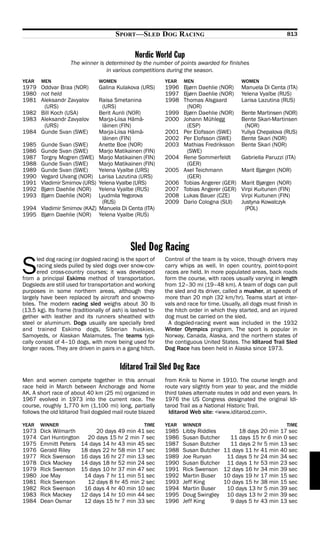
  Britannica                                                                      People


ALMANAC                                                                           Awards


       2010            In association with
                                                        ®
                                                                         Nature, Science,
                                                                             Medicine, &
                                                                              Technology


                                                                                   World


                                                                           United States


                                                                                Business
                     E N C Y C L O P Æ D I A


                 Britannica
                                                   ®


                                                                                    Arts,
                                                                          Entertainment,
                                                                               & Leisure


               Jacob E. Safra, Chairman of the Board
                   Jorge Aguilar-Cauz, President                                   Sport
Chicago · London · New Delhi · Paris · Seoul · Sydney · Taipei · Tokyo
ENCYCLOPÆDIA BRITANNICA, INC.

EDITORIAL                              ART AND COMPOSITION                    ENCYCLOPÆDIA BRITANNICA, INC.
Thad King                              Steven N. Kapusta
Michael J. Anderson                    Nicole DiGiacomo                       Jacob E. Safra
Patricia Bauer                         Carol A. Gaines                        Chairman of the Board
Robert M. Lewis                        Christine McCabe
Kenneth Pletcher                       Cate Nichols                           Jorge Aguilar-Cauz
Barbara Schreiber                      Patrick Riley                          President
Melinda C. Shepherd                    Thomas J. Spanos
Karen Jacobs Sparks                                                           Michael Ross
Amy Tikkanen                           EDITORIAL LIBRARY                      Senior Vice President,
                                       Henry Bolzon                           Corporate Development
PRODUCTION CONTROL                     Lars Mahinske
Marilyn L. Barton                                                             Dale H. Hoiberg
                                       INFORMATION MANAGEMENT                 Senior Vice President
WORLD DATA                             Carmen-Maria Hetrea                    and Editor
Stephen Neher                          Sheila Vasich
Mary Kasprzak                          Mansur Abdullah                        Michael Levy
                                       Matthew Heinze                         Executive Editor,
CARTOGRAPHY                                                                   Core Reference
Michael Nutter                         MANUFACTURING
Ken Chmielewski                        Kim Gerber                             Rosaline Jackson-Keys
                                                                              Director, Almanac and
COPY                                   MEDIA ASSET MANAGEMENT                 World Data
Sylvia Wallace                         Jeannine Deubel
John M. Cunningham                     Kimberly Cleary                        Marsha Mackenzie
Yvette Charboneau                      Kurt Heintz                            Executive Director,
Kimberly Jeffries                                                             Media and Production
Glenn Jenne
Claire Navarro


CONTRIBUTING EDITOR                    Carol Pittard                          Helen Wan
Kelly Knauer                           Executive Director, Marketing          Associate Counsel
                                       Services
DESIGN                                                                        Suzanne Janso
Anthony Wing Kosner                    Tom Mifsud                             Book Production Manager
                                       Director, Retail and Special Sales
PICTURES                                                                      Anne-Michelle Gallero
Patricia Cadley                        Peter Harper                           Design and Prepress Manager
                                       Director, New Product Development
                                                                              Michela Wilde
Richard Fraiman                        Laura Adam                             Associate Brand Manager
Publisher                              Assistant Director, Newsstand
                                       Marketing                              Alex Voznesenskiy
Steven Sandonato                                                              Assistant Prepress Manager
General Manager                        Joy Butts
                                       Assistant Publishing Director,
                                       Brand Marketing
Special thanks to: Christine Austin, Glenn Buonocore, Jim Childs, Susan Chodakiewicz, Rose Cirrincione,
Jacqueline Fitzgerald, Lauren Hall, Jennifer Jacobs, Brynn Joyce, Mona Li, Robert Marasco, Amy Migliaccio,
Brooke Reger, Dave Rozzelle, Ilene Schreider, Adriana Tierno, Sydney Webber

© 2009 BY ENCYCLOPÆDIA BRITANNICA, INC. All rights reserved.
All TIME material copyright © 2009 Time Inc. All rights reserved.
Moon: AbleStock.com/Jupiterimages. Photos (front cover left to right): Majid/Getty Images; Nicholas
Kamm/AFP/Getty Images; Frank Edwards/Fotos International/Hulton Archive/Getty Images; Hiroko Ma-
suike/Getty Images; Mandel Ngan/AFP/Getty Images
ISBN-13: 978-1-61535-329-3. International Standard Serial Number: 1540-8868.
No part of this work may be reproduced or utilized in any form or by any means, electronic or mechanical, includ-
ing photocopying, recording, or by any information storage and retrieval system, without permission in writing
from the publisher.
ENCYCLOPÆDIA BRITANNICA ALMANAC 2010
Britannica.com may be accessed on the Internet at http://www.britannica.com. For information on group and
bulk sales, please send an e-mail to books@eb.com.
(Trademark Reg. U.S. Pat. Off.)
TABLE         OF    CONTENTS                                                                     3


Year in Review                                                                      Life on Earth . . . . . . . . . . . . . . . . . . . . . . . . . . 167

   Features                                                                            Geology. . . . . . . . . . . . . . . . . . . . . . . . . . . . . 169
                                                                                       Geography . . . . . . . . . . . . . . . . . . . . . . . . . . 171
      The US in Afghanistan: The Longest War. . . . 5
        by Aryn Baker, TIME/Afghanistan                                             Preserving Nature . . . . . . . . . . . . . . . . . . . . . . 175

      How Twitter Will Change the Way We Live . . . 6                               Health. . . . . . . . . . . . . . . . . . . . . . . . . . . . . . . . 176
        by Steven Johnson for TIME                                                     Diet and Exercise. . . . . . . . . . . . . . . . . . . . . 181
      Skyrocketing Food Prices: A Global Crisis . . . 7
        by Janet H. Clark
      Seed Banks—Preserving Crop Diversity . . . . . 8                           World
        by Gregory McNamee                                                          Iran: Power of the People . . . . . . . . . . . . . . . . 187
      Combating the Crisis in Darfur . . . . . . . . . . . . 9                         by Nahid Siamdoust, TIME/Tehran
        by Alex Meixner                                                             Countries of the World . . . . . . . . . . . . . . . . . . 188
   Chronology, July 2008–June 2009
     Month by Month. . . . . . . . . . . . . . . . . . . . . . . 11
   Disasters, July 2008–June 2009                                                   FLAGS . . . . . . . . . . . . . . PLATES 1–6
                                                                                           ..............
     Month by Month. . . . . . . . . . . . . . . . . . . . . . . 31                 MAPS. . . . . . . . . . . . . . PLATES 7–16
                                                                                          ..............

                                                                                    Rulers and Regimes . . . . . . . . . . . . . . . . . . . . 488
People
                                                                                    Populations . . . . . . . . . . . . . . . . . . . . . . . . . . . 501
   The TIME 100, 2009 . . . . . . . . . . . . . . . . . . . . . 35
                                                                                    Language . . . . . . . . . . . . . . . . . . . . . . . . . . . . . 502
   Celebrities and Newsmakers . . . . . . . . . . . . . . 37
                                                                                    Scholarship . . . . . . . . . . . . . . . . . . . . . . . . . . . 504
   Obituaries . . . . . . . . . . . . . . . . . . . . . . . . . . . . . . 76
                                                                                    Religion . . . . . . . . . . . . . . . . . . . . . . . . . . . . . . 505
                                                                                    The 2009 Annual Megacensus of
Awards                                                                                Religions. . . . . . . . . . . . . . . . . . . . . . . . . . . . 508
   TIME’s Top 100 Films . . . . . . . . . . . . . . . . . . . . 89                  Terrorism . . . . . . . . . . . . . . . . . . . . . . . . . . . . . 512
   TIME’s Person of the Year, 1927–2008 . . . . . 90                                Military Affairs . . . . . . . . . . . . . . . . . . . . . . . . . 515
   Nobel Prizes . . . . . . . . . . . . . . . . . . . . . . . . . . . . 91
   Special Achievement Awards . . . . . . . . . . . . . 104                      United States
   Science Honors . . . . . . . . . . . . . . . . . . . . . . . . 109               The Great Recession: America Becomes
                                                                                      Thrift Nation . . . . . . . . . . . . . . . . . . . . . . . . . 517
                                                                                      by Nancy Gibbs, TIME
Nature, Science, Medicine, & Technology                                             History . . . . . . . . . . . . . . . . . . . . . . . . . . . . . . . 518
   The New Age of Extinction . . . . . . . . . . . . . . . 115                         United States Chronology . . . . . . . . . . . . . . 518
     by Bryan Walsh, TIME                                                              Important Documents in US History . . . . . 520
   Time . . . . . . . . . . . . . . . . . . . . . . . . . . . . . . . . . 116       Government . . . . . . . . . . . . . . . . . . . . . . . . . . . 532
   The Universe . . . . . . . . . . . . . . . . . . . . . . . . . . 123                The Presidency . . . . . . . . . . . . . . . . . . . . . . 532
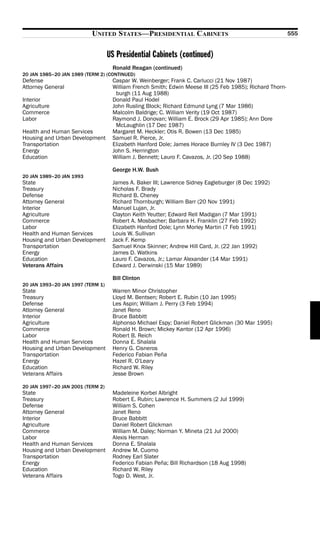
                                                                                       The Supreme Court . . . . . . . . . . . . . . . . . . . 557
      Constellations . . . . . . . . . . . . . . . . . . . . . . . 124
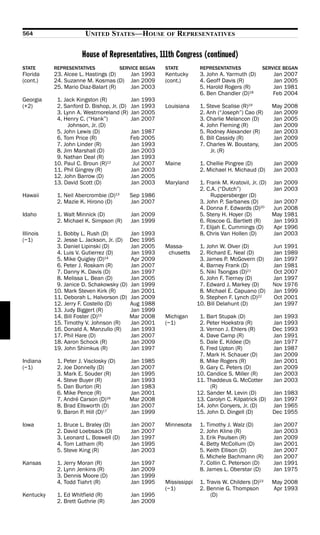
                                                                                       The Congress . . . . . . . . . . . . . . . . . . . . . . . . 560
      Astronomical Phenomena for 2010 . . . . . 128
                                                                                         The Senate . . . . . . . . . . . . . . . . . . . . . . . 560
   Measurements and Numbers . . . . . . . . . . . . 144                                  The House of Representatives. . . . . . . . 562
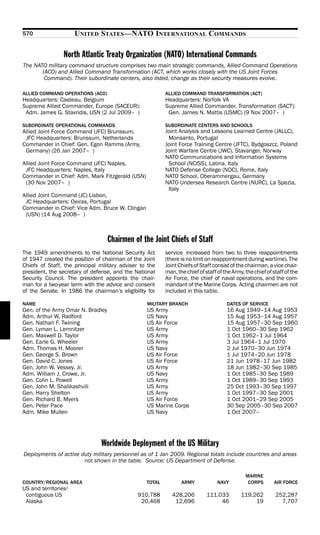
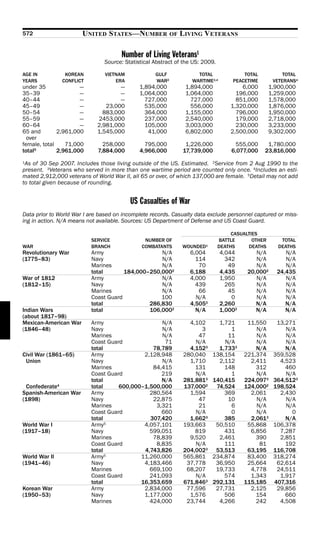
   Applied Science . . . . . . . . . . . . . . . . . . . . . . . . 149              Military Affairs . . . . . . . . . . . . . . . . . . . . . . . . . 569
   Communications . . . . . . . . . . . . . . . . . . . . . . . 149                 Population . . . . . . . . . . . . . . . . . . . . . . . . . . . . 575
   Aerospace Technology . . . . . . . . . . . . . . . . . . 151                     The States and Other Areas . . . . . . . . . . . . . . 582
      Space Exploration . . . . . . . . . . . . . . . . . . . . 151                 State Government . . . . . . . . . . . . . . . . . . . . . . 608
      Space Exploration Firsts . . . . . . . . . . . . . . . 154
                                                                                    Cities. . . . . . . . . . . . . . . . . . . . . . . . . . . . . . . . . 613
   Air Travel. . . . . . . . . . . . . . . . . . . . . . . . . . . . . . 155
                                                                                    Law and Crime. . . . . . . . . . . . . . . . . . . . . . . . . 615
   Meteorology . . . . . . . . . . . . . . . . . . . . . . . . . . . 156
                                                                                    Society . . . . . . . . . . . . . . . . . . . . . . . . . . . . . . . 620
   Geologic Disasters . . . . . . . . . . . . . . . . . . . . . 160
                                                                                       Family . . . . . . . . . . . . . . . . . . . . . . . . . . . . . . 620
   Civil Engineering . . . . . . . . . . . . . . . . . . . . . . . 162                 Education . . . . . . . . . . . . . . . . . . . . . . . . . . . 623
4                                                           TABLE         OF    CONTENTS

Business                                                                         Sport
    The Future of Work . . . . . . . . . . . . . . . . . . . . . 625                  Sporting Codes for Countries . . . . . . . . . . . . . 695
      by David von Drehle and Anne Fisher,
      TIME                                                                            The Olympic Games . . . . . . . . . . . . . . . . . . . . 696

    US Economy. . . . . . . . . . . . . . . . . . . . . . . . . . . 626               Special Olympics . . . . . . . . . . . . . . . . . . . . . . . 760
       Energy. . . . . . . . . . . . . . . . . . . . . . . . . . . . . . 627          Automobile Racing . . . . . . . . . . . . . . . . . . . . . 760
    Travel and Tourism . . . . . . . . . . . . . . . . . . . . . 628                  Baseball . . . . . . . . . . . . . . . . . . . . . . . . . . . . . . 762
    Employment . . . . . . . . . . . . . . . . . . . . . . . . . . . 630              Basketball . . . . . . . . . . . . . . . . . . . . . . . . . . . . 767
    Consumer Prices . . . . . . . . . . . . . . . . . . . . . . . 637                 Bowling. . . . . . . . . . . . . . . . . . . . . . . . . . . . . . . 771
    US Budget . . . . . . . . . . . . . . . . . . . . . . . . . . . . 638             Cricket . . . . . . . . . . . . . . . . . . . . . . . . . . . . . . . 773
    US Taxes. . . . . . . . . . . . . . . . . . . . . . . . . . . . . . 642
                                                                                      Cycling . . . . . . . . . . . . . . . . . . . . . . . . . . . . . . . 773
                                                                                      Football . . . . . . . . . . . . . . . . . . . . . . . . . . . . . . 775
Arts, Entertainment, & Leisure                                                            US . . . . . . . . . . . . . . . . . . . . . . . . . . . . . . . . . 776
    The Culture Crunch: Arts and the                                                      Canadian . . . . . . . . . . . . . . . . . . . . . . . . . . . 783
      Recession. . . . . . . . . . . . . . . . . . . . . . . . . . . 645                  Australian . . . . . . . . . . . . . . . . . . . . . . . . . . . 783
      by Richard Lacayo, TIME                                                             Rugby . . . . . . . . . . . . . . . . . . . . . . . . . . . . . . 784
                                                                                          Association Football (Soccer) . . . . . . . . . . . 784
    Motion Pictures . . . . . . . . . . . . . . . . . . . . . . . . 646
                                                                                      Golf . . . . . . . . . . . . . . . . . . . . . . . . . . . . . . . . . . 788
       Academy Awards . . . . . . . . . . . . . . . . . . . . . 646
    Television . . . . . . . . . . . . . . . . . . . . . . . . . . . . . 660          Horse Racing . . . . . . . . . . . . . . . . . . . . . . . . . . 793

       Emmy Awards . . . . . . . . . . . . . . . . . . . . . . . 660                  Ice Hockey . . . . . . . . . . . . . . . . . . . . . . . . . . . . 802
    Theater . . . . . . . . . . . . . . . . . . . . . . . . . . . . . . . 664         Marathon . . . . . . . . . . . . . . . . . . . . . . . . . . . . . 806
       Tony Awards . . . . . . . . . . . . . . . . . . . . . . . . . 664              Skiing . . . . . . . . . . . . . . . . . . . . . . . . . . . . . . . . 808
       Encyclopædia Britannica’s
         20 Notable US Theater Companies . . . . 667                                  Sled Dog Racing . . . . . . . . . . . . . . . . . . . . . . . 813

    Music . . . . . . . . . . . . . . . . . . . . . . . . . . . . . . . . 667         Swimming . . . . . . . . . . . . . . . . . . . . . . . . . . . . 814
       Grammy Awards. . . . . . . . . . . . . . . . . . . . . . 667                   Tennis . . . . . . . . . . . . . . . . . . . . . . . . . . . . . . . . 819
       Encyclopædia Britannica’s
         20 World-Class Orchestras . . . . . . . . . . . 673                          Track & Field . . . . . . . . . . . . . . . . . . . . . . . . . . 834
       Encyclopædia Britannica’s                                                      Volleyball . . . . . . . . . . . . . . . . . . . . . . . . . . . . . 840
         Top 20 Opera Companies. . . . . . . . . . . . 673
                                                                                      Weight Lifting. . . . . . . . . . . . . . . . . . . . . . . . . . 840
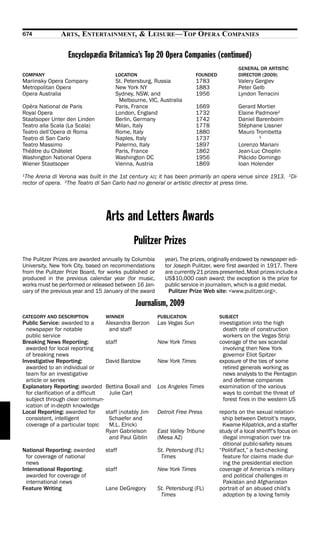
    Arts and Letters Awards . . . . . . . . . . . . . . . . . 674
       Pulitzer Prizes . . . . . . . . . . . . . . . . . . . . . . . 674
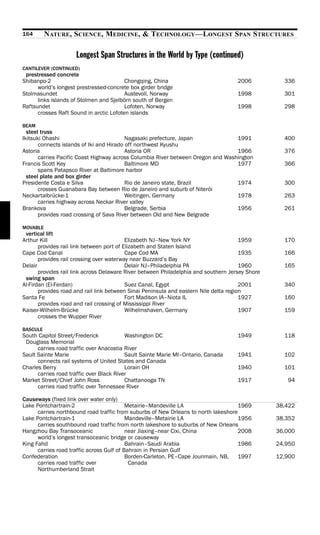
    Architecture Awards . . . . . . . . . . . . . . . . . . . . 694              INDEX . . . . . . . . . . . . . . . . . . . . . . . . . . . . . . . . . . . . 842
The US in Afghanistan: The Longest War
                                          by Aryn Baker, TIME/Afghanistan


S
        even and a half years after US troops arrived in      mentors for the Afghans. Much of the more than
        Afghanistan following the attacks of September        US$32 billion that the US government has spent in aid
        11, 2001, the war there is more deadly—and            to Afghanistan since 2002 has gone through the mili-
more muddled—than ever. When American troops first            tary or its provincial reconstruction teams. The proj-
went to Afghanistan, they did so to overthrow the Tal-        ects are designed to earn goodwill for foreign forces
iban regime, which then ruled the nation and provided         as much as for local governors, but they also have the
a haven for al-Qaeda. In less than three months, the          unintended consequence of undermining the central
Taliban was defeated, and a US-supported adminis-             government, which never gets a chance to take credit
tration, headed by Pres. Hamid Karzai, was installed          for providing basic services such as roads, electricity,
in Kabul. Yet in 2009, the US is still fighting the Tal-      and education. “We aren’t here to win hearts and
iban, and al-Qaeda operatives are still plotting from         minds,” says Jeremy Brenner, a US State Department
Afghanistan. (Taliban, these days, no longer refers           adviser based in Jalalabad. “What we need is to en-
just to the Islamic extremist regime that once ruled          gender hope and faith in the Afghan government.”
the country; the word has become synonymous with                The experience of the Americans fighting in the na-
any number of antigovernment forces.)                         tion’s eastern Korengal Valley illustrates how difficult
  And one part of the region’s deadly muddle has got-         this war is. Over the period from July 2008 to April
ten worse. In 2001 there were fears that the war in           2009, Bravo Company, a 150-strong unit of the 1st
Afghanistan would destabilize Pakistan. (The Pash-            Battalion, 26th Infantry Regiment, lost seven men in
tun ethnic group, which makes up a large part of the          the Korengal while trying to cool down a toxic caul-
Taliban insurgency, straddles the border between the          dron of local insurgents, Taliban leaders, foreign ji-
two countries.) Those fears are now reality; the Pak-         hadis, and al-Qaeda members. Here success cannot
istani Taliban threatens nuclear-armed Pakistan’s vi-         be measured in territory gained, schools built, or clin-
ability as a state even more than its cousins jeopar-         ics opened. Irrigation pipes and water pumps are
dize Afghanistan’s.                                           blown up by the insurgents as soon as they are built.
  It is because the war in Afghanistan threatens to           Sometimes progress is so slow it feels like a stale-
destabilize an entire region that it has become Amer-         mate, admits company commander Capt. James
ica’s biggest foreign policy challenge. On 18 Feb             Howell. But, he says, “if we can reach a point where
2009, President Obama committed an additional                 the villagers want to work with us and the Taliban are
17,000 troops to Afghanistan; when they all arrive,           the only thing stopping them, that’s success.”
there will be about 55,000 troops there from the US,            A government in which people have hope would be
plus 37,000 from its allies. The latest Afghan war is         one that offers them security. The US exit strategy for
now Obama’s war. The administration has signaled              Afghanistan, according to Adm. Mike Mullen, chair-
that it is downsizing expectations about what can still       man of the Joint Chiefs of Staff, is to strengthen the
be achieved: the principal goal now is to counter ter-        Afghan forces so they can protect the fragile ad-
rorism and bring a degree of stability to Afghanistan—        vances of the government. To that end, Obama has
not to turn a poor and fractious nation into a flour-         pledged 4,000 trainers and mentors to help boost
ishing democratic state.                                      the Afghan National Army and police.
  When Obama laid out his new strategy, he made it              But success in Afghanistan will mean nothing if
clear that the mark of success would be the ability “to       fighters can find sanctuary in Pakistan. Commanders
disrupt, dismantle, and defeat al-Qaeda in Pakistan           in Afghanistan say the battle next door will be far
and Afghanistan and to prevent their return to either         more complicated than anything they have seen, sim-
country in the future.” But accomplishing even that           ply because the Pakistani military doesn’t have the
comparatively limited objective at this stage will re-        skills and resources to conduct an effective coun-
quire a massive and sustained US commitment—one               terinsurgency. US-operated Predator drones have
that involves more than military boots on the ground.         successfully targeted al-Qaeda leadership in the bor-
Al-Qaeda still thrives in the ungoverned tribal areas         der areas, but at the cost of inflaming the Pashtun-
along the border between the two countries, and while         led insurgency on the Pakistani side. Stabilizing
many of its members have been killed, new recruits            Afghanistan might well become crucial to preventing
quickly take their place. US soldiers have learned that       the far more terrifying prospect of an Islamic extrem-
to deny al-Qaeda a foothold in Afghanistan will require       ist takeover in Pakistan. Says US Army Brig. Gen. John
the establishment of a government that Afghans can            Nicholson, Jr., who commands US and NATO troops in
believe in, the security that allows them to support it,      southern Afghanistan: “If the Pashtun population of
and jobs that provide an alternative to fighting. “We         Pakistan sees a moderate, Islamic and Pashtun-led
are not going to kill our way out of this war,” says Lieut.   government in Afghanistan, well, it’s hard to argue
Col. Brett Jenkinson, commander of the US battalion           with. So we have potentially a greater impact in Pak-
stationed in the Korengal valley. “What we need is a          istan with success in the east.”
better recruiting pitch for disaffected youth. You can’t        Getting it right in both Afghanistan and Pakistan
build hope with military might. You build it through de-      now, after years of Western drift and inattention, will
velopment and good governance.”                               come at a heavy price in American money and lives.
  Other than leading by example, the military can do          Having doubled down in the hopes of winning in
little to bolster faith in the state. As part of his plan,    Afghanistan, the Obama administration has no
Obama has proposed a civilian surge—a phalanx of              choice but to live with the consequences.
6                                              YEAR     IN   REVIEW


                           How Twitter Will Change the Way We Live
                                            by Steven Johnson for TIME


T
      he one thing you can say for certain about Twit-       litical activists in China that the government blocked
      ter is that it makes a terrible first impression.      access to it for a period, in an attempt to censor dis-
      You hear about this new service that lets you          cussion of the 20th anniversary of the Tiananmen
send 140-character updates to your “followers,” and          Square massacre.
you think, Why does the world need this, exactly? It’s         The rapid-fire innovation we’re seeing around Twitter
not as if we were all sitting around four years ago          is not new, of course. Facebook, whose audience is
scratching our heads and saying, “If only there were a       still several times as large as Twitter’s, went from
technology that would allow me to send a message to          being a way to scope out the most attractive college
my 50 friends, alerting them in real time about my           freshmen to the Social Operating System of the Inter-
choice of breakfast cereal.”                                 net, supporting a vast ecosystem of new applications
  The basic mechanics of Twitter are remarkably sim-         created by major media companies, individual hack-
ple. Users publish tweets—those 140-character mes-           ers, game creators, political groups, and charities. The
sages—from a computer or mobile device. As a social          Apple iPhone’s long-term competitive advantage may
network, Twitter revolves around the principle of fol-       well prove to be the more than 15,000 new applica-
lowers. When you choose to follow another Twitter            tions that have been developed for the device, ex-
user, that user’s tweets appear in reverse chronologi-       panding its functionality in countless ingenious ways.
cal order on your main Twitter page. If you follow 20          The history of the Web followed a similar pattern. A
people, you’ll see a mix of tweets scrolling down the        platform originally designed to help scholars share
page: breakfast-cereal updates, interesting new links,       academic documents, it now lets you watch television
music recommendations, even musings on the future            shows, play poker with strangers around the world,
of education. The mix creates a media experience             publish your own newspaper, rediscover your high-
quite unlike anything that has come before it,               school girlfriend—and, yes, tell the world what you
strangely intimate and at the same time celebrity-ob-        had for breakfast. The speed with which users have
sessed. You glance at your Twitter feed over that first      extended Twitter’s platform points to a larger truth
cup of coffee, and in a few seconds you find out that        about modern innovation. When we talk about inno-
your nephew got into med school and Shaquille                vation and global competitiveness, we tend to fall
O’Neal just finished a cardio workout in Phoenix.            back on the easy metric of patents and Ph.D.’s. It
  But the key development with Twitter is how we’ve          turns out the US share of both has been in steady de-
jury-rigged the system to do things that its creators        cline since peaking in the early 1970s. Since the mid-
never dreamed of. The most fascinating thing about           1980s, a long progression of doomsayers have
Twitter is not what it’s doing to us. It’s what we’re        warned that our declining market share in the
doing to it.                                                 patents-and-Ph.D.’s business augurs dark times for
  This is not just a matter of people finding a new use      American innovation.
for a tool designed to do something else. In Twitter’s         But what actually happened to American innovation
case, the users have been redesigning the tool itself.       during that period? We came up with America On-
The convention of grouping a topic or event by the           line, Netscape, Amazon, Google, Blogger, Wikipedia,
“hashtag”—#hackedu or #inauguration—was sponta-              Craigslist, TiVo, Netflix, eBay, the iPod and iPhone,
neously invented by the Twitter user base (as was the        Xbox, Facebook, and Twitter itself. Sure, we didn’t
convention of replying to another user with the @            build the Prius or the Wii, but if you measure global
symbol). The ability to search a live stream of tweets       innovation in terms of actual lifestyle-changing hit
was developed by another start-up altogether, Sum-           products and not just grad students, the US has
mize, which Twitter purchased last year. Thanks to           been lapping the field for the past 20 years.
these innovations, following a live feed of tweets             How could the forecasts have been so wrong? The
about an event—a political debate or a Lost episode—         answer is that we’ve been tracking only part of the in-
has become a central part of the Twitter experience.         novation story, ignoring what Massachusetts Institute
But as recently as 2008, that mode of interaction            of Technology professor Eric von Hippel calls “end-
would have been technically impossible using Twitter.        user innovation,” in which consumers actively modify
It’s like inventing a toaster oven and then looking          a product to adapt it to their needs. In its short life,
around a year later and seeing that your customers           Twitter has been a hothouse of end-user innovation:
have of their own accord turned it into a microwave.         the hashtag; searching; its 11,000 third-party appli-
  One of the most telling facts about the Twitter plat-      cations; all those creative new uses of Twitter—some
form is that the vast majority of its users interact with    of them banal, some of them spam, and some of
the service via software created by third parties.           them sublime.
There are dozens of iPhone and BlackBerry applica-             This is what I ultimately find most inspiring about the
tions—all created by enterprising amateur coders or          Twitter phenomenon. We are living through the worst
small start-ups—that let you manage Twitter feeds.           economic crisis in generations, with apocalyptic head-
There are services that help you upload photos and           lines threatening the end of capitalism as we know it,
link to them from your tweets and programs that map          and yet in the middle of this chaos, the engineers at
other Twitizens who are near you geographically.             Twitter headquarters are scrambling to keep the
  As the tools have multiplied, we’re discovering ex-        servers up, application developers are releasing their
traordinary new things to do with them. In June 2009,        latest builds, and ordinary users are figuring out all
when Iranians rose up to protest a rigged election,          the ingenious ways to put these tools to use. There’s
supporters around the world followed the demonstra-          a kind of resilience here that is worth savoring. The
tions in real time on Twitter. Two months earlier, an        weather reports keep announcing that the sky is
anticommunist uprising in Moldova was organized via          falling, but here we are—millions of us—sitting around
Twitter. Twitter has become so widely used among po-         trying to invent new ways to talk to one another.
YEAR     IN   REVIEW                                                 7


                           Skyrocketing Food Prices: A Global Crisis
                                                  by Janet H. Clark


A
       s the year 2008 got under way, upwardly spiral-        government support to farmers in many OECD coun-
       ing food prices became of increasing concern to        tries, which in 2007 amounted to US$258 billion, or
       international organizations and relief agencies,       23% of farm incomes. A surge in petroleum prices led
national governments, and consumers everywhere.               to increased fertilizer and transport costs. In many
UN officials speculated that the crisis could add an          countries adverse weather led to crop failure, specu-
additional 100 million hungry people to the billion al-       lation on commodity markets, and hoarding. When
ready living on less than US$1 a day, the common              Cyclone Nargis struck Myanmar (Burma) on 2 May, it
measure of absolute poverty. The impact of rising             generated a 4-m (12-ft)-high storm surge that devas-
food prices was greatest in less-developed countries          tated the rice-producing Irrawaddy delta. During Au-
(LDCs), where spending on food accounted for                  gust and September, Haiti, already suffering from
40–60% of income, compared with about 15% in in-              food shortages, was battered by four successive hur-
dustrialized countries.                                       ricanes. The depreciation of the US dollar against the
  Even in industrialized countries, poor families were        euro and other currencies early in the year con-
being severely affected by a general rise in prices, es-      tributed to the rise in dollar-denominated commodity
pecially when combined with an economic downturn              prices. The International Food Policy Research Insti-
and higher unemployment. Food prices in the 30 Or-            tute (IFPRI) estimated that 15–27% of the increase
ganisation for Economic Co-operation and Develop-             was from the dollar’s decline. At the same time, coun-
ment (OECD) member countries rose by 7.2% year on             tries in Asia and the Middle East that linked their cur-
year in both July and August, the biggest increases           rencies to the weakening dollar experienced over-
since 1990, and in the US the Department of Labor             heated economies and suffered higher prices than
reported that grocery-store food prices rose by 6.6%          countries with more flexible exchange rates.
in 2008, the largest increase since 1980.                       The World Food Programme (WFP) was the main dis-
  With spiking food costs                                                                  tributor of emergency food
came a growing threat to                                                                   relief, with activities in
food security, which pro-
voked political repercus-
sions in many LDCs. In
Haiti, for example, food
                                 “ UN officials speculated
                                   that the crisis could add
                                                                                           more than 75 countries. In
                                                                                           March, however, the orga-
                                                                                           nization announced that
                                                                                           it was short of money
riots led to the ousting of                                                                because of the soaring
Prime Minister Jacques-
Édouard Alexis on 12
                                         an additional 100 mil-                            price of cereals and other
                                                                                           foodstuffs. At the UN
April, and the lack of a re-
placement until July left
                                         lion hungry people to                             heads of government
                                                                                           meeting in June, the WFP
the government in a state
of paralysis while social
                                         the billion already living                        reported that it had re-
                                                                                           ceived US$1.2 billion in
and economic conditions
continued to deteriorate.
                                         on less than US$1 a day,                          aid, including an unex-
                                                                                           pected US$500 million
  Prices of staple food-
stuffs escalated alarm-
                                         the common measure of                             from Saudi Arabia. Among
                                                                                           60 low-income food-deficit
ingly on world markets. In
the first half of the year,
the price of internationally
traded food commodities,
                                         absolute poverty.
                                                                      ”                    countries surveyed early
                                                                                           in the year by the Food
                                                                                           and Agriculture Organiza-
                                                                                           tion (FAO), the most wide-
led by grains, rose by 56%. In the first quarter alone,       spread response was to remove or reduce import tar-
the prices of wheat and corn (maize) rose by 130%             iffs on food. This was especially true in South and
and 30%, respectively, over the same period a year            East Asia, the Middle East, and North Africa. Given
earlier, while the cost of rice climbed 10% in both           that tariff levels on cereals and vegetable oils were al-
February and March. By midyear the prices of corn,            ready relatively low, however, at 8% and 14%, respec-
wheat, and soybeans had more than doubled, while              tively, only small proportions of the price rises were
that of rice had tripled.                                     offset.
  A number of factors contributed to the increases in           In the Middle East, drought reduced the summer
food prices. One was the economic emergence of                harvest, and many major wheat-producing countries,
China and India, whose populations were becoming              including Iran, Iraq, and Syria, were forced to increase
increasingly affluent and thus boosting their food            imports. In Saudi Arabia the annual inflation rate
consumption; in China annual per capita consump-              soared to 10.6% in June, its highest rate in 30 years,
tion of meat rose to 54 kg (about 119 lb) from 20 kg          and wheat production was extremely costly because
(44 lb) in 1985. Another major factor was the in-             of huge farm subsidies. The Saudi government de-
creased output of biofuels made from grains and               cided in August that it would make economic sense to
oilseeds in the US and the European Union, where              outsource its farming and was considering the pur-
there were generous—and controversial—tax conces-             chase of rice farms in Thailand through a new invest-
sions or direct financial support for producers, retail-      ment fund set up to buy agricultural land overseas.
ers, or users of biofuels. In July an OECD report             United Arab Emirates investors looking for land for
strongly criticized these incentives as costly and inef-      agricultural development favored Pakistan, Kazakh-
fective and recommended that governments refocus              stan, and The Sudan.
their policies. Partially associated with this was the          In early May, Prime Minister Samak Sundaravej of
restrictive and trade-distorting effect of a high level of    Thailand (the world’s biggest rice producer) proposed
8                                            YEAR     IN   REVIEW

the formation of a cartel of Southeast Asian rice-pro-     2009. Cut-price discount stores, which were already
ducing countries (including Vietnam, Myanmar, Laos,        popular in the US, were proliferating in Europe and
and Cambodia) to be set up along the lines of OPEC.        putting pressure on the more costly chains. The
Laos and Cambodia favored the idea, but there were         search for cheaper food was gathering momentum
strong protests in the Philippines, the world’s biggest    even in US cities, where there was a resurgence of so-
rice importer. In August Thailand announced plans to       called freegans, who scavenged through supermarket
boost rice production by leasing 160,000 ha                garbage bins and other sources of discarded food.
(395,000 ac) of unused state land to poor farmers            Despite the widespread fear of a continuing rise in
and agribusiness for biofuel crops, sugarcane, palm,       global inflation and the number of people needing
and rice. A more novel way of easing food shortages        food aid, the failure to reach agreement on trade lib-
was proposed in July by scientists at the National Au-     eralization left agricultural producers in LDCs at a
tonomous University of Mexico; they asserted that in-      continuing disadvantage. The IFPRI calculated that if
sects, which were nutritious and already provided          export bans by some 40 food-exporting countries
part of the diet in 113 countries, should be con-          were lifted, cereal prices would be 30% lower on av-
sumed more widely. Thailand, where cricket rearing         erage. Two small signs of hope emerged in Septem-
for food was already practiced by many families,           ber. Corporate and government leaders attended the
hosted an FAO conference to examine the benefits of        first UN Private Sector Forum on Food Sustainability
insects as a food option.                                  and the Millennium Development Goals. At the same
  At an EU summit in July, member countries were di-       time, the WFP unveiled Purchase for Progress, an ini-
vided on trade reform and the need to remove agri-         tiative by which governments and private founda-
cultural subsidies and reduce protectionism. For the       tions (notably the Bill & Melinda Gates Foundation
first time, in 2008 the EU did not use the portion of      and the Howard G. Buffett Foundation) would fi-
its agricultural budget designated for buying and          nance WFP purchases of foodstuffs from small farm-
stockpiling surplus produce. The resulting unused          ers in LDCs, which would thus encourage local food
funds, expected to reach >1 billion (about US$1.4 bil-     production and offer small farmers better access to
lion), were to be given to farmers in LDCs through         world markets.

Janet H. Clark is an editor, independent analyst, and writer on international economic and financial topics.


                          Seed Banks—Preserving Crop Diversity
                                             by Gregory McNamee


O
       n 26 Feb 2008, the most ambitious seed-bank         important staple food crops. Seed samples for the
       facility ever constructed was inaugurated in        SGSV are delivered and stored in sealed boxes and
       Svalbard, a Norwegian archipelago in the Arctic     remain the property of the country or organization
Ocean only about 1,000 km (620 mi) from the North          that deposits them. By late 2008 about 320,000 dis-
Pole. The Svalbard Global Seed Vault (SGSV), built by      tinct seed samples, consisting of about 220 million
the Norwegian government into the side of a per-           seeds from about 2,900 plant species in more than
mafrost-covered mountain on the island of Spitsber-        200 countries, had been placed in storage. The
gen, is designed to store in deep freeze the seeds of      vault’s storage chambers are able to hold 4.5 million
hundreds of thou-                                                                     seed samples, for a total of
sands of plant vari-                                                                  2.25 billion seeds.
eties from crops grown
on every part of the
globe. This high-secu-
rity “doomsday” con-
                            “ collectors, often traveling
                               The organization’s seed
                                                                                        Since the SGSV safe-
                                                                                      guards duplicate seed col-
                                                                                      lections, it is not intended to
                                                                                      replace any of the roughly
servancy, built far from                                                              1,400 seed banks that exist
unrest and civil war,              to isolated areas by foot                          worldwide and include na-
seeks to protect the                                                                  tional and international in-
world’s agricultural in-           or muleback, have recov-                           stitutions, organizations fo-
heritance against dis-                                                                cused on particular types of
aster, be it from rising           ered seeds for some 2,000                          crops, and regional facili-
sea levels, an asteroid                                                               ties. In general, these seed
strike, pestilence, or
even the unforeseen
consequences of an
excessive reliance on
                                   varieties of plants . . .
                                                                       ”              banks are intended to pre-
                                                                                      serve the genetic variety of
                                                                                      plants, and for this reason
                                                                                      they are also referred to as
crops with single-                                                                    gene banks. Conserving
source genetic modifications.                              crop varieties and related wild species provides ge-
  Established as a backup facility, the SGSV accepts       netic variations that can be useful for developing new
only seed samples that are already held by other           varieties with essential traits, such as tolerating new
seed banks. The deposits are managed by the Global         pests or climate conditions.
Crop Diversity Trust, an independent international or-       Among the most important global seed banks is the
ganization that was established in 2004 by the UN          Millennium Seed Bank (West Sussex, England), which
Food and Agriculture Organization and the Consulta-        is managed by the Royal Botanic Gardens, Kew.
tive Group on International Agricultural Research,         Opened in 2000, the Millennium Seed Bank has suc-
which operates international seed banks for the most       ceeded in preserving virtually all of Britain’s 1,400
YEAR     IN   REVIEW                                                9


native plants and, in collaboration with seed banks in     northern Mexico; and a sunflower grown in the Grand
other parts of the world, seeks to conserve a total of     Canyon by the Havasupai Indians—one that is com-
more than 24,000 plant species.                            pletely resistant to a rust disease that has ravaged
  Seed banks that specialize in particular crops in-       commercial sunflower crops.
clude the International Rice Genebank at the Inter-          By selecting single hybrids, industrial agriculture
national Rice Research Institute (IRRI), based in Los      (the source of the stock advertised in most commer-
Baños, Philippines, and the International Potato Cen-      cial seed catalogs) has diminished the number of va-
ter (IPC), based in Lima. The IRRI, which was estab-       rieties of food plants available in the United States
lished in 1960, estimates that it has conserved about      and other countries to all but a devoted handful of
100,000 varieties of rice. The IPC, which was estab-       farmers and experimental gardeners. In the early
lished in 1971 and subsequently expanded to in-            1900s, for example, more than 7,000 varieties of ap-
clude other tubers of Andean origin, counts in its col-    ples were grown commercially in the United States;
lections about 150 wild potato species.                    today only a couple of dozen varieties are available to
  An example of a regional seed bank is Native Seeds,      most consumers. The planting of monoculture crops,
which was founded in 1983 in the southwestern              which increases standardization and efficiency, has
United States to help Native Americans locate seeds        replaced traditional crops in plots where they had
for growing traditional crops. One of the oldest crop      been grown and bred for centuries. As a conse-
conservancies in North America, it aims in part to         quence, traditional crops, which had acquired the
make poor communities nutritionally self-sufficient.       traits that are most suitable for the soils and climate
The organization’s seed collectors, often traveling to     of a given location, have been steadily lost. The
isolated areas by foot or muleback, have recovered         preservation of this diversity of crops will help safe-
seeds for some 2,000 varieties of plants, including        guard the future of the food plants upon which hu-
amaranth, once widely used for food and fiber in Mex-      mans depend. Seed banks can directly address the
ico; tepary beans, a favorite food of the desert peo-      concerns raised by a diminishment of genetic diver-
ples of the Southwest; orach, or “mountain spinach,”       sity among common food crops, and as plant scien-
grown in the Rio Grande uplands of New Mexico;             tists recover varieties of native food plants across the
panic grass, once a rich source of grain and protein       world, they add color to a sadly washed-out genetic
for the Indian peoples of southern California and          palette.

Gregory McNamee is a contributing editor to the Encyclopædia Britannica, literary critic for the Hollywood Re-
porter, and author of Moveable Feasts: The History, Science, and Lore of Food.


                                  Combating the Crisis in Darfur
                                                by Alex Meixner


I
   n 2008, five years after conflict broke out in the      nantly Muslim, spoke Arabic, and shared the same
   Darfur region of The Sudan, the prospect seemed         skin tone. The result was an undisciplined paramili-
   dim for a political settlement to end the war that      tary campaign that targeted men, women, and chil-
had killed as many as 300,000 people. In early             dren.
2003, soon after local rebel groups took up arms             In addition to the hundreds of thousands killed
against the Khartoum-based regime of Sudanese              since the beginning of the campaign, approximately
Pres. Omar al-Bashir, long-standing tensions in Dar-       2.5 million more were forced from their homes and
fur erupted into what the US government later de-          into the Sahara. Horrific stories of mass rape, murder,
scribed as the first genocide of the 21st century.         and unspeakable atrocities became commonplace.
The rebels felt marginalized by their government,          Survivors gathered in camps for internally displaced
saw that other rebels in southern Sudan were likely        persons throughout Darfur and in refugee camps
to be granted major economic and political conces-         across the border in eastern Chad and in the Central
sions as their own civil war against Khartoum ran          African Republic.
down, and realized that they themselves were being           For its part the international community reacted to
left out in the literal and figurative desert with no      different aspects of the crisis with varying degrees of
hope of similar concessions or improved conditions.        success. The biggest bright spot was the Herculean
An oil-fueled economic boom was producing sky-             effort put forth by governmental and nongovernmen-
scrapers in Khartoum, while Darfur continued to            tal aid agencies, providing food, medicine, shelter,
exist largely without roads, hospitals, or a sufficient    and basic services to the millions of Darfurians in
education system and was suffering through a brutal        need. More than 13,000 international and Sudanese
drought.                                                   aid workers built the world’s largest humanitarian life-
  Following a few initial conventional battles with new    support system in Darfur, saving countless lives that
rebel groups in Darfur, the Khartoum regime                otherwise would have been lost to starvation and dis-
switched tactics and began to fight a hate-fueled          ease.
counterinsurgency war in Darfur by funding, arming,          Less successful were international efforts to re-
and unleashing proxy militias known as Janjaweed—          duce the threat of physical violence to Darfurian
made up of fighters from nomadic groups who identi-        civilians and to achieve a lasting political solution to
fied themselves as “Arab”—on villages whose people         end the conflict. To achieve the former, the African
identified themselves as “African.” This strategy de-      Union (AU) in 2004 deployed a 7,400-strong peace-
pended on exploiting this self-proclaimed racial di-       keeping force, the African Union Mission in The
vide in Darfur, and it worked, despite the fact that       Sudan (AMIS). When AMIS went into Darfur, the rest
both “Arab” and “African” Darfurians were predomi-         of the international community stood by and
10                                          YEAR    IN   REVIEW

watched; once troops had been deployed, they             the force’s troop and military personnel level reach-
helped protect women from rape, but it soon be-          ing only 12,374 by the close of 2008.
came clear that AMIS lacked the manpower, equip-           Efforts to arrive at a lasting political solution have
ment, funding, and mandate to truly protect civilians    arguably fared worse. Several cease-fires were
and help restore order to an area as large as Darfur     adopted, celebrated, promptly violated, and thus ren-
(roughly the size of France). On 31 Aug 2006, the UN     dered moot. More frustrating still were the nearly 20
Security Council authorized the generation and de-       months of peace talks that took place in Abuja, Nige-
ployment of a large peacekeeping force with Resolu-      ria, culminating on 5 May 2006 in the partial signing
tion 1706.                                               of the Darfur Peace Agreement (DPA). The Sudanese
  The Sudanese government, however, rejected Res-        government and only one of what were then just
olution 1706, effectively putting the UN between a       three rebel factions signed the agreement, and with
rock and a hard place: in the entire history of the      the exception of a few initial concessions to the one
UN, no peacekeeping                                                                    rebel signer, almost none
mission had ever failed                                                                of the agreement was im-
to deploy once autho-
rized by the Security
Council. On the other
hand, only one mission—
                             “ In addition to the hun-
                               dreds of thousands killed
                                                                                       plemented. After the
                                                                                       signing and subsequent
                                                                                       collapse of the DPA, the
                                                                                       original three rebel fac-
the “police action” better                                                             tions split into more than
known as the Korean                 since the beginning of the                         a dozen. The interna-
                                                                                       tional community, operat-
War—had ever been de-
ployed over the objection           campaign, approximately                            ing through a combined
                                                                                       UN-AU effort, regrouped,
of a sovereign host gov-
ernment. A compromise               2.5 million more were                              pooled their efforts, and
                                                                                       organized new peace
was sought to bridge the
impasse, and the result             forced from their homes                            talks that began in Surt,
                                                                                       Libya, on 27 Oct 2007,
was a joint peacekeep-
ing force known as the
hybrid United Nations/
African Union Mission in
Darfur (UNAMID), autho-
                                    and into the Sahara.
                                                                       ”               but these stalled after
                                                                                       representatives of sev-
                                                                                       eral leading rebel fac-
                                                                                       tions refused to partici-
rized by the Security                                                                  pate in the talks. A
Council on 31 July 2007. While initial command and       similar effort in February 2009 to resume peace talks
control elements of UNAMID began augmenting              in Doha, Qatar, has thus far yielded no tangible re-
AMIS in the fall of 2007, UNAMID did not formally        sults. Meanwhile, as the international community
take over for AMIS and assume responsibility for         moved forward, albeit slowly, on fully deploying UN-
peacekeeping in Darfur until 31 Dec 2007. Presi-         AMID, the violence in Darfur continued, including at-
dent Bashir initially agreed in writing to accept the    tacks by rebels and, in some instances, government
new force, but reports soon began to emerge of ef-       forces on UNAMID peacekeepers, government and
forts by the Sudanese government to obstruct the         Janjaweed attacks on villages thought to support
deployment of UNAMID troops and to limit their           rebels, and interrebel fighting. As always, Darfurian
movements in the province. Also posing an impedi-        civilians have been caught in the middle, with the hu-
ment to progress in the region was the fact that the     manitarian life-support system that sustains them
majority of the proposed 26,000 UNAMID peace-            growing ever more fragile and the memories of their
keepers and police were not yet on the ground, with      former, peaceful lives growing ever more faint.

Alex Meixner is director of government relations for the Save Darfur Coalition.
YEAR    IN   REVIEW—CHRONOLOGY                                               11


                          Chronology, July 2008–June 2009
                     A day-by-day listing of important and interesting events, adapted from
                                Britannica Book of the Year. See also Disasters.


                                                  July 2008
1 Jul The Dow Jones Industrial Average falls 0.8%,           are inducted into the International Tennis Hall of
  crossing the official threshold from a bull stock          Fame in a ceremony in Newport RI.
  market to a bear market.                                 13 Jul The US Federal Reserve announces an emer-
2 Jul In a daring operation, Colombian forces rescue         gency short-term loan to shore up the mortgage fi-
  15 hostages held by the Revolutionary Armed                nance companies Fannie Mae and Freddie Mac,
  Forces of Colombia (FARC), among them Ingrid Be-           while Pres. George W. Bush asks Congress to ap-
  tancourt, a former presidential candidate kid-             prove a larger rescue package.
  napped in 2002, and three American contractors               In Paris the 43-member Union for the Mediter-
  seized in 2003.                                            ranean is inaugurated, with Pres. Nicolas Sarkozy
3 Jul A yearlong celebration of the 400th anniversary        of France serving as its first northern copresident
  of the founding of Canada’s Quebec City comes to           and Pres. Hosni Mubarak of Egypt as its southern
  a climax.                                                  copresident; the union is intended to unify policies
    The price of a barrel of oil closes at a record high     on the environment, transportation, immigration,
  of US$145.29.                                              and security.
4 Jul Shots are exchanged between Georgian troops          14 Jul Luis Moreno-Ocampo, the prosecutor of the In-
  and militia members of the country’s separatist            ternational Criminal Court, formally requests that
  province of South Ossetia; at least two people are         the court issue a warrant for the arrest of Su-
  killed.                                                    danese Pres. Omar Hassan al-Bashir on charges of
   The first weekend charter flight from China carries       genocide, war crimes, and crimes against humanity
  tourists across the Taiwan Strait to Taiwan; the           relating to the conflict in the Darfur region of The
  flights are expected to expand to carry some 3,000         Sudan.
  travelers a day.                                         15 Jul US government officials reveal that William J.
5 Jul American Venus Williams defeats her sister Ser-        Burns, undersecretary of state for political affairs,
  ena Williams to take her fifth All-England (Wimble-        will attend a meeting on Iran’s nuclear program
  don) women’s tennis championship; the following            with representatives of Iran and other UN Security
  day Rafael Nadal of Spain wins the men’s title for         Council members; this will be the highest-level con-
  the first time when he defeats five-time champion          tact the US has had with Iran since the 1979 Iran-
  Roger Federer of Switzerland.                              ian Revolution.
6 Jul In Mogadishu, Somalia, gunmen kill Osman Ali         16 Jul Malaysian opposition leader Anwar Ibrahim is
  Ahmed, leader of the United Nations Development            arrested on charges of sodomy; his 1998 convic-
  Programme for Somalia.                                     tion for sodomy was later overturned.
7 Jul In York, England, the General Synod of the           17 Kuwait names an ambassador to Iraq for the first
  Church of England votes to allow the appointment           time since it closed its embassy in Baghdad after
  of women as bishops; though some other branches            the Iraqi invasion of Kuwait in 1990.
  of the Anglican Communion had taken the step sev-           James H. Billington, the American librarian of Con-
  eral years earlier, the move is controversial.             gress, names Kay Ryan the country’s 16th poet lau-
8 Jul The leaders of the Group of Eight industrialized       reate; Ryan succeeds Charles Simic.
  countries, meeting in Japan, release a document          18 Jul The World Trade Organization rules that
  agreeing to cut greenhouse-gas emissions in half by        China’s policy of levying punishing tariffs on car-
  2050; environmentalists complain that the agree-           makers operating in the country unless they use lo-
  ment fails to include targets for the nearer future.       cally made parts violates international trade rules.
    The US and the Czech Republic sign an accord               The much-anticipated movie The Dark Knight, the
  that will allow the US to base part of its antiballis-     sequel to Batman Begins, opens in theaters across
  tic-missile system in the Czech Republic; ratifica-        the US at midnight; cinemas in some cities sched-
  tion of the accord is uncertain.                           ule round-the-clock showings to accommodate de-
9 Jul The US Senate gives final approval to a bill that      mand.
  affirms the authority of the Foreign Intelligence Sur-   19 Jul Iran rejects an international proposal that calls
  veillance Act (FISA) court but grants the govern-          for it to freeze its nuclear program and for the in-
  ment latitude in conducting wiretaps outside the           ternational community to refrain from adding new
  court’s authority and provides legal immunity to           sanctions as a starting point for negotiations, leav-
  telecommunication companies that complied with             ing the talks deadlocked.
  earlier wiretapping efforts.                             20 Jul In Canterbury, England, the Lambeth Confer-
10 Jul Salman Rushdie’s 1981 novel Midnight’s Chil-          ence of the Anglican Communion, held every 10
  dren wins the Best of the Booker award, as decided         years, opens with a church service, though more
  by an online poll to celebrate the 40th anniversary        than 200 of the 880 bishops and archbishops in-
  of the literature prize.                                   vited do not attend; many of the absentees became
11 Jul After the announcement of massive layoffs by          founding members of the dissident Fellowship of
  IndyMac Bancorp prompts a run on the California-           Confessing Anglicans on 29 June.
  based bank by its customers, federal bank regula-           Padraig Harrington of Ireland wins the British Open
  tors seize the bank.                                       golf tournament at the Royal Birkdale Golf Club in
12 Jul American tennis player Michael Chang, the             Southport, Lancashire, England; Harrington is the
  late sports marketer Mark McCormack, and Gene              first European to have won two consecutive British
  Scott, the late publisher of Tennis Week magazine,         Opens in over 100 years.
12                                YEAR     IN   REVIEW—CHRONOLOGY

21 Jul Radovan Karadzic, who was indicted by the UN         ers Barney Dreyfuss and Walter O’Malley, and for-
 war crimes tribunal on 24 Jul 1995 for his part in         mer commissioner Bowie Kuhn.
 the massacre of some 8,000 Muslims in Sre-               28 Jul In California, Virgin Galactic head Richard
 brenica, Bosnia and Herzegovina, earlier that year,        Branson unveils WhiteKnightTwo, the prototype of
 is arrested in Belgrade, Serbia, where he had been         the booster ship that will carry the company’s com-
 living in disguise.                                        mercial rocket into space.
   Nepal’s constituent assembly elects as the coun-       29 Jul The Doha round of world trade talks, begun in
 try’s first president Ram Baran Yadav, who is not a        2001, reaches an impasse in Geneva as partici-
 member of the majority Maoist party.                       pants are unable to compromise on protections for
22 Jul The Italian legislature approves a bill granting     farmers in less-developed countries.
 immunity from prosecution to the prime minister,         30 Jul Turkey’s Constitutional Court issues a ruling
 president, and speakers of the two legislative             that the governing Justice and Development Party
 chambers during their terms of office; the bill ben-       has not violated secular principles of the country to
 efits Prime Minister Silvio Berlusconi, who is await-      the point that it should be banned but that it has
 ing trial on bribery charges.                              veered too far in an Islamic direction and therefore
23 Jul The US Geological Survey releases an assess-         its public funding must be cut in half.
 ment that the Arctic may contain as much as 90 bil-           Zimbabwe’s central bank announces that the
 lion bbl of undiscovered oil and 47.29 trillion cu m       country’s currency will be devalued by dropping 10
 (about 1.67 quadrillion cu ft) of natural gas, most        zeros, so that a 10-billion-dollar note will become a
 of it in coastal areas under territorial sovereignty,      one-dollar note; on 16 July the inflation rate offi-
 much of it in Russia.                                      cially reached 2,200,000%.
    Cape Verde becomes the 153rd member of the            31 Jul NASA scientists announce that the Phoenix
  World Trade Organization.                                 Mars lander has tested Martian soil and, for the
24 Jul A British judge awards £60,000 (about                first time, has proved conclusively that it contains
  US$120,000) in damages to Max Mosley, president           water ice.
  of the governing body of Formula 1 automobile rac-
  ing, in his lawsuit against a tabloid newspaper that                      QUOTE OF THE MONTH
  had printed pictures from a video of a sado-
  masochistic sex gathering Mosley had participated
  in; the judge ruled that there was no good reason to
                                                           “     We’ve now finally touched it and tasted
                                                                 it. And I’d like to say, from my stand-


                                                                                                             ”
  expose Mosley’s private life.                                  point, it tastes very fine.
25 Jul The US Office of the Special Inspector General
  for Iraq Reconstruction reports that oil exports                  —William V. Boynton, designer of the
  through the country’s northern pipeline have in-                     Phoenix Mars lander’s Thermal and
  creased from 1 million to more than 13 million bbl               Evolved Gas Analyzer, on the proof that
  a month since 2007.                                                       water exists on Mars, 31 July
26 Jul Some 22 small bombs explode in crowded
  neighborhoods in Ahmedabad, India, killing at least
  42 people.                                                 Massachusetts Gov. Deval Patrick signs a bill that
27 Jul The National Baseball Hall of Fame in Cooper-        will allow same-sex couples living in states that do
  stown NY inducts pitcher Rich (“Goose”) Gossage,          not permit same-sex marriage to marry in Massa-
  managers Dick Williams and Billy Southworth, own-         chusetts


                                                August 2008
1 Aug Georgian troops enter the separatist province       5 Aug The US Government Accountability Office re-
  of South Ossetia, and six people die in the fighting      veals that Iraq has a budget surplus of some
  between the soldiers and the rebel militia.               US$79 billion, very little of which is being used in
2 Aug Bookstores throughout the US hold midnight            the rebuilding of the country’s infrastructure; those
  parties as the fourth novel of the popular Twilight       costs are largely financed by the US.
  vampire series by Stephenie Meyer, Breaking                 The Wildlife Conservation Society reports to the In-
  Dawn, goes on sale.                                       ternational Primatological Society Congress in Ed-
3 Aug At the conclusion of the Lambeth Conference           inburgh its discovery of some 125,000 western
  in Canterbury, England, Anglican Archbishop               lowland gorillas in the northern area of the Repub-
  Rowan Williams announces an agreement to nego-            lic of the Congo; the gorillas are coming under in-
  tiate a new covenant between the member                   creasing pressure in most parts of the world.
  churches; in the meantime, liberal members are          6 Aug The US mortgage finance giant Freddie Mac
  enjoined to refrain from ordaining gay clergy and         posts figures for the second quarter that reflect a
  blessing same-sex unions, and conservative mem-           much deeper loss than had been expected, as does
  bers are asked not to leave their churches.               the large insurer American International Group
    South Korean golfer Shin Ji Yai captures the            (AIG).
  Women’s British Open golf tournament; at age 20         7 Aug Georgian troops take control of several villages
  years 3 months 6 days, she is the youngest to have        in the separatist province of South Ossetia; some
  won the title.                                            10 people die in the fighting.
4 Aug Chinese state media report that two Uighur          8 Aug Russian troops join the battle in Georgia’s sep-
  separatists rammed a truck into a brigade of bor-         aratist province of South Ossetia, fighting against
  der-patrol officers outside their barracks in Kash-       Georgia; also, a Russian air strike hits the Georgian
  gar, Xinjiang state, and then attacked the officers       port of Poti.
  with knives and several bombs, killing at least 16 of       A spectacular opening ceremony featuring some
  them.                                                     15,000 performers directed by filmmaker Zhang
YEAR     IN   REVIEW—CHRONOLOGY                                              13


  Yimou marks the start of the Olympic Games in Bei-          The government of Peru declares a state of emer-
  jing.                                                     gency in response to 10 days of occupation of oil fa-
                                                            cilities and a hydroelectric plant in the Amazon
                  QUOTE OF THE MONTH                        basin by indigenous people fighting development.
                                                          19 Aug In Isser, Algeria, a suicide car bomber kills at

 “     War has started.

                                             ”
                       —Russian Prime Minister
                     Vladimir Putin on Russia’s
                                                            least 48 people, many of whom had been waiting in
                                                            line to take an examination at a police academy.
                                                          20 Aug Algeria endures its second bombing in as
                                                            many days as two bombs go off in Bouira, one of
                  invasion of Georgia in support            which damages a military compound and the other
                      of South Ossetia, 8 August            of which kills at least 12 people on a bus trans-
                                                            porting construction workers.
                                                              Jamaican sprinter Usain Bolt runs the men’s 200-
9 Aug Russian troops enter the separatist province of       m race in 19.30 sec at the Olympics, breaking the
  Abkhazia in Georgia as they continue to pour into         world record by an astonishing two-hundredths of a
  South Ossetia and to drop bombs on other parts of         second.
  Georgia; Georgian Pres. Mikheil Saakashvili asks        21 Aug In Wah, Pakistan, outside Pakistan’s largest
  the outside world for help.                               weapons-manufacturing compound, two suicide
10 Aug At the Oakland Hills Country Club in Bloom-          bombers kill at least 64 people; two days earlier a
  field Hills MI, Padraig Harrington of Ireland defeats     suicide attack in a hospital emergency room in
  Sergio García of Spain and American Ben Curtis by         Dera Ismail Khan left 32 people dead.
  two strokes to become the first European since          22 Aug Aerial bombing in Afghanistan’s Herat
  1930 to win the Professional Golfers’ Association         province by US-led coalition forces after a battle
  of America championship.                                  against Taliban insurgents is reported by
11 Aug Philippine officials say that some 130,000           Afghanistan to have killed 76 civilians, though the
  people have fled the violence in North Cotabato           coalition forces say that 30 militants were killed;
  province on the island of Mindanao since a                the next day the civilian death toll is raised to 95.
  Supreme Court ruling halting the signing of an          23 Aug South Korea defeats Cuba 3–2 in a stunning
  agreement between the Philippine government and           upset to win the gold medal in baseball at the
  the Moro Islamic Liberation Front caused an out-          Olympic Games in Beijing.
  break of fighting between rebel and government          24 Aug Pres. Nicolas Sarkozy of France calls an emer-
  forces.                                                   gency meeting of the European Union to address
12 Aug A Taliban attack on a minibus carrying Pak-          relations with Russia and support for Georgia in
  istani soldiers leaves at least 13 of the troops          light of the fact that Russia has failed to comply
  dead; the soldiers are part of Pakistan’s strong mil-     with the terms of the cease-fire agreement.
  itary response to Taliban aggressiveness in Bajaur          The Waipio team from Waipahu, Hawaii, defeats
  in the Tribal Areas.                                      the Matamoros team from Mexico 12–3 to win
13 Aug Lebanon and Syria announce that they will,           baseball’s 62nd Little League World Series.
  for the first time since independence, establish        25 Aug A government attack on Kalma, a large camp
  diplomatic relations, but the news is overshadowed        housing some 90,000 internal refugees in the Dar-
  by a bomb explosion that destroys a bus in Tripoli,       fur region of The Sudan, kills dozens of people.
  Lebanon, killing 15 people.                             26 Aug Russia officially recognizes the independence
14 Aug The US reaches an agreement with Poland              of the Georgian provinces of South Ossetia and
  that will allow placement of an American missile-         Abkhazia.
  defense base in the European country.                       North Korea announces that it has ceased dis-
     Nigeria officially cedes the potentially oil-rich      abling its main nuclear complex at Yongbyon be-
  Bakassi Peninsula to Cameroon in compliance with          cause it has not been removed from a US terrorism
  a 2002 ruling by the International Court of Justice.      blacklist.
15 Aug Prachanda, leader of the former Maoist in-         27 Aug Democratic Party delegates, meeting at their
  surgency, is elected prime minister of Nepal.             national convention in Denver, nominate Barack
    The journal Science publishes a study describing        Obama, senator from Illinois, and Joe Biden, sena-
  the rapid growth of marine dead zones, areas              tor from Delaware, as the party’s candidates for
  starved of oxygen because of nitrogen from fertil-        president and vice president, respectively.
  izer runoff in oceanic coastal areas; such zones,       28 Aug Iraq signs an agreement with the China Na-
  frequently in fishing grounds, have doubled every         tional Petroleum Corp. for the development of the
  decade since the 1960s.                                   Ahdab oil field.
16 Aug Russian Pres. Dmitry Medvedev signs a re-          29 Aug Georgia and Russia mutually sever diplomatic
  vised cease-fire agreement with Georgia, but Russ-        relations.
  ian troops continue operations in Georgia.                  The state-owned airline Alitalia files for bankruptcy
17 Aug Iran reports that it has successfully test-fired     protection in Italy.
  a rocket that could place a satellite in orbit.         30 Aug Italy signs an agreement with Libya to provide
    At the Olympics in Beijing, American swimmer            US$5 billion in aid and projects as compensation
  Michael Phelps wins a record eighth gold medal,           for Italy’s 1911–42 occupation of Libya; in return,
  surpassing the previous record for a single               Libya is to take steps to prevent illegal immigration
  Olympiad of seven gold medals won by Mark Spitz           to Italy from Libya.
  in 1972; Phelps has also set four individual world      31 Aug As the intermittently strengthening Hurricane
  records and one Olympic record and participated in        Gustav, having caused destruction in Haiti, the Do-
  three relays that set world records.                      minican Republic, Jamaica, and Cuba, heads to-
18 Aug Pres. Pervez Musharraf of Pakistan an-               ward the Gulf Coast in the US, some two million
  nounces his resignation in a nationally televised         people in Texas, Mississippi, Louisiana, and Al-
  speech.                                                   abama evacuate.
14                                   YEAR     IN   REVIEW—CHRONOLOGY


                                               September 2008
1 Sep US and Iraqi military officials announce that re-         and Complaining violates the country’s constitu-
  sponsibility for paying and commanding Sunni                  tion; he is forced from office.
  Awakening Councils in Baghdad and the surround-             10 Sep CERN’s (the European Organization for Nu-
  ing area will be taken over by Iraq’s government be-          clear Research’s) Large Hadron Collider, which is in-
  ginning next month, and the US military formally              tended to create conditions identical to those im-
  hands over control of once-violent Anbar province             mediately after the big bang and is the largest
  to Iraqi armed forces.                                        particle collider in the world, is activated outside
2 Sep The US Library of Congress announces that                 Geneva.
  Stevie Wonder is the winner of the Gershwin Prize               Bolivian Pres. Evo Morales orders the US ambas-
  for Popular Song and that in conjunction with the             sador to leave, accusing him of assisting those
  prize it has commissioned a song from him; the                seeking autonomy for Bolivia’s eastern provinces.
  prize will be presented in February 2009.                       The US Library of Congress presents its first Award
3 Sep At the Republican National Convention in St.              for Lifetime Achievement in the Writing of Fiction to
  Paul MN, Sen. John McCain of Arizona and Gov.                 novelist Herman Wouk.
  Sarah Palin of Alaska are nominated as the party’s          11 Sep Pres. Hugo Chávez of Venezuela expels the
  candidates for president and vice president, re-              US ambassador and recalls the Venezuelan am-
  spectively, in the upcoming election in November.             bassador from Washington DC.
4 Sep The journal Nature publishes a study suggest-           12 Sep A High Court judge in South Africa dismisses
  ing that the most powerful hurricanes and ty-                 corruption charges against Jacob Zuma, leader of
  phoons, particularly in the Atlantic and Indian               the African National Congress (ANC), citing proce-
  oceans, have become stronger over the past 25                 dural errors in the case.
  years.                                                      13 Sep Hurricane Ike goes ashore in Texas, flooding
5 Sep US Secretary of State Condoleezza Rice meets              Galveston and Orange and causing considerable
  with Libyan leader Muammar al-Qaddafi in his com-             damage in Houston; some 51 people are killed
  pound in Tripoli; it is the first visit to the country by     throughout the region, 20 of them in Texas.
  a current US secretary of state in more than 50                 New Zealand defeats Australia to win the Tri-Na-
  years.                                                        tions rugby union title.
   The US National Snow and Ice Center reports that           14 Sep The American investment firm Merrill Lynch
  for the first time since recordings began being               sells itself to Bank of America for about US$50 bil-
  taken in the area, both the Northwest Passage                 lion.
  above North America and the Northern Sea Route                  In Madrid, Russia defeats Spain four matches to
  over Europe and Asia were open during the sum-                none to win the Fed Cup in tennis.
  mer, providing a ring of navigable waters in the Arc-       15 Sep In Zimbabwe, Pres. Robert Mugabe signs a
  tic.                                                          power-sharing agreement with opposition leader
   The Naismith Memorial Basketball Hall of Fame in             Morgan Tsvangirai that makes Tsvangirai prime
  Springfield MA inducts as members National Bas-               minister and envisions an even division of power,
  ketball Association players Adrian Dantley, Patrick           though many important details remain to be
  Ewing, and Hakeem Olajuwon and coach Pat Riley,               worked out.
  women’s college coach Cathy Rush, and broad-                     As widely expected, the venerable investment
  caster Dick Vitale.                                           bank Lehman Brothers, which received no help
6 Sep Pakistan’s two legislative houses and four                from the US government and was unable to find a
  provincial assemblies elect Asif Ali Zardari presi-           buyer, files for bankruptcy protection; it is the
  dent of the country.                                          biggest bankruptcy filing in the country’s history.
    Turkish Pres. Abdullah Gul attends an association         16 Sep The US government takes over the giant in-
  football (soccer) match in Armenia after an invita-           surer American International Group (AIG), fearing
  tion by Armenian Pres. Serzh Sarkisyan; he is the             that the company’s imminent collapse would send
  first Turkish head of state to visit the country.             economies worldwide into a tailspin.
7 Sep The US government takes over the mortgage fi-               Lieut. Gen. Ray Odierno takes over command of
  nance companies Fannie Mae and Freddie Mac in                 US forces in Iraq from Gen. David Petraeus in a cer-
  a rescue package that will all but wipe out their             emony presided over by US Secretary of Defense
  shareholders’ stake but will guarantee the corpo-             Robert Gates.
  rate debt.                                                  17 Sep In Nalchik, Russia, Aleksandra Kostenyuk of
   Serena Williams of the US defeats Jelena Jankovic            Russia becomes the Fédération Internationale des
  of Serbia to win the women’s US Open tennis cham-             Échecs (FIDE) women’s world chess champion after
  pionship; the following day Roger Federer of                  defeating Hou Yifan of China 2.5–1.5 in the final
  Switzerland defeats Andy Murray of Scotland to win            round of the three-week tournament.
  the men’s title for the fifth straight year.                18 Sep In an effort to contain the global credit crisis,
   With his second-place finish behind Helio Castron-           the US Federal Reserve joins with the European
  eves of Brazil in the Indy 300 race in Joliet IL, New         Central Bank, the Bank of England, and the Bank of
  Zealand driver Scott Dixon wins the overall IndyCar           Japan as well as the central banks of Canada and
  drivers’ championship.                                        Switzerland to make US$180 billion in currency ex-
8 Sep Russia agrees to withdraw its troops from Geor-           changes available.
  gia but maintains that Russian troops will remain in            Two days of legislative elections in Rwanda result
  the separatist regions of South Ossetia and Abk-              in the world’s first legislature that has a female ma-
  hazia; it also agrees that observers from the EU              jority; women win 45 of 80 seats.
  may monitor the agreement.                                      The Dow Jones Industrial Average replaces Ameri-
9 Sep Thailand’s Constitutional Court rules that                can International Group (AIG) with Kraft Foods on
  Prime Minister Samak Sundaravej’s acceptance of               its listing.
  payments for hosting the TV cooking show Tasting            19 Sep North Korea declares that it is no longer in-
YEAR    IN   REVIEW—CHRONOLOGY                                              15


  terested in being removed from the US govern-                            QUOTE OF THE MONTH
  ment’s list of state sponsors of terrorism.
20 Sep Pres. George W. Bush formally proposes a
  bailout bill that would give the Treasury Depart-
  ment unlimited authority to buy and sell up to
  US$700 billion in mortgage-related assets; the
                                                           “   The idea of the all-powerful market which
                                                               wasn’t to be impeded by any rules or po-
                                                               litical intervention was a mad one. The
                                                               idea that the markets are always right was
  plan contains few details.

                                                                                                              ”
                                                               mad.
21 Sep The US Federal Reserve approves the re-
  quests of investment banks Goldman Sachs and                     —Pres. Nicolas Sarkozy of France in a
  Morgan Stanley to convert themselves into bank                  nationally televised speech on the global
  holding companies.                                                   economic difficulties, 25 September
    The Emmy Awards are presented in Los Angeles;
 winners include the television shows 30 Rock and
 Mad Men and the actors Alec Baldwin, Bryan                  among other things, replaces a 2,500-member ap-
 Cranston, Tina Fey, Glenn Close, Jeremy Piven,              pointed legislature with a 125-member popularly
 Zeljko Ivanek, Jean Smart, and Dianne Wiest.                elected one and sets the presidential term at five
    In golf’s Ryder Cup competition in Louisville KY,        years; legislative elections are set for December.
  the US defeats Europe for the first time since 1999,        The Global Carbon Project issues an update saying
  with a 16–11 margin of victory.                            that worldwide emissions of carbon dioxide, a
22 Sep Li Changjiang, the head of China’s food and           greenhouse gas, had an annual increase in
  product quality agency, is dismissed in a scandal in       2000–07 that was nearly four times the rate in the
  which melamine-tainted infant formula has made             1990s, largely because of economic growth in less-
  tens of thousands of babies ill throughout China.          developed countries.
23 Sep The US House of Representatives passes leg-         27 Sep Astronaut Zhai Zhigang of China successfully
  islation that is intended to prevent the waters of the     performs the Chinese space program’s first space
  Great Lakes from being diverted outside the basin          walk, floating outside the orbital module for 18
  and requires conservation measures from the                minutes.
  states bordering the lakes; Pres. George W. Bush             In the Australian Football League Grand Final in
  signs the bill into law the following month.               Melbourne, the Hawthorn Hawks defeat the heavily
   The world’s first wave farm, in which the power of        favored Geelong Cats 18.7 (115) to 11.23 (89).
  the ocean’s waves is harnessed to generate electri-      28 Sep Haile Gebrselassie of Ethiopia shatters the
  cal power, begins operation off Aguçadoura, Portu-         world marathon record that he set in 2007 as he
  gal.                                                       wins the Berlin Marathon with a time of 2 hr 3 min
24 Sep US Pres. George W. Bush makes a nationally            59 sec; Irina Mikitenko of Germany is the fastest
  televised speech to ask for the country’s support          woman, with a time of 2 hr 19 min 19 sec.
  for a US$700 billion bailout plan to avert financial     29 Sep The US House of Representatives rejects the
  catastrophe and invites presidential candidates            US$700 billion bailout bill supported by US Pres.
  John McCain and Barack Obama to Washington DC              George W. Bush; as countries around the world
  to join negotiations on the plan.                          struggle to save large banks, the Dow Jones Indus-
25 Sep In the biggest bank failure in American his-          trial Average falls nearly 7%, and global stock mar-
  tory, the US government takes over the savings and         kets also lose value.
  loan bank Washington Mutual and arranges its sale            The US Department of Health and Human Ser-
  to financial services giant JPMorgan Chase.                vices reports that more than 90% of nursing homes
    French Pres. Nicolas Sarkozy makes a speech in           in the US have been found to have violated health
  which he asserts that the world’s monetary system          and safety standards and that for-profit institutions
  needs to be overhauled and that, though the eco-           were cited more often for such violations than gov-
  nomic crisis in the US is having an effect in France,      ernment or not-for-profit homes.
  the French government will act to protect bank de-          The World Institute for Nuclear Security is inaugu-
  posits and taxpayers.                                      rated in Vienna, with Roger Howsley of Great Britain
   Somali pirates in the Indian Ocean seize the Faina,       as its director; the organization seeks to prevent
  a Ukrainian ship carrying millions of dollars of mili-     nuclear weapons from falling into the hands of ter-
  tary weaponry that had been purchased by Kenya;            rorists.
  by the following day the US and Russia have sent         30 Sep London’s High Court rules that Nepalese
  naval ships in pursuit.                                    Gurkhas who have served with the British army
26 Sep Turkmenistan adopts a new constitution that,          have the right to live in the UK.


                                                October 2008
1 Oct The US Congress ratifies a nuclear trade agree-      4 Oct Tyler Perry Studios, featuring five sound-
  ment made with India in 2005.                              stages for television and film work, opens in At-
2 Oct The Sri Lankan air force bombs the main politi-        lanta; it is the first major film and television stu-
  cal offices of the Liberation Tigers of Tamil Eelam in     dio owned by an African American producer to
  Kilinochhi.                                                open in the US.
   Remains believed to be those of missing adventurer      5 Oct A magnitude-6.6 earthquake strikes Kyrgyz-
  Steve Fossett, who disappeared in September 2007,          stan, killing at least 72 people and flattening the
  are found in the Inyo National Forest in California.       village of Nura.
3 Oct The US House of Representatives passes a re-             The Detroit Shock defeats the San Antonio Silver
  vised version of the US$700 billion financial              Stars 76–60 to complete a three-game sweep and
  bailout bill that was rejected in September, and US        win its third Women’s National Basketball Associa-
  Pres. George W. Bush signs it into law.                    tion championship.
16                                 YEAR    IN   REVIEW—CHRONOLOGY

6 Oct The Russian stock market declines by 19.1%;         15 Oct The Dow Jones Industrial Average drops a
  indexes in London and Frankfurt, Germany, drop            stunning 733 points, losing 7.9% of its value.
  more than 7%; Paris stocks lose 9%; and the Dow             The price of a barrel of light, sweet crude oil falls
  Jones Industrial Average finishes below 10,000            to US$74.54, the first time since August 2007 that
  points for the first time since 2004.                     it has fallen below US$75.
    The Nobel Prize for Physiology or Medicine is         16 Oct NASA reports that the Fermi Gamma-ray
  awarded to Françoise Barré-Sinoussi and Luc               Space Telescope has made a discovery in the con-
  Montagnier of France for their discovery of HIV,          stellation Cepheus of a previously unknown type of
  the virus that causes AIDS, and to Harald zur             pulsar that emits only gamma rays.
  Hausen of Germany for his discovery of the              17 Oct Japan, Austria, Turkey, Mexico, and Uganda
  human papillomavirus, a major cause of cervical           are elected to two-year nonpermanent seats on the
  cancer.                                                   UN Security Council.
7 Oct In Stockholm the Nobel Prize for Physics is         18 Oct A demonstration against the proposed status-
  awarded to Yoichiro Nambu of the US and to                of-forces security agreement between Iraq and the
  Makoto Kobayashi and Toshihide Maskawa of                 US by followers of ShiCite cleric Muqtada al-Sadr
  Japan for their work searching for hidden symme-          takes place in Baghdad.
  tries among elementary particles.                           Thai Prime Minister Somchai Wongsawat says that
8 Oct British Prime Minister Gordon Brown an-               he wishes to have face-to-face talks with Cambo-
  nounces a financial plan to offer recapitalization        dian Prime Minister Hun Sen in an attempt to re-
  funds to troubled banks in return for ownership           solve the dispute over a 900-year-old temple on the
  stakes and to provide government guarantees to            border between the countries; a firefight on 15 Oc-
  help banks refinance debt; the government will            tober left three Cambodian soldiers dead.
  provide £50 billion (US$75 billion) in this initia-     19 Oct China announces a rural-reform policy that
  tive.                                                     will allow farmers to lease or exchange land-use
    The Nobel Prize for Chemistry is awarded to             grants.
  Osamu Shimomura of Japan and to Martin Chalfie              At the world open squash championships in Man-
  and Roger Y. Tsien of the US for their research on        chester, England, Ramy Ashour of Egypt wins the
  the green fluorescent protein produced by the jelly-      men’s competition and Nicol David of Malaysia the
  fish Aequorea victoria and its use as a marker for        women’s title.
  observing cells in other animals.                       20 Oct The genomes and phenotypes of 10 volun-
9 Oct Iceland takes over Kaupthing Bank, the last of        teers are made publicly available as part of the Per-
  the country’s three major banks to be nationalized,       sonal Genome Project, which seeks to increase
  shuts down the stock market, and ceases to sup-           medical knowledge by making this information eas-
  port its currency, the króna.                             ily available; the project founders hope to supply
                                                            the data on 100,000 volunteers.
                 QUOTE OF THE MONTH                           Festus Mogae, who was president of Botswana
                                                            from 1998 until April 2008, wins the Mo Ibrahim

“    Iceland is bankrupt. The Icelandic króna is
     history. The only sensible option is for the
                                                            Prize for Achievement in African Leadership.
                                                          21 Oct The inaugural Steinberg Distinguished Play-


                                                     ”
     IMF to come and rescue us.                             wright Award, which carries an unusually generous
                                                            prize of US$200,000, is presented to Tony Kushner.
                —University of Iceland professor              For the first time, trade takes place between India
               Ársæll Valfells, on the collapse of          and Pakistan across the Line of Control in Kashmir
           Iceland’s economic system, 9 October             as 16 Indian trucks carrying apples and walnuts
                                                            cross into Pakistan; Pakistani trucks loaded with
                                                            rice and raisins later travel into India.
  The Nobel Prize for Literature is awarded to French     22 Oct India launches Chandrayaan-1, an unmanned
 writer Jean-Marie Gustave Le Clézio.                       spacecraft that will orbit the Moon, gathering infor-
10 Oct The Nobel Peace Prize is awarded to former           mation to create a three-dimensional atlas and
 Finnish president and international mediator Martti        searching for mineral resources, particularly ura-
 Ahtisaari.                                                 nium; it is India’s first scientific spacecraft.
11 Oct US Pres. George W. Bush announces that                 US Secretary of State Condoleezza Rice meets
 North Korea is to be removed from the list of state        with Mexican Secretary of Foreign Affairs Patricia
 sponsors of terrorism; the following day North             Espinosa in Puerto Vallarta, Mexico, to discuss co-
 Korea indicates that it will resume dismantling its        operation in confronting Mexico’s drug cartels.
 Yongbyon nuclear complex.                                23 Oct The European Parliament names jailed Chi-
12 Oct The Chicago Marathon is won by Evans                 nese human rights activist Hu Jia the winner of the
 Cheruiyot of Kenya with a time of 2 hr 6 min 25 sec;       Sakharov Prize for Freedom of Thought.
 the women’s victor is Lidiya Grigoryeva of Russia        24 Oct The International Monetary Fund tentatively
 with a time of 2 hr 27 min 17 sec.                         agrees to grant Iceland a US$2 billion loan over two
13 Oct The Dow Jones Industrial Average gains 936           years to help it rebuild its economy; the last time
 points, its largest-ever point gain and an increase of     the IMF made a loan to a Western country was in
 11.1%; the Standard & Poor’s 500 index and the             1976.
 Nasdaq composite also rise more than 11%.                    The UN reports that a quickly spreading cholera
   The Nobel Memorial Prize in Economic Sciences            outbreak in Guinea-Bissau has infected some
 goes to American Paul Krugman for his work eluci-          12,000 people, 200 of whom have died.
 dating patterns in world trade and locations of eco-     25 Oct Hong Kong’s Centre for Food Safety reports
 nomic activity.                                            that it found eggs from northeastern China to be
14 Oct The Man Booker Prize for Fiction goes to In-         heavily contaminated with melamine, suggesting
 dian writer Aravind Adiga for his first novel, The         that the toxic substance has been deliberately
 White Tiger.                                               added to animal feed.
YEAR     IN   REVIEW—CHRONOLOGY                                               17


    The Breeders’ Cup Classic Thoroughbred horse                 The online-search company Google announces an
  race is won by Raven’s Pass at Santa Anita Park in           agreement with book publishers that will allow it to
  Arcadia CA; favorite Curlin finishes fourth.                 scan and make available for a fee out-of-print
26 Oct A US Predator drone launches a missile attack           books that are under copyright; the deal will allow
  on a compound in the village of Manduta in Pak-              both Google and the authors and publishers to be
  istan’s South Waziristan province, killing 20 peo-           paid for the use of such books.
  ple; reportedly among the dead are two Taliban             29 Oct Pakistan formally protests US attacks against
  leaders who were responsible for attacks against             Taliban and al-Qaeda militants on its soil and de-
  US personnel in Afghanistan.                                 mands a stop to the incursions.
27 Oct South Korea’s central bank holds an emer-                 In the World Series, the Philadelphia Phillies de-
  gency meeting and lowers its key interest rate by            feat the Tampa Bay Rays 4–3 in the final three and
  three-quarters of a percentage point; elsewhere,             a half innings of the fifth game, which began on 27
  the Bank of Israel lowers its rate by one-quarter            October and was suspended for two days because
  point, and Australia’s central bank buys Australian          of rain and snow, to win the Major League Baseball
  dollars to improve the exchange rate.                        championship.
   Sen. Ted Stevens of Alaska is convicted in the Dis-       30 Oct The oil company Exxon Mobil reports a record
  trict of Columbia on seven felony counts for having          US$14.8 billion in profit in its most recent fiscal
  failed to report some US$250,000 in gifts and ser-           quarter.
  vices he had received; Stevens is running for his          31 Oct US Gen. David Petraeus takes over the Central
  seventh term of office.                                      Command, which oversees military operations in
28 Oct Iran announces that it has opened a new                 Iraq, Afghanistan, and much of the Middle East,
  naval base in the port of Jask on the Gulf of                Central Asia, and South Asia.
  Oman.


                                               November 2008
1 Nov Libyan leader Muammar al-Qaddafi meets with            6 Nov The heads of the automobile companies
  Russian Pres. Dmitry Medvedev and Prime Minister             General Motors, Ford, and Chrysler and the leader
  Vladimir Putin in Moscow, apparently to discuss              of the United Automobile Workers union travel to
  closer commercial relations.                                 Washington DC to ask for a second time for gov-
2 Nov With a fifth-place finish at the Brazilian Grand         ernment help to prevent the collapse of their in-
  Prix, British race-car driver Lewis Hamilton, age 23,        dustry.
  becomes the youngest person to have won the For-           7 Nov US government figures show that 240,000
  mula 1 drivers’ championship.                                jobs were lost in October as the unemployment rate
    Sébastien Loeb of France secures a record fifth            rose to 6.5%, its highest level in 14 years.
  successive world-rally-championship automobile-            8 Nov Iraq’s executive council ratifies a law setting
  racing drivers’ title with a third-place finish in the       the composition of provincial councils; the law al-
  Rally of Japan.                                              lots only six seats on the councils to members of re-
   Marílson Gomes dos Santos of Brazil wins the New            ligious minorities, half of what the United Nations
  York City Marathon with a time of 2 hr 8 min 43 sec,         recommended.
  while Britain’s Paula Radcliffe is the fastest             9 Nov At an emergency summit meeting of the South-
  woman, with a time of 2 hr 23 min 56 sec.                    ern African Development Community in Johannes-
3 Nov The US Department of Commerce releases fig-              burg, participants call for a cease-fire in the eastern
  ures showing that the sales of new cars and trucks           region of the Democratic Republic of the Congo and
  in October fell to levels not seen since the early           agree to send military advisers to assist the gov-
  1980s, with figures down almost 32% compared                 ernment.
  with sales in October 2007.                                10 Nov The American electronics retailer Circuit City
   In a complicated spy and bribery case known as              files for bankruptcy protection.
  “Suitcasegate”—for the suitcase full of cash found             The 11th annual Mark Twain Prize for American
  in the airport in Buenos Aires that began the scan-          Humor is awarded posthumously to comic George
  dal—Venezuelan businessman Franklin Durán is                 Carlin in a ceremony at the John F. Kennedy Center
  convicted by a court in Miami of having acted as an          for the Performing Arts in Washington DC.
  “unregistered agent” in the US.                            11 Nov Food inspectors in Hong Kong report finding
4 Nov In a historic presidential election in the US, De-       high levels of the toxic chemical melamine in fish
  mocratic candidate Barack Obama wins with                    feed from China.
  52.9% of the popular vote and 365 electoral votes,             Peter Eastgate of Denmark wins the World Series
  against Republican candidate John McCain’s                   of Poker; at 22, he is the youngest winner of the
  45.7% and 173 electoral votes; Obama celebrates              card game tournament.
  his victory with a rally in Grant Park in Chicago.         12 Nov US Secretary of the Treasury Henry Paulson
    Gen. Mario Montoya resigns as head of Colom-               announces that the government no longer plans to
  bia’s army in a spreading scandal about the appar-           use the US$700 billion bailout package to buy
  ently pervasive practice of the armed forces’ killing        bad assets but will rather try to use the money to
  of civilians in an attempt to inflate the figures of in-     capitalize banks and to help companies make
  surgents killed by security forces.                          loans.
    China and Taiwan sign an agreement that will                  The 2008 Dorothy and Lillian Gish Prize is
  greatly increase transportation connections as well          awarded to film actor and director Robert Red-
  as trade between the two entities.                           ford.
5 Nov Officials in Afghanistan complain that a US air        13 Nov At the Latin Grammy Awards in Houston,
  strike two days earlier killed at least 40 civilians at      Colombian rock musician Juanes wins five awards,
  a wedding party in Kandahar province.                        including album of the year for La vida…es un
18                                 YEAR    IN   REVIEW—CHRONOLOGY

  ratico and both song and record of the year for “Me      23 Nov Spain defeats Argentina 3–1 to win the Davis
  enamora.”                                                  Cup in international team tennis.
14 Nov With an EU report showing that the economy             The Columbus Crew wins the Major League Soccer
  of the 15-country euro zone shrank 0.2% in the             title with a 3–1 victory over the New York Red Bulls
  third quarter, the euro zone is officially in reces-       in the MLS Cup in Carson CA.
  sion.                                                        The Calgary Stampeders capture the 96th Cana-
   The journal Science publishes an article reporting        dian Football League Grey Cup, defeating the Mon-
  that the Hubble Space Telescope has produced the           treal Alouettes 22–14.
  first visible-light image of a planet in another solar   24 Nov Antigovernment protesters in Bangkok sur-
  system; the observations are of the planet Fomal-          round the legislative building and cut off its elec-
  haut b orbiting the star Fomalhaut in the constella-       tricity and march on the airport where the govern-
  tion Piscis Australis.                                     ment has been meeting since protests began in
15 Nov California Gov. Arnold Schwarzenegger de-             August.
  clares a state of emergency in Los Angeles county           The US Treasury agrees to inject US$20 billion into
  as several wildfires, driven by Santa Ana winds,           the funds of the banking giant Citigroup and to pay
  burn hundreds of houses and compel the evacua-             for losses on bad assets; it is the second rescue
  tion of more than 10,000 residents.                        plan from the government for the bank.
16 Nov Iraq’s cabinet approves a status-of-forces          25 Nov Voters in Greenland overwhelmingly approve
  agreement negotiated with the US; the pact, which          a new law to increase the dependency’s autonomy
  must also be approved by the legislature, begins re-       from Denmark, in particular giving it greater rights
  stricting the scope of US combat operations start-         to profit from local oil resources.
  ing on 1 Jan 2009 and calls for a complete US with-          Atlantic Records, a label owned by Warner Music
  drawal by the end of 2011.                                 Group, says that it has become the first label to
    After the final auto race of the season, Jimmie          have more than half of its music sales come from
  Johnson is crowned winner of the NASCAR drivers’           digital products, such as MP3 downloads and ring-
  championship for the third year in a row.                  tones.
17 Nov The Saudi-owned supertanker Sirius Star is          26 Nov In a brazen strike in Mumbai (Bombay), ter-
  seized by pirates some 450 nautical miles south-           rorists attack several public sites, among them
  east of Mombasa, Kenya, far from the usual area            train stations, hospitals, and a restaurant, and then
  menaced by pirates.                                        take over two luxury hotels and a Jewish community
18 Nov A court in Egypt rules that a contract to pro-        center; at least 82 people are initially reported
  vide natural gas to Israel signed in 2005 should           killed in the siege.
  have been approved by the legislature and so
  should not be honored.                                                     QUOTE OF THE MONTH
19 Nov The US Department of Labor reports that the
  consumer price index for October dropped by 1%,
  the biggest one-month drop ever measured, and
  the Dow Jones Industrial Average falls below 8,000
  for the first time since 2003.
                                                           “    I ran into the hotel kitchen, and then we
                                                                were shunted into a restaurant in the base-
                                                                ment. We are now in the dark in this room,
                                                                and we have barricaded all the doors. It’s


                                                                                                                  ”
    The US Food and Drug Administration opens a                 really bad.
  branch in Beijing to screen food and drugs that will
  be exported to the US; it is intended to be the first                     —European Parliament member
  of several overseas offices for the agency.                            Sajjad Karim describing his ordeal
20 Nov At the first habeas corpus hearing on the US                  during the terrorist siege of his hotel in
  government’s holding of six detainees at the mili-                      Mumbai (Bombay), 26 November
  tary detention camp in Guantánamo Bay, Cuba,
  Judge Richard J. Leon of the Federal District Court
  in Washington DC rules that five of the men have             In Alto Minho in northern Portugal, a wind farm
  been illegally held for almost seven years and             made up of 120 wind turbines and five substations
  should be released immediately.                            officially opens; it is the largest wind farm in Europe.
   The price of a barrel of oil falls below US$50.         27 Nov Iraq’s legislature ratifies the status-of-forces
21 Nov The World Health Organization reports that a          agreement that mandates the end of US military
  cholera epidemic that broke out in August in Zim-          occupation of Iraq by the end of 2011.
  babwe and has accelerated in November has so far             The Perimeter Institute for Theoretical Physics in
  killed 294 people.                                         Ontario announces that physicist Stephen Hawking
    After an emergency session, the state legislature        will hold its first distinguished research chair.
  of Nebraska revises a safe-haven law to allow only       28 Nov Authorities in Mumbai (Bombay) succeed in
  infants up to the age of 30 days to be legally aban-       regaining control of the two luxury hotels and the
  doned at hospitals; as originally written, the law         Jewish center that were attacked by terrorists, end-
  had said that all children could be safely aban-           ing the siege; at least 174 people are believed to
  doned, and since it went into effect on 1 Septem-          have been killed.
  ber, 35 older children, several from outside Ne-         29 Nov Two days of ferocious ethnic and religious vi-
  braska, had been left at Nebraska hospitals.               olence between Muslims and Christians in Jos,
22 Nov On a man-made island in Doha, Qatar, the              Nigeria, end with the imposition of a curfew; at
  Museum of Islamic Art celebrates its grand opening         least 400 people died in fighting.
  with a ceremony attended by heads of state and           30 Nov The space shuttle Endeavour lands in Califor-
  other luminaries; it will open to the public on 1 De-      nia after a successful mission to enlarge the ca-
  cember.                                                    pacity of the International Space Station; among
    New Zealand defeats Australia 34–20 to win the           those aboard are the space station’s outgoing flight
  Rugby League World Cup final in an astonishing             engineer, Gregory E. Chamitoff, who had spent six
  upset.                                                     months at the station.
YEAR     IN   REVIEW—CHRONOLOGY                                              19


                                             December 2008
1 Dec The National Bureau of Economic Research re-          terrorist attacks in Mumbai (Bombay) in November,
  ports that the US economy has been in recession           including its operational leader.
  since December 2007; this is an unusually long re-          Gov. Rod Blagojevich of Illinois is arrested on fed-
  cession, and analysts expect it to continue for           eral charges of conspiracy and bribe solicitation;
  some time.                                                prosecutors say that, among other things, he at-
   The Dow Jones Industrial Average falls 680 points,       tempted to sell the Senate seat vacated by Presi-
  losing 7.7% of its value, while the Standard &            dent-elect Barack Obama, to which he was empow-
  Poor’s 500 index drops by 8.9% and the Nasdaq             ered to appoint the successor.
  composite loses 9.0%.                                   10 Dec During six-party talks on North Korea’s nu-
    Britain’s Turner Prize is presented in London to        clear program, North Korea refuses to accept a Chi-
  artist Mark Leckey; his work includes the multime-        nese proposal on nuclear verification; negotiations
  dia exhibition Industrial Light & Magic, which con-       break down the following day.
  tains images of the animated characters Felix the           In the UK the Channel island of Sark holds its first-
  Cat and Homer Simpson.                                    ever democratic election after 450 years of feudal
2 Dec The Women’s National Basketball Association           government.
  shuts down the Houston Comets, unable to afford         11 Dec Bernard L. Madoff, a well-connected and ap-
  to keep the franchise going or to find a buyer.           parently exceptionally successful trader, is arrested
3 Dec A group of conservative Episcopal bishops an-         by federal agents in New York City; he is believed to
  nounce that they are forming a new province               have been running an enormous Ponzi scheme, de-
  within the Anglican Communion to serve as an al-          frauding many individual and institutional cus-
  ternative to the Episcopal Church (US); the new           tomers of some US$50 billion.
  province is to be called the Anglican Church in         12 Dec The day after the US Senate refused to ap-
  North America.                                            prove a rescue package for automobile manufac-
    Against the preferences of the US, Afghan Pres.         turers, officials from the White House and the Trea-
  Hamid Karzai decides to sign the Convention on            sury Department say that the government is willing
  Cluster Munitions, banning the use of cluster             to use money from the US$700 billion bailout fund
  bombs; he participates along with more than 90            to prevent the collapse of General Motors and
  other countries’ delegates in a signing ceremony in       Chrysler.
  Oslo.                                                       Pres. Rafael Correa of Ecuador declines to make a
4 Dec Zimbabwe declares its cholera epidemic a na-          US$31 million interest payment, declaring his
  tional emergency and appeals for international as-        country to be in default on foreign debt.
  sistance.                                               13 Dec Steer roper Trevor Brazile of Texas wins his
    The telecommunications company AT&T declares            sixth all-around cowboy world championship at the
  that it plans to lay off 12,000 people over the next      50th annual Wrangler National Finals Rodeo in Las
  year; one difficulty the company is encountering is       Vegas.
  a decline in the number of subscribers to landline      14 Dec The military forces of the Democratic Repub-
  telephones.                                               lic of the Congo, Uganda, and The Sudan start an
5 Dec The US Bureau of Labor Statistics releases a          offensive against the insurgent group the Lord’s Re-
  report showing that 533,000 jobs were lost in No-         sistance Army, seeking to drive it from the Democ-
  vember; this is the largest monthly total since De-       ratic Republic of the Congo back to Uganda,
  cember 1974.                                              whence it originated.
    The Mortgage Bankers Association reports that              At a news conference held in Baghdad by Iraqi
  1.35 million American homes were in foreclosure in        Pres. Nuri al-Maliki and US Pres. George W. Bush, a
  the third quarter, a new record and an increase of        journalist from an independent television channel
  76% over the previous year.                               throws both his shoes at Bush, denouncing him for
6 Dec In the course of one of the frequent fights be-       bringing war to Iraq; Bush avoids both shoes.
  tween police and leftist youths in Athens, the police   15 Dec A charter to transform the Association of
  shoot to death a 15-year-old boy; ferocious rioting       Southeast Asian Nations (ASEAN) into an entity
  begins within hours and spreads to other cities in        similar to the EU goes into force.
  Greece.                                                 16 Dec The US Federal Reserve lowers its key inter-
7 Dec Hundreds of militants attack a lot in Peshawar,       est rate to a range of 0–0.25% and announces new
  Pakistan, and destroy more than 100 trucks fully          lending programs to get money to businesses and
  loaded with supplies for US and NATO armed forces         to consumers.
  in Afghanistan.                                             A team of astronomers using NASA’s Chandra X-
   The annual Kennedy Center Honors are presented           ray Observatory report that they have found that
  in Washington DC to musicians George Jones, Pete          the reason that clusters of galaxies have not grown
  Townshend, and Roger Daltrey, actor Morgan Free-          in the past five billion years may be that their
  man, singer and actress Barbra Streisand, and             growth is inhibited by the antigravitional force
  choreographer Twyla Tharp.                                called dark energy.
8 Dec Belize and Guatemala agree to submit a border       17 Dec At a meeting in Oran, Algeria, OPEC member
  disagreement dating from 1821 to the Interna-             countries agree to cut oil production by a record 2.2
  tional Court of Justice.                                  million bbl a day.
    The Tribune Co., which publishes the Chicago Tri-     18 Dec The UN reports that the death toll from the
  bune, the Los Angeles Times, and 10 other news-           cholera epidemic in Zimbabwe has risen to 1,111,
  papers and also owns several television stations,         with 133 people dying in the past two days alone.
  files for bankruptcy protection.                        19 Dec The Palestinian organization Hamas an-
9 Dec Pakistani authorities say that they have ar-          nounces that its unwritten truce with Israel is over.
  rested some 20 members of Lashkar-e-Taiba, the               US Pres. George W. Bush announces an emer-
  Islamist militant group believed to be behind the         gency bailout of US$17.4 billion for the automobile
20                                 YEAR    IN   REVIEW—CHRONOLOGY

 manufacturers General Motors and Chrysler, in re-         27 Dec Israel launches massive air strikes against
 turn for which the companies must produce a plan            Hamas facilities in the Gaza Strip; more than 225
 for profitability by 31 March 2009; the money               people in Gaza are killed.
 comes from the US$700 billion authorized by Con-          28 Dec With a final-game loss to the Green Bay Pack-
 gress to rescue the financial services industry.            ers, the Detroit Lions become the first National
20 Dec Canadian Prime Minister Stephen Harper and            Football League team ever to lose every game of a
 Premier Dalton McGuinty of Ontario offer the Cana-          16-game regular season.
 dian subsidiaries of the automakers General Mo-           29 Dec Israel continues its air assault against Hamas
 tors and Chrysler Can$4 billion (US$3 billion) in           targets in the Gaza Strip; as the death toll passes
 emergency loans.                                            350 and Hamas rockets kill three Israelis, Israeli
21 Dec Police in Tehran shut down the office of the          Defense Minister Ehud Barak declares that Israel is
 Center for Protecting Human Rights, headed by               engaged in an “all-out war” with Hamas.
 Shirin Ebadi, who won the Nobel Peace Prize in            30 Dec Ghana’s election commission says that the
 2003.                                                       results of the country’s presidential runoff are too
22 Dec The Organization for Security and Co-opera-           close to call and that one district that was unable to
 tion in Europe announces that its mission in Geor-          hold voting on election day will vote on 2 Jan 2009;
 gia will be terminated because the organization has         the results there will determine the winner.
 been unable to reach a compromise with member             31 Dec As an emergency meeting of the Arab League
 country Russia, which insists that the separatist en-       convenes, Israel rejects a proposed 48-hour cease-
 claves of South Ossetia and Abkhazia be treated as          fire and continues its bombardment of Gaza.
 separate countries.
23 Dec The prestigious but nearly insolvent Museum                          QUOTE OF THE MONTH
  of Contemporary Art in Los Angeles announces that
  it will be rescued by arts patron Eli Broad, who will
  give it US$30 million and require that its manage-
  ment be restructured; Charles Young replaces Je-         “    This terrible massacre would not have hap-
                                                                pened if the Palestinian people were united
                                                                behind one leadership, speaking in one


                                                                                                              ”
  remy Strick as the museum’s director.                         voice.
24 Dec The Japanese automobile manufacturers Toy-
  ota and Nissan report that their worldwide sales of                     —Prince Saud al-Faisal of Saudi
  vehicles in November fell 21.8% and 19.8%, re-                         Arabia, speaking at an emergency
  spectively, from a year before.                                       Arab League summit, 31 December
   The US Federal Reserve Board allows GMAC, the fi-
 nancing arm of the car manufacturer General Mo-
 tors, to become a bank holding company.                      At the last bell of the year at the New York Stock
25 Dec In his annual Christmas message, Pope Bene-           Exchange, the Dow Jones Industrial Average has
 dict XVI calls for peace in the world, particularly in      lost 33.8% of its value from the beginning of the
 the Middle East, and gives blessings in 64 lan-             year, its worst annual loss since 1931; the Stan-
 guages, including, for the first time, Icelandic.           dard & Poor’s 500-stock index has lost 39.5% of its
26 Dec Israel opens crossings into the Gaza Strip, al-       value.
 lowing relief supplies to reach the area; nonethe-           China and Vietnam announce that they have com-
 less, a dozen rockets and mortar shells are fired to-       pleted the demarcation of the 1,350-km (840-mi)
 ward Israel.                                                border between the countries.


                                                January 2009
1 Jan The Green Zone, a 14.5-sq-km (5.6-sq-mi) area        6 Jan In South Korea opposition lawmakers end a 12-
  in Baghdad that has been the center of the US oc-          day occupation of the parliament building after suc-
  cupation, is turned over to Iraqi control.                 cessfully blocking a vote on a free-trade agreement
    Two newspapers in Mexico report that more than           with the US as well as other legislation.
  5,000 people were killed by gangsters in drug-re-            US Pres. George W. Bush creates the largest ma-
  lated violence in 2008, more than twice as many as         rine reserve in the world, totaling 505,773 sq km
  died in 2007.                                              (195,280 sq mi) in area, by designating the Mari-
2 Jan The government of Sri Lanka announces that             ana Trench, Pacific Remote Islands, and Rose Atoll
  its military has captured the city of Kilinochchi, the     marine national monuments.
  administrative center of the Liberation Tigers of        7 Jan Violent protests take place in Oakland CA,
  Tamil Eelam.                                               where demonstrators are angry over the slow re-
3 Jan After a week of aerial and naval assaults              sponse to an incident in which an unarmed young
  against Hamas targets in the Gaza Strip, Israeli           African American man was shot and killed early on
  troops and tanks cross the border into Gaza, initi-        1 January by a transit policeman on the platform of
  ating a ground war there.                                  a Bay Area Rapid Transit station.
4 Jan A suicide bomber detonates his weapon among              The centenary of the UK’s domestic intelligence
  a crowd of pilgrims visiting a Shi!ite shrine in Bagh-     agency, MI5, is marked by the first-ever interview of
  dad; at least 40 people, many of them Iranians, are        the agency’s head by the press as Jonathan Evans
  killed.                                                    meets with reporters at MI5 headquarters in Lon-
5 Jan India gives Pakistan evidence that the terrorists      don.
  who attacked Mumbai (Bombay) in November                 8 Jan The US Department of Labor releases statistics
  2008 were linked to Pakistan; it demands that              showing that the number of people receiving un-
  those responsible be tried in India.                       employment benefits at the end of 2008 reached
    The new US embassy compound in Baghdad is                4.61 million, the highest number since November
  dedicated; it is the largest US embassy in the world.      1982.
YEAR     IN   REVIEW—CHRONOLOGY                                                21


    The University of Florida defeats the University of                       QUOTE OF THE MONTH
  Oklahoma 24–14 in college football’s Bowl Cham-
  pionship Series title game in Miami to win the NCAA
  Football Bowl Subdivision championship.
9 Jan The Sirius Star, a Saudi-owned supertanker
  that was seized by Somali pirates in November
                                                            “    In reaffirming the greatness of our nation,
                                                                 we understand that greatness is never a
                                                                 given. It must be earned. Our journey has
                                                                 never been one of shortcuts or settling for


                                                                                                                ”
  2008, is released in return for the payment of                 less.
  US$3 million in ransom; however, a boat carrying
  pirates to shore capsizes, which results in the                              US Pres. Barack Obama in his
  drowning of five of the pirates and the loss of some                       inauguration address, 20 January
  of the ransom money.
10 Jan Israel warns residents of the Gaza Strip that it
  intends to intensify its operations against Hamas,         stake in Chrysler and will sell its Fiat and Alfa
  which have so far left some 820 Palestinians dead,         Romeo brands of cars in Chrysler dealerships.
  while heavy rocket fire from Gaza into Israel con-        21 Jan Hillary Rodham Clinton is confirmed as US
  tinues.                                                    secretary of state, and Janet Napolitano is sworn in
11 Jan At the Golden Globe Awards in Beverly Hills           as US secretary of homeland security.
  CA, best picture honors go to Slumdog Millionaire         22 Jan Japan reports that its export rate in December
  and Vicky Cristina Barcelona; best director goes to        2008 fell drastically, while China announces a
  Danny Boyle for Slumdog Millionaire.                       sharp slowdown in growth in the final quarter of the
12 Jan Health officials in Minnesota report that they        year and South Korea says that its economy shrank
  have linked an outbreak of salmonella that has af-         in the same period; all these results are related to
  fected some 400 people in 43 states with peanut            the economic crisis in the US and Europe.
  butter that is sold to institutions.                         US Pres. Barack Obama signs executive orders re-
13 Jan Ethiopian troops complete their withdrawal             quiring that the military prison at Guantánamo Bay
  from Mogadishu, Somalia.                                    in Cuba be closed within a year, insisting that inter-
14 Jan After several days of severe flooding in Fiji, the     rogation methods fall within the guidelines of the
  country’s sugar farms have been decimated, 9,000            Army Field Manual, and ending the CIA’s secret
  people have been evacuated, and at least 11 peo-            overseas prison program.
  ple have died.                                            23 Jan The biggest wind-power complex in Latin Amer-
15 Jan A US Airways A320 jet loses power in both en-          ica is ceremonially inaugurated along the southern
  gines because of bird strikes shortly after taking off      coast of Mexico’s Isthmus of Tehuantepec.
  from New York City’s La Guardia Airport; pilot Ches-      24 Jan Pope Benedict XVI revokes the excommunica-
  ley B. Sullenberger III successfully lands the plane        tions of four bishops who were consecrated in
  in the Hudson River, and all 155 aboard are safely          1988 without Vatican permission by Archbishop
  rescued.                                                    Marcel Lefebvre, who opposed the reforms of the
16 Jan Zimbabwe’s Reserve Bank issues a new de-               Second Vatican Council; one of the bishops has de-
  nomination of bank notes denoted at Z$10 trillion;          nied that the Holocaust took place.
  Z$20 trillion, Z$50 trillion, and Z$100 trillion bills    25 Jan The Sri Lankan military reports that it has
  are also planned.                                           taken control of Mullaittivu, the last major town
     The American electronics retailer Circuit City           controlled by the Liberation Tigers of Tamil Eelam.
  Stores, with 567 outlets and 34,000 employees,            26 Jan In the field of children’s literature, the New-
  announces that it is going out of business.                 bery Medal is awarded to Neil Gaiman for The
17 Jan Israel declares that it will begin a cease-fire        Graveyard Book, and Beth Krommes wins the
  early the following day in its operations against           Caldecott Medal for her illustrations for The House
  Hamas in the Gaza Strip; some 1,200 Palestinians            in the Night by Susan Marie Swanson.
  and 13 Israelis have died during the 22-day opera-           A single mother of six in California gives birth to oc-
  tion.                                                       tuplets conceived by in vitro fertilization, arousing
     The organization Human Rights Watch details              controversy; it is only the second time that octu-
  massacres in which at least 620 people have been            plets have been born alive in the US, the first occa-
  slaughtered by the Lord’s Resistance Army militia           sion having taken place in Texas in 1998.
  group in the Democratic Republic of the Congo over        27 Jan The UK offers a package of £2.3 billion (about
  the past month.                                             US$3.2 billion) in aid to the faltering automobile
18 Jan Prime Minister Vladimir Putin of Russia and            manufacturers Jaguar Land Rover, owned by
  Prime Minister Yuliya Tymoshenko of Ukraine reach           India’s Tata Motors, and Vauxhall, owned by Gen-
  an agreement on the price that Ukraine will pay for         eral Motors of the US.
  Russian natural gas; previous accords have fallen             Mexico’s central bank reports that for the first
  through, and at least 12 people have frozen to              time since it began tracking the figure, the amount
  death while some 20 countries are cut off from gas          of money sent in remittances to Mexico fell in
  supplies from Russia.                                       2008, by 3.6%.
19 Jan Prominent Russian human rights lawyer                28 Jan The US House of Representatives passes a
  Stanislav Markelov and a freelance reporter for the         US$819 billion economic stimulus package sup-
  independent newspaper Novaya Gazeta are shot                ported by Pres. Barack Obama.
  down in broad daylight in Moscow.                         29 Jan The Illinois state Senate votes unanimously
20 Jan Barack Obama is inaugurated as the 44th                that Gov. Rod Blagojevich is guilty of abuse of
  president of the United States before what is per-          power and removes him from office; Pat Quinn be-
  haps the largest crowd ever to attend a presidential        comes governor in his place.
  inauguration.                                                Ford Motor Co. reports that it suffered a net loss of
    A partnership is announced between troubled               US$14.6 billion in 2008, a record for the company.
  American car company Chrysler LLC and the Italian         30 Jan North Korea announces the nullification of all
  automobile manufacturer Fiat, which will acquire a          of its previous agreements with South Korea.
22                                YEAR     IN   REVIEW—CHRONOLOGY

31 Jan In Djibouti, Somalia’s transitional legislature       American Serena Williams defeats Dinara Safina
  elects Sheikh Sharif Sheikh Ahmed, former head of         of Russia to win the Australian Open women’s ten-
  the Islamic Courts Union, president; the news is          nis championship; the following day Rafael Nadal of
  greeted with exultation in Mogadishu.                     Spain defeats Roger Federer of Switzerland to win
   Elections to provincial councils are held through-       the men’s title.
  out Iraq in relative peace.


                                                February 2009
1 Feb Jóhanna Sigurðardóttir is sworn in as prime           some of the fires are believed to have been delib-
  minister of Iceland at the head of a caretaker coali-     erately set.
  tion government.
   In Tampa FL the Pittsburgh Steelers defeat the Ari-                     QUOTE OF THE MONTH
  zona Cardinals 27–23 to win the National Football
  League’s Super Bowl XLIII.
2 Feb At a meeting in Addis Ababa, Ethiopia, Muam-
  mar al-Qaddafi of Libya is elected chairman of the      “    Hell in all its fury has visited the good
                                                               people of Victoria. This is an appalling
                                                               tragedy.
  African Union.
   Eric Holder is confirmed as US attorney general; he
  is the first African American to hold that position.
3 Feb Iran announces that it has for the first time
                                                                 —Australian Prime Minister Kevin Rudd
                                                                       in response to wildfires that have
                                                                    consumed 1,995 sq km (770 sq mi)
                                                                                                            ”
  launched a satellite into orbit.                                      and left dozens dead, 8 February
    In Moscow, Kyrgyz Pres. Kurmanbek Bakiyev an-
  nounces that he will close the Manas air base used
  by the US as a staging area for military forces in          4 At the Grammy Awards in Los Angeles, the top
  Afghanistan.                                              winner is British and American duo Robert Plant
   Carmakers report that new-car sales in the US fell       and Alison Krauss, who win five awards, including
  37% in January in the industry’s worst January fig-       album of the year for Raising Sand and record of
  ures since 1963.                                          the year for “Please Read the Letter”; the award for
4 Feb US Pres. Barack Obama announces new rules             song of the year goes to Coldplay’s “Viva la Vida,”
  that will cap the salary of top executives at compa-      and the best new artist is British singer Adele.
  nies receiving government financial assistance at       9 Feb Star slugger Alex Rodriguez of the New York
  US$500,000 and will impose restrictions on bonus          Yankees Major League Baseball team confesses
  and severance pay for such company leaders.               that he used illegal performance-enhancing drugs
    In Puthukkudiyiruppu, Sri Lanka, the last opera-        when he played for the Texas Rangers in 2001–03.
  tional hospital in the region where government          10 Feb US Secretary of the Treasury Timothy F. Gei-
  forces are fighting the remnants of the Liberation        thner announces a large and complex financial res-
  Tigers of Tamil Eelam comes under fire, and pa-           cue package involving as much as US$2.5 trillion;
  tients, doctors, and other staff flee; it is thought      the markets drop as a result of the lack of details in
  that as many as 250,000 Tamil civilians are               the presentation.
  trapped in the war zone.                                   The US Senate passes a US$838 billion economic
5 Feb After the payment of US$3.2 million in ransom,        stimulus bill and begins talks to reconcile that bill
  the Faina, a Ukrainian ship carrying millions of dol-     with the one passed by the House of Representa-
  lars of military weaponry, is released by the Somali      tives earlier; the resultant bill is signed into law on
  pirates who hijacked it in September 2008; the            17 February.
  ship, which had been surrounded by US warships to           Clussexx Three D Grinchy Glee wins Best in Show
  keep the pirates from unloading the weapons, ar-          at the Westminster Kennel Club’s 133rd dog show;
  rives safely at Mombasa, Kenya, on 12 February.           the Sussex spaniel, known as Stump, is at 10 years
   Pat Summitt, coach of the University of Tennessee        of age the oldest dog to win the top award at the
  Lady Vols women’s basketball team, becomes the            premier American dog show.
  first NCAA Division I college basketball coach to win   11 Feb Pres. Robert Mugabe of Zimbabwe swears in
  1,000 games.                                              Morgan Tsvangirai as prime minister; the previous
6 Feb The US Department of Labor releases figures           day Tsvangirai chose Tendai Biti as finance minis-
  showing that job losses in November and Decem-            ter.
  ber were worse than previously reported and that        12 Feb Officials in Pakistan acknowledge that the ter-
  job losses for January reached 598,000, the worst         rorist attacks that took place in Mumbai (Bombay)
  figure since December 1974; since the recession           in November 2008 were partially planned in Pak-
  began in December 2007, 3.6 million jobs have             istan and announce the arrest of six people in con-
  disappeared.                                              nection with the attack.
   The Aragua Tigers (Tigres) of Venezuela defeat the     13 Feb Somalia’s president names Omar Abdirashid
  Mazatlán Deer (Venados) of Mexico 5–3 to win              Ali Sharmarke to serve as prime minister of the
  baseball’s Caribbean Series.                              transitional government.
7 Feb In Ohio, 134 ice fishers stranded when an ice          The Peanut Corp. of America, the company whose
  floe under them breaks away on Lake Erie are res-         peanut-butter and peanut-paste products caused
  cued by local authorities and the US Coast Guard;         an outbreak of salmonella poisoning, goes out of
  one man dies.                                             business.
8 Feb Wildfires race through the Australian state of         Researchers at the Max Planck Institute for Evolu-
  Victoria for a second day, consuming 1,995 sq km          tionary Anthropology in Germany announce that
  (770 sq mi) of forest and farmland, two towns, and        they have reconstructed the genome of Nean-
  750 homes and leaving at least 210 people dead;           derthals using DNA from bone fragments; analysis
YEAR     IN   REVIEW—CHRONOLOGY                                              23


  of the genome is expected to shed light on many            ing the US, to negotiate a treaty to limit the emis-
  areas of human evolution.                                  sions of mercury into the atmosphere; mercury is a
14 Feb King Abdullah of Saudi Arabia makes changes           neurotoxin.
  to the cabinet that include naming a woman as                 A Chinese official complains that Russia has re-
  deputy minister of education and replacing two             sponded inadequately to a situation in which Russ-
  Wahhabi clerics with members of more-moderate              ian warships on 14 February fired on and sank a
  Sunni sects.                                               Chinese tanker flying a Sierra Leonean flag; seven
    The Peruvian film La teta asustada (The Milk of          or eight sailors were lost at sea in the attack.
  Sorrow), directed by Claudia Llosa, wins the Golden          The Dow Jones Industrial Average falls 100 points,
  Bear at the Berlin International Film Festival.            losing 1.3% of its value, to close at 7365.67, its
15 Feb Voters in Venezuela approve a ballot measure          lowest point since 9 Oct 2002.
  that will remove term limits for all elected officials,   21 Feb US military officials concede that an air strike
  including Pres. Hugo Chávez.                               in Afghanistan’s Herat province by coalition forces
    Belgium opens Princess Elisabeth station in East         on 17 February killed 13 civilians and 3 militants;
  Antarctica; it uses wind and solar power and is the        the US military had initially said that all the dead
  first zero-emission research station on the conti-         were militants.
  nent.                                                     22 Feb A study published in Nature Structural &
    In Daytona Beach FL, the 51st running of the Day-        Molecular Biology describes the engineering of an-
  tona 500 NASCAR race, shortened to 152 laps                tibodies that attack a portion of the influenza
  from 200 because of rain, is won by Matt Kenseth.          virus that does not mutate, suggesting the pos-
16 Feb The government of Pakistan agrees to an ac-           sibility of a single vaccine effective against all
  cord offered by the Taliban that will allow Shari!ah       strains of flu.
  law in the Swat valley region of the North-West Fron-        At the 81st Academy Awards presentation, hosted
  tier Province and restrict government military ac-         by Hugh Jackman, Oscars are won by, among oth-
  tion to responding to attacks, in effect ceding that       ers, Slumdog Millionaire (best picture) and its di-
  area to the Taliban.                                       rector, Danny Boyle, and actors Sean Penn, Kate
    The US Securities and Exchange Commission de-            Winslet, Heath Ledger, and Penélope Cruz.
  clares that the Stanford Group, parent of Stanford        23 Feb The Liberation Tigers of Tamil Eelam send
  International Bank, may have perpetrated a US$8            communications indicating that they would like to
  billion fraud involving certificates of deposit in its     participate in an internationally brokered cease-
  bank in Antigua and Barbuda.                               fire.
17 Feb The UN releases a report saying that the num-           The US government describes its intention to give
  ber of civilians killed in the war in Afghanistan in       US$900 million to nongovernmental organizations
  2008 was 2,118, up from 1,523 the previous year,           to help in rebuilding in the Gaza Strip.
  and that 828 of them had been killed by forces of         24 Feb NASA launches the Orbiting Carbon Observa-
  the US-led coalition and Afghan soldiers.                  tory satellite, which is expected to help scientists
   Kaing Guek Eav, known as Duch, becomes the first          understand the workings of carbon dioxide in the
  defendant to stand trial before a UN-assisted tri-         atmosphere; the launch fails, however.
  bunal investigating genocide carried out by mem-          25 Feb At a conference of the Bangladesh Rifles, a
  bers of the Khmer Rouge in Cambodia; he had run            paramilitary border guard organization, in Dhaka,
  a particularly brutal prison during the regime.            Bangladesh, hundreds of troops mutiny, leading to
    The automakers General Motors and Chrysler LLC           a lengthy gun battle between the mutineers and
  ask for an additional US$14 billion in assistance          army troops in which some 148 people (mostly of-
  from the US government, while promising to cut             ficers) die.
  costs; GM promises to lay off 47,000 workers,                Indigenous rights activist Mick Dodson, a member
  close five North American plants, and drop half of         of the Yawuru people of Western Australia, is rec-
  its brands.                                                ognized as Australian of the Year.
18 Feb The Swiss bank UBS agrees to reveal the              26 Feb At reconciliation talks in Cairo, leaders of the
  names of American holders of secret bank ac-               Palestinian parties Fatah and Hamas announce
  counts whom US authorities believe culpable of tax         that committees have been established to find a
  evasion.                                                   way to form a unity government and to work out
     US Pres. Barack Obama announces a new                   many other issues.
  US$275 billion plan that is intended to help as              US Pres. Barack Obama proposes a sweeping 10-
  many as nine million people save their homes from          year budget that would overhaul health care, push
  foreclosure or refinance their mortgages.                  back global warming, and reverse a 30-year trend
    At the Brit Awards in London, Welsh singer Duffy         of increasing economic inequality.
  wins three prizes, including best British album for          The Fox television network declares that it has re-
  Rockferry; the award for best international album          newed the animated comedy series The Simpsons
  goes to American band Kings of Leon for Only by            for two more seasons; The Simpsons is currently
  the Night.                                                 tied with Gunsmoke as the longest-running scripted
19 Feb The International Atomic Energy Agency re-            prime-time show.
  ports that it has found that Iran has a third more        27 Feb The US Department of Commerce announces
  enriched uranium than the country had disclosed            that the country’s economy in the final quarter of
  and that the amount of uranium would be sufficient         2008 contracted at a rate of 6.2%, not 3.8% as pre-
  to make an atomic bomb.                                    viously stated; also, the Department of the Treasury
   LittleBigPlanet, a Sony jumping-and-climbing game         says that it is expanding its stake in the banking
  for the PlayStation 3 console, wins the prize for          giant Citigroup from 8% to 36%.
  game of the year at the 12th annual Interactive              The final issue of the Rocky Mountain News is pub-
  Achievement Awards in Las Vegas.                           lished in Denver; the newspaper was founded in
20 Feb A UN-sponsored meeting in Nairobi, Kenya,             April 1859 and had been owned by the E.W.
  produces an agreement by 140 countries, includ-            Scripps Co. since 1926, but Scripps had been un-
24                                 YEAR     IN   REVIEW—CHRONOLOGY

 successfully trying to sell it and felt it could not af-     China and the US conclude with an agreement that
 ford to keep publishing.                                     high-level discussions between the two countries
28 Feb Two days of military consultations between             about military issues will be resumed.


                                                 March 2009
1 The US government agrees to allow American Inter-           for her contributions to the use of data abstraction
  national Group (AIG) to draw as much as US$30 bil-          to make software easier to create, change, and
  lion from the Troubled Asset Relief Program; it is          maintain.
  the fourth time the government has had to inter-          11 Mar Pres. Nicolas Sarkozy of France announces
  vene to save the insurance giant from bankruptcy.           that the country will once again become a full mem-
2 Mar Pres. João Bernardo Vieira of Guinea-Bissau is          ber of NATO; it had withdrawn from the organiza-
  killed by army troops; the previous day the army            tion’s military command in 1966.
  chief of staff had died in a bomb attack.                      Forbes magazine releases its annual list of the
     The Dow Jones Industrial Average drops below             world’s billionaires, which contains 332 fewer
  7,000 for the first time since October 1997, losing         names than the previous year’s edition; notably,
  4.2% of its value, while the major British stock            Joaquín Guzmán Loera, head of the drug-trafficking
  index falls 5.3% and that in Italy sinks 6%.                Sinaloa cartel in Mexico, appears on the list.
3 Mar Twelve well-armed gunmen ambush a bus car-            12 Mar Bernard L. Madoff pleads guilty in US federal
  rying the Sri Lankan cricket team to a match in La-         court to 11 charges arising from the Ponzi scheme
  hore, Pakistan; six police officers escorting the bus       that he ran, which prosecutors say bilked investors
  and two bystanders are killed, six cricketers are           of some US$50 billion–US$65 billion over 20
  wounded, and the attackers all escape.                      years.
    Sales figures for automobiles in the US reveal that         In New York City the winners of the National Book
  sales throughout the industry in February were              Critics Circle Awards are announced: Roberto Bo-
  4.9% lower than in January and 41% lower than in            laño for 2666 (fiction), Dexter Filkins for The For-
  the previous February.                                      ever War (nonfiction), Patrick French for The World
4 Mar The International Criminal Court issues an in-          Is What It Is: The Authorized Biography of V.S.
  ternational warrant for the arrest of Pres. Omar            Naipaul (biography), Ariel Sabar for My Father’s
  Hassan al-Bashir of The Sudan to face charges re-           Paradise: A Son’s Search for His Jewish Past in Kur-
  lating to atrocities in the Darfur region; Bashir al-       dish Iraq (autobiography), August Kleinzahler for
  most immediately expels several international aid           Sleeping It Off in Rapid City and Juan Felipe Her-
  groups working in Darfur.                                   rera for Half the World in Light: New and Selected
5 Mar The European Central Bank lowers its key in-            Poems (poetry), and Seth Lerer for Children’s Liter-
  terest rate by half a percentage point, to 1.5%, its        ature: A Reader’s History from Aesop to Harry Pot-
  lowest level since its inception, and for the first         ter (criticism).
  time forecasts that the economy of the 16 euro-           13 Mar Medet Sadyrkulov, a high-ranking politician in
  zone countries is likely to shrink in the coming year.      Kyrgyzstan who had recently changed camps to join
    Relief organizations in Sri Lanka say that some           the opposition, is killed in a car accident that his
  150,000–200,000 civilians are trapped in a 26-sq-           supporters characterize as highly suspicious.
  km (10-sq-mi) war zone in northern Sri Lanka.             14 Mar The revelation that executives at the troubled
6 Mar US government data show that the unemploy-              insurer AIG are to receive large bonuses, particu-
  ment rate in February reached 8.1%, its highest             larly in the financial products unit that caused the
  level in 25 years.                                          company’s difficulties, ignites a firestorm of public
    NASA successfully launches its Kepler spacecraft          criticism.
  into space; Kepler will scan the cosmos for planets       15 Mar Venezuelan Pres. Hugo Chávez orders the
  that are about the size of Earth and that are at dis-       takeover of two key ports in petroleum-exporting
  tances from their stars that would allow water to re-       states in compliance with a new law shifting control
  main in liquid form.                                        of ports, airports, and highways from the state gov-
7 Mar Gunmen attack a British army base in Antrim,            ernment to the central government.
  Northern Ireland, killing two soldiers and wounding           French driver Sébastien Loeb’s win in the Cyprus
  two soldiers and two pizza deliverymen; the dissi-          Rally makes him the first competitor ever to have
  dent group the Real IRA claims responsibility for the       achieved 50 victories in World Rally Championship
  first attack on the British military in Northern Ire-       racing.
  land since 1997.                                          16 Mar The day after opposition leader Nawaz Sharif
8 Mar In London Black Watch wins four Laurence                broke out of house arrest in Lahore to lead a mas-
  Olivier Awards—best new play, best director (John           sive demonstration toward Islamabad, Pakistani
  Tiffany), best theater choreographer (Steven                Pres. Asif Ali Zardari agrees to restore Iftikhar
  Hoggett), and best sound design.                            Muhammad Chaudhry as chief justice.
9 Mar The Mamoond, a large clan in the Bajaur re-                Bernard d’Espagnat, a French physicist and
  gion of Pakistan that is connected with the Taliban,        philosopher, is named the winner of the Templeton
  signs a peace agreement with the Pakistani gov-             Prize for Progress Toward Research or Discoveries
  ernment in which, among other things, the                   About Spiritual Realities.
  Mamoond agree to turn over local Taliban leaders.         17 Mar The last print edition of the Seattle Post-Intel-
10 Mar Somalia’s cabinet agrees to base the coun-             ligencer goes on sale; the newspaper will continue
  try’s legal system on ShariCah, the Islamic law; the        its online presence with a news staff of about 20
  legislature must approve the plan.                          people; the previous staff numbered 165.
    The US$250,000 A.M. Turing Award for excellence         18 Mar The US Federal Reserve announces plans to
  in computer science is granted to Barbara Liskov            buy about US$1 trillion in Treasury bonds and mort-
YEAR    IN   REVIEW—CHRONOLOGY                                               25


                 QUOTE OF THE MONTH                        24 Mar The Palestinian reading-promotion organiza-
                                                             tion the Tamer Institute is announced as the winner

“    From here, God willing, the fate of this na-
     tion will change. From here, a journey of
     development will start. From here, a revo-
                                                             of the Astrid Lindgren Memorial Award for Litera-
                                                             ture.
                                                           25 Mar In a visit to Mexico, US Secretary of State


                                                    ”
     lution will come.                                       Hillary Rodham Clinton acknowledges that US de-
                                                             mand for illegal drugs and its failure to prevent
                   —Pakistani opposition leader              arms from being smuggled from the US into Mexico
              Nawaz Sharif, on the reinstatement             are significant contributing factors to the drug trade
               of Iftikhar Muhammad Chaudhry                 and the violence attending it in Mexico.
                       as chief justice, 16 March          26 Mar The Norwegian Academy of Science and Let-
                                                             ters awards its annual Abel Prize for outstanding
                                                             work in mathematics to Russian-born French math-
 gage securities in an attempt to get more money             ematician Mikhail L. Gromov for his contributions to
 moving in the economy.                                      geometry.
   US Attorney General Eric H. Holder, Jr., declares       27 Mar Health authorities in China report that an out-
 that the government will no longer seek to prose-           break of hand, foot, and mouth disease has killed
 cute people distributing marijuana in compliance            18 children and made some 41,000 people sick
 with state medical marijuana laws.                          since the beginning of the year.
   Lance Mackey wins the Iditarod Trail Sled Dog               The Grand Palais in Paris opens an exhibition,
 Race for the third consecutive year, crossing the           “Tag,” that celebrates graffiti art; among those rep-
 Burled Arch in Nome AK after a journey of 9 days            resented are American graffiti artists Quick, Ram-
 21 hours 38 minutes 46 seconds.                             mellzee, Seen, and Toxic.
19 Mar At a meeting in Tromsø, Norway, representa-         28 Mar Researchers at the Munk Centre for Interna-
 tives of the US, Canada, Russia, Denmark, and Nor-          tional Studies at the University of Toronto reveal
 way—all signatories of a 1973 treaty that limited           that they have found a sophisticated China-based
 polar bear hunting—issue a joint statement claim-           computer-spying operation that has infiltrated
 ing that the greatest long-term threat to the survival      some 1,300 computers in 103 countries; the net-
 of polar bears is climate change.                           work seems to be focused on the Dalai Lama, Ti-
  Brazil’s Supreme Court upholds the creation of the         betan exiles, and the governments of countries in
 Raposa Serra do Sol indigenous reserve, first es-           South and Southwest Asia.
 tablished in 2005 by Pres. Luiz Inácio Lula da Silva,         Well Armed wins the Dubai World Cup, the world’s
 in Roraima state; this allows for the removal of rice       richest horse race, by a record 14 lengths.
 farmers who petitioned to be permitted to remain in       29 Mar Oxford defeats Cambridge in the 155th Uni-
 the 1.6 million-ha (4 million-ac) reserve.                  versity Boat Race; Cambridge still leads the series,
20 Mar The African Union suspends Madagascar’s               however, by 79–75.
 membership, saying that the country must restore              Fiji wins the Hong Kong Sevens rugby title for a
 a constitutional government within the next six             record 12th time with its 26–24 defeat of South
 months.                                                     Africa.
21 Mar With its 17–15 defeat of Wales, Ireland wins        30 Mar At the Arab League’s annual summit meeting,
 its first Six Nations rugby union championship, hav-        in Doha, Qatar, indicted Sudanese Pres. Omar Has-
 ing achieved a won-lost record of 5–0.                      san al-Bashir is among the attendees, and other
22 Mar The 3,100-m (10,200-ft) volcano Mt. Redoubt           members express strong support for him.
 in Alaska begins erupting, throwing ash on several            US Pres. Barack Obama announces that in order
 cities north of Anchorage; it last erupted for a five-      to remain eligible for government financial assis-
 month period in 1989–90.                                    tance, carmaker Chrysler LLC must complete a
23 Mar In an exciting final game, Japan defeats              merger with Italian automobile company Fiat by 30
 South Korea 5–3 in 10 innings in Los Angeles to             April and General Motors must greatly restructure
 win its second World Baseball Classic champi-               itself, a process that would require major conces-
 onship.                                                     sions from the United Auto Workers union, within
  In New Delhi, Tata Motors introduces the much-an-          60 days.
 ticipated Tata Nano, a small four-passenger fuel-         31 Mar Pakistan’s Supreme Court restores Shahbaz
 efficient car that will sell for about US$2,230.            Sharif to his position as chief minister of Punjab
  Workers United, a splinter group of some 150,000           state; he had been removed from office in Febru-
 apparel and laundry workers, announces that it will         ary, and Punjab had been put under executive
 secede from the union coalition Unite Here and join         rule.
 the Service Employees International Union.


                                                    April 2009
1 Apr A protest against capitalism by some 4,000           2 Apr At the end of a meeting in London of the
  people in London’s financial district turns violent as     Group of 20 of the world’s major advanced and
  some demonstrators attack the Royal Bank of Scot-          emerging economies, the members produce an
  land building and fight with riot police.                  agreement that, among other things, increases the
    The television channel CBS announces the can-            resources available to the IMF by US$1.1 trillion,
  cellation of the soap opera Guiding Light, broad-          creates new regulations for hedge funds and rating
  casting’s longest-running scripted program; the            companies, and sets new rules to govern the pay
  final episode of the serial, which began on NBC            of bankers.
  radio in 1937 and moved to television in 1952, will         A US federal judge rules that three people who had
  air on 18 September.                                       been detained for more than four years at the US
26                                   YEAR     IN   REVIEW—CHRONOLOGY

                  QUOTE OF THE MONTH                            for the captain, Richard Phillips, and begin ransom
                                                                negotiations.

“    Taken together, these actions will constitute
     the largest fiscal and monetary stimulus
     and the most comprehensive support pro-
     gram for the financial sector in modern
                                                                  For the second consecutive year, the Pacific Fish-
                                                                ery Management Council cancels California’s com-
                                                                mercial chinook salmon fishing season because of
                                                                the decline in the population of the game fish.


                                                     ”
     times.                                                   9 Apr The US Central Intelligence Agency declares
                                                                that its secret overseas prisons will be decommis-
                   —statement from the Group of                 sioned.
                   20 economic meeting, 2 April               10 Apr The day after a court ruling that Fiji’s govern-
                                                                ment, installed after a coup in 2006, is illegal, Pres.
                                                                Ratu Josefa Iloilo abrogates the constitution, ap-
  air base in Bagram, Afghanistan, have the right to            points himself head of government, and abolishes
  challenge their continued detention in US courts              the judiciary.
  because they neither are from Afghanistan nor               11 Apr A summit meeting of leaders of the Associa-
  were captured there.                                          tion of Southeast Asian Nations (ASEAN) and other
3 Apr The US Department of Labor releases a report              Asian countries to discuss the global economic cri-
  stating that more than two million jobs were lost in          sis is abruptly canceled and participants evacuated
  the first quarter of 2009 and that the unemploy-              after antigovernment protesters gain access to the
  ment rate has reached 8.5%.                                   convention center in the resort town of Pattaya,
4 Apr A summit meeting to celebrate the 60th an-                Thailand, where the gathering is being held.
  niversary of NATO takes place in Strasbourg,                    Pres. Ratu Josefa Iloilo of Fiji appoints Voreque
  France, but near the Bridge of Europe, which links            Bainimarama interim prime minister; Bainimarama,
  France and Germany, riots break out as thousands              who initially became prime minister after a 2006
  of demonstrators, both French and German, rally               coup, reappoints most of the previous cabinet.
  on either side of the bridge.                               12 Apr US Navy snipers aboard the USS Bainbridge
   An ice bridge that is believed to hold Antarctica’s          kill three Somalian pirates who were holding Capt.
  Wilkins Ice Shelf in place shatters at its narrowest          Richard Phillips of the Maersk Alabama hostage on
  point.                                                        a lifeboat, rescuing Phillips.
   In a ceremony in Cleveland, the Rock and Roll Hall             Ángel Cabrera of Argentina wins the Masters golf
  of Fame inducts solo musicians Jeff Beck, Bobby               tournament in Augusta GA in a sudden-death play-
  Womack, and Wanda Jackson; sidemen Bill Black,                off over Americans Kenny Perry and Chad Campbell.
  D.J. Fontana, and Spooner Oldham; and the groups            13 Apr US Pres. Barack Obama lifts restrictions on
  Little Anthony and the Imperials, Metallica, and              travel to Cuba by those with family in that country
  Run-DMC.                                                      as well as all restrictions on remittances to ordinary
5 Apr North Korea’s test launch of a long-range mis-            people living in Cuba; in addition, American
  sile rocket intended to put a satellite into orbit fails,     telecommunications companies are empowered to
  though North Korea declares it a success; on 13               seek licensing agreements in Cuba.
  April the UN Security Council responds with a call             Swiss architect Peter Zumthor is named winner of
  for sanctions against the country to be strength-             the 2009 Pritzker Architecture Prize; among his
  ened.                                                         works are the Kolumba Art Museum in Cologne,
6 Apr A magnitude-6.3 earthquake centered on                    Germany, and an art museum in Bregenz, Austria.
  L’Aquila, Italy, causes widespread devastation; at              Pres. Asif Ali Zardari of Pakistan signs a measure
  least 295 people are killed, and some 28,000 are              imposing Shar!iah (Islamic law) in the Swat valley, in
  left.                                                         compliance with an agreement with Taliban mili-
   The member countries of the EU adopt restrictions            tants in power there.
  on fishing intended to help the endangered bluefin          14 Apr After the UN Security Council voted to respond
  tuna to return to a healthy population size.                  to a trial missile launch by North Korea by tighten-
   The National Collegiate Athletic Association cham-           ing sanctions on Pyongyang, the country an-
  pionship in men’s basketball is won by the Univer-            nounces that it will abandon nuclear disarmament
  sity of North Carolina, which defeats Michigan                talks and will restart its nuclear weapons program.
  State University 89–72; the following day the Uni-          15 Apr A particularly brutal drug lord, Daniel Rendón
  versity of Connecticut defeats the University of              Herrera, whose capture was a top priority for
  Louisville 76–54 to win the women’s NCAA title, be-           Colombian law enforcement, is arrested in northern
  coming the fifth team in the history of women’s col-          Colombia.
  lege basketball to achieve an undefeated season.                The first commercial container ship puts in at the
7 Apr Alberto Fujimori, who was president of Peru in            new Khalifa bin Salman seaport in Bahrain; the
  1990–2000, is found guilty by a panel of judges of            port was built by the Danish ports-management
  having ordered kidnappings and death-squad                    company APM Terminals and the Bahraini govern-
  killings of 25 people in the early 1990s and is sen-          ment to serve Bahrain, Qatar, Kuwait, Iraq, Iran,
  tenced to 25 years in prison.                                 and part of Saudi Arabia.
   The state legislature of Vermont overrides Gov. Jim        16 Apr The US Department of Justice releases docu-
  Douglas’s veto and makes same-sex marriage legal              ments that describe in detail the harsh techniques
  in the state; also, the District of Columbia council          employed by the Central Intelligence Agency in in-
  votes to recognize same-sex marriages performed               terrogating suspected al-Qaeda operatives in
  in other states as valid marriages.                           2002–05.
8 Apr The Maersk Alabama, a US container ship car-                Russia announces the end of its counterterrorism
  rying agricultural supplies and food for aid agen-            program in its republic of Chechnya.
  cies, including the World Food Programme, is                17 Apr Leaders of 34 countries in the Western Hemi-
  seized by Somali pirates; after the ship is disabled          sphere gather for a Summit of the Americas in Port
  by its crew, the pirates release the crew in exchange         of Spain, Trinidad and Tobago; at the opening cere-
YEAR     IN   REVIEW—CHRONOLOGY                                               27


  mony US Pres. Barack Obama declares that the US            24 Apr Officials in Mexico close museums and
  seeks a positive change in its relations with Cuba.          schools in and around Mexico City in an attempt to
   The US Environmental Protection Agency declares             control an outbreak of what is believed to be a new
  six greenhouse, or heat-trapping, gases to be pollu-         strain of H1N1 swine flu that has killed 61 people
  tants that pose a danger to human health.                    and infected as many as 1,004 in the country.
18 Apr Iranian American journalist Roxana Saberi is          25 Apr North Korea declares that it has begun repro-
  convicted of spying on Iran for the US and is sen-           cessing nuclear fuel rods.
  tenced to eight years in prison in Tehran.                 26 Apr In response to a declaration of a unilateral
19 Apr South Korea agrees to engage in talks with              cease-fire by the Liberation Tigers of Tamil Eelam,
  North Korea over the future of a joint industrial            the government of Sri Lanka calls for the organiza-
  complex in Kaesong, North Korea.                             tion to surrender.
     After four days of negotiations with Malta, Italy            Samuel Wanjiru of Kenya wins the London
  agrees to take in some 140 African migrants who              Marathon with a time of 2 hr 5 min 9 sec, and Irina
  were rescued by a Turkish cargo ship from two sink-          Mikitenko of Germany is for the second year in a
  ing boats; the migrants had been bound for the Ital-         row the fastest woman in the race, with a time of 2
  ian island of Lampedusa when Malta received dis-             hr 22 min 11 sec.
  tress signals from their vessels.                             At the BAFTA Television Awards in London, winners
20 Apr It is reported that the first government project        include the drama series Wallander, the situation
  to map the Great Wall of China has found that the            comedy The IT Crowd, and the entertainment pro-
  length of the wall is 8,850 km (5,500 mi), much              gram The X Factor; the award for entertainment
  longer than the previously estimated 5,000 km                performance goes to Harry Hill.
  (3,000 mi); sections of the wall dating to the Ming        27 Apr In an attempt to avoid bankruptcy, the Ameri-
  dynasty (1368–1644) were discovered in Gansu                 can car company General Motors announces a plan
  province.                                                    to cut 23,000 jobs in the US by 2011, drop 40% of
    In New York City the winners of the 2009 Pulitzer          its dealers, close out the Pontiac brand, and offer a
 Prizes are announced; five awards go to the New               swap of company stock for unsecured debt to bond-
 York Times; winners in letters include Annette Gor-           holders.
 don-Reed in history and Lynn Nottage in drama.                   The international beekeeping organization Api-
     The 113th Boston Marathon is won by Deriba                mondia declares that high mortality in beehives
 Merga of Ethiopia, with a time of 2 hr 8 min 42 sec;          throughout Europe threatens the industry with ex-
 the fastest woman is Salina Kosgei of Kenya, who              tinction within a decade; about 30% of the hives in
 posts a time of 2 hr 32 min 16 sec.                           Europe died in 2008.
21 Apr The IMF releases a report on the global finan-           The US National Endowment for the Arts names as
 cial crisis in which it estimates the amount of               the recipients of the 2009 Opera Honors general di-
 losses faced by financial establishments through-             rector Lotfi Mansouri, director and librettist Frank
 out the world as US$4.05 trillion.                            Corsaro, conductor Julius Rudel, composer John
    The World Digital Library, containing some 1,250           Adams, and mezzo-soprano Marilyn Horne.
  books, maps, and works of art from more than 30            28 Apr Pakistan’s military mobilizes to reverse the
  national libraries, is inaugurated in a ceremony at          Taliban takeover of Buner district in the North-West
  UNESCO headquarters in Paris; the international              Frontier Province; it is also reported that some
  online library is supported by UNESCO and the US             6,000 Pakistani troops will be moved from the bor-
  Library of Congress.                                         der with India to the border with Afghanistan.
22 Apr The 16-year civil war in Burundi is declared          29 Apr The US Department of Commerce releases
  over as the National Liberation Forces becomes a             figures showing that output fell at a 6.1% annual
  political party; elections are to take place in 2010.        rate in the first quarter of 2009 after having fallen
    Turkey and Armenia issue a statement declaring             at a 6.3% annual rate the previous quarter, a con-
  that diplomatic negotiations between the two coun-           traction of a magnitude last seen in 1958, but that
  tries have achieved meaningful progress.                     consumer spending rose slightly after January.
    Afghanistan’s National Environmental Protection              For the first time ever, the World Health Organiza-
  Agency announces the creation of the country’s               tion raises its global alert level to Phase 5, meaning
  first national park, Band-e-Amir, an area of deep            that it is highly likely that the new H1N1 swine flu
  blue lakes separated by natural dams of travertine.          will become a pandemic.
23 Apr The US Centers for Disease Control and Pre-           30 Apr The automobile manufacturer Chrysler LLC
  vention say an unusual strain of swine influenza A           files for bankruptcy protection after some of its
  (H1N1) that contains gene segments from avian                smaller creditors refuse to accept a reduced repay-
  and human flu strains as well as from swine                  ment; an agreement may now be reached with Ital-
  strains has been found in people in California and           ian car company Fiat that will allow Chrysler to stay
  Texas.                                                       in business.


                                                    May 2009
1 May Fiji’s military regime misses the deadline to re-      3 May Conservative businessman Ricardo Martinelli
  turn the country to democratic rule, and the Pacific Is-     is elected president of Panama.
  lands Forum suspends Fiji’s membership on 2 May.           4 May Pushpa Kamal Dahal (also called Prachanda)
   Carol Ann Duffy is named poet laureate of Britain;          resigns as prime minister of Nepal after the presi-
  she is the first woman appointed to the post in its          dent overruled his attempt to fire the head of the
  341-year history.                                            army, who had refused to integrate former Maoist
2 May Fifty-to-one long shot Mine That Bird, ridden by         guerrillas from the country’s civil war into the
  Calvin Borel, wins the Kentucky Derby by six and             armed forces.
  three-quarters lengths.                                        LeBron James of the Cleveland Cavaliers is
28                                YEAR     IN   REVIEW—CHRONOLOGY

  granted the National Basketball Association’s Most        anthropoid lineage that produced monkeys, apes,
  Valuable Player award in Akron OH.                        and humans; the species has been designated Dar-
5 May Officials in Afghanistan say that US military air     winius masillae.
  strikes the previous day following heavy fighting       16 May The new 24,500-sq-m (264,000-sq-ft) Mod-
  against Taliban militants in Bala Baluk district          ern Wing of the Art Institute of Chicago, designed by
  killed at least 30 civilians.                             Renzo Piano, opens to positive reviews.
    The Legend of Sigurd and Gudrun, written by              In Moscow, Norwegian singer and violinist Alexan-
  J.R.R. Tolkien in the 1920s and ’30s and edited           der Rybak wins the Eurovision Song Contest with
  by Christopher Tolkien, is published for the first        his song “Fairytale.”
  time.                                                      Rachel Alexandra, under jockey Calvin Borel, be-
6 May Jacob Zuma is elected president of South              comes the first filly since 1924 to win the Preak-
  Africa by the country’s legislature.                      ness Stakes, the second event in US Thoroughbred
7 May The US announces the results of its “stress           horse racing’s Triple Crown, coming in one length
  tests” for banks and tells 10 major institutions, in-     ahead of Kentucky Derby winner Mine That Bird.
  cluding Bank of America, Citigroup, Wells Fargo,        17 May In Manchester, England, Usain Bolt of Ja-
  and GMAC, that they must raise US$75 billion more         maica runs a 150-m street race in 14.35 sec, a
  in capital to achieve good financial health.              world best in the rarely contested distance.
8 May The Pakistani military offensive against the        18 May The Sri Lankan government reports that Lib-
  Taliban in the Swat valley intensifies as some            eration Tigers of Tamil Eelam leader Vellupillai
  200,000 civilians flee the area.                          Prabhakaran has been killed, and the LTTE ac-
    The US Department of Labor reveals that the na-         knowledge defeat.
  tional unemployment rate in April reached 8.9%.
9 May The government of Chad announces that after                          QUOTE OF THE MONTH
  two days of fighting in which as many as 220 in-
  surgents and 21 Chadian soldiers were killed, it
  has won conclusive victory over rebels in eastern
  Chad who sought to overthrow the country’s gov-
  ernment.
                                                          “    This battle has reached its bitter end.…We
                                                               have decided to silence our guns.

                                                                       —Liberation Tigers of Tamil Eelam     ”
10 May Russia defeats Canada 2–1 to win the Inter-                    spokesman Selvarasa Pathmanathan,
  national Ice Hockey Federation world champi-                       ahead of the Sri Lankan government’s
  onship for the second consecutive year.                                   declaration of victory, 18 May
11 May US Secretary of Defense Robert M. Gates an-
  nounces that Gen. David D. McKiernan is being re-
  placed as the top commander of US forces in                 A spokesman for the UN High Commissioner for
  Afghanistan by Lieut. Gen. Stanley A. McChrystal,        Refugees declares that some 1.5 million people
  who has a stronger background in unconventional          have been displaced by fighting in Pakistan’s
  warfare.                                                 North-West Frontier Province since the beginning of
    The space shuttle Atlantis takes off on the final      the month.
  mission to make repairs to the Hubble Space Tele-       19 May Pres. Mahinda Rajapakse of Sri Lanka in a
  scope.                                                   nationally televised speech declares that the gov-
12 May In the annual report of the trustees of the US      ernment has defeated the Liberation Tigers of
  Medicare and Social Security benefit systems, it is      Tamil Eelam; the death of the rebel group’s leader,
  projected that the Medicare fund will run out of         Velupillai Prabhakaran, is confirmed.
  money in 2017 and Social Security in 2037; this is         The day after the fifth round of reconciliation talks
  two years and four years, respectively, earlier than      between Fatah and Hamas ended without
  previous estimates.                                       progress, Salam Fayyad is again appointed prime
    The Royal Swedish Academy announces that the            minister of the Palestinian Authority at the head of
  winners of the Polar Music Prize are British rock         a government that contains no Hamas members.
  musician Peter Gabriel and Venezuelan composer             The Ruth Lilly Poetry Prize is presented in Chicago
  José Antonio Abreu.                                       to Fanny Howe.
13 May Japan’s legislature ratifies an agreement          20 May Iran successfully test-fires a solid-fuel Sejil
  signed in February that will see 8,000 US Marines         missile that is believed to have a range greater than
  transferred from Okinawa island in Japan to Guam.         1,930 km (1,200 mi), which suggests a rapidly ad-
    NASA’s Kepler spacecraft, designed to scan the          vancing weapons-development program.
  cosmos for planets similar to Earth and launched in         The Whitelee wind farm, south of Glasgow, Scot-
  March, begins its mission.                                land, is officially inaugurated; it is the largest on-
14 May Notice is given to 789 Chrysler dealerships          shore wind farm in Europe and is expected to gen-
  across the US that they will be forced to close the       erate 322 MW of electricity, and there are plans to
  next month.                                               increase its capacity to 452 MW.
   The Herschel Space Observatory, which will collect        The Ukrainian association football (soccer) club FC
  long-range radiation and study the creation of           Shakhtar Donetsk defeats Werder Bremen of Ger-
  galaxies, is launched from French Guiana by the Eu-      many 2–1 in overtime to win the final Union of Euro-
  ropean Space Agency’s Ariane 5 rocket.                   pean Football Associations (UEFA) Cup in Istanbul.
15 May US government officials announce that some         21 May The US National Weather Service reports that
  detainees at the military prison at Guantánamo           the Red River in North Dakota has, after a record
  Bay, Cuba, will be tried in military tribunals that      61 days, fallen below flood level.
  have been changed to allow more rights for the de-      22 May At a summit meeting between the European
  fendants than had been earlier permitted.                Union and Russia in Khabarovsk, Russia, no agree-
    The Wall Street Journal publishes an article de-       ment is reached on how to prevent price disputes
  scribing a fossil found near Darmstadt, Germany, of      between Ukraine and Russia from interrupting nat-
  an Eocene-era primate that may be ancestral to the       ural gas supplies to EU countries.
YEAR    IN   REVIEW—CHRONOLOGY                                              29


23 May Nepal’s interim legislature elects Communist          legal in Mauritania and continues to fight the prac-
  Party of Nepal (Unified Marxist-Leninist) leader           tice of slavery in a country in which it is believed
  Madhav Kumar Nepal prime minister.                         that some 600,000 people are still enslaved.
24 May A trilateral meeting in Tehran between Iran-            In association football (soccer), FC Barcelona of
  ian Pres. Mahmoud Ahmadinejad, Afghan Pres.                Spain defeats the English team Manchester United
  Hamid Karzai, and Pakistani Pres. Asif Ali Zardari         2–0 to win the UEFA Champions League title in
  produces an agreement to work together to fight Is-        Rome.
  lamic extremism and drug smuggling.                      28 May The computer software company Microsoft
   The Deccan Chargers defeat the Royal Challengers          unveils a search service intended to compete with
  Bangalore by six runs to win the Indian Premier            Google; the new service is dubbed Bing.
  League championship in cricket.                               The media company Time Warner announces
   The 93rd Indianapolis 500 automobile race is won          plans to spin off its online subsidiary AOL, acquired
 by Helio Castroneves of Brazil as the Indianapolis          with much fanfare in 2000.
 Motor Speedway, known as the Brickyard, cele-                The 82nd Scripps National Spelling Bee is won by
 brates its centennial.                                      Kavya Shivashankar of California Trail Junior High
25 May North Korea conducts its second under-                School in Olathe KS, when she correctly spells
 ground test of a nuclear weapon; its first was in Oc-       Laodicean.
 tober 2006.                                               29 May At the Lawrence Livermore National Labora-
    The Organisation for Economic Co-operation and           tory in California, the National Ignition Facility,
  Development reports that the combined econo-               which will use lasers to create fusion reactions, is
  mies of its 30 member countries fell 2.1% in the           officially dedicated.
  first quarter of the year compared with the previous          The Federal Deposit Insurance Corporation re-
  quarter and fell 2% in the final quarter of 2008; this     ports that as of the end of March, a record 7.75%
  is the biggest decline since such measurements             of all loans and leases held by American banks
  began in 1960.                                             were in distress.
26 May Pakistan’s Supreme Court overturns a judg-              The final night of the NBC television show The
  ment made in February and rules that opposition            Tonight Show with Jay Leno as host is broadcast;
  leader Nawaz Sharif is entitled to run for and hold        Conan O’Brien will take over as host on 1 June.
  public office.                                           30 May Chelsea FC, helmed by Guus Hiddink of The
    US Pres. Barack Obama names Sonia Sotomayor              Netherlands, defeats Everton FC 2–1 to win Eng-
  of the Court of Appeals for the 2nd Circuit as his         land’s FA Cup in association football (soccer).
  choice to replace the retiring David Souter on the       31 May George Tiller, one of three doctors in the US
  US Supreme Court.                                          who performs third-trimester abortions under cer-
    France opens a military base in Abu Dhabi; as            tain circumstances, is shot to death in Wichita KS;
  many as 500 troops will be stationed there for             his clinic later closes.
  training and support.                                        Millvina Dean, the last known person to have sur-
27 May Boubacar Messaoud of Mauritania accepts               vived the sinking of the Titanic passenger
  the 2009 Anti-Slavery International Award for his          steamship in 1912, dies at the age of 97 in
  organization SOS Esclaves; the organization was in-        Southampton, England; she was nine weeks old at
  strumental in the creation of laws making slavery il-      the time of the disaster.


                                                  June 2009
1 Jun The 101-year-old American automobile com-              8 June they are sentenced to 12 years of hard
  pany General Motors files for bankruptcy protection        labor.
  and announces the closing of 14 plants.                  5 Jun The US Department of Labor reports that the
    Air France Flight 447 from Rio de Janeiro to Paris       national unemployment rate in May rose to 9.4%
  disappears over the Atlantic Ocean; wreckage of            but that the rate of job loss has slowed.
  the Airbus A330-200 found later shows that it went       6 Jun Svetlana Kuznetsova of Russia defeats her
  down and that all 228 aboard perished.                     countrywoman Dinara Safina to win the women’s
2 Jun It is reported in South Korea that North Korean        French Open tennis title; the following day Roger
  leader Kim Jong Il has chosen his youngest son,            Federer of Switzerland defeats Robin Söderling of
  Kim Jong Un, as his successor.                             Sweden to capture the men’s championship for the
    General Motors declares that it has reached a pre-       first time, making him the sixth man to have won all
  liminary agreement to sell its Hummer division to          four Grand Slam titles.
  the Sichuan Tengzhong Heavy Industrial Machinery             Long shot Summer Bird wins the Belmont Stakes,
  Co., based in Chengdu, China; the operations are to        the last event in Thoroughbred horse racing’s US
  remain in the US.                                          Triple Crown, by two and three-quarters lengths;
3 Jun Gov. John Lynch of New Hampshire signs legis-          both Summer Bird and Kentucky Derby winner
  lation making same-sex marriage legal in the state;        Mine That Bird, who finished third, were sired by
  the law will go into effect on 1 Jan 2010.                 Birdstone.
4 Jun In Cairo, US Pres. Barack Obama makes a                  The Derby, in its 230th year at Epsom Downs in
  major speech addressing the Muslims of the world,          Surrey, England, is won by Sea The Stars, ridden by
  asking for a change in the relationship between the        Mick Kinane; Sea The Stars had previously won the
  West and the Muslim countries and addressing the           2,000 Guineas race and was the first horse since
  conflict between Israel and Palestine.                     1989 to win both of those British Triple Crown races.
    Two American reporters, Euna Lee and Laura Ling,       7 Jun The 63rd annual Tony Awards are presented in
  who were seized in March at North Korea’s border           New York City; winners include God of Carnage,
  with China, go on trial in North Korea for having il-      Billy Elliot: the Musical (which takes 10 awards),
  legally entered the country “with hostile intent”; on      The Norman Conquests, and Hair and the actors
30                                 YEAR     IN   REVIEW—CHRONOLOGY

  Geoffrey Rush, Marcia Gay Harden, Alice Ripley,           sional Golf Association Championship tournament
  and David Alvarez, Trent Kowalik, and Kiril Kulish,       by four strokes over Lindsey Wright of Australia.
  who shared a role.                                      15 Jun Russia vetoes an extension of the UN ob-
8 Jun Pres. Omar Bongo of Gabon dies in Barcelona;          server mission in the separatist Georgian republic
  he had been in office since 1967 and was Africa’s         of Abkhazia unless the mission changes its name
  longest-ruling head of state.                             to recognize Abkhazia as an independent coun-
   The US Supreme Court rules that the due process          try; only Russia and Nicaragua recognize Abk-
  clause of the Constitution requires elected judges        hazia.
  to recuse themselves from cases in which any of             The US Department of State asks the social-net-
  the people involved have donated unusually great          working site Twitter to postpone scheduled mainte-
  amounts of money to their election campaigns.             nance lest it disrupt the flow of information within
9 Jun The US government announces that 10 major             Iran and from Iran to the West about the political
  banks, including JPMorgan Chase, Goldman Sachs,           situation there.
  Morgan Stanley, and US Bancorp, will be permitted       16 Jun In Hamilton, Bermuda, some 600 people op-
  to return bailout funds to the government and exit        posed to the settling in Bermuda of four Chinese
  from the Troubled Asset Relief Program (TARP).            Uighur former detainees at the US military prison in
    In the Wisconsin Dells resort area, festivities are     Guantánamo Bay, Cuba, demand the resignation of
  held to celebrate the return of Lake Delton, which        Premier Ewart Brown.
  has been completely refilled a year after heavy         17 Jun For the third consecutive day, tens of thou-
  rains washed away a dam impounding it and                 sands of people who demand new elections march
  thereby caused it to empty into the Wisconsin River.      in silence in Tehran; demonstrations are also tak-
10 Jun The permanent members of the UN Security             ing place in other cities in Iran.
  Council agree on a draft resolution to increase         18 Jun The US Supreme Court rules that convicted
  sanctions against North Korea; the full Security          prisoners are not constitutionally entitled to DNA
  Council unanimously approves it on 12 June.               testing that could prove their innocence, noting
11 Jun The World Health Organization declares the           that many state legislatures have conferred that
  outbreak of H1N1 flu a pandemic; it has spread to         legal right.
  74 countries, caused 144 deaths, and sickened at           NASA launches the Lunar Reconnaissance Orbiter,
  least 27,000 people worldwide.                            which will spend a year measuring and mapping
    The US government announces that 4 of the 17            the Moon to find suitable landing sites and re-
  Chinese Uighur detainees at its military base at          sources; the mission also includes the Lunar Crater
  Guantánamo Bay, Cuba—all of whom had been                 Observation and Sensing Satellite, which will crash
  found not to be enemy combatants—have been re-            a portion of the expended rocket into a crater on
  leased and settled in Bermuda.                            the Moon so that subsurface strata can be ana-
   American writer Michael Thomas wins the Interna-         lyzed.
  tional IMPAC Dublin Literary Award for his first            The 2009 winners of the Kyoto Prize are an-
  novel, Man Gone Down.                                     nounced: semiconductor scientist Isamu Akasaki
12 Jun Shortly after the polls close for what was ex-       (advanced technology), evolutionary biologists
  pected to be a very close presidential election in        Peter Raymond Grant and Barbara Rosemary Grant
  Iran, Pres. Mahmoud Ahmadinejad is declared the           (basic sciences), and composer and conductor
  winner by a landslide; opposition candidate Mir           Pierre Boulez (arts and philosophy).
  Hossein Mousavi insists that in fact he has won the     19 Jun Ayatollah Ali Khamenei, Iran’s supreme
  election.                                                 leader, declares the presidential election results
    The Pittsburgh Penguins defeat the Detroit Red          valid and orders an end to demonstrations oppos-
  Wings 2–1 to win the Stanley Cup, the National            ing the reported results.
  Hockey League championship trophy.                         Near Truth or Consequences NM, Gov. Bill Richard-
13 Jun Thousands of people take to the streets of           son officially breaks ground on Spaceport America,
  Tehran, enraged by what they believe to be fraudu-        the country’s first commercial spaceport; Virgin
  lent results in the previous day’s presidential elec-     Galactic plans to use the facility when it is com-
  tion.                                                     pleted to give tourists rides into suborbital space.
                                                          20 Jun Members of Iran’s Basij militia use violent
                 QUOTE OF THE MONTH                         beatings and tear gas in Tehran and other cities
                                                            against thousands of demonstrators demanding

“    It is our duty to defend people’s votes.
     There is no turning back.
                                                            new elections.
                                                             The long-awaited dramatic new glass-and-concrete


                                                     ”
                                                            Acropolis Museum in Athens celebrates its grand
                —Mir Hossein Mousavi, Iranian               opening.
          opposition presidential candidate, after            At the 124th British Amateur Championship tour-
        the government declared the election for            nament in golf, Matteo Manassero of Italy emerges
          Pres. Mahmoud Ahmadinejad, 12 June                victorious; at age 16 years 2 months, he is by far
                                                            the youngest golfer to have won the competition.
                                                          21 Jun Greenland’s new self-governing status within
14 Jun For the first time, Israeli Prime Minister Ben-      Denmark goes into effect amid ceremony and cele-
 jamin Netanyahu in a speech endorses the princi-           bration.
 ple of a Palestinian state, but he makes no other            At Lord’s Cricket Ground in London, Pakistan de-
 changes in his previously stated position.                 feats Sri Lanka to win the men’s World Twenty20
  The Los Angeles Lakers defeat the Orlando Magic           championship; England beats New Zealand for the
 99–86 in game five of the best-of-seven National           women’s title.
 Basketball Association finals to secure the team’s       22 Jun Pres. Nicolas Sarkozy becomes the first
 15th NBA championship.                                     French president to address the National Assembly
  Anna Nordqvist of Sweden wins the Ladies Profes-          and Senate since presidents were barred from Par-
YEAR     IN   REVIEW—DISASTERS                                            31


  liament in 1875; in his speech he discusses the              Force and the Red Hand Commando state that they
  economy and also declares that the burka worn by             have disarmed and put their weapons beyond use,
  some Muslim women is a sign of subjugation that              an assertion that the government of Northern Ire-
  is not welcome in France.                                    land corroborates.
    The American photography company Eastman Ko-                 On the American television show Antiques Road-
  dak Co. announces that it is retiring its iconic color       show, in an episode in Raleigh NC, a collection of
  film Kodachrome, which was introduced in 1935.               18th-century jade and celadon pieces is valued at
     Lucas Glover holds off Phil Mickelson, David              US$1.07 million; it is the first million-dollar ap-
  Duval, and Ricky Barnes to win a rain-delayed US             praisal in the show’s 13-year history.
  Open golf tournament in Farmingdale NY.                     28 Jun The military of Honduras overthrows Pres.
23 Jun Kyrgyzstan agrees to allow the US to keep               Manuel Zelaya in a coup and deports him to Costa
  Manas Air Base open in spite of having ordered it            Rica; the country’s legislature replaces him with
  closed in February; the US will pay a higher rent,           Roberto Micheletti.
  and the base is to be renamed as a transit center.            In Johannesburg, Brazil defeats the US 3–2 to win
24 Jun Archaeologists report that a flute made from            the Confederations Cup in association football
  the bone of a griffon vulture discovered at Hohle            (soccer).
  Fels cave in southwestern Germany, together with               Fame And Glory wins the Irish Derby by five
  previously found ivory and bone flutes, indicates            lengths; this is a record seventh victory in the race
  that music making took place at least 35,000                 by horses trained by Aidan O’Brien.
  years ago, far earlier than had previously been be-         29 Jun The US Supreme Court reaches a decision on
  lieved.                                                      a case in which the results of a test for promotion
25 Jun Israel agrees to allow Palestinian security             for firefighters were thrown out because nearly all
  forces greater authority in the West Bank towns of           those who did well on the test were white; the court
  Ramallah, Qalqilyah, Bethlehem, and Jericho; also,           rules that the firefighters who had the top scores
  several Israeli checkpoints in the West Bank have            on the test but were not promoted were unfairly dis-
  been removed.                                                criminated against and orders the test results rein-
     UNESCO removes Dresden, Germany, from its                 stated.
  World Heritage List of culturally significant sites, cit-      Bernard L. Madoff, convicted of having run the
  ing the impact of a new four-lane bridge over the            largest Ponzi scheme ever uncovered, is sentenced
  Elbe River.                                                  to 150 years in prison.
26 Jun In Iran, Ayatollah Ahmad Khatami states that           30 Jun In accordance with the terms of a security
  leaders of the protests against the presidential             agreement, US troops withdraw from Iraq’s cities;
  election results should be punished, the Council of          the milestone is celebrated in Iraq, though a bomb
  Guardians reiterates the validity of the results, and        in Kirkuk kills 33 people.
  opposition leader Mir Hossein Mousavi declares                 Some eight months after the US Senate election,
  that he will not call for more protests without first        Minnesota’s Supreme Court dismisses a challenge
  applying for permits.                                        from Norm Coleman, saying that Al Franken was
    The US Department of Commerce reports that the             the winner and can be seated as the state’s junior
  personal saving rate of Americans in May rose to             senator.
  6.9%, its highest rate since December 1993.                   The wide-circulation hip-hop music magazine Vibe
27 Jun The pro-British militias the Ulster Volunteer           goes out of business.


                                                     Disasters
Listed here are major disasters between July 2008 and June 2009. The list includes natural and nonmilitary
mechanical disasters that claimed 25 or more lives and/or resulted in significant damage to property.


                                                     July 2008
8 Jul Southern Bolivia. A truck carrying some 60 peo-         22 Jul Democratic Republic of the Congo. A motor-
  ple goes off a mountain road, plunging 200 m (650             boat carrying passengers from Mobayi Bongo to the
  ft) into a ravine; at least 47 people, including 12           Central African Republic sinks in the Ubangi River;
  children, die.                                                some 47 people drown, with a further 100 missing.
16 Jul Northern Egypt. A truck rear-ends a car waiting        27 Jul Ukraine and Romania. Officials report that five
  at a railroad crossing, pushing three vehicles onto           days of heavy storms have left 13 people dead in
  the tracks, where they are crushed by a train; at             Ukraine and 5 others dead in Romania; some
  least 40 people are killed.                                   8,000 people in the region have been evacuated.


                                                   August 2008
1 Aug Balcilar, Turkey. A gas explosion causes the col-         a nearly dry culvert below; at least 40 people
  lapse of a three-story girls’ dormitory; at least 17          die.
  students are crushed to death.                              3 Aug Himachel Pradesh state, India. Near the Naina
1 Aug Andhra Pradesh state, India. The Secunder-                Devi temple, fears of a landslide lead to a stam-
  abad–Kakinada Gautami Express train is engulfed               pede in which more than 150 pilgrims, most of
  in flames; at least 30 passengers expire.                     them women and children, lose their lives.
2 Aug Bihar state, India. A truck loaded with                 8 Aug Near Sherman TX. An illegally operated char-
  grain sacks and people goes off a bridge into                 tered bus carrying Vietnamese Roman Catholics to
32                                   YEAR     IN   REVIEW—DISASTERS

  a religious gathering in Carthage MO crashes over        20 Aug Spain. An MD-82 airliner operated by the low-
  a guardrail, killing 17 passengers.                        cost carrier Spanair and bound for the Canary Is-
9 Aug Boussoukoula, Burkina Faso. At an illegal gold         lands goes off the end of the runway at Madrid
  mine, rain causes a mine collapse and mud slide in         Barajas International Airport on takeoff and bursts
  which at least 34 workers are buried, with dozens          into flames; at least 154 of those aboard perish.
  more reported missing.                                   24 Aug Kyrgyzstan. A passenger jet bound for Iran
10 Aug Southern India. Officials report that monsoon         crashes shortly after takeoff from Manas Interna-
  rains caused the deaths of at least 99 people, in-         tional Airport in Bishkek, killing at least 64 passen-
  cluding 40 who are swept away when a truck in              gers.
  which they are riding fails to negotiate a flooded       26 Aug Hispaniola. Hurricane Gustav makes landfall
  bridge in Andhra Pradesh state.                            in Haiti and the Dominican Republic; at least 84
15 Aug Dominican Republic. On the highway between            people are killed, and thousands of homes are ru-
  La Romana and Higüey, a passenger bus attempt-             ined.
  ing to go around a parked vehicle hits another pas-      27 Aug South of Malta. An overloaded boat that left
  senger bus head-on; at least 20 people are killed.         Zuwarah, Libya, carrying would-be migrants from
18 Aug Southeast Asia. It is reported that over the          The Sudan and Eritrea takes on water and sinks;
  past week, record flooding has devastated much of          71 people are feared lost.
  the region, with thousands of people throughout          28 Aug Limani, Cameroon. After an oil tanker over-
  the area forced from their homes and at least 160          turns, residents rush to salvage the leaking gaso-
  people dead in Vietnam alone.                              line, but a spark from a passing bus causes an ex-
18 Aug Bihar state, India. As a result of heavy rains        plosion and fire; dozens of people, including
  that cause the breach of a dam in Nepal, the Kosi          passengers on the bus, are incinerated.
  River breaks its embankments and changes                 30 Aug Sichuan province, China. A magnitude-5.7
  course, inundating villages in Nepal, Bangladesh,          earthquake causes houses to collapse in several
  and India, leaving a minimum of two million home-          villages and leads to the deaths of at least 28
  less and at least 90 dead.                                 people.


                                             September 2008
1 Sep Democratic Republic of the Congo. A small             tensive damage in Houston; some 51 people in the
  plane crashes into a mountainside during a thun-          region succumb.
  derstorm; all 17 aboard, most of them aid workers,       14 Sep Russia. While traveling from Moscow to Perm,
  are feared dead.                                          a Boeing 737 passenger jet operated by an Aeroflot
6 Sep Egypt. The Muqattam cliffs outside Cairo              subsidiary crashes when preparing to land; all 88
  begin to collapse, loosing hundreds of pounds of          aboard die.
  rocks and boulders that crush a shantytown in            20 Sep Guangdong province, China. In Shenzhen ig-
  the shadow of the cliffs; dozens of people are            nited fireworks cause a fire in a nightclub that
  killed.                                                   leaves at least 43 people dead.
6 Sep Haiti. After a week of flooding caused by Tropi-     21 Sep Henan province, China. A gas explosion in a
  cal Storm Hanna, at least 529 people have per-            coal mine kills at least 37 miners; 9 are missing.
  ished, most of them in Gonaïves.                         22 Sep India. The death toll from three days of heavy
8 Sep Haiti. Hurricane Ike sweeps through Haiti, leav-      monsoon rains is reported to have reached 119.
  ing at least 58 people dead.                             28 Sep Vietnam. Authorities report that Typhoon
12 Sep Los Angeles. A commuter train crashes head-          Hagupit has caused flooding that has left at least
  on into a freight train, killing at least 25 people,      41 people dead; the storm had earlier killed some
  when the engineer fails to stop at a red signal; it is    8 people in the Philippines and 17 people in China.
  thought that he may have been distracted by text         30 Sep Jodhpur, Rajasthan state, India. On the first
  messaging on his cell phone.                              day of a nine-day festival devoted to the Hindu god-
13 Sep Texas. Hurricane Ike spreads heavy flooding          dess Durga, a stampede causes at least 224 peo-
  throughout Galveston and Orange and causes ex-            ple to be trampled to death.


                                               October 2008
1 Oct Tabora, Tanzania. At an event in a disco hall to     10 Oct Eastern Thailand. On an overnight trip to the
  celebrate CId al-Fitr, overcrowding among the young       coast from a technology university in Khon Kaen
  people attending engenders panic, and 19 children         province, a bus carrying students crashes into a hill-
  are crushed in the ensuing stampede.                      side; at least 22 people are killed and 50 badly hurt.
2 Oct Algeria. Torrential rains cause a flash flood in a   23 Oct Rajasthan state, India. A powerful explosion
  normally dry river in the Sahara desert; the town of      demolishes an illegal fireworks factory in the village
  Ghardaia is inundated, with some 600 homes de-            of Deeg; at least 26 people lose their lives in the
  stroyed and at least 33 people killed.                    blast.
5 Oct Kyrgyzstan. A magnitude-6.6 earthquake               25 Oct Yemen. After two days of heavy rain from a
  strikes, killing at least 72 people and flattening the    tropical storm, massive flooding along the Wadi
  village of Nura.                                          Hadramawt leaves at least 180 people dead and
8 Oct Nepal. A Yeti Airlines Twin Otter airplane at-        some 20,000 people displaced.
  tempting to land at tiny Lukla Airport in the Hi-        29 Oct Balochistan province, Pakistan. A shallow
  malayan mountains catches its wheels on a secu-           magnitude-6.4 earthquake strikes, killing at least
  rity fence and crashes; 18 of the 19 people aboard        215 people and leaving some 15,000 homeless at
  are killed.                                               the beginning of winter.
YEAR     IN   REVIEW—DISASTERS                                             33


                                             November 2008
3 Nov Yemen. The international group Doctors With-         8 Nov Sea of Japan. A Russian nuclear submarine
  out Borders reports that 60 bodies have washed up          undergoing testing suffers an accident with its fire-
  onto the shores over the past two days; the dead           extinguishing system that fills two compartments
  had put out from Boosaaso, Somalia, in boats, and          with Freon gas, asphyxiating at least 20 occu-
  some had been forced overboard by smugglers.               pants.
4 Nov Philippines. An interisland ferry bound for Sor-     15 Nov Near Boromo, Burkina Faso. A collision oc-
  sogon goes down in bad weather; at least 40 peo-           curs between a passenger bus carrying workers to
  ple perish.                                                Côte d’Ivoire and a commercial truck, and both ve-
7 Nov Vietnam. Authorities report that unseasonal            hicles burst into flames; at least 66 of the passen-
  flooding in recent weeks has left at least 82 people       gers perish.
  dead and led to an outbreak of dengue fever.             24 Nov Southern Brazil. Flooding and landslides have
7 Nov Pétionville, Haiti. A church-run school col-           left at least 59 people dead and displaced some
  lapses, crushing to death at least 91 schoolchild-         43,000 others; by 1 December the death toll has
  ren and teachers.                                          risen to at least 116.


                                             December 2008
14 Dec Philippines. An overloaded ferry just entering        an apartment building, and at least 19 people
 the mouth of the Cagayan River capsizes; at least           are killed; it is thought that oxygen tanks stored in
 23 passengers drown, with 33 others missing.                the basement may have been the cause of the
16 Dec Israel. A bus transporting Russian tour guides        blast.
  to the resort town of Elat goes off the road and rolls   27 Dec Tangail, Bangladesh. A truck leaves the road
  down a mountain slope; at least 24 of the passen-          in thick fog and goes into a ditch; at least 24 of the
  gers are killed.                                           passengers, most of whom were heading home
24 Dec Yevpatoria, Ukraine. An explosion destroys            from Dhaka to vote in legislative elections, die.


                                               January 2009
1 Jan Bangkok, Thailand. At Santika, a nightclub, fire-      attempting to migrate from Myanmar (Burma) and
  works set off to celebrate the new year cause a fire,      Bangladesh and sent them back to sea in unsea-
  which quickly spreads; the conflagration and result-       worthy vessels; the report said that at least 300 of
  ing stampede result in the deaths of at least 59           the Rohingya have disappeared at sea.
  people.                                                  24 Jan Spain and France. Ferocious winds cause the
4 Jan Northern Guatemala. Part of a mountain col-            collapse of the roof of a sports center in Sant Boi
  lapses, creating a large landslide that leaves at          de Llobregat, Spain; four children are killed, which
  least 37 people, mostly coffee workers, dead and a         brings the death toll from the windstorm in France
  further 50 missing.                                        and Spain over the past two days to at least 15.
8 Jan Costa Rica. A magnitude-6.1 earthquake leaves        25 Jan Central Vietnam. A wooden boat ferrying shop-
  at least 20 people dead.                                   pers across the Gianh River overturns and sinks; at
9 Jan Karachi, Pakistan. A fire of unknown cause kills       least 40 passengers drown.
  at least 40 people in a shantytown.                      28 Jan US. A winter storm that began the previous
11 Jan Indonesia. A ferry traveling from Parepare            day causes power failures and traffic accidents in
  across the Makassar Strait to Samarinda is caught          Texas, Arkansas, Kentucky, Indiana, and Ohio; at
  in a storm and sinks; some 300 people are lost.            least 23 deaths are attributed to the weather sys-
11 Jan Off Guinea-Bissau. An open wooden boat cap-           tem.
  sizes in the Atlantic Ocean; more than 40 people,        31 Jan Near Molo, Kenya. After a tanker transporting
  among them members of the National Islamic                 gasoline overturns, looters rush to collect the fuel;
  Council, which runs mosques and schools in the             an explosion, possibly caused by a tossed match,
  country, are missing.                                      kills at least 115 villagers.
16 Jan Thailand. Officials in Thailand deny a report in    31 Jan Podyelsk, Russia. A fire quickly spreads
  Hong Kong’s South China Morning Post that the              through a wooden structure housing a nursing
  country had turned away ethnic Rohingya people             home; at least 23 of the residents expire.


                                              February 2009
2 Feb Indonesia. The Indonesian navy rescues some            from Coari to Manaus goes down in the Manaca-
  200 Rohingya men who were spotted after drifting           puru River; 24 of those aboard die.
  in a wooden boat for close to three weeks, during        8 Feb Victoria, Australia. Wildfires, some of which
  which time 22 of the boat’s passengers had per-            may have been deliberately set, burn for a second
  ished.                                                     day; two towns and 750 homes are destroyed, and
6 Feb Nigeria. The minister of health reports that at        some 173 people lose their lives.
  least 84 children in the country have died after in-     12 Feb Near Buffalo NY. Continental Connection Flight
  gesting teething medication that contained the in-         3407, a turboprop traveling from Newark NJ to Buf-
  dustrial solvent diethylene glycol.                        falo NY, goes down on its approach and crashes into
7 Feb Brazil. A twin turboprop airplane operated by          a house in Clarence Center NY, killing all 49 on
  Manaus Aerotaxi and chartered by a family to fly           board as well as the occupant of the house.
34                                   YEAR     IN   REVIEW—DISASTERS

12 Feb Costa Rica. A magnitude-6.1 earthquake with         22 Feb Shanxi province, China. An unusually deadly
 an epicenter about 32 km (20 mi) southwest of San          coal mine accident takes place in Guijiao when a
 José creates devastation and leaves at least 34            gas explosion kills at least 74 miners; a further 114
 people dead, with more than 60 others missing.             are hospitalized with carbon monoxide poisoning.


                                                March 2009
12 Mar Off Newfoundland, Canada. A helicopter fer-         29 Mar Abidjan, Côte d’Ivoire. At a World Cup asso-
  rying workers to offshore oil platforms goes down in      ciation football (soccer) qualifying match be-
  the Atlantic Ocean; 17 passengers are lost.               tween the home country’s team and that of
22 Mar Near Butte MT. A single-engine plane carrying        Malawi, a stampede occurs as crowds try to force
  passengers to a skiing trip in the Rocky Mountains        their way into the stadium before the start of the
  crashes, killing all 15 aboard.                           game; at least 19 people are crushed to death as
27 Mar Cireundeu, Indonesia. Heavy rains cause an           a result.
  earthen dam impounding Lake Gintung to collapse,         30 Mar Off the coast of Libya. At least one of several
  sending a wall of water into the town; at least 100       boats carrying migrants from various countries in
  people drown and some 500 homes are swept                 Africa and Asia capsizes; more than 230 people are
  away or submerged.                                        believed to have lost their lives.


                                                   April 2009
1 Apr Scotland. A Super Puma helicopter ferrying             killing at least 294 people and leaving some
  workers to Aberdeen from a North Sea oil platform          29,000 homeless.
  operated by the energy company BP goes down in           13 Apr Kamien Pomorski, Poland. A quickly spread-
  calm weather; all 16 aboard are lost.                      ing fire at a three-story building housing the home-
4 Apr Pakistan. A shipping container being trucked           less results in the deaths of at least 21 residents.
  from Afghanistan to Iran through Pakistan is             14 Apr Peru. A bus slams into an oil tanker truck near
  stopped by Pakistani police; it is found to be packed      the town of San Vicente de Cañete; at least 20 bus
  with would-be migrants from Afghanistan, at least          passengers are killed in the resultant fire.
  62 of whom have perished from suffocation.               17 Apr Afghanistan. Two earthquakes, of magnitudes
6 Apr Indonesia. A military training flight ends in dis-     5.5 and 5.1, in Nangarhar province cause the col-
  aster when a Fokker 27 airplane crashes while at-          lapse of houses in four villages and leave at least
  tempting to land at an air base in West Java; all 24       22 people dead.
  military personnel aboard are killed.                    19 Apr The Sudan. A passenger bus collides head-on
6 Apr L’Aquila, Italy. A magnitude-6.3 earthquake in         with a truck not far from Khartoum; 21 bus pas-
  the Apennine Mountains devastates the area,                sengers perish.


                                                   May 2009
10 May Northern Brazil. Floodwaters fed by two              Java village of Geplak and bursts into flames; at
 months of heavy rains begin to recede; at least 40         least 98 of the 112 people aboard are killed.
 people have died, and some 300,000 have been              25 May Bangladesh and eastern India. Cyclone Aila
 left homeless.                                             makes landfall, displacing half a million people in
20 May Indonesia. A C-130 Hercules military trans-          Bangladesh and leaving some 200 people, most of
 port plane crashes into four houses in the East            them in Bangladesh, dead.


                                                   June 2009
1 Jun Atlantic Ocean. Air France Flight 447, an Air-         center, killing at least 47 babies and small children.
  bus A330-200 that is flying from Rio de Janeiro to       5 Jun China. A landslide buries the Jiwei Mountain
  Paris, disappears; wreckage and bodies found               iron ore mine and several homes and buildings in
  over the next few weeks indicate that it went              Wulong county; at least 26 people, 19 of them min-
  down some 970 km (600 mi) off northern Brazil,             ers, are killed, and some 72 people aboveground
  that all 228 aboard died, and that faulty air              are missing.
  speed indicators might have played a role in the         22 Jun Outside Washington DC. A Metro public-tran-
  disaster.                                                  sit train slams into the back of a stopped train so
1 Jun South Africa. The Harmony Gold Mining Co.              hard that the first car rides up on top of the last car
  reports that at least 36 illegal miners were killed        of the stopped train; nine people are killed.
  in an underground fire on 18 May in the Eland            29 Jun Viareggio, Italy. Fires caused by the derail-
  shaft, which had been closed for many years;               ment and explosion of a freight train carrying lique-
  the bodies of 76 miners are eventually found in            fied petroleum gas lead to the collapse of buildings
  the shaft, most of them having died in the fire            and the deaths of at least 16 residents.
  but others having been killed by poisonous               30 Jun Off Comoros. Yemenia Flight 626, which had
  gases.                                                     taken off from Sanaa, Yemen, en route to Moroni,
5 Jun Hermosillo, Mexico. A fire that may have started       Comoros, goes down in the Indian Ocean; 152 of
  in a neighboring store sweeps through a day-care           the 153 aboard perish.
The TIME 100, 2009

E
     ach year the editors of TIME designate some           Robin Chase Zipcar’s cofounder continues to pioneer
     100 individuals as the most influential persons       an Internet-based sharing culture with GoLoco.
     of the year in five categories of endeavor. As with   Jamie Dimon Blunt and savvy, the CEO of JPMorgan
TIME’s annual Person of the Year designation, the list     Chase is one survivor of Wall Street’s debacle.
includes both heroes and villains; inclusion reflects      Timothy Geithner After a rocky start, the US treasury
the power of an individual’s impact on history,            secretary has steadied the fragile US economy.
whether for good or for ill.                               Jack Ma The Internet entrepreneur chased eBay out
                                                           of China with his successful Taobao.com.
                                                           Bernie Madoff Guilty! He stole US$65 billion from in-
LEADERS AND REVOLUTIONARIES                                vestors and became the poster boy for fraud.
Gordon Brown Britain’s PM led the global response to       Stella McCartney The Brit fashion designer wears to-
the international economic crisis, insisting on firm       morrow’s face: authentic, chic, green, and vegan.
regulations over financial firms.                          Alexander Medvedev The head of Gazprom Export is
Hillary Clinton The US secretary of state brings wit,      leading Russia’s energy industry into the future.
brains, courage, and compassion to her new role.           moot The mysterious 21-year-old is the creator of the
Thomas Dart Cook county’s sheriff advocated a more         influential Internet message board 4chan.org.
humane approach to foreclosure evictions at the            Alan Mulally He brought Boeing back from near
height of the US credit crunch.                            death. Can Ford’s new boss work his magic again?
Norah al-Faiz The deputy minister for women’s edu-         Nandan Nilekani The cofounder of India’s Infosys
cation is Saudi Arabia’s first female minister, and she    Technologies is leading his nation’s rapid growth.
says she will work for freedom and equality.               Suze Orman The TV financial advisor is a strong,
Joaquín Guzmán The Mexican drug lord’s war of ter-         trusted voice for personal fiscal responsibility.
ror defies his government’s power to control crime.        T. Boone Pickens The energy mogul has become an
Boris Johnson London’s mayor is an eloquent, witty         unlikely, highly effective environmental crusader.
Conservative who is impossible to pigeonhole.              Brad Pitt His passion and labor to rebuild New
Paul Kagame Rwanda’s smart, reforming president            Orleans have brought life and hope to a unique
is the new face of emerging African leadership.            American city.
Ashfaq Kayani Pakistan’s army boss kept his word,          Tessa Ross The British television producer claims she
strongly supporting US antiterrorism efforts.              only dabbles in movies, but she has helped conjure
Edward Kennedy The US Senate’s veteran liberal icon        up such engaging, award-winning films as In Bruges
is a warrior for the less fortunate, filled with energy    and Slumdog Millionaire.
and passion—even as he fights brain cancer.                Carlos Slim The Mexican media baron fights for
Christine Lagarde France’s astute finance minister         change with courage, determination, and vision.
has pursued intelligent economic reforms with zeal.        Ted Turner CNN’s founder is the biggest landowner in
Avigdor Lieberman Israel’s tough-talking foreign min-      the US and a strong voice for a greener future.
ister says, “If you want peace, prepare for war.”          The Twitter Guys American techies Biz Stone, Evan
Nouri al-Maliki Iraq’s PM demanded sovereignty—and         Williams, and Jack Dorsey created a revolutionary
got his wish. Now, can he bring his long-divided peo-      form of communication—just ask the demonstrators
ple together to shape a united future?                     in Iran.
David McKiernan The US general convinced President         Meredith Whitney The financial analyst blew the
Obama to send more troops to Afghanistan, but he           whistle on inflated bank stocks—at the height of the
won’t lead them; he was replaced there in May 2009.        housing bubble—and was proved correct.
Angela Merkel Germany’s chancellor is a popular,           Lauren Zalaznick The boss of cable’s Bravo network
strong voice for her economically challenged nation.       has built a brand with her taste and passion.
Barack Obama The new US president is a listener
who calmly combines both realism and idealism.             ARTISTS & ENTERTAINERS
Nicolas Sarkozy France’s pro-US president is an ad-        Penélope Cruz The Spanish star is one of film’s lead-
vocate for women, immigrants, and the weak—even            ing ladies, brimming with grace and insight.
as he has made his nation’s voice stronger.                Elizabeth Diller and Ricardo Scofidio The fearlessly
Wang Qishan China’s vice-premier is a watchdog for         creative husband-and-wife architects excel at making
his nation’s economic interests worldwide.                 public spaces more welcoming to the public.
Elizabeth Warren As chair of the US congressional          Gustavo Dudamel The wunderkind Venezuelan con-
committee overseeing the Troubled Asset Relief Pro-        ductor and violinist now wields the principal baton of
gram (TARP), she is a leader in reforming markets.         the LA Philharmonic—and he’s only 28.
Xi Jinping As vice president, the fix-it specialist is     Zac Efron The teen heartthrob is an entertainer, an
likely to become China’s new president in 2012.            artist, and a song-and-dance man for the long run.
Susilo Bambang Yudhoyono Indonesia’s president             Tina Fey Smart, funny, beautiful, the 30 Rock star
faces poverty, terror—and a reelection campaign.           also writes, produces, acts, and promotes—wow.
                                                           Tom Hanks The popular film star has a wondrous ca-
BUILDERS AND TITANS                                        pacity for wonder—and for sharing it with us.
Sheila Bair The reform-leading FDIC boss, a firm Re-       Werner Herzog The German film director, renown-
publican, gained even more power under a new De-           ed for his early work, continues to find new audi-
mocratic president, Barack Obama.                          ences for his films at age 67.
36                                                 PEOPLE

Sam and Dan Houser The British brothers keep lap-         order to save his crew and then was rescued when his
ping the video-game field with Grand Theft Auto.          captors were killed.
Judith Jamison For 20 years now, the great dancer         Sister Mary Scullion The nun who cofounded
has led ballet’s Alvin Ailey troupe to new heights.       Philadelphia’s Project H.O.M.E. has sharply reduced
William Kentridge The South African artist creates        homelessness on the city’s streets.
riveting images that express ideas words cannot.          Chesley B. Sullenberger The veteran pilot lost power
Jeff Kinney He writes the popular Diary of a Wimpy        in both engines but kept his head, saving 155 lives
Kid books, charting the pulse of young America.           with his quick ditch in the Hudson River.
Lang Lang China’s popular young pianist opens his         Rick Warren The maverick megapastor preaches a
heart to audiences, and they return the favor.            gospel based on reaching out—and did so by giving
John Legend The hardworking singer, rooted in             the invocation at Barack Obama’s inauguration.
gospel but trained in the classics, is a genius.          Oprah Winfrey The next stop for America’s Great
Jay Leno Late night’s longtime king passed the            Communicator: a cable channel start-up in 2010.
Tonight Show baton to Conan O’Brien and began a           Tiger Woods He respects the greats, wins new fans
prime-time, five-night-a-week show in fall 2009.          for golf, is a role model—and keeps winning.
Rush Limbaugh When the master of radio intimacy
talks, Republicans—and Democrats—must listen.             SCIENTISTS AND THINKERS
M.I.A. Sri Lankan refugee Maya Arulpragasam is a cit-     Shai Agassi His Better Place company aims to make
izen of the world whose hit songs speak to all.           all American cars electric-powered within decades,
A.R. Rahman The prolific hit maker has shaped             with a nationwide system of battery-swap sites.
India’s musical sound track for more than a decade.       Dan Barber The chef’s upstate New York farm and
Tavis Smiley The gifted black communicator heads          restaurant, Blue Hill at Stone Barns, have become
up an empire devoted to his message: America’s un-        models for the locavore movement.
finished agenda is to heal racial division.               Nicholas Christakis The Harvard scientist is quantify-
The View Women Our TV family, these five women            ing what many have long believed, showing how so-
ask us in, speak their minds—and pull no punches.         cial networks can spread happiness.
Kate Winslet Fearless, risky, honest, and a shape-        Steven Chu Barack Obama’s secretary of energy is a
shifter, she’s fast becoming our best screen actor.       scientist, not a politician, who uses his bully pulpit to
                                                          argue for an energy-independent US.
HEROES & ICONS                                            Paul Ekman The psychologist pioneered the study of
Leonard Abess The Florida banker and community            facial expression to reveal our inner thoughts.
activist made a fortune, survived the economic            Jon Favreau At 28, he is Barack Obama’s main
meltdown—and then did the right thing, sharing his        speechwriter—and thus his words are shaping the
profits with his employees.                               future.
Seth Berkley The head of the International AIDS Vac-      Roland Fryer Harvard’s young black economist is rig-
cine Initiative works to alleviate suffering.             orously rethinking education and race in the US.
Jeff Bezos With his successful introduction of the Kin-   Connie Hedegaard Denmark’s climate and energy
dle e-book reader, Amazon’s founder stayed in the         minister is making the world accept the reality of
lead of the digital revolution.                           global warming and is crafting a plan to address it.
George Clooney The actor and activist is a pragmatic      Barbara Hogan South Africa’s minister of health is
idealist whose commitment to ending the atrocities in     leading her nation’s overdue fight against AIDS.
The Sudan is deep, informed, and effective.               Paul Krugman The New York Times columnist won
Michael Eavis The farmer who founded rock’s Glas-         the Nobel Prize for Economics for his insightful analy-
tonbury Festival keeps the music magical by making        sis of today’s great global depression.
his annual festival center on the fans.                   Martin Lindstrom The Dane pioneered the merger of
Brady Gustafson Lance Corporal Gustafson was              high-tech brain imaging with marketing: ca-ching!
awarded the Navy Cross after he saved the lives of 20     Amory Lovins The green visionary has been preach-
fellow Marines during an assault in Afghanistan.          ing environmental responsibility for decades, and
Van Jones Barack Obama’s special adviser on green         he’s finally seeing his plans become reality.
labor, a pioneer in fusing social justice and economic    Doug Melton The Harvard biologist is using adult
opportunity, is helping today’s workers master tomor-     stem cells to replace cells lost to diabetes.
row’s jobs.                                               Dambisa Moyo The Zambian activist has become a
Somaly Mam Once sold into sexual slavery, the Cam-        forceful voice against foreign aid to African nations
bodian activist now fights for women’s rights.            when it serves to prop up corrupt governments.
Hadizatou Mani The Nigerian activist, sold as a slave     Yoichiro Nambu The Japanese physicist illuminated
at age 12, fought through the courts to win her free-     the subatomic world—and won the Nobel Prize.
dom and continues to fight for equality.                  Daniel Nocera The MIT chemist hopes to create hy-
Rafael Nadal At only 23, the Spaniard has become          drogen fuel from water—we hope he succeeds.
one of the all-time greats of the tennis court.           Nouriel Roubini The visionary economist warned us
Michelle Obama A new first lady inspires and affirms      of the housing bubble and subprime mess before
Americans with her intelligence, depth, authenticity,     they hit. Will we listen next time?
compassion—and gardening shoes.                           Stephan Schuster and Webb Miller The Penn State
Manny Pacquiao The Filipino boxing champ is a role        scientists are pioneers who managed to sequence
model who exemplifies his country’s pride.                the DNA of a 20,000-year-old mammoth.
Suraya Pakzad Her Voice of Women organization is          David Sheff His memoir of his son’s meth addiction,
fighting to secure women’s rights in Afghanistan.         Beautiful Boy, helped redefine the way we view ad-
Sarah Palin Love her or hate her, she remains a           diction and dependence.
volatile force in the Republican Party—and the US—        Nate Silver The baseball statistician’s FiveThirty-
after her resignation as Alaska’s governor.               Eight.com Web site was the go-to source for poll-
Richard Phillips As skipper of the Maersk Alabama,        based political analysis in the 2008 US presidential
he offered himself as a hostage to Somali pirates in      campaign.
PEOPLE                                                       37


                                    Celebrities and Newsmakers
These mini-biographies are intended to provide background information about people in the news. See also the
Obituaries (below) for recently deceased persons.

50 Cent (Curtis Jackson; 6 Jul 1976, Jamaica,              Bertie Ahern (Bartholomew Patrick Ahern; 12 Sep
  Queens NY), American hard-core rapper.                      1951, Dublin, Ireland), Irish politician; prime minis-
Eva Aariak (Arctic Bay, NT [now in NU], Canada), Cana-        ter (taoiseach) of Ireland, 1997–2008.
  dian politician; premier of Nunavut from 2008.           Mahmoud Ahmadinejad (28 Oct 1956, Garmsar,
Mahmoud (Ridha) Abbas (nom de guerre Abu Mazen;               Iran), Iranian politician; president from 2005.
  26 Mar 1935, Zefat, British Palestine), Palestinian      Abdullahi Yusuf Ahmed (15 Dec 1934, Galcaio, So-
  politician; secretary-general of the Palestinian Lib-       malia), Somali military officer; nominally president
  eration Organization executive committee and co-            from 2004 to 2008.
  founder (with Yasir Arafat) of the Fatah movement;       Iajuddin Ahmed (1 Feb 1931, Nayagaon, Bengal,
  he served as the first prime minister of the Pales-         British India [now in Bangladesh]), Bangladeshi sci-
  tine Authority and was its president from 2005.             entist and educator; president of Bangladesh,
Mohamed Ould Abdel Aziz (1956, Akjoujt, Mauritania),          2002–09.
  Mauritanian military leader; chairman of the high        Sheikh Sharif Sheikh Ahmed (25 Jul 1964, Somalia),
  council of state, 2008–09, and president from 2009.         Somali politician; nominally president from 2009.
Paula (Julie) Abdul (19 Jun 1962, San Fernando CA),        Martii Ahtisaari (23 Jun 1937, Viipuri, Finland [now
  American pop singer, choreographer, and TV per-             Vyborg, Russia]), Finnish politician; president of Fin-
  sonality.                                                   land, 1994–2000, and winner of the 2008 Nobel
Abdullah (CAbdullah ibn CAbd al-CAziz al-SaCud; 1923,         Peace Prize.
  Riyadh, Saudi Arabia), Saudi royal; king of Saudi        Akihito (original name Tsugu Akihito; era name Hei-
  Arabia from 2005.                                           sei; 23 Dec 1933, Tokyo, Japan), Japanese royal;
Datuk Seri Abdullah Ahmad Badawi (26 Nov 1939,                emperor of Japan from 1989.
  Penang state, Malaysia), Malaysian politician;           Akil Akilov (1944, Tajikistan?), Tajik politician; prime
  prime minister, 2003–09.                                    minister from 1999.
Abdullah II (CAbd Allah ibn al-Husayn; 30 Jan 1962,        Peter Akinola (27 Jan 1944, Abeokuta, Nigeria),
  Amman, Jordan), Jordanian royal; king from 1999.            Nigerian Anglican churchman; archbishop of Nige-
George Abela (22 Apr 1948, Qormi, Malta), Maltese             ria from 2000.
  politician; president from 2009.                         Jessica (Marie) Alba (28 Apr 1981, Pomona CA),
Tuanku Mizan Zainal Abidin ibni al-Marhum Sultan              American TV and film actress.
  Mahmud (22 Jan 1962, Kuala Terengganu,                   Albert II (Albert Félix Humbert Théodore Christian Eu-
  Malaysia), Malaysian politician; yang di-pertuan            gène Marie of Saxe-Coburg-Gotha; 6 Jun 1934,
  agong (head of state) in 2001 and again from                Brussels, Belgium), Belgian royal; king from 1993.
  2006.                                                    Albert II (Albert Alexandre Louis Pierre; 14 Mar 1958,
J(effrey) J(acob) Abrams (27 Jun 1966, New York               Monaco), Monegasque prince and ruler of Monaco
  NY), American producer and director whose credits           from 2005.
  include the TV series Alias (2001–06) and Lost           Claribel Alegría (12 May 1924, Estelí, Nicaragua),
  (from 2004) and the film Star Trek (2009).                  Nicaraguan-born Salvadoran poet, essayist, and
Chinua Achebe (Albert Chinualumogu Achebe; 16                 journalist; recipient of the 2006 Neustadt Prize.
  Nov 1930, Ogidi, Nigeria), Nigerian novelist and         Sherman J. Alexie, Jr. (7 Oct 1966, Wellpinit,
  poet who in 2007 won the second Man Booker In-              Spokane Indian Reservation, Washington), Ameri-
  ternational Prize for fiction.                              can poet and novelist who writes of his Native
Amy (Lou) Adams (20 Aug 1974, Aviano, Italy), Amer-           American upbringing.
  ican stage and film actress.                             Monica Ali (20 Oct 1967, Dacca, Pakistan [now Dhaka,
Gerry Adams (Gerard Adams; Irish: Gearóid Mac Ád-             Bangladesh]), Bangladeshi-born British writer.
  haimh; 6 Oct 1948, West Belfast, Northern Ire-           Muhammad Ali (Cassius Marcellus Clay, Jr.; 17 Jan
  land), Irish resistance leader; president of Sinn           1942, Louisville KY), American boxer, the first to win
  Féin, the political wing of the Irish Republican Army,      the heavyweight championship three separate times.
  from 1983.                                               Samuel A. Alito, Jr. (1 Apr 1950, Trenton NJ), Ameri-
John (Coolidge) Adams (15 Feb 1947, Worcester                 can jurist; associate justice of the US Supreme
  MA), American composer.                                     Court from 2006.
Thomas Adès (27 Jun 1971, London, England),                Ilham Aliyev (Ilham Geidar ogly Aliev; 24 Dec 1961,
  British composer, pianist, and conductor.                   Baku, USSR [now in Azerbaijan]), Azerbaijani politi-
Chimamanda Ngozi Adichie (15 Sep 1977, Enugu,                 cian; prime minister briefly in 2003 and president
  Nigeria), Nigerian novelist; winner of the 2007 Or-         from October 2003.
  ange Broadband Prize for Fiction.                        Joan Allen (20 Aug 1956, Rochelle IL), American film
Aravind Adiga (1974, India), Indian author; recipient         and theater actress.
  of the 2008 Man Booker Prize for The White Tiger.        Paul G. Allen (21 Jan 1953, Mercer Island WA), Amer-
Ben(jamin Geza) Affleck (15 Aug 1972, Berkeley CA),           ican corporate executive; cofounder (1975) of Mi-
  American actor, writer, and director.                       crosoft Corp. and owner of several professional
(Caleb) Casey Affleck (12 Aug 1975, Falmouth MA),             sports teams.
  American film actor.                                     Woody Allen (Allen Stewart Konigsberg; 1 Dec 1935,
Isaias Afwerki (2 Feb 1946, Asmara, Ethiopia [now in          Brooklyn NY), American filmmaker and actor.
  Eritrea]), Eritrean independence leader, secretary-      Isabel Allende (2 Aug 1942, Lima, Peru), Chilean
  general of the Provisional Government, and first            writer in the magic realist tradition.
  president of Eritrea, from 1993.                         Pedro Almodóvar (Caballero) (24 Sep 1949, Calzada
Christina (Maria) Aguilera (18 Dec 1980, Staten Is-           de Calatrava, Spain), Spanish film director special-
  land NY), American pop singer.                              izing in melodrama.
38                                                 PEOPLE

Alois (Alois Philipp Maria Prince von und zu Liechten-   Billie Joe Armstrong (17 Feb 1972, Rodeo CA), Amer-
  stein; 11 Jun 1968, Zürich, Switzerland), Liechten-      ican punk-rock vocalist and guitarist (for Green
  stein crown prince.                                      Day).
Marin Alsop (16 Oct 1956, New York NY), American         Lance Armstrong (18 Sep 1971, Plano TX), American
  conductor; music director of the Baltimore Sym-          cyclist who won the Tour de France seven years in
  phony Orchestra from 2007; she was the first             succession, 1999–2005.
  woman to head a major American orchestra.              Courteney Cox Arquette (Courteney Bass Cox; 15 Jun
Amadou (Amadou Bagayoko; 24 Oct 1954, Bamako,              1964, Birmingham AL), American TV and film actress.
  French West Africa [now in Mali]), Malian guitarist    Taro Aso (20 Sep 1940, Iizuka, Fukuoka prefecture,
  (for Amadou and Mariam).                                 Japan), Japanese politician (Liberal Democratic
Yukiya Amano (9 May 1947, Japan), Japanese inter-          Party); prime minister from 2008.
  national official; director general of the Interna-    Bashar al-Assad (11 Sep 1965, Damascus, Syria),
  tional Atomic Energy Agency from 2009.                   Syrian politician; president from 2000.
Pamela (Denise) Anderson (1 Jul 1967, Ladysmith,         Alaa Al Aswany (1957, Egypt), Egyptian dentist and
  BC, Canada), Canadian-born model and actress.            popular writer.
Paul Thomas Anderson (26 Jun 1970, Studio City           Susan Athey (29 Nov 1970, Boston MA), American
  CA), American film director.                             economist specializing in economic theory, empiri-
Wes Anderson (1 May 1969, Houston TX), American            cal economics, and econometrics.
  film director.                                         Kate Atkinson (1951, York, England), British author.
Tadao Ando (13 Sep 1941, Osaka, Japan), Japanese         Abdul Rahman ibn Hamad al-Attiyah (1950, Qatar),
  architect; recipient of the 1995 Pritzker Prize.         Qatari international official; secretary-general of
André 3000 (André Benjamin; Dré; 27 May 1975, At-          the Gulf Cooperation Council from 2002.
  lanta GA), American hip-hop artist and actor.          Margaret (Eleanor) Atwood (18 Nov 1939, Ottawa,
Marc Andreessen (9 Jul 1971, Cedar Falls IA), Ameri-       ON, Canada), Canadian poet, novelist, and critic.
  can computer innovator; developer of Netscape.         Daw Aung San Suu Kyi (19 Jun 1945, Rangoon, Burma
Andrew (Andrew Albert Christian Edward Mountbat-           [now Yangon, Myanmar]), Burmese human rights ac-
  ten-Windsor; 19 Feb 1960, Buckingham Palace,             tivist; recipient in 1991 of the Nobel Peace Prize.
  London, England), British prince; second son of        David Axelrod (22 Feb 1953, New York, NY), Ameri-
  Queen Elizabeth II and Prince Philip, duke of Edin-      can political consultant (Democrat); senior adviser
  burgh; and duke of York.                                 to US Pres. Barack Obama.
Leif Ove Andsnes (7 Apr 1970, Karmøy, Norway), Nor-      Hank Azaria (25 Apr 1964, Forest Hills NY), American
  wegian pianist.                                          actor best known for comic film roles and for pro-
Criss Angel (Christopher Nicholas Sarantakos; 19           viding voices for TV’s The Simpsons.
  Dec 1967, Long Island NY), American magician and       (Verónica) Michelle Bachelet (Jeria) (29 Sep 1951,
  illusionist.                                             Santiago, Chile), Chilean politician (Socialist); pres-
Maya Angelou (Marguerite Annie Johnson; 4 Apr              ident from 2006.
  1928, St. Louis MO), American poet.                    Bob Baffert (13 Jan 1953, Nogales AZ), American
Jennifer Aniston (Jennifer Linn Anistassakis; 11 Feb       trainer of Thoroughbred racehorses.
  1969, Sherman Oaks CA), American TV and film ac-       Jerry D. Bailey (29 Aug 1957, Dallas TX), American
  tress.                                                   jockey.
Kofi (Atta) Annan (18 Apr 1938, Kumasi, Gold Coast       (Josiah) Voreque (“Frank”) Bainimarama (27 Apr
  [now Ghana]), Ghanaian diplomat; UN secretary-           1954, Kiuva, Fiji), Fijian military leader; self-ap-
  general, 1997–2006; corecipient, with the UN, of         pointed acting prime minister from 2007.
  the 2001 Nobel Peace Prize.                            Sheila (Colleen) Bair (3 Apr 1954, Wichita KS), Amer-
Anne (Anne Elizabeth Alice Louise Mountbatten-             ican businesswoman; chair of the Federal Deposit
  Windsor; 15 Aug 1950, Clarence House, London,            Insurance Corporation (FDIC) from 2006.
  England), British princess; daughter of Queen Eliza-   Gordon Bajnai (5 Mar 1968, Szeged, Hungary) Hun-
  beth II and Prince Philip, duke of Edinburgh.            garian politician; prime minister from 2009.
Andrus Ansip (1 Oct 1956, Tartu, USSR [now in Esto-      Kurmanbek Bakiyev (1 Aug 1949, Masadan, Kirghiz
  nia]), Estonian politician; prime minister from          SSR, USSR [now Teyyit, Kyrgyzstan]), Kyrgyz politi-
  2005.                                                    cian; president of Kyrgyzstan from 2005.
Carmelo Anthony (29 May 1984, New York NY),              John E(lias) Baldacci (30 Jan 1955, Bangor ME),
  American pro basketball forward.                         American politician (Democrat); governor of Maine
Marc Anthony (Marco Antonio Muñiz; 16 Sep 1968,            from 2003.
  Spanish Harlem, New York NY), American salsa           Alec Baldwin (Alexander Rae Baldwin III; 3 Apr 1958,
  singer.                                                  Massapequa NY), American film and TV actor.
Judd Apatow (6 Dec 1967, Syosset NY), American           Christian (Charles Philip) Bale (30 Jan 1974, Haver-
  filmmaker.                                               fordwest, Pembrokeshire, Wales), British film actor.
Denys Arcand (25 Jun 1941, Deschambault, QC,             Jan Peter Balkenende (7 May 1956, Kapelle, Nether-
  Canada), French-Canadian film director, screen-          lands), Dutch politician (Christian Democratic Ap-
  writer, and actor.                                       peal); prime minister from 2002.
Martha Argerich (5 Jun 1941, Buenos Aires, Ar-           Steven A. Ballmer (24 Mar 1956, Detroit? MI), Amer-
  gentina), Argentine concert pianist.                     ican corporate executive; CEO of Microsoft Corp.
Óscar Arias (Sánchez) (13 Sep 1941, Heredia, Costa         from 2000.
  Rica), Costa Rican statesman; president of Costa       Ed(ward) Balls (25 Feb 1967, Norwich, England),
  Rica, 1986–90 and again from 2006; recipient of          British public official; secretary of state for children,
  the 1987 Nobel Peace Prize.                              schools, and families from 2007.
Alan (Wolf) Arkin (26 Mar 1934, Brooklyn NY), Amer-      Ban Ki-moon (13 Jun 1944, Umsong, Japanese-oc-
  ican film and TV actor.                                  cupied Korea [now in South Korea]), Korean gov-
Giorgio Armani (11 Jul 1934, Piacenza, Italy), Italian     ernment and international official; secretary-gen-
  fashion designer.                                        eral of the United Nations from 2007.
PEOPLE                                                     39


Eric Bana (Eric Banadinovich; 9 Aug 1968, Mel-            Beatrix (31 Jan 1938, Soestdijk, Netherlands), Dutch
  bourne, VIC, Australia), Australian actor.                royal; queen of The Netherlands from 1980.
Rupiah Banda (13 Feb 1937, Gwanda, Zimbabwe),             Glenn Beck (10 Feb 1964, Mount Vernon WA), Amer-
  Zambian politician; president from 2008.                  ican conservative TV commentator and author.
Russell Banks (28 Mar 1940, Newton MA), American          David (Robert) Beckham (2 May 1975, Leytonstone,
  novelist.                                                 East London, England), British association football
Tyra Banks (4 Dec 1973, Los Angeles CA), American           (soccer) player.
  model, actress, and TV show host.                       Victoria Beckham (Victoria Caroline Adams; 7 Apr
Banksy (1974?, Bristol?, England), British graffiti         1975, Goff’s Oak, Hertfordshire, England), British
  artist.                                                   pop singer (“Posh Spice” of the Spice Girls) and
Haley (Reeves) Barbour (22 Oct 1947, Yazoo City             celebrity.
  MS), American politician (Republican); governor of      Kate Beckinsale (26 Jul 1973, London, England),
  Mississippi from 2004.                                    British actress.
Javier (Ángel Encinas) Bardem (1 Mar 1969, Las Pal-       Mike Beebe (Michael Dale Beebe; 28 Dec 1946, Am-
  mas, Canary Islands, Spain), Spanish film actor.          agon AR), American politician (Democrat); governor
Daniel Barenboim (15 Nov 1942, Buenos Aires, Ar-            of Arkansas from 2007.
  gentina), Israeli pianist and conductor; recipient of   Kenenisa Bekele (13 Jun 1982, near Bekoji,
  a Praemium Imperiale in 2007.                             Ethiopia), Ethiopian cross-country runner.
Nir Barkat (1959, Israel), Israeli businessman and        Bill Belichick (William Stephen Belichick; 16 Apr
  politician; mayor of Jerusalem from 2008.                 1952, Nashville TN), American football coach.
Julian Barnes (pseudonyms Edward Pygge and Dan            Arden L. Bement, Jr. (22 May 1932, Pittsburgh PA),
  Kavanagh; 19 Jan 1946, Leicester, Leicestershire,         American materials scientist; director of the Na-
  England), British author and TV critic.                   tional Science Foundation from 2004.
Sacha (Noam) Baron Cohen (13 Oct 1971, Hammer-            Zine al-Abidine Ben Ali (3 Sep 1936, Hammam-
  smith, London, England), British comedian and             Sousse, French Tunisia), Tunisian politician and
  actor.                                                    president from 1987.
Francoise Barre-Sinoussi (30 Jul 1947, Paris,             Benedict XVI (Joseph Alois Ratzinger; 16 Apr 1927,
  France), French virologist; cowinner of the 2008          Marktl am Inn, Bavaria, Germany), German Roman
  Nobel Prize for Physiology or Medicine.                   Catholic churchman; pope from 2005.
José Manuel Durão Barroso (23 Mar 1956, Lisbon,           Raymond Benjamin (24 Nov 1945, Alexandria,
  Portugal), Portuguese politician; prime minister,         Egypt), French international official; secretary-gen-
  2002–04, and president of the European Commis-            eral of the International Civil Aviation Organization
  sion from 2004.                                           from 2009.
Dean (Oliver) Barrow (2 Mar 1951, Belize City, British    Regina (Marcia) Benjamin (26 Oct 1956, Mobile AL),
  Honduras [now Belize]), Belizean politician (United       American physician; nominee for US surgeon gen-
  Democratic Party); prime minister from 2008.              eral.
John D(avid) Barrow (29 Nov 1952, London, Eng-            Alan Bennett (9 May 1934, Leeds, England), British
  land), British cosmologist, a specialist in the an-       dramatist and writer.
  thropic principle; recipient of the 2006 Templeton      Gurbanguly Berdymukhammedov (29 Jun 1957,
  Prize.                                                    Bararab, USSR [now in Turkmenistan]), Turkmen
Dave Barry (3 Jul 1947, Armonk NY), American hu-            politician; president from 2006.
  morist, newspaper columnist, and author.                Sali (Ram) Berisha (15 Oct 1944, Tropojë, Albania),
Drew Barrymore (Andrew Blythe Barrymore; 22 Feb             Albanian cardiologist and politician (Democratic
  1975, Culver City CA), American film actress.             Party); president, 1992–97, and prime minister
Frederick Barthelme (10 Oct 1943, Houston TX),              from 2005.
  American writer of short stories and novels.            Silvio Berlusconi (29 Sep 1936, Milan, Italy), Italian
Bartholomew I (Dimitrios Archontonis; 29 Feb 1940,          businessman and politician; prime minister,
  Imbros [now Gokceada], Turkey), Eastern Orthodox          1994–95, 2001–06, and again from 2008.
  archbishop of Constantinople and ecumenical pa-         Ben(jamin Shalom) Bernanke (13 Dec 1953, Au-
  triarch from 1991.                                        gusta GA), American economist; chairman of the
Richard Barton (2 Jun 1967, New Canaan CT), Amer-           Board of Governors of the Federal Reserve System
  ican Internet entrepreneur (Expedia.com, Zillow.-         from 2006.
  com).                                                   Tim(othy J.) Berners-Lee (8 Jun 1955, London, Eng-
Jaume Bartumeu Cassany (10 Nov 1954, Andorra),              land), British inventor of the World Wide Web and
  Andorran chief executive from 2009.                       director of the World Wide Web Consortium (W3C)
Carol (Ann) Bartz (29 Aug 1948, Winona MN), Ameri-          from 1994.
  can corporate executive; CEO and president of           Halle (Maria) Berry (14 Aug 1968, Cleveland OH),
  Yahoo! Inc. from 2009.                                    American film actress and model.
Mikhail (Nikolayevich) Baryshnikov (28 Jan 1948,          Tarcisio Cardinal Bertone (2 Dec 1934, Romano
  Riga, USSR [now in Latvia]), Soviet-born American         Canavese, Italy), Italian Roman Catholic church-
  ballet dancer, director, and actor.                       man; secretary of state of the Vatican from 2006.
Traian Basescu (4 Nov 1951, Basarabi, Romania),           Steve(n Lynn) Beshear (21 Sep 1944, Dawson
  Romanian politician; president from 2004.                 Springs KY), American politician (Democrat); gover-
Omar Hassan Ahmad al-Bashir (1944, Hosh Ban-                nor of Kentucky from 2007.
  naga, Anglo-Egyptian Sudan), Sudanese military          Beyoncé (Beyoncé Knowles; 4 Sep 1981, Houston
  leader; president from 1989.                              TX), American R&B singer and actress.
Michael (Benjamin) Bay (17 Feb 1965, Los Angeles          Jeffrey P. Bezos (12 Jan 1964, Albuquerque NM),
  CA), American director and producer of action             American corporate executive; founder and CEO of
  films.                                                    Amazon.com from 1995.
Sanj(aagiyn) Bayar (1956, Ulaanbaatar, Mongolia),         Bhumibol Adulyadej (Rama IX; 5 Dec 1927, Cam-
  Mongolian diplomat; prime minister from 2007.             bridge MA), Thai royal; king of Thailand from 1946.
40                                                    PEOPLE

Joe Biden (Joseph Robinette Biden, Jr., 20 Nov 1942,         Usain Bolt (21 Aug 1986, Montego Bay, Jamaica), Ja-
  Scranton PA), American politician (Democrat); sen-           maican sprinter.
  ator from Delaware, 1973–2009, and vice presi-             Barry (Lamar) Bonds (24 Jul 1964, Riverside CA),
  dent of the US from 2009.                                    American baseball player who broke the all-time
Jessica (Claire) Biel (3 Mar 1982, Ely MN), American           home run record in 2007.
  TV and film actress.                                       (Thomas) Yayi Boni (1952, Tchaourou, French Da-
Osama bin Laden (also spelled Usamah ibn Ladin;                homey [now Benin]), Beninese politician (indepen-
  10 Mar 1957, Riyadh, Saudi Arabia), Saudi Ara-               dent); president from 2006.
  bian–born terrorist and leader of the al-Qaeda or-         Jon Bon Jovi (John Francis Bongiovi, Jr.; 2 Mar 1962,
  ganization.                                                  Perth Amboy NJ), American rock singer, musician,
Harrison Birtwistle (15 Jul 1934, Accrington, Lan-             and songwriter.
  cashire, England), British composer of operas,             Bono (Paul David Hewson; also known as Bono Vox; 10
  chamber music, and orchestral music.                         May 1960, Dublin, Ireland), Irish rock vocalist (for
Paul Biya (13 Feb 1933, Mvomeka’a, Cameroon),                  U2) as well as a human rights activist and mediator.
  Cameroonian politician; president from 1982.               Umberto Bossi (19 Sep 1941, Cassano Magnano,
Jack Black (28 Aug 1969, Hermosa Beach CA), Amer-              Italy), Italian politician and leader of the separatist
  ican film actor and comic rock musician.                     Northern League from 1991.
Douglas A. Blackmon (6 Sep 1964, Stuttgart AR);              Kate Bosworth (Catherine Anne Bosworth; 2 Jan
  American journalist and author; recipient of the             1983, Los Angeles CA), American film and TV ac-
  2009 Pulitzer Prize for general nonfiction for Slav-         tress.
  ery by Another Name: The Re-Enslavement of Black           Bouasone Bouphavanh (3 Jun 1954, Ban Tao Poun,
  Americans from the Civil War to World War II.                Salavan province, French Indochina [now in Laos]),
Rubén Blades (16 Jul 1948, Panama City, Panama),               Laotian politician and prime minister from 2006.
  Panamanian salsa singer and songwriter, actor,             Anthony (Michael) Bourdain (25 Jun 1956, New York
  and politician.                                              NY), American chef, author, and TV personality.
Rod Blagojevich (Milorad R. Blagojevich; 10 Dec              Abdelaziz Bouteflika (2 Mar 1937, Tlemcen, Algeria), Al-
  1956, Chicago IL), American politician (Democrat);           gerian politician, diplomat, and president from 1999.
  governor of Illinois, 2003–09; he was impeached            Danny Boyle (20 Oct 1956, Manchester, England),
  on corruption allegations that included the at-              British film director.
  tempted sale of US Pres. Barack Obama’s vacated            T. Coraghessan Boyle (Thomas John Boyle; 2 Dec
  Senate seat.                                                 1948, Peekskill NY), American author.
Dennis C(utler) Blair (4 Feb 1947, Kittery ME), Amer-        François Bozizé (14 Oct 1946, Mouila, French Equa-
  ican military official; US director of national intelli-     torial Africa [now in Gabon]), Central African Re-
  gence from 2009.                                             public politician; president from 2003.
Tony Blair (Anthony Charles Lynton Blair; 6 May 1953,        Tom Brady (Thomas Brady; 3 Aug 1977, San Mateo
  Edinburgh, Scotland), British politician (Labour);           CA), American professional football quarterback.
  prime minister of the UK, 1997–2007, and special           Zach(ary Israel) Braff (6 Apr 1975, South Orange NJ),
  envoy to the Middle East thereafter.                         American TV and film actor.
Cate Blanchett (Catherine Elise Blanchett; 14 May            Lakhdar Brahimi (1 Jan 1934, Algeria), Algerian
  1969, Melbourne, VIC, Australia), Australian film            statesman, diplomat, and international official.
  actress.                                                   Serge Brammertz (17 Feb 1962, Eupen, Belgium),
Kathleen Babineaux Blanco (15 Dec 1942, Coteau                 Belgian jurist; deputy prosecutor for the Interna-
  LA), American politician (Democrat); governor of             tional Criminal Court, 2003–07, and prosecutor for
  Louisiana, 2004–08.                                          the International Tribunal for the Former Yugoslavia
Mary J. Blige (11 Jan 1971, New York NY), American             from 2008.
  hip-hop soul singer.                                       Russell Brand (4 Jun 1975, Grays, Essex, England),
Amy Bloom (1953, New York NY), American writer.                British comedian and actor.
Harold (Irving) Bloom (11 Jul 1930, New York NY),            Richard (Charles Nicholas) Branson (18 Jul 1950,
  American literary critic.                                    Shamley Green, Surrey, England), British entrepre-
Orlando Bloom (13 Jan 1977, Canterbury, Kent, Eng-             neur who founded the Virgin empire in 1973.
  land), British film actor.                                 Anthony Braxton (4 Jun 1945, Chicago IL), American
Michael R. Bloomberg (14 Feb 1942, Medford MA),                avant-garde reed player and composer.
  American businessman, philanthropist, and politi-          Phil(ip Norman) Bredesen (21 Nov 1943, Oceanport
  cian (independent); mayor of New York City from              NJ), American politician (Democrat); governor of
  2002.                                                        Tennessee from 2003.
Matt(hew Roy) Blunt (20 Nov 1970, Springfield MO),           Abigail (Kathleen) Breslin (14 Apr 1996, New York
  American politician (Republican); governor of Mis-           NY), American child actress.
  souri, 2005–08.                                            Thierry Breton (15 Jan 1955, Paris, France), French
Emil Boc (6 Sep 1966, Rachitele, Romania), Roman-              businessman and politician; executive chairman of
  ian politician, prime minister from 2008.                    France Télécom, 2002–05, and French economic
Andrea Bocelli (22 Sep 1958, Lajatico, Italy), Italian         minister, 2005–07.
  operatic tenor, blind from childhood.                      Jan(ice K.) Brewer (26 Sep 1944, Hollywood CA),
Samuel (Wright) Bodman (26 Nov 1938, Chicago IL),              American politician (Republican), governor of Ari-
  American chemical engineer, corporate leader, and            zona from 2009.
  official; US secretary of energy, 2005–09.                 Stephen (Gerald) Breyer (15 Aug 1938, San Fran-
Charles F(rank) Bolden, Jr. (19 Aug 1946, Columbia             cisco CA), American jurist; associate justice of the
  SC), American astronaut; administrator of NASA               US Supreme Court from 1994.
  from 2009.                                                 Sergey (Mikhaylovich) Brin (21 Aug 1973, Moscow,
Haji Hassanal Bolkiah MuCizzadin Waddaulah (15 Jul             USSR [now in Russia]), Russian-born computer sci-
  1946, Brunei Town [now Bandar Seri Begawan],                 entist and Internet entrepreneur who cofounded
  Brunei), Bruneian royal; sultan from 1967.                   (1998) the Google Internet search engine.
PEOPLE                                                      41


Matthew Broderick (21 Mar 1962, New York NY),              George H(erbert) W(alker) Bush (12 Jun 1924, Mil-
  American actor.                                            ton MA), American statesman; vice president of the
Martin Brodeur (6 May 1972, Montreal, QC, Canada),           US, 1981–89, and 41st president, 1989–93; fa-
  French Canadian ice-hockey player; in 2009 he be-          ther of US Pres. George W. Bush.
  came the all-time winningest goalie in the National      George W(alker) Bush (6 Jul 1946, New Haven CT),
  Hockey League.                                             American politician (Republican); 43rd president of
Wallace S. Broecker (29 Nov 1931, Chicago IL),               the US, 2001–09; son of US Pres. George H.W.
  American geochemist, a specialist in climate               Bush.
  change; recipient of a National Medal of Science in      Laura Bush (Laura Lane Welch; 4 Nov 1946, Midland
  1996 and a Crafoord Prize in 2006.                         TX), American first lady; wife of US Pres. George W.
Josh (J.) Brolin (12 Feb 1968, Los Angeles CA), Amer-        Bush (married 5 Nov 1977).
  ican film and TV actor.                                  Mangosuthu Gatsha Buthelezi (27 Aug 1928, Mahla-
Kix Brooks (Leon Eric Brooks; 12 May 1955, Shreve-           batini, Natal, Union of South Africa [now KwaZulu
  port LA), American country-and-western singer (for         Natal province, South Africa]), South African Zulu
  Brooks & Dunn).                                            chief, the founder (1975) and leader of the Inkatha
(Troyal) Garth Brooks (7 Feb 1962, Tulsa OK), Ameri-         Freedom Party.
  can country-and-western singer.                          Gerard (James) Butler (13 Nov 1969, Glasgow, Scot-
Pierce (Brendan) Brosnan (16 May 1953, Navan,                land), British actor.
  County Meath, Ireland), Irish actor.                     A.S. Byatt (Antonia Susan Drabble; 24 Aug 1936,
Dan Brown (22 Jun 1964, Exeter NH), American nov-            Sheffield, England), English literary critic and novel-
  elist.                                                     ist.
Ewart (Frederick) Brown, Jr. (1946, Bermuda),              Robert C(arlyle) Byrd (20 Nov 1917, North Wilkes-
  Bermudan politician; prime minister from 2006.             boro NC), American politician (Democrat); senator
(James) Gordon Brown (20 Feb 1951, Glasgow, Scot-            from West Virginia from 1959 and president pro
  land), Scottish-born politician (Labour); chancellor       tempore of the Senate from 2007.
  of the Exchequer, 1997–2007, and prime minister          (Mary) Rose Byrne (24 Jul 1979, Balmain, Sydney,
  from 2007.                                                 NSW, Australia), Australian actress.
Jerry Bruckheimer (21 Sep 1945, Detroit MI), Ameri-        Nicolas Cage (Nicholas Kim Coppola; 7 Jan 1964,
  can film and TV producer.                                  Long Beach CA), American film actor.
Kobe Bryant (23 Aug 1978, Philadelphia PA), Ameri-         Cai Guo Qiang (8 Dec 1957, Quanzhou, Fujian
  can basketball player.                                     province, China), Chinese installation artist.
Quentin Bryce (1942, Brisbane, QLD, Australia), Aus-       Michael Caine (Maurice Joseph Micklewhite, Jr.; 14
  tralian politician; governor-general of Australia from     Mar 1933, London, England), British actor.
  2008.                                                    Santiago Calatrava (28 Jul 1951, Valencia, Spain),
Bill Bryson (1951, Des Moines IA), American-born             Spanish architect.
  journalist and travel writer.                            Felipe (de Jesús) Calderón (Hinojosa) (18 Aug
Michael Bublé (9 Sep 1975, Burnaby, BC, Canada),             1962, Morelia, Michoacán state, Mexico), Mexi-
  Canadian pop singer.                                       can politician (National Action Party); president
Patrick J(oseph) Buchanan (2 Nov 1938, Washington            from 2006.
  DC), American conservative journalist.                   Felix Perez Camacho (30 Oct 1957, Camp Zama,
Christopher (Taylor) Buckley (1952, New York NY),            Japan), Guamanian politician (Republican); gover-
  American satiric novelist and magazine editor.             nor of Guam from 2003.
Mark (Anthony) Buehrle (23 Mar 1979, St. Charles           Moussa Dadis Camara (1964, Koure, Guinea),
  MO), American professional baseball starting               Guinean military leader, president from 2008.
  pitcher; he pitched a perfect game for the Chicago       David (William Donald) Cameron (9 Oct 1966, Lon-
  White Sox in July 2009, only the 18th player in MLB        don, England), British politician; leader of the Con-
  history to do so.                                          servative Party from 2005.
Warren (Edward) Buffett (30 Aug 1930, Omaha NE),           Camilla (Camilla Parker Bowles; Camilla Shand; 17
  American investor; CEO of Berkshire Hathaway Inc.          Jul 1947, London, England), British duchess of
  from 1965; named the world’s richest person by             Cornwall and celebrity; wife of Charles, prince of
  Forbes in 2008.                                            Wales (married 9 Apr 2005).
Sandra (Annette) Bullock (26 Jul 1964, Arlington VA),      Louis C. Camilleri (1955, Alexandria, Egypt), Ameri-
  American film actress.                                     can corporate executive; chairman and CEO of
Gisele (Caroline Nonnenmacher) Bündchen (20 Jul              Philip Morris International from 2008.
  1980, Horizontina, Rio Grande do Sul state, Brazil),     Gordon Campbell (12 Jan 1948, Vancouver, BC,
  Brazilian fashion model.                                   Canada), Canadian politician (Liberal); premier of
Daniel Buren (25 Mar 1938, Paris, France), French            British Columbia from 2001.
  conceptual artist; recipient of a 2007 Praemium          John D. Campbell (8 Apr 1955, Ailsa Craig, ON,
  Imperiale.                                                 Canada), Canadian harness race driver; he was
Mark Burnett (17 Jul 1960, Myland, East London,              named 2006 Driver of the Year by the US Harness
  England), English-born American reality-TV-show            Writers Association.
  producer.                                                Menzies Campbell (22 May 1941, Glasgow, Scot-
Ken(neth Lauren) Burns (29 Jul 1953, Brooklyn NY),           land), British politician; leader of the Liberal Demo-
  American documentary filmmaker.                            cratic Party, 2006–07.
Tim(othy William) Burton (25 Aug 1958, Burbank             Naomi Campbell (22 May 1970, London, England),
  CA), American film director and writer.                    British runway and photographic model.
Steve Buscemi (13 Dec 1957, Brooklyn NY), Ameri-           Fabio Cannavaro (13 Sep 1973, Naples, Italy), Italian
  can film actor.                                            association football (soccer) player.
Barbara Bush (Barbara Pierce; 8 Jun 1925, Rye NY),         Don(ald L.) Carcieri (16 Dec 1942, East Greenwich
  American first lady; wife of US Pres. George W.            RI), American banker and politician (Republican);
  Bush (married 6 Jan 1945).                                 governor of Rhode Island from 2003.
42                                                 PEOPLE

Drew (Allison) Carey (23 May 1958, Cleveland OH),         Riccardo Chailly (20 Feb 1953, Milan, Italy), Italian
  American comic TV actor and game-show host.               orchestra conductor; music director of the Leipzig
Mariah Carey (27 Mar 1970, Huntington, Long Is-             Opera, 2005–08, and Leipzig’s Gewandhaus Or-
  land, NY), American pop singer.                           chestra from 2005.
Peter (Philip) Carey (7 May 1943, Bacchus Marsh,          Martin Chalfie (15? Jan 1947, Chicago IL), American
  VIC, Australia), Australian author.                       chemist; corecipient of the 2008 Nobel Prize for
Carl XVI Gustaf (Carl Gustaf Folke Hubertus; 30 Apr         Chemistry.
  1946, Stockholm, Sweden), Swedish royal; king           John T. Chambers (23 Aug 1949, Cleveland OH),
  from 1973.                                                American corporate executive; president and CEO
Lennart (Axel Edvard) Carleson (18 Mar 1928, Stock-         of Cisco Systems, Inc., from 1997.
  holm, Sweden), Swedish mathematician; recipient         Jackie Chan (Chan Kwong-Sang; 7 Apr 1954, Hong
  of the 2006 Abel Prize.                                   Kong), Chinese actor and director of martial arts
Robert A. Caro (30 Oct 1935, New York NY), Ameri-           films.
  can biographer.                                         Margaret Chan (1947, Hong Kong), Hong Kong–born
Caroline (Caroline Louise Margaret Grimaldi; 23 Jan         public health officer; director general of the World
  1957, Monte Carlo, Monaco), Monegasque                    Health Organization from 2006.
  princess, the elder daughter of Prince Rainier III      Elaine L. Chao (26 Mar 1953, Taipei, Taiwan), Ameri-
  and Princess Grace.                                       can government official; secretary of labor,
Alain (Frédéric) Carpentier (11 Aug 1933, Toulouse,         2001–09.
  France), French cardiovascular surgeon; recipient       Manu Chao (José-Manuel Thomas Arthur Chao; 21
  of a 2007 Lasker Medical Prize.                           Jun 1961, Paris, France), French-born Spanish rock
Steve(n John) Carrell (16 Aug 1962, Concord MA),            musician.
  American comic actor.                                   Dave Chappelle (David Chappelle; 24 Aug 1973,
Jim Carrey (James Eugene Carrey; 17 Jan 1962, New-          Washington DC), American film and TV comedian
  market, ON, Canada), Canadian-born American               and actor.
  comic actor.                                            Jean Charest (John James Charest; 24 Jun 1958,
Edwin W. Carrington (1938, Tobago, British West In-         Sherbrooke, QC, Canada), French Canadian politi-
  dies [now in Trinidad and Tobago]), Trinidadian in-       cian; leader of the Quebec Liberal Party from 1998
  ternational official; secretary-general of the            and premier of Quebec from 2003.
  Caribbean Community (CARICOM) from 1992.                Charles (Charles Philip Arthur George Mountbatten-
Jimmy Carter (James Earl Carter, Jr.; 1 Oct 1924,           Windsor; 14 Nov 1948, Buckingham Palace, Lon-
  Plains GA), American statesman; 39th president of         don, England), British prince of Wales; the eldest
  the US, 1977–81, and recipient of the 2002 Nobel          son of Queen Elizabeth II and Prince Philip, duke of
  Peace Prize.                                              Edinburgh; and heir apparent to the throne.
Marsh(all N.) Carter (1940, Washington DC?), Ameri-       David Chase (David DeCesare; 22 Aug 1945, Mount
  can corporate executive; chairman of the New York         Vernon NY), American TV writer, producer, and di-
  Stock Exchange from 2005.                                 rector.
David Caruso (7 Jan 1956, Forest Hills NY), American      Hugo Chávez (Frías) (28 Jul 1954, Sabaneta,
  actor.                                                    Venezuela), Venezuelan military leader and politi-
James Carville, Jr. (25 Oct 1944, Carville LA), Ameri-      cian; president of Venezuela from 1999.
  can political strategist and commentator.               Don Cheadle (29 Nov 1964, Kansas City MO), Ameri-
George W. Casey, Jr. (22 Jul 1948, Sendai, Japan),          can film and TV actor.
  American military officer; chief of staff of the US     Chen Shui-bian (Ch’en Shui-pian; 18 Feb 1951,
  Army from 2007.                                           Hsichuang village, Tainan county, Taiwan), Tai-
Fidel (Alejandro) Castro (Ruz) (13 Aug 1926, near           wanese politician and president, 2000–08.
  Birán, Holguín province, Cuba), Cuban revolution-       Dick Cheney (Richard Bruce Cheney; 30 Jan 1941,
  ary; leader of Cuba, 1959–2008; he became a               Lincoln NE), American politician (Republican); US
  symbol of communist revolution in Latin America.          secretary of defense, 1989–93, and vice presi-
Raúl (Modesto) Castro (Ruz) (3 Jun 1931, near Birán,        dent, 2001–09.
  Holguín province, Cuba), Cuban revolutionary            Michael Chertoff (28 Nov 1953, Elizabeth NJ), Amer-
  leader and politician; acting president of Cuba from      ican attorney; secretary of homeland security,
  2006, following the illness of his brother Fidel, and     2005–09.
  president from 2008.                                    Robert Kipkoech Cheruiyot (26 Sep 1978, Eldoret,
Helio Castroneves (10 May 1975, São Paulo, Brazil),         Kenya), Kenyan long-distance runner.
  Brazilian race-car driver.                              Kenny Chesney (26 Mar 1968, Luttrell TN), American
Kim Cattrall (21 Aug 1956, Liverpool, England),             country-and-western singer.
  British-born film and TV actress.                       Judy Chicago (Judy Cohen; 20 Jul 1939, Chicago IL),
Aníbal (António) Cavaco Silva (15 Jul 1939,                 American artist.
  Boliqueime, Algarve, Portugal), Portuguese politi-      Dale Chihuly (20 Sep 1941, Tacoma WA), American
  cian; prime minister, 1985–95, and president from         glass artist.
  2006.                                                   Fujio Cho (1937, Tokyo, Japan), Japanese corporate
Roberto Cavalli (15 Nov 1940, Florence, Italy), Italian     executive; chairman of Toyota Motor Corp. from
  fashion designer.                                         2005.
Michael Cera (7 Jun 1988, Brampton, ON, Canada),          Deepak Chopra (22 Oct 1946, New Delhi, British
  Canadian actor.                                           India), Indian-born American endocrinologist, alter-
Vinton G(ray) Cerf (23 Jun 1943, New Haven CT),             native-medicine advocate, and best-selling author.
  American computer scientist known as the “father        Choummaly Sayasone (6 Mar 1936, Attapu province,
  of the Internet”; recipient of a Japan Prize in           French Indochina [now in Laos]), Laotian political
  2008.                                                     official; general secretary of the Lao People’s Revo-
Michael Chabon (24 May 1963, Washington DC),                lutionary Party from 2006, and president from
  American novelist and short-story writer.                 2006.
PEOPLE                                                      43


Chow Yun-Fat (Zhou Runfa; 18 May 1955, Lamma Is-           Stephen Colbert (13 May 1964, Charleston SC),
  land, Hong Kong), Hong Kong actor.                         American TV commentator and satirist; host of The
Julie (Frances) Christie (14 Apr 1941, Chukua,               Colbert Report from 2005.
  Assam, British India), British film actress.             Ornette Coleman (9 Mar 1930, Fort Worth TX), Amer-
Dimitris Christofias (29 Aug 1946, Kato Dhikomo,             ican jazz saxophonist, composer, and bandleader;
  British Cyprus), Cypriot politician; president of          his Sound Grammar won the 2007 Pulitzer Prize
  Cyprus from 2008.                                          for music.
Steven Chu (28 Feb 1948, St. Louis MO), American           Pierluigi Collina (13 Feb 1960, Bologna, Italy), Italian
  physicist; corecipient of the 1997 Nobel Prize for         association football (soccer) referee.
  Physics; US secretary of energy from 2009.               Billy Collins (1941, New York NY), American poet;
Ralph J(ohn) Cicerone (2 May 1943, New Castle PA),           poet laureate of the US, 2001–03.
  American electrical engineer and atmospheric sci-        Francis S. Collins (14 Apr 1950, Staunton VA), Amer-
  entist; president of the National Academy of Sci-          ican physician, geneticist, and medical administra-
  ences from 2005.                                           tor; director of the National Institutes of Health
Sandra Cisneros (20 Dec 1954, Chicago IL), Ameri-            from 2009.
  can short-story writer and poet.                         Marva Collins (Marva Delores Knight; 31 Aug 1936,
Tom Clancy (Thomas L. Clancy, Jr.; 12 Apr 1947, Bal-         Monroeville AL), American educator.
  timore MD), American best-selling novelist.              Alan Colmes (24 Sep 1950, Long Island NY), Ameri-
Eric Clapton (Eric Patrick Clapp; 30 Mar 1945, Ripley,       can liberal journalist and commentator on radio
  Surrey, England), British guitarist, singer, and song-     and TV.
  writer.                                                  Álvaro Colom (Caballeros) (15 Jun 1951, Guatemala
Helen Clark (26 Feb 1950, Hamilton, New Zealand),            City, Guatemala), Guatemalan politician (National
  New Zealand politician (Labour); prime minister,           Union for Hope); president from 2008.
  1999-2008.                                               Sean Combs (“Puffy”; Puff Daddy; P. Diddy; Diddy; 4
Kelly Clarkson (24 Apr 1982, Burleson TX), American          Nov 1970, Harlem, New York NY), American rap
  pop singer.                                                artist, impresario, fashion mogul, and actor.
Patricia (Davies) Clarkson (29 Dec 1959, New Or-           Common (Lonnie Rashid Lynn, Jr.; Common Sense;
  leans LA), American stage, film, and TV actress.           13 Mar 1972, Chicago IL), American hip-hop artist
John (Marwood) Cleese (27 Oct 1939, Weston-super-            and actor.
  Mare, England), British comic actor.                     Blaise Compaoré (1951, Ziniane, Upper Volta [now
Nick Clegg (Nicholas William Peter Clegg; 7 Jan              Burkina Faso]), Burkinabe politician; president of
  1967, Chalfont St. Giles, Buckinghamshire, Eng-            Burkina Faso from 1987.
  land), British politician and MP; leader of the Lib-     Jennifer Connelly (12 Dec 1970, Round Top NY),
  eral Democrats from 2007.                                  American fashion model and film actress.
Van Cliburn (Harvey Lavan Cliburn, Jr.; 12 Jul 1934,       (Thomas) Sean Connery (25 Aug 1930, Edinburgh,
  Shreveport LA), American pianist.                          Scotland), Scottish film actor.
Lucille Clifton (27 Jun 1936, Depew NY), American          Alberto Contador (6 Dec 1982, Pinto, Spain), Span-
  poet; recipient of the 2007 Ruth Lilly Poetry Prize.       ish cyclist; winner of the 2007 and 2009 Tours de
Bill Clinton (William Jefferson Blythe III; 19 Aug 1946,     France.
  Hope AR), American statesman; 42nd president of          James T. Conway (26 Dec 1947, Walnut Ridge AR),
  the US, 1993–2001.                                         American military officer; commandant of the US
Hillary Rodham Clinton (Hillary Diane Rodham; 26             Marine Corps from 2006.
  Oct 1947, Chicago IL), American politician (Democ-       Dane (Jeffrey) Cook (18 Mar 1972, Boston MA),
  rat); senator from New York, 2001–09, unsuccess-           American comedian and actor.
  ful candidate for president in 2008, and US secre-       Anderson (Hays) Cooper (3 Jun 1967, New York NY),
  tary of state from 2009; wife of US Pres. Bill             American TV journalist.
  Clinton.                                                 Bradley Cooper (5 Jan 1975, Philadephia PA), Ameri-
George Clooney (6 May 1961, Lexington KY), Ameri-            can TV and film actor.
  can film and TV actor.                                   Chris(topher W.) Cooper (9 Jul 1951, Kansas City
Chuck Close (Charles Thomas Close; 5 Jul 1940,               MO), American film and TV actor.
  Monroe WA), American Photo-realist painter.              Cynthia Cooper (14 Apr 1963, Chicago IL), American
Glenn Close (19 Mar 1947, Greenwich CT), American            basketball player and coach.
  actress.                                                 Francis Ford Coppola (7 Apr 1939, Detroit MI), Amer-
G(erald) Wayne Clough (24 Sep 1941, Douglas GA),             ican film director, writer, and producer.
  American educator and executive; secretary of the        Sofia Coppola (14 May 1971, New York NY), Ameri-
  Smithsonian Institution from 2008.                         can film director, writer, actress, and designer;
Diablo Cody (Brooke Busey; 14 Jun 1978, Chicago              daughter of director Francis Ford Coppola.
  IL), American stripper-turned-writer; author of the      Chick Corea (Armando Anthony Corea; 12 Jun 1941,
  screenplay for the film Juno (2007).                       Chelsea MA), American jazz pianist, composer, and
Paulo Coelho (24 Aug 1947, Rio de Janeiro, Brazil),          bandleader.
  Brazilian novelist.                                      Patricia Cornwell (Patricia Daniels; 9 Jun 1956,
Ethan Coen (21 Sep 1958, St. Louis Park MN), Amer-           Miami FL), American author of mystery novels.
  ican filmmaker.                                          Rafael (Vicente) Correa (Delgado) (6 Apr 1963,
Joel Coen (29 Nov 1955, St. Louis Park MN), Ameri-           Guayaquil, Ecuador), Ecuadorian politician; presi-
  can filmmaker.                                             dent from 2007.
J(ohn) M(axwell) Coetzee (9 Feb 1940, Cape Town,           Carlos Correia (6 Nov 1933, Bissau, Portuguese
  Union of South Africa), South African novelist and         Guinea [now Guinea-Bissau]), Guinea-Bissauan
  critic; recipient of the 2003 Nobel Prize for Litera-      politician; prime minister, 2008–09.
  ture.                                                    Jon (Stevens) Corzine (1 Jan 1947, Willey’s Station
Leonard Cohen (21 Sep 1934, Montreal, QC,                    IL), American politician (Democrat); senator from
  Canada), Canadian singer and songwriter.                   New Jersey, 2001–06, and governor from 2006.
44                                                 PEOPLE

Bill Cosby (William Henry Cosby, Jr.; 12 Jul 1937,       Dalai Lama (the 14th Dalai Lama, Tenzin Gyatso;
  Philadelphia PA), American comedian and actor.           original name Lhamo Dhondrub; 6 Jul 1935, Tak-
Bob Costas (Robert Quinlan Costas; 22 Mar 1952,            ster, Amdo province, Tibet [now Tsinghai
  New York NY), American TV sportscaster and host.         province, China]), Tibetan spiritual leader (en-
Kevin (Michael) Costner (18 Jan 1955, Lynwood CA),         throned in 1940) and ruler-in-exile; head of the Ti-
  American film actor and director.                        betan Buddhists; recipient of the 1989 Nobel
Marion Cotillard (30 Sep 1975, Paris, France), French      Peace Prize.
  actress.                                               Richard M(ichael) Daley (24 Apr 1942, Chicago IL),
Pascal Couchepin (5 Apr 1942, Martigny, Switzer-           American politician (Democrat); mayor of Chicago
  land), Swiss politician; president, 2003, and            from 1989.
  2008–09.                                               Matt(hew Page) Damon (8 Oct 1970, Cambridge
Tom Coughlin (Thomas Richard Coughlin; 31 Aug              MA), American film actor.
  1946, Waterloo NY), American football coach.           Claire (Catherine) Danes (12 Apr 1979, New York
David Coulthard (27 Mar 1971, Twynholm, Scotland),         NY), American actress.
  British Formula 1 race-car driver.                     Mitch(ell Elais) Daniels, Jr. (7 Apr 1949, Mononga-
Katie Couric (7 Jan 1957, Arlington VA), American TV       hela PA), American businessman and politician (Re-
  talk-show host and news anchor.                          publican); director of the US Office of Management
Simon (Phillip) Cowell (7 Oct 1959, Brighton, East         and Budget, 2001–03, and governor of Indiana
  Sussex, England), British record producer and TV         from 2005.
  personality; a judge on the American Idol show         Edwidge Danticat (19 Jan 1969, Port-au-Prince,
  (from 2002).                                             Haiti), Haitian-born American author.
Brian Cowen (Irish: Brian Ó Comhain; 10 Jan 1960,        Larry David (2 Jul 1947, Brooklyn NY), American
  Tullamore, County Offaly, Ireland), Irish politician     actor and writer.
  (Fianna Fáil); prime minister from 2008.               Mario Davidovsky (4 Mar 1934, Médanos, Buenos
Christopher Cox (16 Oct 1952, St. Paul MN), Ameri-         Aires, Argentina), Argentine-born American com-
  can politician (Republican); chairman of the US Se-      poser of electronic and electroacoustic works.
  curities and Exchange Commission, 2005–09.             Terry Davis (Terence Anthony Gordon Davis; 5 Jan
Tony Cragg (1949, Liverpool, England), British sculp-      1938, Stourbridge, West Midlands, England),
  tor and installation artist; recipient of a Praemium     British politician (Labour) and international execu-
  Imperiale in 2007.                                       tive; secretary-general of the Council of Europe
Daniel (Wroughton) Craig (2 Mar 1968, Chester,             from 2004.
  Cheshire, England), British stage and movie actor      Patrick Day (13 Oct 1953, Brush CO), American
  who played James Bond in films from 2006.                jockey.
Bryan Cranston (7 Mar 1956, San Fernando Valley,         Daniel (Michael Blake) Day-Lewis (29 Apr 1957, Lon-
  California), American actor.                             don, England), British film actor.
Charlie Crist (Charles Joseph Crist, Jr.; 24 Jul 1956,   Jaap de Hoop Scheffer (Jakob Gijsbert de Hoop
  Altoona PA), American politician (Republican); gov-      Scheffer; 3 Apr 1948, Amsterdam, Netherlands),
  ernor of Florida from 2007.                              Dutch international official; secretary-general of
Stanley Crouch (14 Dec 1945, Los Angeles CA),              NATO, 2004–09.
  American journalist and critic.                        Danielle de Niese (1980, Melbourne, VIC, Australia),
Sheryl Crow (11 Feb 1962, Kennett MO), American            Australian-born American operatic soprano.
  singer-songwriter.                                     Robert De Niro (17 Aug 1943, New York NY), Ameri-
Russell (Ira) Crowe (7 Apr 1964, Wellington, New           can film actor.
  Zealand), New Zealand–born Australian film actor.      Howard (Brush) Dean III (17 Nov 1948, New York
Tom Cruise (Thomas Cruise Mapother IV; 3 Jul 1962,         NY), American physician and politician (Democ-
  Syracuse NY), American actor.                            rat); governor of Vermont, 1991–2003, and chair-
Gastão Cruz (20 Jul 1941, Faro, Portugal), Por-            man of the Democratic National Committee,
  tuguese poet and literary critic.                        2005–09.
Nilo Cruz (1962?, Matanzas, Cuba), Cuban-born            Idriss Déby Itno (1952, Fada, Chad, French Equator-
  American playwright.                                     ial Africa [now in Chad]), Chadian politician; presi-
Penélope Cruz (Sánchez) (28 Apr 1974, Madrid,              dent from 1990.
  Spain), Spanish film actress.                          Ellen DeGeneres (26 Jan 1958, Metairie LA), Ameri-
Branko Crvenkovski (12 Oct 1962, Sarajevo, Yu-             can comedian and TV personality.
  goslavia [now in Bosnia and Herzegovina]), Mace-       John P. deJongh, Jr. (13 Nov 1957, St. Thomas, US
  donian politician; prime minister, 1992–98 and           Virgin Islands), Virgin Islander politician (Democ-
  2002–04, and president, 2004–09.                         rat); governor of the US Virgin Islands from 2007.
Jamie Cullum (20 Aug 1979, Essex, England), British      Benicio Del Toro (19 Feb 1967, San Turce, Puerto
  pop, jazz, and rock pianist and vocalist.                Rico), American film actor.
Chet Culver (Chester John Culver; 25 Jan 1966,           Bertrand Delanoë (30 May 1950, Tunis, French
  Washington DC), American politician (Democrat);          Tunisia), French politician (Socialist); mayor of Paris
  governor of Iowa from 2007.                              from 2001.
Joan Cusack (11 Oct 1962, New York NY), American         Don DeLillo (20 Nov 1936, New York NY), American
  film and TV actress.                                     postmodernist novelist.
John (Paul) Cusack (28 Jun 1966, Evanston IL),           Michael S. Dell (23 Feb 1965, Houston TX), American
  American film actor.                                     businessman; founder of Dell Computer Corp. and
Mirko Cvetkovic (16 Aug 1950, Zajecar, Yugoslavia          its CEO, 1984–2004 and again from 2007.
  [now in Serbia]), Serbian politician; prime minister   Yelena (Vyacheslavovna) Dementyeva (15 Oct 1981,
  from 2008.                                               Moscow, USSR [now in Russia]), Russian tennis
Miley (Ray) Cyrus (Destiny Hope Cyrus; 23 Nov 1992,        player.
  Franklin TN), American TV (Hannah Montana) and         Patrick Dempsey (13 Jan 1966, Lewiston ME), Amer-
  film actress and singer.                                 ican film and TV actor.
PEOPLE                                                    45


Judi Dench (Judith Olivia Dench; 9 Dec 1934, York,         Domenico Dolce (13 Aug 1958, Polizzi Generosa,
  England), British stage, TV, and film actress.             near Palermo, Italy), Italian fashion designer and
Carl Dennis (17 Sep 1939, St. Louis MO), American            partner of Stefano Gabbana.
  poet.                                                    Valdis Dombrovskis (5 Aug 1971, Riga, Latvia), Lat-
Nick Denton (24 Aug 1966, Hampstead, London,                 vian politician, prime minister of Latvia from 2009.
  England), British founder of Gawker Media.               Plácido Domingo (21 Jan 1941, Madrid, Spain),
Johnny Depp (John Christopher Depp II; 9 Jun 1963,           Spanish-born Mexican operatic tenor.
  Owensboro KY), American film actor.                      John (Joseph) Donahoe II (1960, US?), American ex-
Kiran Desai (3 Sep 1971, New Delhi, India), Indian-          ecutive; president and CEO of eBay from 2008.
  born American novelist; her The Inheritance of Loss      Vincent (Phillip) D’Onofrio (30 Jul 1959, Brooklyn
  won the 2006 Booker Prize.                                 NY), American TV and film actor.
Bernard d’Espagnat (22 Aug 1921, Fourmagnac,               Shaun Donovan (24 Jan 1966, New York NY), Ameri-
  France), French physicist and philosopher of sci-          can architect and government official; US secretary
  ence; recipient of the 2009 Templeton Prize.               of housing and urban development from 2009.
Frankie Dettori (Lanfranco Dettori; 15 Dec 1970,           Jack Dorsey (4 Apr 1977, St. Louis MO), American en-
  Milan, Italy), Italian-born English jockey.                trepreneur; cofounder of Twitter.
Darrell Dexter (10 Sep 1957, Halifax, NS, Canada),         José Eduardo dos Santos (28 Aug 1942, Luanda, Por-
  Canadian politician (Nova Scotia New Democratic            tuguese Angola), Angolan statesman and president
  Party); premier of Nova Scotia from 2009.                  from 1979.
Cameron (Michelle) Diaz (30 Aug 1972, San Diego            Denzil L. Douglas (14 Jan 1953, St. Paul’s, Saint
  CA), American model and actress.                           Kitts, British West Indies [now in Saint Kitts and
Junot Díaz (31 Dec 1968, Santo Domingo, Dominican            Nevis]), West Indian politician; prime minister of
  Republic), Dominican-born American writer; his             Saint Kitts and Nevis from 1995.
  novel The Brief Wondrous Life of Oscar Wao won           James H. Douglas (21 Jun 1951, Springfield MA),
  the 2008 Pulitzer Prize for fiction.                       American politician (Republican); governor of Ver-
Kate DiCamillo (25 Mar 1965, Philadelphia PA),               mont from 2003.
  American author of children’s books.                     Michael Douglas (25 Sep 1944, New Brunswick NJ),
Leonardo (Wilhelm) DiCaprio (11 Nov 1974, Los An-            American film actor and producer.
  geles CA), American film actor.                          Rita (Frances) Dove (28 Aug 1952, Akron OH), Amer-
Joan Didion (5 Dec 1934, Sacramento CA), American            ican writer and teacher; poet laureate of the US,
  author and journalist.                                     1993–95.
Vin Diesel (Mark Vincent; 18 Jul 1967, New York NY),       Maureen Dowd (14 Jan 1952, Washington DC),
  American film actor.                                       American journalist and op-ed columnist for the
Matt Dillon (18 Feb 1964, New Rochelle NY), Ameri-           New York Times.
  can film actor.                                          Robert Downey, Jr. (4 Apr 1965, New York NY), Amer-
Jamie Dimon (James Dimon; 13 Mar 1956, New                   ican actor.
  York NY), American executive; president (from            Jim Doyle (James Edward Doyle; 23 Nov 1945, Wash-
  2004) and CEO (from 2005) of JPMorgan Chase &              ington DC), American politician (Democrat); gover-
  Co.                                                        nor of Wisconsin from 2003.
Fatou Diome (1968, Niodior island, Senegal), Sene-         Dr. Dre (Andre Young; 18 Feb 1965, Los Angeles CA),
  galese French-language novelist.                           American rap musician and impresario, considered
Céline Dion (30 Mar 1968, Charlemagne, QC,                   a pioneer of gangsta rap.
  Canada), French Canadian pop singer.                     Stacy Dragila (Stacy Mikaelson; 25 Mar 1971,
Stéphane Dion (28 Sep 1955, Quebec city, QC,                 Auburn CA), American pole vaulter.
  Canada), Canadian politician; leader of the Liberal      Deborah Drattell (1956, Brooklyn NY), American
  Party of Canada from 2007.                                 composer of operas.
El Hadj Diouf (15 Jan 1981, Dakar, Senegal),               Paquito D’Rivera (Francisco Dejesus Rivera; 4 Jun
  Senegalese association football (soccer) star for          1948, Havana, Cuba), Cuban-born American jazz
  French clubs and for the Senegalese national               reed player and Afro-Cuban bandleader.
  team.                                                    Didier Drogba (11 Mar 1978, Abidjan, Côte d’Ivoire),
Jacques Diouf (1 Aug 1938, Saint-Louis, French West          Ivorian association football (soccer) player; he was
  Africa [now in Senegal]), Senegalese international         voted African Footballer of the Year for 2006.
  official; director general of the Food and Agriculture   Matt Drudge (27 Oct 1967), American Internet jour-
  Organization of the UN from 1994.                          nalist; editor of the Drudge Report.
Milo Djukanovic (15 Feb 1962, Niksic, Yugoslavia           Nicanor Duarte (Frutos) (11 Oct 1956, Coronel
  [now in Montenegro]), Montenegrin politician; pres-        Oviedo, Paraguay), Paraguayan politician; presi-
  ident of Montenegro, 1998–2002, and prime min-             dent, 2003–08.
  ister, 2003–06 and again from 2008.                      David (William) Duchovny (7 Aug 1960, New York
Lou Dobbs (24 Sep 1945, Childress TX), American              NY), American TV and film actor.
  business journalist and TV anchorman.                    Gustavo (Adolfo) Dudamel (Ramírez) (26 Jan 1981,
E(dgar) L(aurence) Doctorow (6 Jan 1931, New York            Barquisimeto, Venezuela), Venezuelan conductor;
  NY), American novelist.                                    music director of the Göteborg (Sweden) Symphony
Christopher J(ohn) Dodd (27 May 1944, Willimantic            Orchestra from 2007 and the Los Angeles Philhar-
  CT), American politician (Democrat); senator from          monic from 2009.
  Connecticut from 1981.                                   Hilary (Ann Lisa) Duff (28 Sep 1987, Houston TX),
Gary Doer (31 Mar 1948, Winnipeg, MB, Canada),               American TV and film actress and pop singer.
  Canadian politician (New Democratic Party); pre-         Carol Ann Duffy (23 Dec 1955, Glasgow, Scotland),
  mier of Manitoba from 1999.                                British poet; first woman to serve as poet laureate
Timothy M(ichael) Dolan (6 Feb 1950, St. Louis MO),          of Britain, from 2009.
  American Roman Catholic church leader; arch-             Mike Duke (Michael T. Duke), American corporate ex-
  bishop of New York from 2009.                              ecutive; president and CEO of Wal-Mart from 2009.
46                                                   PEOPLE

Sarah Dunant (8 Aug 1950, London, England), British         Dave Eggers (8 Jan 1970, Chicago IL), American au-
  crime and historical novelist, broadcaster, and critic.     thor, screenwriter, and graphic artist; founder and
Arne Duncan (6 Nov 1964, Chicago IL), American ed-            editor of McSweeney’s, a journal and Web site,
  ucation administrator; US secretary of education            from 1998.
  from 2009.                                                Michael D(ammann) Eisner (7 Mar 1942, Mount
Tim(othy Theodore) Duncan (25 Apr 1976, St. Croix,            Kisco NY), American corporate executive; CEO and
  US Virgin Islands), American basketball player.             chairman of the Walt Disney Co., 1984–2004.
Ronnie Gene Dunn (1 Jun 1953, Coleman TX), Amer-            Hicham El Guerrouj (14 Sep 1974, Berkane, Mo-
  ican country-and-western singer (for Brooks &               rocco), Moroccan distance runner who set several
  Dunn).                                                      world records.
Kirsten (Caroline) Dunst (30 Apr 1982, Point Pleas-         Mohamed ElBaradei (Muhammad al-Baradei; 17 Jun
  ant NJ), American film actress.                             1942, Cairo, Egypt), Egyptian international official;
Ann E. Dunwoody (January 1953, Fort Belvoir VA), US           director general of the International Atomic Energy
  general; first woman to reach (2008) four-star sta-         Agency, 1997–2009.
  tus in the US military.                                   Carmen Electra (Tara Leigh Patrick; 20 Apr 1972,
Robert Duvall (5 Jan 1931, San Diego CA), American            Sharonville OH), American model, TV actress, and
  actor, producer, and screenwriter.                          celebrity.
Bob Dylan (Robert Allen Zimmerman; 24 May 1941,             Olafur Eliasson (1967, Copenhagen, Denmark), Dan-
  Duluth MN), American singer and songwriter; he re-          ish installation artist.
  ceived a special citation from the Pulitzer Prize         Elizabeth II (Elizabeth Alexandra Mary Windsor; 21
  committee in 2008.                                          Apr 1926, London, England), British royal; queen of
Esther Dyson (14 Jul 1951, Zürich, Switzerland),              the United Kingdom of Great Britain and Northern
  American economist and journalist specializing in           Ireland from 1952.
  computer and cyberspace issues.                           George F(rancis) R(ayner) Ellis (11 Aug 1939, Johan-
Freeman (John) Dyson (15 Dec 1923, Crowthorne,                nesburg, Union of South Africa), South African ap-
  Berkshire, England), British-born American physi-           plied mathematician and professor; recipient of the
  cist and educator; recipient of the 2000 Templeton          2004 Templeton Prize.
  Prize.                                                    Lawrence J(oseph) Ellison (17 Aug 1944, Chicago IL),
James Dyson (2 May 1947, Cromer, Norfolk, Eng-                American corporate executive; founder and CEO of
  land), British inventor.                                    Oracle Corp. from 1977.
Steve Earle (Stephen Fain Earle; 17 Jan 1955, Fort          James Ellroy (Lee Earle Ellroy; 4 Mar 1948, Los An-
  Monroe VA), American country singer, guitarist, and         geles CA), American mystery writer.
  songwriter.                                               Ernie Els (Theodore Ernest Els; 17 Oct 1969, Johan-
(Ralph) Dale Earnhardt, Jr. (10 Oct 1974, Concord             nesburg, South Africa), South African golfer.
  NC), American NASCAR race-car driver.                     Rahm Emanuel (29 Nov 1959, Chicago IL), American
Michael F(rancis) Easley (23 Mar 1950, Nash county            politician (Democrat); congressman from Illinois,
  NC), American politician (Democrat); governor of            2003–09, and White House chief of staff from
  North Carolina, 2001–09.                                    2009.
Clint(on) Eastwood, Jr. (31 May 1930, San Francisco         Eminem (Marshall Bruce Mathers III; 17 Oct 1973,
  CA), American film actor and moviemaker.                    St. Joseph MO), American hip-hop artist.
Martin Eberhard (15 May 1960, Berkeley CA), Ameri-          Emmanuel III Delly (Emmanuel-Karim Delly; 6 Oct
  can entrepreneur and cofounder of Tesla Motors.             1927, Telkaif, Iraq), Iraqi churchman; patriarch of
Roger Ebert (18 Jun 1942, Urbana IL), American film           Babylonia and the Chaldeans (leader of the
  critic.                                                     Chaldean Catholic Church) from 2003 and Roman
Marcelo (Luis) Ebrard (Casaubon) (10 Oct 1959,                Catholic cardinal from 2007.
  Mexico City, Mexico), Mexican politician (Party of        Nambaryn Enhbayar (1 Jun 1958, Ulaanbaatar,
  the Democratic Revolution); head of government of           Mongolia), Mongolian politician (People’s Revolu-
  the Federal District (mayor of Mexico City) from            tionary Party); prime minister, 2000–04, and
  2006.                                                       president of the Great Hural (parliament) from
Umberto Eco (5 Jan 1932, Alessandria, Italy), Italian         2005.
  literary critic, novelist, and semiotician.               Anne Enright (11 Oct 1962, Dublin, Ireland), Irish
Marian Wright Edelman (6 Jun 1939, Bennettsville              writer; her novel The Gathering was awarded the
  SC), American attorney and civil rights advocate            2007 Man Booker Prize.
  who founded the Children’s Defense Fund.                  Enya (Eithne Ní Bhraonáin; 17 May 1961, Gweedore,
Edward (Edward Anthony Richard Louis Mountbatten-             County Donegal, Ireland), Irish New Age singer.
  Windsor; 10 Mar 1964, Buckingham Palace, Lon-             Recep Tayyip Erdogan (26 Feb 1954, Istanbul,
  don, England), British prince; third son of Queen           Turkey), Turkish politician (Justice and Development
  Elizabeth II and Prince Philip, duke of Edinburgh;          Party); prime minister from 2003.
  and earl of Wessex.                                       Patricia Espinosa Cantellano (21 Oct 1958, Mexico
John Edwards (10 Jun 1953, Seneca SC), American               City, Mexico), Mexican diplomat and government of-
  politician (Democrat); senator from North Carolina,         ficial; secretary of foreign affairs from 2006.
  1999–2005.                                                Melissa Etheridge (29 May 1961, Leavenworth KS),
Tuiatua Tupua Tamasese Efi (1 Mar 1938, Samoa?),              American rock singer and songwriter.
  Samoan royal; O le Ao o le Malo (elective monarch)        Robin Eubanks (25 Oct 1955, Philadelphia PA),
  from 2007.                                                  American jazz trombone player.
Zac Efron (18 Oct 1987, San Luis Obispo CA), Ameri-         Richard D. Fairbank (18 Sep 1950, Menlo Park CA),
  can TV and film actor.                                      American corporate executive; founder, chair-
Edward Michael Cardinal Egan (2 Apr 1932, Oak                 man, and CEO of Capital One Financial Corp. from
  Park IL), American Roman Catholic church leader;            1988.
  archbishop of New York, 2000–09, and cardinal             Edie Falco (Edith Falco; 5 Jul 1963, Brooklyn NY),
  from 2001.                                                  American film and TV actress.
PEOPLE                                                      47


Jimmy Fallon (James Thomas Fallon, Jr.; 19 Sep              Robert Fico (15 Sep 1964, Topolcany, Czechoslova-
  1974, Brooklyn NY), American comedian and talk-              kia [now in Slovakia]), Slovak politician (Social De-
  show host.                                                   mocrat); prime minister from 2006.
(Hannah) Dakota Fanning (23 Feb 1994, Conyers               Sally (Margaret) Field (6 Nov 1946, Pasadena CA),
  GA), American child film actress.                            American comic and dramatic actress.
Abdirahman Mohamed Farole (1945, Italian Soma-              Ralph (Nathaniel) Fiennes (22 Dec 1962, Suffolk,
  liland [now in Somalia]), Somali politician; presi-          England), British dramatic actor.
  dent of the secessionist republic of Puntland from        Harvey (Forbes) Fierstein (6 Jun 1954, Brooklyn NY),
  2009.                                                        American playwright and actor.
Louis (Abdul) Farrakhan (Louis Eugene Walcott; 11           François Fillon (4 Mar 1954, LeMans, France),
  May 1933, Bronx NY), American leader of the Na-              French politician; prime minister from 2007.
  tion of Islam (Black Muslims) from 1978.                  David (Leo) Fincher (28 Aug 1962, Denver CO), Amer-
Colin (James) Farrell (31 May 1976, Dublin, Ireland),          ican film director.
  Irish actor.                                              Harvey V. Fineberg (15 Sep 1945, Pittsburgh PA),
Suzanne Farrell (Roberta Sue Ficker; 16 Aug 1945,              American public-health physician and medical ad-
  Cincinnati OH), American ballet dancer.                      ministrator; president of the Institute of Medicine
Justin Fatica (1980?, Erie PA), American Catholic              from 2002.
  youth evangelist; founder (2002) of the Hard as           Carly Fiorina (Cara Carleton Sneed; 6 Sep 1954,
  Nails Ministry to bring students to Christ.                  Austin TX), American corporate executive and polit-
Anthony S(tephen) Fauci (24 Dec 1940, Brooklyn                 ical adviser; president and CEO of Hewlett-Packard,
  NY), American public-health physician and AIDS re-           1999–2005, and chairman, 2000–05.
  searcher; director of the National Institute of Allergy   Heinz Fischer (9 Oct 1938, Graz, Austria), Austrian
  and Infectious Diseases from 1984; recipient of a            politician (Social Democrat); president from 2004.
  Lasker Medical Award in 2007.                             Jan Fischer (2 Jan 1951, Prague, Czechoslovakia
(Catharine) Drew Gilpin Faust (18 Sep 1947, New                [now in the Czech Republic]), Czech politician;
  York NY), American educator and historian; presi-            prime minister from 2009.
  dent of Harvard University from 2007.                     Allison Fisher (24 Feb 1968, Cheshunt, Hertford-
Brett (Lorenzo) Favre (10 Oct 1969, Kiln MS), Ameri-           shire, England), British pocket-billiards cham-
  can pro football quarterback.                                pion.
Salam Fayyad (1952, near Tulkarm, Jordan [West              Isla (Lang) Fisher (3 Feb 1976, Muscat, Oman),
  Bank]), Palestinian politician (Third Way); prime            British film actress.
  minister of the Palestinian Authority from 2007.          Benígno (Repeki) Fitial (27 Nov 1945, Saipan, North-
Roger Federer (8 Aug 1981, Basel, Switzerland),                ern Mariana Islands), Northern Marianas politician
  Swiss tennis player who has won the most Grand               (Covenant Party); governor of the Northern Mariana
  Slam tournaments in men’s professional tennis his-           Islands from 2006.
  tory.                                                     Patrick Fitzgerald (22 Dec 1960, New York NY),
Russ(ell Dana) Feingold (2 Mar 1953, Janesville WI),           American special prosecutor in a number of high-
  American politician (Democrat); senator from Wis-            profile cases.
  consin from 1993.                                         Tim Flannery (28 Jan 1956, Melbourne, VIC, Aus-
Felipe (Felipe de Borbón y Grecia; 30 Jan 1968,                tralia), Australian zoologist and environmentalist;
  Madrid, Spain), Spanish royal, prince of Asturias,           he was named Australian of the Year for 2007.
  and heir to the Spanish throne.                           Leon Fleisher (23 Jul 1928, San Francisco CA), Ameri-
Eddie Fenech Adami (7 Feb 1934, Birkirkara, Malta),            can pianist; recipient of a 2007 Kennedy Center
  Maltese politician; prime minister, 1987–96 and              Honor.
  1998–2004, and president, 2004–09.                        Renée Fleming (14 Feb 1959, Indiana PA), American
Dennis Fentie (8 Nov 1950, Edmonton, AB, Canada),              operatic soprano.
  Canadian businessman and politician (Yukon                Juan Diego Flórez (13 Jan 1973, Lima, Peru), Peru-
  Party); premier of Yukon from 2002.                          vian bel canto tenor.
Craig Ferguson (17 May 1962, Glasgow, Scotland),            Carlisle Floyd (11 Jun 1926, Latta SC), American
  British film and TV actor; host of TV’s The Late Late        opera composer and librettist.
  Show from 2005.                                           Ken Follett (pseudonyms Zachary Stone and Simon
Sarah (Margaret) Ferguson (15 Oct 1959, London,                Myles; 5 Jun 1949, Cardiff, Wales), British author of
  England), British celebrity; duchess of York after           political thrillers.
  her marriage (23 Jul 1986) to Prince Andrew; they         Phil Fontaine (Larry Phillip Fontaine; “Buddy”; 20 Sep
  divorced in 1996.                                            1944, Fort Alexander Reserve, MB, Canada), Cana-
Cristina (Elisabet) Fernández (Wilhelm) de Kirchner            dian Ojibway First Nations activist; national chief of
  (19 Feb 1953, La Plata, Argentina), Argentine politi-        the Assembly of First Nations from 1997.
  cian; president, following her husband, Néstor            Harrison Ford (13 Jul 1942, Chicago IL), American
  Kirchner, from 2007.                                         film actor.
Leonel Fernández (Reyna) (26 Dec 1953, Santo                Richard Ford (16 Feb 1944, Jackson MS), American
  Domingo, Dominican Republic), Dominican politi-              writer of novels and short stories.
  cian; president, 1996–2000 and again from 2004.           Tom Ford (27 Aug 1961, Austin TX), American fashion
Gil de Ferran (11 Nov 1967, Paris, France), French-            designer.
  born Brazilian race-car driver.                           William Clay Ford, Jr. (3 May 1957, Detroit MI), Amer-
(John) Will(iam) Ferrell (16 Jul 1967, Irvine CA),             ican businessman; executive chairman of Ford
  American comedian and actor.                                 Motor Co. from 2006.
America (Georgine) Ferrera (18 Apr 1984, Los Ange-          William Forsythe (1949, New York NY), American bal-
  les CA), American film and TV actress.                       let dancer, choreographer, and director.
Tina Fey (Elizabeth Stamatina Fey; 18 May 1970,             Luis G. Fortuño (31 Oct 1960, San Juan PR), Puerto
  Upper Darby PA), American comedian, writer, and              Rican politician; governor of Puerto Rico from
  actress.                                                     2009.
48                                                   PEOPLE

Jodie Foster (Alicia Christian Foster; 19 Nov 1962,         Gabriel (José) García Márquez (6 Mar 1928, Aracataca,
  Los Angeles CA), American film actress.                     Colombia), Colombian novelist and short-story writer,
Norman (Robert) Foster (1 Jun 1935, near Manches-             a figure in the magic realism movement in Latin
  ter, England), British architect; recipient of the 1999     American literature; recipient of the 1972 Neustadt
  Pritzker Prize and a 2002 Praemium Imperiale.               Prize and the 1982 Nobel Prize for Literature.
Megan (Denise) Fox (16 May 1986, Rockwood TN),              Alan García (Pérez) (23 May 1949, Lima, Peru), Pe-
  American actress.                                           ruvian politician; president, 1985–90 and again
Jamie Foxx (Eric Bishop; 13 Dec 1967, Terrell TX),            from 2006.
  American actor and comedian.                              Jennifer (Anne) Garner (17 Apr 1972, Houston TX),
Don Francisco (Mario Kreutzberger; 28 Dec 1940,               American TV and film actress.
  Talca, Chile), Chilean-born American TV personality;      Kevin (Maurice) Garnett (19 May 1976, Mauldin SC),
  host of the popular show Sábado Gigante on the              American professional basketball player.
  Spanish-language Univision channel.                       Ivan Gasparovic (27 Mar 1941, Poltar, Czechoslova-
James (Edward) Franco (19 Apr 1978, Palo Alto CA),            kia [now in Slovakia]), Slovak politician; president
  American actor.                                             from 2004.
Al Franken (21 May 1951, New York NY), American             Bill Gates (William Henry Gates III; 28 Oct 1955,
  comedian, writer, and politician; senator from Min-         Seattle WA), American computer programmer, busi-
  nesota from 2009.                                           nessman, philanthropist, and cofounder of the Mi-
Jonathan Franzen (17 Aug 1959, Western Springs IL),           crosoft Corp.; he has been named the world’s rich-
  American author.                                            est person by Forbes numerous times, including in
Frederik (Frederik André Henrik Christian; 26 May             2009.
  1968, Copenhagen, Denmark), Danish crown                  Melinda Gates (Melinda French; 15 Aug 1964, Dallas
  prince.                                                     TX), American philanthropist; cofounder of the Bill
Morgan Freeman (1 Jun 1937, Memphis TN), Ameri-               & Melinda Gates Foundation.
  can theater and film actor.                               Robert M(ichael) Gates (25 Sep 1943, Wichita KS),
Dawn French (11 Oct 1957, Holyhead, Wales), British           American government official; CIA director,
  actress, comedian, and writer.                              1991–93, and secretary of defense from 2006.
Lucian Freud (8 Dec 1922, Berlin, Germany), Ger-            Jean-Paul Gaultier (24 Apr 1952, Arcueil, France),
  man-born British painter.                                   French fashion designer.
Dave Freudenthal (David Duane Freudenthal; 12 Oct           Laurent Gbagbo (31 May 1945, Gagnoa, French
  1950, Thermopolis WY), American politician (De-             West Africa [now in Côte d’Ivoire]), Ivorian politician;
  mocrat); governor of Wyoming from 2003.                     president of Côte d’Ivoire from 2000.
Saul Friedländer (11 Oct 1932, Prague, Czechoslova-         Haile Gebrselassie (18 Apr 1973, Assela, Ethiopia),
  kia [now in the Czech Republic]), Czech-born                Ethiopian runner and world record holder in the
  French-Israeli historian and professor whose study          marathon.
  The Years of Extermination: Nazi Germany and the          Frank Gehry (Frank Owen Goldberg; 28 Feb 1929,
  Jews, 1939–1945 won the 2008 Pulitzer Prize for             Toronto, ON, Canada), Canadian-born American ar-
  general nonfiction.                                         chitect and designer whose original, sculptural,
Thomas L. Friedman (20 Jul 1953, Minneapolis MN),             often audacious work won him worldwide renown;
  American journalist and author; foreign-affairs             recipient of the 1989 Pritzker Prize.
  columnist for the New York Times.                         Timothy (Franz) Geithner (18 Aug 1961, New York
Janus Friis (1976, Denmark), Danish Internet entre-           NY), American public official; US secretary of the
  preneur; codeveloper of Joost, a popular program            treasury from 2009.
  for receiving TV broadcasts on a personal com-            Bob Geldof (Robert Frederick Xenon Geldof; 5 Oct
  puter.                                                      1954, Dublin, Ireland), Irish singer and songwriter
Takeo Fukui (28 Nov 1944, Tokyo, Japan), Japanese             and humanitarian.
  corporate executive; president and CEO of Honda           Juan Gelman (3 May 1930, Buenos Aires, Argentina),
  Motor Co. from 2003.                                        Argentine poet; recipient of the 2007 Cervantes
Richard S. Fuld, Jr. (26 Apr 1946), American corpo-           Prize.
  rate executive; the last CEO of Lehman Brothers           Julius Genachowski (19 Aug 1962), American busi-
  Holdings, 1993–2008.                                        nessman and public official; chairman of the Fed-
(Carlos) Mauricio Funes (Cartagena) (18 Oct 1959,             eral Communications Commission from 2009.
  San Salvador, El Salvador), Salvadoran journalist         Francis (Eugene) Cardinal George (16 Jan 1937,
  and politician; president from 2009.                        Chicago IL), American Roman Catholic churchman;
Nelly (Kim) Furtado (2 Dec 1978, Victoria, BC,                archbishop of Chicago from 1997 and cardinal
  Canada), Canadian singer and songwriter.                    from 1998.
Stefano Gabbana (14 Nov 1962, Milan, Italy), Ital-          George Tupou V (Tupouto’a; 4 May 1948, Nuku’alofa,
  ian fashion designer and partner of Domenico                British Tonga), Tongan royal; king from 2006.
  Dolce.                                                    Leo W. Gerard (1947?, Sudbury, ON, Canada), Cana-
John Galliano (Juan Carlos Antonio Galliano Guillen;          dian labor leader; international president of the
  28 Nov 1960, Gibraltar), British fashion designer           United Steelworkers International from 2001.
  and designer in chief at Christian Dior.                  Richard (Tiffany) Gere (31 Aug 1949, Philadelphia
Sonia Gandhi (Sonia Maino; 9 Dec 1947, Turin, Italy),         PA), American film actor.
  Italian-born Indian widow of Rajiv Gandhi and a po-       Valery (Abisalovich) Gergiev (2 May 1953, Moscow,
  litical force in India.                                     USSR [now in Russia]), Russian conductor; artistic and
James Gandolfini (18 Sep 1961, Westwood NJ),                  general director of the Mariinsky Theatre from 1996.
  American TV and film actor.                               Ricky (Dene) Gervais (25 Jun 1961, Reading, Berk-
Mario Garcia (1947?, Cuba), Cuban-born American               shire, England), British comedian and actor.
  newspaper designer.                                       Ron(ald Anthony) Gettelfinger (1 Aug 1944, near De-
Gael García Bernal (30 Oct 1978, Guadalajara,                 Pauw IN), American labor leader; president of the
  Jalisco state, Mexico), Mexican actor.                      United Automobile Workers from 2002.
PEOPLE                                                      49


Mohamed Ghannouchi (18 Aug 1941, Al-Hamma,                Carlos Gomes, Jr. (19 Dec 1949, Bolama, Por-
  French Tunisia), Tunisian politician; prime minister      tuguese Guinea [now Guinea-Bissau]), Guinea-Bis-
  from 1999.                                                sauan politician; prime minister, 2004–05 and
Robert Ghiz (21 Jan 1974, Charlottetown, PE,                again from 2009.
  Canada), Canadian politician (Liberal); premier of      Ralph E. Gonsalves (8 Aug 1946, Colonarie, Saint
  Prince Edward Island from 2007.                           Vincent, British West Indies [now in Saint Vincent
Paul (Edward Valentine) Giamatti (6 Jun 1967, New           and the Grenadines]), West Indian politician; prime
  Haven CT), American film actor.                           minister of Saint Vincent and the Grenadines from
Frida Giannini (1972, Rome, Italy), Italian fashion de-     2001.
  signer; creative director at Gucci from 2006.           Alejandro González Iñárritu (15 Aug 1963, Mexico
Jim Gibbons (James Arthur Gibbons; 16 Dec 1944,             City, Mexico), Mexican film director.
  Sparks NV), American politician (Republican); gov-      Lawrence Gonzi (1 Jul 1953, Valletta, Malta), Maltese
  ernor of Nevada from 2007.                                politician (Nationalist); prime minister from 2004.
Robert Gibbs (29 Mar 1971, Auburn AL), American           Roger Goodell (19 Feb 1959, Jamestown NY), Ameri-
  political consultant and media official; White House      can sports executive; commissioner of the National
  press secretary from 2009.                                Football League from 2006.
Charles (deWolf) Gibson (9 Mar 1943, Evanston IL),        Allegra Goodman (1967, Brooklyn NY), American
  American TV journalist and anchorman.                     writer, notably on Jewish themes.
Mel (Columcille Gerard) Gibson (3 Jan 1956, Peek-         Doris Kearns Goodwin (4 Jan 1943, Brooklyn NY),
  skill NY), Australian American actor, producer, and       American historian, biographer, and TV commenta-
  director.                                                 tor.
(Makhdoom Syed) Yousaf Raza Gilani (9 Jun 1952,           Annette Gordon-Reed (19 Nov 1958, Livingston TX),
  Karachi, Pakistan), Pakistani politician (PPP); prime     American author; recipient of the 2009 Pulitzer
  minister from 2008.                                       Prize for history for The Hemingses of Monticello:
Melissa Gilbert (8 May 1964, Los Angeles CA), Amer-         An American Family.
  ican film and TV actress; president of the Screen       Al(bert Arnold) Gore, Jr. (31 Mar 1948, Washington
  Actors Guild, 2002–05.                                    DC), American statesman and environmental advo-
João Gilberto (do Prado Pereira de Oliveira) (10 Jun        cate; vice president of the US, 1993–2001, and
  1931, Juazeiro, Bahia state, Brazil), Brazilian           corecipient of the 2007 Nobel Peace Prize.
  bossa-nova singer, songwriter, and guitarist.           Ryan (Thomas) Gosling (12 Nov 1980, London, ON,
Vince Gill (Vincent Grant Gill; 12 Apr 1957, Norman         Canada), Canadian TV and film actor.
  OK), American country and progressive-bluegrass         Jorie Graham (9 May 1951, New York NY), American
  instrumentalist and singer.                               poet.
Tony Gilroy (Anthony Joseph Gilroy; 11 Sep 1956,          Shawn Graham (22 Feb 1968, Rexton, NB, Canada),
  New York NY), American screenwriter and director.         Canadian politician (Liberal); premier of New
Ruth Bader Ginsburg (15 Mar 1933, Brooklyn NY),             Brunswick from 2006.
  American jurist; associate justice of the US            (Allen) Kelsey Grammer (21 Feb 1955, St. Thomas,
  Supreme Court from 1993.                                  US Virgin Islands), American TV actor, writer, and
Dana Gioia (24 Dec 1950, Los Angeles CA), American          producer.
  poet and critic; chairman of the US National En-        Michael Grandage (2 May 1962, Yorkshire, England),
  dowment for the Arts, 2003–09.                            British theater director; artistic director of London’s
Nikki Giovanni (Yolande Cornelia Giovanni, Jr.; 7 Jun       Donmar Warehouse from 2002.
  1943, Knoxville TN), American poet.                     Jennifer Granholm (Jennifer Mulhern; 5 Feb 1959,
Rudy Giuliani (Rudolph William Giuliani; 28 May             Vancouver, BC, Canada), Canadian-born American
  1944, Brooklyn NY), American politician (Republi-         attorney and politician (Democrat); governor of
  can) and consultant; mayor of New York City,              Michigan from 2003.
  1994–2002.                                              Hugh Grant (9 Sep 1960, London, England), British
Ira Glass (3 Mar 1959, Baltimore MD), American              film actor.
  radio broadcaster, creator (1995) and host of This      Günter (Wilhelm) Grass (16 Oct 1927, Danzig, Ger-
  American Life on public radio and later also on           many [now Gdansk, Poland]), German poet, novel-
  cable TV.                                                 ist, playwright, sculptor, and printmaker; recipient
Philip Glass (31 Jan 1937, Baltimore MD), American          of the 1999 Nobel Prize for Literature.
  minimalist composer.                                    Michael Graves (9 July 1934, Indianapolis IN), Amer-
Savion Glover (19 Nov 1973, Newark NJ), American            ican postmodernist architect and housewares de-
  dancer and choreographer.                                 signer.
Louise (Elisabeth) Glück (22 Apr 1943, New York NY),      Zinaida Greceanii (7 Feb 1956, Tomsk oblast, USSR
  American poet; US poet laureate, 2003–04.                 [now in Russia], Moldovan politician; prime minister
Faure (Essozimna) Gnassingbé (Eyadéma) (6 Jun               from 2008.
  1966, Afagnan, Togo), Togolese politician; presi-       Richard Greenberg (1958, Long Island NY), American
  dent in February 2005 and again from May 2005.            playwright.
Jean-Luc Godard (3 Dec 1930, Paris, France), French       Brian Greene (9 Feb 1963, New York NY), American
  film director.                                            physicist and expert on string theory.
Ivars Godmanis (27 Nov 1951, Riga, USSR [now in           Paul Greengrass (13 Aug 1955, Cheam, Surrey, Eng-
  Latvia]), Latvian politician; prime minister (1990-       land), British film director.
  93, 2007–09).                                           Alan Greenspan (6 Mar 1926, New York NY), Ameri-
Whoopi Goldberg (Caryn Elaine Johnson; 13 Nov               can monetary policy maker; chairman of the Board
  1955, New York NY), American comedian, film ac-           of Governors of the Federal Reserve System,
  tress, and TV talk-show host.                             1987–2006.
(Orette) Bruce Golding (5 Dec 1947, Clarendon, Ja-        Christine Gregoire (Christine O’Grady; 24 Mar 1947,
  maica, British West Indies), Jamaican politician;         Auburn WA), American politician (Democrat); gover-
  prime minister from 2007.                                 nor of Washington from 2005.
50                                                  PEOPLE

Grégoire III Laham (Lutfi Laham; 15 Dec 1933,              António (Manuel de Oliveira) Guterres (30 Apr 1949,
  Daraya, Syria), Syrian church leader; patriarch of         Lisbon, Portugal), Portuguese politician (Socialist);
  Antioch in the Greek Melkite Catholic Church from          prime minister, 1995–2002, and UN high commis-
  2000.                                                      sioner for refugees from 2005.
Philippa Gregory (9 Jan 1954, Nairobi, Kenya), British     Carlos M. Gutierrez (4 Nov 1953, Havana, Cuba),
  historical novelist.                                       Cuban-born American corporate executive and gov-
Brad Grey (1958?, Bronx NY), American talent                 ernment official; CEO of Kellogg Company,
  agent, producer, and film executive; chairman              2000–05, and US secretary of commerce,
  and CEO of Paramount Motion Picture Group from             2005–09.
  2005.                                                    Buddy Guy (George Guy; 30 Jul 1936, Lettsworth LA),
Ólafur Ragnar Grímsson (14 May 1943, Ísafjörður,             American blues guitarist and singer.
  Iceland), Icelandic politician; president from 1996.     Gyanendra Bir Bikram Shah Dev (7 Jul 1947, Kath-
John Grisham (8 Feb 1955, Jonesboro AR), American            mandu, Nepal), Nepalese king, 1950–51 and
  lawyer and best-selling novelist.                          again in 2001–07.
Matt(hew Abram) Groening (15 Feb 1954, Portland            Jake Gyllenhaal (Jacob Benjamin Gyllenhaal; 19 Dec
  OR), American cartoonist and creator (1989) of             1980, Los Angeles CA), American film actor.
  TV’s The Simpsons.                                       Ferenc Gyurcsány (4 Jun 1961, Pápa, Hungary), Hun-
Dave Grohl (David Eric Grohl; 14 Jan 1969, Warren            garian politician; prime minister, 2004–09.
  OH), American rock drummer, guitarist, and singer        Haakon (Haakon Magnus; 20 Jul 1973, Oslo, Norway),
  (for Nirvana and Foo Fighters).                            Norwegian crown prince and heir to the throne.
Gilbert M. Grosvenor (5 May 1931, Washington DC),          Geir (Hilmar) Haarde (8 Apr 1951, Reykjavík, Ice-
  American executive; president of the National Geo-         land), Icelandic politician; prime minister,
  graphic Society, 1980–96, and chairman of the              2006–09.
  board from 1987.                                         Jürgen Habermas (18 Jun 1929, Düsseldorf, Ger-
Jon Gruden (17 Aug 1963, Sandusky OH), American              many), German philosopher, sociologist, and origi-
  professional football coach and TV commentator.            nator of the theory of communication ethics; he
Nikola Gruevski (31 Aug 1970, Skopje, Yugoslavia             won a 2004 Kyoto Prize.
  [now in Macedonia]), Macedonian politician; prime        Charlie Haden (6 Aug 1937, Shenandoah IA), Ameri-
  minister from 2006.                                        can jazz bass player.
Dalia Grybauskaite (1 Mar 1956, Vilnius, USSR [now         Zaha Hadid (31 Oct 1950, Baghdad, Iraq), Iraqi-born
  in Lithuania]), Lithuanian politician; president from      architect; recipient of the 2004 Pritzker Prize.
  2009.                                                    Stephen (John) Hadley (13 Feb 1947, Toledo OH),
(Edward Michael) Bear Grylls (7 Jun 1974, Isle of            American security official; US national security ad-
  Wight), British survival expert and TV star.               visor, 2005–09.
Armando (Emílio) Guebuza (20 Jan 1943, Mar-                Hilary Hahn (27 Nov 1979, Lexington VA), American
  rupula, Portuguese Mozambique), Mozambican                 violinist.
  politician; secretary-general of the Frelimo political   Stelios Haji-Ioannou (14 Feb 1967, Athens, Greece),
  party from 2002 and president from 2005.                   Greek entrepreneur and corporate executive (easy-
Ismail Omar Guelleh (27 Nov 1947, Diré-Dawa,                 Jet and easyGroup).
  Ethiopia), Djiboutian politician; president from         Donald (Andrew) Hall, Jr. (20 Sep 1928, New Haven
  1999.                                                      CT), American poet, essayist, and critic; US poet
Guillaume (Guillaume Jean Joseph Marie; 11 Nov               laureate, 2006–07.
  1981, Château de Betzdorf, Luxembourg), Luxem-           Tarja (Kaarina) Halonen (24 Dec 1943, Helsinki, Fin-
  bourgian grand duke, prince of Nassau and Bour-            land), Finnish politician; president from 2000.
  bon-Parma, and heir to the throne.                       Jane Hamilton (13 Jul 1957, Oak Park IL), American
Ozzie Guillen (Oswaldo José Guillen Barrios; 20 Jan          novelist.
  1964, Ocumare del Tuy, Venezuela), Venezuelan-           Richard Hamilton (24 Feb 1922, London, England),
  born professional baseball manager.                        British artist; recipient of a 2008 Praemium Imperi-
Abdullah Gul (29 Oct 1950, Kayseri, Turkey), Turkish         ale.
  economist and politician; prime minister,                Herbie Hancock (Herbert Jeffrey Hancock; 12 Apr
  2002–03, and president from 2007.                          1940, Chicago IL), American jazz keyboardist and
Natalie (Anne) Gulbis (7 Jan 1983, Sacramento CA),           composer.
  American golfer.                                         Daniel Handler (pseudonym Lemony Snicket; 28 Feb
James Edward Gunn (21 Oct 1938, Livingstone TX),             1970, San Francisco CA), American children’s book
  American cosmologist; corecipient of the 2005              author.
  Crafoord Prize for research into the evolution of the    Tom Hanks (Thomas Jeffrey Hanks; 9 Jul 1956, Con-
  universe.                                                  cord CA), American film actor and director.
Tim(othy) Gunn (29 Jul 1953, Washington DC), fash-         Sean (Patrick) Hannity (30 Dec 1961, New York NY),
  ion consultant and TV personality.                         American conservative commentator and talk-show
José Ángel Gurría Treviño (8 May 1950, Tampico,              host.
  Tamaulipas state, Mexico), Mexican economist;            Hans Adam II (14 Feb 1945, Vaduz, Liechtenstein),
  secretary-general of the Organisation for Economic         Liechtenstein royal; prince of Liechtenstein from
  Co-operation and Development from 2006.                    1989.
Alfred Gusenbauer (8 Feb 1960, Sankt Pölten, Aus-          Harald V (21 Feb 1937, Skaugum, Norway), Norwe-
  tria), Austrian politician (Social Democrat); chancel-     gian royal; king from 1991.
  lor from 2007.                                           Marcia Gay Harden (14 Aug 1959, La Jolla CA), Amer-
Xanana Gusmão (José Alexandre Gusmão; 20 Jun                 ican film, stage, and TV actress.
  1946, Laleia, Portuguese Timor [now East Timor           Roy Hargrove (16 Oct 1969, Waco TX), American jazz
  (Timor-Leste)]), Timorese independence leader;             trumpeter.
  first president of independent East Timor,               Joy Harjo (9 May 1951, Tulsa OK), American poet, mu-
  2002–07, and prime minister from 2007.                     sician, and Native American (Muskogee) activist.
PEOPLE                                                      51


Nikolaus Harnoncourt (6 Dec 1929, Berlin, Ger-             Thierry (Daniel) Henry (17 Aug 1977, Châtillon, near
  many), Austrian conductor, cellist, and viol player;       Paris, France), French association football (soccer)
  cofounder in the 1950s of the Concentus Musicus            player.
  Wien, an early-music group.                              Gary R(ichard) Herbert (7 May 1947, American Fork
Stephen (Joseph) Harper (30 Apr 1959, Toronto, ON,           UT), American politician (Republican); governor of
  Canada), Canadian politician (Conservative); prime         Utah from 2009.
  minister of Canada from 2006.                            Seymour M(yron) Hersh (8 Apr 1937, Chicago IL),
Padraig Harrington (31 Aug 1971, Dublin, Ireland),           American investigative reporter and writer.
  Irish golfer.                                            Mohamud Muse Hersi, Somali general; president of
Ed(ward Allen) Harris (28 Nov 1950, Englewood NJ),           the secessionist republic of Puntland, 2005–09.
  American film and stage actor and director.              Jacques Herzog (19 Apr 1950, Basel, Switzerland),
Harry (Henry Charles Albert David Mountbatten-Wind-          Swiss architect; corecipient of the 2001 Pritzker
  sor; 15 Sep 1984, London, England), British prince         Prize and of a Praemium Imperiale in 2007.
  of Wales; son of Charles and Diana, prince and           Rosalyn Higgins (Rosalyn Cohen; 2 Jun 1937, Lon-
  princess of Wales, and third in line to the British        don, England), British jurist; president of the Inter-
  throne.                                                    national Court of Justice, 2006–09.
Mary Hart (Mary Johanna Harum; 8 Nov 1950, Madi-           Tommy Hilfiger (Thomas Jacob Hilfiger; 24 Mar
  son SD), American actress and cohost of Entertain-         1951, Elmira NY), American fashion designer.
  ment Tonight on TV from 1982.                            Faith Hill (Audrey Faith Perry; 21 Sep 1967, Jackson
Dominik Hasek (29 Jan 1965, Pardubice, Czechoslo-            MS), American country singer.
  vakia [now in the Czech Republic]), Czech ice-           Julia Butterfly Hill (18 Feb 1974, Mount Vernon MO),
  hockey goalie.                                             American environmental activist.
Sheikh Hasina Wazed (28 Sep 1947, Tungipara,               Paris Hilton (17 Feb 1981, New York NY), American
  India [now in Bangladesh]), Bangladeshi politi-            heiress and socialite.
  cian; prime minister, 1996–2001 and again from           Sam(uel Archibald Anthony) Hinds (27 Dec 1943,
  2009.                                                      Mahaicony, British Guiana [now Guyana]),
Robert Hass (1 Mar 1941, San Francisco CA), Amer-            Guyanese politician; president in 1997 and prime
  ican poet; US poet laureate, 1995–97; his Time             minister, 1992–97, 1997–99, and again from
  and Materials won a 2008 Pulitzer Prize for po-            1999.
  etry.                                                    Emile (Davenport) Hirsch (13 Mar 1985, Palms CA),
Anne (Jacqueline) Hathaway (12 Nov 1982, Brooklyn            American film actor.
  NY), American film actress.                              Damien Hirst (1965, Bristol, England), British artist.
Tony Hawk (Anthony Frank Hawk; 12 May 1968, San            Christopher Hitchens (26 Apr 1949, Portsmouth,
  Diego CA), American professional skateboarder.             England), American cultural and political critic and
Stephen W. Hawking (8 Jan 1942, Oxford, Oxford-              journalist.
  shire, England), British theoretical physicist, a spe-   Stanley Ho (Ho Hung-sun; 25 Nov 1921, Hong Kong),
  cialist in cosmology and quantum gravity.                  Macanese gaming magnate and multibillionaire.
Issa Hayatou (9 Aug 1945, Garoua), Cameroonian as-         Susan Hockfield (1951, Chicago IL), American neuro-
  sociation football (soccer) executive.                     scientist; president of the Massachusetts Institute
Michael (Vincent) Hayden (17 Mar 1945, Pittsburgh            of Technology from 2004.
  PA), American director of the National Security          David Hockney (9 Jul 1937, Bradford, Yorkshire, Eng-
  Agency, 1999–2005, and director of the CIA,                land), British painter, draftsman, printmaker, pho-
  2006–09.                                                   tographer, and stage designer.
Salma Hayek (Jiménez) (2 Sep 1966, Coatzacoalcos,          John (Henry) Hoeven III (13 Mar 1957, Bismarck ND),
  Veracruz state, Mexico), Mexican-born actress.             American politician (Republican); governor of North
Roy Haynes (13 Mar 1926, Roxbury, Boston MA),                Dakota from 2000.
  American jazz drummer and bandleader.                    James P(hillip) Hoffa (19 May 1941, Detroit MI),
Todd Haynes (2 Jan 1961, Los Angeles CA), American           American labor leader; president of the Interna-
  film director, producer, and screenwriter.                 tional Brotherhood of Teamsters from 1999.
Seamus (Justin) Heaney (13 Apr 1939, near Cas-             Dustin Hoffman (8 Aug 1937, Los Angeles CA), Amer-
  tledawson, County Londonderry, Northern Ireland),          ican film and stage actor.
  Irish poet; recipient of the 1995 Nobel Prize for Lit-   Philip Seymour Hoffman (23 Jul 1967, Fairport NY),
  erature.                                                   American stage and film actor and theater director.
Hugh M. Hefner (9 Apr 1926, Chicago IL), American          Hulk Hogan (Terry Gene Bollea; 11 Aug 1953, Au-
  magazine publisher (Playboy).                              gusta GA), American professional wrestler and
Katherine (Marie) Heigl (24 Nov 1978, Washington             actor.
  DC), American model and TV and film actress.             Eric (Himpton) Holder (Jr.) (21 Jan 1951, New York
Dave Heineman (David Eugene Heineman; 12 May                 NY), American lawyer; US attorney general from
  1948, Falls City NE), American politician (Republi-        2009.
  can); governor of Nebraska from 2005.                    John (Paul) Holdren (1 Mar 1944, Sewickley PA),
Michael Heller (Michal Heller; 12 Mar 1936, Tarnow,          presidential science adviser and director of the Of-
  Poland), Polish cosmologist and Roman Catholic             fice of Science and Technology Policy from 2009.
  priest; recipient of the 2008 Templeton Prize.           Katie Holmes (Kate Noelle Holmes; 18 Dec 1978,
Frederick (“Fritz”) Henderson (29 Nov 1958, Detroit          Toledo OH), American TV, film, and stage actress.
  MI), American businessman; president and CEO of          (Philip) Anthony Hopkins (31 Dec 1937, Margam,
  General Motors from 2009.                                  West Glamorgan, Wales), British film and stage
Henri (16 Apr 1955, Château de Betzdorf, Luxem-              actor.
  bourg), Luxembourgian grand duke from 2000.              Nick Hornby (17 Apr 1957, Redhill, Surrey, England),
(Charles) Brad(ford) Henry (10 Jun 1963, Shawnee             British novelist and journalist.
  OK), American politician (Democrat); governor of         Khaled Hosseini (4 Mar 1965, Kabul, Afghanistan),
  Oklahoma from 2003.                                        Afghan-born American novelist.
52                                                  PEOPLE

Whitney (Elizabeth) Houston (9 Aug 1963, Newark            Ratu Josefa Iloilo(vatu Uluivuda) (29 Dec 1920, Tave-
  NJ), American pop singer and film actress.                 uni island, Fiji), Fijian politician; president, 2000–
Dwight Howard (8 Dec 1985, Atlanta GA), American             09.
  basketball player.                                       Toomas Hendrik Ilves (26 Dec 1953, Stockholm,
Ron Howard (1 Mar 1954, Duncan OK), American TV              Sweden), Estonian diplomat; president from 2006.
  and film actor and director.                             Jeffrey R(obert) Immelt (19 Feb 1956, Cincinnati
Terrence (Dashon) Howard (11 Mar 1969, Chicago               OH), American corporate executive; CEO of the Gen-
  IL), American TV and film actor.                           eral Electric Co. from 2001.
Daniel Walker Howe (1937, Ogden UT), American              Hubert (Alexander) Ingraham (4 Aug 1947, Pine
  historian and professor who won the 2008                   Ridge, Bahamas, British West Indies), Bahamian
  Pulitzer Prize for history for his book What Hath          politician; prime minister, 1992–2002 and again
  God Wrought.                                               from 2007.
Hu Jintao (25 Dec 1942, Jixi, Anhui province, China),      José Miguel Insulza (2 Jun 1943, Santiago, Chile),
  Chinese statesman; general secretary of the Com-           Chilean government official (Socialist); secretary-
  munist Party of China, vice chairman of the Mili-          general of the Organization of American States
  tary Commission, and president of China from               from 2005.
  2003.                                                    Valentin Inzko (22 May 1949, Klagenfurt, Austria)
Hu Shuli (1953, Beijing, China), Chinese journalist          Austrian diplomat; high representative for Bosnia
  and editor; cofounder of Caijin, a business maga-          and Herzegovina from 2009.
  zine.                                                    Bill Irwin (11 Apr 1950, Santa Monica CA), American
Berthold Huber (15 Feb 1950, Ulm, West Germany),             actor and choreographer.
  German corporate executive; chairman of IG Metall        Walter Isaacson (20 May 1952, New Orleans LA),
  from 2007.                                                 American corporate executive; chairman and CEO of
Jan Huber (Johannes Huber; 1947?, The Nether-                the Cable News Network (CNN), 2001–03, and pres-
  lands), Dutch international official; executive secre-     ident and CEO of the Aspen Institute from 2003.
  tary of the Antarctic Treaty system from 2004.           Riduan Isamuddin (Encep Nurjaman; “Hambali”; 4
Mike Huckabee (Michael Dale Huckabee; 24 Aug                 Apr 1966, Pamokolan, West Java, Indonesia), In-
  1955, Hope AR), American politician (Republican)           donesian militant and leader of the Jemaah Is-
  and political commentator; governor of Arkansas,           lamiyah group; arrested in 2003 by American
  1996–2007.                                                 agents for his alleged involvement in several terror-
Jennifer (Kate) Hudson (12 Sep 1981, Chicago IL),            ist attacks.
  American soul and gospel singer and film actress.        Kazuo Ishiguro (8 Nov 1954, Nagasaki, Japan),
Arianna Huffington (Ariana Stassinopoulos; 1950,             Japanese-born British novelist.
  Athens, Greece), Greek-born American political           Shintaro Ishihara (30 Sep 1932, Kobe, Japan),
  commentator, syndicated newspaper columnist,               Japanese author and nationalist politician; gover-
  and author.                                                nor of Tokyo from 1999.
Felicity (Kendall) Huffman (9 Dec 1962, Bedford NY),       Gjorge Ivanov (2 May 1960, Valandovo, Yugoslavia
  American TV and film actress.                              [now in Macedonia]), Macedonian politician, presi-
Robert (Studley Forrest) Hughes (28 Jul 1938, Syd-           dent of Macedonia from 2009.
  ney, NSW, Australia), Australian art critic and au-      Allen (Ezail) Iverson (7 Jun 1975, Hampton VA),
  thor.                                                      American basketball player.
Hun Sen (4 Apr 1951, Kampong Cham province,                James (Francis) Ivory (7 Jun 1928, Berkeley CA),
  Cambodia), Cambodian politician; prime minister            American film director.
  from 1985.                                               Hugh (Michael) Jackman (12 Oct 1968, Sydney,
Holly Hunter (20 Mar 1958, Conyers GA), American             NSW, Australia), Australian film and stage actor.
  film and TV actress.                                     Alan (Eugene) Jackson (17 Oct 1958, Newnan GA),
Jon M(eade) Huntsman, Jr. (26 Mar 1960, Palo Alto            American country-and-western singer and guitarist.
  CA), American businessman (Huntsman Family               Janet (Damita Jo) Jackson (16 May 1966, Gary IN),
  Holdings), politician (Republican), and philan-            American singer and film and TV actress.
  thropist; governor of Utah, 2005–09, and US am-          Jesse (Louis) Jackson (8 Oct 1941, Greenville SC),
  bassador to China from 2009.                               American civil rights leader, minister, and politi-
Lubomyr Cardinal Husar (26 Feb 1933, Lwow, Poland            cian.
  [now Lviv, Ukraine]), Ukrainian Greek Catholic           Lisa P(erez) Jackson (8 Feb 1962, Philadelphia PA),
  Church leader; cardinal from 2001 and major arch-          American public official; administrator of the US En-
  bishop of Kyiv-Halyc from 2005.                            vironmental Protection Agency from 2009.
Nicholas Hytner (7 May 1956, Didsbury, near Man-           Peter Jackson (31 Oct 1961, Pukerua Bay, New
  chester, England), British theater director; artistic      Zealand), New Zealand film director and producer.
  director of the National Theatre from 2003.              Phil(ip Douglas) Jackson (17 Sep 1945, Deer Lodge
Ice Cube (O’Shea Jackson; 15 Jun 1969), American             MT), American basketball player and coach.
  rapper, songwriter, and actor.                           Samuel L(eroy) Jackson (21 Dec 1948, Washington
Ice-T (Tracy Morrow; 16 Feb 1958, Newark NJ), Amer-          DC), American film actor.
  ican hip-hop artist and actor.                           Marc Jacobs (9 Apr 1963, New York NY), American
Apisai Ielemia (19 Aug 1955, Vaitupu?, British Ellice        fashion designer.
  Islands [now Tuvalu]), Tuvaluan politician; prime        Bharrat Jagdeo (23 Jan 1964, Unity village, De-
  minister from 2006.                                        marara, Guyana), Guyanese politician; president
Ieronymos II (Ioannis Liapis; 1938, Oinofyta, Greece),       from 1999.
  Greek Orthodox churchman; archbishop of Athens           Mick Jagger (Michael Philip Jagger; 26 Jul 1943,
  and all Greece from 2008.                                  Dartford, Kent, England), British rock musician and
Ekmeleddin Ihsanoglu (26 Dec 1943, Cairo, Egypt),            lead singer for the Rolling Stones.
  Turkish professor of history; secretary-general of the   Helmut Jahn (4 Jan 1940, Nürnberg, Germany), Ger-
  Organisation of the Islamic Conference from 2005.          man-born architect.
PEOPLE                                                     53


Zsuzsanna Jakab (17 May 1951, Hungary), Hungar-           Bill T. Jones (William Tass Jones; 15 Feb 1952,
  ian epidemiologist; the first director of the Euro-        Steuben county NY), American dancer, choreogra-
  pean Centre for Disease Prevention and Control             pher, and director.
  (ECDC), from 2005.                                      Edward P(aul) Jones (5 Oct 1950, Washington DC),
LeBron James (30 Dec 1984, Akron OH), American               American short-story writer and novelist.
  professional basketball player.                         James Earl Jones (Todd Jones; 17 Jan 1931, Ark-
Judith (Ann) Jamison (10 May 1944, Philadelphia              abutla MS), American actor.
  PA), American dancer and choreographer (Alvin           James L(ogan) Jones (19 Dec 1943, Kansas City
  Ailey American Dance Theater).                             MO), American military officer; US national security
Yahya Jammeh (Alphonse Jamus Jebulai Jammeh;                 advisor from 2009.
  25 May 1965, Kanilai village, Gambia), Gambian          Marion Jones (12 Oct 1975, Los Angeles CA), Ameri-
  politician; president from 1994.                           can sprinter and long jumper.
Mariss Jansons (14 Jan 1943, Riga, Latvia), Lat-          Norah Jones (30 Mar 1979, New York NY), American
  vian-born American director; conductor of the              jazz-pop vocalist and pianist.
  Royal Concertgebouw Orchestra of Amsterdam              Quincy (Delight) Jones, Jr. (14 Mar 1933, Chicago IL),
  from 2004.                                                 American jazz and pop arranger, composer, and
Jim Jarmusch (22 Jan 1953, Akron OH), American               producer.
  avant-garde filmmaker.                                  Tommy Lee Jones (15 Sep 1946, San Saba TX),
Neeme Järvi (7 Jun 1937, Tallinn, Estonia), Estonian         American actor.
  conductor; music director of the Detroit Symphony       Michael (Jeffrey) Jordan (17 Feb 1963, Brooklyn NY),
  Orchestra, 1990–2005, and of the New Jersey                American basketball player; he was voted ESPN’s
  Symphony Orchestra, 2005–09, and chief conduc-             Athlete of the Century and is believed by many to be
  tor of the Hague Philharmonic from 2005.                   the best basketball player in history.
Jay-Z (Shawn Corey Carter; 4 Dec 1970, Brooklyn NY),      Juan Carlos I (Juan Carlos Alfonso Victor María de
  American rapper.                                           Borbón y Borbón; 5 Jan 1938, Rome, Italy), Span-
Michaëlle Jean (6 Sep 1957, Port-au-Prince, Haiti),          ish royal; king from 1975.
  Haitian-born Canadian journalist; governor-general      Juanes (Juan Estebán Aristizábal Vásquez; 9 Aug
  of Canada from 2005.                                       1972, Medellín, Colombia), Colombian singer,
Katharine Jefferts Schori (26 Mar 1954, Pensacola            songwriter, and guitarist.
  FL), American church leader; presiding bishop of        Anerood Jugnauth (29 Mar 1930, Mauritius), Maurit-
  the US Episcopal Church from 2006.                         ian politician; prime minister, 1982–95 and
Derek (Sanderson) Jeter (26 Jun 1974, Pequannock             2000–03, and president from 2003.
  NJ), American baseball player.                          Jean-Claude Juncker (9 Dec 1954, Rédange-sur-At-
Ha Jin (Xuefei Jin; 21 Feb 1956, Jinzhou, Liaoning           tert, Luxembourg), Luxembourgian politician; prime
  province, China), Chinese American novelist.               minister from 1995.
Bobby Jindal (Piyush Jindal; 10 Jun 1971, Baton           Emilia Kabakov (3 Dec 1945, Dnipropetrovsk, USSR
  Rouge LA), American politician (Republican); gover-        [now in Ukraine]), Ukranian sculptor; recipient of a
  nor of Louisiana from 2008.                                2008 Praemium Imperiale.
Steven (Paul) Jobs (24 Feb 1955, San Francisco CA),       Ilya Kabakov (30 Sep 1933, Dnipropetrovsk, USSR
  American inventor and corporate executive; co-             [now in Ukraine]), Ukranian sculptor; recipient of a
  founder of Apple Computer and CEO from 1997.               2008 Praemium Imperiale.
Scarlett Johansson (22 Nov 1984, New York NY),            Joseph Kabila (4 Jun 1971, Sud-Kivu province, De-
  American film actress.                                     mocratic Republic of the Congo), Congolese politi-
Elton John (Reginald Kenneth Dwight; 25 Mar 1947,            cian; president of the Democratic Republic of the
  Pinner, Middlesex, England), British singer, com-          Congo from 2001.
  poser, and pianist.                                     Lech Kaczynski (18 Jun 1949, Warsaw, Poland), Pol-
Jasper Johns (15 May 1930, Augusta GA), American             ish politician (Law and Justice); president from
  painter and graphic artist, a pioneer of Pop art.          2005.
Boris Johnson (Alexander Boris de Pfeffel Johnson;        Ismail Kadare (28 Jan 1938, Gjirokastër, Albania), Al-
  19 Jun 1964, New York NY), American-born British           banian novelist and poet; recipient of the first Man
  journalist, editor (Spectator), and MP (Conserva-          Booker International Prize, in 2005.
  tive); mayor of London from 2008.                       Paul Kagame (23 Oct 1957, Gitarama, Ruanda-
Denis Johnson (1949, Munich, West Germany), Amer-            Urundi [now Rwanda]), Rwandan politician; presi-
  ican novelist, short-story writer, and poet; his Tree      dent from 2000.
  of Smoke won a National Book Award in 2007.             Dahir Riyale Kahin (1952), Somali politician; presi-
Dwayne (Douglas) Johnson (“The Rock”; 2 May                  dent of the secessionist Republic of Somaliland
  1972, Hayward CA), American professional wrest-            from 2002.
  ler-turned-actor.                                       Robert E(lliot) Kahn (23 Dec 1938, Brooklyn NY),
Robert L. Johnson (8 Apr 1946, Hickory MS), Ameri-           American computer scientist, a key developer of
  can entrepreneur; founder (1980) of BET (Black En-         the network that became the Internet; recipient of
  tertainment Television) and owner of the Charlotte         a Japan Prize in 2008.
  Bobcats NBA team.                                       Tim(othy Michael) Kaine (26 Feb 1958, St. Paul MN),
Stephen L. Johnson (21 Mar 1951, Washington DC),             American politician (Democrat); governor of Virginia
  American government official; administrator of the         from 2006 and chairman of the Democratic Na-
  US Environmental Protection Agency, 2005–09.               tional Committee from 2009.
Ellen Johnson-Sirleaf (29 Oct 1938, Monrovia,             Kaká (Ricardo Izecson dos Santos Leite; 22 Apr
  Liberia), Liberian government and international of-        1982, Brasília, Brazil), Brazilian association foot-
  ficial; president from 2006.                               ball (soccer) player.
Angelina Jolie (Angelina Jolie Voight; 4 Jun 1975, Los    Ingvar Kamprad (1926, Småland province, Sweden),
  Angeles CA), American film actress and philan-             Swedish businessman; founder of the home-fur-
  thropist.                                                  nishing company IKEA.
54                                                   PEOPLE

Hiroo Kanamori (17 Oct 1936, Tokyo, Japan), Japan-          John (Phillip) Key (9 Aug 1961, Auckland, New
   ese seismologist; recipient of a 2007 Kyoto Prize.         Zealand); New Zealand politician (National Party),
Radovan Karadzic (19 Jun 1945, Petnjica, Yugoslavia           prime minister from 2008.
   [now in Montenegro]), Bosnian Serb politician and        Alicia Keys (Alicia Augello Cook; 25 Jan 1981, New
   president of Republika Srpska (Bosnia and Herze-           York NY), American R&B singer and pianist.
   govina), 1992–96; he was wanted as a war crimi-          Cheb Khaled (Khaled Hadj Brahim; 29 Feb 1960,
   nal and was arrested in 2008.                              Sidi-El-Houri, near Oran, French Algeria), Algerian
Kostas Karamanlis (Konstantinos Karamanlis; 14                rai performer.
   Sep 1956, Athens, Greece), Greek politician (New         Hamad ibn Isa al-Khalifah (28 Jan 1950, Bahrain),
   Democracy); prime minister from 2004.                      Bahraini sheikh; emir and chief of state from 1999;
Donna Karan (Donna Faske; 2 Oct 1948, Forest Hills            he proclaimed himself king in 2002.
   NY), American fashion designer.                          Zalmay (Mamozy) Khalilzad (22 Mar 1951, Mazar-i-
Islam Karimov (30 Jan 1938, Samarkand, USSR                   Sharif, Afghanistan), Afghan-born American diplo-
   [now in Uzbekistan]), Uzbek politician; president          mat; ambassador to Afghanistan, 2003–05, to
   from 1990.                                                 Iraq, 2005–07, and to the United Nations,
Mel(vin Alan) Karmazin (24 Aug 1943, New York NY),            2007–09.
   American media executive; CEO of Sirius XM Radio         (Seretse Khama) Ian Khama (27 Feb 1953, Bechua-
   (formerly Sirius Satellite Radio) from 2004.               naland [now Botswana]), Botswanan military offi-
Hamid Karzai (24 Dec 1957, Karz, Afghanistan), Afghan         cer; president from 2008.
   statesman; president of Afghanistan from 2001.           Hojatolislam Sayyed Ali Khamenei (15 Jul 1939,
Garry Kasparov (Garri Kimovich Kasparov; original             Meshed, Iran), Iranian ShiCite clergyman and politi-
   name Garri or Harry Weinstein; 13 Apr 1963, Baku,          cian who served as president, 1981–89, and as
   USSR [now in Azerbaijan]), Azerbaijani-born Russ-          that country’s rahbar, or leader, from 1989.
   ian chess champion of the world, 1985–2000.              Mikhail (Borisovich) Khodorkovsky (26 Jun 1963,
Jeffrey Katzenberg (21 Dec 1950, New York NY),                Moscow, USSR [now in Russia]), Russian business-
   American film producer and a cofounder (1994) of           man, the imprisoned former billionaire head of
   DreamWorks SKG.                                            Yukos Oil Co.
Takashi Kawamura (19 Dec 1939, Japan?), Japan-              Abbas Kiarostami (22 Jun 1940, Tehran, Iran), Iran-
   ese businessman; CEO and president of Hitachi              ian film director.
   Corp. from 2009.                                         Mwai Kibaki (15 Nov 1931, Gatuyaini village, Central
Naomi Kawase (30 May 1969, Nara, Japan), Japan-               province, Kenya), Kenyan politician; president from
   ese film director.                                         2002.
Diane Keaton (Diane Hall; 5 Jan 1946, Los Angeles           Angelique Kidjo (14 Jul 1960, Ouidah, Dahomey
   CA), American actress and director.                        [now Benin]), Beninese pop singer.
Keb’ Mo’ (Kevin Moore; 3 Oct 1951, Los Angeles CA),         Nicole (Mary) Kidman (20 Jun 1967, Honolulu HI),
   American blues musician.                                   American-born Australian actress.
Garrison Keillor (Gary Edward Keillor; 7 Aug 1942,          Anselm Kiefer (8 Mar 1945, Donaueschingen, Ger-
   Anoka MN), American humorist and writer best               many), German Neo-Expressionist painter.
   known for his long-running radio variety show, A         Jakaya (Mrisho) Kikwete (7 Oct 1950, Msoga, British
   Prairie Home Companion.                                    Tanganyika [now in Tanzania]), Tanzanian military
Toby Keith (Toby Keith Covel; 8 Jul 1961, Clinton OK),        officer and government official; president from
   American country-and-western singer.                       2005.
Bill Keller (18 Jan 1949), American journalist; man-        Val (Edward) Kilmer (31 Dec 1959, Los Angeles CA),
   aging editor of the New York Times, 1997–2001,             American film actor.
   and executive editor from 2003.                          Jeong H. Kim (1961, Seoul, South Korea), Korean-
Tim(othy J.) Keller (1950, Pennsylvania), American            born American electronics industry executive who
   churchman and author; founding pastor (1989) of            was founder (1992) of Yurie Systems, Inc., and
   Redeemer Presbyterian Church, New York City.               president of Alcatel-Lucent’s Bell Labs from
Ellsworth Kelly (31 May 1923, Newburgh NY), Ameri-            2005.
   can painter and sculptor.                                Kim Jong Il (16 Feb 1941, near Khabarovsk, USSR
R. Kelly (Robert S. Kelly; 8 Jan 1969, Chicago IL),           [now in Russia]), North Korean leader and succes-
   American R&B performer.                                    sor to his father, Kim Il-Sung, as general secretary
William M. Kelso (30 Mar 1941, Chicago IL), Ameri-            of the Central Committee of the Worker’s Party of
   can archaeologist; director of archaeology for the         Korea (North Korea) from 1997.
   Jamestown Rediscovery Project.                           Jimmy Kimmel (13 Nov 1967, Brooklyn NY), Ameri-
Thomas (Michael) Keneally (pseudonym William                  can comedian and TV talk-show host.
   Coyle; 7 Oct 1935, Sydney, NSW, Australia), Aus-         Jamaica Kincaid (Elaine Potter Richardson; 25 May
   tralian novelist.                                          1949, Saint John’s, Antigua, British West Indies
Anthony (McCleod) Kennedy (23 Jul 1936, Sacra-                [now in Antigua and Barbuda]), Antiguan American
   mento CA), American jurist; associate justice of the       writer.
   US Supreme Court from 1988.                              B.B. King (Riley B. King; 16 Sep 1925, Itta Bena, near
R(ichard) Gil Kerlikowske (1949, Fort Myers FL),              Indianola MS), American blues guitarist and singer.
   American law enforcement official; director of na-       Larry King (Lawrence Harvey Zeiger; 19 Nov 1933,
   tional drug control policy (“drug czar”) from 2009.        Brooklyn NY), American TV journalist.
Lee Kernaghan (15 Apr 1964, Corryong, VIC, Aus-             Stephen (Edward) King (pseudonym Richard Bach-
   tralia), Australian country singer; he was named           man; 21 Sep 1947, Portland ME), American writer
   Australian of the Year for 2008.                           of novels combining horror, fantasy, and science
John F(orbes) Kerry (11 Dec 1943, Fitzsimmons Army            fiction.
   Hospital [now in Aurora CO]), American politician (De-   Stephenson King (13 Nov 1958, Saint Lucia, British
   mocrat) and senator from Massachusetts from 1985;          West Indies?), West Indian politician (United Work-
   the Democratic candidate for president in 2004.            ers Party); prime minister of Saint Lucia from 2007.
PEOPLE                                                     55


Galway Kinnell (1 Feb 1927, Providence RI), Ameri-       Joseph Kony (1964?, Odek, Uganda), Ugandan rebel
  can poet.                                                commander; leader of the Lord’s Resistance Army.
Michael Kinsley (9 Mar 1951, Detroit MI), American       Rem Koolhaas (17 Nov 1944, Rotterdam, Nether-
  political commentator and editor.                        lands), Dutch architect; recipient of the 2000
Kirill I (20 Nov 1946, Leningrad, USSR [now St. Pe-        Pritzker Prize.
  tersburg, Russia]), Russian Orthodox patriarch of      Jeff Koons (21 Jan 1955, York PA), American Pop-art
  Moscow and all Russia from 2009.                         painter and sculptor.
Ron Kirk (1954, Austin TX), American politician (De-     Dean (Ray) Koontz (9 Jul 1945, Everett PA), American
  mocrat); mayor of Dallas, 1995–2001, and US              novelist.
  trade representative from 2009.                        Ted Kooser (Theodore Kooser; 25 Apr 1939, Ames
Philippe Kirsch (1 Apr 1947, Namur, Belgium), Bel-         IA), American poet; US poet laureate, 2004–06.
  gian-born Canadian jurist; president of the Interna-   Ernest Bai Koroma (2 Oct 1953, Makeni, British
  tional Criminal Court, 2003–09.                          Sierra Leone), Sierra Leonean politician; president
Vaclav Klaus (19 Jun 1941, Prague, Czechoslovakia          from 2007.
  [now in the Czech Republic]), Czech politician who     Michael (David) Kors (Karl Anderson, Jr.; 1959, Mer-
  served as prime minister, 1992–97, and president         rick, Long Island NY), American fashion designer.
  for one month in 1993 and again from 2003.             Jadranka Kosor (1 Jul 1953, Pakrac, Yugoslavia [now
Calvin (Richard) Klein (19 Nov 1942, Bronx NY),            in Croatia]), Croatian politician; prime minister from
  American fashion designer.                               2009.
August Kleinzahler (1949, Jersey City NJ), American      Vojislav Kostunica (24 Mar 1944, Belgrade, Yu-
  poet.                                                    goslavia [now in Serbia]), Serbian politician; presi-
Heidi Klum (1 Jun 1973, Bergisch Gladbach, West            dent of Yugoslavia, 2000–03; prime minister of
  Germany), German American supermodel and TV-             Serbia, 2004–08.
  show host.                                             Bernard Kouchner (1 Nov 1939, Avignon, France),
Bobby Knight (Robert Montgomery Knight; 25 Oct             French foreign minister from 2007.
  1940, Massillon OH), American basketball coach;        Lansana Kouyaté (15 Jul 1950, Koba, French West
  the winningest coach in men’s collegiate basketball.     Africa [now in Guinea]), Guinean diplomat and
Keira Knightley (26 Mar 1985, Teddington, London,          statesman; prime minister, 2007–08.
  England), British film actress.                        Jon Krakauer (12 Apr 1954, Brookline MA), American
Ko Un (1 Aug 1933, Kunsan, North Cholla province,          author of nonfiction.
  Japanese-occupied Korea [now in South Korea]),         Vladimir (Borisovich) Kramnik (25 Jun 1975, Tuapse,
  Korean poet.                                             USSR [now in Russia]), Russian chess grand mas-
Eizo Kobayashi (7 Jan 1949, Fukui prefecture,              ter.
  Japan), Japanese businessman; CEO and president        Alison Krauss (23 Jul 1971, Decatur IL), American
  of Itochu Corp. from 2004.                               bluegrass fiddle player and singer.
Makoto Kobayashi (7 Apr 1944, Nagoya, Japan),            Lenny Kravitz (26 May 1964, Brooklyn NY), American
  Japanese scientist; cowinner of the 2008 Nobel           rock musician.
  Prize in Physics.                                      Gidon Kremer (27 Feb 1947, Riga, USSR [now in
Samuel Kobia (20 Mar 1947, Miathene, British Kenya),       Latvia]), Latvian-born violinist and conductor.
  Kenyan Methodist church leader; general secretary of   William Kristol (23 Dec 1952, New York NY), Ameri-
  the World Council of Churches from 2004.                 can editor and columnist.
Robert (Sedraki) Kocharyan (31 Aug 1954,                 Paul Krugman (28 Feb 1953, New York NY), Ameri-
  Stepanakert, Nagorno-Karabakh, USSR [now in              can economist and journalist; winner of the 2008
  Azerbaijan]), Armenian politician; president,            Nobel Prize for Economics.
  1998–2008.                                             Andrius Kubilius (8 Dec 1956, Vilnius, USSR [now in
Horst Köhler (22 Feb 1943, Skierbieszow, Poland),          Lithuania]), Lithuanian politician; prime minister of
  German international economic official; president        Lithiuania, 1999–2000 and again from 2008.
  of Germany from 2004.                                  Dennis J. Kucinich (8 Oct 1946, Cleveland OH),
Girija Prasad Koirala (1925, Tadi, Bihar, British          American politician (Democrat); mayor of Cleve-
  India), Nepalese politician; prime minister,             land, 1977–79; congressman from Ohio from
  1991–94, 1998–99, 2000–01, and 2006–08,                  1997.
  and acting head of state, 2007–08.                     John (Kofi Agyekum) Kufuor (8 Dec 1938, Kumisi,
Yorihiko Kojima (1941, Tokyo, Japan), Japanese busi-       Gold Coast [now Ghana]), Ghanaian politician; pres-
  nessman; president and CEO of Mitsubishi Corp.           ident, 2001–09.
  from 2004.                                             Ted Kulongoski (Theodore R. Kulongoski; 5 Nov 1940
Kabine Komara (1950, French West Africa [now in            Missouri), American politician (Democrat); governor
  Guinea]), Guinean businessman and politician;            of Oregon from 2003.
  prime minister of Guinea from 2009.                    Yayoi Kusama (22 Mar 1929, Matsumoto, Nagano
Yusef Komunyakaa (29 Apr 1947, Bogalusa LA),               prefecture, Japan), Japanese artist; recipient of a
  American poet.                                           2006 Praemium Imperiale.
Zeljko Komsic (20 Jan 1964, Sarajevo, Yugoslavia         Tony Kushner (16 Jul 1956, New York NY), American
  [now in Bosnia and Herzegovina]), Bosnia and Herze-      playwright.
  govinian politician; chairman of the presidency of     Shia LaBeouf (11 Jun 1986, Los Angeles CA), Ameri-
  the republic, 2007–08 and again from 2009.               can actor.
Alpha Oumar Konaré (2 Feb 1946, Kayes, French            Lady Gaga (Stefani Joanne Angelina Germanotta; 28
  West Africa [now in Mali]), Malian statesman; pres-      Mar 1986, Yonkers NY), American singer.
  ident of Mali, 1992–2002, and chairman of the          Christine Lagarde (1 Jan 1956, Paris, France), French
  Commission of the African Union, 2003–08.                lawyer; minister of finance from 2007.
Maxim Kontsevich (25 Aug 1964, Khimki, USSR [now         Emeril (John) Lagasse (15 Oct 1959, Fall River MA),
  in Russia]), Russian mathematician; recipient of the     American TV chef, restaurateur, and media person-
  Fields Medal in 1998 and a Crafoord Prize in 2008.       ality.
56                                                 PEOPLE

Karl Lagerfeld (10 Sep 1938, Hamburg, Germany),          Richard (Erskine Frere) Leakey (19 Dec 1944,
  German-born French fashion designer.                     Nairobi, Kenya), Kenyan physical anthropologist,
Ray LaHood (6 Dec 1945, Peoria IL), American politi-       paleontologist, conservationist, and politician.
  cian (Republican); congressman from Illinois,          Michael O. Leavitt (11 Feb 1951, Cedar City UT),
  1995–2009, and US secretary of transportation            American politician (Republican) and official; gover-
  from 2009.                                               nor of Utah, 1993–2003, EPA administrator,
Miroslav Lajcak (20 Mar 1963, Poprad, Czechoslova-         2003–05, and US secretary of heath and human
  kia [now in Slovakia]), Slovak diplomat and govern-      services, 2005–09.
  ment official; high representative for Bosnia and      Ang Lee (23 Oct 1954, P’ing-Tung county, Taiwan),
  Herzegovina, 2007–09.                                    Taiwanese-born film director.
Guy Laliberté (1959, Quebec city, QC, Canada), Cana-     Jason (Michael) Lee (25 Apr 1970, Orange CA), Amer-
  dian circus performer and founder of Cirque du           ican skateboarder and film and TV actor.
  Soleil.                                                Spike Lee (Shelton Lee; 20 Mar 1957, Atlanta GA),
Edward S. Lampert (19 Jul 1962, Roslyn NY), Ameri-         American film director.
  can business executive; founder (1988) of ESL In-      Stan Lee (Stanley Martin Lieber; 28 Dec 1922, New
  vestments and chairman of Sears Holdings Corp.           York NY), American comic-book artist; creator of
  from 2005.                                               Spider-Man and other superheroes.
Pascal Lamy (8 Apr 1947, Levallois-Perret, Paris,        Lee Hsien Loong (10 Feb 1952, Singapore), Singa-
  France), French financial and government official;       porean politician and economic expert; prime min-
  EU trade commissioner, 1999–2004, and director           ister from 2004.
  general of the World Trade Organization from 2005.     Lee Kun Hee (9 Jan 1942, Uiryung, Japanese-occu-
Rocco Landesman (20 Jul 1947, St. Louis MO),               pied Korea [now in South Korea]), South Korean
  American theater producer; chairman of the US Na-        corporate executive; chairman of the Samsung
  tional Endowment for the Arts from 2009.                 Group, 1987–2008.
Diane Lane (22 Jan 1965, New York NY), American          Lee Myung-bak (19 Dec 1941, Osaka, Japan), South
  film actress.                                            Korean politician (Grand National Party); mayor of
Nathan Lane (Joseph Lane; 3 Feb 1956, Jersey City          Seoul, 2002–06, and president of South Korea
  NJ), American stage and film actor.                      from 2008.
David Lang (8 Jan 1957, Los Angeles CA), American        John Leguizamo (22 Jul 1964, Bogotá, Colombia),
  opera composer whose The Little Match Girl Pas-          Colombian-born American comedian and actor.
  sion won the 2008 Pulitzer Prize for music.            Dennis Lehane (4 Aug 1966, Dorchester, Boston MA),
Helmut Lang (10 Mar 1956, Vienna, Austria), Aus-           American crime novelist.
  trian fashion designer.                                Jim Lehrer (James C. Lehrer; 19 May 1934, Wichita
Frank Langella (1 Jan 1940, Bayonne NJ), American          KS), American TV journalist and author.
  film actor.                                            Annie Leibovitz (Anna-Lou Leibovitz; 2 Oct 1949,
Anthony M. LaPaglia (31 Jan 1959, Adelaide, SA,            Westbury CT), American portrait photographer and
  Australia), Australian film and TV actor.                photojournalist.
Lewis H. Lapham (8 Jan 1935, San Francisco CA),          Jean Lemierre (6 Jun 1950, Sainte Adresse, France),
  American liberal political commentator and author;       French international banking executive and presi-
  editor of Harper’s Magazine, 1976–81 and                 dent of the European Bank for Reconstruction and
  1983–2006.                                               Development from 2000.
Lyndon (Hermyle) LaRouche, Jr. (8 Sep 1922,              Jay Leno (James Douglas Muir Leno; 28 Apr 1950,
  Rochester NH), American economist, populist politi-      Short Hills NJ), American comedian and TV talk-
  cian, and perennial presidential candidate.              show host.
John Lasseter (12 Jan 1957, Hollywood CA), Ameri-        Robert Lepage (12 Dec 1957, Quebec, QC, Canada),
  can animator and director; chief creative officer at     Canadian actor, director, and playwright.
  Pixar Animation Studios from 2006.                     Doris Lessing (Doris May Thaler; 22 Oct 1919, Ker-
Matt(hew Todd) Lauer (30 Dec 1957, New York NY),           manshah, Persia [now Bakhtaran, Iran]), British
  American TV journalist and news anchor.                  novelist and short-story writer; recipient of the
Ralph Lauren (Ralph Lipschitz; 14 Oct 1939, New            2007 Nobel Prize for Literature.
  York NY), American fashion designer.                   Jonathan (Allen) Lethem (19 Feb 1964, Brooklyn NY),
Hugh Laurie (James Hugh Calum Laurie; 11 Jun               American novelist, short-story writer, and essayist.
  1959, Oxford, England), British TV and film actor.     Letsie III (David Mohato; 17 Jul 1963, Morija, Basu-
Sergey (Viktorovich) Lavrov (21 Mar 1950, Moscow,          toland [now Lesotho]), Lesotho royal; king of
  USSR [now in Russia]), Russian politician; foreign       Lesotho, 1990–95 and again from 1996.
  minister from 2004.                                    David (Michael) Letterman (12 Apr 1947, Indianapo-
Jude Law (29 Dec 1972, Blackheath, London, Eng-            lis IN), American TV talk-show host.
  land), British stage and screen actor.                 Tracy Letts (4 Jul 1965, Tulsa OK), American play-
Martin Lawrence (16 Apr 1965, Frankfurt am Main,           wright and actor whose August: Osage County won
  West Germany), American TV actor and comedian.           the 2008 Pulitzer Prize for drama.
Nigella (Lucy) Lawson (6 Jan 1960), British cook and     Simon Asher Levin (22 Apr 1941, Baltimore MD),
  author of food-related books.                            American biologist who specializes in the applica-
John Le Carré (David John Moore Cornwell; 19 Oct           tion of mathematics to problems in ecology.
  1931, Poole, Dorset, England), English spy novelist.   James Levine (23 Jun 1943, Cincinnati OH), Ameri-
Jean-Marie Gustave Le Clézio (13 Apr 1940, Nice,           can conductor and pianist; music director of the
  France), French author; winner of the 2008 Nobel         Metropolitan Opera from 1976 and principal con-
  Prize for Literature.                                    ductor of the Boston Symphony Orchestra from
Ursula K(roeber) Le Guin (21 Oct 1929, Berkeley CA),       2004.
  American science-fiction and fantasy writer.           Bernard-Henri Lévy (5 Nov 1948, Béni-Saf, French Al-
Meave Leakey (28 Jul 1942, London, England),               geria), Algerian-born French media darling and au-
  British-born Kenyan paleoanthropologist.                 thor of best-selling “enhanced nonfiction” books.
PEOPLE                                                     57


Eugene Levy (17 Dec 1946, Hamilton, ON, Canada),          Jennifer Lopez (24 Jul 1970, Bronx NY), American
  Canadian comic actor and writer.                          pop singer, actress, and fashion designer.
Kenneth D. Lewis (9 Apr 1947, Meridian MS), Ameri-        Andrés Manuel López Obrador (13 Nov 1953, Te-
  can corporate executive; CEO of the Bank of Amer-         petitán, Mexico), Mexican politician (Party of the
  ica Corp. from 2001.                                      Democratic Revolution); head of government of
(Diane) Monique Lhuillier (1971, Cebu, Philippines),        the Federal District (mayor of Mexico City),
  American couturier.                                       2000–05; unsuccessful candidate for president in
Jet Li (Li Lian Jie; 26 Apr 1963, Beijing, China), Chi-     2006.
  nese-born wushu (acrobatic martial arts) champion       Peter Löscher (17 Sep 1957, Villach, Austria), Aus-
  and film actor.                                           trian corporate executive; president and CEO of
Li Ka-shing (13 Jun 1928, Chaozhou, Guangdong               Siemens AG from 2007.
  province, China), Chinese (Hong Kong) corporate         Trent Lott (9 Oct 1941, Grenada MS), American politi-
  executive; chairman of Hutchison Whampoa Ltd.             cian (Republican); senator from Mississippi,
  and Cheung Kong Holdings.                                 1989–2007, Senate leader, 1996–2003, and Sen-
Daniel Libeskind (12 May 1946, Lodz, Poland), Pol-          ate whip, 1995–96 and again in 2007.
  ish-born Israeli American architect.                    Christian Louboutin (7 Jan 1963, Paris, France),
Abu Yahya al-Libi (1963, Libya), Libyan militant Is-        French high-fashion shoe designer.
  lamic extremist leader associated with the Libyan       Henri Loyrette (31 May 1952, Neuilly-sur-Seine,
  Islamic Fighting Group and a top strategist for al-       France), French museum curator; director of the
  Qaeda.                                                    Louvre from 2001.
Nicklas (Erik) Lidström (28 Apr 1970, Västerås, Swe-      George (Walton) Lucas, Jr. (14 May 1944, Modesto
  den), Swedish ice-hockey defenseman.                      CA), American film producer.
Joseph I. Lieberman (24 Feb 1942, Stamford CT),           Susan Lucci (23 Dec 1947, Scarsdale NY), American
  American politician (Independent Democrat); sena-         TV soap opera star.
  tor from Connecticut from 1989.                         Fernando (Armindo) Lugo (Méndez) (30 May 1951,
Lil’ Kim (Kimberly Denise Jones; 11 Jul 1975, Bed-          San Pedro del Paraná, Paraguay), Paraguayan
  ford-Stuyvesant, Brooklyn NY), American hip-hop           Roman Catholic bishop and missionary; president
  performer.                                                from 2008.
Rush Limbaugh (12 Jan 1951, Cape Girardeau MO),           Baz(mark Anthony) Luhrmann (17 Sep 1962, near
  American radio talk-show host and conservative            Sydney, NSW, Australia), Australian film and stage
  commentator.                                              director and producer.
Linda Lingle (Linda Cutter; 4 Jun 1953, St. Louis MO),    Alyaksandr (Hrygorevich) Lukashenka (30 Aug 1954,
  American politician (Republican); governor of             Kopys, Vitebsk oblast, Belorussian SSR, USSR [now
  Hawaii from 2002.                                         Belarus]), Belarusian politician; president from
Laura Linney (5 Feb 1964, New York NY), American            1994.
  actress.                                                Luiz Inácio Lula da Silva (27 Oct 1945, Garanhuns,
John Lithgow (19 Oct 1945, Rochester NY), American          Pernambuco state, Brazil), Brazilian labor leader
  film and TV actor.                                        and politician (Workers Party); president from
Lucy (Alexis) Liu (2 Dec 1968, Jackson Heights,             2003.
  Queens NY), American TV and film actress.               Hilary Lunke (7 Jun 1979, Edina MN), American
Liu Chao-shiuan (10 May 1943, Hengyang, Hunan               golfer.
  province, China), Taiwanese politician; president of    John (H.) Lynch (25 Nov 1952, Waltham MA), Ameri-
  the Executive Yuan (premier) from 2008.                   can businessman and politician (Democrat); gover-
Nicholas (Joseph Orville) Liverpool (9 Sep 1934, Do-        nor of New Hampshire from 2005.
  minica, British West Indies), West Indian politician;   Yo-Yo Ma (7 Oct 1955, Paris, France), American cel-
  president of Dominica from 2003.                          list.
Kenneth Livingstone (17 Jun 1945, Lambeth, Lon-           Ma Ying-jeou (Ma Yingjiu; 13 Jul 1950, Hong Kong),
  don, England), British politician (Labour); mayor of      Taiwanese politician and government official;
  London, 2000–08.                                          mayor of Taipei, 1998–2006, and president from
Tzipi Livni (Tzipora Malka Livni; 8 Jul 1958, Tel           2008.
  Aviv–Yafo, Israel), Israeli politician (Kadima); for-   Lorin Maazel (6 Mar 1930, Neuilly, France), French-
  eign minister of Israel, 2006–09, and leader of the       born American conductor and violinist; music direc-
  Kadima party from 2008.                                   tor of the New York Philharmonic from 2002.
LL Cool J (James Todd Smith; 14 Jan 1968, Queens          Gloria (Macaraeg) Macapagal Arroyo (5 Apr 1947,
  NY), American hip-hop artist and actor.                   San Juan, Philippines), Philippine politician; presi-
Andrew Lloyd Webber (22 Mar 1948, London, Eng-              dent from 2001.
  land), British composer of stage musicals; recipient    Rodney (Joseph) MacDonald (2 Jan 1972, Inverness,
  of a Praemium Imperiale in 1995 and a 2006                NS, Canada), Canadian fiddle player and politician
  Kennedy Center Honor.                                     (Progressive Conservative); premier of Nova Scotia,
Gary Locke (21 Jan 1950, Seattle WA), American              2006–09.
  politician (Democrat); governor of Washington,          Alistair MacLeod (20 Jul 1936, North Batteford, SK,
  1997–2005, and US secretary of commerce from              Canada), Canadian writer.
  2009.                                                   Rachel Maddow (1 Apr 1973, Castro Valley CA),
Keith Alan Lockhart (7 Nov 1959, Poughkeepsie NY),          American liberal television commentator and radio
  American conductor of the Boston Pops from 1993.          talk-show host.
Lindsay (Morgan) Lohan (2 Jul 1986, New York NY),         Bernard L. Madoff (29 Apr 1938, Queens NY), Amer-
  American actress and film starlet.                        ican financier; convicted in 2009 of having oper-
Jonah Tali Lomu (12 May 1975, Auckland, New                 ated one of the world’s largest Ponzi schemes.
  Zealand), New Zealand rugby winger.                     Madonna (Madonna Louise Veronica Ciccone; 16 Aug
Eva (Jacqueline) Longoria Parker (15 Mar 1975, Cor-         1958, Bay City MI), American singer, songwriter, ac-
  pus Christi TX), American TV actress.                     tress, and entrepreneur.
58                                                 PEOPLE

Tobey Maguire (Tobias Vincent Maguire; 27 Jun             Jack Markell (26 Nov 1940, Newark DE), American
  1975, Santa Monica CA), American film actor.              politician (Democrat); governor of Delaware from
Bill Maher (20 Jan 1956, New York NY), American TV          2009.
  comedian and personality.                               Branford Marsalis (26 Aug 1960, Breaux Bridge LA),
Roger Michael Cardinal Mahony (27 Feb 1936, Hol-            American jazz saxophonist, bandleader, and pro-
  lywood CA), American Roman Catholic churchman;            ducer.
  archbishop of Los Angeles from 1985 and cardinal        Wynton Marsalis (18 Oct 1961, New Orleans LA),
  from 1991.                                                American jazz trumpeter and composer.
Natalie Maines (14 Oct 1974, Lubbock TX), American        Yann Martel (25 Jun 1963, Salamanca, Spain), Span-
  country vocalist (for the Dixie Chicks).                  ish-born Canadian novelist; recipient of the 2002
Mohammed ibn Rashid al-Maktum (1949, Dubai,                 Man Booker Prize.
  British Trucial States [now in United Arab Emi-         Kevin Martin (14 Dec 1966, Charlotte NC), American
  rates]?), UAE sheikh; crown prince from 1995 and          politician and chairman of the Federal Communica-
  ruler of Dubai from 2006.                                 tions Commission, 2005–09.
Tuilaepa Sailele Malielegaoi (14 Apr 1945, Lepa,          Steve Martin (14 Aug 1945, Waco TX), American
  Samoa), Samoan politician; prime minister of              comedic actor, screenwriter, playwright, and author;
  Samoa from 1998.                                          recipient of a 2007 Kennedy Center Honor.
Nuri (Kamal) al-Maliki (Jawad al-Maliki; Abu Isra; 1      Ricardo (Alberto) Martinelli (Berrocal) (11 Mar 1952,
  Jul 1950, near Karbala, Iraq), Iraqi politician           Panama City, Panama), Panamanian politician;
  (ShiCite); prime minister of Iraq from 2006.              president from 2009.
Evgeni Malkin (31 Jul 1986, Magnitogorsk, Russia),        Mel Martinez (Melquíades Rafael Martínez; 23 Oct
  Russian ice-hockey player.                                1946, Sagua la Grande, Cuba), Cuban-born Ameri-
John (Gavin) Malkovich (9 Dec 1953, Christopher IL),        can politician and official; US secretary of housing
  American film actor and filmmaker.                        and urban development, 2001–03, senator (Repub-
David (George Joseph) Malouf (20 Mar 1934, Bris-            lican) from Florida, 2005–09, and general chairman
  bane, QLD, Australia), Australian poet and novelist;      of the Republican National Committee in 2007.
  recipient of the 2000 Neustadt Prize.                   Mary (Mary Donaldson; 5 Feb 1972, Hobart, TAS,
David (Alan) Mamet (30 Nov 1947, Chicago IL),               Australia), Australian-born marketing executive and
  American playwright, director, and screenwriter.          crown princess of Denmark; wife of Crown Prince
Joe Manchin (Joseph Manchin III; 24 Aug 1947,               Frederik (married 14 May 2004).
  Farmington WV), American businessman and politi-        Masako (Masako Owada; 9 Dec 1963, Tokyo, Japan),
  cian (Democrat); governor of West Virginia from           Japanese royal; princess consort of Crown Prince
  2005.                                                     Naruhito (married 9 Jun 1993).
Nelson (Rolihlahla) Mandela (18 Jul 1918, Umtata,         Toshihide Maskawa (7 Feb 1940, Nagoya, Japan),
  Cape of Good Hope, Union of South Africa [now             Japanese physicist; cowinner of the 2008 Nobel
  Mthatha, South Africa]), South African black na-          Prize for Physics.
  tionalist leader and statesman; he was a political      Master P (Percy Miller; 29 Apr 1970, New Orleans
  prisoner, 1962–90, president of South Africa              LA), American gangsta rap performer and producer.
  (1994–99), and corecipient of the 1993 Nobel            Kalkot Mataskelekele (Mauliliu) (24 Apr 1949, Port
  Peace Prize.                                              Vila?, New Hebrides [now Vanuatu]), Vanuatuan
Barry Manilow (Barry Alan Pincus; 17 Jun 1946,              lawyer and politician; president, 2004–09.
  Brooklyn NY), American pop singer and songwriter.       Mathilde (Mathilde d’Udekem d’Acoz; 21 Jan 1973,
Michael (Kenneth) Mann (5 Feb 1943, Chicago IL),            Uccle, Belgium), Belgian royal; princess consort of
  American film director.                                   Prince Philippe (married 4 Dec 1999) and heir to
Eli(sha Nelson) Manning (3 Jan 1981, New Orleans            the throne.
  LA), American pro football quarterback.                 Hideki Matsui (12 Jun 1974, Ishikawa prefecture,
Patrick (Augustus Merving) Manning (17 Aug 1946,            Japan), Japanese baseball outfielder.
  San Fernando, Trinidad, British West Indies [now in     Koichiro Matsuura (29 Sep 1937, Tokyo, Japan),
  Trinidad and Tobago]), Trinidadian politician; prime      Japanese diplomat and international official; direc-
  minister of Trinidad and Tobago, 1991–95 and              tor general of UNESCO from 1999.
  again from 2001.                                        Daisuke Matsuzaka (13 Sep 1980, Tokyo, Japan),
Peyton (Williams) Manning (24 Mar 1976, New Or-             Japanese baseball player.
  leans LA), American pro football quarterback.           Dave Matthews (David John Matthews; 9 Jan 1967,
John H. Marburger III (1941?, Staten Island NY),            Johannesburg, South Africa), American rock musi-
  American physicist; presidential science adviser          cian (of the Dave Matthews Band).
  and head of the Office of Science and Technology        Máxima (Máxima Zorreguieta Cerruti; 17 May 1971,
  Policy, 2001–09.                                          Buenos Aires, Argentina), Argentine-born Dutch in-
Sergio Marchionne (17 Jun 1952, Chieti, Italy), Italian     vestment banker and princess consort of Crown
  Canadian businessman; CEO of Chrysler Group               Prince Willem-Alexander (married 2 Feb 2002).
  LLC.                                                    John (Clayton) Mayer (16 Oct 1977, Bridgeport CT),
Brice Marden (15 Oct 1938, Bronxville NY), American         American singer and songwriter.
  minimalist painter and printmaker.                      Thom Mayne (19 Jan 1944, Waterbury CT), American
Margrethe II (Margrethe Alexandrine Thorhildur In-          architect; recipient of the 2005 Pritzker Prize.
  grid; 16 Apr 1940, Copenhagen, Denmark), Danish         Floyd Mayweather, Jr. (“Pretty Boy”; 24 Feb 1977,
  royal; queen from 1972.                                   Grand Rapids MI), American boxing champion in
Mariam (Mariam Doumbia; 15 Apr 1958), Malian                several weight classes, from lightweight to super
  singer (of Amadou and Mariam).                            welterweight.
Mariza (Mariza Nunes; 1974?, Mozambique), Por-            Kiran Mazumdar-Shaw (1954?, Bangalore [now Ben-
  tuguese fado singer.                                      galuru], India), Indian business executive; founder
Mary Ellen Mark (20 Mar 1940, Philadelphia PA),             (1978) of Biocon India, India’s first biotechnology
  American photojournalist.                                 company.
PEOPLE                                                   59


Thabo (Mvuyelwa) Mbeki (18 Jun 1942, Idutywa,            Marian McPartland (Margaret Marian Turner; 20 Mar
  Cape of Good Hope, Union of South Africa [now in         1918, Slough, England), English-born jazz pianist
  Eastern Cape province, South Africa]), South             and composer.
  African politician; president, 1999–2008.              James M. McPherson (11 Oct 1936, Valley City ND),
Mary (Patricia) McAleese (27 Jun 1951, Belfast,            American historian of slavery and the antislavery
  Northern Ireland), Irish politician; president from      movement.
  1997.                                                  Ian McShane (29 Sep 1942, Blackburn, Lancashire,
James (Andrew) McAvoy (21 Apr 1979, Glasgow,               England), British film and TV actor.
  Scotland), British actor.                              Jon Meacham (1969, Chattanooga TN), American au-
John (Sidney) McCain III (29 Aug 1936, Panama              thor, political commentator, and magazine editor;
  Canal Zone), American politician (Republican); sen-      his American Lion: Andrew Jackson in the White
  ator from Arizona from 1987; the Republican can-         House won the 2009 Pulitzer Prize for biography or
  didate for president in 2008.                            autobiography.
Cormac McCarthy (Charles McCarthy, Jr.; 20 Jul           Russell (Charles) Means (10 Nov 1939, Pine Ridge
  1933, Providence RI), American novelist in the           SD), American Lakota Sioux activist.
  Southern gothic tradition.                             Dmitry (Anatolyevich) Medvedev (14 Sep 1965,
(James) Paul McCartney (18 Jun 1942, Liverpool,            Leningrad, USSR [now St. Petersburg, Russia]),
  England), British singer, songwriter, and former         Russian lawyer and politician; president of Russia
  member of the Beatles.                                   from 2008.
Stella (Nina) McCartney (13 Sep 1971, London, Eng-       Zubin Mehta (29 Apr 1936, Bombay, British India
  land), British fashion designer.                         [now Mumbai, India]), Indian orchestral conduc-
Matthew McConaughey (4 Nov 1969, Uvalde TX),               tor; music director of the Israel Philharmonic
  American film actor.                                     from 1977; recipient of a 2008 Praemium Impe-
Mike McConnell (John Michael McConnell; 26 Jul             riale.
  1943, Greenville SC), American military intelligence   Cildo Meireles (1948, Rio de Janeiro, Brazil), Brazil-
  officer; director of the National Security Agency,       ian installation artist and sculptor.
  1992–96, and director of national intelligence,        John Mellencamp (Johnny Cougar; John Cougar Mel-
  2007–09.                                                 lencamp; 7 Oct 1951, Seymour IN), American
(Addison) Mitch(ell) McConnell (Jr.) (20 Feb 1942,         singer and songwriter.
  Tuscumbia, AL), American politician (Republican);      Eva Mendes (5 Mar 1974, Miami FL), American
  senator from Kentucky from 1985, Senate whip,            model and film actress.
  2003–07, and Senate leader from 2007.                  Sam(uel Alexander) Mendes (1 Aug 1965, Reading,
David McCullough (7 Jul 1933, Pittsburgh PA), Amer-        England), British film director.
  ican biographer and historian.                         Paulo Mendes da Rocha (25 Oct 1928, Vitória, Es-
Audra (Ann) McDonald (3 Jul 1970, West Berlin,             pírito Santo state, Brazil), Brazilian architect and
  West Germany [now in Berlin, Germany), American          professor; recipient of the 2006 Pritzker Prize.
  theater actress.                                       Fradique de Menezes (1942), São Tomé and Príncipe
Frances McDormand (23 Jun 1957, Chicago IL),               politician; president, 2001–03 and again from
  American film actress.                                   2003.
John (Patrick) McEnroe, Jr. (16 Feb 1959, Wies-          Angela Merkel (Angela Dorothea Kasner; 17 Jul
  baden, West Germany), American tennis player and         1954, Hamburg, West Germany), German politician
  TV sportscaster.                                         (Christian Democratic Union); chancellor of Ger-
Reba McEntire (28 Mar 1954, McAlester OK), Ameri-          many from 2005.
  can country singer and TV and film actress.            Hans-Rudolf Merz (10 Nov 1942, Herisau, Switzer-
Ian (Russell) McEwan (21 Jun 1948, Aldershot, Eng-         land), Swiss politician; president from 2009.
  land), British novelist.                               W(illiam) S(tanley) Merwin (30 Sep 1927, New York
Glenn (Donald) McGrath (9 Feb 1970, Dubbo, NSW,            NY), American poet and translator; his The Shadow
  Australia), Australian cricket fast bowler.              of Sirius won the 2009 Pulitzer Prize for poetry.
Phil(lip C.) McGraw (1 Sep 1950, Vinita OK), Ameri-      Stipe Mesic (Stjepan Mesic; 24 Dec 1934, Orahovica,
  can talk-show host, author, and psychologist-edu-        Yugoslavia [now in Croatia]), Croatian politician;
  cator.                                                   president from 2000.
(Samuel) Tim(othy) McGraw (1 May 1967, Delhi LA),        Mette-Marit (Mette-Marit Tjessem Høiby; 19 Aug
  American country-and-western singer.                     1973, Kristiansand, Norway), Norwegian royal;
Dalton McGuinty (19 Jul 1955, Ottawa, ON, Canada),         princess consort of Crown Prince Haakon (married
  Canadian lawyer and politician (Liberal); premier of     25 Aug 2001).
  Ontario from 2003.                                     Pierre de Meuron (8 May 1950, Basel, Switzerland),
Kevin McKenzie (29 Apr 1954, Burlington VT), Ameri-        Swiss architect; corecipient of the 2001 Pritzker
  can ballet dancer, choreographer, and director.          Prize and of a Praemium Imperiale in 2007.
Beverley McLachlin (7 Sep 1943, Pincher Creek, AB,       Stephenie Meyer (24 Dec 1973, Hartford CT), Ameri-
  Canada), Canadian Supreme Court justice from             can author of fiction for young adults.
  1989 and chief justice from 2000.                      Jonathan Rhys Meyers (Jonathan Michael Francis
Vince McMahon (Vincent Kennedy McMahon, Jr.; 24            O’Keefe; 27 Jul 1977, Dublin, Ireland), Irish film
  Aug 1945, Pinehurst NC), American wrestling pro-         actor.
  moter; owner of World Wrestling Entertainment,         M.I.A. (Mathangi [“Maya”] Arulpragasam; 18 Jul
  Inc., from 1982.                                         1975, London, England), British-born rapper.
Larry McMurtry (3 Jun 1936, Wichita Falls TX), Amer-     Michael (Michael Hohenzollern-Sigmaringen; ruled as
  ican novelist.                                           Mihai I; 25 Oct 1921, Sinaia, Romania), Romanian
W. James McNerney, Jr. (22 Aug 1949, Providence            king, 1927–30 (under regency) and 1940–47.
  RI), American corporate executive; chairman of the     Lorne Michaels (Lorne Michael Lipowitz; 17 Nov
  board, president, and CEO of the Boeing Co. from         1944, Toronto, ON, Canada), Canadian-born TV and
  2005.                                                    film producer.
60                                                 PEOPLE

James (Alix) Michel (16 Aug 1944, Mahe Island, Sey-       Lorrie Moore (Marie Lorena Moore; 13 Jan 1957,
  chelles), Seychelles politician; president from           Glens Falls NY), American short-story writer and
  2004.                                                     novelist.
Roberto Micheletti (Baín) (13 Aug 1948, El Progreso,      Mandy Moore (Amanda Leigh Moore; 10 Apr 1984,
  Honduras), Honduran politician; de facto president        Nashua NH), American pop singer and film ac-
  from 2009, as the result of a military ouster of          tress.
  Pres. Manuel Zelaya.                                    Michael Moore (23 Apr 1954, Davison MI), American
Michiko (Michiko Shoda; 20 Oct 1934, Tokyo, Japan),         film director and author.
  Japanese royal; empress consort of Emperor Aki-         (Juan) Evo Morales (Ayma) (26 Oct 1959, Orinoca,
  hito (married 10 Apr 1959).                               Bolivia), Bolivian farm-union leader; president from
Bette Midler (1 Dec 1945, Honolulu HI), American co-        2006.
  median, singer, and actress.                            Jason Moran (21 Jan 1975, Houston TX), American
Midori (Midori Goto; 25 Oct 1971, Osaka, Japan),            jazz pianist and bandleader.
  Japanese-born American violinist.                       Luis Moreno Ocampo (4 Jun 1952, Buenos Aires,
David (Wright) Miliband (15 Jul 1965, London, Eng-          Argentina), Argentine lawyer; the first chief prose-
  land), British politician (Labour); foreign secretary     cutor of the International Criminal Court, from
  from 2007.                                                2003.
David (Raymond) Miller (26 Dec 1958, San Fran-            Rhodri Morgan (29 Sep 1939, Cardiff, Wales), Welsh
  cisco CA), American-born Canadian politician (inde-       politician (Labour); first minister of Wales from
  pendent); mayor of Toronto from 2003.                     2000.
Dennis Miller (3 Nov 1953, Pittsburgh PA), American       Manny Mori (Emanuel Mori; 1948, Chuuk state?, Mi-
  TV comedian, radio talk-show host, and writer.            cronesia), Micronesian politician; president from
(Samuel) Bode Miller (12 Oct 1977, Easton NH),              2007.
  American Alpine skier.                                  Mark Morris (29 Aug 1956, Seattle WA), American
Sienna (Rose) Miller (28 Dec 1981, New York NY),            dancer and choreographer.
  American-born British stage and film actress.           Toni Morrison (Chloe Anthony Wofford; 18 Feb 1931,
Sue Miller (29 Nov 1943, Chicago IL), American nov-         Lorain OH), American novelist; recipient of the
  elist.                                                    1993 Nobel Prize for Literature.
John Atta Mills (21 Jul 1944, Tarkwa, Gold Coast          Viggo (Peter) Mortensen (20 Oct 1958, New York NY),
  [now Ghana]), Ghanaian politician; president from         American film actor.
  2009.                                                   Martin Mosebach (31 Jul 1951, Frankfurt am Main,
Ruth Ann Minner (Ruth Ann Coverdale; 17 Jan 1935,           West Germany), German novelist; recipient of the
  Milford DE), American politician (Democrat); gover-       2007 Georg Büchner Prize.
  nor of Delaware (2001–09).                              Walter Mosley (12 Jan 1952, Los Angeles CA), Amer-
Kylie (Ann) Minogue (28 May 1968, Melbourne, VIC,           ican writer of science fiction and mystery novels.
  Australia), Australian actress and pop singer.          Kgalema (Petrus) Motlanthe (19 Jul 1949, Johan-
Helen Mirren (Ilyena Lydia Mironoff; 26 Jul 1945,           nesburg, Union of South Africa), South African
  Chiswick, London, England), British stage, TV, and        politician (African National Congress); president,
  film actress.                                             2008–09, and deputy president from 2009.
Joni Mitchell (Roberta Joan Anderson; 7 Nov 1943,         Andrew Motion (26 Oct 1952, London, England), Eng-
  Fort Macleod, AB, Canada), Canadian singer, song-         lish poet, teacher, editor, and biographer; poet lau-
  writer, and painter.                                      reate of England, 1999–2009.
Efthimios E. Mitropoulos (30 May 1939, Piraeus,           Patrice (Tlhopane) Motsepe (28 Jan 1962, Johan-
  Greece), Greek international official; secretary-gen-     nesburg, South Africa), South African mining tycoon
  eral of the International Maritime Organization from      and sports club owner; founder (1997) and chair-
  2004.                                                     man of African Rainbow Minerals Ltd.
Lakshmi (Narayan) Mittal (15 Jun 1950, Sadulpur,          Markos Moulitsas (Zúniga) (“Kos”; 11 Sep 1971,
  Rajasthan state, India), Indian-born British steel        Chicago IL), American populist journalist and blog-
  magnate.                                                  ger; founder and editor of the Daily Kos blog from
Satoshi Miura (3 Apr 1944, Japan?), Japanese cor-           2002.
  porate executive; CEO and president of Nippon           Amr Muhammad Moussa (3 Oct 1936, Cairo, Egypt),
  Telephone & Telegraph from 2007.                          Egyptian secretary-general of the League of Arab
Ratko Mladic (12 Mar 1943, Kalinovik village,               States from 2001.
  Bosnia, Yugoslavia [now in Bosnia and Herzegov-         Bill Moyers (Billy Don Moyers; 5 Jun 1934, Hugo OK),
  ina]), Bosnian Serb military officer sought as a war      American TV journalist, former government official,
  criminal.                                                 and author.
N(avarre) Scott Momaday (27 Feb 1934, Lawton OK),         Mswati III (19 Apr 1968, Swaziland), Swazi royal; king
  American writer of Kiowa heritage.                        of Swaziland from 1986.
Thomas S(pencer) Monson (21 Aug 1927, Salt Lake           (Muhammed) Hosni Mubarak (4 May 1928, Al-Minu-
  City UT), American church leader; president of the        fiyah governorate, Egypt), Egyptian politician; presi-
  Church of Jesus Christ of Latter-day Saints from          dent from 1981.
  2008.                                                   Daniel H. Mudd (1959), American corporate execu-
Luc Montagnier (18 Aug 1932, Chabris, France),              tive; president and CEO of Fannie Mae, 2005–08.
  French scientist; cowinner of the 2008 Nobel Prize      Edward A. Mueller (1947, St. Louis MO), American
  for Physiology or Medicine.                               corporate executive; chairman and CEO of Qwest
Alan Moore (18 Nov 1953), British author and cre-           Communications International Inc. from 2007.
  ator of graphic novels.                                 Lisel Mueller (Lisel Neumann; 8 Feb 1924, Hamburg,
Demi Moore (Demetria Gene Guynes; 11 Nov 1962,              Germany), German-born American poet.
  Roswell NM), American film actress.                     Robert S(wan) Mueller III (7 Aug 1944, New York NY),
Julianne Moore (Julie Anne Smith; 3 Dec 1960, Fayet-        American government official; FBI director from
  teville NC), American film actress.                       2001.
PEOPLE                                                       61


Robert (Gabriel) Mugabe (21 Feb 1924, Kutama,             Parminder K. Nagra (5 Oct 1975, Leicester, Leices-
  Southern Rhodesia [now Zimbabwe]), Zimbabwean             tershire, England), British film and TV actress.
  politician; the first prime minister (1980–87) of the   Khalifah ibn Zayid Al Nahyan (c. 1948, Al-CAyn, Abu
  reconstituted state of Zimbabwe and president             Dhabi, British Trucial States [now United Arab Emi-
  from 1987.                                                rates]), UAE sheikh; ruler of Abu Dhabi and presi-
Muhammad VI (Muhammad ibn al-Hassan; 21 Aug                 dent of the United Arab Emirates from 2004.
  1963, Rabat, Morocco), Moroccan royal; king from        V(idiadhar) S(urajprasad) Naipaul (17 Aug 1932, Ch-
  1999.                                                     aguanas, Trinidad, British West Indies [now in
Ali Muhammad Mujawar (1953, Shabwah, British-               Trinidad and Tobago]), Trinidadian-born British
  protected Aden [now in Yemen]), Yemeni politician;        writer; recipient of the 2001 Nobel Prize for Litera-
  prime minister from 2007.                                 ture.
Michael (Bernard) Mukasey (28 Jul 1941, Bronx NY),        Datuk Seri Najib Tun Razak (23 Jul 1953, Kuala
  American jurist; US attorney general, 2007–09.            Lipis, Malaysia), Malaysian politician; prime minis-
Pranab Mukherjee (11 Dec 1935, Mirati village, West         ter from 2009.
  Bengal, British India), Indian politician (Indian Na-   Yoichiro Nambu (18 Jan 1921, Tokyo, Japan), Ameri-
  tional Congress); foreign minister, 1995–96 and           can physicist; cowinner of the 2008 Nobel Prize for
  2006–09, and finance minister from 2009.                  Physics.
Alan Mulally (4 Aug 1945, Oakland CA), American           Giorgio Napolitano (29 Jun 1925, Naples, Italy), Ital-
  businessman; president and CEO of Ford Motor Co.          ian politician (Communist); president from 2006.
Paul Muldoon (20 Jun 1951, Portadown, Northern            Janet Napolitano (29 Nov 1957, New York NY), Amer-
  Ireland), Irish-born American poet.                       ican politician (Democrat); governor of Arizona,
Alice Munro (Alice Anne Laidlaw; 10 Jul 1931, Wing-         2003–09, and US secretary of homeland security
  ham, ON, Canada), Canadian short-story writer; re-        from 2009.
  cipient of the 2009 Man Booker International Prize.     Robert (Louis) Nardelli (17 May 1948, Old Forge PA),
(Keith) Rupert Murdoch (11 Mar 1931, Melbourne,             American corporate executive; CEO of the Home
  VIC, Australia), Australian-born British newspaper        Depot, Inc., 2000–07, and of Chrysler Corp.,
  publisher and media entrepreneur; founder of the          2007–09.
  global media holding company News Corporation           Naruhito (23 Feb 1960, Tokyo, Japan), Japanese
  Ltd.                                                      crown prince.
Eddie Murphy (3 Apr 1961, Brooklyn NY), American          Nas (Nasir bin Olu Dara Jones; “Nasty Nas”; “Nas Es-
  comedian and film actor.                                  cobar”; 14 Sep 1973, Queens NY), American hip-
Cormac Cardinal Murphy-O’Connor (24 Aug 1932,               hop artist.
  Reading, Berkshire, England), British church leader;    Milton Nascimento (26 Oct 1942, Rio de Janeiro,
  archbishop of Westminster (leader of the Roman            Brazil), Brazilian pop singer and songwriter.
  Catholic Church in the UK), 2000–09, and cardinal       Mohamed Nasheed (17 May 1967, Male, Maldives),
  from 2001.                                                Maldivian politician; president from 2008.
Narayana Murthy (20 Aug 1946, Kolar, British India),      Sayyed Hassan Nasrallah (31 Aug 1960, Borj Ham-
  Indian international business executive and pio-          moud, Beirut, Lebanon), Lebanese Islamic extrem-
  neer in India’s high-tech industry; cofounder and         ist military leader; secretary-general of Hezbollah
  chairman of Infosys Technologies Ltd., a technology       from 1992.
  and consulting firm.                                    Taslima Nasrin (25 Aug 1962, Mymensingh,
Yoweri (Kaguta) Museveni (15 Aug 1944, Mbarra dis-          Bangladesh), Bangladeshi Islamic feminist writer.
  trict, Uganda), Ugandan politician; president from      S(ellapan) R(amanathan) Nathan (3 Jul 1924, Sin-
  1986.                                                     gapore?), Singaporean politician; president from
Pervez Musharraf (Pervez Musharraf Nish-i-Imtiaz; 11        1999.
  Aug 1943, New Delhi, British India), Pakistani mili-    Bruce Nauman (6 Nov 1941, Fort Wayne IN), Ameri-
  tary leader and politician; head of Pakistan’s gov-       can sculptor and installation and performance
  ernment, 1999–2001, and president, 2001–08.               artist.
Bingu wa Mutharika (24 Feb 1934, Thyolo district,         Nursultan Nazarbayev (6 Jul 1940, Chemolgan,
  British Nyasaland [now Malawi]), Malawian politi-         USSR [now in Kazakhstan]), Kazakh politician; pres-
  cian (United Democratic Front); president from            ident from 1990.
  2004.                                                   Youssou N’Dour (1 Oct 1959, Dakar, French West
Riccardo Muti (28 Jul 1941, Naples, Italy), Italian         Africa [now in Senegal]), Senegalese singer and
  conductor; music director of La Scala Orchestra in        songwriter.
  Milan, 1986–2005; named to become music di-             Liam Neeson (William Neeson; 7 Jun 1952, Bally-
  rector of the Chicago Symphony Orchestra from             mena, Northern Ireland), British film actor.
  2010.                                                   Willie (Hugh) Nelson (30 Apr 1933, Fort Worth TX),
Anne-Sophie Mutter (29 Jun 1963, Rheinfelden,               American songwriter and guitarist.
  West Germany), German violinist.                        Madhav Kumar Nepal (9 Mar 1953, Gaur, Nepal),
Mike Myers (25 May 1963, Scarborough, ON,                   Nepalese politician; prime minister from 2009.
  Canada), Canadian comedian and actor.                   Nerses Bedros XIX (Boutros Tarmouni; 17 Jan 1940,
James Nachtwey (14 Mar 1948, Syracuse NY), Amer-            Cairo, Egypt), Armenian churchman; patriarch of
  ican news photographer.                                   the Catholic Armenians from 1999.
Rafael Nadal (Parera) (3 Jun 1986, Manacor, Mal-          Benjamin Netanyahu (21 Oct 1949, Tel Aviv [now Tel
  lorca, Spain), Spanish tennis player.                     Aviv–Yafo], Israel), Israeli politician; prime minister,
Ralph Nader (27 Feb 1934, Winsted CT), American             1996–99 and again from 2009.
  social activist and politician; he was a presidential   Randy Newman (Randall Stuart Newman; 28 Nov
  candidate in 2000, 2004, and 2008.                        1943, Los Angeles CA), American songwriter,
(Clarence) Ray Nagin, Jr. (11 Jun 1956, New Orleans         singer, and pianist.
  LA), American politician (Democrat); mayor of New       Marc Newson (1963, Sydney, NSW, Australia), Aus-
  Orleans from 2002.                                        tralian industrial designer.
62                                                 PEOPLE

Thandie Newton (Thandiwe Newton; 6 Nov 1972,             Conan O’Brien (18 Apr 1963, Brookline MA), Ameri-
  Zambia), Zambian-born British TV and film actress.       can TV talk-show host.
Teodoro Obiang Nguema Mbasogo (1942, Acoacan,            Lorena Ochoa (15 Nov 1981, Guadalajara, Jalisco
  Río Muni [now Equatorial Guinea]), Equatorial            state, Mexico), Mexican golfer.
  Guinean politician; president of Equatorial Guinea     Mark O’Connor (5 Aug 1961, Seattle WA), American
  from 1979.                                               country fiddle player.
Ngugi wa Thiong’o (James Thiong’o Ngugi; 5 Jan           Sandra Day O’Connor (26 Mar 1930, El Paso TX),
  1938, Limuru, Kenya), Kenyan novelist.                   American jurist; associate justice of the US
Nguyen Minh Triet (8 Oct 1942, Ben Cat district,           Supreme Court, 1981–2005, the first woman ap-
  French Indochina [now in Vietnam]), Vietnamese           pointed to the court.
  politician; president from 2006.                       Piermaria J. Oddone (26 Mar 1944, Arequipa, Peru),
Nguyen Tan Dung (17 Nov 1949, Ca Mau, French In-           Peruvian-born American experimental particle
  dochina [now in Vietnam]), Vietnamese politician;        physicist and administrator; director of the Fermi
  prime minister from 2006.                                National Accelerator Laboratory from 2005.
Vincent Gerard Nichols (8 Nov 1945, Crosby, Mersey-      Raila (Amollo) Odinga (7 Jan 1945, Maseno, Nyanza
  side, England), British church leader; archbishop of     province, British Kenya), Kenyan politician (Liberal
  Westminster (leader of the Roman Catholic Church         Democratic); prime minister from 2008.
  in the UK) from 2009.                                  Nelson O. Oduber (7 Feb 1947), Aruban prime minis-
Jack Nicholson (John Joseph Nicholson; 22 Apr              ter, 1989–94 and again from 2001.
  1937, Neptune NJ), American film actor.                Kenzaburo Oe (31 Jan 1935, Ose, Ehime prefecture,
Takashi Nishioka (1936?, Japan?), Japanese corpo-          Japan), Japanese novelist; recipient of the 1994
  rate executive; chairman of Mitsubishi Motors Corp.      Nobel Prize for Literature.
  from 2005.                                             Sadaharu Oh (20 May 1940, Tokyo, Japan), Japanese
Jay Nixon (Jeremiah W. Nixon; 13 Feb 1956, De Soto         baseball player.
  MO), American politician (Democrat); governor of       Keith Olbermann (27 Jan 1959, New York NY), Amer-
  Missouri from 2008.                                      ican TV sportscaster and commentator.
Pierre Nkurunziza (18 Dec 1963, Ngozi province, Bu-      Claes (Thure) Oldenburg (28 Jan 1929, Stockholm,
  rundi), Burundian Hutu rebel leader; president from      Sweden), Swedish-born Pop-art sculptor.
  2005.                                                  Sharon Olds (19 Nov 1942, San Francisco CA), Amer-
Ronald K(enneth) Noble (1957?, New Jersey), Ameri-         ican poet.
  can law professor and government official; secre-      Jamie Oliver (27 May 1975, Essex, England), British
  tary-general of Interpol from 2000.                      chef and TV personality.
Christopher (Jonathan James) Nolan (30 Jul 1970,         Ehud Olmert (30 Sep 1945, Binyamina, British Pales-
  London, England), British film director.                 tine [now in Israel]), Israeli politician (Kadima);
Indra Nooyi (28 Oct 1955, Madras [now Chennai],            prime minister, 2006–09.
  Tamil Nadu state, India), Indian-born American         Ashley (Fuller) Olsen (13 Jun 1986, Sherman Oaks
  businesswoman; chairman and CEO of PepsiCo               CA), American former child star and a marketing
  from 2007.                                               phenomenon in modeling, films, TV, and music
Norodom Sihamoni (14 May 1953, Phnom Penh,                 videos.
  Cambodia), Cambodian royal; king from 2004.            Mary-Kate Olsen (13 Jun 1986, Sherman Oaks CA),
Norodom Sihanouk (Preah Baht Samdach Preah                 American former child star and a marketing phe-
  Norodom Sihanuk Varman; 31 Oct 1922, Phnom               nomenon in modeling, films, TV, and music
  Penh, Cambodia), Cambodian king, 1941–55 and             videos.
  1993–2004; head of state, 1960–70 and                  Martin (Joseph) O’Malley (18 Jan 1963, Washington
  1991–93.                                                 DC), American politician (Democrat); mayor of Balti-
Chris Noth (13 Nov 1954, Madison WI), American film        more, 1999–2007, and governor of Maryland from
  and TV actor.                                            2007.
Lynn Nottage (1964, Brooklyn NY), American play-         Sean Patrick O’Malley (29 Jun 1944, Lakewood OH),
  wright; her Ruined won the 2009 Pulitzer Prize for       American Roman Catholic churchman; archbishop
  drama.                                                   of Boston from 2003; cardinal from 2006.
Jean Nouvel (12 Aug 1945, Fumel, France), French         Marc Ona Essangui (1964?, Gabon?), Gabonese en-
  architect; recipient of a Praemium Imperiale in          vironmental activist; winner of the 2009 Goldman
  2001 and the 2008 Pritzker Prize.                        Environmental Prize.
Jim Nussle (James Allen Nussle; 27 Jun 1960, Des         (Philip) Michael Ondaatje (12 Sep 1943, Colombo,
  Moines IA), American politician (Republican); direc-     British Ceylon [now Sri Lanka]), Canadian novelist
  tor of the Office of Management and Budget,              and poet.
  2007–09.                                               Shaquille (Rashaun) O’Neal (6 Mar 1972, Newark
Michael A(nthony) Nutter (29 Jun 1957, Philadelphia        NJ), American basketball center.
  PA), American politician (Democrat); mayor of          Makoto Ooka (16 Feb 1931, Mishima, Shizuoka pre-
  Philadelphia from 2008.                                  fecture, Japan), Japanese poet and literary critic.
Joyce Carol Oates (16 Jun 1938, Lockport NY), Amer-      Bill O’Reilly (William James O’Reilly, Jr.; 10 Sep 1949,
  ican novelist, short-story writer, and essayist.         New York NY), American TV journalist and talk-show
Thoraya Obaid (2 Mar 1945, Baghdad, Iraq), Iraqi-          host.
  born Saudi Arabian civil servant; executive director   David J. O’Reilly (January 1947, Dublin, Ireland),
  of the UN Population Fund from 2001.                     Irish-born American corporate executive; chairman
Barack (Hussein) Obama (II) (4 Aug 1961, Honolulu          and CEO of ChevronTexaco Corp. from 2000.
  HI), American politician (Democrat); 44th president    Suze Orman (5 Jun 1951, Chicago IL), American fi-
  of the US, from 2009.                                    nancial adviser and best-selling author.
Michelle Obama (Michelle LaVaughn Robinson; 17           Peter Orszag (16 Dec 1968, Boston MA), American
  Jan 1964, Chicago IL), American first lady; wife of      economist; director of the Office of Management
  Pres. Barack Obama (married 3 Oct 1992).                 and Budget from 2009.
PEOPLE                                                     63


Amancio Ortega Gaona (28 Mar 1936, León,                     Leon Panetta (28 Jun 1938, Monterey CA), American
  Spain), Spanish textile magnate; founder (1985)              politician; congressman from California, 1977–93,
  and chairman of Inditex Group and of its sub-                director of the Office of Management and Budget,
  sidiary Zara España S.A., a retail and distribution          1993–94, White House chief of staff, 1994–97,
  company.                                                     and director of the CIA from 2009.
(José) Daniel Ortega (Saavedra) (11 Nov 1945, La             Paola (Paola dei Principi Ruffo di Calabria; 11 Sep
  Libertad, Nicaragua), Nicaraguan guerrilla leader            1937, Forte dei Marmi, Italy), Italian-born Belgian
  and politician; president, 1984–90 and again from            royal; queen consort of King Albert II (married 2 Jul
  2007.                                                        1959).
Joel Osteen (5 Mar 1963, Houston TX), American               Karolos Papoulias (4 Jun 1929, Ioannina, Greece),
  evangelist; head of the Lakewood Church in Hous-             Greek politician; president from 2005.
  ton.                                                       Anna (Helene) Paquin (24 Jul 1982, Winnipeg, MB,
Paul S. Otellini (12 Oct 1950, San Francisco CA),              Canada), New Zealand film actress.
  American corporate executive; president of Intel           Sara Paretsky (8 Jun 1947, Ames IA), American mys-
  Corp. from 2002 and CEO from 2005.                           tery writer.
Peter (Seamus) O’Toole (2 Aug 1932, Connemara,               Nick Park (Nicholas Wulstan Park; 6 Dec 1958, Pre-
  County Galway, Irish Free State), British stage and          ston, Lancashire, England), British film animator.
  film actor.                                                Alan (William) Parker (14 Feb 1944, Islington, Lon-
Butch Otter (Clement Leroy Otter; 3 May 1942, Cald-            don, England), British advertising copywriter and
  well ID), American politician (Republican); governor         film director.
  of Idaho from 2007.                                        Mary-Louise Parker (2 Aug 1964, Fort Jackson SC),
Alexander (Mikhailovich) Ovechkin (17 Sep 1985,                American actress on stage, in film, and on TV.
  Moscow, USSR [now in Russia]), Russian hockey              Sarah Jessica Parker (25 Mar 1965, Nelsonville OH),
  player.                                                      American TV and film actress.
Hisashi Owada (18 Sep 1932, Niigata, Japan), Japan-          Mark Parkinson (24 Jun 1957, Wichita KS), American
  ese jurist; president of the International Court of          politician (Democrat); governor of Kansas from 2009.
  Justice from 2009.                                         Suzan-Lori Parks (10 May 1963, Fort Knox KY), Amer-
Clive Owen (3 Oct 1964, Keresley, Coventry, War-               ican playwright.
  wickshire, England), British actor.                        Sean R. Parnell (19 Nov 1962, Hanford CA), Ameri-
Amos Oz (4 May 1939, Jerusalem, British Palestine),            can politician (Republican); governor of Alaska from
  Israeli novelist, short-story writer, and essayist.          2009.
Mehmet Oz (11 Jun 1960, Cleveland OH), American              Anja Pärson (25 Apr 1981, Umeå, Sweden), Swedish
  cardiac surgeon, professor, TV medical expert, and           downhill skier.
  author.                                                    Richard D(ean) Parsons (4 Apr 1949, Bedford-
Cynthia Ozick (17 Apr 1928, New York NY), American             Stuyvesant, Brooklyn NY), American corporate ex-
  novelist, short-story writer, and playwright.                ecutive; CEO of Time Warner (formerly AOL Time
Makoto Ozone (25 Mar 1961, Kobe, Japan), Japan-                Warner), 2002–07, and chairman of Citigroup from
  ese jazz pianist.                                            2009.
Rajendra K. Pachauri (20 Aug 1940, Nainital,                 Arvo Pärt (11 Sep 1935, Paide, Estonia), Estonian
  Uttar Pradesh [now in Uttarakhand state], British            composer.
  India), Indian businessman; head of the Inter-             Dolly (Rebecca) Parton (19 Jan 1946, Locust Ridge
  governmental Panel on Climate Change from                    TN), American country-and-western singer, song-
  2002.                                                        writer, and actress; recipient of a 2006 Kennedy
Al(fredo James) Pacino (25 Apr 1940, New York NY),             Center Honor.
  American film actor.                                       Amy Pascal (1959, Los Angeles CA), American film
Larry Page (Lawrence Edward Page; 1972, East Lans-             executive; chairman of Sony Pictures Entertain-
  ing MI), American computer scientist and Internet            ment Motion Picture Group from 2003 and cochair-
  entrepreneur who cofounded (1998) the Google In-             man of Sony Pictures Entertainment from 2006.
  ternet search engine.                                      Ann Patchett (2 Dec 1963, Los Angeles CA), Ameri-
Borut Pahor (2 Nov 1963, Postojna, Yugoslavia [now             can novelist.
  in Slovenia]), Slovenian politician; prime minister of     David A. Paterson (20 May 1954, Brooklyn NY),
  Slovenia from 2008.                                          American politician (Democrat); governor of New
Brad Paisley (28 Oct 1972, Glen Dale WV), American             York from 2008.
  contemporary country-and-western singer.                   Pratibha Patil (19 Dec 1934, Jalgaon, British India),
Ian (Richard Kyle) Paisley (6 Apr 1926, Armagh,                Indian politician; the country’s first female presi-
  County Armagh, Northern Ireland), Northern Irish             dent, from 2007.
  Protestant leader and politician; first minister for       Danica (Sue) Patrick (25 Mar 1982, Beloit WI), Amer-
  Northern Ireland, 2007–08.                                   ican race-car driver.
Sarah Palin (Sarah Heath; 11 Feb 1964, Sandpoint             Deval (Laurdine) Patrick (31 Jul 1956, Chicago IL),
  ID), American politician (Republican); governor of           American politician (Democrat); governor of Massa-
  Alaska, 2006–09, and the Republican nominee for              chusetts from 2007.
  vice president in 2008.                                    Robert Pattinson (13 May 1986, London, England),
Eddie Palmieri (15 Dec 1936, New York NY), Ameri-              British actor.
  can jazz-salsa pianist.                                    Ron Paul (Ronald Ernest Paul; 20 Aug 1935, Pitts-
Samuel J. Palmisano (29 Jul 1951), American corpo-             burgh PA), American physician and libertarian politi-
  rate executive; president and CEO of the Interna-            cian; congressman from Texas from 1997.
  tional Business Machines (IBM) Corp. from 2002.            Henry M(erritt) Paulson, Jr. (28 Mar 1946, Palm
Gwyneth Paltrow (28 Sep 1972, Los Angeles CA),                 Beach FL), American corporate executive and gov-
  American film and stage actress.                             ernment official; CEO of Goldman Sachs Group,
Orhan Pamuk (7 Jun 1952, Istanbul, Turkey), Turkish            1999–2006, and US secretary of the treasury,
  novelist; winner of the 2006 Nobel Prize for Literature.     2006–09.
64                                                 PEOPLE

Tim(othy James) Pawlenty (21 Nov 1960, St. Paul           T(homas) Boone Pickens (22 May 1928, Holdenville
  MN), American politician (Republican); governor of        OK), American billionaire oilman; advocate of ag-
  Minnesota from 2003.                                      gressive investment in alternative energy.
James (Benjamin) Peake (18 Jun 1944, St. Louis            Jodi Picoult (19 May 1966, Neconset, NY), American
  MO), American army medical officer; US secretary          author.
  of veterans affairs, 2007–09.                           DBC Pierre (Peter Warren Finlay; June 1961,
Amanda Peet (11 Jan 1972, New York NY), American            Reynella, SA, Australia), Australian-born British nov-
  film and TV actress.                                      elist; winner of the 2003 Man Booker Prize.
Pelé (Edson Arantes do Nascimento; 23 Oct 1940,           Navanethem Pillay (23 Sep 1941, Durban, Union of
  Três Corações, Minas Gerais state, Brazil), Brazilian     South Africa), South African judge; UN high com-
  association football (soccer) legend.                     missioner for human rights (from 2008).
Cesar Pelli (12 Oct 1926, Tucumán, Argentina), Ar-        François Pinault (21 Aug 1936, Les Champs-Géraux,
  gentine architect.                                        Brittany, France), French corporate executive (Pin-
Nancy Pelosi (Nancy D’Alesandro; 26 Mar 1940, Bal-          ault-Printemps-Redoute) and art collector.
  timore MD), American politician (Democrat); con-        Laffit Pincay, Jr. (29 Dec 1946, Panama City,
  gresswoman from California from 1987, House De-           Panama), Panamanian-born American jockey.
  mocratic leader, 2003–07, and speaker of the            Jean Ping (24 Nov 1942, Omboué, French Gabon),
  House from 2007.                                          Gabonese statesman; UN General Assembly presi-
Sean (Justin) Penn (17 Aug 1960, Santa Monica CA),          dent, 2004, and chairman of the Commission of
  American film actor and director.                         the African Union from 2008.
Murray Perahia (19 Apr 1947, New York NY), Ameri-         Pink (Alecia Beth Moore; 8 Sep 1979, Doylestown
  can concert pianist.                                      PA), American pop singer.
Bev(erly Eaves) Perdue (14 Jan 1947, Grundy VA),          Jada Pinkett Smith (Jada Koren Pinkett; 18 Sep
  American politician (Democrat); governor of North         1971, Baltimore MD), American actress, video di-
  Carolina from 2009.                                       rector, and clothing designer.
Sonny Perdue (George Ervin Perdue III; 20 Dec 1946,       Robert Pinsky (20 Oct 1940, Long Branch NJ), Amer-
  Perry GA), American agribusinessman and politi-           ican poet and critic; poet laureate of the US,
  cian (Republican); governor of Georgia from 2003.         1997–2000.
Shimon Peres (Shimon Perski; 2 Aug 1923, Wolozyn,         Pedro (Verona Rodrigues) Pires (April 1934, Ilha do
  Poland [now Valozhyn, Belarus]), Israeli statesman,       Fogo, Cape Verde), Cape Verdean politician; presi-
  prime minister, 1984–86 and 1995–96, and pres-            dent from 2001.
  ident from 2007; he won the Nobel Peace Prize in        Surin Pitsuwan (28 Oct 1949, Nakhon Si Thammarat,
  1994 for his efforts to work with the Palestinian         Thailand), Thai intellectual and government official;
  Liberation Organization.                                  secretary-general of the Association of Southeast
Grayson Perry (24 Mar 1960, Chelmsford, Essex,              Asian Nations from 2008.
  England), British artist; recipient of the 2003         (William) Brad(ley) Pitt (18 Dec 1963, Shawnee OK),
  Turner Prize.                                             American film actor.
Rick Perry (James Richard Perry; 4 Mar 1950 West          Kira (Sergeyevna) Plastinina (1 Jun 1992, Moscow,
  Texas), American politician (Republican); governor        Russia), Russian teenage fashion designer.
  of Texas from 2000.                                     Yevgeny (Viktorovich) Plushchenko (also spelled
Mary E. Peters (4 Dec 1948, Phoenix AZ), American           Evgeni Plushenko; 3 Nov 1982, Solnechny, USSR
  transportation official; US secretary of transporta-      [now in Russia]), Russian figure skater.
  tion, 2006–09.                                          Amy Poehler (16 Sep 1971, Burlington MA), Ameri-
David (Howell) Petraeus (7 Nov 1952, Cornwall-on-           can actress and comedian on TV and in films.
  Hudson NY), American military leader; commander         Hifikepunye (Lucas) Pohamba (18 Aug 1935,
  of Multinational Force Iraq (MNF-I), 2007–08, and         Okanghudi, South West Africa [now Namibia]),
  of US Central Command from 2008.                          Namibian independence leader and politician;
Michelle Pfeiffer (29 Apr 1958, Santa Ana CA), Amer-        president from 2005.
  ican film actress.                                      Sidney Poitier (20 Feb 1927?, Miami FL), Bahamian
Michael Phelps (30 Jun 1985, Baltimore MD), Ameri-          American stage and film actor and director.
  can swimmer.                                            Roman Polanski (Raimund Liebling; 18 Aug 1933,
Regis (Francis Xavier) Philbin (25 Aug 1934, New            Paris, France), Polish film director, scriptwriter, and
  York NY), American TV personality.                        actor.
Philip (Prince Philip of Greece and Denmark; 10 Jun       Judit Polgar (23 Jul 1976, Budapest, Hungary), Hun-
  1921, Corfu, Greece), British duke of Edinburgh;          garian chess grand master.
  prince consort of Queen Elizabeth II (married 20        Sigmar Polke (13 Feb 1941, Oels, Germany [now
  November 1947).                                           Olesnica, Poland]), German Pop-art painter of Capi-
Philippe (Philippe Leopold Louis Marie; 15 Apr 1960,        talist Realism.
  Brussels, Belgium), Belgian royal; duke of Brabant      Gregg Popovich (28 Jan 1949, East Chicago IN),
  and crown prince of Belgium.                              American professional basketball coach.
(Matthew) Ryan Phillippe (10 Sep 1974, New Castle         Natalie Portman (Natalie Hershlag; 9 Jun 1981,
  DE), American TV and film actor.                          Jerusalem, Israel), American film actress.
Stone Phillips (2 Dec 1954, Texas City TX), American      Zac(hary E.) Posen (24 Oct 1980, Brooklyn NY),
  TV host and anchorman.                                    American fashion designer.
Ellen (Philpotts-) Page (21 Feb 1987, Halifax, NS,        John E. Potter (1956, Bronx NY), American corporate
  Canada), Canadian TV and film actress.                    executive; CEO and postmaster general of the US
Joaquin Phoenix (Joaquin Raphael Bottom; 28 Oct             Postal Service from 2001.
  1974, San Juan, Puerto Rico), American film actor.      Earl A. (“Rusty”) Powell III (24 Oct 1943, Spartan-
Renzo Piano (14 Sep 1937, Genoa, Italy), Italian ar-        burg SC), American museum official; director of the
  chitect; winner of the 1998 Pritzker Prize and the        National Gallery of Art in Washington DC from
  2002 UIA Gold Medal for Architecture.                     1992.
PEOPLE                                                     65


Samantha Power (1970, Ireland), Irish-born Ameri-         Sam(uel M.) Raimi (23 Oct 1959, Franklin MI), Amer-
  can writer and political adviser; foreign-policy ad-      ican cult filmmaker.
  viser to the National Security Council from 2009.       Rain (Jeong Ji-hoon; 25 Jun 1982, Seoul, South
Miuccia Prada (1949, Milan, Italy), Italian fashion de-     Korea), Korean pop singer and actor.
  signer.                                                 Mahinda Rajapakse (18 Nov 1945, British Ceylon
Azim Hasham Premji (24 Jul 1945, Bombay, British            [now Sri Lanka]), Sri Lankan politician; prime minis-
  India [now Mumbai, India]), Indian corporate execu-       ter, 2004–05, and president from 2005.
  tive; chairman of the Wipro Corp. of Bangalore from     Andry Rajoelina (30 May 1974), Malagasy politician;
  1977.                                                     president of Madagascar from 2009.
Steve(n Clyde) Preston (1961?, Janesville WI?),           Imomali Rakhmonov (5 Oct 1952, Dangara, Tadzhik
  American government official; US secretary of             SSR, USSR [now Tajikistan]), Tajik politician; presi-
  housing and urban development, 2008–09.                   dent from 1992.
René (García) Préval (17 Jan 1943, Port-au-Prince,        Samuel Ramey (28 Mar 1942, Colby KS), American
  Haiti), Haitian politician; president, 1996–2001          operatic bass.
  and again from 2006.                                    José Ramos-Horta (26 Dec 1949, Dili, Portuguese
André (George) Previn (6 Apr 1929, Berlin, Germany),        Timor [now East Timor (Timor-Leste)]), Timorese na-
  German-born American pianist, composer, and con-          tionalist leader; prime minister, 2006–07, and
  ductor.                                                   president from 2007; corecipient of the 1996
Richard Price (12 Oct 1949, Bronx NY), American             Nobel Peace Prize.
  novelist and screenwriter.                              Gordon (James) Ramsay (8 Nov 1966, Glasgow,
Prince (Prince Rogers Nelson; 7 Jun 1958, Min-              Scotland), British chef and TV personality; propri-
  neapolis MN), American singer and songwriter.             etor of the London restaurants Aubergine,
Birgit Prinz (25 Oct 1977, Frankfurt am Main, West          1993–98, and Restaurant Gordon Ramsay, from
  Germany), German association football (soccer)            1998.
  player.                                                 Rania al-Abdullah (Rania al-Yaseen; 31 Aug 1970,
Romano Prodi (9 Aug 1939, Scandiano, Italy), Italian        Kuwait), Kuwaiti-born Jordanian royal; queen con-
  politician and prime minister, 1996–98 and                sort of King Abdullah II (married 10 Jun 1993).
  2006–08.                                                Ian Rankin (28 Apr 1960, Cardenden, Fife, Scotland),
E(dna) Annie Proulx (22 Aug 1935, Norwich CT),              British crime novelist.
  American writer.                                        Phylicia Rashad (Phylicia Ayers-Allen; 19 Jun 1948,
Albert Pujols (José Alberto Pujols; 16 Jan 1980,            Houston TX), American TV and stage actress.
  Santo Domingo, Dominican Republic), Dominican           Anders Fogh Rasmussen (26 Jan 1953, Ginnerup,
  baseball player.                                          Denmark), Danish politician; prime minister,
Georgi Purvanov (28 Jun 1957, Kovachevtsi, Bul-             2001–09, and secretary-general of NATO from
  garia), Bulgarian politician; president from 2002.        2009.
Vladimir (Vladimirovich) Putin (7 Oct 1952,               Lars Løkke Rasmussen (15 May 1964, Vejle, Den-
  Leningrad, USSR [now St. Petersburg, Russia]),            mark) Danish politician; prime minister from 2009.
  Russian intelligence officer; prime minister of Rus-    Aleksei (Osipovich) Ratmansky (27 Aug 1968,
  sia, 1999–2000, president, 1999–2008, and                 Leningrad, USSR [now St. Petersburg, Russia]),
  prime minister again from 2008.                           Russian dancer, choreographer, and director.
(Sayyid) Qabus ibn SaCid (18 Nov 1940, Salalah,           Simon (Denis) Rattle (19 Jan 1955, Liverpool, Eng-
  Oman), Omani head of state; sultan of Oman from           land), British orchestra conductor; principal con-
  1970 and prime minister from 1972.                        ductor and artistic director of the Berlin Philhar-
Muammar al-Qaddafi (also spelled Muammar                    monic from the 2002–03 season.
  Khadafy, Moammar Gadhafi, or MuCammar al-Qad-           Marc Ravalomanana (1949, near Atananarivo,
  hdhafi; spring 1942, near Surt, Libya), Libyan mili-      French Madagascar), Malagasy politician; presi-
  tary leader and Arab statesman; de facto chief of         dent of Madagascar, 2002–09.
  state from 1969.                                        Rachael (Domenica) Ray (25 Aug 1968, Cape Cod
Dennis Quaid (9 Apr 1954, Houston TX), American             MA), American TV cook and cookbook author.
  film actor.                                             (Charles) Robert Redford, Jr. (18 Aug 1937, Santa
Thomas Quasthoff (9 Nov 1959, Hildesheim, West              Monica CA), American film actor and director.
  Germany), German bass-baritone.                         Lynn Redgrave (8 Mar 1943, London, England),
Queen Latifah (Dana Elaine Owens; 18 Mar 1970,              British stage, screen, and TV actress.
  Newark NJ), American rap musician, film actress,        Vanessa Redgrave (30 Jan 1937, London, England),
  and TV personality.                                       British stage and screen actress and political ac-
Anna (Marie) Quindlen (8 Jul 1953, Philadelphia PA),        tivist.
  American political commentator and author.              Joshua Redman (1 Feb 1969, Berkeley CA), Ameri-
Pat Quinn (16 Dec 1948, Hinsdale IL), American              can jazz saxophone player.
  politician (Democrat); governor of Illinois from        Sumner Redstone (Sumner Murray Rothstein; 27
  2009.                                                     May 1923, Boston MA), American media executive.
Daniel Radcliffe (23 July 1989, Fulham, London, Eng-      David Rees (1973?), American comic artist.
  land), British film and stage actor.                    Martin J(ohn) Rees (23 Jun 1942, Shropshire, Eng-
Paula Radcliffe (17 Dec 1973, Northwich, Cheshire,          land), British astronomer royal; recipient of the
  England), British marathon runner.                        Crafoord Prize in 2005.
Nebojsa Radmanovic (1 Oct 1949, Gracanica, Yu-            Keanu (Charles) Reeves (2 Sep 1964, Beirut,
  goslavia [now in Bosnia and Herzegovina]), Bosnia         Lebanon), American actor.
  and Herzegovinian politician; chairman of the pres-     Steve Reich (3 Oct 1936, New York NY), American
  idency of the republic, 2008–09.                          composer; his Double Sextet won the 2009 Pulitzer
Aishwarya Rai (1 Nov 1973, Mangalore, Karnataka             Prize for music.
  state, India), Indian beauty queen and film ac-         Kathy Reichs (Kathleen Joan Toelle; 1950, Chicago
  tress.                                                    IL), American anthropologist-turned-novelist.
66                                                   PEOPLE

Harry Reid (2 Dec 1939, Searchlight NV), American           Rivaldo (Vitor Borba Ferreira; 19 Apr 1972, Recife,
  politician (Democrat); senator from Nevada from             Brazil), Brazilian association football (soccer)
  1987, Senate whip, 1998–2005, and Senate                    player.
  leader from 2005.                                         Geraldo (Miguel) Rivera (4 Jul 1943, Brooklyn NY),
John C(hristopher) Reilly (24 May 1965, Chicago IL),          American TV journalist and talk-show host.
  American stage and film actor.                            Tim Robbins (16 Oct 1958, West Covina CA), Ameri-
Rob Reiner (6 Mar 1947, Bronx NY), American actor,            can actor.
  director, writer, and producer.                           Cecil E(dward) Roberts, Jr. (31 Oct 1946, Kayford
(John) Fredrik Reinfeldt (4 Aug 1965, Österhaninge,           WV), American labor leader; president of the United
  Sweden), Swedish politician (Moderate Party);               Mine Workers of America from 1995.
  prime minister from 2006.                                 John G(lover) Roberts (27 Jan 1955, Buffalo NY),
Jason Reitman (19 Oct 1977, Montreal, QC, Canada),            American jurist; chief justice of the US from 2005.
  Canadian actor, director, and writer.                     Julia Roberts (Julie Fiona Roberts; 28 Oct 1967,
M(argaret) Jodi Rell (Mary Carolyn Reavis; 16 Jun             Smyrna GA), American film actress.
  1946, Norfolk VA), American politician (Republi-          Nora Roberts (Eleanor Marie Robertson; 10 Oct
  can); governor of Connecticut from 2004.                    1950, Silver Spring MD), American novelist.
Thomas Esang Remengesau, Jr. (1956), Palauan                Marilynne Robinson (1947, Sandpoint ID), American
  politician; president, 2001–09.                             author; recipient of the 2009 Orange Prize for Fic-
Edward (Gene) Rendell (5 Jan 1944, New York NY),              tion for Home.
  American politician (Democrat); mayor of Philadel-        Peter (David) Robinson (29 Dec 1948, Belfast,
  phia, 1992–2000, and governor of Pennsylvania               Northern Ireland), Northern Irish Protestant loyalist
  from 2003.                                                  politician; first minister of Northern Ireland from
Ruth Rendell (Baroness Rendell of Babergh; pseudo-            2008.
  nym Barbara Vine; 17 Feb 1930, London, England),          Smokey Robinson (William Robinson, Jr.; 19 Feb
  British mystery novelist.                                   1940, Detroit MI), American R&B singer and song-
Ryan Reynolds (23 Oct 1976, Vancouver, BC,                    writer; recipient of a 2006 Kennedy Center Honor.
  Canada), Canadian film actor.                             Chris Rock (7 Feb 1966, Georgetown SC), American
Yasmina Reza (1 May 1959, Paris, France), French              stand-up comedian and actor.
  playwright; winner of the 2009 Tony Award for best        Kid Rock (Robert James Ritchie; 17 Jan 1971,
  play for God of Carnage.                                    Romeo MI), American rap-rock artist.
Christina Ricci (12 Feb 1980, Santa Monica CA),             Andy Roddick (30 Aug 1982, Omaha NE), American
  American film actress.                                      tennis player.
Anne Rice (Howard Allen O’Brien; pseudonyms A.N.            Alex Rodriguez (27 Jul 1975, New York NY), American
  Roquelaure and Anne Rampling; 4 Oct 1941, New               baseball shortstop and third baseman.
  Orleans LA), American Gothic novelist.                    Narciso Rodríguez (January 1961, New Jersey),
Condoleezza Rice (14 Nov 1954, Birmingham AL),                American fashion designer.
  American academic and government official; na-            Robert (Anthony) Rodriguez (20 Jun 1968, San Anto-
  tional security advisor, 2001–05, and US secretary          nio TX), Mexican American filmmaker.
  of state, 2005–09.                                        Seth Rogen (15 Apr 1982, Vancouver, BC, Canada),
Adrienne (Cecile) Rich (16 May 1929, Baltimore MD),           Canadian film actor.
  American poet.                                            James E. Rogers (20 Sep 1947, Birmingham AL),
(George) Maxwell Richards (1931, San Fernando,                American corporate executive; president and CEO
  Trinidad, British West Indies [now in Trinidad and          (from 2006) and chairman of the board (from
  Tobago]), Trinidadian chemical engineer and uni-            2007) of Duke Energy.
  versity professor; president of Trinidad and Tobago       Richard (George) Rogers (23 Jul 1933, Florence,
  from 2003.                                                  Italy), British architect; recipient of a Praemium Im-
Keith Richards (18 Dec 1943, Dartford, Kent, Eng-             periale in 2000 and the Pritzker Prize in 2007.
  land), British rock guitarist and singer (for the         Jacques Rogge (2 May 1942, Ghent, Belgium), Bel-
  Rolling Stones).                                            gian Olympic yachtsman, surgeon, and sports exec-
Bill Richardson (William Blaine Richardson; 15 Nov            utive; president of the International Olympic Com-
  1947, Pasadena CA), American politician (Demo-              mittee from 2001.
  crat); governor of New Mexico from 2003.                  Floyd Roland (23 Nov 1961, Inuvik, NT, Canada),
Nicole Richie (15 Sep 1981, Berkeley CA), American            Canadian politician; premier of the Northwest Terri-
  celebrity entertainer.                                      tories from 2007.
Gerhard Richter (9 Feb 1932, Dresden, Germany),             Sonny Rollins (Theodore Walter Rollins; 7 Sep 1930,
  German Capitalist Realist artist.                           Harlem, New York NY), American jazz saxophonist.
Sally K(risten) Ride (26 May 1951, Encino CA), Amer-        Ray Romano (21 Dec 1957, Queens NY), American
  ican astronaut and astrophysicist.                          comic actor.
Rihanna (Robyn Rihanna Fenty; 20 Feb 1988, Saint            (Willard) Mitt Romney (12 Mar 1947, Bloomfield MI),
  Michael parish, Barbados), West Indian pop singer           American businessman, sports executive, and
  and entertainer.                                            politician (Republican); governor of Massachusetts,
Robert R. Riley (3 Oct 1944, Ashland AL), American            2003–07.
  politician (Republican); governor of Alabama from         Tony Romo (21 Apr 1980, San Diego CA), American
  2003.                                                       pro football quarterback.
LeAnn Rimes (28 Aug 1982, Jackson MS), American             Ronaldo (Ronaldo Luiz Nazario de Lima; 22 Sep
  country-and-western singer.                                 1976, Itaguai, Rio de Janeiro state, Brazil), Brazil-
Kelly Ripa (2 Oct 1970, Stratford NJ), American talk-         ian association football (soccer) player.
  show host and actress.                                    Cristiano Ronaldo (5 Feb 1985, Madeira, Portugal),
Bill Ritter (August William Ritter, Jr.; 6 Sep 1956, Den-     Portuguese association football (soccer) player.
  ver CO), American politician (Democrat); governor         Charlie Rose (5 Jan 1942, Henderson NC), American
  of Colorado from 2007.                                      TV journalist and interviewer.
PEOPLE                                                     67


Alan Rosenberg (4 Oct 1950, Passaic NJ), American          Oliver (Wolf) Sacks (9 Jul 1933, London, England),
  actor; president of the Screen Actors Guild from           British-born American neurologist and author of
  2005.                                                      books on medical topics.
Diana Ross (Diane Earle; 26 Mar 1944, Detroit MI),         Muqtada al-Sadr (1974, Al-Najaf, Iraq), Iraqi ShiCite
  American R&B singer and actress; recipient of a            Muslim cleric, a charismatic figure in the anti-Amer-
  2007 Kennedy Center Honor.                                 ican and anti-Western insurrection in Iraq following
Wilbur Ross (28 Nov 1937, North Bergen NJ), Ameri-           the US-led occupation of March 2003.
  can financier and turnaround specialist.                 Ken Salazar (2 March 1955, Alamosa CO), American
Philip (Milton) Roth (19 Mar 1933, Newark NJ), Amer-         lawyer and politician (Democrat); senator from Col-
  ican novelist and short-story writer.                      orado, 2005–09, and US secretary of the interior
Mike Rounds (Marion Michael Rounds; 24 Oct 1954,             from 2009.
  Huron SD), American politician (Republican); gover-      Sebastião (Ribeiro) Salgado (8 Feb 1944, Aimorés,
  nor of South Dakota from 2003.                             Minas Gerais state, Brazil), Brazilian photographer.
Mickey Rourke (16 Sep 1952, Schenectady NY),               CAli CAbdallah Salih (21 Mar 1942, Beit al-Ahmar,
  American actor.                                            Yemen), Yemeni politician; president of Yemen
Karl Rove (25 Dec 1950, Denver CO), American right-          (SanCa), 1978–90, and of the unified Yemen since.
  wing political operative, consultant, and commen-        Alex(ander Elliot Anderson) Salmond (31 Dec 1954,
  tator; former chief strategist for Pres. George W.         Linlithgow, Scotland), Scottish politician (Scottish
  Bush.                                                      National Party); first minister of Scotland from
J(oanne) K(athleen) Rowling (31 Jul 1965, Chipping           2007.
  Sodbury, near Bristol, Gloucestershire, England),        Esa-Pekka Salonen (30 Jun 1958, Helsinki, Finland),
  British author, creator of the Harry Potter series.        Finnish conductor; musical director of the Los An-
Rick Rubin (Frederick Jay Rubin; 10 Mar 1963, Lido           geles Philharmonic, 1992–2009, and principal
  Beach NY), American record producer.                       conductor and artistic adviser of the Philharmonia
Kevin (Michael) Rudd (21 Sep 1957, Nambour, QLD,             Orchestra, London, from 2008.
  Australia), Australian politician (Labor); prime min-    Ahmed Abdallah Sambi (5 Jun 1958, Mutsamudu,
  ister from 2007.                                           Anjouan, French Comoro Islands), Comoran Muslim
Erkki Ruoslahti (16 Feb 1940, Helsinki, Finland),            religious leader; president from 2006.
  Finnish-born American cell biologist and distin-         Ivo Sanader (8 Jun 1953, Split, Yugoslavia [now in
  guished professor at the Burnham Institute for             Croatia]), Croatian scholar and politician; prime
  Medical Research, La Jolla CA; corecipient of a            minister, 2003–09.
  2005 Japan Prize.                                        Adam Sandler (9 Sep 1966, Brooklyn NY), American
Ed(ward Joseph) Ruscha (16 Dec 1937, Omaha NE),              comic actor.
  American Pop-art artist.                                 Mark Sanford (Marshall Clement Sanford, Jr.; 15 Jan
Geoffrey Rush (6 Jul 1951, Toowoomba, QLD, Aus-              1960, Fort Lauderdale FL), American politician (Re-
  tralia), Australian film actor.                            publican); governor of South Carolina from 2003.
(Ahmed) Salman Rushdie (19 Jun 1947, Bombay,               Malam Bacai Sanhá (5 May 1947, Darsalame, Por-
  British India [now Mumbai, India]), Anglo-Indian           tuguese Guinea [now Guinea-Bissau]), Guinea-Bis-
  novelist.                                                  sauan politician; president from 2009.
Richard Russo (15 Jul 1949, Johnstown NY), Ameri-          Johan (Alexander) Santana (Araque) (13 Mar 1979,
  can author; winner of the 2002 Pulitzer Prize for fic-     Tovar, Venezuela), Venezuelan pro baseball starting
  tion.                                                      pitcher.
Burt Rutan (Elbert L. Rutan; 17 Jun 1943, Portland         Albert Pintat Santolària (23 Jun 1943, Sant Julià de
  OR), American test pilot, aerospace engineer, and          Lòria, Andorra), Andorran chief executive,
  designer of specialized aircraft.                          2005–09.
John Rutter (24 Sep 1945, London, England), British        Alejandro Sanz (Alejandro Sánchez Pizarro; 18 Dec
  composer and conductor; founder (1981) and                 1968, Madrid, Spain), Spanish singer-songwriter
  leader of the Cambridge Singers.                           and flamenco-pop artist.
Kay Ryan (11 Sep 1945, San Jose CA), American              Cristina Saralegui (29 Jan 1948, Havana, Cuba),
  poet; recipient of the 2004 Ruth Lilly Poetry Prize        Cuban-born American Spanish-language TV talk-
  and US poet laureate from 2008.                            show host.
Meg Ryan (Margaret Mary Emily Anne Hyra; 19 Nov            José Saramago (16 Nov 1922, Azinhaga, Portugal),
  1961, Fairfield CT), American film actress.                Portuguese novelist and man of letters; recipient of
Alexander Rybak (13 May 1986, Minsk, USSR [now               the 1998 Nobel Prize for Literature.
  in Belarus]), Norwegian pop singer; winner of the        Susan Sarandon (Susan Abigail Tomalin; 4 Oct 1946,
  2009 Eurovision Song Contest.                              New York NY), American film actress.
Winona Ryder (Winona Laura Horowitz; 29 Oct 1971,          Serzh (Azati) Sarkisyan (30 Jun 1954, Stepanakert,
  Winona MN), American film actress.                         Nagorno-Karabakh autonomous oblast, USSR [now
Mikhail Saakashvili (21 Dec 1967, Tbilisi, USSR [now         in Azerbaijan]), Armenian politician; prime minister,
  in Georgia]), Georgian politician; president from          2007–08, and president from April 2008.
  2004.                                                    Tigran Sarkisyan (29 Jan 1960, Kirovakan, USSR
Charles Saatchi (9 Jun 1943, Baghdad, Iraq), Iraqi-          [now Vanadzor, Armenia]), Armenian economist
  born British advertising executive and art patron.         and politician; prime minister from 2008.
Sabah al-Ahmad al-Jabir Al Sabah (1929?, Kuwait            Nicolas Sarkozy (Nicolas Paul-Stéphane Sarközy de
  city, Kuwait), Kuwaiti sheikh; emir from 2006.             Nagy-Bocsa; 28 Jan 1955, Paris, France), French
Antonio (Elías) Saca (González) (9 Mar 1965, Usu-            conservative politician; interior minister, 2005–07,
  lután, El Salvador), Salvadoran politician (National-      and president from 2007.
  ist Republican Alliance); president, 2004–09.            Denis Sassou-Nguesso (1943, Edou, French Equator-
Jeffrey D(avid) Sachs (5 Nov 1954, Detroit MI), Amer-        ial Africa [now in the Republic of the Congo]), Con-
  ican economist; involved in efforts to eradicate           golese politician; president of the Republic of
  poverty on a global scale.                                 Congo, 1979–92 and again from 1997.
68                                                 PEOPLE

Marjane Satrapi (22 Nov 1969, Rasht, Iran), Iranian-     Ryan (John) Seacrest (24 Dec 1974, Atlanta GA),
  born French graphic novelist; author of the Perse-       American TV program host (American Idol).
  polis books, her memoirs of Iran during the last       Seal (Sealhenry Olusegun Olumide Samuel; 19 Feb
  decades of the 20th century.                             1963, Kilburn, London, England), British soul
al-Walid ibn Talal ibn Abdulaziz al-Saud (1954,            singer.
  Riyadh, Saudi Arabia), Saudi prince and billionaire    Sean Paul (Sean Paul Ryan Francis Henriques; 8 Jan
  businessman.                                             1973, St. Andrew, Jamaica), Jamaican reggae and
Diane K. Sawyer (Lila Sawyer; 22 Dec 1945, Glasgow         rap musician.
  KY), American TV journalist.                           Kathleen Sebelius (Kathleen Gilligan; 15 May 1948,
Antonin Scalia (11 Mar 1936, Trenton NJ), American         Cincinnati OH), American politician (Democrat); gov-
  jurist; associate justice of the US Supreme Court        ernor of Kansas, 2003–09, and US secretary of
  from 1986.                                               health and human services from 2009.
Joe Scarborough (Charles Joseph Scarborough; 9 Apr       Alice Sebold (1963, Madison WI), American novelist.
  1963, Atlanta GA), American conservative TV host       Amy Sedaris (29 Mar 1961, Endicott NY), American
  and commentator.                                         comic actress and writer.
Marjorie Scardino (Marjorie Morris; 25 Jan 1947,         David Sedaris (26 Dec 1956, Johnson City NY), Amer-
  Flagstaff AZ), American-born British media execu-        ican writer and humorist.
  tive; CEO of Pearson PLC from 1997.                    Kyra (Minturn) Sedgwick (19 Aug 1965, New York
Edward T(homas) Schafer (8 Aug 1946, Bismarck              NY), American film and TV actress.
  ND), American businessman and politician (Repub-       Ivan G. Seidenberg (1947?, Bronx NY), American cor-
  lican); US secretary of agriculture, 2008–09.            porate executive; CEO of Verizon Communications
Mary L. Schapiro (19 June 1955, New York NY),              from 2002.
  American finance administrator; chairman of the        Jerry Seinfeld (Jerome Seinfeld; 29 Apr 1954, Brook-
  Securities and Exchange Commission from 2009.            lyn NY), American comic and TV personality.
Eric E. Schmidt (1955?), American computer scien-        Fatmir Sejdiu (23 Oct 1951, Pakashtice, Yugoslavia
  tist and corporate executive; CTO of Sun Microsys-       [now in Kosovo]), Kosovar professor and politician;
  tems, Inc., 1983–97, chairman and CEO of Novell,         president of Kosovo from 2006.
  Inc., 1997–2001, and chairman and CEO of               Bud Selig (Allan H. Selig; 30 Jul 1934, Milwaukee WI),
  Google, Inc., from 2001.                                 American sports executive; Major League Baseball
Julian Schnabel (26 Oct 1951, Brooklyn NY), Ameri-         commissioner from 1998.
  can Neo-Expressionist artist and film director.        Senait (Senait G. Mehari; 3 Dec 1976, Asmara,
Daniel Schorr (31 Aug 1916, New York NY), American         Ethiopia [now in Eritrea]), Eritrean-born German
  TV and radio journalist and political commentator.       singer.
Howard Schultz (19 Jul 1953, Brooklyn NY), Ameri-        Paul Sereno (11 Oct 1957, Aurora IL), American pa-
  can businessman; CEO of Starbucks Corp. from             leontologist.
  1987, and principal owner of the Seattle Super-        Marija Serifovic (14 Nov 1984, Kragujevac, Yu-
  Sonics professional basketball team, 2001–06.            goslavia [now in Serbia]), Serbian pop singer; win-
Philip Schultz (1945, Rochester NY), American poet         ner of the 2007 Eurovision Song Contest.
  whose Failure won a 2008 Pulitzer Prize for poetry.    Richard Serra (2 Nov 1939, San Francisco CA), Amer-
Michael Schumacher (3 Jan 1969, Hürth-Hermül-              ican minimalist sculptor of large outdoor works; re-
  heim, West Germany), German Formula 1 race-car           cipient of a Praemium Imperiale in 1994.
  driver.                                                Vikram Seth (20 Jun 1952, Calcutta [now Kolkata],
Wolfgang Schüssel (7 Jun 1945, Vienna, Austria),           India), Indian poet, novelist, and travel writer.
  Austrian politician; chancellor, 2000–07.              Nasrallah Pierre Cardinal Sfeir (Nasrallah Boutros
Susan (Carol) Schwab (23 Mar 1955, Washington              Pierre Sfeir; 15 May 1920, Reyfoun, Lebanon),
  DC), American trade official; US trade representa-       Lebanese (Maronite Catholic) patriarch of Antioch
  tive, 2006–09.                                           and all the East from 1986 and Roman Catholic
Arnold (Alois) Schwarzenegger (30 Jul 1947, Thal bei       cardinal from 1994.
  Graz, Austria), Austrian-born American bodybuilder,    Gil Shaham (19 Feb 1971, Champaign-Urbana IL),
  film actor, and politician (Republican); governor of     American violinist.
  California from 2003.                                  Shakira (Shakira Isabel Mebarak Ripoll; 2 Feb 1977,
Brian (David) Schweitzer (4 Sep 1955, Havre MT),           Barranquilla, Colombia), Colombian-born pop
  American politician (Democrat); governor of Mon-         singer.
  tana from 2005.                                        Tony Shalhoub (Anthony Marcus Shalhoub; 9 Oct
David Schwimmer (2 Nov 1966, Astoria, Queens NY),          1953, Green Bay WI), American TV and film actor.
  American TV and film actor.                            John Patrick Shanley (1950, Bronx NY), American
Jon Scieszka (8 Sep 1954, Flint MI), American author       screenwriter and playwright.
  of books for children.                                 Mariya (Yuryevna) Sharapova (19 Apr 1987, Nyagan,
John Scofield (26 Dec 1951, Dayton OH), American           USSR [now in Russia]), Russian tennis player.
  jazz electric guitarist, composer, and bandleader.     Kamalesh Sharma (30 Sep 1941), Indian diplomat;
Martin Scorsese (17 Nov 1942, Flushing, Long Island        secretary-general of the Commonwealth from
  NY), American film director, writer, and producer.       2008.
H. Lee Scott, Jr. (1949?, Joplin MO), American corpo-    Al Sharpton (3 Oct 1954, New York NY), American
  rate executive; president and CEO of Wal-Mart            politician (Democrat), political activist, and civil
  Stores, 2000–09.                                         rights leader.
Ridley Scott (30 Nov 1937, South Shields, Durham,        William Shatner (22 Mar 1931, Montreal, QC,
  England), British film director and producer.            Canada), Canadian TV actor.
Kristin Scott Thomas (24 May 1960, Redruth, Corn-        Charlie Sheen (Carlos Irwin Estevez; 3 Sep 1965,
  wall, England), British actress.                         New York NY), American film and TV actor.
Vincent J(ames) Scully, Jr. (1930, New Haven CT),        Martin Sheen (Ramon Estevez; 3 Aug 1940, Dayton
  American architectural historian and critic.             OH), American stage, film, and TV actor.
PEOPLE                                                       69


Judith Sheindlin (21 Oct 1942, Brooklyn NY), Ameri-       (Sayyid) Ali (Hussaini) al-Sistani (4 Aug 1930?, near
  can TV judge (of Judge Judy).                             Meshed, Iran), Iranian ShiCite Muslim cleric.
Sam Shepard (Samuel Shepard Rogers; 5 Nov 1943,           Antonio Skármeta (7 Nov 1940, Antofagasta, Chile),
  Fort Sheridan IL), American playwright and actor.         Chilean novelist and screenwriter.
Cindy Sherman (Cynthia Morris Sherman; 19 Jan             Jeffrey S. Skoll (16 Jan 1965, Montreal, QC, Canada),
  1954, Glen Ridge NJ), American photographer.              Canadian entrepreneur; cofounder of eBay and,
Osamu Shimomura (27 Aug 1928, Kyoto, Japan),                from 1999, the president of the philanthropic Skoll
  Japanese chemist; cowinner of the 2008 Nobel              Foundation.
  Prize for Chemistry.                                    Leonard (Edward) Slatkin (1 Sep 1944, Los Angeles
Eric K. Shinseki (28 Nov 1942, Lihue HI), American          CA), American conductor; music director of the De-
  army officer; US secretary of veterans affairs from       troit Symphony Orchestra from 2008.
  2009.                                                   Carlos Slim (Helú) (28 Jan 1940, Mexico City, Mex-
Masaaki Shirakawa (27 Sep 1949, Kitakyushu,                 ico), Mexican investor; head of Grupo Carso, SA de
  Japan), Japanese banker; governor of the Bank of          CV, and longtime chairman and CEO of the national
  Japan from 2008.                                          telephone monopoly, Teléfonos de México (Telmex).
Vandana Shiva (5 Nov 1952, Dehra Dun, Uttar               Lawrence M. Small (14 Sep 1941, New York NY),
  Pradesh [now in Uttarakhand] state, India), Indian        American businessman; president and COO of Fan-
  biologist and social activist against the “biological     nie Mae, 1991–2000, and secretary of the Smith-
  theft” of the resources of poor countries by the          sonian Institution, 2000–07.
  richer ones.                                            Tavis Smiley (13 Sep 1964, Gulfport MS), American
Will Shortz (26 Aug 1952, Crawfordsville IN), Ameri-        advocacy journalist on radio and TV.
  can “enigmatologist” and “puzzlemaster”; cross-         Alexander McCall Smith (24 Aug 1948, Bulawayo,
  word-puzzle editor at the New York Times.                 Southern Rhodesia [now Zimbabwe]), British author
Than Shwe (2 Feb 1933, Kyaukse, Burma [now Myan-            of crime novels and works for children.
  mar]), Burmese military officer; head of govern-        Anna Deavere Smith (18 Sep 1950, Baltimore MD),
  ment in Myanmar, 1992–2003, and chairman of               American playwright, actress, professor.
  the State Peace and Development Council (head of        Marc (Kelly) Smith (195?, Chicago IL), American per-
  state) from 1992.                                         formance poet; originator of the poetry slam.
M(anoj) Night Shyamalan (6 Aug 1970, Pondicherry,         Michael W. Smith (7 Oct 1957, Kenova WV), Ameri-
  India), Indian-born film director and screenwriter.       can Christian singer.
Malick Sidibé (1935/36, Soloba, French Sudan [now         Patti (Lee) Smith (30 Dec 1946, Chicago IL), Ameri-
  Mali]), Malian photographer.                              can musician, poet, and visual artist.
Jóhanna Sigurðardóttir (4 Oct 1942, Reykjavik, Ice-       Stephen Smith (12 Dec 1955, Narrogin, WA, Aus-
  land), Icelandic politician; prime minister from          tralia), Australian politician (Labor); foreign minister
  2009.                                                     from 2007.
(David) Derek Sikua (10 Sep 1959, Guadalcanal             Will(ard Christopher) Smith, Jr. (25 Sep 1968,
  province, British-protected Solomon Islands),             Philadelphia PA), American rapper and actor.
  Solomon Islands politician; prime minister from         Zadie Smith (Sadie Smith; 27 Oct 1975, Willesden
  2007.                                                     Green, London, England), British novelist.
Sarah (Kate) Silverman (1 Dec 1970, Bedford NH),          Snoop Dogg (Calvin Broadus; 20 Oct 1972, Long
  American comedian, TV actress, and writer.                Beach CA), American gangsta rap musician.
Silvia (Silvia Renate Sommerlath; 23 Dec 1943, Hei-       Gary (Sherman) Snyder (8 May 1930, San Francisco
  delberg, Germany), Swedish royal and social ac-           CA), American poet.
  tivist; queen consort of King Carl XVI Gustaf (mar-     José Sócrates (José Sócrates Carvalho Pinto de
  ried 19 Jun 1976).                                        Sousa; 6 Sep 1957, Vilar de Maçada, Portugal),
Charles Simic (9 May 1938, Belgrade, Yugoslavia             Portuguese civil engineer and politician (Socialist);
  [now in Serbia]), Yugoslav-born American poet; US         prime minister from 2005.
  poet laureate, 2007–08.                                 Steven Soderbergh (14 Jan 1963, Atlanta GA), Amer-
Russell Simmons (4 Oct 1957, Queens NY), Ameri-             ican film director.
  can hip-hop impresario and cofounder of Def Jam         Sofia (Princess Sophie of Greece; Sofia de Grecia y
  Records.                                                  Hannover; 2 Nov 1938, Athens, Greece), Spanish
Jessica Simpson (10 Jul 1980, Dallas TX), American          royal; queen consort of King Juan Carlos I (married
  pop singer and actress.                                   12 May 1962).
Lorna Simpson (13 Aug 1960, Brooklyn NY), Ameri-          Javier Solana (Madariaga) (14 Jul 1942, Madrid,
  can multimedia artist.                                    Spain), Spanish statesman; NATO secretary-gen-
Ashlee Simpson-Wentz (3 Oct 1984, Dallas TX),               eral, 1995–99, and secretary-general of the Coun-
  American actress and singer.                              cil of the European Union from 1999.
Hammerskjoeld Simwinga (17 Nov 1964, Isoka,               Hilda Solis (20 Oct 1957, Los Angeles CA), American
  Zambia), Zambian environmentalist; recipient of           politician (Democrat); congresswoman from Califor-
  the 2007 Goldman Environmental Prize for Africa.          nia, 2001–09, and US secretary of labor from
Kushal Pal Singh (15 Aug 1931, Bulandshahr, Uttar           2009.
  Pradesh, British India), Indian real-estate baron.      László Sólyom (3 Jan 1942, Pécs, Hungary), Hungar-
Manmohan Singh (26 Sep 1932, Gah, Punjab,                   ian jurist and politician; president from 2005.
  British India [now in Pakistan]), Indian economist;     Michael (Thomas) Somare (9 Apr 1936, Rabaul, Aus-
  prime minister from 2004.                                 tralian-mandated New Guinea [now Papua New
Fouad Siniora (July 1943, Sidon, Lebanon),                  Guinea]), Papua New Guinean politician; prime
  Lebanese banker and Sunni politician; prime min-          minister, 1975–80, 1982–85, and again from
  ister from 2005 and acting president from                 2002.
  2007–08.                                                Juan (Octavio) Somavia (21 Apr 1941, Chile), Chilean
Gary Sinise (17 Mar 1955, Blue Island IL), American         international official; director general of the Inter-
  TV and film actor and director.                           national Labour Organization from 1999.
70                                                 PEOPLE

Stephen (Joshua) Sondheim (22 Mar 1930, New              Danielle (Fernande Schuelein-) Steel (14 Aug 1947,
  York NY), American composer and lyricist for musi-       New York NY), American romance novelist.
  cal theater.                                           Michael Steele (19 Oct 1958, Andrews AFB, Prince
Sang-Hyun Song (21 Dec 1941, Japanese-occupied             George’s county MD), American politician (Republi-
  Korea [now in South Korea]), South Korean jurist;        can); first African American chairman of the Repub-
  president of the International Criminal Court from       lican National Committee, from 2009.
  2009.                                                  Gwen Stefani (3 Oct 1969, Fullerton CA), American
Sonja (Sonja Haraldsen; 4 Jul 1937, Oslo, Norway),         rock and pop vocalist.
  Norwegian royal; queen consort of King Harald V        Gregg Steinhafel (1955), American businessman;
  (married 29 Aug 1968).                                   president of Target Corp. from 1999 and its CEO
Sophie (Sophie Helen Rhys-Jones; 20 Jan 1965, Ox-          from 2008.
  ford, England), British royal; wife of Prince Edward   Ralph M(arvin) Steinman (14 Jan 1943, Montreal,
  (married 19 Jun 1999) and countess of Wessex.            QC, Canada), American immunologist and special-
Annika Sörenstam (9 Oct 1970, Stockholm, Swe-              ist in immune response in cells; recipient of a 2007
  den), Swedish golfer.                                    Lasker Medical Prize.
Aaron Sorkin (9 Jun 1961, Scarsdale NY), American        Frank-Walter Steinmeier (5 Jan 1956, Detmold, West
  screenwriter, playwright, and TV producer.               Germany), German government official; foreign
Guillaume Soro (8 May 1972, Kofiplé, Côte d’Ivoire),       minister from 2005 and vice-chancellor from 2007.
  Ivorian politician; prime minister from 2007.          Frank P(hilip) Stella (12 May 1936, Malden MA),
Sonia (Maria) Sotomayor (25 Jun 1954, Bronx NY),           American painter.
  American jurist; associate justice of the US           Ed Stelmach (11 May 1951, Lamont, AB, Canada),
  Supreme Court from 2009.                                 Canadian politician (Progressive Conservative); pre-
Ahmed Tidiane Souaré (1951, French West Africa?),          mier of Alberta from 2006.
  Guinean economist and statesman; prime minister,       Stephanie (Stéphanie Marie Elizabeth Grimaldi; 1
  2008–09.                                                 Feb 1965, Monaco), Monegasque princess; the
David H(ackett) Souter (17 Sep 1939, Melrose MA),          youngest child of Prince Rainier III and Grace Kelly.
  American jurist; associate justice of the US           Marcus Stephen (1 Oct 1969, Nauru?), Nauruan
  Supreme Court, 1990–2009.                                weight lifter and politician; president from 2007.
Wole Soyinka (Akinwande Oluwole Soyinka; 13 Jul          Howard Stern (12 Jan 1954, Roosevelt NY), American
  1934, Abeokuta, Nigeria), Nigerian playwright,           radio and TV personality.
  poet, novelist, and critic; recipient of the 1986      John Paul Stevens (20 Apr 1920, Chicago IL), Ameri-
  Nobel Prize for Literature.                              can jurist; associate justice of the US Supreme
Kevin Spacey (Kevin Matthew Fowler; 26 Jul 1959,           Court from 1975.
  South Orange NJ), American stage and film actor        Ellen Stewart (7 Nov 1919, Chicago IL), American
  and artistic director of the Old Vic theater in Lon-     theater director and producer, the founder (1961)
  don.                                                     of La MaMa Experimental Theater Club in New York
Nicholas Sparks (31 Dec 1965, Omaha NE), Ameri-            City; recipient of a Praemium Imperiale in 2007.
  can novelist.                                          Jon Stewart (Jonathan Stewart Leibowitz; 28 Nov
Britney (Jean) Spears (2 Dec 1981, Kentwood LA),           1962, New York NY), American actor, writer, and
  American pop singer and celebrity.                       comedian; anchor of TV’s The Daily Show from
Margaret Spellings (30 Nov 1957, Michigan), Ameri-         1999.
  can political adviser, education expert, and secre-    Kristen Stewart (9 April 1990, Los Angeles CA), Amer-
  tary of education, 2005–09.                              ican actress.
W(inston) Baldwin Spencer (8 Oct 1948), West In-         Patrick Stewart (13 Jul 1940, Mirfield, Yorkshire,
  dian politician; prime minister of Antigua and Bar-      England), British actor.
  buda from 2004.                                        Ben Stiller (30 Nov 1965, New York NY), American co-
Steven Spielberg (18 Dec 1947, Cincinnati OH),             median, actor, and film director.
  American film director and producer.                   Sting (Gordon Matthew Sumner; 2 Oct 1951,
Nikola Spiric (4 Sep 1956, Drvar, Yugoslavia [now in       Wallsend, Newcastle upon Tyne, England), British
  Bosnia and Herzegovina]), Bosnia and Herzegovin-         singer, songwriter, and actor.
  ian politician; chairman of the Council of Ministers   Jens Stoltenberg (16 Mar 1959, Oslo, Norway), Nor-
  (prime minister) from 2007.                              wegian economist and politician (Norwegian Labor
Eliot (Laurence) Spitzer (10 Jun 1959, Riverdale,          Party); prime minister, 2000–01 and again from
  Bronx NY), American attorney and politician (Demo-       2005.
  crat); governor of New York, 2007–08.                  Biz Stone (Christopher Isaac Stone; 10 Mar 1974,
Bruce Springsteen (23 Sep 1949, Freehold NJ),              Massachusetts), American entrepreneur; co-
  American rock singer and songwriter.                     founder of Twitter.
(Michael) Sylvester (Enzio) Stallone (“Sly”; 6 Jul       Joss Stone (Joscelyn Eve Stoker; 11 Apr 1987, Dover,
  1946, New York NY), American film actor and di-          Kent, England), English soul singer.
  rector.                                                Oliver (William) Stone (15 Sep 1946, New York NY),
Sergey (Dmitriyevich) Stanishev (5 May 1966, Kher-         American director, writer, and producer.
  son, USSR [now in Ukraine]), Bulgarian politician      Tom Stoppard (Tomas Straussler; 3 Jul 1937, Zlin,
  (Socialist); prime minister from 2005.                   Moravia, Czechoslovakia [now in the Czech Repub-
Albert Starr (1 Jun 1926, New York NY), American           lic]), Czech-born British playwright and screenwriter.
  cardiovascular surgeon and inventor of an artificial   Mark Strand (11 Apr 1934, Summerside, PE,
  heart valve; recipient of a 2007 Lasker Medical          Canada), Canadian poet, writer of short fiction, and
  Prize.                                                   translator.
James G. Stavridis (15 Feb 1955, West Palm Beach         Dominique Strauss-Kahn (25 Apr 1949, Neuilly-sur-
  FL), American military official; Supreme Allied Com-     Seine, France), French politician (Socialist); manag-
  mander, Europe (SACEUR) from 2009 and com-               ing director of the International Monetary Fund
  mander of the US European Command from 2009.             from 2007.
PEOPLE                                                      71


Jack Straw (John Whitaker Straw; 3 Aug 1946, Brent-         Mamadou Tandja (1938, Maïné-Soroa, French West
   wood, Essex, England), British politician; home sec-        Africa [now in Niger]), Nigerois politician; president
   retary, 1997–2001, foreign secretary, 2001–06,              from 1999.
   and secretary of state for justice and lord high         Quentin (Jerome) Tarantino (27 Mar 1963, Knoxville
   chancellor from 2007.                                       TN), American film director.
Meryl Streep (Mary Louise Streep; 22 Jun 1949,              Marc Tarpenning (1 Jun 1964, Sacramento CA),
   Summit NJ), American film actress.                          American entrepreneur and cofounder of Tesla Mo-
Barbra Streisand (Barbara Joan Streisand; 24 Apr               tors.
   1942, Brooklyn NY), American singer, actress, and        Ratan (Naval) Tata (28 Dec 1937, Bombay, British
   film director.                                              India [now Mumbai, India]), Indian corporate execu-
Ted Strickland (4 Aug 1941, Lucasville OH), Ameri-             tive; chairman of the Tata Group and its several
   can politician (Democrat); governor of Ohio from            subsidiary companies in steel, motors, chemicals,
   2007.                                                       hotels, etc.
Howard Stringer (19 Feb 1942, Cardiff, Wales),              Audrey Tautou (9 Aug 1978, Beaumont, France),
   Welsh-born business executive; chairman and CEO             French film actress.
   of Sony Corp. from 2005.                                 John Tavener (28 Jan 1944, London, England),
Susan Stroman (17 Oct 1954, Wilmington DE), Amer-              British composer.
   ican theater director.                                   Charles M(argrave) Taylor (5 Nov 1931, Montreal,
Elizabeth Strout (6 Jan 1956, Portland ME), Ameri-             QC, Canada), Canadian philosopher and professor;
   can author; winner of the 2009 Pulitzer Prize for fic-      recipient of the 2007 Templeton Prize.
   tion for Olive Kitteridge.                               Elizabeth (Rosemond) Taylor (27 Feb 1932, London,
(Christopher) Ruben Studdard (12 Sep 1978, Frank-              England), American film actress.
   furt am Main, West Germany), American singer.            Julie Taymor (15 Dec 1952, Newton MA), American
Juan Manuel Suárez del Toro Rivero (1952, Spain),              theater and film director.
   Spanish international official; president of the In-     Oscar Temaru (1 Nov 1944, Faaa, Tahiti, French Poly-
   ternational Federation of Red Cross and Red Cres-           nesia) French Polynesian politician; president,
   cent Societies from 2001.                                   2004, 2005–06, 2007–08, and again from 2009.
Arthur Ochs Sulzberger, Jr. (22 Sep 1951, Mount             Mario Testino (1954, Lima, Peru), Peruvian fashion
   Kisco NY), American newspaper executive, pub-               photographer.
   lisher of the New York Times from 1992 and CEO           Hashim Thaci (24 Apr 1969, Buroja, Yugoslavia [now
   from 1997.                                                  in Kosovo]), Kosovar politician; prime minister from
Pat Summitt (Patricia Head; 14 Jun 1952, Henrietta             2008.
   TN), American women’s basketball coach; the win-         Bal (Keshav) Thackeray (23 Jan 1927), Indian politi-
   ningest coach in NCAA basketball history.                   cian who established the Shiv Sena party.
Rashid Sunyaev (Rashid [Aliyevich] Syunyayev; 1 Mar         John A. Thain (26 May 1955, Antioch IL), American fi-
   1943, Tashkent, USSR [now in Uzbekistan]), Uzbek-           nancial official; CEO of the New York Stock Ex-
   born Russian astrophysicist, a specialist in cosmo-         change, 2004–07, and the last CEO of Merrill
   logical background radiation and black holes; di-           Lynch, 2007–09.
   rector of the Max Planck Institute for Astrophysics      Hamad ibn Khalifah al-Thani (1950, Doha, Qatar),
   from 1996; recipient of the 2000 Bruce Medal and            Qatari sheikh; emir from 1995.
   a 2008 Crafoord Prize.                                   Twyla Tharp (1 Jul 1941, Portland IN), American
Kiefer Sutherland (William Frederick Dempsey                   dancer, director, and choreographer.
   George Sutherland; 21 Dec 1966, London, Eng-             Charlize Theron (7 Aug 1975, Benoni, South Africa),
   land), Canadian film and TV actor.                          South African actress.
Ichiro Suzuki (22 Oct 1973, Kasugai, Aichi prefec-          Thich Nhat Hanh (11 Oct 1926, central Vietnam),
   ture, Japan), Japanese baseball player.                     Vietnamese Buddhist monk, pacifist, and teacher.
Hilary Swank (30 Jul 1974, Lincoln NE), American            Lyonchen Jigme (Yoeser) Thinley (1952, Bumthang
   film actress.                                               district, Bhutan), Bhutanese prime minister,
John J. Sweeney (5 May 1934, New York NY), Ameri-              1998–99, 2003–04, and again from 2008.
   can labor leader; president of the AFL-CIO from          Clarence Thomas (23 Jun 1948, Pinpoint community,
   1995.                                                       near Savannah GA), American jurist; associate jus-
Taylor Swift (13 Dec 1989, Reading PA), American               tice of the US Supreme Court from 1991.
   country singer.                                          Michael Tilson Thomas (21 Dec 1944, Hollywood
Tilda Swinton (Katherine Matilda Swinton; 5 Nov                CA), American conductor and composer; music di-
   1960, London, England), British actress.                    rector of the San Francisco Symphony from
Wanda Sykes (7 Mar 1964, Portsmouth VA), Ameri-                1995.
   can comedian and actress.                                Tillman (Joseph) Thomas (13 Jun 1945, Hermitage,
Boris Tadic (15 Jan 1958, Sarajevo, Yugoslavia [now            St. Patrick, Grenada, British West Indies), West In-
   in Bosnia and Herzegovina]), Serbian politician             dian politician; prime minister of Grenada from
   and government official; president of Serbia from           2008.
   2004.                                                    David (John Howard) Thompson (December 1961,
Masatoshi Takeichi (27 Nov 1943, Nagoya, Japan),               London, England), Barbadian politician; prime min-
   Japanese developmental biologist, professor, and            ister from 2008.
   director of the RIKEN Center for Developmental Bi-       Emma Thompson (15 Apr 1959, London, England),
   ology.                                                      British film actress.
Jalal Talabani (1933, Kalkan, Iraq), Iraqi Kurdish          Robert Thomson (11 Mar 1961, Echuca, VIC, Aus-
   politician; president of Iraq from 2005.                    tralia), Australian journalist; editor of The Times of
Mehmet Ali Talat (6 Jul 1952, Girne, British Cyprus),          London, 2002–07, and managing editor of The
   Turkish Cypriot politician; prime minister of the           Wall Street Journal from 2008.
   Turkish Republic of Northern Cyprus, 2004–05,            Billy Bob Thornton (4 Aug 1955, Hot Springs AR),
   and president from 2005.                                    American director and actor.
72                                                  PEOPLE

Uma (Karuna) Thurman (29 Apr 1970, Boston MA),             Garry R. Trudeau (21 Jul 1948, New York NY), Ameri-
   American film actress.                                    can cartoonist; creator of the durable Doonesbury
Rex W. Tillerson (23 Mar 1952, Wichita Falls TX),            syndicated comic strip.
   American petroleum company executive; president         Donald (John) Trump (14 Jun 1946, New York NY),
   (from 2004) and CEO (from 2006) of Exxon Mobil            American real-estate developer and reality-TV per-
   Corp.                                                     sonality.
Timbaland (Timothy Z. Mosley; 10 Mar 1972, Norfolk         Ronald A. Tschetter (4 Oct 1941, Huron SD), Ameri-
   VA), American R&B and rap composer, record pro-           can investment executive; director of the Peace
   ducer, and performer.                                     Corps from 2006.
Justin (Randall) Timberlake (31 Jan 1981, Memphis          Roger Y. Tsien (1 Feb 1952, New York NY), American
   TN), American pop singer.                                 chemist; cowinner of the 2008 Nobel Prize for
Sakata Tojuro (31 Dec 1931, Kyoto, Japan), Japan-            Chemistry.
   ese actor; recipient of a 2008 Praemium Imperiale.      Morgan Tsvangirai (10 Mar 1952, Gutu, Southern
Claire Tomalin (Claire Delavenay; 20 Jun 1933, Lon-          Rhodesia [now Zimbabwe]), Zimbabwean labor
   don, England), English biographer and author.             leader and politician; head of the Movement for De-
(Iroij) Litokwa Tomeing (14 Oct 1939, Wotje atoll,           mocratic Change (from 1999), main opposition
   Japanese-mandated Marshall Islands), Mar-                 leader to the regime of Pres. Robert Mugabe, and
   shallese politician; president of the Marshall Is-        prime minister of Zimbabwe in a historic power-
   lands from 2008.                                          sharing agreement from 2009.
Anote Tong (1952), Kiribati politician; president from     Togiola T(alalei) A. Tulafono (28 Feb 1947, Aunu’u Is-
   2003.                                                     land, American Samoa), American Samoan politi-
Gaston Tong Sang (7 Aug 1949, Bora-Bora, Tahiti,             cian (Democrat); governor of American Samoa from
   French Polynesia), French Polynesian politician;          2003.
   president of French Polynesia, 2006–07 and again        Tommy Tune (28 Feb 1939, Wichita Falls TX), Ameri-
   in 2008–09.                                               can musical-comedy dancer and actor.
Bamir Topi (24 Apr 1957, Tiranë, Albania), Albanian        Danilo Turk (19 Feb 1952, Maribor, Yugoslavia [now
   biologist and politician; president from 2007.            in Slovenia]), Slovenian law professor and diplomat;
Mirek Topolanek (15 May 1956, Vsetin, Moravia,               president from 2007.
   Czechoslovakia [now in the Czech Republic]), Czech      Ted Turner (Robert Edward Turner III; 19 Nov 1938,
   industrial engineer, businessman, and politician;         Cincinnati OH), American TV executive, the founder
   prime minister, 2006–09.                                  of Turner Broadcasting System (TBS) and Cable
Johnson Toribiong (1946, Airai, US-occupied Palau),          News Network (CNN); sports club owner (of the At-
   Palauan politician, president of Palau from 2009.         lanta Braves, the Atlanta Hawks, and the Atlanta
Martín Torrijos (Espino) (18 Jul 1963, Panama City,          Thrashers); yachtsman; and philanthropist.
   Panama), Panamanian politician (Democratic Revo-        John Turturro (27 Feb 1957, Brooklyn NY), American
   lutionary Party); president, 2004–09.                     stage, film, and TV actor.
Amadou Toumani Touré (4 Nov 1948, Mpoti, French            Donald (Franciszek) Tusk (22 Apr 1957, Gdansk,
   Sudan [now in Mali]), Malian politician; president,       Poland), Polish politician (Civic Platform); prime
   1991–92 and again from 2002.                              minister from 2007.
Hamadoun Touré (3 Sep 1953, French Sudan [now              Desmond (Mpilo) Tutu (7 Oct 1931, Klerksdorp,
   Mali]), Malian international official; secretary-gen-     South Africa), South African Anglican cleric who
   eral of the International Telecommunication Union         in 1984 received the Nobel Peace Prize for his
   from 2007.                                                role in the opposition to apartheid in South
Avraham Trahtman (Avraam Trakhtman; 10 Feb                   Africa.
   1944, Kalinovo, Sverdlovsk oblast, USSR [now            Cy Twombly (Edwin Parker Twombly, Jr.; 25 Apr 1928,
   Yekaterinburg, Russia]), Russian-born Israeli math-       Lexington VA), American abstract artist and sculp-
   ematician who published a proof of the road-color-        tor.
   ing problem in 2007.                                    Anne Tyler (25 Oct 1941, Minneapolis MN), American
Randy Travis (Randy Traywick; 4 May 1959,                    novelist and short-story writer.
   Marshville NC), American country-and-western            Liv Tyler (Liv Rundgren; 1 Jul 1977, Portland ME),
   singer, songwriter, and actor.                            American actress and model.
John (Joseph) Travolta (18 Feb 1955, Englewood NJ),        Yuliya (Volodymyrivna) Tymoshenko (27 Nov 1960,
   American TV and film actor.                               Dnipropetrovsk, USSR [now in Ukraine]), Ukrainian
Natasha Trethewey (26 Apr 1966, Gulfport MS),                businesswoman and politician (Yuliya Tymoshenko
   American poet whose Native Guard won the 2007             Bloc); prime minister in 2005 and again from
   Pulitzer Prize for poetry.                                2007.
Jean-Claude Trichet (20 Dec 1942, Lyons, France),          (Alfred) McCoy Tyner (Sulaimon Saud; 11 Dec 1938,
   French banker, governor of the Banque de France,          Philadelphia PA), American jazz pianist and com-
   1993–2003, and president of the European Cen-             poser.
   tral Bank from 2003.                                    João Ubaldo (Osório Pimentel) Ribeiro (23 Jan 1941,
Libby Trickett (Lisbeth Lenton; 28 Jan 1985,                 Itaparica, Bahia state, Brazil), Brazilian novelist.
   Townsville, QLD, Australia), Australian swimmer.        Robert J. Ulrich (1944?, Minneapolis MN), American
Lars von Trier (30 Apr 1956, Copenhagen, Denmark),           corporate executive; CEO of Target Corp.,
   Danish film director and cinematographer.                 1994–2008.
Calvin Trillin (5 Dec 1935, Kansas City MO), American      Carrie Underwood (10 Mar 1983, Muskogee OK),
   author, commentator, and occasional poet.                 American country singer.
Travis Tritt (9 Feb 1963, Marietta GA), American           Keith (Lionel) Urban (26 Oct 1967, Whangerei, New
   country-and-western singer.                               Zealand), New Zealand–born Australian country
Robert L. Trivers (19 Feb 1943, Washington DC),              singer.
   American evolutionary biologist and sociobiologist;     Álvaro Uribe (Vélez) (4 Jul 1952, Medellín, Colombia),
   recipient of a 2007 Crafoord Prize.                       Colombian politician; president from 2002.
PEOPLE                                                      73


Usher (Usher Raymond IV; 14 Oct 1978, Chattanooga          Tom Vilsack (13 Dec 1950, Pittsburgh PA), American
  TN), American R&B singer.                                  politician (Democrat); governor of Iowa,
Martine Van Hamel (16 Nov 1945, Brussels, Bel-               1999–2007, and US secretary of agriculture from
  gium), Belgian dancer and choreographer for the            2009.
  American Ballet Theatre.                                 Diana Vishneva (Diana Viktorovna Vishnyova; 13 Jun
Herman Van Rompuy (31 Oct 1947, Etterbeek, Bel-              1976, Leningrad, USSR [now St. Petersburg, Rus-
  gium), Belgian politician (Christian Democratic and        sia]), Russian ballerina with the Mariinsky Ballet
  Flemish); prime minister from 2008.                        and, from 2003, the American Ballet Theatre.
Gus van Sant (24 Jul 1952, Louisville KY), American        Lindsey Vonn (Lindsey Kildow; 18 Oct 1984, St. Paul
  film director.                                             MN), American Alpine skier.
Matti Vanhanen (4 Nov 1955, Jyväskylä, Finland),           Vladimir Voronin (25 May 1941, Corjova, Moldavian
  Finnish politician; prime minister from 2003.              SSR, USSR [now Moldova]), Moldovan politician;
(Jorge) Mario (Pedro) Vargas Llosa (28 Mar 1936,             president from 2001.
  Arequipa, Peru), Peruvian-born Spanish novelist.         Peter Voser (29 Aug 1958, Switzerland), Swiss busi-
Harold (Eliot) Varmus (18 Dec 1939, Oceanside NY),           nessman; CEO of Royal Dutch Shell from 2009.
  American virologist; corecipient of 1989 Nobel           Filip Vujanovic (1 Sep 1954, Belgrade, Yugoslavia
  Prize for Physiology or Medicine; director of the Na-      [now in Serbia]), Montenegrin politician; president
  tional Institutes of Health, 1993–99, and president        of the Republic of Montenegro, before and after its
  of Memorial Sloan-Kettering Cancer Center in New           independence, 2002–03 (acting) and again from
  York City from 2000.                                       2003.
Vince Vaughn (Vincent Anthony Vaughn; 28 Mar               Abdoulaye Wade (29 May 1926, Kébémer, French
  1970, Minneapolis MN), American actor.                     West Africa [now in Senegal]), Senegalese politi-
Tabaré (Ramón) Vázquez (Rosas) (17 Jan 1940, Bar-            cian; president from 2000.
  rio La Teja, Montevideo, Uruguay), Uruguayan physi-      G. Richard Wagoner, Jr. (9 Feb 1953, Wilmington DE),
  cian and politician (Socialist); president from 2005.      American corporate executive; CEO of General Mo-
Eddie Vedder (Edward Louis Severson III; 23 Dec              tors Corp., 2000–09.
  1964, Evanston IL), American rock vocalist and           Mark (Robert Michael) Wahlberg (5 Jun 1971, Dorch-
  songwriter (for Pearl Jam).                                ester, Boston MA), American actor.
Abhisit Vejjajiva (3 Aug 1964, Newcastle upon Tyne,        Rufus Wainwright (22 Jul 1973, Rhinebeck NY),
  England), Thai politician; prime minister of Thailand      Canadian singer and songwriter.
  from 2008.                                               Ted Waitt (18 Jan 1963, Sioux City IA), American
Jaci Velasquez (Jacquelyn Davette Velasquez; 15 Oct          computer executive and philanthropist; cofounder
  1979, Houston TX), American Latin and gospel               of Gateway Inc. in 1985 and chairman and CEO of
  singer.                                                    the charitable Waitt Family Foundation from 1993.
Ann M. Veneman (29 Jun 1949, Modesto CA), Amer-            Derek (Alton) Walcott (23 Jan 1930, Castries, Saint
  ican government official; US secretary of agricul-         Lucia, British West Indies), West Indian poet and
  ture, 2001–05, and executive director of UNICEF            playwright; recipient of the 1992 Nobel Prize for Lit-
  from 2005.                                                 erature.
(Runaldo) Ronald Venetiaan (18 Jun 1936, Para-             Jimmy (Donal) Wales (7 Aug 1966, Huntsville AL),
  maribo, Dutch Guiana [now Suriname]), Suri-                American Internet publisher; founder of Wikipedia.
  namese mathematician and politician; president,          Alice (Malsenior) Walker (9 Feb 1944, Eatonton GA),
  1991–96 and again from 2000.                               American novelist, poet, and short-story writer.
Maxim Vengerov (Maksim Aleksandrovich Vengerov;            Brad Wall (24 Nov 1965, Swift Current, SK, Canada),
  20 Aug 1974, Novosibirsk, USSR [now in Russia]),           Canadian businessman and politician (Progressive
  Russian-born concert violinist.                            Conservative); premier of Saskatchewan from
J. Craig Venter (14 Oct 1946, Salt Lake City UT),            2007.
  American geneticist and researcher into the              Mike Wallace (Myron Leon Wallace; 9 May 1918,
  human genome; he was the founder of Celera Ge-             Brookline MA), American TV journalist, interviewer,
  nomics.                                                    and coeditor of CBS’s 60 Minutes.
Guy Verhofstadt (11 Apr 1953, Dendermonde, Bel-            Mark J. Walport (1953, England), British immunolo-
  gium), Belgian politician (VLD); prime minister,           gist; director of the Wellcome Trust from 2003.
  1999–2008.                                               Barbara (Ann) Walters (25 Sep 1931, Boston MA),
Donatella Versace (2 May 1955, Reggio di Calabria,           American broadcast journalist and TV interviewer.
  Italy), Italian fashion designer; creative director at   John P. Walters (1951?), American civic and govern-
  the Versace design house from 1997.                        ment official; director of national drug control policy
Ben Verwaayen (11 Feb 1952, Driebergen, Nether-              (“drug czar”), 2001–09.
  lands), Dutch corporate executive; CEO of Alcatel-       Alice L. Walton (c. 1949), American heiress of part of
  Lucent from 2008.                                          the Wal-Mart fortune.
Charles M. Vest (9 Sep 1941, Morgantown WV),               Jim C. Walton (c. 1948), American business execu-
  American scientist and educator; president of the          tive; chairman and CEO of the Arvest Group.
  Massachusetts Institute of Technology, 1990–2004,        Vera Wang (27 Jun 1949, New York NY), American
  and president of the National Academy of Engineer-         fashion designer.
  ing from 2007.                                           Jigme Khesar Namgyal Wangchuk (21 Feb 1980,
Jack Vettriano (Jack Hoggan; 17 Nov 1951, St. An-            Thimphu, Bhutan), Bhutanese royal; king from
  drews, Fife, Scotland), British painter.                   2006.
Victoria (Victoria Ingrid Alice Desirée; 14 Jul 1977,      Shane Keith Warne (13 Sep 1969, Ferntree Gully,
  Stockholm, Sweden), Swedish crown princess and             VIC, Australia), Australian cricketer, a spin bowler
  duchess of Västergötland.                                  named one of Wisden’s Five Cricketers of the Cen-
Antonio Villaraigosa (Antonio Ramón Villar, Jr.; 23 Jan      tury.
  1953, East Los Angeles CA), American politician          Rick Warren (1954, San Jose CA), American evange-
  (Democrat); mayor of Los Angeles from 2005.                list minister.
74                                                 PEOPLE

Denzel Washington, Jr. (28 Dec 1954, Mount Vernon        George F(rederick) Will (4 May 1941, Champaign IL),
  NY), American film and TV actor.                         American conservative political commentator and
(Chaudhry) Wasim Akram (3 Jun 1966, Lahore, Pak-           columnist.
  istan), Pakistani cricket left-handed fast bowler.     Willem-Alexander (27 Apr 1967, Utrecht, Nether-
Alice Waters (28 Apr 1944, Chatham NJ), American           lands), Dutch crown prince.
  chef and restaurant owner (Chez Panisse, Berkeley      William (William Arthur Philip Louis Mountbatten-
  CA).                                                     Windsor; 21 Jun 1982, London, England), British
John Waters (22 Apr 1946, Baltimore MD), American          prince of Wales; son of Charles and Diana, prince
  filmmaker.                                               and princess of Wales, and second in line to the
Naomi Watts (28 Sep 1968, Shoreham, Kent, Eng-             British throne.
  land), Australian film actress.                        Brian (Douglas) Williams (5 May 1959, Elmira NY),
George (Manneh Oppong Ousman) Weah (1 Oct                  American TV newsman; anchor of NBC Nightly
  1966, Monrovia, Liberia), Liberian-born association      News from 2004.
  football (soccer) star, named in 1998 African Player   C(harles) K(enneth) Williams (4 Nov 1936, Newark
  of the Century.                                          NJ), American poet.
Hugo Weaving (4 Apr 1960, Austin, Nigeria), Aus-         Danny Williams (4 Aug 1950, St. John’s, NF [now NL],
  tralian film actor.                                      Canada), Canadian lawyer and politician (Progres-
Karrie Webb (21 Dec 1974, Ayr, QLD, Australia), Aus-       sive Conservative); premier of Newfoundland and
  tralian golfer.                                          Labrador from 2003.
Andrew (Thomas) Weil (8 Jun 1942, Philadelphia           Evan Williams (31 Mar 1972, Nebraska), American
  PA), American physician and champion of alterna-         entrepreneur; cofounder of Twitter.
  tive medicine.                                         John Williams (24 Apr 1941, Melbourne, VIC, Aus-
Bob Weinstein (18 Oct 1954, Queens NY), American           tralia), Australian-born classical guitarist.
  film executive; cofounder of Miramax Films and the     John (Towner) Williams (8 Feb 1932, Queens NY),
  Weinstein Co.                                            American conductor and composer of movie sound
Harvey Weinstein (19 Mar 1952, Queens NY), Ameri-          tracks.
  can film executive; cofounder of Miramax Films and     Lucinda Williams (26 Jan 1953, Lake Charles LA),
  the Weinstein Co.                                        American contemporary folk and country singer
Rachel Weisz (7 Mar 1971, London, England), British        and songwriter.
  film actress.                                          Pharrell Williams (“Skateboard P”; 5 Apr 1973, Vir-
Gillian Welch (2 Oct 1967, New York NY), American          ginia Beach VA), American hip-hop artist, song-
  folk and country-and-western singer.                     writer, and producer.
Wen Jiabao (September 1942, Tianjin, China), Chi-        Robbie Williams (Robert Peter Maximillian Williams;
  nese geologist and party and state official; premier     13 Feb 1974, Tunstall, Stoke-on-Trent, Stafford-
  from 2003.                                               shire, England), British singer.
Jann S. Wenner (7 Jan 1946, New York NY), American       Robin Williams (21 Jul 1952, Chicago IL), American
  journalist; originator (1967) and publisher of           comedian and actor.
  Rolling Stone magazine.                                Rowan (Douglas) Williams (14 Jun 1950, Swansea,
Kanye West (8 Jun 1977, Atlanta GA), American rap-         Wales), Welsh-born Anglican clergyman; archbishop
  per and music producer.                                  of Canterbury from 2003.
Randy Weston (Randolph Edward Weston; 6 Apr              Serena Williams (26 Sep 1981, Saginaw MI), Ameri-
  1926, Brooklyn NY), American jazz pianist and            can tennis player and clothing designer.
  composer.                                              Vanessa (Lynn) Williams (18 Mar 1963, Tarrytown
Vivienne Westwood (Vivienne Swire; 8 Apr 1941, Tin-        NY), American singer and actress.
  twistle, Derbyshire, England), British fashion de-     Venus Williams (17 Jun 1980, Lynwood CA), Ameri-
  signer.                                                  can tennis player.
Christopher Wheeldon (22 Mar 1973, Yeovil, Somer-        Bruce Willis (Walter Bruce Willison; 19 Mar 1955,
  set, England), British dancer and choreographer;         Idar-Oberstein, West Germany [now in Germany]),
  founder (2007) of Morphoses/The Wheeldon Com-            American actor.
  pany.                                                  Brian Wilson (20 Jun 1942, Inglewood CA), Ameri-
Forest (Steven) Whitaker (15 Jul 1961, Longview TX),       can pop music songwriter and producer (for the
  American film actor and director.                        Beach Boys); recipient of a 2007 Kennedy Center
Jack White (John Anthony Gillis; 9 Jul 1975, Detroit       Honor.
  MI), American alternative-rock guitarist, drummer,     Lanford Wilson (13 Apr 1937, Lebanon MO), Ameri-
  and vocalist (for the White Stripes, the Raconteurs,     can playwright.
  and the Dead Weather) and record producer.             Owen (Cunningham) Wilson (18 Nov 1968, Dallas
Shaun White (3 Sep 1986, San Diego CA), American           TX), American actor.
  snowboarder.                                           Robert Wilson (4 Oct 1941, Waco TX), American
Ratnasiri Wickremanayake (5 May 1933, British Cey-         avant-garde theater director.
  lon [now Sri Lanka]), Sri Lankan politician; prime     Amy (Jade) Winehouse (14 Sep 1983, Enfield, Mid-
  minister of Sri Lanka, 2000–01 and again from            dlesex, England), British singer and songwriter.
  2005.                                                  Oprah Winfrey (29 Jan 1954, Kosciusko MS), Ameri-
John Edgar Wideman (14 Jun 1941, Washington DC),           can TV personality; host and producer of The Oprah
  American novelist.                                       Winfrey Show from 1985.
Richard (Purdy) Wilbur (1 Mar 1921, New York NY),        Kate Winslet (5 Oct 1975, Reading, England), British
  American poet associated with the New Formalist          film actress.
  movement; poet laureate of the US, 1987–88, and        Anna Wintour (3 Nov 1949, London, England),
  recipient of the 2006 Ruth Lilly Poetry Prize.           British-born fashion magazine editor, editor in chief
Tom Wilkinson (Thomas Jeffery Wilkinson, Jr.; 12 Dec       of American Vogue from 1988.
  1948, Leeds, West Yorkshire, England), British         (Laura Jean) Reese Witherspoon (22 Mar 1976,
  character actor.                                         Baton Rouge LA), American film actress.
PEOPLE                                                     75


Edward Witten (26 Aug 1951, Baltimore MD), Ameri-           Sadi Yusuf (1934, near Basra, Iraq), Iraqi-born poet.
  can mathematician and specialist in superstring           Raúl Yzaguirre (22 Jul 1939, south Texas), American
  theory; recipient of the 1990 Fields Medal and a            Hispanic rights activist.
  2008 Crafoord Prize.                                      Adam Zagajewski (21 Jun 1945, Lwow, Poland [now
Patricia A(nn) Woertz (17 Mar 1953, Pittsburgh PA),           Lviv, Ukraine]), Polish poet, novelist, and essayist;
  American corporate executive; CEO of Archer                 recipient of the 2004 Neustadt Prize.
  Daniels Midland from 2006.                                José Luis Rodríguez Zapatero (4 Aug 1960, Val-
Girma Wolde-Giorgis (December 1924, Addis Ababa,              ladolid, Spain), Spanish politician (Socialist Work-
  Ethiopia), Ethiopian military officer; president from       ers Party); prime minister from 2004.
  2001.                                                     Asif Ali Zardari (21 Jul 1956, Nawabshah, Pakistan),
Nathan Wolfe (24 Aug 1970, Detroit MI), American vi-          Pakistani politician and widower of Benazir Bhutto;
  rologist and professor, a specialist in the transfer of     cochairman of the Pakistan People’s Party from
  viruses from animals to humans.                             2007 and president of Pakistan from 2008.
Tom Wolfe (Thomas Kennerly Wolfe, Jr.; 2 Mar 1930,          Valdis Zatlers (22 Mar 1955), Latvian politician; pres-
  Richmond VA), American novelist, journalist, and            ident from 2007.
  social commentator.                                       Ayman al-Zawahiri (19 Jun 1951, Maadi, Egypt),
Tobias (Jonathan Ansell) Wolff (19 Jun 1945, Birm-            Egyptian-born physician and militant Islamic ex-
  ingham AL), American writer.                                tremist leader, the chief lieutenant of Osama bin
Stevie Wonder (Steveland Judkins; Steveland Morris;           Laden.
  13 May 1950, Saginaw MI), American pop song-              (José) Manuel Zelaya (Rosales) (20 Sep 1952, Cata-
  writer and singer.                                          camas, Honduras), Honduran politician (Liberal
Elijah (Jordan) Wood (28 Jan 1981, Cedar Rapids IA),          Party); president, 2006–09.
  American film actor.                                      Sam Zell (Samuel Zielonka; 28 Sep 1941, Chicago
Tiger Woods (Eldrick Woods; 30 Dec 1975, Cypress              IL), American real-estate tycoon.
  CA), American golfer.                                     Renée (Kathleen) Zellweger (25 Apr 1969, Katy TX),
Klaus Wowereit (1 Oct 1953, West Berlin, West Ger-            American actress.
  many [now in Berlin, Germany]), German politician         Robert Zemeckis (14 May 1952, Chicago IL), Ameri-
  (Social Democrat); mayor of Berlin from 2001.               can film director.
Stephen Wozniak (11 Aug 1950, San Jose CA), Amer-           Meles Zenawi (8 May 1955, Adoua, Ethiopia),
  ican electrical engineer, cofounder of Apple Com-           Ethiopian politician; prime minister from 1995.
  puter Corp., and youth leader.                            Niklas Zennström (1966, Sweden), Swedish Internet
Ram Baran Yadav (4 Feb 1948, Sapahi, Dhanukha,                entrepreneur; codeveloper of Joost, a popular pro-
  Nepal), Nepalese politician; the first president of         gram for receiving TV broadcasts on a personal
  Nepal, from 2008.                                           computer.
Shinya Yamanaka (4 Sep 1962, Osaka, Japan),                 Catherine Zeta-Jones (Catherine Jones; 25 Sep
  Japanese physician and stem-cell researcher.                1969, Swansea, West Glamorgan, Wales), Welsh-
Yang Jiechi (May 1950, Shanghai, China), Chinese              born American actress.
  foreign minister from 2007.                               Zhang Yimou (14 Nov 1951, Xi’an, Shaanxi province,
Yao Ming (12 Sep 1980, Shanghai, China), Chinese              China), Chinese film director.
  basketball player.                                        Zhang Ziyi (9 Feb 1979, Beijing, China), Chinese ac-
Umaru Musa Yar’Adua (1951, Katsina, Nigeria),                 tress.
  Nigerian politician; president from 2007.                 Mary (Alice) Zimmerman (23 Aug 1960, Lincoln NE),
Catherine Yass (1963, London, England), British pho-          American stage director.
  tographic artist.                                         Slavoj Zizek (21 Mar 1949, Ljubljana, Yugoslavia
Trisha Yearwood (Patricia Lynn Yearwood; 19 Sep               [now in Slovenia]), Slovenian political philosopher
  1964, Monticello GA), American country singer.              and social critic.
Michelle Yeoh (Yang Zi Chong or Yeoh Chu-keng; 6            Robert B. Zoellick (25 Jul 1953, Evergreen Park IL),
  Aug 1962, Ipoh, Malaysia), Malaysian-born film ac-          American businessman and government official;
  tress.                                                      US trade representative, 2001–05, deputy secre-
Gloria Yerkovich (1942), American child-welfare ad-           tary of state, 2005–06, and president of the World
  vocate; founder of Child Find, an organization that         Bank from 2007.
  helps to locate missing children.                         Mark Zuckerberg (14 May 1984, Dobbs Ferry NY),
Francis Yip (Yip Lai Yee; 1948, Hong Kong), Hong              American Internet entrepreneur; founder and CEO
  Kong Chinese pop singer.                                    of Facebook, a social networking Web site.
Banana Yoshimoto (Yoshimoto Mahoko; 24 Jul 1964,            Mortimer B. Zuckerman (4 Jun 1937, Montreal, QC,
  Tokyo, Japan), Japanese writer of best-selling fic-         Canada), Canadian-born American publisher,
  tion.                                                       columnist, and editor in chief of U.S. News & World
Will(iam Robert) Young (20 Jan 1979, Hungerford,              Report.
  Berkshire, England), British pop singer.                  Jacob (Gedleyihlekisa) Zuma (12 Apr 1942,
Susilo Bambang Yudhoyono (9 Sep 1949, Pacitan,                Inkandla, Natal, Union of South Africa [now in
  East Java, Indonesia), Indonesian military officer;         KwaZulu Natal province, South Africa]), South
  president from 2004.                                        African politician; deputy president of South Africa,
Muhammad Yunus (28 Jun 1940, Chittagong, East                 1999–2005, president of the African National Con-
  Bengal, British India [now in Bangladesh]),                 gress from 2007, and president of South Africa
  Bangladeshi economist specializing in microcredit           from 2009.
  and founder of the Grameen Bank; corecipient of           Peter Zumthor (26 Apr 1943, Basel, Switzerland),
  the 2006 Nobel Peace Prize.                                 Swiss architect; recipient of the 2009 Pritzker
Viktor (Andriyovych) Yushchenko (23 Feb 1954, Kho-            Prize.
  ruzhivka, Sumy oblast, USSR [now in Ukraine]),            Harald Zur Hausen (11 Mar 1936, Gelsenkirchen,
  Ukrainian banker and politician (Our Ukraine); prime        Germany), German virologist; cowinner of the 2008
  minister, 1999–2001, and president from 2005.               Nobel Prize for Physiology or Medicine.
76                                                 OBITUARIES


                                                  Obituaries
                                     Death of notable people since 1 July 2008

Edie Adams (Elizabeth Edith Enke; 16 Apr 1927,                 Dragons (D&D), the ancestor to a host of computer-
  Kingston PA—15 Oct 2008, Los Angeles CA), Ameri-             based video RPGs.
  can singer, a sultry blonde beauty who served as the       Gerald Arpino (Gennaro Peter Arpino; 14 Jan 1923,
  comic foil for her husband, Ernie Kovacs, in his TV          Staten Island NY—29 Oct 2008, Chicago IL), Ameri-
  comedy-show sketches; she also found success on              can ballet choreographer who was a leader of the
  Broadway, earning (1957) a Tony Award for her fea-           Joffrey Ballet from its founding in 1956 until 2007;
  tured (supporting) role as Daisy Mae in Li’l Abner.          he toured with the Ballet Russe and appeared in
Aleksey II (Aleksey Mikhailovich Ridiger; 23 Feb 1929,         Broadway musicals before helping dancer Robert
  Tallinn, Estonia—5 Dec 2008, near Moscow, Rus-               Joffrey found the Joffrey Ballet; Arpino became
  sia), Russian Orthodox prelate who, as the Russian           artistic director after Joffrey’s death in 1988, and
  Orthodox patriarch of Moscow and all Russia from             he moved the company to Chicago in 1995.
  1990, was the spiritual leader of more than 140 mil-       Bea Arthur (Bernice Frankel; 13 May 1922, New York
  lion people and the first patriarch in Soviet history to     NY—25 Apr 2009, Los Angeles CA), American ac-
  be chosen without government pressure.                       tress who portrayed an acerbic-tongued feminist in
Raúl (Ricardo) Alfonsín (Foulkes) (12 Mar 1927,                the television sitcom Maude (1972–78) and a
  Chascomús, Argentina—31 Mar 2009, Buenos                     sharp-witted divorcée in The Golden Girls
  Aires, Argentina), Argentine politician who emerged          (1985–92), which, like Maude, often explored such
  victorious in the 1983 Argentine presidential elec-          hot-button issues as abortion, homosexuality, infi-
  tions; his victory marked the first time that the Per-       delity, gun control, and aging; Arthur, who garnered
  onist party had been beaten in a free election, and          11 Emmy Award nominations, won an Emmy in
  his term followed eight years of military rule in            1977 for Maude, and in 1988 she was awarded the
  which at least 9,000 persons “disappeared.”                  statuette for her work in The Golden Girls. In 1966
Betty Allen (Elizabeth Louise Allen; 17 Mar 1927,              she won a Tony Award for best supporting actress
  Campbell OH—22 Jun 2009, Valhalla NY), Ameri-                for her role in the original production of Mame.
  can opera singer who was part of the post-World            Ron(ald Franklin) Asheton (17 Jul 1948, Washington
  War II wave of African American singers on the in-           DC—found dead 6 Jan 2009, Ann Arbor MI), Ameri-
  ternational stage; she sang with many compa-                 can guitarist for the Stooges, an American rock
  nies, notably the New York City Opera, the Metro-            band of the late 1960s and early ’70s that helped
  politan Opera, and the New York Philharmonic                 define punk music; described by one critic as the
  conducted by Leonard Bernstein, and she was                  “godfather of punk guitar,” Asheton was included
  the executive director (1979–92) of the Harlem               by Rolling Stone magazine in 2003 on its list of the
  School of the Arts.                                          100 greatest guitarists of all time.
Ken(neth Cooper) Annakin (10 Aug 1914, Beverley,             J(ames) G(raham) Ballard (15 Nov 1930, Shanghai,
  Yorkshire, England—22 Apr 2009, Beverly Hills CA),           China—19 Apr 2009, London, England), British au-
  British film director who was responsible for more           thor who was much admired for his science fiction
  than 40 widely varied motion pictures, including             set in ecologically unbalanced landscapes caused
  the Walt Disney family adventure Swiss Family                by decadent technological excess; to the wider pub-
  Robinson (1960), the classic war movie The                   lic, however, he was best known for his largely auto-
  Longest Day (1962), and the comedy Those Mag-                biographical novel Empire of the Sun (1984; filmed
  nificent Men in Their Flying Machines or How I Flew          1987) and for the novel Crash (1973; filmed 1996).
  from London to Paris in 25 Hours 11 Minutes                Bernard (Leon) Barker (17 Mar 1917, Havana,
  (1965); he was made OBE in 2002.                             Cuba—5 Jun 2009, Miami FL), Cuban-born Ameri-
Corazon Aquino (Maria Corazon Cojuangco Aquino;                can CIA agent and Watergate burglar who was one
  25 Jan 1933, Tarlac province, Philippines—1 Aug              of five men arrested for breaking into the Demo-
  2009, Makati, Philippines), Philippine political             cratic National Committee headquarters in the Wa-
  leader who, as president (1986–92) of the Philip-            tergate complex in Washington DC in 1972; he was
  pines, restored democratic rule in that country              recruited by Nixon White House aide E. Howard
  after the long dictatorship of Ferdinand Marcos.             Hunt, Jr., whom he met in the CIA while planning
  Her husband, Benigno Simeon Aquino, Jr., a promi-            the 1961 Bay of Pigs invasion of Cuba.
  nent opposition leader, was jailed by Marcos for           Sammy Baugh (Samuel Adrian Baugh; “Slingin’
  eight years (1972–80), and her husband’s assassi-            Sammy”; 17 Mar 1914, Temple TX—17 Dec 2008,
  nation in 1983 galvanized opposition to the Marcos           Rotan TX), American football player who led the Na-
  government; when Marcos called for presidential              tional Football League (NFL) in passing in 6 of his
  elections in February 1986, Aquino became the                16 seasons (1937–52) with the Washington Red-
  unified opposition’s candidate, and though she was           skins and was considered the first outstanding
  officially reported to have lost to Marcos, high offi-       quarterback in the history of American professional
  cials in the military publicly renounced Marcos and          gridiron football—he also excelled as a punter and
  proclaimed Aquino the rightful president. She ap-            as a defensive back; in 1943 Baugh led the NFL in
  pointed a commission to write a new constitution,            passing, punting, and interceptions; he was elected
  which restored the bicameral Congress abolished              to the Pro Football Hall of Fame in 1963.
  by Marcos in 1973, held elections to the new Con-          Louie Bellson (Luigi Paulino Alfredo Francesco Anto-
  gress, and broke up the monopolies held by Mar-              nio Balassoni; 6 Jul 1924, Rock Falls IL—14 Feb
  cos’s allies over the economy.                               2009, Los Angeles CA), American musician, an ex-
Dave (Lance) Arneson (1 Oct 1947, Hennepin county,             traordinary drummer who electrified audiences
  Minnesota—7 Apr 2009, St. Paul MN), American in-             with his solos and, while still a teenager, invented
  ventor who cocreated (1974), with Gary Gygax, the            the double-bass drum kit that became his trade-
  first fantasy role-playing game (RPG), Dungeons &            mark; he was an accompanist for popular singers
OBITUARIES                                                      77


  such as Tony Bennett and Ella Fitzgerald and for            honorary Oscar (2001) for his artistic achievements
  other musicians such as Count Basie, and he                 in cinematography.
  achieved celebrity status as drummer with the             David Carradine (John Arthur Carradine; 8 Dec 1936,
  Duke Ellington Orchestra in the early 1950s.                Hollywood CA—found dead 4 Jun 2009, Bangkok,
Estelle Bennett (22 Jul 1941, New York NY—found               Thailand), American actor who was best known for
  dead 11 Feb 2009, Englewood NJ), American singer            his iconic portrayal of Kwai Chang Caine, a Shaolin
  who, with her sister, Veronica (Ronnie) Bennett, and        monk, in the television series Kung Fu (1972–75);
  their cousin, Nedra Talley, formed the Ronettes, one        he also played the title character in Quentin Taran-
  of the premier pop girl singing groups of the early         tino’s film Kill Bill: Vol. 1 (2003), a role he reprised
  1960s; the Ronettes released a string of hit singles,       in Kill Bill: Vol. 2 (2004).
  including “Be My Baby” (1963); the Ronettes were in-      Marilyn Chambers (Marilyn Ann Briggs; 22 Apr 1952,
  ducted into the Rock and Roll Hall of Fame in 2007.         Providence RI—found dead 12 Apr 2009, near Santa
Jay Bennett (15 Nov 1963, Rolling Meadows IL—                 Clarita CA), American adult-film actress who initially
  found dead 24 May 2009, Urbana IL), American                cultivated an image as a fresh-faced blonde, adorn-
  musician and songwriter who was best known for              ing the boxes of Ivory Snow laundry soap, the slogan
  his role in the alternative rock band Wilco.                of which was “99 and 44/100% pure,” but whose
the Rev. James L(uther) Bevel (19 Oct 1936, Itta              persona underwent a sensational transformation
  Bena MS—19 Dec 2008, Springfield VA), American              when she starred in the X-rated film Behind the
  civil rights leader who, as the project director of the     Green Door (1972), which was credited with helping
  Southern Christian Leadership Conference, be-               to establish a mainstream market for pornography.
  came one of the most influential advisers to the          Lansana Conté (1934?, Loumbaya-Moussaya,
  Rev. Martin Luther King, Jr.; Bevel was also instru-        Dubréka prefecture, French West Africa [now in
  mental in organizing the historic march in Alabama          Guinea]—22 Dec 2008, Conakry, Guinea), Guinean
  from Selma to Montgomery.                                   strongman who was the autocratic ruler of his
Doc Blanchard (Felix Anthony Blanchard, Jr.; “Mr. In-         country for almost 25 years; he was reelected three
  side”; 11 Dec 1924, McColl SC—19 Apr 2009, Bul-             times (1993, 1998, and 2003) in ostensibly multi-
  verde TX), American football player who was, with           party ballots, but he grew increasingly authoritarian
  Glenn (“Mr. Outside”) Davis, part of the famed col-         amid growing accusations of fraud and intimidation
  lege football backfield on the undefeated Army              of the opposition.
  teams of 1944–46; in 1945 he rushed for 19 touch-         Hank Crawford (Bennie Ross Crawford, Jr.; 21 Dec
  downs and 718 yd, averaging 7.1 yd a carry, and             1934, Memphis TN—29 Jan 2009, Memphis TN),
  won the Heisman Trophy for the best college player;         American jazz and blues musician who played alto
  he also was the first football player to win the Sulli-     saxophone with a fervently emotional sound that
  van Award for best amateur athlete; he was inducted         fused gospel music with blues; Crawford was the
  into the College Football Hall of Fame in 1959.             arranger, pianist, saxophonist, and musical director
Omar Bongo (El Hadj Omar Bongo Ondimba; Albert-               of Ray Charles’s band (1958–63).
  Bernard Bongo; 30 Dec 1935, Lewai, French Equa-           (John) Michael Crichton (23 Oct 1942, Chicago IL—4
  torial Africa [now Bongoville, Gabon]—8 Jun 2009,           Nov 2008, Los Angeles CA), American author, physi-
  Barcelona, Spain), Gabonese political leader who            cian, and television and motion picture producer-di-
  was president of Gabon for nearly 42 years; at the          rector who used his medical training and vivid
  time of his death, Bongo was the longest-serving            imagination to pen wildly popular fictional tales
  head of government in the world; during his time in         that blended scientific and technological themes
  office, Bongo preserved economic and political ties         amid a fast-paced narrative; among his blockbuster
  with France, the former colonial power, offering            thrillers were the novels The Andromeda Strain
  privileged oil-drilling rights to the French state-         (1969; filmed 1971; TV miniseries 2008), Jurassic
  owned petroleum company, and also maintained                Park (1990; cowriter of 1993 screenplay), and,
  relative stability in Gabon despite periodic accusa-        under the name Jeffrey Hudson, the Edgar Award-
  tions of corruption, money laundering, election rig-        winning medical detective novel A Case of Need
  ging, and intimidation of political opponents. Bongo        (1968; filmed as The Carey Treatment [1972]); his
  was believed to be one of the richest men in the            screenplays include The Great Train Robbery
  world, with foreign bank accounts totaling an al-           (1979), Rising Sun (1993), and Congo (1995)—all
  leged US$130 million and real estate in France              based on his books—and Coma (1978) and Twister
  worth some US$190 million.                                  (1996); he was also the creator of the Emmy Award-
Luís de Almeida Cabral (11 Apr 1931, Bissau, Por-             winning television series ER (1994–2009).
  tuguese Guinea [now Guinea-Bissau]—30 May                 Walter (Leland) Cronkite (Jr.) (4 Nov 1916, St. Joseph
  2009, Lisbon, Portugal), Guinea-Bissauan politician         MO—17 Jul 2009, New York NY), American journalist
  who was the first president of independent Guinea-          who was a pioneer of television news programming
  Bissau (1974–80); he participated in the guerrilla          and became known as “the most trusted man in
  war launched in 1960 against the Portuguese colo-           America” as the longtime anchor of the CBS Evening
  nial government and became president when                   News with Walter Cronkite (1962–81); from the an-
  Guinea-Bissau gained independence in 1974.                  chor chair, he reported on the assassination (1963)
Jack Cardiff (18 Sep 1914, Great Yarmouth, Norfolk,           of US Pres. John F. Kennedy, the Apollo 11 Moon
  England—22 Apr 2009, Ely, Cambridgeshire, Eng-              landing (1969), the Watergate Scandal (1972–75),
  land), British cinematographer and director who was         the resignation (1974) of US Pres. Richard M. Nixon,
  known for his dazzling camera work in such films as         the historic peace negotiations (1977–78) between
  Black Narcissus (1947), for which he won an Acad-           Egyptian Pres. Anwar el-Sadat and Israeli Prime Min-
  emy Award, War and Peace (1956), and The African            ister Menachem Begin, and the Vietnam War, which
  Queen (1951); he received the International Award           he famously denounced as unwinnable in 1968. He
  (1993) from the American Society of Cinematogra-            won several Emmy and Peabody awards, and in
  phers, a lifetime achievement award (1995) from             1981 US Pres. Jimmy Carter awarded him the Pres-
  the British Society of Cinematographers, and an             idential Medal of Freedom.
78                                              OBITUARIES

Merce Cunningham (Mercier Philip Cunningham; 16            Star team seven times; in 1948 he set an American
  Apr 1919, Centralia WA—26 Jul 2009, New York             League record by making 503 putouts, and the fol-
  NY), American dancer and choreographer who               lowing year he batted safely in 34 consecutive
  made a mark on modern dance in the US and                games, establishing a franchise record that re-
  Britain by expanding the potentialities of space,        mained unbroken at the time of his death.
  time, and movement in the creation of abstract         David Herbert Donald (1 Oct 1920, Goodman MS—17
  dance, especially in works for the Merce Cunning-        May 2009, Boston MA), American historian, an es-
  ham Dance Company, which he founded in 1953;             teemed writer who twice won the Pulitzer Prize for
  he developed “choreography by chance,” a tech-           biography, in 1961 for Charles Sumner and the
  nique in which selected isolated movements are as-       Coming of the Civil War (1960) and in 1988 for
  signed sequence by such random methods as toss-          Look Homeward: A Life of Thomas Wolfe (1987); he
  ing a coin.                                              was also well known for his many works on Abra-
Chuck Daly (Charles Jerome Daly; 20 Jul 1930, St.          ham Lincoln, and in 2005 the Abraham Lincoln
  Mary’s PA—9 May 2009, Jupiter FL), American bas-         Presidential Museum established the David Herbert
  ketball coach who led the Detroit Pistons, nick-         Donald Prize for “excellence in Lincoln studies.”
  named the Bad Boys, to back-to-back NBA cham-          Ronnie Drew (16 Sep 1934, Dun Laoghaire, Irish
  pionships (1989, 1990) and coached the                   Free State—16 Aug 2008, Dublin, Ireland), Irish folk
  so-called Dream Team that won the gold medal at          musician who founded (1962) the highly popular
  the 1992 Olympic Games in Barcelona; known for           and influential musical group the Dubliners and
  his ability to work with disparate high-powered          served as its front man for more than 30 years.
  strong personalities and make them into a cohe-        Maurice(-Samuel-Roger-Charles) Druon (23 Apr
  sive team, he coached the Pistons for nine years,        1918, Paris, France—14 Apr 2009, Paris, France),
  beginning in 1983, and led them to the playoffs          French author, politician, and man of letters whose
  each year, as well as to the Eastern Conference fi-      Les Grandes Familles (1948) won the 1948 Prix
  nals from 1987 to 1991; with a regular-season            Goncourt; he was perhaps best known for cowriting
  won-lost coaching record of 638–437 over 14 sea-         the lyrics to “Chant des partisans,” the unofficial
  sons, he was inducted into the Naismith Memorial         anthem of France’s World War II Resistance move-
  Basketball Hall of Fame in 1994 and in 1996 was          ment; in 1966 he was elected to the French Acad-
  named one of the 10 best coaches in the 50-year          emy (the official arbiter of French language and lit-
  history of the NBA.                                      erary standards), of which he was secretary from
Glenn (Ashby) Davis (“Jeep”; 12 Sep 1934, Wellsburg        1985 to 1999; he was awarded the Grand Cross of
  WV—28 Jan 2009, Barberton OH), American hur-             the Legion of Honor, and the British government
  dler who was a world-record holder (1956–62) in          made him honorary CBE in 1988 and KBE in 1999.
  the 400-m hurdles and the first man to win the         Avery (Robert) Cardinal Dulles (24 Aug 1918, Auburn
  Olympic gold medal twice in that event (1956,            NY—12 Dec 2008, Bronx NY), American prelate
  1960); in 1958 he won the James E. Sullivan              who was one of the preeminent Roman Catholic
  award; in 1960 he also ran the 200-m hurdles in a        theologians in the United States and an astute liai-
  world-record time of 22.5 sec.                           son between the church’s liberal and conservative
Michael (Ellis) DeBakey (7 Sep 1908, Lake Charles          factions; born to a family of Protestant statesmen
  LA—11 Jul 2008, Houston TX), American cardiovas-         (his father was politician John Foster Dulles), Dulles
  cular surgeon and educator who pioneered surgical        was elevated to cardinal in 2001, thereby becom-
  procedures for the treatment of defects and dis-         ing the first American to be appointed to that posi-
  eases of the cardiovascular system; in 1932 he de-       tion without first having served as bishop.
  vised the “roller pump,” an essential component        Dominick Dunne (29 Oct 1925, Hartford CT—26 Aug
  that permitted open-heart surgery, and he also per-      2009, New York NY), American writer who covered
  formed the first successful coronary artery bypass       high-profile crime trials for the magazine Vanity Fair
  (1964) and the first successful implantation of a        and wrote popular novels based on true crimes in
  ventricular assist device (1966); he was awarded         high society; he was best known for his coverage of
  (2008) the Congressional Gold Medal.                     the 1995 murder trial of former football star O.J.
Dom(inick) DeLuise (1 Aug 1933, Brooklyn NY—4              Simpson.
  May 2009, Santa Monica CA), American comic             David Eddings (7 Jul 1931, Spokane WA—2 Jun
  actor who starred in dozens of movies, especially in     2009, Carson City NV), American author who
  association with director Mel Brooks and actor Burt      topped best-seller lists with his richly crafted sword-
  Reynolds; his best-known films include Blazing Sad-      and-sorcery fantasy novels; he broke into the fan-
  dles (1974), The Cannonball Run (1981), and The          tasy genre with the epic-length Belgariad series
  Best Little Whorehouse in Texas (1982); DeLuise          (1982–84), five novels that followed a young farm
  was also known as a talented cook and wrote two          boy as he uncovered the secrets of his lineage.
  cookbooks as well as several books for children.       Osborn (“Oz”) Elliott (25 Oct 1924, New York NY—28
Mamadou (Moustapha) Dia (18 Jul 1910, Khombole,            Sep 2008, New York NY), American journalist and
  Senegal—25 Jan 2009, Dakar, Senegal), Sene-              editor who advanced Newsweek magazine to a
  galese politician who was a protégé of Léopold           stature rivaling that of its chief competitor, Time,
  Sédar Senghor and served (1959–62) as the first          during his tenure (1961–76) as its editor; under his
  prime minister of Senegal.                               watch Newsweek gave high-profile coverage to civil
Dom(inic Paul) DiMaggio (“The Little Professor”; 12        rights issues, expressing support for the cause of
  Feb 1917, San Francisco CA—8 May 2009, Marion            equality, and circulation nearly doubled.
  MA), American baseball player who enjoyed a stel-      Philip José Farmer (26 Jan 1918, North Terre Haute
  lar career in Major League Baseball as a center          IN—25 Feb 2009, Peoria IL), American science-fic-
  fielder for the Boston Red Sox, despite being over-      tion author; his short story “The Lovers” (1952) won
  shadowed by the prowess of his legendary older           him a Hugo Award for best new writer, and his
  brother, Joe; during Dom’s 11 seasons (1940–42,          novella Riders of the Purple Wage (1967) and novel
  1946–53) with the club, he was selected to the All-      To Your Scattered Bodies Go (1971) also gained
OBITUARIES                                                     79


  Hugo Awards; he was honored as a Nebula Award            Marilyn French (Marilyn Edwards; 21 Nov 1929,
  Grand Master by the Science Fiction and Fantasy            Brooklyn NY—2 May 2009, New York NY), American
  Writers of America in 2001 and with the World Fan-         author who was a staunch feminist whose works
  tasy Award for Lifetime Achievement in 2001.               explored her radical beliefs about relationships be-
(Mary) Farrah (Leni) Fawcett (Farrah Fawcett-Majors;         tween the sexes, most notably in her debut novel,
  2 Feb 1947, Corpus Christi TX—25 Jun 2009,                 The Women’s Room (1977), in which she main-
  Santa Monica CA), American actress who was a               tained that women’s identities were lost when they
  glamorous pinup girl—her feathered blonde hair in-         married; it sold more than 20 million copies and
  spired the style adopted by legions of fans in the         was translated into 20 languages.
  1970s, and a poster of her clad in a wet one-piece       Millard (Dean) Fuller (3 Jan 1935, Lanett AL—3 Feb
  red bathing suit and flashing her dazzling smile be-       2009, Americus GA), American philanthropist who
  came iconic and sold some six million copies; her          founded (1976) the Christian charity organization
  beguiling look vaulted her to superstardom in the          Habitat for Humanity International; the principle of
  hit television series Charlie’s Angels, in which she       the organization is based on sweat equity—involving
  appeared (1976–77) as a sexy private investigator.         future homeowners in the construction of their own
León Febres Cordero (Ribadeneyra) (9 Mar 1931,               homes, which they are then able to purchase
  Guayaquil, Ecuador—15 Dec 2008, Guayaquil,                 through interest-free loans; Pres. Bill Clinton awarded
  Ecuador), Ecuadoran politician who developed a             (1996) Fuller the Presidential Medal of Freedom.
  reputation as a larger-than-life strongman while         Estelle Getty (Estelle Scher Gettleman; 25 Jul 1923,
  serving a tumultuous term (1984–88) as president           New York NY—22 Jul 2008, Los Angeles CA), Amer-
  of Ecuador; though his free-market approach to             ican actress who earned a legion of fans and seven
  economic policy won him the admiration of US               straight Emmy Award nominations (1986–92; she
  Pres. Ronald Reagan, his relationship with his own         won in 1988) for her portrayal of Sophia Petrillo,
  legislature was frequently contentious, and his            the sharp-tongued octogenarian in NBC television’s
  brief kidnapping in 1987 at the hands of rebel com-        situation comedy The Golden Girls (1985–92).
  mandos underscored Ecuador’s political instability.      William Gibson (13 Nov 1914, Bronx NY—25 Nov
W(illiam) Mark Felt (Sr.) (17 Aug 1913, Twin Falls ID—       2008, Stockbridge MA), American playwright who
  18 Dec 2008, Santa Rosa CA), American govern-              won instant acclaim for his play The Miracle Worker
  ment official who served as the associate director         (1959), which was based on the life of Helen Keller,
  of the FBI in the early 1970s and in 2005 revealed         a deaf and blind child whose determined teacher,
  that he was “Deep Throat,” the anonymous infor-            Annie Sullivan, taught her to communicate by using
  mant who secretly cooperated with reporter Bob             sign language; the play ran 719 performances on
  Woodward in the Washington Post’s investigation            Broadway and received four Tony Awards, including
  into the abuses of presidential powers stemming            one for best play.
  from the break-in of the Watergate complex during        Robert Giroux (8 Apr 1914, Jersey City NJ—5 Sep
  the 1972 presidential election campaign.                   2008, Tinton Falls NJ), American editor and pub-
Mark (Steven) Fidrych (“the Bird”; 15 Aug 1954,              lisher who introduced and guided many of the top
  Worcester MA—13 Apr 2009, Northborough MA),                authors of the 20th century in a lengthy career in
  American baseball player who had a phenomenal              which he ascended to chairman (1973) of the dis-
  rookie year as a pitcher for Major League Base-            tinguished publishing house Farrar, Straus and
  ball’s Detroit Tigers in 1976, with a won-lost record      Giroux; he published the debut novels of numerous
  of 19–9, an earned run average of 2.34, and 97             significant writers, including Robert Lowell, Flan-
  strikeouts; he was named the American League               nery O’Connor, Jack Kerouac, and Susan Sontag.
  Rookie of the Year and was the starting pitcher for      Robert Graham (19 Aug 1938, Mexico City, Mexico—
  that season’s All-Star game.                               27 Dec 2008, Santa Monica CA), Mexican-born
(Albert) Horton Foote (Jr.) (14 Mar 1916, Wharton            American sculptor who was celebrated for his
  TX—4 Mar 2009, Hartford CT), American playwright           bronze civic monuments, many of them massive in
  and screenwriter who evoked American life in beau-         scale; among his best-known designs are the
  tifully observed minimal stories frequently set in         Olympic Gateway (1984) in Los Angeles, the Joe
  the early 20th century in the fictional small town of      Louis Memorial (1986) in Detroit, the Franklin De-
  Harrison, Texas; his best-known work, The Trip to          lano Roosevelt Memorial (1997) in Washington DC,
  Bountiful, was broadcast as a television play and          and the Charlie “Bird” Parker Memorial (1999) in
  staged on Broadway in 1953; he won Oscars for              Kansas City MO.
  screenwriting for the movies To Kill a Mockingbird       Charles Gwathmey (19 Jun 1938, Charlotte NC—3
  (1962) and Tender Mercies (1983), and he was               Aug 2009, New York NY), American architect who
  honored with a Pulitzer Prize for drama in 1995 for        was celebrated for his geometric-inspired Mod-
  The Young Man from Atlanta.                                ernist architecture; Gwathmey Siegel & Associates,
Alan (Robert) Ford (7 Dec 1923, Panama Canal                 the firm that he founded in 1968 with fellow archi-
  Zone—3 Nov 2008, Sarasota FL), American swim-              tect Robert Siegel, was noted for creating massive
  mer who became (1944) the first person to break            public buildings (especially museums).
  the 50-second barrier in the 100-yd freestyle, and       Jörg Haider (26 Jan 1950, Bad Goisern, Austria—11
  he won the silver medal in the 100-m freestyle at          Oct 2008, near Klagenfurt, Austria), Austrian politi-
  the 1948 Olympics; in 1966 he was inducted into            cian who was the controversial populist leader of
  the International Swimming Hall of Fame.                   the far-right Freedom Party of Austria (FPÖ;
John Hope Franklin (2 Jan 1915, Rentiesville OK—25           1986–2000) and the governor of the state of Kärn-
  Mar 2009, Durham NC), American historian and ed-           ten (1989–91; 1999–2008); he denounced immi-
  ucator who helped to fashion the legal brief that led      gration, opposed the expansion of the EU to the
  to the historic Supreme Court decision outlawing           east, and exploited the Austrian people’s disgust
  public school segregation, Brown v. Board of Educa-        with their scandal-ridden government, but his ex-
  tion of Topeka (1954); in 1995 Pres. Bill Clinton hon-     treme views and complimentary remarks about Nazi
  ored him with the Presidential Medal of Freedom.           Germany eventually cost him (and the FPÖ) support.
80                                               OBITUARIES

Ned Harkness (Nevin D. Harkness; 19 Sep 1921, Ot-            stance on social issues, leading crusades against
  tawa, ON, Canada—19 Sep 2008, Rochester NY),               abortion, supporting prayer in public schools, and
  Canadian hockey and lacrosse coach who became              opposing the busing of students for racial integra-
  the first coach to win national collegiate champi-         tion, but he was perhaps best known for his vehe-
  onships in two different sports when he led the            ment opposition to civil rights and gay rights. Por-
  lacrosse team at Rensselaer Polytechnic Institute,         trayed by his critics as an extremist and a bigot, he
  Troy NY, to the NCAA championship in 1952 and the          famously opposed the creation of a national holi-
  hockey team to a title in 1954; he moved to Cornell        day in honor of Martin Luther King, Jr.
  University, Ithaca NY (1963–70), where his teams         Don(ald Shepard) Hewitt (14 Dec 1922, New York
  won NCAA ice hockey championships in 1967 and              NY—19 Aug 2009, Bridgehampton NY), American
  1970, the latter squad scoring a perfect 29–0–0            television producer who was best known as the cre-
  record, becoming the only undefeated, untied na-           ator and longtime producer (1968–2004) of the
  tional championship team in NCAA history; he was           compelling television newsmagazine 60 Minutes,
  inducted into the US Hockey Hall of Fame in 1994           which combined hard-hitting investigative reporting
  and the National Lacrosse Hall of Fame in 2001.            with candid profiles and interviews of celebrities
René (Reynaldo) Harris (11 Nov 1947?, Nauru—5 Jul            and news makers; he also produced (1960) the
  2008, Nauru), Nauruan politician who served four           first-ever televised US presidential debate; Hewitt
  times (27 Apr 1999–20 Apr 2000; 30 Mar 2001–9              won eight Emmy Awards and an Edward R. Murrow
  Jan 2003; 17–18 Jan 2003; 8 Aug 2003–22 Jun                Award (2008).
  2004) as Nauru’s president; his 31 years                 Richard Hickox (5 Mar 1948, Stokenchurch, Bucking-
  (1977–2008) as a member of the country’s Parlia-           hamshire, England—23 Nov 2008, Cardiff, Wales),
  ment made him Nauru’s longest-serving politician;          British conductor who was noted for his success as
  in 2001 Harris and Australian Prime Minister John          a choral conductor and for his prodigious output of
  Howard negotiated the controversial “Pacific Solu-         more than 300 classical recordings; in 1971 he
  tion,” in which Nauru received millions of dollars in      founded the Richard Hickox Orchestra and Richard
  financial aid in exchange for maintaining detention        Hickox Singers (later renamed the City of London
  centers for Australia-bound asylum seekers.                Sinfonia and City of London Singers), and his ap-
Paul Harvey (Aurandt) (4 Sep 1918, Tulsa OK—28 Feb           pointments included music director (1976–91) and
  2009, Phoenix AZ), American radio commentator              conductor emeritus (from 1991) of the London
  who enthralled millions of listeners via more than         Symphony Chorus and music director of Opera Aus-
  1,200 radio stations throughout the US with his            tralia (from 2005); he was made CBE in 2002.
  down-to-earth conservative radio programs during a       Phil(lip Toll) Hill (Jr.) (20 Apr 1927, Miami FL—28 Aug
  career that spanned nearly 60 years; he was dubbed         2008, Monterey CA), American race-car driver who
  “the voice of Middle America” and “the voice of the        became the first American-born race-car driver to
  silent majority”; his no-nonsense approach to news         win (1961) the Formula 1 (F1) Grand Prix world
  and editorials, laced with long pauses for suspense,       championship of drivers; he also won the Le Mans
  along with the genuine warmth and humor that he            24-hour endurance race (1958, 1961–62), the Se-
  brought to human-interest stories, created a per-          bring 12-hour race (1958–59, 1961), and the
  sonal connection with listeners; he also wrote his         1964 Daytona Continental 2,000-km road race; in
  own commercials and endorsed only products that            1991 he was inducted into the International Motor-
  he trusted. He was awarded the Presidential Medal          sports Hall of Fame.
  of Freedom in 2005.                                      Tony Hillerman (Anthony Grove Hillerman; 27 May
Don(ald L.) Haskins (4 Mar 1930, Enid OK—7 Sep               1925, Sacred Heart OK—26 Oct 2008, Albu-
  2008, El Paso TX), American college basketball             querque NM), American novelist who produced taut
  coach who helped bring racial integration to college       mysteries that brought to light rich American Indian
  basketball when in 1966 he started five African            customs and culture and featured Navajo tribal of-
  American players on his Texas Western College              ficers as protagonists; these characters use the lat-
  team that defeated the all-white University of Ken-        est police crime-solving methods coupled with tra-
  tucky team to win the NCAA University Division             ditional Navajo beliefs (hozro, or harmony) in their
  championship; in his 38-year career, Haskins led           detection; among his numerous awards were two
  14 teams to the NCAA tournament and had a ca-              Edgar Allan Poe Awards from the Mystery Writers of
  reer won-lost record of 719–353; he was inducted           America: best novel (1974) and the Grand Master
  into the Naismith Memorial Basketball Hall of Fame         Award (1991).
  individually in 1997 and in 2007 with his 1965–66        Jerome Holtzman (12 Jul 1926, Chicago IL—19 Jul
  Texas Western team.                                        2008, Evanston IL), American sportswriter who
Isaac (Lee) Hayes (Jr.) (20 Aug 1942, Covington TN—          possessed an encyclopedic knowledge of baseball
  10 Aug 2008, East Memphis TN), American singer-            and was dubbed the “dean” of sportswriters; he
  songwriter, musician, and actor who was a pioneer-         was responsible for the implementation (1969) of a
  ing figure in soul music whose recordings                  new baseball rule that designated a “save” to a re-
  influenced the development of such musical genres          lief pitcher who took the mound when his team was
  as disco, rap, and urban contemporary; he was per-         ahead in scoring and secured the win (the first sig-
  haps best remembered for his compelling sound              nificant addition to baseball statistics since 1920)
  track for the 1971 film Shaft, the title song of which     and wrote the Encyclopædia Britannica entry on
  became a number one hit and earned him an Acad-            baseball; in 1998 he was named baseball’s official
  emy Award for best original song; Hayes was in-            historian, and he was inducted into the writers’
  ducted in 2002 into the Rock and Roll Hall of Fame.        wing of the Baseball Hall of Fame in 1989.
Jesse (Alexander) Helms (18 Oct 1921, Monroe NC—           Hua Guofeng (Su Zhu; 16 Feb 1921, Jiaocheng,
  4 Jul 2008, Raleigh NC), American politician who,          Shanxi province, China—20 Aug 2008, Beijing,
  as a longtime member (1973–2003) of the US                 China), Chinese politician who served as premier
  Senate, was a leading figure in the conservative           (1976–80) of China and chairman (1976–81) of
  movement; he maintained a staunchly right-wing             the Chinese Communist Party (CCP).
OBITUARIES                                                    81


John (Wilden) Hughes (Jr.) (18 Feb 1950, Lansing            pionships in 1939 and 1940; in 1950 she was one
  MI—6 Aug 2009, New York NY), American film-               of the founding members of the Ladies Professional
  maker who captured the essence of teen angst in           Golf Association (LPGA). In 1951 she was inducted
  comedic coming-of-age tales; he wrote and directed        into the Hall of Fame of Women’s Golf, in 1967 she
  the iconic films Sixteen Candles (1984), The Break-       was one of the six original inductees of the LPGA
  fast Club (1985), Ferris Bueller’s Day Off (1986),        Tour Hall of Fame, and in 1999 she was named to
  and Planes, Trains, and Automobiles (1987) and            the Women’s Sports Foundation Hall of Fame.
  wrote the screenplays for such films as Mr. Mom         Maurice(-Alexis) Jarre (13 Sep 1924, Lyon, France—
  (1983), Pretty in Pink (1986), and three of the four      29 Mar 2009, Malibu CA), French composer who
  Home Alone movies (1990, 1992, 1997).                     wrote the music sound tracks for more than 150
John Isaacs (15 Sep 1915, Panama City, Panama—              motion pictures, of which 3—Lawrence of Arabia
  26 Jan 2009, Bronx NY), American basketball               (1962), Doctor Zhivago (1965, including his best-
  player who was a standout point guard for the             known work, the balalaika-infused song “Lara’s
  Harlem Renaissance, a barnstorming all-black pro-         Theme”), and A Passage to India (1984)—earned
  fessional basketball team that rose to prominence         him the Academy Award for best original score; he
  in New York City during the era that preceded the         was an officer of the Legion of Honor, and in Feb-
  formation of the NBA; he helped lead the Renais-          ruary 2009 he was awarded the Berlin Film Festi-
  sance to a victory in 1939 over the National Bas-         val’s Golden Bear for Lifetime Achievement.
  ketball League’s Oshkosh (WI) All-Stars in a game       (Charles) Van Johnson (25 Aug 1916, Newport RI—12
  that was billed as the first world professional bas-      Dec 2008, Nyack NY), American actor who was one
  ketball championship.                                     of Hollywood’s biggest stars during the early part of
Michael (Joseph) Jackson (29 Aug 1958, Gary IN—25           his six-decade career, particularly during his 12-year
  Jun 2009, Los Angeles CA), American singer, song-         tenure (1942–54) at MGM studios, where he made
  writer, and dancer who was the most popular en-           nearly 50 films (in 1945 he ranked second only to
  tertainer in the world in the 1980s. Jackson began        Bing Crosby on the list of top 10 box-office stars).
  his lifelong performance career as the youngest         Uriel Jones (13 Jun 1934, Detroit MI—24 Mar 2009,
  and most talented of five brothers known as the           Dearborn MI), American musician who was the
  Jackson 5, who sported the loudest fashions, the          drummer for numerous Motown hits while playing
  largest Afros, the snappiest choreography, and a          as a member (1963–72) of the label’s house stu-
  youthful, soulful exuberance, and who scored              dio band, the Funk Brothers; his biggest success
  (1969–70) four consecutive number one pop hits            came playing drums for such chart-topping hits as
  for Motown Records: “I Want You Back,” “ABC,”             “Ain’t Too Proud To Beg,” “I Heard It Through the
  “The Love You Save,” and “I’ll Be There.” Michael’s       Grapevine,” “My Girl,” “Signed, Sealed, Delivered,
  solo effort Off the Wall (1979) became the best-          I’m Yours,” and “Ain’t No Mountain High Enough”;
  selling album of the year and yielded the interna-        the Funk Brothers were honored in 2004 with a
  tional hit singles “Don’t Stop ’til You Get Enough”       Grammy Award for lifetime achievement.
  and “Rock with You.” Three years later he returned      Harry Kalas (26 Mar 1936, Chicago IL—13 Apr
  with Thriller, a tour de force that elevated him to a     2009, Washington DC), American radio and televi-
  worldwide superstar; it captured a record-setting         sion sports announcer who was known as the
  eight Grammys, remained on the charts for more            voice of the Philadelphia Phillies Major League
  than two years, and sold more than 40 million             Baseball team from 1971; his sonorous voice and
  copies worldwide, long holding the distinction of         his home-run call of “Outta here!” made him pop-
  being the best-selling album in history. The album’s      ular, and he was honored in 2002 with the Na-
  second single, “Billie Jean,” an electrifying dance       tional Baseball Hall of Fame’s Ford C. Frick Award
  track and the vehicle for Jackson’s trademark             for broadcasters.
  “moonwalk” dance, topped the pop charts, as did         Adrian Kantrowitz (4 Oct 1918, New York NY—14 Nov
  “Beat It,” which featured a raucous solo from             2008, Ann Arbor MI), American heart surgeon who
  famed guitarist Eddie Van Halen, while the electri-       was a pioneer in the development of heart surgery
  fying 14-minute “Thriller” video (1983) became a          and devices to improve heart function; he intro-
  cultural icon and set a new standard for production       duced a pacemaker small enough to implant
  values in the genre. In 1997 the Jackson 5 was in-        (1962), and in 1967 he performed the first human
  ducted into the Rock and Roll Hall of Fame, with          heart transplant in the US.
  Michael following in 2001. Despite his professional     Ephraim Katzir (Ephraim Katchalski; 16 May 1916,
  success, Jackson’s eccentric, secluded lifestyle          Kiev, Russian Empire [now in Ukraine]—30 May
  grew increasingly controversial in later years,           2009, Rehovot, Israel), Russian-born Israeli scientist
  clouded by allegations of child molestation in            and politician who, as president of Israel (1973–78),
  1993, an arrest on child molestation charges in           promoted understanding between Israeli Jews and
  2003, and finally, a financial collapse that nearly       their Arab neighbors; a recognized authority on pro-
  resulted in the loss of his lavish Neverland ranch.       teins, he was also the first Israeli elected (1966) to
Janet Jagan (Janet Rosalie Rosenberg; 20 Oct 1920,          the US National Academy of Sciences.
  Chicago IL—28 Mar 2009, Georgetown, Guyana),            George (Clyde) Kell (23 Aug 1922, Swifton AR—24
  American-born Guyanese politician who, as presi-          Mar 2009, Swifton AR), American baseball player
  dent of Guyana from 1997 to 1999, was the coun-           who, as a slugging third baseman, played for 15
  try’s first white president and the first elected fe-     seasons (1943–57) and amassed a career batting
  male president in South America.                          average of .306; in 1949 he edged out Ted
Betty Jameson (Elizabeth May Jameson; 9 May 1919,           Williams for the American League batting title; Kell,
  Norman OK—31 Jan 2009, Boynton Beach FL),                 who also was named to 10 AL All-Star teams, was
  American golfer who shot a 295 to capture the             inducted into the Baseball Hall of Fame in 1983.
  1947 US Women’s Open and thereby became the             Jack (French) Kemp (Jr.) (13 Jul 1935, Los Angeles
  first female golfer to break 300 in a 72-hole tour-       CA—2 May 2009, Bethesda MD), American politi-
  nament; she had previously won US amateur cham-           cian and football player who, after an illustrious ca-
82                                                OBITUARIES

  reer with the American Football League (AFL), be-           tralia’s boutique wine industry; he received the
  came one of the country’s leading conservative              Order of Australia Medal in 2002.
  politicians following his election in 1970 to the US      Dante (Bert Joseph) Lavelli (“Gluefingers”; 23 Feb
  House of Representatives; he represented subur-             1923, Hudson OH—20 Jan 2009, Cleveland OH),
  ban Buffalo NY for nine terms (1971–89) and was             American football player who was a star wide re-
  the Republican nominee for vice president in 1996;          ceiver (1946–56) for the Cleveland Browns profes-
  he also served (1989–93) as secretary of housing            sional football team, helping the Browns capture
  and urban development under Pres. George H.W.               four All-America Football Conference champi-
  Bush. Kemp led the Buffalo Bills to the AFL cham-           onships (1946–49) and three National Football
  pionship in 1964 and again in 1965, when he also            League (NFL) championships (1950, 1954, and
  won the league’s most valuable player award, and            1955); he was enshrined in the Pro Football Hall of
  he was named seven times to the AFL All-Star                Fame in 1975; after his retirement, he helped
  team; he retired from the game in 1969 as the               found the charitable NFL Alumni Association.
  AFL’s all-time leader in passing yards, with 21,130.      Andrea Mead Lawrence (19 Apr 1932, Rutland VT—
Ted Kennedy (Edward Moore Kennedy; 22 Feb 1932,               31 Mar 2009, Mammoth Lakes CA), American skier
  Boston MA—25 Aug 2009, Hyannis Port MA), Amer-              who was the first American Alpine skier to win two
  ican politician who was a respected US senator              gold medals in a single Winter Olympics, winning
  (1962–2009), as well as a prominent figure in the           the slalom and the giant slalom at the 1952
  Democratic Party and in liberal politics in general         Games in Oslo; her Olympic victories—coupled with
  for more than four decades. Kennedy, the last sur-          her US championship titles in the downhill, slalom,
  viving brother of Pres. John F. Kennedy, was also a         and Alpine combined in 1950, 1952, and 1955
  noteworthy spokesman for the policies that had              and in the giant slalom in 1953—led to her induc-
  come to be associated with his family name—sup-             tion in 1983 into the International Women’s Sports
  port for social-welfare legislation and active partici-     Hall of Fame.
  pation in world affairs; he was known as the “lion of     Hugh Leonard (John Joseph Byrne; John Keyes Byrne;
  the Senate,” serving as a leading advocate for many         9 Nov 1926, Dalkey, County Dublin, Irish Free
  liberal causes, including voting rights, fair housing,      State—12 Feb 2009, Dublin, Ireland), Irish drama-
  consumer protection, and national health insur-             tist who was best known for the play Da, which was
  ance, and at the same time, he was recognized for           first produced in 1973 and triumphed on Broadway
  his willingness to cooperate with Republicans to ad-        for almost two years (1978–80), winning the
  vance important legislation, such as the No Child           Drama Desk Award for outstanding new play and
  Left Behind Act (2001). In the last months of his           four Tony Awards, including best play.
  life, he was granted an honorary British knighthood       Li Ximing (February 1926, Shulu county, Hebei
  (KBE) and the US Presidential Medal of Freedom.             province, China—8 Nov 2008, Beijing, China), Chi-
Kim Dae-Jung (6 Jan 1924?, Mokp’o, Japanese-oc-               nese government official who, as the Communist
  cupied Korea [now in South Korea]—18 Aug 2009,              Party of China boss in Beijing during the 1989
  Seoul, South Korea), South Korean politician who            Tiananmen Square pro-democracy movement, ad-
  served (1998–2003) as South Korean president,               vocated the military crackdown on the student-led
  the first opposition leader to win election to that of-     demonstrators that ended in a massacre.
  fice; he was awarded (2000) the Nobel Prize for           Hank Locklin (Lawrence Hankins Locklin; 15 Feb
  Peace for his efforts to restore democracy in South         1918, McLellan FL—8 Mar 2009, Brewton AL),
  Korea and to improve relations with North Korea—            American country-and-western singer who was
  his “sunshine” policy allowed South Koreans to visit        known for his tremulous tenor voice on such chart-
  relatives in the North and eased rules governing            topping hit singles as “Send Me the Pillow You
  South Korean investment in the country.                     Dream On” (1949) and “Please Help Me, I’m Falling”
Willie King (8 Mar 1943, Prairie Point MS—8 Mar               (1960); during a career that spanned some five
  2009, near Old Memphis AL), American musician               decades, Locklin recorded 65 albums, sold 15 mil-
  who turned a lifelong love of the blues into a pro-         lion records, and produced 6 singles that reached
  fessional career in the last decades of his life; he        number one on the Billboard country singles chart.
  earned a 2001 Living Blues Readers’ Award for             Huey Long (25 Apr 1904, Sealy TX —10 Jun 2009,
  best blues artist (male), an award he received              Houston TX), American jazz guitarist who played
  again in 2003, along with Critics’ Awards for best          with the influential Ink Spots in a musical career
  blues artist (male) and best song.                          that lasted more than seven decades; he also
Eartha (Mae) Kitt (17 Jan 1927, North SC—25 Dec               played alongside innovative jazz and bebop musi-
  2008, Connecticut), American singer and dancer              cians Charlie Parker and Dizzy Gillespie (1943) and
  who seduced audiences with her extraordinary and            as the leader of his own trio.
  distinctive sultry voice; she also achieved success       Orlando López (“Cachaito”; 2 Feb 1933, Havana,
  as a dramatic stage and film actress, earning two           Cuba—9 Feb 2009, Havana, Cuba), Cuban musi-
  Daytime Emmy Awards (2007 and 2008) for her                 cian who was internationally renowned for his vir-
  role in The Emperor’s New School.                           tuoso double-bass playing in the Buena Vista Social
Willem (Johan) Kolff (14 Feb 1911, Leiden, Nether-            Club, the group of veteran Cuban musicians who
  lands—11 Feb 2009, Newtown Square PA), Dutch-               created a global sensation in 1997 with their self-
  born American physician who was a pioneering bio-           titled Grammy Award-winning debut album; López
  medical engineer who invented the kidney dialysis           was prominently featured in the film Buena Vista
  machine and led the medical team that in 1982 im-           Social Club (1999), which documented the group.
  planted the first artificial human heart.                 Karl Malden (Mladen Sekulovich; 22 Mar 1912,
Max (Emory) Lake (24 Jul 1924, Albany NY—14 Apr               Chicago IL—1 Jul 2009, Los Angeles CA), American
  2009, Sydney, NSW, Australia), Australian wine-             actor who won critical acclaim for his strong char-
  maker, author, and surgeon who in 1963 founded              acter roles, most notably alongside Marlon Brando
  Lake’s Folly, the first modern vineyard in New South        in A Streetcar Named Desire (1951), a role that
  Wales’s Hunter Valley, where he pioneered Aus-              won him the Academy Award for best supporting
OBITUARIES                                                     83


  actor (1951), and On the Waterfront (1954); he              player who played 13 NFL seasons (1995–2008)
  reached a new audience as lead detective Mike               as one of a small number of high-profile African
  Stone in the television show The Streets of San             American quarterbacks; he was the third NFL draft
  Francisco (1972–77) opposite a young Michael                pick in 1995, selected by the Houston Oilers (later
  Douglas; Malden served (1989–92) as president of            the Tennessee Titans), whom he led in 2000 to
  the Academy of Motion Picture Arts and Sciences,            Super Bowl XXXIV; he played in three Pro Bowls and
  and he was presented with the 2003 Screen Actors            was named joint Most Valuable Player in 2003.
  Guild’s Life Achievement Award.                           Robert S(trange) McNamara (9 Jun 1916, San Fran-
Anna Manahan (18 Oct 1924, County Waterford,                  cisco CA—6 Jul 2009, Washington DC), American
  Irish Free State—8 Mar 2009, Waterford, Ireland),           government official who served (1961–68) as US
  Irish character actress who originated the demand-          secretary of defense and played a major role in the
  ing role of Mag Folan, the controlling mother in play-      country’s military involvement in Vietnam—though he
  wright Martin McDonagh’s fierce family drama The            initially advocated the deepening military involve-
  Beauty Queen of Leenane, for which she was                  ment of the US in Vietnam, by 1967 he was openly
  awarded (1998) a Tony for best featured actress.            seeking a way to launch peace negotiations; he later
Del Martin (Dorothy L. Taliaferro; 5 May 1921, San            served (1968–81) as president of the World Bank.
  Francisco CA—27 Aug 2008, San Francisco CA),              Ahmad (Ali) al-Mirghani (16 Aug 1941, Khartoum,
  American activist who was a leader in the battle for        Anglo-Egyptian Sudan [now in The Sudan]—2 Nov
  lesbian and gay rights for more than 50 years; she          2008, Alexandria, Egypt), Sudanese politician who
  and her partner, Phyllis Lyon, founded (1955) the first     headed a rare democratically elected government
  advocacy group for lesbians, Daughters of Bilitis, and      in The Sudan as chairman of the Supreme Council
  wrote the landmark book Lesbian/Woman (1972);               from 1986 until he was overthrown by a military
  Martin was the first avowed lesbian to serve on the         coup in 1989; in November 1988 he reached a
  board of directors of the National Organization for         peace agreement with the Sudan People’s Libera-
  Women (NOW); in 2008 she and Lyon became the                tion Army (SPLA), headed by John Garang.
  first same-sex couple to be legally wed in California.    Mitch Mitchell (John Mitchell; 9 Jul 1947, Ealing, Mid-
Dewey Martin (Walter Milton Dwayne Midkiff; 30 Sep            dlesex, England—12 Nov 2008, Portland OR),
  1940, Chesterville, ON, Canada—found dead 1 Feb             British rock-and-roll musician who was the powerful
  2009, Van Nuys CA), Canadian-born drummer who               and innovative drummer of the legendary trio the
  provided the beat behind the songs of the seminal           Jimi Hendrix Experience from 1966; Mitchell
  folk-rock band Buffalo Springfield, of which he was         backed Hendrix at the Monterey Pop Festival in
  an original member; Buffalo Springfield was in-             1967 and at the Woodstock festival in 1969; the
  ducted into the Rock and Roll Hall of Fame in 1997.         Jimi Hendrix Experience was inducted into the Rock
Billy Mays (William Darrell Mays, Jr.; 20 Jul 1958, Mc-       and Roll Hall of Fame in 1992.
  Kees Rocks PA—28 Jun 2009, Tampa FL), American            Warith Deen Mohammed (Wallace D. Muhammad;
  television pitchman who became a pop-culture icon           30 Oct 1933, Detroit MI—9 Sep 2008, Markham
  with his enthusiastic sales of household products           IL), American religious leader who, after succeed-
  in infomercials; he was frequently parodied, includ-        ing his father, Elijah Muhammad, as head of the
  ing in a series of humorous commercials he did for          black nationalist Nation of Islam in 1975, re-
  sports network ESPN, and he also costarred in the           formed the organization and moved it toward in-
  reality TV show Pitchmen (2009).                            clusion within the worldwide Islamic community,
George (Anderson) McAfee (“One-Play”; 13 Mar                  renaming it the World Community of al-Islam in the
  1918, Corbin KY—4 Mar 2009, Durham NC), Amer-               West (the name was changed to the American
  ican professional gridiron football player who was a        Muslim Mission in 1978 and to the Muslim Ameri-
  phenomenally versatile player for the Chicago               can Society in 1985); in 1992 Mohammed be-
  Bears during the 1940s, excelling on offense and            came the first Muslim to give the traditional invo-
  defense while helping the Bears capture three NFL           cation in the US Senate.
  championships (1940, 1941, and 1946); he was in-          Ricardo Montalbán (Ricardo Gonzalo Pedro Montal-
  ducted into the Pro Football Hall of Fame in 1966.          bán y Merino; 25 Nov 1920, Mexico City, Mexico—
Frank McCourt (Francis McCourt; 19 Aug 1930,                  14 Jan 2009, Los Angeles CA), Mexican actor who
  Brooklyn NY—19 Jul 2009, New York NY), American             possessed a distinctive voice and debonair per-
  author and teacher who was perhaps best known               sona and enjoyed a 60-year career appearing on-
  for the Pulitzer Prize-winning memoir Angela’s              stage; in films such as Escape from the Planet of
  Ashes (1996), a vivid portrayal of a Dickensian             the Apes (1971) and Star Trek II: The Wrath of
  childhood amid the grinding conditions of Irish             Khan (1982); and on television, where he starred
  slum life that also won the National Book Critics Cir-      as the suave Mr. Rourke in the hit TV series Fantasy
  cle Award and was adapted into a well-received film         Island (1978–84) and earned an Emmy Award for
  (1999); he taught public school for 29 years.               his performance as Indian chief Satangkai in the
Ed(ward Peter Leo) McMahon (Jr.) (6 Mar 1923, De-             miniseries How the West Was Won (1978).
  troit MI—23 Jun 2009, Los Angeles CA), American           Charles Morgan, Jr. (11 Mar 1930, Cincinnati OH—8
  TV personality and actor who was the jovial side-           Jan 2009, Destin FL), American attorney who ar-
  kick of Johnny Carson, the host of The Tonight              gued and won several prominent civil rights cases,
  Show (1962–92), and was best remembered for                 most notably Reynolds v. Sims, in which the US
  his belly laughs and booming “H-e-e-e-e-e-ere’s             Supreme Court required the Alabama state legisla-
  Johnny!” which was the nightly tagline used to in-          ture to create voting districts that were equitably
  troduce the late-night star; in the 1980s McMahon           apportioned, which was credited with helping to es-
  joined Dick Clark as a host of TV’s Bloopers & Prac-        tablish the legal doctrine of “one person, one vote”
  tical Jokes and began a long run as the emcee on            and curtailing voting discrimination in the South; he
  the TV talent show Star Search.                             was the American Civil Liberties Union’s Southern
Steve (LaTreal) McNair (14 Feb 1973, Mount Olive              director (1964–72) and director of its legislative of-
  MS—4 Jul 2009, Nashville TN), American football             fice (1972–77).
84                                                OBITUARIES

John (Clifford) Mortimer (21 Apr 1923, London, Eng-           western Butch Cassidy and the Sundance Kid
  land—16 Jan 2009, near Henley-on-Thames, Ox-                (1969) and the Depression-era film The Sting
  fordshire, England), British barrister and writer who       (1973), which won the Academy Award for best pic-
  wrote plays for the stage, television, radio, and mo-       ture. Newman maintained his star status with such
  tion pictures; he was best known, however, as the           popular films as The Towering Inferno (1974), Slap
  creator of the crusty old British barrister Horace          Shot (1977), Fort Apache the Bronx (1981), Absence
  Rumpole, whom he featured in numerous stories               of Malice (1981), and The Verdict (1982). He finally
  and on the long-running (1978–92) TV series                 won an Academy Award for his reprise as Felson in
  Rumpole of the Bailey; he was knighted in 1998.             The Color of Money (1986). In 2005 he starred in the
Robert (Patrick) Mulligan (23 Aug 1925, Bronx NY—             television movie Empire Falls, for which he won
  20 Dec 2008, Lyme CT), American film and TV di-             Emmy, Golden Globe, and Screen Actors Guild
  rector who earned an Emmy Award for his direction           awards. In addition to his Hollywood career, Newman
  of the TV film The Moon and the Sixpence (1959),            launched (1982) the successful Newman’s Own line
  but who achieved his greatest renown for directing          of food products; its profits benefited a number of
  movies that involved complex human relationships,           charitable causes, and in 1988 he founded the Hole
  notably To Kill a Mockingbird (1962).                       in the Wall Gang Camp in south-central Connecticut
Tharon (Myrene) Musser (8 Jan 1925, Roanoke VA—19             for children with serious medical conditions.
  Apr 2009, Newtown CT), American lighting designer         Gaafar Mohamed el-Nimeiri (JaCfar Muhammad al-
  who illuminated the sets of at least 150 Broadway           Numayri, or Nimeiry; 1 Jan 1930, Wad Nubawi, Om-
  productions and won Tony Awards for Follies (1972),         durman, Sudan—30 May 2009, Omdurman,
  A Chorus Line (1976), and Dreamgirls (1982).                Sudan), Sudanese military leader and politician
Levy Patrick Mwanawasa (3 Sep 1948, Mufulira,                 who governed The Sudan from 1969 until he was
  Northern Rhodesia [now Zambia]—19 Aug 2008,                 ousted in a bloodless coup in 1985; Nimeiri was
  Paris, France), Zambian attorney and politician             credited with the negotiations that led to a settle-
  who, as the third president (2002–08) of Zambia,            ment of a 10-year conflict in the southern Sudan re-
  launched an anticorruption campaign that included           gion, to which he granted autonomy in 1972, but
  stripping his predecessor, Frederick Chiluba, of im-        his attempts to promulgate measures of ShariCah
  munity from prosecution and distinguished himself           (Islamic law) in The Sudan alienated many in the
  as one of the few African leaders to publicly criticize     predominantly Christian southern region.
  Zimbabwean Pres. Robert Mugabe.                           Thubten Jigme Norbu (Tashi Tsering; Taktser Rin-
Ibrahim Nasir (2 Sep 1926, Male, British Maldives—            poche; 16 Aug 1922, Takster, Amdo, Tibet [now in
  22 Nov 2008, Singapore), Maldivian politician who           China]—5 Sep 2008, Bloomington IN), Tibetan reli-
  dominated life in the Indian Ocean archipelago for          gious leader, scholar, and activist who was identi-
  more than 20 years; under his control, Maldives             fied as the reincarnation of the Tibetan lama Tak-
  was transformed into a modern country.                      tser Rinpoche at age three, 10 years before the
Peter (Francis) Newell (31 Aug 1915, Vancouver, BC,           birth of his brother, the future 14th Dalai Lama;
  Canada—17 Nov 2008, Rancho Santa Fe CA), Cana-              Norbu, who disagreed with his brother’s belief in
  dian-born American basketball coach who served              peaceful resistance to Chinese rule in Tibet, worked
  as the influential coach of the basketball teams at         as a CIA translator and endorsed guerrilla warfare
  the University of San Francisco (1946–50), where            for Tibetan independence.
  his 1949 team captured the National Invitation            Nouhak Phoumsavan (Nouhak Phoumsavanh; 9 Apr
  Tournament (NIT) title, and the University of Califor-      1914, Mukdahan, French Indochina [now in Thai-
  nia, Berkeley (1954–60), where he guided his team           land]—9 Sep 2008, Vientiane, Laos), Laotian resis-
  to triumph in the 1959 NCAA tournament; in 1960             tance leader and politician who was a leader of
  he led the US basketball team to a gold medal in            Laotian resistance to French rule in Indochina and,
  the 1960 Rome Olympic Games; he was inducted                after independence from France (1954), in the gov-
  into the Basketball Hall of Fame in 1979.                   ernment that replaced it; he was president in
Paul (Leonard) Newman (26 Jan 1925, Cleveland                 1992–98.
  OH—26 Sep 2008, Westport CT), American actor, a           Robert (David Sanders) Novak (26 Feb 1931, Joliet
  matinee idol whose striking good looks and startling        IL—18 Aug 2009, Washington DC), American politi-
  blue eyes became hallmarks in a film career in which        cal journalist and commentator who wrote the syn-
  he was honored for his compelling performances              dicated newspaper column “Inside Report” for more
  with nine Academy Award nominations and one win;            than 40 years and from 1980 espoused a conserv-
  he also won two honorary Oscars, a lifetime achieve-        ative viewpoint on a number of political TV talk
  ment (1986) and the Jean Hersholt Humanitarian              shows, notably CNN’s Crossfire; in 2003 he courted
  Award (1994). Newman honed his craft at New York            controversy when he identified Valerie Plame as a
  City’s Actors Studio, and his impressive portrayal of       CIA operative in a column after her husband,
  boxer Rocky Graziano in Somebody Up There Likes             Joseph Wilson, had publicly asserted that the ad-
  Me (1956) was followed by Cat on a Hot Tin Roof             ministration of Pres. George W. Bush had distorted
  (1958; for which he received his first Academy Award        intelligence to justify the 2003 invasion of Iraq.
  nomination), The Long, Hot Summer (1958), and             Odetta (Holmes Felious) (31 Dec 1930, Birmingham
  The Young Philadelphians (1959). Newman essayed             AL—2 Dec 2008, New York NY), American folksinger
  the role that perhaps best defined his screen per-          whose renditions of spirituals encapsulated for
  sona, that of pool shark “Fast” Eddie Felson in The         many the civil rights movement; she sang at the
  Hustler (1961), and earned another Oscar nomina-            March on Washington led by the Rev. Martin Luther
  tion; Hud (1963) and Cool Hand Luke (1967) further          King, Jr. (1963), as well as for US Pres. John F.
  solidified his image as an ingratiating iconoclast.         Kennedy; in 1999 Pres. Bill Clinton awarded her
  Newman costarred in 11 films with his second wife,          the National Medal of Arts, and in 2003 the Library
  actress Joanne Woodward, and directed her in sev-           of Congress named her a Living Legend.
  eral others. Two enormously popular comedies              George E(mil) Palade (19 Nov 1912, Iasi, Romania—
  teamed Newman with costar Robert Redford: the               7 Oct 2008, Del Mar CA), Romanian-born American
OBITUARIES                                                   85


  cell biologist who developed tissue-preparation             Billy Powell (William Norris Powell; 3 Jun 1952, Cor-
  methods, advanced centrifuging techniques, and                pus Christi TX—28 Jan 2009, Orange Park FL),
  conducted electron microscopy studies that re-                American rock musician who played keyboards for
  sulted in the discovery of several cellular struc-            the Southern-rock band Lynyrd Skynyrd, notably
  tures; with Albert Claude and Christian de Duve, he           playing the piano introduction to the hit song “Free
  was awarded the Nobel Prize for Physiology or Med-            Bird”; in 1977 Powell survived the crash of a tour
  icine in 1974; he also received the Albert Lasker             plane that killed several members of the band;
  Award for Basic Medical Research (1966) and the               Lynyrd Skynyrd was inducted into the Rock and Roll
  National Medal of Science (1986).                             Hall of Fame in 2006.
Earl Palmer (25 Oct 1924, New Orleans LA—19 Sep               Velupillai Prabhakaran (26 Nov 1954, Velvettithurai,
  2008, Banning CA), American drummer who laid the              Jaffna Peninsula, Ceylon [now Sri Lanka]—18 May
  foundations for rock-and-roll drumming on such                2009, near Nanthikadal Lagoon, Sri Lanka), Tamil
  recordings as Little Richard’s “Tutti Frutti,” the Right-     nationalist and guerrilla leader who was dedicated
  eous Brothers’ “You’ve Lost That Lovin’ Feelin’,” Sam         to establishing an independent homeland for the
  Cooke’s “You Send Me,” and Ike and Tina Turner’s              Tamil ethnic minority in northern Sri Lanka and who
  “River Deep, Mountain High”; Palmer was inducted              thus founded (1972) the Liberation Tigers of Tamil
  into the Rock and Roll Hall of Fame in 2000.                  Eelam (LTTE) and built that organization, commonly
Tassos Papadopoulos (7 Jan 1934, Nicosia, British               known as the Tamil Tigers, into one of the world’s
  Cyprus—12 Dec 2008, Nicosia, Cyprus), Cypriot                 most relentless insurgent groups; over a 30-year
  politician who in 2003 became the Republic of                 period, the Tigers were held responsible for thou-
  Cyprus’s fifth president, in which position he called         sands of deaths, including those of former Indian
  on the Greek Cypriot community to reject a UN-                prime minister Rajiv Gandhi in 1991 and Sri
  sponsored reunification plan and then oversaw the             Lankan Pres. Ranasinghe Premadasa in 1993; fol-
  entry of the Greek portion of the island country into         lowing months of heavy fighting against govern-
  the EU in May 2004 and its adoption of the euro               ment troops in early 2009, the Tigers were
  currency in January 2008.                                     crushed, and Prabhakaran was killed in action.
Les Paul (Lester William Polsfuss; 9 Jun 1915,                Richard Quick (31 Jan 1943, Akron OH—10 Jun
  Waukesha WI—13 Aug 2009, White Plains NY),                    2009, Austin TX), American swim coach who led nu-
  American musician and inventor who designed a                 merous American swimmers to collegiate and
  solid-body electric guitar in 1941 that acquired a            Olympic victory in a career of more than 30 years—
  devoted following—its versatility and balance made            beginning in 1984 he coached for six consecutive
  it the favored instrument of such guitarists as Eric          Olympic Games, working with swimmers such as
  Clapton, Jimmy Page, and Peter Frampton; in 1977              Matt Biondi, who won eight gold medals, and Janet
  Paul earned a Grammy Award for Chester & Lester               Evans, who won four; Quick was also a successful
  (1976), an instrumental duet album with country               college coach with 13 NCAA titles, more than any
  legend Chet Atkins, and in 2006 he collected two              other Division I swimming coach, and the College
  more Grammys; Paul was inducted into the Grammy               Swimming Coaches Association named him the
  Hall of Fame (1978), the Rock and Roll Hall of Fame           NCAA Coach of the Year six times before honoring
  (1988), and the National Inventors Hall of Fame               him in 2009 with its first Lifetime Achievement
  (2005), and he was awarded a National Medal of                Award; in 2000 he was inducted into the Interna-
  Arts by Pres. George W. Bush in 2007.                         tional Swimming Hall of Fame.
Tullio Pinelli (24 Jun 1908, Turin, Italy—7 Mar 2009,         Mieczyslaw (Franciszek) Rakowski (1 Dec 1926,
  Rome, Italy), Italian screenwriter who collaborated           Kowalewko, Poland—7 Nov 2008, Warsaw, Poland),
  with filmmaker Federico Fellini on the scripts for            Polish newspaper editor and politician who, as the
  more than two dozen motion pictures, 13 of them               last communist prime minister of Poland (Septem-
  directed by Fellini, including La strada (1954), La           ber 1988–July 1989), presided over the dissolution
  dolce vita (1960), and 8½ (1963); La strada, Le               of the old regime and the transfer of power to the
  notti de Cabiria (1957; Nights of Cabiria), and 8½            country’s first democratically elected government.
  won Oscars for best foreign-language film.                  Nick Reynolds (Nicholas Wells Reynolds; 27 Jul
Harold Pinter (10 Oct 1930, London, England—24                  1933, San Diego CA—1 Oct 2008, San Diego CA),
  Dec 2008, London, England), British playwright, di-           American musician who, with Bob Shane and Dave
  rector, actor, and screenwriter who won interna-              Guard, was a founding member (1957) of the
  tional renown—and the 2005 Nobel Prize for Litera-            Kingston Trio, one of the groups that helped spark
  ture—as one of the most complex post-World War II             the folk-music revival of the 1960s.
  English-language dramatists. His 29 plays are               Wendy Richard (Wendy Emerton; 20 Jul 1943, Mid-
  noted for their use of understatement and subtle              dleborough, England—26 Feb 2009, London, Eng-
  underlying menace within deceptively ordinary set-            land), British actress who displayed her versatility
  tings, while his characters’ colloquial “Pinteresque”         on two long-running BBC television shows: the
  speech consists of disjointed and oddly ambivalent            bawdy sitcom Are You Being Served? (1972–85;
  conversation punctuated by resonant hesitations               and in the 1977 movie of the same name) and the
  and silences that reveal the many layers of mean-             evening soap opera EastEnders (1985–2006); she
  ing that can be contained in even the most innocu-            was made MBE in 2000.
  ous statements. His reputation as the originator of         Natasha (Jane) Richardson (11 May 1963, London,
  a unique dramatic idiom was secured by his plays              England—18 Mar 2009, New York NY), British ac-
  The Caretaker (1960; filmed 1963) and The Home-               tress who arose within a renowned acting dynasty
  coming (1965; filmed 1969); his later successes               to make her own mark in motion pictures and, es-
  included Old Times (1971), No Man’s Land (1975),              pecially, onstage. She was the elder daughter of di-
  Betrayal (1978; filmed 1983), Moonlight (1993),               rector Tony Richardson and actress Vanessa Red-
  and Celebration (2000); he was made (2002) a                  grave—herself the daughter of actors Michael
  Companion of Honour and named (2007) a cheva-                 Redgrave and Rachel Kempson, the sister of actors
  lier of the French Legion of Honor.                           Corin Redgrave and Lynn Redgrave, and the grand-
86                                               OBITUARIES

  daughter of silent-film actor Roy Redgrave; Richard-      Senators Robert F. Kennedy and Edward M.
  son made her West End debut in 1985 opposite her          Kennedy, Shriver became in 1957 the director of
  mother in Anton Chekhov’s The Seagull, winning a          the Joseph P. Kennedy, Jr., Foundation, the goals of
  London Drama Critics’ Award as most promising             which were to seek the causes of mental retarda-
  newcomer; she captured the attention of American          tion and improve the social treatment of the men-
  audiences with her starring film roles in Patty           tally challenged; she was also a force behind the
  Hearst (1988), The Handmaid’s Tale (1990), and            1962 creation of the National Institute of Child
  The Comfort of Strangers (1990). In 1993 Richard-         Health and Human Development, which now bears
  son captured a Tony Award nomination for her per-         her name. Shriver was granted the 1966 Albert
  formance in the revival of Eugene O’Neill’s Anna          Lasker Public Service Award, and in 1984 she re-
  Christie, and she returned to Broadway three times:       ceived the Presidential Medal of Freedom.
  in an acclaimed revival of the musical Cabaret, win-    Ron(ald Arthur) Silver (Ronald Zimelman; 2 Jul 1946,
  ning the Tony for her star turn as Sally Bowles; as       New York NY—15 Mar 2009, New York NY), Ameri-
  Anna in Closer (1999); and as Blanche DuBois in a         can actor and activist who won a Tony Award for his
  2005 revival of A Streetcar Named Desire.                 role in David Mamet’s Speed-the-Plow (1988) and
Bobby Robson (Robert William Robson; 18 Feb 1933,           compiled an impressive list of film credits that in-
  Sacriston, Durham county, England—31 Jul 2009,            clude Silkwood (1983), Garbo Talks (1984), and
  Durham county, England), British association football     Reversal of Fortune (1990).
  (soccer) player and manager who was one of Eng-         Naomi (Ruth) Sims (30 Mar 1949, Oxford MS—1 Aug
  land’s most respected athletes; he played 20              2009, Newark NJ), American model and business ex-
  matches with the national team, including appear-         ecutive who shattered the barrier that had prevented
  ances in the 1958 and 1962 World Cup finals, and          black models from achieving supermodel status
  later, as the England manager (1982–90), he steered       when she became (1968) the first black model to
  the team to two World Cup finals tournaments (1986,       adorn the cover of Ladies’ Home Journal.
  1990); he was knighted in 2002 and was inducted         V(ishwanath) P(ratap) Singh (25 Jun 1931, Alla-
  into the English Football Hall of Fame in 2003.           habad, Uttar Pradesh, British India—27 Nov 2008,
Roh Moo Hyun (6 Aug 1946, Gimhae, near Pusan, US-           New Delhi, India), Indian politician who was prime
  occupied Korea [now in South Korea]—23 May                minister (1989–1990) of India at the head of a
  2009, Pusan, South Korea), South Korean politician        coalition government formed of parties that op-
  who served (2003–08) as president of South Korea          posed the powerful Congress (I) Party.
  during a time in which he faced labor unrest and a      Sister Emmanuelle (Madeleine Cinquin; 16 Nov 1908,
  faltering economy and found himself in the midst of       Brussels, Belgium—20 Oct 2008, Callian, France),
  a financial scandal after several of his aides were       Belgian-born Roman Catholic nun who lived for more
  accused of having accepted illegal donations.             than two decades among the zabbaleen, the
Karine Ruby (4 Jan 1978, Bonneville, France—29              garbage scavengers in the slums of Cairo, where she
  May 2009, Chamonix, France), French snow-                 established schools, clinics, and other social ser-
  boarder who was the most decorated female snow-           vices—her humanitarian work was often compared
  boarder in the world, with two Olympic medals (in-        to that of Mother Teresa in India.
  cluding the first Olympic medal in the sport of         Clint Smith (“Snuffy”; 12 Dec 1913, Assiniboia, SK,
  snowboarding awarded to a woman), six Fédération          Canada—19 May 2009, North Vancouver, BC,
  Internationale de Ski (FIS) world championship gold       Canada), Canadian hockey player who was known
  medals, and 67 FIS World Cup victories.                   during his 11 seasons (1936–47) in the NHL for his
Gerald Schoenfeld (22 Sep 1924, New York NY—25              playmaking ability as well as for his gentlemanly
  Nov 2008, New York NY), American producer and             conduct on the ice; he helped lead the New York
  theater owner who led a revitalization of theater in      Rangers to the Stanley Cup in 1940 and estab-
  New York City, bringing to Broadway such hits as          lished an NHL record for assists (49) in 1944; in
  Equus, A Chorus Line, and The Phantom of the Opera        1945 he became only the third player in league his-
  and transforming a run-down and sleazy neighbor-          tory to score four goals in a single period; he twice
  hood into a gleaming attraction for audiences.            received (1939, 1944) the NHL’s Lady Byng Trophy,
Eve Kosofsky Sedgwick (2 May 1950, Dayton OH—12             awarded for good sportsmanship, and he was in-
  Apr 2009, New York NY), American author and pro-          ducted into the Hockey Hall of Fame in 1991.
  fessor who published the highly influential Episte-     W(illiam) D(eWitt) Snodgrass (S.S. Gardons; 5 Jan
  mology of the Closet (1990), a groundbreaking             1926, Wilkinsburg PA—13 Jan 2009, Erieville NY),
  work in the academic field of queer studies, which        American poet who composed verse that was dis-
  she was credited with helping to found.                   tinguished by a careful attention to form and by a
Shi Pei Pu (21 Dec 1938, Shandong, China—30 Jun             relentless yet delicate examination of personal ex-
  2009, Paris, France), Chinese opera singer and spy        periences; his first collection, Heart’s Needle
  who engaged in a bizarre love affair and in espi-         (1959), won the Pulitzer Prize.
  onage work with French embassy clerk Bernard            Ted Solotaroff (Theodore Solotaroff; 9 Oct 1928, Eliz-
  Boursicot that became the basis for the Tony Award-       abeth NJ—8 Aug 2008, East Quogue NY), American
  winning play M. Butterfly (1988; filmed 1993); Shi        literary critic who founded (1967) the New American
  convinced Boursicot that he was actually a woman          Review (later American Review), a literary journal
  disguised as a man, and the two began a love affair       that featured writing by such luminaries as E.L. Doc-
  that continued for 20 years, during which time Bour-      torow, Gabriel García Márquez, and Norman Mailer.
  sicot turned over as many as 150 documents              Jo (Elizabeth) Stafford (12 Nov 1917, Coalinga CA—
  through Shi to the Chinese secret service.                16 Jul 2008, Century City CA), American singer who
Eunice (Mary) Kennedy Shriver (10 Jul 1921, Brook-          during the 1940s and ’50s became a sensation,
  line MA—11 Aug 2009, Hyannis MA), American so-            hosting and performing on the radio show The
  cial activist who worked to improve the lives of the      Chesterfield Supper Club and the television pro-
  mentally disabled and founded (1968) the Special          gram The Jo Stafford Show (1954); she also
  Olympics; the sister of Pres. John F. Kennedy and         recorded a succession of charted singles that in-
OBITUARIES                                                       87


  cluded the number one hit “You Belong to Me”               its backdrop (its cancellation was due to Terkel’s
  (1952), which sold two million copies; she won             leftist leanings, which got him blacklisted in the
  (1960) a Grammy Award for best comedy perfor-              early 1950s). In 1967 he published the best-selling
  mance for the album Jonathan and Darlene Ed-               Division Street: America, a book consisting of con-
  wards in Paris.                                            versations he had recorded with people in the
Gale Storm (Josephine Owaissa Cottle; 5 Apr 1922,            Chicago area, and he won a Pulitzer Prize for “The
  Bloomington TX—27 Jun 2009, Danville CA), Ameri-           Good War”: An Oral History of World War II (1984).
  can actress and singer who was the vivacious star       Wayman (Lawrence) Tisdale (9 Jun 1964, Tulsa OK—
  of two popular television sitcoms, My Little Margie        15 May 2009, Tulsa OK), American basketball player
  (1952–55) and The Gale Storm Show: Oh! Su-                 who became a top-selling smooth-jazz recording
  sanna (1956–60); she also enjoyed a recording ca-          artist. A star basketball player at the University of Ok-
  reer with a number of chart-topping hit songs, in-         lahoma, where he set a Big Eight conference record
  cluding “I Hear You Knockin’” and “Why Do Fools            for career points (2,661), he was also the leading re-
  Fall in Love?”                                             bounder on the US team that won the gold medal at
Levi Stubbs (Levi Stubbles; 6 Jun 1936, Detroit MI—          the 1984 Olympic Games in Los Angeles, and he
  17 Oct 2008, Detroit MI), American singer who was          went on to play 12 seasons (1985–97) in the NBA,
  the lead vocalist for the Four Tops, one of Motown’s       averaging 15.3 points and 6.1 rebounds per game;
  most popular acts in the 1960s; his gruff, passion-        he was elected to the College Basketball Hall of
  ate vocals were set against gentler background har-        Fame in 2009. As a bass guitarist he released eight
  monies and propelled the group to the pinnacle of          albums, including three that reached number one
  fame with such songs as “Baby I Need Your Loving”          on the Billboard contemporary jazz chart.
  (1964), “I Can’t Help Myself (Sugar Pie, Honey          John (Hoyer) Updike (18 Mar 1932, Reading PA—27
  Bunch)” (1965), “It’s the Same Old Song” (1965),          Jan 2009, Danvers MA), American writer who was
  and “Reach Out I’ll Be There” (1966); the Four Tops       renowned for his careful craftsmanship and realistic
  were inducted into the Rock and Roll Hall of Fame         but subtle depiction of “American, Protestant, small-
  in 1990.                                                  town, middle-class” life; he began in 1955 an associ-
Koko Taylor (Cora Walton; 28 Sep 1928, Bartlett TN—         ation with The New Yorker magazine, to which he con-
  3 Jun 2009, Chicago IL), American blues singer            tributed editorials, poetry, stories, and criticism
  who forged a musical career that spanned nearly           throughout his career. Rabbit, Run (1960), consid-
  half a century and earned her the nickname                ered to be one of Updike’s best works, was followed
  “Queen of the Blues”; while singing at a blues club       by three subsequent novels, Rabbit Redux (1971),
  in Chicago, she came to the attention of Chess            Rabbit Is Rich (1981), and Rabbit at Rest (1990) (the
  Records producer Willie Dixon, who promptly signed        latter two of which won Pulitzer Prizes), that follow the
  her to that label, and she was soon recording with        same character during later periods of his life—Rabbit
  such blues legends as Buddy Guy, Big Walter Hor-          Remembered (2001) returns to characters from
  ton, and Robert Nighthawk. Under Dixon’s guid-            those books in the wake of Rabbit’s death; Updike
  ance, Taylor released a pair of albums and a num-         often expounded upon other characters from earlier
  ber of singles for Chess, most notably the 1965 hit       novels, omitting decades of their lives only to place
  “Wang Dang Doodle,” which sold more than a mil-           them in the middle of new adventures—The Witches
  lion copies and reached the top five on the Bill-         of Eastwick (1984; filmed 1987) was followed by The
  board rhythm-and-blues singles chart; she garnered        Widows of Eastwick (2008), which trails the women
  eight Grammy Award nominations and collected              protagonists into old age, and Bech: A Book (1970),
  more than two dozen Blues Music Awards.                   Bech Is Back (1982), and Bech at Bay (1998) hu-
Lou(is Milton) Teicher (24 Aug 1924, Wilkes-Barre           morously trace the tribulations of a Jewish writer.
  PA—3 Aug 2008, Highlands NC), American pianist          Gene Upshaw (15 Aug 1945, Robstown, Texas—20
  who performed in the 1960s with pianist Arthur             Aug 2008, near Lake Tahoe, California), American
  Ferrante; the two (billed as Ferrante & Teicher) be-       football player who was a standout offensive line-
  came a sensation with their florid renditions on           man for the Oakland Raiders—he led the team to
  twin pianos; during their 50-year association, they        three Super Bowls (1968, 1977, 1981) and was se-
  sold more than 88 million records.                         lected to play in seven Pro Bowls (1968, 1972–77);
John M(arks) Templeton (29 Nov 1912, Winchester              after his retirement he served as the executive di-
  TN—8 Jul 2008, Nassau, Bahamas), American-born             rector (1983–2008) of the National Football
  British investor, mutual fund manager, and philan-         League Players Association; he was inducted into
  thropist who established (1972) the Templeton Prize        the Pro Football Hall of Fame in 1987.
  for Progress in Religion (from 2003 the Templeton       Jørn Utzon (9 Apr 1918, Copenhagen, Denmark—29
  Prize for Progress Toward Research or Discoveries          Nov 2008, Copenhagen, Denmark), Danish archi-
  About Spiritual Realities), to be awarded annually to      tect who was best known for his design for the
  a living person who demonstrated “extraordinary            iconic Sydney Opera House, which in 2007 was
  originality in advancing humankind’s understanding         designated a UNESCO World Heritage site; he was
  of God and/or spirituality”; Templeton, who took           awarded the Pritzker Architectural Prize (2003).
  British citizenship in 1968, was knighted in 1987.      Ramaswamy Venkataraman (4 Dec 1910, Raja-
Studs Terkel (Louis Terkel; 16 May 1912, New York            madam, British India—27 Jan 2009, New Delhi,
  NY—31 Oct 2008, Chicago IL), American author and           India), Indian politician and lawyer who was presi-
  oral historian who chronicled the lives of Americans       dent of India from 1987 to 1992; in this largely cer-
  from the Great Depression to the early 21st century;       emonial post, he provided relative stability amid a
  in 1945 he began his long association with Chicago         politically turbulent period.
  radio by inaugurating The Wax Museum, a program         João Bernardo Vieira (“Nino”; 27 Apr 1939, Bissau,
  that showcased his knack for engaging people in            Portuguese Guinea [now Guinea-Bissau]—2 Mar
  impromptu interviews; Studs’ Place, Terkel’s nation-       2009, Bissau, Guinea-Bissau), Guinea-Bissauan
  ally broadcast television show (1949–52), com-             politician who was president (1980–99 and
  prised songs and stories and used a fictional bar as       2005–09) of his country until ethnic tensions, ri-
88                                               OBITUARIES

  valries within the ruling party, and ongoing conflict      (1993–94) during the crucial period immediately
  between Vieira and the military led to his temporary       following the assassination on 1 May 1993 of Pres.
  exile in 1999–2005 and to his eventual assassina-          Ranasinghe Premadasa.
  tion; he served as prime minister (1978–80), and         the Rev. Abraham (Lincoln) Woods (Jr.) (7 Oct 1928,
  in 1980 he took control in a bloodless coup; one           Birmingham AL—7 Nov 2008, Birmingham AL),
  day after the army chief of staff died in a bomb at-       American pastor and civil rights activist who led the
  tack, Vieira was shot dead by government soldiers.         protesters who staged (1963) the first sit-ins at a
Sunny von Bülow (Martha Sharp Crawford; 1 Sep                whites-only lunch counter in downtown Birming-
  1931, Manassas VA—6 Dec 2008, New York NY),                ham, a landmark event in the fight for civil rights;
  American heiress who spent nearly 28 years in a            Woods was jailed along with the Rev. Martin Luther
  coma after being found unconscious in her Newport          King, Jr. (a friend from his Morehouse College days);
  RI mansion in December 1980; her second hus-               Woods was also on the scene on 15 Sep 1963,
  band, Claus von Bülow, was initially convicted but         when a dynamite blast claimed the lives of four
  then acquitted of having attempted to murder her by        black girls at the 16th Street Baptist Church, and
  injecting her with drugs; the story was the basis of       he was instrumental years later in fighting for a
  the popular movie Reversal of Fortune (1990).              reinvestigation of the bombing.
David Foster Wallace (21 Feb 1961, Ithaca NY—              Rick Wright (Richard William Wright; 28 Jul 1943,
  found dead 12 Sep 2008, Claremont CA), Ameri-              Pinner, Middlesex, England—15 Sep 2008, London,
  can novelist, short-story writer, and essayist who         England), British singer-songwriter and keyboardist
  produced dense works that provide a dark, often            who was a founding member of the rock group Pink
  satiric analysis of American culture; his debut            Floyd; his atmospheric keyboard work became a
  novel, The Broom of the System (1987), was highly          central feature of the group’s psychedelic sound;
  regarded, but he became best known for his sec-            he composed songs for several of the group’s ac-
  ond novel, Infinite Jest (1996), a massive, multilay-      claimed albums, notably The Dark Side of the
  ered novel that features a sweeping cast of post-          Moon (1973) and Wish You Were Here (1975).
  modern characters and calendar years that have           Andrew (Newell) Wyeth (12 Jul 1917, Chadds Ford
  been named by companies that purchased the                 PA—16 Jan 2009, Chadds Ford PA), American water-
  rights to promote their products.                          colorist who was noted primarily for his realistic de-
Gordon (Trueman Riviere) Waller (4 Jun 1945, Baer-           pictions of the buildings, fields, hills, and people of
  mar, Aberdeenshire, Scotland—17 Jul 2009, Norwich          his personal world, almost entirely from two locali-
  CT), British singer who was the lower-voiced member        ties, the Brandywine Valley around Chadds Ford and
  of the pop-singing duo Peter and Gordon; between           the area near his summer home in Cushing ME; he
  1964 and 1968, Waller and his singing partner,             was the first painter to receive the Presidential Free-
  Peter Asher, racked up eight top 20 hit records.           dom Award (1963), the first American artist since
Thomas H(uckle) Weller (15 Jun 1915, Ann Arbor MI—           John Singer Sargent to be elected to the French
  23 Aug 2008, Needham MA), American physician               Académie des Beaux-Arts (1977), the first living
  and virologist who was in 1954 the corecipient (with       American artist to be elected to Britain’s Royal Acad-
  John Enders and Frederick Robbins) of the Nobel            emy (1980), and the first artist to be awarded the US
  Prize for Physiology or Medicine for the successful        Congressional Gold Medal (1990), and in 2007 he
  cultivation of poliomyelitis virus in tissue cultures,     was a recipient of the National Medal of the Arts.
  which led to the development of polio vaccines.          Xiao Ke (14 Jul 1907, Jiahe county, Hunan province,
Donald E(dwin) Westlake (12 Jul 1933, New York               China—24 Oct 2008, Beijing, China), Chinese mili-
  NY—31 Dec 2008, San Tancho, Mexico), American              tary official and writer who was the last surviving
  writer who attracted a wide readership as well as          military leader of the Long March (1934–36), the
  great critical acclaim with his stylish crime novels;      epic 10,000-km (6,000-mi) trek of the Chinese
  he won three Edgar Allan Poe Awards from the Mys-          communists into northwestern China; he later be-
  tery Writers of America before being bestowed the          came known for his opposition to the use of troops
  title Grand Master—its highest honor—in 1993.              to suppress the pro-democracy demonstrations in
Jerry Wexler (10 Jan 1917, New York NY—15 Aug                Tiananmen Square in 1989—a position he refused
  2008, Sarasota FL), American record producer and           to retract despite political pressure to do so.
  music journalist who coined the phrase “rhythm           Jerry Yang (Yang Xiangzhong; 31 Jul 1959, Weixian,
  and blues” in 1949; as an executive for Atlantic           Hebei province, China—5 Feb 2009, Boston MA),
  Records he guided the careers of such classic per-         Chinese-born American reproductive biologist who,
  formers as Ray Charles, Wilson Pickett, Aretha             as a pioneer in cloning research, in 1999 suc-
  Franklin, and the British group Led Zeppelin, and          ceeded in producing the first cloned farm animal in
  he was inducted into the Rock and Roll Hall of             the US—a Holstein calf named Amy.
  Fame in 1987.                                            (Sandra) Kay Yow (14 Mar 1942, Gibsonville NC—24
James Whitmore (1 Oct 1921, White Plains NY—6                Jan 2009, Cary NC), American basketball coach
  Feb 2009, Malibu CA), American actor who won               who served (1975–2009) as the head coach at
  critical acclaim for his live one-man shows during         North Carolina State University and became one of
  the 1970s; he famously portrayed Will Rogers,              the winningest coaches in NCAA Division I history;
  Harry Truman, and Theodore Roosevelt; Whitmore             she tallied a career coaching record of 737–344
  won (2000) an Emmy Award as outstanding guest              over 38 seasons on the collegiate level and, at the
  actor in a drama series for the TV series The Prac-        time of her death, was one of only six Division I
  tice and earned a Tony Award as best newcomer for          women’s basketball coaches to have won at least
  his performance in the Broadway production Com-            700 games; in addition to leading North Carolina
  mand Decision (1947).                                      State to 20 appearances in the NCAA tournament,
Dingiri Banda Wijetunga (15 Feb 1916, Polgahanga,            she was the head coach of the US women’s team
  Ceylon [now Sri Lanka]—21 Sep 2008, Kandy, Sri             that captured a gold medal at the 1988 Olympic
  Lanka), Sri Lankan politician who brought stability        Games in Seoul, and she was inducted into the Nai-
  to Sri Lanka as the country’s head of state                smith Memorial Basketball Hall of Fame in 2002.
TIME’s Top 100 Films


T
     here’s nothing like a list to stimulate a strong      K–M
     discussion, so in the hopes of striking a few         Kandahar (2001)
     sparks among movie lovers, TIME asked its long-       Kind Hearts and Coronets (1949)
time film critics Richard Corliss and Richard Schickel     King Kong (1933)
to compile a list of the 100 greatest films ever made.     The Lady Eve (1941)
Of course, the discussions that followed between the       The Last Command (1928)
two critics were entirely civil at all times. Below, the   Lawrence of Arabia (1962)
films and the year they were released.                     Léolo (1992)
                                                           The Lord of the Rings (2001, 2002, 2003)
A–C                                                        The Man with a Camera (1929)
Aguirre: The Wrath of God (1972)                           The Manchurian Candidate (1962)
The Apu Trilogy (1955, 1956, 1959)                         Meet Me in St. Louis (1944)
The Awful Truth (1937)                                     Metropolis (1927)
Baby Face (1933)                                           Miller’s Crossing (1990)
Bande à part (1964)                                        Mon oncle d’Amérique (1980)
Barry Lyndon (1975)                                        Mouchette (1967)
Berlin Alexanderplatz (1980)
Blade Runner (1982)                                        N–P
Bonnie and Clyde (1967)                                    Nayakan (1987)
Brazil (1985)                                              Ninotchka (1939)
Bride of Frankenstein (1935)                               Notorious (1946)
Camille (1936)                                             Olympia, Parts 1 and 2 (1938)
Casablanca (1942)                                          On the Waterfront (1954)
Charade (1963)                                             Once upon a Time in the West (1968)
Children of Paradise (1945)                                Out of the Past (1947)
Chinatown (1974)                                           Persona (1966)
Chungking Express (1994)                                   Pinocchio (1940)
Citizen Kane (1941)                                        Psycho (1960)
City Lights (1931)                                         Pulp Fiction (1994)
City of God (2002)                                         The Purple Rose of Cairo (1985)
Closely Watched Trains (1966)                              Pyaasa (1957)
The Crime of Monsieur Lange (1936)
The Crowd (1928)                                           Q–S
                                                           Raging Bull (1980)
D–F                                                        Schindler’s List (1993)
Day for Night (1973)                                       The Searchers (1956)
The Decalogue (1989)                                       Sherlock, Jr. (1924)
Detour (1945)                                              The Shop Around the Corner (1940)
The Discreet Charm of the Bourgeoisie (1972)               Singin’ in the Rain (1952)
Dodsworth (1936)                                           The Singing Detective (1986)
Double Indemnity (1944)                                    Smiles of a Summer Night (1955)
Dr. Strangelove or: How I Learned To Stop                  Some Like It Hot (1959)
  Worrying and Love the Bomb (1964)                        Star Wars (1977)
Drunken Master II (1994)                                   A Streetcar Named Desire (1951)
E.T.: The Extra-Terrestrial (1982)                         Sunrise (1927)
8 1/2 (1963)                                               Sweet Smell of Success (1957)
The 400 Blows (1959)                                       Swing Time (1936)
Farewell My Concubine (1993)
Finding Nemo (2003)                                        T–Z
The Fly (1986)                                             Talk to Her (2002)
                                                           Taxi Driver (1976)
G–J                                                        Tokyo Story (1953)
The Godfather, Parts I and II (1972, 1974)                 A Touch of Zen (1971)
The Good, the Bad, and the Ugly (1966)                     Ugetsu (1953)
Goodfellas (1990)                                          Ulysses’ Gaze (1995)
A Hard Day’s Night (1964)                                  Umberto D (1952)
His Girl Friday (1940)                                     Unforgiven (1992)
Ikiru (1952)                                               White Heat (1949)
In a Lonely Place (1950)                                   Wings of Desire (1987)
Invasion of the Body Snatchers (1956)                      Yojimbo (1961)
It’s a Gift (1934)
It’s a Wonderful Life (1946)
90                                                AWARDS


                           TIME’s Person of the Year, 1927–2008

E
      very year since 1927, TIME has named a Per-        1968   Apollo 8 astronauts Frank Borman,
      son of the Year, identifying the individual who           Jim Lovell, and William Anders
      has done the most to affect the news in the        1969   The Middle Americans
past twelve months. The designation is often mis-               (representing the American electorate’s
taken for an honor, but the magazine has always                 turn to the right)
pointed out that inclusion on the list is not a recog-   1970   Willy Brandt
nition of good works (like the Nobel Peace prize, for    1971   Richard Nixon
example), but rather a reflection of the sheer power     1972   Richard Nixon and Henry Kissinger
of one’s actions, whether for good or for ill. Hence,    1973   John Sirica
both Adolf Hitler and Ayatollah Ruhollah Khomeini        1974   King Faisal
were chosen Person of the Year at the time when          1975   American Women
their actions commanded the attention of the world.             (represented by Betty Ford, Carla Hills,
Below, the complete list of Persons of the Year.                Ella Grasso, Barbara Jordan, Susie Sharp,
                                                                Jill Conway, Billie Jean King, Susan Brown-
1927        Charles Lindbergh                                   miller, Addie Wyatt, Kathleen Byerly, Carol
1928        Walter Chrysler                                     Sutton, and Alison Cheek)
1929        Owen Young                                   1976   Jimmy Carter
1930        Mahatma Gandhi                               1977   Anwar el-Sadat
1931        Pierre Laval                                 1978   Deng Xiaoping
1932        Franklin Delano Roosevelt                    1979   Ayatollah Ruhollah Khomeini
1933        Hugh Johnson                                 1980   Ronald Reagan
1934        Franklin Delano Roosevelt                    1981   Lech Walensa
1935        Haile Selassie                               1982   The Computer
1936        Wallis Simpson                                      (first non-human abstract chosen;
1937        Chiang Kai-Shek and Soong Mei-ling                  termed “Machine of the Year”)
1938        Adolf Hitler                                 1983   Ronald Reagan and Yuri Andropov
1939        Joseph Stalin                                1984   Peter Ueberroth
1940        Winston Churchill                            1985   Deng Xiaoping
1941        Franklin Delano Roosevelt                    1986   Corazon Aquino
1942        Joseph Stalin                                1987   Mikhail Gorbachev
1943        George Marshall                              1988   Endangered Earth
1944        Dwight Eisenhower                                   (“Planet of the Year”)
1945        Harry Truman                                 1989   Mikhail Gorbachev
1946        James F. Byrnes                                     (“Man of the Decade”)
1947        George Marshall                              1990   George H.W. Bush
1948        Harry Truman                                 1991   Ted Turner
1949        Winston Churchill                            1992   Bill Clinton
            (“Man of the Half-Century”)                  1993   The Peacemakers
1950        The American Fighting-Man                           (represented by Nelson Mandela and
            (representing US troops fighting in the             F.W. de Klerk of South Africa and
            Korean War; first abstract chosen)                  Yasir Arafat and Yitzhak Rabin of the
1951        Mohammed Mossadegh                                  Middle East)
1952        Queen Elizabeth II                           1994   Pope John Paul II
1953        Konrad Adenauer                              1995   Newt Gingrich
1954        John Foster Dulles                           1996   David Ho
1955        Harlow Curtice                               1997   Andy Grove
1956        Hungarian Freedom Fighter                    1998   Bill Clinton and Kenneth Starr
            (representing the citizens’ uprising         1999   Jeffrey P. Bezos
            against Soviet domination)                   2000   George W. Bush
1957        Nikita Khrushchev                            2001   Rudolph Giuliani
1958        Charles De Gaulle                            2002   The Whistleblowers
1959        Dwight Eisenhower                                   (represented by Cynthia Cooper of
1960        US Scientists                                       Worldcom, Sherron Watkins of Enron,
            (represented by Linus Pauling, Isidor               and Coleen Rowley of the FBI)
            Rabi, Edward Teller, Joshua Lederberg,       2003   The American Soldier
            Donald A. Glaser, Willard Libby, Robert             (representing US troops fighting in Iraq
            Woodward, Charles Draper, William                   and Afghanistan)
            Shockley, Emilio Segrè, John Enders,         2004   George W. Bush
            Charles Townes, George Beadle, James         2005   The Good Samaritans
            Van Allen, and Edward Purcell)                      (represented by Bono [Paul Hewson],
1961        John F. Kennedy                                     Bill Gates, and Melinda Gates)
1962        Pope John XXIII                              2006   You
1963        Martin Luther King, Jr.                             (representing the new age of user-
1964        Lyndon Johnson                                      generated Internet content)
1965        William Westmoreland                         2007   Vladimir Putin
1966        The Generation Twenty-Five and Under         2008   Barack Obama
            (representing American youth)
1967        Lyndon Johnson
AWARDS—NOBEL PRIZES                                                       91


                                            Nobel Prizes

T
      he Alfred B. Nobel Prizes are widely re-              assemblies, and others, requesting nominations for the
      garded as the world’s most prestigious                various prizes. The country given is the citizenship
      awards given for intellectual achievement.            of the recipient at the time that the award was
They are awarded annually from a fund be-                   made. Prizes may be withheld or not awarded in
queathed for that purpose by the Swedish inven-             years when no worthy recipient can be found or
tor and industrialist Alfred Bernhard Nobel and             when the world situation (e.g., World Wars I and II)
administered by the Nobel Foundation. Nobel’s               prevents the gathering of information needed to
1895 will established five of the six prizes: those         reach a decision. Prizes are announced in mid-Oc-
for physics, chemistry, literature, physiology or           tober and awarded in December in Stockholm and
medicine, and peace. The prize for economic sci-            Oslo. A cash award of SEK 10 million (about
ences was added in 1969. Each year thousands of             US$1,323,000), a personal diploma, and a commemo-
invitations are sent out to members of scholarly            rative medal are given for each prize category.
academies, scientists, university professors, previous
Nobel laureates, members of parliaments and other            Nobel Foundation Web site: <http://nobelprize.org>.


                                                   Physics
YEAR        WINNER(S)                   COUNTRY          ACHIEVEMENT
1901        Wilhelm Conrad Röntgen      Germany          discovery of X-rays
1902        Hendrik Antoon Lorentz      Neth.            investigation of the influence
            Pieter Zeeman               Neth.              of magnetism on radiation
1903        Henri Becquerel             France           discovery of spontaneous radioactivity
            Marie Curie                 France           investigations of radiation phenomena
            Pierre Curie                France             discovered by Becquerel
1904        John William Strutt,        UK               discovery of argon
              3rd Baron Rayleigh
              (of Terling Place)
1905        Philipp Lenard              Germany          research on cathode rays
1906        J.J. Thomson                UK               research into the electrical conductivity of gases
1907        A.A. Michelson              US               spectroscopic and metrological investigations
1908        Gabriel Lippmann            France           photographic reproduction of colors
1909        Ferdinand Braun             Germany          development of
            Guglielmo Marconi           Italy              wireless telegraphy
1910        Johannes Diederik           Neth.            research concerning the equation of state
              van der Waals                                of gases and liquids
1911        Wilhelm Wien                Germany          discoveries regarding laws governing heat radiation
1912        Nils Dalén                  Sweden           invention of automatic regulators for lighting
                                                           coastal beacons and light buoys
1913        Heike Kamerlingh            Neth.            investigation into the properties of matter at
             Onnes                                         low temperatures; production of liquid helium
1914        Max von Laue                Germany          discovery of diffraction of X-rays by crystals
1915        Lawrence Bragg              UK               analysis of crystal structure
            William Bragg               UK                 by means of X-rays
1917        Charles Glover Barkla       UK               discovery of the characteristic X-radiation of elements
1918        Max Planck                  Germany          discovery of the elemental quanta
1919        Johannes Stark              Germany          discovery of the Doppler effect in positive ion rays and
                                                           the division of spectral lines in the electric field
1920        Charles Édouard             Switz.           discovery of anomalies in alloys
             Guillaume
1921        Albert Einstein             Switz.           work in theoretical physics
1922        Niels Bohr                  Denmark          investigation of atomic structure and radiation
1923        Robert Andrews              US               work on the elementary charge of electricity and on the
             Millikan                                      photoelectric effect
1924        Karl Manne Georg            Sweden           work in X-ray spectroscopy
             Siegbahn
1925        James Franck                Germany          discovery of the laws governing the
            Gustav Hertz                Germany           impact of an electron upon an atom
1926        Jean Perrin                 France           work on the discontinuous structure of matter
1927        Arthur Holly Compton        US               discovery of the wavelength change in diffused X-rays
            C.T.R. Wilson               UK               method of making visible the paths of electrically
                                                          charged particles
1928        Owen Willans Richardson UK                   work on electron emission by hot metals
1929        Louis-Victor, 7e duc    France               discovery of the wave nature of electrons
             (duke) de Broglie
92                                AWARDS—NOBEL PRIZES

                                       Physics (continued)
YEAR   WINNER(S)                  COUNTRY      ACHIEVEMENT
1930   Chandrasekhara             India        work on light diffusion; discovery of Raman effect,
        Venkata Raman                            light wavelength variation that occurs when a light
                                                 beam is deflected by molecules
1932   Werner Heisenberg          Germany      creation of quantum mechanics
1933   P.A.M. Dirac               UK           introduction of wave equations
       Erwin Schrödinger          Austria        in quantum mechanics
1935   James Chadwick             UK           discovery of the neutron
1936   Carl David Anderson        US           discovery of the positron
       Victor Francis Hess        Austria      discovery of cosmic radiation
1937   Clinton Joseph Davisson    US           experimental demonstration of the interference
       George Paget Thomson       UK             phenomenon in crystals irradiated by electrons
1938   Enrico Fermi               Italy        disclosure of artificial radioactive elements
                                                 produced by neutron irradiation
1939   Ernest Orlando Lawrence US              invention of the cyclotron
1943   Otto Stern              US              discovery of the magnetic moment of the proton
1944   Isidor Isaac Rabi       US              resonance method for the registration of various
                                                 properties of atomic nuclei
1945   Wolfgang Pauli             Austria      discovery of the exclusion principle of electrons
1946   Percy Williams Bridgman    US           discoveries in the domain of high-pressure physics
1947   Edward V. Appleton         UK           discovery of the Appleton layer in the upper atmosphere
1948   Patrick M.S. Blackett      UK           discoveries in the domain of nuclear physics and
                                                 cosmic radiation
1949   Hideki Yukawa              Japan        prediction of the existence of mesons
1950   Cecil Frank Powell         UK           photographic method of studying nuclear
                                                 processes; discoveries concerning mesons
1951   John D. Cockcroft          UK           work on the transmutation of atomic nuclei
       Ernest T.S. Walton         Ireland        by accelerated particles
1952   Felix Bloch                US           discovery of nuclear magnetic
       E.M. Purcell               US             resonance in solids
1953   Frits Zernike              Neth.        method of phase-contrast microscopy
1954   Max Born                   UK           statistical studies of atomic wave functions
       Walther Bothe              W.Ger.       invention of the coincidence method
1955   Polykarp Kusch             US           measurement of the magnetic moment of the electron
       Willis Eugene Lamb, Jr.    US           discoveries in the hydrogen spectrum
1956   John Bardeen               US           investigations on
       Walter H. Brattain         US             semiconductors and the
       William B. Shockley        US             invention of the transistor
1957   Tsung-Dao Lee              China        discovery of violations of the principle of parity, the
       Chen Ning Yang             China          symmetry between phenomena in coordinate systems
1958   Pavel Alexeyevich          USSR         discovery and interpretation of the Cherenkov effect,
         Cherenkov                               which indicates that electrons emit light as they
       Ilya Mikhaylovich Frank    USSR           pass through a transparent medium at a speed
       Igor Yevgenyevich Tamm     USSR           higher than the speed of light in that medium
1959   Owen Chamberlain           US           confirmation of the existence
       Emilio Segrè               US             of the antiproton
1960   Donald A. Glaser           US           development of the bubble chamber
1961   Robert Hofstadter          US           determination of the shape and size of atomic nucleons
       Rudolf Ludwig              W.Ger.       discovery of the Mössbauer effect, a nuclear process
         Mössbauer                               permitting the resonance absorption of gamma rays
1962   Lev Davidovich Landau      USSR         contributions to the understanding of condensed
                                                 states of matter
1963   J. Hans D. Jensen          W.Ger.       development of the shell model theory of
       Maria Goeppert Mayer       US             the structure of the atomic nuclei
       Eugene Paul Wigner         US           principles governing the interaction of protons and
                                                 neutrons in the nucleus
1964   Nikolay G. Basov           USSR         work in quantum electronics leading to the
       Aleksandr M. Prokhorov     USSR           construction of instruments based on
       Charles Hard Townes        US             maser-laser principles
1965   Richard P. Feynman         US           work in quantum electrodynamics, which
       Julian Seymour Schwinger   US             describes mathematically all interactions of light with
       Shin’ichiro Tomonaga       Japan          matter and of charged particles with one another
1966   Alfred Kastler             France       discovery of optical methods for studying
                                                 Hertzian resonances in atoms
1967   Hans Albrecht Bethe        US           discoveries concerning the energy production of stars
1968   Luis W. Alvarez            US           work with elementary particles, in particular the
                                                 discovery of resonance states
1969   Murray Gell-Mann           US           classification of elementary particles and their
                                                 interactions
AWARDS—NOBEL PRIZES                                                 93


                                      Physics (continued)
YEAR   WINNER(S)                 COUNTRY      ACHIEVEMENT
1970   Hannes Alfvén             Sweden       work in magnetohydrodynamics and
       Louis-Eugène-Félix Néel   France         in antiferromagnetism and ferrimagnetism
1971   Dennis Gabor              UK           invention of holography
1972   John Bardeen              US           development of the theory of superconductivity, the
       Leon N. Cooper            US             disappearance of electrical resistance in various solids
       John Robert Schrieffer    US             when they are cooled below certain temperatures
1973   Leo Esaki                 Japan        experimental discoveries in tunneling in
       Ivar Giaever              US             semiconductors and superconductors
       Brian D. Josephson        UK           predictions of supercurrent properties through a
                                                tunnel barrier
1974   Antony Hewish             UK           work in radio
       Martin Ryle               UK             astronomy
1975   Aage N. Bohr              Denmark      work on the atomic nucleus
       Ben R. Mottelson          Denmark        that paved the way for nuclear
       James Rainwater           US             fusion
1976   Burton Richter            US           discovery of new class of
       Samuel C.C. Ting          US             elementary particles (psi, or J)
1977   Philip W. Anderson        US           contributions to understanding the
       Nevill F. Mott            UK             behavior of electrons in
       John H. Van Vleck         US             magnetic, noncrystalline solids
1978   Pyotr L. Kapitsa          USSR         research in magnetism and low-temperature physics
       Arno Penzias              US           discovery of cosmic microwave background
       Robert Woodrow Wilson     US             radiation, providing support for the big-bang theory
1979   Sheldon Lee Glashow       US           contributions to the theory of the
       Abdus Salam               Pakistan       unified weak and electromagnetic
       Steven Weinberg           US             interactions of subatomic particles
1980   James Watson Cronin       US           demonstration of the simultaneous violation of both
       Val Logsdon Fitch         US             charge-conjugation and parity-inversion symmetries
1981   Nicolaas Bloembergen      US           applications of lasers
       Arthur L. Schawlow        US             in spectroscopy
       Kai M.B. Siegbahn         Sweden       development of electron spectroscopy
1982   Kenneth G. Wilson         US           analysis of continuous phase transitions
1983   Subrahmanyan              US           contributions to understanding the evolution and
        Chandrasekhar                           devolution of stars
       William A. Fowler         US           studies of nuclear reactions key to the formation of
                                                chemical elements
1984   Simon van der Meer        Neth.        discovery of subatomic particles W and Z,
       Carlo Rubbia              Italy          which supports the electroweak theory
1985   Klaus von Klitzing        W.Ger.       discovery of the quantized Hall effect, permitting exact
                                                measurements of electrical resistance
1986   Gerd Binnig               W.Ger.       development of the scanning tunneling
       Heinrich Rohrer           Switz.         electron microscope
       Ernst Ruska               W.Ger.       development of the electron microscope
1987   J. Georg Bednorz          W.Ger.       discoveries of superconductivity in
       Karl Alex Müller          Switz.         ceramic materials
1988   Leon Max Lederman         US           research in
       Melvin Schwartz           US             subatomic
       Jack Steinberger          US             particles
1989   Hans Georg Dehmelt        US           development of methods to isolate atoms
       Wolfgang Paul             W.Ger.         and subatomic particles for study
       Norman Foster Ramsey      US           development of the atomic clock
1990   Jerome Isaac Friedman     US           discovery of
       Henry Way Kendall         US             atomic
       Richard E. Taylor         Canada         quarks
1991   Pierre-Gilles de Gennes   France       discovery of general rules for behavior of molecules
1992   Georges Charpak           France       invention of a detector that traces subatomic particles
1993   Russell Alan Hulse        US           identification of
       Joseph H. Taylor, Jr.     US             binary pulsars
1994   Bertram N. Brockhouse     Canada       development of
       Clifford G. Shull         US             neutron-scattering techniques
1995   Martin Lewis Perl         US           discovery of the tau subatomic particle
       Frederick Reines          US           discovery of the neutrino subatomic particle
1996   David M. Lee              US           discovery of
       Douglas D. Osheroff       US             superfluidity in
       Robert C. Richardson      US             isotope helium-3
1997   Steven Chu                US           process of
       Claude Cohen-Tannoudji    France         cooling and trapping atoms with
       William D. Phillips       US             laser light
94                              AWARDS—NOBEL PRIZES

                                     Physics (continued)
YEAR   WINNER(S)                COUNTRY      ACHIEVEMENT
1998   Robert B. Laughlin       US           discovery of fractional quantum Hall effect, showing
       Horst L. Störmer         US             that electrons in a low-temperature magnetic field can
       Daniel C. Tsui           US             form a quantum fluid with fractional electric charges
1999   Gerardus ’t Hooft        Neth.        study of the quantum structure
       Martinus J.G. Veltman    Neth.          of electroweak interactions
2000   Zhores I. Alferov        Russia       development of fast semiconductors
       Herbert Kroemer          Germany        for use in microelectronics
       Jack S. Kilby            US           development of the integrated circuit (microchip)
2001   Eric A. Cornell          US           achievement of Bose-Einstein condensation in dilute
       Wolfgang Ketterle        Germany        gases of alkali atoms; early fundamental studies of
       Carl E. Wieman           US             the properties of the condensates
2002   Raymond Davis, Jr.       US           pioneering contributions to astrophysics,
       Masatoshi Koshiba        Japan          in particular the detection of cosmic neutrinos
       Riccardo Giacconi        US           pioneering contributions to astrophysics, which
                                               have led to the discovery of cosmic X-ray sources
2003   Alexei A. Abrikosov      US/Russia    pioneering contributions
       Vitaly L. Ginzburg       Russia         to the theory of superconductors
       Anthony J. Leggett       UK/US          and superfluids
2004   David J. Gross           US           discovery of asymptotic
       H. David Politzer        US             freedom in the theory of
       Frank Wilczek            US             the strong interaction
2005   Roy J. Glauber           US           contributions to quantum theory of optical coherence
       John L. Hall             US           contributions to the development of laser-based
       Theodor W. Hänsch        Germany        precision spectroscopy, including the optical
                                               frequency comb technique
2006   John C. Mather           US           discovery of the blackbody form and variability of
       George F. Smoot          US             cosmic microwave background radiation
2007   Albert Fert              France       discovery of Giant Magnetoresistance (large resistance
       Peter Grünberg           Germany        changes in materials composed of alternating layers of
                                               various metallic elements), a nanotechnology application
2008   Makoto Kobayashi         Japan        research on the origin of the broken symmetry in
       Toshihide Maskawa        Japan          subatomic physics that predicts three families of quarks
       Yoichiro Nambu           US           discovery of spontaneous broken symmetry
                                               in subatomic physics


                                          Chemistry
YEAR   WINNER(S)                COUNTRY      ACHIEVEMENT
1901   Jacobus H. van ’t Hoff   Neth.        discovery of the laws of chemical dynamics and
                                               osmotic pressure
1902   Emil Fischer             Germany      work on sugar and purine syntheses
1903   Svante Arrhenius         Sweden       theory of electrolytic dissociation
1904   William Ramsay           UK           discovery of inert gas elements and their
                                               places in the periodic system
1905   Adolf von Baeyer         Germany      work on organic dyes and hydroaromatic compounds
1906   Henri Moissan            France       isolation of fluorine; introduction of the Moissan furnace
1907   Eduard Buchner           Germany      discovery of noncellular fermentation
1908   Ernest Rutherford        UK           investigations into the disintegration of elements
                                               and the chemistry of radioactive substances
1909   Wilhelm Ostwald          Germany      pioneer work on catalysis, chemical
                                               equilibrium, and reaction velocities
1910   Otto Wallach             Germany      pioneer work in alicyclic combinations
1911   Marie Curie              France       discovery of radium and polonium; isolation of radium
1912   Victor Grignard          France       discovery of the Grignard reagents
       Paul Sabatier            France       method of hydrogenating organic compounds
1913   Alfred Werner            Switz.       work on the linkage of atoms in molecules
1914   Theodore W. Richards     US           accurate determination of various atomic weights
1915   Richard Willstätter      Germany      research in plant pigments, especially chlorophyll
1918   Fritz Haber              Germany      synthesis of ammonia
1920   Walther Hermann Nernst   Germany      work in thermochemistry
1921   Frederick Soddy          UK           investigation into the chemistry of radioactive sub-
                                               stances and the occurrence and nature of isotopes
1922   Francis William Aston    UK           work with mass spectrographs; formulation of the whole-
                                               number rule
1923   Fritz Pregl              Austria      method of microanalysis of organic substances
1925   Richard Zsigmondy        Austria      elucidation of the heterogeneous nature of
                                               colloidal solutions
AWARDS—NOBEL PRIZES                                               95


                                    Chemistry (continued)
YEAR   WINNER(S)                  COUNTRY     ACHIEVEMENT
1926   Theodor H.E. Svedberg      Sweden      work on disperse systems
1927   Heinrich Otto Wieland      Germany     research into the constitution of bile acids
1928   Adolf Windaus              Germany     research into the constitution of sterols and their
                                                connection with vitamins
1929   Hans von Euler-Chelpin     Sweden      investigations into the fermentation of sugars
       Arthur Harden              UK            and the enzyme action involved
1930   Hans Fischer               Germany     hemin, chlorophyll research; synthesis of hemin
1931   Friedrich Bergius          Germany     invention and development of
       Carl Bosch                 Germany       chemical high-pressure methods
1932   Irving Langmuir            US          discoveries and investigations in surface chemistry
1934   Harold C. Urey             US          discovery of heavy hydrogen
1935   Frédéric and Irène         France      synthesis of new radioactive elements
         Joliot-Curie
1936   Peter Debye                Neth.       work on dipole moments and diffraction of X-rays
                                                and electrons in gases
1937   Norman Haworth             UK          research on carbohydrates and vitamin C
       Paul Karrer                Switz.      research on carotenoids, flavins, and vitamins
1938   Richard Kuhn (declined)    Germany     carotenoid and vitamin research
1939   Adolf Butenandt            Germany     work on sexual hormones
        (declined)
       Leopold Ruzicka            Switz.      work on polymethylenes and higher terpenes
1943   Georg Charles von Hevesy   Hungary     use of isotopes as tracers in chemical research
1944   Otto Hahn                  Germany     discovery of the fission of heavy nuclei
1945   Artturi Ilmari Virtanen    Finland     invention of the fodder preservation method
1946   John Howard Northrop       US          preparation of enzymes and
       Wendell M. Stanley         US            virus proteins in pure form
       James B. Sumner            US          discovery of enzyme crystallization
1947   Robert Robinson            UK          investigation of alkaloids and other plant products
1948   Arne Tiselius              Sweden      research on electrophoresis and adsorption
                                                analysis; discoveries concerning serum proteins
1949   William Francis Giauque    US          behavior of substances at extremely low temperatures
1950   Kurt Alder                 W.Ger.      discovery and development of
       Otto Paul Hermann Diels    W.Ger.        diene synthesis
1951   Edwin M. McMillan          US          discovery of and research on
       Glenn T. Seaborg           US            transuranium elements
1952   A.J.P. Martin              UK          development of partition
       R.L.M. Synge               UK            chromatography
1953   Hermann Staudinger         W.Ger.      work on macromolecules
1954   Linus Pauling              US          study of the nature of the chemical bond
1955   Vincent du Vigneaud        US          first synthesis of a polypeptide hormone
1956   Cyril N. Hinshelwood       UK          work on the kinetics of
       Nikolay N. Semyonov        USSR          chemical reactions
1957   Alexander Robertus         UK          work on nucleotides and nucleotide coenzymes
        Todd, Baron Todd
        (of Trumpington)
1958   Frederick Sanger           UK          determination of the structure of the insulin molecule
1959   Jaroslav Heyrovsky         Czecho-     discovery and development of polarography
                                   slovakia
1960   Willard Frank Libby        US          development of radiocarbon dating
1961   Melvin Calvin              US          study of chemical steps that take place during
                                                photosynthesis
1962   John C. Kendrew            UK          determination of the structure of
       Max Ferdinand Perutz       UK            hemoproteins
1963   Giulio Natta               Italy       research into the structure and synthesis of polymers
       Karl Ziegler               W.Ger.        in the field of plastics
1964   Dorothy M.C. Hodgkin       UK          determination of the structure of biochemical
                                                compounds essential in combating pernicious anemia
1965   R.B. Woodward              US          synthesis of sterols, chlorophyll, and other substances
1966   Robert S. Mulliken         US          work concerning chemical bonds and the
                                                electronic structure of molecules
1967   Manfred Eigen              W.Ger.      studies of
       Ronald G.W. Norrish        UK            extremely fast
       George Porter              UK            chemical reactions
1968   Lars Onsager               US          work on the theory of thermodynamics of irreversible
                                                processes
1969   Derek H.R. Barton          UK          work in determining the actual three-dimensional
       Odd Hassel                 Norway        shape of molecules
96                                AWARDS—NOBEL PRIZES

                                    Chemistry (continued)
YEAR   WINNER(S)                  COUNTRY     ACHIEVEMENT
1970   Luis Federico Leloir       Argentina   discovery of sugar nucleotides and their role in the
                                                biosynthesis of carbohydrates
1971   Gerhard Herzberg           Canada      research in the structure of molecules
1972   Christian B. Anfinsen      US          fundamental contributions to the study of ribonuclease
       Stanford Moore             US          fundamental contributions
       William H. Stein           US            to enzyme chemistry
1973   Ernst Otto Fischer         W.Ger.      organometallic
       Geoffrey Wilkinson         UK            chemistry
1974   Paul J. Flory              US          studies of long-chain molecules
1975   John W. Cornforth          UK          work in
       Vladimir Prelog            Switz.        stereochemistry
1976   William N. Lipscomb, Jr.   US          studies on the structure of boranes
1977   Ilya Prigogine             Belgium     widening the scope of thermodynamics
1978   Peter Dennis Mitchell      UK          formulation of a theory of energy transfer processes in
                                                biological systems
1979   Herbert Charles Brown      US          introduction of compounds of boron and
       Georg Wittig               W.Ger.        phosphorus in the synthesis of organic substances
1980   Paul Berg                  US          first preparation of a hybrid DNA
       Walter Gilbert             US          development of chemical and
       Frederick Sanger           UK            biological analyses of DNA structure
1981   Kenichi Fukui              Japan       orbital symmetry interpretation
       Roald Hoffmann             US            of chemical reactions
1982   Aaron Klug                 UK          determination of the structure of biological substances
1983   Henry Taube                US          study of electron transfer reactions
1984   Bruce Merrifield           US          development of a method of polypeptide synthesis
1985   Herbert A. Hauptman        US          development of a way to map the
       Jerome Karle               US            chemical structure of small molecules
1986   Dudley R. Herschbach       US          development of methods
       Yuan T. Lee                US            for analyzing basic
       John C. Polanyi            Canada        chemical reactions
1987   Donald J. Cram             US          development of molecules
       Jean-Marie Lehn            France        that can link with
       Charles J. Pedersen        US            other molecules
1988   Johann Deisenhofer         W.Ger.      discovery of structure
       Robert Huber               W.Ger.        proteins needed
       Hartmut Michel             W.Ger.        in photosynthesis
1989   Sidney Altman              US          discovery of certain
       Thomas Robert Cech         US            basic properties of RNA
1990   Elias James Corey          US          development of retrosynthetic analysis for
                                                synthesis of complex molecules
1991   Richard R. Ernst           Switz.      improvements in nuclear magnetic
                                                resonance spectroscopy
1992   Rudolph A. Marcus          US          explanation of how electrons transfer between molecules
1993   Kary B. Mullis             US          invention of techniques for
       Michael Smith              Canada        gene study and manipulation
1994   George A. Olah             US          development of techniques to study
                                                hydrocarbon molecules
1995   Paul Crutzen               Neth.       explanation of processes
       Mario Molina               US            that deplete Earth’s
       F. Sherwood Rowland        US            ozone layer
1996   Robert F. Curl, Jr.        US          discovery of new
       Harold W. Kroto            UK            carbon compounds
       Richard E. Smalley         US            called fullerenes
1997   Paul D. Boyer              US          explanation of the enzymatic
       John E. Walker             UK            conversion of adenosine triphosphate
       Jens C. Skou               Denmark     discovery of sodium-potassium-activated
                                                adenosine triphosphatase
1998   Walter Kohn                US          development of the density-functional theory
       John A. Pople              UK          development of computational methods in
                                                quantum chemistry
1999   Ahmed H. Zewail            Egypt/US    study of the transition states of chemical
                                                reactions using femtosecond spectroscopy
2000   Alan J. Heeger             US          discovery of plastics
       Alan G. MacDiarmid         US            that conduct
       Hideki Shirakawa           Japan         electricity
AWARDS—NOBEL PRIZES                                                97


                                  Chemistry (continued)
YEAR   WINNER(S)                COUNTRY     ACHIEVEMENT
2001   William S. Knowles       US          work on chirally catalyzed
       Ryoji Noyori             Japan        hydrogenation reactions
       K. Barry Sharpless       US          work on chirally catalyzed oxidation reactions
2002   John B. Fenn             US          development of soft desorption ionization methods
       Koichi Tanaka            Japan        for mass spectrometric analyses of biological
                                             macromolecules
       Kurt Wüthrich            Switz.      development of nuclear magnetic resonance
                                             spectroscopy for determining the three-dimensional
                                             structure of biological macromolecules in solution
2003   Peter Agre               US          cell membrane channel
       Roderick MacKinnon       US           discoveries
2004   Aaron Ciechanover        Israel      discovery of
       Avram Hershko            Israel       ubiquitin-mediated
       Irwin Rose               US           protein degradation
2005   Yves Chauvin             France      development of the
       Robert H. Grubbs         US           metathesis method in
       Richard R. Schrock       US           organic synthesis
2006   Roger D. Kornberg        US          studies of the molecular basis of
                                             eukaryotic transcription
2007   Gerhard Ertl             Germany     studies of chemical processes on solid surfaces
2008   Martin Chalfie           US          discovery and development
       Osamu Shimomura          US           of GFP, the green
       Roger Y. Tsien           US           fluorescent protein


                                  Physiology or Medicine
YEAR   WINNER(S)                COUNTRY     ACHIEVEMENT
1901   Emil von Behring         Germany     work on serum therapy
1902   Ronald Ross              UK          discovery of how malaria enters an organism
1903   Niels Ryberg Finsen      Denmark     treatment of skin diseases with light
1904   Ivan Petrovich Pavlov    Russia      work on the physiology of digestion
1905   Robert Koch              Germany     tuberculosis research
1906   Camillo Golgi            Italy       work on the structure
       Santiago Ramón y Cajal   Spain         of the nervous system
1907   Alphonse Laveran         France      discovery of the role of protozoa in diseases
1908   Paul Ehrlich             Germany     work on
       Élie Metchnikoff         Russia        immunity
1909   Emil Theodor Kocher      Switz.      work on aspects of the thyroid gland
1910   Albrecht Kossel          Germany     researches in cellular chemistry
1911   Allvar Gullstrand        Sweden      work on dioptrics of the eye
1912   Alexis Carrel            France      work on the vascular suture; the transplantation of organs
1913   Charles Richet           France      work on anaphylaxis
1914   Robert Bárány            Austria-    work on vestibular apparatus
                                  Hungary
1919   Jules Bordet             Belgium     work on immunity factors in blood serum
1920   August Krogh             Denmark     discovery of the capillary motor-regulating mechanism
1922   A.V. Hill                UK          discoveries concerning heat production in muscles
       Otto Meyerhof            Germany     work on metabolism of lactic acid in muscles
1923   Frederick G. Banting     Canada      discovery of
       J.J.R. Macleod           UK           insulin
1924   Willem Einthoven         Neth.       discovery of the electrocardiogram mechanism
1926   Johannes Fibiger         Denmark     contributions to cancer research
1927   Julius Wagner-Jauregg    Austria     work on malaria inoculation in dementia paralytica
1928   Charles-Jules-Henri      France      work on typhus
         Nicolle
1929   Christiaan Eijkman       Neth.       discovery of the antineuritic vitamin
       Frederick Gowland        UK          discovery of growth-stimulating vitamins
         Hopkins
1930   Karl Landsteiner         US          discovery of human blood groups
1931   Otto Warburg             Germany     discovery of the nature and action
                                             of the respiratory enzyme
1932   Edgar Douglas Adrian,     UK         discoveries
        1st Baron Adrian                     regarding the
        (of Cambridge)                       functions
       Charles Scott Sherrington UK          of neurons
1933   Thomas Hunt Morgan        US         discoveries concerning chromosomal heredity functions
98                              AWARDS—NOBEL PRIZES

                            Physiology or Medicine (continued)
YEAR   WINNER(S)                COUNTRY      ACHIEVEMENT
1934   George Richards Minot    US           discoveries concerning
       William P. Murphy        US             liver treatment
       George H. Whipple        US             for anemia
1935   Hans Spemann             Germany      discovery of the organizer effect in embryos
1936   Henry Dale               UK           work on the chemical
       Otto Loewi               Germany        transmission of nerve impulses
1937   Albert Szent-Gyorgyi     Hungary      work on biological combustion
1938   Corneille Heymans        Belgium      discovery of the role of sinus and aortic mechanisms
                                               in respiration regulation
1939   Gerhard Domagk (declined) Germany     discovery of the antibacterial effect of Prontosil
1943   Henrik Dam                Denmark     discovery of vitamin K
       Edward Adelbert Doisy     US          discovery of the chemical nature of vitamin K
1944   Joseph Erlanger           US          research on differentiated
       Herbert S. Gasser         US            functions of nerve fibers
1945   Ernst Boris Chain         UK          discovery of penicillin
       Alexander Fleming         UK            and its curative value
       Howard Walter Florey,     Australia
        Baron Florey
1946   Hermann J. Muller         US          production of mutations by X-ray irradiation
1947   Carl and Gerty Cori       US          discovery of how glycogen is catalytically converted
       Bernardo A. Houssay       Argentina   discovery of the pituitary hormone function in
                                               sugar metabolism
1948   Paul Hermann Müller      Switz.       discovery of properties of DDT
1949   António Egas Moniz       Portugal     discovery of therapeutic value in leucotomy for psychoses
       Walter Rudolf Hess       Switz.       discovery of the function of the interbrain
1950   Philip Showalter Hench   US           research on adrenal cortex
       Edward Calvin Kendall    US             hormones, their structure, and
       Tadeus Reichstein        Switz.         their biological effects
1951   Max Theiler              South        yellow fever discoveries
                                  Africa
1952   Selman A. Waksman        US           discovery of streptomycin
1953   Hans Adolf Krebs         UK           discovery of the citric-acid cycle
       Fritz Albert Lipmann     US           discovery of coenzyme A metabolism
1954   John Franklin Enders     US           cultivation of the
       Frederick C. Robbins     US             poliomyelitis virus in
       Thomas H. Weller         US             tissue cultures
1955   Axel H.T. Theorell       Sweden       discoveries concerning oxidation enzymes
1956   André F. Cournand        US           discoveries concerning
       Werner Forssmann         W.Ger.         heart catheterization and
       Dickinson W. Richards    US             circulatory changes
1957   Daniel Bovet             Italy        production of synthetic curare
1958   George Wells Beadle      US           discovery of the genetic regulation
       Edward L. Tatum          US             of chemical processes
       Joshua Lederberg         US           discoveries concerning genetic recombination
1959   Arthur Kornberg          US           work on producing nucleic
       Severo Ochoa             US             acids artificially
1960   Macfarlane Burnet        Australia    discovery of acquired immunity to
       Peter B. Medawar         UK             tissue transplants
1961   Georg von Békésy         US           discovery of functions of the inner ear
1962   Francis H.C. Crick       UK           discoveries concerning
       James Dewey Watson       US             the molecular structure
       Maurice Wilkins          UK             of DNA
1963   John Carew Eccles        Australia    study of the transmission
       Alan Hodgkin             UK             of impulses along
       Andrew F. Huxley         UK             a nerve fiber
1964   Konrad Bloch             US           discoveries concerning
       Feodor Lynen             W.Ger.         cholesterol and fatty-acid metabolism
1965   François Jacob           France       discoveries concerning
       André Lwoff              France         regulatory activities
       Jacques Monod            France         of the body cells
1966   Charles B. Huggins       US           research on causes and
       Peyton Rous              US             treatment of cancer
1967   Ragnar Arthur Granit     Sweden       discoveries about chemical
       Haldan Keffer Hartline   US             and physiological visual
       George Wald              US             processes in the eye
1968   Robert William Holley    US           deciphering
       Har Gobind Khorana       US             of the
       Marshall W. Nirenberg    US             genetic code
AWARDS—NOBEL PRIZES                                                99


                             Physiology or Medicine (continued)
YEAR   WINNER(S)                  COUNTRY      ACHIEVEMENT
1969   Max Delbrück                US          research and discoveries
       A.D. Hershey                US            concerning viruses and
       Salvador Luria              US            viral diseases
1970   Julius Axelrod              US          discoveries concerning
       Ulf von Euler               Sweden        the chemistry of
       Sir Bernard Katz            UK            nerve transmission
1971   Earl W. Sutherland, Jr.     US          discoveries concerning the action of hormones
1972   Gerald M. Edelman           US          research on the chemical
       Rodney Robert Porter        UK            structure of antibodies
1973   Karl von Frisch             Austria     discoveries in
       Konrad Lorenz               Austria       animal behavior
       Nikolaas Tinbergen          UK            patterns
1974   Albert Claude               US          research on the structural
       Christian René de Duve      Belgium       and functional organization
       George E. Palade            US            of cells
1975   David Baltimore             US          discoveries concerning the interaction between
       Renato Dulbecco             US            tumor viruses and the genetic
       Howard Martin Temin         US            material of the cell
1976   Baruch S. Blumberg          US          studies of the origin and
       D. Carleton Gajdusek        US            spread of infectious diseases
1977   Roger C.L. Guillemin        US          research on pituitary
       Andrew Victor Schally       US            hormones
       Rosalyn S. Yalow            US          development of radioimmunoassay
1978   Werner Arber                Switz.      discovery and application
       Daniel Nathans              US            of enzymes that
       Hamilton O. Smith           US            fragment DNA
1979   Allan M. Cormack            US          development of
       Godfrey N. Hounsfield       UK            the CAT scan
1980   Baruj Benacerraf            US          investigations of genetic
       Jean Dausset                France        control of the response of the
       George Davis Snell          US            immune system to foreign substances
1981   David Hunter Hubel          US          discoveries concerning the processing of visual
       Torsten Nils Wiesel         Sweden        information by the brain
       Roger Wolcott Sperry        US          discoveries concerning cerebral hemisphere functions
1982   Sune K. Bergström           Sweden      discoveries concerning the biochemistry
       Bengt I. Samuelsson         Sweden        and physiology of
       John Robert Vane            UK            of prostaglandins
1983   Barbara McClintock          US          discovery of mobile plant genes that affect heredity
1984   Niels K. Jerne              Denmark     theory and development
       Georges J.F. Köhler         W.Ger.        of a technique
       César Milstein              UK/           for producing
                                   Argentina     monoclonal antibodies
1985   Michael S. Brown            US          discovery of cell receptors relating to
       Joseph L. Goldstein         US            cholesterol metabolism
1986   Stanley Cohen               US          discovery of chemical agents
       Rita Levi-Montalcini        Italy         that help regulate the growth of cells
1987   Susumu Tonegawa             Japan       study of genetic aspects of antibodies
1988   James Black                 UK          development of new
       Gertrude Belle Elion        US            classes of drugs for
       George H. Hitchings         US            combating disease
1989   J. Michael Bishop           US          study of cancer-causing
       Harold Varmus               US            genes called oncogenes
1990   Joseph E. Murray            US          development of kidney and
       E. Donnall Thomas           US            bone-marrow transplants
1991   Erwin Neher                 Germany     discovery of how cells
       Bert Sakmann                Germany       communicate, as related to diseases
1992   Edmond H. Fischer           US          discovery of a class of enzymes
       Edwin Gerhard Krebs         US            called protein kinases
1993   Richard J. Roberts          UK          discovery of “split,” or
       Phillip A. Sharp            US            interrupted, genetic structure
1994   Alfred G. Gilman            US          discovery of cell signalers
       Martin Rodbell              US            called G-proteins
1995   Edward B. Lewis             US          identification of genes
       Christiane Nüsslein-Volhard Germany       that control the body’s
       Eric F. Wieschaus           US            early structural development
1996   Peter C. Doherty            Australia   discovery of how the immune
       Rolf M. Zinkernagel         Switz.        system recognizes virus-infected cells
1997   Stanley B. Prusiner         US          discovery of the prion, a type of disease-causing protein
100                               AWARDS—NOBEL PRIZES

                             Physiology or Medicine (continued)
YEAR   WINNER(S)                  COUNTRY        ACHIEVEMENT
1998   Robert F. Furchgott        US             discovery that nitric oxide
       Louis J. Ignarro           US               acts as a signaling molecule in
       Ferid Murad                US               the cardiovascular system
1999   Günter Blobel              US             discovery that proteins help govern cellular organization
2000   Arvid Carlsson             Sweden         discovery of how signals
       Paul Greengard             US               are transmitted between nerve
       Eric Kandel                US               cells in the brain
2001   Leland H. Hartwell         US             discovery of key
       R. Timothy Hunt            UK               regulators of
       Paul M. Nurse              UK               the cell cycle
2002   Sydney Brenner             UK             discoveries concerning how genes
       H. Robert Horvitz          US               regulate and program organ
       John E. Sulston            UK               development and cell death
2003   Paul C. Lauterbur          US             discoveries concerning magnetic
       Peter Mansfield            UK               resonance imaging
2004   Richard Axel               US             discoveries of odorant receptors and the
       Linda B. Buck              US               organization of the olfactory system
2005   Barry J. Marshall          Australia      discovery of the bacterium Helicobacter pylori and its
       J. Robin Warren            Australia        role in peptic ulcer disease and gastritis
2006   Andrew Z. Fire             US             discovery of RNA interference: gene silencing
       Craig C. Mello             US               by double-stranded RNA
2007   Mario R. Capecchi          US             discoveries of principles for introducing
       Martin J. Evans            UK               specific gene modifications
       Oliver Smithies            US               using embryonic stem cells
2008   Françoise Barré-Sinoussi   France         discovery of the human
       Luc Montagnier             France           immunodeficiency virus (HIV)
       Harald zur Hausen          Germany        research supporting the theory that human
                                                   papillomaviruses cause cervical cancer


                                              Literature
YEAR   WINNER(S)                            COUNTRY            FIELD
1901   Sully Prudhomme                      France             poetry
1902   Theodor Mommsen                      Germany            history
1903   Bjørnstjerne Martinus Bjørnson       Norway             prose fiction, poetry, drama
1904   José Echegaray y Eizaguirre          Spain              drama
       Frédéric Mistral                     France             poetry
1905   Henryk Sienkiewicz                   Poland             prose fiction
1906   Giosuè Carducci                      Italy              poetry
1907   Rudyard Kipling                      UK                 poetry, prose fiction
1908   Rudolf Christoph Eucken              Germany            philosophy
1909   Selma Lagerlöf                       Sweden             prose fiction
1910   Paul Johann Ludwig von Heyse         Germany            poetry, prose fiction, drama
1911   Maurice Maeterlinck                  Belgium            drama
1912   Gerhart Hauptmann                    Germany            drama
1913   Rabindranath Tagore                  India              poetry
1915   Romain Rolland                       France             prose fiction
1916   Verner von Heidenstam                Sweden             poetry
1917   Karl Gjellerup                       Denmark            prose fiction
       Henrik Pontoppidan                   Denmark            prose fiction
1918   Erik Axel Karlfeldt (declined)       Sweden             poetry
1919   Carl Spitteler                       Switzerland        poetry, prose fiction
1920   Knut Hamsun                          Norway             prose fiction
1921   Anatole France                       France             prose fiction
1922   Jacinto Benavente y Martínez         Spain              drama
1923   William Butler Yeats                 Ireland            poetry
1924   Wladyslaw Stanislaw Reymont          Poland             prose fiction
1925   George Bernard Shaw                  Ireland            drama
1926   Grazia Deledda                       Italy              prose fiction
1927   Henri Bergson                        France             philosophy
1928   Sigrid Undset                        Norway             prose fiction
1929   Thomas Mann                          Germany            prose fiction
1930   Sinclair Lewis                       US                 prose fiction
1931   Erik Axel Karlfeldt (posthumously)   Sweden             poetry
1932   John Galsworthy                      UK                 prose fiction
1933   Ivan Alekseyevich Bunin              USSR               poetry, prose fiction
1934   Luigi Pirandello                     Italy              drama
AWARDS—NOBEL PRIZES                                               101


                                       Literature (continued)
YEAR   WINNER(S)                           COUNTRY          FIELD
1936   Eugene O'Neill                      US               drama
1937   Roger Martin du Gard                France           prose fiction
1938   Pearl Buck                          US               prose fiction
1939   Frans Eemil Sillanpää               Finland          prose fiction
1944   Johannes V. Jensen                  Denmark          prose fiction
1945   Gabriela Mistral                    Chile            poetry
1946   Hermann Hesse                       Switzerland      prose fiction
1947   André Gide                          France           prose
1948   T.S. Eliot                          UK               poetry, criticism
1949   William Faulkner                    US               prose fiction
1950   Bertrand Russell                    UK               philosophy
1951   Pär Lagerkvist                      Sweden           prose fiction
1952   François Mauriac                    France           poetry, prose fiction, drama
1953   Winston Churchill                   UK               history, oration
1954   Ernest Hemingway                    US               prose fiction
1955   Halldór Laxness                     Iceland          prose fiction
1956   Juan Ramón Jiménez                  Spain            poetry
1957   Albert Camus                        France           prose fiction, drama
1958   Boris L. Pasternak (declined)       USSR             prose fiction, poetry
1959   Salvatore Quasimodo                 Italy            poetry
1960   Saint-John Perse                    France           poetry
1961   Ivo Andric                          Yugoslavia       prose fiction
1962   John Steinbeck                      US               prose fiction
1963   George Seferis                      Greece           poetry
1964   Jean-Paul Sartre (declined)         France           philosophy, drama
1965   Mikhail A. Sholokhov                USSR             prose fiction
1966   S.Y. Agnon                          Israel           prose fiction
       Nelly Sachs                         Sweden           poetry
1967   Miguel Ángel Asturias               Guatemala        prose fiction
1968   Yasunari Kawabata                   Japan            prose fiction
1969   Samuel Beckett                      Ireland          prose fiction, drama
1970   Aleksandr I. Solzhenitsyn           USSR             prose fiction
1971   Pablo Neruda                        Chile            poetry
1972   Heinrich Böll                       West Germany     prose fiction
1973   Patrick White                       Australia        prose fiction
1974   Eyvind Johnson                      Sweden           prose fiction
       Harry Martinson                     Sweden           prose fiction, poetry
1975   Eugenio Montale                     Italy            poetry
1976   Saul Bellow                         US               prose fiction
1977   Vicente Aleixandre                  Spain            poetry
1978   Isaac Bashevis Singer               US               prose fiction
1979   Odysseus Elytis                     Greece           poetry
1980   Czeslaw Milosz                      US               poetry
1981   Elias Canetti                       Bulgaria         prose
1982   Gabriel García Márquez              Colombia         prose fiction, journalism, social criticism
1983   William Golding                     UK               prose fiction
1984   Jaroslav Seifert                    Czechoslovakia   poetry
1985   Claude Simon                        France           prose fiction
1986   Wole Soyinka                        Nigeria          drama, poetry
1987   Joseph Brodsky                      US               poetry, prose
1988   Naguib Mahfouz                      Egypt            prose fiction
1989   Camilo José Cela                    Spain            prose fiction
1990   Octavio Paz                         Mexico           poetry, prose
1991   Nadine Gordimer                     South Africa     prose fiction
1992   Derek Walcott                       Saint Lucia      poetry
1993   Toni Morrison                       US               prose fiction
1994   Kenzaburo Oe                        Japan            prose fiction
1995   Seamus Heaney                       Ireland          poetry
1996   Wislawa Szymborska                  Poland           poetry
1997   Dario Fo                            Italy            drama
1998   José Saramago                       Portugal         prose fiction
1999   Günter Grass                        Germany          prose fiction
2000   Gao Xingjian                        France           prose fiction, drama
2001   V.S. Naipaul                        UK               prose fiction
2002   Imre Kertész                        Hungary          prose fiction
2003   J.M. Coetzee                        South Africa     prose fiction
2004   Elfriede Jelinek                    Austria          prose fiction, drama
2005   Harold Pinter                       UK               drama
102                                 AWARDS—NOBEL PRIZES

                                          Literature (continued)
YEAR       WINNER(S)                           COUNTRY             FIELD
2006       Orhan Pamuk                         Turkey              prose fiction
2007       Doris Lessing                       UK                  prose fiction, social criticism
2008       Jean-Marie Gustave Le Clézio        France/Mauritius    prose fiction, essays


                                                  Peace
YEAR   WINNER(S)                   COUNTRY               YEAR   WINNER(S)                      COUNTRY
1901 Henri Dunant                  Switzerland           1951   Léon Jouhaux                   France
     Frédéric Passy                France                1952   Albert Schweitzer              France
1902 Élie Ducommun                 Switzerland           1953   George C. Marshall             US
     Charles-Albert Gobat          Switzerland           1954   Office of the United Nations   (founded 1951)
1903 Randal Cremer                 UK                             High Commissioner for
1904 Institute of International    (founded 1873)                 Refugees
       Law                                               1957   Lester B. Pearson              Canada
1905 Bertha, Freifrau von          Austria-Hungary       1958   Dominique Pire                 Belgium
       Suttner                                           1959   Philip John Noel-Baker,        UK
1906 Theodore Roosevelt            US                             Baron Noel-Baker (of the
1907 Ernesto Teodoro Moneta        Italy                          City of Derby)
     Louis Renault                 France                1960   Albert John Luthuli            South Africa
1908 Klas Pontus Arnoldson         Sweden                1961   Dag Hammarskjöld               Sweden
     Fredrik Bajer                 Denmark                        (posthumously)
1909 Auguste-Marie-François        Belgium               1962   Linus Pauling                  US
       Beernaert                                         1963   International Committee of     (founded 1863)
     Paul-H.-B. d’Estournelles     France                         the Red Cross
       de Constant                                              League of Red Cross            (founded 1919)
1910 International Peace Bureau    (founded 1891)                 Societies
1911 Tobias Michael Carel Asser    The Netherlands       1964   Martin Luther King, Jr.        US
     Alfred Hermann Fried          Austria-Hungary       1965   United Nations Children’s      (founded 1946)
1912 Elihu Root                    US                             Fund
1913 Henri-Marie Lafontaine        Belgium               1968   René Cassin                    France
1917 International Committee of    (founded 1863)        1969   International Labour           (founded 1919)
       the Red Cross                                               Organisation
1919 Woodrow Wilson                US                    1970   Norman Ernest Borlaug          US
1920 Léon Bourgeois                France                1971   Willy Brandt                   West Germany
1921 Karl Hjalmar Branting         Sweden                1973   Henry Kissinger                US
     Christian Lous Lange          Norway                       Le Duc Tho (declined)          North Vietnam
1922 Fridtjof Nansen               Norway                1974   Seán MacBride                  Ireland
1925 Austen Chamberlain            UK                           Eisaku Sato                    Japan
     Charles G. Dawes              US                    1975   Andrey Dmitriyevich            USSR
1926 Aristide Briand               France                         Sakharov
     Gustav Stresemann             Germany               1976   Mairéad Corrigan             Northern
1927 Ferdinand-Édouard Buisson     France                                                      Ireland
     Ludwig Quidde                 Germany                      Betty Williams               Northern
1929 Frank B. Kellogg              US                                                          Ireland
1930 Nathan Söderblom              Sweden                1977   Amnesty International        (founded 1961)
1931 Jane Addams                   US                    1978   Menachem Begin               Israel
     Nicholas Murray Butler        US                           Anwar el-Sadat               Egypt
1933 Norman Angell                 UK                    1979   Mother Teresa                India
1934 Arthur Henderson              UK                    1980   Adolfo Pérez Esquivel        Argentina
1935 Carl von Ossietzky            Germany               1981   Office of the United Nations (founded 1951)
1936 Carlos Saavedra Lamas         Argentina                      High Commissioner for
1937 Robert Gascoyne-Cecil,        UK                             Refugees
       1st Viscount Cecil                                1982   Alfonso García Robles        Mexico
       (of Chelwood)                                            Alva Myrdal                  Sweden
1938 Nansen International Office   (founded 1931)        1983   Lech Walesa                  Poland
       for Refugees                                      1984   Desmond Tutu                 South Africa
1944 International Committee of    (founded 1863)        1985   International Physicians for (founded 1980)
       the Red Cross                                              the Prevention of Nuclear
1945 Cordell Hull                  US                             War
1946 Emily Greene Balch            US                    1986   Elie Wiesel                  US
     John R. Mott                  US                    1987   Oscar Arias Sánchez          Costa Rica
1947 American Friends Service      US                    1988   United Nations Peace-
       Committee                                                  keeping Forces
     Friends Service Council       UK                    1989   Dalai Lama                   Tibet
1949 John Boyd Orr, Baron Boyd-    UK                    1990   Mikhail Gorbachev            USSR
       Orr of Brechin Mearns                             1991   Aung San Suu Kyi             Myanmar
1950 Ralph Bunche                  US                                                          (Burma)
AWARDS—NOBEL PRIZES                                               103


                                           Peace (continued)
YEAR   WINNER(S)                    COUNTRY             YEAR   WINNER(S)                    COUNTRY
1992 Rigoberta Menchú               Guatemala           1999 Doctors Without Borders        (founded 1971)
1993 F.W. de Klerk                  South Africa        2000 Kim Dae Jung                   Republic of
     Nelson Mandela                 South Africa                                              Korea
1994 Yasir Arafat                   Palestinian         2001 Kofi Annan                     Ghana
                                      territories            United Nations                 (founded 1945)
       Shimon Peres                 Israel              2002 Jimmy Carter                   US
       Yitzhak Rabin                Israel              2003 Shirin Ebadi                   Iran
1995   Pugwash Conferences          (founded 1957)      2004 Wangari Maathai                Kenya
       Joseph Rotblat               UK                  2005 Mohamed ElBaradei              Egypt
1996   Carlos Filipe Ximenes Belo   East Timor               International Atomic           (founded 1957)
       José Ramos-Horta             East Timor                 Energy Agency
1997   International Campaign to    (founded 1992)      2006 Muhammad Yunus                 Bangladesh
         Ban Landmines                                       Grameen Bank                   (founded 1976)
       Jody Williams                US                  2007 Intergovernmental Panel        (founded 1988)
1998   John Hume                    Northern                   on Climate Change
                                     Ireland                 Albert Arnold (Al) Gore, Jr.   US
       David Trimble                Northern            2008 Martti Ahtisaari               Finland
                                     Ireland


                                                Economics
YEAR       WINNER(S)                  COUNTRY        ACHIEVEMENT
1969       Ragnar Frisch              Norway         work in
           Jan Tinbergen              Neth.            econometrics
1970       Paul Samuelson             US             work in scientific analysis of economic theory
1971       Simon Kuznets              US             extensive research on the economic growth of nations
1972       Kenneth J. Arrow           US             contributions to general economic
           John R. Hicks              UK               equilibrium theory and welfare theory
1973       Wassily Leontief           US             development of input-output analysis
1974       Friedrich von Hayek        UK             pioneering analysis of the interdependence of
           Gunnar Myrdal              Sweden           economic, social, and institutional phenomena
1975       Leonid V. Kantorovich      USSR           contributions to the theory of
           Tjalling C. Koopmans       US               optimum allocation of resources
1976       Milton Friedman            US             work in consumption analysis, monetary theory,
                                                       and economic stabilization
1977       James Edward Meade         UK             contributions to the theory
           Bertil Ohlin               Sweden           of international trade
1978       Herbert A. Simon           US             research into decision-making processes
                                                       in economic organizations
1979       Arthur Lewis               UK             research into analyses of economic processes
           Theodore W. Schultz        US               in developing nations
1980       Lawrence Robert Klein      US             development and analysis of empirical models
                                                       of business fluctuations
1981       James Tobin                US             portfolio-selection theory of investment
1982       George J. Stigler          US             studies of economic effects of governmental regulation
1983       Gerard Debreu              US             mathematical proof of the supply-and-demand theory
1984       Richard Stone              UK             development of national income accounting systems
1985       Franco Modigliani          US             analyses of household savings and financial markets
1986       James M. Buchanan          US             public-choice theory bridging economics and
                                                       political science
1987       Robert Merton Solow        US             contributions to the theory of economic growth
1988       Maurice Allais             France         contributions to the theory of markets and
                                                       efficient use of resources
1989       Trygve Haavelmo            Norway         development of statistical techniques
                                                       for economic forecasting
1990       Harry M. Markowitz         US             study of financial
           Merton H. Miller           US               markets and investment
           William F. Sharpe          US               decision making
1991       Ronald Coase               US             application of economic principles to the study of law
1992       Gary S. Becker             US             application of economic theory to social sciences
1993       Robert William Fogel       US             contributions to
           Douglass C. North          US               economic history
1994       John C. Harsanyi           US             development
           John F. Nash               US               of game
           Reinhard Selten            Germany          theory
1995       Robert E. Lucas, Jr.       US             incorporation of rational expectations in macroeco-
                                                       nomic theory
104                                    AWARDS—NOBEL PRIZES

                                         Economics (continued)
YEAR        WINNER(S)                  COUNTRY          ACHIEVEMENT
1996        James A. Mirrlees          UK               contributions to the theory of incentives under
            William Vickrey            US                conditions of asymmetric information
             (posthumously)
1997        Robert C. Merton           US               method for determining the value of
            Myron S. Scholes           US                 stock options and other derivatives
1998        Amartya Sen                India            contribution to welfare economics
1999        Robert A. Mundell          Canada           analysis of optimum currency areas and of policy
                                                          under different exchange-rate regimes
2000        James J. Heckman           US               development of methods of statistical
            Daniel L. McFadden         US                 analysis of individual and household behavior
2001        George A. Akerlof          US               analyses of
            A. Michael Spence          US                 markets with asymmetric
            Joseph E. Stiglitz         US                 information
2002        Daniel Kahneman            US/Israel        integration of psychological research into economics,
                                                          particularly concerning factors in decision making
            Vernon L. Smith            US               establishment of laboratory experiments for empirical
                                                          economic analysis of alternative market mechanisms
2003        Robert F. Engle            US               methods of analysis of economic time series
                                                          with time-varying volatility
            Clive W.J. Granger         UK               methods of analysis of economic time series with
                                                          common trends
2004        Finn E. Kydland            Norway           macroeconomic analysis of the time consistency of
            Edward C. Prescott         US                 economic policy and the driving forces behind
                                                          business cycles
2005        Robert J. Aumann           Israel/US        enhancement of the understanding of conflict and
            Thomas C. Schelling        US                 cooperation through game-theory analysis
2006        Edmund S. Phelps           US               analysis of intertemporal tradeoffs in macroeconomics
2007        Leonid Hurwicz             US               research that
            Eric S. Maskin             US                 laid the foundations
            Roger B. Myerson           US                 of mechanism design theory
2008        Paul Krugman               US               research into trade patterns and location
                                                          of economic activity


                              Special Achievement Awards
                                         Kennedy Center Honors

T
   he Kennedy Center Honors are bestowed annu-             lifetime achievement in the performing arts and are
   ally by the John F. Kennedy Center for the Per-         celebrated by a televised gala in December. Web site:
   forming Arts in Washington DC. First conferred in       <www.kennedy-center.org/programs/specialevents/
1978, the honors salute several artists each year for      honors/>.

YEAR   NAME                   FIELD                        YEAR   NAME                   FIELD
1978 Marian Anderson          opera singer                 1982 George Abbott            theater producer, direc-
     Fred Astaire             dancer, actor                                                tor, writer
     George Balanchine        choreographer                     Lillian Gish             actress
     Richard Rodgers          composer                          Benny Goodman            swing musician
     Arthur Rubenstein        pianist                           Gene Kelly               dancer, actor
1979 Aaron Copland            composer                          Eugene Ormandy           conductor
     Ella Fitzgerald          singer                       1983 Katherine Dunham         dancer, choreographer
     Henry Fonda              actor                             Elia Kazan               theater and film direc-
     Martha Graham            dancer, choreographer                                        tor
     Tennessee Williams       playwright                        Frank Sinatra            singer, actor
1980 Leonard Bernstein        conductor                         James Stewart            actor
     James Cagney             actor                             Virgil Thomson           composer, music critic
     Agnes de Mille           dancer, choreographer        1984 Lena Horne               singer, actress
     Lynn Fontanne            actress                           Danny Kaye               actor, comedian
     Leontyne Price           opera singer                      Gian Carlo Menotti       composer
1981 Count Basie              jazz pianist                      Arthur Miller            playwright
     Cary Grant               actor                             Isaac Stern              violinist
     Helen Hayes              actress                      1985 Merce Cunningham         dancer, choreographer
     Jerome Robbins           dancer, choreographer             Irene Dunne              actress
     Rudolf Serkin            pianist                           Bob Hope                 entertainer, actor
AWARDS—KENNEDY CENTER HONORS                                          105


                                Kennedy Center Honors (continued)
YEAR   NAME                 FIELD                    YEAR   NAME                 FIELD
1985 Alan Jay Lerner       playwright, lyricist      1997 Jessye Norman        opera singer
(cont.) Frederick Loewe    composer                  (cont.) Edward Villella   dancer, choreographer
        Beverly Sills      opera singer              1998 Bill Cosby           actor, comedian
1986 Lucille Ball          actress                           Fred Ebb          lyricist
        Ray Charles        soul musician                     John Kander       composer
        Hume Cronyn        actor                             Willie Nelson     country musician
        Jessica Tandy      actress                           André Previn      pianist, composer,
        Yehudi Menuhin     violinist                                             conductor
        Antony Tudor       choreographer                  Shirley Temple Black actress, diplomat
1987 Perry Como            singer                    1999 Victor Borge         pianist, comedian
        Bette Davis        actress                        Sean Connery         actor
        Sammy Davis, Jr.   singer, dancer, enter-         Judith Jamison       dancer, choreographer
                             tainer                       Jason Robards        actor
     Nathan Milstein       violinist                      Stevie Wonder        musician
     Alwin Nikolais        choreographer             2000 Mikhail Baryshnikov dancer
1988 Alvin Ailey           dancer, choreographer          Chuck Berry          musician
     George Burns          actor, comedian                Plácido Domingo      opera singer
     Myrna Loy             actress                        Clint Eastwood       actor, director
     Alexander Schneider violinist, conductor             Angela Lansbury      actress
     Roger L. Stevens      arts administrator        2001 Julie Andrews        actress
1989 Harry Belafonte       folk singer, actor             Van Cliburn          pianist
     Claudette Colbert     actress                        Quincy Jones         music producer,
     Alexandra Danilova ballet dancer                                            composer
     Mary Martin           actress, singer                Jack Nicholson       actor
     William Schuman       composer                       Luciano Pavarotti    opera singer
1990 Dizzy Gillespie       jazz musician             2002 James Earl Jones     actor
     Katharine Hepburn actress                            James Levine         conductor
     Risë Stevens          opera singer                   Chita Rivera         musical theater
     Jule Styne            composer                                              performer
     Billy Wilder          film director                  Paul Simon           singer
1991 Roy Acuff             country musician               Elizabeth Taylor     actress
     Betty Comden          theater and film writer   2003 James Brown          musician
     Adolph Green          theater and film writer        Carol Burnett        actress
     Fayard Nicholas       dancer                         Loretta Lynn         musician
     Harold Nicholas       dancer                         Mike Nichols         director
     Gregory Peck          actor                          Itzhak Perlman       musician
     Robert Shaw           conductor                 2004 Warren Beatty        film actor, director
1992 Lionel Hampton        swing musician                 Ossie Davis          actor, writer, producer,
     Paul Newman           actor                                                 director
     Joanne Woodward       actress                        Ruby Dee             actress, writer
     Ginger Rogers         dancer, actress                Elton John           musician
     Mstislav Rostropovich musician, conductor            Joan Sutherland      opera singer
     Paul Taylor           dancer, choreographer          John Williams        composer
1993 Johnny Carson         television entertainer    2005 Tony Bennett         singer
     Arthur Mitchell       dancer, choreographer          Suzanne Farrell      dancer, teacher
     George Solti          conductor                      Julie Harris         actress
     Stephen Sondheim composer, lyricist                  Robert Redford       film actor, director,
     Marion Williams       gospel singer                                         producer
1994 Kirk Douglas          actor                          Tina Turner          singer, actress
     Aretha Franklin       soul singer               2006 Zubin Mehta          conductor
     Morton Gould          composer                       Dolly Parton         singer, actress
     Harold Prince         theater director, pro-         Andrew Lloyd Webber composer
                             ducer                        Steven Spielberg     film director, producer
     Pete Seeger           folk musician                  William “Smokey”     singer
1995 Jacques d’Amboise dancer, choreographer                Robinson
     Marilyn Horne         opera singer              2007 Steve Martin         actor, writer
     B.B. King             blues musician                 Diana Ross           singer, actress
     Sidney Poitier        actor                          Leon Fleisher        pianist, conductor
     Neil Simon            playwright                     Martin Scorsese      film director
1996 Edward Albee          playwright                     Brian Wilson         composer, singer
     Benny Carter          jazz musician             2008 Morgan Freeman       actor
     Johnny Cash           country musician               George Jones         country musician
     Jack Lemmon           actor                          Barbra Streisand     singer, actress, direc-
     Maria Tallchief       ballet dancer                                         tor, producer, writer
1997 Lauren Bacall         actress                        Twyla Tharp          dancer, choreographer
     Bob Dylan             singer, songwriter             Pete Townshend       musician, composer
     Charlton Heston       actor                          Roger Daltrey        singer, composer,
                                                                                 actor
106                            AWARDS—NATIONAL MEDAL OF ARTS

                                          National Medal of Arts

T
     he National Medal of Arts, awarded annually        president choose candidates for the award, and the
     since 1985 by the National Endowment for the       winners are selected by the president.
     Arts (NEA) and the president of the United
States, honors artists and art patrons for remarkable    Web site: <www.nea.gov/honors/medals/
contributions to American arts. Both the NEA and the    medalists_year.html>.

YEAR   NAME                   FIELD                     YEAR   NAME                 FIELD
1985 Elliott Carter, Jr.      composer                  1990 George Abbott          theater producer,
     Ralph Ellison            writer                                                  director, writer
     José Ferrer              actor                            Hume Cronyn          actor, director
     Martha Graham            dancer, choreographer            Jessica Tandy        actress
     Louise Nevelson          sculptor                         Merce Cunningham     dancer,
     Georgia O’Keeffe         painter                                                 choreographer
     Leontyne Price           opera singer                   Jasper Johns           painter, sculptor
     Dorothy Buffum           patron                         Jacob Lawrence         painter
       Chandler                                              B.B. King              blues musician
     Lincoln Kirstein         patron                         Beverly Sills          opera singer
     Paul Mellon              patron                         Ian McHarg             landscape architect
     Alice Tully              patron                         Harris and Carroll     patrons
     Hallmark Cards, Inc.     patron                           Sterling Masterson
1986 Marian Anderson          opera singer                   David Lloyd Kreeger    patron
     Frank Capra              film director                  Southeastern Bell      patron
     Aaron Copland            composer                         Corp.
     Willem de Kooning        painter                   1991 Maurice Abravanel      conductor, music
     Agnes de Mille           dancer, choreographer                                   director
     Eva Le Gallienne         actress, producer              Roy Acuff              country musician
     Alan Lomax               ethnomusicologist              Pietro Belluschi       architect
     Lewis Mumford            architectural critic           J. Carter Brown        museum director
     Eudora Welty             writer                         Charles “Honi” Coles tap dancer
     Dominique de Menil       patron                         John O. Crosby         opera director, con-
     Exxon Corp.              patron                                                  ductor
     Seymour H. Knox          patron                         Richard Diebenkorn painter
1987 Romare Bearden           painter                        Isaac Stern            violinist
     Ella Fitzgerald          singer                         Kitty Carlisle Hart    actress, singer
     Howard Nemerov           writer, scholar                R. Philip Hanes, Jr.   patron
     Alwin Nikolais           choreographer                  Pearl Primus           choreographer, an-
     Isamu Noguchi            sculptor                                                thropologist
     William Schuman          composer                       Texaco Inc.            patron
     Robert Penn Warren       writer                    1992 Marilyn Horne          opera singer
     J.W. Fisher              patron                         James Earl Jones       actor
     Armand Hammer            patron                         Allan Houser           sculptor
     Sydney and Frances       patrons                        Minnie Pearl           Grand Ole Opry
       Lewis                                                                          performer
1988 Saul Bellow         writer                              Robert Saudek          television producer,
     Helen Hayes         actress                                                      museum director
     Gordon Parks        filmmaker, photograph-              Earl Scruggs           banjo player
                           er, writer                        Robert Shaw            conductor
     I.M. Pei            architect                           Billy Taylor           jazz pianist
     Jerome Robbins      dancer, choreographer               Robert Venturi and     architects
     Rudolf Serkin       pianist                               Denise Scott Brown
     Virgil Thomson      composer, music critic              Robert Wise            film director
     Sydney J. Freedberg art historian, curator              AT&T                   patron
     Roger L. Stevens    arts administrator                  Lila Wallace–          patron
     Brooke Astor        patron                                Reader’s Digest Fund
     Francis Goelet      patron                         1993 Cabell “Cab” Calloway jazz musician
     Obert C. Tanner     patron                              Ray Charles            soul musician
1989 Leopold Adler       historic preservation-              Bess Lomax Hawes folklorist, musician
                           ist, civic leader                 Stanley Kunitz         poet
     Katherine Dunham    dancer, choreographer               Robert Merrill         opera singer
     Alfred Eisenstaedt  photojournalist                     Arthur Miller          playwright
     Martin Friedman     museum director                     Robert Rauschenberg painter
     Leigh Gerdine       civic leader, patron                Lloyd Richards         theater director
     Dizzy Gillespie     jazz musician                       William Styron         writer
     Walker K. Hancock   sculptor                            Paul Taylor            dancer, choreographer
     Vladimir Horowitz1  pianist                             Billy Wilder           film director, writer
     Czeslaw Milosz      writer                              Walter and Leonore patrons
     Robert Motherwell   painter                               Annenberg
     John Updike         writer                         1994 Harry Belafonte        folksinger, actor
     Dayton Hudson Corp. patron                              Dave Brubeck           jazz musician
AWARDS—NATIONAL MEDAL OF ARTS                                            107


                                   National Medal of Arts (continued)
YEAR   NAME                    FIELD                    YEAR   NAME                   FIELD
1994 Celia Cruz                salsa singer             1999 Aretha Franklin          soul singer
(cont.) Dorothy DeLay          violin instructor             Michael Graves           architect, designer
        Julie Harris           actress                       Odetta                   folksinger
        Erick Hawkins          dancer, choreographer         Norman Lear              television producer,
        Gene Kelly             dancer, actor                                            writer
        Pete Seeger            folk musician                   Rosetta LeNoire        actress, theater
        Wayne Thiebaud         painter                                                  founder
        Richard Wilbur         poet                            Harvey Lichtenstein arts administrator
        Young Audiences        arts organization               Lydia Mendoza          Tejano musician
        Catherine Filene       patron                          George Segal           sculptor
         Shouse                                                Maria Tallchief        ballet dancer
1995 Licia Albanese            opera singer                    The Juilliard School performing arts school
        Gwendolyn Brooks       poet                            Irene Diamond          patron
        Ossie Davis and        actors                   2000   Maya Angelou           poet, writer
         Ruby Dee                                              Eddy Arnold            country musician
        David Diamond          composer                        Mikhail Baryshnikov dancer, dance
        James Ingo Freed       architect                                                company director
        Bob Hope               entertainer                     Benny Carter           jazz musician
        Roy Lichtenstein       painter                         Chuck Close            painter
        Arthur Mitchell        dancer, choreographer           Horton Foote           dramatist
        William S. Monroe      bluegrass musician              Claes Oldenburg        sculptor
        Urban Gateways         arts education                  Itzhak Perlman         violinist
                                organization                   Harold Prince          theater director
     B. Gerald and             patrons                         Barbra Streisand       singer, actress
      Iris Cantor                                              Lewis Manilow          patron
1996 Edward Albee              playwright                      National Public Radio broadcaster
     Sarah Caldwell            opera conductor                   cutural programming
     Harry Callahan            photographer                      division
     Zelda Fichandler          theater founder,         2001   Alvin Ailey Dance      modern dance com-
                                 director                        Foundation             pany and school
     Eduardo “Lalo”            Chicano musician                Rudolfo Anaya          writer
       Guerrero                                                Johnny Cash            country musician
     Lionel Hampton            swing musician                  Kirk Douglas           actor
     Bella Lewitzky            dancer, choreographer           Helen Frankenthaler painter
     Robert Redford            actor, film director            Judith Jamison         dancer, choreographer
     Maurice Sendak            illustrator, writer             Yo-Yo Ma               cellist
     Stephen Sondheim          composer, lyricist              Mike Nichols           theater and film
     Boys Choir of Harlem      choir                                                    director
     Vera List                 patron                   2002   Florence Knoll         designer, architect
1997 Louise Bourgeois          sculptor                          Bassett
     Betty Carter              jazz singer                     Trisha Brown           dancer, choreographer
     Daniel Urban Kiley        landscape architect             Philippe de            museum director
     Angela Lansbury           actress                           Montebello
     James Levine              opera conductor,                Uta Hagen              actress, educator
                                  pianist                      Lawrence Halprin       landscape architect
       Tito Puente             jazz and mambo                  Al Hirschfeld1         artist, caricaturist
                                  musician                     George Jones           singer, songwriter
       Jason Robards           actor                           Ming Cho Lee           painter, stage designer
       Edward Villella         dancer, choreographer           William “Smokey”       singer, songwriter
       Doc Watson              folk and country                  Robinson, Jr.
                                  musician              2003   Austin City Limits     television show
     MacDowell Colony          artists’ colony                 Beverly Cleary         children's book author
     Agnes Gund                patron                          Rafe Esquith           arts educator
1998 Jacques d’Amboise         dancer, choreo-                 Suzanne Farrell        dancer, artistic direc-
                                  grapher                                               tor, arts educator
       Antoine “Fats”          rock-and-roll musician          Buddy Guy              blues musician
        Domino                                                 Ron Howard             actor, director, writer
       Ramblin’ Jack Elliott   folk musician                   Mormon Tabernacle choir
       Frank O. Gehry          architect                         Choir
       Agnes Martin            painter                         Leonard Slatkin        conductor
       Gregory Peck            actor                           George Strait          singer, songwriter
       Roberta Peters          opera singer                    Tommy Tune             director, actor
       Philip Roth             writer                   2004   Andrew W. Mellon       patron
       Gwen Verdon             actress, dancer                   Foundation
       Steppenwolf Theatre     arts organization               Ray Bradbury           writer
        Company                                                Carlisle Floyd         opera composer
       Sara Lee Corp.          patron                          Frederick “Rick” Hart1 sculptor

       Barbara Handman         patron                          Anthony Hecht   1      poet
108                            AWARDS—NATIONAL MEDAL OF ARTS

                                   National Medal of Arts (continued)
YEAR   NAME                   FIELD                      YEAR   NAME                       FIELD
2004 John Ruthven              painter                   2006 Gregory Rabassa              translator
(cont.) Vincent Scully         architectural historian   (cont.) Viktor Schreckengost      industrial designer
        Twyla Tharp            dancer, choreographer             Dr. Ralph Stanley         bluegrass musician
2005 Louis Auchincloss         writer                    2007 Morten Lauridsen             composer
        James DePreist         conductor                         N. Scott Momaday          author, poet
        Paquito D’Rivera       musician                          Roy R. Neuberger          patron
        Robert Duvall          actor                             R. Craig Noel             theater director
        Leonard Garment        arts advocate                     Les Paul                  guitarist, inventor
        Ollie Johnston         animator, artist                  Henry Steinway            patron
        Wynton Marsalis        musician, educator                George Tooker             painter
        Pennsylvania Academy arts academy                        Lionel Hampton Inter-     music competition,
          of the Fine Arts                                        national Jazz Festival     festival
        Tina Ramirez           dancer, choreographer             Andrew Wyeth              painter
        Dolly Parton           singer, songwriter        2008 Olivia de Havilland          actress
2006 William Bolcom            composer                          Fisk Jubilee Singers      choral ensemble
        Cyd Charisse           dancer                            Ford’s Theatre Society    theater, museum
        Roy R. DeCarava        photographer                      Hank Jones                jazz musician
        Wilhelmina C. Holladay patron                            Stan Lee                  comic book writer
        Interlochen Center     music school                      José Limón Dance          dance company
          for the Arts                                             Foundation
        Erich Kunzel           conductor                         Jesús Moroles             sculptor
        Preservation Hall Jazz jazz ensemble                     Presser Foundation        patron
          Band                                                   Sherman Brothers          songwriters

Awarded posthumously.
1


                                               Spingarn Medal
The National Association for the Advancement of Colored People (NAACP) presents the medal for distinguished
achievement among African Americans. The medal is named for early NAACP activist Joel E. Spingarn.

YEAR   NAME                     FIELD                    YEAR   NAME                         FIELD
1915 Ernest Everett Just       zoologist, marine         1940 Louis T. Wright           surgeon, civil rights
                                 biologist                                                leader
1916   Charles Young           army officer              1941   Richard Wright          writer
1917   Harry Thacker Burleigh singer, composer           1942   A. Philip Randolph      labor and civil rights
1918   William Stanley Braith- poet, literary critic                                      leader
        waite                                            1943   William H. Hastie       lawyer, judge
1919   Archibald Henry Grimké lawyer, diplomat,          1944   Charles Richard Drew surgeon, research
                                 social activist                                          scientist
1920   W.E.B. Du Bois          sociologist, social       1945   Paul Robeson            actor, singer, social
                                 activist                                                 activist
1921   Charles S. Gilpin       actor                     1946   Thurgood Marshall       lawyer, US Supreme
1922   Mary Burnett Talbert    civil rights activist                                      Court justice
1923   George Washington       agricultural chemist      1947   Percy L. Julian         chemist
        Carver                                           1948   Channing H. Tobias      civil rights leader
1924   Roland Hayes            singer, composer          1949   Ralph Bunche            diplomat, scholar
1925   James Weldon Johnson diplomat, antholo-           1950   Charles Hamilton        lawyer
                                 gist                            Houston (posthumously)
1926   Carter G. Woodson       historian                 1951   Mabel Keaton Staupers nurse, social activist
1927   Anthony Overton         businessman               1952   Harry T. Moore          civil rights activist,
1928   Charles W. Chesnutt     writer                            (posthumously)           educator
1929   Mordecai W. Johnson minister, university          1953   Paul R. Williams        architect
                                 president               1954   Theodore K. Lawless     dermatologist, phil-
1930   Henry Alexander Hunt educator, govern-                                             anthropist
                                 ment official           1955   Carl Murphy             journalist, civil rights
1931   Richard B. Harrison     actor                                                      activist
1932   Robert Russa Moton      educator, civil rights    1956   Jackie Robinson         baseball player
                                 leader                  1957   Martin Luther King, Jr. civil rights leader
1933   Max Yergan              civil rights leader       1958   Daisy Bates and the     school integration
1934   William T.B. Williams   educator                          Little Rock Nine         activists
1935   Mary McLeod Bethune educator, social              1959   Duke Ellington          jazz musician
                                 activist                1960   Langston Hughes         writer
1936   John Hope               educator                  1961   Kenneth Bancroft Clark educator
        (posthumously)                                   1962   Robert C. Weaver        economist, govern-
1937   Walter White            civil rights leader                                        ment official
1938   no medal awarded                                  1963   Medgar Evers            civil rights activist
1939   Marian Anderson         opera singer                      (posthumously)
AWARDS—FIELDS MEDAL                                                     109


                                          Spingarn Medal (continued)
YEAR   NAME                       FIELD                      YEAR    NAME                      FIELD
1964   Roy Wilkins               civil rights leader         1989 Jesse Jackson                minister, politician,
1965   Leontyne Price            opera singer                                                    civil rights leader
1966   John H. Johnson           publisher                   1990 L. Douglas Wilder            politician
1967   Edward W. Brooke III      lawyer, US senator          1991 Colin Powell                 army general, gov-
1968   Sammy Davis, Jr.          singer, dancer,                                                 ernment official
                                   entertainer               1992    Barbara Jordan            lawyer, politician
1969   Clarence M. Mitchell, Jr. civil rights lobbyist       1993    Dorothy I. Height         social activist
1970   Jacob Lawrence            painter                     1994    Maya Angelou              poet
1971   Leon H. Sullivan          minister, civil rights      1995    John Hope Franklin        historian, educator
                                   activist                  1996    A. Leon Higginbotham      lawyer, judge, scholar
1972   Gordon Parks              filmmaker, photogra-        1997    Carl T. Rowan             journalist, commen-
                                   pher, writer                                                  tator
1973   Wilson C. Riles           educator                    1998 Myrlie Evers-Williams        civil rights activist
1974   Damon Keith               lawyer, judge               1999 Earl G. Graves               publisher
1975   Hank Aaron                baseball player             2000 Oprah Winfrey                television host,
1976   Alvin Ailey               dancer, choreogrpher                                            media personality
1977   Alex Haley                writer                      2001 Vernon E. Jordan, Jr.        lawyer, civil rights
1978   Andrew Young              civil rights leader                                             activist
1979   Rosa Parks                civil rights activist       2002 John Lewis                   politician, civil rights
1980   Rayford W. Logan          educator, writer                                                activist
1981   Coleman A. Young          labor activist, politi-     2003 Constance Baker              judge, lawyer, civil
                                   cian                            Motley                        rights activist
1982   Benjamin E. Mays          educator, minister          2004 Robert L. Carter             judge, lawyer, civil
1983   Lena Horne                singer, actress                                                 rights activist
1984   Thomas Bradley            politician                  2005 Oliver W. Hill               lawyer, civil rights
1985   Bill Cosby                actor, comedian                                                 activist
1986   Benjamin L. Hooks         civil rights leader,        2006    Benjamin S. Carson        physician
                                   government official       2007    John Conyers, Jr.         politician
1987   Percy Ellis Sutton        civil rights activist,      2008    Ruby Dee                  actress, writer
                                   politician                2009    Julian Bond               statesman, civil
1988   Frederick Douglass        educator                                                        rights activist
        Patterson
        (posthumously)


                     Dalmatians were originally bred as guard dogs for stagecoaches. Because they were used to
                     running long distances and being around horses, and because their bright white coats with
                     black spots were easily visible, they were chosen by fire departments to run ahead of horse-
                     drawn fire engines, barking a warning and clearing the path of onlookers. With the advent of
                     motorized fire trucks, Dalmatians were retained as the official mascot of firehouses everywhere.


                                            Science Honors
                                                   Fields Medal
The Fields Medal, officially known as the International      ematicians for outstanding or groundbreaking re-
Medal for Outstanding Discoveries in Mathematics, is         search. It is traditionally given to mathematicians under
granted every four years to between two and four math-       the age of 40. Prize: Can$15,000 (about US$13,200).

YEAR          NAME                             BIRTHPLACE                              PRIMARY RESEARCH
1936          Lars Ahlfors                     Helsinki, Finland                       Riemann surfaces
              Jesse Douglas                    New York NY                             Plateau problem
1950          Laurent Schwartz                 Paris, France                           functional analysis
              Atle Selberg                     Langesund, Norway                       number theory
1954          Kunihiko Kodaira                 Tokyo, Japan                            algebraic geometry
              Jean-Pierre Serre                Bages, France                           algebraic topology
1958          Klaus Roth                       Breslau, Germany                        number theory
              René Thom                        Montbéliard, France                     topology
1962          Lars Hörmander                   Mjällby, Sweden                         partial differential equations
              John Milnor                      Orange NJ                               differential topology
1966          Michael Atiyah                   London, England                         topology
              Paul Cohen                       Long Branch NJ                          set theory
              Alexandre Grothendieck           Berlin, Germany                         algebraic geometry
              Stephen Smale                    Flint MI                                topology
110                                     AWARDS—FIELDS MEDAL

                                         Fields Medal (continued)
YEAR      NAME                          BIRTHPLACE                         PRIMARY RESEARCH
1970      Alan Baker                    London, England                    number theory
          Heisuke Hironaka              Yamaguchi prefecture, Japan        algebraic geometry
          Sergey Novikov                Gorky, USSR (now in Russia)        topology
          John Thompson                 Ottawa KS                          group theory
1974      Enrico Bombieri               Milan, Italy                       number theory
          David Mumford                 Worth, Sussex, England             algebraic geometry
1978      Pierre Deligne                Brussels, Belgium                  algebraic geometry
          Charles Fefferman             Washington DC                      classical analysis
          Gregory Margulis              Moscow, USSR (now in Russia)       Lie groups
          Daniel Quillen                Orange NJ                          algebraic K-theory
1983      Alain Connes                  Darguignan, France                 operator theory
          William Thurston              Washington DC                      topology
          Shing-Tung Yau                Swatow, China                      differential geometry
1986      Simon Donaldson               Cambridge, England                 topology
          Gerd Faltings                 Gelsenkirchen, West Germany        Mordell conjecture
          Michael Freedman              Los Angeles CA                     Poincaré conjecture
1990      Vladimir Drinfeld             Kharkov, USSR (now in Ukraine)     algebraic geometry
          Vaughan Jones                 Gisborne, New Zealand              knot theory
          Shigefumi Mori                Nagoya, Japan                      algebraic geometry
          Edward Witten                 Baltimore MD                       superstring theory
1994      Jean Bourgain                 Ostend, Belgium                    analysis
          Pierre-Louis Lions            Grasse, France                     partial differential equations
          Jean-Christophe Yoccoz        Paris, France                      dynamical systems
          Yefim Zelmanov                Khabarovsk, USSR (now in Russia)   group theory
1998      Richard Borcherds             Cape Town, South Africa            mathematical physics
          William Gowers                Marlborough, Wiltshire, England    functional analysis
          Maksim Kontsevich             Khimki, USSR (now in Russia)       mathematical physics
          Curt McMullen                 Berkeley CA                        chaos theory
2002      Laurent Lafforgue             Antony, France                     number theory and analysis
          Vladimir Voevodsky            Moscow, USSR (now in Russia)       algebraic geometry
2006      Andrei Okounkov               Moscow, USSR (now in Russia)       algebraic geometry
          Grigory Perelman (declined)   Leningrad, USSR (now in Russia)    Ricci flow
          Terence Tao                   Adelaide, SA, Australia            prime numbers, nonlinear equations
          Wendelin Werner               Cologne, West Germany              mathematics of critical phenomena


                                        National Medal of Science

T
     he National Medal of Science was established        ences. A presidentially appointed committee selects
     by Congress in 1959. Awarded annually since         the winners from a pool of nominees.
     1962 by the National Science Foundation, it rec-
ognizes notable achievements in mathematics, engi-        National Science Foundation Web site:
neering, and the physical, natural, and social sci-      <www.nsf.gov/od/nms/medal.jsp>.

YEAR   NAME                    FIELD                     YEAR   NAME                    FIELD
1962 Theodore von Karman aerospace engineer-             1964 Harold C. Urey           chemistry
                             ing                         (cont.) Robert Burns Woodward chemistry
1963 Luis W. Alvarez       physics                       1965 John Bardeen             physics
     Vannevar Bush         electrical engineering                Peter J.W. Debye      physical chemistry
     John Robinson Pierce communications                         Hugh L. Dryden        physics
                             engineering                         Clarence L. Johnson   aerospace engineer-
     Cornelius Barnardus biology                                                        ing
      van Niel                                                   Leon M. Lederman      physics
     Norbert Wiener        mathematics                           Warren K. Lewis       chemical engineering
1964 Roger Adams           chemistry                             Francis Peyton Rous pathology
     Othmar Herman         civil engineering                     William W. Rubey      geology
      Ammann                                                     George Gaylord Simp- paleontology
     Theodosius Dobzhansky genetics                               son
     Charles Stark Draper aerospace engineer-                    Donald D. Van Slyke chemistry
                             ing                                 Oscar Zariski         mathematics
     Solomon Lefschetz     mathematics                   1966 Jacob A.B. Bjerknes      meteorology
     Neal Elgar Miller     psychology                            Subrahmanyan Chan- astrophysics
     H. Marston Morse      mathematics                            drasekhar
     Marshall Warren       biochemistry                          Henry Eyring          chemistry
      Nirenberg                                                  Edward F. Knipling    entomology
     Julian Seymour        physics                               Fritz Albert Lipmann  biochemistry
      Schwinger                                                  John Willard Milnor   mathematics
AWARDS—NATIONAL MEDAL OF SCIENCE                                             111


                                National Medal of Science (continued)
YEAR   NAME                    FIELD                    YEAR   NAME                     FIELD
1966 William C. Rose           biochemistry             1974 Nicolaas Bloembergen       physics
(cont.) Claude E. Shannon      mathematics, electri-         Britton Chance             biophysics
                                cal engineering              Erwin Chargaff             biochemistry
     John H. Van Vleck         physics                       Paul J. Flory              physical chemistry
     Sewall Wright             genetics                      William A. Fowler          nuclear astrophysics
     Vladimir Kosma            electrical engineering        Kurt Gödel                 mathematics
       Zworykin                                              Rudolf Kompfner            physics
1967 Jesse W. Beams            physics                       James Van Gundia           genetics
     Francis Birch             geophysics                     Neel
     Gregory Breit             physics                       Linus Pauling              chemistry
     Paul Joseph Cohen         mathematics                   Ralph Brazelton Peck       geotechnical engi-
     Kenneth S. Cole           biophysics                                                neering
     Louis P. Hammett          chemistry                     Kenneth Sanborn            physical chemistry
     Harry F. Harlow           psychology                     Pitzer
     Michael Heidelberger      immunology                    James Augustine            physiology
     George B. Kistiakowsky    chemistry                      Shannon
     Edwin Herbert Land        physics                       Abel Wolman                sanitary engineering
     Igor I. Sikorsky          aircraft design          1975 John W. Backus             computer science
     Alfred H. Sturtevant      genetics                      Manson Benedict            nuclear engineering
1968 Horace A. Barker          biochemistry                  Hans Albrecht Bethe        theoretical physics
     Paul D. Bartlett          chemistry                     Shiing-shen Chern          mathematics
     Bernard B. Brodie         pharmacology                  George B. Dantzig          mathematics
     Detlev W. Bronk           biophysics                    Hallowell Davis            physiology
     J. Presper Eckert, Jr.    engineering, com-             Paul Gyorgy                medicine, vitamin
                                 puter science                                            research
       Herbert Friedman        astrophysics                    Sterling Brown Hen-      chemistry
       Jay L. Lush             livestock genetics               dricks
       Nathan M. Newmark civil engineering                     Joseph O. Hirschfelder   chemistry
       Jerzy Neyman            statistics                      William Hayward          physics
       Lars Onsager            chemistry                        Pickering
       B.F. Skinner            psychology                      Lewis H. Sarett          chemistry
       Eugene Paul Wigner      mathematical                    Frederick Emmons         electrical engineering
                                 physics                        Terman
1969   Herbert C. Brown        chemistry                       Orville Alvin Vogel      research agronomy
       William Feller          mathematics                     Wernher von Braun        aerospace engineer-
       Robert J. Huebner       virology                                                   ing
       Jack Kilby              electrical engineering        E. Bright Wilson, Jr.      chemistry
       Ernst Mayr              biology                       Chien-Shiung Wu            physics
       Wolfgang K.H. Panofsky physics                   1976 Morris Cohen               materials science
1970   Richard Dagobert        mathematics                   Kurt Otto Friedrichs       mathematics
        Brauer                                               Peter C. Goldmark          communications
       Robert H. Dicke         physics                                                    engineering
       Barbara McClintock      genetics                      Samuel Abraham             physics
       George E. Mueller       physics                        Goudsmit
       Albert Bruce Sabin      medicine, vaccine             Roger Charles Louis        physiology
                                 development                  Guillemin
       Allan R. Sandage        astronomy                     Herbert S. Gutowsky        chemistry
       John C. Slater          physics                       Erwin W. Mueller           physics
       John Archibald          physics                       Keith Roberts Porter       cell biology
        Wheeler                                              Efraim Racker              biochemistry
       Saul Winstein           chemistry                     Frederick D. Rossini       chemistry
1971   no awards given                                       Verner E. Suomi            meteorology
1972   no awards given                                       Henry Taube                chemistry
1973   Daniel I. Arnon         biochemistry                  George Eugene              physics
       Carl Djerassi           chemistry                      Uhlenbeck
       Harold E. Edgerton      electrical engineer-          Hassler Whitney            mathematics
                                 ing, photography            Edward O. Wilson           biology
       Maurice Ewing           geophysics               1977 no awards given
       Arie Jan Haagen-Smit biochemistry                1978 no awards given
       Vladimir Haensel        chemical engineering     1979 Robert H. Burris           biochemistry
       Frederick Seitz         physics                       Elizabeth C. Crosby        neuroanatomy
       Earl W. Sutherland, Jr. biochemistry                  Joseph L. Doob             mathematics
       John Wilder Tukey       statistics                    Richard P. Feynman         theoretical physics
       Richard T. Whitcomb aerospace                         Donald E. Knuth            computer science
                                 engineering                 Arthur Kornberg            biochemistry
       Robert Rathbun          particle physics              Emmett N. Leith            electrical engineering
        Wilson                                               Herman F. Mark             chemistry
112                         AWARDS—NATIONAL MEDAL OF SCIENCE

                                National Medal of Science (continued)
YEAR   NAME                   FIELD                    YEAR   NAME                    FIELD
1979 Raymond D. Mindlin       mechanical engineer-     1986 George Emil Palade        cell biology
(cont.)                        ing                     (cont.) Herbert A. Simon       social science
        Robert N. Noyce       computer science                 Joan A. Steitz         molecular biology
        Severo Ochoa          biochemistry                     Frank H. Westheimer    chemistry
        Earl R. Parker        materials science                Chen Ning Yang         theoretical physics
        Edward M. Purcell     physics                          Antoni Zygmund         mathematics
        Simon Ramo            electrical engineering   1987 Philip Hauge Abelson      physical chemistry
        John H. Sinfelt       chemical engineering             Anne Anastasi          psychology
        Lyman Spitzer, Jr.    astrophysics                     Robert Byron Bird      chemical engineering
        Earl Reece Stadtman   biochemistry                     Raoul Bott             mathematics
        George Ledyard        botany, genetics                 Michael E. DeBakey     heart surgery
          Stebbins                                             Theodor O. Diener      plant pathology
        Victor F. Weisskopf   physics                          Harry Eagle            cell biology
        Paul Alfred Weiss     biology                          Walter M. Elsasser     physics
1980 no awards given                                           Michael H. Freedman    mathematics
1981 Philip Handler           biochemistry                     William S. Johnson     chemistry
1982 Philip W. Anderson       physics                          Har Gobind Khorana     biochemistry
        Seymour Benzer        molecular biology                Paul C. Lauterbur      chemistry
        Glenn W. Burton       genetics                         Rita Levi-Montalcini   neurology
        Mildred Cohn          biochemistry                     George E. Pake         research, physics
        F. Albert Cotton      chemistry                        H. Bolton Seed         civil engineering
        Edward H. Heinemann   aerospace engineer-              George J. Stigler      economics
                                ing                            Walter H. Stockmayer   chemistry
       Donald L. Katz         chemical engineering             Max Tishler            chemistry
       Yoichiro Nambu         theoretical physics              James Alfred Van       physics
       Marshall H. Stone      mathematics                       Allen
       Gilbert Stork          organic chemistry                Ernst Weber            electrical engineering
       Edward Teller          nuclear physics          1988 William O. Baker          chemistry
       Charles Hard Townes physics                             Konrad E. Bloch        biochemistry
1983   Howard L. Bachrach     biochemistry                     David Allan Bromley    physics
       Paul Berg              biochemistry                     Michael S. Brown       molecular genetics
       E. Margaret Burbidge astronomy                          Paul C.W. Chu          physics
       Maurice Goldhaber      physics                          Stanley N. Cohen       genetics
       Herman H. Goldstine computer science                    Elias James Corey      chemistry
       William R. Hewlett     electrical engineering           Daniel C. Drucker      engineering educa-
       Roald Hoffmann         chemistry                                                tion
       Helmut E. Landsberg climatology                        Milton Friedman         economics
       George M. Low          aerospace engineer-             Joseph L. Goldstein     molecular genetics
                                ing                           Ralph E. Gomory         mathematics,
       Walter H. Munk         oceanography                                             research
       George C. Pimentel     chemistry                       Willis M. Hawkins       aerospace engineer-
       Frederick Reines       physics                                                  ing
       Wendell L. Roelofs     chemistry, entomology           Maurice R. Hilleman     vaccine research
       Bruno B. Rossi         astrophysics                    George W. Housner       earthquake engineer-
       Berta V. Scharrer      neuroscience                                             ing
       John Robert Schrieffer physics                       Eric Kandel               neurobiology
       Isadore M. Singer      mathematics                   Joseph B. Keller          mathematics
       John G. Trump          electrical engineering        Walter Kohn               physics
       Richard N. Zare        chemistry                     Norman Foster             physics
1984   no awards given                                       Ramsey
1985   no awards given                                      Jack Steinberger      physics
1986   Solomon J. Buchsbaum physics                         Rosalyn S. Yalow      medical physics
       Stanley Cohen          biochemistry             1989 Arnold O. Beckman     chemistry
       Horace R. Crane        physics                       Richard B. Bernstein  chemistry
       Herman Feshbach        physics                       Melvin Calvin         biochemistry
       Harry Gray             chemistry                     Harry G. Drickamer    chemistry, physics
       Donald A. Henderson medicine, public                 Katherine Esau        botany
                                health                      Herbert E. Grier      aerospace engineer-
       Robert Hofstadter      physics                                               ing
       Peter D. Lax           mathematics                     Viktor Hamburger    biology
       Yuan Tseh Lee          chemistry                       Samuel Karlin       mathematics
       Hans Wolfgang          aerospace engineer-             Philip Leder        genetics
         Liepmann               ing                           Joshua Lederberg    genetics
       T.Y. Lin               civil engineering               Saunders Mac Lane   mathematics
       Carl S. Marvel         chemistry                       Rudolph A. Marcus   chemistry
       Vernon B. Mount-       neurophysiology                 Harden M. McConnell chemistry
         castle                                               Eugene N. Parker    theoretical astro-
       Bernard M. Oliver      electrical engineering                                physics
AWARDS—NATIONAL MEDAL OF SCIENCE                                    113


                                 National Medal of Science (continued)
YEAR   NAME                     FIELD                 YEAR   NAME                    FIELD
1989 Robert P. Sharp         geology                  1993 Vera C. Rubin          astronomy
(cont.) Donald C. Spencer    mathematics              (cont.) Salome G. Waelsch   molecular genetics
        Roger Wolcott Sperry neurobiology             1994 Ray W. Clough          civil engineering
        Henry M. Stommel     oceanography                     John Cocke          computer science
        Harland G. Wood      biochemistry                     Thomas Eisner       chemical ecology
1990 Baruj Benacerraf        pathology, immunol-              George S. Hammond   chemistry
                              ogy                             Robert K. Merton    sociology
     Elkan R. Blout          chemistry                        Elizabeth F. Neufeldbiochemistry
     Herbert W. Boyer        biochemistry, genet-             Albert W. Overhauserphysics
                              ics                             Frank Press         geophysics, adminis-
     George F. Carrier       mathematics                                            tration
     Allan MacLeod Cormack physics                    1995 Thomas Robert Cech biochemistry
     Mildred S. Dresselhaus physics                        Hans Georg Dehmelt physics
     Karl August Folkers     chemistry                     Peter M. Goldreich     astrophysics
     Nick Holonyak, Jr.      electrical engineering        Hermann A. Haus        electrical engineering
     Leonid Hurwicz          economics                     Isabella L. Karle      chemistry
     Stephen Cole Kleene mathematics                       Louis Nirenberg        mathematics
     Daniel E. Koshland, Jr. biochemistry                  Alexander Rich         molecular biology
     Edward B. Lewis         genetics                      Roger N. Shepard       psychology
     John McCarthy           computer science         1996 Wallace S. Broecker    geochemistry
     Edwin Mattison          nuclear physics               Norman Davidson        chemistry, molecular
      McMillan                                                                      biology
     David G. Nathan         pediatrics                    James L. Flanagan      electrical engineering
     Robert V. Pound         physics                       Richard M. Karp        computer science
     Roger R.D. Revelle      oceanography                  C. Kumar N. Patel      electrical engineering
     John D. Roberts         chemistry                     Ruth Patrick           limnology
     Patrick Suppes          philosophy, statistics        Paul Samuelson         economics
                              education                    Stephen Smale          mathematics
     E. Donnall Thomas       medicine                 1997 William K. Estes       psychology
1991 Mary Ellen Avery        pediatrics                    Darleane C. Hoffman chemistry
     Ronald Breslow          chemistry                     Harold S. Johnston     chemistry
     Alberto P. Calderon     mathematics                   Marshall N. Rosen-     theoretical plasma
     Gertrude B. Elion       pharmacology                    bluth                  physics
     George H. Heilmeier     electrical engineering        Martin Schwarzschild astrophysics
     Dudley R. Herschbach chemistry                        James Dewey Watson genetics, biophysics
     G. Evelyn Hutchinson zoology                          Robert A. Weinberg     biology, cancer
     Elvin A. Kabat          immunology                                             research
     Robert W. Kates         geography                     George W. Wetherill    planetary science
     Luna B. Leopold         hydrology, geology            Shing-Tung Yau         mathematics
     Salvador Luria          biology                  1998 Bruce N. Ames          biochemistry, cancer
     Paul A. Marks           hematology, cancer                                     research
                              research                     Don L. Anderson        geophysics
     George A. Miller        psychology                    John N. Bahcall        astrophysics
     Arthur L. Schawlow      physics                       John W. Cahn           materials science
     Glenn T. Seaborg        nuclear chemistry             Cathleen Synge         mathematics
     Folke K. Skoog          botany                          Morawetz
     H. Guyford Stever       aerospace engineer-           Janet D. Rowley        medicine, cancer
                              ing                                                   research
     Edward C. Stone         physics                       Eli Ruckenstein        chemical engineering
     Steven Weinberg         nuclear physics               George M. Whitesides chemistry
     Paul C. Zamecnik        molecular biology             William Julius Wilson sociology
1992 Eleanor J. Gibson       psychology               1999 David Baltimore        virology, administra-
     Allen Newell            computer science                                       tion
     Calvin F. Quate         electrical engineering        Felix E. Browder       mathematics
     Eugene M. Shoemaker planetary geology                 Ronald R. Coifman      mathematics
     Howard E.               chemistry                     James Watson Cronin particle physics
      Simmons, Jr.                                         Jared Diamond          physiology
     Maxine F. Singer        biochemistry, admin-          Leo P. Kadanoff        theoretical physics
                              istration                    Lynn Margulis          microbiology
     Howard Martin Temin virology                          Stuart A. Rice         chemistry
     John Roy Whinnery       electrical engineering        John Ross              chemistry
1993 Alfred Y. Cho           electrical engineering        Susan Solomon          atmospheric science
     Donald J. Cram          chemistry                     Robert M. Solow        economics
     Val Logsdon Fitch       particle physics              Kenneth N. Stevens     electrical engineer-
     Norman Hackerman        chemistry                                              ing, speech
     Martin D. Kruskal       mathematics              2000 Nancy C. Andreasen psychiatry
     Daniel Nathans          microbiology                  John D. Baldeschwieler chemistry
114                           AWARDS—NATIONAL MEDAL OF SCIENCE

                                   National Medal of Science (continued)
YEAR   NAME                       FIELD                   YEAR   NAME                  FIELD
2000 Gary S. Becker               economics               2003 R. Duncan Luce          cognitive science
(cont.) Yuan-Cheng B. Fung        bioengineering          (cont.) John M. Prausnitz    chemical engineering
        Ralph F. Hirschmann       chemistry                       Solomon H. Snyder    neuroscience
        Willis Eugene Lamb, Jr.   physics                         Charles Yanofsky     molecular biology
        Jeremiah P. Ostriker      astrophysics            2004 Kenneth J. Arrow        economics
        Peter H. Raven            botany                          Norman E. Borlaug    agriculture
        John Griggs Thompson      mathematics                     Robert N. Clayton    geochemistry
        Karen K. Uhlenbeck        mathematics                     Edwin N. Lightfoot   engineering
        Gilbert F. White          geography                       Stephen J. Lippard   chemistry
        Carl R. Woese             microbiology                    Phillip A. Sharp     molecular biology,
2001 Andreas Acrivos              chemical engineering                                   biochemistry
        Francisco J. Ayala        molecular biology            Thomas E. Starzl        medicine
        George F. Bass            nautical archaeology         Dennis P. Sullivan      mathematics
        Mario R. Capecchi         genetics                2005 Jan D. Achenbach        mechanical engineer-
        Marvin L. Cohen           materials science                                      ing
        Ernest R. Davidson        chemistry                    Ralph A. Alpher         astronomy
        Raymond Davis, Jr.        chemistry, astro-            Gordon H. Bower         psychology
                                    physics                    Bradley Efron           statistics
       Ann M. Graybiel            neuroscience                 Anthony S. Fauci        immunology
       Charles D. Keeling         oceanography                 Tobin J. Marks          chemistry
       Gene E. Likens             ecology                      Lonnie G. Thompson      glaciology
       Victor A. McKusick         medical genetics             Torsten N. Wiesel       neurobiology
       Calyampudi R. Rao          mathematics,            2006 Hyman Bass              mathematics
                                    statistics                 Marvin H. Caruthers     genetic engineering
       Gabor A. Somorjai          chemistry                    Rita R. Colwell         marine microbiology
       Elias M. Stein             mathematics                  Peter B. Dervan         organic chemistry
       Harold Varmus              virology, administra-        Nina V. Fedoroff        molecular biology
                                    tion                       Daniel Kleppner         atomic physics
2002 Leo L. Beranek               engineering                  Robert S. Langer        medical research
     John I. Brauman              chemistry                    Lubert Stryer           biochemistry
     James E. Darnell             cell biology            2007 Fay Ajzenberg-Selove    nuclear physics
     Richard L. Garwin            physics                      Mostafa A. El-Sayed     laser dynamics
     James G. Glimm               mathematics,                 Leonard Kleinrock       Internet technology
                                    statistics                 Robert J. Lefkowitz     receptor biology
     W. Jason Morgan              geophysics                   Bert W. O’Malley        molecular biology
     Evelyn M. Witkin             genetics                     Charles P. Slichter     condensed-matter
     Edward Witten                mathematical physics                                   physics
2003 J. Michael Bishop            microbiology                   Andrew J. Viterbi     wireless communi-
     G. Brent Dalrymple           geology                                                cations
     Carl R. de Boor              mathematics                    David J. Wineland     ionic physics
     Riccardo Giacconi            astrophysics
The New Age of Extinction
                                               by Bryan Walsh, TIME


T
      here have been five extinction waves in the           Conservationists are working with locals on the
      planet’s history—including the Permian extinc-        ground, ensuring that the protection of endangered
      tion 250 million years ago, when an estimated         species is tied to the welfare of the people who live
70% of all terrestrial animals and 96% of all marine        closest to them.
creatures vanished, and, most recently, the Creta-            A strategy called avoided deforestation encourages
ceous event 65 million years ago, which ended the           environmental protection by putting a price on the
reign of the dinosaurs. Though scientists have di-          carbon locked in rain forests and allowing countries
rectly assessed the viability of fewer than 3% of the       to trade credits in an international market, provided
world’s described species, the sample polling of ani-       that the carbon stays in the trees and is not cut or
mal populations so far suggests that we may have en-        burned. And as global warming forces animals to mi-
tered what will be the planet’s sixth great extinction      grate in order to escape changing climates, conser-
wave. And this time the cause isn’t an errant asteroid      vationists hope to create protected corridors that
or megavolcanoes. It’s us.                                  would give species room to roam. It’s uncertain that
  Through our growing numbers, our thirst for natural       any of this will stop the sixth extinction wave, let alone
resources, and, most of all, climate change—which,          preserve the biodiversity we still enjoy, but we have
by one reckoning, could help carry off 20% to 30% of        no choice but to try. “We have a window of opportu-
all species before the end of the century—we’re shap-       nity,” says Kassie Siegel, director of the climate, en-
ing an Earth that will be biologically impoverished. A      ergy, and air program of the Center for Biological Di-
2008 assessment by the International Union for Con-         versity (CBD). “But it’s slamming shut.”
servation of Nature found that nearly one in four             Well-run ecotourism can provide support for conser-
mammals worldwide was at risk for extinction, in-           vation, but even the best parks might be hard-
cluding endangered species like the famous Tasman-          pressed to compete with the potential revenues from
ian devil. Overfishing and acidification of the oceans      logging, poaching, or mining. The strategy of avoided
are threatening marine species as diverse as the            deforestation, however, offers much more. Rain
bluefin tuna and reef-forming corals.                       forests contain billions and billions of tons of carbon;
  Scary for fishermen, yes, but the question arises,        destroying the trees and releasing the carbon not
“Why should it matter to the rest of us?” After all,        only kills local species but also speeds global warm-
nearly all the species that were ever alive in the past     ing. Proposals in the global climate negotiations
are gone today. Evolution demands extinction. Why           would allow countries to offset some of their green-
should the loss of a few species among millions mat-        house-gas emissions by paying rain-forest nations to
ter? Answer: for one thing, we’re animals too, depen-       preserve their trees. It’s win-win, with both the cli-
dent on this planet like every other form of life. When     mate and the critters getting a boost.
we pollute and deforest and make a mess of the eco-           As global warming changes the climate, species will
logical web, we’re taking out mortgages on the Earth        try to migrate, often right into the path of develop-
that we can’t pay back—and those loans will come            ment and extinction. What good is a nature reserve—
due. Then there are the undiscovered organisms and          fought for, paid for, and protected—if global warming
animals that could serve as the basis of needed med-        renders it unlivable? “Climate change could under-
icines—as the original ingredients of aspirin were de-      mine the conservation work of whole generations,”
rived from the herb meadowsweet—unless we unwit-            says Larry Schweiger, president of the National
tingly destroy them first.                                  Wildlife Federation. “It turns out you can’t save
  Forests razed can grow back, polluted air and water       species without saving the sky.”
can be cleaned—but extinction is forever. And we’re not       That will mean reducing carbon emissions as fast as
talking about losing just a few species. In fact, conser-   possible. In the US, the CBD has made an art out of
vationists quietly acknowledge that we’ve entered an        using the Endangered Species Act, which mandates
age of triage, when we might have to decide which           that the government prevent the extinction of listed
species can truly be saved. The worst-case scenarios of     species, to force Washington to act on global warm-
habitat loss and climate change show the planet losing      ing. The CBD’s Siegel led a successful campaign to
hundreds of thousands to millions of species, many of       get the Bush administration to list the polar bear as
which we haven’t even discovered yet. The result could      threatened by climate change, and she expects more
be a virtual genocide of much of the animal world.          species to follow.
  So if you care about tigers and tamarins, rhinos and        In a world where hundreds of millions of human be-
orangutans, if you believe Earth is more than just a        ings still go hungry, it’s easy to wonder why we should
home for 6.7 billion human beings and counting,             be concerned about the dwindling of the planet’s bio-
then you should be scared. But fear shouldn’t leave         diversity. The answer is that we can’t afford not to. We
us paralyzed. Environmental groups worldwide are re-        can save life on this special planet—or be its unwitting
sponding with new methods to new threats to wildlife.       executioner.
116   NATURE, SCIENCE, MEDICINE, & TECHNOLOGY—TIME ZONE MAP
                              Time
                           Time Zone Map
NATURE, SCIENCE, MEDICINE, & TECHNOLOGY—JEWISH CALENDAR                                            117


                                             Daylight Saving Time

A
      lso called summer time, daylight saving time is      to Greenwich Mean (standard) Time in the autumn.
      a system for uniformly advancing clocks, espe-         Several countries, including Australia, Great Britain,
      cially in summer, so as to extend daylight hours     Germany, and the United States, adopted summer
during conventional waking time. In the Northern           daylight saving time during World War I to conserve
Hemisphere, clocks are usually set ahead one hour in       fuel by reducing the need for artificial light. During
late March or in April and are set back one hour in        World War II, clocks were kept continuously advanced
late September or in October; most Southern Hemi-          by an hour in some nations—for instance, in the US
sphere countries that observe daylight saving time         from 9 Feb 1942 to 30 Sep 1945—and England used
set clocks ahead in October or November and reset          “double summer time” during part of the year, advanc-
them in March or April. Equatorial countries do            ing clocks two hours from the standard time during the
not observe daylight saving time because daylight          summer and one hour during the winter months.
hours stay about the same from season to season in           In 2005 the US Congress changed the law govern-
the lower latitudes.                                       ing daylight saving time, moving the start of daylight
  The practice was first suggested in a whimsical essay    saving time from the first Sunday in April to the sec-
by Benjamin Franklin in 1784. In 1907 an En-               ond Sunday in March, while moving the end date
glishman, William Willett, campaigned for setting the      from the last Sunday in October to the first Sunday in
clock ahead by 80 minutes in four moves of 20 min-         November starting in 2007. In most of the countries
utes each during the spring and summer months. In          of Western Europe, daylight saving time starts on the
1908 the British House of Commons rejected a bill to       last Sunday in March and ends on the last Sunday in
advance the clock by one hour in the spring and return     October.


                                       Julian and Gregorian Calendars

T
      he Julian calendar, also called the Old Style cal-   the New Style calendar, is still in general use. Gre-
      endar, is a dating system established by Julius      gory’s proclamation in 1582 restored the calendar to
      Caesar as a reform of the Roman republican           the seasonal dates of AD 325, an adjustment of 10
calendar. Caesar, advised by the Alexandrian as-           days. Although the amount of regression was some
tronomer Sosigenes, made the new calendar solar,           14 days by Pope Gregory’s time, Gregory based his
not lunar, and he took the length of the solar year as     reform on restoration of the vernal equinox, then
365¼ days. The year was divided into 12 months,            falling on 11 March, to the date (21 March) it had in
all of which had either 30 or 31 days except Febru-        AD 325, the time of the Council of Nicaea. Advancing
ary, which contained 28 days in common (365-day)           the calendar 10 days after 4 Oct 1582, the day fol-
years and 29 in every fourth year (a leap year, of         lowing being reckoned as 15 October, effected the
366 days). Because of misunderstandings, the cal-          change.
endar was not established in smooth operation until          The Gregorian calendar differs from the Julian only
AD 8. Further, Sosigenes had overestimated the             in that no century year is a leap year unless it is ex-
length of the year by 11 minutes 14 seconds, and by        actly divisible by 400 (e.g., 1600, 2000). A further re-
the mid-1500s, the cumulative effect of this error         finement, the designation of years evenly divisible by
had shifted the dates of the seasons by about 10           4,000 as common (not leap) years, will keep the Gre-
days from Caesar’s time.                                   gorian calendar accurate to within one day in 20,000
  This inaccuracy led Pope Gregory XIII to reform the      years.
Julian calendar. His Gregorian calendar, also called


                                                Jewish Calendar

T
     he Jewish calendar is lunisolar—i.e., regulated       poned to Second Adar.) A leap year consists of ei-
     by the positions of both the Moon and the Sun.        ther 383, 384, or 385 days and occurs seven times
     It consists usually of 12 alternating lunar           during every 19-year period (the so-called Metonic
months of 29 and 30 days each (except for Heshvan          cycle). Among the consequences of the lunisolar
and Kislev, which sometimes have either 29 or 30           structure are these: (1) The number of days in a year
days), and totals 353, 354, or 355 days per year.          may vary considerably, from 353 to 385 days. (2)
The average lunar year (354 days) is adjusted to the       The first day of a month can fall on any day of the
solar year (365¼ days) by the periodic introduction        week, that day varying from year to year. Conse-
of leap years in order to assure that the major festi-     quently, the days of the week upon which an annual
vals fall in their proper season. The leap year con-       Jewish festival falls vary from year to year despite
sists of an additional 30-day month called First           the festival’s fixed position in the Jewish month. The
Adar, which always precedes the month of (Second)          months of the Jewish calendar and their Gregorian
Adar. (During leap year, the Adar holidays are post-       equivalents are as follows:

JEWISH MONTH                    GREGORIAN MONTH(S)                JEWISH MONTH         GREGORIAN MONTH(S)
Tishri                          September–October                 Nisan                March–April
Heshvan, or Marheshvan          October–November                  Iyyar                April–May
Kislev                          November–December                 Sivan                May–June
Tevet                           December–January                  Tammuz               June–July
Shevat                          January–February                  Av                   July–August
Adar                            February–March                    Elul                 August–September
118        NATURE, SCIENCE, MEDICINE, & TECHNOLOGY—MUSLIM CALENDAR

                                                 Muslim Calendar

T
      he Muslim calendar (also called the Islamic cal-      cycle, Dhu al-Hijjah has 30 days, and in the other 19
      endar, or Hijrah) is a dating system used in the      years it has 29. Thus the year has either 354 or 355
      Muslim world that is based on a year of 12            days. No months are intercalated, so that the named
months. Each month begins with the sighting of the          months do not remain in the same seasons but ret-
crescent of the new moon as it emerges from eclipse.        rogress through the entire solar, or seasonal, year (of
The months of the Muslim calendar are Muharram,             about 365.25 days) every 32.5 solar years.
Safar, Rabi I, Rabi II, Jumada I, Jumada II, Rajab, ShaA-     There are some exceptions to this calendar in the
ban, Ramadan, Shawwal, Dhu al-QaAdah, and Dhu al-           Muslim world. Turkey uses the Gregorian calendar,
Hijjah.                                                     while the Iranian Muslim calendar is based on a solar
  In the standard Muslim calendar the months are al-        year. The Iranian calendar still begins from the same
ternately 30 and 29 days long except for the 12th           dating point as other Muslim calendars—that is, some
month, Dhu al-Hijjah, the length of which is varied in      10 years prior to the death of Muhammad in AD 632.
a 30-year cycle intended to keep the calendar in step       Thus, the Gregorian year AD 2010 corresponds to the
with the true phases of the Moon. In 11 years of this       Hijrah years of AH 1431–32.


                                                Chinese Calendar

T
     he Chinese calendar is a dating system used              The 24 points within the meteorologic cycle coincide
     concurrently with the Gregorian (Western) cal-         with points 15° apart on the ecliptic (the plane of the
     endar in China and Taiwan and in neighboring           Earth’s yearly journey around the Sun or, if it is
countries (e.g., Japan). The calendar consists of 12        thought that the Sun turns around the Earth, the ap-
months of alternately 29 and 30 days, equal to 354          parent journey of the Sun against the stars). It takes
or 355 days, or approximately 12 full lunar cycles.         about 15.2 days for the Sun to travel from one of
Intercalary months have been inserted to keep the           these points to another (because the ecliptic is a
calendar year in step with the solar year of about          complete circle of 360°), and the Sun needs 365¼
365 days. Months have no names but are instead              days to finish its journey in this cycle. Supposedly,
referred to by numbers within a year and sometimes          each of the 12 months of the year contains two
also by a series of 12 animal names that from               points, but, because a lunar month has only 29½
ancient times have been attached to years and to            days and the two points share about 30.4 days, there
hours of the day.                                           is always the chance that a lunar month will fail to
  The calendar also incorporates a meteorologic             contain both points, though the distance between
cycle that contains 24 points, each beginning one of        any two given points is only 15°. If such an occasion
the periods named. The establishment of this cycle          occurs, the intercalation of an extra month takes
required a fair amount of astronomical understand-          place. For instance, one may find a year with two
ing of the Earth as a celestial body. Modern scholars       “Julys” or with two “Augusts” in the Chinese calendar.
acknowledge the superiority of pre-Sung Chinese as-         In fact, as mentioned above, the exact length of the
tronomy (at least until about the 13th century AD)          month in the Chinese calendar is either 30 days or
over that of other, contemporary nations.                   29 days—a phenomenon that reflects its lunar origin.

SOLAR TERMS—CHINESE                      GREGORIAN DATE       LUNAR MONTH (CORRESPONDENCE OF
(ENGLISH EQUIVALENTS)                    (APPROXIMATE)        LUNAR AND SOLAR MONTHS APPROXIMATE)
Lichun (spring begins)                   5 February           1—tiger
Yushui (rain water)                      19 February
Jingzhe (excited insects)                5 March              2—rabbit/hare
Chunfen (vernal equinox)                 20 March
Qingming (clear and bright)              5 April              3—dragon
Guyu (grain rains)                       20 April
Lixia (summer begins)                    5 May                4—snake
Xiaoman (grain fills)                    21 May
Mangzhong (grain in ear)                 6 June               5—horse
Xiazhi (summer solstice)                 21 June
Xiaoshu (slight heat)                    7 July               6—sheep/ram
Dashu (great heat)                       23 July
Liqiu (autumn begins)                    7 August             7—monkey
Chushu (limit of heat)                   23 August
Bailu (white dew)                        8 September          8—chicken/rooster
Qiufen (autumn equinox)                  23 September
Hanlu (cold dew)                         8 October            9—dog
Shuangjiang (hoar frost descends)        24 October
Lidong (winter begins)                   8 November           10—pig/boar
Xiaoxue (little snow)                    22 November
Daxue (heavy snow)                       7 December
                                                              11—rat
Dongzhi (winter solstice)                22 December
Xiaohan (little cold)                    6 January            12—cow/ox
Dahan (severe cold)                      20 January
NATURE, SCIENCE, MEDICINE, & TECHNOLOGY—HOLIDAYS                                               119


                                        Chinese Calendar (continued)
CHINESE                                                    CHINESE
NEW YEAR      GREGORIAN DATE          ANIMAL               NEW YEAR      GREGORIAN DATE           ANIMAL
4700          12 Feb 2002             horse                4707          26 Jan 2009              cow/ox
4701          1 Feb 2003              sheep/ram            4708          14 Feb 2010              tiger
4702          22 Jan 2004             monkey               4709          3 Feb 2011               rabbit/hare
4703          9 Feb 2005              chicken/rooster      4710          23 Jan 2012              dragon
4704          29 Jan 2006             dog                  4711          10 Feb 2013              snake
4705          18 Feb 2007             pig/boar             4712          31 Jan 2014              horse
4706          7 Feb 2008              rat                  4713          19 Feb 2015              sheep/ram


                                     Religious and Traditional Holidays
The word holiday comes from “holy day,” and it was         tinctive rite of lighting the menorah also recalls the
originally a day of dedication to religious observance;    Talmud story of how the small supply of nondese-
in modern times a holiday may be of either religious       crated oil—enough for one day—miraculously burned
or secular commemoration. All dates in this article        in the Temple for eight full days until new oil could be
are Gregorian.                                             obtained. During Hanukkah, in addition to the lighting
                                                           of the ceremonial candles, gifts are exchanged and
Jewish holidays—The major holidays are the Pilgrim         children play holiday games. The festival occurs 11
Festivals: Pesah (Passover), Shavuot (Feast of             through 19 Dec 2009, subsequently spanning 1
Weeks, or Pentecost), and Sukkoth (Tabernacles);           through 9 Dec 2010.
and the High Holidays: Rosh Hashana (New Year) and
Yom Kippur (Day of Atonement).                             Christian holidays—The major holidays celebrated by
  Pesah commemorates the Exodus from Egypt and             nearly all Christians are Easter and Christmas.
the servitude that preceded it. As such, it is the           Easter celebrates the Resurrection of Jesus on the
most significant of the commemorative holidays, for        third day after his Crucifixion. In the Christian liturgi-
it celebrates the very inception of the Jewish peo-        cal year, Easter is preceded by the period of Lent, the
ple—i.e., the event that provided the basis for the        40 days (not counting Sundays) before Easter, which
covenant between God and Israel. The term Pesah            traditionally were observed as a period of penance
refers to the paschal (Passover) lamb sacrificed on        and fasting. Lent begins on Ash Wednesday, a day
the eve of the Exodus, the blood of which marked           devoted to penitence. Holy Week precedes Easter
the Jewish homes to be spared from God’s plague.           Sunday and includes Maundy Thursday, the com-
Leaven (se’or) and foods containing leaven (hametz)        memoration of Jesus’ last supper with his disciples;
are neither to be owned nor consumed during                Good Friday, the day of his Crucifixion; and Holy Sat-
Pesah. Aside from meats, fresh fruits, and vegeta-         urday, the transition between Crucifixion and Resur-
bles, it is customary to consume only those foods          rection. Easter shares with Christmas the presence of
prepared under rabbinic supervision and labeled            numerous customs, some of which have little to do
“kosher for Passover.” The unleavened bread                with the Christian celebration of the resurrection but
(matzo) consists entirely of flour and water. On the       clearly derive from folk customs. In 2010 the Western
eve of Pesah families partake of the seder, an elab-       churches (nearly all Christian denominations) will ob-
orate festival meal. The table is bedecked with an         serve Ash Wednesday on 17 February and Easter on
assortment of foods symbolizing the passage from           4 April. For Eastern Orthodox Christians, Lent begins
slavery (e.g., bitter herbs) into freedom (e.g., wine).    on 15 February in 2010.
Pesah will begin at sundown on 30 March and end              Christmas commemorates the birth of Jesus Christ.
on 6 April in 2010. (All Jewish holidays begin at sun-     Since the early part of the 20th century, Christmas
down.)                                                     has also become a secular family holiday, observed
  A distinctive Rosh Hashana observance is the             by non-Christians, devoid of Christian elements, and
sounding of the ram’s horn (shofar) at the synagogue       marked by an increasingly elaborate exchange of
service. Symbolic ceremonies, such as eating bread         gifts. In this secular Christmas celebration, a mythical
and apples dipped in honey, accompanied by prayers         figure named Santa Claus plays the pivotal role.
for a “sweet” and propitious year, are performed at        Christmas is held on 25 December in most Christian
the festive meals. In 2010 Rosh Hashana will begin         cultures but occurs on the following 7 January in
at sundown on 8 September and will end on 10               some Eastern Orthodox churches.
September. Yom Kippur is a day when sins are con-
fessed and expiated and man and God are recon-             Islamic holidays—Ramadan is the holy month of
ciled. It is the holiest and most solemn day of the Jew-   fasting for Muslims. The Islamic ordinance prescribes
ish year. It is marked by fasting, penitence, and          abstention from evil thoughts and deeds as well as
prayer. Working, eating, drinking, washing, anointing      from food, drink, and sexual intercourse from dawn
one’s body, engaging in sexual intercourse, and don-       until dusk throughout the month. The beginning and
ning leather shoes are all forbidden. Yom Kippur be-       end of Ramadan are announced when one trustwor-
gins at sundown on 17 September in 2010.                   thy witness testifies before the authorities that the
  Though not as important theologically, the feast of      new moon has been sighted; a cloudy sky may there-
Hanukkah has become socially significant, especially       fore delay or prolong the fast. The end of the fast is
in Western cultures. Hanukkah commemorates the             celebrated as the feast of AId al-Fitr. Ramadan is
rededication (164 BCE) of the Second Temple of             scheduled to begin on 11 August in 2010 and AId al-
Jerusalem after its desecration three years earlier.       Fitr on 10 September of that year (all Islamic holidays
Though modern Israel tends to emphasize the mili-          begin at sundown). The Muslim New Year, Hijrah, is
tary victory of the general Judas Maccabeus, the dis-      on 18 December in 2009 and 7 December in 2010.
120                NATURE, SCIENCE, MEDICINE, & TECHNOLOGY—HOLIDAYS

                                Religious and Traditional Holidays (continued)
  After AId al-Fitr, the second major Islamic festival is AId    In mid-July (or mid-August, in some areas) the
al-Adha. Throughout the Muslim world, all who are               Japanese celebrate Bon (also known as Bon Matsuri,
able sacrifice sheep, goats, camels, or cattle and then         or Urabon). The festival honors the spirits of de-
divide the flesh equally among themselves, the poor,            ceased householders and of the dead generally.
and friends and neighbors to commemorate the ran-               Memorial stones are cleaned, community dances are
som of Ishmael with a ram. This festival falls at the           performed, and paper lanterns and fires are lit to wel-
end of the hajj, the pilgrimage to the holy city of Mecca       come the dead and to bid them farewell at the end of
in Saudi Arabia, which every adult Muslim of either             their visit. The Shinto New Year, Gantan-sai, is cele-
sex must make at least once in his or her lifetime. AId         brated on 1–3 January.
al-Adha will be observed on 16 November in 2010.
  AAshura was originally designated in AD 622 by                Hindu holidays—Dussehra celebrates the victory of
Muhammad as a day of fasting from sunset to sunset,             Rama over Ravana, the symbol of evil on earth. In
probably patterned on the Jewish Day of Atonement,              2010 Dussehra falls on 17 October. Diwali is a festi-
Yom Kippur. Among the ShiAites, AAshura is a major              val of lights devoted to Laksmi, the goddess of
festival that commemorates the death of Husayn                  wealth. During the festival, small earthenware lamps
(Hussein), son of AAli and grandson of Muhammad. It             filled with oil are lit and placed in rows along the para-
is a period of expressions of grief and of pilgrimage to        pets of temples and houses and set adrift on rivers
Karbala (the site of Husayn’s death, in present-day             and streams. Diwali is on 5 November in 2010.
Iraq). AAshura is on 27 December in 2009 and 16 De-             Maha-sivaratri, the most important sectarian festival
cember in 2010.                                                 of the year for devotees of the Hindu god Shiva, oc-
                                                                curs on 12 February in 2010. Holi is a spring festival,
Buddhist holidays—Holidays practiced by a large                 probably of ancient origin. Participants throw colored
number of Buddhists are uposatha days and days                  waters and powders on one another, and, on this day,
that commemorate events in the life of the Buddha.              the usual restrictions of caste, sex, status, and age
  The four monthly holy days of ancient Buddhism                are disregarded. It will be on 1 March in 2010.
continue to be observed in the Theravada countries
of Southeast Asia. These uposatha days—the new                  Sikh holidays—Sikhs observe all festivals celebrated
moon and full moon days of each lunar month and                 by the Hindus of northern India. In addition, they cel-
the eighth day following the new and full moons—                ebrate the birthdays of the first and the last Gurus
have their origin, according to some scholars, in the           and the martyrdom of the fifth (Arjun) and the ninth
fast days that preceded the Vedic soma sacrifices.              (Tegh Bahadur). In 2010 Guru Nanak Dev Sahib’s
  The three major events of the Buddha’s life—his               birthday is celebrated on 21 November, and that of
birth, Enlightenment, and entrance into final                   Guru Gobind Singh Sahib is celebrated on 5 January
nirvana—are commemorated in all Buddhist coun-                  in 2011. On 16 June in 2011 Arjun’s martyrdom is
tries but not everywhere on the same day. In the                observed. Kachi lassi (sweetened milk) is offered to
Theravada countries the three events are all ob-                passersby to commemorate his death. On 24 No-
served together on Vesak, the full moon day of the              vember in 2011 the martyrdom of Tegh Bahadur is
sixth lunar month, which usually occurs in May. In              observed.
Japan and other Mahayana countries, the three
anniversaries of the Buddha are observed on sepa-               Baha’i holidays—The Baha’i New Year (Naw Ruz) in
rate days (in some countries the birth date is 8 April,         2010 will fall on 21 March (all Baha’i holidays begin at
the Enlightenment date is 8 December, and the death             sundown). Other important observances include the
date is 15 February).                                           declaration of the Bab (23 May), the Baha Ullah’s
                                                                birth (12 November), and Ascension (29 May).
Chinese holidays—The Chinese New Year is cele-
brated with a big family meal, and presents of cash             Zoroastrian holidays—Noruz (New Day) is on 21
are given to children in red envelopes. In 2010 the             March for 2010, and the 28th of that month is Khor-
Chinese New Year will be on 14 February.                        dad Sal, the birth of the prophet Zarathustra.
  During the Chinese Moon Festival, on the 15th day
of the 8th month of the lunar calendar, people return           African American holiday—Kwanzaa (Swahili for
to their homes to visit with their family. The traditional      “First Fruits”) is celebrated each year from 26
food is moon cakes, round pastries stuffed with food            December to 1 January and is patterned after various
such as red bean paste. The Moon Festival will occur            African harvest festivals. Maulana Karenga, a black-
on 22 September in 2010.                                        studies professor, created Kwanzaa in 1966 as a
                                                                nonreligious celebration of family and social values.
Japanese holidays—The Japanese celebrate 7-5-3                  Each day of Kwanzaa is dedicated to one of seven
day (Shichi-go-san no hi), in which parents bring chil-         principles: unity (umoja), self-determination (kuji-
dren of those ages to the Shinto shrine to pray for             chagulia), collective responsibility (ujima), coopera-
their continued health. This day is held on 15 No-              tive economics (ujamaa), purpose (nia), creativity
vember.                                                         (kuumba), and faith (imani).


                      A small-scale climatic stage that affected most parts of the world and lasted roughly from
                      the beginning of the 16th century until the mid-19th century is known as the Little Ice
                      Age. The harsh winters, moist, cool summers, and advancing ice sheets that characterized
                      the Little Ice Age led to crop failures and the abandonment of the northern villages, and it
                      necessitated the altering of oceanic sailing routes.
NATURE, SCIENCE, MEDICINE, & TECHNOLOGY—PERPETUAL CALENDAR                                       121


                                              Perpetual Calendar

T
      he perpetual calendar is a type of dating system     table, first find the proper dominical letter (one of
      that makes it possible to find the correct day of    the letters A through G) for the year in the upper
      the week for any date over a wide range of           table. Leap years have two dominical letters, the
years. Aspects of the perpetual calendar can be            first applicable to dates in January and February,
found in the Jewish religious and the Julian calen-        the second to dates in the remaining months. Then
dars, and some form of it has appeared in many pro-        find the same dominical letter in the lower table, in
posed calendar reforms.                                    whichever column it appears opposite the month in
  To find the day of the week for any Gregorian or Ju-     question. The days then fall as given in the lowest
lian date in the perpetual calendar provided in this       section of the column.


      YEAR                                                       CENTURY
                                       JULIAN CALENDAR                              GREGORIAN CALENDAR
                         0      100    200    300   400     500      600   1500**    1600 1700 1800       1900
                        700     800    900 1000 1100       1200     1300             2000 2100 2200       2300
                        1400   1500*
10                      DC      ED     FE     GF     AG     BA      CB         …       BA    C       E      G
11   29   57   85        B       C      D      E      F      G       A          F       G    B       D      F
12   30   58   86        A       B      C      D      E      F       G          E       F    A       C      E
13   31   59   87        G       A      B      C      D      E       F          D       E    G       B      D
14   32   60   88       FE      GF     AG     BA     CB     DC      ED         CB      DC   FE      AG     CB
15   33   61   89        D       E      F      G      A      B       C          A       B    D       F      A
16   34   62   90        C       D      E      F      G      A       B          G       A    C       E      G
17   35   63   91        B       C      D      E      F      G       A          F       G    B       D      F
18   36   64   92       AG      BA     CB     DC     ED     FE      GF         ED      FE   AG      CB     ED
19   37   65   93        F       G      A      B      C      D       E          C       D    F       A      C
10   38   66   94        E       F      G      A      B      C       D          B       C    E       G      B
11   39   67   95        D       E      F      G      A      B       C          A       B    D       F      A
12   40   68   96       CB      DC     ED     FE     GF     AG      BA         GF      AG   CB      ED     GF
13   41   69   97        A       B      C      D      E      F       G          E       F    A       C      E
14   42   70   98        G       A      B      C      D      E       F          D       E    G       B      D
15   43   71   99        F       G      A      B      C      D       E          C       D    F       A      C
16   44   72            ED      FE     GF     AG     BA     CB      DC         …       CB   ED      GF     BA
17   45   73             C       D      E      F      G      A       B         …        A    C       E      G
18   46   74             B       C      D      E      F      G       A         …        G    B       D      F
19   47   75             A       B      C      D      E      F       G         …        F    A       C      E
20   48   76            GF      AG     BA     CB     DC     ED      FE         …       ED   GF      BA     DC
21   49   77             E       F      G      A      B      C       D         …        C    E       G      B
22   50   78             D       E      F      G      A      B       C         …        B    D       F      A
23   51   79             C       D      E      F      G      A       B         …        A    C       E      G
24   52   80            BA      CB     DC     ED     FE     GF      AG         …       GF   BA      DC     FE
25   53   81             G       A      B      C      D      E       F         …        E    G       B      D
26   54   82             F       G      A      B      C      D       E          C       D    F       A      C
27   55   83             E       F      G      A      B      C       D          B       C    E       G      B
28   56   84            DC      ED     FE     GF     AG     BA      CB         AG      BA   DC      FE     AG


MONTH                                                     DOMINICAL LETTER
January, October    A             B            C            D              E            F           G
February, March,    D             E            F            G              A            B           C
 November
April, July         G             A            B            C              D            E           F
May                 B             C            D            E              F            G           A
June                E             F            G            A              B            C           D
August              C             D            E            F              G            A           B
September,          F             G            A            B              C            D           E
 December
1 18 15 22 29       Sunday        Saturday     Friday       Thursday       Wednesday    Tuesday     Monday
2 19 16 23 30       Monday        Sunday       Saturday     Friday         Thursday     Wednesday   Tuesday
3 10 17 24 31       Tuesday       Monday       Sunday       Saturday       Friday       Thursday    Wednesday
4 11 18 25          Wednesday     Tuesday      Monday       Sunday         Saturday     Friday      Thursday
5 12 19 26          Thursday      Wednesday    Tuesday      Monday         Sunday       Saturday    Friday
6 13 20 27          Friday        Thursday     Wednesday    Tuesday        Monday       Sunday      Saturday
7 14 21 28          Saturday      Friday       Thursday     Wednesday      Tuesday      Monday      Sunday

*On and before 1582, 4 October only. **On and after 1582, 15 October only.
Source: Smithsonian Physical Tables, 9th edition, rev. 2003.
122          NATURE, SCIENCE, MEDICINE, & TECHNOLOGY—CIVIL HOLIDAYS

                                               Civil Holidays
DAY                           EVENT
1 January                     New Year’s Day, the first day of the modern calendar (various countries)
20 January                    Inauguration Day, for quadrennial inauguration of US president
26 January                    Australia Day, commemorates the establishment of the first British settlement
                                in Australia
3rd Monday in January         Martin Luther King Day, for birth of US civil rights leader
2nd new moon after            New Year, for Chinese lunar year, inaugurating a 15-day celebration
 winter solstice (at the
 earliest 21 January and
 at the latest 19 February)
6 February                    Waitangi Day, for Treaty of Waitangi, granting British sovereignty (New Zealand)
11 February                   National Foundation Day, for founding by first emperor (Japan)
14 February                   St. Valentine’s Day, celebrating the exchange of love messages and named for
                                either of two 3rd-century Christian martyrs (various)
3rd Monday in February        Presidents’ Day, Washington-Lincoln Day, or Washington’s Birthday, for birth-
                                days of US Presidents George Washington and Abraham Lincoln
8 March                       International Women’s Day, celebration of the women’s liberation movement
17 March                      St. Patrick’s Day, for patron saint of Ireland (Ireland and various)
21 or 22 March                Vernal Equinox Day, for beginning of spring (Japan)
25 March                      Independence Day, for proclamation of independence from the Ottoman
                                Empire (Greece)
4th Sunday in Lent            Mothering Day (UK)
1 April                       April Fools’ Day, or All Fools’ Day, day for playing jokes, falling one week after
                                the old New Year’s Day of 25 March (various)
5 April                       Qingming, for sweeping tombs and honoring the dead (China)
7 April                       World Health Day, for founding of World Health Organization
22 April                      Earth Day, for conservation and reclaiming of the natural environment (various)
25 April                      ANZAC Day, for landing at Gallipoli (Australia/New Zealand/Samoa/Tonga)
29 April                      Green Day, national holiday for environment and nature (Japan)
30 April                      Queen’s Birthday, for Queen Beatrix’s investiture and former queen Juliana’s
                                birthday (The Netherlands)
1 May                         May Day, celebrated as labor day or as festival of flowers (various)
3 May                         Constitution Memorial Day, for establishment of democratic government (Japan)
5 May                         Children’s Day, honoring children (Japan/Republic of Korea)
5 May                         Cinco de Mayo, anniversary of Mexico’s victory over France in the Battle of
                                Puebla (Mexico)
8/9 May                       V-E Day, or Liberation Day, for end of World War II in Europe (various)
2nd Sunday in May             Mother’s Day, honoring mothers (US)
Monday on or preceding        Victoria Day, for Queen Victoria’s birthday (Canada)
 25 May
30 or last Monday in May      Memorial Day, or Decoration Day, in honor of the deceased, especially the war
                                dead (US)
2 June                        Anniversary of the Republic, for referendum establishing republic (Italy)
5 June                        Constitution Day (Denmark)
6 June                        National Day, for Gustav I Vasa’s ascension to the throne and adoption of
                                Constitution (Sweden)
10 June                       Portugal’s Day, or Camões Memorial Day, anniversary of Luis de Camões’s death
14 June                       Flag Day, honoring flag (US)
3rd Saturday in June          Queen’s Official Birthday, for Queen Elizabeth II (UK/New Zealand)
3rd Sunday in June            Father’s Day, honoring fathers (US)
23 June                       National Day, for Grand Duke Jean’s official birthday (Luxembourg)
23–24 June                    Midsummer Eve and Midsummer Day, celebrating the return of summer
                                (various European)
last Sunday in June           Gay and Lesbian Pride Day, final day of weeklong advocacy of rights of
                                gay men and lesbians (international)
1 July                        Canada Day (formerly Dominion Day), for establishment of dominion
4 July                        Independence Day, for Declaration of Independence from Britain (US)
12 July                       Orangemen’s Day, or Orange Day, anniversary of the Battle of the Boyne
                                (Northern Ireland)
14 July                       Bastille Day, for fall of the Bastille and onset of French Revolution (France)
21 July                       National Day, for separation from The Netherlands (Belgium)
1 August                      National Day, anniversary of the founding of the Swiss Confederation (Switzerland)
6 August                      Hiroshima Day, for dropping of atomic bomb (Japan)
full-moon day of 8th lunar    Chusok, harvest festival (Republic of Korea)
  month
1st Monday in September       Labor Day, tribute to workers (US/Canada)
15 September                  Respect-for-the-Aged Day, for the elderly (Japan)
16 September                  Independence Day, for independence from Spain (Mexico)
23 or 24 September            Autumnal Equinox Day, for beginning of autumn; in honor of ancestors (Japan)
NATURE, SCIENCE, MEDICINE, & TECHNOLOGY—ASTRONOMICAL CONSTANTS                                               123


                                            Civil Holidays (continued)
DAY                            EVENT
two weeks ending on 1st        Oktoberfest, festival of food and drink, formerly commemorating marriage of
 Sunday in October               King Louis (Ludwig) I (Germany)
3 October                      Day of German Unity, for reunification of Germany
5 October                      Republic Day, for founding of the republic (Portugal)
12 or 2nd Monday in            Hispanic Day, Columbus Day, Discovery Day, or Day of the Race, for
 October                         Christopher Columbus’s discovery of the New World on behalf of Spain
                                 (Spain and various)
2nd Monday in October          Thanksgiving Day, harvest festival (Canada)
24 October                     United Nations Day, for effective date of UN Charter (international)
26 October                     National Day, for end of postwar occupation and return of sovereignty (Austria)
31 October                     Halloween, or All Hallows’ Eve, festive celebration of ghosts and spirits, on eve
                                 of All Saints’ Day (various)
5 November                     Guy Fawkes Day, anniversary of the Gunpowder Plot to blow up the king and
                                 Parliament (UK)
11 November                    Armistice Day, Remembrance Day, or Veterans Day, honoring participants in
                                 past wars and recalling the Armistice of World War I (various)
23 November                    Labor Thanksgiving Day, honoring workers (Japan)
4th Thursday in November       Thanksgiving Day, harvest festival (US)
16 December                    Day of Reconciliation, for promoting national unity (South Africa)
23 December                    Emperor’s Birthday, for birthday of Emperor Akihito (Japan)
26 December                    Boxing Day, second day of Christmas, for giving presents to service people (various)
31 December                    New Year’s Eve, celebration ushering out the old year and in the new year (various)


                                               The Universe
                                             Astronomical Constants
QUANTITY                               SYMBOL          VALUE
astronomical unit                      AU          length of the semimajor axis of the Earth’s orbit around
                                                    the Sun—149,597,870 km (92,955,808 mi)
   measures large distances in space; equals the average distance from the Earth to the Sun

parsec                             pc               one parsec equals 3.26 light-years
   measures the distance at which the radius of the Earth’s orbit subtends an angle of one second of arc
                                                                          12              12
light-year                          ly               9.46089 x 10 km (5.8787 x 10 mi)
    measures the distance traveled by light moving in a vacuum in the course of one year
                                                                               10
speed of light (in a vacuum)           c               2.99792458 x 10 cm per sec
                                                       (186,282 mi per sec)
                                                                     30
mass of the Sun                        Sun M.          1.989 x 10 kg (330,000 times
                                                       the mass of the Earth)
                                                                 8
radius of the Sun                      Sun R.          6.96 x 10 m (109 times the radius of Earth)

Earth’s mean radius                                    6,378 km (3,963 mi)

mean solar day (on Earth)                             24 h 3 min 56.55 sec of mean sideral time
  the interval between two successive passages of the Sun across the same meridian is a solar day; in
  practice, since the rate of the Sun’s motion varies with the seasons, use is made of a fictitious Sun
  that always moves across the sky at an even rate

tropical (or solar) year (on Earth)                    365.242 days
   the time required for the Earth’s orbital motion to return the Sun’s position to the spring equinoctial point

synodic month (on Earth)                            29.53 days
   the time required for the Moon to pass through one complete cycle of phases
124   NATURE, SCIENCE, MEDICINE, & TECHNOLOGY—ASTRONOMICAL DEFINITIONS

                                   Definitions of Astronomical Positions

A
       conjunction is an apparent meeting or passing of two or more celestial bodies. For example, the Moon is
       in conjunction with the Sun at the phase of new Moon, when it moves between the Earth and Sun and
       the side turned toward the Earth is dark. Inferior planets—those with orbits smaller than the Earth’s
(namely, Venus and Mercury)—have two kinds of conjunctions with the Sun. An inferior conjunction occurs
when the planet passes approximately between Earth and Sun; if it passes exactly between them, moving
across the Sun’s face as seen from Earth, it is said to be in transit (see below). A superior conjunction occurs
when Earth and the other planet are on opposite sides of the Sun, but all three bodies are again nearly in a
straight line. Superior planets, those having orbits larger than the Earth’s can have only superior conjunctions
with the Sun.
  When celestial bodies appear in opposite directions in the sky they are said to be in opposition. The Moon,
when full, is said to be in opposition to the Sun (the Earth is then approximately between them). A superior
planet (one with an orbit farther from the Sun than Earth’s) is in opposition when Earth passes between it and
the Sun. The opposition of a planet is a good time to observe it, because the planet is then at its nearest point
to the Earth and in its full phase. The inferior planets, Venus and Mercury, can never be in opposition to the
Sun.
  When a celestial body as seen from the Earth makes a right angle with the direction of the Sun it is said to
be in quadrature. The Moon at first or last quarter is said to be at east or west quadrature, respectively. A su-
perior planet is at west quadrature when its position is 90° west of the Sun.
  The east–west coordinate by which the position of a celestial body is ordinarily measured is known as the right
ascension. Right ascension in combination with declination defines the position of a celestial object. Declina-
tion is the angular distance of a body north or south of the celestial equator. North declination is considered
positive and south, negative. Thus, +90° declination marks the north celestial pole, 0° the celestial equator,
and −90° the south celestial pole. The symbol for right ascension is the Greek letter α (alpha) and for decli-
nation the lowercase Greek letter Δ (delta).
  The angular distance in celestial longitude separating the Moon or a planet from the Sun is known as elon-
gation. The greatest elongation possible for the two inferior planets is about 48° in the case of Venus and
about 28° in that of Mercury. Elongation may also refer to the angular distance of any celestial body from an-
other around which it revolves or from a particular point in the sky; e.g., the extreme east or west position of a
star with reference to the north celestial pole.
  The point at which a planet is closest to the Sun is called the perihelion, and the most distant point in that
planet’s orbit is the aphelion. The term helion refers specifically to the Sun as the primary body about which
the planet is orbiting.
  Occultation refers to the obscuring of the light of an astronomical body, most commonly a star, by another as-
tronomical body, such as a planet or a satellite. Hence, a solar eclipse is the occultation of the Sun by the Moon.
From occultations of stars by planets, asteroids, and satellites, astronomers are able to determine the precise
sizes and shapes of the latter bodies in addition to the temperatures of planetary atmospheres. For example,
astronomers unexpectedly discovered the rings of Uranus during a stellar occultation on 10 Mar 1977.
  A complete or partial obscuring of a celestial body by another is an eclipse; these occur when three celestial
objects become aligned. The Sun is eclipsed when the Moon comes between it and the Earth; the Moon is
eclipsed when it moves into the shadow of the Earth cast by the Sun. Eclipses of natural or artificial satellites
of a planet occur as the satellites move into the planet’s shadow. When the apparent size of the eclipsed body
is much smaller than that of the eclipsing body, the phenomenon is known as an occultation (see above). Ex-
amples are the disappearance of a star, nebula, or planet behind the Moon, or the vanishing of a natural satel-
lite or space probe behind some body of the solar system. A transit (see above) occurs when, as viewed from
the Earth, a relatively small body passes across the disk of a larger body, usually the Sun or a planet, eclipsing
only a very small area: Mercury and Venus periodically transit the Sun, and a satellite may transit its planet.
  When an object orbiting the Earth is at the point in its orbit that is the greatest distance from the center of
the Earth, this point is known as apogee; the term is also used to describe the point farthest from a planet or
a satellite (as the Moon) reached by an object orbiting it. Perigee is the opposite of apogee.
  The difference in direction of a celestial object as seen by an observer from two widely separated points is
termed parallax. The measurement of parallax is used directly to find the distance of the body from the Earth
(geocentric parallax) and from the Sun (heliocentric parallax). The two positions of the observer and the posi-
tion of the object form a triangle; if the base line between the two observing points is known and the direction
of the object as seen from each has been measured, the apex angle (the parallax) and the distance of the ob-
ject from the observer can be determined.
  An hour angle is the angle between an observer’s meridian (a great circle passing over his head and through
the celestial poles) and the hour circle (any other great circle passing through the poles) on which some celes-
tial body lies. This angle, when expressed in hours and minutes, is the time elapsed since the celestial body’s
last transit of the observer’s meridian. The hour angle can also be expressed in degrees, 15° of arc being equal
to one hour.


                                                Constellations

F
     rom the earliest times the star groups known as       or mythological beliefs. At one time it was held that
     constellations, the smaller groups (parts of con-     the constellation names and myths were of Greek ori-
     stellations) known as asterisms, and, also, indi-     gin, but it is now thought that they are primarily of Se-
vidual stars have received names connoting some            mitic or even pre-Semitic origin and that they came to
meteorological phenomena or symbolizing religious          the Greeks through the Phoenicians.
NATURE, SCIENCE, MEDICINE, & TECHNOLOGY—CONSTELLATIONS                                          125


                                        Constellations (continued)
 The Alexandrian astronomer Ptolemy lists the              cepted were added by European astronomers in the
names and orientation of 48 constellations in his Al-      17th and 18th centuries. In the 20th century the de-
magest, and, with but few exceptions, they are identi-     lineation of precise boundaries for all 88 constella-
cal with those used at the present time. The majority      tions was undertaken by a committee of the Interna-
of the remaining 40 constellations that are now ac-        tional Astronomical Union.

NAME              GENITIVE             MEANING                 NOTES
Constellations described by Ptolemy: the zodiac                (First-magnitude stars are given in italics in this
                                                                 column)
Aries             Arietis              Ram
Taurus            Tauri                Bull                    Aldebaran is the constellation’s brightest star.
                                                                Taurus also contains the Pleiades star cluster
                                                                and the Crab Nebula.
Gemini            Geminorum            Twins                   The brightest stars in Gemini are Castor and
                                                                Pollux.
Cancer            Cancri               Crab                    Cancer contains the well-known star cluster
                                                                Praesepe.
Leo               Leonis               Lion                    Regulus is the brightest star in Leo.
Virgo             Virginis             Virgin                  Spica is the brightest star in Virgo.
Libra             Librae               Balance
Scorpius          Scorpii              Scorpion                Antares is the brightest star of Scorpius.
Sagittarius       Sagittarii           Archer                  The center of the Milky Way Galaxy lies in Sagit-
                                                                tarius, with the densest star clouds of the
                                                                galaxy.
Capricornus       Capricorni           Sea-goat
Aquarius          Aquarii              Water-bearer
Pisces            Piscium              Fishes

Other Ptolemaic constellations
Andromeda        Andromedae            Andromeda (an           The constellation’s most notable feature is the
                                        Ethiopian princess      great spiral galaxy Andromeda (also called
                                        of Greek legend)        M31).
Aquila            Aquilae              Eagle                   The brightest star in Aquila is Altair.
Ara               Arae                 Altar
Argo Navis        Argus Navis          the ship Argo           Argo Navis is now divided into smaller constella-
                                                                tions that include Carina, Puppis, Pyxis, and Vela.
Auriga            Aurigae              Charioteer              The brightest star in Auriga is Capella. The con-
                                                                stellation also contains open star clusters
                                                                M36, M37, and M38.
Boötes            Boötis          Herdsman                     Arcturus is the brightest star in Boötes.
Canis Major       Canis Majoris   Greater Dog                  Sirius is the brightest star in Canis Major.
Canis Minor       Canis Minoris   Smaller Dog                  Procyon is the brightest star in Canis Minor.
Cassiopeia        Cassiopeiae     Cassiopeia was a             Tycho’s nova, one of the few recorded super-
                                   legendary queen              novae in the Galaxy, appeared in Cassiopeia in
                                   of Ethiopia                  1572.
Centaurus       Centauri          Centaur (possibly            Alpha Centauri in Centaurus contains Proxima,
                                   represents Chiron)           the nearest star to the Sun.
Cepheus         Cephei            Cepheus (legendary           Delta Cephei was the prototype for cepheid vari-
                                   king of Ethiopia)            ables (a class of variable stars).
Cetus           Ceti              Whale                        Mira Ceti was the first recognized variable star.
Corona Austrina Coronae Austrinae Southern Crown
Corona Borealis Coronae Borealis  Northern Crown
Corvus          Corvi             Raven
Crater          Crateris          Cup
Cygnus          Cygni             Swan                         Cygnus contains the asterism known as the
                                                                Northern Cross; the constellation’s brightest
                                                                star is Deneb.
Delphinus         Delphini             Dolphin                 Delphinus contains the asterism known as Job’s
                                                                Coffin.
Draco             Draconis             Dragon                  Draco contains the star Thuban, which was the
                                                                polestar in 3000 BC.
Equuleus          Equulei              Little Horse
Eridanus          Eridani              River Eridanus or       Achernar is the brightest star in Eridanus.
                                        river god
Hercules          Herculis             Hercules (Greek         Hercules contains the great globular star cluster
                                        hero)                   M13.
Hydra             Hydrae               Water Snake
Lepus             Leporis              Hare
Lupus             Lupi                 Wolf
126            NATURE, SCIENCE, MEDICINE, & TECHNOLOGY—CONSTELLATIONS

                                         Constellations (continued)
NAME               GENITIVE              MEANING               NOTES
Other Ptolemaic constellations (continued)
Lyra             Lyrae                Lyre                     The brightest star in Lyra is Vega. In some
                                                                10,000 years, Vega will become the polestar.
                                                                Lyra also contains the Ring Nebula (M57).
Ophiuchus          Ophiuchi              Serpent-bearer
Orion              Orionis               Hunter                Rigel is the brightest star in Orion; M42 (the
                                                                Great Nebula) resides in Orion.
Pegasus            Pegasi                Pegasus (winged       The constellation contains stars of the Great
                                          horse)                Square of Pegasus.
Perseus            Persei                Perseus (legendary
                                          Greek hero)
Piscis Austrinus   Piscis Austrini       Southern Fish         The brightest star in Piscis Austrinus is Fomalhaut.
Sagitta            Sagittae              Arrow
Serpens            Serpentis             Serpent
Triangulum         Trianguli             Triangle              The constellation contains M33, a nearby spiral
                                                                galaxy.
Ursa Major         Ursae Majoris         Great Bear            The seven brightest stars of this constellation
                                                                are the Big Dipper (also called the Plough).
Ursa Minor         Ursae Minoris         Lesser Bear           Ursa Minor contains Polaris (the north polestar).


Southern constellations, added c. 1600
Apus             Apodis              Bird of Paradise
Chamaeleon       Chamaeleontis       Chameleon
Dorado           Doradus             Swordfish                 The most notable object in Dorado is the Large
                                                                Magellanic Cloud.
Grus               Gruis                 Crane
Hydrus             Hydri                 Water Snake
Indus              Indi                  Indian
Musca              Muscae                Fly
Pavo               Pavonis               Peacock
Phoenix            Phoenicis             Phoenix (mythical
                                           bird)
Triangulum Aus-    Trianguli Australis   Southern Triangle
 trale
Tucana             Tucanae               Toucan                The most notable object in Tucana is the Small
                                                                Magellanic Cloud.
Volans             Volantis              Flying Fish

Constellations of Bartsch, 1624
Camelopardalis Camelopardalis            Giraffe
Columba           Columbae               Dove
Monoceros         Monocerotis            Unicorn

Constellations of Hevelius, 1687
Canes Venatici Canum Venatico-           Hunting Dogs          The constellation contains M51 (the Whirlpool
                   rum                                          Galaxy).
Lacerta           Lacertae               Lizard
Leo Minor         Leonis Minoris         Lesser Lion
Lynx              Lyncis                 Lynx
Scutum            Scuti                  Shield                Scutum contains the Scutim star cloud in the
                                                                Milky Way.
Sextans            Sextantis             Sextant
Vulpecula          Vulpeculae            Fox                   Vulpecula contains M27 (the Dumbbell Nebula).

Ancient asterisms that are now separate constellations
Carina           Carinae             Keel [of the Argo, a      The brightest star in Carina is Canopus.
                                      legendary ship]
Coma             Comae Berenices Berenice’s Hair               The constellation contains both a coma (star
 Berenices                                                      cluster) and the north galactic pole (a point
                                                                that lies perpendicular to the Milky Way).
Crux               Crucis                [Southern] Cross
Puppis             Puppis                Stern [of the Argo]
Pyxis              Pyxidis               Compass [of the
                                           Argo]
Vela               Velorum               Sails [of the Argo]
NATURE, SCIENCE, MEDICINE, & TECHNOLOGY—CLASSIFICATION                                 OF    STARS      127


                                           Constellations (continued)
NAME              GENITIVE              MEANING                NOTES
Southern constellations of Lacaille, c. 1750
Antlia           Antliae                Pump
Caelum           Caeli                  [Sculptor’s] Chisel
Circinus         Circini                Drawing Compasses
Fornax           Fornacis               [Chemical] Furnace
Horologium       Horologii              Clock
Mensa            Mensae                 Table [Mountain]
Microscopium     Microscopii            Microscope
Norma            Normae                 Square
Octans           Octantis               Octant              Octans contains the south celestial pole.
Pictor           Pictoris               Painter’s [Easel]
Reticulum        Reticuli               Reticle
Sculptor         Sculptoris             Sculptor’s [Work-   Sculptor contains the south galactic pole.
                                          shop]
Telescopium      Telescopii             Telescope


                                             Astrology: The Zodiac
       Signs of the zodiac are popularly used for divination as well as for designation of constellations.
NAME                     SYMBOL    DATES             SEX/NATURE             TRIPLICITY   HOUSE      EXALTATION
Aries the Ram                      21 Mar–19 Apr     masculine/moving       fire         Mars       Sun (19°)
Taurus the Bull                    20 Apr–20 May     feminine/fixed         earth        Venus      Moon (3°)
Gemini the Twins                   21 May–21 Jun     masculine/common       air          Mercury
Cancer the Crab                    22 Jun–22 Jul     feminine/moving        water        Moon       Jupiter (15°)
Leo the Lion                       23 Jul–22 Aug     masculine/fixed        fire         Sun
Virgo the Virgin                   23 Aug–22 Sep     feminine/common        earth        Mercury    Mercury (15°)
Libra the Balance                  23 Sep–23 Oct     masculine/moving       air          Venus      Saturn (21°)
Scorpius the Scorpion              24 Oct–21 Nov     feminine/fixed         water        Mars
Sagittarius the Archer             22 Nov–21 Dec     masculine/common       fire         Jupiter
Capricorn the Goat                 22 Dec–19 Jan     feminine/moving        earth        Saturn     Mars (28°)
Aquarius the Water                 20 Jan–18 Feb     masculine/fixed        air          Saturn
 Bearer
Pisces the Fish                    19 Feb–20 Mar feminine/common            water        Jupiter    Venus (27°)


                                             Classification of Stars

T
     he spectral sequence O–M represents stars of         the hottest and 9 the coolest. (Spectral class O is
     essentially the same chemical composition but        unusual in that it is subdivided into O4–O9.) Be-
     of different temperatures and atmospheric            tween two stars of the same spectral type, the more
pressures. Stars belonging to other, more rare types      luminous star will also be larger in diameter. Thus
of spectral classifications differ in chemical compo-     the Yerkes system of luminosity also tells some-
sition from those stars classified under the O–M          thing of a star’s radius, with Ia being the largest and
scheme.                                                   V the smallest. Approximately 90% of all stars are
 Each spectral class is additionally subdivided into      main-sequence, or type V, stars.
10 spectral types. For example, spectral class A is         Based upon these systems, the Sun would be a
subdivided into spectral types A0–A9 with 0 being         G2 V star (a yellow, relatively hot dwarf star).

                                                        APPROXIMATE
SPECTRAL CLASS      COLOR                               SURFACE TEMP (°C)        EXAMPLES
O                   blue                                30,000 or greater        these stars are relatively rare
B                   blue-white                          20,000 to 30,000         Rigel, Alpha Crucis, Beta Crucis
A                   white                               10,000 to 20,000         Sirius, Vega, Fomalhaut
F                   yellow-white                        7,000 to 10,000          Canopus, Procyon
G                   yellow                              6,000 to 7,000           Sun
K                   orange                              4,500 to 6,000           Arcturus, Aldebaran
M                   red                                 3,000 to 4,500           Betelgeuse, Antares

LUMINOSITY CLASSES (BASED UPON THE YERKES SYSTEM)
Ia                  most luminous supergiants
Ib                  luminous supergiants
II                  bright giants
III                 normal giants
IV                  subgiants
V                   main-sequence stars (dwarfs)
128       NATURE, SCIENCE, MEDICINE, & TECHNOLOGY—ASTRONOMICAL PHENOMENA

                                  Astronomical Phenomena for 2010
                          Source: The Astronomical Almanac for the Year 2010.
                  HOUR                                                  HOUR
MONTH       DAY   (GMT)   EVENT                      MONTH      DAY     (GMT)   EVENT
January      1    21      Moon at perigee            April        6     10      last quarter
             3    00      Earth at perihelion                     7     01      Pluto stationary
             3    12      Mars 7° N of Moon                       7     18      Vesta stationary
             4    19      Mercury in inferior                     8     23      Mercury greatest
                            conjunction                                           elongation E (19°)
             6    19      Saturn 8° N of Moon                    9      03      Moon at apogee
             7    11      last quarter                          10      01      Neptune 4° S of Moon
             7    21      Vesta stationary                      11      22      Jupiter 6° S of Moon
            11    13                 .
                          Antares 1°1 S of Moon1                12      14      Uranus 6° S of Moon
            11    21      Venus in superior                     14      12      new moon
                            conjunction                         15      23                  .
                                                                                Mercury 1°5 S of Moon
            13    16      Mercury 5° N of Moon                  16      13      Venus 4° S of Moon
            14    19      Saturn stationary                     18      10      Mercury stationary
            15    07      new moon2                             21      18      first quarter
            15    16      Mercury stationary                    22      09      Mars 5° N of Moon
            17    02      Moon at apogee                        24      21      Moon at perigee
            17    23      Neptune 4° S of Moon                  26      00      Saturn 8° N of Moon
            18    10      Jupiter 5° S of Moon                  28      12      full moon
            20    11      Uranus 6° S of Moon                   28      17      Mercury in inferior
            23    11      first quarter                                           conjunction
            27    05      Mercury greatest                      29      05      Ceres stationary
                            elongation W (25°)
            27    19      Mars closest approach      May          4     04      Pallas at opposition
            29    20      Mars at opposition                      4     04      Venus 6° N of
            30    06      full moon                                               Aldebaran
            30    08      Mars 7° N of Moon                      6      04      last quarter
            30    09      Moon at perigee                        6      22      Moon at apogee
                                                                 7      10      Neptune 4° S of Moon
February     3    02      Saturn 8° N of Moon                    9      18      Jupiter 7° S of Moon
             6    00      last quarter                          10      01      Uranus 6° S of Moon
             7    19                 .
                          Antares 1°1 S of Moon1                11      00      Mercury stationary
            12    06      Mercury 2° S of Moon                  12      17      Mercury 8° S of Moon
            13    02      Moon at apogee                        14      01      new moon
            14    03      new moon                              16      10               .
                                                                                Venus 0°08 S of Moon1
            14    23      Neptune in conjunction                20      09      Moon at perigee
                            with Sun                            20      12      Mars 5° N of Moon
            16    19      Uranus 6° S of Moon                   21      00      first quarter
            18    06      Vesta at opposition                   23      05      Saturn 8° N of Moon
            22    01      first quarter                         26      02      Mercury greatest
            26    05      Mars 5° N of Moon                                       elongation W (25°)
            27    22      Moon at periogee                      27      23      full moon
            28    11      Jupiter in conjunction                29      22               .
                                                                                Ceres 0°09 N of Moon1
                            with Sun                            31      16      Saturn stationary
            28    17      full moon
                                                     June        1      02      Neptune stationary
March        2    10      Saturn 8° N of Moon                    3      17      Moon at apogee
             7    16      last quarter                           3      18      Neptune 5° S of Moon
            11    09      Mars stationary                        4      22      last quarter
            12    10      Moon at apogee                         6      11      Jupiter 7° S of Moon
            13    16      Neptune 4° S of Moon                   6      11      Uranus 6° S of Moon
            14    13      Mercury in superior                    6      15               .
                                                                                Mars 0°9 N of Regulus
                            conjunction                          6      19                 .
                                                                                Jupiter 0°5 S of Uranus
            15    21      new moon                               9      10      Venus 5° S of Pollux
            17    07      Uranus in conjunction                 11      03      Mercury 5° S of Moon
                            with Sun                            12      11      new moon
            17    12      Venus 7° S of Moon                    15      07      Venus 4° N of Moon
            20    18      equinox                               15      15      Moon at perigee
            22    01      Saturn at opposition                  16      02      Mercury 5° N of
            23    11      first quarter                                           Aldebaran
            25    03      Pallas stationary                     17      19      Mars 6° N of Moon
            25    14      Mars 5° N of Moon                     18      22      Ceres at opposition
            28    05      Moon at perigee                       19      04      first quarter
            29    18      Saturn 8° N of Moon                   19      11      Saturn 8° N of Moon
            30    02      full moon                             21      11      solstice
NATURE, SCIENCE, MEDICINE, & TECHNOLOGY—ASTRONOMICAL PHENOMENA                                   129


                          Astronomical Phenomena for 2010 (continued)
                  HOUR                                                   HOUR
MONTH       DAY   (GMT)   EVENT                      MONTH         DAY   (GMT)   EVENT
June        25    19               .
                          Ceres 1°0 S of Moon  1     September      8    10      new moon
(continued) 25    19      Pluto at opposition        (continued)    9    22      Saturn 8° N of Moon
            26    12      full moon2                               11    08      Mars 5° N of Moon
            28    12      Mercury in superior                      11    13               .
                                                                                 Venus 0°3 N of Moon1
                            conjunction                            12    03      Mercury stationary
                                                                   14    01      Pluto stationary
July         1    01      Neptune 5° S of Moon                     15    06      first quarter
             1    10      Moon at apogee                           19    17      Mercury greatest
             3    11      Pallas stationary                                        elongation W (18°)
             3    20      Uranus 7° S of Moon                      20    16      Neptune 5° S of Moon
             4    01      Jupiter 7° S of Moon                     21    08      Moon at apogee
             4    15      last quarter                             21    12      Jupiter at opposition
             6    01      Uranus stationary                        21    17      Uranus at opposition
             6    11      Earth at aphelion                        22    19                 .
                                                                                 Jupiter 0°9 S of Uranus
             9    04      Juno in conjunction with                 23    03      equinox
                            Sun                                    23    09      full moon
            10    03               .
                          Venus 1°1 N of                           23    11      Jupiter 7° S of Moon
                            Regulus                                23    11      Uranus 6° S of Moon
            11    20      new moon2                                23    20      Venus greatest
            13    01      Mercury 4° N of Moon                                     illuminated extent
            13    11      Moon at perigee                          29    06      Venus 6° S of Mars
            15    01      Venus 6° N of Moon
            16    05      Mars 6° N of Moon          October        1    01      Saturn in conjunction
            16    19      Saturn 8° N of Moon                                      with Sun
            18    10      first quarter                             1    04      last quarter
            24    04      Jupiter stationary                        6    14      Moon at perigee
            26    02      full moon                                 7    19      new moon
            27    23                  .
                          Mercury 0°3 S of                          7    19      Venus stationary
                            Regulus1                                9    16      Venus 3° S of Moon
            28    07      Neptune 5° S of Moon                     10    02      Mars 4° N of Moon
            29    00      Moon at apogee                           14    21      first quarter
            31    03      Uranus 6° S of Moon                      17    01      Mercury in superior
            31    09      Jupiter 7° S of Moon                                     conjunction
                                                                   17    22      Neptune 5° S of Moon
August       1    20              .
                          Mars 1°9 S of Saturn                     18    18      Moon at apogee
             3    05      last quarter                             20    11      Jupiter 7° S of Moon
             7    01      Mercury greatest                         20    15      Uranus 6° S of Moon
                            elongation E (27°)                     23    02      full moon
             9    02      Ceres stationary                         29    01      Venus in inferior
            10    02      Venus 3° S of Saturn                                     conjunction
            10    03      new moon                                 30    13      last quarter
            10    18      Moon at perigee
            12    02      Mercury 2° N of Moon       November       2    00              .
                                                                                 Juno 0°7 S of Moon1
            13    07      Saturn 8° N of Moon                       3    17      Moon at perigee
            13    12      Venus 5° N of Moon                        4    06      Saturn 8° N of Moon
            13    17      Mars 6° N of Moon                         6    05      new moon
            16    18      first quarter                             7    08      Neptune stationary
            20    04      Mercury stationary                        7    22               .
                                                                                 Mars 1°6 N of Moon
            20    04      Venus greatest                           10    00      Vesta in conjunction
                            elongation E (46°)                                     with Sun
            20    10      Neptune at opposition                    10    04      Mars 4° N of Antares
            23    21      Venus 2° S of Mars                       13    17      first quarter
            24    12      Neptune 5° S of Moon                     14    06      Neptune 5° S of Moon
            24    17      full moon                                15    11      Mercury 2° N of Antares
            25    06      Moon at apogee                           15    12      Moon at apogee
            27    07      Uranus 6° S of Moon                      16    16      Jupiter 7° S of Moon
            27    12      Jupiter 7° S of Moon                     16    16      Venus stationary
                                                                   16    22      Uranus 6° S of Moon
September    1    17      last quarter                             19    06      Jupiter stationary
             1    18               .
                          Venus 1°2 S of Spica                     21    01                  .
                                                                                 Mercury 1°7 S of Mars
             3    13      Mercury in inferior                      21    17      full moon
                            conjunction                            28    21      last quarter
             4    14      Mars 2° N of Spica                       29    23              .
                                                                                 Juno 0°5 N of Moon1
             8    04      Moon at perigee                          30    19      Moon at perigee
130       NATURE, SCIENCE, MEDICINE, & TECHNOLOGY—ASTRONOMICAL PHENOMENA

                              Astronomical Phenomena for 2010 (continued)
                      HOUR                                                       HOUR
MONTH        DAY      (GMT)   EVENT                        MONTH        DAY      (GMT)    EVENT
December       1      16      Mercury greatest             December 14           06       Uranus 7° S of Moon
                                elongation E (21°)         (continued) 20        01       Mercury in inferior
               1      18      Saturn 8° N of Moon                                           conjunction
               2      21      Venus 6° N of Moon                        21       08       full moon2
               4      10      Venus greatest                            22       00       solstice
                                illuminated extent                      22       17       Pallas in conjunction
               5      18      new moon                                                      with Sun
               6      10      Uranus stationary                         25       12       Moon at perigee
               7      09                  .
                              Mercury 1°8 S of Moon                     27       01       Pluto in conjunction
              10      10      Mercury stationary                                            with Sun
              11      15      Neptune 5° S of Moon                      28       04       last quarter
              13      09      Moon at apogee                            29       03       Saturn 8° N of Moon
              13      14      first quarter                             30       08       Mercury stationary
              14      02      Jupiter 7° S of Moon                      31       16       Venus 7° N of Moon
1
Occultation. 2Eclipse.


                                          Morning and Evening Stars
    This table gives the morning and evening stars for autumn 2009 through 2010. The morning and evening
        stars are actually planets visible to the naked eye during the early morning and at evening twilight.
PLANET        MORNING STAR                                        EVENING STAR
Mercury       28 Sep–23 Oct 2009; 11 Jan–4 Mar, 8                 1–14 Sep, 22 Nov–30 Dec 2009; 24 Mar–20
              May–21 Jun, 11 Sep–5 Oct, 26–31                     Apr, 6 Jul–27 Aug, 1 Nov–14 Dec 2010
              Dec 2010

Venus         1 Sep–1 Dec 2009; 4 Nov–31 Dec 2010                 23 Feb–24 Oct 2010

Mars          1 Sep–31 Dec 2009; 1–29 Jan 2010                    29 Jan–5 Dec 2010

Jupiter       14 Mar–21 Sep 2010                                  1 Sep–31 Dec 2009; 1 Jan–15 Feb, 21 Sep–
                                                                  31 Dec 2010

Saturn        6 Oct–31 Dec 2009; 1 Jan–22 Mar, 19                 22 Mar–13 Sep 2010
              Oct–31 Dec 2010

Uranus        1 Sep–mid-December 2009; early April–               mid-December 2009–late February 2010,
              mid-December 2010                                   mid-December–31 Dec 2010

Neptune       1 Sep–mid-November 2009; early March–               mid-November–31 Dec 2009; 1 Jan–late
              mid-November 2010                                   January, mid-November–31 Dec 2010


                                      Characteristics of Celestial Bodies
Mean orbital velocity indicates the average speed at which a planet orbits the Sun unless otherwise speci-
fied. Inclination of orbit to ecliptic indicates the angle of tilt between a planet’s orbit and the plane of Earth’s
orbit (essentially the plane of the solar system). Orbital period indicates the planet’s sidereal year (in Earth
days except where noted). Rotation period indicates the planet’s sidereal day (in Earth days except where
noted). Inclination of equator to orbit indicates the angle of tilt between a planet’s orbit and its equator.
Gravitational acceleration is a measure of the body’s gravitational pull on other objects. Escape velocity is
the speed needed at the surface to escape the planet’s gravitational pull. Eccentricity of orbit is a measure
of the circularity or elongation of an orbit; 0 indicates circular orbits, and closer to 1 more elliptical ones.

Sun                                                         gravitational acceleration: 275 m/sec2 (902.2
diameter (at equator): 1.39 million km (863,705 mi)           ft/sec2)
mass (in 1020 kg): 19.8 billion                             escape velocity: 618.02 km/sec (384.01 mi/sec)
density (mass/volume, in kg/m3): 1,408                      mean temperature at visible surface: 5,527 °C
mean orbital velocity: the Sun orbits the Milky Way’s         (9,980 °F)
  center at around 220 km/sec (136.7 mi/sec)                probes and space missions: US—Pioneer 5–9,
orbital period: the Sun takes approximately 250 mil-          launched 1960–68; Skylab, 1973; Genesis,
  lion Earth years to complete its orbit around the           2001; Japan—Yohkoh, 1991; US/European Space
  Milky Way’s center                                          Agency (ESA)—Ulysses, 1990; SOHO, 1995.
rotation period: 25–36 Earth days
NATURE, SCIENCE, MEDICINE, & TECHNOLOGY—CELESTIAL BODIES                                         131


                           Characteristics of Celestial Bodies (continued)
Mercury                                                 inclination of orbit to ecliptic: 5.1°
average distance from the Sun: 58 million km (36        orbital period: the Moon revolves around Earth in
  million mi)                                             27.32 Earth days
diameter (at equator): 4,879 km (3,032 mi)              rotation period: the Moon rotates on its axis every
mass (in 1020 kg): 3,300                                  27.32 Earth days (synchronous with orbital period)
density (mass/volume, in kg/m3): 5,427                  inclination of equator to orbit: 6.7°
eccentricity of orbit: 0.206                            gravitational acceleration: 1.6 m/sec2 (5.3 ft/sec2)
mean orbital velocity: 47.9 km/sec (29.7 mi/sec)        escape velocity: 2.4 km/sec (1.5 mi/sec)
inclination of orbit to ecliptic: 7.0°                  mean temperature at surface†: daytime: 107 °C
orbital period: 88 Earth days                             (224.6 °F); nighttime: −153 °C (−243.4 °F)
rotation period: 58.6 Earth days                        probes and space missions: USSR, US, ESA, Japan—
inclination of equator to orbit: probably 0°              collectively about 70 missions since 1959, includ-
gravitational acceleration: 3.7 m/sec2 (12.1 ft/sec2)     ing 9 manned missions by the US. On 20 Jul 1969
escape velocity: 4.3 km/sec (2.7 mi/sec)                  humans first set foot on the Moon, from NASA’s
mean temperature at surface†: 167 °C (333 °F)             Apollo 11.
satellites: none known
probes and space missions: US—Mariner 10, 1973;         Mars
  Messenger, 2004.                                      average distance from the Sun: 227.9 million km
                                                          (141.6 million mi)
Venus                                                   diameter (at equator): 6,794 km (4,222 mi)
average distance from the Sun: 108.2 million km         mass (in 1020 kg): 6,420
  (67.2 million mi)                                     density (mass/volume, in kg/m3): 3,933
diameter (at equator): 12,104 km (7,521 mi)             eccentricity of orbit: 0.094
mass (in 1020 kg): 48,700                               mean orbital velocity: 24.1 km/sec (15 mi/sec)
density (mass/volume, in kg/m3): 5,243                  inclination of orbit to ecliptic: 1.9°
eccentricity of orbit: 0.007                            orbital period: 687 Earth days (1.88 Earth years)
mean orbital velocity: 35.0 km/sec (21.8 mi/sec)        rotation period: 24.6 Earth hours
inclination of orbit to ecliptic: 3.4°                  inclination of equator to orbit: 24.9°
orbital period: 224.7 Earth days                        gravitational acceleration: 3.7 m/sec2 (12.1 ft/sec2)
rotation period: 243.0 Earth days (retrograde)          escape velocity: 5.0 km/sec (3.1 mi/sec)
inclination of equator to orbit: 177.4°                 mean temperature at surface†: −65 °C (−85 °F)
gravitational acceleration: 8.9 m/sec2 (29.1 ft/sec2)   satellites: 2 known—Phobos and Deimos
escape velocity: 10.4 km/sec (6.4 mi/sec)               probes and space missions: US—Mariner 4, 6, 7, and
mean temperature at surface†: 464 °C (867 °F)             9, 1964–71; Viking 1 and 2, 1975; Mars Global
satellites: none known                                    Surveyor, 1996; Mars Pathfinder, 1996; 2001
probes and space missions: USSR—Venera 1–16,              Mars Odyssey, 2001; Mars Exploration Rovers,
  1961–83; Vega 1 and 2, 1984; US—Mariner 2, 5,           2003; Mars Reconnaissance Orbiter, 2005; USSR—
  and 10, 1962, 1967, and 1973; Pioneer Venus Or-         Mars 2–7, 1971–73; Phobos 1 and 2, 1988; ESA—
  biter and Pioneer Venus Multiprobe, 1978; Galileo,      Mars Express, 2003; Phoenix, 2007.
  1989; Magellan, 1989; ESA—Venus Express, 2005.
                                                        Jupiter
Earth                                                   average distance from the Sun: 778.6 million km
average distance from the Sun: 149.6 million km (93       (483.8 million mi)
  million mi)                                           diameter (at equator): 142,984 km (88,846 mi)
diameter (at equator): 12,756 km (7,926 mi)             mass (in 1020 kg): 18.99 million
mass (in 1020 kg): 59,700                               density (mass/volume, in kg/m3): 1,326
density (mass/volume, in kg/m3): 5,515                  eccentricity of orbit: 0.049
eccentricity of orbit: 0.017                            mean orbital velocity: 13.1 km/sec (8.1 mi/sec)
mean orbital velocity: 29.8 km/sec (18.5 mi/sec)        inclination of orbit to ecliptic: 1.3°
inclination of orbit to ecliptic: 0.00°                 orbital period: 11.86 Earth years
orbital period: 365.25 days                             rotation period: 9.9 Earth hours
rotation period: 23 hours, 56 minutes, and 4            inclination of equator to orbit: 3.1°
  seconds of mean solar time                            gravitational acceleration: 23.1 m/sec2 (75.9 ft/sec2)
inclination of equator to orbit: 23.5°                  escape velocity: 59.5 km/sec (37.0 mi/sec)
gravitational acceleration: 9.8 m/sec2 (32.1 ft/sec2)   mean temperature at surface†: −110 °C (−166 °F)
escape velocity: 11.2 km/sec (7.0 mi/sec)               satellites: at least 62 moons—including Callisto,
mean temperature at surface†: 15 °C (59 °F)               Ganymede, Europa, and Io—plus rings
satellites: 1 known—the Moon.                           probes and space missions: US—Pioneer 10 and
                                                          11, 1972–73; Voyager 1 and 2, 1977; Galileo,
Moon (of Earth)                                           1989; Ulysses, 1990; US/ESA—Cassini-Huygens,
average distance from Earth: 384,401 km                   1997.
  (238,855.7 mi)
diameter (at equator): 3,475 km (2,159 mi)              Saturn
mass (in 1020 kg): 730                                  average distance from the Sun: 1.433 billion km
density (mass/volume, in kg/m3): 3,340                    (890.8 million mi)
eccentricity of orbit: orbital eccentricity of Moon     diameter (at equator): 120,536 km (74,897 mi)
  around Earth is 0.055                                 mass (in 1020 kg): 5.68 million
mean orbital velocity: the Moon orbits Earth at 1.0     density (mass/volume, in kg/m3): 687
  km/sec (0.64 mi/sec)                                  eccentricity of orbit: 0.057
132           NATURE, SCIENCE, MEDICINE, & TECHNOLOGY—CELESTIAL BODIES

                            Characteristics of Celestial Bodies (continued)
mean orbital velocity: 9.7 km/sec (6 mi/sec)             mean temperature at surface†: −225 °C (−375 °F)
inclination of orbit to ecliptic: 2.5°                   satellites: 3 known—including Charon
orbital period: 29.43 Earth years                        probes and space missions: US—New Horizons, 2006.
rotation period: 10.66 Earth hours
inclination of equator to orbit: 26.7°                   asteroids
gravitational acceleration: 9.0 m/sec2 (29.4 ft/sec2)    (several hundred thousand small rocky bodies, about
escape velocity: 35.5 km/sec (22.1 mi/sec)                 1,000 km [610 mi] or less in diameter, that orbit
mean temperature at surface†: −140 °C (−220 °F)            the Sun primarily between the orbits of Mars and
satellites: at least 61 moons—including Titan—plus         Jupiter)
  rings                                                  distance from the Sun: between approximately 300
probes and space missions: US—Pioneer 11, 1973;            million km (190 million mi) and 600 million km
  Voyager 1 and 2, 1977; US/ESA—Cassini/Huygens,           (380 million mi), with notable outliers
  1997.                                                  estimated mass (in 1021 kg): 2.3
                                                         probes and space missions: US—Galileo, 1989;
Uranus                                                     Ulysses, 1990; NEAR Shoemaker, 1996; Deep
average distance from the Sun: 2.872 billion km            Space 1, 1998; Stardust, 1999; Dawn, 2007;
  (1.784 billion miles)                                    US/ESA—Cassini-Huygens, 1997; Japan—Hayabusa,
diameter (at equator): 51,118 km (31,763 mi)               2003; ESA—Rosetta, 2004.
mass (in 1020 kg): 868,000
density (mass/volume, in kg/m3): 1,270                   Comet 1P/Halley
eccentricity of orbit: 0.046                             distance from the Sun at closest point of orbit: 87.8
mean orbital velocity: 6.8 km/sec (4.2 mi/sec)             million km (54 million mi); farthest distance from
inclination of orbit to ecliptic: 0.8°                     the Sun: 5.2 billion km (3.2 billion mi).
orbital period: 84.01 Earth years                        diameter (at equator): 16 x 8 x 8 km (9.9 x 4.9 x 4.9 mi)
rotation period: 17.2 Earth hours (retrograde)           density (mass/volume, in kg/m3): possibly as low
inclination of equator to orbit: 97.8°                     as 200
gravitational acceleration: 8.7 m/sec2 (28.5 ft/sec2)    eccentricity of orbit: 0.967
escape velocity: 21.3 km/sec ( 13.2 mi/sec)              inclination of orbit to ecliptic: 18°
mean temperature at surface†: −195 °C (−320 °F)          orbital period: 76.1 to 79.3 Earth years; the next ap-
satellites: at least 27 moons, plus rings                  pearance will be 2061. The comet’s orbit is retro-
probes and space missions: US—Voyager 2, 1977.             grade.
                                                         rotation period: 52 Earth hours
Neptune                                                  probes and space missions: USSR—Vega 1 and 2,
average distance from the Sun: 4.495 billion km            1984; ESA—Giotto, 1985; Japan—Sakigake and Su-
  (2.793 billion mi)                                       isei, 1985.
diameter (at equator): 49,528 km (30,775 mi)
mass (in 1020 kg): 1.02 million                          Comet Hale-Bopp
density (mass/volume, in kg/m3): 1,638                   distance from the Sun at closest point of orbit: 136
eccentricity of orbit: 0.009                               million km (84.5 million mi); farthest distance from
mean orbital velocity: 5.48 km/sec (3.40 mi/sec)           the Sun: 74.7 billion km (46.4 billion mi).
inclination of orbit to ecliptic: 1.8°                   eccentricity of orbit: 0.995
orbital period: 164.79 Earth years                       orbital period: 4,000 Earth years; last closest pass of
rotation period: 16.1 Earth hours                          Sun was on 31 Mar 1997.
inclination of equator to orbit: 28.3°
gravitational acceleration: 11.0 m/sec 2 (36.0           Kuiper belt
  ft/sec2)                                               (a huge flat ring located beyond Neptune containing
escape velocity: 23.5 km/sec (14.6 mi/sec)                 residual icy material from the formation of the outer
mean temperature at surface†: −200 °C (−330 °F)            planets)
satellites: at least 13 moons, plus rings                average distance from the Sun (main concentration):
probes and space missions: US—Voyager 2, 1977.             4.5–7.5 billion km (2.8–4.7 billion mi)
                                                         mass: scientists estimate there may be as many as
Pluto                                                      100,000 icy, cometlike bodies of a size greater
average distance from the Sun: 5.910 billion km            than 100 km in the Kuiper belt; the belt is esti-
  (3.67 billion mi); Pluto lies within the Kuiper belt     mated to have a mass of 6,000 x 1020 kg.
  and can be considered its largest known member         probes and space missions: US—New Horizons,
diameter (at equator): 2,344 km (1,485 mi)                 2006.
mass (in 1020 kg): 125
density (mass/volume, in kg/m3): about 2,000             Oort cloud
eccentricity of orbit: 0.249                             (an immense, roughly spherical cloud of icy, comet-
mean orbital velocity: 4.72 km/sec (2.93 mi/sec)           like bodies inferred to orbit the Sun at distances
inclination of orbit to ecliptic: 17.2°                    roughly 1,000 times that of the orbit of Pluto)
orbital period: 248 Earth years                          average distance from the Sun: 3–7 trillion km
rotation period: 6.4 Earth days (retrograde)               (1.9–4.3 trillion mi)
inclination of equator to orbit: 122.5°                  mass: some trillions of the cloud’s icy objects have an
gravitational acceleration: 0.6 m/sec2 (1.9 ft/sec2)       estimated total mass of at least 600,000 x 1020 kg
escape velocity: 1.1 km/sec (0.7 mi/sec)                   (10 times the mass of Earth).

†For celestial bodies with no surface, temperature given is at a level in the atmosphere equal to 1 bar of
pressure.
NATURE, SCIENCE, MEDICINE, & TECHNOLOGY—THE SUN                                                   133


                                           Solar System Superlatives
Largest planet: Jupiter (142,984 km [88,846 mi] di-         Fastest orbiting planet: Mercury (47.9 km/sec [29.7
  ameter); all of the other planets in the solar system       mi/sec] mean orbital velocity).
  could fit inside Jupiter.                                 Slowest orbiting planet: Neptune (5.48 km/sec
Largest moon: Jupiter’s moon Ganymede (5,268 km               [3.40 mi/sec] mean orbital velocity).
  [3,273 mi] diameter).                                     Hottest planet: Venus (464 °C [867 °F] average tem-
Smallest planet: Mercury (4,879 km [3,032 mi] di-             perature); although Mercury is closer to the Sun,
  ameter).                                                    Venus is hotter because Mercury has no atmos-
Smallest moons: Saturn and Jupiter both have nu-              phere, whereas the atmosphere of Venus traps
  merous satellites that are smaller than 10 km (6            heat via a strong greenhouse effect.
  mi) in diameter.                                          Coldest planet: Neptune (−220 °C [−364 °F] aver-
Planet closest to the Sun: Mercury (average distance          age temperature).
  from the Sun 58 million km [36 million mi]).              Brightest visible star in the night sky: Sirius (appar-
Planet farthest from the Sun: Neptune (average                ent visual magnitude −1.46).
  distance from the Sun 4.50 billion km [2.79 bil-          Brightest planet in the night sky: Venus (apparent vi-
  lion mi]); Pluto, demoted to the status of dwarf            sual magnitude −4.5 to −3.77).
  planet in 2006, was the farthest planet from the          Densest planet: Earth (density of 5,515 kg/m3).
  Sun for all but 20 years of its 248-year orbital pe-      Least dense planet: Saturn (density of 687 kg/m3);
  riod.                                                       Saturn in theory would float in water.
Planet with the most eccentric (least circular) orbit:      Planet with strongest gravity: Jupiter (more than
  Mercury (eccentricity of 0.206).                            twice the gravitational force of Earth at an alti-
Moon with the most eccentric orbit: Neptune’s moon            tude at which one bar of atmospheric pressure is
  Nereid (eccentricity of 0.75).                              exerted).
Planet with the least eccentric orbit: Venus (eccen-        Planet with weakest gravity: Mars (slightly more than
  tricity of 0.007).                                          one-third the gravitational force of Earth).
Moon with the least eccentric orbit: Saturn’s moon          Planet with the largest mountain: Mars (Olympus
  Tethys (eccentricity of 0.0001).                            Mons, an extinct volcano, stands some 21 km [13
Planet most tilted on its axis: Uranus (axial tilt of 98°     mi] above the planet’s mean radius and 540 km
  from its orbital plane).                                    [335 mi] across).
Planet with the most moons: Jupiter (at least 62).          Planet with the deepest valley: Mars (Valles
Planets with the fewest moons: Mercury and Venus              Marineris, a system of canyons, is some 4,000 km
  (none).                                                     [2,500 mi] long and from about 2 to 9 km [1 to 5.6
Planet with the longest day: Venus (1 day on Venus            mi] deep).
  equals 243 Earth days).                                   Largest known impact crater: Valhalla, a crater on
Planet with the shortest day: Jupiter (1 day on Jupiter       Jupiter’s moon Callisto, has a bright central area that
  equals 9.9 Earth hours).                                    is about 600 km (370 mi) across, with concentric
Planet with the longest year: Neptune (1 year on              ridges extending about 1,500 km (900 mi) from the
  Neptune equals 165 Earth years).                            center. (The largest crater on Earth believed to be of
Planet with the shortest year: Mercury (1 year on             impact origin is the Vredefort ring structure in South
  Mercury equals 88 Earth days).                              Africa, which is about 300 km [190 mi] across.)


                                                      The Sun

T
      he Sun is the star around which the Earth and         terplanetary gravitational phenomena are negligible
      the other components of the solar system re-          effects in comparison to the gravitational force
      volve. It is the dominant body of the system, con-    exerted by the Sun. Under the force of gravity, the
stituting more than 99% of the system’s entire mass.        great mass of the Sun presses inward, and to keep
The Sun is the source of an enormous amount of en-          the star from collapsing, the central pressure outward
ergy, a portion of which provides the Earth with the        must be great enough to support its weight. The
light and heat necessary to support life. The geologic      Sun’s core, which occupies approximately 25% of the
record of the Earth and Moon reveals that the Sun           star’s radius, has a density about 100 times that of
was formed about 4.5 billion years ago. The energy          water (roughly 6 times that at the center of the Earth),
radiated by the Sun is produced during the conver-          but the temperature at the core is at least 15 million
sion of hydrogen atoms to helium. The Sun is at least       °C (27 million °F), so the central pressure is at least
90% hydrogen by number of atoms, so the fuel is             10,000 times greater than that at the center of the
readily available.                                          Earth. In this environment atoms are completely
  The Sun is classified as a G2 V star, where G2            stripped of their electrons, and at this high tempera-
stands for the second hottest stars of the yellow G         ture the bare nuclei collide to produce the nuclear re-
class—of surface temperature about 5,500 °C                 actions that are responsible for generating the energy
(10,000 °F)—and V represents a main sequence, or            vital to life on Earth.
dwarf, star, the typical star for this temperature class      The temperature of the Sun’s surface is so high that
(see also “Classification of Stars”). The Sun exists in     no solid or liquid can exist; the constituent materials
the outer part of the Milky Way Galaxy and was              are predominantly gaseous atoms, with a very small
formed from material that had been processed inside         number of molecules. As a result, there is no fixed
other stars and supernovas.                                 surface. The surface viewed from Earth, the photos-
  The mass of the Sun is 743 times the total mass of        phere, is approximately 400 km (250 mi) thick and is
all the planets in the solar system and 330,000 times       the layer from which most of the radiation reaches us;
that of the Earth. All the interesting planetary and in-    the radiation from below the photosphere is ab-
134                    NATURE, SCIENCE, MEDICINE, & TECHNOLOGY—THE SUN

                                               The Sun (continued)
sorbed and reradiated, while the emission from over-         perature of 1 million °C (1.8 million °F) and reaches
lying layers drops sharply, by about a factor of six         far past the planets. Beyond a distance of around 3.5
every 200 km (124 mi).                                       million km (2.2 million mi) from the Sun, the corona
  While the temperature of the Sun drops from 15 mil-        flows outward at a speed (near the Earth) of 400
lion °C (27 million °F) at the core to around 5,500 °C       km/sec (250 mi/sec); this flow of charged particles is
(10,000 °F) at the photosphere, a surprising reversal        called the solar wind.
occurs above that point; the temperature begins to             The Sun is a very stable source of energy. Super-
rise in the chromosphere, a layer several thousand           posed on this stability, however, is an interesting 11-
kilometers thick. Temperatures there range from              year cycle of magnetic activity manifested by regions
4,200 °C (7,600 °F) to 100,000 °C (180,000 °F).              of transient strong magnetic fields called sunspots.
Above the chromosphere is a comparatively dim,               The largest sunspots can be seen on the solar sur-
extended halo called the corona, which has a tem-            face even without a telescope.


                                                       Mercury

M
         ercury is the planet closest to the Sun, re-        of the mass of the Earth. Escape velocity, the speed
         volving around it at an average distance of         needed to escape from a planet’s gravitational field, is
         58 million km (36 million mi). In Sumerian          about 4.3 km per second (2.7 mi per second)—com-
times, some 5,000 years ago, it was already known            pared with 11.2 km per sec (7 mi per sec) for the Earth.
in the night sky. In classical Greece the planet was           The mean density of Mercury, calculated from its
called Apollo when it appeared as a morning star             mass and radius, is about 5.43 grams per cubic cm,
and Hermes, for the Greek equivalent of the Roman            nearly the same as that of the Earth (5.52 grams per
god Mercury, when it appeared as an evening star.            cubic cm).
  Mercury’s orbit lies inside the orbit of the Earth and       Photographs relayed by the Mariner 10 spacecraft
is more elliptical than those of most of the other plan-     showed that Mercury spins on its axis (rotates) once
ets. At its closest approach (perihelion), Mercury is        every 58.646 Earth days, exactly two-thirds of the
only 46 million km (28.5 million mi) from the Sun,           orbital period of 87.9694 Earth days. This observa-
while its greatest distance (aphelion) approaches 70         tion confirmed that Mercury is in a 3:2 spin-orbit tidal
million km (43.5 million mi). Mercury orbits the Sun in      resonance—i.e., that tides raised on Mercury by the
88 Earth days at an average speed of 48 km per sec-          Sun have forced it into a condition that causes it to
ond (29.8 mi per sec), allowing it to overtake and           rotate three times on its axis in the same time it takes
pass Earth every 116 Earth days (synodic period).            to revolve around the Sun twice. The 3:2 spin-orbit
  Because of its proximity to the Sun, the surface of        coupling combines with Mercury’s eccentric orbit to
Mercury can become extremely hot. High tempera-              create very unusual temperature effects.
tures at “noon” may reach 400 °C (755 °F) while the            Although Mercury rotates on its axis once every
“predawn” lowest temperature is −173 °C (−280 °F).           58.646 Earth days, one rotation does not bring the
Mercury’s equator is almost exactly in its orbital           Sun back to the same part of the sky, because during
plane (its spin-axis inclination is nearly zero), and        that time Mercury has moved partway around the
thus Mercury does not have seasons as does the               Sun. A solar day on Mercury (for example, from one
Earth. Because of its elliptical orbit and a peculiarity     sunrise to another, or one noon to another) is 176
of its rotational period (see below), however, certain       Earth days (exactly two Mercurian years).
longitudes experience cyclical variations in tempera-          Mercury’s low escape velocity and high surface
tures on a “yearly” as well as on a “diurnal” basis.         temperatures do not permit it to retain a significant
  Mercury is about 4,879 km (3,032 mi) in diameter, the      atmosphere.
smallest of the planets. Mercury is only a bit larger than     In January 2008 the MESSENGER spacecraft flew by
the Moon. Its mass, as measured by the gravitational         Mercury, revealing previously unseen details in pho-
perturbation of the path of the Mariner 10 spacecraft        tographs, and scientists approved dozens of new
during close flybys in 1974–75, is about one-eighteenth      names for surface features such as craters.


                                                        Venus

V
      enus is the second planet from the Sun and the         rotates in the opposite, or retrograde, direction. Were
      planet whose orbit is closest to that of the Earth.    it not for the planet’s clouds, an observer on Venus’s
      When visible, Venus is the brightest planet in the     surface would see the Sun rise in the west and set in
sky. Viewed through a telescope, it presents a brilliant,    the east.
yellow-white, essentially featureless face to the ob-          Venus spins on its axis slowly, taking 243 Earth days
server. The obscured appearance results because the          to complete one rotation. Venus’s spin and orbital peri-
surface of the planet is hidden from sight by a continu-     ods are nearly synchronized with the Earth’s orbit such
ous and permanent cover of clouds.                           that Venus presents almost the same face toward the
  Venus’s orbit is the most nearly circular of that of       Earth when the two planets are at their closest.
any planet, with a deviation from perfect circularity of       Venus is nearly the Earth’s twin in terms of size and
only about 1 part in 150. The period of the orbit—that       mass. Venus’s equatorial diameter is about 95% of the
is, the length of the Venusian year—is 224.7 Earth           Earth’s diameter, while its mass is 81.5% that of the
days. The rotation of Venus is unusual in both its di-       Earth. The similarities to the Earth in size and mass
rection and speed. Most of the planets in the solar          also produce a similarity in density; Venus’s density is
system rotate in a counterclockwise direction when           5.24 grams per cubic cm, as compared with 5.52 for
viewed from above their north poles; Venus, however,         the Earth.
NATURE, SCIENCE, MEDICINE, & TECHNOLOGY—THE MOON                                                    135


                                                Venus (continued)
  In terms of its shape, Venus is more nearly a per-         3.5% nitrogen. The atmospheric pressure at the
fect sphere than are most planets. A planet’s rota-          planet’s surface varies with the surface elevation but
tion generally causes a slight flattening at the poles       averages about 90 bars, or 90 times the atmospheric
and bulging at the equator, but Venus’s very slow ro-        pressure at the Earth’s surface. This is the same pres-
tation rate allows it to maintain its highly spherical       sure found at a depth of about one kilometer in the
shape.                                                       Earth’s oceans. Temperatures range between a mini-
  Venus has the most massive atmosphere of all the           mum temperature of −45 °C (−49 °F) and a maximum
terrestrial planets (Mercury, Venus, Earth, and Mars). Its   temperature of 500 °C (932 °F); the average tempera-
atmosphere is composed of 96.5% carbon dioxide and           ture is 464 °C (867 °F).


                                                        Earth

E
       arth is the third planet in distance outward            Earth’s atmosphere consists of a mixture of
       from the Sun. It is the only planetary body in        gases, chiefly nitrogen (78%) and oxygen (21%).
       the solar system that has conditions suitable         Argon makes up much of the remainder of the
for life, at least as known to modern science.               gaseous envelope, with trace amounts of water
  The average distance of Earth from the Sun—149.6           vapor, carbon dioxide, and various other gases
million km (93 million mi)—is designated as the dis-         also present.
tance of the unit of measurement known as the AU               Earth’s structure consists of an inner core of
(astronomical unit). Earth orbits the Sun at a speed of      nearly solid iron, surrounded by successive lay-
29.8 km (18.5 mi) per second, making one complete            ers of molten metals and solid rock, and a
revolution in 365.25 days. As it revolves around the         thin layer at the surface comprising the conti-
Sun, Earth spins on its axis and rotates completely          nental crust.
once every 23 hr 56 min 4 sec. Earth has a single nat-         Earth is surrounded by a magnetosphere, a re-
ural satellite, the Moon.                                    gion dominated by Earth’s magnetic field and ex-
  The fifth largest planet of the solar system, Earth has    tending upward from about 140 km (90 mi) in the
a total surface area of roughly 509.6 million sq km          upper atmosphere. In the magnetosphere, the
(197 million sq mi), of which about 29%, or 148 mil-         magnetic field of Earth traps rapidly moving
lion square km (57 million square mi), is land.              charged particles (mainly electrons and protons),
Oceans and smaller seas cover the balance of the             the majority of which flow from the Sun (as solar
surface. Earth is the only planet known to have liq-         wind). If it were not for this shielding effect, such
uid water. Together with ice, the liquid water consti-       particles would bombard the terrestrial surface
tutes the hydrosphere. Seawater makes up more                and destroy life. High concentrations of the
than 98% of the total mass of the hydrosphere                trapped particles make up two doughnut-shaped
and covers about 71% of Earth’s surface. Sig-                zones called the Van Allen radiation belts. These
nificantly, seawater constituted the environment             belts play a key role in certain geophysical phe-
of the earliest terrestrial life forms.                      nomena, such as auroras.


                                                      The Moon

T
      he Moon is the sole natural satellite of the Earth.    studies, more detailed maps and, eventually,
      It revolves around the planet from west to east at     photographs were produced. A Soviet space probe
      a mean distance of about 384,400 km                    photographed the side of the Moon facing away from
(238,900 mi). The Moon is less than one-third the            the Earth in 1959. By the late 1960s the US Lunar Or-
size of the Earth, having a diameter of only about           biter missions had yielded close-up photographs of the
3,475 km (2,159 mi) at its equator. The Moon shines          entire lunar surface. On 20 Jul 1969, Apollo 11 as-
by reflecting sunlight, but its albedo—i.e., the fraction    tronauts Neil Armstrong and Edwin (“Buzz”) Aldrin set
of light received that is reflected—is only 0.073.           foot on the Moon.
  The Moon rotates about its own axis in about 27.32           The most striking formations on the Moon are its
days, which is virtually identical to the time it takes to   craters. These features, which measure up to about
complete its orbit around the Earth. As a result, the        200 km (320 mi) or more in diameter, are scattered
Moon always presents nearly the same face to the             over the surface in great profusion and often overlap
Earth. The rate of actual rotation is uniform, but the       one another. Meteorites hitting the lunar surface at
arc through which the Moon moves from day to day             high velocity produced most of the large craters.
varies somewhat, causing the lunar globe (as seen by         Many of the smaller ones—those measuring less than
a terrestrial observer) to oscillate slightly over a pe-     1 km (0.6 mi) across—appear to have been formed by
riod nearly equal to that of revolution.                     explosive volcanic activity, however. The Moon’s
  The surface of the Moon has been a subject of con-         maria have relatively few craters. These lava outpour-
tinuous telescopic study from the time of Galileo’s          ings spread over vast areas after most of the craters
first observation in 1609. The Italian Jesuit as-            had already been formed.
tronomer Giovanni B. Riccioli designated the dark              Various theories for the Moon’s origin have been pro-
areas on the Moon as seas (maria), with such fanciful        posed. At the end of the 19th century, the English
names as Mare Imbrium (“Sea of Showers”) and Mare            astronomer Sir George H. Darwin advanced a hypoth-
Nectaris (“Sea of Nectar”). This nomenclature contin-        esis stating that the Moon had been originally part of
ues to be used even though it is now known that the          the Earth but had broken away as a result of tidal grav-
Moon is completely devoid of surface water. During the       itational action and receded from the planet. This was
centuries that followed the publication of these early       proved unlikely in the 1930s. A theory that arose dur-
136                   NATURE, SCIENCE, MEDICINE, & TECHNOLOGY—THE MOON

                                               The Moon (continued)
ing the 1950s postulated that the Moon had formed                impact hypothesis, which postulates that a Mars-sized
elsewhere in the solar system and was then later                 body struck the proto-Earth early in the history of the
captured by the Earth. This idea was also proved to be           solar system. As a result, a cloud of fragments from
physically implausible and was dismissed. Today, most            both bodies was ejected into orbit around the Earth,
investigators favor an explanation known as the giant-           and this later accreted into the Moon.


                                            Moon Phases, 2009–2010

A
       s the Moon orbits Earth, more or less of the half of the Moon illuminated by the Sun is visible on Earth. Dur-
       ing the lunar month the Moon’s appearance changes from dark (the new moon) to being illuminated more
       and more on the right side (waxing crescent, first quarter, and waxing gibbous) to the full disc being illumi-
nated (the full moon). The phases of the Moon are completed by the Moon being illuminated less and less on the
left side (waning gibbous, last quarter, and waning crescent) and end with another new moon. This cycle takes
place over a period of around 29 days; the time from new moon to new moon is referred to as a lunation.
  The phases of the Moon are caused by the positions of the Sun in relationship to the Moon. Thus, when the
Sun and the Moon are close in the sky a dark new moon is the result (the Sun is lighting the half of the Moon
not visible to Earth). When the Sun and the Moon are at opposition (in opposite parts of the sky) the full moon
occurs (the Sun illuminates fully the half of the Moon seen on Earth). When the Sun and the Moon are at about
a 90-degree angle, one sees either a first quarter or a last quarter moon.
  The dates for the new moon, first quarter, full moon, and last quarter for late May 2009–December 2010 are
given in the table below.

MONTH                              NEW MOON                   FIRST QUARTER           FULL MOON             LAST QUARTER
May 2009                                    24                          31              (7 June)                   (15 June)
June 2009                                   22                          29               (7 July)                   (15 July)
July 2009                                   22                          28            (6 August)                (13 August)
August 2009                                 20                          27       (4 September)           (12 September)
September 2009                              18                          26           (4 October)              (11 October)
October 2009                                18                          26        (2 November)              (9 November)
November 2009                               16                          24        (2 December)              (9 December)
December 2009                               16                          24                    31             (7 Jan 2010)
January 2010                                15                          23                    30               (5 February)
February 2010                               14                          22                    28                   (7 March)
March 2010                                  15                          23                    30                     (6 April)
April 2010                                  14                          21                    28                      (6 May)
May 2010                                    14                          20                    27                     (4 June)
June 2010                                   12                          19                    26                       (4 July)
July 2010                                   11                          18                    26                  (3 August)
August 2010                                 10                          16                    24           (1 September)
September 2010                               8                          15                    23                 (1 October)
October 2010                                 7                          14                    23                            30
November 2010                                6                          13                   21                             28
December 2010                                5                          13                    21                            28


                                                          Mars

M
        ars is the fourth planet in order of average dis-        Earth, but it recedes to almost 400 million km (248.5
        tance from the Sun and the seventh in order of           million mi). Mars is a small planet. Its equatorial radius
        diminishing size and mass. It orbits the Sun             is about half that of Earth, and its mass is only one-
once in 687 Earth days and spins on its axis once                tenth the terrestrial value.
every 24 Earth hours and 37 minutes.                               The axis of rotation is inclined to the orbital plane
  Because of its blood-red color, Mars has often been            at an angle of 24.9°, and, as on Earth, the tilt gives
associated with warfare and slaughter. It is named for           rise to seasons. The Martian year consists of 668.6
the Roman god of war; as far back as 3,000 years ago,            Martian solar days (called sols). The orientation and
Babylonian astronomer-astrologers called the planet              eccentricity of the orbit (eccentricity denotes how
Nergal for their god of death and pestilence. The                much the orbit deviates from a perfect circle: the
Greeks called it Ares for their god of battle; the planet’s      more elongated, the more eccentric) leads to sea-
two satellites, Phobos (Fear) and Deimos (Terror), were          sons that are quite uneven in length. The Martian at-
later named for the two sons of Ares and Aphrodite.              mosphere is mainly composed of carbon dioxide. It
  Mars moves around the Sun at a mean distance                   is very thin (less than 1% of Earth’s atmospheric
of approximately 1.52 times that of Earth from the               pressure). Evidence suggests that the atmosphere
Sun. Because the orbit of Mars is relatively elongated,          was much denser in the remote past and that water
the distance between Mars and the Sun varies from                was once much more abundant at the surface. Only
206.6 to 249.2 million km (128.4 to 154.8 million mi).           small amounts of water are found in the lower at-
Mars completes a single orbit in roughly the time in             mosphere today, occasionally forming thin ice
which Earth completes two. At its closest approach,              clouds at high altitudes and, in several localities,
Mars is less than 56 million km (34.8 million mi) from           morning ice fogs. Mars’s polar caps consist of frozen
NATURE, SCIENCE, MEDICINE, & TECHNOLOGY—JUPITER                                                137


                                              Mars (continued)
carbon dioxide and water ice. Intriguing spacecraft         The two satellites of Mars—Phobos and Deimos—were
observations confirm that water ice also is present       discovered in 1877 by Asaph Hall of the United States
under large areas of the Martian surface and hint         Naval Observatory. Little was known about these bodies
that liquid water may have flowed in geologically re-     until observations were made by NASA’s orbiting
cent times.                                               Mariner 9 spacecraft nearly a century later. The moons
  The characteristic temperature in the lower atmos-      of Mars cannot be seen from all locations on the planet
phere is about − 70 °C (−100 °F). Unlike that of          because of their small size, proximity to the planet, and
Earth, the total mass (and pressure) of the atmos-        near-equatorial orbits.
phere experiences large seasonal variations, as car-        Two Mars Exploration Rovers—Spirit and Opportunity—
bon dioxide “snows out” at the winter pole.               landed on Mars in January 2004. In May 2008 the
  The surface of Mars shows some of the most              spacecraft Phoenix successfully landed on the planet
dramatic variation in the solar system: the massive ex-   and began its mission to be the first spacecraft to re-
tinct volcano Olympus Mons stands some 21 km (13          trieve and study water (ice) from another planet. In late
mi) above the planet’s mean radius and is 540 km          July it confirmed the presence of water on Mars. In
(335 mi) across, and Valles Marineris, a system of        2009 the Rovers continued to explore features of the
canyons, is some 4,000 km (2,500 mi) long and from        planet, notably stratigraphy and volcanic activity, in their
about 2 to 9 km (1 to 5.6 mi) deep.                       fourth Martian winter.


                    The speed of steamboats increased dramatically over the years; the run from New Orleans to
                    Louisville KY, which took 25 days in 1816, required only 4 days by 1853. The average life
                    span of a steamboat was only four to five years because of poor construction and mainte-
                    nance, exploding boilers, and sinkings due to river construction. Spontaneous races were
                    common and contributed greatly to the approximately 4,000 deaths in steamboat disasters
                    between 1810 and 1850.


                                                     Jupiter

J
     upiter is the most massive of the planets and        disappearing on time scales dependent on their
     is fifth in average distance from the Sun.           sizes and locations. Also observed to vary are the
     When ancient astronomers named the planet            pastel shades of various colors present in the
Jupiter for the ruler of the gods in the Greco-           cloud layers—from the tawny yellow that seems to
Roman pantheon, they had no idea of the planet’s          characterize the main layer, through browns and
true dimensions, but the name is appropriate, for         blue-grays, to the well-known salmon-colored
Jupiter is larger than all the other planets com-         Great Red Spot, Jupiter’s largest, most prominent,
bined. It has a narrow ring system and at least           and longest-lived feature.
62 known satellites, 3 larger than Earth’s Moon.            Because Jupiter has no solid surface, it has no
Jupiter also has an internal heat source—i.e., it         topographic features, and latitudinal currents
emits more energy than it receives from the Sun.          dominate the planet’s large-scale circulation. The
This giant has the strongest magnetic field of any        lack of a solid surface with physical boundaries
planet, with a magnetosphere so large that, if it         and regions with different heat capacities makes
could be seen from Earth, its apparent diameter           the persistence of these currents and their asso-
would exceed that of the Moon. Jupiter’s system           ciated cloud patterns all the more remarkable.
is the source of intense bursts of radio noise, at        The Great Red Spot, for example, moves in longi-
some frequencies occasionally radiating more en-          tude with respect to Jupiter’s rotation, but it does
ergy than the Sun.                                        not move in latitude.
  Of particular interest concerning Jupiter’s physi-        The Voyager 1 spacecraft verified the existence
cal properties is its low mean density of 1.33            of a ring system surrounding Jupiter when it
grams per cubic cm—in contrast with Earth’s               crossed the planet’s equatorial plane. Subse-
5.52 grams/cm3—coupled with the large dimen-              quently, images from the Galileo spacecraft re-
sions and mass and the short rotational period.           vealed that the ring system consists principally
The low density and large mass indicate that              of four concentric components whose boundaries
Jupiter’s composition and structure are quite un-         are associated with the orbits of Jupiter’s four in-
like those of Earth and the other inner planets, a        nermost moons. The ring system is composed of
deduction that is supported by detailed investiga-        large numbers of micrometer-sized particles that
tions of the giant planet’s atmosphere and inte-          produce strong forward scattering of incident
rior.                                                     sunlight. The presence of such small particles re-
  Jupiter has no solid surface; the transition from       quires a source, and the association of the ring
the atmosphere to its highly compressed core oc-          boundaries with the four moons makes the
curs gradually at great depths. The close-up              source clear. The particles are thought to be gen-
views of Jupiter from the Voyager spacecraft re-          erated by impacts on these moons (and on still
vealed a variety of cloud forms, with a predomi-          smaller bodies within the main part of the ring)
nance of elliptical features reminiscent of cy-           by micrometeoroids, cometary debris, and possibly
clonic and anticyclonic storm systems on Earth.           volcanically produced material from Jupiter’s
All these systems are in motion, appearing and            moon Io.
138                 NATURE, SCIENCE, MEDICINE, & TECHNOLOGY—JOVIAN MOONS

                                                    Jovian Moons

T
      he satellites orbiting Jupiter are numerous;              planet’s equator) and low eccentricities (their or-
      there are at least 62 Jovian moons and                    bits are relatively circular). The orbits of the
      likely additional ones to be discovered.                  outer eight have much higher inclinations and
  The first objects in the solar system discov-                 eccentricities, and four of them are retrograde
ered by means of a telescope (by Galileo in                     (they are opposite to Jupiter’s spin and orbital
1610) were the four brightest moons of Jupiter.                 motion around the Sun). The innermost four
Now known as the Galilean satellites, they are                  satellites are thought to be intimately associ-
(in order of increasing distance from Jupiter) Io,              ated with Jupiter’s ring and are the sources of
Europa, Ganymede, and Callisto. Each is a                       the fine particles within the ring itself.
unique world in its own right. Callisto and                       Beginning in 1999 some 47 tiny moons (in-
Ganymede, for example, are as large as or                       cluding one seen in 1975 and then lost) were
larger than the planet Mercury, but, while Cal-                 discovered photographically in observations from
listo’s icy surface is ancient and heavily cratered             Earth. All have high orbital eccentricities and in-
from impacts, Ganymede’s appears to have                        clinations and large orbital radii; nearly all of
been extensively modified by internal activity.                 the orbits are retrograde. Rough size estimates
Europa may still be geologically active and may                 based on their brightness place them between
harbor an ocean of liquid water, and possibly                   2 and 8 km (1.2 and 5 mi) in diameter. They
even life, beneath its frozen surface. Io is the                were assigned provisional numerical designa-
most volcanically active body in the solar sys-                 tions on discovery; many also have received of-
tem; its surface is a vividly colored landcape of               ficial names.
erupting vents, pools and solidified flows of                     In the table, “sync” denotes that the orbital
lava, and sulfurous deposits.                                   period and rotational period are the same, or
  Data for the first 16 known Jovian moons (dis-                synchronous; hence, the moon always keeps the
covered 1610–1979) are summarized below.                        same face toward Jupiter. “R” following the or-
The orbits of the inner eight satellites have low               bital period indicates a retrograde orbit. Unspec-
inclinations (they are not tilted relative to the               ified quantities are unknown.

                                                                                                        ROTATIONAL
NAME                          MEAN DISTANCE                            MASS       ORBITAL PERIOD            PERIOD
(DESIGNATION)                  FROM JUPITER      DIAMETER           (1020 KG)       (EARTH DAYS)      (EARTH DAYS)
Metis (JXVI)                     128,000 km           40 km           0.001                0.295              sync
                                  (79,500 mi)        (25 mi)
Adrastea (JXV)                   129,000 km           20 km         0.0002                 0.298              sync
                                  (80,000 mi)        (12 mi)
Amalthea (JV)       1            181,000 km         189 km            0.075                0.498              sync
                                (112,500 mi)       (117 mi)
Thebe (JXIV)                     222,000 km         100 km            0.008                0.675              sync
                                (138,000 mi)         (62 mi)
Io (JI)1                         422,000 km      3,630 km             893.2                1.769              sync
                                (262,000 mi)    (2,256 mi)
Europa (JII)1                    671,000 km      3,130 km               480                3.551              sync
                                (417,000 mi)    (1,945 mi)
Ganymede (JIII)         1      1,070,000 km      5,268 km             1,482                7.155              sync
                                (665,000 mi)    (3,273 mi)
Callisto (JIV)  1              1,883,000 km      4,806 km             1,076              16.689               sync
                              (1,170,000 mi)    (2,986 mi)
Leda (JXIII)                 11,127,000 km            10 km        0.00006                  234
                              (6,914,000 mi)           (6 mi)
Himalia (JVI)                11,480,000 km          170 km            0.095                 251                0.4
                              (7,133,000 mi)       (106 mi)
Lysithea (JX)                11,686,000 km            24 km         0.0008                  258                0.5
                              (7,261,300 mi)         (15 mi)
Elara (JVII)                 11,737,000 km            80 km           0.008                 256                0.5
                              (7,293,000 mi)         (50 mi)
Ananke (JXII)                21,269,000 km            20 km         0.0004                634 R                0.4
                            (13,216,000 mi)       (12.5 mi)
Carme (JXI)                  23,350,000 km            30 km           0.001               729 R                0.4
                            (14,509,000 mi)       (18.6 mi)
Pasiphae (JVIII)             23,500,000 km            36 km           0.003               735 R
                            (14,602,000 mi)       (22.3 mi)
Sinope (JIX)                 23,700,000 km            28 km         0.0008                758 R                0.5
                            (14,726,500 mi)       (17.3 mi)
1Densities are known for these moons: Amalthea (0.86 grams/cm3), Io (3.53 grams/cm3), Europa (3.01

grams/cm3), Ganymede (1.94 grams/cm3), Callisto (1.83 grams/cm3).
NATURE, SCIENCE, MEDICINE, & TECHNOLOGY—SATURNIAN MOONS                                                     139


                                                       Jovian Ring

J
     upiter’s complex ring was discovered and first             6,000 km (3,700 mi) from the orbits of Adrastea
     studied by the twin Voyager spacecraft during              (129,000 km; 80,000 mi) and Metis (128,000 km;
     their flybys of the giant planet in 1979. It is now        79,500 mi); and a halo of particles with a thickness
known to consist of four main components: an outer              of 25,000 km (15,500 mi) that extends from the main
gossamer ring, whose outer radius coincides with the            ring inward to a radius of about 95,000 km (59,000
orbital radius of the Jovian moon Thebe (222,000                mi). For comparison, Jupiter’s visible surface lies at a
km; 138,000 mi); an inner gossamer ring bounded on              radius of about 71,500 km (44,400 mi) from its cen-
its outer edge by the orbit of Amalthea (181,000 km;            ter. The four moons involved with the ring are believed
112,500 mi); the main ring, extending inward some               to supply the fine particles that compose it.


                                                          Saturn

S
       aturn is the sixth planet in order of average dis-       trace out a variety of rotation periods, with periods as
       tance from the Sun and the second largest of             short as about 10 hours 10 minutes near the equa-
       the planets in mass and size. Its dimensions             tor and increasing with some oscillation to about 30
are almost equal to those of Jupiter, while its mass is         minutes longer at latitudes higher than 40°. The ro-
about a third as large; it has the lowest mean density          tation period of Saturn’s deep interior can be deter-
of any object in the solar system.                              mined from the rotation period of the magnetic field,
  Both Saturn and Jupiter resemble stellar bodies in            which is presumed to be rooted in an outer core of hy-
that the light gas hydrogen dominates their bulk                drogen compressed to a metallic state. The “surface”
chemical composition. Saturn’s atmosphere is 91%                of Saturn that is seen through telescopes and in
hydrogen by mass and is thus the most hydrogen-                 spacecraft images is actually a complex layer of
rich atmosphere in the solar system. Saturn’s                   clouds.
structure and evolutionary history, however, differ               The atmosphere of Saturn shows many smaller-
significantly from those of its larger counterpart. Like        scale time-variable features similar to those found in
the other giant planets—Jupiter, Uranus, and                    that of Jupiter, such as red, brown, and white spots;
Neptune—Saturn has extensive satellite and ring                 bands; eddies; and vortices. The atmosphere gener-
systems, which may provide clues to its origin and              ally has a much blander appearance than Jupiter’s,
evolution. The planet has at least 61 moons, includ-            however, and is less active on a small scale. A spec-
ing the second largest in the solar system. Saturn’s            tacular exception occurred during September–No-
dense and extended rings, which lie in its equatorial           vember 1990, when a large white spot appeared
plane, are the most impressive in the solar system.             near the equator, expanded to a size exceeding
  Saturn has no single rotation period. Cloud motions           20,000 km (12,400 mi), and eventually spread
in its massive upper atmosphere can be used to                  around the equator before fading.


                                                   Saturnian Moons

A
       t least 61 natural satellites are known to circle        bly volcanic and tectonic activity. Saturn’s second
       Saturn. Data for the first 18 Saturnian moons            largest moon is Rhea, followed by Iapetus and Dione.
       (discovered 1655–1990) are summarized below.               An unusual Saturnian satellite is Hyperion. Because
As with those of the other giant planets, the satellites        of its highly irregular shape and eccentric orbit, it
closest to Saturn are mostly regular, meaning that their        does not rotate stably about a fixed axis. Unlike any
orbits are fairly circular and not greatly inclined (tilted)    other known object in the solar system, Hyperion ro-
with respect to the planet’s equator. All of the satellites     tates chaotically, alternating unpredictably between
in the table except distant Phoebe are regular.                 periods of tumbling and seemingly regular rotation.
  Titan is Saturn’s largest moon and the only satellite           Between 2000 and 2005 about 30 additional tiny
in the solar system known to have clouds and a dense            moons occupying various (mostly distant) orbits were
atmosphere (composed mostly of nitrogen and                     discovered. Like the numerous outer moons of Jupiter,
methane). The moon is also enveloped in a reddish               nearly all of the recent finds around Saturn belong to
haze, which is thought to be composed of complex or-            the irregular class, meaning that their orbits are highly
ganic compounds that are produced by the action of              inclined and elliptical. More than half of them, plus
sunlight on its clouds and atmosphere. That organic             Phoebe, are in retrograde orbits (they move opposite
molecules may have been settling out of the haze                to Saturn’s spin and orbital motion around the Sun).
onto Titan’s surface for much of its history has en-              In March 2008 it was announced that the Cassini
couraged some scientists to speculate on the possi-             spacecraft had taken images of Rhea in 2005 that
bility that life may have evolved there. Observations by        appeared to show the first known ring around a moon.
the Cassini-Huygens spacecraft showed Titan to have               In the table, “sync” denotes that the orbital period
a varied surface sculpted by rains of hydrocarbon               and rotational period are the same, or synchronous.
compounds, flowing liquids, wind, impacts, and possi-           Unspecified quantities are unknown.

                                                                                                             ROTATIONAL
NAME                MEAN DISTANCE                             MASS          DENSITY     ORBITAL PERIOD           PERIOD
(DESIGNATION)        FROM SATURN          DIAMETER         (1020 KG)    (GRAMS/CM3)       (EARTH DAYS)     (EARTH DAYS)
Pan (SXVIII)          133,580 km             20 km        0.00003               0.63            0.5750
                       (83,000 mi)          (12 mi)
Atlas (SXV)           137,670 km             28 km         0.0001               0.63            0.6019
                       (85,540 mi)          (17 mi)
140             NATURE, SCIENCE, MEDICINE, & TECHNOLOGY—SATURNIAN MOONS

                                       Saturnian Moons (continued)
                                                                                                   ROTATIONAL
NAME                 MEAN DISTANCE                     MASS          DENSITY   ORBITAL PERIOD          PERIOD
(DESIGNATION)         FROM SATURN      DIAMETER     (1020 KG)    (GRAMS/CM3)     (EARTH DAYS)    (EARTH DAYS)
Prometheus (SXVI) 139,350 km              92 km      0.0033            0.63           0.6130
                      (86,590 mi)        (57 mi)
Pandora (SXVII)      141,700 km           92 km       0.002            0.63           0.6285
                      (88,050 mi)        (57 mi)
Epimetheus (SXI) 151,420 km             114 km       0.0054            0.60           0.6942              sync
                      (94,090 mi)        (71 mi)
Janus (SX)           151,470 km         178 km       0.0192            0.65           0.6945              sync
                      (94,120 mi)      (111 mi)
Mimas (SI)           185,520 km         392 km        0.375            1.14              0.94             sync
                    (115,280 mi)       (244 mi)
Enceladus (SII)      238,020 km         520 km           0.7             1.0             1.37             sync
                    (147,900 mi)       (323 mi)
Tethys (SIII)        294,660 km       1,060 km         6.27              1.0             1.88             sync
                    (183,090 mi)       (659 mi)
Telesto (SXIII)*     294,660 km           30 km     0.00007              1.0             1.88
                    (183,090 mi)         (19 mi)
Calypso (SXIV)*      294,660 km           26 km     0.00004              1.0             1.88
                    (183,090 mi)         (16 mi)
Dione (SIV)          377,400 km       1,120 km           11              1.5             2.73             sync
                    (234,510 mi)       (696 mi)
Helene (SXII)†       377,400 km           32 km      0.0003              1.5             2.73
                    (234,510 mi)         (20 mi)
Rhea (SV)            527,040 km       1,530 km         23.1            1.24              4.51             sync
                    (327,490 mi)       (951 mi)
Titan (SVI)        1,221,830 km       5,150 km        1,350           1.881             15.94             sync
                    (759,210 mi)     (3,200 mi)
Hyperion (SVII)    1,481,100 km         286 km           0.2           1.50             21.27           chaotic
                    (920,310 mi)       (178 mi)
Iapetus (SVIII)    3,561,300 km       1,460 km           16            1.02             79.33             sync
                  (2,212,890 mi)       (907 mi)
Phoebe (SIX)     12,952,000 km          220 km        0.004              1.3            550.5               0.4
                  (8,048,000 mi)       (137 mi)                                   (retrograde)

*Telesto and Calypso occupy the same orbit as Tethys but about 60° ahead and behind, respectively.
†Helene occupies the same orbit as Dione but about 60° behind.


                                               Saturnian Rings

S
      aturn’s rings rank among the most spectac-         present. Some of this detail is explained by gravi-
      ular phenomena in the solar system. They           tational interaction with a number of Saturn’s 61
      have intrigued astronomers ever since they         moons (the orbits of well more than a dozen
were discovered telescopically by Galileo in 1610,       known moons, from Pan to Dione and Helene, lie
and their mysteries have only deepened since             within the rings), but much of it remains unac-
they were photographed and studied by Voyager 1          counted for.
and 2 in the early 1980s. The particles that make          Numerous divisions or gaps are seen in the
up the rings are composed primarily of water ice         major ring regions. A few of the more prominent
and range from dust specks to car- and house-            ones are named for famous astronomers who
sized chunks. The rings exhibit a great amount of        were associated with studies of Saturn.
structure on many scales, from the broad A, B,             The major rings and divisions, listed outward
and C rings visible from Earth down to myriad nar-       from Saturn, are given below. For comparison, Sat-
row component ringlets. Odd structures resem-            urn’s visible surface lies at a radius of about
bling spokes, braids, and spiral waves are also          60,300 km (37,500 mi).

RING (OR DIVISION)    RADIUS OF RING’S INNER EDGE                    WIDTH     COMMENTS
D ring                   66,970 km (41,610 mi)        7,500 km (4,700 mi)      faint, visible only in reflected
                                                                                light
(Guerin division)
C ring                   74,490 km (46,290 mi)      17,500 km (10,900 mi)      also called Crepe ring
(Maxwell division)
B ring                   91,980 km (57,150 mi)      25,500 km (15,800 mi)      brightest ring
(Cassini division,                                                             Cassini division is the
 Huygens gap)                                                                   largest ring gap
A ring                  122,050 km (75,840 mi)       14,600 km (9,100 mi)      the outermost ring visible
                                                                                from Earth
NATURE, SCIENCE, MEDICINE, & TECHNOLOGY—URANIAN MOONS AND RINGS                                                141


                                            Saturnian Rings (continued)
RING (OR DIVISION)    RADIUS OF RING’S INNER EDGE                           WIDTH     COMMENTS
(Encke division)                                                                      located within the A ring,
                                                                                       near its outer edge
F ring                  140,220 km (87,130 mi) 30–500 km (20–300 mi)                  faint, narrowest major ring
G ring                 166,000 km (103,150 mi)      8,000 km (5,000 mi)               faint
E ring                 180,000 km (111,850 mi) 300,000 km (186,400 mi)                faint


                                                          Uranus

U
       ranus is the seventh planet in order of dis-            and Saturn are prograde. No satisfactory theory
       tance from the Sun and the first found with the         exists to explain these differences.
       aid of a telescope. Its low density and large             Uranus has no large spots like the Great Red Spot of
size place it among the four giant planets, all of             Jupiter or the Great Dark Spot of Neptune. Since the
which are composed primarily of hydrogen, helium,              giant planets have no solid surfaces, the spots
water, and other volatile compounds and which thus             represent atmospheric storms. For reasons that are
are without solid surfaces. Absorption of red light by         not clear, Uranus seems to have the smallest number
methane gas gives the planet a blue-green color. The           of storms of any of the giant planets. Most of the
planet has at least 27 satellites, ranging up to 789           mass of Uranus (roughly 80%) is in the form of a liq-
km (490 mi) in radius, and 13 narrow rings.                    uid core made primarily of icy materials (water,
  Uranus spins on its side; its rotation axis is tipped at     methane, and ammonia).
an angle of 98° relative to its orbit axis. The 98° tilt         Uranus was discovered in 1781 by the English as-
is thought to have arisen during the final stages of           tronomer William Herschel, who had undertaken a
planetary accretion when bodies comparable in size             survey of all stars down to eighth magnitude—i.e.,
to the present planets collided in a series of violent         those about five times fainter than stars visible to
events that knocked Uranus onto its side.                      the naked eye. Herschel suggested naming the new
  Although Uranus is nearly featureless, extreme con-          planet the Georgian Planet after his patron, King
trast enhancement of images taken by the Voyager               George III of England, but the planet was eventually
spacecraft reveals faint bands oriented parallel to cir-       named according to the tradition of naming planets
cles of constant latitude. Apparently the rotation of          for the gods of Greek and Roman mythology;
the planet and not the distribution of absorbed sun-           Uranus is the father of Saturn, who is in turn the fa-
light controls the cloud patterns.                             ther of Jupiter.
  Wind is the motion of the atmosphere relative to the           After the discovery, Herschel continued to observe
rotating planet. At high latitudes on Uranus, as on the        the planet with larger and better telescopes and
Earth, this relative motion is in the direction of the         eventually discovered its two largest satellites, Tita-
planet’s rotation. At low (that is, equatorial) latitudes,     nia and Oberon, in 1787. Two more satellites, Ariel
the relative motion is in the opposite direction. On the       and Umbriel, were discovered by the British
Earth these directions are called east and west, re-           astronomer William Lassell in 1851. The names of
spectively, but the more general terms are prograde            the four satellites come from English literature—they
and retrograde. The winds that exist on Uranus are             are characters in works by Shakespeare and Pope—
several times stronger than are those of the Earth.            and were proposed by Herschel’s son, John Her-
The wind is 200 m (656 ft) per second (prograde) at            schel. A fifth satellite, Miranda, was discovered by
a latitude of 55° S and 110 m (360.8 ft) per second            Gerard P. Kuiper in 1948. The tradition of naming
(retrograde) at the equator. Neptune’s equatorial              the satellites after characters in Shakespeare’s and
winds are also retrograde, although those of Jupiter           Pope’s works continues to the present.


                                             Uranian Moons and Rings

U
       ranus has 27 known satellites forming three dis-          The 5 major moons were discovered telescopically
       tinct groups: 13 small moons orbiting quite close       from Earth between 1787 and 1948. Eleven of the 13
       to the planet, 5 large moons located somewhat           innermost moons, with diameters of about 40–160 km
farther out, and finally, another 9 small and much more        (25–100 mi), were found in Voyager 2 images. The rest
distant moons. The members of the first two groups are         of the moons, with diameters of 10–200 km (6–120
in nearly circular orbits with low inclinations with respect   mi), were detected in Earth-based observations be-
to the planet.                                                 tween 1997 and 2003; the orbital motion of nearly all
  The densities of the four largest satellites, Ariel, Um-     of the outermost moons is retrograde (opposite to the
briel, Titania, and Oberon, suggest that they are about        direction of Uranus’s spin and revolution around the
half (or more) water ice and the rest rock. Oberon and         Sun).
Umbriel are heavily scarred with large impact craters            Thirteen narrow rings are known to encircle Uranus,
dating back to the very early history of the solar system,     with radii from 39,600 to 97,700 km (24,600 to
evidence that their surfaces probably have been stable         60,700 mi), for the most part within the orbits of the
since their formation. In contrast, Titania and Ariel have     innermost moons. For comparison, Uranus’s visible
far fewer large craters, indicating relatively young sur-      surface lies at a radius of about 25,600 km (15,900
faces shaped over time by internal geological activity.        mi). The ring system was first detected in 1977 dur-
Miranda, though small compared with the other major            ing Earth-based observations of Uranus. Subsequent
moons, has a unique jumbled patchwork of varied sur-           observations from Earth and images from Voyager 2
face terrain revealing surprisingly extensive past activity.   and the Hubble Space Telescope clarified the num-
Data for the major satellites are summarized below.            ber and other features of the rings.
142         NATURE, SCIENCE, MEDICINE, & TECHNOLOGY—URANIAN MOONS AND RINGS

                                     Uranian Moons and Rings (continued)
                                                                                                     ORBITAL PERIOD/
NAME                MEAN DISTANCE                                      MASS           DENSITY      ROTATIONAL PERIOD
(DESIGNATION)        FROM URANUS                 DIAMETER           (1020 KG)     (GRAMS/CM3)          (EARTH DAYS)*
Miranda (V)           129,390 km                   472 km               0.66               1.2                   1.41
                       (80,400 mi)                (293 mi)
Ariel (I)             191,020 km                 1,158 km               13.5              1.67                   2.52
                     (118,690 mi)                 (720 mi)
Umbriel (II)          266,300 km                 1,169 km               11.7               1.4                   4.14
                     (165,470 mi)                 (726 mi)
Titania (III)         435,910 km                 1,578 km               35.3              1.71                   8.71
                     (270,860 mi)                 (981 mi)
Oberon (IV)           583,520 km                 1,523 km               30.1              1.63                 13.46
                     (362,580 mi)                 (946 mi)

*The orbital period and rotational period are the same, or synchronous, for the listed moons.


                                                      Neptune

N
        eptune is the eighth planet in average distance      altitude to about 477 °C (891 °F) at 2,000 km (1,240
        from the Sun. It has 13 known satellites. It was     mi, which corresponds to a pressure of 10−11 bar) as
        named for the Roman god of the sea, whose tri-       measured from the one-bar level and remains uniform
dent serves as the planet’s astronomical symbol.             above that altitude. It also increases with depth to
  Neptune’s distance from the Sun varies between 29.8        about 6,730 °C (12,140 °F) near the center of the
and 30.4 astronomical units (AUs). Its diameter is           planet.
about four times that of Earth, but because of its great       As is the case with several of the other large planets,
distance Neptune cannot be seen from Earth without           the winds on Neptune are constrained to blow generally
the aid of a telescope. Neptune’s deep blue color is due     along lines of constant latitude and are relatively invari-
to the absorption of red light by methane gas in its at-     able with time. Winds on Neptune vary from about 100
mosphere. It receives less than half as much sunlight        m/sec (328 ft/sec) in an easterly (prograde) direction
as Uranus, but heat escaping from its interior makes         near latitude 70° S to as high as 700 m/sec (2,300
Neptune slightly warmer than the latter. The heat re-        ft/sec) in a westerly (retrograde) direction near latitude
leased may also be responsible for Neptune’s stormier        20° S.
atmosphere, which exhibits the fastest winds seen on           The high winds and relatively large contribution of es-
any planet in the solar system.                              caping internal heat may be responsible for the ob-
  Neptune’s orbital period is 164.8 Earth years. It has      served turbulence in Neptune’s visible atmosphere.
not completely circled the Sun since its discovery in        Two large dark ovals are clearly visible in images of
1846, so some refinements in calculations of its             Neptune’s southern hemisphere taken by Voyager 2 in
orbital size and shape are still expected. The planet’s      1989, although they are not present in Hubble Space
orbital eccentricity of 0.009 means that its orbit is very   Telescope images made two years later. The largest,
nearly circular; among the planets in the solar system,      called the Great Dark Spot because of its similarity in
only Venus has a smaller eccentricity. Neptune’s sea-        latitude and shape to Jupiter’s Great Red Spot, is com-
sons (and the seasons of its moons) are therefore of         parable to the entire Earth in size. It was near this fea-
nearly equal length, each about 41 Earth years in du-        ture that the highest wind speeds were measured. At-
ration. The length of Neptune’s day, as determined by        mospheric storms such as the Great Dark Spot may be
Voyager 2, is 16.11 Earth hours.                             centers where strong upwelling of gases from the inte-
  As with the other giant planets of the outer solar sys-    rior takes place.
tem, Neptune’s atmosphere is composed predomi-                 Neptune’s mean density is about 30% of Earth’s; nev-
nantly of hydrogen and helium. The temperature of            ertheless, it is the densest of the giant planets. Nep-
Neptune’s atmosphere varies with altitude. A minimum         tune’s greater density implies that a larger percentage
temperature of about −223 °C (−369 °F) occurs at             of its interior is composed of melted ices and molten
pressure near 0.1 bar. The temperature increases with        rocky materials than is the case for the other gas giants.


                                          Neptunian Moons and Rings

N
       eptune has at least 13 natural satellites, but          Triton is Neptune’s only large moon and the only
       Earth-based observations had found only 2             large satellite in the solar system to orbit its planet
       of them, Triton in 1846 and Nereid in 1949,           in the retrograde direction (opposite the planet’s ro-
before Voyager 2 flew by the planet. The space-              tation and orbital motion around the Sun). Thus, as
craft observed 5 small moons orbiting close to Nep-          is also suspected of the solar system’s other retro-
tune and verified the existence of a 6th that had            grade moons, Triton likely was captured by its
been detected from Earth in 1981. Data for these             planet rather than formed in orbit with its planet
8 moons are summarized in the table below. In                from the solar nebula. Its density (2 grams/cm3)
2002–03, 5 additional small moons (diameters                 suggests that it is about 25% water ice and the rest
roughly 30–60 km [20–40 mi]) were discovered                 rock. Triton has a tenuous atmosphere, mostly of
telescopically from Earth; they all occupy highly in-        nitrogen. Its varied icy surface, imaged by Voyager
clined and elliptical orbits that are comparatively          2, contains giant faults and dark markings that
far from Neptune.                                            have been interpreted as the product of geyserlike
NATURE, SCIENCE, MEDICINE, & TECHNOLOGY—PLUTO                                                 143


                                  Neptunian Moons and Rings (continued)
“ice volcanoes” in which the eruptive material may             unusual in that it contains several clumps, or con-
be gaseous nitrogen and methane. Nereid has the                centrations of material, that before Voyager 2’s visit
most elliptical orbit of any planet or moon in the solar       had been interpreted incorrectly as independent ring
system; it also is probably a captured object.                 arcs. What created and has maintained this structure
  Neptune’s system of six faint rings, with radii from         has not yet been fully explained; it has been sug-
about 42,000 to 63,000 km (26,000–39,000 mi),                  gested that the clumps resulted from the relatively re-
straddles the orbits of its 4 innermost moons. (Nep-           cent breakup of a small moon and are being tem-
tune’s visible surface lies at a radius of 24,800 km,          porarily held together by the gravitational effects of
or 15,400 mi.) The outermost ring, named Adams, is             the nearby moon Galatea.

NAME                         MEAN DISTANCE                                             MASS          ORBITAL PERIOD
(DESIGNATION)                FROM NEPTUNE                    DIAMETER               (1020 KG)          (EARTH DAYS)
Naiad (III)                       48,230 km                   58 km                  0.002                     0.294
                                 (29,970 mi)                 (36 mi)
Thalassa (IV)                     50,070 km                   80 km                  0.004                     0.311
                                 (31,110 mi)                 (50 mi)
Despina (V)                       52,530 km                 148 km                     0.02                    0.335
                                 (32,640 mi)                 (92 mi)
Galatea (VI)                      61,950 km                 158 km                     0.04                    0.429
                                 (38,490 mi)                 (98 mi)
Larissa (VII)                     73,550 km                 192 km                     0.05                    0.555
                                 (45,700 mi)               (119 mi)
Proteus (VIII)                  117,640 km                  416 km                       0.5                   1.122
                                 (73,100 mi)               (258 mi)
Triton (I)*                     354,800 km                2,700 km                      214                    5.877
                               (220,460 mi)              (1,678 mi)                                      (retrograde)
Nereid (II)                   5,509,100 km                  340 km                       0.2                359.632
                             (3,423,200 mi)                (211 mi)

*Among the rotational periods of Neptune’s moons, only Triton’s has been established; it is the same as
(synchronous with) the orbital period.


                                                        Pluto

P
       luto is named for the god of the underworld in          two bodies. Most scientists now believe that Pluto
       Roman mythology. It was long considered the             and Charon are large icy planetesimals left over from
       planet normally farthest from the Sun, but on 24        the formation of the giant outer planets of the solar
Aug 2006, the International Astronomical Union an-             system. Accordingly, Pluto can be interpreted to be
nounced that it was downgrading the status of Pluto to         the largest known member of the Kuiper belt (which,
a dwarf planet. The key criterion in this classification       as discussed, includes the outer part of Pluto’s orbit).
was that Pluto, which orbits in the cluttered, icy Kuiper      Observations of Pluto show that it appears slightly red,
belt, had not cleared the neighborhood around its              though not as red as Mars or Io. Thus, the surface of
orbit. This was a controversial decision sure to be re-        Pluto cannot be composed simply of pure ices. Its over-
visited.                                                       all reflectivity, or albedo, ranges from 0.3 to 0.5, as
  Pluto has three natural satellites, Charon, Hydra, and       compared with 0.1 for the Moon and 0.8 for Triton.
Nix. Because Charon’s diameter is more than half the             The surface temperature of Pluto has proved very
size of Pluto’s and they orbit around a common center          difficult to measure. Observations made from the
of gravity, it was common to speak of the Pluto-Charon         Infrared Astronomical Satellite suggest values in the
system as a double planet. Charon, named for the               range of −228 to −215 °C (−379 to −355 °F),
boatman in Greek mythology who carried the souls of            whereas measurements at radio wavelengths imply a
the dead across the river Styx, was discovered in              range of −238 to −223 °C (−397 to −370 °F). The
1978, while Hydra and Nix were both first seen in              temperature certainly must vary over the surface,
2005. The New Horizons spacecraft, launched in Jan-            depending on the local reflectivity and solar zenith
uary 2006 and scheduled to arrive at Pluto in 2015,            angle. There is also expected to be a seasonal de-
will search for yet more new satellites.                       crease in incident solar energy by a factor of roughly
  Pluto is so distant (its average distance from the Sun       three as Pluto moves from perihelion to aphelion.
is 39.6 astronomical units, or AU) that sunlight travel-         The detection of methane ice on Pluto’s surface
ing at 299,792 km/sec (186,282.1 mi/sec) takes                 made scientists confident that it had an atmosphere
more than five hours to reach it. An observer standing         before one was actually discovered. The atmosphere
on the dwarf planet’s surface would see the Sun as an          was finally detected in 1988 when Pluto passed in
extremely bright star in the dark sky, providing Pluto         front of a star as observed from the Earth. The light
with only 1/1600 the amount of sunlight reaching the           of the star was dimmed before disappearing entirely
Earth.                                                         behind Pluto during the occultation. This proved that
  Pluto has a diameter less than half that of Mercury;         a thin, greatly distended atmosphere was present.
it is about two-thirds the size of the Moon. Pluto’s           Because that atmosphere must consist of vapors in
physical characteristics are unlike those of any of the        equilibrium with their ices, small changes in temper-
planets. Pluto resembles most closely Neptune’s icy            ature will have a large effect on the amount of gas in
satellite Triton, which implies a similar origin for these     the atmosphere.
144         NATURE, SCIENCE, MEDICINE, & TECHNOLOGY—INTERNATIONAL SYSTEM


                              Measurements and Numbers
                                 The International System of Units (SI)

R
       apid advances in science and technology in the    follows: the meter, defined as the distance traveled
       19th and 20th centuries fostered the develop-     by light in a vacuum in 1/299,792,458 second; the
       ment of several overlapping systems of units of   kilogram (about 2.2 pounds avoirdupois), which
measurements as scientists improvised to meet the        equals 1,000 grams as defined by the international
practical needs of their disciplines. The General Con-   prototype kilogram of platinum-iridium in the keep-
ference on Weights and Measures was chartered by         ing of the International Bureau of Weights and Mea-
international convention in 1875 to produce stan-        sures; the second, the duration of 9,192,631,770
dards of physical measurement based upon an ear-         periods of radiation associated with a specified tran-
lier international standard, the meter-kilogram-sec-     sition of the cesium-133 atom; the ampere, which is
ond (MKS) system. The convention calls for regular       the current that, if maintained in two wires placed
General Conference meetings to consider improve-         one meter apart in a vacuum, would produce a force
ments or modifications in standards, an International    of 2 × 10⁻⁷ newton per meter of length; the candela,
Committee of Weights and Measures elected by the         defined as the intensity in a given direction of a
Conference (meets annually), and several consulta-       source emitting radiation of frequency 540 × 1012
tive committees. The International Bureau of             hertz and that has a radiant intensity in that direc-
Weights and Measures (Bureau International des           tion of 1/683 watt per steradian; the mole, defined
Poids et Mesures) at Sèvres, France, serves as a de-     as containing as many elementary entities of a
pository for the primary international standards and     substance as there are atoms in 0.012 kilogram of
as a laboratory for certification and intercomparison    carbon-12; and the kelvin, which is 1/273.16 of the
of national standard copies.                             thermodynamic temperature of the triple point (equi-
  The 1960 International System (universally abbre-      librium among the solid, liquid, and gaseous
viated as SI, from système international) builds upon    phases) of pure water.
the MKS system. Its seven basic units, from which          International Bureau of Weights and Measures
other units are derived, are currently defined as        Web site: <www.bipm.fr>.

                              Elemental and Derived SI Units and Symbols
Quantity                                                             SI Units
                                                                          FORMULA/EXPRESSION
                                    UNIT                                  IN BASE UNITS                SYMBOL
elemental units
length                              meter                                 —                            m
mass                                kilogram                              —                            kg
time                                second                                —                            s
electric current                    ampere                                —                            A
luminous intensity                  candela                               —                            cd
amount of substance                 mole                                  —                            mol
thermodynamic temperature           kelvin                                —                            K

derived units
acceleration                        meter/second squared                  m/s2
area                                square meter                          m2
charge                              coulomb                               A×s                         C
Celsius temperature                 degree Celsius                        K                          °C
density                             kilogram/cubic meter                  kg/m3
electric field strength             volt/meter                            V/m
electrical potential                volt                                  W/A                          V
energy                              joule                                 N×m                          J
force                               newton                                kg × m/s2                    N
frequency                           hertz                                 s−1                          Hz
illumination                        lux                                   lm/m2                        lx
inductance                          henry                                 V × s/A                      H
kinematic viscosity                 square meter/second                   m2/s
luminance                           candela/square meter                  cd/m2
luminous flux                       lumen                                 cd × sr                      lm
magnetic field strength             ampere/meter                          A/m
magnetic flux                       weber                                 V×s                          Wb
magnetic flux density               tesla                                 Wb/m2                        T
plane angle                         radian                                m × m−1=1                    rad
power                               watt                                  J/s                          W
pressure                            pascal (newton/square meter)          N/m2                         Pa
resistance                          ohm                                   V/A                          Ω
stress                              pascal (newton/square meter)          N/m2                         Pa
velocity                            meter/second                          m/s
viscosity                           newton-second/square meter            N × s/m2
volume                              cubic meter                           m3
NATURE, SCIENCE, MEDICINE, & TECHNOLOGY—COOKING MEASUREMENTS                                       145


                                 Conversion of Metric Weights and Measures
conversions accurate within 10 parts per million

inches × 25.41 = millimeters; millimeters × 0.0393701 = inches
feet × 0.30481 = meters; meters × 3.28084 = feet
yards × 0.91441 = meters; meters × 1.09361 = yards
miles (statute) × 1.60934 = kilometers; kilometers × 0.621371 = miles (statute)
square inches × 6.45161 = square centimeters; square centimeters × 0.155000 = square inches
square feet × 0.0929030 = square meters; square meters × 10.7639 = square feet
square yards × 0.836127 = square meters; square meters × 1.19599 = square yards
acres × 0.404686 = hectares2; hectares2 × 2.47105 = acres
cubic inches × 16.3871 = cubic centimeters; cubic centimeters × 0.0610237 = cubic inches
cubic feet × 0.0283168 = cubic meters; cubic meters × 35.3147 = cubic feet
cubic yards × 0.764555 = cubic meters; cubic meters × 1.30795 = cubic yards
quarts (liquid) × 0.946353 = liters2; liters2 × 1.05669 = quarts (liq)
gallons × 0.00378541 = cubic meters; cubic meters × 264.172 = gallons
ounces (avdp)3 × 28.3495 = grams; grams × 0.0352740 = ounces (avdp)3
pounds (avdp)3 × 0.453592 = kilograms; kilograms × 2.20462 = pounds (avdp)3
horsepower × 0.745700 = kilowatts; kilowatts × 1.34102 = horsepower
1Exact.  2Common term not used in SI.     3avdp = avoirdupois.

Source: National Institute of Standards and Technology.


                                Tables of Equivalents: Metric System Prefixes
prefixes designating multiples and submultiples

PREFIX                 SYMBOL          FACTOR BY WHICH UNIT IS MULTIPLIED            EXAMPLES
exa-                   E               1018     =   1,000,000,000,000,000,000
peta-                  P               1015     =   1,000,000,000,000,000
tera-                  T               1012     =   1,000,000,000,000
giga-                  G               109      =   1,000,000,000
mega-                  M               106      =   1,000,000                        megaton (Mt)
kilo-                  k               103      =   1,000                            kilometer (km)
hecto-, hect-          h               102      =   100                              hectare (ha)
deca- dec-             da              10       =   10                               decastere (das)
                                                    1
deci-                  d               10−1     =   0.1                              decigram (dg)
centi-, cent-          c               10−2     =   0.01                             centimeter (cm)
milli-                 m               10−3     =   0.001                            milliliter (ml)
micro-, micr-          μ               10−6     =   0.000001                         microgram (μg)
nano-                  n               10−9     =   0.000000001
pico-                  p               10−12    =   0.000000000001
femto-                 f               10−15    =   0.000000000000001
atto-                  a               10−18    =   0.000000000000000001


                                               Cooking Measurements
MEASURE                         CONVENTIONAL EQUIVALENTS1                       METRIC EQUIVALENT
drop                             ⁄ teaspoon
                                1 60                                            0.08 ml
dash                             ⁄ teaspoon
                                18                                              0.62 ml
teaspoon                        8 dashes; 1⁄3 tablespoon; 1⁄6 fluid ounce       4.93 ml
tablespoon                      3 teaspoons; 1⁄2 fluid ounce                    14.79 ml
ounce (weight)                  1⁄16 pound                                      28.35 g
fluid ounce (volume)            2 tablespoons                                   29.57 ml
cup                             8 fluid ounces; 16 tablespoons; 1⁄2 pint        236.59 ml
pound                           16 ounces                                       453.6 g
pint                            16 fluid ounces; 2 cups; 1⁄2 quart              473.18 ml
quart                           32 fluid ounces; 4 cups; 2 pints; 1⁄4 gallon    946.36 ml
gallon                          128 fluid ounces; 16 cups; 8 pints; 4 quarts    3.785 l
peck                            2 gallons                                       7.57 l
bushel                          8 gallons; 4 pecks                              30.28 l

All ounce measurements are in US ounces or fluid ounces.
1
146          NATURE, SCIENCE, MEDICINE, & TECHNOLOGY—SPIRITS MEASURES

                                              Spirits Measures
  Many specific volumes have varied over time and from place to place, but the proportional relationships
within families of measures have generally remained the same. All ounce measures are in US fluid ounces.
MEASURE                                CONVENTIONAL EQUIVALENTS                                 METRIC EQUIVALENT
pony                                   0.75 oz = 3⁄4 shot= 1⁄2 jigger                                     22.17 ml
shot/ounce/finger                      1 oz = 11⁄3 ponies = 2⁄3 jigger                                    29.57 ml
jigger                                 1.5 oz = 2 ponies = 1    1⁄2 shots                                 44.36 ml
double                                 2 oz = 2 shots                                                     59.15 ml
triple                                 3 oz = 3 shots                                                     88.72 ml
pint                                   16 oz = 5⁄8 fifth = 1⁄2 quart                                      473.2 ml
bottle (champagne or other wine)       about 25.5 oz or 1⁄6 imperial gallon              750 ml (industry standard)
fifth                                  25.6 oz = 4⁄5 quart = 1⁄5 gallon                                   757.1 ml
quart                                  32 oz =  1⁄2 magnum = 1⁄4 gallon                                   946.3 ml
magnum                                 2 bottles (champagne or other wine)                                     1.5 l
magnum                                 64 oz = 2 quarts = 1⁄2 gallon                                        1.893 l
yard                                   80 oz = 5 pints                                                      2.365 l
gallon/double magnum                   128 oz = 4 quarts = 5 fifths = 2 magnums                             3.785 l
imperial gallon                        1.20 gallons = 2⁄5 barn gallon                                       4.546 l
ale/beer gallon                        1.22 gallons                                                         4.620 l
barn gallon                            2 1⁄2 imperial gallons                                               11.37 l
half keg                               5 gallons (type varies)                                               varies
keg                                    10 gallons (type varies)                                              varies
British bottle                         126 bottles = 21 imperial gallons                                    95.47 l
barrel (wine)                          126 quarts = 311⁄2 gallons                                           119.2 l
barrel (ale/beer)                      144 quarts = 36 gallons                                              136.3 l
British hogshead (ale/beer)            54 imperial gallons = 1⁄2 butt (ale/beer) = 1⁄4 tun (ale/beer)       245.5 l
British hogshead (wine)                63 imperial gallons =    1⁄2 butt (wine) = 1⁄4 tun (wine)            286.4 l
butt/pipe (ale/beer)                   108 imperial gallons =     1⁄2 tun (ale/beer)                        491.0 l
butt/pipe (wine)                       126 imperial gallons = 1⁄2 tun (wine)                                572.8 l
tun (ale/beer)                         216 imperial gallons = 4 British hogsheads (ale/beer) =              982.0 l
                                         2 butts (ale/beer)
tun (wine)                             252 imperial gallons = 12 British bottles = 2 butts (wine)           1,146 l


                                           Playing Cards Chances
Blackjack
Number of two-card combinations                     Approximate chances of various hands reaching or
in a 52-card deck (where aces equal 1 or            exceeding 21
11 and face cards equal 10) for each
number between 13 and 21

TOTAL WITH        POSSIBLE COMBINATIONS             TOTAL IN HAND      CHANCE OF        CHANCE OF EXCEEDING 21
TWO CARDS         FROM 52 CARDS                     BEFORE DEAL        REACHING A                    ANY
21                64                                (TWO OR MORE       COUNT OF          ONE         NUMBER
20                136                               CARDS)             17 TO 21          CARD        OF CARDS
19                80                                                   (%)               (%)         (%)
18                86                                16                 38                 62           62
17                96                                15                 42                 54           58
16                86                                14                 44                 46           56
15                96                                13                 48                 38           52
14                102
13                118

Poker
Number of ways to reach and odds of reaching various five-card combinations on a single deal (52-card deck,
no wild cards)
                        NUMBER OF            ODDS OF RECEIVING
HAND                    COMBINATIONS         ON A SINGLE DEAL
royal flush             4                    1 in 649,740
straight flush          36                   1 in 72,193
four of a kind          624                  1 in 4,165
full house              3,744                1 in 694
flush                   5,108                1 in 509
straight                10,200               1 in 255
three of a kind         54,912               1 in 47
two pairs               123,552              1 in 21
one pair                1,098,240            1 in 2
NATURE, SCIENCE, MEDICINE, & TECHNOLOGY—LARGE NUMBERS                                                  147


                                                    Roman Numerals
Seven numeral-characters compose the Roman nu-                  1,000. However, because Roman numerals are now
meral system. When a numeral appears with a line                seldom utilized for values beyond 4,999, this con-
above it, it represents the base value multiplied by            vention is no longer in use.

ARABIC     ROMAN                  ARABIC   ROMAN                ARABIC      ROMAN             ARABIC    ROMAN
11         I                      15       XV                   170         LXX               1,000     M
12         II                     16       XVI                  180         LXXX              1,001     MI
13         III                    17       XVII                 190         XC                1,002     MII
14         IV                     18       XVIII                100         C                 1,003     MIII
15         V                      19       XIX                  101         CI                1,900     MCM
16         VI                     20       XX                   102         CII               2,000     MM
17         VII                    21       XXI                  200         CC                2,001     MMI
18         VIII                   22       XXII                 300         CCC               2,002     MMII
19         IX                     23       XXIII                400         CD                2,100     MMC
10         X                      24       XXIV                 500         D                 3,000     MMM      _
11         XI                     30       XXX                  600         DC                4,000     MMMM or MV
                                                                                                        _
12         XII                    40       XL                   700         DCC               5,000     V
13         XIII                   50       L                    800         DCCC
14         XIV                    60       LX                   900         CM


                                             Mathematical Formulas
 The ratio of the circumference of a circle to its diameter is π (3.141592653589793238462643383279…,
generally rounded to 22⁄7 or 3.1416). It occurs in various mathematical problems involving the lengths of arcs
                    or other curves, the areas of surfaces, and the volumes of many solids.
                     SHAPE                         ACTION                                               FORMULA
circumference        circle                        multiply diameter by π                               πd

area                 circle                        multiply radius squared by π                         πr2
                     rectangle                     multiply height by length                            hl
                     sphere surface                multiply radius squared by π by 4                    4πr2
                     square                        length of one side squared                           s2
                     trapezoid                     parallel side length A + parallel side length
                                                     B multiplied by height and divided by 2            (A+B)h/2
                     triangle                      multiply base by height and divide by 2              hb/2

volume               cone                          multiply base radius squared by π by height
                                                     and divide by 3                                    br2πh/3
                     cube                          length of one edge cubed                             a3
                     cylinder                      multiply base radius squared by π by height          br2πh
                     pyramid                       multiply base area by height and divide by 3         hb/3
                     sphere                        multiply radius cubed by π by 4 and divide by 3      4πr3/3


                                                     Large Numbers

T
      he American system of numeration for denomi-              millions (the British milliard) is 1,000 times the pre-
      nations above one million was modeled on a                ceding one, but each of the denominations above
      French system, but subsequently the French sys-           1,000 milliards (the British billion) is 1,000,000 times
tem changed to correspond to the German and British             the preceding one (one trillion = 1,000,000 billions;
systems. In the American system each of the denom-              one quadrillion = 1,000,000 trillions). In recent years,
inations above 1,000 millions (the American billion) is         however, British usage has reflected widespread and
1,000 times the preceding one (one trillion = 1,000             increasing use of the values of the American system.
billions; one quadrillion = 1,000 trillions). In the              Source: Merriam-Webster, Inc., Merriam-Webster’s
British system the first denomination above 1,000               Collegiate Dictionary, 11th ed., 2003.

                          VALUE IN                                                           VALUE IN
                          POWERS            NUMBER                                           POWERS            NUMBER
AMERICAN NAME             OF TEN            OF ZEROS               BRITISH NAME              OF TEN            OF ZEROS
billion                   10  9             9                      billion                   10    12          12
trillion                  1012              12                     trillion                  1018              18
quintillion               1018              18                     quintillion               1030              30
septillion                1024              24                     septillion                1042              42
quattuordecillion         1045              45                     quattuordecillion         1084              84
googol                    10100             100                    googol                    10100             100
centillion                10303             303                    centillion                10600             600
googolplex                10googol          googol                 googolplex                10googol          googol
148   NATURE, SCIENCE, MEDICINE, & TECHNOLOGY—PERIODIC TABLE   OF   ELEMENTS
NATURE, SCIENCE, MEDICINE, & TECHNOLOGY—INTERNET                                                   149


                                            Applied Science
                                                     Chemistry

C
      hemistry is the science that deals with the prop-      are composed of more elementary particles, they are
      erties, composition, and structure of sub-             the basic building blocks of chemical substances;
      stances (defined as elements and compounds),           there is no quantity of oxygen, mercury, or gold, for ex-
the transformations that they undergo, and the en-           ample, smaller than an atom of that substance.
ergy that is released or absorbed during these               Chemistry, therefore, is concerned not with the sub-
processes. Every substance, whether naturally occur-         atomic domain but with the properties of atoms and
ring or artificially produced, consists of one or more       the laws governing their combinations and with how
of the hundred-odd species of atoms that have been           the knowledge of these properties can be used to
identified as elements. Although these atoms, in turn,       achieve specific purposes.


                                                       Physics

P
      hysics is the science that deals with the struc-       behavior of objects under the action of given forces
      ture of matter and the interactions between the        but also the nature and origin of gravitational, elec-
      fundamental constituents of the observable             tromagnetic, and nuclear force fields. Its ultimate ob-
universe. The basic physical science, its aim is the         jective is the formulation of a few comprehensive
discovery and formulation of the fundamental laws of         principles that bring together and explain all such dis-
nature. In the broadest sense, physics (from the             parate phenomena. Physics can, at base, be defined
Greek physikos) is concerned with all aspects of na-         as the science of matter, motion, and energy. Its laws
ture on both the macroscopic and submicroscopic              are typically expressed with economy and precision in
levels. Its scope of study encompasses not only the          the language of mathematics.


                                           Weight, Mass, and Density
          ass, strictly defined, is the quantitative mea-    uct of an object’s mass and the acceleration of grav-

M         sure of inertia, the resistance a body offers to
          a change in its speed or position when force
is applied to it. The greater the mass of a body, the
                                                             ity at the point where the object is located. A given ob-
                                                             ject will have the same mass on the Earth’s surface,
                                                             on the Moon, or in the absence of gravity, while its
smaller the change produced by an applied force. In          weight on the Moon would be about one sixth of its
more practical terms, it is the measure of the amount        weight on the Earth’s surface, because of the Moon’s
of material in an object, and in common usage is             smaller gravitational pull (due in turn to the Moon’s
often expressed as weight. However, the mass of an           smaller mass and radius), and in the absence of grav-
object is constant regardless of its position, while         ity the object would have no weight at all.
weight varies according to gravitational pull.                 Weight is measured in units of force, not mass,
  In the International System of Units (SI; the metric       though in practice units of mass (such as the kilo-
system), the kilogram is the standard unit of mass,          gram) are often substituted because of mass’s rela-
defined as equaling the mass of the international pro-       tively constant relation to weight on the Earth’s sur-
totype of the kilogram, currently a platinum-iridium         face. The weight of a body can be obtained by
cylinder kept at Sèvres, near Paris, France; it is           multiplying the mass by the acceleration of gravity. In
roughly equal to the mass of 1,000 cubic centimeters         SI, weight is expressed in newtons, or the force re-
of pure water at the temperature of its maximum den-         quired to impart an acceleration of one meter per
sity. In the US customary system, the unit is the slug,      second per second to a mass of one kilogram. In the
defined as the mass which a one pound force can ac-          US customary system, it is expressed in pounds.
celerate at a rate of one foot per second per second,
which is the same as the mass of an object weighing          Density is the mass per unit volume of a material sub-
32.17 pounds on the earth’s surface.                         stance. It offers a convenient means of obtaining the
                                                             mass of a body from its volume, or vice versa; the mass
Weight is the gravitational force of attraction on an        is equal to the volume multiplied by the density, while
object, caused by the presence of a massive second           the volume is equal to the mass divided by the density.
object, such as the Earth or Moon. Weight is the prod-       In SI, density is expressed in kilograms per cubic meter.


                                            Communications
                                          Introduction to the Internet

T
    he Internet is a dynamic collection of computer          States in the 1970s but was not widely used by the
    networks that has revolutionized communica-              general public until the early 1990s. By early 2009
    tions and methods of commerce by enabling                nearly 1.6 billion people, or roughly 24% of the
those networks around the world to interact with             world’s population, were estimated to be regular
each other. Sometimes referred to as a “network of           users of the Internet. It is widely assumed that at
networks,” the Internet was developed in the United          least half of the world’s population will have some
150                 NATURE, SCIENCE, MEDICINE, & TECHNOLOGY—INTERNET

                                 Introduction to the Internet (continued)
form of Internet access by 2010 and that wireless ac-     ent. One is the increased availability of wireless ac-
cess will play a growing role.                            cess, enabling better real-time use of Web-managed
  The Internet is so powerful and general that it can     information. Another future development is toward
be used for almost any purpose that depends on the        higher backbone and network access speeds. Back-
processing of information, and it is accessible by        bone data rates of 10 billion bits (10 gigabits) per sec-
every individual who connects to one of its con-          ond are readily available today, but data rates of 1 tril-
stituent networks. It supports human communication        lion bits (1 terabit) per second or higher will eventually
via electronic mail (e-mail), real-time “chat rooms,”     become commercially feasible. At very high data
instant messaging (IM), newsgroups, and audio and         rates, high-resolution video, for example, would oc-
video transmission and allows people to work collab-      cupy only a small fraction of available bandwidth, and
oratively at many different locations. It supports ac-    remaining bandwidth could be used to transmit auxil-
cess to information by many applications, including       iary information about the data being sent, which in
the World Wide Web, which uses text and graphical         turn would enable rapid customization of displays and
presentations. Publishing has been revolutionized,        prompt resolution of certain local queries.
as whole novels and reference works are available on        Communications connectivity will be a key function
the Web, and online periodicals, including data pre-      of a future Internet as more machines and devices
pared daily for an individual subscriber (such as         are interconnected. Since the Internet Engineering
stock market reports or news summaries), are also         Task Force published its 128-bit IP address standard
common. The Internet has attracted a large and            in 1998, the increased number of available ad-
growing number of “e-businesses” (including sub-          dresses (2128, as opposed to 232 under the previous
sidiaries of traditional “brick-and-mortar” compa-        standard) allowed almost every electronic device
nies) that carry out most of their sales and services     imaginable to be assigned a unique address. Thus
over the Internet.                                        the expressions “wired” office, home, and car may
  While the precise structure of the future Internet is   all take on new meanings, even if the access is really
not yet clear, many directions of growth seem appar-      wireless.


                                           Growth of Internet Use
                   Source: International Telecommunication Union, ICT Indicators Database.
YEAR               US USERS         WORLD USERS           YEAR               US USERS           WORLD USERS
1999           102,000,000        279,177,900             2004          194,159,000           934,952,700
2000           124,000,000        393,446,100             2005          205,766,900         1,047,860,400
2001           142,823,000        494,134,400             2006          210,720,400         1,216,976,900
2002           172,834,300        679,819,300             2007          221,724,000         1,402,145,800
2003           183,195,700        790,121,400             2008          220,000,000         1,542,464,500


                          Worldwide Cellular Mobile Telephone Subscribers, 2008
                   Source: International Telecommunication Union, ICT Indicators Database.
                                         SUBSCRIBERS                             SUBSCRIBERS
                                            PER 1,000                               PER 1,000
COUNTRY               SUBSCRIBERS          RESIDENTS      COUNTRY                SUBSCRIBERS            RESIDENTS
China                634,000,000                 474      Vietnam              70,000,000                     791
India                346,890,000                 292      Philippines          68,101,800                     760
United States        270,500,000                 876      Turkey               65,824,100                     868
Russia               187,500,000               1,323      Nigeria              62,988,500                     416
Brazil               150,641,400                 776      France               57,972,000                     936
Indonesia            140,578,200                 600      Ukraine              55,694,500                   1,215
Japan                110,395,000                 863      Spain                49,681,600                   1,114
Germany              107,245,000               1,299      Argentina            46,508,800                   1,165
Italy                 88,580,000               1,503      Republic of Korea    45,607,000                     943
Pakistan              88,019,700                 527      South Africa         45,000,000                     922
Thailand              79,065,8001              1,2381     Bangladesh           44,640,000                     277
United Kingdom        75,565,400               1,238      Iran                 43,000,000                     596
Mexico                75,303,500                 699      world             4,014,191,800                     597
1
Data for 2007.


                                      Growth of Cell Phone Use in the US
              Number of cellular mobile telephone subscribers in the US, 1997–2008. Source: CTIA-
    The Wireless Association’s Annualized Wireless Industry Survey Results, December 1985–December 2008.
YEAR        SUBSCRIBERS        YEAR      SUBSCRIBERS       YEAR       SUBSCRIBERS          YEAR       SUBSCRIBERS
1997        55,312,293         2000     109,478,031        2003      158,721,981           2006      233,040,781
1998        69,209,321         2001     128,374,512        2004      182,140,362           2007      255,395,599
1999        86,047,003         2002     140,766,842        2005      207,896,198           2008      270,333,881
NATURE, SCIENCE, MEDICINE, & TECHNOLOGY—SPACE EXPLORATION                                               151


                                      Aerospace Technology
                                                Space Exploration

T
       hree men were the first scientists to conceive       and navigation satellites, lunar and planetary probes,
       pragmatically of spaceflight: the Russian Kon-       and manned craft. The USSR launched the first
       stantin Tsiolkovsky, the American Robert God-        human, Yury Gagarin, into orbit around Earth on 12
dard, and the German Hermann Oberth. By the end             Apr 1961. On 20 July 1969, the US landed two men,
of World War II, the German development of rocket           Neil Armstrong and Edwin (“Buzz”) Aldrin, on the sur-
propulsion for aircraft and guided missiles (notably        face of the Moon as part of the Apollo 11 mission. On
the V-2) had reached a high level. After the war the US     12 Apr 1981, the 20th anniversary of manned space
and its allies fell heir to the technical knowledge of      flight, the US launched the first reusable manned
rocket power developed by the Germans. The techni-          space transportation system, the space shuttle. Since
cal director of the German missile effort, Wernher von      the 1960s various European countries, Japan, India,
Braun, and some 150 of his top aides surrendered to         China, and other countries have formed their own
US troops. Most immigrated to the US, where they as-        agencies for space exploration and development. The
sembled and launched V-2 missiles that had been             European Space Agency (ESA) consists of 18 member
captured and shipped there. The USSR carried out an         states. Private corporations, too, offer space launches
unpublicized but extensive and likely similar program;      for communications and remote-sensing satellites.
Britain and France conducted smaller programs.                In the post-Apollo decades, while the US focused
  In both the US and the USSR the development of            much of its manned space program on the shuttle,
military missile technology was essential to the            the USSR concentrated on launching a series of in-
achievement of satellite flight. Preparations for the In-   creasingly sophisticated Earth-orbiting space sta-
ternational Geophysical Year (IGY, 1957–58) stimu-          tions, beginning with the world’s first in 1971. Station
lated discussion of the possibility of launching artifi-    crews, who were carried up in two- and three-person
cial Earth satellites for scientific investigations. Both   spacecraft, carried out mostly scientific missions
the US and the USSR became determined to prepare            while gaining experience in living and working for long
scientific satellites for launching during the IGY. While   periods in the space environment. After the USSR
the US was still developing a space launch vehicle,         was dissolved in 1991, its space program was con-
the USSR startled the world by placing Sputnik 1 in         tinued by Russia on a much smaller scale owing to
orbit on 4 Oct 1957. This was followed a month later        economic constraints. The US launched a space sta-
by Sputnik 2, which carried a live dog. The failure by      tion in 1973 using surplus Apollo hardware and con-
the US to launch its small payload on 6 Dec 1957            ducted shuttle missions to a Russian station, Mir, in
heightened that country’s political discomfiture in         the 1990s. In 1998, at the head of a 16-country con-
view of its supposed advanced status in science. Fol-       sortium and with Russia as a major partner, the US
lowing debates on the necessity of achieving parity,        began in-orbit assembly of the International Space
the US government established the National Aero-            Station (ISS), using the shuttle and Russian expend-
nautics and Space Administration (NASA) in 1958.            able launch vehicles to ferry the facility’s modular
Since that time, NASA has conducted virtually all           components and crews into space. In addition to
major aspects of the US space program.                      manned and unmanned lunar exploration, space ex-
  The first successful US satellite, Explorer 1, was        ploration programs have included deep-space robotic
launched about four months after Sputnik 1. During          missions to the planets, their moons, and smaller
the next decades the two countries participated in a        bodies such as comets and asteroids. Also important
space race, conducting thousands of successful              has been the development of unmanned space-
launches of spacecraft of all varieties including scien-    based astronomical observatories, which allow obser-
tific-research, communications, meteorological, re-         vation of near and distant cosmic objects above the
mote-sensing, military-reconnaissance, early-warning,       filtering and distorting effects of Earth’s atmosphere.

Significant space programs and missions:

Sputnik (Russian for “fellow traveler”)                     Pioneer
Years launched: 1957–58. Country or space                   Years launched: 1958–78. Country or space agency:
agency: USSR. Designation: 1 through 3 (first se-           US. Designation: 1 through 13. Not manned. Events of
ries). Not manned. Events of note: Sputnik 1 was the        note: Pioneer 10 was the first spacecraft to travel
first satellite to be successfully launched into space,     through the asteroid belt, to fly by Jupiter, and to escape
and Sputnik 2 carried a small dog named Laika               the solar system; Pioneer 11 was the first to visit Saturn.
(“Barker”).
                                                            Luna (Russian for “Moon”)
Vanguard                                                    Years launched: 1959–76. Country or space agency:
Years launched: 1958–59. Country or space agency:           USSR. Designation: 1 through 24. Not manned.
US. Designation: 1 through 3. Not manned. Events of         Events of note: Luna 2 was the first spacecaft to
note: The first attempted Vanguard launch, hastily          crash-land on the lunar surface; Luna 3 took the first
mounted in December 1957 after the USSR’s Sputnik           photographs of the Moon’s far side; three Lunas (16,
successes, failed with the launch vehicle’s explosion.      20, and 24) returned with samples of lunar soil.

Explorer                                                    Vostok (Russian for “east”)
Years launched: 1958–75. Country or space agency:           Years launched: 1961–63. Country or space agency:
US. Designation: 1 through 55. Not manned. Events           USSR. Designation: 1 through 6. Manned. Events of
of note: Explorer 1, the first successful US satellite,     note: The first man in space and to orbit Earth was
discovered Earth’s inner radiation belt.                    Soviet cosmonaut Yury Gagarin in Vostok 1, launched
152           NATURE, SCIENCE, MEDICINE, & TECHNOLOGY—SPACE EXPLORATION

on 12 April 1961. Vostok 6 was launched with Valentina      space station. Soyuz TM-31 carried up the Interna-
Tereshkova, the first woman in space, in 1963.              tional Space Station’s first three-man crew.

Mercury                                                     Apollo
Years launched: 1961–63 (manned missions). Country          Years launched: 1968–72 (manned missions). Country
or space agency: US. Designation: Mercury spacecraft        or space agency: US. Designation: 7 through 17. Events
had program designations, but they were better known        of note: Several unmanned test flights preceded 11
by the individual names bestowed on them, such as           manned Apollo missions, including two in Earth orbit (7
Freedom 7, to honor the seven NASA astronauts cho-          and 9), two in lunar orbit (8 and 10), one lunar flyby (13),
sen for the program. Events of note: Some 20 prelimi-       and six lunar landings (11, 12, and 14–17) in which a
nary unmanned Mercury missions took place between           total of 12 astronauts walked on the Moon. Apollo 11,
1959 and 1961. Of the six manned missions, Freedom          crewed by Neil Armstrong, Michael Collins, and Buzz
7 was launched in 1961 with Alan Shepard (the first         Aldrin, was the first mission to land humans on the
American in space) aboard, and Friendship 7 in 1962         Moon, on 20 Jul 1969. Apollo 13, planned as a lunar
with John Glenn (the first American to orbit Earth).        landing mission, experienced an onboard explosion en
                                                            route to the Moon; after a swing around the Moon, the
Ranger                                                      crippled spacecraft made a harrowing but safe return to
Years launched: 1961–65. Country or space agency:           Earth with its crew, James Lovell, John Swigert, and Fred
US. Designation: 1 through 9. Not manned. Events of         Haise. The landing missions collectively returned al-
note: Ranger 4 was the first US spacecraft to crash-        most 382 kg (842 lb) of lunar rocks and soil for study.
land on the Moon; the last three Rangers returned
thousands of images of the lunar surface before             Salyut (Russian for “salute”)
crashing on the lunar surface as planned.                   Years launched: 1971–82. Country or space agency:
                                                            USSR. Designation: 1 through 7 (two designs).
Mariner                                                     Manned. Events of note: Salyut 1, launched 19 Apr
Years launched: 1962–73. Country or space agency:           1971, was the world’s first space station; its crew,
US. Designation: 1 through 10. Not manned. Events           cosmonauts Georgy Dobrovolsky, Vladislav Volkov,
of note: Various Mariners in the program flew by            and Viktor Patsayev, died returning to Earth when
Venus, Mercury, and Mars. Mariner 9 mapped Mars             their Soyuz spacecraft depressurized. Salyut 6 oper-
in detail from orbit, becoming the first spacecraft to      ated as a highly successful scientific space platform,
orbit another planet. Mariner 10 was the first space-       supporting a series of crews over a four-year period.
craft to have visited the vicinity of Mercury.
                                                            Skylab
Voskhod (Russian for “sunrise” or “ascent”)                 Year launched: 1973. Country or space agency: US.
Years launched: 1964–65. Country or space agency:           Manned. Events of note: Skylab, based on the outfit-
USSR. Designation: 1 and 2. Manned. Events of note:         ted and pressurized upper stage of a Saturn V Moon
Voskhod 1 was the first spacecraft to carry more than       rocket, was the first US space station. Three succes-
one person; Aleksey Leonov performed the first space        sive astronaut crews carried out solar astronomy
walk, from the Voskhod 2 spacecraft, on 18 Mar 1965.        studies, materials-sciences research, and biomedical
                                                            experiments on the effects of weightlessness.
Gemini
Years launched: 1965–66. Country or space agency:           Apollo-Soyuz
US. Designation: 1 through 12. Manned. Events of            Year launched: 1975. Countries or space agencies:
note: Ten two-person manned missions followed two un-       US and USSR. Manned. Events of note: As a sign of
manned test flights. Gemini 8 was the first spacecraft      improved US-Soviet relations, an Apollo spacecraft
to rendezvous and dock with another craft. The Gemini       carrying three astronauts docked in Earth orbit with a
program showed that astronauts could live and work in       Soyuz vehicle carrying two cosmonauts. It was the
space for the time needed for a round-trip to the Moon.     first cooperative multinational space mission.

Lunar Orbiter                                               Viking
Years launched: 1966–67. Country or space agency:           Year launched: 1975. Country or space agency: US.
US. Designation: 1 through 5. Not manned. Events of         Designation: 1 and 2. Not manned. Events of note:
note: Five consecutive spacecraft made detailed pho-        Both probes traveled to Mars, released landers, and
tographic surveys of most of the Moon’s surface, pro-       took photographs of large expanses of Mars from
viding the mapping essential for choosing landing           orbit. The Viking 1 lander transmitted the first pic-
sites for the manned Apollo missions.                       tures from the Martian surface; both landers carried
                                                            experiments designed to detect living organisms or
Soyuz (Russian for “union”)                                 life processes but found no convincing signs of life.
Years launched: 1967–present. Country or space
agency: USSR. Designation: 1 through 40 (first se-          Voyager
ries). Three subsequent series of upgraded space-           Year launched: 1977. Country or space agency: US.
craft received the additional suffix letters T, TM, or      Designation: 1 and 2. Not manned. Events of note:
TMA and were renumbered from 1. Manned. Events              Both Voyager spacecraft flew past Jupiter and Saturn,
of note: On 24 Apr 1967 cosmonaut Vladimir Ko-              transmitting measurements and photographs; Voy-
marov conducted the inaugural test flight (Soyuz 1) of      ager 2 went on to Uranus in 1986 and then to Nep-
this multiperson transport craft but died returning to      tune. Both craft continued out of the solar system,
Earth after the parachute system failed, becoming           with Voyager 1 overtaking Pioneer 10 in 1998 to be-
the first fatality during a spaceflight. Soyuz 11 ferried   come the most distant human-made object in space.
the crew of the first space station, Salyut 1. Soyuz
TM-2 made the inaugural manned flight of this TM up-        space shuttle (Space Transportation System, or STS)
grade while transporting the second crew of the Mir         Years launched: 1981–present. Country or space
NATURE, SCIENCE, MEDICINE, & TECHNOLOGY—SPACE EXPLORATION                                                153


agency: US. Designation: Individual missions were         studied Eros for a year with cameras and instruments
designated STS with a number (and sometimes letter)       and then made a soft landing and transmitted gamma-
suffix, though the orbiter spacecraft themselves were     ray data from the surface for more than two weeks.
reused. Manned. Events of note: The first flight of a
manned space shuttle, STS-1, was on 12 Apr 1981           Mars Pathfinder
with the orbiter Columbia. The other original opera-      Year launched: 1996. Country or space agency: US.
tional orbiters were Challenger, Discovery, and At-       Not manned. Events of note: This was the first space-
lantis. During shuttle mission STS-51-L, Challenger ex-   craft to land on Mars since the 1976 Viking missions;
ploded after liftoff on 28 Jan 1986, killing all seven    the lander and its robotic surface rover, Sojourner, to-
astronauts aboard, including a private citizen, Christa   gether successfully collected 17,000 images and
McAuliffe; the orbiter Endeavour was built as a re-       other data.
placement vehicle. Space shuttle missions were used
to deploy satellites, space observatories, and plane-     Cassini-Huygens
tary probes; to carry out in-space repairs of orbiting    Year launched: 1997. Countries or space agencies: US
spacecraft; and to take US astronauts to the Russian      and ESA. Not manned. Events of note: Consisting of an
space station Mir. Beginning in 1998 a series of shut-    orbiter (Cassini) and a descent probe (Huygens), the
tle missions ferried components, supplies, and crews      spacecraft traveled to the Saturnian system. En route it
to the International Space Station during its assembly    flew by Jupiter and returned detailed images. Cassini
and operation. In 2003 the orbiter Columbia disinte-      then established an orbit around Saturn for several
grated while returning from a space mission, claiming     years of studies, while the Huygens probe parachuted
the lives of its seven-person crew, including Ilan        through the atmosphere of the moon Titan, transmitting
Ramon, the first Israeli astronaut to go into space.      data during its descent and from the moon’s surface.

Giotto                                                    International Space Station (ISS)
Year launched: 1985. Country or space agency: ESA.        Years launched: 1998–present. Countries or space
Not manned. Events of note: This first deep-space         agencies: US, Russia, ESA, Canada, Japan, and Brazil.
probe launched by ESA made a close flyby of Halley’s      Manned. Events of note: A large complex of habitat
Comet, collecting data and transmitting images of         modules and laboratories, the ISS continued to be as-
the icy nucleus. It was then redirected to a second       sembled in Earth orbit by means of space-shuttle and
comet, using a gravity-assist flyby of Earth, the first   Proton and Soyuz rocket flights that brought compo-
time that a spacecraft coming back from deep space        nents, crews, and supplies. The first component,
had made such a maneuver.                                 called Zarya, was launched on 20 Nov 1998. The ISS
                                                          received its first resident crew on 2 Nov 2000.
Mir (Russian for “peace” and “world”)
Years launched: 1986–96. Country or space agency:         Chandra X-Ray Observatory
USSR/Russia. Manned. Events of note: The core of          Year launched: 1999. Country or space agency: US.
this modular space station was launched on 20 Feb         Not manned. Events of note: The world’s most pow-
1986; five additional modules were added over the         erful X-ray telescope, it revolves in an elliptical orbit
next decade to create a large, versatile space labora-    around Earth, delivering roughly 1,000 observations
tory. Although intended for a five-year life, it sup-     of the universe annually.
ported human habitation between 1986 and 2000,
including an uninterrupted stretch of occupancy of al-    2001 Mars Odyssey
most 10 years, and it hosted a series of US astro-        Year launched: 2001. Country or space agency: US.
nauts as part of a Mir–space shuttle cooperative en-      Not manned. Events of note: This spacecraft was
deavor. In 1995 Mir cosmonaut Valery Polyakov set a       launched to study Mars from orbit and serve as a
space endurance record of nearly 438 days.                communications relay for future landers. Some of its
                                                          data suggested the presence of huge subsurface
Magellan                                                  reservoirs of frozen water in both polar regions.
Year launched: 1989. Country or space agency: US.
Not manned. Events of note: Magellan was the first        Mars Express
deep-space probe deployed by the space shuttle. Dur-      Year launched: 2003. Country or space agency: ESA.
ing four years in orbit above Venus, it mapped some       Not manned. Events of note: The spacecraft’s lander,
98% of the surface of the planet with radar at high       Beagle 2, which was designed to examine the rocks
resolution. At the end of its mission, it was sent on a   and soil for signs of past or present life, failed to es-
gradual dive into the Venusian atmosphere, where it       tablish radio contact after presumably reaching the
measured various properties before burning up.            Martian surface.

Galileo                                                   Mars Exploration Rovers
Year launched: 1989. Country or space agency: US.         Year launched: 2003. Country or space agency: US.
Not manned. Events of note: Galileo released an at-       Designation: Spirit and Opportunity. Not manned.
mospheric probe into the Jovian system and then           Events of note: Twin six-wheeled robotic rovers, each
went into orbit around Jupiter for an extended study      equipped with cameras, a microscopic imager, a rock-
of the giant planet and its Galilean moons. Among         grinding tool, and other instruments, landed on oppo-
many discoveries, Galileo found evidence of a liquid-     site sides of Mars. Both rovers found evidence of past
water ocean below the moon Europa’s icy surface.          water; particularly dramatic was the discovery by Op-
                                                          portunity of rocks that appeared to have been laid
NEAR Shoemaker (Near Earth Asteroid Rendezvous)           down at the shoreline of an ancient body of salty water.
Year launched: 1996. Country or space agency: US.
Not manned. Events of note: This spacecraft was the       Deep Impact
first to orbit a small body (the Earth-approaching as-    Year launched: 2005. Country or space agency: US.
teroid Eros) and then to touch down on its surface. It    Not manned. Events of note: Deep Impact was the first
154        NATURE, SCIENCE, MEDICINE, & TECHNOLOGY—SPACE EXPLORATION

spacecraft designed to study the interior composition of      Phoenix
a comet. It released an instrumented impactor into the        Year launched: 2007. Country or space agency: US.
path of Comet Tempel 1’s icy nucleus. A high-resolution       Not manned. Events of note: Phoenix was the first
camera and other apparatuses on the flyby portion of          spacecraft designed to measure water (ice) on a
the probe studied the impact and the resulting crater.        planet other than Earth. It was equipped with robotic
                                                              arms and sophisticated sensors to dig under the sur-
Mars Reconnaissance Orbiter                                   face of Mars, collect soil samples, and analyze them.
Year launched: 2005. Country or space agency: US.             It landed on the surface of Mars on 25 May 2008 and
Not manned. Events of note: It carries the most pow-          quickly established communications with Earth. Be-
erful camera ever flown on a space mission. The Or-           fore the end of its planned three-month experiment,
biter is an important communications link between             Phoenix verifed the presence of water (ice) in the Mar-
other spacecraft, Mars, and Earth.                            tian subsurface.


                                            Space Exploration Firsts
                                                                                      COUNTRY OR              DATE
EVENT                                             DETAILS                                 AGENCY      ACCOMPLISHED
first person to study in detail the               Konstantin Tsiolkovsky                   Russia    late 19th–early
  use of rockets for spaceflight                                                                      20th centuries
first launch of a liquid-fueled rocket            Robert Goddard                              US       16 Mar 1926
first launch of the V-2 ballistic missile,        Wernher von Braun                      Germany         3 Oct 1942
  the forerunner of modern space rockets
first artificial Earth satellite                  Sputnik 1                                USSR        4 Oct 1957
first animal launched into space                  dog Laika aboard Sputnik 2               USSR        3 Nov 1957
first spacecraft to hard-land on another          Luna 2                                   USSR       14 Sep 1959
  celestial object (the Moon)
first pictures of the far side of the Moon        Luna 3                                   USSR         7 Oct 1959
first applications satellite launched             TIROS 1 (weather observation)              US         1 Apr 1960
first recovery of a payload from Earth orbit      Discoverer 13                              US       11 Aug 1960
first piloted spacecraft to orbit Earth           Vostok 1 (piloted by Yury Gagarin)       USSR       12 Apr 1961
first US citizen in space                         Alan Shepard on Freedom 7                  US        5 May 1961
first piloted US spacecraft to orbit Earth        Friendship 7 (piloted by John Glenn)       US       20 Feb 1962
first active communications satellite             Telstar 1                                  US       10 July 1962
first data transmitted to Earth from vicinity     Mariner 2                                  US       14 Dec 1962
  of another planet (Venus)
first woman in space                              Valentina Tereshkova on Vostok 6          USSR       16 Jun 1963
first satellite to operate in geostationary       Syncom 2 (telecommunications                US        26 Jul 1963
  orbit                                            satellite)
first space walk                                  Aleksey Leonov on Voskhod 2              USSR       18 Mar 1965
first spacecraft pictures of Mars                 Mariner 4                                  US        14 Jul 1965
first spacecraft to soft-land on the Moon         Luna 9                                   USSR        3 Feb 1966
first death during a space mission                Vladimir Komarov on Soyuz 1              USSR       24 Apr 1967
first humans to orbit the Moon                    Frank Borman, James Lovell, and            US       24 Dec 1968
                                                   William Anders on Apollo 8
first human to walk on the Moon                   Neil Armstrong on Apollo 11                 US       20 Jul 1969
first unmanned spacecraft to carry lunar          Luna 16                                   USSR      24 Sep 1970
  samples back to Earth
first soft landing on another planet (Venus)      Venera 7                                  USSR      15 Dec 1970
first space station launched                      Salyut 1                                  USSR      19 Apr 1971
first spacecraft to orbit another planet (Mars)   Mariner 9                                   US      13 Nov 1971
first spacecraft to soft-land on Mars             Mars 3                                    USSR       2 Dec 1971
first spacecraft to fly by Jupiter                Pioneer 10                                  US       3 Dec 1973
first international docking in space              Apollo and Soyuz spacecraft            US/USSR       17 Jul 1975
                                                   during Apollo-Soyuz Test Project
first pictures transmitted from the               Viking 1                                    US        20 Jul 1976
  surface of Mars
first spacecraft to fly by Saturn                 Pioneer 11                                  US     1 Sep 1979
first reusable spacecraft launched and            space shuttle Columbia                      US 12–14 Apr 1981
  returned from space
first spacecraft to fly by Uranus                 Voyager 2                               US          24 Jan 1986
first spacecraft to make a close flyby of         Giotto at Halley’s Comet          European          13 Mar 1986
  a comet’s nucleus                                                        Space Agency (ESA)
first spacecraft to fly by Neptune                Voyager 2                               US           24 Aug 1989
first large optical space telescope launched      Hubble Space Telescope              US/ESA           25 Apr 1990
first spacecraft to orbit Jupiter                 Galileo                                 US            7 Dec 1995
first resident crew to occupy the                 William Shepherd, Yury Gidzenko, US/Russia            2 Nov 2000
  International Space Station                      and Sergey Krikalev
first spacecraft to orbit and land on             NEAR Shoemaker at the asteroid Eros     US         14 Feb 2000–
  an asteroid                                                                                         12 Feb 2001
NATURE, SCIENCE, MEDICINE, & TECHNOLOGY—FLIGHT HISTORY                                                  155


                                     Space Exploration Firsts (continued)
                                                                                     COUNTRY OR               DATE
EVENT                                            DETAILS                                 AGENCY       ACCOMPLISHED
first piloted Chinese spacecraft to orbit        Shenzhou 5, piloted by Yang Liwei         China       15 Oct 2003
  Earth
first privately funded human spaceflight         SpaceShipOne, piloted by                US            21 Jun 2004
  (to 100 km [62 mi])                             Michael W. Melvill       (private venture)
first spacecraft to strike a comet’s nucleus     Deep Impact at Comet Tempel 1           US               4 Jul 2005
  and study its interior composition
first spacecraft designed to measure             Phoenix                                      US         5 Jun 2008
  water (ice) on a planet other than Earth


                                                   Air Travel
                                                   Flight History

H
        umanity has been fascinated with the possibil-       could be controlled in every direction. Fitting a small
        ity of flight for millennia. The history of flight   engine and two propellers to another biplane, the
        began at least as early as about AD 400 with         Wrights on 17 Dec 1903 made the world’s first suc-
historical references to a Chinese kite that used a ro-      cessful flight of a man-carrying, engine-powered,
tary wing as a source of lift. Toys using the principle      heavier-than-air craft at a site near Kitty Hawk NC.
of the helicopter—in this case a rotary blade turned by        World War I (1914–18) further accelerated the ex-
the pull of a string—were known during the Middle            pansion of aviation. Though initially used for aerial re-
Ages. During the latter part of the 15th century,            connaissance, aircraft were soon fitted with machine
Leonardo da Vinci made drawings pertaining to flight.        guns to shoot at other aircraft and with bombs to
In the 1700s experiments were made with the or-              drop on ground targets; military aircraft with these
nithopter, a machine with flapping wings.                    types of missions and armaments became known, re-
  The history of successful flight begins with the hot-      spectively, as fighters and bombers.
air balloon. Two French brothers, Joseph and Étienne           By the 1920s the first small commercial airlines
Montgolfier, experimented with a large cell contrived        had begun to carry mail, and the increased speed
of paper in which they could collect heated air. On 19       and range of aircraft made nonstop flights over the
Sep 1783 the Montgolfiers sent aloft a balloon with          world’s oceans, poles, and continents possible. In the
a rooster, a duck, and a sheep, and on 21 November           1930s more efficient monoplane aircraft with all-
the first manned flight was made. Balloons gained            metal fuselages and retractable undercarriages be-
importance as their flights increased into hundreds          came standard. Aircraft played a key role in World
of miles, but they were essentially unsteerable.             War II (1939–45), developing in size, weight, speed,
  Count Ferdinand von Zeppelin, a former military man,       power, range, and armament. The war marked the
spent much of his life after retiring in 1890 working        high point of piston-engined propeller craft while also
with balloons, particularly on the steering problem. Hy-     introducing the first aircraft with jet engines, which
drogen and illuminating gas were eventually substi-          could fly at higher speeds. Jet-engined craft became
tuted for hot air, and a motor was mounted on a bag          the norm for fighters in the late 1940s and proved
filled with gas that had been fitted with propellers and     their superiority as commercial transports beginning
rudders. It was Zeppelin who first saw clearly that main-    in the ’50s. The high speeds and low operating costs
taining a steerable shape was essential. On 2 Jul 1900       of jet airliners led to a massive expansion of com-
Zeppelin undertook the first experimental flight of what     mercial air travel in the second half of the 20th cen-
he called an airship. The development of the dirigible       tury.
went well until the docking procedure at Lakehurst NJ          The next great aviation innovation after the jet en-
on 6 May 1937, when the Hindenburg burst into                gine was aircraft able to fly at supersonic speeds. The
flames and exploded, with a loss of 36 lives. Public feel-   first was a Bell XS-1 rocket-powered research plane pi-
ing about the craft made further development futile.         loted by Maj. Charles E. Yeager of the US Air Force on
  It should be remembered, however, that neither bal-        14 Oct 1947. The XS-1 broke the sound barrier at
loons nor dirigibles had produced true flight: what          1,066 km/hr (662 mph) and attained a top speed of
they had done was harness the dynamics of the                1,126 km/hr (700 mph). Thereafter many military air-
atmosphere to lift a craft off the ground, using what        craft capable of supersonic flight were built. The first
power (if any) they supplied primarily to steer. The first   supersonic passenger-carrying commercial airplane,
scientific exposition of the principles that ultimately      the Concorde, was built jointly by aircraft manufactur-
led to the successful flight with a heavier-than-air de-     ers in Great Britain and France and was in regular
vice came in 1843 from Sir George Cayley, who is re-         commercial service between 1976 and 2003. In the
garded by many as the father of fixed-wing flight. He        21st century aircraft manufacturers strove to produce
built a successful man-carrying glider that came             larger planes. A huge new passenger airliner, the dou-
close to permitting real flight. His work was built upon     ble-decker Airbus A380, with a passenger capacity of
in the experimentson gliders from the late 1800s by          555 (40% greater than the next largest airplane),
Otto Lilienthal of Germany and Octave Chanute of the         began commercial flights in late October 2007. The
United States. The works of Cayley, Lilienthal, and          Boeing 787 Dreamliner, undergoing final tests in
Chanute would inspire the Wright brothers.                   2009, has a capacity of 330 but a range of 3,050
  The Americans Wilbur and Orville Wright by 1902            nautical miles, making it more fuel-efficient than the
had developed a fully practical biplane glider that          A380.
156                    NATURE, SCIENCE, MEDICINE, & TECHNOLOGY—AIRLINES

                           Airlines in the US: Best On-Time Arrival Performance
                                              Data for 2008.
                           Source: US Department of Transportation, February 2009.
      AIRLINE     % OF ALL FLIGHTS            AIRLINE    % OF ALL FLIGHTS              AIRLINE      % OF ALL FLIGHTS
1     Hawaiian Airlines       90.0      7     Northwest Airlines      76.8      11 Continental Airlines        74.0
2     Southwest Airlines      80.5      8     AirTran Airways         76.7      12 Mesa Airlines               73.0
3     US Airways              80.1      9     Delta Air Lines         76.4      13 American Eagle              72.9
4     Frontier Airlines       79.0      10    Atlantic Southeast      74.2         JetBlue Airways             72.9
      SkyWest Airlines        79.0             Airlines                         15 United Airlines             71.6
6     Alaska Airlines         78.3


                                             World’s Busiest Airports
                       Ranked by total aircraft movement (takeoffs and landings), 2008.
                Source: Airports Council International (preliminary statistics), <www.airports.org>.
                                                                                          AIRPORT             TOTAL
RANK AIRPORT                                             SERVES                           CODE           MOVEMENTS
 1       Hartsfield-Jackson Atlanta                      Atlanta GA                       ATL              978,824
          International Airport
 2       O’Hare International Airport                    Chicago IL                       ORD              881,566
 3       Dallas/Fort Worth International Airport         Dallas/Fort Worth TX             DFW              656,310
 4       Denver International Airport                    Denver CO                        DEN              615,573
 5       Los Angeles International Airport               Los Angeles CA                   LAX              615,525
 6       McCarran International Airport                  Las Vegas NV                     LAS              578,949
 7       George Bush Intercontinental Airport            Houston TX                       IAH              576,062
 8       Paris Charles de Gaulle International Airport   Paris, France                    CDG              559,812
 9       Charlotte Douglas International Airport         Charlotte NC                     CLT              536,253
10       Phoenix Sky Harbor International Airport        Phoenix AZ                       PHX              502,499
11       Philadelphia International Airport              Philadelphia PA                  PHL              492,010
12       Frankfurt Airport                               Frankfurt, Germany               FRA              485,783
13       Heathrow Airport                                London, UK                       LHR              478,569
14       Madrid Barajas International Airport            Madrid, Spain                    MAD              469,740
15       Detroit Metropolitan Wayne County Airport       Detroit MI                       DTW              462,284
16       Minneapolis–St. Paul International Airport      Minneapolis/St. Paul MN          MSP              446,840
17       Amsterdam Airport Schiphol                      Amsterdam, Netherlands           AMS              446,626
18       John F. Kennedy International Airport           New York NY                      JFK              435,750
19       Newark Liberty International Airport            Newark NJ                        EWR              433,463
20       Munich International Airport                    Munich, Germany                  MUC              432,296
21       Beijing Capital International Airport           Beijing, China                   PEK              431,675
22       Toronto Pearson International Airport           Toronto, ON, Canada              YYZ              429,829
23       San Francisco International Airport             San Francisco CA                 SFO              387,710
24       Salt Lake City International Airport            Salt Lake City UT                SLC              387,695
25       Van Nuys Airport                                Los Angeles CA                   VNY              386,706


                                               Meteorology
                                        World Temperature Extremes
                        highest recorded air temperature                  lowest recorded air temperature
REGION            PLACE (ELEVATION)                °F      °C      PLACE (ELEVATION)                     °F      °C
Africa        Al-AAziziyah, Libya              136.0     57.8      Ifrane, Morocco                  −11.0 −23.9
               (112 m [367 ft];                                      (1,635 m [5,364 ft];
               13 Sep 1922)                                          11 Feb 1935)
Antarctica    Vanda Station, Scott              59.0     15.0      Vostok, 78° 27″ S,              −129.0 −89.4
               Coast (15 m [49 ft];                                  106° 52″ E (3,420 m
               5 Jan 1974)                                           [11,220 ft]; 21 Jul 1983)
Asia          Tirat Zevi, Israel (−220 m       129.0     53.9      Oymyakon, Russia (806 m          −90.0 −67.8
               [−722 ft]; 21 Jun 1942)                               [2,625 ft]; 6 Feb 1933)
Australia     Cloncurry, Queensland            128.0     53.3      Charlotte Pass, New               −9.4 −23.0
               (190 m [622 ft];                                      South Wales (1,755 m
               16 Jan 1889)                                          [5,758 ft]; 29 Jun 1994)
Europe        Seville, Spain (8 m [26 ft];     122.0     50.0      Ust-Shchuger, Russia (85 m       −67.0 −55.0
               4 Aug 1881)                                           [279 ft]; exact date unknown)
North America Greenland Ranch, Death           134.0     56.7      Snag, Yukon (646 m               −81.4 −63.0
               Valley, California (−54 m                             [2,120 ft]; 3 Feb 1947)
               [−178 ft]; 10 Jul 1913)
NATURE, SCIENCE, MEDICINE, & TECHNOLOGY—HEAT INDEX                                                       157


                                   World Temperature Extremes (continued)
                         highest recorded air temperature                       lowest recorded air temperature
REGION            PLACE (ELEVATION)                    °F         °C     PLACE (ELEVATION)                     °F     °C
South America Rivadavia, Argentina                120.0      48.9        Colonia, Sarmiento,              −27.0 −32.8
                  (206 m [676 ft];                                         Argentina (268 m [879 ft];
                  11 Dec 1905)                                            1 Jun 1907)
Tropical Pacific Tuguegarao, Philippines          108.0      42.2        Haleakala, Hawaii                    12.0 −11.1
                  (22 m [72 ft];                                          (2,972 m [9,750 ft];
                  29 Apr 1912)                                            17 May 1979)


                      The oldest detected meteorite impact on Earth occurred 3.47 billion years ago. The
                      meteor left geochemical evidence of its impact in southern Africa and Australia and
                      is thought to have been about 20 km (12 mi) wide. It would have taken less than
                      two seconds to pass through the atmosphere and slam into the surface of the planet,
                      causing immense tsunamis and devastating erosion to the ocean floor and small con-
                      tinents.


                                                        Indexes
                                                   Wind Chill Index
 The wind chill index is based upon a formula that determines how cold the atmosphere feels by combining
          the temperature and wind speed and applying other factors. For more information, see
                               <www.nws.noaa.gov/om/windchill/index.shtml>.
                                                                 TEMPERATURE (°F)
        CALM     40    35     30   25   20        15        10        5     0     –5    –10   –15       –20     –25   –30
             5   36    31     25   19   13      7         1         –5   –11    –16    –22    –28    –34       –40    –46
            10   34    27     21   15    9      3        –4        –10   –16    –22    –28    –35    –41       –47    –53
            15   32    25     19   13    6      0        –7        –13   –19    –26    –32    –39    –45       –51    –58
            20   30    24     17   11    4     –2        –9        –15   –22    –29    –35    –42    –48       –55    –61
 WIND       25   29    23     16    9    3     –4       –11        –17   –24    –31    –37    –44    –51       –58    –64
SPEED       30   28    22     15    8    1     –5       –12        –19   –26    –33    –39    –46    –53       –60    –67
(MPH)       35   28    21     14    7    0     –7       –14        –21   –27    –34    –41    –48    –55       –62    –69
            40   27    20     13    6   –1     –8       –15        –22   –29    –36    –43    –50    –57       –64    –71
            45   26    19     12    5   –2     –9       –16        –23   –30    –37    –44    –51    –58       –65    –72
            50   26    19     12    4   –3    –10       –17        –24   –31    –38    –45    –52    –60       –67    –74
            55   25    18     11    4   –3    –11       –18        –25   –32    –39    –46    –54    –61       –69    –75
            60   25    17     10    3   −4    –11       –19        –26   –33    –40    –48    –55    –62       –69    –76


                                                       Heat Index
  The Heat Index shows the effects of the combination of heat and humidity. Apparent temperature is the
       temperature as it feels to your body. For more information see <www.jeonet.com/heat.htm>.
                                                            AIR TEMPERATURE (°F)
 relative        70      75        80        85         90      95     100             105     110            115     120
humidity                                                 apparent temperature
      0%         64      69        73     78            83      87       91             95      99            103     107
    10%          65      70        75     80            85      90       95            100     105            111     116
    20%          66      72        77     82            87      93       99            105     112            120     130
    30%          67      73        78     84            90      96     104             113     123            135     148
    40%          68      74        79     86            93     101     110             123     137            151
    50%          69      75        81     88            96     107     120             135     150
    60%          70      76        82     90           100     114     132             149
    70%          70      77        85     93           106     124     144
    80%          71      78        86     97           113     136     157
    90%          71      79        88    102           122     150     170
   100%          72      80        91    108           133     166
158          NATURE, SCIENCE, MEDICINE, & TECHNOLOGY—ULTRAVIOLET INDEX

                                             Ultraviolet (UV) Index

T
      he Ultraviolet (UV) Index predicts the intensity of    Some simple precautions can be taken to reduce
      the sun’s ultraviolet rays. It was developed by the   the risk of sun-related illness: limit time in the sun be-
      National Weather Service and the US Environ-          tween 10 AM and 4 PM, when rays are generally the
mental Protection Agency to provide a daily forecast        strongest; seek shade whenever possible; use a
of the expected risk of overexposure to the sun. The        broad spectrum sunscreen with an SPF of at least 15;
Index is calculated on a next-day basis for dozens of       wear a wide-brimmed hat and, if possible, tightly
cities across the US. Other local conditions, such as       woven, full-length clothing; wear UV-protective sun-
cloud cover, are taken into account in determining the      glasses; avoid sunlamps and tanning salons; and
UV Index number. UV Index numbers are: 0–2 (mini-           watch for the UV Index daily. The UV Index should not
mal exposure); 3–4 (low exposure); 5–6 (moderate ex-        be used by seriously sun-sensitive individuals, who
posure); 7–9 (high exposure); and 10 and over (very         should consult their doctors and take additional pre-
high exposure).                                             cautions regardless of the exposure level.


                                                 Hurricanes
                                   Hurricane and Tornado Classifications
The Saffir/Simpson Hurricane Scale1 is used to rank         Tornado classifications.
tropical cyclones.                                          Tornado intensity is commonly estimated after the
Category 1. Barometric pressure: 28.91 in or more;          fact by analyzing damaged structures and then corre-
  wind speed: 74–95 mph; storm surge: 4–5 ft; dam-          lating the damage with the wind speeds known to
  age: minimal.                                             produce various degrees of damage. Tornadoes are
Category 2. Barometric pressure: 28.50–28.91 in;            assigned specific values on the Fujita Scale,or F-
  wind speed: 96–110 mph; storm surge: 6–8 ft;              Scale, of tornado intensity established by meteorolo-
  damage: moderate.                                         gist T. Theodore Fujita.
Category 3. Barometric pressure: 27.91–28.47 in;            Categories:
  wind speed: 111–130 mph; storm surge: 9–12 ft;            F0. Wind speed: 40–72 mph; damage: light.
  damage: extensive.                                        F1. Wind speed: 73–112 mph; damage: moderate.
Category 4. Barometric pressure: 27.17–27.88 in;            F2. Wind speed: 113–157 mph; damage: consider-
  wind speed: 131–155 mph; storm surge: 13–18 ft;             able.
  damage: extreme.                                          F3. Wind speed: 158–206 mph; damage: severe.
Category 5. Barometric pressure: less than 27.17 in;        F4. Wind speed: 207–260 mph; damage: devastat-
  wind speed: 155 mph or more; storm surge: 18 ft             ing.
  or more; damage: catastrophic.                            F5. Wind speed: 261–318 mph; damage: incredible.
1
Published by permission of Herbert Saffir, consulting engineer, and Robert Simpson, meteorologist.


                                                Hurricane Names
                                       Source: National Hurricane Center.


I
   n 1953, the National Hurricane Center developed          currently in rotation, so names can be reused every
   a list of given names for Atlantic tropical storms.      six years. Any country affected by a hurricane, how-
   This list is now maintained by the World Meteoro-        ever, can request that its name be retired for ten
logical Organization (WMO). Until 1979 only women’s         years. Also, if a storm has been particularly destruc-
names were used, but since then men’s and                   tive, the WMO can remove it from the list and replace
women’s names have alternated. There are six lists          it with a different name.


                                        Deadliest Hurricanes in the US
Listed below, in order of number of deaths, are the         Note: ranking numbers 10 and 20 on the list are re-
25 deadliest hurricanes to hit the US or its territo-       peated due to the equal number of fatalities in sep-
ries in 1851–2006. Hurricane names are given in             arate hurricanes. Source: National Hurricane Center.
parentheses after the location, when applicable.            <www.nhc.noaa.gov/Deadliest_Costliest.shtml>.

    HURRICANE LOCATION       YEAR CATEGORY DEATHS               HURRICANE LOCATION        YEAR CATEGORY DEATHS
1   Galveston TX            1900            4    8,0001     6  Sea Islands, South        1893            3    1,0004
2   NC; SC; Puerto Rico     1899            3    3,419          Carolina and Georgia
3   Lake Okeechobee,        1928            4    2,5002     7 Puerto Rico; US Virgin     1867            3      811
     Florida                                                    Islands
4   Cheniere Caminada       1893            4    2,0003     8 Puerto Rico                1852            1      800
     LA                                                     9 GA; SC                     1881            2      700
5   southeastern LA;        2005            3    1,500      10 Last Island, Louisiana    1856            4      6003
     MS (Katrina)
NATURE, SCIENCE, MEDICINE, & TECHNOLOGY—COSTLIEST HURRICANES                                         159


                                Deadliest Hurricanes in the US (continued)
        HURRICANE LOCATION    YEAR CATEGORY DEATHS                HURRICANE LOCATION    YEAR CATEGORY DEATHS
10 New Orleans LA            1915           4      6003     19 Galveston TX            1915           4       275
12 southwestern LA;          1957           4      416      20 MS; southeastern LA;    1969           5       256
    northern TX (Audrey)                                        VA (Camille)
13 Florida Keys              1935           5      408      20 New England             1938           3       256
14 northeastern US           1944           3      3903     22 US Virgin Islands;      1932           2       225
15 FL; MS; AL                1926           4      372          Puerto Rico
16 Grand Isle LA             1909           3      350      23 northeastern US         1955           1       184
17 Puerto Rico (San          1928           5      312          (Diane)
    Felipe)                                                 24 GA; SC; NC              1898           4       179
18 Florida Keys;             1919           4      287      25 TX                      1875           3       176
    southern TX
1Death toll may have been as high as 12,000.    2Death toll may have been as high as 3,000.            3  Including
those lost at sea. 4Death toll may have been as high as 2,000.


                                        Costliest Hurricanes in the US
Listed below, in order of the highest monetary dam-         that figures for Hurricane Hugo reflect the damage
age figures in constant 2008 US dollars, are the 25         done by that storm both on the US mainland and on
costliest hurricanes to hit the US or its territories in    its Caribbean territories. Source: National Hurricane
1900–2008. Locations of the damaged areas are               Center.
given in parentheses after the hurricane name. Note           <www.nhc.noaa.gov/Deadliest_Costliest.shtml>.

                                                                               ESTIMATED                  DAMAGE
                                                                            DAMAGE (US$),            IN CONSTANT
RANK         HURRICANE (LOCATION)                  YEAR     CATEGORY        NOT ADJUSTED         2008 US DOLLARS
    1        Katrina (southeastern FL;             2005     3            81,000,000,000         89,296,200,000
               southeastern LA; MS)
    2        Andrew (southeastern FL;              1992     5            26,500,000,000         40,666,600,000
               southeastern LA)
    3        Wilma (southern FL)                   2005     3            20,600,000,000         22,709,900,000
    4        Ike (TX; LA)                          2008     2            19,300,000,000         19,300,000,000
    5        Charley (southwestern FL)             2004     4            15,000,000,000         17,096,600,000
    6        Ivan (AL; northwestern FL)            2004     3            14,200,000,000         16,184,800,000
    7        Hugo (SC; US Virgin Islands; Puerto   1989     4             8,000,000,000         13,890,500,000
               Rico)
    8        Rita (southwestern LA; northern       2005     3            11,300,000,000         12,457,400,000
               TX)
 9           Agnes (FL; northeastern US)           1972     1             2,100,000,000         10,816,700,000
10           Frances (FL)                          2004     2             8,900,000,000         10,144,000,000
11           Betsy (southeastern FL;               1965     3             1,420,500,000          9,709,100,000
               southeastern LA)
12           Camille (MS; southeastern LA; VA)     1969     5             1,420,700,000           8,334,600,000
13           Jeanne (FL)                           2004     3             6,900,000,000           7,864,400,000
14           Frederic (AL; MS)                     1979     3             2,300,000,000           6,820,900,000
15           Diane (northeastern US)               1955     1               831,700,000           6,681,600,000
16           Allison (northern TX)                 2001     TS1           5,000,000,000           6,078,600,000
17           Floyd (mid-Atlantic US;               1999     2             4,500,000,000           5,815,500,000
               northeastern US)
18           (New England)                         1938     3               300,000,000           4,580,900,000
19           Fran (NC)                             1996     3             3,200,000,000           4,391,100,000
20           Alicia (northern TX)                  1983     3             2,000,000,000           4,323,400,000
21           Gustav (LA)                           2008     2             4,300,000,000           4,300,000,000
22           Opal (northwestern FL; AL)            1995     3             3,000,000,000           4,238,300,000
23           Isabel (mid-Atlantic US)              2003     2             3,370,000,000           3,943,300,000
24           Carol (northeastern US)               1954     3               460,000,000           3,681,800,000
25           Juan (LA)                             1985     1             1,500,000,000           3,001,400,000
1
Of tropical storm intensity but included because of high damage.


                     The amount of water in river systems at any given time is but a tiny fraction of the
                     Earth’s total water. The oceans contain 97% of all water. About three-quarters of all fresh
                     water is stored as land ice; nearly all of the remainder occurs as groundwater. Lakes ac-
                     count for less than 0.5% of all fresh water, soil moisture 0.05%, and water in river chan-
                     nels only 0.025%, or about one four-thousandth of the Earth’s total fresh water.
160      NATURE, SCIENCE, MEDICINE, & TECHNOLOGY—MEASURING EARTHQUAKES


                                        Geologic Disasters
                                            Measuring Earthquakes
The seismologists Beno Gutenberg and Charles Fran-       the different components of seismic waves, such as
cis Richter introduced measurement of the seismic        wave type, intensity, and duration. This table shows
energy released by earthquakes on a magnitude            the typical effects of earthquakes in various magni-
scale in 1935. Each increase of one unit on the scale    tude ranges. For further information, see
represents a 10-fold increase in the magnitude of an     <www.seismo.unr.edu/ftp/pub/louie/class/100/ma
earthquake. Seismographs are designed to measure         gnitude.html>.

MAGNITUDE               EARTHQUAKE EFFECTS
Less than 3.5           Generally not felt, but recorded.
3.5–5.4                 Often felt, but rarely causes damage.
Less than 6.0           At most, slight damage to well-designed buildings. Can cause major damage to
                         poorly constructed buildings over small regions.
6.1–6.9                 Can be destructive in areas up to about 100 km (61 mi) across where people live.
7.0–7.9                 Major earthquake. Can cause serious damage over larger areas.
8 or greater            Great earthquake. Can cause serious damage in areas several hundred km across.


                                       Major Historical Earthquakes
  Magnitudes given for pre-20th-century events are generally estimations from intensity data. In cases
  where no magnitude is available, the earthquake’s maximum intensity, written as a Roman numeral
                                        from I to XII, is given.

YEAR                       MAGNITUDE OR                  YEAR                     MAGNITUDE OR
 (AD)   AFFECTED AREA         INTENSITY        DEATHS     (AD)   AFFECTED AREA       INTENSITY        DEATHS
365     Knossos, Crete,                XI     50,000     1905 Calabria, Italy               7.9          557
         Greece                                          1905 Kangra, India                 7.5      19,000
526     Antioch, Syria           unknown    250,000      1906 off the coast of Ecuador      8.8        1,000
844     Damascus, Syria               VIII   50,000      1906 Valparaíso, Chile             8.2      20,000
847     Damascus, Syria                 X    70,000      1906 San Francisco CA              7.8     c. 3,000
847     Mosul, Iraq              unknown     50,000      1907 southwestern Tajikistan       8.0      12,000
856     Damghan, Iran            unknown    200,000      1908 Messina, Italy                7.2      70,000
893     Daipur, India            unknown    180,000      1912 Sea of Marmara, Turkey        7.8        2,800
893     Ardabil, Iran            unknown    150,000      1915 Avezzano, Italy               7.0      32,610
893     Caucasus                 unknown     82,000      1920 Ningxia province, China       7.8     200,000
1042    Palmyra, Syria                  X    50,000      1923 Tokyo; Yokohama, Japan        7.9     143,000
1138    Aleppo, Syria            unknown    230,000      1927 Qinghai province, China       7.6      40,900
1201    Upper Egypt or                 IX 1,100,000      1932 Gansu province, China         7.6     unknown
         Syria                                           1933 Sanriku, Japan                8.4        2,990
1268    Cilicia, Turkey          unknown      60,000     1935 Quetta, Pakistan              7.5      30,000
1290    Chihli, China            unknown     100,000     1939 Erzincan, Turkey              7.8      32,700
1556    Shaanxi province,             8.0    830,000     1939 Chillán, Chile                7.8      28,000
         China                                           1944 Tonankai, Japan               8.1          998
1667    Shemakha,                unknown      80,000     1944 San Juan, Argentina           7.4     c. 8,000
         Azerbaijan                                      1945 off the coast of Pakistan     8.0        4,000
1668    Shandong province,            XII     50,000     1946 Nankaido, Japan               8.1        1,362
         China                                           1948 Ashgabat, Turkmenistan        7.3     110,000
1693    Sicily, Italy                 7.5     60,000     1950 China-India border,           8.6        1,526
1703    Jeddo, Japan             unknown     200,000           near Myanmar (Burma)
1727    Tabriz, Iran             unknown      77,000     1960 Puerto Montt, Chile           9.5      1,655–
1730    Hokkaido, Japan          unknown     137,000                                                  5,700
1731    Beijing, China           unknown     100,000     1960 Agadir, Morocco               5.7     10,000–
1739    China                           X     50,000                                                 15,000
1755    Lisbon, Portugal;             8.7     70,000     1964 Prince William Sound,         9.2         128
         Spain; Morocco                                        Alaska
1755    Kashan, Iran             unknown      40,000     1968 Khorasan, Iran                7.3      12,000
1780    Tabriz, Iran             unknown     100,000     1970 northern Peru                 7.9      66,000
1783    Calabria, Italy          unknown      50,000     1970 Yunnan province,              7.5      10,000
1811    New Madrid MO                 8.6    unknown           China
1812    Caracas, Venezuela            7.7     26,000     1972 Fars, Iran                    7.1       5,054
1835    northern Japan                7.6     28,300     1972 Managua, Nicaragua            6.2       5,000
1857    Tejon Pass, California        7.9          1     1974 Yunnan province, China        6.8      20,000
1868    Arica, Chile                  9.0     25,000     1974 North-West Frontier           6.2       5,300
1868    Ecuador; Colombia             7.7     70,000           Province, Pakistan
1883    Java, Indonesia          unknown     100,000     1975 Liaoning province, China      7.0       2,000
1896    Sanriku, Japan                8.5     27,000     1976 Mindanao, Philippines         7.9       8,000
NATURE, SCIENCE, MEDICINE, & TECHNOLOGY—VOLCANIC ERUPTIONS                                                161


                                Major Historical Earthquakes (continued)
YEAR                       MAGNITUDE OR                      YEAR                        MAGNITUDE OR
 (AD)   AFFECTED AREA         INTENSITY           DEATHS      (AD)   AFFECTED AREA          INTENSITY          DEATHS
1976 Tangshan, China                  7.5    255,000–        1998    Feyzabad, Afghanistan          6.6        4,000
                                              655,000        1999    Taiwan                         7.6        2,400
1976 Guatemala City,                  7.5      23,000        1999    Golcuk, Turkey                 7.6       17,118
      Guatemala                                              2001    El Salvador                    7.7          852
1976 Turkey-Iran border               7.3          5,000     2001    Gujarat state, India           7.6       20,023
1977 Bucharest, Romania               7.2          1,500     2003    northern Algeria               6.8        2,266
1978 Khorasan, Iran                   7.8         15,000     2003    Bam, Iran                      6.6       31,000
1979 Colombia; Ecuador                7.9            579     2004    off the western coast of       9.1      227,898
1980 Ech-Cheliff (El-Asnam),          7.7          5,000              Sumatra, Indonesia
      Algeria                                                2005    northern Sumatra,              8.6         1,313
1980 southern Italy                   6.5          3,114              Indonesia
1985 Michoacán state,                 8.0         9,500–     2005    Kashmir, Pakistan              7.6     c. 86,000
      Mexico                                      35,000     2006    Kuril Islands, Russia          8.3      unknown
1988 Gyumri (Leninakan),              6.8         25,000     2006    Tonga                          7.9      unknown
      Armenia                                                2006    Bantul, Indonesia              6.3         5,749
1990 Luzon, Philippines               7.7          1,621     2007    southern Sumatra,              8.5            25
1990 Rasht, Iran                      7.4         50,000              Indonesia
1991 northern India                   6.8          2,000     2007    Solomon Islands                8.1            54
1992 Flores, Indonesia                7.5          2,500     2007    off the coast of central       8.0           514
1993 Latur, India                     6.2          9,748              Peru
1995 Sakhalin Island, Russia          7.1          1,989     2008    eastern Sichuan                7.9      69,000–
1995 Kobe, Japan                      6.9          5,502              province, China                         87,000
1997 eastern Iran                     7.3          1,567     2009    central Italy                  6.3          295


                                                       Tsunami

A
       tsunami is a catastrophic ocean wave, usually         normal wind waves and swell to completely obscure
       caused by a submarine earthquake occurring            the waves in deep water. Thus, a ship in the open
       less than 30 mi (50 km) beneath the seafloor,         ocean experiences the passage of a tsunami as an in-
with a magnitude greater than 6.5. Underwater or             significant rise and fall. As the waves approach the
coastal landslides or volcanic eruptions also may            continental coasts, friction with the increasingly shal-
cause a tsunami. The often-used term tidal wave is a         low bottom reduces the velocity of the waves. The pe-
misnomer: the wave has no connection with the tides.         riod must remain constant; consequently, as the ve-
After the earthquake or other generating impulse, a          locity lessens, the wavelengths become shortened
train of simple, progressive oscillatory waves is propa-     and the wave amplitudes increase, coastal waters ris-
gated great distances at the ocean surface in ever-          ing as high as 100 feet (30 m) in 10 to 15 minutes. By
widening circles, much like the waves produced by a          a poorly understood process, the continental shelf wa-
pebble falling into a shallow pool. In deep water, the       ters begin to oscillate after the rise in sea level. Be-
wavelengths are enormous, about 60 to 125 mi (100            tween three and five major oscillations generate most
to 200 km), and the wave heights are very small, only        of the damage; the oscillations cease, however, only
1 to 2 ft (0.3 to 0.6 m). The resulting wave steepness       several days after they begin. Occasionally, the first ar-
is extremely low; coupled with the waves’ long periods       rival of a tsunami at a coast may be a trough, the
that vary from five minutes to an hour, this enables         water receding and exposing the shallow seafloor.


                                            Deadly Volcano Eruptions
                                        Casualty figures are approximate.
VOLCANO (LOCATION)                   YEAR CASUALTIES         VOLCANO (LOCATION)                    YEAR CASUALTIES
Tambora (Indonesia)                 1815       92,0001       Raung (Indonesia)                    1730         3,000
Krakatoa (Indonesia)                1883       36,0001       Lamington (Papua New Guinea)         1951         3,000
Pelée (Martinique)                  1902       30,000        Awu (Indonesia)                      1856         2,800
Ruiz (Colombia)                     1985       25,0002       Taal (Philippines)                   1906         1,500
Etna (Italy)                        1669       20,000        Taal (Philippines)                   1911         1,300
Unzen (Japan)                       1792       15,000        Etna (Italy)                         1536         1,000
Kelud (Indonesia)                   1586       10,000        Paricutín (Mexico)                   1949         1,000
Laki (Iceland)                      1783        9,000        Purace (Colombia)                    1949         1,000
Kelud (Indonesia)                   1919        5,000        Pinatubo (Philippines)               1991           350
Vesuvius (Italy)                      79        3,360        El Chichón (Mexico)                  1982           100
Awu (Indonesia)                     1711        3,200        St. Helens (Washington)              1980            57
Raung (Indonesia)                   1638        3,000
1
Includes tsunami triggered by eruption.       2   Includes mudflow triggered by eruption.
162          NATURE, SCIENCE, MEDICINE, & TECHNOLOGY—SEVEN WONDERS


                                          Civil Engineering
                                 The Seven Wonders of the Ancient World

T
      he seven wonders of the ancient world were con-      80 ft]) but also for the magnificent works of art that
      sidered to be the preeminent architectural and       adorned it. It was destroyed by invading Goths in AD
      sculptural achievements of the Mediterranean         262, and though it was never rebuilt, copies survive
and Middle East. Although different lists exist, the       of the famous statue of Artemis in it. This early rep-
classic list contains the following:                       resentation stands stiffly straight, with her hands
  Pyramids of Giza. The oldest of the wonders and the      extended outward. The original was made of gold,
only one substantially in existence today, the pyramids    ebony, silver, and black stone.
of Giza were erected c. 2575–c. 2465 BC on the west          Mausoleum of Halicarnassus. This monumental
bank of the Nile River in northern Egypt. The designa-     tomb of Mausolus, the tyrant of Caria in southwest-
tions of the pyramids—Khufu, Khafre, and Menkaure—         ern Asia Minor, was built between about 353 and
correspond to the kings for whom they were built.          351 BC by Mausolus’ sister and widow, Artemisia. Ac-
Khufu (also called the Great Pyramid) is the largest of    cording to the description of Pliny the Elder, the
the three, the length of each side at the base averag-     monument, designed by the architect Pythius
ing 230 m (755 ¾ ft). According to Herodotus, the          (Pytheos), was almost square, with a total periphery
Great Pyramid took 20 years to construct and de-           of 125 m (411 ft). It was bounded by 36 columns,
manded the labor of 100,000 men.                           and the top formed a pyramid surmounted by a mar-
  Hanging Gardens of Babylon. A series of landscaped       ble chariot. Fragments of the mausoleum’s sculpture
terraces ascribed to either Queen Sammu-ramat              are preserved in the British Museum. The mau-
(810–783 BC) or King Nebuchadrezzar II (c. 605–c.          soleum was probably destroyed by an earthquake,
561 BC), the gardens were built within the walls of the    and the stones were reused in local buildings.
royal palace at Babylon (in present-day southern Iraq).      Colossus of Rhodes. This huge bronze statue was
They did not actually “hang” but were instead roof gar-    built at the harbor of Rhodes in ancient Greece in
dens laid out on a series of ziggurat terraces that were   commemoration of the raising of the siege of
irrigated by pumps from the Euphrates River.               Rhodes (305–304 BC). The sculptor was Chares of
  Statue of Zeus. An ornate figure of Zeus on his          Lyndus. The Colossus was said to be 32 m (105 ft)
throne, this wonder was completed about 430 BC by          high, making it technically impossible that it could
Phidias of Athens after eight years of work. It was        have straddled the harbor entrance, as was popu-
placed in the huge Temple of Zeus at Olympia in west-      larly believed. The Colossus took 12 years to build
ern Greece. The statue, almost 12 m (40 ft) high and       (c. 294–282 BC) and was toppled by an earthquake
plated with gold and ivory, represented the god sitting    about 225 BC.
on an elaborate throne ornamented with ebony, ivory,         Pharos of Alexandria. This lighthouse, the most fa-
gold, and precious stones. On his outstretched right       mous of the ancient world, was built by Sostratus of
hand was a statue of Nike (Victory), and in the god’s      Cnidus about 280 BC on the island of Pharos off
left hand was a scepter on which an eagle was              Alexandria, and it is said to have been more than
perched.                                                   100 m (350 ft) high. It is the archetype of all light-
  Temple of Artemis. The great temple was built by         houses since. The lighthouse was destroyed by an
Croesus, king of Lydia, in about 550 BC and was re-        earthquake in the 1300s. In 1994 a large amount
built after being burned by a madman named Hero-           of masonry blocks and statuary, thought to be wreck-
stratus in 356 BC. The artemesium was famous not           age from the lighthouse, was found in the waters off
only for its great size (over 110 by 55 m [350 by          Pharos.


                                        Tallest Buildings in the World
             Building height equals the distance from the sidewalk level of the main entrance to the
structural top of the building, including spires but not including antennae, signage, or flag poles. Only buildings
                                    that have been completed are included here.
                               Source: Council on Tall Buildings and Urban Habitat.

                                                                              YEAR             HEIGHT
RANK    BUILDING                             CITY                        COMPLETED            IN FT/M      STORIES
 1      Taipei 101                           Taipei, Taiwan                   2004       1,670/509             101
 2      Shanghai World Finance Center        Shanghai, China                  2008       1,614/492             101
 3      Petronas Tower 1                     Kuala Lumpur, Malaysia           1998       1,483/452              88
 4      Petronas Tower 2                     Kuala Lumpur, Malaysia           1998       1,483/452              88
 5      Willis Tower (Sears Tower)           Chicago IL                       1974       1,451/442             110
 6      Jin Mao Building                     Shanghai, China                  1999       1,381/421              88
 7      Two International Finance Centre     Hong Kong, China                 2003       1,362/415              88
 8      CITIC Plaza                          Guangzhou, China                 1996       1,283/391              80
 9      Shun Hing Square                     Shenzhen, China                  1996       1,260/384              69
10      Empire State Building                New York NY                      1931       1,250/381             102
11      Central Plaza                        Hong Kong, China                 1992       1,227/374              78
12      Bank of China                        Hong Kong, China                 1989       1,205/367              70
13      Almas Tower                          Dubai, UAE                       2008       1,191/363              68
14      Emirates Tower One                   Dubai, UAE                       1999       1,165/355              54
15      Tuntex Sky Tower                     Kaohsiung, Taiwan                1997       1,140/348              85
NATURE, SCIENCE, MEDICINE, & TECHNOLOGY—LONGEST SPAN STRUCTURES                                          163


                                Tallest Buildings in the World (continued)
                                                                             YEAR          HEIGHT
RANK      BUILDING                         CITY                         COMPLETED         IN FT/M     STORIES
16        Aon Centre                       Chicago IL                       1973      1,136/346            83
17        The Center                       Hong Kong, China                 1998      1,135/346            73
18        John Hancock Center              Chicago IL                       1969      1,127/344           100
19        Rose Rotana Tower                Dubai, UAE                       2007      1,093/333            72
20        Shimao International Plaza       Shanghai, China                  2006      1,093/333            60
21        Minsheng Bank Building           Wuhan, China                     2008      1,087/331            68
22        Q1                               Gold Coast, QLD, Australia       2005      1,058/323            78
23        Burj Al Arab                     Dubai, UAE                       1999      1,053/321            60
24        Nina Tower I                     Hong Kong, China                 2006      1,046/319            80
25        Chrysler Building                New York NY                      1930      1,046/319            77


                              Longest Span Structures in the World by Type
Bridges
                                                                                     YEAR OF            MAIN
SUSPENSION                              LOCATION                                  COMPLETION         SPAN (M)
Akashi Kaikyo                            Kobe–Awaji Island, Japan                      1998            1,991
      part of eastern link between islands of Honshu and Shikoku
Xihoumen                                 Zhoushan archipelago, China                   2007            1,650
      links Jintang and Cezi islands
Store Baelt (Great Belt)                 Zealand–Funen, Denmark                        1998            1,624
      part of link between Copenhagen and mainland Europe
Nancha                                   Zhenjiang, China                              2005            1,490
      world’s third longest suspension bridge
Humber                                   near Kingston upon Hull, England              1981            1,410
      crosses Humber estuary between Yorkshire and Lincolnshire

CABLE-STAYED (STEEL)
Sutong                                  Nantong, China                                 2008            1,088
      longest main span, highest main-bridge tower, and deepest foundation piers
      for a cable-stayed bridge
Stonecutters (Angchuanzhou)             Tsing Yi–Sha Tin, Hong Kong                    2009            1,018
      links growing areas of Northeast New Territories and Kowloon, Hong Kong
Edong                                   Huangshi–Huanggang, China                      2009              926
      alleviates congestion on Huangshi Yangtze Bridge
Tatara                                  Onomichi–Imabari, Japan                        1999              890
      part of western link between islands of Honshu and Shikoku
Normandie                               near Le Havre, France                          1995              856
      crosses Seine estuary between upper and lower Normandy

ARCH
  steel
Chaotianmen                               Chongqing, China (across the Yangtze)        2009              552
       world’s longest steel-arch bridge
Lupu                                      Shanghai, China                              2003              550
       crosses Huangpujiang (Huangpu River) between central Shanghai and
       Pudong New District
New River Gorge                           Fayetteville WV                              1977              518
       provides road link through scenic New River Gorge National River area
  concrete
Wanxian                                   Sichuan province, China                      1997              425
       crosses Chang Jiang (Yangtze River) in Three Gorges area
Krk I                                     Krk island, Croatia                          1980              390
       links scenic Krk island with mainland Croatia
Jiangjiehe                                Guizhou province, China                      1995              330
       spans gorge of Wujiang (Wu River)

CANTILEVER
 steel truss
Québec                                     Quebec City, QC, Canada                     1917              549
      provides rail crossing over St. Lawrence River
Forth                                      Edinburgh–North Queensferry, Scotland       1890          2 spans,
      provides rail crossing over Firth of Forth                                                    each 521
Minato                                     Osaka–Amagasaki, Japan                      1974              510
      carries road traffic across Osaka’s harbor
164       NATURE, SCIENCE, MEDICINE, & TECHNOLOGY—LONGEST SPAN STRUCTURES

                     Longest Span Structures in the World by Type (continued)
CANTILEVER (CONTINUED)
 prestressed concrete
Shibanpo-2                               Chongqing, China                            2006          336
      world’s longest prestressed-concrete box girder bridge
Stolmasundet                             Austevoll, Norway                           1998          301
      links islands of Stolmen and Sjelbörn south of Bergen
Raftsundet                               Lofoten, Norway                             1998          298
      crosses Raft Sound in arctic Lofoten islands

BEAM
  steel truss
Ikitsuki Ohashi                           Nagasaki prefecture, Japan              1991             400
       connects islands of Iki and Hirado off northwest Kyushu
Astoria                                   Astoria OR                              1966             376
       carries Pacific Coast Highway across Columbia River between Oregon and Washington
Francis Scott Key                         Baltimore MD                            1977             366
       spans Patapsco River at Baltimore harbor
  steel plate and box girder
Presidente Costa e Silva                  Rio de Janeiro state, Brazil            1974             300
       crosses Guanabara Bay between Rio de Janeiro and suburb of Niterói
Neckartalbrücke-1                         Weitingen, Germany                      1978             263
       carries highway across Neckar River valley
Brankova                                  Belgrade, Serbia                        1956             261
       provides road crossing of Sava River between Old and New Belgrade

MOVABLE
 vertical lift
Arthur Kill                                Elizabeth NJ–New York NY                    1959        170
       provides rail link between port of Elizabeth and Staten Island
Cape Cod Canal                             Cape Cod MA                                 1935        166
       provides rail crossing over waterway near Buzzard’s Bay
Delair                                     Delair NJ–Philadelphia PA                   1960        165
       provides rail link across Delaware River between Philadelphia and southern Jersey Shore
 swing span
Al-Firdan (El-Ferdan)                      Suez Canal, Egypt                           2001        340
       provides road and rail link between Sinai Peninsula and eastern Nile delta region
Santa Fe                                   Fort Madison IA–Niota IL                    1927        160
       provides road and rail crossing of Mississippi River
Kaiser-Wilhelm-Brücke                      Wilhelmshaven, Germany                      1907        159
       crosses the Wupper River

BASCULE
South Capitol Street/Frederick            Washington DC                              1949          118
 Douglass Memorial
      carries road traffic over Anacostia River
Sault Sainte Marie                        Sault Sainte Marie MI–Ontario, Canada      1941          102
      connects rail systems of United States and Canada
Charles Berry                             Lorain OH                                  1940          101
      carries road traffic over Black River
Market Street/Chief John Ross             Chattanooga TN                             1917           94
      carries road traffic over Tennessee River

Causeways (fixed link over water only)
Lake Pontchartrain-2                       Metairie–Mandeville LA                   1969         38,422
      carries northbound road traffic from suburbs of New Orleans to north lakeshore
Lake Pontchartrain-1                       Mandeville–Metairie LA                    1956        38,352
      carries southbound road traffic from north lakeshore to suburbs of New Orleans
Hangzhou Bay Transoceanic                  near Jiaxing–near Cixi, China            2008         36,000
      world’s longest transoceanic bridge or causeway
King Fahd                                  Bahrain–Saudi Arabia                     1986         24,950
      carries road traffic across Gulf of Bahrain in Persian Gulf
Confederation                              Borden-Carleton, PE–Cape Jourimain, NB,  1997         12,900
      carries road traffic over             Canada
      Northumberland Strait
NATURE, SCIENCE, MEDICINE, & TECHNOLOGY—CIVIL ENGINEERING PROJECTS                                    165


           Notable Civil Engineering Projects (in progress or completed as of July 2009)
                                                                   YEAR OF
NAME                         LOCATION                           COMPLETION   NOTES
airports                                             terminal
                                                  area (sq m)
Beijing Capital              northeast of            986,000         2008 Opened 29 February; is the
 (new Terminal 3)             Beijing                                       world’s largest airport terminal
Dubai International          near Dubai, UAE        532,000          2008 Opened 14 October; total area
 (new Terminal 3)                                                          including concourse and car
                                                                           park is 1,459,000 sq m; 40
                                                                           km from Al Maktoum Interna-
                                                                           tional Airport
Changi (new Terminal 3)      mostly on landfill     380,000          2008 Opened 9 January; new ter-
                              at eastern tip of                            minal in Asia’s sixth busiest
                              Singapore                                    airport in passenger traffic

bridges                                              length
                                            (main span; m)
Manifa Causeway              in Persian Gulf,      41,000            2011 Includes 20 km of laterals
                               offshore of Manifa,     (total               from main causeway to
                               Saudi Arabia      causeway                   drilling islands; will enable
                                                    length)                 massive oil field redevelop-
                                                                            ment
Hangzhou Bay Transoceanic    near Jiaxing,       36,000              2008 Opened to traffic 1 May;
                              China–near Cixi,                              world’s longest transoceanic
                              China                                         bridge/causeway
I-95 (Woodrow Wilson #2)     Alexandria VA–Mary- 1,852               2008 Two bascule spans forming
                              land suburbs       (length                    wider inverted V shape for
                              of Washington DC of each                      ships; outer span opened 10
                                                   span)                    Jun 2006, inner span on 30
                                                                            May 2008
buildings                                       height (m)
Burj Dubai (Dubai Tower)     Dubai, UAE                800*          2009 Claimed to be world’s tallest
                                 (*as of June 2009; final                  building on 21 July 2007
                                height with spire is undis-
                                                    closed)
Pentominium                  Dubai, UAE                618           2012 Will be world’s tallest
                                                                           residential tower
Freedom Tower or             New York                1,776 ft        2013 Complex to include six new
 1 World Trade Center         City                 (541.3 m)               buildings, a memorial, and a
                                                                           museum
166    NATURE, SCIENCE, MEDICINE, & TECHNOLOGY—CIVIL ENGINEERING PROJECTS

   Notable Civil Engineering Projects (in progress or completed as of July 2009) (continued)
                                                                    YEAR OF
NAME                            LOCATION                         COMPLETION   NOTES
dams and hydrologic projects               crest length (m)
Sardar Sarovar (Narmada)     Narmada River,          1,210            2009 Largest dam of controversial
 Project                     Madhya Pradesh                                 30-dam project; drinking and
                              state, India                                  irrigation water for Gujarat
                                                                            state
Merowe (earth core rockfill)
                           on Nile River, 350 km          841         2010 To contain 20% of Nile annual
 Dam                        north of Khartoum,                              flow; to double The Sudan’s
                            Sudan                                           power capacity
Manuel Piar (Tocoma)       Caroní River, northern           ?         2010 Final unit of world’s third
 (fourth of four-dam Lower  Bolívar state,                                  largest hydroelectric
 Caroní Development scheme) Venezuela                                       complex

highways                                         length (km)
Interoceanic Highway            Iñapari–Ilo/        c. 3,100          2010 To be paved road for Brazilian
                                  Matarani/San Juan                         imports/exports from/to Asia
                                  de Marcona, Peru                          via three Peruvian ports
East-West Highway               Tunisian border        1,216          2010 To facilitate economic develop-
 (across northern Algeria)        (near Annaba)–                            ment and trade across North
                                  Moroccan border                           Africa
                                  (near Tlemcen)
Transylvanian Motorway          Brasov–Bors, Romania 415              2013 To link Romania and Hungary
                                                                            and open Transylvania to
                                                                            tourism

canals and floodgates                               length (m)
Arabian Canal                   Dubai, UAE             75,000         2010 Largest civil engineering
                                                                            project in the history of the
                                                                            UAE; 150-m-wide waterway to
                                                                            turn arid interior into exclu-
                                                                            sive waterfront property
New Orleans Surge Barrier       Gulf Intercoastal    2,283            2011 Central component of 3-km-
                                 Waterway–Mississippi                       long project to prevent storm-
                                 River Gulf Outlet,                         surge flooding using barrier
                                 New Orleans                                walls and floodgates
Panama Canal Expansion          between Panama City      —            2014 Will include new wider and
                                 and Colón, Panama                          longer three-chamber locks,
                                                                            doubling the canal’s capacity
                                                                            and allowing the passage of
                                                                            the world’s biggest container
                                                                            ships

railways (heavy)                                  length (km)
Benguela Railway                Benguela–Luau,         1,314          2011 Will enable resumption of
 (rehabilitation; closed         Angola (at DR                              copper exports from DR
 by civil war 1975–2002)         Congo border)                              Congo and Zambia
Xinqiu–Bayan Ul Railway         Xinqiu, Liaoning prov-    487         2010 To be important for coal trans-
                                 ince–Bayan Ul, Inner                       port; future link to Mongolia
                                 Mongolia, China                            expected

North-South Railway (in part)   Araguaína, Tocantins–     361         2009 Rail exports of agriculture,
                                 Palmas, Tocantins,                         forestry, and mineral prod-
                                 Brazil                                     ucts from vast area of interior
                                                                            of northern Brazil is expected

railways (high speed)                              length (km)
Beijing–Shanghai Express        Beijing–Shanghai        1,318         2013 To halve travel time between
 Railway                                                                    capital and financial center
Spanish high speed              Madrid–France             719         2012 Madrid to Barcelona link
                                 (via Barcelona)                            opened 20 Feb 2008
Turkish high speed              Ankara–Istanbul           533         2010 To connect capital with largest
                                                                            city

subways/metros/light rails                         length (km)
New Mexico Rail Runner          Belen–Santa             c. 141        2008 Operational in Albuquerque
 Express (commuter rail          Fe NM (via                                 area in 2006; final c. 67-km
 service)                        Albuquerque)                               extension to Santa Fe in ser-
                                                                            vice from 17 December
NATURE, SCIENCE, MEDICINE, & TECHNOLOGY—TAXONOMY                                          167


   Notable Civil Engineering Projects (in progress or completed as of July 2009) (continued)
                                                                     YEAR OF
NAME                            LOCATION                          COMPLETION   NOTES
subways/metros/light rails (continued)                            length (km)
Delhi Metro                   Delhi                       124.8         2010 Many extensions of lines under
                                                                              construction between 2008
                                                                              and 2010
Dubai Metro (Red/Green          Dubai, UAE                 69.7   2009/2010 To be world’s longest fully
 lines)                                                                       automated driverless trans-
                                                                              port system

tunnels                                            length (m)
Apennine Range tunnels (9)      Bologna, Italy–       73,400           2010    Longest tunnel (Vaglia) to be
                                 Florence (high-                                18.7 km; tunnels to cover
                                 speed railway)                                 93% of railway
Marmaray railroad               connecting               13,600        2011    To include 1.4-km-long bored
 project tunnels                 European and                                   tunnel, world’s deepest
                                 Asian portions                                 sunken-tube tunnel (56 m
                                 of Istanbul                                    under the Bosporus strait)

Eiksund Undersea                Ørsta–Hareidlandet        7,765        2008 Opened to traffic 23 February;
                                 (Heroy Island),                             world’s deepest underwater
                                 Norway                                      tunnel (287 m under water
                                                                             surface)

miscellaneous                                    length (km)
Eastern Africa Submarine        western Indian       13,700            2010 To be first underwater fiber-
 Cable System                    Ocean between                               optic cable in Indian Ocean,
                                 South Africa and                            providing Internet and com-
                                 The Sudan                                   munications services to 250
                                                                             million people in Africa
Svalbard Global Seed Vault      near Longyearbyen            —         2008 Capable of storing three million
                                 Spitsbergen, in the                         seeds in perpetuity and guard-
                                 Norwegian Arctic                            ing them against disease,
                                                                             war, and other catastrophes;
                                                                             opened 26 February

1 m=3.28 ft; 1 km=0.62 mi


                                              Life on Earth
                                                   Taxonomy
     axonomy is the classification of living and ex-       tion supports a relatively uniform and internation-

T    tinct organisms. The term is derived from the
     Greek taxis (“arrangement”) and nomos
(“law”) and refers to the methodology and princi-
                                                           ally understood nomenclature, thereby simplifying
                                                           cross-referencing and retrieval of information.
                                                             Carolus Linnaeus, who is usually regarded as the
ples of systematic botany and zoology by which the         founder of modern taxonomy and whose books
various kinds of plants and animals are arranged           are considered the beginning of modern botanical
in hierarchies of superior and subordinate groups.         and zoological nomenclature, drew up rules for as-
  Popularly, classifications of living organisms arise     signing names to plants and animals and was the
according to need and are often superficial; for ex-       first to use binomial nomenclature consistently,
ample, although the term fish is common to the             beginning in 1758. Classification since Linnaeus
names shellfish, crayfish, and starfish, there are         has incorporated newly discovered information
more anatomical differences between a shellfish            and more closely approaches a natural system,
and a starfish than there are between a bony fish          and the process of clarifying relationships contin-
and a human. Also, vernacular names vary widely.           ues to this day. The table below shows the seven
Biologists have attempted to view all living organ-        ranks that are accepted as obligatory by zoolo-
isms with equal thoroughness and thus have de-             gists and botanists and sample listings for ani-
vised a formal classification. A formal classifica-        mals and plants.

                                   ANIMALS                                          PLANTS
Kingdom                            Animalia                                         Plantae
Phylum/Division                    Chordata                                         Tracheophyta
Class                              Mammalia                                         Pteropsida
Order                              Primates                                         Coniferales
168            NATURE, SCIENCE, MEDICINE, & TECHNOLOGY—TAXONOMY

                                               Taxonomy (continued)
                                    ANIMALS                                            PLANTS
Family                              Hominidae                                          Pinaceae
Genus                               Homo                                               Pinus
Species                             Homo sapiens (human)                               Pinus strobus (white pine)


                Names of the Male, Female, Young, and Group of Selected Animals
ANIMAL          MALE              FEMALE            YOUNG                     GROUP
ape             male              female            baby                      shrewdness
bear            boar              sow               cub                       sleuth, sloth
deer            buck, stag        doe               fawn                      herd
donkey          jack, jackass     jennet, jenny     colt, foal                drove, herd
ferret          hob               jill              kit                       business, fesynes
fox             reynard           vixen             kit, cub, pup             skulk, leash
giraffe         bull              doe               calf                      herd, corps, tower
hamster         buck              doe               pup                       horde
hippopotamus    bull              cow               calf                      herd, bloat
horse           stallion, stud    mare, dam         foal, colt (male),        stable, harras, herd, team (working)
                                                      filly (female)            string or field (racing)
human           man               woman             baby, infant, toddler     clan (related), crowd, family (closely
                                                                                related), community, tribe
lion            lion              lioness           cub                       pride
mouse           buck              doe               pup, pinkie, kitten       horde, mischief
pig             boar              sow               piglet, shoat, farrow     drove, herd, litter (of pups), sounder
quail           cock              hen               chick                     bevy, covey, drift
rhinoceros      bull              cow               calf                      crash
seal            bull              cow               pup                       herd, pod, rookery, harem
sheep           buck, ram         ewe, dam          lamb, lambkin, cosset     drift, drove, flock, herd, mob, trip
turkey          tom               hen               poult                     rafter
whale           bull              cow               calf                      gam, grind, herd, pod, school


                                               Forests of the World
 This table shows the 20 countries or dependencies that lost the most forest area between 1990 and 2005
 and those that gained the most, as well as forest losses or gains by continent. 1 hectare (ha) = .01 sq km,
         .004 sq mi. Source: State of the World’s Forests 2009. Web site: <www.fao.org/forestry>.

                                                                                       PERCENTAGE
                                 LAND AREA      TOTAL FOREST IN    TOTAL FOREST IN    OF LAND AREA       % CHANGE
COUNTRY/AREA                       (’000 HA)     1990 (’000 HA)     2005 (’000 HA)       IN 2005 (%)    1990–2005
Kiribati                               81                  28                    2               3.0        −92.86
Kazakhstan                        269,970               9,758                3,337               1.2        −65.80
Comoros                               186                  12                    5               2.9        −58.33
Togo                                5,439                 719                  386               7.1        −46.31
Lesotho                             3,035                  14                    8               0.3        −42.86
The Bahamas                         1,001                 842                  515              51.5        −38.84
Brunei                                527                 452                  278              52.8        −38.50
Mozambique                         78,638              31,238               19,262              24.6        −38.34
Burundi                             2,568                 241                  152               5.9        −36.93
Nigeria                            91,077              17,501               11,089              12.2        −36.64
Afghanistan                        65,209               1,351                  867               1.3        −35.83
Mauritania                        103,070                 415                  267               0.3        −35.66
Niger                             126,670               1,945                1,266               1.0        −34.91
Haiti                               2,756                 158                  105               3.8        −33.54
Pakistan                           77,088               2,755                1,902               2.5        −30.96
Libya                             175,954                 311                  217               0.1        −30.23
Benin                              11,062               3,349                2,351              21.3        −29.80
Uganda                             19,710               5,103                3,627              18.4        −28.92
Ghana                              22,754               7,535                5,517              24.2        −26.78
Albania                             2,740               1,069                  794              29.0        −25.72

Lebanon                          1,023                     37                  137              13.3      +270.27
Federated States of Micronesia      70                     24                   63              90.6      +162.50
Ethiopia                       100,000                  4,996               13,000              11.9      +160.21
Cape Verde                         403                     35                   84              20.7      +140.00
Northern Mariana Islands            46                     14                   33              72.4      +135.71
NATURE, SCIENCE, MEDICINE, & TECHNOLOGY—CONTINENTS                                           169


                                     Forests of the World (continued)
                                                                                     PERCENTAGE
                                LAND AREA     TOTAL FOREST IN   TOTAL FOREST IN     OF LAND AREA      % CHANGE
COUNTRY/AREA                      (’000 HA)    1990 (’000 HA)    2005 (’000 HA)        IN 2005 (%)   1990–2005
Mauritius                          203                   17                   37            18.2      +117.65
Tunisia                         15,536                  499                1,056             6.8      +111.62
Kuwait                           1,782                    3                    6             0.3      +100.00
Oman                            30,950                    1                    2               1      +100.00
Sierra Leone                     7,162                1,416                2,754            38.5       +94.49
Uruguay                         17,502                  791                1,506             8.6       +90.39
Iceland                         10,025                   25                   46               1       +84.00
Saudi Arabia                   214,969                1,504                2,728             1.3       +81.38
Puerto Rico                        887                  234                  408            46.0       +74.36
Uzbekistan                      42,540                1,923                3,295             8.0       +71.35
St. Vincent and the Grenadines      39                    7                   11            27.4       +57.14
El Salvador                      2,072                  193                  298            14.4       +54.40
Iran                           162,855                7,299               11,075             6.8       +51.73
East Timor                       1,487                  541                  798            53.7       +47.50
Cyprus                             924                  119                  174            18.9       +46.22

South America                  1,760,726            922,731           831,540               47.7         −9.88
Africa                         2,963,666            702,502           635,412               21.4         −9.55
Europe                         2,208,811          1,030,475         1,001,394               44.3         −2.82

North and Central America      2,112,080            555,002           699,875               33.1        +26.10
Asia                           3,096,597            551,448           571,576               18.5         +3.65
Oceania                          849,091            201,271           206,254               24.3         +2.48

World                         13,013,868          3,963,429         3,952,025               30.3         −0.29
1
Negligible.


                                                   Geology
                                                The Continents
    Figures given are approximate. Area and population as of 2008. Highest and lowest points listed are all
                                         given in relation to sea level.

                                                             % OF TOTAL
CONTINENT               POPULATION                   AREA   LAND AREA1     HIGHEST/LOWEST POINT
Africa               955,761,100      30,247,722 sq km            20.2     Mt. Kilimanjaro (Tanzania):
                                      11,678,801 sq mi                      5,895 m (19,340 ft)
                                                                           Lake Assal (Djibouti):
                                                                            −157 m (−515 ft)
Antarctica                     N/A    14,200,000 sq km             9.5     Vinson Massif: 4,892 m (16,050 ft)
                                       5,500,000 sq mi                     Bentley Subglacial Trench:
                                                                            −2,500 m (−8,200 ft)
Asia               4,018,522,000      31,700,654 sq km            21.1     Mt. Everest (China/Nepal):
                                      12,239,721 sq mi                       8,850 m (29,035 ft)
                                                                           Dead Sea (Israel/Jordan):
                                                                            −400 m (−1,312 ft)
Europe               735,213,700      23,041,330 sq km            15.4     Mont Blanc (France/Italy/Switzer-
                                       8,896,305 sq mi                      land); 4,807 m (15,771 ft)
                                                                           Caspian Sea (Russia): −27 m (−90 ft)
North America        526,827,700      24,393,718 sq km            16.3     Mt. McKinley (Alaska):
                                       9,418,467 sq mi                      6,194 m (20,320 ft)
                                                                           Death Valley (California):
                                                                            −86 m (−282 ft)
Australia (and Oceania) 35,120,640      8,515,146 sq km            5.7     Jaya Peak (Indonesia):
                                        3,287,718 sq mi                     5,030 m (16,500 ft)
                                                                           Lake Eyre (Australia): −15 m (−50 ft)
South America        378,448,500      17,824,370 sq km            11.9     Mt. Aconcagua (Argentina/Chile):
                                       6,882,027 sq mi                      6,959 m (22,834 ft)
                                                                           Valdés Peninsula (Argentina):
                                                                            −40 m (−131 ft)
1
Together, the continents make up about 29.2% of the Earth’s surface.
170   NATURE, SCIENCE, MEDICINE, & TECHNOLOGY—GEOLOGIC TIME SCALE
NATURE, SCIENCE, MEDICINE, & TECHNOLOGY—HIGHEST MOUNTAINS                                             171


                                                 Geography
                                      Largest Islands of the World
                                                                                                AREA1
NAME AND LOCATION                                   REGION                              SQ MI               SQ KM
Greenland                                           North America                836,330                2,166,086
New Guinea, Papua New Guinea/Indonesia              Oceania                      309,000                  800,000
Borneo, Indonesia/Malaysia/Brunei                   Asia                         292,000                  755,000
Madagascar                                          Africa                       226,662                  587,051
Baffin, Nunavut, Canada                             North America                195,928                  507,451
Sumatra, Indonesia                                  Asia                         170,233                  446,687
Great Britain, UK                                   Europe                        88,394                  228,938
Honshu, Japan                                       Asia                          87,992                  227,898
Victoria, Northwest Territories/Nunavut, Canada     North America                 83,896                  217,291
Ellesmere, Nunavut, Canada                          North America                 75,767                  196,236
Celebes, Indonesia                                  Asia                          74,845                  193,847
South Island, New Zealand                           Oceania                       58,776                  152,229
Java, Indonesia                                     Asia                          49,926                  129,307
North Island, New Zealand                           Oceania                       44,872                  116,219
Cuba                                                North America                 42,427                  109,886
Newfoundland, Canada                                North America                 42,031                  108,860
Luzon, Philippines                                  Asia                          40,420                  104,688
Iceland                                             Europe                        39,769                  103,000
Mindanao, Philippines                               Asia                          36,537                   94,630
Ireland, Ireland/UK                                 Europe                        32,590                   84,408
1Area given may include small adjoining islands. Conversions for rounded figures may be rounded to the
nearest hundred.


                              Highest Mountains of the World by Region
      “I” in the name of a peak refers to the highest in a group of numbered peaks of the same name.
                                                                                           YEAR FIRST
NAME AND LOCATION                                          HEIGHT IN M   HEIGHT IN FT        CLIMBED
Africa
Kilimanjaro (Kibo peak), Tanzania                              5,895         19,340              1889
Kenya (Batian peak), Kenya                                     5,199         17,058              1899
Margherita, Ruwenzori Range, Dem. Rep. of the Congo/Uganda     5,119         16,795              1906
Ras Dejen, Simen Mtns., Ethiopia                               4,533         14,872              1841

Antarctica
Vinson Massif, Sentinel Range, Ellsworth Mtns.                 4,892         16,050              1966
Tyree, Sentinel Range, Ellsworth Mtns.                         4,852         15,918              1967
Shinn, Sentinel Range, Ellsworth Mtns.                         4,660         15,289              1966
Gardner, Sentinel Range, Ellsworth Mtns.                       4,573         15,003              1966

Asia
Everest (Chomolungma), Himalayas,                              8,850         29,035              1953
 China/Nepal
K2 (Godwin Austen) (Chogori), Karakoram Range,                 8,611         28,251              1954
 Pakistan/China
Kanchenjunga I, Himalayas, Nepal/India                         8,586         28,169              1955
Lhotse I, Himalayas, Nepal/China                               8,501         27,890              1956

Caucasus
Elbrus, Russia                                                 5,642         18,510              1874
Dykhtau, Russia                                                5,204         17,073              1888
Koshtantau, Russia                                             5,151         16,900              1889
Shkhara, Russia/Georgia                                        5,068         16,627              1888

Europe
Mont Blanc, Alps, France/Italy/Switzerland                     4,807         15,771              1786
Dufourspitze, Monte Rosa Massif, Alps, Switzerland/Italy       4,634         15,203              1855
Dom (Mischabel), Alps, Switzerland                             4,545         14,912              1858
Weisshorn, Alps, Switzerland                                   4,505         14,780              1861
172          NATURE, SCIENCE, MEDICINE, & TECHNOLOGY—HIGHEST MOUNTAINS

                         Highest Mountains of the World by Region (continued)
                                                                                                YEAR FIRST
NAME AND LOCATION                                             HEIGHT IN M       HEIGHT IN FT      CLIMBED
North America
McKinley, Alaska Range, Alaska                                      6,194           20,320          1913
Logan, St. Elias Mtns., Yukon, Canada                               5,951           19,524          1925
Citlaltépetl (Orizaba), Cordillera Neo-Volcánica,                   5,610           18,406          1848
 Mexico
St. Elias, St. Elias Mtns., Alaska/Canada                           5,489           18,008          1897

Oceania
Jaya (Sukarno) (Carstensz), Sudirman Range, Indonesia               5,030           16,5001         1962
Pilimsit (Idenburg), Sudirman Range, Indonesia                      4,800           15,7501         1962
Trikora (Wilhelmina), Jayawijaya Mtns., Indonesia                   4,750           15,5801         1912
Mandala (Juliana), Jayawijaya Mtns., Indonesia                      4,700           15,4201         1959

South America
Aconcagua, Andes, Argentina/Chile                                   6,959           22,834          1897
Ojos del Salado, Andes, Argentina/Chile                             6,893           22,614          1937
Bonete, Andes, Argentina                                            6,872           22,546          1913
Mercedario, Andes, Argentina/Chile                                  6,770           22,211          1934
1
Conversions rounded to the nearest 10 ft.


                       Major Caves and Cave Systems of the World by Continent
                                 Source: Bob Gulden, National Speleological Society.

                                                                   DEPTH1                    LENGTH2
NAME AND LOCATION                                             FT               M           MI           KM
Africa
Ifflis, Algeria                                           3,839             1,170         1.2           2.0
Boussouil, Algeria                                        2,641               805         2.0           3.2
Tafna (Bou Ma’za), Algeria                                  N/A               N/A        11.4          18.4
Tamdoun, Morocco                                            N/A               N/A        11.4          18.4

Asia
Krubera, Georgia                                          7,188             2,191        8.2         13.2
Illyuzia-Mezhonnogo-Snezhnaya, Georgia                    5,751             1,753       15.0         24.1
Air Jernih, Malaysia                                      1,165               355      109.2        175.7
Shuanghe Dongqun, China                                   1,946               593       74.4        119.8

Australia (and Oceania)
Neide-Muruk, Papua New Guinea                             4,127             1,258        10.6        17.0
Nettlebed, New Zealand                                    2,917               889        15.1        24.3
Bullita, Northern Territory, Australia                       75                23        68.1       109.6
Mamo Kananda, Papua New Guinea                            1,732               528        34.1        54.8

Europe
Lamprechtsofen Vogelschacht, Austria                      5,354             1,632       31.7         51.0
Gouffre Mirolda–Lucien Bouclier, France                   5,335             1,626        8.1         13.0
Optimisticheskaya, Ukraine                                   49                15      143.0        230.1
Hölloch, Switzerland                                      3,079               939      120.9        194.5

North America
Cuicateco, Mexico                                         4,869             1,484       16.3         26.2
Huautla, Mexico                                           4,839             1,475       38.6         62.1
Mammoth–Flint Ridge, Kentucky                               379               116      367.0        590.6
Jewel, South Dakota                                         632               193      144.8        233.1

South America
Kaukiran, Peru                                            1,335              407          1.3         2.1
Aonda, Venezuela                                          1,188              362          N/A         N/A
Boa Vista, Brazil                                           164               50         63.7       102.5
Barriguda, Brazil                                           200               61         18.6        30.0
1
Below highest entrance.      2Explored portion of cave.
NATURE, SCIENCE, MEDICINE, & TECHNOLOGY—MAJOR VOLCANOES                                               173


                                   Major Deserts of the World by Continent
                                         AREA                                                       AREA
NAME AND LOCATION                    SQ KM        SQ MI   NAME AND LOCATION                    SQ KM        SQ MI
Africa                                                    Australia (continued)
Sahara, northern Africa          8,600,000 3,320,000      Great Sandy, northern           400,000      150,000
Kalahari, southwestern             930,000   360,000       Western Australia
 Africa                                                   Gibson, Western Australia       156,000          60,000
Namib, southwestern               135,000        52,000   Simpson, Northern Territory     143,000          55,000
 Africa
Libyan, Libya, Egypt, and             N/A          N/A    North America
 Sudan                                                    Great Basin, southwestern       492,000      190,000
                                                           US
Asia                                                      Chihuahuan, northern            450,000      175,000
Arabian, southwestern Asia 2,330,000            900,000    Mexico
Gobi, Mongolia and         1,300,000            500,000   Sonoran, southwestern US        310,800      120,000
 northeastern China                                        and Baja California
RubA al-Khali, southern      650,000            250,000   Mojave, southwestern US          65,000          25,000
 Arabian Peninsula
Karakum, Turkmenistan        350,000            135,000   South America
                                                          Patagonian, southern            673,000      260,000
Australia                                                  Argentina
Great Victoria, Western           647,000       250,000   Atacama, northern Chile         140,000          54,000
 and South Australia


                                  Major Volcanoes of the World by Continent
                                                                                    FIRST
                                                             ELEVATION          RECORDED           MOST RECENT
NAME AND LOCATION                                            M           FT      ERUPTION             ERUPTION
Africa
Kilimanjaro, Tanzania1                                    5,895    19,340                N/A                N/A
Cameroon, Cameroon                                        4,095    13,435               1650               2000
Teide (Tenerife), Canary Islands                          3,715    12,188                N/A               1909
Nyiragongo, Democratic Republic of the Congo              3,470    11,384               1884               2009

Antarctica
Erebus, Ross Island                                       3,794    12,447               1841              2009
Melbourne, Victoria Land                                  2,732     8,963                N/A           c. 1750
Belinda, Montagu Island                                   1,370     4,495                N/A              2007
Darnley, Sandwich Islands                                 1,100     3,609               1823              1956

Asia and Australia (and Oceania)
Klyuchevskaya, Kamchatka, Russia                          4,835    15,863               1697              2009
Mauna Kea, Hawaii                                         4,205    13,796                N/A         c. 2460 BC
Mauna Loa, Hawaii                                         4,170    13,681               1750              1984
Kerinci, Sumatra, Indonesia                               3,800    12,467               1838              2009

Europe
Etna, Italy                                               3,330    10,925                N/A               2009
Askja, Iceland                                            1,516     4,974               1875               1961
Hekla, Iceland                                            1,491     4,892               1104               2000
Vesuvius, Italy                                           1,281     4,203                 79               1944

North America
Citlaltépetl (Orizaba), Mexico                            5,675    18,619                N/A               1846
Popocatépetl, Mexico                                      5,426    17,802               1347               2009
Rainier, Washington                                       4,392    14,409                N/A               1894
Shasta, California                                        4,317    14,163               1786               1786

South America
Guallatiri, Chile                                         6,071    19,918               1825               1960
Tupungatito, Chile                                        6,000    19,685               1829               1987
Cotopaxi, Ecuador                                         5,911    19,393               1532               1940
Láscar, Chile                                             5,592    18,346               1848               2007
1
Includes three dormant volcanoes (Kibo, Mawensi, and Shira) that have not erupted in historic times.
174        NATURE, SCIENCE, MEDICINE, & TECHNOLOGY—OCEANS AND SEAS

                                              Oceans and Seas
                                                     AREA                                     VOLUME
                                             SQ KM                 SQ MI             CU KM                   CU MI
Pacific Ocean
  without marginal seas              165,250,000            63,800,000       707,600,000               169,900,000
  with marginal seas                 179,680,000            69,370,000       723,700,000               173,700,000
Atlantic Ocean
  without marginal seas               82,440,000            31,830,000       324,600,000                77,900,000
  with marginal seas                 106,460,000            41,100,000       354,700,000                85,200,000
Indian Ocean
  without marginal seas               73,440,000            28,360,000       291,000,000                69,900,000
  with marginal seas                  74,920,000            28,930,000       291,900,000                70,100,000
Arctic Ocean                          14,090,000             5,440,000        17,000,000                 4,100,000

Gulf of Mexico and                      4,320,000            1,670,000          9,600,000                2,300,000
  Caribbean Sea
Mediterranean and                       2,970,000            1,150,000          4,200,000                 100,000
  Black Seas
Bering Sea                              2,304,000             890,000           3,330,000                  80,000
Hudson Bay                              1,230,000             470,000             160,000                  40,000
North Sea                                 570,000             220,000              50,000                  10,000
Baltic Sea                                420,000             160,000              20,000                   5,000
Irish Sea                                 100,000              40,000               6,000                   1,000
English Channel                            75,000              29,000               4,000                   1,000

                                                 AVERAGE DEPTH
                                                 M                    FT     DEEPEST POINT
Pacific Ocean
  without marginal seas                     4,280              14,040        Mariana Trench
  with marginal seas                        4,030              13,220         (11,034 m; 36,201 ft)
Atlantic Ocean
  without marginal seas                     3,930              12,890        Puerto Rico Trench
  with marginal seas                        3,330              10,920         (8,380 m; 27,493 ft)
Indian Ocean
  without marginal seas                     3,960              10,040        Sunda Deep of the Java
  with marginal seas                        3,900              12,790          Trench (7,450 m; 24,442 ft)
Arctic Ocean                                1,205               3,950        (5,502 m; 18,050 ft)

Gulf of Mexico and                          2,220                  7,280     Cayman Trench
  Caribbean Sea                                                                (7,686 m; 25,216 ft)
Mediterranean and                           1,430                  4,690     Ionian Basin
  Black Seas                                                                   (4,900 m; 16,000 ft)
Bering Sea                                  1,440                  4,720     Bowers Basin (4,097 m; 13,442 ft)
Hudson Bay                                    128                    420     (867 m; 2,846 ft)
North Sea                                      94                    310     Skagerrak (700 m; 2,300 ft)
Baltic Sea                                     55                    180     Landsort Deep (459 m; 1,506 ft)
Irish Sea                                      60                    200     Mull of Galloway (175 m; 576 ft)
English Channel                                54                    180     Hurd Deep (172 m; 565 ft)


                                    Major Natural Lakes of the World
          Conversions for figures may have been rounded, thousands to the nearest hundred and
                                       hundreds to the nearest ten.
                                         AREA                                                        AREA
NAME            LOCATION             SQ MI    SQ KM         NAME             LOCATION            SQ MI    SQ KM
Caspian Sea     Central Asia 149,200        386,400         Tanganyika       eastern Africa    12,700      32,900
Superior        Canada/US      31,700        82,100         Great Bear       Canada            12,096      31,328
Victoria        eastern Africa 26,828        69,484         Nyasa (Malawi)   eastern Africa    11,430      29,604
Huron           Canada/US      23,000        59,600         Great Slave      Canada            11,030      28,568
Michigan        US             22,300        57,800         Erie             Canada/US          9,910      25,667


                     Wall Street, which was recognized even before the Civil War as the financial capital of
                     the US, is narrow and short, extending only about seven blocks across part of southern
                     Manhattan in New York City. It was named for an earthen wall built by Dutch settlers in
                     1653 to repel an expected English invasion.
NATURE, SCIENCE, MEDICINE, & TECHNOLOGY—US NATIONAL PARKS                                     175


                                 Longest Rivers of the World by Continent
   This list includes both rivers and river systems. Conversions of rounded figures may be rounded to the
                                    nearest 10 or 100 miles or kilometers.
                                                                             LENGTH
NAME                                  OUTFLOW                           MI              KM
Africa
Nile                                  Mediterranean Sea             4,132             6,650
Congo                                 South Atlantic Ocean          2,900             4,700
Niger                                 Gulf of Guinea                2,600             4,200
Zambezi                               Mozambique Channel            2,200             3,540

Asia
Yangtze                               East China Sea                3,915             6,300
Yenisey-Baikal-Selenga                Kara Sea                      3,442             5,539
Huang He (Yellow)                     Gulf of Chihli                3,395             5,464
Ob-Irtysh                             Gulf of Ob                    3,362             5,410

Europe
Volga                                 Caspian Sea                   2,193             3,530
Danube                                Black Sea                     1,770             2,850
Ural                                  Caspian Sea                   1,509             2,428
Dnieper                               Black Sea                     1,367             2,200

North America
Mississippi-Missouri-Jefferson        Gulf of Mexico                3,710             5,971
Mackenzie-Slave-Peace                 Beaufort Sea                  2,635             4,241
Missouri-Jefferson                    Mississippi River             2,540             4,088
St. Lawrence–Great Lakes              Gulf of St. Lawrence          2,500             4,000

Australia
Darling                               Murray River                  1,702             2,739
Murray                                Great Australian Bight        1,572             2,530
Murrumbidgee                          Murray River                  1,050             1,690
Lachlan                               Murrumbidgee River              930             1,500

South America
Amazon-Ucayali-Apurímac               South Atlantic Ocean          4,000             6,400
Paraná                                Río de la Plata               3,032             4,880
Madeira-Mamoré-Guaporé                Amazon River                  2,082             3,352
Juruá                                 Amazon River                  2,040             3,283


                                         Preserving Nature
                                            US National Parks
                Dates in parentheses indicate when the area was first designated a park, in
                 most cases under a different name. Web site: <www.nps.gov/parks.html>.
PARK                       LOCATION                               DESIGNATION DATE            SQ MI    SQ KM
Acadia                     Bar Harbor ME                             1929 (1916)                 74      192
American Samoa             American Samoa                            1993 (1988)                 14       36
Arches                     Moab UT                                   1971 (1929)                120      311
Badlands                   southwestern South Dakota                 1978 (1939)                379      982
Big Bend                   curve of the Rio Grande river, Texas            1944               1,252    3,243
Biscayne                   near Miami FL                             1980 (1968)                270      699
Black Canyon of the        near Montrose CO                          1999 (1933)                 43      112
 Gunnison
Bryce Canyon               Bryce Canyon, Utah                        1928 (1923)                 56      145
Canyonlands                near Moab UT                                    1964                 527    1,366
Capitol Reef               near Torrey UT                            1971 (1937)                379      982
Carlsbad Caverns           near Carlsbad NM                          1930 (1923)                 73      189
Channel Islands            Ventura CA                                1980 (1938)                 75      194
Congaree                   Hopkins SC                                      2003                  34       88
Crater Lake                Crater Lake OR                                  1902                 286      741
Cuyahoga Valley            near Cleveland and Akron OH               2000 (1974)                 51      133
Death Valley               Death Valley, California                  1994 (1933)              5,219   13,518
Denali                     central Alaska                            1980 (1917)              9,492   24,584
Dry Tortugas               Key West FL                               1992 (1935)                101      262
Everglades                 southern Florida                                1947               2,358    6,107
176         NATURE, SCIENCE, MEDICINE, & TECHNOLOGY—US NATIONAL PARKS

                                     US National Parks (continued)
PARK                     LOCATION                                 DESIGNATION DATE       SQ MI      SQ KM
Gates of the Arctic      Bettles AK                                  1980 (1978)       13,238      34,287
Glacier                  northwest Montana                                 1910         1,584       4,102
Glacier Bay              Gustavus AK                                 1980 (1925)        5,130      13,287
Grand Canyon             Grand Canyon, Arizona                       1919 (1908)        1,902       4,927
Grand Teton              Moose WY                                    1950 (1929)          484       1,255
Great Basin              near Baker NV                               1986 (1922)          121         313
Great Sand Dunes         Mosca CO                                    2000 (1932)          132         343
Great Smoky Mountains    Tennessee and North Carolina                      1934           815       2,110
Guadalupe Mountains      Salt Flat TX                                      1972           135         350
Haleakala                Kula, Maui HI                               1960 (1916)           47         121
Hawaii Volcanoes         near Hilo HI                                1961 (1916)          328         849
Hot Springs              Hot Springs AR                              1921 (1832)            9          22
Isle Royale              Houghton MI                                 1940 (1931)          893       2,314
Joshua Tree              near Palm Springs CA                        1994 (1936)        1,591       4,120
Katmai                   near King Salmon AK                         1980 (1918)        7,385      19,128
Kenai Fjords             Seward AK                                   1980 (1978)        1,047       2,711
Kobuk Valley             Kotzebue AK                                 1980 (1978)        2,672       6,920
Lake Clark               Port Alsworth AK                            1980 (1978)        6,297      16,309
Lassen Volcanic          Mineral CA                                  1916 (1907)          166         430
Mammoth Cave             Mammoth Cave, Kentucky                            1941            83         214
Mesa Verde               near Cortez and Mancos CO                         1906            81         211
Mount Rainier            near Ashford WA                                   1899           368         954
North Cascades           near Marblemount WA                               1968         1,069       2,769
Olympic                  near Port Angeles WA                              1938         1,442       3,734
Petrified Forest         Arizona                                     1962 (1906)          146         379
Redwood                  Crescent City CA                                  1994           172         445
Rocky Mountain           near Estes Park and Grand                         1915           415       1,076
                           Lake CO
Saguaro                  Tucson AZ                                   1994 (1933)          143         370
Sequoia & Kings Canyon   near Three Rivers CA                        1940 (1890)        1,351       3,498
Shenandoah               near Luray VA                                     1935           311         805
Theodore Roosevelt       Medora ND (south unit); near                1978 (1947)          110         285
                            Watford City ND (north unit)
Virgin Islands           St. John, US Virgin Islands                       1956            23          59
Voyageurs                International Falls MN                            1975           341         883
Wind Cave                near Hot Springs SD                               1903            44         115
Wolf Trap                Vienna VA                                   2002 (1966)     130 acres
Wrangell–St. Elias       near Copper Center AK                             1980        20,587      53,320
Yellowstone              Idaho, Montana, and Wyoming                       1872         3,468       8,983
Yosemite                 in the Sierra Nevada, California            1890 (1864)        1,189       3,081
Zion                     Springdale UT                               1919 (1909)          229         593


                                                 Health
                                      Worldwide Health Indicators
Column data as follows: Life expectancy in 2005; Doctors = persons per doctor1; Infant mortality per 1,000
 births in 2005; Water = percentage (%) of population with access to safe drinking water in 2004; Food =
                      percentage (%) of the FAO recommended minimum in 20042.
                              LIFE EXPECTANCY                           INFANT
REGION/BLOC                   MALE     FEMALE          DOCTORS       MORTALITY        WATER          FOOD
World                         66.0        70.0              730           38.3           83           118

Africa                        51.8        53.8           2,560            78.4           643          103
 Central Africa               49.8        50.2          12,890            96.1           463           80
 East Africa                  46.9        48.2          13,620            86.7           503           86
 North Africa                 67.2        71.0             890            39.2           91           125
 Southern Africa              47.8        51.2           1,610            55.1           853          119
 West Africa                  47.7        49.7           6,260            94.3           653          109

Americas                      71.5        77.6              520           17.1          913           129
 Anglo-America4               75.0        80.4              370            6.2         1003           140
  Canada                      76.7        83.6              540            4.8         100            136
  United States               74.8        80.1              360            6.4         100            141
NATURE, SCIENCE, MEDICINE, & TECHNOLOGY—CAUSES                                OF   DEATH          177


                                 Worldwide Health Indicators (continued)
                                 LIFE EXPECTANCY                            INFANT
REGION/BLOC                      MALE     FEMALE           DOCTORS       MORTALITY            WATER          FOOD
Americas (continued)
 Latin America                   69.4         76.0               690          23.6               91           123
  Caribbean                      67.5         71.6               380          29.4               793          118
  Central America                67.9         73.7               950          21.4               883          106
  Mexico                         72.7         77.6               810          12.6               97           134
  South America                  68.9         76.2               710          26.3               863          122
   Andean Group                  69.4         75.6               830          23.5               863          108
   Brazil                        67.7         75.9               770          30.7               90           132
   Other South America           72.1         79.4               410          17.5               823          120

Asia                             67.2         70.3                970         39.6               813          116
 Eastern Asia                    71.2         75.0                610         22.3               785          121
  China                          70.4         73.7                620         25.2               77           123
  Japan                          78.6         85.6                530          2.7              100           110
  Republic of Korea              71.7         79.3                740          6.4               92           123
  Other Eastern Asia             71.7         77.3                500         13.8               943           93
 South Asia                      63.3         64.6              2,100         60.5               856          108
  India                          63.6         65.2              1,920         56.3               86           112
  Pakistan                       64.7         65.5              1,840         76.2               91           100
  Other South Asia               60.4         60.5              5,080         71.0               853           97
 Southeast Asia                  66.8         71.9              3,120         33.9               82           123
 Southwest Asia                  67.3         71.9                610         35.5               853          118
  Central Asia                   61.0         68.9                330         54.0               823           99
  Gulf Cooperation Council       73.4         77.5                620         12.7               953          117
  Iran                           68.6         71.4              1,200         41.6               94           131
  Other Southwest Asia           67.6         71.9                690         31.6               823          119

Europe                           71.0         79.1               300           7.2               983          130
 European Union (EU)             75.5         81.8               290           4.8              1003          137
  France                         76.7         83.8               330           3.6              100           142
  Germany                        75.8         82.0               290           4.1              100           131
  Italy                          77.6         83.2               180           5.9              1003          151
  Spain                          76.7         83.2               240           4.4              100           138
  United Kingdom                 75.9         81.0               720           5.1              100           137
  Other EU                       73.6         80.3               320           5.2              1003          133
 Non-EU7                         78.5         83.5               480           3.8              1003          131
 Eastern Europe                  62.3         73.8               290          11.7               953          119
  Russia                         59.9         73.3               240          11.5               97           117
  Ukraine                        62.2         74.0               330          10.0               96           120
  Other Eastern Europe           67.3         74.7               370          13.4               843          121

Australia                        78.5         83.3               400            4.7             100           116

Oceania                          74.5         79.4               480          14.7               508          117
 Pacific Ocean Islands           68.3         73.3               770          30.1               673          118
1Latest data available for individual countries. 2The Food and Agriculture Organization of the United Nations (FAO)

calculates this percentage by dividing the caloric equivalent to the known average daily supply of foodstuffs for
human consumption in a given country by its population, thus arriving at a minimum daily per capita caloric intake.
The higher the percentage, the more calories consumed. 3Data for 2000. 4Includes Canada, the US, Green-
land, Bermuda, and St. Pierre and Miquelon. 5Does not include Japan. 6Includes Iran. 7Western Europe only;
includes Andorra, Faroe Islands, Gibraltar, Guernsey, Iceland, Isle of Man, Jersey, Liechtenstein, Monaco, Norway,
San Marino, and Switzerland. 8Does not include New Zealand.


                                  Causes of Death, Worldwide, by Region
        Global estimates for 2002 as published in the World Health Organization (WHO) World Health
            Report 2004. Regions are as defined by the WHO. Numbers are in thousands (’000).
                                                                              REGION
                                                                         EASTERN
    LEADING                ALL CATE-     ALL CATE-      AFRI-    AMER-   MEDITER- EUROPE SOUTHEAST        WESTERN
    CAUSES OF DEATH       GORIES (%)       GORIES         CA      ICAS    RANEAN              ASIA         PACIFIC
  1 Ischemic heart disease 12.6             7,208       332       921       538       2,373       2,039       993
  2 Cerebrovascular disease 9.7             5,509       359       452       227       1,447       1,059     1,957
  3 Lower respiratory       6.8             3,884     1,104       223       348         280       1,453       471
      infections
178           NATURE, SCIENCE, MEDICINE, & TECHNOLOGY—CAUSES                                  OF     DEATH

                           Causes of Death, Worldwide, by Region (continued)
                                                                                   REGION
                                                                              EASTERN
      LEADING               ALL CATE-       ALL CATE-         AFRI-   AMER-   MEDITER- EUROPE SOUTHEAST       WESTERN
      CAUSES OF DEATH      GORIES (%)         GORIES            CA     ICAS    RANEAN              ASIA        PACIFIC
 4 HIV disease                      4.9       2,777       2,095        103         44        36        436             61
 5 Chronic obstructive              4.8       2,748         117        241         95       261        656          1,375
     pulmonary disease
 6 Perinatal conditions             4.3       2,462         554        175       303         65       1,012          349
 7 Diarrheal diseases               3.2       1,798         707         57       259         16         604          154
 8 Tuberculosis                     2.7       1,566         348         46       138         69         599          366
 9 Malaria                          2.2       1,272       1,136          1        59          0          65           11
10 Trachea, bronchus, and           2.2       1,243          17        231        27        366         174          427
     lung cancers
11 Road traffic accidents           2.1       1,192           195      135       133        127        296           304
12 Diabetes mellitus                1.7         988            80      253        55        142        263           192
13 Hypertensive heart disease       1.6         911            60      135        97        179        152           284
14 Self-inflicted injuries          1.5         873            34       63        34        163        246           331
15 Stomach cancer                   1.5         850            34       74        21        157         63           500
16 Cirrhosis of the liver           1.4         786            54      105        67        171        204           185
17 Nephritis and nephrosis          1.2         677            99      102        65         76        169           165
18 Colon and rectum cancers         1.1         622            20      109        15        228         63           186
19 Liver cancer                     1.1         618            45       37        15         66         61           394
20 Measles                          1.1         611           311        0        70          6        196            28
21 Violence                         1.0         559           134      146        26         73        113            66
22 Congenital anomalies             0.9         493            56       58        83         38        149           108
23 Breast cancer                    0.8         477            35       89        27        150         93            82
24 Esophagus cancer                 0.8         446            22       32        16         48         82           245
25 Inflammatory heart disease       0.7         404            42       67        37        101         76            81


                              Ten Leading Causes of Death in the US, by Age
  Preliminary data for 2006. Numbers in thousands. Rates per 100,000 population. Numbers are based on
weighted data rounded to the nearest individual, so category percentages and rates may not add to totals given.
                       Source: National Vital Statistics Report, <www.cdc.gov/nchs>.
      CAUSE                        NUMBER     RATE       %            CAUSE                    NUMBER        RATE      %
                        ALL AGES                                                1–4 YEARS (CONTINUED)
 1 Diseases of heart          629,121       210.2 25.9            4   Assault (homicide)              350     2.1     7.5
      Ischemic heart disease 424,892        141.9 17.5            5   Diseases of heart               160     1.0     3.5
      Heart failure            60,315        20.1 2.5             6   Influenza and pneumonia         114     0.7     2.5
 2 Malignant neoplasms        560,102       187.1 23.1            7   Septicemia                       88     0.5     1.9
      Neoplasms of the        158,525        52.9 6.5             8   Conditions of perinatal origin 67       0.4     1.4
        trachea, bronchus,                                        9   Nonmalignant/unknown             63     0.4     1.4
        and lung                                                        neoplasms
      Neoplasms of the colon, 53,465         17.9       2.2      10 Cerebrovascular diseases           53     0.3 1.1
        rectum, and anus                                          All other causes                  1,277     7.8 27.5
      Neoplasms of the breast 41,223         13.8       1.7       All causes, 1–4 years             4,636    28.5 100
 3 Cerebrovascular diseases 137,265          45.8       5.7
 4 Chronic lower              124,614        41.6       5.1                             5–14 YEARS
      respiratory diseases                                        1 Accidents                    2,228        5.5    36.3
 5 Accidents                  117,748        39.3       4.9            Motor-vehicle accidents   1,323        3.3    21.6
      Motor-vehicle accidents 44,572         14.9       1.8            All other accidents         905        2.2    14.7
 6 Diabetes mellitus           72,507        24.2       3.0       2 Malignant neoplasms            916        2.3    14.9
 7 Alzheimer disease           72,914        24.4       3.0       3 Assault (homicide)             387        1.0     6.3
 8 Pneumonia                   55,387        18.5       2.3       4 Congenital malformations,      330        0.8     5.4
 9 Nephritis, nephrotic        44,791        15.0       1.8            deformations, and chromo-
      syndrome, and nephrosis                                          somal abnormalities
10 Septicemia                  34,031        11.4 1.4             5 Diseases of heart              242        0.6     3.9
 All other causes             455,333       152.1 18.8            6 Intentional self-harm          213        0.5     3.5
 All causes, all ages       2,425,901       810.3 100                  (suicide)
                                                                  7 Chronic lower respiratory      113        0.3     1.8
                        1–4 YEARS                                      diseases
 1 Accidents                  1,591            9.8   34.3         8 Cerebrovascular diseases        93        0.2     1.5
    Motor-vehicle accidents     586            3.6   12.6         9 Septicemia                      78        0.2     1.3
    All other accidents       1,005            6.2   21.7        10 Nonmalignant/unknown            76        0.2     1.2
 2 Congenital malformations,    501            3.1   10.8              neoplasms
    deformations, and chromo-                                     All other causes               1,460        3.6 23.8
    somal abnormalities                                           All causes, 5–14 years         6,136       15.2 100
 3 Malignant neoplasms          372            2.3      8.0
NATURE, SCIENCE, MEDICINE, & TECHNOLOGY—HIV/AIDS                                                   179


                       Ten Leading Causes of Death in the US, by Age (continued)
    CAUSE                       NUMBER        RATE       %        CAUSE                      NUMBER         RATE       %
                      15–24 YEARS                                            45–64 YEARS (CONTINUED)
 1 Accidents                  15,859          37.4    45.8     3 Accidents                       29,505     39.4     6.4
      Motor-vehicle accidents 10,845          25.6    31.3          Motor-vehicle                10,939     14.6     2.4
      All other accidents       5,014         11.8    14.5            accidents
 2 Assault (homicide)           5,596         13.2    16.2          All other accidents          18,566     24.8     4.0
 3 Intentional self-harm        4,097          9.7    11.8     4 Diabetes mellitus               17,012     22.7     3.7
      (suicide)                                                5 Cerebrovascular                 16,779     22.4     3.6
 4 Malignant neoplasms          1,643           3.9    4.7          diseases
 5 Diseases of heart            1,021           2.4    2.9     6 Chronic lower                   16,181     21.6     3.5
 6 Congenital malformations,      456           1.1    1.3          respiratory diseases
      deformations, and chromo-                                7 Chronic liver disease           14,725     19.7     3.2
      somal abnormalities                                           and cirrhosis
 7 Cerebrovascular diseases       206          0.5 0.6         8 Intentional self-harm           11,492     15.4     2.5
 8 HIV disease                    198          0.5 0.6              (suicide)
 9 Influenza and pneumonia        180          0.4 0.5         9 Nephritis, nephrotic             6,495       8.7    1.4
10 Pregnancy and childbirth       172          0.4 0.5              syndrome, and
 All other causes               5,204         12.3 15.0             nephrosis
 All causes, 15–24 years      34,632          81.6 100        10 Septicemia                      6,184   8.3 1.3
                                                               All other causes                 92,848 124.0 20.0
                      25–44 YEARS                              All causes, 45–64               464,463 620.4 100
 1 Accidents                       30,949     36.8 24.7             years
      Motor-vehicle                13,779     16.4 11.0                          65 YEARS AND OVER
        accidents                                              1 Diseases of heart           510,934 1,371.3 29.0
      All other accidents          17,170     20.4 13.7        2 Malignant                   387,828 1,040.9 22.0
 2 Malignant neoplasms             17,604     20.9 14.1             neoplasms
 3 Diseases of heart               14,873     17.7 11.9        3 Cerebrovascular             117,284      314.8      6.7
 4 Intentional self-harm           11,240     13.4 9.0              diseases
      (suicide)                                                4 Chronic lower               107,058      287.3      6.1
 5 Assault (homicide)               7,525       8.9    6.0          respiratory
 6 HIV disease                      5,150       6.1    4.1          diseases
 7 Chronic liver disease            2,805       3.3    2.2     5 Alzheimer disease             72,135     193.6      4.1
      and cirrhosis                                            6 Diabetes mellitus             52,599     141.2      3.0
 8 Diabetes mellitus                2,705       3.2    2.2     7 Influenza and                 49,459     132.7      2.8
 9 Cerebrovascular                  2,703       3.2    2.2          pneumonia
      diseases                                                 8 Nephritis, nephrotic          36,960       99.2     2.1
10 Septicemia                      1,131   1.3 0.9                  syndrome, and
 All other causes                 28,488 33.9 22.8                  nephrosis
 All causes, 25–44               125,173 148.9 100             9 Accidents                     36,436       97.8     2.1
      years                                                         Motor-vehicle               6,953       18.7     0.4
                                                                      accidents
                      45–64 YEARS                                   All other accidents       29,483    79.1 1.7
 1 Malignant                     151,654 202.6 32.7           10 Septicemia                   26,125    70.1 1.5
    neoplasms                                                  All other causes             365,186 980.1 20.7
 2 Diseases of heart             101,588 135.7 21.9            All causes, 65 years        1,762,004 4,728.9 100
                                                                and over


                                                       HIV/AIDS

A
      cquired immunodeficiency syndrome, or AIDS, is a        able virus, it is not contagious and cannot be spread
      fatal transmissable disorder of the immune sys-         through coughing, sneezing, or casual physical contact.
      tem that is caused by the human immunodefi-             Other sexually transmitted diseases, such as genital
ciency virus (HIV). HIV was first isolated in 1983. In most   herpes, may increase the risk of contracting HIV through
cases, HIV slowly attacks and destroys the immune sys-        sexual contact.
tem, leaving the infected individual vulnerable to malig-       The main cellular target of HIV is a special class of
nancies and infections that eventually cause death.           white blood cells critical to the immune system known
AIDS is the last stage of HIV infection, during which time    as T4 helper cells. Once HIV has entered, it can cause
these diseases arise. An average interval of 10 years ex-     these cells to function poorly or to die. A hallmark of the
ists between infection with HIV and development of the        onset of AIDS is a drastic reduction in the number of
conditions typical of AIDS. Pneumonia and Kaposi sar-         helper T cells in the body. Two predominant strains of
coma are two of the most common diseases seen in              the virus, designated HIV-1 and HIV-2, are known.
AIDS patients.                                                Worldwide the most common strain is HIV-1, with HIV-2
  HIV is contracted through semen, vaginal fluid, breast      more common primarily in western Africa; the two
milk, blood, or other body fluids containing blood.           strains act in a similar manner, but the latter causes a
Health care workers may come into contact with other          form of AIDS that progresses much more slowly.
body fluids that may transmit the HIV virus, including          Diagnosis is made on the basis of blood tests ap-
amniotic and synovial fluids. Although it is a transmiss-     proved by the Centers for Disease Control and Pre-
180                 NATURE, SCIENCE, MEDICINE, & TECHNOLOGY—HIV/AIDS

                                            HIV/AIDS (continued)
vention that may be administered by a health pro-           HIV/AIDS is a major problem in developing coun-
fessional. Alternately, a home collection kit may be      tries, particularly sub-Saharan Africa. The most re-
purchased. No vaccine or cure has yet been devel-         cent UN report states that at the end of 2007, as
oped that can prevent HIV infection. Several drugs        many as 36.1 million people were estimated to be liv-
are now used to slow the development of AIDS, in-         ing with HIV. In 2007 alone, as many as 4.1 million
cluding azidothymidine (AZT). Protease inhibitors,        contracted the disease and up to 2.4 million died of
such as ritonavir and indinavir, have been shown to       it.
block the development of AIDS, at least temporarily.        For confidential information on HIV/AIDS, call
Protease inhibitors are most effective when used in       1-800-342-AIDS.
conjunction with two different reverse transcriptase
inhibitors—the so-called triple-drug therapy.              Internet resources: <www.cdc.gov/hiv>.


                                  Sexually Transmitted Diseases (STDs)

S
       exually transmitted diseases (STDs) are usu-         Gonorrhea, a form of urethritis (an infection and
       ally passed from person to person by direct        inflammation of the urethra), is one of the most
       sexual contact. They may also be transmitted       common STDs. Although spread through sexual
from a mother to her child before or at birth or,         contact, the gonorrhea infection can also be
less frequently, may be passed from person to             spread to other parts of the body after touching the
person in nonsexual contact. STDs usually initially       infected area. Men manifest symptoms, which in-
affect the genitals, the reproductive tract, the uri-     clude discharge and a burning sensation when uri-
nary tract, the oral cavity, the anus, or the rectum,     nating, more often than women. If gonorrhea is left
but they may mature in the body to attack various         untreated, women may develop pelvic inflamma-
organs and systems. Following are some of the             tory disease (PID) and men may become infertile.
major STDs:                                               The disease can also spread to the blood or joints
  Syphilis was first widely reported by European          and is potentially life threatening.
writers in the 16th century, and a virtual epidemic         Chlamydia, another form of urethritis, can be trans-
swept Europe around the year 1500. Syphilis is            mitted during vaginal, anal, or oral sex. Since there are
spread through direct contact with a syphilis sore        frequently no symptoms, most infected individuals do
(chancre); development of this sore is the first          not know they have the disease until complications
stage of the disease. The second stage manifests          develop. Untreated chlamydia can cause pain during
itself as a rash on the palms and the bottoms of the      urination or sex in men and PID in women. Antibiotics
feet. In the last stage, symptoms disappear, but the      can successfully cure the disease.
disease remains in the body and may damage in-              Genital herpes, a disease that became especially
ternal organs and lead to paralysis, blindness, de-       widespread in the 1960s and 1970s, often presents
mentia, and even death. For individuals infected          minimal symptoms upon infection. The most com-
less than a year, a single dose of penicillin will cure   mon sign, however, is blistering in the genital area;
the disease. Larger doses are needed for those            outbreaks can occur over many years but generally
who have had it for a longer period of time.              decrease in severity and number. Genital herpes is
NATURE, SCIENCE, MEDICINE, & TECHNOLOGY—BODY MASS INDEX                                                             181


                            Sexually Transmitted Diseases (STDs) (continued)
caused by the herpes simplex viruses type 1 (HSV-1)              can also leave individuals more susceptible to HIV in-
and type 2 (HSV-2). The former causes infections on              fection and make those carrying the disease more in-
and around the mouth but may be spread through                   fectious. A variety of treatments, including antiviral
the saliva to the genitals; the latter is transmitted dur-       medications, have been used to help manage genital
ing sexual contact with someone who has a genital                herpes, but currently there is no cure for the disease.
infection. The HSV-2 infection can cause problems for
people with suppressed immune systems and for in-                  Internet resources:
fants who contract the disease upon delivery. Herpes               <www.cdc.gov/nchstp/od/nchstp.html>.


                                                  Diet and Exercise
                                      The Food and Drug Administration (FDA)
 The FDA is a division of the US Department of Health and Human Services. FDA Web site: <www.fda.gov>.


Mission: To promote and protect the public health by             Drugs: Margaret Hamburg. Budget: FY 2010 (re-
helping safe and effective products reach the market             quested) US$3.2 billion. Functions: The FDA is the
in a timely way and monitoring products for continued            agency of the US federal government authorized by
safety after they are in use. History: The FDA cele-             Congress to inspect, test, approve, and set safety
brated its 100th anniversary in 2006, having been                standards for foods and food additives, drugs, chem-
created by the passing of the Food and Drugs Act, or             icals, cosmetics, and household and medical de-
Wiley Act, in 1906. The Food, Drug, and Cosmetic Act             vices. Generally, the FDA is empowered to prevent
of 1938 then brought cosmetics and medical devices               untested products from being sold and to take legal
under the authority of the FDA. The Food and Drug                action to halt the sale of undoubtedly harmful prod-
Administration Act of 1988 officially established the            ucts or of products that involve a health or safety risk.
body as an agency of the Department of Health and                Through court procedure, the FDA can seize products
Human Services, with a commissioner of food and                  and prosecute the persons or firms responsible for
drugs appointed by the president with the consent of             legal violation. FDA authority is limited to interstate
the Senate. Location: Rockville MD (with a transfer to           commerce. The agency cannot control prices nor di-
Silver Spring MD in progress and scheduled to be                 rectly regulate advertising except of prescription
completed in 2012). Commissioner of Food and                     drugs and medical devices.


                                                  Body Mass Index (BMI)
The BMI is a measure expressing the relationship of              of Health recommend using the BMI scale to help as-
weight to height determined by dividing body weight              sess the risk of diseases and disabilities associated
in kilograms by the square of height in meters (for              with an unhealthy weight. The BMI may overestimate
convenience, the information has been converted to               body fat in athletes and others who have a muscular
standard US measurements in the table below). It is              build, and it may underestimate body fat in older per-
more highly correlated with body fat than any other in-          sons and others who have lost muscle mass.
dicator of height and weight. The National Institutes             Source: <www.nhlbi.nih.gov>.

HEIGHT                                                        BODY WEIGHT
(INCHES)                                                        (POUNDS)
58       91    96   100   105   110   115   119   124   129   134 138 143   148   153   158   162   167   172   177   181   186
59       94    99   104   109   114   119   124   128   133   138 143 148   153   158   163   168   173   178   183   188   193
60       97   102   107   112   118   123   128   133   138   143 148 153   158   163   168   174   179   184   189   194   199
61      100   106   111   116   122   127   132   137   143   148 153 158   164   169   174   180   185   190   195   201   206
62      104   109   115   120   126   131   136   142   147   153 158 164   169   175   180   186   191   196   202   207   213
63      107   113   118   124   130   135   141   146   152   158 163 169   175   180   186   191   197   203   208   214   220
64      110   116   122   128   134   140   145   151   157   163 169 174   180   186   192   197   204   209   215   221   227
65      114   120   126   132   138   144   150   156   162   168 174 180   186   192   198   204   210   216   222   228   234
66      118   124   130   136   142   148   155   161   167   173 179 186   192   198   204   210   216   223   229   235   241
67      121   127   134   140   146   153   159   166   172   178 185 191   198   204   211   217   223   230   236   242   249
68      125   131   138   144   151   158   164   171   177   184 190 197   203   210   216   223   230   236   243   249   256
69      128   135   142   149   155   162   169   176   182   189 196 203   209   216   223   230   236   243   250   257   263
70      132   139   146   153   160   167   174   181   188   195 202 209   216   222   229   236   243   250   257   264   271
71      136   143   150   157   165   172   179   186   193   200 208 215   222   229   236   243   250   257   265   272   279
72      140   147   154   162   169   177   184   191   199   206 213 221   228   235   242   250   258   265   272   279   287
73      144   151   159   166   174   182   189   197   204   212 219 227   235   242   250   257   265   272   280   288   295
74      148   155   163   171   179   186   194   202   210   218 225 233   241   249   256   264   272   280   287   295   303
75      152   160   168   176   184   192   200   208   216   224 232 240   248   256   264   272   279   287   295   303   311

BMI      19    20    21 22       23    24    25    26 27 28       29   30    31    32    33   34 35        36    37    38    39
                    NORMAL                         OVERWEIGHT                                 OBESE
182   NATURE, SCIENCE, MEDICINE, & TECHNOLOGY—FOOD GUIDE PYRAMID
NATURE, SCIENCE, MEDICINE, & TECHNOLOGY—NUTRITIONAL VALUES                                       183


                        Nutrient Composition of Selected Fruits and Vegetables
    Values shown are approximations for 100 grams (3.57 oz.). Foods are raw unless otherwise noted. Source:
          USDA Nutrient Data Laboratory. kcal: kilocalorie; g: gram; mg: milligram; IU: international unit.
                                     CARBO-                                                    RIBO-
                    ENERGY    WATER HYDRATE PROTEIN       FAT    VITAMIN A VITAMIN C THIAMINE FLAVIN NIACIN
                     (KCAL)      (G)     (G)    (G)        (G)         (IU)     (MG)     (MG)   (MG)   (MG)
Fruits
Apple                  59     83.93     15.25    0.19 0.36              53      5.7       0.017    0.014   0.077
Avocado               161     74.27      7.39    1.98 15.32             61      7.9       0.108    0.122   1.921
Banana                 92     74.26     23.43    1.03 0.48              81      9.1       0.045    0.100   0.540
Blueberries            56     84.61     14.13    0.67 0.38             100     13.0       0.048    0.050   0.359
Cherries (sweet)       72     80.76     16.55    1.20 0.96             214      7.0       0.050    0.060   0.400
Grapes                 67     81.30     17.15    0.63 0.35             100      4.0       0.092    0.057   0.300
Grapefruit             32     90.89      8.08    0.63 0.10             124     34.4       0.036    0.020   0.250
Lemon                  29     88.98      9.32    1.10 0.30              29     53.0       0.040    0.020   0.100
Orange                 47     86.75     11.75    0.94 0.12             205     53.2       0.087    0.040   0.282
Peach                  43     87.66     11.10    0.70 0.09             535      6.6       0.017    0.041   0.990
Pear                   59     83.81     15.11    0.39 0.40              20      4.0       0.020    0.040   0.100
Pineapple              49     86.50     12.39    0.39 0.43              23     15.4       0.092    0.036   0.420
Plum                   55     85.20     13.01    0.79 0.62             323      9.5       0.043    0.096   0.500
Raspberries            49     86.57     11.57    0.91 0.55             130     25.0       0.030    0.090   0.900
Strawberries           30     91.57      7.02    0.61 0.37              27     56.7       0.020    0.066   0.230

Vegetables
Asparagus1             24     92.20      4.23    2.59    0.31           539    10.8       0.123    0.126   1.082
Beans (snap, green)    31     90.27      7.14    1.82    0.12           668    16.3       0.084    0.105   0.752
Broccoli               28     90.69      5.24    2.98    0.35         1,542    93.2       0.065    0.119   0.638
Cabbage                25     92.15      5.43    1.44    0.27           133    32.2       0.050    0.040   0.300
Carrot                 43     87.79     10.14    1.03    0.19        28,129     9.3       0.097    0.059   0.928
Cauliflower            25     91.91      5.20    1.98    0.21            19    46.4       0.057    0.063   0.526
Collards1              26     91.86      4.90    2.11    0.36         3,129    18.2       0.040    0.106   0.575
Corn (sweet,          108     69.57     25.11    3.32    1.28           217     6.2       0.215    0.072   1.614
 yellow)1
Mushroom1              27     91.08      5.14    2.17    0.47             0     4.0       0.073    0.300   4.460
Onion1                 44     87.86     10.15    1.36    0.19             0     5.2       0.042    0.023   0.165
Pepper (sweet, red)    27     92.19      6.43    0.89    0.19         5,700   190.0       0.066    0.030   0.509
Potato2                93     75.42     21.56    1.96    0.10             0    12.8       0.105    0.021   1.395
Spinach                22     91.58      3.50    2.86    0.35         6,715    28.1       0.078    0.189   0.724
Sweet potato2         103     72.85     24.27    1.72    0.11        21,822    24.6       0.073    0.127   0.604
Tomato (red)           21     93.76      4.64    0.85    0.33           623    19.1       0.059    0.048   0.628

Boiled.
1           2Baked.


                                      Nutritional Value of Selected Foods
      Values shown are approximations. Source: Home and Garden Bulletin No. 72, USDA. kcal: kilocalorie;
                             g: gram; mg: milligram; oz: ounce; fl oz: fluid ounce.
                                                                           SATU-
                                                     CARBO-         TOTAL RATED
                                             ENERGY HYDRATE PROTEIN   FAT    FAT CALCIUM IRON SODIUM
FOOD                            AMOUNT GRAMS (KCAL)      (G)    (G)    (G)    (G)   (MG) (MG)   (MG)
Beverages
Beer                            12 fl oz   360     150       13           1   0       0       14 0.1         18
Cola, regular                   12 fl oz   369     160       41           0   0       0       11 0.2         18
Cola, diet (w/aspartame and     12 fl oz   355       0        0           0   0       0       14 0.2         32
 saccharine)
Coffee, brewed                   6 fl oz   180       0           0        0   0       0           4   0       2
Wine, table, red               3.5 fl oz   102      75           3        0   0       0           8 0.4       5

Dairy
Butter, salted                 4 oz  113           810           0        1   92 57.1         27 0.2        933
Cheese, American (pasteurized, 1 oz 28.35          105           0        6    9  5.6        174 0.1        406
  processed)
Cottage cheese, small curd     8 oz  210           215        6          26    9     6       126    0.3     850
Cream cheese                   1 oz 28.35          100        1           2   10   6.2        23    0.3      84
Cream, sour                    8 oz  230           495       10           7   48   30        268    0.1     123
Eggs, cooked, fried           1 egg    46           90        1           6    7   1.9        25    0.7     162
Ice cream, vanilla, 11% fat    8 oz  133           270       32           5   14   8.9       176    0.1     116
Milk, whole, 3.3% fat          8 oz  244           150       11           8    8   5.1       291    0.1     120
184      NATURE, SCIENCE, MEDICINE, & TECHNOLOGY—NUTRITIONAL VALUES

                            Nutritional Value of Selected Foods (continued)
                                                                          SATU-
                                                    CARBO-         TOTAL RATED
                                            ENERGY HYDRATE PROTEIN   FAT    FAT CALCIUM IRON SODIUM
FOOD                           AMOUNT GRAMS (KCAL)      (G)    (G)    (G)    (G)   (MG) (MG)   (MG)
Dairy (continued)
Milk, low fat, 2% fat             8 oz     244    120    12      8     5      2.9   297 0.1       122
Milk, skim                        8 oz     245     85    12      8     0      0.3   302 0.1       126
Yogurt, plain, low fat            8 oz     227    145    16     12     4      2.3   415 0.2       159

Fats, oils
Margarine, hard, 80% fat        0.5 oz      14    100     0       0   11      2.2    4      0     132
Olive oil                       0.5 oz      14    125     0       0   14      1.9    0      0       0
Vegetable shortening            0.5 oz      13    115     0       0   13      3.3    0      0       0

Fish
Fish sticks, frozen           1 piece       28     70     4      6     3      0.8    11    0.3     53
Ocean perch, breaded, fried 1 piece         85    185     7     16    11      2.6    31    1.2    138
Oysters, raw                     8 oz      240    160     8     20     4      1.4   226   15.6    175
Salmon, baked, red               3 oz       85    140     0     21     5      1.2    26    0.5     55
Shrimp, fried                    3 oz       85    200    11     16    10      2.5    61      2    384
Tuna, canned, white, in water    3 oz       85    135     0     30     1      0.3    17    0.6    468

Fruits, fruit products
Applesauce, canned,               8 oz     255    195    51       0    0      0.1    10 0.9         8
 sweetened
Pineapple, canned, heavy          8 oz     255    200    52       1    0       0    36      1      3
 syrup
Raisins                           8 oz     145    435   115       5    1      0.2   71   3         17
Watermelon                     1 piece     482    155    35       3    2      0.3   39 0.8         10

Grains
Bagels, plain                  1 bagel       68   200    38       7    2      0.3   29     1.8    245
Bread, rye, light               1 slice      25    65    12       2    1      0.2   20     0.7    175
Bread, white                    1 slice      25    65    12       2    1      0.3   32     0.7    129
Bread, whole wheat              1 slice      28    70    13       3    1      0.4   20       1    180
Cereal, Cheerios                  1 oz    28.35   110    20       4    2      0.3   48     4.5    307
Cereal, Kellogg’s Corn Flakes     1 oz    28.35   110    24       2    0        0    1     1.8    351
Cereal, Lucky Charms              1 oz    28.35   110    23       3    1      0.2   32     4.5    201
Cereal, Post Raisin Bran          1 oz    28.35    85    21       3    1      0.1   13     4.5    185
Cake, white, w/white           1 piece       71   260    42       3    9      2.1   33       1    176
 frosting, commercial
Cheesecake                     1 piece      92    280    26       5   18      9.9   52 0.4        204
Chocolate chip cookies,      4 cookies      42    180    28       2    9      2.9   13 0.8        140
 commercial
Doughnuts, cake, plain 1 doughnut           50    210    24       3   12      2.8   22   1       192
English muffins, plain        1 muffin      57    140    27       5    1      0.3   96 1.7       378
Oatmeal, instant, cooked,         8 oz     234    145    25       6    2      0.4   19 1.6       374
 w/salt
Popcorn, air-popped,              8 oz       8     30     6       1    0       0     1 0.2         0
 unsalted
Rice, brown, cooked               8 oz     195    230    50       5    1      0.3   23   1         0
Rice, white, instant, cooked      8 oz     165    180    40       4    0      0.1    5 1.3         0

Meat, poultry
Bacon, regular, cooked        3 slices      19    110     0      6     9      3.3    2 0.3        303
Chicken, breast, roasted          3 oz      86    140     0     27     3      0.9   13 0.9         64
Chicken, drumstick, floured, 1.7 oz         49    120     1     13     7      1.8    6 0.7         44
 fried
Ham, roasted, lean and fat        3 oz      85    205     0     18    14      5.1    6     0.7   1009
Hamburger                   4-oz patty     174    445    38     25    21      7.1   75     4.8    763
Lamb chops, braised, lean      1.7 oz       48    135     0     17     7      2.9   12     1.3     36
Turkey, roasted                   8 oz     140    240     0     41     7      2.3   35     2.5     98

Nuts, legumes, seeds
Peanuts, oil-roasted, unsalted    8 oz     145    840    27     39    71      9.9   125 2.8        22
Peanut butter                   0.5 oz      16     95     3      5     8      1.4     5 0.3        75
Tofu                           1 piece     120     85     3      9     5      0.7   108 2.3         8
NATURE, SCIENCE, MEDICINE, & TECHNOLOGY—READING FOOD LABELS                              185


                            Nutritional Value of Selected Foods (continued)
                                                                          SATU-
                                                    CARBO-         TOTAL RATED
                                            ENERGY HYDRATE PROTEIN   FAT    FAT CALCIUM IRON SODIUM
FOOD                           AMOUNT GRAMS (KCAL)      (G)    (G)    (G)    (G)   (MG) (MG)   (MG)
Sauces, dressings, condiments
Catsup                        0.5 oz        15       15     4    0     0        0     3   0.1    156
Cheese sauce w/milk, from mix 8 fl oz      279      305    23   16    17      9.3   569   0.3   1565
Mayonnaise                    0.5 oz        14      100     0    0    11      1.7     3   0.1     80
Mustard, yellow              0.17 oz         5        5     0    0     0        0     4   0.1     63
Salad dressing, French        0.5 oz        16       85     1    0     9      1.4     2     0    188
Salad dressing, Italian, low  0.5 oz        15        5     2    0     0        0     1     0    136
 calorie

Sugars, sweets, miscellaneous snacks
Chocolate, dark, sweet          1 oz 28.35          150    16     1   10      5.9     7   0.6     5
Potato chips                10 chips    20          105    10     1    7      1.8     5   0.2    94
Pudding, chocolate, instant     4 oz  130           155    27     4    4      2.3   130   0.3   440
Sugar, brown                    8 oz  220           820   212     0    0        0   187   4.8    97
Sugar, white, granulated        8 oz  200           770   199     0    0        0     3   0.1     5


               Reading Food Labels

T
      he FDA requires most food manufacturers to
      provide standardized information about certain
      nutrients. Within strict guidelines the nutri-
tional labels are designed to aid the consumer in
making informed dietary decisions as well as to
regulate claims made by manufacturers about
their products.
  The percent daily value is based on a 2,000-calorie-
per-day diet. Some larger packages will have listings
for both 2,000-calorie and 2,500-calorie diets. For
products that require additional preparation before
eating, such as dry cake mixes, manufacturers often
provide two columns of nutritional information, one
with the values of the food as purchased, the other
with the values of the food as prepared.
  The FDA selects mandatory label components (see
sample label at right) based on current understand-
ing of nutrition concerns, and component order on
the label is consistent with the priority of dietary
recommendations. Components that may appear in
addition to the mandatory components are limited to
the following: calories from saturated fat, polyunsat-
urated fat, monounsaturated fat, potassium, soluble
fiber, insoluble fiber, sugar alcohol (for example, the
sugar substitutes xylitol, mannitol, and sorbitol),
other carbohydrate (the difference between total car-
bohydrate and the sum of dietary fiber, sugars, and
sugar alcohol if declared), percent of vitamin A pres-
ent as beta-carotene, and other essential vitamins
and minerals. Any of these optional components that
form the basis of product claims, fortification, or en-
richment must appear in the nutrition facts. In 2006
labels were required to specify amounts of trans
fatty acids.
  Certain key descriptions are also regulated by the
FDA. They include the following, in amounts per
serving:
  Low fat: 3 g or less
  Low saturated fat: 1 g or less
  Low sodium: 140 mg or less
  Low cholesterol: 20 mg or less and 2 g or less of
   saturated fat
  Low calorie: 40 calories or less

Dietary Guidelines for Americans, 2005
 Web site: <www.health.gov/dietaryguidelines>.
186   NATURE, SCIENCE, MEDICINE, & TECHNOLOGY—WAYS TO BURN 150 CALORIES

                                        Ways To Burn 150 Calories
Values shown are approximations. Activities are listed   specific distances are given, the activity must be per-
from more to less vigorous—the more vigorous an ac-      formed in the time shown (for example, one must run
tivity, the less time it takes to burn a calorie. When   1.5 miles in 15 minutes to burn 150 calories).

                                            DURATION                                                  DURATION
ACTIVITY                                    (MINUTES)    ACTIVITY                                     (MINUTES)
Climbing stairs                                  15      Raking leaves                                     30
Shoveling snow                                   15      Pushing a stroller 1.5 miles                      30
Running 1.5 miles (10 minutes/mile)              15      Dancing fast                                      30
Jumping rope                                     15      Shooting baskets                                  30
Bicycling 4 miles                                15      Walking 1.75 miles (20 minutes/mile)              35
Playing basketball                            15–20      Gardening (standing)                           30–45
Playing wheelchair basketball                    20      Playing touch football                         30–45
Swimming laps                                    20      Playing volleyball                                45
Performing water aerobics                        30      Washing windows or floors                      45–60
Walking 2 miles (15 minutes/mile)                30      Washing and waxing a car or boat               45–60


                   In 17th-century Holland a speculative frenzy erupted over the sale of tulip bulbs. Tulips
                   had been introduced into Europe from Turkey shortly after 1550. Demand for new vari-
                   eties soon exceeded the supply, and prices rose to astonishing heights. The craze,
                   known as the tulip mania, reached its peak in Holland in 1633–37. Homes, estates, and
                   industries were mortgaged so that bulbs could be purchased; bulbs of rare varieties sold
                   for the equivalent of hundreds of dollars each. The crash came in 1637, when almost
 overnight the price structure collapsed, sweeping away fortunes and leaving behind financial ruin for
 many Dutch families.
Iran: Power of the People
                                        by Nahid Siamdoust, TIME/Tehran

After sitting Pres. Mahmoud Ahmadinejad was hastily declared the winner in Iran’s 12 June national election,
the nation, and especially the capital city of Tehran, erupted in street demonstrations against Iran’s regime,
which is led by Muslim clerics. TIME’s Nahid Siamdoust reported on the first days of the uprising.


W
         hen a million people showed up on Revolu-          the determination of millions of Iranians to reach for
         tion Avenue in downtown Tehran to protest          a future that suddenly seems within their grasp.
         the results of the 12 June presidential elec-        The mood on the streets of Tehran has been a mix
tion, most of them wore sneakers, in case they had to       of anger, exhilaration, and dread. The day after Ah-
run for their lives. The crowd included people of all       madinejad was declared the victor in a landslide, peo-
walks and ages. Students holding posters that read          ple emptied into the streets in rage. Downtown,
“Lies forbidden” walked side by side with chadori           groups of demonstrators set several buses, a build-
housewives, heavily made-up young girls, manual la-         ing, and hundreds of garbage bins on fire, smashed
borers, middle-aged government workers, and the el-         the windows of state banks, and destroyed ATMs. On
derly. The marchers didn’t chant insulting slogans,         Ghaem-Magham Street, I watched a lone woman
and there were few police in sight. Beneath the placid      dressed in a head-to-toe black chador standing on
surface simmered frustration and anger—but also             the side of the road, flashing the peace sign to pass-
traces of hope. “People have come out because               ing cars and yelling, “Only Mousavi.” The woman, a
they’ve finally had enough. They’re tired of all the lies   36-year-old bank employee named Maryam, had told
that Ahmadinejad has dished out,” said Massoumeh,           her children to find dinner for themselves. “What I’m
46, who brought her two young daughters to the              doing here is more important for their future,” she
march. (Like most other Iranians I talked to, she did       said. When people driving by warned her that she
not want to give her full name.)                            might get beaten for speaking so openly, she said,
  The popular revolt that spread across the country in      “Let them beat me. My country is going to waste.
the days after the election has been as startling to or-    What am I worth in comparison?”
dinary Iranians as to the authorities trying to sup-          Just then, a Basiji charged at her from nowhere car-
press it. Not since the Islamic Revolution of 1979          rying a metal rod. As he prepared to strike her, a
has Tehran seen such spontaneous outpourings of             group of men got out of their cars, tackled the man,
emotion. Within hours of the announcement of the            and started beating him. Maryam got up from the
election results, Tehranis developed their own sign         ground, composed herself, and went right back to her
language of dissent. People passing one another             spot to continue her mission. I watched as seven
stretched hands in peace signs. Drivers on jam-             more people joined her, until they were chased away
packed streets honked their horns in protest. Apart-        by police special forces wielding batons.
ment dwellers climbed to their rooftops to shout “Al-         Despite the initial postelection mayhem, the govern-
lahu akbar” and “Death to dictator!”—a gesture last         ment had some reason to believe that the fury would
seen three decades ago.                                     subside. Since Ahmadinejad’s victory in 2005, when
  When the regime blocked the Internet and cell-            many voters stayed away from the polls, the reform
phone networks, demonstrators organized their ral-          movement had been largely dormant. So when
lies by word of mouth. It was democracy in action.          Mousavi called for a demonstration on 15 June, no
“The amazing thing is that this movement has no             one was sure how many people would show up—until
leader,” said Sima, 40, a book editor in Tehran.            Ahmadinejad’s victory speech, in which he compared
“Sure, people support [opposition presidential candi-       the protesters to fans upset about losing a soccer
date Mir-Hossein] Mousavi, but the real reason              match and called them a minority of “twigs and
they’re here is to protest against the fraud.”              mote.” A number of people I talked to at the pro-
  It’s not yet clear where the movement is headed.          Mousavi march on Revolution Avenue cited the Presi-
The regime has crushed challenges to its authority          dent’s comments as reason to keep up the fight.
before, most recently in 1999, when students poured         “What he said drove me crazy,” said a 26-year-old me-
into the streets to protest the closing of a reformist      chanic from Hashemiye, in south Tehran.
newspaper, prompting the government to unleash vig-           That people are now willing to risk their lives and
ilantes on them. The state deployed its shock troops        take action shows that Iran has crossed a threshold.
again this time: members of the Basij, a pro-Ah-            The nature of the demonstrations has reminded the
madinejad paramilitary group, stormed dormitories           state that people do, after all, care as much about de-
at Tehran University, reportedly killing five students      mocratic rights as they do about the economy. Ah-
and detaining hundreds. At least one demonstrator           madinejad has done poorly on both counts, but as
was killed when a Basiji opened fire on a crowd.            long as the state respected the vote, Iranians were
There are eyewitness reports of deaths from clashes         willing to overlook other shortcomings. Now that trust
across Iran. Yet no matter what transpires—whether          is gone. “This time they went too far,” says Mohsen, a
the government bows to the demands for change or            32-year-old government employee. “We already de-
launches a bloodier crackdown—Iran will never be the        posed one of the strongest dictatorships in the world
same. The election and its aftermath exposed the            30 years ago. They should know that we won’t toler-
cynicism of the country’s leaders but also revealed         ate another.”
188                           COUNTRIES        OF THE     WORLD—AFGHANISTAN


                                      Countries of the World
T
       he information about the countries of the world          A few definitions of terms used in the articles may
       that follows has been assembled and analyzed           be useful. GDP (gross domestic product) is the total
       by Encyclopædia Britannica editors from hun-           value of goods and services produced in a country
dreds of private, national, and international sources.        during a given accounting period, usually a year.
Included are all the sovereign states of the world.           Typically the value is given in current prices of the
The historical background sketches have been                  year indicated. GNI (gross national income) is es-
adapted, augmented, and updated from Britannica               sentially GDP plus income from foreign transactions
Concise Encyclopedia and the statistical sections             minus payments made outside the country. Imports
from Britannica World Data, which is published an-            are material goods legally entering a country (or
nually in conjunction with the Britannica Book of             customs area) and subject to customs regulations.
the Year. The section called Recent Developments              The value of goods imported is given free on board
also has been adapted from material appearing in              (f.o.b.) unless otherwise specified; the value of
recent issues of the yearbook, as well as from other          goods exported and imported f.o.b. is calculated
sources inside and outside Britannica. The locator            from the cost of production and excludes the cost of
maps have been prepared by Britannica’s cartogra-             transport. The principal alternate basis for valuation
phy department. Several countries, including those            of goods in international trade is that of cost, insur-
with the largest economies, are given expanded cov-           ance, and freight (c.i.f.); its use is restricted to im-
erage in this section.                                        ports, as it comprises the principal charges needed
  All information is the latest available to Britannica. It   to bring the goods to the customs house in the
must be understood that in many cases it takes sev-           country of destination. Exports are material goods
eral years for the various countries or agencies to           legally leaving a country and subject to customs reg-
gather and process statistics—the most current data           ulations. Valuation of goods exported is virtually al-
available will normally be dated several years earlier.       ways f.o.b.


                    Afghanistan                               44.6%; 15–29, 26.7%; 30–44, 16.0%; 45–59, 8.6%;
                                                              60–74, 3.5%; 75 and over, 0.6%. Ethnolinguistic
                                                              composition (2004): Pashtun 42%; Tajik 27%; Haz-
                                                              ara 9%; Uzbek 9%; Chahar Aimak 4%; Turkmen 3%;
                                                              other 6%. Religious affiliation (2004): Sunni Muslim
                                                              82%; ShiCi Muslim 17%; other 1%. Major cities
                                                              (2006): Kabul 2,536,300; Herat 349,000; Kandahar
                                                              (Qandahar) 324,800; Mazar-e Sharif 300,600; Jalal-
                                                              abad 168,600. Location: southern Asia, bordering
                                                              Uzbekistan, Tajikistan, China, Pakistan, Iran, and
                                                              Turkmenistan.

                                                                                 Vital statistics
                                                              Birth rate per 1,000 population (2006): 46.6 (world
                                                              avg. 20.3). Death rate per 1,000 population (2006):
                                                              20.3 (world avg. 8.6). Total fertility rate (avg. births
                                                              per childbearing woman; 2006): 6.69. Life ex-
                                                              pectancy at birth (2006): male 43.2 years; female
Official name: Islamic Republic of Afghanistan                43.5 years.
(Jomhuri-ye Eslami-ye Afghanestan [Dari (Persian)];
Da Afghanestan Eslami Jamhuriyat [Pashto]). Form of
government: Islamic republic with two legislative bod-                         National economy
ies (House of Elders [102]; House of the People               Budget (2005–06). Revenue: Af 67,531,000,000
[249]). Chief of state and head of government: Pres-          (grants for development revenue 51.3%; grants for
ident Hamid Karzai (from 2002). Capital: Kabul. Offi-         current revenue 24.8%; domestic revenue 23.9%, of
cial languages: Dari (Persian); Pashto; six additional        which taxes 18.2%). Expenditures: Af 91,417,-
languages have local official status per the 2004             000,000 (development expenditures 64.0%; current
constitution. Official religion: Islam. Monetary unit: 1      expenditures 36.0%). Gross national income (2007):
(new) afghani (Af) = 100 puls; valuation (1 Jul 2009)         US$10,137,000,000 (US$373 per capita). Public
US$1 = Af 47.30.                                              debt (external, outstanding; 2006): US$1,761,-
                                                              000,000. Production (metric tons except as noted).
                                                              Agriculture and fishing (2006–07): wheat
                     Demography                               3,363,000, barley 364,000, rice 361,000, opium
Area: 249,347 sq mi, 645,807 sq km. Population                poppy (2007) 8,200 (93% of world production); live-
(2008): 28,266,000. Density (2008): persons per sq            stock (number of live animals) 9,259,000 sheep,
mi 113.4, persons per sq km 43.8. Urban (2006)                6,746,000 goats, 174,000 camels; fisheries produc-
21.5%. Sex distribution (2006): male 51.14%; fe-              tion (2005) 1,000 (from aquaculture, none). Mining
male 48.86%. Age breakdown (2006): under 15,                  and quarrying: salt (2005) 34,000. Manufacturing

1 metric ton = about 1.1 short tons; 1 kilometer = 0.6 mi (statute); 1 metric ton-km cargo = about 0.68 short
ton-mi cargo; c.i.f.: cost, insurance, and freight; f.o.b.: free on board
COUNTRIES       OF THE     WORLD—ALBANIA                                         189


(value added in Af ’000,000; 2005–06): food prod-         18th century, when other Persians under Nadir Shah
ucts 48,575; chemical products 1,206; cement,             took control. Great Britain and Russia fought several
bricks, and ceramics 809. Energy production (con-         wars in the area in the 19th century. From the 1930s
sumption):       electricity    (kW-hr;   2006–07)        Afghanistan had a stable monarchy; it was over-
916,900,000 (483,600,000); hard coal (metric tons;        thrown in the 1970s. The rebels’ intention was to in-
2005) 33,000 (33,000); petroleum products (metric         stitute Marxist reforms, but the reforms sparked re-
tons; 2005) none (186,000); natural gas (cu m;            bellion, and troops from the USSR invaded to
2005) 2,600,000 (2,600,000). Population economi-          establish order. Afghan guerrillas prevailed, and the
cally active (2005): total 4,296,300; activity rate of    Soviet Union withdrew in 1988–89. In 1992 an Is-
total population 18.0% (participation rates: female       lamic republic was established, and in 1996 the Tal-
47.0%; unemployed 8.5%). Selected balance of pay-         iban militia took power and enforced a harsher Is-
ments data. Receipts from (US$’000,000): tourism          lamic order. The militia’s unwillingness to extradite
(1998) 1.0; foreign direct investment (2004–06 avg.)      Osama bin Laden and members of his al-Qaeda mili-
2; official development assistance (2006) 3,000.          tant organization following the September 11 attacks
                                                          in 2001 led to military conflict with the US and allied
                                                          nations and the overthrow of the Taliban, and a multi-
                   Foreign trade                          national force continued to occupy the country in the
Imports (2006–07; c.i.f.): US$2,744,000,000 (ma-          early 21st century.
chinery and equipment 19.4%; household items and
medicine 12.0%; food products 12.0%; base and fab-
ricated metals 10.0%; mineral fuels 9.3%). Major im-                     Recent Developments
port sources (2005–06): Japan 16.8%; Pakistan             Afghanistan in 2008 saw a surge of violence from mili-
15.9%; China 12.8%; Russia 9.2%; Uzbekistan 8.3%.         tants relentlessly attacking the US-backed Kabul gov-
Exports (2006–07; f.o.b.): US$416,000,000 (carpets        ernment. The number of roadside bombs in
and handicrafts 45.0%; dried fruits 30.3%; fresh          Afghanistan doubled from a year earlier, to some
fruits 9.4%; skins 5.5%). Major export destinations       2,000, and the increased use of suicide attacks and
(2005–06): Pakistan 77.6%; India 6.0%; Russia             roadside bombs suggested that the Taliban was adopt-
3.4%; UAE 2.9%.                                           ing strategies from fighting in Iraq. Bold operations in
                                                          Afghanistan reflected more aggressive Taliban and al-
                                                          Qaeda activity inside areas in northwestern Pakistan
         Transport and communications                     that were being used as a base and sanctuary. An as-
Transport. Railroads (2006): none. Roads (2005):          sassination attempt on Pres. Hamid Karzai at a public
total length 34,782 km (paved 7%). Vehicles               ceremony in Kabul occurred in April. In June a prison in
(2004–05): passenger cars 197,449; trucks and             Kandahar was blown open, freeing almost 400 Taliban
buses 123,964. Air transport (2004–05): passenger-        fighters. In September US forces adopted an aggressive
km 681,000,000; metric ton-km cargo 20,624,000.           strategy, including the launch of commando raids and
Communications, in total units (units per 1,000 per-      unmanned drone attacks inside Pakistan’s tribal areas.
sons). Telephone landlines (2007): 81,000 (3); cellu-     In mid-2009 US Pres. Barack Obama began his stated
lar telephone subscribers (2007): 4,668,000 (172);        goal of sending an additional 20,000 US troops to the
total Internet users (2007): 580,000 (21); broadband      country to aid in the stabilization efforts. The death toll
Internet subscribers (2005): 220 (0.01).                  for foreign troops by the middle of July, however, had al-
                                                          ready made it the deadliest month of the conflict.
              Education and health                        Internet resources: <www.afghan-web.com>.
Literacy (2006): total population ages 15 and over lit-
erate 28.1%; males 43.1%; females 12.6%. Health:
physicians (2005) 4,747 (1 per 5,000 persons); hos-
pital beds (2004) 9,667 (1 per 2,381 persons); infant
                                                                                 Albania
mortality rate (2006) 160.2.

                       Military
Total active duty personnel (2008): 76,000 (army
100%); foreign troops (2008): 41-country NATO-spon-
sored security and development force 50,700, of
which US 20,600, UK 8,300, Germany 3,300, France
2,700, Canada 2,500, Italy 2,400; other combat op-
erations along Pakistan border 20,000 troops, of
which US 18,000. Military expenditure as percent-
age of GDP (2005): 9.9%; per capita expenditure
US$31.

                    Background
The area was part of the Persian empire in the 6th        Official name: Republika e Shqipërisë (Republic of Al-
century BC and was conquered by Alexander the Great       bania). Form of government: unitary multiparty re-
in the 4th century BC. Hindu influence entered with       public with one legislative house (Assembly [140]).
the Hephthalites and Sasanians; Islam became en-          Chief of state: President Bamir Topi (from 2007).
trenched during the rule of the Saffarids, c. AD 870.     Head of government: Prime Minister Sali Berisha
Afghanistan was divided between the Mughal empire         (from 2005). Capital: Tirana (Tiranë). Official lan-
of India and the Safavid empire of Persia until the       guage: Albanian. Official religion: none. Monetary
190                            COUNTRIES       OF THE     WORLD—ALBANIA

unit: 1 lek = 100 qindarka; valuation (1 Jul 2009)        (US$’000,000): tourism (2005) 786; remittances
US$1 = 93.59 leks.                                        (2006) 27; FDI (2004–06 avg.) 10.

                    Demography                                               Foreign trade
Area: 11,082 sq mi, 28,703 sq km. Population              Imports (2007; c.i.f.): 376,796,000,000 leks (non-
(2008): 3,194,000. Density (2008): persons per sq         electrical and electrical machinery 20.8%; mineral
mi 288.2, persons per sq km 111.3. Urban (2004):          fuels and electricity 16.7%; food, beverages, and to-
44.5%. Sex distribution (2004): male 49.82%; fe-          bacco 16.6%; construction materials and base and
male 50.18%. Age breakdown (2005): under 15,              fabricated metals 15.8%; textiles and footwear
26.9%; 15–29, 25.3%; 30–44, 19.8%; 45–59,                 10.4%). Major import sources: Italy 27.1%; Greece
16.0%; 60–74, 9.3%; 75–84, 2.4%; 85 and over,             14.6%; China 8.0%; Turkey 7.3%; Germany 5.5%. Ex-
0.3%. Ethnic composition (2000): Albanian 91.7%;          ports (2007; f.o.b.): 96,688,000,000 leks (textiles
Greek 2.3%; Aromanian 1.8%; Rom 1.8%; other 2.4%.         and footwear 48.4%; construction materials and
Traditional religious groups (2005): Muslim 68%, of       base and fabricated metals 15.8%; mineral fuels
which Sunni 51%, Bektashi 17%; Orthodox 22%;              and electricity 15.4%; food, beverages, and tobacco
Roman Catholic 10%. Major cities (2001): Tirana           7.3%). Major export destinations: Italy 68.1%;
(Tiranë) 343,078; Durrës 99,546; Elbasan 87,797;          Greece 8.3%; Germany 2.4%; Macedonia 2.3%;
Shkodër 82,455; Vlorë 77,691. Location: southeast-        Turkey 2.3%.
ern Europe, bordering Montenegro, Kosovo, Macedo-
nia, Greece, and the Mediterranean Sea.
                                                                   Transport and communications
                                                          Transport. Railroads (2004): length (2005) 447 km;
                  Vital statistics                        passenger-km 89,000,000; metric ton-km cargo
Birth rate per 1,000 population (2007): 10.7 (world       32,000,000. Roads (2002): total length 18,000 km
avg. 20.3). Death rate per 1,000 population (2007):       (paved 39%). Vehicles (2004): passenger cars
4.8 (world avg. 8.6). Natural increase rate per 1,000     190,004; trucks and buses 71,875. Air transport
population (2007): 5.9 (world avg. 11.7). Total fertil-   (2005; Albanian Air only): passenger-km
ity rate (avg. births per childbearing woman; 2006):      152,000,000; metric ton-km, none. Communica-
2.03. Life expectancy at birth (2006): male 74.8          tions, in total units (units per 1,000 persons). Tele-
years; female 80.3 years.                                 phone landlines (2007): 81,000 (3); cellular tele-
                                                          phone subscribers (2007): 2,300,000 (721);
                                                          personal computers (2002): 36,000 (12); total Inter-
                National economy                          net users (2006): 471,000 (150); broadband Inter-
Budget (2005). Revenue: 199,600,000,000 leks (tax         net subscribers (2006): 300,000 (95).
revenue 91.3%, of which turnover tax/VAT 31.7%, so-
cial security contributions 18.4%, customs duties and
excise taxes 17.0%; other revenue 8.7%). Expendi-                       Education and health
tures: 245,100,000,000 leks (current expenditures         Educational attainment (2001). Population ages 20
79.4%, of which social security and welfare 22.5%,        and over having: no formal schooling/incomplete pri-
wages and salaries 22.5%, debt service 12.2%; de-         mary education 7.8%; primary 55.6%; lower sec-
velopment expenditures 20.6%). Gross national in-         ondary 2.7%; upper secondary 17.9%; vocational
come (2007): US$10,456,000,000 (US$3,290 per              8.8%; university 7.2%. Literacy (2006): total popula-
capita). Public debt (external, outstanding; 2006):       tion ages 15 and over literate 98.7%; males 99.2%;
US$1,588,000,000. Production (metric tons except          females 98.3%. Health: physicians (2004) 3,699 (1
as noted). Agriculture and fishing (2006): alfalfa for    per 845 persons); hospital beds (2005) 9,284 (1 per
forage and silage 2,962,000, corn (maize) 245,400,        339 persons); infant mortality rate per 1,000 live
wheat 230,900; livestock (number of live animals)         births (2006) 20.8; undernourished population
1,830,000 sheep, 940,000 goats, 634,000 cattle;           (2002–04) 200,000 (6% of total population based
fisheries production (2005) 5,275 (from aquaculture       on the consumption of a minimum daily requirement
28%). Mining and quarrying (2005): chromium ore           of 1,980 calories).
50,000.       Manufacturing      (value  added       in
US$’000,000; 2005): basic chemicals 33; textiles
33; base metals 32. Energy production (consump-                                 Military
tion): electricity (kW-hr; 2005) 5,443,000,000            Total active duty personnel (2007): 11,020 (army
(5,814,000,000); lignite (metric tons; 2005) 92,000       56.3%, navy 10.0%, air force 12.4%, other [includes
(105,000); crude petroleum (barrels; 2007)                command structure] 21.3%). Military expenditure as
1,820,000 ([2005] 2,950,000); petroleum products          percentage of GDP (2005): 1.4%; per capita expendi-
(metric tons; 2005) 222,000 (1,048,000); natural          ture US$37.
gas (cu m; 2005) 17,170,000 (17,170,000). Popula-
tion economically active (2006): total 1,084,000;
activity rate of total population 34.6% (participation                        Background
rates: ages 15–64, 53.7%; female 39.6%; unem-             The Albanians are descended from the Illyrians, an
ployed 13.8%). Selected balance of payments data.         ancient Indo-European people who lived in central Eu-
Receipts from (US$’000,000): tourism (2005) 854;          rope and migrated south by the beginning of the Iron
remittances (2006) 1,359; foreign direct invest-          Age. Of the two major Illyrian migrating groups, the
ment (FDI) (2004–06 avg.) 313; official develop-          Ghegs settled in the north and the Tosks in the south,
ment assistance (2006) 321. Disbursements for             along with Greek colonizers. The area was under

1 metric ton = about 1.1 short tons; 1 kilometer = 0.6 mi (statute); 1 metric ton-km cargo = about 0.68 short
ton-mi cargo; c.i.f.: cost, insurance, and freight; f.o.b.: free on board
COUNTRIES       OF THE     WORLD—ALGERIA                                     191


Roman rule by the 1st century BC; after AD 395 it was    Minister Ahmed Ouyahia (from 2008). Capital: Al-
connected administratively to Constantinople. Turk-      giers. Official languages: Arabic; Tamazight is desig-
ish invasion began in the 14th century and continued     nated as a national language. Official religion: Islam.
into the 15th century; though the national hero,         Monetary unit: 1 Algerian dinar (DA) = 100 centimes;
Skanderbeg, was able to resist them for a time, after    valuation (1 Jul 2009) US$1 = DA 71.58.
his death (1468) the Turks consolidated their rule.
The country achieved independence in 1912 and
was admitted into the League of Nations in 1920. It                          Demography
was briefly a republic in 1925–28 and then became        Area: 919,595 sq mi, 2,381,741 sq km. Population
a monarchy under Zog I, whose initial alliance with      (2008): 34,574,000. Density (2008): persons per sq
Benito Mussolini led to Italy’s invasion of Albania in   mi 37.6, persons per sq km 14.5. Urban (2005):
1939. After the war a socialist government under         60.0%. Sex distribution (2005): male 50.46%; fe-
Enver Hoxha was installed. Gradually Albania cut it-     male 49.54%. Age breakdown (2005): under 15,
self off from the nonsocialist international community   29.7%; 15–29, 32.1%; 30–44, 21.0%; 45–59,
and eventually from all nations, including China, its    10.8%; 60–74, 5.0%; 75–84, 1.2%; 85 and over,
last political ally. By 1990 economic hardship had       0.2%. Ethnic composition (2000): Algerian Arab
produced antigovernment demonstrations, and in           59.1%; Berber 26.2%, of which Arabized Berber
1992 a noncommunist government was elected and           3.0%; Bedouin Arab 14.5%; other 0.2%. Religious af-
Albania’s international isolation ended. In the late     filiation (2000): Muslim 99.7%, of which Sunni
20th and early 21st centuries, Albania continued to      99.1%, Ibadiyah 0.6%; Christian 0.3%. Major cities
experience economic uncertainty and ethnic turmoil,      (1998): Algiers 1,519,570 (urban agglomeration
the latter involving Albanian minorities in Serbia and   [2007] 3,354,000); Oran 692,516; Constantine
Macedonia.                                               462,187; Annaba 348,554; Batna 242,514. Loca-
                                                         tion: northern Africa, bordering the Mediterranean
                                                         Sea, Tunisia, Libya, Niger, Mali, Mauritania, Western
              Recent Developments                        Sahara, and Morocco.
In April 2009 Albania (along with Croatia) joined
NATO, reflecting both Albania’s progress in develop-
ing stable democratic institutions and its achieve-                        Vital statistics
ments in transforming the military into a small pro-     Birth rate per 1,000 population (2006): 17.1 (world
fessional force able to contribute to NATO’s             avg. 20.3). Death rate per 1,000 population (2006):
collective defense. Albania also continued to pursue     4.6 (world avg. 8.6). Natural increase rate per 1,000
EU integration, with plans to apply for membership       population (2006): 12.5 (world avg. 11.7). Total fer-
in 2009.                                                 tility rate (avg. births per childbearing woman; 2006):
                                                         1.89. Life expectancy at birth (2006): male 71.7
Internet resources: <www.instat.gov.al>.                 years; female 74.9 years.


                     Algeria                                             National economy
                                                         Budget (2006). Revenue: DA 3,639,900,000,000
                                                         (hydrocarbon revenue 76.9%; nonhydrocarbon rev-
                                                         enue 23.1%). Expenditures: DA 2,452,700,000,000
                                                         (current expenditures 58.5%; capital expenditures
                                                         41.5%). Public debt (external, outstanding; 2006):
                                                         US$3,738,000,000. Production (metric tons except
                                                         as noted). Agriculture and fishing (2006): wheat
                                                         2,687,930, potatoes 2,180,961, barley 1,235,880,
                                                         dates 491,188, olives 364,733; livestock (number
                                                         of live animals) 19,615,730 sheep, 3,754,590
                                                         goats; fisheries production (2005) 126,627 (from
                                                         aquaculture, negligible). Mining and quarrying
                                                         (2006): iron ore 1,996,000; phosphate rock
                                                         1,510,000; zinc (metal content) 572. Manufacturing
                                                         (value added in US$’000,000; 2005): food and bev-
                                                         erages 1,230; fabricated metal products 880; refined
                                                         petroleum/manufactured gas 720. Energy produc-
                                                         tion (consumption): electricity (kW-hr; 2005)
                                                         32,873,000,000 (32,846,000,000); hard coal
                                                         (metric tons; 2005) none (779,000); crude petro-
                                                         leum (barrels; 2006) 524,700,000 ([2005]
                                                         142,200,000); petroleum products (metric tons;
                                                         2005) 37,994,000 (10,393,000); natural gas (cu m;
                                                         2006) 84,900,000,000 ([2005] 31,450,000,000).
Official name: Al-Jumhuriyah al-Jazairiyah al-           Gross national income (2007): US$122,465,-
Dimuqratiyah al-ShaCbiyah (Arabic) (People’s Democ-      000,000 (US$3,620 per capita). Population eco-
ratic Republic of Algeria). Form of government: multi-   nomically active (2006): total 10,109,600; activity
party republic with two legislative bodies (Council of   rate of population 30% (participation rates: ages
the Nation [144; includes 48 nonelected seats ap-        15–64 [1998] 52.6%; female 16.9%; unemployed
pointed by the president]; National People’s Assem-      12.3%). Selected balance of payments data. Re-
bly [389]). Chief of state: President Abdelaziz Boute-   ceipts from (US$’000,000): tourism (2005) 184; re-
flika (from 1999). Head of government: Prime             mittances (2006) 2,527; foreign direct investment
192                          COUNTRIES       OF THE     WORLD—ANDORRA

(FDI) (2004–06 avg.) 1,253; official development as-     followed, most prominently the Almoravid (c.
sistance (2006) 209. Disbursements for                   1054–1130), which extended its domain to Spain,
(US$’000,000): tourism (2005) 370; FDI (2004–06          and the Almohad (c. 1130–1269). The Barbary Coast
avg.) 117.                                               pirates, operating in the area, had menaced Medi-
                                                         terranean trade for centuries, and France seized this
                                                         pretext to enter Algeria in 1830. By 1847 France had
                  Foreign trade                          established control in the region, and by the late
Imports (2006; c.i.f.): US$21,456,000,000 (food and      19th century it had instituted civil rule. Popular
live animals 16.9%; nonelectrical machinery 16.0%;       movements resulted in the bloody Algerian War
base metals 12.9%). Major import sources: France         (1954–62); independence was achieved following a
20.4%; Italy 8.8%; China 8.0%; Germany 6.9%; US          referendum in 1962. Beginning in the 1990s, Islamic
6.6%. Exports (2006; f.o.b): US$54,613,000,000           fundamentalists opposing secular rule brought Alge-
(crude petroleum 55.6%; natural gas 27.7%; manu-         ria to a state of civil war.
factured gas 7.4%; refined petroleum 7.2%). Major
export destinations: US 27.2%; Italy 17.1%; Spain
11.0%; France 8.4%; Canada 6.6%.                                        Recent Developments
                                                         The parliament in 2008 approved constitutional
                                                         amendments allowing more than two presidential
        Transport and communications                     terms for an incumbent, lengthening each term to
Transport. Railroads (2004): route length 3,973 km;      seven years, and making the government answerable
(2000) passenger-km 1,142,000,000; metric ton-           to the president rather than to the parliament. This
km cargo 2,029,000,000. Roads (2004): total              was precipitated partly by the worsening security sit-
length 108,302 km (paved 70%). Vehicles (2005):          uation. Although there was relative calm following the
passenger cars 1,905,892; trucks and buses               devastating bombings in December 2007, the sum-
1,068,520. Air transport (2005; Air Algérie only):       mer of 2008 was violent, with several serious bomb
passenger-km 3,101,000,000; metric ton-km cargo          attacks in June and August and at least 68 deaths.
36,177,000. Communications, in total units (units
per 1,000 persons). Telephone landlines (2007):          Internet resources: <www.algeria.com>.
2,923,000 (86); cellular telephone subscribers
(2007): 21,446,000 (633); personal computers
(2005): 1,920,000 (58); total Internet users (2007):
3,500,000 (103); broadband Internet subscribers
                                                                               Andorra
(2005): 195,000 (5.9).

              Education and health
Educational attainment (1998). Percentage of eco-
nomically active population ages 6 and over having:
no formal schooling 30.1%; primary education
29.9%; lower secondary 20.7%; upper secondary
13.4%; higher 4.3%; other 1.6%. Literacy (2005):
total population ages 15 and over literate 72.1%;
males literate 80.6%; females literate 63.4%.
Health: physicians (2003) 36,347 (1 per 877 per-
sons); hospital beds (1999) 57,796 (1 per 520 per-
sons); infant mortality rate per 1,000 live births
(2006) 29.9; undernourished population (2002–04)
1,400,000 (4% of total population based on the con-
sumption of a minimum daily requirement of 1,870
calories).
                                                         Official name: Principat d’Andorra (Principality of An-
                                                         dorra). Form of government: parliamentary coprinci-
                      Military                           pality with one legislative house (General Council [28]).
Total active duty personnel (2007): 147,000 (army        Chiefs of state: French President Nicolas Sarkozy (from
86.4%, navy 4.1%, air force 9.5%). Military expendi-     2007); Bishop of Urgell, Spain, Joan Enric Vives Sicília
ture as percentage of GDP (2005): 2.9%; per capita       (from 2003). Head of government: Chief Executive Al-
expenditure US$89.                                       bert Pintat Santolària (from 2005). Capital: Andorra la
                                                         Vella. Official language: Catalan. Official religion: none
                                                         (Roman Catholicism enjoys special recognition in ac-
                   Background                            cordance with Andorran tradition). Monetary unit: 1
Phoenician traders settled the area early in the 1st     euro (>) = 100 cents; valuation (1 Jul 2009) US$1 =
millennium BC; several centuries later the Romans in-    >0.71 (Andorra uses the euro as its official currency,
vaded, and by AD 40 they had control of the Mediter-     even though it is not a member of the EU).
ranean coast. The fall of Rome in the 5th century led
to invasion by the Vandals and later by Byzantium.
The Islamic invasion began in the 7th century; by 711                         Demography
all of northern Africa was under the control of the      Area: 179 sq mi, 464 sq km. Population (2008):
Umayyad caliphate. Several Islamic Berber empires        84,100. Density (2008): persons per sq mi 469.8,

1 metric ton = about 1.1 short tons; 1 kilometer = 0.6 mi (statute); 1 metric ton-km cargo = about 0.68 short
ton-mi cargo; c.i.f.: cost, insurance, and freight; f.o.b.: free on board
COUNTRIES       OF THE     WORLD—ANGOLA                                      193


persons per sq km 181.3. Urban (2003): 93%. Sex
distribution (2005): male 52.16%; female 47.84%.                   Transport and communications
Age breakdown (2004): under 15, 14.8%; 15–29,             Transport. Railroads: none. Roads (1999): total
19.4%; 30–44, 29.3%; 45–59, 20.2%; 60–74,                 length 269 km (paved 74%). Vehicles (2006): pas-
10.3%; 75–84, 4.2%; 85 and over, 1.8%. Ethnic             senger cars 50,952; trucks and buses 4,463. Com-
composition (by nationality; 2004): Spanish 37.4%;        munications, in total units (units per 1,000 persons).
Andorran 35.7%; Portuguese 13.0%; French 6.6%;            Telephone landlines (2006): 36,000 (457); cellular
British 1.3%; Moroccan 0.7%; Argentine 0.5%;              telephone subscribers (2006): 69,000 (864); total In-
other 4.8%. Religious affiliation (2000): Roman           ternet users (2005): 27,000 (284); broadband Inter-
Catholic 89.1%; other Christian 4.3%; Muslim 0.6%;        net subscribers (2006): 15,000 (183).
Hindu 0.5%; nonreligious 5.0%; other 0.5%. Major
urban areas (2007): Andorra la Vella 24,574; Es-
caldes-Engordany 16,475; Encamp 14,029. Loca-                           Education and health
tion: southwestern Europe, between France and             Literacy: resident population literate, virtually 100%.
Spain.                                                    Health (2003): physicians 244 (1 per 296 persons);
                                                          hospital beds 233 (1 per 310 persons); infant mor-
                                                          tality rate per 1,000 live births (2006) 4.0.
                  Vital statistics
Birth rate per 1,000 population (2007): 10.0 (world
avg. 20.3). Death rate per 1,000 population (2007):                              Military
2.8 (world avg. 8.6). Natural increase rate per 1,000     Total active duty personnel: none. France and Spain
population (2007): 7.2 (world avg. 11.7). Total fertil-   are responsible for Andorra’s external security; the
ity rate (avg. births per childbearing woman; 2006):      police force is assisted in alternate years by either
1.30. Life expectancy at birth (2006): male 80.6          French gendarmerie or Barcelona police. Andorra has
years; female 86.6 years.                                 no defense budget.

                National economy                                              Background
Budget (2005). Revenue: >308,500,000 (indirect            Andorra’s independence is traditionally ascribed to
taxes 70.9%; investment income 7.1%; taxes and            Charlemagne, who recovered the region from the
other income 22.0%). Expenditures: >308,500,000           Muslims in 803. It was placed under the joint
(current expenditures 52.6%; development expen-           suzerainty of the French counts of Foix and the Span-
ditures 47.2%; financial operations 0.2%). Public         ish bishops of the See of Urgell in 1278, and it was
debt (2004): US$278,000,000. Production. Agri-            subsequently governed jointly by the Spanish bishop
culture (metric tons except as noted; 2006): to-          of Urgell and the French head of state. This feudal
bacco 315; other traditional crops include pota-          system of government, the last in Europe, lasted until
toes, grapes, and grasses for feed; livestock             1993, when a constitution was adopted that trans-
(number of live animals; 2006) 2,524 sheep,               ferred most of the coprinces’ powers to the Andorran
1,434 cattle, 508 goats. Quarrying: small amounts         General Council, a body elected by universal suf-
of marble are quarried. Manufacturing (value of           frage. Andorra has long had a strong affinity with Cat-
recorded exports in >’000; 2003): transportation          alonia; its institutions are based in Catalonian law,
equipment 17,513; electrical machinery and appa-          and it is part of the diocese of the See of Urgell
ratus 11,433; optical, photographic, and measur-          (Spain). The traditional economy was based on sheep
ing apparatus 10,658; perfumery and cosmetic              raising, but tourism has been very important since
preparations 5,008. Energy production (consump-           the 1950s.
tion): electricity (kW-hr; 2005) 83,900,000
(568,000,000); petroleum products (metric tons;
1998) none (nearly 100,000). Population economi-                        Recent Developments
cally active (2007): total 43,234; activity rate of       A principal goal of Andorra was to institute reforms
total population 55% (participation rates: ages           needed to remove the country from the Organisation
15–64 [2003] 75.1%; female 46.6%; unemployed,             for Economic Co-operation and Development’s list of
n.a.). Gross national income (at current market           tax havens. To that end, in early 2009 plans to im-
prices; 2007): US$3,250,000,000 (US$43,504                plement tax information exchange protocols by No-
per capita). Selected balance of payments data.           vember were announced.
Disbursements for (US$’000,000): remittances
(2001–02) 12.                                             Internet resources: <www.estadistica.ad>.

                   Foreign trade                                                Angola
Imports (2005): >1,442,000,000 (food and bever-
ages 16.6%; electrical machinery 13.0%; motor vehi-       Official name: República de Angola (Republic of An-
cles 11.3%; clothing and knitwear 7.8%; perfumes,         gola). Form of government: unitary multiparty repub-
cosmetics, and soaps 7.4%). Major import sources          lic with one legislative house (National Assembly
(2007): Spain 58.7%; France 18.8%; Germany 5.1%;          [220, excluding 3 unfilled seats reserved for An-
Italy 3.3%; Japan 2.7%. Exports (2005): >114,000,-        golans living abroad]). Head of state and govern-
000 (food and beverages 28.7%; electrical machin-         ment: President José Eduardo dos Santos (from
ery 18.7%; motor vehicles 16.3%; optical, photo-          1979), assisted by Prime Minister Paulo Kassoma
graphic, and measuring apparatus 6.3%; perfumes,          (from 2008). Capital: Luanda. Official language: Por-
cosmetics, and soaps 3.0%). Major export destina-         tuguese. Official religion: none. Monetary unit: 1
tions (2007): Spain 61.6%; France 16.2%; Germany          kwanza (AOA) = 100 cêntimos; valuation (1 Jul 2009)
15.7%; Italy 2.2%.                                        US$1 = kwanza 74.78.
194                            COUNTRIES       OF THE     WORLD—ANGOLA

                                                          4,150,000 cattle, 2,050,000 goats, 780,000 pigs;
                                                          fisheries production (2005) 240,000 (from aquacul-
                                                          ture, none). Mining and quarrying (2006): diamonds
                                                          9,175,000 carats. Manufacturing (2003): fuel oil
                                                          639,319; cement 500,620; diesel fuel 407,542. En-
                                                          ergy production (consumption): electricity (kW-hr;
                                                          2005) 2,653,000,000 (2,653,000,000); crude pe-
                                                          troleum (barrels; 2007) 627,000,000 ([2005]
                                                          13,500,000); petroleum products (metric tons;
                                                          2005) 1,595,000 (1,834,000); natural gas (cu m;
                                                          2005) 730,000,000 (730,000,000). Selected bal-
                                                          ance of payments data. Receipts from
                                                          (US$’000,000): tourism (2005) 88; foreign direct dis-
                                                          investment (2004–06 avg.) −331; official develop-
                                                          ment assistance (2006) 171. Disbursements for
                                                          (US$’000,000): tourism (2005) 74; remittances
                                                          (2006) 413; foreign direct investment (2004–06
                                                          avg.) 138. Gross national income (2007):
                                                          US$43,635,000,000 (US$2,560 per capita). Public
                                                          debt (external, outstanding; 2006): US$7,398,-
                                                          000,000. Population economically active (1999):
                                                          total 5,729,000; activity rate of total population
                                                          57.7% (participation rates: ages 11 and over [1991]
                    Demography                            60.1%; female 38.4%; unemployed [2002] 70%).

Area: 481,354 sq mi, 1,246,700 sq km. Population
(2008): 12,531,000. Density (2008): persons per sq                          Foreign trade
mi 26.0, persons per sq km 10.1. Urban (2006):            Imports (2006): US$10,776,000,000 (consumer
55.8%. Sex distribution (2005): male 50.48%; female       goods 60.3%; capital goods 28.8%; intermediate
49.52%. Age breakdown (2005): under 15, 43.8%;            goods 10.9%). Major import sources (2005): South
15–29, 26.5%; 30–44, 16.7%; 45–59, 8.5%; 60–74,           Korea 20.5%; Portugal 13.4%; US 12.5%; South
3.9%; 75 and over, 0.6%. Ethnic composition (2000):       Africa 7.4%; Brazil 7.0%. Exports (2006):
Ovimbundu 25.2%; Kimbundu 23.1%; Kongo 12.6%;             US$31,817,000,000 (crude petroleum 94.2%; dia-
Lwena (Luvale) 8.2%; Chokwe 5.0%; Kwanyama                monds 3.6%; refined petroleum 0.9%). Major export
4.1%; Nyaneka 3.9%; Luchazi 2.3%; Ambo (Ovambo)           destinations (2005): US 39.8%; China 29.6%; France
2.0%; Mbwela 1.7%; Nyemba 1.7%; mixed race (Eur-          7.8%; Chile 5.4%; Taiwan 4.4%.
african) 1.0%; white 0.9%; other 8.3%. Religious affil-
iation (2001): Christian 94.1%, of which Roman
Catholic 62.1%, Protestant 15.0%; traditional beliefs             Transport and communications
5.0%; other 0.9%. Major cities (2004): Luanda (urban      Transport. Railroads (2004): route length of lines in
agglomeration; 2005) 2,766,000; Huambo 173,600;           operation 850 km; passenger-km (2001)
Lobito 137,400; Benguela 134,500; Namibe                  3,722,300,000. Roads (2001): total length 51,429
132,900. Location: southern Africa, bordering the         km (paved 10%). Vehicles (2001): passenger cars
Democratic Republic of the Congo (DRC), Zambia,           117,200; trucks and buses 118,300. Air transport:
Namibia, and the Atlantic Ocean; the exclave of           passenger-km (TAAG airline only; 2001) 732,-
Cabinda on the Atlantic Ocean borders the Republic        968,000; metric ton-km cargo (2004) 64,000,000.
of the Congo and the DRC.                                 Communications, in total units (units per 1,000 per-
                                                          sons). Telephone landlines (2005): 94,000 (7.9); cel-
                                                          lular telephone subscribers (2007): 3,307,000
                  Vital statistics                        (194); personal computers (2004): 27,000 (2.3);
Birth rate per 1,000 population (2006): 45.0 (world       total Internet users (2007): 100,000 (5.9).
avg. 20.3). Death rate per 1,000 population (2006):
25.2 (world avg. 8.6). Natural increase rate per
1,000 population (2006): 19.8 (world avg. 11.7).                        Education and health
Total fertility rate (avg. births per childbearing        Literacy (2006): percentage of population ages 15
woman; 2006): 6.35. Life expectancy at birth (2006):      and over literate 67.4%; males literate 82.9%; fe-
male 36.5 years; female 38.2 years.                       males literate 54.2%. Health: physicians (2004)
                                                          1,165 (1 per 9,890 persons); hospital beds (2001)
                                                          13,810 (1 per 769 persons); infant mortality rate per
                National economy                          1,000 live births (2006) 186.6; undernourished pop-
Budget (2006). Revenue: US$20,966,000,000 (pe-            ulation (2002–04) 4,800,000 (35% of total popula-
troleum revenue 80.1%, nonpetroleum revenue               tion based on the consumption of a minimum daily
19.9%). Expenditures: US$14,269,000,000 (current          requirement of 1,800 calories).
expenditures 71.8%; development expenditures
28.2%). Production (metric tons except as noted).
Agriculture and fishing (2006): cassava 8,810,000,                              Military
sweet potatoes 685,000, potatoes 593,000, oil palm        Total active duty personnel (2007): 107,000 (army
fruit 291,233; livestock (number of live animals)         93.5%, navy 0.9%, air force 5.6%). Military expendi-

1 metric ton = about 1.1 short tons; 1 kilometer = 0.6 mi (statute); 1 metric ton-km cargo = about 0.68 short
ton-mi cargo; c.i.f.: cost, insurance, and freight; f.o.b.: free on board
COUNTRIES       OF THE    WORLD—ANTIGUA AND BARBUDA                                    195


ture as percentage of GDP (2005): 5.7%; per capita        Official language: English. Official religion: none.
expenditure US$140.                                       Monetary unit: 1 Eastern Caribbean dollar (EC$) =
                                                          100 cents; valuation (1 Jul 2009) US$1 = EC$2.67.
                    Background
An influx of Bantu-speaking peoples in the 1st mil-                           Demography
lennium AD led to their dominance in the area by c.       Area: 171 sq mi, 442 sq km. Population (2008):
1500. The most important Bantu kingdom was the            87,500. Density (2008): persons per sq mi 513.2,
Kongo; south of the Kongo was the Ndongo king-            persons per sq km 198.1. Urban (2003): 37.7%. Sex
dom of the Mbundu people. Portuguese explorers            distribution (2001): male 46.96%; female 53.04%.
arrived in 1483 and over time gradually extended          Age breakdown (2001): under 15, 28.3%; 15–29,
their rule. Angola’s frontiers were largely determined    24.4%; 30–44, 25.0%; 45–59, 13.0%; 60–74, 6.2%;
with other European nations in the 19th century,          75–84, 2.3%; 85 and over, 0.8%. Ethnic composition
but not without severe resistance by the indigenous       (2000): black 82.4%; US white 12.0%; mulatto 3.5%;
peoples. Its status as a Portuguese colony was            British 1.3%; other 0.8%. Religious affiliation (2001):
changed to that of an overseas province in 1951.          Christian 74%, of which Anglican 23%, independent
Resistance to colonial rule led to the outbreak of        Christian 23%, other Protestant (including Methodist,
fighting in 1961, which led ultimately to indepen-        Moravian, and Seventh-day Adventist) 28%; Rastafar-
dence in 1975. Rival factions continued fighting          ian 2%; atheist/nonreligious 5%; other/unknown
after independence; although a peace accord was           19%. Major settlements (2001): Saint John’s (2004)
reached in 1994, forces led by Jonas M. Savimbi           23,600; All Saints 3,412; Liberta 2,239. Location: is-
continued to resist government control. The killing       lands in the eastern Caribbean Sea.
of Savimbi in February 2002 changed the political
balance and led to the signing of a cease-fire agree-
ment in Luanda in April that effectively ended the                           Antigua, the “gateway to the
civil war.                                                                   Caribbean,” is home to Nelson’s
                                                                             Dockyard, constructed by British
                                                                             Adm. Horatio Nelson. The col-
              Recent Developments                                            lection of buildings, most built
In early 2008 the discovery of another extensive off-                        between 1785 and 1792, is con-
shore oil field was announced, which boosted An-                             sidered an architectural treasure
gola’s prospects of remaining among the world’s top        and is a major tourist attraction.
10 fastest-growing economies. The wealth accrued
from sales of oil remained in the hands of a small
number of people, however, and had not brought no-
ticeable benefit to the population as a whole—coun-                         Vital statistics
trywide, unemployment remained extremely high,            Birth rate per 1,000 population (2006): 16.9 (world
and poverty was a continuing problem.                     avg. 20.3); (2001) within marriage 25.7%; outside of
                                                          marriage 74.3%. Death rate per 1,000 population
Internet resources: <www.angola.org>.                     (2006): 5.4 (world avg. 8.6). Natural increase rate per
                                                          1,000 population (2006): 11.5 (world avg. 11.7).
                                                          Total fertility rate (avg. births per childbearing
           Antigua and Barbuda                            woman; 2006): 2.24. Life expectancy at birth (2006):
                                                          male 69.8 years; female 74.7 years.

                                                                          National economy
                                                          Budget (2007). Revenue: EC$718,300,000 (tax rev-
                                                          enue 91.4%, of which taxes on international transac-
                                                          tions 38.3%, taxes on income and profits 14.0%; cur-
                                                          rent nontax revenue 5.1%; grants 2.8%; development
                                                          revenue 0.7%). Expenditures: EC$923,800,000 (cur-
                                                          rent expenditures 78.3%, of which transfers and sub-
                                                          sidies 21.7%; development expenditures 21.7%).
                                                          Production (metric tons except as noted). Agriculture
                                                          and fishing (2005): tropical fruit (including papayas,
                                                          guavas, soursops, and oranges) 7,900, mangoes
                                                          1,430, “Antiguan Black” pineapples 210; livestock
                                                          (number of live animals) 19,000 sheep, 14,300 cat-
                                                          tle; fisheries production 2,999 (from aquaculture,
                                                          none). Mining and quarrying: crushed stone for local
                                                          use. Manufacturing: manufactures include cement,
                                                          handicrafts, and furniture, as well as electronic com-
                                                          ponents for export. Energy production (consumption):
Official name: Antigua and Barbuda. Form of govern-       electricity (kW-hr; 2005) 109,000,000 (109,000,-
ment: constitutional monarchy with two legislative        000); petroleum products (metric tons; 2005) none
houses (Senate [17]; House of Representatives [17]).      (134,000). Population economically active (2001):
Chief of state: British Queen Elizabeth II (from 1952),   total 39,564; activity rate of total population 51.5%
represented by Governor-General Louise Lake-Tack          (participation rates: ages 15–64, 77.0%; female
(from 2007). Head of government: Prime Minister           50%; unemployed 8.4%). Gross national income
Baldwin Spencer (from 2004). Capital: Saint John’s.       (2007): US$977,000,000 (US$11,520 per capita).
196                          COUNTRIES       OF THE       WORLD—ARGENTINA

Public debt (external, outstanding; 2004): US$519,-
900,000. Selected balance of payments data. Re-                          Recent Developments
ceipts from (US$’000,000): tourism (2005) 327; re-         The country was rocked in 2009 by allegations that
mittances (2006) 11; foreign direct investment             local banks owned by billionaire Texan R. Allen Stan-
(2004–06 avg.) 145; official development assistance        ford had been involved in a US$8 billion fraud. Regu-
(2006) 3.3. Disbursements for (US$’000, 000):              lators took over businesses run by Stanford, the
tourism (2005) 40.                                         country’s largest private employer, leading to fears
                                                           not only of problems related to unemployment but
                                                           also of attacks on the nation’s reputation as a finan-
                   Foreign trade                           cial center.
Imports (2005): US$525,000,000 (refined petro-
leum products 33.8%; food and live animals 13.3%;          Internet resources: <www.ab.gov.ag>.
machinery and apparatus 11.5%; transport equip-
ment 9.5%). Major import sources: US 48.9%;
Trinidad and Tobago 10.9%; Netherlands Antilles
10.2%; UK 6.8%; Japan 2.8%. Exports (2005):
                                                                              Argentina
US$121,000,000 (refined petroleum products
69.9%; yachts, sailboats, and other boats 10.4%;
telecommunications equipment 5.1%). Major export
destinations: Netherlands Antilles 23.4%; UK 16.7%;
Saint Kitts and Nevis 10.3%; US 7.7%; Anguilla
7.0%.

         Transport and communications
Transport. Roads (2002): total length 1,165 km
(paved 33%). Vehicles: passenger cars (1998)
24,000; trucks and buses (1995) 1,342. Air trans-
port (2001): passenger-km 304,000,000; metric ton-
km cargo 200,000. Communications, in total units
(units per 1,000 persons). Telephone landlines
(2004): 38,000 (494); cellular telephone subscribers
(2004): 54,000 (701); total Internet users (2007):
60,000 (723).

              Education and health
Educational attainment (2001). Percentage of popu-
lation ages 25 and over having: no formal schooling
0.6%; incomplete primary education 2.6%; complete          Official name: República Argentina (Argentine Re-
primary 27.9%; secondary 43.6%; higher (not univer-        public). Form of government: federal republic with
sity) 14.4%; university 10.9%. Literacy (2003): per-       two legislative houses (Senate [72]; Chamber of
centage of total population ages 15 and over literate      Deputies [257]). Head of state and government:
85.8%. Health: physicians (1999) 76 (1 per 867 per-        President Cristina Fernández de Kirchner (from
sons); hospital beds (1996) 255 (1 per 269 persons);       2007), assisted by Cabinet Chief Sergio Massa
infant mortality rate per 1,000 live births (2006)         (from 2008). Capital: Buenos Aires. Official lan-
18.9.                                                      guage: Spanish. Official religion: none (Roman
                                                           Catholicism has special status and receives finan-
                                                           cial support from the state). Monetary unit: 1 peso
                       Military                            (ARS) = 100 centavos; valuation (1 Jul 2009) US$1
Total active duty personnel (2007): a 170-member           = ARS 3.80.
defense force (army 73.5%, navy 26.5%) is part of the
Eastern Caribbean regional security system. Military
expenditure as percentage of GDP (2004): 0.6%; per                            Demography
capita expenditure US$57.                                  Area: 1,073,519 sq mi, 2,780,403 sq km. Popula-
                                                           tion (2008): 39,737,000. Density (2008): persons
                                                           per sq mi 37.0, persons per sq km 14.3. Urban
                    Background                             (2003): 90.1%. Sex distribution (2007): male
Christopher Columbus visited Antigua in 1493 and           49.23%; female 50.77%. Age breakdown (2005):
named it after a church in Seville, Spain. It was colo-    under 15, 26.4%; 15–29, 25.5%; 30–44, 19.1%;
nized in 1632 by English settlers, who imported            45–59, 15.0%; 60–74, 9.6%; 75–84, 3.5%; 85 and
African slaves to grow tobacco and sugarcane. Bar-         over, 0.9%. Ethnic composition (2000): European ex-
buda was colonized by the English in 1678. In 1834         traction 86.4%; mestizo 6.5%; Amerindian 3.4%;
its slaves were emancipated. Antigua (with Barbuda)        Arab 3.3%; other 0.4%. Religious affiliation (2000):
was part of the British colony of the Leeward Islands      Roman Catholic 79.8%; Protestant 5.4%; Muslim
from 1871 until that colony was defederated in             1.9%; Jewish 1.3%; other 11.6%. Major cities (2001):
1956. The islands achieved full independence in            Buenos Aires 2,776,138 (metropolitan area
1981.                                                      11,460,575); Córdoba 1,267,521; San Justo

1 metric ton = about 1.1 short tons; 1 kilometer = 0.6 mi (statute); 1 metric ton-km cargo = about 0.68 short
ton-mi cargo; c.i.f.: cost, insurance, and freight; f.o.b.: free on board
COUNTRIES       OF THE       WORLD—ARGENTINA                                    197


1,253,921; Rosario 908,163; La Plata 563,943. Lo-
cation: southern South America, bordering Bolivia,                  Transport and communications
Paraguay, Brazil, Uruguay, the South Atlantic Ocean,       Transport. Railroads: route length (2003) 35,753 km;
and Chile.                                                 passenger-km (2004) 7,526,000,000; metric ton-km
                                                           cargo (2001) 11,603,000,000. Roads (2003): total
                                                           length 233,000 km (paved 31%). Vehicles: passen-
                  Vital statistics                         ger cars (2000) 5,386,700; trucks and buses (1998)
Birth rate per 1,000 population (2007): 18.3 (world        1,496,567. Air transport (2005): passenger-km
avg. 20.3). Death rate per 1,000 population (2007):        14,916,000,000; metric ton-km cargo 132,444,000.
7.5 (world avg. 8.6). Natural increase rate per 1,000      Communications, in total units (units per 1,000 per-
population (2007): 10.8 (world avg. 11.7). Total fer-      sons). Telephone landlines (2007): 9,500,000 (240);
tility rate (avg. births per childbearing woman; 2007):    cellular telephone subscribers (2007): 40,402,000
2.39. Life expectancy at birth (2007): male 72.9           (1,022); personal computers (2005): 3,500,000
years; female 79.6 years.                                  (90); total Internet users (2007): 9,309,000 (236);
                                                           broadband Internet subscribers (2007): 2,600,000
                                                           (66).
                National economy
Budget (2005). Revenue: ARS 82,106,000,000
(tax revenue 77.4%; social security contributions                        Education and health
16.2%; nontax revenue 2.3%; other 4.1%). Expendi-          Educational attainment (2001). Percentage of popu-
tures: ARS 77,531,000,000 (current expenditures            lation ages 15 and over having: no formal schooling
88.2%, of which interest on debt 13.0%; capital ex-        3.7%; incomplete primary education 14.2%; com-
penditures 11.8%). Public debt (external, outstand-        plete primary 28.0%; secondary 37.1%; some higher
ing; 2006): US$64,711,000,000. Gross national in-          8.3%; complete higher 8.7%. Literacy (2001): per-
come (2007): US$238,853,000,000 (US$6,050                  centage of total population ages 10 and over literate
per capita). Production (metric tons except as             97.4%; males literate 97.4%; females literate 97.4%.
noted). Agriculture and fishing (2006): soybeans           Health: physicians (2004) 122,706 (1 per 312 per-
40,467,100, sugarcane 18,799,056, corn (maize)             sons); hospital beds (2000) 150,813 (1 per 244 per-
14,445,538, sunflower seeds 3,797,836, maté                sons); infant mortality rate (2007) 12.1; undernour-
265,181; livestock (number of live animals; 2006)          ished population (2002–04) 1,200,000 (3% of total
50,768,000 cattle, 12,450,000 sheep, 3,655,000             population based on the consumption of a minimum
horses; fisheries production (2005) 933,902 (from          daily requirement of 1,940 calories).
aquaculture, negligible). Mining and quarrying
(2006): copper (metal content) 180,144; silver
248,227 kg; gold 44,131 kg. Manufacturing (value                                  Military
added in US$’000,000; 2002): food products                 Total active duty personnel (2007): 76,000 (army
10,152, of which vegetable oils and fats 3,864;            54.5%, navy 26.3%, air force 19.2%). Military expen-
base metals 4,031; industrial and agricultural chem-       diture as percentage of GDP (2005): 1.0%; per capita
icals 2,770; refined petroleum products 2,514. En-         expenditure US$50.
ergy production (consumption): electricity (kW-hr;
2007) 104,448,000,000 ([2005] 110,930,-
000,000); coal (metric tons; 2005) 25,000                                      Background
(1,380,000); crude petroleum (barrels; 2007)               Little is known of Argentina’s indigenous population
238,200,000 ([2005] 188,100,000); petroleum                before the Europeans’ arrival. The area was explored
products (metric tons; 2005) 25,370,000 (20,-              for Spain by Sebastian Cabot in 1526–30; by 1580,
303,000);      natural   gas    (cu    m;     2007)        Asunción, Santa Fe, and Buenos Aires had been set-
59,484,000,000 ([2005] 42,992,000,000). Se-                tled. At first attached to the Viceroyalty of Peru
lected balance of payments data. Receipts from             (1620), it was later included with regions of modern
(US$’000,000): tourism (2006) 3,308; remittances           Uruguay, Paraguay, and Bolivia in the Viceroyalty of
(2006) 542; foreign direct investment (FDI)                the Río de la Plata, or Buenos Aires (1776). With the
(2004–06 avg.) 4,800; official development assis-          establishment of the United Provinces of the Río de la
tance (2006) 114. Disbursements for (US$’000,-             Plata in 1816, Argentina achieved its independence
000): tourism (2006) 3,131; remittances (2006)             from Spain, but its boundaries were not set until the
367; FDI (2004–06 avg.) 1,200. Population eco-             early 20th century. In 1943 the government was over-
nomically active (2006): total 11,089,700; activity        thrown by the military; Col. Juan Perón took control in
rate of total population 46.2% (participation rates:       1946. He in turn was overthrown in 1955. He re-
ages 15 and over 68.5%; female 43.4%; unem-                turned to power in 1973 after two decades of turmoil.
ployed 9.5%).                                              His second wife, Isabel, became president on his
                                                           death in 1974 but lost power after a military coup in
                                                           1976. The military government tried to take the Falk-
                   Foreign trade                           land Islands (Islas Malvinas) in 1982 but was de-
Imports (2006): US$34,160,000,000 (machinery               feated by the British, with the result that the govern-
and apparatus 31.1%; chemical products 18.8%;              ment returned to civilian rule in 1983. The
road vehicles 15.1%; mineral fuels 4.7%). Major im-        government of Raúl Alfonsín worked to end the
port sources: Brazil 34.4%; US 12.6%; China 9.1%;          human rights abuses that characterized the former
Germany 4.5%; Mexico 3.3%. Exports (2006):                 regimes. Hyperinflation led to public riots and Alfon-
US$46,423,000,000 (soybeans [all forms] 19.2%;             sín’s electoral defeat in 1989; his Peronist successor,
mineral fuels 14.6%; road vehicles 8.6%; chemical          Carlos Menem, instituted laissez-faire economic poli-
products 8.1%; cereals 7.0%; copper 4.0%). Major ex-       cies. In 1999 Fernando de la Rúa of the Alliance
port destinations: Brazil 17.3%; Chile 9.4%; US 8.7%;      coalition was elected president, and his administra-
China 7.5%; Spain 4.1%.                                    tion struggled with rising unemployment, foreign
198                          COUNTRIES       OF THE     WORLD—ARMENIA

debt, and government corruption until the collapse of   2,996,000. Density (2008): persons per sq mi
the government late in 2001.                            260.9, persons per sq km 100.7. Urban (2006):
                                                        64.1%. Sex distribution (2006): male 48.32%; fe-
                                                        male 51.68%. Age breakdown (2005): under 15,
              Recent Developments                       20.9%; 15–29, 27.2%; 30–44, 19.5%; 45–59,
Argentina faced serious economic challenges in          17.9%; 60–74, 10.2%; 75–84, 3.8%; 85 and over,
2008, including an annual inflation rate of about       0.5%. Ethnic composition (2001): Armenian 97.9%;
25% and a decelerating economic growth rate of 7%       Kurdish 1.3%; Russian 0.5%; other 0.3%. Religious
(with a 5% growth rate projected for 2009). In an ef-   affiliation (2005): Armenian Apostolic (Orthodox)
fort to spur foreign investment, the government an-     72.9%; Roman Catholic 4.0%; Sunni Muslim 2.4%;
nounced in September that Argentina would begin         other Christian 1.3%; Yazidi 1.3%; other/nonreligious
paying back the country’s overdue loans from the        18.1%. Major cities (2005): Yerevan 1,103,800;
Paris Club of creditor nations. In April 2009 the Ar-   Gyumri 148,300; Vanadzor 105,500; Vagharshapat
gentine government laid claim to some 1,700,000 sq      56,700; Hrazdan 52,800. Location: western Trans-
km (660,000 sq mi) of seabed stretching to the          caucasia, bordering Georgia, Azerbaijan, Iran, and
Antarctic and to the Falkland, South Sandwich, and      Turkey.
South Georgia islands, all territories of the UK. The
UK rejected these claims. A similar disagreement was
the cause of the Falkland Islands War between the                         Vital statistics
two countries in 1982.                                  Birth rate per 1,000 population (2006): 11.7 (world
                                                        avg. 20.3); (2005) within marriage 88.5%; outside of
Internet resources: <www.turismo.gov.ar/eng/            marriage 11.5%. Death rate per 1,000 population
menu.htm>.                                              (2006): 8.5 (world avg. 8.6). Natural increase rate per
                                                        1,000 population (2006): 3.2 (world avg. 11.7). Total
                                                        fertility rate (avg. births per childbearing woman;
                    Armenia                             2006): 1.33. Life expectancy at birth (2006): male
                                                        70.0 years; female 76.4 years.

                                                                        National economy
                                                        Budget (2005). Revenue: AMD 374,746,900,000
                                                        (tax revenue 81.2%, of which VAT 39.2%, tax on prof-
                                                        its 12.4%; nontax revenue 18.8%). Expenditures:
                                                        AMD 417,505,900,000 (defense 15.4%; education
                                                        and science 14.6%; public administration 10.6%; so-
                                                        cial security 10.6%; police 8.4%). Public debt (exter-
                                                        nal, outstanding; 2006): US$1,037,000,000. Gross
                                                        national income (2007): US$7,925,000,000
                                                        (US$2,640 per capita). Production (metric tons ex-
                                                        cept as noted). Agriculture and fishing (2007): pota-
                                                        toes 540,000, tomatoes 250,000, grapes 200,000;
                                                        livestock (number of live animals) 620,200 cattle,
                                                        587,200 sheep, 3,870,000 chickens; fisheries pro-
                                                        duction (2005) 1,033 (from aquaculture 79%).
                                                        Mining and quarrying (2005): copper (metal con-
                                                        tent) 16,256; molybdenum (metal content) 3,030;
                                                        gold (metal content) 1,400 kg. Manufacturing (value
                                                        of production in AMD ’000,000; 2005): base and
                                                        fabricated metals 259,305; food products and bev-
Official name: Hayastani Hanrape-toutioun (Republic     erages 202,057; construction materials 23,648;
of Armenia). Form of government: unitary multiparty     wood and paper products 4,688; 320,000 carats of
republic with a single legislative body (National As-   cut diamonds were processed in 2004. Energy pro-
sembly [131]). Head of state: President Serzh Sark-     duction (consumption): electricity (kW-hr; 2007)
isyan (from 2008). Head of government: Prime Min-       5,896,000,000 ([2005] 5,537,000,000); coal (met-
ister Tigran Sarkisyan (from 2008). Capital: Yerevan.   ric tons; 2005), none (negligible); petroleum prod-
Official language: Armenian. Official religion: none    ucts (metric tons; 2005) none (320,000); natural
(the Armenian Apostolic Church [Armenian Orthodox       gas (cu m; 2005) none (1,596,000,000). Population
Church] has special status per 1991 religious law).     economically active: total (2006) 1,181,300;
Monetary unit: 1 dram (AMD) = 100 luma; valuation       activity rate of total population (2001) 49.5%
(1 Jul 2009) US$1 = 360.06 drams.                       (participation rates: ages 15–64 [2001] 72.1%; fe-
                                                        male 45.7%; officially unemployed 7.5%). Se-
                                                        lected balance of payments data. Receipts from
                   Demography                           (US$’000,000): tourism (2006) 271; remittances
Area: 11,484 sq mi, 29,743 sq km; in addition, about    (2006) 1,175; foreign direct investment (FDI)
16% of neighboring Azerbaijan (including the 1,700-     (2004–06 avg.) 273; official development assis-
sq mi [4,400-sq km] geographic region of Nagorno-       tance (2006) 213. Disbursements for (US$’000,-
Karabakh [Armenian: Artsakh]) has been occupied by      000): tourism (2006) 286; remittances (2006) 148;
Armenian forces since 1993. Population (2008):          FDI (2004–06 avg.) 4.

1 metric ton = about 1.1 short tons; 1 kilometer = 0.6 mi (statute); 1 metric ton-km cargo = about 0.68 short
ton-mi cargo; c.i.f.: cost, insurance, and freight; f.o.b.: free on board
COUNTRIES       OF THE       WORLD—AUSTRALIA                                    199


                                                           clared its independence in 1991. It fought Azerbaijan
                   Foreign trade                           for control over Nagorno-Karabakh until a cease-fire
Imports (2006; c.i.f.): US$2,194,000,000 (machin-          in 1994. About one-fifth of the population left the
ery and apparatus 14.0%; food products 10.6%; dia-         country beginning in 1993 because of an energy cri-
monds 10.2%; chemical products 8.6%; refined pe-           sis. Political tension escalated, and in 1999 the
troleum products 7.9%; natural gas 7.2%). Major            prime minister and some legislators were killed in a
import sources: Russia 13.7%; Turkmenistan 7.7%;           terrorist attack on the legislature.
Ukraine 7.5%; Belgium 5.5%; Iran 5.1%. Exports
(2006; f.o.b.): US$1,004,000,000 (cut diamonds
23.6%; ferroalloys 16.0%; copper 14.4%; grape                            Recent Developments
brandy 7.2%; gold 3.7%;). Major export destinations:       Armenia’s GDP grew by 10.3% during the first six
Germany 14.7%; The Netherlands 12.6%; Russia               months of 2008, but the August war between Russia
11.6%; Belgium 10.8%; Israel 10.6%.                        and Georgia caused serious short-term economic dis-
                                                           ruptions; growth for the whole year was cut to 6.8%.
                                                           In the realm of foreign affairs, Turkish Pres. Abdullah
         Transport and communications                      Gul accepted an invitation from Pres. Serzh Sarkisyan
Transport (2005). Railroads: length 732 km; pas-           to attend a September soccer match between the Ar-
senger-km 26,600,000; metric ton-km cargo                  menian and Turkish national teams.
654,100,000. Roads: length 7,515 km (paved 69%).
Air transport: passenger-km 959,500,000; metric ton-       Internet resources: <www.armstat.am/en/>.
km cargo 10,700,000. Communications, in total units
(units per 1,000 persons). Telephone landlines (2005):
537,000 (180); cellular telephone subscribers (2006):
318,000 (105); personal computers (2004): 200,000
                                                                               Australia
(67); total Internet users (2006): 173,000 (57); broad-
band Internet subscribers (2006): 2,000 (0.3).

              Education and health
Educational attainment (2001). Percentage of popu-
lation ages 25 and over having: no formal schooling
0.7%; primary education 13.0%; completed sec-
ondary and some postsecondary 66.0%; higher
20.3%. Literacy (2006): percentage of total popula-
tion ages 15 and over literate, virtually 100%. Health
(2005): physicians 12,307 (1 per 242 persons); hos-
pital beds 14,353 (1 per 208 persons); infant mor-
tality rate per 1,000 live births (2006) 13.9; under-
nourished population (2002–04) 700,000 (24% of
total population based on the consumption of a min-
imum daily requirement of 1,980 calories).

                                                           Official name: Commonwealth of Australia. Form of
                       Military                            government: federal parliamentary state (formally a
Total active duty personnel (2007): 42,080 (army           constitutional monarchy) with two legislative houses
94.7%, air force 5.3%); Russian troops (2007) 3,170.       (Senate [76]; House of Representatives [150]). Chief
Military expenditure as percentage of GDP (2005):          of state: British Queen Elizabeth II (from 1952), rep-
2.7%; per capita expenditure US$46.                        resented by Governor-General Quentin Bryce (from
                                                           2008). Head of government: Prime Minister Kevin
                                                           Rudd (from 2007). Capital: Canberra. Official lan-
                    Background                             guage: English. Official religion: none. Monetary unit:
Armenia is a successor state to a historical region in     1 Australian dollar ($A) = 100 cents; valuation (1 Jul
southwestern Asia. Historical Armenia’s boundaries         2009) US$1 = $A 1.24.
have varied considerably, but the region extended
over what is now northeastern Turkey and the Repub-
lic of Armenia. The area was later conquered by the                            Demography
Medes and the Macedonians and still later allied with      Area: 2,969,978 sq mi, 7,692,208 sq km. Popula-
the Roman Empire. Armenia adopted Christianity as          tion (2008): 21,338,000. Density (2008): persons
its national religion in AD 303. It came under the rule    per sq mi 7.2, persons per sq km 2.8. Urban (2005):
of the Ottoman Turks in 1514. Over the next cen-           88.2%. Sex distribution (2006): male 49.35%; fe-
turies, as parts were ceded to other rulers, national-     male 50.65%. Age breakdown (2006): under 15,
ism arose among the scattered Armenians; by the            19.8%; 15–29, 20.1%; 30–44, 21.9%; 45–59,
late 19th century it was causing widespread disrup-        20.1%; 60–74, 11.7%; 75–84, 4.8%; 85 and over,
tion. Fighting between Turks and Russians escalated        1.6%. Ethnic composition (2001): white 92%; Asian
when part of Armenia was ceded to Russia in 1878,          6%; Aboriginal 2%. Religious affiliation (2006): Chris-
and it continued through World War I, leading to Ar-       tian 63.9%, of which Roman Catholic 25.6%, Anglican
menian deaths on a genocidal scale. With the Turkish       Church of Australia 18.7%, other Christian 19.6%
defeat, the Russian-controlled part of Armenia was         (Uniting Church 5.7%, Presbyterian 2.9%, Orthodox
set up as a Soviet republic in 1921. Armenia became        2.6%, Baptist 1.6%, Lutheran 1.3%); Buddhist 2.1%;
a constituent republic of the USSR in 1936. With the       Muslim 1.7%; Hindu 0.7%; Jewish 0.4%; no religion
latter’s dissolution in the late 1980s, Armenia de-        18.7%; other 12.5%. Major urban centers (urban ag-
200                          COUNTRIES       OF THE       WORLD—AUSTRALIA

glomerations) (2001 [2006]): Sydney 3,502,301              prisoners 124; suicide 10.3. Material well-being
(4,293,105); Melbourne 3,160,171 (3,684,461);              (2005). Households possessing: refrigerator 99.9%;
Brisbane 1,508,161 (1,820,375); Perth 1,176,542            washing machine 96.4%; dishwasher 41.5%; auto-
(1,507,949); Adelaide 1,002,127 (1,138,833); Gold          mobiles per 1,000 population (2006) 544.
Coast 421,557 ([2005] 482,000); Canberra
339,727 (328,441); Newcastle 279,975 (512,131);
Gosford (Central Coast) 255,429; Wollongong                                 National economy
228,846 (276,155); Sunshine Coast 169,931                  Gross national income (2007): US$755,795,-
(220,199); Geelong 130,194 (167,781); Hobart               000,000 (US$35,960 per capita). Budget
126,048 (205,510); Townsville 119,504 (153,631);           (2005–06). Revenue: $A 225,513,000,000 (tax rev-
Cairns 98,981 (127,856); Toowomba 89,338                   enue 91.6%, of which income tax 50.7%, corporate
(121,612). Place of birth (2006): 70.9% native-born;       taxes 21.7%; nontax revenue 8.4%). Expenditures:
29.1% foreign-born, of which Europe 10.5% (UK              $A 209,797,000,000 (social security and welfare
5.2%, Italy 1.0%, Greece 0.6%, Germany 0.5%, The           41.2%; health 17.9%; economic services 8.0%; pub-
Netherlands 0.4%, Poland 0.3%), Asia and Middle            lic services 8.0%; education 7.9%; defense 7.5%).
East 7.3% (China [including Hong Kong] 1.4%, Viet-         Public debt (2002–03): $A 69,926,000,000. Pro-
nam 0.8%, India 0.7%), New Zealand 2.0%, Africa,           duction (gross value in $A ’000 except as noted). Agri-
the Americas, and other 9.3%. Location: Oceania,           culture and fishing (2006–07): livestock (slaughtered
continent between the Indian Ocean and the South           value) 12,339,100 (cattle 7,987,900, sheep and
Pacific Ocean. Mobility (1999). Population ages 15         lambs 2,055,900, poultry 1,301,500, pigs 943,600);
and over living in the same residence as in 1998:          wheat 2,522,300, wool 2,278,400, sugarcane
84.4%; different residence between states, regions,        1,182,700, grapes 1,140,800, barley 1,012,800,
and neighborhoods 15.6%. Migration (2004–05):              seed cotton 514,400, potatoes 513,700, apples
permanent immigrants admitted 123,400, from UK             475,000, bananas (2004–05) 327,000, oranges
14.7%, New Zealand 14.0%, China 9.0%, India 7.6%,          (2004–05) 310,000, tomatoes 293,800, sorghum
Sudan 4.6%, South Africa 3.7%, Philippines 3.4%,           291,700, canola 201,600, oats 174,200, carrots
Malaysia 2.4%, Singapore 2.4%, Sri Lanka 1.9%, Viet-       (2004–05) 166,000; livestock (number of live ani-
nam 1.8%, Iraq 1.5%; refugee arrivals 13,200; emi-         mals; 2006) 92,728,000 sheep, 28,846,000 cattle,
gration 59,200.                                            2,755,000 pigs, 93,600,000 chickens; fisheries pro-
                                                           duction (2005) 293,022 (from aquaculture 16%);
                                                           aquatic plants production 14,167 (from aquaculture,
                  Vital statistics                         none). Mining and quarrying (metric tons except as
Birth rate per 1,000 population (2006): 12.8 (world        noted; 2006): iron ore (metal content) 170,933,000
avg. 20.3); (2005) within marriage 67.8%; outside of       (world rank: 2), bauxite 62,307,000 (world rank: 1), il-
marriage 32.2%. Death rate per 1,000 population            menite 2,377,000 (world rank: 1), zinc (metal con-
(2006): 6.5 (world avg. 8.6). Natural increase rate per    tent) 1,362,000 (world rank: 2), copper (metal con-
1,000 population (2006): 6.3 (world avg. 11.7). Total      tent) 879,000 (world rank: 5), lead (metal content)
fertility rate (avg. births per childbearing woman;        686,000 (world rank: 2), rutile 232,000 (world rank:
2005): 1.81. Life expectancy at birth (2005): male         1), nickel (metal content) 185,000 (world rank: 3),
78.5 years; female 83.3 years.                             cobalt (metal content) 7,400 (world rank: 3), opal
                                                           (value of production) $A 50,000,000 (world rank: 1),
                                                           diamonds 21,915,000 carats (world rank by volume:
                 Social indicators                         2), gold 247,000 kilograms (world rank: 4). Manufac-
Quality of working life. Average workweek (2006):          turing (gross value added in $A ’000,000; 2004–05):
33.2 hours. Working 50 hours a week or more (2006)         food, beverages, and tobacco 19,076; machinery
22.5%. Annual rate per 100,000 workers (2004) for:         and apparatus 18,185; fabricated metal products
accidental injury and industrial disease 1,220; death      17,483; mineral fuels 12,817; printing and publish-
1.0. Proportion of employed persons insured for dam-       ing 10,095; wood and paper products 6,924; ce-
ages or income loss resulting from: injury 100%; per-      ment, bricks, and ceramics 4,852; textiles and wear-
manent disability 100%; death 100%. Working days           ing apparel 2,621. Energy production (consumption):
lost to industrial disputes per 1,000 employees            electricity (kW-hr; 2007) 227,496,000,000 ([2005]
(2006): 22. Means of transportation to work (2003):        251,120,000,000); hard coal (metric tons; 2005)
private automobile 74.5%; public transportation            265,426,000 (35,830,000); lignite (metric tons;
12.0%; motorcycle, bicycle, and on foot 5.7%. Dis-         2005) 110,160,000 (108,617,000); crude petro-
couraged job seekers (2006): 52,900 (0.5% of labor         leum (barrels; 2006–07) 171,900,000 ([2005]
force). Educational attainment (2005). Percentage of       224,000,000); petroleum products (metric tons;
population ages 15–64 having: no formal schooling          2005) 32,306,000 (36,423,000); natural gas (cu m;
through incomplete secondary education 48.5%;              2007) 37,211,000,000 ([2005] 28,779,000,000).
completed secondary and postsecondary, technical,          Population economically active (July 2007): total
or other certificate/diploma 28.9%; bachelor’s de-         10,952,000; activity rate of total population 52.5%
gree 14.2%; incomplete graduate and graduate de-           (participation rates: ages 15 and over, 65.0%; female
gree or diploma 5.4%; unknown 3.0%. Social partici-        [2006] 45.0%; unemployed [June 2008] 4.2%). Se-
pation. Trade union membership in total workforce          lected balance of payments data. Receipts from
(2006): 20.3%. Social deviance (2005). Offense rate        (US$’000,000): tourism (2006) 17,854; remittances
per 100,000 population for: murder 1.3; sexual as-         (2006) 3,064; foreign direct investment (2004–06
sault (2003) 92; assault (2003) 798; auto theft 419;       avg.) 8,290. Disbursements for (US$’000,000):
burglary and housebreaking (2004) 1,534; robbery           tourism (2006) 11,690; remittances (2006) 2,681;
69. Incidence per 100,000 in general population of:        foreign direct disinvestment (2004–06 avg.) −4.

1 metric ton = about 1.1 short tons; 1 kilometer = 0.6 mi (statute); 1 metric ton-km cargo = about 0.68 short
ton-mi cargo; c.i.f.: cost, insurance, and freight; f.o.b.: free on board
COUNTRIES      OF THE       WORLD—AUSTRALIA                                     201


                                                          than 1,000,000. Widespread European knowledge of
                   Foreign trade                          Australia began with 17th-century explorations. The
Imports (2005–06; f.o.b.): $A 167,603,000,000             Dutch landed in 1616 and the British in 1688, but
(machinery and apparatus 29.3%, of which                  the first large-scale expedition was that of James
telecommunications equipment 5.8%, office ma-             Cook in 1770, which established Britain’s claim to
chines and automatic data-processing equipment            Australia. The first English settlement, at Port Jack-
5.3%, electrical machinery 4.8%; transportation           son (1788), consisted mainly of convicts and sea-
equipment 15.8%, of which motor vehicles 12.2%;           men; convicts were to make up a large proportion of
crude and refined petroleum 12.7%; chemical prod-         the incoming settlers. By 1859 the colonial nuclei of
ucts 6.1%, of which medicines and pharmaceuti-            all Australia’s states had been formed, but with dev-
cals 4.3%; textiles and wearing apparel 3.9%).            astating effects on the Aborigines, whose population
Major import sources (2006–07): China 15.0%; US           declined sharply with the introduction of European
13.8%; Japan 9.6%; Singapore 5.6%; Germany                diseases and weaponry. Britain granted its colonies
5.1%; UK 4.1%; Thailand 4.0%; Malaysia 3.7%;              limited self-government in the mid-19th century, and
South Korea 3.3%; New Zealand 3.1%. Exports               Australia achieved federation in 1901. Australia
(2005–06; f.o.b.): $A 151,792,000,000 (mineral            fought alongside the British in World War I, notably at
fuels 24.9%, of which coal [all forms] 16.0%, pe-         Gallipoli, and again in World War II, preventing the oc-
troleum products and natural gas 8.9%; food and           cupation of Australia by the Japanese. It joined the
beverages 12.0%, of which meat and meat prepa-            US in the Korean and Vietnam wars. Since the 1960s
rations 4.4%, cereals and cereal preparations             the government has sought to deal more fairly with
3.2%; iron ore 8.2%; aluminum and aluminum ore            the Aborigines, and a loosening of immigration re-
6.9%; gold 4.8%; machinery and apparatus 4.1%;            strictions has led to a more heterogeneous popula-
transportation equipment 3.5%). Major export des-         tion. Constitutional links allowing British interference
tinations (2006–07): Japan 19.4%; China 13.6%;            in government were formally abolished in 1968, and
South Korea 7.8%; US 5.8%; New Zealand 5.6%;              Australia has assumed a leading role in Asian and Pa-
UK 3.7%; Taiwan 3.7%; Singapore 2.7%; Indonesia           cific affairs. During the 1990s it experienced several
2.5%; Thailand 2.5%.                                      debates about giving up its British ties and becoming
                                                          a republic.
         Transport and communications
Transport. Railroads (2006): route length 38,550                        Recent Developments
km; passengers carried (2004–05) 616,270,000;             The government of Kevin Rudd, the Australian prime
passenger-km (2004–05) 11,200,000,000; metric             minister elected in late 2007, began well, and the
ton-km cargo (2004–05) 182,990,000,000. Roads             country celebrated in February 2008 when Prime
(2004): total length 810,641 km (paved 42%). Vehi-        Minister Rudd apologized to the country’s indige-
cles (2006): passenger cars 11,189,000; trucks            nous citizens, declaring that “business as usual”
and buses 2,665,000. Merchant marine (2006):              was not working and pledging that within five years
vessels (1,000 gross tons and over) 53; total dead-       Aboriginal mortality would be halved to close the
weight tonnage 1,532,874. Air transport (domestic         massive 17-year gap in life expectancy between
carriers only; 2006): passenger-km 88,173,000,-           Aboriginal and non-Aboriginal Australians. Rudd
000; metric ton-km cargo 2,633,000,000. Commu-            chose Ross Garnaut to shed expert light on the is-
nications, in total units (units per 1,000 persons).      sues of climate change and global warming, and
Telephone landlines (2007): 9,760,000 (471); cellu-       Garnaut issued a report in which he proposed that
lar telephone subscribers (2007): 21,260,000              the government set limits on the level of carbon
(1,025); personal computers (2005): 14,007,000            emissions that companies could generate and rec-
(689); total Internet users (2007): 11,200,000            ommended the introduction of a “carbon tax.” Ac-
(540); broadband Internet subscribers (2007):             tion to begin the political process of combating
4,830,000 (232).                                          global warming, by reducing emissions by 60% by
                                                          2050, began at the end of 2008. By signing the
                                                          Kyoto Protocol and withdrawing Australian troops
              Education and health                        from Iraq, Prime Minister Rudd distanced himself
Literacy (2006): percentage of total population liter-    from the policies of his predecessor, John Howard.
ate, virtually 100%. Health (2005–06): physicians         The government trod carefully, however, stressing its
63,300 (1 per 322 persons); hospital beds (2005)          pivotal relationship with the US. Maintaining the cru-
83,349 (1 per 244 persons); infant mortality rate per     cial alliance with the US was such a priority that the
1,000 live births 5.0; undernourished population          prime minister visited Washington DC at the begin-
(2002–04) less than 2.5% of total population.             ning of a 17-day overseas tour aimed at explaining
                                                          Australian foreign policy under the new administra-
                                                          tion. During Rudd’s talks with US Pres. George W.
                      Military                            Bush in March, both leaders agreed on the ap-
Total active duty personnel (2007): 51,293 (army          proach to take in Afghanistan, and in April 2009
49.2%, navy 24.9%, air force 25.9%). Military expen-      Australia announced that it was nearly doubling the
diture as percentage of GDP (2005): 1.8%; per capita      size of its force there. In early 2009, forest fires
expenditure US$645.                                       swept through Victoria state. The fires, at least
                                                          some of which were blamed on arson, claimed an
                                                          estimated 173 lives. Many in Australia counted such
                    Background                            fires, as well as what some were calling the worst
Australia has long been inhabited by Aborigines, who      drought in a century, as proof of the perils of global
arrived on the continent 40,000–60,000 years ago.         warming.
Estimates of the population at the time of European
settlement in 1788 range from 300,000 to more             Internet resources: <www.abs.gov.au>.
202                            COUNTRIES       OF THE     WORLD—AUSTRIA


                      Austria                             7.3%; nontax revenue 2.7%). Expenditures: >62,-
                                                          667,000,000 (social security, health, and welfare
                                                          34.4%; education 14.3%; interest on debt 13.3%;
                                                          transportation 9.6%). Public debt (December
                                                          2006): US$194,118,000,000. Production (metric
                                                          tons except as noted). Agriculture and fishing
                                                          (2006): sugar beets 2,493,097, corn (maize)
                                                          1,471,668, wheat 1,396,300; livestock (number of
                                                          live animals) 3,160,382 pigs, 2,002,143 cattle;
                                                          fisheries production (2005) 2,790 (from aquacul-
                                                          ture 87%). Mining and quarrying (2006): iron ore
                                                          (metal content) 650,000; manganese (metal con-
                                                          tent) 16,000; tungsten 1,300. Manufacturing
                                                          (value added in >’000,000; 2004): nonelectrical
                                                          machinery and apparatus 5,034; electrical machin-
                                                          ery and electronics 4,060; fabricated metal prod-
                                                          ucts 3,979. Energy production (consumption): elec-
                                                          tricity (kW-hr; 2007) 63,744,000,000 ([2005]
                                                          68,346,000,000); hard coal (metric tons; 2005)
                                                          none (4,039,000); lignite (metric tons; 2005) none
Official name: Republik Österreich (Republic of Aus-      (1,270,000); crude petroleum (barrels; 2006)
tria). Form of government: federal state with two leg-    6,500,000 ([2005] 64,100,000); petroleum prod-
islative houses (Federal Council [64]; National Coun-     ucts (metric tons; 2005) 7,776,000 (12,450,000);
cil [183]). Chief of state: President Heinz Fischer       natural gas (cu m; 2006) 1,700,000,000 ([2005]
(from 2004). Head of government: Chancellor               10,531,000,000). Population economically active
Werner Faymann (from 2008). Capital: Vienna. Offi-        (2005): total 4,032,200; activity rate of total popu-
cial language: German. Official religion: none. Mone-     lation 49.7% (participation rates: ages 15–64,
tary unit: 1 euro (>) = 100 cents; valuation (1 Jul       72.4%; female 45.4%; unemployed 7.2%). Gross
2009) US$1 = >0.71.                                       national income (2007): US$355,088,000,000
                                                          (US$42,700 per capita). Selected balance of pay-
                                                          ments data. Receipts from (US$’000,000): tourism
                    Demography                            (2006) 17,854; remittances (2006) 2,941; foreign
Area: 32,386 sq mi, 83,879 sq km. Population              direct investment (FDI) (2004–06 avg.) 4,394. Dis-
(2008): 8,338,000. Density (2008): persons per sq         bursements for (US$’000,000): tourism (2006)
mi 257.5, persons per sq km 99.4. Urban (2003):           11,690; remittances (2006) 2,543; FDI (2004–06
65.8%. Sex distribution (2007): male 48.66%; fe-          avg.) 7,470.
male 51.34%. Age breakdown (2005): under 15,
16.0%; 15–29, 18.5%; 30–44, 24.1%; 45–59,
19.4%; 60–74, 14.3%; 75–84, 6.1%; 85 and over,                              Foreign trade
1.6%. Ethnic composition (2000): Austrian 86.5%;          Imports (2005; c.i.f.): >96,499,000,000 (machinery
German Swiss 4.0%; German 3.5%; Bosniac 0.9%;             and transportation equipment 36.8%, of which non-
Turkish 0.9%; Polish 0.5%; other 3.7%. Religious af-      electrical machinery and apparatus 11.5%, road ve-
filiation (2001): Christian 81.5%, of which Roman         hicles 11.5%; mineral fuels 12.2%; chemical prod-
Catholic 73.7%, Protestant (mostly Lutheran) 4.7%,        ucts 10.9%; food products 5.2%). Major import
Orthodox 2.2%; Muslim 4.2%; nonreligious 12.0%;           sources: Germany 42.2%; Italy 6.6%; France 4.0%;
other 0.3%; unknown 2.0%. Major cities (2006): Vi-        Switzerland 3.3%; Czech Republic 3.3%. Exports
enna 1,664,146 (urban agglomeration 1,954,964);           (2005; f.o.b.): >94,705,000,000 (machinery and
Graz 247,698; Linz 188,894; Salzburg 149,018;             transportation equipment 41.6%, of which nonelec-
Innsbruck 117,693. Location: central Europe, bor-         trical machinery and apparatus 17.2%, road vehicles
dering the Czech Republic, Slovakia, Hungary, Slove-      11.8%, electrical machinery and apparatus 7.3%;
nia, Italy, Switzerland, Liechtenstein, and Germany.      chemical products 9.8%; base metals 5.7%). Major
                                                          export destinations: Germany 31.8%; Italy 8.6%; US
                                                          5.6%; Switzerland 4.5%; France 4.2%.
                  Vital statistics
Birth rate per 1,000 population (2007): 9.2 (world
avg. 20.3); within marriage 61.8%; outside of mar-                Transport and communications
riage 38.2%. Death rate per 1,000 population              Transport. Railroads (federal railways only; 2004)
(2007): 9.0 (world avg. 8.6). Natural increase rate per   route length 5,629 km; passenger-km (2003)
1,000 population (2007): 0.2 (world avg. 11.7). Total     8,248,700,000; metric ton-km cargo 17,931,-
fertility rate (avg. births per childbearing woman;       100,000. Roads (2003): total length 133,718 km
2007): 1.38. Life expectancy at birth (2007): male        (paved 100%). Vehicles (2004): passenger cars
77.3 years; female 82.9 years.                            4,109,129; trucks and buses 342,384. Air transport
                                                          (2007): passenger-km 17,412,000,000; metric ton-
                                                          km cargo 453,756,000. Communications, in total
                National economy                          units (units per 1,000 persons). Telephone landlines
Budget (2004). Revenue: >59,237,000,000 (tax              (2007): 3,374,000 (404); cellular telephone sub-
revenue 97.3%, of which turnover tax 32.0%, indi-         scribers (2007): 9,768,000 (1,168); personal com-
vidual income taxes 29.2%, corporate income tax           puters (2005): 4,000,000 (489); total Internet users

1 metric ton = about 1.1 short tons; 1 kilometer = 0.6 mi (statute); 1 metric ton-km cargo = about 0.68 short
ton-mi cargo; c.i.f.: cost, insurance, and freight; f.o.b.: free on board
COUNTRIES       OF THE       WORLD—AZERBAIJAN                                     203


(2007): 4,277,000 (512); broadband Internet sub-          on track to miss its Kyoto Protocol targets. In Octo-
scribers (2007): 1,577,000 (190).                         ber a set of measures to shore up liquidity in the
                                                          banking sector was agreed upon, offering up to
                                                          >100 billion (US$133 billion) in aid to commercial
              Education and health                        banks.
Educational attainment (2002). Percentage of popu-
lation ages 25 and over having: no formal schooling       Internet resources: <www.statistik.at/web_en>.
through lower-secondary education 22%; upper sec-
ondary/higher vocational 63%; university 14%. Liter-
acy: virtually 100%. Health: physicians (2005)
39,750 (1 per 208 persons); hospital beds (2004)
                                                                              Azerbaijan
65,053 (1 per 133 persons); infant mortality rate
per 1,000 live births (2007) 3.7; undernourished
population (2002–04) less than 2.5% of total popu-
lation.

                      Military
Total active duty personnel (2007): 39,600 (army
83.1%; air force 16.9%). Military expenditure as per-
centage of GDP (2005): 0.9%; per capita expenditure
US$329.

                   Background
Settlement in Austria goes back some 3,000 years,
when Illyrians were probably the main inhabitants.
The Celts invaded c. 400 BC and established
Noricum. The Romans arrived after 200 BC and es-
tablished the provinces of Raetia, Noricum, and Pan-
nonia; prosperity followed and the population be-
came Romanized. With the fall of Rome in the 5th
century AD, many tribes invaded, including the Slavs;
they were eventually subdued by Charlemagne, and          Official name: Azerbaycan Respublikasi (Republic of
the area became ethnically Germanic. The distinct         Azerbaijan). Form of government: unitary multiparty
political entity that would become Austria emerged in     republic with a single legislative body (National As-
976 with Leopold I of Babenberg as margrave. In           sembly [125]). Head of state and government: Presi-
1278 Rudolf I of the Holy Roman Empire (formerly          dent Ilham Aliyev (from 2003), assisted by Prime Min-
Rudolf IV of Habsburg) conquered the area; Habs-          ister Artur Rasizade (from 2003). Capital: Baku.
burg rule lasted until 1918. While in power the Habs-     Official language: Azerbaijani. Official religion: none.
burgs created a kingdom centered on Austria, Bo-          Monetary unit: 1 (new) manat (AZN) = 100 gopik; val-
hemia, and Hungary. The Napoleonic Wars brought           uation (1 Jul 2009) free rate, US$1 = AZN 0.80 (the
about the creation of the Austrian Empire (1804)          [new] manat replaced the [old] manat [AZM] 1 Jan
and the end of the Holy Roman Empire (1806).              2006, at the rate of 1 AZN = 4,500 AZM).
Count von Metternich tried to assure Austrian su-
premacy among Germanic states, but war with Prus-
sia led Austria to divide the empire into the Dual                            Demography
Monarchy of Austria-Hungary. Nationalist sentiment        Area: 33,400 sq mi, 86,600 sq km. Population
plagued the kingdom, and the assassination of Fran-       (2008): 8,178,000. Density (2008): persons per sq
cis Ferdinand by a Serbian nationalist in 1914 trig-      mi 244.8, persons per sq km 94.5. Urban (2007):
gered World War I, which destroyed the Austro-Hun-        51.7%. Sex distribution (2006): male 49.16%; fe-
garian Empire. In the postwar carving up of               male 50.84%. Age breakdown (2006): under 15,
Austria-Hungary, Austria became an independent re-        26.3%; 15–29, 27.9%; 30–44, 22.7%; 45–59,
public. It was annexed by Nazi Germany in 1938 and        14.1%; 60–74, 6.7%; 75–84, 1.9%; 85 and over,
joined the Axis powers in World War II. The republic      0.4%. Ethnic composition (1999): Azerbaijani
was restored in 1955 after 10 years of Allied occu-       90.6%; Lezgian (Dagestani) 2.2%; Russian 1.8%; Ar-
pation. Austria became a member of the European           menian 1.5%; other 3.9%. Religious affiliation
Union in 1995.                                            (2005): Muslim 87.0%, of which ShiCi 52.8%, Sunni
                                                          34.2%; nonreligious/other 13.0%. Major cities
                                                          (2005): Baku 1,132,800 (urban agglomeration
              Recent Developments                         1,856,000); Ganca 305,600; Sumqayit (Sumgait)
In March 2008 the Austrian government earmarked           266,600; Mingacevir (Mingechaur) 95,300; Ali
>10.7 billion (US$16.4 billion) for railway improve-      Bayramli 68,700. Location: eastern Transcaucasia,
ments and >8.1 billion (US$12.4 billion) for motor-       bordering Russia, the Caspian Sea, Iran, Turkey, Ar-
way expansion and renovation projects. The largest        menia, and Georgia.
infrastructure project was the creation of a tunnel
under the Brenner Pass, linking Italy with southern
Tyrol, which would help to shift some of the trans-                          Vital statistics
port between Germany and Italy from roads to rail-        Birth rate per 1,000 population (2006): 17.8 (world
ways and thereby reduce Austria’s carbon dioxide          avg. 20.3); within marriage 85.2%; outside of mar-
emissions, a significant concern since Austria was        riage 14.8%. Death rate per 1,000 population
204                         COUNTRIES        OF THE       WORLD—AZERBAIJAN

(2006): 6.2 (world avg. 8.6). Natural increase rate per     cargo 11,892,000. Communications, in total units
1,000 population (2006): 11.6 (world avg. 11.7).            (units per 1,000 persons). Telephone landlines
Total fertility rate (avg. births per childbearing          (2007): 1,254,000 (148); cellular telephone sub-
woman; 2005): 2.33. Life expectancy at birth (2006):        scribers (2007): 4,300,000 (508); personal comput-
male 69.6 years; female 75.1 years.                         ers (2005): 195,000 (23); total Internet users
                                                            (2007): 1,036,000 (122); broadband Internet sub-
                                                            scribers (2006): 2,200 (0.3).
                National economy
Budget (2005). Revenue: AZN 2,055,200,000 (tax
revenue 86.0%, of which VAT 29.2%, taxes on profits                       Education and health
17.3%, personal income tax 15.5%; nontax revenue            Educational attainment (1999). Percentage of popu-
14.0%). Expenditures: AZN 2,140,700,000 (national           lation ages 25 and over having: primary education
economy 21.6%; education 18.1%; social                      4.1%; some secondary 9.3%; secondary 50.1%; vo-
security/welfare 14.8%; defense/police 10.0%). Pro-         cational 4.2%; some higher 0.9%; higher 13.3%. Lit-
duction (metric tons except as noted). Agriculture          eracy (1999): 98.8%. Health (2006): physicians
and fishing (2006): wheat 1,460,303, potatoes               30,800 (1 per 264 persons); hospital beds 68,400 (1
999,343, barley 399,737; livestock (number of live          per 119 persons); infant mortality rate per 1,000 live
animals) 7,304,431 sheep, 2,148,108 cattle; fish-           births 10.1; undernourished population (2002–04)
eries production (2005) 9,016 (from aquaculture,            600,000 (7% of total population based on the con-
negligible). Mining and quarrying (2004): limestone         sumption of a minimum daily requirement of 1,940
800,000. Manufacturing (value added in                      calories).
US$’000,000; 2005): food, beverages, and tobacco
products 301; petroleum products 251; base metals,
fabricated metals, and machinery 126. Energy pro-                                  Military
duction (consumption): electricity (kW-hr; 2007)            Total active duty personnel (2007): 66,740 (army
20,337,000,000 ([2005] 24,074,000,000); crude               85.2%, navy 3.0%, air force 11.8%). Military expendi-
petroleum (barrels; 2007) 303,000,000 ([2005]               ture as percentage of GDP (2005): 2.5%; per capita
56,800,000); petroleum products (metric tons;               expenditure US$37.
2005) 7,152,000 (4,898,000); natural gas (cu m;
2007) 9,606,000,000 ([2005] 9,687,000,000). Pop-
ulation economically active (2005): total 3,906,500;                            Background
activity rate of total population 46.3% (participation      Azerbaijan adjoins the Iranian region of the same
rates: ages 15–61 [male], 15–56 [female] 71.8%;             name, and the origin of their respective inhabitants is
female 47.7%; officially unemployed 1.4%). Gross            the same. By the 9th century AD the area had come
national income (2007): US$21,872,000,000                   under Turkish influence, and in ensuing centuries it
(US$2,550 per capita). Public debt (external, out-          was fought over by Arabs, Mongols, Turks, and Irani-
standing; 2006): US$1,359,000,000. Selected                 ans. Russia acquired the territory of what is now in-
balance of payments data. Receipts from                     dependent Azerbaijan in the early 19th century. After
(US$’000,000): tourism (2006) 117; remittances              the Russian Revolution of 1917, Azerbaijan declared
(2007) 1,287; foreign direct investment (FDI)               its independence; it was subdued by the Red Army in
(2004–06 avg.) 1,537; official development assis-           1920 and became a Soviet Socialist Republic. It de-
tance (2006) 206. Disbursements for (US$’000,-              clared independence from the collapsing Soviet
000): tourism (2006) 201; remittances (2007) 435;           Union in 1991. Azerbaijan has two geographic pecu-
FDI (2004–06 avg.) 1,044.                                   liarities. The exclave Nakhichevan is separated from
                                                            the rest of Azerbaijan by Armenian territory. Nagorno-
                                                            Karabakh, which lies within Azerbaijan and is admin-
                   Foreign trade                            istered by it, has a Christian Armenian majority. Azer-
Imports (2006; c.i.f.): US$5,268,000,000 (machin-           baijan and Armenia went to war over both territories
ery and apparatus 29.8%; natural gas 8.8%; base             in the 1990s, causing great economic disruption.
metals 7.7%; food and live animals 7.6%; road vehi-         Though a cease-fire was declared in 1994, the politi-
cles 7.5%; drilling/production platforms 5.0%). Major       cal situation remained unresolved.
import sources: Russia 22.4%; UK 8.6%; Germany
7.7%; Turkey 7.3%; Turkmenistan 7.0%. Exports
(2006; f.o.b.): US$6,372,000,000 (crude petroleum                         Recent Developments
60.4%; refined petroleum products 23.6%; alu-               In October 2008 Azerbaijan’s prosecutor general an-
minum oxide 2.4%; fruits and nuts 1.5%; ships and           nounced the arrest of 25 suspects who were identi-
boats 1.1%). Major export destinations: Italy 44.7%;        fied as belonging to a group of militants with links to
Israel 10.7%; Turkey 6.1%; France 5.5%; Russia              neighboring Dagestan, a republic in southern Rus-
5.4%.                                                       sia. Following visits in January and June to Armenia
                                                            and Azerbaijan by Minsk Group mediators of the Or-
                                                            ganization for Security and Co-operation in Europe,
         Transport and communications                       Pres. Ilham Aliyev and his Armenian counterpart,
Transport. Railroads (2005): length 2,122 km; pas-          Serzh Sarkisyan, on 2 November signed a declara-
senger-km 881,000,000; metric ton-km cargo                  tion in Moscow affirming their shared commitment
9,524,000,000. Roads (2004): total length 59,141            to a peaceful solution to the Nagorno-Karabakh con-
km (paved 49%). Vehicles (2005): passenger cars             flict.
479,447; trucks and buses 117,587. Air transport
(2007): passenger-km 1,764,000,000; metric ton-km           Internet resources: <www.azstat.org/indexen.php>.

1 metric ton = about 1.1 short tons; 1 kilometer = 0.6 mi (statute); 1 metric ton-km cargo = about 0.68 short
ton-mi cargo; c.i.f.: cost, insurance, and freight; f.o.b.: free on board
COUNTRIES       OF THE    WORLD—BAHAMAS, THE                                       205


                 Bahamas, The                             ric tons except as noted). Agriculture and fishing
                                                          (2006): sugarcane 55,500, fruits 33,472; livestock
                                                          (number of live animals; 2005) 3,000,000 chickens;
                                                          fisheries production (2005) 11,357 (mainly lobsters,
                                                          crayfish, and conch; from aquaculture, negligible).
                                                          Mining and quarrying (2006): salt 1,150,000; arago-
                                                          nite 1,100. Manufacturing (value of export produc-
                                                          tion in B$’000; 2004): rum 31,344; chemical prod-
                                                          ucts     (2001)     13,842.    Energy       production
                                                          (consumption): electricity (kW-hr; 2006–07)
                                                          2,149,000,000 ([2005] 2,090,000,000); petroleum
                                                          products (metric tons; 2005) none (684,000). Gross
                                                          national income (2006): US$6,077,000,000
                                                          (US$18,570 per capita). Population economically ac-
                                                          tive (2007): total 186,105; activity rate of total popu-
                                                          lation 56.2% (participation rates: ages 15–64,
                                                          76.2%; female [2004] 48.8%; unemployed 7.9%). Se-
                                                          lected balance of payments data. Receipts from
                                                          (US$’000,000): tourism (2006) 2,069; foreign direct
                                                          investment (2004–06 avg.) 571. Disbursements for
                                                          (US$’000,000): tourism (2006) 385; remittances
Official name: The Commonwealth of The Bahamas.           (2007) 164.
Form of government: constitutional monarchy with
two legislative houses (Senate [16]; House of Assem-
bly [41]). Chief of state: British Queen Elizabeth II                         Foreign trade
(from 1952), represented by Governor-General Arthur       Imports (2005; c.i.f.): B$2,567,000,000 (machinery
Dion Hanna (from 2006). Head of government: Prime         and transportation equipment 22.1%; mineral fuels
Minister Hubert Ingraham (from 2007). Capital: Nas-       19.8%; food products 13.2%; chemical products
sau. Official language: English. Official religion:       7.0%). Major import sources: US 83.9%; Curaçao
none. Monetary unit: 1 Bahamian dollar (B$) = 100         7.1%; Puerto Rico 1.9%; Japan 1.2%. Exports (2005;
cents; valuation (1 Jul 2009) US$1 = B$1.00.              f.o.b.): B$450,800,000 (domestic exports 60.1%, of
                                                          which plastics 25.7%, fish, crustaceans, and mol-
                                                          lusks [mainly crayfish] 17.2%, alcoholic beverages
                    Demography                            [mainly rum] 3.7%; reexports 39.9%, of which petro-
Area: 5,382 sq mi, 13,939 sq km. Population               leum 9.0%). Major export destinations: US 68.9%;
(2008): 335,000. Density (2008): persons per sq mi        France 8.3%; Germany 7.0%; UK 4.6%; Canada 4.5%.
86.1, persons per sq km 33.3. Urban (2003): 89.5%.
Sex distribution (2007): male 48.62%; female
51.38%. Age breakdown (2006): under 15, 27.6%;                     Transport and communications
15–29, 26.0%; 30–44, 22.2%; 45–59, 14.9%;                 Transport. Railroads: none. Roads (2000): total
60–74, 7.1%; 75 and over, 2.2%. Ethnic composition        length 2,693 km (paved 57%). Vehicles: passenger
(2000): local black 67.5%; mulatto 14.2%; British         cars (2002) 90,000; trucks and buses (2001)
12.0%; Haitian black 3.0%; US white 2.4%; other           25,000. Air transport (Bahamasair only; 2001): pas-
0.9%. Religious affiliation (2000): Baptist 35.4%; An-    senger-km 374,000,000; short ton-mi cargo
glican 15.1%; Roman Catholic 13.5%; other Protes-         1,208,000, metric ton-km cargo 1,764,000. Com-
tant/independent Christian 32.3%; other/nonreli-          munications, in total units (units per 1,000 persons).
gious 3.7%. Major cities (2002): Nassau 179,300;          Telephone landlines (2007): 133,000 (401); cellular
Freeport 42,600; West End 7,800; Cooper’s Town            telephone subscribers (2007): 374,000 (1,129);
5,700; Marsh Harbour 3,600. Location: chain of is-        total Internet users (2007): 120,000 (362); broad-
lands in the Caribbean Sea, southeast of Florida.         band Internet subscribers (2007): 13,000 (39).

                  Vital statistics                                       Education and health
Birth rate per 1,000 population (2006): 13.9 (world       Educational attainment (2000). Percentage of popu-
avg. 20.3); (2000) within marriage 43.2%; outside of      lation ages 15 and over having: no formal school-
marriage 56.8%. Death rate per 1,000 population           ing/unknown 2.5%; primary education 8.7%; incom-
(2006): 5.3 (world avg. 8.6). Natural increase rate per   plete secondary 19.9%; complete secondary 53.7%;
1,000 population (2006): 8.6 (world avg. 11.7). Total     incomplete higher 8.1%; complete higher 7.1%. Liter-
fertility rate (avg. births per childbearing woman;       acy (2005): percentage of total population ages 15
2006): 2.18. Life expectancy at birth (2006): male        and over literate 95.8%; males literate 95.0%; females
62.2 years; female 69.0 years.                            literate 96.7%. Health (2001): physicians 458 (1 per
                                                          672 persons); hospital beds 1,540 (1 per 200 per-
                                                          sons); infant mortality rate per 1,000 live births (2006)
                National economy                          16.3; undernourished population (2002–04) 25,000
Budget (2004–05). Revenue: B$1,039,376,000 (tax           (8% of total population based on the consumption of
revenue 89.0%, of which import taxes 39.7%, stamp         a minimum daily requirement of 1,940 calories).
taxes from imports 10.8%; nontax revenue 11.0%).
Expenditures: B$1,143,469,000 (education 18.7%,
health 16.9%, public order 12.3%, interest on public                             Military
debt 10.3%, tourism 6.0%). Public debt (external, out-    Total active duty personnel (2007): 860 (paramilitary
standing; 2007): US$324,300,000. Production (met-         coast guard 100%). Military expenditure as percent-
206                           COUNTRIES      OF THE     WORLD—BAHRAIN

age of GDP (2005): 0.7%; per capita expenditure
US$121.                                                                     Demography
                                                        Area: 290 sq mi, 750 sq km. Population (2008):
                                                        1,084,000. Density (2008): persons per sq mi
                   Background                           3,857.7, persons per sq km 1,489.0. Urban (2005):
The islands were inhabited by Lucayan Indians           96.4%. Sex distribution (2005): male 57.52%; fe-
when Christopher Columbus sighted them on 12            male 42.48%. Age breakdown (2005): under 15,
Oct 1492. He is thought to have landed on San           27.2%; 15–29, 23.2%; 30–44, 29.9%; 45–59,
Salvador (Watling) Island. The Spaniards made no        15.2%; 60–74, 3.6%; 75–84, 0.8%; 85 and over,
attempt to settle but carried out slave raids that      0.1%. Ethnic composition (2000): Bahraini Arab
depopulated the islands; when English settlers ar-      63.9%; Indo-Pakistani 14.8%, of which Urdu 4.5%,
rived in 1648 from Bermuda, the islands were un-        Malayali 3.5%; Persian 13.0%; Filipino 4.5%; British
inhabited. They became a haunt of pirates, and          2.1%; other 1.7%. Religious affiliation (2000): Mus-
few of the ensuing settlements prospered. The is-       lim 82.4%, of which ShiCi 58%, Sunni 24%; Christian
lands enjoyed some prosperity following the Ameri-      10.5%; Hindu 6.3%; other 0.8%. Major urban areas
can Revolution, when Loyalists fled the US and es-      (2001): Manama 143,035; Muharraq 91,307; Al-
tablished cotton plantations. The islands were a        RifaC 79,550; Madinat Hamad 52,718; Al-CAli 47,529.
center for blockade runners during the American         Location: the Middle East, archipelago in the Persian
Civil War. Not until the development of tourism         Gulf, east of Saudi Arabia.
after World War II did permanent economic pros-
perity arrive. The Bahamas was granted internal
self-government in 1964 and became independent                            Vital statistics
in 1973.                                                Birth rate per 1,000 population (2005): 21.0 (world
                                                        avg. 20.3). Death rate per 1,000 population (2005):
                                                        3.1 (world avg. 8.6). Natural increase rate per 1,000
              Recent Developments                       population (2005): 17.9 (world avg. 11.7). Total fer-
In early 2009 the Organisation for Economic Co-oper-    tility rate (avg. births per childbearing woman; 2005):
ation and Development announced that The Ba-            2.63. Life expectancy at birth (2005): male 71.7
hamas was on its so-called “gray list” of countries;    years; female 76.8 years.
these nations have agreed to improve financial trans-
parency standards but have not signed the necessary
international accords to do so.                                         National economy
                                                        Budget (2005). Revenue: BD 1,671,400,000 (petro-
Internet resources:                                     leum and natural gas revenue 75.7%; other 24.3%).
<http://statistics.bahamas.gov.bs>.                     Expenditures: BD 1,289,200,000 (current expendi-
                                                        tures 79.4%; development expenditures 20.6%).
                                                        Production (metric tons except as noted). Agricul-
                    Bahrain                             ture and fishing (2005): dates 15,000, vegetables
                                                        7,703 (of which tomatoes 2,100, onions 1,149),
                                                        fruit (excluding dates) 5,010; livestock (number of
                                                        live animals) 40,000 sheep, 26,000 goats,
                                                        470,000 chickens, 930 camels; fisheries produc-
                                                        tion 11,857 (from aquaculture, negligible). Manu-
                                                        facturing (barrels; 2005): jet fuel 19,956,000; dis-
                                                        tillate fuel oil 19,278,000; gasoline 7,309,000;
                                                        naphtha 1,783,000. Energy production (consump-
                                                        tion): electricity (kW-hr; 2005–06) 9,567,000,000
                                                        ([2005] 8,698,000,000); crude petroleum (barrels;
                                                        2005–06) 66,400,000 ([2005] 97,300,000); petro-
                                                        leum products (metric tons; 2005) 11,437,000
                                                        (1,192,000); natural gas (cu m; 2006)
                                                        10,700,000,000 ([2005] 7,447,000,000). Gross
                                                        national income (2007): US$14,022,000,000
                                                        (US$12,935 per capita). Population economically
                                                        active (2005): total 350,000; activity rate of total
                                                        population 48.3% (participation rates: ages 15 and
                                                        over 67%; female 23.2%; unemployed [citizens only;
Official name: Mamlakat al-Bahrayn (Kingdom of          early 2006] 16–18%). Public debt (December
Bahrain). Form of government: constitutional monar-     2004): US$3,866,000,000. Selected balance of
chy with a parliament comprising two legislative
houses (Shura Council [40] and Council of Represen-
tatives [40]). Chief of state: King Sheikh Hamad ibn                        The first petroleum well in the
CIsa al-Khalifah (from 2002). Head of government:                           Middle East was drilled in
Prime Minister Sheikh Khalifah ibn Sulman al-Khali-                         Bahrain, beginning in 1931, near
fah (from 1970). Capital: Manama. Official language:                        the highest point in Jebel Dukhan.
Arabic. Official religion: Islam. Monetary unit: 1                          At a drilling depth of 2,008 feet,
Bahrain dinar (BD) = 1,000 fils; valuation (1 Jul        70 tons of petroleum flowed naturally from the well.
2009) US$1 = BD 0.38.

1 metric ton = about 1.1 short tons; 1 kilometer = 0.6 mi (statute); 1 metric ton-km cargo = about 0.68 short
ton-mi cargo; c.i.f.: cost, insurance, and freight; f.o.b.: free on board
COUNTRIES        OF THE    WORLD—BANGLADESH                                          207


payments data. Receipts from (US$’000,000):                its large ShiCite population. Constitutional revisions,
tourism (2006) 1,048; foreign direct investment            ratified in 2002, made Bahrain a constitutional
(FDI) (2004–06 avg.) 1,609. Disbursements for              monarchy and enfranchised women.
(US$’000,000): tourism (2006) 455; remittances
(2007) 1,531; FDI (2004–06 avg.) 1,046.
                                                                          Recent Developments
                                                           In July 2008 Huda Nonoo, a Bahraini Jew, was ap-
                   Foreign trade                           pointed ambassador to the US—the first Jewish per-
Imports (2006; c.i.f.): US$8,957,000,000 (crude pe-        son ever appointed ambassador by an Arab country.
troleum 54.7%, machinery and apparatus 9.3%, road          Bahrain’s usually robust economy was damaged by
vehicles 7.0%, metal and metal scrap 4.6%, food            the global recession beginning in the fall of 2008.
and live animals 4.5%). Major import sources
(2004): Saudi Arabia 47.7%; Japan 6.2%; UK 3.7%;           Internet resources: <www.cio.gov.bh/en/>.
Germany 3.6%; France 3.6%. Exports (2006; f.o.b.):
US$11,662,000,000 (refined petroleum products
79.1%, aluminum [all forms] 12.1%, iron ore ag-
glomerates 1.2%, urea 1.1%). Major export destina-
                                                                               Bangladesh
tions (2004): unknown destinations for petroleum ex-
ports 76.5%; Saudi Arabia 6.4%; US 3.2%; Taiwan
2.7%.

         Transport and communications
Transport. Railroads: none. Roads (2003): total
length 3,498 km (paved 79%). Vehicles (private vehi-
cles only; 2005): passenger cars 241,813; trucks
and buses 44,811. Air transport (Gulf Air, the na-
tional airline of both Bahrain and Oman, only; 2007):
passenger-km 13,999,000,000; metric ton-km cargo
498,000,000. Communications, in total units (units
per 1,000 persons). Telephone landlines (2006):
190,000 (262); cellular telephone subscribers
(2007): 1,116,000 (1,483); personal computers
(2004): 121,000 (164); total Internet users (2007):
250,000 (332); broadband Internet subscribers              Official name: Gana Prajatantri Bangladesh (Peo-
(2006): 39,000 (52).                                       ple’s Republic of Bangladesh). Form of government:
                                                           unitary multiparty republic with one legislative house
                                                           (Parliament [300]). Chief of state: President Zillur
               Education and health                        Rahman (from 2009). Head of government: Prime
Educational attainment (2001). Percentage of popu-         Minister Sheikh Hasina Wazed (from 2009). Capital:
lation ages 15 and over having: no formal education        Dhaka. Official language: Bengali. Official religion:
24.0%; primary education 37.1%; secondary 26.4%;           Islam. Monetary unit: 1 Bangladesh taka (Tk) = 100
higher 12.5%. Literacy (2005): percentage of popula-       paisa; valuation (1 Jul 2009) US$1 = Tk 68.70.
tion ages 15 and over literate 90.0%; males literate
92.6%; females literate 86.4%. Health (2005): physi-
cians 1,973 (1 per 362 persons); hospital beds                                  Demography
2,033 (1 per 352 persons); infant mortality rate per       Area: 56,977 sq mi, 147,570 sq km. Population
1,000 live births 17.3.                                    (2008): 142,547,000. Density (2008): persons per
                                                           sq mi 2,649.7, persons per sq km 1,023.1. Urban
                                                           (2006): 24.6%. Sex distribution (2006): male
                       Military                            51.21%; female 48.79%. Age breakdown (2005):
Total active duty personnel (2007): 8,200 (army            under 15, 35.5%; 15–29, 28.6%; 30–44, 19.5%;
73.2%, navy 8.5%, air force 18.2%); US troops in           45–59, 10.8%; 60–74, 4.6%; 75–84, 0.9%; 85 and
Bahrain (2006): 3,000. Military expenditure as per-        over, 0.1%. Ethnic composition (1997): Bengali
centage of GDP (2005): 3.6%; per capita expenditure        97.7%; tribal 1.9%, of which Chakma 0.4%, Saontal
US$675.                                                    0.2%, Marma 0.1%; other 0.4%. Religious affilia-
                                                           tion (2005): Muslim (nearly all Sunni) 88.3%; Hindu
                                                           10.5%; Buddhist 0.6%; Christian (mostly Roman
                    Background                             Catholic) 0.3%; other 0.3%. Major cities (metro-
The area has long been an important trading center         politan areas) (2006): Dhaka 6,479,751
and is mentioned in Persian, Greek, and Roman ref-         (11,813,728); Chittagong 2,438,403 (4,090,809);
erences. It was ruled by Arabs from the 7th century AD     Khulna 830,454 (1,323,071); Rajshahi 447,031
but was then occupied by the Portuguese in                 (737,336); Comilla 404,200. Location: South Asia,
1521–1602. Since 1783 it has been ruled by the             bordering India, Myanmar (Burma), and the Bay of
Khalifah family, though through a series of treaties its   Bengal.
defense remained a British responsibility from 1820
to 1971. After Britain withdrew its forces from the
Persian Gulf (1968), Bahrain declared its indepen-                             Vital statistics
dence in 1971. It served as a center for the allies in     Birth rate per 1,000 population (2006): 29.8 (world
the Persian Gulf War (1990–91). Since 1994 it has          avg. 20.3). Death rate per 1,000 population (2006):
experienced bouts of political unrest, mainly among        8.3 (world avg. 8.6). Total fertility rate (avg. births per
208                          COUNTRIES      OF THE      WORLD—BARBADOS

childbearing woman; 2006): 3.11. Life expectancy at      cellular telephone subscribers (2007): 34,370,000
birth (2006): male 64.4 years; female 66.0 years.        (217); personal computers (2004): 1,650,000 (12);
                                                         total Internet users (2007): 500,000 (3.2).
                National economy
Budget (2005–06). Revenue: Tk 448,700,000,000                           Education and health
(tax revenue 80.6%, of which VAT 27.6%, import du-       Educational attainment (2004). Percentage of popu-
ties 18.4%, taxes on income and profits 15.5%; non-      lation ages 25 and over having: no formal schooling
tax revenue 19.4%). Expenditures: Tk 610,600,-           48.8%; incomplete primary education 17.9%; com-
000,000 (current expenditures 57.0%, of which            plete primary 7.7%; incomplete secondary 15.1%;
education 10.4%, domestic interest payments              complete secondary or higher 10.5%. Literacy (2002)
10.2%; development expenditures 35.2%; other             total population ages 15 and over literate 41.1%;
7.8%). Public debt (external, outstanding; 2006):        males literate 50.3%; females literate 31.4%. Health
US$18,866,000,000. Production (metric tons except        (2002): physicians 32,498 (1 per 4,049 persons);
as noted). Agriculture and fishing (2007): rice          hospital beds 45,607 (1 per 2,886 persons); infant
43,729,000, sugarcane 6,423,440, jute 801,000,           mortality rate per 1,000 live births (2006) 60.8; un-
rapeseed 234,865, tea 57,580, sesame seeds               dernourished population (2002–04) 44,000,000
50,000, ginger 49,405; livestock (number of live ani-    (30% of total population based on the consumption
mals) 36,900,000 goats, 24,500,000 cattle,               of a minimum daily requirement of 1,780 calories).
142,000,000 chickens; fisheries production (2005)
2,215,957 (from aquaculture 40%). Mining and quar-
rying (2005–06): marine salt 350,000; kaolin 8,500.                             Military
Manufacturing (value added in US$’000,000; 1998):        Total active duty personnel (2007): 150,000 (army
wearing apparel 839; tobacco products 634; textiles      80.0%, navy 10.7%, air force 9.3%). Military expendi-
567. Energy production (consumption): electricity        ture as percentage of GDP (2005): 1.0%; per capita
(kW-hr; 2007) 22,572,000,000 ([2005] 22,643,-            expenditure US$5.
000,000); coal (metric tons; 2005) n.a. (700,000);
crude petroleum (barrels; 2006) 2,000,000 ([2005]
10,100,000); petroleum products (metric tons;                                 Background
2005) 884,000 (3,617,000); natural gas (cu m;            In its early years Bangladesh was known as Bengal.
2007) 15,225,000,000 ([2005] 14,340,000,000).            When the British left the subcontinent in 1947, the
Population economically active (2002–03): total          area that was East Bengal became the part of Pak-
46,324,000; activity rate of total population 34.7%      istan called East Pakistan. Bengali nationalist senti-
(participation rates: ages 15–64, 58.6%; female          ment increased after the creation of an independent
22.3%; officially unemployed 4.3%). Gross national       Pakistan. In 1971 violence erupted; some one mil-
income (2007): US$75,047,000,000 (US$470 per             lion Bengalis were killed, and millions more fled to
capita). Selected balance of payments data. Re-          India, which finally entered the war on the side of the
ceipts from (US$’000,000): tourism (2006) 80; re-        Bengalis, ensuring West Pakistan’s defeat. East Pak-
mittances (2007) 6,560; foreign direct investment        istan became the independent nation of Bangladesh.
(2004–06 avg.) 592; official development assistance      Little of the devastation caused by the war has been
(2006) 1,223. Disbursements for (US$’000,000):           repaired, and political instability, including the assas-
tourism (2006) 140; remittances (2007) 6.                sinations of two presidents, has continued. In addi-
                                                         tion, the low-lying country has been repeatedly bat-
                                                         tered by natural disasters, notably tropical storms
                  Foreign trade                          and flooding.
Imports (2005–06): US$14,746,000,000 (textile
yarn, fabrics, and made-up articles 15.1%; machinery
and aparatus 10.4%; imports for export processing                       Recent Developments
zone 7.2%; base metals 6.6%; cotton 5.0%). Major         A huge blow was dealt to the US$8 billion “man-
import sources (2004): India 18.5%; China 13.1%;         power” export as Bangladeshi workers in a number of
Singapore 10.5%; Japan 5.4%; Hong Kong 5.0%. Ex-         Middle Eastern countries protested violently against
ports (2005–06): US$10,526,300,000 (woven gar-           low wages and exploitation. Several of these coun-
ments 38.8%; hosiery and knitwear 36.3%; frozen          tries decided to stop taking in any more workers from
fish and shrimp 4.4%; jute manufactures 3.4%).           selective sectors in Bangladesh, and thousands were
Major export destinations (2004): US 25.6%; Ger-         also deported. In February 2009, soldiers from the
many 17.6%; UK 12.0%; France 7.5%; Italy 4.6%.           Bangladesh Rifles mutinied in protest over poor treat-
                                                         ment and pay, killing more than 140 army officers
                                                         and 20 civilians.
        Transport and communications
Transport. Railroads (2002): route length 2,768 km;      Internet resources:
passenger-km 3,970,000,000; metric ton-km cargo          <www.discoverybangladesh.com>.
908,000,000. Roads (2003): total length 239,226
km (paved 10%). Vehicles (2004): passenger cars
185,000; trucks and buses 88,000. Air transport
(Biman Bangladesh only; 2005): passenger-km
                                                                              Barbados
5,163,000,000; metric ton-km cargo 181,034,000.          Official name: Barbados. Form of government: con-
Communications, in total units (units per 1,000 per-     stitutional monarchy with two legislative houses (Sen-
sons). Telephone landlines (2007): 1,187,000 (7.5);      ate [21]; House of Assembly [30]). Chief of state:

1 metric ton = about 1.1 short tons; 1 kilometer = 0.6 mi (statute); 1 metric ton-km cargo = about 0.68 short
ton-mi cargo; c.i.f.: cost, insurance, and freight; f.o.b.: free on board
COUNTRIES       OF THE      WORLD—BARBADOS                                     209


                                                           and fishing (2006): raw sugar 33,701, sweet pota-
                                                           toes 2,000, coconuts 1,950, okra 1,550; livestock
                                                           (number of live animals) 19,000 pigs, 10,800 sheep,
                                                           3,400,000 chickens; fisheries production (2005)
                                                           1,869 (from aquaculture, none). Manufacturing
                                                           (value added in US$’000,000; 1997): industrial
                                                           chemicals 87; food products 63; beverages (signifi-
                                                           cantly rum and beer) 58. Energy production (con-
                                                           sumption): electricity (kW-hr; 2007) 924,000,000
                                                           (924,000,000); crude petroleum (barrels; 2007)
                                                           303,000 ([2005] negligible); petroleum products
                                                           (metric tons; 2005) 1,000 (360,000); natural gas (cu
                                                           m; 2007) 21,100,000 ([2005] 26,300,000). Popula-
                                                           tion economically active (December 2005): total
                                                           145,800; activity rate of total population 53.1% (par-
                                                           ticipation rates: ages 15 and over, 69.0%; female
                                                           49.5%; unemployed [January–March 2008] 7.9%).
                                                           Gross national income (2006): US$3,307,000,000
                                                           (US$11,291 per capita). Selected balance of pay-
                                                           ments data. Receipts from (US$’000,000): tourism
British Queen Elizabeth II (from 1952), represented        (2006) 978; remittances (2007) 140; foreign direct
by Governor-General Sir Clifford Husbands (from            investment (FDI) (2004–06 avg.) 29. Disbursements
1996). Head of government: Prime Minister David            for (US$’000,000): tourism (2005) 96; remittances
Thompson (from 2008). Capital: Bridgetown. Official        (2007) 40; FDI (2004–06 avg.) 6.
language: English. Official religion: none. Monetary
unit: 1 Barbados dollar (BDS$) = 100 cents; valua-
tion (1 Jul 2009) US$1 = BDS$1.98.                                            Foreign trade
                                                           Imports (2006; c.i.f.): Bds$3,257,000,000 (machin-
                                                           ery and apparatus 19.8%; refined petroleum prod-
                    Demography                             ucts 17.4%; food products 11.5%; chemical products
Area: 166 sq mi, 430 sq km. Population (2008):             9.5%). Major import sources: US 37.6%; Trinidad and
282,000. Density (2008): persons per sq mi                 Tobago 22.5%; UK 5.8%; Japan 3.7%; Canada 3.7%.
1,698.8, persons per sq km 655.8. Urban (2005):            Exports (2006; f.o.b.): Bds$882,000,000 (refined pe-
52.6%. Sex distribution (2005): male 48.26%; fe-           troleum products 25.9%; food products 10.2%, of
male 51.74%. Age breakdown (2005): under 15,               which raw sugar 4.4%; crude petroleum 5.2%; rum
19.0%; 15–29, 22.8%; 30–44, 26.1%; 45–59,                  5.0%; medicines 4.9%). Major export destinations:
19.0%; 60–74, 8.2%; 75–84, 3.8%; 85 and over,              US 20.1%; Trinidad and Tobago 11.0%; UK 7.5%;
1.1%. Ethnic composition (2000): local black 87.1%;        Saint Lucia 5.1%; ships’ stores and bunkers 25.9%.
mulatto 6.0%; British expatriates 4.3%; US white
1.2%; Indo-Pakistani 1.1%; other 0.3%. Religious af-
filiation (2000): Christian 72.5%, of which Anglican                Transport and communications
28.3%, Pentecostal 18.7%, Adventist 5.5%,                  Transport. Railroads: none. Roads (2004): total
Methodist 5.1%; Rastafarian 1.1%; Muslim 0.7%;             length 1,600 km (paved 100%). Vehicles (2004): pas-
Hindu 0.3%; nonreligious 17.3%; other/unknown              senger cars 92,195; trucks and buses 8,597. Air
8.1%. Major urban areas (2004): Bridgetown 99,100;         transport (2003): metric ton-km cargo 200,000.
Speightstown 3,600; Oistins (2000) 1,203. Location:        Communications, in total units (units per 1,000 per-
island at the eastern edge of the Caribbean Sea            sons). Telephone landlines (2005): 135,000 (501);
where it adjoins the North Atlantic Ocean, northeast       cellular telephone subscribers (2005): 206,000
of Venezuela.                                              (766); personal computers (2005): 40,000 (148);
                                                           total Internet users (2007): 280,000 (953); broad-
                                                           band Internet subscribers (2005): 32,000 (118).
                  Vital statistics
Birth rate per 1,000 population (2006): 12.7 (world
avg. 20.3). Death rate per 1,000 population (2006):                      Education and health
8.7 (world avg. 8.6). Natural increase rate per 1,000      Educational attainment (2003). Percentage of em-
population (2006): 4.0 (world avg. 11.7). Total fertil-    ployed labor force having: no formal schooling/un-
ity rate (avg. births per childbearing woman; 2006):       known 1.4%; primary education 14.9%; secondary
1.65. Life expectancy at birth (2006): male 70.8           58.7%; technical/vocational 5.4%; university 19.6%.
years; female 74.8 years.                                  Literacy (2002): total population ages 15 and over lit-
                                                           erate 99.7%. Health (2002): physicians 376 (1 per
                                                           721 persons); hospital beds 501 (1 per 541 per-
                National economy                           sons); infant mortality rate per 1,000 live births
Budget (2005–06). Revenue: Bds$2,145,000,000               (2006) 11.8; undernourished population (2002–04)
(tax revenue 95.2%, of which VAT 31.8%, corporate          less than 2.5% of total population.
taxes 16.8%, personal income taxes 14.3%; nontax
revenue 4.8%). Expenditures: Bds$2,328,500,000
(current expenditures 85.2%, of which education                                   Military
18.3%, debt payments 12.8%, health 11.3%; devel-           Total active duty personnel (2007): 610 (army
opment expenditures 14.8%). Public debt (external,         82.0%, navy 18.0%). Military expenditure as percent-
outstanding; December 2005): US$763,500,000.               age of GDP (2005): 0.5%; per capita expenditure
Production (metric tons except as noted). Agriculture      US$52.
210                           COUNTRIES       OF THE     WORLD—BELARUS

                                                         male 53.31%. Age breakdown (2005): under 15,
                    Background                           15.2%; 15–29, 24.1%; 30–44, 22.0%; 45–59,
The island of Barbados was probably inhabited by         20.2%; 60–74, 12.8%; 75–84, 5.0%; 85 and over,
Arawak Indians who originally came from South            0.7%. Ethnic composition (1999): Belarusian 81.2%;
America. Spaniards may have landed by 1518, and          Russian 11.4%; Polish 3.9%; Ukrainian 2.4%; Jewish
by 1536 they had apparently wiped out the Indian         0.3%; other 0.8%. Religious affiliation (2000): Be-
population. Barbados was settled by the English in       larusian Orthodox 48.7%; Roman Catholic 13.2%; un-
the 1620s. Slaves were brought in to work the sugar      affiliated Christian 5.9%; other Christian 2.4%; Jewish
plantations, which were especially prosperous in the     0.6%; Muslim 0.3%; nonreligious 24.0%; atheist
17th–18th centuries. The British Empire abolished        4.9%. Major cities (2004): Minsk 1,765,800; Homyel
slavery in 1834, and all the slaves in Barbados were     481,200; Mahilyow 366,900; Vitsyebsk 342,700;
freed by 1838. In 1958 Barbados joined the West In-      Hrodna 316,700. Location: eastern Europe, border-
dies Federation. When the latter dissolved in 1962,      ing Latvia, Russia, Ukraine, Poland, and Lithuania.
Barbados sought independence from Britain; it
achieved it and joined the Commonwealth in 1966.
                                                                           Vital statistics
                                                         Birth rate per 1,000 population (2005): 9.2 (world
              Recent Developments                        avg. 20.3); within marriage 75.9%; outside marriage
Barbados reaffirmed in February 2008 its decision        24.1%. Death rate per 1,000 population (2005):
not to join Venezuela’s PetroCaribe initiative, under    14.5 (world avg. 8.6). Natural increase rate per
which Caracas provided petroleum products and            1,000 population (2005): −5.3 (world avg. 11.7).
crude oil to Caricom countries on a deferred-payment     Total fertility rate (avg. births per childbearing
basis.                                                   woman; 2005): 1.21. Life expectancy at birth (2005):
                                                         male 62.9 years; female 75.1 years.
Internet resources: <www.barstats.gov.bb>.
                                                                         National economy
                     Belarus                             Budget (2004). Revenue: Br 17,417,000,000 (tax
                                                         revenue 72.7%, of which VAT 21.9%, tax on profits
                                                         9.3%, personal income tax 8.1%; nontax revenue
                                                         5.7%; other 21.6%). Expenditures: Br 17,595,-
                                                         000,000 (current expenditure 75.1%; development
                                                         expenditure 4.6%; other 20.3%). Public debt (exter-
                                                         nal, outstanding; 2006): US$846,000,000. Popula-
                                                         tion economically active (2005): 4,426,300; activity
                                                         rate of total population 45.4% (participation rate
                                                         [1999]: ages 15–64, 69.7%; female 53.1%; officially
                                                         unemployed [December 2006] 1.2%). Production
                                                         (metric tons except as noted). Agriculture and fishing
                                                         (2007): potatoes 8,744,000, corn (maize)
                                                         5,410,000, sugar beets 3,624,000, flax fiber and
                                                         tow 39,000; livestock (number of live animals)
                                                         3,988,900 cattle, 3,641,800 pigs, 27,900,000
                                                         chickens; fisheries production (2006) 5,050 (from
                                                         aquaculture 82%). Mining and quarrying (2005):
                                                         potash 4,844,000; peat 2,408,000. Manufacturing
                                                         (2006): fertilizers 5,469,000; cement 3,495,000;
                                                         steel (2002) 1,607,000. Energy production (con-
                                                         sumption): electricity (kW-hr; 2006) 31,800,000,000
                                                         ([2005] 34,999,000,000); coal (metric tons; 2005)
                                                         none (168,000); crude petroleum (barrels; 2007)
Official name: Respublika Belarus (Republic of Be-       12,800,000 ([2005] 145,400,000); petroleum prod-
larus). Form of government: republic with two legisla-   ucts (metric tons; 2005) 17,137,000 (4,850,000);
tive bodies (Council of the Republic [64]; House of      natural gas (cu m; 2005) 228,000,000 (20,407,-
Representatives [110]). Head of state and govern-        000,000). Gross national income (2007): US$40,-
ment: President Alyaksandr H. Lukashenka (from           897,000,000 (US$4,220 per capita). Selected
1994), assisted by Prime Minister Syarhey Sidorski       balance of payments data. Receipts from (US$’000,-
(from 2003). Capital: Minsk. Official languages: Be-     000): tourism (2006) 272; remittances (2007) 363;
larusian; Russian. Official religion: none. Monetary     foreign direct investment (2004–06 avg.) 274. Dis-
unit: Belarusian ruble (Br); valuation (1 Jul 2009)      bursements for (US$’000,000): tourism (2006) 735;
US$1 = Br 2,825.00.                                      remittances (2007) 111.

                   Demography                                               Foreign trade
Area: 80,153 sq mi, 207,595 sq km. Population            Imports (2006; c.i.f.): US$22,323,000,000 (crude
(2008): 9,675,000. Density (2008): persons per sq        petroleum 25.1%; nonelectrical machinery 10.6%;
mi 120.7, persons per sq km 46.6. Urban (2006):          chemical products 9.9%; food products 6.7%; base
72.8%. Sex distribution (2006): male 46.69%; fe-         metals 6.5%). Major import sources: Russia 58.6%;

1 metric ton = about 1.1 short tons; 1 kilometer = 0.6 mi (statute); 1 metric ton-km cargo = about 0.68 short
ton-mi cargo; c.i.f.: cost, insurance, and freight; f.o.b.: free on board
COUNTRIES       OF THE     WORLD—BELGIUM                                   211


Germany 7.5%; Ukraine 5.5%; Poland 3.4%; China            try, and the respective embassies were reduced to a
2.5%. Exports (2006; f.o.b.): US$19,739,000,000           skeleton staff. The Belarusian economy performed
(refined petroleum products 34.1%; machinery and          well in 2008, however. GDP rose by 10.0%, and the
apparatus 11.4%; road vehicles 7.2%; food products        value of industrial output increased by 10.8% and
6.9%, of which dairy products 3.2%; potassium chlo-       agriculture output by 8.9%. Official unemployment
ride 5.1%). Major export destinations: Russia 34.7%;      dropped by 15.4%. Nonetheless, during a period of
The Netherlands 17.7%; UK 7.5%; Ukraine 6.3%;             international economic uncertainty, Belarus was
Poland 5.2%.                                              forced to negotiate a new US$2 billion loan from Rus-
                                                          sia, and Moscow continued to demand that Belarus
                                                          begin using the Russian ruble as a common currency.
         Transport and communications
Transport. Railroads (2007): length (2002) 5,533          Internet resources:
km; passenger-km 9,366,000,000; metric ton-km             <http://belstat.gov.by/homep/en/main.html>.
cargo 47,933,000,000. Roads (2005): total length
94,797 km (paved 89%). Vehicles: passenger cars
(2005) 1,771,398; trucks and buses (2001) 85,791.
Air transport (2007): passenger-km 975,000,000;
                                                                              Belgium
metric ton-km cargo 66,000,000. Communications,
in total units (units per 1,000 persons). Telephone
landlines (2007): 3,672,000 (379); cellular tele-
phone subscribers (2006): 5,960,000 (614); total In-
ternet users (2007): 6,000,000 (619); broadband In-
ternet subscribers (2006): 11,000 (1.2).

              Education and health
Literacy (2001): total population ages 15 and over lit-
erate 99.7%; males literate 99.8%; females literate
99.6%. Health (2007): physicians 46,900 (1 per 207
persons); hospital beds 108,900 (1 per 89 persons);
infant mortality rate per 1,000 live births (2005) 6.3;
undernourished population (2002–04) 400,000 (4%
of total population based on the consumption of a
minimum daily requirement of 1,970 calories).

                       Military
Total active duty personnel (2007): 72,940 (army
40.6%, air force and air defense 24.9%, centrally con-
trolled units 34.5%). Military expenditure as percent-    Official name: Koninkrijk België (Dutch); Royaume de
age of GDP (2005): 7.2%; per capita expenditure           Belgique (French); Königreich Belgien (German) (King-
US$38.                                                    dom of Belgium). Form of government: federal con-
                                                          stitutional monarchy with two legislative chambers
                                                          (Senate [71]; House of Representatives [150]). Chief
                    Background                            of state: King Albert II (from 1993). Head of govern-
While Belarusians share a distinct identity and lan-      ment: Prime Minister Herman Van Rompuy (from
guage, they did not enjoy political sovereignty until     2008). Capital: Brussels. Official languages: Dutch;
the late 20th century. The territory that is now Be-      French; German. Official religion: none. Monetary
larus underwent partition and changed hands often;        unit: 1 euro (>) = 100 cents; US$1 = >0.71 (1 Jul
as a result its history is entwined with those of its     2009).
neighbors. In medieval times the region was ruled by
Lithuanians and Poles. Following the Third Partition
of Poland, it was ruled by Russia. After World War I,                        Demography
the western part was assigned to Poland, and the          Area: 11,787 sq mi, 30,528 sq km. Population
eastern part became Soviet Russian territory. After       (2008): 10,697,000. Density (2008): persons per sq
World War II, the Soviets expanded what had been          mi 907.5, persons per sq km 350.4. Urban (2005):
the Belorussian SSR by annexing more of Poland.           97.2%. Sex distribution (2005): male 48.94%; fe-
Much of the area suffered radiation contamination         male 51.06%. Age breakdown (2005): under 15,
from the Chernobyl accident in 1986, forcing many to      16.8%; 15–29, 18.1%; 30–44, 21.9%; 45–59,
evacuate. Belarus declared its independence in            20.8%; 60–74, 14.1%; 75–84, 6.5%; 85 and over,
1991 and later joined the Commonwealth of Inde-           1.8%. Ethnic composition (2000): Flemish 53.7%;
pendent States. Amid increasing political turmoil in      Walloon (French) 31.6%; Italian 2.6%; French 2.0%;
the 1990s, it proposed a union with Russia in 1997        Arab 1.8%; German 1.5%; Berber 0.9%; other 5.9%.
that was still being debated at the start of the 21st     Religious affiliation (2001): self-identified Roman
century.                                                  Catholic 46.7%; other Christian 2.6%; Muslim 3.9%;
                                                          nonreligious/secular/other 46.8%. Major cities
                                                          (2007): Brussels (population of capital region)
              Recent Developments                         1,809,242; Antwerp 466,203; Gent (Ghent)
Relations with the US soured in 2008 as Belarus re-       235,143; Charleroi 201,550; Liège 188,907. Loca-
fused to release all designated political prisoners. In   tion: western Europe, bordering The Netherlands,
March US Ambassador Karen Stewart left the coun-          Germany, Luxembourg, France, and the North Sea.
212                            COUNTRIES       OF THE      WORLD—BELGIUM

                                                           8,130,000,000. Roads (2004): total length 150,567
                   Vital statistics                        km (paved 78%). Vehicles (2006): passenger cars
Birth rate per 1,000 population (2007): 11.4 (world        4,976,286; trucks and buses 638,579. Air transport
avg. 20.3); within marriage 61.0%; outside of mar-         (Brussels Airlines only; 2007): passenger-km
riage 39.0%. Death rate per 1,000 population               7,069,000,000; metric ton-km cargo 80,000,000.
(2007): 9.7 (world avg. 8.6). Total fertility rate (avg.   Communications, in total units (units per 1,000 per-
births per childbearing woman; 2005): 1.72. Life ex-       sons). Telephone landlines (2006): 4,719,000 (452);
pectancy at birth (2006): male 76.6 years; female          cellular telephone subscribers (2006): 9,660,000
82.3 years.                                                (926); personal computers (2004): 3,627,000 (351);
                                                           total Internet users (2005): 4,800,000 (458); broad-
                                                           band Internet subscribers (2005): 2,005,000 (191).
                 National economy
Budget (2005). Revenue: >149,218,000,000 (social
security contributions 28.2%; income tax 24.3%;                           Education and health
taxes on goods and services 23.0%). Expenditures:          Educational attainment (2002). Percentage of popu-
>149,504,000,000 (social insurance benefits                lation ages 25 and over having: no formal schooling
46.3%, of which health 12.6%; wages 24.1%; interest        through lower-secondary education 39%; upper sec-
on debt 9.1%). Production (metric tons except as           ondary/higher vocational 33%; university 28%.
noted). Agriculture and fishing (2007): sugar beets        Health: physicians (2005) 42,176 (1 per 248 per-
5,746,892, potatoes 2,877,685, wheat 1,480,710,            sons); hospital beds (2004) 70,865 (1 per 147 per-
chicory roots 361,305; livestock (number of live ani-      sons); infant mortality rate per 1,000 live births
mals) 6,270,000 pigs, 2,639,700 cattle; fisheries          (2007) 3.1; undernourished population (2002–04)
production (2005) 25,767 (from aquaculture 5%).            less than 2.5% of total population.
Mining and quarrying (2005): Belgian bluestone
1,200,000 cu m. Manufacturing (value added in
>’000,000; 2005): chemical products 8,903; base                                   Military
and fabricated metals 7,116; food, beverages, and          Total active duty personnel (2007): 39,690 (army
tobacco 6,046; value of traded polished diamonds           31.7%, navy 4.0%, air force 18.8%, medical service
handled in Antwerp (2005) US$15,900,000,000. En-           4.6%, joint service 40.9%). Military expenditure as
ergy production (consumption): electricity (kW-hr;         percentage of GDP (2005): 1.1%; per capita expendi-
2007) 88,278,000,000 ([2005] 93,248,000,000);              ture US$403.
hard coal (metric tons; 2005) none (7,474,000); lig-
nite (metric tons; 2005) 109,000 (283,000); crude
petroleum (barrels; 2005) none (235,000,000); pe-                              Background
troleum products (metric tons; 2005) 27,934,000            Inhabited in ancient times by the Belgae, a Celtic peo-
(17,176,000); natural gas (cu m; 2005) none,               ple, the area was conquered by Caesar in 57 BC;
(16,825,000,000). Population economically active           under Augustus it became the Roman province of Gal-
(2006): total 4,647,200; activity rate 44.2% (partici-     lia Belgica. Conquered by the Franks, it later broke up
pation rates: ages 15–64, 58.8%; female 44.4%; un-         into semi-independent territories, including Brabant
employed [2007] 6.9%). Gross national income               and Luxembourg. By the late 15th century AD, the ter-
(2007): US$432,540,000,000 (US$40,710 per                  ritories of The Netherlands, of which the future Bel-
capita). Public debt (December 2006): US$357,000,-         gium was a part, had gradually united and passed to
000,000. Selected balance of payments data. Re-            the Habsburgs. In the 16th century, it was a center for
ceipts from (US$’000,000): tourism (2006) 10,242;          European commerce. The basis of modern Belgium
remittances (2007) 8,027; foreign direct investment        was laid in the southern Catholic provinces that split
(FDI) (2004–06 avg.) 49,824. Disbursements for             from the northern provinces after the Union of Utrecht
(US$’000,000): tourism (2006) 15,482; remittances          in 1579. Overrun by the French and incorporated into
(2007) 3,156; FDI (2004–06 avg.) 42,918.                   France in 1801, it was reunited to Holland and with it
                                                           became the independent Kingdom of The Nether-
                                                           lands in 1815. After the revolt of its citizens in 1830,
                   Foreign trade                           it became the independent Kingdom of Belgium.
Imports (2006; c.i.f.): US$353,790,000,000 (min-           Under Léopold II it acquired vast lands in Africa. Over-
eral fuels 13.5%; road vehicles 10.6%; medicine and        run by the Germans in World Wars I and II, Belgium
pharmaceuticals 8.9%; organic chemicals 7.6%; non-         was the scene of the Battle of the Bulge. Internal dis-
electrical machinery 6.3%). Major import sources:          cord led to legislation in the 1970s and 1980s that
The Netherlands 18.4%; Germany 17.5%; France               created three nearly autonomous regions in accor-
11.3%; UK 6.6%; Ireland 5.8%. Exports (2006; f.o.b.):      dance with language distribution: Flemish Flanders,
US$369,256,000,000 (road vehicles 11.9%; medi-             French Wallonia, and bilingual Brussels. In 1993 it be-
cines and pharmaceuticals 8.9%; mineral fuels 7.7%;        came a federation comprising the three regions,
food products 6.9%; organic chemicals 6.8%; dia-           which gained greater autonomy at the outset of the
monds 4.2%). Major export destinations: Germany            21st century. It is a member of the European Union.
19.9%; France 17.0%; The Netherlands 12.0%; UK
8.0%.
                                                                         Recent Developments
                                                           The longest-running political crisis in Belgium’s his-
         Transport and communications                      tory formally ended in March 2008 when Flemish
Transport. Railroads (2005): route length 3,536 km;        Christian Democrat Yves Leterme’s five-party coali-
passenger-km 9,117,000,000; metric ton-km cargo            tion government was sworn in—nine months after the

1 metric ton = about 1.1 short tons; 1 kilometer = 0.6 mi (statute); 1 metric ton-km cargo = about 0.68 short
ton-mi cargo; c.i.f.: cost, insurance, and freight; f.o.b.: free on board
COUNTRIES        OF THE    WORLD—BELIZE                                       213


country’s general election in June 2007. The partner-      marriage 59.7%. Death rate per 1,000 population
ship between the French- and Dutch-speaking Christ-        (2007): 5.7 (world avg. 8.6). Natural increase rate per
ian Democrats and Liberals and the French-speaking         1,000 population (2007): 22.6 (world avg. 11.7).
Socialists was far from smooth, however, as the par-       Total fertility rate (avg. births per childbearing
ties negotiated possible constitutional reforms that       woman; 2007): 3.52. Life expectancy at birth (2007):
would affect the future status of the bilingual Brus-      male 66.4 years; female 70.1 years.
sels-Halle-Vilvoorde constituency and devolve more
power to the country’s three regions. King Albert II ac-
cepted the prime minister’s resignation, however, on                        National economy
22 December after aides to Leterme were accused of         Budget (2006–07). Revenue: BZ$598,048,000 (tax
having tried to influence a ruling by the country’s ap-    revenue 85.9%, of which taxes on goods and services
peals court.                                               33.8%, taxes on international trade 28.5%, taxes on
                                                           income and profits 22.6%; other revenue 14.1%). Ex-
Internet resources: <www.visitbelgium.com>.                penditures: BZ$667,943,000 (current expenditures
                                                           84.1%; capital expenditures 15.9%). Production
                                                           (metric tons except as noted). Agriculture and fishing
                       Belize                              (2007): sugarcane 1,250,000, oranges 225,000, ba-
                                                           nanas 90,000; livestock (number of live animals)
                                                           58,500 cattle, 1,600,000 chickens; fisheries produc-
                                                           tion (2005) 14,548 (from aquaculture 73%). Mining
                                                           and quarrying (2005): limestone 600,000; sand and
                                                           gravel 160,000. Manufacturing (value added in
                                                           US’000,000; 2004): food products and beverages
                                                           (significantly citrus concentrate, flour, sugar, and
                                                           beer) 69.2; textiles, clothing, and footwear 7.2. En-
                                                           ergy production (consumption): electricity (kW-hr;
                                                           2005) 174,000,000 (204,000,000); crude petro-
                                                           leum (barrels; 2007) 1,100,000 (n.a.); petroleum
                                                           products (metric tons; 2005) none (266,000). Popu-
                                                           lation economically active (2005): total 110,786; ac-
                                                           tivity rate of total population 38.2% (participation
                                                           rates: ages 14 and over 59.4%; female 36.7%; un-
                                                           employed 11.0%). Gross national income (2007):
                                                           US$1,157,000,000 (US$3,800 per capita). Public
Official name: Belize. Form of government: constitu-       debt (external, outstanding; September 2006):
tional monarchy with two legislative houses (Senate        US$929,600,000. Selected balance of payments
[12]; House of Representatives [32]). Chief of state:      data. Receipts from (US’000,000): tourism (2006)
British Queen Elizabeth II (from 1952), represented        253; remittances (2007) 75; foreign direct invest-
by Governor-General Sir Colville Young (from 1993).        ment (2004–06 avg.) 104; official development as-
Head of government: Prime Minister Dean Barrow             sistance      (2006)    7.6.    Disbursements      for
(from 2008). Capital: Belmopan. Official language:         (US’000,000): tourism (2006) 41; remittances
English. Official religion: none. Monetary unit: 1 Be-     (2007) 22.
lize dollar (BZ$) = 100 cents; valuation (1 Jul 2009)
US$1 = BZ$1.93.

                                                                             Belize’s waters contain the world’s
                    Demography                                               second-largest barrier reef, making
Area: 8,867 sq mi, 22,965 sq km. Population (2008):                          the country a popular destination for
323,000. Density (2008): persons per sq mi 36.4,                             underwater sports enthusiasts. Eco-
persons per sq km 14.1. Urban (2005): 50.2%. Sex                             tourists also come to visit the rain-
distribution (2007): male 50.66%; female 49.34%.            forests and view the abundant wildlife.
Age breakdown (2007): under 15, 38.9%; 15–29,
29.4%; 30–44, 17.7%; 45–59, 8.9%; 60–74, 3.8%;
75–84, 1.1%; 85 and over, 0.2%. Ethnic composition
(2000): mestizo (Spanish-Indian) 48.7%; Creole (pre-
dominantly black) 24.9%; Mayan Indian 10.6%; Gari-
                                                                              Foreign trade
funa (black–Carib Indian) 6.1%; white 4.3%; East In-       Imports (2005): BZ$1,226,200,000 (mineral fuels
dian 3.0%; other or not stated 2.4%. Religious             and electricity 19.2%; machinery and transporta-
affiliation (2000): Roman Catholic 49.6%; Protestant       tion equipment 16.3%; direct imports to commer-
31.8%, of which Pentecostal 7.4%, Anglican 5.3%,           cial free zone 15.0%; food and live animals 9.8%;
Seventh-day Adventist 5.2%, Mennonite 4.1%; other          chemical products 7.2%). Major import sources:
Christian 1.9%; nonreligious 9.4%; other 7.3%. Major       US 39%; Central American countries 19%; Mexico
cities (2007): Belize City 63,670; San Ignacio/Santa       9%; EU 7%; Caricom (Caribbean Community) 2%.
Elena 18,265; Belmopan 16,435; Orange Walk                 Exports (2005): BZ$643,800,000 (domestic ex-
15,990; Dangriga 11,600. Location: Central America,        ports 60.4%, of which seafood products [signifi-
bordering Mexico, the Caribbean Sea, and Guatemala.        cantly shrimp] 14.1%, citrus [mostly oranges] con-
                                                           centrate 11.9%, raw sugar 10.8%, bananas 7.9%;
                                                           reexports [principally to Mexico] 39.6%). Major ex-
                   Vital statistics                        port destinations (domestic exports only): US
Birth rate per 1,000 population (2007): 28.3 (world        52%; UK 22%; other EU 7%; Caricom 11%; Mexico
avg. 20.3); (1997) within marriage 40.3%; outside of       4%.
214                               COUNTRIES       OF THE   WORLD—BENIN


         Transport and communications                                            Benin
Transport. Railroads: none. Roads (2000): total length
2,984 km (paved 14%). Vehicles (2003): passenger
cars 36,952; trucks and buses 7,380. Air transport
(Belize international airport only; 2001): passenger ar-
rivals 256,564, passenger departures 240,900;
cargo loaded 186 metric tons, cargo unloaded 1,272
metric tons. Communications, in total units (units per
1,000 persons). Telephone landlines (2007): 34,000
(118); cellular telephone subscribers (2007):
118,000 (411); personal computers (2002): 35,000
(132); total Internet users (2007): 32,000 (111);
broadband Internet subscribers (2007): 6,500 (21).

               Education and health
Educational attainment (2000). Percentage of popu-
lation ages 25 and over having: no formal school-
ing/unknown 37.2%; primary education 40.9%; sec-
ondary 11.7%; postsecondary/advanced vocational
6.4%; university 3.8%. Literacy (2001): total popula-
tion ages 14 and over literate 93.4%; males 93.6%;
females 93.3%. Health (2004): physicians 221 (1 per
1,279 persons); hospital beds 650 (1 per 435 per-
sons); infant mortality rate per 1,000 live births         Official name: République du Bénin (Republic of
(2007) 21.2; undernourished population (2002–04)           Benin). Form of government: multiparty republic
10,000 (4% of total population based on the con-           with one legislative house (National Assembly [83]).
sumption of a minimum daily requirement of 1,810           Head of state and government: President Yayi
calories).                                                 Boni (from 2006). Capital: Porto-Novo (official capi-
                                                           tal and seat of legislature; administrative seat in
                                                           Cotonou). Official language: French. Official reli-
                       Military                            gion: none. Monetary unit: 1 CFA franc (CFAF) =
Total active duty personnel (2007): 1,050 (army            100 centimes; valuation (1 Jul 2009) US$1 = CFAF
100%); foreign troops (2006): British army 30. Mili-       462.89.
tary expenditure as percentage of GDP (2004): 1.4%;
per capita expenditure US$55.
                                                                              Demography
                                                           Area: 43,484 sq mi, 112,622 sq km. Population
                    Background                             (2008): 8,295,000. Density (2008): persons per
The area was inhabited by the Maya c. 300 BC–AD            sq mi 190.8, persons per sq km 73.7. Urban
900; the ruins of their ceremonial centers, including      (2005): 38.8%. Sex distribution (2007): male
Caracol and Xunantunich, can still be seen. The Span-      49.90%; female 50.10%. Age breakdown (2007):
ish claimed sovereignty from the 16th century but          under 15, 45.7%; 15–29, 27.3%; 30–44, 15.5%;
never tried to settle Belize, though they regarded as      45–59, 7.4%; 60–74, 3.4%; 75–84, 0.6%; 85 and
interlopers the British who did. British logwood cutters   over, 0.1%. Ethnic composition (2002): Fon 39.2%;
arrived in the mid-17th century; Spanish opposition        Adjara 15.2%; Yoruba (Nago) 12.3%; Bariba 9.2%;
was finally overcome in 1798. When settlers began to       Fulani 7.0%; Somba (Otomary) 6.1%; Yoa-Lokpa
penetrate the interior they met with Indian resistance.    4.0%; other 7.0%. Religious affiliation (2002):
In 1871 British Honduras became a crown colony, but        Christian 42.8%, of which Roman Catholic 27.1%,
an unfulfilled provision of an 1859 British-               Protestant 5.4%, indigenous Christian 5.3%; Mus-
Guatemalan treaty led Guatemala to claim the terri-        lim 24.4%; traditional beliefs 23.3%, of which
tory. The situation had not been resolved when Belize      voodoo 17.3%; nonreligious 6.5%; other 3.0%.
was granted its independence in 1981. A British            Major cities (2004): Cotonou 818,100; Porto-Novo
force, stationed there to ensure the new nation’s se-      234,300; Parakou 227,900; Djougou 206,500;
curity, was withdrawn after Guatemala officially rec-      Abomey 126,800. Location: western Africa, border-
ognized the territory’s independence in 1991.              ing Burkina Faso, Niger, Nigeria, the Atlantic
                                                           Ocean, and Togo.
              Recent Developments
Although petroleum exports to the US outpaced                                Vital statistics
tourism and agriculture as the primary source of for-      Birth rate per 1,000 population (2007): 40.4 (world
eign exchange in 2008, Belize’s vulnerability to world     avg. 20.3). Death rate per 1,000 population (2007):
economic shocks led during the first half of 2008 to       10.0 (world avg. 8.6). Natural increase rate per
a record increase (6.9%) in the consumer price index       1,000 population (2007): 30.4 (world avg. 11.7).
(which dropped to 6.4% for the twelve-month figure).       Total fertility rate (avg. births per childbearing
                                                           woman; 2007): 5.66. Life expectancy at birth (2007):
Internet resources: <www.statisticsbelize.org.bz>.         male 57.0 years; female 59.2 years.

1 metric ton = about 1.1 short tons; 1 kilometer = 0.6 mi (statute); 1 metric ton-km cargo = about 0.68 short
ton-mi cargo; c.i.f.: cost, insurance, and freight; f.o.b.: free on board
COUNTRIES       OF THE    WORLD—BHUTAN                                     215


                                                        (2001): physicians 923 (1 per 7,183 persons); hospi-
                National economy                        tal beds 590 (1 per 11,238 persons); infant mortality
Budget (2005). Revenue: CFAF 422,100,000,000            rate per 1,000 live births (2007) 67.8; undernour-
(tax revenue 79.2%; nontax revenue 11.7%; grants        ished population (2002–04) 800,000 (12% of total
9.1%). Expenditures: CFAF 455,300,000,000 (cur-         population based on the consumption of a minimum
rent expenditures 73.4%, of which interest on public    daily requirement of 1,800 calories).
debt 1.5%; development expenditures 26.8%; net
lending –0.2%). Public debt (external, outstanding;
2005): US$1,762,000,000. Gross national income                                Military
(2007): US$5,120,000,000 (US$570 per capita).           Total active duty personnel (2007): 4,750 (army
Production (metric tons except as noted). Agriculture   90.5%, navy 2.1%, air force 7.4%). Military expendi-
and fishing (2007): cassava 2,525,000, yams             ture as percentage of GNI (2005): 1.7%; per capita
2,240,000, corn (maize) 900,000, seed cotton            expenditure US$10.
313,500, oil palm fruit 275,000; livestock (number
of live animals) 1,900,000 cattle, 1,439,600 goats,
811,200 sheep; fisheries production (2005) 38,407                          Background
(from aquaculture, negligible). Mining (2006): in-      In southern Benin, the Dahomey, or Fon, established
significant production of clay and gold. Manufactur-    the Abomey kingdom in 1625. In the 18th century,
ing (value added in US$’000,000; 1999): food prod-      the kingdom became known as Dahomey when it ex-
ucts 74; textiles 42; beverages 36. Energy production   panded to include Allada and Ouidah, where French
(consumption):        electricity   (kW-hr;    2005)    forts had been established in the 17th century. In
107,000,000 (702,000,000); crude petroleum (bar-        1857 the French reestablished themselves in the
rels; 2005) 137,000 (negligible); petroleum products    area, and eventually fighting ensued. In 1894 Da-
(metric tons; 2005) none (796,000). Population eco-     homey became a French protectorate; it was incorpo-
nomically active (2002): total 2,830,900; activity      rated into the federation of French West Africa in
rate of total population 41.4% (participation rates:    1904. It achieved independence in 1960. The area
ages 15–64 [1997] 84.3%; female [1998] 50.8%;           called Dahomey was renamed Benin in 1975. Its
unemployed in Cotonou [April 2003] 6.8%). Selected      chronically weak economy produced tension between
balance of payments data. Receipts from                 laborers and the government into the 21st century.
(US$’000,000): tourism (2005) 103; remittances
(2007) 173; foreign direct investment (2004–06
avg.) 60; official development assistance (2006)                      Recent Developments
375. Disbursements for (US$’000,000): tourism           In March 2008, ministers from Benin and Burkina
(2005) 27; remittances (2007) 40.                       Faso reached an agreement on lowering tensions in a
                                                        68-sq-km (26-sq-mi) border area claimed by both.
                                                        Meeting at Porga in northern Benin, the delegations
                  Foreign trade                         agreed that neither would attempt to establish sover-
Imports (2005): CFAF 454,600,000,000 (food prod-        eignty over the disputed region and that joint border
ucts 31.2%; refined petroleum products 14.7%; ma-       patrols would operate to maintain security.
chinery and transportation equipment 13.6%). Major
import sources (2004): China 32%; France 13%; Thai-     Internet resources: <http://benintourisme.com/
land 7%; Côte d’Ivoire 5%. Exports (2005): CFAF         ?lang=en>.
300,000,000,000 (domestic exports 59.5%, of
which cotton 30.4%; reexports 40.5%). Major export
destinations (2004): China 30%; India 19%; Ghana
6%; Niger 6%; Nigeria 4%.
                                                                             Bhutan
        Transport and communications
Transport. Railroads (2002): length (2004) 578 km;
passenger-km 62,194,000; metric ton-km cargo
88,832,000. Roads (2004): total length 19,000 km
(paved 9.5%). Vehicles: passenger cars (2002)
103,000; trucks and buses (1996) 8,058. Air trans-
port (2003): passengers carried 46,000; metric ton-
km cargo 7,000,000. Communications, in total units
(units per 1,000 persons). Telephone landlines
(2007): 110,000 (12); cellular telephone subscribers
(2007): 1,895,000 (210); personal computers
(2005): 32,000 (4.2); total Internet users (2007):
150,000 (17); broadband Internet subscribers
(2007): 2,000 (0.2).
                                                        Official name: Druk-Yul (Kingdom of Bhutan). Form of
                                                        government: constitutional monarchy with two leg-
              Education and health                      islative houses (National Council [25]; National As-
Educational attainment (2002). Percentage of popu-      sembly [47]). Chief of state: King Jigme Khesar Nam-
lation ages 15 and over having: no formal schooling     gyal Wangchuk (from 2006). Head of government:
63.5%; primary education 18.7%; secondary 15.9%;        Prime Minister Lyonchen Jigmi Thinley (from 2008).
postsecondary 1.9%. Literacy (2005): percentage of      Capital: Thimphu. Official language: Dzongkha (a Ti-
total population ages 15 and over literate 43.2%;       betan dialect). Official religion: Mahayana Buddhism.
males literate 58.8%; females literate 28.4%. Health    Monetary unit: 1 ngultrum (Nu) = 100 chetrum; valu-
216                            COUNTRIES       OF THE     WORLD—BHUTAN

ation (1 Jul 2009) US$1 = Nu 47.85 (the Indian rupee      beverages 14.9%; textiles 4.2%). Major import
is also accepted as legal tender).                        sources: India 75.1%; Japan 3.8%; Singapore 2.6%;
                                                          Thailand 1.6%; South Korea 1.5%. Exports (2005;
                                                          f.o.b.): Nu 11,386,000,000 (electricity 30.2%; copper
                    Demography                            wire and cable 9.6%; calcium carbide 6.2%; ferroal-
Area: 14,824 sq mi, 38,394 sq km. Population              loys 6.0%; cement 5.4%). Major export destinations:
(2008): 682,000. Density (2008): persons per sq mi        India 87.6%; Hong Kong 6.0%; Bangladesh 4.9%.
46.0, persons per sq km 17.8. Urban (2005): 30.9%.
Sex distribution (2005): male 54.20%; female
45.80%. Age breakdown (2005): under 15, 33.1%;                     Transport and communications
15–29, 32.0%; 30–44, 17.5%; 45–59, 10.4%;                 Transport. Railroads: none. Roads (2004): total
60–74, 5.5%; 75–84, 1.3%; 85 and over, 0.2%. Eth-         length 4,153 km (paved 59%). Vehicles (2003): pas-
nic composition (2005): Bhutia (Ngalops) 50%;             senger cars 10,574; trucks and buses 3,852. Air
Nepalese (Gurung) 35%; Sharchops 15%. Religious           transport (2002): passenger-km 61,000,000; metric
affiliation (2005): Buddhist 74%; Hindu 25%; Christ-      ton-km cargo 5,700,000. Communications, in total
ian 1%. Major towns (2001): Thimphu 50,510;               units (units per 1,000 persons). Telephone landlines
Phuentsholing 13,292; Gedu 7,826; Gelaphu 6,384;          (2007): 30,000 (34); cellular telephone subscribers
Samtse 3,703. Location: southern Asia, bordering          (2007): 149,000 (172); personal computers (2005):
China and India.                                          13,000 (16); total Internet users (2007): 40,000
                                                          (46).
                  Vital statistics
Birth rate per 1,000 population (2005): 20.5 (world                     Education and health
avg. 20.3). Death rate per 1,000 population (2005):       Literacy (2005): total population ages 6 and over lit-
7.5 (world avg. 8.6). Natural increase rate per 1,000     erate 59.5%; males literate 69.1%; females literate
population (2005): 13.0 (world avg. 11.7). Total fer-     48.7%. Health (2003): physicians 140 (1 per 5,245
tility rate (avg. births per childbearing woman; 2005):   persons); hospital beds 1,093 (1 per 672 persons);
2.55. Life expectancy at birth (2005): male 62.9          infant mortality rate per 1,000 live births (2005)
years; female 66.4 years.                                 48.8.

                National economy                                                Military
Budget (2005–06). Revenue: Nu 13,534,000,000              Total active duty personnel (2002): about 6,000
(grants 47.2%; tax revenue 27.8%; nontax revenue          (army 100%). Military expenditure as percentage of
22.5%; other 2.5%). Expenditures: Nu 16,151,-             GDP (2005): 1.0%; per capita expenditure US$11.
000,000 (capital expenditures 55.1%; current expen-
ditures 44.9%). Public debt (external, outstanding;
September 2007): US$756,200,000. Production                                   Background
(metric tons except as noted). Agriculture and fishing    Bhutan’s mountains and forests long made it inac-
(2007): corn (maize) 94,500, rice 69,000, potatoes        cessible to the outside world, and its feudal rulers
57,000, ginger 7,350, nutmeg, mace, and car-              banned foreigners until well into the 20th century. In
damom 5,800, mustard seed 4,500; livestock (num-          1865 it came under British influence, and in 1910 it
ber of live animals) 385,000 cattle, 35,000 pigs,         agreed to be guided by Britain in its foreign affairs.
26,000 horses; fisheries production (2005) 300            India took over Britain’s role in 1949, and China’s
(from aquaculture, negligible). Mining and quarrying      1950 occupation of neighboring Tibet further
(2006): limestone 550,000; dolomite 410,000; gyp-         strengthened Bhutan’s ties with India. The apparent
sum 160,000; ferrosilicon 20,000. Manufacturing           Chinese threat made Bhutan’s rulers aware of the
(value of sales in Nu ’000,000; 2005): chemical           need to modernize, and it embarked on a program to
products 857; cement 807; ferroalloys 651; wood           build roads and hospitals and to create a system of
board products 158. Energy production (consump-           secular education. The transition from an absolute
tion): electricity (kW-hr; 2005) 2,355,000,000            monarchy to a parliamentary democracy was com-
(739,000,000); coal (metric tons; 2005) 51,000            pleted in March 2008, and a new constitution was
(65,000); petroleum products (metric tons; 2005)          promulgated in July.
none (51,000). Population economically active
(2005): total 257,000; activity rate of total popula-
tion 38.2% (officially unemployed 3.1%). Gross                          Recent Developments
national income (2007): US$1,166,000,000                  Thanks to a boom in tourism and hydropower,
(US$1,770 per capita). Selected balance of pay-           Bhutan’s economic growth rate stood at 8% in 2008.
ments data. Receipts from (US$’000,000): tourism          Living standards were among the region’s highest,
(2006) 24; remittances (2005) 1.5; foreign direct in-     with an average per capita income of more than
vestment (2004–06 avg.) 6; official development as-       US$1,400. Hydropower exports to India drove GDP
sistance (2006) 94.                                       growth, and total exports to India in 2006–07
                                                          amounted to about US$200 million. Indian Prime
                                                          Minister Manmohan Singh visited Bhutan in May
                   Foreign trade                          2008 and addressed a joint session of the parlia-
Imports (2005; c.i.f.): Nu 17,035,000,000 (machin-        ment.
ery, transportation equipment, and base and fabri-
cated metals 45.5%; mineral fuels 16.1%; food and         Internet resources: <www.rma.org.bt>.

1 metric ton = about 1.1 short tons; 1 kilometer = 0.6 mi (statute); 1 metric ton-km cargo = about 0.68 short
ton-mi cargo; c.i.f.: cost, insurance, and freight; f.o.b.: free on board
COUNTRIES       OF THE     WORLD—BOLIVIA                                     217


                      Bolivia                              population (2007): 20.3 (world avg. 11.7). Total fer-
                                                           tility rate (avg. births per childbearing woman; 2007):
                                                           3.54. Life expectancy at birth (2007): male 63.3
                                                           years; female 67.5 years.

                                                                           National economy
                                                           Budget (2006). Revenue: Bs 30,071,900,000 (taxes
                                                           on hydrocarbons 35.4%; other tax income 49.5%;
                                                           other 15.1%). Expenditures: Bs 26,876,500,000 (cur-
                                                           rent expenditures 65.3%; capital expenditures
                                                           34.7%). Public debt (external, outstanding; 2006):
                                                           US$3,203,000,000. Production (metric tons except
                                                           as noted). Agriculture and fishing (2007): sugarcane
                                                           6,200,000, soybeans 1,900,000, potatoes 755,000
                                                           (Bolivia was the third largest producer of coca in the
                                                           world in 2005); livestock (number of live animals)
                                                           8,990,000 sheep, 7,515,000 cattle, 2,490,000 pigs,
                                                           (2004) 1,900,000 llamas and alpacas; fisheries pro-
                                                           duction (2006) 7,130 (from aquaculture 6%). Mining
                                                           and quarrying (metal content; 2005): zinc 157,019;
                                                           tin 18,694; silver 420; gold 8,906 kg. Manufacturing
                                                           (value added in Bs ’000,000; 2004): food products
                                                           1,545; beverages and tobacco products 581; refined
                                                           petroleum products 497. Energy production (con-
Official name: República de Bolivia (Republic of Bo-       sumption): electricity (kW-hr; 2005) 5,230,000,000
livia). Form of government: unitary multiparty repub-      (5,235,000,000); crude petroleum (barrels; 2005)
lic with two legislative houses (Chamber of Senators       16,600,000 (15,800,000); petroleum products (met-
[27]; Chamber of Deputies [130]). Head of state and        ric tons; 2005) 1,639,000 (1,849,000); natural gas
government: President Evo Morales (from 2006).             (cu m; 2005) 11,875,000,000 (997,000,000). Popu-
Capitals: La Paz (executive and legislative); Sucre (ju-   lation economically active (2000): total 3,823,937;
dicial). Official languages: Spanish and 36 indige-        activity rate of total population 46.2% (participation
nous languages. Official religion: none. Monetary          rates: ages 15–64, 71.8%; female 44.6%; unem-
unit: 1 boliviano (Bs) = 100 centavos; valuation (1 Jul    ployed [2006] 8% in urban areas; underemployment
2009) US$1 = Bs 6.89.                                      widespread). Gross national income (2007):
                                                           US$11,964,000,000 (US$1,260 per capita). Se-
                                                           lected balance of payments data. Receipts from
                    Demography                             (US$’000,000): tourism (2006) 201; remittances
Area: 424,164 sq mi, 1,098,581 sq km. Population           (2007) 870; foreign direct investment (FDI) (2004–06
(2008): 9,694,000. Density (2008): persons per sq          avg.) 22; official development assistance (2006) 581.
mi 22.9, persons per sq km 8.8. Urban (2005):              Disbursements for (US$’000,000): tourism (2006)
64.2%. Sex distribution (2006): male 49.85%; fe-           226; remittances (2007) 73; FDI (2004–06 avg.) 3.
male 50.15%. Age breakdown (2005): under 15,
38.1%; 15–29, 27.1%; 30–44, 17.6%; 45–59,
10.4%; 60–74, 5.3%; 75–84, 1.3%; 85 and over,                                 Foreign trade
0.2%. Ethnic composition (2001): Amerindian 62%,           Imports (2006; c.i.f.): US$2,824,200,000 (chemical
of which Quechua 31%, Aymara 25%; mestizo 28%;             products 17.6%; road vehicles 10.5%; refined petro-
white 10%, of which German 3%. Religious affiliation       leum products 9.4%; specialized industrial machinery
(2001): Roman Catholic 78%; Protestant/indepen-            9.1%; base metals 7.1%). Major import sources:
dent Christian 16%; other Christian 3%, of which Mor-      Brazil 20.4%; Argentina 15.8%; US 12.1%; Chile
mon 1.8%; nonreligious 2.5%; other 0.5%. Major             8.3%; Japan 7.9%. Exports (2006; f.o.b.):
cities (2001): Santa Cruz 1,116,059 (urban agglom-         US$4,223,300,000 (natural gas 39.5%; zinc 13.0%;
eration [2005] 1,320,000); La Paz 789,585 (urban           crude petroleum 8.2%; soybeans 8.2%; silver 3.9%;
agglomeration [2005] 1,527,000); El Alto 647,350;          gold 3.0%). Major export destinations: Brazil 37.7%;
Cochabamba 516,683; Oruro 201,230. Location:               US 9.8%; Argentina 9.3%; Japan 9.0%; Peru 5.9%.
central South America, bordering Brazil, Paraguay, Ar-
gentina, Chile, and Peru.
                                                                    Transport and communications
                                                           Transport. Railroads (1997): route length (2004)
                  The Bolivian national bird is the        3,519 km; passenger-km 224,900,000; metric ton-
                  Andean condor. The largest flying        km cargo 838,900,000. Roads (2004): total length
                  bird in the world, it has a wingspan     62,479 km (paved 7%). Vehicles (2004): passenger
                  that has been measured at 3.2 me-        cars 171,642; trucks and buses 173,864. Air trans-
                  ters (10.5 feet).                        port (2006): passenger-km 1,056,000,000; metric
                                                           ton-km cargo 7,668,000. Communications, in total
                                                           units (units per 1,000 persons). Telephone landlines
                                                           (2007): 678,000 (71); cellular telephone subscribers
                   Vital statistics                        (2007): 3,254,000 (342); personal computers
Birth rate per 1,000 population (2007): 27.9 (world        (2004): 210,000 (23); total Internet users (2007):
avg. 20.3). Death rate per 1,000 population (2007):        198,000 (21); broadband Internet subscribers
7.6 (world avg. 8.6). Natural increase rate per 1,000      (2007): 34,000 (3.6).
218                COUNTRIES       OF THE     WORLD—BOSNIA AND HERZEGOVINA


               Education and health                                 Bosnia and Herzegovina
Educational attainment (2003). Percentage of popu-
lation ages 19 and over having: no formal school-
ing/unknown 14.8%; some to complete primary edu-
cation 44.9%; some to complete secondary 24.8%;
some to complete higher 15.5%. Literacy (2003): per-
centage of total population ages 15 and over literate
87.2%; males literate 93.1%; females literate 81.6%.
Health: physicians (2002) 2,987 (1 per 2,827 per-
sons); hospital beds (2005) 9,886 (1 per 954 per-
sons); infant mortality rate per 1,000 live births
(2007) 46.5; undernourished population (2002–04)
2,000,000 (23% of total population based on the
consumption of a minimum daily requirement of
1,780 calories).

                       Military
Total active duty personnel (2007): 46,100 (army           Official name: Bosna i Hercegovina (Bosnia and
75.5%, navy 10.4%, air force 14.1%). Military expen-       Herzegovina). Form of government: emerging repub-
diture as percentage of GDP (2005): 1.6%; per capita       lic with bicameral legislature (House of Peoples [15];
expenditure US$16.                                         House of Representatives [42]). Chiefs of state: tri-
                                                           partite presidency with 8-month-long rotating chair-
                                                           manship (final authority rests with International High
                    Background                             Representative Miroslav Lajcák [from 2007]). Head
The Bolivian highlands were the location of the ad-        of government: Prime Minister Nebojsa Radmanovic
vanced Tiwanaku culture in the 7th–11th centuries          (from 2008). Capital: Sarajevo. Official language:
and, with its passing, became the home of the Ay-          Bosnian; Croatian; Serbian. Official religion: none.
mara, an Indian group conquered by the Incas in the        Monetary unit: 1 convertible marka (KM; plural
15th century. The Incas were overrun by the invad-         maraka) = 100 feninga; valuation (1 Jul 2009) US$1
ing Spanish under Francisco Pizarro in the 1530s.          = KM 1.39 (the euro [>] also circulates as semioffi-
By 1600 Spain had established the cities of Char-          cial legal tender).
cas (now Sucre), La Paz, Santa Cruz, and what
would become Cochabamba and had begun to ex-
ploit the silver wealth of Potosí. Bolivia flourished in                       Demography
the 17th century, and for a time Potosí was the            Area: 19,772 sq mi, 51,209 sq km. Population
largest city in the Americas. By the end of the cen-       (2008): 3,858,000. Density (2008): persons per sq
tury, the mineral wealth had dried up. Talk of inde-       mi 195.1, persons per sq km 75.3. Urban (2005):
pendence began as early as 1809, but not until             45.7%. Sex distribution (2005): male 48.63%; female
1825 were Spanish forces finally defeated. Bolivia         51.37%. Age breakdown (2005): under 15, 17.6%;
shrank in size when it lost Atacama province to            15–29, 21.6%; 30–44, 22.8%; 45–59, 18.9%;
Chile in 1884 at the end of the War of the Pacific         60–74, 15.5%; 75–84, 3.3%; 85 and over, 0.3%. Eth-
and again in 1939 when it lost most of Gran Chaco          nic composition (1999): Bosniac 44.0%; Serb 31.0%;
to Paraguay. One of South America’s poorest coun-          Croat 17.0%; other 8.0%. Religious affiliation (2002):
tries, it was plagued by governmental instability for      Sunni Muslim 40%; Serbian Orthodox 31%; Roman
much of the 20th century. Social and economic ten-         Catholic 15%; Protestant 4%; nonreligious/other
sion continued in the early 21st century, fueled by        10%. Major cities (2005): Sarajevo 380,000 (urban
resistance to government efforts to eradicate the          agglomeration [2004] 602,500); Banja Luka
growth of coca (from which the narcotic cocaine is         165,100; Zenica 84,300; Tuzla 84,100; Mostar
derived), by unrest among Bolivia’s Indians, and by        63,500. Location: southeastern Europe, bordered by
disagreements over how to exploit the country’s vast       Croatia, Serbia, Montenegro, and the Adriatic Sea.
natural gas reserves.
                                                                             Vital statistics
              Recent Developments                          Birth rate per 1,000 population (2007): 8.8 (world
Pres. Evo Morales, who had nationalized most of the        avg. 20.3); (2005) within marriage 88.8%; outside of
petroleum industry in 2006, remained determined in         marriage 11.2%. Death rate per 1,000 population
2008 to distribute export revenues widely among Bo-        (2007): 8.6 (world avg. 8.6). Natural increase rate per
livians. The resulting stimulus at a time of high world    1,000 population (2007): 0.2 (world avg. 11.7). Total
energy prices led Bolivia’s GDP to grow by 6.2%. His       fertility rate (avg. births per childbearing woman;
willingness to nationalize key industries was pre-         2005): 1.19. Life expectancy at birth (2005): male
dicted to prove controversial in the future, as Bolivia    71 years; female 77 years.
possessed half of the world’s known reserves of
lithium, a key component in battery production and
the growing field of electric-car manufacturing.                           National economy
                                                           Budget (2004). Revenue: KM 6,191,000,000 (indi-
Internet resources: <www.ine.gov.bo>.                      rect taxes 42.1%; social security contributions 30.1%;

1 metric ton = about 1.1 short tons; 1 kilometer = 0.6 mi (statute); 1 metric ton-km cargo = about 0.68 short
ton-mi cargo; c.i.f.: cost, insurance, and freight; f.o.b.: free on board
COUNTRIES       OF THE      WORLD—BOTSWANA                                     219


taxes on trade 8.1%; other 19.7%). Expenditures: KM       beds (2003) 11,981 (1 per 322 persons); infant mor-
6,601,000,000 (current expenditures 87.3%; devel-         tality rate per 1,000 live births (2007) 5.3; under-
opment expenditures 12.3%). Gross national income         nourished population (2002–04) 350,000 (9% of
(2007): US$14,051,000,000 (US$3,580 per capita).          total population based on the consumption of a min-
Production (metric tons except as noted). Agriculture     imum daily requirement of 2,000 calories).
and fishing (2007): corn (maize) 635,344, potatoes
387,239, wheat 257,112; livestock (number of live
animals) 1,000,000 sheep, 712,000 pigs, 515,000                                  Military
cattle, in addition, 285,000 beehives; fisheries pro-     Total active duty personnel: EU-sponsored (EUFOR)
duction (2006) 9,626 (from aquaculture 79%). Min-         peacekeeping troops (November 2007) 2,450. Mili-
ing (2005): bauxite 900,000; iron ore (metal content)     tary expenditure as percentage of GDP (2005): 1.9%;
150,000; lime 120,000. Manufacturing (value of ex-        per capita expenditure US$46.
ports in KM ’000,000; 2003): base metals and fabri-
cated metal products 498.3; wood products 398.9;
machinery and apparatus 286.1. Energy production                              Background
(consumption): electricity (kW-hr; 2005) 12,718,-         Habitation long predates the era of Roman rule, when
000,000 (11,312,000,000); hard coal (metric tons;         much of the country was included in the province of
2005) 3,550,000 (3,550,000); lignite (metric tons;        Dalmatia. Slav settlement began in the 6th century
2005) 9,040,000 (9,380,000); petroleum products           AD. For the next several centuries, parts of the region
(metric tons; 2005) none (1,165,000); natural gas         fell under the rule of Serbs, Croats, Hungarians, Vene-
(cu m; 2005) none (437,000,000). Public debt (ex-         tians, and Byzantines. The Ottoman Turks invaded
ternal, outstanding; 2006): US$2,830,000,000. Pop-        Bosnia in the 14th century, and after many battles it
ulation economically active (2006): total 1,177,000;      became a Turkish province in 1463. Herzegovina,
activity rate of total population 30.6% (participation    then known as Hum, was taken in 1482. In the
rates: ages 15–64, 51.3%; female 36%; unemployed          16th–17th centuries the area was an important Turk-
31.1%). Selected balance of payments data. Re-            ish outpost, constantly at war with the Habsburgs
ceipts from (US$’000,000): tourism (2006) 592; re-        and Venice. During this period much of the native
mittances (2007) 2,514; foreign direct investment         population converted to Islam. At the Congress of
(2004–06 avg.) 537; official development assistance       Berlin after the Russo-Turkish War of 1877–78,
(2006) 494. Disbursements for (US$’000,000):              Bosnia and Herzegovina was assigned to Austria-Hun-
tourism (2006) 158; remittances (2007) 65.                gary, and it was fully annexed in 1908. Growing Serb
                                                          nationalism resulted in the 1914 assassination of
                                                          the Austrian archduke Francis Ferdinand at Sarajevo
                   Foreign trade                          by a Bosnian Serb, an event that precipitated World
Imports (2006; c.i.f.): US$7,559,000,000 (machin-         War I. After the war the area was annexed to Serbia.
ery and apparatus 16.2%; food products 12.4%;             Following World War II the twin territory became a re-
crude petroleum 11.5%; chemical products 10.7%;           public of communist Yugoslavia. With the collapse of
road vehicles 6.4%). Major import sources: Croatia        communist regimes in Eastern Europe, Bosnia and
17.1%; Germany 12.4%; Serbia 9.8%; Italy 9.0%;            Herzegovina declared its independence in 1992; its
Slovenia 7.6%. Exports (2006; f.o.b.): US$3,428,-         Serb population objected, and conflict ensued among
000,000 (aluminum 10.2%; base metals 7.0%; fabri-         Serbs, Croats, and Muslims. The 1995 peace accord
cated metal products 6.6%; engine parts 6.1%;             established a loosely federated government roughly
footwear 5.7%). Major export destinations: Croatia        divided between a Muslim-Croat Federation and a
18.7%; Italy 13.8%; Serbia 13.2%; Germany 12.9%;          Serb Republic (Republika Srpska). From 1996 to
Slovenia 12.2%.                                           2002 an EU peacekeeping force was installed there.

         Transport and communications                                   Recent Developments
Transport. Railroads (2004): length 1,021 km; pas-        Bosnia and Herzegovina’s June 2008 signing of the
senger-km (2005) 51,396,000; metric ton-km cargo          Stabilization and Association Agreement (SAA) sig-
(2005) 1,159,000,000. Roads (2005) total length           naled the first concrete step in the country’s path to-
22,419 km (paved [2001] 64%). Vehicles (1996):            ward EU membership. Both the Muslim-Croatian Fed-
passenger cars 96,182; trucks and buses 10,919.           eration and the Republika Srpska approved laws for
Air transport (2001) passenger-km 44,000,000; met-        police reform, a requirement that needed to occur
ric ton-km (2003) 1,000,000. Communications, in           prior to the SAA signing. Agreement on state property
total units (units per 1,000 persons). Telephone land-    law, another key requirement for EU integration, was
lines (2007) 1,065,000 (271); cellular telephone          reached in April 2009.
subscribers (2007): 2,450,000 (623); total Internet
users (2007): 1,055,000 (268); broadband Internet         Internet resources: <www.bhas.ba/eng>.
subscribers (2007): 85,000 (22).

              Education and health                                            Botswana
Educational attainment (2004). Percentage of popu-        Official name: Republic of Botswana. Form of gov-
lation ages 18 and over having: no formal schooling       ernment: multiparty republic with one legislative
8.0%; some to complete primary education 31.9%;           body (National Assembly [63]). Head of state and
lower secondary 24.4%; upper secondary 26.6%;             government: President Ian Khama (from 2008). Cap-
higher 4.9%; advanced 4.2%. Literacy (2002): total        ital: Gaborone. Official language: English (Tswana is
population ages 15 and over literate 94.6%; males lit-    the national language). Official religion: none. Mone-
erate 98.4%; females literate 91.1%. Health: physi-       tary unit: 1 pula (P) = 100 thebe; valuation (1 Jul
cians (2004) 5,004 (1 per 769 persons); hospital          2009) US$1 = P 6.66.
220                           COUNTRIES       OF THE       WORLD—BOTSWANA

                                                            (2007): sorghum 33,000, corn (maize) 12,000, sun-
                                                            flower seeds 7,000; livestock (number of live ani-
                                                            mals) 3,100,000 cattle, 1,960,000 goats, 300,000
                                                            sheep; fisheries production (2005) 132 (from aqua-
                                                            culture, none). Mining and quarrying (2006): soda
                                                            ash 255,677; nickel ore (metal content) 38,000; cop-
                                                            per ore (metal content) 24,300; diamonds 34,293,-
                                                            000 carats (about 70% gem and near-gem quality;
                                                            Botswana is the world’s leading producer of dia-
                                                            monds by value). Manufacturing (value added in
                                                            US$’000,000; 2004): beverages 50; motor vehicles
                                                            (1997) 33; textiles 12. Energy production (consump-
                                                            tion): electricity (kW-hr; 2005) 912,000,000
                                                            (2,602,000,000); hard coal (metric tons; 2006)
                                                            962,000 ([2004] 916,000). Gross national income
                                                            (2007): US$10,991,000,000 (US$5,840 per capita).
                                                            Selected balance of payments data. Receipts from
                                                            (US$’000,000): tourism (2006) 537; remittances
                                                            (2007) 117; foreign direct investment (2004–06
                                                            avg.) 316; official development assistance (2006) 65.
                                                            Disbursements for (US$’000,000): tourism (2006)
                                                            277; remittances (2007) 118.

                                                                              Foreign trade
                    Demography                              Imports (2005; c.i.f.): US$3,247,000,000 (machin-
Area: 224,848 sq mi, 582,356 sq km. Population              ery and apparatus 16.3%; food, beverages, and to-
(2008): 1,842,000. Density (2008): persons per sq           bacco 13.7%; mineral fuels 13.3%; transportation
mi 8.2, persons per sq km 3.2. Urban (2005): 53.6%.         equipment 12.5%; chemical and rubber products
Sex distribution (2007): male 50.07%; female                11.9%). Major import sources: Customs Union of
49.93%. Age breakdown (2007): under 15, 35.8%;              Southern Africa (CUSA) 85.1%; Europe 6.5%; Zim-
15–29, 33.7%; 30–44, 16.3%; 45–59, 8.7%;                    babwe 1.5%. Exports (2005; f.o.b.): US$4,395,-
60–74, 3.9%; 75–84, 1.2%; 85 and over, 0.4%. Eth-           000,000 (diamonds 75.1%; copper-nickel matte
nic composition (2000): Tswana 66.8%; Kalanga               10.3%; textiles 5.0%; meat products 1.7%). Major ex-
14.8%; Ndebele 1.7%; Herero 1.4%; San (Bushman)             port destinations: Europe 77.0%, of which UK 75.7%;
1.3%; Afrikaner 1.3%; other 12.7%. Religious affilia-       CUSA 9.0%; Zimbabwe 4.1%.
tion (2005): independent Christian 41.7%; traditional
beliefs 35.0%; Protestant 12.8%; Muslim 0.3%;
Hindu 0.2%; other 10.0%. Major cities (2004):                       Transport and communications
Gaborone 199,600; Francistown 89,100; Molepolole            Transport. Railroads (2001): route length (2002) 888
58,600; Selebi-Pikwe 53,500; Maun 47,000. Loca-             km; passenger-km 106,000,000; metric ton-km
tion: southern Africa, bordered by Namibia, Zim-            cargo 747,000,000. Roads (2004): total length
babwe, and South Africa.                                    24,455 km (paved 33%). Vehicles (2005): passenger
                                                            cars 82,056; trucks and buses 74,387. Air transport
                                                            (Air Botswana only; 2002): passenger-km
                   Vital statistics                         96,000,000; metric ton-km cargo 300,000. Commu-
Birth rate per 1,000 population (2007): 23.2 (world         nications, in total units (units per 1,000 persons).
avg. 20.3). Death rate per 1,000 population (2007):         Telephone landlines (2006): 137,000 (78); cellular
13.6 (world avg. 8.6). Total fertility rate (avg. births    telephone subscribers (2007): 1,427,000 (758); per-
per childbearing woman; 2007): 2.73. Life ex-               sonal computers (2005): 86,000 (49); total Internet
pectancy at birth (2007): male 51.6 years; female           users (2007): 80,000 (43); broadband Internet sub-
49.6 years.                                                 scribers (2005): 1,600.

                 National economy                                         Education and health
Budget (2005–06). Revenue: P 21,697,300,000 (tax            Educational attainment (1993). Percentage of pop-
revenue 88.2%, of which mineral royalties 50.2%,            ulation ages 25 and over having: no formal school-
customs duties and excise tax 16.1%; nontax revenue         ing 34.7%; primary education 44.1%; some sec-
10.8%; grants 1.0%). Expenditures: P 20,122,-               ondary 19.8%; postsecondary 1.4%. Literacy
200,000 (general government services including de-          (2005): percentage of total population ages 16 and
fense 27.7%; education 24.5%; economic services             over literate 81.4%; males literate 78.6%; females
15.4%; health 12.4%; transfers 9.0%). Public debt           literate 84.1%. Health (2006): physicians 526 (1
(external, outstanding; 2006): US$384,000,000.              per 3,346 persons); hospital beds 3,911 (1 per 450
Population economically active (2001): total                persons); infant mortality rate per 1,000 live births
587,882; activity rate of total population 35.0% (par-      (2007) 44.0; undernourished population (2002–04)
ticipation rates: ages 15–64, 57.6%; female 43.8%;          600,000 (32% of total population based on the con-
unemployed [2004] more than 20%). Production                sumption of a minimum daily requirement of 1,860
(metric tons except as noted). Agriculture and fishing      calories).

1 metric ton = about 1.1 short tons; 1 kilometer = 0.6 mi (statute); 1 metric ton-km cargo = about 0.68 short
ton-mi cargo; c.i.f.: cost, insurance, and freight; f.o.b.: free on board
COUNTRIES    OF THE    WORLD—BRAZIL                                        221


                                                        Official name: República Federativa do Brasil (Feder-
                      Military                          ative Republic of Brazil). Form of government: multi-
Total active duty personnel (2007): 9,000 (army         party federal republic with two legislative houses
94.4%, air force 5.6%). Military expenditure as per-    (Federal Senate [81]; Chamber of Deputies [513]).
centage of GDP (2005): 3.0%; per capita expenditure     Chief of state and government: President Luiz Inácio
US$177.                                                 Lula da Silva (from 2003). Capital: Brasília. Official
                                                        language: Portuguese. Official religion: none. Mone-
                                                        tary unit: 1 real (R$; plural reais) = 100 centavos; val-
                   Background                           uation (1 Jul 2009) US$1 = 1.93 reais.
The region’s earliest inhabitants were the Khoekhoe
and San (Bushmen). Sites were settled as early as AD
190 during the southerly migration of Bantu-speak-                          Demography
ing farmers. Tswana dynasties, which developed in       Area: 3,287,612 sq mi, 8,514,877 sq km. Popula-
the western Transvaal in the 13th–14th centuries,       tion (2008): 187,163,000. Density (2008): persons
moved into Botswana in the 18th century and estab-      per sq mi 56.9, persons per sq km 22.0. Urban
lished several powerful states. European missionar-     (2005): 82.8%. Sex distribution (2005): male
ies arrived in the early 19th century, but it was the   49.34%; female 50.66%. Age breakdown (2005):
discovery of gold in 1867 that excited European in-     under 15, 27.8%; 15–29, 27.6%; 30–44, 21.7%;
terest. In 1885 the area became the British Bechua-     45–59, 14.1%; 60–74, 6.5%; 75–84, 1.8%; 85 and
naland Protectorate. The next year the region south     over, 0.5%. Racial composition (2000): white 53.7%;
of the Molopo River became a crown colony, and it       mulatto and mestizo 39.1%; black and
was annexed by the Cape Colony 10 years later.          black/Amerindian 6.2%; Asian 0.5%; Amerindian
Bechuanaland itself continued as a British protec-      0.4%. Religious affiliation (2005): Roman Catholic
torate until the 1960s. In 1966 the Republic of         65.1%; Protestant 12.7%, of which Assemblies of
Bechuanaland (later Botswana) was proclaimed an         God 9.2%; independent Christian 10.7%, of which
independent member of the British Commonwealth.         Universal Church of the Kingdom of God 2.2%; Spiri-
Independent Botswana tried to maintain a delicate       tist (Kardecist) 1.3%; Jehovah’s Witness 0.7%;
balance between its economic dependence on South        African and syncretic religions 0.4%; Muslim 0.4%;
Africa and its relations with the surrounding black     nonreligious/other 8.7%. Major cities (metropolitan
countries; the independence of Namibia in 1990          areas) (2007): São Paulo 10,238,500 (19,226,426);
and South Africa’s rejection of apartheid eased ten-    Rio de Janeiro 6,093,500 (11,563,302); Belo Hori-
sions.                                                  zonte 2,412,900 (5,450,084); Porto Alegre 1,379,-
                                                        100 (3,896,515); Recife 1,533,600 (3,654,534);
                                                        Salvador 2,891,400 (3,598,454); Brasília 2,348,600
              Recent Developments                       (3,507,662); Fortaleza 2,431,400 (3,436,515); Cu-
Botswana, the world’s leading producer of diamonds      ritiba 1,797,400 (3,124,596); Campinas 1,022,000
by value, opened a new rough-diamond sorting center     (2,635,261); Belém 1,399,800 (2,043,543); Goiânia
in March 2008. The center, created in partnership       1,236,400 (1,973,892); Manaus 1,602,100
with the De Beers diamond conglomeration, in-           (1,612,475); Vitória 314,000 (1,609,532). Location:
creased manufacturing employment in the country by      eastern South America, bordered by Venezuela,
some 10%. It also marked the first instance in which    Guyana, Suriname, French Guiana, Uruguay, Ar-
the entire diamond trade process—from mining to         gentina, Paraguay, Bolivia, Peru, and Colombia. Fam-
marketing—took place within the country.                ilies. Average family size (2005) 3.2; (1996) 1–2 per-
                                                        sons 25.2%, 3 persons 20.3%, 4 persons 22.2%,
Internet resources: <www.cso.gov.bw>.                   5–6 persons 23.3%, 7 or more persons 9.0%. Migra-
                                                        tion (2000). Brazilian emigrants living abroad
                                                        1,887,895; in the US 42.3%, in Paraguay 23.4%, in
                      Brazil                            Japan 12.0%. Foreign-born immigrants living in Brazil
                                                        683,830; from Europe 56.3%, of which Portugal
                                                        31.2%; South/Central America 21.0%; Asia 17.8%, of
                                                        which Japan 10.4%.

                                                                           Vital statistics
                                                        Birth rate per 1,000 population (2006): 17.3 (world
                                                        avg. 20.3). Death rate per 1,000 population (2006):
                                                        6.2 (world avg. 8.6). Natural increase rate per 1,000
                                                        population (2006): 11.1 (world avg. 11.7). Total fer-
                                                        tility rate (avg. births per childbearing woman; 2005):
                                                        2.30. Life expectancy at birth (2006): male 68.7
                                                        years; female 76.2 years.

                                                                          Social indicators
                                                        Educational attainment (2005). Percentage of popu-
                                                        lation ages 25 and over having: no formal school-
                                                        ing/unknown or less than one year of primary educa-
                                                        tion 15.5%; 1 to 3 years of primary education 13.7%;
                                                        complete primary/incomplete secondary 40.2%;
                                                        complete secondary 18.8%; 1 to 3 years of higher ed-
                                                        ucation 3.8%; 4 years or more of higher education
222                             COUNTRIES       OF THE    WORLD—BRAZIL

8.0%. Quality of working life. Proportion of employed     ([2005] 627,500,000); petroleum products (metric
population receiving minimum wage (2002) 53.5%.           tons; 2005) 79,814,000 (73,452,000); natural gas
Number and percentage of children (ages 5–17)             (cu m; 2007) 18,151,000,000 ([2005] 17,776,-
working 5,400,000 (12.6% of age group). Access to         000,000); ethanol (litres; 2007) 19,000,000,000
services (1999). Proportion of households having ac-      (16,700,000,000). Population economically active
cess to: electricity (2002) 96.0%, of which urban         (2004): total 92,860,100; activity rate of total popu-
households having access 98.8%, rural households          lation 51.1% (participation rates: ages 15–64,
having access 73.2%; safe public (piped) water sup-       73.2%; female 43.1%; unemployed [February
ply 79.8%, of which urban households having access        2006–January 2007] 10.0%). Selected balance of
92.3%, rural households having access 24.9%; public       payments data. Receipts from (US$’000,000):
(piped) sewage system 43.6%, of which urban house-        tourism (2006) 4,316; remittances (2007) 4,382;
holds having access 52.5%, rural households having        foreign direct investment (FDI) (2004–06 avg.)
access 4.5%; no sewage disposal 8.5%, of which            17,331; official development assistance (2006) 82.
urban households having no disposal 2.9%, rural           Disbursements for (US$’000,000): tourism (2006)
households having no disposal 32.9%. Social partici-      5,764; remittances (2007) 896; FDI (2004–06 avg.)
pation. Trade union membership in total workforce         13,509.
(2001) 19,500,000. Social deviance. Annual murder
rate per 100,000 population (2002): Brazil 28; Rio
de Janeiro only, 56; São Paulo only, 54. Material well-                      Foreign trade
being (2003). Households possessing: television re-       Imports (2006): US$91,343,000,000 (mineral fuels
ceiver 89.9%, of which urban 94.5%, rural 69.4%; re-      18.8%, of which crude petroleum 9.9%, refined pe-
frigerator 86.7%, of which urban 91.7%, rural 60.0%;      troleum products 4.7%; chemical products 18.0%, of
washing machine 34.0%, of which urban 38.1%, rural        which organic chemicals 4.9%, medicines and phar-
10.0%.                                                    maceuticals 3.3%; road vehicles 6.2%; general in-
                                                          dustrial machinery 5.1%; microcircuits/transistors
                                                          4.3%; telecommunications equipment 4.1%; power-
                National economy                          generating machinery 3.8%; food products 3.8%).
Gross national income (2007): US$1,133,030,-              Major import sources (2006): US 16.2%; Argentina
000,000 (US$5,910 per capita). Budget (2004). Rev-        8.8%; China 8.7%; Germany 7.1%; Japan 4.2%; South
enue: R$422,450,000,000 (tax revenue 76.4%, of            Korea 3.4%; Chile 3.2%; France 3.1%. Exports
which income tax 24.3%, social security contribu-         (2006): US$137,806,000,000 (food products
tions 18.2%; social welfare contributions 22.2%;          18.4%, of which meat 6.2%, raw sugar 2.9%, coffee
other 1.4%). Expenditures: R$372,730,000,000 (so-         2.1%; road vehicles 8.6%; base metals 6.9%; chemi-
cial security and welfare 33.8%; personnel 23.5%;         cal products 6.7%, of which organic chemicals 2.7%;
transfers to state and local governments 18.1%;           iron ore and concentrates 6.5%; soybeans [all forms]
other 24.6%). Public debt (external, outstanding;         5.0%; crude petroleum 5.0%; power-generating ma-
2005): US$94,497,000,000. Production (’000 met-           chinery 3.3%; refined petroleum products 2.6%; air-
ric tons except as noted). Agriculture and fishing        craft/spacecraft 2.5%; specialized industrial machin-
(2007): sugarcane 514,080, soybeans 58,197, corn          ery 2.5%; telecommunications equipment 2.3%;
(maize) 51,590, cassava 27,313, oranges 18,279,           aluminum 2.0%; wood pulp and waste paper 1.8%).
rice 11,080, bananas 6,972, wheat 3,998, seed cot-        Major export destinations (2006): US 18.0%; Ar-
ton 3,854, potatoes 3,394, tomatoes 3,364, dry            gentina 8.5%; China 6.1%; The Netherlands 4.2%;
beans 3,330, coconuts 2,771, pineapples 2,666,            Germany 4.1%; Mexico 3.2%; Japan 2.8%; Italy 2.8%;
coffee 2,178, papayas 1,898, cashew apples (2006)         Chile 2.8%.
1,660, mangoes and guavas 1,546, sorghum 1,386,
grapes 1,342, dry onions 1,302, apples 1,094,
lemons and limes 1,060, tobacco 919, oil palm fruit                Transport and communications
590, maté 435, peanuts (groundnuts) 225, cacao            Transport. Railroads (2005): route length 29,605 km;
beans 221, cashews 176, natural rubber 106, garlic        passenger-km 5,852,000,000; metric ton-km cargo
93, Brazil nuts (2006) 30; livestock (number of live      154,870,000,000. Roads (2004): total length
animals) 207,170,000 cattle, 34,080,000 pigs,             1,751,868 km (paved [2000] 6%). Vehicles (2004):
15,600,000 sheep, 5,800,000 horses; fisheries pro-        passenger cars 24,936,541; trucks and buses
duction (2005) 1,008,066 (from aquaculture 26%).          6,294,502. Air transport (2005): passenger-km
Mining and quarrying (metric tons; 2004): iron ore        50,689,000,000;         metric      ton-km     cargo
(metal content) 169,300,000 (world rank: 1);              1,530,700,000. Communications, in total units
columbium (niobium) 39,741 of pyrochlore in con-          (units per 1,000 persons). Telephone landlines
centrates (world rank: 1); bauxite 19,700,000 (world      (2007): 39,400,000 (205); cellular telephone sub-
rank: 2); manganese (metal content in concentrate)        scribers (2007): 120,980,000 (631); personal com-
3,143,000 (world rank: 2); tantalum 277 (world rank:      puters (2005): 32,130,000 (174); total Internet
2); asbestos fiber 231,115 (world rank: 4); tin (mine     users (2007): 50,000,000 (261); broadband Internet
output; metal content) 12,468 (world rank: 5); kaolin     subscribers (2007): 8,100,000 (44).
(marketable product) 2,148,000; copper (metal con-
tent) 103,153; nickel (metal content in ore) 51,886;
gold 47,596 kg; diamonds 300,000 carats. Energy                         Education and health
production (consumption): electricity (kW-hr; 2006)       Literacy (2005): total population ages 15 and over lit-
412,159,000,000 ([2005] 441,980,000,000); hard            erate (functionally literate) 89.0% (76.5%); males lit-
coal (metric tons; 2005) 6,250,000 (20,000,000);          erate (functionally literate) 88.7% (75.9%); females
crude petroleum (barrels; 2007) 645,800,000               literate (functionally literate) 89.2% (77.0%). Health:

1 metric ton = about 1.1 short tons; 1 kilometer = 0.6 mi (statute); 1 metric ton-km cargo = about 0.68 short
ton-mi cargo; c.i.f.: cost, insurance, and freight; f.o.b.: free on board
COUNTRIES     OF THE    WORLD—BRUNEI                                      223


physicians (2001) 357,888 (1 per 485 persons); hos-
pital beds (2005) 443,210 (1 per 416 persons); in-
                                                                                Brunei
fant mortality rate per 1,000 live births (2006) 25.1;
undernourished population (2002–04) 13,100,000
(7% of total population based on the consumption of
a minimum daily requirement of 1,900 calories).

                       Military
Total active duty personnel (2007): 367,901 (army
64.7%, navy 16.9%, air force 18.4%). Military expen-
diture as percentage of GDP (2005): 1.6%; per capita
expenditure US$68.

                    Background
Little is known about Brazil’s early indigenous inhab-
itants. Though the area was theoretically allotted to
Portugal by the 1494 Treaty of Tordesillas, it was not    Official name: Negara Brunei Darussalam (State of
formally claimed by discovery until Pedro Álvares         Brunei, Abode of Peace). Form of government:
Cabral accidentally touched land in 1500. It was first    monarchy (sultanate) with one advisory body (Leg-
settled by the Portuguese in the early 1530s on the       islative Council [29]). Head of state and government:
southeastern coast and at São Vicente (near modern        Sultan and Prime Minister Haji Hassanal Bolkiah Mu-
São Paulo); the French and Dutch created small set-       Cizzadin Waddaulah (from 1967). Capital: Bandar Seri
tlements over the next century. A viceroyalty was es-     Begawan. Official language: Malay. Official religion:
tablished in 1640, and Rio de Janeiro became the          Islam. Monetary unit: 1 Brunei dollar (B$) = 100 sen;
capital in 1763. In 1808 Brazil became the refuge         valuation (1 Jul 2009) US$1 = B$1.43.
and the seat of the government of John VI of Portu-
gal when Napoleon invaded Portugal; ultimately the
Kingdom of Portugal, Brazil, and the Algarves was                             Demography
proclaimed, and John ruled from Brazil in 1815–21.        Area: 2,226 sq mi, 5,765 sq km. Population (2008):
On John’s return to Portugal, his son Pedro I pro-        400,000. Density (2008): persons per sq mi 179.7,
claimed Brazilian independence. In 1889 his suc-          persons per sq km 69.4. Urban (2005): 73.5%. Sex
cessor, Pedro II, was deposed, and a constitution         distribution (2005): male 52.77%; female 47.23%.
mandating a federal republic was adopted. The 20th        Age breakdown (2005): under 15, 29.5%; 15–29,
century saw increased immigration and growth in           28.4%; 30–44, 24.1%; 45–59, 13.2%; 60–74, 4.0%;
manufacturing along with frequent military coups          75 and over, 0.8%. Ethnic composition (2003): Malay
and suspensions of civil liberties. Construction of a     66.6%; Chinese 10.9%; other indigenous 3.6%; other
new capital at Brasília, intended to spur develop-        18.9%. Religious affiliation (2004): Muslim 67%;
ment of the country’s interior, worsened the inflation    Buddhist 13%; Christian 10%; traditional beliefs/
rate. After 1979 the military government began a          other 10%. Major cities (2004): Bandar Seri Begawan
gradual return to democratic practices, and in 1989       (urban agglomeration) 81,500; Kuala Belait 28,400;
the first popular presidential election in 29 years       Seria 23,500. Location: southeastern Asia, bordering
was held.                                                 the South China Sea and Malaysia.

              Recent Developments                                           Vital statistics
In 2008 Brazil benefited from a wave of high com-         Birth rate per 1,000 population (2005): 19.9 (world
modity prices, new infrastructure investment pro-         avg. 20.3). Death rate per 1,000 population (2005):
grams, a burgeoning domestic market, and record           2.8 (world avg. 8.6). Natural increase rate per 1,000
state and federal revenues. In April Standard & Poor’s    population (2005): 17.1 (world avg. 11.7). Total fer-
became the first rating agency to upgrade Brazil to in-   tility rate (avg. births per childbearing woman; 2005):
vestment-grade status. After riding the commodity         2.10. Life expectancy at birth (2005): male 74.6
boom to its peak in July, however, Brazil witnessed de-   years; female 77.5 years.
clining liquidity and tighter credit markets as the
global economy began its downturn. Notwithstanding
this global financial crisis, the Brazilian economy                       National economy
showed continued signs of growth. GDP grew an esti-       Budget (2005–06). Revenue: B$8,441,000,000 (tax
mated 11.2% and accumulated inflation reached             revenue 62.2%, of which taxes on petroleum and nat-
only 5.9%. Global volatility, however, did affect the     ural gas companies 59.1%; nontax revenue 37.8%, of
Brazilian stock market, which fell nearly 60% in late     which dividends paid by petroleum companies
October from its highest close of 2008. Severe flood-     22.9%, petroleum and natural gas royalties 10.0%).
ing wreaked havoc in the south in late November. The      Expenditures: B$5,086,000,000 (current expendi-
flooding resulted in the deaths of more than 130 peo-     tures 80.1%; capital expenditures 19.9%). Produc-
ple and left tens of thousands homeless and more          tion (metric tons except as noted). Agriculture and
than one million without power. Flooding occurred in      fishing (2007): cassava 1,800, rice 1,200, pineap-
the north in April and May 2009, leaving at least 40      ples 990; livestock (number of live animals) 4,580
dead and more than 300,000 homeless.                      buffalo, 15,500,000 chickens; fisheries production
                                                          (2005) 3,108 (from aquaculture 23%). Mining and
Internet resources: <www.ibge.gov.br/english/de-          quarrying: sand and gravel for construction. Manu-
fault.php>.                                               facturing (value added in B$’000,000; 2005): lique-
224                          COUNTRIES      OF THE      WORLD—BULGARIA

fied natural gas 1,672; textiles and apparel 197;        110; Singaporean troops 500. Military expenditure
other manufactures 83. Energy production (con-           as percentage of GDP (2005): 3.9%; per capita ex-
sumption): electricity (kW-hr; 2005) 3,264,000,000       penditure US$684.
(3,264,000,000); crude petroleum (barrels; 2006)
72,300,000 ([2005] 100,000); petroleum products
(metric tons; 2005) 1,115,000 (1,136,000); natural                            Background
gas (cu m; 2005) 10,364,000,000 (1,476,000,000).         Brunei traded with China in the 6th century AD.
Gross national income (at current market prices;         Through allegiance to the Javanese Majapahit king-
2007): US$12,400,000,000 (US$31,523 per                  dom (13th–15th centuries), it came under Hindu in-
capita). Population economically active (2001): total    fluence. In the early 15th century, with the decline of
157,594 (foreign workers accounted for 70% of the        the Majapahit kingdom, many people converted to
economically active in 2004); activity rate of total     Islam, and Brunei became an independent sultanate.
population 45.2% (participation rates: ages 15–64,       When Ferdinand Magellan’s ships visited in 1521,
65.9%; female 41.2%; unemployed [2005] 4.3%).            the sultan of Brunei controlled almost all of Borneo
Public debt (external, outstanding; 2005): none. Se-     and its neighboring islands. Beginning in the late
lected balance of payments data. Receipts from           16th century, Brunei lost power because of the Por-
(US$’000,000): tourism (2006) 224; foreign direct in-    tuguese, Dutch, and, later, British activities in the re-
vestment (FDI) (2004–06 avg.) 352. Disbursements         gion. By the 19th century, the sultanate of Brunei in-
for (US$’000,000): tourism (2006) 408; remittances       cluded Sarawak (present-day Brunei) and part of
(2003) 139; FDI (2004–06 avg.) 26.                       North Borneo (now part of Sabah). In 1841 a revolt
                                                         took place against the sultan, and a British soldier,
                                                         James Brooke, helped put it down; he was later pro-
                  Foreign trade                          claimed governor. In 1847 the sultanate entered into
Imports (2006; c.i.f.): US$1,676,000,000 (food and       a treaty with Great Britain and by 1906 had yielded
live animals 14.1%; road vehicles 10.5%; chemical        all administration to a British resident. Brunei re-
products 10.5%; base metals 7.6%; power-generating       jected membership in the Federation of Malaysia in
machinery 6.0%). Major import sources: Malaysia          1963, negotiated a new treaty with Britain in 1979,
21.6%; Singapore 17.4%; Japan 12.8%; US 9.0%;            and achieved independence in 1984, with member-
China 7.9%. Exports (2006; f.o.b.): US$7,636,000,-       ship in the Commonwealth.
000 (crude petroleum 67.3%; liquefied natural gas
29.0%; apparel and clothing accessories 1.7%).
Major export destinations: Japan 30.6%; Indonesia                       Recent Developments
19.8%; South Korea 15.1%; Australia 12.2%; US 6.7%.      In a bid to promote industrial investment in nonen-
                                                         ergy sectors, Brunei signed an agreement in early
                                                         2008 with the American company Alcoa to study the
        Transport and communications                     feasibility of building an aluminum-smelting plant.
Transport. Railroads (2004): length 19 km. Roads         Brunei also inaugurated Wawasan Brunei 2035, a
(2005): total length 3,650 km (paved 77%). Vehicles      strategic economic-development plan with the goal of
(2003): passenger cars 212,000; trucks and buses         seeing the sultanate rank in the top 10 countries in
(2002) 20,000. Air transport (2007): passenger-km        the world in terms of GDP per capita by the year
3,720,000,000; metric ton-km cargo 115,536,000.          2035. It envisioned coordinated educational, employ-
Communications, in total units (units per 1,000 per-     ment, and environmental plans, among others, creat-
sons). Telephone landlines (2006): 80,000 (210); cel-    ing a diversified, sustainable economy.
lular telephone subscribers (2006): 254,000 (665);
personal computers (2004): 31,000 (87); total Inter-     Internet resources: <www.tourismbrunei.com>.
net users (2006): 166,000 (434); broadband Inter-
net subscribers (2006): 11,000 (28).
                                                                               Bulgaria
              Education and health
Educational attainment (1991). Percentage of popu-
lation ages 25 and over having: no formal school-
ing/unknown 17.5%; primary education 43.3%; sec-
ondary 26.3%; postsecondary and higher 12.9%.
Literacy (2002): percentage of total population ages
15 and over literate 93.9%; males literate 96.3%; fe-
males literate 91.4%. Health (2004): physicians 463
(1 per 773 persons); hospital beds 943 (1 per 379
persons); infant mortality rate per 1,000 live births
(2005) 8.8; undernourished population (2002–04)
15,000 (4% of total population based on the con-
sumption of a minimum daily requirement of 1,910
calories).

                      Military                           Official name: Republika Bulgariya (Republic of Bul-
Total active duty personnel (2007): 7,000 (army          garia). Form of government: unitary multiparty re-
70.0%, navy 14.3%, air force 15.7%); British troops      public with one legislative body (National Assembly

1 metric ton = about 1.1 short tons; 1 kilometer = 0.6 mi (statute); 1 metric ton-km cargo = about 0.68 short
ton-mi cargo; c.i.f.: cost, insurance, and freight; f.o.b.: free on board
COUNTRIES       OF THE       WORLD—BULGARIA                                      225


[240]). Chief of state: President Georgi Purvanov             from (US$’000,000): tourism (2006) 2,610; remit-
(from 2002). Head of government: Prime Minister               tances (2007) 2,087; foreign direct investment (FDI)
Boiko Borisov (from 2009). Capital: Sofia. Official lan-      (2004–06 avg.) 4,162. Disbursements for (US$’000,-
guage: Bulgarian. Official religion: none. Monetary           000): tourism (2006) 1,474; remittances (2007) 86;
unit: 1 lev (Lw; plural leva) = 100 stotinki; valuation (1    FDI (2004–06 avg.) 82.
Jul 2009) US$1 = 1.38 leva.
                                                                                 Foreign trade
                     Demography                               Imports (2006; c.i.f.): >18,375,000,000 (crude pe-
Area: 42,858 sq mi, 111,002 sq km. Population                 troleum and natural gas 17.4%; transportation equip-
(2008): 7,569,000. Density (2008): persons per sq             ment 13.8%; machinery and apparatus 12.1%; tex-
mi 176.6, persons per sq km 68.2. Urban (2007):               tiles 7.7%; base and fabricated metals 6.6%). Major
70.7%. Sex distribution (2007): male 48.42%; fe-              import sources: Russia 17.3%; Germany 12.4%; Italy
male 51.58%. Age breakdown (2007): under 15,                  8.7%; Turkey 6.0%; Greece 4.9%. Exports (2006):
13.4%; 15–29, 20.4%; 30–44, 21.5%; 45–59,                     >11,982,600,000 (base and fabricated metals
21.2%; 60–74, 16.1%; 75–84, 6.3%; 85 and over,                21.6%, of which iron and steel 7.4%; mineral fuels
1.1%. Ethnic composition (2001): Bulgarian 83.9%;             15.5%, of which refined petroleum products 13.3%;
Turkish 9.4%; Rom (Gypsy) 4.7%; other 2.0%. Reli-             machinery and transportation equipment 14.3%;
gious affiliation (2005): Bulgarian Orthodox 81%;             clothing and footwear 13.4%). Major export destina-
Sunni Muslim 12%; Evangelical Protestant 2%;                  tions: Turkey 11.4%; Italy 10.1%; Germany 9.6%;
Catholic 1%; other 4%. Major cities (2007): Sofia             Greece 8.9%; Belgium 6.5%.
1,240,788; Plovdiv 341,464; Varna 312,026; Bur-
gas 189,529; Ruse 158,201. Location: southeastern
Europe, bordering Romania, the Black Sea, Turkey,                      Transport and communications
Greece, Macedonia, and Serbia.                                Transport. Railroads (2004): track length 6,238 km;
                                                              passenger-km 2,404,000,000; metric ton-km cargo
                                                              5,212,000,000. Roads (2004): length 44,033 km
                   Vital statistics                           (paved 99%). Vehicles (2004): cars 2,438,383;
Birth rate per 1,000 population (2007): 9.8 (world            trucks and buses 353,681. Air transport (2003): pas-
avg. 20.3); (2005) within marriage 51.0%; outside of          senger-km 3,005,000,000; metric ton-km cargo
marriage 49.0%. Death rate per 1,000 population               21,000,000. Communications, in total units (units
(2007): 14.8 (world avg. 8.6). Natural increase rate          per 1,000 persons). Telephone landlines (2007):
per 1,000 population (2007): 5.0 (world avg. 11.7).           2,300,000 (301); cellular telephone subscribers
Total fertility rate (avg. births per childbearing            (2007): 9,897,000 (1,296); personal computers
woman; 2007): 1.42. Life expectancy at birth (2007):          (2004): 461,000 (59); total Internet users (2006):
male 69.2 years; female 76.3 years.                           1,870,000 (244); broadband Internet subscribers
                                                              (2007): 563,000 (50).
                 National economy
Budget (2005). Revenue: 17,030,000,000 leva (tax                             Education and health
revenue 79.7%, of which VAT 28.2%, social insurance           Educational attainment (2004). Percentage of popu-
20.6%; nontax revenue 20.3%). Expenditures:                   lation ages 25–64 having: no formal schooling to
17,008,000,000 leva (social insurance 33.1%; eco-             complete primary education 28%; secondary 50%;
nomic services 14.4%; defense and security 12.2%;             higher 22%. Literacy (2003): percentage of total pop-
health 11.8%; education 10.7%). Public debt (exter-           ulation ages 15 and over literate 98.6%; males liter-
nal, outstanding; January 2007): US$7,253,300,-               ate 99.1%; females literate 98.2%. Health (2005):
000. Gross national income (2007): US$35,062,-                physicians 28,030 (1 per 274 persons); hospital
000,000 (US$4,590 per capita). Production (metric             beds 50,688 (1 per 152 persons); infant mortality
tons except as noted). Agriculture and fishing (2007):        rate per 1,000 live births (2007) 9.2; undernourished
wheat 2,390,000, corn (maize) 1,312,900, sun-                 population (2002–04) 600,000 (8% of total popula-
flower seeds 564,447; livestock (number of live ani-          tion based on the consumption of a minimum daily
mals) 1,635,410 sheep, 1,012,655 pigs, 628,271                requirement of 1,990 calories).
cattle; fisheries production (2005) 8,579 (from aqua-
culture 37%). Mining and quarrying (2004): copper
(metal content) 107,000; iron (metal content)                                        Military
27,000; gold 2,431 kg. Manufacturing (value added             Total active duty personnel (2007): 40,747 (army
in US$’000,000; 2004): refined petroleum products,            46.1%, navy 10.1%, air force 22.9%, other 20.9%).
n.a.; wearing apparel 359; food products 320. Energy          Military expenditure as percentage of GDP (2005):
production (consumption): electricity (kW-hr; 2007)           2.4%; per capita expenditure US$74.
43,392,000,000 ([2005] 36,781,000,000); hard
coal (metric tons; 2005) 9,000 (4,361,000); lignite
(metric tons; 2007) 28,308,000 ([2005]                                            Background
24,870,000); crude petroleum (barrels; 2005)                  Evidence of human habitation in Bulgaria dates from
220,000 (45,400,000); petroleum products (metric              prehistoric times. Thracians were its first recorded in-
tons; 2005) 5,268,000 (3,821,000); natural gas (cu            habitants, dating from c. 3500 BC, and their first state
m; 2007) 312,000,000 ([2005] 3,343,000,000).                  dates from about the 5th century BC; the area was
Population economically active (2005): total                  subdued by the Romans, who divided it into the
3,314,200; activity rate of total population 49.7%            provinces of Moesia and Thrace. In the 7th century AD
(participation rates: ages 15–64 [2003] 60.9%; fe-            the Bulgars took the region to the south of the
male 44.4%; unemployed [January–March 2008]                   Danube. The Byzantine Empire in 681 formally recog-
6.5%). Selected balance of payments data. Receipts            nized Bulgar control over the area between the
226                        COUNTRIES       OF THE    WORLD—BURKINA FASO

Balkans and the Danube. In the second half of the         Minister Tertius Zongo (from 2007). Capital: Oua-
14th century, Bulgaria fell to the Turks and ultimately   gadougou. Official language: French. Official religion:
lost its independence. At the end of the Russo-Turkish    none. Monetary unit: 1 CFA franc (CFAF) = 100 cen-
War (1877–78), Bulgaria rebelled. The ensuing             times; valuation (1 Jul 2009) US$1 = CFAF 462.89.
Treaty of San Stefano was unacceptable to the Great
Powers, and the Congress of Berlin (1878) resulted.
In 1908 the Bulgarian ruler, Ferdinand, declared Bul-                         Demography
garia’s independence. After its involvement in the        Area: 103,456 sq mi, 267,950 sq km. Population
Balkan Wars (1912–13), Bulgaria lost territory. It        (2008): 14,391,000. Density (2008): persons per sq
sided with the Central Powers in World War I and with     mi 139.1, persons per sq km 53.7. Urban (2007):
Germany in World War II. A communist coalition            19.2%. Sex distribution (2006): male 48.33%; female
seized power in 1944, and in 1946 a people’s re-          51.67%. Age breakdown (2006): under 15, 46.7%;
public was declared. Like other Eastern European          15–29, 28.0%; 30–44, 14.8%; 45–59, 6.5%; 60–74,
countries in the late 1980s, Bulgaria experienced po-     3.3%; 75 and over, 0.7%. Ethnic composition (1995):
litical unrest; its communist leader resigned in 1989.    Mossi 47.9%; Fulani 10.3%; Lobi 6.9%; Bobo 6.9%;
A new constitution proclaiming a republic was imple-      Mande 6.7%; Senufo 5.3%; Grosi 5.0%; Gurma 4.8%;
mented in 1991. Bulgaria joined NATO in 2004 and          Tuareg 3.1%. Religious affiliation (2005): Muslim
the EU in 2007.                                           48%; traditional beliefs 32%; Roman Catholic 12%;
                                                          Protestant/independent Christian 8%. Major cities
                                                          (2006): Ouagadougou 1,181,702; Bobo-Dioulasso
              Recent Developments                         435,543; Koudougou 82,720; Banfora 72,144;
In 2008 Bulgaria’s GDP rose 6.0%, largely fueled by       Ouahigouya 70,957. Location: western Africa, border-
the services and construction sectors; tourism            ing Mali, Niger, Benin, Togo, Ghana, and Côte d’Ivoire.
boomed by 10.4%, and real-estate prices were valued
24.9% higher than in 2007. Nevertheless, experts
pointed to the slowdown in health care reform as one                        Vital statistics
of the biggest risk factors for Bulgaria’s long-term      Birth rate per 1,000 population (2006): 45.6 (world
economic development. Moreover, the country con-          avg. 20.3). Death rate per 1,000 population (2006):
tinued to face a large trade deficit and a persisting     15.6 (world avg. 8.6). Natural increase rate per
pattern of emigration among young professionals.          1,000 population (2006): 30.0 (world avg. 11.7).
The energy sector made some long-term investments,        Total fertility rate (avg. births per childbearing
including participation in the South Stream project, a    woman; 2006): 6.47. Life expectancy at birth (2006):
gas pipeline that would supply natural gas to Roma-       male 47.3 years; female 50.4 years.
nia, Hungary, the Czech Republic, Italy, Austria, and
Serbia, starting in 2013.
                                                                          National economy
Internet resources: <www.nsi.bg/Index_e.htm>.             Budget (2006). Revenue: CFAF 793,000,000,000
                                                          (tax revenue 52.3%, of which taxes on goods and ser-
                                                          vices 29.3%; loans 23.2%; grants 18.5%; nontax rev-
                 Burkina Faso                             enue 3.6%; other 2.4%). Expenditures: CFAF 892,-
                                                          100,000,000 (current expenditures 50.1%;
                                                          development expenditures 49.9%). Public debt (ex-
                                                          ternal; 2006): US$1,022,000,000. Production (met-
                                                          ric tons except as noted). Agriculture and fishing
                                                          (2007): sorghum 1,619,590, millet 1,104,010, seed
                                                          cotton 690,000, shea nuts (2005) 70,000, bambara
                                                          beans 40,500, sesame 25,600; livestock (number of
                                                          live animals) 11,427,500 goats, 8,764,100 cattle,
                                                          7,321,200 sheep; fisheries production (2005) 9,006
                                                          (from aquaculture, negligible). Mining and quarrying
                                                          (2006): gold 1,571 kg. Manufacturing (value added
                                                          in CFAF ’000,000; 1999): food products, beverages,
                                                          and tobacco 126,125; textiles 46,217; chemical
                                                          products 9,335; cement, bricks, and ceramics 3,484;
                                                          paper products 2,150. Energy production (consump-
                                                          tion): electricity (kW-hr; 2005) 417,000,000
                                                          (417,000,000); petroleum products (metric tons;
                                                          2005) none (237,000). Population economically ac-
                                                          tive (2003): total 5,417,000; activity rate 43.6% (par-
                                                          ticipation rates: ages 15–64, 84.7%; female 46.6%;
                                                          unemployed, n.a.). Gross national income (2007):
                                                          US$6,384,000,000 (US$430 per capita). Selected
                                                          balance of payments data. Receipts from
                                                          (US$’000,000): tourism (2005) 45; remittances
Official name: Burkina Faso. Form of government:          (2007) 50; foreign direct investment (2004–06 avg.)
multiparty republic with one legislative body (National   25; official development assistance (2006) 871. Dis-
Assembly [111]). Chief of state: President Blaise         bursements for (US$’000,000): tourism (2005) 46;
Compaoré (from 1987). Head of government: Prime           remittances (2007) 44.

1 metric ton = about 1.1 short tons; 1 kilometer = 0.6 mi (statute); 1 metric ton-km cargo = about 0.68 short
ton-mi cargo; c.i.f.: cost, insurance, and freight; f.o.b.: free on board
COUNTRIES       OF THE     WORLD—BURUNDI                                     227


                                                         several coups; following one in 1983, the country re-
                   Foreign trade                         ceived its present name. A new constitution, adopted
Imports (2005): CFAF 619,000,000,000 (mineral            in 1991, restored multiparty rule.
fuels 24.6%; machinery and apparatus 14.3%; chem-
ical products 14.1%; transportation equipment
9.1%). Major import sources: France 18.7%; Côte                        Recent Developments
d’Ivoire 18.0%; Togo 11.4%; Benin 6.8%; Ghana            In late February 2008 popular discontent over rapidly
5.9%. Exports (2005): CFAF 175,000,000,000 (raw          increasing food prices erupted into serious riots in
cotton 74.5%, sesame 2.9%, cigarettes 2.1%, sugar        the Burkina Faso capital and in the cities of Bobo-
1.5%). Major export destinations: Togo 41.1%; Ghana      Dioulasso, Banfora, and Ouahigouya. Security forces
16.7%; Côte d’Ivoire 10.5%; France 9.8%; Switzer-        arrested at least 180 people for organizing the
land 9.4%.                                               protests. Import taxes on basic necessities were sus-
                                                         pended that month, and in March the government an-
                                                         nounced that food prices were to be artificially cut by
         Transport and communications                    5–15%. These actions were reversed late in the year
Transport. Railroads: route length (2004) 622 km;        as pressure on food prices eased. Economic growth
passenger-km (2003) 9,980,000; metric ton-km             was nonetheless estimated at 4.5% for the year.
cargo (2005) 674,900,000. Roads (2006): total
length 15,272 km (paved 17%). Vehicles (2005): pas-      Internet resources: <www.burkina.com/>.
senger cars 84,161; trucks and buses 38,261. Air
transport (Ouagadougou and Bobo-Dioulasso air-
ports only; 2005): passenger arrivals 134,247, pas-
senger departures 137,373; cargo unloaded 2,837
                                                                              Burundi
metric tons, cargo loaded 1,347 metric tons. Com-
munications, in total units (units per 1,000 persons).
Telephone landlines (2006): 95,000 (7); cellular tele-
phone subscribers (2007): 1,611,000 (109); per-
sonal computers (2005): 31,000 (2.4); total Internet
users (2006): 80,000 (5.9); broadband Internet sub-
scribers (2006): 1,700 (0.1).

              Education and health
Educational attainment (2003). Percentage of popu-
lation ages 25 and over having: no formal school-
ing/unknown 85.4%; incomplete to complete primary
education 7.9%; incomplete to complete secondary
5.5%; higher 1.2%. Literacy (2003): percentage of
total population ages 15 and over literate 26.6%;
males literate 36.8%; females literate 16.6%. Health:
physicians (2004) 369 (1 per 35,439 persons); hos-
pital beds (2001) 15,801 (1 per 735 persons); infant
mortality rate per 1,000 live births (2006) 91.4; un-
dernourished population (2002–04) 2,000,000
(15% of total population based on the consumption
of a minimum daily requirement of 1,800 calories).
                                                         Official name: Republika y’u Burundi (Rundi);
                                                         République du Burundi (French) (Republic of Bu-
                      Military                           rundi). Form of government: republic with two leg-
Total active duty personnel (2007): 10,800 (army         islative bodies (Senate [49]; National Assembly
98.1%, air force 1.9%). Military expenditure as per-     [100]). Head of state and government: President
centage of GDP (2005): 1.3%; per capita expenditure      Pierre Nkurunziza (from 2005). Capital: Bujumbura.
US$6.                                                    Official languages: Rundi; French. Official religion:
                                                         none. Monetary unit: 1 Burundi franc (FBu) = 100
                                                         centimes; valuation (1 Jul 2009) US$1 = FBu
                    Background                           1,193.00.
Probably in the 14th century, the Mossi and Gurma
peoples established themselves in eastern and cen-
tral areas of what is now Burkina Faso. The Mossi                            Demography
kingdoms of Yatenga and Ouagadougou existed into         Area: 10,740 sq mi, 27,816 sq km. Population
the early 20th century. A French protectorate was es-    (2008): 8,691,000. Density (2008): persons per sq
tablished over the region (1895–97), and its south-      mi 867.5, persons per sq km 334.9. Urban (2007):
ern boundary was demarcated through an Anglo-            9.9%. Sex distribution (2005): male 48.82%; female
French agreement. It was part of the Upper               51.18%. Age breakdown (2005): under 15, 45.1%;
Senegal–Niger colony and then became a separate          15–29, 29.0%; 30–44, 13.7%; 45–59, 8.2%;
colony in 1919. Named Upper Volta, it was consti-        60–74, 3.2%; 75–84, 0.7%; 85 and over, 0.1%. Eth-
tuted an overseas territory within the French Union in   nic composition (2000): Hutu 80.9%; Tutsi 15.6%;
1947, became an autonomous republic within the           Lingala 1.6%; Twa Pygmy 1.0%; other 0.9%. Religious
French Community in 1958, and achieved total inde-       affiliation (2004): Christian 67%, of which Roman
pendence in 1960. Since then, the country has been       Catholic 62%, Protestant 5%; traditional beliefs 23%;
ruled primarily by the military and has experienced      Muslim 10%. Major cities (2004): Bujumbura
228                           COUNTRIES      OF THE     WORLD—BURUNDI

340,300; Gitega 46,900; Muyinga 45,300; Ngozi           cars (2003) 7,000; trucks and buses (2002) 14,400.
40,200; Ruyigi 36,800. Location: central Africa, bor-   Air transport (Bujumbura airport only; 2005): pas-
dering Rwanda, Tanzania, Lake Tanganyika, and the       senger arrivals 73,072, passenger departures
Democratic Republic of the Congo.                       63,908; cargo unloaded 3,093 metric tons, cargo
                                                        loaded 188 metric tons. Communications, in total
                                                        units (units per 1,000 persons). Telephone landlines
                  Vital statistics                      (2005): 31,000 (4.1); cellular telephone subscribers
Birth rate per 1,000 population (2005): 45.6 (world     (2007): 250,000 (29); personal computers (2004):
avg. 20.3). Death rate per 1,000 population (2005):     34,000 (4.8); total Internet users (2006): 60,000
16.1 (world avg. 8.6). Natural increase rate per        (7.7).
1,000 population (2005): 29.5 (world avg. 11.7).
Total fertility rate (avg. births per childbearing
woman; 2005): 6.80. Life expectancy at birth (2005):                  Education and health
male 47.0 years; female 49.8 years.                     Literacy (2007): percentage of total population ages
                                                        15 and over literate 56.1%; males literate 61.4%; fe-
                                                        males literate 51.1%. Health (2004): physicians 200
                National economy                        (1 per 37,581 persons); hospital beds (1999) 3,380
Budget (2006). Revenue: FBu 220,170,000,000 (tax        (1 per 1,657 persons); infant mortality rate per 1,000
revenue 71.3%, of which sales tax 37.8%, taxes on in-   live births (2005) 64.4; undernourished population
ternational trade 11.7%, corporate taxes 11.1%, in-     (2002–04) 4,500,000 (66% of total population
come tax 8.7%; grants 18.8%; nontax revenue 6.9%;       based on the consumption of a minimum daily re-
other 3.0%). Expenditures: FBu 319,061,000,000          quirement of 1,800 calories).
(current expenditures 70.1%, of which debt service
6.4%; capital expenditures 27.9%; other 2.0%). Pub-
lic debt (external, outstanding; September 2006):                              Military
US$1,227,000,000. Production (metric tons except        Total active duty personnel (2007): 35,000 (army
as noted). Agriculture and fishing (2007): bananas      100%); South African peacekeeping troops (Novem-
1,600,000, sweet potatoes 835,000, cassava              ber 2007) 862. Military expenditure as percentage
710,000; livestock (number of live animals) 750,000     of GDP (2005): 6.2%; per capita expenditure
goats, 400,000 cattle, 250,000 sheep; fisheries pro-    US$6.
duction (2005) 14,200 (from aquaculture 1%). Min-
ing and quarrying (2006): columbite-tantalite ore
16,177 kg; gold 4,313 kg. Manufacturing (2005):                             Background
beer 1,012,500 hectoliters; carbonated beverages        Original settlement by the Twa people was fol-
143,600 hectoliters; cottonseed oil 135,900 liters.     lowed by Hutu settlement, which occurred gradu-
Energy production (consumption): electricity (kW-hr;    ally and was completed by the 11th century. The
2005) 101,000,000 (172,000,000); petroleum prod-        Tutsi arrived 300–400 years later; though a mi-
ucts (metric tons; 2005) none (71,000); peat (metric    nority, they established the kingdom of Burundi in
tons; 2005) 4,700 ([2000] 12,000). Selected bal-        the 16th century. In the 19th century the area
ance of payments data. Receipts from                    came within the German sphere of influence, but
(US$’000,000): tourism (2006) 1.3; foreign direct in-   the Tutsi remained in power. Following World War I
vestment (2004–06 avg.) 97; official development        the Belgians took control of the area, which be-
assistance (2006) 415. Disbursements for                came a UN trusteeship after World War II. Colo-
(US$’000,000): tourism (2006) 125. Gross national       nial-period conditions had intensified Hutu-Tutsi
income (2007): US$923,000,000 (US$110 per               ethnic animosities, and as independence neared,
capita). Population economically active (2003): total   hostilities flared. Independence was granted in
3,464,000; activity rate of total population 49.2%      1962 in the form of a kingdom ruled by the Tutsi.
(participation rates: ages 15–64, 92.2%; female         In 1965 the Hutu rebelled but were brutally re-
52.1%; unemployed, n.a.).                               pressed. The rest of the 20th century saw violent
                                                        clashes between the two groups. In 2001 a power-
                                                        sharing transitional government was established,
                  Foreign trade                         paving the way to the promulgation of a new con-
Imports (2006): FBu 442,500,000,000 (machinery          stitution and the installation of a new government
and apparatus 21.3%; transportation equipment           in 2005.
15.7%; mineral fuels 13.4%; fabricated metal prod-
ucts 7.2%; pharmaceuticals 6.6%). Major import
sources: Saudi Arabia 12.6%; Belgium and Luxem-                       Recent Developments
bourg 11.7%; Kenya 8.2%; Japan 7.8%; Russia 4.7%.       The National Liberation Forces (FNL), the last rebel
Exports (2006): FBu 60,400,000,000 (coffee 67.7%;       group in Burundi following a 14-year civil war,
tea 17.0%; hides and skins 2.6%; cotton fabric 1.9%).   launched several deadly attacks in April 2008 before
Major export destinations: Switzerland 34.4%; UK        signing a peace agreement in June. The removal of
12.3%; Pakistan 7.8%; Rwanda 5.1%; other EU             an ethnic term from the FNL’s official name, its regis-
24.6%.                                                  tration as a political party, and the release of more
                                                        than 100 former child soldiers in April 2009 led to
                                                        greater hopes for peace.
        Transport and communications
Transport. Railroads: none. Roads (2004): total         Internet resources: <www.burunditourisme.com/
length 12,322 km (paved 7%). Vehicles: passenger        index.php?id=10&L=1>.

1 metric ton = about 1.1 short tons; 1 kilometer = 0.6 mi (statute); 1 metric ton-km cargo = about 0.68 short
ton-mi cargo; c.i.f.: cost, insurance, and freight; f.o.b.: free on board
COUNTRIES       OF THE       WORLD—CAMBODIA                                    229


                    Cambodia                                tion (2005) 410,000 (from aquaculture 6%); aquatic
                                                            plants production 16,000 (from aquaculture 100%).
                                                            Mining and quarrying (2007): gold, n.a.; gemstones,
                                                            n.a.; salt 76,700. Manufacturing (value added in
                                                            KHR ’000,000,000; 2002): wearing apparel 1,808;
                                                            food products 392; base and fabricated metals 120.
                                                            Energy production (consumption): electricity (kW-hr;
                                                            2005) 764,000,000 (846,000,000); petroleum prod-
                                                            ucts (metric tons; 2005) none (176,000). Selected
                                                            balance of payments data. Receipts from (US$’000,-
                                                            000): tourism (2006) 963; remittances (2007) 353;
                                                            foreign direct investment (2004–06 avg.) 332; offi-
                                                            cial development assistance (2006) 529. Disburse-
                                                            ments for (US$’000,000): tourism (2006) 122; remit-
                                                            tances (2007) 157. Gross national income (2007):
                                                            US$7,858,000,000 (US$540 per capita). Public debt
                                                            (external, outstanding; 2006): US$3,318,000,000.
                                                            Population economically active (2004): total
Official name: Preahreacheanachakr Kampuchea                7,557,600; activity rate of total population 55% (par-
(Kingdom of Cambodia). Form of government: consti-          ticipation rates: ages 15–64, 82.6%; female 49.4%;
tutional monarchy with two legislative houses (Senate       registered unemployed [November 2001] 1.8%).
[61]; National Assembly [123]). Chief of state: King
Norodom Sihamoni (from 2004). Head of govern-
ment: Prime Minister Samdech Hun Sen (from 1998).                              Foreign trade
Capital: Phnom Penh. Official language: Khmer. Offi-        Imports (2005): US$4,254,000,000 (retained im-
cial religion: Buddhism. Monetary unit: 1 riel (KHR) =      ports 97.3%; imports for reexport 2.7%). Major im-
100 sen; valuation (1 Jul 2009) US$1 = 4,124.10             port sources (2004): Thailand 23.9%; Hong Kong
riels.                                                      15.0%; China 13.5%; Singapore 11.5%; Vietnam
                                                            7.6%. Exports (2005): US$2,910,000,000 (domestic
                                                            exports 95.3%, of which garments 77.7%, rice 6.1%,
                    Demography                              rubber 4.1%, fish 2.6%; reexports 4.7%). Major ex-
Area: 69,898 sq mi, 181,035 sq km. Population               port destinations (2004): US 56.2%; Germany 11.5%;
(2008): 14,242,000. Density (2008): persons per sq          UK 7.0%; Canada 4.3%; Vietnam 3.7%.
mi 207.2, persons per sq km 80.0. Urban (2004):
15.0%. Sex distribution (2005): male 48.75%; fe-
male 51.25%. Age breakdown (2005): under 15,                         Transport and communications
36.6%; 15–29, 30.5%; 30–44, 18.4%; 45–59, 9.4%;             Transport. Railroads: length (2004) 602 km; passen-
60–74, 4.1%; 75–84, 0.9%; 85 and over, 0.1%. Eth-           ger-km (2000) 45,000,000; metric ton-km (1999)
nic composition (2000): Khmer 85.2%; Chinese                76,171,000. Roads (2004): total length 38,257 km
6.4%; Vietnamese 3.0%; Cham 2.5%; Lao 0.6%; other           (paved 6%). Vehicles (2004): passenger cars
2.3%. Religious affiliation (2000): Buddhist 84.7%;         235,298; trucks and buses 35,448. Air transport
Chinese folk religionist 4.7%; traditional beliefs 4.3%;    (2005–06): passenger-km 198,000,000; metric ton-
Muslim 2.3%; Christian 1.1%; other 2.9%. Major              km cargo 1,214,000. Communications, in total units
urban areas (1998): Phnom Penh (2005) 1,364,000;            (units per 1,000 persons). Telephone landlines
Battambang 124,290; Sisophon 85,382; Siemreap               (2007): 38,000 (2.6); cellular telephone subscribers
83,715; Sihanoukville 66,723. Location: southeast-          (2007): 2,583,000 (179); personal computers
ern Asia, bordering Thailand, Laos, Vietnam, and the        (2004): 38,000 (2.6); total Internet users (2007):
Gulf of Thailand.                                           70,000 (4.8); broadband Internet subscribers
                                                            (2007): 5,000 (0.4).
                   Vital statistics
Birth rate per 1,000 population (2007): 25.5 (world                       Education and health
avg. 20.3). Death rate per 1,000 population (2007):         Educational attainment (2004). Percentage of liter-
8.2 (world avg. 8.6). Natural increase rate per 1,000       ate population ages 25 and over having: no formal
population (2007): 17.3 (world avg. 11.7). Total fer-       schooling/unknown 4.6%; incomplete primary educa-
tility rate (avg. births per childbearing woman; 2007):     tion 54.0%; complete primary 23.7%; incomplete sec-
3.12. Life expectancy at birth (2007): male 59.3            ondary 11.3%; secondary/vocational 5.3%; higher
years; female 63.4 years.                                   1.1%. Literacy (2004): percentage of total population
                                                            ages 15 and over literate 74.4%; males literate
                                                            82.1%; females literate 67.4%. Health: physicians
                 National economy                           (2004) 2,122 (1 per 6,169 persons); hospital beds
Budget (2005). Revenue: KHR 3,280,300,000,000               (2002) 9,800 (1 per 1,405 persons); infant mortality
(tax revenue 58.3%; nontax revenue 17.2%; grants            rate per 1,000 live births (2007) 58.5; undernour-
20.0%; other 4.5%). Expenditures: KHR 3,294,700,-           ished population (2002–04) 4,600,000 (33% of total
000,000 (current expenditure 59.7%, development             population based on the consumption of a minimum
expenditure 40.3%). Production (metric tons except          daily requirement of 1,770 calories).
as noted). Agriculture and fishing (2007): rice
5,995,000, cassava 2,000,000, corn (maize) 380,-
000, rubber 22,000; livestock (number of live ani-                                Military
mals) 3,500,000 cattle, 2,790,000 pigs, 775,000             Total active duty personnel (2007): 124,300 (army
buffalo, (2005) 120,000 crocodiles; fisheries produc-       60.3%, navy 2.3%, air force 1.2%, provincial forces
230                         COUNTRIES      OF THE      WORLD—CAMEROON

36.2%). Military expenditure as percentage of GDP
(2005): 1.8%; per capita expenditure US$8.
                                                                           Cameroon
                   Background
In the early Christian era, what is now Cambodia
was under Hindu and, to a lesser extent, Buddhist
influence. The Khmer state gradually spread in the
early 7th century and reached its height under
Jayavarman II and his successors in the 9th–12th
centuries, when it ruled the Mekong Valley and the
tributary Shan states and built Angkor. Widespread
adoption of Buddhism occurred in the 13th century,
resulting in a script change from Sanskrit to Pali.
From the 13th century Cambodia was attacked by
Annam and Siamese city-states and was alternately
a province of one or the other. The area became a
French protectorate in 1863. It was occupied by the
Japanese in World War II and became independent
in 1954. Cambodia’s borders were the scene of
fighting in the Vietnam War from 1961, and in 1970
its northeastern and eastern areas were occupied by
the North Vietnamese and penetrated by US and
South Vietnamese forces. An indiscriminate US
bombing campaign alienated much of the popula-
tion, enabling the communist Khmer Rouge under          Official name: République du Cameroun (French); Re-
Pol Pot to seize power in 1975. Their regime of ter-    public of Cameroon (English). Form of government:
ror resulted in the deaths of at least one million      unitary multiparty republic with one legislative house
Cambodians. Vietnam invaded in 1979 and drove           (National Assembly [180]). Chief of state: President
the Khmer Rouge into the western hinterlands, but it    Paul Biya (from 1982). Head of government: Prime
was unable to effect reconstruction of the country,     Minister Ephraïm Inoni (from 2004). Capital:
and Cambodian infighting continued. A peace ac-         Yaoundé. Official languages: French; English. Official
cord was reached by most Cambodian factions             religion: none. Monetary unit: 1 CFA franc (CFAF) =
under UN auspices in 1991, and elections were held      100 centimes; valuation (1 Jul 2009) US$1 = CFAF
in 1993. In 2004 King Norodom Sihanouk abdi-            462.89.
cated, and his son Sihamoni was named his suc-
cessor.
                                                                           Demography
                                                        Area: 183,920 sq mi, 476,350 sq km (includes the
                                                        270-sq-mi [699-sq-km] area of Bakassi Peninsula,
                   The Kizuna Bridge became the         which was formally ceded by Nigeria to Cameroon in
                   first bridge ever to span the        August 2008). Population (2008): 18,468,000.
                   Mekong River when it opened to       Density (2008): persons per sq mi 102.6, persons
                   the public on 4 Dec 2001. The        per sq km 39.6. Urban (2007): 56.0%. Sex distribu-
                   Mekong flows through Cambodia        tion (2006): male 50.15%; female 49.85%. Age
 for about 500 km (300 mi) and is considered the        breakdown (2006): under 15, 41.5%; 15–29,
 country’s most important river.                        29.0%; 30–44, 15.7%; 45–59, 8.8%; 60–74, 4.1%;
                                                        75–84, 0.8%; 85 and over, 0.1%. Ethnic composi-
                                                        tion (1983): Fang 19.6%; Bamileke and Bamum
                                                        18.5%; Duala, Luanda, and Basa 14.7%; Fulani
             Recent Developments                        9.6%; Tikar 7.4%; Mandara 5.7%; Maka 4.9%;
A major crisis in Cambodia was a standoff between       Chamba 2.4%; Mbum 1.3%; Hausa 1.2%; French
Thai and Cambodian troops in the area around the        0.2%; other 14.5%. Religious affiliation (2005):
ancient temple of Preah Vihear. A 1962 World Court      Roman Catholic 27.4%; traditional beliefs 22.2%;
decision that had declared the temple site Cambo-       Protestant 20.2%; Sunni Muslim 20.0%; nonreli-
dian territory was never popularly accepted among       gious/other 10.2%. Major urban areas (2004):
Thais, and Preah Vihear carried great symbolic          Douala 1,532,800; Yaoundé 1,434,700; Garoua
weight in both countries. In July 2008 UNESCO de-       409,000; Kousséri 332,900; Bamenda 298,500.
clared Preah Vihear a World Heritage site; a troop      Location: western Africa, bordering Chad, the Cen-
buildup began, and soon there were reportedly thou-     tral African Republic, the Republic of the Congo,
sands of troops from both countries along the dis-      Gabon, Equatorial Guinea, the Bight of Biafra, and
puted border. Actual fighting broke out in October,     Nigeria.
when three Cambodian soldiers were killed and sev-
eral Thai troops captured. Despite continuing talks,
three Thai soldiers were killed in fighting in April                      Vital statistics
2009.                                                   Birth rate per 1,000 population (2006): 35.6 (world
                                                        avg. 20.3). Death rate per 1,000 population (2006):
Internet resources: <www.nbc.org.kh/index.asp>.         13.0 (world avg. 8.6). Natural increase rate per

1 metric ton = about 1.1 short tons; 1 kilometer = 0.6 mi (statute); 1 metric ton-km cargo = about 0.68 short
ton-mi cargo; c.i.f.: cost, insurance, and freight; f.o.b.: free on board
COUNTRIES       OF THE    WORLD—CANADA                                      231


1,000 population (2006): 22.6 (world avg. 11.7).
Total fertility rate (avg. births per childbearing                   Education and health
woman; 2006): 4.58. Life expectancy at birth (2006):   Educational attainment (2004). Percentage of popu-
male 51.7 years; female 53.0 years.                    lation ages 25 and over having: no formal school-
                                                       ing/unknown 34.3%; primary education 35.3%; sec-
                                                       ondary 26.2%; higher 4.2%. Literacy (2007):
               National economy                        percentage of total population ages 15 and over liter-
Budget (2005). Revenue: CFAF 1,590,000,000,000         ate 78.8%; males literate 84.6%; females literate
(non-oil revenue 69.4%, of which VAT 22.0%, direct     73.2%. Health (2004): physicians 2,966 (1 per 5,609
taxes 16.5%, customs duties 11.9%, nontax rev-         persons); hospital beds 38,067 (1 per 437 persons);
enue 7.9%; oil revenue 27.6%; grants 3.0%). Ex-        infant mortality rate per 1,000 live births (2006)
penditures: CFAF 1,278,000,000,000 (current ex-        67.2; undernourished population (2002–04)
penditure 82.6%, of which interest on public debt      4,200,000 (26% of total population based on the
10.1%; capital expenditure 16.1%; other 1.3%).         consumption of a minimum daily requirement of
Gross national income (2007): US$19,447,-              1,860 calories).
000,000 (US$1,050 per capita). Population eco-
nomically active (2003): total 6,093,000; activity
rate of total population 38.7% (participation rates:                          Military
ages 15–64, 68.4%; female 39.6%; unemployed,           Total active duty personnel (2007): 14,100 (army
n.a.). Public debt (external, outstanding; 2006):      88.7%, navy 9.2%, air force 2.1%). Military expendi-
US$2,078,000,000. Production (metric tons except       ture as percentage of GDP (2005): 1.3%; per capita
as noted). Agriculture and fishing (2007): cassava     expenditure US$13.
2,076,000, sugarcane 1,430,000, plantains
1,317,000, oil palm fruit 1,300,000; livestock
(number of live animals) 6,000,000 cattle,                                 Background
4,400,000 goats, 3,800,000 sheep; fisheries pro-       The Cameroon area had long been inhabited be-
duction (2005) 142,682 (from aquaculture, negligi-     fore European colonization. Bantu speakers from
ble). Mining and quarrying (2006): pozzolana           equatorial Africa settled in the south, followed by
600,000; limestone 100,000; gold 20,000 kg.            Muslim Fulani from the Niger River basin, who set-
Manufacturing (value added in US$’000,000;             tled in the north. Portuguese explorers visited in
2002): food products 97; refined petroleum prod-       the late 15th century and established a foothold,
ucts 88; beverages 78. Energy production (con-         but they lost control to the Dutch in the 17th cen-
sumption): electricity (kW-hr; 2005) 4,145,000,000     tury. In 1884 the Germans took control and ex-
(4,145,000,000); crude petroleum (barrels; 2005)       tended their protectorate over Cameroon. In World
43,500,000 (13,920,000); petroleum products            War I joint French-British action forced the Ger-
(metric tons; 2005) 1,784,000 (932,000). Selected      mans to retreat, and after the war the region was
balance of payments data. Receipts from                divided into French and British administrative
(US$’000,000): tourism (2005) 36; remittances          zones. After World War II the two areas became UN
(2007) 103; foreign direct investment (2004–06         trusteeships. In 1960 the French trust territory be-
avg.) 284; official development assistance (2006)      came an independent republic. In 1961 the south-
1,684. Disbursements for (US$’000,000): tourism        ern part of the British trust territory voted for union
(2004) 323; remittances (2007) 42.                     with the new republic of Cameroon, and the north-
                                                       ern part voted for union with Nigeria. In recent
                                                       decades economic problems have produced unrest
                  Foreign trade                        in the country.
Imports (2005): CFAF 1,524,200,000,000 (crude
petroleum 27.8%; machinery and apparatus 11.6%;
chemical products 11.1%; cereals 7.4%; motor vehi-                   Recent Developments
cles 6.1%). Major import sources: Nigeria 21.0%;       On 14 August 2008, Nigeria officially relinquished
France 17.7%; China 5.0%; US 4.6%; Japan 3.9%.         the Bakassi Peninsula to Cameroon, six years after
Exports (2005): CFAF 1,476,000,000,000 (crude          the World Court decision to uphold Cameroon’s
petroleum 44.8%; fuels and lubricants 12.2%; sawn      claims to the oil-rich area. In the months before the
wood 12.0%; cocoa beans 7.5%; aluminum 4.7%).          handover, more than 50 people died in clashes be-
Major export destinations: Spain 19.7%; France         tween the mainly Nigerian residents and the
12.7%; Italy 11.7%; The Netherlands 7.6%; US           Cameroonian army. Despite promises of security for
6.7%.                                                  all, an estimated 100,000 people fled Bakassi for
                                                       Akwa Ibom state in Nigeria.
        Transport and communications                   Internet resources: <www.spm.gov.cm/acceuil.php
Transport. Railroads (2005): route length 1,016 km;    ?lang=en>.
passenger-km 323,000,000; metric ton-km cargo
1,119,000,000. Roads (2004): total length 50,000
km (paved 10%). Vehicles (2005): passenger cars
175,981; trucks and buses 59,399. Air transport
                                                                            Canada
(2001): passenger-km 796,567,000; metric ton-km        Official name: Canada. Form of government: federal
cargo 23,255,000. Communications, in total units       multiparty parliamentary state with two legislative
(units per 1,000 persons). Telephone landlines         houses (Senate [105]; House of Commons [308]).
(2005): 100,000 (6.1); cellular telephone sub-         Chief of state: British Queen Elizabeth II (from
scribers (2007): 4,536,000 (245); personal comput-     1952), represented by Governor-General Michaëlle
ers (2005): 200,000 (12); total Internet users         Jean (from 2005). Head of government: Prime Min-
(2006): 370,000 (22).                                  ister Stephen Harper (from 2006). Capital: Ottawa.
232                            COUNTRIES       OF THE     WORLD—CANADA


                                                                             Vital statistics
                                                          Birth rate per 1,000 population (2005–06): 10.6
                                                          (world avg. 20.3); (1997) within marriage 72.3%; out-
                                                          side of marriage 27.7%. Death rate per 1,000 popu-
                                                          lation (2005–06): 7.2 (world avg. 8.6). Natural in-
                                                          crease rate per 1,000 population (2005–06): 3.4
                                                          (world avg. 11.7). Total fertility rate (avg. births per
                                                          childbearing woman; 2006): 1.61. Life expectancy at
                                                          birth (2006): male 76.9 years; female 83.7 years.

                                                                           Social indicators
                                                          Educational attainment (2004). Percentage of popu-
                                                          lation ages 15 and over having: incomplete primary
                                                          and complete primary education 8.8%; incomplete
                                                          secondary 15.7%; complete secondary 19.3%; some
                                                          university/higher vocational 39.0%; bachelor’s de-
                                                          gree or higher 17.2%. Quality of working life. Average
                                                          workweek (2005): 35.2 hours. Annual rate per
                                                          100,000 workers (2005) for: injury, accident, or in-
Official languages: English; French. Official religion:   dustrial illness 2,090; death 6.8. Average days lost to
none. Monetary unit: 1 Canadian dollar (Can$) =           labor stoppages per 1,000 employee-workdays
100 cents; valuation (1 Jul 2009) US$1 =                  (2001): 0.7. Average commuting distance (2001):
Can$1.14.                                                 7.2 km; mode of transportation: automobile 80.7%,
                                                          public transportation 10.5%, walking 6.6%, other
                                                          2.2%. Labor force covered by a pension plan (2001):
                    Demography                            33.6%. Access to services. Proportion of households
Area: 3,855,103 sq mi, 9,984,670 sq km. Popula-           having access to: electricity (2002) 100%; public
tion (2008): 33,213,000. Density (2008): persons          water supply (1996) 99.8%; public sewage collection
per sq mi 9.5, persons per sq km 3.7. Urban               (1996) 99.3%. Social participation. Population ages
(2005): 80.1%. Sex distribution (2006): male              19 and over participating in voluntary work (2000):
48.95%; female 51.05%. Age breakdown (2006):              26.7%. Union membership as percentage of civilian
under 15, 17.7%; 15–29, 19.6%; 30–44, 21.6%;              labor force (2003) 25.0%. Attendance at religious
45–59, 22.3%; 60–74, 12.3%; 75–84, 4.8%; 85               services on a weekly basis (2006): 17%. Social de-
and over, 1.7%. Ethnic origin (2000): Anglo-Cana-         viance (2004). Offense rate per 100,000 population
dian 45.5%; French Canadian 23.5%; Chinese                for: violent crime 946.1, of which assault 731.8, sex-
3.4%; British expatriates 3.3%; Indo-Pakistani 2.6%,      ual assault 73.7, homicide 2.0; property crime
of which Punjabi 2.3%; German 2.4%; Italian 2.2%;         3,990.9, of which auto theft 530.7, breaking and en-
US white 1.8%; Métis (part Indian) 1.8%; Indian           tering 859.9. Material well-being (2003). Households
1.5%; Jewish 1.4%; Arab 1.3%; Ukrainian 1.2%; Es-         possessing: automobile 62.4%; telephone 96.3%;
kimo (Inuit) 0.1%; other 8.0%. Religious affiliation      cellular phone 53.9%; color television 99.0%; central
(2001): Christian 77.1%, of which Roman Catholic          air conditioner 39.3%; cable television 65.1%; home
43.2%, Protestant 28.3%, unspecified Christian            computers 66.8%; Internet access 56.9%.
2.6%, Orthodox 1.7%, other Christian 1.3%; Muslim
2.0%; Jewish 1.1%; Hindu 1.0%; Buddhist 1.0%;
Sikh 0.9%; nonreligious 16.5%; other 0.4%. Major                           National economy
metropolitan areas (2006): Toronto 5,113,149;             Gross national income (2007): US$1,300,025,-
Montreal 3,635,571; Vancouver 2,116,581; Ot-              000,000 (US$39,420 per capita). Budget (2005–
tawa-Hull 1,130,761; Calgary 1,079,310; Edmon-            06). Revenue: Can$229,660,000,000 (income tax
ton 1,034,945; Quebec 715,515; Winnipeg                   62.9%; sales tax 15.4%; contributions to social secu-
694,668; Hamilton 692,911; London 457,720. Lo-            rity 9.6%; other 12.1%). Expenditures: Can$216,-
cation: northern North America, bordering the Arctic      156,000,000 (social services and welfare 37.1%; de-
Ocean, the North Atlantic Ocean, the US, and the          fense and social protection 11.2%; health 10.0%;
North Pacific Ocean. Place of birth (2001): 81.6%         public debt interest 9.9%; resource conservation and
native-born; 18.4% foreign-born, of which in the UK       industrial development 3.8%; education 2.3%). Pub-
2.0%, elsewhere in Europe 5.7%, Asia 5.8%, US             lic debt (January 2007): US$582,601,000,000. Pro-
0.8%, other 4.1%. Mobility (2001). Population living      duction (metric tons except as noted). Agriculture and
in the same residence as in 1996: 58.1%; different        fishing (2007): wheat 20,641,100, barley 11,822,-
residence, same municipality 22.4%; same                  100, corn (maize) 10,554,500, rapeseed 8,864,200,
province, different municipality 3.3%; different          oats 5,009,100, potatoes 4,970,938, dry peas
province 12.7%; different country 3.5%. Immigra-          3,023,600, soybeans 2,785,400, lentils 669,700,
tion (2004): permanent immigrants admitted                linseed 633,500, tomatoes 607,852, apples
235,824; from Asia 48.6%, of which China 15.4%,           405,089, canary seed 169,200, cranberries and
India 10.8%, Philippines 5.6%; Europe 17.8%, of           blueberries (2005) 139,099, mustard seed
which UK 2.6%, France 2.1%; US 3.2%; refugee ar-          112,000, mushrooms 81,500; livestock (number of
rivals 26,526; overall refugee population (end of         live animals; 2006) 14,329,000 pigs, 14,315,000
2004) 141,398.                                            cattle, 590,500 sheep; fisheries production (2005)

1 metric ton = about 1.1 short tons; 1 kilometer = 0.6 mi (statute); 1 metric ton-km cargo = about 0.68 short
ton-mi cargo; c.i.f.: cost, insurance, and freight; f.o.b.: free on board
COUNTRIES      OF THE     WORLD—CANADA                                      233


1,235,065 (from aquaculture 13%). Mining and quar-
rying (value of production in Can$’000,000; 2005):                     Education and health
nickel 3,302 (world rank: 3); potash 2,839 (world        Literacy (2005): percentage of total population ages
rank: 1); copper 2,455 (world rank: 8); gold 2,041       15 and over literate, virtually 100%. Health: physi-
(world rank: 8); diamonds (gemstones) 1,684 (world       cians (2004) 67,087 (1 per 476 persons); hospital
rank: 4); iron ore 1,496 (world rank: 9); zinc 998       beds (2002–03) 115,120 (1 per 274 persons); in-
(world rank: 4); silver 299 (world rank: 6); lime 262    fant mortality rate per 1,000 live births (2005) 5.4;
(world rank: 10); gypsum 100 (world rank: 3); cobalt     undernourished population (2002–04) less than
91 (world rank: 4). Manufacturing (value added in        2.5% of total population.
Can$’000,000,000 at prices of 1997; 2005): trans-
portation equipment 28.1; food products 17.6; chem-
ical products 17.2; fabricated metal products 14.2;                             Military
wood industries 13.7; machinery and apparatus            Total active duty personnel (2007): 64,000 (army
12.5; base metals 12.3; paper products 11.4; rubber      52.0%, navy 17.3%, air force 30.7%). Military expen-
and plastic products 10.3; computers and electronic      diture as percentage of GDP (2005): 1.1%; per capita
products 10.3. Energy production (consumption):          expenditure US$403.
electricity (kW-hr; 2005) 628,194,000,000
(604,343,000,000); hard coal (metric tons; 2005)
28,586,000 (15,107,000); lignite (metric tons;                               Background
2005) 36,759,000 (45,413,000); crude petroleum           Originally inhabited by American Indians and Inuit,
produced from the Alberta oil sands (barrels; 2007)      Canada was visited c. AD 1000 by Scandinavian ex-
914,000,000 ([2005] 670,900,000) (in 2006 there          plorers, whose discovery is confirmed by archaeolog-
were 411,000,000 barrels of marketable crude pe-         ical evidence from Newfoundland. Fishing expedi-
troleum [47% of total production]); petroleum prod-      tions off Newfoundland by the English, French,
ucts (metric tons; 2005) 88,583,000 (80,070,000);        Spanish, and Portuguese began as early as 1500.
natural gas (cu m; 2007) 166,467,000,000 ([2005]         The French claim to Canada was made in 1534 when
96,376,000,000). Population economically active          Jacques Cartier entered the Gulf of St. Lawrence. A
(2006): total 17,825,800; activity rate of total popu-   small settlement was made in Nova Scotia (Acadia) in
lation 55.6% (participation rates: ages 15 and over,     1605, and in 1608 Samuel de Champlain founded
67.5%; female 46.7%; unemployed [February 2007]          Quebec. Fur trading was the impetus behind the early
6.1%). Selected balance of payments data. Receipts       colonizing efforts. In response to French activity, the
from (US$’000,000): tourism (2006) 14,678; foreign       English in 1670 formed the Hudson’s Bay Company.
direct investment (FDI) (2004–06 avg.) 32,533. Dis-        The British-French rivalry for the interior of upper
bursements for (US$’000,000): tourism (2006)             North America lasted almost a century. The first
20,538; FDI (2004–06 avg.) 40,825.                       French loss occurred in 1713 at the conclusion of
                                                         Queen Anne’s War (War of the Spanish Succession)
                                                         when Nova Scotia and Newfoundland were ceded to
                   Foreign trade                         the British. The Seven Years’ War (French and Indian
Imports (2006): Can$404,535,000,000 (machinery           War) resulted in France’s expulsion from continental
and apparatus 24.7%; transportation equipment            North America in 1763. After the US War of Indepen-
23.4%, of which road vehicles and parts 19.7%;           dence, the population was augmented by Loyalists
chemical products 7.3%; base metals 6.9%; food           fleeing the US, and the increasing number arriving in
products 5.8%; crude petroleum 5.6%). Major import       Quebec led the British to divide the colony into Upper
sources (2006): US 65.5%; Japan 2.9%; UK 2.4%;           and Lower Canada in 1791. The British reunited the
other European Economic Community countries              two provinces in 1841. Canadian expansionism re-
8.0%. Exports (2006): Can$458,166,900,000 (trans-        sulted in the confederation movement of the mid-
portation equipment 22.7%, of which road vehicles        19th century, and in 1867 the Dominion of Canada,
and parts 18.1%; machinery and apparatus 16.4%;          comprising Nova Scotia, New Brunswick, Quebec, and
base metals and alloys 9.9%; crude petroleum 8.4%;       Ontario, came into existence. After confederation,
food products 6.9%; chemical products 6.8%; natural      Canada entered a period of westward expansion.
gas 6.0%; wood and wood pulp 4.9%; paper products          The prosperity that accompanied Canada into the
2.4%). Major export destinations (2006): US 78.9%;       20th century was marred by continuing conflict be-
UK 2.6%; Japan 2.3%; other European Economic             tween the English and French communities. Through
Community countries 4.7%.                                the Statute of Westminster (1931), Canada was rec-
                                                         ognized as an equal of Great Britain. With the Consti-
                                                         tution Act of 1982, the British gave Canada total con-
         Transport and communications                    trol over its constitution and severed the remaining
Transport. Railroads (2005): length 72,168 km; pas-      legal connections between the two countries. French
senger-km 1,472,781,000; metric ton-km cargo             Canadian unrest continued to be a major concern,
352,133,000,000. Roads (2004): total length              with a movement growing for Quebec separatism in
1,408,900 km (paved 35%). Vehicles (2005): pas-          the late 20th century. Referendums for more political
senger cars 18,123,885; trucks and buses 785,649.        autonomy for Quebec were rejected in 1992 and
Air transport (Air Canada only; 2007): passenger-km      1995, but the issue remained unresolved. In 1999
74,400,000,000; metric ton-km cargo 1,184,-              Canada formed the new territory of Nunavut, and in
868,000. Communications, in total units (units per       December 2001 Newfoundland was renamed New-
1,000 persons). Telephone landlines (2006):              foundland and Labrador.
21,000,000 (645); cellular telephone subscribers
(2006): 18,749,000 (576); personal computers
(2004): 22,390,000 (701); total Internet users                         Recent Developments
(2007): 28,000,000 (852); broadband Internet sub-        Although Prime Minister Stephen Harper’s Conserva-
scribers (2006): 7,676,000 (236).                        tive Party won reelection in October, 2008 was an
234                         COUNTRIES       OF THE    WORLD—CAPE VERDE

otherwise difficult year for the Conservatives, who
faced several scandals. Harper came under fire in
                                                                            Cape Verde
February after an audiotape interview from 2005
was released in which the Conservative leader
seemed to indicate that his party had offered finan-
cial incentives to Independent MP Chuck Cadman in
an effort to persuade him to cast a vote of no confi-
dence in the previous Liberal government. Foreign Af-
fairs Minister Maxime Bernier—who had previously
been criticized for promising to fly aid to hurricane-
ravaged Myanmar (Burma) on military planes that
were actually unavailable and for not knowing the
name of the president of Haiti—resigned in May,
hours before news leaked that he had left confiden-
tial NATO documents at the home of a woman with
whom he had been involved and had asked her to
dispose of them. In June the prime minister made a
formal apology on behalf of the country to former stu-
dents of residential schools that were operated by
the government and numerous Christian churches
from the 19th century until 1996. The schools, often
sites of physical, emotional, and sexual abuse, re-
moved aboriginal children from their families as part
of an aggressive assimilation policy that sought to de-
stroy First Nations culture. Approximately 86,000 of      Official name: República de Cabo Verde (Republic of
the former students were still living in 2008; they       Cape Verde). Form of government: multiparty repub-
would share in a Can$2 billion government compen-         lic with one legislative house (National Assembly
sation package.                                           [72]). Chief of state: President Pedro Pires (from
  Finance Minister Jim Flaherty in February pre-          2001). Head of government: Prime Minister José
sented Canada’s smallest budget in 11 years. Major        Maria Neves (from 2001). Capital: Praia. Official lan-
spending announcements included Can$1 billion             guage: Portuguese. Official religion: none. Monetary
over three years and Can$250 million over five            unit: 1 escudo (C.V.Esc.) = 100 centavos; valuation (1
years to assist the struggling manufacturing and          Jul 2009) US$1 = C.V.Esc. 78.28.
auto industries, respectively; a Can$2 billion infra-
structure investment fund; a tax savings account in
which Canadians could deposit or invest up to                                 Demography
Can$5,000 tax free each year; and Can$500 mil-            Area: 1,557 sq mi, 4,033 sq km. Population (2008):
lion for public transit. Spending increased by only       500,000. Density (2008): persons per sq mi 321.1,
3.4%—a significant reduction from the 14.8% rise          persons per sq km 124.0. Urban (2007): 58.9%. Sex
from two previous Conservative budgets. The out-          distribution (2005): male 48.47%; female 51.53%.
look had changed by the end of the year in the            Age breakdown (2005): under 15, 39.4%; 15–29,
wake of a global credit and financial crisis. In Au-      31.0%; 30–44, 16.6%; 45–59, 7.5%; 60–74, 4.1%;
gust and September 2008 Canada’s stock market             75–84, 1.2%; 85 and over, 0.2%. Ethnic composition
lost 20% of its value and was off by almost 40%           (2000): Cape Verdean mestico (black-white admix-
from record highs set the previous year. The federal      ture) 69.6%; Fulani 12.2%; Balanta 10.0%;
government was expected to have a deficit of              Mandyako 4.6%; Portuguese white 2.0%; other 1.6%.
Can$40 billion in fiscal year 2009, while Ontario an-     Religious affiliation (2000): Christian 95.1%, of
nounced the largest deficit in its history, Can$14.2      which Roman Catholic 88.1%, Protestant 3.3%, inde-
billion. The Canadian dollar was valued below             pendent Christian 2.7%; Muslim 2.8%; other 2.1%.
US$0.90 in May 2009, following a 30-year high in          Major cities (2005): Praia 111,500; Mindelo 70,000;
2007 in which it had closed above parity with the         Santa Maria (2000) 13,220; Assomada 11,900;
US dollar.                                                Pedra Badejo 10,700. Location: islands in the North
  Arctic initiatives, particularly those strengthening    Atlantic Ocean, off the coast of western Africa.
Canada’s claim of sovereignty over its territorial wa-
ters for security and resource-extraction purposes,
were high priorities. In August 2008 the government                         Vital statistics
announced a state-of-the-art mapping program to           Birth rate per 1,000 population (2006): 24.9 (world
identify energy- and mineral-development potential in     avg. 20.3). Death rate per 1,000 population (2006):
the area and a series of large-scale rehearsals for       6.6 (world avg. 8.6). Natural increase rate per 1,000
emergencies involving cruise ships and commercial         population (2006): 18.3 (world avg. 11.7). Total fer-
vessels. In April 2009 the government announced           tility rate (avg. births per childbearing woman; 2005):
the composition of a new 500-soldier Arctic force that    2.90. Life expectancy at birth (2006): male 68.3
would be formed in the next several years. The fol-       years; female 76.1 years.
lowing month soldiers underwent extreme-weather
training at the site of the new Arctic base under con-
struction at Resolute Bay.                                                National economy
                                                          Budget (2006). Revenue: C.V.Esc. 34,603,000,000
Internet resources: <www.statcan.gc.ca>.                  (tax revenue 68.1%, of which consumption taxes

1 metric ton = about 1.1 short tons; 1 kilometer = 0.6 mi (statute); 1 metric ton-km cargo = about 0.68 short
ton-mi cargo; c.i.f.: cost, insurance, and freight; f.o.b.: free on board
COUNTRIES        OF THE   WORLD—CENTRAL AFRICAN REPUBLIC                                    235


28.6%, taxes on income and profits 22.0%; grants          penditure as percentage of GDP (2004): 0.7%; per
20.2%; nontax revenue 11.0%; net lending 0.7%). Ex-       capita expenditure US$15.
penditures: C.V.Esc. 36,309,000,000 (current expen-
ditures 59.7%; capital expenditures 34.8%; other
5.5%). Public debt (external, outstanding; 2005):                             Background
US$545,800,000. Gross national income (2007):             When visited by the Portuguese in 1456–60, the is-
US$1,287,000,000 (US$2,430 per capita). Produc-           lands were uninhabited. In 1460 Diogo Gomes
tion (metric tons except as noted). Agriculture and       sighted and named Maio and São Tiago, and in 1462
fishing (2007): sugarcane 15,400, corn (maize)            the first settlers landed on São Tiago, founding the
12,000, bananas 6,800; livestock (number of live ani-     city of Ribeira Grande. The city’s importance grew
mals) 217,000 pigs, 115,400 goats; fisheries produc-      with the development of the slave trade, but its
tion (2005) 7,742 (from aquaculture, none). Mining        wealth attracted pirates so often that it was aban-
and quarrying (2006): salt 1,600. Manufacturing           doned after 1712. The prosperity of the Portuguese-
(1999): flour 15,901; soap 1,371; frozen fish (2002)      controlled islands vanished with the decline of the
900. Energy production (consumption): electricity         slave trade in the 19th century but later improved be-
(kW-hr; 2005) 237,000,000 (237,000,000); petro-           cause of their position on the great trade routes be-
leum products (metric tons; 2005) none (93,000).          tween Europe, South America, and southern Africa. In
Population economically active (2003): total 157,-        1951 the colony became an overseas province of
000; activity rate of total population 32.5% (partici-    Portugal. Many islanders preferred independence,
pation rates: ages 15–64, 58%; female 34%; unem-          and it was granted in 1975. At one time associated
ployed [2006] 21.1%). Selected balance of payments        politically with Guinea-Bissau, Cape Verde split from it
data. Receipts from (US$’000,000): tourism (2006)         in the wake of a 1980 coup there.
215; remittances (2007) 143; foreign direct invest-
ment (2004–06 avg.) 73; official development assis-
tance (2006) 138. Disbursements for (US$’000,-                          Recent Developments
000): tourism (2006) 82; remittances (2007) 6.            In 2008 Cape Verde continued to enjoy political sta-
                                                          bility and annual economic growth of more than 6%,
                                                          thanks in part to new infrastructure development and
                   Foreign trade                          increased tourism. In January, Cape Verde was up-
Imports (2006): C.V.Esc. 47,578,000,000 (food and         graded by the United Nations from a lower-income
agricultural products 27.2%; machinery and appara-        country to a middle-income country, joining only 13
tus 10.7%; mineral fuels 8.6%; transportation equip-      other African countries with that status. On 23 July
ment 5.4%, base metals 5.2%). Major import                Cape Verde became the 153rd member of the World
sources: Portugal 30.9%; The Netherlands and Bel-         Trade Organization.
gium 13.3%; US 12.8%; Spain 7.6%; Brazil 5.4%. Ex-
ports (2006): C.V.Esc. 7,286,000,000 (reexports [sig-     Internet resources: <www. governo.cv/
nificantly resold fuel (bunkering) to passing ships and   index.php?lang=en>.
aircraft] 75.9%; domestic exports 24.1%, of which
fresh fish 10.5%, clothing 6.7%, footwear 3.3%).
Major export destinations: Portugal 49.8%; Spain
27.3%.
                                                                   Central African Republic
         Transport and communications
Transport. Railroads: none. Roads (2001): total
length 1,400 km (paved [2000] 69%). Vehicles
(2003): passenger cars 23,811; trucks and buses
5,032. Air transport (2002): passenger-km 279,000,-
000. Communications, in total units (units per 1,000
persons). Telephone landlines (2006): 72,000 (138);
cellular telephone subscribers (2007): 148,000
(279); personal computers (2004): 48,000 (102);
total Internet users (2007): 37,000 (70); broadband
Internet subscribers (2006): 1,800 (3.7).

              Education and health
Educational attainment (1990). Percentage of popu-
lation ages 25 and over having: no formal school-
ing/unknown 52.3%; primary 40.9%; incomplete sec-
ondary 3.9%; complete secondary 1.4%; higher 1.5%.
Literacy (2007): total population ages 15 and over lit-
erate 79.4%; males literate 87.5%; females literate
72.6%. Health (2005): physicians 241 (1 per 1,976
persons); hospital beds 950 (1 per 501 persons); in-      Official name: République Centrafricaine (Central
fant mortality rate per 1,000 live births 30.0.           African Republic). Form of government: multiparty re-
                                                          public with one legislative body (National Assembly
                                                          [105]). Chief of state: President François Bozizé (from
                       Military                           2003). Head of government: Prime Minister Faustin
Total active duty personnel (2007): 1,200 (army           Archange Touadéra (from 2008). Capital: Bangui. Of-
83.3%, air force 8.3%, coast guard 8.4%). Military ex-    ficial languages: French; Sango. Official religion:
236             COUNTRIES       OF THE    WORLD—CENTRAL AFRICAN REPUBLIC

none. Monetary unit: 1 CFA franc (CFAF) = 100 cen-
times; valuation (1 Jul 2009) US$1 = CFAF 462.89.                          Foreign trade
                                                        Imports (2005): CFAF 90,300,000,000 (petroleum
                                                        products 19.6%; unspecified 80.4%). Major import
                   Demography                           sources: France 17%; The Netherlands 10%;
Area: 240,324 sq mi, 622,436 sq km. Population          Cameroon 10%; US 7%. Exports (2005): CFAF
(2008): 4,424,000. Density (2008): persons per sq       67,400,000,000 (diamonds 48.7%; wood products
mi 18.4, persons per sq km 7.1. Urban (2007):           38.3%; cotton 1.6%; coffee 1.3%). Major export des-
38.3%. Sex distribution (2005): male 48.72%; fe-        tinations: Belgium 35%; France 10%; Spain 9%; Italy
male 51.28%. Age breakdown (2005): under 15,            8%; China 7%.
42.7%; 15–29, 28.1%; 30–44, 14.7%; 45–59, 8.8%;
60–74, 4.6%; 75–84, 1.0%; 85 and over, 0.1%. Eth-
nolinguistic composition (2004): Gbaya (Baya) 33%;               Transport and communications
Banda 27%; Mandjia 13%; Sara 10%; Mbum 7%; Ng-          Transport. Railroads: none. Roads (national roads
baka 4%; other 6%. Religious affiliation (2005): in-    only; much of the 9,700-mi [15,600-km] local road
dependent Christian 20.2%; Roman Catholic 19.8%;        network is unusable; 2005): total length 10,000 km
traditional beliefs 19.5%; Protestant 16.4%; Sunni      (paved 7%). Vehicles: passenger cars (2002) 5,000;
Muslim 14.5%; nonreligious/other 9.6%. Major cities     trucks and buses (2001) 6,300. Air transport (2003):
(2003): Bangui 622,771; Bimbo 124,176; Berbérati        passenger arrivals 19,250, passenger departures
76,918; Carnot 45,421; Bambari 41,356. Location:        19,107; metric ton-km cargo 7,000,000. Communi-
central Africa, bordering Chad, The Sudan, the De-      cations, in total units (units per 1,000 persons). Tele-
mocratic Republic of the Congo, the Republic of the     phone landlines (2005): 10,000 (2.5); cellular tele-
Congo, and Cameroon.                                    phone subscribers (2007): 130,000 (30); personal
                                                        computers (2005): 12,000 (3); total Internet users
                                                        (2006): 13,000 (3.2).
                  Vital statistics
Birth rate per 1,000 population (2006): 33.9 (world
avg. 20.3). Death rate per 1,000 population (2006):                    Education and health
18.7 (world avg. 8.6). Natural increase rate per        Educational attainment (1994–95). Percentage of
1,000 population (2006): 15.1 (world avg. 11.7).        population ages 25 and over having: no formal
Total fertility rate (avg. births per childbearing      schooling/unknown 55.1%; at least some primary ed-
woman; 2006): 4.41. Life expectancy at birth (2006):    ucation 30.5%; at least some secondary education
male 43.5 years; female 43.6 years.                     14.4%. Literacy (2007): total population ages 15 and
                                                        over literate 56.6%; males literate 67.6%; females lit-
                                                        erate 46.4%. Health: physicians (2004) 331 (1 per
                National economy                        11,867 persons); hospital beds (2001) 4,365 (1 per
Budget (2005). Revenue: CFAF 88,000,000,000             879 persons); infant mortality rate per 1,000 live
(taxes 57.5%, of which indirect domestic taxes          births (2006) 85.6; undernourished population
30.0%, direct taxes on income and profits 16.7%,        (2002–04) 1,700,000 (44% of total population
taxes on international trade 10.8%; grants 33.5%;       based on the consumption of a minimum daily re-
nontax revenue 9.0%). Expenditures: CFAF 120,400,-      quirement of 1,800 calories).
000,000 (current expenditures 62.6%; development
expenditures 31.9%; interest payments 5.5%). Public
debt (external, outstanding; 2006): US$863,000,-                               Military
000. Production (metric tons except as noted). Agri-    Total active duty personnel (2007): 3,150 (army
culture and fishing (2007): cassava 565,000, yams       63.5%, air force 4.8%, paramilitary [gendarmerie]
346,000, peanuts (groundnuts) 137,000, sesame           31.7%); deployment of 3,700 troops from 14 EU na-
seeds 40,000; livestock (number of live animals)        tions to protect refugees and displaced persons in
3,378,000 cattle, 3,087,000 goats, 805,000 pigs;        both the Central African Republic and Chad began in
fisheries production (2005) 15,000 (from aquacul-       March 2008. Military expenditure as percentage of
ture, negligible). Mining and quarrying (2006): dia-    GDP (2005): 1.1%; per capita expenditure US$2.
monds 420,000 carats (official figure; a roughly
equal amount was smuggled out of the country in
2006). Manufacturing (2002): refined sugar 10,570;                          Background
palm oil 2,743; soap 1,625. Energy production (con-     For several centuries before the arrival of Europeans,
sumption): electricity (kW-hr; 2005) 110,000,000        the territory was subjected to slave traders. The
(110,000,000); petroleum products (metric tons;         French explored and claimed central Africa and in
2005) none (82,000). Gross national income              1889 established a post at Bangui. In 1898 they par-
(2007): US$1,667,000,000 (US$380 per capita).           titioned the colony among commercial concession-
Population economically active (2003): total            aires. United with Chad in 1906 to form the French
1,786,000; activity rate of total population 45.4%      colony of Ubangi-Shari, it later became part of French
(participation rates: ages 15–64, 80.4%; female         Equatorial Africa. It was separated from Chad in
46.2%; unemployed [Bangui only; 2001] 23%). Se-         1920 and became an overseas territory in 1946.
lected balance of payments data. Receipts from          Named an autonomous republic within the French
(US$’000,000): tourism (2005) 4.0; foreign direct in-   Community in 1958, the country achieved indepen-
vestment (2004–06 avg.) 26; official development        dence in 1960. In 1966 the military overthrew a civil-
assistance (2006) 134. Disbursements for                ian government and installed Jean-Bédel Bokassa,
(US$’000,000): tourism (2004) 32.                       who in 1976 declared himself Emperor Bokassa I

1 metric ton = about 1.1 short tons; 1 kilometer = 0.6 mi (statute); 1 metric ton-km cargo = about 0.68 short
ton-mi cargo; c.i.f.: cost, insurance, and freight; f.o.b.: free on board
COUNTRIES       OF THE   WORLD—CHAD                                        237


and renamed the country the Central African Empire.       jaraï) 6.7%; Tangale (Tandjilé) peoples 6.5%; Gorane
The military again seized power in the 1980s. A new       peoples 6.3%; Fitri-Batha peoples 4.7%; Fulani (Peul)
constitution was promulgated in 2004, and a demo-         2.4%; other 4.2%. Religious affiliation (2005): Sunni
cratically elected government was installed in 2005.      Muslim 57.0%; animist 18.8%; Protestant 10.5%;
                                                          other (significantly Roman Catholic and nonreligious)
                                                          13.7%. Major cities (2000): N’Djamena (urban ag-
              Recent Developments                         glomeration; 2005) 888,000; Moundou 108,728;
By early 2008, 100,000 Central Africans had fled          Sarh 95,050; Abéché 63,165; Kelo 36,643. Loca-
from the north to neighboring countries, while an ad-     tion: central Africa, bordered by Libya, The Sudan, the
ditional 200,000 had been driven from their homes         Central African Republic, Cameroon, Nigeria, and
by continuing violent confrontations between the          Niger.
army and various rebel groups. An EU force of more
than 3,000 was mobilized in March of that year to the
Central African Republic and Chad to protect dis-                           Vital statistics
placed people fleeing from the strife in Darfur, a re-    Birth rate per 1,000 population (2007): 42.4 (world
gion in The Sudan. As violence continued, a UN            avg. 20.3). Death rate per 1,000 population (2007):
peacekeeping mission, with a mandate for up to            16.7 (world avg. 8.6). Natural increase rate per
5,200 soldiers, took over from the EU force in March      1,000 population (2007): 25.7 (world avg. 11.7).
2009.                                                     Total fertility rate (avg. births per childbearing
                                                          woman; 2007): 5.56. Life expectancy at birth (2007):
Internet resources: <www.stat-centrafrique.com/>.         male 46.2 years; female 48.3 years.


                       Chad                                               National economy
                                                          Budget (2005). Revenue: CFAF 311,100,000,000
                                                          (tax revenue 45.9%; petroleum revenue 43.7%; non-
                                                          tax revenue 10.4%). Expenditures: CFAF
                                                          482,000,000,000 (capital expenditures 61.9%; cur-
                                                          rent expenditures 38.1%, of which wages and
                                                          salaries 13.9%, materials and supply 7.8%, transfer
                                                          payments 7.1%, defense 6.3%). Public debt (external,
                                                          outstanding; 2006): US$1,686,000,000. Production
                                                          (metric tons except as noted). Agriculture and fishing
                                                          (2007): rice 1,290,000, sorghum 700,000, millet
                                                          550,000, gum arabic (2006) 20,000; livestock (num-
                                                          ber of live animals) 6,820,300 cattle, 6,096,390
                                                          goats, 2,981,800 sheep, 749,500 camels; fisheries
                                                          production (2005) 70,000 (from aquaculture, none).
                                                          Mining and quarrying (2006): natron 12,000; salt
                                                          10,000; gold 150 kg. Manufacturing (2004–05): cot-
                                                          ton fiber 88,158; refined sugar 51,823; woven cotton
                                                          fabrics (2000) 1,000,000 meters. Energy production
                                                          (consumption): electricity (kW-hr; 2005) 100,000,-
                                                          000 (100,000,000); crude petroleum (barrels; 2006)
                                                          55,900,000 (n.a.); petroleum products (metric tons;
                                                          2005) none (61,000). Selected balance of payments
                                                          data. Receipts from (US$’000,000): tourism (2005)
                                                          14; foreign direct investment (2004–06 avg.) 603; of-
Official name: Jumhuriyah Tshad (Arabic);                 ficial development assistance (2006) 284. Disburse-
République du Tchad (French) (Republic of Chad).          ments for (US$’000,000): tourism (2002) 80. Popu-
Form of government: unitary republic with one leg-        lation economically active (2003): total 3,385,000;
islative body (National Assembly [155]). Chief of         activity rate of total population 37.1% (participation
state: President Idriss Déby (from 1990). Head of         rates: ages 15–64, 70.2%; female 47.3%). Gross na-
government: Prime Minister Youssouf Saleh Abbas           tional income (2007): US$5,760,000,000 (US$540
(from 2008). Capital: N’Djamena. Official languages:      per capita).
Arabic; French. Official religion: none. Monetary unit:
1 CFA franc (CFAF) = 100 centimes; valuation (1 Jul
2009) US$1 = CFAF 462.89.                                                    Foreign trade
                                                          Imports (2005): CFAF 323,500,000,000 (nonpetro-
                                                          leum private sector 42.7%; public sector 19.3%; pe-
                    Demography                            troleum sector 15.6%). Major import sources: France
Area: 495,755 sq mi, 1,284,000 sq km. Population          21%; Cameroon 15%; US 12%; Belgium 7%; Portugal
(2008): 10,111,000. Density (2008): persons per sq        5%. Exports (2004): CFAF 1,152,300,000,000
mi 20.4, persons per sq km 7.9. Urban (2007):             (crude petroleum 84.5%; live cattle 10.4%; cotton
26.3%. Sex distribution (2005): male 48.82%; fe-          3.3%). Major export destinations: US 78%; China
male 51.18%. Age breakdown (2005): under 15,              10%; Taiwan 4%.
48.0%; 15–29, 26.7%; 30–44, 13.7%; 45–59, 7.3%;
60–74, 3.5%; 75 and over, 0.8%. Ethnolinguistic
composition (1993): Sara 27.7%; Sudanic Arab                       Transport and communications
12.3%; Mayo-Kebbi peoples 11.5%; Kanem-Bornu              Transport. Railroads: none. Roads (2002): total
peoples 9.0%; Ouaddaï peoples 8.7%; Hadjeray (Had-        length 33,400 km (paved 1%). Vehicles (2002): pas-
238                              COUNTRIES      OF THE   WORLD—CHILE

senger cars 8,900; trucks and buses 12,400. Air          to the government in the form of new oil revenues
transport: passenger-km (2001) 130,000,000; met-         seemed to disappear. In March 2009 a UN peace-
ric ton-km cargo (2004) 7,000,000. Communica-            keeping force with a mandate for 5,200 troops re-
tions, in total units (units per 1,000 persons). Tele-   placed EUFOR.
phone landlines (2006): 13,000 (1.3); cellular
telephone subscribers (2007): 918,000 (85); per-         Internet resources: <www.inseed-tchad.org>.
sonal computers (2004): 15,000 (1.6); total Internet
users (2006): 60,000 (6).
                                                                                Chile
              Education and health
Educational attainment (2003). Percentage of popu-
lation ages 25 and over having: no formal schooling
74.5%; primary education 17.4%; secondary educa-
tion 6.8%; higher education 1.3%. Literacy (2007):
percentage of total population ages 15 and over liter-
ate 53.7%; males literate 61.5%; females literate
46.3%. Health: physicians (2004) 345 (1 per 27,180
persons); hospital beds (1998) 4,105 (1 per 1,908
persons); infant mortality rate per 1,000 live births
(2007) 102.1; undernourished population (2002–
04) 3,000,000 (35% of total population based on the
consumption of a minimum daily requirement of
1,810 calories).

                      Military
Total active duty personnel (2007): 25,350 (army
78.9%; air force 1.4%; other 19.7%); deployment of
3,700 troops from 14 EU nations to protect refugees
and displaced persons in both Chad and the Central
African Republic began in March 2008. Military ex-
penditure as percentage of GDP (2005): 1.0%; per
capita expenditure US$6.                                 Official name: República de Chile (Republic of Chile).
                                                         Form of government: multiparty republic with two leg-
                                                         islative houses (Senate [38]; Chamber of Deputies
                    Background                           [120]). Head of state and government: President
About AD 800 the kingdom of Kanem was founded in         Michelle Bachelet (from 2006). Capital: Santiago
north-central Africa, and by the early 1200s its bor-    (legislative bodies meet in Valparaíso). Official lan-
ders had expanded to form a new kingdom, Kanem-          guage: Spanish. Official religion: none. Monetary
Bornu, in the northern regions of the area. Its power    unit: 1 peso (Ch$) = 100 centavos; valuation (1 Jul
peaked in the 16th century with its command of the       2009) US$1 = Ch$529.10.
southern terminus of the trans-Sahara trade route to
Tripoli. Around this time the rival kingdoms of
Baguirmi and Wadai evolved in the south. In the years                       Demography
1883–93 all three kingdoms fell to the Sudanese ad-      Area: 291,930 sq mi, 756,096 sq km. Population
venturer Rabih al-Zubayr, who was in turn pushed out     (2008): 16,454,000. Density (2008): persons per sq
by the French in 1900. Extending their power, the        mi 56.4, persons per sq km 21.8. Urban (2003):
French in 1910 made Chad a part of French Equato-        87.0%. Sex distribution (2005): male 49.47%; female
rial Africa. Chad became a separate colony in 1920       50.53%. Age breakdown (2005): under 15, 24.9%;
and was made an overseas territory in 1946. The          15–29, 24.3%; 30–44, 23.0%; 45–59, 16.2%;
country achieved independence in 1960. This was          60–74, 8.3%; 75–84, 2.5%; 85 and over, 0.8%. Eth-
followed by decades of civil war and frequent inter-     nic composition (2002): mestizo 72%; white 22%;
vention by France and Libya.                             Amerindian 5%, of which Araucanian (Mapuche) 4%;
                                                         other 1%. Religious affiliation (2002): Roman
                                                         Catholic 70.0%; Protestant/independent Christian
              Recent Developments                        15.1%; other Christian 2.0%; atheist/nonreligious
An EU military force of 3,700 troops (EUFOR) was de-     8.3%. Major urban agglomerations (2002): Santiago
ployed to Chad in early 2008 to help protect humani-     5,428,590; Valparaíso/Viña del Mar 803,683; Con-
tarian personnel providing services mainly to            cepción 666,381; La Serena/Coquimbo 296,253;
refugees streaming in from Darfur, a war-torn region     Antofagasta 285,255. Location: southern South
in The Sudan, as well as to some 180,000 internally      America, bordering Peru, Bolivia, Argentina, the South
displaced people. In February the long-standing con-     Atlantic Ocean, and the South Pacific Ocean.
flict in eastern Chad between the government and
rebels reached the capital, and heavy fighting oc-
curred there before the rebels were expelled. Chad re-                     Vital statistics
tained its reputation as one of the most corrupt coun-   Birth rate per 1,000 population (2006): 15.2 (world
tries in the world, and much of the money that flowed    avg. 20.3). Death rate per 1,000 population (2006):

1 metric ton = about 1.1 short tons; 1 kilometer = 0.6 mi (statute); 1 metric ton-km cargo = about 0.68 short
ton-mi cargo; c.i.f.: cost, insurance, and freight; f.o.b.: free on board
COUNTRIES        OF THE    WORLD—CHILE                                        239


5.8 (world avg. 8.6). Total fertility rate (avg. births per   phone landlines (2007): 3,379,000 (203); cellular
childbearing woman; 2006): 2.00. Life expectancy at           telephone subscribers (2007): 13,955,000 (839);
birth (2006): male 73.5 years; female 80.2 years.             personal computers (2005): 2,800,000 (172); total
                                                              Internet users (2007): 5,570,000 (335); broadband
                                                              Internet subscribers (2007): 1,198,000 (72).
                  National economy
Budget (2005). Revenue: Ch$15,680,877,000,000
(tax revenue 71.3%; copper revenue 15.6%; other                              Education and health
13.1%). Expenditures: Ch$10,582,361,000,000                   Educational attainment (2002). Percentage of popu-
(subsidies and grants 31.0%; pension payments                 lation ages 25 and over having: no formal school-
28.7%; wages and salaries 23.8%; goods and ser-               ing/other 5.4%; incomplete primary education
vices 11.1%). Public debt (external, outstanding;             24.6%; complete primary 8.7%; secondary 43.9%;
2006): US$9,454,000,000. Population economi-                  higher technical 4.9%; university 12.5%. Literacy
cally active (2005): total 6,345,400; activity rate of        (2002): total population ages 15 and over literate
total population 39.2% (participation rates: ages             95.7%; males literate 95.8%; females literate 95.6%.
15–64, 59.3%; female 35.6%; unemployed [2006]                 Health: physicians (2004) 20,726 (1 per 778 per-
7.8%). Production (metric tons except as noted). Agri-        sons); hospital beds (2003) 39,782 (1 per 401 per-
culture and fishing (2007): grapes 2,350,000, sugar           sons); infant mortality rate per 1,000 live births
beets 1,806,600, corn (maize) 1,557,100; livestock            (2006) 8.6; undernourished population (2002–04)
(number of live animals) 4,350,000 cattle,                    600,000 (4% of total population based on the con-
3,480,000 pigs, 3,420,000 sheep; fisheries produc-            sumption of a minimum daily requirement of 1,920
tion (2005) 5,028,539 (from aquaculture 14%);                 calories).
aquatic plants production 425,343 (from aquacul-
ture 4%). Mining (2005): copper (metal content)
5,321,000; iron ore (metal content) 4,707,000;                                       Military
molybdenum (metal content) 47,748; lithium carbon-            Total active duty personnel (2007): 64,966 (army
ate 43,595; silver (metal content) 1,400,000 kg; gold         55.4%, navy 31.5%, air force 13.1%). Military expen-
(metal content) 40,447 kg. Manufacturing (value               diture as percentage of GDP (2005): 3.8%; per capita
added in US$’000,000; 2003): food products 2,041;             expenditure US$270.
nonferrous base metals 1,877; beverages 962; re-
fined petroleum products 845. Energy production
(consumption): electricity (kW-hr; 2007) 57,576,-                                 Background
000,000 ([2005] 56,535,000,000); hard coal (met-              Originally inhabited by native peoples, including the
ric tons; 2007) 192,000 ([2005] 4,426,000); crude             Mapuche, the Chilean coast was invaded by the
petroleum (barrels; 2006) 1,210,000 ([2005]                   Spanish in 1536. A settlement begun at Santiago in
74,600,000); petroleum products (metric tons;                 1541 was governed under the Viceroyalty of Peru but
2005) 9,747,000 (11,066,000); natural gas (cu m;              became a separate captaincy general in 1778. It re-
2007) 1,999,000,000 ([2005] 8,311,000,000).                   volted against Spanish rule in 1810; its indepen-
Gross national income (2007): US$138,630,-                    dence was finally assured by the victory of José de
000,000 (US$8,350 per capita). Selected balance of            San Martín in 1818, and the area was then governed
payments data. Receipts from (US$’000,000):                   by Bernardo O’Higgins to 1823. In the War of the Pa-
tourism (2006) 1,214; remittances (2007) 3; foreign           cific against Peru and Bolivia, it won the rich nitrate
direct investment (FDI) (2004–06 avg.) 7,362; official        fields on the coast of Bolivia, effectively forcing that
development assistance (2006) 83. Disbursements               country into a landlocked position. Chile remained
for (US$’000,000): tourism (2006) 1,252; remit-               neutral in World War I and World War II but severed
tances (2007) 6; FDI (2004–06 avg.) 2,216.                    diplomatic ties with the Axis powers in 1943. In 1970
                                                              Salvador Allende was elected president, becoming
                                                              the first avowed Marxist to be elected chief of state in
                    Foreign trade                             Latin America. Following economic upheaval, he was
Imports (2005): US$32,021,400,000 (capital goods              ousted in 1973 in a coup led by Gen. Augusto
22.3%; consumer goods 14.7%; crude petroleum                  Pinochet, whose military junta for many years harshly
11.8%; free zone imports 5.1%). Major import                  suppressed all internal opposition. A national refer-
sources (2006): US 16.0%; Argentina 12.9%; Brazil             endum in 1988 rejected Pinochet, and elections held
12.2%;     China      10.0%.    Exports    (2005):            in 1989 returned the country to civilian rule.
US$39,881,400,000 (copper 45.9%; food products
12.0%, of which salmon and trout 4.2%; wood and
wooden furniture 4.5%; paper products 4.2%). Major                          Recent Developments
export destinations (2006): US 16.0%; Japan 10.8%;            Chile’s economy in 2008 continued to thrive, with
China 8.8%; The Netherlands 6.8%; South Korea                 yearly growth estimated at 4%, though inflation was
6.1%.                                                         up, running at 9%. Ironically, the consequences of the
                                                              US financial crisis for Chile had positive as well as
                                                              negative aspects. For example, the US dollar, which
         Transport and communications                         had dropped markedly in recent years, gained signifi-
Transport. Railroads (2002): route length 8,707 km;           cant ground in late 2008. This, coupled with the de-
(2004) passenger-km 830,259,000; metric ton-km                cline in the price of oil, helped boost the Chilean ex-
cargo 3,899,000,000. Roads (2003): total length               port sector, one of the most vibrant sectors of Chile’s
80,505 km (paved 22%). Vehicles (2005): passenger             economy. The price of copper, Chile’s longtime lead-
cars 1,406,796; trucks and buses 681,974. Air                 ing export, declined in the later part of the year, how-
transport (2007): passenger-km 16,056,000,000;                ever, as the global slowdown reduced demand for the
metric ton-km cargo 1,294,968,000. Communica-                 metal. The spread of a virus among Chile’s farmed
tions, in total units (units per 1,000 persons). Tele-        salmon caused concern in the aquaculture industry.
240                             COUNTRIES       OF THE   WORLD—CHINA

Although dozens of salmon farms were affected, the       Guangzhou 8,829,000; Shenzhen 7,581,000;
volume of Chile’s exports of farmed fish remained        Wuhan 7,243,000; Tianjin 7,180,000; Chongqing
strong, with most going to the US and Japan, the         6,461,000; Shenyang 4,787,000; Dongguan
country’s largest export markets.                        4,528,000; Chengdu 4,123,000; Xi’an 4,009,000;
                                                         Nanjing 3,679,000; Guiyang 3,662,000; Harbin
Internet resources: <www.bcentral.cl/eng/                3,621,000; Changchun 3,183,000; Dalian 3,167,-
index.htm>.                                              000; Zibo 3,061,000; Hangzhou 3,007,000; Kun-
                                                         ming 2,931,000; Taiyuan 2,913,000; Qingdao
                                                         2,866,000; Jinan 2,798,000; Zhengzhou 2,636,000;
                      China                              Fuzhou 2,606,000; Changsha 2,604,000; Lanzhou
                                                         2,561,000. Location: eastern Asia, bordering Mongo-
                                                         lia, Russia, North Korea, the Yellow Sea, the East
                                                         China Sea, the South China Sea, Vietnam, Laos,
                                                         Myanmar (Burma), India, Bhutan, Nepal, Pakistan,
                                                         Afghanistan, Tajikistan, Kyrgyzstan, and Kazakhstan.
                                                         Mobility (2004). Population residing in registered
                                                         enumeration area 91.3%; population not residing in
                                                         registered enumeration area for more than 6 months
                                                         7.4%; remainder 1.3%.

                                                                            Vital statistics
                                                         Birth rate per 1,000 population (2006): 12.1 (world
                                                         avg. 20.3). Death rate per 1,000 population (2006):
                                                         6.8 (world avg. 8.6). Natural increase rate per 1,000
                                                         population (2006): 5.3 (world avg. 11.7). Total fertil-
                                                         ity rate (avg. births per childbearing woman; 2005):
                                                         1.72. Life expectancy at birth (2005): male 70.9
                                                         years; female 74.3 years.

                                                                          Social indicators
                                                         Educational attainment (2000). Percentage of popu-
                                                         lation ages 15 and over having: no schooling/incom-
Official name: Zhonghua Renmin Gongheguo (Peo-           plete primary education 15.6%; completed primary
ple’s Republic of China). Form of government: single-    35.7%; some secondary 34.0%; complete secondary
party people’s republic with one legislative house       11.1%; some postsecondary through advanced de-
(National People’s Congress [3,000]). Chief of state:    gree 3.6%. Quality of working life. Average workweek
President Hu Jintao (from 2003). Head of govern-         (1998) 40 hours. Annual rate per 100,000 workers
ment: Premier Wen Jiabao (from 2003). Capital: Bei-      (2006) for: death in mining, industrial, or commercial
jing (Peking). Official language: Mandarin Chinese.      enterprises 3.33. Death toll from work accidents
Official religion: none. Monetary unit: 1 renminbi       (2006) 112,822. Access to services. Percentage of
(yuan) (Y) = 10 jiao = 100 fen; valuation (1 Jul 2009)   population having access to electricity (2003) 97.7%.
US$1 = Y 6.83.                                           Percentage of total (urban, rural) population with
                                                         safe public water supply (2002) 83.6% (94.0%,
                                                         73.0%). Sewage system (1999): total (urban, rural)
                   Demography                            households with flush apparatus 20.7% (50.0%,
Area: 3,696,100 sq mi, 9,572,900 sq km. Popula-          4.3%); with pit latrines 69.3% (33.6%, 86.7%); with
tion (2008): 1,324,681,000. Density (2008): per-         no latrine 5.3% (7.8%, 4.1%). Social participation.
sons per sq mi 358.4, persons per sq km 138.4.           Trade union membership in total labor force (2004)
Urban (2006): 43.9%. Sex distribution (2006): male       18%. Percentage of population who consider them-
51.52%; female 48.48%. Age breakdown (2004):             selves religious (2005–06) 31.4%. Social deviance.
under 15, 19.3%; 15–29, 22.1%; 30–44, 27.2%;             Annual reported arrest rate per 100,000 population
45–59, 19.0%; 60–74, 9.6%; 75–84, 2.4%; 85 and           (2004) for: murder, n.a.; rape, n.a.; thievery 197; rob-
over, 0.4%. Ethnic composition (2000): Han (Chi-         bery 23. Material well-being. Urban households pos-
nese) 91.53%; Chuang 1.30%; Manchu 0.86%; Hui            sessing (number per household; 2004): bicycles 1.4;
0.79%; Miao 0.72%; Uighur 0.68%; Tuchia 0.65%; Yi        color televisions 1.3; washing machines 1.0; refriger-
0.62%; Mongolian 0.47%; Tibetan 0.44%; Puyi              ators 0.9; air conditioners 0.7; cameras 0.5. Rural
0.24%; Tung 0.24%; Yao 0.21%; Korean 0.15%; Pai          families possessing (number per household; 2004):
0.15%; Hani 0.12%; Kazakh 0.10%; Li 0.10%; Tai           bicycles 1.2; color televisions 0.8; washing machines
0.09%; other 0.54%. Religious affiliation (2005):        0.4; refrigerators 0.2; air conditioners 0.05; cameras
nonreligious 39.2%; Chinese folk-religionist 28.7%;      0.04.
Christian 10.0%, of which unregistered Protestant
7.7%, registered Protestant 1.2%, unregistered
Roman Catholic 0.5%, registered Roman Catholic                            National economy
0.4%; Buddhist 8.4%; atheist 7.8%; traditional beliefs   Gross national income (2007): US$3,120,891,-
4.4%; Muslim 1.5%. Major urban agglomerations            000,000 (US$2,360 per capita). Budget (2004). Rev-
(2007): Shanghai 14,987,000; Beijing 11,106,000;         enue: Y 2,639,647,000,000 (tax revenue 91.5%, of

1 metric ton = about 1.1 short tons; 1 kilometer = 0.6 mi (statute); 1 metric ton-km cargo = about 0.68 short
ton-mi cargo; c.i.f.: cost, insurance, and freight; f.o.b.: free on board
COUNTRIES       OF THE   WORLD—CHINA                                     241


which VAT 34.2%, corporate taxes 15.0%, business         225,341,000 (248,048,000); natural gas (cu m;
tax 13.6%, consumption tax 5.7%; nontax revenue          2007) 68,611,000,000 ([2006] 55,600,000,000).
8.5%). Expenditures: Y 2,848,689,000,000 (eco-           Population economically active (2003): total
nomic development 27.8%, of which agriculture            766,430,000; activity rate of total population 59.0%
8.3%; social, cultural, and educational development      (participation rates: ages 15–64, 82.4%; female
26.3%; administration 19.4%; defense 7.7%; other         44.6%; registered unemployed in urban areas [2005]
18.8%). Public debt (external, outstanding; 2006):       4.2%). Urban employed workforce (2004):
US$85,802,000,000. Production (metric tons ex-           264,760,000; by sector: state enterprises
cept as noted). Agriculture and fishing (2007):          67,100,000, privately run enterprises 29,940,000,
grains—rice 185,490,000, corn (maize) 151,830,-          self-employment 25,210,000, limited liability corpo-
000, wheat 109,860,000, barley 3,851,000;                rations 14,360,000. Selected balance of payments
oilseeds—soybeans 15,600,000, peanuts (ground-           data. Receipts from (US$’000,000): tourism (2006)
nuts) 13,016,000, rapeseed 10,375,000, sunflower         33,950; remittances (2007) 25,703; foreign direct
seeds 1,800,000; fruits and nuts—watermelons             investment (FDI) (2004–06 avg.) 67,501; official de-
63,000,000, apples 27,500,000, citrus 19,617,-           velopment assistance (2006) 1,245. Disbursements
100, cantaloupes 13,650,000, pears 12,500,000,           for (US$’000,000): tourism (2006) 24,322; remit-
bananas 7,100,000; other—sugarcane 105,651,-             tances (2007) 3,025; FDI (2004–06 avg.) 11,296.
000, sweet potatoes 102,000,000, potatoes
72,000,000, cabbage 36,000,000, tomatoes
33,500,000, cucumbers 28,000,000, seed cotton                              Foreign trade
22,872,000, onions 20,500,000, eggplants                 Imports (2006; c.i.f.): US$791,461,000,000 (ma-
18,000,000, chilies and peppers 14,000,000, garlic       chinery and apparatus 41.4%, of which electronic
12,000,000, spinach 12,000,000, asparagus                integrated circuits and micro-assemblies 13.4%,
6,250,000, tobacco leaves 2,395,000, tea                 computers and office machines 5.1%, telecom-
1,186,500, silkworm cocoons (2003) 667,000; live-        munications equipment and parts 4.1%; mineral
stock (number of live animals) 501,475,621 pigs,         fuels 11.2%, of which crude petroleum 8.4%; chemi-
197,267,883       goats,     171,961,000       sheep,    cal products 11.0%; metal ore and metal scrap 5.6%;
116,859,793 cattle, 22,717,000 water buffalo,            optical devices 4.5%). Major import sources: Japan
4,509,633,000 chickens, 736,912,000 ducks; fish-         14.6%; South Korea 11.3%; Taiwan 11.0%; Chinese
eries production (2005) 49,467,309 (from aquacul-        free trade zones 9.3%; US 7.5%; Germany 4.8%;
ture 66%); aquatic plants production (2005)              Malaysia 3.0%; Australia 2.4%; Thailand 2.3%; Philip-
11,103,395 (from aquaculture 97%). Mining and            pines 2.2%. Exports (2006; f.o.b.): US$968,-
quarrying (2005; by world rank): metal content of        936,000,000 (machinery and apparatus 43.2%, of
mine output—iron ore 138,000,000 (3), zinc               which computers and office machines 13.9%, electri-
2,450,000 (1), manganese 1,100,000 (5), lead             cal machinery 10.5%, telecommunications equip-
1,000,000 (1), copper 740,000 (7), antimony              ment and parts 8.8%; wearing apparel and acces-
120,000 (1), tin 110,000 (1), tungsten 61,000 (1),       sories 9.8%; textile yarn, fabrics, and made-up
silver 2,500 (3), gold 225 (2); metal ores—bauxite       articles 5.0%; chemical products 4.6%; iron and steel
18,000,000 (3), vanadium 17,000 (1); nonmetals—          3.4%). Major export destinations: US 21.0%; Hong
salt 44,547,000 (2), phosphate rock 9,130,000 (2),       Kong 16.0%; Japan 9.5%; South Korea 4.6%; Ger-
magnesite 4,700,000 (1), barite 4,200,000 (1), talc      many 4.2%; The Netherlands 3.2%; UK 2.5%; Singa-
3,000,000 (1), fluorspar 2,700,000 (1), asbestos         pore 2.4%; Taiwan 2.1%; Italy 1.6%.
520,000 (2), strontium 140,000 (2). Manufacturing
(value added in US$’000,000; 2003): electrical ma-
chinery (including telecommunications equipment)                 Transport and communications
66,521; industrial chemicals, paints, and soaps          Transport. Railroads (2005): route length (2004)
45,727; transportation equipment 35,000; iron and        74,400 km; passenger-km 662,200,000,000; metric
steel 34,119; nonelectrical machinery (including         ton-km cargo 2,195,400,000,000. Roads (2005):
computers) 31,395; food products 25,776; textiles        total length 1,930,544 km (paved 82%). Vehicles
23,036; tobacco products 19,010; cement, bricks,         (2005): passenger cars 19,186,682; trucks
and tiles 16,334; refined petroleum products             12,383,863. Air transport (2007): passenger-km
15,554; fabricated metal products 11,731; wearing        271,476,000,000; metric ton-km cargo 11,116,-
apparel 11,073; nonferrous base metals 10,899.           608,000. Communications, in total units (units per
Distribution of industrial production (percentage of     1,000 persons). Telephone landlines (2006):
total value added by sector; 2004): directly state-      367,810,000 (279); cellular telephone subscribers
owned and state-controlled enterprises 42.4%; pri-       (2006): 461,080,000 (350); personal computers
vate enterprises 15.1%; collectives 5.3%; other          (2004): 52,990,000 (40); total Internet users (2007):
37.2%. Retail trade (percentage of total sales by sec-   210,000,000 (158); broadband Internet subscribers
tor; 2004): domestically funded enterprises 81.8%,       (2007): 66,464,000 (50).
of which shareholding corporations 29.2%, limited li-
ability corporations 23.8%, private enterprises
18.3%, state-owned enterprises 6.8%, collectives                       Education and health
1.0%; foreign-funded enterprises 11.1%; Hong Kong-,      Literacy (2000): percentage of total population ages
Macau-, or Taiwan-based enterprises 7.1%. Energy         15 and over literate 90.9%; males literate 95.1%; fe-
production (consumption): electricity (kW-hr; 2007)      males literate 86.5%. Health (2006): physicians
3,180,560,000,000 ([2005] 2,491,258,000,000);            1,970,000 (1 per 668 persons); hospital beds
hard coal (metric tons; 2006) 2,210,000,000              3,216,000 (1 per 409 persons); infant mortality rate
([2005] 2,145,000,000 [including lignite]); lignite      per 1,000 live births (2005) 24.4; undernourished
(metric tons; 2006) 110,000 (n.a.); crude petroleum      population (2002–04) 150,000,000 (12% of total
(barrels; 2007) 1,367,000,000 ([2006] 2,346,-            population based on the consumption of a minimum
000,000); petroleum products (metric tons; 2005)         daily requirement of 1,930 calories).
242                               COUNTRIES      OF THE    WORLD—CHINA

                                                           mixture of state-owned and private enterprises in
                       Military                            manufacturing and services, in the process growing
Total active duty personnel (2007): 2,105,000 (army        dramatically and transforming Chinese society. The
76.0%, navy 12.1%, air force 11.9%). Military expen-       Tiananmen Square incident in 1989 was a challenge
diture as percentage of GDP (2005): 2.0%; per capita       to an otherwise increasingly stable political environ-
expenditure US$34.                                         ment after 1980. The death of Deng in 1997 marked
                                                           the end of a political era, but power passed peace-
                                                           fully to Jiang Zemin. In 1997 Hong Kong reverted to
                    Background                             Chinese rule, as did Macao in 1999.
The discovery of Peking man (Homo erectus) in 1927
dated the advent of early humans in what is now
China to the Middle Pleistocene, about 900,000 to                               Playing cards are thought to have
130,000 years ago. Chinese civilization probably                                originated in China in about the
spread from the Huang He (Yellow River) valley, where                           10th century. An Indian origin has
it existed c. 3000 BC. The first dynasty for which there                        been suggested by the resem-
is definite historical material is the Shang (c. 16th                           blance of symbols on some early
century BC), which had a writing system and a calen-        European decks to the ring, sword, cup, and baton
dar. The Zhou overthrew its Shang rulers in the 11th        classically depicted in the four hands of Hindu stat-
century BC and ruled until the 3rd century BC. Taoism       ues. Yet another theory is that cards derived from an-
and Confucianism were founded in this era.                  cient divinatory procedures used by primitive peoples.
  A time of conflict, called the Warring States period,
lasted from the 5th century BC until 221 BC, when the
Qin (Ch’in) dynasty (from whose name China is de-
rived) was established after its rulers had conquered                    Recent Developments
rival states and created a unified empire. The Han dy-     The Beijing Olympic Games in August 2008 went rel-
nasty was established in 206 BC and ruled until AD         atively smoothly. A policy of shifting heavy industry
220. A time of turbulence followed, and Chinese re-        outside Beijing and last-minute traffic-control mea-
unification was not achieved until the Sui dynasty         sures effectively reduced smog levels. Visitors found
was established in 581.                                    a modern capital city studded with ambitious archi-
  After the founding of the Song dynasty in 960, the       tecture, including the Beijing National Stadium,
capital was moved to the south because of northern         known as the Bird’s Nest. It was the location of the
invasions. In 1279 this dynasty was overthrown and         Games’ opening ceremony, a spectacle that involved
Mongol (Yuan) domination began. During this time           some 15,000 performers and celebrated 5,000
Marco Polo visited Kublai Khan. The Ming dynasty fol-      years of Chinese cultural achievements. Protest
lowed the period of Mongol rule and lasted from            zones where residents could protest if they regis-
1368 to 1644, cultivating antiforeign feelings to the      tered to receive a permit were set up. No permits
point that China closed itself off from the rest of the    were granted, however, and 58 foreigners were de-
world. Peoples from Manchuria overran China in             ported during the Games for protesting. Prior to the
1644 and established the Qing (Manchu) dynasty.            Games, the tour of the Olympic torch drew protests
Ever-increasing incursions by Western and Japanese         around the world in support of Tibetan and human
interests led in the 19th century to the Opium Wars,       rights.
the Taiping Rebellion, and the Sino-Japanese War, all        Despite record high oil prices and the world finan-
of which weakened the Manchus.                             cial crisis, China’s economy continued its rapid ex-
  The dynasty fell in 1911, and a republic was pro-        pansion in 2008. Economic growth reached 9.0%,
claimed in 1912 by Sun Yat-sen. The power struggles        and China’s trade surplus continued to increase at a
of warlords weakened the republic. Under Sun’s suc-        record-setting pace. China’s foreign-exchange re-
cessor, Chiang Kai-shek, some national unification         serves—the world’s largest—grew to almost US$1.95
was achieved in the 1920s, but Chiang soon broke           trillion by the end of the year—up to US$1 trillion of
with the Communists, who had formed their own              which was held in US treasury bills. A dramatic drop
armies. Japan invaded northern China in 1937; its          in share prices on the Shanghai Stock Exchange,
occupation lasted until 1945. The Communists               however, combined with a sharp decline in real-estate
gained support after the Long March (1934–35), in          transactions in major cities and slower growth in in-
which Mao Zedong emerged as their leader.                  dustrial output, contributed to fears that the economy
  Upon Japan’s surrender at the end of World War II,       would continue to slow down in 2009.
a fierce civil war began; in 1949 the Nationalists fled      Direct talks between China and Taiwan resumed in
to the island of Taiwan and the Communists pro-            2008 after having been suspended for nearly a
claimed the People’s Republic of China. The Commu-         decade. Historic agreements on expansion of direct
nists undertook extensive reforms, but pragmatic           flights and trade between the two were signed in
policies alternated with periods of revolutionary up-      Taipei in November. The Chinese were dismayed by
heaval, most notably in the Great Leap Forward and         the Russian invasion of Georgia in August and Rus-
the Cultural Revolution. The anarchy, terror, and eco-     sia’s diplomatic recognition of South Ossetia and
nomic paralysis of the latter led, after Mao’s death in    Abkhazia, since these acts could create precedents
1976, to a turn to moderation under Deng Xiaoping,         for the diplomatic recognition of Tibet or Taiwan as in-
who undertook economic reforms and renewed                 dependent countries. Chinese ties with Africa contin-
China’s ties to the West; the country established          ued to expand, with bilateral trade hitting US$100 bil-
diplomatic ties with the US in 1979. The economy           lion during the year.
has been in transition since the late 1970s, moving
from central planning and state-run industries to a        Internet resources: <www.stats.gov.cn/english>.

1 metric ton = about 1.1 short tons; 1 kilometer = 0.6 mi (statute); 1 metric ton-km cargo = about 0.68 short
ton-mi cargo; c.i.f.: cost, insurance, and freight; f.o.b.: free on board
COUNTRIES       OF THE      WORLD—COLOMBIA                                    243


                    Colombia                               outstanding; 2006): US$25,764,000,000. Popula-
                                                           tion economically active (2006): total 20,177,100;
                                                           activity rate of total population 44.5% (participation
                                                           rates: ages 12–55, 63.2%; female 43.0%; unem-
                                                           ployed 12.7%). Production (metric tons except as
                                                           noted). Agriculture and fishing (2007): sugarcane
                                                           40,000,000, plantains 3,600,000, rice 2,250,000
                                                           (also major producer of cut flowers; export value
                                                           [2006] US$1,000,000,000); livestock (number of live
                                                           animals) 26,000,000 cattle, 3,400,000 sheep,
                                                           2,500,000 horses; fisheries production (2006)
                                                           155,100 (from aquaculture 39%). Mining and quar-
                                                           rying (2005): nickel (metal content) 81,000; gold
                                                           35,785 kg; emeralds 6,746,000 carats. Manufactur-
                                                           ing (value added in Col$’000,000,000; 2003):
                                                           processed food products 6,471; chemical products
                                                           5,737; beverages 3,775; petroleum products 3,712
                                                           (illegal cocaine production [2004] 430 metric tons).
                                                           Energy production (consumption): electricity (kW-hr;
                                                           2005) 50,665,000,000 (48,923,000,000); hard
                                                           coal (metric tons; 2005) 59,100,000 (4,170,000);
                                                           crude petroleum (barrels; 2007) 191,900,000
                                                           ([2005] 107,600,000); petroleum products (metric
                                                           tons; 2005) 13,613,000 (9,438,000); natural gas
                                                           (cu m; 2005) 8,229,000,000 (8,229,000,000).
Official name: República de Colombia (Republic of          Gross national income (2007): US$149,934,000,-
Colombia). Form of government: unitary multiparty          000 (US$3,250 per capita). Selected balance of pay-
republic with two legislative houses (Senate [102];        ments data. Receipts from (US$’000,000): tourism
House of Representatives [166]). Head of state and         (2006) 1,550; remittances (2007) 4,523; foreign di-
government: President Álvaro Uribe Vélez (from             rect investment (FDI) (2004–06 avg.) 6,545; official
2002). Capital: Bogotá. Official language: Spanish.        development assistance (2006) 988. Disbursements
Official religion: none. Monetary unit: 1 peso (Col$) =    for (US$’000,000): tourism (2006) 1,329; remit-
100 centavos; valuation (1 Jul 2009) US$1 =                tances (2007) 95; FDI (2004–06 avg.) 1,967.
Col$2,142.50.
                                                                              Foreign trade
                    Demography                             Imports (2006): US$26,162,000,000 (chemical
Area: 440,762 sq mi, 1,141,568 sq km. Population           products 20.2%; transportation equipment 15.3%;
(2008): 44,442,000. Density (2008): persons per sq mi      nonelectrical machinery 11.2%; telecommunications
100.8, persons per sq km 38.9. Urban (2005): 72.7%.        equipment 8.6%). Major import sources (2006): US
Sex distribution (2005): male 49.25%; female 50.75%.       26.5%; Mexico 8.8%; China 8.5%; Brazil 7.2%;
Age breakdown (2005): under 15, 30.3%; 15–29,              Venezuela 5.7%. Exports (2006): US$24,391,-
27.1%; 30–44, 21.6%; 45–59, 13.4%; 60–74, 5.6%;            000,000 (crude and refined petroleum 26.0%; coal
75–84, 1.6%; 85 and over, 0.4%. Ethnic composition         11.9%; chemical products 7.4%; base metals 6.6%;
(2000): mestizo 47.3%; mulatto 23.0%; white 20.0%;         food, beverages, and tobacco 6.5%). Major export
black 6.0%; black-Amerindian 1.0%; Amerindian/other        destinations (2006): US 39.6%; EU 13.7%; Venezuela
2.7%. Religious affiliation (2005): Roman Catholic         11.1%; Ecuador 5.1%; Peru 2.8%.
92.5%; Protestant 2.8%; independent Christian 2.4%;
Mormon 0.3%; Muslim 0.2%; other 1.8%. Major cities
(2005): Bogotá 6,763,325; Medellín 2,187,356; Cali                  Transport and communications
2,039,626; Barranquilla 1,109,067; Cartagena               Transport. Railroads (1999): route length (2004)
845,801. Location: northern South America, bordering       3,304 km; passenger-km, negligible; metric ton-km
the Caribbean Sea, Venezuela, Brazil, Peru, Ecuador,       cargo 473,000,000. Roads (2005): total length
the Pacific Ocean, and Panama.                             164,257 km (paved [2000] 23%). Vehicles (2005):
                                                           cars 1,606,880; trucks and buses 1,079,247. Air
                                                           transport (2007): passenger-km 9,552,000,000;
                  Vital statistics                         metric ton-km cargo 189,804,000. Communications,
Birth rate per 1,000 population (2006): 20.5 (world        in total units (units per 1,000 persons). Telephone
avg. 20.3). Death rate per 1,000 population (2006):        landlines (2007): 7,936,000 (172); cellular tele-
5.6 (world avg. 8.6). Natural increase rate per 1,000      phone subscribers (2007): 33,941,000 (735); per-
population (2006): 14.9 (world avg. 11.7). Total fer-      sonal computers (2005): 1,892,000 (44); total Inter-
tility rate (avg. births per childbearing woman; 2006):    net users (2007): 12,100,000 (262); broadband
2.54. Life expectancy at birth (2006): male 68.2           Internet subscribers (2007): 1,207,000 (28).
years; female 76.0 years.
                                                                         Education and health
                National economy                           Educational attainment (2005). Percentage of popu-
Budget (2003–04). Revenue: Col$39,951,400,-                lation ages 25 and over having: no schooling/un-
000,000 (tax revenue 92.0%; nontax revenue 8.0%).          known 10.2%; primary education 40.1%; secondary
Expenditures: Col$53,934,600,000,000 (transfers            34.2%; higher 15.5%. Literacy (2003): percentage of
53.1%; debt service 19.0%). Public debt (external,         total population ages 15 and over literate 92.5%;
244                            COUNTRIES        OF THE      WORLD—COMOROS

males literate 92.4%; females literate 92.6%. Health
(2004): physicians 59,235 (1 per 714 persons); hos-
pital beds 50,773 (1 per 833 persons); infant mor-
tality rate per 1,000 live births (2006) 20.4; under-
nourished population (2002–04) 5,900,000 (13% of
total population based on the consumption of a min-
imum daily requirement of 1,830 calories).

                       Military
Total active duty personnel (2007): 254,259 (army
85.3%, navy 10.9%, air force 3.8%). Military expendi-
ture as percentage of GDP (2005): 3.7%; per capita
expenditure US$106.

                     Background
The Spanish arrived in what is now Colombia c. 1500
and by 1538 had defeated the area’s Chibchan-
speaking Indians and made the area subject to the
Viceroyalty of Peru. After 1740 authority was trans-
ferred to the newly created Viceroyalty of New
Granada. Parts of Colombia threw off Spanish juris-
diction in 1810, and full independence came after            of government: republic with one legislative house
Spain’s defeat by Simón Bolívar in 1819. Civil war in        (Assembly of the Union [33]). Head of state and gov-
1840 checked development. Conflict between the               ernment: President Ahmed Abdallah Mohamed
Liberal and Conservative parties led to the War of a         Sambi (from 2006). Capital: Moroni. Official lan-
Thousand Days (1899–1903). Years of relative                 guages: Comorian (Shikomor); Arabic; French. Official
peace followed, but hostility erupted again in 1948;         religion: Islam. Monetary unit: 1 Comorian franc (CF)
the two parties agreed in 1958 to a scheme for alter-        = 100 centimes; valuation (1 Jul 2009) US$1 = CF
nating governments. A new constitution was adopted           349.50.
in 1991, but democratic power remained threatened
by civil unrest. Many leftist rebels and right-wing para-
military groups funded their activities through kid-                             Demography
nappings and narcotics trafficking.                          Area: 719 sq mi, 1,862 sq km. Population (2008):
                                                             645,000. Density (2008): persons per sq mi 897.1,
                                                             persons per sq km 346.4. Urban (2007): 28.0%. Sex
               Recent Developments                           distribution (2006): male 49.61%; female 50.39%.
The left-wing paramilitary group the Revolutionary           Age breakdown (2006): under 15, 42.7%; 15–29,
Armed Forces of Colombia (FARC) suffered several             26.6%; 30–44, 17.8%; 45–59, 8.2%; 60–74, 3.9%;
major setbacks in 2008. In March the Colombian mil-          75 and over, 0.8%. Ethnic composition (2000): Co-
itary struck a rebel camp in Ecuador, killing senior         morian (a mixture of Bantu, Arab, Malay, and Mala-
leader Raúl Reyes and setting off a diplomatic skir-         gasy peoples) 97.1%; Makua 1.6%; French 0.4%;
mish with Venezuela, Nicaragua, and Ecuador. In May          Arab 0.1%; other 0.8%. Religious affiliation (2005):
the group revealed that its leader and founding mem-         Muslim (nearly all Sunni) 98.4%; other 1.6%. Major
ber, Pedro Antonio Marín, had died. In July the Colom-       cities (2002): Moroni (2003) 41,557 (urban agglom-
bian military rescued 15 FARC hostages, including            eration [2003] 53,000); Mutsamudu 21,558;
former presidential candidate Ingrid Betancourt. A           Domoni 13,254; Fomboni 13,053; Tsembehou
military operation in September resulted in the killing      10,552. Location: islands in the western Indian
of a particularly violent FARC commander, Aicardo de         Ocean, between Madagascar and Mozambique.
Jesús Agudelo. In April 2009 Daniel Rendón Herrera,
a drug lord whose organization was thought to be re-
sponsible for 3,000 murders since 2008, was cap-                               Vital statistics
tured and extradited to the US, where he was charged         Birth rate per 1,000 population (2006): 36.9 (world
with conspiring to support terrorism (for his affiliation    avg. 20.3). Death rate per 1,000 population (2006):
with the right-wing paramilitary group the United Self-      8.2 (world avg. 8.6). Natural increase rate per 1,000
Defense Groups of Colombia [AUC]) and to import              population (2006): 28.7 (world avg. 11.7). Total fer-
tons of cocaine.                                             tility rate (avg. births per childbearing woman; 2006):
                                                             5.03. Life expectancy at birth (2006): male 60.0
Internet resources: <www.turiscolombia.andes.com/            years; female 64.7 years.
colombia_eng.htm>.
                                                                             National economy
                     Comoros                                 Budget (2005). Revenue: CF 30,509,000,000 (tax
                                                             revenue 58.3%, of which taxes on international trade
Official names: Udzima wa Komori (Comorian);                 31.0%, income and profit taxes 20.3%; grants 21.4%;
Jumhuriyat al-Qamar al-Muttahidah (Arabic); Union            nontax revenue 20.3%). Expenditures: CF 30,425,-
des Comores (French) (Union of the Comoros). Form            000,000 (current expenditures 77.3%, of which edu-

1 metric ton = about 1.1 short tons; 1 kilometer = 0.6 mi (statute); 1 metric ton-km cargo = about 0.68 short
ton-mi cargo; c.i.f.: cost, insurance, and freight; f.o.b.: free on board
COUNTRIES      OF THE     WORLD—CONGO, DEMOCRATIC REPUBLIC                        OF THE         245


cation 25.1%, health 15.6%; development expendi-         armed security. France provides training for military
tures 22.7%). Public debt (external, outstanding;        personnel. Military expenditure as percentage of
2004): US$301,000,000. Production (metric tons ex-       GDP (2005): 3.5%; per capita expenditure US$21.
cept as noted). Agriculture and fishing (2007): co-
conuts 77,000, bananas 65,000, cassava 58,000,
vanilla 90, ylang-ylang essence (2006) 47; livestock                         Background
(number of live animals) 115,000 goats, 45,000 cat-      The Comoro Islands were known to European naviga-
tle, 21,000 sheep; fisheries production (2006)           tors from the 16th century. In 1843 France officially
15,070 (from aquaculture, none). Mining and quarry-      took possession of Mayotte and in 1886 placed the
ing: sand, gravel, and crushed stone from coral min-     other three islands under protection. Subordinated to
ing for local construction. Manufacturing: products of   Madagascar in 1912, Comoros became an overseas
small-scale industries include processed vanilla and     territory of France in 1947. In 1961 it was granted
ylang-ylang, cement, woodwork, and clothing. Energy      autonomy. In 1974 majorities on three of the islands
production (consumption): electricity (kW-hr; 2006)      voted for independence, which was granted in 1975.
50,600,000 ([2005] 35,900,000); petroleum prod-          The following decade saw several coup attempts,
ucts (metric tons; 2005) none (29,000). Population       which culminated in the assassination of the presi-
economically active (2000): total 287,000; activity      dent in 1989. French intervention permitted multi-
rate of total population 41.0% (participation rates:     party elections in 1990, but the country remained in
ages 15–64, 73.2%; female 40.4%; unemployed              a state of chronic instability. Anjouan and Mohéli se-
[2005] 13.3%). Gross national income (2007):             ceded from the Comoros federation in 1997. The
US$425,000,000 (US$680 per capita). Selected bal-        army took control of the government in 1999. A ref-
ance of payments data. Receipts from                     erendum at the end of 2001 renamed the country
(US$’000,000): tourism (2006) 27; remittances            the Union of the Comoros and granted the three main
(2007) 12; foreign direct investment (2004–06 avg.)      islands partially autonomous status.
1; official development assistance (2006) 30. Dis-
bursements for (US$’000,000): tourism (2006) 11.
                                                                       Recent Developments
                                                         In March 2009 the people of Mayotte voted over-
                   Foreign trade                         whelmingly to become a French overseas depart-
Imports (2004; c.i.f.): CF 33,917,000,000 (food prod-    ment. Once a part of Comoros when ruled by France,
ucts 30.3%, of which rice 14.3%, meat 8.9%; petro-       Mayotte had voted against independence in 1974.
leum products 20.9%; vehicles 11.5%; cement 5.1%).       Comoran Pres. Ahmed Abdallah Mohamed Sambi de-
Major import sources: France 23%; South Africa 11%;      nounced the referendum and called upon Arab lead-
UAE 7%; Kenya 7%; Mauritius 6%. Exports (2004;           ers to repudiate it. Several protests occurred, and the
f.o.b.): CF 5,777,000,000 (cloves 49.9%; vanilla         US State Department issued an alert against travel to
30.8%; ylang-ylang 14.7%). Major export destina-         Comoros in the immediate aftermath.
tions: US 42%; France 18%; Singapore 16%; Turkey
5%; Germany 4%.                                          Internet resources: <www.bancecom.com>.

         Transport and communications                     Congo, Democratic Republic of the
Transport. Railroads: none. Roads (2004): total
length 793 km (paved 70%). Vehicles (1996): pas-
senger cars 9,100; trucks and buses 4,950. Air
transport (2001): passengers arriving/departing Mo-
roni 108,000. Communications, in total units (units
per 1,000 persons). Telephone landlines (2005):
17,000 (28); cellular telephone subscribers (2007):
40,000 (48); personal computers (2004): 5,000
(6.3); total Internet users (2006): 21,000 (26).

              Education and health
Educational attainment (1996). Percentage of popu-
lation ages 25 and over having: no formal school-
ing/unknown 73.9%; primary education 11.0%; sec-
ondary 15.1%. Literacy (2007): percentage of total
population ages 15 and over literate 57.1%; males lit-
erate 64.2%; females literate 50.1%. Health (2004):
physicians 48 (1 per 12,417 persons); hospital beds
(1995) 1,450 (1 per 342 persons); infant mortality
rate per 1,000 live births (2006) 72.9; undernour-
ished population (2002–04) 500,000 (60% of total
population based on the consumption of a minimum
daily requirement of 1,830 calories).
                                                         Official name: République Democratique du Congo
                                                         (Democratic Republic of the Congo). Form of govern-
                      Military                           ment: unitary multiparty republic with two legislative
Total active duty personnel (2006): the Comorian         bodies (Senate [108]; National Assembly [500]).
small standing army is not necessarily accepted by       Chief of state: President Joseph Kabila (from 2001).
each of the islands; each island also has its own        Head of government: Prime Minister Adolphe Muzito
246       COUNTRIES      OF THE      WORLD—CONGO, DEMOCRATIC REPUBLIC                     OF THE


(from 2008). Capital: Kinshasa. Official languages:     21,718,000; activity rate of total population 40.0%
French (Kongo, Lingala, Swahili, and Tshiluba are na-   (participation rates: ages 15–64, 77.1%; female
tional languages). Official religion: none. Monetary    41.1%; unemployed, n.a.). Selected balance of pay-
unit: Congolese franc (FC) = 100 centimes; valuation    ments data. Receipts from (US$’000,000): tourism
(1 Jul 2009) US$1 = FC 748.18.                          (2005) 1.0; foreign direct investment (2004–06 avg.)
                                                        37; official development assistance (2005) 1,828.
                                                        Disbursements for (US$’000,000): tourism (1997)
                   Demography                           7.0.
Area: 905,355 sq mi, 2,344,858 sq km. Population
(2008): 66,515,000. Density (2008): persons per sq
mi 73.5, persons per sq km 28.4. Urban (2005):                             Foreign trade
32.1%. Sex distribution (2005): male 49.48%; fe-        Imports (2005): US$2,465,000,000 (aid-related im-
male 50.52%. Age breakdown (2005): under 15,            ports 22.9%; other imports 77.1%). Major import
47.2%; 15–29, 27.1%; 30–44, 14.2%; 45–59, 7.4%;         sources (2004): South Africa 18.5%; Belgium 15.6%;
60–74, 3.4%; 75–84, 0.6%; 85 and over, 0.1%. Eth-       France 10.9%; US 6.2%; Germany 5.9%. Exports
nic composition (1983): Luba 18.0%; Kongo 16.1%;        (2005): US$2,042,000,000 (diamonds 48.4%; crude
Mongo 13.5%; Rwanda 10.3%; Azande 6.1%; Bangi           petroleum 20.0%; cobalt [2004] 15.0%; copper
and Ngale 5.8%; Rundi 3.8%; Teke 2.7%; Boa 2.3%;        [2004] 3.3%; coffee [2004] 0.9%; gold [2004] 0.7%).
Chokwe 1.8%; Lugbara 1.6%; Banda 1.4%; other            Major export destinations: Belgium 42.5%; Finland
16.6%. Religious affiliation (2004): Roman Catholic     17.8%; Zimbabwe 12.2%; US 9.2%; China 6.5%.
50%; Protestant 20%; Kimbanguist (indigenous
Christian) 10%; Muslim 10%; traditional beliefs and
syncretic sects 10%. Major urban areas (2004): Kin-              Transport and communications
shasa 7,273,947; Lubumbashi 1,283,380; Mbuji-           Transport. Railroads (2003): length (2004) 5,138
Mayi 1,213,726; Kananga 720,362; Kisangani              km; passenger-km 152,930,000; metric ton-km
682,599. Location: central Africa, bordering the Cen-   cargo 506,010,000. Roads (2004): total length
tral African Republic, The Sudan, Uganda, Rwanda,       153,497 km (paved 2%). Vehicles (1999): passenger
Burundi, Tanzania, Zambia, Angola, the South At-        cars 172,600; trucks and buses 34,600. Air trans-
lantic Ocean, and the Republic of the Congo.            port (1999): passenger-km 263,000,000; metric ton-
                                                        km cargo 39,000,000. Communications, in total
                                                        units (units per 1,000 persons). Telephone landlines
                  Vital statistics                      (2006): 9,700 (0.2); cellular telephone subscribers
Birth rate per 1,000 population (2005): 49.6 (world     (2007): 6,592,000 (105); total Internet users (2007):
avg. 20.3). Death rate per 1,000 population (2005):     230,000 (3.7); broadband Internet subscribers
18.7 (world avg. 8.6). Natural increase rate per        (2007): 1,500 (0.02).
1,000 population (2005): 30.9 (world avg. 11.7).
Total fertility rate (avg. births per childbearing
woman; 2005): 6.70. Life expectancy at birth (2005):                  Education and health
male 44.3 years; female 47.0 years.                     Literacy (2003): percentage of total population ages
                                                        15 and over literate 65.5%; males literate 76.2%; fe-
                                                        males literate 55.1%. Health: physicians (2004)
                National economy                        5,827 (1 per 9,585 persons); infant mortality rate per
Budget (2005). Revenue: FC 564,900,000,000              1,000 live births (2005) 116.5; undernourished pop-
(grants 31.1%; customs and excise taxes 25.7%; di-      ulation (2002–04) 39,000,000 (74% of total popula-
rect and indirect taxes 19.7%; petroleum royalties      tion based on the consumption of a minimum daily
and taxes 17.4%). Expenditures: FC 655,500,000,-        requirement of 1,830 calories).
000 (current expenditures 65.3%, of which interest
on external debt 14.8%; capital expenditures 17.4%;
expenditures on demobilization and reintegration                              Military
14.8%). Public debt (external, outstanding; 2006):      Total active duty personnel (2007): 134,484 (army
US$9,848,000,000. Production (metric tons except        93.1%, air force 1.9%, navy 5.0%); UN peacekeepers
as noted). Agriculture and fishing (2007): cassava      (April 2008): 16,700 troops; 1,100 police. Military
15,000,000, sugarcane 1,550,000, plantains              expenditure as percentage of GDP (2005): 2.4%; per
1,200,000; livestock (number of live animals)           capita expenditure US$2.
4,000,000 goats, 957,000 pigs, game meat 89,000
metric tons; fisheries production 222,965 (from
aquaculture 1%). Mining and quarrying (2005): cop-                          Background
per (metal content) 92,000; cobalt (metal content)      Prior to European colonization, several native king-
22,000; silver 53,553 kg; gold 4,200 kg; diamonds       doms had emerged in the Congo region, including the
30,300,000 carats. Manufacturing (2004): cement         16th-century Luba kingdom and the Kuba federation,
402,500; flour 199,000; steel 130,000. Energy pro-      which reached its peak in the 18th century. European
duction (consumption): electricity (kW-hr; 2005)        development began late in the 19th century when
7,419,000,000 (5,625,000,000); coal (metric tons;       King Léopold II of Belgium financed Henry Morton
2005) 120,000 (163,000); crude petroleum (barrels;      Stanley’s exploration of the Congo River. The
2005) 7,200,000 (negligible); petroleum products        1884–85 Berlin West Africa Conference recognized
(metric tons; 2005) none (373,000). Gross national      the Congo Free State with Léopold as its sovereign.
income (2007): US$8,573,000,000 (US$140 per             The growing demand for rubber helped finance the
capita). Population economically active (2003): total   exploitation of the Congo, but abuses against native

1 metric ton = about 1.1 short tons; 1 kilometer = 0.6 mi (statute); 1 metric ton-km cargo = about 0.68 short
ton-mi cargo; c.i.f.: cost, insurance, and freight; f.o.b.: free on board
COUNTRIES        OF THE   WORLD—CONGO, REPUBLIC                 OF THE                   247


peoples outraged Western nations and forced              Prime Minister Isidore Mvouba (from 2005). Capital:
Léopold to grant the Free State a colonial charter as    Brazzaville. Official language: French (Lingala and
the Belgian Congo in 1908. Independence was              Monokutuba are national languages). Official religion:
granted in 1960, and the country’s name was              none. Monetary unit: 1 CFA franc (CFAF) = 100 cen-
changed to Zaire in 1971. The postindependence pe-       times; valuation (1 Jul 2009) US$1 = CFAF 462.89.
riod was marked by unrest, culminating in a military
coup that brought Gen. Mobutu Sese Seko to power
in 1965. Mismanagement, corruption, and increasing                           Demography
violence devastated the infrastructure and economy.      Area: 132,047 sq mi, 342,000 sq km. Population
Mobutu was deposed in 1997 by Laurent Kabila, who        (2008): 3,847,000. Density (2008): persons per sq
restored the country’s name to Democratic Republic       mi 29.1, persons per sq km 11.2. Urban (2007):
of the Congo (DRC). Instability in neighboring coun-     61.0%. Sex distribution (2006): male 49.68%; fe-
tries, an influx of refugees from Rwanda, and a desire   male 50.32%. Age breakdown (2006): under 15,
for Congo’s mineral wealth led to military involvement   46.4%; 15–29, 27.1%; 30–44, 14.9%; 45–59,
by various African countries. Unrest continued in the    7.3%; 60–74, 3.5%; 75 and over, 0.8%. Ethnic com-
early 21st century.                                      position (2000): Kongo 21.2%; Yombe 11.5%; Teke
                                                         10.7%; Kougni 8.0%; Mboshi 5.4%; Ngala 4.2%;
                                                         Sundi 4.0%; other 35.0%. Religious affiliation
              Recent Developments                        (2005): Roman Catholic 49%; independent Christian
The savage violence continued in the DRC—rebel mili-     13%; Protestant 11%; Muslim 2%; other (mostly
tias from several countries remained active there. In    traditional beliefs and nonreligious) 25%. Major
March the UN Security Council unanimously called for     cities (2004): Brazzaville 1,174,005; Pointe-Noire
the immediate and unconditional disarmament and          663,359; Dolisie 106,262; Nkayi 56,686; Ouesso
repatriation of all Rwandan rebels in the DRC. That      24,322. Location: west-central Africa, bordering
same month, however, Rwandan Pres. Paul Kagame           Cameroon, the Central African Republic, the Democ-
accused the DRC of arming and supplying the Hutu         ratic Republic of the Congo, Angola, the South At-
Democratic Forces for the Liberation of Rwanda           lantic Ocean, and Gabon.
(FDLR). Starting on Christmas Eve in 2008 and con-
tinuing into 2009, Ugandan rebels of the Lord’s Re-
sistance Army massacred some 865 villagers in the                            One of Africa’s least-explored re-
northern DRC, forcing 140,000 Congolese to flee                              gions, the northern part of the Re-
their homes. Fighters from the FDLR continued at-                            public of the Congo, an area of
tacks on DRC soil in 2009, killing at least seven in                         huge swamps and nearly impene-
April. The peacekeeping UN Organization Mission in                           trable forests, was traversed by
the DRC (MONUC) saw its mandate extended through          foot in 1999. Dr. Michael Fay, an ecologist with the
2009 and its approved military component enlarged         Wildlife Conservation Society, and a team of 12 oth-
to almost 20,000 soldiers.                                ers undertook a 1,200-mi (1,900-km) survey of this
                                                          area as well as similar areas in neighboring Gabon.
Internet resources: <www.bcc.cd>.                         The team concluded that this wilderness is seriously
                                                          threatened.

          Congo, Republic of the
                                                                            Vital statistics
                                                         Birth rate per 1,000 population (2006): 42.6 (world
                                                         avg. 20.3). Death rate per 1,000 population (2006):
                                                         12.9 (world avg. 8.6). Natural increase rate per
                                                         1,000 population (2006): 29.6 (world avg. 11.7).
                                                         Total fertility rate (avg. births per childbearing
                                                         woman; 2006): 6.07. Life expectancy at birth (2006):
                                                         male 51.7 years; female 54.0 years.

                                                                          National economy
                                                         Budget (2005). Revenue: CFAF 1,300,100,000,000
                                                         (petroleum revenue 80.6%; nonpetroleum revenue
                                                         16.9%; grants 2.5%). Expenditures: CFAF
                                                         736,400,000,000 (current expenditures 77.0%, of
                                                         which debt interest 20.4%, wages and salaries
                                                         17.7%; capital expenditures 23.0%). Public debt (ex-
                                                         ternal, outstanding; 2006): US$5,328,000,000.
                                                         Gross national income (2007): US$5,797,000,000
                                                         (US$1,540 per capita). Production (metric tons ex-
                                                         cept as noted). Agriculture and fishing (2007): cas-
                                                         sava 915,000, sugarcane 550,000, oil palm fruit
                                                         90,000, cacao beans 1,000; livestock (number of
Official name: République du Congo (Republic of the      live animals) 290,000 goats, 110,000 cattle, 99,000
Congo). Form of government: republic with two leg-       sheep; fisheries production (2006) 59,506 (from
islative houses (Senate [72]; National Assembly          aquaculture, negligible). Mining and quarrying
[137]). Chief of state and government: President         (2006): gold 100 kg; diamonds 50,000 carats (the
Denis Sassou-Nguesso (from 1997), assisted by            Republic of the Congo was a major illegal transship-
248                        COUNTRIES       OF THE       WORLD—COSTA RICA

ment conduit for diamonds from nearby countries           ture as percentage of GDP (2005): 1.4%; per capita
and was expelled from the Kimberley Process in            expenditure US$22.
2004; it was readmitted in 2007). Manufacturing
(2000): residual fuel oils 206,000; refined sugar
(2001) 71,814; distillate fuel oils 62,000; gasoline                          Background
40,000; aviation gas 38,000. Energy production            In precolonial days the Congo area was home to sev-
(consumption): electricity (kW-hr; 2005) 356,000,-        eral thriving kingdoms, including the Kongo, which
000 (774,000,000); crude petroleum (barrels; 2005)        had its beginnings in the 1st millennium AD. The slave
92,100,000 (4,140,000); petroleum products (met-          trade began in the 15th century with the arrival of the
ric tons; 2005) 430,000 (305,000); natural gas (cu        Portuguese; it supported the local kingdoms and
m; 2005) 122,400,000 (122,400,000). Population            dominated the area until its suppression in the 19th
economically active (2000): total 1,232,000; activity     century. The French arrived in the mid-19th century
rate of total population 35.7% (participation rates:      and established treaties with two of the kingdoms,
ages 15–64, 60.3%; female [1997] 43.4%; unem-             placing them under French protection prior to their
ployed, n.a.). Selected balance of payments data. Re-     becoming part of the colony of French Congo. In
ceipts from (US$’000,000): tourism (2005) 34; re-         1910 the French possessions were renamed French
mittances (2007) 11; foreign direct investment            Equatorial Africa, and Congo became known as Mid-
(2004–06 avg.) 352; official development assistance       dle (Moyen) Congo. In 1946 Middle Congo became a
(2006) 254. Disbursements for (US$’000,000):              French overseas territory and in 1958 voted to be-
tourism (2005) 103; remittances (2007) 45.                come an autonomous republic within the French
                                                          Community. Full independence came two years later.
                                                          The area has suffered from political instability since
                  Foreign trade                           independence. Congo’s first president was ousted in
Imports (2005): CFAF 746,400,000,000 (nonpetro-           1963. A Marxist party, the Congolese Labor Party,
leum sector 85.9%; petroleum sector 14.1%). Major         gained strength, and in 1968 another coup, led by
import sources (2002): France 26%; US 11%; Italy          Maj. Marien Ngouabi, created the People’s Republic
8%; Lebanon 6%; The Netherlands 5%. Exports               of the Congo. Ngouabi was assassinated in 1977,
(2005): CFAF 2,484,300,000,000 (crude petroleum           and a series of military rulers followed. Fighting be-
92.5%; wood products 4.6%; refined petroleum prod-        tween local militias that began in 1997 badly dis-
ucts 1.2%). Major export destinations (2002): Taiwan      rupted the economy, and though a 2003 peace
27%; North Korea 11%; US 10%; South Korea 7%;             agreement largely ended the conflict, sporadic vio-
France 7%.                                                lence continued.

        Transport and communications                                    Recent Developments
Transport. Railroads (1998): length 894 km; passen-       In June 2008 a program of disarmament and reinte-
ger-km 242,000,000; metric ton-km cargo                   gration of the former rebels known as “Ninjas” was
135,000,000. Roads (2004): total length 17,289 km         launched in the southern Pool region. There were an
(paved 5%). Vehicles: passenger cars (2002) 30,000;       estimated 30,000 combatants from the bloody
trucks and buses (1997) 15,500. Air transport             1998–2003 rebellion eligible for the program. While
(2002): passenger-km 27,000,000; metric ton-km            security had greatly improved in the region, the pres-
cargo 3,000,000. Communications, in total units           ence of thousands of former rebels still bearing arms
(units per 1,000 persons). Telephone landlines            continued to create a volatile situation.
(2005): 16,000 (4); cellular telephone subscribers
(2007): 1,334,000 (354); personal computers               Internet resources: <www.cnsee.org>.
(2005): 19,000 (4.8); total Internet users (2006):
70,000 (17).
                                                                             Costa Rica
              Education and health
Educational attainment (2005). Percentage of popu-
lation ages 15–49 having: no formal schooling 5.6%;
primary education 28.1%; lower secondary 47.2%;
upper secondary/higher 19.1%. Literacy (2005): per-
centage of total population ages 15 and over literate
87.4%; males literate 92.3%; females literate 82.9%.
Health: physicians (2000) 540 (1 per 5,745 per-
sons); hospital beds (2001) 5,195 (1 per 623 per-
sons); infant mortality rate per 1,000 live births
(2006) 85.3; undernourished population (2002–04)
1,200,000 (33% of total population based on the
consumption of a minimum daily requirement of
1,830 calories).

                      Military                            Official name: República de Costa Rica (Republic of
Total active duty personnel (2007): 10,000 (army          Costa Rica). Form of government: unitary multiparty
80.0%, navy 8.0%, air force 12.0%). Military expendi-     republic with one legislative house (Legislative As-

1 metric ton = about 1.1 short tons; 1 kilometer = 0.6 mi (statute); 1 metric ton-km cargo = about 0.68 short
ton-mi cargo; c.i.f.: cost, insurance, and freight; f.o.b.: free on board
COUNTRIES       OF THE        WORLD—COSTA RICA                                    249


sembly [57]). Head of state and government: Presi-            (2007) 650; foreign direct investment (FDI) (2004–
dent Óscar Arias Sánchez (from 2006). Capital: San            06 avg.) 1,041; official development assistance
José. Official language: Spanish. Official religion:          (2006) 24. Disbursements for (US$’000,000):
Roman Catholicism. Monetary unit: 1 Costa Rican               tourism (2006) 485; remittances (2007) 271; FDI
colón (?) = 100 céntimos; valuation (1 Jul 2009)              (2004–06 avg.) 43.
US$1 = ?571.00.
                                                                                 Foreign trade
                    Demography                                Imports (2005; c.i.f.): US$9,640,100,000 (machin-
Area: 19,730 sq mi, 51,100 sq km. Population                  ery and apparatus 34.2%; chemical products 11.0%;
(2008): 4,389,000. Density (2008): persons per sq             mineral fuels 10.5%; plastics 7.0%; fabricated metal
mi 222.5, persons per sq km 85.9. Urban (2003):               products 6.8%). Major import sources: US 40.1%;
60.6%. Sex distribution (2006): male 50.76%; fe-              Japan 5.8%; Mexico 5.0%; Venezuela 4.9%; Ireland
male 49.24%. Age breakdown (2005): under 15,                  4.5%. Exports (2005; f.o.b.): US$7,150,690,000
28.4%; 15–29, 28.1%; 30–44, 21.5%; 45–59,                     (machinery and apparatus 29.8%; food products
13.7%; 60–74, 5.9%; 75–84, 1.8%; 85 and over,                 24.8%, of which bananas 6.8%, pineapples 4.6%,
0.6%. Ethnic composition (2000): white 77.0%; mes-            coffee 3.7%; professional and scientific equipment
tizo 17.0%; black/mulatto 3.0%; East Asian (mostly            8.1%; textiles 7.5%; chemical products 6.0%). Major
Chinese) 2.0%; Amerindian 1.0%. Religious affilia-            export destinations: US 40.2%; Hong Kong 6.8%; The
tion (2004): Roman Catholic (practicing) 47%; Roman           Netherlands 6.3%; Guatemala 4.0%; Nicaragua
Catholic (nonpracticing) 25%; Evangelical Protestant          3.9%.
13%; nonreligious 10%; other 5%. Major cities
(2006): San José 344,747 (urban agglomeration
[2003] 1,085,000); Limón 68,215; Alajuela 49,376;                      Transport and communications
San Isidro de El General 46,490; San Francisco                Transport. Railroads (2004): 278 km. Roads (2004):
45,972. Location: Central America, bordering                  total length 35,330 km (paved 24%). Vehicles
Nicaragua, the Caribbean Sea, Panama, and the                 (2004): passenger cars 620,992; trucks and buses
North Pacific Ocean.                                          220,456. Air transport (Lacsa [Costa Rican Airlines]
                                                              only; 2005): passenger-km 2,284,000,000; metric
                                                              ton-km cargo 10,351,000. Communications, in total
                   Vital statistics                           units (units per 1,000 persons). Telephone landlines
Birth rate per 1,000 population (2007): 16.3 (world           (2007): 1,437,000 (322); cellular telephone sub-
avg. 20.3); within marriage 40.1%; outside of mar-            scribers (2007): 1,508,000 (338); personal comput-
riage 59.9%. Death rate per 1,000 population                  ers (2005): 1,000,000 (233); total Internet users
(2007): 3.8 (world avg. 8.6). Natural increase rate per       (2007): 1,500,000 (336); broadband Internet sub-
1,000 population (2007): 12.5 (world avg. 11.7).              scribers (2007): 131,000 (29).
Total fertility rate (avg. births per childbearing
woman; 2006): 1.97. Life expectancy at birth (2006):
male 77.0 years; female 81.4 years.                                         Education and health
                                                              Educational attainment (2004). Percentage of popu-
                                                              lation ages 5 and over having: no formal
                 National economy                             schooling/unknown 12.8%; incomplete primary edu-
Budget (2004). Revenue: ?1,860,988,000,000                    cation 23.3%; complete primary 24.5%; incomplete
(taxes on goods and services 38.5%; social security           secondary 18.2%; complete secondary 8.5%; higher
contributions 27.2%; income tax 14.4%). Expendi-              12.7%. Literacy (2003): percentage of total popula-
tures: ?1,951,392,000,000 (current expenditures               tion ages 15 and over literate 96.0%; males literate
92.9%, of which wages 37.7%, transfers 25.8%, debt            95.9%; females literate 96.1%. Health (2004): physi-
interest 17.2%; development expenditures 7.1%).               cians 6,600 (1 per 644 persons); hospital beds
Public debt (external, outstanding; 2006):                    (2003) 5,908 (1 per 714 persons); infant mortality
US$3,669,000,000. Gross national income (2007):               rate per 1,000 live births (2007) 10.1; undernour-
US$24,831,000,000 (US$5,560 per capita). Produc-              ished population (2002–04) 200,000 (5% of total
tion (metric tons except as noted). Agriculture and           population based on the consumption of a minimum
fishing (2007): sugarcane 4,300,000, bananas                  daily requirement of 1,930 calories).
2,240,000, pineapples 1,225,000; livestock (num-
ber of live animals) 1,000,000 cattle, 550,000 pigs,
19,500,000 chickens; fisheries production (2006)                                     Military
42,302 (from aquaculture 47%). Mining and quarry-             Paramilitary expenditure as percentage of GDP
ing (2005): limestone 920,000; gold 150 kg. Manu-             (2005): 0.4%; per capita expenditure US$24. The
facturing (value added in US$’000,000; 2003): food            army was officially abolished in 1948. Paramilitary
products 734; beverages 188; paints, soaps, and               (police) forces had 9,800 members in 2007.
pharmaceuticals 169. Energy production (consump-
tion): electricity (kW-hr; 2005) 8,252,000,000
(8,263,000,000); coal (metric tons; 2005) none                                    Background
(63,000); crude petroleum (barrels; 2005) none                Christopher Columbus landed in Costa Rica in 1502
(3,920,000); petroleum products (metric tons; 2005)           in an area inhabited by a number of small, indepen-
475,000 (1,948,000). Population economically ac-              dent Indian tribes. These peoples were not easily
tive (2005): total 1,903,068; activity rate of total pop-     dominated, and it took almost 60 years for the Span-
ulation 44.6% (participation rates: ages 12–59,               ish to establish a permanent settlement. Ignored by
60.8%; female 36.2%; unemployed 6.6%). Selected               the Spanish crown because of its lack of mineral
balance of payments data. Receipts from                       wealth, the colony grew slowly. Coffee exports and
(US$’000,000): tourism (2006) 1,732; remittances              the construction of a rail line improved its economy in
250                       COUNTRIES        OF THE    WORLD—COTE D’IVOIRE

the 19th century. It joined the short-lived Mexican
Empire in 1821, was a member of the United                                    Demography
Provinces of Central America (1823–38), and               Area: 123,863 sq mi, 320,803 sq km. Population
adopted a constitution in 1871. In 1890 Costa Ri-         (2008): 19,624,000. Density (2008): persons per sq
cans held what is considered to be the first free and     mi 158.4, persons per sq km 61.2. Urban (2007):
honest election in Central America, beginning a tradi-    48.1%. Sex distribution (2007): male 50.75%; fe-
tion of democracy for which Costa Rica is renowned.       male 49.25%. Age breakdown (2007): under 15,
In 1987 then president Óscar Arias Sánchez was            41.2%; 15–29, 29.2%; 30–44, 16.5%; 45–59, 8.4%;
awarded the Nobel Peace Prize. In the early 21st cen-     60–74, 3.9%; 75–84, 0.6%; 85 and over, 0.2%. Eth-
tury, many Costa Ricans looked to increasingly free       nolinguistic composition (1998): Akan 42.1%;
trade with the US as a solution to the country’s eco-     Mande 26.5%; other 31.4%. Religious affiliation
nomic woes.                                               (2005): traditional beliefs 37%; Christian 32%, of
                                                          which Roman Catholic 17%, Protestant 8%, indepen-
                                                          dent Christian 7%; Muslim 28%; other 3%. Major
              Recent Developments                         cities (2005): Abidjan (urban agglomeration)
International relations dominated Costa Rican news        3,576,000; Bouaké 573,700; Daloa 215,100; Ya-
in 2009. Although extremely controversial, the Cen-       moussoukro (2003) 185,600; Korhogo (2003)
tral America–Dominican Republic Free Trade Agree-         115,000. Location: western Africa, bordering Mali,
ment (CAFTA–DR) came into force between the US            Burkina Faso, Ghana, the Atlantic Ocean, Liberia, and
and Costa Rica on 1 January. In March it was an-          Guinea.
nounced that the country would restore diplomatic
ties with Cuba. Costa Rica and El Salvador had been
the only Central American states maintaining the                             Vital statistics
freeze. The next month the Organisation for Eco-          Birth rate per 1,000 population (2007): 33.3 (world
nomic Co-operation and Development announced              avg. 20.3). Death rate per 1,000 population (2007):
that it was moving Costa Rica off its blacklist of tax    11.6 (world avg. 8.6). Total fertility rate (avg. births
havens to a “gray list” of countries that were cooper-    per childbearing woman; 2007): 4.33. Life ex-
ating but had not yet passed required financial trans-    pectancy at birth (2007): male 53.3 years; female
parency legislation.                                      54.5 years.

Internet resources: <www.tourism.co.cr>.
                                                                           National economy
                                                          Budget (2005). Revenue: CFAF 1,566,000,000,000
                 Côte d’Ivoire                            (tax revenue 79.9%; nontax revenue 14.1%; grants
                                                          6.0%). Expenditures: CFAF 1,536,600,000,000 (cur-
                                                          rent expenditures 78.4%; public debt interest 11.5%).
                                                          Public debt (external, outstanding; 2006):
                                                          US$10,830,000,000. Production (metric tons except
                                                          as noted). Agriculture and fishing (2007): yams
                                                          4,900,000, cassava 2,110,000, plantains 1,590,-
                                                          000, cacao beans 1,300,000, natural rubber
                                                          128,000, fonio 9,700; livestock (number of live ani-
                                                          mals) 1,523,000 sheep, 1,500,000 cattle; fisheries
                                                          production 33,461 (from aquaculture 2%). Mining
                                                          and quarrying (2006): gold 1,324 kg; diamonds
                                                          420,000 carats (a UN embargo on rough diamond ex-
                                                          ports was in effect from November 2004 to Novem-
                                                          ber 2007). Manufacturing (value added in CFAF
                                                          ’000,000,000; 1997): food products 156.6, of which
                                                          cocoa and chocolate 72.4; chemical products 60.2;
                                                          wood products 55.9; refined petroleum products
                                                          46.0. Energy production (consumption): electricity
                                                          (kW-hr; 2005) 5,578,000,000 (4,181,000,000);
                                                          crude petroleum (barrels; 2007) 18,800,000 ([2005]
                                                          30,000,000); petroleum products (metric tons;
                                                          2005) 3,136,000 (974,000); natural gas (cu m;
                                                          2005) 1,661,000,000 (1,661,000,000). Population
                                                          economically active (2003): total 6,544,000; activity
Official name: République de Côte d’Ivoire (Repub-        rate of total population 37.2% (participation rates:
lic of Côte d’Ivoire). Form of government: transi-        ages 15–64, 65.5%; female 28.9%). Selected bal-
tional regime with one legislative house (National        ance of payments data. Receipts from
Assembly [225]). Chief of state and government:           (US$’000,000): tourism (2003) 50; remittances
President Laurent Gbagbo (from 2000), assisted by         (2007) 179; foreign direct investment (2004–06
Prime Minister Guillaume Soro (from 2007). Capi-          avg.) 283; official development assistance (2006)
tal: Abidjan. Official language: French. Official reli-   251. Disbursements for (US$’000,000): tourism
gion: none. Monetary unit: 1 CFA franc (CFAF) =           (2001) 192; remittances (2007) 19. Gross national
100 centimes; valuation (1 Jul 2009) US$1 = CFAF          income (2007): US$17,543,000,000 (US$910 per
462.89.                                                   capita).

1 metric ton = about 1.1 short tons; 1 kilometer = 0.6 mi (statute); 1 metric ton-km cargo = about 0.68 short
ton-mi cargo; c.i.f.: cost, insurance, and freight; f.o.b.: free on board
COUNTRIES        OF THE     WORLD—CROATIA                                    251


                   Foreign trade                                         Recent Developments
Imports (2005): CFAF 2,687,000,000,000 (machin-            In January 2009 the UN Security Council voted to
ery and transportation equipment 40.1%; crude and          continue its peacekeeping operations in Côte
refined petroleum 32.3%; food products 17.0%).             d’Ivoire’s “zone of confidence”—by midyear there
Major import sources (2004): France 24.3%; Nigeria         were nearly 9,200 uniformed personnel in the force.
19.2%; UK 4.0%; China 4.0%; Italy 3.8%. Exports            In May 2008 more than 1,000 former members of
(2005): CFAF 3,950,000,000,000 (cocoa beans and            the New Forces rebel group had participated in a dis-
products 27.5%; crude and refined petroleum 26.9%;         armament ceremony in Bouaké. Public services in
wood products 3.8%; coffee 2.1%). Major export des-        the north began reopening as the 2007 peace pact
tinations (2004): US 11.6%; The Netherlands 10.3%;         held. In January 2008 post office employees started
France 9.5%; Italy 5.5%; Belgium 4.7%.                     to clear the five-year mail backlog, and customs offi-
                                                           cials resumed their duties in the north in May.
         Transport and communications                      Internet resources: <www.ins.ci>.
Transport. Railroads (1999): route length (2004) 660
km; passenger-km 93,100,000; metric ton-km cargo
537,600,000. Roads (2004): total length 80,000 km
(paved 8%). Vehicles: passenger cars (2002)
                                                                                Croatia
114,000; trucks and buses (2001) 54,900. Air trans-
port (Abidjan airport only; 2002): passenger arrivals
and departures 821,400; cargo unloaded and
loaded 16,699 metric tons. Communications, in total
units (units per 1,000 persons). Telephone landlines
(2006): 261,000 (14); cellular telephone subscribers
(2007): 7,050,000 (366); personal computers
(2004): 262,000 (16); total Internet users (2006):
300,000 (16); broadband Internet subscribers
(2005): 1,200 (0.07).

               Education and health
Educational attainment (1998–99). Percentage of
population ages 25 and over having: no formal
schooling/unknown 63.0%; primary education
19.4%; secondary 14.3%; higher 3.3%. Literacy              Official name: Republika Hrvatska (Republic of Croa-
(2007): percentage of total population ages 15 and         tia). Form of government: multiparty republic with
over literate 55.5%; males literate 65.1%; females lit-    one legislative house (Croatian Parliament [153]).
erate 45.5%. Health: physicians (2004) 2,081 (1 per        Head of state: President Stipe Mesic (from 2000).
8,143 persons); hospital beds (2001) 5,981 (1 per          Head of government: Prime Minister Jadranka Kosor
2,660 persons); infant mortality rate per 1,000 live       (from 2009). Capital: Zagreb. Official language:
births (2007) 71.6; undernourished population              Croatian. Official religion: none (Roman Catholicism
(2002–04) 2,200,000 (13% of total population               has special status and receives financial support
based on the consumption of a minimum daily re-            from the state). Monetary unit: 1 kuna (kn; plural
quirement of 1,850 calories).                              kune) = 100 lipa; valuation (1 Jul 2009) US$1 = kn
                                                           5.13.
                       Military
Total active duty personnel (2007): 17,050 (army                              Demography
38.1%, navy 5.3%, air force 4.1%, presidential guard       Area: 21,831 sq mi, 56,542 sq km. Population
7.9%, gendarmerie 44.6%); peacekeeping troops: UN          (2008): 4,433,000. Density (2008): persons per sq
(September 2008) 7,800, French (March 2008)                mi 202.9, persons per sq km 78.3. Urban (2005):
1,800; however, dismantling of the buffer zone occu-       56.5%. Sex distribution (2006): male 48.17%; fe-
pied by the peacekeeping troops began in April 2007.       male 51.83%. Age breakdown (2004): under 15,
Military expenditure as percentage of GDP (2005):          16.1%; 15–29, 20.2%; 30–44, 20.9%; 45–59,
1.2%; per capita expenditure US$11.                        20.7%; 60–74, 15.9%; 75–84, 5.3%; 85 and over,
                                                           0.9%. Ethnic composition (2001): Croat 89.6%; Serb
                                                           4.5%; Bosniac 0.5%; Italian 0.4%; Hungarian 0.4%;
                    Background                             other 4.6%. Religious affiliation (2001): Christian
Europeans came to the area to trade in ivory and           92.6%, of which Roman Catholic 87.8%, Eastern Or-
slaves beginning in the 15th century, and local king-      thodox 4.4%; Muslim 1.3%; nonreligious/atheist
doms gave way to French influence in the 19th cen-         5.2%; other 0.9%. Major cities (2001): Zagreb
tury. The French colony of Côte d’Ivoire was founded in    691,724; Split 175,140; Rijeka 143,800; Osijek
1893, and full occupation took place during                90,411; Zadar 69,556. Location: southeastern Eu-
1908–18. In 1946 it became a territory in the French       rope, bordering Slovenia, Hungary, Serbia, Montene-
Union. Côte d’Ivoire achieved independence in 1960,        gro, Bosnia and Herzegovina, and the Adriatic Sea.
when Félix Houphouët-Boigny was elected president.
The country’s first multiparty presidential elections
were held in 1990. In 2002 the country began to frac-                        Vital statistics
ture politically into north and south, and civil war en-   Birth rate per 1,000 population (2006): 9.5 (world
sued. A power-sharing agreement was signed in 2007.        avg. 20.3); within marriage 89.0%; outside of mar-
252                           COUNTRIES       OF THE     WORLD—CROATIA

riage 11.0%. Death rate per 1,000 population             cargo 3,183,000,000. Roads (2005): total length
(2006): 11.5 (world avg. 8.6). Natural increase rate     28,472 km (paved [2003] 85%). Vehicles (2006):
per 1,000 population (2006): −2.0 (world avg. 11.7).     passenger cars 1,435,781; trucks and buses
Total fertility rate (avg. births per childbearing       174,612. Air transport (2007): passenger-km
woman; 2006): 1.38. Life expectancy at birth (2005):     1,080,000,000; metric ton-km cargo 2,220,000.
male 71.8 years; female 78.8 years.                      Communications, in total units (units per 1,000 per-
                                                         sons). Telephone landlines (2007): 1,825,000 (401);
                                                         cellular telephone subscribers (2007): 5,035,000
                National economy                         (1,105); personal computers (2004): 842,000
Budget (2006). Revenue: kn 95,236,000,000 (tax           (191); total Internet users (2007): 1,995,000 (438);
revenue 61.4%, of which VAT 36.7%, excise taxes          broadband Internet subscribers (2007): 385,000
12.1%; social security contributions 35.6%; nontax       (87).
revenue 2.8%; grants 0.2%). Expenditures: kn
95,948,000,000 (social security and welfare 43.5%;
wages and salaries 25.3%; debt interest 4.9%). Pop-                    Education and health
ulation economically active (2005): total 1,802,000;     Educational attainment (2001). Percentage of
activity rate of total population 40.5% (participation   population ages 15 and over having: no school-
rates: ages 15–64, 58.3%; female 45.5%; unem-            ing/unknown 3.5%; incomplete primary education
ployed [July 2005–June 2006] 12.7%). Production          15.8%; primary 21.7%; secondary 47.1%; postsec-
(metric tons except as noted). Agriculture and fishing   ondary and higher 11.9%. Literacy (2003): per-
(2007): sugar beets 1,582,606, corn (maize)              centage of total population ages 15 and over lit-
1,424,599, wheat 950,000, sunflower seed 54,303;         erate 98.5%; males literate 99.4%; females
livestock (number of live animals) 1,489,000 pigs,       literate 97.8%. Health (2005): physicians 8,216 (1
680,000 sheep, 483,000 cattle; fisheries produc-         per 541 persons); hospital beds 24,000 (1 per
tion (2006) 52,750 (from aquaculture 28%). Mining        185 persons); infant mortality rate per 1,000 live
and quarrying (2005): ceramic clay 200,000; orna-        births 5.7; undernourished population (2002–04)
mental stone 1,000,000 sq m. Manufacturing (value        300,000 (7% of total population based on the
added in kn ’000,000; 2004): food and beverages          consumption of a minimum daily requirement of
7,112; refined petroleum products 4,005; chemical        2,010 calories).
products 2,774; bricks, cement, and ceramics
2,642; fabricated metal products 2,623. Energy
production (consumption): electricity (kW-hr; 2007)                            Military
12,540,000,000 ([2005] 17,574,000,000); coal             Total active duty personnel (2007): 17,660 (army
(metric tons; 2005) none (1,140,000); crude petro-       69.6%, navy 9.6%, air force and air defense 10.2%,
leum (barrels; 2007) 6,710,000 ([2005] 35,800,-          headquarters staff 10.6%). Military expenditure as
000); petroleum products (metric tons; 2005)             percentage of GDP (2005): 1.6%; per capita expendi-
4,807,000 (4,478,000); natural gas (cu m; 2007)          ture US$138.
2,713,000,000 ([2005] 2,834,000,000). Gross na-
tional income (2007): US$46,426,000,000
(US$10,460 per capita). Public debt (external, out-                          Background
standing; December 2006): US$8,350,000,000. Se-          The Croats, a southern Slavic people, arrived in the
lected balance of payments data. Receipts from           area in the 7th century AD and in the 8th century
(US$’000,000): tourism (2006) 7,990; remittances         came under Charlemagne’s rule. They converted to
(2007) 1,788; foreign direct investment (FDI)            Christianity soon afterward and formed a kingdom in
(2004–06 avg.) 2,191; official development assis-        the 10th century. Most of Croatia was taken by the
tance (2006) 200. Disbursements for (US$’000,-           Turks in 1526; the rest voted to accept Austrian rule.
000): tourism (2006) 737; remittances (2007) 86;         In 1867 it became part of Austria-Hungary, with Dal-
FDI (2004–avg.) 267.                                     matia and Istria ruled by Vienna and Croatia-Slavonia
                                                         a Hungarian crown land. In 1918, after the defeat of
                                                         Austria-Hungary in World War I, it joined other south-
                   Foreign trade                         ern Slavic territories to form the Kingdom of Serbs,
Imports (2006; c.i.f.): US$21,503,000,000 (machin-       Croats, and Slovenes, renamed Yugoslavia in 1929.
ery and apparatus 20.0%; mineral fuels 15.9%;            During World War II an independent state of Croatia
chemical products 10.8%; road vehicles and parts         was established by Germany and Italy, embracing
9.2%). Major import sources: Italy 16.7%; Germany        Croatia-Slavonia, part of Dalmatia, and Bosnia and
14.5%; Russia 10.1%; Slovenia 6.3%; Austria 5.4%.        Herzegovina; after the war Croatia was rejoined to Yu-
Exports (2006; f.o.b.): US$10,377,000,000 (machin-       goslavia as a people’s republic. It declared its inde-
ery and apparatus 15.7%; mineral fuels 15.1%; ships      pendence in 1991, sparking insurrections by Croat-
and boats [particularly tankers] 10.5%; chemical         ian Serbs, who carved out autonomous regions with
products 9.2%; food products 9.1%). Major export         Serbian-led Yugoslav army help; Croatia had taken
destinations: Italy 23.1%; Bosnia and Herzegovina        back most of these regions by 1995. With some sta-
12.6%; Germany 10.3%; Slovenia 8.2%; Austria             bility returning, Croatia’s economy began to revive in
6.0%.                                                    the late 1990s.

         Transport and communications                                  Recent Developments
Transport. Railroads (2006): length (2004) 2,726         Croatia in 2008 continued to pursue accession ne-
km; passenger-km 1,339,000,000; metric ton-km            gotiations with the EU, but a border dispute with

1 metric ton = about 1.1 short tons; 1 kilometer = 0.6 mi (statute); 1 metric ton-km cargo = about 0.68 short
ton-mi cargo; c.i.f.: cost, insurance, and freight; f.o.b.: free on board
COUNTRIES      OF THE   WORLD—CUBA                                        253


Slovenia led Slovenia to block Croatia’s ability to     7.3 (world avg. 8.6). Natural increase rate per 1,000
begin those talks. A separate obstacle was the re-      population (2007): 2.7 (world avg. 11.7). Total fertil-
quest by the European Commission for Croatia to         ity rate (avg. births per childbearing woman; 2007):
reform its shipbuilding sector, to which it would be    1.43. Life expectancy at birth (2006): male 75.1
required to cease providing state subsidies upon        years; female 79.0 years.
joining the EU. Shipbuilding accounted for 12–15%
of total exports and directly employed more than
11,000 workers, yet five of the six state-owned                         National economy
shipyards were operating at a deficit. In April         Budget (2006). Revenue: CUP 30,012,400,000
2009, however, Croatia, along with Albania, joined      (tax revenue 73.6%; nontax revenue 26.4%). Ex-
NATO, and Croatia was also a nonpermanent mem-          penditures: CUP 31,742,400,000 (current expendi-
ber of the UN Security Council for the 2008–09          tures 84.2%, of which education 14.8%, social se-
term.                                                   curity contributions 11.2%, health 9.7%, housing
                                                        and community services 7.2%; capital expenditures
Internet resources: <www.dzs.hr/default_e.htm>.         15.8%). Public debt (external, outstanding; 2004):
                                                        US$12,000,000,000. Production (metric tons ex-
                                                        cept as noted). Agriculture and fishing (2007): sug-
                      Cuba                              arcane 11,100,000, tomatoes 640,000, plantains
                                                        540,000, tobacco leaves 30,000; livestock (num-
                                                        ber of live animals) 3,750,000 cattle, 2,765,000
                                                        sheep, 1,765,000 pigs; fisheries production (2006)
                                                        54,753 (from aquaculture 50%). Mining and quar-
                                                        rying (2006): nickel (metal content) 75,000; cobalt
                                                        (metal content) 4,300. Manufacturing (2006): ce-
                                                        ment 1,713,900; steel 257,200; cigarettes (2004)
                                                        12,800,000,000 units. Energy production (con-
                                                        sumption): electricity (kW-hr; 2006) 16,468,-
                                                        500,000 ([2005] 15,638,000,000); coal (metric
                                                        tons; 2005) none (13,000); crude petroleum
                                                        (barrels; 2006) 18,700,000 ([2005] 30,300,-
                                                        000); petroleum products (metric tons; 2005)
                                                        1,954,000 (4,925,000); natural gas (cu m; 2006)
                                                        1,085,000,000 ([2005] 754,000,000). Population
                                                        economically active (2004): total 4,729,386; activ-
                                                        ity rate of total population 42.1% (participation
                                                        rates: ages 15 and over, 52.3%; female 36.5%; un-
                                                        employed [2006] 1.9%). Gross national income
Official name: República de Cuba (Republic of           (2006): US$51,504,000,000 (US$4,571 per
Cuba). Form of government: unitary socialist repub-     capita). Selected balance of payments data. Re-
lic with one legislative house (National Assembly of    ceipts from (US$’000,000): tourism (2006) 2,138;
the People’s Power [609]). Head of state and gov-       remittances (2003) 1,200; foreign direct invest-
ernment: President Raúl Castro Ruz (from 2008).         ment (2004–06 avg.) 2; official development assis-
Capital: Havana. Official language: Spanish. Official   tance (2006) 78.
religion: none. Monetary unit: 1 Cuban peso (CUP) =
100 centavos; valuation (1 Jul 2009) US$1 = 22.22
CUP.                                                                       Foreign trade
                                                        Imports (2004; c.i.f.): US$5,610,000,000 (food prod-
                                                        ucts 18.4%, of which cereals 8.0%; machinery and
                   Demography                           apparatus 17.5%; refined petroleum products 12.8%;
Area: 42,804 sq mi, 110,861 sq km. Population           chemical products 9.6%; crude petroleum 9.4%).
(2008): 11,236,000. Density (2008): persons per         Major import sources (2006): Venezuela 23.5%;
sq mi 264.8, persons per sq km 102.3. Urban             China 16.7%; Spain 9.0%; Germany 6.5%; US 5.1%.
(2005): 75.5%. Sex distribution (2007): male            Exports (2004; f.o.b.): US$2,332,000,000 (nickel
50.08%; female 49.92%. Age breakdown (2005):            oxide 45.5%; food products 19.7%, of which raw cane
under 15, 19.2%; 15–29, 20.5%; 30–44, 27.6%;            sugar 11.5%; cigars 8.7%; medicine 6.0%). Major ex-
45–59, 17.0%; 60–74, 10.8%; 75–84, 3.6%; 85             port destinations (2006): The Netherlands 28.0%;
and over, 1.3%. Ethnic composition (1994): mixed        Canada 19.8%; Venezuela 10.7%; China 8.9%; Spain
51.0%; white 37.0%; black 11.0%; other 1.0%. Re-        5.4%.
ligious affiliation (2005): Roman Catholic 47%;
Protestant 5%; nonreligious 22%; other 26%. Major
cities (2006): Havana 2,174,790; Santiago de                     Transport and communications
Cuba 425,990; Camagüey 306,702; Holguín                 Transport. Railroads (Cuban Railways only; length of
274,805; Santa Clara 208,739; Guantánamo                railways exclusively for the transport of sugar
208,579. Location: island southeast of Florida (US),    equals 7,742 km; 2003): length 4,226 km; (2001)
between the North Atlantic Ocean and the                passenger-km 1,766,600; metric ton-km cargo
Caribbean Sea.                                          806,900,000. Roads (2000): total length 60,856
                                                        km (paved 49%). Vehicles (1998): passenger cars
                                                        172,574; trucks and buses 185,495. Air transport
                  Vital statistics                      (Cubana airline only; 2003): passenger-km
Birth rate per 1,000 population (2007): 10.0 (world     2,044,000,000; metric ton-km cargo 40,933,000.
avg. 20.3). Death rate per 1,000 population (2007):     Communications, in total units (units per 1,000
254                               COUNTRIES     OF THE     WORLD—CYPRUS

persons). Telephone landlines (2007): 1,043,000
(93); cellular telephone subscribers (2007):                             Recent Developments
198,000 (18); personal computers (2005):                   Fidel Castro officially resigned as president of Cuba
377,000 (33); total Internet users (2007):                 in February 2008, thus ending his 49-year tenure
1,310,000 (116); broadband Internet subscribers            as the country’s leader. His younger brother and
(2007): 1,900 (0.2).                                       longtime minister of defense, Raúl Castro, was ele-
                                                           vated to the presidency, and he stated that the gov-
                                                           ernment would embrace a limited path of economic
               Education and health                        reform. In March the government lifted a ban on
Educational attainment (2002): Percentage of popu-         buying consumer electronic goods, such as DVD
lation ages 25 and over having: no formal schooling        players and cell phones, and dropped a stricture
14.1%; primary education 17.2%; secondary 26.6%;           preventing Cubans from staying in the country’s top
vocational/technical/teacher training 32.8%; univer-       tourist hotels, and in April it introduced a plan al-
sity 9.3%. Literacy (2004): percentage of total popu-      lowing thousands of Cubans to receive titles to
lation ages 15 and over literate 96.9%; males literate     their homes, eliminated salary caps, and raised
97.0%; females literate 96.8%. Health (2006): physi-       pensions for the country’s retirees. New US Pres.
cians 70,594 (1 per 160 persons); hospital beds            Barack Obama called for increased dialogue be-
(2004) 70,079 (1 per 160 persons); infant mortality        tween the US and Cuban governments, and in April
rate per 1,000 live births (2007) 5.3; undernourished      2009, weeks after a US congressional delegation
population (2002–04) less than 2.5% of total popu-         visited the island and met with Fidel, Obama signed
lation.                                                    a law easing travel restrictions to Cuba for Cuban
                                                           Americans and allowing for eased remittance trans-
                                                           fers.
                       Military
Total active duty personnel (2007): 49,000 (army           Internet resources: <www.cubatravel.cu>.
77.6%, navy 6.1%, air force 16.3%); US military forces
at Naval Base Guantánamo Bay (2007) 903. Military
expenditure as percentage of GDP (2005): 3.8%; per
capita expenditure US$151.
                                                                                Cyprus
                    Background
Several Indian groups, including the Ciboney, the
Taino, and the Arawak, inhabited Cuba at the time of
the first Spanish contact. Christopher Columbus
claimed the island for Spain in 1492, and the Span-
ish conquest began in 1511, when the settlement of
Baracoa was founded. The native Indians were erad-
icated over the succeeding centuries, and African
slaves, from the 18th century until slavery was abol-
ished in 1886, were imported to work the sugar
plantations. Cuba revolted unsuccessfully against
Spain in the Ten Years’ War (1868–78); a second
war of independence began in 1895. In 1898 the US
entered the war; Spain relinquished its claim to
Cuba, which was occupied by the US for three years
before gaining its independence in 1902. The US in-
vested heavily in the Cuban sugar industry in the
first half of the 20th century, and this, combined         Two de facto states currently exist on the island of
with tourism and gambling, caused the economy to           Cyprus: the Republic of Cyprus (ROC), predominantly
prosper. Inequalities in the distribution of wealth per-   Greek in character, occupying the southern two-
sisted, however, as did political corruption. In           thirds of the island, which is the original and still
1958–59 the communist revolutionary Fidel Castro           the internationally recognized de jure government of
overthrew Cuba’s longtime dictator, Fulgencio              the whole island; and the Turkish Republic of North-
Batista, and established a socialist state aligned         ern Cyprus (TRNC), proclaimed unilaterally 15 Nov
with the Soviet Union, abolishing capitalism and na-       1983, on territory originally secured for the Turkish
tionalizing foreign-owned enterprises. Relations with      Cypriot population by the 20 Jul 1974 intervention
the US deteriorated, reaching a low point with the         of Turkey. Only Turkey recognizes the TRNC, and the
1961 Bay of Pigs invasion and the 1962 Cuban mis-          two ethnic communities have failed to reestablish a
sile crisis. In 1980 about 125,000 Cubans, including       single state. Provision of separate data below does
many that their government officially labeled “unde-       not imply recognition of either state’s claims but is
sirables,” were shipped to the US in what became           necessitated by the lack of unified data.
known as the “Mariel boatlift.” When communism
collapsed in the USSR, Cuba lost important financial       Area: 3,572 sq mi, 9,251 sq km. Population (2008):
backing and its economy suffered greatly. The latter       1,076,000; includes 140,000–150,000 “settlers”
gradually improved in the 1990s with the encour-           (mostly from Turkey) in the TRNC; excludes 3,300
agement of tourism, though diplomatic relations with       British military in the Sovereign Base Areas (SBAs) in
the US were not resumed.                                   the ROC and 850 UN peacekeeping forces. Location:

1 metric ton = about 1.1 short tons; 1 kilometer = 0.6 mi (statute); 1 metric ton-km cargo = about 0.68 short
ton-mi cargo; c.i.f.: cost, insurance, and freight; f.o.b.: free on board
COUNTRIES        OF THE     WORLD—CYPRUS                                          255


the Middle East, island in the Mediterranean Sea,             Major import sources: Greece 17.3%; Italy 11.4%; UK
south of Turkey.                                              8.9%; Germany 8.9%; Israel 6.2%. Exports (2006;
                                                              f.o.b.): US$1,414,900,000 (refined petroleum prod-
                                                              ucts 18.2%; telecommunications equipment 9.9%;
Republic of Cyprus                                            road vehicles 9.8%; vegetables and fruit 8.9%; medi-
Official name: Kipriaki Dhimokratia (Greek); Kibris           cine 8.6%). Major export destinations: UK 14.6%;
Cumhuriyeti (Turkish) (Republic of Cyprus). Form of           Greece 13.2%; France 7.4%; Germany 4.5%.
government: unitary multiparty republic with a uni-
cameral legislature (House of Representatives
[80]). Head of state and government: President                         Transport and communications
Dimitris Christofias (from 2008). Capital: Lefkosia           Transport. Roads (2004): total length 12,059 km
(Nicosia). Official languages: Greek; Turkish. Mone-          (paved 65%). Vehicles (2004): cars 335,634; trucks
tary unit: 1 euro (>) = 100 cents; valuation (1 Jul           and buses 121,024. Air transport (Cyprus Airways
2009) US$1 = >0.71 (the euro replaced the                     only; 2007): passenger-km 3,385,000,000; metric
Cyprus pound [£C] 1 Jan 2008, at the rate of >1               ton-km cargo 53,000,000. Communications, in total
= £C 0.59).                                                   units (units per 1,000 persons). Telephone landlines
                                                              (2007): 376,000 (440); cellular telephone sub-
                                                              scribers (2007): 962,000 (1,126); personal comput-
                     Demography                               ers (2004): 249,000 (309); total Internet users
Area: 2,276 sq mi, 5,896 sq km (includes 99 sq mi             (2007): 380,000 (445); broadband Internet sub-
[256 sq km] of British military SBAs and 107 sq mi            scribers (2006): 81,000 (77).
[278 sq km] of the UN Buffer Zone). Population
(2008): 805,000; excludes 3,300 British military in
the SBAs and 850 UN peacekeeping troops. Age                                  Education and health
breakdown (2005): under 15, 18.4%; 15–29, 23.9%;              Educational attainment (2004). Percentage of popu-
30–44, 21.8%; 45–59, 19.2%; 60–74, 11.7%;                     lation ages 20 and over having: no formal school-
75–84, 3.9%; 85 and over, 1.1%. Ethnic composition            ing/incomplete primary education 10%; complete
(2000): Greek Cypriot 91.8%; Armenian 3.3%; Arab              primary 20%; secondary 45%; higher education
2.9%, of which Lebanese 2.5%; British 1.4%; other             25%. Health (2004): physicians 1,965 (1 per 375
0.6%. Religious affiliation (2001): Greek Orthodox            persons); hospital beds 3,075 (1 per 240 persons);
94.8%; Roman Catholic 2.1%, of which Maronite                 infant mortality rate per 1,000 live births (2005)
0.6%; Anglican 1.0%; Muslim 0.6%; other 1.5%.                 4.6.
Urban areas (2004): Lefkosia (ROC only) 219,200; Li-
massol 172,500; Larnaca 77,000.
                                                                                      Military
                                                              Total active duty personnel (2007): 10,000 (national
                    Vital statistics                          guard 100%); Greek troops 950. Military expenditure
Birth rate per 1,000 population (2006): 11.2 (world           as percentage of GDP (2005): 1.4%; per capita ex-
avg. 20.3). Death rate per 1,000 population (2006):           penditure US$241.
6.8 (world avg. 8.6). Total fertility rate (avg. births per
childbearing woman; 2005): 1.42. Life expectancy at
birth (2004–05): male 77.0 years; female 81.7 years.          Turkish Republic of Northern Cyprus
                                                              Official name: Kuzey Kibris Turk Cumhuriyeti (Turkish)
                                                              (Turkish Republic of Northern Cyprus). Capital:
                  National economy                            Lefkosa (Nicosia). Official language: Turkish. Mone-
Budget (2005). Revenue: £C 3,273,700,000 (excises             tary unit: new Turkish lira (YTL) = 100 new kurus; val-
and import duties 41.4%; income tax 22.3%; social             uation (1 Jul 2009) US$1 = YTL 1.52. Population
security contributions 19.9%). Expenditures: £C               (2008): 271,100; includes 140,000–150,000 “set-
3,459,300,000 (current expenditures 91.3%; devel-             tlers” (mostly from Turkey). Urban areas (2006):
opment expenditures 8.7%). Gross national income              Lefkosa (TRNC only) 49,237; Magusa (Famagusta)
(2007): US$19,617,000,000 (US$24,940 per                      34,803; Girne (Kyrenia) 24,122; Guzelyurt (Morphou)
capita). Production. Agriculture and livestock (in ’000       12,425. Sex distribution (2006): male 53.99%; fe-
metric tons; 2007): potatoes 135.0, pork 50.4,                male 46.01%. Ethnic composition (2006): Turkish
grapes 45.5, chicken meat 22.0, olives 18.0. Manu-            Cypriot/Turkish 96.8%; other 3.2%. Birth rate per
facturing (value added in US$’000,000; 2005): food,           1,000 population (2004): 16.0 (world avg. 21.1).
beverages, and tobacco 281; cement, bricks, and ce-           Death rate per 1,000 population (2004): 8.0 (world
ramics 98; base and fabricated metals 67; paper               avg. 8.8). Total fertility rate (avg. births per childbear-
products 56. Energy production (consumption): elec-           ing woman; 2004) 1.90. Budget (2004). Revenue:
tricity (kW-hr; 2005) 4,338,000,000 (3,931,000,-              US$885,187,000 (indirect taxes 21.4%; direct taxes
000). Selected balance of payments data. Receipts             18.8%; foreign aid 13.9%; loans 11.8%). Expendi-
from (US$’000,000): tourism (2006) 2,240; remit-              tures: US$885,187,000 (wages and salaries 29.7%;
tances (2007) 172; foreign direct investment (FDI)            social transfers 22.9%; investments 10.3%; defense
(2004–06 avg.) 1,265. Disbursements for (US$’000,-            6.2%). Imports (2004; c.i.f.): US$853,100,000 (ma-
000): tourism (2006) 982; remittances (2007) 371;             chinery and transportation equipment 35.7%; food
FDI (2004–06 avg.) 636.                                       products 9.4%). Major import sources: Turkey 60.1%;
                                                              UK 10.7%. Exports (2004; f.o.b.): US$62,000,000
                                                              (citrus fruits 32.4%; clothing 18.9%). Major export
                    Foreign trade                             destinations: Turkey 46.3%; UK 21.8%. Health
Imports (2006; c.i.f.): US$7,046,000,000 (refined             (2004): physicians 422 (1 per 573 persons); hospital
petroleum products 17.2%; machinery and appara-               beds 1,291 (1 per 186 persons); infant mortality rate
tus 16.4%; road vehicles 11.0%; food products 9.2%).          per 1,000 live births 10.0.
256                      COUNTRIES        OF THE    WORLD—CZECH REPUBLIC

                                                           Official name: Ceska Republika (Czech Republic).
                    Background                             Form of government: unitary multiparty republic with
By the late Bronze Age Cyprus had been visited and         two legislative houses (Senate [81]; Chamber of
settled by Mycenaeans and Achaeans, who intro-             Deputies [200]). Chief of state: President Vaclav
duced Greek culture and language, and it became a          Klaus (from 2003). Head of government: Prime Min-
trading center. By 800 BC Phoenicians had begun to         ister Mirek Topolanek (from 2006). Capital: Prague.
settle there. Ruled over the centuries by the Assyrian,    Official language: Czech. Official religion: none. Mon-
Persian, and Ptolemaic empires, it was annexed by          etary unit: 1 koruna (Kc) = 100 haleru; valuation (1
Rome in 58 BC. It was part of the Byzantine Empire in      Jul 2009) US$1 = 18.12 Kc.
the 4th–12th centuries AD. Cyprus was conquered by
the English king Richard I in 1191. A part of the
Venetian empire from 1489, it was taken by Ottoman                             Demography
Turks in 1571. In 1878 the British assumed control,        Area: 30,451 sq mi, 78,867 sq km. Population
and Cyprus became a British crown colony in 1925. It       (2008): 10,408,000. Density (2008): persons per sq
gained independence in 1960. Conflict between              mi 341.8, persons per sq km 132.0. Urban (2003):
Greek and Turkish Cypriots led to the establishment        74.3%. Sex distribution (2006): male 48.83%; fe-
of a UN peacekeeping mission in 1964. In 1974,             male 51.17%. Age breakdown (2004): under 15,
fearing a movement to unite Cyprus with Greece,            14.9%; 15–29, 22.1%; 30–44, 21.3%; 45–59,
Turkish soldiers occupied the northern third of the        22.0%; 60–74, 13.6%; 75–84, 5.2%; 85 and over,
country, and Turkish Cypriots established a govern-        0.9%. Ethnic composition (2001): Czech 90.4%;
ment, which obtained recognition only from Turkey.         Moravian 3.7%; Slovak 1.9%; Polish 0.5%; German
Conflict has continued to the present, and the UN          0.4%; Silesian 0.1%; Rom (Gypsy) 0.1%; other 2.9%.
peacekeeping mission has remained in place. The            Religious affiliation (2000): Christian 63.0%, of
Republic of Cyprus joined the European Union in            which Roman Catholic 40.4%, unaffiliated Christian
2004 and adopted the euro as its official currency in      16.0%, Protestant (mostly Lutheran) 3.1%, indepen-
2008.                                                      dent Christian (mostly independent Catholic [Hussite
                                                           Church of the Czech Republic]) 2.6%; atheist 5.0%;
                                                           Jewish 0.1%; nonreligious 31.9%. Major cities
              Recent Developments                          (2006): Prague 1,188,126; Brno 366,680; Ostrava
The political situation on the divided island of Cyprus    309,098; Plzen 163,392; Olomouc 100,168. Loca-
showed signs of improvement in 2008. The presi-            tion: central Europe, bordering Germany, Poland, Slo-
dents of the two sides agreed on a single sovereignty      vakia, and Austria.
and a single citizenship. Major negotiations contin-
ued throughout the year. The border was increasingly
porous, with goods and people crossing in both di-                           Vital statistics
rections. The two regimes still differed on foreign pol-   Birth rate per 1,000 population (2007): 11.1 (world
icy, however. Turkish Cyprus recognized Kosovo’s in-       avg. 20.3); (2007) within marriage 65.5%; outside of
dependence—the Greek zone did not share the                marriage 34.5%. Death rate per 1,000 population
enthusiasm. On 1 Jan 2008 Greek Cyprus adopted             (2007): 10.2 (world avg. 8.6). Natural increase rate
the euro, and the Cyprus pound ceased to be legal          per 1,000 population (2007): 0.9 (world avg. 11.7).
tender a month later.                                      Total fertility rate (avg. births per childbearing
                                                           woman; 2007): 1.44. Life expectancy at birth (2007):
Internet resources: <www.visitcyprus.com>.                 male 73.7 years; female 79.9 years.


                Czech Republic                                             National economy
                                                           Budget (2005). Revenue: Kc 1,279,628,000,000
                                                           (tax revenue 82.8%, of which social security contri-
                                                           butions 32.5%, taxes on goods and services 26.8%,
                                                           taxes on income and profits 22.4%; nontax revenue
                                                           4.5%; grants 2.5%). Expenditures: Kc 1,279,054,-
                                                           000,000 (social security and welfare 29.1%; health
                                                           14.5%; transportation and communications 9.8%;
                                                           education 9.6%). Production (metric tons except as
                                                           noted). Agriculture and fishing (2007): cereals
                                                           7,065,752 (of which wheat 3,955,437, barley
                                                           1,919,712, corn [maize] 608,179), sugar beets
                                                           2,598,676, rapeseed 1,038,400; livestock (number
                                                           of live animals) 2,741,300 pigs, 1,389,600 cattle;
                                                           fisheries production (2006) 25,077 (from aqua-
                                                           culture 81%). Mining and quarrying (2005): kaolin
                                                           3,882,000; feldspar 472,000. Manufacturing
                                                           (value added in Kc ’000,000; 2003): base and fab-
                                                           ricated metals 93,380; food, beverages, and to-
                                                           bacco products 81,440; electrical and optical
                                                           equipment 70,800; transportation equipment
                                                           64,144; nonelectrical machinery and apparatus
                                                           57,837. Energy production (consumption): electric-

1 metric ton = about 1.1 short tons; 1 kilometer = 0.6 mi (statute); 1 metric ton-km cargo = about 0.68 short
ton-mi cargo; c.i.f.: cost, insurance, and freight; f.o.b.: free on board
COUNTRIES      OF THE      WORLD—DENMARK                                       257


ity (kW-hr; 2007) 88,187,000,000 ([2005]                 centage of GDP (2005): 1.8%; per capita expenditure
69,944,000,000); hard coal (metric tons; 2007)           US$216.
12,900,000 ([2005] 9,220,000); lignite (metric
tons; 2007) 49,300,000 ([2005] 47,600,000);
crude petroleum (barrels; 2005) 3,860,000                                    Background
(58,300,000); petroleum products (metric tons;           Until 1918 the history of what is now the Czech Re-
2005) 5,567,000 (6,811,000); natural gas (cu m;          public was largely that of Bohemia. In that year the in-
2007) 223,000,000 ([2005] 9,217,000,000). Pop-           dependent republic of Czechoslovakia was born
ulation economically active (2005): total                through the union of Bohemia and Moravia with Slo-
5,174,000; activity rate of total population 50.6%       vakia. Czechoslovakia came under the domination of
(participation rates: ages 15–64, 70.4%; female          the Soviet Union after World War II, and from 1948 to
44.1%; unemployed [2006] 7.1%). Public debt (ex-         1989 it was ruled by a communist government. Its
ternal, outstanding; 2004): US$12,020,000,000.           growing political liberalization was suppressed by a
Gross national income (2007): US$149,378,-               Soviet invasion in 1968. After communist rule col-
000,000 (US$14,450 per capita). Selected balance         lapsed in 1989–90, separatist sentiments emerged
of payments data. Receipts from (US$’000,000):           among the Slovaks, and in 1992 the Czechs and Slo-
tourism (2006) 5,026; remittances (2007) 1,300;          vaks agreed to break up their federated state. On 1
foreign direct investment (FDI) (2004–06 avg.)           Jan 1993 the Czechoslovakian republic was peace-
7,530. Disbursements for (US$’000,000): tourism          fully dissolved and replaced by two new countries, the
(2006) 2,670; remittances (2007) 2,831; FDI              Czech Republic and Slovakia, with the region of
(2004–06 avg.) 850.                                      Moravia remaining in the former. In 1999 the Czech
                                                         Republic entered NATO and in 2004 the EU.
                  Foreign trade
Imports (2006): Kc 2,111,100,000,000 (machinery                        Recent Developments
and apparatus 31.9%; chemical products 10.2%;            The proposed radar installation in the Czech Repub-
mineral fuels 9.0%; road vehicles and parts 8.5%).       lic, part of a planned US antimissile shield, continued
Major import sources: Germany 28.5%; China               to be a source of contention. Russia, which saw it as
6.1%; Russia 6.0%; Poland 5.6%; Slovakia 5.4%.           a threat, repeatedly protested against the move and
Exports (2006): Kc 2,149,800,000,000 (machinery          vowed to station short-range missiles in its exclave of
and apparatus 34.7%, of which computers, office          Kaliningrad in response. In April 2009 US Pres.
machinery, and parts 7.8%, general industrial ma-        Barack Obama traveled to Prague, where he said that
chinery 6.8%; motor vehicles and parts 15.7%;            the missile shield was integral to the defense of Eu-
chemical products 5.8%; fabricated metal products        rope against rogue states, such as Iran, but that if the
5.5%). Major export destinations: Germany 31.9%;         threat of a missile launch from Iran were removed,
Slovakia 8.4%; Poland 5.7%; France 5.5%; Austria         there would be no need for the missile shield in Eu-
5.1%.                                                    rope. This was interpreted as a message to the Rus-
                                                         sians seeking their help in ending Iran’s uranium en-
                                                         richment and missile projects.
        Transport and communications
Transport. Railroads (2004): route length 9,441 km;      Internet resources:
passenger-km (2005) 6,667,000; metric ton-km             <www.czso.cz/eng/redakce.nsf/i/home>.
cargo (2005) 14,866,000,000. Roads (2004): total
length 127,781 km (paved 100%). Vehicles (2005):
passenger cars 3,958,708; trucks and buses
435,235. Air transport (2007): passenger-km
                                                                              Denmark
6,288,000,000; metric ton-km cargo 32,508,000.
Communications, in total units (units per 1,000 per-
sons). Telephone landlines (2006): 3,541,000 (345);
cellular telephone subscribers (2007): 13,075,000
(1,284); personal computers (2004): 5,100,000
(500); total Internet users (2007): 4,400,000 (432);
broadband Internet subscribers (2007): 1,625,000
(158).

              Education and health
Educational attainment (2001). Percentage of popu-
lation ages 15 and over having: no formal schooling
0.2%; primary education 21.6%; secondary 68.7%;
higher 9.5%. Literacy (2001): 99.8%. Health (2005):
physicians 36,381 (1 per 282 persons); hospital
beds 65,022 (1 per 158 persons); infant mortality
rate per 1,000 live births (2007) 3.1; undernourished
population (2002–04) less than 2.5% of total popu-
lation.                                                  Official name: Kongeriget Danmark (Kingdom of
                                                         Denmark). Form of government: constitutional
                                                         monarchy with one legislative house (Folketing
                      Military                           [179]). Chief of state: Queen Margrethe II (from
Total active duty personnel (2007): 23,092 (army         1972). Head of government: Prime Minister Anders
73.5%, air force 26.5%). Military expenditure as per-    Fogh Rasmussen (from 2001). Capital: Copenhagen.
258                           COUNTRIES       OF THE      WORLD—DENMARK

Official language: Danish. Official religion: Evangeli-    (US$54,910 per capita). Selected balance of pay-
cal Lutheran. Monetary unit: 1 Danish krone (DKK;          ments data. Receipts from (US$’000,000): tourism
plural kroner) = 100 øre; valuation (1 Jul 2009) US$1      (2006) 5,587; remittances (2007) 987; foreign di-
= DKK 5.25.                                                rect investment (FDI) (2004–06 avg.) 3,231. Dis-
                                                           bursements for (US$’000,000): tourism (2006)
                                                           7,428; remittances (2007) 2,933; FDI (2004–06
                    Demography                             avg.) 4,282.
Area: 16,640 sq mi, 43,098 sq km (excludes the
Faroe Islands and Greenland). Population (2008):
5,494,000. Density (2008): persons per sq mi                                  Foreign trade
330.2, persons per sq km 127.5. Urban (2004):              Imports (2006; c.i.f.): DKK 502,587,000,000 (ma-
85.4%. Sex distribution (2007): male 49.54%; fe-           chinery and apparatus 25.9%; chemical products
male 50.46%. Age breakdown (2006): under 15,               10.8%; food products 9.2%; road vehicles 8.5%).
18.6%; 15–29, 17.3%; 30–44, 21.9%; 45–59,                  Major import sources: Germany 21.5%; Sweden
20.2%; 60–74, 15.0%; 75–84, 5.1%; 85 and over,             14.3%; The Netherlands 6.2%; UK 5.8%; China 5.3%.
1.9%. Ethnic composition (2006): Danish 91.9%;             Exports (2006; f.o.b.): DKK 535,933,000,000 (ma-
Turkish 0.6%; German 0.5%; Iraqi 0.4%; Swedish             chinery and apparatus 23.3%, of which general in-
0.4%; Norwegian 0.3%; Bosnian 0.3%; other 5.6%.            dustrial machinery 6.4%, power-generating machin-
Religious affiliation (2006): Evangelical Lutheran         ery 4.5%; food products 16.1%, of which meat 5.6%
83.0%; other Christian 1.3%; Muslim 3.7%; nonreli-         [including swine meat 3.8%]; crude petroleum 9.3%;
gious 5.4%; atheist 1.5%; other 5.1%. Major urban          medicine and pharmaceuticals 7.3%). Major export
areas (2007): Greater Copenhagen 1,153,615;                destinations: Germany 15.5%; Sweden 13.8%; UK
Århus 237,551; Odense 158,163; Ålborg 121,818;             8.4%; US 6.0%; Norway 5.7%.
Esbjerb 70,880. Location: northern Europe, border-
ing the North Sea, the Baltic Sea, and Germany.
                                                                    Transport and communications
                                                           Transport. Railroads (2004): route length 2,644 km;
                  Vital statistics                         passenger-km 6,132,000,000; metric ton-km cargo
Birth rate per 1,000 population (2007): 11.7 (world        1,976,000,000. Roads (2006): total length 72,362
avg. 20.3); (2005) within marriage 54.3%; outside of       km (paved 100%). Vehicles (2006): passenger cars
marriage 45.7%. Death rate per 1,000 population            2,020,013; trucks and buses 508,788. Air transport
(2007): 10.2 (world avg. 8.6). Natural increase rate       (Danish share of Scandinavian Airlines System only;
per 1,000 population (2007): 1.5 (world avg. 11.7).        2007): passenger-km 5,928,000,000; metric ton-km
Total fertility rate (avg. births per childbearing         cargo 8,748,000. Communications, in total units
woman; 2007): 1.85. Life expectancy at birth               (units per 1,000 persons). Telephone landlines
(2006–07): male 76.0 years; female 80.5 years.             (2007): 2,825,000 (519); cellular telephone sub-
                                                           scribers (2007): 6,230,000 (1,145); personal com-
                                                           puters (2004): 3,543,000 (659); total Internet users
                National economy                           (2007): 3,500,000 (643); broadband Internet sub-
Budget (2005). Revenue: DKK 882,940,000,000 (in-           scribers (2007): 1,977,000 (363).
come/wealth taxes 54.4%; import/production taxes
31.0%). Expenditures: DKK 821,539,000,000 (so-
cial protection 41.9%; education 15.2%; health                           Education and health
13.4%; economic affairs 6.6%). National debt (De-          Educational attainment (2004). Percentage of popu-
cember 2006): US$57,887,000,000. Population                lation ages 25–69 having: completed lower sec-
economically active (2005): total 2,876,100; activity      ondary or not stated 30.3%; completed upper sec-
rate of total population 53.1% (participation rates:       ondary or vocational 43.9%; undergraduate 19.6%;
ages 15–64, 80.2%; female 47.0%; unemployed                graduate 6.2%. Literacy: percentage of total popula-
[July 2005–June 2006] 5.0%). Production (metric            tion literate 100%. Health: physicians (2004) 19,450
tons except as noted). Agriculture and fishing (2007):     (1 per 278 persons); hospital beds (2005) 20,487 (1
wheat 4,519,200, barley 3,104,200, sugar beets             per 265 persons); infant mortality rate per 1,000 live
2,255,300; livestock (number of live animals)              births (2007) 4.0; undernourished population
13,599,000 pigs, 1,579,000 cattle; fisheries pro-          (2002–04) less than 2.5% of total population.
duction (2006) 904,894 metric tons (from aquacul-
ture 4%). Mining and quarrying (2006): sand and
gravel 28,600,000 cu m; chalk 1,900,000 metric                                   Military
tons. Manufacturing (value of sales in DKK                 Total active duty personnel (2007): 29,960 (army
’000,000; 2005): food products 121,040; nonelec-           47.5%, air force 12.2%, navy 12.8%, other 27.5%).
trical machinery and apparatus 66,050; computer            Military expenditure as percentage of GDP (2005):
and telecommunications equipment 49,078. Energy            1.8%; per capita expenditure US$640.
production (consumption): electricity (kW-hr; 2007)
37,394,000,000 ([2005] 37,644,000,000); coal
(metric tons; 2006) none (9,436,000); crude petro-                             Background
leum (barrels; 2007) 111,300,000 ([2005]                   The Danes, a Scandinavian branch of the Teutons,
57,100,000); petroleum products (metric tons;              settled the area c. the 6th century AD. During the
2005) 7,495,000 (6,660,000); natural gas (cu m;            Viking period the Danes expanded their territory, and
2006) 10,053,000,000 (4,918,000,000). Gross na-            by the 11th century the united Danish kingdom in-
tional income (2007): US$299,804,000,000                   cluded parts of what are now Germany, Sweden, Eng-

1 metric ton = about 1.1 short tons; 1 kilometer = 0.6 mi (statute); 1 metric ton-km cargo = about 0.68 short
ton-mi cargo; c.i.f.: cost, insurance, and freight; f.o.b.: free on board
COUNTRIES        OF THE     WORLD—DJIBOUTI                                    259


land, and Norway. Scandinavia was united under             Muhammad Dileita (from 2001). Capital: Djibouti. Of-
Danish rule from 1397 until 1523, when Sweden be-          ficial languages: Arabic; French. Official religion:
came independent; a series of debilitating wars with       none. Monetary unit: 1 Djibouti franc (FDJ) = 100
Sweden in the 17th century resulted in the Treaty of       centimes; valuation (1 Jul 2009) US$1 = FDJ 174.26.
Copenhagen (1660), which established the modern
Scandinavian frontiers. Denmark gained and lost var-
ious other territories, including Norway, in the 19th                         Demography
and 20th centuries; it went through three constitu-        Area: 8,950 sq mi, 23,200 sq km. Population
tions between 1849 and 1915 and was occupied by            (2009): 864,000. Density (2009): persons per sq mi
Nazi Germany in 1940–45. A founding member of              96.5, persons per sq km 37.2. Urban (2007): 86.9%.
NATO (1949), Denmark adopted its current constitu-         Sex distribution (2006): male 51.19%; female
tion in 1953. It became a member of the European           48.81%. Age breakdown (2006): under 15, 43.3%;
Community in 1973 and of the EU in 1993, but it ne-        15–29, 28.0%; 30–44, 13.7%; 45–59, 9.2%;
gotiated exemptions from certain EU provisions in re-      60–74, 5.1%; 75 and over, 0.7%. Ethnic composition
sponse to some Danes’ concerns regarding environ-          (2000): Somali 46.0%; Afar 35.4%; Arab 11.0%;
mental protection and social welfare.                      mixed African and European 3.0%; French 1.6%;
                                                           other/unspecified 3.0%. Religious affiliation (2000):
                                                           Muslim (nearly all Sunni) 94.1%; Christian 4.5%, of
              Recent Developments                          which Orthodox 3.0%, Roman Catholic 1.4%; nonreli-
The Muhammad cartoon scandal that sparked viru-            gious 1.3%; other 0.1%. Major city and towns (2009):
lent anti-Denmark protest across the Muslim world in       Djibouti (2007) 583,000; CAli Sabieh 23,000; Dikhil
2006 reemerged in February 2008. After Danish po-          16,700; Arta 11,600; Tadjourah 8,700. Location: the
lice arrested three young people—two Tunisians and a       Horn of Africa, bordering Eritrea, the Red Sea, the
Dane of Moroccan origin—suspected of plotting to kill      Gulf of Aden, Somalia, and Ethiopia.
one of the cartoonists behind the satiric drawings,
major Danish newspapers, in a show of support for
freedom of speech, reprinted the infamous carica-                            Vital statistics
tures. This again sparked mass demonstrations by           Birth rate per 1,000 population (2006): 39.5 (world
Danish Muslims and scattered protests throughout           avg. 20.3). Death rate per 1,000 population (2006):
the Islamic world, culminating in June in a car bomb       19.3 (world avg. 8.6). Natural increase rate per
attack on the Danish embassy in Islamabad, Pak-            1,000 population (2006): 20.2 (world avg. 11.7).
istan, in which six Pakistanis were killed and 30 in-      Total fertility rate (avg. births per childbearing
jured. In an Internet statement, al-Qaeda took re-         woman; 2006): 5.31. Life expectancy at birth (2006):
sponsibility for the blast, warning that further action    male 41.9 years; female 44.5 years.
would ensue if Denmark failed to apologize for pub-
lishing the cartoons.
                                                                           National economy
Internet resources: <www.dst.dk/HomeUK.aspx>.              Budget (2005). Revenue: FDJ 46,710,000,000 (tax
                                                           revenue 65.8%, of which indirect taxes 26.3%, direct
                                                           taxes 24.8%, transit taxes, harbor dues and other
                     Djibouti                              registration fees 14.7%; nontax revenue 17.5%;
                                                           grants 16.7%). Expenditures: FDJ 46,378,000,000
                                                           (current expenditures 74.7%; capital expenditures
                                                           25.3%). Public debt (external, outstanding; February
                                                           2006): US$474,000,000. Production (metric tons
                                                           except as noted). Agriculture and fishing (2007):
                                                           lemons and limes 1,800, dry beans 1,500, toma-
                                                           toes 1,200; livestock (number of live animals)
                                                           512,000 goats, 466,000 sheep, 297,000 cattle,
                                                           69,000 camels; fisheries production (2006) 260
                                                           (from aquaculture, none). Mining and quarrying:
                                                           mineral production limited to locally used construc-
                                                           tion materials such as basalt and evaporated salt
                                                           (2006) 138,000. Manufacturing (2003): products of
                                                           limited value include furniture, nonalcoholic bever-
                                                           ages, meat and hides, light electromechanical
                                                           goods, and mineral water. Energy production (con-
                                                           sumption): electricity (kW-hr; 2005) 255,000,000
                                                           (255,000,000); petroleum products (metric tons;
                                                           2005) none (135,000); natural gas (cu m; 2004)
                                                           none (4,380,000); geothermal, wind, and solar re-
                                                           sources are substantial but largely undeveloped.
                                                           Population economically active (2003): total
                                                           299,000; activity rate of total population 39.1% (par-
                                                           ticipation rates: ages 15–64, 69.0%; female 39.5%;
Official name: Jumhuriyah Jibuti (Arabic); République      unemployed [2006] 60%). Gross national income
de Djibouti (French) (Republic of Djibouti). Form of       (2007): US$908,000,000 (US$1,090 per capita).
government: multiparty republic with one legislative       Selected balance of payments data. Receipts from
house (National Assembly [65]). Chief of state and         (US$’000,000): tourism (2006) 9.2; remittances
head of government: President Ismail Omar Guelleh          (2007) 28; foreign direct investment (2004–06 avg.)
(from 1999), assisted by Prime Minister Dileita            56; official development assistance (2006) 117. Dis-
260                            COUNTRIES        OF THE     WORLD—DOMINICA

bursements for (US$’000,000): tourism (2006) 3.5;           mali Issas. In AD 825 Islam was brought to the area by
remittances (2007) 5.                                       missionaries. Arabs controlled the trade in this region
                                                            until the 16th century; it became the French protec-
                                                            torate of French Somaliland in 1888. In 1946 it be-
                    Foreign trade                           came a French overseas territory, and in 1977 it
Imports (1999): US$152,700,000 (food and bever-             gained its independence. In the late 20th century, the
ages 25.0%; machinery and electric appliances               country received refugees from the Ethiopian-Somali
12.5%; khat 12.2%; petroleum products 10.9%;                war and from civil conflicts in Eritrea. In the 1990s it
transportation equipment 10.3%). Major import               suffered from political unrest.
sources (2004): Saudi Arabia 21.9%; India 18.7%;
China 10.2%; Ethiopia 4.8%; France 4.7%. Exports
(2001): US$10,200,000 (aircraft parts 24.5%; hides                         Recent Developments
and skins of cattle, sheep, goats, and camels 20.6%;        Djibouti faced a tumultuous year in 2008 as it
unspecified special transactions 8.8%; leather 7.8%;        teetered on the brink of a war with Eritrea. In April Er-
live animals 6.9%). Major export destinations (2005):       itrea amassed troops along the Ras Doumeira border
Somalia 66.4%; Ethiopia 21.5%; Yemen 3.4%.                  area of Djibouti; this action resulted in border skir-
                                                            mishes that led to the deaths of some 35 people, in-
                                                            cluding about 20 Djibouti soldiers. The UN Security
         Transport and communications                       Council called on both sides to pull back forces and
Transport. Railroads (2006): length 100 km; passen-         negotiate, but as of April 2009, Eritrean troops re-
ger-km (1999) 81,000,000; metric ton-km cargo               mained on the border.
(2002) 201,000,000. Roads (2002): total length
2,890 km (paved 13%). Vehicles (2002): passenger            Internet resources: <www.ministere-finances.dj>.
cars 15,700; trucks and buses 3,200. Air transport
(2005): passenger arrivals and departures 219,119;
metric tons of freight loaded and unloaded 10,973.
Communications, in total units (units per 1,000 per-
                                                                                 Dominica
sons). Telephone landlines (2005): 11,000 (23); cel-
lular telephone subscribers (2007): 45,000 (54); per-
sonal computers (2005): 19,000 (41); total Internet
users (2006): 11,000 (23); broadband Internet sub-
scribers (2005): 40 (0.09).


                    Djibouti, virtually a city-state, is
                    a deepwater port city and railhead
                    bordered on three sides by a
                    sparsely populated hot, arid land-
                    scape. In 1985 this small country
 won the first world cup men’s team marathon.


               Education and health
Literacy (2007): percentage of total population ages
15 and over literate 72.2%; males literate 81.2%; fe-
males literate 63.8%. Health: physicians (2004) 129         Official name: Commonwealth of Dominica. Form of
(1 per 3,619 persons); hospital beds (2000) 694 (1          government: multiparty republic with one legislative
per 621 persons); infant mortality rate per 1,000 live      house (House of Assembly [32]). Chief of state: Pres-
births (2006) 102.4; undernourished population              ident Nicholas Liverpool (from 2003). Head of gov-
(2002–04) 200,000 (24% of total population based            ernment: Prime Minister Roosevelt Skerrit (from
on the consumption of a minimum daily requirement           2004). Capital: Roseau. Official language: English.
of 1,770 calories).                                         Official religion: none. Monetary unit: 1 East
                                                            Caribbean dollar (EC$) = 100 cents; valuation (1 Jul
                                                            2009) US$1 = EC$2.67.
                       Military
Total active duty personnel (2007): 10,950 (army
73.1%, navy 1.8%, air force 2.3%, national security                             Demography
force 22.8%). Foreign troops: French (2007) 2,850;          Area: 290 sq mi, 750 sq km. Population (2008):
US and German military personnel at Camp Lemonier           72,500. Density (2008): persons per sq mi 250.0,
(2007) 2,038 and 257, respectively. Military expen-         persons per sq km 96.7. Urban (2003): 72.0%. Sex
diture as percentage of GDP (2004): 4.0%; per capita        distribution (2006): male 50.34%; female 49.66%.
expenditure US$52.                                          Age breakdown (2006): under 15, 26.1%; 15–29,
                                                            23.8%; 30–44, 27.4%; 45–59, 12.4%; 60–74, 7.0%;
                                                            75 and over, 3.3%. Ethnic composition (2000): black
                     Background                             88.3%; mulatto 7.3%; black-Amerindian 1.7%; British
Settled around the 3rd century BC by the Arab ances-        expatriates 1.0%; Indo-Pakistani 1.0%; other 0.7%.
tors of the Afars, Djibouti was later populated by So-      Religious affiliation (2001): Roman Catholic 61%;

1 metric ton = about 1.1 short tons; 1 kilometer = 0.6 mi (statute); 1 metric ton-km cargo = about 0.68 short
ton-mi cargo; c.i.f.: cost, insurance, and freight; f.o.b.: free on board
COUNTRIES       OF THE    WORLD—DOMINICAN REPUBLIC                                     261


four largest Protestant groups (including Seventh-day     15.2%; Antigua and Barbuda 13.0%; France 8.2%;
Adventist, Pentecostal groups, and Methodist) 28%;        Trinidad and Tobago 7.5%.
nonreligious 6%; other 5%. Major towns (2006):
Roseau 16,600; Portsmouth 3,600; Marigot 2,900;
Berekua 2,600; Atkinson 2,500. Location: island in                 Transport and communications
the southern Caribbean Sea, south of Guadeloupe           Transport. Railroads: none. Roads (1999): total length
and north of Martinique.                                  780 km (paved 50%). Vehicles (1998): passenger
                                                          cars 8,700; trucks and buses 3,400. Air transport
                                                          (1997): passenger arrivals and departures 74,100;
                  Vital statistics                        cargo unloaded 575 metric tons, cargo loaded 363
Birth rate per 1,000 population (2006): 15.3 (world       metric tons. Communications, in total units (units per
avg. 20.3); (1991) within marriage 24.1%; outside of      1,000 persons). Telephone landlines (2004): 21,000
marriage 75.9%. Death rate per 1,000 population           (295); cellular telephone subscribers (2004): 42,000
(2006): 6.7 (world avg. 8.6). Natural increase rate per   (589); personal computers (2004): 13,000 (182);
1,000 population (2006): 8.5 (world avg. 11.7). Total     total Internet users (2005): 26,000 (372); broadband
fertility rate (avg. births per childbearing woman;       Internet subscribers (2004): 3,300 (46).
2006): 1.94. Life expectancy at birth (2006): male
72.0 years; female 77.9 years.
                                                                         Education and health
                                                          Educational attainment (2002). Percentage of popu-
                National economy                          lation ages 15 and over having: primary education
Budget (2005–06). Revenue: EC$325,000,000 (tax            62%; secondary 31%; vocational through university
revenue 73.7%, of which taxes on international trade      7%. Literacy (1996): percentage of total population
and transactions 29.8%, taxes on goods and services       ages 15 and over literate, 94.0%. Health (2004):
25.3%; grants 18.6%; nontax revenue 7.3%; develop-        physicians 38 (1 per 1,824 persons); hospital beds
ment revenue 0.4%). Expenditures: EC$315,-                (2002) 270 (1 per 257 persons); infant mortality rate
300,000 (current expenditures 76.2%, of which             per 1,000 live births (2006) 13.7; undernourished
wages and salaries 33.4%, transfers 14.7%, debt in-       population (2002–04) 5,000 (8% of total population
terest 13.6%; development expenditures and net            based on the consumption of a minimum daily re-
lending 23.8%). Public debt (external, outstanding;       quirement of 1,930 calories).
2005): US$208,400,000. Gross national income
(2007): US$310,000,000 (US$4,250 per capita).
Population economically active (2001): total                                     Military
27,865; activity rate of total population 40.0% (par-     Total active duty personnel (2003): none (a 300-
ticipation rates: ages 15–64, 64.7%; female 38.9%;        member police force includes a coast guard unit).
unemployed [2002] 25%). Production (metric tons
except as noted). Agriculture and fishing (2007): ba-
nanas 30,000, root crops 26,870 (of which taro                                Background
11,200, yams 8,000, yautia 4,550, sweet potatoes          At the time of the arrival of Christopher Columbus in
1,850), grapefruit and pomelos 17,000; livestock          1493, Dominica was inhabited by the Caribs. With its
(number of live animals) 13,500 cattle, 9,700 goats,      steep coastal cliffs and inaccessible mountains, it
7,600 sheep; fisheries production (2006) 694 (from        was one of the last islands to be explored by Euro-
aquaculture, negligible). Mining and quarrying:           peans, and the Caribs remained in possession until
pumice, limestone, and sand and gravel are quarried       the 18th century; it was then settled by the French
primarily for local consumption. Manufacturing            and ultimately taken by Britain in 1783. Subsequent
(value of production in EC$’000; 2004): toilet and        hostilities between the settlers and the native inhab-
laundry soap 24,588; toothpaste 8,774; crude co-          itants resulted in the Caribs’ near extinction. Incorpo-
conut oil (2001) 1,758; other products include fruit      rated with the Leeward Islands in 1883 and with the
juices, beer, garments, bottled spring water, and         Windward Islands in 1940, it became a member of
cardboard boxes. Energy production (consumption):         the West Indies Federation in 1958. Dominica be-
electricity (kW-hr; 2005) 84,000,000 (84,000,000);        came independent in 1978.
petroleum products (metric tons; 2005) none
(37,000). Selected balance of payments data. Re-
ceipts from (US$’000,000): tourism (2006) 68; re-                       Recent Developments
mittances (2007) 5; foreign direct investment             Dominica joined the Bolivarian Alternative for the
(2004–06 avg.) 31; official development assistance        Americas (ALBA), a group vigorously promoted by
(2006) 19. Disbursements for (US$’000,000):               Venezuelan Pres. Hugo Chávez, in early 2008. ALBA
tourism (2006) 10.                                        aimed to promote more government control over the
                                                          economy and integration among Latin American and
                                                          Caribbean states. Besides Venezuela, ALBA’s mem-
                   Foreign trade                          bership included Cuba, Bolivia, Honduras, Nicaragua,
Imports (2006; c.i.f): US$166,900,000 (machinery          and Saint Vincent and the Grenadines.
and apparatus 17.1%; food products 15.5%; refined
petroleum products 14.2%; chemical products               Internet resources: <www.ndcdominica.dm>.
12.2%; road vehicles 5.9%). Major import sources:
US 36.1%; Trinidad and Tobago 22.1%; UK 5.8%;
Japan 4.0%; China 3.9%. Exports (2006; f.o.b.):
US$41,500,000 (food products 32.8%, of which ba-
                                                                      Dominican Republic
nanas 21.2%; soap 25.3%; dental/oral hygiene              Official name: República Dominicana (Dominican Re-
preparations 13.5%; stone, sand, and gravel 6.7%).        public). Form of government: multiparty republic with
Major export destinations: UK 18.6%; Jamaica              two legislative houses (Senate [32]; Chamber of
262                     COUNTRIES        OF THE     WORLD—DOMINICAN REPUBLIC

                                                              come (2007): US$34,611,000,000 (US$3,550 per
                                                              capita). Production (metric tons except as noted). Agri-
                                                              culture and fishing (2007): sugarcane 5,700,000,
                                                              rice 710,000, bananas 552,500; livestock (number
                                                              of live animals) 2,210,000 cattle, 47,500,000 chick-
                                                              ens; fisheries production (2006) 13,894 (from aqua-
                                                              culture 7%). Mining (2006): nickel (metal content)
                                                              46,526; marble 6,000 cu m. Manufacturing (2005):
                                                              cement 2,779,000; refined sugar 139,203; beer
                                                              4,541,000 hectoliters; rum 499,000 hectoliters. En-
                                                              ergy production (consumption): electricity (kW-hr;
                                                              2005) 12,961,000,000 (12,961,000,000); coal
                                                              (metric tons; 2005) none (476,000); crude petroleum
                                                              (barrels; 2005) none (15,800,000); petroleum prod-
                                                              ucts (metric tons; 2005) 1,970,000 (5,084,000); nat-
                                                              ural gas (cu m; 2005) none (9,300,000). Population
                                                              economically active (2004): total 3,701,804; activity
                                                              rate of total population 43.1% (participation rates:
                                                              ages 10 and over, 55.1%; female 38.7%; unemployed
                                                              [2006] 16.2%). Selected balance of payments data.
                                                              Receipts from (US$’000,000): tourism (2006) 3,792;
                                                              remittances (2007) 3,414; foreign direct investment
                                                              (2004–06 avg.) 1,038; official development assis-
Deputies [178]). Head of state and government:                tance (2006) 53. Disbursements for (US$’000,000):
President Leonel Fernández Reyna (from 2004). Cap-            tourism (2006) 333; remittances (2007) 28.
ital: Santo Domingo. Official language: Spanish. Offi-
cial religion: none (Roman Catholicism is the state re-
ligion per concordat with Vatican City). Monetary unit:                          Foreign trade
1 Dominican peso (RD$) = 100 centavos; valuation              Imports (2006): US$8,745,000,000 (consumer
(1 Jul 2009) US$1 = RD$35.85.                                 goods 50.7%, of which refined petroleum products
                                                              21.0%, food products 5.8%; capital goods 15.4%;
                                                              crude petroleum 10.9%). Major import sources (2005):
                     Demography                               US 50.0%; Colombia 6.2%; Mexico 5.8%. Exports
Area: 18,792 sq mi, 48,671 sq km. Population                  (2006): US$6,440,000,000 (reexports of free zones
(2008): 9,507,000. Density (2008): persons per sq             70.0%, of which clothing 24.8%, electronics 10.3%,
mi 505.9, persons per sq km 195.3. Urban (2005):              jewelry 9.8%; ferronickel 11.0%; mineral fuels 5.6%;
66.8%. Sex distribution (2005): male 50.18%; fe-              raw sugar 1.6%). Major export destinations (2005): US
male 49.82%. Age breakdown (2002): under 15,                  78.9%; The Netherlands 2.4%; Mexico 1.9%.
33.5%; 15–29, 26.6%; 30–44, 20.2%; 45–59,
11.7%; 60–74, 5.9%; 75–84, 1.6%; 85 and over,
0.5%. Ethnic composition (2003): mulatto 73%;                          Transport and communications
white 16%; black 11%. Religious affiliation (2004):           Transport. Railroads (2004): route length 615 km.
Roman Catholic 64.4%; other Christian 11.4%; non-             Roads (2002): total length 19,705 km (paved 51%).
religious 22.5%; other 1.7%. Major urban centers              Vehicles (2005): passenger cars 690,027; trucks and
(2002): Santo Domingo 1,887,586; Santiago                     buses 335,294. Air transport: passenger-km (1999)
507,418; San Pedro de Macorís 193,713; La Ro-                 4,900,000; metric ton-km cargo (2003) 200,000.
mana 191,303; San Cristóbal 137,422. Location:                Communications, in total units (units per 1,000 per-
eastern two-thirds of the island of Hispaniola, bor-          sons). Telephone landlines (2007): 907,000 (93); cel-
dered by the North Atlantic Ocean, the Caribbean              lular telephone subscribers (2007): 5,513,000
Sea, and Haiti.                                               (565); personal computers (2005): 206,000 (22);
                                                              total Internet users (2007): 1,677,000 (172); broad-
                                                              band Internet subscribers (2007): 154,000 (16).
                    Vital statistics
Birth rate per 1,000 population (2006): 23.2 (world
avg. 20.3). Death rate per 1,000 population (2006):                          Education and health
5.4 (world avg. 8.6). Total fertility rate (avg. births per   Educational attainment (2002). Percentage of popu-
childbearing woman; 2006): 2.83. Life expectancy at           lation ages 25 and older having: no formal educa-
birth (2006): male 71.0 years; female 74.5 years.             tion/unknown 4.1%; primary education 53.1%; sec-
                                                              ondary 25.9%; undergraduate 15.9%; graduate
                                                              1.0%. Literacy (2003): percentage of total population
                  National economy                            ages 15 and over literate 84.7%. Health (2005):
Budget (2005). Revenue: RD$157,585,000,000 (tax               physicians (public sector only) 12,966 (1 per 730
revenue 94.2%, of which taxes on goods and services           persons); hospital beds 9,640 (1 per 982 persons);
49.0%, import duties 24.0%, income tax 18.8%; non-            infant mortality rate per 1,000 live births (2006)
tax revenue 5.8%). Expenditures: RD$161,612,-                 29.0; undernourished population (2002–04)
000,000 (current expenditures 75.7%; development              2,500,000 (29% of total population based on the
expenditures 24.3%). Public debt (external, outstand-         consumption of a minimum daily requirement of
ing; 2006): US$6,571,000,000. Gross national in-              1,920 calories).

1 metric ton = about 1.1 short tons; 1 kilometer = 0.6 mi (statute); 1 metric ton-km cargo = about 0.68 short
ton-mi cargo; c.i.f.: cost, insurance, and freight; f.o.b.: free on board
COUNTRIES       OF THE        WORLD—EAST TIMOR                                    263


                                                             Leste). Form of government: republic with one leg-
                       Military                              islative body (National Parliament [65]). Chief of
Total active duty personnel (2007): 49,910 (army             State: President José Ramos-Horta (from 2007).
81.0%, navy 8.0%, air force 11.0%). Military expendi-        Head of government: Prime Minister Xanana Gus-
ture as percentage of GDP (2005): 0.5%; per capita           mão (from 2007). Capital: Dili. Official languages:
expenditure US$20.                                           Tetum; Portuguese. Official religion: none. Monetary
                                                             unit: 1 US dollar (US$) = 100 centavos.
                    Background
The Dominican Republic was originally part of the                                Demography
Spanish colony of Hispaniola. In 1697 the western            Area: 5,760 sq mi, 14,919 sq km. Population
third of the island, which later became Haiti, was           (2008): 1,078,000. Density (2008): persons per sq
ceded to France; the remainder of the island passed          mi 187.2, persons per sq km 72.3. Urban (2005):
to France in 1795. The eastern two-thirds of the is-         7.8%. Sex distribution (2004): male 50.90%; female
land was returned to Spain in 1809, and the colony           49.10%. Age breakdown (2004): under 15, 43.2%;
declared its independence in 1821. Within a matter           15–29, 24.7%; 30–44, 17.0%; 45–59, 9.4%;
of weeks it was overrun by Haitian troops and occu-          60–74, 4.5%; 75 and over, 1.2%. Ethnic composition
pied until 1844. Since then the country has been             (1999): East Timorese 80%; other (nearly all Indone-
under the rule of a succession of dictators, except for      sian, and particularly West Timorese) 20%. Religious
short interludes of democratic government, and the           affiliation (2005): Roman Catholic 98%; Protestant
US has frequently been involved in its affairs. The ter-     1%; Muslim 1%. Major urban areas (2004): Dili
mination of the dictatorship of Rafael Trujillo in 1961      151,026; Los Palos (Lospalos) 12,612; Same 9,966;
led to civil war in 1965 and US military intervention.       Pante Macassar 9,754; Maliana 9,721. Location:
The country frequently suffered from severe hurri-           southeast Asia, eastern end of the island of Timor
canes, as in 1979 and 1998.                                  plus an exclave on the western end, bordering the
                                                             Timor Sea and Indonesia.
              Recent Developments
The global economic downturn had a serious impact                              Vital statistics
in 2008 on a country that was heavily dependent on           Birth rate per 1,000 population (2006): 27.0 (world
tourism, free trade, remittances from the US, and            avg. 20.3). Death rate per 1,000 population (2006):
mining. GDP growth was more than 5%—high by re-              6.2 (world avg. 8.6). Natural increase rate per 1,000
gional standards—but faltering. Contradictions be-           population (2006): 20.8 (world avg. 11.7). Total fer-
tween fiscal performance and quality of life for a           tility rate (avg. births per childbearing woman; 2006):
large percentage of Dominicans stood out. The ne-            3.53. Life expectancy at birth (2006): male 64.0
glect of investment in human and physical infrastruc-        years; female 68.7 years.
ture steadily eroded the government’s popularity. A
survey detailing the decline of public education in
Latin America put the Dominican Republic in last                             National economy
place. Public outrage over endemic electrical outages        Budget (2005–06). Revenue: US$485,000,000 (oil
resulted in widespread demonstrations and several            and gas revenue 93.1%, of which taxes 74.8%, royal-
deaths. Drug trafficking flourished in a climate of cor-     ties 15.5%; domestic revenue 6.9%). Expenditures:
rupt and weak institutions. Complaints about a profli-       US$93,000,000 (current expenditures 71.3%; capi-
gate election system persisted. Despite food and fuel        tal expenditures 16.9%; previous year spending
subsidies, inflation ran at 13%.                             11.8%). Production (metric tons except as noted).
                                                             Agriculture and fishing (2007): corn (maize) 63,430,
Internet resources: <www.bancentral.gov.do/eng-              cassava 49,720, rice 41,386, candlenut (2001)
lish/index-e.asp>.                                           1,063; livestock (number of live animals) 346,000
                                                             pigs, 171,000 cattle, 110,000 buffalo; fisheries pro-
                                                             duction (2006) 350 (from aquaculture, none). Mining
        East Timor (Timor-Leste)                             and quarrying (2006): commercial quantities of mar-
                                                             ble are exported. Manufacturing (2001): principally
                                                             the production of textiles, garments, handicrafts, bot-
                                                             tled water, and processed coffee. Energy production
                                                             (consumption): electricity (kW-hr; 2005) 300,000,-
                                                             000 (300,000,000); crude petroleum (barrels; 2005)
                                                             1,130,000 (negligible); petroleum products (metric
                                                             tons; 2005) 6,725,000 (57,000). Population eco-
                                                             nomically active (2001): total 232,000; activity rate
                                                             of total population 28% (participation rates: ages
                                                             15–64, 57%; unemployed 50%). Gross national in-
                                                             come (2007): US$1,604,000,000 (US$1,510 per
                                                             capita). Selected balance of payments data. Re-
                                                             ceipts from (US$’000,000): foreign direct investment
                                                             (2004–06 avg.) 2; official development assistance
                                                             (2006) 210.


Official name: Republika Demokratika Timor                                      Foreign trade
Lorosa’e (Tetum); República Democrática de Timor-            Imports (2005): US$101,600,000 (mineral fuels
Leste (Portuguese) (Democratic Republic of Timor-            34.6%; machinery and apparatus 13.1%; food prod-
264                           COUNTRIES       OF THE      WORLD—ECUADOR

ucts 11.0%; road vehicles 6.9%; iron and steel 4.7%).      been responsible for the 2008 assassination at-
Major import sources: Indonesia 47.0%; Singapore           tempt on Pres. José Ramos-Horta. Reinado was killed
14.6%; Australia 13.9%; Japan 10.4%; Vietnam 4.5%.         by the president’s security guards during the inci-
Exports (2005): US$8,100,000 (coffee 94.3%).               dent; consequently, motives were hard to determine.
Major export destinations: US 49.2%; Germany               The attack led to a security crisis that threatened
20.7%; Portugal 12.0%; Australia 5.5%; Indonesia           East Timor’s precarious grip on parliamentary
5.0%.                                                      democracy.

                                                           Internet resources:
         Transport and communications                      <www.bancocentral.tl/en/main.asp>.
Transport. Railroads: none. Roads (2005): total
length 5,000 km (paved 50%). Vehicles (1998): pas-
senger cars 3,156; trucks and buses 7,140. Com-
munications, in total units (units per 1,000 persons).
                                                                               Ecuador
Telephone landlines (1996): 6,600 (8); cellular tele-
phone subscribers (2007): 69,000 (60); total Internet
users (2004): 1,000 (1.1).

              Education and health
Educational attainment (2002). Percentage of popu-
lation ages 15 and over having: no formal education
54.3%; some primary education 14.4%; complete pri-
mary 6.2%; lower secondary 10.4%; upper secondary
and higher 14.7%. Literacy (2005): percentage of
total population ages 15 and over literate 49%; males
literate 54%; females literate 45%. Health: physicians
(2002) 47 (1 per 17,355 persons); hospital beds
(1999) 560 (1 per 1,277 persons); infant mortality
rate per 1,000 live births (2006) 45.9.

                       Military
Total active duty personnel (2007): 1,286 (army
97%, navy 3%); Australian peacekeeping troops (Au-
gust 2008) 750. Military expenditure as percentage
of GDP (2003): 1.3%; per capita expenditure US$5.
                                                           Official name: República del Ecuador (Republic of
                                                           Ecuador). Form of government: unitary multiparty re-
                    Background                             public with one legislative house (National Assembly
The Portuguese first settled on the island of Timor in     [124]). Head of state and government: President
1520 and were granted rule over Timor’s eastern half       Rafael Correa Delgado (from 2007). Capital: Quito.
in 1860. The Timorese political party Fretilin declared    Official language: Spanish (Quechua and Shuar are
East Timor independent in 1975 after Portugal with-        also official languages for the indigenous peoples).
drew its troops. It was invaded by Indonesian forces       Official religion: none. Monetary unit: 1 US dollar
and was incorporated as a province of Indonesia in         (US$) = 100 centavos.
1976. The takeover, which resulted in thousands of
East Timorese deaths during the next two decades,
was disputed by the UN. In 1999 an independence                               Demography
referendum won overwhelmingly; civilian militias,          Area: 105,037 sq mi, 272,045 sq km. Population
armed by the military and led by local supporters of       (2008): 13,481,000. Density (2008): persons per
integration, then rampaged through the province,           sq mi 128.3, persons per sq km 49.6. Urban
killing 1,000–2,000 people. The Indonesian parlia-         (2005): 62.8%. Sex distribution (2005): male
ment rescinded Indonesia’s annexation of the terri-        50.15%; female 49.85%. Age breakdown (2005):
tory, and East Timor was returned to its preannexa-        under 15, 32.6%; 15–29, 27.4%; 30–44, 19.5%;
tion status as a non-self-governing territory, though      45–59, 12.1%; 60–74, 6.1%; 75–84, 1.8%; 85 and
this time under UN supervision. Preparation for inde-      over, 0.5%. Ethnic composition (2000): mestizo
pendence got under way in 2001, with East Timorese         42.0%; Amerindian 40.8%; white 10.6%; black
voting by universal suffrage in August for a Con-          5.0%; other 1.6%. Religious affiliation (2005):
stituent Assembly of 88 members. Independence              Roman Catholic (practicing) 35%; Roman Catholic
was declared on 20 May 2002 and was followed by            (nonpracticing) 50%; other (significantly Evangelical
the swearing in of Xanana Gusmão as the first presi-       Protestant) 15%. Major cities (2003): Guayaquil
dent of the country.                                       (urban agglomeration; 2005) 2,387,000; Quito
                                                           (urban agglomeration; 2005) 1,514,000; Cuenca
                                                           303,994; Machala 217,266; Santo Domingo de los
              Recent Developments                          Colorados 211,689. Location: northwestern South
Maj. Alfredo Reinado, leader of a band of disaffected      America, bordering Colombia, Peru, and the Pacific
soldiers known as “the petitioners,” was said to have      Ocean.

1 metric ton = about 1.1 short tons; 1 kilometer = 0.6 mi (statute); 1 metric ton-km cargo = about 0.68 short
ton-mi cargo; c.i.f.: cost, insurance, and freight; f.o.b.: free on board
COUNTRIES        OF THE      WORLD—ECUADOR                                       265


                                                               puters (2005): 866,000 (65); total Internet users
                    Vital statistics                           (2006): 1,549,000 (115); broadband Internet sub-
Birth rate per 1,000 population (2005): 22.1 (world            scribers (2007): 319,000 (24).
avg. 20.3). Death rate per 1,000 population (2005):
5.0 (world avg. 8.6). Total fertility rate (avg. births per
childbearing woman; 2005): 2.70. Life expectancy at                           Education and health
birth (2005): male 71.7 years; female 77.6 years.              Educational attainment (1995). Percentage of popu-
                                                               lation ages 25 and over having: no formal school-
                                                               ing/incomplete primary education 18.8%; complete
                  National economy                             primary/incomplete secondary 47.2%; complete sec-
Budget (2006). Revenue: US$6,895,000,000 (non-                 ondary 16.1%; higher 17.9%. Literacy (2003): total
petroleum revenue 75.1%, of which VAT 32.3%, in-               population ages 15 and over literate 92.5%; males lit-
come tax 15.5%, customs duties 9.0%; petroleum                 erate 94.0%; females literate 91.0%. Health: physi-
export revenue 24.9%). Expenditures: US$7,011,-                cians (2004) 21,625 (1 per 603 persons); hospital
000,000 (current expenditures 76.2%; capital expen-            beds (2004) 21,200 (1 per 615 persons); infant mor-
ditures 23.8%). Production (metric tons except as              tality rate per 1,000 live births (2005) 23.0; under-
noted). Agriculture and fishing (2007): sugarcane              nourished population (2002–04) 700,000 (6% of
7,300,000, bananas 6,130,000, oil palm fruit                   total population based on the consumption of a min-
2,100,000, pyrethrum and dried flowers (2004) 105;             imum daily requirement of 1,820 calories).
livestock (live animals) 5,050,000 cattle, 1,300,000
pigs, 1,050,000 sheep; fisheries production (2006)
527,128 (from aquaculture 15%). Mining and quar-                                      Military
rying (2004): limestone 5,160,000; gold 5,300 kg.              Total active duty personnel (2007): 57,100 (army
Manufacturing (value added in US$’000,000; 2004):              82.3%, navy 10.7%, air force 7.0%). Military expendi-
refined petroleum products 1,794; food products                ture as percentage of GDP (2005): 2.6%; per capita
870; beverages 845; plastics 341; printing and                 expenditure US$66.
publishing 233. Energy production (consumption):
electricity (kW-hr; 2005) 13,404,000,000 (15,127,-
000,000); crude petroleum (barrels; 2007)                                          Background
187,000,000 ([2006] 55,500,000); petroleum prod-               Ecuador was conquered by the Incas in AD 1450 and
ucts (metric tons; 2005) 7,419,000 (7,221,000); nat-           came under Spanish control in 1534. Under the
ural gas (cu m; 2005) 756,000,000 (756,000,000).               Spaniards it was a part of the Viceroyalty of Peru until
Population economically active (2005): total                   1740, when it became a part of the Viceroyalty of
4,225,400; activity rate of total population 47.9%             New Granada. It gained its independence from Spain
(participation rates: ages 15–64, 70.6%; female                in 1822 as part of the republic of Gran Colombia, and
41.5%; unemployed [March 2006–February 2007]                   in 1830 it became a sovereign state. A succession of
10.1%).       Gross    national   income      (2007):          authoritarian governments ruled into the mid-20th
US$41,148,000,000 (US$3,080 per capita). Se-                   century, and economic hardship and social unrest
lected balance of payments data. Receipts from                 prompted the military to take a strong role. Border
(US$’000,000): tourism (2006) 490; remittances                 disputes led to war between Peru and Ecuador in
(2007) 3,080; foreign direct investment (2004–06               1941; the two fought periodically until agreeing to a
avg.) 1,631; official development assistance (2006)            final demarcation in 1998. The economy, booming in
189. Disbursements for (US$’000,000): tourism                  the 1970s with petroleum profits, was depressed in
(2006) 466; remittances (2006) 62.                             the 1980s by reduced oil prices and earthquake
                                                               damage. A new constitution was adopted in 1979. In
                                                               the 1990s social unrest caused political instability
                    Foreign trade                              and several changes of heads of state. In a contro-
Imports (2006): US$12,114,000,000 (mineral fuels               versial move to help stabilize the economy, the US
21.1%; machinery and apparatus 20.0%; chemical                 dollar replaced the sucre as the national currency in
products 15.3%; road vehicles and parts 11.5%;                 2000.
iron and steel 6.0%). Major import sources: US
22.6%; Colombia 12.8%; Brazil 7.3%; China 6.8%;
Chile 4.0%. Exports (2006): US$12,728,000,000                                Recent Developments
(crude petroleum 54.5%; bananas and plantains                  Ecuadoran Pres. Rafael Correa secured popular sup-
9.5%; fish 5.4%; shrimp 4.6%; refined petroleum                port for sweeping political change in a referendum
3.9%; cut flowers 3.4%). Major export destinations:            held in September 2008. More than 60% of those
US 53.6%; Peru 8.2%; Colombia 5.6%; Chile 4.4%;                who voted approved a new constitution that en-
Italy 3.4%.                                                    trenched programs, such as social security benefits
                                                               for mothers and the self-employed, and increased
                                                               presidential powers over economic and monetary
         Transport and communications                          policy. Strong world prices for oil, Ecuador’s principal
Transport. Railroads (2005): route length 965 km;              export, enabled Correa to stimulate the economy with
passenger-km (2004) 3,000,000; metric ton-km                   social-spending programs that would provide seeds
cargo (2004) 2,000. Roads (2004): total length                 to farmers and building materials to would-be home-
43,197 km (paved 15%). Vehicles (2004): passenger              owners. Meanwhile, Correa said that the lease
cars 413,432; trucks and buses 310,009. Air trans-             (scheduled to expire in November 2009) allowing the
port (2005): passenger-km 867,100,000; metric ton-             US to conduct anti-drug-trafficking surveillance
km cargo 5,400,000. Communications, in total units             flights from the Manta air base would not be re-
(units per 1,000 persons). Telephone landlines                 newed.
(2007): 1,805,000 (135); cellular telephone sub-
scribers (2007): 10,086,000 (756); personal com-               Internet resources: <www.ecuador.com>.
266                            COUNTRIES       OF THE   WORLD—EGYPT


                      Egypt                                             National economy
                                                        Budget (2003–04). Revenue: LE 116,490,000,000
                                                        (income and profits taxes 28.3%; sales taxes 19.4%;
                                                        customs duties 13.0%; Suez Canal fees 4.4%; pe-
                                                        troleum revenue 3.5%). Expenditures: LE 159,600,-
                                                        000,000 (current expenditures 76.6%; capital ex-
                                                        penditures 23.4%). Population economically active
                                                        (2005): total 22,310,000; activity rate 31.3% (par-
                                                        ticipation rates: ages 15–64 [2001] 46.9%; female
                                                        23.3%; unemployed {2006] 9.3%). Production (’000;
                                                        Metric tons except as noted). Agriculture and fishing
                                                        (2007): sugarcane 16,200, tomatoes 7,550, wheat
                                                        7,379, dates 1,130; livestock (’000; number of live
                                                        animals) 5,180 sheep, 4,550 cattle, 3,950 buffalo,
                                                        120 camels; fisheries production (2006) 970,924
                                                        (from aquaculture 61%). Mining and quarrying
                                                        (2006): gypsum 3,300; iron ore 2,600; phosphate
                                                        rock 2,200; kaolin 416. Manufacturing (value
                                                        added in US$’000,000; 2002): chemical products
                                                        2,823; food products 1,016; textiles and wearing
                                                        apparel 618; bricks, cement, ceramics 466; paper
                                                        products 160. Energy production (consumption):
                                                        electricity (’000,000 kW-hr; 2005) 108,690
                                                        (107,912); coal (’000 metric tons; 2005) 33
Official name: Jumhuriah Misr al-CArabiyah (Arab        (1,850); crude petroleum (’000 barrels; 2007)
Republic of Egypt). Form of government: republic        221,000 ([2005] 237,000); petroleum products
with two legislative houses (Shoura Assembly            (’000 metric tons; 2005) 31,202 (30,025); natural
[264]; People’s Assembly [454]). Chief of state:        gas (’000,000 cu m; 2006) 54,000 (37,000). Gross
President Hosni Mubarak (from 1981). Head of            national income (2007): US$119,405,000,000
government: Prime Minister Ahmed Nazif (from            (US$1,580 per capita). Public debt (external, out-
2004). Capital: Cairo. Official language: Arabic. Of-   standing; 2006): US$28,000,000,000. Selected
ficial religion: Islam. Monetary unit: 1 Egyptian       balance of payments data. Receipts from
pound (LE) = 100 piastres; valuation (1 Jul 2009)       (US$’000,000): tourism (2006) 7,591; remittances
US$1 = LE 5.60.                                         (2007) 5,865; foreign direct investment (FDI)
                                                        (2004–06 avg.) 5,859; official development assis-
                                                        tance (2006) 873. Disbursements for (US$’000,-
                   Demography                           000): tourism (2006) 1,784; remittances (2007)
Area: 385,250 sq mi, 997,793 sq km. Population          135; FDI (2004–06 avg.) 133.
(2008): 74,805,000. Density (2008): persons per
sq mi 194.2, persons per sq km 75.0. Urban
(2006): 42.6%. Sex distribution (2006): male                               Foreign trade
51.11%; female 48.89%. Age breakdown (2005):            Imports (2005–06; c.i.f.): US$30,441,000,000
under 15, 33.0%; 15–29, 28.0%; 30–44, 19.8%;            (crude petroleum 17.6%; machinery and apparatus
45–59, 12.3%; 60–74, 5.7%; 75 and over, 1.2%.           10.9%; food products 9.7%; metal products 7.3%;
Ethnic composition (2000): Egyptian Arab 84.1%;         chemical products 6.0%). Major import sources
Sudanese Arab 5.5%; Arabized Berber 2.0%;               (2006): free zones 14%; US 8%; Saudi Arabia 7%;
Bedouin 2.0%; Rom (Gypsy) 1.6%; other 4.8%. Re-         China 6%; Kuwait 5%. Exports (2005–06; f.o.b.):
ligious affiliation (2000): Muslim 84.4% (nearly all    US$18,455,100,000 (crude and refined petroleum
Sunni); Christian 15.1%, of which Orthodox 13.6%;       55.4%, of which crude petroleum 17.4%; finished
nonreligious 0.5%. Major cities (’000; 2006): Cairo     goods 28.0%; semi-manufactured goods 6.4%; raw
6,759 (urban agglomeration [2005] 11,128);              cotton 0.8%). Major export destinations (2006):
Alexandria 4,085; Al-Jizah 2,891; Shubra al-            free zones 12%; India 10%; Italy 9%; US 9%; Spain
Khaymah 1,026; Port Said 571. Location: north-          8%.
ern Africa, bordering the Mediterranean Sea, the
Gaza Strip, Israel, the Red Sea, The Sudan, and
Libya.                                                           Transport and communications
                                                        Transport. Railroads (2005): length 9,525 km; pas-
                                                        senger-km 54,853,000,000; metric ton-km cargo
                  Vital statistics                      4,234,000,000. Roads (2004): length 92,370 km
Birth rate per 1,000 population (2005): 25.5            (paved 81%). Vehicles: passenger cars (2004)
(world avg. 20.3). Death rate per 1,000 popula-         1,960,000; trucks and buses (2002) 650,000. In-
tion (2005): 6.4 (world avg. 8.6). Natural increase     land water (2006): Suez Canal, number of transits
rate per 1,000 population (2005): 19.1 (world           18,664; metric ton cargo 742,708,000. Air transport
avg. 11.7). Total fertility rate (avg. births per       (2006): passenger-km 10,332,000,000; metric ton-
childbearing woman; 2006): 2.83. Life expectancy        km cargo 323,160,000. Communications, in total
at birth (2006): male 69.2 years; female 73.6           units (units per 1,000 persons). Telephone landlines
years.                                                  (2007): 11,229,000 (149); cellular telephone sub-

1 metric ton = about 1.1 short tons; 1 kilometer = 0.6 mi (statute); 1 metric ton-km cargo = about 0.68 short
ton-mi cargo; c.i.f.: cost, insurance, and freight; f.o.b.: free on board
COUNTRIES       OF THE    WORLD—EL SALVADOR                                     267


scribers (2007): 30,065,000 (398); personal com-
puters (2005): 2,800,000 (40); total Internet users                     Recent Developments
(2007): 8,620,000 (114); broadband Internet sub-          Egypt experienced an unprecedented surge in 2008
scribers (2007): 427,000 (5.8).                           in the political involvement of its citizens, whose ac-
                                                          tivities flouted limitations imposed since 1981 by the
                                                          state of emergency. Rising food prices, unemploy-
              Education and health                        ment, the poor quality of health services and educa-
Educational attainment (2006). Percentage of popu-        tion, and charges of nepotism and corruption were
lation ages 10 and over having: no formal schooling       among the many grievances, and there was support
42.9%; incomplete primary 19.4%; complete primary         for the breakout of the besieged population of Gaza
24.9%; secondary 3.2%; higher 9.6%. Literacy              into Egypt. A strike in April by textile workers marked
(2001): percentage of total population ages 15 and        a watershed in civil political action. An estimated
over literate 56.1%; males literate 67.2%; females lit-   25,000 workers and thousands of irate supporters
erate 44.8%. Health (2006): physicians 161,000 (1         staged a preannounced strike to protest the govern-
per 451 persons); hospital beds (2007) 185,000 (1         ment’s failure to honor a promise for an improved
per 393 persons); infant mortality rate per 1,000 live    compensation package.
births (2005) 20.5; undernourished population
(2002–04) 2,600,000 (4% of total population based         Internet resources: <www.capmas.gov.eg>.
on the consumption of a minimum daily requirement
of 1,900 calories).
                                                                             El Salvador
                       Military
Total active duty personnel (2007): 468,500 (army
72.6%, navy 3.9%, air force [including air defense]
23.5%). Military expenditure as percentage of GDP
(2005): 2.8%; per capita expenditure US$37.

                    Background
Egypt is home to one of the world’s oldest continuous
civilizations. Upper and Lower Egypt were united c.
3000 BC, beginning a period of cultural achievement
and a line of native rulers that lasted nearly 3,000
years. Egypt’s ancient history is divided into the Old,
Middle, and New Kingdoms, spanning 31 dynasties
and lasting to 332 BC. The pyramids date from the Old
Kingdom, the cult of Osiris and the refinement of
sculpture from the Middle Kingdom, and the era of         Official name: República de El Salvador (Republic
empire and the Exodus of the Jews from the New            of El Salvador). Form of government: republic with
Kingdom. An Assyrian invasion occurred in the 7th         one legislative house (Legislative Assembly [84]).
century BC, and the Persian Achaemenids established       Chief of state and government: President Mauricio
a dynasty in 525 BC. The invasion by Alexander the        Funes (from 2009). Capital: San Salvador. Official
Great in 332 BC inaugurated the Macedonian Ptole-         language: Spanish. Official religion: none (Roman
maic period and the ascendancy of Alexandria. The         Catholicism, though not official, enjoys special
Romans held Egypt from 30 BC to AD 395; later it was      recognition in the constitution). Monetary unit: 1
placed under the control of Constantinople. Constan-      colón (?) = 100 centavos; valuation (1 Jul 2009)
tine’s granting of tolerance in 313 to the Christians     US$1 = ?8.58 (the US dollar [US$] has also been
began the development of a formal Egyptian (Coptic)       legal tender since 1 Jan 2001; the colón is rarely in
church. Egypt came under Arab control in 642 and ul-      use).
timately was transformed into an Arabic-speaking
state, with Islam as the dominant religion. Held by the
Umayyad and Abbasid dynasties, in 969 it became                               Demography
the center of the Fatimid dynasty. In 1250 the Mam-       Area: 8,124 sq mi, 21,041 sq km. Population
luks established a dynasty that lasted until 1517,        (2008): 5,794,000. Density (2008): persons per sq
when Egypt fell to the Ottoman Turks. An economic         mi 713.2, persons per sq km 275.4. Urban (2007):
decline ensued, and with it a decline in Egyptian cul-    62.7%. Sex distribution (2007): male 47.34%; fe-
ture. Egypt became a British protectorate in 1914         male 52.66%. Age breakdown (2007): under 15,
and received nominal independence in 1922, when a         33.9%; 15–29, 26.9%; 30–44, 18.5%; 45–59,
constitutional monarchy was established. A coup           11.3%; 60–74, 6.5%; 75–84, 2.1%; 85 and over,
overthrew the monarchy in 1952, with Gamal Abdel          0.8%. Ethnic composition (2000): mestizo 88.3%;
Nasser taking power. Following three wars with Israel,    Amerindian 9.1%, of which Pipil 4.0%; white 1.6%;
Egypt, under Nasser’s successor, Anwar el-Sadat, ul-      other/unknown 1.0%. Religious affiliation (2005):
timately played a leading role in Middle East peace       Roman Catholic 71%; independent Christian 11%;
talks. Sadat was succeeded by Hosni Mubarak, who          Protestant 10%; Jehovah’s Witness 2%; other 6%.
followed Sadat’s peace initiatives and in 1982 re-        Major cities (2007): San Salvador 316,090 (urban
gained Egyptian sovereignty (lost in 1967) over the       agglomeration 1,433,000); Santa Ana 245,421;
Sinai Peninsula. Although Egypt took part in the coali-   Soyapango 241,403; San Miguel 218,410; Meji-
tion against Iraq during the Persian Gulf War (1991),     canos 140,751. Location: Central America, border-
it later made peace overtures to Iraq and other coun-     ing Guatemala, Honduras, and the North Pacific
tries in the region.                                      Ocean.
268                         COUNTRIES       OF THE    WORLD—EL SALVADOR

                                                          metric ton-km cargo 37,883,000. Communications,
                  Vital statistics                        in total units (units per 1,000 persons). Telephone
Birth rate per 1,000 population (2005): 16.3 (world       landlines (2007): 1,080,000 (158); cellular tele-
avg. 20.3); (1998) within marriage 27.2%; outside of      phone subscribers (2007): 6,137,000 (895); per-
marriage 72.8%. Death rate per 1,000 population           sonal computers (2005): 350,000 (51); total Internet
(2005): 4.5 (world avg. 8.6). Natural increase rate per   users (2006): 700,000 (100); broadband Internet
1,000 population (2005): 11.8 (world avg. 11.7).          subscribers (2007): 90,000 (13).
Total fertility rate (avg. births per childbearing
woman; 2006): 3.12. Life expectancy at birth (2006):
male 67.9 years; female 75.3 years.                                     Education and health
                                                          Educational attainment (2004). Percentage of popu-
                                                          lation ages 26 and over having: no formal schooling
                National economy                          22.0%; primary education: grades 1–3 19.1%,
Budget (2005). Revenue: US$2,307,500,000 (VAT             grades 4–6 19.9%; secondary: grades 7–9 13.9%,
47.8%; income tax 29.0%; import duties 7.8%; non-         grades 10–12 14.6%; higher 10.5%. Literacy (2007):
tax revenue 5.5%). Expenditures: US$2,484,-               total population ages 15 and over literate 74.0%;
600,000 (education 18.6%; defense and public se-          males literate 72.7%; females literate 75.2%. Health
curity 11.4%; public health and welfare 9.8%; public      (2005): physicians 8,670 (1 per 794 persons); hospi-
works 6.3%). Public debt (external, outstanding;          tal beds 4,816 (1 per 1,429 persons); infant mortal-
2006): US$5,504,000,000. Production (metric tons          ity rate per 1,000 live births (2004) 10.5; undernour-
except as noted). Agriculture and fishing (2007): sug-    ished population (2002–04) 700,000 (11% of total
arcane 5,400,000, corn (maize) 836,695, sorghum           population based on the consumption of a minimum
181,694; livestock (number of live animals)               daily requirement of 1,800 calories).
1,380,112 cattle, 451,482 pigs, 96,000 horses; fish-
eries production (2006) 46,296 (from aquaculture
7%). Mining and quarrying (2004): limestone                                      Military
1,161,000. Manufacturing (value added in                  Total active duty personnel (2007): 15,660 (army
US$’000,000; 2004): food products 875; textiles           88.4%, navy 5.5%, air force 6.1%). Military expendi-
and wearing apparel 262; chemical products 262; re-       ture as percentage of GDP (2007): 0.6%; per capita
fined petroleum products 234. Energy production           expenditure US$16.
(consumption):      electricity     (kW-hr;    2006)
5,293,000,000 (5,204,000,000); crude petroleum
(barrels; 2005) none (7,280,000); petroleum prod-                             Background
ucts (metric tons; 2005) 1,012,000 (1,898,000).           The Spanish arrived in the area in 1524 and subju-
Population economically active (2004): total              gated the Pipil Indian kingdom of Cuzcatlán by 1539.
2,710,237; activity rate of total population 40.1%        The country was divided into two districts, San Sal-
(participation rates: ages 15–64, 63.2%; female           vador and Sonsonate, both attached to Guatemala.
39.6%; unemployed [2005] 7.2%). Gross national in-        When independence came in 1821, San Salvador
come (2007): US$19,520,000,000 (US$2,850 per              was incorporated into the Mexican Empire; upon its
capita). Selected balance of payments data. Re-           collapse in 1823, Sonsonate and San Salvador com-
ceipts from (US$’000,000): tourism (2006) 871; re-        bined to form the new state of El Salvador within the
mittances (2007) 3,695; foreign direct investment         United Provinces of Central America. From its found-
(FDI) (2004–06 avg.) 366; official development as-        ing, El Salvador experienced a high degree of political
sistance (2006) 157. Disbursements for                    turmoil and was under military rule from 1931 to
(US$’000,000): tourism (2006) 518; remittances            1979, when the government was ousted in a coup.
(2007) 29; FDI (2004–06 avg.) 38.                         Elections held in 1982 set up a new government, and
                                                          in 1983 a new constitution was adopted, but civil war
                                                          continued through the 1980s. An accord in 1992
                   Foreign trade                          brought an uneasy truce.
Imports (2006; c.i.f.): US$7,627,000,000 (food, bev-
erages, and tobacco 16.2%; imports for reexport
15.8%; machinery and apparatus 14.4%; crude pe-                         Recent Developments
troleum 13.7%). Major import sources: US 40.5%;           El Salvador enjoyed economic growth of 7.5% in
Guatemala 8.0%; Mexico 7.7%; Brazil 4.0%; Costa           2008. Rising foreign trade and remittances from Sal-
Rica 2.9%. Exports (2006; f.o.b.): US$3,513,-             vadorans in the United States accounted for much of
000,000 (reexports [mostly clothing] 45.6%; fabri-        this success. Although the Central America–Domini-
cated metal products 5.9%; coffee 5.4%; distilled         can Republic Free Trade Agreement (CAFTA–DR) had
spirits 4.5%; paper products 4.2%). Major export des-     not provided all the benefits that the government
tinations: US 57.1%; Guatemala 13.0%; Honduras            promised, it had increased trade with the US and the
8.0%; Nicaragua 4.8%; Costa Rica 3.4%.                    Dominican Republic. Separate trade agreements with
                                                          Chile, Mexico, Panama, and Taiwan had further ex-
                                                          panded Salvadoran trade, and negotiations with Cari-
         Transport and communications                     com (Caribbean Community and Common Market),
Transport. Railroads (2007): length 562 km. Roads         Canada, Israel, and the European Union promised ad-
(2002): total length 11,458 km (paved 23%). Vehi-         ditional growth. The global economic downturn, how-
cles (2000): passenger cars 148,000; trucks and           ever, slowed the economy in late 2008.
buses 250,800. Air transport (TACA International Air-
lines only; 2005): passenger-km 8,117,465,000;            Internet resources: <www.bcr.gob.sv/?lang=en>.

1 metric ton = about 1.1 short tons; 1 kilometer = 0.6 mi (statute); 1 metric ton-km cargo = about 0.68 short
ton-mi cargo; c.i.f.: cost, insurance, and freight; f.o.b.: free on board
COUNTRIES       OF THE     WORLD—EQUATORIAL GUINEA                                  269


             Equatorial Guinea                           15.6 (world avg. 8.6). Natural increase rate per
                                                         1,000 population (2005): 23.5 (world avg. 11.7).
                                                         Total fertility rate (avg. births per childbearing
                                                         woman; 2005): 5.50. Life expectancy at birth (2005):
                                                         male 49.2 years; female 51.7 years.

                                                                         National economy
                                                         Budget (2005). Revenue: CFAF 1,528,825,000,000
                                                         (oil revenue 94.3%, of which profit sharing 32.1%,
                                                         royalties 30.1%; non-oil revenue 5.6%, of which tax
                                                         revenue 3.8%, nontax revenue 1.8%; grants 0.1%).
                                                         Expenditures: CFAF 697,948,000,000 (capital ex-
                                                         penditures 63.9%; current expenditures 22.8%; net
                                                         lending 13.3%). Public debt (external, outstanding;
                                                         2006): US$156,800,000. Gross national income
                                                         (2007): US$6,527,000,000 (US$12,860 per capita).
                                                         Production (metric tons except as noted). Agriculture
                                                         and fishing (2007): roots and tubers 105,000 (of
                                                         which cassava 45,000, sweet potatoes 36,000), oil
                                                         palm fruit 35,000, plantains 31,000, cacao beans
                                                         3,000; livestock (number of live animals) 37,600
                                                         sheep, 9,000 goats, 6,100 pigs; fisheries production
                                                         (2006) 2,500 (from aquaculture, none). Mining and
                                                         quarrying: gold (2006) 200 kg. Manufacturing
Official name: República de Guinea Ecuatorial (Span-     (2004): methanol 1,027,300; processed timber
ish); République du Guinée Équatoriale (French) (Re-     31,200 cu m. Energy production (consumption): elec-
public of Equatorial Guinea). Form of government: re-    tricity (kW-hr; 2005) 27,000,000 (27,000,000);
public with one legislative house (House of People’s     crude petroleum (barrels; 2007) 133,000,000
Representatives [100]). Chief of state: President        ([2005] negligible); petroleum products (metric tons;
Teodoro Obiang Nguema Mbasogo (from 1979).               2005) none (47,000); natural gas (cu m; 2005)
Head of government: Prime Minister Ignacio Milam         1,247,000,000 (1,247,000,000). Population eco-
Tang (from 2008). Capital: Malabo. Official lan-         nomically active (1997): total 177,000; activity rate
guages: Spanish; French. Official religion: none.        of total population 40.0% (participation rates: ages
Monetary unit: 1 CFA franc (CFAF) = 100 centimes;        15–64, 74.7%; female 35.4%; unemployed [1998]
valuation (1 Jul 2009) US$1 = CFAF 462.89.               30%). Selected balance of payments data. Receipts
                                                         from (US$’000,000): tourism (2005) 5; foreign direct
                                                         investment (2004–06 avg.) 1,727; official develop-
                   Demography                            ment assistance (2006) 27.
Area: 10,831 sq mi, 28,051 sq km. Population
(2008): 616,000. Density (2008): persons per sq mi
56.9, persons per sq km 22.0. Urban (2006): 50.9%.                          Foreign trade
Sex distribution (2005): male 48.82%; female             Imports (2005): CFAF 1,112,500,000,000 (for petro-
51.18%. Age breakdown (2005): under 15, 42.4%;           leum sector 55.8%; for public sector 33.0%; petro-
15–29, 26.2%; 30–44, 15.5%; 45–59, 9.5%;                 leum products 4.5%). Major import sources (2005):
60–74, 5.0%; 75–84, 1.2%; 85 and over, 0.2%. Eth-        US 26.8%; Côte d’Ivoire 21.4%; Spain 13.6%; France
nic composition (2000): Fang 56.6%; migrant labor-       8.8%; UK 7.8%. Exports (2005): CFAF 3,764,200,-
ers from Nigeria 12.5%, of which Yoruba 8.0%, Igbo       000,000 (crude petroleum 92.1%; methanol 6.9%;
4.0%; Bubi 10.0%; Seke 2.9%; Spanish 2.8%; other         timber 0.7%). Major export destinations (2005): US
15.2%. Religious affiliation (2000): Roman Catholic      24.6%; China 21.8%; Spain 10.8%; Canada 7.3%;
79.9%; Sunni Muslim 4.1%; independent Christian          The Netherlands 5.2%.
3.7%; Protestant 3.2%; traditional beliefs 2.1%; non-
religious/atheist 4.9%; other 2.1%. Major cities
(2003): Malabo 92,900; Bata 66,800; Mbini 11,600;                 Transport and communications
Ebebiyin 9,100; Luba 6,800. Location: western            Transport. Railroads: none. Roads (2000): total
Africa, the mainland portion bordering Cameroon,         length 2,880 km (paved 13%). Vehicles (2002): pas-
Gabon, and the Bight of Biafra.                          senger cars 8,380; trucks and buses 6,618. Com-
                                                         munications, in total units (units per 1,000 persons).
                                                         Telephone landlines (2005): 10,000 (20); cellular
                  Equatorial Guinea has seen its eco-    telephone subscribers (2007): 220,000 (434); per-
                  nomic condition radically change       sonal computers (2004): 7,000 (3.3); total Internet
                  as a result of oil and gas discover-   users (2006): 8,000 (16).
                  ies in the past decade. Its per
                  capita GNI, estimated at US$590
                  in 1998, was US$12,860 in 2007.                      Education and health
                                                         Literacy (2006): percentage of total population ages
                                                         15 and over literate 87.0%; males literate 93.4%; fe-
                                                         males literate 80.5%. Health: physicians (2004) 101
                  Vital statistics                       (1 per 5,020 persons); hospital beds (1998) 907 (1
Birth rate per 1,000 population (2005): 39.1 (world      per 472 persons); infant mortality rate per 1,000 live
avg. 20.3). Death rate per 1,000 population (2005):      births (2005) 96.5.
270                            COUNTRIES       OF THE     WORLD—ERITREA


                       Military
Total active duty personnel (2007): 1,320 (army
83.3%, navy 9.1%, air force 7.6%). Military expendi-
ture as percentage of GDP (2005): 0.1%; per capita
expenditure US$14.

                    Background
The first inhabitants of the mainland region appear to
have been Pygmies. The now-prominent Fang and
Bubi reached the mainland region in the 17th-century
Bantu migrations. Equatorial Guinea was ceded by
the Portuguese to the Spanish in the late 18th cen-
tury; it was frequented by slave traders, as well as by
British, German, Dutch, and French merchants. Inde-
pendence was declared in 1968, followed by a reign
of terror and economic chaos under the dictatorial
president Macías Nguema, who was overthrown by a
military coup in 1979 and later executed. A new con-
stitution was adopted in 1982, but political unrest
persisted into the 21st century despite the country’s
oil wealth.
                                                          31.4%; Afar 5.0%; Saho 5.0%; Beja 2.5%; Bilen 2.1%;
                                                          other 4.0%. Religious affiliation (2004): Muslim (vir-
              Recent Developments                         tually all Sunni) 50%; Christian 48%, of which Eritrean
Equatorial Guinea continued to be Africa’s third          Orthodox 40%, Roman Catholic 5%; traditional beliefs
largest oil producer (after Nigeria and Angola) in        2%. Major cities (2003): Asmara 435,000; Keren
2008. A pressing issue was the maritime border dis-       57,000; Assab 28,000; Mendefera 25,000; Mas-
pute with Gabon over the island of Mbanie in the Gulf     sawa 25,000. Location: the Horn of Africa, bordering
of Guinea, where oil had been discovered. The UN ap-      The Sudan, the Red Sea, Djibouti, and Ethiopia.
pointed a Swiss legal expert to try to resolve the dis-
pute. New attention was focused on Equatorial
Guinea when British mercenary Simon Mann—who                                Vital statistics
was accused of having led a coup in 2004 to topple        Birth rate per 1,000 population (2006): 34.3 (world
Pres. Teodoro Obiang Nguema Mbasogo—was extra-            avg. 20.3). Death rate per 1,000 population (2006):
dited secretly from Zimbabwe, where he had served         9.6 (world avg. 8.6). Natural increase rate per 1,000
four years in prison. Mann was put on trial in Malabo,    population (2006): 24.7 (world avg. 11.7). Total fer-
and the proceedings were broadcast internationally.       tility rate (avg. births per childbearing woman; 2006):
He revealed new details about the failed coup at-         5.08. Life expectancy at birth (2006): male 57.4
tempt, implicating the son of former British prime        years; female 60.7 years.
minister Margaret Thatcher and claiming that Spain,
South Africa, and the United States knew of the plot
and approved it.                                                          National economy
                                                          Budget (2002). Revenue: Nfa 3,409,800,000 (tax
Internet resources: <http://guinea-equatorial.com>.       revenue 45.1%, of which import duties 18.1%, sales
                                                          tax 10.8%, corporate tax 9.9%; grants 32.8%; nontax
                                                          revenue 21.2%; extraordinary revenue 0.9%). Expen-
                      Eritrea                             ditures: Nfa 6,138,200,000 (defense 34.3%; health
                                                          9.6%; humanitarian assistance 7.9%; education
Official name: State of Eritrea. Form of government:      7.6%). Public debt (external, outstanding; 2006):
transitional regime with one interim legislative body     US$781,000,000. Gross national income (2007):
(transitional National Assembly [150]). Head of state     US$1,108,000,000 (US$230 per capita). Production
and government: President Isaias Afwerki (from            (metric tons except as noted). Agriculture and fishing
1993). Capital: Asmara. Official language: none. Of-      (2007): sorghum 130,000, millet 20,000, sesame
ficial religion: none. Monetary unit: 1 nakfa (Nfa) =     seeds 19,000; livestock (number of live animals)
100 cents; valuation (1 Jul 2009) US$1 = Nfa 15.04.       2,120,000 sheep, 1,960,000 cattle, 1,720,000
                                                          goats, 76,000 camels; fisheries production (2006)
                                                          8,813 (from aquaculture, none). Mining and quarry-
                    Demography                            ing (2005): granite 350,280, basalt 184,027, coral
Area: 46,774 sq mi, 121,144 sq km. Population             91,348. Manufacturing (value added in US$’000,-
(2008): 5,028,000. Density (2008): persons per sq         000; 2004): beverages 31; tobacco products 8; fur-
mi 128.9, persons per sq km 49.8. Urban (2006):           niture 7. Energy production (consumption): electricity
21.3%. Sex distribution (2006): male 49.84%; fe-          (kW-hr; 2005) 289,000,000 (289,000,000); petro-
male 50.16%. Age breakdown (2006): under 15,              leum products (metric tons; 2005) none (240,000).
44.0%; 15–29, 27.9%; 30–44, 14.3%; 45–59, 8.2%;           Population economically active (2000): 1,451,000;
60–74, 4.5%; 75 and over, 1.1%. Ethnolinguistic           activity rate of total population 40.8% (participation
composition (2004): Tigrinya (Tigray) 50.0%; Tigré        rates: ages 15–64, 75.4%; female 41.5%; unem-

1 metric ton = about 1.1 short tons; 1 kilometer = 0.6 mi (statute); 1 metric ton-km cargo = about 0.68 short
ton-mi cargo; c.i.f.: cost, insurance, and freight; f.o.b.: free on board
COUNTRIES       OF THE     WORLD—ESTONIA                                       271


ployed, n.a.). Selected balance of payments data. Re-     the base for the Italian invasions of Ethiopia (1896
ceipts from (US$’000,000): tourism (2006) 60; re-         and 1935–36) and in 1936 became part of Italian
mittances (2003) 150; foreign direct disinvestment        East Africa. It was captured by the British in 1941,
(2004–06 avg.) −2; official development assistance        federated to Ethiopia in 1952, and made a province
(2006) 129. Disbursements for (US$’000,000): re-          of Ethiopia in 1962. Thirty years of guerrilla warfare
mittances (2000) 1.                                       by Eritrean secessionist groups ensued. A provisional
                                                          Eritrean government was established in 1991, and
                                                          independence came in 1993. A border war with
                   Foreign trade                          Ethiopia that began in 1998 ended in an Ethiopian
Imports (2003; c.i.f.): US$432,800,000 (food and          victory in 2000.
live animals 40.5%, of which cereals 25.5%; machin-
ery and apparatus 14.8%; road vehicles 7.3%; chem-
ical products 6.1%). Major import sources (2005):                        Recent Developments
Italy 31.4%; US 11.9%; Belarus 5.9%; France 5.1%;         Eritrea entered into another frontier dispute in 2008,
Germany 4.6%. Exports (2003; f.o.b.): US$6,600,000        this time with its neighbor Djibouti. In June soldiers of
(food and live animals 36.4%, of which fresh fish         the two countries clashed along their undemarcated
22.7%; leather products 10.6%; corals and shells          border, leading to more than 30 deaths. The fighting
9.1%). Major export destinations (2005): Italy 15.1%;     came as the UN prepared to disband a mission aimed
France 11.8%; US 9.5%; Germany 8.6%; Taiwan               at preserving a fragile cease-fire between Eritrea and
7.4%.                                                     Ethiopia. The UN, which had earlier complained that
                                                          Eritrea had cut off fuel supplies to the mission (which
                                                          had arrived in December 2000 to keep the peace
         Transport and communications                     after a deal was reached to end a two-year war in
Transport. Railroads (2005): route length 306 km.         which 70,000 lives were lost), completed the pullout
Roads (2004): total length 4,000 km (paved 20%).          in July.
Vehicles (1996): automobiles 5,940. Air transport
(Asmara airport only; 2001): passenger arrivals           Internet resources: <www.shabait.com>.
39,266, passenger departures 46,448; freight
loaded 202 metric tons, freight unloaded 1,548 met-
ric tons. Communications, in total units (units per
1,000 persons). Telephone landlines (2006): 38,000
                                                                                Estonia
(8.2); cellular telephone subscribers (2007): 70,000
(14); personal computers (2005): 35,000 (7.5); total
Internet users (2007): 120,000 (24).

              Education and health
Educational attainment (2002). Percentage of popu-
lation ages 25 and over having: no formal educa-
tion/unknown 67.6%; incomplete primary education
16.6%; complete primary 1.3%; incomplete sec-
ondary 5.8%; complete secondary 5.7%; higher 3.0%.
Literacy (2006): total population ages 15 and over lit-
erate 61.4%; males literate 72.3%; females literate
50.7%. Health: physicians (2004) 215 (1 per 20,791
persons); hospital beds (2000) 3,126 (1 per 1,187
persons); infant mortality rate per 1,000 live births
(2006) 46.3; undernourished population (2002–04)
3,100,000 (75% of total population based on the
consumption of a minimum daily requirement of             Official name: Eesti Vabariik (Republic of Estonia).
1,730 calories).                                          Form of government: unitary multiparty republic with
                                                          a single legislative body (Riigikogu [101]). Chief of
                                                          state: President Toomas Hendrik Ilves (from 2006).
                       Military                           Head of government: Prime Minister Andrus Ansip
Total active duty personnel (2007): 201,750 (army         (from 2005). Capital: Tallinn. Official language: Es-
99.1%, navy 0.7%, air force 0.2%); mandate for the        tonian. Official religion: none. Monetary unit: 1 kroon
UN peacekeeping force along the Eritrean-Ethiopian        (EEK; plural krooni) = 100 senti; valuation (1 Jul
border was terminated in July 2008. Military expen-       2009) US$1 = EEK 11.04.
diture as percentage of GDP (2003): 24.1%; per
capita expenditure US$49.
                                                                              Demography
                                                          Area: 17,462 sq mi, 45,227 sq km. Population
                    Background                            (2008): 1,340,000. Density (2008): persons per sq
As the site of the main ports of the Aksumite empire,     mi 81.9, persons per sq km 31.6. Urban (2005):
Eritrea was linked to the beginnings of the Ethiopian     69.3%. Sex distribution (2005): male 46.06%; fe-
kingdom, but it retained much of its independence         male 53.94%. Age breakdown (2005): under 15,
until it came under Ottoman rule in the 16th century.     15.1%; 15–29, 22.7%; 30–44, 20.5%; 45–59,
From the 17th to the 19th centuries, control of the       20.2%; 60–74, 14.7%; 75–84, 5.7%; 85 and over,
territory was disputed between Ethiopia, the Ot-          1.1%. Ethnic composition (2005): Estonian 68.6%;
tomans, the kingdom of Tigray, Egypt, and Italy; it be-   Russian 25.7%; Ukrainian 2.1%; Belarusian 1.2%;
came an Italian colony in 1890. Eritrea was used as       Finnish 0.8%; other 1.6%. Religious affiliation
272                             COUNTRIES        OF THE     WORLD—ESTONIA

(2000): Christian 63.5%, of which unaffiliated Christ-      Sweden 12.3%; Latvia 8.7%; Russia 7.9%; Germany
ian 25.6%, Protestant (mostly Lutheran) 17.2%, Or-          5.0%.
thodox 16.5%; nonreligious 25.1%; atheist 10.9%;
other 0.5%. Major cities (2006): Tallinn 396,852;
Tartu 101,965; Narva 66,712; Kohtla-Järve 45,399;                    Transport and communications
Pärnu 44,074. Location: eastern Europe, bordering           Transport. Railroads (2004): route length 958 km;
the Gulf of Finland, Russia, Latvia, the Gulf of Riga,      passenger-km (2005) 246,951,000; metric ton-km
and the Baltic Sea.                                         cargo (2005) 10,629,398,000. Roads (2005): total
                                                            length 57,016 km (paved 23%). Vehicles (2005): pas-
                                                            senger cars 493,800; trucks and buses 91,400. Air
                   Vital statistics                         transport (2007): passenger-km 756,000,000; met-
Birth rate per 1,000 population (2007): 11.8 (world         ric ton-km cargo 1,044,000. Communications, in
avg. 20.3); within marriage 41.9%; outside of mar-          total units (units per 1,000 persons). Telephone land-
riage 58.1%. Death rate per 1,000 population                lines (2007): 496,000 (371); cellular telephone sub-
(2007): 13.0 (world avg. 8.6). Total fertility rate (avg.   scribers (2007): 1,982,000 (1,484); personal com-
births per childbearing woman; 2007): 1.64. Life ex-        puters (2005): 650,000 (483); total Internet users
pectancy at birth (2006): male 67.4 years; female           (2007): 780,000 (584); broadband Internet sub-
78.5 years.                                                 scribers (2007): 278,000 (208).

                 National economy                                          Education and health
Budget (2004). Revenue: EEK 54,836,300,000 (tax             Educational attainment (2000). Percentage of popu-
revenue 82.3%, of which social security contributions       lation ages 10 and over having: no formal school-
28.3%, VAT 20.6%, income tax 17.4%, excise taxes            ing/incomplete primary education 6.7%; complete
9.6%; nontax revenue 11.8%; grants 5.9%). Expendi-          primary/lower secondary 31.6%; complete sec-
tures: EEK 52,429,100,000 (current expenditures             ondary 29.2%; higher vocational 17.5%; undergradu-
90.9%, of which social benefits 29.6%; capital ex-          ate 12.3%; advanced degree 0.4%; unknown 2.3%.
penditures 7.8%; other 1.3%). Production (metric            Literacy (2003): percentage of total population liter-
tons except as noted). Agriculture and fishing (2007):      ate, virtually 100%. Health: physicians (2003) 4,277
barley 372,800, wheat 322,000, potatoes 173,700;            (1 per 316 persons); hospital beds (2004) 7,850 (1
livestock (number of live animals) 345,800 pigs,            per 172 persons); infant mortality rate per 1,000 live
244,800 cattle; fisheries production (2006) 87,193          births (2007) 5.0; undernourished population
(from aquaculture, negligible). Mining and quarrying        (2002–04) less than 2.5% of total population.
(2005): oil shale 11,500,000; peat 800,000. Manu-
facturing (value added in US$’000,000; 2004): food
products 163; fabricated metal products 150; wood                                  Military
products (excluding furniture) 138. Energy produc-          Total active duty personnel (2007): 4,100 (army
tion (consumption): electricity (kW-hr; 2007)               87.8%, navy 7.3%, air force 4.9%). Military expendi-
12,135,000,000 ([2005] 8,394,000,000); hard coal            ture as a percentage of GDP (2005): 1.7%; per capita
(metric tons; 2005) none (56,000); lignite (metric          expenditure US$152.
tons; 2007) 16,508,000 ([2005] 14,804,000); pe-
troleum products (metric tons; 2005) none (867,-
000); natural gas (cu m; 2005) none (953,000,000).                              Background
Population economically active (2005): total                The lands on the eastern shores of the Baltic Sea
659,600; activity rate of total population 48.8% (par-      were invaded by Vikings in the 9th century AD, but the
ticipation rates: ages 15–64, 69.6%; female 50.1%;          Estonians were able to withstand the assaults until
unemployed [2007] 4.7%). Gross national income              the Danes took control in 1219. In 1346 the Danes
(2007): US$17,706,000,000 (US$13,200 per                    sold their sovereignty to the Teutonic Order, which
capita). Selected balance of payments data. Re-             was then in possession of Livonia (southern Estonia
ceipts from (US$’000,000): tourism (2006) 1,035; re-        and Latvia). In the mid-16th century Estonia was
mittances (2007) 426; foreign direct investment (FDI)       once again divided, with northern Estonia capitulat-
(2004–06 avg.) 1,841. Disbursements for                     ing to Sweden and Poland gaining Livonia, which it
(US$’000,000): tourism (2006) 592; remittances              surrendered to Sweden in 1629. Russia acquired
(2007) 96; FDI (2004–06 avg.) 667.                          Livonia and Estonia in 1721. Serfdom was abolished,
                                                            and from 1881 Estonia underwent intensive Russifi-
                                                            cation. In 1918 Estonia obtained independence from
                    Foreign trade                           Russia, which lasted until the Soviet Union occupied
Imports (2006; c.i.f.): EEK 165,298,500,000 (min-           the country in 1940 and forcibly incorporated it into
eral fuels 16.1%; electrical machinery and apparatus        the USSR. Germany held the region (1941–44) dur-
15.9%; transportation equipment 12.1%; chemical             ing World War II, but the Soviet regime was restored
products 6.5%; textiles and wearing apparel 5.1%).          in 1944, after which Estonia’s economy was collec-
Major import sources: Finland 18.2%; Russia 13.1%;          tivized and integrated into that of the Soviet Union. In
Germany 12.4%; Sweden 9.0%; Lithuania 6.5%. Ex-             1991, along with other parts of the former USSR, it
ports (2006; f.o.b.): EEK 119,519,700,000 (electri-         proclaimed its independence and subsequently held
cal machinery and apparatus 19.4%; mineral fuels            elections. Estonia continued negotiations with Russia
15.9%; wood and paper products 11.6%; transporta-           to settle their common border, and, along with the
tion equipment 6.7%; textiles and wearing apparel           other Baltic states, Estonia joined the EU and NATO in
5.2%). Major export destinations: Finland 18.2%;            2004.

1 metric ton = about 1.1 short tons; 1 kilometer = 0.6 mi (statute); 1 metric ton-km cargo = about 0.68 short
ton-mi cargo; c.i.f.: cost, insurance, and freight; f.o.b.: free on board
COUNTRIES       OF THE     WORLD—ETHIOPIA                                      273


                                                          14.9 (world avg. 8.6). Total fertility rate (avg. births
              Recent Developments                         per childbearing woman; 2006): 5.22. Life ex-
After nearly a decade of rapid growth, Estonia suf-       pectancy at birth (2006): male 47.9 years; female
fered a sharp economic downturn and the onset of a        50.2 years.
recession in 2008, further magnified by the global fi-
nancial crisis late in the year. The inflation rate
reached double digits, which made adoption of the                          National economy
euro—a key government goal—unlikely before 2011.          Budget (2004–05). Revenue: Br 20,032,000,000
                                                          (tax revenue 61.2%, of which import duties 28.7%, in-
Internet resources: <www.vm.ee/estonia>.                  come and profits tax 17.8%, sales tax 9.3%; grants
                                                          22.8%; nontax revenue 16.0%). Expenditures: Br
                                                          24,551,000,000 (current expenditures 53.1%, of
                     Ethiopia                             which defense 11.9%, education 11.8%; capital ex-
                                                          penditures 46.9%, of which economic development
                                                          31.6%). Public debt (external, outstanding; 2006):
                                                          US$2,212,000,000. Gross national income (2007):
                                                          US$17,565,000,000 (US$220 per capita). Produc-
                                                          tion (metric tons except as noted). Agriculture and
                                                          fishing (2007): corn (maize) 4,000,000, wheat
                                                          3,000,000, teff (2006–07) 2,437,700, maté
                                                          260,000; leading producer of beeswax, honey, cut
                                                          flowers, and khat; livestock (number of live animals)
                                                          43,000,000 cattle, 23,700,000 sheep, 18,000,000
                                                          goats, 2,300,000 camels, (1998) 3,037 civets; fish-
                                                          eries production (2006) 9,890 (from aquaculture,
                                                          negligible). Mining and quarrying (2006): rock salt
                                                          218,000; tantalum 70,000 kg; niobium 11,000 kg;
                                                          gold 4,028 kg. Manufacturing (value added in
                                                          US$’000,000; 2004): food products 157; beverages
                                                          118; bricks, cement, and ceramics 69. Energy pro-
                                                          duction (consumption): electricity (kW-hr; 2005)
                                                          2,872,000,000 (2,872,000,000); crude petroleum
                                                          (barrels; 2005) none (5,640,000); petroleum prod-
                                                          ucts (metric tons; 2005) 3,000 (1,547,000). Popula-
                                                          tion economically active (2005): total 32,158,392;
                                                          activity rate of total population 50.9% (participation
                                                          rates: ages 10 and over, 78.4%; female [1999]
Official name: Federal Democratic Republic of             45.5%; unemployed 5.0%). Selected balance of pay-
Ethiopia. Form of government: federal republic with       ments data. Receipts from (US$’000,000): tourism
two legislative houses (House of the Federation           (2006) 162; remittances (2007) 172; foreign direct
[112]; House of Peoples’ Representatives [547]).          investment (2004–06 avg.) 377; official develop-
Chief of state: President Girma Wolde-Giorgis (from       ment assistance (2006) 1,947. Disbursements for
2001). Head of government: Prime Minister Meles           (US$’000,000): tourism (2006) 97; remittances
Zenawi (from 1995). Capital: Addis Ababa. Official        (2007) 14.
language: none (Amharic is the “working” language).
Official religion: none. Monetary unit: 1 birr (Br) =
100 cents; valuation (1 Jul 2009) US$1 = Br 11.22.                           Foreign trade
                                                          Imports (2006; c.i.f.): US$5,207,000,000 (machin-
                                                          ery and apparatus 20.7%; refined petroleum prod-
                   Demography                             ucts 19.5%; road vehicles 14.1%; chemical products
Area: 435,186 sq mi, 1,127,127 sq km. Population          11.0%; food 6.7%). Major import sources: Saudi Ara-
(2008): 78,254,000. Density (2008): persons per sq        bia 17.9%; China 12.3%; Italy 7.7%; UAE 7.6%; India
mi 179.8, persons per sq km 69.4. Urban (2007):           5.8%. Exports (2006): US$1,043,000,000 (coffee
16.6%. Sex distribution (2006): male 49.88%; female       and khat 40.8%; sesame seeds 15.4%; gum prod-
50.12%. Age breakdown (2006): under 15, 43.7%;            ucts, cut flowers, and foliage 12.4%; gold 6.2%;
15–29, 28.1%; 30–44, 15.3%; 45–59, 8.5%; 60–74,           leather products 4.2%). Major export destinations:
3.7%; 75 and over, 0.7%. Ethnolinguistic composi-         Germany 12.6%; China 9.7%; Japan 8.4%; Switzer-
tion (2000) Oromo 35.8%; Amharic 31.0%; Tigrinya          land 6.4%; Saudi Arabia 6.3%.
6.1%; Gurage 4.9%; Sidamo 3.8%; Welaita 2.1%; So-
mali 1.4%; other 14.9%. Religious affiliation (2005):
Muslim 33.7%; Ethiopian Orthodox 33.4%; Protestant                 Transport and communications
16.3%; traditional beliefs 10.4%; other 6.2%. Major       Transport. Railroads (2003): length 781 km; passen-
cities (2006): Addis Ababa 2,973,000; Dire Dawa           ger-km (1998–99) 151,000,000; metric ton-km
281,750; Nazret 228,623; Gonder 194,773; Dese             cargo (1998–99) 90,000,000. Roads (2006): total
169,104. Location: the Horn of Africa, bordering Er-      length 39,477 km (paved [2004] 19%). Vehicles
itrea, Djibouti, Somalia, Kenya, and The Sudan.           (2003): passenger cars 71,311; trucks and buses
                                                          65,557. Air transport (2007): passenger-km
                                                          8,340,000,000; metric ton-km cargo 160,320,000.
                  Vital statistics                        Communications, in total units (units per 1,000 per-
Birth rate per 1,000 population (2006): 38.0 (world       sons). Telephone landlines (2007): 880,000 (11); cel-
avg. 20.3). Death rate per 1,000 population (2006):       lular telephone subscribers (2007): 1,209,000 (15);
274                               COUNTRIES       OF THE   WORLD—FIJI

personal computers (2004): 113,000 (1.7); total In-       (exports grew by 40% in 2008), tea, spices, cereals,
ternet users (2007): 291,000 (3.5); broadband Inter-      pulses, oilseeds, flowers, fruits, and vegetables.
net subscribers (2007): 300.                              Whereas tourism and other aspects of the economy
                                                          continued to grow in 2008, inflation and rising prices
                                                          on consumer goods strained the government’s ability
              Education and health                        to meet local demand. In early 2009 Ethiopia com-
Educational attainment (2000). Percentage of popu-        pleted the withdrawal of thousands of troops in So-
lation ages 15 and over having: no formal schooling       malia that had been supporting the Transitional Fed-
63.8%; incomplete primary education 21.6%; primary        eral Government against insurgents since late 2006.
2.6%; incomplete secondary 8.1%; secondary 2.5%;
postsecondary 1.4%. Literacy (2007): total popula-        Internet resources: <www.csa.gov.et>.
tion ages 15 and over literate 47.5%. Health
(2004–05): physicians 1,077 (1 per 66,236 per-
sons); hospital beds 13,851 (1 per 5,150 persons);
infant mortality rate per 1,000 live births (2006)
                                                                                    Fiji
93.6; undernourished population (2002–04)
32,700,000 (46% of total population based on the
consumption of a minimum daily requirement of
1,720 calories).

                       Military
Total active duty personnel (2007): 138,000 (army
97.8%, air force 2.2%); mandate for the UN peace-
keeping force along the Ethiopian-Eritrean border was
terminated in July 2008. Military expenditure as per-
centage of GDP (2005): 3.9%; per capita expenditure
US$5.

                    Background
Ethiopia, the Biblical land of Cush, was inhabited        Official name: Republic of the Fiji Islands; Matanitu
from earliest antiquity and was once under ancient        Tu-Vaka-i-koya ko Viti (Fijian); Fiji Ripablik (Hindus-
Egyptian rule. Ge’ez-speaking agriculturalists estab-     tani). Form of government: interim regime. Chief of
lished the kingdom of Da’amat in the 2nd millennium       state: President Ratu Josefa Iloilo (from 2000). Head
BC. After 300 BC they were superseded by the king-        of government: Prime Minister Voreque Bainimarama
dom of Aksum, whose King Menilek I, according to          (from 2007). Capital: Suva. Official languages: Eng-
legend, was the son of King Solomon and the Queen         lish, Fijian, and Hindustani have equal status per con-
of Sheba. Christianity was introduced in the 4th cen-     stitution. Official religion: none. Monetary unit: 1 Fiji
tury AD and became widespread. Ethiopia’s prosper-        dollar (F$) = 100 cents; valuation (1 Jul 2009) US$1
ous Mediterranean trade was cut off by the Muslim         = F$2.04.
Arabs in the 7th and 8th centuries, and the area’s in-
terests were directed eastward. Contact with Europe
resumed in the late 15th century with the arrival of                          Demography
the Portuguese. Modern Ethiopia began with the            Area: 7,055 sq mi, 18,272 sq km. Population
reign of Tewodros II, who began the consolidation of      (2008): 839,000. Density (2008): persons per sq mi
the country. In the wake of European encroachment,        118.9, persons per sq km 45.9. Urban (2007):
the coastal region was made an Italian colony in          50.9%. Sex distribution (2006): male 50.17%; fe-
1890, but under Emperor Menilek II the Italians were      male 49.83%. Age breakdown (2006): under 15,
defeated and ousted in 1896. Ethiopia prospered           31.1%; 15–29, 28.6%; 30–44, 19.7%; 45–59,
under his rule, and his modernization programs were       13.6%; 60–74, 6.1%; 75 and over, 0.9%. Ethnic com-
continued by Emperor Haile Selassie in the 1930s. In      position (2007): Fijian 57.3%; Indian 37.6%; Rotu-
1936 Italy again gained control of the country, and it    man (Polynesian) 1.2%; other 3.9%. Religious affilia-
was held as part of Italian East Africa until 1941,       tion (2005): Protestant (mostly Methodist) 35%;
when it was liberated by the British. Ethiopia incorpo-   Hindu 33%; independent Christian 11%; Roman
rated Eritrea in 1952. In 1974 Haile Selassie was de-     Catholic 8%; Muslim 7%; other 6%. Major urban
posed, and a Marxist government, plagued by civil         areas (2007): Nasinu 87,433; Suva 86,702 (urban
wars and famine, controlled the country until 1991.       agglomeration 241,432); Lautoka 52,867; Nausori
In 1993 Eritrea gained its independence, but there        47,074; Nadi 43,367. Location: Oceania, archipel-
were continuing border conflicts with it and neighbor-    ago in the South Pacific Ocean, between Hawaii (US)
ing Somalia into the 21st century.                        and New Zealand.

              Recent Developments                                            Vital statistics
The Ethiopian economy was estimated to have grown         Birth rate per 1,000 population (2006): 22.6 (world
at the vibrant rate of 11.6% in 2008, marking four        avg. 20.3). Death rate per 1,000 population (2006):
straight years of double-digit growth. Most exports       5.7 (world avg. 8.6). Natural increase rate per 1,000
came from the agricultural sector, particularly coffee    population (2006): 16.9 (world avg. 11.7). Total fer-

1 metric ton = about 1.1 short tons; 1 kilometer = 0.6 mi (statute); 1 metric ton-km cargo = about 0.68 short
ton-mi cargo; c.i.f.: cost, insurance, and freight; f.o.b.: free on board
COUNTRIES       OF THE     WORLD—FINLAND                                      275


tility rate (avg. births per childbearing woman; 2006):   47.7%; complete secondary 17.0%; some higher
2.73. Life expectancy at birth (2006): male 67.3          6.7%; university degree 1.9%. Literacy (2003): total
years; female 72.5 years.                                 population ages 15 and over literate 93.7%; males lit-
                                                          erate 95.5%; females literate 91.9%. Health (2005):
                                                          physicians 361 (1 per 2,343 persons); hospital beds
                National economy                          1,810 (1 per 467 persons); infant mortality rate per
Budget (2005). Revenue: F$1,218,332,000 (cus-             1,000 live births (2006) 12.3; undernourished popu-
toms duties and port dues 59.4%; income tax 28.9%;        lation (2002–04) 40,000 (5% of total population
fees and royalties 4.7%). Expenditures: F$1,231,-         based on the consumption of a minimum daily re-
556,000 (department expenditures 70.7%; public            quirement of 1,920 calories).
debt interest 26.3%). Public debt (external, outstand-
ing; March 2008): US$262,600,000. Production
(metric tons except as noted). Agriculture and fishing                           Military
(2007): sugarcane 3,200,000, coconuts 140,000,            Total active duty personnel (2007): 3,500 (army
taro 38,000, yaqona (kava) (2006) 2,259; livestock        91.4%, navy 8.6%, air force, none). Military expendi-
(number of live animals) 315,000 cattle, 4,300,000        ture as percentage of GDP (2004): 1.2%; per capita
chickens; fisheries production (2006) 47,319 (from        expenditure US$36.
aquaculture 1%). Mining and quarrying (2005): gold
3,800 kg; silver 1,500 kg. Manufacturing (value
added in F$’000,000; 2001): food products 94.6;                               Background
textiles and wearing apparel 92.4; beverages and to-      Archaeological evidence shows that the islands of Fiji
bacco 88.3. Energy production (consumption): elec-        were occupied in the late 2nd millennium BC. The first
tricity (kW-hr; 2005) 823,000,000 (823,000,000);          European sighting was by the Dutch in the 17th cen-
coal (metric tons; 2005) none (12,000); petroleum         tury; in 1774 the islands were visited by Capt. James
products (metric tons; 2005) none (509,000). Popu-        Cook, who found a mixed Melanesian-Polynesian
lation economically active (2000): total 341,700; ac-     population with a complex society. Traders and the
tivity rate of total population 42.2% (participation      first missionaries arrived in 1835. In 1857 a British
rates: ages 15–64 [1996] 60.6%; female 32.2%; un-         consul was appointed, and in 1874 Fiji was pro-
employed [2002] 14.1%). Gross national income             claimed a crown colony. It became independent as a
(2007): US$3,189,000,000 (US$3,800 per capita).           member of the Commonwealth in 1970 and was de-
Selected balance of payments data. Receipts from          clared a republic in 1987 following a military coup.
(US$’000,000): tourism (2006) 433; remittances            Elections in 1992 restored civilian rule. A new consti-
(2007) 165; foreign direct investment (2004–06            tution was approved in 1997. Coups in 2000 and
avg.) 64; official development assistance (2006) 56.      2006 created continuing political instability.
Disbursements for (US$’000,000): tourism (2006)
101; remittances (2007) 30.
                                                                        Recent Developments
                                                          A standoff between Fiji’s interim government and its
                   Foreign trade                          Pacific neighbors continued throughout 2008. The in-
Imports (2006; c.i.f.): F$3,119,920,000 (mineral          terim military leadership insisted that the objectives
products 33.4%; machinery and apparatus 14.9%;            of the 2006 coup—the elimination of institutional cor-
transportation equipment 7.1%; chemical products          ruption and the adoption of a People’s Charter—
5.3%; textiles and wearing apparel 5.0%). Major im-       should precede general elections tentatively sched-
port sources: Singapore 34.4%; Australia 22.4%; New       uled for early 2009 and the return of an elected
Zealand 15.9%; Japan 3.6%; China 3.6%. Exports            government. The Pacific Islands Forum, a regional or-
(2006; f.o.b.): F$1,175,206,000 (reexports 29.4%;         ganization headquartered in Fiji and of which Fiji was
sugar 18.3%; fish 8.3%; wearing apparel 8.1%; min-        a founding member, suspended Fiji’s membership
eral water 7.4%). Major export destinations: Australia    after a deadline to publish a schedule for the election
17.4%; US 14.4%; UK 11.2%; Japan 8.1%; New                passed in May 2009.
Zealand 5.9%.
                                                          Internet resources: <www.statsfiji.gov.fj>.
         Transport and communications
Transport. Railroads (owned by the Fiji Sugar Corpo-
ration; 2003): length 597 km. Roads (1999): total
                                                                                Finland
length 3,440 km (paved 49%). Vehicles (2005): pas-        Official names: Suomen Tasavalta (Finnish); Repub-
senger cars 76,273; trucks and buses 42,311. Air          liken Finland (Swedish) (Republic of Finland). Form of
transport (Air Pacific only; 2004–05): passenger-km       government: multiparty republic with one legislative
2,360,000,000; metric ton-km cargo 92,108,000.            house (Parliament [200]). Chief of state: President
Communications, in total units (units per 1,000 per-      Tarja Halonen (from 2000). Head of government:
sons). Telephone landlines (2007): 108,000 (130);         Prime Minister Matti Vanhanen (from 2003). Capital:
cellular telephone subscribers (2007): 437,000            Helsinki. Official languages: none (Finnish and
(524); personal computers (2004): 44,000 (52); total      Swedish are national [not official] languages). Official
Internet users (2006): 80,000 (94); broadband Inter-      religion: none. Monetary unit: 1 euro (>) = 100
net subscribers (2006): 8,500 (10).                       cents; valuation (1 Jul 2009) US$1 = >0.71.

              Education and health                                            Demography
Educational attainment (1996). Percentage of popu-        Area (includes inland water area of 13,255 sq mi
lation ages 25 and over having: no formal schooling       [34,331 sq km]): 130,664 sq mi; 338,417 sq km.
4.4%; some education 22.3%; incomplete secondary          Population (2008): 5,310,000. Density (2008): per-
276                            COUNTRIES       OF THE     WORLD—FINLAND

                                                          2005) 11,825,000 (10,234,000); natural gas (cu m;
                                                          2005) none ([2005] 4,344,000,000). Population
                                                          economically active (2006): total 2,648,000; activity
                                                          rate of total population 50.3% (participation rates:
                                                          ages 15–64 [2004] 73.8%; female [2004] 48.1%;
                                                          unemployed 7.7%). Gross national income (2007):
                                                          US$234,833,000,000 (US$44,400 per capita). Se-
                                                          lected balance of payments data. Receipts from
                                                          (US$’000,000): tourism (2006) 2,357; remittances
                                                          (2007) 772; foreign direct investment (FDI)
                                                          (2004–06 avg.) 3,739. Disbursements for
                                                          (US$’000,000): tourism (2006) 3,417; remittances
                                                          (2007) 391; FDI (2004–06 avg.) 1,136.

                                                                             Foreign trade
                                                          Imports (2006; c.i.f.): >55,341,000,000 (machinery
                                                          and apparatus 26.8%; crude petroleum 11.6%; chem-
sons per sq mi 45.2, persons per sq km 17.5. Urban        ical products 10.8%; road vehicles and parts 8.5%).
(2004): 62.1% Sex distribution (2006): male               Major import sources (2006): Russia 14.1%; Ger-
48.96%; female 51.04%. Age breakdown (2006):              many 13.9%; Sweden 9.8%; China 7.4%; UK 4.8%. Ex-
under 15, 17.1%; 15–29, 18.7%; 30–44, 19.5%;              ports (2006; f.o.b.): >61,599,000,000 (telecommu-
45–59, 22.3%; 60–74, 14.7%; 75–84, 5.9%; 85 and           nications equipment 15.7%; paper and cardboard
over, 1.8%. Linguistic composition (2006): Finnish        13.2%; chemical products 6.1%; specialized machin-
91.5%; Swedish 5.5%; Russian 0.8%; other 2.2%. Re-        ery 5.7%; refined petroleum products 4.9%). Major ex-
ligious affiliation (2005): Evangelical Lutheran          port destinations (2006): Germany 11.3%; Sweden
83.1%; nonreligious 14.7%; Finnish (Greek) Orthodox       10.5%; Russia 10.1%; UK 6.5%; US 6.5%.
1.1%; Muslim 0.4%; other 0.7%. Major cities (2007):
Helsinki 568,531 (urban agglomeration [2003]
1,075,000); Espoo 238,047; Tampere 207,866; Van-                   Transport and communications
taa 192,522; Turku 175,286. Location: northern Eu-        Transport. Railroads (2007): route length 5,899 km;
rope, bordering Norway, Russia, the Gulf of Finland,      passenger-km 3,800,000,000; metric ton-km cargo
the Baltic Sea, the Gulf of Bothnia, and Sweden.          10,400,000,000. Roads (2004): total length 78,168
                                                          km (paved 65%). Vehicles (2005): passenger cars
                                                          2,430,345; trucks and buses 363,644. Air transport
                  Vital statistics                        (2007): passenger-km 15,564,000,000; metric ton-
Birth rate per 1,000 population (2007): 11.1 (world       km cargo 489,672,000. Communications, in total
avg. 20.3); within marriage 59.4%; outside of mar-        units (units per 1,000 persons). Telephone landlines
riage 40.6%. Death rate per 1,000 population              (2007): 1,740,000 (330); cellular telephone sub-
(2007): 9.3 (world avg. 8.6). Natural increase rate per   scribers (2007): 6,080,000 (1,152); personal com-
1,000 population (2007): 1.8 (world avg. 11.7). Total     puters (2004): 2,515,000 (482); total Internet users
fertility rate (avg. births per childbearing woman;       (2007): 3,600,000 (682); broadband Internet sub-
2007): 1.83. Life expectancy at birth (2007): male        scribers (2007): 1,759,000 (333).
75.9 years; female 82.9 years.
                                                                        Education and health
                National economy                          Educational attainment (2003). Percentage of popu-
Budget (2006). Revenue: >39,582,000,000 (VAT              lation ages 25 and over having: incomplete upper-
33.3%; income and property taxes 32.4%; excise du-        secondary education 35.6%; complete upper sec-
ties 11.7%). Expenditures: >39,582,000,000 (social        ondary or vocational 35.8%; higher 28.6%. Literacy:
security and health 28.6%; education 16.3%; agricul-      virtually 100%. Health (2004): physicians (2007)
ture and forestry 6.8%; defense 5.7%;). Public debt       18,843 (1 per 281 persons); hospital beds 36,082 (1
(2007): US$83,629,000,000. Production (metric             per 145 persons); infant mortality rate per 1,000 live
tons except as noted). Agriculture and fishing (2007):    births 3.3; undernourished population (2002–04)
barley 1,984,000, oats 1,222,000, wheat 797,000;          less than 2.5% of total population.
livestock (number of live animals) 1,448,000 pigs,
927,000 cattle, 193,000 reindeer; fisheries produc-
tion (2006) 162,341 (from aquaculture 8%). Mining                               Military
and quarrying (2006): chromite 320,000; zinc (metal       Total active duty personnel (2007): 29,300 (army
content) 66,109; gold 5,292 kg. Manufacturing             70.0%, navy 14.0%, air force 16.0%). Military expen-
(value added in >’000,000; 2005): electrical and op-      diture as percentage of GDP (2005): 1.4%; per capita
tical equipment (largely telephone apparatus) 7,187;      expenditure US$515.
nonelectrical machinery and apparatus 3,744; chem-
ical products 3,615. Energy production (consump-
tion): electricity (kW-hr; 2007) 77,970,000,000                               Background
([2005] 87,539,000,000); coal (metric tons; 2005)         Recent archaeological discoveries have led some to
none (4,598,000); crude petroleum (barrels; 2005)         suggest that human habitation in Finland dates back
none (72,100,000); petroleum products (metric tons;       at least 100,000 years. Ancestors of the Sami ap-

1 metric ton = about 1.1 short tons; 1 kilometer = 0.6 mi (statute); 1 metric ton-km cargo = about 0.68 short
ton-mi cargo; c.i.f.: cost, insurance, and freight; f.o.b.: free on board
COUNTRIES       OF THE     WORLD—FRANCE                                      277


parently were present in Finland by about 7000 BC.
The ancestors of the present-day Finns came from                                Demography
the southern shore of the Gulf of Finland in the 1st        Area: 210,026 sq mi, 543,965 sq km. Population
millennium BC. The area was gradually Christianized         (2008): 62,028,000. Density (2008): persons per sq
from the 11th century. From the 12th century Swe-           mi 295.3, persons per sq km 114.0. Urban (2003):
den and Russia contested for supremacy in Finland,          76.3%. Sex distribution (2006): male 48.60%; fe-
but by 1323 Sweden ruled most of the country. Rus-          male 51.40%. Age breakdown (2005): under 15,
sia was ceded part of Finnish territory in 1721; in         18.4%; 15–29, 19.1%; 30–44, 21.1%; 45–59,
1808 Alexander I of Russia invaded Finland, which in        20.4%; 60–74, 12.7%; 75–84, 6.3%; 85 and over,
1809 was formally ceded to Russia. The subsequent           2.0%. Ethnic composition (2000): French 76.9%; Al-
period saw the growth of Finnish nationalism. Rus-          gerian and Moroccan Berber 2.2%; Italian 1.9%; Por-
sia’s losses in World War I and the Russian Revolu-         tuguese 1.5%; Moroccan Arab 1.5%; Fleming 1.4%;
tion of 1917 set the stage for Finland’s indepen-           Algerian Arab 1.3%; Basque 1.3%; Jewish 1.2%; Ger-
dence in 1917. It was defeated by the Soviet Union in       man 1.2%; Vietnamese 1.0%; Catalan 0.5%; other
the Russo-Finnish War (1939–40) but then sided              8.1%. Religious affiliation (2004): Roman Catholic
with Nazi Germany against the Soviets during World          64.3%, of which practicing 8%; nonreligious/atheist
War II and regained the territory it had lost. Facing de-   27%; Muslim 4.3%; Protestant 1.9%; Buddhist 1%;
feat again by the advancing Soviets in 1944, it             Jewish 0.6%; Jehovah’s Witness 0.4%; Orthodox
reached a peace agreement with the USSR, ceding             0.2%; other 0.3%. Major cities (urban agglomera-
territory and paying reparations. Finland’s economy         tion) (2005): Paris 2,153,600 (9,854,000); Marseille
recovered after World War II. It joined the EU in 1995.     820,900 (1,384,000); Lyon 466,400 (1,408,000);
                                                            Toulouse 435,000 (839,000); Nice 347,900
                                                            (915,000); Nantes 281,800; Strasbourg 272,700;
               Recent Developments                          Montpellier 244,300; Bordeaux 230,600 (794,000);
Although the Finnish economy remained relatively            Lille 225,100 (1,031,000); Rennes 209,900; Reims
strong, the global financial crisis negatively affected     184,800; Le Havre 183,900; Saint-Étienne 175,700.
it. In 2008 unemployment dropped half a percent to          Location: western Europe, bordering the North At-
6.4% and the economy grew by 3.6%, but this was             lantic Ocean, Belgium, Luxembourg, Germany,
half the growth rate of the previous two years, and ex-     Switzerland, Italy, the Mediterranean Sea, Spain, and
ports and foreign investment stagnated. Key indica-         Andorra. Immigration: total immigrant population
tors began to fall in the second half of the year, and      (2004) 4,850,000; immigrants admitted (2002)
by March 2009 unemployment had jumped to 8.3%.              205,707, of which North African 30.7%, EU 20.8%,
Former president (1994–2000) and career diplomat            sub-Saharan African 15.2%, Asian 14.1%, other Eu-
Martti Ahtisaari in October 2008 was awarded the            ropean 11.8%.
Nobel Prize for Peace.

Internet resources: <www.stat.fi/index_en.html>.                              Vital statistics
                                                            Birth rate per 1,000 population (2006): 13.1 (world
                                                            avg. 20.3); (2005) within marriage 52.6%; outside of
                       France                               marriage 47.4%. Death rate per 1,000 population
                                                            (2006): 8.4 (world avg. 8.6). Natural increase rate per
                                                            1,000 population (2006): 4.7 (world avg. 11.7). Total
                                                            fertility rate (avg. births per childbearing woman;
                                                            2006): 2.00. Life expectancy at birth (2006): male
                                                            77.2 years; female 84.1 years.

                                                                             Social indicators
                                                            Educational attainment (2002). Percentage of popu-
                                                            lation ages 25–64 having: no formal schooling
                                                            through lower-secondary education 35%; upper sec-
                                                            ondary/higher vocational 41%; university 24%. Qual-
                                                            ity of working life. Legally worked week for full-time
                                                            employees (2005) 36.0 hours. Rate of fatal injuries
                                                            per 100,000 insured workers (2004) 3.7. Average
                                                            days lost to labor stoppages per 1,000 workers
                                                            (2004) 13. Trade union membership (2003)
                                                            1,900,000 (8% of labor force). Access to services
                                                            (2004). Percentage of principal residences having:
                                                            electricity 97.4%; indoor toilet 94.6%; indoor kitchen
                                                            with sink 94.2%; hot water 60.3%; air conditioner
                                                            15.4%. Social participation. Population ages 16 and
Official name: République Française (French Repub-          over participating in voluntary associations (1997)
lic). Form of government: republic with two legislative     28.0%. Percentage of population who “never” or “al-
houses (Senate [343], National Assembly [577]).             most never” attend church services (2000) 60%; per-
Chief of state: President Nicolas Sarkozy (from             centage of Roman Catholic population who attend
2007). Head of government: Prime Minister François          Mass weekly (2003) 12%. Social deviance. Offense
Fillon (from 2007). Capital: Paris. Official language:      rate per 100,000 population (2006) for: murder 1.5,
French. Official religion: none. Monetary unit: 1 euro      rape 16.0, other assault 269.2; theft (including bur-
(>) = 100 cents; valuation (1 Jul 2009) US$1 =              glary and housebreaking) 3,403.8. Incidence per
>0.71.                                                      100,000 in general population (2001) of: homicide
278                            COUNTRIES       OF THE    WORLD—FRANCE

0.8; suicide 16.1. Leisure. Members of sports feder-     46.4%; unemployed [April 2007] 8.2%). Selected bal-
ations (2004): 15,226,000, of which football (soccer)    ance of payments data. Receipts from
2,147,000, tennis 1,066,000. Movie tickets sold          (US$’000,000): tourism (2005) 42,283; remittances
(2005) 174,200,000. Average daily hours of televi-       (2006) 12,554; foreign direct investment (FDI)
sion viewing for population ages 4 and over (2005)       (2004–06 avg.) 64,900. Disbursements for
3.43. Material well-being (2004). Households pos-        (US$’000,000): tourism (2005) 31,180; remittances
sessing: automobile 81%; color television 95%; per-      (2006) 4,268; FDI (2004–06 avg.) 97,581.
sonal computer 45%; washing machine 92%; mi-
crowave 74%; dishwasher (2001) 39%.
                                                                           Foreign trade
                                                         Imports (2006; c.i.f.): US$529,902,000,000 (ma-
                National economy                         chinery and apparatus 22.1%, of which electrical ma-
Gross national income (2006): US$2,256,465,-             chinery and parts 5.4%, general industrial machinery
000,000 (US$35,725 per capita). Budget (2004).           3.9%, office machines and computers 3.5%; mineral
Revenue: >330,140,000,000 (VAT 47.1%; direct             fuels 14.8%, of which crude petroleum 7.5%, refined
taxes 38.3%; other taxes 14.6%). Expenditures:           petroleum products 3.5%; chemical products 12.7%,
>355,470,000,000 (current civil expenditures             of which medicines and pharmaceuticals 3.5%; road
86.0%; military expenditures 8.7%, development ex-       vehicles and parts 10.2%; wearing apparel 3.5%; iron
penditures 5.3%). Public debt (2005): US$1,375,-         and steel 3.2%). Major import sources: Germany
000,000,000. Production (metric tons except as           16.3%; Italy 8.5%; Belgium 8.3%; Spain 6.9%; UK
noted). Agriculture and fishing (2007): wheat            6.1%; US 6.0%; China 5.7%; The Netherlands 4.1%;
36,840,806, sugar beets 31,242,506, corn (maize)         Japan 2.4%; Russia 2.4%. Exports (2006; f.o.b.):
13,107,000, barley 9,472,000, grapes 6,500,000,          US$479,013,000,000 (machinery and apparatus
potatoes 6,271,000, rapeseed 4,554,000, apples           22.1%, of which electrical machinery and parts 6.2%,
1,800,000, triticale 1,539,000, sunflower seeds          general industrial machinery 4.8%, power-generating
1,376,000, tomatoes 750,000, carrots and turnips         machinery 3.7%, telecommunications equipment
710,000, dry peas 643,000, lettuce and chicory           3.1%; chemical products 15.7%, of which medicines
471,000, oats 443,000, peaches and nectarines            and pharmaceuticals 5.1%, perfumery and cosmet-
401,000, cauliflower and broccoli 370,000, green         ics 2.3%; road vehicles and parts 12.1%; food prod-
peas 355,000, string beans 355,000, leeks                ucts 6.1%; aircraft and parts 6.0%; mineral fuels
182,910, chicory roots 141,000, mushrooms and            4.3%; iron and steel 3.7%; alcoholic beverages
truffles 125,000, flax fiber and tow 95,000; livestock   [mostly wine] 2.4%). Major export destinations: Ger-
(number of live animals) 19,359,000 cattle,              many 14.5%; Spain 9.9%; Italy 9.1%; UK 8.5%; Bel-
14,736,000 pigs, 8,499,000 sheep, 161,500,000            gium 7.4%; US 6.9%; The Netherlands 4.1%; Switzer-
chickens, 28,105,000 turkeys, 23,190,000 ducks;          land 2.7%; China 2.1%; Poland 1.8%.
fisheries production (2005) 832,793 (from aquacul-
ture 31%); aquatic plants production 76,678 (from
aquaculture, negligible). Mining and quarrying                   Transport and communications
(2005): gypsum 3,500,000; crude talc 340,000;            Transport. Railroads (2003): route length (in opera-
kaolin 316,000; gold (2004) 1,312 kg. Manufactur-        tion; 2004) 29,085 km; passenger-km 53,080,000,-
ing (value added in US$’000,000; 2003): food prod-       000; metric ton-km cargo 46,840,000,000. Roads
ucts 27,023; pharmaceuticals, soaps, and paints          (2004): total length 951,220 km (paved 100%). Vehi-
22,675; motor vehicles, trailers, and motor vehicle      cles (2004): passenger cars 29,900,000; trucks and
parts 20,269; fabricated metal products 14,264;          buses 6,139,000. Air transport (2005): passenger-
general purpose machinery 10,595; plastic products       km 115,116,000,000; metric ton-km cargo 5,526,-
8,754; medical, measuring, and testing appliances        000,000. Communications, in total units (units per
7,551; aircraft and spacecraft 7,476; publishing         1,000 persons). Telephone landlines (2006):
6,911; special purpose machinery 6,605; bricks, ce-      33,897,000 (558); cellular telephone subscribers
ment, and ceramics 5,922; basic chemicals 5,843;         (2006): 51,662,000 (851); personal computers
base metals 5,547, of which basic iron and steel         (2005): 35,000,000 (573); total Internet users
4,117; paper products 5,532; beverages 5,509;            (2006): 30,100,000 (496); broadband Internet sub-
furniture 4,218. Energy production (consumption):        scribers (2006): 12,699,000 (208).
electricity (kW-hr; 2005) 575,351,000,000 (515,-
055,000,000); coal (metric tons; 2007) 168,000
([2005] 21,346,000); lignite (metric tons; 2005) neg-                          Health
ligible (36,000); crude petroleum (barrels; 2007)        Health (2003): physicians 203,487 (1 per 296 per-
7,430,000 ([2005] 627,000,000); petroleum prod-          sons); hospital beds 457,132 (1 per 132 persons); in-
ucts (metric tons; 2005) 73,322,000 (73,378,000);        fant mortality rate per 1,000 live births (2006) 3.7;
natural gas (cu m; 2007) 1,079,000,000 ([2005]           undernourished population (2002–04) less than
50,857,000,000). Retail trade (value of sales in         2.5% of total population.
>’000,000; 2004): large food stores 162,600; large
nonfood stores 136,400; auto repair shops 120,400;
pharmacies and stores selling orthopedic equipment                             Military
32,600; shops selling bread, pastries, or meat           Total active duty personnel (2007): 254,895 (army
31,800; small food stores and boutiques 15,300.          52.4%, navy 17.3%, air force 24.9%, headquarters
Population economically active (2005): total             staff 2.0%, health services 3.4%). Military expendi-
27,635,800; activity rate of total population 45.5%      ture as percentage of GDP (2005): 2.5%; per capita
(participation rates: ages 15–64, 69.1%; female          expenditure US$871.

1 metric ton = about 1.1 short tons; 1 kilometer = 0.6 mi (statute); 1 metric ton-km cargo = about 0.68 short
ton-mi cargo; c.i.f.: cost, insurance, and freight; f.o.b.: free on board
COUNTRIES       OF THE    WORLD—GABON                                        279


                                                           mand. There was political resistance, however, and
                    Background                             Sarkozy made France’s reintegration into NATO con-
Archaeological excavations in France indicate contin-      ditional on parallel improvement in EU military coop-
uous settlement from Paleolithic times. About 1200         eration. France was the only European member of
BC the Gauls migrated into the area, and in 600 BC         NATO to send reinforcements to Afghanistan in 2008,
Ionian Greeks established several settlements, in-         transporting 800 additional troops.
cluding one at Marseille. Julius Caesar completed the
Roman conquest of Gaul in 50 BC. During the 6th cen-       Internet resources: <www.insee.fr/en>.
tury AD, the Salian Franks ruled; by the 8th century
power had passed to the Carolingians, the greatest of
whom was Charlemagne. The Hundred Years’ War
(1337–1453) resulted in the return to France of land
                                                                                  Gabon
that had been held by the British; by the end of the
15th century, France approximated its modern
boundaries. The 16th century was marked by the
Wars of Religion between Protestants (Huguenots)
and Roman Catholics. Henry IV’s Edict of Nantes
(1598) granted substantial religious toleration, but
this was revoked in 1685 by Louis XIV, who helped to
raise monarchical absolutism to new heights. In
1789 the French Revolution proclaimed the rights of
the individual and destroyed the ancien régime.
Napoleon ruled from 1799 to 1814, after which a lim-
ited monarchy was restored until 1871, when the
Third Republic was created. World War I (1914–18)
ravaged the northern part of France. After Nazi Ger-
many’s invasion during World War II, the collabora-
tionist Vichy regime governed. Liberated by Allied and
Free French forces in 1944, France restored parlia-
mentary democracy under the Fourth Republic. A
costly war in Indochina and rising nationalism in
French colonies during the 1950s overwhelmed the
Fourth Republic. The Fifth Republic was established
in 1958 under Charles de Gaulle, who presided over
the dissolution of most of France’s overseas colonies.
In 1981 François Mitterrand became France’s first          Official name: République Gabonaise (Gabonese Re-
elected Socialist president. During the 1990s the          public). Form of government: unitary multiparty re-
French government, balancing right- and left-wing          public with two legislative houses (Senate [102]; Na-
forces, moved toward solidifying European unity.           tional Assembly [120]). Chief of state: President Rose
                                                           Francine Rogombé (from 2009). Head of govern-
                                                           ment: Prime Minister Paul Biyoghé Mba (from 2009).
              Recent Developments                          Capital: Libreville. Official language: French. Official
The legislature gave the necessary 60% majority ap-        religion: none. Monetary unit: 1 CFA franc (CFAF) =
proval to constitutional reforms supported by French       100 centimes; valuation (1 Jul 2009) US$1 = CFAF
Pres. Nicolas Sarkozy that would give the Assembly         462.89.
more power, including the right to be informed within
three days of any foreign military operation and the
right to veto any such operation lasting more than                             Demography
four months. The reforms also limited the president’s      Area: 103,347 sq mi, 267,667 sq km. Population
tenure to two five-year terms. Sarkozy pushed on with      (2008): 1,486,000. Density (2008): persons per sq
his economic reforms even as France began to feel          mi 14.3, persons per sq km 5.6. Urban (2006):
the effects of the international credit crisis. Legisla-   85.7%. Sex distribution (2006): male 49.67%; fe-
tion was passed to encourage people to work more           male 50.33%. Age breakdown (2005): under 15,
(by allowing more overtime beyond the standard 35-         40.0%; 15–29, 28.3%; 30–44, 16.1%; 45–59, 9.3%;
hour workweek) and longer (by offering incentives for      60–74, 4.6%; 75–84, 1.4%; 85 and over, 0.3%. Eth-
older people to stay in the workforce). In March 2009      nic composition (2000): Fang 28.6%; Punu 10.2%;
the government announced that it would provide             Nzebi 8.9%; French 6.7%; Mpongwe 4.1%; Teke 4.0%;
compensation to surviving participants of France’s         other 37.5%. Religious affiliation (2005): Christian
nuclear testing from the 1960s to the 1990s. French        73%, of which Roman Catholic 45%, Protestant/inde-
foreign and defense policies during 2008 were              pendent Christian 28%; Muslim 12%; traditional be-
marked by a further shift toward the US and NATO.          liefs 10%; nonreligious 5%. Major urban areas
The improvement in relations with Washington,              (2003): Libreville 661,600; Port-Gentil 116,200;
begun during Sarkozy’s successful 2007 trip to the         Franceville 41,300; Lambaréné 9,000. Location:
US, continued as the French president kept to his          western Africa, bordering Cameroon, the Republic of
tough line toward Iran and friendly tone to Israel and     the Congo, the South Atlantic Ocean, and Equatorial
as a result of his decisions on NATO and Afghanistan.      Guinea.
Sarkozy broadly endorsed a high-level military com-
mission’s recommendations in June for big troop and
base cuts (with financial savings going into better                           Vital statistics
equipment), more stress on intelligence, and the rein-     Birth rate per 1,000 population (2006): 36.2 (world
tegration of French forces into NATO’s military com-       avg. 20.3). Death rate per 1,000 population (2006):
280                            COUNTRIES      OF THE    WORLD—GABON

12.3 (world avg. 8.6). Natural increase rate per        tions, in total units (units per 1,000 persons). Tele-
1,000 population (2006): 23.9 (world avg. 11.7).        phone landlines (2007): 27,000 (18); cellular tele-
Total fertility rate (avg. births per childbearing      phone subscribers (2007): 1,169,000 (803); per-
woman; 2006): 4.74. Life expectancy at birth (2006):    sonal computers (2005): 45,000 (33); total Internet
male 53.2 years; female 55.8 years.                     users (2007): 145,000 (100); broadband Internet
                                                        subscribers (2007): 2,000 (1.3).
                National economy
Budget (2005). Revenue: CFAF 1,432,200,000,000                         Education and health
(oil revenues 63.3%; taxes on international trade       Educational attainment (2000). Percentage of popu-
15.0%, of which VAT 5.6%; direct taxes 9.7%; indi-      lation ages 15–59 having: no formal schooling 6.2%;
rect taxes 7.9%). Expenditures: CFAF 872,400,-          incomplete primary and complete primary education
000,000 (current expenditures 82.2%, of which           32.7%; lower secondary 41.3%; upper secondary
wages and salaries 26.1%, transfers 23.8%, debt         14.2%; higher 5.6%. Literacy (2000): percentage of
service 14.8%; capital expenditures 17.8%). Public      total population ages 15 and over literate 71%; males
debt (external, outstanding; 2006): US$3,860,-          literate 80%; females literate 62%. Health
000,000. Gross national income (2007):                  (2003–04): physicians 270 (1 per 5,006 persons);
US$8,876,000,000 (US$6,670 per capita). Produc-         hospital beds 4,460 (1 per 303 persons); infant mor-
tion (metric tons except as noted). Agriculture and     tality rate per 1,000 live births (2006) 54.5; under-
fishing (2007): plantains 275,000, cassava              nourished population (2002–04) 60,000 (5% of total
240,000, sugarcane 220,000, natural rubber              population based on the consumption of a minimum
12,000; livestock (number of live animals) 213,000      daily requirement of 1,850 calories).
pigs, 3,100,000 chickens; fisheries production
(2006) 41,647 (from aquaculture, negligible). Min-
ing and quarrying (2005): manganese ore 2,859,-                                 Military
000; gold 300 kg. Manufacturing (value added in         Total active duty personnel (2007): 4,700 (army
CFAF ’000,000,000; 2004): agricultural products         68.1%, navy 10.6%, air force 21.3%); French troops
48.0; wood products (excluding furniture) 31.3; re-     (2007) 2,260. Military expenditure as percentage of
fined petroleum products 18.1. Energy production        GDP (2005): 1.5%; per capita expenditure US$79.
(consumption): electricity (kW-hr; 2005) 1,569,-
000,000 (1,569,000,000); crude petroleum (bar-
rels; 2007) 83,900,000 ([2005] 5,540,000); petro-                            Background
leum products (metric tons; 2005) 727,000               Artifacts dating from late Paleolithic and early Ne-
(431,000); natural gas (cu m; 2005) 126,000,000         olithic times have been found in Gabon, but it is not
(126,000,000). Population economically active           known when the Bantu speakers who established
(2003): total 570,000; activity rate of total popula-   Gabon’s ethnic composition arrived. Pygmies were
tion 42.5% (participation rates: ages 15–64, 74.1%;     probably the original inhabitants. The Fang arrived in
female 43.0%; unemployed 21%). Selected balance         the late 18th century and were followed by the Por-
of payments data. Receipts from (US$’000,000):          tuguese and by French, Dutch, and English traders.
tourism (2005) 15; remittances (2007) 7; foreign di-    The slave trade dominated commerce in the 18th
rect investment (2004–06 avg.) 269; official devel-     and much of the 19th century. The French then took
opment assistance (2006) 31. Disbursements for          control, and Gabon was administered (1843–86)
(US$’000,000): tourism (2004) 214; remittances          with French West Africa. In 1886 the colony of French
(2007) 110.                                             Congo was established to include both Gabon and
                                                        the Congo; in 1910 Gabon became a separate colony
                                                        within French Equatorial Africa. An overseas territory
                  Foreign trade                         of France from 1946, it became an autonomous re-
Imports (2006; c.i.f.): US$1,725,000,000 (machin-       public within the French Community in 1958 and de-
ery and apparatus 27.6%, of which general industrial    clared its independence in 1960. Rule by a sole po-
machinery 8.8%; food products 13.0%; road vehicles      litical party was established in the 1960s, but
and parts 9.9%; chemical products 9.2%). Major im-      discontent with it led to riots in Libreville in 1989. Le-
port sources: France 39.9%; Belgium 14.2%; US           galization of opposition parties led to new elections in
7.3%; Cameroon 3.5%; Japan 3.0%. Exports (2006;         1990. The country continued to face economic diffi-
f.o.b.): US$6,015,000,000 (crude petroleum 84.4%;       culties despite large revenues from petroleum ex-
rough wood 5.1%; manganese ore and concentrate          ports.
3.1%; veneer and plywood 2.0%; refined petroleum
products 1.2%). Major export destinations: US
58.4%; China 10.6%; France 7.1%; Singapore 5.3%;                       Recent Developments
Switzerland 2.6%.                                       Under the auspices of the UN, diplomats from Gabon
                                                        and Equatorial Guinea met in New York City in June
                                                        2008 to negotiate a long-standing dispute over own-
        Transport and communications                    ership of oil-rich Mbanie island. In 2009 the govern-
Transport. Railroads (2002): route length (2005) 814    ment planned to open up some 100,000 sq km
km; passenger-km 97,500,000; metric ton-km cargo        (40,000 sq mi) of offshore territory for oil explo-
1,553,000,000. Roads (2004): total length 9,170         ration.
km (paved 10%). Vehicles (1997): passenger cars
24,750; trucks and buses 16,490. Air transport          Internet resources:
(2002): passenger-km 643,000,000. Communica-            <www.legabon.org/uk/home.php>.

1 metric ton = about 1.1 short tons; 1 kilometer = 0.6 mi (statute); 1 metric ton-km cargo = about 0.68 short
ton-mi cargo; c.i.f.: cost, insurance, and freight; f.o.b.: free on board
COUNTRIES       OF THE    WORLD—GAMBIA, THE                                      281


                  Gambia, The                             and fishing (2007): millet 160,000, peanuts (ground-
                                                          nuts) 100,000, sorghum 40,000, findo (local cereal;
                                                          2005) 600; livestock (number of live animals)
                                                          334,000 cattle, 280,000 goats, 150,000 sheep;
                                                          fisheries production (2006) 34,912 (from aquacul-
                                                          ture, negligible). Mining and quarrying: sand, clay
                                                          ([2006] 13,700), and gravel are excavated for local
                                                          use. Manufacturing (value added in US$; 1995): food
                                                          and beverages 6,000,000; textiles, wearing apparel,
                                                          and footwear 750,000; wood products 550,000. En-
                                                          ergy production (consumption): electricity (kW-hr;
                                                          2005) 151,000,000 (151,000,000); petroleum prod-
                                                          ucts (metric tons; 2005) none (102,000). Population
                                                          economically active (2003): total 730,000; activity
                                                          rate of total population 52.2% (participation rates: fe-
                                                          male 44.2%; unemployed [2004] extremely high).
                                                          Public debt (external, outstanding; 2006):
                                                          US$689,000,000. Gross national income (2007):
                                                          US$544,000,000 (US$320 per capita). Selected bal-
                                                          ance of payments data. Receipts from (US$’000,-
                                                          000): tourism (2006) 66; remittances (2007) 64; for-
                                                          eign direct investment (2004–06 avg.) 55; official
                                                          development assistance (2006) 74. Disbursements
                                                          for (US$’000,000): tourism (2006) 6; remittances
                                                          (2007) 1.
Official name: Republic of The Gambia. Form of gov-
ernment: multiparty republic with one legislative
house (National Assembly [53]). Head of state and                            Foreign trade
government: President Col. Yahya Jammeh (from             Imports (2004; c.i.f.): US$236,600,000 (food and
1994). Capital: Banjul. Official language: English. Of-   live animals 27.3%; machinery and transportation
ficial religion: none. Monetary unit: 1 dalasi (D) =      equipment 18.1%; mineral fuels 10.1%; chemical
100 bututs; valuation (1 Jul 2009) US$1 = D 25.93.        products 7.4%). Major import sources: China 24.6%;
                                                          Brazil 16.8%; Senegal 10.4%; UK 5.8%; The Nether-
                                                          lands 4.5%. Exports (2004; f.o.b.): US$127,000,000
                    Demography                            (reexports 79.7%; peanuts [groundnuts] 13.3%; fruits
Area: 4,363 sq mi, 11,300 sq km. Population               and vegetables 4.1%). Major export destinations:
(2008): 1,754,000. Density (2008): persons per sq         Thailand 16.5%; UK 15.4%; France 14.0%; India
mi 402.0, persons per sq km 155.2. Urban (2006):          12.8%; Germany 9.1%.
26.2%. Sex distribution (2003): male 49.59%; fe-
male 50.41%. Age breakdown (2005): under 15,
40.1%; 15–29, 26.4%; 30–44, 17.3%; 45–59,                          Transport and communications
10.2%; 60–74, 5.0%; 75–84, 0.9%; 85 and over,             Transport. Railroads: none. Roads (2004): total
0.1%. Ethnic composition (2003): Malinke 42%; Fu-         length 3,742 km (paved 19%). Vehicles (2004): pas-
lani 18%; Wolof 16%; Diola 10%; Soninke 9%; other         senger cars 8,109; trucks and buses 2,961. Air trans-
5%. Religious affiliation (2005): Muslim 90%; Christ-     port (Yumdum International Airport at Banjul only;
ian (mostly Roman Catholic) 9%; traditional               2001): passenger arrivals 300,000, passenger de-
beliefs/other 1%. Major cities (2004): Serekunda          partures 300,000; cargo loaded and unloaded 2,700
225,500; Brikama 81,400; Bakau 74,700; Banjul             metric tons. Communications, in total units (units per
36,100 (Greater Banjul [2003] 523,589); Farafenni         1,000 persons). Telephone landlines (2007): 76,000
31,600. Location: western Africa, bordering Senegal       (45); cellular telephone subscribers (2007): 796,000
and the North Atlantic Ocean.                             (469); personal computers (2004): 23,000 (16); total
                                                          Internet users (2007): 100,000 (59); broadband In-
                                                          ternet subscribers (2005): 100 (0.06).
                  Vital statistics
Birth rate per 1,000 population (2006): 39.4 (world
avg. 20.3). Death rate per 1,000 population (2006):                      Education and health
12.3 (world avg. 8.6). Natural increase rate per          Literacy (2007): percentage of total population ages
1,000 population (2006): 27.1 (world avg. 11.7).          15 and over literate 44.9%; males literate 52.3%; fe-
Total fertility rate (avg. births per childbearing        males literate 37.8%. Health (2003): physicians 156
woman; 2003): 5.13. Life expectancy at birth (2006):      (1 per 9,769 persons); hospital beds (2000) 1,140 (1
male 52.3 years; female 56.0 years.                       per 1,199 persons); infant mortality rate per 1,000
                                                          live births (2006) 71.6; undernourished population
                                                          (2002–04) 450,000 (29% of total population based
                National economy                          on the consumption of a minimum daily requirement
Budget (2005). Revenue: D 2,823,500,000 (tax rev-         of 1,850 calories).
enue 80.2%, of which taxes on international trade
42.7%, corporate taxes 14.4%; nontax revenue
12.0%; grants 7.8%). Expenditures: D 3,961,-                                     Military
100,000 (current expenditures 61.1%, of which inter-      Total active duty personnel (2007): 800 (army
est payments 28.6%; capital expenditures 38.9%).          100%). Military expenditure as percentage of GDP
Production (metric tons except as noted). Agriculture     (2005): 0.5%; per capita expenditure US$2.
282                             COUNTRIES       OF THE      WORLD—GEORGIA

                                                            thodox Church). Monetary unit: 1 Georgian lari (GEL)
                     Background                             = 100 tetri; valuation (1 Jul 2009) US$1 = 1.65 lari.
Beginning about the 13th century AD, the Wolof, Ma-
linke, and Fulani peoples settled in different parts of
what is now The Gambia and established villages and                             Demography
then kingdoms in the region. European exploration           Area: 27,086 sq mi, 70,152 sq km. Population
began when the Portuguese sighted the Gambia                (2008): 4,360,000. Density (2008): persons per sq
River in 1455. Britain and France both settled in the       mi 196.0, persons per sq km 75.7. Urban (2004):
area in the 17th century. The British Ft. James, on an      52.3%. Sex distribution (2005): male 47.50%; fe-
island about 20 mi (32 km) from the river’s mouth,          male 52.50%. Age breakdown (2005): under 15,
was an important collection point for the slave trade.      17.9%; 15–29, 24.2%; 30–44, 21.5%; 45–59,
In 1783 the Treaty of Versailles reserved the Gambia        18.9%; 60 and over, 17.5%. Ethnic composition
River for Britain. After the British abolished slavery in   (2002): Georgian 83.8%; Azerbaijani 6.5%; Armenian
1807, they built a fort at the mouth of the river to        5.7%; Russian 1.5%; Ossetian 0.9%; other 1.6%. Re-
block the continuing slave trade. In 1889 The Gam-          ligious affiliation (2005): Georgian Orthodox 54.8%;
bia’s boundaries were agreed upon by Britain and            Sunni Muslim 14.5%; ShiCi Muslim 5.0%; Armenian
France; the British declared a protectorate over the        Apostolic (Orthodox) 3.9%; Catholic 0.8%; Yazidi
area in 1894. Independence was proclaimed in                0.4%; Protestant 0.4%; nonreligious 13.0%; other
1965, and The Gambia became a republic within the           7.2%. Major cities (2006): Tbilisi 1,103,300; Kutaisi
Commonwealth in 1970. It formed a limited confed-           190,100; Batumi 122,100; Rustavi 118,200;
eration with Senegal in 1982 that was dissolved in          Sokhumi (2002) 45,000. Location: northern Trans-
1989. During the 1990s the government was in tur-           caucasia, bordering Russia, Azerbaijan, Armenia,
moil.                                                       Turkey, and the Black Sea.

               Recent Developments                                            Vital statistics
When rising world food and oil prices began to have a       Birth rate per 1,000 population (2005): 10.7 (world
serious impact on the economy in 2008, Pres. Yahya          avg. 20.3); within marriage 50.3%; outside of mar-
Jammeh called on Gambians to work for food self-suf-        riage 49.7%. Death rate per 1,000 population
ficiency. Human rights monitors continued to express        (2005): 9.9 (world avg. 8.6). Natural increase rate per
concern about numerous infringements of press free-         1,000 population (2005): 0.8 (world avg. 11.7). Total
dom in the country.                                         fertility rate (avg. births per childbearing woman;
                                                            2005): 1.35. Life expectancy at birth (2005): male
Internet resources: <www.gambia.gm>.                        69.3 years; female 76.7 years.


                      Georgia                                               National economy
                                                            Budget (2005). Revenue: GEL 3,257,200,000 (tax
                                                            revenue 74.0%, of which VAT 30.3%, income tax
                                                            8.9%, excise tax 8.8%, corporate taxes 6.5%; nontax
                                                            revenue 23.0%; grants 3.0%). Expenditures: GEL
                                                            3,280,800,000 (social security and welfare 19.1%;
                                                            defense 12.1%; general public service 10.8%; edu-
                                                            cation 8.8%; public order 8.7%). Population eco-
                                                            nomically active (2005): total 2,023,900; activity
                                                            rate of total population 44.1% (participation rates:
                                                            ages 15–64, 68.4%; female 46.9%; unemployed
                                                            13.8%). Production (metric tons except as noted).
                                                            Agriculture and fishing (2007): potatoes 174,500,
                                                            grapes 93,000, wheat 92,300; livestock (number of
                                                            live animals) 1,318,800 cattle, 509,700 pigs; fish-
                                                            eries production (2006) 3,075 (from aquaculture
                                                            2%). Mining and quarrying (2004): manganese ore
                                                            218,700. Manufacturing (value of production in GEL
                                                            ’000,000; 2005): food and beverages 799.6; base
                                                            metals 205.7; cement, bricks, and ceramics 131.2.
                                                            Energy production (consumption): electricity (kW-hr;
                                                            2005) 7,267,000,000 (8,613,000,000); coal (met-
                                                            ric tons; 2005) 5,000 (18,000); crude petroleum
                                                            (barrels; 2005) 487,000 (145,000); petroleum
Official name: Sakartvelo (Georgia). Form of govern-        products (metric tons; 2005) 5,000 (653,000); nat-
ment: unitary multiparty republic with a single leg-        ural gas (cu m; 2005) 13,000,000 (1,283,000,-
islative body (Parliament [150]). Head of state and         000). Gross national income (2007): US$9,337,-
government: President Mikheil Saakashvili (from             000,000 (US$2,120 per capita). Public debt
2008), assisted by Prime Minister Nika Gilauri (from        (external, outstanding; 2006): US$1,457,000,000.
2009). Capital: Tbilisi. Official language: Georgian        Selected balance of payments data. Receipts from
(locally Abkhazian, in Abkhazia). Official religion:        (US$’000,000): tourism (2006) 313; remittances
none (special recognition is given to the Georgian Or-      (2007) 705; foreign direct investment (2004–06

1 metric ton = about 1.1 short tons; 1 kilometer = 0.6 mi (statute); 1 metric ton-km cargo = about 0.68 short
ton-mi cargo; c.i.f.: cost, insurance, and freight; f.o.b.: free on board
COUNTRIES       OF THE      WORLD—GERMANY                                     283


avg.) 675; official development assistance (2006)           Azerbaijan to Circassia, forming a pan-Caucasian em-
361. Disbursements for (US$’000,000): tourism               pire. Invasions by Mongols and Turks in the 13th and
(2006) 167; remittances (2007) 28.                          14th centuries disintegrated the kingdom, and the
                                                            fall of Constantinople (now Istanbul) to the Ottoman
                                                            Turks in 1453 isolated it from Western Christendom.
                   Foreign trade                            The next three centuries saw repeated invasions by
Imports (2006; c.i.f.): US$3,681,230,000 (mineral           the Armenians, Turks, and Persians. Georgia sought
fuels 17.8%; food and beverages 15.4%; motor vehi-          Russian protection in 1783, and in 1801 it was an-
cles 9.1%; nonelectrical machinery 9.1%; chemical           nexed to Russia. After the Russian Revolution of
products 8.2%). Major import sources (2007): Turkey         1917, the area was briefly independent; in 1921 a
14.0%; Russia 11.1%; Ukraine 11.0%; Germany                 Soviet regime was installed, and in 1936 Georgia be-
7.4%; Azerbaijan 7.3%. Exports (2006; f.o.b.):              came the Georgian SSR, a full member of the Soviet
US$993,054,000 (food and beverages [significantly           Union. In 1990 a noncommunist coalition came to
wine] 23.3%; iron and steel 16.6%; transportation           power in the first free elections ever held in Soviet
equipment 14.1%; chemical products 7.8%). Major             Georgia, and in 1991 Georgia declared indepen-
export destinations (2007): Turkey 13.9%; US 12.1%;         dence. In the 1990s, while Pres. Eduard Shevard-
Azerbaijan 11.1%; Armenia 8.9%; Ukraine 7.6%.               nadze tried to steer a middle course, internal dissen-
                                                            sion resulted in conflicts with the northwestern
                                                            republic of Abkhazia and the northern republic of
         Transport and communications                       South Ossetia, and external distrust of Russian mo-
Transport. Railroads (2005): 1,559 km; passenger-           tives in the area grew. In 1992 Abkhazia reinstated
km 719,500,000; metric ton-km cargo 6,127,100,-             its 1925 constitution and declared independence,
000. Roads (2005): 20,329 km (paved [2004] 40%).            which Georgia refused to recognize.
Vehicles (2004): passenger cars 255,200; trucks and
buses 68,600. Air transport (2005): passenger-km
510,800,000; metric ton-km cargo 3,600,000. Com-                          Recent Developments
munications, in total units (units per 1,000 persons).      Tensions between the Georgian government and the
Telephone landlines (2006): 553,000 (119); cellular         breakaway republics of Abkhazia and South Ossetia
telephone subscribers (2006): 1,704,000 (368); per-         increased in 2008. Following several weeks of spo-
sonal computers (2004): 192,000 (42); total Internet        radic exchanges of gunfire between Georgian troops
users (2007): 360,000 (82); broadband Internet sub-         and rebel forces in South Ossetia, Georgian troops
scribers (2007): 47,000 (11).                               entered the republic on 7 August. In response, Russ-
                                                            ian tanks and troops advanced into South Ossetia on
                                                            8 August, bombed the port of Poti and several mili-
               Education and health                         tary bases, and occupied Gori. Several hundred ser-
Educational attainment (2004). Percentage of popu-          vicemen and civilians died during the fighting, and
lation ages 15 and over having: no formal edu-              tens of thousands were forced to flee their homes.
cation/unknown 1.6%; primary education 4.1%; in-            Following the deployment of EU observers in October,
complete secondary 10.5%; secondary 48.2%;                  Russian troops withdrew from the conflict zones. Al-
incomplete higher 12.3%; higher 23.3%. Literacy             though Georgia was not offered a NATO membership
(2004): percentage of total population literate, virtu-     action plan in 2008, NATO exercises were held in
ally 100%. Health (2005): physicians 20,311 (1 per          Georgia in May 2009.
226 persons); hospital beds 17,100 (1 per 268 per-
sons); infant mortality rate per 1,000 live births 19.7;    Internet resources:
undernourished population (2002–04) 500,000 (9%             <www.statistics.ge/index.php?plang=1>.
of total population based on the consumption of a
minimum daily requirement of 1,960 calories).
                                                                                Germany
                       Military
Total active duty personnel (2007): 21,150 (army
84.0%, national guard 7.5%, navy 2.3%, air force
6.2%); Russian troops to be stationed in Abkhazia
and South Ossetia per September 2008 official an-
nouncement: 3,800 in each. Military expenditure as
percentage of GDP (2005): 3.5%; per capita expendi-
ture US$51.

                    Background
Ancient Georgia was the site of the kingdoms of
Iberia and Colchis, whose fabled wealth was known
to the ancient Greeks. The area was part of the
Roman Empire by 65 BC and became Christian in AD
337. For the next three centuries it was involved in
the conflicts between the Byzantine and Persian em-
pires; after 654 it was controlled by Arab caliphs, who
established an emirate in Tbilisi. It was controlled by
the Bagratids from the 8th to the 12th century, and
the zenith of Georgia’s power was reached in the
reign of Queen Tamara, whose realm stretched from
284                           COUNTRIES       OF THE      WORLD—GERMANY

Official name: Bundesrepublik Deutschland (Federal         disability, virtually 100%; death, virtually 100%. Aver-
Republic of Germany). Form of government: federal          age days lost to labor stoppages per 1,000 workers
multiparty republic with two legislative houses (Fed-      (2005) 0.5. Access to services. Proportion of
eral Council [69]; Federal Diet [612]). Chief of state:    dwellings (2002) having: electricity, virtually 100%;
President Horst Köhler (from 2004). Head of govern-        piped water supply, virtually 100%; public fire protec-
ment: Chancellor Angela Merkel (from 2005). Capital:       tion, virtually 100%. Social participation. Trade union
Berlin; some ministries remain in Bonn, the previous       membership in total workforce (2003): 18%. Practic-
capital of West Germany. Official language: German.        ing religious population: 5% of Protestants (1994)
Official religion: none. Monetary unit: 1 euro (>) =       and 15% of Roman Catholics (2003) “regularly” at-
100 cents; valuation (1 Jul 2009) US$1 = >0.71.            tend religious services. Social deviance (2000). Of-
                                                           fense rate per 100,000 population for: murder and
                                                           manslaughter 3.8; sexual abuse 37.0, of which rape
                    Demography                             and forcible sexual assault 11.7, child molestation
Area: 137,874 sq mi, 357,093 sq km. Population             10.2; assault and battery 153.2; theft 754.2.
(2008): 82,143,000. Density (2008): persons per sq         Leisure. Favorite leisure activities include playing
mi 595.8, persons per sq km 230.0. Urban (2003):           football (soccer; registered participants, 2004)
88.1%. Major cities (urban agglomerations) (2005):         6,272,804, as well as watching television, going to
Berlin 3,395,189 (4,200,072); Hamburg 1,743,627            the cinema, attending theatrical and musical perfor-
(2,549,339); Munich 1,259,677 (7,940,477);                 mances, and visiting museums. Material well-being
Cologne 983,347 (1,846,241); Frankfurt am Main             (2005). Households possessing: automobile 76.8%;
651,899 (1,915,002); Stuttgart 592,569 (2,625,-            telephone (2006) 95.2%; mobile telephone (2006)
690); Dortmund 588,168 (5,746,018); Essen                  80.6%; refrigerator 99.1%; television (2004) 95.0%;
585,430 (5,746,018); Düsseldorf 574,514 (1,318,-           DVD player 50.1%; washing machine (2004) 95.5%;
512); Bremen 546,852 (858,488); Hannover                   clothes dryer 39.3%; personal computer (2006)
515,729 (1,001,580); Leipzig 502,651 (580,050);            71.6%; dishwasher 59.1%; microwave oven 67.0%;
Duisburg 501,564 (5,746,018); Nuremberg (Nürn-             Internet access (2006) 57.9%; MP3 player 14.7%.
berg) 499,237 (1,030,168). Location: central Europe,
bordering Denmark, the Baltic Sea, Poland, the Czech
Republic, Austria, Switzerland, France, Luxembourg,                         National economy
Belgium, The Netherlands, and the North Sea. Sex           Budget (2004). Revenue: >639,220,000,000 (social
distribution (2007): male 48.98%; female 51.02%.           security contributions 58.3%; tax revenue 37.6%, of
Ethnic composition (by nationality; 2000): German          which income tax 13.7%, taxes on goods and ser-
88.2%; Turkish 3.4% (including Kurdish 0.7%); Italian      vices 10.2%, excise taxes 10.2%; nontax revenue
1.0%; Greek 0.7%; Serb 0.6%; Russian 0.6%; Polish          2.2%; other 1.9%). Expenditures: >691,480,-
0.4%; other 5.1%. Age breakdown (2003): under 15,          000,000 (social benefits 71.4%; grants 7.9%; debt
14.7%; 15–29, 17.4%; 30–44, 23.9%; 45–59,                  interest 5.7%; wages and salaries 5.5%). Total public
19.3%; 60–74, 16.9%; 75–84, 6.1%; 85 and over,             debt (2004): US$1,732,000,000,000. Production
1.7%. Religious affiliation (2005): Protestant 35.0%,      (metric tons except as noted; 2007). Agriculture and
of which Lutheran/Reformed churches 34%; Roman             fishing: cereal grains 42,294,600 (of which wheat
Catholic 32.5%; Sunni Muslim 4.3%; Orthodox 1.7%;          21,366,800, barley 11,034,200), sugar beets 26,-
New Apostolic (an independent Christian group) 0.5%;       114,000, potatoes 11,604,500, rapeseed 5,320,-
Buddhist 0.3%; Jewish 0.2%; nonreligious 18.0%;            000, grapes 1,300,000, apples 911,900, cabbages
atheist 2.0%; other 5.5%. Immigration (2003): immi-        735,500, gooseberries (2006) 40,000, hops
grant arrivals 601,759, from Poland 14.6%, Turkey          28,600, currants 8,800; livestock (number of live an-
8.0%, Russia 5.2%, Romania 3.9%.                           imals) 26,530,000 pigs, 12,600,800 cattle,
                                                           2,444,400 sheep, 108,000,000 chickens; fisheries
                                                           production (2006) 333,216 (from aquaculture 11%).
                  Vital statistics                         Mining and quarrying (metric tons; 2005): potash
Birth rate per 1,000 population (2007): 8.3 (world         (potassium oxide content) 3,664,000; feldspar
avg. 20.3); (2004) within marriage 72.0%; outside of       500,000. Manufacturing (value added in US$’000,-
marriage 28.0%. Death rate per 1,000 population            000; 2003): transportation equipment 80,003, of
(2007): 10.1 (world avg. 8.6). Natural increase rate       which motor vehicles 46,854, motor vehicle parts
per 1,000 population (2007): −1.8 (world avg. 11.7).       20,655; nonelectrical machinery and apparatus
Total fertility rate (avg. births per childbearing         64,943; electrical machinery and electronics
woman; 2007): 1.37. Life expectancy at birth               47,403, of which electricity distribution and control
(2005–07): male 76.9 years; female 82.3 years.             apparatus 18,799; fabricated metal products
                                                           41,855; food products 31,727; paints, soaps, and
                                                           pharmaceuticals 26,172; industrial chemicals
                 Social indicators                         20,211; printing and publishing 19,829; professional
Educational attainment (2002). Percentage of popu-         and scientific equipment 19,045, of which medical,
lation ages 25–64 having: no formal schooling              measuring, and testing appliances 16,737; plastic
through lower secondary education 17%; upper sec-          products 17,333; cement, bricks, and ceramics
ondary/higher vocational 60%; university 23%. Qual-        10,736. Energy production (consumption): electricity
ity of working life. Average workweek (2005) 38.2          (kW-hr; 2007) 522,779,000,000 ([2005] 615,734,-
hours. Annual rate per 100,000 workers (2005) for:         000,000); hard coal (metric tons; 2007) 21,500,-
injuries or accidents at work 2,835; deaths 2.4. Pro-      000 ([2005] 64,000,000); lignite (metric tons;
portion of labor force insured for damages of income       2007) 180,400,000 ([2005] 177,900,000); crude
loss resulting from: injury, virtually 100%; permanent     petroleum (barrels; 2007) 33,100,000 ([2005]

1 metric ton = about 1.1 short tons; 1 kilometer = 0.6 mi (statute); 1 metric ton-km cargo = about 0.68 short
ton-mi cargo; c.i.f.: cost, insurance, and freight; f.o.b.: free on board
COUNTRIES      OF THE      WORLD—GERMANY                                        285


840,700,000); petroleum products (metric tons;           US troops in Germany (2008) 56,200; British troops
2005) 106,211,000 (98,378,000); natural gas (cu          (2007) 22,000; French troops (2007) 2,800; Dutch
m; 2007) 21,832,000,000 ([2005] 101,222,-                troops (2007) 2,300. Military expenditure as per-
000,000). Gross national income (2007):                  centage of GDP (2005): 1.4%; per capita expenditure
US$3,197,029,000,000 (US$38,860 per capita).             US$462.
Population economically active (2005): total
41,150,000; activity rate of total population 49.9%
(participation rates: ages 15–64, 73.7%; female                               Background
44.8%; unemployed [2006] 8.1%). Selected balance         Germanic tribes entered the region about the 2nd
of payments data. Receipts from (US$’000,000):           century BC, displacing the Celts. The Romans failed to
tourism (2006) 32,846; remittances (2007) 7,000;         conquer the region, which became a political entity
foreign direct investment (FDI) (2004–06 avg.)           only with the division of the Carolingian empire in the
23,180. Disbursements for (US$’000,000): tourism         9th century AD. The monarchy’s control was weak,
(2006) 74,123; remittances (2007) 12,344; FDI            and power increasingly devolved upon the nobility, or-
(2004–06 avg.) 49,923.                                   ganized in feudal states. The monarchy was restored
                                                         under Saxon rule in the 10th century, and the Holy
                                                         Roman Empire, centering on Germany and northern
                  Foreign trade                          Italy, was revived. Continuing conflict between the
Imports (2005; c.i.f.): >625,632,000,000 (machin-        Holy Roman emperors and the Roman Catholic popes
ery and apparatus 21.7%, of which televisions,           undermined the empire, and its dissolution was ac-
telecommunications equipment, and electronic com-        celerated by Martin Luther’s revolt in 1517, which di-
ponents 6.4%, office machinery and computers             vided Germany, and ultimately Europe, into Protes-
4.6%; transportation equipment 14.2%, of which           tant and Roman Catholic camps, culminating in the
road vehicles 10.2%; chemical products 11.3%;            Thirty Years’ War (1618–48). Germany’s population
crude petroleum and natural gas 8.3%; base metals        and borders were greatly reduced, and its numerous
6.0%; food and beverages 4.5%; wearing apparel           feudal princes gained virtually full sovereignty. In
2.6%). Major import sources (2006): France 8.7%;         1862 Otto von Bismarck came to power in Prussia
The Netherlands 8.3%; China 6.7%; US 6.6%; UK            and over the next decade reunited Germany in the
5.9%; Italy 5.5%; Belgium 4.9%; Russia 4.1%; Austria     German Empire. It was dissolved in 1918 after the
4.1%; Switzerland 3.4%. Exports (2005; f.o.b.):          German defeat in World War I. Germany was stripped
>786,186,000,000 (machinery and apparatus                of much of its territory and all of its colonies. In 1933
26.5%, of which televisions, telecommunications          Adolf Hitler became chancellor and established a to-
equipment, and electronic components 4.7%; trans-        talitarian state, the Third Reich, dominated by the
portation equipment 22.6%, of which road vehicles        Nazi Party. Hitler’s invasion of Poland in 1939
19.2%; chemical products 13.1%; base metals 5.2%;        plunged the world into World War II. Following its de-
medical and precision instruments and watches and        feat in 1945, Germany was divided by the Allied Pow-
clocks 4.2%). Major export destinations (2006):          ers into four zones of occupation. Disagreement with
France 9.6%; US 8.7%; UK 7.3%; Italy 6.7%; The           the USSR over the reunification of the zones led to the
Netherlands 6.2%; Belgium 5.5%; Austria 5.5%;            creation in 1949 of the Federal Republic of Germany
Spain 4.7%; Switzerland 3.9%; Poland 3.2%.               (West Germany) and the German Democratic Repub-
                                                         lic (East Germany). Berlin, the former capital, re-
                                                         mained divided. West Germany became a prosperous
        Transport and communications                     parliamentary democracy and East Germany a one-
Transport. Railroads (2001): length 85,653 km; pas-      party state under Soviet control. The East German
senger-km (2003) 71,292,000,000; metric ton-km           Communist government was brought down peacefully
cargo (2004) 86,400,000,000. Roads (2005): total         in 1989, and Germany was reunited in 1990. After
length 231,480 km (paved [2003] 100%). Vehicles          the initial euphoria over unity, the former West Ger-
(2006): passenger cars 46,090,300; trucks and            many sought to incorporate the former East Germany
buses 2,573,100. Air transport (2007): passenger-        both politically and economically, resulting in heavy fi-
km 206,112,000,000; metric ton-km cargo                  nancial burdens for the wealthier western Germans.
8,345,976,000. Communications, in total units            The country continued to move toward deeper politi-
(units per 1,000 persons). Telephone landlines           cal and economic integration with Western Europe
(2007): 53,750,000 (651); cellular telephone sub-        through its membership in the European Union.
scribers (2007): 97,151,000 (1,176); personal com-
puters (2004): 46,300,000 (561); total Internet
users (2007): 42,500,000 (515); broadband Internet                      Recent Developments
subscribers (2007): 19,800,000 (241).                    Western countries such as the UK and the US de-
                                                         manded in 2008 that Berlin take on more military re-
                                                         sponsibility in international conflicts. After World War
                      Health                             II, it was clear in the collective German mind that there
Health (2006): physicians 311,000 (1 per 265 per-        would never again be a German military presence,
sons); hospital beds 510,767 (1 per 161 persons); in-    and by 2008 young Germans found it difficult to even
fant mortality rate per 1,000 live births 4.1; under-    contemplate that military force might be a solution in
nourished population (2002–04) less than 2.5% of         any conflict. Moreover, the suggestion that Germany
total population.                                        should provide troops, as opposed to giving financial
                                                         aid or noncombatant support within the remit of a
                                                         peacekeeping force, triggered immediate public dis-
                      Military                           approval. In October, after months of pressure from
Total active duty personnel (2007): 245,702 (army        NATO, the Bundestag agreed to send 1,000 additional
65.4%, navy 9.9%, air force 24.7%); German peace-        troops to Afghanistan and to extend the mission there
keeping troops abroad (April 2006) more than 7,500;      by 14 months, but Berlin still resisted transferring Ger-
286                            COUNTRIES       OF THE    WORLD—GHANA

man forces from the relative peace in northern           9.7 (world avg. 8.6). Total fertility rate (avg. births per
Afghanistan to the war-torn south. By mid-2009 Ger-      childbearing woman; 2006): 3.99. Life expectancy at
many had roughly 3,800 troops in the country.            birth (2006): male 58.0 years; female 59.6 years.

Internet resources: <www.destatis.de/jetspeed/por-
tal/cms>.                                                                  National economy
                                                         Budget (2006). Revenue: ?31,917,680,000,000
                                                         (tax revenue 77.2%, of which VAT 18.4%, trade tax
                      Ghana                              17.0%, petroleum tax 12.8%, income tax 9.7%;
                                                         grants 19.9%; nontax revenue 2.9%). Expenditures:
                                                         ?38,734,730,000,000 (current expenditures
                                                         63.9%, of which transfers 14.7%, debt service
                                                         10.2%; capital expenditures 36.1%). Public debt
                                                         (external, outstanding; March 2008): US$3,739,-
                                                         040,000. Gross national income (2007): US$13,-
                                                         905,000,000 (US$590 per capita). Production (met-
                                                         ric tons except as noted). Agriculture and fishing
                                                         (2007): cassava 9,650,000, yams 3,550,000, plan-
                                                         tains 2,930,000, cacao 690,000; livestock (number
                                                         of live animals) 3,704,700 goats, 3,420,000 sheep,
                                                         1,427,100 cattle; fisheries production (2006)
                                                         368,069 (from aquaculture, negligible). Mining and
                                                         quarrying (2006): bauxite 842,000; manganese
                                                         (metal content) 560,000; gold 66,205 kg; gem dia-
                                                         monds 780,000 carats. Manufacturing (value added
                                                         in US$’000,000; 2003): wood products 157; chemi-
                                                         cal products 115; food products 108; refined petro-
                                                         leum products 55. Energy production (consump-
                                                         tion): electricity (kW-hr; 2005) 6,793,000,000
                                                         (6,969,000,000); crude petroleum (barrels; 2006)
                                                         none ([2005] 14,700,000); petroleum products
                                                         (metric tons; 2005) 1,655,000 (1,718,000). Popula-
                                                         tion economically active (2000): total 9,039,318;
Official name: Republic of Ghana. Form of govern-        activity rate of total population 47.8% (participation
ment: unitary multiparty republic with one legislative   rates: ages 15–64, 76.2%; female 54.1%; unem-
house (House of Parliament [230]). Head of state         ployed [2001] 20.3%). Selected balance of pay-
and government: President John Atta Mills (from          ments data. Receipts from (US$’000,000): tourism
2009). Capital: Accra. Official language: English. Of-   (2006) 861; remittances (2007) 105; foreign direct
ficial religion: none. Monetary unit: 1 Ghana cedi       investment (2004–06 avg.) 240; official develop-
(GH¢) = 100 pesewas; valuation (1 Jul 2009) US$1 =       ment assistance (2006) 1,176. Disbursements for
GH¢ 15,144.90 (the Ghana cedi replaced the cedi [?]      (US$’000,000): tourism (2006) 345; remittances
1 Jul 2007, at the rate of 1 GH¢ = ?10,000).             (2007) 6.

                   Demography                                                Foreign trade
Area: 92,098 sq mi, 238,533 sq km. Population            Imports (2006; c.i.f.): US$5,329,000,000 (machin-
(2008): 23,383,000. Density (2008): persons per sq       ery and apparatus 19.1%; road vehicles 14.8%;
mi 253.9, persons per sq km 98.0. Urban (2006):          crude petroleum 12.9%; food products 12.2%; chem-
46.8%. Sex distribution (2006): male 50.05%; fe-         ical products 10.8%). Major import sources: Nigeria
male 49.95%. Age breakdown (2006): under 15,             9.6%; China 9.5%; UK 8.9%; US 6.6%; Belgium 5.6%.
38.7%; 15–29, 29.0%; 30–44, 18.1%; 45–59,                Exports (2006; f.o.b.): US$3,614,000,000 (cocoa
8.9%; 60–74, 4.2%; 75–84 1.0%; 85 and over,              34.3%; gold 31.3%; woven cotton fabrics 6.3%; wood
0.1%. Ethnic composition (2000): Akan 41.6%;             products [excluding furniture] 5.5%). Major export
Mossi 23.0%; Ewe 10.0%; Ga-Adangme 7.2%; Gurma           destinations: South Africa 25.8%; Burkina Faso
3.4%; Nzima 1.8%; Yoruba 1.6%; other 11.4%. Reli-        12.6%; The Netherlands 11.1%; Switzerland 6.8%;
gious affiliation (2005): Protestant 23.7%; tradi-       France 4.6%.
tional beliefs 21.5%; Sunni Muslim 20.1%; indepen-
dent Christian 15.9%; Roman Catholic 12.2%; other
6.6%. Major cities (2002): Accra (2003) 1,847,432;                Transport and communications
Kumasi 627,600; Tamale 269,200; Tema 237,700;            Transport. Railroads (2002): route length (2005) 953
Obuasi 122,600. Location: western Africa, bordering      km; passenger-km 238,000,000; metric ton-km
Burkina Faso, Togo, the Atlantic Ocean, and Côte         cargo 168,000,000. Roads (2003): total length
d’Ivoire.                                                47,787 km (paved 18%). Vehicles (2002): passenger
                                                         cars 463,000; trucks and buses 56,000. Air trans-
                                                         port (Ghana Airways only [which ceased operations in
                  Vital statistics                       July 2004]; 2003): passenger-km 906,000,000; met-
Birth rate per 1,000 population (2006): 30.5 (world      ric ton-km cargo 16,630,000. Communications, in
avg. 20.3). Death rate per 1,000 population (2006):      total units (units per 1,000 persons). Telephone land-

1 metric ton = about 1.1 short tons; 1 kilometer = 0.6 mi (statute); 1 metric ton-km cargo = about 0.68 short
ton-mi cargo; c.i.f.: cost, insurance, and freight; f.o.b.: free on board
COUNTRIES       OF THE     WORLD—GREECE                                       287


lines (2007): 377,000 (16); cellular telephone sub-
scribers (2007): 7,604,000 (324); personal comput-
                                                                                Greece
ers (2004): 112,000 (5.2); total Internet users
(2007): 650,000 (28); broadband Internet sub-
scribers (2007): 14,000 (0.6).

              Education and health
Educational attainment (2003). Percentage of popu-
lation ages 25 and over having: no formal school-
ing/unknown 41.8%; incomplete primary education
9.6%; primary 3.6%; incomplete secondary 35.0%;
secondary 5.4%; higher 4.6%. Literacy (2005): per-
centage of total population ages 15 and over literate
77.0%; males literate 84.2%; females literate 70.0%.
Health: physicians (2004) 3,240 (1 per 6,631 per-
sons); hospital beds (2001) 18,448 (1 per 1,089 per-
sons); infant mortality rate per 1,000 live births
(2006) 54.9; undernourished population (2002–04)
2,300,000 (11% of total population based on the           Official name: Elliniki Dhimokratia (Hellenic Repub-
consumption of a minimum daily requirement of             lic). Form of government: unitary multiparty republic
1,860 calories).                                          with one legislative house (Hellenic Parliament
                                                          [300]). Chief of state: President Karolos Papoulias
                                                          (from 2005). Head of government: Prime Minister
                       Military                           Konstantinos (Kostas) Karamanlis (from 2004). Cap-
Total active duty personnel (2007): 13,500 (army          ital: Athens. Official language: Greek. Official reli-
74.1%, navy 14.8%, air force 11.1%). Military expen-      gion: Eastern Orthodox. Monetary unit: 1 euro (>) =
diture as percentage of GDP (2005): 0.7%; per capita      100 cents; valuation (1 Jul 2009) US$1 = >0.71.
expenditure US$4.
                                                                              Demography
                    Background                            Area: 50,949 sq mi, 131,957 sq km. Population
The modern state of Ghana is named after the an-          (2008): 11,239,000. Density (2008): persons per sq
cient Ghana empire that flourished until the 13th         mi 220.6, persons per sq km 85.2. Urban (2005):
century AD in the western Sudan, about 800 km (500        60.4%. Sex distribution (2006): male 49.51%; fe-
mi) northwest of the modern state. The Akan peo-          male 50.49%. Age breakdown (2006): under 15,
ples then founded their first states in modern            14.3%; 15–29, 19.3%; 30–44, 22.9%; 45–59,
Ghana. Gold-seeking Mande traders arrived by the          19.7%; 60–74, 15.8%; 75–84, 6.6%; 85 and over,
14th century, and Hausa merchants arrived by the          1.4%. Ethnic composition (2000; unofficial source;
16th century. During the 15th century the Mande           government states there are no ethnic divisions in
founded the states of Dagomba and Mamprussi in            Greece): Greek 90.4%; Macedonian 1.8%; Albanian
the northern half of the region. The Asante, an Akan      1.5%; Turkish 1.4%; Pomak 0.9%; Rom (Gypsy) 0.9%;
people, originated in the central forest region and       other 3.1%. Religious affiliation (2005): Orthodox
formed a strongly centralized empire that was at its      90%; Sunni Muslim 5%; Roman Catholic 2%; other
height in the 18th and 19th centuries. European ex-       3%. Major cities (2001): Athens 745,514 (urban ag-
ploration of the region began early in the 15th cen-      glomeration 3,187,734); Thessaloniki 363,987
tury, when the Portuguese landed on the Gold Coast;       (urban agglomeration 800,764); Piraeus (Piraievs)
they later established a settlement at Elmina as          175,697; Patrai 161,114; Peristerion 137,918. Lo-
headquarters for the slave trade. By the mid-18th         cation: southern Europe, bordering Albania, Macedo-
century the Gold Coast was dominated by numerous          nia, Bulgaria, Turkey, and the Mediterranean Sea.
forts controlled by Dutch, British, and Danish mer-
chants. Britain made the Gold Coast a crown colony
in 1874, and British protectorates over Asante and                           Vital statistics
the northern territories were established in 1901. In     Birth rate per 1,000 population (2006): 10.0 (world
1957 the Gold Coast became the independent state          avg. 20.3); (2005) within marriage 94.9%; outside of
of Ghana.                                                 marriage 5.1%. Death rate per 1,000 population
                                                          (2006): 9.5 (world avg. 8.6). Total fertility rate (avg.
                                                          births per childbearing woman; 2005): 1.28. Life ex-
              Recent Developments                         pectancy at birth (2005): male 76.6 years; female
Although Ghana in 2008 enjoyed unhampered pros-           81.5 years.
perity owing to an economic boom, reigned as the
world’s second largest cocoa producer and Africa’s
second largest gold producer, and was looking for-                         National economy
ward to the start of offshore oil production in 2010,     Budget (2006). Revenue: >48,600,000,000 (tax rev-
there was rising public anger over the inflation (about   enue 92.2%, of which VAT 32.6%, income tax 30.4%;
17%) in the price of food and fuel imports. Additional    nontax revenue 7.8%). Expenditures: >50,413,-
concerns involved disputes over land rights and spo-      000,000 (pensions and salaries 38.8%; debt interest
radic ethnic clashes, especially in the northern re-      18.9%; health and social insurance 17.2%; operating
gion.                                                     expenditures 17.0%). Public debt (consolidated, gen-
                                                          eral; 2007): US$328,757,540,000. Production (met-
Internet resources: <www.touringghana.com>.               ric tons except as noted). Agriculture and fishing
288                           COUNTRIES       OF THE    WORLD—GREECE

(2007): olives 2,600,000, corn (maize) 1,767,500,       acy (2007): percentage of total population ages 15
tomatoes 1,450,000; livestock (number of live ani-      and over literate 97.1%; males literate 98.2%; fe-
mals) 8,803,350 sheep, 5,570,885 goats (in addi-        males literate 96.0%. Health (2006): physicians (pub-
tion, 1,315,000 beehives); fisheries production         lic health institutions only) 21,038 (1 per 436 per-
(2006) 211,622 (from aquaculture 54%). Mining and       sons); hospital beds (public health institutions only)
quarrying (2006): bauxite 2,162,900; nickel (metal      44,307 (1 per 207 persons); infant mortality rate per
content) 21,670; marble 150,000 cu m. Manufactur-       1,000 live births 3.7; undernourished population
ing (value added in US$’000,000; 2005): food and        (2002–04) less than 2.5% of total population.
beverages 5,300; textiles 1,950; chemical products
1,750; refined petroleum and coal derivatives 1,500.
Energy production (consumption): electricity (kW-hr;                           Military
2007) 59,776,000,000 ([2005] 63,800,000,000);           Total active duty personnel (2007): 156,600 (army
hard coal (metric tons; 2005) none (563,000); lignite   59.7%, navy 12.8%, air force 20.1%, joint staff 7.4%);
(metric tons; 2007) 63,448,000 ([2005] 70,096,-         Greek troops in Cyprus (2007) 1,150. Military expen-
000); crude petroleum (barrels; 2006) 760,000           diture as percentage of GDP (2005): 4.1%; per capita
([2005] 137,000,000); petroleum products (metric        expenditure US$833.
tons; 2005) 19,768,000 (18,695,000); natural gas
(cu m; 2006) 16,000,000 ([2005] 2,806,000,000).
Population economically active (2007): total                                Background
4,917,900; activity rate of total population 44.1%      The earliest urban society in Greece was the palace-
(participation rates: ages 15–64 [2006] 66.9%; fe-      centered Minoan civilization, which reached its height
male 40.9%; unemployed [April 2007–March 2008]          on Crete c. 2000 BC. It was succeeded by the main-
8.1%). Gross national income (2007): US$331,658,-       land Mycenaean civilization, which arose c. 1600 BC
000,000 (US$29,630 per capita). Selected balance        following a wave of Indo-European invasions. About
of payments data. Receipts from (US$’000,000):          1200 BC a second wave of invasions destroyed the
tourism (2006) 14,402; remittances (2007) 1,543;        Bronze Age cultures, and a dark age followed, known
foreign direct investment (FDI) (2004–06 avg.)          mostly through the epics of Homer. At the end of this
2,690. Disbursements for (US$’000,000): tourism         time, classical Greece began to emerge (c. 750 BC) as
(2006) 2,997; remittances (2007) 982; FDI (2004–        a collection of independent city-states, including
06 avg.) 2,216.                                         Sparta in the Peloponnese and Athens in Attica. The
                                                        civilization reached its zenith after repelling the Per-
                                                        sians at the beginning of the 5th century BC and
                  Foreign trade                         began to decline after the civil strife of the Pelopon-
Imports (2006; c.i.f.): US$63,739,000,000 (machin-      nesian War at the century’s end. In 338 BC the Greek
ery and apparatus 14.4%; crude petroleum 13.1%;         city-states were taken over by Philip II of Macedon,
food products 8.7%; road vehicles and parts 8.5%;       and Greek culture was spread by Philip’s son Alexan-
medicine and pharmaceuticals 5.8%). Major import        der the Great throughout his empire. The Romans,
sources: Germany 12.5%; Italy 11.6%; Russia 7.1%;       themselves heavily influenced by Greek culture, con-
France 5.9%; The Netherlands 5.2%. Exports (2006;       quered the Greek states in the 2nd century BC. After
f.o.b.): US$20,943,000,000 (food products 14.0%;        the fall of Rome, Greece remained part of the Byzan-
refined petroleum products 12.4%; machinery and         tine Empire until the mid-15th century, when it be-
apparatus 10.6%; wearing apparel 7.4%; medicine         came part of the expanding Ottoman Empire; it
5.3%). Major export destinations: Germany 11.3%;        gained its independence in 1832. It was occupied by
Italy 11.2%; Bulgaria 6.3%; UK 6.0%; Cyprus 5.3%.       Nazi Germany during World War II. Civil war followed
                                                        and lasted until 1949, when communist forces were
                                                        defeated. In 1952 Greece joined NATO. A military
        Transport and communications                    junta ruled the country from 1967 to 1974, when
Transport. Railroads (2006): length 2,509 km; pas-      democracy was restored and a referendum declared
senger-km 1,811,000,000; metric ton-km cargo            an end to the Greek monarchy. In 1981 Greece joined
662,000,000. Roads (2005): total length 34,863 km       the European Community, the first Eastern European
(paved 93%). Vehicles (2007): passenger cars            country to do so. Upheavals in the Balkans in the
4,798,530; trucks and buses 1,283,047. Air trans-       1990s strained Greece’s relations with some neigh-
port (Aegean Airlines and Olympic Airlines only;        boring states, notably the former Yugoslav entity that
2007): passenger-km 10,919,000,000; metric ton-         took the name Republic of Macedonia.
km cargo 81,000,000. Communications, in total
units (units per 1,000 persons). Telephone landlines
(2007): 6,227,000 (559); cellular telephone sub-                      Recent Developments
scribers (2007): 11,997,000 (1,076); personal com-      In January 2008 Konstantinos (Kostas) Karamanlis
puters (2004): 1,476,000 (150); total Internet users    became the first Greek prime minister since 1959 to
(2007): 2,540,000 (228); broadband Internet sub-        pay an official visit to Turkey, where both sides
scribers (2007): 1,018,000 (91).                        pledged to “open a new page” in their relations. For-
                                                        eign policy was dominated, however, by the ongoing
                                                        dispute with Macedonia over that country’s name,
              Education and health                      and Greece vetoed Macedonia’s accession to NATO
Educational attainment (2001). Percentage of popu-      after no resolution had been found. The Greek econ-
lation ages 25 and over having: no formal schooling     omy was hurt by the global economic crisis, with GDP
12.7%; primary education 34.3%; lower secondary         growing by 6.5% but inflation reaching 4.4% and un-
8.5%; upper secondary 25.7%; higher 18.8%. Liter-       employment rising to 7.9%. In April 2009 a European

1 metric ton = about 1.1 short tons; 1 kilometer = 0.6 mi (statute); 1 metric ton-km cargo = about 0.68 short
ton-mi cargo; c.i.f.: cost, insurance, and freight; f.o.b.: free on board
COUNTRIES       OF THE       WORLD—GREENLAND                                    289


Commission report predicted that GDP would fall by         fertility rate (avg. births per childbearing woman;
0.9% in 2009.                                              2006): 2.40. Life expectancy at birth (2006): male
                                                           66.4 years; female 73.6 years.
Internet resources:
<www.statistics.gr/Main_eng.asp>.
                                                                           National economy
                                                           Budget (general government; 2005). Revenue: DKK
                   Greenland                               8,031,552,000 (block grant from Danish government
                                                           45.4%; income tax 32.3%; import duties 6.9%). Ex-
                                                           penditures: DKK 7,466,650,000 (social welfare
                                                           25.4%; education 17.9%; health 12.0%; public order
                                                           3.2%; defense 3.0%). Tourism (2006): number of
                                                           overnight stays at hotels 245,432, of which visitors
                                                           from within Greenland 104,012, from Denmark
                                                           101,387, from the US 9,536. Production (metric tons
                                                           except as noted). Agriculture, fishing, other marine:
                                                           locally grown broccoli, cauliflower, and cabbage were
                                                           sold commercially for the first time in 2007, potatoes
                                                           also were produced; fish catch (2004) 262,200 (by
                                                           local boats 192,100, of which prawn 144,400,
                                                           capelin 42,000, halibut 40,600, crab 6,400; by for-
                                                           eign boats 70,100); other marine catch (2006):
                                                           whales/narwhals 606, porpoises 2,373, seals
                                                           (2005) 188,068; livestock (number of live animals;
                                                           2006) 21,289 sheep, 2,318 tame reindeer, 217
                                                           horses; animal products (value of external sales in
                                                           DKK ’000; 2004) sealskins 23,026, polar bear skins
                                                           (1998) 579 (164 polar bears were killed by trophy
                                                           hunters in 2004). Mining and quarrying (2008): n.a.
                                                           Manufacturing: principally handicrafts and fish pro-
                                                           cessing. Energy production (consumption): electricity
                                                           (kW-hr; 2005) 272,000,000 (272,000,000); petro-
Official name: Kalaallit Nunaat (Greenlandic) (Green-      leum products (metric tons; 2005) none (181,000).
land). Political status: integral part of the Danish       Gross national income (2006): US$1,618,000,000
realm with one legislative house (Parliament [31]).        (US$27,991 per capita). Public debt (2000):
Chief of state: Danish Queen Margrethe II (from            US$53,000,000. Population economically active
1972). Heads of government: High Commissioner              (2003): total 32,119; activity rate of total population
(for Denmark) Søren Hald Møller (from 2005); Prime         56.5% (participation rates: ages 15–62, 83.5%; fe-
Minister (for Greenland) Hans Enoksen (from 2002).         male [2002] 45.7%; unemployed [2006] 8.6%).
Capital: Nuuk. Official language: Greenlandic. Offi-
cial religion: Evangelical Lutheran (Lutheran Church
of Greenland). Monetary unit: 1 Danish krone (DKK;                            Foreign trade
plural kroner) = 100 øre; valuation (1 Jul 2009) US$1      Imports (2006): DKK 3,454,000,000 (refined petro-
= DKK 5.25.                                                leum products 21.8%; machinery and apparatus
                                                           16.9%; food products 16.5%; fabricated metal prod-
                                                           ucts 5.4%). Major import sources: Denmark 59.7%;
                    Demography                             Sweden 22.5%; Germany 3.0%; Norway 1.8%. Ex-
Area: 836,330 sq mi, 2,166,086 sq km. Population           ports (2006): DKK 2,418,000,000 (shrimp 49.5%;
(2008): 56,700. Density (2008): persons per sq mi          halibut 21.1%; gold 6.9%; cod 5.3%; crab 2.2%; seal,
0.36, persons per sq km 0.14. Urban (2005): 82.7%.         whale, and shark products 1.9%). Major export desti-
Sex distribution (2005): male 53.04%; female               nations: Denmark 86.6%; Spain 7.0%; UK 1.9%; Ice-
46.96%. Age breakdown (2006): under 15, 23.9%;             land 1.6%.
15–29, 21.1%; 30–44, 24.3%; 45–59, 19.4%;
60–74, 8.8%; 75–84, 1.7%; 85 and over, 0.8%. Eth-
nic composition (2000): Greenland Eskimo 79.1%;                     Transport and communications
Danish 13.6%; other 7.3%. Religious affiliation            Transport. Railroads: none. Roads (1998): total
(2000): Protestant 69.2%, of which Evangelical             length 150 km (paved 60%). Vehicles (2004): pas-
Lutheran 64.2%, Pentecostal 2.8%; other Christian          senger cars 2,861; trucks and buses 1,531. Air
27.4%; other/nonreligious 3.4%. Major towns                transport (Air Greenland A/S only; 2006): passenger-
(2006): Nuuk (Godthåb) 14,719; Sisimiut (Holsteins-        km 441,422,000; metric ton-km cargo 49,485,000.
borg) 5,344; Ilulissat (Jakobshavn) 4,512; Qaqortoq        Communications, in total units (units per 1,000 per-
(Julianehåb) 3,238. Location: island in the North At-      sons). Telephone landlines (2005): 24,000 (421); cel-
lantic Ocean, east of northern Canada.                     lular telephone subscribers (2007): 66,000 (1,175);
                                                           total Internet users (2007): 52,000 (920).
                  Vital statistics
Birth rate per 1,000 population (2006): 16.0 (world                      Education and health
avg. 20.3); (1993) within marriage 29.2%; outside of       Educational attainment (2002). Two-thirds of labor
marriage 70.8%. Death rate per 1,000 population            force has no formal education. Literacy (2001): per-
(2006): 7.9 (world avg. 8.6). Natural increase rate per    centage of total population ages 15 and over literate,
1,000 population (2006): 8.1 (world avg. 11.7). Total      virtually 100%. Health: physicians (2004) 91 (1 per
290                           COUNTRIES      OF THE      WORLD—GRENADA

626 persons); hospital beds (2001) 406 (1 per 139         by Governor-General Carlyle Glean (from 2008). Head
persons); infant mortality rate per 1,000 live births     of government: Prime Minister Tillman Thomas (from
(2006) 15.4.                                              2008). Capital: St. George’s. Official language: Eng-
                                                          lish. Official religion: none. Monetary unit: 1 East
                                                          Caribbean dollar (EC$) = 100 cents; valuation (1 Jul
                      Military                            2009) US$1 = EC$2.67.
Total active duty personnel. Denmark is responsible
for Greenland’s defense. Greenlanders are not liable
for military service. US troops (2007) 138.                                   Demography
                                                          Area: 133 sq mi, 344 sq km. Population (2008):
                                                          108,000. Density (2008): persons per sq mi 812.0,
                    Background                            persons per sq km 314.0. Urban (2004): 41.5%. Sex
The Inuit probably crossed to Greenland from North        distribution (2001): male 49.19%; female 50.81%.
America, along the islands of the Canadian Arctic,        Age breakdown (2001): under 15, 35.1%; 15–29,
from 4000 BC to AD 1000. The Norwegian Erik the Red       28.1%; 30–44, 17.6%; 45–59, 9.0%; 60 and over,
visited Greenland in 982; his son, Leif Eriksson, in-     10.2%. Ethnic composition (2000): black 51.7%;
troduced Christianity. Greenland came under joint         mixed 40.0%; Indo-Pakistani 4.0%; white 0.9%;
Danish-Norwegian rule in the late 14th century. The       other 3.4%. Religious affiliation (2005): Roman
original Norse settlements became extinct in the          Catholic 41%; Protestant (significantly Anglican and
15th century, but Greenland was recolonized by Den-       Seventh-day Adventist) 30%; Rastafarian 5%; nonre-
mark. In 1776 Denmark closed the Greenland coast          ligious/ other 24%. Major localities (2004): St.
to foreign trade; it was not reopened until 1950.         George’s 4,300 (urban agglomeration [2001]
Greenland became part of Denmark in 1953. Home            35,559); Gouyave 3,200; Grenville 2,300; Victoria
rule was established in 1979. In the early 21st cen-      2,100. Location: island between the Caribbean Sea
tury, the movement for full independence gained sup-      and the Atlantic Ocean, north of Trinidad and To-
port, as did the belief that global warming was re-       bago.
sponsible for the accelerated melting of the
Greenlandic ice.
                                                                            Vital statistics
                                                          Birth rate per 1,000 population (2006): 22.1 (world
              Recent Developments                         avg. 20.3). Death rate per 1,000 population (2006):
In May 2008 Ilulissat, Greenland, was the site of an      6.9 (world avg. 8.6). Natural increase rate per 1,000
international summit on Arctic sovereignty attended       population (2006): 15.2 (world avg. 11.7). Total fer-
by official representatives from Canada, Denmark,         tility rate (avg. births per childbearing woman; 2006):
Norway, Russia, and the US. The Ilulissat Declaration,    2.34. Life expectancy at birth (2006): male 63.1
released at the end of the summit, provided a legal       years; female 66.7 years.
framework for Arctic development. In November the
electorate in Greenland voted resoundingly in favor of
greater autonomy from Denmark.                                            National economy
                                                          Budget (2006). Revenue: EC$490,800,000 (tax rev-
Internet resources: <www.stat.gl>.                        enue 73.3%, of which tax on international trade
                                                          43.3%, income tax 11.4%; grants 21.3%; nontax rev-
                                                          enue 5.4%). Expenditures: EC$588,800,000 (cur-
                    Grenada                               rent expenditures 53.9%, of which wages and
                                                          salaries 26.2%, transfers 11.6%, debt service 4.9%;
                                                          capital expenditures 46.1%). Public debt (external,
                                                          outstanding; 2007): US$249,740,000. Gross na-
                                                          tional income (2007): US$505,000,000 (US$4,670
                                                          per capita). Production (metric tons except as
                                                          noted). Agriculture and fishing (2007): sugarcane
                                                          7,200, coconuts 7,000, bananas 4,300, cacao
                                                          1,000; livestock (number of live animals) 13,200
                                                          sheep, 7,200 goats, 2,650 pigs; fisheries produc-
                                                          tion (2006) 2,169 (from aquaculture, negligible).
                                                          Mining and quarrying: excavation of limestone,
                                                          sand, and gravel for local use. Manufacturing (value
                                                          of production in EC$’000; 1997): wheat flour
                                                          13,390; soft drinks 9,798; beer 7,072. Energy pro-
                                                          duction (consumption): electricity (kW-hr; 2005)
                                                          166,000,000 (166,000,000); petroleum products
                                                          (metric tons; 2005) none (76,000). Population eco-
                                                          nomically active (2004): total 37,000; activity rate
                                                          of total population 35% (participation rates: ages
                                                          15–64 [1998] 78%; female [1998] 43.5%; unem-
Official name: Grenada. Form of government: consti-       ployed [2002] 12.2%). Selected balance of pay-
tutional monarchy with two legislative houses (Senate     ments data. Receipts from (US$’000,000): tourism
[13]; House of Representatives [15]). Chief of state:     (2006) 93; remittances (2007) 25; foreign direct in-
British Queen Elizabeth II (from 1952), represented       vestment (2004–06 avg.) 90; official development

1 metric ton = about 1.1 short tons; 1 kilometer = 0.6 mi (statute); 1 metric ton-km cargo = about 0.68 short
ton-mi cargo; c.i.f.: cost, insurance, and freight; f.o.b.: free on board
COUNTRIES       OF THE        WORLD—GUATEMALA                                    291


assistance (2006) 27. Disbursements for (US$’000,-          in 1984. Grenada’s relations with Cuba, once sus-
000): tourism (2006) 11; remittances (2007) 2.              pended, were restored in 1997.

                   Foreign trade                                          Recent Developments
Imports (2005): US$334,000,000 (machinery and               In early 2008 a receiver was appointed to take over
apparatus 17.5%; food products 14.2%; chemical              the operations of Grenada’s Capital Bank Interna-
products 8.1%; fabricated metal products 6.9%; iron         tional because of the bank’s “failure” to accede to
and steel 6.5%; refined petroleum 6.4%). Major im-          withdrawal requests by customers, raising questions
port sources: US 37.5%; Trinidad and Tobago 21.0%;          about its solvency.
UK 5.8%; Japan 4.0%; China 3.2%. Exports (2005):
US$27,600,000 (food products 61.2%, of which                Internet resources: <www.grenadagrenadines.com>.
spices [nearly all nutmeg and mace] 29.7%, wheat
flour 13.8%, fish 9.9%; toilet paper 8.7%). Major ex-
port destinations: US 21.4%; The Netherlands 14.1%;
Trinidad and Tobago 10.1%; Saint Lucia 9.4%; Barba-
                                                                               Guatemala
dos 6.2%.

         Transport and communications
Transport. Railroads: none. Roads (2000): total
length 1,127 km (paved 61%). Vehicles (2001): pas-
senger cars 15,800; trucks and buses 4,200. Air
transport (Point Salines airport only; 2001): passen-
gers 331,000; cargo 2,747 metric tons. Communi-
cations, in total units (units per 1,000 persons). Tele-
phone landlines (2006): 28,000 (262); cellular
telephone subscribers (2006): 46,000 (431); per-
sonal computers (2004): 16,000 (155); total Internet
users (2007): 23,000 (218); broadband Internet sub-
scribers (2006): 5,500 (52).

                                                            Official name: República de Guatemala (Republic of
               Education and health                         Guatemala). Form of government: republic with one
Educational attainment (2001). Percentage of popu-          legislative house (Congress of the Republic [158]).
lation ages 18 and over having: no formal schooling         Head of state and government: President Álvaro
or unknown 7.6%; primary education 65.1%; sec-              Colom Caballeros (from 2008). Capital: Guatemala
ondary 21.7%; higher 5.6%. Literacy (2004): percent-        City. Official language: Spanish. Official religion:
age of total population ages 15 and over literate           none. Monetary unit: 1 quetzal (Q) = 100 centavos;
98.0%. Health (2003): physicians 127 (1 per 803             valuation (1 Jul 2009) US$1 = Q 8.02.
persons); hospital beds 330 (1 per 309 persons); in-
fant mortality rate per 1,000 live births (2006) 14.3;
undernourished population (2002–04) 7,000 (7% of                                Demography
total population based on the consumption of a min-         Area: 42,130 sq mi, 109,117 sq km. Population
imum daily requirement of 1,910 calories).                  (2008): 13,002,000. Density (2008): persons per sq
                                                            mi 308.6, persons per sq km 119.2. Urban (2005):
                                                            47.2%. Sex distribution (2006): male 49.35%; fe-
                       Military                             male 50.65%. Age breakdown (2006): under 15,
Total active duty personnel (2001) A 755-member             41.5%; 15–29, 28.6%; 30–44, 14.7%; 45–59, 9.6%;
police force includes an 80-member paramilitary unit        60–74, 4.4%; 75–84, 1.1%; 85 and over, 0.1%. Eth-
and a 40-member coast guard unit.                           nic composition (2000): mestizo 63.7%; Amerindian
                                                            (virtually all Mayan) 33.1%; black 2.0%; white 1.0%;
                                                            other 0.2%. Religious affiliation (2005): Roman
                    Background                              Catholic 57%; Protestant/independent Christian
The warlike Carib Indians dominated Grenada when            40%; traditional Mayan religions 1%; other 2%. Major
Christopher Columbus sighted the island in 1498 and         cities (2002): Guatemala City 942,348 (urban ag-
named it Concepción; they ruled it for the next 150         glomeration [2001] 3,366,000); Mixco 277,400;
years. In 1674 it became subject to the French crown        Villa Nueva 187,700; Quetzaltenango 106,700; Es-
and remained so until 1762, when British forces cap-        cuintla 65,400. Location: Central America, bordering
tured it. In 1833 the island’s black slaves were freed.     Mexico, Belize, the Caribbean Sea, Honduras, El Sal-
Grenada was the headquarters of the government of           vador, and the Pacific Ocean.
the British Windward Islands (1885–1958) and a
member of the West Indies Federation (1958–62). It
became a self-governing state in association with                             Vital statistics
Britain in 1967 and gained its independence in              Birth rate per 1,000 population (2006): 29.6 (world
1974. In 1979 a left-wing government took control in        avg. 20.3). Death rate per 1,000 population (2006):
a bloodless coup. Relations with its US-oriented Latin      5.4 (world avg. 8.6). Natural increase rate per 1,000
American neighbors became strained as Grenada               population (2006): 24.2 (world avg. 11.7). Total fer-
leaned toward Cuba and the Soviet bloc. In order to         tility rate (avg. births per childbearing woman; 2005):
counteract this trend, the US invaded the island in         4.30. Life expectancy at birth (2005): male 64.3
1983; democratic self-government was reestablished          years; female 71.6 years.
292                         COUNTRIES       OF THE       WORLD—GUATEMALA

                                                          complete/complete primary education 46.1%; incom-
                National economy                          plete/complete secondary 15.0%; higher 5.6%. Liter-
Budget (2005). Revenue: Q 24,521,300,000 (tax rev-        acy (2005): percentage of total population ages 15
enue 95.2%, of which VAT 43.8%, income tax 24.7%;         and over literate 71.8%; males literate 79.1%; fe-
nontax revenue 4.8%). Expenditures: Q 28,500,-            males literate 64.6%. Health (2003): physicians
500,000 (current expenditures 66.4%; capital expen-       11,700 (1 per 1,053 persons); hospital beds 6,118
ditures 33.6%). Production (metric tons except as         (1 per 1,961 persons); infant mortality rate per 1,000
noted). Agriculture and fishing (2007): sugarcane         live births (2006) 30.8; undernourished population
18,000,000, corn (maize) 1,100,000, bananas               (2002–04) 2,800,000 (22% of total population
1,010,000, cardamom and nutmeg 19,000; livestock          based on the consumption of a minimum daily re-
(number of live animals; 2007) 2,800,000 cattle,          quirement of 1,760 calories).
265,000 sheep, 27,000,000 chickens; fisheries pro-
duction (2006) 34,960 (from aquaculture 47%). Min-
ing and quarrying (2005): gypsum 349,589; gold 740                               Military
kg; marble 3,000 cu m. Manufacturing (value added         Total active duty personnel (2007): 15,500 (army
in Q ’000,000 at prices of 1958; 2005): food products     86.7%, navy 6.4%, air force 6.9%). Military expendi-
213; beverages 98; textiles 75. Energy production         ture as percentage of GDP (2005): 0.3%; per capita
(consumption): electricity (kW-hr; 2005) 7,550,000,-      expenditure US$8.
000 (7,238,000,000); coal (metric tons; 2005) none
(408,000); crude petroleum (barrels; 2006) 7,340,-
000 ([2005] 735,000); petroleum products (metric                              Background
tons; 2005) 26,000 (3,048,000). Gross national in-        From simple farming villages dating to 2500 BC,
come (2007): US$32,585,000,000 (US$2,440 per              the Maya of Guatemala and the Yucatán developed
capita). Public debt (external, outstanding; April        an impressive civilization. The civilization of the
2007): US$4,162,600,000. Population economically          Maya declined after AD 900, and the Spanish
active (2004): total 5,059,800; activity rate of total    began the subjugation of their descendants in
population 40.5% (participation rates: ages 15–64,        1523. The Central American colonies declared in-
64.7%; female 34.9%; unemployed [2003] 7.5%). Se-         dependence from Spain in Guatemala City in
lected balance of payments data. Receipts from            1821, and Guatemala became part of the Mexican
(US$’000,000): tourism (2006) 969; remittances            Empire until its collapse in 1823. In 1839
(2007) 4,130; foreign direct investment (FDI)             Guatemala became an independent republic under
(2004–06 avg.) 245; official development assistance       the first of a series of dictators who held power al-
(2006) 487. Disbursements for (US$’000,000):              most continuously for the next century. In 1945 a
tourism (2006) 494; remittances (2007) 35; FDI            liberal-democratic coalition came to power and in-
(2004–06 avg.) 24.                                        stituted sweeping reforms. Attempts to expropriate
                                                          land belonging to American business interests
                                                          prompted the US government in 1954 to sponsor
                   Foreign trade                          an invasion. In the following years Guatemala’s so-
Imports (2006; c.i.f.): US$9,540,000,000 (machin-         cial revolution came to an end and most of the re-
ery and apparatus 18.5%; refined petroleum prod-          forms were reversed. Chronic political instability
ucts 17.1%; chemical products 16.0%; road vehicles        and violence thenceforth marked Guatemalan poli-
10.1%). Major import sources: US 38.8%; Mexico            tics; most of the 200,000 deaths that resulted
9.1%; China 4.8%; Brazil 3.9%; Panama 3.8%. Ex-           were blamed on government forces. In 1991 the
ports (2006; f.o.b.): US$3,198,000,000 (coffee            country abandoned its long-standing claims of sov-
14.5%; raw sugar 9.3%; bananas 7.3%; crude petro-         ereignty over Belize, and the two established diplo-
leum 7.3%; toiletries and perfumery 3.9%; natural         matic relations. It continued to experience violence
rubber 2.9%). Major export destinations: US 31.4%;        as guerrillas sought to seize power. A peace treaty
El Salvador 15.3%; Honduras 9.7%; Mexico 5.4%;            was signed in 1996, and the country started slowly
Nicaragua 4.4%.                                           to recover from its civil war.

         Transport and communications                                   Recent Developments
Transport. Railroads (2004): route length 886 km.         Following his inauguration on 14 Jan 2008,
Roads (2002): total length 14,044 km (paved 39%). Ve-     Guatemalan Pres. Álvaro Colom launched an am-
hicles (2004): passenger cars 1,328,100; trucks and       bitious program of social reform. A Council of Social
buses (2000) 53,236. Air transport (1999): passenger-     Cohesion, headed by his wife, Sandra Torres de
km 341,700,000; metric ton-km cargo (2003) 200,-          Colom, coordinated educational and economic bene-
000. Communications, in total units (units per 1,000      fits for the rural poor. By July Colom had improved ac-
persons). Telephone landlines (2006): 1,355,000           cess to drinking water, health care, and education,
(105); cellular telephone subscribers (2007): 10,-        and he had initiated hydroelectric and thermal-
150,000 (760); personal computers (2005): 262,000         energy projects. Guatemala opened trade with India
(21); total Internet users (2006): 1,320,000 (102);       and China and negotiated new trade agreements
broadband Internet subscribers (2005): 27,000 (2.1).      with the EU and Brazil. Remittances from Guate-
                                                          malans abroad (mostly in the US) remained crucially
                                                          important.
              Education and health
Educational attainment (2002). Percentage of heads        Internet resources:
of households having: no formal schooling 33.3%; in-      <www.visitguatemala.com/nuevo/mainE.asp>.

1 metric ton = about 1.1 short tons; 1 kilometer = 0.6 mi (statute); 1 metric ton-km cargo = about 0.68 short
ton-mi cargo; c.i.f.: cost, insurance, and freight; f.o.b.: free on board
COUNTRIES       OF THE    WORLD—GUINEA                                     293


                      Guinea                             rent expenditures 76.2%, of which debt interest
                                                         18.7%, wages and salaries 15.5%; capital expendi-
                                                         tures 23.4%; net lending and restructuring 0.4%).
                                                         Public debt (external, outstanding; 2006):
                                                         US$2,980,000,000. Production (metric tons except
                                                         as noted). Agriculture and fishing (2007): rice
                                                         1,401,592, cassava 1,122,171, oil palm fruit
                                                         883,000, fonio 243,361; livestock (number of live
                                                         animals) 4,180,965 cattle, 1,590,400 goats,
                                                         1,330,600 sheep; fisheries production 94,000 (from
                                                         aquaculture, negligible). Mining and quarrying
                                                         (2006): bauxite 16,956,200; gold 25,100 kg; dia-
                                                         monds 444,000 carats. Manufacturing (2006): ce-
                                                         ment 151,500; flour 54,600; paints 1,362. Energy
                                                         production (consumption): electricity (kW-hr; 2006)
                                                         583,400,000 ([2005] 802,000,000); petroleum
                                                         products (metric tons; 2005) none (384,000). Popu-
                                                         lation economically active (2003): total 4,247,000;
                                                         activity rate of total population 49.0% (participation
                                                         rates: ages 15–64, 86.2%; female 46.3%; unem-
                                                         ployed, n.a.). Gross national income (2007):
                                                         US$3,722,000,000 (US$400 per capita). Selected
                                                         balance of payments data. Receipts from
                                                         (US$’000,000): tourism (2006) 70; remittances
                                                         (2007) 42; foreign direct investment (2004–06 avg.)
Official name: République de Guinée (Republic of         103; official development assistance (2006) 164.
Guinea). Form of government: military regime. Head       Disbursements for (US$’000,000): tourism (2005)
of state and government: President Moussa Dadis          28; remittances (2007) 48.
Camara (from 2008), assisted by Prime Minister
Kabiné Komara (from 2009). Capital: Conakry. Offi-
cial language: French. Official religion: none. Mone-                       Foreign trade
tary unit: 1 Guinean franc (FG) = 100 centimes; valu-    Imports (2004): US$569,320,000 (machinery and
ation (1 Jul 2009) US$1 = FG 4,892.12.                   apparatus 28.0%; food products 20.6%; refined pe-
                                                         troleum products 18.9%). Major import sources:
                                                         France 14.6%; China 9.6%; The Netherlands 6.8%;
                   Demography                            Belgium 6.0%; US 5.9%. Exports (2004): US$772,-
Area: 94,918 sq mi, 245,836 sq km. Population            820,000 (bauxite 39.0%; alumina 20.3%; gold
(2008): 9,572,000. Density (2008): persons per sq        18.9%; diamonds 6.5%; cotton 5.6%;). Major export
mi 100.8, persons per sq km 38.9. Urban (2007):          destinations: South Korea 15.6%; Russia 13.1%;
33.7%. Sex distribution (2005): male 50.00%; fe-         Spain 12.3%; Ireland 9.1%; US 7.5%.
male 50.00%. Age breakdown (2005): under 15,
44.4%; 15–29, 26.5%; 30–44, 15.4%; 45–59, 8.7%;
60–74, 4.1%; 75 and over, 0.9%. Ethnic composition                Transport and communications
(2000): Fulani 38.3%; Malinke 25.6%; Susu 12.2%;         Transport. Railroads (2006): route length (mostly for
Kpelle 5.2%; Kisi 4.8%; other 13.9%. Religious affili-   bauxite transport) 837 km; metric ton-km cargo
ation (2005): Muslim (nearly all Sunni) 85%; Christian   (1993) 710,000,000. Roads (2003): total length
8%; traditional beliefs 7%. Major cities (2004):         44,348 km (paved 10%). Vehicles (2003): passenger
Conakry 1,851,800; Kankan 113,900; Labé (2001)           cars 47,524; trucks and buses 26,467. Air transport
64,500; Kindia (2001) 56,000; Nzérékoré (2001)           (1999): passenger-km 94,000,000; metric ton-km
55,000. Location: western Africa, bordering Guinea-      cargo 10,000,000. Communications, in total units
Bissau, Senegal, Mali, Côte d’Ivoire, Liberia, Sierra    (units per 1,000 persons). Telephone landlines
Leone, and the North Atlantic Ocean.                     (2005): 26,000 (3.3); cellular telephone subscribers
                                                         (2005): 189,000 (24); personal computers (2005):
                                                         45,000 (5.6); total Internet users (2006): 50,000
                  Vital statistics                       (5.4).
Birth rate per 1,000 population (2005): 42.0 (world
avg. 20.3). Death rate per 1,000 population (2005):
15.6 (world avg. 8.6). Natural increase rate per                       Education and health
1,000 population (2005): 26.4 (world avg. 11.7).         Educational attainment (1999). Percentage of popu-
Total fertility rate (avg. births per childbearing       lation ages 25 and over having: no formal schooling
woman; 2005): 5.83. Life expectancy at birth (2005):     or unknown 81.4%; primary education 7.8%; sec-
male 48.2 years; female 50.6 years.                      ondary 6.8%; higher 4.0%. Literacy (2006): percent-
                                                         age of total population ages 15 and over literate
                                                         29.5%; males literate 42.6%; females literate
                National economy                         18.1%. Health (2004): physicians 987 (1 per 9,323
Budget (2006). Revenue: FG 2,397,800,000,000             persons); hospital beds 2,990 (1 per 3,078 per-
(current revenue 90.6%, of which mining sector rev-      sons); infant mortality rate per 1,000 live births
enue 28.2%, taxes on domestic production and             (2006) 96.0; undernourished population (2002–04)
trade 25.9%, taxes on international trade 18.2%, in-     2,000,000 (24% of total population based on the
come tax 11.7%, nontax revenue 6.7%; grants              consumption of a minimum daily requirement of
9.4%). Expenditures: FG 2,871,400,000,000 (cur-          1,830 calories).
294                       COUNTRIES       OF THE     WORLD—GUINEA-BISSAU


                       Military
Total active duty personnel (2007): 9,700 (army
87.7%, navy 4.1%, air force 8.2%). Military expendi-
ture as percentage of GDP (2005): 2.8%; per capita
expenditure US$8.

                    Background
About AD 900 successive migrations of the Susu
swept down from the desert and pushed the original
inhabitants of Guinea, the Baga, to the Atlantic coast.
Small kingdoms of the Susu rose in importance in the
13th century and later extended their rule to the
coast. In the mid-15th century the Portuguese visited
the coast and developed a slave trade. In the 16th
century the Fulani established domination over the
Fouta Djallon region; they ruled into the 19th century.
In the early 19th century the French arrived and in
1849 proclaimed the coastal region a French protec-
torate. In 1895 French Guinea became part of the
federation of French West Africa. In 1946 it was
made an overseas territory of France, and in 1958 it
achieved independence. Following a military coup in       Malinke 13%; Pepel 7%; nonindigenous Cape
1984, Guinea began implementing Westernized gov-          Verdean mulatto 2%; other 14%. Religious affiliation
ernment systems. A new constitution was adopted in        (2005): traditional beliefs 49%; Muslim 42%; Christ-
1991, and the first multiparty elections were held in     ian and other 9%. Major cities (2004): Bissau
1993. During the 1990s Guinea accommodated sev-           305,700; Bafatá 15,000; Cacheu 14,000; Gabú
eral hundred thousand war refugees from neighbor-         10,000. Location: western Africa, bordering Senegal,
ing Liberia and Sierra Leone.                             Guinea, and the North Atlantic Ocean.

              Recent Developments                                           Vital statistics
Pres. Lansana Conté, leader of Guinea for almost 25       Birth rate per 1,000 population (2005): 37.6 (world
years, died on 22 Dec 2008. A military coup quickly       avg. 20.3). Death rate per 1,000 population (2005):
followed, prompting international condemnation, in-       16.7 (world avg. 8.6). Natural increase rate per
cluding suspension from the African Union that            1,000 population (2005): 20.9 (world avg. 11.7).
month and from the Economic Community of West             Total fertility rate (avg. births per childbearing
African States in January 2009. The US also sus-          woman; 2005): 4.93. Life expectancy at birth (2005):
pended all nonhumanitarian aid until the resumption       male 44.8 years; female 48.5 years.
of civilian rule.

Internet resources: <www.stat-guinee.org>.                                National economy
                                                          Budget (2005). Revenue: CFAF 41,378,000,000 (tax
                                                          revenue 44.3%, of which taxes on international trade
                Guinea-Bissau                             15.5%, general sales tax 13.6%; grants 32.4%; non-
                                                          tax revenue 23.3%, of which fishing licenses 18.2%).
Official name: Républica da Guiné-Bissau (Republic        Expenditures: CFAF 60,524,000,000 (current expen-
of Guinea-Bissau). Form of government: republic with      ditures 72.7%, of which wages and salaries 35.1%,
one legislative house (National People’s Assembly         scheduled external debt interest 11.1%; capital ex-
[102]). Head of state and government: President           penditures 27.3%). Production (metric tons except as
Malam Bacai Sanhá (from 2009), assisted by Prime          noted). Agriculture and fishing (2007): rice 88,700,
Minister Carlos Gomes Júnior (from 2009). Capital:        cashew nuts 81,000, oil palm fruit 80,000; livestock
Bissau. Official language: Portuguese. Official reli-     (number of live animals) 549,800 cattle, 390,500
gion: none. Monetary unit: 1 CFA franc (CFAF) = 100       pigs; fisheries production (2006) 6,200 (from aqua-
centimes; valuation (1 Jul 2009) US$1 = CFAF              culture, none). Mining and quarrying: extraction of
462.89.                                                   construction materials only. Manufacturing (2003):
                                                          processed wood 11,000; bakery products 7,900;
                                                          wood products 4,400. Energy production (consump-
                    Demography                            tion): electricity (kW-hr; 2005) 61,000,000
Area: 13,948 sq mi, 36,125 sq km. Population              (61,000,000); petroleum products (metric tons;
(2008): 1,503,000. Density (2008): persons per sq         2005) none (88,000). Selected balance of payments
mi 138.4, persons per sq km 53.4. Urban (2003):           data. Receipts from (US$’000,000): tourism (2005)
34.0%. Sex distribution (2005): male 48.53%; fe-          1.6; remittances (2006) 29; foreign direct investment
male 51.47%. Age breakdown (2005): under 15,              (2006 avg.) 18; official development assistance
41.6%; 15–29, 28.1%; 30–44, 16.1%; 45–59, 9.4%;           (2006) 82. Disbursements for (US$’000,000):
60–74, 4.1%; 75 and over, 0.7%. Ethnic composition        tourism (2005) 10; remittances (2006) 5. Population
(1996): Balante 30%; Fulani 20%; Mandyako 14%;            economically active (2003): total 643,000; activity

1 metric ton = about 1.1 short tons; 1 kilometer = 0.6 mi (statute); 1 metric ton-km cargo = about 0.68 short
ton-mi cargo; c.i.f.: cost, insurance, and freight; f.o.b.: free on board
COUNTRIES       OF THE     WORLD—GUYANA                                      295


rate of total population 47.2% (participation rates       Guerrilla warfare in the 1960s led to the country’s
[1995]: ages 11 and over, 65.5%; female 39.9%; un-        independence in 1974, but political turmoil contin-
employed, n.a.). Public debt (external, outstanding;      ued and the government was overthrown by a mili-
2006): US$695,000,000. Gross national income              tary coup in 1980. A new constitution was adopted
(2007): US$331,000,000 (US$200 per capita).               in 1984, and the first multiparty elections were
                                                          held in 1994. A destructive civil war in 1998 was
                                                          followed by a military coup in 1999 and another in
                   Foreign trade                          2003.
Imports (2005; c.i.f.): US$119,100,000 (construc-
tion material 17.3%; refined petroleum products
13.3%; food 12.6%, of which rice 9.1%; transpor-                        Recent Developments
tation equipment 11.1%; machinery and apparatus           A failed coup occurred in Guinea-Bissau in 2008, and
10.1%). Major import sources: Senegal 34.6%; Italy        its alleged leader, the head of the country’s navy, es-
20.4%; Portugal 12.7%; The Netherlands 3.0%;              caped by sea but was soon arrested in The Gambia.
France 2.5%. Exports (2005; f.o.b.): US$100,-             Another apparent coup attempt followed the Novem-
800,000 (cashew nuts 89.5%; cotton 1.4%; wood             ber legislative election, with Pres. João Bernardo
products 1.4%). Major export destinations: India          Vieira surviving an attack at his home by mutinous
67.4%; Nigeria 19.0%; Senegal 1.5%; Portugal 1.1%.        soldiers. In March 2009, however, army chief of staff
                                                          and Vieira rival Gen. Tagme Na Waie was killed in a
                                                          bombing, and only hours later President Vieira was
         Transport and communications                     shot dead, allegedly by the military.
Transport. Railroads: none. Roads (2003): total
length 2,755 km (paved 28%). Vehicles (1996): pas-        Internet resources: <www.guineabissau-govern-
senger cars 7,120; trucks and buses 5,640. Air            ment.com/english/index-english.php>.
transport (1998): passenger-km 10,000,000. Com-
munications, in total units (units per 1,000 persons).
Telephone landlines (2005): 4,600 (3.1); cellular tele-
phone subscribers (2007): 296,000 (201); total In-
                                                                                Guyana
ternet users (2006): 37,000 (26).

              Education and health
Literacy (2003): percentage of total population
ages 15 and over literate 32.2%; males literate
(2001) 55.2%; females literate (2001) 24.7%.
Health: physicians (2004) 188 (1 per 7,374 per-
sons); hospital beds (2001) 1,448 (1 per 902 per-
sons); infant mortality rate per 1,000 live births
(2005) 107.2; undernourished population (2002–
04) 600,000 (39% of total population based on the
consumption of a minimum daily requirement of
1,800 calories).

                       Military
Total active duty personnel (2007): 9,250 (army
73.5%, navy 3.8%, air force 1.1%, paramilitary [gen-
darmerie] 21.6%). Military expenditure as percent-
age of GNP (2005): 4.0%; per capita expenditure
US$6.

                                                          Official name: Co-operative Republic of Guyana.
                    Background                            Form of government: unitary multiparty republic with
More than 1,000 years ago the coast of Guinea-Bis-        one legislative house (National Assembly [65]). Head
sau was occupied by iron-using agriculturists. They       of state and government: President Bharrat Jagdeo
grew irrigated and dry rice and were also the major       (from 1999). Capital: Georgetown. Official language:
suppliers of marine salt to the western Sudan. At         English. Official religion: none. Monetary unit: 1
about the same time, the region came under the in-        Guyanese dollar (G$) = 100 cents; valuation (1 Jul
fluence of the Mali empire and became a tributary         2009) US$1 = G$147.03.
kingdom known as Gabú. After 1546 Gabú was vir-
tually autonomous; vestiges of the kingdom lasted
until 1867. The earliest overseas contacts came in                            Demography
the 15th century with the Portuguese, who im-             Area: 83,012 sq mi, 214,999 sq km. Population
ported slaves from the Guinea area to the offshore        (2008): 736,000. Density (2008): persons per sq mi
Cape Verde Islands. Portuguese control of Guinea-         9.7, persons per sq km 3.7. Urban (2005): 38.5%.
Bissau was marginal despite claims to sovereignty         Sex distribution (2007): male 50.06%; female
there. The end of the slave trade forced the Por-         49.94%. Age breakdown (2005): under 15, 26.5%;
tuguese inland in search of new profits. Their sub-       15–29, 29.7%; 30–44, 23.0%; 45–59, 13.3%;
jugation of the interior was slow and sometimes vi-       60–74, 5.6%; 75 and over, 1.9%. Ethnic composition
olent; it was not effectively achieved until 1915,        (2002): East Indian 43.5%; black 30.2%; mixed race
though sporadic resistance continued until 1936.          16.7%; Amerindian 9.2%; other 0.4%. Religious affil-
296                            COUNTRIES       OF THE     WORLD—GUYANA

iation (2002): Christian 57.3%, of which Protestant
and independent Christian 48.2% (including Anglican                Transport and communications
6.9%), Roman Catholic 8.0%, Jehovah’s Witness             Transport. Railroads (devoted entirely to the trans-
1.1%; Hindu 28.4%; Muslim 7.2%; Rastafarian 0.5%;         portation of ore; 2001): 187 km. Roads (2000): total
nonreligious 4.3%; other/unknown 2.3%. Major cities       length 7,970 km (paved 7%). Vehicles (2001): pas-
(2002): Georgetown 134,497; Linden 29,298; New            senger cars 61,300; trucks and buses 15,500. Air
Amsterdam 17,033; Anna Regina 12,391; Corriver-           transport (2001): passenger-km 174,800,000; met-
ton 11,494. Location: northern South America, bor-        ric ton-km cargo 1,600,000. Communications, in
dering the North Atlantic Ocean, Suriname, Brazil,        total units (units per 1,000 persons). Telephone land-
and Venezuela.                                            lines (2005): 110,000 (146); cellular telephone sub-
                                                          scribers (2005): 281,000 (375); personal computers
                                                          (2005): 29,000 (39); total Internet users (2007):
                  Vital statistics                        190,000 (258); broadband Internet subscribers
Birth rate per 1,000 population (2005): 18.5 (world       (2005): 2,000 (2.6).
avg. 20.3). Death rate per 1,000 population (2005):
8.3 (world avg. 8.6). Natural increase rate per 1,000
population (2005): 10.2 (world avg. 11.7). Total fer-                   Education and health
tility rate (avg. births per childbearing woman; 2005):   Educational attainment (2002). Percentage of popu-
2.05. Life expectancy at birth (2005): male 62.9          lation ages 15 and over having: no formal school-
years; female 68.3 years.                                 ing/unknown 3.4%; primary education 26.0%; sec-
                                                          ondary 62.1%; postsecondary 3.7%; higher 4.8%.
                                                          Literacy (2005): percentage of total population ages
                National economy                          15 and over literate 99.0%; males literate 99.2%; fe-
Budget (2005): Revenue: G$69,414,800,000 (tax             males literate 98.7%. Health (2005): physicians 323
revenue 76.2%, of which income tax 34.2%, con-            (1 per 2,325 persons); hospital beds 3,267 (1 per
sumption taxes 31.0%, taxes on international trade        230 persons); infant mortality rate per 1,000 live
6.9%; nontax revenue 4.6%; grants 11.4%). Expendi-        births 33.3; undernourished population (2002–04)
tures: G$88,861,400,000 (current expenditures             60,000 (8% of total population based on the con-
60.5%, of which wages and salaries 20.9%, transfers       sumption of a minimum daily requirement of 1,880
13.3%, interest payments 4.9%; development expen-         calories).
ditures 39.5%). Production (metric tons except as
noted). Agriculture and fishing (2007): sugarcane
3,250,000, rice 475,000, coconuts 45,000; live-                                 Military
stock (number of live animals) 130,000 sheep,             Total active duty personnel (2007): 1,100 (army
110,000 cattle, 21,500,000 chickens; fisheries pro-       81.8%, navy 9.1%, air force 9.1%). Military expendi-
duction (2006) 54,660 (from aquaculture 1%), of           ture as percentage of GDP (2004): 1.8%; per capita
which shrimp or prawns 19,860. Mining and quarry-         expenditure US$19.
ing (2007): bauxite 2,248,929; gold 7,412 kg; dia-
monds 268,945 carats. Manufacturing (2006): flour
37,400; margarine 2,265; rum 119,000 hectoliters.                             Background
Energy production (consumption): electricity (kW-hr;      Guyana was colonized by the Dutch in the 17th cen-
2005) 862,000,000 (862,000,000); petroleum prod-          tury. During the Napoleonic Wars the British occupied
ucts (metric tons; 2005) none (485,000). Population       the territory and afterward purchased the colonies of
economically active (2006): total 279,100; activity       Demerara, Berbice, and Essequibo, united in 1831
rate of total population 37% (participation rates: ages   as British Guiana. The slave trade was abolished in
15–65, 60%; female [2002] 34.1%; unemployed               1807, but emancipation of the 100,000 slaves in the
[2002] 11.7%). Gross national income (2007):              colonies was not completed until 1838. From the
US$959,000,000 (US$1,300 per capita). Public debt         1840s East Indian and Chinese indentured servants
(external, outstanding; 2007): US$718,513,000. Se-        were brought to work the plantations; by 1917 almost
lected balance of payments data. Receipts from            240,000 East Indians had migrated to British
(US$’000,000): tourism (2006) 37; remittances             Guiana. It was made a crown colony in 1928 and
(2007) 218; foreign direct investment (2004–06            granted home rule in 1953. Political parties began to
avg.) 70; official development assistance (2006)          emerge, developing on racial lines as the People’s
173. Disbursements for (US$’000,000): tourism             Progressive Party (largely East Indian) and the Peo-
(2006) 49; remittances (2007) 48.                         ple’s National Congress (largely black). The PNC
                                                          formed a coalition government and led the country
                                                          into independence as Guyana in 1966. In 1970
                   Foreign trade                          Guyana became a republic within the Common-
Imports (2006; c.i.f.): US$892,900,000 (refined pe-       wealth; in 1980 it adopted a new constitution.
troleum products 29.1%; machinery and apparatus           Venezuela has long claimed land west of the Esse-
20.4%; chemical products 10.2%; food products             quibo River, and the UN continued to arbitrate the
10.1%). Major import sources: Trinidad and Tobago         issue in the early 21st century.
33.6%; US 27.2%; China 5.1%; UK 4.5%; Netherlands
Antilles 4.0%. Exports (2006; f.o.b.): US$567,-
400,000 (sugar 22.9%; gold 14.0%; rice 8.8%; sawn                       Recent Developments
wood 8.0%; diamonds 6.8%). Major export destina-          Following the settlement of Guyana’s maritime
tions: UK 20.4%; Canada 18.0%; US 15.5%; The              boundary dispute with Suriname in 2007, it was an-
Netherlands 6.3%; Trinidad and Tobago 6.2%.               nounced in May 2008 that the world’s largest oil

1 metric ton = about 1.1 short tons; 1 kilometer = 0.6 mi (statute); 1 metric ton-km cargo = about 0.68 short
ton-mi cargo; c.i.f.: cost, insurance, and freight; f.o.b.: free on board
COUNTRIES        OF THE   WORLD—HAITI                                      297


company, ExxonMobil, had begun exploration work in         3.50. Life expectancy at birth (2007): male 59.1
its offshore Stabroek block.                               years; female 62.8 years.

Internet resources: <www.statisticsguyana.gov.gy>.
                                                                           National economy
                                                           Budget (2007). Revenue: G 25,323,750,000 (cus-
                        Haiti                              toms duties 53.1%; sales tax 27.5%; individual taxes
                                                           on income and profits 17.8%). Expenditures: G
                                                           29,534,070,000 (current expenditures 77.1%, of
                                                           which wages and salaries 33.9%, transfers 4.2%, in-
                                                           terest on public debt 2.3%; capital expenditures
                                                           22.9%). Gross national income (2007): US$5,366,-
                                                           000,000 (US$560 per capita). Production (metric
                                                           tons except as noted). Agriculture and fishing (2007):
                                                           sugarcane 1,000,000, cassava 330,000, bananas
                                                           293,000; livestock (number of live animals)
                                                           1,900,000 goats, 1,450,000 cattle, 1,000,000 pigs;
                                                           fisheries production (2006) 10,000 (from aquacul-
                                                           ture, none). Mining and quarrying (2006): sand
                                                           2,000,000 cu m. Manufacturing (value added in G
                                                           ’000,000 at prices of 1986–87; 2002): food and
                                                           beverages 484.5; textiles, wearing apparel, and
                                                           footwear 195.7; chemical and rubber products 63.8.
                                                           Energy production (consumption): electricity (kW-hr;
                                                           2007) 241,990,000 (215,400,000 [estimate]); pe-
                                                           troleum products (metric tons; 2005) none
                                                           (527,000). Population economically active (2003):
                                                           total 3,467,000; activity rate of total population
Official name: Repiblik d’ Ayiti (Haitian Creole);         41.8% (participation rates: ages 15–64, 69.5%; fe-
République d’Haïti (French) (Republic of Haiti). Form      male 41.5%; unemployed [official estimate] 32.7%).
of government: republic with two legislative houses        Public debt (external, outstanding; December 2007):
(Senate [30, statutory number]; Chamber of Deputies        US$1,478,000,000. Selected balance of payments
[99]). Chief of state: President René Préval (from         data. Receipts from (US$’000,000): tourism (2006)
2006). Head of government: Prime Minister Michèle          135; remittances (2007) 1,184; foreign direct invest-
Pierre-Louis (from 2008). Capital: Port-au-Prince. Of-     ment (2004–06 avg.) 64; official development as-
ficial languages: Haitian Creole; French. Official reli-   sistance (2006) 581. Disbursements for (US$’000,-
gions: Roman Catholicism has special recognition per       000): tourism (2006) 56; remittances (2007) 68.
concordat with the Vatican; voodoo became officially
sanctioned per governmental decree of April 2003.
Monetary unit: 1 gourde (G) = 100 centimes; valua-                            Foreign trade
tion (1 Jul 2009) US$1 = G 39.03.                          Imports (2006): US$1,623,600,000 (food products
                                                           21.9%; refined petroleum products 19.7%; machin-
                                                           ery and transportation equipment 17.1%). Major im-
                    Demography                             port sources (2004): US 52.9%; Dominican Republic
Area: 10,695 sq mi, 27,700 sq km. Population               6.0%; Japan 2.9%. Exports (2006): US$511,500,000
(2008): 9,751,000. Density (2008): persons per sq          (reexports to US 88.4%, of which wearing apparel or
mi 911.7, persons per sq km 352.0. Urban (2007):           accessories 87.7%; mangoes 1.8%; cacao 1.5%; es-
40.1%. Sex distribution (2005): male 49.29%; female        sential oils 1.3%; coffee 1.0%). Major export destina-
50.71%. Age breakdown (2005): under 15, 42.6%;             tions (2004): US 81.8%; Dominican Republic 7.2%;
15–29, 30.5%; 30–44, 14.2%; 45–59, 7.5%; 60–74,            Canada 4.2%.
4.2%; 75 and over, 1.0%. Ethnic composition (2000):
black 94.2%; mulatto 5.4%; other 0.4%. Religious af-
filiation (2003): Roman Catholic 54.7% (about 80%                   Transport and communications
of all Roman Catholics also practice voodoo); Protes-      Transport. Railroads: none. Roads (1999): total
tant and independent Christian 28.5%, of which Bap-        length 4,160 km (paved 24%). Vehicles (1999): pas-
tist 15.4%, Pentecostal 7.9%; voodoo 2.1%; nonreli-        senger cars 93,000; trucks and buses 61,600. Com-
gious 10.2%; other/unknown 4.5%. Major cities              munications, in total units (units per 1,000 persons).
(2003): Port-au-Prince 703,023 (metropolitan area          Telephone landlines (2006): 150,000 (17); cellular
1,977,036); Carrefour (1999) 336,222; Delmas               telephone subscribers (2007): 2,200,000 (229); per-
(1999) 284,079; Cap-Haïtien 111,094; Gonaïves              sonal computers (2005): 16,000 (1.9); total Internet
104,825. Location: western third of the island of His-     users (2007): 1,000,000 (104).
paniola, bordered by the North Atlantic Ocean, the
Caribbean Sea, and the Dominican Republic.
                                                                         Education and health
                                                           Educational attainment (2000). Percentage of popu-
                   Vital statistics                        lation ages 25 and over having: no formal school-
Birth rate per 1,000 population (2007): 27.9 (world        ing/unknown 46.1%; incomplete primary education
avg. 20.3). Death rate per 1,000 population (2007):        28.9%; primary 5.3%; incomplete secondary 15.6%;
9.2 (world avg. 8.6). Natural increase rate per 1,000      secondary 1.8%; higher 2.3%. Literacy (2007): per-
population (2007): 18.7 (world avg. 11.7). Total fer-      centage of total population ages 15 and over literate
tility rate (avg. births per childbearing woman; 2007):    62.1%; males literate 60.1%; females literate 64.0%.
298                           COUNTRIES       OF THE       WORLD—HONDURAS

Health: physicians (1999) 1,910 (1 per 4,000 per-
sons); hospital beds (2000) 6,431 (1 per 1,234 per-
                                                                                Honduras
sons); infant mortality rate per 1,000 live births
(2007) 71.0; undernourished population (2002–04)
3,800,000 (46% of total population based on the
consumption of a minimum daily requirement of
1,940 calories).

                       Military
Total active duty personnel: The Haitian army was
disbanded in 1995. The national police force had
2,000 personnel in late 2007; peacekeeping forces
(July 2008): 7,105 UN troops and 1,935 UN per-
sonnel.

                    Background
Haiti gained its independence when the former               Official name: República de Honduras (Republic of
slaves of the island rebelled against French rule in        Honduras). Form of government: multiparty republic
1791–1804. The new republic encompassed the en-             with one legislative house (National Assembly [128]).
tire island of Hispaniola, but the eastern portion was      Head of state and government: President Roberto
restored to Spain in 1809. The island was reunited          Micheletti (from 2009). Capital: Tegucigalpa. Official
under Haitian Pres. Jean-Pierre Boyer (1818–43);            language: Spanish. Official religion: none. Monetary
after his overthrow the eastern portion revolted and        unit: 1 lempira (L) = 100 centavos; valuation (1 Jul
formed the Dominican Republic. Haiti’s government           2009) US$1 = L 18.54.
was marked by instability, with frequent coups and
assassinations. It was occupied by the US in
1915–34. In 1957 the dictator François (“Papa Doc”)                             Demography
Duvalier came to power. Despite an economic decline         Area: 43,433 sq mi, 112,492 sq km. Population
and civil unrest, Duvalier ruled until his death in         (2008): 7,639,000. Density (2008): persons per sq
1971. He was succeeded by his son, Jean-Claude              mi 175.9, persons per sq km 67.9. Urban (2006):
(“Baby Doc”) Duvalier, who was forced into exile in         45.5%. Sex distribution (2006): male 48.47%; fe-
1986. Haiti’s first free presidential elections, held in    male 51.53%. Age breakdown (2005): under 15,
1990, were won by Jean-Bertrand Aristide. He was            40.5%; 15–29, 29.2%; 30–44, 16.7%; 45–59, 8.6%;
deposed by a military coup in 1991, after which tens        60–74, 3.9%; 75 and over, 1.1%. Ethnic composition
of thousands of Haitians attempted to flee to the US        (2000): mestizo 86.6%; Amerindian 5.5%; black (in-
in small boats. The military government stepped             cluding Black Carib) 4.3%; white 2.3%; other 1.3%.
down in 1994, and Aristide returned from exile and          Religious affiliation (2002): Roman Catholic 63%;
resumed the presidency. Economic and political in-          Evangelical Protestant 23%; other 14%. Major cities
stability continued to plague Haiti in the early 21st       (2007): Tegucigalpa 944,400; San Pedro Sula
century.                                                    600,600; Choloma 200,400; La Ceiba 162,200; El
                                                            Progreso 114,500. Location: Central America, bor-
                                                            dering the Caribbean Sea, Nicaragua, the North Pa-
              Recent Developments                           cific Ocean, El Salvador, and Guatemala.
Skyrocketing food and fuel prices hit Haiti hard in
2008, owing to dependence on costly imports in a
country where 78% of the population lived on less                             Vital statistics
than US$2 a day. Resilient crime, especially urban          Birth rate per 1,000 population (2005): 28.5 (world
kidnapping, and the government’s inability to improve       avg. 20.3). Death rate per 1,000 population (2005):
material conditions of the population dampened              6.0 (world avg. 8.6). Natural increase rate per 1,000
hopes for a brighter future. Remittances, reaching          population (2005): 22.5 (world avg. 11.7). Total fer-
US$1.83 billion, or 30% of GDP, in 2007, were ex-           tility rate (avg. births per childbearing woman; 2005):
pected to stagnate or decline. A new coalition gov-         3.50. Life expectancy at birth (2005): male 66.5
ernment led by Michèle Pierre-Louis, a respected ed-        years; female 70.7 years.
ucator and social activist, confronted a country
ravaged by two hurricanes and two tropical storms
within a 23-day period (16 August–7 September). The                         National economy
storms displaced hundreds of thousands of people,           Budget (2005). Revenue: L 32,305,100,000 (tax
left 800 dead, and caused massive food deficits,            revenue 82.7%; nontax revenue 5.8%; transfers
thus setting back national efforts to address depen-        11.5%). Expenditures: L 37,017,900,000 (current ex-
dence on costly imported rice. The renewal in mid-Oc-       penditures 78.6%; capital expenditures 21.4%). Pub-
tober of the one-year mandate of the UN Stabilization       lic debt (external, outstanding; March 2006):
Mission in Haiti (MINUSTAH) offered relief, however,        US$4,327,500,000. Production (metric tons except
particularly in view of its capabilities in disaster re-    as noted). Agriculture and fishing (2007): sugarcane
sponse and in reinforcing public safety.                    5,000,000, oil palm fruit 1,250,000, bananas 910,-
                                                            000; livestock (number of live animals) 2,510,000
Internet resources: <www.brh.net>.                          cattle, 490,000 pigs, 19,000,000 chickens; fisheries

1 metric ton = about 1.1 short tons; 1 kilometer = 0.6 mi (statute); 1 metric ton-km cargo = about 0.68 short
ton-mi cargo; c.i.f.: cost, insurance, and freight; f.o.b.: free on board
COUNTRIES      OF THE        WORLD—HONG KONG                                       299


production (2006) 46,294 (from aquaculture 64%).           (2008) 406. Military expenditure as percentage of
Mining and quarrying (2005): gypsum 60,000; zinc           GDP (2005): 0.6%; per capita expenditure US$7.
(metal content) 42,698; silver 53,617 kg; gold 3,600
kg. Manufacturing (value added in US$’000,000;
2005): food and beverages 542; wearing apparel                                  Background
371; bricks, cement, and ceramics 94. Energy pro-          Early residents of Honduras were part of the Mayan
duction (consumption): electricity (kW-hr; 2005)           civilization that flourished in the 1st millennium AD.
5,545,000,000 (5,604,000,000); coal (metric tons;          Christopher Columbus reached Honduras in 1502,
2005) none (32,000); petroleum products (metric            and permanent settlement followed. A major war be-
tons; 2005) none (2,157,000). Population economi-          tween the Spanish and the Indians broke out in
cally active (2005): total 2,651,300; activity rate of     1537, culminating in the decimation of the Indian
total population 36.5% (participation rates: ages 15       population through disease and enslavement. After
and over, 57.7%; female 32.4%; unofficially unem-          1570 Honduras was part of the captaincy general of
ployed [2006] 27.9%). Gross national income                Guatemala until Central American independence in
(2007): US$11,339,000,000 (US$1,600 per capita).           1821. Part of the United Provinces of Central Amer-
Selected balance of payments data. Receipts from           ica, Honduras withdrew in 1838 and declared its in-
(US$’000,000): tourism (2006) 488; remittances             dependence. In the 20th century, under military rule,
(2007) 2,675; foreign direct investment (FDI)              there was constant civil war and some intervention by
(2004–06 avg.) 361; official development assistance        the US. A civilian government assumed office in
(2006) 587. Disbursements for (US$’000,000):               1982. The military remained in the background, how-
tourism (2006) 283; remittances (2007) 1; FDI              ever, as the activity of leftist guerrillas increased.
(2004–06 avg.) 23.
                                                                          Recent Developments
                   Foreign trade                           To counter rising oil prices, in 2008 Honduras joined
Imports (2006): US$5,417,800,000 (mineral fuels            PetroCaribe, which enabled it to receive petroleum
and lubricants 20.6%; food products and live animals       from Venezuela at a reduced price. Tegucigalpa also
16.6%; machinery and electrical equipment 15.6%;           negotiated agreements that would allow Hondurans
chemical products 12.9%, fabricated metal products         to work in Canada and Spain legally.
7.6%%). Major import sources (2005): US 37.5%;
Guatemala 9.0%; El Salvador 5.9%; Costa Rica 5.5%;         Internet resources: <www.honduras.com>.
Mexico 5.3%. Exports (2006): US$1,929,500,000
(coffee 20.9%; bananas 13.0%; shrimp 9.4%; zinc
5.8%; gold 4.1%). Major export destinations (2005):
US 36.8%; El Salvador 10.5%; Germany 8.5%;
                                                                               Hong Kong
Guatemala 7.9%; Belgium 5.4%.

         Transport and communications
Transport. Railroads (2005): serviceable lines 253
km (most tracks are out of use). Roads (2005): total
length 13,720 km (paved 22%). Vehicles (2003): pas-
senger cars 386,468; trucks and buses 113,744. Air
transport (1995): passenger-km 341,000,000; met-
ric ton-km cargo 33,000,000. Communications, in
total units (units per 1,000 persons). Telephone land-
lines (2006): 708,000 (97); cellular telephone sub-
scribers (2006): 2,241,000 (306); personal comput-
ers (2005): 120,000 (17); total Internet users
(2006): 337,000 (46).

                                                           Official name: Xianggang Tebie Xingzhengqu (Chi-
              Education and health                         nese); Hong Kong Special Administrative Region (Eng-
Educational attainment (1988). Percentage of popu-         lish). Political status: special administrative region of
lation ages 10 and over having: no formal schooling        the People’s Republic of China with one legislative
33.4%; primary education 50.1%; secondary educa-           house (Legislative Council [60]). Chief of state: Chi-
tion 13.4%; higher 3.1%. Literacy (2005): percent-         nese President Hu Jintao (from 2003). Head of gov-
age of total population ages 15 and over literate          ernment: Chief Executive Donald Tsang (from 2005).
78.0%; males literate 77.6%; females literate 78.3%.       Official languages: Chinese; English. Official religion:
Health: physicians (2001) 5,681 (1 per 1,149 per-          none. Monetary unit: 1 Hong Kong dollar (HK$) =
sons); hospital beds (2005) 5,546 (1 per 1,292 per-        100 cents; valuation (1 Jul 2009) US$1 = HK$7.75.
sons); infant mortality rate per 1,000 live births
(2005) 26.5; undernourished population (2002–04)
1,600,000 (23% of total population based on the                                Demography
consumption of a minimum daily requirement of              Area: 426 sq mi, 1,104 sq km. Population (2008):
1,780 calories).                                           6,992,000. Density (2008): persons per sq mi
                                                           16,413, persons per sq km 6,333. Urban (2003):
                                                           100.0%. Sex distribution (2006): male 47.68%; fe-
                      Military                             male 52.32%. Age breakdown (2005): under 15,
Total active duty personnel (2007): 12,000 (army           14.2%; 15–29, 19.9%; 30–44, 27.0%; 45–59,
69.2%, navy 11.7%, air force 19.1%); US troops             23.3%; 60–74, 10.2%; 75–84, 4.2%; 85 and over,
300                            COUNTRIES        OF THE      WORLD—HUNGARY

1.2%. Ethnic composition (2006): Chinese 95.0%; Fil-         domestic exports 4.1%, of which clothing accessories
ipino 1.6%; Indonesian 1.3%; assorted Caucasian              and apparel 1.4%). Major export destinations: China
0.5%; Indian 0.3%; Nepalese 0.2%; other 1.1%. Reli-          48.7%; US 13.7%; EU 13.5%; Japan 4.3%.
gious affiliation (2002): nonreligious/non-practi-
tioner of religion 57%; participant of religious practice
43%, of which Protestant 4.5%, Roman Catholic                         Transport and communications
3.5%, Muslim 1.5%, remainder (mostly Buddhist,               Transport. Railroads (2003): route length 64 km.
Taoist, or Confucianist) 33.5%. Major built-up areas         Roads (2006): total length 1,984 km (paved 100%).
(2006): Kowloon 2,019,533; Victoria 981,714; Tuen            Vehicles (2006): passenger cars 378,000; trucks and
Mun 488,249; Sha Tin 425,140; Tseung Kwan O                  buses 131,000. Air transport (Cathay Pacific and
344,872. Location: eastern Asia, bordering China             Dragonair only; 2005): passenger-km 71,595,000,-
and the South China Sea.                                     000; metric ton-km cargo 8,026,729,000. Communi-
                                                             cations, in total units (units per 1,000 persons). Tele-
                                                             phone landlines (2007): 3,875,000 (559); cellular
                   Vital statistics                          telephone subscribers (2007): 10,550,000 (1,516);
Birth rate per 1,000 population (2006): 9.6 (world           personal computers (2005): 4,172,000 (602); total In-
avg. 20.3). Death rate per 1,000 population (2006):          ternet users (2007): 3,961,000 (572); broadband In-
5.4 (world avg. 8.6). Natural increase rate per 1,000        ternet subscribers (2007): 1,879,000 (271).
population (2006): 4.2 (world avg. 11.7). Total fertil-
ity rate (avg. births per childbearing woman; 2005):
0.97. Life expectancy at birth (2006): male 79.5                            Education and health
years; female 85.6 years.                                    Literacy (2000): percentage of total population ages
                                                             15 and over literate 93.5%; males literate 96.5%; fe-
                                                             males literate 90.2%. Health (2005): physicians
                 National economy                            11,775 (1 per 588 persons) (there were an additional
Budget (2005–06). Revenue: HK$247,035,000,000                4,848 practitioners of traditional Chinese medicine
(earnings and profits taxes 45.6%; indirect taxes            in Hong Kong in 2005); hospital beds 33,939 (1 per
20.4%; capital revenue 17.3%). Expenditures:                 204 persons); infant mortality rate per 1,000 live
HK$245,000,000,000 (education 22.0%; social wel-             births (2006) 1.8.
fare 13.6%; health 12.9%; police 10.1%; housing
6.2%; economic services 5.3%). Public debt (exter-
nal, outstanding; January 2007): US$1,673,-                                         Military
000,000. Gross national income (2007): US$218,-              Total active duty personnel (2007): 7,000 troops of
910,000,000 (US$31,610 per capita). Production               Chinese military (including elements of army, navy,
(metric tons except as noted). Agriculture and fishing       and air force); Hong Kong residents are exempted
(2006): vegetables 21,200, fruits 450, cut flowers           from military service.
are also produced; livestock (number of live animals)
381,200 pigs, 9,155,000 chickens; fisheries produc-
tion 158,661 (from aquaculture 3%). Quarrying                                    Background
(2006): stone/aggregates 6,000,000. Manufacturing            The island of Hong Kong and adjacent islets were
(value added in HK$’000,000; 2004): publishing and           ceded by China to the British in 1842, and the
printed materials 11,270; textiles 6,067; food prod-         Kowloon Peninsula and the New Territories were later
ucts 5,031; wearing apparel 4,454. Energy produc-            leased by the British from China for 99 years
tion (consumption): electricity (kW-hr; 2005)                (1898–1997). A joint Chinese-British declaration,
38,451,000,000 (44,955,000,000); coal (metric                signed on 19 Dec 1984, paved the way for the entire
tons; 2005) none (10,893,000); petroleum products            territory to be returned to China, which occurred on 1
(metric tons; 2005) none (3,816,000); natural gas            Jul 1997.
(cu m; 2005) none (2,198,000,000). Selected
balance of payments data. Receipts from (US$’000,-
000): tourism (2006) 11,461; remittances (2007)                            Recent Developments
348; foreign direct investment (FDI) (2004–06 avg.)          Hong Kong, whose stock market was a leading indi-
36,847. Disbursements for (US$’000,000): tourism             cator of Asian financial health, was negatively af-
(2006) 13,974; remittances (2007) 380; FDI                   fected by the global financial crisis in the second half
(2004–06 avg.) 38,792. Population economically               of 2008. The economy grew only 2.5% for the year,
active (2004): total 3,529,000; activity rate of total       and it contracted 2.6% in the fourth quarter com-
population 52.0% (participation rates: 15–64,                pared to the same period in 2007. By April 2009 un-
70.2%; female 44.2%; unemployed [January 2007–               employment had reached 5.1%.
March 2007] 4.3%).
                                                             Internet resources:
                                                             <www.censtatd.gov.hk/home/index.jsp>.
                    Foreign trade
Imports (2007; c.i.f.): HK$2,868,000,000,000 (capi-
tal goods 29.4%; consumer goods 26.6%; mineral
fuels and lubricants 3.1%; foodstuffs 2.7%). Major
                                                                                  Hungary
import sources: China 46.4%; Japan 10.0%; Taiwan             Official name: Magyar Köztársaság (Republic of Hun-
7.2%; EU 7.2%; Singapore 6.8%. Exports (2007;                gary). Form of government: unitary multiparty repub-
f.o.b.): HK$2,687,500,000,000 (reexports 95.9%, of           lic with one legislative house (National Assembly
which capital goods 30.7%, consumer goods 30.3%;             [386]). Chief of state: President László Sólyom (from

1 metric ton = about 1.1 short tons; 1 kilometer = 0.6 mi (statute); 1 metric ton-km cargo = about 0.68 short
ton-mi cargo; c.i.f.: cost, insurance, and freight; f.o.b.: free on board
COUNTRIES        OF THE      WORLD—HUNGARY                                        301


                                                             ing (value added in US$’000,000; 2004): electrical
                                                             machinery and apparatus 2,087; motor vehicles and
                                                             parts 1,988; food products 1,868. Energy production
                                                             (consumption): electricity (’000,000 kW-hr; 2007)
                                                             32,749 ([2005] 41,983); hard coal (’000 metric tons;
                                                             2005) none (1,341); lignite (’000 metric tons; 2007)
                                                             9,813 ([2005] 10,247); crude petroleum (’000 bar-
                                                             rels; 2007) 5,630 ([2005] 51,800); petroleum prod-
                                                             ucts (’000 metric tons; 2005) 6,178 (5,988); natural
                                                             gas (’000,000 cu m; 2007) 2,535 ([2005] 14,628).
                                                             Selected balance of payments data. Receipts from
                                                             (US$’000,000): tourism (2006) 4,254; remittances
                                                             (2007) 363; foreign direct investment (FDI) (2004–06
                                                             avg.) 6,074. Disbursements for (US$’000,000):
                                                             tourism (2006) 2,126; remittances (2007) 190; FDI
                                                             (2004–06 avg.) 2,154. Population economically ac-
                                                             tive (2006): total 4,246,900; activity rate of total pop-
                                                             ulation 42.2% (participation rates: ages 15–64,
                                                             62.0%; female [2004] 45.7%; unemployed 7.5%).
2005). Head of government: Prime Minister Gordon             Gross national income (2007): US$116,303,-
Bajnai (from 2009). Capital: Budapest. Official lan-         000,000 (US$11,570 per capita). Public debt (exter-
guage: Hungarian. Official religion: none. Monetary          nal, outstanding; 2006): US$28,017,000,000.
unit: 1 forint (Ft) = 100 filler; valuation (1 Jul 2009)
US$1 = Ft 189.51.
                                                                                 Foreign trade
                                                             Imports (2006; c.i.f.): Ft 16,196,000,000,000 (elec-
                    Demography                               trical machinery 14.9%; nonelectrical machinery
Area: 35,919 sq mi, 93,030 sq km. Population                 13.0%; chemical products 9.1%; mineral fuels 7.4%;
(2008): 10,032,000. Density (2008): persons per sq           road vehicles 7.3%). Major import sources (2006):
mi 279.3, persons per sq km 107.8. Urban (2004):             Germany 27.4%; Russia 8.2%; Austria 6.2%; China
64.8%. Sex distribution (2007): male 47.48%; fe-             5.1%; France 4.7%. Exports (2006; f.o.b.): Ft
male 52.52%. Age breakdown (2005): under 15,                 15,581,000,000,000 (nonelectrical machinery
15.6%; 15–29, 21.3%; 30–44, 20.4%; 45–59,                    16.9%, of which engines and parts 9.2%; telecom-
21.3%; 60–74, 14.7%; 75–84, 5.6%; 85 and over,               munications equipment 10.9%; electrical machinery
1.1%. Ethnic composition (2000): Hungarian 84.4%;            10.5%; road vehicles 9.5%). Major export destina-
Rom 5.3%; Ruthenian 2.9%; German 2.4%; Roman-                tions (2006): Germany 29.4%; Italy 5.4%; Austria
ian 1.0%; Slovak 0.9%; Jewish 0.6%; other 2.5%. Re-          4.8%; France 4.6%; UK 4.5%.
ligious affiliation (2001): Roman Catholic 51.9%; Re-
formed 15.9%; Lutheran 3.0%; Greek Catholic 2.6%;
Jewish 0.1%; nonreligious 14.5%; other/unknown                        Transport and communications
12.0%. Major cities (2007): Budapest 1,702,297;              Transport. Railroads (2007): route length (2003)
Debrecen 205,084; Miskolc 171,096; Szeged                    7,898 km; passenger-km 8,751,000,000; metric ton-
167,039; Pécs 156,664. Location: central Europe,             km cargo 9,998,000,000. Roads (2003): total length
bordering Slovakia, Ukraine, Romania, Serbia, Croa-          159,568 km (paved 44%). Vehicles (2007): passen-
tia, Slovenia, and Austria.                                  ger cars 3,012,165; trucks and buses 416,045. Air
                                                             transport (Malév Hungarian Airlines only; 2007): pas-
                                                             senger-km 4,537,000,000; metric ton-km cargo
                   Vital statistics                          29,000,000. Communications, in total units (units
Birth rate per 1,000 population (2007): 9.7 (world           per 1,000 persons). Telephone landlines (2007):
avg. 20.3); (2004) within marriage 66.0%; outside of         3,251,000 (324); cellular telephone subscribers
marriage 34.0%. Death rate per 1,000 population              (2007): 11,030,000 (1,100); personal computers
(2007): 13.2 (world avg. 8.6). Total fertility rate (avg.    (2005): 1,504,000 (149); total Internet users (2007):
births per childbearing woman; 2007): 1.32. Life ex-         4,200,000 (419); broadband Internet subscribers
pectancy at birth (2007): male 69.2 years; female            (2007): 1,510,000 (150).
77.3 years.
                                                                            Education and health
                 National economy                            Educational attainment (2002). Percentage of popu-
Budget (2005). Revenue: Ft 6,458,391,000,000 (VAT            lation ages 25–64 having: no formal schooling
27.6%; income tax 15.5%; corporate taxes 15.5%; ex-          through lower-secondary education 29%; upper sec-
cise taxes 11.4%). Expenditures: Ft 7,003,392,000,-          ondary/higher vocational 57%; university 14%.
000 (general administration 47.6%; public debt inter-        Health (2004): physicians 38,877 (1 per 260 per-
est 13.1%; family benefits 7.1%; housing grant 3.3%).        sons); hospital beds 79,610 (1 per 127 persons); in-
Production (metric tons except as noted). Agriculture        fant mortality rate per 1,000 live births (2007) 5.9.
and fishing (2007): corn (maize) 8,400,000, wheat
3,988,177, sugar beets 1,676,000, sunflower seeds
1,043,000, Hungarian red paprika (2006) 32,633;                                     Military
livestock (number of live animals) 3,987,000 pigs,           Total active duty personnel (2007): 32,300 (army
702,000 cattle, 2,708,000 geese; fisheries produc-           74.2%, air force 23.2%, headquarters staff 2.6%).
tion (2006) 22,229 (from aquaculture 66%). Mining            Military expenditure as percentage of GDP (2005):
and quarrying (2005): bauxite 535,000. Manufactur-           1.5%; per capita expenditure US$158.
302                            COUNTRIES        OF THE     WORLD—ICELAND


                    Background
The western part of Hungary was incorporated into
the Roman Empire in 14 BC. The Magyars, a nomadic
people, occupied the middle basin of the Danube
River in the late 9th century AD. Stephen I, crowned in
1000, Christianized the country and organized it into
a strong and independent state. Invasions by the
Mongols in the 13th century and by the Ottoman
Turks in the 14th century devastated the country, and
by 1568 the territory of modern Hungary had been di-
vided into three parts: Royal Hungary went to the Hab-
sburgs; Transylvania gained autonomy in 1566 under
the Turks; and the central plain remained under Turk-
ish control until the late 17th century, when the Aus-
trian Habsburgs took over. Hungary declared its inde-
pendence from Austria in 1849, and in 1867 the dual        34.3, persons per sq km 13.2. Urban (2007): 92.6%.
monarchy of Austria-Hungary was established. Its de-       Sex distribution (2008): male 51.10%; female
feat in World War I resulted in the dismemberment of       48.90%. Age breakdown (2005): under 15, 21.8%;
Hungary, leaving it only those areas in which Magyars      15–29, 21.9%; 30–44, 21.5%; 45–59, 18.9%;
predominated. In an attempt to regain some of this         60–74, 10.2%; 75–84, 4.3%; 85 and over, 1.4%.
lost territory, Hungary cooperated with the Germans        Ethnic composition (2008): Icelandic 93.2%; Euro-
against the Soviet Union during World War II. After the    pean 5.5%, of which Polish 2.7%, Nordic 0.6%; Asian
war, a pro-Soviet provisional government was estab-        0.8%; other 0.5%. Religious affiliation (2007): Evan-
lished, and in 1949 the Hungarian People’s Republic        gelical Lutheran 80.7%; Roman Catholic 2.5%; other
was formed. Opposition to this Stalinist regime broke      Christian 6.8%; other/not specified 10.0%. Major
out in 1956 but was suppressed. Nevertheless, from         cities (2008): Reykjavík 119,000 (urban area [2005]
1956 to 1988 communist Hungary grew to become              187,426); Kópavogur 29,795; Hafnarfjörður
the most tolerant of the Soviet-bloc nations of East-      25,434; Akureyri 17,390; Garðabaer 10,272. Loca-
ern Europe. It gained its independence in 1989 and         tion: northern Europe, island between the Greenland
soon attracted the largest amount of direct foreign in-    Sea, the Norwegian Sea, and the North Atlantic
vestment in east-central Europe. In 1999 it joined         Ocean.
NATO and in 2004 the European Union.
                                                                             Vital statistics
              Recent Developments                          Birth rate per 1,000 population (2007): 14.6 (world
The drying up of credit markets led in the autumn of       avg. 20.3); within marriage 36.2%; outside of mar-
2008 to a crisis of investor confidence and a weak-        riage 63.8%. Death rate per 1,000 population
ening of the forint, which triggered the most serious      (2007): 6.2 (world avg. 8.6). Natural increase rate per
budget crisis the country had seen since the fall of       1,000 population (2007): 8.4 (world avg. 11.7). Total
communism in 1989. Tension was high, as a key cri-         fertility rate (avg. births per childbearing woman;
terion for membership in the euro zone was the re-         2007): 2.10. Life expectancy at birth (2007): male
duction of the country’s budget deficit (3.4% of GDP       79.4 years; female 82.9 years.
in 2008). A Hungarian austerity program and the
global financial meltdown combined to hold GDP
growth to 0.6%, while soaring fuel and food prices                         National economy
pushed inflation to 6.1%.                                  Budget (2007). Revenue: ISK 454,588,000,000 (tax
                                                           revenue 78.4%, of which VAT 42.9%, income tax
Internet resources: <www.hungary.com>.                     31.5%; nontax revenue 21.6%, of which social secu-
                                                           rity contributions 8.9%). Expenditures: ISK 403,199,-
                                                           000,000 (social security and health 48.8%; educa-
                      Iceland                              tion 10.6%; social affairs 9.4%; interest payment
                                                           6.9%). Production (metric tons except as noted). Agri-
Official name: Lýdhveldidh Ísland (Republic of Ice-        culture and fishing (2007): potatoes 13,000, cereals
land). Form of government: unitary multiparty repub-       11,246, tomatoes 1,603; livestock (number of live
lic with one legislative house (Althingi [63]). Chief of   animals) 454,812 sheep, 70,660 cattle, 41,497
state: President Ólafur Ragnar Grímsson (from              mink; fisheries production (value in ISK ’000,000)
1996). Head of government: Prime Minister Jóhanna          80,251, of which cod 29,585, haddock 14,538, red-
Sigurðardóttir (from 2009). Capital: Reykjavík. Offi-      fish 7,646, herring 5,700, saithe 4,263, capelin
cial language: Icelandic. Official religion: Evangelical   4,247, blue whiting 3,022; fisheries production by
Lutheran. Monetary unit: 1 króna (ISK; plural krónur)      tonnage 1,395,716 (from aquaculture [2006] 1%).
= 100 aurar; valuation (1 Jul 2009) US$1 = ISK             Mining and quarrying (2005): diatomite 3,236. Man-
125.93.                                                    ufacturing (value of sales in ISK ’000,000; 2007):
                                                           food and beverages (mainly preserved and processed
                                                           fish) 202,606; base metals 76,581; printing and pub-
                    Demography                             lishing 37,075. Energy production (consumption):
Area: 39,769 sq mi, 103,000 sq km. Population              electricity (kW-hr; 2006) 9,924,900,000 (9,925,-
(2008): 315,000. Density (2008): persons per sq mi         000,000); coal (metric tons; 2005) none (117,000);

1 metric ton = about 1.1 short tons; 1 kilometer = 0.6 mi (statute); 1 metric ton-km cargo = about 0.68 short
ton-mi cargo; c.i.f.: cost, insurance, and freight; f.o.b.: free on board
COUNTRIES        OF THE   WORLD—INDIA                                      303


petroleum products (metric tons; 2005) none                 legislature, the Althing, was founded in 930, mak-
(720,000). Selected balance of payments data. Re-           ing it one of the oldest legislative assemblies in
ceipts from (US$’000,000): tourism (2006) 439; re-          the world. Iceland united with Norway in 1262. It
mittances (2007) 41; foreign direct investment (FDI)        became an independent state of Denmark in
(2004–06 avg.) 2,555. Disbursements for (US$’000,-          1918 but severed those ties to become an inde-
000): tourism (2006) 1,076; remittances (2007) 100;         pendent republic in 1944. Vigdís Finnbogadóttir
FDI (2004–06 avg.) 4,815. Population economically           became the world’s first female elected president
active (2007): total 181,500; activity rate of total pop-   in 1980.
ulation 58.5% (participation rates: ages 16–74,
83.3%; female 45.5%; unemployed [July 2007–June
2008] 2.4%). Gross national income (2007):                                Recent Developments
US$16,826,000,000 (US$54,100 per capita). Public            Iceland’s economy, in recent years one of the fastest
debt (December 2005): US$4,222,000,000.                     growing in the developed world, was brought to a halt
                                                            by the global financial crisis in late 2008. The gov-
                                                            ernment was forced to nationalize its leading banks,
                    Foreign trade                           which held debt worth six times the Icelandic GDP,
Imports (2006): ISK 420,545,000,000 (nonelectrical          and secure some $US10 billion in loans from the IMF
machinery 13.2%; road vehicles 10.9%; refined pe-           and donor countries, including its Nordic neighbors.
troleum products 8.2%; aircraft and parts 7.5%; elec-       In early 2009 the government collapsed as a result of
trical machinery 7.3%). Major import sources: US            the financial emergency.
13.1%; Germany 12.4%; Norway 7.2%; Sweden 7.1%;
Denmark 6.2%. Exports (2006): ISK 242,390,-                 Internet resources: <www.statice.is>.
000,000 (fresh fish 33.1%; aluminum 23.5%; dried
and salted fish 9.8%; aircraft and parts 6.2%; fish
foodstuff for animals 4.2%). Major export destina-
tions: The Netherlands 16.6%; UK 15.6%; Germany
                                                                                   India
15.0%; US 10.9%; Spain 6.4%.

         Transport and communications
Transport. Railroads: none. Roads (2006): total
length 13,038 km (paved 33%). Vehicles (2007): pas-
senger cars 207,513; trucks and buses 33,038. Air
transport (Icelandair only; 2007): passenger-km
4,252,000; metric ton-km cargo (2005) 121,591,-
000. Communications, in total units (units per 1,000
persons). Telephone landlines (2007): 187,000
(620); cellular telephone subscribers (2007):
348,000 (1,154); personal computers (2005):
142,000 (481); total Internet users (2007): 202,000
(672); broadband Internet subscribers (2007):
105,000 (348).
                                                            Official name: Bharat (Hindi); Republic of India (Eng-
                                                            lish). Form of government: multiparty federal repub-
               Education and health                         lic with two legislative houses (Council of States
Educational attainment (2003): Percentage of pop-           [245], House of the People [545]). Chief of state:
ulation ages 25–64 having unknown to lower sec-             President Pratibha Patil (from 2007). Head of gov-
ondary education 34%; upper secondary 40%;                  ernment: Prime Minister Manmohan Singh (from
higher 26%. Literacy: percentage of total population        2004). Capital: New Delhi. Official languages: Hindi;
literate, virtually 100%. Health: physicians (2006)         English. Official religion: none. Monetary unit: 1 In-
1,120 (1 per 270 persons); hospital beds (2002)             dian rupee (Re; plural Rs) = 100 paise; valuation (1
2,432 (1 per 118 persons); infant mortality rate per        Jul 2009) US$1 = Rs 47.92.
1,000 live births (2007) 2.4; undernourished popu-
lation (2002–04) less than 2.5% of total popula-
tion.                                                                          Demography
                                                            Area: 1,222,559 sq mi, 3,166,414 sq km (excludes
                                                            46,660 sq mi [120,849 sq km] of territory claimed
                       Military                             by India as part of Jammu and Kashmir but occu-
Total active duty personnel (2007): 130 coast guard         pied by Pakistan or China). Population (2008):
personnel; NATO-sponsored US-manned Iceland De-             1,147,996,000. Density (2008): persons per sq mi
fense Force (2005): 1,250; US military withdrew per-        939.0, persons per sq km 362.6. Urban (2004):
manently in September 2006, and NATO agreed to              28.5%. Sex distribution (2005): male 51.57%; fe-
begin regular supervision of Icelandic airspace from        male 48.43%. Age breakdown (2005): under 15,
July 2007. Coast guard expenditure as percentage            32.1%; 15–29, 27.1%; 30–44, 20.2%; 45–59,
of GDP (2005): 0.3%; per capita expenditure                 12.7%; 60–74, 6.2%; 75–84, 1.4%; 85 and over,
US$140.                                                     0.3%. Major cities (urban agglomerations) (2006
                                                            [2007]): Mumbai (Bombay) 12,880,000 (18,-
                                                            978,000); Delhi 11,220,000 (15,926,000); Kolkata
                     Background                             (Calcutta) 4,640,000 (14,787,000); Chennai
Iceland was settled by Norwegian seafarers in the           (Madras) 4,350,000 (7,163,000); Bengaluru (Ban-
9th century and was Christianized by 1000. Its              galore) 5,100,000 (6,787,000); Hyderabad
304                              COUNTRIES       OF THE   WORLD—INDIA

3,630,000 (6,376,000); Ahmadabad 3,770,000                (1.8%, 9.3%); kerosene 4.7% (13.0%, 1.9%); coal
(5,375,000); Pune (Poona) 3,040,000 (4,672,000);          1.5% (3.3%, 0.9%); other 4.6% (6.6%, 3.9%).
Surat 3,020,000 (3,842,000); Kanpur 2,900,000             Source of drinking water: hand pump or tube well
(3,162,000); Jaipur 2,820,000 (2,917,000); New            41.3% (21.3%, 48.9%); piped water 36.7% (68.7%,
Delhi (2001) 302,363. Location: southern Asia, bor-       24.3%); well 18.2% (7.7%, 22.2%); river, canal,
dering Pakistan, China, Nepal, Bhutan, Myanmar            spring, public tank, pond, or lake 2.7% (0.7%,
(Burma), Bangladesh, and the Indian Ocean. Lin-           3.5%). Social participation. Registered trade unions
guistic composition (2001): Hindi 41.03%; Bengali         (2004) 74,403. Social deviance (2003). Offense
8.11%; Telugu 7.19%; Marathi 6.99%; Tamil 5.91%;          rate per 100,000 population for: murder 3.1; rape
Urdu 5.01%; Gujarati 4.48%; Kannada 3.69%;                1.5; dacoity (gang robbery) 0.5; theft 23.0; riots
Malayalam 3.21%; Oriya 3.21%; Punjabi 2.83%; As-          5.4. Rate of suicide per 100,000 population
samese 1.28%; Maithili 1.18%; Bhili/Bhilodi 0.93%;        (2002) 11.2. Material well-being (2001). Total
Santhali 0.63%; Kashmiri 0.54%; Nepali 0.28%;             (urban, rural) households possessing: television re-
Gondi 0.26%; Sindhi 0.25%; Konkani 0.24%; Dogri           ceivers 31.6% (64.3%, 18.9%); telephones 9.1%
0.22%; Khandeshi 0.20%; Tulu 0.17%; Kurukh/               (23.0%, 3.8%); scooters, motorcycles, or mopeds
Oraon 0.17%; Manipuri 0.14%; Bodo 0.13%; Khasi            11.7% (24.7%, 6.7%); cars, jeeps, or vans 2.5%
0.11%; Mundari 0.10%; Ho 0.10%; Sanskrit                  (5.6%, 1.3%). Households availing banking services
0.0013%; other 1.41%. Hindi (roughly 66%) and             35.5% (49.5%, 30.1%).
English (roughly 33%) are also spoken as lingua
francas. Castes/ tribes (2001): number of Sched-
uled Castes (formerly referred to as “Untouch-                            National economy
ables”) 166,635,700; number of Scheduled Tribes           Gross national income (2007): US$1,069,427,-
(aboriginal peoples) 84,326,240. Religious affilia-       000,000 (US$950 per capita). Budget (2004). Rev-
tion (2005): Hindu 72.04%; Muslim 12.26%, of              enue: Rs 3,941,400,000,000 (tax revenue 80.6%, of
which Sunni 8.06%, ShiCi 4.20%; Christian 6.81%,          which taxes on income and profits 35.4%, excise
of which independent Christian 3.23%, Protestant          taxes 27.7%; nontax revenue 18.1%). Expenditures:
1.74%, Roman Catholic 1.62%, Orthodox 0.22%;              Rs 5,104,800,000,000 (general public services
traditional beliefs 3.83%; Sikh 1.87%; Buddhist           59.3%, of which public debt payments 24.6%; eco-
0.67%; Jain 0.51%; Baha’i 0.17%; Zoroastrian              nomic affairs 17.7%; defense 15.1%; housing 4.2%;
(Parsi) 0.02%; nonreligious 1.22%; atheist 0.17%;         education 2.2%). Public debt (external, outstanding;
unknown 0.43%.                                            2006): US$59,570,000,000. Production (in ’000
                                                          metric tons except as noted). Agriculture and fishing
                                                          (2007): sugarcane 355,520, cereals 252,121 (of
                  Vital statistics                        which rice 141,134, wheat 74,890, corn [maize]
Birth rate per 1,000 population (2006): 23.5 (world       16,780, millet 10,610, sorghum 7,402), fruits
avg. 20.3). Death rate per 1,000 population (2006):       51,142 (of which bananas 21,766, mangoes
7.5 (world avg. 8.6). Natural increase rate per 1,000     13,501, oranges 3,900, lemons and limes 2,060, ap-
population (2006): 16.0 (world avg. 11.7). Total fer-     ples 2,001, pineapples 1,308), oilseeds 45,321 (of
tility rate (avg. births per childbearing woman; 2005):   which soybeans 9,433, rapeseed 7,097, peanuts
2.78. Life expectancy at birth (2005): male 63.6          [groundnuts] 6,600, sunflower seeds 1,420, castor
years; female 65.2 years.                                 beans 830, sesame 670), potatoes 26,280, pulses
                                                          14,500 (of which chickpeas 5,970, dry beans 3,000,
                                                          pigeon peas 2,510), seed cotton 9,480, coconuts
                 Social indicators                        9,400, eggplants 8,450, cauliflower 5,014, okra
Educational attainment (2001). Percentage of pop-         3,497, jute 2,140, anise, badian, fennel, and corian-
ulation ages 25 and over having: no formal school-        der 1,100, tea 949, natural rubber 803, garlic 645,
ing 48.1%; incomplete primary education 9.0%;             tobacco 555, betel 520, ginger 420; livestock (num-
complete primary 22.1%; secondary 13.7%; higher           ber of live animals) 177,840,000 cattle,
7.1%. Quality of working life. Average workweek           125,456,000 goats, 98,700,000 water buffalo,
(2006) 50 hours. Rate of fatal injuries per               64,269,000 sheep, 14,000,000 pigs, 632,000
100,000 employees (2004) 28. Agricultural work-           camels; fisheries production (2006) 6,979 (from
ers in servitude to creditors (early 1990s) 10–20%.       aquaculture 45%). Mining and quarrying (2005):
Children ages 5–14 working as child laborers              mica 1.6 (world rank: 1); iron ore (metal content)
(2003) 35,000,000 (14% of age group). Percent-            90,000 (world rank: 4); bauxite 11,957; chromium
age of population living below the poverty line           3,255; barite 1,000; manganese (metal content)
(2004–05) 21.7%. Access to services (2001). Per-          640; zinc (metal content) 200; lead (metal content)
centage of total (urban, rural) households having         42.0; copper (metal content) 26.9; gold 3,200 kg;
access to: electricity for lighting purposes (2003)       gem diamonds 16,000 carats. Manufacturing (value
61.5% (90.8%, 51.6%); kerosene for lighting pur-          added in US$’000,000; 2003): refined petroleum
poses 36.9% (8.3%, 46.6%); water closets 18.0%            products 5,955; iron and steel 5,834; paints, soaps,
(46.1%, 7.1%); pit latrines 11.5% (14.6%, 10.3%);         varnishes, drugs, and medicines 4,891; industrial
no latrines 63.6% (26.3%, 78.1%); closed drainage         chemicals 4,105; food products 3,467; textiles
for wastewater 12.5% (34.5%, 3.9%); open                  3,432; motor vehicles and parts 3,193; nonelectrical
drainage for wastewater 33.9% (43.4%, 30.3%); no          machinery and apparatus 2,333; cements, bricks,
drainage for wastewater 53.6% (22.1%, 65.8%).             and tiles 2,029. Energy production (consumption):
Type of fuel used for cooking in households (2003):       electricity (kW-hr; 2007) 695,196,000,000 ([2005]
firewood 61.1% (20.0%, 74.9%); liquefied petro-           699,048,000,000); coal (metric tons; 2007)
leum gas 20.8% (55.4%, 9.1%); cow dung 7.4%               445,448,000 ([2005] 432,271,000); lignite (metric

1 metric ton = about 1.1 short tons; 1 kilometer = 0.6 mi (statute); 1 metric ton-km cargo = about 0.68 short
ton-mi cargo; c.i.f.: cost, insurance, and freight; f.o.b.: free on board
COUNTRIES       OF THE   WORLD—INDIA                                        305


tons; 2007) 33,292,000 ([2005] 29,555,000); crude        of total population based on the consumption of a
petroleum (barrels; 2007) 253,500,000 ([2005]            minimum daily requirement of 1,820 calories).
968,200,000); petroleum products (metric tons;
2005–06) 121,940,000 ([2005] 88,854,000); nat-
ural gas (cu m; 2007) 32,229,000,000 ([2005]                                    Military
27,226,000,000). Population economically active          Total active duty personnel (2007): 1,288,000 (army
(2001): total 402,234,724; activity rate of total pop-   85.4%, navy 4.3%, air force 10.3%); personnel in
ulation 39.1% (participation rates: ages 15–69,          paramilitary forces 1,300,586. Military expenditure
60.2%; female 31.6%; unemployed [2005] 9.9%).            as percentage of GDP (2005): 2.8%; per capita ex-
Service enterprises (net value added in Rs               penditure US$20.
’000,000,000; 1998–99): wholesale and retail trade
1,562; finance, real estate, and insurance 1,310;
transport and storage 804; community, social, and                            Background
personal services 763; construction 545. Selected        Agriculture in India dates back to at least the 7th mil-
balance of payments data. Receipts from                  lennium BC, and an urban civilization, that of the
(US$’000,000): tourism (2006) 8,934; remittances         Indus valley, was established by 2600 BC. Buddhism
(2007) 27,000; foreign direct investment (FDI)           and Jainism arose in the 6th century BC in reaction to
(2004–06 avg.) 9,776; official development assis-        the caste-based society created by the Vedic religion
tance (2006) 1,379. Disbursements for (US$’000,-         and its successor, Hinduism. Muslim invasions began
000): tourism (2006) 7,352; remittances (2007)           c. AD 1000, establishing the long-lived Delhi sultanate
1,580; FDI (2004–06 avg.) 4,783.                         in 1206 and the Mughal dynasty in 1526. Vasco da
                                                         Gama’s voyage to India in 1498 initiated several cen-
                                                         turies of commercial rivalry among the Portuguese,
                   Foreign trade                         Dutch, English, and French. British conquests in the
Imports (2006): US$185,385,000,000 (crude petro-         18th and 19th centuries led to the rule of the British
leum 25.4%; nonelectrical machinery and apparatus        East India Co., and direct administration by the
8.3%; gold 7.8%; organic and inorganic chemicals         British Empire began in 1858. After Mohandas K.
4.2%; diamonds 3.9%; telecommunications equip-           Gandhi helped end British rule in 1947, Jawaharlal
ment and parts 3.8%; refined petroleum products          Nehru became India’s first prime minister, and he, In-
3.5%; iron and steel 3.4%; copper ore and concen-        dira Gandhi (his daughter), and Rajiv Gandhi (his
trates 2.8%; aircraft 2.8%). Major import sources:       grandson) guided the nation’s destiny for all but a few
China 9.4%; Saudi Arabia 7.2%; US 6.3%; Switzer-         years until 1989. The subcontinent was partitioned
land 4.9%; UAE 4.7%; Iran 4.1%; Germany 4.1%;            into two countries—India, with a Hindu majority, and
Nigeria 3.8%; Australia 3.8%; Kuwait 3.2%. Exports       Pakistan, with a Muslim majority—in 1947. A later
(2006): US$126,125,000,000 (refined petroleum            clash with Pakistan resulted in the creation of
products 14.5%; diamonds 8.0%; food products             Bangladesh in 1971. In the 1980s and ’90s, Sikhs
7.6%; wearing apparel and accessories 7.5%; ma-          sought to establish an independent state in Punjab,
chinery and apparatus 7.5%; textile yarn, fabrics, and   and ethnic and religious conflicts took place in other
made-up articles 7.1%; iron and steel 5.6%; organic      parts of the country as well. In particular, the Kashmir
chemicals 4.3%; gold and silver jewelry 3.9%). Major     region in the northwest has been a source of violent
export destinations: US 15.0%; UAE 9.5%; China           conflict.
6.6%; Singapore 4.8%; UK 4.4%; Hong Kong 3.7%;
Germany 3.1%; Italy 2.8%; Belgium 2.7%; Japan
2.3%.                                                                  Recent Developments
                                                         In late November 2008 India was rocked by terrorist
                                                         attacks in Mumbai (Bombay). Gunmen believed to be
         Transport and communications                    connected to Lashkar-e-Taiba, a Pakistan-based ter-
Transport. Railroads (2005–06): route length             rorist organization, attacked 10 locations across the
63,000 km; passenger-km 616,000,000,000; met-            city with grenades and automatic weapons, taking
ric ton-km cargo 440,000,000,000. Roads (2002):          hostages in several buildings, including two luxury ho-
total length 3,319,644 km (paved 46%). Vehicles          tels. When the police finally gained control three days
(2003): passenger cars 8,619,000; trucks and             later, at least 174 people had been killed and more
buses 4,215,000. Air transport (2006): passenger-        than 300 wounded.
km 55,524,000,000; metric ton-km cargo 763,-               Securing an unconditional waiver from the Nuclear
536,000. Communications, in total units (units per       Suppliers Group for the resumption of commerce in
1,000 persons). Telephone landlines (2007):              civil nuclear energy became the most important for-
39,420,000 (34); cellular telephone subscribers          eign-policy objective for India in 2008. The measure
(2007): 233,620,000 (200); personal computers            was approved in September, shortly before Prime
(2005): 17,000,000 (15); total Internet users            Minister Manmohan Singh’s visit to the US, where he
(2007): 81,000,000 (69); broadband Internet sub-         met with US Pres. George W. Bush. A bilateral agree-
scribers (2007): 3,130,000 (2.8).                        ment with the US was signed and ratified in October,
                                                         opening the doors for increased trade in nuclear and
                                                         high-technology areas. India signed a bilateral agree-
              Education and health                       ment in September with France and a civil nuclear co-
Literacy (2003): percentage of total population ages     operation agreement in early December with Russia.
15 and over literate 59.5%; males literate 70.2%; fe-    In October India also elevated its international status
males literate 48.3%. Health: physicians (2005)          by launching an unmanned spacecraft, Chandrayaan-
767,500 (1 per 1,425 persons); hospital beds             1, that would orbit the Moon and send a probe to its
(2003) 963,720 (1 per 1,111 persons); infant mor-        surface.
tality rate per 1,000 live births (2006) 57.0; under-
nourished population (2002–04) 209,500,000 (20%          Internet resources: <http://mospi.nic.in>.
306                             COUNTRIES        OF THE       WORLD—INDONESIA


                     Indonesia                                 000,000 (current expenditures 58.5%; regional ex-
                                                               penditures 29.5%; developmental expenditures
                                                               12.0%). Public debt (external, outstanding; Decem-
                                                               ber 2007): US$80,609,000,000. Population eco-
                                                               nomically active (2006): total 106,388,935; activity
                                                               rate of total population 46.5% (participation rates:
                                                               ages 16 and over, 66.2%; unemployed 10.3%). Pro-
                                                               duction (metric tons except as noted). Agriculture and
                                                               fishing (2007): rice 57,048,558, sugarcane 25,200,-
                                                               000, cassava 19,610,071, coconuts 17,000,000,
                                                               corn (maize) 12,381,561, natural rubber 2,540,000,
                                                               cloves 84,000, cinnamon 60,000; livestock (number
                                                               of live animals) 14,873,516 goats, 11,365,873 cat-
                                                               tle, 9,859,667 sheep; fisheries production (2006)
                                                               6,051,979 (from aquaculture 21%); aquatic plants
                                                               production 920,466 (from aquaculture 99%). Mining
                                                               and quarrying (2006): bauxite 1,502,000; copper
                                                               (metal content) 793,000; nickel (metal content)
Official name: Republik Indonesia (Republic of In-             140,000; silver 327,557 kg; gold 164,400 kg. Man-
donesia). Form of government: multiparty republic              ufacturing (value added in US$’000,000; 2003): tex-
with two legislative houses (Regional Representatives          tiles, wearing apparel, and footwear 5,011; tobacco
Council [128]; House of Representatives [560]).                products 4,584; transportation equipment 4,189;
Head of state and government: President Susilo                 food products 3,970; chemical products 3,464;
Bambang Yudhoyono (from 2004). Capital: Jakarta.               paper products 1,774. Energy production (consump-
Official language: Indonesian (Bahasa Indonesia).              tion): electricity (kW-hr; 2005) 127,362,000,000
Official religion: monotheism. Monetary unit: 1 In-            (127,362,000,000); coal (metric tons; 2007)
donesian rupiah (Rp) = 100 sen; valuation (1 Jul               174,800,000 ([2005] 41,300,000); crude petroleum
2009) US$1 = Rp 10,101.00.                                     (barrels; 2007) 357,500,000 ([2005] 424,100,000);
                                                               petroleum products (metric tons; 2005) 44,196,000
                                                               (58,025,000); natural gas (cu m; 2007) 85,200,-
                     Demography                                000,000 (37,700,000,000). Gross national income
Area: 718,289 sq mi, 1,860,360 sq km. Population               (2007): US$373,125,000,000 (US$1,650 per
(2008): 234,342,000. Density (2008): persons per               capita). Selected balance of payments data. Re-
sq mi 326.3, persons per sq km 126.0. Urban                    ceipts from (US$’000,000): tourism (2006) 4,448; re-
(2003): 45.6%. Sex distribution (2006): male                   mittances (2007) 6,143; foreign direct investment
50.01%; female 49.99%. Age breakdown (2006):                   (FDI) (2004–06 avg.) 5,263; official development
under 15, 29.1%; 15–29, 27.0%; 30–44, 22.2%;                   assistance (2006) 1,404. Disbursements for
45–59, 13.5%; 60–74, 6.7%; 75–84, 1.4%; 85 and                 (US$’000,000): tourism (2006) 3,600; remittances
over, 0.1%. Ethnic composition (2000): Javanese                (2007) 2,003; FDI (2004–06 avg.) 3,297.
36.4%; Sundanese 13.7%; Malay 9.4%; Madurese
7.2%; Han Chinese 4.0%; Minangkabau 3.6%; other
25.7%. Religious affiliation (2005): Muslim (exclud-                              Foreign trade
ing syncretists) 55.8%; Neoreligionists (syncretists)          Imports (2005–06; c.i.f.): US$65,712,154,000
21.2%; Christian 13.2%; Hindu 3.2%; traditional be-            (crude petroleum and natural gas 23.7%; machin-
liefs 2.6%; nonreligious 1.8%; other 2.2%. Major mu-           ery and apparatus 16.8%; chemical products
nicipalities (2005): Jakarta 8,603,349; Surabaya               10.4%; base metals 8.8%; transportation equipment
2,611,506; Bandung 2,288,570; Medan 2,029,797;                 6.5%). Major import sources (2006): Singapore
Bekasi 1,940,308; Tangerang 1,451,595; Semarang                16.4%; China 10.9%; Japan 9.0%; US 6.7%; Saudi
1,352,869; Depok 1,339,263; Palembang 1,323,-                  Arabia 5.5%. Exports (2005–06; f.o.b.): US$78,-
169; Makasar 1,168,258. Location: archipelago in               740,892,000 (crude petroleum and natural gas
southeastern Asia, bordering Malaysia, the Pacific             27.4%; rubber products 15.7%; machinery and appa-
Ocean, Papua New Guinea, the Indian Ocean, and                 ratus 14.5%; textiles 10.8%; base metals 7.0%).
East Timor.                                                    Major export destinations (2006): Japan 21.6%; US
                                                               11.2%; Singapore 8.9%; China 8.3%; South Korea
                                                               7.6%.
                    Vital statistics
Birth rate per 1,000 population (2006): 20.1 (world
avg. 20.3). Death rate per 1,000 population (2006):                     Transport and communications
6.3 (world avg. 8.6). Total fertility rate (avg. births per    Transport. Railroads (2004): route length 6,458 km;
childbearing woman; 2006): 2.41. Life expectancy at            passenger-km 15,077,000,000; metric ton-km cargo
birth (2006): male 67.4 years; female 72.4 years.              4,698,000,000. Roads (2005): length 391,009 km
                                                               (paved 55%). Vehicles (2005): passenger cars
                                                               5,494,034; trucks and buses 4,105,746. Air trans-
                  National economy                             port (2005): passenger-km 22,986,000,000; metric
Budget (2005). Revenue: Rp 495,444,000,000,000                 ton-km cargo (2004) 248,000,000. Communica-
(tax revenue 70.0%, of which income tax 35.4%, VAT             tions, in total units (units per 1,000 persons). Tele-
20.4%; nontax revenue 30.0%, of which revenue from             phone landlines (2007): 17,828,000 (77); cellular
petroleum 14.7%). Expenditures: Rp 509,419,000,-               telephone subscribers (2007): 81,835,000 (353);

1 metric ton = about 1.1 short tons; 1 kilometer = 0.6 mi (statute); 1 metric ton-km cargo = about 0.68 short
ton-mi cargo; c.i.f.: cost, insurance, and freight; f.o.b.: free on board
COUNTRIES       OF THE    WORLD—IRAN                                       307


personal computers (2005): 3,285,000 (15); total In-        ments eventually won cautious approval from both
ternet users (2007): 13,000,000 (56); broadband In-         grassroots communities and welfare groups. Despite
ternet subscribers (2007): 257,000 (1.1).                   the backlash on fuel prices, SBY’s economic record
                                                            remained good. The overall economy continued to
                                                            grow more strongly than most others in the region,
               Education and health                         recording an annual increase of 6.4%, though infla-
Educational attainment (2002–03). Percentage of             tion was relatively high, at 12.2%. Unemployment lev-
population ages 15–64 having: no schooling or in-           els fell slightly, from 9.75% in early 2007 to 8.39% in
complete primary education 19.3%; primary and               mid-2008.
some secondary 57.2%; complete secondary 19.3%;
higher 4.2%. Literacy (2003): percentage of total pop-      Internet resources: <www.bps.go.id>.
ulation ages 15 and over literate 88.4%; males liter-
ate 92.8%; females literate 84.1%. Health: physi-
cians (2003) 29,499 (1 per 7,368 persons); hospital
beds (2001) 124,834 (1 per 1,697 persons); infant
                                                                                    Iran
mortality rate per 1,000 live births (2006) 33.3; un-
dernourished population (2002–04) 13,800,000
(6% of total population based on the consumption of
a minimum daily requirement of 1,840 calories).

                       Military
Total active duty personnel (2007): 302,000 (army
77.2%, navy 14.9%, air force 7.9%). Military expendi-
ture as percentage of GDP (2005): 1.2%; per capita
expenditure US$38.

                     Background
Proto-Malay peoples migrated to Indonesia from
mainland Asia before 1000 BC. Commercial relations
were established with China in about the 5th century
AD, and Hindu and Buddhist cultural influences from
India began to take hold. Arab traders brought Islam
to the islands in the 13th century; the religion took
hold throughout the islands, except for Bali, which re-
tained its Hindu religion and culture. European influ-
ence began in the 16th century, and the Dutch ruled         Official name: Jomhuri-ye Eslami-ye Iran (Islamic Re-
Indonesia from the late 17th century until 1942,            public of Iran). Form of government: unitary Islamic
when the Japanese invaded. Independence leader              republic with one legislative house (Islamic Consulta-
Sukarno declared Indonesia’s sovereignty in 1945,           tive Assembly [290]). Supreme political/religious au-
which the Dutch granted, with nominal union to The          thority: Rahbar (Spiritual Leader) Ayatollah Sayyed Ali
Netherlands, in 1949; Indonesia dissolved this union        Khamenei (from 1989). Head of state and govern-
in 1954. The suppression of an alleged coup attempt         ment: President Mahmoud Ahmadinejad (from
in 1965 resulted in the deaths of more than 300,000         2005). Capital: Tehran. Official language: Farsi (Per-
people the government claimed to be communists,             sian). Official religion: Islam. Monetary unit: 1 rial
and by 1968 Gen. Suharto had taken power. His gov-          (Rls) = 100 dinars; valuation (1 Jul 2009) US$1 = Rls
ernment forcibly incorporated East Timor into In-           9,933.00.
donesia in 1975–76, with much loss of life; East
Timor became independent in 2002. In the 1990s
the country was beset by political, economic, and en-                           Demography
vironmental problems, and Suharto was deposed in            Area (land area only): 628,874 sq mi, 1,628,777 sq
1998.                                                       km. Population (2008): 72,269,000. Density (2008):
                                                            persons per sq mi 113.6, persons per sq km 43.8.
                                                            Urban (2007): 69.4%. Sex distribution (2006–07):
               Recent Developments                          male 50.88%; female 49.12%. Age breakdown
The falling popularity in 2008 of Indonesian Pres.          (2006–07): under 15, 25.1%; 15–29, 35.4%;
Susilo Bambang Yudhoyono (commonly known as                 30–44, 20.6%; 45–59, 11.6%; 60–74, 5.4%;
SBY) was attributed in part to the government’s deci-       75–84, 1.6%; 85 and over, 0.3%. Ethnic composition
sion to reduce fuel subsidies by an average of almost       (2000): Persian 34.9%; Azerbaijani 15.9%; Kurdish
30%. The rising cost of these subsidies—some US$19          13.0%; Luri 7.2%; Gilaki 5.1%; Mazandarani 5.1%;
billion annually, or about one-fifth of total budget out-   Afghan 2.8%; Arab 2.5%; other 13.5%. Religious af-
lays—had become unsustainable, especially as the            filiation (2005): Muslim 98.2% (ShiCi 86.1%, Sunni
cost of crude oil imports spiraled upward. Though           10.1%, other 2.0%); Baha’i 0.5%; Christian 0.4%;
welcomed by most economists, the fuel price rises           Zoroastrian 0.1%; other 0.8%. Major cities (2007):
sparked public protests, some of them violent. The          Tehran 7,873,000; Mashhad 2,469,000; Esfahan
government sought to offset the impact of price rises       1,628,000; Karaj 1,423,000; Tabriz 1,240,000. Lo-
on the poor by introducing a direct payment of              cation: the Middle East, bordering the Caspian Sea,
100,000 rupiah (about US$10) per month to low-in-           Turkmenistan, Afghanistan, Pakistan, the Gulf of
come households. Initially criticized as financially in-    Oman, the Persian Gulf, Iraq, Turkey, Azerbaijan, and
adequate and prone to corruption, the direct pay-           Armenia.
308                             COUNTRIES       OF THE   WORLD—IRAN

                                                        72,611 km (paved 92%). Vehicles (2006–07): pas-
                  Vital statistics                      senger cars 920,136; trucks and buses 184,629. Air
Birth rate per 1,000 population (2006–07): 17.8         transport (Iran Air only; 2005): passenger-km
(world avg. 20.3). Death rate per 1,000 population      7,347,795,000; metric ton-km cargo 83,396,000.
(2006–07): 5.8 (world avg. 8.6). Total fertility rate   Communications, in total units (units per 1,000 per-
(avg. births per childbearing woman; 2005): 1.82.       sons). Telephone landlines (2007): 23,835,000
Life expectancy at birth (2005): male 68.6 years; fe-   (335); cellular telephone subscribers (2007):
male 71.4 years.                                        29,770,000 (418); personal computers (2005):
                                                        8,694,000 (125); total Internet users (2007):
                                                        23,000,000 (323); broadband Internet subscribers
                National economy                        (2006): 465,000 (6.7).
Budget (2005–06). Revenue: Rls 503,765,000,-
000,000 (petroleum and natural gas revenue 71.8%;
taxes 20.4%, of which corporate taxes 10.4%, import                   Education and health
duties 7.1%). Expenditures: Rls 484,332,000,-           Literacy (2006–07): percentage of total population
000,000 (current expenditures 68.3%; development        ages 6 and over literate 84.6%; males literate 88.7%;
expenditures 24.1%). Public debt (external, outstand-   females literate 80.3%. Health (2006–07): physi-
ing; 2006): US$11,090,000,000. Gross national in-       cians (public sector only) 29,937 (1 per 2,355 per-
come (2007): US$246,544,000,000 (US$3,470 per           sons); hospital beds 116,474 (1 per 605 persons); in-
capita). Production (metric tons except as noted).      fant mortality rate per 1,000 live births (2005) 41.6;
Agriculture and fishing (2007): wheat 15,000,000,       undernourished population (2002–04) 2,500,000
sugarcane 5,700,000, sugar beets 5,300,000, dates       (4% of total population based on the consumption of
1,000,000; livestock (number of live animals)           a minimum daily requirement of 1,850 calories).
52,220,000 sheep, 25,860,000 goats, 9,776,000
cattle, 146,000 camels; fisheries production (2006)
575,560 (from aquaculture 23%). Mining and quar-                              Military
rying (2004–05): iron ore (metal content) 9,000,000;    Total active duty personnel (2007): 545,000 (revolu-
chromite 223,563; copper ore (metal content)            tionary guard corps 22.9%, army 64.2%, navy 3.3%,
190,000; zinc (metal content) 125,000. Manufactur-      air force 9.6%). Military expenditure as percentage of
ing (value added in US$’000,000; 2005): base met-       GDP (2005): 5.8%; per capita expenditure US$130.
als 3,032; motor vehicles and parts 2,850; refined
petroleum products 2,210. Energy production (con-
sumption): electricity (kW-hr; 2007) 189,356,000,-                          Background
000 ([2005–06] 134,238,000,000); coal (metric           Habitation in Iran dates to c. 100,000 BC, but
tons; 2005–06) 1,898,000 ([2005] 1,810,000);            recorded history began with the Elamites c. 3000 BC.
crude petroleum (barrels; 2007) 1,345,100,000           The Medes flourished from c. 728 BC but were over-
([2005] 519,600,000); petroleum products (metric        thrown (550 BC) by the Persians, who were in turn
tons; 2005) 76,973,000 (68,951,000); natural gas        conquered by Alexander the Great in the 4th century
(cu m; 2006–07) 143,200,000,000 (121,200,000,-          BC. The Parthians created a Greek-speaking empire
000). Population economically active (2006–07):         that lasted from 247 BC to AD 226, when control
total 23,469,000; activity rate of total population     passed to the Sasanians. Arab Muslims conquered
33.3% (participation rates: ages 10 and over, 39.4%;    them in 640 and ruled Iran for 850 years. In 1502
female 15.5%; unemployed 12.7%). Selected bal-          the Safavids established a dynasty that lasted until
ance of payments data. Receipts from (US$’000,-         1736. The Qajars ruled from 1779, but in the 19th
000): tourism (2006) 1,194; remittances (2007)          century the country was controlled economically by
1,115; foreign direct investment (FDI) (2004–06         the Russian and British empires. Reza Khan seized
avg.) 514; official development assistance (2006)       power in a coup (1921). His son Mohammad Reza
121. Disbursements for (US$’000,000): tourism           Shah Pahlavi alienated religious leaders with a pro-
(2006) 4,597; FDI (2004–06 avg.) 302.                   gram of modernization and Westernization and was
                                                        overthrown in 1979; ShiAite cleric Ruhollah Khomeini
                                                        then set up a fundamentalist Islamic republic, and
                  Foreign trade                         Western influence was suppressed. The destructive
Imports (2005–06; c.i.f.): US$40,969,000,000 (non-      Iran-Iraq War of the 1980s ended in a stalemate.
electrical machinery 23.5%; base metals 13.8%; road     Among the most contentious of Iran’s foreign policy
vehicles 13.0%; chemical products 10.7%). Major im-     issues at the beginning of the 21st century was the
port sources: UAE 19.7%; Germany 13.1%; France          ongoing question of the development of its nuclear
6.8%; Italy 6.0%; China 5.5%. Exports (2005–06;         capabilities. Iran insisted that its nuclear pursuits
f.o.b.): US$60,013,000,000 (crude petroleum             were intended for peaceful purposes, but the inter-
73.1%; chemical products 5.2%; fruits and nuts          national community, expressing deep suspicion that
2.2%, of which pistachios 1.4%; wool carpets 0.8%).     Iran’s activities included the development of nuclear
Major export destinations: Japan 16.9%; China           weapons, advocated efforts to suspend them.
11.9%; Turkey 5.8%; Italy 5.7%; South Korea 5.7%.
                                                                      Recent Developments
        Transport and communications                    Pres. Mahmoud Ahmadinejad’s alleged continuing
Transport. Railroads (2006–07): route length 8,565      preoccupation with obtaining nuclear weaponry was
km; passenger-km 12,549,000,000; metric ton-km          opposed by the US and the EU, which continued in
cargo 20,542,000,000. Roads (2006–07): length           2008 to attempt to deny Iran the capability to manu-

1 metric ton = about 1.1 short tons; 1 kilometer = 0.6 mi (statute); 1 metric ton-km cargo = about 0.68 short
ton-mi cargo; c.i.f.: cost, insurance, and freight; f.o.b.: free on board
COUNTRIES       OF THE   WORLD—IRAQ                                        309


facture nuclear warheads. In March the UN Security          ShiCi Muslim 62.0%; Sunni Muslim 34.0%; Christian
Council passed the third in a series of minor sanc-         (primarily Chaldean rite and Syrian rite Catholic and
tions against Iran. In dialogue with Security Council       Nestorian) 3.2%; other (primarily Yazidi syncretist)
members and Germany, Iran was given more incen-             0.8%. Major urban agglomerations (2007): Baghdad
tives to dissuade it from enriching uranium; the talks,     5,054,000; Mosul 1,316,000; Irbil 926,000; Al-Bas-
however, only gave Iran time to press ahead. After          rah 870,000; Karkuk (2003) 750,000. Location: the
Iran tested long-range missiles in July, the Security       Middle East, bordering Turkey, Iran, the Persian Gulf,
Council warned Tehran to comply with its resolution         Kuwait, Saudi Arabia, Jordan, and Syria.
or face further sanctions, and at the end of Septem-
ber the council imposed a freeze on Iran’s financial
assets. Meanwhile, the International Atomic Energy                            Vital statistics
Agency reported that month that Iran had increased          Birth rate per 1,000 population (2005): 32.5 (world
the number of uranium-enrichment centrifuges and            avg. 20.3). Death rate per 1,000 population (2005):
was poised to install thousands more. In June 2009,         5.5 (world avg. 8.6). Natural increase rate per 1,000
a presidential election was held, and Ahmadinejad           population (2005): 27.0 (world avg. 11.7). Total fer-
was declared the winner under a cloud of allegations        tility rate (avg. births per childbearing woman; 2005):
of irregularities and cheating. Thousands protested         4.28. Life expectancy at birth (2005): male 67.5
the results—hundreds were arrested and as many as           years; female 70.0 years.
69 killed in clashes with security forces.

Internet resources: <www.cbi.ir/default_en.aspx>.                           National economy
                                                            Budget (2006). Revenue: ID 61,650,000,000,000
                                                            (petroleum revenue 79.9%; grants 20.1%). Expendi-
                         Iraq                               tures: ID 53,480,000,000,000 (current expenditures
                                                            79.8%; development expenditures 20.2%). Public
                                                            debt (external, outstanding; December 2007):
                                                            US$100,900,000,000. Production (metric tons ex-
                                                            cept as noted). Agriculture and fishing (2007): wheat
                                                            1,700,000, tomatoes 830,000, potatoes 740,000,
                                                            dates 290,000; livestock (number of live animals)
                                                            6,200,000 sheep, 1,500,000 cattle; fisheries pro-
                                                            duction (2006) 74,126 (from aquaculture 20%). Min-
                                                            ing and quarrying (2005): phosphate rock 1,000.
                                                            Manufacturing (value added in US$’000,000; 1995):
                                                            refined petroleum products 143; bricks, tiles, and ce-
                                                            ment 103; food products 59. Energy production (con-
                                                            sumption): electricity (kW-hr; 2005) 34,000,000,000
                                                            (35,388,000,000); crude petroleum (barrels; 2007)
                                                            783,000,000 ([2005] 171,100,000); petroleum
                                                            products (metric tons; 2005) 19,099,000 (21,960,-
                                                            000); natural gas (cu m; 2006) 1,800,000,000
                                                            ([2005] 2,580,000,000). Population economically
                                                            active (1997): total 4,757,000; activity rate of total
                                                            population 24.8% (participation rates: ages 15–59,
                                                            42.9%; female 10.5%; unemployed [2004] 28%).
                                                            Gross national income (2006): US$55,726,000,000
Official name: Al-Jumhuriyah al-CIraqiyah (Republic of      (US$1,955 per capita). Selected balance of pay-
Iraq). Form of government: multiparty republic with         ments data. Receipts from (US$’000,000): tourism
one legislative house (Council of Representatives           (2002) 45; foreign direct investment (FDI) (2004–06
[275]). Head of state: President Jalal Talabani (from       avg.) 362; official development assistance (2006)
2005). Head of government: Prime Minister Nuri al-          8,661. Disbursements for (US$’000,000): tourism
Maliki (from 2006). Capital: Baghdad. Official lan-         (2002) 26; FDI (2001–05 avg.) negligible.
guages: Arabic; Kurdish. Official religion: Islam. Mon-
etary unit: 1 Iraqi dinar (ID) = 1,000 fils; valuation (1
Jul 2009) US$1 = ID 1,167.35.                                                  Foreign trade
                                                            Imports (2007): US$18,289,000,000 (private sector
                                                            imports 55.7%, of which capital goods 41.8%, con-
                    Demography                              sumer goods 13.9%; government imports 44.3%, of
Area: 167,618 sq mi, 434,128 sq km. Population              which refined petroleum products 7.9%). Major im-
(2008): 29,492,000 (including about 1,400,000               port sources (2006): Syria 29.9%; Turkey 19.3%; US
Iraqi refugees in Syria, 500,000 Iraqi refugees in Jor-     10.8%; Jordan 4.9%; China 4.6%. Exports (2007):
dan, and 400,000 elsewhere; nearly 2.8 million              US$39,590,000,000 (crude petroleum 95.4%; re-
Iraqis were internally displaced in March 2008). Den-       fined petroleum products 4.0%). Major export desti-
sity (2008): persons per sq mi 175.9, persons per sq        nations (2006): US 40.0%; Italy 13.7%; Spain 5.6%;
km 67.9. Urban (2007): 66.5%. Sex distribution              Canada 5.5%; France 4.7%.
(2007): male 50.35%; female 49.65%. Age break-
down (2007): under 15, 43.1%; 15–29, 27.9%;
30–44, 16.4%; 45–59, 8.2%; 60–74, 3.3%; 75 and                       Transport and communications
over, 1.0%. Ethnic composition (2000): Arab 64.7%;          Transport. Railroads (2006): route length 580 km.
Kurdish 23.0%; Azerbaijani 5.6%; Turkmen 1.2%; Per-         Roads (2002): total length 45,550 km (paved 84%).
sian 1.1%; other 4.4%. Religious affiliation (2000):        Vehicles (2001): passenger cars 754,066; trucks and
310                              COUNTRIES        OF THE     WORLD—IRELAND

buses 372,241. Air transport: Iraqi Airways resumed
international flights in September 2004 after 14                           Recent Developments
years of being grounded by war and sanctions. Com-           Despite acts of violence, including kidnappings and
munications, in total units (units per 1,000 persons).       suicide bombings, the security situation improved no-
Telephone landlines (2004): 1,034,000 (40); cellular         ticeably in Baghdad and elsewhere in Iraq in 2008.
telephone subscribers (2007): 14,021,000 (484);              The decline in violence was due in part to the “surge”
personal computers (2002): 212,000 (8.3); total In-          of US forces starting in 2007 and to the commitment
ternet users (2007): 54,000 (1.9).                           of US-backed Sunni militias—the Awakening Coun-
                                                             cils—who in 2006 had turned against al-Qaeda. In
                                                             October the ShiCite-dominated Iraqi government,
               Education and health                          eager to assert its control, took command of the
Educational attainment (2004). Percentage of popu-           Sunni Awakening Councils from the US. A shift to-
lation ages 25 and over having: no formal schooling          ward national reconciliation occurred when Iraq’s
28%; incomplete primary education 12%; primary               largest Sunni bloc, the Iraqi National Accord (INA),
36%; secondary 9%; higher 15%. Literacy (2003):              ended a nearly yearlong boycott and in July rejoined
percentage of total population ages 15 and over liter-       the cabinet—the INA had left Prime Minister Nuri al-
ate 40.4%; males literate 55.9%; females literate            Maliki’s government in 2007 at the height of vio-
24.4%. Health (2003): physicians 16,594 (1 per               lence between Sunni and ShiCite Arabs. The Iraqi par-
1,587 persons); hospital beds 34,505 (1 per 763              liament in September passed a crucial election law
persons); infant mortality rate per 1,000 live births        organizing the important provincial elections later
(2005) 50.3.                                                 held in January 2009, except in Kirkuk and the three
                                                             provinces in the Kurdish region. Passage of the law
                                                             fulfilled a major benchmark requested by the US and
                        Military                             marked an important advance in the political sphere.
Total active duty personnel (2008): 444,500 (army            Although Iraq’s long-awaited oil law was stalled in the
40.6%, army support 4.4%, navy 0.3%, air force 0.3%,         parliament at year’s end, Royal Dutch Shell con-
ministry of interior/police 53.6%, special operations        cluded a natural-gas agreement with the state-run
0.8%); US forces (2008) 147,400; allied coalition            Southern Oil Co. in September and set up an office
forces (2007) 12,400.                                        in Baghdad. It was the first major international oil
                                                             and gas firm to return to Iraq since the nationaliza-
                                                             tion of the Iraqi oil industry in 1972. Several Arab
                     Background                              countries (including Kuwait and Syria) sent ambas-
Called Mesopotamia in Classical times, the region            sadors to Iraq, signaling an Arab thaw toward Bagh-
gave rise to the world’s earliest civilizations, including   dad. During the year Iraq negotiated a status-of-
those of Sumer, Akkad, and Babylon. Conquered by             forces security agreement that would decide the
Alexander the Great in 330 BC, the area later became         future of US forces in Iraq. The final accord, approved
a battleground between Romans and Parthians and              in November, called for US forces to leave Iraqi towns
then between Sasanians and Byzantines. Arab Mus-             and villages by June 2009 and for a total withdrawal
lims conquered it in the 7th century AD and ruled until      of US forces from Iraq by the end of 2011. Iraqi au-
the Mongols took over in 1258. The Ottomans took             thorities were given the right to prosecute US soldiers
control in the 16th century and ruled until 1917. The        and defense contractors in cases of serious crimes
British occupied the country during World War I and          committed off duty and off bases. A broader strate-
created the kingdom of Iraq in 1921. The British oc-         gic framework agreement covered future bilateral re-
cupied Iraq again during World War II. A king was re-        lations between the US and Iraq. In early 2009 the
stored following the war, but a revolution ended the         UK’s campaign in Iraq officially ended with a cere-
monarchy in 1958. Following a series of military             mony handing control of the southern city of Basra
coups, the socialist BaCth Party, led by Saddam Hus-         over to American forces. Limited numbers of British
sein, took control and established totalitarian rule in      forces were scheduled to remain in Iraq for the im-
1968. The Iran-Iraq War of the 1980s and the Per-            mediate future, however. Controversy arose in May
sian Gulf War (precipitated by the Iraqi invasion of         2009 when it was reported that official Iraqi govern-
Kuwait in 1990) brought heavy casualties and dis-            ment statistics put the number of Iraqi civilians killed
rupted the economy. The 1990s were dominated by              since the March 2003 invasion at more than
economic and political turmoil. In response to in-           110,600.
creasingly willful and autocratic behavior by Saddam
and the contention that Iraq was in possession of            Internet resources: <www.cbi.iq/index2.htm>.
weapons of mass destruction (none were ever
found), on 19 Mar 2003 air attacks on Baghdad
began, and soon afterward US and British ground
forces invaded southern Iraq from Kuwait; within a
                                                                                   Ireland
month most of the country was under the control of           Official name: Éire (Irish); Ireland (English). Form of
coalition forces. Saddam was taken into custody in           government: unitary multiparty republic with two leg-
December. In July 2003 US authorities established            islative houses (Senate [60]; House of Representa-
an Iraqi Governing Council, and a new interim consti-        tives [166]). Chief of state: President Mary McAleese
tution was agreed upon in late February 2004. Al-            (from 1997). Head of government: Prime Minister
most immediately after the occupation began, how-            Brian Cowen (from 2008). Capital: Dublin. Official
ever, various forms of Iraqi opposition arose, and           languages: Irish; English. Official religion: none. Mon-
resistance attacks grew in frequency and violence in         etary unit: 1 euro (>) = 100 cents; valuation (1 Jul
the years that followed.                                     2009) US$1 = >0.71.

1 metric ton = about 1.1 short tons; 1 kilometer = 0.6 mi (statute); 1 metric ton-km cargo = about 0.68 short
ton-mi cargo; c.i.f.: cost, insurance, and freight; f.o.b.: free on board
COUNTRIES        OF THE     WORLD—IRELAND                                    311


                                                           coal (metric tons; 2005) none (2,923,000); crude pe-
                                                           troleum (barrels; 2005) none (24,200,000); petro-
                                                           leum products (metric tons; 2005) 3,115,000
                                                           (7,104,000); natural gas (cu m; 2007) 498,000,000
                                                           ([2005] 4,126,000,000); peat (metric tons; 2006)
                                                           4,300,000 (n.a.). Population economically active
                                                           (2005): total 2,014,800 (in 2005 there were
                                                           243,000 foreigners in the labor force, of which
                                                           120,000 were from Poland); activity rate of total pop-
                                                           ulation 48.8% (participation rates: ages 15–64,
                                                           70.2%; female 42.3%; unemployed [March
                                                           2005–February 2006] 4.4%). Selected balance of
                                                           payments data. Receipts from (US$’000,000):
                                                           tourism (2006) 6,677; remittances (2007) 580; for-
                                                           eign direct disinvestment (2004–06 avg.) −9,643.
                                                           Disbursements for (US$’000,000): tourism (2006)
                                                           6,862; remittances (2007) 2,554; foreign direct in-
                                                           vestment (2004–06 avg.) 17,913.


                    Demography                                                Foreign trade
Area: 27,133 sq mi, 70,273 sq km. Population               Imports (2006; c.i.f.): >60,665,000,000 (machinery
(2008): 4,467,000. Density (2008): persons per sq          and apparatus 33.0%, of which office machines and
mi 164.6, persons per sq km 63.6. Urban (2005):            parts 17.2%, electrical machinery 6.3%; chemical
60.5%. Sex distribution (2006): male 50.03%; fe-           products 13.2%; transportation equipment 9.0%;
male 49.97%. Age breakdown (2006): under 15,               mineral fuels 7.7%; food products 6.7%). Major im-
20.4%; 15–29, 23.7%; 30–44, 23.0%; 45–59,                  port sources (2006): UK 31.9%; US 11.2%; Germany
17.6%; 60–74, 10.5%; 75–84, 3.7%; 85 and over,             8.2%; China 7.3%; The Netherlands 4.0%. Exports
1.1%. Ethnic composition (2000): Irish 95.0%; British      (2006; f.o.b.): >86,861,000,000 (organic chemicals
1.7%, of which English 1.4%; Ulster Irish 1.0%; US         19.6%; medicinal and pharmaceutical products
white 0.8%; other 1.5%. Religious affiliation (2006):      16.4%; office machines and parts 16.2%; food prod-
Roman Catholic 86.8%; Church of Ireland (Anglican)         ucts 8.1%). Major export destinations (2006): US
3.0%; other Christian 2.7%; nonreligious 4.4%; other       18.7%; UK 17.9%; Belgium 14.1%; Germany 8.1%;
3.1%. Major cities (2006): Dublin 506,211 (urban ag-       France 5.8%.
glomeration 1,186,159); Cork 119,418; Galway
72,414; Limerick 52,539; Waterford 45,748. Loca-
tion: western Europe, bordering the UK (Northern Ire-               Transport and communications
land), the Irish Sea, the Celtic Sea, and the North At-    Transport. Railroads (2004): route length 3,312 km;
lantic Ocean.                                              passenger-km 1,581,698,000; metric ton-km cargo
                                                           343,747,000. Roads (2003): length 96,602 km
                                                           (paved 100%). Vehicles (2003): passenger cars
                   Vital statistics                        1,507,106; trucks and buses 251,130. Air transport
Birth rate per 1,000 population (2006): 15.2 (world        (Aer Lingus only; 2007): passenger-km 14,807,-
avg. 20.3); within marriage 66.8%; outside of mar-         000,000; metric ton-km cargo 75,400,000. Commu-
riage 33.2%. Death rate per 1,000 population               nications, in total units (units per 1,000 persons).
(2006): 6.5 (world avg. 8.6). Total fertility rate (avg.   Telephone landlines (2007): 2,112,000 (502); cellu-
births per childbearing woman; 2006): 1.90. Life ex-       lar telephone subscribers (2007): 4,940,000
pectancy at birth (2005): male 75.0 years; female          (1,149); personal computers (2005): 2,198,000
80.3 years.                                                (530); total Internet users (2007): 1,708,000 (397);
                                                           broadband Internet subscribers (2007): 705,000
                                                           (163).
                 National economy
Budget (2005). Revenue: >39,849,000,000 (VAT
30.3%; income tax 28.3%; corporate taxes 13.5%).                         Education and health
Expenditures: >33,496,000,000 (current expendi-            Educational attainment (2005). Percentage of popu-
tures 88.4%; capital expenditures 11.6%). Total pub-       lation ages 25–64 having: no formal schooling/un-
lic debt (December 2005): US$50,288,000,000.               known through primary education 19.3%; secondary
Gross national income (2007): US$210,168,000,-             52.4%; some higher 10.4%; complete higher 17.9%.
000 (US$48,140 per capita). Production (metric tons        Health: physicians (2004) 11,141 (1 per 365 per-
except as noted). Agriculture and fishing (2007): bar-     sons); hospital beds (public hospitals only; 2004)
ley 1,125,000, wheat 713,000, potatoes 399,000;            12,377 (1 per 330 persons); infant mortality rate
livestock (number of live animals) 6,704,000 cattle,       per 1,000 live births (2007) 2.9; undernourished
5,522,000 sheep, 1,588,000 pigs; fisheries produc-         population (2002–04) less than 2.5% of total popu-
tion (2006) 264,232 (from aquaculture 20%). Mining         lation.
and quarrying (2005): zinc ore (metal content)
428,596; lead ore (metal content) 63,810. Manufac-
turing (gross value added in >’000,000; 2003):                                   Military
chemical products 15,988; food, beverages, and to-         Total active duty personnel (2007): 10,460 (army
bacco 9,111; electrical and optical equipment 6,677.       81.3%, navy 10.5%, air force 8.2%). Military expendi-
Energy production (consumption): electricity (kW-hr;       ture as percentage of GDP (2005): 0.6%; per capita
2007) 27,888,000,000 ([2005] 28,072,000,000);              expenditure US$275.
312                              COUNTRIES        OF THE    WORLD—ISRAEL


                     Background
Human settlement in Ireland began c. 6000 BC, and
Celtic migration dates from c. 300 BC. St. Patrick is
credited with Christianizing the country in the 5th
century AD. Norse domination began in 795 and
ended in 1014, when the Norse were defeated by
Brian Boru. Gaelic Ireland’s independence ended in
1171, when English King Henry II proclaimed himself
overlord of the island. Beginning in the 16th century,
Irish Catholic landowners fled religious persecution
by the English and were replaced by English and Scot-
tish Protestants. The United Kingdom of Great Britain
and Ireland was established in 1801. The Great
Famine of the 1840s led over two million people to
emigrate and built momentum for Irish Home Rule.
The Easter Rising (1916) was followed by civil war
(1919–21) between the Catholic majority in southern
Ireland, who favored complete independence, and             the proclaimed capital of Israel and the actual seat of
the Protestant majority in the north, who preferred         government, but recognition of its status as capital by
continued union with Britain. Southern Ireland was          the international community has largely been with-
granted dominion status and became the Irish Free           held. Official languages: Hebrew; Arabic. Official reli-
State in 1921, and in 1937 it adopted the name Éire         gion: none. Monetary unit: 1 new (Israeli) sheqel
and became a sovereign independent nation. Britain          (NIS) = 100 agorot; valuation (1 Jul 2009) US$1 =
recognized the status of Ireland in 1949 but declared       NIS 3.86.
that cession of the northern six counties could not
occur without the consent of the Parliament of North-
ern Ireland. In 1973 Ireland joined the European Eco-                           Demography
nomic Community (later the European Community); it          Area: 8,357 sq mi, 21,643 sq km (excludes the West
is now a member of the EU. The late 20th century            Bank and the Gaza Strip; includes the Golan Heights
was dominated by sectarian hostilities. The Irish gov-      and East Jerusalem). Population (2008): 7,018,000
ernment played a pivotal role in winning public sup-        (excludes Jewish population of West Bank [290,-
port for the Belfast Agreement (1998), which secured        000]). Density (2008): persons per sq mi 839.8, per-
it a consultative role in the affairs of Northern Ireland   sons per sq km 324.3. Urban (2004): 91.5%. Sex dis-
and removed Ireland’s constitutional claim to the en-       tribution (2005): male 49.39%; female 50.61%. Age
tire island’s territory.                                    breakdown (2005): under 15, 28.3%; 15–29, 24.2%;
                                                            30–44, 19.0%; 45–59, 15.6%; 60–74, 8.3%;
                                                            75–84, 3.6%; 85 and over, 1.0%. Ethnic composition
               Recent Developments                          (2005): Jewish 76.2%; Arab and other 23.8%. Reli-
The end of a decade of growth in housing construc-          gious affiliation (2005): Jewish 76.3%, of which “sec-
tion—the famed “Celtic Tiger”—had been flagged in           ular” 33%, “traditionally observant” 30%, Orthodox
2007, but there were hopes of a “soft landing.” When        7%, ultra-Orthodox 6%; Muslim 16.1%; Christian
it came, however, the landing provided quite a shock,       2.1%; Druze 1.6%; other 3.9%. Major cities (2006):
as the economy shrank 1.5% in 2008. In the first 11         Jerusalem 729,100; Tel Aviv–Yafo 382,500 (metro
months of 2008, average house prices fell by 8.3%,          area 3,040,400); Haifa 267,000 (metro area
with a year-on-year drop of 9.6%. (The figures re-          996,000); Rishon LeZiyyon 221,500. Location: Mid-
flected only completed deals, taking no account of an       dle East, bordering Lebanon, Syria, Jordan, the West
excess of unsold stock.) The “live register” measure        Bank, Egypt, the Gaza Strip, and the Mediterranean
of unemployment increased from 181,449 in January           Sea.
2008 to 291,363 in December, taking the annual
rate to 8.6%; by April 2009 the total had reached
384,448. The rise in unemployment owed much to                                 Vital statistics
the drop in construction output, down by 25.2% in           Birth rate per 1,000 population (2007): 21.1 (world
2008. By the end of 2008, the government reported           avg. 20.3). Death rate per 1,000 population (2007):
an >8 billion shortfall in tax receipts, due to the con-    5.5 (world avg. 8.6). Natural increase rate per 1,000
struction slump and slowing consumer spending.              population (2007): 15.6 (world avg. 11.7). Total fer-
                                                            tility rate (avg. births per childbearing woman; 2007):
Internet resources: <www.cso.ie>.                           2.90. Life expectancy at birth (2006): male 78.5
                                                            years; female 82.2 years.

                        Israel                                               National economy
Official name: Medinat Yisrael (Hebrew); Dawlat Israil      Budget (2005). Revenue: NIS 262,954,000,000 (tax
(Arabic) (State of Israel). Form of government: multi-      revenue 67.3%; social contributions 15.5%; nontax
party republic with one legislative house (Knesset          revenue 13.2%; grants 4.0%). Expenditures: NIS
[120]). Chief of state: President Shimon Peres (from        276,000,000,000 (social security and welfare
2007). Head of government: Prime Minister Ben-              24.4%; defense 17.2%; education 15.2%; debt inter-
jamin Netanyahu (from 2009). Capital: Jerusalem is          est 11.2%; health 10.5%). Public debt (2004):

1 metric ton = about 1.1 short tons; 1 kilometer = 0.6 mi (statute); 1 metric ton-km cargo = about 0.68 short
ton-mi cargo; c.i.f.: cost, insurance, and freight; f.o.b.: free on board
COUNTRIES       OF THE    WORLD—ISRAEL                                       313


US$121,839,000,000. Gross national income                 42,632 (1 per 157 persons); infant mortality rate per
(2007): US$157,065,000,000 (US$21,900 per                 1,000 live births (2007) 3.9; undernourished popula-
capita). Production (metric tons except as noted).        tion (2002–04) less than 2.5% of total population.
Agriculture and fishing (2007): potatoes 579,000,
tomatoes 472,000, grapefruit and pomelos
245,000, dates 17,900; livestock (number of live an-                             Military
imals) 455,000 sheep, 440,000 cattle; fisheries pro-      Total active duty personnel (2007): 176,500 (army
duction (2006) 26,036 (from aquaculture 85%). Min-        75.4%, navy 5.4%, air force 19.2%). Military expendi-
ing and quarrying (2006): phosphate rock                  ture as percentage of GDP (2005): 9.7%; per capita
2,949,000; potash 2,220,000. Manufacturing (value         expenditure US$1,875.
added in US$’000,000; 2003): medical, measuring,
and testing appliances 1,959; fabricated metal prod-
ucts 1,766; food products 1,661. Energy production                            Background
(consumption): electricity (kW-hr; 2005) 49,843,-         The record of human habitation in Israel is at least
000,000 (48,180,000,000); coal (metric tons; 2005)        100,000 years old. Efforts by Jews to establish a na-
none (12,124,000); lignite (metric tons; 2005)            tional state there began in the late 19th century.
413,000 (413,000); crude petroleum (barrels; 2006)        Britain supported Zionism and in 1922 assumed po-
24,500 ([2005] 68,700,000); petroleum products            litical responsibility for what was Palestine. Migration
(metric tons; 2005) 10,953,000 (11,422,000); nat-         of Jews there during Nazi persecution led to deterio-
ural gas (cu m; 2006) 2,313,000,000 ([2005]               rating relations with Arabs. In 1947 the UN voted to
1,549,000,000). Population economically active            partition the region into separate Jewish and Arab
(2004): total 2,678,500; activity rate of total popula-   states, a decision opposed by neighboring Arab coun-
tion 40.8% (participation rates: ages 15 and over,        tries. The State of Israel was proclaimed in 1948, and
54.9%; female 49.6%; unemployed [April 2006–              Egypt, Transjordan, Syria, Lebanon, and Iraq immedi-
March 2007] 8.2%). Selected balance of payments           ately declared war on it. Israel won this war as well as
data. Receipts from (US$’000,000): tourism (2006)         the 1967 Six-Day War, in which it claimed the West
2,777; remittances (2007) 1,265; foreign direct in-       Bank from Jordan and the Gaza Strip from Egypt. An-
vestment (FDI) (2004–06 avg.) 7,044. Disburse-            other war with its Arab neighbors followed in 1973,
ments for (US$’000,000): tourism (2006) 2,983; re-        but the Camp David Accords led to the signing of a
mittances (2007) 2,770; FDI (2004–06 avg.) 7,291.         peace treaty between Israel and Egypt in 1979. Israel
                                                          invaded Lebanon to quell the Palestine Liberation Or-
                                                          ganization (PLO) in 1982, and in the late 1980s a
                   Foreign trade                          Palestinian resistance movement arose in the occu-
Imports (2006; c.i.f.): US$47,834,000,000 (machin-        pied territories. Peace negotiations between Israel
ery and apparatus 20.6%; diamonds 18.9%; chemi-           and the Arab states and Palestinians began in 1991.
cal products 11.2%; crude petroleum 10.0%; road ve-       Israel and the PLO agreed in 1993 upon a five-year
hicles 5.6%). Major import sources: US 12.4%;             extension of self-government to the Palestinians of
Belgium 8.2%; Germany 6.7%; Switzerland 5.9%; UK          the West Bank and the Gaza Strip. Israel signed a full
5.1%. Exports (2006; f.o.b.): US$46,792,000,000           peace treaty with Jordan in 1994. Israeli soldiers and
(worked diamonds 27.7%; machinery and apparatus           Lebanon’s Hezbollah forces clashed in 1997. Follow-
16.1%; rough diamonds 6.7%; medicine 6.4%; pro-           ing numerous contentious talks between Israel and
fessional and scientific equipment 2.9%). Major ex-       Lebanon, Israeli troops abruptly withdrew from
port destinations: US 38.4%; Belgium 6.6%; Hong           Lebanon in 2000, and negotiations between Israel
Kong 5.9%; Germany 3.8%; UK 3.4%.                         and the Palestinians broke down amid violence that
                                                          claimed hundreds of lives. In an effort to stem the
                                                          fighting, Israel in 2005 withdrew its soldiers and set-
         Transport and communications                     tlers from parts of the West Bank and from all of the
Transport. Railroads (2007): route length 913 km;         Gaza Strip, which came under Palestinian control.
passenger-km 1,834,000,000, metric ton-km cargo
1,716,000,000. Roads (2007): total length 17,870
km (paved 100%). Vehicles (2006): passenger cars                        Recent Developments
1,684,694; trucks and buses 367,021. Air transport        In September 2008 Israeli Prime Minister Ehud
(El Al only; 2007): passenger-km 17,712,000,000;          Olmert resigned after more than two years of inten-
metric ton-km cargo 897,000,000. Communications,          sive police investigations. Six days before his resigna-
in total units (units per 1,000 persons). Telephone       tion, Olmert leaked details of a far-reaching peace
landlines (2006): 3,005,000 (439); cellular tele-         offer made to the Palestinians. In return for peace, Is-
phone subscribers (2007): 8,902,000 (1,285); per-         rael would hand over the equivalent of 100% of the
sonal computers (2004): 5,037,000 (734); total In-        West Bank, set up a temporary joint regime for
ternet users (2007): 2,000,000 (289); broadband           Jerusalem’s holy basin, and agree to the return to Is-
Internet subscribers (2007): 1,529,000 (222).             rael proper of 2,000 Palestinian refugees annually
                                                          over a 10-year period. The radical group Hamas cate-
                                                          gorically rejected any peacemaking with Israel and
              Education and health                        throughout the year fired thousands of rockets and
Educational attainment (2004). Percentage of popu-        mortar shells at Israeli towns and villages bordering
lation ages 25 and over having: no formal school-         the Gaza Strip. In an attempt to pressure Hamas, Is-
ing/unknown 3.7%; primary education 12.5%; sec-           rael maintained a land and sea blockade, causing a
ondary 37.9%; postsecondary, vocational, and higher       degree of humanitarian suffering for which it was
45.9%. Literacy (2003): percentage of total popula-       widely criticized. Partly out of concern that the Gaza
tion ages 15 and over literate 95.4%; males literate      violence might overflow into Egypt, Cairo mediated a
97.3%; females literate 93.6%. Health (2005): physi-      truce that went into effect on 19 June. In December
cians 25,058 (1 per 266 persons); hospital beds           Hamas refused to renew the truce and later fired
314                              COUNTRIES       OF THE   WORLD—ITALY

more than 70 rockets and mortar shells at civilian tar-   ern Europe, bordering Switzerland, Austria, Slovenia,
gets in Israel. Israel’s response was harsh. On 27 De-    the Mediterranean Sea, and France; wholly contained
cember, in an initial strike that lasted just under 4     within Italy are the countries of San Marino and Vati-
minutes, Israeli warplanes and helicopters destroyed      can City. Immigration (2006): foreign residents
dozens of Hamas government buildings and installa-        4,000,000 (mostly North African but also including
tions, killing about 150 people, most of them militia-    500,000 Romanians).
men. By the end of January 2009, an estimated
1,300 Gazans, many of them civilians, had been
killed.                                                                       Vital statistics
                                                          Birth rate per 1,000 population (2006): 9.5 (world
Internet resources: <www.cbs.gov.il/engindex.htm>.        avg. 20.3); (2004) within marriage 85.1%; outside of
                                                          marriage 14.9%. Death rate per 1,000 population
                                                          (2006): 9.4 (world avg. 8.6). Natural increase rate per
                        Italy                             1,000 population (2006): 0.1 (world avg. 11.7). Total
                                                          fertility rate (avg. births per childbearing woman;
                                                          2006): 1.35. Life expectancy at birth (2006): male
                                                          78.6 years; female 84.0 years.

                                                                            Social indicators
                                                          Educational attainment (2002). Percentage of labor
                                                          force ages 25 to 64 having: no formal schooling
                                                          through lower secondary education 55.6%; com-
                                                          pleted upper secondary 34.0%; completed higher
                                                          10.4%. Quality of working life. Average workweek
                                                          (2004) 39.7 hours. Annual rate per 100,000 workers
                                                          (2005) for: nonfatal injury 2,848; fatal injury 5. Num-
                                                          ber of working days lost to labor stoppages per 1,000
                                                          workers (2005) 40. Material well-being. Rate per 100
                                                          households possessing (2006): mobile phone 82.3;
                                                          personal computer 46.1; Internet access 35.6; satel-
                                                          lite television 25.0. Social participation. Trade union
                                                          membership in total workforce (2004) 30%. Social
                                                          deviance (2003). Offense rate per 100,000 popula-
                                                          tion for: murder 1.2; rape 4.8; theft 2,306; robbery
                                                          72.5; drug trafficking 64.7; suicide (2002) 7.0. Ac-
Official name: Repubblica Italiana (Italian Republic).    cess to services (2002). Nearly 100% of dwellings
Form of government: republic with two legislative         have access to electricity, a safe water supply, and toi-
houses (Senate [322]; Chamber of Deputies [630]).         let facilities. Leisure (2006). Favorite leisure activities
Chief of state: President Giorgio Napolitano (from        (attendance per 100 people ages 6 and over): cin-
2006). Head of government: Prime Minister Silvio          ema 48.9; museum/art exhibition 27.7; sporting
Berlusconi (from 2008). Capital: Rome. Official lan-      events 27.3; discotheque 24.8; archaeological
guage: Italian. Official religion: none. Monetary unit:   sites/monuments 21.1.
1 euro (>) = 100 cents; valuation (1 Jul 2009) US$1
= >0.71.
                                                                            National economy
                                                          Gross national income (2007): US$1,991,284,-
                    Demography                            000,000 (US$33,540 per capita). Budget (2006).
Area: 116,346 sq mi, 301,336 sq km. Population            Revenue: >680,054,000,000 (current revenue
(2008): 59,760,000. Density (2008): persons per sq        99.3%, of which indirect taxes 32.1%, direct taxes
mi 513.6, persons per sq km 198.3. Urban (2005):          31.4%, social security contributions 28.2%; capital
67.6%. Sex distribution (2004): male 48.54%; fe-          revenue 0.7%). Expenditures: >745,558,000,000
male 51.46%. Age breakdown (2005): under 15,              (current expenditures 88.1%, of which social assis-
14.0%; 15–29, 16.5%; 30–44, 23.8%; 45–59,                 tance benefits 39.5%, wages and salaries 21.9%, in-
20.1%; 60–74, 16.3%; 75–84, 7.2%; 85 and over,            terest payments 9.1%; capital expenditures 11.9%).
2.1%. Ethnolinguistic composition (2000): Italian         Public debt (April 2008): US$2,593,196,000,000.
96.0%; North African Arab 0.9%; Italo-Albanian 0.8%;      Production (metric tons except as noted). Agriculture
Albanian 0.5%; German 0.4%; Austrian 0.4%; other          and fishing (2007): corn (maize) 9,891,362, grapes
1.0%. Religious affiliation (2005): Roman Catholic        8,519,418, wheat 7,260,309, tomatoes 6,025,613,
83%, of which practicing 28%; Muslim 2%; nonreli-         sugar beets 4,629,900, olives 3,481,379, oranges
gious/atheist 14%; other 1%. Major cities (urban ag-      2,293,466, apples 2,072,500, potatoes 1,837,844,
glomerations) (2007): Rome 2,705,603 (3,339,-             peaches and nectarines 1,718,938, pears 840,516,
000); Milan 1,303,437 (2,945,000); Naples                 artichokes 474,253, kiwi fruit 454,609, hazelnuts
975,139 (2,250,000); Turin 900,569 (1,652,000);           130,743; livestock (number of live animals)
Palermo 666,552 (863,000); Genoa 615,686;                 9,281,000 pigs, 8,227,000 sheep, 6,109,500 cat-
Bologna 373,026; Florence 365,966; Bari 325,052;          tle, 100,000,000 chickens; fisheries production
Catania 301,564; Venice 268,934; Verona 260,718;          (2006) 488,519 (from aquaculture 35%). Mining and
Messina 245,159; Padua 210,301. Location: south-          quarrying (2005): limestone 120,000,000; marble

1 metric ton = about 1.1 short tons; 1 kilometer = 0.6 mi (statute); 1 metric ton-km cargo = about 0.68 short
ton-mi cargo; c.i.f.: cost, insurance, and freight; f.o.b.: free on board
COUNTRIES        OF THE     WORLD—JAMAICA                                       315


5,600,000; feldspar 3,000,000; pumice 600,000.              692 (1 per 162 persons); hospital beds (2003)
Manufacturing (value added in US$’000,000; 2003):           237,216 (1 per 243 persons); infant mortality rate
nonelectrical machinery and apparatus 31,422; fab-          per 1,000 live births (2004) 6.1; undernourished pop-
ricated metal products 30,311; paints, soaps, phar-         ulation (2002–04) less than 2.5% of total population.
maceuticals 13,975; food products 13,203; bricks,
cement, ceramics 11,749; printing and publishing
9,454; textiles 9,093; plastic products 8,473; motor                               Military
vehicles and parts 7,796; wearing apparel 7,761; fur-       Total active duty personnel (2007): 186,049 (army
niture 7,120; footwear and leather products 6,230.          58.0%, navy 18.3%, air force 23.7%); US military
Energy production (consumption): electricity (kW-hr;        forces (2008) 9,700. Military expenditure as per-
2007) 312,840,000,000 ([2005] 352,854,000,-                 centage of GDP (2005): 1.9%; per capita expenditure
000); coal (metric tons; 2005) 95,000 (24,248,000);         US$578.
crude petroleum (barrels; 2007) 39,300,000 ([2005]
687,000,000); petroleum products (metric tons;
2005) 91,405,000 (77,465,000); natural gas (cu m;                                Background
2007) 9,717,000,000 ([2005] 84,517,000,000).                The Etruscan civilization arose in the 9th century BC
Population economically active (2005): total                and was overthrown by the Romans in the 4th–3rd
24,451,400; activity rate of total population 42.1%         centuries BC. Barbarian invasions of the 4th and 5th
(participation rates: ages 15–64, 62.4%; female             centuries AD destroyed the Western Roman Empire.
40.1%; unemployed [2006] 6.8%). Selected balance            Italy’s political fragmentation lasted for centuries but
of payments data. Receipts from (US$’000,000):              did not diminish its impact on European culture, no-
tourism (2006) 38,257; remittances (2007) 3,165;            tably during the Renaissance. From the 15th to the
foreign direct investment (FDI) (2004–06 avg.)              18th century, Italian lands were ruled by France, the
25,315. Disbursements for (US$’000,000): tourism            Holy Roman Empire, Spain, and Austria. When
(2006) 23,152; remittances (2007) 11,287; FDI               Napoleonic rule ended in 1815, Italy was again a
(2004–06 avg.) 34,373.                                      grouping of independent states. The Risorgimento
                                                            successfully united most of Italy, including Sicily and
                                                            Sardinia, by 1861, and the unification of peninsular
                    Foreign trade                           Italy was completed by 1870. Italy joined the Allies
Imports (2006; c.i.f.): US$437,397,000,000 (ma-             during World War I, but social unrest in the 1920s
chinery and apparatus 16.5%; chemical products              brought to power the Fascist movement of Benito
12.4%; road vehicles and parts 10.6%; crude petro-          Mussolini, and Italy allied itself with Nazi Germany in
leum 9.2%; food products 6.4%; iron and steel 5.1%).        World War II. Defeated by the Allies in 1943, Italy pro-
Major import sources: Germany 16.4%; France 9.1%;           claimed itself a republic in 1946. It was a charter
China 5.2%; The Netherlands 5.1%; Belgium 4.2%;             member of NATO (1949) and of the European Com-
Spain 4.1%; UK 3.5%; Libya 3.1%; US 3.1%; Switzer-          munity. It completed the process of setting up re-
land 3.0%. Exports (2006; f.o.b.): US$410,845,-             gional legislatures with limited autonomy in the
000,000 (assorted manufactured goods 21.1%, of              1970s. Since World War II it has experienced rapid
which iron and steel 4.8%, fabricated metal products        changes of government but has remained socially
4.3%; nonelectrical machinery and apparatus 21.0%,          stable. It worked with other European countries to es-
of which general industrial machinery 9.6%, special-        tablish the European Union.
ized machinery 6.1%; chemical products 10.5%; road
vehicles and parts 7.8%; electrical machinery and ap-
paratus 5.6%; wearing apparel and accessories 4.8%;                        Recent Developments
food products 4.5%). Major export destinations: Ger-        In 2008 Roberto Maroni, an official of the anti-immi-
many 13.1%; France 11.6%; US 7.5%; Spain 7.2%;              gration Northern League party, was named interior
UK 6.0%; Switzerland 3.9%; Belgium 2.8%; Austria            minister of Italy, and he swiftly produced controver-
2.4%; The Netherlands 2.4%; Russia 2.3%.                    sial legislation intended to rein in immigration. In July
                                                            Italy declared a state of emergency to limit the coun-
                                                            try’s rising Roma (Gypsy) population. A plan to finger-
         Transport and communications                       print all Roma in nomad camps was decried by
Transport. Railroads (2003): length (2004) 19,319           UNICEF as a violation of the UN Convention on the
km; passenger-km 45,221,000,000; metric ton-km              Rights of the Child. New immigration and crime legis-
cargo 22,457,000,000. Roads (2003): total length            lation also called for proof of income and residence
484,688 km (paved 100%). Vehicles (2004): passen-           for stays of more than 90 days from foreign residents
ger cars 33,973,147; trucks and buses 4,108,486.            in Italy. Prime Minister Silvio Berlusconi recom-
Air transport (Alitalia and Alitalia Express only; 2006):   mended the implementation of a satellite tracking
passenger-km 39,502,000,000; metric ton-km cargo            system to help deter potential immigrants at their
1,473,000,000. Communications, in total units               point of origin, most often from Balkan and North
(units per 1,000 persons). Telephone landlines              African seaports.
(2005): 25,049,000 (431); cellular telephone sub-
scribers (2006): 78,571,000 (1,333); personal com-          Internet resources: <www.istat.it/english>.
puters (2005): 21,486,000 (370); total Internet
users (2007): 32,000,000 (539); broadband Internet
subscribers (2007): 10,860,000 (183).                                             Jamaica
                                                            Official name: Jamaica. Form of government: consti-
               Education and health                         tutional monarchy with two legislative houses (Senate
Literacy (2003): percentage of total population ages        [21]; House of Representatives [60]). Chief of state:
15 and over literate 98.6%; males literate 99.0%; fe-       British Queen Elizabeth II (from 1952), represented
males literate 98.3%. Health: physicians (2002) 353,-       by Governor-General Patrick Allen (from 2009). Head
316                            COUNTRIES       OF THE     WORLD—JAMAICA

                                                          170,000, yams 127,000, coffee 2,700; livestock
                                                          (number of live animals) 430,000 cattle, 12,500,000
                                                          chickens; fisheries production (2006) 18,700 (from
                                                          aquaculture 30%). Mining and quarrying (2006):
                                                          bauxite 14,865,400; alumina 4,099,500; gypsum
                                                          375,000. Manufacturing (2005): cement 848,365,-
                                                          000; animal feeds 367,600; sugar 127,001; rum
                                                          [and other distilled spirits] 246,740 hectoliters. En-
                                                          ergy production (consumption): electricity (kW-hr;
                                                          2005) 7,526,000,000 (7,526,000,000); coal (metric
                                                          tons; 2005) none (60,000); crude petroleum (barrels;
                                                          2005) none (3,450,000); petroleum products (metric
                                                          tons; 2005) 460,000 (3,120,000). Population eco-
                                                          nomically active (2006): total 1,251,600; activity
                                                          rate of total population 46.9% (participation rates:
                                                          ages 14 and over, 64.6%; female 44.2%; unemployed
                                                          [April 2008] 8.9%). Gross national income (2007):
                                                          US$9,923,000,000 (US$3,710 per capita). Selected
                                                          balance of payments data. Receipts from (US$’000,-
                                                          000): tourism (2006) 1,870; remittances (2007)
of government: Prime Minister Bruce Golding (from         2,021; foreign direct investment (FDI) (2004–06
2007). Capital: Kingston. Official language: English.     avg.) 711; official development assistance (2006)
Official religion: none. Monetary unit: 1 Jamaican        37. Disbursements for (US$’000,000): tourism
dollar (J$) = 100 cents; valuation (1 Jul 2009) US$1      (2006) 273; remittances (2007) 385; FDI (2004–06
= J$88.83.                                                avg.) 90.

                    Demography                                               Foreign trade
Area: 4,244 sq mi, 10,991 sq km. Population               Imports (2006; c.i.f.): US$5,041,000,000 (crude pe-
(2008): 2,688,000. Density (2008): persons per sq         troleum 23.6%; machinery and apparatus 15.5%;
mi 633.4, persons per sq km 244.6. Urban (2005):          food products 12.5%; chemical products 11.3%; road
52.2%. Sex distribution (2005): male 49.41%; fe-          vehicles 6.1%). Major import sources: US 36.8%;
male 50.59%. Age breakdown (2005): under 15,              Trinidad and Tobago 11.5%; Venezuela 10.7%; Japan
33.7%; 15–29, 29.4%; 30–44, 17.6%; 45–59, 9.5%;           4.2%; China 4.1%. Exports (2006; f.o.b.): US$1,989,-
60–74, 6.7%; 75 and over, 3.1%. Ethnic composition        000,000 (alumina 52.3%; refined petroleum prod-
(2001): black 91.6%; mixed race 6.2%; East Indian         ucts 13.5%; food products 12.0%, of which raw sugar
0.9%; Chinese 0.2%; white 0.2%; other/unknown             4.5%, coffee 1.5%; alcoholic beverages 4.2%). Major
0.9%. Religious affiliation (2001): Protestant 61.2%,     export destinations: US 30.4%; Canada 15.6%; China
of which Church of God 23.8%, Seventh-day Adventist       15.1%; UK 10.3%; The Netherlands 7.0%.
10.8%, Pentecostal 9.5%; Roman Catholic 2.6%;
other Christian 1.7%; Rastafarian 0.9%; nonreligious
20.9%; other 12.7%. Major cities (2006): Kingston                  Transport and communications
(urban agglomeration) 585,300; Spanish Town               Transport. Railroads (2004): route length 201 km.
148,800; Portmore 103,900; Montego Bay 82,700;            Roads (2005): total length 21,532 km (paved 74%).
Mandeville 47,700. Location: island in the Caribbean      Vehicles (2004): passenger cars 357,660; trucks and
Sea, south of Cuba.                                       buses 128,239. Air transport (Air Jamaica only;
                                                          2006): passenger-km 3,907,530,000; metric ton-km
                                                          cargo 20,192,000. Communications, in total units
                  Vital statistics                        (units per 1,000 persons). Telephone landlines
Birth rate per 1,000 population (2007): 17.0 (world       (2005): 342,000 (125); cellular telephone sub-
avg. 20.3). Death rate per 1,000 population (2007):       scribers (2005): 2,804,000 (1,058); personal com-
6.4 (world avg. 8.6). Natural increase rate per 1,000     puters (2005): 179,000 (68); total Internet users
population (2007): 10.6 (world avg. 11.7). Total fer-     (2007): 1,500,000 (553); broadband Internet sub-
tility rate (avg. births per childbearing woman; 2005):   scribers (2006): 79,000 (30).
2.50. Life expectancy at birth (2005): male 69.2
years; female 72.7 years.
                                                                        Education and health
                                                          Educational attainment (2001). Percentage of popu-
                National economy                          lation ages 15 and over having: no formal school-
Budget (2005). Revenue: J$177,986,900,000 (tax            ing/unknown 6.7%; primary education 25.5%; sec-
revenue 88.4%, of which income tax 35.2%, taxes on        ondary 55.5%; higher 12.3%, of which university
goods and services 27.5%, customs duties 8.6%;            4.2%. Literacy (2005): percentage of total population
nontax revenue 6.4%). Expenditures: J$204,513,-           ages 15 and over literate 88.7%; males literate
700,000 (public debt 42.4%; wages and salaries            85.0%; females literate 92.3%. Health: physicians
30.8%; capital expenditures 8.1%). Public debt (ex-       (2003) 2,253 (1 per 1,193 persons); hospital beds
ternal, outstanding; June 2008): US$6,456,500,000.        (2004) 4,882 (1 per 556 persons); infant mortality
Production (metric tons except as noted). Agriculture     rate per 1,000 live births (2005) 19.2; undernour-
and fishing (2007): sugarcane 2,000,000, coconuts         ished population (2002–04) 250,000 (9% of total

1 metric ton = about 1.1 short tons; 1 kilometer = 0.6 mi (statute); 1 metric ton-km cargo = about 0.68 short
ton-mi cargo; c.i.f.: cost, insurance, and freight; f.o.b.: free on board
COUNTRIES       OF THE   WORLD—JAPAN                                       317


population based on the consumption of a minimum
daily requirement of 1,930 calories).                                          Demography
                                                           Area: 145,898 sq mi, 377,873 sq km. Population
                                                           (2008): 127,674,000. Density (2008): persons per
                       Military                            sq mi 875.0, persons per sq km 337.8. Urban
Total active duty personnel (2007): 2,830 (army            (2003): 65.4%. Sex distribution (2008): male
88.3%, coast guard 6.7%, air force 5.0%). Military ex-     48.76%; female 51.24%. Age breakdown (2008):
penditure as percentage of GDP (2005): 0.6%; per           under 15, 13.5%; 15–29, 16.5%; 30–44, 21.1%;
capita expenditure US$20.                                  45–59, 20.1%; 60–74, 18.5%; 75–84, 7.6%; 85 and
                                                           over, 2.7%. Composition by nationality (2004):
                                                           Japanese 98.5%; Korean 0.5%; Chinese 0.4%; Brazil-
                    Background                             ian 0.2%; other 0.4%. Migration (2005). Permanent
The island of Jamaica was settled by Arawak Indians        immigrants/registered aliens in Japan 2,011,555;
c. AD 600. It was sighted by Christopher Columbus in       from North and South Korea 29.8%, Taiwan, Hong
1494; Spain colonized it in the early 16th century but     Kong, Macau, and China 25.8%, Brazil 15.0%, Philip-
neglected it because it lacked gold reserves. Britain      pines 9.3%, Peru 2.9%, US 2.5%, other 14.7%.
gained control in 1655, and by the end of the 18th         Japanese living abroad 1,012,547; in the US 34.7%,
century Jamaica had become a prized colonial pos-          in China 11.3%, in Brazil 6.5%, in the UK 5.4%, in
session due to the volume of sugar produced by slave       Australia 5.2%, other 36.9%. Major cities (2008):
laborers. Slavery was abolished in the late 1830s,         Tokyo 8,731,000; Yokohama 3,648,000; Osaka
and the plantation system collapsed. Jamaica gained        2,651,000; Nagoya 2,246,000; Sapporo 1,898,000;
full internal self-government in 1959 and became an        Kobe 1,533,000; Kyoto 1,467,000; Fukuoka
independent country within the British Common-             1,437,000; Kawasaki 1,388,000; Saitama 1,210,-
wealth in 1962.                                            000; Hiroshima 1,166,000; Sendai 1,031,000;
                                                           Kita-Kyushu 985,000. Major metropolitan areas
                                                           (2005): Tokyo 35,197,000; Osaka-Kobe 11,268,-
              Recent Developments                          000; Nagoya 3,179,000; Fukuoka–Kita-Kyushu
Jamaica in April 2008 began soliciting proposals for       2,800,000; Sapporo 2,530,000; Sendai 2,224,000;
the provision of 73 MW of renewable energy. Addi-          Hiroshima 2,044,000. Location: eastern Asia, island
tionally, the takeover of Jamaica’s five sugar factories   chain between the North Pacific Ocean and the Sea
by Brazil’s Infinity Bio-Energy was confirmed in July,     of Japan. Religious affiliation (2003): Shinto and re-
with the company stressing its intention to use sugar      lated beliefs 84.2%; Buddhism and related beliefs
as the basis of a significant ethanol industry in the      73.6%; Christian 1.7%; Muslim 0.1%; other 7.8%.
country.                                                   Mobility (2007). Percentage of total population mov-
                                                           ing: within a prefecture 2.3%; between prefectures
Internet resources: <www.statinja.com>.                    2.0%.


                       Japan                                                 Vital statistics
                                                           Birth rate per 1,000 population (2007): 8.6 (world
                                                           avg. 20.3). Death rate per 1,000 population (2007):
                                                           8.8 (world avg. 8.6). Natural increase rate per 1,000
                                                           population (2007): −0.2 (world avg. 11.7). Total fer-
                                                           tility rate (avg. births per childbearing woman; 2007):
                                                           1.34. Life expectancy at birth (2007): male 79.2
                                                           years; female 86.0 years.

                                                                            Social indicators
                                                           Educational attainment (2003). Percentage of popu-
                                                           lation ages 25–64 having: no formal schooling
                                                           through lower-secondary education 16%; upper sec-
                                                           ondary/higher vocational 47%; university 37%. Qual-
                                                           ity of working life. Average hours worked per month
                                                           (2007) 154.2. Annual rate of industrial deaths per
                                                           100,000 workers (2006) 3.0. Proportion of labor
                                                           force insured for damages or income loss resulting
                                                           from injury, permanent disability, and death (2005)
                                                           53.1%. Average man-days lost to labor stoppages per
                                                           1,000 workdays (2006) 1.8. Average duration of jour-
                                                           ney to work (2003) 34.2 minutes. Rate per 1,000
                                                           workers of discouraged workers (unemployed no
Official name: Nihon, Nippon (Japan). Form of gov-         longer seeking work; 1997) 89.4. Access to services
ernment: constitutional monarchy with a national           (2004). Proportion of households having access to:
Diet consisting of two legislative houses (House of        safe public water supply 96.9%; public sewage sys-
Councillors [242]; House of Representatives [480]).        tem 65%. Social participation. Adult population work-
Symbol of state: Emperor Akihito (from 1989). Head         ing as volunteers at least once in the year (2006)
of government: Prime Minister Taro Aso (from 2008).        26.2%. Trade union membership in total workforce
Capital: Tokyo. Official language: Japanese. Official      (2006) 15.1%. Social deviance (2005). Offense rate
religion: none. Monetary unit: 1 yen (¥) = 100 sen;        per 100,000 population for: homicide 1.0; robbery
valuation (1 Jul 2009) US$1 = ¥96.40.                      3.0; larceny and theft 151.6. Rate of suicide per
318                              COUNTRIES       OF THE   WORLD—JAPAN

100,000 population (2007) 24.1. Material well-            000,000). Composition of energy supply by source
being (2003–04). Households possessing: automo-           (2002): crude oil and refined petroleum products
bile 81.6%; air conditioner (2002) 87.2%; personal        49.7%; coal 19.5%; natural gas 13.5%; nuclear
computer 77.5%; cellular phone 91.1%; Internet con-       power 11.6%; hydroelectric power 3.2%; solar power
nection (2004) 86.8%.                                     2.4%; geothermal 0.1%. Domestic energy demand by
                                                          end use (1998): mining and manufacturing 46.3%;
                                                          residential and commercial 26.3%; transportation
                National economy                          25.2%; other 2.2%. Selected balance of payments
Gross national income (2007): US$4,813,341,-              data. Receipts from (US$’000,000): tourism (2006)
000,000 (US$37,670 per capita). Budget (2007–             8,470; remittances (2007) 1,577; foreign direct in-
08). Revenue: ¥83,000,000,000,000 (government             vestment (FDI) (2004–06 avg.) 1,362. Disburse-
bonds 30.5%; corporate taxes 20.1%; income tax            ments for (US$’000,000): tourism (2006) 26,876; re-
19.6%; VAT 12.8%). Expenditures: ¥83,000,000,-            mittances (2007) 4,037; FDI (2004–06 avg.)
000,000 (social security 26.2%; debt service 24.3%;       42,333.
public works 8.1%; education and science 6.4%; na-
tional defense 5.8%). Public debt (July 2008):
US$7,699,508,000,000. Population economically                               Foreign trade
active (2008): total 66,620,000; activity rate of total   Imports (2006; c.i.f.): ¥67,345,000,000,000 (min-
population 52.2% (participation rates: ages 15 and        eral fuels 27.9%, of which crude petroleum 20.1%,
over, 60.3%; female 41.7%; unemployed [August             natural gas 5.3%, coal 2.5%; machinery and appara-
2007–July 2008] 3.9%). Production (metric tons ex-        tus 21.1%, of which heavy machinery 4.8%, office
cept as noted). Agriculture and fishing (2007): rice      machines and computers 4.6%, electronic integrated
10,970,000, sugar beets 4,025,000, potatoes               circuits and micro-assemblies 3.7%; food products
2,650,000, cabbages 2,390,000, sugarcane                  7.4%, of which marine products 2.3%; chemical prod-
1,275,000, dry onions 1,165,000, sweet potatoes           ucts 7.1%; metal ores and metal scrap 4.2%; wearing
1,000,000, wheat 858,000, tangerines and man-             apparel and accessories 4.1%; nonferrous base met-
darin oranges 853,000, apples 850,000, carrots            als [particularly aluminum and platinum-group met-
750,000, tomatoes 750,000, cucumbers 634,000,             als] 3.1%; professional/scientific equipment 2.7%;
green onions 560,000, lettuce 560,000, eggplant           road vehicles 2.4%). Major import sources: China
375,000, pears 325,000, spinach 302,000, persim-          20.5%; US 12.0%; Saudi Arabia 6.4%; UAE 5.5%; Aus-
mons 240,000, pumpkins 237,000, soybeans                  tralia 4.8%; South Korea 4.7%; Indonesia 4.2%; un-
235,000, grapes 215,000, yams 205,000, taro               specified Asia (probably Taiwan) 3.5%; Germany
195,000, strawberries 193,000, peaches 150,000,           3.2%; Thailand 2.9%. Exports (2006; f.o.b.):
chilies 150,000, cauliflower 132,000, apricots            ¥75,214,000,000,000 (machinery and apparatus
125,000, tea 95,000, mushrooms 67,000, ginger             39.5%, of which microcircuits and transistors 6.5%,
42,000, chestnuts 24,000, cherries 22,000; live-          machinery specialized for particular industries 5.9%,
stock (number of live animals) 9,759,000 pigs,            general industrial machinery 5.4%, telecommunica-
4,398,000 cattle, 288,511,000 chickens; fisheries         tions equipment 5.2%, office machines and comput-
production (2005) 4,819,116, of which mackerel            ers 3.7%, power-generating machinery 3.7%; road ve-
811,728, anchovy 348,647, skipjack tuna 293,087,          hicles 21.6%, of which passenger cars 14.6%, parts
Yesso scallop 287,486 (from aquaculture 15% [in-          for road vehicles 4.1%; chemical products 8.9%; iron
cluding Pacific oyster 218,896, Yesso scallop             and steel 4.6%). Major export destinations: US
203,352]); aquatic plants 612,635 (from aquacul-          22.8%; China 14.3%; South Korea 7.8%; unspecified
ture [mostly seaweed] 83%); 945 whales caught;            Asia (probably Taiwan) 6.8%; Hong Kong 5.6%; Thai-
pearls (2007) 27 metric tons. Mining and quarrying        land 3.5%; Germany 3.2%; Singapore 3.0%; UK 2.4%;
(2006): limestone 166,621,000; silica sand                The Netherlands 2.3%.
4,593,000; dolomite 3,695,000; pyrophyllite
350,000; zinc 7,162; lead 777; silver 11,463 kg;
gold 8,904 kg. Manufacturing (value added in                      Transport and communications
US$’000,000; 2004): machinery and apparatus               Transport. Railroads (2006): length (2004) 23,577
250,137, of which nonelectrical machinery 108,196,        km; passengers carried 22,243,000; passenger-km
electronics, televisions, and radios 104,767, electri-    (2007) 395,908,000,000; metric ton-km cargo
cal machinery 37,174; transportation equipment            23,191,000,000. Roads (2004): total length 1,188,-
127,800; chemical products 103,999; food products         000 km (paved 80%). Vehicles (2008): passenger
83,185; fabricated metal products 70,485; rubber          cars 57,617,000; trucks and buses 16,490,000. Air
and plastic products 52,461, of which plastic prod-       transport (2007): passengers carried 112,543,000;
ucts 40,150; iron and steel 38,052; printing 32,332;      passenger-km 162,954,000,000; metric ton-km
beverages and tobacco 25,491; cement, bricks, and         cargo 9,449,850,000. Urban transport (Tokyo,
ceramics 25,205; paper products 25,057; profes-           Nagoya, and Osaka metropolis traffic range only;
sional and scientific equipment and watches 23,569;       2000): passengers carried 57,719,000, of which by
textiles, wearing apparel, and footwear 21,776. En-       rail 34,020,000, by road 19,466,000, by subway
ergy production (consumption): electricity (kW-hr;        4,233,000. Communications, in total units (units per
2007) 1,004,620,000,000 (959,660,000,000); coal           1,000 persons). Telephone landlines (2007):
(metric tons; 2006) 1,341,000 ([2005] 174,710,-           51,232,000 (400); cellular telephone subscribers
000); crude petroleum (barrels; 2007) 5,950,000           (2007): 107,339,000 (839); personal computers
([2005] 1,520,000,000); petroleum products (metric        (2005): 86,389,000 (675); total Internet users
tons; 2005) 178,255,000 (184,128,000); natural            (2007): 88,110,000 (689); broadband Internet sub-
gas (cu m; 2007) 3,358,000,000 ([2005] 84,117,-           scribers (2007): 28,750,000 (225). Radio and televi-

1 metric ton = about 1.1 short tons; 1 kilometer = 0.6 mi (statute); 1 metric ton-km cargo = about 0.68 short
ton-mi cargo; c.i.f.: cost, insurance, and freight; f.o.b.: free on board
COUNTRIES       OF THE    WORLD—JORDAN                                       319


sion broadcasting (2003): total radio stations 1,612,    wide economic slowdown that had begun in the US
of which commercial 723; total television stations       after the collapse of the housing bubble was hitting
15,021, of which commercial 8,276. Commercial            Japan hard. Contraction of Japan’s economy in the
broadcasting hours (by percentage of programs): re-      third quarter pushed it into recession, and it shrank
ports—radio 12.3%, television 19.8%; education—          by nearly 1.6% for the year. In the first quarter of
radio 2.4%, television 12.3%; culture—radio 13.3%,       2009, the Japanese economy recorded its largest an-
television 25.1%; entertainment—radio 69.3%, televi-     nual contraction ever, 15.2% over the preceding 12
sion 37.5%. Advertisements (daily average): radio        months. The rise in Japan’s import bill as the country
149, television 445.                                     paid record-high prices for imported oil, combined
                                                         with a slump in exports, was devastating. The slow-
                                                         down was also a product of developments at home,
              Education and health                       where both private residential investment and public
Literacy: percentage of total population ages 15 and     investment declined sharply. These developments
over literate, virtually 100%. Health (2006): physi-     fed a sharp decline in the Japanese stock markets;
cians 275,127 (1 per 464 persons); dentists 95,944       the Nikkei 225 Stock Average fell to a 26-year low in
(1 per 1,332 persons); nurses and assistant nurses       late October before recovering slightly at year’s end.
1,194,129 (1 per 107 persons); pharmacists 234,-         The unemployment rate moved up to 4.0% in 2008,
429 (1 per 545 persons); midwives (2004) 25,257 (1       and by April 2009 it had risen another 1.1%. In re-
per 5,059 persons); hospital beds 1,626,589 (1 per       sponse to the slowdown, the government passed a
79 persons); infant mortality rate per 1,000 live        fiscal stimulus package valued at ¥1.8 trillion (about
births (2007) 2.6; undernourished population             US$18.8 billion) in October 2008. A second package,
(2002–04) less than 2.5% of total population.            valued at ¥5 trillion (about US$52.3 billion) was an-
                                                         nounced on 30 October. The next day, the Bank of
                                                         Japan announced that it was lowering interest rates
                      Military                           from 0.5% to 0.3%, the first time the central bank
Total active duty personnel (2007): 240,400 (army        had cut rates in seven years. Additional measures de-
61.7%, navy 18.5%, air force 19.1%, central staff        signed to inject public funds into banks, along with a
0.7%); US troops (2008) 33,122. Military expendi-        major economic stimulus package, worked their way
ture as percentage of GDP (2005): 1.0%; per capita       through the Diet in late 2008.
expenditure US$345.                                        Japan improved its relations with China and Europe
                                                         in 2008. Chinese Pres. Hu Jintao traveled to Japan in
                                                         May—the first visit by a Chinese head of state since
                    Background                           1998. His trip—which came after several years in
Japan’s history began with the accession of the leg-     which visits by Japanese heads of state to the Ya-
endary first emperor, Jimmu, in 660 BC. The Yamato       sukuni Shrine (where both Japanese war dead and
court established the first unified Japanese state in    14 Class A war criminals were enshrined) and anti-
the 4th–5th centuries AD; during this period Bud-        Japanese demonstrations in China had aggravated
dhism arrived in Japan by way of Korea. For centuries    relations between the two neighbors—marked a mile-
Japan borrowed heavily from Chinese culture, but it      stone in improving ties. Nevertheless, the two coun-
began to sever its links with the mainland by the 9th    tries continued to face difficulties dealing with issues
century. In 1192 Minamoto Yoritomo established           such as the Chinese tainted-food scandal, which
Japan’s first bakufu, or shogunate. Unification was      caused problems throughout Asia and elsewhere dur-
achieved in the late 1500s under the leadership of       ing the year.
Oda Nobunaga, Toyotomi Hideyoshi, and Tokugawa
Ieyasu. During the Tokugawa shogunate, beginning in      Internet resources: <www.stat.go.jp/english>.
1603, the government imposed a policy of isolation.
Under the leadership of Emperor Meiji (1868–1912),
it adopted a constitution (1889) and began a pro-
gram of modernization and Westernization. Japanese
                                                                               Jordan
imperialism led to war with China (1894–95) and
Russia (1904–05) as well as to the annexation of
Korea (1910) and Manchuria (1931). During World
War II Japan attacked US forces in Hawaii and the
Philippines (December 1941) and occupied Euro-
pean colonial possessions in South Asia. In 1945 the
US dropped atomic bombs on Hiroshima and Na-
gasaki, and Japan surrendered to the Allied powers.
US postwar occupation of Japan led to a new democ-
ratic constitution in 1947. In rebuilding Japan’s ru-
ined industrial plant, new technology was used in
every major industry. A tremendous economic recov-
ery followed, and it was able to maintain a favorable
balance of trade into the 1990s.

              Recent Developments
In July the International Monetary Fund (IMF) re-
ported that the Japanese economy was showing “re-        Official name: Al-Mamlakah al-Urdunniyah al-
silience to recent external shocks” and that “activity   Hashimiyah (Hashemite Kingdom of Jordan). Form of
remained robust through the first quarter of 2008.”      government: constitutional monarchy with two leg-
By October, though, it was apparent that the world-      islative houses (Senate [55]; House of Representa-
320                            COUNTRIES        OF THE    WORLD—JORDAN

tives [110]). Head of state and government: King Ab-      rate of total population 23.6% (participation rates:
dullah II (from 1999), assisted by Prime Minister         ages 16 and over, 37.9%; female 14.9%; unem-
Nader Dahabi (from 2007). Capital: Amman. Official        ployed 14.5%). Gross national income (2007):
language: Arabic. Official religion: Islam. Monetary      US$16,282,000,000 (US$2,850 per capita). Se-
unit: 1 Jordanian dinar (JD) = 1,000 fils; valuation (1   lected balance of payments data. Receipts from
Jul 2009) US$1 = JD 0.71.                                 (US$’000,000): tourism (2006) 1,642; remittances
                                                          (2006) 2,934; foreign direct investment (FDI)
                                                          (2004–06 avg.) 1,768; official development assis-
                    Demography                            tance (2006) 580. Disbursements for (US$’000,-
Area: 34,277 sq mi, 88,778 sq km. Population              000): tourism (2006) 625; remittances (2006) 402;
(2008): 5,844,000 (includes roughly 1,900,000 reg-        FDI (2004–avg.), none.
istered Palestinian refugees and excludes roughly
600,000 Iraqi refugees). Density (2008): persons per
sq mi 170.5, persons per sq km 65.8. Urban (2004):                            Foreign trade
78.3%. Sex distribution (2006): male 51.55%; fe-          Imports (2006; c.i.f.): JD 8,116,000,000 (crude pe-
male 48.45%. Age breakdown (2005): under 15,              troleum 17.7%; machinery and apparatus 14.8%;
37.2%; 15–29, 28.9%; 30–44, 20.7%; 45–59, 8.2%;           food products 12.9%; road vehicles 8.8%; chemical
60–74, 4.2%; 75–84, 0.7%; 85 and over, 0.1%. Eth-         products 8.7%). Major import sources: Saudi Arabia
nic composition (2000): Arab 97.8%, of which Jor-         25.6%; China 10.4%; Germany 7.8%; US 4.7%; Egypt
danian 32.4%, Palestinian 32.2%, Iraqi 14.0%,             4.2%. Exports (2006; f.o.b.): JD 3,663,000,000
Bedouin 12.8%; Circassian 1.2%; other 1.0%. Reli-         (wearing apparel 24.3%; machinery and apparatus
gious affiliation (2005): Sunni Muslim 95%; Christian     9.2%; crude fertilizers [potash] 8.0%; medicine 5.9%;
3%; other (mostly ShiCi Muslim and Druze) 2%. Major       gold 5.4%;). Major export destinations: US 25.1%;
cities (2004): Amman 1,036,330; Al-Zarqa 395,227;         Iraq 12.3%; India 7.7%; free zones 7.6%; Saudi Ara-
Irbid 250,645; Al-Rusayfah 227,735; Al-Quwaysimah         bia 7.1%.
135,500. Location: the Middle East, bordering Syria,
Iraq, Saudi Arabia, the Gulf of Aqaba, Israel, and the
West Bank.                                                         Transport and communications
                                                          Transport. Railroads (2003): length 788 km; passen-
                                                          ger-km 2,100,000; metric ton-km cargo 348,000,-
                  Vital statistics                        000. Roads (2005): total length 7,601 km (paved
Birth rate per 1,000 population (2006): 29.1 (world       100%). Vehicles (2005): passenger cars 429,306;
avg. 20.3). Death rate per 1,000 population (2006):       trucks and buses 201,127. Air transport (Royal Jor-
3.6 (world avg. 8.6). Natural increase rate per 1,000     danian airlines only; 2006): passenger-km 5,521,-
population (2006): 25.5 (world avg. 11.7). Total fer-     000,000; metric ton-km cargo 210,000,000. Com-
tility rate (avg. births per childbearing woman; 2005):   munications, in total units (units per 1,000 persons).
2.71. Life expectancy at birth (2003): male 70.6          Telephone landlines (2007): 586,000 (99); cellular
years; female 72.4 years.                                 telephone subscribers (2007): 4,771,000 (805); per-
                                                          sonal computers (2005): 355,000 (62); total Internet
                                                          users (2007): 1,127,000 (190); broadband Internet
                National economy                          subscribers (2007): 92,000 (16).
Budget (2004). Revenue: JD 2,949,800,000 (tax rev-
enue 48.4%, of which sales tax 28.0%, customs du-
ties 8.8%, income and profits taxes 7.4%; foreign                            Since 1986 Jordan’s only seaport,
grants 27.5%; nontax revenue 22.0%, of which li-                             Aqaba, has been the site of an on-
censes and fees 12.4%; repayments 2.1%). Expendi-                            going archaeological excavation
tures: JD 3,102,100,000 (current expenditures                                that is revealing the city plan of an
75.0%, of which defense 21.1%, wages and salaries                            Islamic city in existence from the
15.0%, social security and pensions 12.9%, oil subsi-      mid-7th century to the early 12th century.
dies 8.4%; capital expenditures 25.0%). Public debt
(external, outstanding; 2006): US$7,143,000,000.
Production (metric tons except as noted). Agriculture
and fishing (2007): tomatoes 550,000, potatoes                           Education and health
170,000, cucumbers 140,000, olives 115,000; live-         Educational attainment (2004). Percentage of popu-
stock (number of live animals) 2,100,000 sheep,           lation ages 25 and over having: no formal schooling
434,000 goats, 25,000,000 chickens; fisheries pro-        18.8% (illiterate 14.0%, literate 4.8%); primary/lower
duction (2006) 1,045 (from aquaculture 54%). Min-         secondary education 36.6%; upper secondary
ing and quarrying (2005): phosphate ore 6,375,000;        19.4%; some higher 25.1%, of which advanced de-
potash 1,830,000. Manufacturing (value added in           gree 2.1%; unknown 0.1%. Literacy (2005): percent-
US$’000,000; 2004): chemical products 347;                age of total population ages 15 and over literate
bricks, cement, and ceramics 287; food products           91.1%; males literate 95.2%; females literate 87.0%.
232. Energy production (consumption): electricity         Health: physicians (2005) 17,569 (1 per 316 per-
(kW-hr; 2007) 12,564,000,000 ([2005] 10,388,-             sons); hospital beds (2006) 11,049 (1 per 507 per-
000,000); crude petroleum (barrels; 2005) 7,200           sons); infant mortality rate per 1,000 live births
(33,600,000); petroleum products (metric tons;            (2005) 24.0; undernourished population (2002–04)
2005) 4,197,000 (4,743,000); natural gas (cu m;           300,000 (6% of total population based on the con-
2005) 214,000,000 (1,650,000,000). Population             sumption of a minimum daily requirement of 1,810
economically active (2003): total 1,293,000; activity     calories).

1 metric ton = about 1.1 short tons; 1 kilometer = 0.6 mi (statute); 1 metric ton-km cargo = about 0.68 short
ton-mi cargo; c.i.f.: cost, insurance, and freight; f.o.b.: free on board
COUNTRIES        OF THE    WORLD—KAZAKHSTAN                                    321


                       Military
Total active duty personnel (2007): 100,500 (army
84.6%, navy 0.5%, air force 14.9%). Military expendi-
ture as percentage of GDP (2008): 10.6%; per capita
expenditure US$332.

                    Background
Jordan shares much of its history with Israel, since
both occupy the area known historically as Palestine.
Much of present-day eastern Jordan was incorpo-
rated into Israel under Kings David and Solomon c.
1000 BC. It fell to the Seleucids in 330 BC and to Mus-
lim Arabs in the 7th century AD. The Crusaders ex-
tended the kingdom of Jerusalem east of the Jordan
River in 1099. Jordan submitted to Ottoman Turkish
rule during the 16th century. In 1920 the area com-
prising Jordan (then known as the Transjordan) was
established within the British mandate of Palestine.
Transjordan became an independent state in 1927,
although the British mandate did not end until 1948.
After hostilities with the new state of Israel ceased in   per sq mi 14.9, persons per sq km 5.7. Urban (2006):
1949, Jordan annexed the West Bank of the Jordan           57.4%. Sex distribution (2005): male 48.30%; fe-
River, administering the territory until Israel gained     male 51.70%. Age breakdown (2005): under 15,
control of it in the Six-Day War of 1967. In 1970–71       23.7%; 15–29, 28.7%; 30–44, 20.7%; 45–59,
Jordan was wracked by fighting between the govern-         16.4%; 60–74, 7.9%; 75–84, 2.3%; 85 and over,
ment and guerrillas of the Palestine Liberation Orga-      0.3%. Ethnic composition (2003): Kazakh 57.2%;
nization (PLO), a struggle that ended in the expulsion     Russian 27.2%; Ukrainian 3.1%; Uzbek 2.7%; Ger-
of the PLO from Jordan. In 1988 King Hussein re-           man 1.6%; Tatar 1.6%; Uighur 1.5%; other 5.1%. Re-
nounced all Jordanian claims to the West Bank in           ligious affiliation (2000): Muslim (mostly Sunni)
favor of the PLO. In 1994 Jordan and Israel signed a       42.7%; nonreligious 29.3%; Christian 16.7%, of
full peace agreement. Upon the death of King Hus-          which Orthodox 8.6%; atheist 10.9%; other 0.4%.
sein in 1999, his son Abdullah took over the throne.       Major cities (2005): Almaty 1,247,896; Astana
                                                           550,438;       Shymkent     (Chimkent)     526,140;
                                                           Qaraghandy (Karaganda) 446,139; Taraz 336,057.
              Recent Developments                          Location: central Asia, bordering Russia, China, Kyr-
Despite mounting inflation in 2008 spurred by un-          gyzstan, Uzbekistan, the Aral Sea, Turkmenistan, and
bridled increases in world oil and cereal prices,          the Caspian Sea.
which was a risk factor for social upheaval, the gov-
ernment seemed firmly in control of the domestic se-
curity situation as it also tried to cope with its popu-                     Vital statistics
lation of 750,000 Iraqi refugees. Though subsidies         Birth rate per 1,000 population (2006): 19.7 (world
were eliminated, the salaries of public- and private-      avg. 20.3); (2000) within marriage 76.1%, outside of
sector employees were raised. The Jordanian econ-          marriage 23.9%. Death rate per 1,000 population
omy grew at an estimated annual rate of 6%, but of-        (2006): 10.3 (world avg. 8.6). Natural increase rate
ficials considered rates of unemployment and               per 1,000 population (2006): 9.4 (world avg. 11.7).
poverty high.                                              Total fertility rate (avg. births per childbearing
                                                           woman; 2005): 1.90. Life expectancy at birth (2006):
Internet resources:                                        male 60.6 years; female 72.0 years.
<www.dos.gov.jo/dos_home_e/main/index.htm>.
                                                                           National economy
                   Kazakhstan                              Budget (2004). Revenue: T 1,441,000,000,000 (tax
                                                           revenue 90.7%, of which corporate taxes 33.8%, VAT
Official name: Qazaqstan Respublikasy (Kazakh);            16.9%, social security 11.7%, petroleum taxes
Kazakhstan Respublika (Russian) (Republic of Ka-           10.0%; nontax revenue 9.3%). Expenditures: T
zakhstan). Form of government: unitary republic            1,289,300,000,000 (social security 21.1%; educa-
with a parliament consisting of two chambers (Sen-         tion 14.8%; health 10.2%; public order 9.2%). Public
ate [47] and Assembly [107]). Head of state and            debt (external, outstanding; 2006): US$2,136,-
government: President Nursultan Nazarbayev (from           000,000. Population economically active (2006):
1990), assisted by Prime Minister Karim Masimov            total 8,028,900; activity rate of total population
(from 2007). Capital: Astana. Official languages:          52.4% (participation rates: ages 15–64 [2004]
Kazakh; Russian. Official religion: none. Monetary         76.6%; female [2004] 49.0%; unemployed 7.8%).
unit: 1 tenge (T) = 100 tiyn; valuation (1 Jul 2009)       Production (metric tons except as noted). Agriculture
US$1 = T 148.27.                                           and fishing (2007): wheat 16,500,000, barley
                                                           2,600,000, potatoes 2,414,800; livestock (number
                                                           of live animals) 13,046,800 sheep, 5,660,400 cat-
                    Demography                             tle, 2,303,500 goats; fisheries production (2006)
Area: 1,052,100 sq mi, 2,724,900 sq km. Popula-            35,676 (from aquaculture 1%). Mining and quarrying
tion (2008): 15,655,000. Density (2008): persons           (2005): iron ore 16,469,900; bauxite 4,800,000;
322                             COUNTRIES      OF THE    WORLD—KENYA

chromite 3,579,000; copper (metal content)
402,000; zinc (metal content) 400,000; silver                                  Military
832,000 kg; gold 18,062 kg. Manufacturing (value of      Total active duty personnel (2007): 49,000 (army
production in T ’000,000; 2004): base metals             61.2%, navy 6.1%, air force 24.5%, Ministry of De-
600,000; food products 356,000; coke, refined pe-        fense staff 8.2%). Military expenditure as percentage
troleum products, and nuclear fuel 134,000. Energy       of GDP (2005): 1.1%; per capita expenditure US$39.
production (consumption): electricity (kW-hr; 2007)
76,145,000,000 (76,283,000,000); hard coal (met-
ric tons; 2005) 86,600,000 (61,900,000); lignite                            Background
(metric tons; 2005) 4,500,000 (4,240,000); crude         Named for its earliest inhabitants, the Kazakhs, the
petroleum (barrels; 2007) 496,600,000 (92,000,-          area came under Mongol rule in the 13th century.
000); petroleum products (metric tons; 2005)             The Kazakhs consolidated a nomadic empire in the
11,841,000 (7,625,000); natural gas (cu m; 2006)         15th–16th centuries. Under Russian rule by the mid-
25,655,000,000 (31,007,000,000). Gross national          19th century, it became part of the Kirgiz Au-
income (2007): US$78,281,000,000 (US$5,060 per           tonomous Republic formed by the Soviets in 1920,
capita). Selected balance of payments data. Re-          and in 1925 its name was changed to the Kazakh Au-
ceipts from (US$’000,000): tourism (2006) 838; re-       tonomous Soviet Socialist Republic. Kazakhstan ob-
mittances (2007) 223; foreign direct investment          tained its independence in 1991, and during the
(2004–06 avg.) 4,092; official development assis-        1990s it attempted to stabilize its economy.
tance (2006) 172. Disbursements for (US$’000,-
000): tourism (2006) 821; remittances (2007)
4,297.                                                                 Recent Developments
                                                         The political leadership in Kazakhstan spent 2008
                                                         seeking to prove its worthiness to head the Organiza-
                   Foreign trade                         tion for Security and Co-operation in Europe in 2010
Imports (2006; c.i.f.): US$23,663,000,000 (ma-           and pledged to meet certain requirements in the
chinery and apparatus 27.7%; road vehicles               areas of political reform. Kazakhstan showed less
10.9%; crude petroleum 10.1%; chemical products          willingness to meet international standards in the
8.6%; iron and steel 8.3%). Major import sources:        sphere of human rights protection. The government
Russia 38.3%; China 8.1%; Germany 7.6%; Italy            was sharply criticized by the international human
6.0%; US 4.7%. Exports (2006; f.o.b.): US$38,244,-       rights community for handing Uzbek asylum seekers
000,000 (crude petroleum 61.7%; nonferrous met-          over to Uzbek security services on what were widely
als 10.4%, of which refined copper 6.2%; iron            believed to be trumped-up charges.
and steel 5.5%; metal ore and metal scrap 5.0%).
Major export destinations: Italy 18.0%; Switzer-         Internet resources: <www.eng.stat.kz>.
land 17.6%; Russia 9.8%; China 9.4%; France
8.8%.
                                                                               Kenya
         Transport and communications
Transport. Railroads (2006): route length (2004)
13,700 km; passenger-km 12,705,000,000; metric
ton-km cargo 191,000,000,000. Roads (2004): total
length 90,018 km (paved 93%). Vehicles (2005):
passenger cars 1,405,325; trucks and buses
347,236. Air transport (2006): passenger-km 3,716,-
000,000; metric ton-km cargo (2003) 94,000,000.
Communications, in total units (units per 1,000 per-
sons). Telephone landlines (2007): 3,237,000 (210);
cellular telephone subscribers (2007): 12,588,000
(816); total Internet users (2007): 1,901,000 (128);
broadband Internet subscribers (2007): 381,000
(25).

              Education and health
Educational attainment (1999). Percentage of popu-
lation ages 25 and over having: no formal school-
ing/some primary education 9.1%; primary 23.1%;
secondary/some postsecondary 57.8%; higher
10.0%. Literacy (2003): percentage of total popula-
tion ages 15 and over literate, virtually 100%. Health
(2006): physicians 57,500 (1 per 266 persons); hos-      Official name: Jamhuri ya Kenya (Swahili); Republic
pital beds 119,000 (1 per 129 persons); infant mor-      of Kenya (English). Form of government: unitary mul-
tality rate per 1,000 live births 13.9; undernourished   tiparty republic with one legislative house (National
population (2002–04) 900,000 (6% of total popula-        Assembly [224]). Head of state and government:
tion based on the consumption of a minimum daily         President Mwai Kibaki (from 2002), assisted by
requirement of 1,950 calories).                          Prime Minister Raila Odinga (from 2008). Capital:

1 metric ton = about 1.1 short tons; 1 kilometer = 0.6 mi (statute); 1 metric ton-km cargo = about 0.68 short
ton-mi cargo; c.i.f.: cost, insurance, and freight; f.o.b.: free on board
COUNTRIES       OF THE    WORLD—KENYA                                      323


Nairobi. Official languages: Swahili; English. Official   bursements for (US$’000,000): tourism (2006) 178;
religion: none. Monetary unit: 1 Kenya shilling (K Sh)    remittances (2007) 25.
= 100 cents; valuation (1 Jul 2009) US$1 = K Sh
75.95.
                                                                             Foreign trade
                                                          Imports (2006; c.i.f.): K Sh 526,870,000,000 (ma-
                    Demography                            chinery and transportation equipment 30.7%; crude
Area: 224,961 sq mi, 582,646 sq km. Population            and refined petroleum products 23.9%; chemical
(2008): 37,954,000. Density (2008): persons per sq        products 13.7%; food and live animals 5.2%). Major
mi 168.7, persons per sq km 65.1. Urban (2005):           import sources (2006): UAE 14.7%; India 7.1%; UK
20.7%. Sex distribution (2006): male 48.90%; fe-          6.5%; South Africa 6.4%; Japan 5.6%. Exports (2006;
male 51.10%. Age breakdown (2006): under 15,              f.o.b.): K Sh 267,900,000,000 (soda ash 35.6%;
43.1%; 15–29, 30.2%; 30–44, 15.2%; 45–59, 7.0%;           food products 22.4%, of which tea 17.3%, coffee
60–74, 3.5%; 75 and over, 1.0%. Ethnic composition        3.6%; cut flowers 15.7%; refined petroleum products
(2004): Kikuyu 21%; Luhya 14%; Luo 13%; Kalenjin          2.7%). Major export destinations (2006): Uganda
11%; Kamba 11%; Gusii 6%; Meru 5%; other 19%.             10.4%; UK 10.1%; The Netherlands 7.3%; Tanzania
Religious affiliation (2006): Protestant and inde-        6.8%; US 6.6%.
pendent Christian 66%; Roman Catholic 23%; Mus-
lim 8%; nonreligious 2%; traditional beliefs 1%. Major
cities (2006): Nairobi 2,864,700; Mombasa                          Transport and communications
823,500; Nakuru 266,500; Eldoret 227,800;                 Transport. Railroads (2000): route length 2,700 km;
Kisumu 220,000. Location: eastern Africa, bordering       passenger-km 302,000,000; metric ton-km cargo
Ethiopia, Somalia, the Indian Ocean, Tanzania,            1,557,000,000. Roads (2000): total length 63,942
Uganda, and The Sudan.                                    km (paved 12%). Vehicles (2000): passenger cars
                                                          244,836; trucks and buses 96,726. Air transport
                                                          (Kenya Airways only, 2004): passenger-km
                  Vital statistics                        5,283,000,000; metric ton-km cargo 193,430,000.
Birth rate per 1,000 population (2005): 40.1 (world       Communications, in total units (units per 1,000 per-
avg. 20.3). Death rate per 1,000 population (2005):       sons). Telephone landlines (2007): 265,000 (7); cel-
14.7 (world avg. 8.6). Natural increase rate per          lular telephone subscribers (2007): 11,440,000
1,000 population (2005): 25.5 (world avg. 11.7).          (301); personal computers (2004): 330,000 (9.5);
Total fertility rate (avg. births per childbearing        total Internet users (2007): 3,000,000 (79); broad-
woman; 2005): 4.96. Life expectancy at birth (2006):      band Internet subscribers (2006): 18,000 (0.5).
male 54.3 years; female 59.1 years.
                                                                        Education and health
                National economy                          Educational attainment (1998–99). Percentage of
Budget (2004–05). Revenue: K Sh 304,705,-                 population ages 6 and over having: no formal school-
000,000 (tax revenue 79.7%, of which income and           ing/unknown 20.2%; primary education 59.0%; sec-
profit taxes 32.6%, VAT 24.9%, excise tax 14.5%;          ondary 19.7%; university 1.1%. Literacy (2002): per-
nontax revenue 15.4%; grants 4.9%). Expenditures:         centage of total population ages 15 and over literate
K Sh 303,705,000,000 (recurrent expenditures              84.3%; males literate 90.0%; females literate 78.5%.
85.0%, of which wages and salaries 34.3%, interest        Health: physicians (2007) 6,271 (1 per 5,886 per-
payments 10.0%; development expenditures 15.0%).          sons); hospital beds (2004) 65,971 (1 per 485 per-
Production (metric tons except as noted). Agriculture     sons); infant mortality rate per 1,000 live births
and fishing (2007): sugarcane 4,950,000, corn             (2005) 61.5; undernourished population (2002–04)
(maize) 3,240,000, cassava 850,000, largest sup-          9,900,000 (31% of total population based on the
plier to EU of cut flowers (25% of total market in        consumption of a minimum daily requirement of
2002); livestock (number of live animals) 12,500,-        1,840 calories).
000 cattle, 9,300,000 sheep; fisheries production
(2006) 159,696 (from aquaculture, negligible). Min-
ing and quarrying (2004): soda ash 355,380; fluo-                               Military
rite 108,000; salt 22,000. Manufacturing (value           Total active duty personnel (2008): 24,120 (army
added in US$’000,000; 2002): food products 400;           82.9%, navy 6.7%, air force 10.4%). Military expendi-
textiles and wearing apparel 245; chemical products       ture as percentage of GDP (2008): 2.1%; per capita
142. Energy production (consumption): electricity         expenditure US$17.
(kW-hr; 2005) 6,003,000,000 (5,994,000,000);
coal (metric tons; 2005) none (108,000); crude
petroleum (barrels; 2005) none (13,003,000); pe-                              Background
troleum products (metric tons; 2005) 1,586,000            The coastal region of East Africa was dominated by
(3,013,000). Population economically active               Arabs until it was seized by the Portuguese in the
(2001): total 12,952,000; activity rate of total pop-     16th century. The Masai people held sway in the
ulation 42.1% (participation rates [1998–99]: ages        north and moved into central Kenya in the 18th cen-
15–64, 73.6%; female [1997] 46.1%; unemployed             tury, while the Kikuyu expanded from their home re-
14.6%). Gross national income (2007): US$25,559,-         gion in south-central Kenya. The interior was explored
000,000 (US$680 per capita). Public debt (external,       by European missionaries in the 19th century. After
outstanding; 2006): US$5,807,000,000. Selected            the British took control, Kenya was established as a
balance of payments data. Receipts from (US$’000,-        British protectorate (1890) and a crown colony
000): tourism (2006) 688; remittances (2007)              (1920). The Mau Mau rebellion of the 1950s was di-
1,300; foreign direct investment (2004–06 avg.) 39;       rected against European colonialism. In 1963 the
official development assistance (2007) 943. Dis-          country became fully independent, and a year later a
324                             COUNTRIES       OF THE      WORLD—KIRIBATI

republican government under Jomo Kenyatta was               35.7%; Mormon 3.1%; Baha’i 2.2%; other/nonreli-
elected. In 1992 Kenyan Pres. Daniel arap Moi al-           gious 3.7%. Major villages (2005): Betio 12,509;
lowed the country’s first multiparty elections in three     Bikenibeu 6,170; Teaoraereke 3,939; Bairiki 2,766.
decades, though the balloting was marred by vio-            Location: Oceania, islands in the western Pacific
lence and fraud. Political turmoil occurred over the        Ocean, south of the Hawaiian Islands (US).
following years.
                                                                              Vital statistics
               Recent Developments                          Birth rate per 1,000 population (2007): 30.5 (world
Fighting between Kalenjin ethnic groups, who                avg. 20.3). Death rate per 1,000 population (2007):
claimed traditional ownership of the land, and Kikuyu       8.1 (world avg. 8.6). Natural increase rate per 1,000
tenant farmers, who had settled in the area that was        population (2007): 22.4 (world avg. 11.7). Total fer-
occupied by white farmers prior to independence, be-        tility rate (avg. births per childbearing woman; 2007):
came politicized and violent in 2008 after the dis-         4.12. Life expectancy at birth (2007): male 59.4
puted presidential election in December 2007. Can-          years; female 65.7 years.
didate Raila Odinga accused the government of
having rigged the election when incumbent Mwai
Kibaki was sworn in as president before an official re-                     National economy
sult was announced. Violence by Odinga’s supporters         Budget (2005). Revenue: $A 182,369,000 (nontax
in the west was countered by Kikuyu attacks on west-        revenue 35.7%; tax revenue 16.7%; grants 47.6%).
ern ethnic-group settlers. More than 1,000 people           Expenditures: $A 78,560,000 (education 25.3%;
were killed, and 300,000–600,000 people were dis-           health 16.7%; economic services 15.6%; defense
placed. In February an outline agreement to create          7.3%). Production (metric tons except as noted).
the new post of prime minister was signed, with             Agriculture and fishing (2007): coconuts 110,000,
Kibaki remaining president and Odinga named prime           roots and tubers 8,200 (of which taro 2,200), ba-
minister.                                                   nanas 5,800; livestock (number of live animals)
                                                            12,600 pigs, 480,000 chickens; fisheries produc-
Internet resources: <www.cbs.go.ke>.                        tion (2006) 31,010 (from aquaculture, negligible);
                                                            aquatic plants (all seaweed) production 3,900 (from
                                                            aquaculture 100%). Mining and quarrying: none.
                      Kiribati                              Manufacturing: copra (6,194 metric tons produced
                                                            in 2005), processed fish, wearing apparel, and
                                                            handicrafts. Energy production (consumption): elec-
                                                            tricity (kW-hr; 2005) 10,000,000 (10,000,000); pe-
                                                            troleum products (metric tons; 2005) none (8,000).
                                                            Selected balance of payments data. Receipts from
                                                            (US$’000,000): tourism (2001) 3.2; remittances
                                                            (2007) 7; foreign direct investment (2004–06 avg.)
                                                            11; official development assistance (2006) −45. Dis-
                                                            bursements for (US$’000,000): tourism (1999) 2.0.
                                                            Population economically active (2005): total
                                                            36,969; activity rate of total population 38.8%
                                                            (participation rates: ages 16 and over, 63.4%; fe-
                                                            male 45.9%; unemployed 6.1%). Gross national in-
                                                            come (2007): US$120,000,000 (US$1,170 per
                                                            capita). Public debt (external, outstanding; 2002):
                                                            US$3,900,000.
Official name: Republic of Kiribati. Form of govern-
ment: unitary republic with a unicameral legislature
(House of Assembly [46]). Head of state and govern-                            Foreign trade
ment: President Anote Tong (from 2003). Capital:            Imports (2005): $A 96,900,000 (food products
Bairiki, on Tarawa Atoll. Official language: English. Of-   29.6%, of which rice 10.7%; refined petroleum prod-
ficial religion: none. Monetary unit: 1 Australian dol-     ucts 16.8%; machinery and apparatus 14.6%, of
lar ($A) = 100 cents; valuation (1 Jul 2009) US$1 =         which starting equipment and generators 6.2%; road
$A 1.24.                                                    vehicles 5.7%). Major import sources: Australia
                                                            35.5%; Fiji 20.9%; Japan 17.0%; New Zealand 5.4%;
                                                            other Asia (probably Taiwan) 5.0%. Exports (2003):
                    Demography                              $A 4,470,000 (domestic exports 82.2%, of which
Area: 312.9 sq mi, 810.5 sq km. Population (2008):          copra 47.3%, shark fins 10.5%, seaweed 8.6%,
97,200. Density (2008): persons per sq mi 347.1,            aquarium fish 7.2%, trepang 5.7%; reexports 17.8%).
persons per sq km 133.9. Urban (2005): 47.5%. Sex           Major export destinations (2005): free zones 34%;
distribution (2007): male 49.64%; female 50.36%.            Australia 22%; Fiji 17%; other Asia (probably Taiwan)
Age breakdown (2007): under 15, 38.2%; 15–29,               14%; Hong Kong 8%.
27.7%; 30–44, 18.0%; 45–59, 10.7%; 60–74, 4.5%;
75 and over, 0.9%. Ethnic composition (2000): Mi-
cronesian 98.8%; Polynesian 0.7%; European 0.2%;                     Transport and communications
other 0.3%. Religious affiliation (2005): Roman             Transport. Roads (1999): total length 670 km (paved
Catholic 55.3%; Kiribati Protestant (Congregational)        [1996] 5%). Vehicles (registered vehicles in South

1 metric ton = about 1.1 short tons; 1 kilometer = 0.6 mi (statute); 1 metric ton-km cargo = about 0.68 short
ton-mi cargo; c.i.f.: cost, insurance, and freight; f.o.b.: free on board
COUNTRIES       OF THE     WORLD—KOREA, NORTH                                     325


Tarawa only; 2004): passenger cars 610; trucks and
buses 808. Air transport (1998): passenger-km
11,000,000; metric ton-km cargo 2,000,000 (Air Kiri-
bati international service ended in 2004). Communi-
cations, in total units (units per 1,000 persons). Tele-
phone landlines (2006): 4,000 (43); cellular
telephone subscribers (2007): 700 (7.5); personal
computers (2005): 1,000 (11); total Internet users
(2007): 2,000 (21).

               Education and health
Educational attainment (2005). Percentage of pop-
ulation ages 5 and over having: no schooling/un-
known 9.2%; primary education 40.3%; secondary
47.6%; higher 2.9%. Literacy (2001): percentage of
total population ages 15 and over literate 94.0%;
males literate 93.0%; females literate 95.0%.
Health: physicians (2006) 30 (1 per 3,120 per-
sons); hospital beds (2005) 140 (1 per 681 per-
sons); infant mortality rate per 1,000 live births
(2007) 45.9; undernourished population (2002–04)
5,000 (7% of total population based on the con-
sumption of a minimum daily requirement of 1,810
calories).                                                                     Demography
                                                           Area: 47,399 sq mi, 122,762 sq km. Population
                                                           (2008): 23,867,000. Density (2008): persons per sq
                       Military                            mi 503.5, persons per sq km 194.4. Urban (2005):
Total active duty personnel (2008): none; defense          61.6%. Sex distribution (2005): male 48.49%; fe-
assistance is provided by Australia and New Zealand.       male 51.51%. Age breakdown (2005): under 15,
                                                           24.2%; 15–29, 22.8%; 30–44, 25.5%; 45–59,
                                                           15.0%; 60–74, 10.5%; 75 and over, 2.0%. Ethnic
                    Background                             composition (1999): Korean 99.8%; Chinese 0.2%.
The islands were settled by Austronesian-speaking          Religious affiliation (2005): mostly nonreligious/
peoples before the 1st century AD. In 1765 the British     atheist; autonomous religious activities almost
discovered the island of Nikunau; the first permanent      nonexistent. Major cities (2005): P’yongyang (urban
European settlers arrived in 1837. In 1916 the             agglomeration) 3,351,000; Namp’o (urban agglomer-
Gilbert and Ellice islands and Banaba became a             ation) 1,102,000; Hamhung (urban agglomeration)
crown colony of Britain; they were later joined by the     804,000; Ch’ongjin (1993) 582,480; Kaesong
Phoenix and Line islands. The Ellice Islands declared      (1993) 334,433. Location: eastern Asia, bordering
independence (as Tuvalu) in 1978, and in 1979 the          China, Russia, the Sea of Japan (East Sea), the Re-
remaining islands became the nation of Kiribati.           public of Korea, and the Yellow Sea.

              Recent Developments                                            Vital statistics
In 2008 Kiribati confronted serious challenges to its      Birth rate per 1,000 population (2005): 16.1 (world
future from accelerating climate change and rising         avg. 20.3). Death rate per 1,000 population (2005):
sea levels, which some analysts predicted could            7.1 (world avg. 8.6). Natural increase rate per 1,000
leave the low-lying island country uninhabitable by        population (2005): 9.0 (world avg. 11.7). Total fertil-
the end of the century. However, the same sea was          ity rate (avg. births per childbearing woman; 2005):
thought to contain mineral wealth, and Kiribati was        2.15. Life expectancy at birth (2005): male 68.7
seeking recognition of a huge submerged continental        years; female 74.2 years.
shelf area beyond the country’s 370-km (200-nauti-
cal-mile) exclusive economic zone.
                                                                           National economy
Internet resources: <www.spc.int/prism/Country/KI/         Budget (1999). Revenue: W 19,801,000,000
Stats>.                                                    (turnover tax and profits from state enterprises). Ex-
                                                           penditures: W 20,018,200,000 (1994; national
                                                           economy 67.8%; social and cultural affairs 19.0%;
                  Korea, North                             defense 11.6%). Population economically active
                                                           (2003): total 10,708,000; activity rate of total popu-
Official name: Choson Minjujuui In’min Konghwaguk          lation 48.1% (participation rates: ages 15–64,
(Democratic People’s Republic of Korea). Form of           67.4%; female 39.4%; unemployed [2000] 24.1%).
government: unitary single-party republic with one         Production (metric tons except as noted). Agriculture
legislative house (Supreme People’s Assembly [687]).       and fishing (2007): rice 2,165,000, potatoes
Head of state and government: Chairman of the Na-          1,900,000, corn (maize) 1,645,000, cabbages
tional Defense Commission Kim Jong Il (from 1998).         700,000; livestock (number of live animals)
Capital: P’yongyang. Official language: Korean. Offi-      3,300,000 pigs, 2,760,000 goats, 576,000 cattle;
cial religion: none. Monetary unit: 1 North Korean         fisheries production (2006) 268,700 (from aquacul-
won (W) = 100 chon; valuation (1 Jul 2009) US$1 =          ture 24%). Mining and quarrying (2007): iron ore
140.00 won.                                                (metal content) 1,400,000; magnesite 1,000,000;
326                       COUNTRIES       OF THE    WORLD—KOREA, SOUTH

phosphate rock 300,000; zinc (metal content)             ture as percentage of GNP (2004): 8.1%; per capita
70,000; sulfur 42,000; lead (metal content) 13,000;      expenditure US$80.
copper (metal content) 12,000; silver 20; gold 2,000
kg. Manufacturing (2006): cement 6,155,000; steel
semimanufactures (1994) 2,700,000; coke 2,000,-                              Background
000. Energy production (consumption): electricity        According to tradition, the ancient kingdom of Cho-
(kW-hr; 2005) 22,913,000,000 (22,913,000,000);           son was established in the northern part of the Ko-
hard coal (metric tons; 2005) 24,060,000 (23,935,-       rean peninsula, probably by peoples from northern
000); lignite (metric tons; 2005) 7,746,000 (7,746,-     China, in the 3rd millennium BC and was conquered
000); crude petroleum (barrels; 2005) none               by China in 108 BC. The kingdom was ruled by the Yi
(3,500,000); petroleum products (metric tons; 2005)      dynasty from 1392 to 1910. That year Korea was
459,000 (916,000). Public debt (external, outstand-      formally annexed by Japan. It was freed from Japan-
ing; 2000): US$12,500,000,000. Gross national in-        ese control in 1945, at which time the USSR occu-
come (2007): US$26,700,000,000 (US$1,152 per             pied the area north of latitude 38° N and the US oc-
capita). Selected balance of payments data. Re-          cupied the area south of it. The Democratic People’s
ceipts from (US$’000,000): foreign direct investment     Republic of Korea was established as a communist
(2004–06 avg.) 127; official development assistance      state in 1948. North Korea launched an invasion of
(2006) 55.                                               South Korea in 1950, initiating the Korean War,
                                                         which ended with an armistice in 1953. Under Kim
                                                         Il-sung, North Korea became one of the most harshly
                   Foreign trade                         regimented societies in the world, with a state-owned
Imports (2005): US$2,718,472,000 ([excluding             economy that failed to produce adequate food. In
trade with South Korea; 2002] food, beverages, and       the late 1990s, under Kim Il-sung’s successor, Kim
other agricultural products 19.3%; mineral fuels and     Jong Il, the country endured a serious famine; as
lubricants 15.5%; machinery and apparatus 15.4%;         many as one million Koreans may have died. In Oc-
textiles and wearing apparel 10.4%). Major import        tober 2006 North Korea conducted an underground
sources: China 39.8%; South Korea 26.3%; Russia          nuclear test.
8.2%; Thailand 7.6%; Singapore 2.7%. Exports
(2005): US$1,338,281,000 ([excluding trade with
South Korea; 2002] live animals and agricultural                       Recent Developments
products 39.3%; textiles and wearing apparel 16.7%;      Ongoing international negotiations to rid North
machinery and apparatus 11.6%; mineral fuels and         Korea of nuclear weapons and related programs
lubricants 9.5%). Major export destinations: China       made no progress. In April 2009 North Korea con-
37.3%; South Korea 25.4%; Japan 9.8%; Thailand           troversially test-fired a long-range missile, and after
9.3%; Russia 0.6%.                                       receiving international condemnation, it announced
                                                         that it was pulling out of disarmament talks and
                                                         restarting its nuclear facilities, including those
         Transport and communications                    aimed at producing plutonium. On 25 May the
Transport. Railroads (2007): length 5,242 km. Roads      country conducted its second nuclear test, an un-
(2007): total length 25,621 km (paved [2004] 12%).       derground explosion roughly equal in strength to
Vehicles (1990): passenger cars 248,000. Air trans-      those that destroyed Hiroshima and Nagasaki in
port (2004): passenger-km (2002) 35,000,000; met-        World War II. The next day it test-fired two more
ric ton-km cargo 2,000,000. Communications, in           missiles. South Korea responded to the nuclear test
total units (units per 1,000 persons). Telephone land-   by joining the Proliferation Security Initiative, a US-
lines (2004): 980,000 (44); a ban on cellular phones,    led effort involving 94 nations’ navies that inter-
which was imposed in 2004, was lifted in 2008, and       cepted and searched ships around the world sus-
service began in December 2008; in 2005 an esti-         pected of carrying weapons of mass destruction.
mated 20,000 North Koreans had access to black           North Korea, in turn, pointedly refused to guarantee
market Chinese cellular phones.                          the safety of any US or South Korean ships in the
                                                         vicinity of its waters. It also declared that it was no
                                                         longer bound by the terms of the cease-fire that
              Education and health                       had effectively ended the Korean War more than
Educational attainment (1987–88). Percentage of          50 years earlier.
population ages 16 and over having attended or grad-
uated from postsecondary-level school 13.7%. Liter-      Internet resources: <www.kcna.co.jp/index-e.htm>.
acy (1997): percentage of total population literate
95%. Health: physicians (2003) 74,597 (1 per 299
persons); hospital beds (2002) 292,340 (1 per 76
persons); infant mortality rate per 1,000 live births
                                                                          Korea, South
(2005) 24.0; undernourished population (2002–04)         Official name: Taehan Min’guk (Republic of Korea).
7,600,000 (33% of total population based on the          Form of government: unitary multiparty republic with
consumption of a minimum daily requirement of            one legislative house (National Assembly [299]).
1,900 calories).                                         Head of state and government: President Lee Myung
                                                         Bak (from 2008), assisted by Prime Minister Han
                                                         Seung Soo (from 2008). Capital: Seoul. Official lan-
                      Military                           guage: Korean. Official religion: none. Monetary unit:
Total active duty personnel (2008): 1,106,000 (army      1 South Korean won (W) = 100 chon; valuation (1 Jul
85.9%, navy 4.2%, air force 9.9%). Military expendi-     2009) US$1 = W 1,260.11.

1 metric ton = about 1.1 short tons; 1 kilometer = 0.6 mi (statute); 1 metric ton-km cargo = about 0.68 short
ton-mi cargo; c.i.f.: cost, insurance, and freight; f.o.b.: free on board
COUNTRIES        OF THE     WORLD—KOREA, SOUTH                                   327


                                                              tions equipment, and electronic parts 57,865; trans-
                                                              portation equipment 42,071, of which automobiles
                                                              18,026, automobile parts 12,962, ships and boats
                                                              9,191; chemical products 25,157; nonelectrical ma-
                                                              chinery 23,009; iron and steel 19,714. Energy pro-
                                                              duction (consumption): electricity (kW-hr; 2007)
                                                              403,129,000,000 ([2005] 389,390,000,000); coal
                                                              (metric tons; 2007) 2,915,000 ([2005] 79,410,000);
                                                              lignite (metric tons; 2005) none (2,862,000); crude
                                                              petroleum (barrels; 2005) 396,000 (842,000,000);
                                                              petroleum products (metric tons; 2005) 93,880,000
                                                              (59,802,000); natural gas (cu m; 2006) 453,000,-
                                                              000 (32,281,000,000). Gross national income
                                                              (2007): US$955,802,000,000 (US$19,690 per
                                                              capita). Public debt (2005): US$240,000,000,000.
                                                              Population economically active (2005): total
                                                              23,743,000; activity rate of total population 49.3%
                                                              (participation rates: ages 15–64, 66.4%; female
                                                              41.5%; unemployed [July 2007] 3.2%). Selected bal-
                                                              ance of payments data. Receipts from (US$’000,-
                                                              000): tourism (2006) 5,322; remittances (2007)
                                                              1,128; foreign direct investment (FDI) (2004–06
                                                              avg.) 6,993. Disbursements for (US$’000,000):
                                                              tourism (2006) 18,241; remittances (2007) 4,070;
                     Demography                               FDI (2004–06 avg.) 5,362.
Area: 38,486 sq mi, 99,678 sq km. Population
(2008): 50,187,000. Density (2008): persons per sq
mi 1,304.2, persons per sq km 503.5. Urban (2005):                              Foreign trade
81.5%. Sex distribution (2005): male 49.97%; female           Imports (2006; c.i.f.): US$309,379,000,000 (mineral
50.03%. Age breakdown (2005): under 15, 18.6%;                fuels 28.0%, of which crude petroleum 18.1%; ma-
15–29, 22.5%; 30–44, 26.0%; 45–59, 19.2%;                     chinery and apparatus 27.1%, of which heavy ma-
60–74, 10.7%; 75–84, 2.5%; 85 and over, 0.5%. Eth-            chinery 8.6%, electronic microcircuits 7.0%; chemical
nic composition (2000): Korean 97.7%; Japanese                products 8.9%). Major import sources: Japan 16.8%;
2.0%; US white 0.1%; Han Chinese 0.1%; other 0.1%.            China 15.7%; US 10.9%; Saudi Arabia 6.6%; UAE
Religious affiliation (2005): Christian 43%, of which         4.2%. Exports (2006; f.o.b.): US$325,457,000,000
Protestant 17%, independent Christian 16%, Roman              (road vehicles 13.0%; telecommunications equip-
Catholic 9%; traditional beliefs 15%; Buddhist 14%;           ment 10.4%; electronic microcircuits 7.8%; organic
New Religionist 14%; Confucianist 10%; other 4%.              chemicals and plastic products 7.5%; heavy machin-
Major cities (2007): Seoul 10,421,782; Pusan                  ery 7.3%). Major export destinations: China 21.3%; US
3,615,101; Inch’on 2,710,540; Taegu 2,512,670;                13.3%; Japan 8.2%; Hong Kong 5.8%; Germany 3.1%.
Taejon 1,487,836. Location: eastern Asia, bordering
the Democratic People’s Republic of Korea, the Sea
of Japan (East Sea), and the Yellow Sea.                              Transport and communications
                                                              Transport. Railroads (2005): length (2001) 6,819
                                                              km; passenger-km 31,004,200,000; metric ton-km
                    Vital statistics                          cargo 9,336,000,000. Roads (2005): total length
Birth rate per 1,000 population (2007): 10.1 (world           102,293 km (paved 77%). Vehicles (2005): passen-
avg. 20.3). Death rate per 1,000 population (2007):           ger cars 11,122,199; trucks and buses 4,274,513.
5.0 (world avg. 8.6). Total fertility rate (avg. births per   Air transport (2006): passenger-km 74,184,000,-
childbearing woman; 2007): 1.26. Life expectancy at           000; metric ton-km cargo 9,486,060,000. Commu-
birth (2005): male 75.1 years; female 81.9 years.             nications, in total units (units per 1,000 persons).
                                                              Telephone landlines (2007): 23,905,000 (496); cel-
                                                              lular telephone subscribers (2007): 43,498,000
                  National economy                            (902); personal computers (2005): 25,685,000
Budget (2005). Revenue: W 191,447,000,000,000                 (532); total Internet users (2007): 35,590,000 (738);
(current revenue 99.3%, of which tax revenue 79.6%,           broadband Internet subscribers (2007): 14,198,000
nontax revenue 19.7%; capital revenue 0.7%). Ex-              (293).
penditures: W 184,922,000,000,000 (current ex-
penditures 86.7%; capital expenditures 13.3%). Pro-
duction (metric tons except as noted). Agriculture and                      Education and health
fishing (2007): rice 5,959,500, cabbages 3,000,-              Educational attainment (2002). Percentage of popu-
000, tangerines, mandarins, and satsumas 615,000;             lation ages 25–64 having: no formal schooling
livestock (number of live animals) 9,850,000 pigs,            through lower secondary education 29%; upper sec-
2,580,000 cattle, 121,000,000 chickens; fisheries             ondary/higher vocational 45%; university 26%. Liter-
production (2006) 2,263,497 (from aquaculture                 acy (2001): percentage of total population ages 15
23%); aquatic plants production (2006) 779,349                and over literate 97.9%; males literate 99.2%; fe-
(from aquaculture 98%). Mining and quarrying                  males literate 96.6%. Health (2005): physicians
(2006): feldspar 427,378, iron ore (metal content)            85,369 (1 per 564 persons); hospital beds (2004)
155,000. Manufacturing (value added in US$’000,-              353,289 (1 per 136 persons); infant mortality rate
000; 2005): electrical machinery and apparatus                per 1,000 live births (2007) 3.5; undernourished pop-
79,423, of which televisions, radios, telecommunica-          ulation (2002–04) less than 2.5% of total population.
328                             COUNTRIES        OF THE     WORLD—KOSOVO


                       Military
Total active duty personnel (2007): 687,000 (army
81.5%, navy 9.2%, air force 9.3%); US military forces
(2008) 26,339. Military expenditure as percentage
of GDP (2005): 2.6%; per capita expenditure
US$430.

                     Background
Civilization in the Korean peninsula dates to the 3rd
millennium BC. The Republic of Korea was estab-
lished in 1948 in the southern portion of the Korean
peninsula. In 1950 North Korean troops invaded
South Korea, precipitating the Korean War. UN forces
sided with South Korea, while Chinese troops backed
North Korea in the war, which ended with an
armistice in 1953. The devastated country was re-                               Demography
built with US aid, and South Korea prospered in the         Area: 4,212 sq mi, 10,908 sq km. Population
postwar era, developing a strong export-oriented            (2008): 2,143,000. Density (2008): persons per sq
economy. It experienced an economic downturn in             mi 508.8, persons per sq km 196.5. Urban (2006):
the mid-1990s that affected many Asian economies.           37%. Sex distribution (2006): male 50.9%; female
Efforts at reconciliation between North and South           49.1%. Age breakdown (2003): under 15, 32.2%;
Korea, including the first-ever summit between their        15–59, 58.7%; 60 and over, 9.1%. Ethnic composi-
leaders (2000) and reunions of families from both           tion (2008): Albanian 92.0%; Serb 5.3%; other 2.7%.
countries, were accompanied by periods of continu-          Religious affiliation (2006): Muslim 91%; Orthodox
ing tension.                                                5.5%; Roman Catholic 3%; Protestant 0.5%. Major
                                                            cities (2003): Pristina 165,844; Prizren 107,614;
                                                            Ferizaj 71,758; Mitrovicë 68,929; Gjakovë 68,645.
               Recent Developments                          Location: southeastern Europe, bordering Serbia,
South Korea, a country heavily dependent on foreign         Macedonia, Albania, and Montenegro.
trade and investment, was hit hard by the global eco-
nomic downturn in 2008. The stock market plum-
meted nearly 40% for the year, while at one point the                          Vital statistics
local currency lost half of its value against the US dol-   Birth rate per 1,000 population (2007): 15.6 (world
lar. Korea also experienced a trade deficit for the first   avg. 20.3); within marriage 55.0%; outside of mar-
time since 1997. Amazingly, the unemployment rate           riage 41.5%; unknown 3.5%. Death rate per 1,000
remained low (3.3% in December), and economic               population (2007): 3.1 (world avg. 8.6). Natural in-
growth was positive for the year, but Pres. Lee Myung-      crease rate per 1,000 population (2007): 12.5 (world
bak warned that the economy could shrink in 2009.           avg. 11.7). Total fertility rate (avg. births per child-
Fortunately, the crisis did lead to something that two      bearing woman; 2003): 3.0. Life expectancy at birth
successive nuclear standoffs with North Korea had           (2004): male 69.8 years; female 71.4 years.
failed to accomplish: the first-ever summit between
South Korea, China, and Japan, which took place on
13 December. China and Japan agreed to provide                               National economy
South Korea with a badly needed foreign-currency            Budget (2007–08). Revenue: >2,148,400,000 (tax
swap, and the three countries agreed to make their          revenue 79.7%, of which border taxes [including cus-
gathering an annual occurrence.                             toms duties and VAT] 59.8%, domestic taxes [mostly
                                                            income and corporate taxes] 19.9%; nontax revenue
Internet resources:                                         20.3%). Expenditures: >1,523,000,000 (current
<www.nso.go.kr/eng2006/emain/index.html>.                   expenditures 81.1%, of which wages and salaries
                                                            32.8%, transfers 27.8%; capital expenditures
                                                            18.9%). Production (metric tons except as noted).
                      Kosovo                                Agriculture and fishing (2006): wheat 239,464, corn
                                                            (maize) 138,248, potatoes 71,245; livestock (num-
Official name: Republika e Kosovës (Albanian); Re-          ber of live animals) 381,995 cattle, 100,814 sheep,
publika Kosovo (Serbian) (Republic of Kosovo). Form         2,337,086 chickens. Manufacturing (2006): cement,
of government: multiparty transitional republic with        bricks, and tiles for reconstruction of housing; food
one legislative house (Assembly of Kosovo [120]).           products; and beverages. Energy production (con-
Chief of state: President Fatmir Sejdiu (from 2008;         sumption): electricity (kW-hr; 2007–08) 4,192,-
final authority rests with UN Interim Administrator         650,000 (2,710,462,000); lignite (metric tons;
Lamberto Zannier [from 2008]). Head of govern-              2007–08) 6,787,305 (n.a.). Gross national income
ment: Prime Minister Hashim Thaçi (from 2008).              (at current market prices; 2005): US$3,364,000,000
Capital: Pristina. Official languages: Albanian; Ser-       (US$1,640 per capita). Population economically ac-
bian. Official religion: none. Monetary unit: 1 euro        tive (2007): total 633,000; activity rate of total popu-
(>) = 100 cents; valuation (1 Jul 2009) US$1 =              lation 30% (participation rates: ages 15–64, 47%; fe-
>0.71 (Kosovo uses the euro as its official currency,       male 28%; unemployed [June 2008] 15.7%).
even though it is not a member of the EU).                  Selected balance of payments data. Receipts from

1 metric ton = about 1.1 short tons; 1 kilometer = 0.6 mi (statute); 1 metric ton-km cargo = about 0.68 short
ton-mi cargo; c.i.f.: cost, insurance, and freight; f.o.b.: free on board
COUNTRIES       OF THE     WORLD—KUWAIT                                        329


(US$’000,000): tourism (2006) 32; remittances              public of Yugoslavia (containing roughly 45% of the
(2006) 586; foreign direct investment (2004–06             population and 40% of the area of its predecessor)
avg.) 505. Disbursements for (US$’000,000): tourism        was proclaimed by Serbia and Montenegro. Still fu-
(2006) 78; remittances (2006) 126.                         eled by long-standing ethnic tensions, hostilities con-
                                                           tinued into the 1990s. Despite the approval of the
                                                           Dayton Peace Agreement (1995), sporadic fighting
                   Foreign trade                           continued and was followed in 1998–99 by Serbian
Imports (2007; c.i.f.): >1,575,600,000 (food and live      repression and expulsion of ethnic populations in the
animals 24.4%; mineral fuels 20.2%; machinery and          province of Kosovo. In September–October 2000, the
apparatus 12.5%; iron and steel [all forms] 9.2%;          battered nation of Yugoslavia ended the autocratic
chemical products 7.5%). Major import sources:             rule of Pres. Slobodan Milosevic. In April 2001 he
Macedonia 15.0%; Serbia 14.1%; Germany 9.1%;               was arrested and in June extradited to The Hague to
China 6.6%; Turkey 6.4%. Exports (2007; f.o.b.):           stand trial for war crimes, genocide, and crimes
>165,100,000 (iron and steel [all forms] 44.9%; min-       against humanity committed during the fighting in
eral fuels 16.5%; machinery and apparatus 12.9%;           Kosovo. In February 2003 both houses of the Yu-
food and live animals 10.7%). Major export destina-        goslav federal legislature voted to accept a new state
tions: Albania 11.5%; Serbia 10.2%; Germany 9.4%;          charter and change the name of the country from Yu-
Macedonia 9.3%; Switzerland 7.5%.                          goslavia to Serbia and Montenegro. Henceforth, de-
                                                           fense, international political and economic relations,
                                                           and human rights matters would be handled cen-
         Transport and communications                      trally, while all other functions would be run from the
Transport. Railroads (2007): route length 430 km.          republican capitals, Belgrade and Podgorica, respec-
Roads (2007): total length 1,924 km (paved 87%). Air       tively. The move was seen as an acknowledgment
transport (Pristina airport only; 2007–08): passenger      that Serbia and Montenegro had little in common,
arrivals 542,781; passenger departures 1,061,353.          and a provision was included for both states to vote
Communications, in total units (units per 1,000 per-       on independence after three years; Serbia declared
sons). Telephone landlines (2006): 135,000 (65); cel-      its independence in June 2006, shortly after Mon-
lular telephone subscribers (2006): 540,000 (259);         tenegro severed its federal union with Serbia. From
total Internet users (2006): 50,000 (24); broadband        1999 an autonomous region administered by the UN,
Internet subscribers (2005): 4,700 (2.3).                  Kosovo declared its independence from Serbia on 17
                                                           Feb 2008. That December the UN transferred most of
                                                           its powers of oversight to the EU.
               Education and health
Educational attainment (2003). Percentage of popu-
lation ages 25–49 having: no formal schooling 3.5%;                       Recent Developments
incomplete/complete primary education 46.0%; in-           On 17 Feb 2008, Kosovo formally declared its inde-
complete/complete secondary 45.0%; higher 5.5%.            pendence from Serbia. Though calm endured in
Literacy (2004): percentage of total population ages       much of the country, tension centered on the ethni-
15 and over literate 94.1%; males literate 97.3%; fe-      cally divided northern town of Mitrovica, where Ser-
males literate 91.3%. Health (2006): physicians            bia’s influence on Kosovo’s Serbs remained signifi-
1,534 (1 per 1,368 persons); hospital beds (2005)          cant and violence broke out. Organized crime and a
5,308 (1 per 387 persons); infant mortality rate per       thriving black market continued to be concerns,
1,000 live births (2007) 11.1.                             along with an unemployment rate of more than 40%
                                                           and a per capita income that remained among the
                                                           lowest in Europe. By year’s end 53 countries (includ-
                       Military                            ing all of the neighboring states except Serbia) recog-
Total active duty personnel (2008): NATO-led Kosovo        nized Kosovo’s independence.
Force 15,900.
                                                           Internet resources: <www.ks-gov.net/esk/eng>.
                    Background
The Kingdom of the Serbs, Croats, and Slovenes was
created after the collapse of Austria-Hungary at the
                                                                                  Kuwait
end of World War I. The country signed treaties with       Official name: Dawlat al-Kuwayt (State of Kuwait).
Czechoslovakia and Romania in 1920–21, marking             Form of government: constitutional monarchy with
the beginning of the Little Entente. In 1929 an ab-        one legislative body (National Assembly [50]). Head
solute monarchy was established, the country’s             of state and government: Emir Sheikh Sabah al-
name was changed to Yugoslavia, and it was divided         Ahmad al-Jabir al-Sabah (from 2006), assisted by
into regions without regard to ethnic boundaries. Axis     Prime Minister Sheikh Nassar Muhammad al-Ahmad
powers invaded Yugoslavia in 1941, and German,             al-Sabah (from 2006). Capital: Kuwait (city). Official
Italian, Hungarian, and Bulgarian troops occupied it       language: Arabic. Official religion: Islam. Monetary
for the rest of World War II. In 1945 the Socialist Fed-   unit: 1 Kuwaiti dinar (KD) = 1,000 fils; valuation (1 Jul
eral Republic of Yugoslavia was established; it in-        2009) US$1 = KD 0.29.
cluded the republics of Bosnia and Herzegovina,
Croatia, Macedonia, Montenegro, Serbia, and Slove-
nia. Its independent form of communism under Josip                             Demography
Broz Tito’s leadership provoked the USSR. Internal         Area: 6,880 sq mi, 17,818 sq km. Population (2008):
ethnic tensions flared up in the 1980s, causing the        3,530,000. Density (2008): persons per sq mi 513.1,
country’s ultimate collapse. In 1991–92 indepen-           persons per sq km 198.1. Urban (2005): 98.3%. Sex
dence was declared by Croatia, Slovenia, Macedonia,        distribution (2005): male 62.69%; female 37.31%.
and Bosnia and Herzegovina; the new Federal Re-            Age breakdown (2005): under 15, 24.3%; 15–29,
330                            COUNTRIES       OF THE     WORLD—KUWAIT

                                                          tion economically active (2004): total 1,634,315, of
                                                          which Kuwaiti 18.3%, non-Kuwaiti 81.7%; activity
                                                          rate of total population 59.4% (participation rates:
                                                          ages 15 and over, 76.4%; female [2002] 25.7%; un-
                                                          employed 2.2%). Selected balance of payments
                                                          data. Receipts from (US$’000,000): tourism (2006)
                                                          205; foreign direct investment (FDI) (2004–06 avg.)
                                                          128. Disbursements for (US$’000,000): tourism
                                                          (2006) 5,253; remittances (2007) 3,021; FDI
                                                          (2004–06 avg.) 5,187.

                                                                             Foreign trade
                                                          Imports (2006): KD 4,629,000,000 (industrial re-
                                                          quirements 31.0%; capital goods [both machinery
                                                          and transportation equipment] 24.2%; durable con-
                                                          sumer goods 11.1%; food and beverages 10.0%).
                                                          Major import sources: US 11.9%; Germany 11.2%;
                                                          Saudi Arabia 8.0%; Japan 7.6%; China 7.0%. Exports
                                                          (2006): KD 17,015,000,000 (crude petroleum
                                                          67.3%; refined petroleum products 23.2%; liquefied
26.8%; 30–44, 34.2%; 45–59, 11.6%; 60–74, 2.7%;           petroleum gas 4.5%; ethylene products 2.0%). Major
75–84, 0.3%; 85 and over, 0.1%. Ethnic composition        export destinations (2005): Japan 20%; South Korea
(2005): Arab 57%, of which Kuwaiti 35%; Bedouin           15%; US 12%; Taiwan 11%; Singapore 10%.
4%; non-Arab (primarily Asian) 39%. Religious affilia-
tion (2005): Muslim 74%, of which Sunni 59%, ShiCi
15%; Christian 13%, of which Roman Catholic 9%;                    Transport and communications
Hindu 10%; Buddhist 3%. Major cities (2005): Qalib        Transport. Railroads: none. Roads (2004): total
al-Shuyukh 179,264; Al-Salimiyah 145,328; Hawalli         length 5,720 km (paved [1999] 81%). Vehicles
106,992; Kuwait (city) 32,403 (urban agglomeration        (2004): passenger cars 848,590; trucks and buses
1,810,000). Location: the Middle East, bordering          172,219. Air transport (2006): passenger-km
Iraq, the Persian Gulf, and Saudi Arabia.                 6,948,000,000; metric ton-km cargo 260,052,000.
                                                          Communications, in total units (units per 1,000 per-
                                                          sons). Telephone landlines (2005): 510,000 (190);
                  Vital statistics                        cellular telephone subscribers (2007): 2,774,000
Birth rate per 1,000 population (2006): 17.1 (world       (973); personal computers (2005): 600,000 (223);
avg. 20.3). Death rate per 1,000 population (2006):       total Internet users (2007): 900,000 (316); broad-
1.7 (world avg. 8.6). Natural increase rate per 1,000     band Internet subscribers (2005): 25,000 (8.1).
population (2006): 15.4 (world avg. 11.7). Total fer-
tility rate (avg. births per childbearing woman; 2004):
3.00. Life expectancy at birth (2004): male 75.9                        Education and health
years; female 77.9 years.                                 Educational attainment (2005). Percentage of popu-
                                                          lation ages 10 and over having: no formal schooling
                                                          44.1% (illiterate 6.2%, literate 37.9%); primary edu-
                National economy                          cation 12.7%; lower secondary 20.8%; upper sec-
Budget (2004–05). Revenue: KD 12,346,700,000              ondary 11.7%; some higher 4.1%; completed under-
(oil revenue 93.8%). Expenditures: KD 6,315,200,-         graduate 6.6%. Literacy (2005): percentage of total
000 (defense 20.9%; transfers 18.5%; public utilities     population ages 15 and over literate 84.4%; males lit-
14.0%; education 8.0%; health 5.6%). Public debt          erate 85.7%; females literate 82.8%. Health (2006):
(external, outstanding; 2004): US$668,000,000.            physicians 4,775 (1 per 646 persons); hospital beds
Gross national income (2007): US$122,780,-                5,760 (1 per 535 persons); infant mortality rate per
000,000 (US$43,063 per capita). Production (metric        1,000 live births 8.6; undernourished population
tons except as noted). Agriculture and fishing            (2002–04) 120,000 (5% of total population based
(2007): tomatoes 55,500, cucumbers and gherkins           on the consumption of a minimum daily requirement
35,000, potatoes 23,500, dates 14,500; livestock          of 1,980 calories).
(number of live animals) 900,000 sheep, 160,000
goats, 28,000 cattle, 5,000 camels; fisheries pro-
duction (2006) 6,203 (from aquaculture 9%). Mining                              Military
and quarrying (2006): sulfur 650,000; lime 50,000.        Total active duty personnel (2007): 15,500 (army
Manufacturing (value added in US$’000,000;                71.0%, navy 12.9%, air force 16.1%); US troops for
2004): refined petroleum products 2,701; chemical         Iraqi support (2007) 10,000–20,000. Military ex-
products 533; fabricated metal products 319. En-          penditure as percentage of GDP (2005): 4.8%; per
ergy production (consumption): electricity (kW-hr;        capita expenditure US$1,370.
2005) 43,734,000,000 (43,734,000,000); crude
petroleum (barrels; 2007) 899,400,000 ([2005]
330,000,000); petroleum products (metric tons;                                Background
2005) 36,930,000 (14,060,000); natural gas (cu m;         Faylakah Island, in Kuwait Bay, had a civilization
2005) 13,298,000,000 (13,298,000,000). Popula-            dating back to the 3rd millennium BC that flourished

1 metric ton = about 1.1 short tons; 1 kilometer = 0.6 mi (statute); 1 metric ton-km cargo = about 0.68 short
ton-mi cargo; c.i.f.: cost, insurance, and freight; f.o.b.: free on board
COUNTRIES       OF THE    WORLD—KYRGYZSTAN                                      331


until 1200 BC. Greek colonists resettled the island in   etary unit: 1 som (KGS) = 100 tyiyn; valuation (1 Jul
the 4th century BC. Abd Rahim of the Sabah dynasty       2009) US$1 = KGS 43.26.
became sheikh in 1756, the first of a family that
continues to rule Kuwait. In 1899, to thwart German
and Ottoman influences, Kuwait gave Britain control                          Demography
of its foreign affairs. Following the outbreak of war    Area: 77,182 sq mi, 199,900 sq km. Population
in 1914, Britain established a protectorate there. In    (2008): 5,281,000. Density (2008): persons per sq
1961, after Kuwait became independent, Iraq laid         mi 68.4, persons per sq km 26.4. Urban (2007):
claim to it. British troops defended Kuwait, the Arab    34.7%. Sex distribution (2005): male 49.03%; fe-
League recognized its independence, and Iraq             male 50.97%. Age breakdown (2005): under 15,
dropped its claim. Iraqi forces invaded and occupied     31.5%; 15–29, 29.8%; 30–44, 18.8%; 45–59,
Kuwait in 1990, and a US-led military coalition          12.0%; 60–74, 5.7%; 75–84, 1.9%; 85 and over,
drove them out in 1991. The destruction of many of       0.3%. Ethnic composition (2005): Kyrgyz 67.4%;
Kuwait’s oil wells complicated reconstruction ef-        Uzbek 14.2%; Russian 10.3%; Hui 1.1%; Uighur
forts.                                                   1.0%; other 6.0%. Religious affiliation (2000): Mus-
                                                         lim (mostly Sunni) 60.8%; Christian 10.4%, of which
                                                         Russian Orthodox 7.7%; nonreligious 21.6%; atheist
              Recent Developments                        6.3%; other 0.9%. Major cities (1999): Bishkek
Declining economic conditions in Kuwait for foreign      750,327; Osh 208,520; Jalal-Abad 70,401; Karakol
workers, who made up two-thirds of the population,       64,322; Tokmok 59,409. Location: central Asia, bor-
led them in July 2008 to strike. Disturbances contin-    dering Kazakhstan, China, Tajikistan, and Uzbek-
ued for three days, resulting in clashes with the se-    istan.
curity force and the deportation of hundreds of work-
ers (mainly Bengalis). In an attempt to address the
problem, the government announced plans to raise                           Vital statistics
the workers’ minimum wage, revise work contracts,        Birth rate per 1,000 population (2007): 23.5 (world
and improve living conditions. Kuwaiti nationals also    avg. 20.3); (1994) within marriage 83.2%; outside of
protested the rise in food and commodity prices. In      marriage 16.8%. Death rate per 1,000 population
response the government twice increased the              (2007): 7.3 (world avg. 8.6). Natural increase rate per
salaries of Kuwaitis working in the public sector by     1,000 population (2007): 16.2 (world avg. 11.7).
170 Kuwaiti dinars (about US$643). Relations be-         Total fertility rate (avg. births per childbearing
tween Kuwait and Iraq saw a noticeable improvement       woman; 2005): 2.69. Life expectancy at birth (2007):
during the year. In July Kuwait announced the ap-        male 63.6 years; female 72.2 years.
pointment of an ambassador in Baghdad, the first
since Iraq’s 1990 invasion.
                                                                         National economy
Internet resources: <www.cbk.gov.kw>.                    Budget (2005). Revenue: KGS 20,368,100,000 (tax
                                                         revenue 80.3%, of which VAT 34.8%, income tax
                                                         8.6%, profit tax 6.3%; nontax revenue 17.7%; grants
                  Kyrgyzstan                             2.0%). Expenditures: KGS 20,143,700,000 (adminis-
                                                         tration, defense, and police 30.5%; education
                                                         24.4%; social security 14.2%; health 11.3%). Public
                                                         debt (external, outstanding; 2006): US$1,860,-
                                                         000,000. Population economically active (2005):
                                                         total 2,260,600; activity rate of total population
                                                         43.4% (participation rates: ages 15–64 [2002]
                                                         68.7%; female 42.9%; unemployed 8.1%). Produc-
                                                         tion (metric tons except as noted). Agriculture and
                                                         fishing (2007): potatoes 1,373,800, wheat 708,900,
                                                         corn (maize) 460,700; livestock (number of live ani-
                                                         mals) 3,198,000 sheep, 1,117,000 cattle, 350,600
                                                         horses; fisheries production (2006) 27 (from aqua-
                                                         culture 74%). Mining and quarrying (2005): mercury
                                                         200; antimony 10; gold 16,700 kg. Manufacturing
                                                         (value of production in KGS ’000,000; 2004): base
                                                         and fabricated metals 24,330; food and tobacco
                                                         products 6,811; cement, bricks, and ceramics
                                                         3,574. Energy production (consumption): electricity
                                                         (kW-hr; 2005) 16,415,000,000 (13,731,000,-
                                                         000); coal (metric tons; 2005) 49,000 (887,000);
                                                         lignite (metric tons; 2005) 286,000 (452,000);
                                                         crude petroleum (barrels; 2005) 542,000
                                                         (579,000); petroleum products (metric tons; 2005)
Official name: Kyrgyz Respublikasy (Kyrgyz); Respub-     76,000 (561,000); natural gas (cu m; 2005)
lika Kirgizstan (Russian) (Kyrgyz Republic). Form of     25,000,000 (736,000,000). Gross national income
government: unitary multiparty republic with one leg-    (2007): US$3,099,000,000 (US$590 per capita).
islative house (Supreme Council [90]). Head of state     Selected balance of payments data. Receipts from
and government: President Kurmanbek Bakiyev              (US$’000,000): tourism (2006) 167; remittances
(from 2005), assisted by Prime Minister Igor Chudi-      (2007) 715; foreign direct investment (FDI)
nov (from 2007). Capital: Bishkek. Official lan-         (2004–06 avg.) 113; official development assis-
guages: Kyrgyz; Russian. Official religion: none. Mon-   tance (2006) 311. Disbursements for (US$’000,-
332                              COUNTRIES      OF THE   WORLD—LAOS

000): tourism (2006) 92; remittances (2007) 218;         creating a democratic process and with establishing
FDI (2004–06 avg.) 15.                                   a stable economy.

                   Foreign trade                                       Recent Developments
Imports (2006; c.i.f.): US$1,718,200,000 (refined        Despite large amounts of international assistance to
petroleum products 25.1%; machinery and appara-          the development of its economy, Kyrgyzstan contin-
tus 16.2%; chemical products 10.4%; road vehicles        ued in 2008 to flounder both politically and econom-
6.0%). Major import sources (2006): Russia 38.0%;        ically. According to the country’s national bank, by the
China 14.4%; Kazakhstan 11.6%; US 5.7%; Uzbek-           beginning of 2009 more than US$1 billion had been
istan 3.8%. Exports (2006; f.o.b.): US$794,100,000       poured into Kyrgyzstan in the form of foreign invest-
(gold 25.9%; refined petroleum products 15.2%; ma-       ment and grants. Increasing numbers of Kyrgyz citi-
chinery and apparatus 6.4%; fruit and vegetables         zens were searching for work abroad, and in early
4.6%; cotton 4.6%;). Major export destinations           2008 the National Migration Agency reported that
(2006): Switzerland 26.2%; Kazakhstan 20.5%; Rus-        250,000 Kyrgyz were employed in Russia—a figure
sia 19.4%; Afghanistan 9.4%; China 4.8%.                 that did not include the number working in Ka-
                                                         zakhstan and other neighboring countries. The World
                                                         Bank noted that remittances from labor migrants
         Transport and communications                    made up 37% of Kyrgyzstan’s GDP.
Transport. Railroads (2004): length (2000) 424 km;
passenger-km 45,300,000; metric ton-km cargo             Internet resources: <www.nbkr.kg/web/
714,900,000. Roads (2000): total length 18,500 km        interfeis.builder_frame?language=ENG>.
(paved 91%). Vehicles (2005): passenger cars
201,430. Air transport (2007): passenger-km
456,000,000; metric ton-km cargo 1,200,000. Com-
munications, in total units (units per 1,000 persons).
                                                                                 Laos
Telephone landlines (2007): 482,000 (91); cellular
telephone subscribers (2007): 2,152,000 (405); per-
sonal computers (2005): 100,000 (19); total Internet
users (2007): 750,000 (141); broadband Internet
subscribers (2007): 2,900 (0.5).

              Education and health
Educational attainment (1999). Percentage of popu-
lation ages 15 and over having: primary education
6.3%; some secondary 18.3%; completed secondary
50.0%; some postsecondary 14.9%; higher 10.5%.
Literacy (2003): percentage of total population ages
15 and over literate 98.7%; males literate 99.3%; fe-
males literate 98.1%. Health: physicians (2004)
13,996 (1 per 363 persons); hospital beds (2004)
26,040 (1 per 195 persons); infant mortality rate per    Official name: Sathalanalat Paxathipatai Paxaxon
1,000 live births (2007) 30.6; undernourished popu-      Lao (Lao People’s Democratic Republic). Form of gov-
lation (2002–04) 200,000 (4% of total population         ernment: unitary single-party people’s republic with
based on the consumption of a minimum daily re-          one legislative house (National Assembly [115]).
quirement of 1,930 calories).                            Chief of state: President Choummaly Sayasone (from
                                                         2006). Head of government: Prime Minister Boua-
                                                         sone Bouphavanh (from 2006). Capital: Vientiane
                      Military                           (Viangchan). Official language: Lao. Official religion:
Total active duty personnel (2007): 10,900 (army         none. Monetary unit: 1 kip (KN) = 100 at; valuation
78.0%, air force 22.0%); Russian troops (2007) 500.      (1 Jul 2009) US$1 = KN 8,337.20.
Military expenditure as percentage of GDP (2005):
3.1%; per capita expenditure US$15.
                                                                             Demography
                                                         Area: 91,429 sq mi, 236,800 sq km. Population
                    Background                           (2008): 5,963,000. Density (2008): persons per sq
The Kyrgyz, a nomadic people of Central Asia, settled    mi 65.2, persons per sq km 25.2. Urban (2005):
in the Tian Shan region in ancient times. They were      27.1%. Sex distribution (2005): male 49.81%; fe-
conquered by Genghis Khan’s son Jochi in 1207. The       male 50.19%. Age breakdown (2005): under 15,
area became part of the Qing empire of China in the      39.4%; 15–29, 28.3%; 30–44, 17.0%; 45–59, 9.5%;
mid-18th century. The region came under Russian          60–74, 4.4%; 75 and over, 1.4%. Ethnic composition
control in the 19th century, and its rebellion against   (2005): Lao 54.6%; Khmou 10.9%; Hmong 8.0%; Tai
Russia in 1916 resulted in a long period of brutal re-   3.8%; Phu Tai (Phouthay) 3.3%; Lue 2.2%; Katang
pression. Kirgiziya became an autonomous province        2.1%; Makong 2.1%; other 13.0%. Religious affilia-
of the USSR in 1924 and was made the Kirghiz Soviet      tion (2005): traditional beliefs 49%; Buddhist 43%;
Socialist Republic in 1936. Kyrgyzstan gained inde-      Christian 2%; nonreligious/other 6%. Major cities
pendence in 1991. It subsequently struggled with         (2003): Vientiane 194,200 (urban agglomeration

1 metric ton = about 1.1 short tons; 1 kilometer = 0.6 mi (statute); 1 metric ton-km cargo = about 0.68 short
ton-mi cargo; c.i.f.: cost, insurance, and freight; f.o.b.: free on board
COUNTRIES       OF THE   WORLD—LAOS                                        333


[2005] 702,000); Savannakhét 58,200; Pakxé                transport (2004): passenger-km 216,300,000; met-
50,100; Xam Nua 40,700; Muang Khammouan                   ric ton-km cargo 2,000,000. Communications, in
27,300. Location: southeastern Asia, bordering            total units (units per 1,000 persons). Telephone land-
China, Vietnam, Cambodia, Thailand, and Myanmar           lines (2007): 95,000 (16); cellular telephone sub-
(Burma).                                                  scribers (2007): 1,478,000 (252); personal comput-
                                                          ers (2005): 100,000 (17); total Internet users
                                                          (2007): 100,000 (17); broadband Internet sub-
                  Vital statistics                        scribers (2007): 3,600 (0.6).
Birth rate per 1,000 population (2005): 34.7 (world
avg. 20.3). Death rate per 1,000 population (2005):
9.8 (world avg. 8.6). Natural increase rate per 1,000                   Education and health
population (2005): 24.9 (world avg. 11.7). Total fer-     Educational attainment (2005). Percentage of popu-
tility rate (avg. births per childbearing woman; 2005):   lation ages 25 and over having: no formal schooling
4.77. Life expectancy at birth (2005): male 53.1          32.8%; incomplete primary education 21.6%; com-
years; female 57.2 years.                                 plete primary 18.2%; lower secondary 11.4%; upper
                                                          secondary 6.2%; higher 9.8%. Literacy (2005): per-
                                                          centage of total population ages 15 and over literate
                National economy                          72.7%; males literate 82.5%; females literate 63.2%.
Budget (2005–06). Revenue: KN 4,962,000,-                 Health (2005): physicians 5,000 (1 per 1,129 per-
000,000 (tax revenue 73.4%, of which sales tax            sons); hospital beds 6,736 (1 per 838 persons); in-
17.9%, excise tax 16.1%; grants 14.0%; nontax rev-        fant mortality rate per 1,000 live births 85.2; under-
enue 12.6%). Expenditures: KN 6,205,000,000,000           nourished population (2002–04) 1,100,000 (19% of
(current expenditures 50.3%; capital expenditures         total population based on the consumption of a min-
49.7%, of which foreign-financed expenditure              imum daily requirement of 1,730 calories).
26.9%). Public debt (external, outstanding; 2006):
US$2,191,000,000. Population economically active
(2005): total 2,778,000; activity rate of total popula-                          Military
tion 66.6% (participation rates: ages 15–64, 81.3%;       Total active duty personnel (2007): 29,100 (army
female 50.2%; unofficially unemployed [2004] 7.0%).       88.0%, air force 12.0%). Military expenditure as per-
Production (metric tons except as noted). Agriculture     centage of GDP (2004): 0.4%; per capita expenditure
and fishing (2007): rice 2,870,000, corn (maize)          US$2.
450,000, sugarcane 220,000, natural rubber
(hectares; 2006) 11,778; livestock (number of live
animals) 2,260,000 pigs, 1,337,000 cattle,                                    Background
1,120,000 water buffalo; fisheries production (2006)      The Lao people migrated into Laos from southern
107,800 (from aquaculture 72%). Mining and quar-          China after the 8th century AD, displacing indigenous
rying (2007): gypsum 775,000; limestone 750,000;          tribes. In the 14th century Fa Ngum founded the first
copper (metal content) 99,040; tin (metal content)        Laotian state, Lan Xang. Except for a period of rule by
450; gold 4,161 kg. Manufacturing (value added in         Burma (1574–1637), the Lan Xang kingdom ruled
US$’000,000; 1999): food products 22; wearing ap-         Laos until 1713, when it split into three kingdoms.
parel 14; tobacco products 8. Energy production           France gained control of the region in 1893. In 1945
(consumption):      electricity     (kW-hr;      2005)    Japan seized it and declared Laos independent. The
3,513,000,000 (733,000,000); coal (metric tons;           area reverted to French rule after World War II. The
2005) 300,000 (300,000); petroleum products (met-         Geneva Conference of 1954 unified and granted in-
ric tons; 2005) none (126,000). Gross national in-        dependence to Laos. Communist forces took control
come (2007): US$3,413,000,000 (US$580 per                 in 1975, establishing the Lao People’s Democratic
capita). Selected balance of payments data. Re-           Republic. Laos held its first election in 1989 and pro-
ceipts from (US$’000,000): tourism (2006) 173; re-        mulgated a new constitution in 1991. Although its
mittances (2007) 1.0; foreign direct investment           economy was adversely affected by the mid-1990s
(2004–06 avg.) 77; official development assistance        Asian monetary crises, it realized a longtime goal in
(2006) 364. Disbursements for (US$’000,000):              1997 when it joined the Association of Southeast
tourism (2001) 0.1; remittances (2007) 1.0.               Asian Nations.

                   Foreign trade                                        Recent Developments
Imports (2006; c.i.f.): US$1,384,000,000 (capital         In exchange for a 50-year concession of thousands of
goods 52.6%; crude petroleum 14.5%; materials for         acres of wetlands north of the capital, a Chinese-led
wearing apparel assembly 7.1%). Major import              joint venture agreed in 2008 to build a sports com-
sources (2005): Thailand 67%; China 9%; Vietnam           plex on the outskirts of Vientiane in preparation for
6%; Singapore 3%; Japan 2%. Exports (2006; f.o.b.):       the 2009 Southeast Asian Games. This agreement
US$996,000,000 (copper 41.1%; timber 15.9%;               was received very poorly by the population living in
wearing apparel 13.3%; gold 11.7%; electricity            the capital. Land concessions had emerged as a se-
10.8%). Major export destinations (2005): Thailand        rious and complex issue over the past few years in
29%; Vietnam 12%; France 6%; Germany 5%; China            Laos—they often covered village lands, owing to
3%.                                                       poorly defined and enforced regulations governing
                                                          land rights. The most controversial aspect of land
                                                          concessions concerned the lease of vast areas of cul-
         Transport and communications                     tivable land to foreign investors for the commercial
Transport. Railroads: none. Roads (2004): total           production of crops (notably rubber and cassava).
length 24,000 km (paved 16%). Vehicles (1996): pas-
senger cars 16,320; trucks and buses 4,200. Air           Internet resources: <www.visit-laos.com>.
334                             COUNTRIES        OF THE    WORLD—LATVIA


                       Latvia                              25.9%; education 14.6%; health 10.3%; police 6.7%;
                                                           defense 4.2%). Public debt (external, outstanding;
                                                           March 2007): US$1,224,000,000. Production (met-
                                                           ric tons except as noted). Agriculture and fishing
                                                           (2007): wheat 807,300, potatoes 642,000, barley
                                                           363,200; livestock (number of live animals) 416,800
                                                           pigs, 377,100 cattle; fisheries production 153,800
                                                           (from aquaculture, negligible). Mining and quarrying
                                                           (2006): peat 1,000,000; limestone 468,100. Manu-
                                                           facturing (value added in Ls ’000,000; 2006): food
                                                           products 262.4; wood products (excluding furniture)
                                                           231.6; printing and publishing 85.3. Energy produc-
                                                           tion (consumption): electricity (kW-hr; 2007–08)
                                                           4,803,000,000 (7,658,000,000); coal (metric tons;
                                                           2007–08) none (174,000); petroleum products
                                                           (metric tons; 2007–08) none (1,531,000); natural
                                                           gas (cu m; 2007–08) none (1,652,000,000). Gross
                                                           national income (2007): US$22,595,000,000
                                                           (US$9,930 per capita). Population economically ac-
                                                           tive (2007): total 1,191,100; activity rate of total
Official name: Latvijas Republika (Republic of Latvia).    population 52.2% (participation rates: ages 15–64,
Form of government: unitary multiparty republic with       72.9%; female 48.5%; unemployed [April 2007–
a single legislative body (Parliament, or Saeima           March 2008] 5.9%). Selected balance of payments
[100]). Chief of state: President Valdis Zatlers (from     data. Receipts from (US$’000,000): tourism (2006)
2007). Head of government: Prime Minister Valdis           480; remittances (2007) 552; foreign direct invest-
Dombrovskis (from 2009). Capital: Riga. Official lan-      ment (FDI) (2004–06 avg.) 998. Disbursements for
guage: Latvian. Official religion: none. Monetary unit:    (US$’000,000): tourism (2006) 704; remittances
1 lats (Ls; plural lati) = 100 santimi; valuation (1 Jul   (2007) 45; FDI (2004–06 avg.) 125.
2009) US$1 = 0.50 Ls.
                                                                              Foreign trade
                    Demography                             Imports (2007; c.i.f.): Ls 7,782,131,000 (machinery
Area: 24,938 sq mi, 64,589 sq km. Population               and apparatus 20.8%; transportation equipment
(2008): 2,266,000. Density (2008): persons per sq          14.6%; mineral fuels 11.5%; iron and steel [all forms]
mi 90.9, persons per sq km 35.1. Urban (2007):             9.6%; food products 9.1%). Major import sources:
67.9%. Sex distribution (2007): male 46.10%; fe-           Germany 15.2%; Lithuania 13.9%; Russia 8.4%; Es-
male 53.90%. Age breakdown (2007): under 15,               tonia 8.1%; Poland 7.0%. Exports (2007; f.o.b.): Ls
13.7%; 15–29, 22.8%; 30–44, 20.9%; 45–59,                  3,299,000,000 (wood products 22.5%; iron and steel
20.5%; 60–74, 15.0%; 75–89, 6.8%; 90 and over,             [all forms] 14.6%; food products 14.1%; machinery
0.3%. Ethnic composition (2007): Latvian 59.2%;            and apparatus 11.0%; chemical products 7.4%).
Russian 28.0%; Belarusian 3.7%; Ukrainian 2.5%;            Major export destinations: Lithuania 15.8%; Estonia
Polish 2.4%; Lithuanian 1.3%; other 2.9%. Religious        14.4%; Russia 9.6%; Germany 8.7%; Sweden 7.7%.
affiliation (2005): Orthodox 29%, of which Russian
16%; Roman Catholic 19%; Lutheran 14%; nonreli-
gious 26%; atheist/other 12%. Major cities (2007):                  Transport and communications
Riga 717,371; Daugavpils 105,958; Liepaja 85,050;          Transport. Railroads (2007): length 2,265 km; pas-
Jelgava 65,635; Jurmala 55,580. Location: eastern          senger-km 983,000,000; metric ton-km cargo
Europe, bordering Estonia, Russia, Belarus, Lithua-        18,313,000,000. Roads (2007): total length 51,600
nia, and the Baltic Sea.                                   km (paved 39%). Vehicles (2007): passenger cars
                                                           904,900; trucks and buses 140,200. Air transport
                                                           (2007): passenger-km 2,766,000,000; metric ton-km
                   Vital statistics                        cargo 13,000,000. Communications, in total units
Birth rate per 1,000 population (2007): 10.2 (world        (units per 1,000 persons). Telephone landlines
avg. 20.3); within marriage 57.0%; outside of mar-         (2007): 644,000 (283); cellular telephone sub-
riage 43.0%. Death rate per 1,000 population               scribers (2007): 2,217,000 (974); personal comput-
(2007): 14.5 (world avg. 8.6). Natural increase rate       ers (2005): 566,000 (245); total Internet users
per 1,000 population (2007): −3.3 (world avg. 11.7).       (2007): 1,177,000 (517); broadband Internet sub-
Total fertility rate (avg. births per childbearing         scribers (2007): 146,000 (64).
woman; 2007): 1.41. Life expectancy at birth (2007):
male 65.8 years; female 76.5 years.
                                                                         Education and health
                                                           Educational attainment (2007). Percentage of popu-
                 National economy                          lation ages 15–74 having: none/unknown through
Budget (2006). Revenue: Ls 4,213,000,000 (tax rev-         complete primary education 26.1%; secondary
enue 56.4%, of which VAT 22.3%, income tax 16.0%,          25.5%; vocational 30.1%; higher 18.3%. Literacy
corporate taxes 6.0%; nontax revenue 43.6%, of             (2003): percentage of total population ages 15 and
which social security contributions 23.2%). Expendi-       over literate, virtually 100%. Health (2007): physi-
tures: Ls 4,237,100,000 (social security and welfare       cians 8,014 (1 per 283 persons); hospital beds

1 metric ton = about 1.1 short tons; 1 kilometer = 0.6 mi (statute); 1 metric ton-km cargo = about 0.68 short
ton-mi cargo; c.i.f.: cost, insurance, and freight; f.o.b.: free on board
COUNTRIES       OF THE      WORLD—LEBANON                                      335


17,497 (1 per 130 persons); infant mortality rate per
1,000 live births (2007) 8.7; undernourished popula-
tion (2002–04) 70,000 (3% of total population based
on the consumption of a minimum daily requirement
of 1,960 calories).

                       Military
Total active duty personnel (2007): 5,696 (army
26.8%, navy 10.6%, air force 8.4%, headquarters/ad-
ministrative 54.2%). Military expenditure as percent-
age of GDP (2005): 1.7%; per capita expenditure
US$119.

                     Background
Latvia was settled by the Balts in ancient times. It
was conquered by the Vikings in the 9th century and
later dominated by its German-speaking neighbors,
who Christianized the people in the 12th–13th cen-
turies. By 1230 German rule was established. From
the mid-16th to the early 18th century, the region was       tered Palestinian refugees). Density (2008): persons
split between Poland and Sweden, but by the end of           per sq mi 1,031, persons per sq km 398.3. Urban
the 18th century all of Latvia had been annexed by           (2005): 86.6%. Sex distribution (2005): male
Russia. Latvia declared its independence after the           48.99%; female 51.01%. Age breakdown (2005):
Russian Revolution of 1917, but in 1940 the Soviet           under 15, 28.6%; 15–29, 26.2%; 30–44, 21.2%;
Red Army invaded. Held by Nazi Germany in                    45–59, 13.7%; 60–74, 7.9%; 75–84, 2.1%; 85 and
1941–44, the country was recaptured by the Soviets           over, 0.3%. Ethnic composition (2000): Arab 84.5%,
and incorporated into the Soviet Union. Latvia gained        of which Lebanese 71.2%, Palestinian 12.1%; Ar-
its independence in 1991 with the breakup of the So-         menian 6.8%; Kurdish 6.1%; other 2.6%. Religious
viet Union; subsequently it sought to build ties with        affiliation (1995): Muslim 55.3%, of which ShiCi
Western Europe (becoming a member of both the EU             34.0%, Sunni 21.3%; Christian 37.6%, of which
and NATO in 2004).                                           Catholic 25.1% (Maronite 19.0%, Greek Catholic or
                                                             Melchite 4.6%), Orthodox 11.7% (Greek Orthodox
                                                             6.0%, Armenian Apostolic 5.2%), Protestant 0.5%;
               Recent Developments                           Druze 7.1%. Major cities (2003): Beirut (urban ag-
In 2008 Latvia’s economy, which had enjoyed growth           glomeration; 2005) 1,777,000; Tripoli 212,900;
of 10.3% in 2007, was affected by the international          Sidon 149,000; Tyre (Sur) 117,100; Al-Nabatiyah
financial crises and contracted to a trickle. Inflation      89,400. Location: the Middle East, bordering Syria,
hit 16.5%, the cost of natural gas and electricity rose      Israel, and the Mediterranean Sea.
30–40%, and earlier promises to raise pensions and
the salaries of medical personnel and the police had
to be broken. In the realm of foreign affairs, Latvia de-
plored Russia’s invasion of Georgia; Riga increased                           The Phoenicians, inventors of the
its assistance to that country and supported the EU’s                         alphabet, originally occupied the
peace-fostering efforts there. Nonetheless, Riga fo-                          area of what is now Lebanon.
cused on forging specific bilateral agreements with                           Many scholars believe that the first
Russia and also discussed energy and trade with                               alphabet was created in the city of
Kazakhstan, Uzbekistan, and Turkmenistan.                     Byblos around 1300 BC.

Internet resources:
<www.csb.lv/avidus.cfm?lng=en>.
                                                                               Vital statistics
                     Lebanon                                 Birth rate per 1,000 population (2007): 19.7 (world
                                                             avg. 20.3). Death rate per 1,000 population (2007):
Official name: Al-Jumhuriyah al-Lubnaniyah                   5.1 (world avg. 8.6). Natural increase rate per 1,000
(Lebanese Republic). Form of government: unitary             population (2007): 14.6 (world avg. 11.7). Total fer-
multiparty republic with one legislative house (Na-          tility rate (avg. births per childbearing woman; 2005):
tional Assembly [128]). Chief of state: President            1.92. Life expectancy at birth (2005): male 70.2
Michel Suleiman (from 2008). Head of government:             years; female 75.2 years.
Prime Minister Fouad Siniora (from 2005). Capital:
Beirut. Official language: Arabic. Official religion:
none. Monetary unit: 1 Lebanese pound (LBP) = 100                            National economy
piastres; valuation (1 Jul 2009) US$1 = LBP                  Budget (2005). Revenue: LBP 6,984,200,000,000
1,503.00.                                                    (tax revenue 69.7%, of which VAT 24.2%, customs
                                                             and excise revenues 18.1%; nontax revenue 30.3%).
                                                             Expenditures: LBP 7,802,200,000,000 (general ex-
                    Demography                               penditures 54.7%; interest expenditures 45.3%, of
Area: 4,016 sq mi, 10,400 sq km. Population                  which foreign debt 25.7%). Public debt (external, out-
(2008): 4,142,000 (includes about 415,000 regis-             standing; July 2008): US$21,495,000,000. Gross
336                           COUNTRIES       OF THE      WORLD—LEBANON

national income (2007): US$23,651,000,000                  per 364 persons); hospital beds (2006) 9,786 (1 per
(US$5,770 per capita). Production (metric tons ex-         414 persons); infant mortality rate per 1,000 live
cept as noted). Agriculture and fishing (2007): pota-      births (2005) 24.5; undernourished population
toes 490,000, tomatoes 255,000, oranges 195,000,           (2002–04) 120,000 (3% of total population based
olives 83,000, almonds 27,000; livestock (number of        on the consumption of a minimum daily requirement
live animals) 495,000 goats, 340,000 sheep,                of 1,920 calories).
77,000 cattle; fisheries production (2006) 4,614
(from aquaculture 17%). Mining and quarrying
(2006): gypsum 30,000; lime 14,000; salt 3,500.                                   Military
Manufacturing (value added in US$’000,000; 1998):          Total active duty personnel (2007): 56,000 (army
food products 345; cement, bricks, and ceramics            96.3%, navy 2.0%, air force 1.7%); UN peacekeeping
212; wood products 188, of which furniture (includ-        troops (June 2007): 13,300; Syrian troops ended a
ing metal furniture) 135. Energy production (con-          29-year presence in April 2005. Military expenditure
sumption): electricity (kW-hr; 2007) 9,072,000,000         as percentage of GDP (2005): 4.5%; per capita ex-
(10,590,000,000); coal (metric tons; 2004) none            penditure US$280.
(200,000); petroleum products (metric tons; 2005)
none (4,797,000). Population economically active
(2004): total 1,170,800; activity rate of total popula-                         Background
tion 30% (participation rates: ages 15–64 [1997]           Much of present-day Lebanon corresponds to ancient
49.2%; female 21.2%; unemployed 8.2%). Selected            Phoenicia, which was settled c. 3000 BC. In the 6th
balance of payments data. Receipts from                    century AD, Christians fleeing Syrian persecution set-
(US$’000,000): tourism (2006) 5,015; remittances           tled in what is now northern Lebanon and founded
(2007) 5,769; foreign direct investment (FDI)              the Maronite Church. Arab tribesmen settled in south-
(2004–06 avg.) 2,513; official development assis-          ern Lebanon and by the 11th century had founded
tance (2006) 707. Disbursements for (US$’000,-             the Druze faith. Lebanon was later ruled by the Mam-
000): tourism (2006) 3,006; remittances (2007)             luks. In 1516 the Ottoman Turks seized control; the
2,845; FDI (2004–06 avg.) 135.                             Turks ended the local rule of the Druze Shihab
                                                           princes in 1842. After the massacre of Maronites by
                                                           Druze in 1860, France forced the Ottomans to form
                   Foreign trade                           an autonomous province for the Christian area,
Imports (2005; c.i.f.): US$9,339,900,000 (mineral          known as Mount Lebanon. Following World War I, it
products 23.8%; electrical equipment 11.4%; food           was administered by the French military, but by 1946
and live animals 10.3%; chemical products 8.8%;            it was fully independent. After the Arab-Israeli War of
transportation equipment 8.7%). Major import               1948–49, Palestinian refugees settled in southern
sources: Italy 10.4%; France 8.4%; China 7.9%; Ger-        Lebanon. In 1970 the Palestine Liberation Organiza-
many 7.0%; US 5.9%. Exports (2005):                        tion (PLO) moved its headquarters there and began
US$1,879,800,000 (electrical equipment 16.7%;              raids into northern Israel. Political and religious divi-
base metals 14.7%; precious metal jewelry and              sions and a growing Palestinian “state within a state”
stones [significantly gold and pearls] 11.9%; food and     fueled a descent into civil war. In 1976 Syria inter-
live animals 10.7%; chemical products 8.7%). Major         vened on behalf of the Christians, and in 1982 Israeli
export destinations: Syria 10.0%; Iraq 9.5%; UAE           forces attempted to drive Palestinian fighters out of
8.2%; Saudi Arabia 7.4%; Switzerland 6.7%.                 southern Lebanon. Israeli troops had withdrawn from
                                                           all but a narrow buffer zone in the south by 1985;
                                                           thereafter, guerrillas from the Lebanese ShiCite militia
         Transport and communications                      Hezbollah clashed with the Israelis regularly, includ-
Transport. Railroads (2004): length 401 km. Roads          ing open warfare in 2006. Israeli soldiers completely
(2004): total length 7,300 km (paved 85%). Vehicles        withdrew from Lebanon in 2000, and Syrian forces
(2001): passenger cars 1,370,897; trucks and buses         disengaged from the country in 2005.
102,394. Air transport (Middle East Airlines only;
2007): passenger-km 2,225,000,000; metric ton-km
cargo 34,000,000. Communications, in total units                          Recent Developments
(units per 1,000 persons). Telephone landlines             In May 2008, following an 18-month political stand-
(2006): 681,000 (178); cellular telephone sub-             off between various Lebanese factions and a brush
scribers (2007): 1,260,000 (307); personal comput-         with civil war between the Sunnis and the ShiCites two
ers (2005): 409,000 (102); total Internet users            weeks earlier, Gen. Michel Suleiman was elected
(2006): 950,000 (248); broadband Internet sub-             president in Lebanon. The election was made possi-
scribers (2006): 170,000 (44).                             ble by the Qatari-brokered Doha Agreement, which
                                                           entailed important concessions on the part of the
                                                           pro-Saudi, pro-Western, Sunni-dominated govern-
              Education and health                         ment whereby the majority consented to turn a blind
Educational attainment (2004). Percentage of popu-         eye toward Hezbollah arms stockpiles and agreed to
lation ages 4 and over having: no formal educa-            give veto power in the cabinet to the organization.
tion/unknown 13.7%; incomplete primary education           They also gave the Christian opposition, through a
3.2%; primary 54.2%; secondary/vocational 15.5%;           reenactment of the 1960 electoral law, the political
upper vocational 1.7%; higher 11.7%. Literacy              strength to elect their own representatives without
(2005): percentage of total population ages 15 and         the need to enlist the votes of Muslims. The security
over literate 88.3%; males literate 93.6%; females lit-    situation remained unstable, especially in the north
erate 83.4%. Health (2004): physicians 10,304 (1           of the country. A visit in August by President Suleiman

1 metric ton = about 1.1 short tons; 1 kilometer = 0.6 mi (statute); 1 metric ton-km cargo = about 0.68 short
ton-mi cargo; c.i.f.: cost, insurance, and freight; f.o.b.: free on board
COUNTRIES         OF THE      WORLD—LESOTHO                                      337


to Damascus resulted in an agreement to establish               22.7 (world avg. 8.6). Natural increase rate per
diplomatic relations between the two countries.                 1,000 population (2006): 2.4 (world avg. 11.7). Total
Suleiman also visited the UN and Washington DC, but             fertility rate (avg. births per childbearing woman;
he was disappointed that Washington did not agree               2006): 3.28. Life expectancy at birth (2006): male
to rearm the Lebanese army with technologically ad-             40.4 years; female 39.1 years.
vanced weapons that would counter the technology
of Hezbollah.
                                                                                 National economy
Internet resources: <www.cas.gov.lb>.                           Budget (2006–07). Revenue: M 6,479,200,000 (tax
                                                                revenue 89.3%, of which customs receipts 60.9%, in-
                                                                come and profit tax 15.0%, sales tax 11.0%; nontax
                       Lesotho                                  revenue 9.3%; grants 1.4%). Expenditures: M
                                                                4,909,100,000 (education and community services
                                                                26.8%; health and social security 14.0%; public order
                                                                11.9%; defense 5.4%; interest payments 2.0%). Pub-
                                                                lic debt (external, outstanding; 2006): US$633,-
                                                                000,000. Production (metric tons except as noted).
                                                                Agriculture and fishing (2007): potatoes 96,000, corn
                                                                (maize) 50,800, sorghum 11,200; livestock (number
                                                                of live animals) 1,025,000 sheep, 715,000 goats,
                                                                695,000 cattle; fisheries production (2006) 47 (from
                                                                aquaculture 4%). Mining and quarrying (2006): dia-
                                                                monds 37,000 carats. Manufacturing (value of man-
                                                                ufactured exports; US$’000,000; 2002): wearing ap-
                                                                parel and accessories 233.7; footwear 23.9;
                                                                television receivers 13.8. Energy production (con-
                                                                sumption): electricity (kW-hr; 2004) 250,000,000
                                                                (244,500,000); petroleum products (metric tons;
                                                                2003) none (100,000). Population economically ac-
                                                                tive (2003): total 640,000; activity rate of total popu-
                                                                lation 35.5% (participation rates: ages 15–64,
                                                                60.8%; female 45.0%; unemployed [2005] 50%).
                                                                Gross national income (2007): US$2,007,000,000
                                                                (US$1,000 per capita). Selected balance of payments
                                                                data. Receipts from (US$’000,000): tourism (2006)
                                                                28; remittances (2007) 371; foreign direct invest-
Official name: Musa oa Lesotho (Sotho); Kingdom of              ment (2004–06 avg.) 56; official development assis-
Lesotho (English). Form of government: constitutional           tance (2006) 72. Disbursements for (US$’000,000):
monarchy with two legislative houses (Senate [33]; Na-          tourism (2006) 19; remittances (2007) 11.
tional Assembly [120]). Chief of state: King Letsie III
(from 1996). Head of government: Prime Minister
Bethuel Pakalitha Mosisili (from 1998). Capital:                                   Foreign trade
Maseru. Official languages: Sotho; English. Official reli-      Imports (2006; c.i.f.): US$1,278,000,000 (assorted
gion: Christianity. Monetary unit: 1 loti (plural maloti [M])   manufactured goods 40%; food products 24%; chem-
= 100 licente; valuation (1 Jul 2009) US$1 = M 7.76             ical products 13%; machinery and transportation
(the South African rand is also accepted as legal tender).      equipment 13%). Major import sources (2004): other
                                                                Africa 73%; Asian countries 24%. Exports (2004–05;
                                                                f.o.b.): US$633,000,000 (wearing apparel, acces-
                      Demography                                sories, and textiles 69%, of which woven clothing for
Area: 11,720 sq mi, 30,355 sq km. Population                    males 42%, knitted or crocheted clothing 9%,
(2008): 2,020,000. Density (2008): persons per sq               footwear 7%; beverages 4%; rawhides and skins 4%).
mi 172.4, persons per sq km 66.5. Urban (2007):                 Major export destinations (2006): Western Hemi-
24.8%. Sex distribution (2006): male 48.69%; fe-                sphere (mostly US) 61%; other Africa 25%; Europe
male 51.31%. Age breakdown (2001): under 15,                    13%.
35.8%; 15–29, 31.2%; 30–44, 14.7%; 45–59,
10.0%; 60–74, 6.0%; 75 and over, 2.1%; unknown
0.2%. Ethnic composition (2000): Sotho 80.3%; Zulu                       Transport and communications
14.4%; other 5.3%. Religious affiliation (2000):                Transport. Railroads (2001): length 12.6 km. Roads
Christian 91.0%, of which Roman Catholic 37.5%, un-             (2000): total length 5,940 km (paved 18%). Vehicles
affiliated Christian 23.9%, Protestant (mostly Re-              (1996): passenger cars 12,610; trucks and buses
formed and Anglican) 17.7%, independent Christian               25,000. Communications, in total units (units per
11.8%; traditional beliefs 7.7%; other 1.3%. Major              1,000 persons). Telephone landlines (2005): 48,000
urban centers (2004): Maseru 178,300; Maputsoe                  (24); cellular telephone subscribers (2007): 456,000
36,200; Mafeteng 36,000; Teyateyaneng 23,700;                   (227); personal computers (2005): 1,000 (0.5); total
Hlotse 23,400. Location: southern Africa, sur-                  Internet users (2007): 70,000 (35); broadband Inter-
rounded by South Africa.                                        net subscribers (2005): 50 (0.02).

                    Vital statistics                                           Education and health
Birth rate per 1,000 population (2006): 25.1 (world             Educational attainment (2001). Percentage of popu-
avg. 20.3). Death rate per 1,000 population (2006):             lation ages 25 and over having: no formal education
338                            COUNTRIES       OF THE     WORLD—LIBERIA

22%; incomplete primary 40%; complete primary
17%; secondary and higher 21%. Literacy (2007):
percentage of total population ages 15 and over liter-
ate 86.5%; males literate 77.1%; females literate
95.6%. Health (2003): physicians 140 (1 per 16,298
persons); hospital beds 1,025 (1 per 2,226 persons);
infant mortality rate per 1,000 live births (2006)
81.3; undernourished population (2002–04)
250,000 (13% of total population based on the con-
sumption of a minimum daily requirement of 1,850
calories).

                       Military
Total active duty personnel (2007): 2,000 (army
100%). Military expenditure as percentage of GDP
(2005): 2.3%; per capita expenditure US$17.

                    Background
Bantu-speaking farmers created a number of chief-
doms in the area in the 16th century. The most pow-
erful organized the Basotho in 1824 and obtained
British protection in 1843 as tension between the Ba-     43.6%; 15–29, 27.7%; 30–44, 15.2%; 45–59, 8.9%;
sotho and the South African Boers increased. The          60–74, 4.0%; 75 and over, 0.6%. Ethnic composition
area became a British territory in 1868 and was an-       (2000): Kpelle 18.9%; Bassa 13.1%; Grebo 10.3%;
nexed to the Cape Colony in 1871. The colony’s effort     Gio (Dan) 7.4%; Kru 6.9%; Mano 6.1%; Loma 5.3%;
to disarm the Basotho resulted in revolt in 1880, and     Kissi 3.8%; Krahn 3.7%; Americo-Liberians (descen-
four years later it separated from the colony and be-     dants of freed US slaves) 2.4%; other 22.1%. Reli-
came a British High Commission Territory. In 1966 it      gious affiliation (2005): traditional beliefs 40%;
gained independence. A new constitution (1993)            Christian (mostly Protestant/independent Christian)
ended seven years of military rule. At the beginning of   40%; Muslim 20%. Major urban areas (2008): Mon-
the 21st century, Lesotho suffered from a deteriorat-     rovia 1,010,970; Ganta 41,106; Buchanan 34,270;
ing economy and one of the world’s highest HIV/AIDS       Gbarnga 34,046; Kakata 33,945. Location: western
infection rates.                                          Africa, bordering Guinea, Côte d’Ivoire, the North At-
                                                          lantic Ocean, and Sierra Leone.
              Recent Developments
Although Lesotho’s 2008 crops were better than                              Vital statistics
those of previous years, some 352,000 people re-          Birth rate per 1,000 population (2007): 43.8 (world
quired food or financial assistance—the World Food        avg. 20.3). Death rate per 1,000 population (2007):
Programme helped provide free meals for some              22.2 (world avg. 8.6). Natural increase rate per
80,000 schoolchildren. The country’s HIV prevalence       1,000 population (2007): 21.6 (world avg. 11.7).
rate was 23.2%, one of the world’s highest; life ex-      Total fertility rate (avg. births per childbearing
pectancy fell to only 35 years; and more than             woman; 2007): 5.94. Life expectancy at birth (2007):
100,000 children had been orphaned by AIDS.               male 38.9 years; female 41.9 years.

Internet resources: <www.bos.gov.ls>.
                                                                          National economy
                                                          Budget (2007). Revenue: L$10,222,400,000 (cus-
                      Liberia                             toms and excise duties 44.3%; direct taxes 32.1%; in-
                                                          direct taxes 12.6%; maritime revenue 7.6%). Expen-
Official name: Republic of Liberia. Form of govern-       ditures: L$9,498,000,000 (general administration
ment: multiparty republic with two legislative bodies     41.5%; social and community services 19.8%; eco-
(Senate [30]; House of Representatives [64]). Head        nomic services 6.9%). Public debt (external, out-
of state and government: President Ellen Johnson-         standing; 2006): US$1,115,000,000. Population
Sirleaf (from 2006). Capital: Monrovia. Official lan-     economically active (2003): total 1,182,000; activity
guage: English. Official religion: none. Monetary unit:   rate 36.7% (participation rates: ages 15–64, 70.0%;
1 Liberian dollar (L$) = 100 cents; valuation (1 Jul      female 39.8%; unemployed [2007] 80%). Production
2009) US$1 = L$70.00.                                     (metric tons except as noted). Agriculture and fishing
                                                          (2007): cassava 550,000, sugarcane 265,000, oil
                                                          palm fruit 183,000, natural rubber 100,000, cacao
                    Demography                            beans 3,000; livestock (number of live animals)
Area: 37,466 sq mi, 97,036 sq km. Population              261,600 goats, 230,340 sheep, 173,000 pigs; fish-
(2008): 3,543,000. Density (2008): persons per sq         eries production (2006) 10,424 (from aquaculture,
mi 93.9, persons per sq km 36.2. Urban (2006):            none). Mining and quarrying (2007): diamonds
59.0%. Sex distribution (2007): male 49.75%; fe-          21,699 carats (UN sanctions on exports of rough di-
male 50.25%. Age breakdown (2007): under 15,              amonds from 2001 ended in April 2007); gold 284

1 metric ton = about 1.1 short tons; 1 kilometer = 0.6 mi (statute); 1 metric ton-km cargo = about 0.68 short
ton-mi cargo; c.i.f.: cost, insurance, and freight; f.o.b.: free on board
COUNTRIES      OF THE   WORLD—LIBYA                                        339


kg. Manufacturing (value of sales in L$’000; 2007):      peacekeeping troops, was established in 2003. Pres-
cement 1,308,767; beer 1,023,734; carbonated             idential elections were held in 2005, and Ellen John-
beverages 429,776. International maritime licensing      son Sirleaf was declared the winner, the first woman
(registration fees earned; 2007): more than              to be elected head of state in Africa.
US$12,000,000. Energy production (consumption):
electricity (kW-hr; 2005) 335,000,000 (335,000,-
000); petroleum products (metric tons; 2005) negligi-                  Recent Developments
ble (148,000). Gross national income (2007):             In January 2008 the Truth and Reconciliation Com-
US$554,000,000 (US$150 per capita). Selected             mission, established to investigate war crimes com-
balance of payments data. Receipts from (US$’000,-       mitted during Liberia’s civil war, began proceedings.
000): remittances (2007) 685; foreign direct dis-        Modeled on South Africa’s postapartheid body, the
investment (2004–06 avg.) −108; official develop-        seven-member commission heard testimony from
ment assistance (2006) 269. Disbursements for            people around the country, including gruesome ac-
(US$’000,000): remittances (2006) 639; foreign di-       counts of child-soldier recruitment, severed limbs,
rect investment (2004–06 avg.) 362.                      and rape. Former rebel commander Milton Blahyi
                                                         (also known as General Butt-Naked) testified about
                                                         having taken part in human sacrifices. Meanwhile, in-
                   Foreign trade                         ternational attention turned to the war crimes trials of
Imports (2007): US$499,000,000 (refined petro-           former president Gen. Charles Taylor in The Hague
leum products 25.1%; food products 24.4%, of which       and his son Charles (Chuckie) Taylor, Jr., in the US. In
rice 13.1%; machinery and transportation equipment       October Chuckie was convicted of charges of torture
18.1%; assorted manufactures 12.8%). Major import        and related war crimes. He was sentenced in January
sources (2005): South Korea 38%; Japan 21%; Sin-         2009 to 97 years in prison.
gapore 14%; Croatia 5%; China 3%. Exports (2007):
US$184,000,000 (rubber 92.8%; gold 2.4%; dia-            Internet resources: <www.cbl.org.lr>.
monds 1.2%). Major export destinations (2005): Bel-
gium 42%; Spain 12%; US 9%; Malaysia 6%; Thailand
5%.                                                                             Libya
         Transport and communications
Transport. Railroads (2007): route length 78 km.
Roads (2003): total length 10,600 km (paved 6%).
Vehicles (2002): passenger cars 17,100; trucks and
buses 12,800. Communications, in total units (units
per 1,000 persons). Telephone landlines (2007):
2,000 (0.5); cellular telephone subscribers (2007):
563,000 (150); total Internet users (2007): 20,000
(5.3).

              Education and health
Literacy (2007): percentage of total population ages
15 and over literate 55.5%; males literate 60.2%; fe-
males literate 50.9%. Health: physicians (2004) 103
(1 per 27,255 persons); hospital beds (2001) 2,751
(1 per 1,003 persons); infant mortality rate per 1,000
live births (2007) 149.7; undernourished population
(2002–04) 1,700,000 (50% of total population
based on the consumption of a minimum daily re-
quirement of 1,820 calories).

                                                         Official name: Al-Jamahiriyah al-CArabiyah al-Libiyah
                      Military                           al-ShaCbiyah al-Ishtirakiyah al-CUzma (Great Socialist
Total active duty personnel (2007): 2,400; UN peace-     People’s Libyan Arab Jamahiriya). Form of govern-
keeping troops (May 2008): 13,934. Military expen-       ment: authoritarian state with one policy-making
diture as percentage of GDP (2003): 11%; per capita      body (General People’s Congress [468]). Chief of
expenditure US$16.                                       state: Muammar al-Qaddafi (de facto; from 1969);
                                                         Secretary of the General People’s Congress Mubarak
                                                         Abdallah al-Shamikh (de jure; from 2009). Head of
                    Background                           government: Secretary of the General People’s Com-
Africa’s oldest republic, Liberia was established as a   mittee (Prime Minister) Al-Baghdadi Ali al-Mahmudi
home for freed American slaves under the American        (from 2006). Capital: Tripoli. Official language: Ara-
Colonization Society, which founded a colony at Cape     bic. Official religion: Islam. Monetary unit: 1 Libyan
Mesurado in 1821. Joseph Jenkins Roberts, Liberia’s      dinar (LD) = 1,000 dirhams; valuation (1 Jul 2009)
first nonwhite governor, proclaimed Liberian indepen-    US$1 = LD 1.22.
dence in 1847. In 1980 a coup led by Samuel K. Doe
marked the end of the Americo-Liberians’ long politi-
cal dominance over the descendants of indigenous                             Demography
Africans. A destructive civil war consumed the 1990s.    Area: 679,362 sq mi, 1,759,540 sq km. Population
A National Transitional Government, supported by UN      (2008): 5,871,000. Density (2008): persons per sq
340                                COUNTRIES        OF THE   WORLD—LIBYA

mi 8.6, persons per sq km 3.3. Urban (2005): 84.8%.          Gross national income (2007): US$55,473,000,000
Sex distribution (2006): male 51.93%; female                 (US$9,010 per capita). Selected balance of pay-
48.07%. Age breakdown (2005): under 15, 30.1%;               ments data. Receipts from (US$’000,000): tourism
15–29, 32.2%; 30–44, 19.8%; 45–59, 11.4%;                    (2006) 190; remittances (2007) 16; foreign direct in-
60–74, 5.3%; 75–84, 1.0%; 85 and over, 0.2%. Eth-            vestment (2004–06 avg.) 1,043; official develop-
nic composition (2000): Arab 87.1%, of which Libyan          ment assistance (2006) 37. Disbursements for
57.2%, Bedouin 13.8%, Egyptian 7.7%, Sudanese                (US$’000,000): tourism (2006) 668; remittances
3.5%, Tunisian 2.9%; Amazigh (Berber) 6.8%, of               (2007) 945.
which Arabized 4.2%; other 6.1%. Religious affilia-
tion (2000): Muslim (nearly all Sunni) 96.1%; Ortho-
dox 1.9%; Roman Catholic 0.8%; other 1.2%. Major                                Foreign trade
cities (2005): Tripoli (Tarabulus) 911,643 (urban ag-        Imports (2004): US$8,768,000,000 (machinery and
glomeration 2,098,000); Banghazi 685,367 (urban              transportation equipment 48.0%; food and live ani-
agglomeration 1,114,000); Misratah (2003)                    mals 14.1%; chemical products 4.0%). Major import
121,669. Location: northern Africa, bordering the            sources (2006): Europe 58.7%, of which Italy 9.9%,
Mediterranean Sea, Egypt, The Sudan, Chad, Niger,            Germany 8.5%, UK 3.7%; Arab countries 11.3%;
Algeria, and Tunisia.                                        Japan 5.7%. Exports (2004): US$20,600,000,000
                                                             (hydrocarbons [mostly crude petroleum] 95.7%).
                                                             Major export destinations (2006): Europe 82.3%, of
                   Vital statistics                          which Italy 42.5%, Germany 9.8%, Spain 8.5%,
Birth rate per 1,000 population (2005): 26.8 (world          France 4.8%; Asian countries 5.4%.
avg. 20.3). Death rate per 1,000 population (2005):
3.5 (world avg. 8.6). Natural increase rate per 1,000
population (2005): 23.3 (world avg. 11.7). Total fer-                 Transport and communications
tility rate (avg. births per childbearing woman; 2005):      Transport. Railroads: none. Roads (2000): total
3.34. Life expectancy at birth (2005): male 74.3             length 83,200 km (paved 57%). Vehicles (2005): pas-
years; female 78.8 years.                                    senger cars 1,356,987; trucks and buses 145,935.
                                                             Air transport (2003): passenger-km 825,000,000;
                                                             metric ton-km cargo (2001) 259,000. Communica-
                                                             tions, in total units (units per 1,000 persons). Tele-
                    The world’s largest civil engineer-      phone landlines (2006): 483,000 (81); cellular tele-
                    ing scheme, called the “Great            phone subscribers (2007): 4,500,000 (731);
                    Man-Made River Project,” will tap        personal computers (2005): 130,000 (21); total In-
                    Libya’s vast underground reserves        ternet users (2005): 232,000 (40).
                    of water beneath the southern
 deserts and deliver it via a series of 4-m (14-ft) pipes
 to cities and agricultural areas as far as 1500 km                        Education and health
 (900 mi) away.                                              Literacy (2007): percentage of total population ages
                                                             15 and over literate 85.4%; males literate 94.1%; fe-
                                                             males literate 76.0%. Health: physicians (2004)
                                                             7,405 (1 per 775 persons); hospital beds (2002)
                 National economy                            21,400 (1 per 256 persons); infant mortality rate per
Budget (2007). Revenue: LD 54,114,000,000 (petro-            1,000 live births (2005) 24.6; undernourished popu-
leum revenues 89.9%; other 10.1%). Expenditures:             lation (2002–04) less than 2.5% of total population.
LD 31,018,000,000 (development expenditures
59.7%; current expenditures 40.3%, of which wages
and salaries 23.5%). Public debt (external, outstand-                               Military
ing; 2005): US$3,900,000,000. Production (metric             Total active duty personnel (2007): 76,000 (army
tons except as noted). Agriculture and fishing (2007):       59.2%, navy 10.5%, air force 30.3%). Military expen-
potatoes 196,000, dry onions 181,000, dates                  diture as percentage of GDP (2005): 2.0%; per capita
175,000, olives 165,000; livestock (number of live           expenditure US$128.
animals) 4,500,000 sheep, 1,265,000 goats, 130,-
000 cattle, 47,000 camels; fisheries production
(2006) 40,827 (from aquaculture 1%). Mining and                                  Background
quarrying (2006): lime 250,000; gypsum 175,000;              Greeks and Phoenicians settled the area in the 7th
salt 40,000. Manufacturing (value of production in           century BC. It was conquered by Rome in the 1st cen-
LD ’000,000; 1996): base metals 212; electrical              tury BC and by Arabs in the 7th century AD. In the 16th
equipment 208; petrochemicals 175. Energy produc-            century the Ottoman Turks combined Libya’s three re-
tion (consumption): electricity (kW-hr; 2005)                gions under one regency in Tripoli. In 1911 Italy
22,500,000,000 (22,500,000,000); coal (metric                claimed control of Libya, and by the outbreak of World
tons; 2002) none (4,000); crude petroleum (barrels;          War II, 150,000 Italians lived there. It became an in-
2007) 653,800,000 ([2005] 129,000,000); petro-               dependent state in 1951. The discovery of oil in
leum products (metric tons; 2007) 16,300,000                 1959 brought wealth to Libya. A decade later a group
(8,607,000); natural gas (cu m; 2005) 11,700,-               of army officers led by Muammar al-Qaddafi deposed
000,000 (6,441,000,000). Population economically             the king and made the country an Islamic republic.
active (2003): total 2,137,000; activity rate of total       Under Qaddafi’s rule it supported the Palestinian Lib-
population 37.9% (participation rates: ages 15 to 64,        eration Organization and terrorist groups, bringing
56.7%; female 24.7%; unemployed [2004] 30.0%).               protests from many countries, particularly the US. In-

1 metric ton = about 1.1 short tons; 1 kilometer = 0.6 mi (statute); 1 metric ton-km cargo = about 0.68 short
ton-mi cargo; c.i.f.: cost, insurance, and freight; f.o.b.: free on board
COUNTRIES        OF THE     WORLD—LIECHTENSTEIN                                    341


termittent warfare with Chad during the 1970s and
’80s ended with Chad’s defeat of Libya in 1987. In-                             Demography
ternational relations in the 1990s were dominated by        Area: 62.0 sq mi, 160.5 sq km. Population (2008):
the consequences of the 1988 bombing of an Ameri-           35,500. Density (2008): persons per sq mi 572.6,
can airliner over Lockerbie, Scotland; the US accused       persons per sq km 221.2. Urban (2005): 14.3%. Sex
Libyan nationalists of the deed and imposed a trade         distribution (2006): male 49.31%; female 50.69%.
embargo on Libya, endorsed by the UN in 1992. This          Age breakdown (2006): under 15, 17.0%; 15–29,
sanction was lifted in 2003.                                18.7%; 30–44, 24.4%; 45–59, 22.3%; 60–74,
                                                            12.5%; 75–84, 3.8%; 85 and over, 1.3%. Ethnic com-
                                                            position (2006): Liechtensteiner 66.1%; Swiss
               Recent Developments                          10.3%; Austrian 5.8%; Italian 3.4%; German 3.4%;
Five years of fence mending between Libya and West-         other 11.0%. Religious affiliation (2002): Christian
ern countries culminated in a visit to Tripoli in Sep-      83.9%, of which Roman Catholic 76.0%, Protestant
tember 2008 by US Secretary of State Condoleezza            7.0%, Orthodox 0.8%; Muslim 4.1%; nonreligious/
Rice—the first direct contact by a high-ranking US of-      other 12.0%. Major cities (2007): Schaan 5,690;
ficial since 1957. Rice’s trip marked a major thaw in       Vaduz 5,109; Triesen 4,713; Balzers 4,509; Eschen
relations and paved the way for trade and investment        4,137. Location: central Europe, between Austria
by American corporations, particularly in the energy        and Switzerland.
sector. Although in October Libya completed the com-
pensation payments to the families of the victims of
the Lockerbie tragedy, the moneys due to the families                         Vital statistics
of the victims of the 1986 Berlin disco bombing, for        Birth rate per 1,000 population (2007): 10.0 (world
which Libya also took responsibility, remained un-          avg. 20.3); within marriage 82.9%; outside of mar-
paid. The US Congress blocked the establishment of          riage 17.1%. Death rate per 1,000 population
formal diplomatic relations until this had been set-        (2007): 6.4 (world avg. 8.6). Natural increase rate per
tled. During his August visit to Libya, Italian Prime       1,000 population (2007): 3.6 (world avg. 11.7). Total
Minister Silvio Berlusconi offered a formal apology for     fertility rate (avg. births per childbearing woman;
Italy’s years of colonial rule (1911–43) as well as         2006): 1.42. Life expectancy at birth (2006): male
US$5 billion in compensation. In return Italy expected      78.9 years; female 83.1 years.
to receive favorable concessions in the energy sector
and cooperation in combating illegal boat immigrants
who sailed from Libyan territorial waters. In another                       National economy
sign of international acceptance, Libyan leader             Budget (2004). Revenue: CHF 1,068,400,000 (cur-
Muammar al-Qaddafi assumed the chairmanship of              rent revenue 72.0%, of which taxes and duties
the African Union in February 2009.                         55.4%, investment income 10.9%; capital revenue
                                                            28.0%). Expenditures: CHF 1,048,500,000 (current
Internet resources: <www.cbl.gov.ly/en>.                    expenditures 74.5%, of which financial affairs
                                                            21.7%, social welfare 17.3%, education 12.3%;
                                                            capital expenditures 25.5%). Public debt: none.
                 Liechtenstein                              Tourism (2007): 59,603 tourist arrivals. Population
                                                            economically active (2005): total 15,667; activity
                                                            rate of total population 44.8% (participation rates:
                                                            ages 15 and over, 54.3%; female [2003] 41.4%;
                                                            unemployed [2006] 3.3%). Production (metric tons
                                                            except as noted). Agriculture and fishing (2006):
                                                            grapes 200; significantly market gardening, other
                                                            crops include cereals and apples; livestock (num-
                                                            ber of live animals) 6,000 cattle, 3,000 pigs,
                                                            3,000 sheep. Manufacturing (2007): small-scale
                                                            precision manufacturing includes optical lenses,
                                                            electron microscopes, electronic equipment, and
                                                            high-vacuum pumps. Energy production (consump-
                                                            tion): electricity (kW-hr; 2007) 72,273,000
                                                            (379,013,000); coal (metric tons; 2004) none
                                                            ([2003] 13); petroleum products (metric tons;
                                                            2004) none (50,000).

                                                                               Foreign trade
                                                            Imports (2007; excludes trade with and transship-
                                                            ments through Switzerland, with which Liechten-
                                                            stein has had a customs union since 1923): CHF
                                                            2,416,000,000 (base and fabricated metals
Official name: Fürstentum Liechtenstein (Principality of    36.8%; machinery and electronics 31.9%; mineral
Liechtenstein). Form of government: constitutional          fuels and chemical products 15.2%; glass products,
monarchy with one legislative house (Diet [25]). Chief of   ceramics, and textiles 8.5%). Major import sources:
state: Prince Hans Adam II (from 1989). Head of gov-        Germany 40.2%; Austria 36.9%; Italy 5.2%; US
ernment: Prime Minister Klaus Tschütscher (from             1.8%; France 1.8%. Exports (2007; excludes trade
2009). Capital: Vaduz. Official language: German. Offi-     with and transshipments through Switzerland, with
cial religion: none. Monetary unit: 1 Swiss franc (CHF) =   which Liechtenstein has had a customs union
100 centimes; valuation (1 Jul 2009) US$1 = CHF 1.07.       since 1923): CHF 4,182,000,000 (machinery and
342                         COUNTRIES       OF THE      WORLD—LITHUANIA

electronics 34.0%; fabricated metal products and
precision tools 33.2%; transportation equipment
                                                                              Lithuania
8.6%; glass and ceramic products [including lead
crystal and specialized dental products] and tex-
tiles 7.3%). Major export destinations: Germany
20.0%; US 14.3%; Austria 11.5%; France 9.9%;
Italy 6.3%.

        Transport and communications
Transport. Railroads (2006): length 18.5 km. Roads
(2007): total length 380 km (paved 100%). Vehi-
cles (2007): passenger cars 24,368; trucks and
buses 7,532. Air transport: the nearest scheduled
airport service is through Zürich, Switzerland. Com-
munications, in total units (units per 1,000 per-
sons). Telephone landlines (2006): 20,000 (575);
cellular telephone subscribers (2006): 29,000
(820); total Internet users (2006): 22,000 (627);
broadband Internet subscribers (2006): 10,000
(285).                                                   Official name: Lietuvos Respublika (Republic of
                                                         Lithuania). Form of government: unitary multiparty
                                                         republic with a single legislative body (Seimas [141]).
              Education and health                       Head of state: President Dalia Grybauskaite (from
Educational attainment (2000). Percentage of popu-       2009). Head of government: Prime Minister Andrius
lation ages 25 and over having: incomplete compul-       Kubilius (from 2008). Capital: Vilnius. Official lan-
sory education (schooling to age 16) 3.0%; complete      guage: Lithuanian. Official religion: none. Monetary
compulsory 22.9%; lower vocational 44.5%; higher         unit: 1 litas (LTL; plural litai) = 100 centai; valuation
vocational, teacher training 13.8%; university 6.6%;     (1 Jul 2009) US$1 = LTL 2.45.
unknown 9.2%. Literacy: percentage of total popula-
tion literate, virtually 100%. Health: physicians
(2005) 79 (1 per 441 persons); hospital beds (1997)                          Demography
108 (1 per 288 persons); infant mortality rate per       Area: 25,212 sq mi, 65,300 sq km. Population
1,000 live births (2006) 5.5.                            (2008): 3,358,000. Density (2008): persons per sq
                                                         mi 133.2, persons per sq km 51.4. Urban (2006):
                                                         66.8%. Sex distribution (2006): male 46.59%; fe-
                      Military                           male 53.41%. Age breakdown (2005): under 15,
Total active duty personnel: none. Liechtenstein has     16.7%; 15–29, 22.1%; 30–44, 22.4%; 45–59,
had no standing army since 1868; defense is the re-      18.2%; 60–74, 14.2%; 75–84, 5.3%; 85 and over,
sponsibility of Switzerland.                             1.1%. Ethnic composition (2001): Lithuanian 83.5%;
                                                         Polish 6.7%; Russian 6.3%; Belarusian 1.2%; Ukrain-
                                                         ian 0.7%; other 1.6%. Religious affiliation (2001):
                   Background                            Roman Catholic 79.0%; Orthodox 4.8%, of which Old
The Rhine plain was occupied for centuries by two        Believers 0.8%; Protestant 1.0%; nonreligious 9.5%;
independent lordships of the Holy Roman Empire,          unknown 5.7%. Major cities (2007): Vilnius 544,206;
Vaduz and Schellenberg. The principality of Liecht-      Kaunas 355,586; Klaipeda 184,657; Siauliai
enstein, consisting of these two lordships, was          127,059; Panevezys 113,653. Location: eastern Eu-
founded in 1719 and remained part of the Holy            rope, bordering Latvia, Belarus, Poland, Russia, and
Roman Empire. It was included in the German Con-         the Baltic Sea.
federation (1815–66). In 1866 it became indepen-
dent, recognizing Vaduz and Schellenberg as unique
regions forming separate electoral districts. An al-                        Vital statistics
most 60-year ruling coalition dissolved in 1997, and     Birth rate per 1,000 population (2007): 9.5 (world
the prince won the passage of constitutional re-         avg. 20.3); within marriage 70.8%; outside of mar-
forms in 2003 that greatly strengthened royal            riage 29.2%. Death rate per 1,000 population
power.                                                   (2007): 13.5 (world avg. 8.6). Natural increase rate
                                                         per 1,000 population (2007): −4.0 (world avg. 11.7).
                                                         Total fertility rate (avg. births per childbearing
              Recent Developments                        woman; 2006): 1.31. Life expectancy at birth (2006):
Liechtenstein found itself in trouble for its banking    male 65.3 years; female 77.1 years.
practices in 2008. A former clerk at LGT, the bank
owned by the Liechtenstein royal family, had offered
Germany’s Federal Intelligence Service a CD-ROM                           National economy
with data on German clients who held secret ac-          Budget (2004). Revenue: LTL 17,960,900,000 (tax
counts at the Liechtenstein bank as part of a cross-     revenue 59.2%, of which VAT 36.4%, income tax
border tax-evasion scheme.                               22.2%; social security contributions 32.0%). Expen-
                                                         ditures: LTL 17,817,400,000 (social security and
Internet resources: <www.liechtenstein.li/en>.           welfare 40.4%; wages and salaries 18.3%; grants

1 metric ton = about 1.1 short tons; 1 kilometer = 0.6 mi (statute); 1 metric ton-km cargo = about 0.68 short
ton-mi cargo; c.i.f.: cost, insurance, and freight; f.o.b.: free on board
COUNTRIES       OF THE    WORLD—LUXEMBOURG                                    343


and subsidies 17.3%; interest on debt 3.4%). Gross      27,114 (1 per 125 persons); infant mortality rate
national income (2007): US$33,472,000,000               per 1,000 live births (2007) 5.9; undernourished
(US$9,920 per capita). Production (metric tons ex-      population (2002–04) less than 2.5% of total popu-
cept as noted). Agriculture and fishing (2007):         lation.
wheat 1,390,700, barley 1,013,700, sugar beets
799,900; livestock (number of live animals)
1,127,100 pigs, 838,800 cattle; fisheries produc-                             Military
tion (2006) 156,772 (from aquaculture, negligible).     Total active duty personnel (2007): 13,850 (army
Mining and quarrying (2005): limestone 1,242,200;       90.3%, navy 3.2%, air force 6.5%). Military expendi-
peat 535,000; sulfur 74,277. Manufacturing (value       ture as percentage of GDP (2005): 1.2%; per capita
added in LTL ’000,000; 2005): food and beverages        expenditure US$90.
2,569; refined petroleum products 2,077; textiles
1,395. Energy production (consumption): electricity
(kW-hr; 2005) 14,784,000,000 (11,818,000,000);                             Background
coal (metric tons; 2005) none (284,000); crude pe-      Lithuanian tribes united in the mid-13th century to
troleum (barrels; 2005) 1,570,000 (68,037,000);         oppose the Teutonic knights. Gediminas, one of the
petroleum products (metric tons; 2005) 8,870,000        grand dukes, expanded Lithuania into an empire
(2,308,000); natural gas (cu m; 2005) none              that dominated much of Eastern Europe in the 14th
(2,952,000,000). Public debt (external, outstand-       through 16th centuries. In 1386 the Lithuanian
ing; March 2006): US$3,156,000,000. Population          grand duke became the king of Poland, and the two
economically active (2007): total 1,603,100; activ-     countries remained closely associated until Lithua-
ity rate of total population 47.6% (participation       nia was acquired by Russia in the Third Partition of
rates: ages 15–64, 67.9%; female 49.3%; regis-          Poland in 1795. Occupied by Germany during World
tered unemployed 4.3%). Selected balance of pay-        War I, it declared its independence in 1918. In
ments data. Receipts from (US$’000,000): tourism        1940 the Soviet Red Army gained control of Lithua-
(2006) 1,038; remittances (2007) 994; foreign di-       nia. Germany occupied it again in 1941–44, but
rect investment (FDI) (2004–06 avg.) 1,206. Dis-        the USSR regained control in 1944. With the
bursements for (US$’000,000): tourism (2006)            breakup of the USSR, Lithuania became indepen-
909; remittances (2007) 426; FDI (2004–06 avg.)         dent in 1991. It signed a border treaty with Russia
294.                                                    in 1997, and it joined the European Union and
                                                        NATO in 2004.
                  Foreign trade
Imports (2006; c.i.f.): LTL 53,357,000,000 (machin-                   Recent Developments
ery and apparatus 23.4%; crude petroleum 18.3%;         Lithuania supported Georgia following the August
motor vehicles 11.8%; chemical products 11.5%).         2008 incursion into that country by Russian troops.
Major import sources: Russia 24.2%; Germany             Pres. Valdas Adamkus traveled to Tbilisi—together
14.9%; Poland 9.5%; Latvia 4.8%; The Netherlands        with the leaders of Estonia, Latvia, and Poland—and
3.7%. Exports (2006; f.o.b.): LTL 38,900,000,000 (re-   in a joint declaration demanded the withdrawal of the
fined petroleum products 21.6%; machinery and ap-       Russian troops and suggested that the NATO Mem-
paratus 12.4%; food products 11.7%; chemical prod-      bership Action Plan be offered to Georgia. In 2009
ucts 9.1%; motor vehicles and parts 7.7%). Major        Vilnius was named one of two European Capitals of
export destinations: Russia 12.8%; Latvia 11.1%;        Culture, and Lithuania celebrated the 1,000th an-
Germany 8.6%; Estonia 6.5%; Poland 6.1%.                niversary of its name.

                                                        Internet resources: <www.stat.gov.lt/en>.
        Transport and communications
Transport. Railroads (2007): length 2,180 km; pas-
senger-km 408,710,000; metric ton-km cargo
14,372,677,000. Roads (2007): total length 80,715
                                                                         Luxembourg
km (paved 88%). Vehicles (2007): passenger cars
1,587,903; trucks and buses 140,995. Air transport
(2007): passenger-km 1,521,700,000; metric ton-km
cargo 5,777,000. Communications, in total units
(units per 1,000 persons). Telephone landlines
(2007): 799,000 (236); cellular telephone sub-
scribers (2007): 4,912,000 (1,449); personal com-
puters (2005): 616,000 (180); total Internet users
(2007): 1,333,000 (393); broadband Internet sub-
scribers (2007): 508,000 (150).

              Education and health
Educational attainment (2005). Percentage of popu-
lation ages 15 and over having: no schooling
through complete primary education 14.7%; lower
secondary 18.0%; higher secondary 28.2%; voca-
tional/technical 19.3%; higher 19.8%. Literacy
(2003): percentage of total population ages 15 and
over literate, virtually 100%. Health (2006): physi-
cians 13,510 (1 per 251 persons); hospital beds
344                         COUNTRIES       OF THE     WORLD—LUXEMBOURG

Official name: Groussherzogtum Lëtzebuerg (Luxem-          male 44.5%; unemployed [September 2007–August
bourgian); Grand-Duché de Luxembourg (French);             2008] 4.3%). Selected balance of payments data.
Grossherzogtum Luxemburg (German) (Grand Duchy             Receipts from (US$’000,000): tourism (2006) 3,626;
of Luxembourg). Form of government: constitutional         remittances (2007) 1,565; foreign direct investment
monarchy with one legislative body (Chamber of             (FDI) (2004–06 avg.) 14,126. Disbursements for
Deputies [60]). Chief of state: Grand Duke Henri           (US$’000,000): tourism (2006) 3,136; remittances
(from 2000). Head of government: Prime Minister            (2007) 9,279; FDI (2004–06 avg.) 6,130.
Jean-Claude Juncker (from 1995). Capital: Luxem-
bourg. Official language: none (Luxembourgian is the
national language, French is used for most official                           Foreign trade
purposes, and German is the lingua franca). Official       Imports (2006; c.i.f.): US$19,640,000,000 (machin-
religion: none. Monetary unit: 1 euro (>) = 100            ery and apparatus 15.3%; motor vehicles 11.5%;
cents; valuation (1 Jul 2009) US$1 = >0.71.                chemical products 9.4%; refined petroleum products
                                                           9.3%; iron and steel 7.1%). Major import sources:
                                                           Belgium 34.0%; Germany 25.7%; France 11.5%; The
                    Demography                             Netherlands 5.7%; US 3.1%. Exports (2006; f.o.b.):
Area: 999 sq mi, 2,586 sq km. Population (2008):           US$14,183,000,000 (iron and steel 23.3%; machin-
488,000. Density (2008): persons per sq mi 488.5,          ery and apparatus 17.9%; chemical products 6.3%;
persons per sq km 188.7. Urban (2005): 82.8%. Sex          motor vehicles and parts 5.9%; nonferrous metals
distribution (2007): male 49.52%; female 50.48%.           [particularly aluminum] 5.9%). Major export destina-
Age breakdown (2007): under 15, 18.2%; 15–29,              tions: Germany 24.6%; France 16.7%; Belgium
18.6%; 30–44, 24.1%; 45–59, 20.4%; 60–74,                  12.3%; Italy 5.5%; The Netherlands 5.0%.
12.1%; 75–84, 5.2%; 85 and over, 1.4%. Ethnic
composition (nationality; 2007): Luxembourger
57.4%; Portuguese 15.8%; French 5.5%; Italian                       Transport and communications
3.9%; Belgian 3.4%; German 2.4%; other 11.6%. Re-          Transport. Railroads (2007): route length 275 km;
ligious affiliation (2005): Roman Catholic (including      passenger-km 316,000,000; metric ton-km cargo
nonpracticing) 90%; Protestant 3%; Muslim 2%; Or-          293,000,000. Roads (2007): total length 2,894 km
thodox 1%; other 4%. Major cities (2007): Luxem-           (paved 100%). Vehicles (2007): passenger cars
bourg 85,467; Esch-sur-Alzette 29,515; Differdange         321,520; trucks and buses 28,498. Air transport
20,443; Dudelange 18,052; Pétange 15,151. Loca-            (Luxair only; 2007): passenger-km 1,211,000,000;
tion: western Europe, bordering Belgium, Germany,          metric ton-km cargo, negligible. Communications, in
and France.                                                total units (units per 1,000 persons). Telephone land-
                                                           lines (2007): 248,000 (532); cellular telephone sub-
                                                           scribers (2007): 604,000 (1,295); personal comput-
                   Vital statistics                        ers (2005): 290,000 (634); total Internet users
Birth rate per 1,000 population (2007): 11.3 (world        (2007): 345,000 (740); broadband Internet sub-
avg. 20.3); (2006) within marriage 71.2%; outside of       scribers (2007): 113,000 (242).
marriage 28.8%. Death rate per 1,000 population
(2007): 8.0 (world avg. 8.6). Natural increase rate per
1,000 population (2007): 3.3 (world avg. 11.7). Total                    Education and health
fertility rate (avg. births per childbearing woman;        Educational attainment (2003). Percentage of popu-
2005): 1.70. Life expectancy at birth (2005): male         lation ages 25–64 having: no formal schooling
76.2 years; female 82.3 years.                             through primary education 19%; lower secondary
                                                           10%; upper secondary/higher vocational 56%;
                                                           higher 15%. Literacy (2007): percentage of total pop-
                 National economy                          ulation literate, virtually 100%. Health: physicians
Budget (2004). Revenue: >6,392,568,500 (indirect           (2005) 1,675 (1 per 273 persons); hospital beds
taxes 48.6%; direct taxes 46.2%). Expenditures:            (2004) 3,045 (1 per 149 persons); infant mortality
>6,476,725,500 (current expenditure 89.7%; devel-          rate per 1,000 live births (2007) 1.8; undernour-
opment expenditure 10.3%). Public debt (2007): neg-        ished population (2002–04) less than 2.5% of total
ligible. Production (metric tons except as noted). Agri-   population.
culture and fishing (2007): wheat 70,400, barley
44,600, triticale 20,600; livestock (number of live an-
imals) 191,500 cattle, 96,920 pigs; Mining and quar-                             Military
rying (2006): limited quantities of limestone and          Total active duty personnel (2007): 900 (army
slate. Manufacturing (value added in >’000,000;            100%). Military expenditure as percentage of GDP
2007): base metals 589; fabricated metal products          (2005): 0.8%; per capita expenditure US$584.
490; cement, bricks, and ceramics 317. Energy pro-
duction (consumption): electricity (kW-hr; 2006)
4,333,500,000 ([2005] 6,140,000,000); coal (met-                               Background
ric tons; 2005) none (111,000); petroleum products         At the time of Roman conquest (57–50 BC), Luxem-
(metric tons; 2005) none (2,586,000); natural gas          bourg was inhabited by a Belgic tribe. After AD 400,
(cu m; 2007) none (1,403,300,000). Gross national          Germanic tribes invaded the region. Made a duchy in
income (2007): US$36,420,000,000 (US$75,880                1354, it was ceded to the house of Burgundy in
per capita). Population economically active (2007):        1443 and to the Habsburgs in 1477. In the mid-16th
total 213,200; activity rate of total population           century it became part of the Spanish Netherlands.
44.8% (participation rates: ages 15–64, 66.1%; fe-         It was made a grand duchy in 1815. After an upris-

1 metric ton = about 1.1 short tons; 1 kilometer = 0.6 mi (statute); 1 metric ton-km cargo = about 0.68 short
ton-mi cargo; c.i.f.: cost, insurance, and freight; f.o.b.: free on board
COUNTRIES       OF THE       WORLD—MACEDONIA                                    345


ing in 1830, its western portion became part of Bel-      32%; Roman Catholic 1%; other (mostly Protestant)
gium, while the remainder was held by The Nether-         2%. Major municipalities (2002): Skopje (city; 2004)
lands. In 1867 the European powers guaranteed the         506,926; Kumanovo 103,025; Bitola 86,408; Prilep
neutrality and independence of Luxembourg. In the         73,351; Tetovo 70,841. Location: southeastern Eu-
late 19th century it exploited its extensive iron-ore     rope, bordering Kosovo, Serbia, Bulgaria, Greece, and
deposits. It was invaded and occupied by Germany in       Albania.
both world wars. It abandoned its neutrality by join-
ing NATO in 1949; it had joined the Benelux Eco-
nomic Union in 1944. A member of the European                               Vital statistics
Union, its economy has continued to expand. On 7          Birth rate per 1,000 population (2006): 11.2 (world
Oct 2000, Grand Duke Jean abdicated power in favor        avg. 20.3); within marriage 87.5%; outside of mar-
of his son, Crown Prince Henri, after 36 years on the     riage 12.5%. Death rate per 1,000 population
throne.                                                   (2006): 9.1 (world avg. 8.6). Natural increase rate per
                                                          1,000 population (2006): 2.1 (world avg. 11.7). Total
                                                          fertility rate (avg. births per childbearing woman;
              Recent Developments                         2005): 1.57. Life expectancy at birth (2005): male
Luxembourg’s economy continued to provide an ex-          71.3 years; female 76.4 years.
traordinarily high standard of living in 2008, with a
GDP per capita ranked second in the world. How-
ever, the meltdown in the world’s financial markets                       National economy
was expected to affect even Luxembourg’s economy          Budget (2005). Revenue: MKD 92,805,000,000 (tax
in 2009, as experts predicted a contraction of            revenue 90.8%, of which social contributions 30.8%,
4.8%.                                                     VAT 29.2%, excise taxes 12.7%, income and profit tax
                                                          11.8%, import duties 5.7%; nontax revenue 9.2%).
Internet resources: <www.ont.lu>.                         Expenditures: MKD 92,228,000,000 (transfers
                                                          55.0%; wages and salaries 24.0%). Production (met-
                                                          ric tons except as noted). Agriculture and fishing
                   Macedonia                              (2007): grapes 225,000, potatoes 192,500, wheat
                                                          157,400; livestock (number of live animals) 817,500
                                                          sheep, 253,800 cattle; fisheries production 735
                                                          (from aquaculture 88%). Mining and quarrying
                                                          (2006): copper (metal content) 33,591; zinc (metal
                                                          content) 21,700; lead (metal content) 15,600. Man-
                                                          ufacturing (value added in US$’000,000; 2006):
                                                          food and beverages 297; cement, bricks, and glass
                                                          products 177; iron and steel (including ferronickel)
                                                          103. Energy production (consumption): electricity
                                                          (kW-hr; 2005) 6,942,000,000 (8,541,000,000); coal
                                                          (metric tons; 2005) none (3,000); lignite (metric tons;
                                                          2005) 6,881,000 (7,470,000); crude petroleum (bar-
                                                          rels; 2005) none (6,940,000); petroleum products
                                                          (metric tons; 2005) 921,000 (848,000); natural gas
                                                          (cu m; 2005) none (77,000,000). Population eco-
                                                          nomically active (2006): total 891,679; activity rate
                                                          of total population 55.1% (participation rates: ages
Official name: Republika Makedonija (Macedonian);         15–64, 61.4%; female 39.5%; unemployed 36.0%).
Republika e Maqedonisë (Albanian) (Republic of            Gross national income (2007): US$7,052,000,000
Macedonia [member of the UN under the name The            (US$3,460 per capita). Public debt (external, out-
Former Yugoslav Republic of Macedonia]). Form of          standing; 2006): US$1,498,000,000. Selected bal-
government: unitary multiparty republic with a uni-       ance of payments data. Receipts from (US$’000,-
cameral legislature (Assembly [120]). Head of state:      000): tourism (2006) 129; remittances (2007) 267;
President Branko Crvenkovski (from 2004). Head of         foreign direct investment (2004–06 avg.) 203; offi-
government: Prime Minister Nikola Gruevski (from          cial development assistance (2006) 200. Disburse-
2006). Capital: Skopje. Official languages: Macedon-      ments for (US$’000,000): tourism (2006) 71; remit-
ian; Albanian. Official religion: none. Monetary unit:    tances (2007) 18.
1 denar (MKD) = 100 deni; valuation (1 Jul 2009)
US$1 = 43.39 MKD.

                                                                             In Plutarch’s classic history of
                   Demography                                                Alexander the Great, he claims
Area: 9,928 sq mi, 25,713 sq km. Population                                  that the famous Macedonian gen-
(2008): 2,039,000. Density (2008): persons per sq                            eral was tutored as a youth by
mi 205.4, persons per sq km 79.3. Urban (2005):                              none other than Aristotle.
68.9%. Sex distribution (2005): male 49.95%; fe-
male 50.05%. Age breakdown (2005): under 15,
20.5%; 15–29, 23.8%; 30–44, 21.8%; 45–59,
18.8%; 60–74, 11.5%; 75–84, 3.2%; 85 and over,                               Foreign trade
0.4%. Ethnic composition (2002): Macedonian               Imports (2006; c.i.f.): US$3,763,000,000 (crude pe-
64.2%; Albanian 25.2%; Turkish 3.9%; Rom (Gypsy)          troleum 14.3%; machinery and apparatus 12.2%;
2.7%; Serbian 1.8%; Bosniac 0.8%; other 1.4%. Reli-       iron and steel 9.9%; food products 9.8%; chemical
gious affiliation (2005): Orthodox 65%; Sunni Muslim      products 9.7%). Major import sources: Russia 15.1%;
346                        COUNTRIES       OF THE    WORLD—MADAGASCAR

Germany 9.8%; Greece 8.5%; Serbia 7.5%; Bulgaria
6.6%. Exports (2006; f.o.b.): US$2,401,000,000                         Recent Developments
(iron and steel 27.8%, of which flat-rolled products     Macedonia’s bid to join NATO was vetoed in April
9.1%, ferronickel 8.4%; clothing and accessories         2008 by Greece during the alliance’s summit meet-
21.2%, of which female outerwear 11.9%; refined pe-      ing in Bucharest, Romania. Prior to the summit, a
troleum products 8.4%; food products 8.0%; tobacco       round of intense UN-mediated talks between Skopje
[all forms] 4.7%). Major export destinations: Serbia     and Athens over Macedonia’s name had failed to
23.2%; Germany 15.6%; Greece 15.0%; Italy 9.9%;          produce any results. Though talks continued through-
Bulgaria 5.4%.                                           out 2008, both sides stuck to their previous posi-
                                                         tions. Macedonia’s GDP grew 4.8% in 2008, but in-
                                                         flation rose to 8.4% and unemployment stood at
         Transport and communications                    34.5%.
Transport. Railroads (2005): length (2004) 699 km;
passenger-km 94,000,000; metric ton-km cargo             Internet resources:
531,000,000. Roads (2000): length 12,522 km              <www.stat.gov.mk/english/glavna_eng.asp>.
(paved 58%). Vehicles (2002): passenger cars
307,581; trucks and buses 33,002. Air transport
(Macedonian Airlines only; 2005): passenger-km
266,000,000; metric ton-km cargo 111,000. Com-
                                                                           Madagascar
munications, in total units (units per 1,000 persons).
Telephone landlines (2007): 464,000 (227); cellular
telephone subscribers (2007): 1,518,000 (744); per-
sonal computers (2005): 451,000 (221); total Inter-
net users (2007): 685,000 (336); broadband Inter-
net subscribers (2007): 45,000 (22).

              Education and health
Educational attainment (2002). Percentage of popu-
lation ages 15 and over having: less than full primary
education 18.1%; primary 35.0%; secondary 36.9%;
postsecondary and higher 10.0%. Literacy (2003):
percentage of total population ages 10 and over liter-
ate 96.1%; males literate 98.2%; females literate
94.1%. Health: physicians (2001) 4,459 (1 per 452
persons); hospital beds (2002) 9,757 (1 per 207 per-
sons); infant mortality rate per 1,000 live births
(2006) 8.9; undernourished population (2002–04)
100,000 (5% of total population based on the con-
sumption of a minimum daily requirement of 1,980
calories).

                                                         Official name: Repoblikan’i Madagasikara (Malagasy);
                      Military                           République de Madagascar (French) (Republic of
Total active duty personnel (2007): 10,890 (army         Madagascar). Form of government: transitional regime
89.6%, air force 10.4%). Military expenditure as per-    with two legislative houses (Senate [33]; National As-
centage of GDP (2005): 2.2%; per capita expenditure      sembly [127]; both suspended from March 2007).
US$62.                                                   Heads of state and government: President of High Au-
                                                         thority of Transition Andry Rajoelina (from 2009), as-
                                                         sisted by Prime Minister Monja Roindefo (from 2009).
                    Background                           Capital: Antananarivo. Official languages: French; Eng-
Macedonia has been inhabited since before 7000 BC.       lish (Malagasy is the national language). Official reli-
Part of it was incorporated into a Roman province in     gion: none. Monetary unit: 1 ariary (MGA) = 100 iraim-
AD 29. It was settled by Slavic tribes by the mid-6th    bilanja; valuation (1 Jul 2009) US$1 = MGA 1,889.10.
century AD. Seized by the Bulgarians in 1185, it was
ruled by the Ottoman Empire from 1371 to 1912. The
north and center of the region were annexed by Ser-                          Demography
bia in 1913 and in 1918 became part of what was          Area: 226,662 sq mi, 587,051 sq km. Population
later known as Yugoslavia. When Yugoslavia was par-      (2008): 20,215,000. Density (2008): persons per
titioned by the Axis powers in 1941, Yugoslav Mace-      sq mi 89.2, persons per sq km 34.4. Urban (2006):
donia was occupied principally by Bulgaria. Macedo-      27.3%. Sex distribution (2005): male 49.72%; fe-
nia again became part of Yugoslavia in 1946. After       male 50.28%. Age breakdown (2006): under 15,
Croatia and Slovenia seceded from Yugoslavia, fear       44.1%; 15–29, 27.1%; 30–44, 15.7%; 45–59,
of Serbian dominance drove Macedonia to declare its      8.4%; 60–74, 3.7%; 75–84, 0.9%; 85 and over,
independence in 1991. Because of Greek objections        0.1%. Ethnic composition (2000): Malagasy 95.9%,
over using the name of an ancient Greek province, it     of which Merina 24.0%, Betsi-misaraka 13.4%, Bet-
entered the UN in 1993 as “The Former Yugoslav Re-       sileo 11.3%, Tsimihety 7.0%, Sakalava 5.9%; Makua
public of Macedonia.”                                    1.1%; French 0.6%; Comorian 0.5%; Reunionese

1 metric ton = about 1.1 short tons; 1 kilometer = 0.6 mi (statute); 1 metric ton-km cargo = about 0.68 short
ton-mi cargo; c.i.f.: cost, insurance, and freight; f.o.b.: free on board
COUNTRIES       OF THE     WORLD—MADAGASCAR                                      347


0.4%; other 1.5%. Religious affiliation (2005): tradi-
tional beliefs 42%; Protestant (significantly                      Transport and communications
Lutheran) 27%; Roman Catholic 20%; Sunni Muslim           Transport. Railroads (2000): route length (2003) 901
2%; other 9%. Major cities (2001): Antananarivo           km; passenger-km 24,471,000; metric ton-km cargo
1,403,449; Toamasina 179,045; Antsirabe                   27,200,000. Roads (2000): total length 49,827 km
160,356; Fianarantsoa 144,225; Mahajanga                  (paved 12%). Vehicles (1998): passenger cars
135,660. Location: island in the Indian Ocean, east       64,000; trucks and buses 9,100. Air transport
of Mozambique.                                            (2007): passenger-km 1,248,000,000; metric ton-km
                                                          cargo (2006) 18,768,000. Communications, in total
                                                          units (units per 1,000 persons). Telephone landlines
                  Vital statistics                        (2007): 134,000 (6.8); cellular telephone sub-
Birth rate per 1,000 population (2006): 38.8 (world       scribers (2007): 2,218,000 (113); personal comput-
avg. 20.3). Death rate per 1,000 population (2006):       ers (2005): 102,000 (5.5); total Internet users
8.7 (world avg. 8.6). Natural increase rate per 1,000     (2006): 110,000 (5.8).
population (2006): 30.1 (world avg. 11.7). Total fer-
tility rate (avg. births per childbearing woman; 2006):
5.29. Life expectancy at birth (2006): male 59.9                        Education and health
years; female 63.7 years.                                 Educational attainment (2003–04). Percentage of
                                                          population ages 25–59 (male) and 25–49 (female)
                                                          having: no formal schooling 20.4%; incomplete pri-
                National economy                          mary education 33.6%; complete primary 13.2%; in-
Budget (2004). Revenue: MGA 1,653,000,000,000             complete secondary 23.0%; complete secondary
(tax revenue 53.7%, of which import duties 26.9%,         6.4%; higher 3.4%. Literacy (2006): percentage of
VAT 10.5%; grants 40.6%; nontax revenue 5.7%).            total population ages 15 and over literate 70.7%;
Expenditures: MGA 2,045,000,000,000 (current              males literate 76.5%; females literate 65.3%.
expenditures 50.2%; capital expenditures 49.8%).          Health (2004): physicians 1,861 (1 per 9,998 per-
Public debt (external, outstanding; 2006):                sons); hospital beds 9,303 (1 per 2,000 persons);
US$1,236,000,000. Production (metric tons except          infant mortality rate per 1,000 live births (2006)
as noted). Agriculture and fishing (2007): rice           58.5; undernourished population (2002–04)
3,596,000, sugarcane 2,700,000, cassava 2,400,-           6,600,000 (38% of total population based on the
000, vanilla 2,600; livestock (number of live animals)    consumption of a minimum daily requirement of
9,600,000 cattle, 1,610,000 pigs, 3,000,000               1,800 calories).
geese; fisheries production (2006) 145,630 (from
aquaculture 8%). Mining and quarrying (2006):
chromite ore 100,000; graphite 15,000; sapphires                                 Military
4,700 kg; rubies 920 kg; gold 5 kg (illegally smug-       Total active duty personnel (2007): 13,500 (army
gled, 2,000 kg). Manufacturing (value in US$’000,-        92.6%, navy 3.7%, air force 3.7%). Military expendi-
000; 2004): beverages 107; wearing apparel 57;            ture as percentage of GDP (2005): 1.1%; per capita
fabricated metal products 35. Energy production           expenditure US$3.
(consumption): electricity (kW-hr; 2005) 1,035,-
000,000 (1,035,000,000); coal (metric tons; 2005)
none (10,000); crude petroleum (barrels; 2005)                                Background
none (3,504,000); petroleum products (metric tons;        Indonesians migrated to Madagascar about AD 700.
2005) 325,000 (736,000). Population economically          The first European to visit the island was Portuguese
active (2005): total 9,844,100; activity rate of total    navigator Diogo Dias in 1500. Trade in arms and
population 52.8% (participation rates: ages 15–64,        slaves allowed the development of Malagasy king-
88.1%; female 49.6%; unemployed 2.8%). Selected           doms at the beginning of the 17th century. The Me-
balance of payments data. Receipts from                   rina kingdom became dominant in the 18th century
(US$’000,000): tourism (2006) 237; remittances            and in 1868 signed a treaty granting France control
(2007) 11; foreign direct investment (2004–06             over the northwestern coast. In 1895 French troops
avg.) 137; official development assistance (2006)         took the island, and Madagascar became a French
754. Disbursements for (US$’000,000): tourism             overseas territory in 1946. As the Malagasy Republic,
(2006) 86; remittances (2007) 21. Gross national          it gained independence in 1960. It severed ties with
income (2007): US$6,331,000,000 (US$320 per               France in the 1970s. A new constitution was adopted
capita).                                                  in 1992, and the country was named the Republic of
                                                          Madagascar. The country has since been both politi-
                                                          cally and economically unstable.
                   Foreign trade
Imports (2006; c.i.f.): US$1,760,300,000 (refined
petroleum products 17.7%; machinery and appara-                         Recent Developments
tus 12.8%; food products 11.4%, of which cereals          Though the cyclones that hit the northern part of
4.3%; fabrics 9.3%; chemical products 8.6%). Major        Madagascar in early 2008 did not do as much dam-
import sources: China 17.8%; Bahrain 16.4%; France        age as those the previous year, hundreds of thou-
13.2%; South Africa 5.7%; US 3.6%. Exports (2006;         sands of people were left without homes, much of the
f.o.b.): US$1,008,200,000 (food and spices 32.4%,         harvest in the areas affected was destroyed, and the
of which shrimp 12.0%, vanilla 4.7%, fish 4.4%,           steep rise in food and fuel prices in 2008 brought fur-
cloves 2.7%; wearing apparel and accessories              ther hardship to many—the UN estimated in 2009
25.0%; refined petroleum products 7.9%; precious          that nearly 3.4 million people required humanitarian
and semiprecious stones 2.6%). Major export desti-        assistance.
nations: France 39.5%; US 15.0%; Germany 6.0%;
Italy 4.2%; UK 3.0%.                                      Internet resources: <www.wildmadagascar.org>.
348                             COUNTRIES       OF THE     WORLD—MALAWI


                      Malawi                               ditures: MK 110,943,700,000 (current expenditures
                                                           76.3%; capital expenditures 21.0%; other 2.7%). Pro-
                                                           duction (metric tons except as noted). Agriculture and
                                                           fishing (2007): corn (maize) 3,444,700, sugarcane
                                                           2,500,000, cassava 2,150,000, seed cotton 42,000;
                                                           livestock (number of live animals) 1,900,000 goats,
                                                           752,000 cattle, 458,000 pigs; fisheries production
                                                           (2006) 72,787 (from aquaculture 2%). Mining and
                                                           quarrying (2006): limestone 34,226; gemstones (in-
                                                           cluding rubies and sapphires) 2,171 kg. Manufactur-
                                                           ing (value added in US$’000,000; 2001): food prod-
                                                           ucts 62; beverages 28; chemical products 11. Energy
                                                           production (consumption): electricity (kW-hr; 2005)
                                                           1,273,000,000 (1,265,000,000); coal (metric tons;
                                                           2006) 48,000 ([2005] 52,000); petroleum products
                                                           (metric tons; 2005) none (261,000). Population eco-
                                                           nomically active (2003): total 5,707,000; activity
                                                           rate of total population 46.3% (participation rates:
                                                           ages 15–64, 88.0%; female 49.7%; unemployed,
                                                           n.a.). Gross national income (2007): US$3,506,-
                                                           000,000 (US$250 per capita). Public debt (external,
                                                           outstanding; March 2008): US$556,920,000. Se-
                                                           lected balance of payments data. Receipts from
                                                           (US$’000,000): tourism (2006) 24; remittances
                                                           (2007) 1.0; foreign direct investment (2004–06 avg.)
Official name: Republic of Malawi. Form of govern-         26; official development assistance (2006) 669. Dis-
ment: multiparty republic with one legislative house       bursements for (US$’000,000): tourism (2006) 65;
(National Assembly [193]). Head of state and govern-       remittances (2007) 1.0.
ment: President Bingu wa Mutharika (from 2004).
Capital: Lilongwe. Official language: none. Official re-
ligion: none. Monetary unit: 1 Malawian kwacha (MK)                           Foreign trade
= 100 tambala; valuation (1 Jul 2009) US$1 = MK            Imports (2006): MK 164,468,000,000 (chemical
138.19.                                                    products 18.6%, of which fertilizers 6.1%; motor ve-
                                                           hicles 15.7%; machinery and apparatus 13.0%; re-
                                                           fined petroleum products 10.8%; cereals 5.2%).
                    Demography                             Major import sources: South Africa 35.9%; Mozam-
Area: 45,747 sq mi, 118,484 sq km. Population              bique 12.5%; UAE 6.0%; UK 5.8%; India 4.1%. Ex-
(2008): 13,932,000. Density (2008): persons per sq         ports (2006): MK 90,911,000,000 (tobacco 61.4%;
mi 382.7, persons per sq km 147.8. Urban (2007):           tea 7.4%; wearing apparel and accessories 6.1%; raw
18.2%. Sex distribution (2008): male 48.72%; fe-           sugar 5.7%; cotton 2.2%). Major export destinations:
male 51.28%. Age breakdown (2007): under 15,               South Africa 22.2%; UK 13.2%; Germany 10.5%; US
46.1%; 15–29, 29.3%; 30–44, 13.1%; 45–59, 7.3%;            8.2%; Egypt 5.1%.
60–74, 3.5%; 75 and over, 0.7%. Ethnic composition
(2000): Chewa 34.7%; Maravi 12.2%; Ngoni 9.0%;
Yao 7.9%; Tumbuka 7.9%; Lomwe 7.7%; Ngonde                          Transport and communications
3.5%; other 17.1%. Religious affiliation (2005):           Transport. Railroads: route length (2006) 797 km;
Protestant and independent Christian 55%; Roman            passenger-km (2004) 29,523,000; metric ton-km
Catholic 20%; Muslim 20%; traditional beliefs 3%;          cargo (2007) 18,438,000. Roads (2003): total length
other 2%. Major cities (2008): Lilongwe 669,021;           15,451 km (paved 45%). Vehicles (2001): passenger
Blantyre 661,444; Mzuzu 128,432; Zomba 87,366;             cars 22,500; trucks and buses 57,600. Air transport
Kasungu 42,351. Location: southeastern Africa, bor-        (Air Malawi only; 2005): passenger-km 201,000,000;
dering Tanzania, Mozambique, and Zambia.                   metric ton-km cargo 1,364,000. Communications, in
                                                           total units (units per 1,000 persons). Telephone land-
                                                           lines (2007): 175,000 (13); cellular telephone sub-
                   Vital statistics                        scribers (2007): 1,051,000 (76); personal computers
Birth rate per 1,000 population (2007): 42.1 (world        (2006): 25,000 (1.9); total Internet users (2007):
avg. 20.3). Death rate per 1,000 population (2007):        140,000 (10); broadband Internet subscribers
18.2 (world avg. 8.6). Natural increase rate per           (2007): 1,600 (0.1).
1,000 population (2007): 23.9 (world avg. 11.7).
Total fertility rate (avg. births per childbearing
woman; 2007): 5.74. Life expectancy at birth (2007):                     Education and health
male 43.4 years; female 42.6 years.                        Educational attainment (2004). Percentage of popu-
                                                           lation ages 25 and over having: no formal educa-
                                                           tion/unknown 33.5%; incomplete primary education
                 National economy                          24.2%; complete primary 27.9%; secondary and uni-
Budget (2005). Revenue: MK 103,298,600,000 (tax            versity 14.4%. Literacy (2007): percentage of total
revenue 52.9%, of which VAT 16.7%, income tax              population ages 15 and over literate 65.9%; males lit-
11.7%; grants 38.7%; nontax revenue 8.4%). Expen-          erate 78.1%; females literate 53.9%. Health: physi-

1 metric ton = about 1.1 short tons; 1 kilometer = 0.6 mi (statute); 1 metric ton-km cargo = about 0.68 short
ton-mi cargo; c.i.f.: cost, insurance, and freight; f.o.b.: free on board
COUNTRIES       OF THE      WORLD—MALAYSIA                                     349


cians (2004) 266 (1 per 46,644 persons); hospital         Official name: Malaysia. Form of government: fed-
beds (1998) 14,087 (1 per 735 persons); infant mor-       eral constitutional monarchy with two legislative
tality rate per 1,000 live births (2007) 92.1; under-     houses (Senate [70]; House of Representatives
nourished population (2002–04) 4,200,000 (35% of          [222]). Chief of state: Yang di-Pertuan Agong (Para-
total population based on the consumption of a min-       mount Ruler) Tuanku Mizan Zainal Abidin ibni al-
imum daily requirement of 1,790 calories).                Marhum Sultan Mahmud (from 2006). Head of
                                                          government: Prime Minister Datuk Seri Najib Tun
                                                          Razak (from 2009). Capital: transferring from
                      Military                            Kuala Lumpur to Putrajaya between 1999 and
Total active duty personnel (2007): 5,300 (army           2012. Official language: Malay. Official religion:
100%). Military expenditure as percentage of GDP          Islam. Monetary unit: 1 ringgit, or Malaysian dollar
(2005): 0.7%; per capita expenditure US$1.                (RM) = 100 sen; valuation (1 Jul 2009) US$1 =
                                                          RM 3.52.
                    Background
Inhabited since at least 8000 BC, the region was set-                         Demography
tled by Bantu-speaking peoples between the 1st and        Area: 127,366 sq mi, 329,876 sq km. Population
the 4th century AD. About 1480 they founded the           (2008): 27,027,000. Density (2008): persons per sq
Maravi Confederacy, which encompassed most of             mi 212.2, persons per sq km 81.9. Urban (2006):
central and southern Malawi. In northern Malawi the       68.3%. Sex distribution (2005): male 50.75%; fe-
Ngonde people established a kingdom about 1600.           male 49.25%. Age breakdown (2005): under 15,
The slave trade flourished during the 18th–19th           32.4%; 15–29, 26.2%; 30–44, 20.6%; 45–59,
centuries. Britain established colonial authority in      13.8%; 60–74, 5.6%; 75–84, 1.2%; 85 and over,
1891, and the area became known as Nyasaland in           0.2%. Ethnic composition (2005): indigenous 61.5%,
1907. The colonies of Northern and Southern               of which Malay 50.5%; Chinese 23.5%; Indian 7.0%;
Rhodesia and Nyasaland formed (1951–53) a feder-          other citizen 1.2%; noncitizen 6.8%. Religious affilia-
ation, which was dissolved in 1963. The next year         tion (2000): Muslim 60.4%; Buddhist 19.2%; Christ-
Malawi achieved independence. In 1966 it became           ian 9.1%; Hindu 6.3%; Chinese folk religionist 2.6%;
a republic, with Hastings Banda as president. In          animist 0.8%; other 1.6%. Major cities (2006): Kuala
1971 Banda was designated president for life, and         Lumpur 1,482,400; Subang Jaya 954,300; Klang
he ruled until he was defeated in multiparty elec-        936,700; Johor Bahru 838,900; Ipoh 692,200; Pu-
tions in 1994. A new constitution was adopted in          trajaya 55,000. Location: southeastern Asia, on the
1995.                                                     Malay Peninsula and the northern third of the island
                                                          of Borneo, bordering Thailand, the South China Sea,
                                                          Brunei, and Indonesia.
              Recent Developments
Heavy rains and floods destroyed homes and crops in
Malawi in 2008 and aroused fears of food shortages.                         Vital statistics
The government’s assurances that there were ade-          Birth rate per 1,000 population (2007): 17.6 (world
quate reserves from previous years failed to silence      avg. 20.3). Death rate per 1,000 population (2007):
criticisms of the export in 2007 of 300,000 metric        4.4 (world avg. 8.6). Total fertility rate (avg. births
tons of corn (maize) to Zimbabwe. The food-shortage       per childbearing woman; 2007): 2.60. Life ex-
fears, however, eventually proved unfounded. The          pectancy at birth (2007): male 71.9 years; female
government’s distribution of subsidized seed and fer-     76.4 years.
tilizers was so effective that it even became possible
to again export some of the surplus grain.
                                                                          National economy
Internet resources: <www.nso.malawi.net>.                 Budget (2007). Revenue: RM 139,885,000,000 (tax
                                                          revenue 68.0%, of which corporate taxes 23.0%,
                                                          taxes on petroleum 14.6%; nontax revenue 32.0%).
                    Malaysia                              Expenditures: RM 163,648,000,000 (current expen-
                                                          ditures 75.2%; development expenditures 24.8%).
                                                          Population economically active (2007): total
                                                          10,889,500; activity rate of total population 41.0%
                                                          (participation rates: ages 15–64 [2000] 65.5%; fe-
                                                          male 36.1%; unemployed [June 2008] 3.5%). Pro-
                                                          duction (metric tons except as noted). Agriculture
                                                          and fishing (2007): oil palm fruit 77,700,000, rice
                                                          2,231,000, natural rubber 1,270,000, pepper
                                                          19,000; livestock (number of live animals) 2,290,-
                                                          000 pigs, 138,000 buffalo; fisheries production
                                                          (2006) 1,464,652 (from aquaculture 11%). Mining
                                                          and quarrying (2006): iron ore 667,082; tin (metal
                                                          content) 2,398; gold 3,497 kg. Manufacturing (value
                                                          added in RM ’000,000; 2005): electrical machinery
                                                          and electronics 31,238; petroleum and coal products
                                                          16,058; chemical products 15,056. Energy pro-
                                                          duction (consumption): electricity (kW-hr; 2006)
                                                          100,831,000,000 ([2005] 85,068,000,000); coal
                                                          (metric tons; 2006) 901,801 ([2005] 11,380,000);
                                                          crude petroleum (barrels; 2007–08) 251,370,000
350                          COUNTRIES       OF THE      WORLD—MALDIVES

([2005] 190,200,000); petroleum products (metric
tons; 2005) 20,475,000 (23,937,000); natural gas                               Background
(cu m; 2007–08) 69,000,000,000 ([2005] 61,780,-           Malaya has been inhabited for 6,000–8,000 years,
000,000). Gross national income (2007): US$173,-          and small kingdoms existed in the 2nd–3rd centuries
705,000,000 (US$6,540 per capita). Public debt (ex-       AD, when adventurers from India first arrived. Suma-
ternal, outstanding; 2006): US$21,899,000,000.            tran exiles founded the city-state of Malacca about
Selected balance of payments data. Receipts from          1400, and it flourished as a trading and Islamic reli-
(US$’000,000): tourism (2006) 10,427; remittances         gious center until its capture by the Portuguese in
(2007) 1,700; foreign direct investment (FDI)             1511. Malacca passed to the Dutch in 1641. The
(2004–06 avg.) 4,883; official development assis-         British founded a settlement on Singapore Island in
tance (2006) 240. Disbursements for (US$’000,-            1819, and by 1867 they had established the Straits
000): tourism (2006) 4,020; remittances (2007)            Settlements, including Malacca, Singapore, and
6,385; FDI (2004–06 avg.) 3,691.                          Penang. During the late 19th century the Chinese
                                                          began to migrate to Malaya. Japan invaded in 1941.
                                                          Opposition to British rule led to the creation of the
                   Foreign trade                          United Malays National Organization (UNMO) in
Imports (2006; c.i.f.): RM 481,000,000,000 (micro-        1946, and in 1948 the peninsula was federated with
circuits and transistors 23.9%; crude petroleum           Penang. Malaya gained independence in 1957, and
8.3%; office machinery and computers 7.8%; chem-          the Federation of Malaysia was established in 1963.
ical products 7.8%; base metals 6.8%). Major im-          Its economy expanded greatly from the late 1970s,
port sources: Japan 13.2%; US 12.5%; China                but it suffered from the economic slump that struck
12.1%; Singapore 11.7%; Thailand 5.5%. Exports            the area in the mid-1990s.
(2006; f.o.b.): RM 589,367,000,000 (office machin-
ery and computers 17.4%; microcircuits and tran-
sistors 15.9%; crude petroleum 8.9%; telecommuni-                        Recent Developments
cations equipment 5.7%; natural gas 4.8%; palm oil        Malaysia’s economy continued its strong expansion
3.2%). Major export destinations: US 18.8%; Singa-        for the most part in 2008, with GDP growth of 6.7%
pore 15.4%; Japan 8.9%; China 7.2%; Thailand              during the first half of the year and 4.6% overall. The
5.3%.                                                     country benefited from surging fuel prices, with the
                                                          value of its palm-oil and crude-petroleum exports in-
                                                          creasing by more than 50%. The global financial cri-
         Transport and communications                     sis at the end of the year was sobering, however. Un-
Transport. Railroads (2007): route length (2006)          employment grew slightly, to 3.7%. Inflation, already
1,890 km; passenger-km 1,315,900,000; metric ton-         on the rise, soared to 8.5% in July, the highest level in
km cargo 1,354,900,000. Roads (2004): total length        27 years. Analysts attributed the spike to a 40% re-
77,695 km (paved 76%). Vehicles (2004): passenger         duction in government fuel subsidies in June. Rubber
cars 5,987,421; trucks and buses 827,215. Air             exports fell more than 10%, total external public debt
transport (2007): passenger-km 40,096,000,000;            rose by US$11.2 billion, and the ringgit fell 4.5%
metric ton-km cargo 2,621,500,000. Communica-             against the US dollar. Analysts warned that the im-
tions, in total units (units per 1,000 persons). Tele-    pact of a string of collapses of US financial institu-
phone landlines (2007): 4,350,000 (164); cellular         tions on the country’s crucial Asian export markets
telephone subscribers (2007): 23,347,000 (879);           could be severe.
personal computers (2005): 5,600,000 (218); total
Internet users (2007): 15,868,000 (597); broadband        Internet resources: <www.bnm.gov.my>.
Internet subscribers (2007): 1,369,000 (52).

              Education and health                                             Maldives
Educational attainment (2002). Percentage of popu-
lation ages 25–64 having: no formal schooling/un-
known 8.4%; primary education 28.7%; lower sec-
ondary 20.7%; upper secondary 31.1%; higher
11.1%. Literacy (2007): percentage of total popula-
tion ages 15 and over literate 91.9%; males literate
94.2%; females literate 89.6%. Health (2006): physi-
cians 21,937 (1 per 1,214 persons); hospital beds
50,262 (1 per 530 persons); infant mortality rate per
1,000 live births (2007) 6.7; undernourished popula-
tion (2002–04) 600,000 (3% of total population
based on the consumption of a minimum daily re-
quirement of 1,850 calories).

                      Military
Total active duty personnel (2007): 109,000 (army
73.4%, navy 12.8%, air force 13.8%). Military expen-
diture as percentage of GDP (2005): 2.4%; per capita
expenditure US$119.

1 metric ton = about 1.1 short tons; 1 kilometer = 0.6 mi (statute); 1 metric ton-km cargo = about 0.68 short
ton-mi cargo; c.i.f.: cost, insurance, and freight; f.o.b.: free on board
COUNTRIES        OF THE      WORLD—MALDIVES                                    351


Official name: Dhivehi Raajjeyge Jumhooriyyaa (Re-
public of Maldives). Form of government: multiparty                            Foreign trade
republic with one legislative house (People’s Majlis        Imports (2007; c.i.f.): US$1,096,300,000 (consumer
[77]). Head of state and government: President Mo-          goods 33.6%, of which food products 16.0%; refined
hamed Nasheed (from 2008). Capital: Male. Official          petroleum products 18.5%; goods for construction
language: Dhivehi. Official religion: Islam. Monetary       15.7%; transportation equipment 7.2%). Major im-
unit: 1 rufiyaa (Rf) = 100 laari; valuation (1 Jul 2009)    port sources: Singapore 22.5%; UAE 19.1%; India
US$1 = Rf 12.62.                                            11.5%; Malaysia 8.5%; Sri Lanka 6.9%. Exports
                                                            (2007; f.o.b.): US$228,000,000 (reexports [mostly
                                                            jet fuel] 52.7%; fish 46.0%, of which skipjack tuna
                    Demography                              18.4%, yellowfin tuna 15.5%, canned fish 4.7%).
Area: 115 sq mi, 298 sq km. Population (2008):              Major export destinations: Thailand 40.9%; Sri Lanka
386,000 (including foreign workers). Density                14.9%; UK 11.4%; France 7.3%; Japan 4.5%.
(2008): persons per sq mi 8,559, persons per sq
km 3,305. Urban (2006): 34.7%. Sex distribution
(2006): male 50.66%; female 49.34%. Age break-                       Transport and communications
down (2006): under 15, 31.1%; 15–29, 33.2%;                 Transport. Railroads: none. Vehicles: passenger cars
30–44, 18.3%; 45–59, 9.2%; 60–74, 5.2%;                     (2007) 3,393; trucks and buses (2005) 1,573. Air
75–84, 1.1%; 85 and over, 0.2%; unknown 1.7%.               transport (Male airport only; 2005): passenger ar-
Ethnic composition (2000): Maldivian 98.5%; Sin-            rivals 773,845, passenger departures 761,922;
halese 0.7%; other 0.8%. Religious affiliation:             cargo unloaded 17,336 metric tons, cargo loaded
Sunni Muslim, virtually 100%. Major islets (2006):          10,923 metric tons. Communications, in total units
Male (capital island) 103,693; Hithadhoo 9,465; Fu-         (units per 1,000 persons). Telephone landlines
vammulah 7,636; Kulhudhuffushi 6,998; Thinadhoo             (2007): 33,000 (109); cellular telephone subscribers
4,442. Location: islands in the Indian Ocean, south         (2007): 318,000 (1,040); personal computers
of India.                                                   (2005): 45,000 (152); total Internet users (2007):
                                                            33,000 (108); broadband Internet subscribers
                                                            (2007): 7,500 (25).
                   Vital statistics
Birth rate per 1,000 population (2006): 19.5 (world
avg. 20.3). Death rate per 1,000 population (2006):                       Education and health
3.6 (world avg. 8.6). Natural increase rate per 1,000       Educational attainment (2000). Percentage of popu-
population (2006): 15.9 (world avg. 11.7). Total fer-       lation ages 25 and over with university education
tility rate (avg. births per childbearing woman; 2005):     0.4%. Literacy (2006): percentage of total population
2.72. Life expectancy at birth (2005): male 71.7            ages 15 and over literate 93.5%; males literate
years; female 72.7 years.                                   92.5%; females literate 94.5%. Health (2005): physi-
                                                            cians 380 (1 per 775 persons); hospital beds 765 (1
                                                            per 384 persons); infant mortality rate per 1,000 live
                 National economy                           births 12.1; undernourished population (2002–04)
Budget (2006). Revenue: Rf 6,548,800,000 (nontax            30,000 (10% of total population based on the con-
revenue 41.3%, of which resort lease rent 19.2%;            sumption of a minimum daily requirement of 1,840
tax revenue 32.2%, of which import duties 23.2%;            calories).
grants 25.9%; other 0.6%). Expenditures: Rf
8,644,700,000 (community programs 25.7%; eco-
nomic services 18.0%; general administration                                      Military
17.6%; education 13.6%). Public debt (external, out-        Total active duty personnel (2006): the national se-
standing; 2007): US$523,700,000. Production                 curity service (paramilitary police force) includes an
(metric tons except as noted). Agriculture and fish-        air element and coast guard. Military expenditure as
ing (2007): bananas 11,000, coconuts 2,625, nuts            percentage of GDP (2005): 5.5%; per capita expendi-
2,100; fisheries production (2006) 184,158, of              ture US$169.
which skipjack tuna 138,458, yellowfin tuna
21,772 (from aquaculture, none). Mining and quar-
rying: coral for construction materials. Manufac-                               Background
turing: major industries include boat building and          The archipelago was settled in the 5th century BC
repairing, coir yarn and mat weaving, coconut and           by Buddhists from Sri Lanka and southern India,
fish processing, lacquerwork, garment manufactur-           and Islam was adopted there in 1153. The Por-
ing, and handicrafts. Energy production (consump-           tuguese held sway in Male in 1558–73. The islands
tion): electricity (kW-hr; 2005) 160,000,000                were a sultanate under the Dutch rulers of Ceylon
(160,000,000); petroleum products (metric tons;             (now Sri Lanka) during the 17th century. After the
2005) none (233,000). Selected balance of pay-              British gained control of Ceylon in 1796, the area
ments data. Receipts from (US$’000,000): tourism            became a British protectorate, a status formalized
(2006) 434; remittances (2007) 2; foreign direct            in 1887. The islands won full independence from
investment (2004–06 avg.) 13; official develop-             Britain in 1965, and in 1968 a republic was
ment assistance (2006) 39. Disbursements for                founded. The Maldives joined the Commonwealth in
(US$’000,000): tourism (2006) 78; remittances               1982.
(2007) 84. Population economically active (2006):
total 128,836; activity rate of total population
43.1% (participation rates: ages 15–64, 65.8%; fe-                        Recent Developments
male 41.3%; unemployed 14.4%). Gross national in-           The adoption in 2008 of a democratic constitution
come (2007): US$977,000,000 (US$3,200 per                   marked the beginning of a remarkable political
capita).                                                    change in Maldives, which on 8 October held multi-
352                             COUNTRIES       OF THE   WORLD—MALI

party elections for the first time in its history. Ob-   kina Faso, Côte d’Ivoire, Guinea, Senegal, and Mauri-
servers from the UN, the Commonwealth of Nations,        tania.
and the EU monitored the balloting, in which voter
turnout was registered at about 86%. A runoff poll
was won by Mohamed Nasheed, ending Pres. Mau-                               Vital statistics
moon Abdul Gayoom’s 30-year rule. The constitution       Birth rate per 1,000 population (2006): 49.9 (world
also fixed a maximum of two five-year terms for can-     avg. 20.3). Death rate per 1,000 population (2006):
didates seeking election to the presidency, strength-    16.9 (world avg. 8.6). Natural increase rate per
ened the People’s Majlis (parliament), and ensured       1,000 population (2006): 33.0 (world avg. 11.7).
the independence of the judiciary.                       Total fertility rate (avg. births per childbearing
                                                         woman; 2006): 7.42. Life expectancy at birth (2006):
Internet resources: <www.visitmaldives.com>.             male 47.2 years; female 51.0 years.


                       Mali                                               National economy
                                                         Budget (2006). Revenue: CFAF 694,300,000,000
                                                         (tax revenue 66.1%; grants 23.4%; nontax revenue
                                                         4.3%). Expenditures: CFAF 795,100,000,000 (cur-
                                                         rent expenditures 56.8%; capital expenditures
                                                         43.2%). Public debt (external, outstanding; 2006):
                                                         US$1,411,000,000. Selected balance of payments
                                                         data. Receipts from (US$’000,000): tourism (2006)
                                                         167; remittances (2007) 212; foreign direct invest-
                                                         ment (2004–06 avg.) 170; official development as-
                                                         sistance (2006) 825. Disbursements for (US$’000,-
                                                         000): tourism (2005) 77; remittances (2007) 57.
                                                         Population economically active (2004): total
                                                         2,598,200; activity rate of total population 23%
                                                         (participation rates: ages 15–64, 51.1%; female
                                                         42.5%; officially unemployed 8.8%). Production
                                                         (metric tons except as noted). Agriculture and fish-
                                                         ing (2007): millet 1,074,440, rice 955,300,
                                                         sorghum 907,966, seed cotton 414,965; livestock
                                                         (number of live animals) 13,010,000 goats,
                                                         8,595,000 sheep, 7,917,000 cattle, 476,000
                                                         camels; fisheries production 101,000 (from aqua-
                                                         culture 1%). Mining and quarrying (2007): gold
                                                         52,800 kg. Manufacturing (2002): raw sugar (2005)
                                                         35,000; cement 18,125; soft drinks 197,700 hec-
Official name: République du Mali (Republic of Mali).    toliters. Energy production (consumption): electricity
Form of government: multiparty republic with one         (kW-hr; 2005) 459,000,000 (459,000,000); petro-
legislative house (National Assembly [147]). Chief of    leum products (metric tons; 2005) none (184,000).
state: President Amadou Toumani Touré (from 2002).       Gross national income (2007): US$6,136,000,000
Head of government: Prime Minister Modibo Sidibé         (US$500 per capita).
(from 2007). Capital: Bamako. Official language:
French. Official religion: none. Monetary unit: 1 CFA
franc (CFAF) = 100 centimes; valuation (1 Jul 2009)                         Foreign trade
US$1 = CFAF 462.89.                                      Imports (2007): CFAF 842,700,000,000 (machinery
                                                         and apparatus 30.3%; refined petroleum products
                                                         28.9%; food products 19.7%). Major import sources
                   Demography                            (2004): France 15.9%; Senegal 12.2%; Côte d’Ivoire
Area: 482,077 sq mi, 1,248,574 sq km. Population         9.4%; Togo 8.5%; Benin 7.4%. Exports (2007): CFAF
(2008): 12,324,000. Density (2008): persons per sq       705,600,000,000 (gold 73.0%; raw cotton and cot-
mi 25.6, persons per sq km 9.9. Urban (2005):            ton products 15.2%; livestock 4.3%). Major export
30.5%. Sex distribution (2006): male 49.67%; fe-         destinations (2004): South Africa 30.9%; Switzerland
male 50.33%. Age breakdown (2006): under 15,             20.4%; Senegal 6.3%; China 4.7%; Côte d’Ivoire
48.1%; 15–29, 27.7%; 30–44, 12.9%; 45–59, 6.4%;          4.7%.
60–74, 4.1%; 75–84, 0.7%; 85 and over, 0.1%. Eth-
nic composition (2000): Bambara 30.6%; Senufo
10.5%; Fula Macina (Niafunke) 9.6%; Soninke 7.4%;                 Transport and communications
Tuareg 7.0%; Maninka 6.6%; Songhai 6.3%; Dogon           Transport. Railroads (2002): route length (2004) 729
4.3%; Bobo 3.5%; other 14.2%. Religious affiliation      km; passenger-km 196,000,000; metric ton-km
(2005): Muslim (nearly all Sunni) 90%; Christian         cargo 188,000,000. Roads (2004): total length
(mostly Roman Catholic) 5%; traditional beliefs/non-     18,709 km (paved 18%). Vehicles (2001): passenger
religious 5%. Major cities (1998): Bamako (urban ag-     cars 18,900; trucks and buses 31,700. Communi-
glomeration; 2007) 1,494,000; Sikasso 113,803;           cations, in total units (units per 1,000 persons). Tele-
Ségou 90,898; Mopti 79,840; Koutiala 74,153. Lo-         phone landlines (2007): 85,000 (7.1); cellular tele-
cation: western Africa, bordering Algeria, Niger, Bur-   phone subscribers (2007): 2,483,000 (207);

1 metric ton = about 1.1 short tons; 1 kilometer = 0.6 mi (statute); 1 metric ton-km cargo = about 0.68 short
ton-mi cargo; c.i.f.: cost, insurance, and freight; f.o.b.: free on board
COUNTRIES     OF THE    WORLD—MALTA                                       353


personal computers (2005): 45,000 (4.1); total Inter-
net users (2007): 100,000 (8.3); broadband Internet
subscribers (2007): 3,200 (0.3).

              Education and health
Educational aTtainment (2001). Percentage of pop-
ulation ages 25 and over having: no formal school-
ing/unknown 82.1%; incomplete primary education
7.7%; complete primary 2.0%; secondary 6.5%;
higher 1.7%. Literacy (2005): percentage of total
population ages 15 and over literate 29.5%; males
literate 40.0%; females literate 19.4%. Health:
physicians (2004) 1,053 (1 per 10,566 persons);
hospital beds (2001) 1,664 (1 per 6,203 persons);
infant mortality rate per 1,000 live births (2006)
107.5; undernourished population (2002–04)
3,800,000 (29% of total population based on the
consumption of a minimum daily requirement of             cents; valuation (1 Jul 2009) US$1 = >0.71 (the euro
1,800 calories).                                          replaced the Maltese lira [Lm] 1 Jan 2008, at the rate
                                                          of >1 = Lm 0.43).
                       Military
Total active duty personnel (2007): 7,350 (army                               Demography
100%). Military expenditure as percentage of GDP          Area: 121.9 sq mi, 315.6 sq km. Population (2008):
(2005): 2.3%; per capita expenditure US$10.               412,000. Density (2008): persons per sq mi 3,380,
                                                          persons per sq km 1,305. Urban (2005): 95.3%. Sex
                                                          distribution (2007): male 49.75%; female 50.25%.
                    Background                            Age breakdown (2007): under 15, 16.2%; 15–29,
Inhabited since prehistoric times, the region was situ-   21.6%; 30–44, 19.7%; 45–59, 21.9%; 60–74,
ated on a caravan route across the Sahara. In the         14.6%; 75–84, 4.7%; 85 and over, 1.3%. Ethnic com-
12th century, the Malinke empire of Mali was              position (2005): Maltese 97.0%; other European
founded on the Upper and Middle Niger. In the 15th        2.3%, of which British 1.2%; other 0.7%. Religious af-
century, the Songhai empire in the Timbuktu-Gao re-       filiation (2004): Roman Catholic 95%, of which prac-
gion gained control. In 1591 Morocco invaded the          ticing 63%; other Christian 0.5%; Muslim 0.7%; non-
area, and Timbuktu remained under the Moors for           religious/atheist 2%; other 1.8%. Major localities
two centuries. In the mid-19th century, the French        (2007): Birkirkara 22,241; Mosta 19,018; Qormi
conquered the area, which became a part of French         16,625; Zabbar 14,849; Valletta 6,319 (urban ag-
West Africa known as the French Sudan. In 1946 it         glomeration 81,204). Location: islands in the
became an overseas territory of the French Union. It      Mediterranean Sea, south of Sicily (Italy).
was proclaimed the Sudanese Republic in 1958,
briefly joined with Senegal (1959–60) to form the
Mali Federation, and became the Republic of Mali in                         Vital statistics
1960. The government was overthrown by military           Birth rate per 1,000 population (2007): 9.5 (world
coups in 1968 and 1991. Democratic multiparty             avg. 20.3); within marriage 75.1%; outside of mar-
elections have been held every five years since 1992.     riage 24.9%. Death rate per 1,000 population
                                                          (2007): 7.6 (world avg. 8.6). Natural increase rate per
                                                          1,000 population (2007): 1.9 (world avg. 11.7). Total
              Recent Developments                         fertility rate (avg. births per childbearing woman;
Efforts to resolve the Tuareg rebellion in the deserts    2007): 1.37. Life expectancy at birth (2005): male
of northern Mali continued. In March 2008, Tuaregs        77.7 years; female 81.4 years.
led by Ibrahim Ag Bahanga released the last
hostages captured in August 2007. In February 2009
it was announced that fighters for Ag Bahanga, who                        National economy
reportedly had fled Mali, were the only Tuareg group      Budget (2005). Revenue: Lm 1,032,046,000 (social
who had not rejoined peace talks.                         security 21.5%; income tax 19.0%; grants and loans
                                                          17.1%; VAT 16.3%). Expenditures: Lm 985,552,000
Internet resources: <www.malitourisme.com>.               (recurrent expenditures 76.7%, of which social secu-
                                                          rity 22.4%, education 5.2%; capital expenditures
                                                          13.3%; public debt service 9.0%). Public debt (De-
                       Malta                              cember 2007): US$4,053,000,000. Production (met-
                                                          ric tons except where noted). Agriculture and fishing
Official name: Repubblika ta’ Malta (Maltese); Re-        (2007): potatoes 25,000, tomatoes 16,600, wheat
public of Malta (English). Form of government: uni-       9,200; livestock (number of live animals) 73,683 pigs,
tary multiparty republic with one legislative house       19,233 cattle, 1,100,000 chickens; fisheries produc-
(Kamra tad-Deputati, or House of Representatives          tion (2006) 3,537 (from aquaculture 32%). Mining
[65]). Chief of state: President Eddie Fenech Adami       and quarrying (2006): limestone 1,200,000 cu m;
(from 2004). Head of government: Prime Minister           small quantities of salt. Manufacturing (value added
Lawrence Gonzi (from 2004). Capital: Valletta. Offi-      in US$’000,000; 2004): telecommunications equip-
cial languages: Maltese; English. Official religion:      ment and electronics 171; food products 78; printing
Roman Catholicism. Monetary unit: 1 euro (>) = 100        and publishing 59. Energy production (consumption):
354                     COUNTRIES       OF THE     WORLD—MARSHALL ISLANDS

electricity (kW-hr; 2005) 2,240,000,000 (2,240,-
000,000); petroleum products (metric tons; 2005)                                Background
none (831,000). Population economically active             Inhabited as early as 3800 BC, Malta was ruled by the
(2006): total 164,400; activity rate of total population   Carthaginians from the 6th century BC until it came
40.5% (participation rates: ages 15–64, 59.1%; fe-         under Roman control in 218 BC. In AD 60 the apostle
male 32.1%; unemployed [March 2007] 6.8%). Gross           Paul converted the inhabitants to Christianity. It was
national income (2007): US$7,200,000,000                   under Byzantine rule until the Arabs seized control in
(US$17,600 per capita). Selected balance of pay-           870. In 1091 the Normans defeated the Arabs, and
ments data. Receipts from (US$’000,000): tourism           Malta was ruled by feudal lords until it came under
(2006) 770; remittances (2007) 40; foreign direct in-      the Knights of Malta in 1530. Napoleon seized con-
vestment (2004–06 avg.) 914. Disbursements for             trol in 1798; the British took it in 1800 and returned
(US$’000,000): tourism (2006) 321; remittances             it to the Knights in 1802. The Maltese protested and
(2007) 51; foreign direct disinvestment (2004–06           acknowledged the British as sovereign, an arrange-
avg.) −8.                                                  ment ratified in 1814. It became self-governing in
                                                           1921 but reverted to a colonial regime in 1936.
                                                           Malta was severely bombed by Germany and Italy
                   Foreign trade                           during World War II, and in 1942 it received the
Imports (2006; c.i.f.): US$4,260,000,000 (machin-          George Cross, Britain’s highest civilian decoration. In
ery and apparatus 39.5%, of which electronic inte-         1964 it gained independence within the Common-
grated circuits and micro-assemblies 22.9%; food           wealth and in 1974 became a republic. In 2004 it
products 9.7%; refined petroleum products 8.7%;            joined the EU, and it adopted the euro as its official
chemical products 8.6%). Major import sources: Italy       currency in 2008.
28.3%; UK 10.0%; France 9.5%; Germany 7.7%; Sin-
gapore 6.3%. Exports (2006; f.o.b.): US$2,780,-
000,000 (machinery and apparatus 59.9%, of which                          Recent Developments
semiconductor devices 47.3%; food products 5.5%;           On 1 Jan 2008, after three years of working to get the
medicine 4.6%; printed matter 3.7%; professional           economy back on track, Malta joined the euro zone,
and scientific equipment 3.6%). Major export desti-        replacing the Maltese lira, which had been in exis-
nations: France 15.0%; Germany 12.8%; Singapore            tence since Malta abandoned the British system in
12.7%; US 12.5%; UK 9.4%.                                  May 1972. Illegal immigration was on the increase
                                                           throughout the year, as Frontex, the EU’s border se-
                                                           curity agency, did not achieve the positive results an-
         Transport and communications                      ticipated.
Transport. Railroads: none. Roads (2004): total
length 2,254 km (paved 88%). Vehicles (2005): pas-         Internet resources: <www.nso.gov.mt/>.
senger cars 207,055; trucks and buses 45,054. Air
transport (Air Malta only; 2006): passenger-km
2,376,000,000; metric ton-km cargo 11,000,000.
Communications, in total units (units per 1,000 per-
                                                                          Marshall Islands
sons). Telephone landlines (2007): 198,000 (484);
cellular telephone subscribers (2007): 372,000
(908); personal computers (2005): 67,000 (166);
total Internet users (2007): 158,000 (386); broad-
band Internet subscribers (2007): 61,000 (150).

               Education and health
Educational attainment (2005). Percentage of popu-
lation ages 15 and over having: no formal schooling
2.4%; special education for disabled 0.3%; primary
education 25.9%; secondary 45.3%; some postsec-
ondary 16.5%; undergraduate or professional qualifi-
cation 7.2%; graduate 2.4%. Literacy (2005): per-
centage of total population ages 10 and over literate
92.8%; males literate 91.7%; females literate 93.9%.
Health: physicians (2006) 1,320 (1 per 308 per-            Official name: Majol (Marshallese); Republic of the
sons); hospital beds (2002) 1,932 (1 per 205 per-          Marshall Islands (English). Form of government: uni-
sons); infant mortality rate per 1,000 live births         tary republic with one legislative house (Nitijela [33]).
(2005) 6.0; undernourished population (2002–04)            Head of state and government: President Litokwa
less than 2.5% of total population.                        Tomeing (from 2008). Capital: Majuro (Rita). Official
                                                           languages: Marshallese (Kajin-Majol); English. Offi-
                                                           cial religion: none. Monetary unit: 1 US dollar (US$)
                       Military                            = 100 cents.
Total active duty personnel (2008): 1,954 (armed
forces includes air and marine elements); Italian
troops (2008) 49. Military expenditure as percent-                             Demography
age of GDP (2007): 0.6%; per capita expenditure            Area: 70.05 sq mi, 181.43 sq km. Population
US$107.                                                    (2008): 53,200. Density (2008): persons per sq mi

1 metric ton = about 1.1 short tons; 1 kilometer = 0.6 mi (statute); 1 metric ton-km cargo = about 0.68 short
ton-mi cargo; c.i.f.: cost, insurance, and freight; f.o.b.: free on board
COUNTRIES       OF THE    WORLD—MAURITANIA                                      355


759.5, persons per sq km 293.2. Urban (2005):
66.1%. Sex distribution (2006): male 51.02%; fe-                   Transport and communications
male 48.98%. Age breakdown (2006): under 15,              Transport. Roads (2002): only Majuro and Kwajalein
38.1%; 15–29, 30.8%; 30–44, 16.5%; 45–59,                 have paved roads (64.5 km). Vehicles (2004): pas-
10.3%; 60–74, 3.4%; 75–84, 0.8%; 85 and over,             senger cars 1,694; trucks and buses 602. Air trans-
0.1%. Ethnic composition (nationality; 2000): Mar-        port (Air Marshall Islands only; 2006): passenger-km
shallese 88.5%; US white 6.5%; other Pacific Islander     31,236,000; metric ton-km cargo 348,000. Commu-
and East Asian 5.0%. Religious affiliation (1999):        nications, in total units (units per 1,000 persons).
Protestant 85.0%, of which United Church of Christ        Telephone landlines (2004): 4,500 (82); cellular tele-
54.8%, Assemblies of God 25.8%; Roman Catholic            phone subscribers (2004): 600 (12); personal com-
8.4%; Mormon 2.1%; nonreligious 1.5%; other/un-           puters (2004): 5,000 (92); total Internet users
known 3.0%. Major towns (1999): Majuro (2004)             (2006): 2,200 (36).
20,800; Ebeye 9,345; Laura 2,256; Ajeltake 1,170;
Enewetak 823. Location: Oceania, group of atolls
and reefs in the North Pacific Ocean, halfway be-                       Education and health
tween Hawaii (US) and Papua New Guinea.                   Educational attainment (2006). Percentage of pop-
                                                          ulation ages 25 and over having: no formal school-
                                                          ing 2.1%; elementary education 28.0%; secondary
                  Vital statistics                        55.8%; some higher 7.9%; undergraduate degree
Birth rate per 1,000 population (2006): 33.0 (world       5.1%; advanced degree 1.1%. Literacy (2000): per-
avg. 20.3). Death rate per 1,000 population (2006):       centage of total population ages 15 and over liter-
4.7 (world avg. 8.6). Natural increase rate per 1,000     ate 92.0%; males literate 92.0%; females literate
population (2006): 28.3 (world avg. 11.7). Total fer-     92.0%. Health (2004): physicians 33 (1 per 1,744
tility rate (avg. births per childbearing woman; 2006):   persons); hospital beds 140 (1 per 411 persons); in-
3.84. Life expectancy at birth (2006): male 68.3          fant mortality rate per 1,000 live births (2006)
years; female 72.3 years.                                 28.3.

                National economy                                                 Military
Budget (2005). Revenue: US$83,900,000 (US gov-            Total active duty personnel: none. The US provides
ernment grants 63.9%; tax revenue 26.4%, of which         for the defense of the Republic of the Marshall Is-
income tax 11.7%, import duties 9.3%; nontax rev-         lands under the 1984 and 2003 compacts of free as-
enue 9.7%). Expenditures: US$86,900,000 (current          sociation; the US Army’s premier ballistic missile test
expenditures 80.2%; capital expenditures 19.8%).          site is at Kwajalein.
Public debt (external, outstanding; 2006–07):
US$98,700,000. Production (metric tons except as
noted). Agriculture and fishing (2002–03): copra                              Background
(2007) 5,491, breadfruit 4,536, coconuts 885, pan-        The islands were sighted in 1529 by the Spanish nav-
danus 114; livestock (number of live animals)             igator Álvaro Saavedra. Germany purchased them
12,900 pigs, 86,000 chickens; fisheries production        from Spain in 1899, and Japan seized them in 1914.
(2006) 42,019, of which skipjack tuna 37,661              During World War II the US took Kwajalein and Enewe-
(from aquaculture, none). Mining and quarrying: for       tak, and the Marshall Islands were made part of a UN
local construction only. Manufacturing (2005):            trust territory under US jurisdiction in 1947. Bikini
copra 5,194; coconut oil and processed (chilled           and Enewetak atolls served as testing grounds for US
or frozen) fish are important products; the man-          nuclear weapons from 1946 to 1958. The country
ufacture of handicrafts and personal items (cloth-        became an internally self-governing republic in 1979.
ing, mats, boats, etc.) is also significant. Energy       In 1986 it became fully self-governing when it en-
production (consumption): electricity (kW-hr; 2005)       tered into a Compact of Free Association with the US,
81,000,000 (81,000,000). Population economi-              which was renewed in 2003.
cally active (1999): total 14,677; activity rate of
total population 28.9% (participation rates: ages
15–64, 52.1%; female 34.1%; unemployed [2007]                           Recent Developments
30.9%). Gross national income (2007): US$204,-            Economic growth in the Marshall Islands hovered
000,000 (US$3,070 per capita). Selected balance           around 1% in 2008. Debt was roughly 75% of the
of payments data. Receipts from (US$’000,000):            GDP, and a number of loans were coming due. Mean-
tourism (2004–05) 5.5; remittances (2005) 0.4;            while, nearly US$10 million in taxes remained uncol-
foreign direct investment (FDI) (2004–06 avg.)            lected, and there was little investment in the private
279; official development assistance (2006) 55.           sector.
Disbursements for (US$’000,000): FDI (2004–06
avg.) 13.                                                 Internet resources: <www.visitmarshallislands.com>.

                   Foreign trade                                             Mauritania
Imports (2000): US$68,200,000 (mineral fuels and
lubricants 43.6%; machinery and transportation            Official name: Al-Jumhuriyah al-Islamiyah al-Muri-
equipment 16.9%; food, beverages, and tobacco             taniyah (Islamic Republic of Mauritania). Form of gov-
10.9%). Major import sources (2005): US 47.1%;            ernment: transitional regime with two legislative
Guam 13.5%; Australia 8.5%; Japan 7.9%; Philip-           houses (Senate [56]; National Assembly [95]). Head of
pines 5.9%. Exports (2005): US$16,400,000 (reex-          state and government: President Mohamed Ould
ports of diesel fuel 80.9%; crude coconut oil 15.4%).     Abdel Aziz (from 2009), assisted by Prime Minister
Major export destinations (2005): mostly the US.          Moulaye Ould Mohamed Laghdaf (from 2008). Capital:
356                          COUNTRIES       OF THE     WORLD—MAURITANIA

                                                           2007): US$1,751,000,000. Production (metric tons
                                                           except as noted). Agriculture and fishing (2007): rice
                                                           77,000, sorghum 58,000, dates 22,000; livestock
                                                           (number of live animals) 8,850,000 sheep,
                                                           5,600,000 goats, 1,692,000 cattle, 1,600,000
                                                           camels; fisheries production (2006) 571,496, of
                                                           which octopuses 15,589 (from aquaculture, none).
                                                           Mining and quarrying (gross weight; 2006–07): iron
                                                           ore 11,439,000; gypsum (2005) 39,000; copper
                                                           5,000. Manufacturing (value added in US$’000,000;
                                                           1997): food, beverages, and tobacco products 5.2;
                                                           machinery, transportation equipment, and fabricated
                                                           metal products 3.8; bricks, tiles, and cement 1.6. En-
                                                           ergy production (consumption): electricity (kW-hr;
                                                           2006–07) 404,000,000 (290,000,000); coal (metric
                                                           tons; 2004) none (7,000); crude petroleum (barrels;
                                                           2006–07) 9,600,000 ([2004] 8,830,000); petro-
                                                           leum products (metric tons; 2006–07) none
                                                           (431,000). Selected balance of payments data. Re-
                                                           ceipts from (US$’000,000): tourism (2005) 11; re-
                                                           mittances (2007) 2; foreign direct investment
                                                           (2004–06 avg.) 418; official development assistance
                                                           (2006) 188. Disbursements for (US$’000,000):
Nouakchott. Official language: Arabic (Arabic, Fulani,     tourism (1999) 55. Population economically active
Soninke, and Wolof are national languages). Official       (2006): total 1,238,000; activity rate of total popula-
religion: Islam. Monetary unit: 1 ouguiya (UM) = 5         tion 39.2% (participation rates: ages 16 and over,
khoums; valuation (1 Jul 2009) US$1 = UM 259.48.           68.8%; female 40.4%; unemployed [2005] 32.5%).
                                                           Gross national income (2007): US$2,636,000,000
                                                           (US$840 per capita).
                    Demography
Area: 398,000 sq mi, 1,030,700 sq km. Population
(2008): 3,204,000. Density (2008): persons per sq
mi 8.1, persons per sq km 3.1. Urban (2006):                                   The Atlantic Ocean off Mauritania
65.5%. Sex distribution (2006): male 49.50%; fe-                               has historically been among the
male 50.50%. Age breakdown (2006): under 15,                                   richest fisheries in the world for
45.6%; 15–29, 27.2%; 30–44, 15.6%; 45–59,                                      both pelagic (open sea) and demer-
8.0%; 60–74, 3.1%; 75 and over, 0.5%. Ethnic com-                              sal (seafloor) species. Since gain-
position (2003): black African-Arab-Berber (Black           ing its independence in 1960, Mauritania has derived
Moor) 40%; Arab-Berber (White Moor) 30%; black              a significant proportion of national revenue from reg-
African (mostly Wolof, Tukulor, Soninke, and Fulani)        ulating the fishing fleets of Japan, China, the EU,
30%. Religious affiliation (2000): Sunni Muslim             and others. A lack of enforcement of these regula-
99.1%; traditional beliefs 0.5%; Christian 0.3%;            tions by 2002 had led to a dramatic fall in overall
other 0.1%. Major cities (2005): Nouakchott                 species catch because of overfishing (particularly for
743,500; Nouadhibou 94,700; Rosso (2000)                    octopus), as well as a damaged marine environment.
48,922; Boghe (2000) 37,531; Adel Bagrou (2000)
36,007. Location: northern Africa, bordering West-
ern Sahara, Algeria, Mali, Senegal, and the North At-
lantic Ocean.                                                                 Foreign trade
                                                           Imports (2007): US$1,198,800,000 (imports for ex-
                                                           tractive industries 28.3%; refined petroleum products
                   Vital statistics                        23.1%). Major import sources (2006): France 11.9%;
Birth rate per 1,000 population (2006): 41.0 (world        China 8.2%; US 6.8%; Belgium 6.7%; Italy 5.9%. Ex-
avg. 20.3). Death rate per 1,000 population (2006):        ports (2007): US$1,342,500,000 (iron ore 39.7%;
12.2 (world avg. 8.6). Total fertility rate (avg. births   crude petroleum 23.1%; fish 15.3%). Major export
per childbearing woman; 2006): 5.86. Life ex-              destinations (2006): China 26.3%; Italy 11.8%;
pectancy at birth (2006): male 50.9 years; female          France 10.2%; Belgium 6.8%; Spain 6.7%.
55.4 years.
                                                                    Transport and communications
                 National economy                          Transport. Railroads (2000): route length (2005) 697
Budget (2005). Revenue: UM 131,300,000,000 (tax            km; passenger-km, negligible; metric ton-km cargo
revenue 57.9%, of which VAT 20.3%, corporate taxes         7,766,000,000. Roads (2005): total length 9,144
17.0%, import taxes 8.2%; nontax revenue 34.3%, of         km (paved 30%). Vehicles (2001): passenger cars
which fishing royalties 26.9%; grants 7.8%). Expendi-      12,200; trucks and buses 18,200. Communications,
tures: UM 166,100,000,000 (current expenditures            in total units (units per 1,000 persons). Telephone
76.2%, of which goods and services 36.5%, wages            landlines (2006): 34,000 (11); cellular telephone
and salaries 13.5%, defense 10.7%; capital expendi-        subscribers (2007): 1,300,000 (416); personal com-
tures 23.8%). Public debt (external, outstanding;          puters (2005): 42,000 (14); total Internet users

1 metric ton = about 1.1 short tons; 1 kilometer = 0.6 mi (statute); 1 metric ton-km cargo = about 0.68 short
ton-mi cargo; c.i.f.: cost, insurance, and freight; f.o.b.: free on board
COUNTRIES       OF THE       WORLD—MAURITIUS                                    357


(2006): 100,000 (33); broadband Internet sub-
scribers (2006): 700 (0.2).

               Education and health
Educational attainment (2000). Percentage of popu-
lation ages 6 and over having: no formal schooling
43.9% (illiterate 41.4%, literate 2.5%); Islamic school-
ing 18.4%; primary education 23.2%; lower sec-
ondary 5.3%; upper secondary 4.6%; higher technical
0.4%; higher 1.7%. Literacy (2007): percentage of
total population ages 15 and over literate 43.6%;
males literate 53.2%; females literate 34.3%. Health
(2006): physicians (2005) 477 (1 per 6,212 per-
sons); hospital beds 1,826 (1 per 1,667 persons); in-
fant mortality rate per 1,000 live births 69.5; under-
nourished population (2002–04) 300,000 (10% of
total population based on the consumption of a min-
imum daily requirement of 1,840 calories).

                       Military
Total active duty personnel (2008): 15,870 (army
94.5%, navy 3.9%, air force 1.6%). Military expendi-
ture as percentage of GDP (2007): 0.5%; per capita                              Demography
expenditure US$6.                                           Area: 788 sq mi, 2,040 sq km. Population (2008):
                                                            1,269,000. Density (2008): persons per sq mi
                                                            1,610, persons per sq km 622.1. Urban (2006):
                    Background                              42.1%. Sex distribution (2007): male 49.42%; fe-
Inhabited in ancient times by Sanhadja Berbers, in          male 50.58%. Age breakdown (2006): under 15,
the 11th and 12th centuries Mauritania was the cen-         23.9%; 15–29, 24.9%; 30–44, 23.4%; 45–59,
ter of the Berber Almoravid movement, which im-             18.0%; 60–74, 7.2%; 75–84, 2.1%; 85 and over,
posed Islam. Arab tribes arrived in the 15th century        0.5%. Ethnic composition (2000): Indo-Pakistani
and formed powerful confederations; the Portuguese          67.0%; Creole (mixed Caucasian, Indo-Pakistani, and
also arrived then. France gained control of the coast       African) 27.4%; Chinese 3.0%; other 2.6%. Religious
in 1817 and in 1903 made the territory a protec-            affiliation (2000): Hindu 49.6%; Christian 32.2%, of
torate. In 1904 it was added to French West Africa,         which Roman Catholic 23.6%; Muslim 16.6%;
and later it became a colony. In 1960 Mauritania            Buddhist 0.4%; other 1.2%. Major municipalities
achieved independence. Its first president was              (2007): Port Louis 148,939; Beau Bassin–Rose Hill
ousted in a 1978 military coup. After a series of mili-     109,701; Vacoas-Phoenix 106,865; Curepipe
tary rulers, in 1991 a new constitution was adopted,        83,754; Quatre Bornes 80,780. Location: island in
and multiparty elections were held in 1992. The             the Indian Ocean, east of Madagascar.
country faced continued economic hardship and po-
litical unrest, including coups, in the late 20th and
early 21st centuries.                                                         Vital statistics
                                                            Birth rate per 1,000 population (2007): 13.5 (world
                                                            avg. 20.3). Death rate per 1,000 population (2007):
              Recent Developments                           6.7 (world avg. 8.6). Natural increase rate per 1,000
Mauritania’s brief experiment with democracy ended          population (2007): 6.8 (world avg. 11.7). Total fertil-
in August 2008, when a military coup toppled Pres.          ity rate (avg. births per childbearing woman; 2006):
Sidi Mohamed Ould Cheikh Abdallahi, the country’s           1.73. Life expectancy at birth (2007): male 69.1
first democratically elected president since indepen-       years; female 75.8 years.
dence in 1960. The coup immediately elicited inter-
national condemnation, the freezing of aid from
major donors, suspension from the African Union,                            National economy
and in early 2009, the severing of ties with the EU.        Budget (2005–06). Revenue: Mau Rs 39,220,-
                                                            000,000 (tax revenue 90.2%, of which taxes on
Internet resources: <www.ons.mr>.                           goods and services 47.8%, taxes on trade 18.3%,
                                                            corporate taxes 12.0%; nontax revenue and grants
                                                            9.8%). Expenditures: Mau Rs 48,875,000,000 (so-
                    Mauritius                               cial security 21.1%; interest on debt 15.0%; educa-
                                                            tion 14.0%; police and defense 8.8%; health 8.6%).
Official name: Republic of Mauritius. Form of govern-       Public debt (external, outstanding; 2006): US$585,-
ment: republic with one legislative house (National         000,000. Gross national income (2007): US$6,878,-
Assembly [70]). Chief of state: President Sir Anerood       000,000 (US$5,450 per capita). Production (metric
Jugnauth (from 2003). Head of government: Prime             tons except as noted). Agriculture and fishing (2007):
Minister Navin Ramgoolam (from 2005). Capital: Port         sugarcane 4,400,000, potatoes 13,000, bananas
Louis. Official language: English. Official religion:       10,500; livestock (number of live animals) 28,500
none. Monetary unit: 1 Mauritian rupee (Mau Re;             cattle, 10,000,000 chickens; fisheries production
plural Mau Rs) = 100 cents; valuation (1 Jul 2009)          (2006) 8,784 (from aquaculture 5%). Mining (2005):
US$1 = Mau Rs 31.79.                                        marine salt 7,900. Manufacturing (value added in
358                            COUNTRIES      OF THE     WORLD—MEXICO

Mau Rs ’000,000; 2005): wearing apparel 8,823;           coast guard unit. Paramilitary expenditure as per-
food products 6,220; beverages and tobacco prod-         centage of GDP (2005): 0.2%; per capita expenditure
ucts 3,053. Energy production (consumption): elec-       US$9.
tricity (kW-hr; 2007) 2,465,000,000 ([2005]
2,271,000,000); coal (metric tons; 2005) none
(364,000); petroleum products (metric tons; 2005)                            Background
none (796,000). Population economically active           The island was visited by the Portuguese in the
(2004): total 549,600; activity rate of total popula-    early 16th century. The Dutch took possession in
tion 44.5% (participation rates: ages 15 and over,       1598 and made attempts to settle it (1638–58
59.2%; female 35.0%; unemployed [2006] 8.9%). Se-        and 1664–1710) before abandoning it to pirates.
lected balance of payments data. Receipts from           The French East India Company occupied Mauritius
(US$’000,000): tourism (2006) 1,005; remittances         in 1721 and administered it until the French gov-
(2007) 215; foreign direct investment (FDI)              ernment took over in 1767. Sugar production al-
(2004–06 avg.) 54; official development assistance       lowed the colony to prosper. The British captured
(2006) 19. Disbursements for (US$’000,000):              the island in 1810 and were granted formal control
tourism (2006) 327; remittances (2007) 13; FDI           in 1814. In the late 19th century, competition from
(2004–06 avg.) 30.                                       beet sugar and the opening of the Suez Canal
                                                         caused an economic decline. After World War II,
                                                         Mauritius adopted political and economic reforms,
                   Foreign trade                         and in 1968 it became an independent state
Imports (2006; c.i.f.): Mau Rs 115,522,000,000 (ma-      within the Commonwealth. In 1992 it became a re-
chinery and apparatus 21.0%, of which telecommu-         public. It experienced political unrest during the
nications equipment 8.5%; food products 15.0%, of        1990s.
which fish 5.2%; refined petroleum products 14.7%;
aircraft and parts 6.2%; fabrics and yarn 6.1%). Major
import sources: France 14.3%; India 13.6%; China                       Recent Developments
8.6%; South Africa 7.3%; Germany 4.0%. Exports           In a bid to strengthen trade ties with China, the
(2006; f.o.b.): Mau Rs 68,927,000,000 (wearing ap-       Mauritian government in 2008 agreed to a
parel and accessories 35.5%; food products 29.2%,        US$730 million project, the country’s largest for-
of which raw sugar 16.2%, tuna 7.2%; telecommuni-        eign direct investment, to build a trade-develop-
cations equipment 12.3%). Major export destina-          ment zone that would house several Chinese busi-
tions: UK 32.4%; France 15.1%; UAE 11.4%; US 8.3%;       nesses. Mauritius’s two main economic sectors,
Madagascar 4.8%.                                         sugarcane and textiles, had suffered downturns
                                                         since the lifting in 2005 of trade preferences, and
                                                         officials hoped the deal would result in making the
         Transport and communications                    country a center for regional economic develop-
Transport. Railroads: none. Roads (2005): total          ment.
length 2,020 km (paved 98%). Vehicles (2005): pas-
senger cars 84,818; trucks and buses 38,596. Air         Internet resources: <www.mauritius.net>.
transport (Air Mauritius only; 2005): passenger-km
6,274,000,000; metric ton-km cargo 211,716,000.
Communications, in total units (units per 1,000 per-
sons). Telephone landlines (2006): 357,000 (285);
                                                                              Mexico
cellular telephone subscribers (2007): 936,000
(742); personal computers (2005): 210,000 (169);
total Internet users (2007): 340,000 (270); broad-
band Internet subscribers (2006): 22,000 (17).

              Education and health
Educational attainment (2000). Percentage of popu-
lation ages 25 and over having: no formal educa-
tion/unknown 12.8%; primary 44.1%; lower sec-
ondary 23.2%; upper secondary/some higher 17.3%;
complete higher 2.6%. Literacy (2000): percentage of
total population ages 12 and over literate 85.1%;
males literate 88.7%; females literate 81.6%. Health
(2007): physicians 1,444 (1 per 873 persons); hospi-
tal beds 3,756 (1 per 336 persons); infant mortality
rate per 1,000 live births (2006) 14.1; undernour-       Official name: Estados Unidos Mexicanos (United
ished population (2002–04) 60,000 (5% of total pop-      Mexican States). Form of government: federal repub-
ulation based on the consumption of a minimum            lic with two legislative houses (Senate [128]; Cham-
daily requirement of 1,910 calories).                    ber of Deputies [500]). Head of state and govern-
                                                         ment: President Felipe Calderón Hinojosa (from
                                                         2006). Capital: Mexico City. Official language: Span-
                      Military                           ish. Official religion: none. Monetary unit: 1 Mexican
Total active duty personnel (2007): none; a 2,000-       peso (Mex$) = 100 centavos; valuation (1 Jul 2009)
person paramilitary force includes a 500-person          US$1 = Mex$13.10.

1 metric ton = about 1.1 short tons; 1 kilometer = 0.6 mi (statute); 1 metric ton-km cargo = about 0.68 short
ton-mi cargo; c.i.f.: cost, insurance, and freight; f.o.b.: free on board
COUNTRIES       OF THE     WORLD—MEXICO                                       359


                                                          ligious population (1995–97): percentage of adult
                    Demography                            population attending church services at least once
Area: 758,450 sq mi, 1,964,375 sq km. Population          per week 46%. Social deviance (2006). Formally reg-
(2008): 106,683,000. Density (2008): persons per          istered offense rate per 100,000 population for: mur-
sq mi 140.7, persons per sq km 54.3. Urban (2005):        der 6.1; property damage 14.9; rape 4.5; battery
76.0%. Sex distribution (2005): male 48.66%; female       31.5; robbery 67.1; illegal narcotics possession 15.6;
51.34%. Age breakdown (2005): under 15, 30.7%;            fraud 4.5; breaking and entering 2.7. Incidence per
15–29, 26.3%; 30–44, 20.4%; 45–59, 11.8%;                 100,000 in general population of: alcoholism (2000)
60–74, 5.9%; 75–84, 1.7%; 85 and over, 0.5%; un-          7.6; suicide (2006) 3.4.
known 2.7%. Ethnic composition (2000): mestizo
64.3%; Amerindian 18.0%, of which detribalized
10.5%; Mexican white 15.0%; Arab 1.0%; Mexican                             National economy
black 0.5%; Spanish 0.3%; US white 0.2%; other            Gross national income (2007): US$878,020,-
0.7%. Religious affiliation (2000): Christian 96.3%, of   000,000 (US$8,340 per capita). Budget (2007). Rev-
which Roman Catholic 87.0%, Protestant 3.2%, inde-        enue: Mex$2,485,600,000,000 (tax revenue 40.3%,
pendent Christian 2.7%, unaffiliated Christian 1.4%,      of which income tax 21.2%; nontax revenue 28.6%;
other Christian (mostly Mormon and Jehovah’s Wit-         revenue from PEMEX state oil company 15.0%; rev-
ness) 2.0%; Muslim 0.3%; nonreligious 3.1%; other         enue from other state-owned organizations or compa-
0.3%. Major cities (urban agglomerations) (2005           nies 16.1%). Expenditures: Mex$2,483,000,000,000
[2007]): Mexico City 8,463,906 (19,028,000); Ecate-       (current expenditures 59.4%; capital expenditures
pec 1,687,549; Guadalajara 1,600,894 (4,198,000);         16.9%; extra-budgetary expenditures 23.7%). Public
Puebla 1,399,519 (2,195,000); Juárez 1,301,452            debt (external, outstanding; 2006): US$96,304,-
(1,343,000); Tijuana 1,286,187 (1,553,000); León          000,000. Production (metric tons except as noted).
1,137,465 (1,488,000); Ciudad Netzahualcóyotl             Agriculture and fishing (2007): sugarcane
1,136,300; Monterrey 1,133,070 (3,712,000); Za-           50,680,000, corn (maize) 22,500,000, sorghum
popan 1,026,492; Naucalpan 792,226; Chihuahua             5,500,000, oranges 4,160,000, wheat 3,000,000,
748,518 (841,000); Mérida 734,153 (1,017,000);            tomatoes 2,900,000, bananas 2,200,000, guavas
Guadelupe 691,434; San Luis Potosí 685,934                and mangoes 2,050,000, lemons and limes
(1,050,000); Tlalnepantla 674,417; Aguascalientes         1,880,000, chilies and green peppers 1,690,000,
663,671 (927,000); Mexicali 653,046 (935,000);            potatoes 1,530,000, dry beans 1,390,000, dry
Hermosillo 641,791; Saltillo 633,667 (802,000);           onions 1,200,000, avocados 1,140,000, papayas
Acapulco 616,394; Morelia 608,049; Culiacán               800,000, blue agave (2006) 778,000, string beans
605,304 (837,000); Querétaro 596,450 (1,032,-             755,000, pineapples 635,000, grapefruit and pome-
000); Torreon 548,723 (1,201,000); Toluca 467,712         los 390,000, coffee (green) 320,000, nuts 165,000,
(1,584,000). Location: southern North America, bor-       green onions and shallots 150,000; livestock (num-
dering the US, the Gulf of Mexico, the Caribbean Sea,     ber of live animals) 29,000,000 cattle, 15,500,000
Belize, Guatemala, and the North Pacific Ocean. Mi-       pigs, 8,900,000 goats, 7,500,000 sheep, 6,350,000
gration. Legal Mexican immigrants entering the US         horses, 290,000,000 chickens; fisheries production
(2004) 173,664; total number of illegal Mexican im-       (2006) 1,458,642 (from aquaculture 11%); aquatic
migrants in US (2006) roughly 6,600,000.                  plants production (2006) 27,000 (from aquaculture,
                                                          none). Mining and quarrying (2005): fluorite 876,000
                                                          (world rank: 2); bismuth (metal content) 970 (world
                  Vital statistics                        rank: 2); silver (metal content) 2,894,161 kg (world
Birth rate per 1,000 population (2007): 18.6 (world       rank: 2); celestite 110,833 (world rank: 3); lead (metal
avg. 20.3). Death rate per 1,000 population (2007):       content) 134,388 (world rank: 5); cadmium (metal
4.8 (world avg. 8.6). Natural increase rate per 1,000     content) 1,627 (world rank: 5); gypsum 6,251,969
population (2007): 13.8 (world avg. 11.7). Total fer-     (world rank: 6); zinc (metal content) 476,307 (world
tility rate (avg. births per childbearing woman; 2007):   rank: 6); iron ore (metal content) 7,012,000; sulfur
2.10. Life expectancy at birth (2006): male 72.4          1,590,000; copper (metal content) 429,042; gold
years; female 77.2 years.                                 30,356 kg. Manufacturing (value added in
                                                          US$’000,000; 2005): food and beverages 29,000;
                                                          motor vehicles and parts 20,800; chemical products
                 Social indicators                        13,100; bricks, cement, and ceramics 7,600; base
Educational attainment (2005). Percentage of popu-        metals 7,350; fabricated metal products 4,900; non-
lation ages 15 and over having: no formal school-         electrical machinery and apparatus 4,150; textiles
ing/unknown 10.9%; incomplete primary education           4,050; rubber and plastic products 3,800; electrical
14.3%; complete primary 17.6%; secondary 25.2%;           machinery and apparatus 3,550; radio, television,
vocational/professional 31.3%; advanced university        and communications equipment 3,450; paper prod-
(master’s or doctorate degree) 0.7%. Access to ser-       ucts 2,800; printing and publishing 2,800; computers
vices (2005). Proportion of dwellings having: electric-   and office machinery 2,700; refined petroleum prod-
ity 96.6%; piped water supply 87.8%; piped sewage         ucts, coke, and nuclear fuel 2,550. Energy production
84.8%. Material well-being. Percentage of house-          (consumption): electricity (kW-hr; 2005) 234,895,-
holds possessing (2005): television 91.0%; refrigera-     000,000 (233,691,000,000); coal (metric tons;
tor 79.0%; washing machine 62.7%; computer                2005) 1,790,000 (1,830,000); lignite (metric tons;
19.6%. Quality of working life. Average workweek          2005) 8,960,000 (15,100,000); crude petroleum
(2004) 43.5 hours. Annual rate per 100,000 insured        (barrels; 2007) 1,160,000,000 ([2005] 530,000,-
workers for (2004): injury 2,922; death 11. Labor         000); petroleum products (metric tons; 2005)
stoppages (2001): 35, involving 23,234 workers. So-       66,952,000 (74,614,000); natural gas (cu m; 2007)
cial participation. Trade union membership in total       66,081,000,000 ([2005] 52,701,000,000). Popula-
workforce (2000): formal sector only, less than 20%;      tion economically active (2006): total 43,575,500;
both formal and informal sectors, 17%. Practicing re-     activity rate of total population 41.6% (participation
360                             COUNTRIES       OF THE     WORLD—MEXICO

rates: ages 15–64, 63.0%; female 37.1%; unem-
ployed 3.2%). Selected balance of payments data.                                 Background
Receipts from (US$’000,000): tourism (2007)                Inhabited for more than 20,000 years, Mexico pro-
12,901, of which border shoppers only 2,648; remit-        duced great civilizations in AD 100–900, including
tances (2007) 23,979; foreign direct investment (FDI)      the Olmec, Toltec, Mayan, and Aztec. The Aztec were
(2004–06 avg.) 20,390; official development assis-         conquered in 1521 by Spanish explorer Hernán
tance (2006) 247. Disbursements for (US$’000,000):         Cortés, who established Mexico City on the site of the
tourism (2007) 8,378, of which border shoppers only        Aztec capital, Tenochtitlán. Francisco de Montejo con-
4,089; FDI (2004–06 avg.) 5,555.                           quered the remnants of Mayan civilization in the mid-
                                                           16th century, and Mexico became part of the Viceroy-
                                                           alty of New Spain. In 1821 rebels negotiated a status
                   Foreign trade                           quo independence from Spain, and in 1823 a new
Imports (2006): US$256,130,000,000 (non-                   congress declared Mexico a republic. In 1845 the US
maquiladora sector 65.8%, of which imports for the         voted to annex Texas, initiating the Mexican-American
automotive industry 10.9%, special machinery for in-       War. Under the Treaty of Guadalupe Hidalgo in 1848,
dustries 9.8%, imports for extractive industries 8.2%,     Mexico ceded a vast territory in what is now the west-
electrical and electronic equipment 6.3%, imports for      ern and southwestern US. The Mexican government
the chemical industry 5.6%; maquiladora sector             endured several rebellions and civil wars in the late
34.2%, of which electrical machinery and electronics       19th and early 20th centuries. During World War II it
15.5%). Major import sources: US 50.9%; China 9.5%;        declared war on the Axis powers (1942), and in the
Japan 6.0%; South Korea 4.2%; Germany 3.7%;                postwar era it was a founding member of the UN
Canada 2.9%; Brazil 2.2%; Taiwan 1.9%; Malaysia            (1945) and the Organization of American States
1.7%; Italy 1.6%. Exports (2006): US$249,997,000,-         (1948). In 1993 it ratified the North American Free
000 (non-maquiladora sector 55.3%, of which motor          Trade Agreement. The election of Vicente Fox to the
vehicles and parts 15.1%, crude petroleum 13.9%,           presidency in 2000 ended 71 years of rule by the In-
special machinery for industries 3.1%, electrical ma-      stitutional Revolutionary Party.
chinery and electronics 2.5%, food, beverages, and to-
bacco products 2.4%; maquiladora sector 44.7%, of
which electrical machinery and electronics 20.1%, ex-                     Recent Developments
ports of the automotive industry 6.1%, professional        The most serious challenge confronting Mexico was
and scientific equipment 2.6%). Major export destina-      an increasingly violent struggle against drug traffick-
tions: US 84.7%; Canada 2.1%; Spain 1.3%; Germany          ers. Since assuming office in 2006, Pres. Felipe
1.2%; Colombia 0.9%; Venezuela 0.7%; China 0.7%.           Calderón had dispatched approximately 40,000 army
                                                           troops and federal police officers to different Mexican
                                                           states in a high-visibility offensive against drug cartels.
         Transport and communications                      During 2008 the government arrested several promi-
Transport. Railroads (2006): route length 26,662 km;       nent traffickers and maintained its policy of extradit-
passenger-km 73,000,000; metric ton-km cargo               ing cartel leaders to the US. These advances, however,
55,113,000,000. Roads (2005): total length                 came at a very high price for Mexico. As shipping co-
355,796 km (paved 34%). Vehicles (2004): passen-           caine, marijuana, and other drugs into the US became
ger cars 14,713,085; trucks and buses 7,158,105.           more difficult, traffickers began selling a higher pro-
Air transport (2005): passenger-km 27,864,000,-            portion of their products in Mexico, where addiction
000; metric ton-km cargo 177,048,000. Communi-             levels rose steadily. Fragmented cartels waged war
cations, in total units (units per 1,000 persons). Tele-   against each other for control over lucrative smuggling
phone landlines (2007): 19,754,000 (187); cellular         routes, and they increasingly turned their formidable
telephone subscribers (2007): 68,254,000 (645);            firepower (derived in large part from sophisticated ar-
personal computers (2005): 14,000,000 (131); total         maments smuggled from the US) against army and po-
Internet users (2007): 22,812,000 (216); broadband         lice personnel. In a particularly gruesome turn, they
Internet subscribers (2007): 4,549,000 (43).               frequently beheaded their victims. The violence
                                                           claimed victims ranging from rival cartel members to
                                                           senior federal police commanders and law-enforce-
               Education and health                        ment personnel to innocent bystanders. Furthermore,
Literacy (2005): percentage of total population ages       the overall incidence of drug-related violence was on
15 and over literate (2005) 91.6%; males literate          the rise, with more than 6,500 deaths in 2008. Mex-
93.2%; females literate 90.2%. Health (2005): physi-       ico-US relations during the year focused heavily on the
cians 134,157 (1 per 777 persons); hospital beds           challenges posed by illegal drug trafficking and un-
76,420 (1 per 1,364 persons); infant mortality rate        documented migration. The Mexican government ob-
per 1,000 live births (2006) 16.2; undernourished          jected to US congressional amendments that condi-
population (2002–04) 5,300,000 (5% of total popu-          tioned proposed aid on the Mexican military’s human
lation based on the consumption of a minimum daily         rights record, and it insisted that the US government
requirement of 1,900 calories).                            do more to control the flow of illegal firearms into Mex-
                                                           ico. Following lengthy bilateral negotiations, in June
                                                           2008 the US Congress finally approved revised legis-
                       Military                            lation that provided a US$400 million aid package to
Total active duty personnel (2007): 248,700 (army          Mexico during the first year of a three-year technical
71.6%, navy 18.6%, marines 5.1%, air force 4.7%).          assistance program known as the Mérida Initiative.
Military expenditure as percentage of GDP (2005):
0.4%; per capita expenditure US$29.                        Internet resources: <www.visitmexico.com>.

1 metric ton = about 1.1 short tons; 1 kilometer = 0.6 mi (statute); 1 metric ton-km cargo = about 0.68 short
ton-mi cargo; c.i.f.: cost, insurance, and freight; f.o.b.: free on board
COUNTRIES        OF THE    WORLD—MICRONESIA, FEDERATED STATES                         OF          361


   Micronesia, Federated States of                          woman; 2007): 4.00. Life expectancy at birth (2007):
                                                            male 67.4 years; female 68.0 years.

                                                                             National economy
                                                            Budget (2005–06). Revenue: US$140,000,000 (ex-
                                                            ternal grants 60.9%; tax revenue 21.2%; nontax rev-
                                                            enue 17.9%, of which fishing access revenue [foreign
                                                            licenses and transshipment fees] 9.5%). Expendi-
                                                            tures: US$153,000,000 (current expenditures
                                                            95.7%; capital expenditures 4.3%). Public debt (ex-
                                                            ternal, outstanding; 2005): US$60,800,000. Popula-
                                                            tion economically active (2000): total 37,414; activ-
                                                            ity rate of total population 35.0% (participation rates:
                                                            ages 15–64, 60.7%; female 42.9%; unemployed
                                                            22.0%). Production (metric tons except as noted).
                                                            Agriculture and fishing (2007): coconuts 41,000,
                                                            cassava 12,000, sweet potatoes 3,200, betel nuts
                                                            (2005) 228; livestock (number of live animals)
                                                            33,000 pigs, 14,000 cattle; fisheries production
                                                            (2006) 11,630, of which significantly skipjack tuna
                                                            (from aquaculture, none). Mining and quarrying:
                                                            quarrying of sand and aggregate for local construc-
                                                            tion only. Manufacturing: n.a.; however, copra and
                                                            coconut oil, traditionally important products, are
Official name: Federated States of Micronesia. Form         being displaced by garment production; the manu-
of government: federal nonparty republic in free as-        facture of handicrafts and personal items (clothing,
sociation with the US with one legislative house (Con-      mats, boats, etc.) by individuals is also important.
gress [14]). Head of state and government: President        Energy production (consumption): electricity (kW-hr;
Emanuel Mori (from 2007). Capital: Palikir. Official        2005) 74,400,000 (n.a.). Gross national income
language: none. Official religion: none. Monetary           (2007): US$274,000,000 (US$2,470 per capita).
unit: 1 US dollar (US$) = 100 cents.                        Selected balance of payments data. Receipts from
                                                            (US$’000,000): tourism (2005) 17; remittances
                                                            (2005) 6.0; official development assistance (2006)
                     Demography                             108. Disbursements for (US$’000,000): tourism
Area: 270.8 sq mi, 701.4 sq km. Population (2008):          (2005) 5.7.
110,000. Density (2008): persons per sq mi 406.2,
persons per sq km 156.8. Urban (2007): 22.0%. Sex
distribution (2007): male 50.37%; female 49.63%.                               Foreign trade
Age breakdown (2005): under 15, 37.1%; 15–29,               Imports (2006; c.i.f.): US$137,993,000 (food and
29.6%; 30–44, 17.2%; 45–59, 11.7%; 60–74, 3.5%;             beverages 32.1%; mineral fuels 22.4%; machinery
75 and over, 0.9%. Ethnic composition (2000):               and apparatus 10.6%; transportation equipment
Chuukese/Mortlockese 33.6%; Pohnpeian 24.9%;                6.0%; chemical products 5.9%). Major import
Yapese 10.6%; Kosraean 5.2%; US white 4.5%; Asian           sources (2006): US 39.7%; Japan 8.8%; South Korea
1.3%; other 19.9%. Religious affiliation (2005):            5.8%; Singapore 4.6%; Philippines 4.4%. Exports
Roman Catholic 50%; Protestant 47%; other 3%.               (2005; f.o.b.): US$12,984,000 (deep-sea products
Major towns (2000): Weno 13,802; Palikir 6,444;             [nearly all fish] 89.9%; reef fish 4.0%; betel nuts
Nett 6,158; Kolonia 5,681; Colonia 3,216. Location:         3.1%; kava [sakau] 1.0%). Major export destinations
Oceania, island group in the North Pacific Ocean,           (2004): Japan 21.4%; US 20.9%; Guam 3.4%; North-
northeast of New Guinea.                                    ern Mariana Islands 1.0%.

                                                                     Transport and communications
                   Pohnpei, the largest island in Mi-       Transport. Railroads: none. Roads (2000): total
                   cronesia, has over 767 varieties of      length 240 km (paved 18%). Vehicles (2004): pas-
                   plant and flora species, 111 of          senger cars 4,601; trucks and buses 3,770. Air
                   which are not found anywhere else        transport (Continental Micronesia only; 2006): pas-
                   in the world. Many of these unique       senger-km 4,762,000,000; metric ton-km cargo
 plants are found in the upland forest regions of the is-   102,000,000. Communications, in total units (units
 land where rainfall can average over 400 in annually.      per 1,000 persons). Telephone landlines (2007):
                                                            8,700 (78); cellular telephone subscribers (2007):
                                                            27,000 (247); personal computers (2005): 6,000
                                                            (55); total Internet users (2007): 15,000 (135).
                   Vital statistics
Birth rate per 1,000 population (2007): 25.5 (world                        Education and health
avg. 20.3); (2003) within marriage 78.9%; outside of        Educational attainment (2000). Percentage of popu-
marriage 21.1%. Death rate per 1,000 population             lation ages 25 and over having: no formal school-
(2007): 5.5 (world avg. 8.6). Natural increase rate per     ing/unknown 13.4%; primary education 37.0%; some
1,000 population (2007): 20.0 (world avg. 11.7).            secondary 18.3%; secondary 12.9%; some college
Total fertility rate (avg. births per childbearing          18.4%. Literacy (2000): percentage of total popula-
362                           COUNTRIES       OF THE      WORLD—MOLDOVA

tion ages 10 and over literate 92.4%; males literate       Official name: Republica Moldova (Republic of
92.9%; females literate 91.9%. Health: physicians          Moldova). Form of government: unitary parliamen-
(2005) 62 (1 per 1,774 persons); hospital beds             tary republic with a single legislative body (Parlia-
(2006) 365 (1 per 301 persons); infant mortality rate      ment [101]). Head of state: President Vladimir
per 1,000 live births (2007) 37.5.                         Voronin (from 2001). Head of government: Prime
                                                           Minister Zinaida Greceanii (from 2008). Capital:
                                                           Chisinau. Official language: Romanian (constitution-
                       Military                            ally designated as Moldovan). Official religion: none.
Total active duty personnel: none. External security is    Monetary unit: 1 Moldovan leu (plural lei) = 100 bani;
provided by the US.                                        valuation (1 Jul 2009) free rate, US$1 = 11.02
                                                           Moldovan lei.
                    Background
The islands of Micronesia were probably settled by                             Demography
people from eastern Melanesia some 3,500 years             Area: 13,067 sq mi, 33,843 sq km. Population
ago. Europeans first landed on the islands in the          (2008): 3,760,000. Density (2008): persons per sq
16th century. Spain took control of the islands in         mi 287.7, persons per sq km 111.1. Urban (2007):
1886 and then sold them to Germany in 1899. The            41.3%. Sex distribution (2007): male 48.06%; fe-
islands came under Japanese rule after World War           male 51.94%. Age breakdown (2004): under 15,
I. They were captured by US forces during World            19.1%; 15–29, 26.3%; 30–44, 20.9%; 45–59,
War II, and in 1947 they became a UN trust terri-          19.1%; 60 and over, 14.3%; unknown 0.3%. Ethnic
tory administered by the US. The group of islands          composition (2004): Moldovan 75.8%; Ukrainian
centered on the Caroline Islands became an inter-          8.4%; Russian 5.9%; Gagauz 4.4%; Rom (Gypsy)
nally self-governing federation in 1979. In 1986 the       2.2%; Bulgarian 1.9%; other 1.4%. Religious affilia-
Federated States of Micronesia (FSM) entered into          tion (2005): Moldovan Orthodox 31.8%; Bessarabian
a Compact of Free Association with the US, which           Orthodox 16.1%; Russian Orthodox 15.4%; Sunni
was amended in 2003. In the early 21st century,            Muslim 5.5%; Protestant 1.7%; Jewish 0.6%; nonreli-
Micronesia found itself threatened by rising water         gious 19.9%; other 9.0%. Major cities (2007):
levels.                                                    Chisinau 630,300; Tiraspol 155,000; Balti 122,200;
                                                           Bender (Tighina) 95,000; Rabnita (Rybnitsa) 52,000.
                                                           Location: eastern Europe, bordering Ukraine and Ro-
              Recent Developments                          mania.
The economy of the FSM contracted by an estimated
3.5% in 2008. Meanwhile, external debt equaled
25.1% of GDP. The FSM remained highly dependent                               Vital statistics
on US government transfers provided under the              Birth rate per 1,000 population (2007): 10.6 (world
amended Compact of Free Association, which repre-          avg. 20.3); within marriage 77.3%; outside of mar-
sented 65% of the FSM’s revenue, and on payments           riage 22.7%. Death rate per 1,000 population
by the US to the FSM Trust Fund, which would even-         (2007): 12.0 (world avg. 8.6). Total fertility rate (avg.
tually replace compact income.                             births per childbearing woman; 2006): 1.22. Life ex-
                                                           pectancy at birth (2006): male 64.6 years; female
Internet resources: <www.spc.int/prism/country/fm/         72.2 years.
stats>.
                                                                            National economy
                     Moldova                               Budget (2004). Revenue: 11,324,000,000
                                                           Moldovan lei (tax revenue 84.3%, of which VAT
                                                           30.3%, social fund contributions 22.0%; nontax and
                                                           extra budgetary revenue 14.6%; grants 1.1%). Ex-
                                                           penditures: 11,092,000,000 Moldovan lei (current
                                                           expenditures 95.5%, of which social fund expendi-
                                                           tures 25.0%, education 15.2%, interest payments
                                                           5.5%; capital expenditures 4.5%). Production (metric
                                                           tons except as noted). Agriculture and fishing (2007):
                                                           sugar beets 612,000, grapes 598,000, wheat
                                                           402,000; livestock (number of live animals) 835,077
                                                           sheep, 531,818 pigs, 299,105 cattle; fisheries pro-
                                                           duction (2006) 5,082 (from aquaculture 88%). Min-
                                                           ing and quarrying (2005): gypsum 110,000. Manu-
                                                           facturing (value of production in ’000,000 Moldovan
                                                           lei; 2004): alcoholic beverages 4,013, of which wine
                                                           3,098; food products 3,461; cement, bricks, and ce-
                                                           ramics 1,273. Energy production (consumption):
                                                           electricity    (kW-hr;     2005)     3,865,000,000
                                                           (7,006,000,000); coal (metric tons; 2005) none
                                                           (167,000); petroleum products (metric tons; 2005)
                                                           4,000 (621,000); natural gas (cu m; 2005) none
                                                           (2,924,000,000). Population economically active

1 metric ton = about 1.1 short tons; 1 kilometer = 0.6 mi (statute); 1 metric ton-km cargo = about 0.68 short
ton-mi cargo; c.i.f.: cost, insurance, and freight; f.o.b.: free on board
COUNTRIES        OF THE     WORLD—MONACO                                     363


(2005): total 1,422,300; activity rate of total de facto   In 1774 it came under Russian control and lost
population 39.5% (participation rates: ages 15–64,         portions of its territory. In 1859 it joined with the
53.2%; female 51.5%; unemployed [2006] 7.4%).              principality of Walachia to form the state of Ro-
Gross national income (2007): US$4,323,000,000             mania, and in 1918 some of the territory it had
(US$1,260 per capita). Public debt (external, out-         ceded earlier also joined Romania. Romania was
standing; end of 2006): US$718,000,000. Selected           compelled to cede some of the Moldavian area to
balance of payments data. Receipts from                    Russia in 1940, and that area combined with
(US$’000,000): tourism (2006) 112; remittances             what Russia already controlled to become the Mol-
(2007) 1,498; foreign direct investment (2004–06           davian SSR. In 1991 Moldavia declared indepen-
avg.) 190; official development assistance (2006)          dence from the Soviet Union. It adopted the Ro-
228. Disbursements for (US$’000,000): tourism              manian spelling of Moldova after having
(2006) 187; remittances (2007) 87.                         legitimized the use of the Roman rather than the
                                                           Cyrillic alphabet in 1989. It was admitted to the
                                                           UN in 1992.
                   Foreign trade
Imports (2006; c.i.f.): US$2,693,000,000 (machin-
ery and apparatus 13.8%; refined petroleum prod-                         Recent Developments
ucts 12.6%; chemical products 11.9%; natural               Moldovan Pres. Vladimir Voronin met in January
gas 8.1%; food products 7.4%). Major import                2008 with his Russian counterpart, Vladimir Putin,
sources: Ukraine 19.2%; Russia 15.5%; Romania              and in August with Putin’s successor, Dmitry
12.8%; Germany 7.9%; Italy 7.3%. Exports (2006;            Medvedev. The future of the breakaway territory of
f.o.b.): US$1,051,000,000 (food products 19.8%,            Transdniestria dominated the talks. In a referendum
of which cereals 4.3%, walnuts 3.6%; wearing ap-           held in 2006, 97% of Transdniestrian residents had
parel and accessories 19.1%; wine and grape                expressed a desire to join the Russian Federation,
must 15.4%; machinery and apparatus 5.2%).                 but the Russian preference was for a reunified
Major export destinations: Russia 17.3%; Roma-             Moldova in which the breakaway region would enjoy
nia 14.8%; Ukraine 12.2%; Italy 11.1%; Belarus             substantial autonomy and be able to influence the
7.0%.                                                      central government. In April, for the first time since
                                                           2001, Voronin met with Igor Smirnov (the leader of
                                                           the Transdniestrian regime), with whom he agreed
         Transport and communications                      to launch confidence-building measures designed to
Transport. Railroads (2007): length 1,154 km; pas-         lead eventually to reunification.
senger-km 468,000,000; metric ton-km cargo
3,120,000,000. Roads (2007): total length 9,337            Internet resources:
km (paved 94%). Vehicles (2003): passenger cars            <www.statistica.md/index.php?l=en>.
252,490; trucks and buses 77,534. Air transport
(2007): passenger-km 550,000,000; metric ton-km
cargo 1,300,000. Communications, in total units
(units per 1,000 persons). Telephone landlines
                                                                                Monaco
(2007): 1,080,000 (285); cellular telephone sub-
scribers (2007): 1,883,000 (496); personal comput-
ers (2005): 348,000 (83); total Internet users
(2007): 700,000 (185); broadband Internet sub-
scribers (2007): 47,000 (12).

               Education and health
Literacy (2003): percentage of total population ages
15 and over literate 99.1%. Health (2006): physi-
cians 12,674 (1 per 283 persons); hospital beds
22,471 (1 per 160 persons); infant mortality rate per
1,000 live births (2007) 11.3; undernourished popu-
lation (2002–04) 450,000 (11% of total population
based on the consumption of a minimum daily re-
quirement of 1,970 calories).

                       Military
Total active duty personnel (2008): 6,000 (army
85.8%, air force 14.2%); opposition forces (ex-
cluding Russian troops) in Transdniestria (2008)           Official name: Principauté de Monaco (Principality of
7,500; Russian troops in Transdniestria (2008)             Monaco). Form of government: constitutional
1,500. Military expenditure as percentage of               monarchy with one legislative body (National Council
GDP (2008): 0.4%; per capita expenditure                   [24]). Chief of state: Prince Albert II (from 2005).
US$7.                                                      Head of government: Minister of State Jean-Paul
                                                           Proust (from 2005). Capital: no separate area is dis-
                                                           tinguished as such. Official language: French. Offi-
                    Background                             cial religion: Roman Catholicism. Monetary unit: 1
Moldova, once part of the principality of Moldavia,        euro (>) = 100 centimes; valuation (1 Jul 2009)
was founded by the Vlachs in the 14th century. In          US$1 = >0.71 (Monaco uses the euro as its official
the mid-16th century it was under Ottoman rule.            currency, even though it is not a member of the EU).
364                           COUNTRIES      OF THE     WORLD—MONACO

                                                        fumes, clothing, and publishing 19.2%; rubber and
                   Demography                           plastic products, glass, construction materials, or-
Area: 0.76 sq mi, 1.97 sq km. Population (2008):        ganic chemicals, and paper products 15.7%; food
34,300. Density (2008): persons per sq mi 43,974,       products 7.4%; motor vehicles and parts 7.0%). Major
persons per sq km 16,980. Urban (2008): urban           import sources: China 34.9%; Italy 18.6%; Japan
100%. Sex distribution (2008): male 47.94%; female      8.5%; UK 7.1%; Belgium 5.3%. Exports (2007; ex-
52.06%. Age breakdown (2008): under 15, 12.8%;          cludes trade with France, with which Monaco has par-
15–29, 12.7%; 30–44, 19.2%; 45–59, 21.8%;               ticipated in a customs union since 1963): >834,108,-
60–74, 19.1%; 75–84, 7.9%; 85 and over, 4.2%; un-       693 (rubber and plastic products, glass, construction
known 2.3%. Ethnic composition (2007): French           materials, organic chemicals, and paper products
47%; Italian 16%; Monegasque 16%; other 21%. Re-        39.9%; motor vehicles and parts 12.7%; pharmaceu-
ligious affiliation (2000): Christian 93.2%, of which   ticals, perfumes, clothing, and publishing 12.2%; non-
Roman Catholic 89.3%; Jewish 1.7%; nonreligious         electrical machinery and apparatus 12.1%; food prod-
and other 5.1%. Location: western Europe, bordering     ucts 9.6%). Major export destinations: Germany
the Mediterranean Sea and France.                       10.7%; Italy 8.4%; Spain 7.9%; UK 6.6%; Lithuania
                                                        5.2%.
                  Vital statistics
Birth rate per 1,000 population (2006): 26.8 (world              Transport and communications
avg. 20.3); (2005) within marriage 61.4%, outside of    Transport. Railroads (2001): length 1.7 km; passen-
marriage 38.6%. Death rate per 1,000 population         gers 2,171,100; cargo 3,357 tons. Roads (2001):
(2006): 16.3 (world avg. 8.6). Natural increase rate    total length 50 km (paved 100%). Vehicles (1997):
per 1,000 population (2006): 10.5 (world avg. 11.7).    passenger cars 21,120; trucks and buses 2,770.
Total fertility rate (avg. births per childbearing      Air transport: fixed-wing service is provided at Nice,
woman; 2005): 1.70. Life expectancy at birth (2005):    France; helicopter service is available at Fontvieille.
male 74.7 years; female 83.6 years.                     Communications, in total units (units per 1,000 per-
                                                        sons). Telephone landlines (2005): 34,000 (1,019);
                                                        cellular telephone subscribers (2005): 17,000
                                                        (510); total Internet users (2006): 20,000 (593);
                  Monaco is the second smallest         broadband Internet subscribers (2005): 9,400
                  country in the world and the          (282).
                  smallest country in the United Na-
                  tions. Its area covers only two
                  square kilometers.                                  Education and health
                                                        Educational attainment (2000). Percentage of popu-
                                                        lation ages 17 and over having: primary/lower sec-
                                                        ondary education 24.7%; upper secondary 27.6%;
                National economy                        vocational 12.7%; university 35.0%. Literacy: per-
Budget (2007). Revenue: >845,600,700 (taxes on          centage of total population literate, virtually 100%.
commerce 47.4%; property taxes 12.9%; state-run         Health (2002): physicians 156 (1 per 207 persons);
monopolies 10.0%; customs duties 3.1%). Expendi-        hospital beds 521 (1 per 62 persons); infant mortal-
tures: >843,119,681 (current expenditures 65.1%;        ity rate per 1,000 live births (2005) 5.4.
capital expenditures 34.9%). Production. Agricul-
ture and fishing: some horticulture and greenhouse
cultivation; no agriculture as such; fisheries pro-                            Military
duction (metric tons; 2006) 1 (from aquaculture,        Total active duty personnel: none. Defense responsi-
none). Mining and quarrying: none. Manufacturing        bility lies with France according to the terms of the
(value of sales in >’000; 2007): chemicals, cos-        Versailles Treaty of 1919.
metics, perfumery, and pharmaceuticals 364,077;
plastic products 266,366; light electronics and pre-
cision instruments 86,113. Energy production (con-                          Background
sumption): electricity (kW-hr; 2001) n.a. (475,-        Inhabited since prehistoric times, Monaco was known
000,000 [imported from France]). Gross national         to the Phoenicians, Greeks, Carthaginians, and Ro-
income (2006): US$1,165,000,000 (US$35,725              mans. In 1191 the Genoese took possession of it; in
per capita). Population economically active (2005):     1297 the reign of the Grimaldi family began. The
total 40,289; activity rate of total population 58.4%   Grimaldis allied themselves with France except for
(participation rates: ages 17–64 [2000] 61.1%;          the period 1524–1641, when they were under the
female 41.4%; unemployed [2000] 3.6%). Se-              protection of Spain. France annexed Monaco in
lected balance of payments data. Tourism                1793, and it remained under French control until the
(2007): 2,773 hotel rooms, 327,985 overnight            fall of Napoleon, when the Grimaldis returned. In
visitors.                                               1815 it was put under the protection of Sardinia. A
                                                        treaty in 1861 called for the sale of the towns of Men-
                                                        ton and Roquebrune to France and the establishment
                  Foreign trade                         of Monaco’s independence. It joined the UN in 1993.
Imports (2007; excludes trade with France, with         In 1997 the 700-year rule of the Grimaldis, then
which Monaco has participated in a customs union        under Prince Rainier III, was celebrated. Although not
since 1963): >850,202,845 (nonelectrical machin-        a member of the EU, Monaco adopted the euro as its
ery and apparatus 40.2%; pharmaceuticals, per-          currency in 2002.

1 metric ton = about 1.1 short tons; 1 kilometer = 0.6 mi (statute); 1 metric ton-km cargo = about 0.68 short
ton-mi cargo; c.i.f.: cost, insurance, and freight; f.o.b.: free on board
COUNTRIES       OF THE      WORLD—MONGOLIA                                      365


                                                          outside of marriage 17.8%. Death rate per 1,000
              Recent Developments                         population (2007): 5.9 (world avg. 8.6). Natural in-
Monaco’s land-reclamation project, which would in-        crease rate per 1,000 population (2007): 15.3
crease the principality’s area by approximately 10 ha     (world avg. 11.7). Total fertility rate (avg. births per
(about 25 ac), was put on hold in December 2008 be-       childbearing woman; 2005): 1.97. Life expectancy
cause of environmental concerns and the financial         at birth (2004): male 61.6 years; female 67.8
climate.                                                  years.

Internet resources: < www.monte-carlo.mc>.
                                                                           National economy
                                                          Budget (2006). Revenue: Tug 1,360,400,000,000
                    Mongolia                              (tax revenue 83.0%, of which income tax 35.0%,
                                                          taxes on goods and services 25.9%; nontax rev-
                                                          enue 16.6%; other 0.4%). Expenditures: Tug
                                                          1,237,000,000,000 (economic services 26.1%; so-
                                                          cial security 20.8%; general administration 19.6%;
                                                          education 15.6%). Population economically active
                                                          (2004): total 986,100; activity rate of total popula-
                                                          tion 39.3% (participation rates: ages 16–59,
                                                          63.7%; female 51.0%; unemployed [2006] 3.2%).
                                                          Production (metric tons except as noted). Agricul-
                                                          ture and fishing (2007): hay 930,405, potatoes
                                                          114,490, wheat 109,560; livestock (number of live
                                                          animals) 15,451,700 goats, 14,815,100 sheep,
                                                          2,167,900 cattle, 2,114,800 horses, 253,500
                                                          camels; fisheries production (2006) 289 (from
                                                          aquaculture, none). Mining and quarrying (2006):
                                                          fluorspar 393,000; copper (metal content)
                                                          129,693; molybdenum (metal content) 1,404; gold
                                                          22,561 kg. Manufacturing (value of production in
                                                          Tug ’000,000; 2006): textiles 93,475; base metals
                                                          74,879; food products 71,428. Energy production
                                                          (consumption): electricity (kW-hr; 2005) 3,419,-
                                                          000,000 (3,575,000,000); coal (metric tons; 2005)
                                                          1,225,000 (1,225,000); lignite (metric tons; 2005)
                                                          6,292,000 (4,176,000); crude petroleum (barrels;
Official name: Mongol Uls (Mongolia). Form of gov-        2005) 201,000 (n.a.); petroleum products (metric
ernment: unitary multiparty republic with one legisla-    tons; 2005) none (545,000). Gross national
tive house (State Great Hural [76]). Chief of state:      income (2007): US$3,362,000,000 (US$1,290
President Tsakhiagiyn Elbegdorj (from 2009). Head of      per capita). Public debt (external; 2006):
government: Prime Minister Sanj Bayar (from 2007).        US$1,361,000,000. Selected balance of payments
Capital: Ulaanbaatar (Ulan Bator). Official language:     data. Receipts from (US$’000,000): tourism (2006)
Khalkha Mongolian. Official religion: none. Monetary      225; remittances (2007) 194; foreign direct invest-
unit: 1 tugrik (Tug) = 100 mongo; valuation (1 Jul        ment (2004–06 avg.) 147; official development
2009) US$1 = Tug 1,435.49.                                assistance (2006) 203. Disbursements for
                                                          (US$’000,000): tourism (2006) 188; remittances
                                                          (2007) 77.
                   Demography
Area: 603,930 sq mi, 1,564,160 sq km. Population
(2008): 2,652,000. Density (2008): persons per sq mi                         Foreign trade
4.4, persons per sq km 1.7. Urban (2006): 60.9%. Sex      Imports (2006; c.i.f.): US$1,489,200,000 (mineral
distribution (2004): male 49.60%; female 50.40%.          fuels 30.0%; machinery and apparatus 18.2%; food
Age breakdown (2005): under 15, 28.9%; 15–29,             and agricultural products 12.4%; transportation
32.3%; 30–44, 22.6%; 45–59, 10.3%; 60–74, 4.5%;           equipment 10.3%). Major import sources: Russia
75–84, 1.1%; 85 and over, 0.3%. Ethnic composition        36.6%; China 27.5%; Japan 6.8%; South Korea 5.6%;
(2000): Khalkha Mongol 81.5%; Kazakh 4.3%;                Kazakhstan 3.5%. Exports (2006; f.o.b.): US$1,528,-
Dorbed Mongol 2.8%; Bayad 2.1%; Buryat Mongol             800,000 (copper concentrate 42.7%; gold 18.1%; re-
1.7%; Dariganga Mongol 1.3%; Zakhchin 1.3%; Tuvan         fined copper 7.2%; combed goat down 5.3%; raw
(Uriankhai) 1.1%; other 3.9%. Religious affiliation       [greasy] cashmere 4.2%, molybdenum 3.2%). Major
(2005): traditional beliefs (shamanism) 32%; Bud-         export destinations: China 68.1%; Canada 11.2%; US
dhist (Lamaism) 23%; Muslim 5%; Christian 1%; non-        7.8%; Russia 2.9%; UK 2.5%.
religious 30%; atheist/other 9%. Major cities (2007):
Ulaanbaatar (Ulan Bator) 1,031,200; Erdenet
74,300; Darhan 72,400; Choybalsan (2000) 41,714;                   Transport and communications
Ulaangom (2000) 26,319. Location: north-central           Transport. Railroads (2006): route length 1,810 km;
Asia, bordering Russia and China.                         passenger-km 1,287,000,000; metric ton-km cargo
                                                          10,513,000,000. Roads (2002): total length 49,250
                                                          km (paved 4%). Vehicles (2006): passenger cars
                  Vital statistics                        95,115; trucks and buses 41,234. Air transport
Birth rate per 1,000 population (2007): 21.2              (2006): passenger-km 835,800,000; metric ton-km
(world avg. 20.3); (2001) within marriage 82.2%;          cargo 86,400,000. Communications, in total units
366                        COUNTRIES       OF THE    WORLD—MONTENEGRO

(units per 1,000 persons). Telephone landlines
(2005): 156,000 (59); cellular telephone subscribers
                                                                            Montenegro
(2005): 557,000 (211); personal computers (2005):
340,000 (133); total Internet users (2007): 320,000
(123); broadband Internet subscribers (2007): 7,400
(2.8).

              Education and health
Educational attainment (2000). Percentage of popu-
lation ages 10 and over having: no formal education
11.6%; primary education 23.5%; secondary 46.1%;
vocational secondary 11.2%; higher 7.6%. Literacy
(2004): percentage of total population ages 15 and
over literate 97.8%; males literate 98.0%; females
literate 97.5%. Health (2004): physicians 6,590 (1
per 384 persons); hospital beds 18,400 (1 per 138
persons); infant mortality rate per 1,000 live births
(2006) 19.8; undernourished population (2002–04)         Official name: Crna Gora (Montenegro). Form of gov-
700,000 (27% of total population based on the con-       ernment: multiparty republic with one legislative
sumption of a minimum daily requirement of 1,870         house (Parliament [81]). Chief of state: President
calories).                                               Filip Vujanovic (from 2003). Head of government:
                                                         Prime Minister Milo Djukanovic (from 2008). Capital:
                                                         Podgorica; Cetinje is the old royal capital. Official lan-
                      Military                           guage: Montenegrin. Official religion: none. Mone-
Total active duty personnel (2007): 8,600 (army          tary unit: 1 euro (>) = 100 cents; valuation (1 Jul
87.2%, air force 9.3%, unspecified 3.5%). Military ex-   2009) US$1 = >0.71 (Montenegro uses the euro as
penditure as percentage of GDP (2005): 1.6%; per         its official currency, even though it is not a member of
capita expenditure US$12.                                the EU).

                    Background                                                Demography
In Neolithic times Mongolia was inhabited by small       Area: 5,333 sq mi, 13,812 sq km. Population
groups of nomads. During the 3rd century BC it be-       (2008): 626,000. Density (2008): persons per sq mi
came the center of the Xiongnu empire. Turkic-speak-     117.4, persons per sq km 45.3. Urban (2005):
ing peoples held sway in the 4th–10th centuries AD.      52.2%. Sex distribution (2006): male 49.28%; fe-
In the early 13th century Genghis Khan united the        male 50.72%. Age breakdown (2005): under 15,
Mongol tribes and conquered central Asia. His suc-       19.6%; 15–29, 23.6%; 30–44, 19.8%; 45–59,
cessor, Ogodei, conquered the Chin dynasty of China      19.1%; 60–74, 12.8%; 75–84, 4.3%; 85 and over,
in 1234. Kublai Khan established the Yuan, or Mon-       0.8%. Ethnic composition (2003): Montenegrin
gol, dynasty in China in 1279. After the 14th century    43.2%; Serb 32.0%; Bosniac/Muslim 11.8%; Alban-
the Ming dynasty of China confined the Mongols to        ian 5.0%; undeclared 4.0%; other 4.0%. Religious
their homeland in the steppes; later they became         affiliation (2003): Orthodox 70%; Muslim 21%;
part of the Chinese Ch’ing dynasty. Inner Mongolia       Roman Catholic 4%; other 5%. Major cities (2006):
was incorporated into China in 1644. After the fall of   Podgorica 174,000; Niksic 75,000; Bijelo Polje
the Ch’ing dynasty in 1911, Mongol princes declared      50,000; Bar 41,000; Berane 35,000. Location:
Mongolia’s independence from China, and in 1921          southeastern Europe, bordering Bosnia and Herze-
Russian forces helped drive off the Chinese. The         govina, Serbia, Kosovo, Albania, the Mediterranean
Mongolian People’s Republic was established in           Sea, and Croatia.
1924 and recognized by China in 1946. The nation
adopted a new constitution in 1992 and shortened
its name to Mongolia.                                                       Vital statistics
                                                         Birth rate per 1,000 population (2007): 12.6
                                                         (world avg. 20.3); (2005) within marriage 79.1%,
              Recent Developments                        outside of marriage 20.9%. Death rate per 1,000
Despite the fall in the world prices of some metal       population (2007): 9.6 (world avg. 8.6). Natural in-
commodities, Mongolia’s outlook for 2009 was posi-       crease rate per 1,000 population (2007): 3.0
tive. The Finance Ministry in October 2008 projected     (world avg. 11.7). Total fertility rate (avg. births
economic growth topping 14% and unemployment             per childbearing woman; 2006): 1.64. Life ex-
under 3%. A leading producer of copper, silver, gold,    pectancy at birth (2004): male 71 years; female
and uranium, among other metals, Mongolia in             75 years.
March 2009 announced the completion of a survey
indicating large uranium reserves in the Dornod proj-
ect area in the northeast of the country. Production                      National economy
there was to begin in the next three years.              Budget (2006). Revenue: >582,258,287 (tax rev-
                                                         enue 85.8%, of which VAT 44.5%, income tax
Internet resources:                                      12.5%, excise tax 12.4%; nontax revenue 14.2%).
<www.nso.mn/v2/index2.php>.                              Expenditures: >579,780,129 (wages and salaries

1 metric ton = about 1.1 short tons; 1 kilometer = 0.6 mi (statute); 1 metric ton-km cargo = about 0.68 short
ton-mi cargo; c.i.f.: cost, insurance, and freight; f.o.b.: free on board
COUNTRIES       OF THE     WORLD—MONTENEGRO                                      367


27.4%; transfers 20.7%; debt service 20.0%). Pub-         490 persons); hospital beds 4,043 (1 per 154 per-
lic debt (external, outstanding; January 2008):           sons); infant mortality rate per 1,000 live births
US$680,259,100. Production (metric tons except            (2007) 7.4.
as noted). Agriculture and fishing (2007): potatoes
130,000, grapes 41,000, tomatoes 22,000; live-
stock (number of live animals) 249,281 sheep,                                    Military
114,922 cattle, 13,294 pigs; fisheries production         Total active duty personnel (2007): 5,800 (army
(2006) 911 (from aquaculture 1%). Mining and              43.1%, navy 56.9%).
quarrying (2007): bauxite 667,053. Manufacturing
(gross value added in >’000; 2004): base and fab-
ricated metals (mostly aluminum) 58,718; food,                                Background
beverages, and tobacco products 56,846; paper             The Kingdom of the Serbs, Croats, and Slovenes
products, publishing, and printing 6,647. Energy          was created after the collapse of Austria-Hungary at
production (consumption): electricity (kW-hr; 2007)       the end of World War I. The country signed treaties
2,144,000,000 ([2005] 19,000,000); coal (metric           with Czechoslovakia and Romania in 1920–21,
tons; 2006) 10,000 ([2005] 66,900); lignite (met-         marking the beginning of the Little Entente. In 1929
ric tons; 2007) 1,195,500 ([2005] 1,230,000);             an absolute monarchy was established, the coun-
crude petroleum (barrels; 2004) n.a. (164,000).           try’s name was changed to Yugoslavia, and it was di-
Population economically active (2007): total              vided into regions without regard to ethnic bound-
269,500; activity rate of total population 43.2%          aries. Axis powers invaded Yugoslavia in 1941, and
(participation rates: ages 15 and over, 52.9%; fe-        German, Italian, Hungarian, and Bulgarian troops oc-
male 43.0%; unemployed [September 2007–Au-                cupied it for the rest of World War II. In 1945 the So-
gust 2008] 15.8%). Gross national income (2007):          cialist Federal Republic of Yugoslavia was estab-
US$3,109,000,000 (US$5,180 per capita). Se-               lished; it included the republics of Bosnia and
lected balance of payments data. Receipts from            Herzegovina, Croatia, Macedonia, Montenegro, Ser-
(US$’000,000): tourism (2006) 340; remittances            bia, and Slovenia. Its independent form of commu-
(2006) 100; foreign direct investment (FDI)               nism under Josip Broz Tito’s leadership provoked the
(2004–06 avg.) 391; official development assis-           USSR. Internal ethnic tensions flared up in the
tance (2006) 96. Disbursements for (US$’000,-             1980s, causing the country’s ultimate collapse. In
000): FDI (2004–06 avg.) 14.                              1991–92 independence was declared by Croatia,
                                                          Slovenia, Macedonia, and Bosnia and Herzegovina;
                                                          the new Federal Republic of Yugoslavia (containing
                   Foreign trade                          roughly 45% of the population and 40% of the area
Imports (2007; c.i.f.): >2,134,377,900 (mineral           of its predecessor) was proclaimed by Serbia and
fuels 11.6%; motor vehicles 11.4%; nonelectrical          Montenegro. Still fueled by long-standing ethnic ten-
machinery and apparatus 9.0%; electrical machinery        sions, hostilities continued into the 1990s. Despite
and apparatus 8.8%; base and fabricated metals            the approval of the Dayton Peace Agreement
7.1%). Major import sources: Serbia 29.9%; Ger-           (1995), sporadic fighting continued and was fol-
many 10.0%; Italy 9.8%; Croatia 3.9%; Greece 3.5%.        lowed in 1998–99 by Serbian repression and expul-
Exports (2007; f.o.b.): >599,020,700,000 (alu-            sion of ethnic populations in the province of Kosovo.
minum products 47.0%; base metals 11.9%; bever-           In September–October 2000, the battered nation of
ages and tobacco 8.9%; mineral fuels 8.1%). Major         Yugoslavia ended the autocratic rule of Pres. Slobo-
export destinations: Serbia 28.3%; Italy 27.4%;           dan Milosevic. In April 2001 he was arrested and in
Greece 12.3%; Hungary 11.1%; Bosnia and Herze-            June extradited to The Hague to stand trial for war
govina 5.1%.                                              crimes, genocide, and crimes against humanity com-
                                                          mitted during the fighting in Kosovo. In February
                                                          2003 both houses of the Yugoslav federal legisla-
         Transport and communications                     ture voted to accept a new state charter and change
Transport. Railroads (2007): length (2006) 250            the name of the country from Yugoslavia to Serbia
km; passenger-km 110,000,000; metric ton-km               and Montenegro. Henceforth, defense, international
cargo 184,957,000. Roads (2006): total length             political and economic relations, and human rights
7,368 km (paved 64%). Vehicles (2006): passen-            matters would be handled centrally, while all other
ger cars 152,581. Air transport (2007): passen-           functions would be run from the republican capitals,
gers 1,024,491; freight 1,320 metric tons. Com-           Belgrade and Podgorica, respectively. A provision
munications, in total units (units per 1,000              was included for both states to vote on indepen-
persons). Telephone landlines (2006): 353,000             dence after three years, and in June 2006 Mon-
(589); cellular telephone subscribers (2006):             tenegro’s parliament declared the republic’s inde-
644,000 (1,073); personal computers (2004):               pendence, severing some 88 years of union with
389,000 (359); total Internet users (2007):               Serbia.
280,000 (468); broadband Internet subscribers
(2006): 26,000 (42).
                                                                        Recent Developments
                                                          Montenegro’s marked economic improvement con-
              Education and health                        tinued to attract foreign investors in 2008, espe-
Educational attainment (2005). Percentage of popu-        cially for tourism and construction projects. The
lation ages 15 and over having: no formal education       World Travel and Tourism Council ranked Montene-
3.2%; incomplete primary 6.8%; complete primary           gro as a top tourism destination, with growth esti-
22.5%; secondary 55.0%; higher 12.5%. Literacy            mated at 10% annually through 2016, and
(2003): percentage of total population ages 20 and        1,188,116 tourists visited the country in 2008
over literate 97.3%; males literate 99.2%; females lit-   compared with 1,133,432 in 2007. The central
erate 95.5%. Health (2006): physicians 1,274 (1 per       bank estimated that per capita foreign direct in-
368                         COUNTRIES       OF THE     WORLD—MOROCCO

vestment was US$2,200, among the highest in Eu-         lim more than 99% (including Sunni 97%; ShiCi
rope. The GDP growth was 18.9%; inflation fell from     2%); other less than 1%. Major urban agglomera-
7.7% in 2007 to 7.2%; and the unemployment rate         tions (2007): Casablanca 3,181,000; Fès
dropped from 16.5% to 14.4%. In April 2008 Mon-         1,002,000; Marrakech 872,000; Salé (2004)
tenegro concluded a World Trade Organization            760,186; Tangier (2004) 669,685. Location: north-
agreement with the EU and attended a major NATO         ern Africa, bordering the Mediterranean Sea, the
conference in Bucharest, Romania. In October Mon-       Spanish exclaves of Ceuta and Melilla, Algeria,
tenegro recognized Kosovo’s independence. West-         Mauritania, and the North Atlantic Ocean.
ern observers regarded the action as a snub to Ser-
bia, Montenegro’s traditional ally. Montenegro
formally applied for EU membership on 15 Decem-                           Vital statistics
ber.                                                    Birth rate per 1,000 population (2005): 22.3 (world
                                                        avg. 20.3). Death rate per 1,000 population (2005):
Internet resources:                                     5.6 (world avg. 8.6). Total fertility rate (avg. births
<www.monstat.cg.yu/EngPrva.htm>.                        per childbearing woman; 2005): 2.73. Life ex-
                                                        pectancy at birth (2005): male 68.4 years; female
                                                        73.1 years.
                    Morocco
                                                                        National economy
                                                        Budget. Revenue (2007): DH 167,904,000,000
                                                        (VAT 29.6%; corporate taxes 18.1%; income tax
                                                        16.5%; nontax revenue 8.8%). Expenditures (2007):
                                                        DH 168,959,000,000 (current expenditures 78.5%;
                                                        capital expenditures 16.3%). Public debt (external,
                                                        outstanding; 2006): US$14,108,000,000. Popula-
                                                        tion economically active (2006): total 10,990,000;
                                                        activity rate of total population 36.0% (participation
                                                        rates: ages 15 and over, 51.3%; female [2005]
                                                        27.5%; unemployed 9.7%). Production (metric tons
                                                        except as noted). Agriculture and fishing (2007):
                                                        sugar beets 3,000,000, wheat 1,583,000, pota-
                                                        toes 1,450,000, olives 657,000; livestock (number
                                                        of live animals) 17,250,000 sheep, 2,700,000 cat-
                                                        tle, 140,000,000 chickens; fisheries production
                                                        (2006) 866,083 (roughly 60% of Morocco’s fish-
                                                        eries production comes from Atlantic waters off
                                                        Western Sahara) (from aquaculture, negligible). Min-
                                                        ing and quarrying (2006): phosphate rock
                                                        28,000,000; barite 612,800; zinc (metal content)
                                                        72,600; lead (metal content) 45,000; cobalt (metal
                                                        content) 1,100; silver 245,700 kg. Manufacturing
Official name: Al-Mamlakah al-Maghribiyah (King-        (value added in US$’000,000; 2004): food prod-
dom of Morocco). Form of government: constitu-          ucts 1,130; wearing apparel 733; tobacco products
tional monarchy with two legislative houses (House      595. Energy production (consumption): electricity
of Councillors [270]; House of Representatives          (kW-hr; 2007) 19,116,000,000 ([2005] 20,057,-
[325]). Chief of state and head of government:          000,000); coal (metric tons; 2005) none (6,750,-
King Muhammad VI (from 1999), assisted by Prime         000); crude petroleum (barrels; 2007) 81,000
Minister Abbas El Fassi (from 2007). Capital:           ([2005] 51,500,000); petroleum products (metric
Rabat. Official language: Arabic. Official religion:    tons; 2005) 5,815,000 (7,481,000); natural gas
Islam. Monetary unit: 1 Moroccan dirham (DH) =          (cu m; 2007) 61,000,000 ([2005] 460,000,000).
100 santimat; valuation (1 Jul 2009) US$1 = DH          Selected balance of payments data. Receipts
7.94.                                                   from (US$’000,000): tourism (2006) 5,984; remit-
                                                        tances (2007) 5,700; foreign direct investment
                                                        (FDI) (2004–06 avg.) 2,305; official development
                   Demography                           assistance (2006) 1,046. Disbursements for
Area: 274,461 sq mi, 710,850 sq km (includes            (US$’000,000): tourism (2006) 703; remittances
Western Sahara). Population (2008): 32,103,000          (2007) 41; FDI (2004–06 avg.) 225. Gross national
(includes Western Sahara). Density (2008): per-         income (2007): US$69,352,000,000 (US$2,250
sons per sq mi 117.0, persons per sq km 45.2 (in-       per capita).
cludes Western Sahara). Urban (2006): 56.0%. Sex
distribution (2006): male 49.51%; female 50.49%.
Age breakdown (2006): under 15, 29.8%; 15–29,                              Foreign trade
29.2%; 30–44, 20.3%; 45–59, 12.7%; 60–74,               Imports (2006; c.i.f.): DH 204,934,000,000 (min-
5.9%; 75 and over, 2.1%. Ethnic composition             eral fuels 21.6%, of which crude petroleum 12.3%;
(2000): Amazigh (Berber) 45%, of which Arabized         machinery and apparatus 19.6%; chemical prod-
24%; Arab 44%; Moors originally from Mauritania         ucts 9.7%; food products 7.0%; fabrics 6.1%).
10%; other 1%. Religious affiliation (2004): Mus-       Major import sources: France 16.5%; Spain 11.6%;

1 metric ton = about 1.1 short tons; 1 kilometer = 0.6 mi (statute); 1 metric ton-km cargo = about 0.68 short
ton-mi cargo; c.i.f.: cost, insurance, and freight; f.o.b.: free on board
COUNTRIES        OF THE     WORLD—MOZAMBIQUE                                      369


Saudi Arabia 6.8%; Italy 6.4%; China 5.4%. Exports          and in 1976 Spanish troops withdrew from the re-
(2006; f.o.b.): DH 110,219,000,000 (wearing ap-             gion, leaving behind the Algerian-supported Saharan
parel and accessories 25.8%; fish, shrimp, and oc-          guerrillas of the Polisario movement. Relations with
topuses 9.3%; inorganic chemicals 8.2%; vegeta-             Mauritania and Algeria deteriorated, and fighting
bles and fruit 6.8%; equipment for distributing             over the region continued. Attempts at mediation
electricity 6.7%; additionally, cannabis is an impor-       have repeatedly been made by the international com-
tant illegal export; Morocco was the world’s largest        munity.
producer in 2005). Major export destinations:
France 28.4%; Spain 20.8%; UK 6.0%; Italy 4.9%;
India 4.3%.                                                               Recent Developments
                                                            Negotiations in 2008 between Morocco and the
                                                            Polisario Front over the disputed region of the
         Transport and communications                       Western Sahara did not yield a solution. Though
Transport. Railroads (2004): route length 1,907 km;         King Muhammad VI supported French Pres. Nico-
passenger-km 2,645,000,000; metric ton-km cargo             las Sarkozy’s initiative for the establishment of a
5,563,000,000. Roads (2004): total length 56,987            Union for the Mediterranean, he did not attend
km (paved 61%). Vehicles: passenger cars (2002)             the inaugural conference in July in Paris, irritated
1,326,108; trucks and buses (2000) 415,700. Air             over French overtures to Algeria (where Polisario
transport (Royal Air Maroc only; 2006): passenger-          camps housed Saharawi refugees). In March
km 8,643,000,000; metric ton-km cargo 72,000,-              2009 Morocco severed diplomatic ties to Iran
000. Communications, in total units (units per 1,000        over alleged meddling in Morocco’s religious af-
persons). Telephone landlines (2007): 2,394,000             fairs.
(75); cellular telephone subscribers (2007): 20,029,-
000 (632); personal computers (2005): 740,000               Internet resources:
(24); total Internet users (2007): 7,300,000 (230);         <www.visitmorocco.com/index.php/eng>.
broadband Internet subscribers (2007): 477,000
(15).
                                                                              Mozambique
               Education and health
Educational attainment (2004). Percentage of pop-
ulation ages 10 and over having: no formal school-
ing through incomplete primary education 45.5%;
complete primary 40.8%; secondary 8.7%; higher
5.0%. Literacy (2005): percentage of total popula-
tion ages 16 and over literate 53.5%; males literate
65.5%; females literate 41.5%. Health (2004):
physicians 16,775 (1 per 1,778 persons); hospital
beds (public hospitals only) 26,136 (1 per 1,141
persons); infant mortality rate per 1,000 live births
(2005) 41.6; undernourished population (2002–04)
1,800,000 (6% of total population based on the
consumption of a minimum daily requirement of
1,870 calories).

                       Military
Total active duty personnel (2007): 195,800 (army
89.4%, navy 4.0%, air force 6.6%). Military expendi-
ture as percentage of GDP (2005): 4.5%; per capita
expenditure US$77.

                                                            Official name: República de Moçambique (Republic
                     Background                             of Mozambique). Form of government: multiparty re-
The Berbers entered Morocco near the end of the             public with a single legislative house (Assembly of the
2nd millennium BC. Phoenicians established trading          Republic [250]). Head of state and government: Pres-
posts along the Mediterranean during the 12th cen-          ident Armando Guebuza (from 2005). Capital: Ma-
tury BC, and Carthage had settlements along the At-         puto. Official language: Portuguese. Official religion:
lantic in the 5th century BC. After the fall of Carthage,   none. Monetary unit: 1 (new) metical (MTn; plural
Morocco became a loyal ally of Rome, and in AD 42 it        meticais) = 100 centavos; valuation (1 Jul 2009)
was annexed by Rome as part of the province of Mau-         US$1 = MTn 26.52 (the [new] metical replaced the
retania. It was invaded by Muslims in the 7th century.      [old] metical [MT] 1 Jul 2006, at the rate of 1 MTn =
Beginning in the mid-11th century, the Almoravids,          MT 1,000).
Almohads, and Marinids ruled successively. After the
fall of the Marinids in the mid-15th century, the
SaAdis ruled for a century beginning in 1550. The                               Demography
French fought Morocco over the Algerian boundary in         Area: 308,642 sq mi, 799,379 sq km. Population
the 1840s, and the Spanish seized part of Moroccan          (2008): 21,285,000. Density (2008): persons
territory in 1859. It was a French protectorate from        per sq mi 69.0, persons per sq km 26.6. Urban
1912 until its independence in 1956. In the mid-            (2007): 36.2%. Sex distribution (2007): male
1970s it reasserted claim to the Western Sahara,            47.67%; female 52.33%. Age breakdown (2005):
370                       COUNTRIES       OF THE   WORLD—MOZAMBIQUE

under 15, 43.1%; 15–29, 26.8%; 30–44, 16.5%;            13.1%; food products 11.4%, of which cereals
45–59, 9.0%; 60–74, 3.9%; 75 and over, 0.7%.            6.7%; motor vehicles 9.4%). Major import
Ethnic composition (2000): Makuana 15.3%;               sources: South Africa 37.4%; The Netherlands
Makua 14.5%; Tsonga 8.6%; Sena 8.0%; Lomwe              15.8%; India 4.6%; UAE 4.2%; US 3.5%. Exports
7.1%; Tswa 5.7%; Chwabo 5.5%; other 35.3%. Reli-        (2006): US$2,381,000,000 (aluminum 58.9%;
gious affiliation (2005): traditional beliefs 46%;      food products 10.2%, of which shrimp 3.6%; elec-
Christian 37%, of which Roman Catholic 19%,             tricity 7.5%; natural gas 4.6%; tobacco 4.6%).
Protestant 11%; Muslim 9%; other 8%. Major cities       Major export destinations: The Netherlands
(2007): Maputo 1,094,315 (urban agglomeration           59.7%; South Africa 14.1%; Zimbabwe 3.2%;
1,766,823); Matola 672,508; Nampula 477,900;            Switzerland 2.2%.
Beira 431,583; Chimoio 237,278. Location: south-
ern Africa, bordering Tanzania, the Indian Ocean,
South Africa, Swaziland, Zimbabwe, Zambia, and                   Transport and communications
Malawi.                                                 Transport. Railroads (2003): route length (2002)
                                                        3,123 km; passenger-km 167,000,000; metric ton-
                                                        km cargo 1,362,000,000. Roads (2000): total
                  Vital statistics                      length 30,400 km (paved 19%). Vehicles (2001):
Birth rate per 1,000 population (2006): 39.0            passenger cars 81,600; trucks and buses 76,000.
(world avg. 20.3). Death rate per 1,000 popula-         Air transport (LAM [Linhas Aéreas de Moçambique]
tion (2006): 20.7 (world avg. 8.6). Natural in-         only; 2007): passenger-km 440,000,000; metric ton-
crease rate per 1,000 population (2006): 18.3           km cargo 6,000,000. Communications, in total units
(world avg. 11.7). Total fertility rate (avg. births    (units per 1,000 persons). Telephone landlines
per childbearing woman; 2006): 5.35. Life ex-           (2006): 67,000 (3.3); cellular telephone subscribers
pectancy at birth (2006): male 41.2 years; female       (2007): 3,300,000 (154); personal computers
40.4 years.                                             (2005): 283,000 (14); total Internet users (2007):
                                                        200,000 (9.3).
                National economy
Budget (2004). Revenue: MT 26,891,000,000,000                         Education and health
(tax revenue 58.0%, of which VAT 23.9%, income          Educational attainment (1997). Percentage of
tax 9.0%, taxes on international trade 8.5%; grants     population ages 15 and over having: no formal
37.4%; nontax revenue 4.6%). Expenditures: MT           schooling/unknown 79.0%; primary education
32,602,000,000,000 (current expenditures 58.3%;         18.4%; secondary 2.0%; technical 0.4%; higher
capital expenditures 38.5%; net lending 3.2%).          0.2%. Literacy (2007): percentage of total popula-
Public debt (external, outstanding; 2006):              tion ages 15 and over literate 53.0%; males liter-
US$2,511,000,000. Production (metric tons except        ate 67.9%; females literate 38.6%. Health: physi-
as noted). Agriculture and fishing (2007): cassava      cians (2003) 635 (1 per 30,525 persons);
7,350,000, sugarcane 2,650,000, corn (maize)            hospital beds (2003) 16,493 (1 per 1,175 per-
1,579,400; livestock (number of live animals)           sons); infant mortality rate per 1,000 live births
1,330,000 cattle, 393,000 goats, 28,500,000             (2006) 112.1; undernourished population (2002–
chickens; fisheries production (2006) 43,710 (from      04) 8,300,000 (44% of total population based on
aquaculture 3%). Mining and quarrying (2006):           the consumption of a minimum daily requirement
limestone 750,000; bauxite 12,000; tantalite            of 1,890 calories).
240,000 kg; garnet 4,400 kg; gold 68 kg. Manu-
facturing (value added in MT ’000,000,000;
2003): aluminum 19,067; beverages 4,773; food                                 Military
products 2,577. Energy production (consumption):        Total active duty personnel (2008): 11,200 (army
electricity   (kW-hr;    2005)     13,289,000,000       89.3%, navy 1.8%, air force 8.9%). Military expendi-
(10,866,000,000); coal (metric tons; 2005)              ture as percentage of GDP (2007): 0.7%; per capita
41,000 (26,000); petroleum products (metric tons;       expenditure US$3.
2005) none (478,000); natural gas (cu m; 2005)
2,256,000,000 (73,191,000). Population econom-
ically active (2003): total 8,981,000; activity rate                        Background
47.1% (participation rates: ages 15–64, 84.4%; fe-      Mozambique was settled by Bantu peoples about
male 53.8%; unemployed, n.a.). Gross national in-       the 3rd century AD. Arab traders occupied the
come (2007): US$6,787,000,000 (US$320 per               coastal region from the 14th century, and the Por-
capita). Selected balance of payments data. Re-         tuguese controlled the area from the early 16th cen-
ceipts from (US$’000,000): tourism (2006) 140;          tury. The slave trade later became an important part
remittances (2007) 80; foreign direct investment        of the economy. In the late 19th century private trad-
(2004–06 avg.) 169; official development assis-         ing companies began to administer parts of the in-
tance     (2006)    1,611.     Disbursements     for    land areas. It became an overseas province of Por-
(US$’000,000): tourism (2006) 179; remittances          tugal in 1951. After years of war beginning in the
(2007) 26.                                              1960s, the country was granted independence in
                                                        1975. It was wracked by civil war in the 1970s and
                                                        ’80s. In 1990 a new constitution was promulgated,
                  Foreign trade                         and a peace treaty was signed with the rebels in
Imports (2006): US$2,869,000,000 (machinery             1992. The first multiparty elections were held two
and apparatus 14.5%; refined petroleum products         years later.

1 metric ton = about 1.1 short tons; 1 kilometer = 0.6 mi (statute); 1 metric ton-km cargo = about 0.68 short
ton-mi cargo; c.i.f.: cost, insurance, and freight; f.o.b.: free on board
COUNTRIES       OF THE    WORLD—MYANMAR (BURMA)                                   371


                                                       Naypyidaw (Nay Pyi Taw) 930,000; Mawlamyine
              Recent Developments                      (Moulmein; city, 2004) 405,800; Pathein (Bassein;
Following the unexpected return in May 2008 of         city, 2004) 215,600. Location: southeastern Asia,
some 26,000 Mozambicans from South Africa, a           bordering China, Laos, Thailand, the Andaman Sea,
state of emergency was called. The local popula-       the Bay of Bengal, Bangladesh, and India.
tion in South Africa had turned on foreign work-
ers, who, they believed, were taking jobs from
South African nationals. Buildings were burned                           Vital statistics
and immigrants driven from their homes, and at         Birth rate per 1,000 population (2006): 17.7 (world
least 56 people, most of them Mozambicans, were        avg. 20.3). Death rate per 1,000 population (2006):
killed.                                                9.4 (world avg. 8.6). Total fertility rate (avg. births
                                                       per childbearing woman; 2006): 1.98. Life ex-
Internet resources: <www.moztour.com>.                 pectancy at birth (2006): male 59.9 years; female
                                                       64.4 years.

             Myanmar (Burma)                                           National economy
                                                       Budget (2002–03). Revenue: K 279,377,000,000
                                                       (nontax revenue 59.6%; tax revenue 40.3%, of which
                                                       taxes on goods and services 22.1%, income tax
                                                       16.3%; foreign grants 0.1%). Expenditures: K
                                                       353,389,000,000 (economic affairs 31.4%; public
                                                       services 23.4%; defense 21.5%; education 14.6%).
                                                       Public debt (external, outstanding; 2006):
                                                       US$5,234,000,000. Production (metric tons except
                                                       as noted). Agriculture and fishing (2007): rice
                                                       32,610,000, sugarcane 7,450,000, sesame seeds
                                                       600,000, pigeon peas 540,000, sunflower seeds
                                                       365,000, chickpeas 225,000; livestock (number of
                                                       live animals) 12,500,000 cattle, 6,300,000 pigs,
                                                       94,500,000 chickens; fisheries production (2006)
                                                       2,581,780 (from aquaculture 22%). Mining and
                                                       quarrying (2006): copper (metal content; 2005)
Official name: Pyidaungzu Myanma Naingngandaw          34,500; jade 20,647,000 kg; rubies 1,685,000
(Union of Myanmar). Form of government: mili-          carats; spinel 908,000 carats; sapphires 423,000
tary regime. Head of state and government:             carats. Manufacturing (value added in US$’000,-
Chairman of the State Peace and Development            000; 2003): tobacco products (2002) 1,320; non-
Council Gen. Than Shwe (from 1997), assisted by        electrical machinery and apparatus 728; trans-
Prime Minister Thein Sein (from 2007). Capital:        portation equipment 483. Energy production
Naypyidaw (Nay Pyi Taw). Official language:            (consumption): electricity (kW-hr; 2005) 6,015,-
Burmese. Official religion: none. Monetary unit: 1     000,000 (6,015,000,000); coal (metric tons;
Myanmar kyat (K) = 100 pyas; valuation (1 Jul          2005) 993,000 (124,000); lignite (metric tons;
2009) US$1 = K 6.31.                                   2005) 367,000 (72,000); crude petroleum (barrels;
                                                       2006) 7,675,000 ([2005] 5,153,000); petroleum
                                                       products (metric tons; 2005) 645,000 (1,844,000);
                                                       natural gas (cu m; 2006) 12,502,000,000 ([2005]
                  Myanmar was one of the first         2,526,000,000). Selected balance of payments
                  areas in Southeast Asia to receive   data. Receipts from (US$’000,000): tourism (2006)
                  Buddhism, and by the 11th cen-       46; remittances (2007) 125; foreign direct invest-
                  tury it had become the center of     ment (2004–06 avg.) 210; official development
                  the Theravada branch. Almost         assistance (2006) 147. Disbursements for
 90% of the population practices Buddhism.             (US$’000,000): tourism (2006) 37; remittances
                                                       (2007) 32. Population economically active (2003):
                                                       total 26,361,000; activity rate of total population
                                                       53.3% (participation rates: ages 15–64, 78.7%; fe-
                                                       male 44.9%; unemployed [2006] 10.2%).
                   Demography
Area: 261,228 sq mi, 676,577 sq km. Population
(2008): 47,758,000. Density (2008): persons per sq                        Foreign trade
mi 182.8, persons per sq km 70.6. Urban (2005):        Imports (2006–07; c.i.f.): K 16,835,000,000 (min-
30.6%. Sex distribution (2006): male 49.48%; fe-       eral fuels 24.8%; nonelectrical machinery and
male 50.52%. Age breakdown (2006): under 15,           transportation equipment 15.9%; base and fabri-
26.5%; 15–29, 29.2%; 30–44, 23.1%; 45–59,              cated metals 7.0%; synthetic fabrics 6.5%). Major
13.5%; 60–74, 6.1%; 75–84, 1.4%; 85 and over,          import sources: Singapore 36.5%; China 24.4%;
0.2%. Ethnic composition (2000): Burman 55.9%;         Thailand 10.3%; India 5.3%; Japan 4.9%. Exports
Karen 9.5%; Shan 6.5%; Han Chinese 2.5%; Mon           (2006–07; f.o.b.): K 30,026,000,000 (natural gas
2.3%; Yangbye 2.2%; Kachin 1.5%; other 19.6%. Re-      42.6%; pulses [mostly beans] 11.1%; hardwood
ligious affiliation (2005): Buddhist 74%; Protestant   10.0%, of which teak 6.0%; garments 5.3%).
6%; Muslim 3%; Hindu 2%; traditional beliefs 11%;      Major export destinations: Thailand 48.9%; India
other 4%. Major urban agglomerations (2007): Yan-      13.7%; Hong Kong 8.2%; China 7.9%; Singapore
gon (Rangoon) 4,088,000; Mandalay 961,000;             3.5%.
372                          COUNTRIES       OF THE    WORLD—NAMIBIA

                                                        more than US$4 billion in damages. The economy re-
        Transport and communications                    mained weak, with real GDP growth estimated at
Transport. Railroads (2006): route length (2004)        0.9% and inflation at 27.7%, owing partly to the surge
3,955 km; passenger-km 5,263,000,000; metric            in food prices in the wake of the cyclone. On the pos-
ton-km cargo 829,000,000. Roads (1999): total           itive side, export revenues were buoyant at US$3.5
length 27,966 km (paved 11%). Vehicles (2006):          billion, largely as a result of exports of oil, natural gas,
passenger cars 203,441; trucks and buses                and gems.
74,037. Air transport (2006): passenger-km
124,697,000; metric ton-km cargo 245,000,000.           Internet resources:
Communications, in total units (units per 1,000         <www.myanmar-tourism.com>.
persons). Telephone landlines (2005): 504,000
(9.3); cellular telephone subscribers (2006):
214,000 (4.2); personal computers (2005):
400,000 (8.6); total Internet users (2007): 40,000
                                                                               Namibia
(0.8); broadband Internet subscribers (2007):
1,500.

              Education and health
Literacy (2003): percentage of total population
ages 15 and over literate 89.7%; males literate
93.7%; females literate 86.2%. Health (2004–05):
physicians 17,564 (1 per 2,660 persons); hospital
beds 34,654 (1 per 1,350 persons); infant mor-
tality rate per 1,000 live births (2006) 52.3; un-
dernourished population (2002–04) 2,400,000
(5% of total population based on the consumption
of a minimum daily requirement of 1,820 calo-
ries).

                     Military
Total active duty personnel (2007): 513,250 (army
73.1%, navy 3.1%, air force 2.9%, paramilitary
[people’s militia and people’s police] 20.9%). Mili-
tary expenditure as percentage of GDP (2004):
7.6%.
                                                        Official name: Republic of Namibia. Form of
                                                        government: republic with two legislative houses
                   Background                           (National Council [26]; National Assembly [78]).
Myanmar, until 1989 known as Burma, has long            Head of state and government: President Hi-
been inhabited, with the Mon and Pyu states             fikepunye Pohamba (from 2005). Capital: Wind-
dominant between the 1st century BC and the 9th         hoek. Official language: English. Official religion:
century AD. It was united in the 11th century           none. Monetary unit: 1 Namibian dollar (N$) =
under a Burmese dynasty that was overthrown by          100 cents; valuation (1 Jul 2009) US$1 =
the Mongols in the 13th century. The Portuguese,        N$7.63.
Dutch, and English traded there in the 16th–17th
centuries. The modern Burmese state was
founded in the 18th century. It fell to the British                           Demography
in 1885 and became a province of India. It was          Area: 318,193 sq mi, 824,116 sq km. Population
occupied by Japan in World War II and became            (2008): 2,089,000. Density (2008): persons per sq
independent in 1948. A military coup took power         mi 6.6, persons per sq km 2.5. Urban (2007):
in 1962 and nationalized major economic sectors.        36.3%. Sex distribution (2006): male 50.13%; fe-
Civilian unrest in the 1980s led to antigovern-         male 49.87%. Age breakdown (2006): under 15,
ment rioting. In 1990 opposition parties won in         38.2%; 15–29, 31.3%; 30–44, 15.6%; 45–59,
national elections, but the army remained in con-       9.2%; 60–74, 4.5%; 75 and over, 1.2%. Ethnic
trol. Trying to negotiate for a freer government        composition (2000): Ovambo 34.4%; mixed race
amid the unrest, Aung San Suu Kyi, the National         (black/white) 14.5%; Kavango 9.1%; Afrikaner
League for Democracy leader, was awarded the            8.1%; San (Bushmen) and Bergdama 7.0%; Herero
Nobel Peace Prize in 1991. She spent extended           5.5%; Nama 4.4%; Kwambi 3.7%; German 2.8%;
periods of the 1990s and 2000s under house ar-          other 10.5%. Religious affiliation (2000): Protes-
rest.                                                   tant (mostly Lutheran) 49.3%; Roman Catholic
                                                        17.7%; unaffiliated Christian 14.1%; independent
                                                        Christian 10.8%; traditional beliefs 6.0%; other
             Recent Developments                        2.1%. Major urban localities (2006): Windhoek
Tragedy struck in early May 2008 when Cyclone Nar-      277,300; Rundu 62,300; Walvis Bay 54,900; Os-
gis swept across Myanmar’s Irrawaddy delta, leaving     hakati 34,900; Swakopmund 26,700. Location:
more than 138,000 dead or missing and causing           southwestern Africa, bordering Angola, Zambia,

1 metric ton = about 1.1 short tons; 1 kilometer = 0.6 mi (statute); 1 metric ton-km cargo = about 0.68 short
ton-mi cargo; c.i.f.: cost, insurance, and freight; f.o.b.: free on board
COUNTRIES      OF THE     WORLD—NAMIBIA                                    373


Botswana, South Africa, and the South Atlantic
Ocean.                                                          Transport and communications
                                                       Transport. Railroads: route length (2006) 2,382 km;
                                                       passenger-km (1995–96) 48,300,000; metric ton-
                 Vital statistics                      km (2003–04) 1,247,400. Roads (2004): total
Birth rate per 1,000 population (2006): 24.3           length 42,237 km (paved 13%). Vehicles (2002):
(world avg. 20.3). Death rate per 1,000 popula-        passenger cars 82,580; trucks and buses 81,002.
tion (2006): 18.9 (world avg. 8.6). Natural in-        Air transport (Air Namibia only; 2006): passenger-
crease rate per 1,000 population (2006): 5.4           km 1,588,466,000; metric ton-km cargo (2005)
(world avg. 11.7). Total fertility rate (avg. births   60,429,000. Communications, in total units (units
per childbearing woman; 2006): 3.06. Life ex-          per 1,000 persons). Telephone landlines (2007):
pectancy at birth (2006): male 44.5 years; female      138,000 (67); cellular telephone subscribers
42.3 years.                                            (2007): 800,000 (386); personal computers (2004):
                                                       220,000 (109); total Internet users (2007):
                                                       101,000 (49); broadband Internet subscribers
               National economy                        (2007): 300.
Budget (2006–07). Revenue: N$16,209,000,000
(tax revenue 90.0%, of which customs duties and
excises 39.9%, income tax 28.9%, VAT 19.7%; non-                     Education and health
tax revenue and grants 10.0%). Expenditures:           Educational attainment (2000). Percentage of
N$15,287,800,000 (current expenditures 82.0%,          population ages 25 and over having: no formal
of which wages and salaries 40.2%; capital expen-      schooling/unknown 26.5%; incomplete primary ed-
ditures 18.0%). Production (metric tons except as      ucation 25.5%; complete primary 8.0%; incom-
noted). Agriculture and fishing (2007): millet         plete secondary 24.9%; complete secondary
58,000, corn (maize) 40,000, wheat 10,000; live-       11.4%; higher 3.7%. Literacy (2007): percentage
stock (number of live animals) 2,700,000 sheep,        of total population ages 15 and over literate
2,500,000 cattle, 2,000,000 goats; fisheries pro-      86.6%; males literate 86.5%; females literate
duction (2006) 509,445 (from aquaculture, negligi-     86.7%. Health: physicians (2004) 598 (1 per
ble). Mining and quarrying (2006): fluorspar           3,201 persons); hospital beds (public sector only;
132,249; zinc (metal content) 100,000; lead            2004–05) 6,811 (1 per 283 persons); infant
(metal content) 11,830; copper (metal content)         mortality rate per 1,000 live births (2006) 48.1;
6,262; uranium oxide 3,617; amethyst 40,000 kg;        undernourished population (2002–04) 450,000
silver 31,307 kg; gold 2,790 kg; gem diamonds          (24% of total population based on the consump-
2,356,000 carats. Manufacturing (value added in        tion of a minimum daily requirement of 1,830
N$’000,000; 2006): food products 2,633 (of which       calories).
processed fish 620, processed meat 101); other
manufactures (including fur products [from Karakul
sheep], textiles, carved wood products, and refined                          Military
metals) 2,962. Energy production (consumption):        Total active duty personnel (2007): 9,200 (army
electricity (kW-hr; 2004) 1,397,000,000 (2,819,-       97.8%, navy 2.2%). Military expenditure as percent-
000,000). Selected balance of payments data.           age of GDP (2005): 3.2%; per capita expenditure
Receipts from (US$’000,000): tourism (2006) 381;       US$92.
remittances (2007) 17; foreign direct investment
(2004–06 avg.) 300; official development as-
sistance (2006) 145. Disbursements for                                     Background
(US$’000,000): tourism (2006) 118; remittances         Long inhabited by indigenous peoples, Namibia
(2007) 20; foreign direct disinvestment (2004–06       was explored by the Portuguese in the late 15th
avg.) −16. Population economically active (2006):      century. In 1884 it was annexed by Germany as
total 656,000; activity rate of total population       German South West Africa. It was captured in
32.0% (participation rates: ages 16 and over,          World War I by South Africa, which received it as a
54.0%; female 43.4%; officially unemployed 5.3%).      mandate from the League of Nations in 1920 and
Public debt (external, outstanding; 2006–07):          refused to give it up after World War II. A UN reso-
US$2,526,000,000. Gross national income                lution in 1966 ending the mandate was challenged
(2007): US$6,970,000,000 (US$3,360 per capita).        by South Africa in the 1970s and ’80s. Through
                                                       long negotiations involving many factions and inter-
                                                       ests, Namibia achieved independence in 1990.
                  Foreign trade
Imports (2006): N$21,719,000,000 (refined petro-
leum products 18.3%; transportation equipment                        Recent Developments
16.0%; chemical, rubber, and plastic products          A strike at TransNamib in 2008 crippled road and
12.1%; food, beverages, and tobacco 11.5%; ma-         rail transport before the Labour Court ordered the
chinery and apparatus 9.8%). Major import              striking workers to return to work. In April 2008 a
sources (2004): South Africa 85.4%; UK 2.6%;           16th-century Portuguese trading ship that had lain
Germany 1.9%; China 1.2%; Zimbabwe 0.8%. Ex-           undisturbed for hundreds of years on Namibia’s
ports (2006): N$20,605,000,000 (diamonds               “Skeleton Coast” was unearthed in mining opera-
33.0%; fish 18.2%; other minerals [mainly gold,        tions. Although negatively affected by the global eco-
zinc, copper, lead, and silver] 12.4%; refined zinc    nomic crisis, Namibia saw its inflation rate drop to a
12.2%; meat preparations [mostly beef] 7.8%).          19-month low in June 2009.
Major export destinations (2004): South Africa
27.8%; UK 14.9%; Angola 13.8%; US 11.0%; Spain         Internet resources:
9.6%.                                                  <www.npc.gov.na/cbs/index.htm>.
374                             COUNTRIES       OF THE    WORLD—NAURU


                       Nauru                              per capita). Production (metric tons except as noted).
                                                          Agriculture and fishing (2007): coconuts 1,800, veg-
                                                          etables 500 (tropical fruit, coffee, almonds, figs, and
                                                          pandanus are also cultivated); livestock (number of
                                                          live animals) 2,900 pigs, 5,000 chickens; fisheries
                                                          production (2006) 39 (from aquaculture, none). Min-
                                                          ing and quarrying (2007): phosphate rock (gross
                                                          weight including basic slag and guano) 45,000
                                                          (phosphate extraction, the backbone of the Nauruan
                                                          economy, halted in 2003 but resumed in 2006; ex-
                                                          pect phosphate extraction for the next 5 years [on
                                                          the surface] to 20 years [from the subsurface] using
                                                          processing refurbishments). Manufacturing: none;
                                                          virtually all consumer manufactures are imported.
                                                          Energy production (consumption): electricity (kW-hr;
                                                          2005) 32,000,000 (32,000,000); petroleum prod-
                                                          ucts (metric tons; 2005) none (46,000). Population
Official name: Naoero (Republic of Nauru). Form           economically active (2002): 3,280; activity rate of
of government: republic with one legislative              total population 32.6% (participation rates: ages 16
house (Parliament [18]). Head of state and gov-           and over, 76.7%; female 45.5%; unemployed
ernment: President Marcus Stephen (from 2007).            22.7%). Selected balance of payments data. Re-
Capital: government offices are located in Yaren          ceipts from (US$’000,000): foreign direct investment
district. Official language: none (Nauruan is the         (2004–06 avg.) 1.0; official development assistance
national language; English is the language of             (2006) 17.
business and government). Official religion:
none. Monetary unit: 1 Nauruan dollar ($N) = 1
Australian dollar ($A) = 100 Nauruan and Aus-                                Foreign trade
tralian cents; valuation (1 Jul 2009) US$1 = $A           Imports (2005–06): $A 32,300,000 (mostly per-
1.24.                                                     sonal material needs). Major import sources (2005):
                                                          South Korea 48%; Australia 36%; US 6%; Germany
                                                          5%. Exports (2005–06): $A 1,500,000 (phosphate,
                    Demography                            virtually 100% [coral gravel, a by-product of phos-
Area: 8.2 sq mi, 21.2 sq km. Population (2008):           phate extraction, was exported in 2008]). Major ex-
10,200. Density (2008): persons per sq mi 1,244,          port destinations (2005): South Korea 30%; Canada
persons per sq km 481.1. Urban (2006): urban              24%.
100%. Sex distribution (2005): male 50.11%; fe-
male 49.89%. Age breakdown (2005): under 15,
37.5%; 15–29, 29.5%; 30–44, 17.8%; 45–59,                          Transport and communications
11.8%; 60–74, 3.1%; 75 and over, 0.3%. Ethnic             Transport. Railroads (2001): length 5 km. Roads
composition (2006): Nauruan 95.8%; Kiribertese            (2004): total length 40 km (paved 73%). Air transport
(Gilbertese) 1.5%; Asian 1.4%; other Pacific Is-          (2001): passenger-km 287,000,000; metric ton-km
lander 0.3%; other/unknown 1.0%. Religious affili-        cargo 29,000,000. Communications, in total units
ation (2005): Protestant 49%, of which Congrega-          (units per 1,000 persons). Telephone landlines
tional 29%; Roman Catholic 24%; Chinese                   (2003): 1,600 (160); cellular telephone subscribers
folk-religionist 10%; other 17%. Major cities: none;      (2003): 1,300 (130).
population of Yaren urban area (2007) 4,616. Lo-
cation: Oceania, island in the western Pacific
Ocean, near the equator east of Papua New                               Education and health
Guinea.                                                   Educational attainment (2002). Percentage of popu-
                                                          lation ages 6 and over having: primary education
                                                          4.9%; secondary 88.5%; higher 3.3%; unknown 3.3%.
                  Vital statistics                        Literacy (2004): percentage of total population ages
Birth rate per 1,000 population (2005): 25.1 (world       15 and over literate 97%. Health (2004): physicians
avg. 20.3). Death rate per 1,000 population (2005):       5 (1 per 2,012 persons); hospital beds 60 (1 per 168
6.8 (world avg. 8.6). Natural increase rate per 1,000     persons); infant mortality rate per 1,000 live births
population (2005): 18.3 (world avg. 11.7). Total fer-     (2005) 10.0.
tility rate (avg. births per childbearing woman; 2005):
3.19. Life expectancy at birth (2005): male 59.2
years; female 66.5 years.                                                        Military
                                                          Total active duty personnel (2007): none. Nauru
                                                          does not have any military establishment. The de-
                National economy                          fense is assured by Australia, but no formal agree-
Budget (2006). Revenue: $A 20,905,000 (grants             ment exists.
46.4%; property income 36.7%; sales of goods and
services 10.4%). Expenditures: $A 25,935,000.
Total public and private external debt (2006):                                Background
US$249,000,000. Gross national income (at current         Nauru was inhabited by Pacific islanders when
market prices; 2007): US$32,240,000 (US$3,176             British explorers arrived in 1798. Annexed by Ger-

1 metric ton = about 1.1 short tons; 1 kilometer = 0.6 mi (statute); 1 metric ton-km cargo = about 0.68 short
ton-mi cargo; c.i.f.: cost, insurance, and freight; f.o.b.: free on board
COUNTRIES      OF THE   WORLD—NEPAL                                      375


many in 1888, in 1919 it was placed under a joint     Nepalese 55.8%; Maithili 10.8%; Bhojpuri 7.9%;
mandate of Britain, Australia, and New Zealand.       Tharu 4.4%; Tamang 3.6%; Newar 3.0%; Awadhi
During World War II it was occupied by the Japan-     2.7%; Magar 2.5%; Gurkha 1.7%; other 7.6%. Reli-
ese. Made a UN trust territory under Australian ad-   gious affiliation (2001): Hindu 80.6%; Buddhist
ministration in 1947, it gained independence in       10.7%; Muslim 4.2%; Kirat (local traditional belief)
1968 and became a member of the Common-               3.6%; Christian 0.5%; other 0.4%. Major cities
wealth and the UN in 1999. Nauru once had the         (2001): Kathmandu 671,846; Biratnagar 166,674;
world’s largest concentration of phosphate and be-    Lalitpur 162,991; Pokhara 156,312; Birganj
came wealthy from mining and processing it. The       112,484. Location: south-central Asia, bordering
deposits have been severely depleted, however, and    China and India.
the economy has been converting to fishing activi-
ties.

                                                                        Mt. Everest, the tallest mountain
             Recent Developments                                        on Earth at 8,850 m (29,035 feet),
In early 2008 a group of Sri Lankan refugees left                       is located between Nepal and
Nauru for Australia, the last asylum seekers to                         China on Nepal’s northern border.
be detained at Australia’s controversial offshore
immigration-processing center. Nauru’s economy
was badly affected by Australia’s decision to
close the establishment. In July, however, Aus-
tralia agreed to provide US$27 million in devel-                        Vital statistics
opment assistance. Nauru also was once again          Birth rate per 1,000 population (2007): 29.2
making money from phosphate mining, as the            (world avg. 20.3). Death rate per 1,000 popula-
global food crisis had tripled the price of fertil-   tion (2007): 8.5 (world avg. 8.6). Natural increase
izer.                                                 rate per 1,000 population (2007): 20.7 (world
                                                      avg. 11.7). Total fertility rate (avg. births per
Internet resources:                                   childbearing woman; 2007): 3.10. Life expectancy
<www.spc.int/prism/country/nr/stats>.                 at birth (2007): male 63.3 years; female 64.1
                                                      years.

                     Nepal                                            National economy
                                                      Budget (2006–07). Revenue: NRs 87,712,100,000
                                                      (tax revenue 81.1%, of which VAT 29.8%, customs
                                                      duties 19.0%, corporate taxes 13.2%; nontax rev-
                                                      enue 18.9%). Expenditures: NRs 125,323,600,000
                                                      (current expenditures 59.1%; capital expenditures
                                                      25.8%). Public debt (external, outstanding; July
                                                      2007): US$3,263,200,000. Production (metric tons
                                                      except as noted). Agriculture and fishing (2007):
                                                      rice 3,680,839, sugarcane 2,599,789, potatoes
                                                      1,943,246, ginger 158,905, mustard seed 141,000;
                                                      livestock (number of live animals) 7,847,624 goats,
                                                      7,044,279 cattle, 4,366,813 buffalo; fisheries pro-
                                                      duction (2006) 45,425 (from aquaculture 56%). Min-
                                                      ing and quarrying (2006): limestone 402,130; mar-
                                                      ble 28,110 sq m; talc 6,648. Manufacturing (value
                                                      added in US$’000,000; 2002): food products 83;
Official name: Sanghiya Loktantrik Ganatantra         textiles and wearing apparel 73; tobacco products
Nepal (Federal Democratic Republic of Nepal).         55. Energy production (consumption): electricity (kW-
Form of government: multiparty republic with in-      hr; 2005–06) 2,777,400,000 (2,066,400,000); coal
terim legislature (Constituent Assembly [601]).       (metric tons; 2006) 11,963 ([2005] 309,000); petro-
Chief of state: President Ram Baran Yadav (from       leum products (metric tons; 2005) none (704,000).
2008). Head of government: Prime Minister Mad-        Gross national income (2007): US$9,660,000,000
hav Kumar Nepal (from 2009). Capital: Kathmandu.      (US$340 per capita). Population economically
Official language: Nepali. Official religion: none.   active (2003): total 9,981,000; activity rate of total
Monetary unit: 1 Nepalese rupee (NR; plural NRs)      population 38.3% (participation rates: ages 15–64,
= 100 paisa; valuation (1 Jul 2009) US$1 = NRs        66.3%; female 41.0%; unofficially unemployed
75.00.                                                [2004] 42%). Selected balance of payments data.
                                                      Receipts from (US$’000,000): tourism (2006) 128;
                                                      remittances (2007) 1,734; foreign direct disin-
                  Demography                          vestment (2004–06 avg.) −2.0; official develop-
Area: 56,827 sq mi, 147,181 sq km. Population         ment assistance (2006) 514. Disbursements for
(2008): 28,757,000. Density (2008): persons per       (US$’000,000): tourism (2006) 185; remittances
sq mi 506.0, persons per sq km 195.4. Urban           (2007) 79.
(2006): 16.7%. Sex distribution (2007): male
50.10%; female 49.90%. Age breakdown (2005):
under 15, 39.0%; 15–29, 27.9%; 30–44, 17.2%;                             Foreign trade
45–59, 10.2%; 60–74, 4.7%; 75–84, 0.9%; 85            Imports (2006–07; c.i.f.): NRs 191,709,000,000
and over, 0.1%. Ethnic composition (2000):            (basic manufactures [including fabrics, yarns, and
376                   COUNTRIES       OF THE   WORLD—NETHERLANDS, THE

made-up articles] 24.8%; mineral fuels [mostly re-      turned the gun on himself. After a historic vote by
fined petroleum products] 19.0%; machinery and          a constituent assembly in 2008, the monarchy
transportation equipment 18.6%; chemical prod-          was abolished and Nepal became a multiparty re-
ucts 13.5%). Major import sources (2006): India         public.
48%; China 13%; UAE 12%; Saudi Arabia 5%;
Kuwait 4%. Exports (2006–07; f.o.b.): NRs 60,796,-
000,000 (ready-made garments 9.8%; woolen car-                        Recent Developments
pets 9.2%; vegetable ghee 6.8%; thread 6.7%; zinc       The Maoists emerged as the largest single party
sheets 5.9; jute goods 4.5%). Major export desti-       after Nepal’s election for its new Constituent As-
nations (2006): India 58%; US 14%; Germany 6%;          sembly (CA) in April 2008. At its first meeting,
UK 3%; France 2%.                                       the CA dissolved the 240-year-old monarchy.
                                                        Pushpa Kamal Dahal of the Maoists—popularly
                                                        known as Prachanda—was elected prime minis-
        Transport and communications                    ter, and the CA elected Ram Baran Yadav the
Transport. Railroads (2006): route length 59 km;        first president of Nepal. Prachanda resigned in
passengers carried (2002) 1,600,000; freight han-       May 2009, however, after Yadav reversed the
dled 22,000 metric tons. Roads (2006): total            government’s firing of the army chief, who had
length 17,433 km (paved 29%). Vehicles (2006):          refused to integrate former Maoist rebels into
passenger cars 83,369; trucks and buses                 the military. Violent protests continued in mid-
49,700. Air transport: passenger-km (2003)              2009.
652,000,000; metric ton-km cargo (2005)
7,000,000. Communications, in total units (units        Internet resources: <www.welcomenepal.com>.
per 1,000 persons). Telephone landlines (2007):
766,000 (27); cellular telephone subscribers
(2006): 1,157,000 (42); personal computers
(2005): 132,000 (4.9); total Internet users
                                                                      Netherlands, The
(2007): 337,000 (12); broadband Internet sub-
scribers (2007): 14,000 (0.5).

              Education and health
Educational attainment (2005–06). Percentage of
population having: unknown through literacy
15.4%; primary education 22.0%; secondary
44.0%; higher 18.6%. Literacy (2003–04): percent-
age of total population ages 15 and over literate
48.0%; males literate 64.5%; females literate
33.8%. Health (2006): physicians (public health
system only) 1,259 (1 per 21,737 persons); hospi-
tal beds 9,881 (1 per 2,801 persons); infant mor-
tality rate per 1,000 live births (2007) 48.0; un-
dernourished population (2002–04) 4,400,000
(17% of total population based on the consump-
tion of a minimum daily requirement of 1,810 calo-
ries).

                     Military
Total active duty personnel (2007): 69,000 (army        Official name: Koninkrijk der Nederlanden (King-
100%). Miltary expenditure as percentage of GDP         dom of The Netherlands). Form of government:
(2005): 2.1%; per capita expenditure US$6.              constitutional monarchy with a parliament (States
                                                        General) comprising two legislative houses (Sen-
                                                        ate [75]; House of Representatives [150]). Chief
                   Background                           of state: Queen Beatrix (from 1980). Head of
Nepal developed under early Buddhist influence,         government: Prime Minister Jan Peter Balkenende
and dynastic rule dates from about the 4th cen-         (from 2002). Capital: Amsterdam. Seat of govern-
tury AD. It was formed into a single kingdom in         ment: The Hague. Official language: Dutch. Offi-
1769 and fought border wars with China, Tibet,          cial religion: none. Monetary unit: 1 euro (>) =
and British India in the 18th–19th centuries. Its       100 cents; valuation (1 Jul 2009) US$1 =
independence was recognized by Britain in 1923.         >0.71.
A new constitution in 1990 restricted royal author-
ity and accepted a democratically elected parlia-
mentary government. The Communist Party of                                 Demography
Nepal (Maoist) began an armed insurgency in             Area: 16,034 sq mi, 41,528 sq km. Population
1996. Nepal signed trade agreements with India in       (2008): 16,433,000. Density (2008): persons per
1997. On 1 Jun 2001, King Birendra, the queen,          sq mi 1,260, persons per sq km 486.4. Urban
and seven other members of the royal family were        (2005): 80.2%. Sex distribution (2006): male
fatally shot by Crown Prince Dipendra, who then         49.45%; female 50.55%. Age breakdown (2005):

1 metric ton = about 1.1 short tons; 1 kilometer = 0.6 mi (statute); 1 metric ton-km cargo = about 0.68 short
ton-mi cargo; c.i.f.: cost, insurance, and freight; f.o.b.: free on board
COUNTRIES       OF THE     WORLD—NETHERLANDS, THE                                  377


under 15, 18.3%; 15–29, 18.1%; 30–44, 23.0%;               crude petroleum 8.7%; chemical products 12.6%;
45–59, 21.3%; 60–74, 12.9%; 75–84, 4.9%; 85                food products 7.0%). Major import sources: Germany
and over, 1.5%. Ethnic composition (by place of            18.1%; Belgium 10.3%; US 8.8%; China 8.7%; UK
origin [including 2nd generation]; 2005): Nether-          6.2%. Exports (2006; f.o.b.): >295,094,000,000 (ma-
lander 80.7%; Indonesian 2.4%; Turkish 2.2%; Suri-         chinery and apparatus 26.7%, of which office ma-
namese 2.0%; Moroccan 2.0%; other 10.7%. Reli-             chinery and computers 11.0%; chemical products
gious affiliation (2004): Roman Catholic 30%;              17.0%; food products 10.5%; refined petroleum prod-
Reformed/Lutheran tradition 20%; Muslim 6%; non-           ucts 8.6%). Major export destinations: Germany
religious/atheist 40%; other 4%. Major urban ag-           24.2%; Belgium 11.9%; UK 8.6%; France 8.2%; US
glomerations (2007): Amsterdam 1,482,287; Rot-             5.4%.
terdam 1,169,800; The Hague 997,323; Utrecht
592,463; Haarlem 407,521. Location: northwestern
Europe, bordering the North Sea, Germany, and Bel-                 Transport and communications
gium.                                                      Transport. Railroads (2006): length 2,797 km; pas-
                                                           senger-km (2004) 14,097,000,000; metric ton-km
                                                           cargo (2001) 4,293,000,000. Roads (2006): total
                   Vital statistics                        length 134,981 km (paved 90%). Vehicles (2006):
Birth rate per 1,000 population (2007): 11.1 (world        passenger cars 7,230,178; trucks and buses
avg. 20.3); within marriage 60.5%; outside of mar-         1,064,846. Air transport (2007): passenger-km
riage 39.5%. Death rate per 1,000 population               75,012,000,000; metric ton-km cargo 4,735,500,-
(2007): 8.1 (world avg. 8.6). Total fertility rate (avg.   000. Communications, in total units (units per 1,000
births per childbearing woman; 2007): 1.72. Life ex-       persons). Telephone landlines (2007): 7,334,000
pectancy at birth (2006): male 77.6 years; female          (447); cellular telephone subscribers (2005):
81.9 years.                                                15,834,000 (971); personal computers (2005):
                                                           12,060,000 (740); total Internet users (2007):
                                                           15,000,000 (914); broadband Internet subscribers
                 National economy                          (2007): 5,507,000 (336).
Budget (2007). Revenue: >261,628,000,000 (so-
cial security contributions 31.3%; indirect taxes
28.3%; direct taxes 26.0%; nontax revenue 7.3%).                         Education and health
Expenditures: >259,526,000,000 (current expendi-           Educational attainment (2004). Percentage of popu-
tures 92.3%, of which social security and welfare          lation ages 15–64 having: primary education 9.5%;
45.3%; development expenditures 7.7%). National            lower secondary 9.6%; upper secondary 10.7%; vo-
debt (2006): US$322,400,000,000. Production                cational 44.0%; higher 25.4%, of which university
(metric tons except as noted). Agriculture and fish-       9.2%; unknown 0.8%. Health: physicians (2003)
ing (2007): potatoes 7,200,000, sugar beets                50,854 (1 per 319 persons); hospital beds (2003)
5,400,000, wheat 990,000, flowering bulbs and tu-          81,125 (1 per 200 persons); infant mortality rate
bers 80,000 acres (32,400 hectares), of which              per 1,000 live births (2007) 4.1; undernourished
tulips 27,200 acres (11,000 hectares), cut flow-           population (2002–04) less than 2.5% of total popu-
ers/plants under glass 10,900 acres (4,400                 lation.
hectares); livestock (number of live animals)
11,663,000 pigs, 3,763,000 cattle, 1,369,000
sheep; fisheries production (2006) 479,280 (from                                 Military
aquaculture 9%). Manufacturing (value added in             Total active duty personnel (2007): 45,608 (army
>’000,000; 2002): food, beverages, and tobacco             40.0%, navy 22.8%, air force 22.2%, military con-
12,936; chemical products 7,542; printing and              stabulary 15.0%). Military expenditure as percent-
publishing 5,743. Energy production (consumption):         age of GDP (2005): 1.5%; per capita expenditure
electricity (kW-hr; 2005) 96,366,000,000 (95,556,-         US$523.
000,000); coal (metric tons; 2005) negligible
(13,009,000); crude petroleum (barrels; 2005)
10,578,000 (385,133,000); petroleum products                                  Background
(metric tons; 2005) 64,640,000 (27,433,000); nat-          Celtic and Germanic tribes inhabited the Nether-
ural gas (cu m; 2005) 82,707,000,000 (51,924,-             lands at the time of the Roman conquest. Under
000,000). Gross national income (2007): US$750,-           the Romans, trade and industry flourished, but by
526,000,000 (US$45,820 per capita). Population             the mid-3rd century AD Roman power had waned,
economically active (2005): total 8,308,000; activ-        eroded by resurgent German tribes and the en-
ity rate of total population 51% (participation rates:     croachment of the sea. A Germanic invasion
ages 15–64, 75.1%; female 45.1%; unemployed                (406–07) ended Roman control. The Merovingian
[April 2005–March 2006] 6.3%). Selected balance            dynasty followed the Romans but was supplanted in
of payments data. Receipts from (US$’000,000):             the 7th century by the Carolingian dynasty, which
tourism (2006) 11,381; remittances (2007) 3,004;           converted the area to Christianity. After Charle-
foreign direct investment (FDI) (2004–06 avg.)             magne’s death in 814, the area was increasingly
15,983. Disbursements for (US$’000,000): tourism           the target of Viking attacks. It became part of the
(2006) 17,087; remittances (2007) 7,650; FDI               kingdom of Lotharingia, which established an Impe-
(2004–06 avg.) 64,063.                                     rial Church. In the 12th–14th centuries dike build-
                                                           ing occurred on a large scale. The dukes of Bur-
                                                           gundy gained control in the late 14th century. By
                   Foreign trade                           the early 16th century the Low Countries were
Imports (2006; c.i.f.): >264,236,000,000 (machin-          ruled by the Spanish Habsburgs. In 1581 the seven
ery and apparatus 28.5%, of which office machinery         northern provinces, led by Calvinists, declared their
and computers 12.5%; mineral fuels 17.8%, of which         independence from Spain, and in 1648, following
378                       COUNTRIES      OF THE    WORLD—NEW ZEALAND

the Thirty Years’ War, Spain recognized Dutch inde-     chy with one legislative house (House of Representa-
pendence. The 17th century was the golden age of        tives [120]). Chief of state: British Queen Elizabeth II
Dutch civilization. The Dutch East India Company        (from 1952), represented by Governor-General
secured Asian colonies, and the country’s standard      Anand Satyanand (from 2006). Head of government:
of living soared. In the 18th century the region was    Prime Minister John Key (from 2008). Capital:
conquered by the French and became the Kingdom          Wellington. Official languages: English; Maori. Offi-
of Holland under Napoleon (1806). It remained           cial religion: none. Monetary unit: 1 New Zealand
neutral in World War I and declared neutrality in       dollar (NZ$) = 100 cents; valuation (1 Jul 2009)
World War II but was occupied by Germany. It            US$1 = NZ$ 1.55.
joined NATO in 1949, was a founding member of
what is now the European Community, and is part
of the EU.                                                                  Demography
                                                        Area: 104,515 sq mi, 270,692 sq km. Population
                                                        (2008): 4,268,000. Density (2008): persons per sq
             Recent Developments                        mi 40.8, persons per sq km 15.8. Urban (2007):
The Dutch parliament voted in July 2008 to extend       86.0%. Sex distribution (2006): male 48.96%; fe-
the Dutch contribution to the NATO training mission     male 51.04%. Age breakdown (2006): under 15,
in Iraq, to maintain troops in the EU’s force in        21.1%; 15–29, 20.8%; 30–44, 21.8%; 45–59,
Bosnia and Herzegovina, and to continue its activi-     19.5%; 60–74, 11.2%; 75 and over, 5.6%. Ethnic
ties in Afghanistan through 2010. The economy of        composition (2006): European 67.6%, of which
The Netherlands was stable in 2008, though its          New Zealand European 59.1%; Maori (local Polyne-
strongly international orientation made it vulnera-     sian) 14.6%; Asian 9.2%, of which Chinese 3.7%;
ble to the worldwide turbulence in the autumn. Un-      other Pacific peoples (mostly other Polynesian)
employment was low at 3.8%, GDP grew by 2.1%,           6.9%; other 1.7%. Religious affiliation (2006):
and the national pension and social security sys-       Christian 51.1%, of which Anglican 13.3%, Roman
tems remained healthy, though public debt in-           Catholic 12.2%, Presbyterian 9.2%, Methodist 2.9%,
creased by >87 billion (US$123 billion). In light of    Maori (indigenous) Christian 1.6%; Hindu 1.6%;
the aging population and high standards for social      Buddhist 1.3%; Muslim 1.0%; nonreligious 31.1%;
services, the government offered financial incen-       other 13.9%. Major urban agglomerations (2008):
tives to individuals who would continue to work         Auckland 1,313,200; Christchurch 382,200;
after age 62 and to employers who would hire se-        Wellington 381,900; Hamilton 197,300; Napier
niors, the long-term unemployed, or those who           122,600. Location: Oceania, islands between the
were disabled. The Netherlands saw its first three-     South Pacific Ocean and the Tasman Sea, south-
month decrease in the prices of homes in 18             east of Australia.
years; the sales volume also dropped dramatically.
In response to the international crisis in the bank-
ing and financial markets, the government set                              Vital statistics
aside >200 billion (US$272 billion) in guarantees       Birth rate per 1,000 population (2007): 15.4 (world
for interbank lending.                                  avg. 20.3); within marriage 52.8%; outside of mar-
                                                        riage 47.2%. Death rate per 1,000 population
Internet resources:                                     (2007): 6.8 (world avg. 8.6). Total fertility rate (avg.
<www.cbs.nl/en-GB/menu/home>.                           births per childbearing woman; 2007): 2.17. Life ex-
                                                        pectancy at birth (2004–06): male 77.9 years; fe-
                                                        male 81.9 years.
                 New Zealand
                                                                         National economy
                                                        Budget (2004–05). Revenue: NZ$51,489,000,000
                                                        (tax revenue 91.8%, of which income tax 45.7%,
                                                        taxes on goods and services 26.7%; nontax rev-
                                                        enue 8.0%; grants 0.2%). Expenditures:
                                                        NZ$44,099,000,000 (social protection 35.0%;
                                                        health 20.0%; education 17.9%; defense 3.0%).
                                                        Production (metric tons except as noted). Agricul-
                                                        ture and fishing (2007): potatoes 505,000, barley
                                                        400,000, apples 380,000, kiwifruit 315,000,
                                                        grapes 190,000; livestock (number of live animals)
                                                        40,000,000 sheep, 9,650,000 cattle; fisheries pro-
                                                        duction (2006) 578,230 (from aquaculture 19%);
                                                        aquatic plants 225 (from aquaculture, none). Min-
                                                        ing and quarrying (2006): limestone/marl
                                                        5,032,000; silver 27,221 kg; gold 10,618 kg. Man-
                                                        ufacturing (value added in US$’000,000; 2005):
                                                        food products 4,175; fabricated metal products
                                                        1,350; printing and publishing 1,250. Energy pro-
                                                        duction (consumption): electricity (kW-hr; 2007–08)
Official name: New Zealand (English); Aotearoa          42,728,000,000 ([2006] 37,390,000,000); coal
(Maori). Form of government: constitutional monar-      (metric tons; 2007–08) 2,178,000 ([2005]

1 metric ton = about 1.1 short tons; 1 kilometer = 0.6 mi (statute); 1 metric ton-km cargo = about 0.68 short
ton-mi cargo; c.i.f.: cost, insurance, and freight; f.o.b.: free on board
COUNTRIES       OF THE       WORLD—NICARAGUA                                    379


173,000); lignite (metric tons; 2007–08)
2,855,000 ([2005] 4,038,000); crude petroleum                                  Background
(barrels; 2007–08) 20,607,500 ([2005] 33,537,-             Polynesian occupation of New Zealand dates to
500); petroleum products (metric tons; 2007–08)            about AD 1000. First sighted by Dutch explorer Abel
5,187,000 ([2005] 6,266,000); natural gas (cu m;           Janszoon Tasman in 1642, the main islands were
2007–08) 4,290,200,000 ([2006] 3,700,000,000).             charted by Capt. James Cook in 1769. Named a
Population economically active (2007): total               British crown colony in 1840, the area was the scene
2,235,400; activity rate of total population 52.8%         of warfare between colonists and native Maori
(participation rates: ages 15–64, 76.9%; female            through the 1860s. In 1907 the colony became the
46.3%; unemployed [July 2007–June 2008] 3.6%).             Dominion of New Zealand. It administered Western
Gross national income (2007): US$121,708,-                 Samoa during 1919–62 and participated in both
000,000 (US$28,780 per capita). Public debt (ex-           world wars. New Zealand took a strong stand against
ternal, outstanding; 2007): n.a. Selected balance of       nuclear proliferation, since the mid-1980s banning
payments data. Receipts from (US$’000,000):                nuclear-powered ships or those carrying nuclear
tourism (2006) 4,563; remittances (2007) 650; for-         weapons from its waters. There has been a revival of
eign direct investment (2004–06 avg.) 4,183. Dis-          traditional Maori culture and art, and Maori social
bursements for (US$’000,000): tourism (2006)               and economic activism have been central to political
2,526; remittances (2007) 1,207; foreign direct dis-       developments in the country since the late 20th cen-
investment (2004–06 avg.) −287.                            tury.

                   Foreign trade                                         Recent Developments
Imports (2006): NZ$40,774,000,000 (machinery               After nine years in office, the Labour-led government
and apparatus 21.4%; mineral fuels 14.9%; motor            of Prime Minister Helen Clark was defeated in elec-
vehicles 11.7%; aircraft 4.2%; plastics 3.8%). Major       tions held in New Zealand in November 2008, ced-
import sources: Australia 20.1%; China 12.2%; US           ing power to an administration led by National Party
12.1%; Japan 9.1%; Germany 4.4%. Exports                   leader John Key. Key initiated a 100-day action plan
(2006): NZ$34,619,000,000 (dairy products                  that included tax cuts; a line-by-line review of de-
20.6%; beef and sheep meat 12.1%; wood and                 partmental spending; enhancement of the country’s
paper [all forms] 9.4%; machinery and apparatus            infrastructure; and a transitional relief package for
8.6%; aluminum 4.3%). Major export destinations:           those individuals worst hit by job losses. In April New
Australia 20.5%; US 13.1%; Japan 10.3%; China              Zealand became the first Organisation for Economic
5.4%; UK 4.9%.                                             Co-operation and Development member country to
                                                           conclude a comprehensive free-trade agreement
                                                           with China, in a deal calculated to boost New
         Transport and communications                      Zealand’s annual exports to China by up to NZ$400
Transport. Railroads (2006): route length 4,128            million (about US$300 million). Under the terms of
km; metric ton-km cargo (1999–2000) 4,040,-                the agreement, New Zealand would concede tariff-
000,000. Roads (2005): total length 93,148 km              free access to China for 96% of its products by
(paved 64%). Vehicles (2007): passenger cars               2019.
2,775,717; trucks and buses 558,412. Air trans-
port (Air New Zealand only; 2007): passenger-km            Internet resources: <www.stats.govt.nz>.
28,423,000,000; metric ton-km cargo 906,000,-
000. Communications, in total units (units per
1,000 persons). Telephone landlines (2007):
1,747,000 (418); cellular telephone subscribers
                                                                               Nicaragua
(2007): 4,251,000 (1,017); personal computers
(2005): 2,077,000 (507); total Internet users
(2007): 2,260,000 (541); broadband Internet sub-
scribers (2007): 709,000 (170).

              Education and health
Educational attainment (2007). Percentage of popu-
lation ages 15 and over having: no formal schooling
through incomplete primary education 26.8%; com-
plete primary 9.0%; vocational 29.8%; secondary
15.0%; higher 19.4%. Literacy: percentage of total
population literate, virtually 100%. Health: physicians
(2006) 9,547 (1 per 434 persons); hospital beds
(2002) 23,825 (1 per 165 persons); infant mortality
rate per 1,000 live births (2007) 5.0; undernourished
population (2002–04) less than 2.5% of total popu-         Official name: República de Nicaragua (Republic
lation.                                                    of Nicaragua). Form of government: unitary multi-
                                                           party republic with one legislative house (National
                                                           Assembly [92]). Head of state and government:
                       Military                            President Daniel Ortega (from 2007). Capital: Man-
Total active duty personnel (2007): 9,051 (army            agua. Official language: Spanish. Official religion:
50.6%, navy 22.5%, air force 26.9%). Military expen-       none. Monetary unit: 1 córdoba (CUS$) = 100
diture as percentage of GDP (2005): 1.0%; per capita       centavos; valuation (1 Jul 2009) US$1 =
expenditure US$269.                                        CUS$19.41.
380                          COUNTRIES       OF THE       WORLD—NICARAGUA


                    Demography                                               Foreign trade
Area: 50,337 sq mi, 130,373 sq km; land area               Imports (2006): US$2,741,000,000 (chemical prod-
alone equals 46,464 sq mi, 120,340 sq km. Popu-            ucts 16.7%; machinery and apparatus 15.6%; crude
lation (2008): 5,667,000. Density (2008): persons          petroleum 13.2%; refined petroleum products 10.8%;
per sq mi 122.0, persons per sq km 47.1. Urban             food products 9.7%). Major import sources: US
(2005): 55.9%. Sex distribution (2006): male               22.8%; Mexico 14.8%; China 7.6%; Venezuela 6.8%;
49.67%; female 50.33%. Age breakdown (2005):               Costa Rica 5.4%. Exports (2006): US$759,000,000
under 15, 37.6%; 15–29, 29.9%; 30–44, 17.1%;               (coffee 26.4%; bovine meat 10.3%; crustaceans
45–59, 9.3%; 60–74, 4.3%; 75–84, 1.3%; 85 and              9.3%; gold 7.7%; raw sugar 6.6%). Major export des-
over, 0.5%. Ethnic composition (2000): mestizo             tinations: US 46.5%; Mexico 6.2%; Canada 6.0%;
(Spanish/Indian) 63.1%; white 14.0%; black 8.0%;           Spain 4.5%; Honduras 4.4%.
multiple ethnicities 5.0%; other 9.9%. Religious af-
filiation (2005): Roman Catholic 58.5%; Protes-
tant/independent Christian 23.2%, of which Evan-                   Transport and communications
gelical 21.6%, Moravian 1.6%; nonreligious 15.7%;          Transport. Railroads (private rail service only;
other 2.6%. Major urban agglomerations (2005):             2004): length 6 km. Roads (2004): total length
Managua 908,892; León 139,433; Chinandega                  18,669 km (paved [2002] 11%). Vehicles (2004):
95,614; Masaya 92,598; Estelí 90,294. Location:            passenger cars 94,998; trucks and buses
Central America, bordering Honduras, the                   152,813. Air transport (2000): passenger-km
Caribbean Sea, Costa Rica, and the North Pacific           72,200,000; metric ton-km cargo (2003) 200,000.
Ocean.                                                     Communications, in total units (units per 1,000
                                                           persons). Telephone landlines (2006): 248,000
                                                           (44); cellular telephone subscribers (2007):
                  Vital statistics                         2,123,000 (379); personal computers (2005):
Birth rate per 1,000 population (2006): 22.4 (world        220,000 (43); total Internet users (2006): 155,000
avg. 20.3). Death rate per 1,000 population (2006):        (28); broadband Internet subscribers (2006):
3.0 (world avg. 8.6). Natural increase rate per 1,000      19,000 (3.6).
population (2006): 19.4 (world avg. 11.7). Total fer-
tility rate (avg. births per childbearing woman; 2005):
2.94. Life expectancy at birth (2005): male 68.3                         Education and health
years; female 74.4 years.                                  Educational attainment (2005). Percentage of pop-
                                                           ulation ages 10 and over having: no formal school-
                                                           ing/unknown 20.5%; 1–3 years 16.6%; 4–6 years
                National economy                           27.0%; 7–9 years 16.1%; 10–12 years 10.5%; vo-
Budget (2004). Revenue: CUS$12,250,700,000 (tax            cational 2.3%; incomplete university 2.6%; com-
revenue 96.3%, of which sales tax 38.2%, import du-        plete university 4.4%. Literacy (2005): percentage
ties 27.8%, tax on income and profits 25.9%; non-          of total population ages 15 and over literate 78.0%;
tax revenue 3.7%). Expenditures: CUS$16,697,-              males literate 78.1%; females literate 77.9%.
800,000 (current expenditures 58.4%; development           Health (2003): physicians 2,076 (1 per 2,538 per-
expenditures 41.6%). Production (metric tons except        sons); hospital beds 5,030 (1 per 1,047 persons);
as noted). Agriculture and fishing (2007): sugarcane       infant mortality rate per 1,000 live births (2005)
4,875,000, corn (maize) 569,948, rice 302,697;             26.4; undernourished population (2002–04)
livestock (number of live animals) 3,600,000 cattle,       1,500,000 (27% of total population based on the
268,000 horses; fisheries production (2006)                consumption of a minimum daily requirement of
44,500, of which lobster 3,726 (from aquaculture           1,820 calories).
25%). Mining and quarrying (2004–05): gold
123,600 troy oz. Manufacturing (value added in
CUS$’000,000 at prices of 1994; 2003): food                                     Military
products 1,917; textiles and wearing apparel 969;          Total active duty personnel (2007): 14,000 (army
beverages 713. Energy production (consumption):            85.7%, navy 5.7%, air force 8.6%). Military expendi-
electricity (kW-hr; 2005) 2,866,000,000 (2,883,-           ture as percentage of GDP (2005): 0.7%; per capita
000,000); crude petroleum (barrels; 2005) none             expenditure US$6.
(5,512,000); petroleum products (metric tons; 2005)
711,000 (1,234,000). Population economically ac-
tive (2006): total 2,204,300; activity rate of total                          Background
population 39.9% (participation rates: ages 10             Nicaragua has been inhabited for thousands of
and over [2005] 55.0%; female [2005] 35.2%; offi-          years, most notably by the Maya. Christopher
cially unemployed 5.2%). Gross national income             Columbus arrived in 1502, and Spanish explorers
(2007): US$5,519,000,000 (US$980 per capita).              discovered Lake Nicaragua soon thereafter.
Public debt (external, outstanding; 2006):                 Nicaragua was governed by Spain until 1821,
US$3,425,000,000. Selected balance of pay-                 when it declared its independence. It was part of
ments data. Receipts from (US$’000,000): tourism           Mexico and then the United Provinces of Central
(2006) 231; remittances (2007) 990; foreign direct         America until 1838, when full independence was
investment (FDI) (2004–06 avg.) 258; official de-          achieved. The US intervened in political affairs by
velopment assistance (2006) 733. Disbursements             maintaining troops there in 1912–33. Ruled by the
for (US$’000,000): tourism (2006) 97; FDI (2004–           dictatorial Somoza dynasty from 1936 to 1979, it
06 avg.) 6.                                                was taken over by the Sandinistas after a popular

1 metric ton = about 1.1 short tons; 1 kilometer = 0.6 mi (statute); 1 metric ton-km cargo = about 0.68 short
ton-mi cargo; c.i.f.: cost, insurance, and freight; f.o.b.: free on board
COUNTRIES       OF THE   WORLD—NIGER                                    381


revolt. They were opposed by armed insurgents,          per sq mi 32.1, persons per sq km 12.4. Urban
the US-backed contras, from 1981. The Sandinista        (2006): 16.6%. Sex distribution (2005): male
government nationalized several sectors of the          50.69%; female 49.31%. Age breakdown (2005):
economy. They lost the national elections in 1990,      under 15, 47.9%; 15–29, 24.1%; 30–44, 14.7%;
but Sandinista leader Daniel Ortega returned to         45–59, 8.5%; 60–74, 3.6%; 75–84, 0.9%; 85
power after winning the presidential election of        and over, 0.3%. Ethnolinguistic composition
2006.                                                   (2001): Hausa 55.4%; Zarma-Songhai-Dendi
                                                        21.0%; Tuareg 9.3%; Fulani (Peul) 8.5%; Kanuri
                                                        4.7%; other 1.1%. Religious affiliation (2005):
              Recent Developments                       Muslim 90%, of which Sunni 85%, ShiCi 5%; tradi-
Nicaragua claimed US$520 million in Venezuelan          tional beliefs 9%; other 1%. Major cities (2001):
aid in 2008; however, this remained off the official    Niamey 707,951 (urban agglomeration [2007]
budget and without state oversight. The central         915,000); Zinder 170,575; Maradi 148,017;
bank of Nicaragua worked to increase foreign re-        Agadez 78,289; Tahoua 73,002. Location: western
serves and to return to more orthodox monetary          Africa, bordering Algeria, Libya, Chad, Nigeria,
policies aimed at controlling inflation. Nonetheless,   Benin, Burkina Faso, and Mali.
high food and oil prices dampened economic
growth while raising inflation. The government re-
sponded by increasing the minimum wage by 18%.                           Vital statistics
Exports grew strongly due to rising coffee prices       Birth rate per 1,000 population (2006): 50.7
and expansion in the US market, and Nicaragua           (world avg. 20.3). Death rate per 1,000 popula-
remained committed to the Central America–Do-           tion (2006): 20.9 (world avg. 8.6). Natural in-
minican Republic Free Trade Agreement (CAFTA–           crease rate per 1,000 population (2006): 29.8
DR). It sought to reduce its dependence on oil by       (world avg. 11.7). Total fertility rate (avg. births
bringing wind turbines online and by signing an         per childbearing woman; 2006): 7.46. Life ex-
agreement with Brazil to build a 160-MW hydro-          pectancy at birth (2006): male 43.8 years; female
electric plant.                                         43.7 years.

Internet resources: <www.intur.gob.ni>.
                                                                       National economy
                                                        Budget (2007). Revenue: CFAF 427,600,000,000
                      Niger                             (tax revenue 54.5%; external aid and grants
                                                        27.7%; nontax revenue 16.7%). Expenditures:
                                                        CFAF 446,500,000,000 (current expenditures
                                                        53.6%; capital expenditures 46.4%). Public debt
                                                        (external, outstanding; 2006): US$703,000,000.
                                                        Selected balance of payments data. Receipts
                                                        from (US$’000,000): tourism (2006) 35; remit-
                                                        tances (2007) 66; foreign direct investment
                                                        (2004–06 avg.) 23; official development assis-
                                                        tance (2006) 401. Disbursements for (US$’000,-
                                                        000): tourism (2006) 31; remittances (2007) 29.
                                                        Gross national income (2007): US$3,992,000,000
                                                        (US$280 per capita). Production (metric tons ex-
                                                        cept as noted). Agriculture and fishing (2007): mil-
                                                        let 2,781,928, cowpeas 1,001,139, sorghum
                                                        975,223, sesame seed 35,000; livestock (number
                                                        of live animals) 7,400,000 goats, 4,750,000
                                                        sheep, 2,360,000 cattle, 430,000 camels; fish-
                                                        eries production (2006) 29,875 (from aquaculture,
                                                        negligible). Mining and quarrying (2007): uranium
                                                        3,154; gold (2006) 2,615 kg. Manufacturing
                                                        (value added in CFAF ’000,000; 2002): textiles
                                                        1,876; food products 1,695; soaps and other
                                                        chemical products 1,302. Energy production (con-
                                                        sumption): electricity (kW-hr; 2005) 250,000,000
Official name: République du Niger (Republic of         (470,000,000); coal (metric tons; 2006) 176,320
Niger). Form of government: multiparty republic         ([2005] 182,000); petroleum products (metric
with one legislative house (National Assembly           tons; 2005) none (179,000). Population economi-
[113]). Head of state and government: President         cally active (2006): total 6,139,000; activity rate
Mamadou Tandja (from 1999), assisted by Prime           of total population 42.6% (participation rates:
Minister Seyni Oumarou (from 2007). Capital: Ni-        ages 15 and over, 83.5%; female 41.9%; unem-
amey. Official language: French. Official religion:     ployed, n.a.).
none. Monetary unit: 1 CFA franc (CFAF) = 100
centimes; valuation (1 Jul 2009) US$1 = CFAF
462.89.                                                                   Foreign trade
                                                        Imports (2006): CFAF 391,300,000,000 (machinery
                                                        and apparatus 41.4%; refined petroleum products
                   Demography                           20.6%). Major import sources (2005): France 15.8%;
Area: 459,286 sq mi, 1,189,546 sq km. Popula-           Côte d’Ivoire 9.1%; Nigeria 5.5%; China 5.5%; US
tion (2008): 14,731,000. Density (2008): persons        5.4%. Exports (2006): CFAF 265,600,000,000 (ura-
382                             COUNTRIES        OF THE     WORLD—NIGERIA

nium 30.0%; livestock [significantly cattle] 13.4%;
gold 9.4%; cowpeas 7.2%; onions are another impor-
                                                                                    Nigeria
tant food export). Major export destinations (2005):
France 30.9%; Switzerland 18.6%; Nigeria 14.3%;
Japan 11.8%; Ghana 3.9%.

         Transport and communications
Transport. Railroads: none. Roads (2005): total
length 18,423 km (paved 21%). Vehicles (2005): pas-
senger cars 21,360. Air transport (Niamey airport
only; 2005): passenger arrivals 50,002, passenger
departures 59,824; cargo unloaded 3,085 metric
tons, cargo loaded 140 metric tons. Communica-
tions, in total units (units per 1,000 persons). Tele-
phone landlines (2005): 24,000 (1.9); cellular tele-
phone subscribers (2007): 900,000 (63); personal
computers (2005): 10,000 (0.8); total Internet users
(2006): 40,000 (3.1); broadband Internet sub-
scribers (2005): 200 (0.02).

               Education and health
Educational attainment (Niamey only; 2006). Per-
centage of population ages 25 and over having: no
formal schooling/unknown 86.2%; incomplete pri-             Official name: Federal Republic of Nigeria. Form of
mary education 6.9%; complete primary 1.0%; in-             government: federal republic with two legislative bod-
complete secondary 3.7%; complete secondary                 ies (Senate [109]; House of Representatives [360]).
0.4%; higher 0.9%. Literacy (2006): percentage of           Head of state and government: President Umaru
total population ages 15 and over literate 28.7%;           Musa Yar’Adua (from 2007). Capital: Abuja. Official
males literate 42.9%; females literate 15.1%.               language: English. Official religion: none. Monetary
Health (2005): physicians 452 (1 per 27,599 per-            unit: 1 naira (N) = 100 kobo; valuation (1 Jul 2009)
sons); hospital beds 1,865 (1 per 6,689 persons);           US$1 = N147.43.
infant mortality rate per 1,000 live births (2006)
118.2; undernourished population (2002–04)
3,900,000 (32% of total population based on the                                   Demography
consumption of a minimum daily requirement of               Area: 356,669 sq mi, 923,768 sq km. Population
1,800 calories).                                            (2008): 146,255,000. Density (2008): persons per
                                                            sq mi 410.1, persons per sq km 158.3. Urban (2007):
                                                            47.7%. Sex distribution (2006): male 50.80%; female
                       Military                             49.20%. Age breakdown (2005): under 15, 44.4%;
Total active duty personnel (2007): 5,300 (army             15–29, 27.7%; 30–44, 15.0%; 45–59, 8.3%; 60–74,
98.1%, air force 1.9%). Military expenditure as per-        3.8%; 75–84, 0.7%; 85 and over, 0.1%. Ethnic com-
centage of GDP (2006): 1.1%; per capita expenditure         position (2000): Yoruba 17.5%; Hausa 17.2%; Igbo
US$2.                                                       (Ibo) 13.3%; Fulani 10.7%; Ibibio 4.1%; Kanuri 3.6%;
                                                            Egba 2.9%; Tiv 2.6%; Igbira 1.1%; Nupe 1.0%; Edo
                                                            1.0%; Ijo 0.8%; detribalized 0.9%; other 23.3%. Reli-
                     Background                             gious affiliation (2003): Muslim 50.5%; Christian
In the territory of Niger, there is evidence of Neolithic   48.2%, of which Protestant 15.0%, Roman Catholic
culture, and several kingdoms existed there before          13.7%, other (mostly independent Christian) 19.5%;
the colonialists arrived. First explored by Europeans       other 1.3%. Major urban agglomerations (2007):
in the late 18th century, it became a French colony in      Lagos 9,466,000; Kano 3,140,000; Ibadan
1922. It became an overseas territory of France in          2,628,000; Abuja 1,576,000; Kaduna 1,442,000.
1946 and gained independence in 1960. The first             Location: western Africa, bordering Niger, Chad,
multiparty elections were held in 1993.                     Cameroon, the Atlantic Ocean, and Benin.

               Recent Developments                                              Vital statistics
The Tuareg rebellion in northern Niger escalated dur-       Birth rate per 1,000 population (2007): 39.9 (world
ing 2008. In January members of the Movement of             avg. 20.3). Death rate per 1,000 population (2007):
Nigerians for Justice killed 7 policemen in Tanout and      16.8 (world avg. 8.6). Total fertility rate (avg. births per
kidnapped 11 others, including the mayor, and con-          childbearing woman; 2007): 5.30. Life expectancy
frontations continued throughout the year. In April         at birth (2007): male 46.4 years; female 47.3 years.
2009, however, it was announced that the two sides
had agreed to peace at Libyan-brokered talks.
                                                                              National economy
Internet resources: <www.niger-tourisme.com/ac-             Budget (2007). Revenue: N5,715,600,000,000 (pe-
cueil_gb.php>.                                              troleum and gas revenue 78.1%, of which crude pe-

1 metric ton = about 1.1 short tons; 1 kilometer = 0.6 mi (statute); 1 metric ton-km cargo = about 0.68 short
ton-mi cargo; c.i.f.: cost, insurance, and freight; f.o.b.: free on board
COUNTRIES       OF THE     WORLD—NIGERIA                                       383


troleum export proceeds 32.4%, petroleum profits         subscribers (2007): 40,396,000 (273); personal
tax 26.3%, crude petroleum sales to domestic re-         computers (2006): 1,200,000 (8.9); total Internet
fineries 19.2%; nonpetroleum revenue 21.9%). Ex-         users (2007): 10,000,000 (68); broadband Internet
penditures: N2,450,900,000,000 (current expendi-         subscribers (2005): 500.
tures 64.8%, of which wages and salaries 35.4%,
debt service 8.7%; capital expenditures 31.0%). Pub-
lic debt (external, outstanding; January 2008):                        Education and health
US$3,629,000,000. Production (metric tons except         Educational attainment (2003). Percentage of popu-
as noted). Agriculture and fishing (2007): cassava       lation ages 25 and over having: no formal school-
45,750,000, yams 37,150,000, sorghum 10,500,-            ing/unknown 50.4%; primary education 20.4%; sec-
000, sugarcane 10,290,000, oil palm fruit 8,500,-        ondary 20.1%; higher 9.1%. Literacy (2007):
000, corn (maize) 7,800,000, millet 7,700,000, taro      percentage of total population ages 15 and over liter-
5,485,000, rice 4,677,400, peanuts (groundnuts)          ate 73.1%; males literate 79.4%; females literate
3,835,600, sweet potatoes 3,490,000, cowpeas             67.0%. Health (2005): physicians 42,563 (1 per
3,150,000, plantains 2,800,000, cashews 660,000,         3,234 persons); hospital beds 85,523 (1 per 1,609
cocoa beans 500,000, ginger 138,000, sesame              persons); infant mortality rate per 1,000 live births
seeds 100,000; livestock (number of live animals)        (2007) 109.0; undernourished population (2002–
28,583,000 goats, 23,993,500 sheep, 16,258,560           04) 11,400,000 (9% of total population based on the
cattle; fisheries production 711,500 (from aqua-         consumption of a minimum daily requirement of
culture 11%). Mining and quarrying (2006): lime-         1,830 calories).
stone 15,300,000; marble 200,000. Manufacturing
(value added in N’000,000; 2006): refined petro-
leum products 40,740; cement 20,291; other un-                                 Military
specified (particularly food, beverages, and textiles)   Total active duty personnel (2007): 80,000 (army
432,335. Energy production (consumption): elec-          77.5%, navy 10.0%, air force 12.5%). Military expen-
tricity (kW-hr; 2005) 20,468,000,000 (20,468,-           diture as percentage of GDP (2005): 0.7%; per capita
000,000); coal (metric tons; 2006) 10,000 ([2005]        expenditure US$5.
8,000); crude petroleum (barrels; 2007–08)
767,080,000 ([2005] 75,388,000); petroleum prod-
ucts (metric tons; 2005) 4,190,000 ([2007]                                   Background
6,954,000); natural gas (cu m; 2007) 57,753,-            Inhabited for thousands of years, Nigeria was the
700,000 (39,374,800,000). Gross national income          center of the Nok culture from 500 BC to AD 200
(2007): US$137,091,000 (US$930 per capita). Pop-         and of several precolonial empires, including the
ulation economically active (2003): total                state of Kanem-Bornu and the Songhai, Hausa, and
45,165,000; activity rate of total population 35.9%      Fulani kingdoms. Visited in the 15th century by Eu-
(participation rates: ages 15–64, 65.9%; female          ropeans, it became a center for the slave trade.
35.1%; officially unemployed [2007] 14.6%). Se-          The area began to come under British control in
lected balance of payments data. Receipts from           1861; by 1903 British rule was total. Nigeria
(US$’000,000): tourism (2006) 21; remittances            gained independence in 1960 and became a re-
(2007) 3,329; foreign direct investment (FDI)            public in 1963. Ethnic strife soon led to military
(2004–06 avg.) 3,658; official development assis-        coups, and military groups ruled the country from
tance (2006) 11,434. Disbursements for (US$’000,-        1966 to 1979 and from 1983 to 1999. A civil war
000): tourism (2006) 1,664; remittances (2007) 18;       between the central government and the former
FDI (2004–06 avg.) 230.                                  Eastern Region—which seceded and called itself Bi-
                                                         afra—began in 1967 and ended in 1970 with Bi-
                                                         afra’s surrender after widespread starvation and
                   Foreign trade                         civilian deaths. In 1991 the capital was moved
Imports (2007): N4,687,982,160,000 (basic man-           from Lagos to Abuja. The government’s execution of
ufactures 32.8%; chemical products 24.2%; ma-            environmental activist Ken Saro-Wiwa in 1995 led
chinery and transportation equipment 22.6%; food         to international sanctions, and civilian rule was fi-
and live animals 6.2%). Major import sources             nally reestablished in 1999. Ethnic conflicts contin-
(nonpetroleum imports only [78.7% of all im-             ued in the early 21st century, as did violent
ports]): US 29.6%; Japan 22.9%; China 13.0%;             protests over oil production in the Niger delta. Fric-
India 9.5%; France 8.3%. Exports (2007):                 tion also increased between Muslims and Chris-
N8,126,000,510,000 (crude petroleum 89.9%;               tians after some of the northern and central states
natural gas 8.0%; skins 0.5%; cocoa [all forms]          adopted Islamic law.
0.4%). Major export destinations (petroleum ex-
ports only): US 39.5%; India 7.6%; Spain 5.2%;
Italy 4.2%; France 4.2%.
                                                                           Nigeria is Africa’s most populous
                                                                           country and a land of extreme di-
         Transport and communications                                      versity, with at least 250 different
Transport. Railroads (2005): length (2006) 3,505                           ethnic groups and more than 500
km; passenger-km 75,170,000; metric ton-km cargo                           spoken languages.
18,027,000. Roads (2005): total length 34,403 km
(paved 64%). Vehicles (2004): passenger cars
2,176,000. Air transport (2006): passenger-km (Vir-
gin Nigeria Airways only) 969,900,000; metric ton-                     Recent Developments
km cargo (2005) 10,000,000. Communications, in           In 2008 Nigeria’s economy was severely affected
total units (units per 1,000 persons). Telephone         by the global financial crisis. The price of crude
landlines (2007): 1,580,000 (11); cellular telephone     oil, the country’s major export, underwent wild
384                           COUNTRIES       OF THE     WORLD—NORWAY

fluctuations—beginning the year at US$95, peaking        sq mi 37.5, persons per sq km 14.5. Urban
at US$147 in July, and then plunging below               (2005): 77.4%. Sex distribution (2007): male
US$40 at the end of the year. Nigeria’s prospects        49.81%; female 50.19%. Age breakdown (2007):
had looked hopeful midyear to realize its Vision         under 15, 19.2%; 15–29, 18.9%; 30–44, 21.8%;
2020 (plans for the economy to rank in the top           45–59, 19.6%; 60–74, 13.0%; 75–84, 5.3%; 85
20 in the world and first in Africa by 2020)—the         and over, 2.2%. Ethnic composition (2000): Nor-
average growth rate was about 7%, external re-           wegian 93.8%; Vietnamese 2.4%; Swedish 0.5%;
serves amounted to some US$63 billion, and the           Punjabi 0.4%; Urdu 0.3%; US white 0.3%; Lapp
non-oil sector showed strong performance. By mid-        0.3%; other 2.0%. Religious affiliation (2003):
October, however, the government had depleted            Evangelical Lutheran 85.7%; other Christian 4.5%;
US$14.6 billion in windfall oil profits. Violence in     Muslim 1.8%; other/nonreligious 8.0%. Major cities
the Niger delta surged to new levels, pushing the        (2007): Oslo 560,484 (urban agglomeration
region to the verge of anarchy and resulting in the      856,915); Bergen 247,746; Trondheim 165,191;
loss of billions of dollars in oil revenue. A volatile   Stavanger 119,586; Baerum 108,144. Location:
mix of armed militias, unemployed youths, corrupt        northern Europe, bordering the Barents Sea, Rus-
police and military officers, and intransigent oil       sia, Finland, Sweden, the North Sea, and the Nor-
companies competed for a share in oil profits. In        wegian Sea.
June and September, the Movement for the Eman-
cipation of the Niger Delta spearheaded sophisti-
cated armed operations against the oil companies                           Vital statistics
and the federal army, which forced Royal Dutch           Birth rate per 1,000 population (2007): 12.4
Shell to suspend production temporarily, and at-         (world avg. 20.3); within marriage 45.5%; outside
tacks on and kidnappings of foreign oil workers          of marriage 54.5%. Death rate per 1,000 popu-
continued in 2009. Rather than address the so-           lation (2007): 8.9 (world avg. 8.6). Natural in-
cioeconomic roots of unrest, the government’s            crease rate per 1,000 population (2007): 3.5
Joint Task Force launched military attacks on rebel      (world avg. 11.7). Total fertility rate (avg. births
camps and arrested hundreds of suspected mili-           per childbearing woman; 2007): 1.90. Life ex-
tants.                                                   pectancy at birth (2007): male 78.2 years; fe-
                                                         male 82.7 years.
Internet resources:
<http://nigerianstat.gov.ng/index.php>.
                                                                         National economy
                                                         Budget (2005). Revenue: NOK 1,066,860,000,000
                     Norway                              (income tax 41.1%; social security 16.2%; VAT
                                                         14.8%). Expenditures: NOK 763,318,000,000 (so-
                                                         cial security and welfare 40.5%; health 17.2%; ed-
                                                         ucation 14.0%; general public service 9.7%). Pro-
                                                         duction (metric tons except as noted). Agriculture
                                                         and fishing (2007): barley 580,000, wheat
                                                         380,000, potatoes 380,000; livestock (number of
                                                         live animals) 2,400,000 sheep, 930,000 cattle;
                                                         fisheries production 2,964,293 (from aquaculture
                                                         24%); aquatic plants production 145,429 (from
                                                         aquaculture, none). Mining and quarrying (2006): il-
                                                         menite concentrate 850,000, iron ore (metal con-
                                                         tent) 400,000, cobalt (refined metal) 4,927. Manu-
                                                         facturing (value added in US$’000,000; 2004):
                                                         food products 3,382; chemical products 2,238;
                                                         ships and oil platforms 2,224. Energy production
                                                         (consumption): electricity (kW-hr; 2005) 138,108,-
                                                         000,000 (126,065,000,000); coal (metric tons;
                                                         2005) 1,471,000 (795,000); crude petroleum
                                                         (barrels; 2005) 986,700,000 (130,990,000); petro-
Official name: Kongeriket Norge (Kingdom of Nor-         leum products (metric tons; 2005) 20,340,000
way). Form of government: constitutional monarchy        (10,435,000); natural gas (cu m; 2005) 88,041,-
with one legislative house (Parliament [169]). Chief     000,000 (5,923,000,000). Selected balance of
of state: Norwegian King Harald V (from 1991).           payments data. Receipts from (US$’000,000):
Head of government: Prime Minister Jens                  tourism (2006) 3,613; remittances (2007) 613; for-
Stoltenberg (from 2005). Capital: Oslo. Official lan-    eign direct investment (FDI) (2004–06 avg.) 4,947.
guage: Norwegian. Official religion: Evangelical         Disbursements for (US$’000,000): tourism (2006)
Lutheran. Monetary unit: 1 Norwegian krone (NOK;         11,586; remittances (2007) 3,791; FDI (2004–06
plural kroner) = 100 øre; valuation (1 Jul 2009)         avg.) 12,230. Population economically active
US$1 = NOK 6.32.                                         (2006): total 2,446,000; activity rate of total popu-
                                                         lation 52.5% (participation rates: ages 15–64,
                                                         80.8%; female 47.1%; unemployed 3.4%). Gross
                   Demography                            national income (2007): US$360,036,000,000
Area: 148,726 sq mi, 385,199 sq km. Population           (US$76,450 per capita). Public debt (2003):
(2008): 4,762,000. Density (2008): persons per           US$79,880,000,000.

1 metric ton = about 1.1 short tons; 1 kilometer = 0.6 mi (statute); 1 metric ton-km cargo = about 0.68 short
ton-mi cargo; c.i.f.: cost, insurance, and freight; f.o.b.: free on board
COUNTRIES      OF THE   WORLD—OMAN                                       385


                   Foreign trade                                        Recent Developments
Imports (2006; c.i.f.): NOK 411,624,000,000 (ma-          Norway’s economy remained strong in 2008 de-
chinery and apparatus 25.5%, of which nonelectri-         spite turbulence in the global financial market. Oil
cal machinery and apparatus 11.8%; base and               prices reached new heights in the summer before
fabricated metals 10.7%; motor vehicles 10.2%;            retreating in the autumn, and exports of fish and
chemical products 9.1%; metal ore and metal               industrial products continued to expand. GDP
scrap 5.3%). Major import sources: Sweden                 growth was 2.0%, and employment grew by 3.2%.
15.0%; Germany 13.5%; Denmark 6.9%; UK 6.4%;              However, inflation reached 3.5% during the year
China 5.7%. Exports (2006; f.o.b.): NOK                   and manufacturing fell 4.0%. During the global fi-
780,009,000,000 (crude petroleum 42.5%; natural           nancial crisis that began in September, the Govern-
gas 18.0%; machinery and apparatus 5.8%; re-              ment Pension Fund experienced big losses in its in-
fined petroleum products 4.6%; aluminum 4.2%).            vestments in international financial instruments.
Major export destinations: UK 26.0%; Germany              Economists proclaimed that such a large fund with
11.8%; The Netherlands 10.1%; France 8.1%; Swe-           long-term investments could handle short-term
den 6.1%.                                                 losses.

                                                          Internet resources: <www.ssb.no/english>.
         Transport and communications
Transport. Railroads (2006): route length 4,087
km; passenger-km 2,827,000,000; metric ton-km
cargo (2001) 3,351,000,000. Roads (2006): total
                                                                                Oman
length 92,946 km (paved [2002] 78%). Vehicles:
passenger cars (2007) 2,153,730; trucks and
buses (2005) 431,257. Air transport (SAS [Norwe-
gian part], Braathens, Norwegian, and Widerøe
only; 2004): passenger-km 13,229,000,000; met-
ric ton-km cargo 177,522,000. Communications,
in total units (units per 1,000 persons). Telephone
landlines (2007): 1,988,000 (423); cellular tele-
phone subscribers (2007): 5,192,000 (1,105); per-
sonal computers (2004): 2,630,000 (578); total
Internet users (2007): 3,800,000 (809); broad-
band Internet subscribers (2007): 1,436,000
(305).

              Education and health
Educational attainment (2007). Percentage of popu-
lation ages 16 and over having: primary and lower
secondary education 29.6%; higher secondary               Official name: Saltanat CUman (Sultanate of Oman).
41.3%; higher 24.8%; unknown 4.3%. Literacy               Form of government: monarchy with two advisory
(2000): percentage of total population literate, virtu-   bodies (State Council [70]; Consultative Council
ally 100%. Health (2006): physicians 15,443 (1 per        [84]). Head of state and government: Sultan (from
302 persons); hospital beds 16,303 (1 per 286 per-        1970) and Prime Minister (from 1972) Qabus ibn
sons); infant mortality rate per 1,000 live births        SaCid. Capital: Muscat. Official language: Arabic. Of-
(2007) 3.1; undernourished population (2002–04)           ficial religion: Islam. Monetary unit: 1 Omani rial
less than 2.5% of total population.                       (RO) = 1,000 baiza; valuation (1 Jul 2009) US$1 =
                                                          RO 0.38.
                       Military
Total active duty personnel (2007): 15,800 (army                             Demography
42.4%, navy 25.9%, air force 31.7%). Military expen-      Area: 119,500 sq mi, 309,500 sq km. Population
diture as percentage of GDP (2005): 1.7%; per capita      (2008): 2,651,000. Density (2008): persons per sq
expenditure US$1,058.                                     mi 22.2, persons per sq km 8.6. Urban (2005):
                                                          71.5%. Sex distribution (2007): male 59.13%; fe-
                                                          male 40.87%. Age breakdown (2007): under 15,
                    Background                            28.8%; 15–29, 34.2%; 30–44, 24.9%; 45–59, 9.1%;
Several principalities were united into the king-         60–74, 2.5%; 75 and over, 0.5%. Ethnic composition
dom of Norway in the 11th century. From 1380 it           (2000): Omani Arab 48.1%; Indo-Pakistani 31.7%, of
had the same king as Denmark until it was                 which Balochi 15.0%, Bengali 4.4%, Tamil 2.5%;
ceded to Sweden in 1814. The union with Swe-              other Arab 7.2%; Persian 2.8%; Zanzibari (blacks orig-
den was dissolved in 1905, and Norway’s econ-             inally from Zanzibar) 2.5%; other 7.7%. Religious af-
omy grew rapidly. The country remained neutral            filiation (2005): Muslim 89%, of which Ibadiyah 75%,
during World War I, although its shipping industry        Sunni 8%, ShiCi 6%; Hindu 5%; Christian 5%; other
played a vital role in the conflict. It declared its      1%. Major cities (populations of districts; 2007): Al-
neutrality in World War II but was invaded and            Sib 268,259; Matrah 203,159; Bawshar 193,778;
occupied by German troops. Norway is a member             Salalah 185,780; Muscat 28,987 (urban agglomera-
of NATO but turned down membership in the EU              tion 620,000). Location: the Middle East, bordering
in 1994. Its economy grew consistently during the         the Gulf of Oman, the Arabian Sea, Yemen, Saudi Ara-
1990s.                                                    bia, and the UAE; the RuCus al-Jibal exclave occupies
386                             COUNTRIES       OF THE   WORLD—OMAN

the northern tip of the Musandam Peninsula and bor-
ders the UAE, the Persian Gulf, and the Strait of Hor-            Transport and communications
muz.                                                     Transport. Railroads: none. Roads (2004): total
                                                         length 40,116 km (paved 37%). Vehicles (2003):
                                                         passenger cars 324,085; trucks and buses
                  Vital statistics                       116,438. Air transport (Oman Air only; 2006): pas-
Birth rate per 1,000 population (2007): 25.0             senger-km 1,749,000,000; metric ton-km cargo
(world avg. 20.3). Death rate per 1,000 popula-          11,000,000. Communications, in total units (units
tion (2007): 3.1 (world avg. 8.6). Natural increase      per 1,000 persons). Telephone landlines (2007):
rate per 1,000 population (2007): 21.9 (world            268,000 (103); cellular telephone subscribers
avg. 11.7). Total fertility rate (avg. births per        (2007): 2,500,000 (963); personal computers
childbearing woman; 2005): 5.84. Life expectancy         (2005): 130,000 (51); total Internet users (2007):
at birth (2007): male 70.4 years; female 73.6            340,000 (131); broadband Internet subscribers
years.                                                   (2007): 19,000 (7.3).

                National economy                                       Education and health
Budget (2006). Revenue: RO 5,027,200,000 (oil rev-       Educational attainment (2003). Percentage of popu-
enue 64.2%; natural gas revenue 12.2%; tax revenue       lation ages 10 and over having: no formal schooling
7.2%). Expenditures: RO 4,936,100,000 (current ex-       38.2% (illiterate 15.9%, literate 22.3%); primary edu-
penditures 71.5%, of which defense 31.4%, educa-         cation 35.3%; secondary 17.0%; higher technical
tion 11.3%, social security and welfare 6.8%; capital    3.3%; higher undergraduate 5.2%; higher graduate
expenditures 24.3%). Public debt (external, outstand-    0.7%; other 0.3%. Literacy (2003): percentage of
ing; 2006): US$819,000,000. Gross national in-           total population ages 15 and over literate 75.8%;
come (2007): US$38,325,000,000 (US$14,768 per            males literate 83.0%; females literate 67.2%. Health
capita). Production (metric tons except as noted).       (2007): physicians 4,909 (1 per 529 persons); hospi-
Agriculture and fishing (2007): dates 260,000, toma-     tal beds 5,403 (1 per 480 persons); infant mortality
toes 41,000, bananas 26,000; livestock (number of        rate per 1,000 live births 10.1.
live animals) 1,600,000 goats, 360,000 sheep,
310,000 cattle, 120,000 camels; fisheries produc-
tion (2006) 154,078 (from aquaculture, negligible).                            Military
Mining and quarrying (2007): limestone 4,438,000;        Total active duty personnel (2007): 42,600 (army
marble 964,100; chromite (gross weight) 407,700;         58.7%, navy 9.9%, air force 11.7%, royal house-
gypsum 187,200. Manufacturing (value added in            hold/foreign troops 19.7%). Military expenditure as
US$’000,000; 2004): petroleum products 1,168; ce-        percentage of GDP (2005): 11.9%; per capita expen-
ment, bricks, and ceramics 232; food products 152.       diture US$1,516.
Energy production (consumption): electricity (kW-hr;
2007) 14,443,000,000 (11,191,000,000); crude
petroleum (barrels; 2007) 259,000,000 ([2005]                                Background
32,000,000); petroleum products (metric tons;            Oman has been inhabited for at least 10,000 years.
2005) 3,987,000 (3,562,000); natural gas (cu m;          Arabs began migrating there in the 9th century BC.
2005) 18,968,000,000 (8,368,000,000). Popula-            Tribal warfare was endemic until the conversion to
tion economically active (2003): total 736,624; ac-      Islam in the 7th century AD. It was ruled by Ibadi
tivity rate of total population 31.5% (participation     imams until 1154, when a royal dynasty was estab-
rates: female 15.4%; unemployed [2004] 15%). Se-         lished. The Portuguese controlled the coastal areas
lected balance of payments data. Receipts from           from about 1507 to 1650, when they were expelled.
(US$’000,000): tourism (2006) 538; remittances           The Al Bu SaAid dynasty, founded in the mid-18th cen-
(2007) 43; foreign direct investment (FDI) (2004–06      tury, still rules Oman. Oil was discovered in 1964. In
avg.) 694; official development assistance (2006)        1970 the sultan was deposed by his son, who began
35. Disbursements for (US$’000,000): tourism             a policy of modernization, and under him the country
(2006) 686; remittances (2007) 2,788; FDI                joined the Arab League and the UN. In the Persian
(2004–06 avg.) 204.                                      Gulf War, Oman cooperated with the allied forces
                                                         against Iraq. In the 1990s it continued to expand its
                                                         foreign relations.
                   Foreign trade
Imports (2007; c.i.f.): RO 6,144,000,000 (motor ve-
hicles and parts 24.1%; nonelectrical machinery                        Recent Developments
and apparatus 17.8%; food and live animals 8.3%;         Petroleum prices remained crucial to Oman’s econ-
iron and steel 8.2%; chemical products 6.4%). Major      omy, which grew 6% in 2008, allowing continued ex-
import sources: UAE 26.5%; Japan 15.8%; India            pansion of the sultanate’s burgeoning tourism and
6.5%; US 5.8%; Germany 5.3%. Exports (2007;              transportation sectors. Three new airports were
f.o.b.): RO 9,494,000,000 (domestic exports 89.4%,       opened, and Vogue magazine declared Oman the top
of which crude petroleum 58.5%, liquefied natural        travel destination for 2008. Meanwhile, the port of
gas 12.4%, refined petroleum products 4.9%; reex-        Salalah gained the distinction of being the only port
ports 10.6%, of which motor vehicles and parts           between Europe and Singapore that could handle the
8.3%). Major export destinations (2005): China           world’s largest container vessels.
28%; South Korea 25%; Thailand 16%; UAE 9%; Iran
5%.                                                      Internet resources: <www.mone.gov.om/index.asp>.

1 metric ton = about 1.1 short tons; 1 kilometer = 0.6 mi (statute); 1 metric ton-km cargo = about 0.68 short
ton-mi cargo; c.i.f.: cost, insurance, and freight; f.o.b.: free on board
COUNTRIES       OF THE      WORLD—PAKISTAN                                   387


                     Pakistan                              profits 28.4%, sales tax 27.4%, customs 11.3%;
                                                           nontax revenue 24.7%). Expenditures: PKR
                                                           1,353,660,000,000 (general public service 47.4%;
                                                           defense 20.3%; economic affairs 5.8%). Production
                                                           (metric tons except as noted). Agriculture and fish-
                                                           ing (2007): sugarcane 54,752,000, wheat 23,520,-
                                                           000, rice 8,300,000, sunflower seeds 560,000;
                                                           livestock (number of live animals) 53,800,000
                                                           goats, 29,600,000 cattle, 27,300,000 buffalo,
                                                           900,000 camels; fisheries production (2007–08)
                                                           640,000 (from aquaculture [2006] 20%). Mining
                                                           and quarrying (2007–08): limestone 30,825,000;
                                                           gypsum 682,000; kaolin (2006) 38,000. Manu-
                                                           facturing (value of production in PKR
                                                           ’000,000,000; 2000–01): textiles 321; food prod-
                                                           ucts 189; refined petroleum products and coke
                                                           94. Energy production (consumption): electricity
                                                           (kW-hr; 2007–08) 109,021,000,000 ([2006–07]
                                                           72,712,000,000); coal (metric tons; 2007–08)
Official name: Islamic Republic of Pakistan. Form of       3,482,000 ([2006–07] 7,894,000); crude petro-
government: federal republic with two legislative          leum (barrels; 2007–08) 25,610,000 ([2005]
houses (Senate [100]; National Assembly [342]).            89,000,000); petroleum products (metric tons;
Chief of state and government: President Asif Ali          2005) 10,189,000 ([2006–07] 16,847,000); nat-
Zardari (from 2008), assisted by Prime Minister            ural gas (cu m; 2007–08) 40,981,000,000
Yousaf Raza Gilani (from 2008). Capital: Islamabad.        ([2006–07] 34,601,000,000). Population economi-
Official language: none (Urdu is the national lan-         cally active (2007): total 50,331,000; activity rate
guage). Official religion: Islam. Monetary unit: 1 Pak-    of total population 31.8% (participation rates: ages
istan rupee (PKR) = 100 paisa; valuation (1 Jul 2009)      15–64, 53.7%; female 20.7%; officially unem-
US$1 = PKR 81.10.                                          ployed 5.3%). Gross national income (2007):
                                                           US$141,009,000,000 (US$870 per capita). Public
                                                           debt (external, outstanding; June 2008):
                    Demography                             US$40,243,000,000. Selected balance of pay-
Area and density data exclude the 33,125-sq-mi             ments data. Receipts from (US$’000,000): tourism
(85,793-sq-km) area of Pakistani-administered Jam-         (2006) 255; remittances (2007–08 avg.) 6,449;
mu and Kashmir (comprising both Azad Kashmir [AK]          foreign direct investment (FDI) (2004–08 avg.)
and the Northern Areas [NA]); population and density       4,420; official development assistance (2006)
data exclude Afghan refugees and the 2008 popula-          2,147. Disbursements for (US$’000,000): tourism
tions of AK (3,799,000) and the NA (996,000). Area:        (2006) 1,545; remittances (2007) 3.0; FDI
307,374 sq mi, 796,096 sq km. Population (2008):           (2004–06 avg.) 69.
161,910,000. Density (2008): persons per sq mi
526.8, persons per sq km 203.4. Urban (2007):
36.0%. Sex distribution (2007): male 51.89%; fe-
male 48.11%. Age breakdown (2005): under 15,                                 The mountainous northern region
37.2%; 15–29, 29.9%; 30–44, 16.8%; 45–59,                                    of Pakistan is home to the world’s
10.2%; 60–74, 4.7%; 75–84, 1.0%; 85 and over,                                highest road, the Karakoram High-
0.2%. Ethnic composition (2000): Punjabi 52.6%;                              way, which extends for about 800
Pashtun 13.2%; Sindhi 11.7%; Urdu-speaking muha-                             km (500 mi) from Kashgar, China,
jir 7.5%; Balochi 4.3%; other 10.7%. Religious affilia-                      to Islamabad, Pakistan.
tion (2000): Muslim 96.1% (mostly Sunni, with ShiCi
constituting about 17% of total population); Christian
2.5%; Hindu 1.2%; others (including Ahmadiyah)
0.2%. Major urban agglomerations (2007): Karachi
12,130,000; Lahore 6,577,000; Faisalabad 2,617,-                             Foreign trade
000; Rawalpindi 1,858,000; Multan 1,522,000; Gu-           Imports (2007–08): US$35,417,333,000 (refined
jranwala 1,513,000; Hyderabad 1,459,000; Pesha-            petroleum products 17.4%; machinery and appara-
war 1,303,000. Location: southern Asia, bordering          tus 16.2%; chemical products 14.4%; crude petro-
China, India, the Arabian Sea, Iran, and Afghanistan.      leum 12.2%; food products 10.0%). Major import
                                                           sources: UAE 14.5%; Saudi Arabia 10.2%; China
                                                           8.6%; Kuwait 6.9%; Singapore 4.8%. Exports
                  Vital statistics                         (2007–08): US$20,122,394,000 (textiles 49.8%,
Birth rate per 1,000 population (2007): 25.5 (world        of which woven cotton fabric 11.5%, knitwear
avg. 20.3). Death rate per 1,000 population (2007):        10.5%, bedding 6.9%, ready-made garments 5.5%,
7.9 (world avg. 8.6). Total fertility rate (avg. births    cotton yarn 5.3%; rice 5.6%; refined petroleum
per childbearing woman; 2007): 3.13. Life ex-              products 3.7%). Major export destinations: US
pectancy at birth (2007): male 64.3 years; female          18.6%; UAE 8.6%; UK 5.3%; Afghanistan 5.1%;
64.4 years.                                                Germany 4.1%.

                National economy                                   Transport and communications
Budget (2007–08). Revenue: PKR 1,368,139,-                 Transport. Railroads (2007): length (2005–06)
000,000 (tax revenue 75.3%, of which corporate             11,515 km; passenger-km 25,821,000,000; metric
388                             COUNTRIES     OF THE    WORLD—PALAU

ton-km cargo 5,876,000,000. Roads (2007–08):
total length 264,853 km (paved 67%). Vehicles                         Recent Developments
(2006): passenger cars 1,418,790; trucks and            Suicide bombings, assassinations, and military op-
buses 352,172. Air transport (Pakistan International    erations against terrorists remained the top preoc-
Airlines only; 2007–08): passenger-km 12,772,-          cupations in Pakistan. In September 2008 Islam-
500,000; metric ton-km cargo 325,700,000. Com-          abad cited 88 suicide attacks, causing 1,188
munications, in total units (units per 1,000 per-       deaths, since mid-2007—twice as high as the toll
sons). Telephone landlines (2007): 4,940,000 (30);      from the previous five years. In February a suicide
cellular telephone subscribers (2007): 78,853,000       bomber killed the army’s surgeon general, and in
(481); personal computers (2005): 803,000 (5.2);        November the former commander of the Special
total Internet users (2007): 17,500,000 (107);          Services Group was murdered. Government negotia-
broadband Internet subscribers (2007): 129,000          tors and pro-Taliban militants in the Swat valley
(0.8).                                                  signed a peace agreement in May. Fighting involving
                                                        US-led coalition forces in Afghanistan spilled over
                                                        into Pakistan throughout the year, and it was re-
              Education and health                      vealed that US Special Forces had been authorized
Literacy (2006–07): percentage of total population      to operate in Pakistan. Despite Pakistani protesta-
ages 15 and over literate 52%; males literate 65%;      tions, numerous US drone attacks claimed an in-
females literate 38%. Health: physicians (2007)         creasing number of al-Qaeda and Taliban opera-
127,859 (1 per 1,280 persons); hospital beds            tives. Militants were not subdued, however.
(2006) 103,285 (1 per 1,585 persons); infant            Islamabad’s Marriott Hotel was demolished by a
mortality rate per 1,000 live births (2007) 68.0;       truck bomb in September, killing at least 54. In late
undernourished population (2002–04) 37,500,000          November Pakistan-based terrorists struck multiple
(24% of total population based on the consump-          targets in Mumbai (Bombay), killing at least 174. In
tion of a minimum daily requirement of 1,770            March 2009 an ambush of the Sri Lankan cricket
calories).                                              team in Lahore left six policemen and two by-
                                                        standers dead. In response, the International Cricket
                                                        Council stripped Pakistan of its hosting duties for
                     Military                           the 2011 Cricket World Cup. Throughout the first
Total active duty personnel (2008): 617,000 (army       half of 2009, Pakistani forces battled militants in
89.1%, navy 3.6%, air force 7.3%). Military expendi-    the tribal areas near the border with Afghanistan,
ture as percentage of GDP (2008): 2.8%; per capita      and the peace accord in the Swat valley was effec-
expenditure US$21.                                      tively abandoned.

                                                        Internet resources: <www.statpak.gov.pk>.
                   Background
Pakistan has been inhabited since about 3500 BC.
From the 3rd century BC to the 2nd century AD, it
was part of the Mauryan and Kushan kingdoms. The
                                                                              Palau
first Muslim conquests were in the 8th century AD.
The British East India Company subdued the reign-
ing Mughal dynasty in 1757. During the period of
British colonial rule, what is now Pakistan was part
of India. When the British withdrew in 1947, the
new state of Pakistan came into existence by act of
the British Parliament. Kashmir remained a disputed
territory between Pakistan and India, resulting in
full-scale war in 1965 and continued military
clashes. Civil war between East Pakistan and West
Pakistan resulted in independence for the former,
which became Bangladesh, in 1971. Many Afghan
refugees migrated to Pakistan during the Soviet-
Afghan war in the 1980s. Pakistan elected Benazir
Bhutto prime minister in 1988; she was the first
woman to head a modern Islamic state. She was
ousted in 1990 on charges of corruption and in-
competence. During the 1990s border flare-ups with
India continued, and Pakistan conducted tests of
nuclear weapons. Pakistan’s political landscape
changed dramatically after the terrorist attacks of
September 11. It was quickly determined that they
had been staged by the Muslim militant organization
al-Qaeda, which was operating out of Afghanistan        Official name: Beluu er a Belau (Palauan); Repub-
with the support of the Taliban regime, with which      lic of Palau (English). Form of government: republic
Pakistan had diplomatic relations. As the US pre-       with two legislative houses (Senate [13]; House of
pared to move militarily against both organizations,    Delegates [16]). Head of state and government:
Pakistan chose to provide support to the US-led         President Johnson Toribiong (from 2009). Capital:
coalition.                                              Melekeok. Official languages: Palauan; English.

1 metric ton = about 1.1 short tons; 1 kilometer = 0.6 mi (statute); 1 metric ton-km cargo = about 0.68 short
ton-mi cargo; c.i.f.: cost, insurance, and freight; f.o.b.: free on board
COUNTRIES       OF THE     WORLD—PANAMA                                     389


Official religion: none. Monetary unit: 1 US dollar       Major export destinations (2003): Japan 86.7%; Viet-
(US$) = 100 cents.                                        nam 5.9%; Zambia 4.6%.

                    Demography                                     Transport and communications
Area: 188 sq mi, 488 sq km. Population (2008):            Transport. Railroads: none. Roads (2004): total
20,300. Density (2008): persons per sq mi 108.0,          length 61 km (paved 59%). Vehicles (2004): passen-
persons per sq km 41.6. Urban (2005): 70.0%. Sex          ger cars and trucks 7,247. Air transport (2003): pas-
distribution (2006): male 53.72%; female 46.28%.          senger arrivals 80,017, passenger departures
Age breakdown (2006): under 15, 23.4%; 15–29,             78,608. Communications, in total units (units per
21.6%; 30–44, 28.4%; 45–59, 18.3%; 60–74, 5.9%;           1,000 persons). Telephone landlines (2006): 8,000
75 and over, 2.4%. Ethnic composition (2005):             (399); cellular telephone subscribers (2006): 8,300
Palauan 65.2%; Asian 30.3%, of which Filipino             (414); total Internet users (2003): 3,200 (156).
21.6%, Vietnamese 2.3%; other Micronesian 3.1%;
white 1.1%; other 0.3%. Religious affiliation (2005):
Roman Catholic 51.0%; Protestant 26.7%; Mod-                            Education and health
ekngei (marginal Christian sect) 8.9%; other Christian    Educational attainment (2005). Percentage of popu-
1.8%; other 11.6%. Major towns (2005): Koror              lation ages 25 and over having: no formal schooling
10,743; Meyuns 1,153. Location: Oceania, island           1.9%; incomplete primary education 9.0%; complete
group in the North Pacific Ocean, east of the Philip-     primary 3.9%; incomplete secondary 14.9%; com-
pines.                                                    plete secondary 42.2%; some postsecondary 10.0%;
                                                          vocational 4.1%; higher 14.0%. Literacy (2005): per-
                                                          centage of total population ages 15 and over literate,
                  Vital statistics                        virtually 100%. Health (2004): physicians 21 (1 per
Birth rate per 1,000 population (2006): 12.9 (world       942 persons); hospital beds 135 (1 per 147 per-
avg. 20.3). Death rate per 1,000 population (2006):       sons); infant mortality rate per 1,000 live births
7.2 (world avg. 8.6). Natural increase rate per 1,000     (2006) 7.7.
population (2006): 5.7 (world avg. 11.7). Total fertil-
ity rate (avg. births per childbearing woman; 2005):
1.80. Life expectancy at birth (2005): male 68.0                                Military
years; female 72.0 years.                                 Total active duty personnel: none. The US is re-
                                                          sponsible for the external security of Palau, as spec-
                                                          ified in the Compact of Free Association of 1 Oct
                National economy                          1994.
Budget (2005–06). Revenue: US$83,671,000
(grants from the US 53.7%; tax revenue 34.9%; non-
tax revenue 7.9%; trust fund revenue 3.5%). Expen-                            Background
ditures: US$87,586,000 (current expenditures              Palau’s inhabitants began arriving 3,000 years ago
74.1%; capital expenditures 25.9%). Public debt           in successive waves from the Indonesian and Philip-
(gross external debt; 2006–07): US$22,857,000.            pine archipelagos and from Polynesia. The islands
Production (metric tons except as noted). Agriculture     had been under nominal Spanish ownership for
and fishing (value of sales in US$; 2001): cabbages       more than three centuries when they were sold to
116,948, cucumbers 44,009, green onions 23,043;           Germany in 1899. They were seized by Japan in
livestock (number of live animals; 2001) 702 pigs,        1914 and taken by Allied forces in 1944 during
21,189 poultry; fisheries production (2006) 972           World War II. Palau became part of the UN Trust Ter-
(from aquaculture 1%). Manufacturing: includes            ritory of the Pacific Islands in 1947 and became a
handicrafts and small items. Energy production            sovereign state in 1994; the US provides economic
(consumption):      electricity    (kW-hr;     2005)      assistance and maintains a military presence in the
128,000,000 ([2006] 114,000,000); petroleum               islands.
products (metric tons; 2005) none (37,000). Se-
lected balance of payments data. Receipts from
(US$’000,000): tourism (2006) 90; foreign direct in-                    Recent Developments
vestment (FDI) (2004–06 avg.) 3; official develop-        Palau’s economy, already damaged by the world fi-
ment assistance (2006) 37. Disbursements for              nancial turmoil, was further injured in May 2008
(US$’000,000): tourism (2006) 1.4. Population eco-        when Far Eastern Air Transport stopped flying to
nomically active (2005): total 10,203; activity rate      Palau from Taiwan, Palau’s largest source of tourist
of total population 51.3% (participation rates: ages      income.
16 and over, 69.1%; female 39.1%; unemployed
4.2%). Gross national income (2007): US$167,-             Internet resources: <www.palaugov.net/stats>.
000,000 (US$8,210 per capita).

                   Foreign trade                                               Panama
Imports (2006–07): US$91,287,000 (mineral fuels           Official name: República de Panamá (Republic of
and lubricants 37.5%; machinery and transportation        Panama). Form of government: multiparty republic
equipment 17.6%; beverages and tobacco products           with one legislative house (National Assembly [71]).
14.9%; food and live animals 9.4%; chemical prod-         Head of state and government: President Ricardo
ucts 8.7%). Major import sources (2006–07): US            Martinelli (from 2009). Capital: Panama City. Official
33.2%; Singapore 24.8%; Guam 11.2%; Japan 9.6%;           language: Spanish. Official religion: none. Monetary
Philippines 7.6%. Exports (2006–07): US$10,-              unit: 1 balboa (B) = 100 centésimos; valuation (1 Jul
081,000 (mostly high-grade tuna and garments).            2009) US$1 = B 0.98.
390                            COUNTRIES       OF THE     WORLD—PANAMA

                                                          hr; 2005) 5,850,000,000 (5,799,000,000); crude
                                                          petroleum, none (negligible); petroleum products
                                                          (metric tons; 2005) negligible (1,782,000). Selected
                                                          balance of payments data. Receipts from
                                                          (US$’000,000): tourism (2006) 960; remittances
                                                          (2007) 173; foreign direct investment (FDI)
                                                          (2004–06 avg.) 1,530; official development assis-
                                                          tance (2006) 30. Disbursements for (US$’000,000):
                                                          tourism (2006) 271; remittances (2007) 151; FDI
                                                          (2004–06 avg.) 1,492. Population economically
                                                          active (2006): total 1,332,059; activity rate of total
                                                          population 39.8% (participation rates: ages 15–64,
                                                          66.9%; female 37.1%; unemployed 9.1%). Gross
                                                          national income (2007): US$18,423,000,000
                                                          (US$5,510 per capita). Public debt (external, out-
                                                          standing; 2006): US$7,774,000,000.

                    Demography                                               Foreign trade
Area: 29,024 sq mi, 75,173 sq km. Population              Imports (2006; c.i.f.): US$4,828,000,000 (machin-
(2008): 3,310,000. Density (2008): persons per sq         ery and apparatus 18.3%; refined petroleum prod-
mi 114.0, persons per sq km 44.0. Urban (2005):           ucts 15.9%; motor vehicles 10.8%; food products
70.8%. Sex distribution (2005): male 50.54%; female       9.6%; iron and steel 4.7%). Major import sources: US
49.46%. Age breakdown (2005): under 15, 30.5%;            27.0%; free zones 15.6%; Netherlands Antilles
15–29, 26.3%; 30–44, 21.4%; 45–59, 12.8%;                 10.1%; Costa Rica 5.1%; Japan 4.7%. Exports (2006;
60–74, 6.6%; 75 and over, 2.4%. Ethnic composition        f.o.b.): US$1,086,000,000 (food and live animals
(2000): mestizo 58.1%; black and mulatto 14.0%;           77.0%, of which fish 25.9% [including tuna 8.0%,
white 8.6%; Amerindian 6.7%; Asian 5.5%; other            salmon 5.5%], melons and papayas 15.3%, bananas
7.1%. Religious affiliation (2000): Roman Catholic        10.1%, crustaceans 5.7%). Major export destina-
70.6%; Protestant/independent Christian 14.0%;            tions: US 39.0%; Spain 7.7%; The Netherlands 6.3%;
Muslim 4.4%; Baha’i 1.2%; Buddhist 0.8%; traditional      Sweden 5.2%.
beliefs 0.7%; nonreligious 2.5%; other 5.8%. Major
cities (2000): Panama City 415,964 (urban agglom-
eration [2005] 1,216,000); San Miguelito 293,745;                  Transport and communications
David 77,734; Arraiján 63,753. Location: Central          Transport. Railroads (2002): route length (2005) 355
America, bordering the Caribbean Sea, Colombia, the       km; passenger-km (data for Panama Canal Railway,
North Pacific Ocean, and Costa Rica.                      which reopened in 2001, and National Railway of
                                                          Chiriquí only) 35,693,000,000; metric ton-km cargo
                                                          (data for Panama Canal Railway only) 20,665,-
                  Vital statistics                        000,000. Roads (2005): total length 11,984 km
Birth rate per 1,000 population (2007): 20.2 (world       (paved 72%). Vehicles (2005): passenger cars
avg. 20.3); (2006) within marriage 17.3%; outside of      269,704; trucks and buses 78,699. Panama Canal
marriage 82.7%. Death rate per 1,000 population           traffic (2006–07): oceangoing transits 13,223; cargo
(2007): 4.4 (world avg. 8.6). Natural increase rate per   211,572,000 metric tons. Air transport (COPA only;
1,000 population (2007): 15.8 (world avg. 11.7).          2007): passenger-km 7,944,000,000; metric ton-km
Total fertility rate (avg. births per childbearing        cargo (2005) 37,226,000. Communications, in total
woman; 2006): 2.40. Life expectancy at birth (2005):      units (units per 1,000 persons). Telephone landlines
male 72.7 years; female 77.9 years.                       (2007): 492,000 (147); cellular telephone sub-
                                                          scribers (2007): 2,392,000 (715); personal comput-
                                                          ers (2005): 147,000 (47); total Internet users
                National economy                          (2007): 525,000 (157); broadband Internet sub-
Budget (2004). Revenue: B 2,042,000,000 (tax rev-         scribers (2007): 35,000 (10).
enue 59.2%, of which income tax 23.9%, taxes on do-
mestic transactions 20.9%; other current revenue
39.9%, of which revenue from Panama Canal 9.0%).                        Education and health
Expenditures: B 2,810,000,000 (current expendi-           Educational attainment (2000). Percentage of popu-
tures 83.8%, of which wages and salaries 27.2%,           lation ages 25 and over having: no formal school-
transfers 26.3%, debt service 21.1%; development          ing/unknown 13.8%; primary 36.4%; secondary
expenditures 16.2%). Production (metric tons except       33.9%; undergraduate 14.4%; graduate 1.5%. Liter-
as noted). Agriculture and fishing (2007): sugarcane      acy (2005): percentage of total population ages 15
1,800,000, bananas 440,000, rice 280,000; live-           and over literate 93.0%; males 93.6%; females
stock (number of live animals) 1,650,000 cattle,          92.4%. Health (2004): physicians 4,321 (1 per 715
300,000 pigs, 190,000 horses; fisheries production        persons); hospital beds 7,564 (1 per 408 persons);
(2006) 235,569 (from aquaculture 4%). Mining and          infant mortality rate per 1,000 live births (2007)
quarrying (2005): limestone 270,000. Manufactur-          14.7; undernourished population (2002–04)
ing (value added in B ’000,000; 2004): food products      700,000 (23% of total population based on the con-
410; beverages 167; cement, bricks, and ceramics          sumption of a minimum daily requirement of 1,830
70. Energy production (consumption): electricity (kW-     calories).

1 metric ton = about 1.1 short tons; 1 kilometer = 0.6 mi (statute); 1 metric ton-km cargo = about 0.68 short
ton-mi cargo; c.i.f.: cost, insurance, and freight; f.o.b.: free on board
COUNTRIES       OF THE    WORLD—PAPUA NEW GUINEA                                     391


                                                           cial religion: none. Monetary unit: 1 kina (K) = 100
                       Military                            toea; valuation (1 Jul 2009) US$1 = K 2.57.
Total active duty personnel (2007): none (military
was abolished in 1990; a 12,000-member paramili-
tary includes air and maritime units). Paramilitary ex-                        Demography
penditure as percentage of GDP (2005): 1.1%; per           Area: 178,704 sq mi, 462,840 sq km. Population
capita expenditure US$50.                                  (2008): 6,474,000. Density (2008): persons per sq
                                                           mi 36.2, persons per sq km 14.0. Urban (2005):
                                                           13.4%. Sex distribution (2005): male 50.79%; female
                    Background                             49.21%. Age breakdown (2005): under 15, 40.6%;
Panama was inhabited by Native Americans when the          15–29, 27.3%; 30–44, 18.9%; 45–59, 9.3%; 60–74,
Spanish arrived in 1501. The first successful Spanish      3.3%; 75–84, 0.5%; 85 and over, 0.1%. Ethnic com-
settlement was founded by Vasco Núñez de Balboa in         position (1983): New Guinea Papuan 84.0%; New
1510. Panama was part of the Viceroyalty of New            Guinea Melanesian 15.0%; other 1.0%. Religious af-
Granada until it declared its independence from            filiation (2005): Protestant and independent Christ-
Spain in 1821 to join the Gran Colombia union. In          ian 44%; Roman Catholic 22%; traditional beliefs
1903 it revolted and was recognized by the US, to          34%. Major cities (2006): Port Moresby 289,900; Lae
which it ceded the Canal Zone. The completed               75,600; Arawa 40,300; Mount Hagen 34,900; Po-
Panama Canal was opened in 1914; its jurisdiction          pondetta 30,400. Location: Oceania, group of is-
reverted from the US to Panama in 1999. An invasion        lands, including the eastern half of the island of New
by US troops in 1989 overthrew the de facto ruler,         Guinea, in the South Pacific Ocean near the Equator,
Gen. Manuel Noriega. In 2007 a project to expand           bordering Indonesia and to the north of Australia.
the canal began.
                                                                             Vital statistics
              Recent Developments                          Birth rate per 1,000 population (2005): 31.8 (world
Panama’s economy, benefiting from a continued              avg. 20.3). Death rate per 1,000 population (2005):
boom in the construction sector, grew at an annual         9.8 (world avg. 8.6). Natural increase rate per 1,000
rate of 9.2% in 2008, and unemployment dropped to          population (2005): 22.0 (world avg. 11.7). Total fer-
5.8%. In the previous three years, the economy had         tility rate (avg. births per childbearing woman; 2005):
experienced growth ranging from 7.2% to 11.5% and          4.05. Life expectancy at birth (2005): male 54.3
unemployment had been as high as 10.3%. The rate           years; female 60.2 years.
of growth was expected to slow in 2009 as a result of
the global financial crisis. Meanwhile, the US$5.2 bil-
lion expansion of the Panama Canal remained on                             National economy
schedule.                                                  Budget (2007). Revenue: K 7,167,000,000 (tax rev-
                                                           enue 79.4%, of which taxes on minerals and petro-
Internet resources:                                        leum 33.6%, indirect taxes 18.2%, income tax 13.9%;
<www.visitpanama.com/?id=&lang=en>.                        grants 14.1%; nontax revenue 6.5%). Expenditures: K
                                                           6,845,000,000 (current expenditures 52.2%, of
                                                           which transfers to provincial governments 10.9%, in-
             Papua New Guinea                              terest payments 5.4%; development expenditures
                                                           47.8%). Public debt (external, outstanding; June
                                                           2008): US$1,101,000,000. Production (metric tons
                                                           except as noted). Agriculture and fishing (2007): oil
                                                           palm fruit 1,400,000, bananas 870,000, coconuts
                                                           677,000, cacao 50,300, natural rubber 4,700; live-
                                                           stock (number of live animals) 1,800,000 pigs; fish-
                                                           eries production (2006) 274,680 (from aquaculture,
                                                           negligible). Mining and quarrying (2007): copper
                                                           (metal content) 169,184; gold 65,000 kg; silver
                                                           51,300 kg. Manufacturing (value of exports in
                                                           US$’000; 2005): forest products 153,000; palm oil
                                                           126,100; coconut oil 30,200. Energy production
                                                           (consumption): electricity (kW-hr; 2005) 3,500,-
                                                           000,000 (3,500,000,000); coal (metric tons; 2004)
                                                           none (1,000); crude petroleum (barrels; 2005)
                                                           15,837,000 (3,124,000); petroleum products (met-
                                                           ric tons; 2005) 420,000 (1,386,000); natural gas (cu
                                                           m; 2005) 128,135,000 (128,135,000). Population
                                                           economically active (2000): total 2,413,357; activity
Official names: Independent State of Papua New             rate of total population 46.5% (participation rates:
Guinea (English); Gau Hedinarai ai Papua–Matamata          ages 15–64, 73.2%; female 47.9%; unemployed,
Guinea (Hiri Motu); Papua–Niugini (Tok Pisin). Form        n.a.). Gross national income (2007): US$5,400,-
of government: constitutional monarchy with one leg-       000,000 (US$850 per capita). Selected balance of
islative house (National Parliament [109]). Chief of       payments data. Receipts from (US$’000,000):
state: British Queen Elizabeth II (from 1952), repre-      tourism (2005) 3.6; remittances (2007) 13; foreign
sented by Governor-General Sir Paulias Matane (from        direct investment (FDI) (2004–06 avg.) 31; official
2004). Head of government: Prime Minister Sir              development assistance (2006) 279. Disbursements
Michael Somare (from 2002). Capital: Port Moresby.         for (US$’000,000): tourism (2005) 56; remittances
Official languages: English; Hiri Motu; Tok Pisin. Offi-   (2007) 135; FDI (2004–06 avg.) 2.
392                           COUNTRIES       OF THE      WORLD—PARAGUAY

                                                           came the Territory of Papua in 1906 and passed to
                   Foreign trade                           Australia, which also governed the German sector
Imports (2003): K 4,628,000,000 (nonelectrical ma-         after World War I. After World War II, Australia gov-
chinery 18.5%; food products 14.8%, of which cere-         erned both sectors as the Territory of Papua and New
als 7.3%; refined petroleum products 12.9%; trans-         Guinea. Dutch New Guinea was annexed to Indonesia
portation equipment 8.8%; chemical products 8.4%).         in 1969. Papua New Guinea achieved independence
Major import sources (2007): Australia 41.9%; US           in 1975 and joined the British Commonwealth. It
19.6%; Singapore 15.1%; Japan 4.3%; China 3.0%.            moved to resolve its war with independence fighters
Exports (2007): K 13,847,000,000 (copper 30.1%;            on the island of Bougainville in the 1990s. The
gold 26.5%; crude petroleum 21.5%; palm oil 4.9%;          decadelong war ended when final terms for peace
logs 4.1%). Major export destinations (2007): Aus-         were negotiated on 1 Jun 2001; Bougainville became
tralia 40.4%; Japan 16.9%; Germany 8.3%; Philip-           an autonomous region in 2005.
pines 7.7%; China 3.4%.
                                                                         Recent Developments
         Transport and communications                      An agreement between the PNG government and a
Transport. Railroads: none. Roads (2000): total            consortium including ExxonMobil was signed in
length 19,600 km (paved 4%). Vehicles (2002): pas-         2008, launching a US$11 billion liquefied natural
senger cars 24,900; trucks and buses 87,800. Air           gas (LNG) deal. Thought to be PNG’s largest in-
transport: passenger-km (Air Niugini only; 2006)           vestment project, it would create 5,000 jobs in the
748,000,000; metric ton-km cargo 22,000,000.               construction phase and add 15% to the country’s
Communications, in total units (units per 1,000 per-       GDP.
sons). Telephone landlines (2007): 60,000 (9.5); cel-
lular telephone subscribers (2007): 300,000 (47);          Internet resources: <www.nso.gov.pg>.
personal computers (2005): 391,000 (64); total In-
ternet users (2006): 110,000 (18).
                                                                              Paraguay
              Education and health
Educational attainment (1990). Percentage of popu-
lation ages 25 and over having: no formal schooling
82.6%; some primary education 8.2%; completed pri-
mary 5.0%; some secondary 4.2%. Literacy (2003):
percentage of total population ages 15 and over liter-
ate 57.3%; males literate 63.4%; females literate
50.9%. Health (2005): physicians 750 (1 per 7,849
persons); hospital beds (2000) 14,516 (1 per 371
persons); infant mortality rate per 1,000 live births
63.0.

                       Military
Total active duty personnel (2008): 3,100 (army
80.6%, maritime element [coastal patrol] 12.9%,
air force 6.5%). Military expenditure as percentage
of GDP (2008): 0.6%; per capita expenditure
US$7.


                  Papua New Guinea’s 96-km (60-
                  mi) Kokoda Trail across the Owen         Official name: República del Paraguay (Spanish);
                  Stanley Range to the northeast of        Tetä Paraguáype (Guaraní) (Republic of Paraguay).
                  Port Moresby was the site of an          Form of government: multiparty republic with two leg-
                  epic World War II struggle (in           islative houses (Chamber of Senators [45]; Chamber
 1942) between invading Japanese forces and Aus-           of Deputies [80]). Head of state and government:
 tralian troops.                                           President Fernando Lugo (from 2008). Capital: Asun-
                                                           ción. Official languages: Spanish; Guaraní. Official
                                                           religion: none (Roman Catholicism enjoys special
                                                           recognition in the 1992 constitution). Monetary unit:
                    Background                             1 guaraní (@; plural guaraníes) = 100 céntimos; valu-
Papua New Guinea (PNG) has been inhabited since            ation (1 Jul 2009) US$1 = @ 4,966.70.
prehistoric times. The Portuguese sighted the coast
of New Guinea in 1512. The first colony was founded
in 1793 by the British. In 1828 the Dutch claimed the                         Demography
western half as part of the Dutch East Indies. In 1884     Area: 157,048 sq mi, 406,752 sq km. Population
Britain annexed the southeastern part and Germany          (2008): 6,238,000. Density (2008): persons per sq
took over the northeastern sector. The British part be-    mi 39.7, persons per sq km 15.3. Urban (2006):

1 metric ton = about 1.1 short tons; 1 kilometer = 0.6 mi (statute); 1 metric ton-km cargo = about 0.68 short
ton-mi cargo; c.i.f.: cost, insurance, and freight; f.o.b.: free on board
COUNTRIES       OF THE      WORLD—PARAGUAY                                     393


57.1%. Sex distribution (2006): male 50.57%; fe-           13.6%; Japan 8.3%; US 6.4%. Exports (2006):
male 49.43%. Age breakdown (2006): under 15,               US$1,906,367,000 (excludes electricity exports; con-
35.4%; 15–29, 28.8%; 30–44, 17.4%; 45–59,                  tracted value of electricity sold to Brazil [2006]
11.4%; 60–74, 5.2%; 75 and over, 1.8%. Ethnic com-         US$210,000,000) (soybeans 23.0%; meat 22.3%;
position (2000): mixed (white/Amerindian) 85.6%;           cereals 11.4%; flour 7.5%; vegetable oils 6.2%).
white 9.3%, of which German 4.4%, Latin American           Major export destinations: Uruguay 22.0%; Brazil
3.4%; Amerindian 1.8%; other 3.3%. Religious affilia-      17.2%; Russia 11.9%; Argentina 8.8%; Chile 6.9%.
tion (2002): Roman Catholic 89.6%; Protestant (in-
cluding all Evangelicals) 6.2%; other Christian 1.1%;
nonreligious/atheist 1.1%; traditional beliefs 0.6%;                Transport and communications
other/unknown 1.4%. Major urban areas (2002):              Transport. Railroads (2006): operational route length
Asunción (2006) 519,361 (urban agglomeration               36 km. Roads (1999): total length 29,500 km (paved
[2007] 1,870,000); Ciudad del Este 222,274; San            51%). Vehicles (2005): passenger cars 360,070;
Lorenzo 204,356; Luque 170,986; Capiatá 154,274.           trucks 81,207. Air transport (Transportes Aéreos del
Location: central South America, bordering Brazil, Ar-     Mercosur only; 2005): passenger-km 501,000,000;
gentina, and Bolivia.                                      metric ton-km cargo, none. Communications, in total
                                                           units (units per 1,000 persons). Telephone landlines
                                                           (2007): 454,000 (74); cellular telephone subscribers
                  Vital statistics                         (2007): 4,330,000 (707); personal computers
Birth rate per 1,000 population (2005): 25.8 (world        (2005): 460,000 (78); total Internet users (2007):
avg. 20.3). Death rate per 1,000 population (2005):        280,000 (46); broadband Internet subscribers
5.7 (world avg. 8.6). Natural increase rate per 1,000      (2007): 49,000 (8).
population (2005): 20.1 (world avg. 11.7). Total fer-
tility rate (avg. births per childbearing woman; 2005):
3.30. Life expectancy at birth (2005): male 69.2                         Education and health
years; female 73.4 years.                                  Educational attainment (2003). Percentage of popu-
                                                           lation ages 15 and over having: no formal schooling
                                                           4.1%; incomplete primary education 30.2%; com-
                National economy                           plete primary 30.8%; secondary 26.9%; higher 8.0%.
Budget (2006–07): Revenue: @10,174,723,000,-               Literacy (2005): percentage of total population ages
000 (tax revenue 65.2%, of which VAT 28.5%, income         15 and over literate 94.9%; males literate 95.9%; fe-
tax 10.9%, taxes on international trade 8.5%; nontax       males literate 93.9%. Health (2005): physicians
revenue [including grants] 34.8%). Expenditures:           5,517 (1 per 873 persons); hospital beds 5,843 (1
@9,682,282,000,000 (current expenditures 77.3%,            per 1,010 persons); infant mortality rate per 1,000
of which wages and salaries 42.9%; capital expendi-        live births 33.8; undernourished population
tures 22.7%). Public debt (external, outstanding; De-      (2002–04) 900,000 (15% of total population based
cember 2007): US$2,197,000,000. Population eco-            on the consumption of a minimum daily requirement
nomically active (2006): total 2,735,646; activity         of 1,850 calories).
rate of total population 46.0% (participation rates:
ages 15–64 [2002] 61.4%; female 38.5%; un-
employed 11.1%). Production (metric tons except as                                Military
noted). Agriculture and fishing (2007): cassava            Total active duty personnel (2007): 10,650 (army
5,100,000, soybeans 3,900,000, sugarcane                   71.4%, navy 18.3%, air force 10.3%). Military expen-
3,400,000, maté 87,500; livestock (number of live          diture as percentage of GDP (2005): 0.7%; per capita
animals; 2007) 10,000,000 cattle, 1,600,000 pigs,          expenditure US$9.
17,000,000 chickens; fisheries production (2006)
22,100 (from aquaculture 10%). Mining and quarry-
ing (2006): dimension stone 70,000; kaolin 66,000.                             Background
Manufacturing (value added in US$’000,000; 2002):          Seminomadic tribes speaking Guaraní were in
food products 253; chemical products 77; beverages         Paraguay long before it was settled by Spain in the
67. Energy production (consumption): electricity (kW-      16th and 17th centuries. Paraguay was part of the
hr; 2005) 51,156,000,000 (Paraguay is the world’s          Viceroyalty of the Río de la Plata until it became in-
second largest net exporter of electricity) (7,375,-       dependent in 1811. It suffered from dictatorial gov-
000,000); crude petroleum (barrels; 2005) none             ernments in the 19th century and from the 1865 war
(249,000); petroleum products (metric tons; 2005)          with Brazil, Argentina, and Uruguay. The Chaco War
33,000 (1,157,000). Gross national income (2007):          with Bolivia over disputed territory was settled pri-
US$10,225,000,000 (US$1,670 per capita). Se-               marily in Paraguay’s favor by the peace treaty of
lected balance of payments data. Receipts from             1938. Military governments, including that of Alfredo
(US$’000,000): tourism (2006) 91; remittances              Stroessner, predominated in the mid-20th century
(2007) 450; foreign direct investment (FDI)                until the election of a civilian president, Juan Carlos
(2004–06 avg.) 89; official development assistance         Wasmosy, in 1993. Paraguay suffered political unrest
(2006) 56. Disbursements for (US$’000,000):                and a financial crisis beginning in the 1990s and con-
tourism (2006) 91; FDI (2004–06 avg.) 9.                   tinuing into the 21st century.

                   Foreign trade                                         Recent Developments
Imports (2006): US$5,254,271,000 (machinery and            Former Roman Catholic bishop Fernando Lugo won a
apparatus 35.9%; mineral fuels 13.2%; transporta-          stunning victory in Paraguay’s presidential election in
tion equipment 11.5%; chemical products 6.3%; food,        April 2008, putting an end to the Colorado Party’s 61-
beverages, and tobacco products 6.1%). Major import        year hold on power. Lugo faced massive challenges in
sources: China 27.0%; Brazil 20.0%; Argentina              a country in which Colorado Party functionaries still
394                              COUNTRIES       OF THE   WORLD—PERU

occupied nearly all posts in the judicial and adminis-    South America, bordering Ecuador, Colombia, Brazil,
trative systems—and in which 1% of the population         Bolivia, Chile, and the South Pacific Ocean.
controlled more than three-fourths of the arable land,
while 42% of the population lived in poverty. Peasant
groups staged dozens of land invasions, particularly                        Vital statistics
of soybean producers because of concerns over their       Birth rate per 1,000 population (2007): 20.2 (world
use of toxic pesticides. By promising that it would re-   avg. 20.3). Death rate per 1,000 population (2007):
distribute some 8 million ha (20 million ac) allegedly    6.2 (world avg. 8.6). Total fertility rate (avg. births
seized by former dictator Alfredo Stroessner              per childbearing woman; 2007): 2.46. Life ex-
(1954–89) and handed out to his cronies, Lugo’s ad-       pectancy at birth (2007): male 68.3 years; female
ministration persuaded most peasant leaders to halt       72.0 years.
the invasions.

Internet resources: <www.paraguay.com>.                                   National economy
                                                          Budget (2005). Revenue: S/. 41,432,000,000 (tax
                                                          revenue 85.8%, of which VAT 44.6%, corporate taxes
                        Peru                              14.8%; nontax revenue 14.2%). Expenditures: S/.
                                                          43,534,000,000 (current expenditures 77.1%, of
                                                          which transfers 30.1%; debt service 11.7%; capital
                                                          expenditures 11.2%). Production (metric tons except
                                                          as noted). Agriculture and fishing (2007): sugarcane
                                                          8,246,406, potatoes 3,388,147, rice 2,455,809,
                                                          quinoa 34,000 (in 2007 Peru was the world’s second
                                                          largest producer of coca, with 116,800 metric tons
                                                          produced); livestock (number of live animals)
                                                          15,000,000 sheep, 5,300,000 cattle, (2005)
                                                          4,500,000 llamas and alpacas; fisheries production
                                                          (2006) 7,045,884 (from aquaculture, negligible).
                                                          Mining and quarrying (metal content; 2006): iron ore
                                                          4,785,000; zinc 1,201,786; copper 1,049,933; lead
                                                          313,322; molybdenum 17,209; silver 3,471. Manu-
                                                          facturing (value in S/. ’000,000; 2005): food prod-
                                                          ucts 11,854; textiles and wearing apparel 5,310;
                                                          chemical products 4,212. Energy production (con-
                                                          sumption): electricity (kW-hr; 2005) 25,660,000,000
                                                          (25,660,000,000); coal (metric tons; 2005) 43,000
                                                          (1,075,000); crude petroleum (barrels; 2005)
                                                          28,828,000 (59,710,000); petroleum products (met-
                                                          ric tons; 2005) 9,010,000 (6,598,000); natural gas
                                                          (cu m; 2005) 1,965,000,000 (1,965,000,000). Se-
                                                          lected balance of payments data. Receipts from
Official name: República del Perú (Spanish) (Repub-       (US$’000,000): tourism (2006) 1,381; remittances
lic of Peru). Form of government: unitary multiparty      (2007) 2,100; foreign direct investment (FDI)
republic with one legislative house (Congress [120]).     (2004–06 avg.) 2,548; official development assis-
Head of state and government: President Alan García       tance (2006) 468. Disbursements for (US$’000,-
(from 2006), assisted by Prime Minister Yehude            000): tourism (2006) 760; remittances (2007) 133;
Simon (from 2008). Capital: Lima. Official languages:     FDI (2004–06 avg.) 220. Population economically
Spanish; Quechua; Aymara. Official religion: none.        active (2002): total 12,892,000; activity rate of total
Monetary unit: 1 nuevo sol (S/.) = 100 céntimos; val-     population 48.2% (participation rates: ages 15–64,
uation (1 Jul 2009) US$1 = S/. 3.01.                      72.6%; female 42.0%; urban unemployed [2005]
                                                          9.6%). Gross national income (2007): US$96,241,-
                                                          000,000 (US$3,450 per capita). Public debt (exter-
                    Demography                            nal, outstanding; 2006): US$21,825,000,000.
Area: 496,218 sq mi, 1,285,198 sq km. Population
(2008): 28,534,000. Density (2008): persons per sq
mi 57.5, persons per sq km 22.2. Urban (2007):                               Foreign trade
75.9%. Sex distribution (2007): male 49.68%; fe-          Imports (2006; c.i.f.): US$15,312,000,000 (machin-
male 50.32%. Age breakdown (2007): under 15,              ery and apparatus 24.5%; chemical products 15.2%;
30.5%; 15–29, 27.5%; 30–44, 20.4%; 45–59,                 crude petroleum 14.3%; food products 8.2%; base
12.5%; 60–74, 6.4%; 75–84, 2.0%; 85 and over,             and fabricated metals 8.2%). Major import sources:
0.7%. Ethnic composition (2000): Quechua 47.0%;           US 16.4%; Brazil 10.4%; China 10.3%; Ecuador 7.1%;
mestizo 31.9%; white 12.0%; Aymara 5.4%; Japan-           Colombia 6.2%. Exports (2006): US$23,765,-
ese 0.5%; other 3.2%. Religious affiliation (2005):       000,000 (ores and concentrates 26.7%, of which
Roman Catholic 85%, of which practicing weekly            copper 12.1%, zinc 7.4%, molybdenum 3.6%; gold
15%; Protestant 7%; independent Christian 4%; other       16.8%; food products 13.8%, of which fish meal
4%. Major cities (2007): Lima (urban agglomeration)       5.0%; refined copper 12.9%; crude petroleum 7.9%).
8,472,935; Arequipa 749,291; Trujillo 682,834; Chi-       Major export destinations: US 24.0%; China 9.5%;
clayo 524,442; Piura 377,496. Location: western           Switzerland 7.1%; Canada 6.8%; Chile 6.0%.

1 metric ton = about 1.1 short tons; 1 kilometer = 0.6 mi (statute); 1 metric ton-km cargo = about 0.68 short
ton-mi cargo; c.i.f.: cost, insurance, and freight; f.o.b.: free on board
COUNTRIES       OF THE       WORLD—PHILIPPINES                                     395


                                                            table sign of overall economic well-being emerged
         Transport and communications                       when Peru’s debt was moved up to investment
Transport. Railroads (2002): length (2005) 3,462            grade status by international brokerage houses
km; passenger-km 98,000,000; metric ton-km cargo            Standard & Poor’s and Fitch Ratings. However, while
1,008,000,000. Roads (2004): total length 78,829            some parts of the country were booming (notably
km (paved 14%). Vehicles (2004): passenger cars             Lima and along the coast), many residents of south-
824,613; trucks and buses 462,803. Air transport            ern and highland Peru, where many of the country’s
(2007): passenger-km 4,440,000,000; metric ton-km           indigenous peoples lived, continued to see them-
cargo 117,072,000. Communications, in total units           selves as left out. Work in the informal sector often
(units per 1,000 persons). Telephone landlines              provided only part-time employment, poor wages,
(2007): 2,673,000 (96); cellular telephone sub-             and no benefits, and many Peruvians were also
scribers (2007): 15,417,000 (553); personal com-            alarmed at the emergence of inflation that rekindled
puters (2005): 2,800,000 (103); total Internet users        memories of the late 1980s and its 7,600% hyper-
(2007): 7,636,000 (274); broadband Internet sub-            inflation. In January 2009 US Pres. George W. Bush
scribers (2007): 570,000 (20).                              signed a controversial free-trade agreement with
                                                            Peru, though detractors argued that Peru had not
                                                            enacted key environmental and labor-rights legisla-
              Education and health                          tion.
Educational attainment (2005). Percentage of pop-
ulation ages 15 and over having: no formal school-          Internet resources: <www.peru.info/perueng.asp>.
ing 11.8%; less than complete primary education
24.3%; complete primary 11.5%; incomplete sec-
ondary 15.3%; complete secondary 19.0%; higher
18.1%. Literacy (2005): percentage of total popula-
                                                                                Philippines
tion ages 15 and over literate 91.6%; males liter-
ate 95.6%; females literate 87.7%. Health (2004):
physicians 41,266 (1 per 651 persons); hospital
beds (2005) 42,159 (1 per 647 persons); infant
mortality rate per 1,000 live births (2007) 30.5;
undernourished population (2002–04) 3,300,000
(12% of total population based on the consump-
tion of a minimum daily requirement of 1,820 calo-
ries).

                       Military
Total active duty personnel (2007): 114,000 (army
64.9%, navy 20.2%, air force 14.9%). Military expen-
diture as percentage of GDP (2005): 1.4%; per capita
expenditure US$39.
                                                            Official name: Republika ng Pilipinas (Filipino); Re-
                                                            public of the Philippines (English). Form of govern-
                    Background                              ment: unitary republic with two legislative houses
Peru was the center of the Inca empire, which was es-       (Senate [24]; House of Representatives [240]). Chief
tablished about 1230 with its capital at Cuzco. In          of state and head of government: President Gloria
1533 it was conquered by Francisco Pizarro, and it          Macapagal-Arroyo (from 2001). Capital: Manila; other
was dominated by Spain for almost 300 years as the          government offices and ministries are located in Que-
Viceroyalty of Peru. It declared its independence in        zon City. Official languages: Filipino; English. Official
1821, and freedom was achieved in 1824. Peru was            religion: none. Monetary unit: 1 Philippine piso (P) =
defeated in the War of the Pacific with Chile               100 sentimos; valuation (1 Jul 2009) US$1 = P
(1879–83). A boundary dispute with Ecuador                  47.98.
erupted into war in 1941 and gave Peru control over
a larger part of the Amazon basin; further disputes
ensued until the border was demarcated again in                                 Demography
1998. The government was overthrown by a military           Area: 122,121 sq mi, 316,294 sq km. Population
junta in 1968, and civilian rule was restored in 1980.      (2008): 90,227,000. Density (2008): persons per
The government of Alberto Fujimori dissolved the leg-       sq mi 779.0, persons per sq km 300.8. Urban
islature in 1992 and promulgated a new constitution         (2007): 64.0%. Sex distribution (2005): male
the following year. It later successfully combated the      50.35%; female 49.65%. Age breakdown (2005):
Sendero Luminoso (Shining Path) and Tupac Amarú             under 15, 35.1%; 15–29, 28.8%; 30–44, 19.0%;
rebel movements. Fujimori won a second term in              45–59, 11.0%; 60–74, 5.0%; 75–84, 1.0%; 85 and
1995 and a controversial third term in 2000, but he         over, 0.1%. Ethnic composition (2000): Tagalog
left office and the country late that year amid allega-     20.9%; Visayan (Cebu) 19.0%; Ilocano 11.1%; Hili-
tions of corruption.                                        gaynon (Visaya) 9.4%; Waray-Waray (Binisaya) 4.7%;
                                                            Central Bikol (Naga) 4.6%; Filipino mestizo 3.5%;
                                                            Pampango 3.1%; other 23.7%. Religious affiliation
              Recent Developments                           (2005): Roman Catholic 64.9%; independent Christ-
The year 2008 saw Peru’s economy advance                    ian 17.7%; Muslim 5.1%; Protestant 5.0%; tradi-
strongly, growing 9.8%, with significant increases          tional beliefs 2.2%; other 5.1%. Major cities (2007):
across the board in mining, agriculture, construction,      Quezon City 2,679,450; Manila 1,660,714 (Na-
manufacturing, and the entire service sector. A no-         tional Capital Region 11,553,427); Caloocan
396                          COUNTRIES       OF THE       WORLD—PHILIPPINES

1,378,856; Davao 1,363,337; Cebu City 798,809.              destinations: US 18.3%; Japan 16.7%; The Nether-
Location: southeastern Asia, archipelago between            lands 10.1%; China 9.8%; Hong Kong 7.8%.
the Philippine Sea and the South China Sea, east of
Vietnam.
                                                                     Transport and communications
                                                            Transport. Railroads (2004): route length 897 km;
                  Vital statistics                          passenger-km 83,400,000; metric ton-km cargo
Birth rate per 1,000 population (2005): 24.1 (world         (2000) 660,000,000. Roads (2003): total length
avg. 20.3). Death rate per 1,000 population (2005):         200,037 km (paved 10%). Vehicles (2006): passen-
5.6 (world avg. 8.6). Total fertility rate (avg. births     ger cars 767,000; trucks and buses 240,000. Air
per childbearing woman; 2005): 3.41. Life ex-               transport (Philippines Airlines only; 2006): passen-
pectancy at birth (2005): male 67.0 years; female           ger-km 13,513,000,000; metric ton-km cargo
72.9 years.                                                 257,000,000. Communications, in total units (units
                                                            per 1,000 persons). Telephone landlines (2006):
                                                            3,633,000 (43); cellular telephone subscribers
                National economy                            (2007): 51,795,000 (586); personal computers
Budget (2005). Revenue: P 757,945,000,000 (in-              (2005): 4,521,000 (54); total Internet users (2007):
come tax 47.1%; taxes on international trade                5,300,000 (60); broadband Internet subscribers
19.6%; general sales tax 16.1%; nontax revenues             (2007): 968,000 (11).
11.8%). Expenditures: P 899,990,000,000 (debt
service 33.5%; local government allotments 16.8%;
education and culture 15.1%; transportation and                           Education and health
communications 6.1%). Public debt (external, out-           Educational attainment (2000). Percentage of popu-
standing; September 2007): US$37,082,000,000.               lation ages 25 and over having: no formal school-
Production (metric tons except as noted). Agricul-          ing/unknown 6.1%; primary education 38.5%; incom-
ture and fishing (2007): sugarcane 25,300,000,              plete secondary 12.5%; complete secondary 17.2%;
rice 16,000,000, coconuts 15,580,000; livestock             technical 5.9%; incomplete undergraduate 11.8%;
(number of live animals) 13,250,000 pigs,                   complete undergraduate 7.3%; graduate 0.7%. Liter-
3,365,000 buffalo, 136,000,000 chickens; fish-              acy (2003): percentage of total population ages 15
eries production (2006) 2,942,000 (from aquacul-            and over literate 92.6%. Health: physicians (2005)
ture 21%); aquatic plants production 1,469,000              98,210 (1 per 865 persons); hospital beds (2006)
(from aquaculture 100%). Mining and quarrying               106,316 (1 per 815 persons); infant mortality rate
(2005): chromite 36,070; nickel (metal content)             per 1,000 live births (2007) 21.9; undernourished
22,560; copper (metal content) 16,320; gold                 population (2002–04) 14,600,000 (18% of total pop-
37,490 kg. Manufacturing (value added in                    ulation based on the consumption of a minimum
US$’000,000; 2003): petroleum products 1,980;               daily requirement of 1,810 calories).
electronics 1,696; food products 1,338. Energy pro-
duction (consumption): electricity (kW-hr; 2005)
56,549,000,000 (56,549,000,000); coal (metric                                     Military
tons; 2005) 178,000 (3,566,000); lignite (metric            Total active duty personnel (2007): 106,000 (army
tons; 2005) 2,986,000 (6,254,000); crude petro-             62.3%, navy 22.6%, air force 15.1%). Military expen-
leum (barrels; 2005) 211,000 (79,500,000); petro-           diture as percentage of GDP (2005): 0.9%; per capita
leum products (metric tons; 2005) 9,909,000                 expenditure US$10.
(13,573,000); natural gas (cu m; 2005) 3,269,000,-
000 (3,269,000,000). Selected balance of pay-
ments data. Receipts from (US$’000,000): tourism                                Background
(2006) 3,501; remittances (2007) 17,217; foreign            Waves of diverse immigrants from the Asian main-
direct investment (FDI) (2004–06 avg.) 1,629. Dis-          land occupied the Philippines in ancient times. Ferdi-
bursements for (US$’000,000): tourism (2006)                nand Magellan arrived in 1521. The islands were col-
1,232; remittances (2007) 20; FDI (2004–06 avg.)            onized by the Spanish, who retained control until the
290. Gross national income (2007): US$142,623,-             islands were ceded to the US in 1898 following the
000,000 (US$1,620 per capita). Population eco-              Spanish-American War. The Commonwealth of the
nomically active (2007): total 36,434,000; activity         Philippines was established in 1935 to prepare the
rate of total population 41% (participation rates:          country for political and economic independence,
ages 15 and over, 63.6%; female [2006] 39.4%; un-           which was delayed by World War II and the Japanese
employed [April 2007–March 2008] 7.2%).                     invasion. The islands were liberated by US forces dur-
                                                            ing 1944–45, and the Republic of the Philippines
                                                            was proclaimed in 1946, with a government pat-
                   Foreign trade                            terned on that of the US. In 1965 Ferdinand Marcos
Imports (2006; c.i.f.): US$54,078,000,000 (electron-        was elected president. He declared martial law in
ics 33.6%; crude petroleum 14.1%; chemical products         1972, and it lasted until 1981. After 20 years of dic-
7.4%; parts for office machines and computers 6.6%;         tatorial rule, he was driven from power in 1986. Cora-
food products 5.9%). Major import sources: US 16.2%;        zon Aquino became president and instituted demo-
Japan 14.2%; Singapore 8.4%; Taiwan 7.9%; China             cratic rule. The government has tried to come to
7.2%. Exports (2006; f.o.b.): US$47,410,000,000             terms with Muslim independence fighters in the
(microcircuits and transistors 35.8%; computers, of-        south by establishing the Muslim Mindanao au-
fice machinery, and parts 17.2%; wearing apparel and        tonomous region in Mindanao and nearby islands,
accessories 5.5%; food products 3.8%). Major export         but violent conflict continued into the 21st century.

1 metric ton = about 1.1 short tons; 1 kilometer = 0.6 mi (statute); 1 metric ton-km cargo = about 0.68 short
ton-mi cargo; c.i.f.: cost, insurance, and freight; f.o.b.: free on board
COUNTRIES      OF THE    WORLD—POLAND                                      397


                                                       mi 315.7, persons per sq km 121.9. Urban (2008):
             Recent Developments                       61.1%. Sex distribution (2008): male 48.32%; fe-
An attempt to end decades of conflict in the south-    male 51.68%. Age breakdown (2008): under 16,
ern Philippines collapsed in August 2008, and this     17.0%; 16–29, 22.6%; 30–44, 20.3%; 45–59,
led to intensified fighting between government         22.3%; 60–74, 11.9%; 75–84, 4.9%; 85 and over,
forces and Muslim insurgents who sought to             1.0%. Ethnic composition (2000): Polish 90.0%;
strengthen an autonomous Islamic state. In July the    Ukrainian 4.0%; German 4.0%; Belarusian 0.5%;
government had reached an agreement with the           Kashubian 0.4%; other 1.1%. Religious affiliation
Moro Islamic Liberation Front (MILF), which pro-       (2006): Roman Catholic 88.8%; other Catholic 0.3%;
vided for an expanded homeland with greater au-        Polish Orthodox 1.3%; Protestant 0.4%; Jehovah’s
tonomy for some four million Muslims on the south-     Witness 0.3%; other (mostly nonreligious) 8.9%.
ern island of Mindanao. In August, however,            Major cities (2007): Warsaw 1,706,624; Krakow
officials from the Roman Catholic areas of Min-        756,583; Lodz 753,192; Wroclaw 632,930; Poznan
danao obtained a Supreme Court order temporarily       560,932. Location: central Europe, bordering the
blocking the formal signing of the agreement. MILF     Baltic Sea, the Russian exclave of Kaliningrad, Lithua-
guerrillas angrily reacted to the order by launching   nia, Belarus, Ukraine, Slovakia, Czech Republic, and
attacks on government forces and villages in Min-      Germany.
danao, and that month the government canceled
the agreement. The resumed fighting in Mindanao
caused nearly 100 deaths, and some 500,000 peo-                          Vital statistics
ple fled their homes. The MILF said that it would      Birth rate per 1,000 population (2007): 10.2 (world
take its case to the UN as well as to the Organiza-    avg. 20.3); (2006) within marriage 81.1%; outside of
tion of the Islamic Conference. Meanwhile, both the    marriage 18.9%. Death rate per 1,000 population
MILF and the government indicated that they would      (2007): 9.9 (world avg. 8.6). Natural increase rate per
resume observing a cease-fire they had signed in       1,000 population (2007): 0.3 (world avg. 11.7). Total
2003, but violent clashes continued throughout         fertility rate (avg. births per childbearing woman;
2009.                                                  2007): 1.31. Life expectancy at birth (2007): male
                                                       71.0 years; female 79.7 years.
Internet resources: <www.nscb.gov.ph>.
                                                                       National economy
                     Poland                            Budget (2007). Revenue: Zl 236,367,500,000 (VAT
                                                       40.8%; excise tax 20.7%; income tax 15.0%; corpo-
                                                       rate taxes 10.4%). Expenditures: Zl 252,323,-
                                                       900,000 (social security and welfare 21.5%; trans-
                                                       fers 14.6%; public debt 10.9%; wages and salaries
                                                       10.7%). Gross national income (2007): US$374,-
                                                       633,000,000 (US$9,840 per capita). Production
                                                       (metric tons except as noted). Agriculture and fishing
                                                       (2007): potatoes 11,221,100, sugar beets 11,057,-
                                                       800, wheat 8,378,600, triticale 4,201,600; live-
                                                       stock (number of live animals) 18,128,510 pigs,
                                                       5,696,200 cattle (in addition, 1,450,000 beehives);
                                                       fisheries production (2006) 180,265 (from aquacul-
                                                       ture 20%). Mining and quarrying (2006): sulfur
                                                       (2007–08) 860,200; copper ore (metal content)
                                                       570,000; silver (metal content) 1,300. Manufactur-
                                                       ing (value of sales in Zl’000,000; 2007): food prod-
                                                       ucts 153,080; transportation equipment 93,977;
                                                       fabricated metal products 61,857. Energy produc-
                                                       tion (consumption): electricity (’000,000 kW-hr;
                                                       2007–08) 158,162 ([2006] 135,333); coal (’000
                                                       metric tons; 2007–08) 84,998 ([2006] 86,130); lig-
                                                       nite (’000 metric tons; 2007–08) 58,189 ([2006]
                                                       60,801); crude petroleum (barrels; 2007)
Official name: Rzeczpospolita Polska (Republic of      5,311,000 ([2006] 148,730,900); petroleum prod-
Poland). Form of government: unitary multiparty re-    ucts (metric tons; 2007–08) 27,680,000 ([2006]
public with two legislative houses (Senate [100];      21,354,000); natural gas (cu m; 2007–08)
Sejm [460]). Chief of state: President Lech Kaczyn-    5,506,000,000 ([2006] 16,521,000,000). Public
ski (from 2005). Head of government: Prime Minis-      debt (external, outstanding; January 2008):
ter Donald Tusk (from 2007). Capital: Warsaw. Offi-    US$49,742,000,000. Population economically ac-
cial languages: Polish. Official religion: none        tive (2007): total 16,860,000; activity rate of total
(Roman Catholicism has special recognition per         population 44.2% (participation rates: ages 15–64,
1997 concordat with Vatican City). Monetary unit: 1    63.2%; female 45.2%; unemployed [October
zloty (Zl) = 100 groszy; valuation (1 Jul 2009) US$1   2007–September 2008] 10.3%). Selected balance
= Zl 3.07.                                             of payments data. Receipts from (US$’000,000):
                                                       tourism (2006) 7,239; remittances (2007) 10,671;
                                                       foreign direct investment (FDI) (2004–06 avg.)
                   Demography                          12,138. Disbursements for (US$’000,000): tourism
Area: 120,726 sq mi, 312,679 sq km. Population         (2006) 5,760; remittances (2007) 1,279; FDI
(2008): 38,111,000. Density (2008): persons per sq     (2004–06 avg.) 2,694.
398                           COUNTRIES       OF THE      WORLD—PORTUGAL

                                                           was a Russian province. After World War I, an inde-
                   Foreign trade                           pendent Poland was established by the Allies. The in-
Imports (2007; c.i.f.): Zl 456,828,439,700 (chemical       vasion of Poland in 1939 by the USSR and Germany
products 13.0%; electrical equipment 12.9%; base           precipitated World War II, during which the Nazis
and fabricated metals 12.3%; machinery and appa-           sought to purge its culture and its large Jewish popu-
ratus 11.7%; transportation equipment 11.0%).              lation. Reoccupied by Soviet forces in 1945, it was
Major import sources: Germany 24.1%; Russia 8.7%;          controlled by a Soviet-dominated government from
China 7.1%; Italy 6.9%; France 5.1%. Exports (2007;        1947. In the 1980s the Solidarity labor movement
f.o.b.): Zl 386,555,639,200 (transportation equip-         led by Lech Walesa achieved major political reforms,
ment 16.4%; electrical equipment 13.6%; base and           and free elections were held in 1989. An economic
fabricated metals 12.7%; machinery and apparatus           austerity program instituted in 1990 sped the transi-
10.9%; food products 8.1%). Major export destina-          tion to a market economy. Poland became a member
tions: Germany 25.9%; Italy 6.6%; France 6.1%; UK          of NATO in 1999 and the EU in 2004.
5.9%; Czech Republic 5.5%.
                                                                         Recent Developments
         Transport and communications                      The war between Georgia and Russia in August 2008
Transport (2007). Railroads: length 20,107 km; pas-        inspired Pres. Lech Kaczynski to take a strong anti-
senger-km 19,859,000,000; metric ton-km cargo              Russian stand. On 12 August he and the presidents
54,253,000,000. Roads (public roads only): total           of Estonia, Latvia, Lithuania, and Ukraine flew to Tbi-
length 383,100 km (paved 68%). Vehicles: passen-           lisi to express support for Georgia. Also in August,
ger cars 14,588,700; trucks and buses 2,608,100.           after 18 months of tough negotiations and influenced
Air transport: passenger-km 11,291,000,000; metric         strongly by the developments in Georgia, Poland
ton-km cargo 98,000,000. Communications, in total          signed an agreement with the US to host antiballistic
units (units per 1,000 persons). Telephone landlines       interceptor missiles as part of the proposed US global
(2007): 10,243,000 (269); cellular telephone sub-          missile defense system. Although the agreement re-
scribers (2007): 41,510,000 (1,089); personal com-         mained to be ratified by the Polish parliament and
puters (2004): 7,362,000 (191); total Internet users       signed into law by the president, the move angered
(2007): 16,000,000 (420); broadband Internet sub-          Russia, who saw it as a threat and promised to aim
scribers (2006): 2,911,000 (76).                           missiles at Poland if the system was installed.

                                                           Internet resources: <www.stat.gov.pl/english>.
              Education and health
Educational attainment (2006). Percentage of popu-
lation ages 13 and over having: no formal school-
ing/incomplete primary education 2.5%; complete
                                                                                Portugal
primary 20.9%; lower secondary/vocational 28.2%;
upper secondary and postsecondary 33.1%; univer-
sity 15.3%. Literacy (2003): percentage of total pop-
ulation literate, virtually 100%. Health (2006): physi-
cians 77,479 (1 per 492 persons); hospital beds
234,691 (1 per 163 persons); infant mortality rate
per 1,000 live births (2007) 5.9; undernourished pop-
ulation (2002–04) less than 2.5% of total population.

                       Military
Total active duty personnel (2007): 127,266 (army
62.1%, navy 9.1%, air force 22.4%, centrally con-
trolled staff 6.4%). Military expenditure as percent-
ages of GDP (2005): 1.9%; per capita expenditure
US$154.
                                                           Official name: República Portuguesa (Portuguese Re-
                                                           public). Form of government: republic with one leg-
                    Background                             islative house (Assembly of the Republic [230]). Chief
Established as a kingdom in 922 under Mieszko I,           of state: President Aníbal Cavaco Silva (from 2006).
Poland united with Lithuania in 1386 under the             Head of government: Prime Minister José Sócrates
Jagiellon dynasty (1386–1572) to become the domi-          (from 2005). Capital: Lisbon. Official language: Por-
nant power in east-central Europe. In 1466 it wrested      tuguese. Official religion: none. Monetary unit: 1
western and eastern Prussia from the Teutonic Order,       euro (>) = 100 cents; valuation (1 Jul 2009) US$1 =
and its lands eventually stretched to the Black Sea.       >0.71.
Wars with Sweden and Russia in the late 17th cen-
tury led to the loss of considerable territory. In 1697
the electors of Saxony became kings of Poland, virtu-                          Demography
ally ending Polish independence. In the late 18th cen-     Area: 35,556 sq mi, 92,090 sq km. Population
tury, Poland was divided among Prussia, Russia, and        (2008): 10,649,000. Density (2008): persons per sq
Austria. After 1815 the former Polish lands came           mi 299.5, persons per sq km 115.6. Urban (2005):
under Russian domination, and from 1863 Poland             57.6%. Sex distribution (2005): male 48.40%; fe-

1 metric ton = about 1.1 short tons; 1 kilometer = 0.6 mi (statute); 1 metric ton-km cargo = about 0.68 short
ton-mi cargo; c.i.f.: cost, insurance, and freight; f.o.b.: free on board
COUNTRIES       OF THE      WORLD—PORTUGAL                                      399


male 51.60%. Age breakdown (2005): under 15,               products 9.3%). Major import sources: Spain 28.9%;
15.7%; 15–29, 20.4%; 30–44, 22.6%; 45–59,                  Germany 13.1%; France 8.1%; Italy 5.6%; The Nether-
19.2%; 60–74, 14.8%; 75–84, 5.9%; 85 and over,             lands 4.4%. Exports (2006; f.o.b.): >34,561,000,-
1.4%. Ethnic composition (2000): Portuguese                000 (machinery, apparatus, and electronics 18.6%;
91.9%; mixed-race people from Angola, Mozambique,          motor vehicles and parts 12.5%; base and fabricated
and Cape Verde 1.6%; Brazilian 1.4%; Marrano 1.2%;         metals 7.4%; wearing apparel and accessories 6.8%;
other European 1.2%; Han Chinese 0.9%; other 1.8%.         chemical products 6.5%). Major export destinations:
Religious affiliation (2000): Christian 92.4%, of          Spain 26.5%; Germany 12.8%; France 12.0%; UK
which Roman Catholic 87.4%, independent Christian          6.6%; US 6.1%.
2.7%, Protestant 1.3%, other Christian 1.0%; nonreli-
gious/atheist 6.5%; Buddhist 0.6%; other 0.5%.
Major cities (2001): Lisbon 564,657 (urban agglom-                  Transport and communications
eration [2005] 2,761,000); Porto 263,131 (urban ag-        Transport. Railroads (2004): length 2,836 km; pas-
glomeration [2005] 1,309,000); Braga 164,192;              senger-km 3,217,000,000; metric ton-km cargo
Coimbra 148,443; Funchal 103,961. Location:                2,588,000,000. Roads (2004): total length 78,470
southwestern Europe, bordering Spain and the North         km (paved 86%). Vehicles (2003): passenger cars
Atlantic Ocean.                                            4,918,310; trucks and buses 372,179. Air transport
                                                           (Continental Portugal only; 2007): passenger-km
                                                           20,592,000,000; metric ton-km cargo 321,396,000.
                  Vital statistics                         Communications, in total units (units per 1,000 per-
Birth rate per 1,000 population (2007): 9.7 (world         sons). Telephone landlines (2007): 4,139,000 (390);
avg. 20.3); within marriage 66.4%; outside of mar-         cellular telephone subscribers (2007): 13,413,000
riage 33.6%. Death rate per 1,000 population               (1,263); personal computers (2005): 1,406,000
(2007): 9.8 (world avg. 8.6). Natural increase rate per    (133); total Internet users (2007): 3,549,000 (334);
1,000 population (2007): −0.1 (world avg. 11.7).           broadband Internet subscribers (2007): 1,608,000
Total fertility rate (avg. births per childbearing         (151).
woman; 2007): 1.30. Life expectancy at birth (2007):
male 75.2 years; female 81.6 years.
                                                                          Education and health
                                                           Educational attainment (2002). Percentage of popu-
                National economy                           lation ages 25–64 having: no formal schooling
Budget (2004). Revenue: >59,636,000,000 (social            through complete primary education 67%; complete
contributions 30.9%; indirect taxes 28.4%; direct          lower secondary 13%; complete upper secondary
taxes 21.0%). Expenditures: >63,511,000,000 (cur-          11%; higher 9%. Literacy (2002): percentage of total
rent expenditures 90.0%; development expenditures          population ages 15 and over literate 92.5%; males lit-
10.0%). Public debt (2007): US$158,000,000,000.            erate 95.2%; females literate 90.3%. Health: physi-
Production (metric tons except as noted). Agriculture      cians (2007) 37,904 (1 per 280 persons); hospital
and fishing (2007): grapes 1,050,000, tomatoes             beds (2006) 36,563 (1 per 290 persons); infant mor-
1,000,000, corn (maize) 646,500, cork (2008)               tality rate per 1,000 live births (2007) 3.4; under-
165,000; livestock (number of live animals)                nourished population (2002–04) less than 2.5% of
3,549,000 sheep, 2,295,450 pigs, 1,407,270 cattle;         total population.
fisheries production (2006) 235,853 (from aquacul-
ture 3%). Mining and quarrying (2006): marble
(2005) 752,000; kaolin (2005) 164,072; copper                                     Military
(metal content) 78,660; tungsten (metal content)           Total active duty personnel (2008): 42,910 (army
780. Manufacturing (value added in US$’000,000;            62.2%, navy 21.2%, air force 16.6%); US troops
2003): food products 2,148; cement, tiles, and ce-         (2008) 792. Military expenditure as percentage of
ramics 1,611; fabricated metal products 1,536. En-         GDP (2007): 1.5%; per capita expenditure US$319.
ergy production (consumption): electricity (kW-hr;
2005) 46,575,000,000 (53,399,000,000); coal
(metric tons; 2005) none (5,476,000); crude petro-                             Background
leum (barrels; 2005) none (96,324,000); petroleum          Celtic peoples settled the Iberian Peninsula in the 1st
products (metric tons; 2005) 11,682,000                    millennium BC. They were conquered about 140 BC by
(12,600,000); natural gas (cu m; 2005) none                the Romans, who ruled until the 5th century AD, when
(4,471,000,000). Population economically active            the area was invaded by Germanic tribes. A Muslim in-
(2006): total 5,587,300; activity rate of total popula-    vasion in 711 left only the northern part of Portugal in
tion 52.5% (participation rates: ages 15–64, 73.9%;        Christian hands. In 1139 it became the kingdom of
female 46.6%; unemployed 7.7%). Gross national in-         Portugal and expanded as it reconquered the Muslim-
come (2007): US$201,079,000,000 (US$18,950                 held sectors. The boundaries of modern continental
per capita). Selected balance of payments data. Re-        Portugal were completed in 1270 under King Afonso
ceipts from (US$’000,000): tourism (2006) 8,388; re-       III. In the 15th and 16th centuries, exploration took
mittances (2007) 3,750; foreign direct investment          Portuguese navigators to Africa, India, Indonesia,
(FDI) (2004–06 avg.) 4,554. Disbursements for              China, the Middle East, and South America, where
(US$’000,000): tourism (2006) 3,298; remittances           colonies were established. António de Oliveira Salazar
(2007) 1,386; FDI (2004–06 avg.) 4,477.                    ruled Portugal as a dictator in the mid-20th century;
                                                           he died in office in 1970, and his successor was
                                                           ousted in a coup in 1974. A new constitution was
                   Foreign trade                           adopted in 1976 (revised 1982), and civilian rule re-
Imports (2006; c.i.f.): >53,162,000,000 (machinery         sumed. The government returned Macau, its last over-
and apparatus 18.7%; chemical products 10.9%;              seas territory, to Chinese rule in 1999. Portugal was a
motor vehicles 10.3%; crude petroleum 9.5%; food           charter member of NATO and is a member of the EU.
400                        COUNTRIES       OF THE    WORLD—PUERTO RICO

                                                         composition (2000): local white 72.1%; black 15.0%;
              Recent Developments                        mulatto 10.0%; US white 2.2%; other 0.7%. Religious
Against the backdrop of the global financial crisis,     affiliation (2000): Roman Catholic 74%; Protestant
the Portuguese economy stalled in 2008. While ex-        13%; independent Christian 6%; Jehovah’s Witness
ports remained robust, they were outpaced by im-         2%; nonreligious/atheist 2%; Spiritist 1%; other 2%.
port growth, and consumer confidence dwindled, re-       Major metropolitan areas (2006): San Juan
sulting in stagnating GDP growth. Since Portugal’s       2,590,824; Aguadilla 333,408; Ponce 263,799; San
housing market had long been more stable than that       Germán 144,595; Yauco 123,441. Location: island
of neighboring Spain, there was little backlash from     in the Caribbean Sea, east of Cuba.
that segment; however, unemployment was essen-
tially steady at 7.6% and inflation ran at 2.6% on an
annualized basis, driven by the higher prices of fuel                       Vital statistics
and food. Prime Minister José Sócrates signed a se-      Birth rate per 1,000 population (2007): 12.7 (world
ries of trade agreements with Venezuela, which           avg. 20.3). Death rate per 1,000 population (2007):
pledged to send crude oil to Portugal in exchange for    7.8 (world avg. 8.6). Total fertility rate (avg. births
finished goods. The stock prices of Galp Energia,        per childbearing woman; 2007): 1.76. Life ex-
Portugal’s only oil refiner, soared after the Brazil-    pectancy at birth (2007): male 74.5 years; female
based consortium in which it held a 10% stake            82.6 years.
made a series of potentially huge crude oil discover-
ies off the Brazilian coast. The Portuguese govern-
ment also launched one of the world’s first wave-                         National economy
powered generators in the waters off northern            Budget. Revenue (2005–06): US$14,155,000,000
Portugal.                                                (tax revenue 58.0%, of which income tax 43.7%, ex-
                                                         cise taxes 14.2%; federal grants 32.9%). Expendi-
Internet resources: <www.ine.pt/index_eng.htm>.          tures (2005–06): US$15,957,000,000 (education
                                                         25.7%; public housing and welfare 19.6%; general
                                                         government services 15.6%; public safety 13.2%).
                  Puerto Rico                            Public debt (December 2007): US$42,818,000,000.
                                                         Production (in metric tons except as noted). Agricul-
                                                         ture and fishing (2007): plantains 80,000, bananas
                                                         53,500, oranges 19,500; livestock (number of live
                                                         animals) 380,000 cattle, 50,000 pigs, 13,000,000
                                                         chickens; fisheries production (2006) 2,308 (from
                                                         aquaculture 12%). Mining and quarrying (2005):
                                                         crushed stone 7,830,000. Manufacturing (value
                                                         added in US$’000,000; 2004): chemical products
                                                         (nearly all drugs and medicine) 20,276; nonelectrical
                                                         machinery and apparatus 3,271; professional and
                                                         scientific equipment 3,211. Energy production (con-
                                                         sumption): electricity (kW-hr; 2006) 24,900,000,000
                                                         ([2007– 08] 19,602,000,000); crude petroleum (bar-
                                                         rels; 2005) none (70,800,000); petroleum products
                                                         (metric tons; 2002) 3,001,000 (6,610,000); natural
                                                         gas (cu m; 2005) none (694,000,000). Gross na-
                                                         tional income (2007): US$60,107,000,000
                                                         (US$15,062 per capita). Population economically ac-
                                                         tive (2005): total 1,410,000; activity rate of total pop-
                                                         ulation 36.0% (participation rates: ages 16–64,
Official name: Estado Libre Asociado de Puerto Rico      56.1%; female 43.7%; unemployed [September
(Spanish); Commonwealth of Puerto Rico (English).        2007–August 2008] 11.0%). Selected balance of
Political status: self-governing commonwealth in as-     payments data. Receipts from (US$’000,000):
sociation with the US, with two legislative houses       tourism (2006) 3,369; foreign direct investment
(Senate [27]; House of Representatives [51]). Chief of   (2004–06 avg.) 26. Disbursements for (US$’000,-
state: US President Barack Obama (from 2009).            000): tourism (2006) 1,205.
Head of government: Governor Luis Fortuño (from
2009). Capital: San Juan. Official languages: Span-
ish; English. Monetary unit: 1 US dollar (US$) = 100                         Foreign trade
cents.                                                   Imports (2006–07): US$45,266,000,000 (imports
                                                         for pharmaceutical industry 36.4%; petroleum and
                                                         coal products 9.2%; base chemicals 9.2%; comput-
                   Demography                            ers, electronics, and electrical equipment 8.8%; food
Area: 3,515 sq mi, 9,104 sq km. Population (2008):       products 5.4%). Major import sources (2006): US
3,958,000. Density (2008): persons per sq mi             55.0%; Ireland 23.7%; Japan 5.4%. Exports (2006–
1,126, persons per sq km 434.8. Urban (2005):            07): US$60,011,000,000 (pharmaceuticals and
97.6%. Sex distribution (2007): male 48.00%; fe-         medicine 60.9%; computers, office machinery, and
male 52.00%. Age breakdown (2007): under 15,             parts 6.7%; food products 6.3%). Major export desti-
20.9%; 15–29, 22.0%; 30–44, 20.3%; 45–59,                nations (2006): US 90.3%; UK 1.6%; The Netherlands
18.5%; 60–74, 12.6%; 75 and over, 5.7%. Ethnic           1.4%.

1 metric ton = about 1.1 short tons; 1 kilometer = 0.6 mi (statute); 1 metric ton-km cargo = about 0.68 short
ton-mi cargo; c.i.f.: cost, insurance, and freight; f.o.b.: free on board
COUNTRIES     OF THE    WORLD—QATAR                                       401


         Transport and communications
Transport. Railroads (privately owned railway for sug-
arcane transport only; 2004): length 96 km. Roads
(2005): total length 25,735 km (paved 95%). Vehi-
cles (2006): passenger cars 2,341,820; trucks and
buses 104,344. Air transport (2006): passenger ar-
rivals and departures 11,450,700; cargo loaded and
unloaded 352,396 metric tons. Communications, in
total units (units per 1,000 persons). Telephone land-
lines (2005): 1,038,000 (262); cellular telephone
subscribers (2005): 3,354,000 (848); personal com-
puters (2005): 33,000 (8.3); total Internet users
(2007): 1,000,000 (254); broadband Internet sub-
scribers (2006): 118,000 (30).

              Education and health
Educational attainment (2000). Percentage of popu-       al-Thani (from 1995), assisted by Prime Minister
lation ages 25 and over having: no formal schooling      Sheikh Hamad ibn Jassim ibn Jabr al-Thani (from
to lower secondary education 25.4%; some upper           2007). Capital: Doha. Official language: Arabic. Of-
secondary to some higher 56.3%; undergraduate or         ficial religion: Islam. Monetary unit: 1 riyal (QR) =
graduate degree 18.3%. Literacy (2002): percentage       100 dirhams; valuation (1 Jul 2009) US$1 = QR
of total population ages 15 and over literate 94.1%.     3.64.
Health: physicians (2001) 7,623 (1 per 504 per-
sons); hospital beds (2002) 12,351 (1 per 312 per-
sons); infant mortality rate per 1,000 live births                           Demography
(2007) 8.8.                                              Area: 4,184 sq mi, 10,836 sq km. Population
                                                         (2008): 1,448,000. Density (2008): persons per sq
                                                         mi 346.1, persons per sq km 133.6. Urban (2005):
                      Military                           95.4%. Sex distribution (2007): male 75.60%; fe-
Total active duty personnel (US troops; 2008): 191       male 24.40%. Age breakdown (2005): under 15,
(the US naval base at Ceiba was closed in March          21.8%; 15–29, 25.5%; 30–44, 33.7%; 45–59,
2004); Puerto Rican paramilitary forces (national        16.3%; 60–74, 2.4%; 75 and over, 0.3%. Ethnic com-
guard; 2007): 11,000.                                    position (2000): Arab 52.5%, of which Palestinian
                                                         13.4%, Qatari 13.3%, Lebanese 10.4%, Syrian 9.4%;
                                                         Persian 16.5%; Indo-Pakistani 15.2%; black African
                    Background                           9.5%; other 6.3%. Religious affiliation (2000): Mus-
Puerto Rico was inhabited by Arawak Indians when         lim 83%, of which Sunni 73%, ShiCi 10%; Christian
it was settled by the Spanish in the early 16th cen-     10%, of which Roman Catholic 6%; Hindu 3%; Bud-
tury. It remained largely undeveloped economically       dhist 2%; nonreligious 2%. Major cities (2004): Doha
until the late 18th century. After 1830 it gradually     339,847; Al-Rayyan 258,193; Al-Wakrah 26,993;
developed a plantation economy based on the ex-          Umm Salal Muhammad 25,413; Al-Khawr 18,036.
port crops of sugarcane, coffee, and tobacco. The in-    Location: the Middle East, bordering the Persian Gulf
dependence movement began in the late 19th cen-          and Saudi Arabia.
tury, and Spain ceded the island to the US in 1898,
after the Spanish-American War. In 1917 Puerto Ri-
cans were granted US citizenship, and in 1952 the                          Vital statistics
island became a commonwealth with autonomy in            Birth rate per 1,000 population (2007): 12.8 (world
internal affairs. The question of Puerto Rican state-    avg. 20.3). Death rate per 1,000 population (2007):
hood has been a political issue, with commonwealth       1.4 (world avg. 8.6). Natural increase rate per 1,000
status approved by voters in 1967, 1993, and             population (2007): 11.4 (world avg. 11.7). Total fer-
1998.                                                    tility rate (avg. births per childbearing woman; 2005):
                                                         2.80. Life expectancy at birth (2005): male 74.4
                                                         years; female 75.8 years.
              Recent Developments
Former Puerto Rican governor Aníbal Acevedo Vilá
was acquitted in March 2009 of nine counts of cor-                       National economy
ruption. The charges included collecting illegal dona-   Budget (2005–06). Revenue: QR 64,984,000,000
tions to pay off campaign debts and using campaign       (oil and natural gas revenue 67.1%; investment in-
money for personal expenses.                             come 21.9%). Expenditures: QR 50,833,000,000
                                                         (current expenditures 64.4%; capital expenditures
Internet resources: <www.gotopuertorico.com>.            35.6%). Production (metric tons except as noted).
                                                         Agriculture and fishing (2007): dates 21,000, toma-
                                                         toes 5,400, barley 5,000; livestock (number of live
                      Qatar                              animals) 160,000 goats, 120,000 sheep, 14,000
                                                         camels; fisheries production (2006) 16,412 (from
Official name: Dawlat Qatar (State of Qatar). Form       aquaculture, negligible). Mining and quarrying
of government: constitutional emirate with one ad-       (2006): limestone 1,100,000; gypsum, sand and
visory body (Advisory Council [35]). Head of state       gravel, and clay are also produced. Manufacturing
and government: Emir Sheikh Hamad ibn Khalifah           (value added in QR ’000,000; 2005): refined petro-
402                           COUNTRIES       OF THE      WORLD—ROMANIA

leum products 4,502; chemical products 2,168; base
metals 1,959. Energy production (consumption):                                 Background
electricity (kW-hr; 2005) 14,396,000,000 (14,396,-         Qatar was partly controlled by Bahrain in the 18th
000,000); crude petroleum (barrels; 2006) 272,-            and 19th centuries and was part of the Ottoman Em-
600,000 ([2005] 40,121,000); petroleum products            pire until World War I. In 1916 it became a British pro-
(metric tons; 2005) 7,046,000 (2,564,000); natural         tectorate. Oil was discovered in 1939, and the coun-
gas (cu m; 2005) 45,764,000,000 (16,074,000,-              try rapidly modernized. Qatar declared independence
000). Population economically active (2004): total         in 1971, when the British protectorate ended. In
444,133; activity rate of total population 59.7% (par-     1991 it served as a base for air strikes against Iraq in
ticipation rates: ages 15 and over, 77.1%; female          the Persian Gulf War.
15.1%; unemployed 1.5%). Gross national income
(2007): US$61,194,000,000 (US$72,795 per capi-
ta). Selected balance of payments data. Receipts                         Recent Developments
from (US$’000,000): tourism (2006) 374; foreign di-        Qatar’s economy, which already boasted one of the
rect investment (FDI) (2004–06 avg.) 1,379. Dis-           world’s highest per capita incomes, continued to soar
bursements for (US$’000,000): tourism (2006)               in 2008 as a result of increased hydrocarbon produc-
3,993; remittances (2006–07) 5,000; FDI (2004–06           tion and heightened revenues from energy exports.
avg.) 308.                                                 The country remained the world’s largest producer of
                                                           gas-to-liquids fuels and increasingly invested substan-
                                                           tial surplus revenues in foreign financial institutions.
                   Foreign trade                           The rapid economic expansion was accompanied by
Imports (2006; c.i.f.): US$16,440,000,000 (nonelec-        a dramatic rise in inflation, however, resulting partly
trical machinery and apparatus 23.5%; iron and steel       from significantly higher costs for imported skilled
13.7%; electrical machinery and apparatus 8.6%;            labor and the scarcity of construction materials.
motor vehicles 6.8%; chemical products 5.1%). Major
import sources: Japan 12.0%; US 9.9%; Germany              Internet resources: <www.qsa.gov.qa>.
9.3%; Italy 9.3%; UAE 6.0%. Exports (2006; f.o.b.):
US$34,051,000,000 (crude petroleum 46.9%; lique-
fied natural gas 34.8%; refined petroleum products
4.6%; liquefied propane and butane 3.4%; polyethyl-
                                                                                Romania
ene 3.3). Major export destinations: Japan 41.5%;
South Korea 13.9%; Singapore 9.5%; India 4.9%; UAE
4.3%.

         Transport and communications
Transport. Railroads: none. Roads (2000): total
length 1,230 km (paved 90%). Vehicles (2004): pas-
senger cars 265,609; trucks and buses 114,115. Air
transport (Qatar Airways only; 2007): passenger-km
32,329,000,000; metric ton-km cargo 1,328,000,-
000. Communications, in total units (units per 1,000
persons). Telephone landlines (2007): 237,000
(282); cellular telephone subscribers (2007): 1,264,-
000 (1,504); personal computers (2005): 145,000
(182); total Internet users (2007): 351,000 (418);
broadband Internet subscribers (2007): 70,000 (83).

              Education and health
Educational attainment (2004). Percentage of popu-
lation ages 10 and over having: no formal educa-           Official name: Romania. Form of government: uni-
tion/unknown 34.9%, of which illiterate 10.2%; pri-        tary republic with two legislative houses (Senate
mary 13.0%; preparatory (lower secondary) 16.2%;           [137]; Chamber of Deputies [334]). Chief of state:
secondary 20.0%; postsecondary 15.9%. Literacy             President Traian Basescu (from 2004). Head of gov-
(2004): percentage of total population ages 15 and         ernment: Prime Minister Emil Boc (from 2008). Capi-
over literate 89.0%; males literate 89.1%; females lit-    tal: Bucharest. Official language: Romanian. Official
erate 88.6%. Health (2007): physicians (public sector      religion: none. Monetary unit: 1 Romanian (new) leu
only) 1,775 (1 per 691 persons); hospital beds (pub-       (RON; plural lei) = 100 bani; valuation (1 Jul 2009)
lic sector only) 1,651 (1 per 743 persons); infant mor-    US$1 = 2.96 (new) lei (the [new] leu replaced the
tality rate per 1,000 live births 7.5.                     [old] leu [ROL] 1 Jul 2005, at the rate of 1 RON =
                                                           10,000 ROL).
                       Military
Total active duty personnel (2007): 11,800 (army                               Demography
72.0%, navy 15.3%, air force 12.7%); US troops             Area: 92,043 sq mi, 238,391 sq km. Population
(2007) 512. Military expenditure as percentage of          (2008): 21,508,000. Density (2008): persons per sq
GDP (2005): 6.2%; per capita expenditure US$2,751.         mi 233.7, persons per sq km 90.2. Urban (2007):

1 metric ton = about 1.1 short tons; 1 kilometer = 0.6 mi (statute); 1 metric ton-km cargo = about 0.68 short
ton-mi cargo; c.i.f.: cost, insurance, and freight; f.o.b.: free on board
COUNTRIES        OF THE      WORLD—ROMANIA                                       403


55.3%. Sex distribution (2007): male 48.84%; fe-             15.2%; Italy 14.6%; Russia 7.9%; France 6.5%;
male 51.16%. Age breakdown (2005): under 15,                 Turkey 5.0%. Exports (2006): US$32,336,000,000
15.7%; 15–29, 23.8%; 30–44, 21.5%; 45–59,                    (wearing apparel and accessories 13.7%; base and
19.7%; 60–74, 13.8%; 75–84, 4.8%; 85 and over,               fabricated metals 12.6%; refined petroleum products
0.7%. Ethnic composition (2002): Romanian 89.5%;             8.9%; nonelectrical machinery and apparatus 8.0%;
Hungarian 6.6%; Rom (Gypsy) 2.5%; Ukrainian 0.3%;            motor vehicles and parts 6.2%). Major export desti-
German 0.3%; other 0.8%. Religious affiliation               nations: Italy 18.1%; Germany 15.7%; Turkey 7.7%;
(2002): Romanian Orthodox 86.7%; Protestant 6.3%;            France 7.5%; Hungary 4.9%.
Roman Catholic 4.7%; Greek Catholic 0.9%; Muslim
0.3%; other 1.1%. Major cities (2007): Bucharest
1,931,838; Iasi 315,214; Cluj-Napoca 310,243;                         Transport and communications
Timisoara 307,347; Constanta 304,279. Location:              Transport. Railroads (2007): route length (2003)
southeastern Europe, bordering Ukraine, Moldova,             11,053 km; passenger-km 7,476,000,000; metric
the Black Sea, Bulgaria, Serbia, and Hungary.                ton-km cargo 16,000,000,000. Roads (public roads
                                                             only; 2004): length 79,454 km (paved 26%). Vehi-
                                                             cles (2007): cars 3,541,000; trucks and buses
                   Vital statistics                          519,000. Air transport (2007): passenger-km
Birth rate per 1,000 population (2007): 10.0 (world          3,696,000,000; metric ton-km cargo 5,688,000.
avg. 20.3); within marriage 73.3%; outside of mar-           Communications, in total units (units per 1,000 per-
riage 26.7%. Death rate per 1,000 population                 sons). Telephone landlines (2007): 4,300,000 (201);
(2007): 11.7 (world avg. 8.6). Total fertility rate (avg.    cellular telephone subscribers (2007): 22,875,000
births per childbearing woman; 2007): 1.29. Life ex-         (1,067); personal computers (2005): 2,800,000
pectancy at birth (2007): male 69.2 years; female            (129); total Internet users (2007): 12,000,000
76.1 years.                                                  (560); broadband Internet subscribers (2007):
                                                             2,132,000 (99).
                 National economy
Budget (in ROL ’000,000,000,000; 2004). Revenue:                            Education and health
322.0 (VAT 35.0%; excise tax 24.7%; tax on profits           Educational attainment (2002). Percentage of popu-
20.0%; nontax revenue 5.8%). Expenditures: 340.7             lation ages 10 and over having: no formal schooling
(economic affairs 26.7%; social assistance 14.0%;            5.5%; primary education 20.1%; lower secondary
police 11.9%; defense 10.5%; interest payments               27.6%; upper secondary/vocational 36.7%; higher
7.7%). Public debt (external, outstanding; 2006):            vocational 3.0%; university 7.1%. Literacy (2004):
US$14,204,000,000. Population economically ac-               percentage of total population ages 15 and over liter-
tive (2006): total 10,041,600; activity rate of total        ate 97.3%; males literate 98.4%; females literate
population 46.5% (participation rates: ages 15–64,           96.3%. Health (2007): physicians 47,531 (1 per 453
63.7%; female 45.0%; unemployed [2007] 6.4%).                persons); hospital beds 138,010 (1 per 156 per-
Production (metric tons except as noted). Agriculture        sons); infant mortality rate per 1,000 live births 12.0;
and fishing (2007): corn (maize) 3,686,502, pota-            undernourished population (2002–04) less than
toes 3,498,443, wheat 2,866,234; livestock (num-             2.5% of total population.
ber of live animals) 7,678,000 sheep, 6,815,000
pigs, 2,934,000 cattle; fisheries production (2006)
14,752 (from aquaculture 55%). Mining and quarry-                                   Military
ing (2006): copper (metal content) 12,200; zinc              Total active duty personnel (2007): 74,267 (army
(metal content) 9,574; lead (metal content) 7,500.           56.8%, navy 10.9%, air force 14.1%, other 18.2%).
Manufacturing (value added in US$’000,000; 2004):            Military expenditure as percentage of GDP (2005):
wearing apparel 1,015; iron and steel 883; food prod-        2.0%; per capita expenditure US$90.
ucts 782. Energy production (consumption): electric-
ity (kW-hr; 2006) 61,829,000,000 ([2005] 56,510,-
000,000); coal (metric tons; 2005) negligible                                    Background
(3,041,000); lignite (metric tons; 2006) 32,400,000          Romania was formed in 1862 by the unification of
([2005] 32,961,000); crude petroleum (barrels;               the principalities Moldavia and Walachia, which
2006) 35,900,000 ([2005] 104,108,000); petro-                had once been part of the ancient country of
leum products (metric tons; 2005) 13,531,000                 Dacia. During World War I, Romania sided with the
(8,808,000); natural gas (cu m; 2006) 10,231,-               Allies and doubled its territory in 1918 with the ad-
000,000 ([2005] 16,275,000,000). Gross national              dition of Transylvania, Bukovina, and Bessarabia.
income (2007): US$132,502,000,000 (US$6,150                  Allied with Germany in World War II, it was occu-
per capita). Selected balance of payments data. Re-          pied by Soviet troops in 1944 and became a satel-
ceipts from (US$’000,000): tourism (2006) 1,308; re-         lite country of the USSR in 1948. During the
mittances (2007) 8,533; foreign direct investment            1960s Romania’s foreign policy was frequently in-
(FDI) (2004–06 avg.) 8,131. Disbursements for                dependent of the Soviet Union’s. The communist
(US$’000,000): tourism (2006) 1,310; remittances             regime of Nicolae Ceausescu was overthrown in
(2007) 351; FDI (2004–06 avg.) 26.                           1989, and free elections were held in 1990. In
                                                             2004 it joined NATO, and in 2007 it became a
                                                             member of the EU.
                    Foreign trade
Imports (2006): US$51,106,000,000 (mineral fuels
13.5%, of which crude petroleum 7.7%; nonelectrical                        Recent Developments
machinery and apparatus 11.1%; motor vehicles                In August 2008 the European Commission com-
10.6%; chemical products 10.6%; base and fabri-              plained that the refusal of Romanian authorities to
cated metals 9.7%). Major import sources: Germany            combat high-level corruption was the main problem
404                            COUNTRIES       OF THE    WORLD—RUSSIA

affecting the country’s relations with the rest of the   Roman Catholic 1.0%, Ukrainian Orthodox 0.9%,
EU, but the commission declined to impose sanctions      Protestant 0.9%; Muslim 8.2%; traditional beliefs
on Romania for failing to bring its justice procedures   0.8%; Jewish 0.6%; nonreligious 25.8%; atheist 5.0%;
into line with those of established EU members. The      other 1.2%. Major cities (2006): Moscow
government reported that in the second quarter Ro-       10,425,075; St. Petersburg 4,580,620; Novosibirsk
mania recorded a 9.3% growth rate year-on-year; it       1,397,015; Yekaterinburg 1,308,441; Nizhny Nov-
was the highest pace in the 27-member EU. Growth         gorod 1,283,553; Samara 1,143,346; Omsk
for the entire year was 7.1%. Much of this was de-       1,138,822; Kazan 1,112,673; Chelyabinsk 1,092,-
rived from foreign investment in the property sector,    958; Rostov-na-Donu 1,054,865; Ufa 1,029,616. Lo-
however, and did not boost long-term employment,         cation: eastern Europe and northern Asia, bordering
and the International Monetary Fund projected in         the Arctic Ocean, the North Pacific Ocean, North
May 2009 that GDP would contract an alarming 4.1%        Korea, China, Mongolia, Kazakhstan, the Caspian
over the course of the year.                             Sea, Azerbaijan, Georgia, the Black Sea, Ukraine, Be-
                                                         larus, Latvia, Estonia, Finland, and Norway; the ex-
Internet resources:                                      clave of Kaliningrad on the Baltic Sea borders Lithua-
<www.insse.ro/cms/rw/pages/index.en.do>.                 nia and Poland. Migration (2006): immigrants
                                                         186,380; emigrants 54,061. Refugees (2008):
                                                         159,500; from Afghanistan 84,500, Georgia 45,000.
                      Russia
                                                                           Vital statistics
                                                         Birth rate per 1,000 population (2007): 11.1 (world
                                                         avg. 20.3); (2005) within marriage 70.0%; outside of
                                                         marriage 30.0%. Death rate per 1,000 population
                                                         (2007): 14.5 (world avg. 8.6). Natural increase rate
                                                         per 1,000 population (2007): −3.4 (world avg. 11.7).
                                                         Total fertility rate (avg. births per childbearing
                                                         woman; 2007): 1.39. Life expectancy at birth (2005):
                                                         male 60.4 years; female 73.2 years.

                                                                          Social indicators
                                                         Educational attainment (2002). Percentage of popu-
                                                         lation ages 15 and over having: no formal schooling
                                                         2.1%; primary education 7.7%; some secondary
                                                         18.1%; complete secondary/basic vocational 53.0%;
                                                         incomplete higher 3.1%; complete higher 16.0%, of
                                                         which advanced degrees 0.3%. Quality of working
Official name: Rossiyskaya Federatsiya (Russian Fed-     life (2006). Average workweek (2004) 40 hours. An-
eration). Form of government: federal multiparty re-     nual rate per 100,000 workers of: injury or accident
public with a bicameral legislative body (Federal As-    290; industrial illness 16.0; death 11.8. Average
sembly comprising the Federation Council [178] and       working days lost to labor strikes per 1,000 employ-
the State Duma [450]). Head of state: President          ees 0.2. Social participation. Trade union member-
Dmitry Medvedev (from 2008). Head of government:         ship in total workforce (2003) 45%. Social deviance.
Prime Minister Vladimir Putin (from 2008). Capital:      Offense rate per 100,000 population (2007) for: mur-
Moscow. Official language: Russian. Official religion:   der and attempted murder 15.6; rape and attempted
none. Monetary unit: 1 ruble (RUB) = 100 kopecks;        rape 4.9; serious injury 33.3; burglary 207.6; drug
valuation (1 Jul 2009) market rate, US$1 = RUB           abuse 162.6; robbery 31.9; theft 1,102.7. Incidence
30.92.                                                   per 100,000 population of suicide (2007) 29.0.

                   Demography                                            National economy
Area: 6,592,800 sq mi, 17,075,400 sq km. Popula-         Public debt (external, outstanding; March 2008):
tion (2008): 141,841,000. Density (2008): persons        US$35,200,000,000. Budget (2007). Revenue: RUB
per sq mi 21.5, persons per sq km 8.3. Urban (2007):     7,443,900,000,000 (VAT 30.0%; taxes on natural re-
73.0%. Sex distribution (2007): male 46.22%; fe-         sources 15.0%; corporate taxes 8.5%; income tax
male 53.78%. Age breakdown (2007): under 15,             5.2%). Expenditures: RUB 6,531,400,000,000 (trans-
14.6%; 15–29, 23.9%; 30–44, 21.3%; 45–59,                fers 29.7%; social and cultural services 14.1%; de-
22.8%; 60–74, 11.9%; 75–84, 4.7%; 85 and over,           fense 12.8%; national economy 11.2%; public secu-
0.8%. Ethnic composition (2002): Russian 79.82%;         rity 10.3%). Gross national income (2007):
Tatar 3.83%; Ukrainian 2.03%; Bashkir 1.15%; Chu-        US$1,071,000,000,000 (US$7,560 per capita). Pro-
vash 1.13%; Chechen 0.94%; Armenian 0.78%;               duction (metric tons except as noted). Agriculture and
Mordvin 0.58%; Belarusian 0.56%; Avar 0.52%;             fishing (2007): wheat 49,389,860, potatoes
Kazakh 0.45%; Udmurt 0.44%; Azerbaijani 0.43%;           36,784,200, sugar beets 29,000,000, barley
Mari 0.42%; German 0.41%; Kabardinian 0.36%; Os-         15,663,110 (world’s leading producer), sunflower
setian 0.35%; Dargin 0.35%; Buryat 0.31%; Sakha          seeds 5,656,500 (world’s leading producer), oats
0.31%; other 4.83%. Religious affiliation (2005):        5,407,000 (world’s leading producer), corn (maize)
Christian 58.4%, of which Russian Orthodox 53.1%,        3,953,240, rye 3,910,290 (world’s leading producer),

1 metric ton = about 1.1 short tons; 1 kilometer = 0.6 mi (statute); 1 metric ton-km cargo = about 0.68 short
ton-mi cargo; c.i.f.: cost, insurance, and freight; f.o.b.: free on board
COUNTRIES       OF THE    WORLD—RUSSIA                                      405


tomatoes 2,393,000, apples 2,211,000, carrots and         machinery and apparatus 2.4%; coal and coke 1.5%;
turnips 1,900,000, dry onions 1,770,000, currants         food products 1.2%). Major export destinations: The
600,000 (world’s leading producer), raspberries           Netherlands 11.9%; Italy 8.3%; Germany 8.1%; China
(2005) 175,000 (world’s leading producer), sour cher-     5.2%; Ukraine 5.0%; Turkey 4.7%; Belarus 4.3%;
ries 153,000 (world’s leading producer); livestock        Switzerland 4.0%; Poland 3.8%; UK 3.4%.
(number of live animals) 21,466,000 cattle,
17,508,000 sheep, 15,793,000 pigs; fisheries pro-
duction (2006) 3,389,651 (from aquaculture 3%);                    Transport and communications
aquatic plants production (2006) 66,372 (from aqua-       Transport. Railroads (2005): length (2007) 85,000
culture 1%). Mining and quarrying (2006): nickel          km; passenger-km 171,600,000,000; metric ton-km
(metal content) 320,000 (world rank: 1); platinum-        cargo 1,858,000,000,000. Roads (2007): total
group metals 138,300 (world rank: 2), of which palla-     length 854,000 km (paved 85%). Vehicles (2002):
dium 96,800 (world rank: 1); mica 100,000 (world          passenger cars 22,342,000; trucks and buses
rank: 2); gem diamonds 23,400,000 carats (world           (2000) 5,040,700. Air transport (2006–07): passen-
rank: 2); vanadium (metal content) 15,100 (world          ger-km 97,510,000,000; metric ton-km cargo
rank: 3); industrial diamonds 15,000,000 carats           2,980,000,000. Communications, in total units
(world rank: 3); iron ore (metal content) 59,100,000      (units per 1,000 persons). Telephone landlines
(world rank: 5); cobalt (metal content) 5,100 (world      (2006): 43,900,000 (308); cellular telephone sub-
rank: 5); copper ore (metal content) 725,000 (world       scribers (2007): 170,000,000 (1,196); personal
rank: 6); molybdenum (metal content) 3,100 (world         computers (2005): 17,400,000 (121); total Internet
rank: 6); gold 159,340 kg (world rank: 7). Manufac-       users (2007): 30,000,000 (211); broadband Internet
turing (value added in US$’000,000; 2005): refined        subscribers (2006): 2,900,000 (20).
petroleum products 28,950; food products 12,942;
iron and steel 11,904; nonferrous base metals 9,981;
base chemicals 8,524; cement, bricks, and ceramics                               Health
4,892; beverages 4,532; general purpose machinery         Health (2006): physicians 690,000 (1 per 206 per-
4,075; motor vehicles 3,423; fabricated metal prod-       sons); hospital beds 1,575,000 (1 per 90 persons);
ucts 2,831; special purpose machinery 2,802; rubber       infant mortality rate per 1,000 live births (2007) 9.2;
products 2,313; paints, soaps, and pharmaceuticals        undernourished population (2002–04) 3,900,000
2,155; professional and scientific equipment 2,151;       (3% of total population based on the consumption of
paper products 1,982; publishing 1,733; wood prod-        a minimum daily requirement of 1,980 calories).
ucts (excluding furniture) 1,730. Energy production
(consumption): electricity (kW-hr; 2007) 1,015,872,-
000,000 ([2005] 940,734,000,000); coal (metric                                   Military
tons; 2007) 242,100,000 ([2005] 141,400,000);             Total active duty personnel (2007): 1,027,000 (army
lignite (metric tons; 2007) 72,200,000 ([2005] 73,-       38.5%, navy 13.8%, air force 15.6%, strategic deter-
200,000); crude petroleum (barrels; 2007) 3,568,-         rent forces 7.8%, command and support 24.3%). Mil-
000,000 ([2005] 1,444,000,000); petroleum prod-           itary expenditure as percentage of GDP (2005):
ucts (metric tons; 2005) 186,292,000 (92,877,000);        4.1%; per capita expenditure US$217.
natural gas (cu m; 2007) 654,000,000,000 ([2005]
470,000,000,000). Population economically active
(2006): total 74,146,000; activity rate of total popu-                        Background
lation 52.0% (participation rates: ages 15–64,            The region between the Dniester and Volga rivers was
73.0%; female 49.4%; unemployed [October 2007]            inhabited from ancient times by various peoples, in-
6.1%). Selected balance of payments data. Receipts        cluding the Slavs. The area was overrun from the 8th
from (US$’000,000): tourism (2006) 7,628; remit-          century BC to the 6th century AD by successive no-
tances (2007) 4,100; foreign direct investment (FDI)      madic peoples, including the Sythians, Sarmatians,
(2004–06 avg.) 18,981. Disbursements for                  Goths, Huns, and Avars. Kievan Rus, a confederation
(US$’000,000): tourism (2006) 18,235; remittances         of principalities ruled from Kiev, emerged c. the 10th
(2007) 17,716; FDI (2004–06 avg.) 14,841.                 century. It lost supremacy in the 11th and 12th cen-
                                                          turies to independent principalities, including Nov-
                                                          gorod and Vladimir. Novgorod ascended in the north
                   Foreign trade                          and was the only Russian principality to escape the
Imports (2006; c.i.f.): US$137,728,000,000 (ma-           domination of the Mongol Golden Horde in the 13th
chinery and apparatus 27.6%, of which telecommu-          century. In the 14th–15th centuries the princes of
nications equipment and television receivers 6.3%,        Moscow gradually overthrew the Mongols. Under Ivan
general industrial machinery 6.2%, machinery spe-         IV, Russia began to expand. The Romanov dynasty
cialized for particular industries 5.4%, electrical ma-   arose in 1613. Expansion continued under Peter I
chinery, electronics, and parts 5.3%; motor vehicles      (the Great) and Catherine II (the Great). The area was
and parts 13.4%; chemical products 12.2%, of which        invaded by Napoleon in 1812; after his defeat, Rus-
pharmaceuticals and medicine 4.6%; food products          sia received most of the grand duchy of Warsaw
11.9%; base and fabricated metals 6.9%, of which          (1815). Russia annexed Georgia, Armenia, and other
iron and steel 3.6%). Major import sources: Germany       Caucasian territories in the 19th century. The Russ-
13.4%; China 9.4%; Ukraine 6.7%; Japan 5.7%; Be-          ian southward advance against the Ottoman Empire
larus 5.0%; South Korea 4.9%; US 4.7%; France             was of key importance to Europe. Russia was de-
4.3%; Italy 4.2%; Finland 2.9%. Exports (2006; f.o.b.):   feated in the Crimean War. It sold Alaska to the US in
US$301,551,000,000 (crude petroleum 32.1%; re-            1867. Russia’s defeat in the Russo-Japanese War led
fined petroleum products 14.7%; natural gas 14.2%;        to an unsuccessful uprising in 1905. In World War I it
nonferrous base metals 6.2%, of which aluminum            fought against the Central Powers.
2.5%, nickel 2.0%, copper 1.5%; iron and steel 5.7%;        The Russian Revolution that overthrew the czarist
chemical products 3.8%, of which fertilizers 1.4%;        regime in 1917 marked the beginning of a govern-
406                             COUNTRIES       OF THE     WORLD—RWANDA

ment of soviets (councils). The Bolsheviks brought
the main part of the former empire under communist
                                                                                Rwanda
control and organized it as the Russian Soviet Feder-
ated Socialist Republic (RSFSR; coextensive with pre-
sent-day Russia). The RSFSR joined other soviet re-
publics in 1922 to form the Union of Soviet Socialist
Republics (USSR). Although it fought with the Allies in
World War II, after the war tensions with the West led
to the decades-long Cold War. Upon the dissolution of
the USSR in 1991, the RSFSR was renamed Russia
and became the leading member of the Common-
wealth of Independent States. It adopted a new con-
stitution in 1993. During the 1990s and into the 21st
century, it struggled on several fronts, beset with eco-
nomic difficulties, political corruption, and indepen-
dence movements. Vladimir Putin was elected presi-
dent in 2000, with economic reform, governmental
reorganization, cutbacks in the military, and rooting
out corruption and favoritism as his chief goals.

              Recent Developments
On 2 Mar 2008, Dmitry Medvedev was elected Rus-
sia’s president, the handpicked successor of the out-
going president, Vladimir Putin, who was, after two
consecutive terms in office, obliged by the constitu-      Official name: Repubulika y’u Rwanda (Rwanda);
tion to stand down. As soon as he was sworn in,            République Rwandaise (French); Republic of Rwanda
Medvedev named Putin, a hugely popular figure cred-        (English). Form of government: multiparty republic
ited with rescuing Russia from the virtual economic        with two legislative bodies (Senate [26]; Chamber of
disintegration of the 1990s, prime minister. It soon       Deputies [80]). Head of state and government: Pres-
became clear that Putin retained the dominant role in      ident Maj. Gen. Paul Kagame (from 2000), assisted
the government.                                            by Prime Minister Bernard Makuza (from 2000). Cap-
  Tensions over Russia’s demand for droit de regard        ital: Kigali. Official languages: Rwanda; French; Eng-
in former Soviet territory culminated in August in five    lish. Official religion: none. Monetary unit: 1 Rwan-
days of armed conflict with neighboring Georgia.           dan franc (RF); valuation (1 Jul 2009) US$1 = RF
Moscow’s relations with Tbilisi had been fraught           557.69.
since the collapse of the USSR, the flashpoint being
Russia’s support for Georgia’s secessionist
provinces, Abkhazia and South Ossetia. Tensions                               Demography
erupted when on 7 August the Georgian military             Area: 10,185 sq mi, 26,379 sq km. Population
launched a ground and air attack against the South         (2008): 10,009,000. Density (2008): persons per sq
Ossetian capital. Russia, which had peacekeepers           mi 1,024, persons per sq km 395.4. Urban (2007):
stationed in the region, sent additional armed forces      17.6%. Sex distribution (2007): male 49.75%; fe-
into South Ossetia and launched bombing raids              male 50.25%. Age breakdown (2007): under 15,
against Georgia. The Russians went on to eject the         41.9%; 15–29, 30.8%; 30–44, 15.5%; 45–59, 8.1%;
Georgian forces from South Ossetia and occupy one-         60–74, 2.9%; 75 and over, 0.8%. Ethnic composition
third of the territory of Georgia proper. The conflict     (2002): Hutu 85%; Tutsi 14%; Twa 1%. Religious af-
caused substantial loss of civilian life and displaced     filiation (2005): Roman Catholic 44%; Protestant
more than 100,000 people. Moscow protested that            25%; Muslim 13%; other 18%. Major cities (2002):
it had been compelled to act in order to protect the       Kigali (2003) 656,153; Gitarama 84,669; Butare
lives of its peacekeepers and of those residents of        77,449; Ruhengeri 71,511; Gisenyi 67,766. Loca-
South Ossetia with Russian citizenship. The EU bro-        tion: east-central Africa, bordering Uganda, Tanzania,
kered a cease-fire on 12 August. Although Medvedev         Burundi, and the Democratic Republic of the Congo.
announced on 26 August Russia’s formal recogni-
tion of both South Ossetia and Abkhazia as inde-
pendent states, Russia failed to persuade any other                          Vital statistics
country—with the sole exception of Nicaragua—to            Birth rate per 1,000 population (2007): 40.2 (world
recognize the breakaway provinces. In October, fol-        avg. 20.3). Death rate per 1,000 population (2007):
lowing the conflict, Moscow withdrew most of its           14.9 (world avg. 8.6). Natural increase rate per
forces, though Russian troops remained in Abkhazia         1,000 population (2007): 25.3 (world avg. 11.7).
and South Ossetia. In April 2009 Moscow officially         Total fertility rate (avg. births per childbearing
suspended its military operations in the breakaway         woman; 2007): 5.37. Life expectancy at birth (2007):
republic of Chechnya, declaring victory over the sep-      male 47.9 years; female 50.2 years.
aratists. The 10-year campaign had left more than
20,000 dead.
                                                                           National economy
Internet resources: <www.gks.ru/wps/portal/eng-            Budget (2007). Revenue: RF 472,300,000,000
lish>.                                                     (grants 46.6%; taxes on goods and services 25.6%;

1 metric ton = about 1.1 short tons; 1 kilometer = 0.6 mi (statute); 1 metric ton-km cargo = about 0.68 short
ton-mi cargo; c.i.f.: cost, insurance, and freight; f.o.b.: free on board
COUNTRIES       OF THE    WORLD—SAINT KITTS AND NEVIS                                   407


income tax 18.2%; import and export duties 6.6%;         males literate 79.3%; females literate 70.2%.
nontax revenue 3.0%). Expenditures: RF 491,400,-         Health: physicians (2005) 450 (1 per 19,054 per-
000,000 (current expenditures 63.7%, of which            sons); hospital beds (2007) 14,246 (1 per 588 per-
wages and salaries 10.7%, defense 6.5%; capital ex-      sons); infant mortality rate per 1,000 live births
penditures 36.3%). Public debt (external, outstand-      (2007) 85.3; undernourished population (2002–04)
ing; 2007): US$503,200,000. Production (metric           2,800,000 (33% of total population based on the
tons except as noted). Agriculture and fishing (2007):   consumption of a minimum daily requirement of
plantains 2,580,000, potatoes 1,200,000, sweet           1,750 calories).
potatoes 940,000, pyrethrum 15; livestock (number
of live animals) 1,300,000 goats, 950,000 cattle,
470,000 sheep; fisheries production (2006) 8,200                                Military
(from aquaculture 5%). Mining and quarrying (2006):      Total active duty personnel (2007): 33,000 (army
cassiterite (tin content) 700; tungsten (wolframite      97.0%, air force 3.0%). Military expenditure as per-
content) 400; niobium 88,000 kg; tantalum 62,000         centage of GDP (2005): 2.9%; per capita expenditure
kg. Manufacturing (value added in RF ’000,000;           US$7.
2007): food, beverages, and tobacco products
63,000; cement, bricks, and ceramics 10,000;
chemical products 6,000. Energy production (con-                             Background
sumption): electricity (kW-hr; 2007–08) 170,800,-        Originally inhabited by the Twa, a Pygmy people,
000 ([2005] 245,000,000); petroleum products             Rwanda became home to the Hutu, who were well es-
(metric tons; 2005) none (180,000); natural gas (cu      tablished there when the Tutsi appeared in the 14th
m; 2005) 589,400 (589,400). Population economi-          century. The Tutsi conquered the Hutu and in the
cally active (2002): total 3,418,047; activity rate of   15th century founded a kingdom near Kigali. The Bel-
total population 42.0% (participation rates: ages 6      gians occupied Rwanda in 1916, and the League of
and over, 52.1%; female 55.2%; officially unem-          Nations created Ruanda-Urundi as a Belgian man-
ployed [2006] 1.0%). Gross national income (2007):       date in 1923. The Tutsi retained their dominance
US$3,072,000,000 (US$320 per capita). Selected           until shortly before Rwanda reached independence in
balance of payments data. Receipts from (US$’000,-       1962, when the Hutu took control of the government
000): tourism (2004) 44; remittances (2007) 51;          and stripped the Tutsi of much of their land. Many
foreign direct investment (FDI) (2004–06 avg.) 11;       Tutsi fled Rwanda, and the Hutu dominated the coun-
official development assistance (2006) 585. Dis-         try’s political system, waging sporadic civil wars until
bursements for (US$’000,000): tourism (2004) 31;         mid-1994, when the death of the country’s leader in
remittances (2007) 68; FDI (2004–06 avg.) negli-         a plane crash—apparently shot down—led to massive
gible.                                                   violence. The Tutsi-led Rwandan Patriotic Front took
                                                         over the country by force after the massacre of al-
                                                         most one million Tutsi and Tutsi sympathizers by the
                   Foreign trade                         Hutu. A transitional government was replaced in
Imports (2006): US$582,000,000 (intermediate             2003 following the country’s first multiparty elec-
goods 25.1%; machinery and apparatus 21.8%; min-         tions.
eral fuels 19.8%; food products 8.2%). Major import
sources (2003): Kenya 28.4%; Belgium 12.2%;
Uganda 7.7%; UAE 7.6%; Tanzania 5.6%. Exports                          Recent Developments
(2006): US$142,700,000 (coffee 37.9%; tea 22.5%;         On 18 Dec 2008, the International Criminal Tribunal
cassiterite [major ore of tin] 11.1%; tungsten 7.8%;     for Rwanda, whose mandate was extended through
columbite/tantalite 6.7%). Major export destinations     2009, issued its first convictions for the organization
(2003): Kenya 40.9%; Uganda 26.6%; Tanzania              of the 1994 genocide. Former army colonel Théon-
7.9%; UK 6.2%; Democratic Republic of the Congo          este Bagosora and two codefendants were sen-
4.2%.                                                    tenced to life imprisonment for having masterminded
                                                         the killings. The local gacacas (“traditional courts”),
                                                         which had been convened in 2002 to help alleviate
         Transport and communications                    the backlog of cases involving the genocide, contin-
Transport. Railroads: none. Roads (2004): total          ued their work. By March 2009 some 1.5 million
length 14,008 km (paved 19%). Vehicles (vehicles         cases had gone before these courts, and they were
registered since 2003 only; 2006): passenger cars        expected to close in 2010.
12,269; trucks 15,093. Air transport (Kigali airport
only; 2006): passengers embarked and disembarked         Internet resources: <www.rwandatourism.com>.
180,000; cargo loaded and unloaded (2000) 4,300
metric tons. Communications, in total units (units
per 1,000 persons). Telephone landlines (2007):
23,000 (2.4); cellular telephone subscribers (2007):
                                                                    Saint Kitts and Nevis
635,000 (65); personal computers (2006): 19,000          Official name: Federation of Saint Kitts and Nevis.
(2.2); total Internet users (2006): 100,000 (11);        Form of government: federated constitutional monar-
broadband Internet subscribers (2007): 700 (0.1).        chy with one legislative house (National Assembly
                                                         [15]). Chief of state: British Queen Elizabeth II (from
                                                         1952), represented by Governor-General Sir Cuthbert
              Education and health                       Sebastian (from 1996). Head of government: Prime
Educational attainment (2005). Percentage of popu-       Minister Denzil Douglas (from 1995). Capital: Bas-
lation ages 15–49 having: no formal education/un-        seterre. Official language: English. Official religion:
known 21.4%; primary education 68.2%; secondary          none. Monetary unit: 1 Eastern Caribbean dollar
9.6%; higher 0.8%. Literacy (2007): percentage of        (EC$) = 100 cents; valuation (1 Jul 2009) US$1 =
total population ages 15 and over literate 74.7%;        EC$2.67.
408                  COUNTRIES       OF THE    WORLD—SAINT KITTS AND NEVIS

                                                          tricity (kW-hr; 2005) 133,000,000 (133,000,000);
                                                          petroleum products (metric tons; 2005) none
                                                          (44,000). Gross national income (2007): US$470,-
                                                          000,000 (US$9,630 per capita). Public debt (exter-
                                                          nal, outstanding; 2007): US$272,000,000. Popula-
                                                          tion economically active (1995): total 18,170;
                                                          activity rate of total population 41.7% (participation
                                                          rates [1991]: ages 15–64, 70.5%; female 44.4%; un-
                                                          employed [2006] 5.1%). Selected balance of pay-
                                                          ments data. Receipts from (US$’000,000): tourism
                                                          (2006) 116; remittances (2007) 4; foreign direct in-
                                                          vestment (2004–06 avg.) 120; official development
                                                          assistance (2006) 5.2. Disbursements for (US$’000,-
                                                          000): tourism (2006) 12; remittances (2007) 3.

                                                                             Foreign trade
                                                          Imports (2006): US$249,500,000 (machinery and
                                                          apparatus 23.1%, of which electrical machinery and
                                                          parts 10.6%; food products 15.5%; base and fabri-
                    Demography                            cated metals 9.2%; refined petroleum products
Area: 104.0 sq mi, 269.4 sq km. Population (2008):        6.6%; motor vehicles 6.5%). Major import sources:
51,300. Density (2008): persons per sq mi 493.3,          US 58.3%; Trinidad and Tobago 12.5%; UK 5.3%;
persons per sq km 190.4. Urban (2005): 33%. Sex           Japan 4.3%; Canada 2.6%. Exports (2006):
distribution (2001): male 49.70%; female 50.30%.          US$39,700,000 (electrical switches 43.8%; telecom-
Age breakdown (2000): under 15, 30.7%; 15–29,             munications equipment and parts 25.4%; generators
26.5%; 30–44, 21.1%; 45–59, 10.8%; 60–74, 6.1%;           9.8%; beverages [water and beer] 5.5%). Major ex-
75–84, 2.9%; 85 and over, 1.9%. Ethnic composition        port destinations: US 89.3%; UK 2.3%; Trinidad and
(2000): black 90.4%; mulatto 5.0%; Indo-Pakistani         Tobago 1.5%.
3.0%; white 1.0%; other/unspecified 0.6%. Religious
affiliation (2005): Protestant 75%, of which Anglican
24%, Methodist 23%; Roman Catholic 11%; other                      Transport and communications
14%. Major towns (2006): Basseterre 12,900;               Transport. Railroads (2003): length 58 km. Roads
Charlestown 1,500; St. Paul’s 1,200. Location: is-        (2002): total length 383 km (paved [2001] 44%). Ve-
lands in the Caribbean Sea, between the US Virgin Is-     hicles (2002): passenger cars 6,900; trucks and
lands and Antigua and Barbuda.                            buses 2,500. Air transport (Saint Kitts airport only;
                                                          2001): passenger arrivals 135,237, passenger de-
                                                          partures 134,937; cargo handled 1,802. Communi-
                  Vital statistics                        cations, in total units (units per 1,000 persons). Tele-
Birth rate per 1,000 population (2005): 18.1 (world       phone landlines (2004): 25,000 (513); cellular
avg. 20.3). Death rate per 1,000 population (2005):       telephone subscribers (2004): 10,000 (205); per-
8.5 (world avg. 8.6). Natural increase rate per 1,000     sonal computers (2004): 11,000 (226); total Internet
population (2005): 9.6 (world avg. 11.7). Total fertil-   users (2002): 10,000 (214); broadband Internet sub-
ity rate (avg. births per childbearing woman; 2005):      scribers (2002): 500 (11).
2.33. Life expectancy at birth (2005): male 69.3
years; female 75.2 years.
                                                                         Education and health
                                                          Educational attainment (1991). Percentage of popu-
                National economy                          lation ages 25 and over having: no formal school-
Budget (2006). Revenue: EC$524,600,000 (tax rev-          ing/unknown 6.8%; primary education 45.9%; sec-
enue 71.3%, of which taxes on international trade         ondary 38.4%; higher 8.9%. Literacy (2004):
33.6%, taxes on domestic goods and services 17.3%,        percentage of total population ages 15 and over liter-
corporate taxes 12.7%; nontax revenue 22.4%). Ex-         ate 97.8%. Health (2005): physicians 62 (1 per 796
penditures: EC$551,200,000 (current expenditures          persons); hospital beds 247 (1 per 200 persons); in-
86.0%, of which interest payments 19.1%; develop-         fant mortality rate per 1,000 live births 14.5; under-
ment expenditures 14.0%). Production (metric tons         nourished population (2002–04) 5,000 (10% of total
except as noted). Agriculture and fishing (2007): sug-    population based on the consumption of a minimum
arcane (2005) 100,000 (sugarcane production               daily requirement of 1,910 calories).
ended in July 2005), coconuts 1,000, pineapples
(2006) 55; livestock (number of live animals) 16,000
goats, 12,600 sheep, 4,850 cattle; fisheries produc-                             Military
tion (2006) 450 (from aquaculture, negligible). Min-      Total active duty personnel: the defense force in-
ing and quarrying: excavation of sand and crushed         cludes coast guard and police units.
stone for local use. Manufacturing (2003): raw sugar
22,000; carbonated beverages (2002) 32,000 hec-
toliters; beer (2002) 20,000 hectoliters; other manu-                         Background
factures include electronic components, garments,         Saint Kitts became the first British colony in the
and cement. Energy production (consumption): elec-        West Indies in 1623. Anglo-French rivalry grew in the

1 metric ton = about 1.1 short tons; 1 kilometer = 0.6 mi (statute); 1 metric ton-km cargo = about 0.68 short
ton-mi cargo; c.i.f.: cost, insurance, and freight; f.o.b.: free on board
COUNTRIES        OF THE    WORLD—SAINT LUCIA                                       409


17th century and lasted more than a century. In
1783, by the Treaty of Versailles, the islands became                           Vital statistics
wholly British possessions. They were united with An-        Birth rate per 1,000 population (2005): 15.1 (world
guilla from 1882 to 1980 but became an indepen-              avg. 20.3); within marriage 15.0%; outside of mar-
dent federation within the British Commonwealth in           riage 85.0%. Death rate per 1,000 population
1983.                                                        (2005): 7.2 (world avg. 8.6). Natural increase rate per
                                                             1,000 population (2005): 7.9 (world avg. 11.7). Total
                                                             fertility rate (avg. births per childbearing woman;
               Recent Developments                           2005): 2.21. Life expectancy at birth (2005): male
Saint Kitts and Nevis was actively pursuing nontradi-        70.0 years; female 77.4 years.
tional energy sources in 2008, and a company called
West Indies Power launched a drilling program in
Nevis to access geothermal energy. The company’s                              National economy
planned five wells were forecast to fulfill all of Nevis’s   Budget (2005). Revenue: EC$575,700,000 (tax rev-
power requirements.                                          enue 93.9%, of which taxes, duties, and service
                                                             charges on imports 47.7%, taxes on domestic goods
Internet resources: <www.stkittsnevishta.org>.               and services 15.5%, corporate taxes 10.5%; nontax
                                                             revenue 6.1%). Expenditures: EC$663,200,000 (cur-
                                                             rent expenditures 74.9%, of which interest payments
                    Saint Lucia                              10.6%; development expenditures 25.1%). Public
                                                             debt (external, outstanding; 2007–08): US$397,-
                                                             500,000. Production (metric tons except as noted).
                                                             Agriculture and fishing (2007): bananas 34,000, co-
                                                             conuts 14,000, plantains 750, pepper 260; livestock
                                                             (number of live animals) 15,000 pigs, 12,500 sheep,
                                                             12,500 cattle; fisheries production (2006) 1,496, of
                                                             which tuna 410 (from aquaculture, negligible). Min-
                                                             ing and quarrying: excavation of sand for local con-
                                                             struction and pumice. Manufacturing (value of pro-
                                                             duction in EC$’000; 2007): food, beverages
                                                             (significantly alcoholic beverages), and tobacco prod-
                                                             ucts 81,005; electrical products 31,489; paper prod-
                                                             ucts and cardboard boxes 21,253. Energy production
                                                             (consumption): electricity (kW-hr; 2005) 310,000,-
                                                             000 (310,000,000); petroleum products (metric
                                                             tons; 2005) none (121,000). Population economi-
                                                             cally active (2004): total 80,600; activity rate of total
                                                             population 49.7% (participation rates: ages 15 and
                                                             over, 68.6%; female [2000] 47.2%; unemployed
                                                             [2006] 15.7%). Gross national income (2007):
                                                             US$929,000,000 (US$5,530 per capita). Selected
Official name: Saint Lucia. Form of government: con-         balance of payments data. Receipts from (US$’000,-
stitutional monarchy with two legislative houses (Sen-       000): tourism (2006) 347; remittances (2007) 3; for-
ate [11]; House of Assembly [17]). Chief of state:           eign direct investment (2004–06 avg.) 94; official de-
British Queen Elizabeth II (from 1952), represented          velopment assistance (2006) 18. Disbursements for
by Governor-General Dame Pearlette Louisy (from              (US$’000,000): tourism (2006) 43; remittances
1997). Head of government: Prime Minister Stephen-           (2007) 1.
son King (from 2007). Capital: Castries. Official lan-
guage: English. Official religion: none. Monetary unit:
1 Eastern Caribbean dollar (EC$) = 100 cents; valua-                             Foreign trade
tion (1 Jul 2009) US$1 = EC$2.67.                            Imports (2006; c.i.f.): US$592,300,000 (food prod-
                                                             ucts 15.9%; machinery and apparatus 15.3%; motor
                                                             vehicles 10.2%; chemical products 6.9%; base and
                     Demography                              fabricated metals 6.2%; refined petroleum products
Area: 238 sq mi, 617 sq km. Population (2008):               5.7%). Major import sources (2006): US 39.2%;
171,000. Density (2008): persons per sq mi 718.5,            Trinidad and Tobago 16.8%; UK 6.9%; Japan 6.3%;
persons per sq km 277.1. Urban (2005): 28.0%. Sex            Barbados 4.4%. Exports (2005; f.o.b.): US$64,200,-
distribution (2005): male 48.91%; female 51.09%.             000 (bananas 24.1%; beer 16.2%; refined petro-
Age breakdown (2005): under 15, 28.4%; 15–29,                leum products 15.4%; nonelectrical machinery and
28.4%; 30–44, 21.5%; 45–59, 12.3%; 60–74,                    apparatus 6.7%; paperboard cartons 5.1%). Major
6.5%; 75 and over, 2.9%. Ethnic composition                  export destinations (2005): UK 26.0%; Trinidad and
(2000): black 50%; mulatto 44%; East Indian 3%;              Tobago 22.4%; US 14.0%; Barbados 10.1%; Grenada
white 1%; other 2%. Religious affiliation (2001):            5.1%.
Roman Catholic 67.5%; Protestant 22.0%, of which
Seventh-day Adventist 8.4%, Pentecostal 5.6%;
Rastafarian 2.1%; nonreligious 4.5%; other/un-                        Transport and communications
known 3.9%. Major towns (2006): Castries 65,000;             Transport. Railroads: none. Roads (1999): total
Vieux Fort 4,600; Micoud 3,400; Soufrière 2,900;             length 1,210 km (paved 5%). Vehicles (2001): pas-
Dennery 2,900. Location: island between the                  senger cars 22,453; trucks and buses 8,972. Air
Caribbean Sea and North Atlantic Ocean, north of             transport (Castries and Vieux Fort airports only;
Saint Vincent and the Grenadines.                            2001): passenger arrivals and departures 679,000;
410        COUNTRIES       OF THE    WORLD—SAINT VINCENT AND THE GRENADINES

cargo unloaded and loaded 3,500 metric tons. Com-
munications, in total units (units per 1,000 persons).
Telephone landlines (2002): 51,000 (336); cellular
telephone subscribers (2005): 106,000 (657); per-
sonal computers (2004): 26,000 (173); total Internet
users (2004): 55,000 (339).

              Education and health
Educational attainment (2004). Percentage of popu-
lation ages 15 and over having: no formal school-
ing/unknown 9.8%; incomplete primary education
7.4%; complete primary 45.0%; secondary 28.6%;
higher vocational 6.2%; university 3.0%. Literacy
(2004): percentage of total population literate 94.8%.
Health (2005): physicians 83 (1 per 1,983 persons);
hospital beds 477 (1 per 345 persons); infant mor-
tality rate per 1,000 live births 18.9; undernourished
population (2002–04) 8,000 (5% of total population
based on the consumption of a minimum daily re-          persons per sq km 272.3. Urban (2006): 46.3%. Sex
quirement of 1,900 calories).                            distribution (2005): male 50.85%; female 49.15%.
                                                         Age breakdown (2005): under 15, 27.1%; 15–29,
                                                         30.0%; 30–44, 22.1%; 45–59, 12.1%; 60–74,
                      Military                           5.8%; 75 and over, 2.9%. Ethnic composition
Total active duty personnel (2006): a 300-member         (1999): black 65.5%; mulatto 23.5%; Indo-Pakistani
police force includes a specially trained paramilitary   5.5%; white 3.5%; black-Amerindian 2.0%. Religious
unit and a coast guard unit.                             affiliation (2000): Protestant 47.0%; unaffiliated
                                                         Christian 20.3%; independent Christian 11.7%;
                                                         Roman Catholic 8.8%; Hindu 3.4%; Spiritist 1.8%;
                    Background                           Muslim 1.5%; nonreligious 2.3%; other 3.2%. Major
Caribs replaced early Arawak inhabitants on the is-      cities (2006): Kingstown 18,200; Georgetown
land c. AD 800–1300. Settled by the French in 1650,      1,700; Byera 1,400; Port Elizabeth 850. Location: is-
it was ceded to Great Britain in 1814 and became         lands in the Caribbean Sea, north of Trinidad and To-
one of the Windward Islands in 1871. It became fully     bago.
independent as Saint Lucia in 1979. The economy is
based on agriculture and tourism.
                                                                           Vital statistics
                                                         Birth rate per 1,000 population (2006): 20.0 (world
              Recent Developments                        avg. 20.3); (2003) within marriage 15.6%; outside of
It was announced in March 2008 that the govern-          marriage 84.4%. Death rate per 1,000 population
ment had accepted a Cuban proposal that Saint            (2006): 6.7 (world avg. 8.6). Natural increase rate per
Lucia become the hub for the transit of Cuban-made       1,000 population (2006): 13.3 (world avg. 11.7).
goods to the eastern Caribbean. Transportation be-       Total fertility rate (avg. births per childbearing
tween the two countries would be upgraded, and Air       woman; 2006): 2.20. Life expectancy at birth (2006):
Cubana would convert some of its older aircraft to       male 69.0 years; female 74.6 years.
cargo planes in support of the venture.

Internet resources: <www.stats.gov.lc>.                                  National economy
                                                         Budget (2006). Revenue: EC$399,240,000 (tax rev-
                                                         enue 90.6%, of which taxes on international trade
  Saint Vincent and the Grenadines                       and transactions 40.6%, income tax 12.4%, corpo-
                                                         rate taxes 10.9%, stamp duty 9.6%; nontax revenue
Official name: Saint Vincent and the Grenadines.         9.4%). Expenditures: EC$456,740,000 (current ex-
Form of government: constitutional monarchy with         penditures 77.8%, of which wages and salaries
one legislative house (House of Assembly [22]). Chief    37.5%; development expenditures 22.2%). Public
of state: British Queen Elizabeth II (from 1952), rep-   debt (external, outstanding; 2005): US$248,300,-
resented by Governor-General Sir Frederick Bal-          000. Production (metric tons except as noted). Agri-
lantyne (from 2002). Head of government: Prime           culture and fishing (2007): bananas 51,000, sugar-
Minister Ralph Gonsalves (from 2001). Capital:           cane 20,000, plantains 3,600; soursops, papayas,
Kingstown. Official language: English. Official reli-    and eddoes and dasheens (varieties of taro roots)
gion: none. Monetary unit: 1 Eastern Caribbean dol-      are also grown; livestock (number of live animals)
lar (EC$) = 100 cents; valuation (1 Jul 2009) US$1 =     12,000 sheep, 9,150 pigs, 7,200 goats; fisheries
EC$2.67.                                                 production 2,745 (from aquaculture, none). Mining
                                                         and quarrying: sand and gravel for local use. Manu-
                                                         facturing (value added in EC$’000,000; 2000): bev-
                   Demography                            erages and tobacco products 17.4; food products
Area: 150.3 sq mi, 389.3 sq km. Population (2008):       15.6; paper products and publishing 3.6; textiles,
106,000. Density (2008): persons per sq mi 705.3,        wearing apparel, and footwear 3.3. Energy produc-

1 metric ton = about 1.1 short tons; 1 kilometer = 0.6 mi (statute); 1 metric ton-km cargo = about 0.68 short
ton-mi cargo; c.i.f.: cost, insurance, and freight; f.o.b.: free on board
COUNTRIES     OF THE    WORLD—SAMOA                                       411


tion (consumption): electricity (kW-hr; 2005)             was ceded to England by the Treaty of Paris. The orig-
124,000,000 (124,000,000); petroleum products             inal inhabitants, the Caribs, recognized British sover-
(metric tons; 2005) none (62,000). Selected bal-          eignty but revolted in 1795. Most of the Caribs were
ance of payments data. Receipts from (US$’000,-           deported; many who remained were killed in volcanic
000): tourism (2006) 113; remittances (2006) 5.0;         eruptions in 1812 and 1902. In 1969 Saint Vincent
foreign direct investment (FDI) (2004–06 avg.) 64;        and the Grenadines became a self-governing state in
official development assistance (2006) 4.7. Dis-          association with the United Kingdom, and in 1979 it
bursements for (US$’000,000): tourism (2005) 14;          achieved full independence.
remittances (2006) 2.0; FDI (2001–05 avg.) negli-
gible. Gross national income (2007): US$507,-
000,000 (US$4,210 per capita). Population eco-                          Recent Developments
nomically active (2006): total 58,000; activity rate of   The prime minister in May 2008 condemned those
total population 48.3% (participation rates: ages         who portrayed Venezuelan Pres. Hugo Chávez as a
15–64, 75.3%; female 41.4%; unemployed [2004]             “monster,” shortly after the arrival from Venezuela of
12.0%).                                                   millions of dollars’ worth of construction equipment
                                                          for the country’s new international airport.
                   Foreign trade                          Internet resources: <www.svgtourism.com>.
Imports (2006): US$271,300,000 (machinery and
apparatus 17.4%; food products 17.1%; refined pe-
troleum products 13.0%; base and fabricated metals
8.6%; chemical products 8.0%). Major import
                                                                                Samoa
sources: US 32.7%; Trinidad and Tobago 25.9%; UK
7.1%; Japan 3.9%; Canada 3.6%. Exports (2006):
US$38,100,000 (food products 72.4%, of which ba-
nanas 29.4%, wheat flour 13.1%, roots and tubers
10.8%, rice 10.0%; base and fabricated metals 6.6%;
aerated water 3.9%). Major export destinations: UK
25.5%; Trinidad and Tobago 14.7%; Barbados
13.9%; Saint Lucia 12.1%; Antigua and Barbuda
7.9%.

         Transport and communications
Transport. Railroads: none. Roads (2004): total
length 829 km (paved 70%). Vehicles (2003): pas-
senger cars 12,196; trucks and buses 4,447. Air
transport (2003): passenger arrivals 133,769; pas-
senger departures 137,899. Communications, in             Official name: Malo Sa’oloto Tuto’atasi o Samoa
total units (units per 1,000 persons). Telephone land-    (Samoan); Independent State of Samoa (English).
lines (2007): 23,000 (190); cellular telephone sub-       Form of government: mix of parliamentary democ-
scribers (2007): 111,000 (918); personal computers        racy and constitutional monarchy with one legislative
(2005): 16,000 (152); total Internet users (2007):        house (Legislative Assembly [49]). Chief of state:
57,000 (473); broadband Internet subscribers              Head of State Tuiatua Tupua Tamasese Efi (from
(2007): 8,000 (75).                                       2007). Head of government: Prime Minister Tu-
                                                          ila’epa Sa’ilele Malielegaoi (from 1998). Capital:
                                                          Apia. Official languages: Samoan; English. Official
              Education and health                        religion: none. Monetary unit: 1 tala (SAT) = 100
Educational attainment (2001). Percentage of em-          sene; valuation (1 Jul 2009) US$1 = SAT 2.62.
ployed population having: no formal schooling/un-
known 1.7%; primary education 55.6%; secondary
27.3%; higher vocational 15.1%; university 0.3%. Lit-                         Demography
eracy (2004): percentage of total population ages 15      Area: 1,093 sq mi, 2,831 sq km. Population (2008):
and over literate 88.1%. Health (2005): physicians        180,000. Density (2008): persons per sq mi 164.7,
72 (1 per 1,458 persons); hospital beds 472 (1 per        persons per sq km 63.6. Urban (2007): 23.0%. Sex
222 persons); infant mortality rate per 1,000 live        distribution (2006): male 51.88%; female 48.12%.
births 15.7; undernourished population (2002–04)          Age breakdown (2001): under 15, 40.7%; 15–29,
10,000 (10% of total population based on the con-         25.5%; 30–44, 17.8%; 45–59, 9.3%; 60–74, 5.0%;
sumption of a minimum daily requirement of 1,900          75–84, 1.3%; 85 and over, 0.2%; unknown 0.2%.
calories).                                                Ethnic composition (2000): Samoan (Polynesian)
                                                          88.1%; Euronesian (European and Polynesian)
                                                          10.1%; European and US white 1.2%; other 0.6%. Re-
                       Military                           ligious affiliation (2001): Congregational 34.8%;
Total active duty personnel (2007): no regular mili-      Roman Catholic 19.6%; Methodist 15.0%; Mormon
tary forces; the paramilitary includes coast guard and    12.7%; Assemblies of God 6.6%; other Christian
police units.                                             9.6%; other/unknown 1.7%. Major towns (2006):
                                                          Apia 37,237 (urban agglomeration 60,702); Vaitele
                                                          6,294; Faleasi’u 3,548; Vailele 3,174; Le’auva’a
                    Background                            3,015. Location: Oceania, group of islands in the
The French and the British contested for control of       South Pacific Ocean, about halfway between Hawaii
Saint Vincent and the Grenadines until 1763, when it      (US) and New Zealand.
412                          COUNTRIES       OF THE    WORLD—SAN MARINO

                                                           net users (2006): 8,000 (45); broadband Internet
                   Vital statistics                        subscribers (2005): 100 (0.5).
Birth rate per 1,000 population (2005): 27.1 (world
avg. 20.3). Death rate per 1,000 population (2005):
5.6 (world avg. 8.6). Natural increase rate per 1,000                    Education and health
population (2005): 21.5 (world avg. 11.7). Total fer-      Educational attainment (2002). Percentage of popu-
tility rate (avg. births per childbearing woman; 2005):    lation ages 25 and over having: no formal schooling
4.17. Life expectancy at birth (2005): male 67.8           1.8%; primary education 32.4%; secondary 55.4%;
years; female 74.2 years.                                  higher 10.4%. Literacy (2003): percentage of total
                                                           population ages 16 and over literate 99.7%. Health
                                                           (2005): physicians 50 (1 per 3,570 persons); hospi-
                 National economy                          tal beds 229 (1 per 780 persons); infant mortality
Budget (2005–06). Revenue: SAT 387,200,000 (tax            rate per 1,000 live births 27.7; undernourished pop-
revenue 70.5%, of which VAT 28.0%, excise taxes            ulation (2002–04) 7,000 (4% of total population
17.8%, income tax 12.2%; grants 18.6%; nontax rev-         based on the consumption of a minimum daily re-
enue 10.9%). Expenditures: SAT 391,700,000 (cur-           quirement of 1,870 calories).
rent expenditures 72.0%, of which general services
22.9%, economic services 14.4%, education 14.1%,
health 12.1%; development expenditures 22.0%).                                   Military
Production (metric tons except as noted). Agriculture      Total active duty personnel: none; informal defense
and fishing (2007): coconuts 146,000, bananas              ties exist with New Zealand.
23,000, taro 17,600, noni (fruit known locally as
nonu; also known as Indian mulberry), n.a.; livestock
(number of live animals) 202,000 pigs, 29,000 cat-                             Background
tle; fisheries production 3,340 (from aquaculture,         Polynesians inhabited the islands of the Samoan
negligible). Manufacturing (value of manufactured          archipelago for thousands of years before they were
exports in SAT ’000; 2006–07): beer 3,520; noni            visited by Europeans in the 18th century. Control of
juice 3,130; coconut cream 2,130. Energy produc-           the islands was contested by the US, Britain, and Ger-
tion (consumption): electricity (kW-hr; 2006) 113,-        many until 1899, when they were divided between
000,000 (90,000,000); petroleum products (metric           the US and Germany. In 1914 Western Samoa was
tons; 2005) none (49,000). Population economically         occupied by New Zealand, which received it as a
active (2003): total 64,000; activity rate of total pop-   League of Nations mandate in 1920. After World War
ulation 35% (participation rates: ages 15–64, 63%;         II, it became a UN trust territory administered by New
female 32%; unemployed, n.a.). Public debt (exter-         Zealand, and it achieved independence in 1962. In
nal, outstanding; March 2008): US$192,000,000.             1997 the word Western was dropped from the coun-
Gross national income (2007): US$454,000,000               try’s name.
(US$2,430 per capita). Selected balance of pay-
ments data. Receipts from (US$’000,000): tourism
(2007–08) 110; remittances (2007–08) 122; foreign                        Recent Developments
direct disinvestment (2004–06 avg.) −1; official de-       Samoa’s economic growth slowed to 3% in 2008 as
velopment assistance (2006) 47. Disbursements for          the country confronted higher fuel and food prices.
(US$’000,000): tourism (2006) 6; remittances               Food security again became a national issue, with
(2007) 2; foreign direct investment (2004–06 avg.) 1.      politicians urging Samoans to increase production of
                                                           traditional staples to counter growing dependence on
                                                           imported foodstuffs. Banks were encouraged to lend
                   Foreign trade                           to the primary sector to increase local food produc-
Imports (2007): SAT 593,000,000 (refined petro-            tion.
leum products 20.6%; products for government 5.1%;
unspecified 74.3%). Major import sources                   Internet resources: <www.visitsamoa.ws>.
(2005–06): New Zealand 29.3%; Australia 18.8%; US
10.6%; Fiji 7.0%; China 5.3%. Exports (2007): SAT
36,000,000 (fresh fish 55.3%; noni juice 10.6%;
beer 8.6%; coconut cream 6.5%; noni fruit 1.9%).
                                                                             San Marino
Major export destinations (2005–06): American
Samoa 49.1%; US 32.6%; New Zealand 9.4%; Aus-
tralia 3.4%; Japan 3.1%.

         Transport and communications
Transport. Railroads: none. Roads (2001): total
length 2,337 km (paved 14%). Vehicles (2005): pas-
senger cars 4,638; trucks and buses 4,894. Air
transport (Polynesian Airlines only; 2004): passenger-
km 326,090,000; metric ton-km cargo 2,709,000.
Communications, in total units (units per 1,000 per-
sons). Telephone landlines (2005): 19,000 (106); cel-
lular telephone subscribers (2007): 86,000 (479);
personal computers (2005): 4,000 (22); total Inter-

1 metric ton = about 1.1 short tons; 1 kilometer = 0.6 mi (statute); 1 metric ton-km cargo = about 0.68 short
ton-mi cargo; c.i.f.: cost, insurance, and freight; f.o.b.: free on board
COUNTRIES        OF THE    WORLD—SAO TOME AND PRINCIPE                                    413


Official name: Repubblica di San Marino (Republic of        nificantly Italy (a customs union with Italy has existed
San Marino). Form of government: unitary multiparty         since 1862). Exports (2005): US$2,531,000,000
republic with one legislative house (Great and General      (goods include electronics, postage stamps, leather
Council [60]). Heads of state and government: two           products, ceramics, wine, wood products, and build-
captains-regent who serve six-month terms beginning         ing stone). Major export destination (2004): Italy 90%
in April and October. Capital: San Marino. Official lan-    (a customs union with Italy has existed since 1862).
guage: Italian. Official religion: none. Monetary unit: 1
euro (>) = 100 cents; valuation (1 Jul 2009) US$1 =
>0.71 (San Marino uses the euro as its official cur-                 Transport and communications
rency, even though it is not a member of the EU).           Transport. Railroads: none (nearest rail terminal is at
                                                            Rimini, Italy, 27 km northeast). Roads (2001): total
                                                            length 252 km. Vehicles (2007): passenger cars
                    Demography                              34,025; trucks and buses 5,084. Air transport: a he-
Area: 23.63 sq mi, 61.20 sq km. Population (2008):          liport provides passenger and cargo service between
31,000. Density (2008): persons per sq mi 1,312,            San Marino and Rimini, Italy, during the summer
persons per sq km 506.5. Urban (2005): 96%. Sex dis-        months. Communications, in total units (units per
tribution (2008): male 49.08%; female 50.92%. Age           1,000 persons). Telephone landlines (2006): 21,000
breakdown (2004): under 15, 15.3%; 15–29, 16.1%;            (696); cellular telephone subscribers (2006): 17,000
30–44, 27.3%; 45–59, 19.6%; 60–74, 14.1%;                   (576); personal computers (2003): 23,000 (819);
75–84, 6.0%; 85 and over, 1.6%. Ethnic composition          total Internet users (2006): 15,000 (510); broadband
(2006): Sammarinesi 87.0%; Italian 11.4%; other             Internet subscribers (2006): 1,500 (50).
1.6%. Religious affiliation (2000): Roman Catholic
88.7%; other Christian 3.5%; nonreligious 5.1%; other
2.7%. Major municipalities (2008): Serravalle                              Education and health
10,051; Borgo Maggiore 6,198; San Marino 4,376.             Educational attainment (2007). Percentage of popu-
Location: southern Europe, surrounded by Italy.             lation ages 15 and over having: basic literacy or pri-
                                                            mary education 55.3%; secondary or vocational
                                                            34.5%; higher degree 10.2%. Literacy (2001): per-
                   Vital statistics                         centage of total population ages 15 and over literate
Birth rate per 1,000 population (2006): 9.9 (world          98.7%; males literate 98.9%; females literate 98.4%.
avg. 20.3); (2005) within marriage 90.1%; outside of        Health (2002): physicians 117 (1 per 230 persons);
marriage 9.9%. Death rate per 1,000 population              hospital beds 134 (1 per 191 persons); infant mor-
(2006): 7.4 (world avg. 8.6). Natural increase rate per     tality rate per 1,000 live births (2004) 3.4.
1,000 population (2007): 2.5 (world avg. 11.7). Total
fertility rate (avg. births per childbearing woman;
2005): 1.11. Life expectancy at birth (2007): male                                 Military
79.6 years; female 85.3 years.                              Total active duty personnel (2007): defense is the re-
                                                            sponsibility of Italy; a small voluntary military force
                                                            performs ceremonial duties and provides limited as-
                 National economy                           sistance to police.
Budget (2005). Revenue: >504,800,000 (VAT 23.6%;
social contributions 21.3%; income tax 20.2%). Ex-
penditures: >433,100,000 (wages and salaries                                    Background
35.4%; social benefits 30.5%). Public debt (2003):          According to tradition, San Marino was founded in the
US$52,900,000. Tourism: number of visitor arrivals          early 4th century AD by St. Marinus. By the 12th cen-
(2007–08) 2,166,066. Population economically ac-            tury it had developed into a commune and remained
tive (2007): total 22,056; activity rate of total popula-   independent despite challenges from neighboring
tion 72.3% (participation rates: ages 15–64 [2002]          rulers, including the Malatesta family in nearby Rim-
72.1%; female 41.9%; unemployed 2.6%). Production.          ini, Italy. San Marino survived the Renaissance as a
Agriculture and fishing: small amounts of wheat,            relic of the self-governing Italian city-state and re-
grapes, and barley; livestock (number of live animals;      mained an independent republic after the unification
2005) 991 cattle, 91 sheep, 32 pigs. Quarrying: build-      of Italy in 1861. It is one of the smallest republics in
ing stone is an important export product. Manufactur-       the world, and it may be the oldest one in Europe.
ing (2005): processed meats 283,674 kg, of which
beef 270,616 kg, veal 8,549 kg, pork 3,615 kg;
cheese 56,610 kg; butter 8,110 kg; other major prod-                      Recent Developments
ucts include electrical appliances, musical instru-         San Marino continued to enjoy economic growth in
ments, printing ink, paint, cosmetics, furniture, floor     2008. GNP increased by 5.2%, an extraordinary re-
tiles, gold and silver jewelry, clothing, and postage       sult, considering the sluggish economy of European
stamps. Energy production (consumption): all electri-       countries in general. San Marino’s robust economic
cal power is imported via electrical grid from Italy (kW-   performance translated into high levels of remunera-
hr; consumption [2006] 230,070,000); coal, none             tion and solid employment rates, with fewer than 300
(n.a.); petroleum products, none (n.a.); natural gas (cu    workers reported unemployed.
m; 2006) none (54,888,000). Gross national income
(2007): US$1,493,000,000 (US$48,285 per capita).            Internet resources: <www.upeceds.sm/eng>.

                    Foreign trade                                     São Tomé and Príncipe
Imports (2005): US$2,582,000,000 (manufactured
goods of all kinds, petroleum products, natural gas,        Official name: República Democrática de São Tomé e
electricity, and gold). Major import source (2004): sig-    Príncipe (Democratic Republic of São Tomé and
414                 COUNTRIES        OF THE   WORLD—SAO TOME AND PRINCIPE

                                                          capital expenditures 35.5%). Public debt (external,
                                                          outstanding; 2005): US$293,700,000. Production
                                                          (metric tons except as noted). Agriculture and fish-
                                                          ing (2007): oil palm fruit 40,000, coconuts 28,000,
                                                          taro 27,000; livestock (number of live animals)
                                                          5,000 goats, 4,600 cattle, 2,800 sheep; fisheries
                                                          production (2006) 4,000 (from aquaculture, none).
                                                          Mining and quarrying: some quarrying to support
                                                          local construction industry. Manufacturing (value in
                                                          Db; 1995): beer 880,000; wearing apparel
                                                          679,000; lumber 369,000. Energy production (con-
                                                          sumption): electricity (kW-hr; 2005) 19,000,000
                                                          (19,000,000); petroleum products (metric tons;
                                                          2005) none (33,000). Population economically
                                                          active (2006): total 53,266; activity rate of total
                                                          population 35.1% (participation rates: ages 10 and
                                                          over (2001) 43.7%; female 41.6%; unemployed
                                                          30%). Gross national income (2007): US$138,-
                                                          000,000 (US$870 per capita). Selected balance of
                                                          payments data. Receipts from (US$’000,000):
                                                          tourism (2005) 14; remittances (2007) 2; foreign di-
                                                          rect disinvestment (2004–06 avg.) −1; official de-
                                                          velopment assistance (2006) 22. Disbursements for
Príncipe). Form of government: multiparty republic        (US$’000,000): tourism (2002) 0.6; remittances
with one legislative house (National Assembly [55]).      (2007) 1.
Chief of state: President Fradique de Menezes (from
2003). Head of government: Prime Minister Joaquim
Rafael Branco (from 2008). Capital: São Tomé. Offi-                          Foreign trade
cial language: Portuguese. Official religion: none.       Imports (2006): US$70,853,000 (food and bever-
Monetary unit: 1 dobra (Db) = 100 cêntimos; valua-        ages 30.1%; refined petroleum products 20.4%; ma-
tion (1 Jul 2009) US$1 = Db 15,233.00.                    chinery and apparatus 13.5%; construction materi-
                                                          als 8.7%; transportation equipment 8.2%). Major
                                                          import sources: Portugal 63.6%; Angola 18.3%;
                    Demography                            Belgium 4.6%; Gabon 3.5%. Exports (2006):
Area: 386 sq mi, 1,001 sq km. Population (2008):          US$3,820,000 (cocoa beans 64.9%; coffee 24.2%).
160,000. Density (2008): persons per sq mi 414.5,         Major export destinations: Portugal 33.3%; The
persons per sq km 159.8. Urban (2007): 59.9%. Sex         Netherlands 27.1%; Belgium 14.3%; France 8.9%;
distribution (2006): male 48.63%, female 51.37%.          US 5.3%.
Age breakdown (2006): under 15, 41.2%; 15–29,
30.8%; 30–44, 14.6%; 45–59, 7.8%; 60–74, 4.1%;
75 and over, 1.5%. Ethnic composition (2000): black-               Transport and communications
white admixture 79.5%; Fang 10.0%; Angolar (de-           Transport. Railroads: none. Roads (2000): total
scendants of former Angolan slaves) 7.6%; Por-            length 320 km (paved 68%). Vehicles (1996): pas-
tuguese 1.9%; other 1.0%. Religious affiliation           senger cars 4,040; trucks and buses 1,540. Air
(2005): Roman Catholic 80%; Protestant 15%; Mus-          transport (2001): passenger-km 7,000,000. Com-
lim 3%; other 2%. Major urban agglomerations              munications, in total units (units per 1,000 persons).
(2001): São Tomé 49,957; Neves 6,635; Santana             Telephone landlines (2007): 7,700 (49); cellular tele-
6,228; Trindade 6,049; Santo António 1,010. Loca-         phone subscribers (2007): 30,000 (191); personal
tion: islands in the Gulf of Guinea, straddling the       computers (2005): 6,000 (38); total Internet users
Equator west of Gabon.                                    (2007): 23,000 (146); broadband Internet sub-
                                                          scribers (2007): 2,500 (16).
                  Vital statistics
Birth rate per 1,000 population (2006): 33.4 (world                          Cocoa has been the chief export of
avg. 20.3). Death rate per 1,000 population (2006):                          São Tomé and Príncipe since the
7.3 (world avg. 8.6). Natural increase rate per 1,000                        late 19th century. Prior to indepen-
population (2006): 26.1 (world avg. 11.7). Total fer-                        dence in 1975, the cocoa planta-
tility rate (avg. births per childbearing woman; 2005):                      tions (roças) were worked by in-
5.71. Life expectancy at birth (2006): male 63.5           dentured laborers (slavery was officially abolished in
years; female 68.5 years.                                  1875) recruited by Portuguese plantation managers.
                                                           Some of the distinctive colonial buildings on the
                                                           roças are now tourist attractions.
                National economy
Budget (2005). Revenue: Db 972,100,000,000 (pe-
troleum exploration bonuses 57.8%; grants 18.9%;
tax revenue 18.9%, of which consumption taxes                            Education and health
7.1%; nontax revenue 4.4%). Expenditures: Db              Educational attainment (2001). Percentage of popu-
545,500,000,000 (current expenditures 58.7%;              lation ages 25 and over having: no formal school-

1 metric ton = about 1.1 short tons; 1 kilometer = 0.6 mi (statute); 1 metric ton-km cargo = about 0.68 short
ton-mi cargo; c.i.f.: cost, insurance, and freight; f.o.b.: free on board
COUNTRIES      OF THE    WORLD—SAUDI ARABIA                                         415


ing/unknown 22.9%; primary education 41.4%; lower        and government: King Abdullah (from 2005). Capital:
secondary 25.0%; upper secondary/vocational 8.8%;        Riyadh. Official language: Arabic. Official religion:
higher 1.9%. Literacy (2006): percentage of total pop-   Islam. Monetary unit: 1 Saudi riyal (SR) = 100 halala;
ulation ages 15 and over literate 85%; males literate    valuation (1 Jul 2009) US$1 = SR 3.75.
92%; females literate 78%. Health: physicians (2006)
58 (1 per 2,621 persons); hospital beds (1991) 532
(1 per 211 persons); infant mortality rate per 1,000                          Demography
live births (2006) 43.9; undernourished population       Area: 830,000 sq mi, 2,149,690 sq km. Population
(2002–04) 15,000 (10% of total population based          (2008): 24,780,000. Density (2008): persons per sq
on the consumption of a minimum daily requirement        mi 29.9, persons per sq km 11.5. Urban (2005):
of 1,770 calories).                                      81.0%. Sex distribution (2007): male 55.24%; fe-
                                                         male 44.76%. Age breakdown (2007): under 15,
                                                         32.6%; 15–29, 27.5%; 30–44, 25.2%; 45–59,
                      Military                           10.5%; 60–74, 3.3%; 75 and over, 0.9%. Ethnic com-
Total active duty personnel (2005): 460 (army and        position (2005): Saudi Arab 74%; expatriates 26%, of
coast guard 65.2%; presidential guard 34.8%). Mili-      which Indian 5%, Bangladeshi 3.5%, Pakistani 3.5%,
tary expenditure as percentage of GDP (2005): 1.2%;      Filipino 3%, Egyptian 3%, Palestinian 1%, other 7%.
per capita expenditure US$4.                             Religious affiliation (2000): Muslim 94%, of which
                                                         Sunni 84%, ShiCi 10%; Christian 3.5%, of which Ro-
                                                         man Catholic 3%; Hindu 1%; nonreligious/other
                    Background                           1.5%. Major urban agglomerations (2007): Riyadh
First visited by European navigators in the 1470s, the   4,465,000; Jiddah 3,012,000; Mecca 1,385,000;
islands of São Tomé and Príncipe were colonized by       Medina 1,010,000; Al-Dammam 822,000. Location:
the Portuguese in the 16th century and were used in      the Middle East, bordering Iraq, Kuwait, the Persian
the trade and transshipment of slaves. Sugarcane         Gulf, Qatar, the UAE, Oman, Yemen, the Red Sea, the
and cacao were the main cash crops. The islands be-      Gulf of Aqaba, and Jordan.
came an overseas province of Portugal in 1951 and
achieved independence in 1975. Príncipe became
autonomous in 1995. During recent decades the                                Vital statistics
country’s economy has been heavily dependent on in-      Birth rate per 1,000 population (2007): 24.5 (world
ternational assistance.                                  avg. 20.3). Death rate per 1,000 population (2007):
                                                         3.9 (world avg. 8.6). Total fertility rate (avg. births per
                                                         childbearing woman; 2007): 3.17. Life expectancy at
              Recent Developments                        birth (2006): male 73.7 years; female 77.8 years.
New hope for political stability arose in São Tomé and
Príncipe in February 2008 when Patrice Trovoada be-
came the new prime minister. Only three months                             National economy
later, however, the new coalition government lost a      Budget (2007). Revenue: SR 642,800,000,000 (oil
parliamentary vote of confidence after Trovoada was      revenues 87.5%). Expenditures: SR 466,248,000,-
accused of corruption. Portugal, the country’s main      000 (current expenditures 74.5%; capital expendi-
donor, responded by postponing its debt pardon, ap-      tures 25.5%). National debt (public only; end of
proved in 2007.                                          2007): US$71,200,000,000. Production (metric
                                                         tons except as noted). Agriculture and fishing (2007):
Internet resources: <www.saotome.st>.                    wheat 2,700,000, dates 970,000, potatoes 570,-
                                                         000; livestock (number of live animals) 7,000,000
                                                         sheep, 2,200,000 goats, 372,000 cattle, 260,000
                  Saudi Arabia                           camels; fisheries production (2006) 81,057 (from
                                                         aquaculture 19%). Mining and quarrying (2007): gyp-
                                                         sum 537,537; silver 8,230 kg; gold 4,048 kg. Manu-
                                                         facturing (value added in US$’000,000; 1998): in-
                                                         dustrial chemicals 3,349; refined petroleum products
                                                         1,806; cement, bricks, and tiles 1,505. Energy pro-
                                                         duction (consumption): electricity (kW-hr; 2006)
                                                         156,119,000,000 ([2007] 169,302,800,000); crude
                                                         petroleum (barrels; 2007–08) 3,291,300,000
                                                         (69,390,000); petroleum products (metric tons;
                                                         2005) 115,372,000 (63,272,000); natural gas (cu
                                                         m; 2006) 75,853,300,000 ([2005] 71,237,600,-
                                                         000). Population economically active (2007): total
                                                         8,229,654, of which 4,029,955 Saudi workers and
                                                         4,199,699 foreign nationals; activity rate of total pop-
                                                         ulation 34.0% (participation rates: ages 15–64,
                                                         51.8%; female 15.4%; unemployed 5.6%). Gross na-
                                                         tional income (2007): US$373,490,000,000
                                                         (US$15,440 per capita). Selected balance of pay-
                                                         ments data. Receipts from (US$’000,000): tourism
                                                         (2007) 5,230; foreign direct investment (FDI)
Official name: Al-Mamlakah al-CArabiyah al-SuCudiyah     (2004–06 avg.) 10,777; official development assis-
(Kingdom of Saudi Arabia). Form of government:           tance (2006) 25. Disbursements for (US$’000,000):
monarchy (assisted by the Consultative Council con-      tourism (2007) 4,883; remittances (2007) 15,611;
sisting of 150 appointed members). Head of state         FDI (2004–06 avg.) 882.
416                             COUNTRIES       OF THE      WORLD—SENEGAL

                                                            were unified as the Kingdom of Saudi Arabia in 1932.
                    Foreign trade                           Since World War II, it has supported the Palestinian
Imports (2007; c.i.f.): SR 338,088,000,000 (machin-         cause in the Middle East and maintained close ties
ery and apparatus 29.5%; transportation equipment           with the US.
17.6%; base and fabricated metals 15.0%; food and
live animals 13.3%; chemical products 11.8%). Major
import sources: US 13.6%; China 9.7%; Germany                             Recent Developments
8.9%; Japan 8.7%; Italy 4.5%. Exports (2007; f.o.b.):       Saudi Arabia’s King Abdullah made international
SR 877,457,000,000 (crude petroleum 75.8%; re-              headlines in July 2008 when he convened a three-
fined petroleum products 12.2%; other mineral fuels         day interfaith conference in Madrid that was at-
[mostly natural gas] 6.2%). Major export destinations       tended by more than 200 religious and political lead-
(2006): Japan 16.5%; US 15.1%; South Korea 9.2%;            ers from around the world. The conference, which
China 6.3%; India 6.1%.                                     marked the first time that a Saudi ruler had invited
                                                            Jewish clerics to participate in a religious meeting,
                                                            was aimed at developing mutual understanding and
         Transport and communications                       tolerance between the followers of different faiths.
Transport. Railroads (2007): route length (2006)            King Abdullah attended a second interfaith meeting
1,392 km; passenger-km 343,000,000; metric ton-             in November in New York City. On the economic front,
km cargo 1,257,000,000. Roads (2007): total length          Saudi Arabia continued to enjoy ample revenues from
178,946 km (paved 100%). Vehicles (2001): passen-           the sale of crude oil. A joint-exploration venture be-
ger cars 4,452,793; trucks and buses 4,110,271. Air         tween Royal Dutch Shell and the state-owned oil com-
transport (Saudi Arabian Airlines only; 2007): pas-         pany Saudi Aramco in the RubC al-Khali desert re-
senger-km 26,904,000,000; metric ton-km cargo               portedly yielded a new natural gas discovery in
1,238,000,000. Communications, in total units               August. Also in August, Riyadh announced that non-
(units per 1,000 persons). Telephone landlines              resident foreign investors would be allowed to buy
(2007): 3,996,000 (162); cellular telephone sub-            shares of Saudi stocks through licensed Saudi inter-
scribers (2007): 23,381,000 (1,147); personal com-          mediaries; this move was perceived as a major step
puters (2005): 8,184,000 (354); total Internet users        toward opening up the Saudi stock market com-
(2007): 6,200,000 (251); broadband Internet sub-            pletely.
scribers (2007): 600,000 (24).
                                                            Internet resources: <www.planning.gov.sa>.
               Education and health
Educational attainment (2007). Percentage of Saudi
([2000] non-Saudi) population ages 10 and over who:
                                                                                 Senegal
are illiterate 13.7% (12.1%); are literate/have primary
education 34.0% (40.6%); have some/completed
secondary 42.1% (36.0%); have at least begun uni-
versity 10.2% (11.3%). Literacy (2005): percentage of
total population ages 15 and over literate 80.4%;
males literate 85.8%; females literate 73.3%. Health
(2006): physicians 45,589 (1 per 520 persons); hos-
pital beds 54,724 (1 per 433 persons); infant mor-
tality rate per 1,000 live births (2007) 17.9; under-
nourished population (2002–04) 1,000,000 (4% of
total population based on the consumption of a min-
imum daily requirement of 1,860 calories).

                       Military
Total active duty personnel (2007): 114,500 (army
65.5%, navy 13.5%, air force 17.5%, air defense
forces 3.5%); US troops (2008) 287. Military expen-
diture as percentage of GDP (2008): 8.6%; per capita
expenditure US$1,540.

                     Background
Saudi Arabia is the historical home of Islam, founded       Official name: République du Sénégal (Republic of
by Muhammad in Medina in 622. During medieval               Senegal). Form of government: multiparty republic
times, local and foreign rulers fought for control of the   with two legislative houses (Senate [100]; National
Arabian Peninsula; in 1517 the Ottomans prevailed.          Assembly [150]). Head of state and government:
In the 18th–19th centuries Islamic leaders support-         President Abdoulaye Wade (from 2000), assisted by
ing religious reform struggled to regain Saudi terri-       Prime Minister Cheikh Hadjibou Soumaré (from
tory, all of which was restored by 1904. The British        2007). Capital: Dakar. Official language: French. Of-
held Saudi lands as a protectorate from 1915 to             ficial religion: none. Monetary unit: 1 CFA franc
1927; then they acknowledged the sovereignty of the         (CFAF) = 100 centimes; valuation (1 Jul 2009) US$1
Kingdom of the Hejaz and Najd. The two kingdoms             = CFAF 462.89.

1 metric ton = about 1.1 short tons; 1 kilometer = 0.6 mi (statute); 1 metric ton-km cargo = about 0.68 short
ton-mi cargo; c.i.f.: cost, insurance, and freight; f.o.b.: free on board
COUNTRIES      OF THE     WORLD—SENEGAL                                   417


                                                        18.4%; food products 19.0%, of which cereals
                   Demography                           8.8%; chemical products 9.4%; nonelectrical
Area: 75,955 sq mi, 197,021 sq km. Population           machinery and apparatus 9.0%). Major import
(2008): 12,688,000. Density (2008): persons per sq      sources: France 24.4%; UK 6.0%; China 4.3%; Thai-
mi 166.8, persons per sq km 64.4. Urban (2007):         land 4.0%; Spain 3.8%. Exports (2006; f.o.b.):
42.1%. Sex distribution (2006): male 49.99%; fe-        US$1,492,000,000 (food products 27.8%, of which
male 50.01%. Age breakdown (2006): under 15,            fish 10.7%, crustaceans and mollusks 6.9%; refined
42.2%; 15–29, 28.4%; 30–44, 16.0%; 45–59, 8.7%;         petroleum products 24.3%; portland cement 5.3%;
60–74, 3.9%; 75–84, 0.7%; 85 and over, 0.1%. Eth-       phosphoric acid [and related products] 5.2%). Major
nic composition (2000): Wolof 34.6%; Peul (Fulani)      export destinations: Mali 20.2%; bunkers and ships’
and Tukulor 27.1%; Serer 12.0%; Malinke (Mandingo)      stores 16.2%; France 7.6%; The Gambia 5.6%; India
9.7%; other 16.6%. Religious affiliation (2005): Mus-   5.3%.
lim 94%, of which ShiCi 5%; Christian (mostly Roman
Catholic) 4%; other 2%. Major cities (2007): Dakar
2,243,400; Touba 529,200; Thiès 263,500; Kaolack                Transport and communications
186,000; Mbour 181,800. Location: western Africa,       Transport. Railroads (2004): route length (2005) 906
bordering Mauritania, Mali, Guinea, Guinea-Bissau,      km; passenger-km 122,000,000; metric ton-km
the North Atlantic Ocean, and The Gambia.               cargo 358,000,000. Roads (2003): total length
                                                        13,576 km (paved 29%). Vehicles (2004): passen-
                                                        ger cars 147,000; trucks and buses 46,000. Air
                  Vital statistics                      transport (Air Sénégal International only; 2006):
Birth rate per 1,000 population (2006): 38.3 (world     passenger-km 937,000,000; metric ton-km cargo,
avg. 20.3). Death rate per 1,000 population (2006):     none. Communications, in total units (units per
11.2 (world avg. 8.6). Natural increase rate per        1,000 persons). Telephone landlines (2007):
1,000 population (2006): 27.1 (world avg. 11.7).        269,000 (22); cellular telephone subscribers
Total fertility rate (avg. births per childbearing      (2007): 4,123,000 (333); personal computers
woman; 2006): 5.13. Life expectancy at birth (2006):    (2005): 250,000 (21); total Internet users (2007):
male 55.0 years; female 57.7 years.                     820,000 (66); broadband Internet subscribers
                                                        (2007): 38,000 (3).
                National economy
Budget (2005). Revenue: CFAF 955,800,000,000                          Education and health
(tax revenue 89.0%, of which taxes on domestic          Educational attainment (2005). Percentage of pop-
goods and services 28.7%, income tax 21.4%, taxes       ulation ages 25 and over having: no formal school-
on imports 19.7%; grants 7.9%; nontax revenue           ing/unknown 70.0%; incomplete primary education
3.1%). Expenditures: CFAF 1,084,400,000,000 (cur-       13.0%; complete primary 3.7%; incomplete sec-
rent expenditures 58.0%, of which public debt inter-    ondary 9.5%; complete secondary 1.4%; higher
est payments 4.3%; development expenditures             2.4%. Literacy (2007): percentage of total popula-
42.0%). Public debt (external, outstanding; 2006):      tion ages 15 and over literate 44.0%; males liter-
US$1,712,000,000. Production (metric tons except        ate 53.4%; females literate 34.9%. Health: physi-
as noted). Agriculture and fishing (2007): sugarcane    cians (2005) 693 (1 per 17,115 persons); hospital
836,000, peanuts (groundnuts) 427,093, millet           beds (1998) 3,582 (1 per 2,500 persons); infant
362,825; livestock (number of live animals) 5,131,-     mortality rate per 1,000 live births (2006) 61.4;
300 sheep, 4,382,900 goats, 3,180,900 cattle,           undernourished population (2002–04) 2,100,000
521,160 horses; fisheries production (2006) 377,-       (20% of total population based on the consump-
885 (from aquaculture, negligible). Mining and quar-    tion of a minimum daily requirement of 1,850 calo-
rying (2006): calcium phosphate 584,000. Manufac-       ries).
turing (value added in US$’000,000; 2002): food
products 108; industrial chemicals 70; cement,
bricks, and ceramics 31. Energy production (con-                              Military
sumption): electricity (kW-hr; 2005) 2,595,000,000      Total active duty personnel (2007): 13,620 (army
(2,595,000,000); crude petroleum (barrels; 2005)        87.4%, navy 7.0%, air force 5.6%); French troops
none (6,641,000); petroleum products (metric tons;      (2007) 841. Military expenditure as percentage of
2005) 883,000 (1,220,000); natural gas (cu m;           GDP (2005): 1.5%; per capita expenditure US$11.
2005) 16,145,000 (16,145,000). Population eco-
nomically active (2003): total 4,383,000; activity
rate of total population 39.4% (participation rates:                       Background
ages 15–64, 71.5%; female 42.0%; unemployed             Links between the peoples of Senegal and North
[2005] 40%). Selected balance of payments data.         Africa were established in the 10th century AD. Islam
Receipts from (US$’000,000): tourism (2005) 242;        was introduced in the 11th century, though animism
remittances (2007) 874; foreign direct investment       retained a hold on the country into the 19th century.
(2004–06 avg.) 60; official development assistance      The Portuguese explored the coast in 1445, and in
(2006) 825. Disbursements for (US$’000,000):            1638 the French established a trading post—the Eu-
tourism (2005) 65; remittances (2007) 77. Gross na-     ropeans exported slaves, ivory, and gold from Sene-
tional income (2007): US$10,170,000,000                 gal. The French gained control over the coast in the
(US$820 per capita).                                    early 19th century, checking the expansion of the
                                                        Tukulor empire; in 1895 Senegal became part of
                                                        French West Africa. Its inhabitants were made French
                  Foreign trade                         citizens in 1946, and it became an overseas territory
Imports (2006; c.i.f.): US$3,671,000,000 (mineral       of France. It became an autonomous republic in
fuels 25.9%, of which refined petroleum products        1958 and was federated with Mali in 1959–60. It be-
418                             COUNTRIES       OF THE    WORLD—SERBIA

came an independent state in 1960. In 1982 it en-
tered a confederation with The Gambia, called                                Vital statistics
Senegambia, which was dissolved in 1989. Sepa-            Birth rate per 1,000 population (2007): 9.2 (world
ratists fighting in the south since the early 1980s       avg. 20.3); within marriage 77.7%; outside of mar-
signed a peace accord with the government in 2004.        riage 22.3%. Death rate per 1,000 population
                                                          (2007): 13.9 (world avg. 8.6). Total fertility rate (avg.
                                                          births per childbearing woman; 2007): 1.40. Life ex-
              Recent Developments                         pectancy at birth (2007): male 70.7 years; female
Poor rains and escalating global food prices resulted     76.2 years.
in high levels of malnutrition in Senegal in 2008, and
approximately two million faced food shortages. Pres.
Abdoulaye Wade attacked the Food and Agriculture                           National economy
Organization’s policy of retaining 20% of the private     Budget (2006). Revenue: CSD 867,500,000,000
donations destined for African countries facing a food    (social security contributions 26.7%; VAT 26.0%;
crisis.                                                   income tax 13.7%; excises tax 10.0%). Expendi-
                                                          tures: CSD 898,400,000,000 (current expendi-
Internet resources: <www.senegal-tourism.com>.            tures 89.9%; capital expenditures 8.9%). Popula-
                                                          tion economically active (2007): total 3,241,200;
                                                          activity rate of total population 42.9% (participa-
                      Serbia                              tion rates: ages 15–64, 63.4%; female 43.4%; un-
                                                          employed 18.1%). Production (metric tons except
                                                          as noted). Agriculture and fishing (including
                                                          Kosovo; 2007): corn (maize) 3,904,825, sugar
                                                          beets 3,206,380, wheat 1,863,811, sunflower
                                                          seeds 294,502; livestock (number of live animals)
                                                          3,998,927 pigs, 1,106,000 cattle; fisheries pro-
                                                          duction (2006) 7,463 (from aquaculture 65%).
                                                          Mining and quarrying (including Kosovo; 2006):
                                                          copper (metal content) 28,000; zinc (metal con-
                                                          tent) 2,100. Manufacturing (value added in CSD
                                                          ’000,000 in constant prices of 2002; 2006): food
                                                          and beverages 52,302; chemical products 23,813;
                                                          cement, bricks, and ceramics 11,532. Energy pro-
                                                          duction (consumption): electricity (kW-hr; 2007)
                                                          35,360,000,000 ([2006] 26,253,000,000); coal
                                                          (including Kosovo; metric tons; 2006) 65,000
                                                          ([also including Montenegro; 2005] 161,000); lig-
Many of these statistics include Kosovo, which de-        nite (metric tons; 2007) 37,005,000 ([including
clared its independence in February 2008. Official        Kosovo and Montenegro; 2005] 40,449,000);
name: Republika Srbija (Republic of Serbia). Form of      crude petroleum (including Kosovo; barrels; 2006)
government: republic with National Assembly (250).        4,790,000 ([also including Montenegro; 2005]
Chief of state: President Boris Tadic (from 2004).        29,900,000); petroleum products (including
Head of government: Prime Minister Mirko Cvetkovic        Kosovo and Montenegro; metric tons; 2005)
(from 2008). Capital: Belgrade. Official language:        3,242,000 (3,244,000); natural gas (cu m; 2007)
Serbian. Official religion: none. Monetary unit: 1 Ser-   271,000,000 ([including Kosovo and Montenegro;
bian dinar (CSD) = 100 paras; valuation (1 Jul 2009)      2005] 2,308,000,000). Gross national income
US$1 = 66.22 CSD.                                         (2007): US$34,969,000,000 (US$4,730 per
                                                          capita). Public debt (external, outstanding; Sep-
                                                          tember 2008): US$8,559,000,000. Selected bal-
                    Demography                            ance of payments data. Receipts from (US$’000,-
Area: 29,922 sq mi, 77,498 sq km. Population              000): tourism (2006) 398; remittances (including
(2008): 7,352,000. Density (2008): persons per sq         Montenegro; 2007) 4,910; foreign direct invest-
mi 245.7, persons per sq km 94.9. Urban (2002):           ment (including Montenegro; 2004–06 avg.)
56.4%. Sex distribution (2007): male 48.62%; female       2,358; official development assistance (including
51.38%. Age breakdown (2002): under 15, 15.7%;            Montenegro; 2006) 1,586. Disbursements for
15–29, 20.2%; 30–44, 19.9%; 45–59, 21.1%;                 (US$’000,000): tourism (2006) 322.
60–74, 17.2%; 75–84, 4.7%; 85 and over, 0.6%; un-
known 0.6%. Ethnic composition (2002): Serb
82.9%; Hungarian 3.9%; Bosniac 1.8%; Rom (Gypsy)                              Foreign trade
1.4%; Yugoslav 1.1%; Croat 0.9%; Montenegrin 0.9%;        Imports (2006): US$13,172,000,000 (mineral fuels
other 7.1%. Religious affiliation (2002): Orthodox        19.7%; machinery and apparatus 18.1%; chemical
85.0%; Roman Catholic 5.5%; Muslim 3.2%; Protes-          products 14.2%; base metals 7.9%; motor vehicles
tant 1.1%; other/unknown 5.2%. Major cities (2002):       7.2%). Major import sources: Russia 16.3%; Germany
Belgrade 1,120,092; Novi Sad 191,405; Nis                 9.5%; unspecified EU 9.2%; Italy 8.3%; China 5.9%.
173,724; Kragujevac 146,373; Subotica 99,981. Lo-         Exports (2006): US$6,428,000,000 (food products
cation: southeastern Europe, bordering Romania,           16.6%; iron and steel 13.6%; nonferrous metals
Bulgaria, Macedonia, Kosovo, Montenegro, Bosnia           9.5%, of which copper 6.4%; machinery and appara-
and Herzegovina, Croatia, and Hungary.                    tus 9.1%; wearing apparel and accessories 5.0%).

1 metric ton = about 1.1 short tons; 1 kilometer = 0.6 mi (statute); 1 metric ton-km cargo = about 0.68 short
ton-mi cargo; c.i.f.: cost, insurance, and freight; f.o.b.: free on board
COUNTRIES       OF THE        WORLD—SEYCHELLES                                    419


Major export destinations: Italy 14.4%; Bosnia and           pression and expulsion of ethnic populations in the
Herzegovina 11.7%; Germany 9.9%; Montenegro                  province of Kosovo. In September–October 2000, the
9.6%; Russia 4.8%.                                           battered nation of Yugoslavia ended the autocratic
                                                             rule of Pres. Slobodan Milosevic. In April 2001 he
                                                             was arrested and in June extradited to The Hague to
         Transport and communications                        stand trial for war crimes, genocide, and crimes
Transport. Railroads (2006): route length (2004)             against humanity committed during the fighting in
3,809 km; passenger-km 684,000,000; metric ton-              Kosovo. In February 2003 the government accepted
km cargo 4,232,000,000. Roads (2006): total length           a new state charter and changed the name of the
38,616 km (paved 62%). Vehicles (2005): passenger            country from Yugoslavia to Serbia and Montenegro.
cars 1,497,418; trucks and buses 257,642. Air                Henceforth, defense, international political and eco-
transport (2006): passenger-km 1,252,000,000;                nomic relations, and human rights matters would be
metric ton-km cargo 5,470,000. Communications, in            handled centrally, while all other functions would be
total units (units per 1,000 persons). Telephone land-       run from the republican capitals, Belgrade and Pod-
lines (2007): 2,993,000 (315); cellular telephone            gorica, respectively. A provision was included for both
subscribers (2007): 8,453,000 (890); personal com-           states to vote on independence after three years;
puters (2005): 446,000 (55); total Internet users            Serbia declared its independence in June 2006,
(2007): 1,500,000 (158); broadband Internet sub-             shortly after Montenegro severed its federal union
scribers (2007): 326,000 (34).                               with Serbia. In 2008 Kosovo formally seceded, but
                                                             Serbia refused to recognize it as an independent
                                                             country.
               Education and health
Educational attainment (2002). Percentage of popu-
lation ages 15 and over having: no formal school-                          Recent Developments
ing/unknown 7.8%; incomplete primary education               On 17 Feb 2008 the southern province of Kosovo
16.2%; complete primary 23.9%; secondary 41.1%;              formally declared its independence from Serbia. By
higher 11.0%. Health (2006): physicians 20,157 (1            year’s end 53 countries had recognized Kosovo. Ser-
per 368 persons); hospital beds 43,115 (1 per 172            bia, meanwhile, supported Serbs in northern Kosovo
persons); infant mortality rate per 1,000 live births        who challenged the new Kosovar government. At the
(2007) 7.1; undernourished population (including             same time, Serbia made increased efforts toward
Kosovo and Montenegro; 2002–04) 900,000 (9% of               European integration. The Serbian parliament rati-
total population based on the consumption of a min-          fied the Stability and Association Agreement, a re-
imum daily requirement of 2,000 calories).                   quired step toward consideration for European
                                                             Union membership. The country also cooperated
                                                             with the International Criminal Tribunal for the For-
                       Military                              mer Yugoslavia (ICTY); in July Serbian authorities ar-
Total active duty personnel (2007): 24,257 (army             rested Radovan Karadzic, the former leader of the
46.1%, air force/air defense 17.1%, training/ministry        Bosnian Serb Republic whom the ICTY had indicted
of defense 36.8%). Military expenditure as percent-          in 1995 for war crimes. Prime Minister Mirko
age of GDP (2006) 2.3%; per capita expenditure               Cvetkovic noted that Serbia had extradited 44 out of
US$99.                                                       46 suspected war criminals sought by the ICTY and
                                                             pledged to apprehend Bosnian Serb Gen. Ratko
                                                             Mladic and Goran Hadzic, former leader of Croatia’s
                    Background                               Krajina Serbs.
The Kingdom of the Serbs, Croats, and Slovenes was
created after the collapse of Austria-Hungary at the         Internet resources:
end of World War I. The country signed treaties with         <http://webrzs.statserb.sr.gov.yu/axd/en>.
Czechoslovakia and Romania in 1920–21, marking
the beginning of the Little Entente. In 1929 an ab-
solute monarchy was established, the country’s
name was changed to Yugoslavia, and it was divided
                                                                                Seychelles
into regions without regard to ethnic boundaries. Axis       Official name: Repiblik Sesel (Creole); République
powers invaded Yugoslavia in 1941, and German,               des Seychelles (French); Republic of Seychelles (Eng-
Italian, Hungarian, and Bulgarian troops occupied it         lish). Form of government: multiparty republic with
for the rest of World War II. In 1945 the Socialist Fed-     one legislative house (National Assembly [34]). Head
eral Republic of Yugoslavia was established; it in-          of state and government: President James Michel
cluded the republics of Bosnia and Herzegovina,              (from 2004). Capital: Victoria. Official languages:
Croatia, Macedonia, Montenegro, Serbia, and Slove-           none (Creole, English, and French are national lan-
nia. Its independent form of communism under Josip           guages). Official religion: none. Monetary unit: 1 Sey-
Broz Tito’s leadership provoked the USSR. Internal           chelles rupee (SR) = 100 cents; valuation (1 Jul
ethnic tensions flared up in the 1980s, causing the          2009) US$1 = SR 13.59.
country’s ultimate collapse. In 1991–92 indepen-
dence was declared by Croatia, Slovenia, Macedonia,
and Bosnia and Herzegovina; the new Federal Re-                                  Demography
public of Yugoslavia (containing roughly 45% of the          Area: 176 sq mi, 455 sq km. Population (2008):
population and 40% of the area of its predecessor)           85,500. Density (2008): persons per sq mi 486.6,
was proclaimed by Serbia and Montenegro. Fueled by           persons per sq km 187.9. Urban (2005): 53%. Sex
long-standing ethnic tensions, hostilities continued         distribution (2008): male 51.75%; female 48.25%.
into the 1990s. Despite the approval of the Dayton           Age breakdown (2006): under 15, 23.8%; 15–29,
Peace Agreement (1995), sporadic fighting contin-            26.4%; 30–44, 24.4%; 45–59, 15.1%; 60–74, 7.0%;
ued and was followed in 1998–99 by Serbian re-               75 and over, 3.3%. Ethnic composition (2000): Sey-
420                         COUNTRIES       OF THE        WORLD—SEYCHELLES

                                                            (2002): total 43,859; activity rate of total population
                                                            53.6% (participation rates: ages 15–64, 80.1%; fe-
                                                            male [1997] 47.6%; unemployed [2006] 2.6%). Se-
                                                            lected balance of payments data. Receipts from
                                                            (US$’000,000): tourism (2006) 228; remittances
                                                            (2007) 15; foreign direct investment (FDI)
                                                            (2004–06 avg.) 90; official development assistance
                                                            (2006) 14. Disbursements for (US$’000,000):
                                                            tourism (2006) 36; remittances (2007) 17; FDI
                                                            (2004–06 avg.) 8.

                                                                               Foreign trade
                                                            Imports (2007; c.i.f.): SR 5,728,000,000 (mineral
                                                            fuels 25.1%; machinery and apparatus 22.4%; food
                                                            products 19.5%, of which marine products 11.9%;
                                                            transportation equipment 4.1%; iron and steel 3.4%).
                                                            Major import sources: Saudi Arabia 24.8%; Germany
                                                            9.5%; Singapore 8.5%; France 7.8%; Spain 6.6%. Ex-
                                                            ports (2007; f.o.b.): SR 2,435,000,000 (domestic ex-
                                                            ports 55.3%, of which canned tuna 50.6%, fish meal
                                                            1.2%, medicine and medical appliances 1.2%; reex-
                                                            ports 44.7%, of which petroleum products to ships
chellois Creole (mixture of Asian, African, and Euro-       and aircraft 43.1%). Major export destinations (do-
pean) 93.2%; British 3.0%; French 1.8%; Chinese             mestic exports only): UK 40.1%; France 34.7%; Italy
0.5%; Indian 0.3%; other unspecified 1.2%. Religious        10.0%; Germany 3.2%.
affiliation (2002): Roman Catholic 82.3%; Anglican
6.4%; other Christian 4.5%; Hindu 2.1%; Muslim
1.1%; other 2.1%; unknown 1.5%. Major towns                          Transport and communications
(2004): Victoria 23,200; Anse Royale 3,800. Loca-           Transport. Railroads: none. Roads (2006): total
tion: group of islands in the Indian Ocean, northeast       length 502 km (paved 96%). Vehicles (2006): pas-
of Madagascar.                                              senger cars 7,070; trucks and buses 2,796. Air
                                                            transport (Air Seychelles only; 2006–07): passenger-
                                                            km 1,593,000,000; metric ton-km cargo
                  Vital statistics                          31,000,000. Communications, in total units (units
Birth rate per 1,000 population (2007): 17.6 (world         per 1,000 persons). Telephone landlines (2007):
avg. 20.3); (2007) within marriage 20.8%; outside of        23,000 (262); cellular telephone subscribers
marriage 79.2%. Death rate per 1,000 population             (2007): 77,000 (892); personal computers (2005):
(2007): 7.4 (world avg. 8.6). Natural increase rate per     16,000 (193); total Internet users (2007): 32,000
1,000 population (2007): 10.2 (world avg. 11.7).            (370); broadband Internet subscribers (2007):
Total fertility rate (avg. births per childbearing          3,000 (36).
woman; 2006): 2.11. Life expectancy at birth (2006):
male 68.9 years; female 75.7 years.
                                                                          Education and health
                                                            Educational attainment (2003). Percentage of popu-
                National economy                            lation ages 12 and over having: primary education or
Budget (2006). Revenue: SR 2,476,000,000 (cur-              less 23.2%; secondary 73.4%; higher 3.4%. Literacy
rent revenue 97.1%, of which dividends and interest         (2006): percentage of total population ages 15 and
14.0%, income and business tax 12.0%, indirect              over literate 91.8%; males literate 91.4%; females lit-
taxes on services 9.5%, trades tax 9.1%, indirect           erate 92.3%. Health (2006): physicians 83 (1 per
taxes on locally manufactured goods 8.8%). Expen-           1,019 persons); hospital beds 417 (1 per 203 per-
ditures: SR 2,302,000,000 (current expenditures             sons); infant mortality rate per 1,000 live births
82.5%, of which public debt interest charges 17.6%,         (2007) 10.7; undernourished population (2002–04)
education 8.6%, health 8.4%; development expendi-           7,000 (9% of total population based on the con-
tures 17.5%). Public debt (2006): US$1,035,-                sumption of a minimum daily requirement of 1,810
000,000. Gross national income (2007): US$762,-             calories).
000,000 (US$8,960 per capita). Production (metric
tons except as noted). Agriculture and fishing
(2007): coconuts 3,200, bananas 2,000, cinnamon                                    Military
315; livestock (number of live animals) 18,700 pigs,        Total active duty personnel (2007): 200 (army
5,200 goats, 575,000 chickens; fisheries production         100%). Military expenditure as percentage of GDP
(2006) 93,327 (from aquaculture 1%). Mining and             (2005): 1.8%; per capita expenditure US$157.
quarrying (2006): granite 93,000. Manufacturing
(2006): canned tuna 40,222; fish meal 14,821;
copra 253. Energy production (consumption): elec-                               Background
tricity (kW-hr; 2006) 251,000,000 ([2005] 220,-             The first recorded landing on the uninhabited Sey-
000,000); petroleum products (metric tons; 2005)            chelles was made in 1609 by an expedition of the
none (189,000). Population economically active              British East India Co. The archipelago was claimed

1 metric ton = about 1.1 short tons; 1 kilometer = 0.6 mi (statute); 1 metric ton-km cargo = about 0.68 short
ton-mi cargo; c.i.f.: cost, insurance, and freight; f.o.b.: free on board
COUNTRIES        OF THE    WORLD—SIERRA LEONE                                    421


by the French in 1756 and surrendered to the
British in 1810. Seychelles became a British crown                           Vital statistics
colony in 1903 and a republic within the Common-           Birth rate per 1,000 population (2005): 46.5 (world
wealth in 1976. A one-party socialist state since          avg. 20.3). Death rate per 1,000 population (2005):
1979, Seychelles began moving toward democracy             22.8 (world avg. 8.6). Natural increase rate per
in the 1990s; it adopted a new constitution in             1,000 population (2005): 23.7 (world avg. 11.7).
1993.                                                      Total fertility rate (avg. births per childbearing
                                                           woman; 2005): 6.49. Life expectancy at birth (2005):
                                                           male 40.1 years; female 43.5 years.
              Recent Developments
As a result of the global food crisis and a spike in
oil and commodities prices, the Seychelles govern-                         National economy
ment in 2008 entered into a debt-restructuring pro-        Budget (2007). Revenue: Le 1,179,000,000,000
gram with the aim of alleviating the US$800 million        (grants 42.7%; import duties 21.8%; corporate taxes
debt burden, which was one of the highest in the           7.7%; income tax 7.1%; excise duties on petroleum
world.                                                     products 6.6%). Expenditures: Le 1,222,000,000,-
                                                           000 (current expenditures 63.4%; capital expendi-
Internet resources: <www.nsb.gov.sc>.                      tures 36.6%). Gross national income (2007):
                                                           US$1,537,000,000 (US$260 per capita). Production
                                                           (metric tons except as noted). Agriculture and fishing
                  Sierra Leone                             (2007): rice 650,000, cassava 370,000, oil palm
                                                           fruit 195,000, cacao beans 12,000; livestock (num-
                                                           ber of live animals) 300,000 cattle, 7,500,000 chick-
                                                           ens; fisheries production (2006) 148,146 (from
                                                           aquaculture, negligible). Mining and quarrying
                                                           (2007): bauxite 1,169,000; rutile 82,810; ilmenite
                                                           15,750; diamonds 603,700 carats; gold 212 kg.
                                                           Manufacturing (2006): soap 467,360; cement 234,-
                                                           440; paint 142,730 gallons. Energy production (con-
                                                           sumption): electricity (kW-hr; 2005) 102,000,000
                                                           (102,000,000); crude petroleum (barrels; 2005)
                                                           none (1,960,000); petroleum products (metric tons;
                                                           2005) 178,000 (228,000). Public debt (external, out-
                                                           standing; 2006): US$1,323,000,000. Population
                                                           economically active (2003–04): total 2,005,900; ac-
                                                           tivity rate of total population 40.0% (participation
                                                           rates: ages 15–64, 68.2%; female 53.6%; unoffi-
                                                           cially unemployed [2007] 65%). Selected balance of
                                                           payments data. Receipts from (US$’000,000):
                                                           tourism (2006) 23; remittances (2007) 38; foreign
                                                           direct investment (2004–06 avg.) 54; official devel-
                                                           opment assistance (2006) 364. Disbursements for
                                                           (US$’000,000): tourism (2006) 12; remittances
                                                           (2007) 35.

Official name: Republic of Sierra Leone. Form of gov-
ernment: republic with one legislative body (Parlia-                          Foreign trade
ment [124]). Head of state and government: Presi-          Imports (2007; c.i.f.): Le 1,333,189,000,000 (min-
dent Ernest Bai Koroma (from 2007). Capital:               eral fuels 37.7%; machinery and transportation
Freetown. Official language: English. Official religion:   equipment 16.8%; food products 15.2%, of which
none. Monetary unit: 1 leone (Le) = 100 cents; valu-       rice 5.4%; manufactured goods 11.6%). Major import
ation (1 Jul 2009) US$1 = Le 3,255.13.                     sources (2005): Germany 19%; Côte d’Ivoire 11%; UK
                                                           8%; US 7%; China 6%. Exports (2007; f.o.b.): Le
                                                           733,407,000,000 (diamonds 57.8%; rutile 15.5%;
                    Demography                             bauxite 13.3%; cacao 4.6%; gold 1.2%). Major export
Area: 27,699 sq mi, 71,740 sq km. Population               destinations (2007): Belgium 49.5%; US 20.6%; The
(2008): 5,969,000. Density (2008): persons per sq          Netherlands 4.6%; Canada 4.0%.
mi 215.5, persons per sq km 83.2. Urban (2005):
40.7%. Sex distribution (2005): male 49.23%; fe-
male 50.77%. Age breakdown (2005): under 15,                        Transport and communications
42.8%; 15–29, 26.1%; 30–44, 16.0%; 45–59, 9.6%;            Transport. Railroads (Marampa Mineral Railway only
60–74, 4.7%; 75–84, 0.7%; 85 and over, 0.1%. Eth-          [there are no passenger railways]; 2002): length 84
nic composition (2000): Mende 26.0%; Temne                 km. Roads (2002): total length 11,300 km (paved
24.6%; Limba 7.1%; Kuranko 5.5%; Kono 4.2%; Fu-            8%). Vehicles (2005): passenger cars 7,700; trucks
lani 3.8%; Bullom-Sherbro 3.5%; other 25.3%. Reli-         and buses 7,700. Air transport (2004): passenger-
gious affiliation (2005): Muslim 65%; Christian 25%;       km 85,000,000; metric ton-km cargo 8,000,000.
traditional beliefs/other 10%. Major cities (2004):        Communications, in total units (units per 1,000
Freetown 772,873; Bo 149,957; Kenema 128,402;              persons). Telephone landlines (2002): 24,000 (4.8);
Makeni 82,840; Koidu 80,025. Location: western             cellular telephone subscribers (2007): 776,000
Africa, bordering Guinea, Liberia, and the North At-       (132); personal computers (1999): 100; total Inter-
lantic Ocean.                                              net users (2007): 13,000 (2.2).
422                            COUNTRIES        OF THE       WORLD—SINGAPORE


               Education and health
Educational attainment (2004): percentage of total
population having: no formal schooling 62.2%; pri-
mary education 24.6%; lower secondary 6.4%; upper
secondary 4.2%; vocational 2.0%; higher 0.6%. Liter-
acy (2004): percentage of total population ages 10
and over literate 39%; males literate 49%; females lit-
erate 29%. Health: physicians (2004) 168 (1 per
32,083 persons); hospital beds (2001) 2,770 (1 per
1,698 persons); infant mortality rate per 1,000 live
births (2005) 163.0; undernourished population
(2002–04) 2,500,000 (51% of total population
based on the consumption of a minimum daily re-
quirement of 1,820 calories).

                                                              islative house (Parliament [94]). Head of state: Presi-
                        Military                              dent Sellapan Rama (S.R.) Nathan (from 1999). Head
Total active duty personnel (2007): 10,500 (army              of state government: Prime Minister Lee Hsien Loong
98%, navy 2%, air force, none). Military expenditure          (from 2004). Capital: Singapore. Official languages:
as percentage of GDP (2005): 1.0%; per capita ex-             Mandarin Chinese; Malay; Tamil; English. Official reli-
penditure US$2.                                               gion: none. Monetary unit: 1 Singapore dollar (S$) =
                                                              100 cents; valuation (1 Jul 2009) US$1 = S$1.44.
                     Background
The earliest inhabitants of Sierra Leone were proba-                              Demography
bly the Buloms; the Mende and Temne peoples ar-               Area: 273.0 sq mi, 707.1 sq km. Population (2008):
rived in the 15th century. The coastal region was vis-        4,839,000. Density (2008): persons per sq mi
ited by the Portuguese in the 15th century, and by            17,725, persons per sq km 6,843. Urban: 100%. Sex
1495 there was a Portuguese fort on the site of mod-          distribution (2007): male 49.48%; female 50.52%.
ern Freetown. European ships visited the coast regu-          Age breakdown (2007): under 15, 18.9%; 15–29,
larly to trade for slaves and ivory, and the English built    20.2%; 30–44, 25.8%; 45–59, 22.7%; 60–74, 9.1%;
trading posts on offshore islands in the 17th century.        75–84, 2.6%; 85 and over, 0.7%. Ethnic composition
British abolitionists and philanthropists founded             (2007): Chinese 74.8%; Malay 13.5%; Indian 9.0%;
Freetown in 1787 as a private venture for freed and           other 2.7%. Religious affiliation (2000): Buddhist/
runaway slaves. In 1808 the coastal settlement be-            Taoist/Chinese folk-religionist 51.0%; Muslim 14.9%;
came a British colony. The region became a British            Christian 14.6%; Hindu 4.0%; traditional beliefs
protectorate in 1896. It achieved independence in             0.6%; nonreligious 14.9%. Location: southeastern
1961 and became a republic in 1971. It was marked             Asia, islands between Malaysia and Indonesia.
by political and economic turmoil in the late 20th cen-
tury as successive military regimes tried to assume
power. UN peacekeeping forces were stationed there                              Vital statistics
but were ineffectual in preventing bloodletting and           Birth rate per 1,000 population (2007): 10.3 (world
atrocities until 2002, when a formal cease-fire was           avg. 20.3). Death rate per 1,000 population (2007):
signed.                                                       4.5 (world avg. 8.6). Natural increase rate per 1,000
                                                              population (2007): 5.8 (world avg. 11.7). Total fertil-
                                                              ity rate (avg. births per childbearing woman; 2007):
               Recent Developments                            1.29. Life expectancy at birth (2007): male 78.2
The environment in Sierra Leone remained grim in              years; female 82.9 years.
2008. More than 70% of the country’s population
lived below the poverty line; the UN ranked the coun-
try as the second least developed in the world; and                           National economy
an estimated two-thirds of its youth were unem-               Budget (2006). Revenue: S$31,072,000,000 (in-
ployed. The country had the world’s highest rates of          come tax 48.1%; goods and services tax 12.7%; fees
child and maternal mortality: one-quarter of the chil-        and charges 6.8%). Expenditures: S$29,875,000,-
dren died before their fifth birthday, and a woman’s          000 (security and external relations 42.8%; educa-
risk of dying during pregnancy or childbirth was one          tion 21.3%; transportation 6.8%; health 6.2%). Public
in eight.                                                     debt (2006): US$122,000,000,000. Production
                                                              (metric tons except as noted). Agriculture and fishing
Internet resources: <www.statistics.sl>.                      (2007): orchids (15% of the world market) and other
                                                              ornamental plants are cultivated for export; livestock
                                                              (number of live animals) 260,000 pigs, 2,700,000
                     Singapore                                chickens; fisheries production 11,676 (from aquacul-
                                                              ture 73%) (aquarium fish farming is also an important
Official name: Xinjiapo Gongheguo (Mandarin Chi-              economic pursuit; Singapore produces 30% of the
nese); Republik Singapura (Malay); Cingkappur Kudi-           world’s ornamental fish). Manufacturing (value
yarasu (Tamil); Republic of Singapore (English). Form of      added in S$’000,000; 2005): pharmaceuticals
government: unitary multiparty republic with one leg-         8,204; semiconductors 7,636; computer-related

1 metric ton = about 1.1 short tons; 1 kilometer = 0.6 mi (statute); 1 metric ton-km cargo = about 0.68 short
ton-mi cargo; c.i.f.: cost, insurance, and freight; f.o.b.: free on board
COUNTRIES      OF THE      WORLD—SLOVAKIA                                       423


electronics 7,218; professional and scientific equip-
ment 6,203; refined petroleum products and petro-                              Background
chemicals 4,826; other electronics 3,066. Energy          Long inhabited by fishermen and pirates, Singapore
production (consumption): electricity (kW-hr; 2005)       was an outpost of the Sumatran empire of Srivijaya
38,213,000,000 (34,761,000,000); crude petro-             until the 14th century, when it passed to Java and
leum (barrels; 2005) none (400,365,000); petroleum        then to Siam. It became part of the Malacca empire
products (metric tons; 2005) 38,894,000 (8,141,-          in the 15th century. In the 16th century the Por-
000); natural gas (cu m; 2005) none (7,076,000,-          tuguese controlled the area, followed by the Dutch. In
000). Gross national income (2007): US$148,992,-          1819 Singapore was ceded to the British East India
000,000 (US$32,470 per capita). Population                Co., becoming part of the Straits Settlements and the
economically active (2006): total 1,880,800; activity     center of British colonial activity in Southeast Asia.
rate of total population 52.1% (participation rates:      The Japanese occupied the islands in 1942–45. In
ages 15–64, 71.3%; female 42.5%; unemployed               1946 it became a crown colony. It achieved full inter-
3.6%). Selected balance of payments data. Receipts        nal self-government in 1959, became a part of
from (US$’000,000): tourism (2006) 7,069; foreign         Malaysia in 1963, and gained independence in
direct investment (FDI) (2004–06 avg.) 19,680. Dis-       1965. It is influential in the affairs of the Association
bursements for (US$’000,000): tourism (2006)              of Southeast Asian Nations and has become a re-
10,384; FDI (2004–06 avg.) 7,245.                         gional economic powerhouse. The country’s domi-
                                                          nant voice in politics for 30 years after independence
                                                          was Lee Kuan Yew.
                   Foreign trade
Imports (2006; c.i.f.): S$379,277,000,000 (electri-
cal machinery and electronics 26.2%; refined petro-                      Recent Developments
leum products 10.1%; nonelectrical machinery and          Inflation surged in 2008 to almost 7%, a 25-year
apparatus 9.1%; crude petroleum 8.6%; office ma-          high. As the prices of basic foodstuffs such as rice
chinery and computers 8.1%; telecommunications            and cooking oil escalated sharply, some hoarding
equipment 6.8%). Major import sources (2007):             began to take place. By the end of the year, however,
Malaysia 13.1%; US 12.3%; China 12.1%; Japan              recession had replaced inflation as the biggest worry.
8.2%; Taiwan 5.9%. Exports (2006; f.o.b.): S$431,-        Singapore became the first country in Southeast Asia
864,000,000 (machinery and apparatus 55.5%, of            to record a technical recession (defined as two fiscal
which electronic integrated circuits and micro-assem-     quarters of contraction) in 2008; its extremely open
blies 20.9%, office machinery and computers 11.8%,        and trade-dependent economy made it vulnerable to
nonelectrical machinery and apparatus 6.8%; refined       economic slumps in the United States and Europe.
petroleum products 12.5%; organic chemicals 4.8%).
Major export destinations (2007): Malaysia 12.9%;         Internet resources: <www.singstat.gov.sg>.
Hong Kong 10.5%; Indonesia 9.8%; China 9.7%; US
8.8%.
                                                                                Slovakia
         Transport and communications
Transport. Railroads (2006): length 39 km. Roads
(2005): total length 3,234 km (paved [2004] 99%).
Vehicles (2007): passenger cars 517,041; trucks and
buses 165,509. Air transport (2007): passenger-km
93,684,000,000; metric ton-km cargo 7,956,000,-
000. Communications, in total units (units per 1,000
persons). Telephone landlines (2007): 1,859,000
(419); cellular telephone subscribers (2007):
5,619,000 (1,267); personal computers (2005):
2,960,000 (682); total Internet users (2007):
3,105,000 (700); broadband Internet subscribers
(2007): 881,000 (193).

              Education and health
Educational attainment (nonstudent population only;
2005). Percentage of population ages 15 and over
having: no schooling 16.4%; primary education
22.0%; lower secondary 21.3%; upper secondary
15.1%; technical 8.2%; university 17.0%. Literacy
(2007): percentage of total population literate 95.7%.
Health (2007): physicians 7,384 (1 per 618 per-           Official name: Slovenska Republika (Slovak Repub-
sons); hospital beds 11,580 (1 per 394 persons); in-      lic). Form of government: unitary multiparty republic
fant mortality rate per 1,000 live births 2.1.            with one legislative house (National Council [150]).
                                                          Chief of state: President Ivan Gasparovic (from
                                                          2004). Head of government: Prime Minister Robert
                      Military                            Fico (from 2006). Capital: Bratislava. Official lan-
Total active duty personnel (2007): 72,500 (army          guage: Slovak. Official religion: none. Monetary unit:
69.0%, navy 12.4%, air force 18.6%). Military expen-      1 euro (>) = 100 cents; valuation (1 Jul 2009) US$1
diture as percentage of GDP (2005): 4.7%; per capita      = >0.71 (the euro replaced the Slovak koruna [Sk] 1
expenditure US$1,274.                                     Jan 2009, at the rate of >1 = Sk 30.126).
424                           COUNTRIES       OF THE      WORLD—SLOVAKIA

                                                           (2004–06 avg.) 3,101. Disbursements for (US$’000,-
                    Demography                             000): tourism (2006) 1,055; remittances (2007) 16;
Area: 18,932 sq mi, 49,034 sq km. Population               FDI (2004–06 avg.) 168.
(2008): 5,401,000. Density (2008): persons per sq
mi 285.3, persons per sq km 110.1. Urban (2006):
55.4%. Sex distribution (2005): male 48.54%; fe-                              Foreign trade
male 51.46%. Age breakdown (2007): under 15,               Imports (2006): US$44,383,000,000 (machinery
16.4%; 15–29, 24.4%; 30–44, 21.9%; 45–59,                  and apparatus 26.3%; mineral fuels 13.6%; motor ve-
21.0%; 60–74, 11.3%; 75–84, 4.2%; 85 and over,             hicles and parts 12.1%; base and fabricated metals
0.8%. Ethnic composition (2001): Slovak 85.8%;             9.7%; chemical products 8.9%). Major import
Hungarian 9.7%; Rom (Gypsy) 1.7%; Czech 0.8%;              sources: Germany 20.4%; Czech Republic 12.0%;
Ruthenian and Ukrainian 0.7%; other 1.3%. Religious        Russia 11.5%; Italy 4.6%; Hungary 4.6%. Exports
affiliation (2001): Roman Catholic 68.9%; Protestant       (2006): US$41,719,000,000 (machinery and appa-
9.2%, of which Lutheran 6.9%, Reformed Christian           ratus 27.5%, of which color television receivers 7.6%;
2.0%; Greek Catholic 4.1%; Eastern Orthodox 0.9%;          motor vehicles and parts 20.5%, of which passenger
nonreligious 13.0%; other/unknown 3.9%. Major              cars 15.3%; base and fabricated metals 14.4%, of
cities (2005): Bratislava 417,653; Kosice 222,492;         which iron and steel 8.5%; refined petroleum prod-
Presov 91,621; Zilina 85,425; Nitra 85,172. Loca-          ucts 5.2%). Major export destinations: Germany
tion: central Europe, bordering Poland, Ukraine, Hun-      23.5%; Czech Republic 13.7%; Italy 6.5%; Poland
gary, Austria, and the Czech Republic.                     6.2%; Austria 6.0%.

                  Vital statistics                                  Transport and communications
Birth rate per 1,000 population (2007): 9.9 (world         Transport. Railroads (2005): length (2006) 3,658
avg. 20.3); (2004) within marriage 75.2%; outside of       km; passenger-km 2,181,000,000; metric ton-km
marriage 24.8%. Death rate per 1,000 population            cargo 9,463,000,000. Roads (2004): total length
(2007): 10.0 (world avg. 8.6). Natural increase rate       43,000 km (paved 87%). Vehicles (2006): passenger
per 1,000 population (2007): −0.1 (world avg. 11.7).       cars 1,334,000; trucks and buses 182,000. Air
Total fertility rate (avg. births per childbearing         transport (SkyEurope and Slovak airlines only; 2006):
woman; 2005): 1.25. Life expectancy at birth (2006):       passenger-km 2,596,207,000; metric ton-km cargo
male 70.4 years; female 78.2 years.                        29,000. Communications, in total units (units per
                                                           1,000 persons). Telephone landlines (2007):
                                                           1,151,000 (213); cellular telephone subscribers
                National economy                           (2007): 6,068,000 (1,124); personal computers
Budget (2006). Revenue: Sk 573,650,000,000 (tax            (2005): 1,929,000 (358); total Internet users (2007):
revenue 49.5%, of which taxes on goods and services        2,350,000 (435); broadband Internet subscribers
31.9%; social security contributions 35.0%; nontax         (2007): 444,000 (82).
revenue 14.3%; grants 1.2%). Expenditures: Sk
634,860,000,000 (social protection 29.0%; health
16.9%; general administration 16.6%; economic af-                        Education and health
fairs 13.4%; education 9.9%). Production (metric           Educational attainment (2002). Percentage of popu-
tons except as noted). Agriculture and fishing (2007):     lation ages 25–64 having: primary education 1%;
wheat 1,440,637, sugar beets 855,343, barley               complete lower secondary 13%; complete upper sec-
695,042, sunflower seeds 135,376; livestock (num-          ondary 75%; higher 11%. Literacy (2007): percent-
ber of live animals) 1,104,830 pigs, 507,820 cattle;       age of total population ages 15 and over literate, vir-
fisheries production (2006) 2,981 (from aquaculture        tually 100%. Health (2005): physicians 20,158 (1 per
42%). Mining and quarrying (2006): magnesite               267 persons); hospital beds 48,622 (1 per 111 per-
555,710; kaolin 30,000; barite 25,000. Manufactur-         sons); infant mortality rate per 1,000 live births 6.4;
ing (value added in US$’000,000; 2006): fabricated         undernourished population (2002–04) 400,000 (7%
metal products 1,200; nonelectrical machinery and          of total population based on the consumption of a
apparatus 1,165; motor vehicles and parts 1,000.           minimum daily requirement of 2,030 calories).
Energy production (consumption): electricity (kW-hr;
2007) 28,063,000,000 ([2005] 28,190,000,000);
coal (metric tons; 2005) none (4,983,000); lignite                                Military
(metric tons; 2007) 2,113,000 ([2005] 3,307,000);          Total active duty personnel (2007): 17,129 (army
crude petroleum (barrels; 2005) 210,000 (39,900,-          42.8%, air force 25.0%, headquarters staff 15.3%,
000); petroleum products (metric tons; 2005)               support/training 16.9%). Military expenditure as per-
5,269,000 (3,122,000); natural gas (cu m; 2005)            centage of GDP (2005): 1.7%; per capita expenditure
151,000,000 (7,014,000,000). Population econom-            US$153.
ically active (2006): total 2,654,800; activity rate of
total population 49.2% (participation rates: ages
15–64, 68.9%; female 45.8%; unemployed [2007]                                  Background
8.4%). Public debt (external, outstanding; 2006):          Slovakia was inhabited in the first centuries AD by Il-
US$4,508,000,000. Gross national income (2007):            lyrian, Celtic, and Germanic tribes. Slovaks settled
US$63,324,000,000 (US$11,730 per capita). Se-              there around the 6th century. It became part of Great
lected balance of payments data. Receipts from             Moravia in the 9th century but was conquered by the
(US$’000,000): tourism (2006) 1,513; remittances           Magyars c. 907. It remained in the kingdom of Hun-
(2007) 424; foreign direct investment (FDI)                gary until the end of World War I, when the Slovaks

1 metric ton = about 1.1 short tons; 1 kilometer = 0.6 mi (statute); 1 metric ton-km cargo = about 0.68 short
ton-mi cargo; c.i.f.: cost, insurance, and freight; f.o.b.: free on board
COUNTRIES       OF THE      WORLD—SLOVENIA                                     425


joined the Czechs to form the new state of Czecho-         1.3%. Ethnic composition (2002): Slovene 91.2%;
slovakia in 1918. Slovakia was nominally indepen-          Serb 2.2%; Croat 2.0%; Bosniac 1.8%; other 2.8%.
dent under German protection in 1939–45. After the         Religious affiliation (2002): Roman Catholic 57.8%,
expulsion of the Germans, Slovakia joined a reconsti-      Muslim 2.4%, Orthodox 2.3%, Protestant 0.8%, non-
tuted Czechoslovakia, which came under Soviet dom-         religious/atheist 10.2%, other/unknown 26.5%.
ination in 1948. In 1969 a partnership between the         Major municipalities (2007): Ljubljana 267,760;
Czechs and the Slovaks established the Slovak So-          Maribor 111,340; Kranj 53,872; Koper 50,708; Celje
cialist Republic. The fall of the communist regime in      49,501. Location: southeastern Europe, bordering
1989 led to a revival of interest in autonomy, and Slo-    Austria, Hungary, Croatia, the Adriatic Sea, and Italy.
vakia became an independent nation in 1993. It
joined both NATO and the EU in 2004.
                                                                             Vital statistics
                                                           Birth rate per 1,000 population (2007): 9.8 (world
              Recent Developments                          avg. 20.3); within marriage 49.2%; outside of mar-
The most important development for Slovakia was its        riage 50.8%. Death rate per 1,000 population
entry into the euro zone on 1 Jan 2009. Despite skep-      (2007): 9.2 (world avg. 8.6). Natural increase rate per
ticism over Slovak inflation prospects, European           1,000 population (2007): 0.6 (world avg. 11.7). Total
Union authorities backed the move, and the final con-      fertility rate (avg. births per childbearing woman;
version rate was set at 30.126 koruny per euro, a          2007): 1.38. Life expectancy at birth (2007): male
much stronger rate than was originally expected. Al-       75.0 years; female 82.3 years.
though many Slovaks also feared that euro adoption
could negatively affect inflation, the accession was a
source of pride. Slovakia was the second EU state in                       National economy
the former communist bloc—after Slovenia—to be ad-         Budget (2007). Revenue: >13,658,091,000 (tax
mitted to the euro zone. The Slovak economy contin-        revenue 59.7%, of which taxes on goods and ser-
ued to hold up well after the international financial      vices 32.9%, income tax 13.2%; social security
crisis struck; GDP growth for 2008 was 9.5%.               contributions 33.7%; nontax revenue 5.2%; other [in-
                                                           cluding grants] 1.4%). Expenditures: >13,092,-
Internet resources: <http://portal.statistics.sk/show-     376,000 (current expenditures 88.8%, of which so-
doc.do?docid=359>.                                         cial protection 46.9%, wages and salaries 21.5%;
                                                           capital expenditures 11.2%). Public debt (2007):
                                                           US$10,875,000,000. Production (metric tons ex-
                     Slovenia                              cept as noted). Agriculture and fishing (2007): corn
                                                           (maize) 308,259, sugar beets 260,000, wheat
                                                           133,339, hops 2,157; livestock (number of live ani-
                                                           mals) 575,120 pigs, 451,293 cattle (in addition,
                                                           212,000 beehives); fisheries production 1,967
                                                           (from aquaculture 54%). Mining and quarrying
                                                           (2007): sand and gravel 11,008,600; salt (2005)
                                                           125,000. Manufacturing (value added in
                                                           >’000,000; 2007): chemical products 971; fabri-
                                                           cated metal products 961; nonelectrical machinery
                                                           and apparatus 776. Energy production (consump-
                                                           tion): electricity (kW-hr; 2007) 14,044,000,000
                                                           (13,337,000,000); hard coal (metric tons; 2005)
                                                           none (49,000); lignite (metric tons; 2007)
                                                           4,562,000 (5,197,000); crude petroleum (barrels;
                                                           2007) 2,199 (negligible); petroleum products (metric
                                                           tons; 2007) none (2,296,000); natural gas (cu m;
                                                           2007) 3,400,000 (1,124,000,000). Gross national
                                                           income (2007): US$42,306,000,000 (US$20,960
Official name: Republika Slovenija (Republic of Slove-     per capita). Population economically active (2007):
nia). Form of government: unitary multiparty republic      total 1,041,600; activity rate of total population
with two legislative houses (National Council [40]; Na-    51.8% (participation rates: ages 15–64, 71.7%; fe-
tional Assembly [90]). Head of state: President Danilo     male 46.0%; unemployed [April 2007–March 2008]
Turk (from 2007). Head of government: Prime Minis-         7.4%). Selected balance of payments data. Receipts
ter Borut Pahor (from 2008). Capital: Ljubljana. Offi-     from (US$’000,000): tourism (2006) 1,797; remit-
cial language: Slovene. Official religion: none. Mone-     tances (2007) 300; foreign direct investment (FDI)
tary unit: 1 euro (>) = 100 cents; valuation (1 Jul        (2004–06 avg.) 562. Disbursements for (US$’000,-
2009) US$1 = >0.71 (the euro replaced the tolar            000): tourism (2006) 974; remittances (2007) 207;
[SIT] 1 Jan 2007, at the rate of >1 = SIT 239.64).         FDI (2004–06 avg.) 620.

                    Demography                                                Foreign trade
Area: 7,827 sq mi, 20,273 sq km. Population                Imports (2007; c.i.f.): >21,487,000,000 (base and
(2008): 2,029,000. Density (2008): persons per sq          fabricated metals 14.1%; motor vehicles 13.2%;
mi 259.2, persons per sq km 100.1. Urban (2005):           chemical products 12.1%; nonelectrical machinery
51.0%. Sex distribution (2008): male 49.64%; fe-           and apparatus 10.6%; mineral fuels 9.4%). Major im-
male 50.36%. Age breakdown (2007): under 15,               port sources: Germany 19.4%; Italy 18.3%; Austria
13.9%; 15–29, 20.0%; 30–44, 22.6%; 45–59,                  12.5%; France 5.4%; Croatia 4.0%. Exports (2007;
22.4%; 60–74, 14.1%; 75–84, 5.7%; 85 and over,             f.o.b.): >19,385,000,000 (motor vehicles and parts
426                      COUNTRIES       OF THE    WORLD—SOLOMON ISLANDS

15.9%; base and fabricated metals 13.6%; nonelec-          which would streamline the workings of the EU; to
trical machinery and apparatus 12.5%; electrical ma-       renew the Lisbon Strategy, an EU economic develop-
chinery and electronics 9.6%; medicine and pharma-         ment plan; and to establish the Ljubljana Process,
ceuticals 7.2%). Major export destinations: Germany        which would accelerate cooperation between Euro-
18.9%; Italy 13.2%; Croatia 8.1%; Austria 7.8%;            pean research institutions. The global financial crisis
France 6.5%.                                               dominated economic news, with the Slovenian stock-
                                                           exchange index SBI 20 plunging about 67% during
                                                           the year.
         Transport and communications
Transport. Railroads (2007): length 1,228 km; pas-         Internet resources: <www.stat.si/eng/index.asp>.
senger-km 812,000,000; metric ton-km cargo
3,603,000,000. Roads (2006): total length 38,562
km (paved 100%). Vehicles (2007): passenger cars
1,014,122; trucks and buses 79,898. Air transport
                                                                          Solomon Islands
(2007): passenger-km 1,186,000,000; metric ton-km
cargo 3,724,000. Communications, in total units
(units per 1,000 persons). Telephone landlines
(2007): 857,000 (428); cellular telephone sub-
scribers (2007): 1,928,000 (964); personal comput-
ers (2005): 808,000 (404); total Internet users
(2007): 992,000 (496); broadband Internet sub-
scribers (2007): 345,000 (172).

               Education and health
Educational attainment (2006). Percentage of pop-
ulation ages 15 and over having: no formal school-
ing through complete primary education 27.7%;
secondary 6.0%; vocational 55.1%; some higher
2.9%; undergraduate 7.1%; advanced degree 1.2%.
Literacy (2007): percentage of total population liter-
ate, virtually 100%. Health (2007): physicians
4,441 (1 per 453 persons); hospital beds 9,414 (1          Official name: Solomon Islands. Form of govern-
per 214 persons); infant mortality rate per 1,000          ment: constitutional monarchy with one legislative
live births 2.8; undernourished population                 house (National Parliament [50]). Chief of state:
(2002–04) 60,000 (3% of total population based             British Queen Elizabeth II (from 1952), represented
on the consumption of a minimum daily require-             by Governor-General Sir Nathaniel Waena (from
ment of 1,990 calories).                                   2004). Head of government: Prime Minister Derek
                                                           Sikua (from 2007). Capital: Honiara. Official lan-
                                                           guage: English. Official religion: none. Monetary unit:
                       Military                            1 Solomon Islands dollar (SI$) = 100 cents; valuation
Total active duty personnel (2007): 5,973 (army            (1 Jul 2009) US$1 = SI$6.97.
100%). Military expenditure as percentage of GNI
(2005): 1.5%; per capita expenditure US$257.
                                                                               Demography
                                                           Area: 10,954 sq mi, 28,370 sq km. Population
                    Background                             (2008): 517,000. Density (2008): persons per sq mi
The Slovenes settled the region in the 6th century AD.     47.2, persons per sq km 18.2. Urban (2005–06):
In the 8th century it was incorporated into the Frank-     16.0%. Sex distribution (2006): male 51.53%; fe-
ish empire of Charlemagne, and in the 10th century         male 48.47%. Age breakdown (2006): under 15,
it came under Germany as part of the Holy Roman            40.0%; 15–29, 28.7%; 30–44, 17.9%; 45–59, 8.5%;
Empire. Except for 1809–14, when Napoleon ruled            60–74, 3.9%; 75 and over, 1.0%. Ethnic composition
the area, most of the lands belonged to Austria until      (2002): Melanesian 93.0%; Polynesian 4.0%; Mi-
the formation of the Kingdom of Serbs, Croats, and         cronesian 1.5%; other 1.5%. Religious affiliation
Slovenes in 1918. It became a constituent republic of      (2005): Protestant 70%, of which Anglican 32%, Ad-
Yugoslavia in 1946. In 1990 Slovenia held the first        ventist 10%; Roman Catholic 18%; traditional beliefs
contested multiparty elections in Yugoslavia since be-     5%; other 7%. Major towns (2004): Honiara 57,600;
fore World War II. In 1991 it seceded from Yugoslavia.     Gizo 6,200; Auki 4,700; Buala 2,900. Location:
Subsequently it sought to privatize the economy and        Oceania, island group in the South Pacific Ocean,
build ties with Western Europe, joining both the EU        east of Papua New Guinea.
and NATO in 2004.
                                                                             Vital statistics
              Recent Developments                          Birth rate per 1,000 population (2006): 30.0 (world
Slovenia presided over the Council of the European         avg. 20.3). Death rate per 1,000 population (2006):
Union (EU) during the first half of 2008; it was the       3.9 (world avg. 8.6). Natural increase rate per 1,000
first postcommunist country to do so. During its           population (2006): 26.1 (world avg. 11.7). Total fer-
tenure Slovenia led efforts to ratify the Lisbon Treaty,   tility rate (avg. births per childbearing woman; 2006):

1 metric ton = about 1.1 short tons; 1 kilometer = 0.6 mi (statute); 1 metric ton-km cargo = about 0.68 short
ton-mi cargo; c.i.f.: cost, insurance, and freight; f.o.b.: free on board
COUNTRIES       OF THE     WORLD—SOMALIA                                       427


3.78. Life expectancy at birth (2006): male 70.4         ondary 32.8%; vocational 4.0%; higher 0.9%. Literacy
years; female 75.5 years.                                (2004): percentage of total population ages 15 and
                                                         over literate 76.6%. Health (2005): physicians 89 (1
                                                         per 5,293 persons); hospital beds 691 (1 per 682
                National economy                         persons); infant mortality rate per 1,000 live births
Budget (2006). Revenue: SI$946,200,000 (tax rev-         (2006) 20.6; undernourished population (2002–04)
enue 73.0%, of which VAT 17.9%, logging duties           90,000 (21% of total population based on the con-
13.6%, import duties 9.3%, corporate taxes 8.2%;         sumption of a minimum daily requirement of 1,780
nontax revenue 13.9%; grants 13.1%). Expenditures:       calories).
SI$911,100,000 (current expenditures 90.5%, of
which wages and salaries 27.3%, debt service
13.9%; capital expenditures 9.5%). Public debt (ex-                             Military
ternal, outstanding; 2007): US$147,300,000. Gross        Total active duty personnel (2007): none; 200–300
national income (2007): US$363,000,000 (US$730           military troops and police in an Australian-led multi-
per capita). Population economically active (2006):      national regional intervention force (from mid-2003)
total 201,000; activity rate of total population         maintain civil and political order.
41.0% (participation rates: ages 15 and over 68.8%;
female 38.3%; unemployed [2003] 15.2%). Produc-
tion (metric tons except as noted). Agriculture and                           Background
fishing (2007): coconuts 276,000, oil palm fruit         The Solomon Islands were settled c. 2000 BC by Aus-
155,000, sweet potatoes 86,000; livestock (number        tronesian people. Visited by the Spanish in 1568, the
of live animals) 54,000 pigs, 13,600 cattle,             islands were subsequently explored by the Dutch, the
235,000 chickens; fisheries production (2006)            French, and the British. They came under British pro-
39,336 (from aquaculture, negligible); aquatic           tection in 1893. During World War II, the Japanese in-
plants production (2006) 120 (from aquaculture           vasion of 1942 ignited three years of the most bitter
100%). Mining and quarrying (2005): gold 10 kg.          fighting in the Pacific, particularly on Guadalcanal.
Manufacturing (2006): coconut oil 59,000, veg-           The protectorate became self-governing in 1976 and
etable oils and fats (2002) 50,000, copra 21,214.        fully independent in 1978. In the late 20th and early
Energy production (consumption): electricity (kW-hr;     21st centuries, ethnic tensions led to political insta-
2006) 68,000,000 (55,000,000); petroleum prod-           bility; a multinational force led by Australia helped re-
ucts (metric tons; 2005) none (57,000). Selected         store order.
balance of payments data. Receipts from
(US$’000,000): tourism (2006) 2; remittances
(2007) 20; foreign direct investment (2004–06 avg.)                     Recent Developments
15; official development assistance (2006) 205.          The Regional Assistance Mission to Solomon Islands
Disbursements for (US$’000,000): tourism (2006)          (RAMSI) continued to guarantee the country’s secu-
8; remittances (2007) 3.                                 rity in 2009. Fifteen neighboring nations contributed
                                                         to RAMSI’s police force, while four, led by Australia
                                                         and New Zealand, contributed troops. RAMSI also
                   Foreign trade                         provided technical assistance to rebuild Solomon Is-
Imports (2006; c.i.f.): US$250,613,000 (machinery        lands’ governance structures, civil service, and econ-
and transportation equipment 24.7%; petroleum [all       omy, all of which were proceeding well.
forms] 21.7%; food products 14.1%; construction ma-
terials 10.0%; chemical products 5.2%). Major import     Internet resources: <www.spc.int/prism/country/sb/
sources: Australia 25.3%; Singapore 23.4%; Japan         stats>.
7.8%; New Zealand 5.0%; Fiji 4.2%. Exports (2007;
f.o.b.): US$156,008,000 (logs 63.7%; palm oil 8.6%;
frozen fish 7.2%; cacao beans 5.8%; copra 3.7%).
Major export destinations (2006): China 45.7%;
                                                                               Somalia
South Korea 14.0%; Japan 8.5%; Thailand 4.4%;
Philippines 4.0%.

         Transport and communications
Transport. Railroads: none. Roads (2007): total
length 1,500 km (paved 2.7%). Vehicles (1993): pas-
senger cars 2,052; trucks and buses 2,574. Air
transport (Solomon Airlines only; 2006): passenger-
km 74,870,000; metric ton-km cargo 648,000. Com-
munications, in total units (units per 1,000 persons).
Telephone landlines (2005): 7,400 (16); cellular tele-
phone subscribers (2007): 11,000 (22); personal
computers (2005): 22,000 (47); total Internet users
(2006): 8,000 (17); broadband Internet subscribers
(2007): 1,000 (2).

              Education and health
Educational attainment (2005–06). Percentage of
population ages 15 and over having: no schooling/
unknown 15.6%; primary education 46.7%; sec-
428                           COUNTRIES       OF THE     WORLD—SOMALIA

Proclamation of the “Republic of Somaliland” in          processed meat. Energy production (consumption):
May 1991 on territory corresponding to the former        electricity (kW-hr; 2005) 290,000,000 (290,000,-
British Somaliland had not received international        000); crude petroleum (barrels; 2005) none
recognition as of early 2009. This entity represents     (388,000); petroleum products (metric tons; 2005)
about a quarter of Somalia’s territory. Official         30,000 (169,000). Population economically active
name: Soomaaliya (Somali); Al-Sumal (Arabic) (So-        (2001–02): total 3,906,000; activity rate of total pop-
malia). Form of government: transitional regime          ulation 52.6% (participation rates: ages 15–64,
(the “new transitional government” from October          56.4%; unemployed 47.4%). Gross national income
2004 lacked effective control in mid-2009) with one      (2007): US$2,450,000,000 (US$282 per capita). Se-
legislative body (Transitional Federal Assembly          lected balance of payments data. Receipts from
[550]). At present Somalia is divided into three au-     (US$’000,000): remittances (2007) 1,000; foreign di-
tonomous regions: Somaliland in the northwest,           rect investment (2004–06 avg.) 38; official develop-
Puntland in the northeast, and Somalia in the            ment assistance (2006) 392.
south. Head of state and government: President
Sheikh Sharif Sheikh Ahmed (from 2009), assisted
by Prime Minister Omar Abdirashid Ali Sharmarke                             Foreign trade
(from 2009). Capital: Mogadishu. Official lan-           Imports (2005): US$671,000,000 (agricultural prod-
guages: Somali; Arabic. Official religion: Islam. Mon-   ucts 37.9%, of which cereals and cereal products
etary unit: 1 Somali shilling (So.Sh.) = 100 cents;      15.8%, sugar 10.3%; unspecified 62.1%). Major im-
valuation (1 Jul 2009) US$1 = So.Sh. 1,372.74 (in        port sources: Djibouti 30%; Kenya 14%; India 8%;
early 2008 the black-market value was about              Brazil 7%; Oman 5%. Exports (2005): US$249,-
34,000 So.Sh. = US$1).                                   000,000 (goats 11.8%; cattle 9.0%; sheep 6.4%; un-
                                                         specified 72.8%). Major export destinations: UAE
                                                         48%; Yemen 21%; Oman 6%; India 4%; Saudi Arabia
                   Demography                            3%.
Area: 246,201 sq mi, 637,657 sq km. Population
(2008): 8,956,000. Density (2008): persons per sq
mi 36.4, persons per sq km 14.0. Urban (2006):                    Transport and communications
36.5%. Sex distribution (2005): male 49.60%; fe-         Transport. Railroads: none. Roads (2003): total
male 50.40%. Age breakdown (2005): under 15,             length 22,000 km (paved 12%). Air transport (four
44.1%; 15–29, 27.1%; 30–44, 16.1%; 45–59, 8.5%;          Somaliland airports only; 2003): passenger arrivals
60–74, 3.5%; 75–84, 0.6%; 85 and over, 0.1%. Eth-        50,096, passenger departures 41,979; cargo un-
nic composition (2000): Somali 92.4%; Arab 2.2%;         loaded 3,817 metric tons, cargo loaded 152 metric
Afar 1.3%; other 4.1%. Religious affiliation (2005):     tons. Communications, in total units (units per 1,000
Muslim (nearly all Sunni) 99%; other 1%. Major cities    persons). Telephone landlines (2007): 100,000 (11);
(2008): Mogadishu (2007) 1,100,000; Hargeysa             cellular telephone subscribers (2007): 600,000 (69);
436,232; Burao 151,451; Belet Weyne 108,125;             personal computers (2005): 75,000 (9.1); total Inter-
Boosaaso 108,016. Location: the Horn of Africa, bor-     net users (2007): 98,000 (11).
dering Djibouti, the Gulf of Aden, the Indian Ocean,
Kenya, and Ethiopia.
                                                                       Education and health
                                                         Literacy (2002): percentage of total population ages
                  Vital statistics                       15 and over literate 19.2%; males literate 25.1%; fe-
Birth rate per 1,000 population (2005): 45.6 (world      males literate 13.1%. Health (2006): physicians 34
avg. 20.3). Death rate per 1,000 population (2005):      (1 per 250,000 persons); infant mortality rate per
17.0 (world avg. 8.6). Natural increase rate per         1,000 live births (2005) 121.8.
1,000 population (2005): 28.6 (world avg. 11.7).
Total fertility rate (avg. births per childbearing
woman; 2005): 6.84. Life expectancy at birth (2005):                            Military
male 46.4 years; female 49.9 years.                      Total active duty personnel: no national army from
                                                         1991; African Union peacekeeping troops from
                                                         Uganda and Burundi (December 2008) 3,000 (of
                National economy                         planned 8,000).
Budget: n.a.; UN assistance (2007): US$175,000,-
000, of which food aid US$50,000,000. Public debt
(external, outstanding; 2006): US$1,923,000,000.                             Background
Production (metric tons except as noted). Agriculture    Muslim Arabs and Persians first established trading
and fishing (2007): milk 2,166,000 (from camels          posts along the coasts of Somalia in the 7th–10th
870,000, sheep 468,000, cows 435,000), sugar-            centuries. By the 10th century Somali nomads oc-
cane 215,000, corn (maize) 99,000, cassava               cupied the area inland from the Gulf of Aden, and
82,000; other tree/bush products include khat,           the south and west were inhabited by various groups
frankincense, and myrrh; livestock (number of live an-   of pastoral Oromo peoples. Intensive European ex-
imals) 13,100,000 sheep, 12,700,000 goats,               ploration began after the British occupation of Aden
7,000,000 camels; fisheries production (2006)            in 1839, and in the late 19th century Britain and
30,000 (from aquaculture, none). Mining and quarry-      Italy set up protectorates in the region. During World
ing (2006): small quantities of gemstones (including     War II the Italians invaded British Somaliland
garnet and opal) and salt. Manufacturing: small man-     (1940); a year later British troops retook the area,
ufacturers produce textiles, handicrafts, and            and Britain administered the region until 1950,

1 metric ton = about 1.1 short tons; 1 kilometer = 0.6 mi (statute); 1 metric ton-km cargo = about 0.68 short
ton-mi cargo; c.i.f.: cost, insurance, and freight; f.o.b.: free on board
COUNTRIES        OF THE    WORLD—SOUTH AFRICA                                      429


when Italian Somaliland became a UN trust territory.       Official religion: none. Monetary unit: 1 rand (R) =
In 1960 it was united with the former British Soma-        100 cents; valuation (1 Jul 2009) US$1 = R 7.72.
liland, and the two became the independent Repub-
lic of Somalia. Since then it has suffered political
and civil strife, including military dictatorship, civil                       Demography
war, drought, and famine. No effective central gov-        Area: 471,359 sq mi, 1,220,813 sq km. Population
ernment has existed since the early 1990s. In 1991         (2008): 48,783,000. Density (2008): persons per sq
a proclamation of a Republic of Somaliland, on terri-      mi 103.5, persons per sq km 40.0. Urban (2005):
tory corresponding to the former British Somaliland,       59.28%. Sex distribution (2007): male 49.24%; fe-
was issued by a breakaway group, but it did not re-        male 50.76%. Age breakdown (2007): under 15,
ceive international recognition. A multinational force     31.9%; 15–29, 29.2%; 30–44, 19.3%; 45–59,
intervened from 1992 to 1994 in an unsuccessful            11.7%; 60–74, 6.3%; 75 and over, 1.6%. Ethnic com-
attempt to stabilize the region. The country re-           position (2001): black 78.4%, of which Zulu 23.8%,
mained in turmoil.                                         Xhosa 17.6%, Pedi 9.4%, Tswana 8.2%, Sotho 7.9%,
                                                           Tsonga 4.4%, Swazi 2.7%, other black 4.4%; white
                                                           9.6%; mixed white/black 8.9%; Asian 2.5%; other
              Recent Developments                          0.6%. Religious affiliation (2005): independent
Somalia continued to be wracked by violence and an-        Christian 37.1%, of which Zion Christian 9.5%;
archy. An African Union peacekeeping force, com-           Protestant 26.1%; traditional beliefs 8.9%; Roman
posed of 2,600 troops from Uganda and Burundi,             Catholic 6.7%; Muslim 2.5%; Hindu 2.4%; nonreli-
continued to operate in Somalia, but that force had        gious 3.0%; other/unknown 13.3%. Major urban ag-
been unable to stop the fighting and was limited to        glomerations (2005): Johannesburg 3,288,000;
providing VIP escorts and guarding the presidential        Cape Town 3,103,000; Ekurhuleni (East Rand)
residence, airport, and seaport in Mogadishu, the          3,043,000; eThekwini (Durban) 2,643,000; Tshwane
country’s capital. Ethiopian troops who had entered        (name of larger municipality including Pretoria)
the country in late 2006 began their withdrawal from       1,282,000. Location: southern Africa, bordering
Somalia in early 2009. In March 2008 it was re-            Namibia, Botswana, Zimbabwe, Mozambique, Swazi-
ported that many refugee families were surviving on        land, and the Indian and South Atlantic oceans;
less than one meal a day. Food prices in Somalia           wholly contained within South Africa is the country of
were soaring, partly due to the emerging global food       Lesotho.
crisis and partly because the country, which was
heavily dependent on agriculture, was in the midst of
a severe three-year drought.                                                  Vital statistics
                                                           Birth rate per 1,000 population (2005): 18.5 (world
Internet resources: <www.unsomalia.net>.                   avg. 20.3). Death rate per 1,000 population (2005):
                                                           21.3 (world avg. 8.6). Total fertility rate (avg. births
                                                           per childbearing woman; 2007): 2.69. Life ex-
                  South Africa                             pectancy at birth (2008): male 50.3 years; female
                                                           53.9 years.

                                                                            National economy
                                                           Budget (2005–06). Revenue: R 411,085,100,000
                                                           (income tax 30.6%; VAT 28.0%; corporate taxes
                                                           23.5%). Expenditures: R 417,819,200,000 (transfer
                                                           to provinces 36.0%; debt payments 12.7%; police
                                                           and prisons 9.0%; defense 5.4%). Production (in met-
                                                           ric tons except as noted). Agriculture and fishing
                                                           (2007): sugarcane 20,500,000, corn (maize)
                                                           7,338,738, potatoes 1,900,000, grapes 1,600,000;
                                                           livestock (number of live animals) 25,000,000
                                                           sheep, 13,500,000 cattle; fisheries production
                                                           (2006) 620,740 (from aquaculture, negligible);
                                                           aquatic plants production (2006) 9,600 (from aqua-
                                                           culture 31%). Mining and quarrying (value of sales in
                                                           R ’000,000,000; 2007): platinum-group metals 79.9;
                                                           coal 43.1; gold 39.0; iron ore 13.4; rough diamond
                                                           production 15,249,000 carats. Manufacturing (value
                                                           of sales in R ’000,000; 2005): food and beverages
                                                           153,496; transportation equipment 137,870; chem-
                                                           ical products 81,240. Energy production (consump-
                                                           tion) (data include Botswana, Lesotho, Namibia, and
Official name: Republic of South Africa. Form of gov-      Swaziland): electricity (kW-hr; 2005) 248,075,-
ernment: multiparty republic with two legislative          000,000 (248,975,000,000); coal (metric tons;
houses (National Council of Provinces [90]; National       2005) 246,313,000 (176,736,000); crude petro-
Assembly [400]). Head of state and government:             leum (barrels; 2005) 10,576,000 (166,670,000); pe-
President Jacob Zuma (from 2009). Capitals (de             troleum products (metric tons; 2005) 26,263,000
facto): Pretoria/Tshwane (executive); Bloem-               (20,104,000); natural gas (cu m; 2005) 2,126,-
fontein/Mangaung (judicial); Cape Town (legislative).      000,000 (4,331,000,000) Population economically
Official languages: Afrikaans; English; Ndebele; Pedi;     active (2005): total 16,788,000; activity rate of total
Sotho; Swazi; Tsonga; Tswana; Venda; Xhosa; Zulu.          population 35.8% (participation rates: ages 15–64,
430                             COUNTRIES      OF THE   WORLD—SPAIN

56.5%; female 45.7%; unemployed 26.7%). Gross na-       latter had developed a pastoralist culture by the time
tional income (2007): US$274,009,000,000                of European contact. By the 14th century, Bantu-
(US$5,760 per capita). Public debt (external, out-      speaking peoples had settled in the area and devel-
standing; 2006): US$13,940,000,000. Selected bal-       oped gold and copper mining and an active East
ance of payments data. Receipts from (US$’000,-         African trade. In 1652 the Dutch established a
000): tourism (2006) 7,876; remittances (2007)          colony at the Cape of Good Hope; the Dutch settlers
834; foreign direct investment (FDI) (2004–06 avg.)     became known as Boers and later as Afrikaners,
2,242; official development assistance (2006) 718.      after their Afrikaans language. In 1795 British forces
Disbursements for (US$’000,000): tourism (2006)         captured the Cape, and in the 1830s, to escape
3,384; remittances (2007) 1,186; FDI (2004–06           British rule, Dutch settlers began the Great Trek
avg.) 2,985.                                            northward and established the independent Boer re-
                                                        publics of the Orange Free State and the South
                                                        African Republic (later the Transvaal region), which
                  Foreign trade                         the British annexed as colonies by 1902 as a result
Imports (2006): US$69,185,000,000 (machinery            of the 30-month-long Boer War. In 1910 the British
and apparatus 26.5%; crude petroleum 13.9%;             colonies of Cape Colony, Transvaal, Natal, and Or-
motor vehicles 9.6%; chemical products 8.9%). Major     ange River were unified into the new Union of South
import sources: Germany 12.5%; China 10.0%; US          Africa. It became independent and withdrew from the
7.6%; Japan 6.5%; Saudi Arabia 5.3%. Exports            Commonwealth in 1961. Throughout the 20th cen-
(2006): US$53,170,000,000 (excluding gold export        tury South African politics were dominated by the
earnings estimated at US$5,400,000,000) (plat-          issue of maintaining white supremacy over the coun-
inum-group metals 15.3%; iron and steel 10.8%;          try’s black majority, and in 1948 apartheid was for-
motor vehicles 9.0%; metal ores 7.4%; coal 6.0%; di-    mally instituted. Faced by increasing worldwide con-
amonds 4.6%). Major export destinations: Japan          demnation, it began dismantling the apartheid laws
11.9%; US 11.5%; UK 8.8%; Germany 7.5%; The             in 1990. In free elections in 1994, Nelson Mandela
Netherlands 5.2%.                                       became the country’s first black president. The coun-
                                                        try also rejoined the Commonwealth in 1994. A per-
                                                        manent nonracial constitution was promulgated in
        Transport and communications                    1997.
Transport. Railroads (2001): route length (2005)
20,872 km; passenger-km 3,930,000,000; metric
ton-km cargo 106,786,000,000. Roads (2002):                           Recent Developments
length 362,099 km (paved 20%). Vehicles (2005):         South Africa continued to struggle with “two cen-
passenger cars 4,574,972; trucks and buses              ters of power” in 2008 following the election of
2,112,601. Air transport (2007): passenger-km           Jacob Zuma as president of the African National
27,576,000,000; metric ton-km cargo 935,600,000.        Congress (ANC), replacing South African Pres.
Communications, in total units (units per 1,000 per-    Thabo Mbeki. In September the Natal High Court
sons). Telephone landlines (2007): 4,642,000 (96);      significantly upheld Zuma’s claims that there had
cellular telephone subscribers (2007): 42,300,000       been political interference from the presidency in
(871); personal computers (2005): 3,966,000 (85);       the prosecuting of a case against Zuma on allega-
total Internet users (2007): 3,966,000 (82); broad-     tions of corruption and fraud. The atmosphere was
band Internet subscribers (2007): 378,000 (7.8).        highly charged, and violent disputes between sup-
                                                        porters of Zuma and those of Mbeki affected all as-
                                                        pects of the new South African democracy. In April
              Education and health                      2009, however, the case was thrown out, and
Educational attainment (2006). Percentage of popu-      weeks later Zuma was selected South Africa’s pres-
lation ages 20 and over having: no formal schooling     ident.
10.4%; some primary education 21.1%; complete pri-
mary/some secondary 34.0%; complete secondary           Internet resources: <www.statssa.gov.za>.
24.9%; higher 9.1%. Literacy (2007): percentage of
total population ages 15 and over literate 87.8%.
Health: physicians (2006) 33,220 (1 per 1,427 per-
sons); hospital beds (2004) 153,465 (1 per 303 per-
                                                                              Spain
sons); infant mortality rate per 1,000 live births
(2007) 45.2; undernourished population (2002–04)
less than 2.5% of total population.

                     Military
Total active duty personnel (2007): 62,334 (army
66.3%, navy 9.3%, air force 14.7%, military health
service 9.7%). Military expenditure as percentage of
GDP (2005): 1.5%; per capita expenditure US$76.

                   Background
San and Khoikhoi peoples roamed southern Africa
as hunters and gatherers in the Stone Age, and the

1 metric ton = about 1.1 short tons; 1 kilometer = 0.6 mi (statute); 1 metric ton-km cargo = about 0.68 short
ton-mi cargo; c.i.f.: cost, insurance, and freight; f.o.b.: free on board
COUNTRIES       OF THE   WORLD—SPAIN                                      431


Official name: Reino de España (Kingdom of Spain).         (consumption): electricity (kW-hr; 2007–08) 303,-
Form of government: constitutional monarchy with           278,000,000 (279,709,000,000); coal (metric tons;
two legislative houses (Senate [259]; Congress of          2007) 10,995,000 (36,281,000); lignite (metric
Deputies [350]). Chief of state: King Juan Carlos I        tons; 2007) 6,016,000 (6,016,000); crude petro-
(from 1975). Head of government: Prime Minister            leum (barrels; 2007–08) 1,133,400 (453,309,900);
José Luis Rodríguez Zapatero (from 2004). Capital:         petroleum products (metric tons; 2007–08) 55,886,-
Madrid. Official language: Castilian Spanish (per con-     000 ([2005] 60,628,000); natural gas (cu m;
stitution, Euskera [Basque], Catalan, Galician, and all    2007–08) 15,447,500 (39,414,926,000). Popula-
other Spanish languages are also official in their au-     tion economically active (2007): total 22,189,900;
tonomous communities). Official religion: none. Mon-       activity rate of total population 49.7% (participation
etary unit: 1 euro (>) = 100 cents; valuation (1 Jul       rates: ages 16–64, 72.6%; female 42.3%; un-
2009) US$1 = >0.71.                                        employed [October 2007–September 2008] 10.0%).
                                                           Selected balance of payments data. Receipts from
                                                           (US$’000,000): tourism (2007–08) 62,905; remit-
                    Demography                             tances (2007) 10,633; foreign direct investment
Area: 195,364 sq mi, 505,990 sq km. Population             (FDI) (2004–06 avg.) 23,266. Disbursements for
(2008): 45,661,000. Density (2008): persons per sq         (US$’000,000): tourism (2007–08) 21,277; remit-
mi 233.7, persons per sq km 90.2. Urban (2005):            tances (2007) 14,721; FDI (2004–06 avg.) 64,013.
76.7%. Sex distribution (2008): male 49.38%; fe-
male 50.62%. Age breakdown (2008): under 15,
14.7%; 15–29, 18.9%; 30–44, 25.4%; 45–59,                                     Foreign trade
19.2%; 60–74, 13.4%; 75–84, 6.3%; 85 and over,             Imports (2006; c.i.f.): >263,024,000,000 (machin-
2.1%. Ethnic composition (2000): Spanish 44.9%;            ery and apparatus 19.7%; mineral fuels 15.7%;
Catalonian 28.0%; Galician 8.2%; Basque 5.5%;              motor vehicles and parts 14.6%; chemical products
Aragonese 5.0%; Rom (Gypsy) 2.0%; other 6.4% (for-         11.0%; base and fabricated metals 7.6%). Major im-
eign residents [2007]: 4.5 million, of which Moroccan      port sources (2007): Germany 15.2%; France 12.2%;
13%, Romanian 12%, Ecuadorian 9%). Religious af-           Italy 8.7%; China 6.7%; UK 4.7%. Exports (2006;
filiation (2006): Roman Catholic 77%, of which prac-       f.o.b.): >170,628,000,000 (motor vehicles and parts
ticing weekly 19%; Muslim 2.5%; Protestant 1%;             20.7%; machinery and apparatus 15.2%; food prod-
other (mostly nonreligious) 19.5%. Major cities            ucts 10.9%, of which fruits and vegetables 5.8%;
(2007): Madrid 3,132,463 (urban agglomeration              base and fabricated metals 8.9%). Major export des-
5,764,000); Barcelona 1,595,110 (urban agglomera-          tinations (2007): France 18.6%; Germany 10.8%;
tion 5,057,000); Valencia 797,654; Sevilla 699,145;        Portugal 8.6%; Italy 8.5%; UK 7.5%.
Zaragoza 654,390. Location: southwestern Europe,
bordering France, Andorra, the Mediterranean Sea,
Gibraltar, the Atlantic Ocean, and Portugal; the North              Transport and communications
African exclaves of Ceuta and Melilla border Morocco.      Transport. Railroads (2007–08): route length (2006)
                                                           15,212 km; passenger-km 22,794,600,000; metric
                                                           ton-km cargo 10,839,100,000. Roads (2006): length
                   Vital statistics                        681,224 km (paved 100%). Vehicles (2007): cars
Birth rate per 1,000 population (2007): 10.8 (world        21,440,700; trucks, vans, and buses 5,273,000. Air
avg. 20.3); (2006) within marriage 71.6%; outside of       transport (2007–08): passenger-km 81,252,000,-
marriage 28.4%. Death rate per 1,000 population            000; metric ton-km cargo 1,169,204,000. Commu-
(2007): 8.5 (world avg. 8.6). Total fertility rate (avg.   nications, in total units (units per 1,000 persons).
births per childbearing woman; 2007): 1.37. Life ex-       Telephone landlines (2007): 20,328,000 (459); cel-
pectancy at birth (2007): male 77.3 years; female          lular telephone subscribers (2007): 48,813,000
83.8 years.                                                (1,102); personal computers (2005): 12,000,000
                                                           (269); total Internet users (2007): 20,097,000 (454);
                                                           broadband Internet subscribers (2007): 8,070,000
                 National economy                          (182).
Budget (2007). Revenue: >147,545,000,000 (direct
taxes 56.9%; indirect taxes 34.4%; transfers 3.9%).
Expenditures: >188,417,000,000 (current expendi-                         Education and health
tures 63.8%, of which wages and salaries 12.6%,            Educational attainment (2007). Percentage of pop-
debt service 8.5%; capital expenditures 10.2%, of          ulation ages 16 and over having: no formal school-
which transfers 4.9%). Public debt (2007):                 ing through incomplete primary education 11.6%;
US$520,918,000,000. Gross national income                  complete primary 20.9%; secondary 44.4%; under-
(2007): US$1,321,756,000,000 (US$29,450 per                graduate degree 14.2%; graduate degree 8.9%. Lit-
capita). Production (metric tons except as noted).         eracy (2003): percentage of total population ages
Agriculture and fishing (2007): barley 11,684,000,         15 and over literate 97.9%; males literate 98.7%; fe-
wheat 6,376,900, grapes 6,013,000, olives                  males literate 97.2%. Health (2007): physicians
5,787,600, almonds 201,100, garlic 142,400; live-          208,098 (1 per 218 persons); hospital beds
stock (number of live animals) 26,034,000 pigs,            160,292 (1 per 283 persons); infant mortality rate
21,847,050 sheep, 6,456,350 cattle (in addition,           per 1,000 live births (2007) 3.7; undernourished
2,500,000 beehives); fisheries production (2006)           population (2002–04) less than 2.5% of total popu-
1,242,802 (from aquaculture 24%). Mining and quar-         lation.
rying (2005): slate 1,200,000; sepiolite 800,000;
fluorspar 133,495; gold 5,500 kg. Manufacturing
(value added in US$’000,000; 2004): food products                                Military
15,786; fabricated metal products 15,717; trans-           Total active duty personnel (2007): 149,150 (army
portation equipment 14,508. Energy production              64.1%, navy 15.6%, air force 14.0%, other 6.3%). Mil-
432                           COUNTRIES       OF THE       WORLD—SRI LANKA

itary expenditure as percentage of GDP (2005):
1.1%; per capita expenditure US$268.
                                                                                 Sri Lanka
                    Background
Remains of Stone Age populations dating back some
35,000 years have been found in Spain. Celtic peo-
ples arrived in the 9th century BC, followed by the Ro-
mans, who dominated Spain from c. 200 BC until the
Visigoth invasion in the early 5th century. In the early
8th century most of the peninsula fell to Muslims
(Moors) from North Africa and remained under their
control until it was gradually reconquered by the
Christian kingdoms of Castile, Aragon, and Portugal.
Spain was reunited in 1479 following the marriage
of Ferdinand II (of Aragon) and Isabella I (of Castile).
The last Muslim kingdom, Granada, was recon-
quered in 1492, and around this time Spain also es-
tablished a colonial empire in the Americas. In 1516        Official name: Sri Lanka Prajatantrika Samajavadi
the throne passed to the Habsburgs, whose rule              Janarajaya (Sinhala); Ilangai Jananayaka Socialisa
ended in 1700 when Philip V became the first Bour-          Kudiarasu (Tamil) (Democratic Socialist Republic of
bon king of Spain. His ascendancy caused the War            Sri Lanka). Form of government: unitary multiparty
of the Spanish Succession, which resulted in the            republic with one legislative house (Parliament
loss of numerous European possessions and                   [225]). Head of state and government: President
sparked revolution in most of Spain’s American              Mahinda Rajapakse (from 2005), assisted by Prime
colonies. Spain lost its remaining overseas posses-         Minister Ratnasiri Wickremanayake (from 2005).
sions to the US in the Spanish-American War (1898).         Capitals: Colombo (executive and judicial); Sri
It became a republic in 1931. The Spanish Civil War         Jayewardenepura Kotte (Colombo suburb; legisla-
(1936–39) ended in victory for the Nationalists             tive). Official languages: Sinhala; Tamil. Official reli-
under Gen. Francisco Franco, who ruled as dictator          gion: none. Monetary unit: 1 Sri Lankan rupee (LKR)
until his death in 1975. His successor as head of           = 100 cents; valuation (1 Jul 2009) US$1 = LKR
state, King Juan Carlos I, restored the monarchy; a         114.85.
new constitution in 1978 established a parliamen-
tary monarchy. Spain joined NATO in 1982 and the
European Community in 1986. In the late 20th and                                Demography
early 21st centuries, Basque separatists continued          Area: 25,332 sq mi, 65,610 sq km. Population
to resort to violence as they pressed for indepen-          (2008): 19,394,000. Density (2008): persons per sq
dence, but it was Islamic militants who were respon-        mi 765.6, persons per sq km 295.6. Urban (2005):
sible for the 11 Mar 2004 bombings in Madrid that           15.1%. Sex distribution (2005): male 49.42%; fe-
killed 191 people—the worst terrorist incident in Eu-       male 50.58%. Age breakdown (2005): under 15,
rope since World War II.                                    24.1%; 15–29, 26.6%; 30–44, 21.4%; 45–59,
                                                            18.1%; 60–74, 7.4%; 75–84, 1.9%; 85 and over,
                                                            0.5%. Ethnic composition (2000): Sinhalese 72.4%;
              Recent Developments                           Tamil 17.8%; Sri Lankan Moor 7.4%; other 2.4%. Re-
Almost exactly four years after the terrorist attacks on    ligious affiliation (2005): Buddhist 70%; Hindu 15%;
Madrid that helped to bring the Socialist Workers’          Christian (mostly Roman Catholic) 8%; Muslim (nearly
Party to power in 2004, Spanish Prime Minister José         all Sunni) 7%. Major cities (2004): Colombo 669,700
Luis Rodríguez Zapatero won a second term in the            (greater Colombo 2,490,300); Dehiwala–Mount
general elections held on 9 Mar 2008. The Socialists        Lavinia 218,800; Moratuwa 184,800; Jaffna
and the opposition Popular Party found common               172,300; Negombo 127,200. Location: island in the
ground in the fight against the Basque separatist or-       Indian Ocean, southeast of India.
ganization Euskadi Ta Askatasuna (ETA). The govern-
ment’s resolve to defeat ETA was strengthened fol-
lowing the end of the organization’s 14-month                                  Vital statistics
cease-fire in June 2007. In February two political par-     Birth rate per 1,000 population (2006): 18.7 (world
ties associated with ETA were suspended (followed           avg. 20.3). Death rate per 1,000 population (2006):
later by their illegalization) and thereby prevented        5.8 (world avg. 8.6). Total fertility rate (avg. births
from standing in the March general elections, which         per childbearing woman; 2005): 2.11. Life ex-
resulted in the first non-nationalist local government      pectancy at birth (2005): male 72.5 years; female
in the Basque region in nearly 30 years. French police      76.5 years.
detained the alleged top leader of ETA in May, the or-
ganization’s alleged military chief in November, and,
just weeks later, the man reported to have succeeded                         National economy
as military chief. In 2009 the trend continued, as          Budget (2005). Revenue: LKR 584,783,000,000 (tax
French authorities arrested the alleged ETA leader          revenue 57.6%, of which VAT 23.7%, excises 13.2%;
and military chief in April.                                domestic borrowings 21.2%; foreign loans and grants
                                                            13.8%; nontax revenue 7.4%). Expenditures: LKR
Internet resources: <www.ine.es/welcoing.htm>.              584,783,000,000 (interest payments 20.5%; welfare

1 metric ton = about 1.1 short tons; 1 kilometer = 0.6 mi (statute); 1 metric ton-km cargo = about 0.68 short
ton-mi cargo; c.i.f.: cost, insurance, and freight; f.o.b.: free on board
COUNTRIES       OF THE       WORLD—SRI LANKA                                       433


15.9%; education 10.9%; defense 10.5%; tsunami             based on the consumption of a minimum daily re-
expenditures 4.1%). Public debt (external, outstand-       quirement of 1,860 calories).
ing; 2006): US$10,140,000,000. Selected balance
of payments data. Receipts from (US$’000,000):
tourism (2006) 410; remittances (2007) 2,700; for-                                Military
eign direct investment (2004–06 avg.) 328; official        Total active duty personnel (2007): 150,900 (army
development assistance (2006) 796. Disbursements           78.1%, navy 9.9%, air force 12.0%). Military expendi-
for (US$’000,000): tourism (2006) 373; remittances         ture as percentage of GDP (2005): 2.6%; per capita
(2007) 283. Production (metric tons except as              expenditure US$30.
noted). Agriculture and fishing (2007): rice
3,131,000, coconuts 954,000, sugarcane 785,510,
natural rubber 117,600, peppercorns 19,390, cinna-                              Background
mon 13,360; livestock (number of live animals)             The Sinhalese people of Sri Lanka (Ceylon) probably
1,222,990 cattle, 318,920 buffalo; fisheries produc-       originated with the blending of aboriginal inhabitants
tion (2006) 234,346 (from aquaculture 2%). Mining          and migrating Indo-Aryans from India c. the 5th cen-
and quarrying (2006): kaolin 9,500; graphite 3,200;        tury BC. The Tamils were later immigrants from Dra-
sapphires 790,000 carats. Manufacturing (value             vidian India, migrating over a period from the early
added in LKR ’000,000; 2007): food, beverages, and         centuries AD to c. 1200. Buddhism was introduced
tobacco 282,843; textiles and wearing apparel              during the 3rd century BC. As Buddhism spread, the
131,522; rubber and plastic products 45,753. En-           Sinhalese kingdom extended its political control over
ergy production (consumption): electricity (kW-hr;         Ceylon but lost it to invaders from southern India in
2005) 8,769,000,000 (8,769,000,000); coal (metric          the 10th century AD. Between 1200 and 1505 Sin-
tons; 2005) none (95,000); crude petroleum (barrels;       halese power gravitated to southwestern Ceylon,
2005) none (14,500,000); petroleum products (met-          while a southern Indian dynasty seized power in the
ric tons; 2005) 1,824,000 (3,405,000). Gross na-           north and established the Tamil kingdom in the 14th
tional income (2007): US$30,785,000,000                    century. Foreign invasions from India, China, and
(US$1,540 per capita). Population economically ac-         Malaya occurred in the 13th–15th centuries. In 1505
tive (2006): total 7,602,000; activity rate 38.2% (par-    the Portuguese arrived, and by 1619 they controlled
ticipation rates: ages 15–59 [2000] 60.6%; female          most of the island. The Sinhalese enlisted the Dutch
36.3%; unemployed 6.5%).                                   to help oust the Portuguese and eventually came
                                                           under the control of the Dutch East India Co., which
                                                           relinquished power in 1796 to the British. In 1802
                   Foreign trade                           Ceylon became a crown colony, gaining indepen-
Imports (2007; c.i.f.): LKR 1,251,135,000,000 (cot-        dence in 1948. It became the Republic of Sri Lanka
ton yarn and textiles 14.4%; machinery and appara-         in 1972 and took its current name in 1978. Civil
tus 13.9%; refined petroleum products 13.0%; crude         strife between Tamil and Sinhalese groups has beset
petroleum 9.1%; food and beverages 7.3%). Major            the country in recent years, with the Tamils demand-
import sources: India 22.3%; Singapore 9.6%; China         ing a separate autonomous state in northern Sri
7.9%; Iran 7.2%; Hong Kong 6.2%. Exports (2007;            Lanka.
f.o.b.): LKR 856,808,000,000 (garments 40.6%; tea
13.3%, of which black 11.5%; gemstones 5.7%, of
which diamonds 4.5%; rubber tires 4.5%; coconut
products 1.8%; fish 1.6%; rubber 1.4%; cinnamon                                Adam’s Peak (Sri Pada), a modest-
1.0%). Major export destinations: US 24.5%; UK                                 sized mountain in southern Sri
12.7%; India 6.4%; Germany 5.5%; Belgium 5.0%.                                 Lanka, has a long history as a sa-
                                                                               cred monument. Early inhabitants
                                                                               of the island (the Veddas) were the
         Transport and communications                       first known to worship it as a religious place. Present-
Transport. Railroads (2004): route length 1,449 km;         day Buddhists, Christians, Hindus, and Muslims in
passenger-km 4,684,000,000; metric ton-km cargo             Sri Lanka, for various reasons, have Adam’s Peak as
134,000,000. Roads (2003): total length 97,286 km           a centerpiece in their religious histories.
(paved 81%). Vehicles (2004): passenger cars
293,747; trucks and buses 453,610. Air transport
(2007): passenger-km 9,768,000,000; metric ton-km
cargo 345,720,000. Communications, in total units                         Recent Developments
(units per 1,000 persons). Telephone landlines             Sri Lanka’s civil war, which began in 1983 and had
(2007): 2,742,000 (142); cellular telephone sub-           claimed between 80,000 and 100,000 lives, ap-
scribers (2007): 7,984,000 (414); personal comput-         peared to end in May 2009. By late spring, the Liber-
ers (2005): 734,000 (35); total Internet users             ation Tigers of Tamil Eelam (LTTE), a terrorist organi-
(2007): 772,000 (40); broadband Internet sub-              zation in the eyes of the US and the EU, were
scribers (2007): 63,000 (3.3).                             surrounded, along with hundreds of thousands of
                                                           civilians. The government estimated that 1,000 civil-
                                                           ians a day lost their lives in fighting from late April
              Education and health                         until 18 May, the day that LTTE leader Vellupillai Prab-
Literacy (2003–04): percentage of total population         hakaran, his naval commander, and his intelligence
ages 5 and over literate 93.0%; males literate 94.9%;      chief were killed in battle. Pres. Mahinda Rajapaksa
females literate 91.3%. Health (2004): physicians          officially declared victory in parliament on 19 May
8,749 (1 per 2,351 persons); hospital beds 60,328          and assured the world that the Tamil minority in Sri
(1 per 341 persons); infant mortality rate per 1,000       Lanka would be embraced.
live births (2003) 11.2; undernourished population
(2002–04) 4,200,000 (22% of total population               Internet resources: <www.statistics.gov.lk>.
434                         COUNTRIES      OF THE       WORLD—THE SUDAN


                   The Sudan                             15.2 (world avg. 8.6). Total fertility rate (avg. births
                                                         per childbearing woman; 2006): 4.79. Life ex-
                                                         pectancy at birth (2006): male 47.1 years; female
                                                         48.8 years.

                                                                          National economy
                                                         Budget (2007). Revenue: SDG 18,555,000,000
                                                         (nontax revenue 66.1%, of which government re-
                                                         ceipts for crude petroleum 58.7%; tax revenue
                                                         31.1%, of which taxes on international trade 11.8%,
                                                         VAT 7.2%). Expenditures: SDG 21,414,000,000
                                                         (federal government 65.6%; transfers to: northern
                                                         states 18.7%, southern Sudan 15.7%). Public debt
                                                         (external, outstanding; 2006): US$11,609,000,-
                                                         000. Gross national income (2007): US$37,031,-
                                                         000,000 (US$960 per capita). Production (metric
                                                         tons except as noted). Agriculture and fishing
                                                         (2007): sugarcane 7,500,000, sorghum 5,048,000,
                                                         millet 792,000, sesame seeds 260,000, gum ara-
                                                         bic (2005–06) 11,600; livestock (number of live an-
                                                         imals) 49,000,000 sheep, 42,000,000 goats,
                                                         39,500,000 cattle, 3,700,000 camels; fisheries
                                                         production (2006) 64,600 (from aquaculture 2%).
                                                         Mining and quarrying (2006): marble 11,470 cu m;
Official name: Jumhuriyat al-Sudan (Republic of the      gold 3,246 kg. Manufacturing (2006): diesel
Sudan). Form of government: military-backed interim      1,817,000; flour 1,200,000; benzene 1,139,000.
regime with two legislative houses (Council of States    Energy production (consumption): electricity (kW-hr;
[50]; National Assembly [450]). Head of state and        2006) 4,521,000,000 (3,458,000,000); crude pe-
government: President Omar Hassan Ahmad al-              troleum (barrels; 2007) 176,700,000 ([2006]
Bashir (from 1989). Capitals: Khartoum (executive);      34,300,000); petroleum products (metric tons;
Omdurman (legislative). Official language: Arabic;       2006) 3,912,000 (3,623,000). Population econom-
English has been designated the “principal” lan-         ically active (2006): total 11,504,000; activity rate
guage in southern Sudan. Official religion: Islamic      of total population 30.5% (participation rates: ages
law and custom are sources of national law per           15–64, 52.0%; female 30.3%; unemployed, n.a.).
1998 constitution. Monetary unit: 1 Sudanese             Selected balance of payments data. Receipts from
pound (SDG); valuation (1 Jul 2009) US$1 = SDG           (US$’000,000): tourism (2006) 126; remittances
2.38 (the Sudanese pound replaced the Sudanese           (2007) 1,156; foreign direct investment (2004–06
dinar [SDD] 10 Jan 2007, at the rate of 1 SDG = 100      avg.) 2,452; official development assistance (2006)
SDD).                                                    2,058. Disbursements for (US$’000,000): tourism
                                                         (2006) 1,403; remittances (2007) 2.
                   Demography
Area: 967,499 sq mi, 2,505,810 sq km. Population                            Foreign trade
(2008): 39,445,000. Density (2008): persons per sq       Imports (2007; c.i.f.): US$8,775,000,000 (machin-
mi 40.8, persons per sq km 15.7. Urban (2006):           ery and apparatus 36.4%; manufactured goods
37.6%. Sex distribution (2006): male 50.69%; fe-         22.1%; transportation equipment 16.7%; food prod-
male 49.31%. Age breakdown (2006): under 15,             ucts 8.4%, of which wheat and wheat flour 4.1%).
42.1%; 15–29, 28.4%; 30–44, 16.9%; 45–59,                Major import sources: China 27.8%; EU 12.5%;
8.4%; 60–74, 3.6%; 75–84, 0.5%; 85 and over,             African countries 8.5%; Saudi Arabia 7.5%; India
0.1%. Ethnic composition (2003): black 52%; Arab         6.2%. Exports (2007; f.o.b.): US$8,879,000,000
39%; Beja 6%; foreigners 2%; other 1%. Religious         (crude petroleum 90.7%; refined petroleum products
affiliation (2005): Sunni Muslim 68.4%; traditional      4.1%; sesame seeds 1.0%; livestock [mainly sheep
beliefs 10.8%; Roman Catholic 9.5%; Protestant           and camels] 0.9%; cotton 0.8%; gold 0.7%; gum ara-
8.8%, of which Anglican 5.4%; other 2.5%. Major          bic 0.6%). Major export destinations: China 82.0%;
cities (1993): Omdurman 1,271,403; Khartoum              Japan 8.5%; UAE 2.5%; Saudi Arabia 1.1%; The
947,483 (urban agglomeration [2008] 8,000,000);          Netherlands 1.1%.
Khartoum North 700,887; Port Sudan 308,195;
Kassala 234,622. Location: northeastern Africa,
bordering Egypt, the Red Sea, Eritrea, Ethiopia,                  Transport and communications
Kenya, Uganda, the Democratic Republic of the            Transport. Railroads (2006): route length 4,578 km;
Congo, the Central African Republic, Chad, and           passenger-km 49,000,000; metric ton-km cargo
Libya.                                                   893,000,000. Roads (2000): total length 11,900 km
                                                         (paved 36%). Vehicles (2002): passenger cars
                                                         47,300; trucks and buses 62,500. Air transport
                  Vital statistics                       (2004): passenger-km 758,000,000; metric ton-km
Birth rate per 1,000 population (2006): 35.3 (world      cargo 100,000,000. Communications, in total units
avg. 20.3). Death rate per 1,000 population (2006):      (units per 1,000 persons). Telephone landlines

1 metric ton = about 1.1 short tons; 1 kilometer = 0.6 mi (statute); 1 metric ton-km cargo = about 0.68 short
ton-mi cargo; c.i.f.: cost, insurance, and freight; f.o.b.: free on board
COUNTRIES         OF THE      WORLD—SURINAME                                   435


(2007): 345,000 (8.9); cellular telephone sub-
scribers (2007): 7,464,000 (194); total Internet                             Recent Developments
users (2007): 1,500,000 (39); broadband Internet               Raids by government aircraft and militia ground
subscribers (2006): 3,500 (0.09).                              forces on suspected rebel bases—as well as on
                                                               camps for displaced persons and even on AU and
                                                               UN peacekeeping troops—continued in The Sudan.
               Education and health                            In June 2008 the International Criminal Court de-
Literacy (2003): percentage of total population ages           clared the Sudanese government responsible for
15 and over literate 60.9%; males literate 71.6%; fe-          the situation in Darfur, and on 4 Mar 2009 an ar-
males literate 50.4%. Health (2006): physicians                rest warrant was issued for Pres. Omar al-Bashir
8,799 (1 per 4,384 persons); hospital beds 26,577              for crimes against humanity in the war-torn
(1 per 1,451 persons); infant mortality rate per 1,000         province. While international attention was largely
live births 96.8; undernourished population                    focused on Darfur, events in the border region be-
(2002–04) 8,700,000 (26% of total population                   tween northern and southern Sudan proved an
based on the consumption of a minimum daily re-                equally serious threat to the country’s stability. In
quirement of 1,840 calories).                                  particular, armed northern nomads began to pre-
                                                               vent southerners displaced during the civil war
                                                               from returning to their homes in the border area.
                        Military                               This was interpreted as a northern plot to distort a
Total active duty personnel (2007): 109,300 (army              census scheduled for April in order to enhance the
96.1%, navy 1.2%, air force 2.7%); foreign troops              north’s claims to the oil-rich border region. At the
(September 2008): UN peacekeeping force in south-              south’s insistence, the census was postponed, but
ern Sudan 8,700; African Union/UN hybrid peace-                meetings between representatives of northern and
keeping force in Darfur 8,300. Military expenditure            southern Sudan to find a solution to the conflict
as percentage of GDP (2005): 1.8%; per capita ex-              proved unavailing.
penditure US$13.
                                                               Internet resources: <http://cbs.gov.sd>.


                     The Sudan is geographically the
                     largest country on the African conti-
                                                                                   Suriname
                     nent. At just under 1,000,000 square
                     miles in area, the massive country
                     encompasses a range of climes, from
 the Sahara, the world’s largest desert, in the north, to
 the fertile valley of the Nile, the world’s longest river.


                      Background
From the end of the 4th millennium BC, Nubia (now
the northern Sudan) periodically came under Egypt-
ian rule, and it was part of the kingdom of Cush
from the 11th century BC to the 4th century AD. Chris-
tian missionaries converted the Sudan’s three prin-
cipal kingdoms during the 6th century AD; these
black Christian kingdoms coexisted with their Mus-
lim Arab neighbors in Egypt for centuries, until the
influx of Arab immigrants brought about their col-
lapse in the 13th–15th centuries. Egypt had con-
quered all of the Sudan by 1874 and encouraged
British interference in the region; this aroused Mus-
lim opposition and led to the revolt of al-Mahdi, who
captured Khartoum in 1885 and established a Mus-               Official name: Republiek Suriname (Republic of Suri-
lim theocracy in the Sudan that lasted until 1898,             name). Form of government: multiparty republic with
when Mahdist forces were defeated by the British.              one legislative house (National Assembly [51]). Head
The British ruled the country, generally in partner-           of state and government: President Ronald Veneti-
ship with Egypt, until The Sudan achieved indepen-             aan (from 2000). Capital: Paramaribo. Official lan-
dence in 1956. Since then the country has fluctu-              guage: Dutch. Official religion: none. Monetary unit:
ated between ineffective parliamentary government              1 Surinamese dollar (SRD) = 100 cents; valuation (1
and unstable military rule. The non-Muslim popula-             Jul 2009) US$1 = SRD 2.70.
tion of the south began rebellion against the Mus-
lim-controlled government of the north in the early
1980s, leading to famines and the displacement of                                 Demography
millions of people. Meanwhile, fighting broke out in           Area: 63,251 sq mi, 163,820 sq km. Population
2003 between non-Arab Muslims in the Darfur re-                (2008): 516,000. Density (2008): persons per sq mi
gion of western Sudan and government-backed Arab               8.2, persons per sq km 3.1. Urban (2005): 73.9%.
militias known as Janjaweed; tens of thousands of              Sex distribution (2006): male 49.71%; female
people were killed and hundreds of thousands more              50.29%. Age breakdown (2006): under 15, 28.5%;
were displaced.                                                15–29, 26.8%; 30–44, 24.3%; 45–59, 12.0%;
436                           COUNTRIES       OF THE      WORLD—SURINAME

60–74, 6.2%; 75 and over, 2.2%. Ethnic composition         15.6%; food products 9.1%; chemical products 6.9%).
(2004): Indo-Pakistani (“Hindustani”) 27.4%; Suri-         Major import sources (2007): US 31.7%; The Nether-
name Creole (“Afro-Surinamese”) 17.7%; Maroon (de-         lands 20.4%; Trinidad and Tobago 17.9%; China
scendants of runaway slaves living in the interior)        5.5%; Japan 3.6%. Exports (2005): US$929,100,000
14.7%; Javanese (“Indonesian”) 14.6%; mixed race           (alumina 48.1%; gold 36.4%; shrimp and fish 6.1%;
12.5%; Amerindian 1.5%; other/unknown 11.6%. Re-           crude petroleum 5.8%; rice 1.5%). Major export des-
ligious affiliation (2004): Christian (mostly Roman        tinations (2007): Canada 23.0%; Norway 14.4%; US
Catholic and Moravian) 40.7%; Hindu 19.9%; Muslim          12.1%; Trinidad and Tobago 7.2%; France 5.4%.
13.5%; nonreligious 4.4%; traditional beliefs 3.3%;
other 2.5%; unknown 15.7%. Major city/towns
(2004): Paramaribo 242,946; Lelydorp (1996–97)                      Transport and communications
15,600; Nieuw Nickerie 13,842; Mungo (Moengo;              Transport. Railroads (2003): there are no public rail-
1996–97) 6,800; Nieuw Amsterdam 5,489. Loca-               ways operating in Suriname; 83 km of private railroad
tion: northern South America, bordering the North At-      were operational in 2003. Roads (2003): total length
lantic Ocean, French Guiana, Brazil, and Guyana.           4,304 km (paved 26%). Vehicles (2004): passenger
                                                           cars 76,466; trucks and buses 29,946. Air transport
                                                           (2005): passenger-km 1,745,800,000; metric ton-km
                  Vital statistics                         cargo 27,100,000. Communications, in total units
Birth rate per 1,000 population (2006): 17.6 (world        (units per 1,000 persons). Telephone landlines
avg. 20.3). Death rate per 1,000 population (2006):        (2006): 82,000 (162); cellular telephone subscribers
5.5 (world avg. 8.6). Natural increase rate per 1,000      (2006): 320,000 (634); personal computers (2001):
population (2006): 12.1 (world avg. 11.7). Total fer-      20,000 (45); total Internet users (2007): 44,000 (96);
tility rate (avg. births per childbearing woman; 2006):    broadband Internet subscribers (2006): 2,700 (5.3).
2.05. Life expectancy at birth (2006): male 70.3
years; female 75.8 years.
                                                                         Education and health
                                                           Literacy (2004): percentage of total population ages
                National economy                           15 and over literate 89.6%; males literate 92.0%; fe-
Budget (2007). Revenue: SRD 2,002,000,000 (tax             males literate 87.2%. Health: physicians (2001) 236
revenue 79.1%, of which corporate taxes 22.0%,             (1 per 2,000 persons); hospital beds (2005) 1,797 (1
taxes on international trade 21.5%, income tax             per 278 persons); infant mortality rate per 1,000 live
15.4%; nontax revenue 16.0%; grants 4.9%). Expen-          births (2006) 20.8; undernourished population
ditures: SRD 1,806,500,000 (current expenditures           (2002–04) 40,000 (8% of total population based on
87.5%, of which wages and salaries 37.6%, transfers        the consumption of a minimum daily requirement of
12.0%, debt interest 5.2%; capital expenditures            1,910 calories).
12.5%). Production (metric tons except as noted).
Agriculture and fishing (2007): rice 195,000, sugar-
cane 120,000, bananas 44,000; livestock (number                                  Military
of live animals) 137,000 cattle, 24,500 pigs,              Total active duty personnel (2007): 1,840 (army
3,800,000 chickens; fisheries production (2006)            76.1%, navy 13.0%, air force 10.9%). Military expen-
30,801 (from aquaculture 1%). Mining and quarrying         diture as percentage of GDP (2005): 1.6%; per capita
(2007): bauxite 5,331,000; alumina 2,152,000; gold         expenditure US$43.
(2005) 10,619 kg (recorded production; unrecorded
production may be as high as 30,000 kg). Manufac-
turing (value of production at factor cost in SRG;                             Background
1993): food products 992,000,000; beverages                Suriname was inhabited by various native peoples
558,000,000; tobacco 369,000,000. Energy pro-              prior to European settlement. Spanish explorers
duction (consumption): electricity (kW-hr; 2005)           claimed it in 1593, but the Dutch began to settle
1,571,000,000 (1,571,000,000); crude petroleum             there in 1602, followed by the English in 1651. It was
(barrels; 2006) 4,800,000 ([2005] 3,378,000); pe-          ceded to the Dutch in 1667, and in 1682 the Dutch
troleum products (metric tons; 2005) 390,000               West India Co. introduced coffee and sugarcane plan-
(609,000). Population economically active (2004):          tations and African slaves to cultivate them. Slavery
total 173,130; activity rate of total population 35.1%     was abolished in 1863, and indentured servants
(participation rates: ages 15–64, 56.0%; female            were brought from China, Java, and India to work the
36.7%; unemployed 9.5%). Gross national income             plantations, adding to the population mix. Except for
(2007): US$2,166,000,000 (US$4,730 per capita).            brief interludes of British rule (1799–1802,
Public debt (external, outstanding; 2007):                 1804–15), it remained a Dutch colony. It gained in-
US$161,100,000. Selected balance of payments               ternal autonomy in 1954 and independence in 1975.
data. Receipts from (US$’000,000): tourism (2006)          A military coup in 1980 ended civilian control until
95; remittances (2007) 140; foreign direct invest-         the electorate approved a new constitution in 1987.
ment (2004–06 avg.) 336; official development as-          Military control resumed after a coup in 1990. Elec-
sistance (2006) 64. Disbursements for (US$’000,-           tions were held in 1991, followed by a resumption of
000): tourism (2006) 18; remittances (2007) 65.            democratic government.

                   Foreign trade                                         Recent Developments
Imports (2005): US$1,099,900,000 (machinery and            Although GDP growth figures were lowered as the
transportation equipment 26.8%; mineral fuels              worldwide financial crisis unfolded at the end of

1 metric ton = about 1.1 short tons; 1 kilometer = 0.6 mi (statute); 1 metric ton-km cargo = about 0.68 short
ton-mi cargo; c.i.f.: cost, insurance, and freight; f.o.b.: free on board
COUNTRIES      OF THE       WORLD—SWAZILAND                                     437


2008, Suriname’s economy enjoyed a modestly
successful year. The external debt ratio was the                            Vital statistics
third lowest in the Caribbean area. Production           Birth rate per 1,000 population (2007): 27.0
from onshore oil fields reached the level of do-         (world avg. 20.3). Death rate per 1,000 popula-
mestic consumption. Agriculture, with the excep-         tion (2007): 30.4 (world avg. 8.6). Natural in-
tion of the troubled rice industry, also performed       crease rate per 1,000 population (2007): −3.4
well.                                                    (world avg. 11.7). Total fertility rate (avg. births
                                                         per childbearing woman; 2007): 3.43. Life ex-
Internet resources:                                      pectancy at birth (2007): male 31.8 years; female
<www.surinametourism.com>.                               32.6 years.


                   Swaziland                                              National economy
                                                         Budget (2007–08). Revenue: E 8,341,100,000 (re-
                                                         ceipts from Customs Union of Southern Africa 59.8%;
                                                         income tax 13.5%; sales taxes 8.7%). Expenditures: E
                                                         6,992,900,000 (education 24.1%; police and de-
                                                         fense 18.2%; general administration 16.9%; trans-
                                                         portation and communications 9.6%; health 8.9%).
                                                         Gross national income (2007): US$2,951,000,000
                                                         (US$2,580 per capita). Population economically ac-
                                                         tive (2006): total 337,200; activity rate of total popu-
                                                         lation 32.8% (unemployed 30%). Public debt (exter-
                                                         nal; March 2008): US$403,100,000. Production
                                                         (metric tons except as noted). Agriculture and fishing
                                                         (2007): sugarcane 5,000,000, corn (maize) 68,000,
                                                         grapefruit and pomelos 37,000; livestock (number of
                                                         live animals) 585,000 cattle, 276,000 goats,
                                                         3,200,000 chickens; fisheries production (2006) 70
                                                         (from aquaculture, negligible). Mining and quarrying
                                                         (2007): ferrovanadium (2006) 491; crushed stone
                                                         207,535 cu m. Manufacturing (value of exports in
                                                         US$’000; 2007): wearing apparel and accessories
                                                         (2002) 173,500; sugar 159,821; unbleached wood
                                                         pulp 97,099. Energy production (consumption): elec-
                                                         tricity (kW-hr; 2007) 134,200,000 (1,151,900,000);
                                                         coal (metric tons; 2007) 241,200 ([2003] 372,000);
Official name: Umbuso weSwatini (Swati); King-           petroleum products, none (n.a.). Selected balance of
dom of Swaziland (English). Form of government:          payments data. Receipts from (US$’000,000):
constitutional monarchy with two legislative             tourism (2006) 74; remittances (2007) 99; foreign di-
houses (Senate [30]; House of Assembly [65]).            rect investment (2004–06 avg.) 19; official develop-
Head of state and government: King Mswati III            ment assistance (2006) 35. Disbursements for
(from 1986), assisted by Prime Minister Barnabas         (US$’000,000): tourism (2006) 48; remittances
Sibusiso Dlamini (from 2008). Capitals: Mbabane          (2007) 17; foreign direct disinvestment (2004–06
(administrative and judicial); Lozitha and Ludzidzini    avg.) −8.0.
(royal); Lobamba (legislative). Official languages:
Swati (Swazi); English. Official religion: none. Mon-
etary unit: 1 lilangeni (plural emalangeni [E]) =                           Foreign trade
100 cents; valuation (1 Jul 2009) US$1 = E               Imports (2005; c.i.f.): US$1,654,000,000 (food prod-
7.80.                                                    ucts 15.1%; chemical products 13.5%; machinery
                                                         and apparatus 13.0%; refined petroleum products
                                                         10.2%; motor vehicles and parts 7.6%). Major import
                   Demography                            sources: South Africa 88.3%; unspecified Asia (prob-
Area: 6,704 sq mi, 17,364 sq km. Population              ably Taiwan) 2.8%; China 2.3%. Exports (2005):
(2008): 1,018,000. Density (2008): persons per sq        US$1,570,000,000 (essential oils 38.4%; food prod-
mi 151.8, persons per sq km 58.6. Urban (2007):          ucts 16.2%, of which raw sugar 8.8%; wearing ap-
22.1%. Sex distribution (2007): male 47.27%; fe-         parel and accessories 12.0%; pulp and waste paper
male 52.73%. Age breakdown (2007): under 15,             4.0%). Major export destinations: South Africa
40.3%; 15–29, 33.9%; 30–44, 12.9%; 45–59,                74.6%; US 7.5%; Mozambique 5.4%.
7.6%; 60–74, 4.1%; 75 and over, 1.2%. Ethnic
composition (2000): Swazi 82.3%; Zulu 9.6%;
Tsonga 2.3%; Afrikaner 1.4%; mixed (black-white)                  Transport and communications
1.0%; other 3.4%. Religious affiliation (2006):          Transport. Railroads (2006): route length 301 km;
Protestant 35%; syncretistic Christianity/traditional    metric ton-km cargo (2004) 710,000,000. Roads
beliefs 30%; Roman Catholic 25%; Muslim 1%;              (2002): total length 3,594 km (paved 30%). Vehicles
other (including Baha’i and Mormon) 9%. Major            (2003): passenger cars 44,113; trucks and buses
towns (2006): Manzini (urban agglomeration)              47,761. Air transport (2000): passenger-km
115,200; Mbabane 78,700; Lobamba 11,000; Big             68,000,000; metric ton-km cargo 6,000,000. Com-
Bend 10,400; Malkerns 10,000. Location: south-           munications, in total units (units per 1,000 persons).
ern Africa, bordering South Africa and Mozam-            Telephone landlines (2006): 44,000 (43); cellular
bique.                                                   telephone subscribers (2007): 380,000 (333); per-
438                            COUNTRIES      OF THE     WORLD—SWEDEN

sonal computers (2006): 42,000 (37); total Internet
users (2006): 42,000 (41).

              Education and health
Literacy (2007): percentage of total population ages
15 and over literate 84.0%; males literate 84.7%; fe-
males literate 83.4%. Health (2004): physicians 171
(1 per 6,047 persons); hospital beds (2000) 1,570 (1
per 665 persons); infant mortality rate per 1,000 live
births (2007) 70.7; undernourished population
(2002–04) 250,000 (22% of total population based
on the consumption of a minimum daily requirement
of 1,840 calories).

                      Military
Total active duty personnel (2006): 3,000. Military
expenditure as percentage of GDP (2004): 1.8%; per       Swedish. Official religion: none. Monetary unit: 1
capita expenditure US$39.                                Swedish krona (SEK; plural kronor) = 100 ore; valua-
                                                         tion (1 Jul 2009) US$1 = SEK 7.56.
                    Background
Stone tools and rock paintings indicate prehistoric                          Demography
habitation in the region, but it was not settled until   Area: 173,860 sq mi, 450,295 sq km. Population
the Bantu-speaking Swazi people migrated there in        (2008): 9,214,000. Density (2008) persons per
the 18th century. The British gained control in the      sq mi 58.2, persons per sq km 22.5. Urban
19th century after the Swazi king sought their aid       (2005): 84.4%. Sex distribution (2007): male
against the Zulus. Following the South African War,      49.70%; female 50.30%. Age breakdown (2006):
the British governor of Transvaal administered           under 15, 17.0%; 15–29, 18.8%; 30–44, 20.7%;
Swaziland; his powers were transferred to the British    45–59, 19.5%; 60–74, 15.2%; 75–84, 6.2%; 85
high commissioner in 1906. In 1949 the British re-       and over, 2.6%. Ethnic composition (2005):
jected the Union of South Africa’s request to control    Swedish 83.8%; other European 10.1%, of which
Swaziland. The country gained limited self-govern-       Finnish 2.9%, pre-1991 Yugoslav 2.2%; Asian
ment in 1963 and achieved independence in 1968.          4.1%; other 2.0%. Religious affiliation (2005):
In the 1970s new constitutions were framed based         Church of Sweden (including nonpracticing) 77%;
on the supreme authority of the king. During the         other Protestant 4.5%; Muslim 4%; Roman
1990s forces demanding democracy arose, but the          Catholic 1.5%; Orthodox 1%; other 12%. Major
kingdom remained in place. In 2005 a new consti-         cities (2007): Stockholm 795,163; Göteborg
tution was signed that contained a bill of rights, but   493,502; Malmö 280,801; Uppsala 187,541;
it retained the ban on political parties. Swaziland      Linköping 140,367. Location: northern Europe,
has one of the highest rates of HIV infection in the     bordering Finland, the Gulf of Bothnia, the Baltic
world.                                                   Sea, and Norway.

              Recent Developments                                           Vital statistics
Poverty, hunger, unemployment, the HIV/AIDS epi-         Birth rate per 1,000 population (2007): 11.7 (world
demic, and political uncertainty remained the major      avg. 20.3); (2007) within marriage 45.3%; outside of
challenges in Swaziland in 2008. The cost of living      marriage 54.7%. Death rate per 1,000 population
was high, and energy and food prices increased over      (2007): 10.0 (world avg. 8.6). Total fertility rate (avg.
the previous year. Swaziland’s per capita GPD was        births per childbearing woman; 2007): 1.88. Life ex-
US$2,903, and almost 70% of the population was liv-      pectancy at birth (2007): male 78.9 years; female
ing below the poverty line. The rate of HIV/AIDS in-     83.0 years.
fection was reported to be 26% among Swazi adults
ages 15–49 and 19% overall.
                                                                          National economy
Internet resources:                                      Budget (2005). Revenue: SEK 718,249,000,000
<www.welcometoswaziland.com>.                            (taxes on goods and services 45.6%; social security
                                                         fees 37.9%; income/profits/capital gains taxes
                                                         9.5%). Expenditures: SEK 750,965,000,000 (social
                     Sweden                              insurance 40.0%; defense 5.9%; education 5.8%;
                                                         health 5.1%). Public debt (September 2007):
Official name: Konungariket Sverige (Kingdom of          US$175,055,000,000. Production (metric tons ex-
Sweden). Form of government: constitutional monar-       cept as noted). Agriculture and fishing (2007): wheat
chy with one legislative house (Parliament [349]).       2,254,700, sugar beets 2,000,000, barley 1,439,-
Chief of state: King Carl XVI Gustaf (from 1973).        000; livestock (number of live animals) 1,694,570
Head of government: Prime Minister Fredrik Reinfeldt     pigs, 1,560,670 cattle, 505,466 sheep, (2004)
(from 2006). Capital: Stockholm. Official language:      250,500 reindeer; fisheries production (2006)

1 metric ton = about 1.1 short tons; 1 kilometer = 0.6 mi (statute); 1 metric ton-km cargo = about 0.68 short
ton-mi cargo; c.i.f.: cost, insurance, and freight; f.o.b.: free on board
COUNTRIES        OF THE     WORLD—SWITZERLAND                                    439


276,800 (from aquaculture 3%). Mining and quarry-           1,000 live births (2007) 2.5; undernourished popu-
ing (metal content; 2006): iron ore 16,000,000; zinc        lation (2002–04) less than 2.5% of total popula-
208,551; copper 86,700; silver 292,000 kg. Manu-            tion.
facturing (value added in SEK ’000,000 at constant
prices of 2000; 2005): electrical machinery, telecom-
munications equipment, and electronics 108,909;                                   Military
motor vehicles and parts 65,211; chemical products          Total active duty personnel (2007): 24,000 (army
62,320; nonelectrical machinery and apparatus               42.5%, navy 32.9%, air force 24.6%). Military expen-
61,004; paper products 44,198. Energy production            diture as percentage of GDP (2005): 1.5%; per capita
(consumption): electricity (kW-hr; 2005) 154,981,-          expenditure US$612.
000,000 (147,587,000,000); coal (metric tons;
2005) none (3,070,000); crude petroleum (barrels;
2005) none (146,700,000); petroleum products                                    Background
(metric tons; 2005) 17,620,000 (11,442,000); nat-           The first inhabitants of Sweden were apparently
ural gas (cu m; 2005) none (1,005,000,000). Gross           hunters who crossed the land bridge from Europe c.
national income (2007): US$421,342,000,000                  9000 BC. During the Viking era (9th–10th centuries)
(US$46,060 per capita). Population economically ac-         the Swedes controlled river trade in eastern Europe
tive (2006): total 4,586,000; activity rate of total pop-   between the Baltic Sea and the Black Sea and also
ulation 50.5% (participation rates: ages 16–64,             raided western European lands. Sweden was loosely
78.7%; female 47.6%; unemployed [October 2008]              united and Christianized in the 11th–12th cen-
5.7%). Selected balance of payments data. Receipts          turies. It conquered the Finns in the 12th century
from (US$’000,000): tourism (2006) 9,133; remit-            and in the 14th united with Norway and Denmark
tances (2007) 336; foreign direct investment (FDI)          under a single monarchy. It broke away in 1523
(2004–06 avg.) 16,288. Disbursements for                    under Gustav I Vasa. In the 17th century it emerged
(US$’000,000): tourism (2006) 11,543; remittances           as a great European power in the Baltic region, but
(2007) 589; FDI (2004–06 avg.) 24,298.                      its dominance declined after its defeat in the Sec-
                                                            ond Northern War (1700–21). Sweden became a
                                                            constitutional monarchy in 1809 and united with
                    Foreign trade                           Norway in 1814; it acknowledged Norwegian inde-
Imports (2006; c.i.f.): SEK 908,300,000,000                 pendence in 1905. It maintained its neutrality dur-
(motor vehicles 10.9%; crude and refined petro-             ing both world wars. It was a charter member of the
leum 10.8%; nonelectrical machinery and appara-             UN but abstained from membership in the European
tus 10.1%; office machinery and telecommunica-              Union until 1995 and in NATO altogether. A new con-
tions equipment 9.9%; base metals 6.8%). Major              stitution drafted in 1975 reduced the monarch’s
import sources: Germany 17.9%; Denmark 9.4%;                role to that of ceremonial head of state. By the early
Norway 8.7%; The Netherlands 6.3%; UK 6.2%. Ex-             21st century, Sweden had emerged as a European
ports (2006; f.o.b.): SEK 1,067,600,000,000 (non-           center of telecommunications and information tech-
electrical machinery and apparatus 14.4%; motor             nology.
vehicles 13.6%; telecommunications equipment
8.5%; paper products 6.8%; medicines and phar-
maceuticals 6.0%). Major export destinations: Ger-                        Recent Developments
many 9.9%; US 9.4%; Norway 9.3%; UK 7.2%; Den-              In 2008 Sweden’s economy worsened in line with the
mark 7.0%.                                                  global financial downturn. The decline could be seen
                                                            in a sharply lower stock market, falling housing
                                                            prices, diminishing pension funds, rising unemploy-
         Transport and communications                       ment, and a weakening currency. In 2008 GDP grew
Transport. Railroads (2004): length 11,050 km;              only 1%, with the central bank assuming zero growth
(2005) passenger-km 8,922,000,000; metric ton-km            for 2009. Unemployment in Sweden reached 6%, the
cargo 21,675,000,000. Roads (2005): total length            Swedish stock market plunged some 40%, and hous-
425,383 km (paved 31%). Vehicles (2005): passen-            ing prices fell 10–20%, depending on location and
ger cars 4,154,000; trucks and buses 474,000. Air           price.
transport (includes SAS international and domestic
traffic applicable to Sweden only; 2007): passenger-        Internet resources:
km 4,896,000,000; metric ton-km cargo 2,580,000.            <www.scb.se/default____2154.aspx>.
Communications, in total units (units per 1,000 per-
sons). Telephone landlines (2007): 5,506,000 (604);
cellular telephone subscribers (2007): 10,371,000
(1,137); personal computers (2005): 7,548,000
                                                                              Switzerland
(836); total Internet users (2007): 7,000,000 (768);        Official name: Confédération Suisse (French);
broadband Internet subscribers (2007): 3,280,000            Schweizerische Eidgenossenschaft (German); Con-
(360).                                                      federazione Svizzera (Italian); Confederaziun Svizra
                                                            (Romansh) (Swiss Confederation). Form of govern-
                                                            ment: federal state with two legislative houses
               Education and health                         (Council of States [46]; National Council [200]).
Educational attainment (2005). Percentage of pop-           Head of state and government: President Hans-
ulation ages 15–74 having: incomplete or complete           Rudolf Merz (from 2009). Capitals: Bern (adminis-
primary education 24.1%; incomplete or complete             trative); Lausanne (judicial). Official languages:
secondary 50.4%; incomplete or complete higher              French; German; Italian; Romansh (locally). Official
23.9%; unknown 1.6%. Health (2005): physicians              religion: none. Monetary unit: 1 Swiss franc (CHF) =
27,600 (1 per 327 persons); hospital beds 26,540            100 centimes; valuation (1 Jul 2009) US$1 = CHF
(1 per 340 persons); infant mortality rate per              1.07.
440                         COUNTRIES       OF THE     WORLD—SWITZERLAND

                                                           cal products and refined petroleum products 18,260;
                                                           professional and scientific equipment and watches
                                                           13,488; nonelectrical machinery and apparatus
                                                           12,804; fabricated metal products 8,564; food, bev-
                                                           erages, and tobacco 8,325. Energy production (con-
                                                           sumption): electricity (kW-hr; 2007) 65,918,000,000
                                                           ([2005] 65,962,000,000); coal (metric tons; 2005)
                                                           none (183,000); crude petroleum (barrels; 2005)
                                                           none (35,000,000); petroleum products (metric tons;
                                                           2005) 4,756,000 (10,702,000); natural gas (cu m;
                                                           2005) none (3,318,000,000). Population econo-
                                                           mically active (2006): total 4,220,000 (foreign work-
                                                           ers account for roughly 26% of the economically ac-
                                                           tive population); activity rate of total population
                                                           55.8% (participation rates: ages 15–64, 81.2%; fe-
                                                           male 45.7%; unemployed [May 2007–April 2008]
                                                           2.6%). Gross national income (2007): US$452,121,-
                                                           000,000 (US$59,880 per capita). Public debt (De-
                                                           cember 2006): US$188,701,000,000. Selected
                                                           balance of payments data. Receipts from (US$’000,-
                                                           000): tourism (2006) 10,640; remittances (2007)
                                                           2,077; foreign direct investment (FDI) (2004–06
                    Demography                             avg.) 8,398. Disbursements for (US$’000,000):
Area: 15,940 sq mi, 41,284 sq km. Population               tourism (2006) 9,919; remittances (2007) 15,422;
(2008): 7,617,000. Density (2008): persons per sq          FDI (2004–06 avg.) 54,029.
mi 477.9, persons per sq km 184.5. Urban (2005):
75.2%. Sex distribution (2007): male 49.08%; fe-
male 50.92%. Age breakdown (2007): under 15,                                 Foreign trade
15.5%; 15–29, 18.3%; 30–44, 23.0%; 45–59,                  Imports (2006; c.i.f.): CHF 177,287,000,000 (ma-
20.9%; 60–74, 14.4%; 75–84, 5.7%; 85 and over,             chinery and apparatus 18.8%; medicine and phar-
2.2%. National composition (2007): Swiss 78.9%;            maceuticals 10.5%; base and fabricated metals [ex-
Italian 3.8%; German 2.7%; Serb or Montenegrin             cluding gold] 10.2%; mineral fuels 7.9%; motor
2.5%; Portuguese 2.4%; Turkish 1.0%; other 8.7%.           vehicles 6.5%). Major import sources (2007): Ger-
Religious affiliation (2000): Roman Catholic 41.8%;        many 31.5%; Italy 10.4%; France 9.0%; US 4.8%; The
Protestant 33.0%; Muslim 4.3%; Orthodox 1.8%; Jew-         Netherlands 4.4%. Exports (2006; f.o.b.): CHF
ish 0.2%; other Christian 2.7%; nonreligious 11.1%;        185,382,000,000 (medicine and pharmaceuticals
other 0.8%; unknown 4.3%. Major urban agglomera-           21.1%; nonelectrical machinery and apparatus
tions (2006): Zürich 1,111,909; Geneva 497,386;            15.1%; watches 6.9%; organic chemicals 6.8%).
Basel 486,952; Bern 344,724; Lausanne 313,074.             Major export destinations (2007): Germany 20.8%;
Location: central Europe, bordering Germany, Aus-          US 9.3%; Italy 8.9%; France 8.4%; UK 4.8%.
tria, Liechtenstein, Italy, and France.
                                                                   Transport and communications
                   Vital statistics                        Transport. Railroads (2005): length 5,062 km; pas-
Birth rate per 1,000 population (2007): 9.9 (world         senger-km 16,144,000,000; metric ton-km cargo
avg. 20.3); within marriage 83.8%; outside of mar-         10,149,000,000. Roads (2006): total length 71,353
riage 16.2%. Death rate per 1,000 population               km. Vehicles (2007): passenger cars 3,955,787;
(2007): 8.0 (world avg. 8.6). Total fertility rate (avg.   trucks and buses 324,153. Air transport (2006): pas-
births per childbearing woman; 2007): 1.45. Life ex-       senger-km 22,788,000,000; metric ton-km cargo
pectancy at birth (2007): male 79.4 years; female          1,039,032,000. Communications, in total units
84.2 years.                                                (units per 1,000 persons). Telephone landlines
                                                           (2007): 5,000,000 (662); cellular telephone sub-
                                                           scribers (2007): 8,096,000 (1,072); personal com-
                 National economy                          puters (2005): 6,430,000 (857); total Internet users
Budget (2007). Revenue: CHF 165,097,000,000 (tax           (2007): 4,610,000 (611); broadband Internet sub-
revenue 59.1%, of which taxes on income and wealth         scribers (2007): 2,400,000 (318).
39.6%; nontax revenue 22.2%; social security obliga-
tions 18.7%). Expenditures: CHF 170,738,000,000
(social security 19.0%; social welfare 16.2%; educa-                     Education and health
tion 16.2%; health 11.3%; transportation 8.4%). Pro-       Educational attainment (2006). Percentage of resi-
duction (metric tons except as noted). Agriculture and     dent Swiss and resident alien population ages
fishing (2007): sugar beets 1,584,000, wheat               25–64 having: compulsory education 17.9%; sec-
562,200, potatoes 490,000; livestock (number of            ondary 52.2%; higher 29.9%. Health: physicians
live animals) 1,650,000 pigs, 1,565,000 cattle; fish-      (2005) 28,251 (1 per 263 persons); hospital beds
eries production (2006) 2,636 (from aquaculture            (2006) 40,347 (1 per 185 persons); infant mortality
46%). Mining (2006): salt 560,000 (polished dia-           rate per 1,000 live births (2007) 3.9; undernourished
mond exports [2006] US$661,000,000). Manufac-              population (2002–04) less than 2.5% of total popu-
turing (value added in CHF ’000,000; 2006): chemi-         lation.

1 metric ton = about 1.1 short tons; 1 kilometer = 0.6 mi (statute); 1 metric ton-km cargo = about 0.68 short
ton-mi cargo; c.i.f.: cost, insurance, and freight; f.o.b.: free on board
COUNTRIES       OF THE   WORLD—SYRIA                                       441


                       Military
Total active duty personnel (2007): 22,600. Military
expenditure as percentage of GDP (2005): 1.0%; per
capita expenditure US$464.

                    Background
The original inhabitants of Switzerland were the Hel-
vetians, who were conquered by the Romans in the
1st century BC. Germanic tribes penetrated the re-
gion from the 3rd to the 6th century AD, and Muslim
and Magyar raiders ventured in during the 10th cen-
tury. It came under the Holy Roman Empire in the
11th century. In 1291 three cantons formed an anti-
Habsburg league that became the nucleus of the
Swiss Confederation. It was a center of the Reforma-
tion, which divided the confederation and led to a pe-
riod of political and religious conflict. The French or-
ganized Switzerland as the Helvetic Republic in
1798. In 1815 the Congress of Vienna recognized            Capital: Damascus. Official language: Arabic. Offi-
Swiss independence and guaranteed its neutrality. A        cial religion: none (Islam is the required religion of
new federal state was formed in 1848 with Bern as          the head of state and is the basis of the legal sys-
the capital. It remained neutral in both world wars        tem). Monetary unit: 1 Syrian pound (S.P) = 100
and thereafter. With the formation of the EU, Switzer-     piastres; valuation (1 Jul 2009) US$1 = S.P
land took steps toward provisional association with        45.05.
the European economic area, and it joined the UN in
2002.
                                                                               Demography
                                                           Area: 71,498 sq mi, 185,180 sq km. Population
                  Although Switzerland has officially      (2008): 19,639,000. Density (2008): persons per sq
                  been neutral since 1815, it is the       mi 274.7, persons per sq km 106.1. Urban (2005):
                  famed Swiss Guards who have              50.6%. Sex distribution (2007): male 51.11%; fe-
                  guarded the lives of the popes in        male 48.89%. Age breakdown (2006): under 15,
                  the Vatican City for over 500 years.     37.0%; 15–29, 31.1%; 30–44, 18.7%; 45–59, 8.4%;
                                                           60–74, 3.7%; 75 and over, 1.1%. Ethnic composition
                                                           (2000): Syrian Arab 74.9%; Bedouin Arab 7.4%; Kur-
                                                           dish 7.3%; Palestinian Arab 3.9%; Armenian 2.7%;
              Recent Developments                          other 3.8%. Religious affiliation (2000): Muslim
The legendary stability of the Swiss banking system        86%, of which Sunni 74%, CAlawite (ShiCi) 11%; Chris-
was shaken in 2008 when the government had to              tian 8%, of which Orthodox 5%, Roman Catholic 2%;
intervene in October with a package of nearly              Druze 3%; nonreligious/atheist 3%. Major cities
US$60 billion to rescue the country’s biggest bank,        (2004): Aleppo 1,975,200; Damascus 1,614,500;
UBS AG. Both UBS and the second largest bank,              Homs (Hims) 800,400; Latakia 468,700; Hamah
Credit Suisse, were hard hit by bad loans originating      366,800. Location: the Middle East, bordering
in the United States, and UBS Chairman Marcel              Turkey, Iraq, Jordan, Israel, Lebanon, and the
Ospel resigned in April after the bank reported a          Mediterranean Sea.
first-quarter net loss of 12 billion Swiss francs
(about US$12 billion). In February 2009 the bank
announced that it would lift the veil on the famous                          Vital statistics
Swiss banking secrecy by agreeing to provide the           Birth rate per 1,000 population (2006): 27.8 (world
names of American account holders suspected of             avg. 20.3). Death rate per 1,000 population (2006):
being tax evaders. The bank also admitted to con-          4.8 (world avg. 8.6). Total fertility rate (avg. births
spiring to defraud the US Internal Revenue Service         per childbearing woman; 2006): 3.40. Life ex-
and agreed to pay a fine of US$780 million. With a         pectancy at birth (2006): male 69.0 years; female
high rate of gross national savings—more than one-         71.7 years.
third of GDP—non–EU member Switzerland looked
set to weather the global economic turmoil better
than many European neighbors.                                              National economy
                                                           Budget (2005). Revenue: S.P 377,100,000,000 (pe-
Internet resources:                                        troleum royalties and taxes 33.2%; nonpetroleum
<www.bfs.admin.ch/bfs/portal/en/index.html>.               nontax revenues 27.0%; nonpetroleum tax on in-
                                                           come and profits 13.5%; taxes on international trade
                                                           6.7%). Expenditures: S.P 436,500,000,000 (current
                        Syria                              expenditures 61.4%; capital expenditures 38.6%).
                                                           Public debt (external, outstanding; 2006):
Official name: Al-Jumhuriyah al-CArabiyah al-Suriyah       US$5,576,000,000. Gross national income (2007):
(Syrian Arab Republic). Form of government: uni-           US$34,993,000,000 (US$1,760 per capita). Pro-
tary multiparty republic with one legislative house        duction (metric tons except as noted). Agriculture
(People’s Assembly [250]). Head of state and gov-          and fishing (2007): wheat 4,500,000, sugar beets
ernment: President Bashar al-Assad (from 2000).            1,150,000, seed cotton 1,100,000, almonds
442                             COUNTRIES       OF THE   WORLD—SYRIA

132,000; livestock (number of live animals)              lation (2002–04) 600,000 (4% of total population
21,000,000 sheep, 1,350,000 goats, 1,150,000             based on the consumption of a minimum daily re-
cattle; fisheries production (2006) 17,166 (from         quirement of 1,840 calories).
aquaculture 52%). Mining and quarrying (2006):
phosphate rock 3,664,000; gypsum 443,800. Man-
ufacturing (value added in S.P ’000,000; 2002):                                 Military
food, beverages, and tobacco 23,788; textiles and        Total active duty personnel (2007): 292,600 (army
wearing apparel 20,344; fabricated metal products        73.5%, navy 2.6%, air force 10.3%, air defense
15,462. Energy production (consumption): electricity     13.6%); UN peacekeeping troops in Golan Heights
(kW-hr; 2006) 37,453,000,000 (37,453,000,000);           (September 2008) 1,043. Military expenditure as
crude petroleum (barrels; 2006) 147,825,000              percentage of GDP (2005): 7.2%; per capita expendi-
(83,950,000); petroleum products (metric tons;           ture US$80.
2005) 10,246,000 (11,005,000); natural gas (cu m;
2006) 8,500,000,000 (5,100,000,000). Population
economically active (2006): total 7,880,000; activity                        Background
rate of total population 40.4% (participation rates:     Syria has been inhabited for several thousand years.
ages 15–64, 66.8%; female 30.9%; unemployed              From the 3rd millennium BC it was under the control
8.5%). Selected balance of payments data. Receipts       variously of Sumerians, Akkadians, Amorites, Egyp-
from (US$’000,000): tourism (2006) 2,025; remit-         tians, Hittites, Assyrians, and Babylonians. In the 6th
tances (2007) 824; foreign direct investment (FDI)       century BC it became part of the Persian Achaemen-
(2004–06 avg.) 458; official development assis-          ian dynasty, which fell to Alexander the Great in 330
tance (2006) 27. Disbursements for (US$’000,000):        BC. Seleucid rulers governed it from 301 BC to c. 164
tourism (2006) 540; remittances (2007) 235; FDI          BC; Parthians and Nabataean Arabs then divided the
(2004–06 avg.) 55.                                       region. It flourished as a Roman province (64 BC–AD
                                                         300) and as part of the Byzantine Empire
                                                         (300–634) until Muslims invaded and established
                   Foreign trade                         control. It came under the Ottoman Empire in 1516,
Imports (2006; c.i.f.): US$11,488,000,000 (refined       which held it, except for brief rules by Egypt, until
petroleum products 24.4%; food products 10.7%;           the British invaded in World War I. After the war it
motor vehicles 8.6%; iron and steel 8.3%; nonelectri-    became a French mandate; it achieved indepen-
cal machinery and apparatus 7.3%). Major import          dence in 1945. It united with Egypt in the United
sources: Russia 10.2%; China 6.5%; Ukraine 5.3%;         Arab Republic (1958–61). During the Six-Day War
Egypt 5.2%; Saudi Arabia 5.1%. Exports (2006;            (1967), it lost the Golan Heights to Israel. Syrian
f.o.b.): US$10,919,000,000 (crude petroleum              troops frequently clashed with Israeli troops in
33.6%; food and live animals 14.9%; wearing apparel      Lebanon during the 1980s and ’90s. Hafez al-
and accessories 7.9%; textile yarn, fabrics, and         Assad’s long and harsh regime (1971–2000) was
made-up articles 7.5%; refined petroleum products        marked also by antagonism toward Syria’s neighbors
6.7%). Major export destinations: Italy 19.6%; France    Turkey and Iraq.
8.8%; Saudi Arabia 8.7%; Iraq 6.4%; UK 4.3%.
                                                                       Recent Developments
         Transport and communications                    Violence spread in Syria in 2008. A car bombing in
Transport. Railroads (2006): route length 2,711 km;      Damascus in February killed CImad Mughniyyah, a
passenger-km 658,605,000; metric ton-km cargo            commander in the military wing of the Lebanese Is-
2,458,088,000. Roads (2006): total length 51,967         lamic extremist organization Hezbollah. In March a
km (paved 75%). Vehicles (2006): passenger cars          crowd celebrating the Kurdish New Year skirmished
358,032; trucks and buses 527,177. Air transport         with police, resulting in three deaths. In July ethnic
(SyrianAir only; 2006): passenger-km 2,340,000,-         violence erupted among inmates at Saidnaya prison
000; metric ton-km cargo 16,000,000. Communica-          outside the capital, and two dozen prisoners were
tions, in total units (units per 1,000 persons). Tele-   killed when guards stormed the cell blocks. One of
phone landlines (2007): 3,452,000 (173); cellular        Syria’s most powerful military officers, Gen. Muham-
telephone subscribers (2007): 6,700,000 (336); per-      mad Sulaiman, was assassinated in August. His ties
sonal computers (2005): 800,000 (44); total Internet     to both Pres. Bashar al-Assad and Hezbollah, his
users (2007): 3,470,000 (174); broadband Internet        purported rivalry with Gen. CAsif Shawkat, and inti-
subscribers (2007): 7,000 (0.3).                         mations of an aborted coup d’état precipitated a va-
                                                         riety of rumors surrounding his death. Equally puz-
                                                         zling was a September car bomb that killed more
              Education and health                       than a dozen people at the crossroads leading to
Educational attainment (2003–04). Percentage of          the mausoleum of Sayyidah Zainab south of the cap-
population having: no formal education 24.2% (illiter-   ital. Because the explosion took place outside the
ate 14.3%, literate 9.9%); primary education 45.8%;      headquarters of one of the security services, some
secondary 22.5%; incomplete higher 3.9%; higher          speculated that it was an attack on a senior com-
3.6%. Literacy (2005): percentage of total population    mander there. Others linked the bombing to the
ages 15 and over literate 78.4%; males literate          ShiCite pilgrims, particularly from Iran, who fre-
90.6%; females literate 66.1%. Health (2006): physi-     quented the district.
cians 27,636 (1 per 671 persons); hospital beds
27,443 (1 per 676 persons); infant mortality rate per    Internet resources:
1,000 live births (2006) 28.6; undernourished popu-      <www.syriatourism.org/index.php?newlang=eng>.

1 metric ton = about 1.1 short tons; 1 kilometer = 0.6 mi (statute); 1 metric ton-km cargo = about 0.68 short
ton-mi cargo; c.i.f.: cost, insurance, and freight; f.o.b.: free on board
COUNTRIES       OF THE    WORLD—TAIWAN                                     443


                      Taiwan                                              National economy
                                                          Budget (2006). Revenue: NT$2,172,436,000,000
                                                          (tax revenue 71.7%; income from public enterprises
                                                          14.3%). Expenditures: NT$2,261,958,000,000 (ed-
                                                          ucation, science, and culture 21.6%; economic de-
                                                          velopment 17.0%; general administration 15.3%;
                                                          social welfare 13.6%; defense 10.5%). Population
                                                          economically active (2006): total 10,522,000; ac-
                                                          tivity rate of total population 46.3% (participation
                                                          rates: ages 15–64, 57.9%; female 42.4%; unem-
                                                          ployed [2007] 3.9%). Production (metric tons ex-
                                                          cept as noted). Agriculture and fishing (2007): rice
                                                          1,363,458, pineapples 476,811, bamboo shoots
                                                          291,709, betel nuts 134,497, tea 17,502; live-
                                                          stock (number of live animals; 2006) 7,068,621
                                                          pigs, 134,793 cattle; fisheries production 1,498,-
                                                          197 (from aquaculture 22%). Mining and quarrying
                                                          (2006): marble 25,493,000. Manufacturing (value
                                                          added in NT$’000,000,000; 2006): electronic parts
                                                          and components 610; base metals 288; base
                                                          chemicals 230; refined petroleum products and
                                                          coal products 206; computers, telecommunications,
                                                          video electronics 191; nonelectrical machinery and
                                                          apparatus 164. Energy production (consumption):
Official name: Chung-hua Min-kuo (Republic of             electricity (kW-hr; 2005) 210,300,000,000
China) Form of government: multiparty republic            (201,580,000,000); coal (metric tons; 2006) none
with one legislative body (Legislative Yuan [113]).       (66,000,000); crude petroleum (barrels; 2007)
Chief of state: President Ma Ying-jeou (from 2008).       292,000 ([2006] 347,000,000); natural gas (cu m;
Head of government: Premier Liu Chao-shiuan               2007) 396,000,000 (11,298,000,000). Gross na-
(from 2008). Administrative center: Taipei. Official      tional income (2007): US$393,200,000,000
language: Mandarin Chinese. Official religion:            (US$17,169 per capita). Selected balance of pay-
none. Monetary unit: 1 New Taiwan dollar (NT$) =          ments data. Receipts from (US$’000,000): tourism
100 cents; valuation (1 Jul 2009) US$1 =                  (2006) 5,136; remittances (2006) 355; foreign di-
NT$32.69.                                                 rect investment (FDI) (2004–06 avg.) 3,649. Dis-
                                                          bursements for (US$’000,000): tourism (2006)
                                                          8,746; remittances (2006) 1,370; FDI (2004–06
                    Demography                            avg.) 6,857.
Area: 13,972 sq mi, 36,188 sq km. Population
(2008): 22,996,000. Density (2008): persons per sq
mi 1,646, persons per sq km 635. Urban (2005):                               Foreign trade
81%. Sex distribution (2007): male 50.57%; female         Imports (2007; c.i.f.): US$219,252,000,000 (min-
49.43%. Age breakdown (2007): under 15, 17.6%;            eral fuels 20.9%; electronics 16.6%; base and fabri-
15–29, 23.2%; 30–44, 24.4%; 45–59, 21.2%;                 cated metals 12.1%; chemical products 11.3%).
60–74, 9.3%; 75–84, 3.5%; 85 and over, 0.8%. Eth-         Major import sources: Japan 21.0%; US 12.1%;
nic composition (2003): Taiwanese 84%; mainland           China 11.3%; South Korea 6.9%; Saudi Arabia 4.5%.
Chinese 14%; indigenous tribal peoples 2%, of which       Exports (2007; f.o.b.): US$246,677,000,000 (ma-
Ami 0.6%. Religious affiliation (2002): Buddhism          chinery and electronic goods 47.8%; base and fabri-
23.8%; Taoism 19.7%; Christian 4.5%, of which             cated metals 11.3%; precision instruments, watches,
Protestant 2.6%, Roman Catholic 1.3%; I-kuan Tao          and musical instruments 8.1%; plastics and rubber
3.7% (syncretistic religion); Muslim 0.6%; other          products 7.7%). Major export destinations: China
(mostly Chinese folk-religionist or nonreligious)         21.0%; Hong Kong 15.4%; US 13.0%; Japan 6.5%;
47.7%. Major cities (urban agglomerations) (2007):        Singapore 4.3%.
Taipei 2,629,269 (6,698,319); Kao-hsiung 1,520,-
555 (2,767,655); T’ai-chung 1,055,898 (2,218,527);
T’ao-yuan 391,822 (1,905,973); T’ai-nan 764,658                    Transport and communications
(1,255,450). Location: island between the East            Transport. Railroads (Taiwan Railway Administration
China Sea, the Philippine Sea, and the South China        only; 2006): route length 1,118 km; passenger-km
Sea, north of the Philippines and southeast of main-      (2007) 15,769,000,000, metric ton-km cargo (2007)
land China.                                               890,000,000. Roads (2006): total length 39,286 km
                                                          (paved, n.a.). Vehicles (2007): passenger cars
                                                          5,713,000; trucks and buses 1,003,000. Air trans-
                  Vital statistics                        port (China Airlines, EVA, and Far Eastern Air only;
Birth rate per 1,000 population (2007): 8.9 (world        2006): passenger-km 59,108,000,000; metric ton-
avg. 20.3); within marriage 95.6%; outside of mar-        km cargo 11,470,000,000. Communications, in
riage 4.4%. Death rate per 1,000 population (2007):       total units (units per 1,000 persons). Telephone land-
6.2 (world avg. 8.6). Natural increase rate per 1,000     lines (2007): 14,313,000 (625); cellular telephone
population (2007): 2.7 (world avg. 11.7). Total fertil-   subscribers (2007): 24,302,000 (1,061); personal
ity rate (avg. births per childbearing woman; 2007):      computers (2005): 13,098,000 (575); total Internet
1.10. Life expectancy at birth (2007): male 75.1          users (2007): 14,760,000 (644); broadband Internet
years; female 81.9 years.                                 subscribers (2007): 4,794,000 (209).
444                         COUNTRIES       OF THE      WORLD—TAJIKISTAN

                                                         used in China. The new administration also de-
              Education and health                       clared a unilateral truce in the decades-long strug-
Educational attainment (2003). Percentage of popu-       gle between Taipei and Beijing over diplomatic
lation ages 15 and over having: no formal schooling      recognition of Taiwan by other countries. In return
4.6%; primary education 19.8%; vocational 23.7%;         for not seeking new diplomatic allies, Taipei hoped
secondary 26.8%; some college 12.0%; higher              that Beijing would allow the island republic to main-
13.1%. Literacy (2006): percentage of population         tain as allies the 19 countries that already recog-
ages 15 and over literate 97.5%. Health (2007):          nized it. Moreover, Taipei abandoned its annual bid
physicians 35,849 (excludes 4,862 doctors of Chi-        for admission to the UN after 15 successive fail-
nese medicine) (1 per 639 persons); hospital beds        ures.
150,628 (1 per 152 persons); infant mortality rate
per 1,000 live births (2007) 4.7.                        Internet resources:
                                                         <http://eng.dgbas.gov.tw/mp.asp?mp=2>.
                      Military
Total active duty personnel (2007): 290,000 (army
69.0%, navy 15.5%, air force 15.5%). Military expen-
                                                                              Tajikistan
diture as percentage of GDP (2005): 2.2%; per capita
expenditure US$324.

                   Background
Known to the Chinese as early as the 7th century,
Taiwan was widely settled by them early in the 17th
century. In 1646 the Dutch seized control of the is-
land, only to be ousted in 1661 by a large influx of
Chinese refugees from the Ming dynasty. Taiwan fell
to the Manchus in 1683 and was not open to Euro-
peans again until 1858. In 1895 it was ceded to
Japan following the Sino-Japanese War. A Japanese
military center in World War II, it was frequently
bombed by US planes. After Japan’s defeat it was re-
turned to China, which was then governed by the Na-
tionalists. When the Communists took over mainland
China in 1949, the Nationalist government fled to
Taiwan and made it their seat of government, with
Gen. Chiang Kai-shek as president. In 1954 he and
the US signed a mutual defense treaty, and Taiwan
received US support for almost three decades, de-
veloping its economy in spectacular fashion. It was      Official name: Jumhurii Tojikiston (Republic of Tajik-
recognized by many noncommunist countries as the         istan). Form of government: republic with two legisla-
representative of all China until 1971, when it was      tive houses (National Assembly [34]; Assembly of
replaced in the UN by the People’s Republic of China.    Representatives [63]). Chief of state: President Imo-
Martial law was lifted in Taiwan in 1987 and travel      malii Rakhmon (from 1994). Head of government:
restrictions with mainland China in 1988. In 1989        Prime Minister Akil Akilov (from 1999). Capital:
opposition parties were legalized. The relationship      Dushanbe. Official language: Tajik (Tojik). Official re-
with the mainland became increasingly close in the       ligion: none. Monetary unit: 1 somoni (TJS) = 100 di-
1990s.                                                   rams; valuation (1 Jul 2009) US$1 = TJS 4.40.

              Recent Developments                                            Demography
In January 2008 the Kuomintang (KMT), or Nation-         Area: 55,300 sq mi, 143,100 sq km Population
alist Party, and its allies won 86 seats in Taiwan’s     (2008): 6,839,000 (includes at least 1,000,000 Tajik
113-seat legislature, and the KMT’s Ma Ying-jeou         workers abroad [particularly in Russia]). Density
easily won in the presidential election held in          (2008): persons per sq mi 123.7, persons per sq km
March. Ma moved quickly to mend relations with           47.8. Urban (2007): 26.3%. Sex distribution (2007):
China. A June agreement allowed regular charter          male 49.74%; female 50.26%. Age breakdown
flights across the Taiwan Strait. Further agreements     (2007): under 15, 35.0%; 15–29, 31.5%; 30–44,
on the expansion of direct flights and trade be-         18.8%; 45–59, 9.7%; 60–74, 3.8%; 75 and over,
tween Taiwan and China were signed in November,          1.2%. Ethnic composition (2000): Tajik 80.0%; Uzbek
and in March 2009 the first direct passenger cruise      15.3%; Russian 1.1%; Tatar 0.3%; other 3.3%. Reli-
between the two countries took place. In August          gious affiliation (2005): Sunni Muslim 78%; ShiCi
2008 the administration changed the official name        Muslim 6%; nonreligious 12%; other (mostly Christ-
of the national postal service back to its original      ian) 4%. Major cities (2006): Dushanbe 660,900;
name, Chunghwa (“Chinese”) Post. Chiang Kai-shek         Khujand 154,700; Kulyab 91,900; Kurgan-Tyube
Memorial Hall in Taipei was reopened, and the offi-      69,900; Ura-Tyube 59,200. Location: central Asia,
cial system of romanization was switched from one        bordering Kyrgyzstan, China, Afghanistan, and Uzbek-
developed in Taiwan to Hanyu pinyin, the standard        istan.

1 metric ton = about 1.1 short tons; 1 kilometer = 0.6 mi (statute); 1 metric ton-km cargo = about 0.68 short
ton-mi cargo; c.i.f.: cost, insurance, and freight; f.o.b.: free on board
COUNTRIES       OF THE      WORLD—TANZANIA                                    445


                                                           1,087,000,000. Roads (2000): total length 27,767
                  Vital statistics                         km (paved [1996] 83%). Air transport (Tajikistan Air-
Birth rate per 1,000 population (2007): 27.3 (world        lines only; 2005): passenger-km 1,030,000,000;
avg. 20.3); (1994) within marriage 90.8%; outside of       metric ton-km cargo 7,031,000. Communications, in
marriage 9.2%. Death rate per 1,000 population             total units (units per 1,000 persons). Telephone land-
(2007): 7.0 (world avg. 8.6). Natural increase rate per    lines (2005): 280,000 (43); cellular telephone sub-
1,000 population (2007): 20.0 (world avg. 11.7).           scribers (2005): 265,000 (40); total Internet users
Total fertility rate (avg. births per childbearing         (2005): 20,000 (3.1); broadband Internet sub-
woman; 2007): 3.09. Life expectancy at birth (2007):       scribers (2003): 10,000 (1.6).
male 61.6 years; female 67.8 years.
                                                                         Education and health
                National economy                           Literacy (2007): percentage of total population ages
Budget (2006). Revenue: TJS 1,566,000,000 (tax             15 and over literate, virtually 100%. Health (2007):
revenue 87.7%, of which taxes on goods and ser-            physicians 13,400 (1 per 510 persons); hospital
vices 46.5%, customs duties 16.1%, payroll tax             beds 38,800 (1 per 176 persons); infant mortality
11.0%, income tax 10.0%; nontax revenue 9.8%;              rate per 1,000 live births (2007) 43.6; undernour-
grants 2.3%). Expenditures: TJS 1,944,000,000 (ed-         ished population (2002–04) 3,500,000 (56% of total
ucation 17.3%; defense 12.3%; social security and          population based on the consumption of a minimum
welfare 12.2%; general administrative services             daily requirement of 1,910 calories).
9.5%; health 5.5%). Public debt (external, outstand-
ing; 2006): US$982,000,000. Production (metric
tons except as noted). Agriculture and fishing                                   Military
(2007): potatoes 659,900, wheat 612,000, raw               Total active duty personnel (2008): 8,800 (army
seed cotton 419,700; livestock (number of live ani-        83%, air force 17%); Russian troops (2008) 5,500.
mals) 1,922,000 sheep, 1,418,000 cattle,                   Military expenditure as percentage of GDP (2007):
1,250,000 goats, 42,000 camels; fisheries produc-          2.4%; per capita expenditure US$13.
tion (2006) 210 (from aquaculture 12%). Mining
and quarrying (2005): antimony (metal content)
2,000; silver 5,000 kg; gold 3,000 kg. Manufactur-                             Background
ing (value of production in TJS ’000,000 at constant       Settled by the Persians c. the 6th century BC, Tajik-
prices of 1998; 2007): nonferrous metals (nearly all       istan was part of the empires of the Persians and
aluminum) 585,103; food products 301,156; tex-             of Alexander the Great and his successors. In the
tiles 209,375. Energy production (consumption):            7th–8th centuries AD it was conquered by the
electricity (kW-hr; 2007–08) 16,294,200,000                Arabs, who introduced Islam. The Uzbeks controlled
([2007] 17,600,000,000); coal (metric tons; 2007)          the region in the 15th–18th centuries. In the
165,000 ([2005] 91,000); lignite (metric tons;             1860s Russia took over much of Tajikistan. In 1924
2005) 15,000 (15,000); crude petroleum (barrels;           it became an autonomous republic under the ad-
2007) 190,600 ([2005] 124,600); petroleum prod-            ministration of the Uzbek Soviet Socialist Republic,
ucts (metric tons; 2005) none (1,377,000); natural         and it gained republic status in 1929. It achieved
gas (cu m; 2007) 15,000,000 (689,000,000). Pop-            independence with the collapse of the Soviet Union
ulation economically active (2007): total 2,201,-          in 1991. Civil war raged through much of the
000; activity rate of total population 30.5% (partici-     1990s between government forces and an opposi-
pation rates: ages 15–62 [male], 15–57 [female]            tion of mostly Islamic forces. Peace was achieved in
51.7%; female [1996] 46.5%; officially unemployed          1997.
2.3%). Gross national income (2007): US$3,103,-
000,000 (US$460 per capita). Selected balance of
payments data. Receipts from (US$’000,000):                              Recent Developments
tourism (2004) 1.0; remittances (2007) 1,250; for-         In 2008 Tajikistan experienced its most severe winter
eign direct investment (FDI) (2004–06 avg.) 237;           in 44 years, with estimated damage to the country’s
official development assistance (2006) 240. Dis-           economy of at least US$1 billion. The economic
bursements for (US$’000,000): tourism (2004) 3.0;          growth rate was halved, as most of the country’s in-
remittances (2007) 395; FDI (2004–06 avg.) negli-          dustries lacked power and were closed temporarily.
gible.                                                     The price of bread and cooking oil doubled, and many
                                                           families were forced to choose between food and
                                                           fuel. The number of labor migrants, believed to ex-
                   Foreign trade                           ceed one-seventh of the population, increased as the
Imports (2007; c.i.f.): US$2,547,000,000 (refined          domestic situation worsened, and Dushanbe ap-
petroleum products 10.8%; grain and flour 5.3%;            pealed to Russia to raise from 600,000 to 800,000
electricity 2.6%; natural gas 2.6%). Major import          the official quota for the number of Tajiks allowed to
sources: Russia 19.8%; China 19.4%; Kazakhstan             work in Russia.
8.8%; Uzbekistan 8.3%; Azerbaijan 6.5%. Exports
(2007; f.o.b.): US$1,468,000,000 (cotton fiber 9.4%;       Internet resources:
electricity 4.1%). Major export destinations: Norway       <www.stat.tj/english/database.htm>.
10.4%; Turkey 8.9%; Italy 6.8%; Iran 6.8%; Russia
5.8%.
                                                                               Tanzania
         Transport and communications                      Official name: Jamhuri ya Muungano wa Tanzania
Transport. Railroads (2003): length (2006) 482 km;         (Swahili); United Republic of Tanzania (English). Form
passenger-km 50,000,000; metric ton-km cargo               of government: unitary multiparty republic with one
446                            COUNTRIES       OF THE      WORLD—TANZANIA

                                                            27.6%, income tax 19.4%; nontax revenue 5.7%;
                                                            grants 25.8%). Expenditures: TZS 4,474,680,-
                                                            900,000 (current expenditures 70.1%, of which inter-
                                                            est payments on debt 4.8%; capital expenditures
                                                            29.9%). Gross national income (2007): US$16,287,-
                                                            000,000 (US$400 per capita). Public debt (external,
                                                            outstanding; 2006): US$2,929,000,000. Production
                                                            (metric tons except as noted). Agriculture and fishing
                                                            (2007): cassava 6,600,000, corn (maize) 3,400,000,
                                                            rice 1,240,000, cloves 9,900; livestock (number of
                                                            live animals) 18,000,000 cattle, 12,550,000 goats,
                                                            3,550,000 sheep; fisheries production (2006)
                                                            341,120 (from aquaculture, negligible); aquatic
                                                            plants production (2006) 320 (from aquaculture
                                                            100%). Mining and quarrying (2006): gold 47,000
                                                            kg; garnets 5,900 kg; tanzanites 3,400 kg; rubies
                                                            2,700 kg; diamonds 272,200 carats. Manufacturing
                                                            (2005): cement 1,281,000; wheat flour 347,296;
                                                            sugar 202,200; konyagi (a Tanzanian liquor) 41,050
                                                            hectoliters. Energy production (consumption): elec-
                                                            tricity (kW-hr; 2005) 3,036,000,000 (3,172,000,-
                                                            000); coal (metric tons; 2005) 75,000 (75,000); pe-
                                                            troleum products (metric tons; 2005) none
legislative house (National Assembly [323]). Head of        (1,149,000). Population economically active (2002):
state and government: President Jakaya Kikwete              total 14,841,000; activity rate of total population
(from 2005). Capital: Dar es Salaam (Dodoma is the          43.1% (participation rates: ages 10 and over, 64.9%;
capital designate). Official languages: Swahili; Eng-       female 48.0%; officially unemployed 3.7%). Selected
lish. Official religion: none. Monetary unit: 1 Tanza-      balance of payments data. Receipts from
nia shilling (TZS) = 100 cents; valuation (1 Jul 2009)      (US$’000,000): tourism (2006) 914; remittances
US$1 = TZS 1,295.17.                                        (2007) 15; foreign direct investment (2004–06 avg.)
                                                            385; official development assistance (2006) 1,825.
                                                            Disbursements for (US$’000,000): tourism (2006)
                    Demography                              534; remittances (2007) 30.
Area: 364,901 sq mi, 945,090 sq km. Population
(2008): 40,213,000. Density (2008): persons per sq
mi 110.2, persons per sq km 42.5. Urban (2006):                                Foreign trade
38.5%. Sex distribution (2006): male 49.46%; fe-            Imports (2006): TZS 5,558,000,000,000 (refined pe-
male 50.54%. Age breakdown (2006): under 15,                troleum products 23.7%; nonelectrical machinery
44.3%; 15–29, 29.1%; 30–44, 14.6%; 45–59,                   and apparatus 12.0%; chemical products 11.5%;
7.6%; 60–74, 3.6%; 75–84, 0.7%; 85 and over,                motor vehicles 9.9%; food products 6.5%). Major im-
0.1%. Ethnolinguistic composition (2000): 130 dif-          port sources: South Africa 12.3%; UAE 11.3%;
ferent Bantu tribes 95%, of which Sukuma 9.5%,              Bahrain 9.2%; China 7.0%; Saudi Arabia 5.7%. Ex-
Hehe and Bena 4.5%, Gogo 4.4%, Haya 4.2%,                   ports (2006): TZS 2,116,000,000,000 (gold 34.9%;
Nyamwezi 3.6%, Makonde 3.3%, Chagga 3.0%, Ha                other metal ores [including copper and silver] 11.0%;
2.9%; other 5%. Religious affiliation (2005): Muslim        fish 10.2%; tobacco 6.2%; vegetables and fruit 4.7%).
35%, of which Sunni 30%, ShiCi 5%; Christian 35%;           Major export destinations: Switzerland 21.7%; South
other (significantly traditional beliefs) 30%; Zanzibar     Africa 14.3%; China 8.9%; Germany 6.7%; The
only is 99% Muslim. Major urban areas (2002): Dar           Netherlands 6.0%.
es Salaam 2,339,910; Arusha 270,485; Mbeya
232,596; Mwanza 209,806; Morogoro 209,058. Lo-
cation: eastern Africa, bordering Kenya, the Indian                  Transport and communications
Ocean, Mozambique, Malawi, Zambia, the Democra-             Transport. Railroads (2001): length 3,690 km; pas-
tic Republic of the Congo, Burundi, Rwanda, and             senger-km (2003) 1,305,000,000; metric ton-km
Uganda.                                                     cargo (2003) 4,461,000,000. Roads (2007): length
                                                            78,892 km (paved 6%). Vehicles: passenger cars
                                                            (2000) 36,000; trucks and buses (1999) 98,800. Air
                   Vital statistics                         transport (2007): passenger-km 228,000,000; met-
Birth rate per 1,000 population (2007): 41.6 (world         ric ton-km (2006) 1,704,000. Communications, in
avg. 20.3). Death rate per 1,000 population (2007):         total units (units per 1,000 persons). Telephone land-
14.9 (world avg. 8.6). Total fertility rate (avg. births    lines (2007): 237,000 (5.8); cellular telephone sub-
per childbearing woman; 2006): 4.93. Life ex-               scribers (2007): 8,252,000 (204); personal comput-
pectancy at birth (2006): male 48.5 years; female           ers (2005): 356,000 (9.3); total Internet users
50.9 years.                                                 (2007): 400,000 (9.9).

                 National economy                                         Education and health
Budget (2006–07). Revenue: TZS 3,691,247,-                  Educational attainment (2002). Percentage of popu-
900,000 (tax revenue 68.5%, of which excise tax             lation ages 25 and over having: no formal school-

1 metric ton = about 1.1 short tons; 1 kilometer = 0.6 mi (statute); 1 metric ton-km cargo = about 0.68 short
ton-mi cargo; c.i.f.: cost, insurance, and freight; f.o.b.: free on board
COUNTRIES        OF THE      WORLD—THAILAND                                   447


ing/unknown 49.6%; primary education 44.0%; sec-
ondary 5.5%; postsecondary 0.9%. Literacy (2006):
                                                                                Thailand
percentage of total population ages 15 and over liter-
ate 69.4%; males literate 77.5%; females literate
62.2%. Health (2002): physicians 822 (1 per 42,085
persons); hospital beds 36,853 (1 per 939 persons);
infant mortality rate per 1,000 live births (2006)
73.0; undernourished population (2002–04)
16,400,000 (44% of total population based on the
consumption of a minimum daily requirement of
1,810 calories).

                       Military
Total active duty personnel (2007): 27,000 (army
85.2%, navy 3.7%, air force 11.1%). Military expendi-
ture as percentage of GDP (2005): 1.1%; per capita
expenditure US$4.
                                                            Official name: Ratcha Anachak Thai (Kingdom of
                                                            Thailand). Form of government: constitutional
                    Background                              monarchy with two legislative houses (Senate [150];
Inhabited from the 1st millennium BC, Tanzania was          House of Representatives [480]). Chief of state:
occupied by Arab and Indian traders and Bantu-              King Bhumibol Adulyadej (from 1946). Head of gov-
speaking peoples by the 10th century AD. The Por-           ernment: Prime Minister Abhisit Vejjajiva (from
tuguese gained control of the coastline in the late         2008). Capital: Bangkok. Official language: Thai. Of-
15th century, but they were driven out by the Arabs of      ficial religion: none. Monetary unit: 1 baht (THB) =
Oman and Zanzibar in the late 18th century. German          100 satang; valuation (1 Jul 2009) US$1 = THB
colonists entered the area in the 1880s, and in 1891        34.08.
the Germans declared the region a protectorate as
German East Africa. In World War I, Britain captured
the German holdings, which became a British man-                               Demography
date (1920) under the name Tanganyika. Britain re-          Area: 198,117 sq mi, 513,120 sq km. Population
tained control of the region after World War II when it     (2008): 64,316,000. Density (2008): persons per
became a UN trust territory (1947). Tanganyika              sq mi 324.6, persons per sq km 125.3. Urban
gained independence in 1961 and became a repub-             (2006): 29.9%. Sex distribution (2006): male
lic in 1962. In 1964 it united with Zanzibar under the      49.35%; female 50.65%. Age breakdown (2006):
name Tanzania.                                              under 15, 20.9%; 15–29, 23.6%; 30–44, 25.6%;
                                                            45–59, 17.3%; 60–74, 7.8%; 75–84, 2.0%; 85
                                                            and over, 0.5%; unknown/not citizen 2.3%. Ethnic
                                                            composition (2000): Tai peoples 81.4%, of which
                     It is believed that Homo erectus       Thai (Siamese) 34.9%, Lao 26.5%; Han Chinese
                     used wood for fire at least            10.6%; Malay 3.7%; Khmer 1.9%; other 2.4%. Reli-
                     750,000 years ago. The oldest evi-     gious affiliation (2005): Buddhist 83%; Muslim
                     dence of the use of wood for con-      (nearly all Sunni) 9%; traditional beliefs 2.5%;
                     struction, found at the Kalambo        nonreligious 2%; other (significantly Christian)
 Falls site in Tanzania, dates from some 60,000 years       3.5%. Major cities (2000): Bangkok (2007)
 ago. Fossils at another site, on the eastern Serengeti     6,704,000; Samut Prakan 378,741; Nonthaburi
 Plain, show evidence of hominid habitation in Tanza-       291,555; Udon Thani 222,425; Nakhon Ratcha-
 nia dating as far back as 1.75 million years.              sima 204,641. Location: southeastern Asia, border-
                                                            ing Laos, Cambodia, the Gulf of Thailand, Malaysia,
                                                            and Myanmar (Burma).

              Recent Developments                                             Vital statistics
The cost of living rose markedly in Tanzania in 2008        Birth rate per 1,000 population (2006): 13.9
because of increased food and fuel prices. It was           (world avg. 20.3). Death rate per 1,000 popula-
welcome news early in the year, therefore, when the         tion (2006): 7.0 (world avg. 8.6). Natural in-
Tanzanian National Microfinance Bank launched a             crease rate per 1,000 population (2006): 6.9
US$6.1 million scheme to train poor farmers and             (world avg. 11.7). Total fertility rate (avg. births
ease access to fertilizers and seed. The awareness          per childbearing woman; 2005): 1.84. Life ex-
of endemic corruption in official circles and of the di-    pectancy at birth (2006): male 69.9 years; fe-
visive potential of oil and natural gas exploitation        male 74.7 years.
forced the governments of both mainland Tanzania
and Zanzibar to give serious consideration to meth-
ods by which they might share equitably the profits                         National economy
from offshore exploration. The announcement in Oc-          Budget (2007). Revenue: THB 1,703,700,000,000
tober of the expansion of drilling for gas in Mnazi Bay     (tax revenue 87.9%, of which VAT 25.5%, corporate
promised even richer returns and more potential             taxes 22.6%, excise tax 16.9%, income tax 11.3%;
conflicts.                                                  nontax revenue 12.1%). Expenditures: THB
                                                            1,575,000,000,000 (current expenditures 78.7%;
Internet resources: <www.nbs.go.tz>.                        capital expenditures 21.3%). Public debt (external,
448                         COUNTRIES       OF THE     WORLD—THAILAND

outstanding; 2006): US$11,914,000,000. Produc-
tion (metric tons except as noted). Agriculture and                    Education and health
fishing (2007): sugarcane 64,365,682, rice              Educational attainment (2007). Percentage of em-
27,879,000, cassava 26,411,233, oil palm fruit          ployed population having: no formal schooling/un-
7,642,598, natural rubber 3,121,883; livestock          known 5.4%; incomplete primary education 32.4%;
(number of live animals) 8,381,122 pigs, 6,480,876      complete primary 21.2%; lower secondary 29.6%;
cattle, 209,105,000 chickens; fisheries production      upper secondary/higher 11.4%. Literacy (2007):
4,162,096 (from aquaculture 33%). Mining and quar-      percentage of total population ages 15 and over
rying (2006): gypsum 8,355,000; feldspar                literate 94.1%; males literate 95.9%; females liter-
1,068,000; dolomite 899,512; zinc [metal content]       ate 92.6%. Health: physicians (2004) 18,918 (1
32,100; gemstones (significantly rubies and sap-        per 3,307 persons); hospital beds (2005)
phires) 81,000 carats; gold 3,500 kg. Manufacturing     134,016 (1 per 470 persons); infant mortality
(value added in US$’000,000; 2000): textiles and        rate per 1,000 live births (2005) 11.3; under-
wearing apparel 1,905; electronics 1,817; food prod-    nourished population (2002–04) 13,800,000
ucts 1,311. Energy production (consumption): elec-      (22% of total population based on the consump-
tricity (kW-hr; 2007) 142,538,000,000 (138,609,-        tion of a minimum daily requirement of 1,870
000,000); coal (metric tons; 2005) none                 calories).
(6,703,000); lignite (metric tons; 2006) 19,056,000
([2005] 21,046,000); crude petroleum (barrels;
2007) 39,000,000 (250,000,000); petroleum prod-                                Military
ucts (metric tons; 2005) 43,347,000 (39,345,-           Total active duty personnel (2007): 306,600 (army
000); natural gas (cu m; 2007) 26,254,000,000           62.0%, navy 23.0%, air force 15.0%). Military expen-
([2005] 29,066,000,000). Population economically        diture as percentage of GDP (2005): 1.1%; per capita
active (2006): total 36,867,200; activity rate of       expenditure US$31.
total population 56.4% (participation rates: ages
15–59, 78.5%; female 46.0%; unemployed [2007]
1.4%). Gross national income (2007): US$217,-                               Background
348,000,000 (US$3,400 per capita). Selected bal-        The region of Thailand has been occupied contin-
ance of payments data. Receipts from (US$’000,-         uously for 20,000 years. It was part of the Mon
000): tourism (2006) 12,432; remittances (2007)         and Khmer kingdoms from the 9th century AD.
1,635; foreign direct investment (FDI) (2004–06         Thai-speaking peoples emigrated from China c. the
avg.) 8,190. Disbursements for (US$’000,000):           10th century. During the 13th century two Thai
tourism (2006) 4,632; FDI (2004–06 avg.) 473.           states emerged: the Sukhothai kingdom, founded
                                                        c. 1220 after a successful revolt against the
                                                        Khmer, and Chiang Mai, founded in 1296 after
                  Foreign trade                         the defeat of the Mon. In 1350 the Thai kingdom
Imports (2007; c.i.f.): THB 4,872,000,000,000           of Ayutthaya succeeded Sukhothai. The Burmese
(mineral fuels 18.4%, of which crude petroleum          were its most powerful rivals, occupying it briefly
13.9%; base and fabricated metals 12.4%; elec-          in the 16th century and destroying the kingdom in
tronic parts 11.3%; electrical machinery and appa-      1767. The Chakri dynasty came to power in
ratus 9.0%; nonelectrical machinery and apparatus       1782, moving the capital to Bangkok and extend-
7.0%). Major import sources: Japan 20.3%; China         ing the empire along the Malay Peninsula and into
11.6%; US 6.8%; Malaysia 6.2%; UAE 4.9%. Ex-            Laos and Cambodia. The country was named
ports (2007; f.o.b.): THB 5,255,000,000,000 (inte-      Siam in 1856. Though Western influence in-
grated circuits 12.8%; computer equipment 10.3%;        creased during the 19th century, Siam’s rulers
motor vehicles and parts 8.4%; agricultural prod-       avoided colonization by granting concessions to
ucts 7.8%; electrical machinery and apparatus           European countries; it was the only Southeast
7.5%). Major export destinations: US 12.6%; Japan       Asian nation able to do so. In 1917 it entered
11.9%; China 9.7%; Singapore 6.2%; Hong Kong            World War I on the side of the Allies. It became a
5.7%.                                                   constitutional monarchy following a military coup
                                                        in 1932 and was officially renamed Thailand in
                                                        1939. It was occupied by Japan in World War II. It
        Transport and communications                    participated in the Korean War as a UN forces
Transport. Railroads (2006): route length 4,044         member and was allied with South Vietnam in the
km; passenger-km 8,824,000,000; metric ton-km           Vietnam War. Along with other Southeast Asian
cargo 3,508,000,000. Roads (2004): total length         nations, it suffered from the 1990s regional fi-
57,403 km (paved 99%). Vehicles (2006): pas-            nancial crisis.
senger cars 3,312,941; trucks and buses
4,568,895. Air transport (Thai and Bangkok air-
ways only; 2006): passenger-km 56,891,000,000;                        Recent Developments
metric ton-km cargo 2,107,000,000. Communica-           Prime Minister Samak Sundaravej faced criticism in
tions, in total units (units per 1,000 persons).        June 2008 when his government endorsed Cambo-
Telephone landlines (2007): 7,024,000 (110); cel-       dia’s bid to have the temple of Preah Vihear—a
lular telephone subscribers (2007): 51,377,000          source of long-standing land disputes between the
(804); personal computers (2005): 4,408,000             two countries—listed as a UNESCO World Heritage
(70); total Internet users (2007): 13,416,000           site. This conflict led to a troop build-up on each side
(210); broadband Internet subscribers (2007):           that continued in 2009—in April, 3 Thai soldiers
913,000 (14).                                           were killed and 10 arrested during an exchange of

1 metric ton = about 1.1 short tons; 1 kilometer = 0.6 mi (statute); 1 metric ton-km cargo = about 0.68 short
ton-mi cargo; c.i.f.: cost, insurance, and freight; f.o.b.: free on board
COUNTRIES        OF THE   WORLD—TOGO                                         449


gunfire. In addition, Samak faced a defamation            tion: western Africa, bordering Burkina Faso, Benin,
charge, and against this backdrop, he was found           the Atlantic Ocean, and Ghana.
guilty by the Constitutional Court of having illegally
accepted payment for appearing on a television
cooking show and was ordered to step down in Sep-                            Vital statistics
tember 2008. In December the parliament elected           Birth rate per 1,000 population (2005): 37.2 (world
as prime minister Abhisit Vejjajiva, while supporters     avg. 20.3). Death rate per 1,000 population (2005):
of former prime minister Thaksin Shinawatra dis-          10.0 (world avg. 8.6). Total fertility rate (avg. births
rupted the scheduled opening of parliament. These         per childbearing woman; 2005): 5.01. Life ex-
protests continued in 2009, and clashes with the          pectancy at birth (2005): male 55.0 years; female
army claimed hundreds of injuries and at least two        59.1 years.
deaths in April.

Internet resources: <web.nso.go.th/index.htm>.                             National economy
                                                          Budget (2005). Revenue: CFAF 175,600,000,000
                                                          (tax revenue 87.0%, of which taxes on international
                       Togo                               trade 41.5%; nontax revenue 7.0%; grants 6.0%).
                                                          Expenditures: CFAF 168,400,000,000 (current ex-
                                                          penditures 80.0%; capital expenditures 20.0%). Pro-
                                                          duction (metric tons except as noted). Agriculture
                                                          and fishing (2007): cassava 770,000, yams
                                                          630,000, corn (maize) 500,000; livestock (number
                                                          of live animals) 1,950,100 sheep, 1,499,000 goats;
                                                          fisheries production (2006) 27,899 (from aquacul-
                                                          ture 11%). Mining and quarrying (2006): limestone
                                                          2,400,000; phosphate rock 1,650,000; diamonds
                                                          28,200 carats. Manufacturing (value added in CFAF
                                                          ’000,000; 2006): food, beverages, and tobacco
                                                          products 33,800; bricks, cement, and ceramics
                                                          19,300; base and fabricated metals 10,800. Energy
                                                          production (consumption): electricity (kW-hr; 2005)
                                                          187,000,000 (673,000,000); petroleum products
                                                          (metric tons; 2005) none (308,000). Population
                                                          economically active (2003): total 2,295,000; ac-
                                                          tivity rate of total population 38.9% (participa-
                                                          tion rates: ages 16 and over, 70.2%; female
                                                          37.0%; unemployed [2004] 32%). Gross national
                                                          income (2007): US$2,383,000,000 (US$360 per
                                                          capita). Public debt (external, outstanding; 2006):
                                                          US$1,565,000,000. Selected balance of pay-
                                                          ments data. Receipts from (US$’000,000): tourism
Official name: République Togolaise (Togolese Re-         (2006) 10; remittances (2007) 193; foreign direct
public). Form of government: multiparty republic          investment (2004–06 avg.) 64; official develop-
with one legislative body (National Assembly [81]).       ment assistance (2006) 79. Disbursements for
Head of state and government: President Faure             (US$’000,000): tourism (2006) 3; remittances
Gnassingbé (from 2005), assisted by Prime Minis-          (2007) 35.
ter Gilbert Houngbo (from 2008). Capital: Lomé.
Official language: French. Official religion: none.
Monetary unit: 1 CFA franc (CFAF) = 100 cen-                                 Foreign trade
times; valuation (1 Jul 2009) US$1 = CFAF                 Imports (2005; c.i.f.): US$592,600,000 (refined pe-
462.89.                                                   troleum products 28.5%; food products 10.5%, of
                                                          which cereals 5.5%; machinery and apparatus
                                                          10.1%; iron and steel 6.9%; cement clinker 6.3%).
                   Demography                             Major import sources: France 17.6%; China 13.2%;
Area: 21,925 sq mi, 56,785 sq km. Population              Côte d’Ivoire 6.5%; Italy 4.5%; The Netherlands 3.9%.
(2008): 6,762,000. Density (2008): persons per sq         Exports (2005; f.o.b.): US$359,900,000 (food prod-
mi 308.4, persons per sq km 119.1. Urban (2007):          ucts 17.4%, of which cocoa 5.6%; cement clinker
41.4%. Sex distribution (2005): male 49.07%; fe-          16.3%; portland cement 11.1%; crude fertilizer 9.7%;
male 50.93%. Age breakdown (2005): under 15,              iron and steel 9.0%). Major export destinations:
42.3%; 15–29, 29.9%; 30–44, 15.6%; 45–59, 8.0%;           Ghana 20.3%; Burkina Faso 18.4%; Benin 11.6%;
60–74, 3.5%; 75 and over, 0.7%. Ethnic composition        Mali 7.4%; India 5.9%.
(2000): Ewe 22.2%; Kabre 13.4%; Wachi 10.0%;
Mina 5.6%; Kotokoli 5.6%; Bimoba 5.2%; Losso 4.0%;
Gurma 3.4%; Lamba 3.2%; Adja 3.0%; other 24.4%.                    Transport and communications
Religious affiliation (2004): Christian 47.2%, of         Transport. Railroads (2001): route length (2004) 568
which Roman Catholic 27.8%, Protestant 9.5%, inde-        km; passenger-km 44,000,000; metric ton-km cargo
pendent and other Christian 9.9%; traditional beliefs     440,000,000. Roads (2001): total length 7,500 km
33.0%; Muslim 13.7%; nonreligious 4.9%; other             (paved 24%). Vehicles (2002): passenger cars
1.2%. Major cities (2005): Lomé 921,000 (urban ag-        51,400; trucks and buses 24,500. Air transport: pas-
glomeration 1,337,000); Sokodé 106,300; Kara              senger-km (2001) 130,000,000; metric ton-km cargo
100,400; Atakpamé 72,700; Kpalimé 71,400. Loca-           (2003) 7,000,000. Communications, in total units
450                              COUNTRIES     OF THE    WORLD—TONGA

(units per 1,000 persons). Telephone landlines
(2006): 82,000 (13); cellular telephone subscribers
                                                                                Tonga
(2007): 1,190,000 (181); personal computers
(2005): 185,000 (34); total Internet users (2006):
320,000 (51).

              Education and health
Educational attainment (1998). Percentage of popu-
lation ages 25 and over having: no formal school-
ing/unknown 57.2%; primary education 24.5%; sec-
ondary and higher 18.3%. Literacy (2007):
percentage of total population ages 15 and over liter-
ate 65.8%; males literate 79.1%; females literate
52.8%. Health: physicians (2004) 225 (1 per 23,357
persons); hospital beds (2002) 4,991 (1 per 997 per-
sons); infant mortality rate per 1,000 live births
(2005) 62.2; undernourished population (2002–04)
1,200,000 (24% of total population based on the
consumption of a minimum daily requirement of            Official name: Fakatu’i ’o Tonga (Tongan); Kingdom of
1,830 calories).                                         Tonga (English). Form of government: constitutional
                                                         monarchy with one legislative house (Legislative As-
                                                         sembly [34]). Chief of state: King Siaosi (George)
                      Military                           Tupou V (from 2006). Head of government: Prime
Total active duty personnel (2007): 8,550 (army          Minister of the Privy Council Feleti Sevele (from
94.7%, navy 2.3%, air force 3.0%). Military expendi-     2006). Capital: Nuku’alofa. Official languages: Ton-
ture as percentage of GDP (2005): 1.5%; per capita       gan; English. Official religion: none. Monetary unit: 1
expenditure US$5.                                        pa’anga (T$) = 100 seniti; valuation (1 Jul 2009)
                                                         US$1 = T$2.04.
                    Background
Until 1884 what is now Togo was an intermediate                              Demography
zone between the black African military states of        Area: 289.5 sq mi, 749.9 sq km. Population (2008):
Asante and Dahomey, and its various ethnic               103,000. Density (2008): persons per sq mi 370.4,
groups lived in general isolation from each other.       persons per sq km 143.0. Urban (2006): 23.2%. Sex
In 1884 it became part of the Togoland German            distribution (2006): male 50.76%; female 49.24%.
protectorate, which was occupied by British and          Age breakdown (2006): under 15, 38.2%; 15–29,
French forces in 1914. In 1922 the League of Na-         26.3%; 30–44, 17.2%; 45–59, 10.1%; 60–74, 6.1%;
tions assigned eastern Togoland to France and            75 and over, 2.1%. Ethnic composition (2006): Ton-
the western portion to Britain. In 1946 the British      gan 96.6%; mixed (Tongan/other) 1.6%; white 0.6%;
and French governments placed the territories            Chinese 0.4%; other 0.8%. Religious affiliation
under UN trusteeship. Ten years later British To-        (2006): Protestant 64.9%, of which Methodist-related
goland was incorporated into the Gold Coast, and         denominations 55.9%; Mormon 16.8%; Roman
French Togoland became an autonomous republic            Catholic 15.6%; Baha’i 0.7%; unknown 1.4%; other
within the French Union. Togo gained indepen-            0.6%. Major towns (2006): Nuku’alofa 23,658
dence in 1960. It suspended its constitution in          (Greater Nuku’alofa 34,311); Neiafu 4,123;
1967–80. A multiparty constitution was approved          Haveloloto 3,405; Tofoa-Koloua 3,213; Pangai-Hihifo
in 1992, but the political situation remained un-        2,523. Location: Oceania, archipelago in the South
stable.                                                  Pacific Ocean between Hawaii (US) and New Zealand.

              Recent Developments                                          Vital statistics
Togo returned to favor among international donors in     Birth rate per 1,000 population (2007): 25.0 (world
2008. The African Development Bank, France, Ger-         avg. 20.3). Death rate per 1,000 population (2007):
many, the EU, and the World Bank granted substan-        5.7 (world avg. 8.6). Natural increase rate per 1,000
tial sums for economic and social projects. In August    population (2007): 19.3 (world avg. 11.7). Total fer-
UN and African Union representatives remarked on         tility rate (avg. births per childbearing woman; 2006):
the human rights improvements Togo had made over         3.30. Life expectancy at birth (2007): male 72.2
the previous few years—though they observed that         years; female 74.2 years.
much more needed to be done—and in October the
European commissioner for development and hu-
manitarian aid, Louis Michel, congratulated the gov-                     National economy
ernment for the progress it had made over the previ-     Budget (2005–06). Revenue: T$172,446,000 (tax
ous three years, calling Togo an example for the rest    revenue 72.9%; grants 15.1%; nontax revenue
of Africa.                                               12.0%). Expenditures: T$166,031,000 (current
                                                         expenditures 93.0%; development expenditures
Internet resources: <www.togo-tourisme.com/index-        7.0%). Public debt (external, outstanding; 2006):
eng.php>.                                                US$84,000,000. Gross national income (2007):

1 metric ton = about 1.1 short tons; 1 kilometer = 0.6 mi (statute); 1 metric ton-km cargo = about 0.68 short
ton-mi cargo; c.i.f.: cost, insurance, and freight; f.o.b.: free on board
COUNTRIES       OF THE    WORLD—TRINIDAD AND TOBAGO                                     451


US$233,000,000 (US$2,320 per capita). Production
(metric tons except as noted). Agriculture and fishing                        Background
(2007): coconuts 58,500, pumpkins, squash, and            Tonga was inhabited at least 3,000 years ago by peo-
gourds 21,000, cassava 9,700; livestock (number of        ple of the Lapita culture. The Tongans developed a
live animals) 81,200 pigs, 12,600 goats, 11,500           stratified social system headed by a paramount ruler
horses; fisheries production (2006) 2,505 (from           whose dominion by the 13th century extended as far
aquaculture, negligible); aquatic plants production       as the Hawaiian Islands. The Dutch visited the is-
(2006) 356 (from aquaculture, negligible). Mining         lands in the 17th century; in 1773 Capt. James Cook
and quarrying: coral and sand for local use. Manu-        arrived and named the archipelago the Friendly Is-
facturing (value of production in T$’000; 2005): food     lands. The modern kingdom was established during
and beverages 19,722; bricks, cement, and ceramics        the reign (1845–93) of King George Tupou I. It be-
4,109; chemical products 2,044. Energy production         came a British protectorate in 1900. This was dis-
(consumption): electricity (kW-hr; 2007) 46,000,000       solved in 1970 when Tonga, the only ancient king-
(42,000,000); petroleum products (metric tons;            dom surviving from the pre-European period in
2005) none (38,000). Population economically ac-          Polynesia, achieved complete independence within
tive (2003): total 36,450; activity rate of total popu-   the Commonwealth.
lation 34.1% (participation rates: ages 15–64 [1996]
60.4%; female 41.9%; unemployed 5.2%). Selected
balance of payments data. Receipts from                                 Recent Developments
(US$’000,000): tourism (2006–07) 13; remittances          The rebuilding of Tonga’s capital, destroyed in No-
(2007) 77; foreign direct investment (2004–06 avg.)       vember 2006 during antigovernment riots, continued
11; official development assistance (2006) 21. Dis-       in 2008. Tensions ebbed during the August corona-
bursements for (US$’000,000): tourism (2006) 8; re-       tion of King Siaosi (George) Tupou V when the king
mittances (2007) 12.                                      pledged to surrender many of his royal powers, ac-
                                                          cept a reduced role in the state, and divest himself of
                                                          business interests that he had acquired when state
                   Foreign trade                          trading operations were privatized and that had been
Imports (2006–07): T$245,200,000 (food and bev-           a source of contention.
erages 31.4%; refined petroleum products 29.5%;
machinery and transportation equipment 14.2%).            Internet resources:
Major import sources: New Zealand 33.5%; Fiji             <www.spc.int/prism/country/to/stats>.
27.3%; Australia 13.8%; US 10.3%. Exports (2006–
07): T$20,900,000 (fish 40.2%; squash 26.8%; root
crops 13.9%; kava 6.7%). Major export destinations:
Japan 35.2%; New Zealand 20.2%; US 12.2%; Aus-
                                                                      Trinidad and Tobago
tralia 6.1%.

         Transport and communications
Transport. Railroads: none. Roads (2000): total
length 680 km (paved 27%). Vehicles (2004): pas-
senger cars 7,705; trucks and buses 5,297. Air
transport (2002): passenger-km 14,000,000; metric
ton-km cargo 1,000,000. Communications, in total
units (units per 1,000 persons). Telephone landlines
(2007): 21,000 (210); cellular telephone sub-
scribers (2007): 47,000 (464); personal computers
(2005): 5,000 (50); total Internet users (2007):
8,400 (84); broadband Internet subscribers (2007):
800 (7.8).

              Education and health
Educational attainment (2006). Percentage of popu-
lation ages 25 and over having: no formal school-         Official name: Republic of Trinidad and Tobago. Form
ing/unknown 1.8%; primary education 29.5%; lower          of government: multiparty republic with two legisla-
secondary 46.7%; upper secondary 11.0%; higher            tive houses (Senate [31]; House of Representatives
11.0%, of which university 3.6%. Literacy (2006): per-    [41]). Chief of state: President George Maxwell
centage of total population literate 99%. Health          Richards (from 2003). Head of government: Prime
(2004): physicians 41 (1 per 2,447 persons); hospi-       Minister Patrick Manning (from 2001). Capital: Port
tal beds 296 (1 per 332 persons); infant mortality        of Spain. Official language: English. Official religion:
rate per 1,000 live births (2006) 20.0.                   none. Monetary unit: 1 Trinidad and Tobago dollar
                                                          (TT$) = 100 cents; valuation (1 Jul 2009) US$1 =
                                                          TT$6.18.
                       Military
Total active duty personnel (2007): 450-member
force includes air and coast guard elements. Tonga                            Demography
has defense cooperation agreements with both Aus-         Area: 1,990 sq mi, 5,155 sq km. Population (2008):
tralia and New Zealand. Military expenditure as per-      1,305,000. Density (2008): persons per sq mi
centage of GDP (2004): 1.0%; per capita expenditure       655.8, persons per sq km 253.2. Urban (2005):
US$23.                                                    12.2%. Sex distribution (2005): male 49.17%; fe-
452                  COUNTRIES       OF THE    WORLD—TRINIDAD AND TOBAGO

male 50.83%. Age breakdown (2005): under 15,              paratus 11.5%; chemical products 8.1%; base and
22.3%; 15–29, 30.2%; 30–44, 22.6%; 45–59,                 fabricated metals 7.5%). Major import sources: US
15.4%; 60–74, 7.0%; 75–84, 2.0%; 85 and over,             27.6%; Brazil 13.9%; Republic of the Congo 6.0%;
0.5%. Ethnic composition (2000): black 39.2%; East        Colombia 5.9%; Nigeria 5.9%. Exports (2006;
Indian 38.6%; mixed 16.3%; Chinese 1.6%; white            f.o.b.): US$14,018,700,000 (liquefied natural gas
1.0%; other/unknown 3.3%. Religious affiliation           31.2%; refined petroleum products 27.3%; crude
(2005): Roman Catholic 29%; Hindu 24%; Protestant         petroleum 15.0%; ammonia 6.4%; methanol
19%; independent and other Christian 7%; Muslim           6.3%). Major export destinations: US 58.1%; Ja-
7%; nonreligious 2%; other/unknown 12%. Major             maica 5.8%; Spain 5.3%; Barbados 3.3%; France
cities/built-up areas (2006): Chaguanas 73,100;           3.2%.
San Juan 57,100; San Fernando 56,600; Port of
Spain 49,800 (greater Port of Spain [2004]
264,000); Arima 35,600. Location: islands northeast                Transport and communications
of Venezuela, between the North Atlantic Ocean and        Transport. Railroads: none. Roads (2000): total
the Caribbean Sea.                                        length 8,320 km (paved 51%). Vehicles (2005):
                                                          passenger cars 320,000; trucks and buses 71,000.
                                                          Air transport (BWIA only; 2005): passenger-km
                  Vital statistics                        3,101,000,000; metric ton-km cargo 47,883,000.
Birth rate per 1,000 population (2006): 13.7 (world       Communications, in total units (units per 1,000
avg. 20.3). Death rate per 1,000 population (2006):       persons). Telephone landlines (2007): 324,000
7.7 (world avg. 8.6). Natural increase rate per 1,000     (249); cellular telephone subscribers (2007):
population (2006): 6.0 (world avg. 11.7). Total fertil-   1,008,000 (773); personal computers (2005):
ity rate (avg. births per childbearing woman; 2005):      129,000 (100); total Internet users (2007):
1.63. Life expectancy at birth (2005): male 67.3          431,000 (331); broadband Internet subscribers
years; female 71.4 years.                                 (2007): 16,000 (12).

                National economy                                        Education and health
Budget (2006–07). Revenue: TT$40,064,000,000              Educational attainment (2000). Percentage of popu-
(taxes on petroleum and natural gas corporations          lation ages 15 and over having: no formal school-
40.5%; VAT 12.1%; nonoil corporate taxes 12.0%;           ing/unknown 8.0%; primary education 35.4%; sec-
nontax revenue 6.7%; import duties 5.0%). Expen-          ondary 52.0%; university 4.6%. Literacy (2002):
ditures: TT$37,766,000,000 (current expenditures          percentage of total population ages 15 and over liter-
79.4%; development expenditures and net lending           ate 98.5%; males literate 99.0%; females literate
20.6%). Production (metric tons except as noted).         97.9%. Health (2006): physicians 1,592 (1 per 815
Agriculture and fishing (2007): sugarcane                 persons); hospital beds 3,556 (1 per 365 persons);
358,000, bananas 7,000, oranges 5,250; live-              infant mortality rate per 1,000 live births (2005)
stock (number of live animals) 60,000 goats,              13.8; undernourished population (2002–04)
45,000 pigs, 28,500,000 chickens; fisheries pro-          130,000 (10% of total population based on the con-
duction (2006) 8,444 (from aquaculture, negligi-          sumption of a minimum daily requirement of 1,950
ble). Mining and quarrying (2006): limestone              calories).
850,000; natural asphalt 16,200. Manufacturing
(value added in US$’000,000; 2003): refined pe-
troleum products and natural gas products 732;                                  Military
base chemicals 515; food products 129. Energy             Total active duty personnel (2007): 2,700 (army
production (consumption): electricity (kW-hr; 2006)       74.1%, coast guard 25.9%). Military expenditure as
7,110,000,000 ([2005] 7,058,000,000); crude pe-           percentage of GNP (2005): 0.2%; per capita expendi-
troleum (barrels; 2007) 44,200,000 ([2005]                ture US$25.
60,500,000); petroleum products (metric tons;
2005) 8,080,000 (887,000); natural gas (cu m;
2006) 37,973,000,000 ([2005] 13,086,000,000).                                 Background
Selected balance of payments data. Receipts from          When Christopher Columbus visited Trinidad in
(US$’000,000): tourism (2006) 177; remittances            1498, it was inhabited by the Arawak Indians; Caribs
(2007) 92; foreign direct investment (FDI)                inhabited Tobago. The islands were settled by the
(2004–06 avg.) 909. Disbursements for (US$’000,-          Spanish in the 16th century. In the 17th and 18th
000): tourism (2006) 82; FDI (2004–06 avg.) 245.          centuries African slaves were imported for planta-
Gross national income (2007): US$18,795,-                 tion labor to replace the original Indian population,
000,000 (US$14,100 per capita). Population eco-           which had been worked to death by the Spanish.
nomically active (2005): total 623,700; activity          Trinidad was surrendered to the British in 1797. The
rate of total population 48.2% (participation rates:      British attempted to settle Tobago in 1721, but the
ages 15–64, 70.1%; female 41.9%; unemployed               French captured the island in 1781 and trans-
[2007] 5.5%). Public debt (external, outstanding;         formed it into a sugar-producing colony; the British
2007): US$1,265,000,000.                                  acquired it in 1802. After slavery ended in the is-
                                                          lands in 1834–38, immigrants from India were
                                                          brought in to work the plantations. The islands of
                   Foreign trade                          Trinidad and Tobago were administratively combined
Imports (2006; c.i.f.): US$6,477,700,000 (crude           in 1889. Granted limited self-government in 1925,
petroleum 33.1%; nonelectrical machinery and ap-          the islands became an independent state within the

1 metric ton = about 1.1 short tons; 1 kilometer = 0.6 mi (statute); 1 metric ton-km cargo = about 0.68 short
ton-mi cargo; c.i.f.: cost, insurance, and freight; f.o.b.: free on board
COUNTRIES       OF THE     WORLD—TUNISIA                                     453


Commonwealth in 1962 and a republic in 1976. Po-           Africa, bordering the Mediterranean Sea, Libya, and
litical unrest was followed in 1990 by an attempted        Algeria.
Muslim fundamentalist coup against the govern-
ment.
                                                                             Vital statistics
                                                           Birth rate per 1,000 population (2007): 17.4 (world
              Recent Developments                          avg. 20.3). Death rate per 1,000 population (2007):
Trinidad and Tobago’s success in discovering off-          5.5 (world avg. 8.6). Total fertility rate (avg. births
shore natural gas was again evident in 2008 when           per childbearing woman; 2007): 2.03. Life ex-
17 billion–37 billion cu m (600 billion–1.3 trillion cu    pectancy at birth (2007): male 72.4 years; female
ft) of new reserves were identified north of Tobago.       76.3 years.
The economy of the country, the world’s fifth-largest
exporter of liquefied natural gas and the leading
source for the US, grew 3.5%, the 17th straight year                       National economy
of growth.                                                 Budget (2007). Revenue: TND 13,880,700,000 (tax
                                                           revenue 68.6%, of which VAT 19.2%, income tax
Internet resources: <www.cso.gov.tt>.                      9.8%; grants and loans 17.5%; nontax revenue
                                                           13.9%). Expenditures: TND 15,089,000,000 (social
                                                           services 40.9%; debt service 26.0%; economic ser-
                      Tunisia                              vices 17.4%). Production (metric tons except as
                                                           noted). Agriculture and fishing (2007): wheat
                                                           1,442,800, tomatoes 1,000,000, olives 900,000;
                                                           livestock (live animals) 7,618,350 sheep,
                                                           1,550,650 goats, 710,130 cattle, 230,000 camels;
                                                           fisheries production 105,100 (from aquaculture
                                                           [2006] 2%). Mining and quarrying (2007–08): phos-
                                                           phate rock 7,659,300; iron ore 178,100. Manufac-
                                                           turing (value added in TND ’000,000; 2007): tex-
                                                           tiles, leather, and wearing apparel 2,574; electrical
                                                           machinery and apparatus 1,868; crude and refined
                                                           petroleum (2005) 1,478. Energy production (con-
                                                           sumption): electricity (kW-hr; 2007–08) 13,485,-
                                                           700,000 (11,612,500,000); coal (metric tons;
                                                           2002) none (1,000); crude petroleum (barrels;
                                                           2007–08) 31,415,000 ([2005] 13,740,000); petro-
                                                           leum products (metric tons; 2007–08) 1,742,700
                                                           (3,844,000); natural gas (cu m; 2007–08)
                                                           2,038,700,000 (4,063,400,000). Gross national in-
                                                           come (2007): US$32,820,000,000 (US$3,200 per
                                                           capita). Public debt (external, outstanding; 2007):
                                                           US$10,380,000,000. Population economically ac-
                                                           tive (2007): total 3,593,200; activity rate of total
                                                           population 35.1% (participation rates: ages 15 and
                                                           over 46.8%; female 25.3%; unemployed 14.1%). Se-
Official name: Al-Jumhuriyah al-Tunisiyah (Tunisian        lected balance of payments data. Receipts from
Republic). Form of government: multiparty republic         (US$’000,000): tourism (2007) 2,401; remittances
with two legislative houses (Chamber of Councilors         (2007) 1,669; foreign direct investment (FDI)
[126]; Chamber of Deputies [189]). Chief of state:         (2004–06 avg.) 1,578; official development assis-
President Zine al-Abidine Ben Ali (from 1987). Head        tance (2006) 432. Disbursements for (US$’000,-
of government: Prime Minister Mohamed Ghan-                000): tourism (2006) 410; remittances (2007) 16;
nouchi (from 1999). Capital: Tunis. Official language:     FDI (2004–06 avg.) 17.
Arabic. Official religion: Islam. Monetary unit: 1 dinar
(TND) = 1,000 millimes; valuation (1 Jul 2009) US$1
= TND 1.33.                                                                   Foreign trade
                                                           Imports (2007; c.i.f.): TND 24,438,700,000 (ma-
                                                           chinery and apparatus 42.7%; food products 10.7%;
                    Demography                             chemical products 9.3%; fabric 8.5%; refined petro-
Area: 63,170 sq mi, 163,610 sq km. Population              leum products 7.9%). Major import sources: France
(2008): 10,325,000. Density (2008): persons per sq         21.4%; Italy 19.3%; Germany 7.9%; Spain 4.7%; Rus-
mi 163.4, persons per sq km 63.1. Urban (2007):            sia 4.1%. Exports (2007; f.o.b.): TND 19,409,-
66.1%. Sex distribution (2007): male 50.30%; fe-           600,000 (machinery and apparatus 27.1%; wearing
male 49.70%. Age breakdown (2005): under 15,               apparel 17.8%; crude petroleum 13.6%; food prod-
25.9%; 15–29, 30.1%; 30–44, 22.1%; 45–59,                  ucts 9.7%; phosphate products [mostly fertilizers]
13.2%; 60–74, 6.6%; 75–84, 1.8%; 85 and over,              6.5%). Major export destinations: France 32.1%; Italy
0.3%. Ethnic composition (2000): Tunisian Arab             23.3%; Germany 8.2%; Spain 5.2%; Libya 4.6%.
67.2%; Bedouin Arab 26.6%; Algerian Arab 2.4%;
Amazigh (Berber) 1.4%; other 2.4%. Religious affilia-
tion (2005): Muslim 99%, of which Sunni 97%; other                  Transport and communications
1%. Major cities (2004): Tunis (2007) 745,000;             Transport. Railroads (2007–08): route length (2006)
Safaqis 265,131; Al-Arianah 240,749; Susah                 2,153 km; passenger-km 1,491,400,000; metric
173,047; Ettadhamen 118,487. Location: northern            ton-km cargo 2,158,500,000. Roads (2004): total
454                            COUNTRIES       OF THE     WORLD—TURKEY

length 19,232 km (paved 66%). Vehicles (2004):            Security continued to be a concern, though less
passenger cars 825,990; trucks and buses                  acute than elsewhere in North Africa. Of the 30 indi-
119,064. Air transport (Tunis Air only; 2007): pas-       viduals arrested on charges of having threatened at-
senger-km 3,035,000,000; metric ton-km cargo              tacks on foreign embassies after clashes with secu-
17,000,000. Communications, in total units (units         rity forces in December 2006 and January 2007, 2
per 1,000 persons). Telephone landlines (2007):           were sentenced to death, but one sentence was com-
1,273,000 (123); cellular telephone subscribers           muted upon appeal in February 2008; the other 28
(2007): 7,842,000 (759); personal computers               received lengthy prison sentences. Fourteen mem-
(2005): 568,000 (56); total Internet users (2007):        bers of the Soldiers of Assad Ibn al-Fourat had been
1,722,000 (167); broadband Internet subscribers           killed in the clashes with police. In late February
(2007): 114,000 (11).                                     2008, two Austrian tourists traveling in southern
                                                          Tunisia were kidnapped by an Islamic militant group
                                                          as a protest against Western support of Israel. They
              Education and health                        were taken to Mali, where their captors first de-
Educational attainment (2005). Percentage of popu-        manded the release of prisoners held in Tunisia and
lation ages 10 and over having: no formal schooling       Algeria but later demanded a ransom. The tourists
22.0%; primary education 36.5%; secondary 33.1%;          eventually were freed in November, and tourism con-
higher 8.4%. Literacy (2007): percentage of total         tinued to be an important economic engine in
population ages 10 and over literate 77.9%; males         Tunisia.
literate 87.0%; females literate 68.7%. Health
(2007): physicians 10,554 (1 per 969 persons); hos-       Internet resources: <www.tourismtunisia.com>.
pital beds 17,998 (1 per 568 persons); infant mor-
tality rate per 1,000 live births 18.5; undernourished
population (2002–04) less than 2.5% of total popu-
lation.
                                                                                Turkey
                       Military
Total active duty personnel (2007): 35,800 (army
75.4%, navy 13.4%, air force 11.2%). Military expen-
diture as percentage of GDP (2005): 1.6%; per capita
expenditure US$29.

                    Background
From the 12th century BC the Phoenicians had a se-
ries of trading posts on the northern African coast. By
the 6th century BC the Carthaginian kingdom encom-
passed most of present-day Tunisia. The Romans
ruled from 146 BC until the Muslim Arab invasions in
the mid-7th century AD. The area was fought over,
won, and lost by many, including the Abbasids, the Al-
mohads, the Spanish, and the Ottoman Turks, who fi-
nally conquered it in 1574 and held it until the late
19th century. For a time it maintained autonomy as
the French, the British, and the Italians contended for   Official name: Turkiye Cumhuriyeti (Republic of
the region. In 1881 Tunisia became a French protec-       Turkey). Form of government: multiparty republic
torate. In World War II, US and British forces captured   with one legislative house (Grand National Assem-
it (1943) to end a brief German occupation. In 1956       bly of Turkey [550]). Chief of state: President Ab-
France granted it full independence; Habib Bour-          dullah Gul (from 2007). Head of government: Prime
guiba assumed power and remained in office until          Minister Recep Tayyip Erdogan (from 2003). Capi-
1987.                                                     tal: Ankara. Official language: Turkish. Official reli-
                                                          gion: none. Monetary unit: 1 new Turkish lira (YTL)
                                                          = 100 kurus; valuation (1 Jul 2009) US$1 = YTL
              Recent Developments                         1.52.
Tunisia’s economy was estimated to have grown by
more than 5% in 2008, while carrying a budget
deficit of almost 4% of GDP, largely because of the                           Demography
global economic downturn. The European Union pro-         Area: 302,535 sq mi, 783,562 sq km. Population
vided 82% of Tunisia’s imports and absorbed 74% of        (2008): 71,002,000. Density (2008): persons per sq
its exports. Increased imported energy and food           mi 234.7, persons per sq km 90.6. Urban (2007):
costs took year-on-year inflation to over 5%. The         70.5%. Sex distribution (2007): male 50.12%; fe-
value of energy imports doubled in the first half of      male 49.88%. Age breakdown (2005): under 15,
the year, and Tunisia imported more than 600,000          28.3%; 15–29, 27.7%; 30–44, 22.4%; 45–59,
tons of soft wheat. As a result, the trade deficit rose   13.4%; 60–74, 6.5%; 75–84, 1.5%; 85 and over,
by more than 7%, to US$4.25 billion. Increased do-        0.2%. Ethnic composition (2000): Turkish 65.1%;
mestic prices caused riots in June in Redayef and in      Kurdish 18.9%; Crimean Tatar 7.2%; Arab 1.8%;
nearby Gafsa, where unemployment reached 30%.             Azerbaijani 1.0%; Yoruk 1.0%; other 5.0%. Religious

1 metric ton = about 1.1 short tons; 1 kilometer = 0.6 mi (statute); 1 metric ton-km cargo = about 0.68 short
ton-mi cargo; c.i.f.: cost, insurance, and freight; f.o.b.: free on board
COUNTRIES       OF THE     WORLD—TURKEY                                      455


affiliation (2005): Muslim 97.5%, of which Sunni          base and fabricated metals 15.2%; transportation
82.5%, ShiCi (mostly nonorthodox Alevi) 15.0%; non-       equipment 8.5%). Major import sources: Russia
religious 2.0%; other (mostly Christian) 0.5%. Major      13.8%; Germany 10.3%; China 7.8%; Italy 5.9%; US
cities (2007): Istanbul 10,757,327; Ankara                4.8%. Exports (2007; f.o.b.): US$107,213,000,000
3,763,591; Izmir 2,606,294; Bursa 1,431,172;              (textiles and wearing apparel 21.4%; transportation
Adana 1,366,027; Gaziantep 1,175,042. Location:           equipment 17.0%; machinery and apparatus 15.1%;
southwestern Asia and southeastern Europe, border-        base and fabricated metals 14.6%; vegetables, fruits,
ing the Black Sea, Georgia, Armenia, Azerbaijan,          and nuts 4.1%). Major export destinations: Germany
Iran, Iraq, Syria, the Mediterranean Sea, Greece, and     11.2%; UK 8.1%; Italy 7.0%; France 5.6%; Russia
Bulgaria.                                                 4.4%.

                  Vital statistics                                 Transport and communications
Birth rate per 1,000 population (2007): 19.4 (world       Transport. Railroads (2006): length 8,697 km; pas-
avg. 20.3). Death rate per 1,000 population (2007):       senger-km 5,277,000; metric ton-km cargo
6.6 (world avg. 8.6). Total fertility rate (avg. births   9,676,000,000. Roads (2005): total length 426,914
per childbearing woman; 2007): 2.17. Life ex-             km (paved [2004] 45%). Vehicles (2007): passenger
pectancy at birth (2007): male 69.3 years; female         cars 6,472,156; trucks and buses 3,181,390. Air
74.2 years.                                               transport (Atlasjet, Turkish, Pegasus, and Sun Ex-
                                                          press airlines only; 2006): passenger-km 37,512,-
                                                          000,000; metric ton-km cargo 391,831,000. Com-
                National economy                          munications, in total units (units per 1,000 persons).
Budget (2005). Revenue: YTL 134,819,231,000 (tax          Telephone landlines (2007): 18,413,000 (246); cel-
revenue 79.3%, of which income tax 22.5%; nontax          lular telephone subscribers (2007): 61,976,000
revenue 17.2%; grants and other revenue 3.5%). Ex-        (828); personal computers (2005): 4,073,000 (57);
penditures: YTL 141,020,860,000 (finances 51.8%;          total Internet users (2007): 21,141,000 (282);
education 10.5%; labor and social security 10.2%;         broadband Internet subscribers (2007): 4,554,000
defense 7.2%). Production (in ’000 metric tons ex-        (61).
cept as noted). Agriculture and fishing (2007):
wheat 17,678, sugar beets 14,800, tomatoes
9,920, barley 7,423, potatoes 4,281, grapes 3,923,
corn (maize) 3,875, seed cotton 2,500, apples                                In 1928, the replacement of the
2,266, cucumbers and gherkins 1,876; livestock                               Arabic script by the Latin alphabet
(number of live animals) 25,400,000 sheep,                                   was a reform of truly revolutionary
10,871,364 cattle, 344,820,000 chickens, (2004)                              proportions in Turkey. This action
230,037 angora goats; fisheries production (2006)                            set Turkey on the path to achieving
662 (from aquaculture 20%). Mining and quarrying           one of the highest literacy rates in the Middle East.
(2006): magnesite 2,088; refined borates 1,021;            Mustafa Kemal (later called Atatürk) went into the
chromite 458; copper ore (metal content) 46; mar-          countryside, and with chalk and a blackboard he
ble 1,200,000 cu m. Manufacturing (value added in          demonstrated the new alphabet to the Turkish people
US$’000,000; 2005): food products 8,800; telecom-          and explained how the letters should be pronounced.
munications equipment and electronics 7,450;
chemical products 7,400; base metals 7,000; motor
vehicles and parts 6,500; textiles 6,100. Energy pro-
duction (consumption): electricity (kW-hr; 2005)                        Education and health
161,955,000,000 (160,793,000,000); coal (metric           Educational attainment (2003). Percentage of popu-
tons; 2005) 2,170,000 (19,421,000); lignite (metric       lation ages 25–64 having: no formal schooling
tons; 2005) 56,170,000 (57,315,000); crude petro-         through primary education 64%; lower secondary
leum (barrels; 2006) 15,900,000 ([2005] 189,500,-         10%; upper secondary/higher vocational 17%; uni-
000); petroleum products (metric tons; 2005)              versity 9%. Literacy (2006): percentage of total popu-
21,775,000 (24,474,000); natural gas (cu m; 2005)         lation ages 15 and over literate 88.1%; males literate
923,000,000 (27,172,000,000). Population eco-             96.0%; females literate 80.4%. Health: physicians
nomically active (2006): total 24,775,000; activity       (2004) 104,226 (1 per 683 persons); hospital beds
rate of total population 34.2% (participation rates:      (2006) 180,767 (1 per 404 persons); infant mortality
ages 15–64, 51.1%; female 26.1%; unemployed               rate per 1,000 live births (2007) 21.7; undernour-
[May 2006–April 2007] 9.7%). Gross national in-           ished population (2002–04) 2,100,000 (3% of total
come (2007): US$592,850,000,000 (US$8,020 per             population based on the consumption of a minimum
capita). Public debt (external, outstanding; June         daily requirement of 1,970 calories).
2007): US$65,310,000,000. Selected balance of
payments data. Receipts from (US$’000,000):
tourism (2006) 21,503; remittances (2007) 1,200;                                Military
foreign direct investment (FDI) (2004–06 avg.)            Total active duty personnel (2007): 510,600 (army
10,935; official development assistance (2006)            78.7%, navy 9.5%, air force 11.8%); US troops in
570. Disbursements for (US$’000,000): tourism             Turkey (2008) 1,570. Military expenditure as per-
(2006) 2,743; remittances (2007) 107; FDI                 centage of GDP (2005): 2.8%; per capita expenditure
(2004–06 avg.) 957.                                       US$143.

                   Foreign trade                                              Background
Imports (2007; c.i.f.): US$170,057,000,000 (ma-           Turkey’s early history corresponds to that of Asia
chinery and apparatus 21.1%; mineral fuels 20.6%;         Minor, the Byzantine Empire, and the Ottoman Em-
456                        COUNTRIES       OF THE     WORLD—TURKMENISTAN

pire. Byzantine rule emerged when Constantine the          Official name: Turkmenistan. Form of government:
Great made Constantinople (now Istanbul) his capi-         unitary single-party republic with one legislative body
tal. The Ottoman Empire, begun in the 12th century,        (Mejlis, or Assembly [125]). Head of state and gov-
dominated for more than 600 years; it ended in             ernment: President Gurbanguly Berdymukhamme-
1918 after the Young Turk revolt. Under the leader-        dov (from 2006). Capital: Ashgabat. Official lan-
ship of Mustafa Kemal Ataturk, a republic was pro-         guage: Turkmen. Official religion: none. Monetary
claimed in 1923, and the caliphate was abolished in        unit: 1 (new) manat (TMT) = 100 tennesi; valuation (1
1924. Turkey remained neutral throughout most of           Jul 2009) US$1 = TMT 2.85 (the [new] manat re-
World War II, siding with the Allies in 1945. It has       placed the [old] manat 1 Jan 2009, at the rate of
since alternated between civil and military govern-        [new] TMT 1 = [old] TMM 5,000).
ments and has had several conflicts with Greece
over Cyprus. The early 21st century saw political and
civic turmoil between fundamentalist Muslims and                               Demography
secularists and ongoing violent conflict with Kurdish      Area: 188,500 sq mi, 488,100 sq km. Population
separatists.                                               (2008): 5,180,000. Density (2008): persons per sq
                                                           mi 27.5, persons per sq km 10.6. Urban (2005):
                                                           47.3%. Sex distribution (2005): male 49.24%; fe-
              Recent Developments                          male 50.76%. Age breakdown (2005): under 15,
Turkey’s ruling conservative Justice and Development       31.8%; 15–29, 30.0%; 30–44, 20.6%; 45–59,
Party (AKP), led by Prime Minister Recep Tayyip Erdo-      11.4%; 60–74, 4.6%; 75–84, 1.4%; 85 and over,
gan, was threatened with closure in 2008, less than        0.2%. Ethnic composition (2000): Turkmen 79.2%;
a year after it had won a second term in office. In        Uzbek 9.0%; Russian 3.0%; Kazakh 2.5%; Tatar 1.1%;
March the Constitutional Court agreed to hear a peti-      other 5.2%. Religious affiliation (2000): Muslim
tion by Turkey’s chief prosecutor, who alleged that the    (mostly Sunni) 87.2%; Russian Orthodox 1.7%; non-
AKP had become a “focus of activity against the sec-       religious 9.0%; other 2.1%. Major cities (1999): Ash-
ular order” and asked that the party be closed down        gabat (2007) 744,000; Turkmenabat 203,000; Da-
and that its leading members be banned from politics       soguz 165,000; Mary 123,000; Balkanabat
for five years. Although the court accepted the charge     108,000. Location: central Asia, bordering Kazakh-
in July, it failed to muster the majority needed for the   stan, Uzbekistan, Afghanistan, Iran, and the Caspian
ban. The Kurdish nationalist separatists of the Kur-       Sea.
distan Workers’ Party (PKK) persistently attacked se-
curity personnel and engaged in other terrorist activi-
ties from northern Iraq. The army launched an                                 Vital statistics
incursion into the area in February and claimed to         Birth rate per 1,000 population (2006): 25.6
have killed some 250 militants, while in April 2009        (world avg. 20.3); (1998) within marriage 96.2%;
the Turkish air force bombed PKK bases there. Explo-       outside of marriage 3.8%. Death rate per 1,000
sions blamed on the PKK killed 17 in Istanbul in July      population (2006): 6.3 (world avg. 8.6). Natural in-
2008; 15 soldiers perished at a border post in Octo-       crease rate per 1,000 population (2006): 19.3
ber; and in April 2009, 10 soldiers died in two at-        (world avg. 11.7). Total fertility rate (avg. births per
tacks.                                                     childbearing woman; 2006): 3.19. Life expectancy
                                                           at birth (2006): male 64.9 years; female 71.3
Internet resources:                                        years.
<www.tourismturkey.org>.
                                                                            National economy
                 Turkmenistan                              Budget (2006). Revenue: TMM 22,474,000,-
                                                           000,000 (tax revenue 93.8%; nontax revenue
                                                           6.2%). Expenditures: TMM 16,631,000,000,000
                                                           (current expenditures 94.2%; development expendi-
                                                           tures 5.8%). Public debt (external, outstanding;
                                                           2006): US$725,000,000. Production (metric tons
                                                           except as noted). Agriculture and fishing (2007):
                                                           wheat 2,700,000, seed cotton 946,000, tomatoes
                                                           256,000; livestock (number of live animals)
                                                           15,500,000 sheep, 1,948,000 cattle; fisheries pro-
                                                           duction (2006) 15,016 (from aquaculture, negligi-
                                                           ble). Mining and quarrying (2005): iodine 270,000,
                                                           salt 215,000, gypsum 100,000. Manufacturing
                                                           (2004): distillate fuel (gas-diesel oil) 2,511,000;
                                                           residual fuel oils 1,745,000; motor spirits (gasoline)
                                                           1,265,000. Energy production (consumption): elec-
                                                           tricity (kW-hr; 2005) 12,820,000,000 (9,902,000,-
                                                           000); crude petroleum (barrels; 2007) 65,700,000
                                                           (40,200,000); petroleum products (metric tons;
                                                           2005) 6,466,000 (3,533,000); natural gas (cu m;
                                                           2006) 62,000,000,000 ([2005] 14,619,000,000).
                                                           Population economically active (2006): total
                                                           2,181,000; activity rate of total population 44.5%

1 metric ton = about 1.1 short tons; 1 kilometer = 0.6 mi (statute); 1 metric ton-km cargo = about 0.68 short
ton-mi cargo; c.i.f.: cost, insurance, and freight; f.o.b.: free on board
COUNTRIES     OF THE    WORLD—TUVALU                                     457


(participation rates: ages 15–64, 68.5%; female          viet Socialist Republic in 1924 and became a con-
46.9%; unofficially unemployed, n.a.). Gross na-         stituent republic of the USSR in 1925. The country
tional income (2007): US$6,820,000,000                   gained full independence from the USSR in 1991
(US$1,374 per capita). Selected balance of pay-          under the name Turkmenistan. From 1990 to
ments data. Receipts from (US$’000,000): foreign         2006 the country was ruled by the ever more au-
direct investment (2004–06 avg.) 501; official de-       tocratic and mercurial strongman Saparmurad
velopment assistance (2006) 26.                          Niyazov.

                   Foreign trade                                       Recent Developments
Imports (2003; c.i.f.): US$2,450,000,000 (machin-        The process of reform in Turkmenistan proceeded un-
ery and transportation equipment 45.9%; basic            evenly in 2008. Turkmenistan’s isolation from the in-
manufactures 19.9%; chemical products 11.1%;             ternational community weakened, and travel abroad
food products 5.3%). Major import sources                for many Turkmen became easier. The influence of
(2007): UAE 15%; Turkey 11%; China 10%;                  the security services on everyday life, however, con-
Ukraine 9%; Russia 8%. Exports (2003; f.o.b.):           tinued to be overwhelming. One reform that proved to
US$3,720,000,000 (natural gas 49.7%; petro-              be unpopular was the introduction in February of free
chemicals 18.3%; crude petroleum 8.9%; cotton            gasoline (water, electricity, and natural gas were al-
fiber 3.2%; cotton yarn 2.2%). Major export desti-       ready supplied free of cost). Whereas car owners
nations (2007): Ukraine 49%; Iran 18%; Azerbai-          were entitled to a certain amount of free fuel per
jan 5%; Turkey 5%.                                       month, they paid a steep price if additional fuel was
                                                         needed. Turkmenistan’s huge natural gas resources
                                                         continued to generate worldwide interest in the coun-
         Transport and communications                    try. Russia’s energy giant Gazprom promised in July to
Transport. Railroads (2006): length 2,980 km; pas-       buy increasing amounts of Turkmen gas at world mar-
senger-km (1999) 701,000,000; metric ton-km              ket prices, the US urged Turkmenistan to diversify its
cargo (2002) 7,476,000,000. Roads (2001): total          gas-export routes, and a gas pipeline to China was
length 22,000 km (paved 82%). Vehicles (1995):           under construction. American firms interested in the
passenger cars 220,000; trucks and buses 58,200.         development of Turkmenistan’s energy sector lob-
Air transport (Turkmenistan Airlines only; 2005): pas-   bied the government.
senger-km 1,913,000,000; metric ton-km cargo
25,997,000. Communications, in total units (units        Internet resources:
per 1,000 persons). Telephone landlines (2005):          <www.turkmenistanembassy.org>.
398,000 (81); cellular telephone subscribers
(2006): 217,000 (43); personal computers (2005):
348,000 (72); total Internet users (2007): 70,000
(14).
                                                                               Tuvalu
              Education and health
Educational attainment (2000). Percentage of pop-
ulation ages 25 and over having: no formal school-
ing/unknown 3.2%; incomplete primary to com-
plete standard secondary education 60.1%;
vocational secondary 23.5%; higher 13.2%. Liter-
acy (2007): percentage of total population ages
15 and over literate, virtually 100%. Health: physi-
cians (2004) 12,722 (1 per 381 persons); hospital
beds (2002) 23,524 (1 per 199 persons); infant
mortality rate per 1,000 live births (2006) 55.2;
undernourished population (2002–04) 300,000
(7% of total population based on the consumption
of a minimum daily requirement of 1,930 calo-
ries).                                                   Official name: Tuvalu. Form of government: con-
                                                         stitutional monarchy with one legislative house
                                                         (Parliament [15]). Chief of state: British Queen Eliz-
                      Military                           abeth II (from 1952), represented by Governor-Gen-
Total active duty personnel (2008): 22,000 (army         eral Filoimea Telito (from 2005). Head of govern-
84.1%, navy 2.3%, air force 13.6%). Military expendi-    ment: Prime Minister Apisai Ielemia (from 2006).
ture as percentage of GDP (2007): 1.7%; per capita       Capital: government offices are at Vaiaku, on Fu-
expenditure US$44.                                       nafuti atoll. Official language: none. Official reli-
                                                         gion: none. Monetary units: 1 Tuvaluan dollar ($T)
                                                         = 1 Australian dollar ($A) = 100 Tuvaluan and
                    Background                           Australian cents; valuation (1 Jul 2009) US$1 =
The earliest traces of human settlement in central       $A 1.24.
Asia, dating back to Paleolithic times, have been
found in Turkmenistan. The nomadic, tribal Turk-
men probably entered the area in the 11th century                           Demography
AD. They were conquered by the Russians in the           Area: 9.90 sq mi, 25.63 sq km. Population (2008):
early 1880s, and the region became part of Russ-         9,700. Density (2008): persons per sq mi 979.8,
ian Turkistan. It was organized as the Turkmen So-       persons per sq km 378.5. Urban (2004): 55.2%. Sex
458                             COUNTRIES       OF THE     WORLD—TUVALU

distribution (2007): male 48.84%; female 51.16%.           cated metals 3.9%). Major import sources: Australia
Age breakdown (2007): under 15, 29.7%; 15–29,              24.9%; Fiji 24.6%; Singapore 13.5%; New Zealand
27.9%; 30–44, 20.0%; 45–59, 14.9%; 60–74,                  11.3%; China 7.7%. Exports (2007; f.o.b.): $A
5.7%; 75 and over, 1.8%. Ethnic composition                109,413 ([2005] precision instruments 18.6%; ma-
(2004–05): Tuvaluan (Polynesian) 95.1%; mixed (Tu-         chinery and apparatus 17.4%; base and fabricated
valuan/other) 3.4%; I-Kiribati 1.1%; other 0.4%. Reli-     metals 15.4%; wood products 12.5%; transportation
gious affiliation (2002): Christian 97.0%, of which        equipment 11.6%). Major export destinations: Fiji
Church of Tuvalu (Congregational) 91.0%, Seventh-          93.1%; El Salvador 4.6%; New Zealand 2.2%; UK
day Adventist 2.0%, Roman Catholic 1.0%; Baha’i            0.1%.
1.9%; other 1.1%. Major locality (2002): Fongafale
islet of Funafuti atoll 4,492. Location: Oceania,
group of islands in the South Pacific Ocean, east of                Transport and communications
Papua New Guinea.                                          Transport. Railroads: none. Roads (2002): total
                                                           length 8 km (paved 100%). Vehicles (2007): passen-
                                                           ger cars 15; trucks and buses 2. Communications, in
                   Vital statistics                        total units (units per 1,000 persons). Telephone land-
Birth rate per 1,000 population (2007): 22.4               lines (2006): 900 (85); cellular telephone subscribers
(world avg. 20.3); (2005) within marriage 92.7%;           (2006): 1,300 (124); total Internet users (2006):
outside of marriage 7.3%. Death rate per 1,000             1,700 (162).
population (2007): 7.0 (world avg. 8.6). Natural in-
crease rate per 1,000 population (2007): 15.4
(world avg. 11.7). Total fertility rate (avg. births per                  Education and health
childbearing woman; 2007): 2.96. Life expectancy           Educational attainment (2004–05). Percentage of
at birth (2007): male 66.4 years; female 71.0              population ages 15 and over having: no formal ed-
years.                                                     ucation/unknown 8.8%; primary education 52.4%;
                                                           secondary 29.8%; higher 9.0%. Literacy (2004):
                                                           percentage of total population literate 95%.
                 National economy                          Health: physicians (2003) 4 (1 per 2,393 persons);
Budget (2007). Revenue: $A 19,126,000 (tax rev-            hospital beds (2001) 56 (1 per 170 persons); in-
enue 33.1%; nontax revenue [including remittances          fant mortality rate per 1,000 live births (2007)
from phosphate miners in Nauru and seafarers on            19.5.
German ships, rentals of fishing resources to Japan,
Taiwan, and the US, and the leasing of the country’s
Internet domain “tv”] 48.1%; grants 18.8%). Expen-                                Military
ditures: $A 23,682,000 (current expenditures               Total active duty personnel (2007): none; Tuvalu has
91.6%; development expenditures 8.4%). Public              nonformal security arrangements with Australia and
debt (external; 2002): US$5,000,000. Gross na-             New Zealand.
tional income (2006): US$26,000,000 (US$2,441
per capita). Production (metric tons except as
noted). Agriculture and fishing (2007): coconuts                                Background
1,700, bananas 280, roots and tubers 150, other            The original Polynesian settlers of Tuvalu probably
agricultural products include breadfruit, pulaka           came mainly from Samoa or Tonga. The islands were
(taro), pandanus fruit, sweet potatoes, and paw-           sighted by the Spanish in the 16th century. Euro-
paws; livestock (number of live animals) 13,600            peans settled there in the 19th century and inter-
pigs, 45,000 chickens, 15,000 ducks; fisheries pro-        married with Tuvaluans. During this period Peruvian
duction (2006) 2,201 (from aquaculture, negligible).       slave traders, known as “blackbirders,” decimated
Manufacturing (value added in $A ’000; 2002):              the population. In 1856 the US claimed the four
local cigarettes 755; cottage industries (including        southern islands for guano mining. Missionaries
handicrafts and garments) 158. Energy production           from Europe arrived in 1865 and rapidly converted
(consumption): electricity (kW-hr; 2006) n.a. (4,235,-     the islanders to Christianity. In 1892 Tuvalu joined
100); petroleum products, none (none). Population          the British Gilbert Islands, a protectorate that be-
economically active (2004): total 4,302; activity          came the Gilbert and Ellice Islands Colony in 1916.
rate of total population 44.8% (participation rates:       Tuvaluans voted in 1974 for separation from the
ages 15 and over [2002] 58.2%; female [2002]               Gilberts (now Kiribati), whose people are Microne-
43.4%; unemployed 16.3%). Selected balance of              sian. Tuvalu gained independence in 1978, and in
payments data. Receipts from (US$’000,000):                1979 the US relinquished its claims. Elections were
tourism (1998) 0.2; remittances (2006) 3.0; foreign        held in 1981, and a revised constitution was
direct investment (FDI) (2004–06 avg.) none; offi-         adopted in 1986. In recent decades, the government
cial development assistance (2006) 15. Disburse-           has tried to find overseas job opportunities for its cit-
ments for (US$’000,000): FDI (2004–06 avg.) negli-         izens.
gible.
                                                                          Recent Developments
                   Foreign trade                           Tuvalu faced continuing threats in 2008 from rising
Imports (2007; c.i.f.): $A 18,386,120 (food products       sea levels, which were beginning to contaminate its
[including live animals] 30.2%; mineral fuels 16.1%,       freshwater aquifers, and from accelerating coastal
of which diesel fuel 9.1%; telecommunications equip-       degradation. Talks continued with Australia and New
ment 4.4%; wearing apparel 4.1%; base and fabri-           Zealand concerning the taking in of Tuvaluans when

1 metric ton = about 1.1 short tons; 1 kilometer = 0.6 mi (statute); 1 metric ton-km cargo = about 0.68 short
ton-mi cargo; c.i.f.: cost, insurance, and freight; f.o.b.: free on board
COUNTRIES       OF THE     WORLD—UGANDA                                      459


their islands eventually become uninhabitable. Tu-         tion (2006): 13.0 (world avg. 8.6). Natural in-
valu became the 11th signatory to ratify the Pacific Is-   crease rate per 1,000 population (2006): 35.1
land Countries Trade Agreement, and a new biweekly         (world avg. 11.7). Total fertility rate (avg. births
air service from Funafuti to Fiji opened the possibility   per childbearing woman; 2006): 6.88. Life ex-
of expanding tourism.                                      pectancy at birth (2006): male 50.2 years; female
                                                           51.9 years.
Internet resources: <www.spc.int/prism/country/tv/
stats>.
                                                                           National economy
                                                           Budget (2006–07). Revenue: UGX 3,574,000,-
                      Uganda                               000,000 (tax revenue 63.3%, of which VAT and sales
                                                           tax 21.7%, petroleum taxes 10.1%, income tax 6.9%;
                                                           grants 25.4%; nontax revenue 11.3%). Expenditures:
                                                           UGX 4,031,900,000,000 (current expenditures
                                                           60.6%, of which public administration 14.7%, de-
                                                           fense 9.3%, public order 4.6%; capital expenditures
                                                           39.4%). Production (metric tons except as noted).
                                                           Agriculture and fishing (2007): plantains 9,231,000,
                                                           cassava 4,456,000, sweet potatoes 2,602,000,
                                                           sesame 168,000, pigeon peas 89,000, cowpeas
                                                           75,000; livestock (number of live animals)
                                                           8,275,020 goats, 7,182,293 cattle, 2,000,000 pigs;
                                                           fisheries production (2006) 399,491 (from aquacul-
                                                           ture 8%). Mining and quarrying (2006): cobalt 689;
                                                           columbite-tantalite 275 kg. Manufacturing (2005):
                                                           cement 692,709; sugar 182,906; soap 127,589. En-
                                                           ergy production (consumption): electricity (kW-hr;
                                                           2005) 1,835,000,000 (1,670,000,000); petroleum
                                                           products (metric tons; 2005) none (647,000). Gross
                                                           national income (2007): US$10,469,000,000
                                                           (US$340 per capita). Population economically active
                                                           (2002–03): total 9,773,000; activity rate of total pop-
                                                           ulation 37.7% (participation rates [2001]: ages
                                                           15–64, 78.9%; female 35.2%; officially unemployed
                                                           3.5%). Public debt (external, outstanding; 2006):
Official name: Republic of Uganda. Form of govern-         US$1,107,000,000. Selected balance of payments
ment: multiparty republic with one legislative house       data. Receipts from (US$’000,000): tourism (2006)
(Parliament [333]). Head of state and government:          355; remittances (2007) 849; foreign direct invest-
President Yoweri Museveni (from 1986), assisted by         ment (2004–06 avg.) 262; official development as-
Prime Minister Apolo Nsibambi (from 1999). Capital:        sistance (2006) 1,551. Disbursements for
Kampala. Official language: English; Swahili. Official     (US$’000,000): tourism (2006) 137; remittances
religion: none. Monetary unit: 1 Ugandan shilling          (2007) 364.
(UGX) = 100 cents; valuation (1 Jul 2009) US$1 =
UGX 2,055.00.
                                                                              Foreign trade
                                                           Imports (2006; c.i.f.): US$2,557,300,000 (refined
                    Demography                             petroleum products 20.2%; machinery and appara-
Area: 93,263 sq mi, 241,551 sq km. Population              tus 17.2%; chemical products 13.2%; food prod-
(2008): 29,166,000. Density (2008): persons per sq         ucts 9.1%, of which cereals 6.1%; motor vehicles
mi 382.4, persons per sq km 147.6. Urban (2007):           8.5%). Major import sources: Kenya 15.7%; UAE
12.6%. Sex distribution (2006): male 50.08%; fe-           12.7%; India 8.2%; Japan 6.8%; South Africa
male 49.92%. Age breakdown (2006): under 15,               6.1%. Exports (2006; f.o.b.): US$962,200,000
50.3%; 15–29, 27.7%; 30–44, 12.9%; 45–59, 5.7%;            (food and beverages 49.2%, of which coffee
60–74, 2.7%; 75–84, 0.6%; 85 and over, 0.1%. Eth-          19.5%, fresh fish 14.4%, black tea 5.2%; gold
nolinguistic composition (2002): Ganda 17.3%;              12.7%; telecommunications equipment 5.7%).
Nkole 9.8%; Soga 8.6%; Kiga 7.0%; Teso 6.6%; Lango         Major export destinations: UAE 19.4%; The Sudan
6.2%; Acholi 4.8%; Gisu 4.7%. Religious affiliation        9.5%; Kenya 9.1%; The Netherlands 6.4%; Switzer-
(2002): Christian 85.3%, of which Roman Catholic           land 4.7%.
41.9%, Anglican 35.9%, Pentecostal 4.6%, Seventh-
day Adventist 1.5%; Muslim 12.1%; traditional beliefs
1.0%; nonreligious 0.9%; other 0.7%. Major cities                   Transport and communications
(2002): Kampala (urban agglomeration) 1,208,544;           Transport. Railroads (2005): route length 1,244 km;
Gulu 119,430; Lira 80,879; Jinja 71,213; Mbale             metric ton-km cargo 185,559,000. Roads (2003):
71,130. Location: eastern Africa, bordering The            total length 70,746 km (paved 23%). Vehicles
Sudan, Kenya, Tanzania, Rwanda, and the Democra-           (2005): passenger cars 65,472; trucks and buses
tic Republic of the Congo.                                 100,323. Air transport: passenger-km (2003)
                                                           237,000,000; metric ton-km cargo (2004)
                                                           27,000,000. Communications, in total units (units
                   Vital statistics                        per 1,000 persons). Telephone landlines (2007):
Birth rate per 1,000 population (2006): 48.1               162,000 (5.3); cellular telephone subscribers
(world avg. 20.3). Death rate per 1,000 popula-            (2007): 4,195,000 (136); personal computers
460                           COUNTRIES      OF THE     WORLD—UKRAINE

(2005): 300,000 (10); total Internet users (2006):      (DRC), where in December 2008 they massacred an
750,000 (25); broadband Internet subscribers            estimated 300 villagers. Forces from southern
(2007): 1,900 (0.1).                                    Sudan, the DRC, and Uganda launched combined at-
                                                        tacks against the LRA, and despite failing to capture
                                                        Kony, they captured Col. Thomas Kwoyelo, the LRA’s
              Education and health                      field operations commander, in March 2009. Mean-
Educational attainment (2002). Percentage of            while, Uganda continued in 2009 to provide soldiers
population ages 25 and over having: no formal           for the 4,300-strong African Union peacekeeping
schooling 34.4%; incomplete primary education           force in Somalia.
36.0%; complete primary 11.1%; incomplete sec-
ondary 12.0%; complete secondary (some higher)          Internet resources: <www.ubos.org>.
1.8%; complete higher (including vocational) 4.7%.
Literacy (2007): percentage of total population
ages 15 and over literate 73.2%; males literate
81.7%; females literate 64.8%. Health (2004):
                                                                             Ukraine
physicians 2,209 (1 per 11,947 persons); hospi-
tal beds 26,772 (1 per 986 persons); infant mor-
tality rate per 1,000 live births (2006) 68.5; un-
dernourished population (2002–04) 4,800,000
(19% of total population based on the consump-
tion of a minimum daily requirement of 1,770
calories).

                      Military
Total active duty personnel (2007): 45,000 (army
100%). Military expenditure as percentage of GDP
(2005): 2.3%; per capita expenditure US$7.

                   Background
By the 19th century the region around Uganda
comprised several separate kingdoms inhabited by
various peoples, including Bantu- and Nilotic-speak-
ing tribes. Arab traders reached the area in the
1840s. The native kingdom of Buganda was visited
by the first European explorers in 1862. Protestant
and Roman Catholic missionaries arrived in the          Official name: Ukrayina (Ukraine). Form of govern-
1870s, and the development of religious factions        ment: unitary multiparty republic with a single leg-
led to persecution and civil strife. In 1894            islative body (Parliament [450]). Head of state: Presi-
Buganda was formally proclaimed a British protec-       dent Viktor Yushchenko (from 2005). Head of
torate. As Uganda, it gained its independence in        government: Prime Minister Yuliya Tymoshenko (from
1962, and in 1967 it adopted a republican consti-       2007). Capital: Kiev (Kyiv). Official language: Ukrain-
tution. The civilian government was overthrown in       ian. Official religion: none. Monetary unit: 1 hryvnya
1971 and replaced by a military regime under Idi        (UAH) = 100 kopiykas; valuation (1 Jul 2009) US$1 =
Amin. His invasion of Tanzania in late 1978 re-         UAH 7.62.
sulted in the collapse of his regime. In 1985 the
civilian government was again deposed by the mil-
itary, which in turn was overthrown in 1986. A con-                         Demography
stituent assembly enacted a new constitution in         Area: 233,062 sq mi, 603,628 sq km. Population
1995.                                                   (2008): 46,222,000. Density (2008): persons per
                                                        sq mi 198.3, persons per sq km 76.6. Urban
                                                        (2008): 68.3%. Sex distribution (2005): male
              Recent Developments                       45.97%; female 54.03%. Age breakdown (2006):
Any prospect of an end to the civil war in Uganda       under 15, 14.3%; 15–29, 23.0%; 30–44, 21.1%;
waged by the Lord’s Resistance Army (LRA) —re-          45–59, 21.2%; 60–74, 14.1%; 75–84, 5.5%; 85
sponsible for thousands of deaths and the displace-     and over, 0.8%. Ethnic composition (2001): Ukrain-
ment of an estimated two million Ugandans—ap-           ian 77.8%; Russian 17.3%; Belarusian 0.6%;
peared as elusive as ever. Discussions between          Moldovan 0.5%; Crimean Tatar 0.5%; other 3.3%.
representatives of the government and the LRA           Religious affiliation (2004): Ukrainian Orthodox, of
recommenced on 31 Jan 2008 in Juba, Sudan, but          which “Kiev patriarchy” 19%, “no particular patri-
soon afterward an LRA spokesman said that its           archy” 16%, “Moscow patriarchy” 9%, Ukrainian Au-
leader, Joseph Kony, would sign no final agreement      tocephalous Orthodox 2%; Ukrainian Catholic 6%;
until the charges of war crimes and crimes against      Protestant 2%; Latin Catholic 2%; Muslim 1%; Jew-
humanity brought against him by the International       ish 0.5%; nonreligious/atheist/other 42.5%. Major
Criminal Court had been withdrawn. LRA fighters         cities (2005): Kiev (Kyiv) 2,718,000; Kharkiv
were increasingly forced into the Central African Re-   1,461,000; Dnipropetrovsk 1,039,000; Odessa
public and the Democratic Republic of the Congo         (Odesa) 1,001,000; Donetsk 999,975. Location:

1 metric ton = about 1.1 short tons; 1 kilometer = 0.6 mi (statute); 1 metric ton-km cargo = about 0.68 short
ton-mi cargo; c.i.f.: cost, insurance, and freight; f.o.b.: free on board
COUNTRIES       OF THE      WORLD—UKRAINE                                      461


eastern Europe, bordering Belarus, Russia, the              chemical products 12.1%; natural gas 10.6%; motor
Black Sea, Romania, Moldova, Hungary, Slovakia,             vehicles and parts 10.5%). Major import sources:
and Poland.                                                 Russia 30.6%; Germany 9.5%; Turkmenistan 7.8%;
                                                            China 5.1%; Poland 4.7%. Exports (2006; f.o.b.):
                                                            US$38,368,000,000 (iron and steel 38.5%, of
                                                            which ingots 11.4%; machinery and apparatus 8.8%;
                   The Pripet Marshes, a 104,000-sq-        crude petroleum 5.0%; cereals 3.9%; metal ore and
                   mi (270,000-sq-km) waterlogged           scrap 3.9%). Major export destinations: Russia
                   region in southern Belarus and           22.5%; Italy 6.5%; Turkey 6.2%; Poland 3.5%; Ger-
                   northwestern Ukraine, is Europe's        many 3.3%.
                   largest swamp.
                                                                     Transport and communications
                                                            Transport. Railroads (2007): length 21,852 km; pas-
                   Vital statistics                         senger-km 52,400,000,000; metric ton-km cargo
Birth rate per 1,000 population (2007): 10.2 (world         223,400,000,000. Roads (2007): total length
avg. 20.3); within marriage 78.6%; outside of mar-          169,422 km (paved 98%). Vehicles: passenger cars
riage 21.4%. Death rate per 1,000 population                (2005) 5,538,972; trucks and buses 490,495. Air
(2007): 16.4 (world avg. 8.6). Total fertility rate (avg.   transport (2006): passenger-km 4,393,000,000;
births per childbearing woman; 2006): 1.30. Life ex-        metric ton-km cargo 40,692,000,000. Communica-
pectancy at birth (2006): male 62.4 years; female           tions, in total units (units per 1,000 persons). Tele-
74.1 years.                                                 phone landlines (2007): 12,859,000 (277); cellular
                                                            telephone subscribers (2007): 55,240,000 (1,188);
                                                            total Internet users (2007): 10,000,000 (215);
                 National economy                           broadband Internet subscribers (2007): 800,000
Budget (2007). Revenue: UAH 165,942,000,000                 (17).
(tax revenue 70.3%, of which VAT 35.8%, corporate
taxes 20.5%, excise tax 6.3%; nontax revenue
25.4%). Expenditures: UAH 174,236,000,000 (so-                             Education and health
cial security 16.8%; education and health 13.4%;            Educational attainment (2001). Percentage of
transportation and communications 6.7%; energy              population ages 25 and over having: no formal
and construction 4.7%; agriculture 4.6%). Produc-           schooling 0.7%; incomplete primary education
tion (metric tons except as noted). Agriculture and         2.8%; complete primary/incomplete secondary
fishing (2007): potatoes 19,102,300, sugar beets            22.7%; complete secondary 35.9%; incomplete
16,978,000, wheat 13,800,000, sunflower seeds               higher 21.7%; complete higher 16.2%. Literacy
4,173,700, sour cherries 126,000; livestock (num-           (2004): percentage of total population literate, vir-
ber of live animals) 8,055,000 pigs, 6,175,400 cat-         tually 100%. Health (2006): physicians 225,000
tle, 145,600,000 chickens; fisheries production             (1 per 208 persons); hospital beds 444,000 (1
(2006) 242,764 (from aquaculture 2%). Mining and            per 105 persons); infant mortality rate per 1,000
quarrying (2005): iron ore (2007) 77,952,000;               live births (2007) 11.0; undernourished popula-
manganese (metal content) 770,000; ilmenite con-            tion (2002–04) less than 2.5% of total popula-
centrate 370,000. Manufacturing (value of sales in          tion.
UAH ’000,000,000; 2007): base and fabricated
metals 157.5; food, beverages, and tobacco prod-
ucts 110.0; coke and refined petroleum products                                    Military
52.5. Energy production (consumption): electricity          Total active duty personnel (2007): 129,925
(kW-hr; 2007) 195,230,000,000 ([2005] 177,702,-             (army 54.5%, air force/air defense 34.8%, navy
000,000); coal (metric tons; 2007) 58,742,000               10.7%); Russian naval forces at Sevastopol
([2005] 64,013,000); crude petroleum (barrels;              (2007) 13,000. Military expenditure as percent-
2007) 31,700,000 ([2005] 132,600,000); petro-               age of GDP (2005): 2.4%; per capita expenditure
leum products (metric tons; 2005) 17,558,000                US$42.
(11,957,000); natural gas (cu m; 2007) 20,200,-
000,000 ([2005] 80,428,000,000). Population eco-
nomically active (2005): total 22,280,800; activity                             Background
rate of total population 47% (participation rates           The area around Ukraine was invaded and occupied
[2003]: ages 15–64, 65.8%; female 48.9%; unem-              in the 1st millennium BC by the Cimmerians, Scythi-
ployed [2007] 6.9%). Gross national income                  ans, and Sarmatians and in the 1st millennium AD by
(2007): US$118,445,000,000 (US$2,550 per                    the Goths, Huns, Bulgars, Avars, Khazars, and Mag-
capita). Public debt (external; April 2008):                yars. Slavic tribes settled there after the 4th century.
US$15,100,000,000. Selected balance of pay-                 Kiev was the chief town of Kievan Rus. The Mongol
ments data. Receipts from (US$’000,000): tourism            conquest in the mid-13th century decisively ended
(2006) 3,485; remittances (2007) 1,170; foreign di-         Kievan power. Ruled by Lithuania in the 14th cen-
rect investment (2004–06 avg.) 4,909; official de-          tury and Poland in the 16th century, it fell to Russ-
velopment assistance (2006) 484. Disbursements              ian rule in the 18th century. The Ukrainian National
for (US$’000,000): tourism (2006) 2,834; remit-             Republic, established in 1917, declared its indepen-
tances (2007) 42.                                           dence from Soviet Russia in 1918 but was recon-
                                                            quered in 1919; it was made the Ukrainian Soviet
                                                            Socialist Republic of the USSR in 1922. The north-
                    Foreign trade                           western region was held by Poland from 1919 to
Imports (2006; c.i.f.): US$45,022,000,000 (machin-          1939. Ukraine suffered a severe famine in
ery and apparatus 17.7%; crude petroleum 15.2%;             1932–33 under Soviet leader Joseph Stalin; over
462                 COUNTRIES       OF THE    WORLD—UNITED ARAB EMIRATES

five million Ukrainians died of starvation. Overrun by   Official name: Al-Imarat al-CArabiyah al-Muttahidah
Axis armies in 1941 in World War II, it was further      (United Arab Emirates). Form of government: feder-
devastated before being retaken by the Soviets in        ation of seven emirates with one advisory body (Fed-
1944. It was the site of the 1986 accident in Cher-      eral National Council [40]). Chief of state: President
nobyl, at a Soviet-built nuclear power plant. Ukraine    Sheikh Khalifah ibn Zayid al-Nahyan (from 2004).
declared independence in 1991. The turmoil it ex-        Head of government: Prime Minister Sheikh
perienced in the 1990s as it attempted to imple-         Muhammad ibn Rashid al-Maktum (from 2006).
ment economic and political reforms culminated in        Capital: Abu Dhabi. Official language: Arabic. Offi-
the disputed presidential election of 2004; mass         cial religion: Islam. Monetary unit: 1 UAE dirham
protests over the results came to be known as the        (AED) = 100 fils; valuation (1 Jul 2009) US$1 = AED
Orange Revolution.                                       3.67.

              Recent Developments                                            Demography
There was a divided response in Ukraine to the war       Area: 32,280 sq mi, 83,600 sq km. Population
that broke out between Georgia and Russia in Au-         (2008): 4,660,000. Density (2008): persons per sq
gust 2008. Whereas Pres. Viktor Yushchenko con-          mi 144.4, persons per sq km 55.7. Urban (2006):
demned Russia’s presence in Georgia and report-          82.5%. Sex distribution (2007): male 68.65%; fe-
edly authorized military aid to Georgia, Prime           male 31.35%. Age breakdown (2007): under 15,
Minister Yuliya Tymoshenko took a neutral position       20.6%; 15–29, 29.2%; 30–44, 37.0%; 45–59,
and met with Russian Pres. Dmitry Medvedev in            11.4%; 60–74, 1.6%; 75 and over, 0.2%. Ethnic
Moscow in October. At the NATO summit in                 composition (2000): Arab 48.1%, of which UAE
Bucharest, Romania, in April, membership for             Arab 12.2%, UAE Bedouin 9.4%, Egyptian Arab
Ukraine was supported by US Pres. George W. Bush         6.2%, Omani Arab 4.1%, Saudi Arab 4.0%; South
but rejected by Germany, France, and the UK. More-       Asian 35.7%, of which Pashtun 7.1%, Balochi
over, Russia warned that Ukrainian entry into NATO       7.1%, Malayali 7.1%; Persian 5.0%; Filipino 3.4%;
would seriously strain relations, already tense, be-     white 2.4%; other 5.4%. Religious affiliation
tween the two countries. The Russian natural-gas         (2005): Muslim 62% (mostly Sunni); Hindu 21%;
monopoly Gazprom demanded that Ukraine repay             Christian 9%; Buddhist 4%; other 4%. Major cities
debts totaling US$2 billion for gas imports, and after   (2007): Dubai 1,225,137; Abu Dhabi 633,136;
talks between the countries failed, Russia cut off       Sharjah 584,286; Al-CAyn 444,331; CAjman
gas supplies to Ukraine in January 2009. The world-      250,808. Location: the Middle East, bordering the
wide financial crisis had a devastating impact on        Persian Gulf, the Gulf of Oman, Oman, and Saudi
Ukraine. In November 2008 the economy shrank by          Arabia.
more than 14%, and the metallurgical industry,
which had accounted for almost 30% of GDP, suf-
fered a 50% drop in production. Unemployment rose                          Vital statistics
to almost 7% and inflation reached 22%. Much of          Birth rate per 1,000 population (2007): 16.1 (world
the initial tranche of a US$16.5 billion loan from the   avg. 20.3). Death rate per 1,000 population (2007):
International Monetary Fund (IMF) was used to sta-       2.2 (world avg. 8.6). Natural increase rate per 1,000
bilize the national currency. In April 2009 the IMF      population (2007): 13.9 (world avg. 11.7). Total fer-
predicted that Ukraine’s economy would contract by       tility rate (avg. births per childbearing woman; 2007):
8% in 2009.                                              2.43. Life expectancy at birth (2007): male 73.2
                                                         years; female 78.3 years.
Internet resources: <www.ukrstat.gov.ua>.
                                                                         National economy
                                                         Budget (2007). Revenue: AED 228,750,000,000
           United Arab Emirates                          (royalties on hydrocarbons 77.1%; tax revenue
                                                         6.0%). Expenditures: AED 159,726,000,000 (cur-
                                                         rent expenditures 76.0%; loans, net equity, and for-
                                                         eign grants 13.2%; development expenditures
                                                         10.8%). Gross national income (2007): US$204,-
                                                         556,000,000 (US$46,030 per capita). Public debt
                                                         (2005): US$20,000,000,000. Production (metric
                                                         tons except as noted). Agriculture and fishing
                                                         (2007): dates 755,000, tomatoes 215,000, egg-
                                                         plants 22,000; livestock (number of live animals)
                                                         1,570,000 goats, 615,000 sheep, 260,000
                                                         camels; fisheries production (2006) 87,570 (from
                                                         aquaculture 1%). Mining and quarrying (2006):
                                                         gypsum 130,000; lime 60,000. Manufacturing
                                                         (value added in AED ’000,000; 2002): chemical
                                                         products (including refined petroleum products)
                                                         18,467; textiles and wearing apparel 4,281; fabri-
                                                         cated metal products and machinery 3,695. Energy
                                                         production (consumption): electricity (kW-hr; 2007)
                                                         76,532,000,000 (74,717,000,000); crude petro-

1 metric ton = about 1.1 short tons; 1 kilometer = 0.6 mi (statute); 1 metric ton-km cargo = about 0.68 short
ton-mi cargo; c.i.f.: cost, insurance, and freight; f.o.b.: free on board
COUNTRIES      OF THE    WORLD—UNITED KINGDOM                                    463


leum (barrels; 2007–08) 852,511,000 ([2005]             century, and the British East India Company arrived
153,000,000); petroleum products (metric tons;          about 100 years later. In 1820 the British exacted
2005) 20,931,000 (10,051,000); natural gas (cu          a peace treaty with local rulers along the coast of
222222 Population economically active (2005):           the eastern Arabian Peninsula. The area formerly
total 2,559,668; activity rate of total population      called the Pirate Coast became known as the Tru-
54.6% (participation rates: ages 15–64, 78.1%; fe-      cial Coast. In 1892 the rulers agreed to restrict for-
male 13.5%; unemployed 3.1%). Selected balance          eign relations to Britain. Though the British admin-
of payments data. Receipts from (US$’000,000):          istered the region from 1853, they never assumed
tourism (2006) 4,972; foreign direct investment         sovereignty; each state maintained full internal con-
(FDI) (2006 est.) 9,763. Disbursements for              trol. The states formed the Trucial States Council in
(US$’000,000): tourism (2006) 8,827; FDI (2006          1960. In 1971 the sheikhs terminated defense
est.) 2,758.                                            treaties with Britain and established the six-mem-
                                                        ber federation. Ras al-Khaymah joined it in 1972.
                                                        The United Arab Emirates (UAE) aided coalition
                  Foreign trade                         forces against Iraq in the Persian Gulf War
Imports (2006): AED 316,280,000,000 (emirate            (1990–91).
imports 78.7%; free zone imports 21.3%). Major
import sources: US 11.4%; China 11.0%; India
9.8%; Germany 6.2%; Japan 5.8%. Exports                               Recent Developments
(2006): AED 523,350,000,000 (crude petroleum            The UAE’s economic growth, based largely on oil
40.8%; reexports 32.3%; free zone exports 14.4%;        and tourism revenue, slowed to an estimated
natural gas 5.0%; nonpetroleum emirate-produced         6.6% in 2008. The stock market declined, but
exports 4.1%; refined petroleum products 3.4%).         panic was averted by an injection of US$6.8 bil-
Major export destinations: Japan 25.9%; South           lion into local banks. Economic turmoil notwith-
Korea 10.3%; Thailand 5.9%; India 4.5%; Iran            standing, a US$7 billion loan to Iraq was forgiven
3.6%.                                                   in its entirety in an effort to build international
                                                        confidence in the Iraqi government, and the Emi-
                                                        rati envoy to the UN pledged an “unlimited finan-
        Transport and communications                    cial contribution” to ease the suffering of the
Transport. Railroads: none. Roads (2008): total         Palestinians.
length, n.a. (paved roads only, 4,080 km). Vehicles
(2007): passenger cars 1,279,098; trucks and buses      Internet resources: <www.economy.ae>.
48,205. Air transport (2007): passenger-km
90,530,000,000; metric ton-km cargo 5,497,149,-
000. Communications, in total units (units per 1,000
persons). Telephone landlines (2007): 1,386,000
                                                                       United Kingdom
(316); cellular telephone subscribers (2007):
7,732,000 (1,765); personal computers (2005):
850,000 (208); total Internet users (2007):
2,260,000 (516); broadband Internet subscribers
(2007): 380,000 (87).

              Education and health
Educational attainment (2005). Percentage of popu-
lation ages 10 and over having: no formal schooling
23.3% (illiterate/unknown 9.4%, literate 13.9%); pri-
mary education 14.6%; incomplete/complete sec-
ondary 43.7%; postsecondary 4.0%; undergraduate
12.8%; graduate 1.6%. Literacy (2007): percentage
of total population ages 10 and over literate 90.4%;
males literate 90.9%; females literate 89.2%. Health
(2005): physicians 7,289 (1 per 643 persons); hospi-
tal beds 7,891 (1 per 594 persons); infant mortality
rate per 1,000 live births (2007) 13.5; undernour-
ished population (2002–04) less than 2.5% of total
population.
                                                        Official name: United Kingdom of Great Britain and
                                                        Northern Ireland. Form of government: constitu-
                      Military                          tional monarchy with two legislative houses (House
Total active duty personnel (2007): 51,000 (army        of Lords [732]; House of Commons [646]). Chief of
86.3%, navy 4.9%, air force 8.8%). Military expendi-    state: British Queen Elizabeth II (from 1952). Head
ture as percentage of GDP (2005): 2.0%; per capita      of government: Prime Minister Gordon Brown (from
expenditure US$546.                                     2007). Capital: London. Official languages: English
                                                        (also Scots Gaelic in Scotland and Welsh in Wales).
                                                        Official religion: Churches of England and Scotland
                   Background                           “established” (protected by the state but not “offi-
The Persian Gulf was the location of important trad-    cial”) in their respective countries; no established
ing centers as early as Sumerian times. Its people      church in Northern Ireland or Wales. Monetary
converted to Islam in Muhammad’s lifetime. The          unit: 1 pound sterling (£) = 100 new pence; valu-
Portuguese entered the region in the early 16th         ation (1 Jul 2009) US$1 = £0.61.
464                      COUNTRIES       OF THE     WORLD—UNITED KINGDOM

                                                           dent 1,113; death 1.0. Proportion of labor force
                    Demography                             (employed persons) insured for damages or income
Area: 93,851 sq mi, 243,073 sq km (England                 loss resulting from (2004): injury 100%; permanent
50,302 sq mi, 130,281 sq km; Wales 8,005 sq mi,            disability 100%; death 100%. Average days lost to
20,732 sq km; Scotland 30,087 sq mi, 77,925 sq             labor stoppages per 1,000 employee workdays
km; Northern Ireland 5,457 sq mi, 14,135 sq km).           (2007) 38. Social participation. Population ages 16
Population (2008): 61,446,000. Density (2008):             and over participating in voluntary work (Great
persons per sq mi 654.7, persons per sq km                 Britain [England, Scotland, and Wales] only; 2001)
252.8. Urban (2005): 89.7% Age breakdown                   39%. Trade union membership in total workforce
(2006): under 15, 17.7%; 15–29, 19.3%; 30–44,              (2004) 25%. Percentage of population attending
22.3%; 45–59, 19.4%; 60–74, 13.6%; 75–84,                  weekly church services (2001) 8%. Social deviance
5.6%; 85 and over, 2.1%. Ethnic composition                (England and Wales only; 2005–06). Offense rate
(2005): white 87.8%, of which British 83.4%; Asian         per 100,000 population for: theft and handling
4.9%, of which Indian 1.8%, Pakistani 1.4%,                stolen goods 3,342; criminal damage 1,961; vio-
Bangladeshi 0.6%, Chinese 0.4%; black 2.2%, of             lence against a person 1,754; burglary 1,068;
which from Africa 1.1%, from the Caribbean 1.0%;           fraud and forgery 386; drug offenses 295; robbery
mixed race 1.0%; other 1.2%; unknown 2.9%. Reli-           163; sex offenses 103. Material well-being
gious affiliation (2001): Christian 71.8%, of which        (2005–06). Households possessing: automobile
Anglican-identified 29%, other Protestant-identified       74%, of which two cars 23%, three cars 5%; refrig-
(significantly Presbyterian) 14%, Roman Catholic-          erator/freezer 97%; washing machine 95%; central
identified 10%; Muslim 2.8%; Hindu 1.0%; Sikh              heating 94%; digital, cable, or satellite television re-
0.6%; Jewish 0.5%; nonreligious 15.0%; other 0.5%;         ceiver 65%; Internet connection 55%; dishwasher
unknown 7.8%. Sex distribution (2006): male                35%.
49.01%; female 50.99%. Major cities (urban ag-
glomerations) (2006 [2007]): London 7,512,000
(8,567,000); Birmingham 1,007,000 (2,285,000);                              National economy
Manchester 452,000 (2,230,000); Leeds 750,000              Budget (2005–06). Revenue: £485,400,000,000
(1,529,000); Glasgow 581,000 (1,160,000); New-             (income tax 26.9%; production and import taxes
castle 271,000 (882,000); Liverpool 436,000                24.9%; social security contributions 17.6%). Expen-
(811,000); Sheffield 526,000; Bradford 493,000;            ditures: £500,700,000,000 (social protection
Edinburgh 464,000; Bristol 411,000; Wakefield              34.2%; health 17.7%; education 13.9%; defense
321,000; Cardiff 318,000; Coventry 307,000; Sun-           6.1%; public order 6.0%). Public debt (December
derland 291,000; Doncaster 290,000; Leicester              2007): US$1,068,000,000,000. Gross national in-
290,000; Nottingham 286,000; Belfast 267,000.              come (2007): US$2,608,513,000,000 (US$42,740
Location: western Europe, bordering the North Sea,         per capita). Production (metric tons except as
the English Channel, the Celtic Sea, the Irish Sea,        noted). Agriculture and fishing (2007): wheat
and Ireland. Mobility (2001). Population living in the     13,362,000, sugar beets 6,500,000, potatoes
same residence as 2000, 88.6%; different resi-             5,635,000, barley 5,149,000, rapeseed 2,108,-
dence, same country/region (of the UK) 8.6%; dif-          000, carrots 859,300, mushrooms and truffles
ferent residence, different country/region (of the         72,000; livestock (number of live animals)
UK) 2.1%; from outside the UK 0.7%. Immigration            33,582,000 sheep, 9,987,570 cattle, 157,265,-
(2004): permanent residents 518,000; from                  000 chickens; fisheries production (2006) 795,671
Bangladesh, India, and Sri Lanka 10.6%, South              (from aquaculture 22%). Mining and quarrying
Africa 5.6%, Australia 5.0%, Pakistan 4.1%, US             (2006): sand and gravel 95,000,000; rock salt
2.7%, New Zealand 1.5%, Canada 1.0%, other                 2,000,000; china clay (kaolin) 1,900,000; slate
69.5% (of which EU 20.8%).                                 900,000; potash 700,000. Manufacturing (value
                                                           added in US$’000,000; 2006): chemical products
                                                           42,400; food and beverages 39,100; nonelectrical
                   Vital statistics                        machinery and apparatus 26,000; printing and
Birth rate per 1,000 population (2007): 12.6               publishing 24,800; fabricated metal products
(world avg. 20.3); (2006) within marriage 56.3%;           23,900; motor vehicles and parts 19,400; rubber
outside of marriage 43.7%. Death rate per 1,000            and plastic products 13,300; bricks, cement, and
population (2007): 9.4 (world avg. 8.6). Natural in-       ceramics 11,800; telecommunications equipment
crease rate per 1,000 population (2007): 3.2               11,800. Energy production (consumption): electric-
(world avg. 11.7). Total fertility rate (avg. births per   ity (kW-hr; 2007) 356,954,000,000 ([2005]
childbearing woman; 2006): 1.85. Life expectancy           408,845,000,000); coal (metric tons; 2007)
at birth (2007): male 77.6 years; female 81.7              17,031,000 ([2005] 61,800,000); crude petroleum
years.                                                     (barrels; 2007) 580,000,000 ([2005] 607,000,-
                                                           000); petroleum products (metric tons; 2005)
                                                           81,644,000 (68,397,000); natural gas (cu m;
                 Social indicators                         2006) 80,000,000,000 ([2005] 111,948,000,000).
Educational attainment (2003). Percentage of pop-          Population economically active (2006): total
ulation ages 25–64 having: up to lower secondary           30,613,000; activity rate of total population 50.6%
education only 16%; upper secondary 56%; higher            (participation rates: ages 16 and over, 60.1%; fe-
28%, of which at least some university 19%. Qual-          male 45.9%; unemployed [2007] 5.4%). Selected
ity of working life. Average full-time workweek            balance of payments data. Receipts from
(hours; 2006): male 38.9; female 34.0. Annual rate         (US$’000,000): tourism (2006) 33,888; remit-
per 100,000 workers for (2006–07): injury or acci-         tances (2007) 8,124; foreign direct investment

1 metric ton = about 1.1 short tons; 1 kilometer = 0.6 mi (statute); 1 metric ton-km cargo = about 0.68 short
ton-mi cargo; c.i.f.: cost, insurance, and freight; f.o.b.: free on board
COUNTRIES       OF THE    WORLD—UNITED KINGDOM                                     465


(FDI) (2004–06 avg.) 129,733. Disbursements for
(US$’000,000): tourism (2006) 63,319; remit-                                 Background
tances (2007) 4,850; FDI (2004–06 avg.) 84,728.          The early pre-Roman inhabitants of Britain were
                                                         Celtic-speaking peoples, including the Brythonic peo-
                                                         ple of Wales, the Picts of Scotland, and the Britons
                   Foreign trade                         of Britain. Celts also settled in Ireland c. 500 BC.
Imports (2006; c.i.f.): US$606,428,000,000 (ma-          Julius Caesar invaded and took control of the area
chinery and apparatus 23.6%, of which industrial         in 55–54 BC. The Roman province of Britannia en-
and power-generating machinery 7.0%, telecommu-          dured until the 5th century AD and included present-
nications equipment and televisions 6.9%, comput-        day England and Wales. Germanic tribes, including
ers and office machinery 4.8%; motor vehicles and        Angles, Saxons, and Jutes, invaded Britain in the 5th
parts 10.2%; chemical products 9.6%; mineral             century. The invasions had little effect on the Celtic
fuels 8.9%, of which crude petroleum 7.3%; food          peoples of Wales and Scotland. Christianity began
products 6.2%; base and fabricated metals 5.3%;          to flourish in the 6th century. During the 8th–9th
wearing apparel and accessories 3.7%). Major im-         centuries, Vikings, particularly Danes, raided the
port sources: Germany 12.1%; unspecified Europe          coasts of Britain. In the late 9th century Alfred the
8.7%; US 8.0%; France 6.6%; The Netherlands              Great repelled a Danish invasion, which helped
6.2%; China 6.1%; Norway 4.4%; Belgium 4.3%;             bring about the unification of England under Athel-
Italy 3.8%; Spain 3.2%. Exports (2006; f.o.b.):          stan. The Scots attained dominance in Scotland,
US$444,439,000,000 (machinery and apparatus              which was finally unified under Malcolm II
34.7%, of which telecommunications equipment             (1005–34).
11.5%, industrial machinery 6.3%, power-generating         William of Normandy took England in 1066. The
machinery 5.7%, electrical machinery and electron-       Norman kings established a strong central gov-
ics 4.8%, office machinery and computers 4.7%;           ernment and feudal state. The French language
chemical products 14.4%, of which medicine and           of the Norman rulers eventually merged with the
pharmaceuticals 5.7%; mineral fuels 9.7%, of             Anglo-Saxon of the common people to form the
which crude petroleum 8.7%; motor vehicles and           English language. From the 11th century, Scot-
parts 8.0%; base and fabricated metals 6.0%; food        land came under the influence of the English
products 2.8%; whiskey 1.0%). Major export desti-        throne. Henry II conquered Ireland in the late
nations: US 13.2%; France 11.9%; Germany 11.1%;          12th century. His sons Richard I and John had
Ireland 7.1%; The Netherlands 6.8%; Belgium 5.4%;        conflicts with the clergy and nobles, and eventu-
Spain 5.1%; Italy 3.9%; Sweden 2.1%; Switzerland         ally John was forced to grant the nobles conces-
1.8%.                                                    sions in the Magna Carta (1215). The concept of
                                                         community of the realm developed during the
                                                         13th century, providing the foundation for parlia-
         Transport and communications                    mentary government. During the reign of Edward
Transport. Railroads (2005–06): length (2005)            I, statute law developed to supplement English
17,156 km; passenger-km (Great Britain only)             common law, and the first Parliament was con-
43,211,000,000; metric ton-km cargo (Great Britain       vened. In 1314 Robert the Bruce won indepen-
only) 22,000,000,000. Roads (Great Britain only;         dence for Scotland.
2005): total length 388,008 km (paved 100%). Vehi-         The Tudors became the ruling family of England fol-
cles (2004): passenger cars 27,765,100; trucks and       lowing the Wars of the Roses (1455–85). Henry VIII
buses 3,522,424. Air transport (2006): passenger-        established the Church of England and made Wales
km 231,515,000,000; metric ton-km cargo                  part of his realm. The reign of Elizabeth I began a pe-
6,215,000,000. Communications, in total units            riod of colonial expansion; 1588 brought the defeat
(units per 1,000 persons). Telephone landlines           of the Spanish Armada. In 1603 James VI of Scotland
(2007): 33,682,000 (552); cellular telephone sub-        ascended to the English throne, becoming James I,
scribers (2007): 71,993,000 (1,179); personal com-       and established a personal union of the two king-
puters (2005): 45,659,000 (765); total Internet          doms.
users (2007): 40,200,000 (658); broadband Internet         The English Civil Wars erupted in 1642 between
subscribers (2007): 15,529,000 (254).                    Royalists and Parliamentarians, ending in the exe-
                                                         cution of Charles I (1649). After 11 years of Puritan
                                                         rule under Oliver Cromwell and his son (1649–60),
              Education and health                       the monarchy was restored with Charles II. In 1707
Literacy (2006): percentage of total population liter-   England and Scotland assented to the Act of Union,
ate, about 99%. Health (2007): physicians (England       forming the kingdom of Great Britain. The Hanoveri-
and Scotland only) 143,220 (1 per 393 persons [Eng-      ans ascended to the English throne in 1714, when
land and Scotland only]); hospital beds (2005)           George Louis, elector of Hanover, became George I
226,300 (1 per 266 persons); infant mortality rate       of Great Britain. During the reign of George III,
per 1,000 live births (2008) 4.7; undernourished         Great Britain’s American colonies won indepen-
population (2002–04) less than 2.5% of total popu-       dence (1783). This was followed by a period of war
lation.                                                  with revolutionary France and later with the empire
                                                         of Napoleon (1789–1815). In 1801 legislation
                                                         united Great Britain with Ireland to create the
                      Military                           United Kingdom of Great Britain and Ireland. Britain
Total active duty personnel (2008): 160,280 (army        was the birthplace of the Industrial Revolution in
59.7%, navy 19.3%, air force 21.0%); UK troops de-       the late 18th century, and it remained the world’s
ployed abroad (2008) 41,700; US troops in the UK         foremost economic power until the late 19th cen-
(2008) 9,600. Military expenditure as percentage         tury. During the reign of Queen Victoria, Britain’s
of GDP (2008): 2.3%; per capita expenditure              colonial expansion reached its zenith, though the
US$972.                                                  older dominions, including Canada and Australia,
466                      COUNTRIES       OF THE    WORLD—UNITED STATES

were granted independence (1867 and 1901, re-           also retained some 8,000 troops in Afghanistan,
spectively).                                            mainly in Helmand province and the capital. By
  The UK entered World War I allied with France         June 2009 the number of fatalities among British
and Russia in 1914. Following the war, revolution-      troops in Afghanistan since 2001 had reached
ary disorder erupted in Ireland, and in 1921 the        166.
Irish Free State was granted dominion status. The         In June 2008 Ian Paisley stepped down as North-
six counties of Ulster, however, remained in the UK     ern Ireland’s first minister and leader of the Demo-
as Northern Ireland. The UK entered World War II        cratic Unionist Party (since its founding in 1971). In
in 1939. Following the war the Irish Free State be-     September the International Monitoring Council de-
came the Irish Republic and left the Common-            clared that the Army Council of the Provisional Irish
wealth. India gained independence from the UK in        Republican Army (IRA) was “no longer operational.”
1947. Throughout the postwar period and into the        The council had directed the IRA’s terrorist cam-
1970s, the UK continued to grant independence           paign against British rule for three decades until
to its overseas colonies and dependencies. With         the Good Friday Agreement in 1998. In March
UN forces, it participated in the Korean War            2009, however, two British soldiers were shot dead
(1950–53). In 1956 it intervened militarily in          in an attack in Northern Ireland committed by a
Egypt during the Suez Crisis. It joined the Euro-       splinter group, the Real IRA. They were the first
pean Economic Community, a forerunner of the Eu-        British soldiers killed in Northern Ireland in 12
ropean Union, in 1973. In 1982 it defeated Ar-          years.
gentina in the Falkland Islands War. As a result of
continuing social strife in Northern Ireland, it        Internet resources: <www.visitbritain.com>.
joined with Ireland in several peace initiatives,
which eventually resulted in an agreement to es-
tablish an assembly in Northern Ireland. In 1997
referenda approved in Scotland and Wales de-
                                                                         United States
volved power to both countries, though both re-
mained part of the UK. In 1991 the UK joined an
international coalition to reverse Iraq’s conquest of
Kuwait. In 2003 the UK and the US attacked Iraq
and overthrew the government of Saddam Hus-
sein. Terrorist bombings in London on 7 Jul 2005
killed more than 50 people.

              Recent Developments
The United Kingdom’s economy suffered from the
global financial crisis in 2008. The GDP, which had
grown in each quarter for 16 years, began to con-
tract in the second half of the year. Unemployment
reached 6.0%, house prices fell by almost 20%
from their 2007 peak, and the main index of
share prices was down 31%. A number of well-            Official name: United States of America. Form of
known companies went out of business, most no-          government: federal republic with two legislative
tably Woolworths, whose 800 general stores had          houses (Senate [100]; House of Representatives
for decades formed the heart of many high               [435, excluding 5 nonvoting delegates from the Dis-
streets. As house prices fell and worries about bad     trict of Columbia, the US Virgin Islands, American
debts grew, it became almost impossible to borrow       Samoa, the Northern Mariana Islands, and Guam
the full price of a home; demands for down pay-         and a nonvoting resident commissioner from
ments of 20% or more became common. Even                Puerto Rico]). Head of state and government: Pres-
more serious, banks almost completely stopped           ident Barack Obama (from 2009). Capital: Wash-
lending to each other; the wholesale market in          ington DC. Official language: none. Official religion:
loans virtually dried up. In October Prime Minister     none. Monetary unit: 1 US dollar (US$) = 100
Gordon Brown announced that the government              cents.
would buy preference shares in Britain’s banks
worth up to £50 billion (about US$87 billion) and
would provide £200 billion (about US$350 billion)                          Demography
in short-term loans to revive interbank lending and     Area: 3,676,486 sq mi, 9,522,055 sq km; inland
£250 billion (about US$438 billion) to guarantee        water area equals 78,797 sq mi (204,083 sq km),
bank debts. A second plan, worth a further £200         and Great Lakes water area equals 60,251 sq mi
billion (about US$300 billion) was unveiled in early    (156,049 sq km). Population (2008): 305,146,000.
2009.                                                   Density (2008): persons per sq mi 86.3, persons
  The mission of all but about 300 British troops       per sq km 33.3. Urban (2005): 80.8%. Sex distribu-
based in southern Iraq to train and advise Iraq’s       tion (2005): male 49.26%; female 50.74%. Age
police and armed forces came to an official close in    breakdown (2005): under 15, 20.5%; 15–29,
a ceremony handing over Basra to American forces        20.9%; 30–44, 21.6%; 45–59, 20.2%; 60–74,
in March 2009. Since the invasion in 2003, 179          10.7%; 75–84, 4.4%; 85 and over, 1.7%. Popula-
British soldiers had died in Iraq, including those      tion by race and Hispanic origin (2006): non-His-
killed in accidents and by “friendly fire.” The UK      panic white 66.4%; Hispanic 14.8%; non-Hispanic

1 metric ton = about 1.1 short tons; 1 kilometer = 0.6 mi (statute); 1 metric ton-km cargo = about 0.68 short
ton-mi cargo; c.i.f.: cost, insurance, and freight; f.o.b.: free on board
COUNTRIES       OF THE    WORLD—UNITED STATES                                 467


black 12.8%; Asian and Pacific Islander 4.6%; Amer-     2.5%; work at home 4.0%; other 2.0%). Rate per
ican Indian and Eskimo 1.0%; other 0.4%. Religious      1,000 employed workers of discouraged workers
affiliation (2005): Christian 83.3%, of which inde-     (unemployed no longer seeking work) 3.1. Access to
pendent Christian 23.2%, Roman Catholic 19.6%,          services (2005). Proportion of occupied dwellings
Protestant (including Anglican) 18.9%, unaffiliated     having access to: electricity 100%; safe public
Christian 16.5%, Orthodox 1.8%, other Christian (pri-   water supply 100%; public sewage collection
marily Mormon and Jehovah’s Witness) 3.3%; Jew-         79.8%; septic tanks 20.2%. Social participation
ish 1.9%; Muslim 1.6%; Buddhist 0.9%; New Reli-         (2006). Population ages 16 and over volunteering
gionists 0.5%; Hindu 0.4%; traditional beliefs 0.4%;    for an organization 26.7%; median annual hours
Baha’i 0.3%; Sikh 0.1%; nonreligious 9.8%; atheist      52. Trade union membership in total workforce
0.5%; other 0.3%. Mobility (2005). Reported gross       12.0%. Social deviance (2007). Offense rate per
percentage of population living in the same resi-       100,000 population for: murder 5.6; rape 30.0;
dence as in 2004: 86%; different residence, same        robbery 147.6; aggravated assault 283.8; motor-ve-
county 8%; different county, same state 3%; differ-     hicle theft 363.3; burglary and housebreaking
ent state 3%; moved from abroad 1%. Place of birth      722.5; larceny-theft 2,177.8; drug-abuse violation
(2005): native-born 255,999,000 (87.9%); foreign-       (2005) 560.1; drunkenness (2003) 149.1. Esti-
born 35,157,000 (12.1%), of which (2004) Mexico         mated drug and substance users (current users in
10,011,000, the Philippines 1,222,000, China and        population ages 12 and over; 2005): cigarettes
Hong Kong 1,067,000, India 1,007,000, Cuba              24.9%; binge alcohol (drinking 5 or more drinks on
952,000, Vietnam 863,000, El Salvador 765,000,          the same occasion on at least one day in the past
South Korea 701,000. Location: North America,           30 days per survey population) 22.7%; marijuana
bordering Canada, the North Atlantic Ocean, the         and hashish 6.0%. Rate per 100,000 population of
Gulf of Mexico, Mexico, and the North Pacific           suicide (2005) 10.7. Leisure (2006). Favorite
Ocean; the outlying state of Alaska nearly touches      leisure activities (percentage of total population
eastern Russia and borders the Arctic Ocean,            ages 18 and over that undertook activity at least
Canada, and the North Pacific Ocean; Hawaii is an       once in the previous year): dining out 48.6%; enter-
island group in the North Pacific Ocean. Immigra-       taining friends or relatives at home 40.2%; reading
tion (2006–07): permanent immigrants admitted           books 38.7%; barbecuing 33.9%; going to the
1,052,415; from Mexico 14.1%, China 7.3%, Philip-       beach 22.9%. Material well-being (2005). Occupied
pines 6.9%, India 6.2%, Vietnam 2.7%, Dominican         dwellings with householder possessing: automo-
Republic 2.7%, South Korea 2.1%, El Salvador            biles, trucks, or vans 91.5%, 1 car with or without
2.0%, Jamaica 1.8%, Guatemala 1.7%, Peru 1.7%,          trucks or vans 47.5%, 2 cars 23.9%, only trucks
Canada 1.5%, UK 1.4%, other 39.0%. Refugees             and vans 12.7%, no cars, trucks, or vans 8.5%, 3 or
(2005) 380,000. Asylum seekers (end of 2000)            more cars 7.4%; telephone 97.1%; television re-
386,330.                                                ceiver 98.2%; video 90.2%; washing machine
                                                        82.0%; clothes dryer 79.1%; air conditioner 89.5%;
                                                        cable television 67.5%; personal computer (2003)
                  Vital statistics                      61.8%; Internet connection (2003) 54.6%; broad-
Birth rate per 1,000 population (2007): 14.3 (world     band Internet (2003) 19.9%. Recreational expendi-
avg. 20.3); (2006) within marriage 64.2%; outside of    tures (2003): US$660,700,000,000 (television and
marriage 35.8%. Death rate per 1,000 population         radio receivers, computers, and video equipment
(2007): 8.0 (world avg. 8.6). Natural increase rate     18.4%; golfing, bowling, and other participatory ac-
per 1,000 population (2007): 6.3 (world avg. 11.7).     tivities 13.5%; sports supplies 10.3%; nondurable
Total fertility rate (avg. births per childbearing      toys and sports equipment 9.1%; books and maps
woman; 2007): 2.09. Life expectancy at birth            5.8%).
(2004): male 75.2 years, of which white male 75.7
years, black male 69.8 years; female 80.4 years, of
which white female 80.8 years, black female 76.5                       National economy
years.                                                  Budget (2007). Revenue: US$2,415,900,000,000
                                                        (income tax 45.4%; social-insurance taxes and con-
                                                        tributions 36.6%; corporate taxes 10.8%; excise
                Social indicators                       taxes 3.1%). Expenditures: US$2,700,700,000,000
Educational attainment (2006). Percentage of pop-       (social security and medicare 36.3%; defense
ulation ages 25 and over having: unknown/primary        17.3%; health 10.2%; interest on debt 9.0%). Total
and incomplete secondary education 14.6%; sec-          outstanding national debt (November 2008):
ondary 31.7%; some postsecondary 25.7%; 4-year          US$10,681,135,920,000, of which debt held by the
higher degree 18.3%; advanced degree 9.7%. Num-         public US$6,434,879,220,000, intragovernment
ber of earned degrees (2005): associate’s degree        holdings US$4,246,256,700,000. Gross national in-
697,000; bachelor’s degree 1,439,000; master’s          come (2007): US$13,886,472,000,000 (US$46,-
degree 575,000; doctoral degree 53,000; first-pro-      040 per capita). Production. Agriculture and fishing
fessional degrees (in fields such as medicine, the-     (value of production in US$’000,000 except as
ology, and law) 87,000. Quality of working life         noted; 2007): corn (maize) 52,090, soybeans
(2005). Average workweek (2007) 41.3 hours. An-         26,752, wheat 13,669, alfalfa hay 8,972, cotton
nual death rate per 100,000 workers (2006): 3.9;        5,197, grapes 3,381, potatoes 3,198, lettuce
leading causes of occupational deaths: transporta-      2,751, apples 2,398, almonds 2,325, rice 2,274,
tion incidents 42%, falls 14%, assaults/violent acts    tomatoes 2,179, oranges 2,111, sorghum 1,951,
13%, struck by object 10%. Annual occupational in-      strawberries 1,746, sugar beets (2006) 1,526, to-
jury rate per 100,000 workers 4.6. Average dura-        bacco 1,310, cottonseed 1,061, mushrooms 956,
tion of journey to work (2006) 25.0 minutes (private    sugarcane (2006) 897, barley 852, onions 840,
automobile 86.7%, of which drive alone 76.0%, car-      broccoli 764, peanuts (groundnuts) 763, cherries
pool 10.7%; take public transportation 4.8%; walk       651, carrots 614, sunflowers 607, blueberries 589,
468                      COUNTRIES       OF THE    WORLD—UNITED STATES

peppers 588, walnuts (2006) 564, pistachios 549,        nomically active (November 2008): total (civilian
peaches 499, watermelons 476, cabbage 413,              population only) 154,616,000; activity rate of total
lemons 403, pecans 376, sweet potatoes 374,             population 50.7% (participation rates [2004]: ages
pears 346, cantaloupe 313; livestock (number of         16–64, 74.0%; female [2007] 46.5%; unemployed
live animals) 97,003,000 cattle, 61,860,000 pigs,       6.7%). Selected balance of payments data. Re-
9,500,000 horses, 6,165,000 sheep, 2,050,-              ceipts from (US$’000,000): tourism (2006)
000,000 chickens; fisheries production (2006)           106,736; remittances (2007) 2,962; foreign direct
5,324,933 metric tons (from aquaculture 9%);            investment (FDI) (2004–06 avg.) 137,415. Dis-
aquatic plants production (2006) 6,238 (from aqua-      bursements for (US$’000,000): tourism (2006)
culture, none). Metals mining (metal content in met-    76,807; remittances (2007) 43,680; FDI (2004–06
ric tons unless otherwise noted; 2007): molybde-        avg.) 148,948. Number of foreign visitors (2007)
num 59,400 (world rank: 1); beryllium 100 (world        56,716,277 (17,735,000 from Canada, 15,-
rank: 1); copper 1,190,000 (world rank: 3); lead        089,000 from Mexico, 11,406,000 from Europe);
430,000 (world rank: 3); zinc 740,000 (world rank:      number of nationals traveling abroad (2007)
4); gold 240,000 kg (world rank: 4); palladium          64,052,000 (19,453,000 to Mexico, 13,371,000 to
13,500 kg (world rank: 4); platinum 3,400 kg (world     Canada, 12,304,000 to Europe).
rank: 5); iron 52,000,000 (world rank: 7); silver
1,220,000 kg (world rank: 7). Nonmetals mining
(metric tons; 2007): diatomite 830,000 (world rank:                        Foreign trade
1); bromine 235,000 (world rank: 1); boron (2006)       Imports (2007): US$1,953,698,800,000 (crude
1,150,000 (world rank: 2); perlite 444,000 (world       and refined petroleum 16.5%; motor vehicles and
rank: 2); kyanite 90,000 (world rank: 2); vermiculite   parts 10.8%; chemical products 8.0%; telecommu-
100,000 (world rank: 3); barite 540,000 (world          nications equipment 6.6%; electrical machinery and
rank: 4); feldspar 760,000 (world rank: 6); silicon     apparatus 5.8%; computers and office equipment
156,000 (world rank: 6). Quarrying (metric tons;        5.2%; wearing apparel 4.2%; industrial machinery
2007): gypsum 22,000,000 (world rank: 1); salt          3.3%; food and beverages 3.1%). Major import
43,800,000 (world rank: 2); phosphate rock              sources: China 16.5%; Canada 16.0%; Mexico
29,700,000 (world rank: 2); lime 20,200,000 (world      10.8%; Japan 7.4%; Germany 4.8%; UK 2.9%; South
rank: 2). Manufacturing (value added in                 Korea 2.4%; France 2.1%; Venezuela 2.0%; Taiwan
US$’000,000; 2005): chemical products 328,440,          2.0%; Saudi Arabia 1.8%; Italy 1.8%; Malaysia 1.7%;
of which pharmaceuticals and medicine 124,586;          Nigeria 1.7%; Ireland 1.6%. Exports (2007):
transportation equipment 254,665, of which motor        US$1,162,708,300,000 (chemical products 13.6%;
vehicle parts 81,600, motor vehicles 78,772, aero-      electrical machinery and apparatus 9.0%; motor ve-
space products and parts 71,221; food products          hicles and parts 8.8%; other transportation equip-
235,673; electronic products 226,319, of which          ment 7.0%; agricultural commodities 5.9%; power-
navigational, measuring, medical, and scientific        generating machinery 4.6%; general industrial
equipment 68,730, computers and related compo-          machinery 4.5%; specialized industrial machinery
nents 36,407, communications equipment 32,413;          4.4%; scientific and precision equipment 4.1%;
fabricated metal products 154,928; nonelectrical        computers and office equipment 4.0%; mineral
machinery and apparatus 142,488; crude petro-           fuels 3.6%; telecommunications equipment 3.3%).
leum and coal 117,541; plastic and rubber products      Major export destinations: Canada 21.4%; Mexico
96,348; beverages and tobacco products 80,716;          11.7%; China 5.6%; Japan 5.4%; UK 4.3%; Germany
base metals 77,179; paper products 75,889; ce-          4.3%; South Korea 3.0%; The Netherlands 2.8%;
ment, bricks, and ceramics 64,545; printing and         France 2.4%; Taiwan 2.3%; Singapore 2.3%; Bel-
publishing 58,930; general electrical equipment         gium 2.2%; Brazil 2.1%; Hong Kong 1.7%; Australia
54,318; furniture 46,801; wood products 44,763;         1.7%.
textiles 32,395. Construction (completed; 2006): pri-
vate US$937,047,000,000, of which residential
US$641,332,000,000, nonresidential US$295,-                      Transport and communications
715,000,000; public US$255,191,000,000. Energy          Transport. Railroads (2004): route length 156,300
production (consumption): electricity (kW-hr; 2005)     km, of which Amtrak operates 35,610 km; passen-
4,286,357,000,000 (4,311,081,000,000); coal             ger-km 41,574,000,000; metric ton-km cargo
(metric tons; 2005) 531,822,000 (514,818,000);          (2006) 2,835,000,000,000. Roads (2006): total
lignite (metric tons; 2005) 506,769,000 (514,903,-      length 6,487,956 km (paved 65%). Vehicles
000); crude petroleum (barrels; 2005) 1,882,000,-       (2006): passenger cars 135,399,945; trucks and
000 (5,786,000,000); petroleum products (metric         buses 108,765,741. Merchant marine (2006): ves-
tons; 2005) 816,677,000 (847,867,000); natural          sels (1,000 gross tons and over) 625; total dead-
gas (cu m; 2005) 519,875,000,000 (623,534,-             weight tonnage 10,172,000. Navigable channels
000,000). Domestic production of energy by source       (2004): 41,843 km. Oil pipeline length (2005)
(2005): coal 33.3%, natural gas 27.2%, crude petro-     210,824 km; gas pipeline length (2004) 2,353,300
leum 15.7%, nuclear power 11.8%, renewable en-          km. Air transport (2007): passenger-km 1,334,-
ergy 8.8%, other 3.2%. Energy consumption by            199,200,000; metric ton-km cargo 43,104,-
source (2006): crude petroleum and refined petro-       300,000. Certified route passenger/cargo air carri-
leum products 40.3%, natural gas 22.4%, coal            ers (2005): 80; operating revenue (US$’000,000;
22.5%, nuclear electric power 8.2%, hydroelectric       2007) 173,104; operating expenses (US$’000,000;
and thermal 2.9%, other renewable energy 3.7%; by       2007) 163,894. Communications, in total units
end use: industrial 32.3%, residential and commer-      (units per 1,000 persons). Telephone landlines
cial 39.2%, transportation 28.5%. Population eco-       (2007): 163,170,000 (534); cellular telephone sub-

1 metric ton = about 1.1 short tons; 1 kilometer = 0.6 mi (statute); 1 metric ton-km cargo = about 0.68 short
ton-mi cargo; c.i.f.: cost, insurance, and freight; f.o.b.: free on board
COUNTRIES       OF THE    WORLD—UNITED STATES                                   469


scribers (2007): 255,396,000 (835); personal com-       placement of the Indians. The first permanent Eu-
puters (2005): 223,810,000 (755); total Internet        ropean settlement, by the Spanish, was at St. Au-
users (2007): 220,000,000 (719); broadband Inter-       gustine FL in 1565; the British settled Jamestown
net subscribers (2007): 73,207,000 (239).               VA (1607), Plymouth MA (1620), Maryland (1632),
                                                        and Pennsylvania (1681). They took New York, New
                                                        Jersey, and Delaware from the Dutch in 1664, a
              Education and health                      year after the Carolinas had been granted to
Literacy (2003): percentage of total population ages    British noblemen. The British defeat of the French
16 and over “illiterate” (able to perform no more       in 1763 ensured British political control over the
than the most simple literacy skills) 14% (or           13 colonies.
30,000,000 people); “basically literate” (able to         Political unrest caused by British colonial policy
perform simple and everyday literacy activities) 29%    culminated in the American Revolution (1775–83)
(or 63,000,000 people); “intermediately and profi-      and the Declaration of Independence (1776). The
ciently literate” (able to perform moderately chal-     US was first organized under the Articles of Con-
lenging to complex literacy activities) 57% (or         federation (1781) and then finally under the Con-
123,000,000 people). An additional 6,500,000            stitution (1787) as a federal republic. Boundaries
people were not interviewed for this 2003 survey        extended west to the Mississippi River, excluding
because they did not speak English or had cognitive     Spanish Florida. Land acquired from France by
or mental disabilities. Food (2005): daily per capita   the Louisiana Purchase (1803) nearly doubled the
caloric intake 3,754 (vegetable products 72.2%, an-     country’s territory. The US fought the War of
imal products 27.8%); 143% of FAO recommended           1812 with the British and acquired Florida from
minimum requirement. Per capita consumption of          Spain in 1819. In 1830 it legalized removal of
major food groups (kilograms annually; 2005): milk      American Indians to lands west of the Mississippi
256.4; fresh vegetables 125.5; cereal products          River. Settlement expanded to the West Coast in
177.2; fresh fruits 122.7; red meat 62.7; potatoes      the mid-19th century, especially after the discov-
54.7; poultry products 55.8; fats and oil 31.6;         ery of gold in California in 1848. Victory in the
sugar 30.2; fish and shellfish 23.4; undernourished     Mexican-American War (1846–48) brought the ter-
population (2002–04) less than 2.5% of total pop-       ritory of seven more future states (including Cali-
ulation. Health (2005): doctors of medicine             fornia and Texas) into US hands. The northwest-
902,100 (1 per 329 persons), of which office-based      ern boundary was established by treaty with Great
practice 563,200 (male 72.8%; female 27.2%) (in-        Britain in 1846. The US acquired southern Ari-
cluding specialties in internal medicine 17.1%,         zona by the Gadsden Purchase (1853). It suffered
general and family practice 10.3%, pediatrics           disunity during the conflict between the slavery-
8.2%, obstetrics and gynecology 4.7%, psychiatry        based plantation economy in the South and the
4.6%, anesthesiology 4.5%, general surgery 4.2%,        free industrial and agricultural economy in the
emergency medicine 3.2%, diagnostic radiology           North, culminating in the American Civil War
2.7%, orthopedic surgery 2.7%, cardiovascular dis-      (1861–65) and the abolition of slavery under the
eases 2.5%, pathology 2.2%, ophthalmology 2.1%);        13th Amendment.
doctors of osteopathy 56,500; nurses (2004)               After Reconstruction (1865–77), the US experi-
2,421,000 (1 per 824 persons); dentists (2004)          enced rapid growth, urbanization, industrial devel-
167,000 (1 per 1,760 persons); hospital beds            opment, and European immigration. In 1877 it au-
947,000 (1 per 314 persons), of which nonfed-           thorized allotment of Indian reservation land to
eral 95.1% (community hospitals 84.7%, psychi-          individual tribesmen, resulting in widespread loss
atric 8.7%, long-term general and special 1.6%),        of land to whites. By the beginning of the 20th
federal 4.9%; infant mortality rate per 1,000 live      century, it had acquired outlying territories, includ-
births (2007) 6.4.                                      ing Alaska, the Midway Islands, the Hawaiian Is-
                                                        lands, the Philippines, Puerto Rico, Guam, Wake Is-
                                                        land, American Samoa, the Panama Canal Zone,
                      Military                          and part of the Virgin Islands. The US participated
Total active duty personnel (2007): 1,498,157           in World War I during 1917–18. It granted suf-
(army 39.6%, navy 22.8%, air force 22.4%, marines       frage to women in 1920 and citizenship to Ameri-
12.5%, coast guard 2.7%). Total reserve duty per-       can Indians in 1924. The stock market crash of
sonnel (2007): national guard 458,030 (army             1929 led to the Great Depression. The US entered
76.7%, air force 23.3%); ready reserves 1,082,718       World War II after the Japanese bombing of Pearl
(army 62.4%, navy 11.9%, air force 16.5%, marines       Harbor (7 Dec 1941). The explosion of the first
8.5%, coast guard 0.7%). Total special operations       atomic bomb (6 Aug 1945), on Hiroshima, Japan,
forces (2007): active 31,496; reserve 11,247. Mili-     brought about the end of the war and set the US
tary expenditure as percentage of GDP (2007):           apart as a military power. After the war the US
4.5%; per capita expenditure US$2,060. Foreign          was involved in the reconstruction of Europe and
military sales to the world (2007): US$19,119,-         Japan and embroiled in a rivalry with the Soviet
454,000, of which to Australia 16.0%, to Turkey         Union that became known as the Cold War. It par-
10.6%, to Saudi Arabia 9.0%, to UAE 8.6%, to Iraq       ticipated in the Korean War (1950–53). In 1952 it
7.4%, to Canada 6.8%.                                   granted autonomous commonwealth status to
                                                        Puerto Rico.
                                                          Racial segregation in schools was declared un-
                   Background                           constitutional in 1954. Alaska and Hawaii were
The territory that is now the United States was         made states in 1959, bringing the total to 50. In
originally inhabited for several thousand years by      1964 Congress passed the Civil Rights Act and au-
numerous American Indian peoples who had prob-          thorized full-scale intervention in the Vietnam War.
ably emigrated from Asia. European exploration          The mid- to late 1960s were marked by widespread
and settlement from the 16th century began dis-         civil disorder, including race riots and antiwar
470                        COUNTRIES       OF THE    WORLD—UNITED STATES

demonstrations. The US accomplished the first            on Wall Street in at least 75 years, with the Dow
manned lunar landing in 1969. All US troops were         Jones Industrial Average (DJIA) down 18%. Under
withdrawn from Vietnam by 1973. With the disso-          pressure to prevent a complete financial collapse,
lution of the Soviet Union in 1991, the US as-           that month the Fed made more than US$2.5 trillion
sumed the status of sole world superpower. The US        in emergency loans to businesses and lowered in-
led a coalition of forces against Iraq in the Persian    terest rates. In November, as confidence continued
Gulf War (1990–91). Administration of the Panama         to erode, plans to buy troubled assets under TARP
Canal was turned over to Panama in 1999. After           were abandoned. A plan was launched to recapital-
the September 11 attacks on the US in 2001 de-           ize financial firms, mostly by purchasing preferred
stroyed the World Trade Center and part of the           shares of banks. The Fed also pledged another
Pentagon, the US attacked Afghanistan’s Taliban          US$800 billion to shore up distressed mortgages.
government for harboring and refusing to extradite       Those actions, in addition to similar moves by Eu-
the mastermind of the terrorist acts, Osama bin          ropean and Asian governments, appeared to stabi-
Laden. In 2003 the US attacked Iraq, with British        lize investor confidence. The stock market hit bot-
support, and overthrew the government of Saddam          tom for the year on 20 November, with the DJIA
Hussein.                                                 settling at just over half of its record level of a year
                                                         earlier. The federal deficit for the fiscal year that
                                                         ended 30 September almost tripled, to US$454.8
                                                         billion, and analysts predicted that it would top
                    It is a common misperception that    US$1 trillion in 2009. Investors lost an estimated
                    John F. Kennedy was the youngest     US$7.3 trillion in value from the decline in the
                    US president. Kennedy was the        5,000 largest stocks alone, and the median home
                    youngest elected president, at age   resale price dropped 13% while an estimated 1 in
                    43, but Theodore Roosevelt, at age   10 homeowners was in financial distress. Unem-
 42, was the youngest to be inaugurated, following       ployment started the year at a modest 5% but
 the assassination of President McKinley.                stood at 7.2% in December and had risen to nearly
                                                         9.5% in mid-2009. In February 2009 Pres. Barack
                                                         Obama, historically elected the previous November,
                                                         signed a US$787 billion stimulus plan. By the mid-
              Recent Developments                        dle of 2009, two of the Big Three automakers,
Waning confidence in the value of securitized home       Chrysler and General Motors, had entered bank-
mortgages and derivatives finally caught up with         ruptcy protection after having received billions of
the US economy, prompting a disastrous chain re-         dollars in aid.
action that eventually infected financial markets          More than five years after leading the invasion that
worldwide. The mortgages were packaged together          toppled Saddam Hussein, the US signed a status-of-
and sold in bundles, backed by intricate and highly      forces agreement with Iraq that called for the re-
leveraged financial contracts designed by Wall           moval of allied troops from Iraqi cities by mid-2009
Street lawyers outside government regulatory over-       and the complete withdrawal of US combat troops by
sight. When cracks appeared it created a domino          the end of 2011. The agreement also gave Iraqi au-
effect that spread across the financial system, from     thorities criminal jurisdiction over off-duty US troops
housing to mortgage lending, to investment banks,        who committed crimes while away from their bases.
to securities firms, and beyond. In July 2008 Pres.      In March 2008 the Iraqi government deployed
George W. Bush signed a bill designed to                 30,000 Iraqi troops to Basra in a successful thrust
strengthen mortgage lenders by guaranteeing up to        to depose the Mahdi Army, a radical ShiCite militia
US$300 billion in new fixed-rate mortgages. The          that had long controlled the port city. Iraqi troops
measure was ineffectual, however, and in Septem-         later occupied Sadr City, a ShiCite section of Bagh-
ber the dam broke. The government essentially na-        dad, without significant resistance. In September
tionalized both Fannie Mae and Freddie Mac, which        Anbar province, once the cradle of the Sunni insur-
together owned or guaranteed half of the country’s       gency against the government, was turned over to
US$12 trillion mortgage market. Merrill Lynch, the       full Iraqi control. The military progress in Iraq was
country’s largest brokerage house, was sold to           offset by renewed violence in Afghanistan, as mili-
Bank of America under duress. Investment bank            tant groups, including the Taliban and al-Qaeda,
Lehman Brothers filed for bankruptcy, and federal        challenged NATO forces. In tacit recognition of the
regulators said that the firm owned so many toxic        threat, US Army Gen. David Petraeus, architect of the
assets that a bailout attempt would be futile. The       Iraq “surge” strategy, was elevated in October to
Federal Reserve (Fed) offered US$105 billion to          head the US Central Command, effectively taking
shore up money funds and also pumped US$85 bil-          control of allied military strategy in the war on ter-
lion into insurance giant American International         rorism. No progress was made in relations with
Group (AIG), which had provided backing for mort-        North Korea. As a show of good faith, President
gage instruments. Washington Mutual, the country’s       Bush removed Pyongyang from an international
largest thrift institution, was seized as insolvent      blacklist as a state sponsor of terrorism in October
and sold for a fraction of its former value. A           2008. In May 2009, however, less than two months
US$700 billion rescue bill—the Troubled Asset Re-        after controversially test-firing a long-range missile,
lief Program (TARP)—was approved by Congress on          North Korea conducted its second nuclear-weapon
3 October. It allowed federal authorities to purchase    explosion, worsening the already tense environment
assets of failing banks and eased rules requiring        between the two countries.
strict valuation of distressed securities. The week of
6–10 October, however, proved to be the worst one        Internet resources: <www.fedstats.gov>.

1 metric ton = about 1.1 short tons; 1 kilometer = 0.6 mi (statute); 1 metric ton-km cargo = about 0.68 short
ton-mi cargo; c.i.f.: cost, insurance, and freight; f.o.b.: free on board
COUNTRIES       OF THE      WORLD—URUGUAY                                   471


                      Uruguay                               12.3%; property taxes 7.1%; nontax revenue 6.7%).
                                                            Expenditures: UYU 117,225,000,000 (social security
                                                            and welfare 27.6%; government transfers including
                                                            debt servicing 20.7%; public administration 13.9%;
                                                            education 12.3%). Production (metric tons except as
                                                            noted). Agriculture and fishing (2007): rice
                                                            1,200,000, soybeans 800,000, wheat 620,000, sun-
                                                            flower seeds 60,000; livestock (number of live ani-
                                                            mals) 12,000,000 cattle, 11,000,000 sheep; fish-
                                                            eries production (2006) 134,140 (from aquaculture,
                                                            negligible). Mining and quarrying (2005): limestone
                                                            1,185,000; clays 64,450; gold 3,151 kg. Manufac-
                                                            turing (value added in UYU ’000,000; 2005): food
                                                            and beverages 17,390; refined petroleum products
                                                            5,945; textiles, hides, and leather goods 4,633. En-
                                                            ergy production (consumption): electricity (kW-hr;
                                                            2005) 7,684,000,000 (8,428,000,000); coal (metric
                                                            tons; 2005) none (1,000); crude petroleum (barrels;
                                                            2005) none (15,700,000); petroleum products (met-
                                                            ric tons; 2005) 2,020,000 (1,532,000); natural gas
                                                            (cu m; 2005) none (105,000,000). Population eco-
                                                            nomically active (2006): total 1,580,400; activity
                                                            rate of total population 47.7% (participation rates:
                                                            ages 14–64, 72.7%; female 43.5%; unemployed
                                                            [2007] 9.2%). Gross national income (2007):
Official name: República Oriental del Uruguay (Ori-         US$21,186,000,000 (US$6,380 per capita). Public
ental Republic of Uruguay). Form of government:             debt (external, outstanding; 2006): US$7,211,-
republic with two legislative houses (Senate [31];          000,000. Selected balance of payments data. Re-
Chamber of Representatives [99]). Head of state             ceipts from (US$’000,000): tourism (2006) 597; re-
and government: President Tabaré Ramón                      mittances (2007) 97; foreign direct investment (FDI)
Vázquez Rosas (from 2005). Capital: Montevideo.             (2004–06 avg.) 851; official development assistance
Official language: Spanish. Official religion: none.        (2006) 21. Disbursements for (US$’000,000):
Monetary unit: 1 Uruguayan peso (UYU) = 100                 tourism (2006) 213; remittances (2007) 4; FDI
centésimos; valuation (1 Jul 2009) US$1 = UYU               (2004–06 avg.) 17.
22.74.
                                                                              Foreign trade
                    Demography                              Imports (2006; c.i.f.): US$4,775,000,000 (crude and
Area: 68,679 sq mi, 177,879 sq km. Population               refined petroleum 27.5%; machinery and apparatus
(2008): 3,350,000. Density (2008): persons per sq           16.0%; chemical products 12.7%; food, beverages,
mi 48.8, persons per sq km 18.8. Urban (2007):              and tobacco products 8.7%; transportation equip-
93.7%. Sex distribution (2007): male 48.30%; fe-            ment 7.4%). Major import sources: Argentina 22.6%;
male 51.70%. Age breakdown (2007): under 15,                Brazil 22.6%; Venezuela 12.6%; China 7.3%; US
23.4%; 15–29, 22.8%; 30–44, 19.6%; 45–59,                   6.8%. Exports (2006; f.o.b.): US$3,952,000,000
16.5%; 60–74, 11.5%; 75–84, 4.7%; 85 and over,              (beef 23.7%; hides and leather goods 8.6%; dairy
1.5%. Ethnic composition (2006): white (mostly              products, eggs, and honey 6.9%; textiles and wearing
Spanish, Italian, or mixed Spanish-Italian) 87.4%;          apparel 6.8%; rice 5.5%). Major export destinations:
black/part-black 8.4%; Amerindian/part-Amerindian           Brazil 14.7%; US 13.2%; Argentina 7.6%; Russia
3.0%; other/unknown 1.2%. Religious affiliation             5.7%; Germany 4.2%.
(2004): Roman Catholic 54%; Protestant 11%; Mor-
mon 3%; Jewish 0.8%; nonreligious/atheist 26%;
other 5.2%. Major cities (2004): Montevideo                         Transport and communications
1,269,552; Salto 99,072; Paysandú 73,272; Las               Transport. Railroads (2006): route length 2,073
Piedras 69,222; Rivera 64,426. Location: southern           km; passenger-km (2004) 11,000,000; metric ton-
South America, bordering Brazil, the South Atlantic         km cargo (2005) 331,000,000. Roads (2007):
Ocean, and Argentina.                                       length 16,398 km (paved 22%). Vehicles (2005):
                                                            passenger cars 523,866; trucks and buses
                                                            84,354. Air transport (PLUNA only; 2006): passen-
                   Vital statistics                         ger-km 1,096,000,000; metric ton-km cargo, none.
Birth rate per 1,000 population (2007): 14.7 (world         Communications, in total units (units per 1,000
avg. 20.3); (2002) within marriage 42.9%; outside of        persons). Telephone landlines (2007): 965,000
marriage 57.1%. Death rate per 1,000 population             (289); cellular telephone subscribers (2007):
(2007): 9.4 (world avg. 8.6). Total fertility rate (avg.    3,004,000 (899); personal computers (2005):
births per childbearing woman; 2007): 2.02. Life ex-        450,000 (135); total Internet users (2007):
pectancy at birth (2007): male 72.3 years; female           968,000 (290); broadband Internet subscribers
79.6 years.                                                 (2007): 165,000 (49).

                 National economy                                         Education and health
Budget (2006). Revenue: UYU 111,321,000,000                 Educational attainment (2006). Percentage of pop-
(taxes on goods and services 59.1%; corporate taxes         ulation ages 25 and over having: no formal school-
472                        COUNTRIES        OF THE    WORLD—UZBEKISTAN

ing 1.9%; incomplete primary education 15.1%;
complete primary 25.8%; incomplete secondary
20.8%; complete secondary 17.6%; incomplete
higher 7.2%; complete higher 11.6%. Literacy
(2003): percentage of total population ages 15 and
over literate 98.0%; males literate 97.6%; females
literate 98.4%. Health: physicians (2006) 13,603
(1 per 245 persons); hospital beds (2003) 6,661
(1 per 499 persons); infant mortality rate per
1,000 live births (2006) 10.5; undernourished pop-
ulation (2002–04) less than 2.5% of total popula-
tion.

                     Military
Total active duty personnel (2007): 25,400 (army
66.1%, navy and coast guard 22.1%, air force
11.8%). Military expenditure as percentage of GDP
(2005): 1.3%; per capita expenditure US$67.

                   Background
The Spanish navigator Juan Díaz de Solís sailed         two legislative bodies (Senate [100]; Legislative
into the Río de la Plata in 1516. The Portuguese        Chamber [120]). Chief of state and government:
established Colonia in 1680. Subsequently, the          President Islam Karimov (from 1990), assisted by
Spanish established Montevideo in 1726, driving         Prime Minister Shavkat Mirziyayev (from 2003).
the Portuguese from their settlement; 50 years          Capital: Tashkent (Toshkent). Official language:
later Uruguay became part of the Viceroyalty of the     Uzbek. Official religion: none. Monetary unit: sum
Río de la Plata. It gained independence from            (UZS; plural sumy); valuation (1 Jul 2009) US$1 =
Spain in 1811. The Portuguese regained it in            UZS 1,462.36.
1821, incorporating it into Brazil as a province. A
revolt against Brazil in 1825 led to its being rec-
ognized as an independent state in 1828. It bat-                            Demography
tled Paraguay in 1865–70. For much of World War         Area: 172,700 sq mi, 447,400 sq km. Population
II, Uruguay remained neutral. The presidential of-      (2008): 27,345,000. Density (2008): persons per
fice was abolished in 1951 but restored in 1966.        sq mi 158.3, persons per sq km 61.1. Urban
A military coup occurred in 1973, but the country       (2006): 35.9%. Sex distribution (2006): male
returned to civilian rule in 1985. The 1990s            49.56%; female 50.44%. Age breakdown (2006):
brought a general upturn in the economy, largely        under 15, 32.9%; 15–29, 30.3%; 30–44, 19.6%;
the result of reform measures and membership in         45–59, 11.2%; 60–74, 4.3%; 75 and over, 1.7%.
Mercosul, the Southern Common Market, from              Ethnic composition (2000): Uzbek 78.3%; Tajik
1991.                                                   4.7%; Kazakh 4.1%; Tatar 3.3%; Russian 2.5%;
                                                        Karakalpak 2.1%; other 5.0%. Religious affiliation
                                                        (2000): Muslim (mostly Sunni) 76.2%; Russian Or-
             Recent Developments                        thodox 0.8%; Jewish 0.2%; nonreligious 18.1%;
Uruguay experienced a year of positive economic         other 4.7%. Major cities (2007): Tashkent
results in 2008, with GDP growth of about               (Toshkent) 1,959,190; Namangan 446,237; Andi-
18.4%. Inflation remained under double digits,          jon 321,622; Samarkand 312,863; Bukhara
running at 9.2%, and unemployment dropped to            249,037. Location: central Asia, bordering Kazakh-
6.8%. In the second half of the year, however,          stan, Kyrgyzstan, Tajikistan, Afghanistan, and Turk-
the global economic crisis began to affect the          menistan.
country, with the Uruguayan peso falling from 19
to 24 against the US dollar and significant layoffs
occurring in the meatpacking and textile indus-                           Vital statistics
tries. Nevertheless, Pres. Tabaré Vázquez vowed         Birth rate per 1,000 population (2007): 22.4 (world
to bring down the retailer inflation rate to the        avg. 20.3). Death rate per 1,000 population (2007):
promised 3–7% threshold (the figure had risen to        5.2 (world avg. 8.6). Total fertility rate (avg. births
8.1% in the first 11 months of the year) and to         per childbearing woman; 2006): 2.91. Life ex-
guard against food price speculation or monopo-         pectancy at birth (2006): male 61.2 years; female
lization of food.                                       68.1 years.

Internet resources: <www.turismo.gub.uy>.
                                                                        National economy
                                                        Budget (2006). Revenue: UZS 6,406,000,000,000
                  Uzbekistan                            (taxes on income and profits 20.2%; VAT 17.3%;
                                                        taxes on property and resources 12.2%; excise
Official name: Uzbekiston Respublikasi (Republic of     taxes 10.2%). Expenditures: UZS 6,331,000,-
Uzbekistan). Form of government: republic with          000,000 (health and education 34.4%; social se-

1 metric ton = about 1.1 short tons; 1 kilometer = 0.6 mi (statute); 1 metric ton-km cargo = about 0.68 short
ton-mi cargo; c.i.f.: cost, insurance, and freight; f.o.b.: free on board
COUNTRIES      OF THE       WORLD—UZBEKISTAN                                 473


curity 27.0%; national economy 9.0%; centralized        9.0%; primary 7.3%; secondary 66.0%; higher
investments 8.1%). Public debt (external, outstand-     15.2%. Literacy (2003): percentage of total popula-
ing; 2006): US$3,343,000,000. Production (metric        tion ages 15 and over literate, virtually 100%.
tons except as noted). Agriculture and fishing          Health (2005): physicians 70,159 (1 per 371 per-
(2007): wheat 5,900,000, seed cotton 3,300,000,         sons); hospital beds 135,143 (1 per 193 persons);
tomatoes 1,327,000, raw silk 487; livestock (num-       infant mortality rate per 1,000 live births (2006)
ber of live animals) 10,450,000 sheep, 7,042,500        70.0; undernourished population (2002–04)
cattle, 1,974,300 goats, 16,500 camels; fisheries       6,500,000 (25% of total population based on the
production (2006) 7,200 (from aquaculture 53%).         consumption of a minimum daily requirement of
Mining and quarrying (2005): copper (metal con-         1,930 calories).
tent) 100,000; uranium (metal content) 2,300; gold
90,000 kg. Manufacturing (value of production
in UZS ’000,000,000; 2006): nonferrous metals                                Military
2,705; mineral fuels 2,487; machinery and metal-        Total active duty personnel (2007): 67,000 (army
working products 1,986. Energy production (con-         74.6%, air force 25.4%); German troops 163. Mil-
sumption): electricity (kW-hr; 2007) 48,950,-           itary expenditure as percentage of GDP (2005):
000,000 ([2006] 47,000,000,000); lignite (metric        0.4%; per capita expenditure US$2.
tons; 2005) 3,003,000 (2,930,000); crude petro-
leum (barrels; 2006) 39,465,000 ([2005] 25,729,-
000); petroleum products (metric tons; 2005)                               Background
5,062,000 (4,821,000); natural gas (cu m; 2006)         Genghis Khan’s grandson Shibaqan received the
62,500,000,000 (48,400,000,000). Population             territory of Uzbekistan as his inheritance in the
economically active (2004): total 9,945,500; ac-        13th century AD. His Mongols ruled over nearly
tivity rate of total population 38.7% (participa-       100 mainly Turkic tribes, who would eventually
tion rates [2001]: ages 16–59 [male], 16–54 [fe-        intermarry with the Mongols to form the Uzbeks
male] 70.4%; female 44.0%; officially unemployed        and other Turkic peoples of central Asia. In the
[2007] 0.8%). Gross national income (2007):             early 16th century, a federation of Mongol-
US$19,721,000,000 (US$730 per capita). Selected         Uzbeks invaded and occupied settled regions, in-
balance of payments data. Receipts from                 cluding an area called Transoxania that would
(US$’000,000): tourism (2006) 43; remittances           become the Uzbeks’ permanent homeland. By
(2003) 600; foreign direct investment (2004–06          the early 19th century the region was dominated
avg.) 146; official development assistance (2006)       by the khanates of Khiva, Bukhara, and Quqon,
149.                                                    all of which eventually succumbed to Russian
                                                        domination. The Uzbek Soviet Socialist Republic
                                                        was created in 1924. In June 1990 Uzbekistan
                  Foreign trade                         became the first Central Asian republic to de-
Imports (2006; c.i.f.): US$4,395,900,000 (ma-           clare sovereignty. It achieved full independence
chinery and metalworking products 40.3%; chemi-         from the USSR in 1991. During the 1990s its
cal products 15.0%; base metals 10.4%; food             economy was considered the strongest in Central
products 8.1%). Major import sources: Russia            Asia, though its political system was deemed
27.8%; South Korea 15.2%; China 10.4%; Kaza-            harsh.
khstan 7.3%; Germany 7.1%. Exports (2006;
f.o.b.): US$6,389,800,000 (cotton fiber 17.2%;
energy products [including natural gas and crude                     Recent Developments
petroleum] 13.1%; base metals 12.9%; machinery          In 2008 Uzbekistan continued to maintain good
and apparatus 10.1%; gold, n.a.; uranium, n.a.          relations with Russia. In March the Uzbek Senate
Major export destinations: Russia 23.7%; Poland         ratified Uzbekistan’s return to the Collective Secu-
11.7%; China 10.4%; Turkey 7.7%; Kazakhstan             rity Treaty Organization. During Russian Prime
5.9%.                                                   Minister Vladimir Putin’s visit to Tashkent in Sep-
                                                        tember, an economic cooperation pact was
                                                        signed. Included in the accord was an agreement
        Transport and communications                    on the construction of a new pipeline for the ex-
Transport. Railroads (2007): length (2006) 3,950        port of Uzbek natural gas to Russia. Relations
km; passenger-km 2,400,000,000; metric ton-km           were less smooth with Tajikistan. Much of the
cargo 21,600,000,000. Roads (2005): total               Central Asian region was affected by the ex-
length 84,400 km (paved 85%). Vehicles (1994):          tremely cold weather in January and February;
passenger cars 865,300; buses 14,500. Air               Uzbek authorities, however, refused to honor an
transport (2007): passenger-km 5,400,000,000;           agreement to deliver electricity to Tajikistan,
metric ton-km cargo 76,600,000. Communica-              which was far more severely affected than was
tions, in total units (units per 1,000 persons).        Uzbekistan, on the grounds that the power was
Telephone landlines (2005): 1,794,000 (67); cel-        needed at home. In August Uzbekistan accused
lular telephone subscribers (2005): 720,000 (27);       Kyrgyzstan of having violated a water-sharing
total Internet users (2007): 1,200,000 (44);            agreement by holding back water that was
broadband Internet subscribers (2005): 8,300            needed for irrigation of Uzbek farms. Agreements
(0.3).                                                  between the five Central Asian states in October
                                                        raised hopes in the region that a solution might
                                                        soon be found to intraregional power and water-use
             Education and health                       problems.
Educational attainment (2002). Percentage of popu-
lation ages 25 and over having: no formal educa-        Internet resources:
tion/unknown 2.5%; incomplete primary education         <www.stat.uz/STAT/index.php?lng=1>.
474                          COUNTRIES       OF THE     WORLD—VANUATU


                    Vanuatu                             27.1%; transfers 9.1%; interest payments 3.3%).
                                                        Public debt (external, outstanding; 2004):
                                                        US$71,900,000. Production (metric tons except as
                                                        noted). Agriculture and fishing (2007): coconuts
                                                        322,000, copra 21,644, bananas 14,500, kava
                                                        (2004) 825; livestock (number of live animals)
                                                        174,137 cattle, 88,694 pigs, 8,792 goats; fisheries
                                                        production (2006) 88,189 (from aquaculture, negli-
                                                        gible). Mining and quarrying: small quantities of
                                                        coral-reef limestone, crushed stone, sand, and
                                                        gravel. Manufacturing (value added in Vt ’000,000;
                                                        1995): food, beverages, and tobacco 645; wood
                                                        products 423; fabricated metal products 377. En-
                                                        ergy production (consumption): electricity (kW-hr;
                                                        2005) 45,000,000 (45,000,000); petroleum prod-
                                                        ucts (metric tons; 2005) none (29,000). Population
                                                        economically active (1999): total 76,370; activity
                                                        rate of total population 40.9% (participation rates:
                                                        ages 15–64, 75.1%; female 44.9%; unemployed
                                                        [2000] 1.7%). Gross national income (2007):
Official name: Ripablik blong Vanuatu (Bislama);        US$417,000,000 (US$1,840 per capita). Selected
République de Vanuatu (French); Republic of Van-        balance of payments data. Receipts from
uatu (English). Form of government: republic            (US$’000,000): tourism (2006) 92; remittances
with a single legislative house (Parliament [52]).      (2007) 11; foreign direct investment (FDI)
Chief of state: President Kalkot Mataskelekele          (2004–06 avg.) 31; official development assistance
(from 2004). Head of government: Prime Minister         (2006) 49. Disbursements for (US$’000,000):
Edward Natapei (from 2008). Capital: Port-Vila.         tourism (2006) 9; remittances (2007) 18; FDI
Official languages: Bislama; French; English. Of-       (2004–06 avg.) 1.
ficial religion: none. Monetary unit: vatu (Vt); val-
uation (1 Jul 2009) US$1 = Vt 102.00.
                                                                           Foreign trade
                                                        Imports (2006; c.i.f.): Vt 17,645,000,000 (ma-
                   Demography                           chinery and transportation equipment 25.9%; food
Area: 4,707 sq mi, 12,190 sq km. Population             and live animals 18.3%; mineral fuels 11.9%;
(2008): 233,000. Density (2008): persons per sq         chemical products 9.6%). Major import sources
mi 49.5, persons per sq km 19.1. Urban (2005):          (2007): Australia 31.3%; New Zealand 16.8%; Sin-
23.5%. Sex distribution (2003): male 51.40%; fe-        gapore 12.5%; Fiji 9.1%; Japan 4.5%. Exports
male 48.60%. Age breakdown (1999): under 15,            (2006; f.o.b.): Vt 5,130,000,000 (domestic ex-
42.2%; 15–29, 26.9%; 30–44, 17.0%; 45–59,               ports 71.2%, of which kava 13.6%, beef 9.1%,
8.8%; 60–74, 3.7%; 75 and over, 1.4%. Ethnic            copra 6.3%, timber 6.0%, cocoa 5.4%; reexports
composition (1999): Ni-Vanuatu (Melanesian)             28.8%). Major export destinations (domestic ex-
98.7%; European and other Pacific Islanders             ports only; 2007): EU 23.1%; New Caledonia
1.3%. Religious affiliation (2005): Protestant 70%,     13.3%; Japan 7.3%; Australia 4.3%; New Zealand
of which Presbyterian 32%, Anglican 13%, Adven-         3.9%.
tist 11%; Roman Catholic 13%; traditional beliefs
(significantly John Frum cargo cult) 5%; other
12%. Major towns (2006): Port-Vila 37,100; Lu-                   Transport and communications
ganville 13,900; Norsup 3,000; Isangel 1,500. Lo-       Transport. Railroads: none. Roads (2000): total
cation: Oceania, island group between the South         length 1,070 km (paved 24%). Vehicles (2001): pas-
Pacific Ocean and the Coral Sea.                        senger cars 2,600; trucks and buses 4,400. Air
                                                        transport (Air Vanuatu only; 2005): passenger-km
                                                        220,861,000; metric ton-km cargo 1,647,000. Com-
                  Vital statistics                      munications, in total units (units per 1,000 persons).
Birth rate per 1,000 population (2005): 23.1            Telephone landlines (2007): 8,800 (39); cellular tele-
(world avg. 20.3). Death rate per 1,000 popula-         phone subscribers (2007): 26,000 (115); personal
tion (2005): 7.9 (world avg. 8.6). Natural increase     computers (2005): 3,000 (14); total Internet users
rate per 1,000 population (2005): 15.2 (world           (2007): 17,000 (75); broadband Internet subscribers
avg. 11.7). Total fertility rate (avg. births per       (2004): 20 (0.1).
childbearing woman; 2005): 2.77. Life expectancy
at birth (2005): male 61.0 years; female 64.1
years.                                                                Education and health
                                                        Educational attainment (1999). Percentage of pop-
                                                        ulation ages 15 and over having: no formal school-
                National economy                        ing 18.0%; incomplete primary education 20.6%;
Budget (2007). Revenue: Vt 11,764,000,000 (tax          completed primary 35.5%; some secondary 12.2%;
revenue 83.5%; nontax revenue 10.2%; foreign            completed secondary 8.5%; higher 5.2%, of which
grants 6.3%). Expenditures: Vt 11,860,000,000           university 1.3%. Literacy (2007): percentage of
(wages and salaries 55.0%; goods and services           total population ages 15 and over literate 74%.

1 metric ton = about 1.1 short tons; 1 kilometer = 0.6 mi (statute); 1 metric ton-km cargo = about 0.68 short
ton-mi cargo; c.i.f.: cost, insurance, and freight; f.o.b.: free on board
COUNTRIES      OF THE    WORLD—VATICAN CITY STATE                                  475


Health (2004): physicians 29 (1 per 7,138 persons);
hospital beds (2003) 397 (1 per 511 persons); in-
fant mortality rate per 1,000 live births (2005)
55.2; undernourished population (2002–04) 20,000
(11% of total population based on the consumption
of a minimum daily requirement of 1,790 calories).

                      Military
Total active duty personnel (2008): none; Australia
and New Zealand assist paramilitary forces through
defense assistance programs.

                   Background
The islands of Vanuatu were inhabited for at least
3,000 years by Melanesian peoples before being
discovered in 1606 by the Portuguese. They were
rediscovered by French navigator Louis-Antoine de
Bougainville in 1768 and then explored by English
mariner Capt. James Cook in 1774 and named
the New Hebrides. Sandalwood merchants and Eu-          budget: US$209,000,000. Industries: banking
ropean missionaries arrived in the mid-19th cen-        and finance; printing; production of a small
tury; they were followed by British and French cot-     amount of mosaics and uniforms; tourism.
ton planters. Control of the islands was sought by
both the French and British, who agreed in 1906
to form a condominium government. During World                              Background
War II a major Allied naval base was on Espíritu        Vatican City, the independent papal state, is the
Santo; the island group escaped Japanese inva-          smallest independent state in the world. Its me-
sion. The New Hebrides became the independent           dieval and Renaissance walls form its boundaries
Republic of Vanuatu in 1980. Much of the na-            except on the southeast, at St. Peter’s Square.
tion’s housing was ravaged by a hurricane in            Within the walls is a miniature nation, with its own
1987.                                                   diplomatic missions, newspaper, post office, radio
                                                        station, banking system, army of more than 100
                                                        Swiss Guards, and publishing house. Extraterritorial-
              Recent Developments                       ity of the state extends to Castel Gandolfo, summer
Vanuatu’s economy grew by 5.7% in 2008, but             home of the Pope, and to several churches and
growth was slower in inaccessible rural areas, with     palaces in Rome proper. Its independent sovereignty
continuing expansion of squatter settlements. De-       was recognized in the Lateran Treaty of 1929. The
spite the problems, tourism revenues rose by 8.5%,      pope has absolute executive, legislative, and judicial
and low-cost regional airlines opened markets in        powers within the city. He appoints the members of
Australia and New Zealand, which saw airline ar-        the Vatican’s government organs, which are sepa-
rivals increase by 19%. Vanuatu sent its first 200      rate from those of the Holy See. The state’s many
overseas seasonal workers to labor in New               imposing buildings include St. Peter’s Basilica, the
Zealand’s horticulture industry, and the country        Vatican Palace, and the Vatican Museums. Frescoes
was invited to participate in a parallel temporary-     by Michelangelo and Pinturicchio (in the Sistine
worker scheme to be set up in Australia. Remit-         Chapel) and Raphael’s Stanze are also there. The
tances from these seasonal workers were expected        Vatican Library contains a priceless collection of
to broaden the sources of Vanuatu’s national in-        manuscripts from the pre-Christian and Christian
come.                                                   eras.

Internet resources: <www.vanuatutourism.com>.
                                                                      Recent Developments
                                                        As part of the Vatican’s diplomatic outreach, Pope
             Vatican City State                         Benedict XVI met visitors from many countries in
                                                        2008. One was Iraqi Prime Minister Nuri al-Maliki,
Official name: State of the Vatican City (Holy          who in turn invited the pontiff to Iraq. In early No-
See). Form of government: ecclesiastical. Chief         vember the Vatican hosted an unprecedented sum-
of state: Pope Benedict XVI (from 2005).                mit with Muslim representatives from several coun-
Head of government: Secretary of State Tarci-           tries and branches of Islam. In April Benedict
sio Cardinal Bertone (from 2006). Capital: Vati-        made his first trip to the US as pope. Changes in
can City. Languages: Italian; Latin. Religion: Roman    the Roman Catholic liturgy for the Good Friday cel-
Catholic. Monetary unit: 1 euro (>) = 100 cents; val-   ebration prompted members of the Jewish faith to
uation (1 Jul 2009) US$1 = >0.71.                       also express the wish to intensify dialogue. Bene-
                                                        dict visited Israel and the West Bank in May 2009
                                                        (only the second papal visit ever to Israel) and
                   Demography                           publicly supported the creation of a Palestinian
Area: 0.17 sq mi, 0.44 sq km. Population (2008):        state.
930. Density (2008): persons per sq mi 5,471,
persons per sq km 2,114. Location: southern Eu-         Internet resources:
rope, within the commune of Rome, Italy. Annual         <www.vatican.va/phome_en.htm>.
476                          COUNTRIES       OF THE       WORLD—VENEZUELA


                    Venezuela                              pectancy at birth (2007): male 70.7 years; female
                                                           76.6 years.

                                                                          National economy
                                                           Budget (2006). Revenue: VEB 117,326,000,000,-
                                                           000 (petroleum income 52.9%, of which royalties
                                                           37.5%, taxes 13.0%; nonpetroleum income 47.1%,
                                                           of which VAT 22.4%). Expenditures: VEB 117,255,-
                                                           000,000,000 (current expenditures 75.0%; devel-
                                                           opment expenditures 22.8%; other 2.2%). Public
                                                           debt (external, outstanding; 2006): US$27,180,-
                                                           000,000. Production (metric tons except as noted).
                                                           Agriculture and fishing (2007): sugarcane
                                                           9,300,000, corn (maize) 2,104,000, rice 800,000;
                                                           livestock (number of live animals) 16,700,000 cat-
                                                           tle, 120,000,000 chickens; fisheries production
                                                           (2006) 482,210 (from aquaculture 5%). Mining
                                                           and quarrying (2006): iron ore (metal content)
                                                           15,200,000; bauxite 5,928,000; phosphate rock
                                                           400,000; gold 12,400 kg; gem diamonds 45,000
                                                           carats. Manufacturing (value added in VEB
                                                           ’000,000,000; 2004): food products 8,122; iron
                                                           and steel 3,022; refined petroleum products
                                                           2,890. Energy production (consumption): electricity
Official name: República Bolivariana de Venezuela          (kW-hr; 2005) 101,544,000,000 (101,544,000,-
(Bolivarian Republic of Venezuela). Form of gov-           000); coal (metric tons; 2005) 7,195,000 (52,000);
ernment: federal multiparty republic with a uni-           crude petroleum (barrels; 2007) 888,000,000
cameral legislature (National Assembly [167]).             ([2005] 384,000,000); petroleum products (metric
Head of state and government: President Hugo               tons; 2005) 60,084,000 (25,901,000); natural gas
Chávez Frias (from 2002). Capital: Caracas. Offi-          (cu m; 2005) 24,320,000,000 (24,320,000,000).
cial language: Spanish (31 indigenous Indian lan-          Selected balance of payments data. Receipts from
guages were made official in May 2002). Official           (US$’000,000): tourism (2006) 768; remittances
religion: none. Monetary unit: 1 bolívar fuerte            (2007) 136; foreign direct investment (FDI)
(VEF) = 100 céntimos; valuation (1 Jul 2009)               (2004–06 avg.) 1,174; official development assis-
US$1 = VEF 2.15 (the bolívar fuerte replaced the           tance (2006) 58. Disbursements for (US$’000,-
bolívar [VEB] 1 Jan 2008, at the rate of 1 VEF =           000): tourism (2006) 1,229; remittances (2007)
VEB 1,000).                                                598; FDI (2004–06 avg.) 1,297. Gross national in-
                                                           come (2007): US$201,146,000,000 (US$7,320
                                                           per capita). Population economically active (2006):
                    Demography                             total 12,379,700; activity rate of total population
Area: 353,841 sq mi, 916,445 sq km. Popula-                45.9% (participation rates: ages 15–64, 68.7%; fe-
tion (2008): 27,884,000. Density (2008): persons           male 38.6%; unemployed [July 2006–June 2007]
per sq mi 78.8, persons per sq km 30.4. Urban              9.4%).
(2005): 93.4%. Sex distribution (2007): male
50.19%; female 49.81%. Age breakdown (2006):
under 15, 32.1%; 15–29, 26.9%; 30–44, 20.5%;                                 Foreign trade
45–59, 13.2%; 60–74, 5.5%; 75–84, 1.5%; 85                 Imports (2006): US$30,559,000,000 (machinery
and over, 0.3%. Ethnic composition (2000): mes-            and apparatus 26.6%; motor vehicles 12.1%;
tizo 63.7%; local white 20.0%; local black 10.0%;          chemical products 11.0%, food products 5.9%).
other white 3.3%; Amerindian 1.3%; other 1.7%.             Major import sources: US 30.6%; Colombia 10.2%;
Religious affiliation (2005): Roman Catholic               Brazil 10.1%; Mexico 5.9%; China 4.9%. Exports
84.5%; Protestant 4.0%; nonreligious/other 11.5%.          (2006): US$61,385,000,000 (crude petroleum
Major cities (urban agglomerations) (2001                  91.6%; iron and steel 2.8%; aluminum 1.7%; or-
[2007]): Caracas 1,836,286 (2,985,000); Mara-              ganic chemicals 0.6%). Major export destinations:
caibo 1,571,885 (2,072,000); Valencia 1,199,510            US 46.2%; Netherlands Antilles 13.5%; China
(1,770,000); Barquisimeto 862,519 (1,116,000);             3.2%.
Ciudad Guayana 635,978. Location: northern
South America, bordering the Caribbean Sea, the
North Atlantic Ocean, Guyana, Brazil, and Colom-                   Transport and communications
bia.                                                       Transport. Railroads (2005): route length 768 km;
                                                           metric ton-km cargo (2004) 22,000,000. Roads
                                                           (2004): total length 96,200 km (paved 34%). Vehi-
                  Vital statistics                         cles (2004): passenger cars 2,466,000; trucks and
Birth rate per 1,000 population (2007): 21.5 (world        buses 677,000. Air transport (2005): passenger-km
avg. 20.3). Death rate per 1,000 population (2007):        2,578,700,000; metric ton-km cargo 2,100,000.
5.1 (world avg. 8.6). Total fertility rate (avg. births    Communications, in total units (units per 1,000 per-
per childbearing woman; 2007): 2.58. Life ex-              sons). Telephone landlines (2007): 5,082,000

1 metric ton = about 1.1 short tons; 1 kilometer = 0.6 mi (statute); 1 metric ton-km cargo = about 0.68 short
ton-mi cargo; c.i.f.: cost, insurance, and freight; f.o.b.: free on board
COUNTRIES       OF THE     WORLD—VIETNAM                                     477


(184); cellular telephone subscribers (2007):             had acted openly in the Caribbean since the Cold
23,820,000 (861); personal computers (2005):              War. In September Venezuela had controversially
2,475,000 (98); total Internet users (2007):              hosted two Russian bombers, and in March 2009
5,720,000 (207); broadband Internet subscribers           Chávez stated that Russian bombers continued to be
(2007): 858,000 (31).                                     welcome in his country. Venezuelan maneuvering
                                                          was an important consideration in US Pres. George
                                                          W. Bush’s decision to reestablish the US Navy’s
              Education and health                        Fourth Fleet (oriented in the Caribbean and Latin
Educational attainment (2003). Percentage of              America) in April 2008.
head-of-household population having: no formal
schooling 10.2%; primary education or less 38.5%;         Internet resources: <www.venezuelatuya.com/index-
some secondary 36.9%; completed secondary/                eng.htm>.
higher 14.4%. Literacy (2003): percentage of
total population literate 93.0%. Health (2003):
physicians 35,756 (1 per 722 persons); hospital
beds 74,866 (1 per 345 persons); infant mortal-
                                                                               Vietnam
ity rate per 1,000 live births (2006) 23.0; un-
dernourished population (2002–04) 4,700,000
(18% of total population based on the consump-
tion of a minimum daily requirement of 1,850
calories).

                       Military
Total active duty personnel (2008): 115,000 (army
54.8%, navy 15.2%, air force 10.0%, national
guard 20.0%). Military expenditure as percentage
of GDP (2007): 1.2%; per capita expenditure
US$101.

                    Background
In 1498 Christopher Columbus sighted Venezuela;           Official name: Cong Hoa Xa Hoi Chu Nghia Viet Nam
in 1499 the navigators Alonso de Ojeda, Amerigo           (Socialist Republic of Vietnam). Form of government:
Vespucci, and Juan de la Cosa traced the coast.           socialist republic with one legislative house (National
A Spanish missionary established the first Euro-          Assembly [493]). Head of state: President Nguyen
pean settlement at Cumaná c. 1520. In 1718 it             Minh Triet (from 2006). Head of government: Prime
was included in the Viceroyalty of New Granada            Minister Nguyen Tan Dung (from 2006). Capital:
and was made a captaincy general in 1731.                 Hanoi. Official language: Vietnamese. Official reli-
Venezuelan Creoles led by Francisco de Miranda            gion: none. Monetary unit: 1 dong (VND) = 10 hao =
and Simón Bolívar spearheaded the South Ameri-            100 xu; valuation (1 Jul 2009) US$1 = VND
can independence movement, and though                     17,802.00.
Venezuela declared independence from Spain in
1811, that status was not assured until 1821.
Military dictators generally ruled the country from                           Demography
1830 until the overthrow of Marcos Pérez                  Area: 127,882 sq mi, 331,212 sq km. Population
Jiménez in 1958. A new constitution adopted in            (2008): 88,537,000. Density (2008): persons per sq
1961 marked the beginning of democracy. As a              mi 692.3, persons per sq km 267.3. Urban (2005):
founding member of OPEC, it enjoyed relative eco-         27.0%. Sex distribution (2007): male 49.15%; fe-
nomic prosperity from oil production during the           male 50.85%. Age breakdown (2005): under 15,
1970s, and its economy has remained dependent             27.9%; 15–29, 30.1%; 30–44, 22.2%; 45–59,
on the world petroleum market. The leftist presi-         12.1%; 60–74, 5.4%; 75–84, 1.9%; 85 and over,
dent Hugo Chávez promulgated a new constitu-              0.4%. Ethnic composition (1999): Vietnamese
tion in 1999, and he was reelected in 2002; a             86.2%; Tho (Tay) 1.9%; Montagnards 1.7%; Thai
period of great political and economic tumult en-         1.7%; Muong 1.5%; Khmer 1.4%; Nung 1.1%; Miao
sued.                                                     (Hmong) 1.0%; Dao 0.8%; other 2.7%. Religious affil-
                                                          iation (2005): Buddhist 48%; New-Religionist (mostly
                                                          Cao Dai and Hoa Hao) 11%; traditional beliefs 10%;
              Recent Developments                         Roman Catholic 7%; Protestant 1%; nonreligious/
In November 2008 Pres. Hugo Chávez called for a           atheist 20%; other 3%. Major cities (urban agglom-
popular referendum that would amend the constitu-         erations) (2004 [2005]): Ho Chi Minh City 3,452,-
tion to allow for the removal of presidential term lim-   100 (5,065,000); Hanoi 1,420,400 (4,164,000);
its. Voters had narrowly rejected a similar proposal in   Haiphong 591,100 (1,873,000); Da Nang 459,400.
December 2007, but in February 2009 the referen-          Location: southeastern Asia, bordering China, the
dum passed, clearing the way for Chávez to run for a      Gulf of Tonkin, the South China Sea, the Gulf of Thai-
third term in 2012. The country continued to develop      land, Cambodia, and Laos.
close ties with Russia, from whom Venezuela had pur-
chased more than US$4 billion in arms, including air-
craft and attack submarines, since 2005. In Decem-                          Vital statistics
ber 2008 the countries engaged in joint naval             Birth rate per 1,000 population (2005): 17.1 (world
exercises, marking the first time that Russian ships      avg. 20.3). Death rate per 1,000 population (2005):
478                            COUNTRIES       OF THE     WORLD—VIETNAM

6.2 (world avg. 8.6). Total fertility rate (avg. births   137,359 km (paved 44%). Vehicles (2003): pas-
per childbearing woman; 2005): 1.94. Life ex-             senger cars, trucks, and buses 600,000. Air trans-
pectancy at birth (2005): male 67.8 years; female         port (2005–06): passenger-km 11,787,000,000;
73.6 years.                                               metric ton-km cargo 251,100,000. Communica-
                                                          tions, in total units (units per 1,000 persons). Tele-
                                                          phone landlines (2007): 28,529,000 (327); cellu-
                National economy                          lar telephone subscribers (2007): 23,730,000
Budget (2007). Revenue: VND 281,900,000,000,-             (272); personal computers (2005): 1,174,000
000 (tax revenue 82.1%, of which corporate taxes          (14); total Internet users (2007): 17,872,000
35.1%, VAT 28.0%; nontax revenues 16.8%; grants           (205); broadband Internet subscribers (2007):
1.1%). Expenditures: VND 360,100,000,000,000              1,294,000 (15).
(current expenditures 61.5%, of which social ser-
vices 27.0%; capital expenditures 27.6%; off-budget
investment expenditures 10.9%). Public debt (exter-                      Education and health
nal, outstanding; 2006): US$17,518,000,000.               Educational attainment (1999). Percentage of
Gross national income (2007): US$67,236,-                 population ages 18 and over having: no formal ed-
000,000 (US$790 per capita). Production (metric           ucation 9.0%; primary education 29.2%; lower sec-
tons except as noted). Agriculture and fishing            ondary 32.5%; upper secondary 24.9%; incom-
(2007): rice 35,566,800, sugarcane 16,000,000,            plete/complete higher 4.3%; advanced degree
cassava 8,900,000, black pepper 82,000, cinna-            0.1%. Literacy (2003): percentage of total popula-
mon 9,500; livestock (number of live animals)             tion ages 15 and over literate 94.0%; males liter-
26,500,000 pigs, 6,840,000 cattle, 2,921,100 buf-         ate 95.8%; females literate 92.3%. Health (2007):
falo, 62,800,000 ducks; fisheries production (2006)       physicians 54,798 (1 per 1,594 persons); hospital
3,617,627 (from aquaculture 46%); aquatic plants          beds 210,800 (1 per 415 persons); infant mortal-
production (2006) 30,000 (from aquaculture                ity rate per 1,000 live births (2005) 26.0; under-
100%). Mining and quarrying (2006): phosphate             nourished population (2002–04) 13,000,000
rock 1,220,000; tin (metal content) 3,500. Manu-          (16% of total population based on the consump-
facturing (value added in US$’000,000; 2000): food        tion of a minimum daily requirement of 1,840
products 736; cement, bricks, and pottery 418;            calories).
wearing apparel 376. Energy production (consump-
tion): electricity (kW-hr; 2005) 53,463,000,000
(53,463,000,000); coal (metric tons; 2005)                                        Military
32,400,000 (14,900,000); crude petroleum (bar-            Total active duty personnel (2007): 455,000 (army
rels; 2005) 131,725,000 (negligible); petroleum           90.5%, navy 2.9%, air force 6.6%). Military expen-
products (metric tons; 2005) 343,000,000 (11,-            diture as percentage of GDP (2005): 6.0%; per
811,000); natural gas (cu m; 2005) 6,342,000,000          capita expenditure US$38.
(6,342,000,000). Population economically active
(2004): total 43,242,000; activity rate of total pop-
ulation 52.9% (participation rates: ages 15–64,
77.7%; female 49.0%; unemployed [2006] 4.8%).                                 Vietnam is perhaps best known
Selected balance of payments data. Receipts from                              for its wars of rebellion and unifi-
(US$’000,000): tourism (2006) 3,200; remittances                              cation in the latter half of the 20th
(2007) 5,500; foreign direct investment (FDI)                                 century, yet perhaps even more
(2004–06 avg.) 1,982; official development assis-                             important to the national psyche
tance (2006) 1,846. Disbursements for (US$’000,-           are the 2,000 years of struggle against recurrent inva-
000): FDI (2005–06 avg.) 68.                               sions from the north.

                   Foreign trade
Imports (2005; c.i.f.): US$36,761,000,000 (machin-                             Background
ery and apparatus [including aircraft] 20.7%; chemi-      A distinct Vietnamese group began to emerge c.
cal products 14.4%; refined petroleum products            200 BC in the independent kingdom of Nam Viet,
13.7%; textile yarn, fabrics, and made-up articles        which was annexed to China in the 1st century BC.
9.3%; iron and steel 8.7%). Major import sources          The Vietnamese were under continuous Chinese
(2006): China 16.5%; Singapore 14.0%; Taiwan              control until the 10th century AD. The southern re-
10.7%; Japan 10.5%; South Korea 8.6%. Exports             gion was gradually overrun by Vietnamese from the
(2005; f.o.b.): US$32,447,000,000 (crude petroleum        north in the late 15th century. The area was di-
22.7%; garments 14.4%; footwear 9.5%; marine              vided into two parts in the early 17th century, with
products 8.5%; electrical machinery and apparatus         the northern part known as Tonkin and the south-
4.5%). Major export destinations (2006): US 19.7%;        ern part as Cochin China. In 1802 the northern and
Japan 13.1%; Australia 9.2%; China 7.6%; Singapore        southern parts of Vietnam were unified under a sin-
4.1%.                                                     gle dynasty. Following several years of attempted
                                                          French colonial expansion in the region, the French
                                                          captured Saigon in 1859 and later the rest of the
         Transport and communications                     area, controlling it until World War II. The Japanese
Transport. Railroads (2005): route length 2,600           occupied Vietnam in 1940–45 and declared it in-
km; passenger-km 4,580,000,000; metric ton-km             dependent at the end of World War II, a move the
cargo 2,948,400,000. Roads (2004): total length           French opposed. The French and Vietnamese

1 metric ton = about 1.1 short tons; 1 kilometer = 0.6 mi (statute); 1 metric ton-km cargo = about 0.68 short
ton-mi cargo; c.i.f.: cost, insurance, and freight; f.o.b.: free on board
COUNTRIES       OF THE    WORLD—YEMEN                                      479


fought the First Indochina War until French forces       Official name: Al-Jumhuriyah al-Yamaniyah (Repub-
with US financial backing were defeated at Dien          lic of Yemen). Form of government: multiparty re-
Bien Phu in 1954; evacuation of French troops en-        public with two legislative houses (Consultative
sued. Following an international conference at           Council [111]; House of Representatives [301]).
Geneva, Vietnam was partitioned along the 17th           Head of state: President Major General CAli CAbdal-
parallel, with the northern part under Ho Chi Minh       lah Salih (from 1990). Head of government: Prime
and the southern part under Bao Dai; the partition       Minister Ali Muhammad Mujawar (from 2007). Cap-
was to be temporary, but the reunification elections     ital: Sanaa. Official language: Arabic. Official reli-
scheduled for 1956 were never held. Bao Dai de-          gion: Islam. Monetary unit: 1 Yemeni rial (YR) =
clared the independence of South Vietnam (Repub-         100 fils; valuation (1 Jul 2009): US$1 = YR
lic of Vietnam), while the Communists established        199.75.
North Vietnam (Democratic Republic of Vietnam).
The activities of North Vietnamese guerrillas and
pro-communist rebels in South Vietnam led to US                             Demography
intervention and the Vietnam War. A cease-fire           Area: 203,891 sq mi, 528,076 sq km. Popula-
agreement was signed in 1973, and US troops              tion (2008): 23,013,000. Density (2008): per-
were withdrawn. The civil war soon resumed, and in       sons per sq mi 112.9, persons per sq km 43.6.
1975 North Vietnam invaded South Vietnam and             Urban (2006): 28.6%. Sex distribution (2007):
the South Vietnamese government collapsed. In            male 50.84%; female 49.16%. Age breakdown
1976 the two Vietnams were united as the Social-         (2007): under 15, 46.3%; 15–29, 29.0%;
ist Republic of Vietnam. From the mid-1980s the          30–44, 13.2%; 45–59, 7.5%; 60–74, 3.1%; 75
government enacted a series of economic reforms          and over, 0.9%. Ethnic composition (2000): Arab
and began to open up to Asian and Western na-            92.8%; Somali 3.7%; black 1.1%; Indo-Pakistani
tions. In 1995 the US officially normalized relations    1.0%; other 1.4%. Religious affiliation (2005):
with Vietnam.                                            Muslim, nearly 100%, of which Sunni 58%, ShiCi
                                                         42%. Major cities (2004): Sanaa (2007)
                                                         2,006,619; Aden 588,938; TaCizz 466,968; Al-Hu-
              Recent Developments                        daydah 409,994; Ibb 212,992. Location: the
Inflation began to rise in Vietnam in February           Middle East, bordering Saudi Arabia, Oman, the
2008, reaching a high of 28.3% in August, and by         Arabian Sea, the Gulf of Aden, and the Red
year’s end Vietnam’s economy had begun to feel           Sea.
the impact of the global financial crisis. Accelerated
inflation resulted in more than 500 strikes in the
first half of the year by workers who could not sub-                       Vital statistics
sist on their wages. Vietnam’s top leaders—party         Birth rate per 1,000 population (2007): 42.7
Secretary-General Nong Duc Manh, Pres. Nguyen            (world avg. 20.3). Death rate per 1,000 popula-
Minh Triet, and Prime Minister Nguyen Tan Dung—          tion (2007): 8.1 (world avg. 8.6). Natural increase
visited Beijing in 2008. On 31 December, just            rate per 1,000 population (2007): 34.6 (world
hours before the midnight deadline, Vietnam and          avg. 11.7). Total fertility rate (avg. births per
China settled the demarcation boundary for a long-       childbearing woman; 2007): 6.49. Life expectancy
disputed border area. A maritime dispute was still       at birth (2007): male 60.6 years; female 64.5
pending, but in March 2009 both countries reiter-        years.
ated their intention to resolve this peacefully, and
an encrypted hotline was established between the
two capitals.                                                            National economy
                                                         Budget (2007). Revenue: YR 1,406,400,000,000
Internet resources:                                      (petroleum revenue 69.1%; tax revenue 21.9%; non-
<www.gso.gov.vn/default_en.aspx>.                        tax revenue and grants 9.0%). Expenditures: YR
                                                         1,748,300,000,000 (transfers and subsidies
                                                         29.7%; wages and salaries 27.9%; interest on debt
                      Yemen                              5.7%). Population economically active (2005–06):
                                                         total 4,944,763; activity rate of total population
                                                         24.3% (participation rates: ages 15 and over,
                                                         44.4%; female 12.0%; unemployed 16.1%). Produc-
                                                         tion (metric tons except as noted). Agriculture and
                                                         fishing (2007): sorghum 429,972, potatoes
                                                         231,432, tomatoes 212,000, khat 147,444 (khat’s
                                                         agricultural and nonagricultural contribution to total
                                                         GDP is about 10%; khat cultivation employs nearly
                                                         15% of the labor force); livestock (number of live an-
                                                         imals) 8,420,000 sheep, 8,220,000 goats,
                                                         1,480,000 cattle, 500,000 asses, 361,000 camels;
                                                         fisheries production (2006) 250,000 (from aqua-
                                                         culture, none). Mining and quarrying (2007): gyp-
                                                         sum 44,000. Manufacturing (value added in YR
                                                         ’000,000; 2006): food and beverages 121,761;
                                                         cement, bricks, and ceramics 34,294; tobacco
                                                         products 26,556. Energy production (consumption):
                                                         electricity (kW-hr; 2007) 5,243,000,000 (4,094,-
                                                         000,000); crude petroleum (barrels; 2007)
                                                         117,029,000 ([2005] 31,000,000); petroleum prod-
480                             COUNTRIES       OF THE     WORLD—ZAMBIA

ucts (metric tons; 2005) 3,115,000 (4,975,000);
natural gas (cu m; 2007) 25,000,000,000 (virtually                            Background
all natural gas was flared or reinjected for field pres-   Yemen was the home of ancient Minaean,
sure maintenance). Gross national income (2007):           Sabaean, and Himyarite kingdoms. The Romans in-
US$19,421,000,000 (US$870 per capita). Public              vaded the region in the 1st century AD. In the 6th
debt (external, outstanding; January 2008):                century it was conquered by Ethiopians and Per-
US$5,818,700,000. Selected balance of payments             sians. Following conversion to Islam in the 7th cen-
data. Receipts from (US$’000,000): tourism (2006)          tury, it was ruled nominally under a caliphate. The
181; remittances (2007) 1,283; foreign direct disin-       Egyptian Ayyubid dynasty ruled there from 1173 to
vestment (2004–06 avg.) −181; official develop-            1229, after which the region passed to the Ra-
ment assistance (2006) 284. Disbursements for              sulids. From 1517 through 1918, the Ottoman Em-
(US$’000,000): tourism (2006) 162; remittances             pire maintained varying degrees of control, espe-
(2007) 120; foreign direct investment (2004–06             cially in the northwestern section. A boundary
avg.) 28.                                                  agreement was reached in 1934 between the
                                                           northwestern imam-controlled territory, which sub-
                                                           sequently became the Yemen Arab Republic (North
                   Foreign trade                           Yemen), and the southeastern British-controlled ter-
Imports (2006; c.i.f.): YR 1,043,119,407,000               ritory, which subsequently became the People’s De-
(crude and refined petroleum 24.8%; food and live          mocratic Republic of Yemen (South Yemen). Rela-
animals 19.2%; machinery and apparatus 13.7%;              tions between the two Yemens remained tense and
base and fabricated metals 10.2%; transportation           were marked by conflict throughout the 1970s and
equipment 9.7%). Major import sources: UAE                 1980s. Reaching an accord, the two officially united
22.0%; Saudi Arabia 9.7%; Switzerland 9.1%; China          as the Republic of Yemen in 1990. Its 1993 elec-
7.3%; Kuwait 6.7%. Exports (2006; f.o.b.): YR              tions were the first free, multiparty general elec-
1,316,197,658,000 (crude and refined petroleum             tions held in the Arabian Peninsula, and they were
91.7%; food and live animals 3.9%, of which fish           the first in which women participated. In 1994,
2.0%; machinery and apparatus 1.3%; transporta-            after a two-month civil war, a new constitution was
tion equipment 1.0%). Major export destinations:           approved.
India 24.0%; China 22.5%; Thailand 14.4%; UK
5.9%; US 5.7%.
                                                                         Recent Developments
                                                           In 2008 Yemen continued its open-door policy for
         Transport and communications                      tens of thousands of Somali refugees fleeing poverty
Transport. Railroads: none. Roads (2007): total            and war, a policy that put a strain on the country’s
length 71,300 km (paved 9%). Vehicles (2004):              meager resources. Many refugees died during
passenger cars 522,437; trucks and buses                   treacherous journeys across the Gulf of Aden. The
506,766. Air transport (2005): passenger-km                UN High Commissioner for Refugees recommended
(2003) 1,956,000,000; metric ton-km cargo                  a global initiative to address the problem of Somali
67,000,000. Communications, in total units (units          and other African refugees in Yemen. During the
per 1,000 persons). Telephone landlines (2007):            year media attention was brought to the Yemeni
968,000 (44); cellular telephone subscribers               practice of child marriage when three Yemeni child
(2007): 4,283,000 (193); personal computers                brides—one only eight years old—came forward to ac-
(2005): 300,000 (14); total Internet users (2007):         cuse their fathers of having forced them to marry
320,000 (14).                                              against their wills and to seek divorces in the
                                                           Yemeni courts.
               Education and health                        Internet resources: <www.yementourism.com>.
Educational attainment (2004). Percentage of
population ages 10 and over having: no formal
schooling 46.0%; reading and writing ability
31.5%;     primary education 12.0%; secondary
                                                                                Zambia
7.2%; higher 3.3%. Literacy (2005): percentage of          Official name: Republic of Zambia. Form of govern-
total population ages 15 and over literate 53.0%;          ment: multiparty republic with one legislative
males literate 74.7%; females literate 52.4%.              house (National Assembly [158]). Head of state and
Health (2007): physicians 6,024 (1 per 3,690 per-          government: President Rupiah Banda (from 2008).
sons); hospital beds 14,970 (1 per 1,485 per-              Capital: Lusaka. Official language: English. Official
sons); infant mortality rate per 1,000 live births         religion: none (however, in 1996 Zambia was de-
57.9; undernourished population (2002–04)                  clared a Christian nation per the preamble of a con-
7,600,000 (38% of total population based on the            stitutional amendment). Monetary unit: 1 Zambian
consumption of a minimum daily requirement of              kwacha (K) = 100 ngwee; valuation (1 Jul 2009)
1,770 calories).                                           US$1 = K 5,170.00.

                       Military                                               Demography
Total active duty personnel (2007): 66,700 (army           Area: 290,585 sq mi, 752,612 sq km. Population
90.0%, navy 2.5%, air force 7.5%). Military expen-         (2008): 11,670,000. Density (2008): persons per sq
diture as percentage of GDP (2005): 7.0%; per              mi 40.2, persons per sq km 15.5. Urban (2007):
capita expenditure US$50.                                  35.2%. Sex distribution (2005): male 49.75%; fe-

1 metric ton = about 1.1 short tons; 1 kilometer = 0.6 mi (statute); 1 metric ton-km cargo = about 0.68 short
ton-mi cargo; c.i.f.: cost, insurance, and freight; f.o.b.: free on board
COUNTRIES      OF THE    WORLD—ZAMBIA                                       481


                                                       Energy production (consumption): electricity (kW-hr;
                                                       2005) 8,938,000,000 (8,695,000,000); coal (met-
                                                       ric tons; 2005) 244,000 (161,000); crude petro-
                                                       leum (barrels; 2005) none (4,266,000); petroleum
                                                       products (metric tons; 2005) 525,000 (553,000).
                                                       Selected balance of payments data. Receipts
                                                       from (US$’000,000): tourism (2006) 110; remit-
                                                       tances (2007) 59; foreign direct investment
                                                       (2004–06 avg.) 365; official development assis-
                                                       tance (2006) 1,425. Disbursements for (US$’000,-
                                                       000): tourism (2006) 53; remittances (2007) 124.
                                                       Population economically active (2000): total
                                                       3,165,200; activity rate of total population 32.0%
                                                       (participation rates: ages 12–64, 55.8%; female
                                                       41.3%; unemployed 12.7%). Gross national in-
                                                       come (2007): US$9,479,000,000 (US$800 per
                                                       capita). Public debt (external, outstanding; 2006):
                                                       US$1,003,000,000.


                                                                           Zambia is home to 19 national
male 50.25%. Age breakdown (2005): under 15,                               parks and 33 game management
46.2%; 15–29, 30.6%; 30–44, 13.4%; 45–59,                                  areas that contribute to the pro-
6.1%; 60–74, 3.0%; 75–84, 0.6%; 85 and over,                               tection of its biodiversity. Cook-
0.1%. Ethnic composition (2000): Bemba 21.5%;                              son’s wildebeest, the red lechwa,
Tonga 11.3%; Lozi 5.2%; Nsenga 5.1%; Tumbuka            and Thornicroft’s giraffe are among the rare and en-
4.3%; Ngoni 3.8%; Chewa 2.9%; other 45.9%. Reli-        dangered species enjoying protection in Zambia.
gious affiliation (2000): Christian 82.4%, of which
Roman Catholic 29.7%, Protestant (including Angli-
can) 28.2%, independent Christian 15.2%, unaffili-
ated Christian 5.5%; traditional beliefs 14.3%; Ba-                       Foreign trade
ha’i 1.8%; Muslim 1.1%; other 0.4%. Major cities       Imports (2006; c.i.f.): US$3,074,000,000 (machin-
(2000): Lusaka 1,084,703 (urban agglomeration          ery and apparatus 29.7%, of which industrial ma-
[2005] 1,260,000); Ndola 374,757; Kitwe                chinery and equipment 19.5%; chemical products
363,734; Kabwe 176,758; Chingola 147,448. Lo-          14.6%; crude petroleum 13.6%; motor vehicles
cation: southern Africa, bordering Tanzania,           10.0%). Major import sources: South Africa 47.0%;
Malawi, Mozambique, Zimbabwe, Botswana,                UAE 10.4%; Zimbabwe 5.7%; Norway 4.0%; UK
Namibia, Angola, and the Democratic Republic of        3.7%. Exports (2006; f.o.b.): US$3,770,000,000
the Congo.                                             (refined copper 67.9%; copper ore and concentrate
                                                       11.2%; cobalt 3.8%; food products 3.8%). Major
                                                       export destinations: Switzerland 39.8%; South
                 Vital statistics                      Africa 11.0%; Thailand 7.7%; China 6.8%; Egypt
Birth rate per 1,000 population (2006): 41.0 (world    4.2%.
avg. 20.3). Death rate per 1,000 population (2006):
21.8 (world avg. 8.6). Natural increase rate per
1,000 population (2006): 19.2 (world avg. 11.7).                Transport and communications
Total fertility rate (avg. births per childbearing     Transport. Railroads (1998): length (2006) 2,157
woman; 2006): 5.39. Life expectancy at birth (2006):   km; passenger-km 586,000,000; metric ton-km
male 38.0 years; female 38.2 years.                    cargo 702,000,000. Roads (2001): total length
                                                       91,440 km (paved 22%). Vehicles (1996): passen-
                                                       ger cars 157,000; trucks and buses 81,000. Air
               National economy                        transport (Zambian Airways Limited only; 2006):
Budget (2006). Revenue: K 16,635,000,000,000           passenger-km 56,609,000; metric ton-km cargo,
(grants 60.2%; tax revenue 38.4%, of which in-         none. Communications, in total units (units per
come tax 18.0%, VAT 10.9%; nontax revenue              1,000 persons). Telephone landlines (2007):
1.4%). Expenditures: K 9,248,000,000,000 (cur-         92,000 (7.7); cellular telephone subscribers (2007):
rent expenditures 77.1%; capital expenditures          2,639,000 (221); personal computers (2005):
20.3%; other 2.6%). Production (metric tons except     131,000 (11); total Internet users (2007): 500,000
as noted). Agriculture and fishing (2007): sugar-      (42); broadband Internet subscribers (2006): 2,300
cane 2,500,000, corn (maize) 1,366,158, cassava        (0.2).
940,000, sunflower seeds 8,200, cut flowers
(value of sales; 2000) US$21,000,000; livestock
(number of live animals) 2,610,000 cattle,                            Education and health
1,275,000 goats, 340,000 pigs; fisheries produc-       Educational attainment (2001–02). Percentage of
tion (2006) 70,125 (from aquaculture 7%). Mining       population ages 15 and over having: no formal
and quarrying (2006): copper (metal content)           schooling/unknown 14.7%; some primary educa-
514,000; cobalt (metal content) 8,000; amethyst        tion 33.4%; completed primary 19.7%; some sec-
1,200,000 kg; emeralds 2,600 kg. Manufacturing         ondary 22.0%; completed secondary 5.9%; higher
(2005): cement 435,000; refined copper 399,000;        4.3%. Literacy (2007): percentage of total popula-
vegetable oils (2001) 11,800; refined cobalt 5,422.    tion ages 15 and over literate 83.5%; males liter-
482                         COUNTRIES       OF THE      WORLD—ZIMBABWE

ate 88.5%; females literate 78.6%. Health: physi-
cians (2004) 1,264 (1 per 8,672 persons); hospital
beds (2004) 21,924 (1 per 500 persons); infant
mortality rate per 1,000 live births (2006) 100.5;
undernourished population (2002–04) 5,000,000
(46% of total population based on the consump-
tion of a minimum daily requirement of 1,820 calo-
ries).

                      Military
Total active duty personnel (2008): 15,100 (army
89.4%; navy, none; air force 10.6%). Military expen-
diture as percentage of GDP (2007): 2.2%; per capita
expenditure US$20.

                   Background
Archaeological evidence suggests that early hu-
mans roamed present-day Zambia one to two mil-
lion years ago. Ancestors of the modern Tonga
tribe reached the region early in the 2nd millen-
nium BC, but other modern peoples from Congo             language: English. Official religion: none. Monetary
and Angola reached the country only in the 17th          unit: 1 (redenominated) Zimbabwean dollar (Z$) =
and 18th centuries. Portuguese trading missions          100 cents; valuation (1 Jul 2009) US$1 = Z$37,410,-
were established early in the 18th century. Emis-        030.00 (the [redenominated] dollar replaced the
saries of Cecil Rhodes and the British South             [third, second, and old] dollar 1 Aug 2008, at the rate
Africa Co. concluded treaties with most of the           of [redenominated] Z$1 = [old] Z$12,000,000,-
Zambian chiefs during the 1890s. The company             000,000,000; previous redenominations of the dol-
administered the region known as Northern                lar occurred on 1 Aug 2006 and 6 Sep 2007; on 10
Rhodesia until 1924, when it became a British            Sep 2008 the black-market value was about [rede-
protectorate. It was part of the Central African         nominated] Z$2,000 = US$1).
Federation of Rhodesia and Nyasaland in
1953–63. In 1964 Northern Rhodesia became
the independent republic of Zambia. A constitu-                              Demography
tional amendment was passed in 1990 allowing             Area: 150,872 sq mi, 390,757 sq km. Population
opposition parties; the following years were filled      (2008): 11,350,000 (includes 3,000,000 Zimbab-
with political tension.                                  weans living outside of the country, many of whom
                                                         are in South Africa). Density (2008): persons per sq
                                                         mi 75.2, persons per sq km 29.0. Urban (2007):
              Recent Developments                        36.7%. Sex distribution (2005): male 49.95%; fe-
Economic growth remained impressive in the early         male 50.05%. Age breakdown (2005): under 15,
part of 2008, but inflation soared later as a re-        37.6%; 15–29, 35.2%; 30–44, 14.5%; 45–59, 7.7%;
sult of the high cost of food and fuel. Heavy            60–74, 3.8%; 75 and over, 1.2%. Ethnic composition
floods at the beginning of the year increased            (2003): Shona 71%; Ndebele 16%; other African
food shortages, damaging between 60% and 80%             11%; white 1%; mixed race/Asian 1%. Religious affil-
of the country’s food crops and prompting a ban          iation (2005): African independent Christian 38%;
on the export of corn (maize). Moreover, there           traditional beliefs 25%; Protestant 14%; Roman
was concern that the country relied disproportion-       Catholic 8%; Muslim 1%; other (mostly unaffiliated
ately on foreign earnings from copper exports.           Christian) 14%. Major cities (2002): Harare
Meanwhile, the vast majority of Zambians re-             1,444,534; Bulawayo 676,787; Chitungwiza
mained poor, and jobs were scarce. The govern-           321,782; Mutare 170,106; Gweru 141,260. Loca-
ment attempted to help poorer farmers by sup-            tion: southern Africa, bordering Mozambique, South
plying subsidized seed and fertilizer, but the           Africa, Botswana, Namibia, and Zambia.
country’s poor infrastructure made marketing
crops difficult.
                                                                            Vital statistics
Internet resources: <www.zamstats.gov.zm>.               Birth rate per 1,000 population (2007): 31.8 (world
                                                         avg. 20.3). Death rate per 1,000 population (2007):
                                                         18.3 (world avg. 8.6). Total fertility rate (avg. births
                   Zimbabwe                              per childbearing woman; 2007): 3.74. Life ex-
                                                         pectancy at birth (2007): male 43.9 years; female
Official name: Republic of Zimbabwe. Form of gov-        41.9 years.
ernment: multiparty republic with two legislative
houses (Senate [93]; House of Assembly [210]).
Chiefs of state and government: President Robert                          National economy
Mugabe (from 1987), assisted by Prime Minister Mor-      Budget (2004). Revenue: (old) Z$8,071,700,-
gan Tsvangirai (from 2009). Capital: Harare. Official    000,000 (tax revenue 96.2%, of which income tax

1 metric ton = about 1.1 short tons; 1 kilometer = 0.6 mi (statute); 1 metric ton-km cargo = about 0.68 short
ton-mi cargo; c.i.f.: cost, insurance, and freight; f.o.b.: free on board
COUNTRIES        OF THE      WORLD—ZIMBABWE                                    483


50.5%, sales tax 29.4%, customs duties 11.5%; non-         schooling 22.3%; primary education 54.3%; sec-
tax    revenue      3.8%).      Expenditures:     (old)    ondary 13.1%; higher 3.4%. Literacy (2007):
Z$9,630,900,000,000 (current expenditures 87.3%,           percentage of total population ages 15 and
of which goods and services 52.1%, transfer pay-           over literate 92.8%; males literate 95.8%; fe-
ments 21.7%, interest payments 13.5%; develop-             males literate 89.9%. Health: physicians (2004)
ment expenditures 12.7%). Population economically          2,086 (1 per 5,792 persons); hospital beds
active (2003): total 5,542,000; activity rate of total     (1996) 22,975 (1 per 501 persons); infant mor-
population 43.1% (participation rates: ages 15–64,         tality rate per 1,000 live births (2007) 35.8;
74.0%; female 44.0%; unemployed [2006] 70%). Pro-          undernourished population (2002–04) 6,000,000
duction (metric tons except as noted). Agriculture and     (47% of total population based on the con-
fishing (2007): sugarcane 3,600,000, corn (maize)          sumption of a minimum daily requirement of
952,600, seed cotton 235,000; livestock (number of         1,840 calories).
live animals) 5,400,000 cattle, 3,000,000 goats,
630,000 pigs; fisheries production (2006) 15,450
(from aquaculture 16%). Mining and quarrying                                     Military
(2006): chromite 700,001; asbestos 97,000; nickel          Total active duty personnel (2008): 29,000 (army
(metal content) 8,825; cobalt (metal content) 26;          86.2%, air force 13.8%). Military expenditure as per-
gold 11,354 kg; platinum-group metals (palladium,          centage of GDP (2005): 2.3%; per capita expenditure
platinum, rhodium, ruthenium, and iridium) 9,894 kg;       US$11.
diamonds 1,046,000 carats. Manufacturing (value
added in US$’000,000; 1998): beverages 171; food
products 148; textiles 99. Energy production (con-                             Background
sumption): electricity (kW-hr; 2005) 10,269,000,000        Remains of Stone Age cultures dating back
(13,246,000,000); coal (metric tons; 2005) 3,622,-         500,000 years have been found in the Zimbabwe
000 (3,699,000); petroleum products (metric tons;          area. The first Bantu-speaking peoples reached it
2005) none (648,000). Public debt (external, out-          during the 5th–10th centuries AD, driving the San
standing; 2006): US$3,452,000,000. Gross national          (Bushmen) inhabitants into the desert. A second
income (2007): US$2,112,000,000 (US$158 per                migration of Bantu speakers began c. 1830. Dur-
capita). Selected balance of payments data.                ing this period the British and the Afrikaners
Receipts from (US$’000,000): tourism (2006) 338;           moved up from the south, and the area came
remittances (2005) 500–1,300; foreign direct invest-       under the administration of the British South Africa
ment (2004–06 avg.) 51; official development assis-        Co. in 1889–1923. Called Southern Rhodesia
tance (2006) 280. Disbursements for (US$’000,-             (1911–64), it became a self-governing British
000): tourism (1998) 131.                                  colony in 1923. The colony united in 1953 with
                                                           Nyasaland (Malawi) and Northern Rhodesia (Zam-
                                                           bia) to form the Central African Federation of
                   Foreign trade                           Rhodesia and Nyasaland. The federation dissolved
Imports (2005; c.i.f.): US$2,072,000,000 (copper           in 1963, and Southern Rhodesia reverted to its for-
[all forms] 28.2%; machinery and apparatus                 mer colonial status; beginning in 1964 it called it-
10.4%; electricity 9.0%; chemical products 7.0%;           self Rhodesia. In 1965 it issued a unilateral decla-
refined petroleum products 5.7%). Major import             ration of independence considered illegal by the
sources: Zambia 40.9%; South Africa 15.0%;                 British government, which led to economic sanc-
Mozambique 9.9%; Botswana 5.0%; Kuwait 4.0%.               tions against it. The country proclaimed itself a re-
Exports (2005; f.o.b.): US$1,393,000,000 (nickel           public in 1970. In 1979 it instituted limited major-
[all forms] 16.4%; raw tobacco and cigarettes              ity rule and changed its name to Zimbabwe
15.8%; gold 14.9%; iron and steel 13.5%; food              Rhodesia. It was granted independence by Britain
products 9.8%). Major export destinations: South           in 1980 and became Zimbabwe. Robert Mugabe,
Africa 41.5%; US 6.9%; Switzerland 6.4%; Zambia            Zimbabwe’s first prime minister, became president
5.6%; UK 5.3%.                                             in 1987. Although a multiparty system was estab-
                                                           lished in 1990, Mugabe’s rule became more and
                                                           more autocratic.
         Transport and communications
Transport. Railroads (2004): route length 3,077 km;
(1998) passenger-km 408,223,000; metric ton-km                           Recent Developments
cargo 1,377,000. Roads (2002): total length                After a lengthy delay, Morgan Tsvangirai was reported
97,267 km (paved 19%). Vehicles (2002): passen-            to have tallied 48% of the vote in the presidential
ger cars 570,866; trucks and buses 84,456. Air             election held in Zimbabwe in March 2008. Incumbent
transport (Air Zimbabwe only; 2006): passenger-km          Pres. Robert Mugabe of the Zimbabwe African Na-
671,185,000; metric ton-km cargo 8,547,000.                tional Union–Patriotic Front (ZANU–PF) received 43%.
Communications, in total units (units per 1,000            Because neither candidate garnered the constitu-
persons). Telephone landlines (2007): 345,000              tionally required minimum of 50% plus one vote, a
(26); cellular telephone subscribers (2007):               runoff election was scheduled. Violent intimidation of
1,226,000 (92); personal computers (2005):                 Tsvangirai supporters by police and ZANU–PF mem-
850,000 (71); total Internet users (2007):                 bers began immediately, causing Tsvangirai to with-
1,351,000 (101); broadband Internet subscribers            draw from the contest and take refuge in the Dutch
(2007): 15,000 (1.1).                                      embassy. The election went ahead, however, and Mu-
                                                           gabe was sworn in as president in June. South African
                                                           Pres. Thabo Mbeki attempted to reconcile the oppos-
              Education and health                         ing factions. In September the parties signed a
Educational attainment (1992). Percentage of               power-sharing agreement, and on 11 Feb 2009,
population ages 25 and over having: no formal              Tsvangirai was inaugurated to the newly reinstated
484                         COUNTRIES       OF THE       WORLD—ANTARCTICA

post of prime minister, leading to hope among mil-
lions for stability and peace.
                                                                            Arctic Regions
Internet resources: <www.gta.gov.zw>.


                   Antarctica
.


                                                           The Arctic regions may be defined in physical terms (as-
                                                           tronomical [north of the Arctic Circle], climatic [above
                                                           the 10 °C (50 °F) July isotherm], or vegetational [above
                                                           the northern limit of the tree line]) or in human terms
                                                           (the territory inhabited by the circumpolar cultures—
                                                           Inuit [Eskimo] and Aleut in North America and Russia,
                    Background                             Sami [Lapp] in northern Scandinavia and Russia, and
The Russian F.G. von Bellingshausen, the English-          29 other peoples of the Russian North, Siberia, and
man Edward Bransfield, and the American                    East Asia). The region includes portions of Canada, the
Nathaniel Palmer all claimed first sightings of the        United States, Russia, Finland, Sweden, Norway, Ice-
continent in 1820. The period from the 1760s to c.         land, and Greenland (part of Denmark). The Arctic
1900 was dominated by the exploration of Antarctic         Ocean, 14.09 million sq km (5.44 million sq mi) in area,
and subantarctic seas. In the early 20th century,          constitutes about two-thirds of the region. The land
the “heroic era” of Antarctic exploration, Robert          area consists of permanent ice cap, tundra, or taiga.
Scott and, later, Ernest Shackleton made expedi-           The population of peoples belonging to the circumpolar
tions deep into the interior. Roald Amundsen               cultures (2008 estimate) is about 535,000 (Aleuts [in
reached the South Pole in December 1911, and               Russia and Alaska], more than 4,000; Athabascans
Scott followed in 1912. The first half of the 20th         [North America], 40,000; Inuits [or Eskimos, in Russian
century was also Antarctica’s colonial period. Seven       Chukhotka, North America, and Greenland], 155,000;
nations claimed sectors of the continent, while            Sami [Northern Europe], 85,000; and 41 indigenous
many other nations carried out explorations. In            peoples of the Russian North, totaling about 250,000).
1957–58, 12 nations established over 50 stations           International organizations concerned with the Arctic in-
on the continent for cooperative study. In 1961 the        clude the Arctic Council, the Inuit Circumpolar Council,
Antarctic Treaty, which reserved Antarctica for free       and the Indigenous Peoples’ Secretariat. In 2008 the
and nonpolitical scientific study, was enacted. A          amount of summer sea ice hit its second lowest level
1991 agreement imposed a 50-year ban on mineral            on record, 34% below the long-term average from 1979
exploitation.                                              to 2000, and the Greenland Ice Sheet, the largest ice
                                                           mass in the Northern Hemisphere, lost 222 cu km (53
                                                           cu mi), an increase of 70% in melt over previous years.
              Recent Developments                          Released in July, the US Geological Survey’s four-year
During the 2008–09 austral summer, about 44,500            study on Arctic oil and gas reserves stated that the “ex-
tourists traveled to Antarctica by ship, with about        tensive Arctic continental shelves may constitute the
three-fourths of them landing in the Antarctic Treaty      geographically largest unexplored prospective area for
area. In December 2008 the passenger ship MV               petroleum remaining on Earth.” Overall, the Arctic was
Ushuaia ran aground at the entrance of Wilhelmina          estimated to hold 22–23% of the world’s oil and gas,
Bay with 82 passengers and 40 crew on board. Al-           about 13% of global oil reserves, and 30% of global gas
though the passengers were not in immediate dan-           reserves. For the first time, both the Northwest Pas-
ger, they were evacuated the next day by the Chilean       sage in North America and the Northern Sea Route in
naval vessel Aquiles. In February 2008 a 400-sq-km         Eurasia opened concurrently, and it was thus possible
(155-sq-mi) section of ice broke away from the             to circumnavigate the Arctic Ocean.
Wilkins Ice Shelf on the west coast of the Antarctic
Peninsula in a sudden collapse, and in the spring of
2009 an ice bridge that had been preventing the re-                           Throughout most of the Arctic, the
maining ice shelf from breaking away from the penin-                          cold is so intense that the ground is
sula collapsed; serious fears that the ice shelf would                        permanently frozen except for a shal-
disappear persisted.                                                          low zone called the active layer,
                                                                              which thaws during the brief summer.
Internet resources: <www.antarctica.org>.

1 metric ton = about 1.1 short tons; 1 kilometer = 0.6 mi (statute); 1 metric ton-km cargo = about 0.68 short
ton-mi cargo; c.i.f.: cost, insurance, and freight; f.o.b.: free on board
WORLD—MEMBERSHIP IN INTERNATIONAL ORGANIZATIONS                                            485


                        Membership in International Organizations
African Union (AU)                                       European Union (EU)
Founded: 1963. Members: 52 countries of Africa           Founded: 1950. Members: Austria, Belgium, Bul-
(all except Morocco), Western Sahara (Guinea was         garia, Cyprus, Czech Republic, Denmark, Estonia,
suspended in December 2008; Madagascar was sus-          Finland, France, Germany, Greece, Hungary, Ireland,
pended in March 2009).                                   Italy, Latvia, Lithuania, Luxembourg, Malta, The
Web site: <www.africa-union.org>.                        Netherlands, Poland, Portugal, Romania, Slovakia,
                                                         Slovenia, Spain, Sweden, UK.
Asia-Pacific Economic Cooperation (APEC)                 Web site: <http://europa.eu>.
Founded: 1989. Members: Australia, Brunei,
Canada, Chile, China, Hong Kong, Indonesia, Japan,       Group of Eight (G8)
Republic of Korea, Malaysia, Mexico, New Zealand,        Founded: 1975. Members: Canada, France, Ger-
Papua New Guinea, Peru, Philippines, Russia, Singa-      many, Italy, Japan, Russia, UK, US.
pore, Taiwan, Thailand, US, Vietnam.                     Web site: <www.g8.utoronto.ca>.
Web site: <www.apec.org>.
                                                         Gulf Cooperation Council (GCC)
Association of Southeast Asian Nations (ASEAN)           Founded: 1981. Members: Bahrain, Kuwait, Oman,
Founded: 1967. Members: Brunei, Cambodia, In-            Qatar, Saudi Arabia, UAE.
donesia, Laos, Malaysia, Myanmar (Burma), Philip-        Web site: <www.gccsg.org/eng/index.php>.
pines, Singapore, Thailand, Vietnam.
Web site: <www.aseansec.org>.                            League of Arab States (LAS; also called Arab League)
                                                         Founded: 1945. Members: Algeria, Bahrain, Co-
Caribbean Community (Caricom)                            moros, Djibouti, Egypt, Iraq, Jordan, Kuwait,
Founded: 1973. Members: Antigua and Barbuda,             Lebanon, Libya, Mauritania, Morocco, Oman, Pales-
The Bahamas, Barbados, Belize, Dominica, Grenada,        tinian Authority, Qatar, Saudi Arabia, Somalia, The
Guyana, Haiti, Jamaica, Montserrat, Saint Kitts and      Sudan, Syria, Tunisia, UAE, Yemen; observer states
Nevis, Saint Lucia, Saint Vincent and the Grenadines,    Eritrea, Venezuela.
Suriname, Trinidad and Tobago; associate members         Web site:
Anguilla, Bermuda, British Virgin Islands, Cayman Is-    <www.arableagueonline.org/las/index_en.jsp>.
lands, Turks and Caicos Islands.
Web site: <www.caricom.org>.                             North Atlantic Treaty Organization (NATO)
                                                         Founded: 1949. Members: Albania, Belgium, Bul-
Commonwealth (also called Commonwealth of                garia, Canada, Croatia, Czech Republic, Denmark, Es-
Nations)                                                 tonia, France, Germany, Greece, Hungary, Iceland,
Founded: 1931. Members: United Kingdom and 52            Italy, Latvia, Lithuania, Luxembourg, The Nether-
other countries, all of which were once under British    lands, Norway, Poland, Portugal, Romania, Slovakia,
rule or administratively connected to another            Slovenia, Spain, Turkey, UK, US.
member country (Fiji was suspended in December           Web site: <www.nato.int>.
2006; Nauru is a Member in Arrears).
Web site: <www.thecommonwealth.org>.                     Organisation for Economic Co-operation and Devel-
                                                         opment (OECD)
Commonwealth of Independent States (CIS)                 Founded: 1961. Members: Australia, Austria, Belgium,
Founded: 1991. Members: Armenia, Azerbaijan, Be-         Canada, Czech Republic, Denmark, Finland, France,
larus, Kazakhstan, Kyrgyzstan, Moldova, Russia, Tajik-   Germany, Greece, Hungary, Iceland, Ireland, Italy,
istan, Turkmenistan, Ukraine, Uzbekistan.                Japan, Republic of Korea, Luxembourg, Mexico, The
Web site: <www.cisstat.com>.                             Netherlands, New Zealand, Norway, Poland, Portugal,
                                                         Slovakia, Spain, Sweden, Switzerland, Turkey, UK, US.
Community of Portuguese Language Countries (CPLP)        Web site: <www.oecd.org>.
Founded: 1996. Members: Angola, Brazil, Cape
Verde, East Timor (Timor-Leste), Guinea-Bissau,          Organization for Security and Co-operation in Europe
Mozambique, Portugal, São Tomé and Príncipe; ob-         (OSCE)
server states Equatorial Guinea, Mauritius, Senegal.     Founded: 1972. Members: 54 countries of Europe
Web site: <www.cplp.org>.                                and Central Asia, plus Canada and the US.
                                                         Web site: <www.osce.org>.
Council of Europe
Founded: 1949. Members: 47 European and former           Organization of American States (OAS)
Soviet countries; observer states Canada, Japan,         Founded: 1948. Members: all 35 independent coun-
Mexico, US, Vatican City.                                tries of the Western Hemisphere (Honduras was sus-
Web site: <www.coe.int>.                                 pended in July 2009); 63 permanent observer states
                                                         (including the EU).
Economic Community of West African States                Web site: <www.oas.org>.
(ECOWAS)
Founded: 1975. Members: Benin, Burkina Faso,             Organization of the Petroleum Exporting Countries
Cape Verde, Côte d’Ivoire, The Gambia, Ghana,            (OPEC)
Guinea, Guinea-Bissau, Liberia, Mali, Niger, Nigeria,    Founded: 1960. Members: Algeria, Angola, Ecuador,
Senegal, Sierra Leone, Togo (Guinea was suspended        Iran, Iraq, Kuwait, Libya, Nigeria, Qatar, Saudi Arabia,
in January 2009).                                        UAE, Venezuela.
Web site: <www.ecowas.int>.                              Web site: <www.opec.org>.
486              WORLD—MEMBERSHIP IN INTERNATIONAL ORGANIZATIONS

Organization of the Islamic Conference (OIC)                  Union of South American Nations (UNASUR/UNASUL)
Founded: 1969. Members: 56 Islamic countries                  Founded: 2004. Members: Argentina, Bolivia, Brazil,
(mainly in Africa and Asia), Palestinian Authority; ob-       Chile, Colombia, Ecuador, Guyana, Paraguay, Peru,
server states Bosnia and Herzegovina, Central                 Suriname, Uruguay, Venezuela.
African Republic, Russia, Thailand, Turkish Republic          Web site: <www.comunidadandina.org>.
of Northern Cyprus.
Web site: <www.oic-oci.org>.                                  Southern African Development Community (SADC)
                                                              Founded: 1979. Members: Angola, Botswana, Demo-
Secretariat of the Pacific Community (SPC)                    cratic Republic of the Congo, Lesotho, Madagascar,
Founded: 1947. Members: American Samoa, Aus-                  Malawi, Mauritius, Mozambique, Namibia, Seychelles,
tralia, Cook Islands, Federated States of Micronesia,         South Africa, Swaziland, Tanzania, Zambia, Zimbabwe
Fiji, France, French Polynesia, Guam, Kiribati, Marshall      (Madagascar was suspended in March 2009).
Islands, Nauru, New Caledonia, New Zealand, Niue,             Web site: <www.sadc.int>.
Northern Mariana Islands, Palau, Papua New Guinea,
Pitcairn Islands, Samoa, Solomon Islands, Tokelau,            World Trade Organization (WTO)
Tonga, Tuvalu, US, Vanuatu, Wallis and Futuna.                Founded: 1995. Members: 153 member countries
Web site: <www.spc.int>.                                      worldwide; 30 observer states as of July 2008.
                                                              Web site: <www.wto.org>.


                            United Nations Membership by Date of Admission
COUNTRY         DATE OF ADMISSION      COUNTRY         DATE OF ADMISSION       COUNTRY        DATE OF ADMISSION
Argentina             24 Oct 1945      Ecuador                21 Dec 1945      Gabon               20 Sep 1960
Belarus               24 Oct 1945      Iraq                   21 Dec 1945      Madagascar          20 Sep 1960
Brazil                24 Oct 1945      Belgium                27 Dec 1945      Niger               20 Sep 1960
Chile                 24 Oct 1945      Afghanistan            19 Nov 1946      Somalia             20 Sep 1960
China1                24 Oct 1945      Iceland                19 Nov 1946      Togo                20 Sep 1960
Cuba                  24 Oct 1945      Sweden                 19 Nov 1946      Mali                28 Sep 1960
Denmark               24 Oct 1945      Thailand               16 Dec 1946      Senegal             28 Sep 1960
Dominican Rep.        24 Oct 1945      Pakistan               30 Sep 1947      Nigeria               7 Oct 1960
Egypt                 24 Oct 1945      Yemen                  30 Sep 1947      Sierra Leone        27 Sep 1961
El Salvador           24 Oct 1945      Myanmar                 19 Apr 1948     Mauritania           27 Oct 1961
France                24 Oct 1945      Israel                 11 May 1949      Mongolia             27 Oct 1961
Haiti                 24 Oct 1945      Indonesia              28 Sep 1950      Tanzania            14 Dec 1961
Iran                  24 Oct 1945      Albania                14 Dec 1955      Burundi             18 Sep 1962
Lebanon               24 Oct 1945      Austria                14 Dec 1955      Jamaica             18 Sep 1962
Luxembourg            24 Oct 1945      Bulgaria               14 Dec 1955      Rwanda              18 Sep 1962
New Zealand           24 Oct 1945      Cambodia               14 Dec 1955      Trinidad and Tobago 18 Sep 1962
Nicaragua             24 Oct 1945      Finland                14 Dec 1955      Algeria               8 Oct 1962
Paraguay              24 Oct 1945      Hungary                14 Dec 1955      Uganda               25 Oct 1962
Philippines           24 Oct 1945      Ireland                14 Dec 1955      Kuwait              14 May 1963
Poland                24 Oct 1945      Italy                  14 Dec 1955      Kenya               16 Dec 1963
USSR (later Russia)   24 Oct 1945      Jersey                 14 Dec 1955      Malawi                1 Dec 1964
Saudi Arabia          24 Oct 1945      Jordan                 14 Dec 1955      Malta                 1 Dec 1964
Syria                 24 Oct 1945      Laos                   14 Dec 1955      Zambia                1 Dec 1964
Turkey                24 Oct 1945      Libya                  14 Dec 1955      The Gambia          21 Sep 1965
Ukraine               24 Oct 1945      Nepal                  14 Dec 1955      Maldives            21 Sep 1965
UK                    24 Oct 1945      Portugal               14 Dec 1955      Singapore           21 Sep 1965
US                    24 Oct 1945      Romania                14 Dec 1955      Guyana              20 Sep 1966
Greece                25 Oct 1945      Spain                  14 Dec 1955      Lesotho              17 Oct 1966
India                 30 Oct 1945      Sri Lanka              14 Dec 1955      Botswana             17 Oct 1966
Peru                  31 Oct 1945      Morocco                12 Nov 1956      Barbados              9 Dec 1966
Australia              1 Nov 1945      The Sudan              12 Nov 1956      Mauritius            24 Apr 1968
Costa Rica             2 Nov 1945      Tunisia                12 Nov 1956      Swaziland           24 Sep 1968
Liberia                2 Nov 1945      Japan                  18 Dec 1956      Equatorial Guinea 12 Nov 1968
Colombia               5 Nov 1945      Ghana                    8 Mar 1957     Fiji                 13 Oct 1970
Mexico                 7 Nov 1945      Malaysia               17 Sep 1957      Bahrain             21 Sep 1971
South Africa           7 Nov 1945      Guinea                 12 Dec 1958      Bhutan              21 Sep 1971
Canada                 9 Nov 1945      Benin                  20 Sep 1960      Qatar               21 Sep 1971
Ethiopia              13 Nov 1945      Burkina Faso           20 Sep 1960      Oman                  7 Oct 1971
Panama                13 Nov 1945      Cameroon               20 Sep 1960      United Arab Emirates 9 Dec 1971
Bolivia               14 Nov 1945      Central African Rep.   20 Sep 1960      The Bahamas         18 Sep 1973
Venezuela             15 Nov 1945      Chad                   20 Sep 1960      Germany             18 Sep 1973
Guatemala             21 Nov 1945      Dem. Rep. of the       20 Sep 1960      Bangladesh          17 Sep 1974
Norway                27 Nov 1945        Congo                                 Grenada             17 Sep 1974
The Netherlands       10 Dec 1945      Rep. of the Congo      20 Sep 1960      Guinea-Bissau       17 Sep 1974
Honduras              17 Dec 1945      Côte d’Ivoire          20 Sep 1960      Cape Verde          16 Sep 1975
Uruguay               18 Dec 1945      Cyprus                 20 Sep 1960      Mozambique          16 Sep 1975
WORLD—INTERNATIONAL CRIMINAL COURT                                              487


                      United Nations Membership by Date of Admission (continued)

COUNTRY         DATE OF ADMISSION    COUNTRY            DATE OF ADMISSION   COUNTRY          DATE OF ADMISSION
São Tomé              16 Sep 1975    Brunei                 21 Sep 1984     Bosnia and           22 May 1992
 and Príncipe                        Namibia                23 Apr 1990      Herzegovina
Papua New Guinea      10 Oct 1975    Liechtenstein          18 Sep 1990     Croatia              22 May 1992
Comoros               12 Nov 1975    Estonia                17 Sep 1991     Slovenia             22 May 1992
Suriname               4 Dec 1975    Dem. People’s          17 Sep 1991     Georgia               31 Jul 1992
Seychelles            21 Sep 1976     Republic of Korea                     Czech Republic       19 Jan 1993
Angola                 1 Dec 1976    Republic of Korea      17 Sep 1991     Slovakia             19 Jan 1993
Samoa                 15 Dec 1976    Latvia                 17 Sep 1991     Macedonia2             8 Apr 1993
Djibouti              20 Sep 1977    Lithuania              17 Sep 1991     Eritrea              28 May 1993
Vietnam               20 Sep 1977    Marshall Islands       17 Sep 1991     Monaco               28 May 1993
Solomon Islands       19 Sep 1978    Federated States       17 Sep 1991     Andorra               28 Jul 1993
Dominica              18 Dec 1978     of Micronesia                         Palau                15 Dec 1994
St. Lucia             18 Sep 1979    Armenia                 2 Mar 1992     Kiribati             14 Sep 1999
Zimbabwe              25 Aug 1980    Azerbaijan              2 Mar 1992     Nauru                14 Sep 1999
St. Vincent and       16 Sep 1980    Kazakhstan              2 Mar 1992     Tonga                14 Sep 1999
 the Grenadines                      Kyrgyzstan              2 Mar 1992     Tuvalu                5 Sep 2000
Vanuatu               15 Sep 1981    Moldova                 2 Mar 1992     Serbia                1 Nov 2000
Belize                25 Sep 1981    San Marino              2 Mar 1992     Switzerland          10 Sep 2002
Antigua and           11 Nov 1981    Tajikistan              2 Mar 1992     East Timor           27 Sep 2002
 Barbuda                             Turkmenistan            2 Mar 1992      (Timor-Leste)
St. Kitts and Nevis   23 Sep 1983    Uzbekistan              2 Mar 1992     Montenegro           28 Jun 2006
1The Republic of China (Taiwan) held the seat until 25 Oct 1971, when UN Res. 2758 gave the membership
and a seat on the Security Council to the People’s Republic of China. 2Macedonia is known in the UN as The
Former Yugoslav Republic of Macedonia.


                               Secretaries-General of the United Nations
The UN General Assembly appoints the Secretary-General to a five-year term on the recommendation of the
15-member Security Council; permanent members of the Security Council have veto power over nominees. The
Secretary-General balances diverse and sometimes conflicting duties in the various roles of diplomat, advo-
cate, administrator, and civil servant. The Secretary-General has a broad mandate, being able to marshal re-
sources and advocacy on issues as various as peace efforts around the globe and disease prevention and
treatment. Internet resource: <www.un.org>.

SECRETARY GENERAL                   TERM            COMMENTS
Sir Gladwyn Jebb (acting) (UK)      1945–1946
Trygve Lie (Norway)                 1946–1952       resigned in November 1952
Dag Hammarskjöld (Sweden)           1953–1961       died in September 1961
U Thant (Burma, now Myanmar)        1962–1971       acting Secretary-General November 1961; elected 1962
Kurt Waldheim (Austria)             1972–1981       China vetoed a third term
Javier Pérez de Cuéllar (Peru)      1982–1991
Boutros Boutros-Ghali (Egypt)       1992–1996       US vetoed a second term
Kofi Annan (Ghana)                  1997–2006
Ban Ki-moon (Republic of Korea)     2007–


                                      International Criminal Court
The International Criminal Court (ICC) was estab-          the ICC went into force on 1 Jul 2002; the court was
lished by the Rome Statute of the International Crim-      fully operational as of July 2003. As of 29 Jun 2009,
inal Court on 17 Jul 1998. The statute that created        the ICC has 109 member countries.

President                                                  Judges
Song Sang-Hyun (Republic of Korea)                         List A—elected as experts in criminal law and proce-
                                                           dure
First Vice President                                       Joyce Aluoch (Kenya)
Fatoumata Dembele Diarra (Mali)                            Bruno Cotte (France)
                                                           Fatoumata Dembele Diarra (Mali)
Second Vice President                                      Adrian Fulford (United Kingdom)
Hans-Peter Kaul (Germany)                                  Daniel David Ntanda Nsereko (Uganda)
                                                           Elizabeth Odio Benito (Costa Rica)
Chief Prosecutor                                           Song Sang-Hyun (Republic of Korea)
Luis Moreno-Ocampo (Argentina)                             Sylvia Steiner (Brazil)
                                                           Cuno Tarfusser (Italy)
FLAGS    OF THE   WORLD                                                                                     Plate 1


                       Afghanistan                                  Albania                 Algeria                                              Andorra*


         Angola                    Antigua & Barbuda                          Argentina                                                     Armenia


 Australia                      Austria*                                      Azerbaijan                                                    The Bahamas


             Bahrain                                         Bangladesh            Barbados                                                 Belarus


                                                                                                                                                                     L IV


                                                                                                                                                                BO


                                                                                                                                                                        IA
                                SUB.                     O
                                    UM                 RE
                                         BR A . F LO


       Belgium         Belize                                        Benin                   Bhutan                                                  Bolivia*


                                                                                              O R D E M   E
                                                                                                              P R
                                                                                                                  O G
                                                                                                                        R
                                                                                                                            E
                                                                                                                                S
                                                                                                                                    S
                                                                                                                                        O


         Bosnia & Herzegovina                                  Botswana             Brazil                                                  Brunei


                   Bulgaria                                       Burkina Faso             Burundi                                               Cambodia


          Cameroon                          Canada                                   Cape Verde                                                Central African
                                                                                                                                               Republic


Chad                   Chile                                        China                    Colombia                                            Comoros
Civil flags are shown except where marked thus (*); in these cases, government flags are shown in order to
illustrate emblems. Both styles are official national flags.
Plate 2                                   FLAGS   OF THE     WORLD


Democratic Republic Republic of the         Costa Rica*              Côte d’Ivoire
of the Congo        Congo


Croatia                        Cuba                       Cyprus                     Czech Republic


Denmark             Djibouti                 Dominica                     Dominican Republic*


East Timor (Timor-Leste)       Ecuador*                   Egypt                 El Salvador


Equatorial Guinea       Eritrea                    Estonia                 Ethiopia


Fiji                           Finland*               France                 Gabon


The Gambia              Georgia              Germany                 Ghana


                                                                                      LIBERTAD
                                                                                      LIBER
                                                                                         15 DE
                                                                                       SEPTIEMBRE
                                                                                         DE 1821


Greece                  Greenland           Grenada                      Guatemala*


Guinea                  Guinea-Bissau              Guyana                        Haiti*
Civil flags are shown except where marked thus (*); in these cases, government flags are shown in order to
illustrate emblems. Both styles are official national flags.
FLAGS      OF THE    WORLD                                     Plate 3


                   Honduras                          Hong Kong               Hungary              Iceland


                    India                     Indonesia               Iran                       Iraq


         Ireland                            Israel                Italy                 Jamaica


          Japan                   Jordan                           Kazakhstan                    Kenya


        Kiribati                        North Korea                       South Korea            Kosovo


      Kuwait                          Kyrgyzstan                  Laos                  Latvia


         Lebanon                  Lesotho                   Liberia                     Libya


    Liechtenstein               Lithuania                        Luxembourg             Macedonia


                   Madagascar           Malawi                    Malaysia                       Maldives
Civil flags are shown except where marked thus (*); in these cases, government flags are shown in order to
illustrate emblems. Both styles are official national flags.
Plate 4                                 FLAGS     OF THE     WORLD


Mali                 Malta                  Marshall Islands             Mauritania


Mauritius             Mexico                      Micronesia                   Moldova


Monaco            Mongolia                    Montenegro                   Morocco


Mozambique            Myanmar (Burma)             Namibia              Nauru


Nepal         The Netherlands       New Zealand                  Nicaragua*               Niger


Nigeria                       Norway              Oman                         Pakistan


Palau                  Panama                 Papua New Guinea Paraguay


Peru*                 Philippines                   Poland                Portugal


Puerto Rico           Qatar                                  Romania             Russia
Civil flags are shown except where marked thus (*); in these cases, government flags are shown in order to
illustrate emblems. Both styles are official national flags.
FLAGS      OF THE   WORLD                                               Plate 5


        Rwanda                          St. Kitts & Nevis      St. Lucia                           St. Vincent & the
                                                                                                   Grenadines


           Samoa                          San Marino*          São Tomé and Príncipe               Saudi Arabia


               Senegal                 Serbia                  Seychelles                          Sierra Leone


       Singapore             Slovakia                     Slovenia                         Solomon Islands


                                                                     P LV S     V L TR A


                                                                                      A


               Somalia                  South Africa           Spain                       Sri Lanka


              The Sudan                      Suriname                Swaziland                  Sweden


                      Switzerland       Syria                   Taiwan                     Tajikistan


             Tanzania               Thailand                  Togo                         Tonga


                   Trinidad & Tobago            Tunisia                       Turkey               Turkmenistan
Civil flags are shown except where marked thus (*); in these cases, government flags are shown in order to
illustrate emblems. Both styles are official national flags.
Plate 6                                 FLAGS     OF THE     WORLD


Tuvalu                      Uganda                 Ukraine                 United Arab Emirates


United Kingdom                United States                Uruguay


Uzbekistan                  Vanuatu                    Vatican City    Venezuela*


Vietnam               Yemen                   Zambia                  Zimbabwe


Civil flags are shown except where marked thus (*); in these cases, government flags are shown in order to
illustrate emblems. Both styles are official national flags.
WORLD MAPS   Plate 7
World Religions
Plate 10   WORLD MAPS


Africa
WORLD MAPS   Plate 11
Asia
Plate 12   WORLD MAPS
Europe
WORLD MAPS   Plate 13


North America
Plate 14        WORLD MAPS


South America
WORLD MAPS   Plate 15
Australia
Plate 16                  WORLD MAPS
Oceania/Pacific Islands
488                        WORLD—INTERNATIONAL CRIMINAL COURT

                               International Criminal Court (continued)
Judges—List A (continued)                                 Judges—List B (continued)
Ekaterina Trendafilova (Bulgaria)                         Erkki Kourula (Finland)
Christine Van den Wyngaert (Belgium)                      Akua Kuenyehia (Ghana)
                                                          Sanji Mmasenono Monageng (Botswana)
List B—elected as experts in international law and        Anita Usacka (Latvia)
human rights law
René Blattmann (Bolivia)                                  Registrar
Hans-Peter Kaul (Germany)                                 Silvana Arbia (Italy)
Philippe Kirsch (Canada)


                                     Rulers and Regimes
                                                  Europe
                                             Roman Emperors
Overlapping reigns denote corulers. Diocletian            vided administratively. Theodosius I (379–395) was
(284–305) laid the foundation for the Byzantine Em-       the last emperor to rule over a unified Roman Empire.
pire in the East when he appointed Maximian               When he died, Rome split into Eastern and Western
(286–305) to rule over the Western portion of the em-     empires. For a complete list of the Eastern emperors
pire. Rome thus remained a unified state but was di-      after the fall of Rome, see “Byzantine Empire.”

REIGN             BYNAME                     FULL NAME2
27 BC–AD 14       Augustus                   Caesar Augustus
14–37             Tiberius                   Tiberius Caesar Augustus
37–41             Caligula                   Gaius Caesar Augustus Germanicus
41–54             Claudius                   Tiberius Claudius Caesar Augustus Germanicus
54–68             Nero                       Nero Claudius Caesar Augustus Germanicus
68–69             Galba                      Servius Galba Caesar Augustus
69                Otho                       Marcus Otho Caesar Augustus
69                Vitellius                  Aulus Vitellius Germanicus
69–79             Vespasian                  Caesar Vespasianus Augustus
79–81             Titus                      Titus Vespasianus Augustus
81–96             Domitian                   Caesar Domitianus Augustus
96–98             Nerva                      Nerva Caesar Augustus
98–117            Trajan                     Caesar Nerva Traianus Augustus
117–138           Hadrian                    Caesar Traianus Hadrianus Augustus
138–161           Antoninus Pius             Caesar Titus Aelius Hadrianus Antoninus Augustus Pius
161–180           Marcus Aurelius            Marcus Aurelius Antoninus
161–169           Lucius Verus               Lucius Aurelius Verus
177–192           Commodus                   Lucius Aelius Aurelius Commodus
193               Pertinax                   Publius Helvius Pertinax
193               Didius Julianus            Marcus Didius Severus Julianus
193–211           Septimius Severus          Lucius Septimius Severus Pertinax
198–217           Caracalla                  Marcus Aurelius Severus Antoninus
209–212           Geta                       Publius Septimius Geta
217–218           Macrinus                   Marcus Opellius Severus Macrinus
218–222           Elagabalus                 Sacerdos dei invicti solis Elagabali Marcus Aurelius Antoninus
222–235           Alexander Severus          Marcus Aurelius Severus Alexander
235–238           Maximin                    Gaius Julius Verus Maximinus
238               Gordian I                  Marcus Antonius Gordianus Sempronianus Romanus Africanus
238               Gordian II                 Marcus Antonius Gordianus Sempronianus Romanus Africanus
238               Maximus                    Marcus Clodius Pupienus Maximus
238               Balbinus                   Decius Caelius Calvinus Balbinus
238–244           Gordian III                Marcus Antonius Gordianus
244–249           Philip
249–251           Decius                     Galus Messius Quintus Trianus Decius
251               Hostilian                  Gaius Valens Hostilianus Messius Quintus
251–253           Gallus                     Gaius Vibius Trebonianus Gallus
253               Aemilian                   Marcus Aemilius Aemilianus
253–260           Valerian                   Publius Licinius Valerianus
253–268           Gallienus                  Publius Licinius Egnatius Gallienus
268–270           Claudius II Gothicus       Marcus Aurelius Valerius Claudius
269–270           Quintillus                 Marcus Aurelius Claudius Quintillus
270–275           Aurelian                   Lucius Domitius Aurelianus
275–276           Tacitus                    Marcus Claudius Tacitus
WORLD—SOVEREIGNS             OF   BRITAIN                           489


                                      Roman Emperors (continued)
REIGN             BYNAME                     FULL NAME2
276               Florian                    Marcus Annius Florianus
276–282           Probus                     Marcus Aurelius Probus
282–283           Carus                      Marcus Aurelius Carus
283–285           Carinus                    Marcus Aurelius Carinus
283–284           Numerian                   Marcus Aurelius Numerius Numerianus
284–3051          Diocletian                 Gaius Aurelius Valerius Diocletianus
286–3052          Maximian                   Marcus Aurelius Valerius Maximianus Heraclius
305–3111          Galerius                   Gaius Galerius Valerius Maximianus
305–3062          Constantius I Chlorus      Flavius Valerius Constantius
306–3072          Severus                    Flavius Valerius Severus
306–3122          Maxentius                  Marcus Aurelius Valerius Maxentius
308–3241          Licinius                   Valerius Licinianus Licinius
312–3372          Constantine I              Flavius Valerius Constantinus
337–3402          Constantine II             Flavius Claudius [or Julius] Constantinus
337–3502          Constans I                 Flavius Julius Constans
337–3612          Constantius II             Flavius Julius [or Valerius] Constantius
350–3532          Magnentius                 Flavius Magnus Magnentius
361–3632          Julian                     Flavius Claudius Julianus
363–3642          Jovian                     Flavius Jovianus
364–3752          Valentinian I              Flavius Valentinianus
364–3781          Valens                     Flavius Valens
365–3661          Procopius
375–3832          Gratian                    Flavius Gratianus Augustus
375–3922          Valentinian II             Flavius Valentinianus
379–3952          Theodosius I               Flavius Theodosius
395–4081          Arcadius                   Flavius Arcadius
395–4232          Honorius                   Flavius Honorius
408–4501          Theodosius II
4212              Constantius III
425–4552          Valentinian III            Flavius Placidius Valentinianus
450–4571          Marcian                    Marcianus
4552              Petronius Maximus          Flavius Ancius Petronius Maximus
455–4562          Avitus                     Flavius Maccilius Eparchus Avitus
457–4741          Leo I                      Leo Thrax Magnus
457–4612          Majorian                   Julius Valerius Majorianus
461–4672          Libius Severus             Libius Severianus Severus
467–4722          Anthemius                  Procopius Anthemius
4722              Olybrius                   Anicius Olybrius
473–4742          Glycerius
474–4752          Julius Nepos
4741              Leo II
474–4911          Zeno
475–4762          Romulus Augustulus         Flavius Momyllus Romulus Augustulus

Ruled in the East only.
1                         2Ruled in the West only.


                                           Sovereigns of Britain
SOVEREIGN                 DYNASTY OR HOUSE     REIGN      SOVEREIGN               DYNASTY OR HOUSE   REIGN
Kings of Wessex (West Saxons)                             Sovereigns of England (continued)
Egbert                  Saxon             802–839         Sweyn Forkbeard          Danish         1013–14
Aethelwulf (Ethelwulf)  Saxon         839–856/858         Ethelred II the Unready Saxon           1014–16
Aethelbald (Ethelbald)  Saxon         855/856–860          (restored)
Aethelberht (Ethelbert) Saxon         860–865/866         Edmund II Ironside       Saxon              1016
Aethelred I (Ethelred)  Saxon         865/866–871         Canute                   Danish          1016–35
Alfred the Great        Saxon             871–899         Harold I Harefoot        Danish          1035–40
Edward the Elder        Saxon             899–924         Hardecanute              Danish          1040–42
                                                          Edward the Confessor     Saxon           1042–66
Sovereigns of England                                     Harold II                Saxon              1066
Athelstan1                Saxon            925–939        William I the Conqueror Norman           1066–87
Edmund I                  Saxon            939–946        William II               Norman        1087–1100
Eadred (Edred)            Saxon            946–955        Henry I                  Norman          1100–35
Eadwig (Edwy)             Saxon            955–959        Stephen                  Blois           1135–54
Edgar                     Saxon            959–975        Henry II                 Plantagenet     1154–89
Edward the Martyr         Saxon            975–978        Richard I                Plantagenet     1189–99
Ethelred II the Unready   Saxon           978–1013
 (Aethelred)
490                                 WORLD—SOVEREIGNS            OF   BRITAIN

                                     Sovereigns of Britain (continued)
SOVEREIGN                  DYNASTY OR HOUSE       REIGN    SOVEREIGN                   DYNASTY OR HOUSE      REIGN
Sovereigns of England (continued)                          Sovereigns of Great Britain and the United
John                     Plantagenet      1199–1216         Kingdom2, 3
Henry III                Plantagenet        1216–72        James I (VI of Scotland)2 Stuart           1603–25
Edward I                 Plantagenet      1272–1307        Charles I                 Stuart           1625–49
Edward II                Plantagenet        1307–27
Edward III               Plantagenet        1327–77        Commonwealth
Richard II               Plantagenet        1377–99        Oliver Cromwell, Lord                        1653–58
Henry IV                 Plantagenet:     1399–1413         Protector
                          Lancaster                        Richard Cromwell, Lord                       1658–59
Henry V                  Plantagenet:        1413–22        Protector
                          Lancaster
Henry VI                 Plantagenet:        1422–61       Sovereigns of Great Britain and the United
                          Lancaster                         Kingdom (restored)
Edward IV                Plantagenet:        1461–70       Charles II                Stuart           1660–85
                          York                             James II                  Stuart           1685–88
Henry VI (restored)      Plantagenet:        1470–71       William III and Mary II4 Orange/        1689–1702
                          Lancaster                                                   Stuart
Edward IV (restored)     Plantagenet:        1471–83       Anne                      Stuart           1702–14
                          York                             George I                  Hanover          1714–27
Edward V                 Plantagenet:             1483     George II                 Hanover          1727–60
                          York                             George III3               Hanover       1760–1820
Richard III              Plantagenet:        1483–85       George IV5                Hanover          1820–30
                          York                             William IV                Hanover          1830–37
Henry VII                Tudor            1483–1509        Victoria                  Hanover       1837–1901
Henry VIII               Tudor              1509–47        Edward VII                Saxe-Coburg-     1901–10
Edward VI                Tudor              1547–53                                   Gotha
Mary I                   Tudor              1553–58        George V  6               Windsor          1910–36
Elizabeth I              Tudor            1558–1603        Edward VIII7              Windsor             1936
                                                           George VI                 Windsor          1936–52
                                                           Elizabeth II              Windsor          1952–00
1Athelstan was king of Wessex and the first king of all England. 2James VI of Scotland became also James I
of England in 1603. Upon accession to the English throne he styled himself “King of Great Britain” and was so
proclaimed. Legally, however, he and his successors held separate English and Scottish kingships until the Act
of Union of 1707, when the two kingdoms were united as the Kingdom of Great Britain. 3The United Kingdom
was formed on 1 Jan 1801, with the union of Great Britain and Ireland. After 1801 George III was styled “King
of the United Kingdom of Great Britain and Ireland.” 4William and Mary, as husband and wife, reigned jointly
until Mary’s death in 1694. William then reigned alone until his own death in 1702. 5George IV was regent
from 5 Feb 1811. 6In 1917, during World War I, George V changed the name of his house from Saxe-Coburg-
Gotha to Windsor. 7Edward VIII succeeded upon the death of his father, George V, on 20 Jan 1936, but ab-
dicated on 11 Dec 1936, before coronation.


                                            British Prime Ministers
The origin of the term prime minister and the question       Before the development of the Conservative and
of to whom it should originally be applied have long       Liberal parties in the mid-19th century, parties in
been issues of scholarly and political debate. Al-         Britain were, for the most part, simply alliances of
though the term was used as early as the reign of          prominent groups or aristocratic families. The desig-
Queen Anne (1702–14), it acquired wider currency           nations Whig and Tory tend often to be approximate.
during the reign of George II (1727–60), when it           In all cases, the party designation is that of the prime
began to be used as a term of reproach toward Robert       minister; he or she might lead a coalition govern-
Walpole. The title prime minister did not become offi-     ment, as did David Lloyd George and Winston
cial until 1905, to refer to the leader of a government.   Churchill (in his first term).

PRIME MINISTER               PARTY                TERM     PRIME MINISTER               PARTY                TERM
Robert Walpole               Whig            1721–42       Frederick North                              1770–82
Spencer Compton              Whig            1742–43       Charles Watson Went-         Whig               1782
Henry Pelham                 Whig            1743–54        worth
Thomas Pelham-Holles         Whig            1754–56       William Petty-Fitzmaurice                    1782–83
William Cavendish            Whig            1756–57       William Henry Cavendish-     Whig               1783
Thomas Pelham-Holles         Whig            1757–62        Bentinck
John Stuart                                  1762–63       William Pitt                 Tory         1783–1801
George Grenville                             1763–65       Henry Addington              Tory           1801–04
Charles Watson Went-         Whig            1765–66       William Pitt                 Tory           1804–06
 worth                                                     William Wyndham Gren-                       1806–07
William Pitt                                 1766–68        ville
Augustus Henry Fitzroy                       1768–70
WORLD—RULERS         OF   FRANCE                                491


                                    British Prime Ministers (continued)
PRIME MINISTER              PARTY              TERM    PRIME MINISTER              PARTY            TERM
William Henry Cavendish-    Whig           1807–09     Archibald Philip Primrose   Liberal        1894–95
 Bentinck                                              Robert Cecil                Conservative 1895–1902
Spencer Perceval            Tory           1809–12     Arthur James Balfour        Conservative   1902–05
Robert Banks Jenkinson      Tory           1812–27     Henry Campbell-Banner-      Liberal        1905–08
George Canning              Tory              1827      man
Frederick John Robinson     Tory           1827–28     H.H. Asquith                Liberal        1908–16
Arthur Wellesley            Tory           1828–30     David Lloyd George          Liberal        1916–22
Charles Grey                Whig           1830–34     Bonar Law                   Conservative   1922–23
William Lamb                Whig              1834     Stanley Baldwin             Conservative   1923–24
Arthur Wellesley            Tory              1834     Ramsay Macdonald            Labour            1924
Robert Peel                 Tory           1834–35     Stanley Baldwin             Conservative   1924–29
William Lamb                Whig           1835–41     Ramsay Macdonald            Labour         1929–35
Robert Peel                 Conservative   1841–46     Stanley Baldwin             Conservative   1935–37
John Russell                Whig-Liberal   1846–52     Neville Chamberlain         Conservative   1937–40
Edward Geoffrey Stanley     Conservative      1852     Winston Churchill           Conservative   1940–45
George Hamilton-Gordon                     1852–55     Clement Attlee              Labour         1945–51
Henry John Temple           Liberal        1855–58     Winston Churchill           Conservative   1951–55
Edward Geoffrey Stanley     Conservative   1858–59     Anthony Eden                Conservative   1955–57
Henry John Temple           Liberal        1859–65     Harold Macmillan            Conservative   1957–63
John Russell                Liberal        1865–66     Alec Douglas-Home           Conservative   1963–64
Edward Geoffrey Stanley     Conservative   1866–68     Harold Wilson               Labour         1964–70
Benjamin Disraeli           Conservative      1868     Edward Heath                Conservative   1970–74
William Ewart Gladstone     Liberal        1868–74     Harold Wilson               Labour         1974–76
Benjamin Disraeli           Conservative   1874–80     James Callaghan             Labour         1976–79
William Ewart Gladstone     Liberal        1880–85     Margaret Thatcher           Conservative   1979–90
Robert Cecil                Conservative   1885–86     John Major                  Conservative   1990–97
William Ewart Gladstone     Liberal           1886     Tony Blair                  Labour       1997–2007
Robert Cecil                Conservative   1886–92     Gordon Brown                Labour         2007–
William Ewart Gladstone     Liberal        1892–94


                                             Rulers of France
RULER                                          REIGN   RULER                                        REIGN
Carolingian dynasty                                    Capetian dynasty (continued)
Pippin III the Short                        751–768    Louis VI                                 1108–37
Charles I (Charlemagne, Kingdom of the      768–814    Louis VII                                1137–80
 Franks)                                               Philip II (Philippe)                   1180–1223
Louis I (Kingdom of the Franks)            814–840     Louis VIII                               1223–26
civil war                                  840–843     Louis IX (Saint Louis)                   1226–70
Charles II (Kingdom of the West Franks)    843–877     Philip III (Philippe)                    1270–85
Louis II (Kingdom of the West Franks)      877–879     Philip IV (Philippe)                   1285–1314
Louis III (Kingdom of the West Franks)     879–882     Louis X                                  1314–16
Carloman (Kingdom of the West Franks)      879–884     John I (Jean)                               1316
Charles (III) (Charles III, Holy Roman     884–887     Philip V (Philippe)                      1316–22
 Empire)                                               Charles IV                               1322–28

Robertian (Capetian) dynasty                           Valois dynasty
Eudes                                      888–898     Philip VI (Philippe)                     1328–50
                                                       John II (Jean)                           1350–64
Carolingian dynasty                                    Charles V                                1364–80
Charles III                           893/898–923      Charles VI                             1380–1422
                                                       Charles VII                              1422–61
Robertian (Capetian) dynasty                           Louis XI                                 1461–83
Robert I                                   922–923     Charles VIII                             1483–98
Rudolf (Raoul, or Rodolphe)                923–936
                                                       Valois dynasty (Orléans branch)
Carolingian dynasty                                    Louis XII                              1498–1515
Louis IV                                   936–954
Lothair (Lothaire)                         954–986     Valois dynasty (Angoulême branch)
Louis V                                    986–987     Francis I (François)                     1515–47
                                                       Henry II (Henri)                         1547–59
Capetian dynasty                                       Francis II (François)                    1559–60
Hugh Capet (Hugues Capet)                   987–996    Charles IX                               1560–74
Robert II                                  996–1031    Henry III (Henri)                        1574–89
Henry I (Henri)                             1031–60
Philip I (Philippe)                       1060–1108
492                               WORLD—RULERS         OF    FRANCE

                                    Rulers of France (continued)
RULER                                        REIGN   RULER                                       REIGN
House of Bourbon                                     Third Republic (presidents)
Henry IV (Henri)                      1589–1610      Adolphe Thiers                          1871–73
Louis XIII                              1610–43      Marie-Edmé-Patrice-Maurice              1873–79
Louis XIV                             1643–1715      Jules Grévy                             1879–87
Louis XV                                1715–74      Sadi Carnot                             1887–94
Louis XVI                               1774–92      Jean Casimir-Périer                     1894–95
Louis (XVII)                            1793–95      Félix Faure                             1895–99
                                                     Émile Loubet                          1899–1906
First Republic                                       Armand Fallières                        1906–13
National Convention                     1792–95      Raymond Poincaré                        1913–20
Directorate                             1795–99      Paul Deschanel                             1920
Consulate (Napoléon Bonaparte)        1799–1804      Alexandre Millerand                     1920–24
                                                     Gaston Doumergue                        1924–31
First Empire (emperors)                              Paul Doumer                             1931–32
Napoleon I (Napoléon Bonaparte)   1804–14, 1815      Albert Lebrun                           1932–40
Napoleon (II)                              1815
                                                     French State (État Français, or Vichy France)
House of Bourbon                                     Philippe Pétain                            1940–44
Louis XVIII                               1814–24
Charles X                                 1824–30    Provisional government                  1944–47

House of Orléans                                     Fourth Republic (presidents)
Louis-Philippe                            1830–48    Vincent Auriol                          1947–54
                                                     René Coty                               1954–59
Second Republic (president)
Louis-Napoléon Bonaparte                  1848–52    Fifth Republic (presidents)
                                                     Charles de Gaulle                       1959–69
Second Empire (emperor)                              Georges Pompidou                        1969–74
Napoleon III (Louis-Napoléon Bonaparte)   1852–70    Valéry Giscard d’Estaing                1974–81
                                                     François Mitterrand                     1981–95
                                                     Jacques Chirac                        1995–2007
                                                     Nicolas Sarkozy                         2007–


                                          Rulers of Germany
On 25 Jul 1806 the Confederation of the Rhine was    was founded. In 1867 the governing structure be-
founded, with Karl Theodor von Dalberg as prince     came the North German Confederation, and in
primate (1806–13). After the dissolution of the      1871 the German Reich. For rulers of Germany be-
Rhine Confederation, there was no true central       fore the Confederation of the Rhine, see Holy
power until 1815, when the German Confederation      Roman Emperors.

RULER                                REIGN OR TERM   RULER                               REIGN OR TERM
Emperors                                             Chancellors (continued)
Hohenzollern dynasty                                 Georg Graf von Hertling                 1917–18
Wilhelm I                               1871–88      Maximilian Prinz von Baden                 1918
Friedrich III                              1888      Friedrich Ebert                            1918
Wilhelm II                            1888–1918      Philipp Scheidemann                        1919
                                                     Gustav Bauer                            1919–20
Presidents                                           Wolfgang Kapp (in rebellion)               1920
Richard Müller                               1918    Hermann Müller                             1920
Robert Leinert                            1918–19    Konstantin Fehrenbach                   1920–21
Wilhelm Pfannkuch                            1919    Joseph Wirth                            1921–22
Eduard David                                 1919    Wilhelm Cuno                            1922–23
Friedrich Ebert                           1919–25    Gustav Stresemann                          1923
Paul von Hindenburg                       1925–34    Wilhelm Marx                            1923–24
Adolf Hitler (Führer)                     1934–45    Hans Luther                             1925–26
Karl Dönitz                                  1945    Wilhelm Marx                            1926–28
                                                     Hermann Müller                          1928–30
Chancellors                                          Heinrich Brüning                        1930–32
Otto Fürst von Bismarck                 1871–90      Franz von Papen                            1932
Leo Graf von Caprivi                    1890–94      Kurt von Schleicher                     1932–33
Chlodwig Fürst zu Hohenlohe-          1894–1900      Adolf Hitler                            1933–45
 Schillingsfürst                                     Joseph Goebbels                            1945
Bernhard Graf Fürst von Bülow             1900–09    Lutz Graf Schwerin von Krosigk             1945
Theobald von Bethmann Hollweg             1909–17     (chairman of interim government)
Georg Michaelis                              1917
WORLD—HOLY ROMAN EMPERORS                                             493


                                     Rulers of Germany (continued)
Allied occupation                                  1945–49

                              German Democratic Republic (East Germany)1
Presidents                                         Chairmen of the Council of State (continued)
Wilhelm Pieck                          1949–60     Erich Honecker                            1976–89
                                                   Egon Krenz                                   1989
Chairmen of the Council of State                   Sabine Bergmann-Pohl                         1990
Walter Ulbricht                        1960–73
Willi Stoph                            1973–76

                                Federal Republic of Germany (West Germany)1
Presidents                                              Chancellors
Theodor Heuss                              1949–59      Konrad Adenauer                          1949–63
Heinrich Lübke                             1959–69      Ludwig Erhard                            1963–66
Gustav Heinemann                           1969–74      Kurt Georg Kiesinger                     1966–69
Walter Scheel                              1974–79      Willy Brandt                             1969–74
Karl Carstens                              1979–84      Helmut Schmidt                           1974–82
Richard von Weizsäcker                     1984–94      Helmut Kohl                              1982–98
Roman Herzog                               1994–99      Gerhard Schröder                       1998–2005
Johannes Rau                             1999–2004      Angela Merkel                            2005–l
Horst Köhler                               2004–
1After World War II, Germany was split into four occupational zones, governed by the French, British, Amer-
ican, and Soviet powers. The Western zones were merged and, on 23 May 1949, became the independent
Federal Republic of Germany. On 7 October of the same year, the Soviet zone was proclaimed the German
Democratic Republic. On 3 Oct 1990, the latter was incorporated into the Federal Republic of Germany.


                                          Holy Roman Emperors
    The Holy Roman Empire encompassed a varying complex of lands in Western and Central Europe. Ruled
            over by Frankish and then German kings, the empire officially dissolved on 6 Aug 1806,
                                       when Francis II resigned his title.
EMPEROR                                    REIGN             EMPEROR                                 REIGN
Carolingian dynasty                                          Salian dynasty (continued)
Charlemagne (Charles I)                800–814               Henry IV                          1056–1106
Louis I                                814–840                Rival claimants:
Civil War                              840–843                 Rudolf                             1077–80
Lothair I                              843–855                 Hermann                            1081–93
Louis II                               855–875                 Conrad                           1093–1101
Charles II                             875–877               Henry V                           1105/06–25
Interregnum                            877–881
Charles III                            881–887               House of Supplinburg
interregnum                            887–891               Lothair II                          1125–37

House of Spoleto                                             House of Hohenstaufen
Guy                                    891–894               Conrad III                          1138–52
Lambert                                894–898               Frederick I (Barbarossa)            1152–90
                                                             Henry VI                            1190–97
Carolingian dynasty                                          Philip                            1198–1208
Arnulf                                 896–899
Louis III                              901–905               Welf dynasty
                                                             Otto IV                           1198–1214
House of Franconia
Conrad I                               911–918               House of Hohenstaufen
                                                             Frederick II                        1215–50
Carolingian dynasty                                           Rival claimants:
Berengar                               915–924                  Henry (VII)                      1220–35
                                                                Henry Raspe                      1246–47
House of Saxony (Liudolfings)                                   William of Holland               1247–56
Henry I                                919–936               Conrad IV                           1250–54
Otto I                                 936–973               Great Interregnum                   1254–73
Otto II                                973–983                Richard                            1257–72
Otto III                              983–1002                Alfonso (Alfonso X of Castile)     1257–75
Henry II                               1002–24
                                                             House of Habsburg
Salian dynasty                                               Rudolf I                            1273–91
Conrad II                              1024–39
Henry III                              1039–56
494                              WORLD—HOLY ROMAN EMPERORS

                                     Holy Roman Emperors (continued)
EMPEROR                                       REIGN            EMPEROR                                        REIGN
House of Nassau                                                House of Habsburg
Adolf                                    1292–98               Albert II                                1438–39
                                                               Frederick III                            1440–93
House of Habsburg                                              Maximilian I                           1493–1519
Albert I                               1298–1308               Charles V                                1519–56
                                                               Ferdinand I                              1556–64
House of Luxembourg                                            Maximilian II                            1564–76
Henry VII                                1308–13               Rudolf II                              1576–1612
                                                               Matthias                                 1612–19
House of Habsburg                                              Ferdinand II                             1619–37
Frederick (III)                          1314–26               Ferdinand III                            1637–57
                                                               Leopold I                              1658–1705
House of Wittelsbach                                           Joseph I                                 1705–11
Louis IV                                 1314–46               Charles VI                               1711–40

House of Luxembourg                                            House of Wittelsbach
Charles IV                               1346–78               Charles VII                               1742–45
Wenceslas                              1378–1400
                                                               House of Habsburg
House of Wittelsbach                                           Francis I                                1745–65
Rupert                                   1400–10               Joseph II                                1765–90
                                                               Leopold II                               1790–92
House of Luxembourg                                            Francis II                             1792–1806
Jobst                                    1410–11
Sigismund                                1410–37


                                               Rulers of Russia1
RULER                                            REIGN      RULER                                             REIGN
Princes and Grand Princes of Moscow                         Tsars and Empresses of Russia and the
  (Muscovy): Danilovich dynasty2                              Russian Empire: Romanov dynasty3 (continued)
Daniel (son of Alexander Nevsky)   c. 1276–1303             Peter II                                1727–30
Yury                                    1303–25             Anna                                    1730–40
Ivan I                                  1325–40             Ivan VI                                 1740–41
Semyon (Simeon)                         1340–53             Elizabeth                          1741–61 (O.S.)
Ivan II                                 1353–59             Peter III4                        1761–62 (O.S.)
Dmitry Donskoy                          1359–89             Catherine II                            1762–96
Vasily I                              1389–1425             Paul                                  1796–1801
Vasily II                               1425–62             Alexander I                             1801–25
Ivan III                              1462–1505             Nicholas I                              1825–55
Vasily III                              1505–33             Alexander II                            1855–81
Ivan IV                                 1533–47             Alexander III                           1881–94
                                                            Nicholas II                           1894–1917
Tsars of Russia: Danilovich dynasty
Ivan IV                                      1547–84        Provisional government                            1917
Fyodor I                                     1584–98
                                                            Chairmen (or First Secretaries) of the
Tsars of Russia: Time of Troubles                            Communist Party of the Soviet Union
Boris Godunov                             1598–1605         Vladimir Lenin                               1917–24
Fyodor II                                      1605         Joseph Stalin                                1924–53
False Dmitry                                1605–06         Georgy Malenkov                                 1953
Vasily (IV)                                 1606–10         Nikita Khrushchev                            1953–64
                                                            Leonid Brezhnev                              1964–82
Interregnum                                  1610–12        Yury Andropov                                1982–84
                                                            Konstantin Chernenko                         1984–85
Tsars and Empresses of Russia and the                       Mikhail Gorbachev                            1985–91
 Russian Empire: Romanov dynasty3
Michael III                             1613–45             Presidents of Russia
Alexis                                  1645–76             Boris Yeltsin                                1990–99
Fyodor III                              1676–82             Vladimir Putin                               2000–08
Peter I (Ivan V coruler 1682–96)      1682–1725             Dmitry Medvedev                              2008–
Catherine I                             1725–27
1This table includes leaders of Muscovy, Russia, the Russian Empire, and the Soviet Union. 2The Danilovich
dynasty is a late branch of the Rurik dynasty, named after its progenitor, Daniel. 3On 22 Oct (Old Style) 1721,
Peter I the Great took the title of “emperor.” However, despite the official titling, conventional usage took an odd
WORLD—BYZANTINE EMPERORS                                                495


                                      Rulers of Russia1 (continued)
turn. Every male sovereign continued usually to be called tsar, but every female sovereign was conventionally
called empress. 4The direct line of the Romanov dynasty came to an end in 1761 with the death of Elizabeth,
daughter of Peter I, but subsequent rulers of the “Holstein-Gottorp dynasty” (the first, Peter III, was son of
Charles Frederick, duke of Holstein-Gottorp, and Anna, daughter of Peter I) took the family name of Romanov.


                                              Middle East
                                           Byzantine Emperors
The Byzantine Empire comprised what was previ-           fell to Ottoman Turkish onslaughts in 1453. For em-
ously the eastern half of the Roman Empire. It sur-      perors of the Eastern Roman Empire (at Constan-
vived for nearly 1,000 years after the western half      tinople) before the fall of Rome, see “Roman Em-
had crumbled into various feudal kingdoms; it finally    perors.”

EMPEROR                                        REIGN     EMPEROR                                        REIGN
Zeno                                      474–491        Theodora (empress)                         1055–56
Anastasius I                              491–518        Michael VI Stratioticus                    1056–57
Justin I                                  518–527        Isaac I Comnenus                           1057–59
Justinian I                               527–565        Constantine X Ducas                        1059–67
Justin II                                 565–578        Romanus IV Diogenes                        1067–71
Tiberius II Constantine                   578–582        Michael VII Ducas                          1071–78
Maurice Tiberius                          582–602        Nicephorus III Botaniates                  1078–81
Phocas                                    602–610        Alexius I Comnenus                       1081–1118
Heraclius                                 610–641        John II Comnenus                           1118–43
Heraclius Constantine                         641        Manuel I Comnenus                          1143–80
Heraclonas (or Heraclius)                     641        Alexius II Comnenus                        1180–83
Constans II (Constantine Pogonatus)       641–668        Andronicus I Comnenus                      1183–85
Constantine IV                            668–685        Isaac II Angelus                           1185–95
Justinian II Rhinotmetus                  685–695        Alexius III Angelus                      1195–1203
Leontius                                  695–698        Isaac II Angelus (restored)                1203–04
Tiberius III                              698–705          and Alexius IV Angelus (joint ruler)
Justinian II Rhinotmetus (restored)       705–711        Alexius V Ducas Murtzuphlus                    1204
Philippicus                               711–713
Anastasius II                             713–715        Latin emperors
Theodosius III                            715–717        Baldwin I                                  1204–06
Leo III                                   717–741        Henry                                      1206–16
Constantine V Copronymus                  741–775        Peter                                         1217
Leo IV                                    775–780        Yolande (empress)                          1217–19
Constantine VI                            780–797        Robert                                     1221–28
Irene (empress)                           797–802        Baldwin II                                 1228–61
Nicephorus I                              802–811        John                                       1231–37
Stauracius                                    811
Michael I Rhangabe                        811–813        Nicaean emperors
Leo V                                     813–820        Constantine (XI) Lascaris                 1204–05?
Michael II Balbus                         820–829        Theodore I Lascaris                       1205?–22
Theophilus                                829–842        John III Ducas Vatatzes                    1222–54
Michael III                               842–867        Theodore II Lascaris                       1254–58
Basil I                                   867–886        John IV Lascaris                           1258–61
Leo VI                                    886–912
Alexander                                 912–913        Greek emperors restored
Constantine VII Porphyrogenitus           913–959        Michael VIII Palaeologus                   1261–82
Romanus I Lecapenus                       920–944        Andronicus II Palaeologus                1282–1328
Romanus II                                959–963        Andronicus III Palaeologus                 1328–41
Nicephorus II Phocas                      963–969        John V Palaeologus                         1341–76
John I Tzimisces                          969–976        John VI Cantacuzenus                       1347–54
Basil II Bulgaroctonus                   976–1025        Andronicus IV Palaeologus                  1376–79
Constantine VIII                          1025–28        John V Palaeologus (restored)              1379–90
Romanus III Argyrus                       1028–34        John VII Palaeologus                          1390
Michael IV                                1034–41        John V Palaeologus (restored)              1390–91
Michael V Calaphates                      1041–42        Manuel II Palaeologus                    1391–1425
Zoe (empress)                             1042–56        John VIII Palaeologus                      1421–48
Constantine IX Monomachus                 1042–55        Constantine XI Palaeologus                 1449–53
496                                        WORLD—CALIPHS

                                                   Caliphs
When Muhammad died on 8 Jun 632, Abu Bakr, his           when the Buyids took Baghdad under their rule.
father-in-law, succeeded to his political and adminis-   They retained the AAbbasid caliphs as figureheads;
trative functions. He and his three immediate suc-       other dynasties in Central Asia and the Ganges River
cessors are known as the “perfect” or “rightly           basin acknowledged the AAbbasid caliphs as spiritual
guided” caliphs. After them, the title was borne by      leaders. The Fatimids, however, proclaimed a new
the 14 Umayyad caliphs of Damascus (from                 caliphate in 920 in their capital of al-Mahdiyah in
661–750) and subsequently by the 38 AAbbasid             Tunisia; it lasted until 1171, by which time opposi-
caliphs of Baghdad (both are named after their           tion within the sect caused it to disintegrate. AAb-
clans of origin). The empire of the caliphate grew       basid authority was partially restored in the 12th
rapidly through conquest during its first two cen-       century, but the caliphate ceased to exist with the
turies to include most of southwestern Asia, North       Mongol destruction of Baghdad in 1258. Some prin-
Africa, and Spain. AAbbasid power ended in 945,          cipal caliphs are listed below.

CALIPH                                     REIGN             CALIPH                                   REIGN
“Perfect” caliphs                                            Fatimid caliphs (al-Mahdiyah)
Abu Bakr                              632–634                al-Mahdi                            909–934
AUmar I                               634–644                al-Qaim                             934–946
AUthman ibn AAffan                    644–656                al-Mansur                           946–953
AAli                                  656–661                al-MuAizz                           953–975
                                                             al-Hakim                           996–1021
Umayyad caliphs (Damascus)                                   al-Mustansir                        1036–94
MuAawiyah I                           661–680                al-MustaAli                       1094–1101
AAbd al-Malik                         685–705
al-Walid                              705–715                AAbbasid caliph (Baghdad)
Hisham                                724–743                al-Nasir                          1180–1225
Marwan II                             744–750

AAbbasid caliphs (Baghdad)
al-Saffah                             749–754
Harun al-Rashid                       786–809
al-Mamun                              813–833


                                     Sultans of the Ottoman Empire

O
      ne of the most powerful states in the world        the empire included most of southeastern Europe,
      during the 15th and 16th centuries, the Ot-        the Middle East as far east as Iraq, North Africa as
      toman empire was created by Turkish tribes in      far west as Algeria, and most of the Arabian Penin-
Anatolia and spanned more than 600 years. It came        sula. The term Ottoman is a dynastic appellation de-
to an end in 1922, when it was replaced by the Turk-     rived from Osman (Arabic: ‘Uthman), the nomadic
ish Republic and various successor states in south-      Turkmen chief who founded both the dynasty and
eastern Europe and the Middle East. At its height        the empire.

SULTAN                                     REIGN             SULTAN                                    REIGN
Osman I                          c. 1300–1324                Ibrahim                            1640–1648
Orhan                               1324–1360                Mehmed IV                          1648–1687
Murad I                             1360–1389                Suleyman II                        1687–1691
Bayezid I                           1389–1402                Ahmed II                           1691–1695
Mehmed I                            1413–1421                Mustafa II                         1695–1703
Murad II                            1421–1444                Ahmed III                          1703–1730
Mehmed II                           1444–1446                Mahmud I                           1730–1754
Murad II (second reign)             1446–1451                Osman III                          1754–1757
Mehmed II (second reign)            1451–1481                Mustafa III                        1757–1774
Bayezid II                          1481–1512                Abdulhamid I                       1774–1789
Selim I                             1512–1520                Selim III                          1789–1807
Suleyman I                          1520–1566                Mustafa IV                         1807–1808
Selim II                            1566–1574                Mahmud II                          1808–1839
Murad III                           1574–1595                Abdulmecid I                       1839–1861
Mehmed III                          1595–1603                Abdulaziz                          1861–1876
Ahmed I                             1603–1617                Murad V                                 1876
Mustafa I                           1617–1618                Abdulhamid II                      1876–1909
Osman II                            1618–1622                Mehmed V                           1909–1918
Mustafa I (second reign)            1622–1623                Mehmed VI                          1918–1922
Murad IV                            1623–1640
WORLD—JAPANESE HISTORICAL PERIODS AND RULERS                                        497


                                           Persian Dynasties
                               Dates given are approximate and may overlap.
DYNASTY/KINGDOM                             PERIOD     DYNASTY/KINGDOM                              PERIOD
Median                                 728–550 BC      Seljuqs                                 1038–1157
Achaemenian                            559–330 BC      Mongols4                                1220–1335
Hellenistic period of Alexander                        Timurids and Ottoman Turks              1380–1501
  and the Seleucids1                 330 BC–247 BC     Safavid                                 1502–1736
Parthian period (Arsacid dynasty)2   247 BC–AD 224     Afghan interlude                          1723–36
Sasanian                                  224–651      Nader Shah                                1736–47
Arab invasion and the advent of                        Zand                                      1750–79
  Islam                                  640–829       Qajars                                  1794–1925
Iranian intermezzo3                     821–1055       Pahlavi                                   1925–79
1Dates from the death of Darius III, the last Achaemenian king, and the invasion of Alexander the Great.
2Dates from the year in which the Parnian chief Arsaces first battled the Seleucids. 3Includes the Tahirid,

Samanid, Ghaznavids, and Buyid dynasties. 4Mainly the Il-Khanid dynasty (1256–1353).


                                                  Asia
                                            Indian Dynasties
                                     Dates given are approximations.

DYNASTY         LOCATION                      DATES    DYNASTY         LOCATION                      DATES
Nanda           Ganges Valley               400 BC     Pala            Bengal                   800–1100
Maurya          India, barring the     400–200 BC      Pratihara       western India and        900–1100
                  area south of                                         upper Ganges Valley
                  Mysore (Karnataka)                   Rastrakuta      western and central      800–1100
Indo-Greeks     northern India         200–100 BC                       Deccan
Sunga           Ganges Valley and      200–100 BC      Cola            Tamil Nadu               900–1300
                  parts of central                     Candella        Bundelkhand             1000–1200
                  India                                Cauhan          Rajasthan               1000–1200
Satavahana      northern Deccan      100 BC–AD 300     Caulukya        Gujarat                 1000–1300
Saka            western India        100 BC–AD 400     Paramara        western and central     1000–1100
Kusana          northern India and     AD 100–300                       India
                  Central Asia                         Later Calukya   western and central     1000–1200
Gupta           northern India            400–600                       Deccan
Harsa           northern India                 700     Hoysala         central and southern    1200–1400
Pallava         Tamil Nadu                400–900                       Deccan
Calukya         western and central       600–800      Yadava          northern Deccan         1200–1300
                  Deccan                               Pandya          Tamil Nadu              1300–1400


                                Japanese Historical Periods and Rulers
PERIOD                                        DATES    PERIOD                                        DATES
Asuka                                    552–710       Muromachi (or Ashikaga)                 1338–1573
Nara                                     710–784       Azuchi-Momoyama                         1574–1600
Heian                                   794–1185       Edo (or Tokugawa)                       1603–1867
Kamakura                               1192–1333       Meiji                                   1868–1912

Reign dates for the first 28 sovereigns (Jimmu         the year of actual accession and year of formal
through Senka) are taken from the Nihon shoki          coronation are different, the latter is placed in
(“Chronicles of Japan”). The first 14 sovereigns       parentheses after the former. If the two events
are considered legendary, and while the next 14        took place in the same year, no special notation
are known to have existed, their exact reign           is used. If only the coronation year is known, it is
dates have not been verified historically. When        placed in parentheses.

EMPEROR                                       REIGN    EMPEROR                                       REIGN
Jimmu                                 (660)–585 BC     Kogen                                  (214)–158 BC
Suizei                                (581)–549 BC     Kaika                                    158–98 BC
Annei                                  549–511 BC      Sujin                                     (97)–30 BC
Itoku                                 (510)–477 BC     Suinin                                 (29 BC)–AD 70
Kosho                                 (475)–393 BC     Keiko                                       (71)–130
Koan                                  (392)–291 BC     Seimu                                     (131)–190
Korei                                 (290)–215 BC     Chuai                                     (192)–200
498                WORLD—JAPANESE HISTORICAL PERIODS AND RULERS

                         Japanese Historical Periods and Rulers (continued)
EMPEROR                                        REIGN     EMPEROR                                         REIGN
Jingu Kogo (regent)                       201–269        Toba                                       1107–23
Ojin                                     (270)–310       Sutoku                                     1123–41
Nintoku                                  (313)–399       Konoe                                      1141–55
Richu                                    (400)–405       Go–Shirakawa                               1155–58
Hanzei                                   (406)–410       Nijo                                       1158–65
Ingyo                                    (412)–453       Rokujo                                     1165–68
Anko                                      453–456        Takakura                                   1168–80
Yuryaku                                   456–479        Antoku                                    1180–851
Seinei                                   (480)–484       Go–Toba                             1183 (1184)–98
Kenzo                                    (485)–487       Tsuchimikado                            1198–1210
Ninken                                   (488)–498       Juntoku                             1210 (1211)–21
Buretsu                                   498–506        Chukyo                                        1221
Keitai                                   (507)–531       Goshirakawa                         1221 (1222)–32
Ankan                                531 (534)–535       Shijo                               1232 (1233)–42
Senka                                     535–539        Go–Saga                                    1242–46
Kimmei                                    539–571        Go–Fukakusa                            1246–59/60
Bidatsu                                  (572)–585       Kameyama                               1259/60–74
Yomei                                     585–587        Gouda                                      1274–87
Sushun                                    587–592        Fushimi                             1287 (1288)–98
Suiko (empress regnant)                   593–628        Go–Fushimi                              1298–1301
Jomei                                    (629)–641       Go–Nijo                                    1301–08
Kogyoku (empress regnant)                (642)–645       Hanazono                                   1308–18
Kotoku                                    645–654        Go–Daigo                                   1318–39
Saimei (empress regnant:                 (655)–661       Go–Murakami                                1339–68
  Kogyoku rethroned)                                     Chokei                                     1368–83
Tenji                                661 (668)–672       Go–Kameyama                                1383–92
Kobun                                          672
Temmu                                672 (673)–686       The Northern court2
Jito (empress regnant)               686 (690)–697       Kogon                              1331 (1332)–33
Mommu                                     697–707        Komyo                          1336 (1337/38)–48
Gemmei (empress regnant)                  707–715        Suko                           1348 (1349/50)–51
Gensho (empress regnant)                  715–724        Go–Kogon                       1351 (1353/54)–71
Shomu                                     724–749        Go–Enyu                        1371 (1374/75)–82
Koken (empress regnant)                   749–758        Go–Komatsu                               1382–92
Junnin                                    758–764        Go–Komatsu                            1392–1412
Shotoku (empress regnant:            764 (765)–770       Shoko                              1412 (1414)–28
  Koken rethroned)                                       Go–Hanazono                    1428 (1429/30)–64
Konin                                     770–781        Go–Tsuchimikado              1464 (1465/66)–1500
Kammu                                     781–806        Go–Kashiwabara                     1500 (1521)–26
Heizei                                    806–809        Go–Nara                            1526 (1536)–57
Saga                                      809–823        Ogimachi                           1557 (1560)–86
Junna                                     823–833        Go–Yozei                        1586 (1587)–1611
Nimmyo                                    833–850        Go–Mizunoo                               1611–29
Montoku                                   850–858        Meisho (empress regnant)           1629 (1630)–43
Seiwa                                     858–876        Go–Komyo                                 1643–54
Yozei                                876 (877)–884       Go–Sai                         1654/55 (1656)–63
Koko                                      884–887        Reigen                                   1663–87
Uda                                       887–897        Higashiyama                           1687–1709
Daigo                                     897–930        Nakamikado                         1709 (1710)–35
Suzaku                                    930–946        Sakuramachi                              1735–47
Murakami                                  946–967        Momozono                                 1747–62
Reizei                                    967–969        Go–Sakuramachi (empress regnant) 1762 (1763)–71
En’yu                                     969–984        Go–Momozono                              1771–79
Kazan                                     984–986        Kokaku                                1780–1817
Ichijo                                   986–1011        Ninko                                    1817–46
Sanjo                                     1011–16        Komei                              1846 (1847)–66
Go–Ichijo                                 1016–36        Meiji (personal name:           1867 (1868)–1912
Go–Suzaku                                 1036–45         Mutsuhito; era name: Meiji)
Go–Reizei                                 1045–68        Taisho (personal name:             1912 (1915)–26
Go–Sanjo                                  1068–72         Yoshihito; era name: Taisho)
Shirakawa                                 1072–86        Hirohito (era name: Showa)      1926 (1928)–1989
Horikawa                               1086–1107         Akihito (era name: Heisei)      1989 (1990)–0000
1Antoku’s reign overlaps that of Go-Toba. Go-Toba was placed on the throne by the Minamoto clan after the rival

Taira clan had fled Kyoto with Antoku. 2From 1336 until 1392 Japan witnessed the spectacle of two con-
tending Imperial courts—the Southern court of Go-Daigo and his descendants, whose sphere of influence was
restricted to the immediate vicinity of the Yoshino Mountains, and the Northern court of Kogon and his de-
scendants, which was under the domination of the Ashikaga family.
WORLD—DALAI LAMAS                                                       499


                                                Chinese Dynasties
                          Dates given for early dynasties are approximate and may overlap.
DYNASTY             ALTERNATE NAME                 DATES     DYNASTY               ALTERNATE NAME               DATES
Hsia1               Xia               c. 2205–1766 BC        Six Dynasties2 (continued)
Shang                                 c. 1760–1030 BC         Southern Qi                         479–502
Western Zhou        Chou               c. 1050–771 BC         Southern Liang                       502–57
Eastern Zhou        Chou                 c. 771–255 BC        Southern Chen                        557–89
Qin                 Ch’in                   221–206 BC       Sui                                  581–618
Han                                      206 BC–AD 220       T’ang              Tang              618–907
Western Jin         Chin                      265–317        Five Dynasties3    Ten Kingdoms3     907–960
Eastern Jin2        Chin                      317–420        Sung               Song             960–1279
Six Dynasties2                                220–589        Yüan               Yuan, Mongol    1206–1368
 Wu                                            222–80        Ming                               1368–1644
 Eastern Jin2                                 317–420        Ch’ing             Qing, Manchu 1644–1911/12
 Liusong                                       420–79
1The Hsia Dynasty is mentioned in legends but is of undetermined historicity.       2Between the fall of the Han and

the establishment of the Sui, China was divided into two societies, northern and southern. The Six Dynasties had
their capital at Nanjing in the south. The Eastern Jin is considered one of these six dynasties and so is listed twice.
3Period of time between the fall of the T’ang dynasty and the founding of the Sung dynasty, when five would-be

dynasties followed one another in quick succession in North China. The era is also known as the period of the
Ten Kingdoms because 10 regimes dominated separate regions of South China during the same period.


                            Leaders of the People’s Republic of China Since 1949
Chinese Communist Party leaders                                           premiers
NAME              TITLE                                    DATES          NAME                                  DATES
Mao Zedong        CCP chairman                      1949–1976             Zhou Enlai                     1949–1976
Hua Guofeng       CCP chairman                      1976–1981             Hua Guofeng                    1976–1980
Hu Yaobang        CCP chairman; after               1981–1987             Zhao Ziyang                    1980–1987
                   September 1982, general                                Li Peng                        1987–1998
                   secretary of the CCP                                   Zhu Rongji                     1998–2003
Zhao Ziyang       CCP general secretary             1987–1989             Wen Jiabao                     2003–0000
Jiang Zemin       CCP general secretary             1989–2002
Hu Jintao         CCP general secretary             2002–0000

Note: although he held no top party or state position, Deng Xiaoping was de facto leader of China from 1977
to 1997.


                                                    Dalai Lamas
The Dalai Lama is the head of the dominant                   velop in the 14th century, the successors of the
Dge-lugs-pa (Yellow Hat) order of Tibetan Bud-               first Dalai Lama were considered his rebirths and
dhists and, until 1959, was both spiritual and               came to be regarded as physical manifestations
temporal ruler of Tibet. In accordance with the              of the compassionate bodhisattva (“buddha-to-
belief in reincarnate lamas, which began to de-              be”), Avalokitesvara.

DALAI LAMA     NAME                                LIVED     DALAI LAMA     NAME                                LIVED1
first          Dge-’dun-grub-pa            1391–1475         eighth         ’Jam-dpal-rgya-mtsho        1758–18041
second         Dge-’dun-rgya-mtsho         1475–1542         ninth          Lung-rtogs-rgya-mtsho       1806–18151
third          Bsod-nams-rgya-mtsho        1543–1588         tenth          Tshul-khrims-rgya-mtsho     1816–18371
fourth         Yon-tan-rgya-mtsho          1589–1617         eleventh       Mkhas-grub-rgya-mtsho       1838–18561
fifth          Ngag-dbang-rgya-mtsho       1617–1682         twelfth        ’Phrin-las-rgya-mtsho       1856–18751
sixth          Tshangs-dbyangs-rgya-       1683–1706         thirteenth     Thub-bstan-rgya-mtsho       1875–19332
                mtsho                                        fourteenth     Bstan-’dzin-rgya-mtsho      1935–3
seventh        Bskal-bzang-rgya-mtsho      1708–1757
1Dalai Lamas 9–12 all died young, and the country was ruled by regencies.           2Reigned as head of a sovereign
state from 1912. 3Ruled from exile in Dharmsala, India, from 1960.


                    One of Africa’s least-explored regions, the northern part of the Republic of the Congo, an area
                    of huge swamps and nearly impenetrable forests, was traversed by foot in 1999. Dr. Michael
                    Fay, an ecologist with the Wildlife Conservation Society, and a team of 12 others undertook a
                    1,200-mi (1,900-km) survey of this area as well as similar areas in neighboring Gabon. The
                    team concluded that this wilderness is seriously threatened.
500                        WORLD—PRE-COLUMBIAN CIVILIZATIONS


                                            The Americas
                                       Pre-Columbian Civilizations
Various aboriginal American Indian cultures evolved     extraordinary developments in human society and
in Meso-America (part of Mexico and Central Amer-       culture, characterized by kingdoms and empires,
ica) and the Andean region (western South America)      great monuments and cities, and refinements in the
prior to Spanish exploration and conquest in the        arts, metallurgy, and writing. Dates given below are
16th century. These pre-Columbian civilizations were    approximations.

CULTURE                                  LOCATION                                                     DATES
Meso-American civilizations
Olmec                                    Gulf coast of southern Mexico                     1150 BC–800 BC
Zapotec                                  Oaxaca, particularly Monte Albán                   500 BC–AD 900
Totonac                                  east-central Mexico                                500 BC–AD 900
Teotihuacán                              Teotihuacán, in the Valley of Mexico                 AD 400–600
Maya                                     southern Mexico and Guatemala                           250–900
Toltec                                   central Mexico                                        900–1200
Aztec                                    central and southern Mexico                     1400–early 1500s

Andean civilizations
Nazca                                    southern coast of Peru                             200 BC–AD 600
Recuay                                   northern highlands of Peru                         200 BC–AD 600
Tiwanaku                                 Lake Titicaca, Bolivia                            200 BC–AD 1000
Moche (Mochica)                          northern coast of Peru                                  AD 1–700
Inca                                     Pacific coast of South America                       1100–1532


                                                    Africa
                                  Historic Sub-Saharan African States
STATE                         LOCATION IN PRESENT-DAY COUNTRIES                                 FLOURISHED
Aksumite kingdom              Ethiopia, Sudan                                            1st–10th centuries
Asante empire                 Ghana                                                    18th–19th centuries
Basuto kingdom                Lesotho                                                          19th century
Benin kingdom                 Nigeria                                                  12th–19th centuries
kingdom of Buganda            Uganda                                                   14th–20th centuries
kingdom of Bunyoro            Uganda                                                   15th–19th centuries
kingdom of Burundi            Burundi                                                  17th–20th centuries
kingdom of Dahomey            Benin                                                    17th–19th centuries
Darfur                        Sudan                                                    17th–19th centuries
kingdom of Dongola            Sudan                                                     7th–14th centuries
Fulani empire                 Cameroon, Niger, Nigeria                                 19th–20th centuries
Ghana empire                  Mali, Mauritania                                          4th–13th centuries
Hausa states                  Nigeria                                                  14th–19th centuries
Kanem-Bornu                   Nigeria, Chad, Cameroon, Niger, Libya                     9th–19th centuries
Kongo kingdom                 Angola, Dem. Rep. of Congo                               14th–17th centuries
Kuba kingdom                  Dem. Rep. of Congo                                       17th–19th centuries
kingdom of Kush               Egypt, Sudan                                              c. 850 BC–c. AD 325
Luba empire                   Dem Rep. of Congo                                        16th–19th centuries
Lunda empire                  Dem. Rep. of Congo, Angola, Zambia                       17th–19th centuries
Mali empire                   Mali, Mauritania, Senegal, Gambia, Guinea-Bissau         13th–16th centuries
Ndongo kingdom                Angola                                                   14th–17th centuries
kingdom of Nubia              Egypt, Sudan                                                4th–7th centuries
Oyo empire                    Nigeria                                                  16th–19th centuries
Rozwi empire                  Zimbabwe, Botswana                                       17th–19th centuries
Shewa empire                  Ethiopia                                                 15th–19th centuries
Songhai empire                Nigeria, Niger                                            6th–17th centuries
Tukulor empire                Mali                                                             19th century
Wolof empire                  Senegal                                                  14th–19th centuries
Zeng empire                   Somalia, Kenya, Tanzania, Mozambique                     10th–16th centuries
Zulu kingdom                  South Africa                                                     19th century
WORLD—PERSONS            OF    CONCERN WORLDWIDE                               501


                                               Populations
                                        Largest Urban Agglomerations
              Agglomerations include a central city and associated neighboring communities.
                                    Source: <www.citypopulation.de>.
                                            POPULATION                                             POPULATION
RANK AGGLOMERATION        COUNTRY       (JANUARY 2009)    RANK AGGLOMERATION      COUNTRY      (JANUARY 2009)
1    Tokyo                Japan           33,800,000      16   Cairo              Egypt            14,800,000
2    Seoul                Rep. of Korea   23,900,000      17   Buenos Aires       Argentina        13,800,000
3    Mexico City          Mexico          22,900,000      18   Moscow             Russia           13,500,000
4    Delhi                India           22,400,000      19   Beijing            China            13,200,000
5    Mumbai (Bombay)      India           22,300,000      20   Dhaka              Bangladesh       13,100,000
6    New York City        US              21,900,000      21   Istanbul           Turkey           12,500,000
7    São Paulo            Brazil          21,000,000           Rio de Janeiro     Brazil           12,500,000
8    Manila               Philippines     19,200,000           Tehran             Iran             12,500,000
9    Los Angeles          US              18,000,000      24   London             UK               12,300,000
10   Shanghai             China           17,900,000      25   Lagos              Nigeria          11,400,000
11   Osaka                Japan           16,700,000      26   Paris              France           10,000,000
12   Kolkata (Calcutta)   India           16,000,000      27   Chicago            US                9,850,000
13   Karachi              Pakistan        15,700,000      28   Shenzhen           China             9,400,000
14   Guangzhou            China           15,300,000      29   Wuhan              China             9,000,000
15   Jakarta              Indonesia       15,100,000      30   Lima               Peru              8,850,000


                            Migration of Foreigners into Selected Countries
Percentages of foreign-born populations in selected Organisation for Economic Co-operation and Development
                        countries. N/A means not available. Source: <www.oecd.org>.

           FOREIGN-BORN AS % OF TOTAL POPULATION                       FOREIGN-BORN AS % OF TOTAL POPULATION
COUNTRY                       2000         2006            COUNTRY                        2000         2006
Luxembourg1                      37.3           41.6       The Netherlands                  10.1         10.6
Australia                        23.0           24.1       UK                                7.9         10.1
Switzerland                      21.9           24.1       Norway                            6.8          8.7
New Zealand                      17.2           21.2       France                            7.4          8.3
Canada                           18.1           19.8       Germany1                          8.9          8.2
Ireland                           8.7           14.4       Denmark                           5.8          6.6
Austria                          10.5           14.1       Portugal                          5.1          6.1
US                               11.0           13.0       Slovakia                          N/A          5.6
Sweden                           11.3           12.9       Czech Republic                    4.2          5.5
Belgium                          10.3           12.5       Greece1                           2.9          5.3
Spain                             4.9           11.9       Italy1                            2.4          5.0

Foreign population.
1


                                 Persons of Concern Worldwide
The Office of the UN High Commissioner for Refugees (UNHCR) attempts to ease the plight of various “persons
of concern,” including refugees and asylum seekers. Sources: UNHCR, 2008 Global Trends: Refugees, Asylum-
seekers, Returnees, Internally Displaced and Stateless Persons; Internal Displacement Monitoring Centre.

Persons of Concern to UNHCR by Region and Category (estimates as of 1 Jan 2009)
                                     ASYLUM     RETURNED INTERNALLY DISPLACED        STATELESS
REGION                REFUGEES      SEEKERS     REFUGEES       PERSONS (IDPs)1      AND OTHER           TOTAL2
Asia and Oceania 6,527,205       176,752         306,310              4,617,979                — 12,017,539
Africa           2,769,100       236,933         294,505              6,343,016                — 10,676,348
Europe             539,452        41,320           3,046                444,410                — 1,134,433
Northern America     2,238         1,816               —                      —                —      4,054
Latin America and 446,950        114,209              33              3,000,000                — 3,561,192
  the Caribbean
total2          10,478,621       827,323         603,943             14,405,405     6,572,167 34,415,751
502                     WORLD—PERSONS           OF    CONCERN WORLDWIDE


                      Persons of Concern Worldwide (continued)
Total Number of Refugees (estimates as of 1 January of each year)
YEAR                                      REFUGEES     YEAR                                   REFUGEES
2000                                   11,625,700      2005                                 9,236,500
2001                                   12,062,500      2006                                 8,394,400
2002                                   12,029,900      2007                                 9,877,700
2003                                   10,389,600      2008                                11,390,670
2004                                    9,671,800      2009                                10,478,621


Origin of Major Refugee Populations3 (estimates as of 1 Jan 2009)
COUNTRY OF ORIGIN                            TOTAL     COUNTRY OF ORIGIN                          TOTAL
Afghanistan                             2,833,128      Democratic Republic of the Congo       367,995
Iraq                                    1,903,519      Vietnam                                328,183
Colombia                                  373,532      Burundi                                281,592
Somalia                                   561,154      Turkey                                 214,378
The Sudan                                 419,248      Eritrea                                186,398


Host Country of Major Refugee Populations (estimates as of 1 Jan 2009)
COUNTRY OF ASYLUM                            TOTAL     COUNTRY OF ASYLUM                          TOTAL
Pakistan                                1,780,935      Chad                                   330,510
Syria                                   1,105,698      Tanzania                               321,909
Iran                                      980,109      Kenya                                  320,605
Germany                                   582,735      China                                  300,967
Jordan                                    500,413      United Kingdom                         292,097


Internally Displaced Persons (estimates as of 1 Dec 2008)
COUNTRY                                     TOTAL      COUNTRY                                  TOTAL
The Sudan                            4,900,000         Philippines                           308,000+
Iraq                                 2,840,000         Kenya                         300,000–600,000
Colombia                   2,650,000–4,360,000         Georgia                       252,000–279,000
Democratic Republic                  1,400,000         Afghanistan                           235,000+
  of the Congo                                         Serbia                                226,000
Somalia                             1,300,000          Ethiopia                      200,000–300,000
Turkey                      954,000–1,201,000          Cyprus                        200,000–202,500
Uganda                                869,000          Israel                                200,000
Côte d’Ivoire                         621,000+         Chad                                  180,000
Azerbaijan                   573,000–603,000           Peru                                  150,000
Zimbabwe                    570,000–1,000,000          Bosnia and Herzegovina                125,000
India                                 500,000+         Central African Republic              108,000
Sri Lanka                             485,000          Burundi                               100,000
Pakistan                              480,000+         Lebanon                        90,000–390,000
Myanmar (Burma)                       451,000+         Indonesia                      70,000–120,000
Syria                                 433,000          Bangladesh                     60,000–500,000
1Data include only those IDPs to whom UNHCR extends protection and/or assistance. 2Includes unlisted

returned IDPs and various unclassified persons. 3A separate mandate of the UN Relief and Works Agency
for Palestine Refugees in the Near East (UNRWA) covers more than 4,600,000 Palestinans. Palestinian
refugees outside of the UNRWA mandate numbered 340,016 in 2009.


                                              Language
                                     Most Widely Spoken Languages
   Listing the languages spoken by more than 1% of humankind, this table enumerates speakers of each
        tongue as a primary or secondary language. Figures based on data from Linguasphere 2000.
                       NUMBER OF        % OF WORLD
                        SPEAKERS         POPULATION
LANGUAGE                (MILLIONS)    (APPROXIMATE)    LANGUAGE FAMILY
English                     1,000               16     Indo-European (Germanic)
Mandarin                    1,000               16     Sino-Tibetan (Chinese)
Hindi/Urdu1                   900               15     Indo-European (Indo-Aryan)
Spanish                       450                7     Indo-European (Romance)
WORLD—ENGLISH NEOLOGISMS                                                   503


                                Most Widely Spoken Languages (continued)
                          NUMBER OF         % OF WORLD
                           SPEAKERS          POPULATION
LANGUAGE                   (MILLIONS)     (APPROXIMATE)     LANGUAGE FAMILY
Russian/Belarusian               320                    5   Indo-European (Slavic)
Arabic                           250                    4   Afro-Asiatic (Semitic)
Bengali/Sylhetti                 250                    4   Indo-European (Indo-Aryan)
Malay/Indonesian                 200                    3   Austronesian (Malayo-Polynesian)
Portuguese                       200                    3   Indo-European (Romance)
Japanese                         130                    2   isolated language
French                           125                    2   Indo-European (Romance)
German                           125                    2   Indo-European (Germanic)
Thai/Lao                          90                    1   Tai
Punjabi                           85                    1   Indo-European (Indo-Aryan)
Wu                                85                    1   Sino-Tibetan (Chinese)
Javanese                          80                    1   Austronesian (Malayo-Polynesian)
Marathi                           80                    1   Indo-European (Indo-Aryan)
Turkish/Azeri/Turkmen             80                    1   Altaic (Turkic)
Korean                            75                    1   isolated language
Vietnamese                        75                    1   Mon-Khmer (Vietic)
1Although Hindi and Urdu use different writing systems, these languages are branches of Hindustani and are

orally mutually intelligible.


                                               English Neologisms
New entries from Merriam-Webster’s Collegiate Dictionary, 11th ed. (2009). The date in parentheses is
 the date of the word’s earliest recorded use in English. Italics are used to signify new definitions of
                                          established words.
acai n (1868): a small dark purple fleshy berrylike         memory foam n (1987): a dense polyurethane foam
   fruit of a tall slender palm (Euterpe oleracea) of         that becomes more pliable when in contact with heat
   tropical Central and South America that is often         missalette n (1973): a shortened form of a missal
   used in beverages                                          published periodically for congregational use
carbon footprint n (1999): the negative impact              naproxen n (1971): an analgesic and antipyretic
   that something (as a person or business) has               NSAID C14H14O3 often used in the form of its
   on the environment; specifically: the amount of            sodium salt
   carbon emitted by something during a given pe-           neuroprotective adj (1987): serving to protect neu-
   riod                                                       rons from injury or degeneration
cardioprotective adj (1984): serving to protect the         pharmacogenetics n (1960): the study of how ge-
   heart                                                      netic differences among individuals cause varied
earmark n (15th century): a provision in Congres-             responses to a drug
   sional legislation that allocates a specified amount     physiatry n (1947): physical medicine and rehabilita-
   of money for a specific project, program, or organi-       tion
   zation                                                   reggaeton n (2002): popular music of Puerto
fan fiction n (1944): stories involving popular fictional     Rican origin that combines rap with Caribbean
   characters that are written by fans and often              rhythms
   posted on the Internet                                   shawarma n (1953): a sandwich especially of sliced
flash mob n (1987): a group of people summoned (as            lamb or chicken, vegetables, and often tahini
   by e-mail or text message) to a designated location        wrapped in pita bread
   at a specified time to perform an indicated action       sock puppet n (1959): a false online identity used for
   before dispersing                                          deceptive purposes
frenemy n (1977): one who pretends to be a friend           staycation n (2005): a vacation spent at home or
   but is actually an enemy                                   nearby
goji n (2003): the dark red mildly tart berry of a thorny   vlog n (2002): a blog that contains video material
   chiefly Asian shrub (Lycium barbarum) that is typi-      waterboarding n (2004): an interrogation technique
   cally dried and used in beverages                          in which water is forced into a detainee’s mouth
green-collar adj (1990): of, relating to, or involv-          and nose so as to induce the sensation of drown-
   ing actions for protecting the natural environ-            ing
   ment                                                     webisode n (1996): an episode especially of a TV
haram adj (1979): forbidden by Islamic law                    show that may or may not have been telecast but
locavore n (2005): one who eats foods grown locally           can be viewed at a Web site
   whenever possible                                        zip line n (1984): a cable suspended above an incline
                                                              to which a pulley and harness are attached for a rider
504                     WORLD—NATIONAL LIBRARIES                     OF THE   WORLD


                                                 Scholarship
                                      National Libraries of the World
The national libraries listed below are generally open      “National Libraries of the World: An Address List,”
to the public. National libraries are usually the pri-      IFLA Publications; International Dictionary of Library
mary repository for a nation’s printed works. Sources:      Histories, 2001, Fitzroy Dearborn Publishers.

                                                             YEAR                           SPECIAL COLLECTIONS,
LIBRARY                               LOCATION            FOUNDED1                             ARCHIVES, PAPERS
Biblioteca Nacional de España         Madrid, Spain          1836             manuscripts, Miguel de Cervantes
Biblioteca Nacional de México         Mexico City            1867            Jesuit works, early Mexican printing
Biblioteca Nacional de Portugal       Lisbon                 1796          Luís de Camões, Desiderius Erasmus
Biblioteca Nacional de Venezuela      Caracas                1833          politics and diplomacy, Simón Bolívar
Biblioteca Nazionale                  Florence, Italy        1861                     Reformation, Galileo Galilei
 Centrale di Firenze
Biblioteca Nazionale                  Rome, Italy            1876         Jesuit collections, Gabriele D’Annunzio
 Centrale di Roma
Biblioteka Narodowa                   Warsaw, Poland         1928                                engravings, music
Bibliotheca Alexandrina               Alexandria, Egypt      20022       ancient manuscripts, Egyptian heritage
Bibliothèque Nationale de France      Paris                  1461                Denis Diderot, Jean-Paul Sartre
British Library                       London                 19733             Charles Dickens, George B. Shaw
Deutsche Nationalbibliothek           Germany                2006      bibliographies, exile literature (1933–45)
 Frankfurt am Main
Deutsche Nationalbibliothek Leipzig   Germany                2006        socialism, Anne-Frank-Shoah-Bibliothek
Fundação Biblioteca Nacional          Rio de Janeiro,        1810                  botany, Latin American music
                                       Brazil
Jewish National and University        Jerusalem, Israel      1892            world Jewish history, Albert Einstein
 Library
Koninklijke Bibliotheek               The Hague,             1798             Hugo Grotius, Constantijn Huygens
                                        Netherlands
Library and Archives Canada           Ottawa                 2004                 hockey, portraits of Canadians
Library of Congress                   Washington DC          1800     Americana, folk music, early motion pictures
National Agricultural Library         Beltsville MD          1962                                 research reports
National Diet Library4                Tokyo, Japan           1948            Japanese culture, Allied occupation
National Library of Australia         Canberra               1960                          Asian and Pacific area
National Library of China5            Beijing                1909                           art, early communism
National Library of Education         Washington DC          1994                                 research reports
National Library of Greece6           Athens                 18667                                      incunabula
National Library of India             Kolkata (Calcutta)     1903          rare journals of vernacular languages
National Library of Ireland           Dublin                 1877                  biography, Gaelic manuscripts
National Library of Medicine          Bethesda MD            1956                              history of medicine
National Library of New Zealand8      Wellington             1965       European exploration, missionary activity
National Library of Pakistan          Islamabad              1993                         manuscripts, censuses
National Library of Russia9           St. Petersburg         1795                     rare books, Russian history
National Library of Scotland          Edinburgh              1925                     mountaineering, witchcraft
National Library of South Africa      Pretoria; Cape Town    1999                                Africana, cookery
National Library of Sweden10          Stockholm              1661      Scandinavian cartography and manuscripts
National Library of Wales             Aberystwyth            1907                        publications of overseas
                                                                                               Welsh settlements
1In present institutional form. 2Originally founded in the 3rd century BC. 3Originally founded in 1753 as the
British Museum Library. 4Kokuritsu Kokkai Toshokan. 5Zhongguo Guojia Tushuguan. 6Ethnike Bibliotheke tes
Hellados. 7Originally founded in 1832 as the Public Library. 8Te Puna Matauranga o Aotearoa. 9Rossyskaya
Natsionalnaya Biblioteka. 10Kungliga Biblioteket.


                                          World Education Profile
This table provides comparative data about the edu-         all children in the primary school or secondary school
cation systems in selected countries. Definitions as        age group as defined by the country (number may ex-
well as information gathering and reporting meth-           ceed 100%); enrollment ratio for higher education =
ods vary widely from country to country, so the sta-        the total enrollment in higher education, regardless
tistics presented here are not always exactly compa-        of age, as a percentage of all persons of school-leav-
rable.                                                      ing age to five years thereafter; student/teacher
  Compulsory education = the number of years of ed-         ratio = the number of pupils or students per teacher
ucation and ages of pupils required by the system;          at each level; expenditure = the total public expendi-
enrollment ratio for primary and secondary educa-           ture on education as a percentage of GDP in 2007.
tion = the actual number of children attending pri-           Sources: Encyclopædia Britannica World Data,
mary school or secondary school as a percentage of          2009; UNESCO Institute for Statistics.
WORLD—CHRONOLOGICAL LIST OF POPES                                                            505


                                     World Education Profile (continued)
                       % LITERACY RATE OF          COMPULSORY        ENROLLMENT              STUDENT/TEACHER EXPEN-
                      THOSE 15 AND OLDER            EDUCATION        RATIO (2007)              RATIO (2004)  DITURE
                                                       #
COUNTRY            YEAR   TOTAL        M       F   YEARS AGES      PRI. SEC. HIGHER          PRI.   SEC.    HIGHER
Africa
Egypt          2007        72.0    83.6 60.7            9 6–14 105         881       352    21.43 13.73    —             3.8
Senegal        2007        42.6    53.1 32.3            6 7–12 84          26         7     43.2 26.4 24.62              4.84
South Africa   2007        88.0    88.9 87.2            9 7–15 103         97        154    33.83 29.63 16.73            5.4
Asia
China          2007        93.3    96.5     90.0        9   6–14   112 77            23     20.0    18.6    15.5         1.95
India          2007        66.0    76.9     54.5        9   6–14   112 554           12     41.3    32.0    26.4         3.22
Indonesia      2007        91.4    94.9     88.0        9   7–15   117 73            17     20.33   14.23   14.73        3.5
Iran           2007        84.7    90.0     79.4        8   6–13   121 812           31     22.6    24.2       —         5.5
Israel         2003        95.4    97.3     93.6       11   5–15   111 92            60     12.02    6.22      —         6.24
Japan          2007        100     100      100        10   6–15   100 101           58     17.32   14.52   17.82        3.54
Turkey         2007        88.7    96.2     81.2        9   6–14    96 80            36     26.96   20.76   25.74        4.01
Europe
France         1995        98.8    98.9 98.7           11   6–16   110 113           56     10.94   10.34   25.44        5.64
Germany        1998        100     100 100             13   6–18   104 100           513    35.34   23.54   12.14        4.44
Italy          2007        98.9    99.1 98.6            9   6–14   105 101           68     10.83   14.53   21.93        4.84
Russia         2007        99.5    99.7 99.4           10   6–15    96 84            75        —       —    17.96        3.94
United Kingdom 2006        100     100 100             12   5–16   104 97            59     21.34   16.04   19.73        5.52
Latin America
Argentina      2007        97.6    97.6     97.7       10   5–14   1144    844 674          15.27   18.77 10.27       4.54
Brazil         2007        90.5    90.1     90.9        8   7–14   130    100 30            21.53   18.63 19.63       5.14
Cuba           2007        99.8    99.8     99.8        9   6–14   1028    928 1228         10.66   10.16 14.66      13.3
Mexico         2007        92.4    94.4     90.6       10   6–15   114     89 27            24.39   16.09 9.99        5.54
Northern America
Canada         2005        100     100 100             11 6–16      994 1024         621    17.49 18.4      19.81        4.92
United States 1998         95.5    95.7 95.3           12 6–17      99 94            82        —     —      13.54        5.74
Oceania
Australia      2006        100       100    100        11 5–15 107 149               75     16.04 12.14 10.64            5.24
12004 data.  2005 data.
               2              32003 data.      42006 data.     51999 data.       2007 data.
                                                                                 6                  2001 data.
                                                                                                    7                2008
                                                                                                                     8

data. 92002 data.


                                                   Religion
                                           Chronological List of Popes

A
       ccording to Roman Catholic doctrine, the pope         gnon, France. In the table, antipopes, who opposed
       is the successor of St. Peter, who was head of        the legitimately elected bishop of Rome and endeav-
       the Apostles. The pope thus is seen to have full      ored to secure the papal throne, are listed in italics.
and supreme power of jurisdiction over the universal         The elections of several antipopes are greatly
church in matters of faith and morals, as well as in         obscured by incomplete or biased records, and at
church discipline and government. Until the 4th cen-         times even their contemporaries could not decide
tury, the popes were usually known only as bishops of        who was the true pope. It is impossible, therefore, to
Rome. From 1309–77, the popes’ seat was at Avi-              establish an absolutely definitive list of antipopes.

POPE                         REIGN      POPE                          REIGN          POPE                            REIGN
Peter                      ?–c. 64      Eleutherius            c. 175–189            Dionysius                  259–268
Linus                c. 67–76/79        Victor I               c. 189–199            Felix I                    269–274
Anacletus                 76–88 or      Zephyrinus             c. 199–217            Eutychian                  275–283
                            79–91       Calixtus I              217?–222             Gaius                      283–296
Clement I                 88–97 or       (Callistus)                                 Marcellinus            291/296–304
                           92–101       Hippolytus           217, 218–235            Marcellus I                308–309
Evaristus            c. 97–c. 107       Urban I                   222–230            Eusebius                   309/310
Alexander I            105–115 or       Pontian                   230–235            Miltiades                  311–314
                          109–119       Anterus                   235–236             (Melchiades)
Sixtus I            c. 115–c. 125       Fabian                    236–250            Sylvester I               314–335
Telesphorus         c. 125–c. 136       Cornelius                 251–253            Mark                          336
Hyginus             c. 136–c. 140       Novatian                      251            Julius I                  337–352
Pius I                 c. 140–155       Lucius I                  253–254            Liberius                  352–366
Anicetus            c. 155–c. 166       Stephen I                 254–257            Felix (II)                355–358
Soter               c. 166–c. 175       Sixtus II                 257–258            Damasus I                 366–384
506                        WORLD—CHRONOLOGICAL LIST OF POPES

                               Chronological List of Popes (continued)
POPE                        REIGN   POPE                         REIGN   POPE                     REIGN
Ursinus                   366–367   Adrian I                  772–795    Benedict IX           1047–48
Siricius                  384–399   Leo III                   795–816      (3rd time)
Anastasius I              399–401   Stephen IV (or V)2        816–817    Damasus II                1048
Innocent I                401–417   Paschal I                 817–824    Leo IX                 1049–54
Zosimus                   417–418   Eugenius II               824–827    Victor II              1055–57
Boniface I                418–422   Valentine                     827    Stephen IX (or X)2     1057–58
Eulalius                  418–419   Gregory IV                827–844    Benedict X             1058–59
Celestine I               422–432   John                          844    Nicholas II            1059–61
Sixtus III                432–440   Sergius II                844–847    Alexander II           1061–73
Leo I                     440–461   Leo IV                    847–855    Honorius (II)          1061–72
Hilary                    461–468   Benedict III              855–858    Gregory VII            1073–85
Simplicius                468–483   Anastasius                    855    Clement (III)        1080–1100
Felix III (or II)1        483–492    (Anastasius                         Victor III             1086–87
Gelasius I                492–496    the Librarian)                      Urban II               1088–99
Anastasius II             496–498   Nicholas I                858–867    Paschal II           1099–1118
Symmachus                 498–514   Adrian II                 867–872    Theodoric              1100–02
Laurentius              498, 501–   John VIII                 872–882    Albert (Aleric)           1102
                       c. 505/507   Marinus I                 882–884    Sylvester (IV)         1105–11
Hormisdas                 514–523   Adrian III                884–885    Gelasius II            1118–19
John I                    523–526   Stephen V (or VI)2        885–891    Gregory (VIII)         1118–21
Felix IV (or III)1        526–530   Formosus                  891–896    Calixtus II            1119–24
Dioscorus                     530   Boniface VI                   896      (Callistus)
Boniface II               530–532   Stephen VI (or VII)2          896    Honorius II            1124–30
John II                   533–535   Romanus                       897    Celestine (II)            1124
Agapetus I                535–536   Theodore II                   897    Innocent II            1130–43
Silverius                 536–537   John IX                   898–900    Anacletus (II)         1130–38
Vigilius                  537–555   Benedict IV                   900    Victor (IV)               1138
Pelagius I                556–561   Leo V                         903    Celestine II           1143–44
John III                  561–574   Christopher               903–904    Lucius II              1144–45
Benedict I                575–579   Sergius III               904–911    Eugenius III           1145–53
Pelagius II               579–590   Anastasius III            911–913    Anastasius IV          1153–54
Gregory I                 590–604   Lando                     913–914    Adrian IV              1154–59
Sabinian                  604–606   John X                    914–928    Alexander III          1159–81
Boniface III                  604   Leo VI                        928    Victor (IV)            1159–64
Boniface IV               608–615   Stephen VII (or VIII)2    929–931    Paschal (III)          1164–68
Deusdedit                 615–618   John XI                   931–935    Calixtus (III)         1168–78
 (Adeodatus I)                      Leo VII                   936–939    Innocent (III)         1179–80
Boniface V              619–625     Stephen VIII (or IX)2     939–942    Lucius III             1181–85
Honorius I              625–638     Marinus II                942–946    Urban III              1185–87
Severinus                   640     Agapetus II               946–955    Gregory VIII              1187
John IV                 640–642     John XII                  955–964    Clement III            1187–91
Theodore I              642–649     Leo VIII3                 963–965    Celestine III          1191–98
Martin I                649–655     Benedict V3              964–966?    Innocent III         1198–1216
Eugenius I              654–657     John XIII                 965–972    Honorius III           1216–27
Vitalian                657–672     Benedict VI               973–974    Gregory IX             1227–41
Adeodatus II            672–676     Boniface VII                  974    Celestine IV              1241
Donus                   676–678      (1st time)                          Innocent IV            1243–54
Agatho                  678–681     Benedict VII              974–983    Alexander IV           1254–61
Leo II                  682–683     John XIV                  983–984    Urban IV               1261–64
Benedict II             684–685     Boniface VII              984–985    Clement IV             1265–68
John V                  685–686      (2nd time)                          Gregory X              1271–76
Conon                   686–687     John XV (or XVI)4         985–996    Innocent V                1276
Sergius I               687–701     Gregory V                 996–999    Adrian V                  1276
Theodore                    687     John XVI (or XVII)4       997–998    John XXI4              1276–77
Paschal                     687     Sylvester II             999–1003    Nicholas III           1277–80
John VI                 701–705     John XVII (or XVIII)4        1003    Martin IV5             1281–85
John VII                705–707     John XVIII (or XIX)4      1004–09    Honorius IV            1285–87
Sisinnius                   708     Sergius IV                1009–12    Nicholas IV            1288–92
Constantine             708–715     Gregory (VI)                 1012    Celestine V               1294
Gregory II              715–731     Benedict VIII             1012–24    Boniface VIII        1294–1303
Gregory III             731–741     John XIX (or XX)4         1024–32    Benedict XI            1303–04
Zacharias (Zachary)     741–752     Benedict IX               1032–44    Clement V (at          1305–14
Stephen (II)2               752      (1st time)                            Avignon from
Stephen II (or III)2    752–757     Sylvester III               1045       1309)
Paul I                  757–767     Benedict IX                 1045     John XXII4            1316–34
Constantine (II)        767–768      (2nd time)                            (at Avignon)
Philip                      768     Gregory VI                1045–46    Nicholas (V)          1328–30
Stephen III (or IV)2    768–772     Clement II                1046–47      (at Rome)
WORLD—WORLD RELIGIONS                                                      507


                                    Chronological List of Popes (continued)
POPE                            REIGN      POPE                          REIGN     POPE                          REIGN
Benedict XII          1334–42              Calixtus III             1455–58        Alexander VII            1655–67
  (at Avignon)                               (Callistus)                           Clement IX               1667–69
Clement VI            1342–52              Pius II                 1458–64         Clement X                1670–76
  (at Avignon)                             Paul II                 1464–71         Innocent XI              1676–89
Innocent VI           1352–62              Sixtus IV               1471–84         Alexander VIII           1689–91
  (at Avignon)                             Innocent VIII           1484–92         Innocent XII           1691–1700
Urban V               1362–70              Alexander VI          1492–1503         Clement XI               1700–21
  (at Avignon)                             Pius III                   1503         Innocent XIII            1721–24
Gregory XI            1370–78              Julius II               1503–13         Benedict XIII            1724–30
  (at Avignon, then                        Leo X                   1513–21         Clement XII              1730–40
  Rome from 1377)                          Adrian VI               1522–23         Benedict XIV             1740–58
Urban VI              1378–89              Clement VII             1523–34         Clement XIII             1758–69
Clement (VII)         1378–94              Paul III                1534–49         Clement XIV              1769–74
  (at Avignon)                             Julius III              1550–55         Pius VI                  1775–99
Boniface IX         1389–1404              Marcellus II               1555         Pius VII                 1800–23
Benedict (XIII)     1394–1423              Paul IV                 1555–59         Leo XII                  1823–29
  (at Avignon)                             Pius IV                 1559–65         Pius VIII                1829–30
Innocent VII          1404–06              Pius V                  1566–72         Gregory XVI              1831–46
Gregory XII           1406–15              Gregory XIII            1572–85         Pius IX                  1846–78
Alexander (V)         1409–10              Sixtus V                1585–90         Leo XIII               1878–1903
  (at Bologna)                             Urban VII                  1590         Pius X                   1903–14
John (XXIII)          1410–15              Gregory XIV             1590–91         Benedict XV              1914–22
  (at Bologna)                             Innocent IX                1591         Pius XI                  1922–39
Martin V5             1417–31              Clement VIII          1592–1605         Pius XII                 1939–58
Clement (VIII)        1423–29              Leo XI                     1605         John XXIII               1958–63
Eugenius IV           1431–47              Paul V                  1605–21         Paul VI                  1963–78
Felix (V) (Amadeus    1439–49              Gregory XV              1621–23         John Paul I                 1978
  VIII of Savoy)                           Urban VIII              1623–44         John Paul II           1978–2005
Nicholas V            1447–55              Innocent X              1644–55         Benedict XVI             2005–
1The higher number is used if Felix (II), who reigned from 355 to 358 and is ordinarily classed as an antipope,
is counted as a pope. 2Though elected on 23 Mar 752, Stephen (II) died two days later before he could be
consecrated and thus is ordinarily not counted. The issue has made the numbering of subsequent Stephens
somewhat irregular. 3Either Leo VIII or Benedict V may be considered an antipope. 4A confusion in the
numbering of popes named John after John XIV (reigned 983–984) resulted because some 11th-century his-
torians mistakenly believed that there had been a pope named John between antipope Boniface VII and the
true John XV (reigned 985–996). Therefore they mistakenly numbered the real popes John XV to XIX as John
XVI to XX. These popes have since customarily been renumbered XV to XIX, but John XXI and John XXII continue
to bear numbers that they themselves formally adopted on the assumption that there had indeed been 20
Johns before them. In current numbering there thus exists no pope by the name of John XX. 5In the 13th cen-
tury the papal chancery misread the names of the two popes Marinus as Martin, and as a result of this error
Simon de Brie in 1281 assumed the name of Pope Martin IV instead of Martin II. The enumeration has not
been corrected, and thus there exist no Martin II and Martin III.


                                                  World Religions
A
       t the beginning of the 21st century, one-third of the   Christianity
       world’s population is Christian, one-fifth is Muslim,   Christianity traces its origins to the 1st century AD and
       one-eighth is Hindu, and one-eighth is nonreli-         to Jesus of Nazareth, whom it affirms to be the cho-
gious. Most people living in Europe and the Americas           sen one (Christ) of God. Geographically the most
are Christian, while the vast majority of Muslims and          widely diffused of all faiths, it has a constituency of
Hindus are found in Asia. The plurality of Christians are      more than two billion people. Its largest groups are
Roman Catholics, of Muslims are Sunnis, and of Hindus          the Roman Catholic Church, the Eastern Orthodox
are Vaishnavites. Africa hosts slightly more Christians        churches, and the Protestant churches; in addition,
than Muslims, with much of the rest of the population          there are several independent churches of Eastern
listed as ethnic religionists, which describes followers of    Christianity as well as numerous sects throughout
local, tribal, animistic, or shamanistic religions.            the world.
  In addition to the adherents of the predominant world          Christianity’s sacred scripture is the Bible, particu-
religions (Christianity, Islam, Hinduism), there are           larly the New Testament. Its principal tenets are that
small but noticeable percentages of Chinese folk reli-         Jesus is the son of God (the second figure of the Holy
gionists, Buddhists, other ethnic religionists, atheists,      Trinity), that God’s love for the world is the essential
and new religionists. Among adherents of the remain-           component of his being, and that Jesus died to re-
ing distinct religions, Sikhs, Spiritists, Jews, Baha’is,      deem humankind.
Confucianists, Jains, Shintoists, Taoists, and Zoroas-           Christianity was originally a movement of Jews who
trians each make up less than one-half of one percent          accepted Jesus as the Messiah, but the movement
of religious adherents.                                                                       (continued on page 511)
508                             WORLD—MEGACENSUS                  OF   RELIGIONS


                   The 2009 Annual Megacensus of Religions
                            David B. Barrett, Todd M. Johnson, and Peter F. Crossing


E
      ach year since 1750, churches and religions            if any, and they still do today. The other major
      around the world have generated increasing             source of data each year consists of the decentral-
      volumes of new statistical data. Much of this          ized censuses undertaken by many religious head-
information is uncovered in decennial governmen-             quarters. Each year almost all Christian denomina-
tal censuses; half the countries of the world have           tions ask and answer statistical questions on
long asked their populations to state their religions,       major religious subjects. A third annual source is

Worldwide Adherents of All Religions, mid-2009
                                                                                                                LATIN
                                         AFRICA                     ASIA                 EUROPE               AMERICA
Christians                       483,376,000             345,188,000              585,357,000           542,293,000
  Affiliated                     459,515,000             340,984,000              560,519,000           536,509,000
    Roman Catholics              164,242,000             136,507,000              275,506,000           473,684,000
    Protestants                  133,740,000              85,944,000               67,754,000            56,039,000
    Independents                  96,500,000             138,905,000               10,534,000            41,282,000
    Orthodox                      47,284,000              15,737,000              201,276,000             1,040,000
    Anglicans                     49,466,000                 853,000               26,260,000               883,000
    Marginal Christians            3,520,000               3,108,000                4,165,000            11,083,000
    Doubly affiliated            −35,237,000             −40,070,000              −24,976,000           −47,502,000
  Unaffiliated                    23,861,000               4,204,000               24,838,000             5,784,000
Muslims                          408,001,150           1,006,329,000               40,836,000             1,836,000
Hindus                             2,848,000             928,531,000                  996,000               777,000
Buddhists                            287,000             456,709,000                1,820,000               783,000
Chinese folk religionists             68,800             453,052,000                  409,000               188,000
Ethnoreligionists                105,478,000             146,271,000                1,150,000             3,685,000
New religionists                     129,000              60,126,000                  374,000             1,794,000
Sikhs                                 69,500              22,932,000                  502,000                 6,500
Jews                                 130,000               5,865,000                1,847,000               930,000
Spiritists                             3,600                       0                  144,000            13,477,000
Daoists                                    0               8,833,000                        0                     0
Baha’is                            2,124,000               3,492,000                  142,000               923,000
Confucianists                         19,800               6,359,000                   18,400                   490
Jains                                 90,300               5,458,000                   18,700                 1,300
Shintoists                                 0               2,713,000                        0                 7,900
Zoroastrians                             850                 152,000                    5,700                     0
Other religionists                    85,000                 225,000                  275,000               120,000
Nonreligious (agnostics)           6,041,000             491,203,000               81,450,000            16,900,810
Atheists                             611,000             117,487,000               15,503,200             2,867,000
Total population               1,009,363,000           4,120,925,000              730,848,000           586,590,000

Regions. These follow current UN demographic terminology, which now divides the world into the six major
  areas shown above. See United Nations, World Population Prospects: The 2006 Revision (New York: UN,
  2007), with populations of all continents, regions, and countries covering the period 1950–2050, with 100
  variables for every country each year. Note that “Asia” includes the former Soviet Central Asian states, and
  “Europe” includes all of Russia eastward to the Pacific.
Change rate. This column documents the annual change in 2009 (calculated as an average annual change
  from 2005 to 2010) in worldwide religious and nonreligious adherents. Note that in 2009 the annual growth
  of world populations was 1.17%, or a net increase of 78,362,400 adherents.
Countries. The last column enumerates sovereign and nonsovereign countries in which each religion or reli-
  gious grouping has a numerically significant and organized following.
Adherents. As defined in the 1948 Universal Declaration of Human Rights, a person’s religion is what he or she
  professes, confesses, or states that it is. Totals are enumerated for each of the world’s 239 countries
  following the methodology of the World Christian Encyclopedia, 2nd ed. (2001), and World Christian Trends
  (2001), using recent censuses, polls, surveys, yearbooks, reports, Web sites, literature, and other data. See
  the World Christian Database <www.worldchristiandatabase.org> for more detail. Religions (including nonre-
  ligious and atheists) are ranked in order of worldwide size in mid-2009.
Total population. UN medium variant figures for mid-2009, as given in World Population Prospects: The 2006 Revision.
Alphabetical listing of religions
Atheists. Persons professing atheism, skepticism, disbelief, or irreligion, including the militantly antireligious (op-
  posed to all religion). In recent years a flurry of books have outlined the Western philosophical and scientific
  basis for atheism. Ironically, the vast majority of atheists today are found in Asia (primarily Chinese communists).
Buddhists. 56% Mahayana, 38% Theravada (Hinayana), 6% Tantrayana (Lamaism).
Chinese folk religionists. Followers of a unique complex of beliefs and practices that may include universism (yin/yang
  cosmology with dualities earth/heaven, evil/good, darkness/light), ancestor cult, Confucian ethics, divination, fes-
  tivals, folk religion, goddess worship, household gods, local deities, mediums, metaphysics, monasteries, neo-Con-
  fucianism, popular religion, sacrifices, shamans, spirit writing, and Daoist and Buddhist elements.
WORLD—MEGACENSUS                OF   RELIGIONS                               509


the total of 27,000 new books on the religious            America. This year there are two new publications
situation in each single country, as well as              both supporting and mapping the data below.
some 9,000 printed annual yearbooks or official           First, the Atlas of Global Christianity (Edinburgh
handbooks. Together, these three major sources            University Press, 2009) puts Christian data in the
of data constitute a massive annual megacen-              context of 1910–2010. Second, the World Reli-
sus, though decentralized and uncoordinated.              gion Database (www.worldreligiondatabase.org) of-
The two tables below combine all these data on            fers sources and analysis of global religious dy-
religious affiliation. The first table summarizes         namics.
worldwide adherents by religion. The second                 Detail may not add to total given because of
goes into more detail for the United States of            rounding.


   NORTHERN                                                                   CHANGE      NUMBER OF
    AMERICA             OCEANIA                 WORLD              %          RATE (%)    COUNTRIES
280,659,000         27,619,000         2,264,492,000           33.2              1.26            239
225,155,000         23,288,000         2,145,970,000           31.4              1.29            239
 83,845,000          8,820,000         1,142,604,000           16.7              1.12            236
 61,315,000          8,177,000           412,969,000            6.0              1.50            233
 72,820,000          1,238,000           361,279,000            5.3              2.16            222
  7,101,000            917,000           273,335,000            4.0              0.38            137
  2,866,000          5,032,000            85,360,000            1.3              1.61            164
 11,708,000            659,000            34,243,000            0.5              1.90            217
−14,500,000         −1,555,000         −163,840,000            −2.4              1.29            173
 55,504,000          4,331,000           118,522,000            1.7              0.82            232
  5,647,000            563,000         1,523,212,150           22.3              1.79            213
  1,788,000            520,000           935,460,000           13.7              1.39            127
  3,614,000            608,000           463,821,000            6.8              1.05            141
    755,000            107,000           454,579,800            6.7              0.82             96
  1,572,000            345,000           258,501,000            3.8              1.12            145
  1,655,000            103,000            64,181,000            0.9              0.40            117
    663,000             49,700            24,222,700            0.4              1.52             53
  5,668,000            109,000            14,549,000            0.2              0.60            138
    178,000              7,400            13,810,000            0.2              1.20             56
     12,300              4,400             8,849,700            0.1              1.88              6
    518,000            106,000             7,305,000            0.1              1.92            222
          0             49,200             6,446,890            0.1              0.22             15
     97,500              3,200             5,669,000            0.1             −0.04             19
     61,900                  0             2,782,800            0.0              1.42              8
     20,700              2,400               181,650            0.0             −0.33             25
    690,000             12,000             1,407,000            0.0              1.31             79
 39,867,600          4,444,700           639,907,110            9.4             −0.13            238
  1,878,000            431,000           138,777,200            2.0             −0.07            221
345,345,000         35,084,000         6,828,155,000           100               1.17            239

Christians. Followers of Jesus Christ, enumerated here under Affiliated—those affiliated with Christian
  churches (church members, with names written on church rolls, usually total number of baptized persons
  including children baptized, dedicated, or undedicated), the total in 2009 being 2,145,970,000, shown
  above divided among the six standardized ecclesiastical megablocs and with (negative and italicized) fig-
  ures for those Doubly affiliated persons (all who are baptized members of two denominations)—and Un-
  affiliated, who are persons professing or confessing in censuses or polls to be Christians though not so
  affiliated. Independents. This term here denotes members of Christian churches and networks that re-
  gard themselves as postdenominationalist and neoapostolic and thus independent of historical, main-
  stream, organized, institutionalized, confessional, denominationalist Christianity. Marginal Christians.
  Members of denominations who define themselves as Christians but who are on the margins of orga-
  nized mainstream Christianity (e.g., Unitarians, Mormons, Jehovah’s Witnesses, Christian Scientists, and
  Religious Scientists).
Confucianists. Non-Chinese followers of Confucius and Confucianism, mostly Koreans in Korea.
Ethnoreligionists. Followers of local, tribal, animistic, or shamanistic religions, with members restricted to
  one ethnic group.
Hindus. 68% Vaishnavites, 27% Shaivites, 2% neo-Hindus and reform Hindus.
Jews. Adherents of Judaism. For detailed data on “core” Jewish population, see the annual “World Jewish
  Populations” article in the American Jewish Committee’s American Jewish Year Book.
Muslims. 84% Sunnis, 14% Shi.ites, 2% other schools.
New religionists. Followers of Asian 20th-century new religions, New Religious Movements, radical new cri-
  sis religions, and non-Christian syncretistic mass religions.
Nonreligious (agnostics). Persons professing no religion, nonbelievers, agnostics, freethinkers, uninter-
  ested, or dereligionized secularists indifferent to all religion but not militantly so.
Other religionists. Including a handful of religions, quasi-religions, pseudoreligions, parareligions, religious
  or mystic systems, and religious and semireligious brotherhoods of numerous varieties.
510                WORLD—RELIGIOUS ADHERENTS                 IN THE    UNITED STATES

Religious Adherents in the United States of America, 1900–2005
For categories not described below, see notes to Worldwide Adherents of All Religions, pp. 508–09.
                                   1900        %            MID-1970         %           MID-1990        %
Christians                  73,260,000      96.4       190,520,000        90.7      218,720,600       85.4
  Affiliated                54,425,000      71.6       152,754,000        72.7      176,030,000       68.7
    Independents             5,850,000       7.7        34,702,000        16.5       66,900,000       26.1
    Roman Catholics         10,775,000      14.2        48,305,000        23.0       56,500,000       22.1
    Protestants             35,000,000      46.1        58,568,000        27.9       60,216,000       23.5
    Marginal Christians        800,000       1.1         6,114,000         2.9        8,940,000        3.5
    Orthodox                   400,000       0.5         4,395,000         2.1        5,150,000        2.0
    Anglicans                1,600,000       2.1         3,196,000         1.5        2,450,000        1.0
    Doubly affiliated                0       0.0        −2,526,000        −1.2      −24,126,000       −9.4
    Evangelicals            32,068,000      42.2        35,117,000        16.7       38,400,000       15.0
    evangelicals            11,000,000      14.5        45,500,000        21.7       90,656,000       35.4
  Unaffiliated              18,835,000      24.8        37,766,000        18.0       42,690,600       16.7
Jews                         1,500,000       2.0         6,700,000         3.2        5,535,000        2.2
Muslims                         10,000       0.0           800,000         0.4        3,500,000        1.4
    Black Muslims                    0       0.0           200,000         0.1        1,250,000        0.5
Buddhists                       30,000       0.0           200,000         0.1        1,880,000        0.7
New religionists                10,000       0.0           560,000         0.3        1,155,000        0.5
Ethnoreligionists              100,000       0.1            70,000         0.0          780,000        0.3
Hindus                           1,000       0.0           100,000         0.0          750,000        0.3
Baha’is                          2,800       0.0           138,000         0.1          600,000        0.2
Sikhs                                0       0.0            10,000         0.0          160,000        0.1
Spiritists                           0       0.0                 0         0.0          120,000        0.0
Chinese folk religionists       70,000       0.1            90,000         0.0           76,000        0.0
Shintoists                           0       0.0             3,000         0.0            5,000        0.0
Zoroastrians                         0       0.0                 0         0.0           50,000        0.0
Daoists                              0       0.0                 0         0.0           14,400        0.0
Jains                                0       0.0                 0         0.0           10,000        0.0
Other religionists              10,200       0.0           450,000         0.2          530,000        0.2
Nonreligious (agnostics)     1,000,000       1.3        10,270,000         4.9       21,442,000        8.4
Atheists                         1,000       0.0           200,000         0.1          770,000        0.3
US population               75,995,000      100        210,111,000        100       256,098,000       100


Methodology. This table extracts and analyzes a microcosm of the world religion table. It depicts
  the United States, the country with the largest number of adherents to Christianity, the world’s
  largest religion. Statistics at five points in time from 1900 to 2005 are presented. Each religion’s
  Annual Change for 2000–05 is also analyzed by Natural increase (births minus deaths, plus im-
  migrants minus emigrants) per year and Conversion increase (new converts minus new defectors)
  per year, which together constitute the Total increase per year. Rate increase is then computed
  as a percentage per year.
Structure. Vertically the table lists 30 major religious categories. The major categories (including
  nonreligious) in the US are listed, with the largest (Christians) first. Indented names of groups in
  the adherents column on the far left are subcategories of the groups above them and are also
  counted in these unindented totals, so they should not be added twice into the column total. Fig-
  ures in italics draw adherents from all categories of Christians above and so cannot be added to-
  gether with them. Figures for Christians are built upon detailed head counts by churches, often
  to the last digit, and the totals are then rounded to the nearest 1,000. Because of rounding, the
  corresponding percentage figures may sometimes not total exactly 100%. Religions are ranked in
  order of size in 2005.
Christians. All persons who profess publicly to follow Jesus Christ as God and Savior. This category
  is subdivided into Affiliated Christians (church members) and Unaffiliated (nominal) Christians
  (professing Christians not affiliated with any church). See also the note on Christians to the world
  religion table. The first six lines under “Affiliated” Christians are ranked by size in 2005 of each
  of the 6 megablocs (Anglican, Independent, Marginal Christian, Orthodox, Protestant, and Roman
  Catholic).
Evangelicals/evangelicals. These two designations—italicized and enumerated separately here—cut
  across all of the six Christian traditions or ecclesiastical blocs listed above and should be con-
  sidered separately from them. The Evangelicals (capital E) are mainly Protestant churches, agen-
  cies, and individuals who call themselves by this term (for example, members of the National As-
  sociation of Evangelicals); they usually emphasize 5 or more of 7, 9, or 21 fundamental doctrines
  (salvation by faith, personal acceptance, verbal inspiration of Scripture, depravity of man, Virgin
  Birth, miracles of Christ, atonement, evangelism, Second Advent, et al.). The evangelicals (lower-
  case e) are Christians of evangelical conviction from all traditions who are committed to the evan-
  gel (gospel) and involved in personal witness and mission in the world.
Jews. Core Jewish population relating to Judaism, excluding Jewish persons professing a different religion.
Other categories. Definitions are as given under the world religion table.
WORLD—WORLD RELIGIONS                                                      511


                                                                         ANNUAL CHANGE, 2000–05
    MID-2000           %             MID-2005           %        NATURAL CONVERSION         TOTAL           RATE (%)
235,965,500        82.8         246,202,200         82.1      2,483,300       −436,000      2,047,300          0.85
190,404,000        66.8         198,617,000         66.2      2,003,800       −361,200      1,642,600          0.85
 65,153,000        22.9          68,286,000         22.8        685,700        −59,100        626,600          0.94
 62,970,000        22.1          67,902,000         22.6        662,700        323,700        986,400          1.52
 57,544,000        20.2          57,105,000         19.0        605,600       –693,400        −87,800         −0.15
 10,085,000         3.5          10,677,000          3.6        106,100         12,300        118,400          1.15
  5,516,000         1.9           5,868,000          2.0         58,000         12,400         70,400          1.24
  2,300,000         0.8           2,248,000          0.7         24,200        −34,600        −10,400         −0.46
−13,164,000        −4.6         −13,469,000         −4.5      −138,500          77,500        −61,000          0.46
 39,780,000        14.0          40,463,000         13.5        418,600       −282,000        136,600          0.34
 95,900,000        33.7         100,669,000         33.6      1,009,200        −55,400        953,800          0.98
 45,561,500        16.0          47,585,200         15.9        479,500        −74,800        404,700          0.87
  5,385,000         1.9           5,302,000          1.8         56,700        −73,300        −16,600         −0.31
  4,319,000         1.5           4,745,000          1.6         45,500         39,700         85,200          1.90
  1,650,000         0.6           1,850,000          0.6         17,400         22,600         40,000          2.31
  2,527,000         0.9           2,824,000          0.9         26,600         32,800         59,400          2.25
  1,401,000         0.5           1,495,000          0.5         14,700          4,100         18,800          1.31
  1,334,000         0.5           1,423,000          0.5         14,000          3,800         17,800          1.30
  1,238,000         0.4           1,338,000          0.4         13,000          7,000         20,000          1.57
    403,000         0.1             457,000          0.2          4,200          6,600         10,800          2.55
    239,000         0.1             270,000          0.1          2,500          3,700          6,200          2.47
    180,000         0.1             190,000          0.1          1,900            100          2,000          1.09
     80,300         0.0              86,700          0.0            800            500          1,300          1.55
     74,100         0.0              79,500          0.0            800            300          1,100          1.42
     57,500         0.0              60,600          0.0            600              0            600          1.06
     16,200         0.0              17,000          0.0            200              0            200          0.97
     11,400         0.0              12,000          0.0            100              0            100          1.03
    580,000         0.2             600,000          0.2          6,100         −2,100          4,000          0.68
 29,889,000        10.5          33,569,000         11.2        314,500        421,500        736,000          2.35
  1,157,000         0.4           1,175,000          0.4         12,200         −8,600          3,600          0.31
284,857,000        100          299,846,000         100       2,998,000              0      2,998,000          1.03


                       The first sale of a military airplane was made on 8 Feb 1908, when Orville and Wilbur
                       Wright contracted to supply one Wright Model A flyer to the US Army Signal Corps,
                       plus a US$5,000 bonus should it exceed the speed requirement of 40 miles (65 km) per
                       hour. The next year the plane completed its trial flights and met the condition for the
                       bonus.


                                     World Religions (continued)
(continued from page 507)                                    cept in Islam is the Shari.ah, or Law, which embraces
quickly became predominantly Gentile. Nearly all             the total way of life commanded by God. Observant
Christian churches have an ordained clergy, who lead         Muslims pray five times a day and join in community
group worship services and are viewed as intermedi-          worship on Fridays at the mosque, where worship is
aries between the laity and the divine in some               led by an imam. Every believer is required to make a
churches. Most Christian churches administer at least        pilgrimage to Mecca, the holiest city, at least once in
two sacraments: baptism and the Lord’s Supper.               a lifetime, barring poverty or physical incapacity. The
                                                             month of Ramadan is set aside for fasting. Jihad, con-
Islam                                                        sidered a sixth pillar by some sects, is not accepted
Islam is a religion that originated in the Middle East and   by most of the Islamic community as a call to wage
was promulgated by the Prophet Muhammad in Arabia            physical war against unbelievers.
in the 7th century AD. The Arabic term islam, literally        Divisions occurred early in Islam, brought about by
“surrender,” illuminates the fundamental religious idea      disputes over the succession to the caliphate, result-
of Islam—that the believer (called a Muslim, from the ac-    ing in various sects (Sunnis, ShiAites, IsmaAilis, Sufis).
tive particle of islam) accepts “surrender to the will of    From the 19th century, the concept of the Islamic com-
Allah” (Arabic: “God”). Allah’s will is made known           munity inspired Muslim peoples to cast off Western
through the sacred scriptures, the Qur’an, which Allah       colonial rule, and in the late 20th century fundamen-
revealed to his messenger, Muhammad. In Islam,               talist movements toppled a number of secular Middle
Muhammad is considered the last of a series of               Eastern governments. A movement of African Ameri-
prophets (including Adam, Noah, Jesus, and others),          can Muslims emerged in the 20th century in the US.
and his message simultaneously consummates and ab-
rogates the “revelations” attributed to earlier prophets.    Hinduism
  The religious obligations of all Muslims are summed        Hinduism is the oldest of the world’s major religions,
up in the Five Pillars of Islam. The fundamental con-        dating back more than 3,000 years, though its pres-
512                                   WORLD—WORLD RELIGIONS


                                    World Religions (continued)
ent forms are of more recent origin. It evolved from        Chinese folk religions worship local deities and teach
Vedism, the religion of the Indo-European peoples           ancestor worship and divination. They also adhere to
who settled in India at the end of the 2nd millennium       Confucian ethics, though statistically only non-Chi-
BC. The vast majority of the world’s Hindus live in         nese (mostly Korean) followers of Confucius, a Chi-
India, though significant minorities may be found in        nese philosopher of the 6th century BC, are catego-
Pakistan and Sri Lanka, and smaller numbers live in         rized as followers of Confucianism. Confucianism is
Myanmar (Burma), South Africa, Trinidad, Europe,            not an organized religion as much as it is a political
and the US.                                                 and social ideology. Also in the Confucian tradition,
  Though the various Hindu sects each rely on their         adherents of Daoism seek the correct path of human
own set of scriptures, they all revere the ancient          conduct and an understanding of the Absolute Dao.
Vedas, which were brought to India by Aryan invaders
after 1200 BC. The philosophical Vedic texts called         Zoroastrianism is an ancient pre-Islamic religion of
the Upanishads explore the search for knowledge             Iran that survives there and in India. It was founded
that will allow mankind to escape the cycle of rein-        by the Iranian prophet Zoroaster in the 6th century BC
carnation. Fundamental to Hinduism is the belief in a       and has both monotheistic and dualistic features.
cosmic principle of ultimate reality, called brahman,       Also founded in Iran is the Baha’i faith, created as a
and its identity with the individual soul, or atman. All    universal religion in the mid-19th century AD for the
creatures go through a cycle of rebirth, or samsara,        worship of Baha’ Ullah and his forerunner, the Bab; it
which can be broken only by spiritual self-realization,     has no priesthood or formal sacraments and is
after which liberation, or moksha, is attained. The         chiefly concerned with social ethics.
principle of karma determines a being’s status within
the cycle of rebirth.                                       Jainism was founded in India in the 6th century BC by
  The greatest Hindu deities are Brahma, Vishnu, and        Vardhamana, or Mahavira, a monastic reformer in the
Shiva. The major sources of classical mythology are         Vedic, or early Hindu, tradition. Jainism emphasizes a
the Mahabharata (which includes the Bhagavadgita,           path to spiritual purity and enlightenment through a
the most important religious text of Hinduism), the         disciplined mode of life founded upon the tradition of
Ramayana, and the Puranas. The hierarchical social          ahimsa, nonviolence to all living creatures.
structure of the caste system is important in Hin-
duism; it is supported by the principle of dharma.          Sikhism is a monotheistic religion founded in the late
During the 20th century Hinduism was blended with           15th century AD in India, historically associated with
Indian nationalism to become a potent political force.      the Punjab region, though it includes representation
                                                            in Europe and North America.
Other major religions
Buddhism, a religion concentrated in Asia with some         Judaism, like Christianity and Islam, is monotheistic
representation in North America, was founded by             and maintains the manifestation of God in human
the Buddha (Siddhartha Gautama, or Gotama) in               events, particularly through Moses in the Torah at
northeast India in the 5th century BC. By adhering to       Mount Sinai in the 13th century BC. Jews, who come
the Buddha’s teachings, the believer can alleviate          together in both religious and ethnic communities,
suffering through an understanding of the transitory        have worldwide representation, with the greatest
nature of existence, in the hopes of achieving en-          concentration in North America and the Middle East.
lightenment. Distinct from Buddhism, Shinto is the
indigenous religion of Japan and has no founder, sa-        New Religious Movements and non-Christian syn-
cred scriptures, or fixed dogmas. Also based in Asia,       cretistic mass religions also have significant followings.


                                                  Terrorism
                                    International Terrorist Organizations
“Terrorism” is a subjective term. The list of organizations included here is that of the US Department of State, is-
sued on 7 Jul 2009. The list is updated periodically. Translations and acronyms of organizations’ names are given
in bold parenthetically; names and acronyms by which organizations are also known follow and are not in bold.

Abu Nidal Organization (ANO) (Fatah Revolutionary Council, Arab Revolutionary Brigades, Black September,
Revolutionary Organization of Socialist Muslims)
  founded in 1974 as a splinter group from the Palestinian Liberation Organization (PLO); led by Sabri al-Banna
  country or region of operation: Middle East, primarily Iraq and Lebanon; has also operated in Asia and Europe
  primary goals: elimination of Israel, establishment of a Palestinian state
Abu Sayyaf Group (ASG)
  founded in the early 1990s as a splinter group from Moro National Liberation Front by Abdurajak Abubakar
  Janjalani; mainly made up of semiautonomous factions
  country or region of operation: Philippines, Malaysia
  primary goals: establishment of an independent Islamic state in the southern Philippines
Ansar al-Islam (Partisans of Islam)
  founded in 2001 as an offshoot of the Islamic Movement in Iraqi Kurdistan by Najmeddin Faraj Ahmed
  country or region of operation: Iraq
  primary goals: establishment of an Islamic state in the Kurdish areas of northern Iraq
WORLD—INTERNATIONAL TERRORIST ORGANIZATIONS                                               513


                            International Terrorist Organizations (continued)
al-Aqsa Martyrs Brigades
   founded in 2000 as an offshoot of Fatah; diffuse cell-based leadership structure
   country or region of operation: Gaza Strip, West Bank, Israel
   primary goals: establishment of a Palestinian state with Jerusalem as its capital
Armed Islamic Group (GIA)
   founded in 1992; leadership uncertain; fewer than 50 active members thought to be at large
   country or region of operation: Algeria
   primary goals: replacement of secular Algerian government with an Islamic state
Asbat al-Ansar
   founded in the late 1980s; led by Abou Mahjan, aka Abdel Karim al-Saadi
   country or region of operation: Lebanon
   primary goals: replacement of secular Lebanese government with an Islamic state
AUM Shinrikyo (AUM Supreme Truth, Aleph)
   founded in 1987 by Shoko Asahara; led by Fumihiro Joyu
   country or region of operation: Japan
   primary goals: takeover of Japan and the world
Basque Fatherland and Liberty (Euzkadi Ta Askatasuna, ETA)
   founded in 1959; allegedly led by Jurdan Martitegi Lizaso (arrested in April 2009)
   country or region of operation: Basque autonomous regions of northern Spain and southwestern France
   primary goals: establishment of an independent Basque state based on Marxism
Communist Party of the Philippines/New People’s Army (CPP/NPA)
   founded in 1969 as a Maoist movement; led from exile by José María Sisón
   country or region of operation: Philippines
   primary goals: overthrow of the Philippine government
Continuity Irish Republican Army (CIRA)
   founded in 1994 as a splinter group of Irish Republican Army (IRA) after the latter declared its first cease-fire
   country or region of operation: Northern Ireland, Republic of Ireland
   primary goals: removal of British forces from Northern Ireland
Hamas (Islamic Resistance Movement)
   founded in 1987 by Sheikh Ahmed Yasin as an offshoot of Muslim Brotherhood; led by Khalid Mesha
   country or region of operation: Gaza Strip, West Bank, Israel; also present throughout the Middle East
   primary goals: elimination of Israel, establishment of an Islamic Palestinian state
Harakat ul-Jihad-i-Islami/Bangladesh (HUJI-B)
   founded in the 1990s; affiliated with al-Qaeda
   country or region of operation: Bangladesh
   primary goals: establishment of Bangladesh as an Islamic state
Harakat ul-Mujahidin (HUM) (Movement of Holy Warriors)
   founded in the mid-1980s or early 1990s; led by Farooq Kashmiri
   country or region of operation: the Kashmir region of Pakistan and India
   primary goals: establishment of Kashmir as part of an Islamic state
Hezbollah (Party of God) (Islamic Jihad, Revolutionary Justice Organization, Organization of the Oppressed on
Earth, Islamic Jihad for the Liberation of Palestine)
   founded in 1982; spiritual leader Sheikh Muhammad Hussein Fadlallah
   country or region of operation: Lebanon; also has cells worldwide
   primary goals: establishment of Islamic rule in Lebanon, elimination of Israel, liberation of occupied Arab
   lands
Islamic Jihad Group (IJG)
   founded in 2004; offshoot of Islamic Movement of Uzbekistan (IMU)
   country or region of operation: Central Asia
   primary goals: replacement of the secular Uzbek government with an Islamic state
Islamic Movement of Uzbekistan (IMU)
   founded in 1996; led by Tohir Yoldashev
   country or region of operation: primarily Uzbekistan, Tajikistan, Kyrgyzstan, Afghanistan, Iran, and Pakistan
   primary goals: replacement of the secular Uzbek government with an Islamic state
Jaish-e-Mohammed (Army of Muhammad)
   founded in 2000 as a spin-off from Harakat ul-Mujahidin; led by Maulana Masood Azhar
   country or region of operation: South Asia, primarily Pakistan and India
   primary goals: establishment of Pakistani control over India-administered Kashmir
al-JamaAah al-Islamiyah (Islamic Group, IG)
   founded in the late 1970s; loosely organized in two factions led by Mustafa Hamza (currently in custody in
   Egypt) and Rifai Taha Musa; spiritual leader Sheikh Umar Abd al-Rahman
   country or region of operation: Egypt; also operates in several countries worldwide
   primary goals: replacement of Egyptian government with an Islamic state
Jemaah Islamiyah (JI)
   founded in the mid-1990s as a successor to Darul Islam; led by Abu Bakar Baasyir
   country or region of operation: Southeast Asia, particularly Indonesia, Singapore, and Malaysia
   primary goals: establishment of a pan-Islamic state in Southeast Asia
514                  WORLD—INTERNATIONAL TERRORIST ORGANIZATIONS

                            International Terrorist Organizations (continued)
al-Jihad (Egyptian Islamic Jihad, Jihad Group, Islamic Jihad)
  founded in the late 1970s by Ayman al-Zawahiri; merged with al-Qaeda in 2001
  country or region of operation: Egypt, Yemen, Afghanistan, Pakistan, Lebanon, Great Britain
  primary goals: replacement of Egyptian government with an Islamic state, attacks on US and Israeli interests
Kahane Chai (Kach)
  founded in 1971 by Meir Kahane; Kahane Chai founded as follow-up group after Meir’s assassination in 1990
  country or region of operation: Israel, West Bank
  primary goals: expansion of Israel, removal of Palestinians
Kata’ib Hizballah (KH) (Hezbollah Brigades)
  founded in 2007
  country or region of operation: Iraq
  primary goals: expulsion of American and allied forces from Iraq
Kongra-Gel (KGK) (formerly Kurdistan Workers’ Party, PKK, KADEK)
  founded in 1974; led by Abdullah Ocalan (imprisoned since 1999)
  country or region of operation: Turkey; also operates in Europe and the Middle East
  primary goals: establishment of independent Kurdish state
Lashkar-e-Taiba (LT, Army of the Righteous)
  founded in 1990; led by Abdul Wahid Kashmiri
  country or region of operation: South Asia, primarily Pakistan and India
  primary goals: establishment of Pakistani control over India-administered Kashmir
Lashkar I Jhangvi
  founded in 1996; decentralized leadership structure
  country or region of operation: Pakistan
  primary goals: replacement of the Pakistani government with an Islamic state
Liberation Tigers of Tamil Eelam (LTTE)
  founded in 1976; led by Velupillai Prabhakaran (until his death in May 2009)
  country or region of operation: Sri Lanka
  primary goals: establishment of an independent Tamil state
Libyan Islamic Fighting Group (LIFG)
  founded in 1995 among Libyans who had fought against Soviet forces in Afghanistan; led by Anas Sebai
  country or region of operation: Libya, various Middle Eastern and European countries
  primary goals: overthrow of the government of Libyan leader Muammar al-Qaddafi
Moroccan Islamic Combatant Group (GICM)
  founded in the 1990s as an offshoot of the Moroccan organization Shabiba Islamiya (Islamic Youth)
  country or region of operation: Afghanistan, Belgium, Denmark, Egypt, France, Morocco, Spain, Turkey, UK
  primary goals: creation of an Islamic state in Morocco
Mojahedin-e Khalq Organization (MEK)
  founded in the 1960s; led by Maryam and Masud Rajavi
  country or region of operation: Iran, Iraq
  primary goals: establishment of a secular government in Iran
National Liberation Army (ELN)
  founded in 1965; led by Nicolas Rodríguez Bautista
  country or region of operation: Colombia
  primary goals: replacement of the ruling Colombian government with a Marxist state
Palestine Liberation Front (PLF)
  founded in the mid-1970s as splinter group from PFLP–GC
  country or region of operation: Israel, Iraq
  primary goals: elimination of Israel, establishment of a Palestinian state
Palestinian Islamic Jihad (PIJ)
  founded in the 1970s; most active faction led by Ramadan Shallah
  country or region of operation: primarily Israel, West Bank, Gaza Strip, Lebanon, and Syria
  primary goals: elimination of Israel, establishment of an Islamic Palestinian state
Popular Front for the Liberation of Palestine (PFLP)
  founded in 1967 by George Habash; led by Ahmed Sadat (imprisoned by Israel since 2006)
  country or region of operation: Syria, Lebanon, Israel, West Bank, Gaza Strip
  primary goals: revitalization of the PLO, opposition to peace negotiations with Israel
Popular Front for the Liberation of Palestine–General Command (PFLP–GC)
  founded in 1968 as splinter group from PFLP; led by Ahmad Jibril
  country or region of operation: Syria, Lebanon, Israel, West Bank, Gaza Strip
  primary goals: opposition to the PLO and to peace negotiations with Israel
al-Qaeda
  founded in the late 1980s; established and led by Osama bin Laden
  country or region of operation: worldwide
  primary goals: establishment of worldwide Islamic rule, overthrow of non-Islamic governments, expulsion of
  Western influences from Muslim states, killing of US citizens
al-Qaeda Organization in the Islamic Maghreb (formerly Salafist Group for Call and Combat, GSPC)
  founded in 1996 as a splinter of the Armed Islamic Group; led by Abou Mossaab Abdelouadoud
  country or region of operation: primarily Algeria, with significant activity elsewhere in North Africa and in Europe
  primary goals: replacement of the Algerian government with an Islamic state
WORLD—UNITED NATIONS ONGOING PEACEKEEPING MISSIONS                                             515


                           International Terrorist Organizations (continued)
Real IRA (True IRA)
  founded in 1998 as a splinter group of the Irish Republican Army (IRA); led by Michael (“Mickey”) McKevitt
  (imprisoned since 2001)
  country or region of operation: Northern Ireland; also elsewhere in Great Britain and in Ireland
  primary goals: removal of British forces from Northern Ireland, unification of Ireland
Revolutionary Armed Forces of Colombia (FARC)
  founded in 1964 as the military branch of the Colombian Communist Party; governed by a group led by Al-
  fonso Cano and including Jorge Briceño and five others
  country or region of operation: Colombia; also some operations in Venezuela, Ecuador, and Panama
  primary goals: replacement of the ruling Colombian government with a Marxist state
Revolutionary Nuclei (Revolutionary Cells)
  founded in 1995 as an offshoot of or successor to Revolutionary People’s Struggle (ELA)
  country or region of operation: Greece, primarily Athens
  primary goals: elimination of US military bases in Greece, opposition to capitalism and NATO/EU membership
Revolutionary Organization 17 November
  founded in 1975; allegedly led by Alexandros Giotopoulos (imprisoned in Greece since 2002)
  country or region of operation: Greece, primarily Athens
  primary goals: elimination of US military bases in Greece, removal of Turkish forces from Cyprus, opposition
  to capitalism and NATO/EU membership
Revolutionary People’s Liberation Party/Front (DHKP/C) (Devrimci Sol, Revolutionary Left, Dev Sol)
  founded in 1978 as a splinter group from Turkish People’s Liberation Party/Front
  country or region of operation: Turkey, primarily Istanbul
  primary goals: promotion of Marxism, opposition to US and NATO
al-Shabaab
  founded in 2006 by fighters from the recently ousted Islamic Courts Union
   country or region of operation: Somalia
   primary goals: ejection of foreign troops from Somalia, reestablishment of an Islamic government in the country
Shining Path (Sendero Luminoso, SL)
  founded in the late 1960s by Abimael Guzman; led by Macario Ala
  country or region of operation: Peru, primarily rural areas
  primary goals: replacement of the Peruvian government with a communist state
Tanzim Qaidat al-Jihad fi Bilad al-Rafidayn (QJBR, al-Qaeda in Iraq) (formerly Jamaat al-Tawhid waal-Jihad, JTJ,
al-Zarqawi Network)
  founded in April 2004 by Abu Musab al-Zarqawi shortly after the commencement of Operation Iraqi Freedom
  (OIF); adopted current name in October 2004 after merging with Osama bin Laden’s al-Qaeda
  country or region of operation: Iraq
  primary goals: explulsion of OIF coalition from Iraq, establishment of Islamic state in Iraq
United Self-Defense Forces of Colombia (Autodefensas Unidas de Colombia, AUC)
  founded in 1997 as an umbrella organization of paramilitary groups
  country or region of operation: Colombia
  primary goals: opposition to and defense against leftist guerrilla groups


                                           Military Affairs
516           WORLD—UNITED NATIONS ONGOING PEACEKEEPING MISSIONS

                    United Nations Ongoing Peacekeeping Missions (continued)
MINURCAT     United Nations Mission in the Central       UNIFIL          United Nations Interim Force in
             African Republic and Chad—since Sep-                        Lebanon—since March 1978 (12,158)
             tember 2007 (3,043)                         UNMIK           United Nations Interim Administration
MINURSO      United Nations Mission for the                              Mission in Kosovo—since June 1999
             Referendum in Western Sahara—                               (14)
             since April 1991 (229)                      UNMIL           United Nations Mission in Liberia—
MINUSTAH     United Nations Stabilization Mission in                     since September 2003 (11,3741)
             Haiti—since June 2004 (9,0551)              UNMIS           United Nations Mission in Sudan—
MONUC        United Nations Organization Mission in                      since March 2005 (9,891)
             the Democratic Republic of the Congo—       UNMIT           United Nations Integrated Mission in
             since November 1999 (18,381)                                Timor-Leste—since August 2006 (1,518)
UNAMID       African Union/United Nations Hybrid         UNMOGIP         United Nations Military Observer Group
             Operation in Darfur—since July 2007                         in India and Pakistan—since January
             (16,402)                                                    1949 (40)
UNDOF        United Nations Disengagement                UNOCI           United Nations Operation in Côte
             Observer Force (in the Golan Heights)—                      d’Ivoire—since April 2004 (9,048)
             since May 1974 (1,045)                      UNTSO           United Nations Truce Supervision
UNFICYP      United Nations Peacekeeping Force in                        Organization (in the Middle East)—
             Cyprus—since March 1964 (926)                               since May 1948 (149)

Parenthetical figures indicate military personnel as of 31 May 2009. Civilian forces, including police offi-
cers, are not included in this table. 1Data are as of 31 Mar 2009.


                                   Nations with Largest Armed Forces
The top 30 countries in terms of active-personnel military strength are included. Personnel numbers are
 in thousands (’000) and reflect November 2008 data; spending totals are from 2008 budgets except
    where noted. Source: The International Institute of Strategic Studies, The Military Balance 2009.
                                        DEFENSE         MAIN           MAJOR                         STRATEGIC
               MILITARY PERSONNEL      SPENDING        BATTLE       WARSHIPS/      SUB-    COMBAT     NUCLEAR
COUNTRY         ACTIVE    RESERVES (US$ BILLIONS)      TANKS         CARRIERS   MARINES   AIRCRAFT   WEAPONS
China         2,185.0        800.0           61.1   8,810+              78/0        62       1,943         yes
United States 1,539.6        979.4          693.0   8,023+            107/11        71       4,293         yes
India         1,281.2      1,155.0           25.3   4,065               47/1        16         632         yes
D.P.R. Korea 1,106.0       4,700.0            2.31 4,060+                8/0        63         620         yes
Russia        1,027.0     20,000.0           36.4 24,471               103/1       136       2,364         yes
Rep. of Korea 687.0        4,500.0           28.6   2,390               47/0        12         499
Pakistan        617.0        304.02           3.6   2,461+               6/0         8         399         yes
Iran            523.0        350.0            7.53 1,693+                6/0         3         319
Turkey          510.6        378.7            8.8   4,205               23/0        14         435
Iraq            577.1          0.0            N/A     149+               0/0         0           0
Egypt           468.5        479.0            4.6 3 3,505               11/0         4         458
Vietnam         455.0      5,000.0            3.7 3 1,935               11/0         2         219
Myanmar         406.0        107.32           7.03    255                3/0         0         125
  (Burma)
Brazil          326.4         1,340.0        20.2        354            16/1         5        336
Thailand        306.6           200.0         4.2        848            20/1         0        182
Indonesia       302.0           400.0         3.1        405            29/0         2         94
Syria           292.6           314.0         1.53     4,950             2/0         0        555
Taiwan          290.0         1,657.0        10.5      1,831+           26/0         4        510
France          352.8            70.3        41.1        665            32/2         9        351          yes
Spain           221.8           319.0        11.0        420            12/1         4        197
Colombia        267.2            61.9         8.3          0             4/0         4        117
Mexico          255.5            39.9         3.8          0             7/0         0         85
Germany         244.3           161.8        39.9      2,035            18/0        12        298
Japan           230.3            41.8        47.3        880            52/0        16        350
Saudi Arabia    221.5            15.52       38.2        910            11/0         0        276
Eritrea         201.8           120.0         0.14       150             0/0         0         18
Morocco         195.8           150.0         2.8        696             3/0         0         89
Italy           293.0            41.9        20.8        320            24/2         7        266
United Kingdom 160.3            199.3        59.7        386            27/2        13        356          yes
Israel          176.5           565.0        11.63     3,501             3/0         3        435            5


N/A means not available. Spending based on 2006 budget. Paramilitary forces. Spending based on 2007
                          1                                     2                    3

budget. 4Spending based on 2005 budget. 5Although believed by many to possess the world’s sixth largest
arsenal of nuclear weapons, Israel has never declared a nuclear capability nor has one been proven to exist.
The Great Recession: America Becomes Thrift Nation
                                             by Nancy Gibbs, TIME


S
       ometimes we change because we want to: lose        turn, taking the medicine even if it tastes bad be-
       weight, go vegan, find God, get sober. But         cause skipping it could be risky.
       sometimes we change because we have no               The calculus of life suddenly offers new equations.
choice, and since this violates our manifest destiny      Insurance agents see clients raising their deductibles
to do as we please, it may take a while before we no-     to lower premiums or skipping collision coverage for
tice that those are often the changes we need to          older cars so that they bear more of the risks them-
make most. Americans ran a good long road test of         selves. Twenty-seven percent have raided their retire-
the premise that more is better: we built houses that     ment or college savings to pay the bills. Violent crime
could hold all our stuff but were too big to heat; we     may not be up, but fear of it is: 40% of people say that
bought cars that could ferry a soccer team but were       since the downturn began, they are more worried
too big to park; we thought we were embracing the         about their personal safety.
simple life by squeezing in a yoga class between            For all the reflexive analogies, this is not the 1930s.
working and shopping and took an extra job to pay         And yet we’re channeling our grandparents, who
for it all.                                               were taught, like a mantra, to use it up, wear it out,
  Now we’re stripping down and starting over. In          make it do, do without. Now, if you can make it, you
April 2009, a platoon of TIME reporters and poll-         don’t have to buy it: just replace the lawn with a veg-
sters fanned out across the country to measure—           etable garden, eat your fill, and then store whatever
anecdotally and empirically—what’s changed in the         is left. Sales of canning and freezing supplies rose
way we set our priorities and spend our money since       15% during the first three months of the year com-
the Great Recession began. Most people think the          pared with the same period last year. Cough- and
pain will be lasting and the effects permanent:           cold-remedy sales are down 9% because you can
TIME’s survey of Americans found only 12% ex-             make your own chicken soup; vitamin sales are up,
pected economic recovery to begin within six              maybe because you hope you won’t need to. Com-
months, half believed it would be another year or         mon sense is back in style, meaning we’re less will-
two, and 14% believed we were at the start of a           ing to buy what we can have for free: bottled-water
long-term decline.                                        sales have dropped 10%. The 137-year-old Los Ange-
  Our institutions watch for economic vital signs. But    les public-library system set record highs in circula-
maybe, for individuals, the sickness is what came         tion and visitors. And film and camera sales have
before—the hallucination that debt would never            plunged 33% in 2009, because who would want this
need to be repaid, that values only rise, that bub-       winter in their album?
bles never burst. When the markets collapsed in             There’s a natural longing to find the upside in the
2008, that fever broke. In our assumptions and atti-      downturn. A college-admissions officer, watching
tudes and expectations, the recovery is already well      families reassess their means and ends, suggests
under way. Talk to people not just about how they         that maybe the insane competitiveness will recede.
feel but about how they’re living now, and you hear       The yoga instructor says living more simply relaxes
more resolve than regret. Nearly half say their eco-      us, as if the entire country needs to slow its breath-
nomic status declined in 2009, and 57% now think          ing. The discount shoppers view their task as a scav-
the American Dream is harder to achieve.                  enger hunt and take a certain pride in finding the bar-
  And yet pain and promise are a package deal; even       gain, cutting the deal; 23% of us are haggling more, a
after all this, fully 56% believe that America’s best     profitable contact sport.
days are ahead. It would be nice if it took something       No one wishes for hardship. But as we pick
short of a heart attack to get us to work out, eat bet-   through the economic rubble, we may find that our
ter, and spend more time with our kids. But in the        riches have buried our treasures. Money does not
end, where we wind up matters more than how we            buy happiness; Scripture asserts this, research con-
got there.                                                firms it. Multiple opinion polls show that once indi-
  Unlike any other downturn since the 1930s, this         viduals reach the median level of income, roughly
one has affected everyone, either the fact of it or the   US$50,000 a year, wealth and contentment go their
fear of it. Even when prosperity returns, 61% predict,    separate ways, and studies find that a millionaire is
they’ll continue to spend less than they did before.      no more likely to be happy than someone earning
Among people earning less than US$50,000 a                one-twentieth as much. Now a third of people polled
year—roughly half of US households—34% have not           say they are spending more time with family and
gone to the doctor because of the cost, 31% have          friends, and nearly four times as many people say
been out of work at some point, and 13% have been         their relations with their kids have improved during
hungry. At the same time, 4 in 10 people earning          this crisis than say they have gotten worse.
more than US$100,000 say they are buying more               A consumer culture invites us to want more than we
store brands, 36% are using coupons more, and             can ever have; a culture of thrift invites us to be
39% have postponed or canceled a vacation to save         grateful for whatever we can get. So we pass the time
money. Forty percent of people at all income levels       by tending our gardens and patching our safety nets
say they feel anxious, 32% have trouble sleeping,         and debating whether, years from now, this season
and 20% are depressed. Forty-three percent are            will be remembered more for what we lost, or for all
watching the news even more than before the down-         that we found.
518                                  UNITED STATES—CHRONOLOGY


                                       United States History
                                            United States Chronology
1492 Christopher Columbus, sailing under the Span-           1800 The national capital is moved from Philadel-
  ish flag, arrives in the Americas, 12 October.              phia to Washington DC.
1513 Ponce de León of Spain lands in Florida and             1803 Louisiana is purchased from France; the
  gives that region its name.                                 Supreme Court makes its Marbury v. Madison de-
1534 France sends Jacques Cartier to find a route             cision, establishing judicial review; Congress halts
  to the Far East; he explores along the St.                  the importation of slaves into the US after 1807.
  Lawrence River, and France lays claim to part of           1804–06 Meriwether Lewis and William Clark blaze
  North America.                                              an overland trail to the Pacific and return.
1541 Hernando de Soto of Spain sights the Mississippi        1807 Robert Fulton’s steamboat makes a successful
  River near the location of present-day Memphis.             journey from New York City to Albany NY.
1565 St. Augustine, the oldest permanent settlement          1812–14 The US maintains its independence in a
  in the US, is founded by Spaniards.                         conflict with Britain, the War of 1812.
1587 A party under John White lands at Roanoke Island        1820 The Missouri Compromise settles the problem
  (now in North Carolina); when White returns three           of slavery in new states for the next 30 years.
  years later, the entire settlement has disappeared.        1823 The Monroe Doctrine warns European nations
1607 The English make the first permanent settle-             that the US will protect the Americas.
  ment in the New World at Jamestown; Virginia be-           1825 The Erie Canal, from the Hudson River to the
  comes the first of the 13 English colonies.                 Great Lakes, becomes a great water highway to the
1619 The first representative assembly in America,            Middle West.
  the House of Burgesses, meets in Virginia.                 1829 The inauguration of Pres. Andrew Jackson in-
1620 Pilgrims from the ship Mayflower found a set-            troduces the era of Jacksonian Democracy.
  tlement at Plymouth.                                       1836 Texas wins its independence from Mexico.
1649 The Act Concerning Religion passed by Mary-             1843 The first migration begins on the Oregon Trail.
  land’s legislature is the first law of religious tolera-   1845 Texas is annexed and admitted as a state.
  tion in the English colonies.                              1846 The Oregon boundary dispute is settled with
1682 The Sieur de La Salle explores the lower Missis-         Britain; the Mexican War begins.
  sippi valley and claims the entire region for France.      1847 Brigham Young leads a party of Mormons into
1733 Georgia, the 13th and last of the English                the Salt Lake valley, Utah.
  colonies in America, is founded.                           1848 The Mexican War ends; the US gains posses-
1754 The French and Indian War between France                 sion of the California and New Mexico regions.
  and England begins in America.                             1849 The gold rush to California begins.
1763 The Treaty of Paris ends the French and Indian          1850 The Compromise of 1850 admits California as
  War; Florida is ceded to Britain.                           a free state, postponing war between the North and
1765 The Quartering Act and the Stamp Act anger               South.
  Americans; nine colonies are represented at the            1853 The Gadsden Purchase adds 117,935 sq km
  Stamp Act Congress.                                         (45,535 sq mi) to what is now the southwestern US.
1770 British troops fire on a crowd, killing five people     1854 TheRepublican Party is organized in opposition to
  in the so-called Boston Massacre.                           slavery.
1773 The Boston Tea Party, the first action in a chain       1857 The Dred Scott decision of the Supreme Court
  leading to war with Britain, takes place.                   declares that the Missouri Compromise is illegal.
1774 The First Continental Congress meets at Philadel-       1860 Abraham Lincoln is elected president; South
  phia and protests the five Intolerable Acts.                Carolina secedes from the Union.
1775 The battles of Lexington and Concord and Bunker         1861 The Confederate States of America is formed; the
  Hill occur; the Second Continental Congress meets.          Civil War begins; telegraph links New York City with
1776 The Declaration of Independence is adopted.              San Francisco.
1778–79 Gen. George Rogers Clark leads a victori-            1862 Gen. Ulysses S. Grant launches a Union attack
  ous expedition into the Northwest Territory.                in the West; the Confederate invasion of Maryland
1781 George Washington accepts the surrender of               is halted at Antietam; the Homestead Act grants
  Charles Cornwallis at Yorktown VA; the Articles of          160 acres to each settler.
  Confederation become the government of the US.             1863 Federal forces win decisive battles at Gettys-
1783 A treaty of peace with Great Britain is signed at        burg PA, Vicksburg MS, and Chattanooga TN; the
  Paris, formally ending the Revolutionary War.               Emancipation Proclamation is delivered.
1786–87 Shays’s Rebellion in Massachusetts shows             1864 Gen. William Tecumseh Sherman captures At-
  weaknesses of the Confederation government.                 lanta and marches across Georgia.
1787 The Northwest Territory is organized by Congress;       1865 Gen. Robert E. Lee surrenders to Grant at Ap-
  a convention meets to draft a new constitution.             pomattox (VA) Court House, ending the Civil War;
1788 The US Constitution is ratified by the necessary         Lincoln is assassinated.
  nine states to ensure adoption.                            1867 Reconstruction acts impose military rule on the
1789 The new US government goes into effect; Wash-            South; Alaska is purchased from Russia.
  ington is inaugurated president; the first Congress        1869 The first transcontinental railroad is completed
  meets in New York City.                                     as two lines meet at Promontory UT.
1791 The Bill of Rights is added to the Constitution;        1876 The telephone is invented; the Centennial Ex-
  Vermont is the first new state admitted to the              position in Philadelphia celebrates the 100th birth-
  Union.                                                      day of the US.
1793 Eli Whitney invents the cotton gin, which leads         1877 The withdrawal of the last federal troops from
  to large-scale cotton growing in the South.                 the South ends the Reconstruction period.
UNITED STATES—CHRONOLOGY                                                       519


1879 The first practical electric light is invented by      fies tradition and accepts the presidential nomina-
 Thomas A. Edison.                                          tion for a third term.
1884–85 The first skyscraper, the Home Insurance          1941 The Japanese attack on Pearl Harbor, Hawaii,
 Building, is erected in Chicago.                           brings the US into World War II.
1886 The American Federation of Labor (AFL) is or-        1942 Americans launch a counteroffensive in the Pa-
 ganized; its first president is Samuel Gompers.            cific; the Allies invade North Africa.
1887 The Interstate Commerce Act is adopted to con-       1943 The invasion of Italy is the Allies’ first landing
 trol railroads that cross state lines.                     on the European continent.
1889–90 The first pan-American conference is held         1944 The Allies launch the greatest sea-to-land assault
 in Washington DC.                                          in history in the invasion of France; the GI Bill of Rights
1890 The Sherman Anti-Trust Act is passed in an ef-         is passed.
 fort to curb the growth of monopolies.                   1945 Germany surrenders, 8 May; the US drops
1896 Henry Ford’s first car is driven on the streets of     atomic bombs on Japan at Hiroshima, 6 August,
 Detroit.                                                   and Nagasaki, 9 August; Japan surrenders, 2 Sep-
1898 The US wins the Spanish-American War and               tember; the Cold War begins between the US and
 gains the Philippines, Puerto Rico, and Guam.              the Soviet Union.
1903 The air age begins with the successful airplane      1946 The Philippines is granted independence by the
 flight by the Wright brothers.                             US; the Atomic Energy Commission is created.
1906 The Federal Food and Drug Act is passed to           1947 The Truman Doctrine, offering aid to counter com-
 protect the public from impure food and drugs.             munism in Greece and Turkey, is declared; the De-
1913 Federal income tax is authorized by the 16th           partment of Defense consolidates the army, navy,
 Amendment.                                                 and air force.
1914 The Panama Canal is opened under the control         1948 The European Recovery Program is enacted.
 of the US; World War I breaks out in Europe; Pres.       1949 The Fair Deal program of social reform is an-
 Woodrow Wilson appeals for neutrality in the US.           nounced; the US and its allies force the Soviet
1915 A German submarine sinks the British ship              Union to lift the Berlin blockade; the North Atlantic
  Lusitania with the loss of 124 American lives; a          Treaty Organization (NATO) is founded.
  telephone line is established coast-to-coast.           1950 The US and several other members of the UN
1917 The US declares war against Germany.                   send military forces to the aid of the Republic of
1918 Pres. Wilson proposes “Fourteen Points” as the         Korea; bitter war develops.
  basis for peace; Americans fight at Château-Thierry,    1951 A two-term limit is put on the presidency by
  Belleau Wood, Saint-Mihiel, and Argonne Forest in         ratification of the 22nd Amendment.
  France; an armistice ends the war.                      1952 The US and its allies end the occupation of
1918–19 Pres. Wilson attends the Paris Peace Con-           West Germany; the election of Dwight D. Eisen-
  ference of victorious nations.                            hower ends 20 years of Democratic governance.
1919 The US Senate rejects the League of Nations;         1953 The Korean War ends; the Department of
  prohibition is established by the 18th Amendment.         Health, Education, and Welfare becomes the 10th
1920 The right to vote is given to women by the 19th        cabinet post.
  Amendment.                                              1954 Racial segregation of public schools is de-
1921 National immigration quotas are introduced.            clared illegal by the Supreme Court.
1921–22 The Washington Conference restricts war-          1955 The two largest labor organizations merge into
  ship construction among the chief naval powers.           one group—the AFL-CIO; the Salk poliomyelitis vac-
1924 The army plane Chicago makes the first flight          cine is proved successful.
  around the world.                                       1956 Legislation is passed providing funding for the
1927 Charles A. Lindbergh makes the first nonstop           US Interstate Highway System.
  solo flight across the Atlantic.                        1957 The Eisenhower Doctrine to strengthen the US
1928 The Kellogg-Briand Pact outlaws war.                   position in the Middle East is adopted.
1929 The stock market reaches a new high and then         1958 The first US artificial Earth satellite is launched;
  crashes; the panic marks the beginning of the Great       the US joins the International Atomic Energy Agency.
  Depression; millions of workers are unemployed.         1959 Alaska becomes the 49th state, Hawaii the 50th.
1932 Franklin Delano Roosevelt is elected president.      1960 A US spy plane is downed over the Soviet Union.
1933 The New Deal is launched; the gold standard is       1961 The CIA is involved in an unsuccessful invasion
  suspended; the National Recovery Act is passed;           of Cuba at the Bay of Pigs; Alan Shepard becomes
  bank deposits are insured; the Tennessee Valley           the first American to make spaceflight; American
  Authority is organized; the 21st Amendment re-            troops are sent to defend West Berlin.
  peals prohibition.                                      1962 The Cuban missile crisis erupts; the Soviets re-
1934 Congress tightens control over securities,             move missiles from Cuba at the urging of the US.
  passes the first Reciprocal Trade Agreement Act,        1963 The March on Washington for Jobs and Freedom
  and launches the federal housing program.                 takes place; Pres. John F. Kennedy is assassinated in
1935 The National Labor Relations (Wagner) Act              Dallas TX; a nuclear test-ban treaty is signed.
  guarantees collective bargaining to labor; the Con-     1964 The landmark Civil Rights Act is passed.
  gress of Industrial Organizations (CIO) is founded;     1965 US combat forces fight in Vietnam; the Medicare
  the Social Security Act is passed.                        Act is signed; the Department of Housing and Urban
1936 The Boulder Dam (now Hoover Dam) is com-               Development becomes the 11th cabinet post.
  pleted across the Colorado River.                       1966 The Department of Transportation becomes
1938 The Fair Labor Standards Act provides a federal        the 12th cabinet post.
  yardstick for wages and hours of workers.               1967 The 25th Amendment to the Constitution pro-
1939 Germany invades Poland, beginning World War            vides for presidential succession.
  II; the US declares neutrality.                         1968 The assassinations of Martin Luther King, Jr.,
1940 The US begins a huge rearmament program;               and Robert F. Kennedy provoke riots.
  the first peacetime draft takes effect; Roosevelt de-   1969 US astronauts land on the Moon.
520                                  UNITED STATES—CHRONOLOGY

1970 Four students at Kent State University in Ohio         1995 Timothy McVeigh detonates a bomb in a terror-
 are killed by National Guard soldiers during anti-           ist attack on the Alfred P. Murrah Federal Building
 Vietnam War protests.                                        in Oklahoma City, killing 168 people.
1971 The 26th Amendment to the Constitution gives           1998 Pres. Bill Clinton is impeached for perjury and
 18-year-olds the right to vote in all elections.             obstruction of justice; he is acquitted by the Senate
1972 Pres. Richard M. Nixon visits China and the So-          the following year.
 viet Union.                                                2000 The results of the presidential election are chal-
1973 The US withdraws its troops from Vietnam; gas            lenged by Vice Pres. Al Gore; the US Supreme Court
 prices go up as OPEC raises the price of petroleum           overrules the Florida Supreme Court’s order for a
 400%.                                                        statewide manual recount of ballots; George W.
1974 The Watergate Scandal and the threat of im-              Bush wins the presidency.
 peachment force Nixon to resign.                           2001 On 11 September, two hijacked airplanes
1977 The Department of Energy becomes a new cab-              demolish the World Trade Center in New York City,
 inet post; a treaty is signed to return the Panama           another crashes into the Pentagon outside Wash-
 Canal to Panama by the year 2000.                            ington DC, and a fourth crashes in the southern
1978 Pres. Jimmy Carter hosts the Camp David talks            Pennsylvania countryside; Pres. Bush calls for a
  between Israel’s Menachem Begin and Egypt’s                 global “war on terror” and sends US troops into
  Anwar el-Sadat.                                             Afghanistan, eventually displacing the Taliban regime.
1979 The second Strategic Arms Limitation Talks             2002 Republicans take control of both houses of Con-
  (SALT II) treaty is signed by the US and the Soviet         gress, holding both the legislative and executive
  Union; militants seize 66 American hostages in a            branches of government for the first time since 1952.
  takeover of the US embassy in Iran.                       2003 The US launches a war to depose the Saddam
1980 The Department of Health, Education, and Wel-            Hussein regime in Iraq and takes control of the
  fare is separated into the Department of Health and         country after just weeks of fighting; Congress
  Human Services and the Department of Education.             passes a US$350 billion tax cut.
1981 Pres. Ronald Reagan is wounded in an assas-            2004 Scandal erupts with the publication of photos of
  sination attempt; Sandra Day O’Connor is appointed          prisoner abuse at Abu Ghraib prison in Iraq; the
  the first woman Supreme Court justice.                      independent 9/11 Commission finds no credible evi-
1983 Reagan announces the Star Wars missile-de-               dence of a connection between Iraq and al-Qaeda’s
  fense program; the US invades Grenada.                      attacks of 11 Sep 2001; Bush is reelected president.
1985 A summit between Reagan and Soviet leader              2005 Hurricane Katrina strikes the Gulf Coast, de-
  Mikhail Gorbachev is held in Geneva, Switzerland.           stroying much of New Orleans and killing more than
1986 The space shuttle Challenger explodes shortly            1,500 people.
  after liftoff; the US bombs targets in Libya; the Iran-   2006 Conservative lawyer John G. Roberts, Jr., is ap-
  Contra Affair is revealed.                                  pointed to the Supreme Court as chief justice; Al
1987 The Iran-Contra hearings are held; the stock             Gore’s film, An Inconvenient Truth, which will win
  market collapses; Reagan and Gorbachev sign the             an Academy Award in 2007, warns of the danger of
  Intermediate-Range Nuclear Forces (INF) Treaty.             global warming to the environment; Democrats
1988 The Department of Veterans Affairs is ap-                gain control of both houses of Congress.
  proved as a cabinet post.                                 2007 In an effort to quell a persistent insurrection
1989 The Exxon Valdez supertanker spills 10 million           against the US-backed government of Iraq, Pres. Bush
  gallons of crude oil off the Alaskan coast; the US in-      orders a “surge” of 20,000 additional US troops.
  vades Panama; the Berlin Wall ceases to divide the        2008 A crisis in the subprime mortgage industry,
  two Germanys, signaling the end of the Cold War.            leading to foreclosures and falling home values,
1990 US troops are sent to Saudi Arabia in response          together with record-high prices of petroleum,
  to Iraq’s invasion of Kuwait.                              pushes the US economy to the brink of recession;
1991 An air and ground war leads to the Iraqi sur-           US troop deaths in Iraq top 4,100 by July, while
  render and withdrawal from Kuwait; the Soviet              deaths in Afghanistan reach 475.
  Union comes apart.                                        2009 In a historic ceremony on 20 January, Barack
1992 Riots erupt in Los Angeles after white policemen        Obama is sworn in as the first African American
  accused of beating African American Rodney King are        president of the United States; two of the Big Three
  acquitted; the North American Free Trade Agreement         automobile manufacturers—Chrysler and General
  (NAFTA) is signed by the US, Canada, and Mexico.           Motors—declare bankruptcy; American troops
1993 Janet Reno becomes the first woman attorney             meet the 30 June deadline to withdraw from Iraqi
  general; the World Trade Center in New York City is        cities under an agreement that calls for all Ameri-
  bombed.                                                    can forces to leave Iraq by the end of 2011.


                         Important Documents in US History
                                               Mayflower Compact
On 21 Nov 1620 (11 November, Old Style), 41 male passengers on the Mayflower signed the following com-
pact prior to their landing at Plymouth (now Massachusetts). The compact resulted from the fear that some
members of the company might leave the group and settle on their own. The Mayflower Compact bound the
signers into a body politic for the purpose of forming a government and pledged them to abide by any laws and
regulations that would later by established. The document was not a constitution but rather an adaptation of
the usual church covenant to a civil situation. It became the foundation of Plymouth’s government.
UNITED STATES—DECLARATION                  OF INDEPENDENCE                            521


In the name of God, Amen.

We whose names are underwritten, the loyal sub-            hereof to enact, constitute, and frame such just and
jects of our dread sovereign Lord, King James, by the      equal laws, ordinances, acts, constitutions, and of-
grace of God, of Great Britain, France and Ireland         fices, from time to time, as shall be thought most
king, defender of the faith, etc., having undertaken,      meet and convenient for the general good of the
for the glory of God, and advancement of the Christ-       colony, unto which we promise all due submission
ian faith, and honor of our king and country, a voyage     and obedience.
to plant the first colony in the Northern parts of Vir-
ginia, do by these presents solemnly and mutually in       In witness whereof we have hereunder subscribed
the presence of God, and one of another, covenant          our names at Cape-Cod the 11 of November, in the
and combine ourselves together into a civil body           year of the reign of our sovereign lord, King James, of
politic, for our better ordering and preservation and      England, France, and Ireland the eighteenth, and of
furtherance of the ends aforesaid; and by virtue           Scotland the fifty-fourth. Anno Domine 1620.


                                        Declaration of Independence
On 4 Jul 1776 the Continental Congress officially adopted the Declaration of Independence. Two days before,
the Congress had “unanimously” voted (with New York abstaining) to be free and independent from Britain. The
Declaration of Independence was written largely by Thomas Jefferson. After modifications by the Congress, the
document was prepared and voted upon. New York delegates voted to accept it on 15 July, and on 19 July the
Congress ordered the document to be engrossed as “The Unanimous Declaration of the Thirteen United States
of America.” It was accordingly put on parchment, and members of the Congress present on 2 August affixed
their signatures to this parchment copy on that day, and others later. The last signer was Thomas McKean of
Delaware, whose name was not placed on the document before 1777.

The Unanimous Declaration of the Thirteen United           wholesome and necessary for the public good.—He
States of America                                          has forbidden his Governors to pass Laws of immedi-
  When in the Course of human events, it becomes           ate and pressing importance, unless suspended in
necessary for one people to dissolve the political         their operation till his Assent should be obtained; and
bands which have connected them with another, and          when so suspended, he has utterly neglected to at-
to assume among the powers of the earth, the sepa-         tend to them.—He has refused to pass other Laws for
rate and equal station to which the Laws of Nature         the accommodation of large districts of people, un-
and of Nature’s God entitle them, a decent respect to      less those people would relinquish the right of Repre-
the opinions of mankind requires that they should de-      sentation in the Legislature, a right inestimable to
clare the causes which impel them to the separa-           them and formidable to tyrants only.—He has called
tion.—We hold these truths to be self-evident, that all    together legislative bodies at places unusual, uncom-
men are created equal, that they are endowed by            fortable, and distant from the depository of their pub-
their Creator with certain unalienable Rights, that        lic Records, for the sole purpose of fatiguing them
among these are Life, Liberty and the pursuit of Hap-      into compliance with his measures.—He has dis-
piness.—That to secure these rights, Governments           solved Representative Houses repeatedly, for oppos-
are instituted among Men, deriving their just powers       ing with manly firmness his invasions on the rights of
from the consent of the governed,—That whenever            the people.—He has refused for a long time, after
any Form of Government becomes destructive of              such dissolutions, to cause others to be elected;
these ends, it is the Right of the People to alter or to   whereby the Legislative powers, incapable of Annihi-
abolish it, and to institute new Government, laying its    lation, have returned to the People at large for their
foundation on such principles and organizing its pow-      exercise; the State remaining in the mean time ex-
ers in such form, as to them shall seem most likely to     posed to all the dangers of invasion from without,
effect their Safety and Happiness.                         and convulsions within.—He has endeavoured to pre-
  Prudence, indeed, will dictate that Governments          vent the population of these States; for that purpose
long established should not be changed for light and       obstructing the Laws for Naturalization of Foreigners;
transient causes; and accordingly all experience hath      refusing to pass others to encourage their migration
shown, that mankind are more disposed to suffer,           hither, and raising the conditions of new Appropria-
while evils are sufferable, than to right themselves by    tions of Lands.—He has obstructed the Administra-
abolishing the forms to which they are accustomed.         tion of Justice, by refusing his Assent to Laws for es-
But when a long train of abuses and usurpations, pur-      tablishing Judiciary powers.—He has made judges
suing invariably the same Object evinces a design to       dependent on his Will alone, for the tenure of their
reduce them under absolute Despotism, it is their          offices, and the amount and payment of their
right, it is their duty, to throw off such Government,     salaries.—He has erected a multitude of New Offices,
and to provide new Guards for their future security.—      and sent hither swarms of Officers to harrass our
Such has been the patient sufferance of these              people, and eat out their substance.—He has kept
Colonies; and such is now the necessity which con-         among us, in times of peace, Standing Armies, with-
strains them to alter their former Systems of Govern-      out the Consent of our legislatures.—He has affected
ment. The history of the present King of Great Britain     to render the Military independent of and superior to
is a history of repeated injuries and usurpations, all     the Civil power.—He has combined with others to
having in direct object the establishment of an ab-        subject us to a jurisdiction foreign to our constitu-
solute Tyranny over these States.                          tion, and unacknowledged by our laws; giving his As-
  To prove this, let Facts be submitted to a candid        sent to their Acts of pretended Legislation:—For quar-
world.—He has refused his Assent to Laws, the most         tering large bodies of armed troops among us:—For
522                    UNITED STATES—DECLARATION                  OF INDEPENDENCE


protecting them, by a mock Trial, from punishment          titions have been answered only by repeated injury.
for any Murders which they should commit on the In-        A Prince, whose character is thus marked by every
habitants of these States:—For cutting off our Trade       act which may define a Tyrant, is unfit to be the ruler
with all parts of the world:—For imposing Taxes on us      of a free people. Nor have We been wanting in at-
without our Consent:—For depriving us in many              tentions to our Brittish brethren. We have warned
cases, of the benefits of Trial by Jury:—For transport-    them from time to time of attempts by their legisla-
ing us beyond Seas to be tried for pretended of-           ture to extend an unwarrantable jurisdiction over us.
fences:—For abolishing the free System of English          We have reminded them of the circumstances of our
Laws in a neighbouring Province, establishing              emigration and settlement here. We have appealed
therein an Arbitrary government, and enlarging its         to their native justice and magnanimity, and we have
Boundaries so as to render it at once an example           conjured them by the ties of our common kindred to
and fit instrument for introducing the same absolute       disavow these usurpations, which, would inevitably
rule into these Colonies:—For taking away our Char-        interrupt our connections and correspondence. They
ters, abolishing our most valuable Laws, and altering      too have been deaf to the voice of justice and of con-
fundamentally the Forms of our Governments:—For            sanguinity. We must, therefore, acquiesce in the ne-
suspending our own Legislatures, and declaring             cessity, which denounces our Separation, and hold
themselves invested with power to legislate for us in      them, as we hold the rest of mankind. Enemies in
all cases whatsoever.—He has abdicated Govern-             War, in Peace Friends.—
ment here, by declaring us out of his Protection and         We, therefore, the Representatives of the United
waging War against us.—He has plundered our seas,          States of America, in General Congress, Assem-
ravaged our Coasts, burnt our towns, and destroyed         bled, appealing to the Supreme Judge of the world
the lives of our people.—He is at this time transport-     for the rectitude of our intentions, do, in the
ing large Armies of foreign Mercenaries to compleat        Name, and by Authority of the good People of
the works of death, desolation and tyranny, already        these Colonies, solemnly publish and declare, That
begun with circumstances of Cruelty & perfidy              these United Colonies are, and of Right ought to
scarcely paralleled in the most barbarous ages, and        be Free and Independent States; that they are Ab-
totally unworthy the Head of a civilized nation.—He        solved from all Allegiance to the British Crown, and
has constrained our fellow Citizens taken Captive on       that all political connection between them and the
the high Seas to bear Arms against their Country, to       State of Great Britain, is and ought to be totally
become the executioners of their friends and               dissolved; and that as Free and Independent
Brethren, or to fall themselves by their Hands.—He         States, they have full Power to levy War, conclude
has excited domestic insurrections amongst us, and         Peace, contract Alliances, establish Commerce,
has endeavoured to bring on the inhabitants of our         and to do all other Acts and Things which Inde-
frontiers, the merciless Indian Savages, whose             pendent States may of right do.—And for the sup-
known rule of warfare, is an undistinguished de-           port of this Declaration, with a firm reliance on the
struction of all ages, sexes and conditions. In every      protection of Divine Providence, we mutually
stage of these Oppressions We have Petitioned for          pledge to each other our Lives, our Fortunes and
Redress in the most humble terms: Our repeated Pe-         our sacred Honor.


                               Signers of the Declaration of Independence
Connecticut            Maryland               New Jersey            Pennsylvania           South Carolina
Samuel Huntington      Charles Carroll        Abraham Clark         George Clymer          Thomas Heyward, Jr.
Roger Sherman          Samuel Chase           John Hart             Benjamin Franklin      Thomas Lynch, Jr.
William Williams       William Paca           Francis Hopkinson     Robert Morris          Arthur Middleton
Oliver Wolcott         Thomas Stone           Richard Stockton      John Morton            Edward Rutledge
                                              John Witherspoon      George Ross
Delaware               Massachusetts                                Benjamin Rush          Virginia
Thomas McKean          John Adams             New York              James Smith            Carter Braxton
George Read            Samuel Adams           William Floyd         George Taylor          Thomas Jefferson
Caesar Rodney          Elbridge Gerry         Francis Lewis         James Wilson           Benjamin Harrison
                       John Hancock           Philip Livingston                            Francis Lightfoot Lee
Georgia                Robert Treat Paine     Lewis Morris          Rhode Island           Richard Henry Lee
Button Gwinnett                                                     William Ellery         Thomas Nelson, Jr.
Lyman Hall             New Hampshire          North Carolina        Stephen Hopkins        George Wythe
George Walton          Josiah Bartlett        Joseph Hewes
                       Matthew Thornton       William Hooper
                       William Whipple        John Penn


                    Thomas Jefferson was the first governor of a US state—Virginia—to go on to serve as
                    president of the United States (1801–09). Sixteen governors since have been elected
                    president, including 4 of the last 6 executives. William Henry Harrison and Andrew
                    Jackson served as territorial governors of Indiana (1800–12) and Florida (1821) prior to
                    their elections to the presidency.
UNITED STATES—CONSTITUTION                                                523


                                  The Constitution of the United States
The Constitution was written during the summer of 1787 in Philadelphia by 55 delegates to a Constitutional
Convention that was called ostensibly to amend the Articles of Confederation. It was submitted for ratification
to the 13 states on 28 Sep 1787. In June 1788, after the Constitution had been ratified by nine states (as re-
quired by Article VII), Congress set 4 Mar 1789 as the date for the new government to commence proceedings.

                       Preamble                           the Expiration of the fourth Year, and of the third
We the People of the United States, in Order to form      Class at the Expiration of the sixth Year, so that one
a more perfect Union, establish Justice, insure do-       third may be chosen every second Year; and if Va-
mestic Tranquility, provide for common defence, pro-      cancies happen by Resignation, or otherwise, during
mote the general Welfare, and secure the Blessings        the Recess of the Legislature of any State, the Execu-
of Liberty to ourselves and our Posterity, do ordain      tive thereof may make temporary Appointments until
and establish this Constitution for the United States     the next Meeting of the Legislature, which shall then
of America.                                               fill such Vacancies.
                                                            No Person shall be a Senator who shall not have at-
                        Article I                         tained to the Age of thirty Years, and been nine Years
Section 1—                                                a Citizen of the United States, and who shall not,
All legislative Powers herein granted shall be vested     when elected, be an Inhabitant of that State for which
in a Congress of the United States, which shall con-      he shall be chosen.
sist of a Senate and House of Representatives.              The Vice President of the United States shall be
                                                          President of the Senate, but shall have no Vote, un-
Section 2—                                                less they be equally divided.
The House of Representatives shall be composed of           The Senate shall chuse their other Officers, and
Members chosen every second Year by the People of         also a President pro tempore, in the Absence of the
the several States, and the Electors in each State        Vice President, or when he shall exercise the Office of
shall have the Qualifications requisite for Electors of   President of the United States.
the most numerous Branch of the State Legislature.          The Senate shall have the sole Power to try all Im-
  No Person shall be a Representative who shall not       peachments. When sitting for that Purpose, they shall
have attained to the Age of twenty five Years, and        be on Oath or Affirmation. When the President of the
been seven Years a Citizen of the United States, and      United States is tried, the Chief Justice shall preside:
who shall not, when elected, be an Inhabitant of that     And no Person shall be convicted without the concur-
State in which he shall be chosen.                        rence of two thirds of the Members present. Judg-
  Representatives and direct Taxes shall be appor-        ment in Cases of Impeachment shaLl not extend
tioned among the several States which may be in-          further than to removal from Office, and disqualifica-
cluded within this Union, according to their respective   tion to hold and enjoy any Office of honor, Trust or
Numbers, which shall be determined by adding to the       Profit under the United States: but the Party con-
whole Number of free Persons, including those             victed shall nevertheless be liable and subject to In-
bound to Service for a Term of Years, and excluding       dictment, Trial, Judgment and Punishment, according
Indians not taxed, three fifths of all other Persons.     to law.
The actual Enumeration shall be made within three
Years after the first Meeting of the Congress of the      Section 4—
United States, and within every subsequent Term of        The Times, Places and Manner of holding Elections
ten Years, in such Manner as they shall by Law direct.    for Senators and Representatives, shall be pre-
The Number of Representatives shall not exceed one        scribed in each State by the Legislature thereof; but
for every thirty Thousand, but each State shall have      the Congress may at any time by Law make or alter
at Least one Representative; and until such enumer-       such Regulations, except as to the Places of chusing
ation shall be made, the State of New Hampshire           Senators.
shall be entitled to chuse three, Massachusetts eight,      The Congress shall assemble at least once in every
Rhode-Island and Providence Plantations one, Con-         Year, and such Meeting shall be on the first Monday
necticut five, New-York six, New Jersey four, Pennsyl-    in December, unless they shall by Law appoint a dif-
vania eight, Delaware one, Maryland six, Virginia ten,    ferent Day.
North Carolina five, South Carolina five, and Georgia
three.                                                    Section 5—
  When vacancies happen in the Representation from        Each House shall be the Judge of the Elections, Re-
any State, the Executive Authority thereof shall issue    turns and Qualifications of its own Members, and a
Writs of Election to fill such Vacancies.                 Majority of each shall constitute a Quorum to do busi-
  The House of Representatives shall chuse their          ness; but a smaller Number may adjourn from day to
speaker and other Officers; and shall have the sole       day, and may be authorized to compel the Attendance
Power of Impeachment.                                     of absent Members, in such Manner, and under such
                                                          Penalties as each House may provide.
Section 3—                                                  Each House may determine the Rules of its Pro-
The Senate of the United States shall be composed of      ceedings, punish its Members for disorderly Behav-
two Senators from each State, chosen by the Legisla-      iour, and, with the Concurrence of two thirds, expel a
ture thereof for six Years; and each Senator shall        Member.
have one Vote.                                              Each House shall keep a journal of its Proceedings,
 Immediately after they shall be assembled in Con-        and from time to time publish the same, excepting
sequence of the first Election, they shall be divided     such Parts as may in their Judgment require Secrecy;
as equally as may be into three Classes. The Seats of     and the yeas and Nays of the Members of either
the Senators of the first Class shall be vacated at the   House on any question shall, at the Desire of one fifth
Expiration of the second Year, of the second Class at     of those Present, be entered on the journal.
524                                  UNITED STATES—CONSTITUTION

 Neither House, during the Session of Congress,                To establish an uniform Rule of Naturalization, and
shall, without the Consent of the other, adjourn for         uniform Laws on the subject of Bankruptcies through-
more than three days, nor to any other place than            out the United States;
that in which the two Houses shall be sitting.                 To coin Money, regulate the Value thereof, and of
                                                             foreign Coin, and fix the Standard of Weights and
Section 6—                                                   Measures;
The Senators and Representatives shall receive a               To provide for the Punishment of counterfeiting the
Compensation for their Services, to be ascertained by        Securities and current Coin of the United States;
Law, and paid out of the Treasury of the United                To establish Post Offices and post Roads;
States. They shall in all Cases, except Treason, Felony        To promote the Progress of Science and useful Arts,
and Breach of the Peace, be privileged from Arrest           by securing for limited Times to Authors and Inventors
during their Attendance at the Session of their re-          the exclusive Right to their respective Writings and
spective Houses, and in going to and returning from          Discoveries;
the same; and for any Speech or Debate in either               To constitute Tribunals inferior to the supreme
House, they shall not be questioned in any other             Court;
Place.                                                         To define and punish Piracies and Felonies commit-
  No Senator or Representative shall, during the Time        ted on the high Seas, and Offences against the Law
for which he was elected, be appointed to any civil Of-      of Nations;
fice under the Authority of the United States, which           To declare War, grant Letters of Marque and
shall have been created, or the Emoluments whereof           Reprisal, and make rules concerning Captures on
shall have been encreased during such time; and no           Land and Water;
Person holding any Office under the United States,             To raise and support Armies, but no Appropriation of
shall be a Member of either House during his Contin-         Money to that Use shall be for a longer Term than two
uance in Office.                                             Years;
                                                               To provide and maintain a Navy;
Section 7—                                                     To make Rules for the Government and Regulation
All Bills for raising Revenue shall originate in the         of the land and naval Forces;
House of Representatives; but the Senate may pro-              To provide for calling forth the Militia to execute the
pose or concur with Amendments as on other Bills.            Laws of the Union, suppress Insurrections and repel
  Every Bill which shall have passed the House of Rep-       Invasions;
resentatives and the Senate, shall, before it become           To provide for organizing, arming, and disciplining,
a Law, be presented to the President of the United           the Militia, and for governing such Part of them as
States; If he approve he shall sign it, but if not he        may be employed in the Service of the United States,
shall return it, with his Objections to that House in        reserving to the States respectively, the Appointment
which it shall have originated, who shall enter the Ob-      of the Officers, and the Authority of training the Mili-
jections at large on their Journal, and proceed to re-       tia according to the discipline prescribed by Con-
consider it. If after such Reconsideration two thirds of     gress;
that House shall agree to pass the Bill, it shall be           To exercise exclusive Legislation in all Cases what-
sent, together with the Objections, to the other             soever, over such District (not exceeding ten Miles
House, by which it shall likewise be reconsidered, and       square), as may, by Cession of particular States, and
if approved by two thirds of that House, it shall be-        the Acceptance of Congress, become the Seat of the
come a Law. But in all such Cases the Votes of both          Government of the United States, and to exercise like
Houses shall be determined by yeas and Nays, and             Authority over all Places purchased by the Consent of
the Names of the Persons voting for and against the          the Legislature of the State in which the Same shall
Bill shall be entered on the Journal of each House re-       be for the Erection of Forts, Magazines, Arsenals,
spectively. If any Bill shall not be returned by the Pres-   dock-Yards, and other needful Buildings; — And
ident within ten Days (Sundays excepted) after it shall        To make all Laws which shall be necessary and
have been presented to him, the Same shall be a              proper for carying into Execution the foregoing Pow-
Law, in like Manner as if he had signed it, unless the       ers, and all other Powers vested by this Constitution
Congress by their Adjournment prevent its Return, in         in the Government of the United States, or in any De-
which Case it shall not be a Law.                            partment or Officer thereof.
  Every Order, Resolution, or Vote to which the Con-
currence of the Senate and House of Representatives          Section 9—
may be necessary (except on a question of Adjourn-           The Migration or Importation of such Persons as any
ment) shall be presented to the President of the             of the States now existing shall think proper to admit,
United States; and before the Same shall take Effect,        shall not be prohibited by the Congress prior to the
shall be approved by him, or being disapproved by            Year one thousand eight hundred and eight, but a Tax
him, shall be repassed by two thirds of the Senate           or duty may be imposed on such Importation, not ex-
and House of Representatives, according to the Rules         ceeding ten dollars for each Person.
and Limitations prescribed in the Case of a Bill.              The Privilege of the Writ of Habeas Corpus shall not
                                                             be suspended, unless when in Cases of Rebellion or
Section 8—                                                   Invasion the public Safety may require it.
The Congress shall have Power To lay and collect               No Bill of Attainder or ex post facto Law shall be
Taxes, Duties, Imposts and Excises, to pay the Debts         passed.
and provide for the common Defence and general                 No Capitation, or other direct, Tax shall be laid, un-
Welfare of the United States; but all Duties, Imposts        less in Proportion to the Census or Enumeration
and Excises shall be uniform throughout the United           herein before directed to be taken.
States;                                                        No Tax or Duty shall be laid on Articles exported
 To borrow Money on the credit of the United States;         from any State.
 To regulate Commerce with foreign Nations, and                No Preference shall be given by any Regulation of
among the several States, and with the Indian Tribes;        Commerce or Revenue to the Ports of one State over
UNITED STATES—CONSTITUTION                                                 525


those of another; nor shall Vessels bound to, or from,     highest on the List the said House shall in like Man-
one State, be obliged to enter, clear or pay Duties in     ner chuse the President. But in chusing the Presi-
another.                                                   dent, the Votes shall be taken by States, the Repre-
  No money shall be drawn from the Treasury, but in        sentation from each State having one Vote; A
Consequence of Appropriations made by Law; and a           quorum for this Purpose shall consist of a Member
regular Statement and Account of the Receipts and          or Members from two thirds of the States, and a Ma-
Expenditures of all public Money shall be published        jority of all the States shall be necessary to a
from time to time.                                         Choice. In every Case, after the Choice of the Presi-
  No Title of Nobility shall be granted by the United      dent, the Person having the greatest Number of
States: And no Person holding any Office of Profit or      Votes of the Electors shall be the Vice President. But
Trust under them, shall, without the Consent of the        if there should remain two or more who have equal
Congress, accept of any present, Emolument, Office,        Votes, the Senate shall chuse from them by Ballot
or Title, of any kind whatever, from any King, Prince,     the Vice President.
or foreign State.                                            The Congress may determine the Time of chusing
                                                           the Electors, and the Day on which they shall give
Section 10—                                                their Votes; which Day shall be the same throughout
No State shall enter into any Treaty, Alliance, or Con-    the United States.
federation; grant Letters of Marque and Reprisal; coin       No Person except a natural born Citizen, or a Citizen
Money; emit Bills of Credit; make any Thing but gold       of the United States, at the time of the Adoption of
and silver Coin a Tender in Payment of Debts; pass         this Constitution, shall be eligible to the Office of
any Bill of Attainder, ex post facto Law, or Law impair-   President; neither shall any Person be eligible to that
ing the Obligation of Contracts, or grant any Title of     Office who shall not have attained to the Age of thirty
Nobility.                                                  five Years, and been fourteen Years a Resident within
  No State shall, without the Consent of the Congress,     the United States.
lay any Imposts or Duties on Imports or Exports, ex-         In Case of the Removal of the President from Office,
cept what may be absolutely necessary for executing        or of his Death, Resignation, or Inability to discharge
it’s inspection Laws: and the net Produce of all Duties    the Powers and Duties of the said Office, the Same
and Imposts, laid by any State on Imports or Exports,      shall devolve on the Vice President, and the Congress
shall be for the Use of the Treasury of the United         may by Law provide for the Case of Removal, Death,
States; and all such Laws shall be subject to the Re-      Resignation or Inability, both of the President and
vision and Controul of the Congress.                       Vice President, declaring what Officer shall then act
  No State shall, without the Consent of Congress, lay     as President, and such Officer shall act accordingly,
any Duty of Tonnage, keep Troops, or Ships of War in       until the Disability be removed, or a President shall
time of Peace, enter into any Agreement or Compact         be elected.
with another State, or with a foreign Power, or engage       The President shall, at stated Times, receive for his
in War, unless actually invaded, or in such imminent       Services, a Compensation, which shall neither be en-
Danger as will not admit of delay.                         creased nor diminished during the Period for which
                                                           he shall have been elected, and he shall not receive
                       Article II                          within that Period any other Emolument from the
Section 1—                                                 United States, or any of them.
The executive Power shall be vested in a President of        Before he enter on the Execution of his Office, he
the United States of America. He shall hold his Office     shall take the following Oath or Affirmation: “I do
during the Term of four Years, and, together with the      solemnly swear (or affirm) that I will faithfully execute
Vice President, chosen for the same Term, be elected,      the Office of President of the United States, and will
as follows                                                 to the best of my Ability, preserve, protect and defend
  Each State shall appoint, in such Manner as the          the Constitution of the United States.”
Legislature thereof may direct, a Number of Electors,
equal to the whole Number of Senators and Repre-           Section 2—
sentatives to which the State may be entitled in the       The President shall be Commander in Chief of the
Congress: but no Senator or Representative, or Per-        Army and Navy of the United States, and of the Militia
son holding an Office of Trust or Profit under the         of the several States, when called into the actual Ser-
United States, shall be appointed an Elector.              vice of the United States; he may require the Opinion,
  The Electors shall meet in their respective States,      in writing, of the principal Officer in each of the exec-
and vote by Ballot for two Persons, of whom one at         utive Departments, upon any Subject relating to the
least shall not be an Inhabitant of the same State         Duties of their respective Offices, and he shall have
with themselves. And they shall make a List of all         Power to grant Reprieves and Pardons for Offences
the Persons voted for, and of the Number of Votes          against the United States, except in Cases of Im-
for each; which List they shall sign and certify, and      peachment.
transmit sealed to the Seat of the Government of             He shall have Power, by and with the Advice and
the United States, directed to the President of the        Consent of the Senate, to make Treaties, provided
Senate. The President of the Senate shall, in the          two thirds of the Senators present concur; and he
Presence of the Senate and House of Representa-            shall nominate, and by and with the Advice and Con-
tives, open all the Certificates, and the Votes shall      sent of the Senate, shall appoint Ambassadors, other
then be counted. The Person having the greatest            public Ministers and Consuls, Judges of the supreme
Number of Votes shall be the President, if such            Court, and all other Officers of the United States,
Number be a Majority of the whole Number of Elec-          whose Appointments are not herein otherwise pro-
tors appointed; and if there be more than one who          vided for, and which shall be established by Law: but
have such Majority, and have an equal Number of            the Congress may by Law vest the Appointment of
Votes, then the House of Representatives shall im-         such inferior Officers, as they think proper, in the
mediately chuse by Ballot one of them for President:       President alone, in the Courts of Law, or in the Heads
and if no Person have a Majority, then from the five       of Departments.
526                                 UNITED STATES—CONSTITUTION

 The President shall have Power to fill up all Vacan-      of two Witnesses to the same overt Act, or on Con-
cies that may happen during the Recess of the Sen-         fession in open Court.
ate, by granting Commissions which shall expire at           The Congress shall have Power to declare the Pun-
the End of their next Session.                             ishment of Treason, but no Attainder of Treason shall
                                                           work Corruption of Blood, or Forfeiture except during
Section 3—                                                 the Life of the Person attainted.
He shall from time to time give to the Congress Infor-
mation of the State of the Union, and recommend to                               Article IV
their Consideration such Measures as he shall judge        Section 1—
necessary and expedient; he may, on extraordinary          Full Faith and Credit shall be given in each State to
Occasions, convene both Houses, or either of them,         the public Acts, Records, and judicial Proceedings of
and in Case of Disagreement between them, with Re-         every other State. And the Congress may by general
spect to the Time of Adjournment, he may adjourn           Laws prescribe the Manner in which such Acts,
them to such Time as he shall think proper; he shall       Records and Proceedings shall be proved, and the Ef-
receive Ambassadors and other public Ministers; he         fect thereof.
shall take Care that the Laws be faithfully executed,
and shall Commission all the Officers of the United        Section 2—
States.                                                    The Citizens of each State shall be entitled to all Priv-
                                                           ileges and Immunities of Citizens in the several
Section 4—                                                 States.
The President, Vice President and all civil Officers of      A person charged in any State with Treason, Felony,
the United States, shall be removed from Office on         or other Crime, who shall flee from justice, and be
Impeachment for, and Conviction of, Treason, Bribery,      found in another State, shall on Demand of the exec-
or other High Crimes and Misdemeanors.                     utive Authority of the State from which he fled, be de-
                                                           livered up, to be removed to the State having Juris-
                       Article III                         diction of the Crime.
Section 1—                                                   No Person held to Service or Labour in one State,
The judicial Power of the United States, shall be          under the Laws thereof, escaping into another, shall
vested in one supreme Court, and in such inferior          in Consequence of any Law or Regulation therein, be
Courts as the Congress may from time to time ordain        discharged from such Service or Labour, but shall be
and establish. The Judges, both of the supreme and         delivered upon on Claim of the Party to whom such
inferior Courts, shall hold their Offices during good      Service or Labour may be due.
Behaviour, and shall, at stated Times, receive for their
Services, a Compensation, which shall not be dimin-        Section 3—
ished during their Continuance in Office.                  New States may be admitted by the Congress into
                                                           this Union; but no new State shall be formed or
Section 2—                                                 erected within the Jurisdiction of any other State; nor
The judicial Power shall extend to all Cases, in Law       any State be formed by the Junction of two or more
and Equity, arising under this Constitution, the Laws      States, or Parts of States, without the Consent of the
of the United States, and Treaties made, or which          Legislatures of the States concerned as well as of the
shall be made, under their Authority; — to all Cases af-   Congress.
fecting Ambassadors, other public Ministers and Con-        The Congress shall have Power to dispose of and
suls; — to all Cases of admiralty and maritime juris-      make all needful Rules and Regulations respecting
diction; — to Controversies to which the United States     the Territory or other Property belonging to the United
shall be a Party; — to Controversies between two or        States; and nothing in this Constitution shall be so
more States;-between a State and Citizens of another       construed as to Prejudice any Claims of the United
State; — between Citizens of different States; — be-       States, or of any particular State.
tween Citizens of the same State claiming Lands
under Grants of different States, and between a            Section 4—
State, or the Citizens thereof, and foreign States, Cit-   The United States shall guarantee to every State in
izens or Subjects.                                         this Union a Republican Form of Government, and
  In all Cases affecting Ambassadors, other public         shall protect each of them against Invasion; and on
Ministers and Consuls, and those in which a State          Application of the Legislature, or of the Executive
shall be Party, the supreme Court shall have original      (when the Legislature cannot be convened) against
Jurisdiction. In all the other Cases before men-           domestic Violence.
tioned, the supreme Court shall have appellate
Jurisdiction, both as to Law and Fact, with such Ex-                               Article V
ceptions, and under such Regulations as the Con-           The Congress, whenever two thirds of both Houses
gress shall make.                                          shall deem it necessary, shall propose Amendments
  The Trial of all Crimes, except in Cases of Impeach-     to this Constitution, or, on the Application of the Leg-
ment, shall be by Jury; and such Trial shall be held in    islatures of two thirds of the several States, shall call
the State where the said Crimes shall have been com-       a Convention for proposing Amendments, which, in ei-
mitted; but when not committed within any State, the       ther Case, shall be valid to all Intents and Purposes,
Trial shall be at such Place or Places as the Congress     as Part of this Constitution, when ratified by the Leg-
may by Law have directed.                                  islatures of three fourths of the several States, or by
                                                           Conventions in three fourths thereof, as the one or
Section 3—                                                 the other Mode of Ratification may be proposed by
Treason against the United States, shall consist only      the Congress; Provided that no Amendment which
in levying War against them, or in adhering to their       may be made prior to the Year One thousand eight
Enemies, giving them Aid and Comfort. No Person            hundred and eight shall in any Manner affect the first
shall be convicted of Treason unless on the Testimony      and fourth Clauses in the Ninth Section of the first
UNITED STATES—BILL OF RIGHTS                                                 527


Article; and that no State, without its Consent, shall      New Jersey
be deprived of its equal Suffrage in the Senate.            Wil: Livingston
                                                            David Brearley
                        Article VI                          Wm. Paterson
All Debts contracted and Engagements entered into,          Jona: Dayton
before the Adoption of this Constitution, shall be as
valid against the United States under this Constitu-        Pennsylvania
tion, as under the Confederation.                           B. Franklin
  This Constitution, and the Laws of the United States      Thomas Mifflin
which shall be made in Pursuance thereof; and all           Robt Morris
Treaties made, or which shall be made, under the Au-        Geo. Clymer
thority of the United States, shall be the supreme Law      Thos. FitzSimons
of the Land; and the Judges in every State shall be         Jared Ingersoll
bound thereby, any Thing in the Constitution or Laws        James Wilson
of any State to the Contrary notwithstanding.               Gouv Morris
  The Senators and Representatives before men-
tioned, and the Members of the several State Legis-         Delaware
latures, and all executive and judicial Officers, both of   Geo: Read
the United States and of the several States, shall be       Gunning Bedford jun
bound by Oath or Affirmation, to support this Consti-       John Dickinson
tution; but no religious Test shall ever be required as     Richard Bassett
a Qualification to any Office or public Trust under the     Jaco: Broom
United States.
                                                            Maryland
                      Article VII                           James McHenry
The Ratification of the Conventions of nine States,         Dan of St Thos. Jenifer
shall be sufficient for the Establishment of this           Danl Carroll
Constitution between the States so ratifying the
Same.                                                       Virginia
 Done in Convention by the Unanimous Consent of             John Blair—
the States present the Seventeenth Day of Septem-           James Madison Jr.
ber in the Year of our Lord one thousand seven
hundred and Eighty seven and of the Independence            North Carolina
of the United States of America the Twelfth                 Wm. Blount
IN WITNESS whereof We have hereunto subscribed              Rich’d Dobbs Spaight
our Names,                                                  Hu Williamson
                                    GO. Washington—
                                      .

                    Presidt. and deputy from Virginia       South Carolina
                                                            J. Rutledge
New Hampshire                                               Charles Cotesworth Pinckney
John Langdon                                                Charles Pinckney
Nicholas Gilman                                             Pierce Butler

Massachusetts                                               Georgia
Nathaniel Gorham                                            William Few
Rufus King                                                  Abr Baldwin

Connecticut                                                 Attest:
Wm. Saml. Johnson                                           William Jackson, Secretary
Roger Sherman
                                                            [Rhode Island and the Providence Plantations
New York                                                    Rhode Island did not send delegates to the Constitu-
Alexander Hamilton                                          tional Convention.]


                                                   Bill of Rights
The first 10 amendments to the Constitution were adopted as a single unit on 15 Dec 1791. Together, they
constitute a collection of mutually reinforcing guarantees of individual rights and of limitations on federal
and state governments.

                     Amendment I                                                   Amendment II
Congress shall make no law respecting an establish-         A well regulated Militia, being necessary to the secu-
ment of religion, or prohibiting the free exercise          rity of a free State, the right of the people to keep and
thereof; or abridging the freedom of speech, or of the      bear Arms, shall not be infringed.
press; or the right of the people peaceably to assem-
ble, and to petition the Government for a redress of                            Amendment III
grievances.                                                 No Soldier shall, in time of peace be quartered in any
                                                            house, without the consent of the Owner, nor in time
                                                            of war, but in a manner to be prescribed by law.
528                                UNITED STATES—BILL OF RIGHTS

                    Amendment IV                            previously ascertained by law, and to be informed of
The right of the People to be secure in their persons,      the nature and cause of the accusation; to be con-
houses, papers, and effects, against unreasonable           fronted with the witnesses against him; to have com-
searches and seizures, shall not be violated, and no        pulsory process for obtaining witnesses in his favor,
Warrants shall issue, but upon probable cause, sup-         and to have Assistance of Counsel for his defence.
ported by Oath or affirmation, and particularity de-
scribing the place to be searched, and the persons or                          Amendment VII
things to be seized.                                        In Suits at common law, where the value in controversy
                                                            shall exceed twenty dollars, the right of trial by jury
                     Amendment V                            shall be preserved, and no fact tried by a jury, shall be
No person shall be held to answer for a capital, or oth-    otherwise re-examined in any Court of the United
erwise infamous crime, unless on a presentment or in-       States, than according to the rules of the common law.
dictment of a Grand Jury, except in cases arising in the
land or naval forces, or in the Militia, when in actual                      Amendment VIII
service in time of War or public danger; nor shall any      Excessive bail shall not be required, nor excessive
person be subject for the same offence to be twice put      fines imposed, nor cruel and unusual punishments
in jeopardy of life or limb; nor shall be compelled in      inflicted.
any criminal case to be a witness against himself, nor
be deprived of life, liberty, or property, without due                         Amendment IX
process of law; nor shall private property be taken for     The enumeration in the Constitution, of certain rights,
public use, without just compensation.                      shall not be construed to deny or disparage others re-
                                                            tained by the people.
                    Amendment VI
In all criminal prosecutions, the accused shall enjoy                           Amendment X
the right to a speedy and public trial, by an impartial     The powers not delegated to the United States by the
jury of the State and district wherein the crime shall      Constitution, nor prohibited by it to the States, are re-
have been committed, which district shall have been         served to the States respectively, or to the people.


                                              Further Amendments
                   Amendment XI                             upon then, before the fourth day of March next fol-
                (ratified 7 Feb 1795)                       lowing, then the Vice-President shall act as President,
The Judicial power of the United States shall not be        as in the case of the death or other constitutional dis-
construed to extend to any suit in law or equity, com-      ability of the President. — The person having the
menced or prosecuted against one of the United              greatest number of votes as Vice-President, shall be
States by Citizens of another State, or by Citizens or      the Vice-President, if such number be a majority of
Subjects of any Foreign State.                              the whole number of Electors appointed, and if no
                                                            person have a majority, then from the two highest
                      Amendment XII                         numbers on the list, the Senate shall choose the Vice-
                  (ratified 15 Jun 1804)                    President; a quorum for the purpose shall consist of
The Electors shall meet in their respective states and      two-thirds of the whole number of Senators, and a
vote by ballot for President and Vice-President, one of     majority of the whole number shall be necessary to a
whom, at least, shall not be an inhabitant of the           choice. But no person constitutionally ineligible to the
same state with themselves; they shall name in their        office of President shall be eligible to that of Vice-
ballots the person voted for as President, and in dis-      President of the United States.
tinct ballots the person voted for as Vice-President,
and they shall make distinct lists of all persons voted                         Amendment XIII
for as President, and of all persons voted for as Vice-                      (ratified 6 Dec 1865)
President, and of the number of votes for each, which       Section 1—
lists they shall sign and certify, and transmit sealed to   Neither slavery nor involuntary servitude, except as a
the seat of the government of the United States, di-        punishment for crime whereof the party shall have
rected to the President of the Senate; — The Presi-         been duly convicted, shall exist within the United
dent of the Senate shall, in the presence of the Sen-       States, or any place subject to their jurisdiction.
ate and House of Representatives, open all the
certificates and the votes shall then be counted; —         Section 2—
The person having the greatest number of votes for          Congress shall have power to enforce this article by
President, shall be the President, if such number be        appropriate legislation.
a majority of the whole number of Electors appointed;
and if no person have such majority, then from the                             Amendment XIV
persons having the highest numbers not exceeding                             (ratified 9 Jul 1868)
three on the list of those voted for as President, the      Section 1—
House of Representatives shall choose immediately,          All persons born or naturalized in the United States,
by ballot, the President. But in choosing the Presi-        and subject to the jurisdiction thereof, are citizens of
dent, the votes shall be taken by states, the repre-        the United States and of the State wherein they re-
sentation from each state having one vote; a quorum         side. No State shall make or enforce any law which
for this purpose shall consist of a member or mem-          shall abridge the privileges or immunities of citizens
bers from two-thirds of the states, and a majority of       of the United States; nor shall any State deprive any
all the states shall be necessary to a choice. And if       person of life, liberty, or property, without due
the House of Representatives shall not choose a             process of law; nor deny to any person within its ju-
President whenever the right of choice shall devolve        risdiction the equal protection of the laws.
UNITED STATES—CONSTITUTIONAL AMENDMENTS                                                529


Section 2—                                                  thereof for six years; and each Senator shall have one
Representatives shall be apportioned among the sev-         vote. The electors in each State shall have the quali-
eral States according to their respective numbers,          fications requisite for electors of the most numerous
counting the whole number of persons in each State,         branch of the State legislatures.
excluding Indians not taxed. But when the right to            When vacancies happen in the representation of
vote at any election for the choice of electors for Pres-   any State in the Senate, the executive authority of
ident and Vice President of the United States, Repre-       such State shall issue writs of election to fill such va-
sentatives in Congress, the Executive and Judicial of-      cancies: Provided, That the legislature of any State
ficers of a State, or the members of the Legislature        may empower the executive thereof to make tempo-
thereof, is denied to any of the male inhabitants of        rary appointments until the people fill the vacancies
such State, being twenty-one years of age, and citi-        by election as the legislature may direct.
zens of the United States, or in any way abridged, ex-        This amendment shall not be so construed as to af-
cept for participation in rebellion, or other crime, the    fect the election or term of any Senator chosen be-
basis of representation therein shall be reduced in         fore it becomes valid as part of the Constitution.
the proportion which the number of such male citi-
zens shall bear to the whole number of male citizens                            Amendment XVIII
twenty-one years of age in such State.                           (ratified 16 Jan 1919; repealed 5 Dec 1933
                                                                               by Amendment XXI)
Section 3—                                                  Section 1—
No person shall be a Senator or Representative in           After one year from the ratification of this article the
Congress, or elector of President and Vice President,       manufacture, sale, or transportation of intoxicating
or hold any office, civil or military, under the United     liquors within, the importation thereof into, or the ex-
States, or under any State, who, having previously          portation thereof from the United States and all terri-
taken an oath, as a member of Congress, or as an of-        tory subject to the jurisdiction thereof for beverage
ficer of the United States, or as a member of any           purposes is hereby prohibited.
State legislature, or as an executive or judicial officer
of any State, to support the Constitution of the United     Section 2—
States, shall have engaged in insurrection or rebellion     The Congress and the several States shall have con-
against the same, or given aid or comfort to the ene-       current power to enforce this article by appropriate
mies thereof. But Congress may by a vote of two-            legislation.
thirds of each House, remove such disability.
                                                            Section 3—
Section 4—                                                  This article shall be inoperative unless it shall have
The validity of the public debt of the United States,       been ratified as an amendment to the Constitution by
authorized by law, including debts incurred for pay-        the legislatures of the several States as provided in
ment of pensions and bounties for services in sup-          the Constitution, within seven years from the date of
pressing insurrection or rebellion, shall not be ques-      the submission hereof to the States by the Congress.
tioned. But neither the United States nor any State
shall assume or pay any debt or obligation incurred in                          Amendment XIX
aid of insurrection or rebellion against the United                          (ratified 18 Aug 1920)
States, or any claim for the loss or emancipation of        The right of citizens of the United States to vote shall
any slave; but all such debts, obligations and claims       not be denied or abridged by the United States or by
shall be held illegal and void.                             any State on account of sex.
                                                             Congress shall have power to enforce this article by
Section 5—                                                  appropriate legislation.
The Congress shall have power to enforce, by appro-
priate legislation, the provisions of this article.                             Amendment XX
                                                                            (ratified 23 Jan 1933)
                    Amendment XV                            Section 1—
                 (ratified 8 Feb 1870)                      The terms of the President and Vice President shall
Section 1—                                                  end at noon on the 20th day of January, and the
The right of citizens of the United States to vote shall    terms of Senators and Representatives at noon on
not be denied or abridged by the United States or by        the 3d day of January, of the years in which such
any State on account of race, color, or previous con-       terms would have ended if this article had not been
dition of servitude.                                        ratified; and the terms of their successors shall then
                                                            begin.
Section 2—
The Congress shall have power to enforce this article       Section 2—
by appropriate legislation.                                 The Congress shall assemble at least once in every
                                                            year, and such meeting shall begin at noon on the 3d
                  Amendment XVI                             day of January, unless they shall by law appoint a dif-
               (ratified 3 Feb 1913)                        ferent day.
The Congress shall have power to lay and collect
taxes on incomes, from whatever source derived,             Section 3—
without apportionment among the several States,             If, at the time fixed for the beginning of the term of
and without regard to any census or enumeration.            the President, the President elect shall have died, the
                                                            Vice President elect shall become President. If a Pres-
                  Amendment XVII                            ident shall not have been chosen before the time
               (ratified 13 Feb 1913)                       fixed for the beginning of his term, or if the President
The Senate of the United States shall be composed of        elect shall have failed to qualify, then the Vice Presi-
two Senators from each State, elected by the people         dent elect shall act as President until a President
530                     UNITED STATES—CONSTITUTIONAL AMENDMENTS

shall have qualified; and the Congress may by law                            Amendment XXIII
provide for the case wherein neither a President elect                    (ratified 29 Mar 1961)
nor a Vice President elect shall have qualified, de-      Section 1—
claring who shall then act as President, or the man-      The District constituting the seat of Government of
ner in which one who is to act shall be selected, and     the United States shall appoint in such manner as the
such person shall act accordingly until a President or    Congress may direct:
Vice President shall have qualified.                        A number of electors of President and Vice Presi-
                                                          dent equal to the whole number of Senators and Rep-
Section 4—                                                resentatives in Congress to which the District would
The Congress may by law provide for the case of the       be entitled if it were a State, but in no event more
death of any of the persons from whom the House of        than the least populous State; they shall be in addi-
Representatives may choose a President whenever           tion to those appointed by the States, but they shall
the right of choice shall have devolved upon them,        be considered, for the purposes of the election of
and for the case of the death of any of the persons       President and Vice President, to be electors ap-
from whom the Senate may choose a Vice President          pointed by a State; and they shall meet in the District
whenever the right of choice shall have devolved          and perform such duties as provided by the twelfth
upon them.                                                article of amendment.

Section 5—                                                Section 2—
Sections 1 and 2 shall take effect on the 15th day of     The Congress shall have power to enforce this article
October following the ratification of this article.       by appropriate legislation.

Section 6—                                                                   Amendment XXIV
This article shall be inoperative unless it shall have                    (ratified 23 Jan 1964)
been ratified as an amendment to the Constitution by      Section 1—
the legislatures of three-fourths of the several States   The right of citizens of the United States to vote in any
within seven years from the date of its submission.       primary or other election for President or Vice Presi-
                                                          dent, for electors for President or Vice President, or
                   Amendment XXI                          for Senator or Representative in Congress, shall not
                (ratified 5 Dec 1933)                     be denied or abridged by the United States or any
Section 1—                                                State by reason of failure to pay any poll tax or other
The eighteenth article of amendment to the Constitu-      tax.
tion of the United States is hereby repealed.
                                                          Section 2—
Section 2—                                                The Congress shall have power to enforce this article
The transportation or importation into any State, Ter-    by appropriate legislation.
ritory, or possession of the United States for delivery
or use therein of intoxicating liquors, in violation of                      Amendment XXV
the laws thereof, is hereby prohibited.                                   (ratified 23 Jan 1967)
                                                          Section 1—
Section 3—                                                In case of the removal of the President from office or
This article shall be inoperative unless it shall have    of his death or resignation, the Vice President shall
been ratified as an amendment to the Constitution by      become President.
conventions in the several States, as provided in the
Constitution, within seven years from the date of the     Section 2—
submission hereof to the States by the Congress.          Whenever there is a vacancy in the office of the Vice
                                                          President, the President shall nominate a Vice Presi-
                  Amendment XXII                          dent who shall take office upon confirmation by a ma-
               (ratified 27 Feb 1951)                     jority vote of both Houses of Congress.
Section 1—
No person shall be elected to the office of the Presi-    Section 3—
dent more than twice, and no person who has held          Whenever the President transmits to the President
the office of President, or acted as President, for       pro tempore of the Senate and the Speaker of the
more than two years of a term to which some other         House of Representatives his written declaration that
person was elected President shall be elected to the      he is unable to discharge the powers and duties of
office of the President more than once. But this Arti-    his office, and until he transmits to them a written de-
cle shall not apply to any person holding the office of   claration to the contrary, such powers and duties
President when this Article was proposed by the Con-      shall be discharged by the Vice President as Acting
gress, and shall not prevent any person who may be        President.
holding the office of President, or acting as Presi-
dent, during the term within which this Article be-       Section 4—
comes operative from holding the office of President      Whenever the Vice president and a majority of either
or acting as President during the remainder of such       the principal officers of the executive departments
term.                                                     or of such other body as Congress may by law pro-
                                                          vide, transmit to the President pro tempore of the
Section 2—                                                Senate and the Speaker of the House of Represen-
This Article shall be inoperative unless it shall have    tatives their written declaration that the President
been ratified as an amendment to the Constitution by      is unable to discharge the powers and duties of
the legislatures of three-fourths of the several States   his office, the Vice President shall immediately as-
within seven years from the date of its submission to     sume the powers and duties of the office as Acting
the States by the Congress.                               President.
UNITED STATES—EMANCIPATION PROCLAMATION                                                  531


  Thereafter, when the President transmits to the             dent; otherwise, the President shall resume the pow-
President pro tempore of the Senate and the Speaker           ers and duties of his office.
of the House of Representatives his written declara-
tion that no inability exists, he shall resume the pow-                          Amendment XXVI
ers and duties of his office unless the Vice President                         (ratified 1 Jul 1971)
and a majority of either the principal officers of the        Section 1—
executive department or of such other body as Con-            The right of citizens of the United States, who are
gress may by law provide, transmit within four days to        eighteen years of age or older, to vote shall not be de-
the President pro tempore of the Senate and the               nied or abridged by the United States or by any State
Speaker of the House of Representatives their written         on account of age.
declaration that the President is unable to discharge
the powers and duties of his office. Thereupon Con-           Section 2—
gress shall decide the issue, assembling within forty-        The Congress shall have power to enforce this article
eight hours for that purpose if not in session. If the        by appropriate legislation.
Congress, within twenty-one days after receipt of the
latter written declaration, or, if Congress is not in ses-                      Amendment XXVII
sion, within twenty-one days after Congress is re-                            (ratified 7 May 1992)
quired to assemble, determines by two-thirds vote of          No law, varying the compensation for the services of
both Houses that the President is unable to discharge         the Senators and Representatives, shall take effect,
the powers and duties of his office, the Vice President       until an election of representatives shall have inter-
shall continue to discharge the same as Acting Presi-         vened.


                                  Confederate States and Secession Dates
 In the months following Abraham Lincoln’s election           Confederacy operated as a separate government,
 as president in 1860, seven states of the Deep               with Jefferson Davis as president and Alexander H.
 South held conventions and approved secession,               Stephens as vice president. Its principal goals were
 thus precipitating the Civil War. After the attack on        the preservation of states’ rights and the institution
 Fort Sumter SC on 12 Apr 1861, Virginia, Arkansas,           of slavery. Although it enjoyed a series of military
 North Carolina, and Tennessee also seceded (Ten-             victories in the first two years of fighting, the sur-
 nessee was the only state to hold a popular refer-           render at Appomattox VA by Gen. Robert E. Lee on
 endum without a convention on secession). The                9 Apr 1865 signaled its dissolution.

 STATE               DATE                    STATE           DATE                 STATE                DATE
 South Carolina      20 Dec 1860             Georgia         19 Jan 1861          Arkansas             6 May 1861
 Mississippi         9 Jan 1861              Louisiana       26 Jan 1861          North Carolina       20 May 1861
 Florida             10 Jan 1861             Texas           1 Feb 1861           Tennessee            8 Jun 1861
 Alabama             11 Jan 1861             Virginia        17 Apr 1861


                                           Emancipation Proclamation
The Emancipation Proclamation was issued by Pres. Abraham Lincoln and freed the slaves of the Confederate
states in rebellion against the Union. After the Battle of Antietam (17 Sep 1862), Lincoln issued his proclama-
tion calling on the revolted states to return to their allegiance before the next year, otherwise their slaves would
be declared free men. No state returned, and the threatened declaration was issued on 1 Jan 1863.

By the President of the United States of America:

A Proclamation.

Whereas, on the twenty-second day of September, in            “That the Executive will, on the first day of January
the year of our Lord one thousand eight hundred and           aforesaid, by proclamation, designate the States and
sixty-two, a proclamation was issued by the President         parts of States, if any, in which the people thereof, re-
of the United States, containing, among other things,         spectively, shall then be in rebellion against the
the following, to wit:                                        United States; and the fact that any State, or the peo-
                                                              ple thereof, shall on that day be, in good faith, repre-
“That on the first day of January, in the year of our         sented in the Congress of the United States by mem-
Lord one thousand eight hundred and sixty-three, all          bers chosen thereto at elections wherein a majority of
persons held as slaves within any State or designated         the qualified voters of such State shall have partici-
part of a State, the people whereof shall then be in re-      pated, shall, in the absence of strong countervailing
bellion against the United States, shall be then,             testimony, be deemed conclusive evidence that such
thenceforward, and forever free; and the Executive            State, and the people thereof, are not then in rebel-
Government of the United States, including the mili-          lion against the United States.”
tary and naval authority thereof, will recognize and
maintain the freedom of such persons, and will do no          Now, therefore I, Abraham Lincoln, President of the
act or acts to repress such persons, or any of them,          United States, by virtue of the power in me vested as
in any efforts they may make for their actual freedom.        Commander-in-Chief, of the Army and Navy of the
532                      UNITED STATES—EMANCIPATION PROCLAMATION

United States in time of actual armed rebellion                States, including the military and naval authorities
against the authority and government of the United             thereof, will recognize and maintain the freedom of
States, and as a fit and necessary war measure for             said persons.
suppressing said rebellion, do, on this first day of Jan-
uary, in the year of our Lord one thousand eight hun-          And I hereby enjoin upon the people so declared to be
dred and sixty-three, and in accordance with my pur-           free to abstain from all violence, unless in necessary
pose so to do publicly proclaimed for the full period of       self-defence; and I recommend to them that, in all
one hundred days, from the day first above men-                cases when allowed, they labor faithfully for reason-
tioned, order and designate as the States and parts            able wages.
of States wherein the people thereof respectively, are
this day in rebellion against the United States, the fol-      And I further declare and make known, that such per-
lowing, to wit:                                                sons of suitable condition, will be received into the
                                                               armed service of the United States to garrison forts,
Arkansas, Texas, Louisiana, (except the Parishes of            positions, stations, and other places, and to man ves-
St. Bernard, Plaquemines, Jefferson, St. John, St.             sels of all sorts in said service.
Charles, St. James Ascension, Assumption, Terre-
bonne, Lafourche, St. Mary, St. Martin, and Orleans,           And upon this act, sincerely believed to be an act of
including the City of New Orleans) Mississippi, Al-            justice, warranted by the Constitution, upon military
abama, Florida, Georgia, South Carolina, North Car-            necessity, I invoke the considerate judgment of
olina, and Virginia, (except the forty-eight counties          mankind, and the gracious favor of Almighty God.
designated as West Virginia, and also the counties of
Berkley, Accomac, Northampton, Elizabeth City, York,           In witness whereof, I have hereunto set my hand and
Princess Ann, and Norfolk, including the cities of Nor-        caused the seal of the United States to be affixed.
folk and Portsmouth[)], and which excepted parts, are
for the present, left precisely as if this proclamation        Done at the City of Washington, this first day of Janu-
were not issued.                                               ary, in the year of our Lord one thousand eight hun-
                                                               dred and sixty three, and of the Independence of the
And by virtue of the power, and for the purpose                United States of America the eighty-seventh.
aforesaid, I do order and declare that all persons
held as slaves within said designated States, and              By the President: Abraham Lincoln.
parts of States, are, and henceforward shall be free;          William H. Seward, Secretary of State.
and that the Executive government of the United


                                                Gettysburg Address
On 19 Nov 1863, Pres. Abraham Lincoln delivered this speech at the consecration of the National Cemetery
at Gettysburg PA, the site of one of the most decisive battles of the American Civil War.

Four score and seven years ago our fathers brought forth on this continent a new nation, conceived in Liberty,
and dedicated to the proposition that all men are created equal. Now we are engaged in a great civil war, testing
whether that nation or any nation so conceived and so dedicated, can long endure. We are met on a great bat-
tle-field of that war. We have come to dedicate a portion of that field, as a final resting place for those who here
gave their lives that that nation might live. It is altogether fitting and proper that we should do this. But, in a larger
sense, we can not dedicate—we can not consecrate—we can not hallow—this ground. The brave men, living and
dead, who struggled here, have consecrated it, far above our poor power to add or detract. The world will little
note, nor long remember what we say here, but it can never forget what they did here. It is for us the living, rather,
to be dedicated here to the unfinished work which they who fought here have thus far so nobly advanced. It is
rather for us to be here dedicated to the great task remaining before us—that from these honored dead we take
increased devotion to that cause for which they gave the last full measure of devotion—that we here highly re-
solve that these dead shall not have died in vain—that this nation, under God, shall have a new birth of freedom—
and that government of the people, by the people, for the people, shall not perish from the earth.


                                   United States Government
                                           The Presidency at a Glance
          PRESIDENT                         POLITICAL PARTY         TIME IN OFFICE        VICE PRESIDENT
 1        George Washington                 Federalist              1789–1797             John Adams
 2        John Adams                        Federalist              1797–1801             Thomas Jefferson
 3        Thomas Jefferson                  Jeffersonian            1801–1809             Aaron Burr
                                             Republican                                    George Clinton
 4        James Madison                     Jeffersonian            1809–1817             George Clinton
                                             Republican                                    Elbridge Gerry
 5        James Monroe                      Jeffersonian            1817–1825             Daniel D. Tompkins
                                             Republican
 6        John Quincy Adams                 National Republican     1825–1829             John C. Calhoun
UNITED STATES—PRESIDENTIAL BIOGRAPHIES                                          533


                                 The Presidency at a Glance (continued)
 7      Andrew Jackson                Democratic              1829–1837           John C. Calhoun
                                                                                   Martin Van Buren
 8      Martin Van Buren              Democratic              1837–1841           Richard M. Johnson
 9      William Henry Harrison*       Whig                    4 Mar–4 Apr         John Tyler
                                                               1841
10      John Tyler                    Whig                    1841–1845           none
11      James K. Polk                 Democratic              1845–1849           George Mifflin Dallas
12      Zachary Taylor*               Whig                    1849–1850           Millard Fillmore
13      Millard Fillmore              Whig                    1850–1853           none
14      Franklin Pierce               Democratic              1853–1857           William Rufus de Vane King
15      James Buchanan                Democratic              1857–1861           John C. Breckinridge
16      Abraham Lincoln*†             Republican              1861–1865           Hannibal Hamlin
                                                                                   Andrew Johnson
17      Andrew Johnson                Democratic (Union)      1865–1869           none
18      Ulysses S. Grant              Republican              1869–1877           Schuyler Colfax
                                                                                   Henry Wilson
19      Rutherford B. Hayes           Republican              1877–1881           William A. Wheeler
20      James A. Garfield*†           Republican              4 Mar–19 Sep        Chester A. Arthur
                                                               1881
21      Chester A. Arthur             Republican              1881–1885           none
22      Grover Cleveland              Democratic              1885–1889           Thomas A. Hendricks
23      Benjamin Harrison             Republican              1889–1893           Levi Parons Morton
24      Grover Cleveland              Democratic              1893–1897           Adlai E. Stevenson
25      William McKinley*†            Republican              1897–1901           Garret A. Hobart
                                                                                   Theodore Roosevelt
26      Theodore Roosevelt            Republican              1901–1909           Charles Warren Fairbanks
27      William Howard Taft           Republican              1909–1913           James Schoolcraft Sherman
28      Woodrow Wilson                Democratic              1913–1921           Thomas R. Marshall
29      Warren G. Harding*            Republican              1921–1923           Calvin Coolidge
30      Calvin Coolidge               Republican              1923–1929           Charles G. Dawes
31      Herbert Hoover                Republican              1929–1933           Charles Curtis
32      Franklin D. Roosevelt*        Democratic              1933–1945           John Nance Garner
                                                                                   Henry A. Wallace
                                                                                   Harry S. Truman
33      Harry S. Truman               Democratic              1945–1953           Alben W. Barkley
34      Dwight D. Eisenhower          Republican              1953–1961           Richard M. Nixon
35      John F. Kennedy*†             Democratic              1961–1963           Lyndon B. Johnson
36      Lyndon B. Johnson             Democratic              1963–1969           Hubert H. Humphrey
37      Richard M. Nixon**            Republican              1969–1974           Spiro T. Agnew
                                                                                   Gerald R. Ford
38      Gerald R. Ford                Republican              1974–1977           Nelson A. Rockefeller
39      Jimmy Carter                  Democratic              1977–1981           Walter F. Mondale
40      Ronald Reagan                 Republican              1981–1989           George H.W. Bush
41      George H.W. Bush              Republican              1989–1993           Dan Quayle
42      Bill Clinton                  Democratic              1993–2001           Albert Gore
43      George W. Bush                Republican              2001–2009           Richard B. Cheney
44      Barack Obama                  Democratic              2009–               Joe Biden

*Died in office.   **Resigned from office.   Assassinated.
                                             †


                                     Presidential Biographies
George Washington (22 Feb [11 Feb, Old Style]              ported the colonists’ cause, and in the Continental
 1732, Westmoreland county VA—14 Dec 1799,                 Congress (1774–75). In 1775 he was elected to
 Mount Vernon, in Fairfax county VA), American             command the Continental Army. In the ensuing
 Revolutionary commander-in-chief (1775–83)                American Revolution, he proved a brilliant com-
 and first president of the US (1789–97). Born into        mander and stalwart leader despite several de-
 a wealthy family, he inherited his brother’s estate       feats. With the war effectively ended by the capture
 at Mount Vernon, including 18 slaves whose ranks          of Yorktown (1781), he resigned his commission
 grew to 49 by 1760. In the French and Indian War          and returned to Mount Vernon. He was a delegate
 he was commissioned a colonel and sent to the             to and presiding officer of the Constitutional Con-
 Ohio Territory, and later he became commander of          vention (1787) and helped secure ratification of
 all Virginia forces, entrusted with defending the         the Constitution in Virginia. When the state electors
 western frontier (1755–58). He resigned to man-           met to select the first president (1789), Washing-
 age his estate and in 1759 married Martha Dan-            ton was the unanimous choice. He formed a cabi-
 dridge Custis (1731–1802), a widow. He served in          net to balance sectional and political differences
 the House of Burgesses (1759–74), where he sup-           but was committed to a strong central government.
534                       UNITED STATES—PRESIDENTIAL BIOGRAPHIES

  Elected to a second term, he followed a middle            founded and designed the University of Virginia. In
  course between the political factions that became         January 2000, the Thomas Jefferson Memorial
  the Federalist Party and Democratic Party. He pro-        Foundation accepted the conclusion, supported by
  claimed a policy of neutrality in the war between         DNA evidence, that Jefferson had fathered at least
  Britain and France (1793) and sent troops to sup-         one, and perhaps as many as six, children with
  press the Whiskey Rebellion (1794). He declined to        Sally Hemings, one of his house slaves.
  serve a third term, setting a 144-year precedent,       James Madison (16 Mar [5 Mar, Old Style] 1751, Port
  and retired in 1797. Known as the “father of his          Conway VA—28 Jun 1836, Montpelier VA), fourth
  country,” he is regarded as one of the greatest fig-      president of the US (1809–17). At the Constitu-
  ures in US history.                                       tional Convention (1787), his active participation
John Adams (30 Oct [19 Oct, Old Style] 1735, Brain-         and his careful notes on the debates earned him
  tree [now in Quincy] MA—4 Jul 1826, Quincy MA),           the title “father of the Constitution.” To promote rat-
  first vice president (1789–97) and second presi-          ification, he collaborated with Alexander Hamilton
  dent (1797–1801) of the US. He practiced law in           and John Jay on the Federalist papers. In the House
  Boston and in 1764 married Abigail Smith. Active in       of Representatives (1789–97), he sponsored the
  the American independence movement, he was                Bill of Rights, was a leading Jeffersonian Republi-
  elected to the Massachusetts legislature and              can, and split with Hamilton over funding state war
  served as a delegate to the Continental Congress          debts. He was appointed secretary of state
  (1774–78), where he was appointed to a committee          (1801–09) by Thomas Jefferson, with whom he de-
  with Thomas Jefferson and others to draft the Dec-        veloped US foreign policy. Elected president in
  laration of Independence. He served as a diplomat         1808, he was occupied by the trade and shipping
  in France, The Netherlands, and England                   embargo problems caused by France and Britain
  (1778–88). In the first US presidential election, he      that led to the War of 1812. He was reelected in
  received the second largest number of votes and be-       1812; his second term was marked principally by
  came vice president under George Washington.              the war, during which he reinvigorated the Army. He
  Adams’s term as president was marked by contro-           retired to his Virginia estate, Montpelier, with his
  versy over his signing the Alien and Sedition Acts in     wife, Dolley (1768–1849), whose political acumen
  1798 and by his alliance with the conservative Fed-       he had long prized. He served as rector of the Uni-
  eralist Party. In 1800 he was defeated for reelection     versity of Virginia until his death (1826–36).
  by Thomas Jefferson and retired to live a secluded      James Monroe (28 Apr 1758, Westmoreland county
  life in Massachusetts. In 1812 he began an illumi-        VA—4 Jul 1831, New York NY), fifth president of the
  nating correspondence with Jefferson. Both men            US (1817–25). He fought in the American Revolu-
  died on 4 Jul 1826, the Declaration’s 50th anniver-       tion and studied law under Thomas Jefferson. He
  sary. Pres. John Quincy Adams was his son.                became minister to France (1794–96), where he
Thomas Jefferson (13 Apr [2 Apr, Old Style] 1743,           misled the French about US politics and was re-
  Shadwell VA—4 Jul 1826, Monticello VA), third pres-       called. He served as governor of Virginia
  ident of the US (1801–9). He was a planter and            (1799–1802). President Jefferson sent him to
  lawyer from 1767, as well as a slaveholder. While a       France to help negotiate the Louisiana Purchase
  member of the House of Burgesses (1769–75), he            (1803), then named him minister to Britain
  initiated the Committee of Correspondence (1773)          (1803–07). He returned to Virginia and became
  with Richard Henry Lee and Patrick Henry. In 1774         governor (1811), but he resigned to become US
  he wrote the influential Summary View of the              secretary of state (1811–17) and secretary of war
  Rights of British America, stating that the British       (1814–15). He served two terms as president, pre-
  Parliament had no authority to legislate for the          siding in a period that became known as the Era of
  colonies. A delegate to the Second Continental            Good Feelings. He oversaw the First Seminole War
  Congress, he was appointed to the committee to            (1817–18) and the acquisition of the Floridas
  draft the Declaration of Independence and became          (1819–21) and signed the Missouri Compromise
  its primary author. He was elected governor of Vir-       (1820). With Secretary of State John Quincy
  ginia (1779–81) but was unable to organize effec-         Adams, he developed the principles of US foreign
  tive opposition when British forces invaded the           policy later called the Monroe Doctrine.
  colony (1780–81). Again a member of the Conti-          John Quincy Adams (11 Jul 1767, Braintree [now in
  nental Congress (1783–85), he proposed territorial        Quincy] MA—23 Feb 1848, Washington DC), sixth
  provisions later incorporated in the Northwest Ordi-      president of the US (1825–29). He was the eldest
  nances. He became minister to France (1785–89),           son of Pres. John Adams and Abigail. He accompa-
  and George Washington made him secretary of               nied his father to Europe on diplomatic missions
  state (1790–93). He soon became embroiled in              (1778–80) and was later appointed minister to The
  conflict with Alexander Hamilton over their oppos-        Netherlands (1794) and Prussia (1797). In 1801
  ing interpretations of the Constitution. This led to      he returned to Massachusetts and served in the
  the rise of factions and political parties, with Jef-     Senate (1803–8). Resuming his diplomatic service,
  ferson representing the Democratic-Republicans.           he became minister to Russia (1809–11) and
  He served as vice president (1797–1801) but op-           Britain (1815–17). Appointed secretary of state
  posed the Alien and Sedition Acts enacted under           (1817–24), he was instrumental in acquiring
  Pres. John Adams. In 1801 he became president             Florida from Spain and in drafting the Monroe Doc-
  after an electoral-vote tie with Aaron Burr was set-      trine. He was one of three candidates in the 1824
  tled by the House of Representatives. Jefferson           presidential election, in which none received a ma-
  oversaw the Louisiana Purchase and authorized             jority of the electoral votes, though Andrew Jackson
  the Lewis and Clark Expedition. He sought to avoid        received a plurality. The decision went to the House
  involvement in the Napoleonic Wars by signing the         of Representatives, where Adams received crucial
  Embargo Act. He retired to his plantation, Monti-         support from Henry Clay and the electoral votes
  cello, where he pursued his many interests in sci-        necessary to elect him president. He appointed
  ence, philosophy, and architecture, and in 1819 he        Clay secretary of state, which further angered Jack-
UNITED STATES—PRESIDENTIAL BIOGRAPHIES                                              535


 son. Adams’s presidency was unsuccessful; when             bers. In 1798 he became secretary of the North-
 he ran for reelection, Jackson defeated him. In            west Territories and in 1800 governor of the new In-
 1830 he was elected to the House of Representa-            diana Territory. In response to pressure from white
 tives, where he served until his death. He was out-        settlers, he negotiated treaties with the Native
 spoken in his opposition to slavery and in 1839            Americans that ceded millions of acres of land to
 proposed a constitutional amendment forbidding             the US. When the chief Tecumseh organized an up-
 slavery in any new state admitted to the Union. In         rising in 1811, Harrison led a US force to defeat the
 1841 he successfully defended the slaves in the            Indians at the Battle of Tippecanoe, a victory that
 Amistad mutiny case.                                       largely established his reputation in the public
Andrew Jackson (15 Mar 1767, Waxhaws region,                mind. In the War of 1812 he was made a brigadier
 South Carolina—8 Jun 1845, the Hermitage, near             general and defeated the British and their Indian al-
 Nashville TN), seventh president of the US                 lies at the Battle of the Thames in Ontario. He
 (1829–37). He fought briefly in the American Revo-         served in the House of Representatives (1816–19)
 lution near his frontier home, where his family was        and Senate (1825–28). As the Whig party candi-
 killed. He studied law and in 1788 was appointed           date in the 1836 presidential election, he lost nar-
 prosecuting attorney for western North Carolina.           rowly. In 1840 he and his running mate, John Tyler,
 When the region became the state of Tennessee,             won election with a slogan emphasizing Harrison’s
 he was elected to the House of Representatives             frontier triumph: “Tippecanoe and Tyler too!” The
 (1796–97) and Senate (1797–98). He served on               68-year-old Harrison delivered his inaugural speech
 the state supreme court (1798–1804) and in 1802            without a hat or overcoat in a cold drizzle, con-
 was elected major general of the Tennessee militia.        tracted pneumonia, and died one month later, the
 When the War of 1812 began, he offered the US              first president to die in office.
 the services of his 50,000-volunteer militia. He was     John Tyler (29 Mar 1790, Charles City county VA—18
 sent to fight the Creek Indians in Mississippi Terri-      Jan 1862, Richmond VA), 10th president of the US
 tory. After a lengthy battle (1813–14), he defeated        (1841–45). He practiced law before serving as gov-
 them at the Battle of Horseshoe Bend. After cap-           ernor of Virginia (1825–27). In the House of Repre-
 turing Pensacola FL from the British-allied Spanish,       sentatives (1817–21) and Senate (1827–36), he
 he marched overland to engage the British in               was a states-rights supporter. Though a slave-
 Louisiana. A decisive victory at the Battle of New         holder, he sought to prohibit the slave trade in the
 Orleans made him a national hero, dubbed “Old              District of Columbia, provided Maryland and Vir-
 Hickory” by the press. After US acquisition of             ginia concurred. He resigned from the Senate
 Florida, he was named governor of the territory            rather than acquiesce to state instructions to
 (1821). In 1828 Jackson defeated Adams after a             change his vote on a censure of Pres. Andrew Jack-
 fierce campaign and became the first president             son. After breaking with the Democratic Party, he
 elected from west of the Appalachian Mountains.            was nominated by the Whig Party for vice president
 He replaced many federal officeholders with his            under William Henry Harrison. They won the 1840
 supporters, a process that became known as the             election, carefully avoiding the issues and stressing
 spoils system. He pursued a policy of moving Na-           party loyalty and the slogan “Tippecanoe and Tyler
 tive Americans westward with the Indian Removal            too!” Harrison died a month after taking office, and
 Acts. During his tenure a strong Democratic Party          Tyler became the first to attain the presidency “by
 developed that led to a vigorous two-party system.         accident.” He vetoed a national bank bill supported
Martin Van Buren (5 Dec 1782, Kinderhook NY—24              by the Whigs, and all but one member of the cabi-
 Jul 1862, Kinderhook NY), eighth president of the          net resigned, leaving him without party support.
 US (1837–41). He practiced law and served in the           Nonetheless, he reorganized the navy, settled the
 NY state senate (1812–20) and as state attorney            second of the Seminole Wars in Florida, and over-
 general (1816–19). He was elected to the US Sen-           saw the annexation of Texas. Committed to states’
 ate (1821–28), where he supported states’ rights           rights but opposed to secession, he organized the
 and opposed a strong central government. After             Washington Peace Conference (1861) to resolve
 John Quincy Adams became president, Van Buren              sectional differences.
 joined with Andrew Jackson and others to form a          James Knox Polk (2 Nov 1795, Mecklenburg county
 group that later became the Democratic Party. He           NC—15 Jun 1849, Nashville TN), 11th president of
 was elected governor of New York (1828) but re-            the US (1845–49). He became a lawyer in Ten-
 signed to become US secretary of state (1829–31).          nessee and a friend and supporter of Andrew Jack-
 He was nominated for vice president at the first De-       son, who helped Polk win election to the House of
 mocratic Party convention (1832) and served                Representatives (1825–39). He left the House to
 under Jackson (1833–37). As Jackson’s chosen               become governor of Tennessee (1839–41). At the
 successor, he defeated William H. Harrison to win          deadlocked 1844 Democratic convention Polk was
 the 1836 election. His presidency was marked by            nominated as the compromise candidate; he is con-
 an economic depression, the Maine-Canada border            sidered the first dark-horse presidential candidate.
 dispute, the Second Seminole War in Florida, and           A proponent of western expansion, he campaigned
 debate over the annexation of Texas. He was de-            with the slogan “Fifty-four Forty or Fight,” to bring a
 feated in his bid for reelection and failed to win the     solution to the Oregon Question. Elected at 49, the
 Democratic nomination in 1844 because of his an-           youngest president to that time, he successfully
 tislavery views. In 1848 he was nominated for pres-        concluded the Oregon border dispute with Britain
 ident by the Free Soil Party but failed to win the         (1846) and secured passage of the Walker Tariff
 election and retired.                                      Act (1846), which lowered import duties and helped
William Henry Harrison (9 Feb 1773, Charles City            foreign trade. He led the prosecution of the Mexi-
 county VA—4 Apr 1841, Washington DC), ninth                can-American War, which resulted in large territorial
 president of the US (1841). Born into a political          gains but reopened the debate over the extension
 family, he enlisted in the army at 18 and served           of slavery. His administration established the US
 under Anthony Wayne at the Battle of Fallen Tim-           Naval Academy and the Smithsonian Institution,
536                       UNITED STATES—PRESIDENTIAL BIOGRAPHIES

  oversaw revision of the treasury system, and pro-       James Buchanan (23 Apr 1791, near Mercersburg
  claimed the validity of the Monroe Doctrine. He died      PA—1 Jun 1868, near Lancaster PA), 15th presi-
  three months after leaving office.                        dent of the US (1857–61). He served in the House
Zachary Taylor (24 Nov 1784, Montebello VA—9 Jul            of Representatives (1821–31), as minister to Rus-
  1850, Washington DC), 12th president of the US            sia (1832–34), and in the Senate (1834–45). He
  (1849–50). Born in Virginia, he grew up on the Ken-       was secretary of state in James Polk’s cabinet
  tucky frontier. He fought in the War of 1812, the         (1845–49). As minister to Britain (1853–56), he
  Black Hawk War (1832), and the Second Seminole            helped draft the Ostend Manifesto. In 1856 he se-
  War in Florida (1835–42), earning the nickname            cured the Democratic nomination and election as
  “Old Rough-and-Ready” for his indifference to hard-       president, defeating John C. Fremont. He equivo-
  ship. Sent to Texas in anticipation of war with Mex-      cated on the question of Kansas’s status as a
  ico, he defeated the Mexican invaders at the Bat-         slaveholding state, and the ensuing split within his
  tles of Palo Alto and Resaca de la Palma (1846).          party allowed Abraham Lincoln to win the election
  After the Mexican-American War formally began, he         of 1860. He denounced the secession of South
  captured Monterrey and granted the Mexican army           Carolina following the election and sent reinforce-
  an eight-week armistice. Displeased, Pres. James          ments to Fort Sumter, but he failed to respond fur-
  Polk moved Taylor’s best troops to serve under Win-       ther to the mounting crisis.
  field Scott in the invasion of Veracruz. Taylor ig-     Abraham Lincoln (12 Feb 1809, near Hodgenville
  nored orders to remain in Monterrey and marched           KY—15 Apr 1865, Washington DC), 16th president
  south to defeat a large Mexican force at the Battle       of the US (1861–65). Born in a Kentucky log cabin,
  of Buena Vista (1847). He became a national hero          he moved to Indiana in 1816 and to Illinois in
  and won the presidency as the Whig candidate              1830. He worked as a storekeeper, rail-splitter,
  (1848). His brief term was marked by a controversy        postmaster, and surveyor and then enlisted as a
  over the new territories that produced the Compro-        volunteer in the Black Hawk War and became a
  mise of 1850. He died, probably of cholera, after         captain. Though largely self-taught, he practiced
  only 16 months in office.                                 law in Springfield IL and served in the state legisla-
Millard Fillmore (7 Jan 1800, Locke Township NY—8           ture (1834–40). He was elected as a Whig to the
  Mar 1874, Buffalo NY), 13th president of the US           House of Representatives (1847–49). He later be-
  (1850–53). Born into poverty, he became an in-            came one of the state’s most successful lawyers,
  dentured apprentice at 15. Initially identified with      noted for his shrewdness and honesty (earning him
  the Anti-Masonic Party (1828–34), he followed his         the nickname “Honest Abe”). In 1856 he joined the
  political mentor, Thurlow Weed, to the Whigs and          Republican Party, which nominated him as its can-
  was soon a leader of the party’s northern wing. He        didate in the 1858 Senate election. In a series of
  served in the House of Representatives (1833–35,          seven debates with Stephen A. Douglas (the Lin-
  1837–43), where he became a follower of Henry             coln-Douglas Debates), he argued against the ex-
  Clay. In 1848 the Whigs nominated Fillmore as vice        tension of slavery into the territories, though not
  president, and he was elected with Zachary Taylor.        against slavery itself. Although morally opposed to
  He became president on Taylor’s death in 1850.            slavery, he was not an abolitionist. During the cam-
  Though he abhorred slavery, he supported the              paign, he attempted to rebut Douglas’s charge that
  Compromise of 1850 and insisted on federal en-            he was a dangerous radical by reassuring audi-
  forcement of the Fugitive Slave Act. His stand,           ences that he did not favor political equality for
  which alienated the North, led to his defeat by Win-      blacks. Despite his loss in the election, the debates
  field Scott at the Whigs’ nominating convention in        brought him national attention. He again ran
  1852 and effectively led to the death of the party.       against Douglas in the 1860 presidential election,
  In 1853 he sent Matthew Perry with a US fleet to          which he won by a large margin. But the South op-
  Japan, forcing its isolationist government to enter       posed his position on slavery in the territories, and
  into trade and diplomatic relations. He was nomi-         before his inauguration seven Southern states had
  nated for president by the third-party Know-Noth-         seceeded from the Union. The ensuing American
  ing Party in 1856, but he was defeated by Demo-           Civil War completely consumed Lincoln’s adminis-
  crat James Buchanan.                                      tration. He excelled as a wartime leader, combining
Franklin Pierce (23 Nov 1804, Hillsboro NH—8 Oct            statecraft and overall command of the armies with
  1869, Concord NH), 14th president of the US               what some have called military genius. However,
  (1853–57). He served in the House of Representa-          his abrogation of some civil liberties, especially the
  tives (1833–37) and Senate (1837–42) and briefly          writ of habeas corpus, and the closing of several
  fought in the Mexican-American War. At the dead-          newspapers by his generals disturbed both Democ-
  locked Democratic convention of 1852, he was              rats and Republicans. To unite the North and influ-
  nominated as the compromise candidate; though             ence foreign opinion, he issued the Emancipation
  largely unknown nationally, he unexpectedly               Proclamation (1863); his Gettysburg Address
  trounced Winfield Scott in the general election. For      (1863) further ennobled the war’s purpose. His
  the sake of harmony and business prosperity, he           platform for reelection in 1864 included passage of
  was inclined to oppose antislavery agitation so as to     the 13th Amendment outlawing slavery (ratified
  placate Southern opinion. He promoted US territorial      1865), and he easily defeated George B. McClellan.
  expansion, resulting in the diplomatic controversy of     At his second inaugural, with victory in sight, he
  the Ostend Manifesto, which urged the seizure of          spoke of moderation in reconstructing the South
  Cuba from Spain. He encouraged plans for a                and building a harmonious Union. On 14 April, five
  transcontinental railroad and approved the Gadsden        days after the war ended, he was shot by John
  Purchase. To promote northwestern migration and           Wilkes Booth and soon after died.
  conciliate sectional demands, he approved the           Andrew Johnson (29 Dec 1808, Raleigh NC—31 Jul
  Kansas-Nebraska Act but was unable to settle the          1875, near Carter Station TN), 17th president of
  resultant problems. Defeated for renomination by          the US (1865–69). Born in North Carolina and
  James Buchanan in 1856, he retired from politics.         reared in Tennessee, he organized a working-
UNITED STATES—PRESIDENTIAL BIOGRAPHIES                                             537


  man’s party and was elected to the state legisla-            Electoral Commission awarded the election to
  ture (1835–43). He served in the House of Repre-             Hayes. As part of a secret compromise reached
  sentatives (1843–53) and as governor of Ten-                 with Southerners, he withdrew the remaining fed-
  nessee (1853–57). Elected to the Senate                      eral troops from the South, ending Reconstruction,
  (1857–62), he opposed antislavery agitation, but             and promised not to interfere with elections there,
  in 1860 he opposed Southern secession, even                  ensuring the return of white Democratic su-
  after Tennessee seceded in 1861, and during the              premacy. At the request of state governors, he used
  Civil War he was the only Southern senator who re-           federal troops against strikers in the railroad
  fused to join the Confederacy. In 1862 he was ap-            strikes of 1877. He declined to run for a second
  pointed military governor of Tennessee, then under           term.
  Union control. In 1864 he ran for vice president           James Abram Garfield (19 Nov 1831, near Orange
  with Pres. Abraham Lincoln; he assumed the presi-            [in Cuyahoga county] OH—19 Sep 1881, Elberon
  dency after Lincoln’s assassination. During Recon-           [now in Long Branch] NJ), 20th president of the US
  struction he favored a moderate policy that read-            (1881). In the Civil War he led the 42nd Ohio Vol-
  mitted former Confederate states to the Union with           unteers and fought at Shiloh and Chickamauga. He
  few provisions for reform or civil rights for freed-         resigned as a major general to serve in the House
  men. In 1867 the Radical Republicans in Congress             of Representatives (1863–80). A Radical Republi-
  passed civil rights legislation and established the          can during Reconstruction, he was the House Re-
  Freedmen’s Bureau. His veto angered Congress,                publican leader from 1876 to 1880, when he was
  which passed the Tenure of Office Act requiring              elected to the Senate. At the 1880 Republican
  congressional approval for the removal of any civil          nominating convention, the delegates supporting
  officers. In 1868, in defiance of the act, Johnson           Ulysses S. Grant and James Blaine became dead-
  dismissed secretary of war Edwin M. Stanton, an              locked. On the 36th ballot, Garfield was nominated
  ally of the Radicals, and the House responded by             as a compromise presidential candidate, with
  impeaching the president for the first time in US            Chester Arthur as vice president, and he won by a
  history. In the subsequent Senate trial, the charges         narrow margin. His term was brief—less than 150
  proved weak and the necessary two-thirds vote                days. On 2 July he was shot at Washington’s rail-
  needed for conviction failed by one vote. Johnson            road station by Charles J. Guiteau, an Arthur sup-
  remained in office until 1869, but his effectiveness         porter. He died on 19 September after 11 weeks of
  had ended. He returned to Tennessee, where he                public debate over the ambiguous constitutional
  won reelection to the Senate shortly before he died.         conditions for presidential succession (later clari-
Ulysses S. Grant (Hiram Ulysses Grant; 27 Apr 1822,            fied by the 20th and 25th Amendments).
  Point Pleasant OH—23 Jul 1885, Mount McGregor              Chester Alan Arthur (5 Oct 1829, North Fairfield
  NY), 18th president of the US (1869–77). He                  VT—18 Nov 1886, New York NY), 21st president of
  served in the Mexican-American War under                     the US (1881–85). Active in New York City Repub-
  Zachary Taylor. Allegations that he became a drunk-          lican politics, he was appointed customs collector
  ard after the war, though never proved, would affect         for the port of New York (1871–78), an office long
  his reputation. When the Civil War began (1861),             known for its employment of the spoils system. He
  he was appointed brigadier general; his 1862 at-             conducted the business of the office with integrity
  tack on Ft. Donelson in Tennessee produced the               but continued to pad its payroll with loyalists of
  first major Union victory. He drove off a Confeder-          Sen. Roscoe Conkling. At the Republican National
  ate attack at Shiloh but was criticized for heavy            Convention in 1880, Arthur was the compromise
  Union losses. He devised the campaign to take the            choice for vice president on the ticket with James
  stronghold of Vicksburg MS in 1863, cutting the              Garfield, and he became president upon Garfield’s
  Confederacy in half from east to west. Following his         assassination. As president, Arthur displayed un-
  victory at the Battle of Chattanooga in 1864, he             expected independence by vetoing measures that
  was appointed commander of the Union army.                   rewarded political patronage and signing the
  While William T. Sherman made his famous march               Pendleton Act, which created a civil-service system
  across Georgia, Grant attacked Robert E. Lee’s               based on merit. He also recommended the appro-
  forces in Virginia, bringing the war to an end in            priations for rebuilding the navy toward the
  1865. His successful Republican presidential cam-            strength it later achieved in the Spanish-American
  paign made him, at 46, the youngest man yet                  War (1898), but he failed to win his party’s nomi-
  elected president. His two terms were marred by              nation for a second term.
  administrative inaction and political scandal involv-      (Stephen) Grover Cleveland (18 Mar 1837, Caldwell
  ing members of his cabinet, including the Crédit             NJ—24 Jun 1908, Princeton NJ), 22nd and 24th
  Mobilier scandal and the Whiskey Ring operation.             president of the US (1885–89, 1893–97). As
  He supported amnesty for Confederate leaders and             mayor of Buffalo NY (1881–82), he was known as
  protection for black civil rights. His veto of a bill to     a foe of corruption. As governor of New York
  increase the amount of legal tender (1874) dimin-            (1883–85), he earned the hostility of Tammany
  ished the currency crisis in the next 25 years. His          Hall with his independence, but in 1884 he won the
  memoirs were published by his friend Mark Twain.             Democratic nomination for president and the elec-
Rutherford Birchard Hayes (4 Oct 1822, Delaware                tion. The first Democratic president since 1856, he
  OH—17 Jan 1893, Fremont OH), 19th president of               supported civil-service reform and opposed high
  the US (1877–81). After fighting in the Union army,          protective tariffs, which became an issue in the
  he served in the House of Representatives (1865–             1888 election, when he was narrowly defeated by
  67). As governor of Ohio (1868–72, 1875–76), he              Benjamin Harrison. In 1892 he was reelected by a
  advocated a sound currency backed by gold. In                huge popular plurality. In 1893 he attributed the
  1876 he won the Republican nomination for presi-             US’s severe economic depression to the Sherman
  dent. His opponent, Samuel Tilden, won a larger              Silver Purchase Act of 1890 and strongly urged
  popular vote, but Hayes’s managers contested the             Congress to repeal the act. By 1896, however, sup-
  electoral-vote returns in four states, and a special         porters of the Free Silver Movement controlled the
538                       UNITED STATES—PRESIDENTIAL BIOGRAPHIES

  Democratic Party, which nominated William Jen-            in 1912; when he was rejected, he organized the
  nings Bryan instead of Cleveland for president.           Bull Moose Party and ran on a policy of New Na-
Benjamin Harrison (20 Aug 1833, North Bend OH—              tionalism, but he failed to win the election.
  13 Mar 1901, Indianapolis IN), 23rd president of        William Howard Taft (15 Sep 1857, Cincinnati OH—8
  the US (1889–93). The grandson of Pres. William           Mar 1930, Washington DC), 27th president of the
  H. Harrison, he served in the Union army in the Civil     US (1909–13). He served as US solicitor general
  War, rising to brigadier general. He served a term in     (1890–92) and as US appellate judge
  the Senate (1881–87) and, even though he lost re-         (1892–1900). He was appointed head of the
  election, was nominated for president by the Re-          Philippine Commission to set up a civilian govern-
  publicans. He went on to defeat the incumbent,            ment in the islands and was its first civilian gover-
  Grover Cleveland, who lost despite winning more of        nor (1901–04). He served as US secretary of war
  the popular vote. As president, his domestic policy       (1904–08) under Pres. Theodore Roosevelt, who
  was marked by passage of the Sherman Antitrust            supported Taft’s nomination for president in 1908.
  Act, and his foreign policy expanded US influence         He won the election but became allied with the con-
  abroad. His administration oversaw the conference         servative Republicans, causing a rift with party pro-
  that led to the establishment of the Pan-American         gressives. He was again the nominee in 1912, but
  Union, resisted pressure to abandon US interests          the split with Roosevelt and the Bull Moose Party
  in the Samoa Islands (1889), and negotiated a             resulted in the electoral victory of Woodrow Wilson.
  treaty with Britain in the Bering Sea Dispute (1891).     Taft later was a supporter of the League of Nations.
  He was defeated for reelection by Cleveland in            As chief justice of the Supreme Court (1921–30),
  1892. In 1898–99 he was the leading counsel for           he secured passage of the Judges Act of 1925,
  Venezuela in its boundary dispute with Britain.           which gave the Court wider discretion in accepting
William McKinley (29 Jan 1843, Niles OH—14 Sep              cases.
  1901, Buffalo NY), 25th president of the US             (Thomas) Woodrow Wilson (28 Dec 1856, Staunton
  (1897–1901). He served in the Civil War as an aide        VA—3 Feb 1924, Washington DC), 28th president of
  to Col. Rutherford B. Hayes, who later encouraged         the US (1913–21). He taught political science at
  his political career. He was elected to the House of      Princeton University (1890–1902) and was its
  Representatives (1877–91), where he sponsored             president (1902–10). With the support of progres-
  the McKinley Tariff of 1890, and he served as             sives, he was elected governor of New Jersey. His
  elected governor of Ohio (1892–96). In 1896 he            reform measures attracted national attention, and
  won the Republican presidential nomination and            he became the Democratic presidential nominee in
  the general election, defeating William Jennings          1912. His campaign emphasized the progressive
  Bryan. He was soon embroiled in events in Cuba            measures of his New Freedom policy, and he de-
  and responses to the sinking of the USS Maine,            feated Theodore Roosevelt and William H. Taft to
  which led to the Spanish-American War. At the war’s       win the presidency. As president, he approved leg-
  end, he advocated US dependency status for the            islation that created the Federal Reserve System,
  Philippines, Puerto Rico, and other former Spanish        established the Federal Trade Commission, and
  territories. He again defeated Bryan by a large ma-       strengthened labor unions. In foreign affairs he pro-
  jority in 1900. In Buffalo NY on 6 Sep 1901, he was       moted self-government for the Philippines and
  fatally shot by an anarchist, Leon Czolgosz.              sought to contain the Mexican civil war. He main-
Theodore Roosevelt (27 Oct 1858, New York NY—6              tained US neutrality in World War I, offering to me-
  Jan 1919, Oyster Bay NY), 26th president of the US        diate a settlement and initiate peace negotiations.
  (1901–09). He was elected to the New York legis-          Campaigning on the theme that he had “kept us
  lature in 1882, where he became a Republican              out of war,” he was narrowly reelected in 1916, de-
  leader opposed to the Democratic political ma-            feating Charles Evans Hughes. Germany’s contin-
  chine, and he went on to serve on the US Civil Ser-       ued submarine attacks on unarmed passenger
  vice Commission (1889–95) and as head of New              ships caused Wilson to ask for a declaration of war
  York City’s board of police commissioners                 in April 1917. In a continuing effort to negotiate a
  (1895–97). A supporter of William McKinley, he            peace agreement, he led the US delegation to the
  served as assistant secretary of the navy                 Paris Peace Conference, where he attempted to
  (1897–98). When the Spanish-American War was              stand on his original principles but was forced to
  declared, he resigned to organize a cavalry unit, the     compromise by the demands of various countries.
  Rough Riders. He returned to New York a hero and          The Treaty of Versailles faced opposition in the Sen-
  was elected governor in 1899. As the Republican           ate from the Republican majority. In search of pop-
  vice-presidential nominee, he took office when            ular support for the treaty and its League of Na-
  McKinley was reelected, and he became president           tions, Wilson began a cross-country speaking tour,
  on McKinley’s assassination in 1901. One of his           but he collapsed and returned to Washington DC,
  early initiatives was to urge enforcement of the          where a stroke left him partially paralyzed. He re-
  Sherman Antitrust Act against business monopo-            jected any attempts to compromise his version of
  lies. He won election in his own right in 1904, and       the League of Nations and as a result eventually
  at his urging, Congress regulated railroad rates and      urged his Senate followers to vote against ratifica-
  passed the Pure Food and Drug Act and Meat In-            tion of the treaty, which was defeated in 1920. He
  spection Act (both 1906) to provide new consumer          was awarded the 1919 Nobel Peace Prize for his
  protections. He set aside national forests, parks,        work on the League of Nations.
  and mineral, oil, and coal lands for conservation.      Warren Gamaliel Harding (2 Nov 1865, Caledonia
  For mediating an end to the Russo-Japanese War,           [now Blooming Grove] OH—2 Aug 1923, San Fran-
  he received the 1906 Nobel Peace Prize. He se-            cisco CA), 29th president of the US (1921–23). He
  cured a treaty with Panama for construction of a          served successively as Ohio state senator
  trans-isthmus canal. Declining to seek reelection,        (1899–1902), lieutenant governor (1903–04), and
  he secured the nomination for William H. Taft. He         US senator (1915–21), supporting conservative
  tried to win the Republican presidential nomination       policies. At the deadlocked 1920 Republican presi-
UNITED STATES—PRESIDENTIAL BIOGRAPHIES                                            539


  dential convention, he was chosen as the compro-          easily defeated Pres. Herbert Hoover. In his inau-
  mise candidate. Pledging a “return to normalcy”           gural address to a nation of more than 13 million
  after World War I, he defeated James Cox with over        unemployed, he pronounced that “the only thing we
  60% of the popular vote, the largest margin to that       have to fear is fear itself.” Congress passed most of
  time. On his recommendation Congress estab-               the changes he sought in his New Deal program in
  lished a budget system for the federal government,        the first hundred days of his term. He was over-
  passed a high protective tariff, revised wartime          whelmingly reelected in 1936 over Alf Landon. By
  taxes, and restricted immigration. His ill-advised        the late 1930s economic recovery had slowed, but
  cabinet and patronage appointments led to the             Roosevelt was more concerned with the growing
  Teapot Dome Scandal and characterized his ad-             threat of war. In 1940 he was reelected to an un-
  ministration as corrupt. While in Alaska he received      precedented third term, defeating Wendell Willkie.
  word of the corruption about to be exposed and            He maintained US neutrality toward the war in Eu-
  headed back. He arrived in San Francisco ex-              rope but approved the principle of lend-lease and in
  hausted, reportedly suffering from food poisoning         1941 met with Winston Churchill to draft the At-
  and other ills, and died there under unclear cir-         lantic Charter. With US entry into World War II, he
  cumstances, to be succeeded by his vice president,        mobilized industry for military production and
  Calvin Coolidge.                                          formed an alliance with Britain and the Soviet
(John) Calvin Coolidge (4 Jul 1872, Plymouth VT—5           Union; he met with Churchill and Joseph Stalin to
  Jan 1933, Northampton MA), 30th president of the          form war policy at Tehran (1943) and Yalta (1945).
  US (1923–29). He served as lieutenant governor            Despite declining health, he won reelection for a
  of Massachusetts before being elected governor            fourth term against Thomas Dewey (1944) but
  in 1918. He gained national attention by calling          served only briefly before his death.
  out the state guard during the Boston police strike      Harry S. Truman (8 May 1884, Lamar MO—26 Dec
  in 1919. At the 1920 Republican convention,               1972, Kansas City MO), 33rd president of the US
  “Silent Cal” was nominated for vice president on          (1945–53). He served with distinction in World War
  Warren G. Harding’s winning ticket. When Harding          I, and he later entered Democratic Party politics in
  died in office in 1923, Coolidge became president.        Missouri. His reputation for honesty and good man-
  He restored confidence in an administration dis-          agement gained him bipartisan support. In the Sen-
  credited by scandals and won the presidential elec-       ate (1935–45), he led a committee that exposed
  tion in 1924, defeating Robert La Follette. His pres-     fraud in defense production. In 1944 he was cho-
  idency was marked by apparent prosperity.                 sen to replace the incumbent Henry Wallace as
  Congress maintained a high protective tariff and          vice-presidential nominee and was elected with
  instituted tax reductions that favored capital.           Pres. Franklin Roosevelt. After only 82 days as vice
  Coolidge declined to run for a second full term. His      president, he became president on Roosevelt’s
  conservative policies of domestic and international       death (April 1945). He quickly made final arrange-
  inaction have come to symbolize the era between           ments for the San Francisco charter-writing meet-
  World War I and the Great Depression.                     ing of the UN; helped arrange Germany’s uncondi-
Herbert Hoover (10 Aug 1874, West Branch IA—20              tional surrender on 8 May, which ended World War
  Oct 1964, New York NY), 31st president of the US          II in Europe; and in July attended the Potsdam Con-
  (1929–33). He headed Allied relief operations in          ference. The Pacific war ended officially on 2 Sep-
  England and Belgium prior to World War I, at which        tember, after he ordered atomic bombs dropped on
  time he was appointed national food administrator         Hiroshima and Nagasaki; his justification was a re-
  (1917–19) and instituted programs that furnished          port that 500,000 US troops would be lost in a con-
  food to famine-stricken areas of Europe. Appointed        ventional invasion of Japan. He announced the Tru-
  secretary of commerce (1921–27), he oversaw               man Doctrine to aid Greece and Turkey (1947),
  commissions to build Boulder (later Hoover) Dam           established the Central Intelligence Agency, and
  and the St. Lawrence Seaway. In 1928, as the Re-          pressed for passage of the Marshall Plan to aid Eu-
  publican presidential candidate, he soundly de-           ropean countries. In 1948 he defeated Thomas
  feated Alfred E. Smith. His hopes for a “New Day”         Dewey to gain reelection. He hewed to a foreign pol-
  program were quickly overwhelmed by the Great             icy of containment to restrict the Soviet Union’s
  Depression. As a believer in individual freedom, he       sphere of influence and initiated the Berlin airlift
  vetoed bills to create a federal unemployment             and the NATO pact of 1949. In the Korean War he
  agency and to fund public-works projects, instead         sent troops under Gen. Douglas MacArthur to head
  favoring private charity. In 1932 he finally allowed      the United Nations forces. Though he was often
  relief to farmers through the Reconstruction Fi-          criticized during his presidency, Truman’s reputa-
  nance Corp., but he was overwhelmingly defeated           tion grew steadily in later years.
  in 1932 by Franklin Roosevelt.                           Dwight David Eisenhower (14 Oct 1890, Denison TX —
Franklin Delano Roosevelt (30 Jan 1882, Hyde Park           28 Mar 1969, Washington DC), 34th president of
  NY—12 Apr 1945, Warm Springs GA), 32nd presi-             the US (1953–61). He graduated from West Point
  dent of the US (1933–45). He was attracted to pol-        (1915) and then served in the Panama Canal Zone
  itics as an admirer of his cousin Pres. Theodore          (1922–24) and in the Philippines under Douglas
  Roosevelt and became active in the Democratic             MacArthur (1935–39). In World War II, Gen. George
  Party. In 1905 he married distant cousin Eleanor          Marshall chose him to command US forces in Eu-
  Roosevelt, who would become a valued adviser in           rope (1942). After planning the invasions of North
  future years. He served as assistant secretary of         Africa, Sicily, and Italy, he was appointed supreme
  the navy (1913–20). In 1920 he was nominated for          commander of Allied forces (1943). He planned the
  vice president. The next year he was stricken with        Normandy campaign (1944) and the conduct of the
  polio; though unable to walk, he remained active in       war in Europe until the German surrender (1945).
  politics. As governor of New York (1929–33), he set       He was promoted to five-star general (1944) and
  up the first state relief agency in the US. In 1932 he    was named army chief of staff in 1945 and
  won the Democratic presidential nomination and            supreme commander of NATO in 1951. Both
540                       UNITED STATES—PRESIDENTIAL BIOGRAPHIES

  Democrats and Republicans courted Eisenhower              diminished markedly and led to his decision not to
  as a presidential candidate; in 1952, as the Re-          seek reelection in 1968.
  publican candidate, he defeated Adlai Stevenson         Richard Milhous Nixon (9 Jan 1913, Yorba Linda CA—
  with the largest popular vote up to that time. He de-     22 Apr 1994, New York NY), 37th president of the
  feated Stevenson again in 1956 in an even larger          US (1969–74). After serving in World War II, he was
  landslide. His achievements included efforts to           elected to the House of Representatives in 1947,
  contain communism with the Eisenhower Doctrine.           employing harsh campaign tactics, and to the Sen-
  He sent federal troops to Little Rock AR to enforce       ate in 1951, again following a bitter campaign. He
  integration of a city high school (1957). When the        won the vice presidency in 1952 on a ticket with
  Soviet Union launched Sputnik 1 (1957), he was            Dwight D. Eisenhower; they were reelected easily in
  criticized for having failed to develop the US space      1956. As presidential candidate in 1960, he lost
  program and responded by creating NASA (1958).            narrowly to John F. Kennedy. He reentered politics by
  In his last weeks in office the US broke diplomatic       running for president in 1968, and he defeated Hu-
  relations with Cuba.                                      bert H. Humphrey with his “Southern strategy” of
John Fitzgerald Kennedy (29 May 1917, Brookline             seeking votes from Southern and Western conserva-
  MA—22 Nov 1963, Dallas TX), 35th president of the         tives in both parties. As president, he began to grad-
  US (1961–63). He joined the navy in World War II,         ually withdraw US military forces in an effort to end
  where he earned medals for heroism. Elected to            the Vietnam War while ordering the secret bombing
  the House of Representatives (1947–53) and the            of North Vietnamese military centers in Laos and
  Senate (1953–60), he supported social legislation         Cambodia, which drew widespread protest. Eco-
  and became increasingly committed to civil rights         nomic problems included the largest US budget to
  legislation. In 1960 he won the Democratic nomi-          date, and in 1971 Nixon established unprecedented
  nation for president; after a vigorous campaign,          peacetime controls on wages and prices. He won re-
  managed by his brother Robert F. Kennedy, he nar-         election in 1972 with a landslide victory over George
  rowly defeated Richard Nixon. He was the youngest         McGovern. Assisted by Henry A. Kissinger, he con-
  person and the first Roman Catholic elected presi-        cluded the Vietnam War. He reopened communica-
  dent. In his inaugural address he called on Ameri-        tions with China and made a state visit there. On his
  cans to “ask not what your country can do for you,        visit to the Soviet Union, the first by a US president,
  ask what you can do for your country.” He proposed        he signed the bilateral Strategic Arms Limitation
  tax-reform and civil rights legislation but received      Talks (SALT) agreements. The Watergate Scandal
  little congressional support. He established the          overshadowed his second term; his complicity in ef-
  Peace Corps and the Alliance for Progress. His for-       forts to cover up his involvement and the likelihood
  eign policy began with the abortive Bay of Pigs in-       of impeachment led to his becoming, in August
  vasion (1961), which emboldened the Soviet Union          1974, the first president to resign from office.
  to move missiles to Cuba, sparking the Cuban mis-       Gerald Rudolph Ford, Jr. (Leslie Lynch King, Jr.; 14 Jul
  sile crisis. In 1963 he successfully concluded the        1913, Omaha NE—26 Dec 2006, Rancho Mirage
  Nuclear Test-Ban Treaty. In November 1963 he was          CA), 38th president of the US (1974–77). He served
  assassinated by a sniper, allegedly Lee Harvey Os-        in the House of Representatives (1948–73), be-
  wald, while riding in a motorcade in Dallas. The          coming minority leader in 1965. After Spiro Agnew
  killing is considered the most notorious political        resigned as vice president in 1973, Richard Nixon
  murder of the 20th century. Kennedy’s youth, en-          nominated Ford to fill the vacant post. When the Wa-
  ergy, and charming family brought him world adula-        tergate Scandal forced Nixon’s departure, Ford be-
  tion and sparked the idealism of a generation, for        came the first president who had not been elected
  whom the Kennedy White House became known as              to either the vice presidency or the presidency. A
  “Camelot.”                                                month later he pardoned Nixon; to counter wide-
Lyndon Baines Johnson (27 Aug 1908, Gillespie               spread outrage, he voluntarily appeared before a
  county TX—22 Jan 1973, San Antonio TX), 36th              House subcommittee to explain his action. His ad-
  president of the US (1963–69). He won a seat in           ministration gradually lowered the high inflation rate
  the House of Representatives (1937–49) as the             it inherited. Ford’s relations with the Democratic-
  New Deal was under conservative attack. His loy-          controlled Congress were typified by his more than
  alty impressed Pres. Franklin Roosevelt, who              50 vetoes, of which more than 40 were sustained.
  made Johnson a protégé. He won election to the            In the final days of the Vietnam War in 1975, he or-
  Senate in 1949 in a vicious campaign that saw             dered an airlift of 237,000 anticommunist Viet-
  fraud on both sides. As Democratic whip                   namese refugees, most of whom came to the US.
  (1951–55) and majority leader (1955–61), he de-           Reaction against Watergate contributed to his de-
  veloped a talent for consensus building among             feat by James Earl Carter, Jr., in 1976.
  dissident factions with methods both tactful and        James Earl Carter, Jr. (1 Oct 1924, Plains GA), 39th
  ruthless. He was largely responsible for passage          president of the US (1977–81). As governor
  of the civil rights bills of 1957 and 1960, the first     (1971–75) he opened Georgia’s government of-
  in the 20th century. In 1960 he was elected vice          fices to blacks and women and introduced stricter
  president; he became president after the assassi-         budgeting procedures for state agencies. In 1976,
  nation of John F. Kennedy. In his first few months        though lacking a national political base or major
  in office he won from Congress passage of a huge          backing, he won the Democratic nomination and
  quantity of important civil rights, tax-reduction,        the presidency, defeating the sitting president, Ger-
  antipoverty, and conservation legislation. He de-         ald Ford. As president, Carter helped negotiate a
  feated Barry Goldwater in the 1964 election by            peace treaty between Egypt and Israel, signed a
  the largest popular majority to that time and an-         treaty with Panama to make the Panama Canal a
  nounced his Great Society program, which never            neutral zone after 1999, and established full diplo-
  came to fruition because of the escalation of US          matic relations with China. In 1979–80 the Iran
  involvement in the Vietnam War, beginning with            hostage crisis became a major political liability. He
  the Gulf of Tonkin Resolution. His approval ratings       responded forcefully to the USSR’s invasion of
UNITED STATES—PRESIDENTIAL BIOGRAPHIES                                            541


 Afghanistan in 1979, embargoing the shipment of            growth of industry through favorable tax policies. He
 US grain to that country and leading a boycott of          won the Democratic presidential nomination in
 the 1980 Summer Olympics in Moscow. Hampered               1992, after withstanding charges of personal im-
 by high inflation and a recession engineered to            propriety, and defeated the incumbent, George H.W.
 tame it, he lost his bid for reelection to Ronald Rea-     Bush. As president he obtained approval of the
 gan. He subsequently became involved in interna-           North American Free Trade Agreement (NAFTA) in
 tional diplomatic negotiations and helped oversee          1993. He and his wife, Hillary Rodham Clinton,
 elections in countries with insecure democratic tra-       strongly advocated their plan to overhaul the US
 ditions. Carter was awarded the Nobel Peace Prize          health care system, but Congress rejected it. He
 in 2002.                                                   committed US forces to a peacekeeping initiative in
Ronald Wilson Reagan (6 Feb 1911, Tampico IL—5              Bosnia and Herzegovina. In 1994 the Democrats
 Jun 2004, Bel Air CA), 40th president of the US            lost control of Congress for the first time since
 (1981–89). In his career as a Hollywood movie              1954. Clinton defeated Robert Dole to win reelec-
 actor, he had roles in 50 films and was twice presi-       tion in 1996. He faced renewed charges of personal
 dent of the Screen Actors Guild (1947–52,                  impropriety, this time involving Monica Lewinsky,
 1959–60). Having gradually changed his political           and as a result, in 1998 he became the second
 affiliation from liberal Democrat to conservative Re-      president in history to be impeached. Charged with
 publican, he served as governor of California              perjury and obstruction of justice, he was acquitted
 (1967–75). In 1980 he defeated incumbent Pres.             at his Senate trial in 1999. His two terms saw sus-
 Jimmy Carter to become president. Shortly after tak-       tained economic growth and successive budget sur-
 ing office, he was wounded in an assassination at-         pluses, the first in three decades.
 tempt. Reagan adopted supply-side economics to            George Walker Bush (6 Jul 1946, New Haven CT),
 promote rapid economic growth and reduce the fed-          43rd president of the US (2001–09). The eldest
 eral deficit. Congress approved most of his propos-        child of Pres. George H.W. Bush, he served as gov-
 als in 1981, which succeeded in lowering inflation         ernor of Texas (1995–2000). Despite losing the
 but doubled the national debt by 1986. He began            national popular vote to Vice President Al Gore by
 the largest peacetime military buildup in US history       more than 500,000 votes in 2000, he gained the
 and in 1983 proposed construction of the Strategic         electoral college and the presidency when a
 Defense Initiative to place antimissile technology in      Supreme Court ruling ended a recount of ballots in
 space. His foreign policy decisions included signing       Florida. His response to the terrorist attacks on 11
 the Intermediate-Range Nuclear Forces (INF) Treaty         Sep 2001 gave shape to his administration. The
 to restrict intermediate-range nuclear weapons and         invasion of Iraq by US-led forces in March 2003
 invading Grenada. In 1984 Reagan defeated Walter           was followed by a problematic occupation during
 Mondale in a landslide for reelection. Details of his      which a burgeoning insurgency threatened Iraqi ef-
 administration’s involvement in the Iran-Contra Af-        forts to stabilize a democratically elected govern-
 fair emerged in 1986 and significantly weakened            ment. Bush won reelection in 2004. The loss of Re-
 his popularity and authority. Though his intellec-         publican control of Congress in elections in
 tual capacity for governing was often disparaged           November 2006 limited his power to steer legisla-
 (and in 1994 he revealed that he had Alzheimer dis-        tion to passage at the end of his time in the White
 ease), his artful communication skills enabled             House.
 him to pursue numerous conservative policies with         Barack Hussein Obama II (4 Aug 1961, Honolulu HI),
 conspicuous success.                                       44th president of the US (from 2009). He gradu-
George Herbert Walker Bush (12 Jun 1924, Milton             ated from Columbia University (1983) and magna
 MA), 41st president of the US (1989–93). He                cum laude from Harvard Law School (1991),
 served in World War II, graduated from Yale Univer-        where he was the first African American to serve
 sity, and started an oil business in Texas. He served      as president of the Harvard Law Review. He
 in the House of Representatives (1966–70) as a Re-         served as a community organizer on Chicago’s
 publican. He then served as ambassador to the UN           largely impoverished Far South Side and lectured
 (1971–72), chief liaison to China (1974–76), and           in constitutional law at the University of Chicago.
 head of the CIA (1976–77). In 1980 he ran for pres-        He was elected (1996) to the Illinois Senate as a
 ident but lost the nomination to Ronald Reagan.            member of the Democratic Party. In 2004 he was
 Bush served as vice president with Reagan                  elected to the US Senate, the third African Ameri-
 (1981–89), whom he succeeded as president, de-             can to be elected to that body since the end of Re-
 feating Michael Dukakis. He made no dramatic               construction. He quickly became a major national
 departures from Reagan’s policies. In 1989 he              political figure. In 2008 Obama won an upset vic-
 ordered a brief military invasion of Panama, which         tory in the Democratic primary over US senator
 toppled that country’s leader, Gen. Manuel Noriega.        and former first lady Hillary Clinton to become the
 He helped impose a UN-approved embargo against             Democratic presidential nominee. He easily de-
 Iraq in 1990 to force its withdrawal from Kuwait.          feated Republican candidate John McCain to be-
 When Iraq refused, he authorized a US-led air of-          come the first African American president, captur-
 fensive that began the Persian Gulf War. Despite           ing nearly 53 percent of the popular vote and 365
 general approval of his foreign policy, an economic        electoral votes. Not only did he hold all the states
 recession led to his defeat by Bill Clinton in 1992.       that John Kerry had won in the 2004 election, but
 His son George W. Bush was elected president in            he also captured a number of states (e.g., Col-
 2000 and reelected in 2004.                                orado, Florida, Nevada, Ohio, and Virginia) that
William Jefferson Clinton (William Jefferson Blythe III;    the Republicans had carried in the previous two
 19 Aug 1946, Hope AR), 42nd president of the US            presidential elections. He is the author of two
 (1993–2001). He served as state attorney general           books, the memoir Dreams from My Father
 (1977–79) and served several terms as governor             (1995) and The Audacity of Hope (2006), a main-
 (1979–81, 1983–92), during which he reformed               stream polemic on his vision for the United
 Arkansas’s educational system and encouraged the           States.
542                UNITED STATES—PRESIDENTS’ SPOUSES AND CHILDREN

                                   Presidents’ Spouses and Children
                   Maiden names of the presidents’ wives appear in small capital letters.
DATE OF MARRIAGE   PRESIDENTS, SPOUSES, AND CHILDREN
                   George Washington
6 Jan 1759         Martha DANDRIDGE Custis (2 Jun 1731–22 May 1802)
                   no children

                   John Adams
25 Oct 1764        Abigail SMITH (22 Nov 1744–28 Oct 1818)
                     Abigail Amelia Adams (1765–1813), John Quincy Adams (1767–1848), Susanna
                   Adams (1768–70), Charles Adams (1770–1800), Thomas Boylston Adams
                   (1772–1832)

                   Thomas Jefferson
1 Jan 1772         Martha WAYLES Skelton (30 Oct 1748–6 Sep 1782)
                     Martha Washington Jefferson (1772–1836), Jane Randolph Jefferson (1774–75),
                     infant son (1777), Mary Jefferson (1778–1804), Lucy Elizabeth Jefferson
                   (1780–81), Lucy Elizabeth Jefferson (1782–84)

                   James Madison
15 Sep 1794        Dolley PAYNE Todd (20 May 1768–12 Jul 1849)
                   no children

                   James Monroe
16 Feb 1786        Elizabeth KORTRIGHT (30 Jun 1768–23 Sep 1830)
                      Eliza Kortright Monroe (1786–1835), James Spence Monroe (1799–1800),
                      Maria Hester Monroe (1803–50)

                   John Quincy Adams
26 Jul 1797        Louisa Catherine JOHNSON (12 Feb 1775–15 May 1852)
                     George Washington Adams (1801–29), John Adams (1803–34),               Charles Francis
                   Adams (1807–86), Louisa Catherine Adams (1811–12)

                   Andrew Jackson
Aug 1791           Rachel DONELSON Robards (15? Jun 1767–22 Dec 1828)
                   no children

                   Martin Van Buren
21 Feb 1807        Hannah HOES (8 Mar 1783–5 Feb 1819)
                     Abraham Van Buren (1807–73), John Van Buren (1810–66),            Martin Van Buren
                   (1812–55), Smith Thompson Van Buren (1817–76)

                   William Henry Harrison
25 Nov 1795        Anna Tuthill SYMMES (25 Jul 1775–25 Feb 1864)
                     Elizabeth Bassett Harrison (1796–1846), John Cleves Symmes Harrison (1798–
                   1830), Lucy Singleton Harrison (1800–26), William Henry Harrison (1802–38),
                     John Scott Harrison (1804–78), Benjamin Harrison (1806–40), Mary Symmes
                   Harrison (1809–42), Carter Bassett Harrison (1811–39), Anna Tuthill Harrison
                   (1813–65), James Findlay Harrison (1814–17)

                   John Tyler
29 Mar 1813        Letitia CHRISTIAN (12 Nov 1790–10 Sep 1842)
                      Mary Tyler (1815–48), Robert Tyler (1816–77), John Tyler (1819–96), Letitia
                   Tyler (1821–1907), Elizabeth Tyler (1823–50), Anne Contesse Tyler (1825),
                      Alice Tyler (1827–54), Tazewell Tyler (1830–74)
26 Jun 1844        Julia GARDINER (4 May 1820–10 Jul 1889)
                      David Gardiner Tyler (1846–1927), John Alexander Tyler (1848–83), Julia
                   Gardiner Tyler (1849?–71), Lachlan Tyler (1851–1902), Lyon Gardiner Tyler
                   (1853–1935), Robert Fitzwalter Tyler (1856–1927), Pearl Tyler (1860–1947)

                   James K. Polk
1 Jan 1824         Sarah CHILDRESS (4 Sep 1803–14 Aug 1891)
                   no children

                   Zachary Taylor
21 Jun 1810        Margaret Mackall SMITH (21 Sep 1788–14 Aug 1852)
                      Anne Margaret Mackall Taylor (1811–75), Sarah Knox Taylor (1814–35),
                      Octavia Pannel Taylor (1816–20), Margaret Smith Taylor (1819–20), Mary
                   Elizabeth Taylor (1824–1909), Richard Taylor (1826–79)
UNITED STATES—PRESIDENTS’ SPOUSES AND CHILDREN                                   543


                          Presidents’ Spouses and Children (continued)
DATE OF MARRIAGE   PRESIDENTS, SPOUSES, AND CHILDREN
                   Millard Fillmore
5 Feb 1826         Abigail POWERS (13 Mar 1798–30 Mar 1853)
                     Millard Powers Fillmore (1828–89), Mary Abigail Fillmore (1832–54)
10 Feb 1858        Caroline CARMICHAEL McIntosh (21 Oct 1813–11 Aug 1881)
                   no children

                   Franklin Pierce
10 Nov 1834        Jane Means APPLETON (12 Mar 1806–2 Dec 1863)
                     Franklin Pierce (1836), Frank Robert Pierce (1839–43),   Benjamin Pierce
                   (1841–53)

                   James Buchanan
                   never married

                   Abraham Lincoln
4 Nov 1842         Mary Ann TODD (13 Dec 1818–16 Jul 1882)
                     Robert Todd Lincoln (1843–1926), Edward Baker Lincoln (1846–50),     William
                   Wallace Lincoln (1850–62), Thomas Lincoln (1853–71)

                   Andrew Johnson
17 May 1827        Eliza MCCARDLE (4 Oct 1810–15 Jan 1876)
                      Martha Johnson (1828–1901), Charles Johnson (1830–63), Mary Johnson
                   (1832–83), Robert Johnson (1834–69), Andrew Johnson (1852–79)

                   Ulysses S. Grant
22 Aug 1848        Julia Boggs DENT (26 Jan 1826–14 Dec 1902)
                     Frederick Dent Grant (1850–1912), Ulysses Simpson Grant (1852–1929),        Ellen
                   Wrenshall Grant (1855–1922), Jesse Root Grant (1858–1934)

                   Rutherford B. Hayes
30 Dec 1852        Lucy Ware WEBB (28 Aug 1831–25 Jun 1889)
                     Birchard Austin Hayes (1853–1926), James Webb Cook Hayes (1856–1934),
                     Rutherford Platt Hayes (1858–1927), Joseph Thompson Hayes (1861–63),
                     George Crook Hayes (1864–66), Frances Hayes (1867–1950), Scott Russell
                   Hayes (1871–1923), Manning Force Hayes (1873–74)

                   James A. Garfield
11 Nov 1858        Lucretia RUDOLPH (19 Apr 1832–13 Mar 1918)
                     Eliza Arabella Garfield (1860–63), Harry Augustus Garfield (1863–1942),
                     James Rudolph Garfield (1865–1950), Mary Garfield (1867–1947), Irvin
                   McDowell Garfield (1870–1951), Abram Garfield (1872–1958), Edward Garfield
                   (1874–76)

                   Chester A. Arthur
25 Oct 1859        Ellen Lewis HERNDON (30 Aug 1837–12 Jan 1880)
                      William Lewis Herndon Arthur (1860–63), Chester Alan Arthur (1864–1937),
                      Ellen Herndon Arthur (1871–1915)

                   Grover Cleveland
2 Jun 1886         Frances FOLSOM (21 Jul 1864–29 Oct 1947)
                     Ruth Cleveland (1891–1904), Esther Cleveland (1893–1980), Marion
                   Cleveland (1895–1977), Richard Folsom Cleveland (1897–1974), Francis Grover
                   Cleveland (1903–95)

                   Benjamin Harrison
20 Oct 1853        Caroline Lavinia SCOTT (1 Oct 1832–25 Oct 1892)
                     Russell Benjamin Harrison (1854–1936), Mary Scott Harrison (1858–1930)
6 Apr 1896         Mary Scott LORD Dimmick (30 Apr 1858–5 Jan 1948)
                     Elizabeth Harrison (1897–1955)

                   William McKinley
25 Jan 1871        Ida SAXTON (8 Jun 1847–26 May 1907)
                     Katherine McKinley (1871–75), Ida McKinley (1873)
544                UNITED STATES—PRESIDENTS’ SPOUSES AND CHILDREN

                          Presidents’ Spouses and Children (continued)
DATE OF MARRIAGE   PRESIDENTS, SPOUSES, AND CHILDREN
                   Theodore Roosevelt
27 Oct 1880        Alice Hathaway LEE (29 Jul 1861–14 Feb 1884)
                      Alice Lee Roosevelt (1884–1980)
2 Dec 1886         Edith Kermit CAROW (6 Aug 1861–30 Sep 1948)
                      Theodore Roosevelt (1887–1944), Kermit Roosevelt (1889–1943), Ethel Carow
                   Roosevelt (1891–1977), Archibald Bulloch Roosevelt (1894–1979), Quentin
                   Roosevelt (1897–1918)

                   William Howard Taft
19 Jun 1886        Helen HERRON (2 Jun 1861–22 May 1943)
                     Robert Alphonso Taft (1889–1953), Helen Herron Taft (1891–1987),                Charles
                   Phelps Taft (1897–1983)

                   Woodrow Wilson
24 Jun 1885        Ellen Louise AXSON (15 May 1860–6 Aug 1914)
                      Margaret Woodrow Wilson (1886–1944), Jessie Woodrow Wilson (1887–1933),
                      Eleanor Randolph Wilson (1889–1967)
18 Dec 1915        Edith BOLLING Galt (15 Oct 1872–28 Dec 1961)
                   no children

                   Warren G. Harding
8 Jul 1891         Florence Mabel KLING DeWolfe (15 Aug 1860–21 Nov 1924)
                   no children

                   Calvin Coolidge
4 Oct 1905         Grace Anna GOODHUE (3 Jan 1879–8 Jul 1957)
                     John Coolidge (1906–2000), Calvin Coolidge (1908–24)

                   Herbert Hoover
10 Feb 1899        Lou HENRY (29 Mar 1874–7 Jan 1944)
                     Herbert Clark Hoover (1903–69), Allan Henry Hoover (1907–93)

                   Franklin D. Roosevelt
17 Mar 1905        Anna Eleanor (Eleanor) ROOSEVELT (11 Oct 1884–7 Nov 1962)
                     Anna Eleanor Roosevelt (1906–75), James Roosevelt (1907–91), Franklin
                   Delano Roosevelt (1909), Elliott Roosevelt (1910–90), Franklin Delano Roosevelt
                   (1914–88), John Aspinwall Roosevelt (1916–81)

                   Harry S. Truman
28 Jun 1919        Elizabeth Virginia (Bess) WALLACE (13 Feb 1885–18 Oct 1982)
                      Mary Margaret Truman (1924–2008)

                   Dwight D. Eisenhower
1 Jul 1916         Mamie Geneva DOUD (14 Nov 1896–1 Nov 1979)
                    Doud Dwight Eisenhower (1917–21), John Sheldon Doud Eisenhower (1922–                       )

                   John F. Kennedy
12 Sep 1953        Jacqueline Lee BOUVIER (28 Jul 1929–19 May 1994)
                     Caroline Bouvier Kennedy (1957– ), John Fitzgerald Kennedy (1960–99),
                     Patrick Bouvier Kennedy (1963)

                   Lyndon B. Johnson
17 Nov 1934        Claudia Alta (Lady Bird) TAYLOR (22 Dec 1912–11 Jul 2007)
                     Lynda Bird Johnson (1944– ), Lucy Baines Johnson (1947–               )

                   Richard M. Nixon
21 Jun 1940        Thelma Catherine (Pat) RYAN (16 Mar 1912–22 Jun 1993)
                     Patricia Nixon (1946– ), Julie Nixon (1948– )

                   Gerald R. Ford
15 Oct 1948        Elizabeth Ann (Betty) BLOOMER Warren (8 Apr 1918– )
                      Michael Gerald Ford (1950– ), John Gardner Ford (1952–          ),        Steven Meigs
                   Ford (1956– ), Susan Elizabeth Ford (1957– )

                   Jimmy Carter
7 Jul 1946         Eleanor Rosalynn (Rosalynn) SMITH (18 Aug 1927– )
                     John William Carter (1947– ), James Earl Carter (1950–      ),            Donnel Jeffrey
                   Carter (1952– ), Amy Lynn Carter (1967– )
UNITED STATES—PRESIDENTIAL CABINETS                                               545


                           Presidents’ Spouses and Children (continued)
DATE OF MARRIAGE   PRESIDENTS, SPOUSES, AND CHILDREN
                   Ronald Reagan
24 Jan 1940        Jane Wyman (née Sarah Jane MAYFIELD [FULKS]) (4 Jan 1914–10 Sep 2007)
                     Maureen Elizabeth Reagan (1941–2001), Michael Edward Reagan (1945–                ),
                     Christine Reagan (1947)
4 Mar 1952         Nancy Davis (née Anne Frances ROBBINS) (6 Jul 1921– )
                     Patricia Ann Reagan (1952– ), Ronald Prescott Reagan (1958– )

                   George H.W. Bush
6 Jan 1945         Barbara PIERCE (8 Jun 1925– )
                     George Walker Bush (1946– ), Pauline Robinson Bush (1949–53), John Ellis
                   Bush (1953– ), Neil Mallon Bush (1955– ), Marvin Pierce Bush (1956– ),
                     Dorothy Walker Bush (1959– )

                   Bill Clinton
11 Oct 1975        Hillary Diane RODHAM (26 Oct 1947– )
                      Chelsea Victoria Clinton (1980– )

                   George W. Bush
5 Nov 1977         Laura Lane WELCH (4 Nov 1946– )
                     Barbara Pierce Bush (1981– ), Jenna Welch Bush (1981–                )

                   Barack Obama
18 Oct 1992        Michelle LaVaughn ROBINSON (17 Jan 1964– )
                     Malia Ann Obama (1998– ), Natasha Obama (2001–                   )


                   Whitcomb L. Judson invented the zipper in the early 1900s; it was further refined by
                   Swedish inventor Gideon Sundback in his 1917 patent, and it was first called a “zipper”
                   when the B.F. Goodrich company began using the device in its rubber boots and ga-
                   loshes. Most zippers have the letters “YKK” on them, which stands for the Yoshida
                   Kogyo Kabushililaisha corporation of Japan, the world’s leading zipper manufacturer.


                                        US Presidential Cabinets
The cabinet is composed of the heads of executive        custom dating back to George Washington, who
departments chosen by the president with the con-        consulted regularly with his department heads as a
sent of the Senate. Cabinet officials do not hold        group. Original dates of service are given for offi-
seats in Congress and are not regulated by the US        cials appointed midterm and for newly created
Constitution, which makes no mention of such a           posts. Interim officials are not listed. Presidencies
body. The existence of the cabinet is a matter of        and new positions are indicated in bold.

                                    George Washington
30 APR 1789–3 MARCH 1793 (TERM 1)
State                               Thomas Jefferson
Treasury                            Alexander Hamilton
War                                 Henry Knox
Attorney General                    Edmund Randolph

4 MAR 1793–3 MAR 1797 (TERM 2)
State                               Thomas Jefferson; Edmund Randolph (2 Jan 1794); Timothy Pickering
                                     (20 Aug 1795)
Treasury                            Alexander Hamilton; Oliver Wolcott, Jr. (2 Feb 1795)
War                                 Henry Knox; Timothy Pickering (2 Jan 1795); James McHenry (6 Feb
                                     1796)
Attorney General                    Edmund Randolph; William Bradford (29 Jan 1794); Charles Lee (10 Dec
                                     1795)

                                    John Adams
4 MAR 1797–3 MAR 1801
State                               Timothy Pickering; John Marshall (6 Jun 1800)
Treasury                            Oliver Wolcott, Jr.; Samuel Dexter (1 Jan 1801)
War                                 James McHenry; Samuel Dexter (12 Jun 1800)
Navy                                Benjamin Stoddert (18 Jun 1798)
Attorney General                    Charles Lee
546                      UNITED STATES—PRESIDENTIAL CABINETS

                                 US Presidential Cabinets (continued)
                                  Thomas Jefferson
4 MAR 1801–3 MAR 1805 (TERM 1)
State                             James Madison
Treasury                          Samuel Dexter; Albert Gallatin (14 May 1801)
War                               Henry Dearborn
Navy                              Benjamin Stoddert; Robert Smith (27 Jul 1801)
Attorney General                  Levi Lincoln

4 MAR 1805–3 MAR 1809 (TERM 2)
State                             James Madison
Treasury                          Albert Gallatin
War                               Henry Dearborn
Navy                              Robert Smith
Attorney General                  John Breckenridge; Caesar Augustus Rodney (20 Jan 1807)

                                  James Madison
4 MAR 1809–3 MAR 1813 (TERM 1)
State                             Robert Smith
Treasury                          Albert Gallatin
War                               John Smith; William Eustis (8 Apr 1809); John Armstrong (5 Feb 1813)
Navy                              Robert Smith; Paul Hamilton (15 May 1809); William Jones (19 Jan
                                   1813)
Attorney General                  Caesar Augustus Rodney; William Pinkney (6 Jan 1812)

4 MAR 1813–3 MAR 1817 (TERM 2)
State                             James Monroe
Treasury                          Albert Gallatin; George Washington Campbell (9 Feb 1814); Alexander
                                   James Dallas (14 Oct 1814); William Harris Crawford (22 Oct 1816)
War                               John Armstrong; James Monroe (1 Oct 1814); William Harris Crawford (8
                                   Aug 1815)
Navy                              William Jones; Benjamin Williams Crowninshield (16 Jan 1815)
Attorney General                  William Pinkney; Richard Rush (11 Feb 1814)

                                  James Monroe
4 MAR 1817–3 MAR 1821 (TERM 1)
State                             John Quincy Adams
Treasury                          William Harris Crawford
War                               John C. Calhoun
Navy                              Benjamin Williams Crowninshield; Smith Thompson (1 Jan 1819)
Attorney General                  Richard Rush; William Wirt (15 Nov 1817)

4 MAR 1821–3 MAR 1825 (TERM 2)
State                             John Quincy Adams
Treasury                          William Harris Crawford
War                               John C. Calhoun
Navy                              Smith Thompson; Samuel Lewis Southard (16 Sep 1823)
Attorney General                  William Wirt

                                  John Quincy Adams
4 MAR 1825–3 MAR 1829
State                             Henry Clay
Treasury                          Richard Rush
War                               James Barbour; Peter Buell Porter (21 Jun 1828)
Navy                              Samuel Lewis Southard
Attorney General                  William Wirt

                                  Andrew Jackson
4 MAR 1829–3 MAR 1833 (TERM 1)
State                             Martin Van Buren; Edward Livingston (24 May 1831)
Treasury                          Samuel Delucenna Ingham; Louis McLane (8 Aug 1831)
War                               John Henry Eaton; Lewis Cass (8 Aug 1831)
Navy                              John Branch; Levi Woodbury (23 May 1831)
Attorney General                  John Macpherson Berrien; Roger Brooke Taney (20 Jul 1831)
UNITED STATES—PRESIDENTIAL CABINETS                                            547


                                 US Presidential Cabinets (continued)
                                  Andrew Jackson (continued)
4 MAR 1833–3 MAR 1837 (TERM 2)
State                             Edward Livingston; Louis McLane (29 May 1833); John Forsyth (1 Jul
                                   1834)
Treasury                          Louis McLane; William John Duane (1 Jun 1833); Roger Brooke Taney (23
                                   Sep 1833); Levi Woodbury (1 Jul 1834)
War                               Lewis Cass
Navy                              Levi Woodbury; Mahlon Dickerson (30 Jun 1834)
Attorney General                  Roger Brooke Taney; Benjamin Franklin Butler (18 Nov 1833)

                                  Martin Van Buren
4 MAR 1837–3 MAR 1841
State                             John Forsyth
Treasury                          Levi Woodbury
War                               Joel Roberts Poinsett
Navy                              Mahlon Dickerson; James Kirke Paulding (1 Jul 1838)
Attorney General                  Benjamin Franklin Butler; Felix Grundy (1 Sep 1838); Henry Dilworth
                                   Gilpin (11 Jan 1840)

                                  William Henry Harrison
4 MAR 1841–4 APR 1841
State                             Daniel Webster
Treasury                          Thomas Ewing
War                               John Bell
Navy                              George Edmund Badger
Attorney General                  John Jordan Crittenden

                                  John Tyler
6 APR 1841–3 MAR 1845
State                             Daniel Webster; Abel Parker Upshur (24 Jul 1843); John C. Calhoun (1
                                   Apr 1844)
Treasury                          Thomas Ewing; Walter Forward (13 Sep 1841); John Canfield Spencer (8
                                   Mar 1843); George Mortimer Bibb (4 Jul 1844)
War                               John Bell; John Canfield Spencer (12 Oct 1841); James Madison Porter
                                   (8 Mar 1843); William Wilkins (20 Feb 1844)
Navy                              George Edmund Badger; Abel Parker Upshur (11 Oct 1841); David Hen-
                                   shaw (24 Jul 1843); Thomas Walker Gilmer (19 Feb 1844); John Young
                                   Mason (26 Mar 1844)
Attorney General                  John Jordan Crittenden; Hugh Swinton Legaré (20 Sep 1841); John Nel-
                                   son (1 Jul 1843)

                                  James K. Polk
4 MAR 1845–3 MAR 1849
State                             James Buchanan
Treasury                          Robert James Walker
War                               William Learned Marcy
Navy                              George Bancroft; John Young Mason (9 Sep 1846)
Attorney General                  John Young Mason; Nathan Clifford (17 Oct 1846); Isaac Toucey (29 Jun
                                   1848)

                                  Zachary Taylor
4 MAR 1849–9 JUL 1850
State                             John Middleton Clayton
Treasury                          William Morris Meredith
War                               George Washington Crawford
Navy                              William Ballard Preston
Attorney General                  Reverdy Johnson
Interior                          Thomas Ewing (8 Mar 1849)

                                  Millard Fillmore
10 JUL 1850–3 MAR 1853
State                             Daniel Webster; Edward Everett (6 Nov 1852)
Treasury                          Thomas Corwin
War                               George Washington Crawford; Charles Magill Conrad (15 Aug 1850)
Navy                              William Alexander Graham; John Pendleton Kennedy (26 Jul 1852)
Attorney General                  Reverdy Johnson; John Jordan Crittenden (14 Aug 1850)
Interior                          Thomas Ewing; Thomas McKean Thompson McKennan (15 Aug 1850);
                                   Alexander Hugh Holmes Stuart (16 Sep 1850)
548                      UNITED STATES—PRESIDENTIAL CABINETS

                                  US Presidential Cabinets (continued)
                                   Franklin Pierce
4 MAR 1853–3 MAR 1857
State                              William Learned Marcy
Treasury                           James Guthrie
War                                Jefferson Davis
Navy                               James Cochran Dobbin
Attorney General                   Caleb Cushing
Interior                           Robert McClelland

                                   James Buchanan
4 MAR 1857–3 MAR 1861
State                              Lewis Cass; Jeremiah Sullivan Black (17 Dec 1860)
Treasury                           Howell Cobb; Philip Francis Thomas (12 Dec 1860); John Adams Dix (15
                                     Jan 1861)
War                                John Buchanan Floyd
Navy                               Isaac Toucey
Attorney General                   Jeremiah Sullivan Black; Edwin McMasters Stanton (22 Dec 1860)
Interior                           Jacob Thompson

                                   Abraham Lincoln
4 MAR 1861–3 MAR 1865 (TERM 1)
State                              William Henry Seward
Treasury                           Salmon Portland Chase; William Pitt Fessenden (5 Jul 1864)
War                                Simon Cameron; Edwin McMasters Stanton (20 Jun 1862)
Navy                               Gideon Welles
Attorney General                   Edward Bates; James Speed (5 Dec 1864)
Interior                           Caleb Blood Smith; John Palmer Usher (8 Jan 1863)

4 MAR 1865–15 APR 1865 (TERM 2)
State                              William Henry Seward
Treasury                           Hugh McCulloch
War                                Edwin McMasters Stanton
Navy                               Gideon Welles
Attorney General                   James Speed
Interior                           John Palmer Usher

                                   Andrew Johnson
15 APR 1865–3 MAR 1869
State                              William Henry Seward
Treasury                           Hugh McCulloch
War                                Edwin McMasters Stanton; John McAllister Schofield (1 Jun 1868)
Navy                               Gideon Welles
Attorney General                   James Speed; Henry Stanbery (23 Jul 1866); William Maxwell Evarts (20
                                    Jul 1868)
Interior                           John Palmer Usher; James Harlan (15 May 1865); Orville Hickman
                                    Browning (1 Sep 1866)

                                   Ulysses S. Grant
4 MAR 1869–3 MAR 1873 (TERM 1)
State                              Elihu Benjamin Washburne; Hamilton Fish (17 Mar 1869)
Treasury                           George Sewall Boutwell
War                                John Aaron Rawlins; William Tecumseh Sherman (11 Sep 1869); William
                                    Worth Belknap (1 Nov 1869)
Navy                               Adolph Edward Borie; George Maxwell Robeson (25 Jun 1869)
Attorney General                   Ebenezer Rockwood Hoar; Amos Tappan Akerman (8 Jul 1870); George
                                    Henry Williams (10 Jan 1872)
Interior                           Jacob Dolson Cox; Columbus Delano (1 Nov 1870)

4 MAR 1873–3 MAR 1877 (TERM 2)
State                              Hamilton Fish
Treasury                           William Adams Richardson; Benjamin Helm Bristow (4 Jun 1874); Lot
                                    Myrick Morrill (7 Jul 1876)
War                                William Worth Belknap; Alphonso Taft (11 Mar 1876); James Donald
                                    Cameron (1 Jun 1876)
Navy                               George Maxwell Robeson
Attorney General                   George Henry Williams; Edward Pierrepont (15 May 1875); Alphonso Taft
                                    (1 Jun 1876)
Interior                           Columbus Delano; Zachariah Chandler (19 Oct 1875)
UNITED STATES—PRESIDENTIAL CABINETS                                        549


                                 US Presidential Cabinets (continued)
                                  Rutherford B. Hayes
4 MAR 1877–3 MAR 1881
State                             William Maxwell Evarts
Treasury                          John Sherman
War                               George Washington McCrary; Alexander Ramsey (12 Dec 1879)
Navy                              Richard Wigginton Thompson; Nathan Goff, Jr. (6 Jan 1881)
Attorney General                  Charles Devens
Interior                          Carl Schurz

                                  James A. Garfield
4 MAR 1881–19 SEP 1881
State                             James Gillespie Blaine
Treasury                          William Windom
War                               Robert Todd Lincoln
Attorney General                  (Isaac) Wayne MacVeagh
Navy                              William Henry Hunt
Interior                          Samuel Jordan Kirkwood

                                  Chester A. Arthur
20 SEP 1881–3 MAR 1885
State                             James Gillespie Blaine; Frederick Theodore Frelinghuysen (19 Dec 1881)
Treasury                          William Windom; Charles James Folger (14 Nov 1881); Walter Quintin
                                    Gresham (24 Sep 1884); Hugh McCulloch (31 Oct 1884)
War                               Robert Todd Lincoln
Navy                              William Henry Hunt; William Eaton Chandler (17 Apr 1882)
Attorney General                  (Isaac) Wayne MacVeagh; Benjamin Harris Brewster (3 Jan 1882)
Interior                          Samuel Jordan Kirkwood; Henry Moore Teller (17 Apr 1882)

                                  Grover Cleveland
4 MAR 1885–3 MAR 1889
State                             Thomas Francis Bayard
Treasury                          Daniel Manning; Charles Stebbins Fairchild (1 Apr 1887)
War                               William Crowninshield Endicott
Navy                              William Collins Whitney
Attorney General                  Augustus Hill Garland
Interior                          Lucius Quintus Cincinnatus Lamar; William Freeman Vilas (16 Jan 1888)
Agriculture                       Norman Jay Colman (13 Feb 1889)

                                  Benjamin Harrison
4 MAR 1889–3 MAR 1893
State                             James Gillespie Blaine; John Watson Foster (29 Jun 1892)
Treasury                          William Windom; Charles Foster (24 Feb 1891)
War                               Redfield Proctor; Stephen Benton Elkins (24 Dec 1891)
Navy                              Benjamin Franklin Tracy
Attorney General                  William Henry Harrison Miller
Interior                          John Willock Noble
Agriculture                       Jeremiah McLain Rusk

                                  Grover Cleveland
4 MAR 1893–3 MAR 1897
State                             Walter Quintin Gresham; Richard Olney (10 Jun 1895)
Treasury                          John Griffin Carlisle
War                               Daniel Scott Lamont
Navy                              Hilary Abner Herbert
Attorney General                  Richard Olney; Judson Harmon (11 Jun 1895)
Interior                          Hoke Smith; David Rowland Francis (4 Sep 1896)
Agriculture                       Julius Sterling Morton

                                  William McKinley
4 MAR 1897–3 MAR 1901 (TERM 1)
State                             John Sherman; William Rufus Day (28 Apr 1898); John Hay (30 Sep
                                   1898)
Treasury                          Lyman Judson
War                               Russell Alexander Alger; Elihu Root (1 Aug 1899)
Navy                              John Davis Long
Attorney General                  Joseph McKenna; John William Griggs (1 Feb 1898)
Interior                          Cornelius Newton Bliss; Ethan Allen Hitchcock (20 Feb 1899)
Agriculture                       James Wilson
550                       UNITED STATES—PRESIDENTIAL CABINETS

                                  US Presidential Cabinets (continued)
                                   William McKinley (continued)
4 MAR 1901–14 SEP 1901 (TERM 2)
State                              John Hay
Treasury                           Lyman Judson Gage
War                                Elihu Root
Navy                               John Davis Long
Attorney General                   John William Griggs; Philander Chase Knox (10 Apr 1901)
Interior                           Ethan Allen Hitchcock
Agriculture                        James Wilson

                                   Theodore Roosevelt
14 SEP 1901–3 MAR 1905 (TERM 1)
State                              John Hay
Treasury                           Lyman Judson Gage; Leslie Mortier Shaw (1 Feb 1902)
War                                Elihu Root; William Howard Taft (1 Feb 1904)
Navy                               John Davis Long; William Henry Moody (1 May 1902); Paul Morton (1 Jul
                                    1904)
Attorney General                   Philander Chase Knox; William Henry Moody (1 Jul 1904)
Interior                           Ethan Allen Hitchcock
Agriculture                        James Wilson
Commerce and Labor                 George Bruce Cortelyou (16 Feb 1903); Victor Howard Metcalf (1 Jul
                                    1904)

4 MAR 1905–3 MAR 1909 (TERM 2)
State                              John Hay; Elihu Root (19 Jul 1905); Robert Bacon (27 Jan 1909)
Treasury                           Leslie Mortier Shaw; George Bruce Cortelyou (4 Mar 1907)
War                                William Howard Taft; Luke Edward Wright (1 Jul 1908)
Navy                               Paul Morton; Charles Joseph Bonaparte (1 Jul 1905); Victor Howard Met-
                                    calf (17 Dec 1906); Truman Handy Newberry (1 Dec 1908)
Attorney General                   William Henry Moody; Charles Joseph Bonaparte (17 Dec 1906)
Interior                           Ethan Allen Hitchcock; James Rudolph Garfield (4 Mar 1907)
Agriculture                        James Wilson
Commerce and Labor                 Victor Howard Metcalf; Oscar Solomon Straus (17 Dec 1906)

                                   William Howard Taft
4 MAR 1909–3 MAR 1913
State                              Philander Chase Knox
Treasury                           Franklin MacVeagh
War                                Jacob McGavock Dickinson; Henry Lewis Stimson (22 May 1911)
Navy                               George von Lengerke Meyer
Attorney General                   George Woodward Wickersham
Interior                           Richard Achilles Ballinger; Walter Lowrie Fisher (7 Mar 1911)
Agriculture                        James Wilson
Commerce and Labor                 Charles Nagel

                                   Woodrow Wilson
4 MAR 1913–3 MAR 1917 (TERM 1)
State                              William Jennings Bryan; Robert Lansing (23 Jun 1915)
Treasury                           William Gibbs McAdoo
War                                Lindley Miller Garrison; Newton Diehl Baker (9 Mar 1916)
Navy                               Josephus Daniels
Attorney General                   James Clark McReynolds; Thomas Watt Gregory (3 Sep 1914)
Interior                           Franklin Knight Lane
Agriculture                        David Franklin Houston
Commerce                           William Cox Redfield
Labor                              William Bauchop Wilson

4 MAR 1917–3 MAR 1921 (TERM 2)
State                              Robert Lansing; Bainbridge Colby (23 Mar 1920)
Treasury                           William Gibbs McAdoo; Carter Glass (16 Dec 1918); David Franklin Hous-
                                    ton (2 Feb 1920)
War                                Newton Diehl Baker
Navy                               Josephus Daniels
Attorney General                   Thomas Watt Gregory; Alexander Mitchell Palmer (5 Mar 1919)
Interior                           Franklin Knight Lane; John Barton Payne (13 Mar 1920)
Agriculture                        David Franklin Houston; Edwin Thomas Meredith (2 Feb 1920)
Commerce                           William Cox Redfield; Joshua Willis Alexander (16 Dec 1919)
Labor                              William Bauchop Wilson
UNITED STATES—PRESIDENTIAL CABINETS                                     551


                                   US Presidential Cabinets (continued)
                                    Warren G. Harding
4 MAR 1921–2 AUG 1923
State                               Charles Evans Hughes
Treasury                            Andrew William Mellon
War                                 John Wingate Weeks
Navy                                Edwin Denby
Attorney General                    Harry Micajah Daugherty
Interior                            Albert Bacon Fall; Hubert Work (5 Mar 1923)
Agriculture                         Henry Cantwell Wallace
Commerce                            Herbert Hoover
Labor                               James John Davis

                                    Calvin Coolidge
3 AUG 1923–3 MAR 1925 (TERM 1)
State                               Charles Evans Hughes
Treasury                            Andrew William Mellon
War                                 John Wingate Weeks
Navy                                Edwin Denby; Curtis Dwight Wilbur (18 Mar 1924)
Attorney General                    Harry Micajah Daugherty; Harlan Fiske Stone (9 Apr 1924)
Interior                            Hubert Work
Agriculture                         Henry Cantwell Wallace; Howard Mason Gore (21 Nov 1924)
Commerce                            Herbert Hoover
Labor                               James John Davis

4 MAR 1925–3 MAR 1929 (TERM 2)
State                               Frank Billings Kellogg
Treasury                            Andrew William Mellon
War                                 John Wingate Weeks; Dwight Filley Davis (14 Oct 1925)
Navy                                Curtis Dwight Wilbur
Attorney General                    John Garibaldi Sargent
Interior                            Hubert Work; Roy Owen West (21 Jan 1929)
Agriculture                         William Marion Jardine
Commerce                            Herbert Hoover; William Fairfield Whiting (11 Dec 1928)
Labor                               James John Davis

                                    Herbert Hoover
4 MAR 1929–3 MAR 1933
State                               Henry Lewis Stimson
Treasury                            Andrew William Mellon; Ogden Livingston Mills (13 Feb 1932)
War                                 James William Good; Patrick Jay Hurley (9 Dec 1929)
Navy                                Charles Francis Adams
Attorney General                    William De Witt Mitchell
Interior                            Ray Lyman Wilbur
Agriculture                         Arthur Mastick Hyde
Commerce                            Robert Patterson Lamont; Roy Dikeman Chapin (14 Dec 1932)
Labor                               James John Davis; William Nuckles Doak (9 Dec 1930)

                                    Franklin D. Roosevelt
4 MAR 1933–20 JAN 1937 (TERM 1)
State                               Cordell Hull
Treasury                            William Hartman Woodin; Henry Morgenthau, Jr. (8 Jan 1934)
War                                 George Henry Dern
Navy                                Claude Augustus Swanson
Attorney General                    Homer Stille Cummings
Interior                            Harold LeClaire Ickes
Agriculture                         Henry Agard Wallace
Commerce                            Daniel Calhoun Roper
Labor                               Frances Perkins

20 JAN 1937–20 JAN 1941 (TERM 2)
State                               Cordell Hull
Treasury                            Henry Morgenthau, Jr.
War                                 Harry Hines Woodring; Henry Lewis Stimson (10 Jul 1940)
Attorney General                    Homer Stille Cummings; Frank Murphy (17 Jan 1939); Robert Houghwout
                                     Jackson (18 Jan 1940)
Navy                                Claude Augustus Swanson; Charles Edison (11 Jan 1940); Frank Knox
                                     (10 Jul 1940)
Interior                            Harold LeClaire Ickes
Agriculture                         Henry Agard Wallace; Claude Raymond Wickard (5 Sep 1940)
552                        UNITED STATES—PRESIDENTIAL CABINETS

                                   US Presidential Cabinets (continued)
                                    Franklin D. Roosevelt (continued)
20 JAN 1937–20 JAN 1941 (TERM 2) (CONTINUED)
Commerce                            Daniel Calhoun Roper; Harry Lloyd Hopkins (23 Jan 1939); Jesse Holman
                                     Jones (19 Sep 1940)
Labor                               Frances Perkins

20 JAN 1941–20 JAN 1945 (TERM 3)
State                               Cordell Hull; Edward Reilly Stettinius (1 Dec 1944)
Treasury                            Henry Morgenthau, Jr.
War                                 Henry Lewis Stimson
Navy                                Frank Knox; James Vincent Forrestal (18 May 1944)
Attorney General                    Robert Houghwout Jackson; Francis Biddle (5 Sep 1941)
Interior                            Harold LeClaire Ickes
Agriculture                         Claude Raymond Wickard
Commerce                            Jesse Holman Jones
Labor                               Frances Perkins

20 JAN 1945–12 APR 1945 (TERM 4)
State                               Edward Reilly Stettinius
Treasury                            Henry Morgenthau, Jr.
War                                 Henry Lewis Stimson
Navy                                James Vincent Forrestal
Attorney General                    Francis Biddle
Interior                            Harold LeClaire Ickes
Agriculture                         Claude Raymond Wickard
Commerce                            Jesse Holman Jones; Henry Agard Wallace (2 Mar 1945)
Labor                               Frances Perkins

                                    Harry S. Truman
12 APR 1945–20 JAN 1949 (TERM 1)
State                               Edward Reilly Stettinius; James Francis Byrnes (3 Jul 1945); George
                                     Catlett Marshall (21 Jan 1947)
Treasury                            Henry Morgenthau, Jr.; Frederick Moore (23 Jul 1945); John Wesley Sny-
                                     der (25 Jun 1946)
War                                 Henry Lewis Stimson; Robert Porter Patterson (27 Sep 1945); Kenneth
                                     Claiborne Royall (25 Jul 1947–17 Sep 1947)
Defense                             James Vincent Forrestal (17 Sep 1947)
Navy                                James Vincent Forrestal (–17 Sep 1947)
Attorney General                    Francis Biddle; Thomas Campbell Clark (1 Jul 1945)
Interior                            Harold LeClaire Ickes; Julius Albert Krug (18 Mar 1946)
Agriculture                         Claude Raymond Wickard; Clinton Presba Anderson (30 Jun 1945);
                                     Charles Franklin Brannan (2 Jun 1948)
Commerce                            Henry Agard Wallace; William Averell Harriman (28 Jan 1947); Charles
                                     Sawyer (6 May 1948)
Labor                               Frances Perkins; Lewis Baxter Schwellenbach (1 Jul 1945)

20 JAN 1949–20 JAN 1953 (TERM 2)
State                               Dean Gooderham Acheson
Treasury                            John Wesley Snyder
Defense                             James Vincent Forrestal; Louis Arthur Johnson (28 Mar 1949); George
                                     Catlett Marshall (21 Sep 1950); Robert Abercrombie Lovett (17 Sep 1951)
Attorney General                    Thomas Campbell Clark; James Howard McGrath (24 Aug 1949)
Interior                            Julius Albert Krug; Oscar Littleton Chapman (19 Jan 1950)
Agriculture                         Charles Franklin Brannan
Commerce                            Charles Sawyer
Labor                               Maurice Joseph Tobin

                                    Dwight D. Eisenhower
20 JAN 1953–20 JAN 1957 (TERM 1)
State                               John Foster Dulles
Treasury                            George Magoffin Humphrey
Defense                             Charles Erwin Wilson
Attorney General                    Herbert Brownell
Interior                            Douglas McKay; Frederick Andrew Seaton (8 Jun 1956)
Agriculture                         Ezra Taft Benson
Commerce                            Sinclair Weeks
Labor                               Martin Patrick Durkin; James Paul Mitchell (9 Oct 1953)
Health, Education, and Welfare      Oveta Culp Hobby (11 Apr 1953); Marion Bayard Folson (1 Aug 1955)
UNITED STATES—PRESIDENTIAL CABINETS                                          553


                                   US Presidential Cabinets (continued)
                                    Dwight D. Eisenhower (continued)
20 JAN 1957–20 JAN 1961 (TERM 2)
State                               John Foster Dulles; Christian Archibald Herter (22 Apr 1959)
Treasury                            George Magoffin Humphrey; Robert Bernard Anderson (29 Jul 1957)
Defense                             Charles Erwin Wilson; Neil Hosler McElroy (9 Oct 1957); Thomas Sover-
                                     eign Gates, Jr. (2 Dec 1959)
Attorney General                    Herbert Brownell, Jr.; William Pierce Rogers (27 Jan 1958)
Interior                            Frederick Andrew Seaton
Agriculture                         Ezra Taft Benson
Commerce                            Sinclair Weeks; Frederick Henry Mueller (10 Aug 1959)
Labor                               James Paul Mitchell
Health, Education, and Welfare      Marion Bayard Folsom; Arthur Sherwood Flemming (1 Aug 1958)

                                    John F. Kennedy
20 JAN 1961–22 NOV 1963
State                               David Dean Rusk
Treasury                            C. Douglas Dillon
Defense                             Robert S. McNamara
Attorney General                    Robert F. Kennedy
Interior                            Stewart L. Udall
Agriculture                         Orville Lothrop Freeman
Commerce                            Luther H. Hodges
Labor                               Arthur J. Goldberg; W. Willard Wirtz (25 Sep 1962)
Health, Education, and Welfare      Abraham Ribicoff; Anthony J. Celebrezze (31 Jul 1962)

                                    Lyndon B. Johnson
22 NOV 1963–20 JAN 1965 (TERM 1)
State                               David Dean Rusk
Treasury                            C. Douglas Dillon
Defense                             Robert S. McNamara
Attorney General                    Robert F. Kennedy
Interior                            Stewart L. Udall
Agriculture                         Orville Lothrop Freeman
Commerce                            Luther H. Hodges
Labor                               W. Willard Wirtz
Health, Education, and Welfare      Anthony J. Celebrezze

20 JAN 1965–20 JAN 1969 (TERM 2)
State                               David Dean Rusk
Treasury                            C. Douglas Dillon; Henry H. Fowler (1 Apr 1965); Joseph W. Barr (21 Dec
                                     1968)
Defense                             Robert S. McNamara; Clark M. Clifford (1 Mar 1968)
Attorney General                    Nicholas Katzenbach; Ramsey Clark (10 Mar 1967)
Interior                            Stewart L. Udall
Agriculture                         Orville Lothrop Freeman
Commerce                            John T. Connor; Alexander B. Trowbridge (14 Jun 1967); C.R. Smith (6
                                     Mar 1968)
Labor                               W. Willard Wirtz
Health, Education, and Welfare      Anthony J. Celebrezze; John W. Gardner (18 Aug 1965); Wilbur J. Cohen
                                     (9 May 1968)
Housing and Urban Development       Robert C. Weaver (18 Jan 1966); Robert C. Wood (7 Jan 1969)
Transportation                      Alan Stephenson Boyd (16 Jan 1967)

                                    Richard M. Nixon
20 JAN 1969–20 JAN 1973 (TERM 1)
State                               William Pierce Rogers
Treasury                            David M. Kennedy; John B. Connally (11 Feb 1971); George P. Shultz (12
                                     Jun 1972)
Defense                             Melvin R. Laird
Attorney General                    John N. Mitchell; Richard G. Kleindienst (12 Jun 1972)
Interior                            Walter Hickel; Rogers C.B. Morton (29 Jan 1971)
Agriculture                         Clifford Morris Hardin; Earl Lauer Butz (2 Dec 1971)
Commerce                            Maurice H. Stans; Peter G. Peterson (21 Feb 1972)
Labor                               George P. Shultz; James D. Hodgson (2 Jul 1970)
Health, Education, and Welfare      Robert H. Finch; Elliot L. Richardson (24 Jun 1970)
Housing and Urban Development       George W. Romney
Transportation                      John Anthony Volpe
554                        UNITED STATES—PRESIDENTIAL CABINETS

                                   US Presidential Cabinets (continued)
                                    Richard M. Nixon (continued)
20 JAN 1973–9 AUG 1974 (TERM 2)
State                               William Pierce Rogers; Henry Alfred Kissinger (22 Sep 1973)
Treasury                            George P. Shultz; William E. Simon (8 May 1974)
Defense                             Elliot L. Richardson; James R. Schlesinger (2 Jul 1973)
Attorney General                    Richard G. Kleindienst; Elliot L. Richardson (25 May 1973); William B.
                                     Saxbe (4 Jan 1974)
Interior                            Rogers C.B. Morton
Agriculture                         Earl Lauer Butz
Commerce                            Frederick B. Dent
Labor                               Peter J. Brennan
Health, Education, and Welfare      Caspar W. Weinberger
Housing and Urban Development       James T. Lynn
Transportation                      Claude Stout Brinegar

                                    Gerald R. Ford
9 AUG 1974–20 JAN 1977
State                               Henry Alfred Kissinger
Treasury                            William E. Simon
Defense                             James R. Schlesinger; Donald H. Rumsfeld (20 Nov 1975)
Attorney General                    William B. Saxbe; Edward H. Levi (7 Feb 1975)
Interior                            Rogers C.B. Morton; Stanley K. Hathaway (13 Jun 1975); Thomas S.
                                     Kleppe (17 Oct 1975)
Agriculture                         Earl Lauer Butz; John Albert Knebel (4 Nov 1976)
Commerce                            Frederick B. Dent; Rogers C.B. Morton (1 May 1975); Elliot L. Richardson
                                     (2 Feb 1976)
Labor                               Peter J. Brennan; John T. Dunlop (18 Mar 1975); W.J. Usery, Jr. (10 Feb
                                     1976)
Health, Education, and Welfare      Caspar W. Weinberger; David Mathews (8 Aug 1975)
Housing and Urban Development       James T. Lynn; Carla A. Hills (10 Mar 1975)
Transportation                      Claude Stout Brinegar; William Thaddeus Coleman, Jr. (7 Mar 1975)

                                    Jimmy Carter
20 JAN 1977–20 JAN 1981
State                               Cyrus Roberts Vance; Edmund Sixtus Muskie (8 May 1980)
Treasury                            W. Michael Blumenthal; G. William Miller (6 Aug 1979)
Defense                             Harold Brown
Attorney General                    Griffin B. Bell; Benjamin R. Civiletti (16 Aug 1979)
Interior                            Cecil D. Andrus
Agriculture                         Robert Selmer Bergland
Commerce                            Juanita M. Kreps; Philip M. Klutznick (9 Jan 1980)
Labor                               Ray Marshall
Health, Education, and Welfare      Joseph A. Califano, Jr.; Patricia Roberts Harris (3 Aug 1979–4 May 1980)
Health and Human Services           Patricia Roberts Harris (4 May 1980)
Housing and Urban Development       Patricia Roberts Harris; Moon Landrieu (24 Sep 1979)
Transportation                      Brockman Adams; Neil Edward Goldschmidt (24 Sep 1979)
Energy                              James R. Schlesinger (1 Oct 1977); Charles W. Duncan, Jr. (24 Aug 1979)
Education                           Shirley M. Hufstedler (6 Dec 1979)

                                    Ronald Reagan
20 JAN 1981–20 JAN 1985 (TERM 1)
State                               Alexander Meigs Haig, Jr.; George P. Shultz (16 Jul 1982)
Treasury                            Donald T. Regan
Defense                             Caspar W. Weinberger
Attorney General                    William French Smith
Interior                            James G. Watt; William P. Clark (21 Nov 1983)
Agriculture                         John Rusling Block
Commerce                            Malcolm Baldrige
Labor                               Raymond J. Donovan
Health and Human Services           Richard S. Schweiker; Margaret M. Heckler (9 Mar 1983)
Housing and Urban Development       Samuel R. Pierce, Jr.
Transportation                      Andrew Lindsay Lewis, Jr.; Elizabeth Hanford Dole (7 Feb 1983)
Energy                              James B. Edwards; Donald Paul Hodel (8 Dec 1982)
Education                           Terrel H. Bell

20 JAN 1985–20 JAN 1989 (TERM 2)
State                               George P. Shultz
Treasury                            James A. Baker III; Nicholas F. Brady (18 Aug 1988)
UNITED STATES—PRESIDENTIAL CABINETS                                            555


                                   US Presidential Cabinets (continued)
                                    Ronald Reagan (continued)
20 JAN 1985–20 JAN 1989 (TERM 2) (CONTINUED)
Defense                             Caspar W. Weinberger; Frank C. Carlucci (21 Nov 1987)
Attorney General                    William French Smith; Edwin Meese III (25 Feb 1985); Richard Thorn-
                                     burgh (11 Aug 1988)
Interior                            Donald Paul Hodel
Agriculture                         John Rusling Block; Richard Edmund Lyng (7 Mar 1986)
Commerce                            Malcolm Baldrige; C. William Verity (19 Oct 1987)
Labor                               Raymond J. Donovan; William E. Brock (29 Apr 1985); Ann Dore
                                     McLaughlin (17 Dec 1987)
Health and Human Services           Margaret M. Heckler; Otis R. Bowen (13 Dec 1985)
Housing and Urban Development       Samuel R. Pierce, Jr.
Transportation                      Elizabeth Hanford Dole; James Horace Burnley IV (3 Dec 1987)
Energy                              John S. Herrington
Education                           William J. Bennett; Lauro F. Cavazos, Jr. (20 Sep 1988)

                                    George H.W. Bush
20 JAN 1989–20 JAN 1993
State                               James A. Baker III; Lawrence Sidney Eagleburger (8 Dec 1992)
Treasury                            Nicholas F. Brady
Defense                             Richard B. Cheney
Attorney General                    Richard Thornburgh; William Barr (20 Nov 1991)
Interior                            Manuel Lujan, Jr.
Agriculture                         Clayton Keith Yeutter; Edward Rell Madigan (7 Mar 1991)
Commerce                            Robert A. Mosbacher; Barbara H. Franklin (27 Feb 1992)
Labor                               Elizabeth Hanford Dole; Lynn Morley Martin (7 Feb 1991)
Health and Human Services           Louis W. Sullivan
Housing and Urban Development       Jack F. Kemp
Transportation                      Samuel Knox Skinner; Andrew Hill Card, Jr. (22 Jan 1992)
Energy                              James D. Watkins
Education                           Lauro F. Cavazos, Jr.; Lamar Alexander (14 Mar 1991)
Veterans Affairs                    Edward J. Derwinski (15 Mar 1989)

                                    Bill Clinton
20 JAN 1993–20 JAN 1997 (TERM 1)
State                               Warren Minor Christopher
Treasury                            Lloyd M. Bentsen; Robert E. Rubin (10 Jan 1995)
Defense                             Les Aspin; William J. Perry (3 Feb 1994)
Attorney General                    Janet Reno
Interior                            Bruce Babbitt
Agriculture                         Alphonso Michael Espy; Daniel Robert Glickman (30 Mar 1995)
Commerce                            Ronald H. Brown; Mickey Kantor (12 Apr 1996)
Labor                               Robert B. Reich
Health and Human Services           Donna E. Shalala
Housing and Urban Development       Henry G. Cisneros
Transportation                      Federico Fabian Peña
Energy                              Hazel R. O’Leary
Education                           Richard W. Riley
Veterans Affairs                    Jesse Brown

20 JAN 1997–20 JAN 2001 (TERM 2)
State                               Madeleine Korbel Albright
Treasury                            Robert E. Rubin; Lawrence H. Summers (2 Jul 1999)
Defense                             William S. Cohen
Attorney General                    Janet Reno
Interior                            Bruce Babbitt
Agriculture                         Daniel Robert Glickman
Commerce                            William M. Daley; Norman Y. Mineta (21 Jul 2000)
Labor                               Alexis Herman
Health and Human Services           Donna E. Shalala
Housing and Urban Development       Andrew M. Cuomo
Transportation                      Rodney Earl Slater
Energy                              Federico Fabian Peña; Bill Richardson (18 Aug 1998)
Education                           Richard W. Riley
Veterans Affairs                    Togo D. West, Jr.
556                        UNITED STATES—PRESIDENTIAL CABINETS

                                   US Presidential Cabinets (continued)
                                    George W. Bush
20 JAN 2001–20 JAN 2005 (TERM 1)
State                               Colin L. Powell
Treasury                            Paul H. O’Neill; John W. Snow (3 Feb 2003)
Defense                             Donald H. Rumsfeld
Attorney General                    John Ashcroft
Interior                            Gale A. Norton
Agriculture                         Ann M. Veneman
Commerce                            Donald L. Evans
Labor                               Elaine L. Chao
Health and Human Services           Tommy G. Thompson
Housing and Urban Development       Mel Martinez; Alphonso Jackson (1 Apr 2004)
Transportation                      Norman Y. Mineta
Energy                              Spencer Abraham
Education                           Rod Paige
Veterans Affairs                    Anthony J. Principi
Homeland Security                   Tom Ridge (8 Oct 2001)

20 JAN 2005–20 JAN 2009 (TERM 2)
State                               Condoleezza Rice
Treasury                            John W. Snow; Henry M. Paulson, Jr. (10 Jul 2006)
Defense                             Donald Rumsfeld; Robert M. Gates
                                     (18 Dec 2006)
Attorney General                    Alberto R. Gonzales; Michael Mukasey (9 Nov 2007)
Interior                            Gale A. Norton; Dirk Kempthorne (26 May 2006)
Agriculture                         Mike Johanns; Ed Schafer (28 Jan 2008)
Commerce                            Carlos M. Gutierrez
Labor                               Elaine L. Chao
Health and Human Services           Michael O. Leavitt
Housing and Urban Development       Alphonso Jackson; Steve Preston (5 Jun 2008)
Transportation                      Norman Y. Mineta; Mary E. Peters (30 Sep 2006)
Energy                              Samuel W. Bodman
Education                           Margaret Spellings
Veterans Affairs                    R. James Nicholson; James B. Peake (20 Dec 2007)
Homeland Security                   Michael Chertoff

                                    Barack Obama
20 JAN 2009–                                                                            WEB SITE
State                               Hillary Clinton                                     <www.state.gov>
Treasury                            Tim Geithner                                        <www.ustreas.gov>
Defense                             Robert M. Gates                                     <www.defenselink.mil>
Attorney General                    Eric Holder                                         <www.usdoj.gov>
Interior                            Ken Salazar                                         <www.doi.gov>
Agriculture                         Tom Vilsack                                         <www.usda.gov>
Commerce                            Gary Locke                                          <www.commerce.gov>
Labor                               Hilda Solis                                         <www.dol.gov>
Health and Human Services           Kathleen Sebelius                                   <www.hhs.gov>
Housing and Urban Development       Shaun Donovan                                       <www.hud.gov>
Transportation                      Ray LaHood                                          <www.dot.gov>
Energy                              Steven Chu                                          <www.energy.gov>
Education                           Arne Duncan                                         <www.ed.gov>
Veterans Affairs                    Eric Shinseki                                       <www.va.gov>
Homeland Security                   Janet Napolitano                                    <www.dhs.gov>


Additionally, the White House lists the following as cabinet-rank members: Vice President Joe Biden, Chief of
Staff Rahm Emanuel, Environmental Protection Agency Administrator Lisa P. Jackson, US Trade Representative
Ron Kirk, Office of Management and Budget Director Peter Orszag, Council of Economic Advisers Chair
Christina Romer, and United States Ambassador to the United Nations Susan Rice.


                  Joseph Valachi, who turned informer in 1962, was the first member ever to describe the
                  history, membership, and inner workings of the national crime syndicate popularly called
                  the Mafia, which Valachi termed La Cosa Nostra (“Our Thing”). Attorney General Robert
                  Kennedy called Valachi’s testimony the “biggest single intelligence breakthrough yet in
                  combating organized crime and racketeering in the United States.”
UNITED STATES—JUSTICES               OF THE    SUPREME COURT                           557


                                           Supreme Court
                          Justices of the Supreme Court of the United States
       Listed under presidents who made appointments (bold). Chief justices’ names appear in italics.
NAME             TERM OF SERVICE1      NAME              TERM OF SERVICE1    NAME              TERM OF SERVICE1
        George Washington                        Ulysses S. Grant                   Franklin D. Roosevelt
John Jay                  1789–95      William Strong           1870–80      Hugo L. Black               1937–71
James Wilson              1789–98      Joseph P. Bradley        1870–92      Stanley F. Reed             1938–57
John Rutledge             1790–91      Ward Hunt                1873–82      Felix Frankfurter           1939–62
William Cushing         1790–1810      Morrison Remick          1874–88      William O. Douglas          1939–75
John Blair                1790–96       Waite                                Frank Murphy                1940–49
James Iredell             1790–99              Rutherford B. Hayes           Harlan Fiske Stone          1941–46
Thomas Johnson            1792–93      John Marshall          1877–1911      James F. Byrnes             1941–42
William Paterson        1793–1806       Harlan                               Robert H. Jackson           1941–54
John Rutledge2               1795      William B. Woods         1881–87      Wiley B. Rutledge           1943–49
Samuel Chase            1796–1811               James A. Garfield                       Harry S. Truman
Oliver Ellsworth        1796–1800      Stanley Matthews         1881–89      Harold H. Burton            1945–58
             John Adams                          Chester A. Arthur           Fred M. Vinson              1946–53
Bushrod Washington 1799–1829           Horace Gray            1882–1902      Tom C. Clark                1949–67
Alfred Moore              1800–04      Samuel Blatchford        1882–93      Sherman Minton              1949–56
John Marshall             1801–35                Grover Cleveland                   Dwight D. Eisenhower
          Thomas Jefferson             Lucius Q.C. Lamar        1888–93      Earl Warren                 1953–69
William Johnson           1804–34      Melville Weston Fuller 1888–1910      John Marshall               1955–71
Brockholst Living-        1807–23               Benjamin Harrison             Harlan
 ston                                  David J. Brewer        1890–1910      William J.                  1956–90
Thomas Todd               1807–26      Henry B. Brown         1891–1906       Brennan, Jr.
           James Madison               George Shiras, Jr.     1892–1903      Charles E.                  1957–62
Gabriel Duvall            1811–35      Howell E. Jackson        1893–95       Whittaker
Joseph Story              1812–45                Grover Cleveland            Potter Stewart              1958–81
            James Monroe               Edward Douglass        1894–1910                  John F. Kennedy
Smith Thompson            1823–43       White                                Byron R. White              1962–93
        John Quincy Adams              Rufus Wheeler          1896–1909      Arthur J. Goldberg          1962–65
Robert Trimble            1826–28       Peckham                                       Lyndon B. Johnson
           Andrew Jackson                       William McKinley             Abe Fortas                  1965–69
John McLean               1830–61      Joseph McKenna         1898–1925      Thurgood Marshall           1967–91
Henry Baldwin             1830–44              Theodore Roosevelt                      Richard M. Nixon
James M. Wayne            1835–67      Oliver Wendell Holmes 1902–32         Warren E. Burger            1969–86
Roger Brooke Taney        1836–64      William R. Day           1903–22      Harry A. Blackmun           1970–94
Philip P. Barbour         1836–41      William H. Moody         1906–10      Lewis F. Powell, Jr.        1972–87
          Martin Van Buren                     William Howard Taft           William H.                  1972–86
John Catron               1837–65      Horace H. Lurton         1910–14       Rehnquist
John McKinley             1838–52      Charles Evans            1910–16                    Gerald Ford
Peter V. Daniel           1842–60       Hughes                               John Paul Stevens             1975–
              John Tyler               Willis Van Devanter      1911–37                  Ronald Reagan
Samuel Nelson             1845–72      Joseph R. Lamar          1911–16      Sandra Day                1981–2006
            James K. Polk              Edward Douglass White 1910–21          O’Connor
Levi Woodbury             1845–51      Mahlon Pitney            1912–22      William H.                1986–2005
Robert C. Grier           1846–70                Woodrow Wilson               Rehnquist
           Millard Fillmore            James C. McReynolds 1914–41           Antonin Scalia                1986–
Benjamin R. Curtis        1851–57      Louis Brandeis           1916–39      Anthony M.                    1988–
           Franklin Pierce             John H. Clarke           1916–22       Kennedy
John Archibald            1853–61               Warren G. Harding                     George H.W. Bush
 Campbell                              William Howard Taft      1921–30      David H. Souter           1990–2009
          James Buchanan               George Sutherland        1922–38      Clarence Thomas               1991–
Nathan Clifford           1858–81      Pierce Butler            1923–39                     Bill Clinton
          Abraham Lincoln              Edward T. Sanford        1923–30      Ruth Bader Ginsburg           1993–
Noah H. Swayne            1862–81                 Calvin Coolidge            Stephen G. Breyer             1994–
Samuel Freeman            1862–90      Harlan Fiske Stone       1925–41                  George W. Bush
 Miller                                           Herbert Hoover             John G. Roberts               2005–
David Davis               1862–77      Charles Evans            1930–41      Samuel Anthony                2006–
Stephen Johnson           1863–97       Hughes                                Alito, Jr.
 Field                                 Owen Roberts             1930–45                   Barack Obama
Salmon P. Chase           1864–73      Benjamin N. Cardozo 1932–38           Sonia Sotomayor               2009–

1The year the justice took the judicial oath is here used as the beginning date of service, for until that oath is
taken the justice is not vested with the prerogatives of the office. Justices, however, receive their commissions
(“letters patent”) before taking their oaths—in some instances, in the preceding year. 2John Rutledge was
acting chief justice; the US Senate refused to confirm him.
558         UNITED STATES—MILESTONES                  OF   SUPREME COURT JURISPRUDENCE

                             Milestones of US Supreme Court Jurisprudence
 Information includes cases’ short names, citation, year of release, and a short description of the Supreme
                                Court’s findings and importance for US law.

Marbury v. Madison, 5 U.S. 137 (1803): the first in-         nated against blacks. The court ruled that both en-
  stance in which the high court declared an act of          gaged in transactions affecting interstate com-
  Congress (the Judiciary Act of 1789, which in part         merce, and thus were within the purview of con-
  authorized the court to compel action by the exec-         gressional regulation, and that the Civil Rights Act
  utive branch) to be unconstitutional, thus estab-          itself was constitutional.
  lishing the doctrine of judicial review.                 Griswold v. Connecticut, 381 U.S. 479 (1965): ruled
Martin v. Hunter’s Lessee, 14 U.S. 304 (1816): as-           that a state law prohibiting the use of contracep-
  serted the US Supreme Court’s power of appellate           tives (including providing information, advice, or
  review of state Supreme Court decisions.                   prescriptions for them) violated “the right of marital
Dred Scott v. Sandford, 60 U.S. 393 (1857): ruled            privacy” implied within the Bill of Rights.
  that blacks, free or enslaved, were not citizens         Miranda v. Arizona, 384 U.S. 436 (1966): ruled that
  under the Constitution, and further determined             the prosecution may not use statements made by a
  that only states, and not Congress or territorial gov-     person in police custody unless minimum proce-
  ernments, had the power to prohibit slavery, thus          dural safeguards were followed and established
  overturning the Missouri Compromise of 1820 and            guidelines to guarantee arrested persons’ Fifth
  legalizing slavery in all US territories.                  Amendment right not to be compelled to incriminate
Plessy v. Ferguson, 163 U.S. 537 (1896): permitted           themselves. These guidelines included informing ar-
  racial segregation in “separate but equal” public fa-      restees prior to questioning that they have the right
  cilities.                                                  to remain silent, that anything they say may be used
Lochner v. New York, 198 U.S. 45 (1905): found that          against them as evidence, and that they have the
  a state labor law limiting the number of hours in the      right to the counsel of an attorney.
  work week violated due process because the “right        Loving v. Virginia, 388 U.S. 1 (1967): declared that
  of contract between the employer and employees”            antimiscegenation laws (prohibitions of inter-
  is protected under the Fourteenth Amendment.               racial marriage) have no legitimate purpose outside
Standard Oil Co. of New Jersey et al. v. United States,      of racial discrimination and thus violate the
  221 U.S. 1 (1911): ruled that the activities of the        Fourteenth Amendment.
  Standard Oil Company of New Jersey, a holding            New York Times Co. v. United States, 403 U.S. 713
  company that through its subsidiaries controlled           (1971): in what was known as the “Pentagon Pa-
  most of the US petroleum industry, constituted an          pers” case, the court vacated a US Justice Depart-
  undue restraint of trade and ordered the com-              ment injunction that restrained the New York Times
  pany’s dissolution under the Sherman Antitrust Act.        and Washington Post from publishing excerpts of a
Schenck v. United States, 249 U.S. 47 (1919):                top-secret report on the Vietnam War, ruling that
  found, in the case of an American socialist con-           such prior restraint of the press was subject to
  victed of espionage for distributing antidraft             a “heavy burden of…justification,” which the
  leaflets during wartime, that First Amendment              government failed to meet.
  freedom of expression is limited when there exists       Roe v. Wade, 410 U.S. 113 (1973): held that overly re-
  a “clear and present danger that [the speech] will         strictive state regulation of abortion is unconstitu-
  bring about the substantive evils that Congress            tional. In balancing the “compelling state interest[s]”
  has a right to prevent.”                                   in protecting the health of pregnant women and the
Brown v. Board of Education of Topeka, 349 U.S. 294          potential life of fetuses, the court ruled that regula-
  (1954): ruled that racial segregation in public            tion of abortion could begin no sooner than about
  schools violated the Fourteenth Amendment, over-           the end of the first trimester, with increasing regula-
  turning the doctrine of “separate but equal” facili-       tion permissible in the second and third trimesters;
  ties reached in Plessy v. Ferguson.                        the state’s interest in protecting the fetus was found
Mapp v. Ohio, 367 U.S. 643 (1961): found that the            to increase with the fetus’s “capability for meaning-
  Fourth Amendment prohibition of unreasonable               ful life outside the mother’s womb.”
  search and seizure, and the inadmissibility of evi-      Gregg v. Georgia, 428 U.S. 153; Proffitt v. Florida,
  dence obtained in violation of it, applied to state as     428 U.S. 242; Jurek v. Texas, 428 U.S. 262 (1976):
  well as to federal government.                             ruled that the death penalty, in and of itself, does
Gideon v. Wainwright, 372 U.S. 335 (1963): declared          not violate the Eighth Amendment if applied under
  that the Sixth Amendment right to counsel applies          certain guidelines in first-degree murder cases.
  to defendants in state as well as federal courts.        Cruzan by Cruzan v. Director, Missouri Department of
New York Times Co. v. Sullivan, 376 U.S. 254 (1964):         Health, 497 U.S. 261 (1990): found that, in the
  protected the press from the prospects of large            absence of “clear and convincing evidence” of a per-
  damage awards in libel cases by requiring that “ac-        son’s desire to refuse medical treatment or not to live
  tual malice” be demonstrated; public officials who         on life support, a state could require that such treat-
  sue for damages must prove that a falsehood had            ment continue. When such evidence exists, however,
  been issued with knowledge that it was false or in         a patient’s wishes must be respected.
  reckless disregard of whether it was false or not.       Planned Parenthood of Southeastern Pennsylvania
Heart of Atlanta Motel v. United States, 379 U.S.            v. Casey, 505 U.S. 833 (1992): softened the ruling
  241; Katzenbach v. McClung, 379 U.S. 294 (1964):           in Roe v. Wade by finding that some state regula-
  upheld Title II of the Civil Rights Act of 1964 (which     tion of abortion prior to fetal viability, including a
  prohibits segregation or discrimination in places of       24-hour waiting period, mandatory counseling, and
  public accommodation involved in interstate com-           a parental-consent requirement for minors, is per-
  merce) in the cases of an Atlanta motel and a Bir-         missible as long as the regulations do not place an
  mingham AL restaurant, both of which discrimi-             “undue burden” on the woman.
UNITED STATES—MILESTONES                   OF   SUPREME COURT JURISPRUDENCE                         559


Romer v. Evans, 517 U.S. 620 (1996): invalidated a            lawing sex between adults of the same gender.
  Colorado referendum passed by popular vote that           Blakely v. Washington, 542 U.S. 296 (2004): held
  prohibited conferral of protected status on the             that the Washington state system permitting judges
  basis of sexual orientation; the court ruled that the       to make independent findings that increase a con-
  referendum was overbroad, bore little relationship          victed defendant’s sentence beyond the ordinary
  to legimate state interests, and violated the Four-         range for the crime violated the Sixth Amendment
  teenth Amendment of the US Constitution.                    guarantee of a right to trial by jury and to a higher
Oncale v. Sundowner Offshore Services, Inc., et al.,          standard of proof.
  523 U.S. 75 (1998): found that Title VII’s prohibi-       Cheney v. US District Court, 542 U.S. 367 (2004):
  tion of workplace sexual discrimination applied             sent the Sierra Club and Judicial Watch back to the
  equally in cases when the harasser and victim are           lower court in a dispute over the level of executive
  of the same sex.                                            privilege the vice president’s energy-policy task
Boy Scouts of America v. Dale, 530 U.S. 640 (2000):           force exercised in the face of discovery orders. The
  ruled that the Boy Scouts, because it is a private or-      court held that “[s]pecial considerations control
  ganization, was within its rights when it dismissed         when the Executive’s interests in maintaining its
  a scoutmaster expressly because of his avowed ho-           autonomy and safeguarding its communications’
  mosexuality. The court reasoned that a state                confidentiality are implicated.”
  statute banning discrimination on the basis of sex-       Hamdi v. Rumsfeld, 542 U.S. 507; Rasul v. Bush,
  ual orientation in places of public accommodation           542 U.S. 466 (2004): ruled that while Congress
  was outweighed by the Scouts’ First Amendment               may empower the executive branch to detain even
  right to freedom of association.                            US citizens as enemy combatants, any enemy com-
Stenberg v. Carhart, 530 U.S. 914 (2000): ruled               batant in US custody may challenge detention as
  that a state law criminalizing the performance of           illegal in federal court with the assistance of coun-
  dilation and extraction—or “partial-birth”—abor-            sel. The court declared that “a state of war is not a
  tions violated the Constitution (following the same         blank check for the president when it comes to the
  reasoning as in Roe v. Wade) because it allowed             rights of the nation’s citizens.”
  no consideration of the health of the woman in            United States v. Booker and United States v. Fanfan,
  choosing the procedure.                                     543 U.S. 220 (2005): ruled that mandatory federal
Bush v. Gore, 531 U.S. 98 (2000): stopped the man-            sentencing guidelines violated defendants’ Sixth
  ual recounts, then under way in certain Florida             Amendment right to jury trials because they require
  counties at the demand of Al Gore, of disputed              judges to make decisions affecting prison time.
  ballots from the November 2000 presidential               Roper v. Simmons, 543 U.S. 551 (2005): held that
  election on the grounds that inconsistent vote-             the execution of a felon who had committed a capi-
  counting standards among the several counties               tal crime while a juvenile violates the Eighth Amend-
  involved amounted to a violation of the Four-               ment prohibition of cruel and unusual punishment,
  teenth Amendment’s equal protection clause. Be-             noting that “the State cannot extinguish [the juve-
  cause George W. Bush at the time led Al Gore in             nile defendant’s] life and his potential to attain a
  the number of officially recognized Florida votes,          mature understanding of his own humanity.”
  the decision meant that he would win the state            Kelo v. City of New London, 545 U.S. 469 (2005):
  and thus the general election, despite having lost          found that governmental entities may exercise the
  the popular vote.                                           power of eminent domain over private property and
Atkins v. Virginia, 536 U.S. 304 (2002): ruled that the       cede the property to private developers to promote
  death penalty, when applied to mentally retarded in-        economic growth, so long as a carefully formulated
  dividuals, constitutes a “cruel and unusual punish-         plan to provide significant benefits to the commu-
  ment” prohibited by the Eighth Amendment.                   nity provides a rational basis for the taking.
Lockyer v. Andrade, 538 U.S. 63; Ewing v. California,       Gonzales v. Oregon, 546 U.S. 243 (2006): ruled that
  538 U.S. 11 (2003): upheld a “three-strikes” law            an Oregon law permitting physicians to provide
  that imposes long prison sentences for a third of-          lethal drugs to terminally ill patients did not violate
  fense, even nonviolent crimes.                              the Controlled Substances Act.
State Farm Mutual Auto Insurance Co. v. Campbell, 538       Hamdan v. Rumsfeld, 548 U.S. 557 (2006): ruled
  U.S. 408 (2003): placed limits on “irrational and arbi-     that the government’s special military commissions
  trary” punitive damages and established new guide-          were not lawful courts. The commissions were to
  lines that generally bar consideration of a defendant’s     have tried some of the prisoners who had been
  wealth or conduct outside the state’s borders and           captured in the “global war on terror.”
  lower the ratio of punitive to compensatory damages.      Gonzales v. Carhart, 550 U.S. 124 (2007): held that
United States v. American Library Association, 539            a federal law banning “partial-birth” abortion was
  U.S. 194 (2003): upheld the Children’s Internet Pro-        not unconstitutional.
  tection Act, which conditions access to federal grants    Parents Involved in Community Schools v. Seattle
  and subsidies upon the installation of antipornogra-        School District No. 1, 551 U.S. 701 (2007): held
  phy filters on all Internet-connected computers.            that using a student’s race in determining the avail-
Georgia v. Ashcroft, 539 U.S. 461 (2003): ruled that          ability of a spot at a desired school, even for the
  race-sensitive redistricting could consider more gen-       purpose of preventing resegregation, violated the
  eral minority influence in the political process when       14th Amendment.
  drawing particular district lines rather than address-    Hein v. Freedom from Religion Foundation, 551 U.S.
  ing only the actual number of minority voters present.      587 (2007): ruled that taxpayers had no standing to
Lawrence v. Texas, 539 U.S. 558 (2003): explicitly            challenge the use of federal money to support the Of-
  overruling Bowers v. Hardwick, 478 U.S. 186 (1986),         fice of Faith-Based and Community Initiatives, despite
  the court declared that gay men and lesbians are            questions about the separation of church and state.
  “entitled to respect for their private lives” under the   District of Columbia v. Heller, 554 U.S. ___ (2008):
  due process clause of the Fourteenth Amendment              ruled that citizens have the right to bear arms with-
  and rendered unconstitutional state statutes out-           out the need to be in service to a militia. This deci-
560          UNITED STATES—MILESTONES                      OF   SUPREME COURT JURISPRUDENCE

  sion struck down a Washington DC handgun ban and                testing of evidence, even in the face of technological
  threatened scores of other such bans nationwide.                advances that may prove the innocence of the con-
Boumediene v. Bush, 553 U.S. ___ (2008): ruled that               victed person.
  foreign prisoners held at Guantánamo Bay, Cuba,               Ricci v. DeStefano, 557 U.S. ___ (2009): held that Title
  have the right to challenge their detention in US courts.       VII of the Civil Rights Act of 1964 prohibiting intentional
District Attorney’s Office for the Third Judicial District v.     acts of employment discrimination based on, among
  Osborne, 557 U.S. ___ (2009): ruled that persons con-           other factors, race, was violated by a ruling giving em-
  victed of crimes do not have the constitutionally pro-          ployment to minority candidates who had scored lower
  tected right to order advanced post-conviction DNA              on employment tests than had white candidates.


                                       United States Congress
                              Parties: Democratic (D); Republican (R); Independent (I).

                                                Senate, 111th Congress
                          Party totals: Democrats: 58; Republicans: 40; Independents: 2.


A
      ccording to Article I, Section 3 of the US Constitu-      Senate leadership
      tion, a US senator must be at least 30 years old,         president:                                Joe Biden
      must reside in the state he or she represents at the      president pro tempore:                    Robert C. Byrd
time of the election, and must have been a citizen of the       majority leader:                          Harry Reid
United States for at least nine years. Voters elect two sen-    minority leader:                          Mitch McConnell
ators from each state; terms are for six years and begin        asst. majority leader (majority whip):    Dick Durbin
on 3 January. Each current senator’s annual salary is           asst. minority leader (minority whip):    Jon Kyl
US$174,000. The majority and minority leaders and the
president pro tempore receive US$193,400 per year.               US Senate Web site: <www.senate.gov>.

STATE                 NAME (PARTY)                          SERVICE BEGAN      TERM ENDS
Alabama               Richard Shelby (R)                    1987               2011
                      Jeff Sessions (R)                     1997               2015
Alaska                Lisa Murkowski (R)                    2002               2011
                      Mark Begich (D)                       2009               2015
Arizona               John McCain (R)                       1987               2011
                      Jon Kyl (R)                           1995               2013
Arkansas              Blanche Lincoln (D)                   1999               2011
                      Mark Pryor (D)                        2003               2015
California            Dianne Feinstein (D)                  19921              2013
                      Barbara Boxer (D)                     1993               2011
Colorado              Mark Udall (D)                        2009               2015
                      Michael F. Bennet (D)                 20092              2011
Connecticut           Chris Dodd (D)                        1981               2011
                      Joe Lieberman (ID)                    1989               2013
Delaware              Tom Carper (D)                        2001               2013
                      Ted Kaufman (D)                       20093              2011
Florida               Bill Nelson (D)                       2001               2013
                      George LeMieux (R)                    20094              2011
Georgia               Saxby Chambliss (R)                   2003               2015
                      Johnny Isakson (R)                    2005               2011
Hawaii                Daniel K. Inouye (D)                  1963               2011
                      Daniel Kahikina Akaka (D)             19905              2013
Idaho                 Mike Crapo (R)                        1999               2011
                      James E. Risch (R)                    2009               2015
Illinois              Dick Durbin (D)                       1997               2015
                      Roland W. Burris (D)                  20096              2011
Indiana               Richard G. Lugar (R)                  1977               2013
                      Evan Bayh (D)                         1999               2011
Iowa                  Chuck Grassley (R)                    1981               2011
                      Tom Harkin (D)                        1985               2015
Kansas                Sam Brownback (R)                     19967              2011
                      Pat Roberts (R)                       1997               2015
Kentucky              Mitch McConnell (R)                   1985               2015
                      Jim Bunning (R)                       1999               2011
Louisiana             Mary L. Landrieu (D)                  1997               2015
                      David Vitter (R)                      2005               2011
Maine                 Olympia J. Snowe (R)                  1995               2013
                      Susan Collins (R)                     1997               2015
Maryland              Barbara Mikulski (D)                  1987               2011
                      Benjamin L. Cardin (D)                2007               2013
UNITED STATES—SENATE                                             561


                                  Senate, 111th Congress (continued)
STATE              NAME (PARTY)                    SERVICE BEGAN     TERM ENDS
Massachusetts      John Kerry (D)                  1985              2015
                   vacant8
Michigan           Carl Levin (D)                  1979              2015
                   Debbie Stabenow (D)             2001              2013
Minnesota          Amy Klobuchar (D)               2007              2013
                   Al Franken (D)                  2009              2015
Mississippi        Thad Cochran (R)                1979              2015
                   Roger Wicker (R)                20079             2015
Missouri           Kit Bond (R)                    1987              2011
                   Claire McCaskill (D)            2007              2013
Montana            Max Baucus (D)                  1979              2015
                   Jon Tester (D)                  2007              2013
Nebraska           Ben Nelson (D)                  2001              2013
                   Mike Johanns (R)                2009              2015
Nevada             Harry Reid (D)                  1987              2011
                   John Ensign (R)                 2001              2013
New Hampshire      Judd Gregg (R)                  1993              2011
                   Jeanne Shaheen (D)              2009              2015
New Jersey         Frank R. Lautenberg (D)         2003              2015
                   Robert Menendez (D)             200610            2013
New Mexico         Jeff Bingaman (D)               1983              2013
                   Tom Udall (D)                   2009              2015
New York           Charles E. Schumer (D)          1999              2011
                   Kirsten Gillibrand (D)          200911            2011
North Carolina     Richard Burr (R)                2005              2011
                   Kay Hagan (D)                   2009              2015
North Dakota       Kent Conrad (D)                 1987              2013
                   Byron L. Dorgan (D)             1993              2011
Ohio               George V. Voinovich (R)         1999              2011
                   Sherrod Brown (D)               2007              2013
Oklahoma           James M. Inhofe (R)             199412            2015
                   Tom Coburn (R)                  2005              2011
Oregon             Ron Wyden (D)                   199613            2011
                   Jeff Merkley (D)                2009              2015
Pennsylvania       Arlen Specter (D)               1981              2011
                   Robert P. Casey (D)             2007              2013
Rhode Island       Jack Reed (D)                   1997              2015
                   Sheldon Whitehouse (D)          2007              2013
South Carolina     Lindsey Graham (R)              2003              2015
                   Jim DeMint (R)                  2005              2011
South Dakota       Tim Johnson (D)                 1997              2015
                   John Thune (R)                  2005              2011
Tennessee          Lamar Alexander (R)             2003              2015
                   Bob Corker (R)                  2007              2013
Texas              Kay Bailey Hutchison (R)        199314            2013
                   John Cornyn (R)                 2002              2015
Utah               Orrin G. Hatch (R)              1977              2013
                   Bob Bennett (R)                 1993              2011
Vermont            Patrick Leahy (D)               1975              2011
                   Bernie Sanders (I)              2007              2013
Virginia           Jim Webb (D)                    2007              2013
                   Mark R. Warner (D)              2009              2015
Washington         Patty Murray (D)                1993              2011
                   Maria Cantwell (D)              2001              2013
West Virginia      Robert C. Byrd (D)              1959              2013
                   Jay Rockefeller (D)             1985              2015
Wisconsin          Herb Kohl (D)                   1989              2013
                   Russ Feingold (D)               1993              2011
Wyoming            Mike Enzi (R)                   1997              2015
                   John Barrasso (R)               200715            2015
1Dianne Feinstein was elected in November 1992 to complete the term of Pete Wilson, who resigned in 1991 to

become California’s governor. 2Michael F. Bennet was appointed in January 2009 to complete the term of Ken
Salazar, who resigned to become secretary of the interior. 3Ted Kaufman was appointed in January 2009 to re-
place Joe Biden, who resigned to become vice president. 4George LeMieux was appointed in September 2009
to complete the term of Mel Martinez, who resigned. 5Daniel Kahikina Akaka was appointed in April 1990 after
winning a special election to fill the vacancy caused by the death of Spark M. Matsunaga. 6Roland W. Burris
was appointed in December 2008 and took office in January 2009 to complete the term of Barack Obama, who
562                                     UNITED STATES—SENATE

                                    Senate, 111th Congress (continued)
resigned to become president. 7Sam Brownback was elected in November 1996 to complete the term of Bob
Dole, who resigned to campaign for the presidency. 8At press time the seat made vacant by the death of Edward
M. Kennedy had not been filled. 9Roger Wicker was appointed in December 2007 to fill the vacancy caused by
the resignation of Trent Lott. 10Robert Menendez was appointed in January 2006 to fill the vacancy caused by the
resignation of Jon S. Corzine. 11Kirsten Gillibrand was appointed in January 2009 to replace Hillary Rodham Clin-
ton, who resigned to become secretary of state. 12James M. Inhofe was elected in November 1994 to complete
the term of David Boren, who resigned to become president of the University of Oklahoma. 13Ron Wyden was
elected in January 1996 to complete the term of Bob Packwood, who resigned in 1995. 14Kay Bailey Hutchison
was elected in June 1993 to complete the term of Lloyd Bentsen, Jr., who resigned to become secretary of the
treasury. 15John Barrasso was appointed in June 2007 to fill the vacancy caused by the death of Craig Thomas.


                                        Senate Standing Committees
                                                                                         NUMBER OF   NUMBER OF
                                                           RANKING MINORITY               MEMBERS      SUBCOM-
COMMITTEE                  CHAIRMAN (PARTY–STATE)          MEMBER (PARTY–STATE)      MAJORITY MINORITY MITTEES
Agriculture, Nutrition,     Tom Harkin (D-IA)              Saxby Chambliss (R-GA)         12          8         5
 and Forestry
Appropriations             Daniel K. Inouye (D-HI)         Thad Cochran (R-MS)            18         12       12
Armed Services             Carl Levin (D-MI)               John McCain (R-AZ)             15         11        6
Banking, Housing, and      Chris Dodd (D-CT)               Richard Shelby (R-AL)          13         10        5
 Urban Affairs
Budget                     Kent Conrad (D-ND)              Judd Gregg (R-NH)              131        10     none
Commerce, Science,         Jay Rockefeller (D-WV)          Kay Bailey Hutchison (R-TX)    14         11        7
 and Transportation
Energy and Natural          Jeff Bingaman (D-NM)           Lisa Murkowski (R-AK)          131        10         4
 Resources
Environment and Public      Barbara Boxer (D-CA)           James M. Imhofe (R-OK)         121         7         7
 Works
Finance                    Max Baucus (D-MT)               Chuck Grassley (R-IA)          13         10         5
Foreign Relations          John Kerry (D-MA)               Richard G. Lugar (R-IN)        11          7         7
Health, Education,         vacant                          Mike Enzi (R-WY)               111        10         3
 Labor, and Pensions
Homeland Security and       Joe Lieberman (ID-CT)          Susan Collins (R-ME)           10          6         3
 Governmental Affairs
Judiciary                  Patrick Leahy (D-VT)      Jeff Sessions (R-AL)                 12          7        7
Rules and Administration   Charles E. Schumer (D-NY) Bob Bennett (R-UT)                   11          8     none
Small Business and         Mary L. Landrieu (D-LA)   Olympia J. Snowe (R-ME)              11          8     none
 Entrepreneurship
Veterans’ Affairs          Daniel Kahikina Akaka (D-HI) Richard Burr (R-NC)               101         5     none

Bernie Sanders is an Independent but caucuses with the Democratic Party.
1


                              Senate Special, Select, and Other Committees
                                                                      RANKING MINORITY     NUMBER OF MEMBERS
COMMITTEE                          CHAIRMAN (PARTY–STATE)             MEMBER (PARTY–STATE) MAJORITY MINORITY
Special Committee on Aging         Herb Kohl (D-WI)                   vacant                       12          6
Select Committee on Ethics         Barbara Boxer (D-CA)               Johnny Isakson (R-GA)         3          3
Committee on Indian Affairs        Byron L. Dorgan (D-ND)             John Barrasso (R-WY)          8          6
Select Committee on Intelligence   Dianne Feinstein (D-CA)            Kit Bond (R-MO)               8          7


                                House of Representatives, 111th Congress
                                 Party totals: Democrats 256; Republicans 178.


A
      ccording to Article I, Section 2 of the US Consti-     525,394 (Rhode Island) to 967,440 (Montana) per-
       tution, a US representative must be at least 25       sons per representative. Terms are for two years and
      years old, must reside in the state he or she rep-     begin on 3 January (unless otherwise noted). The cur-
resents at the time of the election, and must have           rent representative’s salary is US$174,000 per year.
been a citizen of the United States for at least seven       The majority and minority leaders receive
years. Each state is entitled to at least one represen-      US$193,400 per year; the speaker of the House re-
tative, with additional seats apportioned based on           ceives US$223,500 per year.
population. Each congressperson originally repre-              American Samoa, the District of Columbia, Guam,
sented 30,000 people; the range in 2008 was from             the Northern Mariana Islands, and the Virgin Islands
UNITED STATES—HOUSE          OF   REPRESENTATIVES                              563


                        House of Representatives, 111th Congress (continued)
elect delegates; Puerto Rico elects a resident com-    House leadership
missioner. Their formal duties are the same, but the   speaker of the House:          Nancy Pelosi
resident commissioner serves a four-year term. They    majority leader:               Steny H. Hoyer
may participate in debate and serve on committees      minority leader:               John A. Boehner
but are not permitted to vote.                         majority whip:                 James E. Clyburn
 Numbers preceding the names refer to districts.       minority whip:                 Eric Cantor
Certain states gained (+) or lost (−) districts by
reapportionment since the 107th Congress.               US House Web site: <www.house.gov>.

STATE      REPRESENTATIVES             SERVICE BEGAN   STATE        REPRESENTATIVES             SERVICE BEGAN
Alabama 1. Jo Bonner (R)                   Jan 2003    California   35. Maxine Waters (D)         Jan 1991
        2. Bobby Bright (D)                Jan 2009    (cont.)      36. Jane Harman (D)7          Jan 1993
        3. Mike Rogers (R)                 Jan 2003                 37. Laura Richardson (D)    8 Sep 2007
        4. Robert B. Aderholt (R)          Jan 1997                 38. Grace F. Napolitano (D) Jan 1999
        5. Parker Griffith (D)             Jan 2009                 39. Linda T. Sánchez (D)      Jan 2003
        6. Spencer Bachus (R)              Jan 1993                 40. Edward R. Royce (R)       Jan 1993
        7. Artur Davis (D)                 Jan 2003                 41. Jerry Lewis (R)           Jan 1979
                                                                    42. Gary G. Miller (R)        Jan 1999
Alaska       Don Young (R)                 Mar 1973                 43. Joe Baca (D)              Nov 1999
                                                                    44. Ken Calvert (R)           Jan 1993
Arizona    1. Ann Kirkpatrick (D)          Jan 2009                 45. Mary Bono Mack (R)        Apr 1998
(+2)       2. Trent Franks (R)             Jan 2003                 46. Dana Rohrabacher (R)      Jan 1989
           3. John B. Shadegg (R)          Jan 1995                 47. Loretta Sanchez (D)       Jan 1997
           4. Ed Pastor (D)                Sep 1991                 48. John Campbell (R)9        Dec 2005
           5. Harry E. Mitchell (D)        Jan 2007                 49. Darrell E. Issa (R)       Jan 2001
           6. Jeff Flake (R)               Jan 2001                 50. Brian P. Bilbray (R) 10   Jan 1995
           7. Raúl M. Grijalva (D)         Jan 2003                 51. Bob Filner (D)            Jan 1993
           8. Gabrielle Giffords (D)       Jan 2007                 52. Duncan Hunter (R)         Jan 2009
                                                                    53. Susan A. Davis (D)        Jan 2001
Arkansas 1. Marion Berry (D)               Jan 1997
         2. Vic Snyder (D)                 Jan 1997    Colorado      1. Diana DeGette (D)           Jan 1997
         3. John Boozman (R)1              Nov 2001    (+1)          2. Jared Polis (D)             Jan 2009
         4. Mike Ross (D)                  Jan 2001                  3. John T. Salazar (D)         Jan 2005
                                                                     4. Betsy Markey (D)            Jan 2009
California 1. Mike Thompson (D)            Jan 1999                  5. Doug Lamborn (R)            Jan 2007
(+1)       2. Wally Herger (R)             Jan 1987                  6. Mike Coffman (R)            Jan 2009
           3. Daniel E. Lungren (R)        Jan 2005                  7. Ed Perlmutter (D)           Jan 2007
           4. Tom McClintock (R)           Jan 2009
           5. Doris O. Matsui (D)2         Mar 2005    Connecticut 1. John B. Larson (D)            Jan 1999
           6. Lynn C. Woolsey (D)          Jan 1993    (−1)        2. Joe Courtney (D)              Jan 2007
           7. George Miller (D)            Jan 1975                3. Rosa L. DeLauro (D)           Jan 1991
           8. Nancy Pelosi (D)             Jun 1987                4. James A. Himes (D)            Jan 2009
           9. Barbara Lee (D)              Apr 1998                5. Christopher S. Murphy (D)     Jan 2007
          10. vacant3
          11. Jerry McNerney (D)           Jan 2007    Delaware         Michael N. Castle (R)       Jan 1993
          12. Jackie Speier (D)4           Apr 2008
          13. Fortney (“Pete”) Stark (D)   Jan 1973    Florida       1. Jeff Miller (R)11          Oct 2001
          14. Anna G. Eshoo (D)            Jan 1993    (+2)          2. Allen Boyd (D)             Jan 1997
          15. Michael M. Honda (D)         Jan 2001                  3. Corrine Brown (D)          Jan 1993
          16. Zoe Lofgren (D)              Jan 1995                  4. Ander Crenshaw (R)         Jan 2001
          17. Sam Farr (D)                 Jun 1993                  5. Ginny Brown-Waite (R)      Jan 2003
          18. Dennis A. Cardoza (D)        Jan 2003                  6. Cliff Stearns (R)          Jan 1989
          19. George Radanovich (R)        Jan 1995                  7. John L. Mica (R)           Jan 1993
          20. Jim Costa (D)                Jan 2005                  8. Alan Grayson (D)           Jan 2009
          21. Devin Nunes (R)              Jan 2003                  9. Gus M. Bilirakis (R)       Jan 2007
          22. Kevin McCarthy (R)           Jan 2007                 10. C.W. Bill Young (R)        Jan 1971
          23. Lois Capps (D)               Mar 1998                 11. Kathy Castor (D)           Jan 2007
          24. Elton Gallegly (R)           Jan 1987                 12. Adam H. Putnam (R)         Jan 2001
          25. Howard P. (“Buck”)           Jan 1993                 13. Vern Buchanan (R)          Jan 2007
                McKeon (R)                                          14. Connie Mack (R)            Jan 2005
          26. David Dreier (R)             Jan 1981                 15. Bill Posey (R)             Jan 2009
          27. Brad Sherman (D)             Jan 1997                 16. Thomas J. Rooney (R)       Jan 2009
          28. Howard L. Berman (D)         Jan 1983                 17. Kendrick B. Meek (D)       Jan 2003
          29. Adam B. Schiff (D)           Jan 2001                 18. Ileana Ros-Lehtinen (R)    Aug 1989
          30. Henry A. Waxman (D)          Jan 1975                 19. Robert Wexler (D)          Jan 1997
          31. Xavier Becerra (D)           Jan 1993                 20. Debbie Wasserman           Jan 2005
          32. Judy Chu (D)5                 Jul 2009                      Schultz (D)
          33. Diane E. Watson (D)6         Jun 2001                 21. Lincoln Diaz-Balart (R)     Jan 1993
          34. Lucille Roybal-Allard (D)    Jan 1993                 22. Ron Klein (D)               Jan 2007
564                     UNITED STATES—HOUSE              OF   REPRESENTATIVES

                      House of Representatives, 111th Congress (continued)
STATE      REPRESENTATIVES               SERVICE BEGAN   STATE          REPRESENTATIVES           SERVICE BEGAN
Florida    23. Alcee L. Hastings (D)         Jan 1993    Kentucky       3. John A. Yarmuth (D)         Jan 2007
(cont.)    24. Suzanne M. Kosmas (D)         Jan 2009    (cont.)        4. Geoff Davis (R)             Jan 2005
           25. Mario Diaz-Balart (R)         Jan 2003                   5. Harold Rogers (R)           Jan 1981
                                                                        6. Ben Chandler (D)18          Feb 2004
Georgia     1. Jack Kingston (R)             Jan 1993
(+2)        2. Sanford D. Bishop, Jr. (D)    Jan 1993    Louisiana      1. Steve Scalise (R)19         May 2008
            3. Lynn A. Westmoreland (R)      Jan 2005                   2. Anh (“Joseph”) Cao (R)      Jan 2009
            4. Henry C. (“Hank”)             Jan 2007                   3. Charlie Melancon (D)        Jan 2005
                 Johnson, Jr. (D)                                       4. John Fleming (R)            Jan 2009
            5. John Lewis (D)                Jan 1987                   5. Rodney Alexander (R)        Jan 2003
            6. Tom Price (R)                 Feb 2005                   6. Bill Cassidy (R)            Jan 2009
            7. John Linder (R)               Jan 1993                   7. Charles W. Boustany,        Jan 2005
            8. Jim Marshall (D)              Jan 2003                        Jr. (R)
            9. Nathan Deal (R)               Jan 1993
           10. Paul C. Broun (R)12            Jul 2007   Maine          1. Chellie Pingree (D)         Jan 2009
           11. Phil Gingrey (R)              Jan 2003                   2. Michael H. Michaud (D)      Jan 2003
           12. John Barrow (D)               Jan 2005
           13. David Scott (D)               Jan 2003    Maryland       1. Frank M. Kratovil, Jr. (D) Jan 2009
                                                                        2. C.A. (“Dutch”)             Jan 2003
Hawaii      1. Neil Abercrombie (D)     13   Sep 1986                        Ruppersberger (D)
            2. Mazie K. Hirono (D)           Jan 2007                   3. John P. Sarbanes (D)       Jan 2007
                                                                        4. Donna F. Edwards (D)20     Jun 2008
Idaho       1. Walt Minnick (D)              Jan 2009                   5. Steny H. Hoyer (D)         May 1981
            2. Michael K. Simpson (R)        Jan 1999                   6. Roscoe G. Bartlett (R)     Jan 1993
                                                                        7. Elijah E. Cummings (D)     Apr 1996
Illinois    1. Bobby L. Rush (D)             Jan 1993                   8. Chris Van Hollen (D)       Jan 2003
(−1)        2. Jesse L. Jackson, Jr. (D)     Dec 1995
            3. Daniel Lipinski (D)           Jan 2005    Massa-         1. John W. Olver (D)           Jun 1991
            4. Luis V. Gutierrez (D)         Jan 1993     chusetts      2. Richard E. Neal (D)         Jan 1989
            5. Mike Quigley (D)14            Apr 2009                   3. James P. McGovern (D)       Jan 1997
            6. Peter J. Roskam (R)           Jan 2007                   4. Barney Frank (D)            Jan 1981
            7. Danny K. Davis (D)            Jan 1997                   5. Niki Tsongas (D)21          Oct 2007
            8. Melissa L. Bean (D)           Jan 2005                   6. John F. Tierney (D)         Jan 1997
            9. Janice D. Schakowsky (D)      Jan 1999                   7. Edward J. Markey (D)        Nov 1976
           10. Mark Steven Kirk (R)          Jan 2001                   8. Michael E. Capuano (D)      Jan 1999
           11. Deborah L. Halvorson (D)      Jan 2009                   9. Stephen F. Lynch (D)22      Oct 2001
           12. Jerry F. Costello (D)         Aug 1988                  10. Bill Delahunt (D)           Jan 1997
           13. Judy Biggert (R)              Jan 1999
           14. Bill Foster (D)15             Mar 2008    Michigan       1. Bart Stupak (D)             Jan 1993
           15. Timothy V. Johnson (R)        Jan 2001    (−1)           2. Peter Hoekstra (R)          Jan 1993
           16. Donald A. Manzullo (R)        Jan 1993                   3. Vernon J. Ehlers (R)        Dec 1993
           17. Phil Hare (D)                 Jan 2007                   4. Dave Camp (R)               Jan 1991
           18. Aaron Schock (R)              Jan 2009                   5. Dale E. Kildee (D)          Jan 1977
           19. John Shimkus (R)              Jan 1997                   6. Fred Upton (R)              Jan 1987
                                                                        7. Mark H. Schauer (D)         Jan 2009
Indiana     1. Peter J. Visclosky (D)        Jan 1985                   8. Mike Rogers (R)             Jan 2001
(−1)        2. Joe Donnelly (D)              Jan 2007                   9. Gary C. Peters (D)          Jan 2009
            3. Mark E. Souder (R)            Jan 1995                  10. Candice S. Miller (R)       Jan 2003
            4. Steve Buyer (R)               Jan 1993                  11. Thaddeus G. McCotter        Jan 2003
            5. Dan Burton (R)                Jan 1983                        (R)
            6. Mike Pence (R)                Jan 2001                  12. Sander M. Levin (D)         Jan 1983
            7. André Carson (D)16            Mar 2008                  13. Carolyn C. Kilpatrick (D)   Jan 1997
            8. Brad Ellsworth (D)            Jan 2007                  14. John Conyers, Jr. (D)       Jan 1965
            9. Baron P. Hill (D)17           Jan 1999                  15. John D. Dingell (D)         Dec 1955

Iowa        1. Bruce L. Braley (D)           Jan 2007    Minnesota      1. Timothy J. Walz (D)         Jan 2007
            2. David Loebsack (D)            Jan 2007                   2. John Kline (R)              Jan 2003
            3. Leonard L. Boswell (D)        Jan 1997                   3. Erik Paulsen (R)            Jan 2009
            4. Tom Latham (R)                Jan 1995                   4. Betty McCollum (D)          Jan 2001
            5. Steve King (R)                Jan 2003                   5. Keith Ellison (D)           Jan 2007
                                                                        6. Michele Bachmann (R)        Jan 2007
Kansas      1. Jerry Moran (R)               Jan 1997                   7. Collin C. Peterson (D)      Jan 1991
            2. Lynn Jenkins (R)              Jan 2009                   8. James L. Oberstar (D)       Jan 1975
            3. Dennis Moore (D)              Jan 1999
            4. Todd Tiahrt (R)               Jan 1995    Mississippi    1. Travis W. Childers (D)23    May 2008
                                                         (−1)           2. Bennie G. Thompson          Apr 1993
Kentucky    1. Ed Whitfield (R)              Jan 1995                        (D)
            2. Brett Guthrie (R)             Jan 2009
UNITED STATES—HOUSE            OF     REPRESENTATIVES                                565


                         House of Representatives, 111th Congress (continued)
STATE          REPRESENTATIVES           SERVICE BEGAN   STATE       REPRESENTATIVES                  SERVICE BEGAN
Mississippi    3. Gregg Harper (R)           Jan 2009    New York    23. John M. McHugh (R)               Jan 1993
(cont.)        4. Gene Taylor (D)            Oct 1989    (cont.)     24. Michael A. Arcuri (D)            Jan 2007
                                                                     25. Daniel B. Maffei (D)             Jan 2009
Missouri       1. William Lacy Clay (D)     Jan 2001                 26. Christopher John Lee (R)         Jan 2009
               2. W. Todd Akin (R)          Jan 2001                 27. Brian Higgins (D)                Jan 2005
               3. Russ Carnahan (D)         Jan 2005                 28. Louise McIntosh                  Jan 1987
               4. Ike Skelton (D)           Jan 1977                      Slaughter (D)
               5. Emanuel Cleaver (D)       Jan 2005                 29. Eric J.J. Massa (D)              Jan 2009
               6. Sam Graves (R)            Jan 2001
               7. Roy Blunt (R)             Jan 1997     North        1. G.K. Butterfield (D)    26        Jul 2004
               8. Jo Ann Emerson (R)        Nov 1996      Carolina    2. Bob Etheridge (D)                Jan 1997
               9. Blaine Luetkemeyer (R)    Jan 2009      (+1)        3. Walter B. Jones (R)              Jan 1995
                                                                      4. David E. Price (D)               Jan 1997
Montana          Denny Rehberg (R)           Jan 2001                 5. Virginia Foxx (R)                Jan 2005
                                                                      6. Howard Coble (R)                 Jan 1985
Nebraska       1. Jeff Fortenberry (R)       Jan 2005                 7. Mike McIntyre (D)                Jan 1997
               2. Lee Terry (R)              Jan 1999                 8. Larry Kissell (D)                Jan 2009
               3. Adrian Smith (R)           Jan 2007                 9. Sue Wilkins Myrick (R)           Jan 1995
                                                                     10. Patrick T. McHenry (R)           Jan 2005
Nevada         1. Shelley Berkley (D)        Jan 1999                11. Heath Shuler (D)                 Jan 2007
(+1)           2. Dean Heller (R)            Jan 2007                12. Melvin L. Watt (D)               Jan 1993
               3. Dina Titus (D)             Jan 2009                13. Brad Miller (D)                  Jan 2003

New       1. Carol Shea-Porter (D)           Jan 2007    North Dakota     Earl Pomeroy (D)                Jan 1993
Hampshire 2. Paul W. Hodes (D)               Jan 2007
                                                         Ohio         1. Steve Driehaus (D)              Jan 2009
New Jersey     1. Robert E. Andrews (D)    Nov 1990      (−1)         2. Jean Schmidt (R)                Sep 2005
               2. Frank A. LoBiondo (R)    Jan 1995                   3. Michael R. Turner (R)           Jan 2003
               3. John H. Adler (D)        Jan 2009                   4. Jim Jordan (R)                  Jan 2007
               4. Christopher H. Smith (R) Jan 1981                   5. Robert E. Latta (R)27           Dec 2007
               5. Scott Garrett (R)        Jan 2003                   6. Charles A. Wilson (D)           Jan 2007
               6. Frank Pallone, Jr. (D)   Nov 1988                   7. Steve Austria (R)               Jan 2009
               7. Leonard Lance (R)        Jan 2009                   8. John A. Boehner (R)             Jan 1991
               8. Bill Pascrell, Jr. (D)   Jan 1997                   9. Marcy Kaptur (D)                Jan 1983
               9. Steven R. Rothman (D)    Jan 1997                  10. Dennis J. Kucinich (D)          Jan 1997
              10. Donald M. Payne (D)      Jan 1989                  11. Marcia L. Fudge (D)28           Nov 2008
              11. Rodney P. Freling-       Jan 1995                  12. Patrick J. Tiberi (R)           Jan 2001
                    huysen (R)                                       13. Betty Sutton (D)                Jan 2007
              12. Rush D. Holt (D)         Jan 1999                  14. Steven C. LaTourette            Jan 1995
              13. Albio Sires (D)24        Nov 2006                        (R)
                                                                     15. Mary Jo Kilroy (D)               Jan 2009
New Mexico 1. Martin Heinrich (D)            Jan 2009                16. John A. Boccieri (D)             Jan 2009
           2. Harry Teague (D)               Jan 2009                17. Tim Ryan (D)                     Jan 2003
           3. Ben Ray Luján (D)              Jan 2009                18. Zachary T. Space (D)             Jan 2007

New York       1. Timothy H. Bishop (D)     Jan 2003     Oklahoma       1. John Sullivan (R)29           Feb 2002
(−2)           2. Steve Israel (D)          Jan 2001     (−1)           2. Dan Boren (D)                 Jan 2005
               3. Peter T. King (R)         Jan 1993                    3. Frank D. Lucas (R)            May 1994
               4. Carolyn McCarthy (D)      Jan 1997                    4. Tom Cole (R)                  Jan 2003
               5. Gary L. Ackerman (D)      Mar 1983                    5. Mary Fallin (R)               Jan 2007
               6. Gregory W. Meeks (D)      Feb 1998
               7. Joseph Crowley (D)        Jan 1999     Oregon         1. David Wu (D)                  Jan 1999
               8. Jerrold Nadler (D)        Nov 1992                    2. Greg Walden (R)               Jan 1999
               9. Anthony D. Weiner (D)     Jan 1999                    3. Earl Blumenauer (D)           May 1996
              10. Edolphus Towns (D)        Jan 1983                    4. Peter A. DeFazio (D)          Jan 1987
              11. Yvette D. Clarke (D)      Jan 2007                    5. Kurt Schrader (D)             Jan 2009
              12. Nydia M. Velázquez (D)    Jan 1993
              13. Michael E. McMahon (D)    Jan 2009     Penn-          1. Robert A. Brady (D)           May 1998
              14. Carolyn B. Maloney (D)    Jan 1993      sylvania      2. Chaka Fattah (D)              Jan 1995
              15. Charles B. Rangel (D)     Jan 1971      (−2)          3. Kathleen A. Dahlkemper        Jan 2009
              16. José E. Serrano (D)       Mar 1990                         (D)
              17. Eliot L. Engel (D)        Jan 1989                    4. Jason Altmire (D)             Jan 2007
              18. Nita M. Lowey (D)         Jan 1989                    5. Glenn Thompson (R)            Jan 2009
              19. John J. Hall (D)          Jan 2007                    6. Jim Gerlach (R)               Jan 2003
              20. Scott Murphy (D)25        Apr 2009                    7. Joe Sestak (D)                Jan 2007
              21. Paul Tonko (D)            Jan 2009                    8. Patrick J. Murphy (D)         Jan 2007
              22. Maurice D. Hinchey (D)    Jan 1993                    9. Bill Shuster (R)              May 2001
566                        UNITED STATES—HOUSE               OF     REPRESENTATIVES

                          House of Representatives, 111th Congress (continued)
STATE          REPRESENTATIVES               SERVICE BEGAN   STATE       REPRESENTATIVES               SERVICE BEGAN
Penn-          10. Christopher P. Carney         Jan 2007    Texas       22. Pete Olson (R)                Jan 2009
 sylvania            (D)                                     (cont.)     23. Ciro D. Rodriguez (D)34       Apr 1997
 (cont.)       11. Paul E. Kanjorski (D)        Jan 1985                 24. Kenny Marchant (R)            Jan 2005
               12. John P. Murtha (D)           Feb 1974                 25. Lloyd Doggett (D)             Jan 2005
               13. Allyson Y. Schwartz (D)      Jan 2005                 26. Michael C. Burgess (R)        Jan 2003
               14. Michael F. Doyle (D)         Jan 1995                 27. Solomon P. Ortiz (D)          Jan 1983
               15. Charles W. Dent (R)          Jan 2005                 28. Henry Cuellar (D)             Jan 2005
               16. Joseph R. Pitts (R)          Jan 1997                 29. Gene Green (D)                Jan 1993
               17. Tim Holden (D)               Jan 1993                 30. Eddie Bernice                 Jan 1993
               18. Tim Murphy (R)               Jan 2003                      Johnson (D)
               19. Todd Russell Platts (R)      Jan 2001                 31. John R. Carter (R)            Jan 2003
                                                                         32. Pete Sessions (R)             Jan 1997
Rhode           1. Patrick J. Kennedy (D)        Jan 1995
 Island         2. James R. Langevin (D)         Jan 2001    Utah         1. Rob Bishop (R)                Jan 2003
                                                                          2. Jim Matheson (D)              Jan 2001
South           1. Henry E. Brown, Jr. (R)      Jan 2001                  3. Jason Chaffetz (R)            Jan 2009
 Carolina       2. Joe Wilson (R)30             Dec 2001
                3. J. Gresham Barrett (R)       Jan 2003     Vermont           Peter Welch (D)             Jan 2007
                4. Bob Inglis (R)               Jan 2005
                5. John M. Spratt, Jr. (D)      Jan 1983     Virginia     1. Robert J. Wittman (R)    35   Dec 2007
                6. James E. Clyburn (D)         Jan 1993                  2. Glenn C. Nye (D)              Jan 2009
                                                                          3. Robert C. (“Bobby”)           Jan 1993
South              Stephanie Herseth             Jun 2004                      Scott (D)
 Dakota             Sandlin (D)31                                         4. J. Randy Forbes (R)36         Jun 2001
                                                                          5. Thomas S.P. Perriello (D)     Jan 2009
Tennessee       1. David P. Roe (R)             Jan 2009                  6. Bob Goodlatte (R)             Jan 1993
                2. John J. Duncan, Jr. (R)      Nov 1988                  7. Eric Cantor (R)               Jan 2001
                3. Zach Wamp (R)                Jan 1995                  8. James P. Moran (D)            Jan 1991
                4. Lincoln Davis (D)            Jan 2003                  9. Rick Boucher (D)              Jan 1983
                5. Jim Cooper (D)32             Jan 1983                 10. Frank R. Wolf (R)             Jan 1981
                6. Bart Gordon (D)              Jan 1985                 11. Gerald E. Connolly (D)        Jan 2009
                7. Marsha Blackburn (R)         Jan 2003
                8. John S. Tanner (D)           Jan 1989     Washington 1. Jay Inslee (D)37                Jan 1993
                9. Steve Cohen (D)              Jan 2007                2. Rick Larsen (D)                 Jan 2001
                                                                        3. Brian Baird (D)                 Jan 1999
Texas           1. Louie Gohmert (R)            Jan 2005                4. Doc Hastings (R)                Jan 1995
(+2)            2. Ted Poe (R)                  Jan 2005                5. Cathy McMorris                  Jan 2005
                3. Sam Johnson (R)              May 1991                     Rodgers (R)
                4. Ralph M. Hall (R)            Jan 1981                6. Norman D. Dicks (D)             Jan 1977
                5. Jeb Hensarling (R)           Jan 2003                7. Jim McDermott (D)               Jan 1989
                6. Joe Barton (R)               Jan 1985                8. David G. Reichert (R)           Jan 2005
                7. John Abney Culberson         Jan 2001                9. Adam Smith (D)                  Jan 1997
                     (R)
                8. Kevin Brady (R)               Jan 1997    West Virginia 1. Alan B. Mollohan (D)         Jan 1983
                9. Al Green (D)                  Jan 2005                  2. Shelley Moore Capito         Jan 2001
               10. Michael T. McCaul (R)         Jan 2005                      (R)
               11. K. Michael Conaway (R)        Jan 2005                  3. Nick J. Rahall II (D)        Jan 1977
               12. Kay Granger (R)               Jan 1997
               13. Mac Thornberry (R)            Jan 1995    Wisconsin    1. Paul Ryan (R)                 Jan 1999
               14. Ron Paul (R)                  Jan 1997    (−1)         2. Tammy Baldwin (D)             Jan 1999
               15. Rubén Hinojosa (D)            Jan 1997                 3. Ron Kind (D)                  Jan 1997
               16. Silvestre Reyes (D)           Jan 1997                 4. Gwen Moore (D)                Jan 2005
               17. Chet Edwards (D)              Jan 2005                 5. F. James Sensen-              Jan 1979
               18. Sheila Jackson-Lee (D)        Jan 1995                      brenner, Jr. (R)
               19. Randy Neugebauer              Jun 2003                 6. Thomas E. Petri (R)           Apr 1979
                     (R)33                                                7. David R. Obey (D)             Apr 1969
               20. Charles A. Gonzalez           Jan 1999                 8. Steve Kagen (D)               Jan 2007
                     (D)
               21. Lamar Smith (R)               Jan 1987    Wyoming           Cynthia M. Lummis (R)       Jan 2009

JURISDICTION                   REPRESENTATIVES                                       SERVICE BEGAN
American Samoa                 (Delegate) Eni F.H. Faleomavaega (D)                       Jan 1989
District of Columbia           (Delegate) Eleanor Holmes Norton (D)                       Jan 1991
Guam                           (Delegate) Madeleine Z. Bordallo (D)                       Jan 2003
Northern Mariana Islands       (Delegate) Gregorio Kilili Camacho Sablan (D)              Jan 2009
Puerto Rico                    (Resident Commissioner) Pedro R. Pierluisi                 Jan 2009
                                 (New Progressive)
US Virgin Islands              (Delegate) Donna M. Christensen (D)                        Jan 1997
UNITED STATES—HOUSE OF REPRESENTATIVES STANDING AND SELECT COMMITTEES                                     567


                        House of Representatives, 111th Congress (continued)
1John Boozman was elected 20 Nov 2001 following the resignation of Asa Hutchinson. 2Doris O. Matsui was
elected 8 Mar 2005 following the death of Robert T. Matsui. 3Vacant following the resignation of Ellen O.
Tauscher, 26 Jun 2009. 4Jackie Speier was elected 8 Apr 2008 following the death of Tom Lantos. 5Judy Chu
was elected 14 Jul 2009 following the resignation of Hilda L. Solis. 6Diane E. Watson was elected 5 Jun 2001
following the death of Julian C. Dixon. 7Jane Harman did not serve 3 Jan 1999–3 Jan 2001. 8Laura Richard-
son was elected 21 Aug 2007 following the death of Juanita Millender-McDonald. 9John Campbell was elected
6 Dec 2005 following the resignation of Christopher Cox. 10Brian P. Bilbray did not serve 3 Jan 2001–6 Jun
2005. He was elected 6 Jun 2005 following the resignation of Randall (“Duke”) Cunningham. 11Jeff Miller was
elected 16 Oct 2001 following the resignation of Joe Scarborough. 12Paul C. Broun was elected 17 Jul 2007
following the death of Charlie Norwood. 13Neil Abercrombie did not serve 3 Jan 1987–3 Jan 1991. 14Mike
Quigley was elected 7 Apr 2009 following the resignation of Rahm Emanuel. 15Bill Foster was elected 8 Mar
2008 following the resignation of J. Dennis Hastert. 16André Carson was elected 11 Mar 2008 following the
death of Julia Carson. 17Baron P. Hill did not serve 3 Jan 2005–3 Jan 2007. 18Ben Chandler was elected 17
Feb 2004 following the resignation of Ernie Fletcher. 19Steve Scalise was elected 3 May 2008 following the
resignation of Bobby Jindal. 20Donna F. Edwards was elected 17 Jun 2007 following the resignation of Albert
Russell Wynn. 21Niki Tsongas was elected 16 Oct 2007 following the resignation of Martin T.
Meehan. 22Stephen F. Lynch was elected 16 Oct 2001 following the death of John Joseph Moakley. 23Travis
W. Childers was elected 13 May 2008 following the resignation of Roger F. Wicker. 24Albio Sires was elected
7 Nov 2006 following the resignation of Robert Menendez. 25Scott Murphy was elected 31 Mar 2009 follow-
ing the resignation of Kirsten E. Gillibrand. 26G.K. Butterfield was elected 20 Jul 2004 following the resigna-
tion of Frank Ballance. 27Robert E. Latta was elected 11 Dec 2007 following the death of Paul E. Gill-
mor. 28Marcia L. Fudge was elected 18 Nov 2008 following the death of Stephanie Tubbs Jones. 29John
Sullivan was elected 8 Jan 2002 following the resignation of Steve Largent. 30Joe Wilson was elected 18 Dec
2001 following the death of Floyd Spence. 31Stephanie Herseth Sandlin was elected 1 Jun 2004 following the
resignation of William Janklow. 32Jim Cooper did not serve 3 Jan 1995–3 Jan 2003. 33Randy Neugebauer was
elected 3 Jun 2003 following the resignation of Larry Combest. 34Ciro D. Rodriguez took office 12 Apr 1997
following the death of Frank Tejada. He did not serve 3 Jan 2005–3 Jan 2007. 35Robert J. Wittman was elected
11 Dec 2007 following the death of Jo Ann Davis. 36J. Randy Forbes was elected 19 Jun 2001 following the
death of Norman Sisisky. 37Jay Inslee did not serve 3 Jan 1995–3 Jan 1999.


                      House of Representatives Standing and Select Committees
                                                                                               NUMBER OF
                           CHAIRMAN                     RANKING MINORITY     NUMBER OF MEMBERS SUBCOM-
COMMITTEE                  (PARTY-STATE)                MEMBER (PARTY-STATE) MAJORITY MINORITY   MITTEES
Agriculture                Collin C. Peterson (D-MN)    Frank D. Lucas (R-OK)         28         18         6
Appropriations             David R. Obey (D-WI)         Jerry Lewis (R-CA)            37         23        12
Armed Services             Ike Skelton (D-MO)           John M. McHugh (R-NY)         37         25         7
Budget                     John M. Spratt, Jr. (D-SC)   Paul Ryan (R-WI)              24         15      none
Education and Labor        George Miller (D-CA)         Howard P. “Buck” McKeon       29         19         5
                                                          (R-CA)
Energy and Commerce        Henry A. Waxman (D-CA)       Joe Barton (R-TX)             36         23          5
Financial Services         Barney Frank (D-MA)          Spencer Bachus (R-AL)         42         29          6
Foreign Affairs            Howard L. Berman (D-CA)      Ileana Ros-Lehtinen (R-FL)    28         19          7
Homeland Security          Bennie G. Thompson (D-MS)    Peter T. King (R-NY)          20         13          6
House Administration       Robert A. Brady (D-PA)       Daniel E. Lungren (R-CA)       6          3          2
Judiciary                  John Conyers, Jr. (D-MI)     Lamar S. Smith (R-TX)         24         16          5
Natural Resources          Nick J. Rahall II (D-WV)     Doc Hastings (R-WA)           29         20          5
Oversight and              Edolphus Towns (D-NY)        Darrell E. Issa (R-CA)        24         16          5
 Government Reform
Rules                      Louise McIntosh              David Dreier (R-CA)             9         4          2
                            Slaughter (D-NY)
Science and Technology     Bart Gordon (D-TN)           Ralph M. Hall (R-TX)          26         17         5
Small Business             Nydia M. Velázquez (D-NY)    Sam Graves (R-MO)             17         12         5
Standards of Official      Zoe Lofgren (D-CA)           Jo Bonner (R-AL)               5          5      none
  Conduct
Transportation and         James L. Oberstar (D-MN)     John L. Mica (R-FL)           45         30          6
  Infrastructure
Veterans’ Affairs          Bob Filner (D-CA)            Steve Buyer (R-IN)            18         11          4
Ways and Means             Charles B. Rangel (D-NY)     Dave Camp (R-MI)              26         15          6
Permanent Select Com-      Silvestre Reyes (D-TX)       Peter Hoekstra (R-MI)         13          9          4
  mittee on Intelligence
Select Committee on        Edward J. Markey (D-MA)      F. James Sensenbrenner, Jr.     9         6      none
  Energy Independence                                     (R-WI)
  and Global Warming
568                    UNITED STATES—JOINT COMMITTEES                   OF   CONGRESS

                                      Joint Committees of Congress

T
      he joint committees of Congress include mem-        Administration Committee and the Senate Rules and
      bers from both the Senate and the House of          Administration Committee. Chairmanship and vice-
      Representatives. They function as overseeing        chairmanship of the Joint Committee on Printing al-
entities but do not have the power to approve appro-      ternate between the House and the Senate every
priations or legislation. Chairmanship of the Joint       Congress. The Joint Committee on Taxation is com-
Economic Committee is determined by seniority and         posed of five members from the Senate Committee
alternates between the Senate and the House every         on Finance and five members from the House Com-
Congress. The Joint Committee on the Library of Con-      mittee on Ways and Means (three majority and two
gress is evenly made up of members from the House         minority members from each).

                                                    VICE-                                 NUMBER OF MEMBERS
COMMITTEE        CHAIRMAN (PARTY-STATE)             CHAIRMAN (PARTY-STATE)               MAJORITY    MINORITY
Economic         Rep. Carolyn B. Maloney (D-NY)     Sen. Charles E. Schumer (D-NY)             12             8
Library          Rep. Robert A. Brady (D-PA)        Sen. Charles E. Schumer (D-NY)              5             4
Printing         Rep. Robert A. Brady (D-PA)        Sen. Charles E. Schumer (D-NY)              6             4
Taxation         Rep. Charles B. Rangel (D-NY)      Sen. Max Baucus (D-MT)                      6             4


                   Henri Matisse’s painting Le Bateau (The Boat) was accidentally hung upside down in New
                   York’s Museum of Modern Art for 47 days in 1961. During that time 116,000 visitors saw it,
                   but it wasn’t until stockbroker Genevieve Habert called the New York Times about the mistake
                   that the director of exhibitions was notified and the work was rehung properly.


                                          Electoral Votes by State
Each state receives one electoral vote for each of its    regardless of population. Allocations are based on
representatives and one for each of its two senators,     the 2000 census and are applicable for subsequent
ensuring at least three votes for each state, as the      elections.
Constitution guarantees at least one representative

                     Total: 538; Majority needed to elect president and vice president: 270

STATE             NUMBER OF VOTES      STATE             NUMBER OF VOTES     STATE             NUMBER OF VOTES
Alabama                          9     Kentucky                        8     North Dakota                     3
Alaska                           3     Louisiana                       9     Ohio                            20
Arizona                         10     Maine                           4     Oklahoma                         7
Arkansas                         6     Maryland                       10     Oregon                           7
California                      55     Massachusetts                  12     Pennsylvania                    21
Colorado                         9     Michigan                       17     Rhode Island                     4
Connecticut                      7     Minnesota                      10     South Carolina                   8
Delaware                         3     Mississippi                     6     South Dakota                     3
District of Columbia             3     Missouri                       11     Tennessee                       11
Florida                         27     Montana                         3     Texas                           34
Georgia                         15     Nebraska                        5     Utah                             5
Hawaii                           4     Nevada                          5     Vermont                          3
Idaho                            4     New Hampshire                   4     Virginia                        13
Illinois                        21     New Jersey                     15     Washington                      11
Indiana                         11     New Mexico                      5     West Virginia                    5
Iowa                             7     New York                       31     Wisconsin                       10
Kansas                           6     North Carolina                 15     Wyoming                          3


                                       Congressional Apportionment
The US Constitution requires a decennial census to determine the apportionment of representatives for each
                                  state in the House of Representatives.
STATE         REPRESENTATIVES          STATE       REPRESENTATIVES            STATE       REPRESENTATIVES
Alabama                    7           Georgia                   13           Maine                      2
Alaska                     1           Hawaii                     2           Maryland                   8
Arizona                    8           Idaho                      2           Massachusetts             10
Arkansas                   4           Illinois                  19           Michigan                  15
California                53           Indiana                    9           Minnesota                  8
Colorado                   7           Iowa                       5           Mississippi                4
Connecticut                5           Kansas                     4           Missouri                   9
Delaware                   1           Kentucky                   6           Montana                    1
Florida                   25           Louisiana                  7           Nebraska                   3
UNITED STATES—UNIFIED COMBATANT COMMANDS                                                569


                                Congressional Apportionment (continued)
STATE       REPRESENTATIVES          STATE        REPRESENTATIVES               STATE       REPRESENTATIVES
Nevada                      3        Oklahoma                   5               Utah                       3
New Hampshire               2        Oregon                     5               Vermont                    1
New Jersey                 13        Pennsylvania              19               Virginia                  11
New Mexico                  3        Rhode Island               2               Washington                 9
New York                   29        South Carolina             6               West Virginia              3
North Carolina             13        South Dakota               1               Wisconsin                  8
North Dakota                1        Tennessee                  9               Wyoming                    1
Ohio                       18        Texas                     32               Total                    435


                                          Military Affairs
                                             US Military Leadership
                  President, Commander in Chief:                Barack Obama (20 Jan 2009)
                  Secretary of Defense:                         Robert M. Gates (18 Dec 2006)
                  Chairman, Joint Chiefs of Staff:              Adm. Mike Mullen (1 Oct 2007)
                  Vice Chairman, Joint Chiefs of Staff:         Gen. James E. Cartwright (31 Aug 2007)

RANK/POSITION         NAME (DATE ASSUMED POST)            RANK/POSITION          NAME (DATE ASSUMED POST)
Army                                                      Air Force
Chief of Staff      Gen. George W. Casey, Jr. (10         Chief of Staff        Gen. Norton A. Schwartz (12
                     Apr 2007)                                                   Aug 2008)
Vice Chief of Staff Gen. Peter W. Chiarelli (4 Aug        Vice Chief of Staff Gen. William M. Fraser III (2
                     2008)                                                       Oct 2008)
Sergeant Major      Kenneth O. Preston (15 Jan            Chief Master Sgt.     James A. Roy (30 Jun 2009)
                     2004)                                Sec. of the Air Force Michael B. Donley (2 Oct 2008)
Sec. of the Army    Pete Geren (16 Jul 2007)              Under Sec. of the     vacant
Under Sec. of the vacant                                   Air Force
 Army
                                                          Marine Corps
Navy                                                      Commandant             Gen. James T. Conway (13 Nov
Chief of Naval        Adm. Gary Roughead (29 Sep                                  2006)
 Operations            2007)                              Asst. Commandant       Gen. James F. Amos (2 Jul 2008)
Vice Chief of Naval   Adm. Patrick M. Walsh (April        Sergeant Major         Carlton W. Kent (25 Apr 2007)
 Operations            2007)
Master Chief Petty    Rick D. West (12 Dec 2008)          Coast Guard
 Officer                                                  Commandant             Adm. Thad W. Allen (25 May
Sec. of the Navy      Ray Mabus (19 May 2009)                                     2006)
Under Sec. of the     Robert O. Work (19 May 2009)        Vice Commandant        Vice Adm. Vivien S. Crea (5 Jun
 Navy                                                                             2006)
                                                          Chief of Staff         Vice Adm. Clifford I. Pearson
                                                                                  (June 2008)
                                                          Master Chief Petty     Charles W. Bowen (14 Jun
                                                           Officer                2006)


                                      Unified Combatant Commands

T
     he Unified Combatant Commands provide oper-          chairman of the Joint Chiefs of Staff. Although the
     ational control of US combat forces and are or-      number of commands may vary, each command must
     ganized geographically to a significant extent.      be composed of forces from at least two of the armed
Unified Commanders receive orders through the             services. Information is current as of June 2009.

COMMAND                             HEADQUARTERS                           COMMANDER
US European Command                 Stuttgart-Vaihingen, Germany           Adm. James G. Stavridis, USN
US Pacific Command                  Camp H.M. Smith, Hawaii                Adm. Timothy J. Keating, USN
US Joint Forces Command             Norfolk VA                             Gen. James N. Mattis, USMC
US Southern Command                 Doral FL                               Gen. Douglas M. Fraser, USAF
US Central Command                  MacDill Air Force Base, Florida        Gen. David Petraeus, USA
US Northern Command                 Peterson Air Force Base, Colorado      Gen. Victor E. Renuart, Jr., USAF
US Special Operations Command       MacDill Air Force Base, Florida        Adm. Eric T. Olson, USN
US Transportation Command           Scott Air Force Base, Illinois         Gen. Duncan J. McNabb, USAF
US Strategic Command                Offutt Air Force Base, Nebraska        Gen. Kevin P. Chilton, USAF
US Africa Command                   Stuttgart-Möhringen, Germany           Gen. William E. Ward, USA
570                  UNITED STATES—NATO INTERNATIONAL COMMANDS

                North Atlantic Treaty Organization (NATO) International Commands
The NATO military command structure comprises two main strategic commands, Allied Command Operations
       (ACO) and Allied Command Transformation (ACT, which works closely with the US Joint Forces
        Command). Their subordinate centers, also listed, change as their security measures evolve.

ALLIED COMMAND OPERATIONS (ACO)                           ALLIED COMMAND TRANSFORMATION (ACT)
Headquarters: Casteau, Belgium                            Headquarters: Norfolk VA
Supreme Allied Commander, Europe (SACEUR):                Supreme Allied Commander, Transformation (SACT):
 Adm. James G. Stavridis, USN (2 Jul 2009– )               Gen. James N. Mattis (USMC) (9 Nov 2007– )

SUBORDINATE OPERATIONAL COMMANDS                          SUBORDINATE CENTERS AND SCHOOLS
Allied Joint Force Command (JFC) Brunssum,                Joint Analysis and Lessons Learned Centre (JALLC),
 JFC Headquarters: Brunssum, Netherlands                   Monsanto, Portugal
Commander in Chief: Gen. Egon Ramms (Army,                Joint Force Training Centre (JFTC), Bydgoszcz, Poland
 Germany) (26 Jan 2007– )                                 Joint Warfare Centre (JWC), Stavanger, Norway
                                                          NATO Communications and Information Systems
Allied Joint Force Command (JFC) Naples,                   School (NCISS), Latina, Italy
 JFC Headquarters: Naples, Italy                          NATO Defense College (NDC), Rome, Italy
Commander in Chief: Adm. Mark Fitzgerald (USN)            NATO School, Oberammergau, Germany
 (30 Nov 2007– )                                          NATO Undersea Research Centre (NURC), La Spezia,
                                                           Italy
Allied Joint Command (JC) Lisbon,
 JC Headquarters: Oeiras, Portugal
Commander in Chief: Vice Adm. Bruce W. Clingan
 (USN) (14 Aug 2008– )


                                   Chairmen of the Joint Chiefs of Staff
The 1949 amendments to the National Security Act          service increased from two to three reappointments
of 1947 created the position of chairman of the Joint     (there is no limit on reappointment during wartime). The
Chiefs of Staff, the principal military adviser to the    Joint Chiefs of Staff consist of the chairman, a vice chair-
president, the secretary of defense, and the National     man, the chief of staff of the Army, the chief of staff of the
Security Council. The president appoints the chair-       Air Force, the chief of naval operations, and the com-
man for a two-year term with the advice and consent       mandant of the Marine Corps. Acting chairmen are not
of the Senate. In 1986 the chairman’s eligibility for     included in this table.

NAME                                              MILITARY BRANCH                     DATES OF SERVICE
Gen. of the Army Omar N. Bradley                  US Army                             16 Aug 1949–14 Aug 1953
Adm. Arthur W. Radford                            US Navy                             15 Aug 1953–14 Aug 1957
Gen. Nathan F. Twining                            US Air Force                        15 Aug 1957–30 Sep 1960
Gen. Lyman L. Lemnitzer                           US Army                             1 Oct 1960–30 Sep 1962
Gen. Maxwell D. Taylor                            US Army                             1 Oct 1962–1 Jul 1964
Gen. Earle G. Wheeler                             US Army                             3 Jul 1964–1 Jul 1970
Adm. Thomas H. Moorer                             US Navy                             2 Jul 1970–30 Jun 1974
Gen. George S. Brown                              US Air Force                        1 Jul 1974–20 Jun 1978
Gen. David C. Jones                               US Air Force                        21 Jun 1978–17 Jun 1982
Gen. John W. Vessey, Jr.                          US Army                             18 Jun 1982–30 Sep 1985
Adm. William J. Crowe, Jr.                        US Navy                             1 Oct 1985–30 Sep 1989
Gen. Colin L. Powell                              US Army                             1 Oct 1989–30 Sep 1993
Gen. John M. Shalikashvili                        US Army                             25 Oct 1993–30 Sep 1997
Gen. Harry Shelton                                US Army                             1 Oct 1997–30 Sep 2001
Gen. Richard B. Myers                             US Air Force                        1 Oct 2001–29 Sep 2005
Gen. Peter Pace                                   US Marine Corps                     30 Sep 2005–30 Sep 2007
Adm. Mike Mullen                                  US Navy                             1 Oct 2007–


                                Worldwide Deployment of the US Military
Deployments of active duty military personnel as of 1 Jan 2009. Regional totals include countries and areas
                       not shown in the table. Source: US Department of Defense.

                                                                                               MARINE
COUNTRY/REGIONAL AREA                             TOTAL          ARMY             NAVY          CORPS       AIR FORCE
                 1
US and territories
 contiguous US                                910,788        428,206         111,033         119,262         252,287
 Alaska                                        20,468         12,696              46              19           7,707
UNITED STATES—WORLDWIDE DEPLOYMENT OF THE US MILITARY                               571


                        Worldwide Deployment of the US Military (continued)
                                                                               MARINE
COUNTRY/REGIONAL AREA                           TOTAL      ARMY       NAVY      CORPS    AIR FORCE
US and territories (continued)
 Hawaii                                       37,094      21,858     5,342      5,298       4,596
 Guam                                          3,133          42     1,194         11       1,886
 Puerto Rico                                     191          94        48         23          26
 transients                                   58,407       9,546     9,629     34,799       4,433
 afloat                                       88,549           0    88,549          0           0
 total ashore and afloat                   1,118,638     472,443   215,841    159,416     270,938

Europe
 Belgium                                       1,256         667        98         23         468
 Germany1                                     54,974      39,794       263        317      14,600
 Greece                                          358          10       279         12          57
 Greenland                                       138           0         0          0         138
 Italy1                                        9,160       2,900     2,263         52       3,945
 The Netherlands                                 541         258        23         13         247
 Portugal                                        778          26        29          7         716
 Serbia and Kosovo                             1,120       1,100         0         20           0
 Spain                                         1,230          93       685        141         311
 Turkey                                        1,559          62         8         14       1,475
 United Kingdom1                               9,357         338       387         79       8,553
 afloat                                          692           0       692          0           0
 total ashore and afloat                      81,582      45,337     4,759        847      30,639

East Asia and Pacific
 Australia                                       142          29        29         26          58
 Japan1                                       34,039       2,538     3,785     15,100      12,616
 Republic of Korea1                           24,655      16,507       242        112       7,794
 Philippines                                     116          13         5         88          10
 Singapore                                       126           8        88         16          14
 Thailand                                        105          37         8         34          26
 afloat                                        7,387           0     7,387          0           0
 total ashore and afloat                      66,750      19,186    11,561     15,464      20,539

Africa, Near East, and South Asia
 Iraq (Operation Iraqi Freedom)2             178,300     116,000    19,700     21,900      20,700
 Afghanistan (Operation Enduring Freedom)2 31,400         22,600     1,200      1,500       6,100
 Bahrain                                       1,467          18     1,283        142          24
 Diego Garcia                                    249           0       214          0          35
 Djibouti                                      1,349         356       434        382         177
 Egypt                                           276         214         6         23          33
 Qatar                                           425         195         6         43         181
 Saudi Arabia                                    276         143        29         26          78
 afloat                                          420           0       420          0           0
 total ashore and afloat (excluding Iraq and   5,094       1,048     2,438        917         691
   Afghanistan)

Western Hemisphere
 Canada                                          128          7        31           7            83
 Cuba (Guantánamo Bay)                           953        309       508         136             0
 Honduras                                        418        224         2           6           186
 total ashore and afloat                       2,039        714       635         341           349

all foreign countries (excluding Iraq and Afghanistan)
 ashore                                        268,920    70,122   101,172     39,486      58,140
 afloat                                         14,669         0    14,669          0           0
 total ashore and afloat                       283,589    70,122   115,841     39,486      58,140

worldwide (excluding Iraq and Afghanistan)
 ashore                                    1,299,009     542,565   228,464    198,902     329,078
 afloat                                      103,218           0   103,218          0           0
 total ashore and afloat                   1,402,227     542,565   331,682    198,902     329,078
1Includes service members deployed to Operation Iraqi Freedom and Operation Enduring Freedom.   2In-
cludes deployed Reserve/National Guard.
572                    UNITED STATES—NUMBER                OF   LIVING VETERANS

                                      Number of Living Veterans1
                                Source: Statistical Abstract of the US: 2009.

AGE IN          KOREAN          VIETNAM             GULF             TOTAL               TOTAL            TOTAL
YEARS          CONFLICT             ERA             WAR2           WARTIME3,4        PEACETIME        VETERANS4
under 35              —              —        1,894,000          1,894,000              6,000        1,900,000
35–39                 —              —        1,064,000          1,064,000            196,000        1,259,000
40–44                 —              —          727,000            727,000            851,000        1,578,000
45–49                 —         23,000          535,000            556,000          1,320,000        1,876,000
50–54                 —        883,000          364,000          1,155,000            796,000        1,950,000
55–59                 —      2453,000           237,000          2,540,000            179,000        2,718,000
60–64                 —      2,981,000          105,000          3,003,000            230,000        3,233,000
65 and        2,961,000      1,545,000           41,000          6,802,000          2,500,000        9,302,000
  over
female, total    71,000        258,000          795,000          1,226,000            555,000     1,780,000
total5        2,961,000      7,884,000        4,966,000         17,739,000           6,077,000   23,816,000
1As of 30 Sep 2007. Includes those living outside of the US. Estimated. 2Service from 2 Aug 1990 to the

present. 3Veterans who served in more than one wartime period are counted only once. 4Includes an esti-
mated 2,912,000 veterans of World War II, all 65 or over, of which 137,000 are female. 5Detail may not add
to total given because of rounding.


                                          US Casualties of War
Data prior to World War I are based on incomplete records. Casualty data exclude personnel captured or miss-
ing in action. N/A means not available. Sources: US Department of Defense and US Coast Guard.

                                                                                     CASUALTIES
                           SERVICE              NUMBER OF                       BATTLE       OTHER       TOTAL
WAR                        BRANCH              COMBATANTS       WOUNDED 1       DEATHS     DEATHS       DEATHS
Revolutionary War          Army                    N/A            6,004         4,044         N/A         N/A
(1775–83)                  Navy                    N/A              114           342         N/A         N/A
                           Marines                 N/A               70            49         N/A         N/A
                           total       184,000–250,0002           6,188         4,435      20,0002     24,435
War of 1812                Army                    N/A            4,000         1,950         N/A         N/A
(1812–15)                  Navy                    N/A              439           265         N/A         N/A
                           Marines                 N/A               66            45         N/A         N/A
                           Coast Guard             100              N/A             0         N/A         N/A
                           total               286,830            4,5053        2,260         N/A         N/A
Indian Wars                total               106,0002             N/A         1,0002        N/A         N/A
(about 1817–98)
Mexican-American War       Army                    N/A            4,102       1,721       11,550       13,271
(1846–48)                  Navy                    N/A                3           1          N/A          N/A
                           Marines                 N/A               47          11          N/A          N/A
                           Coast Guard              71              N/A         N/A          N/A          N/A
                           total                78,789            4,1523      1,7333         N/A          N/A
Civil War (1861–65)        Army              2,128,948          280,040     138,154      221,374      359,528
 Union                     Navy                    N/A            1,710       2,112        2,411        4,523
                           Marines              84,415              131         148          312          460
                           Coast Guard             219              N/A           1          N/A          N/A
                           total                   N/A          281,8813    140,415      224,0973     364,5123
 Confederate4              total     600,000–1,500,000          137,0002     74,524      124,0002     198,524
Spanish-American War       Army                280,564            1,594         369        2,061        2,430
(1898)                     Navy                 22,875               47          10          N/A          N/A
                           Marines               3,321               21           6          N/A          N/A
                           Coast Guard             660              N/A           0          N/A            0
                           total               307,420            1,6623        385        2,0613         N/A
World War I                Army5             4,057,101          193,663      50,510       55,868      106,378
(1917–18)                  Navy                599,051              819         431        6,856        7,287
                           Marines              78,839            9,520       2,461          390        2,851
                           Coast Guard           8,835              N/A         111           81          192
                           total             4,743,826          204,0023     53,513       63,195      116,708
World War II               Army5            11,260,000          565,861     234,874       83,400      318,274
(1941–46)                  Navy              4,183,466           37,778      36,950       25,664       62,614
                           Marines             669,100           68,207      19,733        4,778       24,511
                           Coast Guard         241,093              N/A         574        1,343        1,917
                           total            16,353,659          671,8463    292,131      115,185      407,316
Korean War                 Army              2,834,000           77,596      27,731        2,125       29,856
(1950–53)                  Navy              1,177,000            1,576         506          154          660
                           Marines             424,000           23,744       4,266          242        4,508
UNITED STATES—LEADING DEPARTMENT OF DEFENSE CONTRACTORS                                     573


                                     US Casualties of War (continued)
                                                                                  CASUALTIES
                           SERVICE              NUMBER OF                    BATTLE       OTHER        TOTAL
WAR                        BRANCH              COMBATANTS      WOUNDED   1   DEATHS     DEATHS        DEATHS
Korean War                 Air Force            1,285,000           368       1,238         314       1,552
(1950–53) (cont.)          Coast Guard              8,5006            0           0           0           0
                           total                5,764,143       103,284      33,741       2,835      36,576
Vietnam War                Army                 4,368,000        96,802      30,952       7,261      38,213
(1964–73)                  Navy                 1,842,000         4,178       1,628         934       2,562
                           Marines                794,000        51,392      13,091       1,749      14,840
                           Air Force            1,740,000           931       1,744         841       2,585
                           Coast Guard              8,000            60           7         N/A           7
                           total                8,752,000       153,3637     47,422      10,7853     58,207
Persian Gulf War8          Army                   338,636           354          98         126         224
(1990–91)                  Navy                   152,419            129          59         509         559
                           Marines                 97,878            92          24          44          68
                           Air Force               76,543             9          20          15          35
                           Coast Guard                400           N/A         N/A         N/A         N/A
                           total                  665,876           467         147         235         382
War on Terrorism10         Army                       N/A         2,600         385         161         546
(2001– )                   Navy9                      N/A            54          29          17          46
                           Marines                    N/A           406          49          34          83
                           Air Force                  N/A           102          19          20          39
                           Coast Guard                N/A           N/A         N/A         N/A         N/A
                           total                      N/A         3,162         482         232         714
Iraq War11                 Army                       N/A        21,759       2,508         635       3,143
(2003– )                   Navy9                      N/A           631          65          36         101
                           Marines                    N/A         8,622         850         169       1,019
                           Air Force                  N/A           418          28          21          49
                           Coast Guard                N/A           N/A         N/A         N/A         N/A
                           total                      N/A        31,430       3,451         861       4,312
other12
1Data in this column account for the total number of wounds, except for Marine Corps data for World War II,
the Spanish-American War, and earlier wars, which represent the number of combatants wounded. 2Estimate.
3Excluding unavailable data from one or more service branches. 4US service members only. 5Includes air ser-
vice. 6Number eligible for Korean Service Medal. 7Excludes 150,332 wounded who did not require hospital
care. 8Data for military personnel serving in the theater of operation. 9Includes Coast Guard. 10Operation En-
during Freedom; data for 7 Oct 2001–4 Jul 2009. 11Operation Iraqi Freedom; data for 19 Mar 2003–4 Jul
2009. 12US casualties of other recent military operations: in Grenada (1983) 119 wounded, 19 battle deaths;
in Panama (1989) 324 wounded, 23 battle deaths; in Somalia (1992–94) 153 wounded, 43 battle deaths.


                             Leading Department of Defense Contractors
      Top 40 Department of Defense contractors listed according to net value of prime contract awards,
                               fiscal year 2007. Source: <www.fpds.gov>.

RANK CONTRACTOR                         AMOUNT (US$)     RANK CONTRACTOR                        AMOUNT (US$)
1     Lockheed Martin                28,544,756,640      19    TriWest Healthcare Alliance      2,110,825,320
2     Boeing                         22,995,150,080      20    Textron                          2,059,843,214
3     Northrop Grumman               15,349,895,946      21    Electronic Data Systems          1,935,642,660
4     General Dynamics               13,657,725,914      22    Bell Boeing Joint Project Office 1,901,454,598
5     Raytheon                       11,067,001,370      23    Agility                          1,805,282,231
6     BAE Systems                     9,735,891,823      24    DRS Technologies                 1,772,582,604
7     L-3 Communications              6,029,594,189      25    URS                              1,579,786,638
        Holdings                                         26    Booz Allen Hamilton              1,566,129,263
8     United Technologies             5,321,219,671      27    Honeywell International          1,514,040,515
9     KBR1                            4,825,829,496      28    Harris                           1,508,788,143
10    Science Applications            3,600,291,896      29    AmerisourceBergen                1,455,008,752
        International                                    30    Federal Express Charter          1,345,887,845
11    Humana                          3,403,619,620              Program Team Arrangement
12    MacAndrews & Forbes             3,360,972,194      31    Bechtel Group                    1,341,254,838
        Holdings                                         32    Cerberus Capital Management 1,284,713,543
13    General Electric                2,480,293,969      33    International Military and       1,166,805,361
14    Oshkosh Truck                   2,343,938,264              Government
15    Computer Sciences               2,290,958,632      34    Rockwell Collins                 1,149,150,763
16    Health Net                      2,224,967,117      35    Force Protection                 1,139,559,711
17    ITT                             2,204,059,768      36    CACI International               1,131,446,219
18    Royal Dutch Shell               2,118,387,545
574        UNITED STATES—LEADING DEPARTMENT OF DEFENSE CONTRACTORS

                        Leading Department of Defense Contractors (continued)
RANK CONTRACTOR                            AMOUNT (US$)      RANK CONTRACTOR                           AMOUNT (US$)
37     Evergreen International          1,105,610,723        39     Valero Energy                    1,027,333,706
        Airlines                                             40     Alliant Techsystems                992,969,478
38     EDO                              1,089,774,596

Until April 2007 KBR was a subsidiary of Halliburton.
1


                                                   CIA Directors
The National Security Act of 26 Jul 1947 established         ties and informs the president on issues of national se-
the Central Intelligence Agency (CIA) on 18 Sep 1947.        curity. Acting directors are not included in this table.
The director coordinates the nation’s intelligence activi-

NAME                                   DATES OF SERVICE      NAME                                  DATES OF SERVICE
Rear Adm. Sidney        23 Jan 1946–9 Jun 1946               William E. Colby            4 Sep 1973–29 Jan 1976
 W. Souers, USNR                                             George H.W. Bush           30 Jan 1976–20 Jan 1977
Lt. Gen. Hoyt S.       10 Jun 1946–30 Apr 1947               Adm. Stansfield             9 Mar 1977–20 Jan 1981
 Vandenberg, USA                                              Turner, USN
Rear Adm. Roscoe         1 May 1947–6 Oct 1950               William J. Casey          28 Jan 1981–29 Jan 1987
 H. Hillenkoetter, USN                                       William H. Webster       26 May 1987–31 Aug 1991
Gen. Walter Bedell        7 Oct 1950–9 Feb 1953              Robert M. Gates            6 Nov 1991–20 Jan 1993
 Smith, USA                                                  R. James Woolsey           5 Feb 1993–10 Jan 1995
Allen W. Dulles        26 Feb 1953–28 Nov 1961               John M. Deutch           10 May 1995–15 Dec 1996
John A. McCone         29 Nov 1961–27 Apr 1965               George J. Tenet            11 Jul 1997–11 Jul 2004
Vice Adm. William F.   28 Apr 1965–29 Jun 1966               Porter J. Goss           24 Sep 2004–26 May 2006
 Raborn, Jr., USN                                            Gen. Michael V.          30 May 2006–12 Feb 2009
Richard M. Helms        30 Jun 1966–1 Feb 1973                Hayden, USAF
James R. Schlesinger      2 Feb 1973–2 Jul 1973              Leon E. Panetta                         13 Feb 2009–


                                        National Security Council (NSC)
The National Security Act of 1947 established the NSC to advise the president on issues relating to national security.

chair                        Barack Obama (president)
members                      Joe Biden (vice president)
                             Hillary Clinton (secretary of state)
                             Robert M. Gates (secretary of defense)
                             Steven Chu (secretary of energy)
                             Tim Geithner (secretary of the treasury)
                             Eric Holder (attorney general)
                             Janet Napolitano (secretary of homeland security)
                             Susan Rice (US ambassador to the United Nations)
                             Rahm Emanuel (chief of staff to the president)
                             James L. Jones (assistant to the president for national security affairs)
military adviser             Mike Mullen (chairman of the Joint Chiefs of Staff)
intelligence adviser         Dennis C. Blair (director of national intelligence)
additional participants1     Gregory B. Craig (counsel to the president)
                             Thomas E. Donilon (deputy assistant to the president for national security affairs)

In 1953 Pres. Dwight D. Eisenhower established the           rity affairs (commonly referred to as the national se-
office of assistant to the president for national secu-      curity advisor). Holders of this office are listed below.

NAME                                  DATES OF SERVICE       NAME                                  DATES OF SERVICE
Robert Cutler               23 Mar 1953–1 Apr 1955           Robert C. McFarlane       17 Oct 1983–3 Dec 1985
Dillon Anderson              2 Apr 1955–1 Sep 1956           John M. Poindexter        4 Dec 1985–25 Nov 1986
Robert Cutler               7 Jan 1957–23 Jun 1958           Frank C. Carlucci         2 Dec 1986–22 Nov 1987
Gordon Gray                24 Jun 1958–13 Jan 1961           Colin L. Powell          23 Nov 1987–19 Jan 1989
McGeorge Bundy             20 Jan 1961–28 Feb 1966           Brent Scrowcroft         20 Jan 1989–19 Jan 1993
Walt W. Rostow               1 Apr 1966–1 Dec 1968           W. Anthony Lake          20 Jan 1993–13 Mar 1997
Henry A. Kissinger           2 Dec 1968–2 Nov 19752          Samuel R. Berger         14 Mar 1997–20 Jan 2001
Brent Scowcroft             3 Nov 1975–19 Jan 1977           Condoleezza Rice         22 Jan 2001–25 Jan 2005
Zbigniew Brzezinski        20 Jan 1977–20 Jan 1981           Stephen Hadley           26 Jan 2005–19 Jan 2009
Richard V. Allen            21 Jan 1981–4 Jan 1982           James L. Jones                      20 Jan 2009–
William P. Clark            4 Jan 1982–16 Oct 1983
1Regular attendees are the secretary of commerce, the US trade representative, the assistant to the president for
economic policy, the chair of the Council of Economic Advisers, and the assistant to the president for homeland
security and counterterrorism. 2Henry A. Kissinger served concurrently as secretary of state from 21 Sep 1973.
UNITED STATES—POPULATION                BY   RACE AND HISPANIC ORIGIN                       575


                                   United States Population
                        US Population by Race, Sex, Median Age, and Residence
       Numbers are in thousands (’000) except for the median age figures and the residency percentages.
                            N/A means not available. Source: US Census Bureau.

                         RACE                               SEX              MEDIAN          RESIDENCE2
YEAR           WHITE      BLACK       OTHER1         MALE          FEMALE       AGE   URBAN (%)      RURAL (%)
1790          3,172         757        N/A           N/A              N/A       N/A         5.1            94.9
1800          4,306       1,002        N/A           N/A              N/A       N/A         6.1            93.9
1810          5,862       1,378        N/A           N/A              N/A       N/A         7.3            92.7
1820          7,867       1,772        N/A         4,897            4,742      16.7         7.2            92.8
1830         10,537       2,329        N/A         6,532            6,334      17.2         8.8            91.2
1840         14,196       2,874        N/A         8,689            8,381      17.8        10.8            89.2
1850         19,553       3,639        N/A        11,838           11,354      18.9        15.4            84.6
1860         26,923       4,442         79        16,085           15,358      19.4        19.8            80.2
1870         34,337       5,392         89        19,494           19,065      20.2        25.7            74.3
1880         43,403       6,581        172        25,519           24,637      20.9        28.2            71.8
1890         55,101       7,489        358        32,237           30,711      22.0        35.1            64.9
1900         66,809       8,834        351        38,816           37,178      22.9        39.6            60.4
1910         81,732       9,828        413        47,332           44,640      24.1        45.6            54.4
1920         94,821      10,463        427        53,900           51,810      25.3        51.2            48.8
1930        110,287      11,891        597        62,137           60,638      26.4        56.1            43.9
1940        118,215      12,866        589        66,062           65,608      29.0        56.5            43.5
1950        134,942      15,042        713        74,833           75,864      30.2        64.0            36.0
1960        158,832      18,872      1,620        88,331           90,992      29.5        69.9            30.1
1970        178,098      22,581      2,557        98,926          104,309      28.0        73.6            26.3
1980        194,713      26,683      5,150       110,053          116,493      30.0        73.7            26.3
1990        199,686      29,986      9,233       121,271          127,494      32.8        78.0            22.0
2000        211,461      34,658     13,118       138,054          143,368      35.3        79.0            21.0
2008        242,639      39,059     22,362       149,925          154,135      36.8         N/A             N/A
1“Other” refers to Asians, Native Hawaiians, other Pacific Islanders, American Indians, Alaska Natives, and
those belonging to two or more races. Data for Alaska and Hawaii are not included until 1960, the first cen-
sus after they became states in 1959. 2The census definitions for urban and rural areas have changed
through the decades.


                                US Population by Race and Hispanic Origin
Census 2000 was the first US census in which indi-          2000 census information that was revised in April
viduals could report themselves as being of more            2000. Hispanic or Latino people may be of any race.
than one race. For the comparison between these
census results and the 2008 data, this table uses the        Source: US Census Bureau.

                                                                                                               %
                                               2000 CENSUS                        2008                DIFFERENCE
RACE                                               NUMBER1           %1         NUMBER1       %1      2000/20081
white                                        228,107,000           81.1     242,639,242    79.8            +6.4
black or African American                     35,705,000           12.7      39,058,834    12.8            +9.4
American Indian or Alaska Native               2,664,000            0.9       3,083,434     1.0           +15.7
Asian                                         10,589,000            3.8      13,549,064     4.5           +28.0
Native Hawaiian or other Pacific Islander        463,000            0.2         562,121     0.2           +21.4

two or more races                              3,898,000            1.4       5,167,029     1.7           +32.6
total population                             281,425,000          100.0     304,059,724   100.0            +8.0

                                                                                                               %
                                               2000 CENSUS                        2008                DIFFERENCE
HISPANIC OR LATINO POPULATION                      NUMBER1           %1         NUMBER1       %   1   2000/20081
Hispanic or Latino (of any race)              35,306,000           12.5      46,943,613    15.4           +33.0
not Hispanic or Latino                       246,118,000           87.5     257,116,111    84.6            +4.5
total population                             281,425,000          100.0     304,059,724   100.0            +8.0

Detail may not add to total given because of rounding.
1
576                             UNITED STATES—STATE POPULATIONS

                                       State Populations, 1790–2008
        Resident population of the states and the District of Columbia. Numbers are in thousands (’000)1.
                                           Source: US Census Bureau.

STATE      1790    1800    1810     1820    1830    1840     1850    1860    1870     1880    1890     1900

AL                    1        9    128      310     591     772      964     997 1,263 1,513 1,829
AK                                                                                   33    32    64
AZ                                                                             10    40    88   123
AR                             1      14      30      98     210      435     484   803 1,128 1,312
CA                                                            93      380     560   865 1,213 1,485

CO                                                                     34      40     194      413     540
CT         238     251      262     275      298     310     371      460     537     623      746     908
DE          59      64       73      73       77      78      92      112     125     147      168     185
DC                   8       15      23       30      34      52       75     132     178      230     279
FL                                            35      54      87      140     188     269      391     529

GA           83    163      252     341      517     691     906 1,057 1,184 1,542 1,837 2,216
HI                                                                                         154
ID                                                                        15    33    89   162
IL                           12      55      157     476     851 1,712 2,540 3,078 3,826 4,822
IN                    6      25     147      343     686     988 1,350 1,681 1,978 2,192 2,516

IA                                                    43     192   675 1,194 1,625 1,912             2,232
KS                                                                 107   364   996 1,428             1,470
KY           74    221      407     564      688     780     982 1,156 1,321 1,649 1,859             2,147
LA                           77     153      216     352     518   708   727   940 1,119             1,382
ME           97    152      229     298      399     502     583   628   627   649   661               694

MD         320     342      381     407      447     470     583   687   781   935           1,042   1,188
MA         379     423      472     523      610     738     995 1,231 1,457 1,783           2,239   2,805
MI                            5       9       32     212     398   749 1,184 1,637           2,094   2,421
MN                                                             6   172   440   781           1,310   1,751
MS                    8      31       75     137     376     607   791   828 1,132           1,290   1,551

MO                           20       67     140     384     682 1,182 1,721 2,168 2,679 3,107
MT                                                                        21    39   143   243
NE                                                                  29   123   452 1,063 1,066
NV                                                                   7    42    62    47    42
NH         142     184      214     244      269     285     318   326   318   347   377   412

NJ         184     211      246     278      321     373
                                                    490   672   906 1,131 1,445 1,884
NM                                                   62    94    92   120   160   195
NY         340     589      959 1,373 1,919 2,429 3,097 3,881 4,383 5,083 6,003 7,269
NC         394     478      556   639   738   753   869   993 1,071 1,400 1,618 1,894
ND                                                          5     2    37   191   319

OH                   45     231     581 938 1,519 1,980 2,340 2,665 3,198 3,672 4,158
OK                                                                          259   790
OR                                                   12    52    91   175   318   414
PA         434     602      810 1,049 1,348 1,724 2,312 2,906 3,522 4,283 5,258 6,302
RI          69      69       77    83    97   109   148   175   217   277   346   429

SC         249     346      415     503      581     594     669      704
                                                                       706   996 1,151 1,340
SD                                                                      12    98   349   402
TN           36    106      262     423      682     829 1,003 1,110 1,259 1,542 1,768 2,021
TX                                                         213   604   819 1,592 2,236 3,049
UT                                                          11    40    87   144   211   277

VT          85     154      218     236   281   292   314   315   331   332   332   344
VA         692     808      878     938 1,044 1,025 1,119 1,220 1,225 1,513 1,656 1,854
WA                                                      1    12    24    75   357   518
WV           56      79     105     137   177   225   302   377   442   618   763   959
WI                                               31   305   776 1,055 1,315 1,693 2,069
WY                                                                  9    21    63    93

US total2 3,929   5,308    7,240   9,638 12,866    17,069 23,192 31,443 39,8183 50,156 62,948 75,995

Detail may not add to total given because of rounding. 2Data for Alaska and Hawaii are not included until 1960,
1
UNITED STATES—STATE POPULATIONS                                             577


                              State Populations, 1790–2008 (continued)


  1910     1920     1930      1940       1950         1960      1970      1980       1990      2000 2008 EST.

 2,138    2,348    2,646    2,833      3,062     3,267        3,444      3,894      4,040    4,452      4,662
    64       55       59       73        129       226          300        402        550      627        686
   204      334      436      499        750     1,302        1,771      2,718      3,665    5,167      6,500
 1,574    1,752    1,854    1,949      1,910     1,786        1,923      2,286      2,351    2,678      2,855
 2,378    3,427    5,677    6,907     10,586    15,717       19,953     23,668     29,811   33,999     36,757

   799      940    1,036    1,123      1,325      1,754       2,207      2,890      3,294    4,328      4,939
 1,115    1,381    1,607    1,709      2,007      2,535       3,032      3,108      3,287    3,412      3,501
   202      223      238      267        318        446         548        594        666      786        873
   331      438      487      663        802        764         757        638        607      572        592
   753      968    1,468    1,897      2,771      4,952       6,789      9,746     12,938   16,047     18,328

 2,609    2,896    2,909    3,124      3,445     3,943        4,590      5,463      6,478    8,230      9,686
   192      256      368      423        500       633          769        965      1,108    1,211      1,288
   326      432      445      525        589       667          713        944      1,007    1,299      1,524
 5,639    6,485    7,631    7,897      8,712    10,081       11,114     11,427     11,431   12,438     12,902
 2,701    2,930    3,239    3,428      3,934     4,662        5,194      5,490      5,544    6,091      6,377

 2,225    2,404    2,471    2,538      2,621      2,758       2,824      2,914      2,777     2,928     3,003
 1,691    1,769    1,881    1,801      1,905      2,179       2,247      2,364      2,478     2,693     2,802
 2,290    2,417    2,615    2,846      2,945      3,038       3,219      3,661      3,687     4,049     4,269
 1,656    1,799    2,102    2,364      2,684      3,257       3,641      4,206      4,222     4,469     4,411
   742      768      797      847        914        969         992      1,125      1,228     1,277     1,316

 1,295    1,450    1,632    1,821      2,343      3,101       3,922      4,217      4,781     5,310     5,634
 3,366    3,852    4,250    4,317      4,691      5,149       5,689      5,737      6,016     6,363     6,498
 2,810    3,668    4,842    5,256      6,372      7,823       8,875      9,262      9,295     9,955    10,003
 2,076    2,387    2,564    2,792      2,982      3,414       3,805      4,076      4,376     4,934     5,220
 1,797    1,791    2,010    2,184      2,179      2,178       2,217      2,521      2,575     2,848     2,939

 3,293    3,404    3,629    3,785      3,955      4,320       4,677      4,917      5,117     5,606     5,912
   376      549      538      559        591        675         694        787        799       903       967
 1,192    1,296    1,378    1,316      1,326      1,411       1,483      1,570      1,578     1,713     1,783
    82       77       91      110        160        285         489        800      1,202     2,018     2,600
   431      443      465      492        533        607         738        921      1,109     1,240     1,316

 2,537 3,156 4,041 4,160               4,835     6,067        7,168      7,365      7,748    8,431      8,683
   327    360    423    532              681       951        1,016      1,303      1,515    1,821      1,984
 9,114 10,385 12,588 13,479           14,830    16,782       18,237     17,558     17,991   18,998     19,490
 2,206 2,559 3,170 3,572               4,062     4,556        5,082      5,882      6,632    8,079      9,222
   577    647    681    642              620       632          618        653        639      641        641

 4,767    5,759    6,647    6,908      7,947     9,706       10,652     10,798     10,847   11,364     11,486
 1,657    2,028    2,396    2,336      2,233     2,328        2,559      3,025      3,146    3,454      3,642
   673      783      954    1,090      1,521     1,769        2,091      2,633      2,842    3,431      3,790
 7,665    8,720    9,631    9,900     10,498    11,319       11,794     11,864     11,883   12,285     12,448
   543      604      687      713        792       859          947        947      1,003    1,051      1,051

 1,515    1,684    1,739    1,900      2,117      2,383       2,591      3,122      3,486    4,023      4,480
   584      637      693      643        653        681         666        691        696      756        804
 2,185    2,338    2,617    2,916      3,292      3,567       3,924      4,591      4,877    5,703      6,215
 3,897    4,663    5,825    6,415      7,711      9,580      11,197     14,229     16,986   20,946     24,327
   373      449      508      550        689        891       1,059      1,461      1,723    2,244      2,736

   356      352      360      359        378        390         444        511        563       610       621
 2,062    2,309    2,422    2,678      3,319      3,967       4,648      5,347      6,189     7,104     7,769
 1,142    1,357    1,563    1,736      2,379      2,853       3,409      4,132      4,867     5,911     6,549
 1,221    1,464    1,729    1,902      2,006      1,860       1,744      1,950      1,793     1,807     1,814
 2,334    2,632    2,939    3,138      3,435      3,952       4,418      4,706      4,892     5,374     5,628
   146      194      226      251        291        330         332        470        454       494       533

 91,972 105,711 122,775 131,669       150,697   179,323      203,3023   226,5463   248,7913 282,1723   304,060

the first census after they became states in 1959. Figures were revised by the Census Bureau after the census.
                                                  3
578                     UNITED STATES—POPULATION                  OF   US TERRITORIES

                                          Population of US Territories
                               Total midyear population. Source: US Census Bureau.

                                                                                                          NORTHERN
YEAR         PUERTO RICO              GUAM          VIRGIN ISLANDS            AMERICAN SAMOA        MARIANA ISLANDS
1960          2,358,000              66,900               32,500                      20,000                   8,861
1965          2,596,774              74,100               43,500                      24,600                  10,465
1970          2,721,754              86,470               63,476                      27,267                  12,359
1975          2,935,124             102,110               94,484                      29,640                  14,938
1980          3,209,648             106,869               99,636                      32,418                  16,890
1985          3,382,106             120,615              100,760                      38,633                  21,386
1990          3,536,910             134,125              103,963                      47,199                  44,037
1995          3,683,103             144,190              107,817                      53,906                  57,229
2000          3,814,413             155,324              108,639                      57,771                  69,706
2005          3,910,707             168,614              109,600                      62,399                  70,636
2009          3,966,213             178,430              109,825                      65,628                  51,484


                               Foreign-Born Population in the US, 1850–2007
The foreign-born population consists of persons born         cluded starting in 1960. In 1850 and 1860 data, the
outside the United States to parents who were not US         entire slave population was considered native-born.
citizens. Populations of Alaska and Hawaii were in-            Source: Statistical Abstract of the United States: 2009.

               POPULATION                         % OF                         POPULATION                         % OF
YEAR                TOTAL      FOREIGN-BORN      TOTAL         YEAR                 TOTAL     FOREIGN-BORN       TOTAL
1850          23,191,876         2,244,602        9.7          1940        131,669,275         11,594,896         8.8
1860          31,443,321         4,138,697       13.2          1950        150,216,110         10,347,395         6.9
1870          38,558,371         5,567,229       14.4          1960        179,325,671          9,738,091         5.4
1880          50,155,783         6,679,943       13.3          1970        203,210,158          9,619,302         4.7
1890          62,622,250         9,249,547       14.8          1980        226,545,805         14,079,906         6.2
1900          75,994,575        10,341,276       13.6          1990        248,709,873         19,767,316         7.9
1910          91,972,266        13,515,886       14.7          2000        281,421,906         31,107,889        11.1
1920         105,710,620        13,920,692       13.2          20061       293,834,000         35,659,000        12.1
1930         122,775,046        14,204,149       11.6          20071       296,824,000         37,279,000        12.6
1   As of March.


                              Total Immigrants Admitted to the US, 1901–2008
Numbers shown include only immigrant aliens ad-              and ends 30 September. Prior to 1976, the fiscal
mitted for permanent residence and are for fiscal            year began 1 July and ended 30 June.
years. Currently the fiscal year begins 1 October             Source: Yearbook of Immigration Statistics, 2008.

               YEAR        NUMBER         YEAR      NUMBER             YEAR      NUMBER            YEAR       NUMBER
          1901          487,918          1911   878,587             1921  805,228                1931         97,139
          1902          648,743          1912   838,172             1922  309,556                1932         35,576
          1903          857,046          1913 1,197,892             1923  522,919                1933         23,068
          1904          812,870          1914 1,218,480             1924  706,896                1934         29,470
          1905        1,026,499          1915   326,700             1925  294,314                1935         34,956
          1906        1,100,735          1916   298,826             1926  304,488                1936         36,329
          1907        1,285,349          1917   295,403             1927  335,175                1937         50,244
          1908          782,870          1918   110,618             1928  307,255                1938         67,895
          1909          751,786          1919   141,132             1929  279,678                1939         82,998
          1910        1,041,570          1920   430,001             1930  241,700                1940         70,756
totals 1901–10        8,795,386       1911–20 5,735,811          1921–30 4,107,209            1931–40        528,431

          1941    51,776                 1951   205,717             1961   271,344               1971   370,478
          1942    28,781                 1952   265,520             1962   283,763               1972   384,685
          1943    23,725                 1953   170,434             1963   306,260               1973   398,515
          1944    28,551                 1954   208,177             1964   292,248               1974   393,919
          1945    38,119                 1955   237,790             1965   296,697               1975   385,378
          1946   108,721                 1956   321,625             1966   323,040              19761   499,093
          1947   147,292                 1957   326,867             1967   361,972               1977   458,755
          1948   170,570                 1958   253,265             1968   454,448               1978   589,810
          1949   188,317                 1959   260,686             1969   358,579               1979   394,244
          1950   249,187                 1960   265,398             1970   373,326               1980   524,295
totals 1941–50 1,035,039              1951–60 2,515,479          1961–70 3,321,677            1971–80 4,399,172
UNITED STATES—IMMIGRANTS ADMITTED TO THE US                                           579


                      Total Immigrants Admitted to the US, 1901–2008 (continued)
               YEAR      NUMBER            YEAR      NUMBER         YEAR       NUMBER
          1981   595,014                   1991 1,826,595    2001           1,058,902
          1982   533,624                   1992   973,445    2002           1,059,356
          1983   550,052                   1993   903,916    2003             703,542
          1984   541,811                   1994   803,993    2004             957,883
          1985   568,149                   1995   720,177    2005           1,122,257
          1986   600,027                   1996   915,560    2006           1,266,129
          1987   599,889                   1997   797,847    2007           1,052,415
          1988   641,346                   1998   653,206    2008           1,107,126
          1989 1,090,172                   1999   644,787
          1990 1,535,872                   2000   841,002
totals 1981–90 7,255,956              1991–2000 9,080,528 2001–08           8,327,610

totals 1901–2008: 55,102,298

1   Includes the 15 months from 1 Jul 1975 through 30 Sep 1976.


               Immigrants Admitted to the US by State of Residence and Country of Birth
                      Fiscal year 2008. Korea used to designate both North and South Korea.
                                             Source: <www.dhs.gov>.
STATE OF                      TOTAL
RESIDENCE               IMMIGRANTS      TOP FIVE COUNTRIES OF BIRTH (NUMBER OF IMMIGRANTS)
Alabama                      3,877      Mexico (590), China (300), India (299), Korea (236), Guatemala (204)
Alaska                       1,534      Philippines (451), Mexico (99), China (90), Thailand (80), Korea (62)
Arizona                     20,638      Mexico (10,557), Philippines (745), China (627), India (611), Vietnam
                                          (471)
Arkansas                     2,997      Mexico (1,267), El Salvador (203), China (163), Philippines (135), India
                                          (130)
California                238,444       Mexico (73,648), Philippines (22,423), China (21,925), India (14,112),
                                          Vietnam (11,086)
Colorado                    12,741      Mexico (4,219), China (637), Ethiopia (561), Vietnam (472), India (393)
Connecticut                 12,190      Jamaica (939), India (896), China (782), Haiti (500), Colombia (494)
Delaware                     2,295      Mexico (249), India (244), China (138), Haiti (130), Philippines (96)
District of Columbia         2,652      Ethiopia (432), El Salvador (263), China (84), Nigeria (83), United King-
                                          dom (82)
Florida                   133,445       Cuba (40,946), Haiti (14,682), Colombia (13,481), Venezuela (6,050),
                                          Jamaica (5,307)
Georgia                     27,769      Mexico (4,002), India (2,085), China (1,170), Colombia (1,072), Korea
                                          (1,063), Vietnam (1,063)
Hawaii                       6,572      Philippines (3,513), China (795), Japan (465), Korea (266), Vietnam (210)
Idaho                        2,766      Mexico (1,122), Uzbekistan (192), China (149), Philippines (94), Russia
                                          (94)
Illinois                    42,723      Mexico (11,389), India (4,114), Poland (2,746), Philippines (2,365),
                                          China (2,313)
Indiana                      8,028      Mexico (1,577), China (649), India (628), Philippines (319), Nigeria
                                          (237)
Iowa                         3,696      Mexico (1,015), Vietnam (252), China (199), The Sudan (195), India
                                          (183)
Kansas                       5,344      Mexico (1,877), Vietnam (421), India (305), China (259), Philippines (214)
Kentucky                     5,315      Cuba (909), Mexico (395), China (260), India (260), Somalia (210)
Louisiana                    4,011      Vietnam (428), Mexico (396), India (256), China (240), Honduras (229)
Maine                        1,617      Somalia (346), Kenya (166), Canada (93), China (84), The Sudan (69)
Maryland                    27,062      Nigeria (1,692), India (1,642), China (1,626), El Salvador (1,595),
                                          Ethiopia (1,420)
Massachusetts               30,369      China (2,771), Dominican Republic (2,434), Brazil (2,065), Haiti
                                          (1,944), India (1,787)
Michigan                    17,947      India (1,741), Mexico (1,391), Iraq (1,348), China (1,047), Albania
                                          (781)
Minnesota                   15,832      Somalia (3,372), Ethiopia (1,199), Liberia (1,025), Mexico (857), Thai-
                                          land (651)
Mississippi                  1,679      Mexico (290), India (201), China (121), Philippines (118), Vietnam
                                          (110)
Missouri                     7,078      Mexico (802), China (578), India (433), Philippines (366), Vietnam
                                           (336)
580                    UNITED STATES—IMMIGRANTS ADMITTED TO THE US

        Immigrants Admitted to the US by Country of Birth and State of Residence (continued)
STATE OF                    TOTAL
RESIDENCE              IMMIGRANTS       TOP FIVE COUNTRIES OF BIRTH (NUMBER OF IMMIGRANTS)
Montana                       543       Philippines (65), Canada (62), Mexico (59), China (45), United Kingdom
                                          (21)
Nebraska                    3,668       Mexico (1,194), The Sudan (257), Vietnam (169), Guatemala (161), So-
                                          malia (161)
Nevada                     11,768       Mexico (3,690), Philippines (1,660), Cuba (952), China (743), El Sal-
                                          vador (433)
New Hampshire               2,466       China (159), India (133), Dominican Republic (124), Canada (123),
                                          Philippines (95)
New Jersey                 53,997       India (8,083), Dominican Republic (4,159), Colombia (2,752), China
                                          (2,631), Philippines (2,347)
New Mexico                  3,509       Mexico (2,013), Cuba (155), China (130), Philippines (126), India (79)
New York                  143,679       China (23,981), Dominican Republic (15,563), Jamaica (6,615),
                                          Bangladesh (5,744), India (5,561)
North Carolina             15,174       Mexico (2,178), Vietnam (1,046), India (1,002), China (789), Colombia
                                          (573)
North Dakota                  662       Somalia (89), China (56), Canada (46), The Sudan (40), Philippines (33)
Ohio                       14,595       Somalia (1,303), India (1,169), China (1,038), Mexico (575), Ghana
                                          (497)
Oklahoma                    4,306       Mexico (1,519), Vietnam (278), China (242), India (242), Philippines
                                          (163)
Oregon                      9,028       Mexico (2,152), China (734), Vietnam (667), Ukraine (466), India (413)
Pennsylvania               23,646       India (2,272), China (2,124), Dominican Republic (1,184), Liberia
                                          (1,181), Mexico (997)
Rhode Island                3,735       Dominican Republic (768), Guatemala (316), Cape Verde (305), Liberia
                                          (261), Colombia (198)
South Carolina              4,241       Mexico (570), India (324), China (276), Colombia (247), Philippines
                                          (203)
South Dakota                  773       Ethiopia (105), The Sudan (59), Mexico (58), Philippines (46),
                                          Guatemala (42)
Tennessee                   8,348       Mexico (1,090), India (709), Egypt (622), China (499), Somalia (470)
Texas                      89,811       Mexico (41,060), India (4,811), Vietnam (3,534), China (3,131), Philip-
                                          pines (2,567)
Utah                        6,087       Mexico (1,710), Peru (251), China (238), Vietnam (237), Philippines
                                          (201)
Vermont                       771       Uzbekistan (57), Canada (56), India (51), Somalia (48), United Kingdom
                                          (47)
Virginia                   30,257       India (2,561), El Salvador (1,810), Korea (1,416), China (1,345), Pak-
                                          istan (1,329)
Washington                 23,170       Mexico (3,023), India (1,813), China (1,758), Philippines (1,623), Viet-
                                          nam (1,570)
West Virginia                 798       China (73), Philippines (62), India (44), Mexico (39), Pakistan (31),
                                          United Kingdom (31)
Wisconsin                   7,306       Mexico (1,521), Thailand (594), India (516), China (398), Laos (361)
Wyoming                       458       Mexico (122), Canada (33), China (33), Philippines (24), India (20)


                                     Americans 65 and Older, 1900–2009
                Data for Hawaii and Alaska are included after 1950. Source: US Census Bureau.
CENSUS          NUMBER OF PEOPLE         % OF TOTAL           CENSUS        NUMBER OF PEOPLE         % OF TOTAL
YEAR               65 AND OLDER         POPULATION            YEAR             65 AND OLDER         POPULATION
1900                  3,080,498                 4.1           1960                16,559,580                9.2
1910                  3,949,524                 4.3           1970                20,065,502                9.8
1920                  4,933,215                 4.7           1980                25,549,427               11.3
1930                  6,633,805                 5.4           1990                31,241,831               12.6
1940                  9,019,314                 6.8           2000                34,991,753               12.4
1950                 12,269,537                 8.1           2009                39,472,928               12.8


                                     Poverty Level by State, 1980–2007
                Source: US Census Bureau. Detail may not add to total given because of rounding.

                                  % OF PEOPLE IN POVERTY                   NUMBER OF PEOPLE IN POVERTY (’000)
STATE                         1980        1990          2007               1980         1990            2007
Alabama                       21.2          19.2          14.5              810              779           662
Alaska                         9.6          11.4           7.6               36               57            51
UNITED STATES—POVERTY LEVEL BY STATE                                                581


                           Poverty Level by State, 1980–2007 (continued)
                                % OF PEOPLE IN POVERTY                      NUMBER OF PEOPLE IN POVERTY (’000)
STATE                       1980        1990          2007                  1980         1990            2007
Arizona                     12.8           13.7           14.3               354             484              912
Arkansas                    21.5           19.6           13.8               484             472              387
California                  11.0           13.9           12.7             2,619           4,128            4,589
Colorado                     8.6           13.7            9.8               247             461              478
Connecticut                  8.3            6.0            8.9               255             196              309
Delaware                    11.8            6.9            9.3                68              48               80
District of Columbia        20.9           21.1           17.9               131             120              104
Florida                     16.7           14.4           12.5             1,692           1,896            2,250
Georgia                     13.9           15.8           13.6               727           1,001            1,294
Hawaii                       8.5           11.0            7.4                81             121               94
Idaho                       14.7           14.9            9.9               138             157              149
Illinois                    12.3           13.7           10.0             1,386           1,606            1,262
Indiana                     11.8           13.0           11.8               645             714              740
Iowa                        10.8           10.4            8.9               311             289              264
Kansas                       9.4           10.3           11.7               215             259              319
Kentucky                    19.3           17.3           15.5               701             628              653
Louisiana                   20.3           23.6           16.1               868             952              673
Maine                       14.6           13.1           10.8               158             162              142
Maryland                     9.5            9.9            8.8               389             468              491
Massachusetts                9.5           10.7           11.2               542             626              707
Michigan                    12.9           14.3           10.8             1,194           1,315            1,076
Minnesota                    8.7           12.0            9.3               342             524              482
Mississippi                 24.3           25.7           22.6               591             684              655
Missouri                    13.0           13.4           12.8               625             700              742
Montana                     13.2           16.3           13.0               102             134              122
Nebraska                    13.0           10.3            9.9               199             167              174
Nevada                       8.3            9.8            9.7                70             119              250
New Hampshire                7.0            6.3            5.8                63              68               76
New Jersey                   9.0            9.2            8.7               659             711              742
New Mexico                  20.6           20.9           14.0               268             319              271
New York                    13.8           14.3           14.5             2,391           2,571            2,757
North Carolina              15.0           13.0           15.5               877             829            1,423
North Dakota                15.5           13.7            9.3                99              87               57
Ohio                         9.8           11.5           12.8             1,046           1,256            1,446
Oklahoma                    13.9           15.6           13.4               406             481              476
Oregon                      11.5            9.2           12.8               309             267              481
Pennsylvania                 9.8           11.0           10.4             1,142           1,328            1,273
Rhode Island                10.7            7.5            9.5                97              71               99
South Carolina              16.8           16.2           14.1               534             548              617
South Dakota                18.8           13.3            9.4               127              93               74
Tennessee                   19.6           16.9           14.8               884             833              906
Texas                       15.7           15.9           16.5             2,247           2,684            3,903
Utah                        10.0            8.2            9.6               148             143              255
Vermont                     12.0           10.9           10.0                62              61               61
Virginia                    12.4           11.1            8.6               647             705              664
Washington                  12.7            8.9           10.2               538             434              661
West Virginia               15.2           18.1           14.8               297             328              265
Wisconsin                    8.5            9.3           11.0               403             448              601
Wyoming                     10.4           11.0           10.8                49              51               56

all US                      13.0           13.5           12.5           29,272           33,585           37,726


                   Ouroboros was the emblematic serpent of ancient Egypt and Greece, represented with its
                   tail in its mouth as continually devouring itself and being reborn. It represented the eternal
                   cycle of destruction and re-creation. In the 19th century, a vision of Ouroboros gave the
                   German chemist Friedrich August Kekule von Stradonitz the idea of linked carbon atoms
                   forming the benzene ring.
582                              UNITED STATES—ALABAMA, ALASKA


                States and Other Areas of the United States


                     Alabama                                Mobile 191,411; Huntsville 171,327; Tuscaloosa
                                                            88,722.
Name: Alabama, from the Choctaw language, mean-
ing “thicket clearers.” Nickname: Heart of Dixie. Cap-
ital: Montgomery. Rank: population: 23rd; area: 30th.                            Government
Motto: “Audemus jura nostra defendere” (“We dare            Statehood: entered the Union on 14 Dec 1819 as the
defend our rights”). Song: “Alabama,” words by Julia        22nd state. State constitution: adopted 1901. Rep-
S. Tutwiler and music by Edna Gockel Gussen. Am-            resentation in US Congress: 2 senators; 7 represen-
phibian: Red Hills salamander. Bird: yellowhammer.          tatives. Electoral college: 9 votes. Political divisions:
Fish: largemouth bass (freshwater); tarpon (saltwa-         67 counties.
ter). Flower: camellia. Fossil: Basilosaurus cetoides.
Gemstone: star blue quartz. Insect: monarch butter-
fly. Mineral: hematite. Reptile: Alabama red-bellied                               Economy
turtle. Rock: marble. Tree: southern longleaf pine.         Employment (2007): services 29.7%; government
                                                            15.7%; trade 14.8%; finance, insurance, real estate
                                                            13.2%; manufacturing 11.7%. Production (2007): fi-
                  Natural features                          nance, insurance, real estate 21.3%; manufacturing
Land area: 51,700 sq mi, 133,902 sq km. Moun-               17.3%; government 15.5%; services 15.2%; trade
tain ranges: Appalachian, Raccoon, Lookout. High-           13.8%. Chief agricultural products: Crops: cotton,
est point: Cheaha Mountain, 734 m (2,407 ft).               corn (maize), soybeans, peanuts (groundnuts), pota-
Largest lake: Lake Guntersville. Major rivers: Mo-          toes, sweet potatoes, peaches, pecans, winter wheat,
bile, Alabama, Tombigbee, Tennessee, Chatta-                hay. Livestock: cattle and calves, poultry, hogs. Fish
hoochee. Natural regions: the Appalachian                   catch: red snapper, catfish, shrimp, crab, mussels,
Plateaus, extending across the north-central re-            oysters. Chief manufactured products: food products;
gion; Interior Low Plateaus, far north; Valley and          textiles; wearing apparel; wood products; mobile
Ridge Province and small portion of the Piedmont            homes; paper products; refined petroleum products;
Province, covering the east; Coastal Plain, covering        plastics and rubber products; base metals.
the southern half of the state. Land use: forest,
64.4%; agricultural, 7.5%; pasture, 0.2%; other,            Internet resources: <www.alabama.travel/>; <www.
27.9%.                                                      alabama.gov>.

                        People                                                     Alaska
Population (2007): 4,627,851; persons per sq mi
89.5, persons per sq km 34.6. Vital statistics (2006;       Name: Alaska, from the Aleut word Alyeska, meaning
per 1,000 population): birth rate, 13.7; death rate,        “great land.” Nickname: The Last Frontier. Capital:
10.2; marriage rate, 8.6; divorce rate, 4.8. Major cities   Juneau. Rank: population: 47th; area: 1st. Motto:
(2007): Birmingham 229,800; Montgomery 204,086;             “North to the future.” Song: “Alaska’s Flag,” words by
UNITED STATES—ALASKA, ARIZONA                                                   583


Marie Drake and music by Elinor Dusenbury. Bird: wil-       spring.” Nickname: Grand Canyon State. Capital:
low ptarmigan. Fish: giant king salmon. Flower: for-        Phoenix. Rank: population: 16th; area: 6th. Motto:
get-me-not. Fossil: Mammuthus primigenius (woolly           “Ditat Deus” (“God enriches”). Song: “Arizona March
mammoth). Gemstone: jade. Insect: four-spot skim-           Song,” words by Margaret Rowe Clifford and music by
mer dragonfly. Mammal: moose. Marine mammal:                Maurice Blumenthal. Amphibian: Arizona treefrog.
bowhead whale. Mineral: gold. Tree: sitka spruce.           Bird: cactus wren. Fish: Arizona trout. Flower:
                                                            saguaro blossom. Fossil: petrified wood. Gemstone:
                                                            turquoise. Mammal: ringtail. Reptile: Arizona
                  Natural features                          ridgenose rattlesnake. Tree: palo verde.
Land area: 589,194 sq mi, 1,526,005 sq km. Moun-
tain ranges: Wrangell, Chugach, Alaska, Brooks, Aleut-
ian, Boundary. Highest point: Mt. McKinley (Denali),                          Natural features
6,194 m (20,320 ft). Largest lake: Iliamna Lake.            Land area: 113,999 sq mi, 295,256 sq km. Mountain
Major rivers: Yukon, Porcupine, Tanana, Koyukuk,            ranges: Black, Gila Bend, Chuska, Hualapai, San Fran-
Noataks. Natural regions: panhandle, a narrow strip         cisco, White. Highest point: Humphreys Peak, 3,851
of land that includes portions of the Coast Mountains;      m (12,633 ft). Largest lake: Lake Roosevelt. Major
coastal archipelago and the Gulf of Alaska islands; the     rivers: Colorado, Little Colorado, Verde, Salt, Gila. Nat-
Alaska Peninsula and Aleutian island chain that sepa-       ural regions: the Colorado Plateaus, northeast third of
rates the North Pacific from the Bering Sea; the            the state, include the Grand Canyon and the Painted
Alaska Range, extending across the south-central re-        Desert; the Basin and Range Province, south, east,
gion; the Interior Plateau, including the basin of the      central, and northwest, includes the Sonoran Desert
Yukon River, the central plains and tablelands of the       in the southwest corner and part of the Great Basin
interior, the Seward Peninsula to the west, and the         Desert to the northwest. Land use: pasture, 44.2%;
Brooks Range, sometimes called the North Slope, to          forest, 5.7%; agricultural, 1.3%; other, 48.8%.
the north; the Arctic Coastal Plain, a treeless region of
tundra lying at the northernmost edge of the state;
tundra-covered islands of the Bering Sea. Land use:                                 People
forest, 24.1%; pasture, 0.0%; other, 75.9%.                 Population (2007): 6,338,755; persons per sq mi
                                                            55.6, persons per sq km 21.5. Vital statistics (2006;
                                                            per 1,000 population): birth rate, 16.6; death rate,
                        People                              7.5; marriage rate, 6.3; divorce rate, 3.9. Major cities
Population (2007): 683,478; persons per sq mi 1.2,          (2007): Phoenix 1,552,259; Tucson 525,529; Mesa
person per sq km 0.4. Vital statistics (2006; per           452,933; Glendale 253,152; Chandler 246,399;
1,000 population): birth rate, 16.4; death rate, 5.0;       Scottsdale 235,677; Gilbert 207,550; Tempe
marriage rate, 7.8; divorce rate, 4.4. Major cities         174,091.
(2007): Anchorage 279,671; Fairbanks 34,540;
Juneau 30,690; College 13,600; Sitka 8,874.
                                                                                 Government
                                                            Statehood: entered the Union on 14 Feb 1912 as the
                     Government                             48th state. State constitution: adopted 1911. Repre-
Statehood: entered the Union on 3 Jan 1959 as the           sentation in US Congress: 2 senators; 8 representa-
49th state. State constitution: adopted 1956. Rep-          tives. Electoral college: 10 votes. Political divisions:
resentation in US Congress: 2 senators; 1 represen-         15 counties.
tative. Electoral college: 3 votes. Political divisions:
16 boroughs.
                                                                                   Economy
                                                            Employment (2007): services 33.0%; finance, insur-
                       Economy                              ance, real estate 19.3%; trade 15.2%; government
Employment (2007): services 28.9%; government               12.7%; construction 8.1%. Production (2007): fi-
23.6%; trade 12.1%; transportation, public utilities        nance, insurance, real estate 31.2%; services 18.7%;
7.5%; finance, insurance, real estate 12.3%. Produc-        trade 13.8%; government 12.1%; manufacturing
tion (2007): mining 31.0%; government 17.5%; fi-            7.9%. Chief agricultural products: Crops: cotton and
nance, insurance, real estate 13.9%; transportation,        cottonseed, wheat, sorghum, hay, barley, corn
public utilities 13.0%; services 11.8%. Chief agricul-      (maize), potatoes, grapes, apples, dairy products.
tural products: Crops: hay, milk, potatoes, timber.         Livestock: cattle and calves, hogs and pigs, sheep
Livestock: cattle and calves, pigs. Fish catch: salmon,     and lambs, angora goats. Chief manufactured prod-
herring, groundfish, shellfish, crab, shrimp. Chief         ucts: semiconductors; telecommunications equip-
manufactured products: processed fish and seafood           ment; electrical equipment; transportation equip-
(fresh, frozen, canned, and cured); wood products;          ment; soap products; nonferrous metal products.
paper products; transportation products.
                                                            Internet resources: <www.arizonaguide.com>; <www.
Internet resources: <www.travelalaska.com>; <www.           az.gov>.
alaska.gov>.

                                                                             Tombstone AZ was ironically named
                      Arizona                                                by Ed Schieffelin, who discovered
                                                                             silver there after being told that all he
Name: Arizona, from arizonac, derived from two Pa-                           would find would be his tombstone.
pago Indian words meaning “place of the young

For details about state governments, see pages 608–613; for energy data, see pages 627–628.
584                          UNITED STATES—ARKANSAS, CALIFORNIA


                     Arkansas                              tion: 1st; area: 3rd. Motto: “Eureka” (“I have found it”).
                                                           Song: “I Love You, California,” words by F.B. Silverwood
Name: Arkansas, from an unknown Native American            and music by A.F. Frankenstein. Bird: California quail.
word describing the Quapaw tribe (also known as the        Fish: golden trout (freshwater); garibaldi (saltwater).
Arkansaw), meaning “people who live downstream.”           Flower: California poppy. Fossil: saber-tooth cat. Gem-
Nickname: Natural State. Capital: Little Rock. Rank:       stone: benitoite. Insect: California dogface butterfly.
population: 32nd; area: 27th. Motto: “Regnat popu-         Mammal: California grizzly bear. Marine mammal:
lus” (“The people rule”). Songs: “Arkansas,” words and     California gray whale. Mineral: gold. Reptile: desert
music by Wayland Holyfield; “Oh, Arkansas,” words          tortoise. Rock: serpentine. Tree: California redwood.
and music by by Terry Rose and Gary Klaff. Bird:
mockingbird. Flower: apple blossom. Gemstone: dia-
mond. Insect: honeybee. Mammal: white-tailed deer.                           Natural features
Mineral: quartz crystal. Rock: bauxite. Tree: pine tree.   Land area: 158,633 sq mi, 410,858 sq km. Moun-
                                                           tain ranges: Coast, Sierra Nevada, Cascade, Santa
                                                           Lucia, Klamath, Tehachapi, San Gabriel, San
                  Natural features                         Bernardino. Highest point: Mt. Whitney, 4,418 m
Land area: 53,178 sq mi, 137,730 sq km. Moun-              (14,494 ft). Largest lake: Lake Tahoe. Major rivers:
tain ranges: Ozark, Ouachita. Highest point: Mt.           Colorado, Sacramento, Pit, San Joaquin. Natural re-
Magazine, 839 m (2,753 ft). Largest lake: Lake             gions: Basin and Range Province, northeast corner,
Chicot. Major rivers: Arkansas, Red, Quachita,             also eastern border with Arizona and southern
White. Natural regions: the Ozark Plateaus, includ-        Nevada; Cascade-Sierra Mountains, running from
ing the Boston Mountains, north and northwest re-          north to south along the east-central region; Pacific
gions; the Ouachita Province, including the                Border Province, west, including the Coast Ranges to
Arkansas valley and the Ouachita Mountains, cen-           the west, the Klamath Mountains to the north, the
tral region; the Coastal Plain, extends from south-        Los Angeles Ranges to the south, and the California
west to northeast. Land use: forest, 44.1%; agricul-       Trough (commonly referred to as the Central Valley) to
tural, 22.1%; pasture, 0.1%; other, 33.7%.                 the east; Lower Californian Province, southwestern
                                                           tip. Land use: pasture, 17.5%; forest, 13.7%; agricul-
                                                           tural, 9.3%; other, 59.5%.
                       People
Population (2007): 2,834,797; persons per sq mi
53.3, persons per sq km 20.6. Vital statistics (2006;                              People
per 1,000 population): birth rate, 14.6; death rate,       Population (2007): 36,553,215; persons per sq mi
9.9; marriage rate, 12.2; divorce rate, 5.7. Major         230.4, persons per sq km 89.0. Vital statistics
cities (2007): Little Rock 187,452; Fort Smith             (2006; per 1,000 population): birth rate, 15.4;
84,375; Fayetteville 72,208; Springdale 66,881;            death rate, 6.5; marriage rate, 6.0; divorce rate
Jonesboro 63,190.                                          (2001), 6.6. Major cities (2007): Los Angeles
                                                           3,834,340; San Diego 1,266,731; San Jose
                                                           939,899; San Francisco 764,976; Fresno 470,508;
                    Government                             Long Beach 466,520; Sacramento 460,242; Oak-
Statehood: entered the Union on 15 Jun 1836 as             land 401,489.
the 25th state. State constitution: adopted 1874.
Representation in US Congress: 2 senators; 4
representatives. Electoral college: 6 votes. Politi-                            Government
cal divisions: 75 counties.                                Statehood: entered the Union on 9 Sep 1850 as the
                                                           31st state. State constitution: adopted 1879. Repre-
                                                           sentation in US Congress: 2 senators; 53 represen-
                      Economy                              tatives. Electoral college: 55 votes. Political divi-
Employment (2007): services 28.9%; government              sions: 58 counties.
14.4%; trade 13.8%; manufacturing 12.2%; finance,
insurance, real estate 12.1%. Production (2007): fi-
nance, insurance, real estate 19.1%; manufacturing                                Economy
17.8%; services 15.3%; trade 13.9%; government             Employment (2007): services 32.0%; finance, insur-
13.5%. Chief agricultural products: Crops: corn            ance, real estate 19.8%; trade 14.0%; government
(maize), cotton, soybeans, wheat, apples, blueber-         12.8%; manufacturing 7.3%. Production (2007): fi-
ries, grapes, peaches, pecans, strawberries. Live-         nance, insurance, real estate 33.5%; services
stock: cattle and calves, hogs and pigs, poultry. Fish     16.1%; trade 12.7%; government 11.3%; trans-
catch: catfish. Chief manufactured products: food          portation, public utilities 10.3%. Chief agricultural
products; lumber and paper products; refined petro-        products: Crops: wheat, oats, rice, apples, apricots,
leum products; chemical products; plastic and rubber       cherries, grapes, olives, peaches, pears, strawber-
products; base metals; fabricated metal products;          ries, onions, lima beans, artichokes, broccoli, snap
machinery and apparatus; transportation equipment.         beans, dairy products, eggs. Livestock: cattle and
                                                           calves, sheep and lambs. Fish catch: bonito, halibut,
Internet resources: <www.arkansas.com>; <www.              mackerel, groundfish, rockfish (Pacific red snapper),
arkansas.gov>.                                             sablefish (black cod), soles and sand dabs, sar-
                                                           dines, white sea bass, shark, swordfish, tuna, crab,
                                                           California spiny lobster, Pacific Ocean shrimp,
                    California                             prawns, squid. Chief manufactured products: food
                                                           products; soft drinks; beer and wine; textiles; wear-
Name: California, from unknown origins. Nickname:          ing apparel; lumber and wood products; paper prod-
Golden State. Capital: Sacramento. Rank: popula-           ucts; printing; refined petroleum products; asphalt;
UNITED STATES—CALIFORNIA, COLORADO, CONNECTICUT                                              585


chemical products; plastic and rubber products;             13.2%; construction 7.9%. Production (2007): fi-
glass products; construction materials; base met-           nance, insurance, real estate 29.8%; services
als; fabricated metal products; machinery and ap-           16.7%; transportation, public utilities 12.8%; gov-
paratus; telecommunications equipment; semicon-             ernment 11.9%; trade 11.7%. Chief agricultural
ductors and computers; electronics; transportation          products: Crops: millet, corn (maize), potatoes,
equipment; furniture; medical equipment; sporting           onions, sugar beets, sunflowers, wheat, dairy prod-
goods.                                                      ucts, eggs, greenhouse products. Livestock: cattle
                                                            and calves, hogs and pigs, sheep and lambs. Chief
Internet resources: <www.visitcalifornia.com>; <www.        manufactured products: meat products; beverages;
ca.gov>.                                                    printing; semiconductors; computer and electronic
                                                            products.

                     Colorado                               Internet resources: <www.colorado.com>; <www.
                                                            colorado.gov>.
Name: Colorado, from a Spanish word meaning “red.”
Nickname: Centennial State. Capital: Denver. Rank:
population: 22nd; area: 8th. Motto: “Nil sine numine”                            Colorado’s Rocky Mountains,
(“Nothing without Providence”). Songs: “Where the                                which make up part of the North
Columbines Grow,” words and music by A.J. Flynn;                                 American Cordillera stretching
“Rocky Mountain High,” words and music by John Den-                              more than 3,000 miles from Alaska
ver. Bird: lark bunting. Fish: greenback cutthroat trout.                        to Mexico, contain some of the
Flower: white and lavender columbine. Fossil:                highest peaks in North America. The most impres-
stegosaurus. Gemstone: aquamarine. Insect: Colorado          sive of these, perhaps, are the “Fourteeners,” which
hairstreak butterfly. Mammal: Rocky Mountain bighorn         is the name that mountain climbers give to the peaks
sheep. Tree: Colorado blue spruce.                           that top 14,000 feet. In the state of Colorado, there
                                                             are more than 50 “Fourteeners.”
                  Natural features
Land area: 104,094 sq mi, 269,602 sq km. Moun-
tain ranges: Rocky, Front, Medicine Bow, Park, Rab-
bit Ears, San Juan, Sangre de Cristo, Sawatch. High-
                                                                               Connecticut
est point: Mt. Elbert, 4,399 m (14,433 ft). Largest         Name: Connecticut, from the Mohegan word
lakes: Blue Mesa Reservoir (man-made); Grand                Quinnehtukqut, meaning “long river place” or
Lake (natural). Major rivers: Colorado, Arkansas,           “beside the long tidal river.” Nickname: Constitution
South Platte, Rio Grande. Natural regions: the Great        State. Capital: Hartford. Rank: population: 29th;
Plains Province, eastern half of state, includes the        area: 48th. Motto: “Qui transtulit sustinet” (“He who
High Plains to the east, Colorado Piedmont to the           transplanted still sustains”). Song: “Yankee Doodle,”
west, and Raton Section to the south; Southern              words and music from folk tradition. Bird: robin.
Rocky Mountains, running down the middle of the             Flower: mountain laurel. Fossil: Eubrontes giganteus.
state; Middle Rocky Mountains and Wyoming Basin,            Insect: praying mantis. Mammal: sperm whale. Min-
northwest corner; Colorado Plateaus, western and            eral: garnet. Shellfish: eastern oyster. Tree: white oak.
southwestern border, include the Uinta Basin to the
north, the Canyon Lands in the middle, and the
Navajo Section to the south. Land use: pasture,                               Natural features
37.2%; agricultural, 12.5%; forest, 4.9%; other,            Land area: 5,006 sq mi, 12,965 sq km. Mountain
45.4%.                                                      range: Berkshire Hills. Highest point: Mt. Frissell, 725
                                                            m (2,380 ft). Largest lake: Candlewood Lake. Major
                                                            rivers: Connecticut, Housatonic, Thames. Natural re-
                        People                              gions: the New England Province covers the state, di-
Population (2007): 4,861,515; persons per sq mi             vided into the Western Upland, Central Lowland (Con-
46.7, persons per sq km 18.0. Vital statistics (2006;       necticut Valley), and Eastern Upland. Land use: forest,
per 1,000 population): birth rate, 14.9; death rate,        53.4%; agricultural, 5.4%; other, 41.2%.
6.2; marriage rate, 7.6; divorce rate, 4.4. Major cities
(2007): Denver 588,349; Colorado Springs 376,427;
Aurora 311,794; Lakewood 140,305; Fort Collins                                      People
133,899.                                                    Population (2007): 3,502,309; persons per sq mi
                                                            700.0, persons per sq km 270.1. Vital statistics (2006;
                                                            per 1,000 population): birth rate, 11.9; death rate, 8.4;
                     Government                             marriage rate, 5.0; divorce rate, 2.8. Major cities
Statehood: entered the Union on 1 Aug 1876 as the           (2007): Bridgeport 136,695; Hartford 124,563; New
38th state. State constitution: adopted 1876. Repre-        Haven 123,932; Stamford 118,475; Waterbury
sentation in US Congress: 2 senators; 7 representa-         107,174.
tives. Electoral college: 9 votes. Political divisions:
64 counties.
                                                                                 Government
                                                            Statehood: entered the Union on 9 Jan 1788 as the 5th
                       Economy                              state. State constitution: adopted 1965. Representa-
Employment (2007): services 31.5%; finance, insur-          tion in US Congress: 2 senators; 5 representatives. Elec-
ance, real estate 20.2%; trade 13.7%; government            toral college: 7 votes. Political divisions: 8 counties.

For details about state governments, see pages 608–613; for energy data, see pages 627–628.
586    UNITED STATES—CONNECTICUT, DELAWARE, DISTRICT OF COLUMBIA, FLORIDA

                                                           products; rubber and plastics products; fabricated
                      Economy                              metal products; printing.
Employment (2007): services 33.8%; finance, insur-
ance, real estate 20.1%; trade 13.9%; government           Internet resources: <www.visitdelaware.com>;
12.0%; manufacturing 8.9%. Production (2007): fi-          <www.delaware.gov>.
nance, insurance, real estate 40.5%; services 16.3%;
manufacturing 12.7%; trade 10.6%; government
9.0%. Chief agricultural products: Crops: corn (maize),
silage, hay, tobacco, apples, pears, dairy products,
                                                                       District of Columbia
eggs. Livestock: poultry, cattle and calves, sheep and     Name: District of Columbia, named in honor of
lambs, horses. Fish catch: lobster, clams, oysters,        Christopher Columbus. Motto: “Justitia omnibus”
shad. Chief manufactured products: printing; phar-         (“Justice for all”). Bird: woodthrush. Flower: American
maceutical products; soap and cleaning products;           Beauty rose. Tree: scarlet oak.
plastic products; fabricated metal products; machin-
ery and apparatus; telecommunications equipment;
electronics; aerospace products; aircraft engines.                          Natural features
                                                           Land area: 68 sq mi, 176 sq km. Major river: Po-
Internet   resources:    <www.ctvisit.com>;     <www.      tomac.
ct.gov>.
                                                                                  People
                    Delaware                               Population (2007): 588,292; persons per sq mi
                                                           8,651.4, persons per sq km 3,342.6. Vital statistics:
Name: Delaware, from Delaware River and Bay; named         (2006; per 1,000 population): birth rate, 14.7; death
in turn for Sir Thomas West, Baron De La Warr. Nick-       rate, 9.2; marriage rate, 3.9; divorce rate, 2.1.
name: First State. Capital: Dover. Rank: population:
45th; area: 49th. Motto: “Liberty and independence.”
Song: “Our Delaware,” words by George B. Hynson and                            Government
music by Will M.S. Brown. Bird: Blue Hen chicken. Fish:    Representation in US Congress: 1 congressional
weakfish. Flower: peach blossom. Insect: ladybug.          delegate. Political divisions: 8 wards.
Mineral: sillimanite. Tree: American holly.
                                                                                 Economy
                  Natural features                         Employment: services 37.0%; government 30.6%; fi-
Land area: 2,026 sq mi, 5,247 sq km. Highest point:        nance, insurance, real estate 21.4%; transportation,
Ebright Azimuth, 137 m (448 ft). Largest lake: Red         public utilities 4.2%; trade 3.4%. Production: finance,
Mill Pond. Major rivers: Delaware, Nanticoke,              insurance, real estate 37.1%; government 32.5%;
Pocomoke. Natural regions: the Piedmont Province,          services 19.3%; transportation, public utilities 7.6%;
including the Piedmont Upland, covers the northern-        trade 2.2%; construction 1.1%. Chief manufactured
most tip of the state; the remainder consists of the       products: printing and publishing products.
Coastal Plain. Land use: agricultural, 29.8%; forest,
22.2%; other, 48.0%.                                       Internet  resources:        <www.washington.org>;
                                                           <www.dc.gov>.
                        People
Population (2007): 864,764; persons per sq mi
426.8, persons per sq km 164.8. Vital statistics
                                                                                 Florida
(2006; per 1,000 population): birth rate, 14.0; death      Name: Florida, in honor of Pascua Florida (“feast of
rate, 8.4; marriage rate, 6.0; divorce rate, 4.5. Major    the flowers”), Spain’s Easter celebration. Nickname:
cities (2007): Wilmington 72,868; Dover 35,811;            Sunshine State. Capital: Tallahassee. Rank: popula-
Newark 29,992; Pike Creek 22,000; Bear 18,600.             tion: 4th; area: 24th. Motto: “In God we trust.” Song:
                                                           “Old Folks at Home” (“Swanee River”), words and
                                                           music by Stephen Foster. Bird: mockingbird. Butter-
                    Government                             fly: zebra longwing. Fish: sailfish (saltwater); large-
Statehood: entered the Union on 7 Dec 1787 as the 1st      mouth bass (freshwater). Flower: orange blossom.
state. State constitution: adopted 1897. Representa-       Gemstone: moonstone. Animal: Florida panther. Ma-
tion in US Congress: 2 senators; 1 representative. Elec-   rine mammal: manatee. Saltwater mammal: por-
toral college: 3 votes. Political divisions: 3 counties.   poise. Reptile: alligator. Rock: agatized coral. Tree:
                                                           sabal palm.
                      Economy
Employment (2007): services 31.6%; finance, insur-                          Natural features
ance, real estate 21.9%; trade 14.8%; government           Land area: 58,599 sq mi, 151,771 sq km. Highest
12.9%; construction 7.2%. Production (2007): fi-           point: Britton Hill 105 m (345 ft). Largest lake: Lake
nance, insurance, real estate 54.7%; services 12.1%;       Okeechobee. Major rivers: Kissimmee, Suwannee, St.
government 8.8%; trade 7.7%; manufacturing 7.3%.           Johns, Caloosahatchee, Indian. Natural regions:
Chief agricultural products: Crops: corn (maize),          Western Highlands, a region at the westernmost end
soybeans, wheat, barley, peas, dairy products. Live-       of the panhandle; Marianna Lowlands, east of the
stock: poultry, cattle and calves, hogs. Fish catch:       Western Highlands; Tallahassee Hills, covering the
crustaceans, crab, clams. Chief manufactured               northern border with Georgia; Central Highlands, ex-
products: chemical products; food products; paper          tending down the middle two-thirds of the peninsula;
UNITED STATES—FLORIDA, GEORGIA, HAWAII                                              587


Coastal Lowlands, curving along the eastern, south-         rivers: Chattahoochee, Flint, Apalachicola, Ocmulgee,
ern, and western coasts of the peninsula; the Ever-         Oconee. Natural regions: Blue Ridge Province, north-
glades, far southern quarter of the peninsula. Land         central edge; Valley and Ridge Province, northwest
use: forest, 33.9%; agricultural, 7.7%; pasture, 7.2%;      corner; Piedmont Province, northern half of state;
other, 51.2%.                                               Coastal Plain, southern half of state, divided into the
                                                            Sea Island Section (southeast) and the East Gulf
                                                            Coastal Plain (southwest). Land use: forest, 58.0%;
                        People                              agricultural, 11.0%; other, 31.0%.
Population (2007): 18,251,243; persons per sq mi
311.5, persons per sq km 120.3. Vital statistics
(2006; per 1,000 population): birth rate, 13.1; death                              People
rate, 9.4; marriage rate, 8.6; divorce rate, 4.9. Major     Population (2007): 9,544,750; persons per sq mi
cities (2007): Jacksonville 805,605; Miami 409,719;         162.0, persons per sq km 62.5. Vital statistics
Tampa 336,823; St. Petersburg 246,407; Orlando              (2006; per 1,000 population): birth rate, 15.9;
227,907; Hialeah 212,217; Fort Lauderdale                   death rate, 7.2; marriage rate, 7.1; divorce rate
183,606; Tallahassee 168,979.                               (2001), 3.8. Major cities (2007): Atlanta 519,145;
                                                            Augusta 192,142; Columbus 187,046; Savannah
                                                            130,331; Athens 112,760.
                     Government
Statehood: entered the Union on 3 Mar 1845 as the
27th state. State constitution: adopted 1968. Repre-                            Government
sentation in US Congress: 2 senators; 25 represen-          Statehood: entered the Union on 2 Jan 1788 as the
tatives. Electoral college: 27 votes. Political divi-       4th state. State constitution: adopted 1982. Rep-
sions: 67 counties.                                         resentation in US Congress: 2 senators; 13 repre-
                                                            sentatives. Electoral college: 15 votes. Political di-
                                                            visions: 159 counties.
                       Economy
Employment (2007): services 36.7%; finance, insur-
ance, real estate 18.4%; trade 15.1%; government                                  Economy
11.3%; construction 7.7%. Production (2007): fi-            Employment (2007): services 31.5%; finance, in-
nance, insurance, real estate 32.2%; services 21.2%;        surance, real estate 16.1%; trade 14.9%; govern-
trade 14.2%; government 11.6%; transportation, pub-         ment 14.1%; manufacturing 8.1%. Production
lic utilities 8.7%. Chief agricultural products: Crops:     (2007): finance, insurance, real estate 26.7%; ser-
citrus fruit, cotton, peanuts (groundnuts), soybeans,       vices 15.9%; trade 14.3%; government 13.1%;
sugarcane, tobacco, honey, dairy products, eggs, nurs-      transportation, public utilities 13.1%. Chief agricul-
ery plants and flowers. Livestock: cattle and calves,       tural products: Crops: peanuts (groundnuts),
poultry, hogs and pigs. Fish catch: catfish, crab,          pecans, cotton and cottonseed, tobacco, peaches,
shrimp, oysters. Chief manufactured products: food          apples, blueberries, grapes, honey, dairy products.
products; soft drinks; wearing apparel; paper prod-         Livestock: poultry, pigs, cattle and calves. Fish
ucts; pesticides and fertilizers; agricultural chemicals;   catch: catfish, trout. Chief manufactured products:
plastic products; construction materials; fabricated        food products; soft drinks; textiles; wood products;
metal products; machinery and apparatus; telecom-           paper products; chemical products; transportation
munications equipment; semiconductors; electronics;         equipment.
aerospace products; airplane engines; ships and
boats; medical and surgical equipment.                      Internet resources: <www.georgia.org>; <www.
                                                            georgia.gov>.
Internet resources: <www.flausa.com>; <www.my
florida.com>.
                                                                                   Hawaii
                      Georgia                               Name: Hawaii, from the Polynesian Hawaiki, the
                                                            name for the ancestral home of Polynesians. Nick-
Name: Georgia, named for George II, king of England at      name: Aloha State. Capital: Honolulu. Rank: popula-
the time the colony of Georgia was founded. Nick-           tion: 42nd; area: 47th. Motto: “Ua mau ke ea o ka
names: Empire State of the South; Peach State. Capi-        aina i ka pono” (“The life of the land is perpetuated in
tal: Atlanta. Rank: population: 9th; area: 23rd. Mottoes:   righteousness”). Song: “Hawai‘i Pono‘i” (“Our
“Wisdom, justice, and moderation”; “Agriculture and         Hawaii”), words by King David Kalakaua and music by
commerce, 1776.” Song: “Georgia on My Mind,” words          Henry Berger. Bird: nene, or Hawaiian goose. Fish:
by Stuart Gorrell and music by Hoagy Carmichael. Bird:      rectangular triggerfish. Flower: yellow hibiscus. Gem-
brown thrasher. Fish: largemouth bass. Flower: Chero-       stone: black coral. Marine mammal: humpback
kee rose. Fossil: shark tooth. Gemstone: quartz. Insect:    whale. Tree: candlenut.
honeybee. Marine mammal: right whale. Mineral: stau-
rolite. Reptile: gopher tortoise. Tree: live oak.
                                                                              Natural features
                                                            Land area: 6,461 sq mi, 16,734 sq km; the eight
                  Natural features                          largest islands: Hawaii: 4,028 sq mi, 10,433 sq km;
Land area: 58,922 sq mi, 152,607 sq km. Moun-               Maui: 728 sq mi, 1,886 sq km; Oahu: 607 sq mi,
tain range: Blue Ridge. Highest point: Brasstown            1,574 sq km; Kauai: 552 sq mi, 1,430 sq km;
Bald, 1,458 m (4,784 ft). Largest lake: Lanier. Major       Molokai: 280 sq mi, 725 sq km; Lanai: 140 sq mi,

For details about state governments, see pages 608–613; for energy data, see pages 627–628.
588                          UNITED STATES—HAWAII, IDAHO, ILLINOIS

363 sq km; Niihau: 72 sq mi, 186 sq km; Kahoolawe:         Douglas. Bird: mountain bluebird. Fish: cutthroat
45 sq mi, 117 sq km. Mountain ranges: Koolau, Wa-          trout. Flower: syringa. Fossil: Hagerman horse fos-
ianae (both Oahu). Highest point: Mauna Kea                sil (Equus simplicidens). Gemstone: star garnet.
(Hawaii), 4,205 m (13,796 ft). Major rivers: Wailuku       Horse: Appaloosa. Insect: monarch butterfly. Tree:
(Hawaii); Waimea, Hanalei (Kauai). Natural regions:        western white pine.
The eight major islands at the eastern end of the
1,500-mile-long chain of islands are, from west to
east, Niihau, Kauai, Oahu, Molokai, Lanai, Ka-                              Natural features
hoolawe, Maui, and Hawaii; each island contains re-        Land area: 83,570 sq mi, 216,445 sq km. Mountain
gions of mountains, deeps, ridges, and wide beaches;       ranges: Northern Rocky, Middle Rocky, Sawtooth, Pi-
active volcanoes are found on the island of Hawaii.        oneer, Continental Divide, Beaverhead, Clearwater,
Land use: forest, 28.9%; pasture, 23.4%; agricultural,     Bitterroot, Salmon River, Lost River, Lemhi. Highest
7.1%; other, 40.6%.                                        point: Borah Peak, 3,859 m (12,662 ft). Largest
                                                           lake: Lake Pend Oreille. Major rivers: Snake,
                                                           Salmon. Natural regions: Northern Rocky Moun-
                        People                             tains, covering most of the northern half of the
Population (2007): Total, 1,283,388; persons per sq        state; Columbia Plateau, extending across the south-
198.6 mi, persons per sq km 76.7. Vital statistics         central and southwestern regions; Great Basin re-
(2006; per 1,000 population): birth rate, 14.8; death      gion of the Basin and Range Province, southeast;
rate, 7.4; marriage rate, 22.4; divorce rate (2001),       Middle Rocky Mountains, extreme southeastern tip.
3.8. Major cities (2000): Honolulu (2007) 375,571;         Land use: pasture, 12.0%; agricultural, 10.2%; for-
Hilo 40,759; Kailua 36,513; Kaneohe 34,970;                est, 7.5%; other, 70.3%.
Waipahu 33,108.
                                                                                  People
                     Government                            Population (2007): 1,499,402; persons per sq mi
Statehood: entered the Union on 21 Aug 1959                17.9, persons per sq km 6.9. Vital statistics (2006;
as the 50th state. State constitution: adopted             per 1,000 population): birth rate, 16.5; death rate,
1950. Representation in US Congress: 2 sena-               7.2; marriage rate, 10.1; divorce rate, 5.1. Major
tors; 2 representatives. Electoral college: 4              cities (2007): Boise 202,832; Nampa 79,249;
votes. Political divisions: 4 counties.                    Meridian 64,642; Pocatello 54,572; Idaho Falls
                                                           53,279.
                       Economy
Employment (2007): services 37.0%; government                                  Government
20.2%; finance, insurance, real estate 14.3%; trade        Statehood: entered the Union on 3 Jul 1890 as
13.0%; construction 5.9%. Production (2007): fi-           the 43rd state. State constitution: adopted 1889.
nance, insurance, real estate 27.4%; services              Representation in US Congress: 2 senators; 2
23.1%; government, 22.9%; trade 10.4%; trans-              representatives. Electoral college: 4 votes. Political
portation, public utilities 8.1%. Chief agricultural       divisions: 44 counties.
products: Crops: pineapples, sugarcane, cut flowers,
macadamia nuts, coffee, dairy products, eggs. Live-
stock: cattle and calves. Fish catch: fish, shellfish.                          Economy
Chief manufactured products: food products, in-            Employment (2007): services 29.1%; finance, in-
cluding processed sugar, canned pineapple, and             surance, real estate 15.4%; trade 15.0%; govern-
preserved fruits and vegetables; wearing apparel;          ment 13.4%; construction 9.1%. Production (2007):
textiles; printing and publishing.                         finance, insurance, real estate 26.4%; services
                                                           16.4%; trade 14.0%; government 13.5%; manufac-
Internet resources: <www.gohawaii.com>; <www.              turing 10.3%. Chief agricultural products: Crops:
hawaiitourismauthority.org>.                               potatoes, timber, sugar beets, alfalfa, Kentucky
                                                           bluegrass seed, hops, onions, peas, honey, dairy
                                                           products. Livestock: cattle and calves, sheep and
                    Any island not named as part of a      lambs. Fish catch: trout. Chief manufactured prod-
                    specific county in Hawaii is con-      ucts: food products; lumber and wood products;
                    sidered part of the city of Hon-       paper products; printing; chemical products; plas-
                    olulu, making this the city with the   tics and rubber products; cement, bricks, and ce-
                    longest borders in the entire world.   ramics; fabricated metal products; machinery and
 Containing all of the islands in the Hawaiian and Pa-     apparatus; computers and electronics.
 cific Islands National Wildlife Refuge, Honolulu of-
 ficially stretches more than 1,300 miles.                 Internet resources: <www.visitidaho.org>; <www.
                                                           idaho.gov>.


                        Idaho                                                    Illinois
Name: Idaho, from a Shoshone phrase meaning                Name: Illinois, from a Native American word mean-
“gem of the mountains.” Nickname: Gem State.               ing “tribe of superior men.” Nickname: Prairie State.
Capital: Boise. Rank: population: 39th; area: 14th.        Capital: Springfield. Rank: population: 5th; area:
Motto: “Esto perpetua” (“It is forever”). Song:            25th. Motto: “State sovereignty, national union.”
“Here We Have Idaho,” words by McKinley Helm               Slogan: Land of Lincoln. Song: “Illinois,” words by
and Albert J. Tompkins and music by Sallie Hume            Charles H. Chamberlain and music by Archibald
UNITED STATES—ILLINOIS, INDIANA, IOWA                                             589


Johnston. Bird: cardinal. Fish: bluegill. Flower: vio-
let. Fossil: Tully monster. Insect: monarch butterfly.                       Natural features
Mammal: white-tailed deer. Mineral: fluorite. Tree:        Land area: 36,418 sq mi, 94,322 sq km. Highest
white oak.                                                 point: Hoosier Hill, 383 m (1,257 ft). Largest lake:
                                                           Lake Monroe. Major rivers: Wabash, Ohio. Natural re-
                                                           gions: Central Lowland comprises most of the state
                  Natural features                         and includes the Eastern Lake Section to the north
Land area: 57,915 sq mi, 149,999 sq km. Highest            and the Till Plains in the center; Interior Low Plateaus,
point: Charles Mound, 376 m (1,235 ft). Largest            including the Highland Rim Section, cover the south-
lake: Carlyle Lake. Major rivers: Mississippi, Ohio,       ern quarter of the state. Land use: agricultural,
Wabash. Natural regions: Central Lowland, a re-            57.5%; forest, 16.5%; other, 26.0%.
gion of sloping hills and broad, shallow river val-
leys covering almost the entire state; Ozark
Plateaus, extreme southwest; Interior Low Plateaus                                 People
and Coastal Plain, extreme southeastern tip. Land          Population (2007): 6,345,289; persons per sq mi
use: agricultural, 66.5%; forest, 11.0%; other,            174.2, persons per sq km 67.3. Vital statistics
22.5%.                                                     (2006; per 1,000 population): birth rate, 14.0; death
                                                           rate, 8.8; marriage rate, 8.1; divorce rate, N/A. Major
                                                           cities (2007): Indianapolis 795,458; Fort Wayne
                       People                              251,247; Evansville 116,253; South Bend 104,069;
Population (2007): 12,852,548; persons per sq mi           Gary 96,429.
221.9, persons per sq km 85.7. Vital statistics
(2006; per 1,000 population): birth rate, 14.1;
death rate, 8.0; marriage rate, 6.1; divorce rate,                              Government
2.5. Major cities (2007): Chicago 2,836,658; Au-           Statehood: entered the Union on 11 Dec 1816 as the
rora 170,855; Rockford 156,596; Joliet 144,316;            19th state. State constitution: adopted 1851. Repre-
Naperville 142,479.                                        sentation in US Congress: 2 senators; 10 represen-
                                                           tatives. Electoral college: 11 votes. Political divi-
                                                           sions: 92 counties.
                    Government
Statehood: entered the Union on 3 Dec 1818 as the
21st state. State constitution: adopted 1970. Repre-                              Economy
sentation in US Congress: 2 senators; 20 representa-       Employment (2007): services 32.1%; manufacturing
tives. Electoral college: 21 votes. Political divisions:   15.1%; trade 14.7%; government 12.0%; finance, in-
102 counties.                                              surance, real estate 11.9%. Production (2007): man-
                                                           ufacturing 25.4%; finance, insurance, real estate
                                                           20.5%; services 17.4%; trade 12.1%; government
                      Economy                              9.9%. Chief agricultural products: Crops: corn
Employment (2007): services 33.4%; finance, insur-         (maize), soybeans, wheat, popcorn, tobacco, pepper-
ance, real estate 17.9%; trade 14.5%; government           mint, spearmint, blueberries, apples, eggs. Livestock:
11.8%; manufacturing 9.2%. Production (2007): fi-          pigs, cattle and calves, poultry. Chief manufactured
nance, insurance, real estate 33.3%; services 16.9%;       products: base metals; fabricated metal products;
trade 12.7%; manufacturing 12.6%; transportation,          motor vehicle parts; machinery and apparatus; food
public utilities 9.9%. Chief agricultural products:        products; dairy products; soft drinks; wood products;
Crops: corn (maize), soybeans, wheat, oats, sorghum,       paper products; mobile homes.
apples, peaches, snap beans, sweet corn, potatoes,
cabbage, dairy products, eggs. Livestock: pigs, cattle     Internet resources: <www.visitindiana.net>; <www.
and calves, horses, poultry. Chief manufactured prod-      in.gov>.
ucts: food products; beverages; textiles; leather goods;
wearing apparel; wood products; paper products;
printing; refined petroleum and coal products; as-
phalt; chemical products; plastics and rubber prod-
                                                                                   Iowa
ucts; cement, bricks, and ceramics; base metals; fab-      Name: Iowa, named for the Iowa (or Ioway) Indians
ricated metal products; machinery and apparatus;           who once inhabited the area. Nickname: Hawkeye
computers and electronics; transportation equipment.       State. Capital: Des Moines. Rank: population: 30th;
                                                           area: 26th. Motto: “Our liberties we prize and our
Internet resources: <www.enjoyillinois.com>; <www.         rights we will maintain.” Song: “The Song of Iowa,”
illinois.gov>.                                             words by S.H.M. Byers, to the tune of “O Tannen-
                                                           baum.” Bird: eastern goldfinch. Flower: wild rose.
                                                           Rock: geode. Tree: oak.
                      Indiana
Name: Indiana, generally thought to mean “land of                            Natural features
the Indians.” Nickname: Hoosier State. Capital: Indi-      Land area: 56,271 sq mi, 145,741 sq km. Highest
anapolis. Rank: population: 15th; area: 38th. Motto:       point: Hawkeye Point, 509 m (1,670 ft). Largest lake:
“The crossroads of America.” Song: “On the Banks of        Spirit Lake. Major rivers: Des Moines, Mississippi, Mis-
the Wabash, Far Away,” words and music by Paul             souri, Big Sioux. Natural regions: overall, Central Low-
Dresser. Bird: cardinal. Flower: peony. Rock: lime-        land, including the Western Lake Section, north and
stone. Tree: tulip tree (yellow poplar).                   central regions; Dissected Till Plains, south; Wisconsin

For details about state governments, see pages 608–613; for energy data, see pages 627–628.
590                        UNITED STATES—IOWA, KANSAS, KENTUCKY

Driftless Section, northeast corner. Land use: agricul-    Big Blue, Republican, Solomon. Natural regions:
tural, 70.8%; forest, 6.4%; other, 22.8%.                  the Great Plains Province, covering the western half
                                                           of the state, consists of the High Plains to the west
                                                           and the Plains Border to the east; the Central Low-
                       People                              land covers the eastern half of the state and con-
Population (2007): 2,988,046; persons per sq mi            sists of the Dissected Till Plains to the north and
53.1, persons per sq km 20.5. Vital statistics (2006;      the Osage Plains to the south. Land use: agricul-
per 1,000 population): birth rate, 13.6; death rate,       tural, 50.3%; pasture, 30.1%; forest, 2.9%; other,
9.2; marriage rate, 6.7; divorce rate, 2.7. Major cities   16.7%.
(2007): Des Moines 196,998; Cedar Rapids
126,396; Davenport 98,975; Sioux City 82,684;
Iowa City 67,062.                                                                 People
                                                           Population (2007): 2,775,997; persons per sq mi
                                                           33.7, persons per sq km 13.0. Vital statistics (2006;
                    Government                             per 1,000 population): birth rate, 14.8; death rate,
Statehood: entered the Union on 28 Dec 1846 as             8.9; marriage rate, 6.8; divorce rate, 3.3. Major cities
the 29th state. State constitution: adopted 1857.          (2007): Wichita 361,420; Overland Park 169,403;
Representation in US Congress: 2 senators; 5 rep-          Kansas City 142,320; Topeka 122,642; Olathe
resentatives. Electoral college: 7 votes. Political di-    118,034.
visions: 99 counties.
                                                                               Government
                      Economy                              Statehood: entered the Union on 29 Jan 1861 as the
Employment (2007): services 30.1%; trade 15.1%;            34th state. State constitution: adopted 1859. Repre-
government 13.0%; finance, insurance, real estate          sentation in US Congress: 2 senators; 4 representa-
12.5%; manufacturing 11.6%. Production (2007): fi-         tives. Electoral college: 6 votes. Political divisions:
nance, insurance, real estate 23.1%; manufacturing         105 counties.
20.2%; services 14.7%; trade 11.6%; government
11.6%. Chief agricultural products: Crops: corn
(maize), soybeans, oats, milk, eggs, butter, honey,                              Economy
popcorn, sorghum. Livestock: poultry, hogs and             Employment (2007): services 29.1%; government
pigs, beef cattle, sheep and lambs. Chief manufac-         16.0%; trade 14.1%; finance, insurance, real es-
tured products: food products; dairy products; pes-        tate 13.2%; manufacturing 10.4%. Production
ticides, fertilizers, and other agricultural chemicals;    (2007): finance, insurance, real estate 20.8%; ser-
farm machinery; construction machinery; motor ve-          vices 15.6%; manufacturing 15.1%; government
hicle parts.                                               14.3%; trade 12.8%. Chief agricultural products:
                                                           Crops: wheat, corn (maize), sorghum, soybeans,
Internet resources: <www.traveliowa.com>; <www.            sunflower seed and oil, apples, peaches, pecans.
iowa.gov>.                                                 Livestock: beef cattle, dairy cattle, hogs, sheep and
                                                           lambs, horses and other equines. Chief manufac-
                                                           tured products: food products; printing; refined pe-
                     The geodetic center of North          troleum products; soap and cleaning products;
                     America, the center point from        plastic products; aerospace products and parts;
                     which all maps of the continent       aircraft.
                     base their coordinates and bor-
                     ders, was located in 1901 on          Internet resources: <www.travelks.com>; <www.
 Meade’s Ranch in north-central Kansas. Some 40            kansas.gov>.
 miles north, near the town of Lebanon KS, lies the
 geographic center of the 48 coterminous US states.
                                                                               Kentucky
                                                           Name: Kentucky, possibly from the Iroquois word
                      Kansas                               for “prairie.” Nickname: Bluegrass State. Capital:
                                                           Frankfort. Rank: population: 26th; area: 37th.
Name: Kansas, from the Sioux word kansa (“people           Motto: “United we stand, divided we fall.” Song:
of the south wind”) for the Native Americans who           “My Old Kentucky Home,” words and music by
lived in the region. Nickname: Sunflower State. Capi-      Stephen Foster. Bird: cardinal. Butterfly: viceroy
tal: Topeka. Rank: population: 33rd; area: 15th.           butterfly. Fish: Kentucky bass. Flower: goldenrod.
Motto: “Ad astra per aspera” (“To the stars through        Horse: Thoroughbred. Tree: tulip poplar. Wild ani-
difficulties”). Song: “Home on the Range,” words by        mal: gray squirrel.
Brewster Higley and music by Dan Kelly. Amphibian:
barred tiger salamander. Bird: western meadowlark.
Flower: wild native sunflower. Insect: honeybee.                             Natural features
Mammal: American buffalo. Reptile: ornate box tur-         Land area: 40,409 sq mi, 104,659 sq km. Moun-
tle. Tree: cottonwood.                                     tain ranges: Cumberland, Pine. Highest point:
                                                           Black Mountain, 1,263 m (4,145 ft). Largest lake:
                                                           Kentucky Lake. Major rivers: Mississippi, Ohio, Big
                  Natural features                         Sandy, Licking, Kentucky. Natural regions: Ap-
Land area: 82,277 sq mi, 213,096 sq km. Highest            palachian Plateaus cover the eastern third of the
point: Mt. Sunflower, 1,231 m (4,039 ft). Largest          state; Interior Low Plateaus, including the Highland
lake: Milford Lake. Major rivers: Kansas, Arkansas,        Rim Section and the Lexington Plain, cover the re-
UNITED STATES—KENTUCKY, LOUISIANA, MAINE                                         591


mainder, with the exception of the Coastal Plain,         sissippi Alluvial Plain to the northeast, and the
which covers the extreme southwestern tip. Land           East Gulf Coastal Plain in the southeast. Land
use: forest, 40.6%; agricultural, 21.2%; other,           use: forest, 42.5%; agricultural, 17.3%; pasture,
38.2%.                                                    0.9%; other, 39.3%.

                       People                                                   People
Population (2007): 4,241,474; persons per sq mi           Population (2007): 4,293,204; persons per sq
105.0, persons per sq km 40.5. Vital statistics           mi 90.0, persons per sq km 34.7. Vital statistics
(2006; per 1,000 population): birth rate, 13.9; death     (2006; per 1,000 population): birth rate, 14.8;
rate, 9.5; marriage rate, 8.8; divorce rate, 5.1. Major   death rate, 9.3; marriage rate (2001), 8.1; di-
cities (2007): Louisville 557,789; Lexington              vorce rate, N/A. Major cities (2007): New Orleans
279,044; Owensboro 55,398; Bowling Green                  239,124; Baton Rouge 227,071; Shreveport
54,244; Covington 43,062.                                 199,569; Metairie 130,000; Lafayette 113,544.

                    Government                                               Government
Statehood: entered the Union on 1 Jun 1792 as the         Statehood: entered the Union on 30 Apr 1812
15th state. State constitution: adopted 1891. Repre-      as the 18th state. State constitution: adopted
sentation in US Congress: 2 senators; 6 representa-       1974. Representation in US Congress: 2 sena-
tives. Electoral college: 8 votes. Political divisions:   tors; 5 representatives. Electoral college: 9
120 counties.                                             votes. Political divisions: 64 parishes.

                      Economy                                                  Economy
Employment (2007): services 30.1%; government             Employment (2007): services 32.2%; government
14.9%; trade 14.4%; finance, insurance, real estate       15.6%; trade 14.2%; finance, insurance, real
11.8%; manufacturing 10.8%. Production (2007): fi-        estate 13.1%; construction 8.3%. Production
nance, insurance, real estate 18.9%; manufacturing        (2007): manufacturing 23.0%; finance, insur-
18.9%; services 16.3%; government 15.1%; trade            ance, real estate 15.4%; mining 14.4%; services
12.9%. Chief agricultural products: Crops: tobacco,       13.9%; trade 10.2%. Chief agricultural prod-
soybeans, corn (maize), wheat, hay, sorghum, eggs,        ucts: Crops: soybeans, cotton, sorghum, sugar-
dairy products. Livestock: racing and show horses,        cane, rice, wheat, sweet potatoes, pecans,
beef cattle, dairy cattle, hogs, poultry, sheep and       strawberries, peaches. Livestock: cattle and
lambs. Chief manufactured products: food products;        calves, chickens, hogs. Fish catch: catfish, craw-
meatpacking; beverages; tobacco; wearing apparel;         fish, shrimp, oysters. Chief manufactured prod-
paper products; printing; chemical products; resin and    ucts: industrial chemicals; agricultural chemi-
synthetic rubber products; plastic products; iron and     cals; plastics; refined petroleum products; cane
steel; aluminum; fabricated metal products; machin-       sugar products; paper products; fabricated metal
ery; appliances; motor vehicles.                          products; wood products; telecommunications
                                                          equipment; ships, boats, and nautical equipment.
Internet resources: <www.kentuckytourism.com>;
<www.kentucky.gov>.                                       Internet resources: <www.louisianatravel.com>;
                                                          <www.louisiana.gov>.

                    Louisiana
Name: Louisiana, named for Louis XIV, king of
                                                                               Maine
France. Nickname: Pelican State. Capital: Baton           Name: Maine, possibly named for the former
Rouge. Rank: population: 25th; area: 31st. Motto:         French province of Maine, or used to distinguish
“Union, justice, and confidence.” Songs: “Give Me         the mainland portion of the territory from off-
Louisiana,” words and music by Doralice Fontane;          shore islands. Nickname: Pine Tree State. Capi-
“You Are My Sunshine,” words and music by Jimmy           tal: Augusta. Rank: population: 40th; area: 39th.
H. Davis and Charles Mitchell. Amphibian: green           Motto: “Dirigo” (“I direct”). Song: “State of
tree frog. Bird: brown pelican. Crustacean: crawfish.     Maine Song,” words and music by Roger Vinton
Fish: white perch (freshwater); spotted sea trout, or     Snow. Bird: chickadee. Fish: landlocked salmon.
speckled trout (saltwater). Flower: magnolia. Fossil:     Flower: white pine cone and tassel. Fossil: Per-
petrified palmwood. Gemstone: agate. Insect: hon-         tica quadrifaria. Gemstone: tourmaline. Insect:
eybee. Mammal: black bear. Reptile: alligator. Tree:      honeybee. Mammal: moose. Tree: white pine.
bald cypress.
                                                                          Natural features
                 Natural features                         Land area: 33,126 sq mi, 85,796 sq km. Moun-
Land area: 47,716 sq mi, 123,584 sq km. Highest           tain ranges: Appalachian, Longfellow. Highest
point: Driskill Mountain, 163 m (535 ft). Largest lake:   point: Mt. Katahdin, 1,606 m (5,268 ft). Largest
Lake Pontchartrain. Major rivers: Mississippi,            lake: Moosehead Lake. Major rivers: Saco, An-
Red, Sabine. Natural regions: the entire state            droscoggin, Kennebec, Penobscot, St. John’s. Nat-
consists of the Coastal Plain and is divided into         ural regions: entire state is part of the larger New
the West Gulf Coastal Plain to the west, the Mis-         England Province, subdivided into the White Moun-

For details about state governments, see pages 608–613; for energy data, see pages 627–628.
592                 UNITED STATES—MAINE, MARYLAND, MASSACHUSETTS

tain section (southwest), Seaboard Lowland Sec-           the Piedmont Lowlands to the west; Blue Ridge
tion (southeast coastline), and New England Up-           Province, northwest; Valley and Ridge Province, part of
land Section (north and central regions). Land            western neck; Appalachian Plateau, extreme western
use: forest, 84.0%; agricultural, 1.8%; other             neck. Land use: forest, 30.1%; agricultural, 19.3%;
14.2%.                                                    other, 50.6%.

                       People                                                       People
Population (2007): 1,317,207; persons per sq mi           Population (2007): 5,618,344; persons per sq mi
39.8, persons per sq km 15.4. Vital statistics            537.4, persons per sq km 207.5. Vital statistics (2006;
(2006; per 1,000 population): birth rate, 10.7;           per 1,000 population): birth rate, 13.8; death rate, 7.8;
death rate, 9.3; marriage rate, 7.4; divorce rate,        marriage rate, 6.5; divorce rate, 3.0. Major cities
3.6. Major cities (2007): Portland 62,825; Lewis-         (2007): Baltimore 637,455; Columbia (2006) 94,700;
ton 35,234; Bangor 31,853; South Portland                 Silver Spring 73,000; Frederick 59,220; Rockville
23,748; Auburn 23,203.                                    58,706.

                    Government                                                   Government
Statehood: entered the Union on 15 Mar 1820 as the        Statehood: entered the Union on 28 Apr 1788 as the
23rd state. State constitution: adopted 1819. Repre-      7th state. State constitution: adopted 1867. Repre-
sentation in US Congress: 2 senators; 2 representa-       sentation in US Congress: 2 senators; 8 representa-
tives. Electoral college: 4 votes. Political divisions:   tives. Electoral college: 10 votes. Political divisions: 23
16 counties.                                              counties.

                      Economy                                                      Economy
Employment (2007): services 34.3%; trade 16.0%;           Employment (2007): services 33.7%; finance, insur-
government 13.5%; finance, insurance, real estate         ance, real estate 19.5%; government 15.8%; trade
13.2%; construction 7.7%. Production (2007): fi-          13.7%; construction 7.6%. Production (2007): finance,
nance, insurance, real estate 26.0%; services 20.8%;      insurance, real estate 33.9%; services 17.6%; govern-
government 14.3%; trade 14.2%; manufacturing              ment 17.4%; trade 11.0%; transportation, public utili-
11.0%. Chief agricultural products: Crops: potatoes,      ties 8.9%. Chief agricultural products: Crops: corn
blueberries, apples, cranberries, oats, honey, corn       (maize), soybeans, wheat, potatoes, tobacco, dairy
(maize), dairy products, eggs. Livestock: poultry, cat-   products, eggs. Livestock: cattle and calves, pigs, poul-
tle and calves, sheep and lambs. Fish catch: salmon,      try. Fish catch: hybrid striped bass, catfish, tilapia, trout,
rainbow trout, lobster, shrimp, crab, clams, haddock,     oysters, blue crab, other crustaceans, oysters, mol-
cod, mackerel. Chief manufactured products: paper         lusks. Chief manufactured products: base metals;
products; leather products; lumber and wood prod-         food products; transportation equipment, including
ucts; food products; semiconductors; wearing ap-          motor vehicles and ships and boats; chemical prod-
parel; printing and publishing; plastic products; ships   ucts; plastics and rubber products; fabricated metal
and boats.                                                products; machinery and apparatus; computers and
                                                          electronics.
Internet resources: <www.visitmaine.com>; <www.
maine.gov>.                                               Internet resources: <www.mdisfun.org>; <www.
                                                          maryland.gov>.

                    Maryland
Name: Maryland, in honor of Henrietta Maria, queen of
                                                                            Massachusetts
England at the time the colony of Maryland was            Name: Massachusetts, named for the Massachusett
founded. Nickname: Old Line State. Capital: Annapolis.    tribe of Native Americans who lived in the Great Blue
Rank: population: 19th; area: 42nd. Motto: “Fatti         Hill region south of Boston; the word Massachusett
maschii, parole femine” (“Manly deeds, womanly            means “at or about the great hill.” Nickname: Bay
words”). Song: “Maryland, My Maryland,” words by          State. Capital: Boston. Rank: population: 14th; area:
James Ryder Randall, to the tune of “O Tannenbaum.”       45th. Motto: “Ense petit placidam sub libertate qui-
Bird: Baltimore oriole. Crustacean: Maryland blue crab.   etem” (“By the sword we seek peace, but peace only
Dinosaur: Astrodon johnstoni. Fish: rockfish (striped     under liberty”). Song: “All Hail to Massachusetts,”
bass). Flower: black-eyed Susan. Insect: Baltimore        words and music by Arthur J. Marsh. Bird: black-
checkerspot. Reptile: diamondback terrapin. Tree:         capped chickadee. Fish: cod. Flower: mayflower. Fos-
white oak.                                                sil: theropod dinosaur tracks. Gemstone: rhodonite.
                                                          Insect: ladybug. Marine mammal: right whale. Min-
                                                          eral: babingtonite. Rock: Roxbury puddingstone.
                  Natural features                        Tree: American elm.
Land area: 10,454 sq mi, 27,076 sq km. Mountain
ranges: Allegheny, Appalachian. Highest point: Back-
bone Mountain, 1,024 m (3,360 ft). Largest lake: Deep                         Natural features
Creek Lake. Major rivers: Potomac, Patuxent, Susque-      Land area: 8,263 sq mi, 21,401 sq km. Mountain
hanna. Natural regions: Coastal Plain, eastern half of    ranges: Berkshire Mountains, Hoosac Range,
the state, includes the Embayed Section near the          Taconic Range. Highest point: Mt. Greylock, 1,064
southwest corner of the peninsula; Piedmont Province,     m (3,491 ft). Largest lake: Webster Lake. Major
central, includes the Piedmont Upland to the north and    rivers:  Connecticut,    Charles,     Merrimack,
UNITED STATES—MASSACHUSETTS, MICHIGAN, MINNESOTA                                            593


Housatonic, Taunton. Natural regions: the New Eng-         Lowland, Eastern Lake Section, covers all of Lower
land Province, comprising most of the state, subdi-        Michigan and part of the Upper Peninsula region;
vided into the Taconic Section along the west, the         the western half of the Upper Peninsula consists of
New England Upland Section in the central region,          Superior Upland, as do two small areas at the east-
and the Seaboard Lowland Section, covering the east-       ern end. Land use: forest, 44.7%; agricultural,
ern third of the state; Coastal Plain, comprising the      21.7%; other, 33.6%.
peninsula region. Land use: forest, 49.9%; agricul-
tural, 4.7%; other, 45.4%.
                                                                                  People
                                                           Population (2007): 10,071,822; persons per sq mi
                       People                              104.1, persons per sq km 40.2. Vital statistics
Population (2007): 6,449,755; persons per sq mi            (2006; per 1,000 population): birth rate, 12.6; death
780.6, persons per sq km 301.4. Vital statistics           rate, 8.5; marriage rate, 5.9; divorce rate, 3.5. Major
(2006; per 1,000 population): birth rate, 12.1; death      cities (2007): Detroit 916,952; Grand Rapids
rate, 8.3; marriage rate, 6.0; divorce rate, 2.3. Major    193,627; Warren 134,223; Sterling Heights
cities (2007): Boston 599,351; Worcester 173,966;          127,349; Ann Arbor 115,092.
Springfield 149,938; Lowell 103,512; Cambridge
101,388.
                                                                               Government
                                                           Statehood: entered the Union on 26 Jan 1837 as the
                    Government                             26th state. State constitution: adopted 1963. Repre-
Statehood: entered the Union on 6 Feb 1788 as the          sentation in US Congress: 2 senators; 15 represen-
6th state. State constitution: adopted 1780. Repre-        tatives. Electoral college: 17 votes. Political divi-
sentation in US Congress: 2 senators; 10 represen-         sions: 83 counties.
tatives. Electoral college: 12 votes. Political divi-
sions: 14 counties.
                                                                                 Economy
                                                           Employment (2007): services 34.2%; finance, insur-
                      Economy                              ance, real estate 15.5%; trade 14.6%; government
Employment (2007): services 37.2%; finance, insur-         12.3%; manufacturing 11.8%. Production (2007): fi-
ance, real estate 20.2%; trade 13.4%; government           nance, insurance, real estate 28.1%; services 18.0%;
10.6%; manufacturing 7.3%. Production (2007): fi-          manufacturing 16.9%; trade 12.7%; government
nance, insurance, real estate 37.9%; services 20.2%;       11.3%. Chief agricultural products: Crops: apples,
trade 10.8%; manufacturing 9.9%; government 8.8%.          asparagus, blueberries, cherries, flowers, grapes
Chief agricultural products: Crops: tobacco, cranber-      and wine, honey, maple syrup, mint, plums. Live-
ries, potatoes, sweet corn, dairy products, eggs. Live-    stock: beef cattle, dairy cattle, pigs, poultry, sheep
stock: cattle and calves, poultry. Fish catch: lobster,    and lambs. Fish catch: rainbow, brook, and brown
crab, mollusks, oysters, quahogs, soft-shelled clams,      trout, yellow perch, catfish. Chief manufactured
scallops. Chief manufactured products: food prod-          products: motor vehicles; plastic products; pharma-
ucts; dairy products; soft drinks; textiles; paper prod-   ceuticals; soaps; milled grain and dry cereals; agri-
ucts; printing; pharmaceuticals; plastic products; ce-     cultural machinery; furniture; dairy products; print-
ment, bricks, and ceramics; fabricated metal               ing; electrical equipment.
products.
                                                           Internet resources: <www.michigan.org>; <www.
Internet resources:      <www.mass-vacation.com>;          michigan.gov>.
<www.mass.gov>.

                                                                              Minnesota
                     Michigan                              Name: Minnesota, from a Dakota word meaning
Name: Michigan, from the Native American word              “sky-tinted water.” Nickname: North Star State.
michi-gama, meaning “great, or large, lake.”               Capital: St. Paul. Rank: population: 21st; area:
Nicknames: Wolverine State; Great Lake State. Capi-        12th. Motto: “L’Étoile du nord” (“The star of the
tal: Lansing. Rank: population: 8th; area: 11th.           north”). Song: “Hail! Minnesota,” first verse and
Motto: “Si quaeris peninsulam amoenam, circum-             music by Truman E. Rickard, second verse by Arthur
spice” (“If you seek a pleasant peninsula, look            E. Upson. Bird: common loon. Fish: walleye pike.
around you”). Song: “Michigan, My Michigan,” words         Flower: pink and white lady slipper. Gemstone: Lake
by Giles Kavanagh and music by H.J. O’Reilly Clint.        Superior agate. Insect: monarch butterfly. Tree: Nor-
Bird: robin. Fish: brook trout. Flower: apple blossom.     way pine.
Gemstone: chlorastrolite. Mammal: white-tailed deer
(game mammal). Reptile: painted turtle. Rock:
Petoskey stone. Tree: white pine.                                           Natural features
                                                           Land area: 86,939 sq mi, 225,171 sq km. Moun-
                                                           tain ranges: Mesabi, Vermillion, Cuyuna. Highest
                  Natural features                         point: Eagle Mountain, 701 m (2,301 ft). Largest
Land area: 96,716 sq mi, 250,493 sq km. Highest            lake: Red Lake. Major rivers: Minnesota, St. Croix,
point: Mt. Arvon, 603 m (1,979 ft). Largest lake:          Mississippi. Natural regions: Superior Upland,
Houghton Lake. Major rivers: Montreal, Brule,              northeast corner; Central Lowland, covering most
Menominee, St. Clair. Natural regions: the Central         of the state; Western Lake Section, center; Dis-

For details about state governments, see pages 608–613; for energy data, see pages 627–628.
594                  UNITED STATES—MINNESOTA, MISSISSIPPI, MISSOURI

sected Till Plains, extreme southwest corner and
south-central edge; Wisconsin Driftless Section, ex-                       Natural features
treme southeast. Land use: agricultural, 39.1%;          Land area: 47,692 sq mi, 123,522 sq km. Highest
forest, 30.3%; other, 30.6%.                             point: Woodall Mountain, 246 m (806 ft). Major
                                                         rivers: Mississippi, Pearl, Big Black, Yazoo, Tombig-
                                                         bee. Natural regions: the entire state consists of the
                       People                            Coastal Plain, subdivided into the Mississippi Alluvial
Population (2007): 5,197,621; persons per sq mi          Plain, in the west, and the East Gulf Coastal Plain,
59.8, persons per sq km 23.1. Vital statistics (2006;    comprising the central and eastern regions. Land
per 1,000 population): birth rate, 14.2; death rate,     use: forest, 54.9%; agricultural, 16.3%; other, 28.8%.
7.2; marriage rate, 6.0; divorce rate (2004), 2.8.
Major cities (2007): Minneapolis 377,392; St. Paul
277,251; Rochester 99,121; Duluth 84,397;                                       People
Bloomington 81,446.                                      Population (2007): 2,918,785; persons per sq mi
                                                         61.2, persons per sq km 23.6. Vital statistics (2006;
                                                         per 1,000 population): birth rate, 15.8; death rate,
                    Government                           9.8; marriage rate, 5.8; divorce rate, 4.7. Major cities
Statehood: entered the Union on 11 May 1858 as           (2007): Jackson 175,710; Gulfport 66,271; Hatties-
the 32nd state. State constitution: adopted 1857.        burg 50,233; Biloxi 44,292; Southaven 42,567.
Representation in US Congress: 2 senators; 8 rep-
resentatives. Electoral college: 10 votes. Political
divisions: 87 counties.                                                      Government
                                                         Statehood: entered the Union on 10 Dec 1817 as the
                                                         20th state. State constitution: adopted 1890. Repre-
                      Economy                            sentation in US Congress: 2 senators; 5 representa-
Employment (2007): services 32.9%; finance, insur-       tives. Electoral college: 6 votes. Political divisions:
ance, real estate 16.5%; trade 14.7%; government         82 counties.
11.8%; manufacturing 10.0%. Production (2007): fi-
nance, insurance, real estate 31.8%; services
17.0%; manufacturing 13.3%; trade 12.7%; govern-                               Economy
ment 10.3%. Chief agricultural products: Crops: corn     Employment (2007): services 29.5%; government
(maize), green peas, onions, apples, spring wheat,       17.8%; trade 13.9%; manufacturing 11.1%; finance,
barley, potatoes, sugar beets, flaxseed, dairy prod-     insurance, real estate 10.6%. Production (2007): ser-
ucts. Livestock: pigs, cattle and calves, poultry,       vices 17.4%; finance, insurance, real estate 17.3%;
sheep and lambs. Chief manufactured products:            government 17.2%; manufacturing 15.6%; trade
food products; malt beverages and other alcoholic        13.6%. Chief agricultural products: Crops: cotton,
products; dairy products; machinery and apparatus;       soybeans, rice, wheat, corn (maize), greenhouse and
computers and office machinery; electronics and          nursery plants, sweet potatoes, pecans. Livestock:
electrical equipment; precision instruments; printing    cattle and calves. Fish catch: catfish, pearls, shrimp,
and publishing; information technology; lumber and       oysters, crustaceans. Chief manufactured products:
wood products.                                           food products; transportation equipment; wearing ap-
                                                         parel; textiles; electrical equipment; rubber products.
Internet resources: <www.exploreminnesota.com>;
<www.state.mn.us>.                                       Internet resources: <www.visitmississippi.org>;
                                                         <www.mississippi.gov>.


                      The original name of Saint Paul,
                      the capital of the state of Min-
                                                                              Missouri
                      nesota, was Pig’s Eye Landing.     Name: Missouri, named for a Native American tribe
                      Named after Pierre (“Pig’s Eye”)   that lived in the region; the name means “town of
                      Parrant, a French-Canadian tav-    the large canoes.” Nickname: Show Me State.
                      ern owner who in 1838 made the     Capital: Jefferson City. Rank: population: 18th;
 first official land claim on the area, the community    area: 20th. Motto: “Salus populi suprema lex esto”
 that was to become Minnesota’s second largest city      (“The welfare of the people shall be the supreme
 did not receive its current name until 1841.            law”). Song: “Missouri Waltz,” words by J.R. Shan-
                                                         non and music by John Valentine Eppel. Aquatic an-
                                                         imal: paddlefish. Bird: bluebird. Fish: channel cat-
                                                         fish. Flower: white hawthorn blossom. Fossil:
                   Mississippi                           crinoid. Insect: honeybee. Mammal: Missouri mule.
                                                         Mineral: galena. Rock: mozarkite. Tree: flowering
Name: Mississippi, from a Native American word           dogwood.
meaning “great waters” or “father of waters.” Nick-
name: Magnolia State. Capital: Jackson. Rank: popu-
lation: 31st; area: 32nd. Motto: “Virtute et armis”                        Natural features
(“By valor and arms”). Song: “Go, Mississippi,” words    Land area: 69,704 sq mi, 180,533 sq km. Mountain
and music by Houston Davis. Bird: mockingbird. Fish:     ranges: Ozark Plateau, St. Francois. Highest point:
largemouth bass. Flower: magnolia. Fossil: prehis-       Taum Sauk Mountain, 540 m (1,772 ft). Largest lake:
toric whale. Insect: honeybee. Mammal: white-tailed      Truman Lake. Major rivers: Missouri, Mississippi, Des
deer. Marine mammal: bottle-nosed dolphin (por-          Plaines. Natural regions: Central Lowland, northwest-
poise). Rock: petrified wood. Tree: magnolia tree.       ern, subdivided into the Dissected Till Plains to the
UNITED STATES—MISSOURI, MONTANA, NEBRASKA                                               595


north and the Osage Plains to the west; Ozark              gion of the Great Plains Province, eastern three-
Plateaus, including the Springfield-Salem Plateaus,        fifths of the state. Land use: pasture, 39.0%; agri-
southeast; Coastal Plain, including the Mississippi Al-    cultural, 15.4%; forest, 5.7%; other, 39.9%.
luvial Plain, extreme southeastern tip. Land use: agri-
cultural, 30.7%; forest, 28.1%; pasture, 0.2%; other,
41.0%.                                                                             People
                                                           Population (2007): 957,861; persons per sq mi 6.5,
                                                           persons per sq km 2.5. Vital statistics (2006; per
                       People                              1,000 population): birth rate, 13.2; death rate, 9.0;
Population (2007): 5,878,415; persons per sq mi            marriage rate, 7.1; divorce rate, 3.6. Major cities
84.3, persons per sq km 32.6. Vital statistics (2006;      (2007): Billings 101,876; Missoula 67,165; Great
per 1,000 population): birth rate, 13.9; death rate,       Falls 58,827; Bozeman 37,981; Butte–Silver Bow
9.4; marriage rate, 7.0; divorce rate, 3.9. Major cities   31,967.
(2007): Kansas City 450,375; St. Louis 350,759;
Springfield 154,777; Independence 110,704; Co-
lumbia 99,174.                                                                  Government
                                                           Statehood: entered the Union on 8 Nov 1889 as the
                                                           41st state. State constitution: adopted 1972. Repre-
                    Government                             sentation in US Congress: 2 senators; 1 representa-
Statehood: entered the Union on 10 Aug 1821 as the         tive. Electoral college: 3 votes. Political divisions: 56
24th state. State constitution: adopted 1945. Repre-       counties.
sentation in US Congress: 2 senators; 9 representa-
tives. Electoral college: 11 votes. Political divisions:
114 counties.                                                                     Economy
                                                           Employment (2007): services 32.8%; trade 14.9%;
                                                           government 14.4%; finance, insurance, real estate
                      Economy                              13.4%; construction 8.5%. Production (2007): fi-
Employment (2007): services 32.1%; finance, insur-         nance, insurance, real estate 20.8%; services
ance, real estate 15.5%; trade 14.6%; government           18.8%; government 15.6%; trade 12.3%; trans-
13.3%; manufacturing 8.5%. Production (2007): fi-          portation, public utilities 11.5%. Chief agricultural
nance, insurance, real estate 25.8%; services              products: Crops: wheat, safflowers, sunflowers,
18.8%; trade 13.4%; manufacturing 13.3%; govern-           mustard, sugar beets, grapes, garlic, potatoes,
ment 12.1%. Chief agricultural products: Crops: soy-       honey, cherries. Livestock: beef cattle, dairy cattle,
beans, corn (maize), cotton, rice, sorghum, wheat,         sheep and lambs, poultry, horses, llamas. Chief
dairy products. Livestock: cattle and calves, pigs,        manufactured products: food products; lumber and
sheep and lambs, poultry. Chief manufactured prod-         wood products; fabricated metal products; refined
ucts: industrial machinery; transportation equip-          petroleum products; chemical products; cement,
ment; food products; malt beverages and other alco-        bricks, and ceramics; machinery and apparatus.
holic products; soft drinks; soaps and detergents;
agricultural chemicals; pharmaceuticals; printing          Internet resources: <www.visitmt.com>; <www.
and publishing; base metals.                               mt.gov>.

Internet resources: <www.visitmo.com>; <www.mis-
souri.gov>.                                                                     Nebraska
                                                           Name: Nebraska, from a Native American word
                     Montana                               meaning “flat water,” a reference to the Platte River.
                                                           Nickname: Cornhusker State. Capital: Lincoln. Rank:
Name: Montana, from the Spanish word montaña               population: 38th; area: 16th. Motto: “Equality before
(“mountain,” or “mountainous region”). Nickname:           the law.” Song: “Beautiful Nebraska,” words by Jim
Treasure State. Capital: Helena. Rank: population:         Fras and Guy Gage Miller and music by Jim Fras. Bird:
44th; area: 4th. Motto: “Oro y plata” (“Gold and           western meadowlark. Fish: channel catfish. Flower:
silver”). Song: “Montana,” words by Charles C.             goldenrod. Fossil: mammoth. Gemstone: blue agate.
Cohan and music by Joseph E. Howard. Bird:                 Insect: honeybee. Mammal: white-tailed deer. Rock:
western meadowlark. Fish: cutthroat trout. Flower:         prairie agate. Tree: cottonwood.
bitterroot. Fossil: Maiasaura. Gemstones: agate;
sapphire. Mammal: grizzly bear. Tree: ponderosa
pine.                                                                        Natural features
                                                           Land area: 77,353 sq mi, 200,343 sq km. Highest
                                                           point: Panorama Point 1,653 m (5,424 ft). Largest
                  Natural features                         lake: Lake McConaughy. Major rivers: Missouri,
Land area: 147,042 sq mi, 380,837 sq km. Moun-             Platte, Elkhorn, Loup, Republican. Natural regions:
tain ranges: Rocky, Grand Teton. Highest point:            Great Plains Province, western three-quarters of the
Granite Peak, 3,901 m (12,799 ft). Largest lake:           state; Missouri Plateau, at the northern corners; High
Flathead Lake. Major rivers: Kootenai, Clark Fork,         Plains, central and north central; Plains Border,
Flathead, Missouri, Yellowstone. Natural regions:          southern border; Central Lowland, including the Dis-
Northern Rocky Mountains, western two-fifths of            sected Till Plains, eastern quarter of the state. Land
the state; Middle Rocky Mountains, small area              use: pasture, 46.6%; agricultural, 39.5%; forest,
along the south-central border; Missouri Plateau re-       1.6%; other, 12.3%.

For details about state governments, see pages 608–613; for energy data, see pages 627–628.
596                UNITED STATES—NEBRASKA, NEVADA, NEW HAMPSHIRE


                       People                                                     People
Population (2007): 1,774,571; persons per sq mi           Population (2007): 2,565,382; persons per sq mi
22.9, persons per sq km 8.9. Vital statistics (2006;      23.2, persons per sq km 9.0. Vital statistics (2006;
per 1,000 population): birth rate, 15.1; death rate,      per 1,000 population): birth rate, 16.1; death rate,
8.4; marriage rate, 6.8; divorce rate, 3.5. Major         7.4; marriage rate, 52.9; divorce rate, 6.7. Major
cities (2007): Omaha 424,482; Lincoln 248,744;            cities (2007) Las Vegas 558,880; Henderson
Bellevue 48,391; Grand Island 44,802; Kearney             249,386; Reno 214,853; North Las Vegas
30,129.                                                   212,114; Sunrise Manor 191,966; Paradise
                                                          185,935; Spring Valley 176,815; Enterprise
                                                          143,917.
                    Government
Statehood: entered the Union on 1 Mar 1867 as the
37th state. State constitution: adopted 1875. Repre-                           Government
sentation in US Congress: 2 senators; 3 representa-       Statehood: entered the Union on 31 Oct 1864 as the
tives. Electoral college: 5 votes. Political divisions:   36th state. State constitution: adopted 1864. Rep-
93 counties.                                              resentation in US Congress: 2 senators; 3 represen-
                                                          tatives. Electoral college: 5 votes. Political divisions:
                                                          16 counties; 1 independent city.
                      Economy
Employment (2007): services 30.1%; trade
14.7%; finance, insurance, real estate 14.5%;                                    Economy
government 13.9%; manufacturing 8.4%. Produc-             Employment (2007): services 39.7%; finance, in-
tion (2007): finance, insurance, real estate              surance, real estate 18.3%; trade 13.0%; govern-
23.8%; services 15.1%; government 13.7%; trade            ment 10.1%; construction 9.4%. Production (2007):
11.5%; manufacturing 11.3%. Chief agricultural            finance, insurance, real estate 30.2%; services
products: Crops: corn (maize), soybeans, wheat,           26.9%; trade 11.8%; government 10.1%; construc-
sorghum, dry beans, sugar beets. Livestock: beef          tion 8.1%. Chief agricultural products: Crops:
cattle, dairy cattle, pigs, sheep and lambs, poul-        wheat, corn (maize), potatoes, rye, alfalfa, barley,
try. Chief manufactured products: food products,          dairy products. Livestock: cattle and calves, horses,
including canned and frozen fruits and vegeta-            sheep and lambs, hogs, poultry. Chief manufac-
bles, flour, cereal, grain products, and livestock        tured products: food products, including candy and
feeds; beverages; dairy products; transportation          frozen desserts; dairy products; soft drinks; paper
equipment; printing and publishing; plastics and          products; chemical products; plastics; construction
rubber goods; fabricated metal products; base             materials; machinery and apparatus; printing and
metals.                                                   publishing.

Internet resources: <www.visitnebraska.org>; <www.        Internet resources: <travelnevada.com>; <www.
nebraska.gov>.                                            nevada.gov>.


                      Nevada                                              New Hampshire
Name: Nevada, from the Spanish nevada (“snow-             Name: New Hampshire, named for Hampshire,
clad”), a reference to the high mountain scenery of       England, by Captain John Mason. Nickname: Gran-
the Sierra Nevada on the southwestern border with         ite State. Capital: Concord. Rank: population: 41st;
California. Nicknames: Sagebrush State; Silver            area: 44th. Motto: “Live free or die.” Songs: “Old
State. Capital: Carson City. Rank: population: 35th;      New Hampshire,” words by John F. Holmes and
area: 7th. Motto: “All for our country.” Song: “Home      music by Maurice Hoffmann; “New Hampshire, My
Means Nevada,” words and music by Bertha Raffeto.         New Hampshire,” words by Julius Richelson and
Bird: mountain bluebird. Fish: Lahontan cutthroat         music by Walter P. Smith. Amphibian: red-spotted
trout. Flower: sagebrush. Fossil: ichthyosaur. Gem-       newt. Bird: purple finch. Fish: brook trout (freshwa-
stones: fire opal; turquoise. Mammal: desert              ter); striped bass (saltwater). Flower: purple lilac.
bighorn sheep. Metal: silver. Reptile: desert tortoise.   Gemstone: smoky quartz. Insect: ladybug. Mammal:
Rock: sandstone. Trees: single-leaf piñon; bristle-       white-tailed deer. Mineral: beryl. Rock: granite. Tree:
cone pine.                                                white birch.

                 Natural features                                           Natural features
Land area: 110,561 sq mi, 286,352 sq km. Mountain         Land area: 9,282 sq mi, 24,040 sq km. Mountain
ranges: Snake, Schell Creek, Monitor, Toiyabe,            ranges: White, Ossipee, Sandwich, Presidential. High-
Shoshone, Humboldt, Santa Rosa. Highest point:            est point: Mt. Washington, 1,917 m (6,288 ft).
Boundary Peak, 4,006 m (13,143 ft). Largest lakes:        Largest lake: Lake Winnipesaukee. Major rivers: Mer-
Pyramid Lake (natural); Lake Mead (man-made). Major       rimack, Salmon Falls, Connecticut, Saco, Piscataqua.
rivers: Humboldt, Truckee, Carson, Walker, Muddy. Nat-    Natural regions: the New England Province covers
ural regions: the Basin and Range Province covers all     the entire state and is subdivided into the White
of the state, except for the southwestern corner, which   Mountain Section in the northern third, the New Eng-
consists of the Cascade-Sierra Mountains, and the         land Upland Section in the south-central region, and
northeastern corner, which comprises part of the Co-      the Seaboard Lowland Section in the southeast cor-
lumbia Plateau. Land use: pasture, 11.7%; agricultural,   ner. Land use: forest, 65.6%; agricultural, 2.1%;
0.9%; forest, 0.4%; other, 87.0%.                         other, 32.3%.
UNITED STATES—NEW HAMPSHIRE, NEW JERSEY, NEW MEXICO                                             597


                                                            (2006; per 1,000 population): birth rate, 13.2; death
                        People                              rate, 8.1; marriage rate, 4.9; divorce rate, 3.0. Major
Population (2007): 1,315,828; persons per sq mi             cities (2007): Newark 280,135; Jersey City 242,389;
141.8, persons per sq km 54.7. Vital statistics             Paterson 146,545; Elizabeth 124,862; Edison
(2006; per 1,000 population): birth rate, 10.9; death       99,884.
rate, 7.6; marriage rate, 7.1; divorce rate, 4.0. Major
cities (2007): Manchester 108,874; Nashua
86,837; Concord 42,392; Rochester 30,527; Dover                                 Government
28,775.                                                     Statehood: entered the Union on 18 Dec 1787 as the
                                                            3rd state. State constitution: adopted 1947. Repre-
                                                            sentation in US Congress: 2 senators; 13 represen-
                     Government                             tatives. Electoral college: 15 votes. Political divi-
Statehood: entered the Union on 21 Jun 1788 as the          sions: 21 counties.
9th state. State constitution: adopted 1784. Repre-
sentation in US Congress: 2 senators; 2 representa-
tives. Electoral college: 4 votes. Political divisions:                           Economy
10 counties.                                                Employment (2007): services 32.5%; finance, insur-
                                                            ance, real estate 20.3%; trade 15.8%; government
                                                            12.8%; transportation, public utilities 10.2%. Produc-
                       Economy                              tion (2007): finance, insurance, real estate 36.2%;
Employment (2007): services 33.4%; trade 17.6%;             services 16.7%; trade 14.1%; government 10.3%;
finance, insurance, real estate 15.8%; government           manufacturing 8.8%. Chief agricultural products:
11.1%; manufacturing 9.7%. Production (2007): fi-           Crops: cranberries, blueberries, peaches, aspara-
nance, insurance, real estate 30.7%; services               gus, bell peppers, spinach, sweet corn, escarole and
20.4%; trade 14.0%; manufacturing 11.1%; govern-            endive, eggplants, nursery and greenhouse prod-
ment 9.4%. Chief agricultural products: Crops: ap-          ucts. Livestock: horses, cattle, poultry. Fish catch:
ples, honey, ornamental horticulture, Christmas             bluefish, tilefish, flounder, hake, shellfish. Chief
trees, dairy products, eggs, maple syrup. Livestock:        manufactured products: chemical products, includ-
horses, dairy cattle, sheep and lambs. Chief manu-          ing pharmaceuticals; electronics and electrical
factured products: machinery and apparatus; com-            equipment; telecommunications equipment; semi-
puters and software; electrical equipment; semicon-         conductors; industrial equipment; refined petroleum
ductors; food products; medical, surgical, and              products; fabricated metal products; cement, bricks,
precision instruments; fabricated metal products;           and ceramics; food products.
plastics and rubber products; printing and publish-
ing; paper products.                                        Internet resources: <www.newjersey.gov>; <www.state.
                                                            nj.us/travel>.
Internet resources: <www.visitnh.gov>; <www.nh.gov>.

                                                                              New Mexico
                   New Jersey                               Name: New Mexico, named for the country of Mexico.
Name: New Jersey, named for the island of Jersey in         Nickname: Land of Enchantment. Capital: Santa Fe.
the English Channel. Nickname: Garden State. Capi-          Rank: population: 36th; area: 5th. Motto: “Crescit
tal: Trenton. Rank: population: 11th; area: 46th. Motto:    eundo” (“It grows as it goes”). Songs: “O, Fair New
“Liberty and prosperity.” Bird: eastern goldfinch. Fish:    Mexico,” words and music by Elizabeth Garrett; “Así
brook trout. Flower: violet. Fossil: Hadrosaurus foulkii.   es Nuevo Mexico,” words and music by Amadeo
Insect: honeybee. Mammal: horse. Tree: red oak.             Lucero. Bird: roadrunner. Fish: New Mexico cutthroat
                                                            trout. Flower: yucca. Fossil: coelophysis. Gemstone:
                                                            turquoise. Insect: tarantula hawk wasp. Tree: piñon
                  Natural features                          pine.
Land area: 7,813 sq mi, 20,236 sq km. Mountain
range: Appalachian. Highest point: Kittatinny Moun-
tain, 550 m (1,803 ft). Largest lake: Lake Hopat-                            Natural features
cong. Major rivers: Delaware, Hudson, Passaic,              Land area: 121,590 sq mi, 314,917 sq km. Moun-
Hackensack, Raritan. Natural regions: the Valley            tain ranges: Rocky, Sangre de Cristo. Highest point:
and Ridge Province, Middle Section, northwest cor-          Wheeler Peak, 4,011 m (13,161 ft). Largest lake:
ner; the New England Province, consisting of the            Elephant Butte Reservoir. Major rivers: Rio Grande,
New England Upland Section, east of the Valley and          Pecos, Canadian, San Juan, Gila. Natural regions:
Ridge area; the Piedmont Province, including the            Great Plains Province, eastern third of the state, sub-
Piedmont Lowlands, extending from the northeast             divided into the Raton Section to the north, the High
corner to part of the border with Pennsylvania; the         Plains along the eastern edge, and the Pecos Valley
Coastal Plain, Embayed Section, southern half of            to the west; Southern Rocky Mountains, north-cen-
the state. Land use: forest, 30.8%; agricultural,           tral region; Colorado Plateau, northwest corner, in-
10.1%; other, 59.1%.                                        cluding the Navajo Section and Datil Section; Basin
                                                            and Range Province, central region and southwest
                                                            corner, with the Sacramento Section to the east and
                        People                              the Mexican Highland to the south. Land use: pas-
Population (2007): 8,685,920; persons per sq mi             ture, 51.3%; forest, 7.0%; agricultural, 2.0%; other,
1,111.7, persons per sq km 429.2. Vital statistics          39.7%.

For details about state governments, see pages 608–613; for energy data, see pages 627–628.
598            UNITED STATES—NEW MEXICO, NEW YORK, NORTH CAROLINA

                                                            cities (2007): New York 8,274,527; Buffalo 272,632;
                        People                              Rochester 206,759; Yonkers 199,244; Syracuse
Population (2007): 1,969,915; persons per sq mi             139,079.
16.2, persons per sq km 6.3. Vital statistics (2006; per
1,000 population): birth rate, 15.3; death rate, 7.8;
marriage rate, 6.9; divorce rate, 4.3. Major cities                             Government
(2007): Albuquerque 518,271; Las Cruces 89,722;             Statehood: entered the Union on 26 Jul 1788 as the
Rio Rancho 75,978; Santa Fe 73,199; Roswell                 11th state. State constitution: adopted 1894. Repre-
45,569.                                                     sentation in US Congress: 2 senators; 29 represen-
                                                            tatives. Electoral college: 31 votes. Political divi-
                                                            sions: 62 counties.
                     Government
Statehood: entered the Union on 6 Jan 1912 as the 47th
state. State constitution: adopted 1911. Representa-                              Economy
tion in US Congress: 2 senators; 3 representatives. Elec-   Employment (2007): services 36.0%; finance, in-
toral college: 5 votes. Political divisions: 33 counties.   surance, real estate 20.0%; government 13.7%;
                                                            trade 13.3%; transportation, public utilities 6.1%.
                                                            Production (2007): finance, insurance, real estate
                       Economy                              43.3%; services 16.6%; transportation, public utili-
Employment (2007): services 32.3%; government               ties 11.2%; government 10.0%; trade 9.8%. Chief
18.8%; finance, insurance, real estate 14.5%;               agricultural products: Crops: apples, cabbage, corn
trade 13.6%; construction 7.4%. Production                  (maize), potatoes, onions, grapes, snap beans,
(2007): finance, insurance, real estate 22.2%; gov-         cherries, strawberries, maple syrup, horticultural
ernment 17.0%; services 15.6%; mining 14.2%;                products, milk, other dairy products, eggs. Live-
trade 10.1%. Chief agricultural products: Crops:            stock: cattle and calves, chickens. Chief manufac-
pecans, apples, potatoes, onions, chilies, peanuts          tured products: food products; chemical products;
(groundnuts), sorghum, corn (maize), wheat, eggs.           wearing apparel; base metals; machinery and ap-
Livestock: dairy cattle, beef cattle, poultry, sheep        paratus; computers and software; scientific and
and lambs. Chief manufactured products: electron-           measuring instruments; transportation equipment;
ics; semiconductors; printing and publishing; food          electronics and electrical equipment; printing and
products.                                                   publishing; biotechnology products.

Internet resources: <www.newmexico.org>; <www.              Internet resources: <www.iloveny.com>; <www.ny.gov>.
newmexico.gov>.

                                                                            North Carolina
                     New York                               Name: North Carolina, named in honor of Charles I of
Name: New York, named in honor of the English duke          England. Nickname: Old North State. Capital:
of York. Nickname: Empire State. Capital: Albany.           Raleigh. Rank: population: 10th; area: 29th. Motto:
Rank: population: 3rd; area: 28th. Motto: “Excelsior”       “Esse quam videri” (“To be rather than to seem”).
(“Ever upward”). Song: “I Love New York,” words and         Song: “The Old North State,” words by William Gas-
music by Steve Karmen. Bird: bluebird. Fish: brook          ton, to the tune of a traditional German melody. Bird:
trout. Flower: rose. Fossil: Eurypterus remipes. Gem-       cardinal. Fish: channel bass. Flower: dogwood. Gem-
stone: garnet. Mammal: beaver. Tree: sugar maple.           stone: emerald. Insect: honeybee. Mammal: gray
                                                            squirrel. Reptile: eastern box turtle. Rock: granite.
                                                            Tree: pine.
                  Natural features
Land area: 53,097 sq mi, 137,521 sq km. Mountain
ranges: Adirondack, Catskill, Shawangunk, Taconic.                           Natural features
Highest point: Mt. Marcy, 1,629 m (5,344 ft). Largest       Land area: 52,671 sq mi, 136,417 sq km. Mountain
lake: Oneida Lake. Major rivers: Hudson, Mohawk, Gene-      ranges: Appalachian, Great Smoky, Blue Ridge.
see, Oswego, Delaware. Natural regions: Central Low-        Highest point: Mt. Mitchell, 2,037 m (6,684 ft).
land, Eastern Lake Section, extends along the northern      Largest lake: Lake Mattamuskeet. Major rivers:
coast of Lake Ontario; St. Lawrence Valley, Northern Sec-   Roanoke, Yadkin, Pee Dee. Natural regions: Valley
tion, extends along the northern border with Canada;        and Ridge Province, far western edge; Piedmont
Adirondack Province, northeast; Appalachian Plateaus,       Province, consisting of the Piedmont Upland, ex-
including the Mohawks, Southern New York, and Catskill      tending in a southwest to northeast direction
Sections, extend along the southern border with Penn-       through the center of the state; Coastal Plain, east-
sylvania and up halfway through the state; Valley and       ern third, divided into the Sea Island Section to the
Ridge Province, southeastern edge bordering Connecti-       south and the Embayed Section to the north. Land
cut and Massachusetts; Coastal Plain, Embayed Section,      use: forest, 45.9%; agricultural, 16.4%; other,
covers the islands of Manhattan and Long Island. Land       37.7%.
use: forest, 56.1%; agricultural, 17.1%; other, 26.8%.
                                                                                   People
                        People                              Population (2007): 9,061,032; persons per sq mi
Population (2007): 19,297,729; persons per sq mi            172.0, persons per sq km 66.4. Vital statistics
363.4, persons per sq km 140.3. Vital statistics            (2006; per 1,000 population): birth rate, 14.4; death
(2006; per 1,000 population): birth rate, 13.0; death       rate, 8.4; marriage rate, 6.2; divorce rate, 4.1. Major
rate, 7.7; marriage rate, 6.6; divorce rate, 2.9. Major     cities (2007): Charlotte 671,588; Raleigh 375,806;
UNITED STATES—NORTH CAROLINA, NORTH DAKOTA, OHIO                                              599


Greensboro 247,183; Durham 217,847; Winston-
Salem 215,348; Fayetteville 171,853; Cary 121,796;                              Government
High Point 100,432.                                        Statehood: entered the Union on 2 Nov 1889 as the
                                                           39th state. State constitution: adopted 1889. Repre-
                                                           sentation in US Congress: 2 senators; 1 representa-
                    Government                             tive. Electoral college: 3 votes. Political divisions: 53
Statehood: entered the Union on 21 Nov 1789 as the         counties.
12th state. State constitution: adopted 1970. Repre-
sentation in US Congress: 2 senators, 13 represen-
tatives. Electoral college: 15 votes. Political divi-                             Economy
sions: 100 counties.                                       Employment (2007): services 29.7%; government
                                                           16.7%; trade 15.6%; finance, insurance, real estate
                                                           11.5%; agriculture, forestry, fishing 8.3%. Production
                      Economy                              (2007): finance, insurance, real estate 18.3%; ser-
Employment (2007): services 31.6%; government              vices 15.8%; government 15.0%; trade 14.3%; trans-
15.2%; finance, insurance, real estate 14.5%; trade        portation, public utilities 11.3%. Chief agricultural
14.2%; manufacturing 10.3%. Production (2007): fi-         products: Crops: spring wheat, durum wheat,
nance, insurance, real estate 29.1%; manufacturing         flaxseed, canola, dry beans, sunflowers, barley,
18.6%; services 14.6%; government 12.9%; trade             honey, potatoes, dairy products. Livestock: cattle and
11.6%. Chief agricultural products: Crops: tobacco,        calves, sheep and lambs, pigs. Chief manufactured
peanuts (groundnuts), apples, blueberries, grapes,         products: food products; wood products; refined pe-
peaches, pecans, strawberries, sweet potatoes,             troleum products; transportation equipment; machin-
Christmas trees. Livestock: cattle and calves, chick-      ery and apparatus.
ens, pigs, horses. Fish catch: catfish, trout. Chief
manufactured products: textiles; cotton and syn-           Internet resources: <www.ndtourism.com>; <www.
thetic fibers, yarns, and threads; cigarettes and to-      nd.gov>.
bacco products; chemical products; electronics and
electrical equipment; furniture; lumber; paper prod-
ucts; food products.                                                         A 12-foot-tall bronze statue of
                                                                             Sakakawea (Sacagawea), the
Internet resources: <www.visitnc.com>; <www.                                 Shoshone woman who traveled
northcarolina.gov>.                                                          thousands of miles providing indis-
                                                                             pensable aid to the famous Lewis
                                                            and Clark Expedition (1804–06), stands on the grounds
                 North Dakota                               of the North Dakota Heritage Center in Bismarck.

Name: North Dakota, from the Dakota division of
the Sioux, the Native American tribe that inhabited
the plains before the arrival of Europeans; dakota
                                                                                    Ohio
is the Sioux word for “friend.” Nickname: Peace            Name: Ohio, from an Iroquois word meaning “great
Garden State. Capital: Bismarck. Rank: population:         river.” Nickname: Buckeye State. Capital: Columbus.
48th; area: 18th. Motto: “Liberty and union now            Rank: population: 7th; area: 34th. Motto: “With God,
and forever, one and inseparable.” Song: “North            all things are possible.” Song: “Beautiful Ohio,” words
Dakota Hymn,” words by James W. Foley and music            by Ballard MacDonald and music by Mary Earl. Bird:
by C.S. Putnam. Bird: western meadowlark. Fish:            cardinal. Flower: red carnation. Fossil: Trilobite
northern pike. Flower: wild prairie rose. Fossil:          isotelus. Gemstone: flint. Insect: ladybug. Mammal:
Teredo petrified wood. Tree: American elm.                 white-tailed deer. Reptile: black racer snake. Tree:
                                                           Ohio buckeye.
                  Natural features
Land area: 70,700 sq mi, 183,112 sq km. Highest                              Natural features
point: White Butte, 1,069 m (3,506 ft). Largest lake:      Land area: 44,825 sq mi, 116,096 sq km. Highest
Devils Lake. Major rivers: Red, Souris, Missouri, Little   point: Campbell Hill, 472 m (1,549 ft). Largest
Missouri, James. Natural regions: Central Lowland          lake: Grand Lake St. Marys. Major rivers: Ohio,
covers eastern half of the state, with the Western         Maumee, Cuyahoga, Miami, Scioto. Natural re-
Lake Section lying in the east-central region; Great       gions: the Appalachian Plateau, eastern half of the
Plains Province covers western half of the state, in-      state, includes the Southern New York Section to
cluding sections of the Missouri Plateau to the north      the north and the Kanawha Section to the east;
and south. Land use: agricultural, 53.6%; pasture,         the Central Lowlands, western half of the state, in-
24.5%; forest, 1.0%; other, 20.9%.                         cludes the Eastern Lake Section in the northwest
                                                           corner, the Till Plains in the central region, and the
                                                           Lexington Plain in the southwest. Land use: agri-
                       People                              cultural, 42.5%; forest, 27.3%; other, 30.2%.
Population (2007): 639,715; persons per sq mi 9.0,
persons per sq km 3.5. Vital statistics (2006; per
1,000 population): birth rate, 13.6; death rate, 9.2;                              People
marriage rate, 6.8; divorce rate, 2.6. Major cities        Population (2007): 11,466,917; persons per sq mi
(2007) Fargo 92,660; Bismarck 59,503; Grand Forks          255.8, persons per sq km 98.8. Vital statistics
51,740; Minot 35,281; West Fargo 23,081.                   (2006; per 1,000 population): birth rate, 13.1; death

For details about state governments, see pages 608–613; for energy data, see pages 627–628.
600                       UNITED STATES—OHIO, OKLAHOMA, OREGON

rate, 9.3; marriage rate, 6.4; divorce rate, 3.6. Major   chita Province, east-central region, includes the
cities (2007): Columbus 747,755; Cleveland                Arkansas Valley in the center and the Ouachita
438,042; Cincinnati 332,458; Toledo 295,029;              Mountains to the south; Ozark Plateaus, northeast
Akron 207,934; Dayton 155,461.                            corner, include the Boston Mountains and Spring-
                                                          field-Salem Plateaus. Land use: pasture, 31.6%;
                                                          agricultural, 20.1%; forest, 16.5%; other, 31.8%.
                    Government
Statehood: entered the Union on 1 Mar 1803 as the
17th state. State constitution: adopted 1851. Repre-                              People
sentation in US Congress: 2 senators; 18 represen-        Population (2007): 3,617,316; persons per sq mi
tatives. Electoral college: 20 votes. Political divi-     51.8, persons per sq km 20.0. Vital statistics
sions: 88 counties.                                       (2006; per 1,000 population): birth rate, 15.1;
                                                          death rate, 9.9; marriage rate, 7.3; divorce rate,
                                                          5.3. Major cities (2007): Oklahoma City 547,274;
                      Economy                             Tulsa 384,037; Norman 106,707; Lawton 91,568;
Employment (2007): services 33.7%; finance, insur-        Broken Arrow 90,714.
ance, real estate 14.8%; trade 14.7%; government
12.3%; manufacturing 11.7%. Production (2007): fi-
nance, insurance, real estate 27.6%; manufacturing                             Government
18.2%; services 17.3%; trade 12.6%; government            Statehood: entered the Union on 16 Nov 1907 as the
11.1%. Chief agricultural products: Crops: corn           46th state. State constitution: adopted 1907. Repre-
(maize), soybeans, grapes, apples, tobacco, winter        sentation in US Congress: 2 senators; 5 representa-
wheat, dairy products, eggs, greenhouse and nursery       tives. Electoral college: 7 votes. Political divisions:
products. Livestock: cattle and calves, hogs, poultry,    77 counties.
goats. Chief manufactured products: machinery and
apparatus; nonelectrical machinery; food products;
transportation equipment; fabricated metal products;                             Economy
base metals; chemical products; rubber products.          Employment (2007): services 30.5%; government
                                                          16.7%; trade 13.4%; finance, insurance, real estate
Internet resources: <consumer.discoverohio.com>;          12.8%; manufacturing 7.3%. Production (2007): fi-
<www.ohio.gov>.                                           nance, insurance, real estate 18.3%; government
                                                          15.7%; services 15.3%; mining 14.0%; trade
                                                          11.4%. Chief agricultural products: Crops: wheat,
                   Cambridge, Ohio’s own John Glenn       sorghum, soybeans, cotton, dairy products. Live-
                   is famous for having been the first    stock: cattle and calves, poultry, hogs and pigs.
                   American astronaut to orbit Earth      Chief manufactured products: electronics and elec-
                   and later for serving four terms as    trical equipment; telecommunications equipment;
                   a US Senator from Ohio. Less           transportation equipment; food products; refined
 known is the fact that in late 1998 Glenn returned to    petroleum products.
 space on the space shuttle Discovery, at 77 becoming
 the oldest person ever to travel in space.               Internet resources: <www.travelok.com>; <www.
                                                          ok.gov>.


                    Oklahoma                                                    Oregon
Name: Oklahoma, from two Choctaw words: okla,             Name: Oregon, of uncertain origin. Nickname:
meaning “people,” and humma, meaning “red.”               Beaver State. Capital: Salem. Rank: population:
Nickname: Sooner State. Capital: Oklahoma City.           27th; area: 10th. Motto: “Alis volat propiis” (“She flies
Rank: population: 28th; area: 19th. Motto:                with her own wings”). Song: “Oregon, My Oregon,”
“Labor omnia vincit” (“Labor conquers all                 words by J.A. Buchanan and music by Henry B.
things”). Song: “Oklahoma,” words by Oscar                Murtagh. Bird: western meadowlark. Fish: chinook
Hammerstein and music by Richard Rodgers.                 salmon. Flower: Oregon grape. Gemstone: Oregon
Bird: scissor-tailed flycatcher. Fish: white, or          sunstone. Insect: Oregon swallowtail. Mammal:
sand, bass. Flower: mistletoe. Insect: honeybee.          beaver. Rock: thunder egg. Tree: Douglas fir.
Mammal: bison. Reptile: collared lizard (also
known as the mountain boomer). Rock: rose rock.
Tree: redbud.                                                               Natural features
                                                          Land area: 97,047 sq mi, 251,351 sq km. Mountain
                                                          ranges: Coast, Klamath, Cascade, Blue, Wallowa.
                 Natural features                         Highest point: Mt. Hood, 3,425 m (11,239 ft). Largest
Land area: 69,898 sq mi, 181,035 sq km. Moun-             lake: Upper Klamath Lake. Major rivers: Snake,
tain ranges: Ouachita, Arbuckle, Wichita, Sand-           Owyhee, Columbia, Coquille. Natural regions: northern
stone Hills. Highest point: Black Mesa, 1,516 m           Rocky Mountains, northeastern corner, include the
(4,973 ft). Largest lake: Lake Eufaula. Major rivers:     Blue Mountain Section; Columbia Plateaus, north and
Arkansas, Red, Canadian. Natural regions: Great           north-central region, include the Walla Walla Plateau in
Plains Province, panhandle region, includes the           the central region, Harney Section to the south, and
High Plains to the west and the Plains Border to the      Payette Section to the southeast; Basin and Range
east; Central Lowland, covering most of the state,        Province, south-central border, includes the Great
includes the Osage Plains in the central region;          Basin; Cascade Sierra Mountains, west central region,
West Gulf Coastal Plain, southeastern corner; Oua-        include the Middle and Southern Cascades; Pacific
UNITED STATES—OREGON, PENNSYLVANIA, RHODE ISLAND                                           601


Border Province, western coast, includes the Klamath      half of state; Valley and Ridge Province, central re-
Mountains to the south, the Oregon Coast Range in         gion, including portions of the Appalachian Moun-
the center and north, and the Puget Trough to the east.   tains; Piedmont Province, comprising the Piedmont
Land use: forest, 20.5%; pasture, 15.1%; agricultural,    Lowlands and Upland, southeast corner; Coastal
6.0%; other, 58.4%.                                       Plain, extreme southeast edge; New England
                                                          Province, New England Upland Section, east-central
                                                          border. Land use: forest, 53.9%; agricultural, 17.7%;
                       People                             other, 28.4%.
Population (2007): 3,747,455; persons per sq mi
38.6, persons per sq km 14.9. Vital statistics
(2006; per 1,000 population): birth rate, 13.2;                                  People
death rate, 8.5; marriage rate, 7.3; divorce rate,        Population (2007): 12,432,792; persons per sq mi
3.9. Major cities (2007): Portland 550,396; Salem         269.9, persons per sq km 104.2. Vital statistics
151,913; Eugene 149,004; Gresham 99,721; Hills-           (2006; per 1,000 population): birth rate, 12.0; death
boro 91,436.                                              rate, 10.1; marriage rate, 5.5; divorce rate, 2.2. Major
                                                          cities (2007): Philadelphia 1,449,634; Pittsburgh
                                                          311,218; Allentown 107,117; Erie 103,650; Reading
                    Government                            80,769.
Statehood: entered the Union on 14 Feb 1859 as the
33rd state. State constitution: adopted 1857. Repre-
sentation in US Congress: 2 senators; 5 representa-                           Government
tives. Electoral college: 7 votes. Political divisions:   Statehood: entered the Union on 12 Dec 1787 as the
36 counties.                                              2nd state. State constitution: adopted 1968. Repre-
                                                          sentation in US Congress: 2 senators, 19 represen-
                                                          tatives. Electoral college: 21 votes. Political divi-
                      Economy                             sions: 67 counties.
Employment (2007): services 32.6%; trade 14.9%;
finance, insurance, real estate 14.5%; government
12.5%; manufacturing 9.4%. Production (2007): fi-                               Economy
nance, insurance, real estate 25.0%; manufacturing        Employment (2007): services 35.6%; finance, in-
19.1%; services 16.5%; trade 12.2%; government            surance, real estate 16.0%; trade 14.7%; govern-
12.2%. Chief agricultural products: Crops: horticul-      ment 11.1%; manufacturing 9.4%. Production
tural and nursery products, Christmas trees, pears,       (2007): finance, insurance, real estate 28.8%; ser-
cherries, apples, hazelnuts, potatoes, mint, hops,        vices 19.7%; manufacturing 14.2%; trade 12.2%;
sugar beets. Livestock: cattle and calves, horses,        transportation, public utilities 10.1%. Chief agricul-
mink, poultry, sheep and lambs. Fish catch: tuna,         tural products: Crops: mushrooms, apples, to-
salmon, shellfish, crab, shrimp. Chief manufactured       bacco, grapes, peaches, cut flowers, dairy prod-
products: lumber and wood products; food products;        ucts. Livestock: cattle and calves, poultry, pigs,
aircraft and spacecraft; semiconductors; comput-          horses. Chief manufactured products: electronics;
ers.                                                      telecommunications systems; semiconductors;
                                                          chemical products; food products; base metals; ma-
Internet resources: <www.traveloregon.com>; <www.         chinery and apparatus; transportation equipment;
oregon.gov>.                                              paper products.

                                                          Internet resources: <www.visitpa.com>; <www.
                 Pennsylvania                             pa.gov>.

Name: Pennsylvania, named for Adm. Sir William
Penn, father of the territory’s founder, William Penn,
and also including the Latin term sylvania (“wood-
                                                                            Rhode Island
lands”). Nickname: Keystone State. Capital: Harris-       Name: Rhode Island, from the Greek island of
burg. Rank: population: 6th; area: 33rd. Motto:           Rhodes. Nicknames: Little Rhody; Ocean State. Cap-
“Virtue, liberty, and independence.” Song: “Pennsyl-      ital: Providence. Rank: population: 43rd; area: 50th.
vania,” words and music by Eddie Khoury and Ron-          Motto: “Hope.” Song: “Rhode Island’s It for Me,”
nie Bonner. Bird: ruffled grouse. Fish: brook trout.      words by Charlie Hall and music by Maria Day. Bird:
Flower: mountain laurel. Fossil: Phacops rana. In-        Rhode Island Red chicken. Flower: violet. Mineral:
sect: firefly. Mammal: white-tailed deer. Tree: hem-      bowenite. Rock: cumberlandite.
lock.
                                                                            Natural features
                 Natural features                         Land area: 1,223 sq mi, 3,168 sq km. Highest
Land area: 46,056 sq mi, 119,284 sq km. Mountain          point: Jerimoth Hill, 247 m (812 ft). Largest lake:
ranges: Appalachian, Allegheny. Highest point: Mt.        Scituate Reservoir. Major rivers: Blackstone, Paw-
Davis, 979 m (3,213 ft). Largest lake: Raystown Lake.     tuxet, Pawcatuck. Natural regions: the entire state
Major rivers: Delaware, Lehigh, Schuylkill, Susque-       is part of the New England Province, subdivided
hanna, Ohio. Natural regions: Central Lowland, East-      into the New England Upland (western two-thirds)
ern Lake Section, extreme northwestern edge; Ap-          and the Seaboard Lowland (eastern third). Land
palachian Plateaus, including the Southern New York,      use: forest, 45.9%; agricultural, 2.5%; other,
Allegheny Mountain, and Kanawha sections, western         51.6%.

For details about state governments, see pages 608–613; for energy data, see pages 627–628.
602         UNITED STATES—RHODE ISLAND, SOUTH CAROLINA, SOUTH DAKOTA

                                                               (2006; per 1,000 population): birth rate, 14.4; death
                         People                                rate, 9.0; marriage rate, 7.6; divorce rate, 3.0. Major
Population (2007): 1,057,832; persons per sq mi                cities (2007): Columbia 124,818; Charleston
864.9, persons per sq km 333.9. Vital statistics               110,015; North Charleston 91,421; Rock Hill 64,858;
(2006; per 1,000 population): birth rate, 11.6;                Mount Pleasant 64,707.
death rate, 9.1; marriage rate, 6.5; divorce rate,
2.9. Major cities (2007): Providence 172,459; War-
wick 85,097; Cranston 80,463; Pawtucket 72,342;                                     Government
East Providence 48,779.                                        Statehood: entered the Union on 23 May 1788 as the
                                                               8th state. State constitution: adopted 1895. Repre-
                                                               sentation in US Congress: 2 senators; 6 representa-
                      Government                               tives. Electoral college: 8 votes. Political divisions:
Statehood: entered the Union on 29 May 1790 as the             46 counties.
13th state. State constitution: adopted 1986. Repre-
sentation in US Congress: 2 senators; 2 representatives.
Electoral college: 4 votes. Political divisions: 5 counties.                          Economy
                                                               Employment (2007): services 31.5%; government
                                                               15.7%; trade 14.8%; finance, insurance, real estate
                        Economy                                13.8%; manufacturing 10.3%. Production (2007): fi-
Employment (2007): services 38.8%; finance, insur-             nance, insurance, real estate 21.6%; services 17.2%;
ance, real estate 16.7%; trade 13.1%; government               government 16.6%; manufacturing 16.0%; trade
12.2%; manufacturing 8.6%. Production (2007): fi-              14.0%. Chief agricultural products: Crops: tobacco,
nance, insurance, real estate 34.8%; services 20.0%;           cotton, barley, peanuts (groundnuts), peaches, ap-
government 12.4%; trade 11.4%; manufacturing                   ples, pecans, sweet potatoes, snap beans, dairy prod-
9.6%. Chief agricultural products: Crops: apples,              ucts. Livestock: cattle and calves, chickens, pigs. Fish
peaches, dairy products, eggs, potatoes. Livestock:            catch: marine fish, oysters, clams, shrimp. Chief
poultry, cattle and calves, sheep and lambs. Fish              manufactured products: chemical products, includ-
catch: shellfish. Chief manufactured products: jew-            ing pharmaceuticals and fertilizers; textiles; wearing
elry; silverware; textiles; fabricated metal products;         apparel; machinery and apparatus; plastics and rub-
electrical equipment; machinery and apparatus; sur-            ber products; paper and paperboard; electronics and
gical instruments; plastics.                                   electrical equipment; transportation equipment; lum-
                                                               ber.
Internet resources: <www.visitrhodeisland.com>;
<www.ri.gov>.                                                  Internet resources: <www.discoversouthcarolina.com>;
                                                               <www.sc.gov>.

                 South Carolina
Name: South Carolina, named in honor of Charles I of
                                                                                South Dakota
England. Nickname: Palmetto State. Capital: Colum-             Name: South Dakota, from the Dakota division of the
bia. Rank: population: 24th; area: 40th. Mottoes:              Sioux, the Native American tribe that inhabited the
“Animis opibusque parati” (“Prepared in mind and re-           plains before the arrival of Europeans; dakota is the
sources”); Dum Spiro Spero (While I Breathe, I Hope).          Sioux word for “friend.” Nickname: Mount Rushmore
Songs: “Carolina,” words by Henry Timrod and music             State. Capital: Pierre. Rank: population: 46th; area:
by Anne Custis Burgess; “South Carolina on My                  17th. Motto: “Under God the people rule.” Song: “Hail!
Mind,” words and music by Hank Martin and Buzz                 South Dakota,” words and music by Deecort Hammitt.
Arledge. Amphibian: spotted salamander. Bird: Car-             Bird: Chinese ring-necked pheasant. Fish: walleye.
olina wren. Fish: striped bass. Flower: Carolina jes-          Flower: pasque. Fossil: triceratops. Gemstone: Fair-
samine. Gemstone: amethyst. Insect: Carolina man-              burn agate. Insect: honeybee. Mammal: coyote. Min-
tid. Mammal: white-tailed deer. Reptile: loggerhead            eral: rose quartz. Tree: Black Hills spruce.
turtle. Rock: blue granite. Tree: palmetto.
                                                                                 Natural features
                   Natural features                            Land area: 77,117 sq mi, 199,732 sq km. Mountain
Land area: 31,118 sq mi, 80,595 sq km. Mountain                range: Black Hills. Highest point: Harney Peak, 2,207
range: Blue Ridge. Highest point: Sassafras Moun-              m (7,242 ft). Largest lake: Lake Thompson. Major
tain, 1,085 m (3,560 ft). Largest lake: Lake Marion.           rivers: Big Sioux, Vermillion, James, Grand, Moreau.
Major rivers: Pee Dee, Savannah, Ashley, Combahee,             Natural regions: the Central Lowland, eastern third of
Edisto. Natural regions: Coastal Plain covers the east-        the state, includes the Dissected Till Plains along the
ern two-thirds of the state and includes the Sea Island        eastern edge and the Western Lake Section at the
Section in the central region; Piedmont Province ex-           center; the Great Plains Province, western two-thirds
tends across the central and western region and in-            of the state; the Black Hills, far west; the High Plains,
cludes the Piedmont Upland; Blue Ridge Province cov-           southern border; the Missouri Plateau, west. Land
ers the far northwestern corner and includes the               use: pasture, 44.7%; agricultural, 34.6%; forest, 1.0%;
Southern Section. Land use: forest, 56.0%; agricul-            other, 19.7%.
tural, 11.9%; other, 32.1%.
                                                                                       People
                         People                                Population (2007): 796,214; persons per sq mi
Population (2007): 4,407,709; persons per sq mi                10.3, persons per sq km 4.0. Vital statistics (2006;
141.6, persons per sq km 54.7. Vital statistics                per 1,000 population): birth rate, 15.2; death rate,
UNITED STATES—SOUTH DAKOTA, TENNESSEE, TEXAS                                              603


9.1; marriage rate, 8.0; divorce rate, 3.2. Major cities    running from south to north, includes the Cumberland
(2007): Sioux Falls 151,505; Rapid City 63,997; Ab-         Plateau Section in the center and the Cumberland
erdeen 24,410; Watertown 20,530; Brookings 19,463.          Mountain Section at the northern end; Interior Low
                                                            Plateau, west central, includes the Nashville Basin and
                                                            Highland Rim Section. Land use: forest, 44.3%; agri-
                     Government                             cultural, 17.6%; other, 38.1%.
Statehood: entered the Union on 2 Nov 1889 as the 40th
state. State constitution: adopted 1889. Representa-
tion in US Congress: 2 senators; 1 representative. Elec-                           People
toral college: 3 votes. Political divisions: 66 counties.   Population (2007): 6,156,719; persons per sq mi
                                                            146.1, persons per sq km 56.4. Vital statistics
                                                            (2006; per 1,000 population): birth rate, 14.0; death
                       Economy                              rate, 9.4; marriage rate, 10.5; divorce rate, 4.3. Major
Employment (2007): services 31.4%; trade 15.4%;             cities (2007): Memphis 674,028; Nashville
government 14.3%; finance, insurance, real estate           590,807; Knoxville 183,546; Chattanooga 169,884;
12.8%; manufacturing 7.8%. Production (2007): fi-           Clarksville 119,284.
nance, insurance, real estate 30.2%; services 16.9%;
trade 12.6%; government 12.3% manufacturing
9.8%. Chief agricultural products: Crops: corn                                  Government
(maize), wheat, sunflowers, dairy products, eggs,           Statehood: entered the Union on 1 Jun 1796 as the
flaxseed, barley, rye. Livestock: cattle and calves,        16th state. State constitution: adopted 1870. Repre-
pigs, sheep and lambs. Chief manufactured prod-             sentation in US Congress: 2 senators; 9 representa-
ucts: machinery and apparatus; office machinery;            tives. Electoral college: 11 votes. Political divisions:
computers; food products; electronics; printing and         95 counties.
publishing; lumber; fabricated metal products; med-
ical instruments; jewelry.
                                                                                  Economy
Internet resources: <www.travelsd.com>; <www.sd.            Employment (2007): services 32.7%; trade 15.1%; fi-
gov>.                                                       nance, insurance, real estate 13.6%; government
                                                            12.0%; manufacturing 10.5%. Production (2007): fi-
                                                            nance, insurance, real estate 22.4%; services 21.2%;
                   The state of Tennessee was once          manufacturing 16.1%; trade 15.3%; government
                   called Franklin. Settlers from the       11.0%. Chief agricultural products: Crops: cotton, to-
                   east moved into the area in 1768,        bacco, peaches, apples, tomatoes, snap beans,
                   and by 1777 the territory had be-        honey, dairy products, wheat, sorghum. Livestock: cat-
                   come Washington County, a part of        tle and calves, poultry, hogs, sheep and lambs. Fish
 North Carolina. In 1784 some of the settlers declared      catch: catfish, trout. Chief manufactured products:
 themselves independent of North Carolina and formed        transportation equipment, including motor vehicles,
 the State of Franklin, adopting their own constitution.    aircraft parts, and boats; chemical products; print-
                                                            ing and publishing; electronics; lumber; paper prod-
                                                            ucts; wearing apparel; surgical instruments and sup-
                                                            plies.
                    Tennessee                               Internet resources: <www.tnvacation.com>; <www.tn.
Name: Tennessee, from Cherokee village name. Nick-          gov>.
name: Volunteer State. Capital: Nashville. Rank: popu-
lation: 17th; area: 35th. Motto: “Agriculture and com-
merce.” Songs: “My Homeland, Tennessee,” words by
Nell Grayson Taylor and music by Roy Lamont Smith;
                                                                                   Texas
“When It’s Iris Time in Tennessee,” words and music by      Name: Texas, from the Caddo Indian word teysha, or
Willa Mae Waid; “The Tennessee Waltz,” words and            tejas, which means “hello friend.” Nickname: Lone
music by Redd Stewart and Pee Wee King; “Rocky Top,”        Star State. Capital: Austin. Rank: population: 2nd;
words and music by Boudleaux and Felice Bryant; “The        area: 2nd. Motto: “Friendship.” Song: “Texas, Our
Pride of Tennessee,” words and music by Fred Congdon,       Texas,” words and music by William J. Marsh and
Thomas Vaughn, and Carol Elliot. Amphibian: cave sala-      Gladys Yoakum Wright. Bird: mockingbird. Fish:
mander. Bird: mockingbird. Fish: largemouth bass;           Guadalupe bass. Flower: bluebonnet. Fossil: pleuro-
channel catfish. Flower: iris. Gemstone: river pearl. In-   coelus. Gemstone: Texas blue topaz. Insect: monarch
sects: firefly; ladybug. Mammal: raccoon. Reptile: box      butterfly. Mammal: Mexican free-tailed bat (flying);
turtle. Rocks: limestone; agate. Tree: tulip poplar.        longhorn (large); armadillo (small). Reptile: horned
                                                            lizard. Rock: petrified palmwood. Tree: pecan.
                  Natural features
Land area: 42,143 sq mi, 109,150 sq km. Moun-                                 Natural features
tain ranges: Unaka, Great Smoky. Highest point:             Land area: 266,853 sq mi, 691,146 sq km. Moun-
Clingmans Dome, 2,025 m (6,643 ft). Largest lake:           tain ranges: Rocky, Guadalupe. Highest point:
Reelfoot. Major rivers: Tennessee, Cumberland, Mis-         Guadalupe Peak, 2,667 m (8,749 ft). Largest lake:
sissippi. Natural regions: Blue Ridge Province, eastern     Caddo Lake. Major rivers: Red, Trinity, Brazos, Col-
border; Valley and Ridge Province, extending from           orado, Rio Grande. Natural regions: Coastal Plain,
southwest to northeast; Appalachian Plateau, central,       southern and eastern regions, includes the West

For details about state governments, see pages 608–613; for energy data, see pages 627–628.
604                           UNITED STATES—TEXAS, UTAH, VERMONT

Gulf Coastal Plain near the east-central coast; Cen-         Peak, 4,123 m (13,528 ft). Largest lake: Great Salt
tral Lowland, north central, includes the Osage              Lake. Major rivers: Colorado, Green, Sevier. Natural
Plains; Great Plains Province, extending from the            regions: Basin and Range Province, western half of
panhandle across most of central and western                 the state, includes the Great Salt Lake Desert and
Texas, includes the Edwards Plateau to the south,            Bonneville Salt Flats to the north and the Great Basin
Pecos Valley to the west, High Plains to the north,          to the south; Middle Rocky Mountains, northeast; Col-
and Central Texas Section; Basin and Range Prov-             orado Plateaus, east-central and southeast regions,
ince, extreme western region, comprises the Mexi-            include the Grand Canyon Section to the south, the
can Highland to the south and the Sacramento Sec-            High Plateaus of Utah and Canyon Lands in the cen-
tion to the north. Land use: pasture, 56.2%;                 ter, the Navajo Section in the extreme southeast cor-
agricultural, 14.9%; forest, 6.2%; other, 22.7%.             ner, and the Uinta Basin to the north. Land use: pas-
                                                             ture, 19.6%; forest, 3.5%; agricultural, 3.1%; other,
                                                             73.8%.
                        People
Population (2007): 23,904,380; persons per sq mi
89.6, persons per sq km 34.6. Vital statistics (2006;                               People
per 1,000 population): birth rate, 17.0; death rate,         Population (2007): 2,645,330; persons per sq mi
6.7; marriage rate, 7.5; divorce rate, 3.3. Major cities     31.2, persons per sq km 12.0. Vital statistics (2006;
(2007): Houston 2,208,180; San Antonio                       per 1,000 population): birth rate, 21.0; death rate,
1,328,984; Dallas 1,240,499; Austin 743,074; Fort            5.4; marriage rate, 9.2; divorce rate, 3.8. Major cities
Worth 681,818; El Paso 606,913; Arlington                    (2007): Salt Lake City 180,651; West Valley City
371,038; Corpus Christi 285,507.                             122,374; Provo 117,592; West Jordan 102,445;
                                                             Sandy 96,074.
                     Government
Statehood: entered the Union on 29 Dec 1845 as                                   Government
the 28th state. State constitution: adopted 1876.            Statehood: entered the Union on 4 Jan 1896 as the
Representation in US Congress: 2 senators; 32                45th state. State constitution: adopted 1895. Repre-
representatives. Electoral college: 34 votes. Politi-        sentation in US Congress: 2 senators; 3 representa-
cal divisions: 254 counties.                                 tives. Electoral college: 5 votes. Political divisions:
                                                             29 counties.
                       Economy
Employment (2007): services 31.1%; finance, insur-                                 Economy
ance, real estate 16.3%; trade 14.6%; government             Employment (2007): services 29.4%; finance, in-
13.3%; construction 7.2%. Production (2007): fi-             surance, real estate 18.3%; trade 14.5%; govern-
nance, insurance, real estate 22.7%; services 14.5%;         ment 13.4%; construction 8.4%. Production (2007):
manufacturing 13.4%; trade 12.5%; transportation,            finance, insurance, real estate 28.7%; services
public utilities 11.2%. Chief agricultural products:         15.8%; government 13.1%; trade 12.7%; manufac-
Crops: cotton, apples, greenhouse and nursery prod-          turing 11.3%. Chief agricultural products: Crops:
ucts, corn (maize), sorghum, wheat, dairy products,          peaches, cherries, onions, dairy products. Live-
eggs, rice. Livestock: cattle and calves, pigs, chickens.    stock: cattle and calves, sheep and lambs, mink,
Fish catch: shrimp. Chief manufactured products: re-         poultry. Fish catch: trout. Chief manufactured prod-
fined petroleum products; food products; computers;          ucts: machinery and apparatus; computers; office
electronics; chemical products; plastics; wearing ap-        machinery; transportation equipment, including
parel; wood products; paper products; nonelectrical          aerospace products, missile parts, and motor vehicle
machinery; fabricated metal products; transportation         parts; surgical tools and electromedical equipment;
equipment, including aerospace products and parts,           food products.
aircraft parts, and motor vehicle parts.
                                                             Internet resources: <www.utah.com>; <www.utah.
Internet resources: <www.traveltex.com>; <www.               gov>.
texas.gov>.

                                                                                  Vermont
                         Utah                                Name: Vermont, from the French vert mont, meaning
Name: Utah, named for the Ute tribe; the word ute            “green mountain.” Nickname: Green Mountain
means “people of the mountains.” Nickname: Bee-              State. Capital: Montpelier. Rank: population: 49th;
hive State. Capital: Salt Lake City. Rank: population:       area: 43rd. Motto: “Freedom and unity.” Song:
34th; area: 13th. Motto: “Industry.” Song: “Utah, This       “These Green Mountains,” words and music by
Is the Place,” words by Sam and Gary Francis and             Diane Martin. Bird: hermit thrush. Flower: red clover.
music by Gary Francis. Bird: California seagull. Fish:       Insect: honeybee. Mammal: Morgan horse. Tree:
Bonneville cutthroat trout. Flower: sego lily. Fossil: al-   sugar maple.
losaurus. Gemstone: topaz. Insect: honeybee. Mam-
mal: Rocky Mountain elk. Mineral: copper. Rock:
coal. Tree: blue spruce.                                                       Natural features
                                                             Land area: 9,615 sq mi, 24,903 sq km. Mountain
                                                             ranges: Green, Appalachian, Hoosac, Taconic.
                  Natural features                           Highest point: Mt. Mansfield, 1,339 m (4,393 ft).
Land area: 84,899 sq mi, 219,887 sq km. Mountain             Largest lake: Lake Champlain. Major rivers: Lam-
ranges: Uinta, Wasatch, Rocky. Highest point: Kings          oille, Winooski, Otter Creek, Poultney, White. Nat-
UNITED STATES—VERMONT, VIRGINIA, WASHINGTON                                             605


ural regions: the New England Province, eastern two-        dogwood. Fossil: Chesapecten jeffersonius. Insect:
thirds of the state, includes the Taconic Section to        tiger swallowtail butterfly. Tree: dogwood.
the south, the Green Mountain Section in the center,
the New England Upland Section along the east-cen-
tral edge, and the White Mountain Section in the far                         Natural features
northeast corner; the St. Lawrence Valley, western          Land area: 40,600 sq mi, 105,154 sq km. Mountain
edge of the state, includes the Champlain Section in        ranges: Blue Ridge, Appalachian. Highest point: Mt.
the central portion; the Valley and Ridge Province,         Rogers, 1,746 m (5,729 ft). Largest lake: Smith
small section along the west-central edge, includes         Mountain Lake. Major rivers: Potomac, Shenandoah,
the Hudson Valley. Land use: forest, 67.1%; agricul-        James, Roanoke. Natural regions: Coastal Plain, east-
tural, 9.5%; other, 23.4%.                                  ern region below the Potomac River; Piedmont
                                                            Province, extending from the south-central border up
                                                            to the border with Maryland, includes the Piedmont
                        People                              Upland and Piedmont Lowlands; Blue Ridge Province,
Population (2007): 621,254; persons per sq mi               west of the Piedmont Province; Valley and Ridge re-
64.6, persons per sq km 24.9. Vital statistics (2006;       gion, covering most of western Virginia, includes the
per 1,000 population): birth rate, 10.4; death rate,        Shenandoah Valley and Allegheny, Shenandoah, and
8.1; marriage rate, 8.7; divorce rate, 3.5. Major cities    Appalachian mountains; Appalachian Plateau, ex-
(2007): Burlington 38,531; South Burlington                 treme western tip of the state, includes the Cumber-
17,445; Rutland 16,826; Montpelier 7,806.                   land Mountain and Kanawha sections. Land use: for-
                                                            est, 48.7%; agricultural, 10.6%; other, 40.7%.
                     Government
Statehood: entered the Union on 4 Mar 1791 as the                                  People
14th state. State constitution: adopted 1793. Repre-        Population (2007): 7,712,091; persons per sq mi
sentation in US Congress: 2 senators; 1 representa-         190.0, persons per sq km 73.3. Vital statistics
tive. Electoral college: 3 votes. Political divisions: 14   (2006; per 1,000 population): birth rate, 14.1; death
counties.                                                   rate, 7.5; marriage rate, 8.0; divorce rate, 4.1. Major
                                                            cities (2007): Virginia Beach 434,743; Norfolk
                                                            235,747; Chesapeake 219,154; Arlington 204,568;
                       Economy                              Richmond 200,123; Newport News 179,153; Hamp-
Employment (2007): services 35.9%; trade 14.4%;             ton 146,439; Alexandria 140,024.
government 13.2%; finance, insurance, real estate
12.3%; manufacturing 9.1%. Production (2007): fi-
nance, insurance, real estate 24.2%; services                                   Government
21.8%; government 13.7%; trade 13.0%; manufac-              Statehood: entered the Union on 26 Jun 1788 as
turing 11.5%. Chief agricultural products: Crops:           the 10th state. State constitution: adopted 1970.
apples, honey, greenhouse and nursery products,             Representation in US Congress: 2 senators; 11
Christmas trees, maple syrup, dairy products, eggs.         representatives. Electoral college: 13 votes. Politi-
Livestock: cattle and calves, chickens, turkeys,            cal divisions: 95 counties.
sheep and lambs, horses. Chief manufactured
products: electronics and electrical equipment;
fabricated metal products; nonelectrical machin-                                  Economy
ery; paper products; printing and publishing; food          Employment (2007): services 29.7%; finance, insur-
products; transportation equipment; lumber and              ance, real estate 19.5%; government 17.5%; trade
wood products.                                              13.3%; construction 7.2%. Production (2007): fi-
                                                            nance, insurance, real estate 34.0%; government
Internet resources:       <www.travel-vermont.com>;         18.0%; services 14.4%; trade 10.1%; transporta-
<www.vermont.gov>.                                          tion, public utilities 9.4%. Chief agricultural prod-
                                                            ucts: Crops: tobacco, soybeans, peanuts (ground-
                                                            nuts), cotton, apples, tomatoes, wheat, potatoes,
                     Hampton Roads, Virginia, wit-          honey. Livestock: chickens, turkeys, pigs, cattle and
                     nessed a battle on 9 Mar 1862 be-      calves, sheep and lambs. Fish catch: clams, soft-
                     tween USS Monitor and CSS Vir-         shell and blue crabs, oysters, trout, catfish, hybrid
                     ginia (formerly USS Merrimack).        striped bass. Chief manufactured products: elec-
                     The battle, which ended in a draw,     tronics and electrical equipment; paper products; to-
 featured the first combat between two iron-armored         bacco products; plastics and rubber products; chem-
 ships and ushered in the age of modern naval warfare.      ical products; food products; printing and publishing.

                                                            Internet resources: <www.virginia.org>; <www.
                      Virginia                              virginia.gov>.

Name: Virginia, named in honor of Elizabeth I of
England, known as the Virgin Queen. Nickname:
Old Dominion. Capital: Richmond. Rank: popula-
                                                                              Washington
tion: 12th; area: 36th. Motto: “Sic semper tyran-           Name: Washington, named in honor of George
nis” (“Thus ever to tyrants”). Song: “Carry Me Back         Washington. Nickname: Evergreen State. Capital:
to Old Virginia,” words and music by James B.               Olympia. Rank: population: 13th; area: 21st.
Bland. Bird: cardinal. Fish: brook trout. Flower:           Motto: “Alki” (“By and by”). Song: “Washington My

For details about state governments, see pages 608–613; for energy data, see pages 627–628.
606             UNITED STATES—WASHINGTON, WEST VIRGINIA, WISCONSIN

Home,” words and music by Helen Davis. Bird: wil-          tion: 37th; area: 41st. Motto: “Montani semper
low goldfinch. Fish: steelhead trout. Flower: coast        liberi” (“Mountaineers are always free”). Songs:
rhododendron. Fossil: Columbian mammoth. Gem-              “This Is My West Virginia,” words and music by Iris
stone: petrified wood. Insect: green darner drag-          Bell; “West Virginia, My Home Sweet Home,” words
onfly. Tree: western hemlock.                              and music by Julian G. Hearne, Jr.; “The West Vir-
                                                           ginia Hills,” words by Ellen King and music by H.E.
                                                           Engle. Bird: cardinal. Fish: brook trout. Flower:
                  Natural features                         rhododendron. Gemstone: West Virginia fossil
Land area: 68,097 sq mi, 176,370 sq km.                    coral. Insect: monarch butterfly. Mammal: black
Mountain ranges: Olympic, Cascade, Blue. High-             bear. Tree: sugar maple.
est point: Mt. Rainier, 4,392 m (14,410 ft).
Largest lake: Moses Lake. Major rivers: Colum-
bia, Pend Oreille, Snake, Yakima. Natural re-                               Natural features
gions: Pacific Border Province, western quarter of         Land area: 24,230 sq mi, 62,755 sq km. Mountain
the state, includes the Olympic Mountains to the           ranges: Appalachian, Allegheny. Highest point:
west and the Puget Trough to the east; Cascade-            Spruce Knob, 1,482 m (4,863 ft). Largest lake:
Sierra Mountains, running north to south down              Summersville Lake. Major rivers: Ohio, Big Sandy,
center of state, include the Northern and Middle           Guyandotte, Great Kanawha, Little Kanawha. Nat-
Cascades; Northern Rocky Mountains, northeast              ural regions: the Valley and Ridge Province, eastern
corner; Columbia Plateaus, eastern, central, and           edge of the state, includes portions of the Shenan-
southern regions, include the Walla Walla                  doah Mountains; the remainder of the state con-
Plateau in the center and the Blue Mountain                sists of the Appalachian Plateaus and includes the
Section in the southeast corner. Land use: forest,         Kanawha Section to the south, and the Allegheny
28.9%; agricultural, 14.7%; pasture, 13.3%;                Mountains in the northeast. Land use: forest,
other, 43.1%.                                              68.1%; agricultural, 5.3%; other, 26.6%.

                       People                                                     People
Population (2007): 6,468,424; persons per sq mi            Population (2007): 1,812,035; persons per sq mi
95.0, persons per sq km 36.7. Vital statistics (2006;      74.8, persons per sq km 28.9. Vital statistics (2006;
per 1,000 population): birth rate, 13.6; death rate,       per 1,000 population): birth rate, 11.5; death rate,
7.2; marriage rate, 6.4; divorce rate, 3.8. Major cities   11.4; marriage rate, 7.3; divorce rate, 4.7. Major
(2007): Seattle 594,210; Spokane 200,975;                  cities (2007): Charleston 50,478; Huntington
Tacoma 196,520; Vancouver 161,436; Bellevue                48,982; Parkersburg 31,617; Morgantown 29,361;
121,347.                                                   Wheeling 29,101.

                    Government                                                 Government
Statehood: entered the Union on 11 Nov 1889 as the         Statehood: entered the Union on 20 Jun 1863 as the
42nd state. State constitution: adopted 1889. Rep-         35th state. State constitution: adopted 1872. Repre-
resentation in US Congress: 2 senators; 9 represen-        sentation in US Congress: 2 senators; 3 representa-
tatives. Electoral college: 11 votes. Political divi-      tives. Electoral college: 5 votes. Political divisions:
sions: 39 counties.                                        55 counties.

                      Economy                                                    Economy
Employment (2007): services 30.1%; finance, in-            Employment (2007): services 33.1%; government
surance, real estate 16.2%; government 15.4%;              16.5%; trade 15.3%; finance, insurance, real estate
trade 14.1%; manufacturing 7.9%. Production                10.6%; manufacturing 6.7%. Production (2007): fi-
(2007): finance, insurance, real estate 27.5%; ser-        nance, insurance, real estate 17.9%; services 17.9%;
vices 15.9%; government 13.7%; trade 13.2%;                government 17.6%; trade 12.6%; transportation,
transportation, public utilities 12.8%. Chief agricul-     public utilities 11.3%. Chief agricultural products:
tural products: Crops: apples, peaches, pears,             Crops: apples, tobacco, peaches, dairy products.
cherries, grapes, apricots, raspberries, asparagus,        Livestock: cattle and calves, sheep and lambs, poul-
sweet corn, mint. Livestock: cattle and calves,            try. Chief manufactured products: chemical prod-
chickens, turkeys, horses. Fish catch: oysters,            ucts; automobile parts; base metals; fabricated
clams, mussels, crab, shrimp, geoduck, sea cu-             metal products; glassware; computer software; wood
cumbers, salmon. Chief manufactured products:              products; electrical equipment; machinery and appa-
aerospace equipment; food products; forest prod-           ratus.
ucts; advanced medical and technology products;
aluminum products.                                         Internet   resources:       <www.escape2wv.com>;
                                                           <www.wv.gov>.
Internet resources:       <www.experiencewa.com>;
<www.wa.gov>.
                                                                               Wisconsin
                  West Virginia                            Name: Wisconsin, an anglicized version of a French
                                                           rendering of a Native American name said to mean
Name: West Virginia, named in honor of Elizabeth I         “the place where we live.” Nickname: Badger State.
of England, known as the Virgin Queen. Nickname:           Capital: Madison. Rank: population: 20th; area: 22nd.
Mountain State. Capital: Charleston. Rank: popula-         Motto: “Forward.” Song: “On, Wisconsin,” words and
UNITED STATES—WISCONSIN, WYOMING                                                  607


music by William T. Purdy. Bird: robin. Fish: muskel-         dian paintbrush. Fossil: Knightia. Gemstone: jade.
lunge (muskie). Flower: wood violet. Fossil: trilobite. In-   Mammal: bison. Reptile: horned toad. Tree: plains
sect: honeybee. Mammal: badger. Mineral: galena.              cottonwood.
Rock: red granite. Tree: sugar maple.
                                                                                Natural features
                   Natural features                           Land area: 97,813 sq mi, 253,335 sq km. Mountain
Land area: 65,498 sq mi, 169,639 sq km. Moun-                 ranges: Rocky, Big Horn, Grand Teton, Wind River,
tain ranges: Baraboo, Rib, Gogebic. Highest point:            Continental Divide, Sierra Madre, Washakie. Highest
Timms Hill, 595 m (1,952 ft). Largest lake: Lake              point: Gannett Peak, 4,207 m (13,804 ft). Largest
Winnebago. Major rivers: Wisconsin, St. Croix,                lake: Yellowstone Lake. Major rivers: Snake, Col-
Rock, Mississippi, Namekagon. Natural regions:                orado, Green, Columbia. Natural regions: Great
Superior Upland, northern half of the state, divided          Plains Province, eastern third of the state, includes
into highland and lowland sections; Central Low-              the Black Hills in the northeast corner, the High
land, southern half of the state, divided into the            Plains in the southwest corner, and the Missouri
Wisconsin Driftless Section to the west and the               Plateau in the center; Wyoming Basin, central and
Eastern Lake Section to the east, with a section of           southern regions; Southern Rocky Mountains, south-
the Till Plains occupying a small area at the south-          ern border; Middle Rocky Mountains, northwest
ern border. Land use: forest, 40.4%; agricultural,            third of the state, also cover a small area on the
28.7%; other, 30.9%.                                          southern border; Northern Rocky Mountains, ex-
                                                              treme northwestern tip of the state. Land use: pas-
                                                              ture, 44.0%; agricultural, 3.5%; forest, 1.5%; other,
                         People                               51.0%.
Population (2007): 5,601,640; persons per sq mi
85.5, persons per sq km 33.0. Vital statistics (2006;
per 1,000 population): birth rate, 13.0; death rate,                                  People
8.3; marriage rate, 5.8; divorce rate, 2.9. Major cities      Population (2007): 522,830; persons per sq mi
(2007): Milwaukee 602,191; Madison 228,775;                   5.3, persons per sq km 2.1. Vital statistics (2006;
Green Bay 100,781; Kenosha 96,265; Racine                     per 1,000 population): birth rate, 14.9; death rate,
78,805.                                                       8.4; marriage rate, 9.8; divorce rate, 5.4. Major
                                                              cities (2007): Cheyenne 55,641; Casper 53,003;
                                                              Laramie 27,241; Gillette 25,031; Rock Springs
                     Government                               19,659.
Statehood: entered the Union on 29 May 1848 as
the 30th state. State constitution: adopted 1848.
Representation in US Congress: 2 senators; 8 rep-                                  Government
resentatives. Electoral college: 10 votes. Political          Statehood: entered the Union on 10 Jul 1890 as the
divisions: 72 counties.                                       44th state. State constitution: adopted 1889. Repre-
                                                              sentation in US Congress: 2 senators; 1 representa-
                                                              tive. Electoral college: 3 votes. Political divisions: 23
                       Economy                                counties.
Employment (2007): services 31.3%; trade 14.9%;
manufacturing 14.4%; finance, insurance, real es-
tate 13.3%; government 11.8%. Production (2007):                                     Economy
finance, insurance, real estate 25.5%; manufactur-            Employment (2007): services 26.8%; government
ing 20.6%; services 16.9%; trade 12.0%; govern-               17.9%; trade 13.2%; finance, insurance, real es-
ment 10.9%. Chief agricultural products: Crops:               tate 12.2%; construction 9.4%. Production (2007):
dairy products, corn (maize), honey, maple syrup,             mining 30.6%; government 13.3%; finance, insur-
potatoes, strawberries, cherries, cranberries, Christ-        ance, real estate 13.1%; transportation, public util-
mas trees, mint oil. Livestock: cattle and calves,            ities 12.4%; services 11.0%. Chief agricultural
hogs, mink. Fish catch: bass, trout, pike. Chief man-         products: Crops: wheat, barley, sugar beets, corn
ufactured products: food products; beer; machinery            (maize). Livestock: cattle and calves, sheep and
and apparatus; paper products; fabricated metal               lambs. Chief manufactured products: refined pe-
products; transportation equipment; household ap-             troleum products; lumber and wood products; food
pliances.                                                     products; fabricated metal products.

Internet resources: <www.travelwisconsin.com>;                Internet resources: <www.wyomingtourism.org>;
<www.wisconsin.gov>.                                          <www.wyoming.gov>.


                      Wyoming                                                    Wyoming is the home of
                                                                                 Shoshone National Forest, the
Name: Wyoming, from a Delaware Indian word                                       oldest national forest in the
meaning “mountains and valleys alternating.” Nick-                               United States (declared in 1891).
names: Equality State; Cowboy State. Capital:                                    Yellowstone National Park, the
Cheyenne. Rank: population: 50th; area: 9th.                   oldest national park in the world and one of the
Motto: “Equal rights.” Song: “Wyoming,” words by               largest, was established by Congress in 1872 and
Charles E. Winter and music by George E. Knapp.                also lies mostly within the boundaries of Wyoming.
Bird: meadowlark. Fish: cutthroat trout. Flower: In-

For details about state governments, see pages 608–613; for energy data, see pages 627–628.
608              UNITED STATES—GOVERNORS               OF    STATES AND TERRITORIES


                                    State Government
                              Governors of US States and Territories
 Governors of New Hampshire and Vermont serve two-year terms; all others serve four-year terms. Parties:
    Democratic (D); Republican (R); New Progressive (NP); Covenant (C). Sources: National Governors
                              Association; Council of State Governments.

                                                                 IN OFFICE            PRESENT TERM
STATE                          GOVERNOR                          SINCE                EXPIRES
Alabama                        Bob Riley (R)                     January 2003         January 2011
Alaska                         Sean R. Parnell (R)1              July 2009            December 2010*
Arizona                        Jan Brewer (R)2                   January 2009         January 2011*
Arkansas                       Mike Beebe (D)                    January 2007         January 2011*
California                     Arnold Schwarzenegger (R)3        November 2003        January 2011
Colorado                       Bill Ritter (D)                   January 2007         January 2011*
Connecticut                    M. Jodi Rell (R)4                 July 2004            January 2011*
Delaware                       Jack Markell (D)                  January 2009         January 2013*
Florida                        Charlie Crist (R)                 January 2007         January 2011*
Georgia                        Sonny Perdue (R)                  January 2003         January 2011
Hawaii                         Linda Lingle (R)                  December 2002        December 2010
Idaho                          C.L. “Butch” Otter (R)            January 2007         January 2011*
Illinois                       Pat Quinn (D)5                    January 2009         January 2011*
Indiana                        Mitch Daniels (R)                 January 2005         January 2013
Iowa                           Chet Culver (D)                   January 2007         January 2011*
Kansas                         Mark Parkinson (D)6               April 2009           January 2011*
Kentucky                       Steve Beshear (D)                 December 2007        December 2011*
Louisiana                      Bobby Jindal (R)                  January 2008         January 2012*
Maine                          John E. Baldacci (D)              January 2003         January 2011
Maryland                       Martin O’Malley (D)               January 2007         January 2011*
Massachusetts                  Deval Patrick (D)                 January 2007         January 2011*
Michigan                       Jennifer Granholm (D)             January 2003         January 2011
Minnesota                      Tim Pawlenty (R)                  January 2003         January 2011*
Mississippi                    Haley Barbour (R)                 January 2004         January 2012
Missouri                       Jay Nixon (D)                     January 2009         January 2013*
Montana                        Brian Schweitzer (D)              January 2005         January 2013
Nebraska                       Dave Heineman (R)7                January 2005         January 2011*
Nevada                         Jim Gibbons (R)                   January 2007         January 2011*
New Hampshire                  John Lynch (D)                    January 2005         January 2011*
New Jersey                     Jon Corzine (D)                   January 2006         January 2010*
New Mexico                     Bill Richardson (D)               January 2003         January 2011
New York                       David A. Paterson (D)8            March 2008           January 2011*
North Carolina                 Beverly Perdue (D)                January 2009         January 2013*
North Dakota                   John Hoeven (R)                   December 2000        December 2012*
Ohio                           Ted Strickland (D)                January 2007         January 2011*
Oklahoma                       Brad Henry (D)                    January 2003         January 2011
Oregon                         Ted Kulongoski (D)                January 2003         January 2011
Pennsylvania                   Edward G. Rendell (D)             January 2003         January 2011
Rhode Island                   Don Carcieri (R)                  January 2003         January 2011
South Carolina                 Mark Sanford (R)                  January 2003         January 2011
South Dakota                   Mike Rounds (R)                   January 2003         January 2011
Tennessee                      Phil Bredesen (D)                 January 2003         January 2011
Texas                          Rick Perry (R)9                   December 2000        January 2011*
Utah                           Jon M. Huntsman, Jr. (R)          January 2005         January 2013*
Vermont                        Jim Douglas (R)                   January 2003         January 2011*
Virginia                       Tim Kaine (D)                     January 2006         January 2010
Washington                     Chris Gregoire (D)                January 2005         January 2013*
West Virginia                  Joe Manchin III (D)               January 2005         January 2013
Wisconsin                      Jim Doyle (D)                     January 2003         January 2011*
Wyoming                        Dave Freudenthal (D)              January 2003         January 2011

                                                                 IN OFFICE            PRESENT TERM
TERRITORY                      GOVERNOR                          SINCE                EXPIRES
American Samoa                 Togiola T.A. Tulafono (D)10       April 2003           January 2013
Guam                           Felix Perez Camacho (R)           January 2003         January 2011
Northern Mariana Islands       Benígno Fitial (C)                January 2006         January 2010*
Puerto Rico                    Luis G. Fortuño (R) (NP)          January 2009         January 2013*
Virgin Islands                 John deJongh, Jr. (D)             January 2007         January 2011*
UNITED STATES—STATE OFFICERS AND LEGISLATURES                                             609


                           Governors of US States and Territories (continued)
*Present governor is eligible for reelection. 1Lieut. Gov. Sean R. Parnell became governor on 26 Jul 2009 follow-
ing Sarah Palin’s resignation. 2Secretary of State Jan Brewer became governor on 21 Jan 2009 following Janet
Napolitano’s appointment to the office of US secretary of homeland security. 3Arnold Schwarzenegger was elected
in October 2003 following the recall of former governor Gray Davis. Gov. Schwarzenegger was elected to a full term
in November 2006. 4Lieut. Gov. M. Jodi Rell became governor on 1 Jul 2004 following John G. Rowland’s resig-
nation. Gov. Rell was elected to a full term in November 2006. 5Lieut. Gov. Patrick Quinn became governor on 29
Jan 2009 following Rod Blagojevich’s removal from office. 6Lieut. Gov. Mark Parkinson became governor on 28
Apr 2009 following Kathleen Sebelius’s appointment to the office of US secretary of health and human services.
7Lieut. Gov. Dave Heineman became governor on 21 Jan 2005 following Mike Johanns’s appointment to the of-

fice of US secretary of agriculture. Gov. Heineman was elected to a full term in November 2006. 8Lieut. Gov. David
A. Paterson became governor in March 2008 following Eliot Spitzer’s resignation. 9Lieut. Gov. Rick Perry became
governor in December 2000 following George W. Bush’s election as president of the United States. Gov. Perry was
elected to a full term in November 2002. 10Lieut. Gov. Togiola T.A. Tulafono became governor in April 2003 fol-
lowing the death of Gov. Tauese Sunia. Gov. Tulafono was elected to a full term in November 2004.


                                       State Officers and Legislatures
Sources: Web sites of the individual states; The Book of the States, vol. 41; and the CSG State Directory, published
  by the Council of State Governments. Legislature figures are as of February 2009. N/A means not available.

STATE/OFFICE     OFFICEHOLDER                      PAY1     STATE/OFFICE    OFFICEHOLDER                       PAY1
Alabama                                                     California (continued)
Governor         Bob Riley (R)           US$112,895         Atty. Gen.      EdmundG.Brown,Jr.(D) US$184,301
Lieut. Gov.      Jim Folsom, Jr. (D)      US$61,714         Treasurer       Bill Lockyer (D)      US$169,743
Sec. of State    Beth Chapman (R)         US$79,580         Legislature
Atty. Gen.       Troy King (R)           US$161,794           Senate        Dem: 25; Rep: 14; vacant: 1
Treasurer        Kay Ivey (R)             US$79,580           Assembly      Dem: 51; Rep: 29
Legislature
  Senate         Dem: 19; Rep: 13; vacant: 3                Colorado
  House          Dem: 62; Rep: 43                           Governor      Bill Ritter (D)              US$90,000
                                                            Lieut. Gov.   Barbara O’Brien (D)          US$68,500
Alaska                                                      Sec. of State Bernie Buescher (D)          US$68,500
Governor         Sean R. Parnell         US$125,000         Atty. Gen.    John W. Suthers (R)          US$80,000
Lieut. Gov.      vacant                  US$100,000         Treasurer     Cary Kennedy (D)             US$68,500
Sec. of State2                                              General Assembly
Atty. Gen.       Daniel S. Sullivan    US$122,640             Senate      Dem: 21; Rep: 14
Treasurer3       Jerry Burnett (Deputy US$119,868             House       Dem: 38; Rep: 27
                  Treasury Commissioner)
Legislature                                                 Connecticut
 Senate          Dem: 10; Rep: 10                           Governor      M. Jodi Rell (R)       US$150,000
 House           Dem: 18; Rep: 22                           Lieut. Gov.   Michael C. Fedele (R) US$110,000
                                                            Sec. of State Susan Bysiewicz (D) US$110,000
Arizona                                                     Atty. Gen.    Richard Blumenthal (D) US$110,000
Governor         Jan Brewer (R)           US$95,000         Treasurer     Denise L. Nappier (D) US$110,000
Lieut. Gov.4                                                General Assembly
Sec. of State    Ken Bennett (R)          US$70,000           Senate      Dem: 24; Rep: 12
Atty. Gen.       Terry Goddard (D)        US$90,000           House       Dem: 114; Rep: 36; vacant: 1
Treasurer        Dean Martin (R)          US$70,000
Legislature                                                 Delaware
  Senate         Dem: 12; Rep: 18                           Governor      Jack Markell (D)            US$171,000
  House          Dem: 24; Rep: 36                           Lieut. Gov.   Matthew Denn (D)             US$76,250
                                                            Sec. of State Jeffrey Bullock (D)         US$123,850
Arkansas                                                    Atty. Gen.    Joseph Biden III (D)        US$140,950
Governor      Mike Beebe (D)         US$87,352              Treasurer     Velda Jones-Potter (D)      US$110,050
Lieut. Gov.   Bill Halter (D)        US$42,219              General Assembly
Sec. of State Charlie Daniels (D)    US$54,594                Senate      Dem: 16; Rep: 5
Atty. Gen.    Dustin McDaniel (D)    US$72,794                House       Dem: 24; Rep: 17
Treasurer     Martha A. Shoffner (D) US$54,594
General Assembly                                            Florida
  Senate      Dem: 27; Rep: 8                               Governor        Charlie Crist (R)         US$132,932
  House       Dem: 71; Rep: 28; Green: 1                    Lieut. Gov.     Jeffrey D. Kottkamp (R)   US$127,399
                                                            Sec. of State   Kurt Browning (R)         US$120,000
California                                                  Atty. Gen.      Bill McCollum (R)         US$131,604
Governor         Arnold              US$212,179             Treasurer3      Alex Sink (Chief          US$131,604
                  Schwarzenegger (R)                                         Financial Officer)
Lieut. Gov.      John Garamendi (D) US$159,134              Legislature
Sec. of State    Debra Bowen (D)     US$159,134              Senate         Dem: 14; Rep: 26
                                                             House          Dem: 44; Rep: 76
610                  UNITED STATES—STATE OFFICERS AND LEGISLATURES

                                State Officers and Legislatures (continued)
STATE/OFFICE     OFFICEHOLDER                    PAY1   STATE/OFFICE    OFFICEHOLDER                      PAY1
Georgia                                                 Kansas (continued)
Governor     Sonny Perdue (R)          US$139,339       Atty. Gen.    Stephen Six (D)              US$98,901
Lieut. Gov.  Casey Cagle (R)             US$91,609      Treasurer     Dennis McKinney              US$82,563
Sec. of StateKaren Handel (R)          US$123,636       Legislature
Atty. Gen.   Thurbert E. Baker (D) US$137,791             Senate      Dem: 9; Rep: 31
Treasurer3   W. Daniel Ebersole        US$130,927         House       Dem: 49; Rep: 76
               (Dir., Office of Treasury
               and Fiscal Services)                     Kentucky
General Assembly                                        Governor      Steve Beshear (D)      US$142,498
 Senate      Dem: 22; Rep: 34                           Lieut. Gov.   Daniel Mongiardo (D) US$105,840
 House       Dem: 73; Rep: 107                          Sec. of State Trey Grayson (R)       US$105,840
                                                        Atty. Gen.    Jack Conway (D)        US$105,840
Hawaii                                                  Treasurer     Todd Hollenbach (D) US$105,840
Governor         Linda Lingle (R)        US$123,480     General Assembly
Lieut. Gov.      James R. Aiona, Jr. (R) US$120,444       Senate      Dem: 15; Rep: 21; Ind.: 1; vacant: 1
Sec. of State2                                            House       Dem: 65; Rep: 35
Atty. Gen.       Mark J. Bennett (R)    US$120,444
Treasurer3       Georgina K. Kawamura US$114,708        Louisiana
                  (Director of Finance)                 Governor        Bobby Jindal (R)          US$130,000
Legislature                                             Lieut. Gov.     Mitch Landrieu (D)        US$115,000
 Senate          Dem: 23; Rep: 2                        Sec. of State   Jay Dardenne (R)          US$115,000
 House           Dem: 45; Rep: 6                        Atty. Gen.      James D. Caldwell (D)     US$115,000
                                                        Treasurer       John Kennedy (D)          US$115,000
Idaho                                                   Legislature
Governor         C.L. “Butch” Otter (R) US$108,727        Senate        Dem: 22 Rep: 15; vacant: 2
Lieut. Gov.      Brad Little (R)         US$28,655        House         Dem: 51; Rep: 50; Ind: 3; vacant: 1
Sec. of State    Ben Ysursa (R)          US$88,374
Atty. Gen.       Lawrence Wasden (R) US$98,105          Maine
Treasurer        Ron G. Crane (R)        US$88,374      Governor        John E. Baldacci (D)       US$70,000
Legislature                                             Lieut. Gov.5
  Senate         Dem: 7; Rep: 28                        Sec. of State   Matthew Dunlap (D)         US$83,844
  House          Dem: 18; Rep: 52                       Atty. Gen.      Janet T. Mills (D)         US$92,248
                                                        Treasurer       David G. Lemoine (D)       US$83,844
Illinois                                                Legislature
Governor      Pat Quinn (D)               US$177,500      Senate        Dem: 20; Rep: 15
Lieut. Gov.   vacant                      US$135,700      House         Dem: 95; Rep: 55; unenrolled: 1
Sec. of State Jesse White (D)             US$156,600
Atty. Gen.    Lisa Madigan (D)            US$156,600    Maryland
Treasurer     Alexi Giannoulias (D)       US$130,800    Governor      Martin O’Malley (D)    US$150,000
General Assembly                                        Lieut. Gov.   Anthony G. Brown (D) US$125,000
  Senate      Dem: 37; Rep: 22                          Sec. of State John McDonough (D)      US$87,500
  House       Dem: 70; Rep: 48                          Atty. Gen.    Douglas F. Gansler (D) US$125,000
                                                        Treasurer     Nancy K. Kopp (D)      US$125,000
Indiana                                                 General Assembly
Governor      Mitch Daniels (R)       US$95,000           Senate      Dem: 33; Rep: 14
Lieut. Gov.   Becky Skillman (R)      US$79,172           House       Dem: 104; Rep: 36; Ind.: 1
Sec. of State Todd Rokita (R)         US$68,772
Atty. Gen.    Greg Zoeller (R)       US$100,000         Massachusetts
Treasurer     Richard E. Mourdock (R) US$68,772         Governor        Deval Patrick (D)     US$140,535
General Assembly                                        Lieut. Gov.     Timothy Murray (D)    US$124,920
  Senate      Dem: 17; Rep: 33                          Sec. of State William F. Galvin (D)   US$130,916
  House       Dem: 52; Rep: 48                          Atty. Gen.      Martha Coakley (D)    US$133,644
                                                        Treasurer       Timothy Cahill (D)    US$130,916
Iowa                                                    General Court (legislature)
Governor      Chet Culver (D)             US$130,000      Senate        Dem: 35; Rep: 5
Lieut. Gov.   Patty Judge (D)             US$103,212      House         Dem: 142; Rep: 16; Ind.: 1; vacant: 1
Sec. of State Michael A. Mauro (D)        US$103,212
Atty. Gen.    Tom Miller (D)              US$123,669    Michigan
Treasurer     Michael L. Fitzgerald (D)   US$103,212    Governor        Jennifer Granholm (D)     US$177,000
General Assembly                                        Lieut. Gov.     John D. Cherry, Jr. (D)   US$123,900
  Senate      Dem: 32; Rep: 18                          Sec. of State   Terri Lynn Land (R)       US$124,900
  House       Dem: 56; Rep: 44                          Atty. Gen.      Mike Cox (R)              US$124,900
                                                        Treasurer       Robert J. Kleine          US$174,204
Kansas                                                  Legislature
Governor         Mark Parkinson (D)       US$110,707      Senate        Dem: 16; Rep: 21; vacant: 1
Lieut. Gov.      vacant                    US$31,313      House         Dem: 67; Rep: 43
Sec. of State    Ron Thornburgh (R)        US$86,003
UNITED STATES—STATE OFFICERS AND LEGISLATURES                                    611


                                State Officers and Legislatures (continued)
STATE/OFFICE     OFFICEHOLDER                   PAY1   STATE/OFFICE    OFFICEHOLDER                   PAY1
Minnesota                                              New Hampshire (continued)
Governor         Tim Pawlenty (R)      US$120,303      Treasurer       Catherine Provencher US$104,364
Lieut. Gov.      Carol Molnau (R)       US$78,197      General Court (legislature)
Sec. of State    Mark Ritchie (D)       US$90,227        Senate        Dem: 14; Rep: 10
Atty. Gen.       Lori Swanson (D)      US$114,288        House         Dem: 224; Rep: 175; vacant: 1
Treasurer3       Tom J. Hanson         US$108,388
                  (Commissioner of Finance)            New Jersey
Legislature                                            Governor        Jon Corzine (D)         US$175,000
 Senate          Dem: 46; Rep: 21                      Lieut. Gov.5
 House           Dem: 87; Rep: 47                      Sec. of State   Nina Mitchell Wells (D) US$141,000
                                                       Atty. Gen.      Anne Milgram (D)        US$141,000
Mississippi                                            Treasurer       R. David Rousseau       US$141,000
Governor         Haley Barbour (R)    US$122,160       Legislature
Lieut. Gov.      Phil Bryant (R)       US$60,000         Senate        Dem: 23; Rep: 16; vacant: 1
Sec. of State    C. Delbert Hosemann, US$90,000          General       Dem: 48; Rep: 32
                   Jr. (R)                                Assembly
Atty. Gen.       Jim Hood (D)         US$108,960
Treasurer        Tate Reeves (R)       US$90,000       New Mexico
Legislature                                            Governor        Bill Richardson (D)     US$110,000
  Senate         Dem: 27; Rep: 25                      Lieut. Gov.     Diane Denish (D)         US$85,000
  House          Dem: 74; Rep: 48                      Sec. of State   Mary Herrera (D)         US$85,000
                                                       Atty. Gen.      Gary K. King (D)         US$95,000
Missouri                                               Treasurer       James B. Lewis (D)       US$85,000
Governor      Jay Nixon (D)              US$133,821    Legislature
Lieut. Gov.   Peter Kinder (R)            US$86,484      Senate        Dem: 27; Rep: 15
Sec. of State Robin Carnahan (D)         US$107,746      House         Dem: 45; Rep: 25
Atty. Gen.    Chris Koster (D)           US$116,437
Treasurer     Clint Zweifel (D)          US$107,746    New York
General Assembly                                       Governor        David A. Paterson (D)   US$179,000
  Senate      Dem: 11; Rep: 23                         Lieut. Gov.     Richard Ravitch         US$151,500
  House       Dem: 74; Rep: 89                         Sec. of State   Lorraine Cortés-        US$120,800
                                                                        Vázquez (D)
Montana                                                Atty. Gen.      Andrew M. Cuomo (D)     US$151,500
Governor         Brian Schweitzer (D) US$100,121       Treasurer       Aida Brewer             US$127,000
Lieut. Gov.      John Bohlinger (R)      US$79,007     Legislature
Sec. of State    Lind McCulloch (D)      US$79,129       Senate        Dem: 32; Rep: 30
Atty. Gen.       Steve Bullock (D)       US$89,602       Assembly      Dem: 108; Rep: 41; Ind.: 1
Treasurer3       Janet Kelly (Dir.,      US$96,967
                  Dept. of Administration)             North Carolina
Legislature                                            Governor       Beverly Perdue (D)       US$139,590
 Senate          Dem: 23; Rep: 27                      Lieut. Gov.    Walter Dalton (D)        US$123,198
 House           Dem: 50; Rep: 50                      Sec. of State Elaine F. Marshall (D)    US$123,198
                                                       Atty. Gen.     Roy Cooper (D)           US$123,198
Nebraska                                               Treasurer      Jane Cowell (D)          US$123,198
Governor         Dave Heineman (R)   US$105,000        General Assembly
Lieut. Gov.      Rick Sheehy (R)      US$75,000          Senate       Dem: 30; Rep: 20
Sec. of State    John A. Gale (R)     US$85,000          House        Dem: 68; Rep: 52
Atty. Gen.       Jon Bruning (R)      US$95,000
Treasurer        Shane Osborn (R)     US$85,000        North Dakota
Legislature      49 nonpartisan members                Governor        John Hoeven (R)     US$100,030
  (unicameral)                                         Lieut. Gov.     Jack Dalrymple (R)   US$77,655
                                                       Sec. of State Alvin A. Jaeger (R)    US$79,572
Nevada                                                 Atty. Gen.      Wayne Stenehjem (R) US$87,351
Governor         Jim Gibbons (R)         US$141,000    Treasurer       Kelly Schmidt (R)    US$75,146
Lieut. Gov.      Brian K. Krolicki (R)    US$60,000    Legislative Assembly
Sec. of State    Ross Miller (D)          US$87,982      Senate        Dem: 21; Rep: 26
Atty. Gen.       Catherine Cortez        US$133,000      House         Dem: 36; Rep: 58
                   Masto (D)
Treasurer        Kate Marshall (D)        US$97,000    Ohio
Legislature                                            Governor      Ted Strickland (D)        US$144,269
  Senate         Dem: 12; Rep: 9                       Lieut. Gov.   Lee Fisher (D)            US$142,501
  Assembly       Dem: 28; Rep: 14                      Sec. of State Jennifer Brunner (D)      US$109,554
                                                       Atty. Gen.    Richard Cordray (D)       US$109,554
New Hampshire                                          Treasurer     Kevin L. Boyce            US$109,554
Governor      John Lynch (D)             US$113,834    General Assembly
Lieut. Gov.5                                             Senate      Dem: 12; Rep: 21
Sec. of State William Gardner (D)        US$104,364      House       Dem: 53; Rep: 46
Atty. Gen.    Kelly Ayotte (R)           US$110,114
612                  UNITED STATES—STATE OFFICERS AND LEGISLATURES

                                State Officers and Legislatures (continued)
STATE/OFFICE    OFFICEHOLDER                    PAY1   STATE/OFFICE     OFFICEHOLDER                   PAY1
Oklahoma                                               Tennessee (continued)
Governor        Brad Henry (D)          US$147,000     General Assembly
Lieut. Gov.     Jari Askins (D)         US$114,713      Senate       Dem: 14; Rep: 19
Sec. of State   M. Susan Savage (D)      US$94,500      House        Dem: 49; Rep: 50
Atty. Gen.      W.A. Drew               US$132,850
                 Edmondson (D)                         Texas
Treasurer       Scott Meacham (D)       US$114,713     Governor         Rick Perry (R)          US$150,000
Legislature                                            Lieut. Gov.      David Dewhurst (R)        US$7,200
  Senate        Dem: 22; Rep: 26                       Sec. of State    Esperanza Andrade       US$125,880
  House         Dem: 40; Rep: 61                       Atty. Gen.       Greg Abbott (R)         US$150,000
                                                       Treasurer3       Susan Combs             US$150,000
Oregon                                                                   (R) (Comptroller)
Governor        Ted Kulongoski (D)       US$93,600     Legislature
Lieut. Gov.4                                            Senate          Dem: 12; Rep: 19
Sec. of State Kate Brown (D)             US$72,000      House           Dem: 74; Rep: 76
Atty. Gen.      John R. Kroger (D)       US$77,200
Treasurer       Ben Westlund (D)         US$72,000     Utah
Legislative Assembly                                   Governor         Jon M. Huntsman,        US$109,900
  Senate        Dem: 18; Rep: 12                                         Jr. (R)
  House         Dem: 36; Rep: 24                       Lieut. Gov.      Gary R. Herbert (R)     US$104,405
                                                       Sec. of State2
Pennsylvania                                           Atty. Gen.       Mark Shurtleff (R)      US$104,405
Governor      Edward G. Rendell (D)     US$174,914     Treasurer        Richard K. Ellis (R)    US$104,405
Lieut. Gov.   Joseph B. Scarnati (R)    US$146,926     Legislature
Sec. of State Pedro A. Cortés (D)       US$125,939       Senate         Dem: 8; Rep: 21
Atty. Gen.    Tom Corbett (R)           US$145,529       House          Dem: 22; Rep: 53
Treasurer     Robert McCord (D)         US$145,529
General Assembly                                       Vermont
  Senate      Dem: 21; Rep: 29                         Governor      Jim Douglas (R)         US$142,542
  House       Dem: 104; Rep: 99                        Lieut. Gov.   Brian Dubie (R)          US$60,507
                                                       Sec. of State Deborah L. Markowitz US$90,376
Rhode Island                                                           (D)
Governor      Don Carcieri (R)        US$117,817       Atty. Gen.    William H. Sorrell (D) US$108,202
Lieut. Gov.   Elizabeth H. Roberts (D) US$99,214       Treasurer     Jeb Spaulding (D)        US$90,376
Sec. of State A. Ralph Mollis (D)      US$99,214       General Assembly
Atty. Gen.    Patrick C. Lynch (D)    US$105,416         Senate      Dem: 23; Rep: 7
Treasurer     Frank T. Caprio (D)      US$99,214         House       Dem: 95; Rep: 48; Ind: 2;
General Assembly                                                       Progressive: 5
  Senate      Dem: 33; Rep: 4; Ind.: 1                 Virginia
  House       Dem: 69; Rep: 6                          Governor      Tim Kaine (D)           US$175,000
                                                       Lieut. Gov.   Bill Bolling (R)         US$36,321
South Carolina                                         Sec. of State Katherine K. Hanley (D) US$152,793
Governor       Mark Sanford (R)      US$106,078        Atty. Gen.    Bill Mims (R)           US$150,000
Lieut. Gov.    André Bauer (R)        US$46,545        Treasurer     Manju Ganeriwala        US$146,943
Sec. of State Mark Hammond (R)        US$92,007        General Assembly
Atty. Gen.     Henry McMaster (R)     US$92,007          Senate      Dem: 21; Rep: 19
Treasurer      Converse Chellis (R)   US$92,007          House       Dem: 45; Rep: 53; Ind: 2
General Assembly
  Senate       Dem: 19; Rep: 27                        Washington
  House        Dem: 52; Rep: 71; vacant: 1             Governor         Chris Gregoire (D)      US$166,891
                                                       Lieut. Gov.      Brad Owen (D)            US$93,948
South Dakota                                           Sec. of State    Sam Reed (R)            US$116,950
Governor        Mike Rounds (R)         US$115,331     Atty. Gen.       Rob McKenna (R)         US$151,718
Lieut. Gov.     Dennis Daugaard (R)      US$17,699     Treasurer        James L. McIntire (D)   US$116,950
Sec. of State   Chris Nelson (R)         US$78,363     Legislature
Atty. Gen.      Larry Long (R)           US$97,928       Senate         Dem: 31; Rep: 18
Treasurer       Vernon L. Larson (R)     US$78,363       House          Dem: 61; Rep: 36; vacant: 1
Legislature
  Senate        Dem: 14; Rep: 21                       West Virginia
  House         Dem: 24; Rep: 46                       Governor         Joe Manchin III (D)      US$95,000
                                                       Lieut. Gov.7     Earl Ray Tomblin (D)           N/A
Tennessee                                              Sec. of State    Natalie Tennant (D)      US$70,000
Governor        Phil Bredesen (D)       US$164,292     Atty. Gen.       Darrell V. McGraw,       US$85,000
Lieut. Gov.6    Ron Ramsey (R)           US$57,027                       Jr. (D)
Sec. of State   Tre Hargett (R)         US$180,000     Treasurer        John D. Perdue (D)       US$75,000
Atty. Gen.      Robert E. Cooper,       US$159,288     Legislature
                  Jr. (D)                                Senate         Dem: 26; Rep: 8
Treasurer       David H. Lillard, Jr.   US$180,000       House          Dem: 71; Rep: 29
UNITED STATES—FIFTEEN FASTEST-GROWING CITIES                                        613


                                State Officers and Legislatures (continued)
STATE/OFFICE     OFFICEHOLDER                      PAY1     STATE/OFFICE     OFFICEHOLDER                 PAY1
Wisconsin                                                   Wyoming
Governor         Jim Doyle (D)             US$137,092       Governor         Dave Freudenthal (D) US$105,000
Lieut. Gov.      Barbara Lawton (D)         US$72,394       Lieut. Gov.4
Sec. of State    Douglas La Follette (D)    US$65,079       Sec. of State    Max Maxfield (R)       US$92,000
Atty. Gen.       J.B. Van Hollen (R)       US$133,033       Atty. Gen.       Bruce A. Salzburg (D) US$137,150
Treasurer        Dawn Marie Sass (D)        US$65,079       Treasurer        Joseph B. Meyer (R)    US$92,000
Legislature                                                 Legislature
  Senate         Dem: 18; Rep: 15                             Senate         Dem: 7; Rep: 23
  Assembly       Dem: 52; Rep: 46; Ind.: 1                    House          Dem: 19; Rep: 41
1The salary rates are from March 2009. 2The lieutenant governor serves as secretary of state. 3No official
state treasurer; the official in charge of the general treasury performs duties. 4The secretary of state as-
sumes duties of lieutenant governor. 5No official lieutenant governor; the president of the Senate succeeds
the governor. 6In Tennessee the speaker of the Senate and the lieutenant governor are one and the same.
7In West Virginia the president of the Senate and the lieutenant governor are one and the same.


                                 Cities of the United States
                                       US Urban Growth, 1850–2008
                                            Source: US Census Bureau.
RANK CITY                       1850            1900           1950           1990          2000         2008
     1   New York NY1        515,547       3,437,202      7,891,957    7,322,564       8,008,278    8,363,710
     2   Los Angeles CA        1,610         102,479      1,970,358    3,485,398       3,694,820    3,833,995
     3   Chicago IL           29,963       1,698,575      3,620,962    2,783,726       2,896,016    2,853,114
     4   Houston TX            2,396          44,633        596,163    1,630,553       1,953,631    2,242,193
     5   Phoenix AZ                            5,544        106,818      983,403       1,321,045    1,567,924
     6   Philadelphia PA1    121,376       1,293,697      2,071,605    1,585,577       1,517,550    1,447,395
     7   San Antonio TX        3,488          53,321        408,442      935,933       1,144,646    1,351,305
     8   Dallas TX                            42,638        434,462    1,006,877       1,188,580    1,279,910
     9   San Diego CA                         17,700        334,387    1,110,549       1,223,400    1,279,329
    10   San Jose CA                          21,500         95,280      782,248         894,943      948,279
    11   Detroit MI           21,019         285,704      1,849,568    1,027,974         951,270      912,062
    12   San Francisco CA1    34,776         342,782        775,357      723,959         776,733      808,976
    13   Jacksonville FL       1,045          28,429        204,517      635,230         735,617      807,815
    14   Indianapolis IN1      8,091         169,164        427,173      731,7262        781,8702     798,3822
    15   Austin TX               629          22,258        132,459      465,622         656,562      757,688
    16   Columbus OH          17,882         125,560        375,901      632,910         711,470      754,885
    17   Fort Worth TX                        26,688        278,778      447,619         534,694      703,073
    18   Charlotte NC          1,065          18,091        134,042      395,934         540,828      687,456
    19   Memphis TN            8,841         102,320        396,000      610,337         650,100      669,651
    20   Baltimore MD        169,054         508,957        949,708      736,014         651,154      636,919
    21   El Paso TX                           15,906        130,485      515,342         563,662      613,190
    22   Boston MA           136,881         560,892        801,444      574,283         589,141      609,023
    23   Milwaukee WI         20,061         285,315        637,392      628,088         596,974      604,477
    24   Denver CO1                          133,859        415,786      467,610         554,636      598,707
    25   Seattle WA                           80,671        467,591      516,259         563,374      598,541
1
 Cities with boundaries contiguous with their respective counties (year consolidated): New York (1683),
Philadelphia (1854), San Francisco (1856), Indianapolis (Marion county) (1970), and Denver (1902). 2Figure
represents the “balance,” or the population of the consolidated city minus any semi-incorporated places lo-
cated within the consolidated city.

                                 Fifteen Fastest-Growing Cities in the US
                    Based on a population of 100,000 or more. Source: US Census Bureau.

                                       POPULATION
CITY                          1 APR 2000        1 JUL 2008            CHANGE (%)
McKinney TX                      54,427            121,211                 +122.7
Gilbert AZ                      114,701            216,449                  +88.7
North Las Vegas NV              115,531            217,253                  +88.0
Port St. Lucie FL                88,883            154,353                  +73.7
Victorville CA                   64,058            110,318                  +72.2
614                   UNITED STATES—FIFTEEN FASTEST-GROWING CITIES

                           Fifteen Fastest-Growing Cities in the US (continued)
CITY                          1 APR 2000            1 JUL 2008           CHANGE (%)
Round Rock TX                    61,594              104,446                  +69.6
Elk Grove CA                     81,103              133,033                  +64.0
Cape Coral FL                   102,468              156,835                  +53.1
Miramar FL                       72,739              108,484                  +49.1
Peoria AZ                       108,917              157,960                  +45.0
Murfreesboro TN                  70,340              101,753                  +44.7
Denton TX                        82,616              119,454                  +44.6
Irvine CA                       144,145              207,500                  +44.0
Henderson NV                    175,273              252,064                  +43.8
Roseville CA                     79,961              112,660                  +40.9

                     Fifteen Cities with the Greatest Population Losses in the US
                   Based on a population of 100,000 or more. Source: US Census Bureau.

                        POPULATION                                                    POPULATION
CITY              1 APR 2000 1 JUL 2008 CHANGE (%)            CITY              1 APR 2000 1 JUL 2008 CHANGE (%)
New Orleans LA     484,674      311,853          −35.7        Rochester NY      219,774 206,886               −5.9
Flint MI           124,943      112,900           −9.6        Syracuse NY       146,464 138,068               −5.7
Cleveland OH       477,472      433,748           −9.2        Jackson MS        184,260 173,861               −5.6
Buffalo NY         292,648      270,919           −7.4        Birmingham AL     242,452 228,798               −5.6
Pittsburgh PA      334,563      310,037           −7.3        Philadelphia PA 1,517,550 1,447,395             −4.6
Dayton OH          166,210      154,200           −7.2        Lansing MI        119,371 113,968               −4.5
Hialeah FL         226,440      210,542           −7.0        Akron OH          217,106 207,510               −4.4
Toledo OH          313,782      293,201           −6.6


                             Racial Makeup of the Fifteen Largest US Cities
Information is given in percent of the total population.      percentages will not add up to 100 if the Hispanic or
The Hispanic or Latino category is listed for compara-        Latino entries are included. Data are preliminary.
tive purposes even though Hispanic or Latino people            Source: US Census Bureau, American Community
may be of any race; thus, the rows of racial                  Survey, 2007 Data Profiles.

                                                                     NATIVE
                                        AMERICAN                 HAWAIIAN
                                           INDIAN                      AND             TWO
                            BLACK OR         AND                     OTHER     SOME      OR   HISPANIC
                             AFRICAN      ALASKA                    PACIFIC   OTHER   MORE          OR        TOTAL
CITY               WHITE    AMERICAN       NATIVE     ASIAN      ISLANDER      RACE   RACES     LATINO   POPULATION
New York NY         43.7         25.2         0.3     11.8             0.1     16.9     2.1      27.4    8,274,527
Los Angeles CA      49.6         10.0         0.5     10.4             0.2     26.3     3.1      48.4    3,806,003
Chicago IL          37.0         34.9         0.2      4.9               —     21.3     1.7      28.2    2,737,996
Houston TX          52.6         24.5         0.4      5.4             0.1     16.0     1.0      41.1    2,046,792
Phoenix AZ          75.0          5.3         1.9      2.7             0.1     13.4     1.6      42.7    1,513,777
Philadelphia PA     42.8         43.5         0.2      5.5               —      6.0     1.9      10.7    1,449,634
San Antonio TX      63.5          6.9         0.7      2.1             0.1     24.5     2.3      60.7    1,284,332
San Diego CA        67.3          6.7         0.5     14.9             0.3      6.6     3.8      27.4    1,276,740
Dallas TX           56.4         23.2         0.5      2.6             0.1     16.1     1.1      43.4    1,240,044
San Jose CA         51.1          3.0         0.6     30.0             0.5     11.3     3.5      32.7      922,389
Jacksonville FL     62.6         30.3         0.2      3.3             0.1      1.7     1.8       6.1      808,526
Detroit MI          10.7         82.7         0.2      1.2               —      3.8     1.4       6.5      808,327
Indianapolis IN     66.4         25.5         0.2      1.7             0.1      3.9     2.2       7.2      793,010
San Francisco CA    54.9          6.7         0.4     31.4             0.4      3.4     2.9      14.0      764,976
Austin TX           62.9          8.1         0.6      5.7             0.1     20.3     2.2      34.8      749,659

— Less than 0.05 percent.
Detail may not add to total given because of rounding.


                                        Area and Zip Codes Web Sites
US telephone area codes and postal codes change               dialing outside of the area code or to dial the area
frequently to accommodate telecommunications user             code as well as the telephone number when dialing
patterns and expansions and shifts in patterns of             within the area code.
business and residential development. Check local              Area codes: <www.nanpa.com>.
listings to determine whether to dial “1” before               Zip codes: <http://zip4.usps.com/zip4/welcome.jsp>.
UNITED STATES—STATE CRIME RATES                                         615


                                         Law and Crime
                                   State Crime Rates, 2000–07
                         Crimes reported to the police per 100,000 population.

         2000        20011        2002         2003          2004         2005         2006         2007
STATE   TOTAL       TOTAL        TOTAL        TOTAL         TOTAL        TOTAL        TOTAL        TOTAL
AL      4,546      4,319        4,465         4,475        4,452        4,324        4,361         4,420
AK      4,249      4,236        4,310         4,360        4,018        4,244        4,293         4,041
AZ      5,830      6,077        6,386         6,147        5,845        5,351        5,129         4,897
AR      4,115      4,134        4,158         4,088        4,512        4,585        4,519         4,483
CA      3,740      3,903        3,944         4,006        3,971        3,849        3,703         3,556
CO      3,983      4,219        4,348         4,299        4,293        4,436        3,843         3,354
CT      3,233      3,118        2,997         2,984        2,913        2,833        2,785         2,656
DE      4,4782     4,053        3,939         4,090        3,732        3,744        4,099         4,059
DC3     7,277      7,710        8,022         7,489        6,230        6,206        6,162         6,328
FL      5,695      5,570        5,421         5,188        4,891        4,716        4,698         4,812
GA      4,751      4,646        4,507         4,715        4,722        4,621        4,360         4,394
HI      5,199      5,386        6,044         5,547        5,047        5,048        4,512         4,498
ID      3,186      3,133        3,173         3,175        3,039        2,955        2,666         2,486
IL4     4,286      4,098        4,016         3,844        3,729        3,632        3,561         3,469
IN      3,752      3,831        3,750         3,708        3,723        3,780        3,817         3,730
IA      3,234      3,301        3,448         3,254        3,176        3,125        3,086         2,910
KS      4,4094     4,321        4,087         4,408        4,349        4,174        4,175         4,131
KY      2,9604     2,9384       2,9034        2,7594       2,783        2,797        2,808         2,813
LA      5,423      5,338        5,098         4,948        5,049        4,278        4,691         4,806
ME      2,620      2,688        2,656         2,559        2,514        2,525        2,634         2,547
MD      4,816      4,867        4,747         4,503        4,341        4,247        4,159         4,073
MA      3,026      3,099        3,094         3,036        2,919        2,821        2,838         2,823
MI      4,110      4,082        3,874         3,790        3,548        3,643        3,775         3,602
MN      3,488      3,584        3,535         3,376        3,309        3,381        3,391         3,325
MS      4,004      4,185        4,159         4,031        3,774        3,539        3,507         3,492
MO      4,528      4,776        4,602         4,575        4,395        4,453        4,372         4,243
MT      3,5334     3,689        3,513         3,461        3,230        3,424        2,941         3,053
NE      4,096      4,330        4,257         4,046        3,830        3,710        3,623         3,464
NV      4,269      4,266        4,498         4,903        4,823        4,848        4,830         4,528
NH      2,433      2,322        2,220         2,203        2,207        1,928        2,013         2,029
NJ      3,161      3,225        3,024         2,914        2,785        2,688        2,643         2,542
NM      5,519      5,324        5,078         4,756        4,885        4,851        4,580         4,390
NY      3,100      2,925        2,804         2,715        2,641        2,554        2,488         2,393
NC      4,919      4,938        4,721         4,725        4,608        4,543        4,596         4,554
ND      2,288      2,418        2,406         2,190        1,996        2,076        2,128         2,032
OH      4,042      4,178        4,107         3,984        4,015        4,014        4,029         3,798
OK      4,559      4,607        4,743         4,818        4,743        4,551        4,102         4,026
OR      4,845      5,044        4,868         5,061        4,929        4,687        3,952         3,814
PA      2,995      2,961        2,841         2,828        2,826        2,842        2,883         2,778
RI      3,476      3,685        3,589         3,281        3,131        2,970        2,814         2,850
SC      5,221      4,753        5,297         5,328        5,289        5,101        5,008         5,060
SD      2,320      2,332        2,279         2,177        2,106        1,952        1,791         1,822
TN      4,890      5,153        5,019         5,080        5,002        5,028        4,888         4,842
TX      4,956      5,153        5,190         5,153        5,035        4,862        4,598         4,632
UT      4,476      4,243        4,452         4,505        4,322        4,096        3,741         3,735
VT      2,987      2,769        2,530         2,343        2,420        2,400        2,441         2,447
VA      3,028      3,178        3,140         3,000        2,953        2,921        2,760         2,736
WA      5,106      5,152        5,107         5,102        5,193        5,239        4,826         4,364
WV      2,603      2,560        2,515         2,594        2,777        2,898        2,901         2,800
WI      3,209      3,321        3,253         3,101        2,873        2,902        3,102         3,129
WY      3,298      3,518        3,581         3,578        3,564        3,385        3,220         3,105

US      4,125      4,161        4,119         4,067        3,983        3,899        3,808         3,730


                 Rudolph the Red-Nosed Reindeer made his debut as part of a promotional campaign for
                 Chicago’s Montgomery Ward department stores in 1939. The song “Rudolph the Red-
                 Nosed Reindeer,” based on a poem written by Montgomery Ward ad copywriter Robert L.
                 May, did not become popular until Gene Autry’s hit recording 10 years later. Rudolph’s
                 name was originally proposed to be Rollo or Reginald.
616                            UNITED STATES—STATE CRIME RATES

                               State Crime Rates, 2000–07 (continued)
                                           2007 CRIME RATES IN DETAIL

                          VIOLENT CRIME RATES                                   PROPERTY CRIME RATES

                                                                                             MOTOR
                     FORCIBLE AGGRAVATED                                         LARCENY/   VEHICLE
STATE      MURDER5      RAPE     ASSAULT   ROBBERY     TOTAL      BURGLARY          THEFT     THEFT    TOTAL
AL            8.9       33.4        246         160      448              980       2,685       308    3,972
AK            6.4       77.4        492         85.3     661              539       2,487       354    3,380
AZ            7.4       29.3        294         152      483              912       2,738       763    4,414
AR            6.7       44.7        371         107      529            1,131       2,574       247    3,953
CA            6.2       24.7        299         193      523              648       1,784       600    3,033
CO            3.1       41.1        233         71.0     348              591       2,069       345    3,006
CT            3.0       18.8        131         103      256              433       1,705       262    2,400
DE            4.3       38.9        449         197      689              733       2,369       268    3,370
DC3          30.8       32.6        627         724    1,414              667       2,955     1,292    4,914
FL            6.6       33.7        473         209      723              996       2,689       404    4,089
GA            7.5       22.8        281         182      493              950       2,505       446    3,901
HI            1.7       25.4        160         86.1     273              709       2,993       523    4,225
ID            3.3       38.5        182         15.5     239              465       1,633       149    2,247
IL4           5.9       31.9        316         180      533              588       2,085       264    2,936
IN            5.6       27.5        176         124      334              739       2,349       308    3,397
IA            1.2       30.3        219         43.9     295              567       1,885       164    2,616
KS            3.9       44.3        332         72.6     453              730       2,640       309    3,679
KY            4.8       32.6        162         95.9     295              653       1,661       205    2,518
LA           14.2       32.4        541         142      730            1,039       2,684       354    4,076
ME            1.6       29.7        60.2        26.5     118              507       1,826      95.6    2,429
MD            9.8       21.0        375         236      642              660       2,266       505    3,432
MA            2.9       25.3        295         109      432              553       1,606       232    2,392
MI            6.7       45.5        351         133      536              749       1,898       419    3,066
MN            2.2       36.0        159         91.8     289              571       2,225       241    3,037
MS            7.1       35.6        150         98.2     291              958       1,990       253    3,201
MO            6.5       29.2        347         122      505              739       2,595       405    3,738
MT            1.5       30.3        236         19.9     288              316       2,266       183    2,765
NE            3.8       29.7        207         62.4     302              510       2,359       293    3,161
NV            7.5       42.7        430         270      751              968       1,939       871    3,778
NH            1.1       25.3        78.0        32.8     137              379       1,414      98.7    1,892
NJ            4.4       12.1        168         145      329              432       1,529       253    2,213
NM            8.2       52.4        486         118      664              964       2,308       454    3,726
NY            4.2       15.2        234         161      414              336       1,497       145    1,979
NC            6.5       26.3        284         150      466            1,201       2,578       309    4,087
ND            1.9       32.4        97.2        10.9     142              338       1,408       143    1,890
OH            4.5       38.8        141         159      343              859       2,302       295    3,455
OK            6.1       43.1        357         93.2     500              943       2,211       372    3,526
OR            1.9       33.5        176         76.4     288              609       2,529       388    3,526
PA            5.8       27.7        226         157      417              451       1,698       213    2,361
RI            1.8       24.2        130         71.0     227              495       1,823       305    2,623
SC            8.0       39.5        597         144      788            1,026       2,860       386    4,272
SD            2.1       38.7        114         14.1     169              299       1,261      92.3    1,652
TN            6.4       35.3        533         179      753            1,002       2,734       352    4,089
TX            5.9       35.3        307         162      511              955       2,773       393    4,121
UT            2.2       34.3        145         53.7     235              588       2,580       333    3,500
VT            1.9       19.8        89.7        12.9     124              500       1,720       103    2,323
VA            5.3       22.6        143         99.2     270              411       1,873       182    2,466
WA            2.7       40.6        196         93.6     333              815       2,634       582    4,031
WV            3.5       20.4        204         47.0     275              597       1,736       193    2,525
WI            3.3       21.8        168         97.7     291              497       2,101       240    2,838
WY            3.1       30.6        190         16.1     239              449       2,265       152    2,866

Total US      5.6       30.0        284         148     467              723        2,178      363     3,264
1This table does not include the murder and nonnegligent homicides that occurred because of the terrorist
attacks of 11 Sep 2001. 2Forcible rape count estimated. 3Includes reported offenses at the National Zoo
and, from 2002, offenses reported by the Metro Transit Police. 4Data are estimated or incomplete. 5In-
cludes nonnegligent manslaughter.

Source: US Bureau of Justice Statistics, <http://bjsdata.ojp.usdoj.gov/dataonline>.
UNITED STATES—CITIES WITH MOST AND FEWEST VIOLENT CRIMES                                                   617


                                           Crime in the US, 1985–2007
This table presents the number of crimes reported in             Investigation to assess trends in criminality in the
the seven categories that, with arson, are known as              country.
Part I crimes and are used by the Federal Bureau of                Source: Federal Bureau of Investigation.

                             VIOLENT CRIME                                        PROPERTY CRIME
                                                        AGGRA-                                          MOTOR
                         FORCIBLE                        VATED                         LARCENY/        VEHICLE
YEAR         MURDER1        RAPE         ROBBERY       ASSAULT           BURGLARY         THEFT          THEFT
1985          18,976     87,671         497,874        723,246          3,073,348    6,926,380     1,102,862
1986          20,613     91,459         542,775        834,322          3,241,410    7,257,153     1,224,137
1987          20,096     91,111         517,704        855,088          3,236,184    7,499,851     1,288,674
1988          20,675     92,486         542,968        910,092          3,218,077    7,705,872     1,432,916
1989          21,500     94,504         578,326        951,707          3,168,170    7,872,442     1,564,800
1990          23,438    102,555         639,271      1,054,863          3,073,909    7,945,670     1,635,907
1991          24,703    106,593         687,732      1,092,739          3,157,150    8,142,228     1,661,738
1992          23,760    109,062         672,478      1,126,974          2,979,884    7,915,199     1,610,834
1993          24,526    106,014         659,870      1,135,607          2,834,808    7,820,909     1,563,060
1994          23,326    102,216         618,949      1,113,179          2,712,774    7,879,812     1,539,287
1995          21,606     97,470         580,509      1,099,207          2,593,784    7,997,710     1,472,441
1996          19,645     96,252         535,594      1,037,049          2,506,400    7,904,685     1,394,238
1997          18,208     96,153         498,534      1,023,201          2,460,526    7,743,760     1,354,189
1998          16,974     93,144         447,186        976,583          2,332,735    7,376,311     1,242,781
1999          15,522     89,411         409,371        911,740          2,100,739    6,955,520     1,152,075
2000          15,586     90,178         408,016        911,706          2,050,992    6,971,590     1,160,002
2001          16,037     90,863         423,557        909,023          2,116,531    7,092,267     1,228,391
2002          16,204     95,136         420,637        894,348          2,151,875    7,052,922     1,246,096
2003          16,528     93,883         414,235        859,030          2,154,834    7,026,802     1,261,226
2004          16,148     95,089         401,470        847,381          2,144,446    6,937,089     1,237,851
2005          16,692     93,934         417,122        862,947          2,154,126    6,776,807     1,235,226
2006          17,034     92,455         447,403        860,853          2,183,746    6,607,013     1,192,809
2007          16,929     90,427         445,125        855,856          2,179,140    6,568,572     1,095,769

                             Crime trends: percent change in number of offenses2
                                           VIOLENT CRIME                                       PROPERTY CRIME
                                                                         AGGRA-                                     MOTOR
YEARS                                   FORCIBLE                          VATED                   LARCENY/         VEHICLE
COMPARED                 MURDER     1      RAPE     ROBBERY             ASSAULT     BURGLARY         THEFT           THEFT
2007/2006                    −0.6          −2.5        −0.5               −0.6          −0.2          −0.6           −8.1
2007/2003                    +2.4          −3.7        +7.5               −0.4          +1.1          −6.5          −13.1
2007/1998                    −0.3          −2.9        −0.5              −12.4          −6.6         −11.0          −11.8
1Includes the crime of nonnegligent manslaughter.          A minus sign indicates a decrease in crime; a plus sign indi-
                                                           2

cates an increase.


                             US Cities with Most and Fewest Violent Crimes
This table ranks cities with populations greater than 100,000 by the number of violent crimes reported during 2008.
 Source: Federal Bureau of Investigation, Preliminary Annual Uniform Crime Report, January to December 2008.

                        VIOLENT        FORCIBLE                          AGGRAVATED                 LARCENY/
CITIES                  CRIMES1 MURDER    RAPE ROBBERY                      ASSAULT    BURGLARY        THEFT     CAR THEFT
Most Violent Crimes
New York NY             48,430          523          890       22,186        24,831      19,867 117,682           12,440
Los Angeles CA          26,553          384          949       13,422        11,798      19,726  58,472           22,623
Houston TX              24,779          294          750       10,603        13,132      26,947  68,598           15,214
Philadelphia PA         20,771          331        1,038        9,618         9,784      12,845  40,681            9,058
Detroit MI              17,428          306          330        6,115        10,677      17,818  18,836           16,441
Las Vegas NV            13,324          120          729        4,932         7,543      14,902  26,856           11,402
Memphis TN              12,927          137          362        4,786         7,642      15,871  32,533            5,413
Dallas TX               11,420          170          499        6,466         4,285      21,149  42,402           12,208
Phoenix AZ              10,465          167          481        4,825         4,992      18,783  48,685           15,221
Baltimore MD            10,080          234          137        4,026         5,683       7,832  17,230            5,508

Fewest Violent Crimes
Murrieta CA                 89             1         12           25              51        448         897           166
Cary NC                    107             3         12           47              45        503       1,761            78
Surprise AZ                115             0          8           45              62        594       1,753           208
Round Rock TX              129             0         20           30              79        396       2,213            80
618        UNITED STATES—CITIES WITH MOST AND FEWEST VIOLENT CRIMES

                       US Cities with Most and Fewest Violent Crimes (continued)
                        VIOLENT        FORCIBLE                  AGGRAVATED                LARCENY/
CITIES                  CRIMES1 MURDER    RAPE ROBBERY              ASSAULT     BURGLARY      THEFT    CAR THEFT
Fewest Violent Crimes
(continued)
Irvine CA                  129          1        18         54             56       452        2,556        203
Amherst NY                 141          0         2         45             94       206        1,819         57
Thousand Oaks CA           148          2        16         37             93       308        1,367         94
Norman OK                  167          2        44         55             66       727        2,435        200
Bellevue WA                168          0        33         72             63       687        3,327        275
Provo UT                   182          1        37         21            123       449        2,353        138
1Data for overall incidents of violent crimes are composites of data for murder, forcible rape, robbery, and ag-
gravated assault. Data are not available for Chicago IL or Naperville IL, on the list for most and fewest violent
crimes, respectively, in recent years.


                                            Total Arrests in the US
                                Estimates for the year 2007. Source: Federal
                           Bureau of Investigation, Crime in the United States, 2007.
                                            NUMBER OF                                                  NUMBER OF
TYPE OF CRIME                                 ARRESTS     TYPE OF CRIME                                  ARRESTS
violent crime                                             other crime types (continued)
aggravated assault                           433,945      drunkenness                                 589,402
robbery                                      126,715      vandalism                                   291,575
forcible rape                                 23,307      fraud                                       252,873
murder and nonnegligent manslaughter          13,480      weapons (carrying, possessing, etc.)        188,891
violent crime total                          597,447      curfew and loitering law violations         143,002
                                                          offenses against the family and children    122,812
property crime                                            stolen property (buying,                    122,061
larceny/theft                               1,172,762       receiving, possessing)
burglary                                      303,853     runaways                                    108,879
motor vehicle theft                           118,231     forgery and counterfeiting                  103,448
arson                                          15,242     sex offenses (except forcible rape           83,979
property crime total                        1,610,088       and prostitution)
                                                          prostitution and commercialized vice         77,607
other crime types                                         vagrancy                                     33,666
drug abuse violations                       1,841,182     embezzlement                                 22,381
driving under the influence                 1,427,494     gambling                                     12,161
other assaults                              1,305,693     suspicion (not included in total)             2,176
disorderly conduct                            709,105     all other offenses (except traffic)       3,931,965
liquor laws                                   633,654     total arrests                            14,209,365


                                 US State and Federal Prison Population
                                    Source: US Bureau of Justice Statistics.

                                                                                                       % CHANGE
                                                  NUMBER OF PRISONERS                            (31 DEC 2006 TO
STATE                         31 DEC 1980      31 DEC 1990   31 DEC 2006         31 DEC 2007        31 DEC 2007)
Alabama                            6,543           15,665          28,241           29,412                 +4.1
Alaska1                              822            2,622           5,069            5,167                 +1.9
Arizona2                           4,372           14,261          35,801           37,746                 +5.4
Arkansas                           2,911            7,322          13,729           14,314                 +4.3
California                        24,569           97,309         175,512          174,282                 −0.7
Colorado                           2,629            7,671          22,481           22,841                 +1.6
Connecticut1                       4,308           10,500          20,566           20,924                 +1.7
Delaware1                          1,474            3,471           7,186            7,276                 +1.3
Florida                           20,735           44,387          92,969           98,219                 +5.6
Georgia2                          12,178           22,411          52,792           54,256                 +2.8
Hawaii1                              985            2,533           5,967            5,978                 +0.2
Idaho                                817            1,961           7,124            7,319                 +2.7
Illinois                          11,899           27,516          45,106           45,215                 +0.2
Indiana                            6,683           12,736          26,091           27,132                 +4.0
Iowa2                              2,481            3,967           8,838            8,732                 −1.2
Kansas                             2,494            5,775           8,816            8,696                 −1.4
Kentucky                           3,588            9,023          20,000           22,457                +12.3
Louisiana                          8,889           18,599          37,012           37,540                 +1.4
Maine                                814            1,523           2,120            2,222                 +4.8
UNITED STATES—DIRECTORS              OF THE    FEDERAL BUREAU              OF INVESTIGATION        619


                         US State and Federal Prison Population (continued)
                                                                                                       % CHANGE
                                                 NUMBER OF PRISONERS                             (31 DEC 2006 TO
STATE                        31 DEC 1980      31 DEC 1990   31 DEC 2006            31 DEC 2007      31 DEC 2007)
Maryland                          7,731           17,848           22,945             23,433               +2.1
Massachusetts                     3,185            8,345           11,032             11,436               +3.7
Michigan                         15,124           34,267           51,577             50,233               −2.6
Minnesota                         2,001            3,176            9,108              9,468               +4.0
Mississippi                       3,902            8,375           21,068             22,431               +6.5
Missouri                          5,726           14,943           30,167             29,857               −1.0
Montana                             739            1,425            3,563              3,462               −2.8
Nebraska                          1,446            2,403            4,407              4,505               +2.2
Nevada                            1,839            5,322           12,901             13,400               +3.9
New Hampshire                       326            1,342            2,805              2,943               +4.9
New Jersey                        5,884           21,128           27,371             26,827               −2.0
New Mexico                        1,279            3,187            6,639              6,466               −2.6
New York                         21,815           54,895           63,315             62,623               −1.1
North Carolina                   15,513           18,411           37,460             37,970               +1.4
North Dakota                        253              483            1,363              1,416               +3.9
Ohio                             13,489           31,822           49,166             50,731               +3.2
Oklahoma                          4,796           12,285           26,243             25,849               −1.5
Oregon                            3,177            6,492           13,707             13,948               +1.8
Pennsylvania                      8,171           22,290           44,397             45,969               +3.5
Rhode Island1                       813            2,392            3,996              4,018               +0.6
South Carolina                    7,862           17,319           23,616             24,239               +2.6
South Dakota                        635            1,341            3,359              3,311               −1.4
Tennessee                         7,022           10,388           25,745             26,267               +2.0
Texas                            29,892           50,042          172,116            171,790               −0.2
Utah                                932            2,496            6,433              6,509               +1.2
Vermont1                            480            1,049            2,215              2,145               −3.2
Virginia                          8,920           17,593           36,688             38,069               +3.8
Washington                        4,399            7,995           17,561             17,772               +1.2
West Virginia                     1,257            1,565            5,733              6,056               +5.6
Wisconsin                         3,980            7,465           23,415             23,743               +1.4
Wyoming                             534            1,110            2,114              2,084               −1.4

state                           305,458          708,393         1,377,645          1,398,698              +1.5
federal3                         24,363           65,526           193,046            199,618              +3.4

US total                        329,821          773,919         1,570,691          1,598,316              +1.8
1Jails and prisons are part of an integrated system. Data include total jail and prison populations. 2Population

figures are based on custody counts. 3As of the end of 2001, when the transfer of responsibility for sentenced
felons from the District of Columbia to the Federal Bureau of Prisons was completed, the District of Columbia
no longer operates a prison system, and its prisoners are from that date forward included in federal data only.


                        Directors of the Federal Bureau of Investigation (FBI)
The FBI evolved from an unnamed force appointed           criminal law. The president appoints the director of
by Attorney General Charles J. Bonaparte on 26 Jul        the FBI with confirmation from the Senate. Since J.
1908. It is the unit of the Department of Justice         Edgar Hoover’s tenure, a director’s term may not
responsible for investigating foreign intelligence        exceed 10 years. Acting directors are not included
and terrorist activities and violations of federal        in this table.


NAME                     DATES OF SERVICE                 NAME                       DATES OF SERVICE
Stanley Finch            26 Jul 1908–30 Apr 1912          Clarence M. Kelley         9 Jul 1973–15 Feb 1978
Alexander Bruce          30 Apr 1912–10 Feb 1919          William H. Webster         23 Feb 1978–25 May 1987
  Bielaski                                                William S. Sessions        2 Nov 1987–19 Jul 1993
William J. Flynn         1 Jul 1919–21 Aug 1921           Louis J. Freeh             1 Sep 1993–25 Jun 2001
William J. Burns         22 Aug 1921–14 Jun 1924          Robert S. Mueller, III     4 Sep 2001–
J. Edgar Hoover          10 Dec 1924–2 May 1972
620                          UNITED STATES—AVERAGE FAMILY SIZE


                                                     Society
                                     Average Family Size, 1950–2007
                                          Source: US Census Bureau.
       NUMBER OF     PEOPLE PER                  NUMBER OF     PEOPLE PER                 NUMBER OF    PEOPLE PER
         FAMILIES        FAMILY                    FAMILIES        FAMILY                   FAMILIES       FAMILY
YEAR       (’000)     (AVERAGE)        YEAR          (’000)     (AVERAGE)        YEAR         (’000)    (AVERAGE)
1950       39,303           3.54       1970           51,586           3.58      1990        66,090         3.17
1955       41,951           3.59       1975           55,712           3.42      1995        69,305         3.19
1960       45,111           3.67       1980           59,550           3.29      2000        72,025         3.17
1965       47,956           3.70       1985           62,706           3.23      2007        78,425         3.13


                                        US Population by Age, 2009
 Numbers are in thousands (‘000). Source: US Census Bureau. Detail may not add to total given because
                                             of rounding.

                  POPULATION                                                     POPULATION
AGE                      NUMBER                (%)          AGE                           NUMBER              (%)
under 5 years         20,925,316            6.8             55 to 64 years               34,942,327         11.4
5 to 9 years          20,633,038            6.7             65 to 74 years               20,886,622          6.8
10 to 14 years        20,386,477            6.6             75 years and over            18,586,306          6.0
15 to 19 years        21,946,106            7.1             total population            307,212,123         100
20 to 24 years        21,386,250            7.0
25 to 34 years        41,250,463           13.4             under 20 years               83,890,937         27.3
35 to 44 years        41,714,326           13.6             20 years and over           223,321,186         72.7
45 to 54 years        44,554,892           14.5             65 years and over            39,472,928         12.8


                     Living Arrangements of Children Under 18 in the US, 2007
 Numbers in thousands (‘000). Hispanics may be of any race. Detail may not add to total given because of
                                 rounding. Source: US Census Bureau.
                                                          RACE/ETHNICITY
LIVING IN HOUSEHOLD WITH           ALL RACES            WHITE         BLACK          HISPANIC
both parents                         52,138           43,179           4,467            10,564
mother only                          16,667            9,727           5,678             3,703
father only                           2,360            1,799             407               317
neither parent                        2,581            1,518             769               544
total                                73,746           56,223          11,310            15,113


                    Children Under 18 Living Below the Poverty Level, 1984–2007
Numbers are in thousands (‘000). Hispanics may be of        Bureau. For the definition of the poverty level, see
any race. N/A means not available. Source: US Census        <www.census.gov/hhes/www/poverty/povdef.html>.

          % OF CHILDREN BELOW THE POVERTY LEVEL                   NUMBER OF CHILDREN BELOW THE POVERTY LEVEL
                                 ASIAN/                                                       ASIAN/
                                PACIFIC                                                       PACIFIC
YEAR      ALL1 WHITE2 BLACK ISLANDER HISPANIC                     ALL1   WHITE2   BLACK    ISLANDER    HISPANIC
1984     21.5    13.7      46.6        N/A           39.2   13,420       6,156    4,413          N/A       2,376
1985     20.7    12.8      43.6        N/A           40.3   13,010       5,745    4,157          N/A       2,606
1986     20.5    13.0      43.1        N/A           37.7   12,876       5,789    4,148          N/A       2,507
1987     20.3    11.8      45.1       23.5           39.3   12,843       5,230    4,385          455       2,670
1988     19.5    11.0      43.5       24.1           37.6   12,455       4,888    4,296          474       2,631
1989     19.6    11.5      43.7       19.8           36.2   12,590       5,110    4,375          392       2,603
1990     20.6    12.3      44.8       17.6           38.4   13,431       5,532    4,550          374       2,865
1991     21.8    13.1      45.9       17.5           40.4   14,341       5,918    4,755          360       3,094
1992     22.3    13.2      46.6       16.4           40.0   15,294       6,017    5,106          363       3,637
1993     22.7    13.6      46.1       18.2           40.9   15,727       6,255    5,125          375       3,873
1994     21.8    12.5      43.8       18.3           41.5   15,289       5,823    4,906          318       4,075
1995     20.8    11.2      41.9       19.5           40.0   14,665       5,115    4,761          564       4,080
1996     20.5    11.1      39.9       19.5           40.3   14,463       5,072    4,519          571       4,237
1997     19.9    11.4      37.2       20.3           36.8   14,113       5,204    4,225          628       3,972
1998     18.9    10.6      36.7       18.0           34.4   13,467       4,822    4,151          564       3,837
UNITED STATES—NURSING HOME POPULATION                                                621


            Children Under 18 Living Below the Poverty Level, 1984–2007 (continued)
           % OF CHILDREN BELOW THE POVERTY LEVEL                  NUMBER OF CHILDREN BELOW THE POVERTY LEVEL
                                  ASIAN/                                                      ASIAN/
                                  PACIFIC                                                     PACIFIC
YEAR       ALL1 WHITE2 BLACK   ISLANDER HISPANIC                  ALL1   WHITE 2  BLACK    ISLANDER    HISPANIC
1999      16.9       9.4    33.2        11.9        30.3       12,280     4,155     3,813          381       3,693
2000      16.2       9.1    31.2        12.7        28.4       11,587     4,018     3,581          420       3,522
2001      16.3       9.5    30.2        11.5        28.0       11,733     4,194     3,492          369       3,570
2002      16.7       9.4    32.3        12.2        28.6       12,133     4,090     3,645          351       3,782
2003      17.6       9.8    34.1        12.7        29.7       12,866     4,233     3,877          377       4,077
2004      17.8      10.5    33.7        10.1        28.9       13,041     4,519     3,788          305       4,098
2005      17.6      10.0    34.5        11.0        28.3       12,896     4,254     3,841          333       4,143
2006      17.4      10.0    33.4        12.5        26.9       12,827     4,208     3,777          391       4,072
2007      18.0      10.1    34.5        12.5        28.6       13,324     4,255     3,904          396       4,482
1
Includes other and unclassified. 2Excludes Hispanic population.


                                   US Adoptions of Foreign-Born Children
Adoptions of foreign children by US citizens are tracked by the number of immigrant visas issued to orphans
                              entering the US. Source: US Department of State.
                       ADOPTIONS                                     ADOPTIONS            TOTAL FOREIGN ADOPTIONS
TOP 10 COUNTRIES      FISCAL YEAR            TOP 10 COUNTRIES       FISCAL YEAR           FISCAL YEAR ADOPTIONS
OF ORIGIN             2007     2008          OF ORIGIN             2007     2008          2003              21,616
1   Guatemala       4,728    4,123            6   Vietnam           828      751          2004              22,884
2   China           5,453    3,909            7   Ukraine           606      457          2005              22,728
3   Russia          2,310    1,861            8   Kazakhstan        540      380          2006              20,679
4   Ethiopia        1,255    1,725            9   India             416      307          2007              19,613
5   Rep. of Korea     939    1,065           10   Colombia          310      306          2008              17,438


                                        US Nursing Home Population
The data in these tables were gathered through in-             race are included. Data on residents under the age
terviews conducted for the most recent National                of 65 are not available. Detail may not add to total
Nursing Home Survey (2004) and through the publi-              given because of rounding.
cation Health, United States, 2008. Only those resi-
dents who described themselves as being of one                  Source: US National Center for Health Statistics.

                         TOTAL                                   GENDER (2004)
AGE AT INTERVIEW     RESIDENTS          %            MALE          %       FEMALE           %
65–74                 174,100       13.2           75,400       22.4       98,800       10.1
75–84                 468,900       35.6          140,800       41.8      328,000       33.5
85 and older          674,200       51.2          120,600       35.8      553,600       56.5
total                1,317,200     100.0          336,800      100.0      980,400      100.0

                                       RACE (2004)
                           WHITE        %        BLACK              %
65–74                  134,200      11.7           34,500       23.7
75–84                  406,000      35.3           54,600       37.6
85 and older           608,600      53.0           56,300       38.7
total                1,148,800     100.0          145,400      100.0

                                                        RESIDENT LOCATION (1999)
                    NORTHWEST           %         MIDWEST       %         SOUTH             %        WEST           %
65–74                  46,400       12.1           58,900       11.8       63,400       11.9      26,100       12.1
75–84                 118,500       30.9          153,200       30.8      179,100       33.7      66,800       31.1
85 and older          184,300       48.1          241,100       48.4      237,700       44.7      94,000       43.7
total                 383,400      100.0          498,200      100.0      531,500      100.0     215,200      100.0

                                                        RESIDENT LOCATION (2007)
                     NORTHEAST          %         MIDWEST       %         SOUTH             %        WEST           %
TOTAL RESIDENTS       334,069         23.4        413,435       29.0      483,487       33.9     193,833       13.6
622              UNITED STATES—MARITAL STATUS                      OF   POPULATION       BY   SEX

                           Marital Status of Population by Sex, 1950–2007
The data in this table are taken from surveys of individuals 18 or over conducted by the US Census Bureau and
exclude members of the armed forces except those living off post or with their families on post. Data exclude
Alaska and Hawaii prior to 1960. Detail may not add to total given because of rounding.
 Source: US Census Bureau.

                                                                                 TOTAL
                                                 1950       1960        1970      1980     1990      2000      2007
Total individuals surveyed in                  111.7       125.5     132.5     159.5      181.8     201.8     222.6
 hundred thousands (’000,000)

Percentage of individuals never married          22.8       22.0        16.2     20.3      22.2      23.9      25.2
Percentage of individuals married                67.0       67.3        71.7     65.5      61.9      59.5      58.3
Percentage of individuals widowed                 8.3        8.4         8.9      8.0       7.6       6.8       6.2
Percentage of individuals divorced                1.9        2.3         3.2      6.2       8.3       9.8      10.2

Percentage of males never married                26.2       25.3        18.9     23.8      25.8      27.0      28.7
Percentage of males married                      68.0       69.1        75.3     68.4      64.3      61.5      59.9
Percentage of males widowed                       4.2        3.7         3.3      2.6       2.7       2.7       2.5
Percentage of males divorced                      1.7        1.9         2.5      5.2       7.2       8.8       8.9

Percentage of females never married              11.1       12.3        13.7     17.1      18.9      21.1      22.0
Percentage of females married                    37.6       42.6        68.5     63.0      59.7      57.6      56.7
Percentage of females widowed                     7.0        8.3        13.9     12.8      12.1      10.5       9.8
Percentage of females divorced                    1.2        1.7         3.9      7.1       9.3      10.8      11.5


                                Unmarried-Couple Households in the US
 Data based on Current Population Survey or American Community Survey except for census years of 1960
    and 1970. 2006 data shown separately. Numbers in thousands (’000). Source: US Census Bureau.

                                             UNMARRIED-
                                                COUPLE                                         NO               WITH
                        TOTAL US            HOUSEHOLDS              % OF TOTAL           CHILDREN           CHILDREN
YEAR                 HOUSEHOLDS           (OPPOSITE SEX)           HOUSEHOLDS            UNDER 15           UNDER 15
1960 census              52,799                    439                     0.8               242                197
1970 census              63,401                    523                     0.8               327                196
1980                     80,776                  1,589                     2.0             1,159                431
1985                     86,789                  1,983                     2.3             1,380                603
1990                     93,347                  2,856                     3.1             1,966                891
1995                     98,990                  3,668                     3.7             2,349              1,319
2000                    104,705                  4,736                     4.5             3,061              1,675

UNMARRIED-COUPLE HOUSEHOLDS                        2006
male householder/female partner                  2,706
male householder/male partner                      417
female householder/female partner                  363
female householder/male partner                  2,532
unmarried-couple households                      6,017
total households                               111,617


                   The only royal palace located in the United States sits on more than 11 acres in Honolulu
                   HI. The Iolani Palace, built in 1882, was the official residence of the last two monarchs
                   of the Kingdom of Hawaii, King Kalakaua (1874–91) and his sister, Queen Liliuokalani
                   (1891–95), the kingdom’s last monarch and the only queen in its history. The residence,
                   the name of which comes from io, Hawaiian for “hawk,” and lani, meaning “royal” or
 “heavenly,” was outfitted lavishly with modern conveniences, including indoor plumbing, electric lighting,
 and telephones. After the annexation of Hawaii, the palace served for a time as the legislative seat, and it
 now houses a museum.
UNITED STATES—NATIONAL SPELLING BEE                                          623


                                    United States Education
                            Educational Attainment by Gender and Race
For persons ages 25 years old and older. Percentage       1990, 2000, and 2007 are based on the Current
rates for 1960, 1970, and 1980 are based on sam-          Population Survey. N/A means not available.
ple data from the decennial censuses. Rates for            Source: US Census Bureau.

                            Percentage who had graduated from high school1
                                                                         ASIAN/PACIFIC
           ALL RACES2             WHITE                 BLACK              ISLANDER           HISPANIC3
YEAR     MALE    FEMALE      MALE    FEMALE        MALE    FEMALE       MALE    FEMALE     MALE    FEMALE
1960     39.5       42.5     41.6        44.7      18.2          21.8    N/A        N/A     N/A          N/A
1970     51.9       52.8     54.0        55.0      30.1          32.5    N/A        N/A    37.9         34.2
1980     67.3       65.8     69.6        68.1      50.8          51.5    N/A        N/A    67.3         65.8
1990     77.7       77.5     79.1        79.0      65.8          66.5   84.0       77.2    50.3         51.3
2000     84.2       84.0     84.8        85.0      78.7          78.3   88.2       83.4    56.6         57.5
2007     85.0       86.4     85.3        87.1      81.9          82.6   89.8       85.9    58.2         62.5


                              Percentage who had graduated from college4
                                                                         ASIAN/PACIFIC
           ALL RACES2               WHITE                 BLACK            ISLANDER           HISPANIC3
YEAR     MALE    FEMALE      MALE      FEMALE      MALE      FEMALE     MALE    FEMALE     MALE    FEMALE
1960      9.7        5.8     10.3         6.0       2.8           3.3    N/A        N/A     N/A          N/A
1970     13.5        8.1     14.4         8.4       4.2           4.6    N/A        N/A     7.8          4.3
1980     20.1       12.8     21.3        13.3       8.4           8.3    N/A        N/A     9.4          6.0
1990     24.4       18.4     25.3        19.0      11.9          10.8   44.9       35.4     9.8          8.7
2000     27.8       23.6     28.5        23.9      16.3          16.7   47.6       40.7    10.7         10.6
2007     29.5       28.0     29.9        28.3      18.0          19.0   55.2       49.3    11.8         13.7

Through 1990, finished four years or more of high school. 2Includes races not shown separately in the table.
1

Hispanics may be of any race. 4Through 1990, finished four years or more of college.
3


                                      National Spelling Bee
A spelling bee is a contest or game in which              and in Great Britain. In the US, local, regional,
players attempt to spell correctly and aloud              and national competitions continue to be held
words assigned them by an impartial judge. Com-           annually. The US National Spelling Bee was
petition may be individual, with players elimi-           begun by the Louisville Courier-Journal newspa-
nated when they misspell a word and the last re-          per in 1925, and it was taken over by Scripps
maining player being the winner, or between               Howard, Inc., in 1941. To qualify, spellers must
teams, the winner being the team with the most            meet 12 requirements, including that they have
players remaining at the close of the contest.            neither reached their 16th birthday nor passed
The spelling bee is an old custom that was re-            beyond the eighth grade.
vived in schools in the United States in the late          National Spelling Bee Web site:
19th century and enjoyed a great vogue there              <www.spellingbee.com>.

YEAR   CHAMPION                      WINNING WORD         YEAR    CHAMPION                  WINNING WORD
1925   Frank Neuhauser                     gladiolus      1938 Marian Richardson             pronunciation
1926   Pauline Bell                           cerise      1939 Elizabeth Ann Rice                canonical
1927   Dean Lucas                          abrogate       1940 Laurel Kuykendall                   therapy1
1928   Betty Robinson                         knack       1941 Louis Edward Sissman        chrysanthemum
1929   Virginia Hogan                   luxuriance        1942 Richard Earnhart                sacrilegious
1930   Helen Jensen                        albumen        1943–45    not held
1931   Ward Randall                          foulard      1946 John McKinney                   semaphore
1932   Dorothy Greenwald                      knack1      1947 Mattie Lou Pollard               chlorophyll
1933   Alma Roach                            torsion      1948 Jean Chappelear                   psychiatry
1934   Sarah Wilson                        brethren       1949 Kim Calvin                          onerous
1935   Clara Mohler                      intelligible     1950 Diana Reynard;                  meticulosity1
1936   Jean Trowbridge                      eczema               Colquitt Dean (tied)
1937   Waneeta Beckley                promiscuous         1951 Irving Belz                        insouciant
624                         UNITED STATES—NATIONAL SPELLING BEE


                               National Spelling Bee (continued)
YEAR    CHAMPION                      WINNING WORD        YEAR    CHAMPION                     WINNING WORD
1952    Doris Ann Hall                        vignette    1980    Jacques Bailly                    elucubrate
1953    Elizabeth Hess                     soubrette      1981    Paige Pipkin                    sarcophagus
1954    William Cashore                      transept     1982    Molly Dieveney                       psoriasis
1955    Sandra Sloss                   crustaceology      1983    Blake Giddens                            Purim
1956    Melody Sachko                  condominium        1984    Daniel Greenblatt                         luge
1957    Sandra Owen;                        schappe2      1985    Balu Natarajan                          milieu
         Dana Bennett (tied)                              1986    Jon Pennington                    odontalgia
1958    Jolitta Schlehuber                 syllepsis      1987    Stephanie Petit                staphylococci
1959    Joel Montgomery                  catamaran        1988    Rageshree Ramachandran               elegiacal
1960    Henry Feldman                   eudaemonic        1989    Scott Isaacs                         spoliator
1961    John Capehart                   smaragdine        1990    Amy Marie Dimak                      fibranne
1962    Nettie Crawford;               esquamulose2       1991    Joanne Lagatta                     antipyretic
         Michael Day (tied)                               1992    Amanda Goad                            lyceum
1963    Glen Van Slyke III                  equipage      1993    Geoff Hooper                        kamikaze
1964    William Kerek                      sycophant      1994    Ned G. Andrews                  antediluvian
1965    Michael Kerpan, Jr.                   eczema      1995    Justin Tyler Carroll                xanthosis
1966    Robert A. Wake                         ratoon     1996    Wendy Guey                      vivisepulture
1967    Jennifer Reinke                   chihuahua       1997    Rebecca Sealfon                       euonym
1968    Robert L. Walters                    abalone      1998    Jody-Anne Maxwell               chiaroscurist
1969    Susan Yoachum                   interlocutory     1999    Nupur Lala                          logorrhea
1970    Libby Childress                     croissant     2000    George Abraham Thampy              demarche
1971    Jonathan Knisely                     shalloon     2001    Sean Conley                   succedaneum
1972    Robin Kral                          macerate      2002    Pratyush Buddiga                prospicience
1973    Barrie Trinkle                     vouchsafe      2003    Sai R. Gunturi                  pococurante
1974    Julie Ann Junkin                  hydrophyte      2004    David Tidmarsh               autochthonous
1975    Hugh Tosteson                          incisor    2005    Anurag Kashyap                 appoggiatura
1976    Tim Kneale                        narcolepsy      2006    Kerry Close                        Ursprache
1977    John Paola                           cambist      2007    Evan M. O’Dorney                     serrefine
1978    Peg McCarthy                       deification    2008    Sameer Mishra                         guerdon
1979    Katie Kerwin                      maculature      2009    Kavya Shivashankar                 Laodicean
1It has not been independently verified that this was the winning, or final, word.   2
                                                                                     Neither winning contes-
tant spelled the winning word correctly, and the contest was declared a draw.
The Future of Work
                                   by David von Drehle and Anne Fisher, TIME


T
      en years ago, Facebook didn’t exist. Ten years       companies of coming years will be the ones that
      before that, we didn’t have the Web. So who          make product safety—not just price—a “big factor in
      knows what jobs will be born a decade from           their decisions about where to locate jobs.”
now? Though unemployment in 2009 was at a 25-                Innovative companies will also stay home thanks to
year high, work will eventually return. But it won’t       America’s superior network of universities and its rel-
look the same. No one is going to pay you just to          atively stringent intellectual-property laws. Consider,
show up. We will see a more flexible, more freelance,      for instance, the secretive and successful South Car-
more collaborative, and far less secure work world. It     olina textile maker Milliken & Co. While the rest of the
will be run by a generation with new values—Genera-        region’s low-tech, backward-looking textile industry
tion X. But one seemingly old-fashioned form of            was fading away, Milliken pushed ahead, investing
work—manufacturing—won’t be going away. Ten years          heavily in research and becoming a hive of new
from now, Americans will still be making stuff. In-        patents.
deed, the death of American manufacturing has                US manufacturing will also be buoyed by a third
been greatly exaggerated. According to UN statistics,      source of power: the American consumer. Even in our
the US remains by far the world’s largest manufac-         current battered condition, the US is the world’s most
turer, producing nearly twice as much value as No. 2       prosperous marketplace. As global economic activity
China. Since 1990, US manufacturing output has             rebounds, so will energy prices. The cost of shipping
grown by nearly US$800 billion—an amount larger            foreign-made goods to the US market will begin to off-
than the entire manufacturing economy of Germany,          set overseas wage advantages. We saw that in 2008
a global powerhouse.                                       when oil prices zoomed toward US$200 per barrel.
  But growth does not mean jobs. While sales soared        Thus, even if fewer cars are built by America’s
(at least until the recession), manufacturing employ-      wounded automakers, there will still be plenty of car
ment sank. Using constantly improving technology to        factories in the US. They will be owned by Japanese
make more-valuable goods, American workers dou-            and Chinese and Korean and German and Italian
bled their productivity in less than a generation—         firms, but they will employ American workers. It just
which, paradoxically, rendered millions of them obso-      makes sense to build the cars near the people you ex-
lete. This new manufacturing workforce can be seen         pect to buy them.
in the gleaming and antiseptic room in southern Cali-        The Gen X managers who will be holding all this to-
fornia where Edwards Lifesciences produces artifi-         gether will need to be adept at a few things that ear-
cial-heart valves. You could say the small group of        lier generations, with their more-hierarchical manage-
workers at the Edwards plant, most of them Asian           ment styles and relative geographical insularity, never
women, are seamstresses. Unlike the thousands of           really had to learn. One of those is collaborative deci-
US textile workers whose jobs have migrated to low-        sion making that might involve team members scat-
wage countries, however, these highly skilled women        tered around the world, from Beijing to Barcelona to
occupy a niche in which US firms are dominant and          Boston, whom the nominal leader of a given project
growing. Each replacement valve requires 8 to 12           may never have met in person. “By 2019, every
hours of meticulous hand-sewing—some 1,800                 leader will have to be culturally dexterous on a global
stitches so tiny that the work is done under a micro-      scale,” says Janet Reid, managing partner at Global
scope. Up to a year of training goes into preparing a      Lead, a consulting firm that advises companies like
new hire to join the operation.                            PepsiCo and Procter & Gamble.
  Highly skilled workers creating high-value products        Superannuated boomers won’t vanish from the
in high-stakes industries—that’s the sweet spot for        workplace altogether: people in their 60s and 70s—
manufacturing workers in coming years. After an ini-       because of either need or desire—will be among the
tial surge of enthusiasm for shipping jobs of all kinds    40% of the US workforce that will rent out its skills.
to low-wage countries, many US companies are mak-          “Boomers will be working part-time as coaches,
ing a distinction between exportable jobs and jobs         strategists, and consultants,” predicts Joanne Sujan-
that should stay home. Edwards, for example, has           sky, a coauthor of the 2009 book Keeping the Mil-
moved its rote assembly work—building electronic           lennials. “By 2019, there will be many more of those
monitoring machines—to such lower-wage and -tax lo-        opportunities than there are now because boomers
cales as Puerto Rico. But when quality is a matter of      will need the income and companies will need their
life or death and production processes involve trade       expertise.” Says Reid, “We’ll see an increase in job-
secrets worth billions, the US wins, says the com-         sharing at very senior levels. You might have two
pany’s head of global operations, Corinne Lyle. “We        boomers who share the job of chief financial officer,
like to keep close tabs on our processes.” Recent cor-     for instance, which lets them keep working and also
ner-cutting scandals in China—lead-paint-tainted chil-     have some leisure time.”
dren’s toys, melamine-laced milk—have underlined             Raised on images of Carnegie and Ford, we rue the
the advantages of manufacturing at home. A botched         loss of once smoky, now silent megaplants but are
toy is one thing; a botched batch of heparin or a faulty   blind to the small and midsize companies replacing
aircraft component is quite another. According to          them. Ultimately, what’s endangered is not US manu-
Clemson (SC) University’s Aleda Roth, who studies          facturing. It is our deeply ingrained cultural image of
quality control in global supply chains, the successful    the factory and its workers.
626                      BUSINESS—DENOMINATIONS               OF   US CURRENCY


                                              US Economy
                                      Denominations of US Currency
                                                 PAPER MONEY
VALUE                PORTRAIT ON FRONT          DESIGN ON BACK                  WHEN CIRCULATED
$1                   George Washington          Great Seal of US                1929–
$2                   Thomas Jefferson           Monticello                      1929–75
$2                   Thomas Jefferson           John Trumbull’s Signing         1976–
                                                  of the Declaration
                                                  of Independence
$51                  Abraham Lincoln            Lincoln Memorial                2000–
$101                 Alexander Hamilton         US Treasury                     2000–
$201                 Andrew Jackson             White House                     1998–
$501                 Ulysses S. Grant           US Capitol                      1997–
$1001                Benjamin Franklin          Independence Hall               1996–
$500                 William McKinley           ornate figure of value          1929–69
$1,000               Grover Cleveland           ornate figure of value          1929–69
$5,000               James Madison              ornate figure of value          1929–69
$10,000              Salmon P. Chase            ornate figure of value          1929–69
$100,0002            Woodrow Wilson             ornate figure of value          —

Earlier versions issued starting in 1929 had same subjects as current version.
1                                                                                  Never issued to public.
                                                                                   2


                                                    COINS
VALUE                PORTRAIT ON FRONT          DESIGN ON BACK                  WHEN CIRCULATED
1¢                   Abraham Lincoln            “one cent” and wheat            1909–58
1¢                   Abraham Lincoln            Lincoln Memorial                1959–2008
1¢                   Abraham Lincoln            scenes from Lincoln’s life      2009
5¢                   Thomas Jefferson           Monticello                      1938–2003; 2006–
5¢                   Thomas Jefferson           “Westward Journey” designs      2004–05
10¢                  Franklin D. Roosevelt      torch                           1946–
25¢                  George Washington          eagle                           1932–74; 1977–98
25¢ (bicentennial)   George Washington          colonial drummer                1975–76
25¢                  George Washington          50 state designs                1999–2008
25¢                  George Washington          Washington DC, US territories   2009
                                                  designs
50¢                  John F. Kennedy            presidential seal               1964–74; 1977–
50¢ (bicentennial)   John F. Kennedy            Independence Hall               1975–76
$1                   Dwight D. Eisenhower       eagle                           1971–74; 1977–78
$1 (bicentennial)    Dwight D. Eisenhower       Liberty Bell and Moon           1975–76
$1                   Susan B. Anthony           eagle                           1979–80; 1999
$1                   Sacagawea                  eagle                           2000–06
$1                   Sacagawea                  Native American farmer          2009
$1                   presidential portraits     Statue of Liberty               2007–16

                                         50 STATE QUARTERS PROGRAM
STATE                 WHEN ISSUED     STATE               WHEN ISSUED      STATE                  WHEN ISSUED
Alabama                      2003     Louisiana                    2002    Ohio                         2002
Alaska                       2008     Maine                        2003    Oklahoma                     2008
Arizona                      2008     Maryland                     2000    Oregon                       2005
Arkansas                     2003     Massachusetts                2000    Pennsylvania                 1999
California                   2005     Michigan                     2004    Rhode Island                 2001
Colorado                     2006     Minnesota                    2005    South Carolina               2000
Connecticut                  1999     Mississippi                  2002    South Dakota                 2006
Delaware                     1999     Missouri                     2003    Tennessee                    2002
Florida                      2004     Montana                      2007    Texas                        2004
Georgia                      1999     Nebraska                     2006    Utah                         2007
Hawaii                       2008     Nevada                       2006    Vermont                      2001
Idaho                        2007     New Hampshire                2000    Virginia                     2000
Illinois                     2003     New Jersey                   1999    Washington                   2007
Indiana                      2002     New Mexico                   2008    West Virginia                2005
Iowa                         2004     New York                     2001    Wisconsin                    2004
Kansas                       2005     North Carolina               2001    Wyoming                      2007
Kentucky                     2001     North Dakota                 2006

                                         PRESIDENTIAL $1 COINS PROGRAM
2007     George Washington, John Adams, Thomas Jefferson, James Madison
2008     James Monroe, John Quincy Adams, Andrew Jackson, Martin Van Buren
2009     William Henry Harrison, John Tyler, James K. Polk, Zachary Taylor
2010     Millard Fillmore, Franklin Pierce, James Buchanan, Abraham Lincoln
BUSINESS—ENERGY CONSUMPTION                   BY   SOURCE                          627


                                   US Currency and Coins in Circulation
                Currency and coins outstanding and currency in circulation by denomination,
                           31 Dec 2008. Source: Treasury Bulletin, March 2009.

                                       TOTAL CURRENCY AND COINS                CURRENCY                     COINS1
amounts in circulation                        $ 889,885,178,367 $ 853,647,642,706              $36,237,535,661
amounts held by:
 US Treasury                                        268,121,155             7,181,372              260,939,783
 Federal Reserve Banks                          171,370,083,161       169,681,830,702            1,688,252,459
total amounts outstanding                     1,061,523,382,683     1,023,336,654,780           38,186,727,903

                            TOTAL CURRENCY                                                            CURRENCY NO
DENOMINATION                 IN CIRCULATION     FEDERAL RESERVE NOTES2          US NOTES             LONGER ISSUED
$1                     $  9,476,926,931            $  9,333,994,305       $    143,503           $142,789,123
$2                        1,664,966,010               1,532,830,864        132,122,518                 12,628
$5                       11,029,794,255              10,894,067,815        108,798,010             26,928,430
$10                      16,287,189,690              16,266,182,690              6,300             21,000,700
$20                     125,119,302,520             125,099,191,900              3,840             20,106,780
$50                      64,727,257,900              64,715,752,450                500             11,504,950
$100                    625,028,920,800             625,005,840,700          1,073,000             22,007,100
$500                        142,317,000                 142,107,500              5,500                204,000
$1,000                      165,667,000                 165,415,000              5,000                247,000
$5,000                        1,780,000                   1,710,000                  —                 70,000
$10,000                       3,520,000                   3,360,000                  —                160,000
fractional notes3                   600                           —                 90                    510
total currency          853,647,642,706             853,160,453,224        242,158,261            245,031,221
1Excludes coins sold to collectors at premium prices. 2Issued on or after 1 Jul 1929.      Represents value
                                                                                           3

of certain partial denominations not presented for redemption.


                                                    Energy
                                       Energy Consumption by Source
                         Figures represent ’000,000,000,000 BTU for the year 2007.
                       Source: US Energy Information Administration, <www.eia.doe.gov>.
                                                                          HYDRO-       NUCLEAR
                                              NATURAL                    ELECTRIC      ELECTRIC
                           PETROLEUM              GAS        COAL          POWER1, 2     POWER1            TOTAL1
Alabama                          626             431         888               72              333         2,141
Alaska                           324             372          13               12                0         754
Arizona                          595             402         439               67              251         1,531
Arkansas                         387             228         275               15              159         1,145
California                     3,946           2,440          66              334              477         8,420
Colorado                         525             516         389               18                0         1,428
Conneticut                       397             184          40                5              173         849
Delaware                         136              50          64                0                0         301
District of Columbia              23              34           1                0                0         176
Florida                        1,984             950         721                2              328         4,610
Georgia                        1,100             454         935               26              334         3,146
Hawaii                           306               3          19                1                0         332
Idaho                            166              84          10              112                0         515
Illinois                       1,418             979       1,090                2              982         3,946
Indiana                          878             548       1,575                5                0         2,862
Iowa                             442             262         464                9               53         1,207
Kansas                           425             292         396                3               98         1,051
Kentucky                         747             236       1,020               26                0         1,971
Louisiana                      1,600           1,423         250                7              175         3,803
Maine                            236              48           7               42                0         458
Maryland                         557             209         328               21              144         1,452
Massachusetts                    685             417         120               15               61         1,479
Michigan                         987             848         800               15              303         2,998
Minnesota                        706             397         366                6              138         1,822
Mississippi                      471             375         185                0              109         1,216
Missouri                         759             278         802                2              106         1,913
Montana                          211              75         203              101                0         429
Nebraska                         235             146         217                9               94         659
628                       BUSINESS—ENERGY CONSUMPTION                       BY   SOURCE

                                Energy Consumption by Source (continued)
                                                                              HYDRO-         NUCLEAR
                                              NATURAL                        ELECTRIC        ELECTRIC
                          PETROLEUM               GAS            COAL          POWER1, 2       POWER1        TOTAL1
Nevada                           293             264              83               20              0         767
New Hampshire                    170              65              45               15             98         313
New Jersey                     1,373             641             112                 3           340         2,605
New Mexico                       285             240             296               2               0         683
New York                       1,633           1,219             258             271             441         3,940
North Carolina                   971             245             828              38             417         2,659
North Dakota                     143              63             420              15               0         411
Ohio                           1,357             836           1,462               6             176         3,893
Oklahoma                         578             691             373               6               0         1,603
Oregon                           385             258              45             375               0         1,112
Pennsylvania                   1,456             782           1,491              28             786         3,933
Rhode Island                      92              91                 3               3             0         216
South Carolina                   577             180             444              18             530         1,708
South Dakota                     121              54              33              34               0         272
Tennessee                        827             230             672              77             258         2,313
Texas                          5,887           3,641           1,609               7             431         11,744
Utah                             306             232             391               7               0         786
Vermont                           88               9                 3            15              53         164
Virginia                       1,017             333             458              13             288         2,545
Washington                       847             280              96             813              97         2,054
West Virginia                    289             123             983              16               0         829
Wisconsin                        620             404             465              17             128         1,819
Wyoming                          176             118             495               8               0         481
total4                        40,358          23,678          22,740           2,869           8,214         99,521


Data for 2006. 2Data do not include results from pumped-storage hydroelectricity. 3Negligible. 4Detail
1

may not add to total given because of rounding and the inclusion of energy that has not been allocated to a state.


                                            Travel and Tourism
                                    Passports, Visas, and Immunizations

W
           ith certain exceptions, a passport (also called a passport book) is required by law for all US citizens, in-
           cluding infants, to travel outside the United States and its territories. The exceptions of travel without
           passport to Mexico, Canada, Bermuda, and countries in the Caribbean were eliminated in 2007 by im-
plementation of the Western Hemisphere Travel Initiative. A wallet-sized passport card was created as a more con-
venient, less expensive alternative to the passport book for reentry into the US from those formerly exempt areas
(it is valid only for reentry from those areas). A new passport card costs US$45 for persons ages 16 and older and
US$35 for those under 16; the renewal fee is US$20. Passports can be applied for at 9,000 passport accep-
tance facilities nationwide, including most government facilities. State Department passport agencies accept
applications only by appointment, usually from those in need of expedited service (two weeks or less). Passport
agencies are located in Aurora CO, Boston MA, Chicago IL, Detroit MI, Honolulu HI, Houston TX, Los Angeles CA,
Miami FL, Minneapolis MN, New Orleans LA, New York NY, Norwalk CT, Philadelphia PA, San Francisco CA, Seat-
tle WA, and Washington DC. Everyone must apply in person for his or her first passport; those issued to per-
sons ages 16 and older may be renewed by mail if the person’s expiring passport is undamaged and in his or
her possession and was issued no more than 15 years previously. Applicants should submit the appropriate pa-
perwork several months in advance of planned travel to allow for processing. New passport fees total US$100
for persons ages 16 and older (US$75 application fee, US$25 execution fee) and US$85 for those under 16
(US$60 application fee, US$25 execution fee); expedited service is an additional US$60. Renewal fees are
US$75 for all ages. Passports are mailed to applicants in about six weeks or about two weeks for rush service.
The status of a passport application may be checked online at <http://travel.state.gov/passport/get/status/sta-
tus_2567.html> or by contacting the National Passport Information Center at 1-877-487-2778 (toll-free; auto-
mated information; representatives available weekdays 8 AM to 10 PM ET, except federal holidays).
  Applying in person for a passport requires submission of an application form; proof of US citizenship, such
as a certified birth certificate; proof of identity, such as a driver’s license; two identical recent 2×2-inch pho-
tographs; a social security number; and all applicable fees. Options for proving identity or citizenship are listed
on the State Department Web site. A passport is valid for 10 years, or 5 years if issued to a person age 15
or younger. Renewing by mail requires submission of an application form, the most recent passport, two iden-
tical photographs, and applicable fees. Frequent travelers may request a passport with extra pages. A pass-
port that is lost or stolen in a foreign country must immediately be reported to local police and the nearest
US embassy or consulate to allow for the citizen’s reentry into the US. Replacing a lost or stolen passport re-
quires completion of a form reporting the loss or theft and an application for a new passport, as well as the
usual documentation, photographs, and fees.
BUSINESS—TRAVELERS TO AND                 FROM THE     US                        629


                           Passports, Visas, and Immunizations (continued)
  Visas. A visa is usually a stamp placed on a US passport by a foreign country’s officials allowing the
passport owner to visit that country. It is the traveler’s responsibility to check visa regulations and obtain
visas where necessary before traveling to a foreign country. Visas may be acquired from the embassy or
consulate of the intended destination and can be applied for by mail. Processing fees vary among coun-
tries.
  Immunizations. Under regulations adopted by the World Health Organization, some countries require
International Certificates of Vaccination against yellow fever. Other immunizations, such as those for
tetanus and polio, should also be up-to-date. Preventive measures for malaria are recommended for some
destinations. There are no immunization requirements for returning to the United States. Many countries
require HIV/AIDS testing for work, study, or residence permits or for long-term stays.
  For passport information, forms, and office locations, access the State Department Web site at
<http://travel.state.gov/passport>. Entry requirements for foreign countries, including necessity of visas,
immunizations, and HIV testing, are available at <http://travel.state.gov/travel/cis_pa_tw/cis/cis_
1765.html>. Additional information on required or recommended health care measures can be obtained
from the Centers for Disease Control and Prevention (CDC) at <www.cdc.gov/travel> or by calling 1-877-FYI-
TRIP; also helpful are local health departments and the Government Printing Office publication Health In-
formation for International Travel, available at the CDC Web site.


                                       Travelers to and from the US
Data for 2002 showed that overseas travel to the US      overseas countries are not available, but data for air
dropped significantly during 2002, primarily as a re-    travel to the various regions, as well as to Mexico and
sponse to the terrorist attacks of 11 Sep 2001. Since    Canada, are presented below. Source: US Department
then, however, travel has rebounded at varying levels.   of Commerce, International Trade Administration, Of-
Data for 2008 for all US resident travel to specific     fice of Travel and Tourism Industries.

TOP COUNTRIES OF ORIGIN FOR                                  REGIONAL DESTINATION OF US AIR TRAVELERS
VISITORS TO THE US (2008)                                    ABROAD (2008)
                                        % CHANGE                                                    % CHANGE
                                       FROM 2007                                                   FROM 2007
UK                   4,564,895              +1.5             Europe              12,420,662               −6.3
Japan                3,249,578              −8.0             Caribbean            5,634,789               +0.1
Germany              1,782,299             +16.9             Asia                 5,487,373               −1.7
France               1,243,942             +24.7             Central America      2,566,229               +1.0
Italy                  779,463             +22.9             South America        2,535,245               +3.4
Brazil                 769,232             +20.3             Middle East            852,368              +45.7
Republic of Korea      759,394              −5.8             Oceania                764,399               −6.9
Australia              689,927              +3.0             Africa                 317,343              +54.7
Spain                  658,333             +27.5             total overseas      30,578,408               −1.6
China1                 632,317             +17.1
total overseas      25,341,451              +6.1             Mexico                5,866,545               +1.8
Canada              18,925,264              +6.6             Canada                3,581,759               −5.2
Mexico              13,763,000              −3.9
total worldwide     58,029,715              +3.7             total worldwide      40,026,712               −1.4

                         TOP 10 STATES AND CITIES VISITED BY OVERSEAS VISITORS (2008)2

                         VISITORS/                                                    VISITORS/
                    IN THOUSANDS        % CHANGE                                 IN THOUSANDS         % CHANGE
STATE                        (’000)    FROM 2007             CITY                         (’000)     FROM 2007
New York                    8,413           +6.4             New York NY                 8,211            +7.4
California                  5,296           +2.1             Los Angeles CA              2,788            +5.1
Florida                     5,246          +12.0             San Francisco CA            2,610           +15.0
Nevada                      2,103          +18.9             Miami FL                    2,585           +10.4
Hawaii                      1,825           −2.1             Orlando FL                  2,433           +18.4
Illinois                    1,419          +21.2             Las Vegas NV                2,027           +17.8
Massachusetts               1,267           +8.2             Oahu/Honolulu HI            1,495            −3.7
Guam3                       1,191           +8.4             Washington DC               1,470           +23.0
Texas                       1,090           +8.7             Chicago IL                  1,368           +19.3
New Jersey                  1,039           +8.7             Boston MA                   1,115            +3.7
1Data for China include Hong Kong.   2Excludes Canadian and Mexican visitors to the US.  3Guam is a US ter-

ritory. If Guam were excluded, Pennsylvania would rank 10th on the list with about 1,014,000 overseas visi-
tors.
630                                 BUSINESS—CUSTOMS EXEMPTIONS

                                               Customs Exemptions

U
        pon returning to the US from a foreign country,       Guyana, Haiti, Honduras, Jamaica, Montserrat, the
        travelers must pay duty on items acquired out-        Netherlands Antilles, Nicaragua, Panama, Peru, Saint
        side the US. If the value of the items is greater     Kitts and Nevis, Saint Lucia, Saint Vincent and the
than the allowable exemption, duty must be paid on the        Grenadines, and Trinidad and Tobago. A US$1,600 ex-
excess amount. The general exemption is US$800 per            emption applies to travelers returning from a trip that in-
person, but it can also be US$200 or US$1,600 in cer-         cluded the US Virgin Islands, American Samoa, or
tain situations. Exemptions apply if the items are in the     Guam and includes 1,000 cigarettes and five liters of al-
traveler’s possession, are for the traveler’s own use,        coholic beverages; of this amount, 800 cigarettes and
and are declared to US Customs. The traveler must also        one liter of alcohol must be from one of the US islands.
have been out of the country for at least 48 hours (un-       The US$1,600 exemption also applies to multi-country
less returning from Mexico or the US Virgin Islands) and      travel (such as a cruise) to a US possession and any of
must not have used any part of the exemption within the       the 28 Caribbean Basin and Andean Region countries
past 30 days; if one or both of these requirements does       and dependencies, as long as no more than US$800
not apply, the allowable exemption drops to US$200            worth of goods was purchased in those locations.
per person and includes additional restrictions. The            Gifts valued at US$100 or less (US$200 or less for
general exemption of US$800 includes no more than             gifts sent from American Samoa, Guam, or the US Vir-
200 previously exported cigarettes, 100 cigars, and no        gin Islands) may be sent to the US without duty as long
more than one liter of alcoholic beverages. Cuban to-         as no single person receives more than this value within
bacco products are prohibited unless purchased in             a single day. Alcoholic beverages may not be sent by
Cuba on authorized travel. Family members may com-            mail; tobacco and alcohol-based perfumes worth more
bine their total exemptions in a joint declaration. The       than US$5 are not included in the exemption. Travelers
US$800 exemption also applies to travelers returning          may ship goods home for personal use without duty if
from any of 28 countries and dependencies in the              the value of the goods is US$200 or less and no single
Caribbean Basin or Andean Region but may include two          person receives more than this value within a single
liters of alcoholic beverages, as long as one of the liters   day. This personal exemption increases to US$1,600 for
was produced in one of these. The 28 countries and de-        goods purchased and shipped from American Samoa,
pendencies are Antigua and Barbuda, Aruba, The Ba-            Guam, or the US Virgin Islands.
hamas, Barbados, Belize, Bolivia, the British Virgin Is-        Customs information is available from the
lands, Colombia, Costa Rica, Dominica, the Dominican          Customs and Border Protection Web site at
Republic, Ecuador, El Salvador, Grenada, Guatemala,           <www.cbp.gov/xp/cgov/travel>.


                                     US State Department Travel Warnings

T
     he State Department issues Travel Warnings               mocratic Republic of the Congo, Côte d’Ivoire, Eritrea,
     when it is believed best for Americans to avoid          Georgia, Haiti, Iran, Iraq, Israel (including the West
     certain countries in the interest of safety. It also     Bank and the Gaza Strip), Kenya, Lebanon, Mada-
releases Travel Alerts of more short-term hazards,            gascar, Mali, Nepal, Nigeria, Pakistan, the Philip-
such as terrorist threats or political coups, that may        pines, Saudi Arabia, Somalia, Sri Lanka, The Sudan,
endanger American travelers; these include an expi-           Syria, Uzbekistan, and Yemen.
ration date when the announcement need no longer               Travel Alerts in effect on the same day and set to ex-
be heeded. The department also makes available                pire on various dates from July through December
Consular Information Sheets for all countries, which          2009 included advisories for China, Gabon, Guinea-
may discuss safety conditions not severe enough to            Bissau, Honduras, and Mexico and a general notice
require a travel warning. Current information can be          alerting US citizens to the dangers of hurricane sea-
found at <http://travel.state.gov>.                           son in the Atlantic and Pacific oceans, the Caribbean
  Travel Warnings were in effect on 2 Jul 2009 for            Sea, and the Gulf of Mexico. A worldwide caution on
the following countries: Afghanistan, Algeria, Burundi,       the continuing threat of terrorist acts and violence
the Central African Republic, Chad, Colombia, the De-         against Americans was also in effect.


                                                 Employment
                                  US Employment by Gender and Occupation
         Detail may not add to total given because of rounding. Source: US Bureau of Labor Statistics.
                                                      WORKERS 16 YEARS AND OLDER (NUMBERS IN ’000)
OCCUPATION                                        TOTAL                 MEN                      WOMEN
                                             2007       2008      2007        2008         2007        2008
management, professional,                 51,788       52,761      25,593         25,948          26,195        26,813
    and related occupations
 management, business,                    21,577       22,059      12,375         12,647           9,203          9,412
    and financial-operations
    occupations
   management occupations                 15,486       15,852        9,686          9,925          5,800          5,926
   business and financial-                 6,207        6,091        2,688          2,721          3,403          3,486
    operations occupations
BUSINESS—US FEDERAL MINIMUM WAGE RATES                                            631


                       US Employment by Gender and Occupation (continued)
                                                 WORKERS 16 YEARS AND OLDER (NUMBERS IN ’000)
OCCUPATION                                   TOTAL                 MEN                      WOMEN
management, professional,               2007       2008      2007        2008         2007        2008
      and related occupations (cont.)
 professional and related             30,210     30,702      13,218       13,301       16,992          17,401
      occupations
    computer and mathematical          3,441      3,676       2,560        2,765          881            911
      occupations
    architecture and engineering       2,932      2,931       2,511        2,536          421            395
      occupations
    life, physical, and social-        1,382      1,307         792          704          591            603
      science occupations
    community and social-              2,265      2,293         890          909         1,375          1,383
      services occupations
    legal occupations                  1,668      1,671         809          803           858            867
    education, training,               8,485      8,605       2,267        2,234         6,218          6,371
      and library occupations
    arts, design, entertainment,       2,789      2,820       1,476        1,471         1,313          1,349
      sports, and media
      occupations
    health-care-practitioner and       7,248      7,399       1,913        1,878         5,335          5,521
      technical occupations

service occupations                  24,137      24,451      10,337       10,471       13,800          13,980
 health-care-support occupations      3,138       3,212         338          359        2,800           2,853
 protective-service occupations       3,071       3,047       2,380        2,352          691             695
 food-preparation and                 7,699       7,824       3,354        3,443        4,345           4,381
      serving-related occupations
 building- and grounds-cleaning        5,469      5,445       3,280        3,254         2,189          2,192
      and maintenance
      occupations
 personal-care and                     4,760      4,923         986        1,064         3,774          3,859
      service occupations

sales and office occupations         36,212      35,544      13,264       13,067       22,948          22,477
 sales and related occupations       16,698      16,295       8,424        8,221        8,275           8,073
 office and administrative-          19,513      19,249       4,840        4,845       14,673          14,404
      support occupations

natural-resources, construction, 15,740          14,806      15,078       14,181          662            626
     and maintenance occupations
 farming, fishing, and forestry     960             988         759          780          201            208
     occupations
 construction and                 9,535           8,667       9,276        8,448          258            219
     extraction occupations
 installation, maintenance,       5,245           5,152       5,043        4,953          202            199
     and repair occupations

production, transportation, and      18,171      17,800      13,983       13,820         4,188          3,980
     material-moving occupations
 production occupations                9,395      8,973       6,563        6,313         2,832          2,661
 transportation and material-          8,776      8,827       7,420        7,507         1,355          1,319
     moving occupations

total                               146,047    145,362       78,254       77,486       67,792          67,876


                            US Federal Minimum Wage Rates, 1953–2009
          The table shows the actual minimum wage for the year in question and the value of that
        minimum wage adjusted for inflation in the year 2009. Source: US Bureau of Labor Statistics.
             minimum wage                         minimum wage                         minimum wage
YEAR US DOLLARS     2009 DOLLARS     YEAR US DOLLARS      2009 DOLLARS    YEAR US DOLLARS     2009 DOLLARS
1953         0.75           5.99     1958        1.00            7.38     1963        1.25               8.71
1954         0.75           5.95     1959        1.00            7.33     1964        1.25               8.60
1955         0.75           5.97     1960        1.00            7.20     1965        1.25               8.46
1956         1.00           7.84     1961        1.15            8.20     1966        1.25               8.23
1957         1.00           7.59     1962        1.15            8.12     1967        1.40               8.94
632                     BUSINESS—US FEDERAL MINIMUM WAGE RATES

                      US Federal Minimum Wage Rates, 1953–2009 (continued)
             minimum wage                            minimum wage                             minimum wage
YEAR US DOLLARS     2009 DOLLARS       YEAR US DOLLARS      2009 DOLLARS       YEAR US DOLLARS       2009 DOLLARS
1968        1.60               9.80    1982          3.35              7.40    1996         4.75               6.46
1969        1.60               9.30    1983          3.35              7.17    1997         5.15               6.84
1970        1.60               8.79    1984          3.35              6.88    1998         5.15               6.74
1971        1.60               8.42    1985          3.35              6.64    1999         5.15               6.59
1972        1.60               8.16    1986          3.35              6.52    2000         5.15               6.38
1973        1.60               7.68    1987          3.35              6.29    2001         5.15               6.20
1974        2.00               8.65    1988          3.35              6.04    2002         5.15               6.10
1975        2.10               8.32    1989          3.35              5.76    2003         5.15               5.97
1976        2.30               8.62    1990          3.80              6.20    2004         5.15               5.81
1977        2.30               8.09    1991          4.25              6.65    2005         5.15               5.62
1978        2.65               8.67    1992          4.25              6.46    2006         5.15               5.45
1979        2.90               8.52    1993          4.25              6.27    2007         5.85               6.02
1980        3.10               8.02    1994          4.25              6.12    2008         6.55               6.49
1981        3.35               7.86    1995          4.25              5.95    2009         7.25               7.25


                                 US Workers Earning the Minimum Wage
This table refers to wage and salary workers who            less than minimum wage may have been working
were paid hourly rates in 2008, excluding the in-           in jobs that are exempted from the minimum-wage
corporated self-employed. The prevailing federal            provision of the Fair Labor Standards Act. Num-
minimum wage was US$5.85/hour until 24 Jul                  bers are in thousands (‘000).
2008 and US$6.55 thereafter. Workers earning                  Source: US Bureau of Labor Statistics.

                                                                                               TOTAL NUMBER OF
                                             TOTAL                                          WORKERS AT OR BELOW
                                         NUMBER OF            BELOW           AT               MINIMUM WAGE
WORKER CHARACTERISTICS                    WORKERS      MINIMUM WAGE MINIMUM WAGE              NUMBER         %
age
16–24 years                                15,680                961               161           1,122         7.2
25 years and over                          59,626                979               125           1,104         1.9
total (16 years and over)                  75,305              1,940               286           2,226         3.0

men
16–24 years                                 7,978                326                58             384         4.8
25 years and over                          29,356                313                32             345         1.2
16 years and over                          37,334                638                90             728         2.0
women
16–24 years                                 7,701                635               103             738         9.6
25 years and over                          30,270                666                93             759         2.5
16 years and over                          37,972              1,302               196           1,497         3.9

race and Hispanic or Latino ethnicity1
white (16 years and over)                  60,464              1,568               215           1,783         2.9
black (16 years and over)                   9,866                259                49             308         3.1
Asian (16 years and over)                   2,844                 58                11              69         2.4
Hispanic or Latino (16 years and over)     13,070                285                39             324         2.5

full- and part-time workers2
full-time                                  56,837                778                95             873         1.5
part-time                                  18,334              1,162               191           1,353         7.4
1Hispanics may be of any race and are also included in white, black, and Asian population groups. For this rea-
son, data within this category do not add up to total. 2Full- and part-time workers are distinguished by the num-
ber of hours worked. These data do not add up to total because of a small number of multiple jobholders
whose status on the principal job is unknown.


                     The Michelin guides were initiated by André Michelin, whose aim was to promote tourism
                     by car and thus to support his tire company. His first Red Guide (1900) listed French towns
                     of interest that were large enough to contain hotels and garages. It included the prototypical
                     rating symbols for which Michelin became famous. A select number of restaurants that
                     provide “cooking worth a special journey” are indicated by the presence of three stars.
BUSINESS—US METROPOLITAN AREAS WITH THE HIGHEST PER CAPITA INCOMES                                          633


                           Median Income by Educational and Social Variables
 This table refers to persons who worked full-time throughout the year and are 15 years old and older as of
 March of the following year. Median income dollar amounts are not adjusted for inflation. N/A means not
                                   available. Source: US Census Bureau.

                                       median income (US$)                          median income (US$)
                                             males                                       females
                              1980       1990           2000      2007       1980        1990      2000      2007
full-time workers           19,173     28,979         38,891    46,224    11,591      20,591     29,123    36,167

educational level1
less than 9th grade              N/A   10,319         14,131    16,625       N/A        6,268     8,546    10,539
9th to 12th grade                N/A   14,736         18,915    20,643       N/A        7,055    10,063    11,982
 (no diploma)
high school graduate             N/A   21,546         27,480    31,337       N/A      10,818     15,153    18,162
some college (no degree)         N/A   26,591         33,319    37,447       N/A      13,963     20,166    23,532
associate degree                 N/A   29,358         38,026    43,006       N/A      17,364     23,124    27,668
bachelor’s degree                N/A   36,067         49,080    56,826       N/A      20,967     30,418    36,167
master’s degree                  N/A   43,125         59,732    71,097       N/A      29,747     40,619    48,077
professional degree              N/A   63,741         83,701   100,000       N/A      34,064     46,084    61,875
doctoral degree                  N/A   51,845         71,271    86,171       N/A      37,242     51,460    61,554

race and origin2,3
white                       13,328     21,170         29,797    35,141      4,947     10,317     16,079    21,069
white (non-Hispanic)        13,681     21,958         31,508    37,373      4,980     10,581     16,665    21,687
black                        8,009     12,868         21,343    25,822      4,580      8,328     15,881    19,752
Hispanic origin              9,659     13,470         19,498    24,451      4,405      7,532     12,248    16,748

age2
15 to 24 years               4,597      6,319          9,546    11,209      3,124      4,902      7,360     8,959
25 to 34 years              15,580     21,393         30,254    32,875      6,973     12,589     21,049    25,884
35 to 44 years              20,037     29,773         37,922    45,018      6,465     14,504     22,077    27,702
45 to 54 years              19,974     31,007         41,039    45,849      6,403     14,230     23,732    29,453
55 to 64 years              15,914     24,804         34,189    42,129      4,926      9,400     16,920    25,262
65 years and over            7,339     14,183         19,411    24,323      4,226      8,044     11,023    14,021
all workers over age 14     12,530     20,293         28,343    33,196      4,920     10,070     16,063    20,922
1The income figures for the various educational levels are for workers 25 years old and over. Before 1991,

the level of education categories used by the US Census Bureau differed from the categories presented in
this table. Because of this, the 1980 figures for the median income by educational level are not completely
comparable with the figures for later years. The figures presented in the 1990 column for educational lev-
els are actually for 1991, the first year the educational categories listed in this table were used by the US
Census Bureau. 2The figures presented in the 1980 column for race and origin and age pertain to civilian
workers only. 3Hispanic people may be of any race.


       The 20 US Metropolitan Areas with the Highest Average Annual Per Capita Incomes
 Personal income is income received from all sources, including wages and salaries, property rental, trans-
               fers, and interest and dividends. Source: US Bureau of Economic Analysis.
                                      INCOME                                                              INCOME
                  ANNUAL INCOME (US$) CHANGE                                          ANNUAL INCOME (US$) CHANGE
METROPOLITAN AREA     2006      2007      (%)           METROPOLITAN AREA                 2006      2007      (%)
Bridgeport, CT1         74,281    80,192        8.0     Midland, TX                     48,644    52,294      7.5
Naples, FL2             57,446    61,788        7.6     Napa, CA                        47,491    50,817      7.0
San Francisco, CA3      57,747    61,337        6.2     Seattle-Tacoma-Bellevue, WA     45,369    48,499      6.9
San Jose, CA4           55,020    58,716        6.7     Bradenton-Sarasota-             46,486    48,498      4.3
Sebastian, FL5          54,045    58,144        7.6      Venice, FL
Washington, DC, VA,     51,868    54,211        4.5     Barnstable, MA                  45,445    48,468      6.7
  MD, WV6                                               Santa Cruz–Watsonville, CA      45,194    47,923      6.0
Boston, MA, NH7         50,542    53,763        6.4     Hartford, CT9                   44,835    47,641      6.3
New York, NY, NJ, PA8   49,789    53,423        7.3     Casper, WY                      44,152    47,354      7.3
Boulder, CO             49,628    52,438        5.7     Reno-Sparks, NV                 44,337    46,734      5.4
Trenton-Ewing, NJ       49,847    52,388        5.1     Minneapolis, MN, WI10           44,237    46,458      5.0
1Includes Stamford and Norwalk. 2Includes Marco Island. 3Includes Oakland and Fremont. 4Includes Sunnyvale

and Santa Clara. 5Includes Vero Beach. 6Includes Arlington and Alexandria. 7Includes Cambridge and Quincy.
8Includes Long Island. 9Includes West Hartford and East Hartford. 10Includes St. Paul and Bloomington.
634                    BUSINESS—US CIVILIAN FEDERAL EMPLOYMENT

                                      US Civilian Federal Employment
                           Source: Statistical Abstract of the United States: 2009.
AGENCIES                                          1970         1980           1990           2000          2007
legislative branch                             29,939       39,710        37,495         31,157         29,573
judicial branch                                 6,879       15,178        23,605         32,186         32,921
executive branch                            2,829,495    2,820,978     3,067,167      2,644,758      2,632,435
  Executive Office of the President               997        1,886         1,731          1,658          1,719
  executive departments                     1,772,363    1,716,970     2,065,542      1,592,200      1,696,893
   State                                       40,042       23,497        25,288         27,983         34,657
   Treasury                                    90,683      124,663       158,655        143,508        111,577
   Defense                                  1,169,173      960,116     1,034,152        676,268        673,722
   Justice                                     40,075       56,327        83,932        125,970        106,946
   Interior                                    71,671       77,357        77,679         73,818         70,256
   Agriculture                                114,309      129,139       122,594        104,466         99,629
   Commerce                                    36,124       48,563        69,920         47,652         40,163
   Labor                                       10,928       23,400        17,727         16,040         15,855
   Health and Human Services                  110,186      155,662       123,959         62,605         61,217
   Housing and Urban Development               15,046       16,964        13,596         10,319          9,718
   Transportation                              66,970       72,361        67,364         63,598         53,536
   Energy                                       7,156       21,557        17,731         15,692         14,696
   Education                                        0        7,364         4,771          4,734          4,146
   Veterans Affairs                           169,241      228,285       248,174        219,547        245,537
   Homeland Security                                0            0             0              0        155,397

  independent agencies1,2                  1,056,135     1,102,122        999,894     1,050,900        933,833
    Board of Governors of the Federal Reserve     N/A          N/A          1,525         2,372          1,874
     System
    Environmental Protection Agency                 0       14,715         17,123         18,036        19,153
    Equal Employment Opportunity Commission 797              3,515          2,880          2,780         2,191
    Federal Communications Commission             N/A          N/A          1,778          1,965         1,827
    Federal Deposit Insurance Corporation       2,462        3,520         17,641          6,958         4,573
    Federal Trade Commission                      N/A          N/A            988          1,019         1,094
    General Services Administration3           37,661       37,654         20,277         14,334        12,099
    National Aeronautics and Space             30,674       23,714         24,872         18,819        19,378
     Administration
    National Archives and Records Administration N/A           N/A          3,120          2,702         2,973
    National Labor Relations Board                N/A          N/A          2,263          2,054         1,772
    National Science Foundation                   N/A          N/A          1,318          1,247         1,356
    Nuclear Regulatory Commission                   0        3,283          3,353          2,858         3,609
    Office of Personnel Management              5,513        8,280          6,636          3,780         5,291
    Peace Corps                                   N/A          N/A          1,178          1,065         1,077
    Railroad Retirement Board                     N/A          N/A          1,772          1,176           990
    Securities and Exchange Commission            N/A          N/A          2,302          2,955         3,534
    Small Business Administration               4,397        5,804          5,128          4,150         4,234
    Smithsonian Institution                     2,547        4,403          5,092          5,065         5,008
    Social Security Administration                N/A          N/A            N/A         64,474        62,769
    Tennessee Valley Authority                 23,785       51,714         28,392         13,145        12,293
    US Information Agency                      10,156        8,138          8,555          2,436         2,046
    US International Development Cooperation 14,493          6,152          4,698          2,552         2,761
     Agency
    US Postal Service                        721,183       660,014        816,886       860,726        753,254
total, all agencies1                       2,866,313     2,875,866      3,128,267     2,708,101      2,694,929

N/A means not available. 1Includes other agencies not shown separately. 2The Defense Intelligence Agency
was excluded as of November 1984 and the National Imagery and Mapping Agency as of October 1996. En-
tries for 1990, 2000, and 2007 exclude the Central Intelligence Agency and the National Security Agency. 3En-
tries for 1970 and 1980 include the National Archives and Records Administration, which became an inde-
pendent agency in 1985.


                                      Strikes and Lockouts in the US
Strikes and lockouts are referred to as work stop-       lockouts in effect during the year, whether they began
pages by the Bureau of Labor Statistics. This table      in that year or not. Percentage of working time per-
covers work stoppages since 1951 involving 1,000         tains to all workers except those employed in private
workers or more. The number of workers and stop-         households, forestry, or fisheries. A minus sign (−) in-
pages are for stoppages begun during that year. The      dicates a percentage less than 0.005.
number of days of work lost pertains to all strikes or     Source: US Bureau of Labor Statistics.
BUSINESS—US UNEMPLOYMENT RATES                                                   635


                                    Strikes and Lockouts in the US (continued)
          strikes and lockouts          work time lost                strikes and lockouts           work time lost
                    WORKERS                          % OF                       WORKERS                           % OF
                    INVOLVED         DAYS LOST    WORKING                       INVOLVED       DAYS LOST       WORKING
YEAR      NUMBER       (’000)            (’000)      TIME     YEAR    NUMBER       (’000)          (’000)         TIME
1951         415        1,462          15,070        0.12     1980        187          795          20,844        0.09
1952         470        2,746          48,820        0.38     1981        145          729          16,908        0.07
1953         437        1,623          18,130        0.14     1982         96          656           9,061        0.04
1954         265        1,075          16,630        0.13     1983         81          909          17,461        0.08
1955         363        2,055          21,180        0.16     1984         62          376           8,499        0.04
1956         287        1,370          26,840        0.20     1985         54          324           7,079        0.03
1957         279          887          10,340        0.07     1986         69          533          11,861        0.05
1958         332        1,587          17,900        0.13     1987         46          174           4,481        0.02
1959         245        1,381          60,850        0.43     1988         40          118           4,381        0.02
1960         222          896          13,260        0.09     1989         51          452          16,996        0.07
1961         195        1,031          10,140        0.07     1990         44          185           5,926        0.02
1962         211          793          11,760        0.08     1991         40          392           4,584        0.02
1963         181          512          10,020        0.07     1992         35          364           3,989        0.01
1964         246        1,183          16,220        0.11     1993         35          182           3,981        0.01
1965         268          999          15,140        0.10     1994         45          322           5,021        0.02
1966         321        1,300          16,000        0.10     1995         31          192           5,771        0.02
1967         381        2,192          31,320        0.18     1996         37          273           4,889        0.02
1968         392        1,855          35,367        0.20     1997         29          339           4,497        0.01
1969         412        1,576          29,397        0.16     1998         34          387           5,116        0.02
1970         381        2,468          52,761        0.29     1999         17           73           1,996        0.01
1971         298        2,516          35,538        0.19     2000         39          394          20,419        0.06
1972         250          975          16,764        0.09     2001         29           99           1,151         −
1973         317        1,400          16,260        0.08     2002         19           46             660         −
1974         424        1,796          31,809        0.16     2003         14          129           4,091        0.01
1975         235          965          17,563        0.09     2004         17          171           3,344        0.01
1976         231        1,519          23,962        0.12     2005         22          100           1,736        0.01
1977         298        1,212          21,258        0.10     2006         20           70           2,688        0.01
1978         219        1,006          23,774        0.11     2007         21          189           1,265         −
1979         235        1,021          20,409        0.09     2008         15           72           1,954        0.01


                                            US Trade Union Membership
       Numbers are in thousands (’000). N/A means not available. Source: US Bureau of Labor Statistics.
                           % OF                                        % OF                                        % OF
             NUMBER       TOTAL                           NUMBER      TOTAL                          NUMBER       TOTAL
            OF UNION     LABOR                           OF UNION    LABOR                          OF UNION     LABOR
YEAR        MEMBERS      FORCE               YEAR        MEMBERS     FORCE          YEAR            MEMBERS      FORCE
19001           791           N/A            1940          8,717      26.9          1980             20,095       23.0
1905          1,918           N/A            1945         14,322      35.5          1985             16,996       18.0
1910          2,116           N/A            1950         14,3003     31.5          1990             16,740       16.1
1915          2,560           N/A            1955         16,802      33.2          1995             16,360       14.9
1920          5,034           N/A            1960         17,049      31.4          2000             16,258       13.5
1925          3,566           N/A            1965         17,299      28.4          2005             15,685       12.5
19302         3,401          11.6            1970         19,381      27.4          2007             15,670       12.1
1935          3,584          13.2            19774        19,335      23.8          2008             16,098       12.4
1Data from 1900 to 1925 include Canadian members whose union headquarters were in the US. 2Agricultural
workers were not included as part of the total labor force for the years from 1930 to 1970. 3Rounded to nearest
hundred thousand. 4Data for 1975 are not available. Data for 1977 on include only employed union members.


                                              US Unemployment Rates
Unemployment rates of the civilian labor force ages 16 years and older. Source: US Bureau of Labor Statistics.
          UNEMPLOYMENT                     UNEMPLOYMENT                UNEMPLOYMENT                    UNEMPLOYMENT
YEAR           RATE (%)         YEAR            RATE (%)      YEAR          RATE (%)         YEAR           RATE (%)
1949                   5.9      1955                 4.4      1961               6.7         1967                  3.8
1950                   5.3      1956                 4.1      1962               5.5         1968                  3.6
1951                   3.3      1957                 4.3      1963               5.7         1969                  3.5
1952                   3.0      1958                 6.8      1964               5.2         1970                  4.9
1953                   2.9      1959                 5.5      1965               4.5         1971                  5.9
1954                   5.5      1960                 5.5      1966               3.8         1972                  5.6
636                            BUSINESS—US UNEMPLOYMENT RATES

                                     US Unemployment Rates (continued)
        UNEMPLOYMENT                   UNEMPLOYMENT                 UNEMPLOYMENT                           UNEMPLOYMENT
YEAR         RATE (%)        YEAR           RATE (%)       YEAR          RATE (%)             YEAR              RATE (%)
1973                4.9      1982                  9.7     1991                  6.8          2000                   4.0
1974                5.6      1983                  9.6     1992                  7.5          2001                   4.7
1975                8.5      1984                  7.5     1993                  6.9          2002                   5.8
1976                7.7      1985                  7.2     1994                  6.1          2003                   6.0
1977                7.1      1986                  7.0     1995                  5.6          2004                   5.5
1978                6.1      1987                  6.2     1996                  5.4          2005                   5.1
1979                5.8      1988                  5.5     1997                  4.9          2006                   4.6
1980                7.1      1989                  5.3     1998                  4.5          2007                   4.6
1981                7.6      1990                  5.6     1999                  4.2          2008                   5.8


                            Social Characteristics of the Unemployed in the US
Unemployment as a % of the civilian labor force. N/A means not available. Source: US Bureau of Labor Statistics.
                                                           UNEMPLOYMENT RATES BY YEAR (%)
SOCIAL CHARACTERISTICS        1975     1980    1985      1990  1995    2000     2005    2006                2007   2008
age (both sexes)
16 and over1                  19.9     17.8    18.6      15.5     17.3   13.1           5.1          4.6     4.6    5.8
25–542                         6.0      5.1     5.6       4.4      4.3    3.0           4.1          3.8     3.7    4.8

sex (16 years and older)3
men                            6.8      5.9     6.2       5.0      4.8     3.3          5.1          4.6     4.7    6.1
women                          8.0      6.4     6.6       4.9      4.9     3.6          5.1          4.6     4.5    5.4

race/ethnicity
white                          7.8      6.3     6.2       4.8      4.9     3.5          4.4          4.0     4.1    5.2
black                         14.8     14.3    15.1      11.4     10.4     7.6         10.0          8.9     8.3   10.1
Hispanic4                     12.2     10.1    10.5       8.2      9.3     5.7          6.0          5.2     5.6    7.6

family
women maintaining families 10.0         9.2    10.4       8.3      8.0     5.9          7.8      N/A         N/A   N/A
married men,                5.1         4.2     4.3       3.4      3.3     2.0          2.8      2.4         2.5   N/A
 spouse present

overall unemployment           8.5      7.1     7.2       5.6      5.6     4.0          5.1          4.6     4.6    5.8
1Data for ages 16–19 until 2005. 2Data for ages 25 and older until 2005. 3Data for ages 20 years and older

until 2005. 4Hispanics may be of any race and are included in both the white and black racial categories in
this table.


                                     US Work-Related Fatalities by Cause
  Totals for major categories may include some subcategories not listed in the table. Detail may not add to
                   total given because of rounding. Source: US Bureau of Labor Statistics.
                                                                        2001–05                             2007
CAUSE OF FATALITY                                                   NUMBER (AVG.)              NUMBER                (%)
transportation incidents                                                   2,451                2,351              41.6
  highway                                                                  1,394                1,414              25.0
   collision between vehicles, mobile equipment                              686                  687              12.1
     moving in same direction                                                151                  164               2.9
     moving in opposite directions, oncoming                                 254                  281               5.0
     moving in intersection                                                  137                  125               2.2
   vehicle struck stationary object or equipment                             337                  368               6.5
   noncollision                                                              335                  308               5.4
     jackknifed or overturned—no collision                                   274                  271               4.8
  nonhighway (farm, industrial premises)                                     335                  296               5.2
   overturned                                                                175                  166               2.9
  worker struck by a vehicle                                                 369                  345               6.1
  railway accident                                                            60                   49               0.9
  water vehicle accident                                                      82                   71               1.3
  aircraft accident                                                          206                  174               3.1
BUSINESS—US CONSUMER PRICE INDEX                                            637


                            US Work-Related Fatalities by Cause (continued)
                                                                      2001–05                     2007
CAUSE OF FATALITY                                                 NUMBER (AVG.)         NUMBER                (%)
assaults and violent acts                                                  850             864              15.3
 homicides                                                                 602             628              11.1
  shooting                                                                 465             503               8.9
  stabbing                                                                  60              45               0.8
 self-inflicted injury                                                     207             196               3.5

contact with objects and equipment                                         952             920              16.3
 struck by object                                                          560             504               8.9
  struck by falling object                                                 345             328               5.8
  struck by flying object                                                   50              58               1.0
 caught in or compressed by equipment or objects                           256             296               5.2
  caught in running equipment or machinery                                 128             140               2.5
 caught in or crushed in collapsing materials                              118             108               1.9

falls                                                                      763             847              15.0
 fall to lower level                                                       669             746              13.2
   fall from ladder                                                        125             135               2.4
   fall from roof                                                          154             163               2.9
   fall from scaffold, staging                                              87              89               1.6
 fall on same level                                                         73              81               1.4

exposure to harmful substances or environments                             498             497               8.8
 contact with electric current                                             265             212               3.7
  contact with overhead power lines                                        118              94               1.7
 contact with temperature extremes                                          44              40               0.7
 exposure to caustic, noxious, or allergenic substances                    114             161               2.8
  inhalation of substance                                                   56              64               1.1
 oxygen deficiency                                                          74              82               1.4
  drowning, submersion                                                      54              62               1.1

fires and explosions                                                        174            152               2.7

total                                                                    5,704           5,657               100


                                        Consumer Prices
                                   US Consumer Price Index, 1914–2008
This table presents the annual change in the Con-         US population. Each annual CPI is compared with the
sumer Price Index (CPI) since 1914. The CPI is used       average index level of 100, which is a base number
as an indicator of price changes in the goods and         that represents the average price level for the 36-
services purchased by US consumers. The informa-          month period covering the years 1982, 1983, and
tion provided is based on the purchases of a specific     1984. A minus sign indicates a decrease.
group of urban consumers who serve as a sample
population representing more than 80% of the total         Source: US Bureau of Labor Statistics.

                     % ANNUAL                                % ANNUAL                                    ANNUAL
         ANNUAL       CHANGE                     ANNUAL       CHANGE                     ANNUAL          CHANGE
YEAR       CPI         IN CPI          YEAR        CPI         IN CPI       YEAR           CPI            IN CPI
1914      10.0                         1929       17.1         0.0          1944          17.6            1.7
1915      10.1          1.0            1930       16.7        −2.3          1945          18.0            2.3
1916      10.9          7.9            1931       15.2        −9.0          1946          19.5            8.3
1917      12.8          17.4           1932       13.7        −9.9          1947          22.3           14.4
1918      15.1          18.0           1933       13.0        −5.1          1948          24.1            8.1
1919      17.3          14.6           1934       13.4         3.1          1949          23.8           −1.2
1920      20.0          15.6           1935       13.7         2.2          1950          24.1            1.3
1921      17.9         −10.5           1936       13.9         1.5          1951          26.0            7.9
1922      16.8         −6.1            1937       14.4         3.6          1952          26.5            1.9
1923      17.1          1.8            1939       13.9        −1.4          1953          26.7            0.8
1924      17.1          0.0            1938       14.1        −2.1          1954          26.9            0.7
1925      17.5          2.3            1940       14.0         0.7          1955          26.8           −0.4
1926      17.7          1.1            1941       14.7         5.0          1956          27.2            1.5
1927      17.4         −1.7            1942       16.3         10.9         1957          28.1            3.3
1928      17.1         −1.7            1943       17.3         6.1          1958          28.9            2.8
638                         BUSINESS—US CONSUMER PRICE INDEX

                          US Consumer Price Index, 1914–2008 (continued)
                   % ANNUAL                                     % ANNUAL                                % ANNUAL
        ANNUAL      CHANGE                          ANNUAL       CHANGE                      ANNUAL      CHANGE
YEAR      CPI        IN CPI          YEAR             CPI         IN CPI      YEAR             CPI        IN CPI
1959     29.1        0.7             1976           56.9          5.8         1993           144.5        3.0
1960     29.6        1.7             1977           60.6          6.5         1994           148.2        2.6
1961     29.9        1.0             1978           65.2          7.6         1995           152.4        2.8
1962     30.2        1.0             1979            72.6         11.3        1996           156.9        3.0
1963     30.6        1.3             1980            82.4         13.5        1997           160.5        2.3
1964     31.0        1.3             1981            90.9         10.3        1998           163.0        1.6
1965     31.5        1.6             1982            96.5         6.2         1999           166.6        2.2
1966     32.4        2.9             1983            99.6         3.2         2000           172.2        3.4
1967     33.4        3.1             1984           103.9         4.3         2001           177.1        2.8
1968     34.8        4.2             1985           107.6         3.6         2002           179.9        1.6
1969     36.7        5.5             1986           109.6         1.9         2003           184.0        2.3
1970     38.8        5.7             1987           113.6         3.6         2004           188.9        2.7
1971     40.5        4.4             1988           118.3         4.1         2005           195.3        3.4
1972     41.8        3.2             1989           124.0         4.8         2006           201.6        3.0
1973     44.4        6.2             1990           130.7         5.4         2007           207.3        2.8
1974     49.3        11.0            1991           136.2         4.2         2008           215.3        3.8
1975     53.8        9.1             1992           140.3         3.0


                      US Consumer Price Indexes by Item Group, 1975–2008
The information provided is based on the purchases           which is a base number that represents the average
of a specific group of urban consumers who serve             price level for the 36-month period covering the
as a sample population representing more than                years 1982, 1983, and 1984. A minus sign indi-
80% of the total US population. Each annual CPI is           cates a decrease.
compared with the average index level of 100,                 Source: US Bureau of Labor Statistics.

                                                         CONSUMER PRICE INDEX
ITEM GROUP         1975       1980      1985          1990     1995      2000         2005       2007      2008
all items          53.8       82.4    107.6          130.7      152.4      172.2     195.3      207.3     215.3
commodities        58.2       86.0    105.4          122.8      136.4      149.2     160.2      167.5     174.8
energy             42.1       86.0    101.6          102.1      105.2      124.6     177.1      207.7     236.7
food               59.8       86.8    105.6          132.4      148.4      167.8     190.7      202.9     214.1
shelter            48.8       81.0    109.8          140.0      165.7      193.4     224.4      240.6     246.7
transportation     50.1       83.1    106.4          120.5      139.1      153.3     173.9      184.7     195.5
medical care       47.5       74.9    113.5          162.8      220.5      260.8     323.2      351.1     364.1
apparel            72.5       90.9    105.0          124.1      132.0      129.6     119.5      119.0     118.9

                                                             % CHANGE IN CPI1
ITEM GROUP         1975       1980      1985          1990       1995      2000       2005       2007      2008
all items           9.1       13.5          3.6        5.4        2.8        3.4       3.4        2.8       3.8
commodities         8.8       12.3          2.1        5.2        1.9        3.3       3.6        2.1       4.3
energy             10.5       30.9          0.7        8.3        0.6       16.9      17.0        5.5      13.9
food                8.5        8.6          2.3        5.8        2.8        2.3       2.4        4.0       5.5
shelter             9.9       17.6          5.6        5.4        3.2        3.3       2.6        3.7       2.5
transportation      9.4       17.9          2.6        5.6        3.6        6.2       6.6        2.1       5.9
medical care       12.0       11.0          6.3        9.0        4.5        4.1       4.2        4.4       3.7
apparel             4.5        7.1          2.8        4.6       −1.0       −1.3      −0.7       −0.4      −0.1

Annual percent change from the preceding year.
1


                                              US Budget
                                                  US Public Debt
In order to fund governmental operations, the De-            measure of the federal debt is known as the gross
partment of the Treasury borrows money by selling            federal debt. It consists of the public debt plus
Treasury bills, US savings bonds, and other securi-          money borrowed by federal agencies. The GDP is
ties to the public. The money borrowed by the Trea-          the gross domestic product.
sury is referred to as the public debt. A broader              Source: US Office of Management and Budget.
BUSINESS—US GOVERNMENTAL SPENDING                                           639


                                       US Public Debt (continued)
                                   GROSS                                                     GROSS
END OF      PUBLIC               FEDERAL                  END OF      PUBLIC              FEDERAL
FISCAL    DEBT (IN      % OF     DEBT (IN      % OF       FISCAL    DEBT (IN      % OF     DEBT (IN    % OF
YEAR US$ MILLIONS)      GDP US$ MILLIONS)      GDP        YEAR US$ MILLIONS)      GDP US$ MILLIONS)    GDP
1940        42,772     44.2        50,696      52.4       1990      2,411,558    42.0 3,206,290        55.9
1950       219,023     80.1       256,853      93.9       2000      3,409,804    35.1 5,628,700        58.0
1960       236,840     45.6       290,525      56.0       2006      4,828,973    37.0 8,451,351        64.7
1970       283,198     28.0       380,921      37.6       2007      5,049,306    36.7 9,007,653        65.5
1980       711,923     26.1       909,041      33.3       2008      5,808,692    40.0 10,024,725       69.1


                                US Governmental Spending, 1800–2008
Entries for the years prior to 1933 are based on the   <www.fms.treas.gov/bulletin/b2008-2ffotxt.doc>.
administrative budget concept rather than on the       The figures are in thousands (’000). A minus sign in-
unified budget concept. For a discussion of the uni-   dicates a deficit.
fied budget concept and related topics, see             Source: US Office of Management and Budget.

                                          SURPLUS                                                SURPLUS
             FEDERAL        FEDERAL            OR                   FEDERAL        FEDERAL            OR
YEAR   1      INCOME       SPENDING        DEFICIT     YEAR   1      INCOME       SPENDING        DEFICIT
1800         10,849           10,786          63       1848         35,736          45,377       −9,641
1801         12,935            9,395       3,541       1849         31,208          45,052      −13,844
1802         14,996            7,862       7,134       1850         43,603          39,543        4,060
1803         11,064            7,852       3,212       1851         52,559          47,709        4,850
1804         11,826            8,719       3,107       1852         49,847          44,195        5,652
1805         13,561           10,506       3,054       1853         61,587          48,184       13,403
1806         15,560            9,804       5,756       1854         73,800          58,045       15,755
1807         16,398            8,354       8,044       1855         65,351          59,743        5,608
1808         17,061            9,932       7,128       1856         74,057          69,571        4,486
1809          7,773           10,281      −2,507       1857         68,965          67,796        1,170
1810          9,384            8,157       1,228       1858         46,655          74,185      −27,530
1811         14,424            8,058       6,365       1859         53,486          69,071      −15,585
1812          9,801           20,281     −10,480       1860         56,065          63,131       −7,066
1813         14,340           31,682     −17,341       1861         41,510          66,547      −25,037
1814         11,182           34,721     −23,539       1862         51,987         474,762     −422,774
1815         15,729           32,708     −16,979       1863        112,697         714,741     −602,043
1816         47,678           30,587      17,091       1864        264,627         865,323     −600,696
1817         33,099           21,844      11,255       1865        333,715       1,297,555     −963,841
1818         21,585           19,825       1,760       1866        558,033         520,809       37,223
1819         24,603           21,464       3,140       1867        490,634         357,543      133,091
1820         17,881           18,261       −380        1868        405,638         377,340       28,298
1821         14,573           15,811      −1,237       1869        370,944         322,865       48,078
1822         20,232           15,000       5,232       1870        411,255         309,654      101,602
1823         20,541           14,707       5,834       1871        383,324         292,177       91,147
1824         19,381           20,327       −945        1872        374,107         277,518       96,589
1825         21,841           15,857       5,984       1873        333,738         290,345       43,393
1826         25,260           17,036       8,225       1874        304,979         302,634        2,345
1827         22,966           16,139       6,827       1875        288,000         274,623       13,377
1828         24,764           16,395       8,369       1876        294,096         265,101       28,995
1829         24,828           15,203       9,624       1877        281,406         241,334       40,072
1830         24,844           15,143       9,701       1878        257,764         236,964       20,800
1831         28,527           15,248      13,279       1879        273,827         266,948        6,879
1832         31,866           17,289      14,577       1880        333,527         267,643       65,884
1833         33,948           23,018      10,931       1881        360,782         260,713      100,069
1834         21,792           18,628       3,164       1882        403,525         257,981      145,544
1835         35,430           17,573      17,857       1883        398,288         265,408      132,879
1836         50,827           30,868      19,959       1884        348,520         244,126      104,394
1837         24,954           37,243     −12,289       1885        323,691         260,227       63,464
1838         26,303           33,865      −7,562       1886        336,440         242,483       93,957
1839         31,483           26,899       4,584       1887        371,403         267,932      103,471
1840         19,480           24,318      −4,837       1888        379,266         267,925      111,341
1841         16,860           26,566      −9,706       1889        387,050         299,289       87,761
1842         19,976           25,206      −5,230       1890        403,081         318,041       85,040
1843          8,303           11,858      −3,555       1891        392,612         365,774       26,839
1844         29,321           22,338       6,984       1892        354,938         345,023        9,914
1845         29,970           22,937       7,033       1893        385,820         383,478        2,342
1846         29,700           27,767       1,933       1894        306,355         367,525      −61,170
1847         26,496           57,281     −30,786       1895        324,729         356,195      −31,466
640                        BUSINESS—US GOVERNMENTAL SPENDING

                        US Governmental Spending, 1800–2008 (continued)
                                       SURPLUS                                                    SURPLUS
           FEDERAL        FEDERAL           OR                    FEDERAL         FEDERAL              OR
YEAR1       INCOME       SPENDING       DEFICIT     YEAR1          INCOME        SPENDING          DEFICIT
1896       338,142       352,179     −14,037       1953        69,608,000      76,101,000     −6,493,000
1897       347,722       365,774     −18,052       1954        69,701,000      70,855,000     −1,154,000
1898       405,321       443,369     −38,047       1955        65,451,000      68,444,000     −2,993,000
1899       515,961       605,072     −89,112       1956        74,587,000      70,640,000      3,947,000
1900       567,241       520,861      46,380       1957        79,990,000      76,578,000      3,412,000
1901       587,685       524,617      63,068       1958        79,636,000      82,405,000     −2,769,000
1902       562,478       485,234      77,244       1959        79,249,000      92,098,000    −12,849,000
1903       561,881       517,006      44,875       1960        92,492,000      92,191,000        301,000
1904       541,087       583,660     −42,573       1961        94,388,000      97,723,000     −3,335,000
1905       544,275       567,279     −23,004       1962        99,676,000     106,821,000     −7,146,000
1906       594,984       570,202      24,782       1963       106,560,000     111,316,000     −4,756,000
1907       665,860       579,129      86,732       1964       112,613,000     118,528,000     −5,915,000
1908       601,862       659,196     −57,334       1965       116,817,000     118,228,000     −1,411,000
1909       604,320       693,744     −89,423       1966       130,835,000     134,532,000     −3,698,000
1910       675,512       693,617     −18,105       1967       148,822,000     157,464,000     −8,643,000
1911       701,833       691,202      10,631       1968       152,973,000     178,134,000    −25,161,000
1912       692,609       689,881       2,728       1969       186,882,000     183,640,000      3,242,000
1913       714,463       714,864       −401        1970       192,807,000     195,649,000     −2,842,000
1914       725,117       725,525       −408        1971       187,139,000     210,172,000    −23,033,000
1915       683,417       746,093     −62,676       1972       207,309,000     230,681,000    −23,373,000
1916       761,445       712,967      48,478       1973       230,799,000     245,707,000    −14,908,000
1917     1,100,500     1,953,857   −853,357        1974       263,224,000     269,359,000     −6,135,000
1918     3,645,240    12,677,359 −9,032,120        1975       279,090,000     332,332,000    −53,242,000
1919     5,130,042    18,492,665 −13,362,623       1976       298,060,000     371,792,000    −73,732,000
1920     6,648,898     6,357,677     291,222       TQ          81,232,000      95,975,000    −14,744,000
1921     5,570,790     5,061,785     509,005       1977       355,559,000     409,218,000    −53,659,000
1922     4,025,901     3,289,404     736,496       1978       399,561,000     458,746,000    −59,185,000
1923     3,852,795     3,140,287     712,508       1979       463,302,000     504,028,000    −40,726,000
1924     3,871,214     2,907,847     963,367       1980       517,112,000     590,941,000    −73,830,000
1925     3,640,805     2,923,762     717,043       1981       599,272,000     678,241,000    −78,968,000
1926     3,795,108     2,929,964     865,144       1982       617,766,000     745,743,000   −127,977,000
1927     4,012,794     2,857,429 1,155,365         1983       600,562,000     808,364,000   −207,802,000
1928     3,900,329     2,961,245     939,083       1984       666,486,000     851,853,000   −185,367,000
1929     3,861,589     3,127,199     734,391       1985       734,088,000     946,396,000   −212,308,000
1930     4,057,884     3,320,211     737,673       1986       769,215,000     990,430,000   −221,215,000
1931     3,115,557     3,577,434   −461,877        1987       854,353,000   1,004,082,000   −149,728,000
1932     1,923,892     4,659,182 −2,735,290        1988       909,303,000   1,064,455,000   −155,152,000
1933     1,996,844     4,598,496 −2,601,652        1989       991,190,000   1,143,646,000   −152,456,000
1934     2,955,000     6,541,000 −3,586,000        1990     1,031,969,000   1,253,165,000   −221,195,000
1935     3,609,000     6,412,000 −2,803,000        1991     1,055,041,000   1,324,369,000   −269,328,000
1936     3,923,000     8,228,000 −4,304,000        1992     1,091,279,000   1,381,655,000   −290,376,000
1937     5,387,000     7,580,000 −2,193,000        1993     1,154,401,000   1,409,489,000   −255,087,000
1938     6,751,000     6,840,000     −89,000       1994     1,258,627,000   1,461,877,000   −203,250,000
1939     6,295,000     9,141,000 −2,846,000        1995     1,351,830,000   1,515,802,000   −163,972,000
1940     6,548,000     9,468,000 −2,920,000        1996     1,453,062,000   1,560,535,000   −107,473,000
1941     8,712,000    13,653,000 −4,941,000        1997     1,579,292,000   1,601,250,000    −21,958,000
1942    14,634,000    35,137,000 −20,503,000       1998     1,721,798,000   1,652,585,000     69,213,000
1943    24,001,000    78,555,000 −54,554,000       1999     1,827,454,000   1,701,891,000    125,563,000
1944    43,747,000    91,304,000 −47,557,000       2000     2,025,218,000   1,788,773,000    236,445,000
1945    45,159,000    92,712,000 −47,553,000       2001     1,991,194,000   1,863,770,000    127,424,000
1946    39,296,000    55,232,000 −15,936,000       2002     1,853,173,000   2,010,970,000   −157,797,000
1947    38,514,000    34,496,000 4,018,000         2003     1,782,342,000   2,157,637,000   −375,295,000
1948    41,560,000    29,764,000 11,796,000        2004     1,880,071,000   2,292,215,000   −412,144,000
1949    39,415,000    38,835,000     580,000       2005     2,153,859,000   2,472,205,000   −318,346,000
1950    39,443,000    42,562,000 −3,119,000        2006     2,407,254,000   2,655,435,000   −248,181,000
1951    51,616,000    45,514,000 6,102,000         2007     2,540,096,000   2,784,267,000   −244,176,000
1952    66,167,000    67,686,000 −1,519,000        2008     2,662,474,000   2,901,861,000   −239,387,000
1The fiscal year ended on 31 December for the budgets from 1800 to 1842. It ended on 30 June for
the budgets from 1844 through 1976 and on 30 September from fiscal year 1977. The budget figures
for 1843 are for the period from 1 January to 30 June. The third quarter of 1976 was budgeted sepa-
rately because of the change in the fiscal year calendar. It is referred to as the Transition Quarter (TQ).
BUSINESS—US BANKRUPTCY FILINGS                                                  641


       Annual National Average Terms on Conventional Single-Family Mortgages, 1980–2007
                       Source: Federal Housing Finance Board Monthly Interest Rate Survey.
          CONTRACT        INITIAL FEES      EFFECTIVE          TERM TO      MORTGAGE       PURCHASE           LOAN-TO-
           INTEREST     AND CHARGES          INTEREST         MATURITY        AMOUNT           PRICE             PRICE
YEAR        RATE (%)               (%)        RATE (%)          (YEARS)      (US$’000)      (US$’000)         RATIO (%)
1980          12.46             1.97           12.84              27.2           51.7          73.4               72.9
1981          14.39             2.39           14.91              26.4           53.7          76.3               73.1
1982          14.73             2.65           15.31              25.6           55.0          78.4               72.9
1983          12.26             2.39           12.73              26.0           59.9          83.1               74.5
1984          11.99             2.57           12.48              26.8           64.5          86.6               77.0
1985          11.17             2.51           11.64              25.9           70.2          96.1               75.8
1986           9.79             2.21           10.18              25.6           79.3         110.6               74.1
1987           8.95             2.08            9.30              26.8           89.1         121.8               75.2
1988           8.98             1.96            9.30              27.7           97.4         131.6               76.0
1989           9.81             1.87           10.13              27.7          104.5         142.8               74.8
1990           9.74             1.79           10.05              27.0          104.0         142.6               74.7
1991           9.07             1.58            9.34              26.5          106.3         146.7               74.4
1992           7.83             1.58            8.11              25.4          108.7         146.4               76.6
1993           6.93             1.20            7.13              25.5          107.0         143.1               77.2
1994           7.31             1.10            7.49              27.1          109.9         142.0               79.9
1995           7.69             0.97            7.85              27.4          110.4         142.8               79.9
1996           7.58             0.97            7.74              26.9          118.7         155.1               79.0
1997           7.52             0.98            7.68              27.5          126.6         164.5               79.4
1998           6.97             0.85            7.10              27.8          131.8         173.4               78.9
1999           7.14             0.74            7.25              28.2          139.3         184.2               78.5
2000           7.86             0.67            7.96              28.7          148.3         198.9               77.8
2001           6.94             0.53            7.03              27.6          155.7         215.5               76.2
2002           6.44             0.46            6.51              27.3          163.4         231.2               75.1
2003           5.67             0.37            5.73              26.8          167.9         243.4               73.5
2004           5.68             0.40            5.74              27.9          185.5         262.0               74.9
2005           5.85             0.38            5.90              28.5          211.9         299.8               74.7
2006           6.52             0.41            6.58              29.0          222.3         306.4               76.5
2007           6.43             0.48            6.50              29.3          224.5         300.4               79.4


                                               US Bankruptcy Filings

T
     his table shows the number of business and                 some instances, creditors may receive dollar-for-dol-
     nonbusiness (consumer) bankruptcy filings in               lar what the business owes them, plus interest. In
     the US since 1980. Bankruptcy is intended to               others, the creditor may only receive pennies on the
give debtors a fresh start in managing their resources          owed dollar.
by cancelling many of their debts through a court                 Individuals may file for bankruptcy under either
order called a “discharge.” It is also meant to give            chapter 7 of the Internal Revenue Code (under which
creditors a fair share of the money that the debtors            debtors may liquidate assets with the supervision of
can afford to pay back.                                         a trustee in order to receive a nearly immediate dis-
 Businesses may file for bankruptcy under chapter               charge of debts) or chapter 13 (under which the
11 of the Internal Revenue Code. Chapter 11 offers              debtor enters into a payment plan to repay debt out
protection from creditor demands to a business in               of future earnings over a three-to-five-year period,
debt so that its officers and managers have time to             with the oversight of a trustee).
reorganize in order to fulfill obligations to creditors. In       Source: American Bankruptcy Institute.

YEAR                  TOTAL                 BUSINESS                      CONSUMER       CONSUMER FILINGS
                    FILINGS                   FILINGS                        FILINGS      AS A PERCENTAGE
                                                                                           OF TOTAL FILINGS
1980             331,264                      43,694                        287,570                86.81%
1985             412,510                      71,277                        341,233                82.72%
1990             782,960                      64,853                        718,107                91.72%
1995             926,601                      51,959                        874,642                94.39%
2000           1,253,444                      35,472                      1,217,972                97.17%
2001           1,492,129                      40,099                      1,452,030                97.31%
2002           1,577,651                      38,540                      1,539,111                97.56%
2003           1,660,245                      35,037                      1,625,208                97.89%
2004           1,597,462                      34,317                      1,563,145                97.85%
2005           2,078,415                      39,201                      2,039,214                98.11%
2006             617,660                      19,695                        597,965                96.81%
2007             850,912                      28,322                        822,590                96.67%
2008           1,117,771                      43,546                      1,074,225                96.10%
642                       BUSINESS—US FEDERAL TAXATION STRUCTURE


                                                US Taxes
                                        US Federal Taxation Structure
This table shows the range of income taxes for various    filing under status “head of household,” and
types of households in each tax bracket. In 2009 the      US$11,400 for those submitting returns under status
standard deductions for most filers were US$5,700         “married filing jointly” or “qualifying widow(er) with de-
for those submitting returns under status “single” and    pendent child.” Source: US Department of the Trea-
status “married filing separately,” US$8,350 for those    sury, Internal Revenue Service.

Single — Schedule X
IF TAXABLE INCOME
IS OVER                  BUT NOT OVER        THEN THE TAX IS          PLUS                  OF THE AMOUNT OVER
US$0                     US$8,350            —                        10%                   US$0
US$8,350                 US$33,950           US$835.00                15%                   US$8,350
US$33,950                US$82,250           US$4,675.00              25%                   US$33,950
US$82,250                US$171,550          US$16,750.00             28%                   US$82,250
US$171,550               US$372,950          US$41,754.00             33%                   US$171,550
US$372,950               —                   US$108,216.00            35%                   US$372,950

Married Filing Jointly or Qualifying Widow(er) — Schedule Y-1
IF TAXABLE INCOME
IS OVER                  BUT NOT OVER        THEN THE TAX IS          PLUS                  OF THE AMOUNT OVER
US$0                     US$16,700           —                        10%                   US$0
US$16,700                US$67,900           US$1,670.00              15%                   US$16,700
US$67,900                US$137,050          US$9,350.00              25%                   US$67,900
US$137,050               US$208,850          US$26,637.50             28%                   US$137,050
US$208,850               US$372,950          US$46,741.50             33%                   US$208,850
US$372,950               —                   US$100,894.50            35%                   US$372,950

Married Filing Separately — Schedule Y-2
IF TAXABLE INCOME
IS OVER                  BUT NOT OVER        THEN THE TAX IS          PLUS                  OF THE AMOUNT OVER
US$0                     US$8,350            —                        10%                   US$0
US$8,350                 US$33,950           US$835.00                15%                   US$8,350
US$33,950                US$68,525           US$4,675.00              25%                   US$33,950
US$68,525                US$104,425          US$13,318.75             28%                   US$68,525
US$104,425               US$186,475          US$23,370.75             33%                   US$104,425
US$186,475               —                   US$50,447.25             35%                   US$186,475

Head of Household — Schedule Z
IF TAXABLE INCOME
IS OVER                  BUT NOT OVER        THEN THE TAX IS          PLUS                  OF THE AMOUNT OVER
US$0                     US$11,950           —                        10%                   US$0
US$11,950                US$45,500           US$1,195.00              15%                   US$11,950
US$45,500                US$117,450          US$6,227.50              25%                   US$45,500
US$117,450               US$190,200          US$24,215.00             28%                   US$117,450
US$190,200               US$372,950          US$44,585.00             33%                   US$190,200
US$372,950               —                   US$104,892.50            35%                   US$372,950


                                   Individual Income Taxes by US State
This table shows tax rates as of 15 May 2009 and income brackets as of 1 Jan 2009 for tax year 2009. Tax
        rates are given in percentages; income brackets and personal exemptions are given in US$.
                         Source: Tax Foundation, <www.taxfoundation.org/taxdata>.
            TAX RATES      NUMBER OF       INCOME BRACKETS1          PERSONAL EXEMPTIONS      FEDERAL TAX
STATE      LOW    HIGH      BRACKETS         LOW       HIGH      SINGLE      JOINT DEPENDENTS DEDUCTIBLE
AL2          2.0     5.0            3        500         3,000    1,500        3,000            300        yes
AK      no state income tax
AZ         2.59 4.54                5     10,000 150,000      2,100           4,200          2,100
AR2          1.03    7.03           6      3,8003,4 31,7003,4    235             465            235
CA         1.25 10.55               7      7,1684 1,000,0004     994,5          1984,5         3094,5
CO         4.63                     1          flat rate                      none
CT           3.0     5.0            2     10,000      10,000 13,5006         26,0006               0
BUSINESS—INDIVIDUAL INCOME TAXES                     BY   US STATE                   643


                             Individual Income Taxes by US State (continued)
             TAX RATES      NUMBER OF       INCOME BRACKETS1          PERSONAL EXEMPTIONS      FEDERAL TAX
STATE       LOW    HIGH      BRACKETS         LOW       HIGH      SINGLE      JOINT DEPENDENTS DEDUCTIBLE
DE2          2.2 5.95                 6      2,000       60,000       1105        2205       1105
DC           4.0     8.5              3     10,000       40,000     1,750       3,500      1,750
FL      no state income tax
GA           1.0     6.0              6        750        7,000     2,700       5,400      3,000
HI           1.4 11.0                12      2,400 200,000          1,040       2,080      1,040
ID           1.6     7.8              8      1,2374      24,7364 3,5007,8       7,0007,8   3,5007,8
IL           3.0                      1          flat rate          2,000       4,000      2,000
IN2          3.4                      1          flat rate          1,000       2,000      2,5009
IA2        0.36 8.98                  9      1,379 4     62,055 4      40  5       805        405       yes
KS           3.5 6.45                 3     15,000       30,000     2,250       4,500      2,250
KY2          2.0     6.0              6      3,000       75,000        205         405        205
LA           2.0     6.0              3     12,500       50,000     4,50010     9,00010    1,000        yes
ME           2.0     8.5              4      4,8504      19,4504 2,850          5,700      2,850
MD2          2.0 6.25                 8      1,000 1,000,000        3,200       6,400      3,200
MA           5.3 12.011               1          flat rate          4,400       8,800      1,000
MI2        4.35                       1          flat rate          3,5007      7,0007     3,5007,12
MN         5.35 7.85                  3     21,8004      71,5904 3,5007         7,0007     3,5007
MS           3.0     5.0              3      5,000       10,000     6,000      12,000      1,500
MO2          1.5     6.0             10      1,000        9,000     2,100       4,200      1,200        yes13
MT           1.0     6.9              7      2,6004      15,6004 2,1404         4,2804     2,1404       yes14
NE         2.56 6.84                  4      2,400       27,000       1065        2125       1065
NV      no state income tax
NH      state income tax is limited to dividends and interest income only
NJ2          1.4 8.97                 6     20,000 500,000          1,000       2,000      1,500
NM           1.7     4.9              4      5,500       16,000     3,5007      7,0007     3,5007
NY2          4.0 6.85                 5      8,000       20,000            none            1,000
NC           6.0 7.75                 3     12,750       60,000         15          15         15

ND         1.84 4.86                  5     33,950 372,950          3,5007      7,0007     3,5007
OH2       0.587 5.925                 9      5,000 200,000 1,4504,8             2,9004,8   1,4504,8
OK           0.5     5.5              7      1,000        8,700     1,000       2,000      1,000
OR2          5.0     9.0              3      3,0504       7,6004      1694,5      3384,5     1694,5     yes16
PA2        3.07                       1          flat rate                      none
RI         3.75  17  9.9 17           5     32,550 4,17 357,7004,17 3,5007      7,0007     3,500    7

SC           0.0     7.0              6      2,6704      13,3504 3,5007         7,0007     3,5007
SD      no state income tax
TN      state income tax is limited to dividends and interest income only
TX      no state income tax
UT           5.0                      1          flat rate          2,62518     5,25018    2,62518
VT           3.6     9.5              5     32,5504 357,7004 3,5007             7,0007     3,5007
VA           2.0 5.75                 4      3,000       17,000       930       1,860        930
WA      no state income tax
WV           3.0     6.5              5     10,000       60,000     2,000       4,000      2,000
WI           4.6 6.75                 4      9,7004 145,4604          700       1,400        700
WY      no state income tax
1Applies to single taxpayers and married people filing separately. Some states increase bracket widths for

joint filers. 2Local (county- or city-level) rates are excluded. 3Rates apply to regular tax table. A special
tax table is available for low-income taxpayers that reduces their tax payments. 4Values adjusted for in-
flation each year. Release dates for tax-bracket inflation adjustments vary by state and may fall after the
end of the tax year in question. The brackets listed are for tax year 2008. 5Tax credit. 6Maximum ex-
emption. Value decreases as income increases. There is a US$1,000 reduction in the exemption for every
US$1,000 of adjusted gross income over US$27,000. 7Exemption tied to federal tax system. Federal ex-
emptions are indexed for inflation. 8Taxpayers receive a US$20 tax credit per exemption in addition to
the normal exemption amount. 9US$2,500 exemption is for each dependent child. If the dependent is
not the taxpayer’s child, the exemption is US$1,000. 10Combined standard deduction and personal ex-
emption. 11The 12% rate applies to short-term capital gains, long- and short-term capital gains on col-
lectibles, and pre-1996 installment sales classified as capital gain income for Massachusetts purposes.
Taxpayers have the choice of paying an optional higher rate of 5.85%. 12Additional US$600 exemption
per dependent under 18 years old. 13Federal tax deduction limited to US$5,000 or US$10,000. 14Avail-
able only if itemizing deductions. 15Federal taxable income (adjusted gross income minus all deductions
and exemptions) is the starting point for determining state taxable income. For tax year 2008, single filers
with income less than US$60,000 (US$100,000 for married filing jointly) were required to add US$1,000
644                  BUSINESS—INDIVIDUAL INCOME TAXES                     BY   US STATE

                           Individual Income Taxes by US State (continued)
to their taxable income. Filers with income over the applicable threshold were required to add US$1,500
to their taxable income. 16Deduction limited to no more than US$5,600. 17Taxpayers may also calcu-
late tax under a flat tax system and pay the lesser of the liability. The flat tax applies to all types of income
with no exemptions or deductions and treats capital income as wages. The flat tax rate is 6.5 percent for
2009. 18Three-quarters of the federal exemption.


                       Many insects are sensitive to small variations in temperature. Insects placed on a sur-
                       face that is warmer at one end and cooler at the other often congregate in a narrow
                       band of temperature. Mosquitoes fly readily to a warm, odorless, inanimate surface as
                       if it were that of a warm-blooded creature. Bees, in the brood season, accurately regu-
                       late temperature in the hive between 95 and 97 degrees Fahrenheit by behavior such as
                       beating wings to circulate air.
The Culture Crunch: Arts and the Recession
                                            by Richard Lacayo, TIME


O
        n their first date, Barack and Michelle Obama     seums that charge admission, fees at the door ac-
        went to the Art Institute of Chicago. Back then   count for less than 10% of annual income, so hiking
        it was possible for them to go to a museum        ticket prices doesn’t do much to close a budget gap.
without attracting much attention. But when               And because many museums benefit from taxpayer
Michelle paid a visit to another museum on 18 May         support, any attempt to charge more can turn into a
2009, people took note. The first lady traveled to        battle over the right of the public to have affordable
New York City to inaugurate the newly refurbished         access to a place it subsidizes.
American Wing of the Metropolitan Museum of Art.            Help from the Top? The Obama administration’s
Later she moved across town to the city’s other           stimulus package included US$50 million for the Na-
Met—the Metropolitan Opera House—to celebrate             tional Endowment for the Arts (NEA). And in May the
the opening night of the American Ballet Theatre          president nominated a firecracker, the Broadway pro-
and speak to the glamorously packed house about           ducer Rocco Landesman, to be the NEA’s next chair-
the importance of the arts to “our future as an in-       man. But at the same time, arts groups are worried
novative country.”                                        about what they see as a serious threat to their donor
  As a moment of social and cultural pageantry, the       base: the White House proposal to reduce by as
visit was a hit. But it carried an anxious subtext. The   much as 20% the tax deduction that higher-income
Great Recession has struck museums and perform-           families can take for charitable contributions.
ing-arts groups with a vengeance. No one expects the        So back to the private sector, which, after all, has
federal government to bail them out. But the people       been the lifeblood of American arts since the 19th
who run these organizations—and the people who            century. But how to operate there at such a treacher-
care about them—were eager to see a sign that the         ous time is a puzzle for a lot of arts groups. This is
White House knows just how bad things have gotten         why Michael Kaiser, president of the John F. Kennedy
for them.                                                 Center for the Performing Arts in Washington DC and
  And how bad is that? You could start with the Met-      an expert at rescuing imperiled institutions, estab-
ropolitan Museum. The nation’s largest and wealthi-       lished Arts in Crisis, a free consulting service for arts
est art museum is in no danger of disappearing. But       groups on the verge of a nervous breakdown.
having watched its mighty endowment shrink last             Kaiser’s message to all of the groups is to resist the
year from US$2.9 billion to US$2.1 billion, its admin-    temptation to cut their programming and their profile.
istrators decided a few months ago to cut staff 10%.      When times are bad, he argues, it’s crucial to make
  The Met is not alone. Endowments have shrunk            yourself interesting and vital and to let everybody
everywhere, and sizable budget cuts have been the         know you’re there. “Organizations that are cutting
rule at museums in Atlanta, Baltimore, Denver, De-        performances and marketing are going to be the
troit, Indianapolis, Los Angeles, Philadelphia, and       losers,” he warns. He also cautions them against
San Diego. In February 2009 the 35-year-old Las           reaching for the most familiar programming—
Vegas Art Museum simply gave up and shut its doors        Beethoven’s Fifth! The Nutcracker! Grease!—in the
for good.                                                 hope of drawing guaranteed crowds.
  In the world of performing arts, the news has been        One of the shell-shocked organizations that went to
just as bleak. All around the country, orchestras,        Kaiser for advice was the Beck Center for the Arts, a
opera houses, theater troupes, and dance compa-           theater and arts-education group near Cleveland. In
nies are cutting salaries, jobs, and programs. A few      January ticket sales and donor money “fell off a cliff,”
have simply collapsed. The Hartford-based Connecti-       says Lucinda Einhouse, the Beck Center’s president.
cut Opera closed this year after 67 seasons. So did       In April she traveled to Washington to meet with
the 58-year-old Baltimore Opera Company. The prob-        Kaiser. She went home and instituted some, if not all,
lem is that these groups have been hit in all three of    of his gospel. Marketing will be maintained. But the
their main revenue streams. For many of them, audi-       theater will mount fewer shows next year, and some
ences are down sharply, because in a recession a          will be tried-and-true chestnuts like Fiddler on the
theater ticket or concert seat can seem like an indul-    Roof and Peter Pan.
gence. Meanwhile, with corporate profits tanking and        Will it work? “It’s too soon to tell,” she says. “But
charitable endowments badly deflated, donations           after we had that sharp decline, we did an urgent ap-
and underwriting have also been drying up. And as         peal to the community, and we got more than 800
state and local governments contend with huge             contributions in one month—over US$152,000. They
deficits, arts spending has been a major casualty. In     came with all of these notes from people about how
Michigan, where the struggling Detroit Institute of       much they cared about the Beck Center. It really
Arts recently laid off 20% of its staff, the 2010 bud-    made a statement that especially in troubling times,
get proposed by Gov. Jennifer Granholm would cut          it’s important to people to have the release and es-
arts funding to exactly nothing.                          cape of the arts and an opportunity to dream.” For
  Finding ways to tweak the revenue stream is not as      now, at least, the biggest dream of all may be a bal-
simple as raising prices. For instance, for most mu-      anced budget.
646                ARTS, ENTERTAINMENT, & LEISURE—ACADEMY AWARDS


                                           Motion Pictures
                                      Academy Awards (Oscars), 2008
The Academy of Motion Picture Arts and Sciences            language film for 1947. The ceremony is generally
was formed in 1927 and first awarded the Academy           held in the early part of the year following the release
Awards of Merit in May 1929. The honored categories        of films under consideration; the latest Oscars were
have varied over the years, but best picture, actor, ac-   awarded 22 Feb 2009 in Los Angeles. Award: gold-
tress, and director have been awarded since the be-        plated statuette of a man with a sword.
ginning. Awards for supporting actor and actress             Academy of Motion Picture Arts and Sciences Web
were added for the films of 1936 and best foreign-         site: <www.oscars.org>.

CATEGORY                       WINNER
Motion picture of the year     Slumdog Millionaire (UK; Christian Colson, producer)
Director                       Danny Boyle (Slumdog Millionaire, UK)
Actor                          Sean Penn (Milk, US)
Actress                        Kate Winslet (The Reader, US/Germany)
Supporting actor               Heath Ledger (The Dark Knight, US/UK)
Supporting actress             Penélope Cruz (Vicky Cristina Barcelona, Spain/US)
Foreign-language film          Okuribito (Departures) (Japan; Yojiro Takita, director)
Animated feature               WALL•E (US; Andrew Stanton, director)
Animated short                 La Maison et petits cubes (Japan; Kunio Kato, director)
Live-action short              Spielzeugland (Toyland) (Germany; Jochen Alexander Freydank, director)
Documentary feature            Man on Wire (UK/US; James Marsh, director)
Documentary short              Smile Pinki (US; Megan Mylan, director)
Cinematography                 Anthony Dod Mantle (Slumdog Millionaire, UK)
Art direction                  Donald Graham Burt, art direction; Victor J. Zolfo, set decoration (The Curious
                                 Case of Benjamin Button, US)
Film editing                   Chris Dickens (Slumdog Millionaire, UK)
Costume design                 Michael O’Connor (The Duchess, UK/Italy/France)
Makeup                         Greg Cannom (The Curious Case of Benjamin Button, US)
Original score                 A.R. Rahman (Slumdog Millionaire, UK)
Original song                  “Jai Ho,” A.R. Rahman and Gulzar (Slumdog Millionaire, UK)
Sound mixing                   Ian Tapp, Richard Pryke, and Resul Pookutty (Slumdog Millionaire, UK)
Sound editing                  Richard King (The Dark Knight, US/UK)
Visual effects                 Eric Barba, Steve Preeg, Burt Dalton, and Craig Barron (The Curious Case of
                                 Benjamin Button, US)
Adapted screenplay             Simon Beaufoy (Slumdog Millionaire, UK)
Original screenplay            Dustin Lance Black (Milk, US)


                                  Academy Awards (Oscars), 1928–2008
BEST PICTURE                            BEST PICTURE (CONTINUED)              BEST PICTURE (CONTINUED)
1928 Wings                              1952 The Greatest Show on             1974 The Godfather Part II
1929 The Broadway Melody                       Earth                          1975 One Flew Over the
1930 All Quiet on the Western           1953 From Here to Eternity                  Cuckoo’s Nest
       Front                            1954 On the Waterfront                1976 Rocky
1931 Cimarron                           1955 Marty                            1977 Annie Hall
1932 Grand Hotel                        1956 Around the World in              1978 The Deer Hunter
1933 Cavalcade                                 80 Days                        1979 Kramer vs. Kramer
1934 It Happened One Night              1957 The Bridge on the River          1980 Ordinary People
1935 Mutiny on the Bounty                      Kwai                           1981 Chariots of Fire
1936 The Great Ziegfeld                 1958 Gigi                             1982 Gandhi
1937 The Life of Emile Zola             1959 Ben-Hur                          1983 Terms of Endearment
1938 You Can’t Take It with You         1960 The Apartment                    1984 Amadeus
1939 Gone with the Wind                 1961 West Side Story                  1985 Out of Africa
1940 Rebecca                            1962 Lawrence of Arabia               1986 Platoon
1941 How Green Was My Valley            1963 Tom Jones                        1987 The Last Emperor
1942 Mrs. Miniver                       1964 My Fair Lady                     1988 Rain Man
1943 Casablanca                         1965 The Sound of Music               1989 Driving Miss Daisy
1944 Going My Way                       1966 A Man for All Seasons            1990 Dances with Wolves
1945 The Lost Weekend                   1967 In the Heat of the Night         1991 The Silence of the Lambs
1946 The Best Years of Our Lives        1968 Oliver!                          1992 Unforgiven
1947 Gentleman’s Agreement              1969 Midnight Cowboy                  1993 Schindler’s List
1948 Hamlet                             1970 Patton                           1994 Forrest Gump
1949 All the King’s Men                 1971 The French Connection            1995 Braveheart
1950 All About Eve                      1972 The Godfather                    1996 The English Patient
1951 An American in Paris               1973 The Sting                        1997 Titanic
ARTS, ENTERTAINMENT, & LEISURE—ACADEMY AWARDS                                       647


                           Academy Awards (Oscars), 1928–2008 (continued)
BEST PICTURE (CONTINUED)            BEST PICTURE (CONTINUED)              BEST PICTURE (CONTINUED)
1998   Shakespeare in Love          2002 Chicago                          2005   Crash
1999   American Beauty              2003 The Lord of the Rings:           2006   The Departed
2000   Gladiator                          The Return of the King          2007   No Country for Old Men
2001   A Beautiful Mind             2004 Million Dollar Baby              2008   Slumdog Millionaire

BEST ACTOR                                            BEST ACTOR (CONTINUED)
1928 Emil Jannings (The Last Command; The Way         1986     Paul Newman (The Color of Money)
       of All Flesh)                                  1987     Michael Douglas (Wall Street)
1929 Warner Baxter (In Old Arizona)                   1988     Dustin Hoffman (Rain Man)
1930 George Arliss (Disraeli)                         1989     Daniel Day-Lewis (My Left Foot)
1931 Lionel Barrymore (A Free Soul)                   1990     Jeremy Irons (Reversal of Fortune)
1932 Wallace Beery (The Champ); Fredric March         1991     Anthony Hopkins (The Silence of the Lambs)
       (Dr. Jekyll and Mr. Hyde) (tied)               1992     Al Pacino (Scent of a Woman)
1933 Charles Laughton (The Private Life of Henry      1993     Tom Hanks (Philadelphia)
       VIII)                                          1994     Tom Hanks (Forrest Gump)
1934 Clark Gable (It Happened One Night)              1995     Nicolas Cage (Leaving Las Vegas)
1935 Victor McLaglen (The Informer)                   1996     Geoffrey Rush (Shine)
1936 Paul Muni (The Story of Louis Pasteur)           1997     Jack Nicholson (As Good as It Gets)
1937 Spencer Tracy (Captains Courageous)              1998     Roberto Benigni (Life Is Beautiful)
1938 Spencer Tracy (Boys Town)                        1999     Kevin Spacey (American Beauty)
1939 Robert Donat (Goodbye, Mr. Chips)                2000     Russell Crowe (Gladiator)
1940 James Stewart (The Philadelphia Story)           2001     Denzel Washington (Training Day)
1941 Gary Cooper (Sergeant York)                      2002     Adrien Brody (The Pianist)
1942 James Cagney (Yankee Doodle Dandy)               2003     Sean Penn (Mystic River)
1943 Paul Lukas (Watch on the Rhine)                  2004     Jamie Foxx (Ray)
1944 Bing Crosby (Going My Way)                       2005     Philip Seymour Hoffman (Capote)
1945 Ray Milland (The Lost Weekend)                   2006     Forest Whitaker (The Last King of Scotland)
1946 Fredric March (The Best Years of Our Lives)      2007     Daniel Day-Lewis (There Will Be Blood)
1947 Ronald Colman (A Double Life)                    2008     Sean Penn (Milk)
1948 Laurence Olivier (Hamlet)
1949 Broderick Crawford (All the King’s Men)          BEST ACTRESS
1950 José Ferrer (Cyrano de Bergerac)                 1928 Janet Gaynor (7th Heaven; Street Angel;
1951 Humphrey Bogart (The African Queen)                     Sunrise)
1952 Gary Cooper (High Noon)                          1929 Mary Pickford (Coquette)
1953 William Holden (Stalag 17)                       1930 Norma Shearer (The Divorcee)
1954 Marlon Brando (On the Waterfront)                1931 Marie Dressler (Min and Bill)
1955 Ernest Borgnine (Marty)                          1932 Helen Hayes (The Sin of Madelon Claudet)
1956 Yul Brynner (The King and I)                     1933 Katharine Hepburn (Morning Glory)
1957 Alec Guinness (The Bridge on the River Kwai)     1934 Claudette Colbert (It Happened One Night)
1958 David Niven (Separate Tables)                    1935 Bette Davis (Dangerous)
1959 Charlton Heston (Ben-Hur)                        1936 Luise Rainer (The Great Ziegfeld)
1960 Burt Lancaster (Elmer Gantry)                    1937 Luise Rainer (The Good Earth)
1961 Maximilian Schell (Judgment at Nuremberg)        1938 Bette Davis (Jezebel)
1962 Gregory Peck (To Kill a Mockingbird)             1939 Vivien Leigh (Gone with the Wind)
1963 Sidney Poitier (Lilies of the Field)             1940 Ginger Rogers (Kitty Foyle)
1964 Rex Harrison (My Fair Lady)                      1941 Joan Fontaine (Suspicion)
1965 Lee Marvin (Cat Ballou)                          1942 Greer Garson (Mrs. Miniver)
1966 Paul Scofield (A Man for All Seasons)            1943 Jennifer Jones (The Song of Bernadette)
1967 Rod Steiger (In the Heat of the Night)           1944 Ingrid Bergman (Gaslight)
1968 Cliff Robertson (Charly)                         1945 Joan Crawford (Mildred Pierce)
1969 John Wayne (True Grit)                           1946 Olivia de Havilland (To Each His Own)
1970 George C. Scott (Patton) (declined)              1947 Loretta Young (The Farmer’s Daughter)
1971 Gene Hackman (The French Connection)             1948 Jane Wyman (Johnny Belinda)
1972 Marlon Brando (The Godfather) (declined)         1949 Olivia de Havilland (The Heiress)
1973 Jack Lemmon (Save the Tiger)                     1950 Judy Holliday (Born Yesterday)
1974 Art Carney (Harry and Tonto)                     1951 Vivien Leigh (A Streetcar Named Desire)
1975 Jack Nicholson (One Flew Over the Cuckoo’s       1952 Shirley Booth (Come Back, Little Sheba)
       Nest)                                          1953 Audrey Hepburn (Roman Holiday)
1976 Peter Finch (Network)1                           1954 Grace Kelly (The Country Girl)
1977 Richard Dreyfuss (The Goodbye Girl)              1955 Anna Magnani (The Rose Tattoo)
1978 Jon Voight (Coming Home)                         1956 Ingrid Bergman (Anastasia)
1979 Dustin Hoffman (Kramer vs. Kramer)               1957 Joanne Woodward (The Three Faces of Eve)
1980 Robert De Niro (Raging Bull)                     1958 Susan Hayward (I Want to Live!)
1981 Henry Fonda (On Golden Pond)                     1959 Simone Signoret (Room at the Top)
1982 Ben Kingsley (Gandhi)                            1960 Elizabeth Taylor (Butterfield 8)
1983 Robert Duvall (Tender Mercies)                   1961 Sophia Loren (Two Women)
1984 F. Murray Abraham (Amadeus)                      1962 Anne Bancroft (The Miracle Worker)
1985 William Hurt (Kiss of the Spider Woman)          1963 Patricia Neal (Hud)
648              ARTS, ENTERTAINMENT, & LEISURE—ACADEMY AWARDS

                           Academy Awards (Oscars), 1928–2008 (continued)
BEST ACTRESS (CONTINUED)                            BEST SUPPORTING ACTOR (CONTINUED)
1964 Julie Andrews (Mary Poppins)                   1951   Karl Malden (A Streetcar Named Desire)
1965 Julie Christie (Darling)                       1952   Anthony Quinn (Viva Zapata!)
1966 Elizabeth Taylor (Who’s Afraid of Virginia     1953   Frank Sinatra (From Here to Eternity)
      Woolf?)                                       1954   Edmond O’Brien (The Barefoot Contessa)
1967 Katharine Hepburn (Guess Who’s Coming to       1955   Jack Lemmon (Mister Roberts)
      Dinner)                                       1956   Anthony Quinn (Lust for Life)
1968 Katharine Hepburn (The Lion in Winter);        1957   Red Buttons (Sayonara)
      Barbra Streisand (Funny Girl) (tied)          1958   Burl Ives (The Big Country)
1969 Maggie Smith (The Prime of Miss Jean Brodie)   1959   Hugh Griffith (Ben-Hur)
1970 Glenda Jackson (Women in Love)                 1960   Peter Ustinov (Spartacus)
1971 Jane Fonda (Klute)                             1961   George Chakiris (West Side Story)
1972 Liza Minnelli (Cabaret)                        1962   Ed Begley (Sweet Bird of Youth)
1973 Glenda Jackson (A Touch of Class)              1963   Melvyn Douglas (Hud)
1974 Ellen Burstyn (Alice Doesn’t Live Here         1964   Peter Ustinov (Topkapi)
      Anymore)                                      1965   Martin Balsam (A Thousand Clowns)
1975 Louise Fletcher (One Flew Over the             1966   Walter Matthau (The Fortune Cookie)
      Cuckoo’s Nest)                                1967   George Kennedy (Cool Hand Luke)
1976 Faye Dunaway (Network)                         1968   Jack Albertson (The Subject Was Roses)
1977 Diane Keaton (Annie Hall)                      1969   Gig Young (They Shoot Horses, Don’t They?)
1978 Jane Fonda (Coming Home)                       1970   John Mills (Ryan’s Daughter)
1979 Sally Field (Norma Rae)                        1971   Ben Johnson (The Last Picture Show)
1980 Sissy Spacek (Coal Miner’s Daughter)           1972   Joel Grey (Cabaret)
1981 Katharine Hepburn (On Golden Pond)             1973   John Houseman (The Paper Chase)
1982 Meryl Streep (Sophie’s Choice)                 1974   Robert De Niro (The Godfather Part II)
1983 Shirley MacLaine (Terms of Endearment)         1975   George Burns (The Sunshine Boys)
1984 Sally Field (Places in the Heart)              1976   Jason Robards (All the President’s Men)
1985 Geraldine Page (The Trip to Bountiful)         1977   Jason Robards (Julia)
1986 Marlee Matlin (Children of a Lesser God)       1978   Christopher Walken (The Deer Hunter)
1987 Cher (Moonstruck)                              1979   Melvyn Douglas (Being There)
1988 Jodie Foster (The Accused)                     1980   Timothy Hutton (Ordinary People)
1989 Jessica Tandy (Driving Miss Daisy)             1981   John Gielgud (Arthur)
1990 Kathy Bates (Misery)                           1982   Louis Gossett, Jr. (An Officer and a
1991 Jodie Foster (The Silence of the Lambs)                 Gentleman)
1992 Emma Thompson (Howards End)                    1983   Jack Nicholson (Terms of Endearment)
1993 Holly Hunter (The Piano)                       1984   Haing S. Ngor (The Killing Fields)
1994 Jessica Lange (Blue Sky)                       1985   Don Ameche (Cocoon)
1995 Susan Sarandon (Dead Man Walking)              1986   Michael Caine (Hannah and Her Sisters)
1996 Frances McDormand (Fargo)                      1987   Sean Connery (The Untouchables)
1997 Helen Hunt (As Good as It Gets)                1988   Kevin Kline (A Fish Called Wanda)
1998 Gwyneth Paltrow (Shakespeare in Love)          1989   Denzel Washington (Glory)
1999 Hilary Swank (Boys Don’t Cry)                  1990   Joe Pesci (Goodfellas)
2000 Julia Roberts (Erin Brockovich)                1991   Jack Palance (City Slickers)
2001 Halle Berry (Monster’s Ball)                   1992   Gene Hackman (Unforgiven)
2002 Nicole Kidman (The Hours)                      1993   Tommy Lee Jones (The Fugitive)
2003 Charlize Theron (Monster)                      1994   Martin Landau (Ed Wood)
2004 Hilary Swank (Million Dollar Baby)             1995   Kevin Spacey (The Usual Suspects)
2005 Reese Witherspoon (Walk the Line)              1996   Cuba Gooding, Jr. (Jerry Maguire)
2006 Helen Mirren (The Queen)                       1997   Robin Williams (Good Will Hunting)
2007 Marion Cotillard (La Vie en rose)              1998   James Coburn (Affliction)
2008 Kate Winslet (The Reader)                      1999   Michael Caine (The Cider House Rules)
                                                    2000   Benicio Del Toro (Traffic)
BEST SUPPORTING ACTOR                               2001   Jim Broadbent (Iris)
1936 Walter Brennan (Come and Get It)               2002   Chris Cooper (Adaptation)
1937 Joseph Schildkraut (The Life of Emile Zola)    2003   Tim Robbins (Mystic River)
1938 Walter Brennan (Kentucky)                      2004   Morgan Freeman (Million Dollar Baby)
1939 Thomas Mitchell (Stagecoach)                   2005   George Clooney (Syriana)
1940 Walter Brennan (The Westerner)                 2006   Alan Arkin (Little Miss Sunshine)
1941 Donald Crisp (How Green Was My Valley)         2007   Javier Bardem (No Country for Old Men)
1942 Van Heflin (Johnny Eager)                      2008   Heath Ledger (The Dark Knight)1
1943 Charles Coburn (The More the Merrier)
1944 Barry Fitzgerald (Going My Way)                BEST SUPPORTING ACTRESS
1945 James Dunn (A Tree Grows in Brooklyn)          1936   Gale Sondergaard (Anthony Adverse)
1946 Harold Russell (The Best Years of Our Lives)   1937   Alice Brady (In Old Chicago)
1947 Edmund Gwenn (Miracle on 34th Street)          1938   Fay Bainter (Jezebel)
1948 Walter Huston (The Treasure of the Sierra      1939   Hattie McDaniel (Gone with the Wind)
      Madre)                                        1940   Jane Darwell (The Grapes of Wrath)
1949 Dean Jagger (Twelve O’Clock High)              1941   Mary Astor (The Great Lie)
1950 George Sanders (All About Eve)                 1942   Teresa Wright (Mrs. Miniver)
ARTS, ENTERTAINMENT, & LEISURE—ACADEMY AWARDS                                         649


                         Academy Awards (Oscars), 1928–2008 (continued)
BEST SUPPORTING ACTRESS (CONTINUED)                     FOREIGN LANGUAGE FILM (AMERICAN TITLES)
1943   Katina Paxinou (For Whom the Bell Tolls)         1947   Shoe-Shine
1944   Ethel Barrymore (None but the Lonely Heart)      1948   Monsieur Vincent
1945   Anne Revere (National Velvet)                    1949   The Bicycle Thief
1946   Anne Baxter (The Razor’s Edge)                   1950   The Walls of Malapaga
1947   Celeste Holm (Gentleman’s Agreement)             1951   Rashomon
1948   Claire Trevor (Key Largo)                        1952   Forbidden Games
1949   Mercedes McCambridge (All the King’s Men)        1953   not awarded
1950   Josephine Hull (Harvey)                          1954   Gate of Hell
1951   Kim Hunter (A Streetcar Named Desire)            1955   Samurai, the Legend of Musashi
1952   Gloria Grahame (The Bad and the Beautiful)       1956   La Strada
1953   Donna Reed (From Here to Eternity)               1957   The Nights of Cabiria
1954   Eva Marie Saint (On the Waterfront)              1958   My Uncle
1955   Jo Van Fleet (East of Eden)                      1959   Black Orpheus
1956   Dorothy Malone (Written on the Wind)             1960   The Virgin Spring
1957   Miyoshi Umeki (Sayonara)                         1961   Through a Glass Darkly
1958   Wendy Hiller (Separate Tables)                   1962   Sundays and Cybele
1959   Shelley Winters (The Diary of Anne Frank)        1963   Federico Fellini’s 8½
1960   Shirley Jones (Elmer Gantry)                     1964   Yesterday, Today, and Tomorrow
1961   Rita Moreno (West Side Story)                    1965   The Shop on Main Street
1962   Patty Duke (The Miracle Worker)                  1966   A Man and a Woman
1963   Margaret Rutherford (The V.I.P.s)                1967   Closely Watched Trains
1964   Lila Kedrova (Zorba the Greek)                   1968   War and Peace
1965   Shelley Winters (A Patch of Blue)                1969   Z
1966   Sandy Dennis (Who’s Afraid of Virginia Woolf?)   1970   Investigation of a Citizen Above Suspicion
1967   Estelle Parsons (Bonnie and Clyde)               1971   The Garden of the Finzi-Continis
1968   Ruth Gordon (Rosemary’s Baby)                    1972   The Discreet Charm of the Bourgeoisie
1969   Goldie Hawn (Cactus Flower)                      1973   Day for Night
1970   Helen Hayes (Airport)                            1974   Amarcord
1971   Cloris Leachman (The Last Picture Show)          1975   Dersu Uzala
1972   Eileen Heckart (Butterflies Are Free)            1976   Black and White in Color
1973   Tatum O’Neal (Paper Moon)                        1977   Madame Rosa
1974   Ingrid Bergman (Murder on the Orient Express)    1978   Get Out Your Handkerchiefs
1975   Lee Grant (Shampoo)                              1979   The Tin Drum
1976   Beatrice Straight (Network)                      1980   Moscow Does Not Believe in Tears
1977   Vanessa Redgrave (Julia)                         1981   Mephisto
1978   Maggie Smith (California Suite)                  1982   To Begin Again
1979   Meryl Streep (Kramer vs. Kramer)                 1983   Fanny & Alexander
1980   Mary Steenburgen (Melvin and Howard)             1984   Dangerous Moves
1981   Maureen Stapleton (Reds)                         1985   The Official Story
1982   Jessica Lange (Tootsie)                          1986   The Assault
1983   Linda Hunt (The Year of Living Dangerously)      1987   Babette’s Feast
1984   Peggy Ashcroft (A Passage to India)              1988   Pelle the Conqueror
1985   Anjelica Huston (Prizzi’s Honor)                 1989   Cinema Paradiso
1986   Dianne Wiest (Hannah and Her Sisters)            1990   Journey of Hope
1987   Olympia Dukakis (Moonstruck)                     1991   Mediterraneo
1988   Geena Davis (The Accidental Tourist)             1992   Indochine
1989   Brenda Fricker (My Left Foot)                    1993   Belle Epoque
1990   Whoopi Goldberg (Ghost)                          1994   Burnt by the Sun
1991   Mercedes Ruehl (The Fisher King)                 1995   Antonia’s Line
1992   Marisa Tomei (My Cousin Vinny)                   1996   Kolya
1993   Anna Paquin (The Piano)                          1997   Character
1994   Dianne Wiest (Bullets over Broadway)             1998   Life Is Beautiful
1995   Mira Sorvino (Mighty Aphrodite)                  1999   All About My Mother
1996   Juliette Binoche (The English Patient)           2000   Crouching Tiger, Hidden Dragon
1997   Kim Basinger (L.A. Confidential)                 2001   No Man’s Land
1998   Judi Dench (Shakespeare in Love)                 2002   Nowhere in Africa
1999   Angelina Jolie (Girl, Interrupted)               2003   The Barbarian Invasions
2000   Marcia Gay Harden (Pollock)                      2004   The Sea Inside
2001   Jennifer Connelly (A Beautiful Mind)             2005   Tsotsi
2002   Catherine Zeta-Jones (Chicago)                   2006   The Lives of Others
2003   Renée Zellweger (Cold Mountain)                  2007   The Counterfeiters
2004   Cate Blanchett (The Aviator)                     2008   Departures
2005   Rachel Weisz (The Constant Gardener)
2006   Jennifer Hudson (Dreamgirls)                     DIRECTING
2007   Tilda Swinton (Michael Clayton)                  1928 Lewis Milestone (Two Arabian Knights); Frank
2008   Penélope Cruz (Vicky Cristina Barcelona)               Borzage (7th Heaven)
                                                        1929 Frank Lloyd (The Divine Lady)
650              ARTS, ENTERTAINMENT, & LEISURE—ACADEMY AWARDS

                        Academy Awards (Oscars), 1928–2008 (continued)
DIRECTING (CONTINUED)                               DIRECTING (CONTINUED)
1930 Lewis Milestone (All Quiet on the Western      1993   Steven Spielberg (Schindler’s List)
      Front)                                        1994   Robert Zemeckis (Forrest Gump)
1931 Norman Taurog (Skippy)                         1995   Mel Gibson (Braveheart)
1932 Frank Borzage (Bad Girl)                       1996   Anthony Minghella (The English Patient)
1933 Frank Lloyd (Cavalcade)                        1997   James Cameron (Titanic)
1934 Frank Capra (It Happened One Night)            1998   Steven Spielberg (Saving Private Ryan)
1935 John Ford (The Informer)                       1999   Sam Mendes (American Beauty)
1936 Frank Capra (Mr. Deeds Goes to Town)           2000   Steven Soderbergh (Traffic)
1937 Leo McCarey (The Awful Truth)                  2001   Ron Howard (A Beautiful Mind)
1938 Frank Capra (You Can’t Take It with You)       2002   Roman Polanski (The Pianist)
1939 Victor Fleming (Gone with the Wind)            2003   Peter Jackson (The Lord of the Rings: The
1940 John Ford (The Grapes of Wrath)                        Return of the King)
1941 John Ford (How Green Was My Valley)            2004   Clint Eastwood (Million Dollar Baby)
1942 William Wyler (Mrs. Miniver)                   2005   Ang Lee (Brokeback Mountain)
1943 Michael Curtiz (Casablanca)                    2006   Martin Scorsese (The Departed)
1944 Leo McCarey (Going My Way)                     2007   Joel Coen, Ethan Coen (No Country for Old Men)
1945 Billy Wilder (The Lost Weekend)                2008   Danny Boyle (Slumdog Millionaire)
1946 William Wyler (The Best Years of Our Lives)
1947 Elia Kazan (Gentleman’s Agreement)             ADAPTED SCREENPLAY2
1948 John Huston (The Treasure of the Sierra        1928   Benjamin Glazer (7th Heaven)
      Madre)                                        1929   Hans Kraly (The Patriot)
1949 Joseph L. Mankiewicz (A Letter to Three        1930   no award given
      Wives)                                        1931   Howard Estabrook (Cimarron)
1950 Joseph L. Mankiewicz (All About Eve)           1932   Edwin Burke (Bad Girl)
1951 George Stevens (A Place in the Sun)            1933   Victor Heerman, Sarah Y. Mason (Little
1952 John Ford (The Quiet Man)                              Women)
1953 Fred Zinnemann (From Here to Eternity)         1934   Robert Riskin (It Happened One Night)
1954 Elia Kazan (On the Waterfront)                 1935   Dudley Nichols (The Informer) 3 (declined)
1955 Delbert Mann (Marty)                           1936   Pierre Collings, Sheridan Gibney (The Story of
1956 George Stevens (Giant)                                 Louis Pasteur) 3
1957 David Lean (The Bridge on the River Kwai)      1937   Norman Reilly Raine, Heinz Herald, Geza
1958 Vincente Minnelli (Gigi)                               Herczeg (The Life of Emile Zola) 3
1959 William Wyler (Ben-Hur)                        1938   George Bernard Shaw, W.P. Lipscomb, Cecil
1960 Billy Wilder (The Apartment)                           Lewis, Ian Dalrymple (Pygmalion) 3
1961 Robert Wise, Jerome Robbins (West Side         1939   Sidney Howard (Gone with the Wind)1, 3
      Story)                                        1940   Donald Ogden Stewart (The Philadelphia
1962 David Lean (Lawrence of Arabia)                        Story)3
1963 Tony Richardson (Tom Jones)                    1941   Sidney Buchman, Seton I. Miller (Here
1964 George Cukor (My Fair Lady)                            Comes Mr. Jordan)3
1965 Robert Wise (The Sound of Music)               1942   George Froeschel, James Hilton, Claudine
1966 Fred Zinnemann (A Man for All Seasons)                 West, Arthur Wimperis (Mrs. Miniver)3
1967 Mike Nichols (The Graduate)                    1943   Julius J. Epstein, Philip G. Epstein, Howard
1968 Carol Reed (Oliver!)                                   Koch (Casablanca)3
1969 John Schlesinger (Midnight Cowboy)             1944   Frank Butler, Frank Cavett (Going My Way)3
1970 Franklin J. Schaffner (Patton)                 1945   Charles Brackett, Billy Wilder (The Lost
1971 William Friedkin (The French Connection)               Weekend) 3
1972 Bob Fosse (Cabaret)                            1946   Robert E. Sherwood (The Best Years of Our
1973 George Roy Hill (The Sting)                            Lives) 3
1974 Francis Ford Coppola (The Godfather Part II)   1947   George Seaton (Miracle on 34th Street) 3
1975 Milos Forman (One Flew Over the Cuckoo’s       1948   John Huston (The Treasure of the Sierra
      Nest)                                                 Madre) 3
1976 John G. Avildsen (Rocky)                       1949   Joseph L. Mankiewicz (A Letter to Three
1977 Woody Allen (Annie Hall)                               Wives) 3
1978 Michael Cimino (The Deer Hunter)               1950   Joseph L. Mankiewicz (All About Eve) 3
1979 Robert Benton (Kramer vs. Kramer)              1951   Michael Wilson, Harry Brown (A Place in the
1980 Robert Redford (Ordinary People)                       Sun) 3
1981 Warren Beatty (Reds)                           1952   Charles Schnee (The Bad and the Beautiful) 3
1982 Richard Attenborough (Gandhi)                  1953   Daniel Taradash (From Here to Eternity) 3
1983 James L. Brooks (Terms of Endearment)          1954   George Seaton (The Country Girl) 3
1984 Milos Forman (Amadeus)                         1955   Paddy Chayefsky (Marty) 3
1985 Sydney Pollack (Out of Africa)                 1956   James Poe, John Farrow, S.J. Perelman
1986 Oliver Stone (Platoon)                                 (Around the World in 80 Days)
1987 Bernardo Bertolucci (The Last Emperor)         1957   Michael Wilson4, Carl Foreman4 (Pierre Boulle,
1988 Barry Levinson (Rain Man)                              The Bridge on the River Kwai)
1989 Oliver Stone (Born on the Fourth of July)      1958   Alan Jay Lerner (Gigi)
1990 Kevin Costner (Dances with Wolves)             1959   Neil Paterson (Room at the Top)
1991 Jonathan Demme (The Silence of the Lambs)      1960   Richard Brooks (Elmer Gantry)
1992 Clint Eastwood (Unforgiven)                    1961   Abby Mann (Judgment at Nuremberg)
ARTS, ENTERTAINMENT, & LEISURE—ACADEMY AWARDS                                          651


                         Academy Awards (Oscars), 1928–2008 (continued)
ADAPTED SCREENPLAY2 (CONTINUED)                         ORIGINAL SCREENPLAY2 (CONTINUED)
1962   Horton Foote (To Kill a Mockingbird)             1936 Pierre Collings, Sheridan Gibney (The Story
1963   John Osborne (Tom Jones)                               of Louis Pasteur) 5
1964   Edward Anhalt (Becket)                           1937 William A. Wellman, Robert Carson (A Star
1965   Robert Bolt (Doctor Zhivago)                           Is Born)5
1966   Robert Bolt (A Man for All Seasons)              1938 Eleanore Griffin, Dore Schary (Boys Town) 5
1967   Stirling Silliphant (In the Heat of the Night)   1939 Lewis R. Foster (Mr. Smith Goes to
1968   James Goldman (The Lion in Winter)                     Washington) 5
1969   Waldo Salt (Midnight Cowboy)                     1940 Benjamin Glazer, John S. Toldy (Arise, My
1970   Ring Lardner, Jr. (M*A*S*H)                            Love)5; Preston Sturges (The Great McGinty)7
1971   Ernest Tidyman (The French Connection)           1941 Harry Segall (Here Comes Mr. Jordan) 5;
1972   Mario Puzo, Francis Ford Coppola (The                  Herman J. Mankiewicz, Orson Welles (Citi-
        Godfather)                                            zen Kane)7
1973   William Peter Blatty (The Exorcist)              1942 Emeric Pressburger (Forty-Ninth Parallel) 5;
1974   Francis Ford Coppola, Mario Puzo (The                  Michael Kanin, Ring Lardner, Jr. (Woman of
        Godfather Part II)                                    the Year)7
1975   Lawrence Hauben, Bo Goldman (One Flew            1943 William Saroyan (The Human Comedy) 5; Nor-
        Over the Cuckoo’s Nest)                               man Krasna (Princess O’Rourke)7
1976   William Goldman (All the President’s Men)        1944 Leo McCarey (Going My Way) 5; Lamar Trotti
1977   Alvin Sargent (Julia)                                  (Wilson)7
1978   Oliver Stone (Midnight Express)                  1945 Charles G. Booth (The House on 92nd Street)5;
1979   Robert Benton (Kramer vs. Kramer)                      Richard Schweizer (Marie-Louise)7
1980   Alvin Sargent (Ordinary People)                  1946 Clemence Dane (Vacation from Marriage) 5;
1981   Ernest Thompson (On Golden Pond)                       Muriel Box, Sydney Box (The Seventh Veil)7
1982   Costa-Gavras, Donald Stewart (Missing)           1947 Valentine Davies (Miracle on 34th Street) 5;
1983   James L. Brooks (Terms of Endearment)                  Sidney Sheldon (The Bachelor and the
1984   Peter Shaffer (Amadeus)                                Bobby-Soxer)7
1985   Kurt Luedtke (Out of Africa)                     1948 Richard Schweizer, David Wechsler (The
1986   Ruth Prawer Jhabvala (A Room with a View)              Search)5
1987   Mark Peploe, Bernardo Bertolucci (The            1949 Douglas Morrow (The Stratton Story) 5; Robert
        Last Emperor)                                         Pirosh (Battleground)7
1988   Christopher Hampton (Dangerous Liaisons)         1950 Edna Anhalt, Edward Anhalt (Panic in the
1989   Alfred Uhry (Driving Miss Daisy)                       Streets) 5; Charles Brackett, Billy Wilder, D.M.
1990   Michael Blake (Dances with Wolves)                     Marshman, Jr. (Sunset Blvd.)7
1991   Ted Tally (The Silence of the Lambs)             1951 Paul Dehn, James Bernard (Seven Days to
1992   Ruth Prawer Jhabvala (Howards End)                     Noon)5; Alan Jay Lerner (An American in Paris)7
1993   Steven Zaillian (Schindler’s List)               1952 Fredric M. Frank, Theodore St. John, Frank
1994   Eric Roth (Forrest Gump)                               Cavett (The Greatest Show on Earth) 5;
1995   Emma Thompson (Sense and Sensibility)                  T.E.B. Clarke (The Lavender Hill Mob)7
1996   Billy Bob Thornton (Sling Blade)                 1953 Dalton Trumbo 4 (Ian McLellan Hunter,
1997   Brian Helgeland, Curtis Hanson (L.A.                   Roman Holiday) 5; Charles Brackett, Walter
        Confidential)                                         Reisch, Richard L. Breen (Titanic)7
1998   Bill Condon (Gods and Monsters)                  1954 Philip Yordan (Broken Lance)5; Budd Schul-
1999   John Irving (The Cider House Rules)                    berg (On the Waterfront)7
2000   Stephen Gaghan (Traffic)                         1955 Daniel Fuchs (Love Me or Leave Me) 5;
2001   Akiva Goldsman (A Beautiful Mind)                      William Ludwig, Sonya Levien (Interrupted
2002   Ronald Harwood (The Pianist)                           Melody)7
2003   Fran Walsh, Philippa Boyens, Peter               1956 Dalton Trumbo4 (as Robert Rich, The Brave
        Jackson (The Lord of the Rings: The                   One) 5; Albert Lamorisse (The Red Balloon)7
        Return of the King)                             1957 George Wells (Designing Woman)
2004   Alexander Payne, Jim Taylor (Sideways)           1958 Nedrick Young 4 (as Nathan E. Douglas),
2005   Larry McMurtry, Diana Ossana (Brokeback                Harold Jacob Smith (The Defiant Ones)
        Mountain)                                       1959 Russell Rouse, Clarence Greene, Stanley
2006   William Monahan (The Departed)                         Shapiro, Maurice Richlin (Pillow Talk)
2007   Joel Coen, Ethan Coen (No Country for Old        1960 Billy Wilder, I.A.L. Diamond (The Apartment)
        Men)                                            1961 William Inge (Splendor in the Grass)
2008   Simon Beaufoy (Slumdog Millionaire)              1962 Ennio de Concini, Alfredo Giannetti, Pietro
                                                              Germi (Divorce—Italian Style)
ORIGINAL SCREENPLAY2                                    1963 James R. Webb (How the West Was Won)
1928 Ben Hecht (Underworld)5; Joseph Farnham            1964 S.H. Barnett, Peter Stone, Frank Tarloff
      (The Fair Co-Ed; Laugh, Clown, Laugh;                   (Father Goose)
      Telling the World)6                               1965 Frederic Raphael (Darling)
1929 no award given                                     1966 Claude Lelouch, Pierre Uytterhoeven (A Man
1930 Frances Marion (The Big House)                           and a Woman)
1931 John Monk Saunders (The Dawn Patrol) 5             1967 William Rose (Guess Who’s Coming to
1932 Frances Marion (The Champ) 5                             Dinner)
1933 Robert Lord (One Way Passage) 5                    1968 Mel Brooks (The Producers)
1934 Arthur Caesar (Manhattan Melodrama) 5              1969 William Goldman (Butch Cassidy and the
1935 Ben Hecht, Charles MacArthur (The Scoundrel) 5           Sundance Kid)
652              ARTS, ENTERTAINMENT, & LEISURE—ACADEMY AWARDS

                        Academy Awards (Oscars), 1928–2008 (continued)
ORIGINAL SCREENPLAY2 (CONTINUED)                     CINEMATOGRAPHY (CONTINUED)
1970 Francis Ford Coppola, Edmund H. North           1943 Arthur Miller (The Song of Bernadette)8; Hal
      (Patton)                                             Mohr, W. Howard Greene (The Phantom of
1971 Paddy Chayefsky (The Hospital)                        the Opera) 9
1972 Jeremy Larner (The Candidate)                   1944 Joseph LaShelle (Laura)8; Leon Shamroy
1973 David S. Ward (The Sting)                             (Wilson)9
1974 Robert Towne (Chinatown)                        1945 Harry Stradling (The Picture of Dorian Gray)8;
1975 Frank Pierson (Dog Day Afternoon)                     Leon Shamroy (Leave Her to Heaven) 9
1976 Paddy Chayefsky (Network)                       1946 Arthur Miller (Anna and the King of Siam)8;
1977 Woody Allen, Marshall Brickman (Annie Hall)           Charles Rosher, Leonard Smith, Arthur
1978 Nancy Dowd, Waldo Salt, Robert C. Jones               Arling (The Yearling) 9
      (Coming Home)                                  1947 Guy Green (Great Expectations)8; Jack Cardiff
1979 Steve Tesich (Breaking Away)                          (Black Narcissus) 9
1980 Bo Goldman (Melvin and Howard)                  1948 William Daniels (The Naked City)8; Joseph
1981 Colin Welland (Chariots of Fire)                      Valentine, William V. Skall, Winton Hoch
1982 John Briley (Gandhi)                                  (Joan of Arc) 9
1983 Horton Foote (Tender Mercies)                   1949 Paul C. Vogel (Battleground)8; Winton Hoch
1984 Robert Benton (Places in the Heart)                   (She Wore a Yellow Ribbon)9
1985 Earl W. Wallace, William Kelley, Pamela         1950 Robert Krasker (The Third Man)8; Robert
      Wallace (Witness)                                    Surtees (King Solomon’s Mines) 9
1986 Woody Allen (Hannah and Her Sisters)            1951 William C. Mellor (A Place in the Sun)8; Alfred
1987 John Patrick Shanley (Moonstruck)                     Gilks, John Alton (An American in Paris) 9
1988 Ronald Bass, Barry Morrow (Rain Man)            1952 Robert Surtees (The Bad and the Beautiful)8;
1989 Tom Schulman (Dead Poets Society)                     Winton C. Hoch, Archie Stout (The Quiet Man) 9
1990 Bruce Joel Rubin (Ghost)                        1953 Burnett Guffey (From Here to Eternity)8; Loyal
1991 Callie Khouri (Thelma & Louise)                       Griggs (Shane) 9
1992 Neil Jordan (The Crying Game)                   1954 Boris Kaufman (On the Waterfront)8; Milton
1993 Jane Campion (The Piano)                              Krasner (Three Coins in the Fountain)9
1994 Quentin Tarantino, Roger Avary (Pulp Fiction)   1955 James Wong Howe (The Rose Tattoo)8;
1995 Christopher McQuarrie (The Usual Suspects)            Robert Burks (To Catch a Thief)9
1996 Joel Coen, Ethan Coen (Fargo)                   1956 Joseph Ruttenberg (Somebody Up There
1997 Ben Affleck, Matt Damon (Good Will Hunting)           Likes Me)8; Lionel Lindon (Around the World
1998 Marc Norman, Tom Stoppard (Shakespeare                in 80 Days) 9
      in Love)                                       1957 Jack Hildyard (The Bridge on the River Kwai)
1999 Alan Ball (American Beauty)                     1958 Sam Leavitt (The Defiant Ones)8; Joseph
2000 Cameron Crowe (Almost Famous)                         Ruttenberg (Gigi) 9
2001 Julian Fellowes (Gosford Park)                  1959 William C. Mellor (The Diary of Anne Frank)8;
2002 Pedro Almodóvar (Talk to Her)                         Robert L. Surtees (Ben-Hur) 9
2003 Sofia Coppola (Lost in Translation)             1960 Freddie Francis (Sons and Lovers)8; Russell
2004 Charlie Kaufman (Eternal Sunshine of the              Metty (Spartacus) 9
      Spotless Mind)                                 1961 Eugen Shuftan (The Hustler)8; Daniel L. Fapp
2005 Paul Haggis, Bobby Moresco (Crash)                    (West Side Story) 9
2006 Michael Arndt (Little Miss Sunshine)            1962 Jean Bourgoin, Walter Wottitz (The Longest
2007 Diablo Cody (Juno)                                    Day)8; Fred A. Young (Lawrence of Arabia) 9
2008 Dustin Lance Black (Milk)                       1963 James Wong Howe (Hud)8; Leon Shamroy
                                                           (Cleopatra) 9
CINEMATOGRAPHY                                       1964 Walter Lassally (Zorba the Greek)8; Harry
1928 Charles Rosher, Karl Struss (Sunrise)                 Stradling (My Fair Lady) 9
1929 Clyde De Vinna (White Shadows in the South      1965 Ernest Laszlo (Ship of Fools)8; Freddie Young
      Seas)                                                (Doctor Zhivago) 9
1930 Joseph T. Rucker, Willard Van Der Veer (With    1966 Haskell Wexler (Who’s Afraid of Virginia
      Byrd at the South Pole)                              Woolf?)8; Ted Moore (A Man for All Seasons) 9
1931 Floyd Crosby (Tabu)                             1967 Burnett Guffey (Bonnie and Clyde)
1932 Lee Garmes (Shanghai Express)                   1968 Pasqualino De Santis (Romeo and Juliet)
1933 Charles Bryant Lang, Jr. (A Farewell to Arms)   1969 Conrad Hall (Butch Cassidy and the
1934 Victor Milner (Cleopatra)                             Sundance Kid)
1935 Hal Mohr (A Midsummer Night’s Dream)            1970 Freddie Young (Ryan’s Daughter)
1936 Gaetano Gaudio (Anthony Adverse)                1971 Oswald Morris (Fiddler on the Roof)
1937 Karl Freund (The Good Earth)                    1972 Geoffrey Unsworth (Cabaret)
1938 Joseph Ruttenberg (The Great Waltz)             1973 Sven Nykvist (Cries and Whispers)
1939 Gregg Toland (Wuthering Heights)8; Ernest       1974 Fred Koenekamp, Joseph Biroc (The
      Haller, Ray Rennahan (Gone with the Wind)9           Towering Inferno)
1940 George Barnes (Rebecca)8; Georges Perinal       1975 John Alcott (Barry Lyndon)
      (The Thief of Bagdad) 9                        1976 Haskell Wexler (Bound for Glory)
1941 Arthur Miller (How Green Was My Valley)8;       1977 Vilmos Zsigmond (Close Encounters of the
      Ernest Palmer, Ray Rennahan (Blood and               Third Kind)
      Sand) 9                                        1978 Nestor Almendros (Days of Heaven)
1942 Joseph Ruttenberg (Mrs. Miniver)8; Leon         1979 Vittorio Storaro (Apocalypse Now)
      Shamroy (The Black Swan)9                      1980 Geoffrey Unsworth1, Ghislain Cloquet (Tess)
ARTS, ENTERTAINMENT, & LEISURE—ACADEMY AWARDS                                        653


                         Academy Awards (Oscars), 1928–2008 (continued)
CINEMATOGRAPHY (CONTINUED)                              VISUAL EFFECTS10 (CONTINUED)
1981   Vittorio Storaro (Reds)                          1968   Stanley Kubrick (2001: A Space Odyssey)
1982   Billy Williams, Ronnie Taylor (Gandhi)           1969   Robbie Robertson (Marooned)
1983   Sven Nykvist (Fanny & Alexander)                 1970   A.D. Flowers, L.B. Abbott (Tora! Tora! Tora!)
1984   Chris Menges (The Killing Fields)                1971   Alan Maley, Eustace Lycett, Danny Lee
1985   David Watkin (Out of Africa)                              (Bedknobs and Broomsticks)
1986   Chris Menges (The Mission)                       1972   L.B. Abbott, A.D. Flowers (The Poseidon
1987   Vittorio Storaro (The Last Emperor)                       Adventure)
1988   Peter Biziou (Mississippi Burning)               1974   Frank Brendel, Glen Robinson, Albert
1989   Freddie Francis (Glory)                                   Whitlock (Earthquake)
1990   Dean Semler (Dances with Wolves)                 1975   Albert Whitlock, Glen Robinson (The
1991   Robert Richardson (JFK)                                   Hindenburg)
1992   Philippe Rousselot (A River Runs Through It)     1976   Carlo Rambaldi, Glen Robinson, Frank Van
1993   Janusz Kaminski (Schindler’s List)                        der Veer (King Kong); L.B. Abbott, Glen
1994   John Toll (Legends of the Fall)                           Robinson, Matthew Yuricich (Logan’s Run)
1995   John Toll (Braveheart)                           1977   John Stears, John Dykstra, Richard Edlund,
1996   John Seale (The English Patient)                          Grant McCune, Robert Blalack (Star Wars)
1997   Russell Carpenter (Titanic)                      1978   Les Bowie1, Colin Chilvers, Denys Coop, Roy
1998   Janusz Kaminski (Saving Private Ryan)                     Field, Derek Meddings, Zoran Perisic
1999   Conrad L. Hall (American Beauty)                          (Superman)
2000   Peter Pau (Crouching Tiger, Hidden Dragon)       1979   H.R. Giger, Carlo Rambaldi, Brian Johnson,
2001   Andrew Lesnie (The Lord of the Rings: The                 Nick Allder, Denys Ayling (Alien)
        Fellowship of the Ring)                         1980   Brian Johnson, Richard Edlund, Dennis
2002   Conrad L. Hall (Road to Perdition)1                       Muren, Bruce Nicholson (The Empire
2003   Russell Boyd (Master and Commander: The                   Strikes Back)
        Far Side of the World)                          1981   Richard Edlund, Kit West, Bruce Nicholson,
2004   Robert Richardson (The Aviator)                           Joe Johnston (Raiders of the Lost Ark)
2005   Dion Beebe (Memoirs of a Geisha)                 1982   Carlo Rambaldi, Dennis Muren, Kenneth F.
2006   Guillermo Navarro (Pan’s Labyrinth)                       Smith (E.T.: The Extra-Terrestrial)
2007   Robert Elswit (There Will Be Blood)              1983   Richard Edlund, Dennis Muren, Ken Ralston,
2008   Anthony Dod Mantle (Slumdog Millionaire)                  Phil Tippet (Return of the Jedi)
                                                        1984   Dennis Muren, Michael McAlister, Lorne
VISUAL EFFECTS10                                                 Peterson, George Gibbs (Indiana Jones
1939 Fred Sersen (The Rains Came)                                and the Temple of Doom)
1940 Lawrence Butler (The Thief of Bagdad)              1985   Ken Ralston, Ralph McQuarrie, Scott Farrar,
1941 Farciot Edouart, Gordon Jennings (I Wanted                  David Berry (Cocoon)
       Wings)                                           1986   Robert Skotak, Stan Winston, John Richard-
1942 Farciot Edouart, Gordon Jennings, William L.                son, Suzanne Benson (Aliens)
       Pereira (Reap the Wild Wind)                     1987   Dennis Muren, William George, Harley
1943 Fred Sersen (Crash Dive)                                    Jessup, Kenneth Smith (Innerspace)
1944 A. Arnold Gillespie, Donald Jahraus, Warren        1988   Ken Ralston, Richard Williams, Edward
       Newcombe (Thirty Seconds Over Tokyo)                      Jones, George Gibbs (Who Framed Roger
1945 John P. Fulton (Wonder Man)                                 Rabbit)
1946 Thomas Howard (Blithe Spirit)                      1989   John Bruno, Dennis Muren, Hoyt Yeatman,
1947 A. Arnold Gillespie, Warren Newcombe                        Dennis Skotak (The Abyss)
       (Green Dolphin Street)                           1990   Eric Brevig, Rob Bottin, Tim McGovern, Alex
1948 Paul Eagler, J. McMillan Johnson, Russell                   Funke (Total Recall)
       Shearman, Clarence Slifer (Portrait of Jennie)   1991   Robert Skotak (Terminator 2: Judgment Day)
1949 Mighty Joe Young                                   1992   Ken Ralston, Doug Chiang, Doug Smythe,
1950 Destination Moon                                            Tom Woodruff, Jr. (Death Becomes Her)
1951 When Worlds Collide                                1993   Dennis Muren, Stan Winston, Phil Tippett,
1952 Plymouth Adventure                                          Michael Lantieri (Jurassic Park)
1953 The War of the Worlds                              1994   Ken Ralston, George Murphy, Stephen
1954 20,000 Leagues Under the Sea                                Rosenbaum, Allen Hall (Forrest Gump)
1955 The Bridges at Toko-Ri                             1995   Scott E. Anderson, Charles Gibson, Neal
1956 John Fulton (The Ten Commandments)                          Scanlan, John Cox (Babe)
1957 10                                                 1996   Volker Engel, Douglas Smith, Clay Pinney,
1958 Tom Howard (tom thumb)                                      Joseph Viskocil (Independence Day)
1959 A. Arnold Gillespie, Robert MacDonald              1997   Robert Legato, Mark Lasoff, Thomas L.
       (Ben-Hur)                                                 Fisher, Michael Kanfer (Titanic)
1960 Gene Warren, Tim Baar (The Time Machine)           1998   Joel Hynek, Nicholas Brooks, Stuart Robert-
1961 Bill Warrington (The Guns of Navarone)                      son, Kevin Mack (What Dreams May Come)
1962 Robert MacDonald (The Longest Day)                 1999   John Gaeta, Janek Sirrs, Steve Courtley, Jon
1963 Emil Kosa, Jr. (Cleopatra)                                  Thum (The Matrix)
1964 Peter Ellenshaw, Hamilton Luske, Eustace           2000   John Nelson, Neil Corbould, Tim Burke, Rob
       Lycett (Mary Poppins)                                     Harvey (Gladiator)
1965 John Stears (Thunderball)                          2001   Jim Rygiel, Randall William Cook, Richard
1966 Art Cruickshank (Fantastic Voyage)                          Taylor, Mark Stetson (The Lord of the Rings:
1967 L.B. Abbott (Doctor Dolittle)                               The Fellowship of the Ring)
654               ARTS, ENTERTAINMENT, & LEISURE—ACADEMY AWARDS

                         Academy Awards (Oscars), 1928–2008 (continued)
VISUAL EFFECTS10 (CONTINUED)                             ORIGINAL SCORE (CONTINUED)
2002 Jim Rygiel, Joe Letteri, Randall William Cook,      1940 Leigh Harline, Paul J. Smith, Ned Washington
       Alex Funke (The Lord of the Rings: The                  (Pinocchio)
       Two Towers)                                       1941 Bernard Herrmann (All That Money Can Buy)
2003 Jim Rygiel, Joe Letteri, Randall William Cook,      1942 Max Steiner (Now, Voyager)
       Alex Funke (The Lord of the Rings: The            1943 Alfred Newman (The Song of Bernadette)
       Return of the King)                               1944 Max Steiner (Since You Went Away)
2004 John Dykstra, Scott Stokdyk, Anthony                1945 Miklós Rózsa (Spellbound)
       LaMolinara, John Frazier (Spider-Man 2)           1946 Hugo Friedhofer (The Best Years of Our Lives)
2005 Joe Letteri, Brian Van’t Hul, Christian Rivers,     1947 Miklós Rózsa (A Double Life)
       Richard Taylor (King Kong)                        1948 Brian Easdale (The Red Shoes)
2006 John Knoll, Hal Hickel, Charles Gibson, Allen       1949 Aaron Copland (The Heiress)
       Hall (Pirates of the Caribbean: Dead Man’s        1950 Franz Waxman (Sunset Blvd.)
       Chest)                                            1951 Franz Waxman (A Place in the Sun)
2007 Michael Fink, Bill Westenhofer, Ben Morris,         1952 Dimitri Tiomkin (High Noon)
       Trevor Wood (The Golden Compass)                  1953 Bronislau Kaper (Lili)
2008 Eric Barba, Steve Preeg, Burt Dalton, Craig Bar-    1954 Dimitri Tiomkin (The High and Mighty)
       ron (The Curious Case of Benjamin Button)         1955 Alfred Newman (Love Is a Many-Splendored
                                                               Thing)
MAKEUP                                                   1956 Victor Young (Around the World in 80 Days)1
1981   Rick Baker (An American Werewolf in London)       1957 Malcolm Arnold (The Bridge on the River
1982   Sarah Monzani, Michele Burke (Quest for Fire)           Kwai) 11
1983   no award given                                    1958 Dimitri Tiomkin (The Old Man and The Sea)
1984   Paul LeBlanc, Dick Smith (Amadeus)                1959 Miklós Rózsa (Ben-Hur)
1985   Michael Westmore, Zoltan Elek (Mask)              1960 Ernest Gold (Exodus)
1986   Chris Walas, Stephan Dupuis (The Fly)             1961 Henry Mancini (Breakfast at Tiffany’s)
1987   Rick Baker (Harry and the Hendersons)             1962 Maurice Jarre (Lawrence of Arabia)
1988   Ve Neill, Steve La Porte, Robert Short            1963 John Addison (Tom Jones)
        (Beetlejuice)                                    1964 Richard M. Sherman, Robert B. Sherman
1989   Manlio Rocchetti, Lynn Barber, Kevin Haney              (Mary Poppins)
        (Driving Miss Daisy)                             1965 Maurice Jarre (Doctor Zhivago)
1990   John Caglione, Jr., Doug Drexler (Dick Tracy)     1966 John Barry (Born Free)
1991   Stan Winston, Jeff Dawn (Terminator 2:            1967 Elmer Bernstein (Thoroughly Modern Millie)
        Judgment Day)                                    1968 John Barry (The Lion in Winter)12; John Green
1992   Greg Cannom, Michele Burke, Matthew W.                  (Oliver!)13
        Mungle (Bram Stoker’s Dracula)                   1969 Burt Bacharach (Butch Cassidy and the
1993   Greg Cannom, Ve Neill, Yolanda Toussieng                Sundance Kid)12; Lennie Hayton, Lionel
        (Mrs. Doubtfire)                                       Newman (Hello, Dolly!)13
1994   Rick Baker, Ve Neill, Yolanda Toussieng (Ed       1970 Francis Lai (Love Story); The Beatles (Let
        Wood)                                                  It Be)14
1995   Peter Frampton, Paul Pattison, Lois Burwell       1971 Michel Legrand (Summer of ’42)
        (Braveheart)                                     1972 Charles Chaplin, Raymond Rasch1, Larry
1996   Rick Baker, David LeRoy Anderson (The Nutty             Russell1 (Limelight)
        Professor)                                       1973 Marvin Hamlisch (The Way We Were)
1997   Rick Baker, David LeRoy Anderson (Men in          1974 Nino Rota, Carmine Coppola (The Godfather
        Black)                                                 Part II)
1998   Jenny Shircore (Elizabeth)                        1975 John Williams (Jaws)
1999   Christine Blundell, Trefor Proud (Topsy-Turvy)    1976 Jerry Goldsmith (The Omen)
2000   Rick Baker, Gail Ryan (Dr. Seuss’ How the         1977 John Williams (Star Wars)
        Grinch Stole Christmas)                          1978 Giorgio Moroder (Midnight Express)
2001   Peter Owen, Richard Taylor (The Lord of the       1979 Georges Delerue (A Little Romance)
        Rings: The Fellowship of the Ring)               1980 Michael Gore (Fame)
2002   John Jackson, Beatrice Alba (Frida)               1981 Vangelis (Chariots of Fire)
2003   Richard Taylor, Peter King (The Lord of the       1982 John Williams (E.T.: The Extra-Terrestrial);
        Rings: The Return of the King)                         Henry Mancini, Leslie Bricusse
2004   Valli O’Reilly, Bill Corso (Lemony Snicket’s A          (Victor/Victoria)14
        Series of Unfortunate Events)                    1983 Bill Conti (The Right Stuff); Michel Legrand,
2005   Howard Berger, Tami Lane (The Chronicles of             Alan Bergman, Marilyn Bergman (Yentl)14
        Narnia: The Lion, the Witch, and the Wardrobe)   1984 Maurice Jarre (A Passage to India); Prince
2006   David Martí, Montse Ribé (Pan’s Labyrinth)              (Purple Rain)14
2007   Didier Lavergne, Jan Archibald (La Vie en rose)   1985 John Barry (Out of Africa)
2008   Greg Cannom (The Curious Case of Benjamin         1986 Herbie Hancock (’Round Midnight)
         Button)                                         1987 Ryuichi Sakamoto, David Byrne, Cong Su
                                                               (The Last Emperor)
ORIGINAL SCORE                                           1988 Dave Grusin (The Milagro Beanfield War)
1938 Erich Wolfgang Korngold (The Adventures of          1989 Alan Menken (The Little Mermaid)
      Robin Hood)                                        1990 John Barry (Dances with Wolves)
1939 Herbert Stothart (The Wizard of Oz)                 1991 Alan Menken (Beauty and the Beast)
                                                         1992 Alan Menken (Aladdin)
ARTS, ENTERTAINMENT, & LEISURE—ACADEMY AWARDS                                     655


                        Academy Awards (Oscars), 1928–2008 (continued)
ORIGINAL SCORE (CONTINUED)                            ORIGINAL SONG (CONTINUED)
1993 John Williams (Schindler’s List)                 1954 Jule Styne, Sammy Cahn, “Three Coins in the
1994 Hans Zimmer (The Lion King)                             Fountain” (Three Coins in the Fountain)
1995 Luis Enrique Bacalov (Il Postino)12;             1955 Sammy Fain, Paul Francis Webster, “Love Is
      Alan Menken, Stephen Schwartz                          a Many-Splendored Thing” (Love Is a Many-
      (Pocahontas)15                                         Splendored Thing)
1996 Gabriel Yared (The English Patient)12; Rachel    1956 Jay Livingston, Ray Evans, “Whatever Will Be,
      Portman (Emma)15                                       Will Be (Que Sera, Sera)” (The Man Who
1997 James Horner (Titanic)12; Anne Dudley (The              Knew Too Much)
      Full Monty)15                                   1957 James Van Heusen, Sammy Cahn, “All the
1998 Nicola Piovani (Life Is Beautiful)12; Stephen           Way” (The Joker Is Wild)
      Warbeck (Shakespeare in Love)15                 1958 Frederick Loewe, Alan Jay Lerner, “Gigi”
1999 John Corigliano (The Red Violin)                        (Gigi)
2000 Tan Dun (Crouching Tiger, Hidden Dragon)         1959 James Van Heusen, Sammy Cahn, “High
2001 Howard Shore (The Lord of the Rings: The                Hopes” (A Hole in the Head)
      Fellowship of the Ring)                         1960 Manos Hadjidakis, “Never on Sunday”
2002 Elliot Goldenthal (Frida)                               (Never on Sunday)
2003 Howard Shore (The Lord of the Rings: The         1961 Henry Mancini, Johnny Mercer, “Moon River”
      Return of the King)                                    (Breakfast at Tiffany’s)
2004 Jan A.P. Kaczmarek (Finding Neverland)           1962 Henry Mancini, Johnny Mercer, “Days of
2005 Gustavo Santaolalla (Brokeback Mountain)                Wine and Roses” (Days of Wine and
2006 Gustavo Santaolalla (Babel)                             Roses)
2007 Dario Marianelli (Atonement)                     1963 James Van Heusen, Sammy Cahn, “Call Me Ir-
2008 A.R. Rahman (Slumdog Millionaire)                       responsible” (Papa’s Delicate Condition)
                                                      1964 Richard M. Sherman, Robert B. Sherman,
ORIGINAL SONG                                                “Chim Chim Cher-ee” (Mary Poppins)
1934 Con Conrad, Herb Magidson, “The                  1965 Johnny Mandel, Paul Francis Webster, “The
       Continental” (The Gay Divorcee)                       Shadow of Your Smile” (The Sandpiper)
1935 Harry Warren, Al Dubin, “Lullaby of Broad-       1966 John Barry, Don Black, “Born Free” (Born
       way” (Gold Diggers of 1935)                           Free)
1936 Jerome Kern, Dorothy Fields, “The Way You        1967 Leslie Bricusse, “Talk to the Animals”
       Look Tonight” (Swing Time)                            (Doctor Dolittle)
1937 Harry Owens, “Sweet Leilani” (Waikiki            1968 Michel Legrand, Alan Bergman, Marilyn
       Wedding)                                              Bergman, “The Windmills of Your Mind”
1938 Ralph Rainger, Leo Robin, “Thanks for the               (The Thomas Crown Affair)
       Memory” (The Big Broadcast of 1938)            1969 Burt Bacharach, Hal David, “Raindrops Keep
1939 Harold Arlen, E.Y. Harburg, “Over the Rain-             Fallin’ On My Head” (Butch Cassidy and the
       bow” (The Wizard of Oz)                               Sundance Kid)
1940 Leigh Harline, Ned Washington, “When You         1970 Fred Karlin, Robb Royer (as Robb Wilson),
       Wish Upon a Star” (Pinocchio)                         James Griffin (as Arthur James), “For All
1941 Jerome Kern, Oscar Hammerstein II, “The                 We Know” (Lovers and Other Strangers)
       Last Time I Saw Paris” (Lady Be Good)          1971 Isaac Hayes, “Theme from Shaft” (Shaft)
1942 Irving Berlin, “White Christmas” (Holiday        1972 Al Kasha, Joel Hirschhorn, “The Morning
       Inn)                                                  After” (The Poseidon Adventure)
1943 Harry Warren, Mack Gordon, “You’ll Never         1973 Marvin Hamlisch, Alan Bergman, Marilyn
       Know” (Hello, Frisco, Hello)                          Bergman, “The Way We Were” (The Way We
1944 James Van Heusen, Johnny Burke, “Swinging               Were)
       on a Star” (Going My Way)                      1974 Al Kasha, Joel Hirschhorn, “We May Never
1945 Richard Rodgers, Oscar Hammerstein II, “It              Love Like This Again” (The Towering
       Might As Well Be Spring” (State Fair)                 Inferno)
1946 Harry Warren, Johnny Mercer, “On the Atchi-      1975 Keith Carradine, “I’m Easy” (Nashville)
       son, Topeka, and the Santa Fe” (The            1976 Barbra Streisand, Paul Williams, “Evergreen
       Harvey Girls)                                         (Love Theme from A Star Is Born)” (A Star
1947 Allie Wrubel, Ray Gilbert, “Zip-a-dee-doo-dah”          Is Born)
       (Song of the South)                            1977 Joseph Brooks, “You Light Up My Life” (You
1948 Jay Livingston, Ray Evans, “Buttons and                 Light Up My Life)
       Bows” (The Paleface)                           1978 Paul Jabara, “Last Dance” (Thank God It’s
1949 Frank Loesser, “Baby, It’s Cold Outside”                Friday)
       (Neptune’s Daughter)                           1979 David Shire, Norman Gimbel, “It Goes Like It
1950 Ray Evans, Jay Livingston, “Mona Lisa”                  Goes” (Norma Rae)
       (Captain Carey, U.S.A.)                        1980 Michael Gore, Dean Pitchford, “Fame” (Fame)
1951 Hoagy Carmichael, Johnny Mercer, “In The         1981 Burt Bacharach, Carole Bayer Sager, Christo-
       Cool, Cool, Cool of the Evening” (Here                pher Cross, Peter Allen, “Arthur’s Theme
       Comes the Groom)                                      (Best That You Can Do)” (Arthur)
1952 Dimitri Tiomkin, Ned Washington, “High           1982 Jack Nitzsche, Buffy Sainte-Marie, Will Jen-
       Noon (Do Not Forsake Me, Oh My Darlin’)”              nings, “Up Where We Belong” (An Officer
       (High Noon)                                           and a Gentleman)
1953 Sammy Fain, Paul Francis Webster, “Secret        1983 Giorgio Moroder, Keith Forsey, Irene Cara,
       Love” (Calamity Jane)                                 “Flashdance…What a Feeling” (Flashdance)
656                ARTS, ENTERTAINMENT, & LEISURE—ACADEMY AWARDS

                          Academy Awards (Oscars), 1928–2008 (continued)
ORIGINAL SONG (CONTINUED)                                  ORIGINAL SONG (CONTINUED)
1984 Stevie Wonder, “I Just Called To Say I Love           1997 James Horner, Will Jennings, “My Heart Will
      You” (The Woman in Red)                                    Go On” (Titanic)
1985 Lionel Richie, “Say You, Say Me” (White               1998 Stephen Schwartz, “When You Believe” (The
      Nights)                                                    Prince of Egypt)
1986 Giorgio Moroder, Tom Whitlock, “Take My               1999 Phil Collins, “You’ll Be in My Heart” (Tarzan)
      Breath Away” (Top Gun)                               2000 Bob Dylan, “Things Have Changed” (Wonder
1987 Franke Previte, John DeNicola, Donald                       Boys)
      Markowitz, “(I’ve Had) The Time of My Life”          2001 Randy Newman, “If I Didn’t Have You”
      (Dirty Dancing)                                            (Monsters, Inc.)
1988 Carly Simon, “Let the River Run” (Working Girl)       2002 Eminem, Jeff Bass, Luis Resto, “Lose Your-
1989 Alan Menken, Howard Ashman, “Under the                      self” (8 Mile)
      Sea” (The Little Mermaid)                            2003 Fran Walsh, Howard Shore, Annie Lennox,
1990 Stephen Sondheim, “Sooner or Later (I Al-                   “Into the West” (The Lord of the Rings:
      ways Get My Man)” (Dick Tracy)                             The Return of the King)
1991 Alan Menken, Howard Ashman1, “Beauty and              2004 Jorge Drexler, “Al otro lado del río” (The
      the Beast” (Beauty and the Beast)                          Motorcycle Diaries)
1992 Alan Menken, Tim Rice, “A Whole New                   2005 Jordan Houston, Cedric Coleman, Paul Beau-
      World” (Aladdin)                                           regard, “It’s Hard Out Here for a Pimp”
1993 Bruce Springsteen, “Streets of Philadelphia”                (Hustle & Flow)
      (Philadelphia)                                       2006 Melissa Etheridge, “I Need To Wake Up” (An
1994 Elton John, Tim Rice, “Can You Feel the Love                Inconvenient Truth)
      Tonight” (The Lion King)                             2007 Glen Hansard, Marketa Irglova, “Falling
1995 Alan Menken, Stephen Schwartz, “Colors of                    Slowly” (Once)
      the Wind” (Pocahantas)                               2008 A.R. Rahman, Gulzar, “Jai Ho” (Slumdog
1996 Andrew Lloyd Webber, Tim Rice, “You Must                     Millionaire)
      Love Me” (Evita)
1Posthumously. 2The current screenplay categories were adopted for the 1957 awards. Until then, various
separate writing awards were given for silent-film title writing, screenplay, story and screenplay, and motion pic-
ture story. 3Screenplay (for script only). 4Actual winner was blacklisted at the time of the award and the hon-
ored work was attributed to another name or person; pseudonym or nominal winner is listed in parentheses.
5Motion picture story (for narrative only; also called original story). 6Title writing.  7Story and screenplay (for

narrative and script; also called original screenplay). 8Black and white. 9Color. 10Until 1963, both visual
and sound effects were honored as special effects. Only those recipients honored for visual effects are listed
here. In 1957 only a sound-effects engineer was honored. 11Scoring. 12Drama or not a musical. 13Musi-
cal. 14Song score. 15Musical or comedy.


                                         Golden Globe Awards, 2008
The Hollywood Foreign Press Association, a group of        scoring, foreign-language films, and television, as well
film critics for publications outside the US, began        as a number of other categories of achievement. The
awarding prizes for outstanding American motion pic-       television network on which each winning series ap-
tures and acting in 1944 and created the Golden            pears is given in parentheses. Prize: globe encircled
Globe Awards in 1945. Over the years the prizes have       by a strip of motion picture film, in gold.
expanded from recognizing only motion pictures and           Golden Globes/Hollywood Foreign Press Asso-
acting to include directing, screenwriting, film music     ciation Web site: <www.goldenglobes.org>.

Film
Drama                                              Slumdog Millionaire (UK; director, Danny Boyle)
Musical/comedy                                     Vicky Cristina Barcelona (Spain/US; director, Woody Allen)
Director                                           Danny Boyle (Slumdog Millionaire, UK)
Actress, drama                                     Kate Winslet (Revolutionary Road, US/UK)
Actor, drama                                       Mickey Rourke (The Wrestler, US/France)
Actress, musical/comedy                            Sally Hawkins (Happy-Go-Lucky, UK)
Actor, musical/comedy                              Colin Farrell (In Bruges, UK/US)
Animated feature film                              WALL•E (US; director, Andrew Stanton)
Foreign-language film                              Vals im Bashir (Waltz with Bashir) (Israel/Germany/France/
                                                    US; director, Ari Folman)
Supporting actress                                 Kate Winslet (The Reader, US/Germany)
Supporting actor                                   Heath Ledger (The Dark Knight, US/UK)
Screenplay                                         Simon Beaufoy (Slumdog Millionaire, UK)
Original score                                     A.R. Rahman (Slumdog Millionaire, UK)
Original song                                      “The Wrestler” (The Wrestler, US/France); music and lyrics,
                                                    Bruce Springsteen
ARTS, ENTERTAINMENT, & LEISURE—TORONTO INTERNATIONAL FILM FESTIVAL                                           657


                                  Golden Globe Awards, 2008 (continued)
Television
Drama series                                         Mad Men (AMC)
Actress, drama series                                Anna Paquin (True Blood)
Actor, drama series                                  Gabriel Byrne (In Treatment)
Musical/comedy series                                30 Rock (NBC)
Actress, musical/comedy series                       Tina Fey (30 Rock)
Actor, musical/comedy series                         Alec Baldwin (30 Rock)
Miniseries/movie made for TV                         John Adams (HBO)
Actress, miniseries/movie made for TV                Laura Linney (John Adams)
Actor, miniseries/movie made for TV                  Paul Giamatti (John Adams)
Supporting actress, series/miniseries/movie          Laura Dern (Recount)
Supporting actor, series/miniseries/movie            Tom Wilkinson (John Adams)


                                        Sundance Film Festival, 2009
Founded as the Utah/US Film Festival in Salt Lake            of actor Robert Redford’s Sundance Institute in 1985
City in 1978, the exhibition has traditionally focused       and is held every January in Park City UT.
on documentary and dramatic works from outside the
Hollywood mainstream. It came under the auspices              Sundance Institute Web site: <www.sundance.org>.

Grand Jury Prize, drama                      Push: Based on the Novel by Sapphire (US; director, Lee Daniels)
Grand Jury Prize, documentary                We Live in Public (US; director, Ondi Timoner)
World Cinema Jury Prize, drama               La Nana (The Maid) (Chile; director, Sebastián Silva)
World Cinema Jury Prize, documentary         Rough Aunties (UK; director, Kim Longinotto)
Audience Award, drama                        Push: Based on the Novel by Sapphire (US; director, Lee Daniels)
Audience Award, documentary                  The Cove (US; director, Louie Psihoyos)
World Cinema Audience Award, drama           An Education (UK; director, Lone Scherfig)
World Cinema Audience Award,                 Afghan Star (US/Afghanistan; director, Havana Marking)
  documentary
Directing Award, drama                       Cary Fukunaga (Sin Nombre, Mexico/US)
Directing Award, documentary                 Natalia Almada (El General [The General], Mexico/US)
World Cinema Directing Award, drama          Oliver Hirschbiegel (Five Minutes of Heaven, UK)
World Cinema Directing Award,                Havana Marking (Afghan Star, US/Afghanistan)
  documentary
Editing Award, documentary                   Karen Schmeer (Sergio, US)
World Cinema Editing Award,                  Janus Billeskov Jansen and Thomas Papapetros (Burma VJ: reporter i et
  documentary                                 lukket land [Burma VJ: Reporting from a Closed Country], Denmark)
Cinematography Award, drama                  Adriano Goldman (Sin Nombre, Mexico/US)
Cinematography Award, documentary            Robert Richman (The September Issue, US)
World Cinema Cinematography Award,           John de Borman (An Education, UK)
  drama
World Cinema Cinematography Award,           John Maringouin (Big River Man, US)
  documentary
Waldo Salt Screenwriting Award               Nicholas Jasenovec and Charlyne Yi (Paper Heart, US)
World Cinema Screenwriting Award             Guy Hibbert (Five Minutes of Heaven, UK)
Special Jury Prize, drama (for acting)       Mo’Nique (Push: Based on the Novel by Sapphire, US)
Special Jury Prize, drama (for the           Lynn Shelton (Humpday, US)
  spirit of independence)
Special Jury Prize, documentary              Good Hair (US; director, Jeff Stilson)
World Cinema Special Jury Prize,             Louise-Michel (France; directors, Gustave de Kervern and Benoît
  drama (for originality)                     Delépine)
World Cinema Special Jury Prize,             Tibet in Song (US; director, Ngawang Choephel)
  documentary
Jury Prize, short filmmaking                 Short Term 12 (US; director, Destin Cretton)
International Jury Prize, short filmmaking   Lögner (Lies) (Sweden; director, Jonas Odell)
Sundance/NHK International                   Ciencias Morales (Moral Sciences) (Argentina; director, Diego Lerman);
  Filmmakers Award                            The Girl (US; director, David Riker); Speed Girl (Japan; director,
                                              Qurata Kenji); Evolution (France; director, Lucile Hadzihalilovic)
Alfred P. Sloan Prize                        Adam (US; director, Max Mayer)


                                 Toronto International Film Festival, 2008
Founded in 1976, the Toronto International Film Fes-         seven prizes, three of which are for Canadian films.
tival is one of North America’s best-attended exhibi-
tions and a frequent forum for the premieres of major         Toronto International Film Festival Web site:
feature films. The festival, held in September, awards       <www.tiff.net>.
658     ARTS, ENTERTAINMENT, & LEISURE—TORONTO INTERNATIONAL FILM FESTIVAL

                          Toronto International Film Festival, 2008 (continued)
Canadian feature film                      Lost Song (director, Rodrigue Jean)
Canadian first feature                     Before Tomorrow (directors, Marie-Hélène Cousineau and Madeline
                                            Piujuq Ivalu)
Canadian short                             Block B (director, Chris Chan Fui Chong)
FIPRESCI Prize for Discovery               Lymelife (US; director, Derick Martini)
FIPRESCI Prize for Special                 Disgrace (Australia/South Africa; director, Steve Jacobs)
 Presentations
People’s Choice Award                      Slumdog Millionaire (UK; director, Danny Boyle)
Discovery Award                            Hunger (UK/Ireland; director, Steve McQueen)


                                     Cannes International Film Festival, 2009
Established in 1946, the Cannes Festival is among            chooses the winners of the performance, direction,
the best-known and most influential film exhibitions         and screenplay awards. The Caméra d’Or, for best
in the world. An eight-member feature-film jury and a        first film, is awarded by a jury comprising film indus-
four-member short-film and Cinéfondation jury give           try professionals and members of the moviegoing
awards to the best film (Palme d’Or) and other out-          public. The Cinéfondation awards are for works of one
standing films (special jury prizes) in their respective     hour or less by film-school students.
categories. The Grand Prix goes to the feature film
judged the most original, and the feature jury also            Cannes Festival Web site: <www.festival-cannes.fr>.

feature films Palme d’Or: Das weisse Band (The White Ribbon) (Austria/France/Germany/Italy; director,
Michael Haneke); Grand Prix: Un Prophète (A Prophet) (France/Italy; director, Jacques Audiard); best ac-
tress: Charlotte Gainsbourg (Antichrist, Denmark/Germany/France/Sweden/Italy/Poland);           best actor:
Christoph Waltz (Inglourious Basterds, US/Germany); best director: Brillante Mendoza (Kinatay [The Execu-
tion of P], Philippines/France); best screenplay: Mei Feng (Chung feng chen zui de ye wan [Spring Fever],
China/Hong Kong/France); jury prize: Fish Tank (UK; director, Andrea Arnold); Bakjwi (Thirst) (South Korea;
director, Park Chan-wook); Caméra d’Or: Samson and Delilah (Australia; director, Warwick Thornton)

short films    Palme d’Or: Arena (Portugal; director, João Salaviza)

Cinéfondation 1st prize: Baba (Czech Republic; director, Zuzana Kirchnerova-Spidlova); 2nd prize: Good-
bye (China; director, Song Fang); 3rd prize: Diploma (Israel; director, Yaelle Kayam); Nammae Ui Jip (Don’t
Step Out of the House) (South Korea; director, Jo Sung-hee)


                                     Berlin International Film Festival, 2009
The Berlin International Film Festival (Internationale       of film-industry figures from across the globe, selects
Filmfestspiele Berlin), held annually since its              the winners of the Golden and Silver Bears, the festi-
founding in West Berlin in 1951, comprises some 20           val’s top awards.
separate competitions and juries emphasizing
aspects of both worldwide and German cinema, each             Berlin International Film Festival Web site:
with their own prizes. The International Jury, made up       <www.berlinale.de>.

Golden Bear                               La teta asustada (The Milk of Sorrow) (Spain/Peru; director, Claudia Llosa)
Jury Grand Prix (Silver Bear)             Alle anderen (Everyone Else) (Germany; director, Maren Ade); Gigante
                                           (Uruguay/Argentina/Germany/Spain; director, Adrián Biniez)
Silver Bear, director                     Asghar Farhadi (Darbareye Elly [About Elly], Iran)
Silver Bear, actress                      Birgit Minichmayr (Alle anderen [Everyone Else], Germany)
Silver Bear, actor                        Sotigui Kouyate (London River, UK/France/Algeria)
Silver Bear, script                       Oren Moverman and Alessandro Camon (The Messenger, US)
Silver Bear, artistic contribution        Gábor Erdély and Tamás Székely (sound design) (Katalin Varga, Romania/
                                           UK/Hungary)
Alfred Bauer Prize (for a work of         Gigante (Uruguay/Argentina/Germany/Spain; director, Adrián Biniez);
 particular innovation)                    Tatarak (Sweet Rush) (Poland; director, Andrzej Wajda)
Ecumenical Jury prizes                    Competition: Lille soldat (Little Soldier) (Denmark; director, Annette K.
                                           Olesen); Panorama: Welcome (France; director, Philippe Lioret); Forum:
                                           Treeless Mountain (US/South Korea; director, So Yong Kim)
FIPRESCI prizes                           Competition: La teta asustada (The Milk of Sorrow) (Spain/Peru; director,
                                           Claudia Llosa); Panorama: Nord (North) (Norway; director, Rune
                                           Denstad Langlo); Forum: Ai no mukidashi (Love Exposure)
                                           (Japan; director, Sion Sono)
Best First Feature Award                  Gigante (Uruguay/Argentina/Germany/Spain; director, Adrián Biniez)
ARTS, ENTERTAINMENT, & LEISURE—DVD RENTALS AND SALES                                            659


                          Worldwide Top-Grossing Films (Actual US Dollars)
                  As of 10 Jul 2009. Includes reissues. Source: <www.boxofficemojo.com>.
 1   Titanic                                     1997     10    Shrek 2                                     2004
 2   The Lord of the Rings:                      2003     11    Jurassic Park                               1993
      The Return of the King                              12    Harry Potter and the Goblet of Fire         2005
 3   Pirates of the Caribbean:                   2006     13    Spider-Man 3                                2007
      Dead Man’s Chest                                    14    Harry Potter and the Chamber of Secrets     2002
 4   The Dark Knight                             2008     15    The Lord of the Rings:                      2001
 5   Harry Potter and the Sorcerer’s Stone       2001             The Fellowship of the Ring
 6   Pirates of the Caribbean:                   2007     16    Finding Nemo                                2003
      At World’s End                                      17    Star Wars: Episode III—Revenge of           2005
 7   Harry Potter and the Order of the Phoenix   2007             the Sith
 8   The Lord of the Rings: The Two Towers       2002     18    Spider-Man                                  2002
 9   Star Wars: Episode I—The Phantom            1999     19    Independence Day                            1996
      Menace                                              20    Transformers: Revenge of the Fallen         2009


                      US Top-Grossing Films (Constant US Dollars, Estimated)
Admissions—the number of tickets sold to a movie—tell a different story from the raw dollars earned. While
      recent films have made hundreds of millions of dollars, only 2 of the top 10 films in terms of
      attendance were released after 1980. Includes reissues. Source: <www.boxofficemojo.com>.
                                                     ADMISSIONS         2009 US DOLLARS       ACTUAL US DOLLARS
 1   Gone with the Wind (1939)                     202,044,600           1,450,680,400             198,676,459
 2   Star Wars (1977)                              178,119,600           1,278,898,700             460,998,007
 3   The Sound of Music (1965)                     142,415,400           1,022,542,400             158,671,368
 4   E.T.: The Extra-Terrestrial (1982)            141,854,300           1,018,514,100             435,110,554
 5   The Ten Commandments (1956)                   131,000,000             940,580,000              65,500,000
 6   Titanic (1997)                                128,345,900             921,523,500             600,788,188
 7   Jaws (1975)                                   128,078,800             919,605,900             260,000,000
 8   Doctor Zhivago (1965)                         124,135,500             891,292,600             111,721,910
 9   The Exorcist (1973)                           110,568,700             793,883,100             232,671,011
10   Snow White and the Seven Dwarfs (1937)        109,000,000             782,620,000             184,925,486


                                      US Top-Grossing Film Openings
As of 10 Jul 2009. Table lists the largest box-office receipts over the first three days of theatrical release in
                           the United States. Source: <www.boxofficemojo.com>.

                                  ACTUAL US DOLLARS                                           ACTUAL US DOLLARS
 1   The Dark Knight (2008)            158,411,483        11     Harry Potter and the Goblet    102,685,961
 2   Spider-Man 3 (2007)               151,116,516                 of Fire (2005)
 3   Pirates of the Caribbean:         135,634,554        12     Indiana Jones and the Kingdom 100,137,835
      Dead Man’s Chest (2006)                                      of the Crystal Skull (2008)
 4   Shrek the Third (2007)            121,629,270        13     Iron Man (2008)                 98,618,668
 5   Spider-Man (2002)                 114,844,116        14     Harry Potter and the Prisoner   93,687,367
 6   Pirates of the Caribbean:         114,732,820                 of Azkaban (2004)
      At World’s End (2007)                               15     The Matrix Reloaded (2003)      91,774,413
 7   Transformers: Revenge             108,966,307        16     Harry Potter and the            90,294,621
      of the Fallen (2009)                                         Sorcerer’s Stone (2001)
 8   Star Wars: Episode III—Revenge    108,435,841        17     Harry Potter and the Chamber    88,357,488
      of the Sith (2005)                                           of Secrets (2002)
 9   Shrek 2 (2004)                    108,037,878        18     Spider-Man 2 (2004)             88,156,227
10   X-Men: The Last Stand (2006)      102,750,665        19     X2: X-Men United (2003)         85,558,731
                                                          20     X-Men Origins: Wolverine (2009) 85,058,003


                                  Top US DVD Rentals and Sales, 2008
                       Source: Video Business. Web site: <www.videobusiness.com>.
     RENTALS                                     SALES
1    I Am Legend                                 The Dark Knight
2    The Bucket List                             Iron Man
3    3:10 to Yuma                                Alvin and the Chipmunks
4    No Country for Old Men                      I Am Legend
5    Juno                                        Kung Fu Panda
6    National Treasure 2: Book of Secrets        Wall•E
660          ARTS, ENTERTAINMENT, & LEISURE—DVD RENTALS AND SALES

                           Top US DVD Rentals and Sales, 2008 (continued)
      RENTALS                                  SALES
 7    American Gangster                        National Treasure 2: Book of Secrets
 8    Good Luck Chuck                          Indiana Jones and the Kingdom of the Crystal Skull
 9    Fool’s Gold                              Enchanted
10    27 Dresses                               Bee Movie
11    The Game Plan                            Mamma Mia!
12    21                                       Juno
13    Iron Man                                 American Gangster
14    Jumper                                   Hancock
15    Michael Clayton                          Sex and the City
16    The Brave One                            The Game Plan
17    Dan in Real Life                         The Chronicles of Narnia: Prince Caspian
18    Baby Mama                                Horton Hears a Who!
19    Gone Baby Gone                           27 Dresses
20    P.S. I Love You                          Tinker Bell


                                               Television
                                            Emmy Awards, 2008

T
     he Academy of Television Arts and Sciences was      evolved to include separate prime-time, daytime, and
     founded in 1946 and gave out its first awards for   regional Emmy Awards. The latest Emmys were
     excellence in television, named the Emmys after     awarded 21 Sep 2008 in Los Angeles. Award: stat-
the nickname of an early television camera part, for     uette of a winged woman holding an atom.
the 1948 season. That first year six awards were pre-     Emmy Awards Web site:
sented. In the ensuing decades the categories have       <http://www.emmys.tv/awards>.

Comedy: 30 Rock (NBC)                                    Supporting actor, drama: Zeljko Ivanek,
Lead actor, comedy: Alec Baldwin, 30 Rock                  Damages (FX)
  (NBC)                                                  Supporting actress, drama: Dianne Wiest, In
Lead actress, comedy: Tina Fey, 30 Rock                    Treatment (HBO)
  (NBC)                                                  Miniseries: John Adams (HBO)
Supporting actor, comedy: Jeremy Piven,                  Lead actor, miniseries or movie: Paul Giamatti, John
  Entourage (HBO)                                          Adams (HBO)
Supporting actress, comedy: Jean Smart,                  Lead actress, miniseries or movie: Laura Linney,
  Samantha Who? (ABC)                                      John Adams (HBO)
Drama: Mad Men (AMC)                                     Variety/music/comedy: The Daily Show with Jon
Lead actor, drama: Bryan Cranston, Breaking                Stewart (Comedy Central)
  Bad (AMC)                                              Nonfiction: American Masters (PBS); This
Lead actress, drama: Glenn Close, Damages                  American Life (Showtime)
  (FX)


                                        Emmy Awards, 1949–20081
1949                                                     1951 (continued)
Most popular program: Pantomime Quiz, KTLA               Educational: KFI-TV University, KFI-TV
TV film: Your Show Time: The Necklace                    Cultural: Campus Chorus and Orchestra, KTSL

1950                                                     1952
Live show: The Ed Wynn Show, KTTV                        Variety: Your Show of Shows (NBC)
Kinescope show: The Texaco Star Theater, KNBH            Comedy: The Red Skelton Show (NBC)
  (NBC)                                                  Drama: Studio One (CBS)
TV film: The Life of Riley, KNBH
Public service/cultural/educational: Crusade in          1953
  Europe, KECA-TV/KTTV (ABC)                             Variety: Your Show of Shows (NBC)
Children’s: Time for Beany, KTLA                         Comedy: I Love Lucy (CBS)
                                                         Drama: Robert Montgomery Presents (NBC)
1951                                                     Mystery/action/adventure: Dragnet (NBC)
Variety: The Alan Young Show, KTTV (CBS)                 Public affairs: See It Now (CBS)
Drama: Pulitzer Prize Playhouse, KECA-TV (ABC)           Audience participation/quiz/panel: What’s My Line?
Game/audience participation: Truth or                      (CBS)
  Consequences, KTTV (CBS)                               Children’s: Time for Beany (syndicated)
Children’s: Time for Beany, KTLA
ARTS, ENTERTAINMENT, & LEISURE—EMMY AWARDS                                          661


                                  Emmy Awards, 1949–20081 (continued)
1954                                                     1961
Variety: Omnibus (CBS)                                   Variety: Astaire Time (NBC)
Comedy: I Love Lucy (CBS)                                Humor: The Jack Benny Show (CBS)
Drama: The U.S. Steel Hour (ABC)                         Drama: Hallmark Hall of Fame: Macbeth (NBC)
Mystery/action/adventure: Dragnet (NBC)                  News: The Huntley-Brinkley Report (NBC)
Public affairs: Victory at Sea (NBC)                     Public affairs/education: The Twentieth Century (CBS)
Audience participation/quiz/panel: This Is Your          Children’s: “Aaron Copland’s Birthday Party,” Young
  Life (NBC); What’s My Line? (CBS)                        People’s Concert (CBS)
Children’s: Kukla, Fran, and Ollie (NBC)                 Program of the year: Hallmark Hall of Fame: Macbeth
                                                           (NBC)
1955
Variety: Disneyland (ABC)                                1962
Comedy: Make Room for Daddy (ABC)                        Variety: The Garry Moore Show (CBS)
Drama: The U.S. Steel Hour (ABC)                         Humor: The Bob Newhart Show (NBC)
Mystery/intrigue: Dragnet (NBC)                          Drama: The Defenders (CBS)
Western/adventure: Stories of the Century (syndicated)   News: The Huntley-Brinkley Report (NBC)
Cultural/religious/educational: Omnibus (CBS)            Educational/public affairs: David Brinkley’s Journal
Audience participation/quiz/panel: This Is Your            (NBC)
  Life (NBC)                                             Children’s: New York Philharmonic Young People’s
Children’s: Lassie (CBS)                                   Concerts with Leonard Bernstein (CBS)
                                                         Program of the year: Hallmark Hall of Fame: Victoria
1956                                                       Regina (NBC)
Variety: The Ed Sullivan Show (CBS)
Comedy: The Phil Silvers Show: You’ll Never Get Rich     1963
  (CBS)                                                  Variety: The Andy Williams Show (NBC)
Drama: Producers’ Showcase (NBC)                         Humor: The Dick Van Dyke Show (CBS)
Action/adventure: Disneyland (ABC)                       Drama: The Defenders (CBS)
Music: Your Hit Parade (NBC)                             News: The Huntley-Brinkley Report (NBC)
Documentary: Omnibus (CBS)                               Commentary/public affairs: David Brinkley’s Journal
Audience participation: The $64,000 Question (CBS)         (NBC)
Children’s: Lassie (CBS)                                 Documentary: The Tunnel (NBC)
                                                         Panel/quiz/aud. particip.: The G.E. College Bowl (CBS)
1957                                                     Children’s: Walt Disney’s Wonderful World of Color
Series (½ hr. or less): The Phil Silvers Show: You’ll      (NBC)
  Never Get Rich (CBS)                                   Program of the year: The Tunnel (NBC)
Series (1 hr. or more): Caesar’s Hour (NBC)
New series: Playhouse 90 (CBS)                           1964
                                                         Variety: The Danny Kaye Show (CBS)
1958                                                     Comedy: The Dick Van Dyke Show (CBS)
Musical/variety/audience participation/quiz: The         Drama: The Defenders (CBS)
  Dinah Shore Chevy Show (NBC)                           News reports: The Huntley-Brinkley Report (NBC)
Comedy: The Phil Silvers Show: You’ll Never Get Rich     Commentary/public affairs: “Cuba—Part I: The Bay of
  (CBS)                                                    Pigs” and “Cuba—Part II: The Missile Crisis,” NBC
Drama, continuing: Gunsmoke (CBS)                          White Paper (NBC)
Drama, anthology: Playhouse 90 (CBS)                     Documentary: The Making of the President 1960
New series: The Seven Lively Arts (CBS)                    (ABC)
Public service: Omnibus (ABC/NBC)                        Children’s: Discovery ’63–’64 (ABC)
                                                         Program of the year: The Making of the President
1959                                                       1960 (ABC)
Musical/variety: The Dinah Shore Chevy Show (NBC)
Comedy: The Jack Benny Show (CBS)                        1965
Drama (<1 hr.): Alcoa-Goodyear Playhouse (NBC)           Entertainment: The Dick Van Dyke Show (CBS); Hall-
Drama (1 hr.+): Playhouse 90 (CBS)                         mark Hall of Fame: The Magnificent Yankee (NBC);
Western: Maverick (ABC)                                    My Name Is Barbra (CBS); “What Is Sonata Form?,”
News reporting: The Huntley-Brinkley Report (NBC)          New York Philharmonic Young People’s Concerts
Public service: Omnibus (NBC)                              with Leonard Bernstein (CBS)
Panel/quiz/audience participation: What’s My Line?       News/docu./info./sports: “I, Leonardo da Vinci,”
  (CBS)                                                    Saga of Western Man (ABC); The Louvre (NBC)

1960                                                     1966
Variety: The Fabulous Fifties (CBS)                      Variety: The Andy Williams Show (NBC)
Humor: Art Carney Special (NBC)                          Comedy: The Dick Van Dyke Show (CBS)
Drama: Playhouse 90 (CBS)                                Drama: The Fugitive (ABC)
News: The Huntley-Brinkley Report (NBC)
Public affairs/education: The Twentieth Century (CBS)    1967
Children’s: Huckleberry Hound (syndicated)               Variety: The Andy Williams Show (NBC)
                                                         Comedy: The Monkees (NBC)
                                                         Drama: Mission: Impossible (CBS)
662                  ARTS, ENTERTAINMENT, & LEISURE—EMMY AWARDS

                                Emmy Awards, 1949–20081 (continued)
1968                                                   1978 (continued)
Musical/variety: Rowan and Martin’s Laugh-In (NBC)     Limited series: Holocaust (NBC)
Comedy: Get Smart (NBC)                                Comedy-variety/music: The Muppet Show (syndicated)
Drama: Mission: Impossible (CBS)                       Informational: The Body Human (CBS)

1969                                                   1979
Variety/musical: Rowan and Martin’s Laugh-In (NBC)     Comedy: Taxi (ABC)
Comedy: Get Smart (NBC)                                Drama: Lou Grant (CBS)
Drama: NET Playhouse (NET)                             Limited series: Roots: The Next Generations (ABC)

1970                                                   1980
Variety/musical: The David Frost Show (syndicated)     Comedy: Taxi (ABC)
Comedy: My World and Welcome to It (NBC)               Drama: Lou Grant (CBS)
Drama: Marcus Welby, M.D. (ABC)                        Limited series: Edward & Mrs. Simpson (syndicated)

1971                                                   1981
Comedy: All in the Family (CBS)                        Comedy: Taxi (ABC)
Drama: The Bold Ones: The Senator (NBC)                Drama: Hill Street Blues (NBC)
Variety, musical: The Flip Wilson Show (NBC)           Limited series: Shogun (NBC)
Variety, talk: The David Frost Show (syndicated)       Informational: Steve Allen’s Meeting of Minds (PBS)
New series: All in the Family (CBS)
                                                       1982
1972                                                   Comedy: Barney Miller (ABC)
Comedy: All in the Family (CBS)                        Drama: Hill Street Blues (NBC)
Drama: Masterpiece Theatre: Elizabeth R (PBS)          Limited series: Marco Polo (NBC)
Variety, musical: The Carol Burnett Show (CBS)         Informational: Creativity with Bill Moyers (PBS)
Variety, talk: The Dick Cavett Show (ABC)
New series: Masterpiece Theatre: Elizabeth R (PBS)     1983
                                                       Comedy: Cheers (NBC)
1973                                                   Drama: Hill Street Blues (NBC)
Comedy: All in the Family (CBS)                        Limited series: Nicholas Nickleby (syndicated)
Drama (continuing): The Waltons (CBS)                  Informational: The Barbara Walters Specials (ABC)
Drama/comedy (limited): Masterpiece Theatre: Tom
  Brown’s Schooldays (PBS)                             1984
Variety, musical: The Julie Andrews Hour (ABC)         Comedy: Cheers (NBC)
New series: America (NBC)                              Drama: Hill Street Blues (NBC)
                                                       Limited series: American Playhouse: Concealed
1974                                                     Enemies (PBS)
Comedy: M*A*S*H (CBS)                                  Informational: A Walk Through the 20th Century with
Drama: Masterpiece Theatre: Upstairs, Downstairs         Bill Moyers (PBS)
  (PBS)
Limited series: Columbo (NBC)                          1985
Music/variety: The Carol Burnett Show (CBS)            Comedy: The Cosby Show (NBC)
                                                       Drama: Cagney & Lacey (CBS)
1975                                                   Limited series: Masterpiece Theatre: The Jewel in the
Comedy: The Mary Tyler Moore Show (CBS)                  Crown (PBS)
Drama: Masterpiece Theatre: Upstairs, Downstairs       Informational: The Living Planet: A Portrait of the
  (PBS)                                                  Earth (PBS)
Limited series: Benjamin Franklin (CBS)
Comedy-variety/music: The Carol Burnett Show (CBS)     1986
                                                       Comedy: The Golden Girls (NBC)
1976                                                   Drama: Cagney & Lacey (CBS)
Comedy: The Mary Tyler Moore Show (CBS)                Miniseries: Peter the Great (NBC)
Drama: Police Story (NBC)                              Informational: Great Performances: Laurence
Limited series: Masterpiece Theatre: Upstairs, Down-     Olivier—A Life (PBS); Planet Earth (PBS)
  stairs (PBS)
Comedy-variety/music: NBC’s Saturday Night (NBC)       1987
                                                       Comedy: The Golden Girls (NBC)
1977                                                   Drama: L.A. Law (NBC)
Comedy: The Mary Tyler Moore Show (CBS)                Miniseries: A Year in the Life (NBC)
Drama: Masterpiece Theatre: Upstairs, Downstairs       Informational: Smithsonian World (PBS); American
  (PBS)                                                  Masters: Unknown Chaplin (PBS)
Limited series: Roots (ABC)
Comedy-variety/music: Van Dyke and Company (NBC)       1988
                                                       Comedy: The Wonder Years (ABC)
1978                                                   Drama: thirtysomething (ABC)
Comedy: All in the Family (CBS)
Drama: The Rockford Files (NBC)
ARTS, ENTERTAINMENT, & LEISURE—EMMY AWARDS                                           663


                                Emmy Awards, 1949–20081 (continued)
1988 (continued)                                        1997 (continued)
Miniseries: The Murder of Mary Phagan (NBC)             Variety/music/comedy: Tracey Takes On… (HBO)
Informational: American Masters: Buster Keaton: A       Informational: Biography (A&E); The Great War and
  Hard Act To Follow (PBS); Nature (PBS)                  the Shaping of the 20th Century (PBS)

1989                                                    1998
Comedy: Cheers (NBC)                                    Comedy: Frasier (NBC)
Drama: L.A. Law (NBC)                                   Drama: The Practice (ABC)
Miniseries: War and Remembrance (ABC)                   Miniseries: From the Earth to the Moon (HBO)
Informational: Nature (PBS)                             Variety/music/comedy: Late Show with David
                                                          Letterman (CBS)
1990                                                    Nonfiction: The American Experience (PBS)
Comedy: Murphy Brown (CBS)
Drama: L.A. Law (NBC)                                   1999
Miniseries: Drug Wars: The Camarena Story (NBC)         Comedy: Ally McBeal (Fox)
Variety/music/comedy: In Living Color (Fox)             Drama: The Practice (ABC)
Informational: Smithsonian World (PBS)                  Miniseries: Horatio Hornblower: The Even Chance (A&E)
                                                        Variety/music/comedy: Late Show with David
1991                                                      Letterman (CBS)
Comedy: Cheers (NBC)                                    Nonfiction: The American Experience (PBS);
Drama: L.A. Law (NBC)                                     American Masters (PBS)
Miniseries: Separate but Equal (ABC)
Informational: The Civil War (PBS)                      2000
                                                        Comedy: Will & Grace (NBC)
1992                                                    Drama: The West Wing (NBC)
Comedy: Murphy Brown (CBS)                              Miniseries: The Corner (HBO)
Drama: Northern Exposure (CBS)                          Variety/music/comedy: Late Show with David
Miniseries: A Woman Named Jackie (NBC)                    Letterman (CBS)
Variety/music/comedy: The Tonight Show Starring         Nonfiction: American Masters (PBS)
  Johnny Carson (NBC)
Informational: MGM: When the Lion Roars (TNT)           2001
                                                        Comedy: Sex and the City (HBO)
1993                                                    Drama: The West Wing (NBC)
Comedy: Seinfeld (NBC)                                  Miniseries: Anne Frank (ABC)
Drama: Picket Fences (CBS)                              Variety/music/comedy: Late Show with David
Miniseries: Prime Suspect 2 (PBS)                         Letterman (CBS)
Variety/music/comedy: Saturday Night Live (NBC)         Nonfiction: American Masters (PBS)
Informational: Healing and the Mind with Bill Moyers
  (PBS)                                                 2002
                                                        Comedy: Friends (NBC)
1994                                                    Drama: The West Wing (NBC)
Comedy: Frasier (NBC)                                   Miniseries: Band of Brothers (HBO)
Drama: Picket Fences (CBS)                              Variety/music/comedy: Late Show with David
Miniseries: Prime Suspect 3 (PBS)                         Letterman (CBS)
Variety/music/comedy: Late Show with David              Nonfiction: Biography (A&E)
  Letterman (CBS)
Informational: Later with Bob Costas (NBC)              2003
                                                        Comedy: Everybody Loves Raymond (CBS)
1995                                                    Drama: The West Wing (NBC)
Comedy: Frasier (NBC)                                   Miniseries: Steven Spielberg Presents Taken (Sci Fi)
Drama: NYPD Blue (ABC)                                  Variety/music/comedy: The Daily Show with Jon
Miniseries: Joseph (TNT)                                  Stewart (Comedy Central)
Variety/music/comedy: The Tonight Show with Jay         Nonfiction: American Masters (PBS)
  Leno (NBC)
Informational: Baseball (PBS); TV Nation (NBC)          2004
                                                        Comedy: Arrested Development (Fox)
1996                                                    Drama: The Sopranos (HBO)
Comedy: Frasier (NBC)                                   Miniseries: Angels in America (HBO)
Drama: ER (NBC)                                         Variety/music/comedy: The Daily Show with Jon
Miniseries: Gulliver’s Travels (NBC)                      Stewart (Comedy Central)
Variety/music/comedy: Dennis Miller Live (HBO)          Nonfiction: American Masters (PBS)
Informational: Lost Civilizations (NBC)
                                                        2005
1997                                                    Comedy: Everybody Loves Raymond (CBS)
Comedy: Frasier (NBC)                                   Drama: Lost (ABC)
Drama: Law & Order (NBC)                                Miniseries: Masterpiece Theatre: The Lost Prince
Miniseries: Prime Suspect 5: Errors of Judgment (PBS)     (PBS)
664                     ARTS, ENTERTAINMENT, & LEISURE—EMMY AWARDS

                                     Emmy Awards, 1949–20081 (continued)
2005 (continued)                                                2007
Variety/music/comedy: The Daily Show with Jon                   Comedy: 30 Rock (NBC)
  Stewart (Comedy Central)                                      Drama: The Sopranos (HBO)
Nonfiction: Broadway: The American Musical (PBS)                Miniseries: Broken Trail (AMC)
                                                                Variety/music/comedy: The Daily Show with Jon
2006                                                              Stewart (Comedy Central)
Comedy: The Office (NBC)                                        Nonfiction: Planet Earth (Discovery Channel)
Drama: 24 (Fox)
Miniseries: Elizabeth I (HBO)                                   2008
Variety/music/comedy: The Daily Show with Jon                   Comedy: 30 Rock (NBC)
  Stewart (Comedy Central)                                      Drama: Mad Men (AMC)
Nonfiction: 10 Days That Unexpectedly Changed                   Miniseries: John Adams (HBO)
  America (The History Channel)                                 Variety/music/comedy: The Daily Show with Jon
                                                                  Stewart (Comedy Central)
                                                                Nonfiction: American Masters (PBS); This American
                                                                  Life (Showtime)
1From 1949 to 1958, awards were given for programs broadcast the previous year only; awards since have
been given for programs broadcast in part of the previous year and in part of the year named.


                                                       Theater
                                                  Tony Awards, 2009

T
     he American Theatre Wing (ATW), established in             each May from among the year’s new or newly revived
     1939, created the Tony Awards, named for former            Broadway shows; a body of some 750 current and for-
     ATW director Antoinette Perry, in 1947 to recog-           mer theater professionals, critics, and agents votes for
nize distinguished achievement in the theater arts as           the winners. The awards are presented in New York
presented on Broadway; since 1967 they have been                City in June. Prize: silver medallion, set in a base, de-
presented in conjunction with the Broadway League               picting on one face the masks of tragedy and comedy
(formerly the League of American Theatres and Pro-              and on the other the profile of Antoinette Perry.
ducers), a trade association. Nominees are selected               Tony Awards Web site: <www.tonyawards.com>.

   musical: Billy Elliot: The Musical (book and lyrics, Lee     Roger Robinson (Joe Turner’s Come and Gone); di-
Hall; music, Elton John); play: God of Carnage (play-           rection, musical: Stephen Daldry (Billy Elliot: The Musi-
wright, Yasmina Reza); revival of a musical: Hair               cal); direction, play: Matthew Warchus (God of Car-
(book, Gerome Ragni and James Rado; music, Galt Mac-            nage); costume design, musical: Tim Hatley (Shrek
Dermot; lyrics, Gerome Ragni and James Rado); re-               the Musical); costume design, play: Anthony Ward
vival of a play: The Norman Conquests (playwright, Alan         (Mary Stuart); lighting design, musical: Rick Fisher
Ayckbourn); book, musical: Billy Elliot: The Musical;           (Billy Elliot: The Musical); lighting design, play: Brian
   score: Tom Kitt (music) and Brian Yorkey (lyrics) (Next      MacDevitt (Joe Turner’s Come and Gone); scenic de-
to Normal);       leading actress, musical: Alice Ripley        sign, musical: Ian MacNeil (Billy Elliot: The Musical);
(Next to Normal); leading actor, musical: David Al-                scenic design, play: Derek McLane (33 Variations);
varez, Trent Kowalik, and Kiril Kulish (Billy Elliot: The Mu-      sound design, musical: Paul Arditti (Billy Elliot: The
sical); leading actress, play: Marcia Gay Harden (God           Musical); sound design, play: Gregory Clarke (Equus);
of Carnage); leading actor, play: Geoffrey Rush (Exit              orchestrations: Martin Koch (Billy Elliot: The Musical);
the King); featured actress, musical: Karen Olivo               Michael Starobin and Tom Kitt (Next to Normal) (tied);
(West Side Story); featured actor, musical: Gregory                choreography: Peter Darling (Billy Elliot: The Musical);
Jbara (Billy Elliot: The Musical); featured actress, play:         regional theater award: Signature Theatre, Arlington
Angela Lansbury (Blithe Spirit); featured actor, play:          VA; lifetime achievement: Jerry Herman.

                                              Tony Awards, 1947–2009
YEAR    BEST MUSICAL                                                                 BEST PLAY
1947 not awarded                                                                     All My Sons (Arthur Miller)1
1948 not awarded                                                                     Mister Roberts (Thomas Heggen
                                                                                      and Joshua Logan)
1949 Kiss Me, Kate (book, Bella Spewack and Samuel Spewack;                          Death of a Salesman (Arthur
      music and lyrics, Cole Porter)                                                  Miller)
1950 South Pacific (book, Oscar Hammerstein II and Joshua Logan;                     The Cocktail Party (T.S. Eliot)
      music, Richard Rodgers; lyrics, Oscar Hammerstein II)
1951 Guys and Dolls (book, Jo Swerling and Abe Burrows;                              The Rose Tattoo (Tennessee
      music and lyrics, Frank Loesser)                                                Williams)
1952 The King and I (book and lyrics, Oscar Hammerstein II;                          The Fourposter (Jan de Hartog)
      music, Richard Rodgers)
ARTS, ENTERTAINMENT, & LEISURE—TONY AWARDS                                            665


                                 Tony Awards, 1947–2009 (continued)
YEAR   BEST MUSICAL                                                          BEST PLAY
1953 Wonderful Town (book, Joseph Fields and Jerome Chodorov; music,         The Crucible (Arthur Miller)
      Leonard Bernstein; lyrics, Betty Comden and Adolph Green)
1954 Kismet (book, Charles Lederer and Luther Davis; music, Alexander        The Teahouse of the August
      Borodin; adaptation and lyrics, Robert Wright and George Forrest)        Moon (John Patrick)
1955 The Pajama Game (book, George Abbott and Richard Bissell;               The Desperate Hours (Joseph
      music and lyrics, Richard Adler and Jerry Ross)                          Hayes)
1956 Damn Yankees (book, George Abbott and Douglass                          The Diary of Anne Frank (Frances
      Wallop; music and lyrics, Richard Adler and Jerry Ross)                  Goodrich and Albert Hackett)
1957 My Fair Lady (book and lyrics, Alan Jay Lerner; music,                  Long Day’s Journey into Night
      Frederick Loewe)                                                         (Eugene O’Neill)
1958 The Music Man (book, Meredith Willson and Franklin Lacey;               Sunrise at Campobello (Dore
      music and lyrics, Meredith Willson)                                      Schary)
1959 Redhead (book, Herbert Fields, Dorothy Fields, Sidney Sheldon,          J.B. (Archibald MacLeish)
      and David Shaw; music, Albert Hague; lyrics, Dorothy Fields)
1960 The Sound of Music (book, Howard Lindsay and Russel Crouse;             The Miracle Worker (William
      music, Richard Rodgers; lyrics, Oscar Hammerstein II);                  Gibson)
      Fiorello! (book, Jerome Weidman and George Abbott; music,
      Jerry Brock; lyrics, Sheldon Harnick) (tied)
1961 Bye Bye Birdie (book, Michael Stewart; music,                           Beckett (Jean Anouilh, translated
      Charles Strouse; lyrics, Lee Adams)                                     by Lucienne Hill)
1962 How To Succeed in Business Without Really Trying                        A Man for All Seasons (Robert
      (book, Abe Burrows, Jack Weinstock, and Willie Gilbert;                 Bolt)
      music and lyrics, Frank Loesser)
1963 A Funny Thing Happened on the Way to the Forum (book, Burt              Who’s Afraid of Virginia Woolf?
      Shevelove and Larry Gelbart; music and lyrics, Stephen Sondheim)        (Edward Albee)
1964 Hello, Dolly! (book, Michael Stewart; music and lyrics, Jerry Herman)   Luther (John Osborne)
1965 Fiddler on the Roof (book, Joseph Stein; music,                         The Subject Was Roses (Frank
       Jerry Bock; lyrics, Sheldon Harnick)                                   Gilroy)
1966 Man of La Mancha (book, Dale Wasserman;                                 Marat/Sade (Peter Weiss, trans-
      music, Mitch Leigh; lyrics, Joe Darion)                                 lated by Geoffrey Skelton)
1967 Cabaret (book, Joe Masteroff; music, John Kander; lyrics, Fred Ebb)     The Homecoming (Harold Pinter)
1968 Hallelujah, Baby! (book, Arthur Laurents; music,                        Rosencrantz and Guildenstern
      Jule Styne; lyrics, Betty Comden and Adolph Green)                      Are Dead (Tom Stoppard)
1969 1776 (book, Peter Stone; music and lyrics, Sherman Edwards)             The Great White Hope (Howard
                                                                              Sackler)
1970 Applause (book, Betty Comden and Adolph Green;                          Borstal Boy (Frank McMahon)
      music, Charles Strouse; lyrics, Lee Adams)
1971 Company (book, George Furth; music and lyrics, Stephen Sondheim)        Sleuth (Anthony Shaffer)
1972 Two Gentlemen of Verona (book, John Guare and Mel Shapiro;              Sticks and Bones (David Rabe)
      music, Galt MacDermot; lyrics, John Guare)
1973 A Little Night Music (book, Hugh Wheeler;                               That Championship Season
      music and lyrics, Stephen Sondheim)                                     (Jason Miller)
1974 Raisin (book, Robert Nemiroff and Charlotte Zaltzberg;                  The River Niger (Joseph A.
      music, Judd Woldin; lyrics, Robert Brittan)                             Walker)
1975 The Wiz (book, William F. Brown; music and lyrics, Charlie Smalls)      Equus (Peter Shaffer)
1976 A Chorus Line (book, James Kirkwood and Nicholas Dante;                 Travesties (Tom Stoppard)
      music, Marvin Hamlisch; lyrics, Edward Kleban)
1977 Annie (book, Thomas Meehan; music, Charles Strouse;                     The Shadow Box (Michael
      lyrics, Martin Charnin)                                                 Christofer)
1978 Ain’t Misbehavin’ (book, Murray Horwitz and Richard Maltby, Jr.;        Da (Hugh Leonard)
      music, Fats Waller; lyrics, Fats Waller and many others)
1979 Sweeney Todd (book, Hugh Wheeler; music                                 The Elephant Man (Bernard
      and lyrics, Stephen Sondheim)                                           Pomerance)
1980 Evita (book and lyrics, Tim Rice; music, Andrew Lloyd Webber)           Children of a Lesser God (Mark
                                                                              Medoff)
1981 42nd Street (book, Michael Stewart and Mark Bramble;                    Amadeus (Peter Shaffer)
      music, Harry Warren; lyrics, Al Dubin)
1982 Nine (book, Arthur Kopit; music and lyrics, Maury Yeston)               The Life and Adventures of
                                                                              Nicholas Nickleby (David Edgar)
1983 Cats (book and lyrics, T.S. Eliot; music, Andrew Lloyd Webber)          Torch Song Trilogy (Harvey
                                                                              Fierstein)
1984 La Cage aux folles (book, Harvey Fierstein;                             The Real Thing (Tom Stoppard)
      music and lyrics, Jerry Herman)
1985 Big River (book, William Hauptman; music and lyrics, Roger Miller) Biloxi Blues (Neil Simon)
1986 The Mystery of Edwin Drood (book, music, and lyrics, Rupert Holmes) I’m Not Rappaport (Herb Gardner)
1987 Les Misérables (book, Alain Boublil and Claude-Michel Schönberg; Fences (August Wilson)
      music, Claude-Michel Schönberg; lyrics, Herbert Kretzmer
      and Alain Boublil)
666                      ARTS, ENTERTAINMENT, & LEISURE—TONY AWARDS

                                        Tony Awards, 1947–2009 (continued)
YEAR      BEST MUSICAL                                                          BEST PLAY
1988 The Phantom of the Opera (book, Richard Stilgoe and                        M. Butterfly (David Henry Hwang)
      Andrew Lloyd Webber; music, Andrew Lloyd Webber;
      lyrics, Charles Hart and Richard Stilgoe)
1989 Jerome Robbins’ Broadway (compilation)                                     The Heidi Chronicles (Wendy
                                                                                 Wasserstein)
1990 City of Angels (book, Larry Gelbart; music,                                The Grapes of Wrath (Frank
      Cy Coleman; lyrics, David Zippel)                                          Galati)
1991 The Will Rogers Follies (book, Peter Stone; music,                         Lost in Yonkers (Neil Simon)
      Cy Coleman; lyrics, Betty Comden and Adolph Green)
1992 Crazy for You (book, Ken Ludwig; music and                                 Dancing at Lughnasa (Brian Friel)
      lyrics, George Gershwin and Ira Gershwin)
1993 Kiss of the Spider Woman (book, Terrence McNally;                          Angels in America: Millennium
      music, John Kander; lyrics, Fred Ebb)                                      Approaches (Tony Kushner)
1994 Passion (book, James Lapine; music                                         Angels in America: Perestroika
      and lyrics, Stephen Sondheim)                                              (Tony Kushner)
1995 Sunset Boulevard (book and lyrics, Don Black and Christopher               Love! Valour! Compassion!
      Hampton; music, Andrew Lloyd Webber)                                       (Terrence McNally)
1996 Rent (book, music, and lyrics, Jonathan Larson)                            Master Class (Terrence McNally)
1997 Titanic (book, Peter Stone; music and lyrics, Maury Yeston)                The Last Night of Ballyhoo (Alfred
                                                                                 Uhry)
1998 The Lion King (book, Roger Allers and Irene Mecchi; music and              Art (Yasmina Reza)
       lyrics, Elton John, Tim Rice, and others)
1999 Fosse (compilation)                                                        Side Man (Warren Leight)
2000 Contact (book, John Weidman; music and lyrics, various artists)            Copenhagen (Michael Frayn)
2001 The Producers (book, Mel Brooks and Thomas Meehan;                         Proof (David Auburn)
       music and lyrics, Mel Brooks)
2002 Thoroughly Modern Millie (book, Richard Morris and Dick                    The Goat, or Who Is Sylvia?
       Scanlan; music, Jeanine Tesori; lyrics, Dick Scanlan)                     (Edward Albee)
2003 Hairspray (book, Mark O’Donnell and Thomas Meehan; music,                  Take Me Out (Richard Greenberg)
       Marc Shaiman; lyrics, Scott Wittman and Marc Shaiman)
2004 Avenue Q (book, Jeff Whitty; music and lyrics,                             I Am My Own Wife (Doug Wright)
       Robert Lopez and Jeff Marx)
2005 Monty Python’s Spamalot (book, Eric Idle; music and lyrics,                Doubt (John Patrick Shanley)
       John Du Prez and Eric Idle)
2006 Jersey Boys (book, Marshall Brickman and Rick Elice; music,                The History Boys (Alan Bennett)
       Bob Gaudio; lyrics, Bob Crewe)
2007 Spring Awakening (book and lyrics, Steven Sater; music,                    The Coast of Utopia (Tom
       Duncan Sheik)                                                             Stoppard)
2008 In the Heights (book, Quiara Alegría Hudes; music and                      August: Osage County (Tracy Letts)
       lyrics, Lin-Manuel Miranda)
2009 Billy Elliot: The Musical (book and lyrics, Lee Hall;                      God of Carnage (Yasmina Reza)
       music, Elton John)

Awarded to playwright for Best Author.
1


                                         Longest-Running Broadway Shows
                     As of 4 Aug 2009. Source: Internet Broadway Database, <www.ibdb.com>.
       SHOW                     RUN        PERFORMANCES          SHOW                 RUN         PERFORMANCES
    1 The Phantom of the        1988–             8,947      6 Beauty and the         1994–2007            5,461
       Opera                                                    Beast
    2 Cats                      1982–2000         7,485      7 Chicago (revival)      1996–                5,276
    3 Les Misérables            1987–2003         6,680      8 Rent                   1996–2008            5,123
    4 A Chorus Line             1975–90           6,137      9 The Lion King          1997–                4,861
    5 Oh! Calcutta! (revival)   1976–89           5,959     10 Miss Saigon            1991–2001            4,092


                        Ava Gardner, who transformed herself from tomboyish farm girl into one of the most
                        beautiful women in screen history, was given a screen test by MGM studios in 1941. In
                        it, her lack of refinement was painfully evident and her thick southern drawl rendered
                        much of what she said unintelligible. Upon seeing the test, studio chief Louis B. Mayer
                        declared, “She can’t act. She can’t talk. She’s terrific. Sign her.”
ARTS, ENTERTAINMENT, & LEISURE—GRAMMY AWARDS                                                   667


                     Encyclopædia Britannica’s 20 Notable US Theater Companies
COMPANY                                  LOCATION                          ARTISTIC DIRECTOR (2009)
The Acting Company                       New York NY                       Margot Harley1
Actors Theatre of Louisville             Louisville KY                     Marc Masterson
Alley Theatre                            Houston TX                        Gregory Boyd
American Conservatory Theater            San Francisco CA                  Carey Perloff
American Repertory Theatre               Cambridge MA                      Diane Paulus
Arena Stage                              Washington DC                     Molly Smith
Center Theatre Group                     Los Angeles CA                    Michael Ritchie
Chicago Shakespeare Theater              Chicago IL                        Barbara Gaines
El Teatro Campesino                      San Juan Bautista CA              Luis Valdez
Folger Theatre                           Washington DC                     Janet Alexander Griffin2
Goodman Theatre                          Chicago IL                        Robert Falls
Guthrie Theater                          Minneapolis MN                    Joe Dowling3
La Jolla Playhouse                       La Jolla CA                       Christopher Ashley
Long Wharf Theatre                       New Haven CT                      Gordon Edelstein
Oregon Shakespeare Festival              Ashland OR                        Bill Rauch
Pasadena Playhouse                       Pasadena CA                       Sheldon Epps
The Public Theater                       New York NY                       Oskar Eustis
Seattle Repertory Theatre                Seattle WA                        Jerry Manning1
Steppenwolf Theatre Company              Chicago IL                        Martha Lavey
Yale Repertory Theatre                   New Haven CT                      James Bundy
1
Producing artistic director. 2Artistic producer. 3Director.


                                                    Music
                                            Grammy Awards, 2008

T
     he National Academy of Recording Arts and                four general categories (record, album, and song of the
     Sciences was established in 1957 as a profes-            year and best new artist) for which all members are eli-
     sional organization for musicians, producers, tech-      gible to vote, for 2008 there were 110 categories in 31
nicians, and executives in the US recording industry.         fields, of which Academy members were permitted to
The Grammys, first awarded in 1958, recognize excel-          vote in no more than 8 fields. Prizes for works released
lence in the recording industry without regard to record      1 Oct 2007–30 Sep 2008 were awarded in Los Ange-
sales or chart position. Nominees and winners are se-         les on 8 Feb 2009. Prize: gold miniature phonograph.
lected by the Academy’s individual members according
to the members’ areas of expertise. In addition to the         Grammy Award Web site: <www.grammy.com>.


category: winner (performer in parentheses for song-          Green featuring John Legend;         R&B song: “Miss In-
writing/production awards)                                    dependent,” Mikkel S. Eriksen, T.E. Hermansen, and
                                                              S. Smith, songwriters (Ne-Yo); R&B album: Jennifer
   record (single) of the year: “Please Read the Let-         Hudson, Jennifer Hudson;         R&B album, contempo-
ter,” Robert Plant and Alison Krauss; album of the            rary: Growing Pains, Mary J. Blige; rap performance,
year: Raising Sand, Robert Plant and Alison Krauss;           solo: “A Milli,” Lil Wayne;           rap performance,
   song of the year: “Viva la Vida,” Guy Berryman,            duo/group: “Swagga Like Us,” Jay-Z and T.I. featuring
Jonny Buckland, Will Champion, and Chris Martin,              Kanye West and Lil Wayne;         rap song: “Lollipop,” D.
songwriters (Coldplay);      new artist: Adele; pop           Carter, S. Garrett, D. Harrison, J. Scheffer, and R.
vocal performance, female: “Chasing Pavements,”               Zamor, songwriters (Lil Wayne featuring Static Major);
Adele; pop vocal performance, male: “Say,” John                  rap album: Tha Carter III, Lil Wayne;          country
Mayer; pop vocal performance, duo/group: “Viva la             vocal performance, female: “Last Name,” Carrie Un-
Vida,” Coldplay; pop vocal album: Rockferry, Duffy;           derwood;       country vocal performance, male: “Let-
   pop vocal album, traditional: Still Unforgettable,         ter to Me,” Brad Paisley;          country vocal perfor-
Natalie Cole;    rock vocal performance, solo: “Grav-         mance, duo/group: “Stay,” Sugarland;              country
ity,” John Mayer;         rock vocal performance,             song: “Stay,” Jennifer Nettles, songwriter (Sugarland);
duo/group: “Sex on Fire,” Kings of Leon;     hard rock           country album: Troubadour, George Strait;        blue-
performance: “Wax Simulacra,” The Mars Volta;                 grass album: Honoring the Fathers of Bluegrass: Trib-
   metal performance: “My Apocalypse,” Metallica;             ute to 1946 and 1947, Ricky Skaggs and Kentucky
   rock song: “Girls in Their Summer Clothes,” Bruce          Thunder;       new age album: Peace Time, Jack De-
Springsteen, songwriter (Bruce Springsteen);      rock        Johnette;       jazz album, contemporary: Randy in
album: Viva la Vida or Death and All His Friends, Cold-       Brasil, Randy Brecker;        jazz vocal album: Loverly,
play; alternative music album: In Rainbows, Radio-            Cassandra Wilson;       jazz instrumental solo: Terence
head;      R&B vocal performance, female: “Super-             Blanchard (“Be-Bop”);         jazz instrumental album:
woman,” Alicia Keys;        R&B vocal performance,            The New Crystal Silence, Chick Corea and Gary Bur-
male: “Miss Independent,” Ne-Yo;       R&B vocal per-         ton; jazz album, large ensemble: Monday Night Live
formance, duo/group: “Stay with Me (by the Sea),” Al          at the Village Vanguard, The Vanguard Jazz Orchestra;
668                ARTS, ENTERTAINMENT, & LEISURE—GRAMMY AWARDS

                                   Grammy Awards, 2008 (continued)
   jazz album, Latin: Song for Chico, Arturo O’Farrill      album, traditional: Ilembe: Honoring Shaka Zulu, La-
and the Afro-Latin Jazz Orchestra;      gospel song:        dysmith Black Mambazo; world music album, con-
“Help Me Believe,” Kirk Franklin, songwriter (Kirk          temporary: Global Drum Project, Mickey Hart, Zakir
Franklin); gospel album, rock/rap: Alive and Trans-         Hussain, Sikiru Adepoju, and Giovanni Hidalgo;
ported, tobyMac;      gospel album, pop/contempo-              polka album: Let the Whole World Sing, Jimmy
rary: Thy Kingdom Come, CeCe Winans;          gospel        Sturr and His Orchestra; spoken word album: An
album, Southern/country/bluegrass: Lovin’ Life,             Inconvenient Truth, Beau Bridges, Cynthia Nixon, and
Gaither Vocal Band;        gospel album, traditional:       Blair Underwood; comedy album: It’s Bad for Ya,
Down in New Orleans, The Blind Boys of Alabama;             George Carlin;         producer, nonclassical: Rick
   gospel album, contemporary R&B: The Fight of             Rubin; producer, classical: David Frost;     classical
My Life, Kirk Franklin;       Latin album, pop: La          album: Rise and Fall of the City of Mahagonny,
vida…es un ratico, Juanes; Latin album, rock/al-            James Conlon, conductor; Fred Vogler, producer (Los
ternative: 45, Jaguares;     Latin album, urban: Los        Angeles Opera Orchestra);          orchestral perfor-
Extraterrestres, Wisin y Yandel Latin album, tropi-         mance: Symphony No. 4, Chicago Symphony Orches-
cal: Señor Bachata, José Feliciano regional Mexi-           tra; Bernard Haitink, conductor; opera recording:
can album: Amor, dolor, y lágrimas: música ranchera,        Rise and Fall of the City of Mahagonny, James Con-
Mariachi los Camperos de Nati Cano; Canciones de            lon, conductor; Anthony Dean Griffey, Patti LuPone,
amor, Mariachi Divas (tied); Tejano album: ¡Viva la         and Audra McDonald, soloists; Fred Vogler, producer
revolucion!, Ruben Ramos and the Mexican Revolu-            (Donnie Ray Albert, John Easterlin, Steven Humes,
tion;    blues album, traditional: One Kind Favor,          Mel Ulrich, and Robert Wörle; Los Angeles Opera Or-
B.B. King;    blues album, contemporary: City That          chestra; Los Angeles Opera Chorus);          chamber
Care Forgot, Dr. John and the Lower 911;         folk       music performance: String Quartets Nos. 1 and 5,
album, traditional: At 89, Pete Seeger; folk album,         Pacifica Quartet; classical vocal performance: Mr.
contemporary/Americana: Raising Sand, Robert                Tambourine Man: Seven Poems of Bob Dylan, Hila
Plant and Alison Krauss;      Native American music         Plitmann, soloist; contemporary classical compo-
album: Come to Me Great Mystery: Native American            sition: Mr. Tambourine Man: Seven Poems of Bob
Healing Songs, various artists;      Hawaiian music         Dylan, John Corigliano, composer;          short-form
album: ‘Ikena, Tia Carrere and Daniel Ho;     reggae        music video: “Pork and Beans,” Weezer; Mathew
album: Jah Is Real, Burning Spear;       world music        Cullen, director; Bernard Rahill, producer


                                          Grammy Awards, 1958–2008
 The year denotes the period (from the fall of the previous year to the fall of the year named) for which the
     winning work or artist was recognized; the prizes are generally awarded during the following year.
YEAR   RECORD (SINGLE) OF THE YEAR         ALBUM OF THE YEAR                             BEST NEW ARTIST
1958 “Nel blu dipinto di blu (Volare),”    The Music from Peter Gunn, Henry Mancini not awarded
       Domenico Modugno
1959 “Mack the Knife,” Bobby Darin         Come Dance with Me, Frank Sinatra             Bobby Darin
1960 “The Theme from A Summer              The Button-Down Mind of Bob Newhart,          Bob Newhart
       Place,” Percy Faith                  Bob Newhart
1961 “Moon River,” Henry Mancini           Judy at Carnegie Hall, Judy Garland           Peter Nero
1962 “I Left My Heart in San               The First Family, Vaughn Meader               Robert Goulet
       Francisco,” Tony Bennett
1963 “The Days of Wine and                 The Barbra Streisand Album,                   Ward Swingle (The
       Roses,” Henry Mancini                Barbra Streisand                              Swingle Singers)
1964 “The Girl from Ipanema,”              Getz/Gilberto, Stan Getz and João Gilberto    The Beatles
       Stan Getz and Astrud Gilberto
1965 “A Taste of Honey,” Herb Alpert       September of My Years, Frank Sinatra          Tom Jones
1966 “Strangers in the Night,”             A Man and His Music, Frank Sinatra            not awarded
       Frank Sinatra
1967 “Up, Up, and Away,” The 5th           Sgt. Pepper’s Lonely Hearts Club Band,      Bobbie Gentry
       Dimension                            The Beatles
1968 “Mrs. Robinson,” Simon &              By the Time I Get to Phoenix, Glen Campbell José Feliciano
       Garfunkel
1969 “Aquarius/Let the Sunshine            Blood, Sweat & Tears, Blood, Sweat & Tears Crosby, Stills & Nash
       In,” The 5th Dimension
1970 “Bridge over Troubled Water,”         Bridge over Troubled Water, Simon &           The Carpenters
       Simon & Garfunkel                     Garfunkel
1971 “It’s Too Late,” Carole King          Tapestry, Carole King                         Carly Simon
1972 “The First Time Ever I Saw            The Concert for Bangla Desh, George           America
       Your Face,” Roberta Flack             Harrison and Friends
1973 “Killing Me Softly with His           Innervisions, Stevie Wonder                   Bette Midler
       Song,” Roberta Flack
1974 “I Honestly Love You,” Olivia         Fulfillingness’ First Finale, Stevie Wonder   Marvin Hamlisch
       Newton-John
1975 “Love Will Keep Us Together,”         Still Crazy After All These Years, Paul Simon Natalie Cole
       Captain & Tennille
ARTS, ENTERTAINMENT, & LEISURE—EUROVISION SONG CONTEST                                               669


                               Grammy Awards, 1958–2008 (continued)
YEAR   RECORD (SINGLE) OF THE YEAR        ALBUM OF THE YEAR                             BEST NEW ARTIST
1976 “This Masquerade,”                   Songs in the Key of Life, Stevie Wonder       Starland Vocal Band
       George Benson
1977 “Hotel California,” The Eagles       Rumours, Fleetwood Mac                        Debby Boone
1978 “Just the Way You Are,” Billy Joel   Saturday Night Fever, The Bee Gees            A Taste of Honey
1979 “What a Fool Believes,” The          52nd Steet, Billy Joel                        Rickie Lee Jones
       Doobie Brothers
1980 “Sailing,” Christopher Cross         Christopher Cross, Christopher Cross          Christopher Cross
1981 “Bette Davis Eyes,” Kim Carnes       Double Fantasy, John Lennon and Yoko Ono      Sheena Easton
1982 “Rosanna,” Toto                      Toto IV, Toto                                 Men at Work
1983 “Beat It,” Michael Jackson           Thriller, Michael Jackson                     Culture Club
1984 “What’s Love Got To Do with It,”     Can’t Slow Down, Lionel Richie                Cyndi Lauper
       Tina Turner
1985 “We Are the World,” USA for          No Jacket Required, Phil Collins              Sade
       Africa
1986 “Higher Love,” Steve Winwood         Graceland, Paul Simon                         Bruce Hornsby and the
                                                                                          Range
1987 “Graceland,” Paul Simon              The Joshua Tree, U2                           Jody Watley
1988 “Don’t Worry, Be Happy,”             Faith, George Michael                         Tracy Chapman
       Bobby McFerrin
1989 “Wind Beneath My Wings,”             Nick of Time, Bonnie Raitt                    Milli Vanilli (revoked)
       Bette Midler
1990 “Another Day in Paradise,”           Back on the Block, Quincy Jones               Mariah Carey
       Phil Collins
1991 “Unforgettable,” Natalie Cole        Unforgettable: With Love, Natalie Cole        Marc Cohn
       with Nat King Cole
1992 “Tears in Heaven,” Eric Clapton      Unplugged, Eric Clapton                       Arrested Development
1993 “I Will Always Love You,”            The Bodyguard, Whitney Houston                Toni Braxton
       Whitney Houston
1994 “All I Wanna Do,” Sheryl Crow        MTV Unplugged, Tony Bennett                   Sheryl Crow
1995 “Kiss from a Rose,” Seal             Jagged Little Pill, Alanis Morissette         Hootie and the Blowfish
1996 “Change the World,”                  Falling into You, Celine Dion                 LeAnn Rimes
       Eric Clapton
1997 “Sunny Came Home,”                   Time Out of Mind, Bob Dylan                   Paula Cole
       Shawn Colvin
1998 “My Heart Will Go On,”               The Miseducation of Lauryn Hill, Lauryn Hill Lauryn Hill
       Celine Dion
1999 “Smooth,” Santana featuring          Supernatural, Santana                         Christina Aguilera
       Rob Thomas
2000 “Beautiful Day,” U2                  Two Against Nature, Steely Dan                Shelby Lynne
2001 “Walk On,” U2                        O Brother, Where Art Thou?, various artists   Alicia Keys
2002 “Don’t Know Why,” Norah Jones        Come Away with Me, Norah Jones                Norah Jones
2003 “Clocks,” Coldplay                   Speakerboxxx/The Love Below, OutKast          Evanescence
2004 “Here We Go Again,” Ray              Genius Loves Company, Ray Charles and         Maroon 5
       Charles and Norah Jones             various artists
2005 “Boulevard of Broken Dreams,”        How To Dismantle an Atomic Bomb, U2           John Legend
       Green Day
2006 “Not Ready To Make Nice,”            Taking the Long Way, Dixie Chicks             Carrie Underwood
       Dixie Chicks
2007 “Rehab,” Amy Winehouse               River: The Joni Letters, Herbie Hancock       Amy Winehouse
2008 “Please Read the Letter,”            Raising Sand, Robert Plant and                Adele
       Robert Plant and                    Alison Krauss
       Alison Krauss


                                           Eurovision Song Contest
The European Broadcasting Union (EBU), an association of television and radio companies from Europe and the
Mediterranean, began the Eurovision Song Contest in 1956. Each EBU member country, along with several pro-
visional participants, can nominate one original song per year, with a maximum length of three minutes. The win-
ner is selected based on votes from fans and juries in each participating country. Prize: crystal microphone.
  Eurovision Song Contest Web site: <www.eurovision.tv>.

YEAR   SONG, SONGWRITER(S) (PERFORMER, COUNTRY)
1956   “Refrain,” Émile Gardaz, Géo Voumard (Lys Assia, Switzerland)
1957   “Net als toen,” Willy van Hemert, Guus Jansen (Corry Brokken, The Netherlands)
1958   “Dors mon amour,” Pierre Delanoë, Hubert Giraud (André Claveau, France)
1959   “Een beetje,” Willy van Hemert, Dick Schallies (Teddy Scholten, The Netherlands)
670            ARTS, ENTERTAINMENT, & LEISURE—EUROVISION SONG CONTEST

                                 Eurovision Song Contest (continued)
YEAR   SONG, SONGWRITER(S) (PERFORMER, COUNTRY)
1960   “Tom Pillibi,” Pierre Cour, André Popp (Jacqueline Boyer, France)
1961   “Nous les amoureux,” Jacques Datin, Maurice Vidalin (Jean-Claude Pascal, Luxembourg)
1962   “Un Premier amour,” Rolande Valade, Claude Henri Vic (Isabelle Aubret, France)
1963   “Dansevise,” Sejr Volmer-Sørensen, Otto Francker (Grethe and Jørgen Ingmann, Denmark)
1964   “Non ho l’étà,” Nicola Salerno (Gigliola Cinquetti, Italy)
1965   “Poupée de cire, poupée de son,” Serge Gainsbourg (France Gall, Luxembourg)
1966   “Merci chérie,” Udo Jürgens, Thomas Hörbiger (Udo Jürgens, Austria)
1967   “Puppet on a String,” Bill Martin, Phil Coulter (Sandie Shaw, United Kingdom)
1968   “La, la, la,” Ramón Arcusa, Manuel de la Calva (Massiel, Spain)
1969   “Vivo cantando,” Aniano Alcalde, Maria José de Cerato (Salomé, Spain); “Boom Bang-a-Bang,” Peter Warne,
         Alan Moorhouse (Lulu, United Kingdom); “De troubadour,” Lenny Kuhr, David Hartsena (Lenny Kuhr, The
         Netherlands); “Un Jour, un enfant,” Eddy Marnay, Emile Stern (Frida Boccara, France) (four-way tie)
1970   “All Kinds of Everything,” Derry Lindsay, Jackie Smith (Dana, Ireland)
1971   “Un Banc, un arbre, une rue,” Yves Dessca, Jean-Pierre Bourtayre (Séverine, Monaco)
1972   “Après toi,” Klaus Munro, Yves Dessca, Mario Panas (Vicky Leandros, Luxembourg)
1973   “Tu te reconnaîtras,” Vline Buggy, Claude Morgan (Anne-Marie David, Luxembourg)
1974   “Waterloo,” Stikkan Anderson, Benny Andersson, Björn Ulvaeus (ABBA, Sweden)
1975   “Ding-a-Dong,” Will Luikinga, Eddy Ouwens, Dick Bakker (Teach-In, The Netherlands)
1976   “Save Your Kisses for Me,” Tony Hiller, Lee Sheriden, Martin Lee (Brotherhood of Man, United Kingdom)
1977   “L’Oiseau et l’enfant,” José Gracy, Jean-Paul Cara (Marie Myriam, France)
1978   “A-Ba-Ni-Bi,” ehud Manor, Nurit Hirsh (Izhar COhen and the Alphabeta, Israel)
1979   “Hallelujah,” Shimrit Orr, Kobi Oshrat (Gali Atari and Milk and Honey, Israel)
1980   “What’s Another Year,” Shay Healy (Johnny Logan, Ireland)
1981   “Making Your Mind Up,” Andy Hill, John Danter (Bucks Fizz, United Kingdom)
1982   “Ein bisschen Frieden,” Bernd Meinunger, Ralph Siegel (Nicole, West Germany)
1983   “Si la vie est cadeau,” Alain Garcia, Jean-Pierre Millers (Corinne Hermès, Luxembourg)
1984   “Diggi-loo diggi-ley,” Britt Lindeborg, Torgny Söderberg (Herrey’s, Sweden)
1985   “La det swinge,” Rolf Løvland (Bobbysocks, Norway)
1986   “J’aime la vie,” Marino Atria, Jean-Pierre Furnémont, Angelo Crisci (Sandra Kim, Belgium)
1987   “Hold Me Now,” Sean Sherrard (Johnny Logan, Ireland)
1988   “Ne partez pas sans moi,” Nella Martinetti, Atilla Sereftug (Céline Dion, Switzerland)
1989   “Rock Me,” Stevo Cvikich, Rajko Dujmich (Riva, Yugoslavia)
1990   “Insieme: 1992,” Toto Cutugno (Toto Cutugno, Italy)
1991   “Fångad av en stormvind,” Stephan Berg (Carola, Sweden)
1992   “Why Me,” Sean Sherrard (Linda Martin, Ireland)
1993   “In Your Eyes,” Jimmy Walsh (Niamh Kavanagh, Ireland)
1994   “Rock ’n’ Roll Kids,” Brendan Graham (Paul Harrington and Charlie McGettigan, Ireland)
1995   “Nocturne,” Petter Skavlan, Rolf Løvland (Secret Garden, Norway)
1996   “The Voice,” Brendan Graham (Eimear Quinn, Ireland)
1997   “Love Shine a Light,” Kimberley Rew (Katrina and the Waves, United Kingdom)
1998   “Diva,” Yoav Ginay (Dana International, Israel)
1999   “Take Me to Your Heaven,” Gert Lengstrand (Charlotte Nilsson, Sweden)
2000   “Fly on the Wings of Love,” Jørgen Olsen (Olsen Brothers, Denmark)
2001   “Everybody,” Maian-Anna Kärmas, Ivar Must (Tanel Padar, Dave Benton, and 2XL, Estonia)
2002   “I Wanna,” Marija Naumova, Marats Samauskis (Marie N, Latvia)
2003   “Every Way That I Can,” Demir Demirkan, Sertab Erener (Sertab Erener, Turkey)
2004   “Wild Dances,” Ruslana Lyzhichko, Aleksandr Ksenofontov (Ruslana, Ukraine)
2005   “My Number One,” Christos Dantis, Natalia Germanou (Helena Paparizou, Greece)
2006   “Hard Rock Hallelujah,” LORDI (LORDI, Finland)
2007   “Molitva,” Sasa Milosevic Mare (Marija Serifovic, Serbia)
2008   “Believe,” Dima Bilan, Jim Beanz (Dima Bilan, Russia)
2009   “Fairytale,” Alexander Rybak (Alexander Rybak, Norway)


                                            Brit Awards, 2009
 The British Phonographic Industry, a trade association of record companies, established the Brit Awards in
  1977 to recognize pop acts from Great Britain and abroad. Prize: statuette. Web site: <www.brits.co.uk>.
BRITISH CATEGORIES                                      INTERNATIONAL CATEGORIES
Male solo artist: Paul Weller                           Male solo artist: Kanye West
Female solo artist: Duffy                               Female solo artist: Katy Perry
Group: Elbow                                            Group: Kings of Leon
MasterCard Album: Duffy, Rockferry                      Album: Kings of Leon, Only by the Night
Breakthrough act: Duffy
Single: Girls Aloud, “The Promise”                      ADDITIONAL CATEGORIES
Live act: Iron Maiden                                   Outstanding contribution: Pet Shop Boys
                                                        Critics’ choice: Florence and the Machine
ARTS, ENTERTAINMENT, & LEISURE—ROCK AND ROLL HALL OF FAME                                         671


                                 Country Music Association Awards, 2008
The Country Music Association, founded in 1958 as          music awards show the following year. Ceremonies
a trade organization for the country and western           are held in November. Prize: hand-blown crystal
music industry, began its annual awards ceremony           statuette. Country Music Association Awards Web site:
in 1967 and made it the first nationally televised         <www.cmaawards.com>.

   entertainer of the year: Kenny Chesney; female vocalist of the year: Carrie Underwood; male vocal-
ist of the year: Brad Paisley; new artist of the year: Lady Antebellum; vocal duo of the year: Sugarland;
   vocal group of the year: Rascal Flatts; album of the year: Troubadour, George Strait; Tony Brown and
George Strait, producers; song of the year: “Stay” (Jennifer Nettles), Jennifer Nettles, songwriter; single
of the year: “I Saw God Today,” George Strait; Tony Brown and George Strait, producers; music video of the
year: “Waitin’ on a Woman,” Brad Paisley featuring Andy Griffith; Jim Shea and Peter Tilden, directors; mu-
sical event of the year: “Gone Gone Gone,” Robert Plant and Alison Krauss; musician of the year: Mac
McAnally (guitar)


                            All-Time Best-Selling Albums in the United States
 As of July 2009. Album sales are given only to the nearest million units, and in the case of a tie albums are
       listed alphabetically. Source: Recording Industry Association of America (RIAA), <www.riaa.com>.
   ALBUM                  ARTIST                  YEAR        ALBUM                 ARTIST                 YEAR
1 Their Greatest Hits Eagles                      1976     27 …Baby One More        Britney Spears         1999
    (1971–1975)                                                Time
2 Thriller              Michael Jackson           1982        Backstreet Boys       Backstreet Boys        1997
3 untitled              Led Zeppelin              1971        Bat out of Hell       Meat Loaf              1977
    (“Led Zeppelin IV”)                                       Metallica             Metallica              1991
   The Wall             Pink Floyd                1979        Ropin’ the Wind       Garth Brooks           1991
5 Back in Black         AC/DC                     1980        Simon & Garfunkel’s   Simon & Garfunkel      1972
6 Double Live           Garth Brooks              1998         Greatest Hits
   GreatestHits,Volume Billy Joel                 1985     33 Greatest Hits         Steve Miller Band      1978
    I & Volume II                                              1974–1978
8 Come On Over          Shania Twain              1997        Live/1975–85          Bruce Springsteen      1986
9 The Beatles           The Beatles               1968                               & the E Street Band
    (“The White Album”)                                       Millennium            Backstreet Boys        1999
   Rumours              Fleetwood Mac             1977        Purple Rain           Prince and the         1984
11 Appetite for         Guns N’ Roses             1987         (soundtrack)          Revolution
    Destruction                                               Ten                   Pearl Jam              1991
12 The Bodyguard        Whitney Houston           1992        Whitney Houston       Whitney Houston        1985
    (soundtrack)         and various artists               39 Abbey Road            The Beatles            1969
   Boston               Boston                    1976        Breathless            Kenny G                1992
   No Fences            Garth Brooks              1990        Forrest Gump          various artists        1994
15 Cracked Rear View Hootie & the                 1994         (soundtrack)
                         Blowfish                             Hot Rocks             The Rolling Stones     1972
   Greatest Hits        Elton John                1974         1964–1971
   Hotel California     Eagles                    1976        Hysteria              Def Leppard            1987
   Jagged Little Pill   Alanis Morissette         1995        Kenny Rogers’         Kenny Rogers           1980
   1967–70              The Beatles               1973         Greatest Hits
   Physical Graffiti    Led Zeppelin              1975        Led Zeppelin II       Led Zeppelin           1969
21 Born in the U.S.A.   Bruce Springsteen         1984        No Jacket Required    Phil Collins           1985
   Dark Side of         Pink Floyd                1973        Pieces of You         Jewel                  1995
    the Moon                                                  Slippery When Wet     Bon Jovi               1986
   Greatest Hits        Journey                   1988        II                    Boyz II Men            1994
   1962–66              The Beatles               1973        Wide Open Spaces      Dixie Chicks           1998
   Saturday Night Fever The Bee Gees and          1977        The Woman in Me       Shania Twain           1995
    (soundtrack)         various artists                      Yourself or Someone   Matchbox 20            1996
   Supernatural         Santana                   1999         Like You


                                         Rock and Roll Hall of Fame
Music-industry professionals established the Rock          utes this list to about 1,000 rock experts throughout
and Roll Hall of Fame Foundation in 1983 in order to       the world. Those performers receiving the highest
“recognize the contributions of those who have had a       number of votes, as well as at least 50% of the vote,
significant impact on the evolution, development,          are inducted. Special committees select inductees in
and perpetuation of rock and roll.” Performers are el-     other categories. Inductees for 2009 appear in bold-
igible for induction 25 years after the release of their   face.
first record. The foundation’s nominating committee          Rock and Roll Hall of Fame and Museum Web site:
compiles an annual list of eligible artists and distrib-   <www.rockhall.com>.
672      ARTS, ENTERTAINMENT, & LEISURE—ROCK AND ROLL HALL OF FAME

                                Rock and Roll Hall of Fame (continued)
NAME (YEAR OF INDUCTION)             NAME (YEAR OF INDUCTION)        NAME (YEAR OF INDUCTION)
AC/DC (2003)                         The Drifters (1988)             Jerry Leiber and Mike Stoller1
Paul Ackerman1 (1995)                Bob Dylan (1988)                  (1987)
Aerosmith (2001)                     Eagles (1998)                   John Lennon (1994)
The Allman Brothers Band (1995)      Earth, Wind & Fire (2000)       Jerry Lee Lewis (1986)
Herb Alpert and Jerry Moss2          Duane Eddy (1994)               Little Anthony and the Imperials
 (2006)                              Ahmet Ertegun1 (1987)             (2009)
The Animals (1994)                   Nesuhi Ertegun2 (1991)          Little Richard (1986)
Louis Armstrong3 (1990)              The Everly Brothers (1986)      Little Walter (2008)
Chet Atkins4 (2002)                  Leo Fender1 (1992)              The Lovin’ Spoonful (2000)
LaVern Baker (1991)                  The Flamingos (2001)            Frankie Lymon and the Teenagers
Hank Ballard (1990)                  Fleetwood Mac (1998)              (1993)
The Band (1994)                      D.J. Fontana4 (2009)            Lynyrd Skynyrd (2006)
Dave Bartholomew1 (1991)             The Four Seasons (1990)         Madonna (2008)
Frank Barsalona2 (2005)              The Four Tops (1990)            The Mamas and the Papas
Ralph Bass1 (1991)                   Aretha Franklin (1987)            (1998)
The Beach Boys (1988)                Alan Freed1 (1986)              Bob Marley (1994)
The Beatles (1988)                   Milt Gabler1 (1993)             Martha and the Vandellas (1995)
Jeff Beck (2009)                     Kenny Gamble and Leon Huff1     George Martin1 (1999)
The Bee Gees (1997)                    (2008)                        Curtis Mayfield (1999)
Benny Benjamin4 (2003)               Marvin Gaye (1987)              Paul McCartney (1999)
Chuck Berry (1986)                   Gerry Goffin and Carole King1   Clyde McPhatter (1987)
Bill Black4 (2009)                     (1990)                        John Mellencamp (2008)
Black Sabbath (2006)                 Berry Gordy, Jr.1 (1988)        Metallica (2009)
Chris Blackwell1 (2001)              Bill Graham1 (1992)             Joni Mitchell (1997)
Hal Blaine4 (2000)                   Grandmaster Flash and the       Bill Monroe3 (1997)
Bobby “Blue” Bland (1992)              Furious Five (2007)           The Moonglows (2000)
Blondie (2006)                       Grateful Dead (1994)            Scotty Moore4 (2000)
Booker T. and the MG’s (1992)        Al Green (1995)                 Van Morrison (1993)
David Bowie (1996)                   Woody Guthrie3 (1988)           Jelly Roll Morton3 (1998)
Charles Brown3 (1999)                Buddy Guy (2005)                Syd Nathan1 (1997)
James Brown (1986)                   Bill Haley (1987)               Ricky Nelson (1987)
Ruth Brown (1993)                    John Hammond2 (1986)            The O’Jays (2005)
Jackson Browne (2004)                George Harrison (2004)          Spooner Oldham4 (2009)
Buffalo Springfield (1997)           Isaac Hayes (2002)              Roy Orbison (1987)
Solomon Burke (2001)                 The Jimi Hendrix Experience     The Orioles3 (1995)
James Burton4 (2001)                   (1992)                        Mo Ostin1 (2003)
The Byrds (1991)                     Billie Holiday3 (2000)          Johnny Otis1 (1994)
Johnny Cash (1992)                   Holland, Dozier, and Holland1   Earl Palmer4 (2000)
Ray Charles (1986)                     (1990)                        Parliament-Funkadelic (1997)
Leonard Chess1 (1987)                Buddy Holly (1986)              Les Paul3 (1988)
Charlie Christian3 (1990)            John Lee Hooker (1991)          Carl Perkins (1987)
Eric Clapton (2000)                  Howlin’ Wolf3 (1991)            Tom Petty and the Heartbreakers
Dick Clark1 (1993)                   The Impressions (1991)            (2002)
The Clash (2003)                     The Ink Spots3 (1989)           Sam Phillips1 (1986)
The Coasters (1987)                  The Isley Brothers (1992)       Wilson Pickett (1991)
Eddie Cochran (1987)                 Mahalia Jackson3 (1997)         Pink Floyd (1996)
Leonard Cohen (2008)                 Michael Jackson (2001)          Gene Pitney (2002)
Nat King Cole3 (2000)                Wanda Jackson3 (2009)           The Platters (1990)
Sam Cooke (1986)                     The Jackson 5 (1997)            The Police (2003)
Elvis Costello and the Attractions   James Jamerson4 (2000)          Doc Pomus1 (1992)
 (2003)                              Elmore James3 (1992)            Elvis Presley (1986)
Floyd Cramer4 (2003)                 Etta James (1993)               The Pretenders (2005)
Cream (1993)                         Jefferson Airplane (1996)       Lloyd Price (1998)
Creedence Clearwater Revival         Billy Joel (1999)               Prince (2004)
 (1993)                              Elton John (1994)               Professor Longhair3 (1992)
Crosby, Stills & Nash (1997)         Little Willie John (1996)       Queen (2001)
Bobby Darin (1990)                   Johnnie Johnson4 (2001)         Ma Rainey3 (1990)
The Dave Clark Five (2008)           Robert Johnson3 (1986)          Bonnie Raitt (2000)
Clive Davis1 (2000)                  Janis Joplin (1995)             The Ramones (2002)
Miles Davis (2006)                   Louis Jordan3 (1987)            Otis Redding (1989)
The Dells (2004)                     B.B. King (1987)                Jimmy Reed (1991)
Bo Diddley (1987)                    King Curtis4 (2000)             R.E.M. (2007)
Dion (1989)                          The Kinks (1990)                The Righteous Brothers (2003)
Willie Dixon3 (1994)                 Gladys Knight and the Pips      Smokey Robinson (1987)
Fats Domino (1986)                     (1996)                        Jimmie Rodgers3 (1986)
Tom Donahue1 (1996)                  Leadbelly3 (1988)               The Rolling Stones (1989)
The Doors (1993)                     Led Zeppelin (1995)             The Ronettes (2007)
Steve Douglas4 (2003)                Brenda Lee (2002)               Run-D.M.C. (2009)
ARTS, ENTERTAINMENT, & LEISURE—TOP OPERA COMPANIES                                             673


                                Rock and Roll Hall of Fame (continued)
NAME (YEAR OF INDUCTION)            NAME (YEAR OF INDUCTION)                    NAME (YEAR OF INDUCTION)
Sam and Dave (1992)                 Steely Dan (2001)                           T-Bone Walker3 (1987)
Santana (1998)                      Seymour Stein2 (2005)                       Dinah Washington3 (1993)
Pete Seeger3 (1996)                 Jim Stewart1 (2002)                         Muddy Waters (1987)
Bob Seger (2004)                    Rod Stewart (1994)                          Jann S. Wenner2 (2004)
The Sex Pistols (2006)              The Supremes (1988)                         Jerry Wexler1 (1987)
Del Shannon (1999)                  Talking Heads (2002)                        The Who (1990)
The Shirelles (1996)                James Taylor (2000)                         Hank Williams3 (1987)
Paul Simon (2001)                   The Temptations (1989)                      Bob Wills and His Texas
Simon & Garfunkel (1990)            Allen Toussaint1 (1998)                       Playboys3 (1999)
Percy Sledge (2005)                 Traffic (2004)                              Jackie Wilson (1987)
Sly and the Family Stone            Big Joe Turner (1987)                       Bobby Womack (2009)
 (1993)                             Ike and Tina Turner (1991)                  Stevie Wonder (1989)
Bessie Smith3 (1989)                U2 (2005)                                   Jimmy Yancey3 (1986)
Patti Smith (2007)                  Ritchie Valens (2001)                       The Yardbirds (1992)
The Soul Stirrers3 (1989)           Van Halen (2007)                            Neil Young (1995)
Phil Spector1 (1989)                The Velvet Underground                      The (Young) Rascals (1997)
Dusty Springfield (1999)              (1996)                                    Frank Zappa (1995)
Bruce Springsteen (1999)            The Ventures (2008)                         ZZ Top (2004)
The Staple Singers (1999)           Gene Vincent (1998)

Ahmet Ertegun Award (nonperformers).
1                                        2   Lifetime Achievement.   3   Early Influences.   Sidemen.
                                                                                             4


                       Encyclopædia Britannica’s 20 World-Class Orchestras
                                                                                         MUSIC DIRECTOR OR
ORCHESTRA                                 LOCATION                            FOUNDED    CONDUCTOR (2009)
Berlin Philharmoniker                     Berlin, Germany                     1882       Simon Rattle
Boston Symphony Orchestra                 Boston MA                           1881       James Levine
Chicago Symphony Orchestra                Chicago IL                          1891       Bernard Haitink1
Gewandhausorchester                       Leipzig, Germany                    1743       Riccardo Chailly
Israel Philharmonic Orchestra             Tel Aviv, Israel                    1936       Zubin Mehta
Koninklijk Concertgebouworkest            Amsterdam, Netherlands              1888       Mariss Jansons
London Philharmonic Orchestra             London, England                     1932       Vladimir Jurowski
London Symphony Orchestra                 London, England                     1904       Valery Gergiev
Los Angeles Philharmonic                  Los Angeles CA                      1919       Gustavo Dudamel
New York Philharmonic                     New York NY                         1842       Alan Gilbert
NHK Symphony Orchestra                    Tokyo, Japan                        1926       Vladimir Ashkenazy
Orchestre National de France              Paris, France                       1934       Daniele Gatti
Orchestre Symphonique de Montréal         Montreal, QC, Canada                1934       Kent Nagano
Oslo-Filharmonien                         Oslo, Norway                        1919       Jukka-Pekka Saraste
Philadelphia Orchestra                    Philadelphia PA                     1900       Charles Dutoit2
Philharmonia Orchestra                    London, England                     1945       Esa-Pekka Salonen
Pittsburgh Symphony Orchestra             Pittsburgh PA                       1896       Manfred Honeck
Saint Louis Symphony Orchestra            St. Louis MO                        1880       David Robertson
San Francisco Symphony                    San Francisco CA                    1911       Michael Tilson Thomas
Wiener Philharmoniker                     Vienna, Austria                     1842       guest conductors
1Principal conductor. Riccardo Muti will assume the musical directorship of the Chicago Symphony Or-
chestra in September 2010. 2Chief conductor and artistic adviser. The search for a music director is on-
going in 2009.


                           Encyclopædia Britannica’s Top 20 Opera Companies
                                                                                         GENERAL OR ARTISTIC
COMPANY                             LOCATION                         FOUNDED             DIRECTOR (2009)
Arena di Verona1                    Verona, Italy                    1913                Gianni Tangucci
Bayerische Staatsoper               Munich, Germany                  1653                Nikolaus Bachler
Bolshoi Opera                       Moscow, Russia                   1776                Makvala Kasrashvili
Canadian Opera Company              Toronto, ON, Canada              1950                Alexander Neef
Los Angeles Opera                   Los Angeles CA                   1986                Plácido Domingo
Lyric Opera of Chicago              Chicago IL                       1954                William Mason
Magyar Állami Operaház              Budapest, Hungary                1884                Lajos Vass
674            ARTS, ENTERTAINMENT, & LEISURE—TOP OPERA COMPANIES

                  Encyclopædia Britannica’s Top 20 Opera Companies (continued)
                                                                                          GENERAL OR ARTISTIC
COMPANY                               LOCATION                          FOUNDED           DIRECTOR (2009)
Mariinsky Opera Company               St. Petersburg, Russia            1783              Valery Gergiev
Metropolitan Opera                    New York NY                       1883              Peter Gelb
Opera Australia                       Sydney, NSW, and                  1956              Lyndon Terracini
                                       Melbourne, VIC, Australia
Opéra National de Paris               Paris, France                     1669              Gerard Mortier
Royal Opera                           London, England                   1732              Elaine Padmore2
Staatsoper Unter den Linden           Berlin, Germany                   1742              Daniel Barenboim
Teatro alla Scala (La Scala)          Milan, Italy                      1778              Stéphane Lissner
Teatro dell’Opera di Roma             Rome, Italy                       1880              Mauro Trombetta
Teatro di San Carlo                   Naples, Italy                     1737                       3

Teatro Massimo                        Palermo, Italy                    1897              Lorenzo Mariani
Théâtre du Châtelet                   Paris, France                     1862              Jean-Luc Choplin
Washington National Opera             Washington DC                     1956              Plácido Domingo
Wiener Staatsoper                     Vienna, Austria                   1869              Ioan Holender
1The Arena di Verona was built in the 1st century AD; it has been primarily an opera venue since 1913. 2Di-

rector of opera. 3The Teatro di San Carlo had no general or artistic director at press time.


                                  Arts and Letters Awards
                                             Pulitzer Prizes
The Pulitzer Prizes are awarded annually by Columbia       year). The prizes, originally endowed by newspaper edi-
University, New York City, based on recommendations        tor Joseph Pulitzer, were first awarded in 1917. There
from the Pulitzer Prize Board, for works published or      are currently 21 prizes presented. Most prizes include a
produced in the previous calendar year (for music,         US$10,000 cash award; the exception is the prize for
works must be performed or released between 16 Jan-        public service in journalism, which is a gold medal.
uary of the previous year and 15 January of the award        Pulitzer Prize Web site: <www.pulitzer.org>.

                                              Journalism, 2009
CATEGORY AND DESCRIPTION          WINNER                PUBLICATION               SUBJECT
Public Service: awarded to a       Alexandra Berzon     Las Vegas Sun             investigation into the high
  newspaper for notable             and staff                                       death rate of construction
  public service                                                                    workers on the Vegas Strip
Breaking News Reporting:           staff                New York Times            coverage of the sex scandal
  awarded for local reporting                                                       involving then New York
  of breaking news                                                                  governor Eliot Spitzer
Investigative Reporting:           David Barstow        New York Times            exposure of the ties of some
  awarded to an individual or                                                       retired generals working as
  team for an investigative                                                         news analysts to the Pentagon
  article or series                                                                 and defense companies
Explanatory Reporting: awarded Bettina Boxall and       Los Angeles Times         examination of the various
  for clarification of a difficult  Julie Cart                                      ways to combat the threat of
  subject through clear commun-                                                     forest fires in the western US
  ication of in-depth knowledge
Local Reporting: awarded for       staff (notably Jim   Detroit Free Press        reports on the sexual relation-
  consistent, intelligent           Schaefer and                                   ship between Detroit’s mayor,
  coverage of a particular topic    M.L. Elrick)                                   Kwame Kilpatrick, and a staffer
                                   Ryan Gabrielson      East Valley Tribune       study of a local sheriff’s focus on
                                    and Paul Giblin     (Mesa AZ)                   illegal immigration over tra-
                                                                                    ditional public-safety issues
National Reporting: awarded       staff                 St. Petersburg (FL)       “PolitiFact,” a fact-checking
  for coverage of national                               Times                      feature for claims made dur-
  news                                                                              ing the presidential election
International Reporting:          staff                 New York Times            coverage of America’s military
  awarded for coverage of                                                          and political challenges in
  international news                                                                Pakistan and Afghanistan
Feature Writing                   Lane DeGregory        St. Petersburg (FL)       portrait of an abused child’s
                                                         Times                      adoption by a loving family
ARTS, ENTERTAINMENT, & LEISURE—PULITZER PRIZES                                        675


                                       Journalism, 2009 (continued)
CATEGORY AND DESCRIPTION          WINNER              PUBLICATION             SUBJECT
Commentary                        Eugene Robinson     Washington Post         columns that celebrate the
                                                                               election of the first African
                                                                               American US president
Criticism                         Holland Cotter      New York Times          art criticism
Editorial Writing: awarded for    Mark Mahoney        Post-Star               editorials on the danger of
 ability to sway public opinion                       (Glens Falls NY)         secrecy in local government
 through solid reasoning, clear
 style, and “moral purpose”
Editorial Cartooning:             Steve Breen         San Diego Union-
 awarded for a cartoon or                             Tribune
 group of cartoons displaying
 creativity, superior drawing,
 and editorial effectiveness
Breaking News Photography:        Patrick Farrell     Miami Herald            depiction of the devastation
 awarded for color or black-                                                   wrought by Hurricane Ike and
 and-white photographs of                                                      other deadly storms in Haiti
 breaking news, individually
 or as a group
Feature Photography:              Damon Winter        New York Times          photographic chronicle of the
 awarded for color or black-                                                   presidential campaign of
 and-white feature                                                             Barack Obama
 photographs, individually
 or as a group


                                         Letters, Drama, and Music
Fiction
Awarded for a work of fiction, preferably about American life, by an American author.

YEAR   TITLE                      AUTHOR                 YEAR   TITLE                     AUTHOR
1917 no award                                            1947 All the King’s Men          Robert Penn
1918 His Family                   Ernest Poole                                             Warren
1919 The Magnificent              Booth Tarkington       1948 Tales of the South          James A. Michener
      Ambersons                                                Pacific
1920 no award                                            1949 Guard of Honor              James Gould
1921 The Age of Innocence         Edith Wharton                                            Cozzens
1922 Alice Adams                  Booth Tarkington       1950   The Way West              A.B. Guthrie, Jr.
1923 One of Ours                  Willa Cather           1951   The Town                  Conrad Richter
1924 The Able McLaughlins         Margaret Wilson        1952   The Caine Mutiny          Herman Wouk
1925 So Big                       Edna Ferber            1953   The Old Man and           Ernest Hemingway
1926 Arrowsmith                   Sinclair Lewis                 the Sea
                                   (declined)            1954   no award
1927 Early Autumn                 Louis Bromfield        1955   A Fable                   William Faulkner
1928 The Bridge of                Thornton Wilder        1956   Andersonville             MacKinlay Kantor
      San Luis Rey                                       1957   no award
1929 Scarlet Sister Mary          Julia Peterkin         1958   A Death in the Family1    James Agee
1930 Laughing Boy                 Oliver Lafarge         1959   The Travels of Jaimie     Robert Lewis Taylor
1931 Years of Grace               Margaret Ayer                  McPheeters
                                    Barnes               1960   Advise and Consent        Allen Drury
1932   The Good Earth             Pearl S. Buck          1961   To Kill a Mockingbird     Harper Lee
1933   The Store                  T.S. Stribling         1962   The Edge of Sadness       Edwin O’Connor
1934   Lamb in His Bosom          Caroline Miller        1963   The Reivers               William Faulkner
1935   Now in November            Josephine Winslow      1964   no award
                                    Johnson              1965   The Keepers of the        Shirley Ann Grau
1936 Honey in the Horn            Harold L. Davis                House
1937 Gone with the Wind           Margaret Mitchell      1966   Collected Stories         Katherine Anne
1938 The Late George Apley        John Phillips                                            Porter
                                    Marquand             1967 The Fixer                   Bernard Malamud
1939 The Yearling                 Marjorie Kinnan        1968 The Confessions of          William Styron
                                    Rawlings                   Nat Turner
1940   The Grapes of Wrath        John Steinbeck         1969 House Made of Dawn          N. Scott Momaday
1941   no award                                          1970 Collected Stories           Jean Stafford
1942   In This Our Life           Ellen Glasgow          1971 no award
1943   Dragon’s Teeth             Upton Sinclair         1972 Angle of Repose             Wallace Stegner
1944   Journey in the Dark        Martin Flavin          1973 The Optimist’s              Eudora Welty
1945   A Bell for Adano           John Hersey                  Daughter
1946   no award                                          1974 no award
676                   ARTS, ENTERTAINMENT, & LEISURE—PULITZER PRIZES

                                 Letters, Drama, and Music (continued)
Fiction (continued)

YEAR   TITLE                     AUTHOR                 YEAR   TITLE                   AUTHOR
1975   The Killer Angels         Michael Shaara         1994 The Shipping News         E. Annie Proulx
1976   Humboldt’s Gift           Saul Bellow            1995 The Stone Diaries         Carol Shields
1977   no award                                         1996 Independence Day          Richard Ford
1978   Elbow Room                James Alan             1997 Martin Dressler: The      Steven Millhauser
                                  McPherson                    Tale of an American
1979 The Stories of John         John Cheever                  Dreamer
       Cheever                                          1998 American Pastoral         Philip Roth
1980 The Executioner’s Song      Norman Mailer          1999 The Hours                 Michael
1981 A Confederacy of            John Kennedy                                           Cunningham
       Dunces1                    Toole                 2000   Interpreter of Maladies Jhumpa Lahiri
1982 Rabbit Is Rich              John Updike            2001   The Amazing Adventures Michael Chabon
1983 The Color Purple            Alice Walker                    of Kavalier and Clay
1984 Ironweed                    William Kennedy        2002   Empire Falls            Richard Russo
1985 Foreign Affairs             Alison Lurie           2003   Middlesex               Jeffrey Eugenides
1986 Lonesome Dove               Larry McMurtry         2004   The Known World         Edward P. Jones
1987 A Summons to Memphis        Peter Taylor           2005   Gilead                  Marilynne Robinson
1988 Beloved                     Toni Morrison          2006   March                   Geraldine Brooks
1989 Breathing Lessons           Anne Tyler             2007   The Road                Cormac McCarthy
1990 The Mambo Kings Play        Oscar Hijuelos         2008   The Brief Wondrous Life Junot Díaz
       Songs of Love                                             of Oscar Wao
1991 Rabbit at Rest              John Updike            2009   Olive Kitteridge        Elizabeth Strout
1992 A Thousand Acres            Jane Smiley
1993 A Good Scent from a         Robert Olen Butler
       Strange Mountain
1
Work published and prize awarded posthumously.


Drama
Awarded for a play, preferably about American life, by an American author.

YEAR   TITLE                     AUTHOR                 YEAR   TITLE                   AUTHOR
1917 no award                                           1946 State of the Union        Russel Crouse and
1918 Why Marry?                  Jesse Lynch                                            Howard Lindsay
                                  Williams              1947 no award
1919   no award                                         1948 A Streetcar Named         Tennessee
1920   Beyond the Horizon        Eugene O’Neill               Desire                    Williams
1921   Miss Lulu Bett            Zona Gale              1949 Death of a Salesman       Arthur Miller
1922   Anna Christie             Eugene O’Neill         1950 South Pacific             Richard Rodgers,
1923   Icebound                  Owen Davis                                             Oscar Hammer-
1924   Hell-Bent fer Heaven      Hatcher Hughes                                         stein II, and
1925   They Knew What They       Sidney Howard                                          Joshua Logan
         Wanted                                         1951 no award
1926   Craig’s Wife              George Kelly           1952 The Shrike                Joseph Kramm
1927   In Abraham’s Bosom        Paul Green             1953 Picnic                    William Inge
1928   Strange Interlude         Eugene O’Neill         1954 The Teahouse of the       John Patrick
1929   Street Scene              Elmer L. Rice                August Moon
1930   The Green Pastures        Marc Connelly          1955 Cat on a Hot Tin Roof     Tennessee
1931   Alison’s House            Susan Glaspell                                         Williams
1932   Of Thee I Sing            George S. Kaufman,     1956   The Diary of Anne       Albert Hackett and
                                  Morrie Ryskind,                Frank                  Frances Goodrich
                                  and Ira Gershwin      1957   Long Day’s Journey into Eugene O’Neill
1933   Both Your Houses          Maxwell Anderson                Night1
1934   Men in White              Sidney Kingsley        1958   Look Homeward, Angel Ketti Frings
1935   The Old Maid              Zoe Akins              1959   J.B.                    Archibald
1936   Idiot’s Delight           Robert E. Sherwood                                     MacLeish
1937   You Can’t Take It with    Moss Hart and          1960   Fiorello!               Jerome Weidman,
         You                      George S. Kaufman                                     George Abbott,
1938   Our Town                  Thornton Wilder                                        Jerry Bock, and
1939   Abe Lincoln in Illinois   Robert E. Sherwood                                     Sheldon Harnick
1940   The Time of Your Life     William Saroyan        1961   All the Way Home        Tad Mosel
1941   There Shall Be No Night   Robert E. Sherwood     1962   How To Succeed in       Frank Loesser and
1942   no award                                                  Business Without       Abe Burrows
1943   The Skin of Our Teeth     Thornton Wilder                 Really Trying
1944   no award                                         1963   no award
1945   Harvey                    Mary Chase             1964   no award
ARTS, ENTERTAINMENT, & LEISURE—PULITZER PRIZES                                         677


                                   Letters, Drama, and Music (continued)
Drama (continued)

YEAR   TITLE                       AUTHOR                YEAR   TITLE                     AUTHOR
1965   The Subject Was Roses       Frank D. Gilroy       1986   no award
1966   no award                                          1987   Fences                    August Wilson
1967   A Delicate Balance          Edward Albee          1988   Driving Miss Daisy        Alfred Uhry
1968   no award                                          1989   The Heidi Chronicles      Wendy Wasserstein
1969   The Great White Hope        Howard Sackler        1990   The Piano Lesson          August Wilson
1970   No Place To Be              Charles Gordone       1991   Lost in Yonkers           Neil Simon
        Somebody                                         1992   The Kentucky Cycle        Robert Schenkkan
1971   The Effect of Gamma         Paul Zindel           1993   Angels in America:        Tony Kushner
        Rays on Man-in-the-                                       Millennium Approaches
        Moon Marigolds                                   1994   Three Tall Women          Edward Albee
1972   no award                                          1995   The Young Man from        Horton Foote
1973   That Championship           Jason Miller                   Atlanta
        Season                                           1996   Rent1                     Jonathan Larson
1974   no award                                          1997   no award
1975   Seascape                Edward Albee              1998   How I Learned To Drive    Paula Vogel
1976   A Chorus Line           Michael Bennett,          1999   Wit                       Margaret Edson
                                James Kirkwood,          2000   Dinner with Friends       Donald Margulies
                                Nicholas Dante,          2001   Proof                     David Auburn
                                Marvin Hamlisch,         2002   Topdog/Underdog           Suzan-Lori Parks
                                and Edward               2003   Anna in the Tropics       Nilo Cruz
                                Kleban                   2004   I Am My Own Wife          Doug Wright
1977   The Shadow Box          Michael Cristofer         2005   Doubt: A Parable          John Patrick
1978   The Gin Game            Donald L. Coburn                                            Shanley
1979   Buried Child            Sam Shepard               2006 no award
1980   Talley’s Folly          Lanford Wilson            2007 Rabbit Hole                 David Lindsay-
1981   Crimes of the Heart     Beth Henley                                                  Abaire
1982   A Soldier’s Play        Charles Fuller            2008 August: Osage County        Tracy Letts
1983   ’Night, Mother          Marsha Norman             2009 Ruined                      Lynn Nottage
1984   Glengarry Glen Ross     David Mamet
1985   Sunday in the Park with Stephen Sondheim
         George                 and James Lapine
1
Awarded posthumously


History
Awarded for a work on the subject of American history.

YEAR   TITLE                       AUTHOR                YEAR   TITLE                     AUTHOR
1917 With Americans of Past        J.J. Jusserand        1929 The Organization and        Fred Albert
      and Present Days                                         Administration of the       Shannon
1918 A History of the Civil War,   James Ford                  Union Army,
      1861–1865                     Rhodes                     1861–1865
1919 no award                                            1930 The War of                  Claude H. Van Tyne
1920 The War with Mexico,          Justin H. Smith             Independence
      2 vols.                                            1931 The Coming of the War,      Bernadotte E.
1921 The Victory at Sea            William Sowden              1914                        Schmitt
                                    Sims and Burton      1932 My Experiences in the       John J. Pershing
                                    Jesse Hendrick             World War
1922 The Founding of New           James Truslow         1933 The Significance of         Frederick J. Turner
      England                       Adams                      Sections in American
1923 The Supreme Court in          Charles Warren              History1
      United States History                              1934 The People’s Choice         Herbert Agar
1924 The American                  Charles Howard        1935 The Colonial Period of      Charles McLean
      Revolution: A                 McIlwain                   American History            Andrews
      Constitutional                                     1936 A Constitutional History    Andrew C.
      Interpretation                                           of the United States        McLaughlin
1925 History of the American       Frederic L. Paxson    1937 The Flowering of New        Van Wyck Brooks
      Frontier                                                 England, 1815–1865
1926 A History of the United       Edward Channing       1938 The Road to Reunion,        Paul Herman Buck
      States                                                   1865–1900
1927 Pinckney’s Treaty             Samuel Flagg          1939 A History of American       Frank Luther Mott
                                    Bemis                      Magazines
1928 Main Currents in              Vernon Louis          1940 Abraham Lincoln: The        Carl Sandburg
      American Thought,             Parrington                 War Years
      2 vols.
678                   ARTS, ENTERTAINMENT, & LEISURE—PULITZER PRIZES

                                Letters, Drama, and Music (continued)
History (continued)

YEAR   TITLE                     AUTHOR               YEAR   TITLE                    AUTHOR
1941 The Atlantic Migration,     Marcus Lee           1970 Present at the Creation:   Dean Acheson
      1607–1860                   Hansen                    My Years in the State
1942 Reveille in Washington,     Margaret Leech             Department
      1860–1865                                       1971 Roosevelt: The Soldier     James MacGregor
1943 Paul Revere and the         Esther Forbes              of Freedom                 Burns
      World He Lived In                               1972 Neither Black nor White    Carl N. Degler
1944 The Growth of American      Merle Curti          1973 People of Paradox: An      Michael Kammen
      Thought                                               Inquiry Concerning the
1945 Unfinished Business         Stephen Bonsal             Origins of American
1946 The Age of Jackson          Arthur M.                  Civilization
                                  Schlesinger, Jr.    1974 The Americans: The         Daniel J. Boorstin
1947 Scientists Against Time     James Phinney              Democratic Experience
                                  Baxter III          1975 Jefferson and His Time,    Dumas Malone
1948 Across the Wide             Bernard De Voto            vols. 1–5
      Missouri                                        1976 Lamy of Santa Fe            Paul Horgan
1949 The Disruption of           Roy Franklin         1977 The Impending Crisis,       David M. Potter
      American Democracy          Nichols                   1841–18672                   and Don E.
1950 Art and Life in America     Oliver W. Larkin                                        Fehrenbacher
1951 The Old Northwest:          R. Carlyle Buley     1978   The Visible Hand: The     Alfred D.
      Pioneer Period,                                          Managerial Revolution Chandler, Jr.
      1815–1840                                                in American Business
1952 The Uprooted                Oscar Handlin        1979   The Dred Scott Case       Don E.
1953 The Era of Good Feelings    George                                                  Fehrenbacher
                                  Dangerfield         1980   Been in the Storm So      Leon F. Litwack
1954 A Stillness at              Bruce Catton                  Long
      Appomattox                                      1981   American Education:       Lawrence A.
1955 Great River: The Rio        Paul Horgan                   The National Experience, Cremin
      Grande in North                                          1783–1876
      American History                                1982   Mary Chesnut’s Civil War C. Vann
1956 The Age of Reform           Richard Hofstadter                                      Woodward3
1957 Russia Leaves the War:      George F. Kennan     1983   The Transformation of     Rhys L. Isaac
      Soviet-American                                          Virginia, 1740–1790
      Relations, 1917–1920                            1984   no award
1958 Banks and Politics in       Bray Hammond         1985   Prophets of Regulation Thomas K. McCraw
      America                                         1986   The Heavens and the       Walter A.
1959 The Republican Era:          Leonard D. White             Earth: A Political        McDougall
      1869–1901                     and Jean                   History of the Space
                                    Schneider                  Age
1960   In the Days of McKinley Margaret Leech         1987   Voyagers to the West: A Bernard Bailyn
1961   Between War and            Herbert Feis                 Passage in the Peopling
         Peace: The Potsdam                                    of America on the Eve
         Conference                                            of the Revolution
1962   The Triumphant Empire: Lawrence H.             1988   The Launching of           Robert V. Bruce
         Thunder-Clouds Gather Gipson                          Modern American
         in the West, 1763–                                    Science, 1846–1876
         1766                                         1989   Battle Cry of Freedom:     James M.
1963   Washington, Village and Constance                       The Civil War Era          McPherson
         Capital, 1800–1878         McLaughlin               Parting the Waters:        Taylor Branch
                                    Green                      America in the King
1964   Puritan Village: The       Sumner Chilton               Years, 1954–1963
         Formation of a New         Powell            1990   In Our Image: America’s Stanley Karnow
         England Town                                          Empire in the
1965   The Greenback Era          Irwin Unger                  Philippines
1966   The Life of the Mind       Perry Miller        1991   A Midwife’s Tale           Laurel Thatcher
         in America  1                                                                    Ulrich
1967   Exploration and Empire: William H.             1992   The Fate of Liberty:       Mark E. Neely, Jr.
         The Explorer and the       Goetzmann                  Abraham Lincoln and
         Scientist in the Winning                              Civil Liberties
         of the American West                         1993   The Radicalism of the      Gordon S. Wood
1968   The Ideological Origins Bernard Bailyn                  American Revolution
         of the American                              1994   no award
         Revolution                                   1995   No Ordinary Time:          Doris Kearns
1969   Origins of the Fifth       Leonard W. Levy              Franklin and Eleanor       Goodwin
         Amendment                                             Roosevelt: The Home
                                                               Front in World War II
ARTS, ENTERTAINMENT, & LEISURE—PULITZER PRIZES                                    679


                               Letters, Drama, and Music (continued)
History (continued)

YEAR   TITLE                     AUTHOR                YEAR   TITLE                    AUTHOR
1996 William Cooper’s Town:      Alan Taylor           2003 An Army at Dawn:           Rick Atkinson
      Power and Persuasion                                   The War in North
      on the Frontier of the                                 Africa, 1942–1943
      Early American Republic                          2004 A Nation Under Our         Steven Hahn
1997 Original Meanings:          Jack N. Rakove              Feet: Black Political
      Politics and Ideas in                                  Struggles in the Rural
      the Making of the                                      South from Slavery to
      Constitution                                           the Great Migration
1998 Summer for the Gods:        Edward J. Larson      2005 Washington’s Crossing      David Hackett
      The Scopes Trial and                                                              Fischer
      America’s Continuing                             2006   Polio: An American Story David M. Oshinsky
      Debate over Science                              2007   The Race Beat: The       Gene Roberts and
      and Religion                                             Press, the Civil Rights  Hank Klibanoff
1999 Gotham: A History of        Edwin G. Burrows              Struggle, and the
      New York City to 1898       and Mike Wallace             Awakening of a Nation
2000 Freedom from Fear:          David M. Kennedy      2008   What Hath God Wrought: Daniel Walker
      The American People                                      The Transformation of    Howe
      in Depression and War,                                   America, 1815–1848
      1929–1945                                        2009   The Hemingses of         Annette Gordon-
2001 Founding Brothers: The      Joseph J. Ellis               Monticello: An           Reed
      Revolutionary                                            American Family
      Generation
2002 The Metaphysical Club:      Louis Menand
      A Story of Ideas in
      America
1Awarded posthumously.     2
                           Potter died before completing the work; Fehrenbacher wrote the final chapters
and edited it. 3Editor.


Biography or Autobiography
Awarded for a biography or autobiography by an American author.

YEAR   TITLE                    AUTHOR                 YEAR   TITLE                    AUTHOR
1917 Julia Ward Howe            Laura Elizabeth        1931   Charles W. Eliot         Henry James
                                 Howe Richards         1932   Theodore Roosevelt       Henry F. Pringle
                                 and Maude Howe        1933   Grover Cleveland         Allan Nevins
                                 Elliott; assisted     1934   John Hay                 Tyler Dennett
                                 by Florence Howe      1935   R.E. Lee                 Douglas S.
                                 Hall                                                   Freeman
1918   Benjamin Franklin, Self- William Cabell         1936 The Thought and            Ralph Barton Perry
        Revealed                 Bruce                       Character of William
1919   The Education of Henry Henry Adams                    James
        Adams1                                         1937 Hamilton Fish              Allan Nevins
1920   The Life of John         Albert J. Beveridge    1938 Andrew Jackson, 2 vols.    Marquis James
        Marshall, 4 vols.                                   Pedlar’s Progress          Odell Shepard
1921   The Americanization of Edward Bok               1939 Benjamin Franklin          Carl Van Doren
        Edward Bok                                     1940 Woodrow Wilson, Life       Ray Stannard
1922   A Daughter of the        Hamlin Garland               and Letters, vols. 7       Baker
        Middle Border                                        and 8
1923   The Life and Letters of Burton J. Hendrick      1941 Jonathan Edward            Ola Elizabeth
        Walter H. Page                                                                  Winslow
1924   From Immigrant to        Michael Idvorsky       1942   Crusader in Crinoline    Forrest Wilson
        Inventor                 Pupin                 1943   Admiral of the Ocean     Samuel Eliot
1925   Barrett Wendell and      M.A. De Wolfe                  Sea                      Morison
        His Letters              Howe                  1944   The American Leonardo: Carleton Mabee
1926   The Life of Sir William  Harvey Cushing                 The Life of Samuel F.B.
        Osler, 2 vols.                                         Morse
1927   Whitman                  Emory Holloway         1945   George Bancroft:         Russell Blaine Nye
1928   The American Orchestra Charles Edward                   Brahmin Rebel
        and Theodore Thomas Russell                    1946   Son of the Wilderness    Linnie Marsh Wolfe
1929   The Training of an       Burton J. Hendrick     1947   The Autobiography of     William Allen White
        American: The Earlier                                  William Allen White
        Life and Letters of                            1948   Forgotten First Citizen: Margaret Clapp
        Walter H. Page                                         John Bigelow
1930   The Raven                Marquis James
680                 ARTS, ENTERTAINMENT, & LEISURE—PULITZER PRIZES

                                     Letters, Drama, and Music (continued)
Biography or Autobiography (continued)

YEAR   TITLE                          AUTHOR                YEAR   TITLE                     AUTHOR
1949 Roosevelt and Hopkins       Robert E.                  1980 The Rise of Theodore        Edmund Morris
                                   Sherwood                       Roosevelt
1950   John Quincy Adams and Samuel Flagg                   1981 Peter the Great: His Life   Robert K. Massie
        the Foundations of         Bemis                          and World
        American Foreign                                    1982 Grant: A Biography          William McFeely
        Policy                                              1983 Growing Up                  Russell Baker
1951   John C. Calhoun:          Margaret Louise            1984 Booker T. Washington:       Louis R. Harlan
        American Portrait          Coit                           The Wizard of
1952   Charles Evans Hughes Merlo J. Pusey                        Tuskegee, 1901–1915
1953   Edmund Pendleton,         David J. Mays              1985 The Life and Times of       Kenneth Silverman
        1721–1803                                                 Cotton Mather
1954   The Spirit of St. Louis   Charles A.                 1986 Louise Bogan:               Elizabeth Frank
                                   Lindbergh                      A Portrait
1955   The Taft Story            William S. White           1987 Bearing the Cross:          David J. Garrow
1956   Benjamin Henry Latrobe Talbot Faulkner                     Martin Luther King, Jr.,
                                   Hamlin                         and the Southern
1957   Profiles in Courage       John F. Kennedy                  Christian Leadership
1958   George Washington,        Douglas Southall                 Conference
        7 vols.2                   Freeman, John            1988 Look Homeward: A Life       David Herbert
                                   Alexander Carroll,             of Thomas Wolfe             Donald
                                   and Mary Wells           1989 Oscar Wilde1                Richard Ellmann
                                   Ashworth                 1990 Machiavelli in Hell         Sebastian de
1959   Woodrow Wilson,           Arthur Walworth                                              Grazia
        American Prophet                                    1991 Jackson Pollock             Steven Naifeh
1960   John Paul Jones           Samuel Eliot                                                 and Gregory
                                   Morison                                                    White Smith
1961   Charles Sumner and        David Herbert              1992 Fortunate Son: The          Lewis B. Puller, Jr.
        the Coming of the Civil Donald                             Healing of a Vietnam
        War                                                        Vet
1962   no award                                             1993 Truman                      David McCullough
1963   Henry James               Leon Edel                  1994 W.E.B. Du Bois:             David Levering
1964   John Keats                Walter Jackson                    Biography of a Race,       Lewis
                                   Bate                            1868–1919
1965   Henry Adams, 3 vols.      Ernest Samuels             1995 Harriet Beecher Stowe:      Joan D. Hedrick
1966   A Thousand Days           Arthur M.                         A Life
                                   Schlesinger, Jr.         1996 God: A Biography            Jack Miles
1967   Mr. Clemens and Mark Justin Kaplan                   1997 Angela’s Ashes: A Memoir    Frank McCourt
        Twain                                               1998 Personal History            Katharine Graham
1968   Memoirs                   George E. Kennan           1999 Lindbergh                   A. Scott Berg
1969   The Man from New          Benjamin                   2000 Vera (Mrs. Vladimir         Stacy Schiff
        York: John Quinn and       Lawrence Reid                   Nabokov)
        His Friends                                         2001 W.E.B. Du Bois: The         David Levering
1970   Huey Long                 T. Harry Williams                 Fight for Equality and     Lewis
1971   Robert Frost: The Years Lawrance                            the American Century,
        of Triumph, 1915–          Thompson                        1919–1963
        1938                                                2002 John Adams                  David McCullough
1972   Eleanor and Franklin      Joseph P. Lash             2003 Master of the Senate        Robert A. Caro
1973   Luce and His Empire       W.A. Swanberg              2004 Khrushchev: The Man         William Taubman
1974   O’Neill, Son and          Louis Sheaffer                    and His Era
        Artist                                              2005 De Kooning: An              Mark Stevens and
1975   The Power Broker:         Robert A. Caro                    American Master            Annalyn Swan
        Robert Moses and the                                2006 American Prometheus:        Kai Bird and Martin
        Fall of New York                                          The Triumph and Tragedy     J. Sherwin
1976   Edith Wharton: A          R.W.B. Lewis               2007 The Most Famous Man         Debby Applegate
        Biography                                                 in America: The
1977   A Prince of Our Disorder: John E. Mack                     Biography of Henry
        The Life of T.E.                                          Ward Beecher
        Lawrence                                            2008 Eden’s Outcasts: The        John Matteson
1978   Samuel Johnson            Walter Jackson                   Story of Louisa May
                                   Bate                           Alcott and Her Father
1979   Days of Sorrow and        Leonard Baker              2009 American Lion: Andrew       Jon Meacham
        Pain: Leo Baeck and                                        Jackson in the White
        the Berlin Jews                                            House
1Awarded posthumously.         2   Freeman died in 1953 after completing vols. 1–6; Carroll and Ashworth con-
tinued his work with vol. 7.
ARTS, ENTERTAINMENT, & LEISURE—PULITZER PRIZES                                   681


                                Letters, Drama, and Music (continued)
Poetry
Awarded for a collection of original verse by an American author.

YEAR   TITLE                     AUTHOR                 YEAR    TITLE                 AUTHOR
1922 Collected Poems            Edwin Arlington         1962 Poems                     Alan Dugan
                                 Robinson               1963 Pictures from Breughel1 William Carlos
1923   The Ballad of the Harp- Edna St. Vincent                                         Williams
        Weaver; A Few Figs from Millay                  1964 At the End of the Open Louis Simpson
        Thistles; eight sonnets                               Road
        in American Poetry,                             1965 77 Dream Songs            John Berryman
        1922: A Miscellany                              1966 Selected Poems            Richard Eberhart
1924   New Hampshire: A         Robert Frost            1967 Live or Die               Anne Sexton
        Poem with Notes                                 1968 The Hard Hours            Anthony Hecht
        and Grace Notes                                 1969 Of Being Numerous         George Oppen
1925   The Man Who Died         Edwin Arlington         1970 Untitled Subjects         Richard Howard
        Twice                    Robinson               1971 The Carrier of Ladders W.S. Merwin
1926   What’s O’Clock1          Amy Lowell              1972 Collected Poems           James Wright
1927   Fiddler’s Farewell       Leonora Speyer          1973 Up Country                Maxine Kumin
1928   Tristram                 Edwin Arlington         1974 The Dolphin               Robert Lowell
                                 Robinson               1975 Turtle Island             Gary Snyder
1929   John Brown’s Body        Stephen Vincent         1976 Self-Portrait in a Convex John Ashbery
                                 Benét                        Mirror
1930   Selected Poems           Conrad Aiken            1977 Divine Comedies           James Merrill
1931   Collected Poems          Robert Frost            1978 Collected Poems           Howard Nemerov
1932   The Flowering Stone      George Dillon           1979 Now and Then              Robert Penn
1933   Conquistador             Archibald                                               Warren
                                 MacLeish               1980 Selected Poems            Donald Justice
1934   Collected Verse          Robert Hillyer          1981 The Morning of the Poem James Schuyler
1935   Bright Ambush            Audrey Wurdemann        1982 The Collected Poems2      Sylvia Plath
1936   Strange Holiness         Robert P. Tristram      1983 Selected Poems            Galway Kinnell
                                 Coffin                 1984 American Primitive        Mary Oliver
1937   A Further Range          Robert Frost            1985 Yin                       Carolyn Kizer
1938   Cold Morning Sky         Marya Zaturenska        1986 The Flying Change         Henry Taylor
1939   Selected Poems           John Gould              1987 Thomas and Beulah         Rita Dove
                                 Fletcher               1988 Partial Accounts: New     William Meredith
1940   Collected Poems          Mark Van Doren                and Selected Poems
1941   Sunderland Capture       Leonard Bacon           1989 New and Collected         Richard Wilbur
1942   The Dust Which Is        William Rose                  Poems
         God                     Benét                  1990 The World Doesn’t End Charles Simic
1943   A Witness Tree           Robert Frost            1991 Near Changes              Mona Van Duyn
1944   Western Star1            Stephen Vincent         1992 Selected Poems            James Tate
                                 Benét                  1993 The Wild Iris             Louise Glück
1945   V-Letter and Other Poems Karl Shapiro            1994 Neon Vernacular: New      Yusef Komunyakaa
1946   no award                                               and Selected Poems
1947   Lord Weary’s Castle      Robert Lowell           1995 The Simple Truth          Philip Levine
1948   The Age of Anxiety       W.H. Auden              1996 The Dream of the          Jorie Graham
1949   Terror and Decorum       Peter Viereck                 Unified Field
1950   Annie Allen              Gwendolyn Brooks        1997 Alive Together: New and Lisel Mueller
1951   Complete Poems           Carl Sandburg                 Selected Poems
1952   Collected Poems          Marianne Moore          1998 Black Zodiac              Charles Wright
1953   Collected Poems,         Archibald               1999 Blizzard of One           Mark Strand
        1917–1952                MacLeish               2000 Repair                    C.K. Williams
1954   The Waking               Theodore Roethke        2001 Different Hours           Stephen Dunn
1955   Collected Poems          Wallace Stevens         2002 Practical Gods            Carl Dennis
1956   Poems: North &           Elizabeth Bishop        2003 Moy Sand and Gravel       Paul Muldoon
        South—A Cold Spring                             2004 Walking to Martha’s       Franz Wright
1957   Things of This World     Richard Wilbur                Vineyard
1958   Promises: Poems          Robert Penn             2005 Delights & Shadows        Ted Kooser
        1954–1956                Warren                 2006 Late Wife                 Claudia Emerson
1959   Selected Poems,          Stanley Kunitz          2007 Native Guard              Natasha Trethewey
        1928–1958                                       2008 Time and Materials        Robert Hass
1960   Heart’s Needle           W.D. Snodgrass               Failure                   Philip Schultz
1961   Times Three: Selected    Phyllis McGinley        2009 The Shadow of Sirius      W.S. Merwin
        Verse from Three
        Decades
1
Awarded posthumously.      2Work published and prize awarded posthumously.
682                ARTS, ENTERTAINMENT, & LEISURE—PULITZER PRIZES

                                Letters, Drama, and Music (continued)
General Nonfiction
Awarded for a work of nonfiction, ineligible for any other category, by an American author.

YEAR   TITLE                        AUTHOR               YEAR    TITLE                        AUTHOR
1962 The Making of the              Theodore H. White    1989 A Bright Shining Lie:      Neil Sheehan
      President, 1960                                          John Paul Vann and
1963 The Guns of August             Barbara W.                 America in Vietnam
                                     Tuchman             1990 And Their Children After Dale Maharidge
1964 Anti-intellectualism in        Richard Hofstadter         Them                       and Michael
      American Life                                                                       Williamson
1965 O Strange New World            Howard Mumford       1991 The Ants                   Bert Holldobler
                                     Jones                                                and Edward O.
1966 Wandering Through              Edwin Way Teale                                       Wilson
       Winter                                            1992 The Prize: The Epic        Daniel Yergin
1967 The Problem of Slavery         David Brion Davis          Quest for Oil, Money,
       in Western Culture                                      and Power
1968 Rousseau and                   Will and Ariel       1993 Lincoln at Gettysburg:     Garry Wills
       Revolution: A History         Durant                    The Words That
       of Civilization in France,                              Remade America
       England, and Germany                              1994 Lenin’s Tomb: The Last David Remnick
       from 1756 and in the                                    Days of the Soviet Empire
       Remainder of Europe                               1995 The Beak of the Finch: Jonathan Weiner
       from 1715 to 1789                                       A Story of Evolution in
1969 The Armies of the Night        Norman Mailer              Our Time
     So Human an Animal             Rene Jules Dubos     1996 The Haunted Land:          Tina Rosenberg
1970 Gandhi’s Truth                 Erik H. Erikson            Facing Europe’s Ghosts
1971 The Rising Sun                 John Toland                After Communism
1972 Stilwell and the               Barbara W.           1997 Ashes to Ashes:            Richard Kluger
       American Experience           Tuchman                   America’s Hundred-
       in China, 1911–1945                                     Year Cigarette War, the
1973 Fire in the Lake: The          Frances Fitzgerald         Public Health, and the
       Vietnamese and the                                      Unabashed Triumph of
       Americans in Vietnam                                    Philip Morris
     Children of Crisis,            Robert Coles         1998 Guns, Germs, and Steel: Jared Diamond
       vols. 2 and 3                                           The Fates of Human
1974 The Denial of Death1           Ernest Becker              Societies
1975 Pilgrim at Tinker Creek        Annie Dillard        1999 Annals of the Former       John McPhee
1976 Why Survive?: Being Old        Robert N. Butler           World
       in America                                        2000 Embracing Defeat:          John W. Dower
1977 Beautiful Swimmers             William W. Warner          Japan in the Wake of
1978 The Dragons of Eden            Carl Sagan                 World War II
1979 On Human Nature                Edward O. Wilson     2001 Hirohito and the Making Herbert P. Bix
1980 Gödel, Escher, Bach: An        Douglas R.                 of Modern Japan
       Eternal Golden Braid          Hofstadter          2002 Carry Me Home:             Diane McWhorter
1981 Fin-de-Siècle Vienna:          Carl E. Schorske           Birmingham, Alabama,
       Politics and Culture                                    the Climactic Battle of
1982 The Soul of a New              Tracy Kidder               the Civil Rights
       Machine                                                 Revolution
1983 Is There No Place on           Susan Sheehan        2003 “A Problem from Hell”:     Samantha Power
       Earth for Me?                                           America and the Age
1984 The Social Transformation      Paul Starr                 of Genocide
       of American Medicine                              2004 Gulag: A History           Anne Applebaum
1985 The Good War: An Oral          Studs Terkel         2005 Ghost Wars                 Steve Coll
       History of World War                              2006 Imperial Reckoning: The Caroline Elkins
       Two                                                     Untold Story of Britain’s
1986 Common Ground: A               J. Anthony Lukas           Gulag in Kenya
       Turbulent Decade in                               2007 The Looming Tower:         Lawrence Wright
       the Lives of Three                                      Al-Qaeda and the Road
       American Families                                       to 9/11
     Move Your Shadow:              Joseph Lelyveld      2008 The Years of Extermination: Saul Friedländer
       South Africa, Black and                                 Nazi Germany and the
       White                                                   Jews, 1939–1945
1987 Arab and Jew: Wounded          David K. Shipler     2009 Slavery by Another         Douglas A.
       Spirits in a Promised                                   Name:The Re-Enslave-       Blackmon
       Land                                                    ment of Black Americans
1988 The Making of the              Richard Rhodes             from the Civil War to
       Atomic Bomb                                             World War II
1
Awarded posthumously.
ARTS, ENTERTAINMENT, & LEISURE—PULITZER PRIZES                                           683


                                 Letters, Drama, and Music (continued)
Music
Awarded for a musical piece of “significant dimension” composed by an American and first performed or
recorded in the United States between 16 January of the previous year and 15 January of the year of the award.

YEAR   TITLE                     COMPOSER                YEAR    TITLE                     COMPOSER
1943 Secular Cantata No. 2:      William Schuman         1981 no award
      A Free Song                                        1982 Concerto for Orchestra       Roger Sessions
1944 Symphony No. 4,             Howard Hanson           1983 Symphony No. 1 (Three        Ellen Taaffe Zwilich
      Opus 34                                                  Movements for
1945 Appalachian Spring          Aaron Copland                 Orchestra)
1946 The Canticle of the Sun     Leo Sowerby             1984 “Canti del sole” for Tenor   Bernard Rands
1947 Symphony No. 3              Charles Ives                  and Orchestra
1948 Symphony No. 3              Walter Piston           1985 Symphony RiverRun            Stephen Albert
1949 music for the film          Virgil Thomson          1986 Wind Quintet IV              George Perle
      Louisiana Story                                    1987 The Flight into Egypt        John Harbison
1950 The Consul                  Gian Carlo Menotti      1988 12 New Etudes for            William Bolcom
1951 Giants in the Earth         Douglas S. Moore              Piano
1952 Symphony Concertante        Gail Kubik              1989 Whispers out of Time         Roger Reynolds
1953 no award                                            1990 “Duplicates”: A Concerto     Mel Powell
1954 Concerto for Two            Quincy Porter                  for Two Pianos and
      Pianos and Orchestra                                     Orchestra
1955 The Saint of Bleecker       Gian Carlo Menotti      1991 Symphony                     Shulamit Ran
      Street                                             1992 The Face of the Night,       Wayne Peterson
1956 Symphony No. 3              Ernst Toch                     the Heart of the
1957 Meditation on               Norman Dello Joio              Dark
      Ecclesiastics                                      1993 Trombone Concerto            Christopher
1958 Vanessa                     Samuel Barber                                              Rouse
1959 Concerto for Piano and      John LaMontaine         1994 Of Reminiscences and         Gunther Schuller
      Orchestra                                                 Reflections
1960 Second String Quartet       Elliott Carter          1995 Stringmusic                  Morton Gould
1961 Symphony No. 7              Walter Piston           1996 Lilacs, for Voice and        George Walker
1962 The Crucible                Robert Ward                    Orchestra
1963 Piano Concerto No. 1        Samuel Barber           1997 Blood on the Fields          Wynton Marsalis
1964 no award                                            1998 String Quartet No. 2         Aaron Jay Kernis
1965 no award                                                   (Musica
1966 Variations for Orchestra    Leslie Bassett                 Instrumentalis)
1967 Quartet No. 3               Leon Kirchner           1999 Concerto for Flute,          Melinda Wagner
1968 Echoes of Time and          George Crumb                   Strings, and
      the River                                                 Percussion
1969 String Quartet No. 3        Karel Husa              2000 Life Is a Dream, Opera       Lewis Spratlan
1970 Time’s Encomium             Charles Wuorinen               in Three Acts: Act II,
1971 Synchronisms No. 6 for      Mario Davidovsky               Concert Version
      Piano and Electronic                               2001 Symphony No. 2 for           John Corigliano
      Sound                                                     String Orchestra
1972 Windows                     Jacob Druckman          2002 Ice Field                    Henry Brant
1973 String Quartet No. 3        Elliott Carter          2003 On the Transmigration        John Adams
1974 Notturno                    Donald Martino                 of Souls
1975 From the Diary of           Dominick Argento        2004 Tempest Fantasy              Paul Moravec
      Virginia Woolf                                     2005 Second Concerto for          Steven Stucky
1976 Air Music                   Ned Rorem                      Orchestra
1977 Visions of Terror and       Richard Wernick         2006 Piano Concerto: “Chiavi      Yehudi Wyner
      Wonder                                                    in mano”
1978 Deja Vu for Percussion      Michael Colgrass        2007 Sound Grammar                Ornette Coleman
      Quartet and Orchestra                              2008 The Little Match Girl        David Lang
1979 Aftertones of InfinityJoseph                               Passion
                            Schwantner                   2009 Double Sextet                Steve Reich
1980 In Memory of a Summer David Del Tredici
       Day


Special Awards and Citations1

YEAR   RECIPIENT           FOR                         YEAR     RECIPIENT          FOR
1992 Art Spiegelman        his graphic novel Maus     1999 Duke Ellington2  centennial commemoration
1996 Herb Caen             his contributions as a                            of his birth, celebrating
                            voice of San Francisco                           his life’s work in music
1998 George Gershwin2      centennial commemoration 2006 Edmund S. Morgan his life’s work as an
                            of his birth, celebrating                        American historian
                            his life’s work in music       Thelonious Monk2 his contributions to jazz
684                 ARTS, ENTERTAINMENT, & LEISURE—PULITZER PRIZES

                                     Letters, Drama, and Music (continued)
Special Awards and Citations1 (continued)

YEAR   RECIPIENT               FOR                         YEAR    RECIPIENT              FOR
2007 Ray Bradbury              his contributions to sci-   2008 Bob Dylan                 his profound influence on
                                ence fiction and fantasy                                   pop culture and Ameri-
       John Coltrane  2        his contributions to jazz                                   can music
1
For the past 20 years.     2Awarded posthumously.


                    It has been speculated that when King James I of England hired 54 of the best writers and
                    scholars in the country for a new English version of the Bible in 1611, William Shakespeare
                    might have been among them. Although there is no conclusive evidence for the Bard’s par-
                    ticipation in the project, it is nevertheless intriguing that the 46th word of the 46th Psalm is
                    “shake,” and the 46th word from the end of the Psalm is “spear.” Shakespeare, who was
                    fond of cryptograms, was 46 years old at the time.


                                             National Book Awards
In 1950 a consortium of publishing groups estab-            3 to as many as 28 in 1980. Today, the awards recog-
lished the National Book Awards. The goals were to          nize achievements in four genres: fiction, nonfiction,
bring exceptional books written by Americans to the         poetry, and young people’s literature. A five-member
public’s attention and to encourage reading. The num-       judging panel chooses a winner for each genre.
ber of award categories has varied from the inaugural       Award: US$10,000 cash and a bronze sculpture.

       Fiction                                                      Fiction (continued)
YEAR   TITLE                                    AUTHOR      YEAR    TITLE                                    AUTHOR
1950 The Man with the Golden Arm Nelson Algren              1977    The Spectator Bird        Wallace Stegner
1951 The Collected Stories of   William Faulkner            1978    Blood Tie                  Mary Lee Settle
       William Faulkner                                     1979    Going After Cacciato            Tim O’Brien
1952 From Here to Eternity           James Jones            1980    Sophie’s Choice1             William Styron
1953 Invisible Man                   Ralph Ellison          1981    Plains Song1                  Wright Morris
1954 The Adventures of Augie March     Saul Bellow          1982    Rabbit Is Rich1                John Updike
1955 A Fable                    William Faulkner            1983    The Color Purple  1            Alice Walker
1956 Ten North Frederick              John O’Hara           1984    Victory over Japan:           Ellen Gilchrist
1957 The Field of Vision            Wright Morris                     A Book of Stories
1958 The Wapshot Chronicle          John Cheever            1985    White Noise                      Don DeLillo
1959 The Magic Barrel          Bernard Malamud              1986    World’s Fair                  E.L. Doctorow
1960 Goodbye, Columbus                  Philip Roth         1987    Paco’s Story             Larry Heinemann
1961 The Waters of Kronos         Conrad Richter            1988    Paris Trout                      Pete Dexter
1962 The Moviegoer                   Walker Percy           1989    Spartina                         John Casey
1963 Morte d’Urban                      J.F. Powers         1990    Middle Passage            Charles Johnson
1964 The Centaur                      John Updike           1991    Mating                        Norman Rush
1965 Herzog                            Saul Bellow          1992    All the Pretty Horses   Cormac McCarthy
1966 The Collected Stories of     Katherine Anne            1993    The Shipping News           E. Annie Proulx
       Katherine Anne Porter                  Porter        1994    A Frolic of His Own         William Gaddis
1967 The Fixer                 Bernard Malamud              1995    Sabbath’s Theater                 Philip Roth
1968 The Eighth Day              Thornton Wilder            1996    Ship Fever                   Andrea Barrett
1969 Steps                         Jerzy Kosinski           1997    Cold Mountain               Charles Frazier
1970 Them                      Joyce Carol Oates            1998    Charming Billy            Alice McDermott
1971 Mr. Sammler’s Planet              Saul Bellow          1999    Waiting                                Ha Jin
1972 The Complete Stories      Flannery O’Connor            2000    In America                    Susan Sontag
1973 Augustus                       John Williams           2001    The Corrections         Jonathan Franzen
     Chimera                            John Barth          2002    Three Junes                       Julia Glass
1974 A Crown of Feathers and      Isaac Bashevis            2003    The Great Fire              Shirley Hazzard
       Other Stories                          Singer        2004    The News from Paraguay              Lily Tuck
     Gravity’s Rainbow          Thomas Pynchon              2005    Europe Central         William T. Vollmann
1975 Dog Soldiers: A Novel           Robert Stone           2006    The Echo Maker              Richard Powers
     The Hair of Harold Roux    Thomas Williams             2007    Tree of Smoke                Denis Johnson
1976 J.R.                         William Gaddis            2008    Shadow Country          Peter Matthiessen

       Nonfiction
YEAR   TITLE                                                                                                 AUTHOR
1950   The Life of Ralph Waldo Emerson                                                                Ralph L. Rusk
1951   Herman Melville                                                                                Newton Arvin
1952   The Sea Around Us                                                                             Rachel Carson
1953   The Course of Empire                                                                      Bernard A. De Voto
1954   A Stillness at Appomattox                                                                       Bruce Catton
ARTS, ENTERTAINMENT, & LEISURE—NATIONAL BOOK AWARDS                                      685


                                  National Book Awards (continued)
       Nonfiction (continued)
YEAR   TITLE                                                                                          AUTHOR
1955 The Measure of Man: On Freedom, Human Values, Survival, and                        Joseph Wood Krutch
      the Modern Temper
1956 American in Italy                                                                          Herbert Kubly
1957 Russia Leaves the War                                                                  George F. Kennan
1958 The Lion and the Throne: The Life and Times of Sir Edward Coke (1552–1634)             Catherine Drinker
                                                                                                       Bowen
1959   Mistress to an Age: A Life of Madame de Staël                                    J. Christopher Herold
1960   James Joyce                                                                           Richard Ellmann
1961   The Rise and Fall of the Third Reich: A History of Nazi Germany                       William L. Shirer
1962   The City in History: Its Origins, Its Transformations, and Its Prospects               Lewis Mumford
1963   Henry James, Vol. II: The Conquest of London (1870–1881); Vol. III: The                      Leon Edel
         Middle Years (1882–1895)
1964   The Rise of the West: A History of the Human Community2                           William H. McNeill
1965   The Life of Lenin2                                                                      Louis Fischer
1966   A Thousand Days: John F. Kennedy in the White House2                       Arthur M. Schlesinger, Jr.
1967   The Enlightenment: An Interpretation, Vol. I2                                                Peter Gay
1968   Memoirs: 1925–19502                                                               George F. Kennan
1969   White over Black: American Attitudes Toward the Negro, 1550–1812         2      Winthrop D. Jordan
1970   Huey Long2                                                                         T. Harry Williams
1971   Roosevelt: The Soldier of Freedom      2                                   James MacGregor Burns
1972   Eleanor and Franklin: The Story of Their Relationship, Based on Eleanor               Joseph P. Lash
         Roosevelt’s Private Papers3
1973   George Washington, Vol. IV: Anguish and Farewell, 1793–17993                 James Thomas Flexner
1974   Macaulay: The Shaping of the Historian4                                                     John Clive
1975   The Life of Emily Dickinson   3                                                   Richard B. Sewall
1976   The Problem of Slavery in the Age of Revolution, 1770–1823       2                David Brion Davis
1977   Norman Thomas: The Last Idealist5                                                     W.A. Swanberg
1978   Samuel Johnson5                                                                    W. Jackson Bate
1979   Robert Kennedy and His Times5                                              Arthur M. Schlesinger, Jr.
1980   The Right Stuff6                                                                            Tom Wolfe
1981   China Men6                                                                   Maxine Hong Kingston
1982   The Soul of a New Machine6                                                               Tracy Kidder
1983   China: Alive in the Bitter Sea6                                                       Fox Butterfield
1984   Andrew Jackson and the Course of American Democracy, 1833–1845                     Robert V. Remini
1985   Common Ground: A Turbulent Decade in the Lives of Three American Families          J. Anthony Lukas
1986   Arctic Dreams                                                                             Barry Lopez
1987   The Making of the Atomic Bomb                                                       Richard Rhodes
1988   A Bright Shining Lie: John Paul Vann and America in Vietnam                            Neil Sheehan
1989   From Beirut to Jerusalem                                                       Thomas L. Friedman
1990   The House of Morgan: An American Banking Dynasty and the Rise of Modern Finance          Ron Chernow
1991   Freedom                                                                           Orlando Patterson
1992   Becoming a Man: Half a Life Story                                                       Paul Monette
1993   United States: Essays, 1952–1992                                                            Gore Vidal
1994   How We Die: Reflections on Life’s Final Chapter                                  Sherwin B. Nuland
1995   The Haunted Land: Facing Europe’s Ghosts After Communism                             Tina Rosenberg
1996   An American Requiem: God, My Father, and the War That Came Between Us                  James Carroll
1997   American Sphinx: The Character of Thomas Jefferson                                     Joseph J. Ellis
1998   Slaves in the Family                                                                      Edward Ball
1999   Embracing Defeat: Japan in the Wake of World War II                                   John W. Dower
2000   In the Heart of the Sea: The Tragedy of the Whaleship Essex                      Nathaniel Philbrick
2001   The Noonday Demon: An Atlas of Depression                                          Andrew Solomon
2002   Master of the Senate: The Years of Lyndon Johnson                                     Robert A. Caro
2003   Waiting for Snow in Havana                                                                 Carlos Eire
2004   Arc of Justice: A Saga of Race, Civil Rights, and Murder in the Jazz Age                  Kevin Boyle
2005   The Year of Magical Thinking                                                              Joan Didion
2006   The Worst Hard Time: The Untold Story of Those Who Survived                             Timothy Egan
         the Great American Dust Bowl
2007   Legacy of Ashes: The History of the CIA                                                    Tim Weiner
2008   The Hemingses of Monticello: An American Family                               Annette Gordon-Reed

       Poetry
YEAR   TITLE                                                                                          AUTHOR
1950   Paterson: Book III and Selected Poems                                         William Carlos Williams
1951   The Auroras of Autumn                                                                Wallace Stevens
1952   Collected Poems                                                                      Marianne Moore
1953   Collected Poems, 1917–1952                                                        Archibald MacLeish
1954   Collected Poems                                                                         Conrad Aiken
686            ARTS, ENTERTAINMENT, & LEISURE—NATIONAL BOOK AWARDS

                                    National Book Awards (continued)
       Poetry (continued)
YEAR   TITLE                                                                                    AUTHOR
1955   The Collected Poems of Wallace Stevens                                         Wallace Stevens
1956   The Shield of Achilles                                                               W.H. Auden
1957   Things of This World: Poems                                                     Richard Wilbur
1958   Promises: Poems, 1954–1956                                                 Robert Penn Warren
1959   Words for the Wind: The Collected Verse of Theodore Roethke                  Theodore Roethke
1960   Life Studies                                                                      Robert Lowell
1961   The Woman at the Washington Zoo                                                  Randall Jarrell
1962   Poems                                                                                Alan Dugan
1963   Traveling Through the Dark                                                     William Stafford
1964   Selected Poems                                                             John Crowe Ransom
1965   The Far Field                                                                Theodore Roethke
1966   Buckdancer’s Choice: Poems                                                        James Dickey
1967   Nights and Days                                                                   James Merrill
1968   The Light Around the Body: Poems                                                      Robert Bly
1969   His Toy, His Dream, His Rest: 308 Dream Songs                                   John Berryman
1970   The Complete Poems                                                            Elizabeth Bishop
1971   To See, To Take: Poems                                                         Mona Van Duyn
1972   The Collected Poems of Frank O’Hara                                                Frank O’Hara
       Selected Poems                                                                    Howard Moss
1973   Collected Poems, 1951–1971                                                        A.R. Ammons
1974   Diving into the Wreck: Poems, 1971–1972                                           Adrienne Rich
       The Fall of America: Poems of These States                                       Allen Ginsberg
1975   Presentation Piece                                                              Marilyn Hacker
1976   Self-Portrait in a Convex Mirror: Poems                                           John Ashbery
1977   Collected Poems, 1930–1976                                                    Richard Eberhart
1978   The Collected Poems of Howard Nemerov                                         Howard Nemerov
1979   Mirabell: Books of Number                                                         James Merrill
1980   Ashes: Poems New & Old                                                             Philip Levine
1981   The Need to Hold Still                                                             Lisel Mueller
1982   Life Supports: New and Collected Poems                                            William Bronk
1983   Country Music: Selected Early Poems                                              Charles Wright
1984   Selected Poems                                                                  Galway Kinnell
1985   Yin                                                                                Carolyn Kizer
1986   The Flying Change                                                                   Henry Taylor
1987   Thomas and Beulah                                                                      Rita Dove
1988   Partial Accounts: New and Selected Poems                                      William Meredith
1989   New and Collected Poems                                                         Richard Wilbur
1990   The World Doesn't End                                                             Charles Simic
1991   What Work Is: Poems                                                                Philip Levine
1992   New and Selected Poems                                                               Mary Oliver
1993   Garbage                                                                           A.R. Ammons
1994   Worshipful Company of Fletchers: Poems                                               James Tate
1995   Passing Through: The Later Poems, New and Selected                               Stanley Kunitz
1996   Scrambled Eggs & Whiskey: Poems, 1991–1995                                     Hayden Carruth
1997   Effort at Speech: New and Selected Poems                                      William Meredith
1998   This Time: New and Selected Poems                                                  Gerald Stern
1999   Vice: New and Selected Poems                                                                    Ai
2000   Blessing the Boats: New and Selected Poems, 1988–2000                             Lucille Clifton
2001   Poems Seven: New and Complete Poetry                                                 Alan Dugan
2002   In the Next Galaxy                                                                   Ruth Stone
2003   The Singing                                                                        C.K. Williams
2004   Door in the Mountain: New and Collected Poems, 1965–2003                         Jean Valentine
2005   Migration: New and Selected Poems                                                   W.S. Merwin
2006   Splay Anthem                                                                 Nathaniel Mackey
2007   Time and Materials                                                                  Robert Hass
2008   Fire to Fire: New and Collected Poems                                                 Mark Doty

       Young People’s Literature
YEAR   TITLE                                                                                    AUTHOR
1969   Journey from Peppermint Street                                                Meindert De Jong
1970   A Day of Pleasure: Stories of a Boy Growing Up in Warsaw7                 Isaac Bashevis Singer
1971   The Marvelous Misadventures of Sebastian7                                       Lloyd Alexander
1972   The Slightly Irregular Fire Engine; or, The Hithering Thithering Djinn7       Donald Barthelme
1973   The Farthest Shore7                                                               Ursula Le Guin
1974   The Court of the Stone Children7                                              Eleanor Cameron
1975   M.C. Higgins, the Great7                                                       Virginia Hamilton
1976   Bert Breen’s Barn                                                            Walter D. Edmonds
ARTS, ENTERTAINMENT, & LEISURE—NEWBERY MEDAL                                                687


                                    National Book Awards (continued)
       Young People’s Literature (continued)
YEAR   TITLE                                                                                                AUTHOR
1977   The Master Puppeteer                                                                    Katherine Paterson
1978   The View from the Oak: The Private Worlds of Other Creatures                       Judith and Herbert Kohl
1979   The Great Gilly Hopkins                                                                 Katherine Paterson
1980   A Gathering of Days: A New England Girl’s Journal, 1830–328                                     Joan W. Blos
1981   The Night Swimmers9                                                                              Betsy Byars
1982   Westmark9                                                                                   Lloyd Alexander
1983   Homesick: My Own Story9                                                                            Jean Fritz
1996   Parrot in the Oven: Mi Vida                                                                 Victor Martinez
1997   Dancing on the Edge                                                                               Han Nolan
1998   Holes                                                                                          Louis Sachar
1999   When Zachary Beaver Came to Town                                                        Kimberly Willis Holt
2000   Homeless Bird                                                                                 Gloria Whelan
2001   True Believer                                                                          Virginia Euwer Wolff
2002   The House of the Scorpion                                                                     Nancy Farmer
2003   The Canning Season                                                                             Polly Horvath
2004   The Godless                                                                                  Pete Hautman
2005   The Penderwicks                                                                             Jeanne Birdsall
2006   The Astonishing Life of Octavian Nothing, Traitor to the Nation, Vol. 1: The Pox Party        M.T. Anderson
2007   The Absolutely True Diary of a Part-Time Indian                                             Sherman Alexie
2008   What I Saw and How I Lied                                                                      Judy Blundell
1Fiction (Hardcover). 2History and Biography (Nonfiction). 3Biography. 4History. 5Biography and Autobiogra-

phy. 6General Nonfiction (Hardcover). 7Children’s Books. 8Children’s Books (Hardcover). 9Children’s Books,
Fiction (Hardcover).


                                                Newbery Medal
The American Library Association (ALA) began award-        Publishing Company, the award is named for John
ing the John Newbery Medal in 1922 to the author of        Newbery, the 18th-century English publisher who was
the most distinguished American children’s book of         among the first to publish books exclusively for chil-
the previous year, as judged by the ALA’s Children’s       dren. Prize: inscribed bronze medal.
Librarians’ Section (now called the Association for
Library Service to Children). Established at the            ALA Newbery Medal Web site:
suggestion of Frederic G. Melcher of the R.R. Bowker       <www.ala.org/alsc/newbery.html>.

YEAR   TITLE                     AUTHOR                    YEAR    TITLE                     AUTHOR
1922 The Story of Mankind      Hendrik Willem van          1941    Call It Courage           Armstrong Sperry
                                Loon                       1942    The Matchlock Gun         Walter Edmonds
1923   The Voyages of Doctor Hugh Lofting                  1943    Adam of the Road          Elizabeth Janet Gray
         Dolittle                                          1944    Johnny Tremain            Esther Forbes
1924   The Dark Frigate        Charles Hawes               1945    Rabbit Hill               Robert Lawson
1925   Tales from Silver Lands Charles Finger              1946    Strawberry Girl           Lois Lenski
1926   Shen of the Sea         Arthur Bowie                1947    Miss Hickory              Carolyn Sherwin
                                Chrisman                                                      Bailey
1927   Smoky, the Cowhorse Will James                      1948 The Twenty-One               William Pène du
1928   Gay Neck, the Story of Dhan Gopal Mukerji                  Balloons                    Bois
         a Pigeon                                          1949 King of the Wind             Marguerite Henry
1929   The Trumpeter of        Eric P. Kelly               1950 The Door in the Wall         Marguerite de Angeli
         Krakow                                            1951 Amos Fortune, Free           Elizabeth Yates
1930   Hitty, Her First Hun-   Rachel Field                       Man
         dred Years                                        1952 Ginger Pye                   Eleanor Estes
1931   The Cat Who Went to Elizabeth                       1953 Secret of the Andes          Ann Nolan Clark
         Heaven                 Coatsworth                 1954 …And Now Miguel              Joseph Krumgold
1932   Waterless Mountain      Laura Adams Armer           1955 The Wheel on the             Meindert De Jong
1933   Young Fu of the Upper Elizabeth Lewis                      School
         Yangtze                                           1956 Carry On, Mr. Bowditch       Jean Lee Latham
1934   Invincible Louisa: The Cornelia Meigs               1957 Miracles on Maple Hill       Virginia Sorenson
         Story of the Author                               1958 Rifles for Watie             Harold Keith
         of Little Women                                   1959 The Witch of Blackbird       Elizabeth George
1935   Dobry                   Monica Shannon                     Pond                        Speare
1936   Caddie Woodlawn         Carol Ryrie Brink           1960 Onion John                   Joseph Krumgold
1937   Roller Skates           Ruth Sawyer                 1961 Island of the Blue           Scott O’Dell
1938   The White Stag          Kate Seredy                        Dolphins
1939   Thimble Summer          Elizabeth Enright           1962 The Bronze Bow               Elizabeth George
1940   Daniel Boone            James Daugherty                                                Speare
688                ARTS, ENTERTAINMENT, & LEISURE—NEWBERY MEDAL

                                       Newbery Medal (continued)
YEAR   TITLE                   AUTHOR                   YEAR    TITLE                    AUTHOR
1963   A Wrinkle in Time       Madeleine L’Engle        1987 The Whipping Boy            Sid Fleischman
1964   It’s Like This, Cat     Emily Neville            1988 Lincoln: A Photo-           Russell Freedman
1965   Shadow of a Bull        Maia Wojciechowska             biography
1966   I, Juan de Pareja       Elizabeth Borton de      1989 Joyful Noise: Poems         Paul Fleischman
                                 Treviño                      for Two Voices
1967 Up a Road Slowly          Irene Hunt               1990 Number the Stars            Lois Lowry
1968 From the Mixed-Up         E.L. Konigsburg          1991 Maniac Magee                Jerry Spinelli
      Files of Mrs. Basil                               1992 Shiloh                      Phyllis Reynolds
      E. Frankweiler                                                                      Naylor
1969 The High King             Lloyd Alexander          1993    Missing May              Cynthia Rylant
1970 Sounder                   William H. Armstrong     1994    The Giver                Lois Lowry
1971 Summer of the Swans       Betsy Byars              1995    Walk Two Moons           Sharon Creech
1972 Mrs. Frisby and the       Robert C. O’Brien        1996    The Midwife’s            Karen Cushman
      Rats of NIMH                                               Apprentice
1973 Julie of the Wolves       Jean Craighead           1997    The View from            E.L. Konigsburg
                                George                           Saturday
1974 The Slave Dancer          Paula Fox                1998    Out of the Dust          Karen Hesse
1975 M.C. Higgins, the         Virginia Hamilton        1999    Holes                    Louis Sachar
      Great                                             2000    Bud, Not Buddy           Christopher Paul
1976 The Grey King             Susan Cooper                                               Curtis
1977 Roll of Thunder, Hear     Mildred D. Taylor        2001 A Year Down Yonder          Richard Peck
      My Cry                                            2002 A Single Shard              Linda Sue Park
1978 Bridge to Terabithia      Katherine Paterson       2003 Crispin: The Cross of       Avi
1979 The Westing Game          Ellen Raskin                   Lead
1980 A Gathering of Days:      Joan W. Blos             2004 The Tale of            Kate DiCamillo
      A New England Girl’s                                    Despereaux: Being the
      Journal, 1830–1832                                      Story of a Mouse,
1981 Jacob Have I Loved        Katherine Paterson             a Princess, Some Soup,
1982 A Visit to William        Nancy Willard                  and a Spool of Thread
      Blake’s Inn: Poems                                2005 Kira-Kira              Cynthia Kadohata
      for Innocent and                                  2006 Criss Cross            Lynne Rae Perkins
      Experienced Travelers                             2007 The Higher Power of    Susan Patron
1983 Dicey’s Song              Cynthia Voigt                  Lucky
1984 Dear Mr. Henshaw          Beverly Cleary           2008 Good Masters! Sweet Laura Amy
1985 The Hero and the          Robin McKinley                 Ladies! Voices from    Schlitz
      Crown                                                   a Medieval Village
1986 Sarah, Plain and Tall     Patricia MacLachlan      2009 The Graveyard Book     Neil Gaiman


                                              Caldecott Medal
The American Library Association (ALA) awards the       the 19th-century English illustrator Randolph Calde-
Caldecott Medal annually to “the artist of the most     cott. If the author/reteller/translator/editor is some-
distinguished American picture book for children.” It   one other than the illustrator, that person’s name ap-
was established by the ALA in 1938 on the sugges-       pears in parentheses after that of the illustrator.
tion of Frederic G. Melcher, chairman of the board of   Prize: inscribed bronze medal.
the R.R. Bowker Publishing Company, and named for        Web site: <www.ala.org/alsc/caldecott.html>.

YEAR   TITLE                                            ILLUSTRATOR
1938   Animals of the Bible: A Picture Book             Dorothy P. Lathrop (Helen Dean Fish)
1939   Mei Li                                           Thomas Handforth
1940   Abraham Lincoln                                  Ingri and Edgar Parin d’Aulaire
1941   They Were Strong and Good                        Robert Lawson
1942   Make Way for Ducklings                           Robert McCloskey
1943   The Little House                                 Virginia Lee Burton
1944   Many Moons                                       Louis Slobodkin (James Thurber)
1945   Prayer for a Child                               Elizabeth Orton Jones (Rachel Field)
1946   The Rooster Crows                                Maud and Miska Petersham
1947   The Little Island                                Leonard Weisgard (Golden MacDonald,
                                                          pseud. [Margaret Wise Brown])
1948   White Snow, Bright Snow                          Roger Duvoisin (Alvin Tresselt)
1949   The Big Snow                                     Berta and Elmer Hader
1950   Song of the Swallows                             Leo Politi
1951   The Egg Tree                                     Katherine Milhous
1952   Finders Keepers                                  Nicolas, pseud. (Nicholas Mordvinoff) (Will,
                                                          pseud. [William Lipkind])
1953 The Biggest Bear                                   Lynd Ward
ARTS, ENTERTAINMENT, & LEISURE—CORETTA SCOTT KING AWARD                                             689


                                        Caldecott Medal (continued)
YEAR   TITLE                                               ILLUSTRATOR
1954 Madeline’s Rescue                                     Ludwig Bemelmans
1955 Cinderella, or the Little Glass Slipper               Marcia Brown (translated from Charles
                                                            Perrault by Marcia Brown)
1956   Frog Went A-Courtin’                                Feodor Rojankovsky (John Langstaff)
1957   A Tree Is Nice                                      Marc Simont (Janice Udry)
1958   Time of Wonder                                      Robert McCloskey
1959   Chanticleer and the Fox                             Barbara Cooney (adapted from Chaucer’s
                                                            The Canterbury Tales by Barbara Cooney)
1960   Nine Days to Christmas                              Marie Hall Ets (Marie Hall Ets and Aurora Labastida)
1961   Baboushka and the Three Kings                       Nicolas Sidjakov (Ruth Robbins)
1962   Once a Mouse                                        Marcia Brown
1963   The Snowy Day                                       Ezra Jack Keats
1964   Where the Wild Things Are                           Maurice Sendak
1965   May I Bring a Friend?                               Beni Montresor (Beatrice Schenk de Regniers)
1966   Always Room for One More                            Nonny Hogrogian (Sorche Nic Leodhas, pseud.
                                                            [Leclair Alger])
1967   Sam, Bangs & Moonshine                              Evaline Ness
1968   Drummer Hoff                                        Ed Emberley (Barbara Emberley)
1969   The Fool of the World and the Flying Ship           Uri Shulevitz (Arthur Ransome)
1970   Sylvester and the Magic Pebble                      William Steig
1971   A Story, a Story                                    Gail E. Haley
1972   One Fine Day                                        Nonny Hogrogian
1973   The Funny Little Woman                              Blair Lent (Arlene Mosel)
1974   Duffy and the Devil                                 Margot Zemach (Harve Zemach)
1975   Arrow to the Sun                                    Gerald McDermott
1976   Why Mosquitoes Buzz in People’s Ears                Leo and Diane Dillon (Verna Aardema)
1977   Ashanti to Zulu: African Traditions                 Leo and Diane Dillon (Margaret Musgrove)
1978   Noah’s Ark                                          Peter Spier
1979   The Girl Who Loved Wild Horses                      Paul Goble
1980   Ox-Cart Man                                         Barbara Cooney (Donald Hall)
1981   Fables                                              Arnold Lobel
1982   Jumanji                                             Chris Van Allsburg
1983   Shadow                                              Marcia Brown (translated from Blaise Cendrars by
                                                            Marcia Brown)
1984 The Glorious Flight: Across                           Alice and Martin Provensen
      the Channel with Louis Blériot
1985 Saint George and the Dragon                           Trina Schart Hyman (Margaret Hodges)
1986 The Polar Express                                     Chris Van Allsburg
1987 Hey, Al                                               Richard Egielski (Arthur Yorinks)
1988 Owl Moon                                              John Schoenherr (Jane Yolen)
1989 Song and Dance Man                                    Stephen Gammell (Karen Ackerman)
1990 Lon Po Po: A Red-Riding Hood Story from China         Ed Young
1991 Black and White                                       David Macaulay
1992 Tuesday                                               David Wiesner
1993 Mirette on the High Wire                              Emily Arnold McCully
1994 Grandfather’s Journey                                 Allen Say (Walter Lorraine)
1995 Smoky Night                                           David Diaz (Eve Bunting)
1996 Officer Buckle and Gloria                             Peggy Rathmann
1997 Golem                                                 David Wisniewski
1998 Rapunzel                                              Paul O. Zelinsky
1999 Snowflake Bentley                                     Mary Azarian (Jacqueline Briggs Martin)
2000 Joseph Had a Little Overcoat                          Simms Taback
2001 So You Want To Be President?                          David Small (Judith St. George)
2002 The Three Pigs                                        David Wiesner
2003 My Friend Rabbit                                      Eric Rohmann
2004 The Man Who Walked Between the Towers                 Mordicai Gerstein
2005 Kitten's First Full Moon                              Kevin Henkes
2006 The Hello, Goodbye Window                             Chris Raschka (Norton Juster)
2007 Flotsam                                               David Wiesner
2008 The Invention of Hugo Cabret                          Brian Selznick
2009 The House in the Night                                Beth Krommes (Susan Marie Swanson)


                                          Coretta Scott King Award
Established in 1970, the Coretta Scott King Award hon-     may be fiction or nonfiction, must be original works that
ors outstanding African American authors and               portray some aspect of the black experience. In 1982
illustrators of books for young people. The books, which   the award came under the aegis of the American Li-
690        ARTS, ENTERTAINMENT, & LEISURE—CORETTA SCOTT KING AWARD

                                 Coretta Scott King Award (continued)
brary Association. Only authors were eligible for the      Coretta Scott King Award Web site:
award until 1974, and no illustrator awards were given    <www.ala.org/ala/emiert/corettascottking
in 1975–1977 and 1985. Prize: citation, honorarium,       bookaward/corettascott.htm>.
and encyclopedia set.

1970    Lillie Patterson, Martin Luther King, Jr.:        1992    author: Walter Dean Myers, Now Is Your
        Man of Peace                                              Time: The African American Struggle for
1971    Charlemae Rollins, Black Troubador:                       Freedom; illustrator: Faith Ringgold, Tar
        Langston Hughes                                           Beach
1972    Elton C. Fax, 17 Black Artists                    1993    author: Patricia C. McKissack, Dark
1973    I Never Had It Made: The Autobiography of                 Thirty: Southern Tales of the Supernat-
        Jackie Robinson, as told to Alfred Duckett                ural; illustrator: Kathleen Atkins Wilson,
1974    author: Sharon Bell Mathis, Ray Charles; il-              The Origin of Life on Earth: An African
        lustrator: George Ford, Ray Charles                       Creation Myth
1975    author: Dorothy Robinson, The Legend of           1994    author: Angela Johnson, Toning the Sweep;
        Africana                                                  illustrator: Tom Feelings, Soul Looks Back
1976    author: Pearl Bailey, Duey’s Tale                         in Wonder
1977    author: James Haskins, The Story of Stevie        1995    authors: Patricia C. and Frederick L. McKis-
        Wonder                                                    sack, Christmas in the Big House, Christ-
1978    author: Eloise Greenfield, Africa Dream; il-              mas in the Quarters; illustrator: James Ran-
        lustrator: Carole Byard, Africa Dream                     some, The Creation
1979    author: Ossie Davis, Escape to Freedom; il-       1996    author: Virginia Hamilton, Her Stories; illus-
        lustrator: Tom Feelings, Something on My                  trator: Tom Feelings, The Middle Passage:
        Mind                                                      White Ships/Black Cargo
1980    author: Walter Dean Myers, The Young              1997    author: Walter Dean Myers, Slam; illustra-
        Landlords; illustrator: Carole Byard, Corn-               tor: Jerry Pinkney, Minty: A Story of Young
        rows                                                      Harriet Tubman
1981    author: Sidney Poitier, This Life; illustrator:   1998    author: Sharon M. Draper, Forged by Fire;
        Ashley Bryan, Beat the Story Drum, Pum-                   illustrator: Javaka Steptoe, In Daddy’s Arms
        Pum                                                       I Am Tall: African Americans Celebrating
1982    author: Mildred D. Taylor, Let the Circle Be              Fathers
        Unbroken; illustrator: John Steptoe, Mother       1999    author: Angela Johnson, Heaven; illustra-
        Crocodile                                                 tor: Michele Wood, i see the rhythm
1983    author: Virginia Hamilton, Sweet Whispers,        2000    author: Christopher Paul Curtis, Bud, Not
        Brother Rush; illustrator: Peter Mugabane,                Buddy; illustrator: Brian Pinkney, In the
        Black Child                                               Time of the Drums
1984    author: Lucille Clifton, Everett Anderson’s       2001    author: Jacqueline Woodson, Miracle’s
        Goodbye; illustrator: Pat Cummings, My                    Boys; illustrator: Bryan Collier, Uptown
        Mama Needs Me                                     2002    author: Mildred D. Taylor, The Land; illustra-
1985    author: Walter Dean Myers, Motown and                     tor: Jerry Pinkney, Goin’ Someplace Special
        Didi                                              2003    author: Nikki Grimes, Bronx Masquerade;
1986    author: Virginia Hamilton, The People Could               illustrator: E.B. Lewis, Talkin’ About Bessie:
        Fly: American Black Folktales; illustrator:               The Story of Aviator Elizabeth Coleman
        Jerry Pinkney, The Patchwork Quilt                2004    author: Angela Johnson, The First Part
1987    author: Mildred Pitts Walter, Justin and the              Last; illustrator: Ashley Bryan, Beautiful
        Best Biscuits in the World; illustrator: Jerry            Blackbird
        Pinkney, Half a Moon and One Whole Star           2005    author: Toni Morrison, Remember: The
1988    author: Mildred D. Taylor, The Friendship; il-            Journey to School Integration; illustrator:
        lustrator: John Steptoe, Mufaro’s Beautiful               Kadir Nelson, Ellington Was Not a Street
        Daughters: An African Tale                        2006    author: Julius Lester, Day of Tears: A Novel
1989    author: Walter Dean Myers, Fallen Angels;                 in Dialogue; illustrator: Bryan Collier, Rosa
        illustrator: Jerry Pinkney, Mirandy and           2007    author: Sharon Draper, Copper Sun; illus-
        Brother Wind                                              trator: Kadir Nelson, Moses: When Harriet
1990    authors: Patricia C. and Frederick L. McKis-              Tubman Led Her People to Freedom
        sack, A Long Hard Journey: The Story of the       2008    author: Christopher Paul Curtis, Elijah of
        Pullman Porter; illustrator: Jan Spivey                   Buxton; illustrator: Ashley Bryan, Let It
        Gilchrist, Nathaniel Talking                              Shine
1991    author: Mildred D. Taylor, The Road to            2009    author: Kadir Nelson, We Are the Ship: The
        Memphis; illustrators: Leo and Diane Dil-                 Story of Negro League Baseball; illustrator:
        lon, Aida                                                 Floyd Cooper, The Blacker the Berry


                                           The Man Booker Prize
Awarded to the best full-length novel of the year         ceives £1,000 (about US$1,650). In 1993 Salman
written by a citizen of the Commonwealth or the Re-       Rushdie was awarded the Booker of Bookers, a spe-
public of Ireland and published in the UK between         cial award to mark 25 years of the Booker Prize, for
1 October and 30 September. Prize: £50,000                Midnight’s Children. In 2008 the Best of Bookers
(about US$82,800); each short-listed author re-           prize, to mark 40 years, was also won by Salman
ARTS, ENTERTAINMENT, & LEISURE—COSTA BOOK AWARDS                                           691


                                     The Man Booker Prize (continued)
Rushdie’s Midnight’s Children. In 2005 the Man             the first Man Booker International Prize in 2005.
Booker International Prize was created, to be              Nigerian author Chinua Achebe won the second in
awarded biennially to a living writer for outstanding      2007. Canadian short-story writer Alice Munro was
lifetime achievement. Prize: £60,000 (about                awarded the third in 2009.
US$99,400). Albanian novelist Ismail Kadare won             Web site: <www.themanbookerprize.com>.

YEAR    TITLE                    AUTHOR                    YEAR   TITLE                       AUTHOR
1969 Something to Answer         P.H. Newby                1988   Oscar and Lucinda           Peter Carey
       For                                                 1989   The Remains of the Day      Kazuo Ishiguro
1970 The Elected Member          Bernice Rubens            1990   Possession                  A.S. Byatt
1971 In a Free State             V.S. Naipaul              1991   The Famished Road           Ben Okri
1972 G.                          John Berger               1992   The English Patient         Michael Ondaatje
1973 The Siege of                J.G. Farrell              1992   Sacred Hunger               Barry Unsworth
       Krishnapur                                          1993   Paddy Clarke Ha Ha Ha       Roddy Doyle
1974 The Conservationist         Nadine Gordimer           1994   How Late It Was, How Late   James Kelman
1974 Holiday                     Stanley Middleton         1995   The Ghost Road              Pat Barker
1975 Heat and Dust               Ruth Prawer Jhabvala      1996   Last Orders                 Graham Swift
1976 Saville                     David Storey              1997   The God of Small Things     Arundhati Roy
1977 Staying On                  Paul Scott                1998   Amsterdam                   Ian McEwan
1978 The Sea, The Sea            Iris Murdoch              1999   Disgrace                    J.M. Coetzee
1979 Offshore                    Penelope Fitzgerald       2000   The Blind Assassin          Margaret Atwood
1980 Rites of Passage            William Golding           2001   True History of the         Peter Carey
1981 Midnight’s Children         Salman Rushdie                    Kelly Gang
1982 Schindler’s Ark             Thomas Keneally           2002   Life of Pi                  Yann Martel
1983 Life and Times of           J.M. Coetzee              2003   Vernon God Little           DBC Pierre
       Michael K                                           2004   The Line of Beauty          Alan Hollinghurst
1984 Hotel du Lac                Anita Brookner            2005   The Sea                     John Banville
1985 The Bone People             Keri Hulme                2006   The Inheritance of Loss     Kiran Desai
1986 The Old Devils              Kingsley Amis             2007   The Gathering               Anne Enright
1987 Moon Tiger                  Penelope Lively           2008   The White Tiger             Aravind Adiga


                                            The Costa Book Awards
The Whitbread Book Awards were inaugurated in              ceives £5,000 (about US$8,200), and the Book of
1971, and in 2006 Britain’s Costa chain of coffee          the Year winner receives an additional £25,000
shops took over the prize. Since 1985, awards have         (about US$41,000).
been given in five categories: Novel, First Novel, Biog-     This list includes Novel award winners from 1971 to
raphy, Poetry, and Children’s. From these a panel of       1984 and Book of the Year winners from 1985 to
judges chooses one overall winner—the Costa Book           2008.
of the Year. The total prize fund is £50,000 (about          Costa Book Awards Web site:
US$82,000): each of the category award winners re-         <www.costabookawards.com>.

YEAR   TITLE                       AUTHOR                  YEAR   TITLE                        AUTHOR
1971 The Destiny Waltz             Gerda Charles           1990    Hopeful Monsters            Nicholas Mosley
1972 The Bird of Night             Susan Hill              1991    A Life of Picasso           John Richardson
1973 The Chip-Chip                 Shiva Naipaul           1992    Swing Hammer Swing!         Jeff Torrington
       Gatherers                                           1993    Theory of War               Joan Brady
1974 The Sacred and                Iris Murdoch            1994    Felicia’s Journey           William Trevor
       Profane Love Machine                                1995    Behind the Scenes at        Kate Atkinson
1975 Docherty                      William McIlvanney               the Museum
1976 The Children of               William Trevor          1996    The Spirit Level            Seamus Heaney
       Dynmouth                                            1997    Tales from Ovid             Ted Hughes
1977 Injury Time                   Beryl Bainbridge        1998    Birthday Letters            Ted Hughes
1978 Picture Palace                Paul Theroux            1999    Beowulf                     Seamus Heaney
1979 The Old Jest                  Jennifer Johnston       2000    English Passengers          Matthew Kneale
1980 How Far Can You Go?           David Lodge             2001    The Amber Spyglass          Philip Pullman
1981 Silver’s City                 Maurice Leitch          2002    Samuel Pepys:               Claire Tomalin
1982 Young Shoulders               John Wain                        The Unequalled Self
1983 Fools of Fortune              William Trevor          2003    The Curious Incident of     Mark Haddon
1984 Kruger’s Alp                  Christopher Hope                 the Dog in the Night-
1985 Elegies                       Douglas Dunn                     Time
1986 An Artist of the              Kazuo Ishiguro          2004    Small Island                Andrea Levy
       Floating World                                      2005    Matisse: The Master         Hilary Spurling
1987 Under the Eye of the          Christopher Nolan       2006    The Tenderness of           Stef Penney
       Clock                                                        Wolves
1988 The Comforts of Madness       Paul Sayer              2007    Day                         A.L. Kennedy
1989 Coleridge: Early Visions      Richard Holmes          2008    The Secret Scripture        Sebastian Barry
692            ARTS, ENTERTAINMENT, & LEISURE—ORANGE BROADBAND PRIZE

                                       The Orange Broadband Prize
Awarded to a work of published fiction written in        and a bronze figurine called the “Bessie.”
English by a woman and published in the United King-      Orange Broadband Prize Web site:
dom or Ireland. Prize: £30,000 (about US$49,200)         <www.orangeprize.co.uk>.

YEAR       TITLE                     AUTHOR              YEAR      TITLE                          AUTHOR
1996       A Spell of Winter         Helen Dunmore       2004      Small Island                   Andrea Levy
1997       Fugitive Pieces           Anne Michaels       2005      We Need To Talk About          Lionel Shriver
1998       Larry’s Party             Carol Shields                  Kevin
1999       A Crime in the            Suzanne Berne       2006      On Beauty                      Zadie Smith
            Neighbourhood                                2007      Half of a Yellow Sun           Chimamanda
2000       When I Lived in           Linda Grant                                                   Ngozi
            Modern Times                                                                           Adichie
2001       The Idea of Perfection    Kate Grenville      2008      The Road Home                  Rose Tremain
2002       Bel Canto                 Ann Patchett        2009      Home                           Marilynne
2003       Property                  Valerie Martin                                                Robinson


                                                Prix Goncourt
The Prix de l’Académie Goncourt was first awarded in     of contemporary prose in French. Additional prizes
1903 from the estate of the brothers and French liter-   have been awarded for such categories as best work of
ary figures Edmond Huot de Goncourt (1822–1896)          poetry, best first novel, and best biography.
and Jules Huot de Goncourt (1830–1870) for a work         Prize: >10 (about US$14).

YEAR   TITLE                    AUTHOR                   YEAR   TITLE                       AUTHOR
1903 Force ennemie              John-Antoine Nau         1937   Faux passeports             Charles Plisnier
1904 La Maternelle              Léon Frapié              1938   L’Araigne                   Henri Troyat
1905 Les Civilisés              Claude Farrère           1939   Les Enfants gâtés           Philippe Hériat
1906 Dingley, l'illustre        Jérôme and Jean          1940   Les Grandes Vacances        Francis Ambrière
      écrivain                   Tharaud                 1941   Vent de Mars                Henri Pourrat
1907 Terres lorraines           Emile Moselly            1942   Pareil à des enfants        Bernard Marc
1908 Ecrit sur l’eau            Francis de               1943   Passage de l’homme          Marius Grout
                                 Miomandre               1944   Le Premier Accroc           Elsa Triolet
1909 En France                  Marius-Ary Leblond                coûte 200 francs
1910 De Goupil à Margot         Louis Pergaud            1945   Mon village à l’heure       Jean-Louis Bory
1911 Monsieur des               Alphonse de                       allemande
       Lourdines                 Chateaubriant           1946   Histoire d’un fait divers   Jean-Jacques Gautier
1912 Les Filles de la pluie     André Savignon           1947   Les Forêts de la nuit       Jean-Louis Curtis
1913 Le Peuple de la mer        Marc Elder               1948   Les Grandes Familles        Maurice Druon
1914 L’Appel du sol             Adrien Bertrand          1949   Week-end à Zuydcoote        Robert Merle
1915 Gaspard                    René Benjamin            1950   Les Jeux sauvages           Paul Colin
1916 Le Feu                     Henri Barbusse           1951   Le Rivage des Syrtes        Julien Gracq (de-
1917 La Flamme au poing         Henri Malherbe                                               clined)
1918 Civilisation               Georges Duhamel          1952 Léon Morin, prêtre            Béatrice Beck
1919 A l’ombre des jeunes       Marcel Proust            1953 Les Bêtes; Le Temps           Pierre Gascar
       filles en fleur                                          des morts
1920 Nene                      Ernest Pérochon           1954 Mandarins                     Simone de Beauvoir
1921 Batouala                  René Maran                1955 Les Eaux mêlées               Roger Ikor
1922 Le Vitriol de la lune;    Henri Béraud              1956 Les Racines du ciel           Romain Gary
     Le Martyre de l’obèse                               1957 La Loi                        Roger Vailland
1923 Rabevel; ou, le mal       Lucien Fabre              1958 Saint Germain; ou, la         Francis Walder
       des ardents                                              négociation
1924 Le Chèvrefeuille; Le      Thierry Sandre            1959 Le Dernier des justes         André Schwartz-Bart
       Purgatoire; Le Chapitre                           1960 Dieu est né en exil           Vintila Horia
       treize d’Athénée                                  1961 La Pitié de Dieu              Jean Cau
1925 Raboliot                  Maurice Genevoix          1962 Les Bagages de sable          Anna Langfus
1926 Le Supplice de Phèdre Henry Deberly                 1963 Quand la mer se retire        Armand Lanoux
1927 Jérôme,60°latitude nord MauriceBedel                1964 L’État sauvage                Georges Conchon
1928 Un Homme se penche Maurice Constantin-              1965 L’Adoration                   Jacques Borel
       sur son passé            Weyer                    1966 Oublier Palerme               Edmonde Charles-
1929 L’Ordre                   Marcel Arland                                                 Roux
1930 Malaisie                  Henri Fauconnier          1967 La Marge                      André Pieyre de
1931 Mal d’amour               Jean Fayard                                                   Mandiargues
1932 Les Loups                 Guy Mazeline              1968   Les Fruits de l’hiver       Bernard Clavel
1933 La Condition humaine André Malraux                  1969   Creezy                      Félicien Marceau
1934 Capitaine Conan           Roger Vercel              1970   Le Roi des Aulnes           Michel Tournier
1935 Sang et lumières          Joseph Peyré              1971   Les Bêtises                 Jacques Laurent
1936 L’Empreinte de Dieu       Maxence van der           1972   L’Épervier de Maheux        Jean Carrière
                                Meersch                  1973   L’Ogre                      Jacques Chessex
ARTS, ENTERTAINMENT, & LEISURE—BOLLINGEN PRIZE                              IN   POETRY             693


                                           Prix Goncourt (continued)
YEAR   TITLE                      AUTHOR                 YEAR      TITLE                    AUTHOR
1974   La Dentellière            Pascal Lainé            1993 La Rocher de Tanios           Amin Maalouf
1975   La Vie devant soi         Emile Ajar (declined)   1994 Un Aller simple               Didier van
1976   Les Flamboyants           Patrick Grainville                                          Cauwelaert
1977   John l’enfer              Didier Decoin           1995 Le Testament                  Andreï Makine
1978   Rue des boutiques         Patrick Modiano                français
         obscures                                        1996 Le Chasseur zéro              Pascale Roze
1979   Pélagie-la-charrette      Antonine Maillet        1997 La Bataille                   Patrick Rambaud
1980   Le Jardin d’acclimatation Yves Navarre            1998 Confidence pour               Paule Constant
1981   Anne Marie                Lucien Bodard                  confidence
1982   Dans la main de           Dominique               1999 Je m’en vais                  Jean Echenoz
         l’ange                   Fernandez              2000 Ingrid Caven                  Jean-Jacques Schuhl
1983   Les Égarés                Frédérick Tristan       2001 Rouge Brésil                  Jean-Christophe
1984   L’Amant                   Marguerite Duras                                            Rufin
1985   Les Noces barbares        Yann Queffélec          2002 Les Ombres errantes           Pascal Quignard
1986   Valet de nuit             Michel Host             2003 La Maîtresse de               Jacques-Pierre
1987   La Nuit sacrée            Tahar Ben Jelloun              Brecht                       Amette
1988   L’Exposition coloniale Erik Orsenna               2004 Le Soleil des Scorta          Laurent Gaudé
1989   Un Grand Pas vers         Jean Vautrin            2005 Trois jours chez ma           François Weyergans
         le Bon Dieu                                            mère
1990   Les Champs                Jean Rouaud             2006 Les Bienveillantes            Jonathan Littell
         d’honneur                                       2007 Alabama Song                  Gilles Leroy
1991   Les Filles du calvaire Pierre Combescot           2008 Syngué sabour:                Atiq Rahimi
1992   Texaco                    Patrick Chamoiseau             pierre de patience


                                                T.S. Eliot Prize
Great Britain’s Poetry Book Society awards the T.S. Eliot Prize to the best new collection of poetry published
 in the UK or the Republic of Ireland during the preceding year. The prize is £15,000 (about US$24,600).

YEAR            WORK                                                 AUTHOR                     COUNTRY
1993            First Language                                       Ciaran Carson              Ireland
1994            The Annals of Chile                                  Paul Muldoon               United Kingdom
1995            My Alexandria                                        Mark Doty                  United States
1996            Subhuman Redneck Poems                               Les Murray                 Australia
1997            God’s Gift to Women                                  Don Paterson               United Kingdom
1998            Birthday Letters                                     Ted Hughes                 United Kingdom
1999            Billy’s Rain                                         Hugo Williams              United Kingdom
2000            The Weather in Japan                                 Michael Longley            United Kingdom
2001            The Beauty of the Husband                            Anne Carson                Canada
2002            Dart                                                 Alice Oswald               United Kingdom
2003            Landing Light                                        Don Paterson               United Kingdom
2004            Reel                                                 George Szirtes             United Kingdom
2005            Rapture                                              Carol Ann Duffy            United Kingdom
2006            District and Circle                                  Seamus Heaney              Ireland
2007            The Drowned Book                                     Sean O’Brien               United Kingdom
2008            Nigh-No-Place                                        Jen Hadfield               United Kingdom


                                       The Bollingen Prize in Poetry
The Bollingen Prize in Poetry is awarded biennially to   considers published work, particularly work pub-
the American poet whose work represents the high-        lished during that preceding two-year period. Former
est achievement in the field of American poetry dur-     winners of the US$100,000 prize are not eligible.
ing the preceding two-year period. The committee          Web site: <http://beinecke.library.yale.edu/bollingen>.

YEAR    POET                           YEAR     POET                          YEAR     POET
1948    Ezra Pound                     1957     E.E. Cummings                 1971     Richard Wilbur
1949    Wallace Stevens                1958     Theodore Roethke                       Mona Van Duyn
1950    John Crowe Ransom              1959     Delmore Schwartz              1973     James Merrill
1951    Marianne Moore                 1960     Yvor Winters                  1975     A.R. Ammons
1952    Archibald MacLeish             1961     Richard Eberhart              1977     David Ignatow
        William Carlos Williams                 John Hall Wheelock            1979     W.S. Merwin
1953    W.H. Auden                     1963     Robert Frost                  1981     May Swenson
1954    Léonie Adams                   1965     Horace Gregory                         Howard Nemerov
        Louise Bogan                   1967     Robert Penn Warren            1983     Anthony Hecht
1955    Conrad Aiken                   1969     John Berryman                          John Hollander
1956    Allen Tate                              Karl Shapiro
694        ARTS, ENTERTAINMENT, & LEISURE—BOLLINGEN PRIZE                           IN   POETRY

                               The Bollingen Prize in Poetry (continued)
YEAR    POET                          YEAR    POET                          YEAR    POET
1985    John Ashbery                  1993    Mark Strand                   2005    Jay Wright
        Fred Chappell                 1995    Kenneth Koch                  2007    Frank Bidart
1987    Stanley Kunitz                1997    Gary Snyder                   2009    Allen Grossman
1989    Edgar Bowers                  1999    Robert Creeley
1991    Laura Riding Jackson          2001    Louise Glück
        Donald Justice                2003    Adrienne Rich


                                       Pritzker Architecture Prize
The Pritzker Architecture Prize, awarded by the Hyatt Foundation since 1979, is given to an outstanding living
  architect for built work. Prize: US$100,000 and a bronze medallion. Web site: <www.pritzkerprize.com>.
YEAR      NAME                               COUNTRY     YEAR      NAME                              COUNTRY
1979      Philip Johnson               United States     1995      Tadao Ando                       Japan
1980      Luis Barragán                      Mexico      1996      Rafael Moneo                     Spain
1981      James Stirling                Great Britain    1997      Sverre Fehn                    Norway
1982      Kevin Roche                  United States     1998      Renzo Piano                        Italy
1983      I.M. Pei                     United States     1999      Norman Foster             Great Britain
1984      Richard Meier                United States     2000      Rem Koolhaas          The Netherlands
1985      Hans Hollein                       Austria     2001      Jacques Herzog             Switzerland
1986      Gottfried Böhm              West Germany                 Pierre de Meuron           Switzerland
1987      Kenzo Tange                          Japan     2002      Glenn Murcutt                 Australia
1988      Gordon Bunshaft              United States     2003      Jørn Utzon                   Denmark
          Oscar Niemeyer                       Brazil    2004      Zaha Hadid                Great Britain
1989      Frank O. Gehry               United States     2005      Thom Mayne               United States
1990      Aldo Rossi                             Italy   2006      Paulo Mendes da Rocha            Brazil
1991      Robert Venturi               United States     2007      Richard Rogers            Great Britain
1992      Alvaro Siza                       Portugal     2008      Jean Nouvel                     France
1993      Fumihiko Maki                        Japan     2009      Peter Zumthor              Switzerland
1994      Christian de Portzamparc            France
Sport Coverage
T
      he tables that follow contain information about     the listings below. In some cases circumstances such
      the top contests of all the major sports that are   as marriage or divorce have changed the name of a
      international in character, as well as some pro-    winning athlete. The following tables give the name
fessional and amateur sports that attract a huge na-      by which the athlete was known for the given year, re-
tional following—such as baseball in the United           sulting in instances in which the athlete may appear
States and cricket in the United Kingdom, Australia,      under two or more names in the same table. Simi-
India, and the other Test match countries. In many        larly, if the citizenship of an athlete or name of the
sports the Olympic Games held every four years con-       athlete’s country changes, the tables reflect the ac-
stitute the world championships; they are included in     curate name for each given year.


                                   Sporting Codes for Countries
                         Codes of the International Olympic Committee (IOC)
AFG    Afghanistan                      CUB    Cuba                           KEN Kenya
AHO    Netherlands Antilles             CYP    Cyprus                         KGZ Kyrgyzstan
ALB    Albania                          CZE    Czech Republic                 KIR Kiribati
ALG    Algeria                          DEN    Denmark                        KOR Korea, Republic of
AND    Andorra                          DJI    Djibouti                            (South Korea)
ANG    Angola                           DMA    Dominica                       KSA Saudi Arabia
ANT    Antigua and Barbuda              DOM    Dominican Republic             KUW Kuwait
ARG    Argentina                        ECU    Ecuador                        LAO Laos
ARM    Armenia                          EGY    Egypt                          LAT Latvia
ARU    Aruba                            ERI    Eritrea                        LBA Libya
ASA    American Samoa                   ESA    El Salvador                    LBR Liberia
AUS    Australia                        ESP    Spain                          LCA Saint Lucia
AUT    Austria                          EST    Estonia                        LES Lesotho
AZE    Azerbaijan                       ETH    Ethiopia                       LIB Lebanon
BAH    Bahamas, The                     FIJ    Fiji                           LIE Liechtenstein
BAN    Bangladesh                       FIN    Finland                        LTU Lithuania
BAR    Barbados                         FRA    France                         LUX Luxembourg
BDI    Burundi                          FSM    Micronesia, Fed. States of     MAD Madagascar
BEL    Belgium                          GAB    Gabon                          MAR Morocco
BEN    Benin                            GAM    Gambia, The                    MAS Malaysia
BER    Bermuda                          GBR    Great Britain                  MAW Malawi
BHU    Bhutan                           GBS    Guinea-Bissau                  MDA Moldova
BIH    Bosnia and Herzegovina           GEO    Georgia                        MDV Maldives
BIZ    Belize                           GEQ    Equatorial Guinea              MEX Mexico
BLR    Belarus                          GER    Germany                        MGL Mongolia
BOL    Bolivia                          GHA    Ghana                          MHL Marshall Islands
BOT    Botswana                         GRE    Greece                         MKD Macedonia1
BRA    Brazil                           GRN    Grenada                        MLI Mali
BRN    Bahrain                          GUA    Guatemala                      MLT Malta
BRU    Brunei                           GUI    Guinea                         MNE Montenegro
BUL    Bulgaria                         GUM    Guam                           MON Monaco
BUR    Burkina Faso                     GUY    Guyana                         MOZ Mozambique
CAF    Central African Republic         HAI    Haiti                          MRI Mauritius
CAM    Cambodia                         HKG    Hong Kong                      MTN Mauritania
CAN    Canada                           HON    Honduras                       MYA Myanmar (Burma)
CAY    Cayman Islands                   HUN    Hungary                        NAM Namibia
CGO    Congo, Republic of the           INA    Indonesia                      NCA Nicaragua
CHA    Chad                             IND    India                          NED Netherlands, The
CHI    Chile                            IRI    Iran                           NEP Nepal
CHN    China                            IRL    Ireland                        NGR Nigeria
CIV    Côte d’Ivoire                    IRQ    Iraq                           NIG Niger
CMR    Cameroon                         ISL    Iceland                        NOR Norway
COD    Congo, Democratic                ISR    Israel                         NRU Nauru
        Republic of the                 ISV    US Virgin Islands              NZL New Zealand
COK    Cook Islands                     ITA    Italy                          OMA Oman
COL    Colombia                         IVB    British Virgin Islands         PAK Pakistan
COM    Comoros                          JAM    Jamaica                        PAN Panama
CPV    Cape Verde                       JOR    Jordan                         PAR Paraguay
CRC    Costa Rica                       JPN    Japan                          PER Peru
CRO    Croatia                          KAZ    Kazakhstan                     PHI Philippines
696                          SPORT—SPORTING CODES                  FOR   COUNTRIES


                         Sporting Codes for Countries (continued)
                  Codes of the International Olympic Committee (IOC) (continued)
PLE    Palestine                          SLO     Slovenia                     TOG    Togo
PLW    Palau                              SMR     San Marino                   TPE    Taiwan
PNG    Papua New Guinea                   SOL     Solomon Islands              TRI    Trinidad and Tobago
POL    Poland                             SOM     Somalia                      TUN    Tunisia
POR    Portugal                           SRB     Serbia                       TUR    Turkey
PRK    Korea, Democratic                  SRI     Sri Lanka                    TUV    Tuvalu
        People’s Republic of              STP     São Tomé and Príncipe        UAE    United Arab Emirates
        (North Korea)                     SUD     Sudan, The                   UGA    Uganda
PUR    Puerto Rico                        SUI     Switzerland                  UKR    Ukraine
QAT    Qatar                              SUR     Suriname                     URU    Uruguay
ROU    Romania                            SVK     Slovakia                     USA    United States
RSA    South Africa                       SWE     Sweden                       UZB    Uzbekistan
RUS    Russia                             SWZ     Swaziland                    VAN    Vanuatu
RWA    Rwanda                             SYR     Syria                        VEN    Venezuela
SAM    Samoa                              TAN     Tanzania                     VIE    Vietnam
SEN    Senegal                            TGA     Tonga                        VIN    Saint Vincent and
SEY    Seychelles                         THA     Thailand                             the Grenadines
SIN    Singapore                          TJK     Tajikistan                   YEM    Yemen
SKN    Saint Kitts and Nevis              TKM     Turkmenistan                 ZAM    Zambia
SLE    Sierra Leone                       TLS     East Timor (Timor-Leste)     ZIM    Zimbabwe


                                    Historical and Other Country Codes
ENG England                              GGY    Guernsey                       TCH   Czechoslovakia
FRG Germany, Federal Republic            IMN    Isle of Man                    UNT   Unified Team2
     of (East Germany)                   JEY    Jersey                         URS   USSR
GDR German Democratic                    NIR    Northern Ireland               WAL   Wales
     Republic (West                      SCO    Scotland                       YUG   Yugoslavia
     Germany)
1Macedonia is known by the IOC as the Former Yugoslav Republic of Macedonia.            2The Unified Team con-
sisted of athletes from the Commonwealth of Independent States plus Georgia.


                                           The Olympic Games
B
       y the 6th century BC several sporting festivals     1970s the Games were officially limited to amateurs,
       had achieved cultural importance in the Greek       but since that time many events have been opened to
       world. The most prominent among them were           professional athletes. In 1924 the Winter Games
the Olympic Games at the city of Olympia, first            were created, and in 1986 the IOC voted to alternate
recorded in 776 BC and held at four-year intervals         the Winter and Summer Games every two years, be-
thereafter. Those games, comprising many of the            ginning in 1994.
sports now included in the Summer Games, were                The games were canceled during the two world wars
abolished in AD 393 by the Roman emperor Theodo-           (1916, 1940, and 1944) and have frequently served
sius I, probably because of their pagan associations.      as venues for the expression of political dissent.
  In 1887 the 24-year-old French aristocrat and            China refused to participate in the Summer Games
educator Pierre, baron de Coubertin, conceived the         from 1956 until 1984 because of Taiwan’s participa-
idea of reviving the Olympic Games and spent seven         tion; 26 nations boycotted the games in 1976 over
years gathering support for his plan. At a international   the participation of New Zealand, some of whose ath-
congress in 1894, his plan was accepted and the            letes had competed in apartheid-era South Africa; the
International Olympic Committee (IOC) was founded.         United States and some 60 other countries boycotted
The first modern Olympic Games were held in Athens         the 1980 games in Moscow to protest the Soviet in-
in April 1896, with some 300 representatives from 13       vasion of Afghanistan, and the Communist bloc and
nations competing. The revival led to the formation of     Cuba in turn boycotted the 1984 Los Angeles games.
international amateur sports organizations and na-           In light of the IOC’s declared independence from
tional Olympic committees throughout the world.            political and financial interests, in 1998 the world
  The IOC is responsible for maintaining the regular       was shocked by allegations of widespread corruption
celebration of the games, seeing that the games are        within the committee. Several committee members, it
carried out in a spirit of peace and intercultural         was found, had accepted bribes to approve the bid of
communication, and promoting amateur sport                 Salt Lake City UT as the site for the 2002 Winter
throughout the world. IOC members may not accept           Games. Impropriety was also alleged for several
from the government of their country, or from any          previous bid committees. The IOC responded by
other entity, instructions that compromise their inde-     expelling six members and in 1999 announced a
pendence.                                                  number of wide-ranging reforms.
  The Olympic Games have come to be regarded as
the world’s foremost sports competition. Before the          IOC Web site: <www.olympic.org>.
SPORT—OLYMPICS                                              697


                                 Sites of the Modern Olympic Games
                                             Summer Games

YEAR   LOCATION                     YEAR    LOCATION                       YEAR    LOCATION
1896   Athens, Greece               1940–44 not held                       1984    Los Angeles CA
1900   Paris, France                1948 London, England                   1988    Seoul, Republic of
1904   St. Louis MO                 1952 Helsinki, Finland                          Korea
1908   London, England              1956 Melbourne, VIC,                   1992    Barcelona, Spain
1912   Stockholm, Sweden                   Australia                       1996    Atlanta GA
1916   not held                     1960 Rome, Italy                       2000    Sydney, NSW, Australia
1920   Antwerp, Belgium             1964 Tokyo, Japan                      2004    Athens, Greece
1924   Paris, France                1968 Mexico City, Mexico               2008    Beijing, China
1928   Amsterdam, Netherlands       1972 Munich, West Germany              2012    scheduled to be held 27
1932   Los Angeles CA               1976 Montreal, QC, Canada                       July–12 August,
1936   Berlin, Germany              1980 Moscow, USSR                               London, England


                                             Winter Games

YEAR   LOCATION                     YEAR    LOCATION                       YEAR    LOCATION
1924  Chamonix, France              1960    Squaw Valley CA                1994    Lillehammer, Norway
1928  St. Moritz, Switzerland       1964    Innsbruck, Austria             1998    Nagano, Japan
1932  Lake Placid NY                1968    Grenoble, France               2002    Salt Lake City UT
1936  Garmisch-Partenkirchen,       1972    Sapporo, Japan                 2006    Turin, Italy
       Germany                      1976    Innsbruck, Austria             2010    scheduled to be held
1940–44 not held                    1980    Lake Placid NY                          12–28 February,
1948 St. Moritz, Switzerland        1984    Sarajevo, Yugoslavia                    Vancouver, BC, Canada
1952 Oslo, Norway                   1988    Calgary, AB, Canada            2014    scheduled to be held
1956 Cortina d’Ampezzo, Italy       1992    Albertville, France                     7–23 February, Sochi,
                                                                                    Russia


                                       Summer Olympic Games
 Gold-medal winners in all summer events since 1896. Note: East and West Germany fielded a joint all-Ger-
                     many team in 1956, 1960, and 1964, abbreviated here as GER.

                     Archery                                           Archery (continued)
MEN’S INDIVIDUAL                                       DOUBLE AMERICAN ROUND
1972   John Williams (USA)                             1904 George Philip Bryant (USA)
1976   Darrell Pace (USA)
1980   Tomi Poikolainen (FIN)                          (DOUBLE) YORK ROUND
1984   Darrell Pace (USA)                              1904 George Philip Bryant (USA)
1988   Jay Barrs (USA)                                 1908 William Dod (GBR)
1992   Sebastien Flute (FRA)
1996   Justin Huish (USA)                              CONTINENTAL STYLE
2000   Simon Fairweather (AUS)                         1908 Eugène G. Grizot (FRA)
2004   Marco Galiazzo (ITA)
2008   Viktor Ruban (UKR)                              FIXED BIRD TARGET (SMALL)
                                                       1920 Edmond van Moer (BEL)
AU CORDON DORE (50 METERS)
1900 Henri Herouin (FRA)                               FIXED BIRD TARGET (LARGE)
                                                       1920 Édouard Cloetens (BEL)
AU CORDON DORE (33 METERS)
1900 Hubert van Innis (BEL)                            MOVING BIRD TARGET (28 METERS)
                                                       1920 Hubert van Innis (BEL)
AU CHAPELET (50 METERS)
1900 Eugène Mougin (FRA)                               MOVING BIRD TARGET (33 METERS)
                                                       1920 Hubert van Innis (BEL)
SUR LA PERCHE A LA HERSE
1900 Emmanuel Foulon (FRA)                             MOVING BIRD TARGET (50 METERS)
                                                       1920 Julien Brulé (FRA)
AU CHAPELET (33 METERS)
1900 Hubert van Innis (BEL)                            WOMEN’S INDIVIDUAL
                                                       1972   Doreen Wilber (USA)
SUR LA PERCHE A LA PYRAMIDE                            1976   Luann Ryon (USA)
1900 Émile Grumiaux (FRA)                              1980   Ketevan Losaberidze (URS)
                                                       1984   Seo Hyang Soon (KOR)
                                                       1988   Kim Soo Nyung (KOR)
698                                           SPORT—OLYMPICS

                                   Summer Olympic Games (continued)
                  Archery (continued)                     Association Football (Soccer)1 (continued)
WOMEN’S INDIVIDUAL (CONTINUED)                        MEN (CONTINUED)
1992   Cho Youn Jeong (KOR)                           2004 Argentina
1996   Kim Kyung-Wook (KOR)                           2008 Argentina
2000   Yun Mi-Jin (KOR)
2004   Park Sung Hyun (KOR)                           WOMEN
2008   Zhang Juan Juan (CHN)                          1996    United States
                                                      2000    Norway
DOUBLE COLUMBIA ROUND                                 2004    United States
1904 Matilda Scott Howell (USA)                       2008    United States

(DOUBLE) NATIONAL ROUND                                         Athletics (Track and Field) (men)
1904 Matilda Scott Howell (USA)                       60 METERS                                        SEC
1908 Sybil Fenton “Queenie” Newall (GBR)              1900 Alvin Kraenzlein (USA)                       7
                                                      1904 Archie Hahn (USA)                            7
MEN’S TEAM
1904   United States                                  100 METERS                                       SEC
1988   Republic of Korea                              1896    Thomas Burke (USA)                     12.0
1992   Spain                                          1900    Francis Jarvis (USA)                   11.0
1996   United States                                  1904    Archie Hahn (USA)                      11.0
2000   Republic of Korea                              1908    Reginald Walker (RSA)                  10.8
2004   Republic of Korea                              1912    Ralph Craig (USA)                      10.8
2008   Republic of Korea                              1920    Charles Paddock (USA)                  10.8
                                                      1924    Harold Abrahams (GBR)                  10.6
WOMEN’S TEAM                                          1928    Percy Williams (CAN)                   10.8
1904   United States                                  1932    Eddie Tolan (USA)                      10.3
1988   Republic of Korea                              1936    Jesse Owens (USA)                      10.3
1992   Republic of Korea                              1948    Harrison Dillard (USA)                 10.3
1996   Republic of Korea                              1952    Lindy Remigino (USA)                   10.4
2000   Republic of Korea                              1956    Robert Morrow (USA)                    10.5
2004   Republic of Korea                              1960    Armin Hary (GER)                       10.2
2008   Republic of Korea                              1964    Robert Hayes (USA)                     10.0
                                                      1968    James Hines (USA)                       9.9
FIXED TARGET (2 EVENTS)                               1972    Valery Borzov (URS)                   10.14
1920 Belgium                                          1976    Hasely Crawford (TRI)                 10.06
                                                      1980    Allan Wells (GBR)                     10.25
MOVING TARGET (28 METERS)                             1984    Carl Lewis (USA)                       9.99
1920 The Netherlands                                  1988    Carl Lewis (USA)2                      9.92
                                                      1992    Linford Christie (GBR)                 9.96
MOVING TARGET (33 METERS)                             1996    Donovan Bailey (CAN)                   9.84
1920 Belgium                                          2000    Maurice Greene (USA)                   9.87
                                                      2004    Justin Gatlin (USA)                    9.85
MOVING TARGET (50 METERS)                             2008    Usain Bolt (JAM)                       9.69
1920 Belgium
                                                      200 METERS                                       SEC
             Association Football (Soccer)1           1900    Walter Tewksbury (USA)                 22.2
MEN                                                   1904    Archie Hahn (USA)                      21.6
1900   Great Britain                                  1908    Robert Kerr (CAN)                      22.6
1904   Canada                                         1912    Ralph Craig (USA)                      21.7
1908   Great Britain                                  1920    Allen Woodring (USA)                   22.0
1912   Great Britain                                  1924    Jackson Scholz (USA)                   21.6
1920   Belgium                                        1928    Percy Williams (CAN)                   21.8
1924   Uruguay                                        1932    Eddie Tolan (USA)                      21.2
1928   Uruguay                                        1936    Jesse Owens (USA)                      20.7
1936   Italy                                          1948    Melvin Patton (USA)                    21.1
1948   Sweden                                         1952    Andy Stanfield (USA)                   20.7
1952   Hungary                                        1956    Robert Morrow (USA)                    20.6
1956   USSR                                           1960    Livio Berruti (ITA)                    20.5
1960   Yugoslavia                                     1964    Henry Carr (USA)                       20.3
1964   Hungary                                        1968    Tommie Smith (USA)                     19.8
1968   Hungary                                        1972    Valery Borzov (URS)                   20.00
1972   Poland                                         1976    Donald Quarrie (JAM)                  20.23
1976   East Germany                                   1980    Pietro Mennea (ITA)                   20.19
1980   Czechoslovakia                                 1984    Carl Lewis (USA)                      19.80
1984   France                                         1988    Joe DeLoach (USA)                     19.75
1988   USSR                                           1992    Mike Marsh (USA)                      20.01
1992   Spain                                          1996    Michael Johnson (USA)                 19.32
1996   Nigeria                                        2000    Konstantinos Kenteris (GRE)           20.09
2000   Cameroon
SPORT—OLYMPICS                                             699


                                 Summer Olympic Games (continued)
   Athletics (Track and Field) (men) (continued)        Athletics (Track and Field) (men) (continued)
200 METERS (CONTINUED)                         SEC   1,500 METERS (CONTINUED)                   MIN:SEC
2004 Shawn Crawford (USA)                   19.79    1928      Harry Larva (FIN)                 3:53.2
2008 Usain Bolt (JAM)                       19.30    1932      Luigi Beccali (ITA)               3:51.2
                                                     1936      John Lovelock (NZL)               3:47.8
400 METERS                                     SEC   1948      Henry Eriksson (SWE)              3:49.8
1896   Thomas Burke (USA)                    54.2    1952      Joseph Barthel (LUX)              3:45.1
1900   Maxwell Long (USA)                    49.4    1956      Ronald Delany (IRL)               3:41.2
1904   Harry Hillman (USA)                   49.2    1960      Herbert Elliott (AUS)             3:35.6
1908   Wyndham Halswelle (GBR)               50.0    1964      Peter Snell (NZL)                 3:38.1
1912   Charles Reidpath (USA)                48.2    1968      Hezekiah Kipchoge Keino (KEN)     3:34.9
1920   Bevil Rudd (RSA)                      49.6    1972      Pekka Vasala (FIN)                3:36.3
1924   Eric Liddell (GBR)                    47.6    1976      John Walker (NZL)                3:39.17
1928   Raymond Barbuti (USA)                 47.8    1980      Sebastian Coe (GBR)              3:38.40
1932   William Carr (USA)                    46.2    1984      Sebastian Coe (GBR)              3:32.53
1936   Archie Williams (USA)                 46.5    1988      Peter Rono (KEN)                 3:35.96
1948   Arthur Wint (JAM)                     46.2    1992      Fermin Cacho Ruiz (ESP)          3:40.12
1952   Vincent George Rhoden (JAM)           45.9    1996      Noureddine Morceli (ALG)         3:35.78
1956   Charles Jenkins (USA)                 46.7    2000      Noah Ngeny (KEN)                 3:32.07
1960   Otis Davis (USA)                      44.9    2004      Hicham El Guerrouj (MAR)         3:34.18
1964   Michael Larrabee (USA)                45.1    2008      Rashid Ramzi (BRN)               3:32.94
1968   Lee Evans (USA)                       43.8
1972   Vincent Matthews (USA)               44.66    5,000 METERS                               MIN:SEC
1976   Alberto Juantorena (CUB)             44.26    1912      Hannes Kolehmainen (FIN)         14:36.6
1980   Viktor Markin (URS)                  44.60    1920      Joseph Guillemot (FRA)           14:55.6
1984   Alonzo Babers (USA)                  44.27    1924      Paavo Nurmi (FIN)                14:31.2
1988   Steven Lewis (USA)                   43.87    1928      Vilho Ritola (FIN)               14:38.0
1992   Quincy Watts (USA)                   43.50    1932      Lauri Lehtinen (FIN)             14:30.0
1996   Michael Johnson (USA)                43.49    1936      Gunnar Höckert (FIN)             14:22.2
2000   Michael Johnson (USA)                43.84    1948      Gaston Reiff (BEL)               14:17.6
2004   Jeremy Wariner (USA)                 44.00    1952      Emil Zatopek (TCH)               14:06.6
2008   LaShawn Merritt (USA)                43.75    1956      Vladimir Kuts (URS)              13:39.6
                                                     1960      Murray Halberg (NZL)             13:43.4
800 METERS                                 MIN:SEC   1964      Robert Keyser Schul (USA)        13:48.8
1896   Edwin Flack (AUS)                    2:11.0   1968      Mohamed Gammoudi (TUN)           14:05.0
1900   Alfred Tysoe (GBR)                   2:01.2   1972      Lasse Viren (FIN)                13:26.4
1904   James Lightbody (USA)                1:56.0   1976      Lasse Viren (FIN)               13:24.76
1908   Melvin Sheppard (USA)                1:52.8   1980      Miruts Yifter (ETH)             13:21.00
1912   James Edward Meredith (USA)          1:51.9   1984      Said Aouita (MAR)               13:05.59
1920   Albert Hill (GBR)                    1:53.4   1988      John Ngugi (KEN)                13:11.70
1924   Douglas Lowe (GBR)                   1:52.4   1992      Dieter Baumann (GER)            13:12.52
1928   Douglas Lowe (GBR)                   1:51.8   1996      Venuste Niyongabo (BDI)         13:07.97
1932   Thomas Hampson (GBR)                 1:49.7   2000      Millon Wolde (ETH)              13:35.49
1936   John Woodruff (USA)                  1:52.9   2004      Hicham El Guerrouj (MAR)        13:14.39
1948   Malvin Whitfield (USA)               1:49.2   2008      Kenenisa Bekele (ETH)           12:57.82
1952   Malvin Whitfield (USA)               1:49.2
1956   Thomas Courtney (USA)                1:47.7   5 MILES                                    MIN:SEC
1960   Peter Snell (NZL)                    1:46.3   1908 Emil Voigt (GBR)                      25:11.2
1964   Peter Snell (NZL)                    1:45.1
1968   Ralph Doubell (AUS)                  1:44.3   10,000 METERS                              MIN:SEC
1972   David Wottle (USA)                   1:45.9   1912      Hannes Kolehmainen (FIN)         31:20.8
1976   Alberto Juantorena (CUB)            1:43.50   1920      Paavo Nurmi (FIN)                31:45.8
1980   Steven Ovett (GBR)                  1:45.40   1924      Vilho Ritola (FIN)               30:23.2
1984   Joaquim Cruz (BRA)                  1:43.00   1928      Paavo Nurmi (FIN)                30:18.8
1988   Paul Ereng (KEN)                    1:43.45   1932      Janusz Kusocinski (POL)          30:11.4
1992   William Tanui (KEN)                 1:43.66   1936      Ilmari Salminen (FIN)            30:15.4
1996   Vebjoern Rodal (NOR)                1:42.58   1948      Emil Zatopek (TCH)               29:59.6
2000   Nils Schumann (GER)                 1:45.08   1952      Emil Zatopek (TCH)               29:17.0
2004   Yury Borzakovsky (RUS)              1:44.45   1956      Vladimir Kuts (URS)              28:45.6
2008   Wilfred Bungei (KEN)                1:44.65   1960      Pyotr Bolotnikov (URS)           28:32.2
                                                     1964      William Mills (USA)              28:24.4
1,500 METERS                               MIN:SEC   1968      Nabiba Temu (KEN)                29:27.4
1896   Edwin Flack (AUS)                    4:33.2   1972      Lasse Viren (FIN)                27:38.4
1900   Charles Bennett (GBR)                4:06.2   1976      Lasse Viren (FIN)               27:40.38
1904   James Lightbody (USA)                4:05.4   1980      Miruts Yifter (ETH)             27:42.70
1908   Melvin Sheppard (USA)                4:03.4   1984      Alberto Cova (ITA)              27:47.54
1912   Arnold Jackson (GBR)                 3:56.8   1988      Brahim Boutaib (MAR)            27:21.46
1920   Albert Hill (GBR)                    4:01.8   1992      Khalid Skah (MAR)               27:46.70
1924   Paavo Nurmi (FIN)                    3:53.6   1996      Haile Gebrselassie (ETH)        27:07.34
700                                      SPORT—OLYMPICS

                                 Summer Olympic Games (continued)
   Athletics (Track and Field) (men) (continued)        Athletics (Track and Field) (men) (continued)
10,000 METERS (CONTINUED)                  MIN:SEC   400-METER HURDLES (CONTINUED)                   SEC
2000 Haile Gebrselassie (ETH)            27:18.20    1908   Charles Bacon (USA)                    55.0
2004 Kenenisa Bekele (ETH)               27:05.10    1920   Frank Loomis (USA)                     54.0
2008 Kenenisa Bekele (ETH)               27:01.17    1924   Frederick Morgan Taylor (USA)          52.6
                                                     1928   David George Burghley (GBR)            53.4
MARATHON                                HR:MIN:SEC   1932   Robert Tisdall (IRL)                   51.7
1896    Spiridon Louis (GRE)             2:58:50.0   1936   Glenn Hardin (USA)                     52.4
1900    Michel Theato (FRA)              2:59:45.0   1948   Roy Cochran (USA)                      51.1
1904    Thomas Hicks (USA)               3:28:53.0   1952   Charles Moore (USA)                    50.8
1908    John Hayes (USA)                 2:55:18.4   1956   Glenn Davis (USA)                      50.1
1912    Kenneth McArthur (RSA)           2:36:54.8   1960   Glenn Davis (USA)                      49.3
1920    Hannes Kolehmainen (FIN)         2:32:35.8   1964   Warren Cawley (USA)                    49.6
1924    Albin Stenroos (FIN)             2:41:22.6   1968   David Hemery (GBR)                     48.1
1928    Boughèra El Ouafi (FRA)          2:32:57.0   1972   John Akii-Bua (UGA)                   47.82
1932    Juan Carlos Zabala (ARG)         2:31:36.0   1976   Edwin Moses (USA)                     47.64
1936    Kitei Son (JPN)                  2:29:19.2   1980   Volker Beck (GDR)                     48.70
1948    Delfo Cabrera (ARG)              2:34:51.6   1984   Edwin Moses (USA)                     47.75
1952    Emil Zatopek (TCH)               2:23:03.2   1988   Andre Phillips (USA)                  47.19
1956    Alain Mimoun-O-Kacha (FRA)       2:25:00.0   1992   Kevin Young (USA)                     46.78
1960    Abebe Bikila (ETH)               2:15:16.2   1996   Derrick Adkins (USA)                  47.54
1964    Abebe Bikila (ETH)               2:12:11.2   2000   Angelo Taylor (USA)                   47.50
1968    Mamo Wolde (ETH)                 2:20:26.4   2004   Felix Sánchez (DOM)                   47.63
1972    Frank Shorter (USA)              2:12:19.8   2008   Angelo Taylor (USA)                   47.25
1976    Waldemar Cierpinski (GDR)        2:09:55.0
1980    Waldemar Cierpinski (GDR)        2:11:03.0   2,500-METER STEEPLECHASE                    MIN:SEC
1984    Carlos Lopes (POR)               2:09:21.0   1900 George Orton (USA)                      7:34.4
1988    Gelindo Bordin (ITA)             2:10:32.0
1992    Hwang Young-Cho (KOR)            2:13:23.0   2,590-METER STEEPLECHASE                    MIN:SEC
1996    Josia Thugwane (RSA)             2:12:36.0   1904 James Lightbody (USA)                   7:39.6
2000    Gezahgne Abera (ETH)             2:10:11.0
2004    Stefano Baldini (ITA)            2:10:55.0   3,000-METER STEEPLECHASE                    MIN:SEC
2008    Samuel Kamau Wansiru (KEN)       2:06:32.0   1920   Percy Hodge (GBR)                   10:00.4
                                                     1924   Vilho Ritola (FIN)                   9:33.6
110-METER HURDLES                              SEC   1928   Toivo Loukola (FIN)                  9:21.8
18963   Thomas Curtis (USA)                  17.6    1932   Volmari Iso-Hollo (FIN)             10:33.45
1900    Alvin Kraenzlein (USA)               15.4    1936   Volmari Iso-Hollo (FIN)              9:03.8
1904    Frederick Schule (USA)               16.0    1948   Thore Sjöstrand (SWE)                9:04.6
1908    Forrest Smithson (USA)               15.0    1952   Horace Ashenfelter (USA)             8:45.4
1912    Frederick Kelly (USA)                15.1    1956   Christopher Brasher (GBR)            8:41.2
1920    Earl Thomson (CAN)                   14.8    1960   Zdislaw Krzyszkowiak (POL)           8:34.2
1924    Daniel Kinsey (USA)                  15.0    1964   Gaston Roelants (BEL)                8:30.8
1928    Sydney Atkinson (RSA)                14.8    1968   Amos Biwott (KEN)                    8:51.0
1932    George Saling (USA)                  14.6    1972   Kipchoge Keino (KEN)                 8:23.6
1936    Forrest Towns (USA)                  14.2    1976   Anders Gärderud (SWE)               8:08.02
1948    William Porter (USA)                 13.9    1980   Bronislaw Malinowski (POL)          8:09.70
1952    Harrison Dillard (USA)               13.7    1984   Julius Korir (KEN)                  8:11.80
1956    Lee Calhoun (USA)                    13.5    1988   Julius Kariuki (KEN)                8:05.51
1960    Lee Calhoun (USA)                    13.8    1992   Mathew Birir (KEN)                  8:08.84
1964    Hayes Wendell Jones (USA)            13.6    1996   Joseph Keter (KEN)                  8:07.12
1968    Willie Davenport (USA)               13.3    2000   Reuben Kosgei (KEN)                 8:21.43
1972    Rodney Milburn (USA)                13.24    2004   Ezekiel Kemboi (KEN)                8:05.81
1976    Guy Drut (FRA)                      13.30    2008   Brimin Kiprop Kipruto (KEN)         8:10.34
1980    Thomas Munkelt (GDR)                13.39
1984    Roger Kingdom (USA)                 13.20    3,200-METER STEEPLECHASE                    MIN:SEC
1988    Roger Kingdom (USA)                 12.98    1908 Arthur Russell (GBR)                  10:47.8
1992    Mark McKoy (CAN)                    13.12
1996    Allen Johnson (USA)                 12.95    3,000 METERS (TEAM) (TEAM/INDIVIDUAL WINNER) MIN:SEC
2000    Anier Garcia (CUB)                  13.00    1912 United States/Tell Berna                8:44.6
2004    Liu Xiang (CHN)                     12.91    1920 United States/Horace Brown              8:45.4
2008    Dayron Robles (CUB)                 12.93    1924 Finland/Paavo Nurmi                       8:32

200-METER HURDLES                              SEC   3 MILES (TEAM) (TEAM/INDIVIDUAL WINNER)     MIN:SEC
1900 Alvin Kraenzlein (USA)                   25.4   1908 Great Britain/Joseph Deakin           14:39.6
1904 Harry Hillman (USA)                      24.6
                                                     5,000 METERS (TEAM) (TEAM/INDIVIDUAL WINNER) MIN:SEC
400-METER HURDLES                              SEC   1900 Great Britain–Australia/Charles         15:20
1900 Walter Tewksbury (USA)                   57.6         Bennett
19044 Harry Hillman (USA)                     53.0
SPORT—OLYMPICS                                            701


                                 Summer Olympic Games (continued)
   Athletics (Track and Field) (men) (continued)         Athletics (Track and Field) (men) (continued)
4 MILES (TEAM) (TEAM/INDIVIDUAL WINNER)     MIN:SEC   3,500-METER WALK                           MIN:SEC
1904 United States/Arthur Newton           21:17.8    1908 George Larner (GBR)                    14:55

4 × 100-METER RELAY                            SEC    10,000-METER WALK                          MIN:SEC
1912   Great Britain                          42.4    1912   George Goulding (CAN)               46:28.4
1920   United States                          42.2    1920   Ugo Frigerio (ITA)                  48:06.2
1924   United States                          41.0    1924   Ugo Frigerio (ITA)                  47:49.0
1928   United States                          41.0    1948   John Mikaelsson (SWE)               45:13.2
1932   United States                          40.0    1952   John Mikaelsson (SWE)               45:02.8
1936   United States                          39.8
1948   United States                          40.6    10-MILE WALK                            HR:MIN:SEC
1952   United States                          40.1    1908 George Larner (GBR)                 1:15:57.4
1956   United States                          39.5
1960   Germany                                39.5    20,000-METER WALK                       HR:MIN:SEC
1964   United States                          39.0    1956   Leonid Spirin (URS)               1:31:27.4
1968   United States                          38.2    1960   Vladimir Golubnichy (URS)         1:34:07.2
1972   United States                         38.19    1964   Kenneth Matthews (GBR)            1:29:34.0
1976   United States                         38.33    1968   Vladimir Golubnichy (URS)         1:33:58.4
1980   USSR                                  38.26    1972   Peter Frenkel (GDR)               1:26:42.6
1984   United States                         37.83    1976   Daniel Bautista (MEX)             1:24:40.6
1988   USSR                                  38.19    1980   Maurizio Damilano (ITA)           1:23:35.5
1992   United States                         37.40    1984   Ernesto Canto (MEX)               1:23:13.0
1996   Canada                                37.69    1988   Jozef Pribilinec (TCH)            1:19:57.0
2000   winner stripped; undecided by press time       1992   Daniel Plaza Montero (ESP)        1:21:45.0
2004   Great Britain                         38.07    1996   Jefferson Pérez (ECU)             1:20:07.0
2008   Jamaica                               37.10    2000   Robert Korzeniowski (POL)         1:18:59.0
                                                      2004   Ivano Brugnetti (ITA)             1:19:40.0
4 × 400-METER RELAY                         MIN:SEC   2008   Valery Borchin (RUS)              1:19:01.0
1912   United States                        3:16.6
1920   Great Britain                        3:22.2    50,000-METER WALK                       HR:MIN:SEC
1924   United States                        3:16.0    1932   Thomas Green (GBR)                4:50:10.0
1928   United States                        3:14.2    1936   Harold Whitlock (GBR)             4:30:41.4
1932   United States                        3:08.2    1948   John Ljunggren (SWE)              4:41:52.0
1936   Great Britain                        3:09.0    1952   Giuseppe Dordoni (ITA)            4:28:07.8
1948   United States                        3:10.4    1956   Norman Read (NZL)                 4:30:42.8
1952   Jamaica                              3:03.9    1960   Donald Thompson (GBR)             4:25:30.0
1956   United States                        3:04.8    1964   Abdon Pamich (ITA)                4:11:12.4
1960   United States                        3:02.2    1968   Christophe Höhne (GDR)            4:20:13.6
1964   United States                        3:00.7    1972   Bernd Kannenberg (FRG)            3:56:11.6
1968   United States                        2:56.1    1980   Hartwig Gauder (GDR)              3:49:24.0
1972   Kenya                                2:59.8    1984   Raúl Gonzáles (MEX)               3:47:26.0
1976   United States                      2:58.65     1988   Vyacheslav Ivanenko (URS)         3:38:29.0
1980   USSR                               3:01.08     1992   Andrey Perlov (UNT)               3:50:13.0
1984   United States                      2:57.91     1996   Robert Korzeniowski (POL)         3:43:03.0
1988   United States                      2:56.16     2000   Robert Korzeniowski (POL)         3:42:22.0
1992   United States                      2:55.74     2004   Robert Korzeniowski (POL)         3:38:46.0
1996   United States                      2:55.99     2008   Alex Schwazer (ITA)               3:37:09.0
2000   winner stripped; undecided by press time
2004   United States                      2:55.91     HIGH JUMP                                  METERS
2008   United States                      2:55.39     1896   Ellery Clark (USA)                     1.81
                                                      1900   Irving Baxter (USA)                    1.90
1,600-METER RELAY (200 × 200 × 400 × 800    MIN:SEC   1904   Samuel Jones (USA)                     1.80
       METERS)                                        1908   Harry Porter (USA)                     1.90
1908 United States                          3:29.4    1912   Alma Richards (USA)                    1.93
                                                      1920   Richmond Landon (USA)                  1.93
8,000-METER CROSS-COUNTRY                   MIN:SEC   1924   Harold Osborn (USA)                    1.98
1920 Paavo Nurmi (FIN)                       27:15    1928   Robert King (USA)                      1.94
                                                      1932   Duncan McNaughton (CAN)                1.97
10,000-METER CROSS-COUNTRY                  MIN:SEC   1936   Cornelius Johnson (USA)                2.03
1924 Paavo Nurmi (FIN)                     32:54.8    1948   John Winter (AUS)                      1.98
                                                      1952   Walter Davis (USA)                     2.04
12,000-METER CROSS-COUNTRY                  MIN:SEC   1956   Charles Dumas (USA)                    2.12
1912 Hannes Kolehmainen (FIN)              45:11.6    1960   Robert Shavlakadze (URS)               2.16
                                                      1964   Valery Brumel (URS)                    2.18
3,000-METER WALK                            MIN:SEC   1968   Richard Fosbury (USA)                  2.24
1920 Ugo Frigerio (ITA)                    13:14.2    1972   Yury Tarmak (URS)                      2.23
                                                      1976   Jacek Wszola (POL)                     2.25
                                                      1980   Gerd Wessig (GDR)                      2.36
702                                         SPORT—OLYMPICS

                                 Summer Olympic Games (continued)
   Athletics (Track and Field) (men) (continued)         Athletics (Track and Field) (men) (continued)
HIGH JUMP (CONTINUED)                        METERS   LONG JUMP (CONTINUED)                      METERS
1984   Dietmar Mögenburg (FRG)                 2.35   2000 Ivan Pedroso (CUB)                       8.55
1988   Gennady Avdeyenko (URS)                 2.38   2004 Dwight Phillips (USA)                    8.59
1992   Javier Sotomayor (CUB)                  2.34   2008 Irving Jahir Saladino Aranda (PAN)       8.34
1996   Charles Austin (USA)                    2.39
2000   Sergey Klyugin (RUS)                    2.35   STANDING LONG JUMP                         METERS
2004   Stefan Holm (SWE)                       2.36   1900   Ray Ewry (USA)                         3.21
2008   Andrey Silnov (RUS)                     2.36   1904   Ray Ewry (USA)                         3.47
                                                      1908   Ray Ewry (USA)                         3.33
STANDING HIGH JUMP                           METERS   1912   Constantinos Tsiklitiras (GRE)         3.37
1900   Ray Ewry (USA)                          1.65
1904   Ray Ewry (USA)                          1.60   TRIPLE JUMP                                METERS
1908   Ray Ewry (USA)                          1.57   1896   James Connolly (USA)                 13.71
1912   Platt Adams (USA)                       1.63   1900   Myer Prinstein (USA)                 14.47
                                                      1904   Myer Prinstein (USA)                 14.35
POLE VAULT                                   METERS   1908   Timothy Ahearne (GBR)                14.91
1896   William Welles Hoyt (USA)               3.30   1912   Gustaf Lindblom (SWE)                14.76
1900   Irving Baxter (USA)                     3.30   1920   Vilho Tuulos (FIN)                   14.50
1904   Charles Dvorak (USA)                    3.50   1924   Anthony Winter (AUS)                 15.53
1908   Edward Cooke (USA); Alfred Gilbert      3.71   1928   Mikio Oda (JPN)                      15.21
         (USA) (tied)                                 1932   Chuhei Nambu (JPN)                   15.72
1912   Harry Babcock (USA)                     3.95   1936   Naoto Tajima (JPN)                   16.00
1920   Frank Foss (USA)                        4.09   1948   Arne Åhman (SWE)                     15.40
1924   Lee Barnes (USA)                        3.95   1952   Adhemar Ferreira da Silva (BRA)      16.22
1928   Sabin Carr (USA)                        4.20   1956   Adhemar Ferreira da Silva (BRA)      16.35
1932   William Miller (USA)                    4.31   1960   Josef Szmidt (POL)                   16.81
1936   Earle Meadows (USA)                     4.35   1964   Josef Szmidt (POL)                   16.85
1948   Owen Guinn Smith (USA)                  4.30   1968   Viktor Saneyev (URS)                 17.39
1952   Robert Richards (USA)                   4.55   1972   Viktor Saneyev (URS)                 17.35
1956   Robert Richards (USA)                   4.56   1976   Viktor Saneyev (URS)                 17.29
1960   Donald Bragg (USA)                      4.70   1980   Jaak Uudmae (URS)                    17.35
1964   Fred Hansen (USA)                       5.10   1984   Al Joyner (USA)                      17.26
1968   Robert Seagren (USA)                    5.40   1988   Khristo Markov (BUL)                 17.61
1972   Wolfgang Nordwig (GDR)                  5.50   1992   Michael Conley (USA)                 17.63
1976   Tadeusz Slusarski (POL)                 5.50   1996   Kenny Harrison (USA)                 18.09
1980   Wladyslaw Kozakiewicz (POL)             5.78   2000   Jonathan Edwards (GBR)               17.71
1984   Pierre Quinon (FRA)                     5.75   2004   Christian Olsson (SWE)               17.79
1988   Sergey Bubka (URS)                      5.90   2008   Nelson Évora (POR)                   17.67
1992   Maksim Tarasov (UNT)                    5.80
1996   Jean Galfione (FRA)                     5.92   STANDING TRIPLE JUMP                       METERS
2000   Nick Hysong (USA)                       5.90   1900 Ray Ewry (USA)                         10.58
2004   Timothy Mack (USA)                      5.95   1904 Ray Ewry (USA)                         10.54
2008   Steve Hooker (AUS)                      5.96
                                                      SHOT PUT                                   METERS
LONG JUMP                                    METERS   1896   Robert Garrett (USA)                 11.22
1896   Ellery Clark (USA)                      6.35   1900   Richard Sheldon (USA)                14.10
1900   Alvin Kraenzlein (USA)                  7.18   1904   Ralph Rose (USA)                     14.81
1904   Meyer Prinstein (USA)                   7.34   1908   Ralph Rose (USA)                     14.21
1908   Francis Irons (USA)                     7.48   1912   Patrick McDonald (USA)               15.34
1912   Albert Gutterson (USA)                  7.60   1920   Frans Pörhölä (FIN)                  14.81
1920   William Pettersson (SWE)                7.15   1924   Lemuel Clarence Houser (USA)         14.99
1924   William de Hart-Hubbard (USA)           7.44   1928   John Kuck (USA)                      15.87
1928   Edward Hamm (USA)                       7.73   1932   Leo Sexton (USA)                     16.00
1932   Edward Gordon (USA)                     7.64   1936   Hans Woellke (GER)                   16.20
1936   Jesse Owens (USA)                       8.06   1948   Wilbur Thompson (USA)                17.12
1948   Willie Steele (USA)                     7.82   1952   William Parry O’Brien (USA)          17.41
1952   Jerome Biffle (USA)                     7.57   1956   William Parry O’Brien (USA)          18.57
1956   Gregory Bell (USA)                      7.83   1960   William Nieder (USA)                 19.68
1960   Ralph Boston (USA)                      8.12   1964   Dallas Long (USA)                    20.33
1964   Lynn Davies (GBR)                       8.07   1968   Randy Matson (USA)                   20.54
1968   Robert Beamon (USA)                     8.90   1972   Wladislaw Komar (POL)                21.18
1972   Randy Williams (USA)                    8.24   1976   Udo Beyer (GDR)                      21.05
1976   Arnie Robinson (USA)                    8.35   1980   Vladimir Kiselyov (URS)              21.35
1980   Lutz Dombrowski (GDR)                   8.54   1984   Alessandro Andrei (ITA)              21.26
1984   Carl Lewis (USA)                        8.54   1988   Ulf Timmermann (GDR)                 22.47
1988   Carl Lewis (USA)                        8.72   1992   Michael Stulce (USA)                 21.70
1992   Carl Lewis (USA)                        8.67   1996   Randy Barnes (USA)                   21.62
1996   Carl Lewis (USA)                        8.50   2000   Arsi Harju (FIN)                     21.29
SPORT—OLYMPICS                                             703


                                   Summer Olympic Games (continued)
   Athletics (Track and Field) (men) (continued)        Athletics (Track and Field) (men) (continued)
SHOT PUT (CONTINUED)                       METERS    JAVELIN THROW                              METERS
2004 Yury Bilonog (UKR)                     21.16    1908   Eric Lemming (SWE)                   54.83
2008 Tomasz Majewski (POL)                  21.51    1912   Eric Lemming (SWE)                   60.64
                                                     1920   Jonni Myyrä (FIN)                    65.78
SHOT PUT (TWO HANDS)                       METERS    1924   Jonni Myyrä (FIN)                    62.96
1912 Ralph Rose (USA)                         27.7   1928   Erik Lundkvist (SWE)                 66.60
                                                     1932   Matti Järvinen (FIN)                 72.71
DISCUS THROW                               METERS    1936   Gerhard Stöck (GER)                  71.84
1896   Robert Garrett (USA)                 29.15    1948   Kai Rautavaara (FIN)                 69.77
1900   Rezso Bauer (HUN)                    36.04    1952   Cy Young (USA)                       73.78
1904   Martin Sheridan (USA)                39.28    1956   Egil Danielson (NOR)                 85.71
1908   Martin Sheridan (USA)                40.89    1960   Viktor Tsybulenko (URS)              84.64
1912   Armas Taipale (FIN)                  45.21    1964   Pauli Nevala (FIN)                   82.66
1920   Elmer Niklander (FIN)                44.68    1968   Janis Lusis (URS)                    90.10
1924   Lemuel Clarence Houser (USA)         46.15    1972   Klaus Wolfermann (FRG)               90.48
1928   Lemuel Clarence Houser (USA)         47.32    1976   Miklos Nemeth (HUN)                  94.58
1932   John Anderson (USA)                  49.49    1980   Dainis Kula (URS)                    91.20
1936   Kenneth Carpenter (USA)              50.48    1984   Arto Härkönen (FIN)                  86.76
1948   Adolfo Consolini (ITA)               52.78    1988   Tapio Korjus (FIN)                   84.28
1952   Sim Iness (USA)                      55.03    1992   Jan Zelezny (TCH)                    89.66
1956   Alfred Oerter (USA)                  56.36    1996   Jan Zelezny (CZE)                    88.16
1960   Alfred Oerter (USA)                  59.18    2000   Jan Zelezny (CZE)                    90.17
1964   Alfred Oerter (USA)                  61.00    2004   Andreas Thorkildsen (NOR)            86.50
1968   Alfred Oerter (USA)                  64.78    2008   Andreas Thorkildsen (NOR)            90.57
1972   Ludvig Danek (TCH)                   64.40
1976   Mac Wilkins (USA)                    67.50    JAVELIN (FREESTYLE)                        METERS
1980   Viktor Rashchupkin (URS)             66.64    1908 Eric Lemming (SWE)                     54.45
1984   Rolf Danneberg (FRG)                 66.60
1988   Jürgen Schult (GDR)                  68.82    JAVELIN (TWO HANDS)                        METERS
1992   Romas Ubartas (LTU)                  65.12    1912 Juho Saaristo (FIN)                   109.42
1996   Lars Riedel (GER)                    69.40
2000   Virgilijus Alekna (LTU)              69.30    56-LB WEIGHT THROW                         METERS
2004   Virgilijus Alekna (LTU)2             69.89    1904 Étienne Desmarteau (CAN)               10.46
2008   Gerd Kanter (EST)                    68.82    1920 Patrick McDonald (USA)                 11.26

DISCUS (GREEK STYLE)                       METERS    TUG-OF-WAR
1908 Martin Sheridan (USA)                  37.99    1900   Sweden-Denmark
                                                     1904   United States
DISCUS (TWO HANDS)                         METERS    1908   Great Britain
1912 Armas Taipale (FIN)                    82.86    1912   Sweden
                                                     1920   Great Britain
HAMMER THROW                               METERS
1900   John Flanagan (USA)                  49.73    TRIATHLON (LONG JUMP/SHOT PUT/100 YARDS)
1904   John Flanagan (USA)                  51.23    1904 Max Emmerich (USA)
1908   John Flanagan (USA)                  51.92
1912   Matthew McGrath (USA)                54.74    PENTATHLON
1920   Patrick Ryan (USA)                   52.87    1912 Jim Thorpe (USA)6; Ferdinand Bie (NOR)
1924   Frederick Tootell (USA)              53.30           (cowinners)
1928   Patrick O’Callaghan (IRL)            51.39    1920 Eero Lehtonen (FIN)
1932   Patrick O’Callaghan (IRL)            53.92    1924 Eero Lehtonen (FIN)
1936   Karl Hein (GER)                      56.49
1948   Imre Nemeth (HUN)                    56.07    DECATHLON
1952   Jozsef Csermak (HUN)                 60.34    1904 Thomas Kiely (IRL)
1956   Harold Connolly (USA)                63.19    1912 Jim Thorpe (USA)6; Hugo Wieslander (SWE)
1960   Vasily Rudenkov (URS)                67.10           (cowinners)
1964   Romuald Klim (URS)                   69.74    1920 Helge Lövland (NOR)
1968   Gyula Zsivotzky (HUN)                73.36    1924 Harold Osborn (USA)
1972   Anatoly Bondarchuk (URS)             75.50    1928 Paavo Yrjölä (FIN)
1976   Yury Sedykh (URS)                    77.52    1932 James Bausch (USA)
1980   Yury Sedykh (URS)                    81.80    1936 Glenn Morris (USA)
1984   Juha Tiainen (FIN)                   78.08    1948 Robert Mathias (USA)
1988   Sergey Litvinov (URS)                84.80    1952 Robert Mathias (USA)
1992   Andrey Abduvaliyev (UNT)             82.53    1956 Milton Campbell (USA)
1996   Balazs Kiss (HUN)                    81.24    1960 Rafer Johnson (USA)
2000   Szymon Ziolkowski (POL)              80.02    1964 Willi Holdorf (GER)
2004   Koji Murofushi (JPN)2                82.91    1968 William Toomey (USA)
2008   Primoz Kozmus (SLO)                  82.02    1972 Nikolay Avilov (URS)
                                                     1976 Bruce Jenner (USA)
704                                      SPORT—OLYMPICS

                                 Summer Olympic Games (continued)
   Athletics (Track and Field) (men) (continued)         Athletics (Track and Field) (women) (continued)
DECATHLON (CONTINUED)                                  800 METERS (CONTINUED)                        MIN:SEC
1980   Daley Thompson (GBR)                            1968   Madeline Manning (USA)                  2:00.9
1984   Daley Thompson (GBR)                            1972   Hildegard Falck (FRG)                   1:58.6
1988   Christian Schenk (GDR)                          1976   Tatyana Kazankina (URS)                1:54.94
1992   Robert Zmelik (TCH)                             1980   Nadezhda Olizarenko (URS)              1:53.50
1996   Dan O’Brien (USA)                               1984   Doina Melinte (ROM)                    1:57.60
2000   Erki Nool (EST)                                 1988   Sigrun Wodars (GDR)                    1:56.10
2004   Roman Sebrle (CZE)                              1992   Ellen van Langen (NED)                 1:55.54
2008   Bryan Clay (USA)                                1996   Svetlana Masterkova (RUS)              1:57.73
                                                       2000   Maria Mutola (MOZ)                     1:56.15
       Athletics (Track and Field) (women)             2004   Kelly Holmes (GBR)                     1:56.38
100 METERS                                      SEC    2008   Pamela Jelimo (KEN)                    1:54.87
1928   Elizabeth Robinson (USA)               12.2
1932   Stanislawa Walasiewicz (POL)           11.9     1,500 METERS                                  MIN:SEC
1936   Helen Stephens (USA)                   11.5     1972   Lyudmila Bragina (URS)                  4:01.4
1948   Francina Blankers-Koen (NED)           11.9     1976   Tatyana Kazankina (URS)                4:05.48
1952   Marjorie Jackson (AUS)                 11.5     1980   Tatyana Kazankina (URS)                3:56.56
1956   Elizabeth Cuthbert (AUS)               11.5     1984   Gabriella Dorio (ITA)                  4:03.25
1960   Wilma Rudolph (USA)                    11.0     1988   Paula Ivan (ROM)                       3:53.96
1964   Wyomia Tyus (USA)                      11.4     1992   Hassiba Boulmerka (ALG)                3:55.30
1968   Wyomia Tyus (USA)                      11.0     1996   Svetlana Masterkova (RUS)              4:00.83
1972   Renate Stecher (GDR)                  11.07     2000   Nouria Merah-Benida (ALG)              4:05.10
1976   Annegret Richter (FRG)                11.08     2004   Kelly Holmes (GBR)                     3:57.90
1980   Lyudmila Kondratyeva (URS)            11.06     2008   Nancy Jebet Langat (KEN)               4:00.23
1984   Evelyn Ashford (USA)                  10.97
1988   Florence Griffith Joyner (USA)        10.54     3,000 METERS                                  MIN:SEC
1992   Gail Devers (USA)                     10.82     1984 Maricica Puica (ROM)                     8:35.96
1996   Gail Devers (USA)                     10.94     1988 Tatyana Samolenko (URS)                  8:26.53
2000   winner stripped; undecided by press time        1992 Yelena Romanova (UNT)                    8:46.04
2004   Yuliya Nesterenko (BLR)               10.93
2008   Shelly-Ann Fraser (JAM)               10.78     3,000-METER STEEPLECHASE                      MIN:SEC
                                                       2008 Gulnara Samitova-Galkina (RUS)           8:58.81
200 METERS                                      SEC
1948   Francina Blankers-Koen (NED)           24.4     5,000 METERS                                  MIN:SEC
1952   Marjorie Jackson (AUS)                 23.7     1996   Wang Jungxia (CHN)                 14:59.88
1956   Elizabeth Cuthbert (AUS)               23.4     2000   Gabriela Szabo (ROM)               14:40.79
1960   Wilma Rudolph (USA)                    24.0     2004   Meseret Defar (ETH)                14:45.65
1964   Edith Marie McGuire (USA)              23.0     2008   Tirunesh Dibaba (ETH)              15:41.40
1968   Irena Szewinska (POL)                  22.5
1972   Renate Stecher (GDR)                  22.40     10,000 METERS                                 MIN:SEC
1976   Bärbel Eckert (GDR)                   22.37     1988   Olga Bondarenko (URS)              31:05.21
1980   Bärbel Eckert-Wöckel (GDR)            22.03     1992   Derartu Tulu (ETH)                 31:06.02
1984   Valerie Brisco-Hooks (USA)            21.81     1996   Fernanda Ribeiro (POR)             31:01.63
1988   Florence Griffith Joyner (USA)        21.34     2000   Derartu Tulu (ETH)                 30:17.49
1992   Gwen Torrence (USA)                   21.81     2004   Xing Huina (CHN)                   30:24.36
1996   Marie-Jose Perec (FRA)                22.12     2008   Tirunesh Dibaba (ETH)              29:54.66
2000   winner stripped; undecided by press time
2004   Veronica Campbell (JAM)               22.05     MARATHON                                 HR:MIN:SEC
2008   Veronica Campbell-Brown (JAM)         21.74     1984   Joan Benoit (USA)                      2:24:52
                                                       1988   Rosa Mota (POR)                        2:25:40
400 METERS                                      SEC    1992   Valentina Yegorova (UNT)               2:32:41
1964   Elizabeth Cuthbert (AUS)                52.0    1996   Fatuma Roba (ETH)                      2:26:05
1968   Colette Besson (FRA)                    52.0    2000   Naoko Takahashi (JPN)                  2:23:14
1972   Monika Zehrt (GDR)                     51.08    2004   Mizuki Noguchi (JPN)                   2:26:20
1976   Irena Szewinska (POL)                  49.29    2008   Constantina Tomescu (ROM)              2:26:44
1980   Marita Koch (GDR)                      48.88
1984   Valerie Brisco-Hooks (USA)             48.83    100-METER HURDLES7                                SEC
1988   Olga Bryzgina (URS)                    48.65    1932   Mildred “Babe” Didrikson (USA)           11.7
1992   Marie-Jose Perec (FRA)                 48.83    1936   Trebisonda Valla (ITA)                   11.7
1996   Marie-Jose Perec (FRA)                 48.25    1948   Francina Blankers-Koen (NED)             11.2
2000   Cathy Freeman (AUS)                    49.11    1952   Shirley Strickland de La Hunty (AUS)     10.9
2004   Tonique Williams-Darling (BAH)         49.41    1956   Shirley Strickland de La Hunty (AUS)     10.7
2008   Christine Ohuruogu (GBR)               49.62    1960   Irina Press (URS)                        10.8
                                                       1964   Karin Balzer (GER)                       10.5
800 METERS                                   MIN:SEC   1968   Maureen Caird (AUS)                      10.3
1928 Lina Radke-Batschauer (GER)             2:16.8    1972   Annelie Ehrhardt (GDR)                  12.59
1960 Lyudmila Lysenko-Shevtsova (URS)        2:04.3    1976   Johanna Schaller (GDR)                  12.77
1964 Ann Packer (GBR)                        2:01.1    1980   Vera Komisova (URS)                     12.56
SPORT—OLYMPICS                                             705


                                 Summer Olympic Games (continued)
  Athletics (Track and Field) (women) (continued)      Athletics (Track and Field) (women) (continued)
100-METER HURDLES7 (CONT.)                     SEC   HIGH JUMP (CONTINUED)                      METERS
1984   Benita Fitzgerald-Brown (USA)        12.84    1964   Iolanda Balas (ROM)                   1.90
1988   Iordanka Donkova (BUL)               12.38    1968   Miloslava Rezkova (TCH)               1.82
1992   Paraskevi Patoulidou (GRE)           12.64    1972   Ulrike Meyfarth (FRG)                 1.92
1996   Ludmila Engquist (SWE)               12.58    1976   Rosemarie Ackermann (GDR)             1.93
2000   Olga Shishigina (KAZ)                12.65    1980   Sara Simeoni (ITA)                    1.97
2004   Joanna Hayes (USA)                   12.37    1984   Ulrike Meyfarth (FRG)                 2.02
2008   Dawn Harper (USA)                    12.54    1988   Louise Ritter (USA)                   2.03
                                                     1992   Heike Henkel (GER)                    2.02
400-METER HURDLES                              SEC   1996   Stefka Kostadinova (BUL)              2.05
1984   Nawal el Moutawakel (MAR)            54.61    2000   Yelena Yelesina (RUS)                 2.01
1988   Debra Flintoff-King (AUS)            53.17    2004   Yelena Slesarenko (RUS)               2.06
1992   Sally Gunnell (GBR)                  53.23    2008   Tia Hellebaut (BEL)                   2.05
1996   Deon Hemmings (JAM)                  52.82
2000   Irina Privalova (RUS)                53.02    POLE VAULT                                 METERS
2004   Fani Halkia (GRE)                    52.82    2000 Stacy Dragila (USA)                     4.60
2008   Melaine Walker (JAM)                 52.64    2004 Yelena Isinbayeva (RUS)                 4.91
                                                     2008 Yelena Isinbayeva (RUS)                 5.05
4 × 100-METER RELAY                            SEC
1928   Canada                                48.4    LONG JUMP                                  METERS
1932   United States                         47.0    1948   Olga Gyarmati (HUN)                   5.69
1936   United States                         46.9    1952   Yvette Williams (NZL)                 6.24
1948   The Netherlands                       47.5    1956   Elzbieta Krzesinska (POL)             6.35
1952   United States                         45.9    1960   Vera Krepkina (URS)                   6.37
1956   Australia                             44.5    1964   Mary Rand (GBR)                       6.76
1960   United States                         44.5    1968   Viorica Viscopoleanu (ROM)            6.82
1964   Poland                                43.6    1972   Heidemarie Rosendahl (FRG)            6.78
1968   United States                         42.8    1976   Angela Voigt (GDR)                    6.72
1972   West Germany                         42.81    1980   Tatyana Kolpakova (URS)               7.06
1976   East Germany                         42.55    1984   Anisoara Stanciu (ROM)                6.96
1980   East Germany                         41.60    1988   Jackie Joyner-Kersee (USA)            7.40
1984   United States                        41.65    1992   Heike Drechsler (GER)                 7.14
1988   United States                        41.98    1996   Chioma Ajunwa (NGR)                   7.12
1992   United States                        42.11    2000   Heike Drechsler (GER)                 6.99
1996   United States                        41.95    2004   Tatyana Lebedeva (RUS)                7.07
2000   The Bahamas                          41.95    2008   Maurren Higa Maggi (BRA)              7.04
2004   Jamaica                              41.73
2008   Russia                               42.31    TRIPLE JUMP                                METERS
                                                     1996   Inessa Kravets (UKR)                 15.33
4 × 400-METER RELAY                        MIN:SEC   2000   Tereza Marinova (BUL)                15.20
1972   East Germany                         3:23.0   2004   Françoise Mbango Etone (CMR)         15.30
1976   East Germany                       3:19.23    2008   Françoise Mbango Etone (CMR)         15.39
1980   USSR                                 3:20.2
1984   United States                      3:18.29    SHOT PUT                                   METERS
1988   USSR                               3:15.18    1948   Micheline Ostermeyer (FRA)           13.75
1992   Unified Team                       3:20.20    1952   Galina Zybina (URS)                  15.28
1996   United States                      3:20.91    1956   Tamara Tyshkevich (URS)              16.59
2000   winner stripped; undecided by press time      1960   Tamara Press (URS)                   17.32
2004   United States                      3:19.01    1964   Tamara Press (URS)                   18.14
2008   United States                      3:18.54    1968   Margitta Gummel (GDR)                19.61
                                                     1972   Nadezhda Chizhova (URS)              21.03
10,000-METER WALK                          MIN:SEC   1976   Ivanka Khristova (BUL)               21.16
1992 Chen Yueling (CHN)                     44:32    1980   Ilona Slupianek (GDR)                22.41
1996 Yelena Nikolayeva (RUS)                41:49    1984   Claudia Losch (FRG)                  20.48
                                                     1988   Natalya Lisovskaya (URS)             22.24
20,000-METER WALK                       HR:MIN:SEC   1992   Svetlana Krivalyova (UNT)            21.06
2000 Wang Liping (CHN)                    1:29:05    1996   Astrid Kumbernuss (GER)              20.56
2004 Athanasia Tsoumeleka (GRE)           1:29:12    2000   Yanina Korolchik (BLR)               20.56
2008 Olga Kaniskina (RUS)                 1:26:31    2004   Yumileidi Cumba (CUB)2               19.59
                                                     2008   Valerie Vili (NZL)                   20.56
HIGH JUMP                                  METERS
1928   Ethel Catherwood (CAN)                1.59    DISCUS THROW                               METERS
1932   Jean Shiley (USA)                     1.66    1928   Halina Konopacka (POL)               39.62
1936   Ibolya Csak (HUN)                     1.60    1932   Lillian Copeland (USA)               40.58
1948   Alice Coachman (USA)                  1.68    1936   Gisela Mauermayer (GER)              47.63
1952   Esther Brand (RSA)                    1.67    1948   Micheline Ostermeyer (FRA)           41.92
1956   Mildred Louise McDaniel (USA)         1.76    1952   Nina Romashkova (URS)                51.42
1960   Iolanda Balas (ROM)                   1.85    1956   Olga Fikotova (TCH)                  53.69
706                                      SPORT—OLYMPICS

                                Summer Olympic Games (continued)
  Athletics (Track and Field) (women) (continued)                   Badminton (continued)
DISCUS THROW (CONTINUED)                   METERS   WOMEN’S SINGLES
1960   Nina Ponomaryova-Romashkova (URS)    55.10   1992    Susi Susanti (INA)
1964   Tamara Press (URS)                   57.27   1996    Bang Soo-Hyun (KOR)
1968   Lia Manoliu (ROM)                    58.28   2000    Gong Zhichao (CHN)
1972   Faina Melnik (URS)                   66.62   2004    Zhang Ning (CHN)
1976   Evelin Schlaak (GDR)                 69.00   2008    Zhang Ning (CHN)
1980   Evelin Schlaak Jahl (GDR)            69.96
1984   Ria Stalman (NED)                    65.36   WOMEN’S DOUBLES
1988   Martina Hellmann (GDR)               72.30   1992    Republic of Korea
1992   Maritza Marten (CUB)                 70.06   1996    China
1996   Ilke Wyludda (GER)                   69.66   2000    China
2000   Ellina Zvereva (BLR)                 68.40   2004    China
2004   Natalya Sadova (RUS)                 67.02   2008    China
2008   Stephanie Brown Trafton (USA)        64.74
                                                    MIXED DOUBLES
HAMMER THROW                               METERS   1996    Republic of Korea
2000 Kamila Skolimowska (POL)               71.16   2000    China
2004 Olga Kuzenkova (RUS)                   75.02   2004    China
2008 Aksana Miankova (BLR)                  76.34   2008    Republic of Korea

JAVELIN THROW                              METERS                         Baseball
1932   Mildred “Babe” Didrikson (USA)       43.68   1992    Cuba
1936   Tilly Fleischer (GER)                45.18   1996    Cuba
1948   Hermine Bauma (AUT)                  45.57   2000    United States
1952   Dana Zatopkova (TCH)                 50.47   2004    Cuba
1956   Inese Jaunzeme (URS)                 53.86   2008    Republic of Korea
1960   Elvira Ozolina (URS)                 55.98
1964   Mihaela Penes (ROM)                  60.54                           Basketball
1968   Angela Nemeth (HUN)                  60.36   MEN
1972   Ruth Fuchs (GDR)                     63.88   1936    United States
1976   Ruth Fuchs (GDR)                     65.94   1948    United States
1980   María Colón (CUB)                    68.40   1952    United States
1984   Tessa Sanderson (GBR)                69.56   1956    United States
1988   Petra Felke (GDR)                    74.68   1960    United States
1992   Silke Renk (GER)                     68.34   1964    United States
1996   Heli Rantanen (FIN)                  67.94   1968    United States
2000   Trine Hattestad (NOR)                68.91   1972    USSR
2004   Osleidys Menéndez (CUB)              71.53   1976    United States
2008   Barbora Spotakova (CZE)              71.42   1980    Yugoslavia
                                                    1984    United States
HEPTATHLON8                                         1988    USSR
1964   Irina Press (URS)                            1992    United States
1968   Ingrid Becker (FRG)                          1996    United States
1972   Mary Peters (GBR)                            2000    United States
1976   Siegrun Siegl (GDR)                          2004    Argentina
1980   Nadezhda Tkachenko (URS)                     2008    United States
1984   Glynis Nunn (AUS)
1988   Jackie Joyner-Kersee (USA)                   WOMEN
1992   Jackie Joyner-Kersee (USA)                   1976    USSR
1996   Ghada Shouaa (SYR)                           1980    USSR
2000   Denise Lewis (GBR)                           1984    United States
2004   Carolina Klüft (SWE)                         1988    United States
2008   Nataliya Dobrynska (UKR)                     1992    Unified Team
                                                    1996    United States
                    Badminton                       2000    United States
MEN’S SINGLES                                       2004    United States
1992   Allan Budi Kusuma (INA)                      2008    United States
1996   Poul-Erik Hoyer-Larsen (DEN)
2000   Ji Xinpeng (CHN)                                                      Boxing9
2004   Taufik Hidayat (INA)                         48 KG (105.6 LB)
2008   Lin Dan (CHN)                                1968    Francisco Rodríguez (VEN)
                                                    1972    Gyorgy Gedo (HUN)
MEN’S DOUBLES                                       1976    Jorge Hernández (CUB)
1992   Republic of Korea                            1980    Shamil Sabyrov (URS)
1996   Indonesia                                    1984    Paul Gonzales (USA)
2000   Indonesia                                    1988    Ivailo Khristov (BUL)
2004   Republic of Korea                            1992    Rogelio Marcelo (CUB)
2008   Indonesia                                    1996    Daniel Petrov Bojilov (BUL)
SPORT—OLYMPICS                                     707


                                   Summer Olympic Games (continued)
                   Boxing9 (continued)                                 Boxing9 (continued)
48 KG (105.6 LB) (CONTINUED)                        57 KG (125.4 LB) (CONTINUED)
2000 Brahim Asloum (FRA)                            1972   Boris Kuznetsov (URS)
2004 Yan Bhartelemy Varela (CUB)                    1976   Angel Herrera (CUB)
2008 Zou Shiming (CHN)                              1980   Rudi Fink (GDR)
                                                    1984   Meldrick Taylor (USA)
51 KG (112 LB)                                      1988   Giovanni Parisi (ITA)
1904   George Finnegan (USA)                        1992   Andreas Tews (GER)
1920   Frank di Genaro (USA)                        1996   Somluck Kamsing (THA)
1924   Fidel La Barba (USA)                         2000   Bekzat Sattarkhanov (KAZ)
1928   Antal Kocsis (HUN)                           2004   Aleksey Tishchenko (RUS)
1932   Istvan Enekes (HUN)                          2008   Vasyl Lomachenko (UKR)
1936   Willi Kaiser (GER)
1948   Pascual Pérez (ARG)                          60 KG (132 LB)
1952   Nate Brooks (USA)                            1904   Harry Spanger (USA)
1956   Terence Spinks (GBR)                         1908   Frederick Grace (GBR)
1960   Gyula Torok (HUN)                            1920   Samuel Mosberg (USA)
1964   Fernando Atzori (ITA)                        1924   Hans Nielsen (DEN)
1968   Ricardo Delgado (MEX)                        1928   Carlo Orlandi (ITA)
1972   Georgi Kostadinov (BUL)                      1932   Lawrence Stevens (RSA)
1976   Leo Randolph (USA)                           1936   Imre Harangi (HUN)
1980   Petar Lesov (BUL)                            1948   Gerald Dreyer (RSA)
1984   Steven McCrory (USA)                         1952   Aureliano Bolognesi (ITA)
1988   Kim Kwang Sun (KOR)                          1956   Richard McTaggart (GBR)
1992   Chol Choi Su (PRK)                           1960   Kazimierz Pazdzior (POL)
1996   Maikro Romero (CUB)                          1964   Jozef Grudzien (POL)
2000   Wijan Ponlid (THA)                           1968   Ronnie Harris (USA)
2004   Yuriorkis Gamboa Toledano (CUB)              1972   Jan Szczepanski (POL)
2008   Somjit Jongjohor (THA)                       1976   Howard Davis (USA)
                                                    1980   Angel Herrera (CUB)
54 KG (118.8 LB)                                    1984   Pernell Whitaker (USA)
1904   Oliver Kirk (USA)                            1988   Andreas Zuelow (GDR)
1908   Henry Thomas (GBR)                           1992   Oscar De La Hoya (USA)
1920   Clarence Walker (RSA)                        1996   Hocine Soltani (ALG)
1924   William Smith (RSA)                          2000   Mario Kindelan (CUB)
1928   Vittorio Tamagnini (ITA)                     2004   Mario César Kindelan Mesa (CUB)
1932   Horace Gwynne (CAN)                          2008   Aleksey Tishchenko (RUS)
1936   Ulderico Sergo (ITA)
1948   Tibor Csik (HUN)                             64 KG (140.8 LB)
1952   Pentti Hämäläinen (FIN)                      1952   Charles Adkins (USA)
1956   Wolfgang Behrendt (GER)                      1956   Vladimir Engibaryan (URS)
1960   Oleg Grigoryev (URS)                         1960   Bohumil Nemecek (TCH)
1964   Takao Sakurai (JPN)                          1964   Jerzy Kulej (POL)
1968   Valery Sokolov (URS)                         1968   Jerzy Kulej (POL)
1972   Orlando Martínez (CUB)                       1972   Ray Seales (USA)
1976   Gu Yong Jo (PRK)                             1976   Ray Leonard (USA)
1980   Juan Hernández (CUB)                         1980   Patrizio Oliva (ITA)
1984   Maurizio Stecca (ITA)                        1984   Jerry Page (USA)
1988   Kennedy McKinney (USA)                       1988   Vyacheslav Yanovsky (URS)
1992   Joel Casamayor (CUB)                         1992   Héctor Vinent (CUB)
1996   Istvan Kovacs (HUN)                          1996   Héctor Vinent (CUB)
2000   Guillermo Rigondeaux Ortiz (CUB)             2000   Mahamadkadyz Abdullayev (UZB)
2004   Guillermo Rigondeaux Ortiz (CUB)             2004   Manus Boonjumnong (THA)
2008   Badar-Uugan Enkhbat (MGL)                    2008   Félix Díaz (DOM)

57 KG (125.4 LB)                                    69 KG (151.8 LB)
1904   Oliver Kirk (USA)                            1904   Albert Young (USA)
1908   Richard Gunn (GBR)                           1920   Julius Schneider (CAN)
1920   Paul Fritsch (FRA)                           1924   Jean Delarge (BEL)
1924   John Fields (USA)                            1928   Edward Morgan (NZL)
1928   Lambertus van Kleveren (NED)                 1932   Edward Flynn (USA)
1932   Carmelo Robledo (ARG)                        1936   Sten Suvio (FIN)
1936   Oscar Casanovas (ARG)                        1948   Julius Torma (TCH)
1948   Ernesto Formenti (ITA)                       1952   Zygmunt Chychla (POL)
1952   Jan Zachara (TCH)                            1956   Nicolae Linca (ROM)
1956   Vladimir Safronov (URS)                      1960   Giovanni Benvenuti (ITA)
1960   Francesco Musso (ITA)                        1964   Marian Kasprzyk (POL)
1964   Stanislav Stepashkin (URS)                   1968   Manfred Wolke (GDR)
1968   Antonio Roldan (MEX)                         1972   Emilio Correa (CUB)
708                                      SPORT—OLYMPICS

                                   Summer Olympic Games (continued)
                   Boxing9 (continued)                                 Boxing9 (continued)
69 KG (151.8 LB) (CONTINUED)                        81 KG (178.2 LB) (CONTINUED)
1976   Jochen Bachfeld (GDR)                        1992   Torsten May (GER)
1980   Andres Aldama (CUB)                          1996   Vasily Zhirov (KAZ)
1984   Mark Breland (USA)                           2000   Aleksandr Lebzyak (RUS)
1988   Robert Wangila (KEN)                         2004   Andre Ward (USA)
1992   Michael Carruth (IRL)                        2008   Zhang Xiaoping (CHN)
1996   Oleg Saytov (RUS)
2000   Oleg Saytov (RUS)                            91 KG (200.2 LB)
2004   Bakhtiyar Artayev (KAZ)                      1904   Samuel Berger (USA)
2008   Bakhyt Sarsekbayev (KAZ)                     1908   Albert Oldman (GBR)
                                                    1920   Ronald Rawson (GBR)
71 KG (156.2 LB)                                    1924   Otto Von Porat (NOR)
1952   Laszlo Papp (HUN)                            1928   Arturo Rodriguez (ARG)
1956   Laszlo Papp (HUN)                            1932   Alberto Santiago Lovell (ARG)
1960   Wilbert McClure (USA)                        1936   Herbert Runge (GER)
1964   Boris Lagutin (URS)                          1948   Rafael Iglesias (ARG)
1968   Boris Lagutin (URS)                          1952   Edward Sanders (USA)
1972   Dieter Kottysch (FRG)                        1956   Peter Rademacher (USA)
1976   Jerzy Rybicki (POL)                          1960   Franco de Piccoli (ITA)
1980   Armando Martínez (CUB)                       1964   Joseph Frazier (USA)
1984   Frank Tate (USA)                             1968   George Foreman (USA)
1988   Park Si Hun (KOR)                            1972   Teofilo Stevenson (CUB)
1992   Juan Lemus (CUB)                             1976   Teofilo Stevenson (CUB)
1996   David Reid (USA)                             1980   Teofilo Stevenson (CUB)
2000   Yermakhan Ibraimov (KAZ)                     1984   Henry Tillman (USA)
                                                    1988   Ray Mercer (USA)
75 KG (165 LB)                                      1992   Félix Savon (CUB)
1904   Charles Mayer (USA)                          1996   Félix Savon (CUB)
1908   John Douglas (GBR)                           2000   Félix Savon (CUB)
1920   Harry Mallin (GBR)                           2004   Odlanier Solis Fonte (CUB)
1924   Harry Mallin (GBR)                           2008   Rakhim Chakhkiyev (RUS)
1928   Piero Toscani (ITA)
1932   Carmen Barth (USA)                           OVER 91 KG (200.2 LB)
1936   Jean Despeaux (FRA)                          1984   Tyrell Biggs (USA)
1948   Laszlo Papp (HUN)                            1988   Lennox Lewis (CAN)
1952   Floyd Patterson (USA)                        1992   Roberto Balado (CUB)
1956   Gennady Shatkov (URS)                        1996   Vladimir Klichko (UKR)
1960   Edward Crook (USA)                           2000   Audley Harrison (GBR)
1964   Valery Popenchenko (URS)                     2004   Aleksandr Povetkin (RUS)
1968   Christopher Finnegan (GBR)                   2008   Roberto Cammarelle (ITA)
1972   Vyatcheslav Lemeshev (URS)
1976   Michael Spinks (USA)                                             Canoeing (men)
1980   Jose Gómez (CUB)                             KAYAK SINGLES (500 METERS)                MIN:SEC
1984   Shin Joon Sup (KOR)                          1976   Vasile Diba (ROM)                  1:46.41
1988   Henry Maske (GDR)                            1980   Vladimir Parfenovich (URS)         1:43.43
1992   Ariel Hernández (CUB)                        1984   Ian Ferguson (NZL)                 1:47.84
1996   Ariel Hernández (CUB)                        1988   Zsolt Gyulay (HUN)                 1:44.82
2000   Jorge Gutiérrez (CUB)                        1992   Mikko Kolehmainen (FIN)            1:40.34
2004   Gaydarbek Gaydarbekov (RUS)                  1996   Antonio Rossi (ITA)               1:37.423
2008   James Degale (GBR)                           2000   Knut Holmann (NOR)                1:57.847
                                                    2004   Adam van Koeverden (CAN)          1:37.919
81 KG (178.2 LB)                                    2008   Ken Wallace (AUS)                 1:37.252
1920   Edward Eagan (USA)
1924   Harry Mitchell (GBR)                         KAYAK PAIRS (500 METERS)                  MIN:SEC
1928   Viktor Avendano (ARG)                        1976   East Germany                       1:35.87
1932   David Carstens (RSA)                         1980   USSR                               1:32.38
1936   Roger Michelot (FRA)                         1984   New Zealand                        1:34.21
1948   George Hunter (RSA)                          1988   New Zealand                        1:33.98
1952   Norvel Lee (USA)                             1992   Germany                            1:29.84
1956   James Boyd (USA)                             1996   Germany                           1:28.697
1960   Cassius Clay (USA)                           2000   Hungary                           1:47.050
1964   Cosimo Pinto (ITA)                           2004   Germany                           1:27.040
1968   Dan Poznyak (URS)                            2008   Spain                             1:28.736
1972   Mate Parlov (YUG)
1976   Leon Spinks (USA)                            KAYAK SINGLES (1,000 METERS)              MIN:SEC
1980   Slobodan Kacar (YUG)                         1936 Gregor Hradetzky (AUT)               4:22.90
1984   Anton Josipovic (YUG)                        1948 Gert Fredriksson (SWE)               4:33.20
1988   Andrew Maynard (USA)                         1952 Gert Fredriksson (SWE)               4:07.90
SPORT—OLYMPICS                                          709


                                  Summer Olympic Games (continued)
           Canoeing (men) (continued)                             Canoeing (men) (continued)
KAYAK SINGLES (1,000 METERS) (CONTINUED)     MIN:SEC   KAYAK SINGLES RELAY (1,500 METERS)       MIN:SEC
1956   Gert Fredriksson (SWE)               4:12.80    1960 Germany                             7:39.43
1960   Erik Hansen (DEN)                    3:53.00
1964   Rolf Peterson (SWE)                  3:57.13    SLALOM KAYAK SINGLES
1968   Mihaly Hesz (HUN)                    4:03.58    1972   Siegbert Horn (GDR)
1972   Aleksandr Shaparenko (URS)           3:48.06    1992   Pierpaolo Ferrazzi (ITA)
1976   Rüdiger Helm (GDR)                   3:48.20    1996   Oliver Fix (GER)
1980   Rüdiger Helm (GDR)                   3:48.77    2000   Thomas Schmidt (GER)
1984   Alan Thompson (NZL)                  3:45.73    2004   Benoit Peschier (FRA)
1988   Gregory Barton (USA)                 3:55.27    2008   Alexander Grimm (GER)
1992   Clint Robinson (AUS)                 3:37.26
1996   Knut Holmann (NOR)                  3:25.785    CANADIAN SINGLES (500 METERS)            MIN:SEC
2000   Knut Holmann (NOR)                  3:33.269    1976   Aleksandr Rogov (URS)             1:59.23
2004   Eirik Veraas Larsen (NOR)           3:25.897    1980   Sergey Postrekin (URS)            1:53.37
2008   Tim Brabants (GBR)                  3:26.323    1984   Larry Cain (CAN)                  1:57.01
                                                       1988   Olaf Heukrodt (GDR)               1:56.42
KAYAK PAIRS (1,000 METERS)                   MIN:SEC   1992   Nikolay Bukhalov (BUL)            1:51.15
1936   Austria                              4:03.80    1996   Martin Doktor (CZE)              1:49.934
1948   Sweden                               4:07.30    2000   Gyorgy Kolonics (HUN)            2:24.813
1952   Finland                              3:51.10    2004   Andreas Dittmer (GER)            1:46.383
1956   Germany                              3:49.60    2008   Maksim Opalev (RUS)              1:47.140
1960   Sweden                               3:34.70
1964   Sweden                               3:38.54    CANADIAN PAIRS (500 METERS)              MIN:SEC
1968   USSR                                 3:37.54    1976   USSR                              1:45.81
1972   USSR                                 3:31.23    1980   Hungary                           1:43.39
1976   USSR                                 3:29.01    1984   Yugoslavia                        1:43.67
1980   USSR                                 3:26.72    1988   USSR                              1:41.77
1984   Canada                               3:24.22    1992   Unified Team                      1:41.54
1988   United States                        3:32.42    1996   Hungary                          1:40.420
1992   Germany                              3:16.10    2000   Hungary                          1:51.284
1996   Italy                               3:09.190    2004   China                            1:40.278
2000   Italy                               3:14.461    2008   China                            1:41.025
2004   Sweden                              3:18.420
2008   Germany                             3:11.809    CANADIAN SINGLES (1,000 METERS)          MIN:SEC
                                                       1936   Francis Amyot (CAN)               5:32.10
KAYAK FOURS (1,000 METERS)                   MIN:SEC   1948   Josef Holecek (TCH)               5:42.00
1964   USSR                                 3:14.67    1952   Josef Holecek (TCH)               4:56.30
1968   Norway                               3:14.38    1956   Leon Rottman (ROM)                5:05.30
1972   USSR                                 3:14.02    1960   Janos Parti (HUN)                 4:33.03
1976   USSR                                 3:08.69    1964   Jürgen Eschert (GER)              4:35.14
1980   East Germany                         3:13.76    1968   Tibor Tatai (HUN)                 4:36.14
1984   New Zealand                          3:02.28    1972   Ivan Patzaichin (ROM)             4:08.94
1988   Hungary                              3:00.20    1976   Matija Ljubek (YUG)               4:09.51
1992   Germany                              2:54.18    1980   Lyubomir Lyubenov (BUL)           4:12.38
1996   Germany                             2:51.528    1984   Ulrich Eicke (FRG)                4:06.32
2000   Hungary                             2:55.188    1988   Ivans Klementyev (URS)            4:12.78
2004   Hungary                             2:56.919    1992   Nikolay Bukhalov (BUL)            4:05.92
2008   Belarus                             2:55.714    1996   Martin Doktor (CZE)              3:54.418
                                                       2000   Andreas Dittmer (GER)            3:54.379
KAYAK SINGLES (10,000 METERS)                MIN:SEC   2004   David Cal (ESP)                  3:46.201
1936   Ernst Krebs (GER)                    46:01.6    2008   Attila Sándor Vajda (HUN)        3:50.467
1948   Gert Fredriksson (SWE)               50:47.7
1952   Thorvald Strömberg (FIN)             47:22.8    CANADIAN PAIRS (1,000 METERS)            MIN:SEC
1956   Gert Fredriksson (SWE)               47:43.4    1936   Czechoslovakia                    4:50.10
                                                       1948   Czechoslovakia                    5:07.10
KAYAK PAIRS (10,000 METERS)                  MIN:SEC   1952   Denmark                           4:38.30
1936   Germany                              41:45.0    1956   Romania                           4:47.40
1948   Sweden                               46:09.4    1960   USSR                              4:17.04
1952   Finland                              44:21.3    1964   USSR                              4:04.65
1956   Hungary                              43:37.0    1968   Romania                           4:07.18
                                                       1972   USSR                              3:52.60
COLLAPSIBLE KAYAK SINGLES (10,000 METERS)    MIN:SEC   1976   USSR                              3:52.76
1936 Gregor Hradetzky (AUT)                 50:01.2    1980   Romania                           3:47.65
                                                       1984   Romania                           3:40.60
COLLAPSIBLE KAYAK PAIRS (10,000 METERS)      MIN:SEC   1988   USSR                              3:48.36
1936 Sweden                                 45:48.9    1992   Germany                           3:37.42
                                                       1996   Germany                          3:31.870
                                                       2000   Romania                          3:37.355
710                                         SPORT—OLYMPICS

                                   Summer Olympic Games (continued)
           Canoeing (men) (continued)                            Canoeing (women) (continued)
CANADIAN PAIRS (1,000 METERS) (CONTINUED)    MIN:SEC   KAYAK FOURS (500 METERS) (CONTINUED)      MIN:SEC
2004 Germany                                3:41.802   1992   Hungary                            1:38.32
2008 Belarus                                3:36.365   1996   Germany                           1:31.077
                                                       2000   Germany                           1:34.532
CANADIAN SINGLES (10,000 METERS)             MIN:SEC   2004   Germany                           1:34.340
1948 Frantisek Capek (TCH)                   62:05.2   2008   Germany                           1:32.231
1952 Frank Havens (USA)                      57:41.1
1956 Leon Rottman (ROM)                      56:41.0   SLALOM KAYAK SINGLES
                                                       1972   Angelika Bahmann (GDR)
CANADIAN PAIRS (10,000 METERS)               MIN:SEC   1992   Elisabeth Micheler (GER)
1936   Czechoslovakia                        50:35.5   1996   Stepanka Hilgertova (CZE)
1948   United States                         55:55.4   2000   Stepanka Hilgertova (CZE)
1952   France                                54:08.3   2004   Elena Kaliska (SVK)
1956   USSR                                  54:02.4   2008   Elena Kaliska (SVK)

SLALOM CANADIAN SINGLES                                                         Cricket
1972   Reinhard Eiben (GDR)                            1900 Great Britain
1992   Lukas Pollert (TCH)
1996   Michal Martikan (SVK)                                                    Croquet
2000   Tony Estanguet (FRA)                            SINGLES (ONE BALL)
2004   Tony Estanguet (FRA)                            1900 Aumoitte (FRA)
2008   Michal Martikan (SVK)
                                                       SINGLES (TWO BALLS)
SLALOM CANADIAN PAIRS                                  1900 Waydelick (FRA)
1972   East Germany
1992   United States                                   DOUBLES
1996   France                                          1900 France
2000   Slovakia
2004   Slovakia                                                             Cycling (men)
2008   Slovakia                                        1,000-METER INDIVIDUAL SPRINT
                                                       189610 Paul Masson (FRA)
                Canoeing (women)                       190010 Georges Taillandier (FRA)
KAYAK SINGLES (500 METERS)                   MIN:SEC   1920 Mauritius Peeters (NED)
1948   Karen Hoff (DEN)                   2:31.90      1924 Lucien Michard (FRA)
1952   Sylvi Saimo (FIN)                  2:18.40      1928 Roger Beaufrand (FRA)
1956   Yelizaveta Dementyeva (URS)        2:18.90      1932 Jacobus Van Egmond (NED)
1960   Antonina Seredina (URS)            2:08.08      1936 Toni Merkens (GER)
1964   Lyudmila Khvedosyuk (URS)          2:12.87      1948 Mario Ghella (ITA)
1968   Lyudmila Pinayeva-Khvedosyuk (URS) 2:11.09      1952 Enzo Sacchi (ITA)
1972   Yuliya Ryabchinskaya (URS)         2:03.17      1956 Michel Rousseau (FRA)
1976   Carola Zirzow (GDR)                2:01.05      1960 Sante Gaiardoni (ITA)
1980   Birgit Fischer (GDR)               1:57.96      1964 Giovanni Pettenella (ITA)
1984   Agneta Andersson (SWE)             1:58.72      1968 Daniel Morelon (FRA)
1988   Vanya Gecheva (BUL)                1:55.19      1972 Daniel Morelon (FRA)
1992   Birgit Fischer Schmidt (GER)       1:51.60      1976 Anton Tkac (TCH)
1996   Rita Koban (HUN)                 1:47.655       1980 Lutz Hesslich (GDR)
2000   Josefa Idem Guerrini (ITA)       2:13.848       1984 Mark Gorski (USA)
2004   Natasa Janics (HUN)              1:47.741       1988 Lutz Hesslich (GDR)
2008   Inna Osypenko-Radomska (UKR) 1:50.673           1992 Jens Fiedler (GER)
                                                       1996 Jens Fiedler (GER)
KAYAK PAIRS (500 METERS)                     MIN:SEC   2000 Marty Nothstein (USA)
1960   USSR                                  1:54.76   2004 Ryan Bayley (AUS)
1964   Germany                               1:56.95   2008 Chris Hoy (GBR)
1968   West Germany                          1:56.44
1972   USSR                                  1:53.50   1,000-METER TIME TRIAL                    MIN:SEC
1976   USSR                                  1:51.15   189611 Paul Masson (FRA)                      24.0
1980   East Germany                          1:43.88   1928 Willy Falck-Hansen (DEN)               1:14.4
1984   Sweden                                1:45.25   1932 Edgar Gray (AUS)                       1:13.0
1988   East Germany                          1:43.46   1936 Arie van Vliet (NED)                   1:12.0
1992   Germany                               1:40.29   1948 Jacques Dupont (FRA)                   1:13.5
1996   Sweden                               1:39.329   1952 Russell Mockridge (AUS)                1:11.1
2000   Germany                              1:56.996   1956 Leandro Faggin (ITA)                   1:09.8
2004   Hungary                              1:38.101   1960 Sante Gaiardoni (ITA)                1:07.27
2008   Hungary                              1:41.308   1964 Patrick Sercu (BEL)                  1:09.59
                                                       1968 Pierre Trentin (FRA)                 1:03.91
KAYAK FOURS (500 METERS)                     MIN:SEC   1972 Niels Fredborg (DEN)                 1:06.44
1984 Romania                                 1:38.34   1976 Klaus-Jürgen Grünke (GDR)           1:05.927
1988 East Germany                            1:40.78   1980 Lothar Thoms (GDR)                  1:02.955
SPORT—OLYMPICS                                              711


                                  Summer Olympic Games (continued)
               Cycling (men) (continued)                             Cycling (men) (continued)
1,000-METER TIME TRIAL (CONTINUED)          MIN:SEC   5,000 METERS                                 MIN:SEC
1984   Fredy Schmidtke (FRG)               1:06.104   1908 Benjamin Jones (GBR)                     8:36.2
1988   Aleksandr Kirichenko (URS)          1:04.499
1992   José Moreno (ESP)                   1:03.342   10,000 METERS                                MIN:SEC
1996   Florian Rousseau (FRA)              1:02.712   1896 Paul Masson (FRA)                       17:54.2
2000   Jason Queally (GBR)                 1:01.609
2004   Chris Hoy (GBR)                     1:00.711   20,000 METERS                                MIN:SEC
                                                      1908 Charles Kingsbury (GBR)                 34:13.6
1,500-METER TEAM PURSUIT
1900 United States                                    50,000 METERS                              HR:MIN:SEC
                                                      1920 Henry George (BEL)                    1:16:43.2
2,000 METERS                                          1924 Jacobus Willems (NED)                 1:18:24.0
1904 Marcus Hurley (USA)
                                                      100,000 METERS                             HR:MIN:SEC
2,000-METER TANDEM                                    1896 Léon Flameng (FRA)                    3:08:19.2
1908   France                                         1908 Charles Bartlett (GBR)                2:41:48.6
1920   Great Britain
1924   France                                         ONE-QUARTER MILE (440 YARDS)                     SEC
1928   The Netherlands                                1904 Marcus Hurley (USA)                        31.8
1932   France
1936   Germany                                        ONE-THIRD MILE (5862⁄3 YARDS)                    SEC
1948   Italy                                          1904 Marcus Hurley (USA)                        43.8
1952   Australia
1956   Australia                                      ONE-LAP TIME TRIAL (660 YARDS)                   SEC
1960   Italy                                          1908 Victor Johnson (GBR)                       51.2
1964   Italy
1968   France                                         ONE-HALF MILE (880 YARDS)                    MIN:SEC
1972   USSR                                           1904 Marcus Hurley (USA)                      1:09.0

INDIVIDUAL PURSUIT                                    1 MILE                                       MIN:SEC
1964   Jiri Daler (TCH)                               1904 Marcus Hurley (USA)                      2:41.6
1968   Daniel Rebillard (FRA)
1972   Knut Knudsen (NOR)                             1-MILE 1-FURLONG (1,980-YARD) TEAM PURSUIT
1976   Gregor Braun (FRG)                             1908 Great Britain
1980   Robert Dill-Bondi (SUI)
1984   Steve Hegg (USA)                               2 MILES                                      MIN:SEC
1988   Gintautas Umaras (URS)                         1904 Burton Downing (USA)                     4:58.0
1992   Christopher Boardman (GBR)
1996   Andrea Collinelli (ITA)                        5 MILES                                      MIN:SEC
2000   Robert Bartko (GER)                            1904 Charles Schlee (USA)                    13:08.2
2004   Bradley Wiggins (GBR)
2008   Bradley Wiggins (GBR)                          25 MILES
                                                      1904 Burton Downing (USA)
TEAM PURSUIT
1908   Great Britain                                  12 HOURS
1920   Italy                                          1896 Adolf Schmal (AUT)
1924   Italy
1928   Italy                                          INDIVIDUAL POINTS RACE
1932   Italy                                          1984      Roger Ilegems (BEL)
1936   France                                         1988      Dan Frost (DEN)
1948   France                                         1992      Giovanni Lombardi (ITA)
1952   Italy                                          1996      Silvio Martinello (ITA)
1956   Italy                                          2000      Juan Llaneras (ESP)
1960   Italy                                          2004      Mikhail Ignatyev (RUS)
1964   Germany                                        2008      Joan Llaneras (ESP)
1968   Denmark
1972   West Germany                                   KEIRIN                                           SEC
1976   West Germany                                   2000 Florian Rousseau (FRA)                  11.020
1980   USSR                                           2004 Ryan Bayley (AUS)                       10.601
1984   Australia                                      2008 Chris Hoy (GBR)                         10.450
1988   USSR
1992   Germany                                        MADISON
1996   France                                         2000 Australia
2000   Germany                                        2004 Australia
2004   Australia                                      2008 Argentina
2008   Great Britain
712                                        SPORT—OLYMPICS

                                  Summer Olympic Games (continued)
              Cycling (men) (continued)                                  Cycling (women)
TEAM SPRINT                                      SEC   500-METER TIME TRIAL                            SEC
2000 France                                  44.233    2000 Felicia Ballanger (FRA)                 34.140
2004 Germany                                 43.980    2004 Anna Meares (AUS)                       53.016
2008 Great Britain                           43.128
                                                       1,000-METER INDIVIDUAL SPRINT
ROAD RACE (INDIVIDUAL)12                  HR:MIN:SEC   1988   Erika Salumae (URS)
1896   Aristidis Konstantinidis (GRE)      3:22:31.0   1992   Erika Salumae (EST)
1912   Rudolph Lewis (RSA)                10:42:39.0   1996   Felicia Ballanger (FRA)
1920   Harry Stenqvist (SWE)               4:40:01.8   2000   Felicia Ballanger (FRA)
1924   Armand Blanchonnet (FRA)            6:20:48.0   2004   Lori-Ann Muenzer (CAN)
1928   Henry Hansen (DEN)                  4:47:18.0   2008   Victoria Pendleton (GBR)
1932   Attilio Pavesi (ITA)                2:28:05.6
1936   Robert Charpentier (FRA)            2:33:05.0   INDIVIDUAL PURSUIT
1948   Jose Beyaert (FRA)                  5:18:12.6   1992   Petra Rossner (GER)
1952   Andre Noyelle (BEL)                 5:06:03.4   1996   Antonella Bellutti (ITA)
1956   Ercole Baldini (ITA)                5:21:17.0   2000   Leontien Zijlaard–van Moorsel (NED)
1960   Viktor Kapitonov (URS)              4:20:37.0   2004   Sarah Ulmer (NZL)
1964   Mario Zanin (ITA)                  4:39:51.63   2008   Rebecca Romero (GBR)
1968   Pierfranco Vianelli (ITA)          4:41:25.24
1972   Hennie Kuiper (NED)                 4:14:37.0   INDIVIDUAL POINTS RACE
1976   Bernt Johansson (SWE)               4:46:52.0   1996   Nathalie Lancien (FRA)
1980   Sergey Sukhoruchenkov (URS)        4:48:28.90   2000   Antonella Bellutti (ITA)
1984   Alexei Grewal (USA)                 4:59:57.0   2004   Olga Slyusareva (RUS)
1988   Olaf Ludwig (GDR)                   4:32:22.0   2008   Marianne Vos (NED)
1992   Fabio Casartelli (ITA)              4:35:21.0
1996   Pascal Richard (SUI)                4:53:56.0   ROAD RACE (INDIVIDUAL)                 HR:MIN:SEC
2000   Jan Ullrich (GER)                   5:29:08.0   1984 Connie Carpenter-Phinney (USA)    2:11:14.0
2004   Paolo Bettini (ITA)                 5:41:44.0   1988 Monique Knol (NED)                2:00:52.0
2008   Samuel Sánchez (ESP)                6:23:49.0   1992 Kathryn Watt (AUS)                2:04:42.0
                                                       1996 Jeannie Longo-Ciprelli (FRA)      2:36:13.0
ROAD RACE (TEAM)                          HR:MIN:SEC   2000 Leontien Zijlaard–van Moorsel       3:06:31
1912   Sweden                             44:35:33.6         (NED)
1920   France                             19:16:43.2   2004 Sara Carrigan (AUS)                 3:24:24
1924   France                              19:30:14    2008 Nicole Cooke (GBR)                  3:32:24
1928   Denmark                             15:09:14
1932   Italy                               7:27:15.2   ROAD TIME TRIAL (INDIVIDUAL)                 MIN:SEC
1936   France                              7:39:16.2   1996 Zulfiya Zabirova (RUS)                36:40
1948   Belgium                            15:58:17.4   2000 Leontien Zijlaard–van Moorsel     42:00.781
1952   Belgium                            15:20:46.6         (NED)
1956   France                                5:21:17   2004 Leontien Zijlaard–van Moorsel      31:11.53
                                                             (NED)
ROAD TIME TRIAL (INDIVIDUAL)              HR:MIN:SEC   2008 Kristin Armstrong (USA)            34:51.72
1996   Miguel Indurain (ESP)                 1:04:05
2000   Vyacheslav Yekimov (RUS)             57:40.42   MOUNTAIN BIKE                          HR:MIN:SEC
2004   Tyler Hamilton (USA)                 57.31.74   1996   Paola Pezzo (ITA)                 1:50:51
2008   Fabian Cancellara (SUI)            1:02:11.43   2000   Paola Pezzo (ITA)              1:49:24.38
                                                       2004   Gunn-Rita Dahle (NOR)             1:56:51
ROAD TIME TRIAL (TEAM)                    HR:MIN:SEC   2008   Sabine Spitz (GER)                1:45:11
1960   Italy                              2:14:33.53
1964   The Netherlands                    2:26:31.19   MOTOCROSS/BMX                                MIN:SEC
1968   The Netherlands                    2:07:49.06   2008 Anne-Caroline Chausson (FRA)            35.976
1972   USSR                                2:11:17.8
1976   USSR                                  2:08:53                        Diving (men)
1980   USSR                                2:01:21.7   3-METER SPRINGBOARD DIVING
1984   Italy                                 1:58:28   1908   Albert Zürner (GER)
1988   East Germany                        1:57:47.7   1912   Paul Günther (GER)
1992   Germany                               2:01:39   1920   Louis Kuehn (USA)
                                                       1924   Albert White (USA)
MOUNTAIN BIKE                             HR:MIN:SEC   1928   Peter Desjardins (USA)
1996   Bart Jan Brentjens (NED)              2:17:38   1932   Michael Galitzen (USA)
2000   Miguel Martinez (FRA)               2:09:2.50   1936   Richard Degener (USA)
2004   Julien Absalon (FRA)                  2:15:02   1948   Bruce Harlan (USA)
2008   Julien Absalon (FRA)                  1:55:59   1952   David Browning (USA)
                                                       1956   Robert Clotworthy (USA)
MOTOCROSS/BMX                                MIN:SEC   1960   Gary Tobian (USA)
2008 Maris Strombergs (LAT)                  36.190    1964   Kenneth Sitzberger (USA)
                                                       1968   Bernie Wrightson (USA)
                                                       1972   Vladimir Vasin (URS)
SPORT—OLYMPICS                                           713


                                  Summer Olympic Games (continued)
             Diving (men) (continued)                          Diving (women) (continued)
3-METER SPRINGBOARD DIVING (CONTINUED)             3-METER SPRINGBOARD DIVING (CONTINUED)
1976   Philip Boggs (USA)                          1972   Micki King (USA)
1980   Aleksandr Portnov (URS)                     1976   Jennifer Chandler (USA)
1984   Gregory Louganis (USA)                      1980   Irina Kalinina (URS)
1988   Gregory Louganis (USA)                      1984   Sylvie Bernier (CAN)
1992   Mark Edward Lenzi (USA)                     1988   Gao Min (CHN)
1996   Xiong Ni (CHN)                              1992   Gao Min (CHN)
2000   Xiong Ni (CHN)                              1996   Fu Mingxia (CHN)
2004   Peng Bo (CHN)                               2000   Fu Mingxia (CHN)
2008   He Chong (CHN)                              2004   Guo Jingjing (CHN)
                                                   2008   Guo Jingjing (CHN)
10-METER PLATFORM (HIGH) DIVING
1904   George Sheldon (USA)                        10-METER PLATFORM (HIGH) DIVING
1908   Hjalmar Johansson (SWE)                     1912   Greta Johansson (SWE)
1912   Erik Adlerz (SWE)                           1920   Stefani Fryland Clausen (DEN)
1920   Clarence Pinkston (USA)                     1924   Caroline Smith (USA)
1924   Albert White (USA)                          1928   Elizabeth Anna Becker-Pinkston (USA)
1928   Peter Desjardins (USA)                      1932   Dorothy Poynton (USA)
1932   Harold Smith (USA)                          1936   Dorothy Poynton-Hill (USA)
1936   Marshall Wayne (USA)                        1948   Victoria Draves (USA)
1948   Samuel Lee (USA)                            1952   Patricia McCormick (USA)
1952   Samuel Lee (USA)                            1956   Patricia McCormick (USA)
1956   Joaquin Capilla Perez (MEX)                 1960   Ingrid Krämer-Engel-Gulbin (GER)
1960   Robert Webster (USA)                        1964   Lesley Leigh Bush (USA)
1964   Robert Webster (USA)                        1968   Milena Duchkova (TCH)
1968   Klaus DiBiasi (ITA)                         1972   Ulrika Knape (SWE)
1972   Klaus DiBiasi (ITA)                         1976   Yelena Vaytsekhovskaya (URS)
1976   Klaus DiBiasi (ITA)                         1980   Martina Jäschke (GDR)
1980   Falk Hoffman (GDR)                          1984   Zhou Ji-Hong (CHN)
1984   Gregory Louganis (USA)                      1988   Xu Yan-Mei (CHN)
1988   Gregory Louganis (USA)                      1992   Fu Mingxia (CHN)
1992   Sun Shuwei (CHN)                            1996   Fu Mingxia (CHN)
1996   Dmitry Sautin (RUS)                         2000   Laura Wilkinson (USA)
2000   Tian Liang (CHN)                            2004   Chantelle Newbery (AUS)
2004   Hu Jia (CHN)                                2008   Chen Ruolin (CHN)
2008   Matt Mitcham (AUS)
                                                   3-METER SYNCHRONIZED SPRINGBOARD DIVING
3-METER SYNCHRONIZED SPRINGBOARD DIVING            2000 Russia
2000 China                                         2004 China
2004 Greece                                        2008 China
2008 China
                                                   10-METER SYNCHRONIZED PLATFORM (HIGH) DIVING
10-METER SYNCHRONIZED PLATFORM (HIGH) DIVING       2000 China
2000 Russia                                        2004 China
2004 China                                         2008 China
2008 China
                                                                    Equestrian Sports
PLUNGE FOR DISTANCE                                GRAND PRIX (DRESSAGE) INDIVIDUAL              MOUNT
1904 William Paul Dickey (USA)                     1912   Carl Bonde (SWE)                    Emperor
                                                   1920   Janne Lundblad (SWE)                     Uno
PLAIN HIGH DIVING                                  1924   Ernst Linder (SWE)               Piccolomini
1912 Erik Adlerz (SWE)                             1928   Carl Friedrich Freiherr von     Draufgänger
1920 Arvid Wallman (SWE)                                    Langen-Parow (GER)
1924 Richmond Eve (AUS)                            1932   Xavier Lesage (FRA)                    Taine
                                                   1936   Heinz Pollay (GER)                   Kronos
                    Diving (women)                 1948   Hans Moser (SUI)                    Hummer
3-METER SPRINGBOARD DIVING                         1952   Henri St. Cyr (SWE)            Master Rufus
1920   Aileen Riggin (USA)                         1956   Henri St. Cyr (SWE)                      Juli
1924   Elizabeth Becker-Pinkton (USA)              1960   Sergey Filatov (URS)                 Absent
1928   Helen Meany (USA)                           1964   Henri Chammartin (SUI)           Woermann
1932   Georgia Coleman (USA)                       1968   Ivan Kizimov (URS)                     Ikhor
1936   Marjorie Gestring (USA)                     1972   Liselott Linsenhoff (FRG)               Piaff
1948   Victoria Draves (USA)                       1976   Christine Stückelberger (SUI)        Granat
1952   Patricia McCormick (USA)                    1980   Elisabeth Theurer (AUT)          Mon Cherie
1956   Patricia McCormick (USA)                    1984   Reiner Klimke (FRG)                 Ahlerich
1960   Ingrid Krämer-Engel-Gulbin (GER)            1988   Nicole Uphoff (FRG)           Rembrandt 24
1964   Ingrid Krämer-Engel-Gulbin (GER)            1992   Nicole Uphoff (GER)           Rembrandt 24
1968   Sue Gossick (USA)                           1996   Isabell Werth (GER)                   Gigolo
714                                        SPORT—OLYMPICS

                                  Summer Olympic Games (continued)
           Equestrian Sports (continued)                             Equestrian Sports (continued)
GRAND PRIX (DRESSAGE) INDIVIDUAL (CONTINUED) MOUNT       GRAND PRIX (JUMPING) TEAM
2000 Anky van Grunsven (NED)                 Bonfire     1996   Germany
2004 Anky van Grunsven (NED)                Salinero     2000   Germany
2008 Anky van Grunsven (NED)         Keltec Salinero     2004   United States2
                                                         2008   United States
GRAND PRIX (DRESSAGE) TEAM
1928   Germany                                           THREE-DAY EVENT (INDIVIDUAL)                 MOUNT
1932   France                                            1912 Axel Nordlander (SWE)              Lady Artist
1936   Germany                                           1920 Helmer Mörner (SWE)                 Germania
1948   France                                            1924 Adolph van der Voort van Zijp    Silver Piece
1952   Sweden                                                  (NED)
1956   Sweden                                            1928 Charles Pahud de Mortanges (NED) Marcroix
1964   Germany                                           1932 Charles Pahud de Mortanges (NED) Marcroix
1968   West Germany                                      1936 Ludwig Stubbendorff (GER)               Nurmi
1972   USSR                                              1948 Bernard Chevallier (FRA)             Aiglonne
1976   West Germany                                      1952 Hans von Blixen-Finecke, Jr. (SWE)       Jubal
1980   USSR                                              1956 Petrus Kastenman (SWE)                 Iluster
1984   West Germany                                      1960 Lawrence Morgan (AUS)             Salad Days
1988   West Germany                                      1964 Mauro Checcoli (ITA)                 Surbean
1992   Germany                                           1968 Jean-Jacques Goyon (FRA)                 Pitou
1996   Germany                                           1972 Richard Meade (GBR)                Laurieston
2000   Germany                                           1976 Edmund Coffin (USA)                  Bally-Cor
2004   Germany                                           1980 Federico Euro Roman (ITA)           Rossinan
2008   Germany                                           1984 Mark Todd (NZL)                     Charisma
                                                         1988 Mark Todd (NZL)                     Charisma
GRAND PRIX (JUMPING) INDIVIDUAL               MOUNT      1992 Matthew Ryan (AUS)              Kibah Tic Toc
1900   Aimé Haegeman (BEL)                 Benton II     1996 Robert Blyth Tait (NZL)         Ready Teddy
1912   Jean Cariou (FRA)                     Mignon      2000 David O’Connor (USA)           Custom Made
1920   Tommaso Lequio di Assaba (ITA) Trebecco           2004 Leslie Law (GBR)                 Shear L’Eau
1924   Alphonse Gemuseus (SUI)               Lucette     2008 Hinrich Romeike (GER)                  Marius
1928   Frantisek Ventura (TCH)                   Eliot
1932   Takeichi Nishi (JPN)                  Uranus      THREE-DAY EVENT (TEAM)
1936   Kurt Hasse (GER)                          Tora    1912   Sweden
1948   Humberto Mariles Cortés (MEX)            Arete    1920   Sweden
1952   Pierre Jonquères d’Oriola (FRA)      Ali Baba     1924   The Netherlands
1956   Hans-Günter Winkler (GER)                Halla    1928   The Netherlands
1960   Raimondo d’Inzeo (ITA)               Posillipo    1932   United States
1964   Pierre Jonquères d’Oriola (FRA)       Lutteur     1936   Germany
1968   William Steinkraus (USA)          Snowbound       1948   United States
1972   Graziano Mancinelli (ITA)        Ambassador       1952   Sweden
1976   Alwin Schockemöhle (FRG)         Warwick Rex      1956   Great Britain
1980   Jan Kowalczyk (POL)                  Artemor      1960   Australia
1984   Joe Fargis (USA)              Touch of Class      1964   Italy
1988   Pierre Durand (FRA)                Jappeloup      1968   Great Britain
1992   Ludger Beerbaum (GER)           Classic Touch     1972   Great Britain
1996   Ulrich Kirchhoff (GER)      Jus des Pommes        1976   United States
2000   Jeroen Dubbeldam (NED)                  Sjiem     1980   USSR
2004   Rodrigo Pessoa (BRA)2 Baloubet du Rouet2          1984   United States
2008   Eric Lamaze (CAN)                  Hickstead      1988   West Germany
                                                         1992   Australia
GRAND PRIX (JUMPING) TEAM                                1996   Australia
1912   Sweden                                            2000   Australia
1920   Sweden                                            2004   France
1924   Sweden                                            2008   Germany
1928   Spain
1936   Germany                                           HIGH JUMP                                    MOUNT
1948   Mexico                                            1900 Dominique Maximien               Canela; Oreste
1952   Great Britain                                           Gardéres (FRA); Gian
1956   Germany                                                 Giorgio Trissino (ITA) (tied)
1960   Germany
1964   Germany                                           LONG JUMP                                    MOUNT
1968   Canada                                            1900 Constant van Langhendonck (BEL) Extra Dry
1972   West Germany
1976   France                                            FIGURE RIDING (INDIVIDUAL)
1980   USSR                                              1920 T. Bouckaert (BEL)
1984   United States
1988   West Germany                                      FIGURE RIDING (TEAM)
1992   The Netherlands                                   1920 Belgium
SPORT—OLYMPICS                                          715


                                    Summer Olympic Games (continued)
                    Fencing (men)                                  Fencing (men) (continued)
FOIL (INDIVIDUAL)                                    EPEE (INDIVIDUAL) (CONTINUED)
1896    Eugène-Henri Gravelotte (FRA)                1952   Edoardo Mangiarotti (ITA)
1900    Émile Coste (FRA)                            1956   Carlo Pavesi (ITA)
1904    Ramón Fonst (CUB)                            1960   Giuseppe Delfino (ITA)
1912    Nedo Nadi (ITA)                              1964   Grigory Kriss (URS)
1920    Nedo Nadi (ITA)                              1968   Gyoso Kulcsar (HUN)
1924    Roger Ducret (FRA)                           1972   Csaba Fenyvesi (HUN)
1928    Lucien Gaudin (FRA)                          1976   Alexander Pusch (FRG)
1932    Gustavo Marzi (ITA)                          1980   Johan Harmenberg (SWE)
1936    Giulio Gaudini (ITA)                         1984   Philippe Boisse (FRA)
1948    Jehan Buhan (FRA)                            1988   Arnd Schmitt (FRG)
1952    Christian d’Oriola (FRA)                     1992   Eric Srecki (FRA)
1956    Christian d’Oriola (FRA)                     1996   Aleksandr Beketov (RUS)
1960    Viktor Zhdanovich (URS)                      2000   Pavel Kolobkov (RUS)
1964    Egon Franke (POL)                            2004   Marcel Fischer (SUI)
1968    Ion Drimba (ROM)                             2008   Matteo Tagliariol (ITA)
1972    Witold Woyda (POL)
1976    Fabio dal Zotto (ITA)                        EPEE (TEAM)
1980    Vladimir Smirnov (URS)                       1908   France
1984    Mauro Numa (ITA)                             1912   Belgium
1988    Stefano Cerioni (ITA)                        1920   Italy
1992    Philippe Omnes (FRA)                         1924   France
1996    Alessandro Puccini (ITA)                     1928   Italy
2000    Kim Young Ho (KOR)                           1932   France
2004    Brice Guyart (FRA)                           1936   Italy
2008    Benjamin Philip Kleibrink (GER)              1948   France
                                                     1952   Italy
FOIL (TEAM)                                          1956   Italy
1904    Cuba                                         1960   Italy
1920    Italy                                        1964   Hungary
1924    France                                       1968   Hungary
1928    Italy                                        1972   Hungary
1932    France                                       1976   Sweden
1936    Italy                                        1980   France
1948    France                                       1984   West Germany
1952    France                                       1988   France
1956    Italy                                        1992   Germany
1960    USSR                                         1996   Italy
1964    USSR                                         2000   Italy
1968    France                                       2004   France
1972    Poland                                       2008   France
1976    West Germany
1980    France                                       INDIVIDUAL EPEE, PROFESSIONAL (MASTERS)
1984    Italy                                        1900 Albert Ayat (FRA)
1988    USSR
1992    Germany                                      INDIVIDUAL EPEE, OPEN (AMATEUR AND MASTERS)
1996    Russia                                       1900 Albert Ayat (FRA)
2000    France
2004    Italy                                        SABRE (INDIVIDUAL)
                                                     1896   Ioannis Georgiadis (GRE)
INDIVIDUAL FOIL, PROFESSIONAL (MASTERS)              1900   Georges de la Falaise (FRA)
1896 Leon Pyrgos (GRE)                               1904   Manuel Díaz (CUB)
1900 Lucien Mérignac (FRA)                           1908   Jeno Fuchs (HUN)
                                                     1912   Jeno Fuchs (HUN)
INDIVIDUAL FOIL, JUNIOR                              1920   Nedo Nadi (ITA)
1904 Arthur Fox (USA)                                1924   Sandor Posta (HUN)
                                                     1928   Odon Vitez Tersztyanszky (HUN)
EPEE (INDIVIDUAL)                                    1932   Gyorgy Piller (HUN)
1900    Ramón Fonst (CUB)                            1936   Endre Kabos (HUN)
1904    Ramón Fonst (CUB)                            1948   Aladar Gerevich (HUN)
1908    Gaston Alibert (FRA)                         1952   Pal Kovacs (HUN)
1912    Paul Anspach (BEL)                           1956   Rudolph Karpati (HUN)
1920    Armand Massard (FRA)                         1960   Rudolph Karpati (HUN)
1924    Charles Delporte (BEL)                       1964   Tibor Pezsa (HUN)
1928    Lucien Gaudin (FRA)                          1968   Jerzy Pawlowski (POL)
1932    Giancarlo Cornaggia-Medici (ITA)             1972   Viktor Sidyak (URS)
1936    Franco Riccardi (ITA)                        1976   Viktor Krovopuskov (URS)
1948    Luigi Cantone (ITA)                          1980   Viktor Krovopuskov (URS)
716                                        SPORT—OLYMPICS

                                  Summer Olympic Games (continued)
               Fencing (men) (continued)                         Fencing (women) (continued)
SABRE (INDIVIDUAL) (CONTINUED)                     FOIL (TEAM) (CONTINUED)
1984    Jean-François Lamour (FRA)                 1976    USSR
1988    Jean-François Lamour (FRA)                 1980    France
1992    Bence Szabo (HUN)                          1984    West Germany
1996    Stanislav Pozdnyakov (RUS)                 1988    West Germany
2000    Mihai Claudiu Covaliu (ROM)                1992    Italy
2004    Aldo Montano (ITA)                         1996    Italy
2008    Zhong Man (CHN)                            2000    Italy
                                                   2008    Russia
SABRE (TEAM)
1908    Hungary                                    EPEE (INDIVIDUAL)
1912    Hungary                                    1996    Laura Flessel (FRA)
1920    Italy                                      2000    Timea Nagy (HUN)
1924    Italy                                      2004    Timea Nagy (HUN)
1928    Hungary                                    2008    Britta Heidemann (GER)
1932    Hungary
1936    Hungary                                    EPEE (TEAM)
1948    Hungary                                    1996 France
1952    Hungary                                    2000 Russia
1956    Hungary                                    2004 Russia
1960    Hungary
1964    USSR                                       SABRE (INDIVIDUAL)
1968    USSR                                       2004 Mariel Zagunis (USA)
1972    Italy                                      2008 Mariel Zagunis (USA)
1976    USSR
1980    USSR                                       SABRE (TEAM)
1984    Italy                                      2008 Ukraine
1988    Hungary
1992    Unified Team                                                    Field Hockey
1996    Russia                                     MEN
2000    Russia                                     1908    Great Britain
2004    France                                     1920    Great Britain
2008    France                                     1928    India
                                                   1932    India
INDIVIDUAL SABRE, PROFESSIONAL (MASTERS)           1936    India
1900 Antonio Conte (ITA)                           1948    India
                                                   1952    India
SINGLE STICK                                       1956    India
1904 Albertson Van Zo Post (CUB)                   1960    Pakistan
                                                   1964    India
                    Fencing (women)                1968    Pakistan
FOIL (INDIVIDUAL)                                  1972    West Germany
1924    Ellen Osiier (DEN)                         1976    New Zealand
1928    Helene Mayer (GER)                         1980    India
1932    Ellen Preis (AUT)                          1984    Pakistan
1936    Ilona Schacherer-Elek (HUN)                1988    Great Britain
1948    Ilona Elek (HUN)                           1992    Germany
1952    Irene Camber (ITA)                         1996    The Netherlands
1956    Gillian Sheen (GBR)                        2000    The Netherlands
1960    Adelheid Schmid (GER)                      2004    Australia
1964    Ildiko Ujlaki-Rejto (HUN)                  2008    Germany
1968    Yelena Novikova (URS)
1972    Antonella Ragno Lonzi (ITA)                WOMEN
1976    Ildiko Schwarczenberger (HUN)              1980    Zimbabwe
1980    Pascale Trinquet (FRA)                     1984    The Netherlands
1984    Jujie Luan (CHN)                           1988    Australia
1988    Anja Fichtel (FRG)                         1992    Spain
1992    Giovanna Trillini (ITA)                    1996    Australia
1996    Laura Gabriela Badea (ROM)                 2000    Australia
2000    Valentina Vezzali (ITA)                    2004    Germany
2004    Valentina Vezzali (ITA)                    2008    The Netherlands
2008    Valentina Vezzali (ITA)
                                                                             Golf
FOIL (TEAM)                                        MEN, INDIVIDUAL
1960    USSR                                       1900 Charles Sands (USA)
1964    Hungary                                    1904 George Lyon (CAN)
1968    USSR
1972    USSR
SPORT—OLYMPICS                                          717


                                  Summer Olympic Games (continued)
                  Golf (continued)                           Gymnastics (men) (continued)
MEN, TEAM                                          FLOOR EXERCISE (CONTINUED)
1904 United States                                 1980   Roland Brückner (GDR)
                                                   1984   Li Ning (CHN)
WOMEN                                              1988   Sergey Kharikov (URS)
1900 Margaret Abbott (USA)                         1992   Li Xiaosahuang (CHN)
                                                   1996   Ioannis Melissanidis (GRE)
                 Gymnastics (men)                  2000   Igors Vihrovs (LAT)
COMBINED, OR ALL-AROUND (INDIVIDUAL)               2004   Kyle Shewfelt (CAN)
1900    Gustave Sandras (FRA)                      2008   Zou Kai (CHN)
1904    Julius Lenhardt (USA)
1908    G. Alberto Braglia (ITA)                   HORIZONTAL BAR
1912    G. Alberto Braglia (ITA)                   1896 Hermann Weingärtner (GER)
1920    Giorgio Zampori (ITA)                      1904 Anton Heida (USA); Edward Henning (USA)
1924    Leon Stukelj (YUG)                                (tied)
1928    Georges Miez (SUI)                         1924 Leon Stukelj (YUG)
1932    Romeo Neri (ITA)                           1928 Georges Miez (SUI)
1936    Karl-Alfred Schwarzmann (GER)              1932 Dallas Bixler (USA)
1948    Veikko Huhtanen (FIN)                      1936 Aleksanteri Saarvala (FIN)
1952    Viktor Chukarin (URS)                      1948 Josef Stalder (SUI)
1956    Viktor Chukarin (URS)                      1952 Jack Günthard (SUI)
1960    Boris Shakhlin (URS)                       1956 Takashi Ono (JPN)
1964    Yukio Endo (JPN)                           1960 Takashi Ono (JPN)
1968    Sawao Kato (JPN)                           1964 Boris Shakhlin (URS)
1972    Sawao Kato (JPN)                           1968 Mikhail Voronin (URS); Akinori Nakayama
1976    Nikolay Andrianov (URS)                           (JPN) (tied)
1980    Aleksandr Dityatin (URS)                   1972 Mitsuo Tsukahara (JPN)
1984    Koji Gushiken (JPN)                        1976 Mitsuo Tsukahara (JPN)
1988    Vladimir Artyomov (URS)                    1980 Stoyan Delchev (BUL)
1992    Vitaly Shcherbo (UNT)                      1984 Shinji Morisue (JPN)
1996    Li Xiaosahuang (CHN)                       1988 Vladimir Artyomov (URS); Valery Lyukin (URS)
2000    Aleksey Nemov (RUS)                               (tied)
2004    Paul Hamm (USA)                            1992 Trent Dimas (USA)
2008    Yang Wei (CHN)                             1996 Andreas Wecker (GER)
                                                   2000 Aleksey Nemov (RUS)
COMBINED, OR ALL-AROUND (TEAM)                     2004 Igor Cassina (ITA)
1920    Italy                                      2008 Zou Kai (CHN)
1924    Italy
1928    Switzerland                                PARALLEL BARS
1932    Italy                                      1896   Alfred Flatow (GER)
1936    Germany                                    1904   George Eyser (USA)
1948    Finland                                    1924   August Güttinger (SUI)
1952    USSR                                       1928   Ladislav Vacha (TCH)
1956    USSR                                       1932   Romeo Neri (ITA)
1960    Japan                                      1936   Konrad Frey (GER)
1964    Japan                                      1948   Michael Reusch (SUI)
1968    Japan                                      1952   Hans Eugster (SUI)
1972    Japan                                      1956   Viktor Chukarin (URS)
1976    Japan                                      1960   Boris Shakhlin (URS)
1980    USSR                                       1964   Yukio Endo (JPN)
1984    United States                              1968   Akinori Nakayama (JPN)
1988    USSR                                       1972   Sawao Kato (JPN)
1992    Unified Team                               1976   Sawao Kato (JPN)
1996    Russia                                     1980   Aleksandr Tkachyov (URS)
2000    China                                      1984   Bart Conner (USA)
2004    Japan                                      1988   Vladimir Artyomov (URS)
2008    China                                      1992   Vitaly Shcherbo (UNT)
                                                   1996   Rustam Sharipov (UKR)
FLOOR EXERCISE                                     2000   Li Xiaopeng (CHN)
1932    Istvan Pelle (HUN)                         2004   Valery Goncharov (UKR)
1936    Georges Miez (SUI)                         2008   Li Xiaopeng (CHN)
1948    Ferenc Pataki (HUN)
1952    William Thoresson (SWE)                    SIDE, OR POMMEL, HORSE
1956    Valentin Muratov (URS)                     1896   Louis Zutter (SUI)
1960    Nobuyuki Aihara (JPN)                      1904   Anton Heida (USA)
1964    Franco Menichelli (ITA)                    1924   Josef Wilhelm (SUI)
1968    Sawao Kato (JPN)                           1928   Hermann Hänggi (SUI)
1972    Nikolay Andrianov (URS)                    1932   Istvan Pelle (HUN)
1976    Nikolay Andrianov (URS)                    1936   Konrad Frey (GER)
718                                       SPORT—OLYMPICS

                                  Summer Olympic Games (continued)
           Gymnastics (men) (continued)                           Gymnastics (men) (continued)
SIDE, OR POMMEL, HORSE (CONTINUED)                     RINGS (CONTINUED)
1948 Paavo Aaltonen (FIN); Veikko Huhtanen (FIN);      2000 Szilveszter Csollany (HUN)
      Heikki Savolainen (FIN) (tied)                   2004 Dimosthenis Tampakos (GRE)
1952 Viktor Chukarin (URS)                             2008 Chen Yibing (CHN)
1956 Boris Shakhlin (URS)
1960 Boris Shakhlin (URS); Eugen Ekman (FIN)           TRAMPOLINE
      (tied)                                           2000 Aleksandr Moskalenko (RUS)
1964 Miroslav Cerar (YUG)                              2004 Yury Nikitin (UKR)
1968 Miroslav Cerar (YUG)                              2008 Lu Chunlong (CHN)
1972 Viktor Klimenko (URS)
1976 Zoltan Magyar (HUN)                               ROPE CLIMBING
1980 Zoltan Magyar (HUN)                               1896   Nicolaos Andriakopoulos (GRE)
1984 Li Ning (CHN); Peter Vidmar (USA) (tied)          1904   George Eyser (USA)
1988 Lyubomir Geraskov (BUL); Zsolt Borkai (HUN);      1924   Bedrich Supcik (TCH)
      Dmitry Bilozerchev (URS) (tied)                  1932   Raymond Bass (USA)
1992 Vitaly Shcherbo (UNT); Pae Gil-su (PRK) (tied)
1996 Li Donghua (SUI)                                  SWEDISH EXERCISES (TEAM)
2000 Marius Urzica (ROM)                               1912 Sweden
2004 Teng Haibin (CHN)                                 1920 Sweden
2008 Xiao Qin (CHN)
                                                       OPTIONAL EXERCISES (TEAM)
LONG, OR VAULTING, HORSE                               1912 Norway
1896    Karl Schuhmann (GER)                           1920 Denmark
1904    Anton Heida (USA); George Eyser (USA) (tied)   1932 United States
1924    Frank Kriz (USA)
1928    Eugen Mack (SUI)                               PARALLEL BARS (TEAM)
1932    Savino Guglielmetti (ITA)                      1896 Germany
1936    Karl-Alfred Schnorzmann (GER)
1948    Paavo Johannes Aaltonen (FIN)                  HORIZONTAL BARS (TEAM)
1952    Viktor Chukarin (URS)                          1896 Germany
1956    Valentin Muratov (URS); Helmut Bantz (GER)
         (tied)                                        CLUB SWINGING
1960    Takashi Ono (JPN); Boris Shakhlin (URS)        1904 Edward Hennig (USA)
         (tied)                                        1932 George Roth (USA)
1964    Haruhiro Yamashita (JPN)
1968    Mikhail Voronin (URS)                          TUMBLING
1972    Klaus Köste (GDR)                              1932 Rowland Wolfe (USA)
1976    Nikolay Andrianov (URS)
1980    Nikolay Andrianov (URS)                        COMBINED COMPETITION (7 APPARATUS)
1984    Lou Yun (CHN)                                  1904 Anton Heida (USA)
1988    Lou Yun (CHN)
1992    Vitaly Shcherbo (UNT)                          COMBINED COMPETITION (9 EVENTS)
1996    Aleksey Nemov (RUS)                            1904 Adolf Spinnler (SUI)
2000    Gervasio Deferr (ESP)
2004    Gervasio Deferr (ESP)                          PRESCRIBED APPARATUS (TEAM)
2008    Leszek Blanik (POL)                            1904   United States
                                                       1908   Sweden
RINGS                                                  1912   Italy
1896 Ioannis Mitropoulos (GRE)                         1952   Sweden
1904 Hermann Glass (USA)                               1956   Hungary
1924 Francesco Martino (ITA)
1928 Leon Stukelj (YUG)                                MASS EXERCISES (TEAM)
1932 George Gulack (USA)                               1952 Finland
1936 Alois Hudec (TCH)
1948 Karl Frei (SUI)                                   SIDE HORSE (VAULTS)
1952 Grant Shaginyan (URS)                             1924 Albert Séguin (FRA)
1956 Albert Azaryan (URS)
1960 Albert Azaryan (URS)                                              Gymnastics (women)
1964 Takuji Hayata (JPN)                               COMBINED, OR ALL-AROUND (INDIVIDUAL)
1968 Akinori Nakayama (JPN)                            1952   Mariya Gorokhovskaya (URS)
1972 Akinori Nakayama (JPN)                            1956   Larisa Latynina (URS)
1976 Nikolay Andrianov (URS)                           1960   Larisa Latynina (URS)
1980 Aleksandr Dityatin (URS)                          1964   Vera Caslavska (TCH)
1984 Li Ning (CHN); Koji Gushiken (JPN) (tied)         1968   Vera Caslavska (TCH)
1988 Holger Behrendt (GDR); Dmitry Bilozerchev         1972   Lyudmila Turishcheva (URS)
       (URS) (tied)                                    1976   Nadia Comaneci (ROM)
1992 Vitaly Shcherbo (UNT)                             1980   Yelena Davydova (URS)
1996 Yury Chechi (ITA)                                 1984   Mary Lou Retton (USA)
SPORT—OLYMPICS                                                719


                                   Summer Olympic Games (continued)
          Gymnastics (women) (continued)                     Gymnastics (women) (continued)
COMBINED, OR ALL-AROUND (INDIVIDUAL) (CONTINUED)    VAULT (CONTINUED)
1988    Yelena Shushunova (URS)                     1964   Vera Caslavska (TCH)
1992    Tatyana Gutsu (UNT)                         1968   Vera Caslavska (TCH)
1996    Liliya Podkopayeva (UKR)                    1972   Karin Janz (GDR)
2000    Simona Amanar (ROM)2                        1976   Nelli Kim (URS)
2004    Carly Patterson (USA)                       1980   Natalya Shaposhnikova (URS)
2008    Nastia Liukin (USA)                         1984   Ecaterina Szabo (ROM)
                                                    1988   Svetlana Boginskaya (URS)
COMBINED, OR ALL-AROUND (TEAM)                      1992   Henrietta Onodi (HUN); Lavinia Milosovici
1928    The Netherlands                                     (ROM) (tied)
1936    Germany                                     1996   Simona Amanar (ROM)
1948    Czechoslovakia                              2000   Yelena Zamolodchikova (RUS)
1952    USSR                                        2004   Monica Rosu (ROM)
1956    USSR                                        2008   Hong Un Jong (PRK)
1960    USSR
1964    USSR                                        FLOOR EXERCISE
1968    USSR                                        1952 Agnes Keleti (HUN)
1972    USSR                                        1956 Larisa Latynina (URS); Agnes Keleti (HUN)
1976    USSR                                              (tied)
1980    USSR                                        1960 Larisa Latynina (URS)
1984    Romania                                     1964 Larisa Latynina (URS)
1988    USSR                                        1968 Vera Caslavska (TCH); Larissa Petrik (URS)
1992    Unified Team                                      (tied)
1996    United States                               1972 Olga Korbut (URS)
2000    Romania                                     1976 Nelli Kim (URS)
2004    Romania                                     1980 Nadia Comaneci (ROM); Nelli Kim (URS) (tied)
2008    China                                       1984 Ecaterina Szabo (ROM)
                                                    1988 Daniela Silivas (ROM)
BALANCE BEAM                                        1992 Lavinia Milosovici (ROM)
1952    Nina Bocharova (URS)                        1996 Liliya Podkopayeva (UKR)
1956    Agnes Keleti (HUN)                          2000 Yelena Zamolodchikova (RUS)
1960    Eva Bosakova (TCH)                          2004 Catalina Ponor (ROM)
1964    Vera Caslavska (TCH)                        2008 Sandra Izbasa (ROM)
1968    Natalya Kuchinskaya (URS)
1972    Olga Korbut (URS)                           RHYTHMIC GYMNASTICS (INDIVIDUAL)
1976    Nadia Comaneci (ROM)                        1984   Lori Fung (CAN)
1980    Nadia Comaneci (ROM)                        1988   Marina Lobatch (URS)
1984    Ecaterina Szabo (ROM); Simona Pauca         1992   Aleksandra Timoshenko (UNT)
         (ROM) (tied)                               1996   Yekaterina Serebryanskaya (UKR)
1988    Daniela Silivas (ROM)                       2000   Yuliya Barsukova (RUS)
1992    Tatyana Lysenko (UNT)                       2004   Alina Kabayeva (RUS)
1996    Shannon Miller (USA)                        2008   Yevgeniya Kanayeva (RUS)
2000    Liu Xuan (CHN)
2004    Catalina Ponor (ROM)                        RHYTHMIC GYMNASTICS (TEAM)
2008    Shawn Johnson (USA)                         1996   Spain
                                                    2000   Russia
UNEVEN PARALLEL BARS                                2004   Russia
1952    Margit Korondi (HUN)                        2008   Russia
1956    Agnes Keleti (HUN)
1960    Polina Astakhova (URS)                      TRAMPOLINE
1964    Polina Astakhova (URS)                      2000 Irina Karavayeva (RUS)
1968    Vera Caslavska (TCH)                        2004 Anna Dogonadze (GER)
1972    Karin Janz (GDR)                            2008 He Wenna (CHN)
1976    Nadia Comaneci (ROM)
1980    Maxi Gnauck (GDR)                           HAND APPARATUS (TEAM)
1984    Julianne McNamara (USA); Ma Yanhong         1952 Sweden
         (CHN) (tied)                               1956 Hungary
1988    Daniela Silivas (ROM)
1992    Li Lu (CHN)                                                     Handball (team)
1996    Svetlana Khorkina (RUS)                     MEN
2000    Svetlana Khorkina (RUS)                     193613 Germany
2004    Emilie Lepennec (FRA)                       1972 Yugoslavia
2008    He Kexin (CHN)                              1976 USSR
                                                    1980 East Germany
VAULT                                               1984 Yugoslavia
1952 Yekaterina Kalinchuk (URS)                     1988 USSR
1956 Larisa Latynina (URS)                          1992 Unified Team
1960 Margarita Nikolayeva (URS)
720                                       SPORT—OLYMPICS

                                   Summer Olympic Games (continued)
            Handball (team) (continued)                              Judo (men)14 (continued)
MEN (CONTINUED)                                     90 KG (198 LB)
1996    Croatia                                     1964   Isao Okano (JPN)
2000    Russia                                      1972   Shinobu Sekine (JPN)
2004    Croatia                                     1976   Isamu Sonoda (JPN)
2008    France                                      1980   Jürg Röthlisberger (SUI)
                                                    1984   Peter Seisenbacher (AUT)
WOMEN                                               1988   Peter Seisenbacher (AUT)
1976    USSR                                        1992   Waldemar Legien (POL)
1980    USSR                                        1996   Jeon Ki-Young (KOR)
1984    Yugoslavia                                  2000   Mark Huizinga (NED)
1988    Republic of Korea                           2004   Zurab Zviadauri (GEO)
1992    Republic of Korea                           2008   Irakli Tsirekidze (GEO)
1996    Denmark
2000    Denmark                                     100 KG (220 LB)
2004    Denmark                                     1972   Shota Chochoshvili (URS)
2008    Norway                                      1976   Kazuhiro Ninomiya (JPN)
                                                    1980   Robert van de Walle (BEL)
JEU DE PAUME (ROYAL TENNIS)                         1984   Ha Young Zoo (KOR)
1908 Jay Gould (USA)                                1988   Aurelio Miguel (BRA)
                                                    1992   Antal Kovacs (HUN)
                    Judo (men)14                    1996   Pawel Nastula (POL)
60 KG (132 LB)                                      2000   Kosei Inoue (JPN)
1964    Takehide Nakatani (JPN)                     2004   Ihar Makarau (BLR)
1972    Takao Kawaguchi (JPN)                       2008   Tuvshinbayar Naidan (MGL)
1976    Héctor Rodríguez (CUB)
1980    Thierry Rey (FRA)                           OVER 100 KG (220+ LB)
1984    Shinji Hosokawa (JPN)                       1964   Isao Inokuma (JPN)
1988    Kim Jae-Yup (KOR)                           1972   Willem Ruska (NED)
1992    Nazim Guseynov (UNT)                        1976   Sergey Novikov (URS)
1996    Tadahiro Nomura (JPN)                       1980   Angelo Parisi (FRA)
2000    Tadahiro Nomura (JPN)                       1984   Hitoshi Saito (JPN)
2004    Tadahiro Nomura (JPN)                       1988   Hitoshi Saito (JPN)
2008    Choi Min Ho (KOR)                           1992   David Khakhaleishvili (UNT)
                                                    1996   David Douillet (FRA)
66 KG (145.2 LB)                                    2000   David Douillet (FRA)
1980    Nikolay Solodukhin (URS)                    2004   Keiji Suzuki (JPN)
1984    Yoshiyuki Matsuoka (JPN)                    2008   Satoshi Ishii (JPN)
1988    Lee Kyung Ken (KOR)
1992    Rogerio Sampaio Cardoso (BRA)               OPEN (NO WEIGHT LIMIT)
1996    Udo Quellmalz (GER)                         1964   Antonius Johannes Geesink (NED)
2000    Huseyin Ozkan (TUR)                         1972   Willem Ruska (NED)
2004    Masato Uchishiba (JPN)                      1976   Haruki Uemura (JPN)
2008    Masato Uchishiba (JPN)                      1980   Dietmar Lorenz (GDR)
                                                    1984   Yasuhiro Yamashita (JPN)
73 KG (160.6 LB)
1972    Takao Kawaguchi (JPN)                                            Judo (women)15
1976    Héctor Rodríguez Torres (CUB)               48 KG (105.6 LB)
1980    Ezio Gamba (ITA)                            1992   Cecile Nowak (FRA)
1984    Ahn Byeong Keun (KOR)                       1996   Kye Sun-Hi (PRK)
1988    Marc Alexandre (FRA)                        2000   Ryoko Tamura (JPN)
1992    Toshihiko Koga (JPN)                        2004   Ryoko Tani (JPN)
1996    Kenzo Nakamura (JPN)                        2008   Alina Alexandra Dumitru (ROM)
2000    Giuseppe Maddaloni (ITA)
2004    Lee Won Hee (KOR)                           52 KG (114.4 LB)
2008    Elnur Mammadli (AZE)                        1992   Almudena Muñoz Martínez (ESP)
                                                    1996   Marie-Claire Restoux (FRA)
81 KG (178.2 LB)                                    2000   Legna Verdecia (CUB)
1972    Toyojazu Nomura (JPN)                       2004   Xian Dongmei (CHN)
1976    Vladimir Nevzorov (URS)                     2008   Xian Dongmei (CHN)
1980    Shota Khabareli (URS)
1984    Frank Wieneke (FRG)                         57 KG (125.4 LB)
1988    Waldemar Legien (POL)                       1992   Miriam Blasco Soto (ESP)
1992    Hidehiko Yoshida (JPN)                      1996   Driulis González Morales (CUB)
1996    Djamel Bouras (FRA)                         2000   Isabel Fernández (ESP)
2000    Makoto Takimoto (JPN)                       2004   Yvonne Bönisch (GER)
2004    Ilias Iliadis (GRE)                         2008   Giulia Quintavalle (ITA)
2008    Ole Bischof (GER)
SPORT—OLYMPICS                                          721


                                    Summer Olympic Games (continued)
             Judo (women)15 (continued)                        Modern Pentathlon (continued)
63 KG (138.6 LB)                                     TEAM (MEN) (CONTINUED)
1992   Catherine Fleury-Vachon (FRA)                 1972   USSR
1996   Yuko Emoto (JPN)                              1976   Great Britain
2000   Severine Vandenhende (FRA)                    1980   USSR
2004   Ayumi Tanimoto (JPN)                          1984   Italy
2008   Ayumi Tanimoto (JPN)                          1988   Hungary
                                                     1992   Poland
70 KG (154 LB)
1992   Odalis Reve Jiménez (CUB)                                      Motorboat Racing
1996   Cho Min-Sun (KOR)                             OPEN CLASS, 40 NAUTICAL MILES                BOAT
2000   Sibelis Veranes (CUB)                         1908 Émile Thubron (FRA)                  Camille
2004   Masae Ueno (JPN)
2008   Masae Ueno (JPN)                              8-METER CLASS, 40 NAUTICAL MILES
                                                     1908 Thomas Thornycroft, Bernard          Cyrinus
78 KG (171.6 LB)                                           Redwood (GBR)
1992   Kim Mi-Jung (KOR)
1996   Ulla Werbrouck (BEL)                          UNDER 60-FOOT CLASS, 40 NAUTICAL MILES
2000   Tang Lin (CHN)                                1908 Thomas Thornycroft, Bernard          Cyrinus
2004   Noriko Anno (JPN)                                   Redwood (GBR)
2008   Yang Xiuli (CHN)
                                                                            Polo
OVER 78 KG (171.6+ LB)                               1900   Great Britain–United States
1992   Zhuang Xiaoyan (CHN)                          1908   Great Britain
1996   Sun Fuming (CHN)                              1920   Great Britain
2000   Yuan Hua (CHN)                                1924   Argentina
2004   Maki Tsukada (JPN)                            1936   Argentina
2008   Tong Wen (CHN)
                                                                            Rackets
                         Lacrosse                    SINGLES
1904 Canada                                          1908 Evan Noel (GBR)
1908 Canada
                                                     DOUBLES
                   Modern Pentathlon                 1908 Vane Pennell, John Jacob Astor (GBR)
INDIVIDUAL (MEN)
1912   Gösta Lilliehöök (SWE)                                           Roque
1920   Gustaf Dyrssen (SWE)                          1904 Charles Jacobus (USA)
1924   Bo Lindman (SWE)
1928   Sven Thofelt (SWE)                                              Rowing (men)16
1932   Johan Oxenstierna (SWE)                       SINGLE SCULLS                             MIN:SEC
1936   Gotthardt Handrick (GER)                      1900   Henri Barrelet (FRA)                7:35.6
1948   William Grut (SWE)                            1904   Frank Greer (USA)                  10:08.5
1952   Lars-Goran Hall (SWE)                         1908   Harry Blackstaffe (GBR)             9:26.0
1956   Lars-Goran Hall (SWE)                         1912   William Kinnear (GBR)               7:47.6
1960   Ferenc Nemeth (HUN)                           1920   John Kelly, Sr. (USA)               7:35.0
1964   Ferenc Torok (HUN)                            1924   Jack Beresford (GBR)                7:49.2
1968   Björn Ferm (SWE)                              1928   Henry Pearce (AUS)                  7:11.0
1972   Andras Balczo (HUN)                           1932   Henry Pearce (AUS)                  7:44.4
1976   Janusz Pyciak-Peciak (POL)                    1936   Gustav Schäfer (GER)                8:21.5
1980   Anatoly Starostin (URS)                       1948   Mervyn Wood (AUS)                   7:24.4
1984   Daniele Masala (ITA)                          1952   Yury Tyukalov (URS)                 8:12.8
1988   Janos Martinek (HUN)                          1956   Vyacheslav Ivanov (URS)             8:02.5
1992   Arkadiusz Skrzypaszek (POL)                   1960   Vyacheslav Ivanov (URS)            7:13.96
1996   Aleksandr Parygin (KAZ)                       1964   Vyacheslav Ivanov (URS)            8:22.51
2000   Dmitry Svatkovsky (RUS)                       1968   Henri-Jan Wienese (NED)            7:47.80
2004   Andrey Moiseyev (RUS)                         1972   Yury Malyshev (URS)                7:10.12
2008   Andrey Moiseyev (RUS)                         1976   Pertti Karppinen (FIN)             7:29.03
                                                     1980   Pertti Karppinen (FIN)             7:09.61
INDIVIDUAL (WOMEN)                                   1984   Pertti Karppinen (FIN)             7:00.24
2000 Stephanie Cook (GBR)                            1988   Thomas Lange (GDR)                 6:49.86
2004 Zsuzsanna Voros (HUN)                           1992   Thomas Lange (GER)                 6:51.40
2008 Lena Schöneborn (GER)                           1996   Xeno Mueller (SUI)                 6:44.85
                                                     2000   Robert Waddell (NZL)               6:48.90
TEAM (MEN)                                           2004   Olaf Tufte (NOR)                   6:49.30
1952   Hungary                                       2008   Olaf Tufte (NOR)                   6:59.83
1956   USSR
1960   Hungary
1964   USSR
1968   Hungary
722                                        SPORT—OLYMPICS

                                  Summer Olympic Games (continued)
              Rowing (men)16 (continued)                          Rowing (men)16 (continued)
DOUBLE SCULLS                               MIN:SEC   PAIRS (WITH COXSWAIN) (CONTINUED)        MIN:SEC
1904   United States                       10:03.2    1924   Switzerland                        8:39.0
1920   United States                        7:09.0    1928   Switzerland                        7:42.6
1924   United States                        6:34.0    1932   United States                      8:25.8
1928   United States                        6:41.4    1936   Germany                            8:36.9
1932   United States                        7:17.4    1948   Denmark                            8:00.5
1936   Great Britain                        7:20.8    1952   France                             8:28.6
1948   Great Britain                        6:51.3    1956   United States                      8:26.1
1952   Argentina                            7:32.2    1960   Germany                           7:29.14
1956   USSR                                 7:24.0    1964   United States                     8:21.23
1960   Czechoslovakia                      6:47.50    1968   Italy                             8:04.81
1964   USSR                                7:10.66    1972   East Germany                      7:17.25
1968   USSR                                6:51.82    1976   East Germany                      7:58.99
1972   USSR                                7:01.77    1980   East Germany                      7:02.54
1976   Norway                              7:13.20    1984   Italy                             7:05.99
1980   East Germany                        6:24.33    1988   Italy                             6:58.79
1984   United States                       6:36.87    1992   Great Britain                     6:49.83
1988   The Netherlands                     6:21.13
1992   Australia                           6:17.32    LIGHTWEIGHT FOURS (WITHOUT COXSWAIN)     MIN:SEC
1996   Italy                               6:16.98    1996   Denmark                           6:09.58
2000   Slovenia                            6:16.63    2000   France                            6:01.68
2004   France                              6:29.00    2004   Denmark                           6:01.39
2008   Australia                           6:27.77    2008   Denmark                           5:47.76

FOUR SCULLS                                 MIN:SEC   FOURS (WITHOUT COXSWAIN)                 MIN:SEC
1976   East Germany                        6:18.65    1900   France                             7:11.0
1980   East Germany                        5:49.81    1904   United States                      9:53.8
1984   West Germany                        5:57.55    1908   Great Britain                      8:34.0
1988   Italy                               5:53.37    1920   Great Britain                      7:08.6
1992   Germany                             5:45.17    1928   Great Britain                      6:36.0
1996   Germany                             5:56.93    1932   Great Britain                      6:58.2
2000   Italy                               5:45.56    1936   Germany                            7:01.8
2004   Russia                              5:56.85    1948   Italy                              6:39.0
2008   Poland                              5:41.33    1952   Yugoslavia                         7:16.0
                                                      1956   Canada                             7:08.8
LIGHTWEIGHT DOUBLE SCULLS                   MIN:SEC   1960   United States                     6:26.26
1996   Switzerland                         6:23.47    1964   Denmark                           6:59.30
2000   Poland                              6:21.75    1968   East Germany                      6:39.18
2004   Poland                              6:20.93    1972   East Germany                      6:24.27
2008   Great Britain                       6:10.99    1976   East Germany                      6:37.42
                                                      1980   East Germany                      6:08.17
PAIRS (WITHOUT COXSWAIN)                    MIN:SEC   1984   New Zealand                       6:03.48
1904   United States                       10:57.0    1988   East Germany                      6:03.11
1908   Great Britain                        9:41.0    1992   Australia                         5:55.04
1924   The Netherlands                      8:19.4    1996   Australia                         6:06.37
1928   Germany                              7:06.4    2000   Great Britain                     5:56.24
1932   Great Britain                        8:00.0    2004   Great Britain                     6:06.98
1936   Germany                              8:16.1    2008   Great Britain                     6:06.57
1948   Great Britain                        7:21.1
1952   United States                        8:20.7    FOURS (WITH COXSWAIN)                    MIN:SEC
1956   United States                        7:55.4    1900   Germany                            5:59.0
1960   USSR                                7:02.01    1912   Germany                            6:59.4
1964   Canada                              7:32.94    1920   Switzerland                        6:54.0
1968   East Germany                        7:26.56    1924   Switzerland                        7:18.4
1972   East Germany                        6:53.16    1928   Italy                              6:47.8
1976   East Germany                        7:23.31    1932   Germany                            7:19.0
1980   East Germany                        6:48.01    1936   Germany                            7:16.2
1984   Romania                             6:45.39    1948   United States                      6:50.3
1988   Great Britain                       6:36.84    1952   Czechoslovakia                     7:33.4
1992   Great Britain                       6:27.72    1956   Italy                              7:19.4
1996   Great Britain                       6:20.09    1960   Germany                           6:39.12
2000   France                              6:32.97    1964   Germany                           7:00.44
2004   Australia                           6:30.76    1968   New Zealand                       6:45.62
2008   Australia                           6:37.44    1972   West Germany                      6:31.85
                                                      1976   USSR                              6:40.22
PAIRS (WITH COXSWAIN)                       MIN:SEC   1980   East Germany                      6:14.51
1900 The Netherlands–France                 7:34.2    1984   Great Britain                     6:18.64
1920 Italy                                  7:56.0
SPORT—OLYMPICS                                                723


                                   Summer Olympic Games (continued)
           Rowing (men)16 (continued)                           Rowing (women)17 (continued)
FOURS (WITH COXSWAIN) (CONTINUED)          MIN:SEC   FOUR SCULLS                                    MIN:SEC
1988 East Germany                         6:10.74    1976   East Germany                            3:29.99
1992 Romania                              5:59.37    1980   East Germany                            3:15.32
                                                     1984   Romania                                 3:14.11
FOURS, INRIGGERS (WITH COXSWAIN)           MIN:SEC   1988   East Germany                            6:21.06
1912 Denmark                               7:47.0    1992   Germany                                 6:20.18
                                                     1996   Germany                                 6:27.44
EIGHTS (WITH COXSWAIN)                     MIN:SEC   2000   Germany                                 6:19.58
1900   United States                       6:09.8    2004   Germany                                 6:29.29
1904   United States                       7:50.0    2008   China                                   6:16.06
1908   Great Britain                       7:52.0
1912   Great Britain                       6:15.0    PAIRS (WITHOUT COXSWAIN)                       MIN:SEC
1920   United States                       6:02.6    1976   Bulgaria                                4:01.22
1924   United States                       6:33.4    1980   East Germany                            3:30.49
1928   United States                       6:03.2    1984   Romania                                 3:32.60
1932   United States                       6:37.6    1988   Romania                                 7:28.13
1936   United States                       6:25.4    1992   Canada                                  7:06.22
1948   United States                       5:56.7    1996   Australia                               7:01.39
1952   United States                       6:25.9    2000   Romania                                 7:11.00
1956   United States                       6:35.2    2004   Romania                                 7:06.55
1960   Germany                            5:57.18    2008   Romania                                 7:20.60
1964   United States                      6:18.23
1968   West Germany                       6:07.00    FOURS (WITH COXSWAIN)                          MIN:SEC
1972   New Zealand                        6:08.94    1976 East Germany                              3:45.08
1976   East Germany                       5:58.29    1980 East Germany                              3:19.27
1980   East Germany                       5:49.05    1984 Romania                                    3:19.3
1984   Canada                             5:41.32    1988 East Germany                               6:56.0
1988   West Germany                       5:46.05    199218 Canada                                  6:30.85
1992   Canada                             5:29.53
1996   The Netherlands                    5:42.74    EIGHTS (WITH COXSWAIN)                         MIN:SEC
2000   Great Britain                      5:33.08    1976   East Germany                            3:33.32
2004   United States                      5:42.48    1980   East Germany                            3:03.32
2008   Canada                             5:23.89    1984   United States                           2:59.80
                                                     1988   East Germany                            6:15.17
                Rowing (women)17                     1992   Canada                                  6:02.62
SINGLE SCULLS                              MIN:SEC   1996   Romania                                 6:19.73
1976 Christine Scheiblich (GDR)           4:05.56    2000   Romania                                 6:06.44
1980 Sanda Toma (ROM)                     3:40.69    2004   Romania                                 6:17.70
1984 Valeria Racila (ROM)                 3:40.68    2008   United States                           6:05.34
1988 Jutta Behrendt (GDR)                 7:47.19
1992 Elisabeta Lipa (ROM)                 7:25.54                      Rugby Football
1996 Yekaterina Khodotovich (BLR)         7:32.21    1900   France
2000 Yekaterina Khodotovich Karsten       7:28.14    1908   Australia
      (BLR)                                          1920   United States
2004 Katrin Rutschow-                     7:18.12    1924   United States
      Stomporowski (GER)
2008 Rumyana Neykova (BUL)                7:22.34                     Sailing (Yachting)
                                                     BOARDSAILING (WINDGLIDER/DIVISION II) (OPEN)
DOUBLE SCULLS                              MIN:SEC   1984 Stephan van den Berg (NED)
1976   Bulgaria                           3:44.36    1988 Anthony Bruce Kendall (NZL)
1980   USSR                               3:16.27
1984   Romania                            3:26.75    BOARDSAILING (RS:X19) (MEN)
1988   East Germany                       7:00.48    1992   Franck David (FRA)
1992   Germany                            6:49.00    1996   Nikolaos Kaklamanakis (GRE)
1996   Canada                             6:56.84    2000   Christoph Sieber (AUT)
2000   Germany                            6:55.44    2004   Gal Fridman (ISR)
2004   New Zealand                        7:01.79    2008   Tom Ashley (NZL)
2008   New Zealand                        7:07.32
                                                     BOARDSAILING (RS:X19) (WOMEN)
LIGHTWEIGHT DOUBLE SCULLS                  MIN:SEC   1992 Barbara Anne Kendall (NZL)
1996   Romania                            7:12.78    1996 Lee Lai Shan (HKG)
2000   Romania                            7:02.64    2000 Alessandra Sensini (ITA)
2004   Romania                            6:56.05
2008   The Netherlands                    6:54.74
724                                         SPORT—OLYMPICS

                                   Summer Olympic Games (continued)
           Sailing (Yachting) (continued)                      Sailing (Yachting) (continued)
BOARDSAILING (RS:X19) (WOMEN) (CONTINUED)           MULTIHULL (TORNADO) (OPEN)
2004 Faustine Merret (FRA)                          1976   Great Britain
2008 Yin Jian (CHN)                                 1980   Brazil
                                                    1984   New Zealand
SINGLE-HANDED DINGHY (LASER RADIAL) (WOMEN)         1988   France
1992   Linda Andersen (NOR)                         1992   France
1996   Kristine Roug (DEN)                          1996   Spain
2000   Shirley Anne Robertson (GBR)                 2000   Austria
2004   Siren Sundby (NOR)                           2004   Austria
2008   Anna Tunnicliffe (USA)                       2008   Spain

SINGLE-HANDED DINGHY (LASER) (MEN20)                FLEET/MATCH RACE KEELBOAT (SOLING) (OPEN)
1996   Robert Scheidt (BRA)                         1972   United States
2000   Ben Ainslie (GBR)                            1976   Denmark
2004   Robert Scheidt (BRA)                         1980   Denmark
2008   Paul Goodison (GBR)                          1984   United States
                                                    1988   East Germany
SINGLE-HANDED DINGHY (FINN21) (OPEN22)              1992   Denmark
1924   Léon Huybrechts (BEL)                        1996   Germany
1928   Sven Thorell (SWE)                           2000   Denmark
1932   Jacques Lebrun (FRA)
1936   Daniel Kagchelland (NED)                     TWO-PERSON KEELBOAT (STAR) (MEN23)
1948   Paul Elvström (DEN)                          1932   United States
1952   Paul Elvström (DEN)                          1936   Germany
1956   Paul Elvström (DEN)                          1948   United States
1960   Paul Elvström (DEN)                          1952   Italy
1964   Wilhelm Kuhweide (GER)                       1956   United States
1968   Valentin Mankin (URS)                        1960   USSR
1972   Serge Maury (FRA)                            1964   The Bahamas
1976   Jochen Schümann (GDR)                        1968   United States
1980   Esko Rechardt (FIN)                          1972   Australia
1984   Russell Coutts (NZL)                         1980   USSR
1988   José Luis Doreste (ESP)                      1984   United States
1992   José van der Ploeg (ESP)                     1988   Great Britain
1996   Mateusz Kusznierewicz (POL)                  1992   United States
2000   Iain Percy (GBR)                             1996   Brazil
2004   Ben Ainslie (GBR)                            2000   United States
2008   Ben Ainslie (GBR)                            2004   Brazil
                                                    2008   Great Britain
DOUBLE-HANDED DINGHY (470) (MEN)
1976   West Germany                                 40-METER CLASS
1980   Brazil                                       1920 Sweden
1984   Spain
1988   France                                       30-METER CLASS
1992   Spain                                        1920 Sweden
1996   Ukraine
2000   Australia                                    12-METER CLASS
2004   United States                                1920 (old) Norway
2008   Australia                                    1920 (new) Norway

DOUBLE-HANDED DINGHY (470) (WOMEN)                  OVER-10-METER CLASS
1988   United States                                1900 France
1992   Spain                                        1908 Great Britain
1996   Spain                                        1912 Norway
2000   Australia
2004   Greece                                       10-METER CLASS
2008   Australia                                    1900 Germany
                                                    1912 Sweden
YNGLING (WOMEN)                                     1920 (old) Norway
2004 Great Britain                                  1920 (new) Norway
2008 Great Britain
                                                    8-METER CLASS
HIGH-PERFORMANCE DINGHY (49ER) (OPEN)               1900 Great Britain
2000 Finland                                        1908 Great Britain
2004 Spain                                          1912 Norway
2008 Denmark                                        1920 (old) Norway
                                                    1920 (new) Norway
                                                    1924 Norway
SPORT—OLYMPICS                                         725


                                   Summer Olympic Games (continued)
             Sailing (Yachting) (continued)                         Sailing (Yachting) (continued)
8-METER CLASS (CONTINUED)                             TEMPEST
1928 France                                           1972 USSR
1932 United States                                    1976 Sweden
1936 Italy
                                                      FLYING DUTCHMAN
7-METER CLASS                                         1960      Norway
1908 Great Britain                                    1964      New Zealand
1920 (old) Great Britain                              1968      Great Britain
                                                      1972      Great Britain
6.5-METER CLASS                                       1976      West Germany
1920 (new) The Netherlands                            1980      Spain
                                                      1984      United States
6-METER CLASS                                         1988      Denmark
1900 Switzerland                                      1992      Spain
1908 Great Britain
1912 France                                                                Shooting (men)
1920 (old) Belgium                                    individual
1920 (new) Norway                                     TRAP (CLAY PIGEON)   24

1924 Norway                                           1900      Roger de Barbarin (FRA)
1928 Norway                                           1908      Walter Ewing (CAN)
1932 Sweden                                           1912      James Graham (USA)
1936 Great Britain                                    1920      Mark Arie (USA)
1948 United States                                    1924      Gyula Halasy (HUN)
1952 United States                                    1952      George Généreux (CAN)
                                                      1956      Galliano Rossini (ITA)
5.5-METER CLASS                                       1960      Ion Dumitrescu (ROM)
1952      United States                               1964      Ennio Mattarelli (ITA)
1956      Sweden                                      1968      John Braithwaite (GBR)
1960      United States                               1972      Angelo Scalzone (ITA)
1964      Australia                                   1976      Donald Haldeman (USA)
1968      Sweden                                      1980      Luciano Giovannetti (ITA)
                                                      1984      Luciano Giovannetti (ITA)
18-FOOT CENTERBOARD BOAT                              1988      Donald Monakov (URS)
1920 Great Britain                                    1992      Petr Hrdlicka (TCH)
                                                      1996      Michael Constantine Diamond (AUS)
12-FOOT CENTERBOARD BOAT                              2000      Michael Constantine Diamond (AUS)
1920 The Netherlands                                  2004      Aleksey Alipov (RUS)
1924 Belgium                                          2008      David Kostelecky (CZE)

12-FOOT DINGHY                                        DOUBLE TRAP
1928 Sweden                                           1996      Russell Andrew Mark (AUS)
                                                      2000      Richard Faulds (GBR)
MONOTYPE CLASS                                        2004      Ahmed Almaktoum (UAE)
1932 France                                           2008      Walton Eller (USA)

MONOTYPE CLASS “NURNBERG”                             SKEET25
1936 The Netherlands                                  1968      Yevgeny Petrov (URS)
                                                      1972      Konrad Wirnhier (FRG)
SWALLOW                                               1976      Josef Panacek (TCH)
1948 Great Britain                                    1980      Hans Kjeld Rasmussen (DEN)
                                                      1984      Matthew Dryke (USA)
FIREFLY                                               1988      Axel Wegner (GDR)
1948 Denmark                                          1992      Zhang Shan (CHN)
                                                      1996      Ennio Falco (ITA)
SHARPIE                                               2000      Mykola Milchev (UKR)
1956 New Zealand                                      2004      Andrea Benelli (ITA)
                                                      2008      Vincent Hancock (USA)
DRAGON
1948      Norway                                      FREE PISTOL
1952      Norway                                      1896      Sumner Paine (USA)
1956      Sweden                                      1900      Karl Konrad Röderer (SUI)
1960      Greece                                      1912      Alfred Lane (USA)
1964      Denmark                                     1920      Carl Frederick (USA)
1968      United States                               1936      Torsten Ullmann (SWE)
1972      Australia                                   1948      Edwin Vásquez Cam (PER)
                                                      1952      Huelet Benner (USA)
                                                      1956      Pentti Tapio Linnosvuo (FIN)
                                                      1960      Aleksey Gushchin (URS)
726                                       SPORT—OLYMPICS

                                  Summer Olympic Games (continued)
             Shooting (men) (continued)                         Shooting (men) (continued)
individual (continued)                             individual (continued)
FREE PISTOL (CONTINUED)                            SMALL-BORE RIFLE (3 POSITIONS) (CONTINUED)
1964   Väinö Johannes Markkanen (FIN)              1964   Lones Wesley Wigger (USA)
1968   Grigory Kosykh (URS)                        1968   Bernd Klingner (FRG)
1976   Uwe Potteck (GDR)                           1972   John Writer (USA)
1980   Aleksandr Melentev (URS)                    1976   Lanny Bassham (USA)
1984   Xu Haifeng (CHN)                            1980   Viktor Vlasov (URS)
1988   Sorin Babii (ROM)                           1984   Malcolm Cooper (GBR)
1992   Konstantin Lukachik (UNT)                   1988   Malcolm Cooper (GBR)
1996   Boris Kokorev (RUS)                         1992   Gratchia Petikian (UNT)
2000   Tanyu Kiryakov (BUL)                        1996   Jean-Pierre Amat (FRA)
2004   Mikhail Nestruyev (RUS)                     2000   Rajmond Debevec (SLO)
2008   Jin Jong Oh (KOR)                           2004   Jia Zhanbo (CHN)
                                                   2008   Qiu Jian (CHN)
RAPID-FIRE PISTOL
1896   Joannis Phrangudis (GRE)                    10-METER RUNNING (GAME) TARGET
1900   Maurice Larrouy (FRA)                       1900   Louis Debray (FRA)
1908   Paul van Asbrock (BEL)                      1972   Yakov Zheleznyak (URS)
1912   Alfred Lane (USA)                           1976   Aleksandr Gazov (URS)
1920   Guilherme Paraense (BRA)                    1980   Igor Sokolov (URS)
1924   Henry Bailey (USA)                          1984   Li Yuwei (CHN)
1932   Renzo Morigi (ITA)                          1988   Tor Heiestad (NOR)
1936   Cornelius van Oyen (GER)                    1992   Michael Jakosits (GER)
1948   Karoly Takacs (HUN)                         1996   Yang Ling (CHN)
1952   Karoly Takacs (HUN)                         2000   Yang Ling (CHN)
1956   Stefan Petrescu (ROM)                       2004   Manfred Kurzer (GER)
1960   William McMillan (USA)
1964   Pentti Tapio Linnosvuo (FIN)                AIR RIFLE
1968   Jozef Zapedzki (POL)                        1984   Philippe Heberle (FRA)
1972   Jozef Zapedzki (POL)                        1988   Goran Maksimovic (YUG)
1976   Norbert Klaar (GDR)                         1992   Yury Fedkin (UNT)
1980   Corneliu Ion (ROM)                          1996   Artyom Khadzhibekov (RUS)
1984   Takeo Kamachi (JPN)                         2000   Cai Yalin (CHN)
1988   Afanasy Kuzmin (URS)                        2004   Zhu Quinan (CHN)
1992   Ralf Schumann (GER)                         2008   Abhinav Bindra (IND)
1996   Ralf Schumann (GER)
2000   Sergey Alifirenko (RUS)                     AIR PISTOL
2004   Ralf Schumann (GER)                         1988   Tanyu Kiryakov (BUL)
2008   Oleksandr Petriv (UKR)                      1992   Wang Yifu (CHN)
                                                   1996   Roberto di Donna (ITA)
SMALL-BORE RIFLE (PRONE)                           2000   Franck Dumoulin (FRA)
1908   Arthur Ashton Carnell (GBR)                 2004   Wang Yifu (CHN)
1912   Frederick Hird (USA)                        2008   Pang Wei (CHN)
1920   Lawrence Nuesslein (USA)
1924   Pierre Coquelin de Lisle (FRA)              FREE RIFLE (300 METERS, 3 POSITIONS)
1932   Bertil Rönnmark (SWE)                       1908   Albert Helgerud (NOR)
1936   Willy Røgeberg (NOR)                        1912   Paul René Colas (FRA)
1948   Arthur Cook (USA)                           1920   Morris Fisher (USA)
1952   Iosif Sarbu (ROM)                           1924   Morris Fisher (USA)
1956   Gerald Ouellette (CAN)                      1948   Emil Grünig (SUI)
1960   Peter Kohnke (GER)                          1952   Anatoly Bogdanov (URS)
1964   Laszlo Hammerl (HUN)                        1956   Vasily Borisov (URS)
1968   Jan Kurka (TCH)                             1960   Hubert Hammerer (AUT)
1972   Ho Jun Li (PRK)                             1964   Gary Lee Anderson (USA)
1976   Karlheinz Smieszek (FRG)                    1968   Gary Lee Anderson (USA)
1980   Karoly Varga (HUN)                          1972   Lones Wesley Wigger (USA)
1984   Edward Etzel (USA)
1988   Miroslav Varga (TCH)                        ARMY RIFLE (300 METERS, 3 POSITIONS)
1992   Lee Eun Chul (KOR)                          1896 Georgios Orphanidis (GRE)
1996   Christian Klees (GER)                       1900 Emil Kellenberger (SUI)
2000   Jonas Edman (SWE)                           1912 Sandor Prokop (HUN)
2004   Matthew Emmons (USA)
2008   Artur Ayvazian (UKR)                        ARMY RIFLE (200 METERS)
                                                   1896 Pantelis Karasevdas (GRE)
SMALL-BORE RIFLE (3 POSITIONS)
1952 Erling Kongshaug (NOR)                        FREE RIFLE (1,000 YARDS PRONE)
1956 Anatoly Bogdanov (URS)                        1908 Joshua Millner (GBR)
1960 Viktor Shamburkin (URS)
SPORT—OLYMPICS                                     727


                                   Summer Olympic Games (continued)
             Shooting (men) (continued)                          Shooting (men) (continued)
individual (continued)                              individual (continued)
FULL-BORE RIFLE (300 METERS STANDING)               DUELING PISTOL
1900 Lars Madsen (DEN)                              1912 Alfred Lane (USA)

FULL-BORE RIFLE (300 METERS KNEELING)               team
1900 Konrad Staeheli (SUI)                          FREE RIFLE (300 METERS)
                                                    1908 Norway
FULL-BORE RIFLE (300 METERS PRONE)                  1912 Sweden
1900 Achille Paroche (FRA)
                                                    ARMY RIFLE (300 METERS)
FULL-BORE RIFLE (300 METERS)                        1900 Norway
1900 Emil Kellenberger (SUI)
                                                    ARMY RIFLE (ALL-AROUND)
RIFLE (300 METERS, 2 POSITIONS)                     1900 United States
1920 Morris Fisher (USA)                            1908 United States
                                                    1912 United States
RIFLE (300 METERS STANDING)
1920 Carl Osburn (USA)                              FULL-BORE RIFLE (300 METERS)
                                                    1900 Switzerland
RIFLE (300 METERS PRONE)
1920 Otto Olsen (NOR)                               SMALL-BORE RIFLE
                                                    1900   Great Britain
RIFLE (600 METERS PRONE)                            1908   Great Britain
1920 Hugo Johansson (SWE)                           1920   United States
                                                    1924   France
6-MILLIMETER SMALL GUN (OPEN REAR SIGHT)
1900 C. Grosett (FRA)                               SMALL-BORE RIFLE (VANISHING TARGET)
                                                    1912 Sweden
SMALL-BORE RIFLE (VANISHING TARGET)
1908 William Styles (GBR)                           RIFLE (600 METERS PRONE)
1912 Wilhelm Carlberg (SWE)                         1920 United States

SMALL-BORE RIFLE (MOVING TARGET)                    RIFLE (300 METERS, 2 POSITIONS)
1908 John Francis Fleming (GBR)                     1920 United States

RUNNING DEER (100 METERS SINGLE SHOT)               RIFLE (300 METERS STANDING)
1908   Oscar Swahn (SWE)                            1920 Denmark
1912   Alfred Swahn (SWE)
1920   Otto Olsen (NOR)                             RIFLE (300 METERS PRONE)
1924   John Boles (USA)                             1920 United States

RUNNING DEER (100 METERS DOUBLE SHOT)               RIFLE (ALL-AROUND)
1908   Walter Winans (USA)                          1920 United States
1912   Ake Lundeberg (SWE)                          1924 United States
1920   Ole Andreas Lilloe-Olsen (NOR)
1924   Ole Andreas Lilloe-Olsen (NOR)               RUNNING DEER (SINGLE SHOT)
                                                    1908   Sweden
RUNNING DEER (100 METERS SINGLE AND DOUBLE SHOT)    1912   Sweden
1952 John Larsen (NOR)                              1920   Norway
1956 Vitaly Romanenko (URS)                         1924   Norway

LIVE PIGEON                                         RUNNING DEER (DOUBLE SHOT)
1900 Léon de Lunden (BEL)                           1920 Norway
                                                    1924 Great Britain
GAME SHOOTING
1900 Donald Mackintosh (AUS)                        CLAY PIGEON
                                                    1900   Great Britain
MILITARY REVOLVER (25 METERS)                       1908   Great Britain
1896 John Paine (USA)                               1912   United States
                                                    1920   United States
REVOLVER AND PISTOL                                 1924   United States
1900 Paul van Asbrock (BEL)
1908 Paul van Asbrock (BEL)                         REVOLVER
1912 Alfred Lane (USA)                              1900 Switzerland
728                                        SPORT—OLYMPICS

                                    Summer Olympic Games (continued)
            Shooting (men) (continued)                             Softball (continued)
team (continued)                                     2004 United States
PISTOL                                               2008 Japan
1920 United States
1924 United States                                                    Swimming (men)
                                                     50-METER FREESTYLE                             SEC
REVOLVER AND PISTOL                                  1988 Matt Biondi (USA)                      22.14
1900     United States                               1992 Aleksandr Popov (UNT)                  21.91
1908     United States                               1996 Aleksandr Popov (RUS)                  22.13
1912     United States                               2000 Anthony Ervin (USA); Gary Hall, Jr.    21.98
1920     United States                                     (USA) (tied)
                                                     2004 Gary Hall, Jr. (USA)                   21.93
DUELING PISTOL                                       2008 César Cielo Filho (BRA)                21.30
1912 Sweden
                                                     100-METER FREESTYLE                        MIN:SEC
                  Shooting (women)                   1896 Alfred Hajos (HUN)                     1:22.2
TRAP (CLAY PIGEON)                                   190426 Zoltan Halmay (HUN)                  1:02.8
2000 Daina Gudzineviciute (LTU)                      1908 Charles Daniels (USA)                  1:05.6
2004 Suzanne Balogh (AUS)                            1912 Duke Paoa Kahanamoku (USA)             1:03.4
2008 Satu Mäkelä-Nummela (FIN)                       1920 Duke Paoa Kahanamoku (USA)             1:00.4
                                                     1924 Johnny Weissmuller (USA)                 59.0
DOUBLE TRAP                                          1928 Johnny Weissmuller (USA)                 58.6
1996 Kimberly Rhode (USA)                            1932 Yasuji Miyazaki (JPN)                    58.2
2000 Pia Hansen (SWE)                                1936 Ferenc Csik (HUN)                        57.6
2004 Kimberly Rhode (USA)                            1948 Walter Ris (USA)                         57.3
                                                     1952 Clark Scholes (USA)                      57.4
SKEET                                                1956 Jon Henricks (AUS)                       55.4
2000 Zemfira Meftakhetdinova (AZE)                   1960 John Devitt (AUS)                        55.2
2004 Diana Igaly (HUN)                               1964 Donald Schollander (USA)                 53.4
2008 Chiara Cainero (ITA)                            1968 Michael Wenden (AUS)                     52.2
                                                     1972 Mark Spitz (USA)                       51.22
PISTOL                                               1976 Jim Montgomery (USA)                   49.99
1984     Linda Thom (CAN)                            1980 Jörg Wöithe (GDR)                      50.40
1988     Nino Salukvadze (URS)                       1984 Ambrose Gaines (USA)                   49.80
1992     Marina Logvinenko (UNT)                     1988 Matt Biondi (USA)                      48.63
1996     Li Duihong (CHN)                            1992 Aleksandr Popov (UNT)                  49.02
2000     Mariya Zdravkova Grozdeva (BUL)             1996 Aleksandr Popov (RUS)                  48.74
2004     Mariya Zdravkova Grozdeva (BUL)             2000 Pieter van den Hoogenband (NED)        48.30
2008     Chen Ying (CHN)                             2004 Pieter van den Hoogenband (NED)        48.17
                                                     2008 Alain Bernard (FRA)                    47.21
SMALL-BORE RIFLE (3 POSITIONS)
1984     Wu Xiao-Xuan (CHN)                          100 METER FREESTYLE FOR SAILORS            MIN:SEC
1988     Silvia Sperber (FRG)                        1896 Ioannis Malokinis (GRE)                2:20.4
1992     Launi Meili (USA)
1996     Aleksandra Ivosev (YUG)                     200-METER FREESTYLE                        MIN:SEC
2000     Renata Mauer (POL)                          1900 Fred Lane (AUS)                        2:25.2
2004     Lyubov Galkina (RUS)                        190427 Charles Daniels (USA)                2:44.2
2008     Du Li (CHN)                                 1968 Michael Wenden (AUS)                   1:55.2
                                                     1972 Mark Spitz (USA)                      1:52.78
AIR RIFLE                                            1976 Bruce Furniss (USA)                   1:50.29
1984     Pat Spurgin (USA)                           1980 Sergey Koplyakov (URS)                1:49.81
1988     Irina Chilova (URS)                         1984 Michael Gross (FRG)                   1:47.44
1992     Yeo Kab Soon (KOR)                          1988 Duncan Armstrong (AUS)                1:47.25
1996     Renata Mauer (POL)                          1992 Yevgeny Sadovy (UNT)                  1:46.70
2000     Nancy Johnson (USA)                         1996 Danyon Loader (NZL)                   1:47.63
2004     Du Li (CHN)                                 2000 Pieter van den Hoogenband (NED)       1:45.35
2008     Katerina Emmons (CZE)                       2004 Ian Thorpe (AUS)                      1:44.71
                                                     2008 Michael Phelps (USA)                  1:42.96
AIR PISTOL
1988     Jasna Sekaric (YUG)                         400-METER FREESTYLE                        MIN:SEC
1992     Marina Logvinenko (UNT)                     189628 Paul Neumann (AUT)                   8:12.6
1996     Olga Klochneva (RUS)                        190429 Charles Daniels (USA)                6:16.2
2000     Tao Luna (CHN)                              1908 Henry Taylor (GBR)                     5:36.8
2004     Olena Kostevych (UKR)                       1912 George Hodgson (CAN)                   5:24.4
2008     Guo Wenjun (CHN)                            1920 Norman Ross (USA)                      5:26.8
                                                     1924 Johnny Weissmuller (USA)               5:04.2
                         Softball                    1928 Victoriano Zorilla (ARG)               5:01.6
1996 United States                                   1932 Clarence Crabbe (USA)                  4:48.4
2000 United States                                   1936 Jack Medica (USA)                      4:44.5
SPORT—OLYMPICS                                        729


                                       Summer Olympic Games (continued)
               Swimming (men) (continued)                         Swimming (men) (continued)
400-METER FREESTYLE (CONTINUED)               MIN:SEC   200-METER BUTTERFLY                       MIN
1948        William Smith (USA)               4:41.0    1956   William Yorzyk (USA)             2:19.3
1952        Jean Boiteux (FRA)                4:30.7    1960   Michael Troy (USA)               2:12.8
1956        Murray Rose (AUS)                 4:27.3    1964   Kevin Berry (AUS)                2:06.6
1960        Murray Rose (AUS)                 4:18.3    1968   Carl Robie (USA)                 2:08.7
1964        Donald Schollander (USA)          4:12.2    1972   Mark Spitz (USA)                2:00.70
1968        Michael Burton (USA)              4:09.0    1976   Mike Bruner (USA)               1:59.23
1972        Bradford Cooper (AUS)2           4:00.27    1980   Sergey Fesenko (URS)            1:59.76
1976        Brian Goodell (USA)              3:51.93    1984   Jonathan Sieben (AUS)           1:57.04
1980        Vladimir Salnikov (URS)          3:51.31    1988   Michael Gross (FRG)             1:56.94
1984        George DiCarlo (USA)             3:51.23    1992   Mel Stewart (USA)               1:56.26
1988        Uwe Dassler (GDR)                3:46.95    1996   Denis Pankratov (RUS)           1:56.51
1992        Yevgeny Sadovy (UNT)             3:45.00    2000   Tom Malchow (USA)               1:55.35
1996        Danyon Loader (NZL)              3:47.97    2004   Michael Phelps (USA)            1:54.04
2000        Ian Thorpe (AUS)                 3:40.59    2008   Michael Phelps (USA)            1:52.03
2004        Ian Thorpe (AUS)                 3:43.10
2008        Park Tae Hwan (KOR)              3:41.86    100-METER BACKSTROKE                   MIN:SEC
                                                        190433 Walter Brack (GER)               1:16.8
1,500-METER FREESTYLE                         MIN:SEC   1908 Arno Bieberstein (GER)             1:24.6
1896 Alfred Hajos (HUN)
       30                                    18:22.2    1912 Harry Hebner (USA)                 1:21.2
190031 Johnny Arthur Jarvis (GBR)            13:40.2    1920 Warren Paoa Kealoha (USA)          1:15.2
190432 Emil Rausch (GER)                     27:18.2    1924 Warren Paoa Kealoha (USA)          1:13.2
1908 Henry Taylor (GBR)                      22:48.4    1928 George Kojac (USA)                 1:08.2
1912 George Hodgson (CAN)                    22:00.0    1932 Masaji Kiyokawa (JPN)              1:08.6
1920 Norman Ross (USA)                       22:23.2    1936 Adolph Kiefer (USA)                1:05.9
1924 Andrew Charlton (AUS)                   20:06.6    1948 Allen Stack (USA)                  1:06.4
1928 Arne Borg (SWE)                         19:51.8    1952 Yoshinobu Oyakawa (JPN)            1:05.4
1932 Kusuo Kitamura (JPN)                    19:12.4    1956 David Theile (AUS)                 1:02.2
1936 Noburu Terada (JPN)                     19:13.7    1960 David Theile (AUS)                 1:01.9
1948 James McLane (USA)                      19:18.5    1968 Roland Matthes (GDR)                 58.7
1952 Ford Konno (USA)                        18:30:0    1972 Roland Matthes (GDR)               56.58
1956 Murray Rose (AUS)                       17:58.9    1976 John Naber (USA)                   55.49
1960 John Konrads (AUS)                      17:19.6    1980 Bengt Baron (SWE)                  56.53
1964 Robert Windle (AUS)                     17:01.7    1984 Richard Carey (USA)                55.79
1968 Michael Burton (USA)                    16:38.9    1988 Daichi Suzuki (JPN)                55.05
1972 Michael Burton (USA)                   15:52.58    1992 Mark Tewksbury (CAN)               53.98
1976 Brian Goodell (USA)                    15:02.40    1996 Jeff Rouse (USA)                   54.10
1980 Vladimir Salnikov (URS)                14:58.27    2000 Lenny Krayzelburg (USA)            53.72
1984 Michael O’Brien (USA)                  15:05.20    2004 Aaron Peirsol (USA)                54.06
1988 Vladimir Salnikov (URS)                15:00.40    2008 Aaron Peirsol (USA)                52.54
1992 Kieren Perkins (AUS)                   14:43.48
1996 Kieren Perkins (AUS)                   14:56.40    200-METER BACKSTROKE                   MIN:SEC
2000 Grant Hackett (AUS)                    14:48.33    1900   Ernst Hoppenberg (GER)           2:47.0
2004 Grant Hackett (AUS)                    14:43.40    1964   Jed Graef (USA)                  2:10.3
2008 Oussama Mellouli (TUN)                 14:40.84    1968   Roland Matthes (GDR)             2:09.6
                                                        1972   Roland Matthes (GDR)            2:02.82
4,000-METER FREESTYLE                         MIN:SEC   1976   John Naber (USA)                1:59.19
1900 Johnny Arthur Jarvis (GBR)                58:24    1980   Sandor Wladar (HUN)             2:01.93
                                                        1984   Richard Carey (USA)             2:00.23
880-YARD FREESTYLE                            MIN:SEC   1988   Igor Polyansky (URS)            1:59.37
1904 Emil Rausch (GER)                       13:11.4    1992   Martin López-Zubero (ESP)       1:58.47
                                                        1996   Brad Bridgewater (USA)          1:58.54
1-MILE FREESTYLE                              MIN:SEC   2000   Lenny Krayzelburg (USA)         1:56.76
1904 Emil Rausch (GER)                       27:18.2    2004   Aaron Peirsol (USA)             1:54.95
                                                        2008   Ryan Lochte (USA)               1:53.94
100-METER BUTTERFLY                              SEC
1968        Douglas Russell (USA)               55.9    100-METER BREASTSTROKE                 MIN:SEC
1972        Mark Spitz (USA)                   54.27    1968   Donald McKenzie (USA)            1:07.7
1976        Matt Vogel (USA)                   54.35    1972   Nobutaka Tagushi (JPN)          1:04.94
1980        Pär Arvidsson (SWE)                54.92    1976   John Hencken (USA)              1:03.11
1984        Michael Gross (FRG)                53.08    1980   Duncan Goodhew (GBR)            1:03.34
1988        Anthony Nesty (SUR)                53.00    1984   Steve Lundquist (USA)           1:01.65
1992        Pablo Morales (USA)                53.32    1988   Adrian Moorhouse (GBR)          1:02.04
1996        Denis Pankratov (RUS)              52.27    1992   Nelson Diebel (USA)             1:01.50
2000        Lars Frölander (SWE)               52.00    1996   Frederick Deburghgraeve (BEL)   1:00.65
2004        Michael Phelps (USA)               51.25    2000   Domenico Fioravanti (ITA)       1:00.46
2008        Michael Phelps (USA)               50.58    2004   Kosuke Kitajima (JPN)           1:00.08
                                                        2008   Kosuke Kitajima (JPN)           0:58.91
730                                      SPORT—OLYMPICS

                                   Summer Olympic Games (continued)
           Swimming (men) (continued)                          Swimming (men) (continued)
200-METER BREASTSTROKE                    MIN:SEC   4 × 100-METER MEDLEY RELAY (CONTINUED)       MIN:SEC
1908   Frederick Holman (GBR)             3:09.2    1996   United States                        3:34.84
1912   Walter Bathe (GER)                 3:01.8    2000   United States                        3:33.73
1920   Hakan Malmroth (SWE)               3:04.4    2004   United States                        3:30.68
1924   Robert Skelton (USA)               2:56.6    2008   United States                        3:29.34
1928   Yoshiyuki Tsuruta (JPN)            2:48.8
1932   Yoshiyuki Tsuruta (JPN)            2:45.4    4 × 100-METER FREESTYLE RELAY                MIN:SEC
1936   Tetsuo Hamuro (JPN)                2:42.5    1964   United States                         3:33.2
1948   Joseph Verdeur (USA)               2:39.3    1968   United States                         3:31.7
1952   John Davies (AUS)                  2:34.4    1972   United States                        3:26.42
1956   Masaru Furukawa (JPN)              2:34.7    1984   United States                        3:19.03
1960   William Mulliken (USA)             2:37.4    1988   United States                        3:16.53
1964   Ian O’Brien (AUS)                  2:27.8    1992   United States                        3:16.74
1968   Felipe Muñoz (MEX)                 2:28.7    1996   United States                        3:15.41
1972   John Hencken (USA)                2:21.55    2000   Australia                            3:13.67
1976   David Wilkie (GBR)                2:15.11    2004   South Africa                         3:13.17
1980   Robertas Zulpa (URS)              2:15.85    2008   United States                        3:08.24
1984   Victor Davis (CAN)                2:13.34
1988   Jozsef Szabo (HUN)                2:13.52    4 × 200-METER FREESTYLE RELAY                MIN:SEC
1992   Mike Barrowman (USA)              2:10.16    1908   Great Britain                        10:55.6
1996   Norbert Rozsa (HUN)               2:12.57    1912   Australia                            10:11.2
2000   Domenico Fioravanti (ITA)         2:10.87    1920   United States                        10:04.4
2004   Kosuke Kitajima (JPN)             2:09.44    1924   United States                         9:53.4
2008   Kosuke Kitajima (JPN)             2:07.64    1928   United States                         9:36.2
                                                    1932   Japan                                 8:58.4
400-METER BREASTSTROKE                    MIN:SEC   1936   Japan                                 8:51.5
190434 Georg Zacharias (GER)              7:23.6    1948   United States                         8:46.0
1912 Walter Bathe (GER)                   6:29.6    1952   United States                         8:31.1
1920 Hakan Malmroth (SWE)                 6:31.8    1956   Australia                             8:23.6
                                                    1960   United States                         8:10.2
200-YARD RELAY                            MIN:SEC   1964   United States                         7:52.1
1904 United States                        2:04.6    1968   United States                         7:52.3
                                                    1972   United States                        7:35.78
200-METER INDIVIDUAL MEDLEY               MIN:SEC   1976   United States                        7:23.22
1968   Charles Hickcox (USA)              2:12.0    1980   USSR                                 7:23.50
1972   Gunnar Larsson (SWE)              2:07.17    1984   United States                        7:15.69
1984   Alex Baumann (CAN)                2:01.42    1988   United States                        7:12.51
1988   Tamas Darnyi (HUN)                2:00.17    1992   Unified Team                         7:11.95
1992   Tamas Darnyi (HUN)                2:00.76    1996   United States                        7:14.84
1996   Attila Czene (HUN)                1:59.91    2000   Australia                            7:07.05
2000   Massimiliano Rosolino (ITA)       1:58.98    2004   United States                        7:07.33
2004   Michael Phelps (USA)              1:57.14    2008   United States                        6:58.56
2008   Michael Phelps (USA)              1:54.23
                                                    60-METER UNDERWATER             MIN:SEC (UNDERWATER)
400-METER INDIVIDUAL MEDLEY               MIN:SEC   1900 Charles de Vendeville (FRA)             1:08.4
1964   Richard William Roth (USA)         4:45.4
1968   Charles Hickcox (USA)              4:48.4    200-METER OBSTACLE                           MIN:SEC
1972   Gunnar Larsson (SWE)              4:31.98    1900 Frederick Lane (AUS)                    2:38.4
1976   Rod Strachan (USA)                4:23.68
1980   Aleksandr Sidorenko (URS)         4:22.89    10-KM OPEN-WATER MARATHON                 HR:MIN:SEC
1984   Alex Baumann (CAN)                4:17.41    2008 Maarten van der Weijden (NED)        1:51:51.6
1988   Tamas Darnyi (HUN)                4:14.75
1992   Tamas Darnyi (HUN)                4:14.23                   Swimming (women)
1996   Tom Dolan (USA)                   4:14.90    50-METER FREESTYLE                              SEC
2000   Tom Dolan (USA)                   4:11.76    1988   Kristin Otto (GDR)                     25.49
2004   Michael Phelps (USA)              4:08.26    1992   Yang Wenyi (CHN)                       24.79
2008   Michael Phelps (USA)              4:03.84    1996   Amy Van Dyken (USA)                    24.87
                                                    2000   Inge de Bruijn (NED)                   24.32
4 × 100-METER MEDLEY RELAY                MIN:SEC   2004   Inge de Bruijn (NED)                   24.58
1960   United States                      4:05.4    2008   Britta Steffen (GER)                   24.06
1964   United States                      3:58.4
1968   United States                      3:54.9    100-METER FREESTYLE                          MIN:SEC
1972   United States                     3:48.16    1912   Fanny Durack (AUS)                    1:22.2
1976   United States                     3:42.22    1920   Ethelda Bleibtrey (USA)               1:13.6
1980   Australia                         3:45.70    1924   Ethel Lackie (USA)                    1:12.4
1984   United States                     3:39.30    1928   Albina Osipowich (USA)                1:11.0
1988   United States                     3:36.93    1932   Helene Madison (USA)                  1:06.8
1992   United States                     3:36.93    1936   Hendrika Mastenbroek (NED)            1:05.9
SPORT—OLYMPICS                                        731


                                   Summer Olympic Games (continued)
         Swimming (women) (continued)                        Swimming (women) (continued)
100-METER FREESTYLE (CONTINUED)           MIN:SEC   100-METER BUTTERFLY                     MIN:SEC
1948   Greta Andersen (DEN)               1:06.3    1956   Shelley Mann (USA)                1:11.0
1952   Katalin Szoke (HUN)                1:06.8    1960   Carolyn Schuler (USA)             1:09.5
1956   Dawn Fraser (AUS)                  1:02.0    1964   Sharon Stouder (USA)              1:04.7
1960   Dawn Fraser (AUS)                  1:01.2    1968   Lynette McClements (AUS)          1:05.5
1964   Dawn Fraser (AUS)                    59.5    1972   Mayumi Aoki (JPN)                1:03.34
1968   Jan Henne (USA)                    1:00.0    1976   Kornelia Ender (GDR)             1:00.13
1972   Sandra Neilson (USA)               58.59     1980   Caren Metschuck (GDR)            1:00.42
1976   Kornelia Ender (GDR)               55.65     1984   Mary Meagher (USA)                 59.26
1980   Barbara Krause (GDR)               54.79     1988   Kristin Otto (GDR)                 59.00
1984   Carrie Steinseifer (USA); Nancy    55.92     1992   Qian Hong (CHN)                    58.62
         Hogshead (USA) (tied)                      1996   Amy Van Dyken (USA)                59.13
1988   Kristin Otto (GDR)                  54.93    2000   Inge de Bruijn (NED)               56.61
1992   Zhuang Yong (CHN)                   54.64    2004   Petria Thomas (AUS)                57.72
1996   Le Jingyi (CHN)                     54.50    2008   Lisbeth Lenton Trickett (AUS)      56.73
2000   Inge de Bruijn (NED)                53.83
2004   Jodie Henry (AUS)                   53.84    200-METER BUTTERFLY                     MIN:SEC
2008   Britta Steffen (GER)                53.12    1968   Aagje Kok (NED)                   2:24.7
                                                    1972   Karen Moe (USA)                  2:15.57
200-METER FREESTYLE                       MIN:SEC   1976   Andrea Pollack (GDR)             2:11.41
1968   Debbie Meyer (USA)                 2:10.5    1980   Ines Geissler (GDR)              2:10.44
1972   Shane Gould (AUS)                 2:03.56    1984   Mary Meagher (USA)               2:06.90
1976   Kornelia Ender (GDR)              1:59.26    1988   Kathleen Nord (GDR)              2:09.51
1980   Barbara Krause (GDR)              1:58.33    1992   Summer Sanders (USA)             2:08.67
1984   Mary Wayte (USA)                  1:59.23    1996   Susie O’Neill (AUS)              2:07.76
1988   Heike Friedrich (GDR)             1:57.65    2000   Misty Hyman (USA)                2:05.88
1992   Nicole Haislett (USA)             1:57.90    2004   Otylia Jedrzejczak (POL)         2:06.05
1996   Claudia Poll (CRC)                1:58.16    2008   Liu Zige (CHN)                   2:04.18
2000   Susie O’Neill (AUS)               1:58.24
2004   Camelia Potec (ROM)               1:58.03    100-METER BACKSTROKE                    MIN:SEC
2008   Federica Pellegrini (ITA)         1:54.82    1924   Sybil Bauer (USA)                 1:23.2
                                                    1928   Maria Braun (NED)                 1:22.0
400-METER FREESTYLE                       MIN:SEC   1932   Eleanor Holm (USA)                1:19.4
192035 Ethelda Bleibtrey (USA)            4:34.0    1936   Dina Senff (NED)                  1:18.9
1924 Martha Norelius (USA)                6:02.2    1948   Karen-Margrete Harup (DEN)        1:14.4
1928 Martha Norelius (USA)                5:42.8    1952   Joan Harrison (RSA)               1:14.3
1932 Helene Madison (USA)                 5:28.5    1956   Judith Grinham (GBR)              1:12.9
1936 Hendrika Mastenbroek (NED)           5:26.4    1960   Lynn Burke (USA)                  1:09.3
1948 Ann Curtis (USA)                     5:17.8    1964   Cathy Ferguson (USA)              1:07.7
1952 Valeria Gyenge (HUN)                 5:12.1    1968   Kaye Hall (USA)                   1:06.2
1956 Lorraine Crapp (AUS)                 4:54.6    1972   Melissa Belote (USA)             1:05.78
1960 Susan Christina von Saltza (USA)     4:50.6    1976   Urike Richter (GDR)              1:01.83
1964 Virginia Duenkel (USA)               4:43.3    1980   Rica Reinisch (GDR)              1:00.86
1968 Debbie Meyer (USA)                   4:31.8    1984   Theresa Andrews (USA)            1:02.55
1972 Shane Gould (AUS)                   4:19.04    1988   Kristin Otto (GDR)               1:00.89
1976 Petra Thümer (GDR)                  4:09.89    1992   Krisztina Egerszegi (HUN)        1:00.68
1980 Ines Diers (GDR)                    4:08.76    1996   Beth Botsford (USA)              1:01.19
1984 Tiffany Cohen (USA)                 4:07.10    2000   Diana Mocanu (ROM)               1:00.21
1988 Janet Evans (USA)                   4:03.85    2004   Natalie Coughlin (USA)           1:00.37
1992 Dagmar Hase (GER)                   4:07.18    2008   Natalie Coughlin (USA)           0:58.96
1996 Michelle Smith (IRL)                4:07.25
2000 Brooke Bennett (USA)                4:05.80    200-METER BACKSTROKE                    MIN:SEC
2004 Laure Manaudou (FRA)                4:05.34    1968   Pokey Watson (USA)                2:24.8
2008 Rebecca Adlington (GBR)             4:03.22    1972   Melissa Belote (USA)             2:19.19
                                                    1976   Ulrike Richter (GDR)             2:13.43
800-METER FREESTYLE                       MIN:SEC   1980   Rica Reinisch (GDR)              2:11.77
1968   Debbie Meyer (USA)                 9:24.0    1984   Jolanda De Rover (NED)           2:12.38
1972   Keena Rothhammer (USA)            8:53.68    1988   Krisztina Egerszegi (HUN)        2:09.29
1976   Petra Thümer (GDR)                8:37.14    1992   Krisztina Egerszegi (HUN)        2:07.06
1980   Michelle Ford (AUS)               8:28.90    1996   Krisztina Egerszegi (HUN)        2:07.83
1984   Tiffany Cohen (USA)               8:24.95    2000   Diana Mocanu (ROM)               2:08.16
1988   Janet Evans (USA)                 8:20.20    2004   Kirsty Coventry (ZIM)            2:09.19
1992   Janet Evans (USA)                 8:25.52    2008   Kirsty Coventry (ZIM)            2:05.24
1996   Brooke Bennett (USA)              8:27.89
2000   Brooke Bennett (USA)              8:19.67    100-METER BREASTSTROKE                  MIN:SEC
2004   Ai Shibata (JPN)                  8:24.54    1968 Djurdjica Bjedov (YUG)              1:15.8
2008   Rebecca Adlington (GBR)           8:14.10    1972 Cathy Carr (USA)                   1:13.58
                                                    1976 Hannelore Anke (GDR)               1:11.16
732                                      SPORT—OLYMPICS

                                   Summer Olympic Games (continued)
         Swimming (women) (continued)                             Swimming (women) (continued)
100-METER BREASTSTROKE (CONTINUED)         MIN:SEC   4 × 100-METER MEDLEY RELAY (CONTINUED)      MIN:SEC
1980   Ute Geveniger (GDR)                1:10.22    1996   United States                        4:02.88
1984   Petra van Staveren (NED)           1:09.88    2000   United States                        3:58.30
1988   Tanya Dangalakova (BUL)            1:07.95    2004   Australia                            3:57.32
1992   Yelena Rudkovskaya (UNT)           1:08.00    2008   Australia                            3:52.69
1996   Penelope Heyns (RSA)               1:07.73
2000   Megan Quann (USA)                  1:07.05    4 × 100-METER FREESTYLE RELAY               MIN:SEC
2004   Luo Xuejuan (CHN)                  1:06.64    1912   Great Britain                         5:52.8
2008   Leisel Jones (AUS)                 1:05.17    1920   United States                         5:11.6
                                                     1924   United States                         4:58.8
200-METER BREASTSTROKE                     MIN:SEC   1928   United States                         4:47.6
1924   Lucy Morton (GBR)                   3:33.2    1932   United States                         4:38.0
1928   Hilde Schrader (GER)                3:12.6    1936   The Netherlands                       4:36.0
1932   Claire Dennis (AUS)                 3:06.3    1948   United States                         4:29.2
1936   Hideko Maehata (JPN)                3:03.6    1952   Hungary                               4:24.4
1948   Petronella van Vliet (NED)          2:57.2    1956   Australia                             4:17.1
1952   Eva Szekely (HUN)                   2:51.7    1960   United States                         4:08.9
1956   Ursula Happe (GER)                  2:53.1    1964   United States                         4:03.8
1960   Anita Lonsbrough (GBR)              2:49.5    1968   United States                         4:02.5
1964   Galina Prozumenshchikova-           2:46.4    1972   United States                        3:55.19
        Stepanova (URS)                              1976   United States                        3:44.82
1968   Sharon Wichman (USA)                2:44.4    1980   East Germany                         3:42.71
1972   Beverley Whitfield (AUS)           2:41.71    1984   United States                        3:43.43
1976   Marina Koshevaya (URS)             2:33.35    1988   East Germany                         3:40.63
1980   Lina Kachushite (URS)              2:29.54    1992   United States                        3:39.46
1984   Anne Ottenbrite (CAN)              2:30.38    1996   United States                        3:39.29
1988   Silke Hörner (GDR)                 2:26.71    2000   United States                        3:36.61
1992   Kyoko Iwasaki (JPN)                2:26.65    2004   Australia                            3:35.94
1996   Penelope Heyns (RSA)               2:25.41    2008   The Netherlands                      3:33.76
2000   Agnes Kovacs (HUN)                 2:24.35
2004   Amanda Beard (USA)                 2:23.37    4 × 200-METER FREESTYLE RELAY               MIN:SEC
2008   Rebecca Soni (USA)                 2:20.22    1996   United States                        7:59.87
                                                     2000   United States                        7:57.80
200-METER INDIVIDUAL MEDLEY                MIN:SEC   2004   United States                        7:53.42
1968   Claudia Kolb (USA)                  2:24.7    2008   Australia                            7:44.31
1972   Shane Gould (AUS)                  2:23.07
1984   Tracy Caulkins (USA)               2:12.64    10-KM OPEN-WATER MARATHON                HR:MIN:SEC
1988   Daniela Hunger (GDR)               2:12.59    2008 Larisa Ilchenko (RUS)               1:59:27.7
1992   Li Lin (CHN)                       2:11.65
1996   Michelle Smith (IRL)               2:13.93                    Synchronized Swimming
2000   Yana Klochkova (UKR)               2:10.68    INDIVIDUAL
2004   Yana Klochkova (UKR)               2:11.14    1984 Tracie Ruiz (USA)
2008   Stephanie Rice (AUS)               2:08.45    1988 Carolyn Waldo (CAN)
                                                     1992 Kristen Babb-Sprague (USA);
400-METER INDIVIDUAL MEDLEY                MIN:SEC         Sylvie Fréchette (CAN)36
1964   Donna De Varona (USA)               5:18.7
1968   Claudia Kolb (USA)                  5:08.5    DUET
1972   Gail Neall (AUS)                   5:02.97    1984   United States
1976   Ulrike Tauber (GDR)                4:42.77    1988   Canada
1980   Petra Schneider (GDR)              4:36.29    1992   United States
1984   Tracy Caulkins (USA)               4:39.24    2000   Russia
1988   Janet Evans (USA)                  4:37.76    2004   Russia
1992   Krisztina Egerszegi (HUN)          4:36.54    2008   Russia
1996   Michelle Smith (IRL)               4:39.18
2000   Yana Klochkova (UKR)               4:33.59    TEAM
2004   Yana Klochkova (UKR)               4:34.83    1996   United States
2008   Stephanie Rice (AUS)               4:29.45    2000   Russia
                                                     2004   Russia
4 × 100-METER MEDLEY RELAY                 MIN:SEC   2008   Russia
1960   United States                       4:41.1
1964   United States                       4:33.9                      Table Tennis (men)
1968   United States                       4:28.3    SINGLES
1972   United States                      4:20.75    1988   Yoo Nam Kyu (KOR)
1976   East Germany                       4:07.95    1992   Jan-Ove Waldner (SWE)
1980   East Germany                       4:06.67    1996   Liu Guoliang (CHN)
1984   United States                      4:08.34    2000   Kong Linghui (CHN)
1988   East Germany                       4:03.74    2004   Ryu Seung Min (KOR)
1992   United States                      4:02.54    2008   Ma Lin (CHN)
SPORT—OLYMPICS                                         733


                                   Summer Olympic Games (continued)
           Table Tennis (men) (continued)                              Tennis (men)
TEAM                                                SINGLES
1988   China                                        1896   John Pius Boland (GBR)
1992   China                                        1900   Laurie Doherty (GBR)
1996   China                                        1904   Beals Wright (USA)
2000   China                                        1908   Josiah Ritchie (GBR)
2004   China                                        1912   Charles Winslow (RSA)
2008   China                                        1920   Louis Raymond (RSA)
                                                    1924   Vincent Richards (USA)
                   Table Tennis (women)             1988   Miloslav Mecir (TCH)
SINGLES                                             1992   Marc Rosset (SUI)
1988   Chen Jing (CHN)                              1996   Andre Agassi (USA)
1992   Deng Yaping (CHN)                            2000   Yevgeny Kafelnikov (RUS)
1996   Deng Yaping (CHN)                            2004   Nicolas Massu (CHI)
2000   Wang Nan (CHN)                               2008   Rafael Nadal (ESP)
2004   Zhang Yining (CHN)
2008   Zhang Yining (CHN)                           DOUBLES
                                                    1896 John Pius Boland (GBR), Friedrich Thraun
TEAM                                                      (GER)
1988   Republic of Korea                            1900 Laurie Doherty, Reggie Doherty (GBR)
1992   China                                        1904 Edgar Leonard, Beals Wright (USA)
1996   China                                        1908 George Hillyard, Reggie Doherty (GBR)
2000   China                                        1912 Harold Kitson, Charles Winslow (RSA)
2004   China                                        1920 Oswald Noel Turnbull, Max Woosnam (GBR)
2008   China                                        1924 Frank Hunter, Vinnie Richards (USA)
                                                    1988 Kenneth Flach, Robert Seguso (USA)
                    Taekwondo (men)                 1992 Boris Becker, Michael Stich (GER)
58 KG (127.6 LB)                                    1996 Todd Woodbridge, Mark Woodforde (AUS)
2000 Michail Mouroutsos (GRE)                       2000 Sebastien Lareau, Daniel Nestor (CAN)
2004 Chu Mu Yen (TPE)                               2004 Fernando Gonzalez, Nicolas Massu (CHI)
2008 Guillermo Pérez (MEX)                          2008 Roger Federer, Stanislas Wawrinka (SUI)

68 KG (149.6 LB)                                    MIXED DOUBLES
2000 Steven Lopez (USA)                             1900   Charlotte Cooper, Reggie Doherty (GBR)
2004 Hadi Saei Bonehkohal (IRI)                     1912   Dora Köring, Heinrich Schomburgk (GER)
2008 Son Tae Jin (KOR)                              1920   Suzanne Lenglen, Max Décugis (FRA)
                                                    1924   Hazel Wightman, R. Norris Williams (USA)
80 KG (176 LB)
2000 Angel Valodia Matos (CUB)                                       Tennis (women)
2004 Steven Lopez (USA)                             SINGLES
2008 Hadi Saei (IRI)                                1900   Charlotte Cooper (GBR)
                                                    1908   Dorothea Lambert Chambers (GBR)
OVER 80 KG (176+ LB)                                1912   Marguerite Broquedis (FRA)
2000 Kim Kyong-Hun (KOR)                            1920   Suzanne Lenglen (FRA)
2004 Moon Sung Dae (KOR)                            1924   Helen Wills Moody (USA)
2008 Cha Dong Min (KOR)                             1988   Steffi Graf (FRG)
                                                    1992   Jennifer Capriati (USA)
                   Taekwondo (women)                1996   Lindsay Davenport (USA)
49 KG (107.8 LB)                                    2000   Venus Williams (USA)
2000 Lauren Burns (AUS)                             2004   Justine Henin-Hardenne (BEL)
2004 Chen Shih Hsin (TPE)                           2008   Yelena Dementyeva (RUS)
2008 Wu Jingyu (CHN)
                                                    DOUBLES
57 KG (125.4 LB)                                    1920   Winifred McNair, Kathleen McKane (GBR)
2000 Jung Jae-Eun (KOR)                             1924   Helen Wills Moody, Hazel Wightman (USA)
2004 Jang Ji Won (KOR)                              1988   Zina Garrison, Pam Shriver (USA)
2008 Lim Su Jeong (KOR)                             1992   Gigi Fernández, Mary Joe Fernández (USA)
                                                    1996   Gigi Fernández, Mary Joe Fernández (USA)
67 KG (147.4 LB)                                    2000   Serena Williams, Venus Williams (USA)
2000 Lee Sun-Hee (KOR)                              2004   Li Ting, Sun Tian Tian (CHN)
2004 Luo Wei (CHN)                                  2008   Serena Williams, Venus Williams (USA)
2008 Hwang Kyung Seon (KOR)
                                                           Tennis—Covered Courts (Indoor Tennis)
OVER 67 KG (147.4+ LB)                              MEN’S SINGLES
2000 Chen Zhong (CHN)                               1908 Arthur Gore (GBR)
2004 Chen Zhong (CHN)                               1912 André Gobert (FRA)
2008 María del Rosario Espinoza (MEX)
734                                     SPORT—OLYMPICS

                                  Summer Olympic Games (continued)
Tennis—Covered Courts (Indoor Tennis) (continued)               Water Polo (men) (continued)
MEN’S DOUBLES                                       1920   Great Britain
1908 Arthur Gore, Herbert Roper Barrett (GBR)       1924   France
1912 Maurice Germot, André Gobert (FRA)             1928   Germany
                                                    1932   Hungary
WOMEN’S SINGLES                                     1936   Hungary
1908 Gladys Eastlake-Smith (GBR)                    1948   Italy
1912 Edith Hannam (GBR)                             1952   Hungary
                                                    1956   Hungary
MIXED DOUBLES                                       1960   Italy
1912 Edith Hannam, Charles Dixon (GBR)              1964   Hungary
                                                    1968   Yugoslavia
       Triathlon (swim/bike/run) (men)              1972   USSR
2000 Simon Whitfield (CAN)                          1976   Hungary
2004 Hamish Carter (NZL)                            1980   USSR
2008 Jan Frodeno (GER)                              1984   Yugoslavia
                                                    1988   Yugoslavia
      Triathlon (swim/bike/run) (women)             1992   Italy
2000 Brigitte McMahon (SUI)                         1996   Spain
2004 Kate Allen (AUT)                               2000   Hungary
2008 Emma Snowsill (AUS)                            2004   Hungary
                                                    2008   Hungary
                   Volleyball (men)
INDOOR                                                            Water Polo (women)
1964     USSR                                       2000 Australia
1968     USSR                                       2004 Italy
1972     Japan                                      2008 The Netherlands
1976     Poland
1980     USSR                                                     Weight Lifting (men)37, 38
1984     United States                              56 KG (123.2 LB)                              KG
1988     United States                              1972   Zygmunt Smalcerz (POL)              337.5
1992     Brazil                                     1976   Aleksandr Varonin (URS)             242.5
1996     The Netherlands                            1980   Kanybek Osmanaliyev (URS)           245.0
2000     Yugoslavia                                 1984   Zeng Guoqiang (CHN)                 235.0
2004     Brazil                                     1988   Sevdalin Marinov (BUL)              270.0
2008     United States                              1992   Ivan Ivanov (BUL)                   265.0
                                                    1996   Halil Mutlu (TUR)                   287.5
BEACH                                               2000   Halil Mutlu (TUR)                   305.0
1996     United States                              2004   Halil Mutlu (TUR)                   295.0
2000     United States                              2008   Long Qingquan (CHN)                 292.0
2004     Brazil
2008     United States                              62 KG (136.4 LB)                              KG
                                                    1948   Joseph de Pietro (USA)              307.5
                  Volleyball (women)                1952   Ivan Udodov (URS)                   315.0
INDOOR                                              1956   Charles Vinci (USA)                 342.5
1964     Japan                                      1960   Charles Vinci (USA)                 345.0
1968     USSR                                       1964   Aleksey Vakhonin (URS)              357.5
1972     USSR                                       1968   Mohammad Nassiri (IRI)              367.5
1976     Japan                                      1972   Imre Foldi (HUN)                    377.5
1980     USSR                                       1976   Norair Nurikian (BUL)               262.5
1984     China                                      1980   Daniel Núñez (CUB)                  275.0
1988     USSR                                       1984   Wu Shude (CHN)                      267.5
1992     Cuba                                       1988   Oksen Mirzoyan (URS)2               292.5
1996     Cuba                                       1992   Chun Byung Kwan (KOR)               287.5
2000     Cuba                                       1996   Tang Ningsheng (CHN)                307.5
2004     China                                      2000   Nikolay Pechalov (CRO)              325.0
2008     Brazil                                     2004   Shi Zhiyong (CHN)                   325.0
                                                    2008   Zhang Xiangxiang (CHN)              319.0
BEACH
1996     Brazil                                     69 KG (151.8 LB)                              KG
2000     Australia                                  1920   Frans de Haes (BEL)                 220.0
2004     United States                              1924   Pierino Gabetti (ITA)               402.539
2008     United States                              1928   Franz Andrysek (AUT)                287.5
                                                    1932   Raymond Suvigny (FRA)               287.5
                   Water Polo (men)                 1936   Anthony Terlazzo (USA)              312.5
1900     Great Britain                              1948   Mahmoud Fayad (EGY)                 332.5
1904     United States                              1952   Rafael Chimishkyan (URS)            337.5
1908     Great Britain                              1956   Isaac Berger (USA)                  352.5
1912     Great Britain                              1960   Yevgeny Minayev (URS)               372.5
SPORT—OLYMPICS                                                      735


                                  Summer Olympic Games (continued)
        Weight Lifting (men)37, 38 (continued)                     Weight Lifting (men)37, 38 (continued)
69 KG (151.8 LB) (CONTINUED)                        KG     85 KG (187 LB) (CONTINUED)                          KG
1964   Yoshinobu Miyake (JPN)                    397.5     1960   Ireneusz Palinski (POL)                   442.5
1968   Yoshinobu Miyake (JPN)                    392.5     1964   Rudolph Plyukfelder (URS)                 475.0
1972   Norair Nurikian (BUL)                     402.5     1968   Boris Selitsky (URS)                      485.0
1976   Nikolay Kolesnikov (URS)                  285.0     1972   Leif Jenssen (NOR)                        507.5
1980   Viktor Mazin (URS)                        290.0     1976   Valery Shary (URS)                        365.0
1984   Chen Weiqiang (CHN)                       282.5     1980   Yury Vardanyan (URS)                      400.0
1988   Naim Suleymanoglu (TUR)                   342.5     1984   Petre Becheru (ROM)                       355.0
1992   Naim Suleymanoglu (TUR)                   320.0     1988   Israil Arsamakov (URS)                    377.5
1996   Naim Suleymanoglu (TUR)                   335.0     1992   Pyrros Dimas (GRE)                        370.0
2000   Galabin Boevski (BUL)                     357.5     1996   Pyrros Dimas (GRE)                        392.5
2004   Zhang Guozheng (CHN)                      347.5     2000   Pyrros Dimas (GRE)                        390.0
2008   Liao Hui (CHN)                            348.0     2004   George Asanidze (GEO)                     382.5
                                                           2008   Lu Yong (CHN)                             394.0
70 KG (154 LB)                                      KG
1920 Alfred Neyland (EST)                        257.5     94 KG (206.8 LB)                                    KG
1924 Edmond Décottignies (FRA)                   440.039   1952   Norbert Schemansky (USA)                  445.0
1928 Kurt Helbig (GER); Hans Haas (AUT)          322.5     1956   Arkady Vorobyev (URS)                     462.5
       (tied)                                              1960   Arkady Vorobyev (URS)                     472.5
1932 René Duverger (FRA)                         325.0     1964   Vladimir Golovanov (URS)                  487.5
1936 Mohamed Ahmed Mesbah (EGY);                 342.5     1968   Kaarlo Kangasniemi (FIN)                  517.5
       Robert Fein (AUT) (tied)                            1972   Andon Nikolov (BUL)                       525.0
1948 Ibrahim Shams (EGY)                         360.0     1976   David Rigert (URS)                        382.5
1952 Tommy Kono (USA)                            362.5     1980   Peter Baczako (HUN)                       377.5
1956 Igor Rybak (URS)                            380.0     1984   Nicu Vlad (ROM)                           392.5
1960 Viktor Bushuyev (URS)                       397.5     1988   Anatoly Khrapaty (URS)                    412.5
1964 Waldemar Baszanowski (POL)                  432.5     1992   Kakhi Kakhiashvili (UNT)                  412.5
1968 Waldemar Baszanowski (POL)                  437.5     1996   Aleksey Petrov (RUS)                      402.5
1972 Mukharbi Kirzhinov (URS)                    460.0     2000   Akakios Kakhiashvilis (GRE)               405.0
1976 Pyotr Korol (URS)2                          305.0     2004   Milen Dobrev (BUL)                        407.5
1980 Yanko Rusev (BUL)                           342.5     2008   Ilya Ilin (KAZ)                           406.0
1984 Yao Jingyuan (CHN)                          320.0
1988 Joachim Kunz (GDR)2                         340.0     99 KG (217.8 LB)                                    KG
1992 Israil Militosyan (UNT)                     337.5     1980   Ota Zaremba (TCH)                         395.0
1996 Zhan Xugang (CHN)                           357.5     1984   Rolf Milser (FRG)                         385.0
                                                           1988   Pavel Kuznetsov (URS)                     425.0
77 KG (169.4 LB)                                    KG     1992   Viktor Tregubov (UNT)                     410.0
1920   Henri Gance (FRA)                         245.0     1996   Akakios Kakhiashvilis (GRE)               420.0
1924   Carlo Galimberti (ITA)                    492.539
1928   François Roger (FRA)                      335.0     105 KG (231 LB)                                     KG
1932   Rudolf Ismayr (GER)                       345.0     1972   Jan Talts (URS)                           580.0
1936   Khadr el Thouni (EGY)                     387.5     1976   Yury Zaytsev (URS)2                       385.0
1948   Frank Spellman (USA)                      390.0     1980   Leonid Taranenko (URS)                    422.5
1952   Peter George (USA)                        400.0     1984   Norberto Oberburger (ITA)                 390.0
1956   Fyodor Bogdanovsky (URS)                  420.0     1988   Yury Zakharevitch (URS)                   455.0
1960   Aleksandr Kurynov (URS)                   437.5     1992   Ronny Weller (GER)                        432.5
1964   Hans Zdrazila (TCH)                       445.0     1996   Timur Taymazov (UKR)                      430.0
1968   Viktor Kurentsov (URS)                    475.0     2000   Hossein Tavakoli (IRI)                    425.0
1972   Iordan Bikov (BUL)                        485.0     2004   Dmitry Berestov (RUS)                     425.0
1976   Iordan Mitkov (BUL)                       335.0     2008   Andrei Aramnau (BLR)                      436.0
1980   Asen Zlatev (BUL)                         360.0
1984   Karl-Heinz Radschinsky (FRG)              340.0     OVER 105 KG (231+ LB)                               KG
1988   Borislav Gidikov (BUL)                    375.0     1920   Filippo Bottino (ITA)                     265.5
1992   Fyodor Kassapu (UNT)                      357.5     1924   Giuseppe Tonani (ITA)                     517.539
1996   Pablo Lara (CUB)                          367.5     1928   Josef Strassberger (GER)                  372.5
2000   Zhan Xugang (CHN)                         367.5     1932   Jaroslav Skobia (TCH)                     380.0
2004   Taner Sagir (TUR)                         375.0     1936   Josef Manger (GER)                        410.0
2008   Sa Jae Hyouk (KOR)                        366.0     1948   John Davis (USA)                          452.5
                                                           1952   John Davis (USA)                          460.0
85 KG (187 LB)                                      KG     1956   Paul Anderson (USA)                       500.0
1920   Ernest Cadine (FRA)                       290.0     1960   Yury Vlasov (URS)                         537.5
1924   Charles Rigoulot (FRA)                    502.539   1964   Leonid Zhabotinsky (URS)                  572.5
1928   El Sayed Nosseir (EGY)                    355.0     1968   Leonid Zhabotinsky (URS)                  572.5
1932   Louis Hostin (FRA)                        365.0     1972   Vasily Alekseyev (URS)                    640.0
1936   Louis Hostin (FRA)                        372.5     1976   Vasily Alekseyev (URS)                    440.0
1948   Stanley Stanczyk (USA)                    417.5     1980   Sultan Rakhmanov (URS)                    440.0
1952   Trofim Lomakin (URS)                      417.5     1984   Dinko Lukin (AUS)                         412.5
1956   Tommy Kono (USA)                          447.5     1988   Aleksandr Kurlovich (URS)                 462.5
736                                        SPORT—OLYMPICS

                                    Summer Olympic Games (continued)
        Weight Lifting (men)37, 38 (continued)                  Wrestling—Freestyle (men)37 (continued)
OVER 105 KG (231+ LB) (CONTINUED)                  KG    55 KG (121 LB)
1992   Aleksandr Kurlovich (UNT)                 450.0   1904    George Mehnert (USA)
1996   Andrey Chemerkin (RUS)                    457.5   1948    Lennart Viitala (FIN)
2000   Hossein Reza Zadeh (IRI)                  472.5   1952    Hasan Gemici (TUR)
2004   Hossein Reza Zadeh (IRI)                  472.5   1956    Mirian Tsalkalamanidze (URS)
2008   Matthias Steiner (GER)                    461.0   1960    Ahmet Bilek (TUR)
                                                         1964    Yoshikatsu Yoshida (JPN)
ONE-HAND LIFT (UNLIMITED CLASS)                    KG    1968    Shigeo Nakata (JPN)
1896 Launceston Elliot (GBR)                      71.0   1972    Kiyomi Kato (JPN)
                                                         1976    Yuji Takada (JPN)
TWO-HAND LIFT (UNLIMITED CLASS)                    KG    1980    Anatoly Beloglazov (URS)
1896 Viggo Jensen (DEN)                          111.5   1984    Saban Trstena (YUG)
1904 Perikles Kakousis (GRE)                     111.7   1988    Mitsuru Sato (JPN)
                                                         1992    Li Hak-son (PRK)
ALL-AROUND DUMBBELLS (UNLIMITED CLASS)                   1996    Valentin Iordanov (BUL)
1904 Oscar Osthoff (USA)                                 2000    Namig Amdullayev (AZE)
                                                         2004    Mavlet Batirov (RUS)
                 Weight Lifting (women)                  2008    Henry Cejudo (USA)
48 KG (105.6 LB)                                   KG
2000 Tara Nott (USA)2                            185.0   60 KG (132 LB)
2004 Nurcan Taylan (TUR)                         210.0   1904    Isidor “Jack” Niflot (USA)
2008 Chen Xiexia (CHN)                           212.0   1908    George Mehnert (USA)
                                                         1924    Kustaa Pihlajamäki (FIN)
53 KG (116.6 LB)                                   KG    1928    Kaarlo Maakinen (FIN)
2000 Yang Xia (CHN)                              225.0   1932    Robert Pearce (USA)
2004 Udomporn Polsak (THA)                       222.5   1936    Odon Zombory (HUN)
2008 Prapawadee                                  221.0   1948    Nasuh Akar (TUR)
      Jaroenrattanatarakoon (THA)                        1952    Shohachi Ishii (JPN)
                                                         1956    Mustafa Dagistanli (TUR)
58 KG (127.6 LB)                                   KG    1960    Terence McCann (USA)
2000 Soraya Jiménez Mendívil (MEX)               222.5   1964    Yojiro Uetake (JPN)
2004 Chen Yanqing (CHN)                          237.5   1968    Yojiro Uetake (JPN)
2008 Chen Yanqing (CHN)                          244.0   1972    Hideaki Yanagida (JPN)
                                                         1976    Vladimir Yumin (URS)
63 KG (138.6 LB)                                   KG    1980    Sergey Beloglazov (URS)
2000 Chen Xiaomin (CHN)                          242.5   1984    Hideaki Tomiyama (JPN)
2004 Natalya Skakun (UKR)                        242.5   1988    Sergey Beloglazov (URS)
2008 Pak Hyon Suk (PRK)                          241.0   1992    Alejandro Puerto Diaz (CUB)
                                                         1996    Kendall Cross (USA)
69 KG (151.8 LB)                                   KG    2000    Alireza Dabir (IRI)
2000 Lin Weining (CHN)                           242.5   2004    Yandro Miguel Quintana (CUB)
2004 Liu Chunhong (CHN)                          275.0   2008    Mavlet Batirov (RUS)
2008 Liu Chunhong (CHN)                          286.0
                                                         63 KG (138.6 LB)
75 KG (165 LB)                                     KG    1904    Benjamin Bradshaw (USA)
2000 Maria Isabel Urrutia (COL)                  245.0   1908    George Dole (USA)
2004 Pawina Thongsuk (THA)                       272.5   1920    Charles Ackerly (USA)
2008 Cao Lei (CHN)                               282.0   1924    Robin Reed (USA)
                                                         1928    Allie Morrison (USA)
OVER 75 KG (165+ LB)                               KG    1932    Hermanni Pihlajamäki (FIN)
2000 Ding Meiyuan (CHN)                          300.0   1936    Kustaa Pihlajamäki (FIN)
2004 Tang Gonghong (CHN)                         305.0   1948    Gazanfer Bilge (TUR)
2008 Jang Mi Ran (KOR)                           326.0   1952    Bayram Sit (TUR)
                                                         1956    Shozo Sasahara (JPN)
            Wrestling—Freestyle (men)37                  1960    Mustafa Dagistanli (TUR)
48 KG (105.6 LB)                                         1964    Osamu Watanabe (JPN)
1904   Robert Curry (USA)                                1968    Masaaki Kaneko (JPN)
1972   Roman Dmitriyev (URS)                             1972    Zagalav Abdulbekov (URS)
1976   Khassan Issaev (BUL)                              1976    Yang Jung Mo (KOR)
1980   Claudio Pollio (ITA)                              1980    Magomedgasan Abushev (URS)
1984   Robert Weaver (USA)                               1984    Randy Lewis (USA)
1988   Takashi Kobayashi (JPN)                           1988    John Smith (USA)
1992   Kim Il (PRK)                                      1992    John Smith (USA)
1996   Kim Il (PRK)                                      1996    Tom Brands (USA)
                                                         2000    Murad Umakhanov (RUS)
SPORT—OLYMPICS                                            737


                                  Summer Olympic Games (continued)
       Wrestling—Freestyle (men)37 (continued)            Wrestling—Freestyle (men)37 (continued)
66 KG (145.2 LB)                                   84 KG (184.8 LB) (CONTINUED)
1904    Otto Roehm (USA)                           2000 Adam Saytev (RUS)
1908    George de Relwyskow (GBR)                  2004 Cael Sanderson (USA)
1920    Kaarlo “Kalle” Anttila (FIN)               2008 Revazi Mindorashvili (GEO)
1924    Russell Vis (USA)
1928    Osvald Käpp (EST)                          90 KG (198.5 LB)
1932    Charles Pacome (FRA)                       1920    Anders Larsson (SWE)
1936    Karoly Karpati (HUN)                       1924    John Franklin Spellman (USA)
1948    Celal Atik (TUR)                           1928    Thure Sjöstedt (SWE)
1952    Olle Anderberg (SWE)                       1932    Peter Mehringer (USA)
1956    Emamali Habibi (IRI)                       1936    Knut Fridell (SWE)
1960    Shelby Wilson (USA)                        1948    Henry Wittenberg (USA)
1964    Enio Valchev Dimov (BUL)                   1952    Bror Wiking Palm (SWE)
1968    Abdollah Movahed (IRI)                     1956    Gholam-Reza Takhti (IRI)
1972    Dan Gable (USA)                            1960    Ismet Atli (TUR)
1976    Pavel Pinigin (URS)                        1964    Aleksandr Medved (URS)
1980    Saipulla Absaldov (URS)                    1968    Ahmet Ayuk (TUR)
1984    You In Tak (KOR)                           1972    Ben Peterson (USA)
1988    Arsen Fadzayev (URS)                       1976    Levan Tediashvili (URS)
1992    Arsen Fadzayev (UNT)                       1980    Sanasar Oganesyan (URS)
1996    Vadim Bogiyev (RUS)                        1984    Ed Banach (USA)
2000    Daniel Igali (CAN)                         1988    Macharbek Khadartsev (URS)
2004    Elbrus Tedeyev (UKR)                       1992    Macharbek Khadartsev (UNT)
2008    Ramazan Sahin (TUR)                        1996    Rasul Khadem Azghadi (IRI)

74 KG (162.8 LB)                                   96 KG (211.2 LB)
1904    Charles Eriksen (USA)                      1896    Karl Schumann (GER)
1924    Hermann Gehri (SUI)                        1904    Bernhuff Hansen (USA)
1928    Arvo Haavisto (FIN)                        1908    George O’Kelly (GBR)
1932    Jack van Bebber (USA)                      1920    Robert Rothe (SUI)
1936    Frank Lewis (USA)                          1924    Harry Steele (USA)
1948    Yasar Dogu (TUR)                           1928    Johan Richthoff (SWE)
1952    William Smith (USA)                        1932    Johan Richthoff (SWE)
1956    Mitsuo Ikeda (JPN)                         1936    Kristjan Palusalu (EST)
1960    Douglas Blubaugh (USA)                     1948    Gyula Bobis (HUN)
1964    Ismail Ogan (TUR)                          1952    Arsen Mekokishvili (URS)
1968    Mahmut Atalay (TUR)                        1956    Hamit Kaplan (TUR)
1972    Wayne Wells (USA)                          1960    Wilfried Dietrich (GER)
1976    Jiichiro Date (JPN)                        1964    Aleksandr Ivanitsky (URS)
1980    Valentin Raychev (BUL)                     1968    Aleksandr Medved (URS)
1984    David Schultz (USA)                        1972    Ivan Yarygin (URS)
1988    Kenneth Monday (USA)                       1976    Ivan Yarygin (URS)
1992    Park Jang Soon (KOR)                       1980    Ilya Mate (URS)
1996    Buvayasa Saytiyev (RUS)                    1984    Lou Banach (USA)
2000    Brandon Slay (USA)2                        1988    Vasile Puscasu (ROM)
2004    Buvayasa Saytiyev (RUS)                    1992    Leri Khabelov (UNT)
2008    Buvayasa Saytiyev (RUS)                    1996    Kurt Angle (USA)
                                                   2000    Sagid Murtasaliyev (RUS)
84 KG (184.8 LB)                                   2004    Khajimurat Gatsalov (RUS)
1908    Stanley Bacon (GBR)                        2008    Shirvani Muradov (RUS)
1920    Eino Leino (FIN)
1924    Fritz Haggmann (SUI)                       120 KG (264 LB)
1928    Ernst Kyburz (SUI)                         1972    Aleksandr Medved (URS)
1932    Ivar Johansson (SWE)                       1976    Soslan Andiyev (URS)
1936    Émile Poilvé (FRA)                         1980    Soslan Andiyev (URS)
1948    Glen Brand (USA)                           1984    Bruce Baumgartner (USA)
1952    David Tsimakurdze (URS)                    1988    David Gobedishvili (URS)
1956    Nikola Stanchev (BUL)                      1992    Bruce Baumgartner (USA)
1960    Hasan Gungor (TUR)                         1996    Mahmut Demir (TUR)
1964    Prodan Stoyanov Gardchev (BUL)             2000    David Musulbes (RUS)
1968    Boris Gurevich (URS)                       2004    Artur Taymazov (UZB)
1972    Levan Tediashvili (URS)                    2008    Artur Taymazov (UZB)
1976    John Peterson (USA)
1980    Ismail Abilov (BUL)                                    Wrestling—Freestyle (women)
1984    Mark Schultz (USA)                         48 KG (105.6 LB)
1988    Han Myung Woo (KOR)                        2004 Irini Merleni (UKR)
1992    Kevin Jackson (USA)                        2008 Carol Huynh (CAN)
1996    Khadshimurad Magomedov (RUS)
738                                      SPORT—OLYMPICS

                                   Summer Olympic Games (continued)
      Wrestling—Freestyle (women) (continued)              Wrestling—Greco-Roman37 (continued)
55 KG (121 LB)                                      63 KG (138.6 LB) (CONTINUED)
2004 Saori Yoshida (JPN)                            1936   Yasar Erkan (TUR)
2008 Saori Yoshida (JPN)                            1948   Mehmet Oktav (TUR)
                                                    1952   Yakov Punkin (URS)
63 KG (138.6 LB)                                    1956   Rauno Leonard Mäkinen (FIN)
2004 Kaori Icho (JPN)                               1960   Muzahir Sille (TUR)
2008 Kaori Icho (JPN)                               1964   Imre Polyak (HUN)
                                                    1968   Roman Rurua (URS)
72 KG (158 LB)                                      1972   Georgi Markov (BUL)
2004 Wang Xu (CHN)                                  1976   Kazimierz Lipien (POL)
2008 Wang Jiao (CHN)                                1980   Stilianos Migiakis (GRE)
                                                    1984   Kim Weon Kee (KOR)
             Wrestling—Greco-Roman37                1988   Kamandar Madzhidov (URS)
48 KG (105.6 LB)                                    1992   Akif Pirim (TUR)
1972   Gheorghe Berceanu (ROM)                      1996   Wlodzimierz Zawadzki (POL)
1976   Aleksey Shumakov (URS)                       2000   Varteres Samurgashev (RUS)
1980   Zhaksylyk Ushkempirov (URS)
1984   Vincenzo Maenza (ITA)                        66 KG (145.2 LB)
1988   Vincenzo Maenza (ITA)                        1908   Enrico Porro (ITA)
1992   Oleg Kucherenko (UNT)                        1912   Eemil Väre (FIN)
1996   Sim Kwon-Ho (KOR)                            1920   Eemil Väre (FIN)
                                                    1924   Oskar Friman (FIN)
55 KG (121 LB)                                      1928   Lajos Keresztes (HUN)
1948   Pietro Lombardi (ITA)                        1932   Erik Malmberg (SWE)
1952   Boris Gurevich (URS)                         1936   Lauri Koskela (FIN)
1956   Nikolay Solovyev (URS)                       1948   Karl Freij (SWE)
1960   Dumitru Pirvulescu (ROM)                     1952   Shazam Safin (URS)
1964   Tsutomu Hanahara (JPN)                       1956   Kyösti Emil Lehtonen (FIN)
1968   Petar Kirov (BUL)                            1960   Avtandil Koridze (URS)
1972   Petar Kirov (BUL)                            1964   Kazim Ayvaz (TUR)
1976   Vitaly Konstantinov (URS)                    1968   Munji Mumemura (JPN)
1980   Vakhtang Blagidze (URS)                      1972   Shamil Khisamutdinov (URS)
1984   Atsuji Miyahara (JPN)                        1976   Suren Nalbandyan (URS)
1988   Jon Ronningen (NOR)                          1980   Stefan Rusu (ROM)
1992   Jon Ronningen (NOR)                          1984   Vlado Lisjak (YUG)
1996   Armen Nazaryan (ARM)                         1988   Levon Dzhulfalakyan (URS)
2000   Sim Kwon-Ho (KOR)                            1992   Attila Repka (HUN)
2004   Istvan Majoros (HUN)                         1996   Ryszard Wolny (POL)
2008   Nazyr Mankiyev (RUS)                         2000   Filiberto Ascuy Aguilera (CUB)
                                                    2004   Farid Mansurov (AZE)
60 KG (132 LB)                                      2008   Steeve Guénot (FRA)
1924   Eduard Pütsep (EST)
1928   Kurt Leucht (GER)                            74 KG (162.8 LB)
1932   Jakob Brendel (GER)                          1932   Ivar Johansson (SWE)
1936   Marton Lorincz (HUN)                         1936   Rudolf Svedberg (SWE)
1948   Kurt Pettersen (SWE)                         1948   Erik Gösta Andersson (SWE)
1952   Imre Hodos (HUN)                             1952   Miklos Szilvasi (HUN)
1956   Konstantin Vyrupayev (URS)                   1956   Mithat Bayrak (TUR)
1960   Oleg Karavayev (URS)                         1960   Mithat Bayrak (TUR)
1964   Masamitsu Ichiguchi (JPN)                    1964   Anatoly Kolesov (URS)
1968   Janos Varga (HUN)                            1968   Rudolf Vesper (GDR)
1972   Rustem Kazakov (URS)                         1972   Viteslav Macha (TCH)
1976   Pertti Ukkola (FIN)                          1976   Anatoly Bykov (URS)
1980   Shamil Serikov (URS)                         1980   Ferenc Kocsis (HUN)
1984   Pasquale Passarelli (FRG)                    1984   Jouko Salomaki (FIN)
1988   Andras Sike (HUN)                            1988   Kim Young Nam (KOR)
1992   An Han Bong (KOR)                            1992   Mnatsakan Iskandaryan (UNT)
1996   Yury Melnichenko (KAZ)                       1996   Filiberto Ascuy Aguilera (CUB)
2000   Armen Nazarian (BUL)                         2000   Murat Kardanov (URS)
2004   Jung Ji Hyun (KOR)                           2004   Aleksandr Dokturishivili (UZB)
2008   Islam-Beka Albiyev (RUS)                     2008   Manuchar Kvirkelia (GEO)

63 KG (138.6 LB)                                    84 KG (184.8 LB)
1912   Kaarlo Koskelo (FIN)                         1908   Frithiof Martenson (SWE)
1920   Oskar Friman (FIN)                           1912   Claes Johansson (SWE)
1924   Kalle Anttila (FIN)                          1920   Carl Westergren (SWE)
1928   Voldemar Väli (EST)                          1924   Edward Westerlund (FIN)
1932   Giovanni Gozzi (ITA)                         1928   Väinö Kokkinen (FIN)
SPORT—OLYMPICS                                                   739


                                    Summer Olympic Games (continued)
       Wrestling—Greco-Roman37 (continued)                       Wrestling—Greco-Roman37 (continued)
84 KG (184.8 LB) (CONTINUED)                              90 KG (198.5 LB) (CONTINUED)
1932   Väinö Kokkinen (FIN)                               1992 Maik Bullmann (GER)
1936   Ivar Johansson (SWE)                               1996 Vyacheslav Oleynyk (UKR)
1948   Axel Grönberg (SWE)
1952   Axel Grönberg (SWE)                                96 KG (211.2 LB)
1956   Givi Kartoziya (URS)                               1896    Karl Schumann (GER)
1960   Dimitar Dobrev (BUL)                               1908    Richard Weisz (HUN)
1964   Branislav Simic (YUG)                              1912    Yrjö Saarela (FIN)
1968   Lothar Metz (GDR)                                  1920    Adolf Lindfors (FIN)
1972   Csaba Hegedus (HUN)                                1924    Henri Deglane (FRA)
1976   Momir Petkovic (YUG)                               1928    Rudolf Svensson (SWE)
1980   Gennady Korban (URS)                               1932    Carl Westergren (SWE)
1984   Ion Draica (ROM)                                   1936    Kristjan Palusalu (EST)
1988   Mikhail Mamiashvili (URS)                          1948    Ahmet Kirecci (TUR)
1992   Peter Farkas (HUN)                                 1952    Johannes Kotkas (URS)
1996   Hamza Yerlikaya (TUR)                              1956    Anatoly Parfenov (URS)
2000   Hamza Yerlikaya (TUR)                              1960    Ivan Bogdan (URS)
2004   Aleksey Mishin (RUS)                               1964    Istvan Kozma (HUN)
2008   Andrea Minguzzi (ITA)                              1968    Istvan Kozma (HUN)
                                                          1972    Nicolae Martinescu (ROM)
90 KG (198.5 LB)                                          1976    Nikolay Balboshin (URS)
1908   Verner Weckman (FIN)                               1980    Georgi Raikov-Petkov (BUL)
1912   Anders Ahlgren (SWE)                               1984    Vasile Andrei (ROM)
1920   Claes Johansson (SWE)                              1988    Andrzej Wronski (POL)
1924   Carl Westergren (SWE)                              1992    Héctor Milian (CUB)
1928   Ibrahim Moustafa (EGY)                             1996    Andrzej Wronski (POL)
1932   Rudolf Svensson (SWE)                              2000    Mikael Ljungberg (SWE)
1936   Axel Cadier (SWE)                                  2004    Karam Ibrahim (EGY)
1948   Karl-Erik Nilsson (SWE)                            2008    Aslanbek Khushtov (RUS)
1952   Kelpo Olavi Gröndahl (FIN)
1956   Valentin Nikolayev (URS)                           120 KG (264 LB)
1960   Tevfik Kis (TUR)                                   1972    Anatoly Roshchin (URS)
1964   Boyan Radev (BUL)                                  1976    Aleksandr Kolchinsky (URS)
1968   Boyan Radev (BUL)                                  1980    Aleksandr Kolchinsky (URS)
1972   Valery Rezantsev (URS)                             1984    Jeffrey Blatnick (USA)
1976   Valery Rezantsev (URS)                             1988    Aleksandr Karelin (URS)
1980   Norbert Nottny (HUN)                               1992    Aleksandr Karelin (UNT)
1984   Steven Fraser (USA)                                1996    Aleksandr Karelin (RUS)
1988   Atanas Komchev (BUL)                               2000    Rulon Gardner (USA)
                                                          2004    Khasan Baroyev (RUS)
                                                          2008    Mijain López (CUB)
1The competitions in 1900 and 1904 are said to be unofficial.      2Winner after disqualification of top finisher

for drug use. 3100-meter event. 4Hurdles were 2′ 6″ high, not 3′. 5An extra lap of 460 meters was run
in error. 6Jim Thorpe was stripped of his gold medals in 1913 when it was discovered he had briefly com-
peted as a professional athlete; in 1982 his gold medals were restored, and he was declared “cowinner” of
the events. 780 meters from 1932 to 1968. 8Pentathlon from 1964 to 1980. 9Weight classifications
have been revised numerous times. 102,000-meter event. 11333.3-meter event. 12Distance has varied
from 87 to 320 km. 13Held outdoors. 14Weight classifications were changed in 1980 and 1996.
15Weight classifications were changed in 2000.      16The distances in men’s rowing events have varied from

time to time. In 1904 it was 2 miles; in 1908, 1.5 miles; from 1912 to 1936, 2,000 meters; in 1948, 1 mile
350 yards; and since 1952, 2,000 meters (1 mile 427 yards). 17The distance in women’s rowing events
was 1,000 meters until 1988, at which time it became 2,000 meters. 18Without coxswain. 19From 2004.
20Open from 1996 to 2004.      21From 1952.     22Men-only from 1924 to 2004.      23Open from 1932 to 2004.
24Open from 1968 to 1992.       25Open from 1968 to 1992.       26100 yards.    27220 yards.     28500 meters.
29440 yards.    301,200 meters.    311,000 meters.    321 mile.  33100 yards.    34440 yards.    35300 meters.
36Fréchette’s gold medal awarded in 1993 on basis of error in scoring.     37Weight classifications have been

revised numerous times, most recently after the 1996 Games.           38In 1976 the press lift was removed,

weights given thereafter being the total for the clean and jerk and the snatch. 39Total of five lifts.


                   Kano Jigoro (1860–1938) combined the knowledge of the old jujitsu schools of the
                   Japanese samurai with the sporting ideology of the “muscular Christianity” movement
                   and in 1882 founded his Kodokan School of judo (from the Chinese jou-tao, or roudao,
                   meaning “gentle way”), the beginning of the sport in its modern form. By the 1960s judo
                   associations had been established in most countries and affiliated to the International
                   Judo Federation, which is headquartered in Budapest, Hungary.
740                                        SPORT—OLYMPICS

                                           Winter Olympic Games
        Gold medalists in all winter events since 1908; separate Winter Games were not held until 1924.
           Note: East and West Germany fielded a joint all-Germany team in 1956, 1960, and 1964,
                                             abbreviated here as GER.

                    Biathlon (men)                                   Biathlon (women) (continued)
10 KM                                        MIN:SEC     7.5 KM (CONTINUED)                           MIN:SEC
1980     Frank Ullrich (GDR)               32:10.69      1998 Galina Kukleva (RUS)                   23:08.0
1984     Eirik Kvalfoss (NOR)               30:53.8      2002 Kati Wilhelm (GER)                     20:41.4
1988     Frank-Peter Rötsch (GDR)           25:08.1      2006 Florence Baverel-Robert (FRA)          22:31.4
1992     Mark Kirchner (GER)                26:02.3
1994     Sergey Chepikov (RUS)              28:07.0      10-KM PURSUIT                                MIN:SEC
1998     Ole Einar Bjørndalen (NOR)         27:16.2      2002 Olga Pyleva (RUS)                      31:07.7
2002     Ole Einar Bjørndalen (NOR)         24:51.3      2006 Kati Wilhelm (GER)                     36:43.6
2006     Sven Fischer (GER)                 26:11.6
                                                         12.5-KM MASS START                           MIN:SEC
12.5-KM PURSUIT                              MIN:SEC     2006 Anna Carin Olofsson (SWE)              40:36.5
2002 Ole Einar Bjørndalen (NOR)             32:34.6
2006 Vincent Defrasne (FRA)                 35:20.2      15 KM                                        MIN:SEC
                                                         1992    Antje Misersky (GER)                51:47.2
15-KM MASS START                             MIN:SEC     1994    Myriam Bédard (CAN)                 52:06.6
2006 Michael Greis (GER)                    47:20.0      1998    Ekaterina Dafovska (BUL)            54:52.0
                                                         2002    Andrea Henkel (GER)                 47:29.1
20 KM                                     HR:MIN:SEC     2006    Svetlana Ishmuratova (RUS)          49:24.1
1960     Klas Lestander (SWE)             1:33:21.6
1964     Vladimir Melanin (URS)           1:20:26.8      4 × 6-KM RELAY1                         HR:MIN:SEC
1968     Magnar Solberg (NOR)             1:13:45.9      1992    France                             1:15:55.6
1972     Magnar Solberg (NOR)            1:15:55.50      1994    Russia                             1:47:19.5
1976     Nikolay Kruglov (URS)           1:14:12.26      1998    Germany                            1:40:13.6
1980     Anatoly Alyabyev (URS)          1:08:16.31      2002    Germany                            1:27:55.0
1984     Peter Angerer (FRG)             1:11:52.70      2006    Russia                             1:16:12.5
1988     Frank-Peter Rötsch (GDR)           56:33.3
1992     Yevgeny Redkin (UNT)               57:34.4                              Bobsled
1994     Sergey Tarasov (RUS)               57:25.3      TWO-MAN BOBSLED                              MIN:SEC
1998     Halvard Hanevold (NOR)             56:16.4      1932    United States                       8:14.74
2002     Ole Einar Bjørndalen (NOR)         51:03.3      1936    United States                       5:29.29
2006     Michael Greis (GER)                54:23.0      1948    Switzerland                          5:29.2
                                                         1952    West Germany                        5:24.54
4 × 7.5-KM RELAY                          HR:MIN:SEC     1956    Italy                               5:30.14
1968     USSR                             2:13:02.4      1964    Great Britain                       4:21.90
1972     USSR                            1:51:44.92      1968    Italy                               4:41.54
1976     USSR                            1:57:55.64      1972    West Germany                        4:57.07
1980     USSR                            1:34:03.27      1976    East Germany                        3:44.42
1984     USSR                            1:38:51.70      1980    Switzerland                         4:09.36
1988     USSR                            1:22:30.00      1984    East Germany                        3:25.56
1992     Germany                          1:24:43.5      1988    USSR                                3:53.48
1994     Germany                          1:30:22.1      1992    Switzerland                         4:03.26
1998     Germany                          1:19:43.3      1994    Switzerland                         3:30.81
2002     Norway                           1:23:42.3      1998    Canada; Italy (tied)                3:37.24
2006     Germany                          1:21:51.5      2002    Germany                             3:10.11
                                                         2006    Germany                             3:43.38
MILITARY SKI PATROL
1924     Switzerland                                     FOUR-MAN BOBSLED                             MIN:SEC
1928     Norway                                          1924    Switzerland                         5:45.54
1936     Italy                                           19282   United States                        3:20.5
1948     Switzerland                                     1932    United States                       7:53.68
                                                         1936    Switzerland                         5:19.85
DISTANCE SHOOTING                                        1948    United States                        5:20.1
1936 Georg Edenhauser (AUT)                              1952    West Germany                        5:07.84
                                                         1956    Switzerland                         5:10.44
ICE SHOOTING (TEAM)                                      1964    Canada                              4:14.46
1936 Austria                                             1968    Italy                               2:17.39
                                                         1972    Switzerland                         4:43.07
TARGET SHOOTING                                          1976    East Germany                        3:40.43
1936 Ignaz Reiterer (AUT)                                1980    East Germany                        3:59.92
                                                         1984    East Germany                        3:20.22
                   Biathlon (women)                      1988    Switzerland                         3:47.51
7.5 KM                                       MIN:SEC     1992    Austria                             3:53.90
1992 Anfisa Restsova (UNT)                  24:29.2      1994    Germany                             3:27.78
1994 Myriam Bédard (CAN)                    26:08.8      1998    Germany                             2:39.41
SPORT—OLYMPICS                                         741


                                    Winter Olympic Games (continued)
                 Bobsled (continued)                               Figure Skating (continued)
FOUR-MAN BOBSLED (CONTINUED)               MIN:SEC   PAIRS
2002 Germany                               3:07.51   1908 Anna Hübler, Heinrich Burger (GER)
2006 Germany                               3:40.42   1920 Ludoviga Jakobsson-Eilers, Walter Jakobsson
                                                            (FIN)
TWO-WOMAN BOBSLED                          MIN:SEC   1924 Helene Engelmann, Alfred Berger (AUT)
2002 United States                         1:37.76   1928 Andrée Joly, Pierre Brunet (FRA)
2006 Germany                               3:49.98   1932 Andrée Brunet-Joly, Pierre Brunet (FRA)
                                                     1936 Maxi Herber, Ernst Baier (GER)
                        Curling                      1948 Micheline Lannoy, Pierre Baugniet (BEL)
MEN                                                  1952 Ria Falk, Paul Falk (FRG)
1924    Great Britain                                1956 Elisabeth Schwarz, Kurt Oppelt (AUT)
1998    Switzerland                                  1960 Barbara Wagner, Robert Paul (CAN)
2002    Norway                                       1964 Lyudmila Belousova, Oleg Protopopov (URS)
2006    Canada                                       1968 Lyudmila Belousova, Oleg Protopopov (URS)
                                                     1972 Irina Rodnina, Aleksey Ulanov (URS)
WOMEN                                                1976 Irina Rodnina, Aleksandr Zaytsev (URS)
1998 Canada                                          1980 Irina Rodnina, Aleksandr Zaytsev (URS)
2002 Great Britain                                   1984 Yelena Valova, Oleg Vasilyev (URS)
2006 Sweden                                          1988 Yekaterina Gordeyeva, Sergey Grinkov (URS)
                                                     1992 Natalya Mishkutyonok, Artur Dmitriyev (UNT)
                   Figure Skating                    1994 Yekaterina Gordeyeva, Sergey Grinkov (RUS)
MEN’S SINGLES                                        1998 Oksana Kazakova, Artur Dmitriyev (RUS)
1908    Ulrich Salchow (SWE)                         2002 Yelena Berezhnaya, Anton Sikharulidze
1920    Gillis Gräfström (SWE)                              (RUS); Jamie Sale, David Pelletier (CAN)
1924    Gillis Gräfström (SWE)                              (shared)
1928    Gillis Gräfström (SWE)                       2006 Tatyana Totmyanina, Maksim Marinin (RUS)
1932    Karl Schäfer (AUT)
1936    Karl Schäfer (AUT)                           ICE DANCING
1948    Richard Button (USA)                         1976 Lyudmila Pakhomova, Aleksandr Gorshkov
1952    Richard Button (USA)                               (URS)
1956    Hayes Alan Jenkins (USA)                     1980 Natalya Linichuk, Gennady Karponosov (URS)
1960    David Jenkins (USA)                          1984 Jayne Torvill, Christopher Dean (GBR)
1964    Manfred Schnelldorfer (GER)                  1988 Natalya Bestemyanova, Andrey Bukin (URS)
1968    Wolfgang Schwarz (AUT)                       1992 Marina Klimova, Sergey Ponomarenko (UNT)
1972    Ondrej Nepela (TCH)                          1994 Oksana Grishchuk, Yevgeny Platov (RUS)
1976    John Curry (GBR)                             1998 Oksana Grishchuk, Yevgeny Platov (RUS)
1980    Robin Cousins (GBR)                          2002 Marina Anissina, Gwendal Peizerat (FRA)
1984    Scott Hamilton (USA)                         2006 Tatyana Navka, Roman Kostomarov (RUS)
1988    Brian Boitano (USA)
1992    Viktor Petrenko (UNT)                                             Ice Hockey
1994    Aleksey Urmanov (RUS)                        MEN
1998    Ilia Kulik (RUS)                             1920    Canada
2002    Aleksey Yagudin (RUS)                        1924    Canada
2006    Yevgeny Plushchenko (RUS)                    1928    Canada
                                                     1932    Canada
WOMEN’S SINGLES                                      1936    Great Britain
1908    Madge Syers (GBR)                            1948    Canada
1920    Magda Julin-Mauroy (SWE)                     1952    Canada
1924    Herma Planck-Szabo (AUT)                     1956    USSR
1928    Sonja Henie (NOR)                            1960    United States
1932    Sonja Henie (NOR)                            1964    USSR
1936    Sonja Henie (NOR)                            1968    USSR
1948    Barbara Ann Scott (CAN)                      1972    USSR
1952    Jeannette Altwegg (GBR)                      1976    USSR
1956    Tenley Albright (USA)                        1980    United States
1964    Sjoukje Dijkstra (NED)                       1984    USSR
1968    Peggy Fleming (USA)                          1988    USSR
1972    Beatrix Schuba (AUT)                         1992    Unified Team
1976    Dorothy Hamill (USA)                         1994    Sweden
1980    Annett Potzsch (GDR)                         1998    Czech Republic
1984    Katarina Witt (GDR)                          2002    Canada
1988    Katarina Witt (GDR)                          2006    Sweden
1992    Kristi Yamaguchi (USA)
1994    Oksana Bayul (UKR)                           WOMEN
1998    Tara Lipinski (USA)                          1998 United States
2002    Sarah Hughes (USA)                           2002 Canada
2006    Shizuka Arakawa (JPN)                        2006 Canada
742                                        SPORT—OLYMPICS

                                     Winter Olympic Games (continued)
                         Luge                                    Alpine Skiing (men) (continued)
MEN’S SINGLES                               MIN:SEC   DOWNHILL (CONTINUED)                         MIN:SEC
1964    Thomas Köhler (GER)                 3:26.77   1998 Jean-Luc Cretier (FRA)                  1:50.11
1968    Manfred Schmid (AUT)                2:52.48   2002 Fritz Strobl (AUT)                      1:39.13
1972    Wolfgang Schneidel (GDR)            3:27.58   2006 Antoine Dénériaz (FRA)                  1:48.80
1976    Detlef Guenther (GDR)              3:27.688
1980    Bernhard Glass (GDR)               2:54.796   SLALOM                                       MIN:SEC
1984    Paul Hildgartner (ITA)             3:04.258   1948     Edy Reinalter (SUI)                  2:10.3
1988    Jens Müller (GDR)                  3:05.548   1952     Othmar Schneider (AUT)               2:00.0
1992    Georg Hackl (GER)                  3:02.363   1956     Toni Sailer (AUT)                    3:14.7
1994    Georg Hackl (GER)                  3:21.571   1960     Ernst Hinterseer (AUT)               2:08.9
1998    Georg Hackl (GER)                  3:18.436   1964     Josef Stiegler (AUT)                2:21.13
2002    Armin Zöggeler (ITA)               2:57.941   1968     Jean-Claude Killy (FRA)             1:39.73
2006    Armin Zöggeler (ITA)               3:26.088   1972     Francisco Ochoa (ESP)               1:49.27
                                                      1976     Piero Gros (ITA)                    2:03.29
MEN’S DOUBLES                               MIN:SEC   1980     Ingemar Stenmark (SWE)              1:44.26
1964    Austria                             1:41.62   1984     Phil Mahre (USA)                    1:39.41
1968    East Germany                        1:35.85   1988     Alberto Tomba (ITA)                 1:39.47
1972    Italy; East Germany (tied)          1:28.35   1992     Finn Christian Jagge (NOR)          1:44.39
1976    East Germany                       1:25.604   1994     Thomas Stangassinger (AUT)          2:02.02
1980    East Germany                       1:19.331   1998     Hans Petter Buraas (NOR)            1:49.31
1984    West Germany                       1:23.620   2002     Jean-Pierre Vidal (FRA)             1:41.06
1988    East Germany                       1:31.940   2006     Benjamin Raich (AUT)                1:43.14
1992    Germany                            1:32.053
1994    Italy                              1:36.720   GIANT SLALOM                                 MIN:SEC
1998    Germany                            1:41.105   1952     Stein Eriksen (NOR)                  2:25.0
2002    Germany                            1:26.082   1956     Toni Sailer (AUT)                    3:00.1
2006    Austria                            1:34.497   1960     Roger Staub (SUI)                    1:48.3
                                                      1964     François Bonlieu (FRA)              1:46.71
WOMEN’S SINGLES                             MIN:SEC   1968     Jean-Claude Killy (FRA)             3:29.28
1964    Ortrun Enderlein (GER)              3:24.67   1972     Gustavo Thöni (ITA)                 3:09.62
1968    Erica Lechner (ITA)                 2:29.37   1976     Heini Hemmi (SUI)                   3:26.97
1972    Anna-Maria Müller (GDR)             2:59.18   1980     Ingemar Stenmark (SWE)              2:40.74
1976    Margit Schumann (GDR)              2:50.621   1984     Max Julen (SUI)                     2:41.18
1980    Vera Zozulya (URS)                 2:36.537   1988     Alberto Tomba (ITA)                 2:06.37
1984    Steffi Martin (GDR)                2:46.570   1992     Alberto Tomba (ITA)                 2:06.98
1988    Steffi Walter-Martin (GDR)         3:03.973   1994     Markus Wasmeier (GER)               2:52.46
1992    Doris Neuner (AUT)                 3:06.696   1998     Hermann Maier (AUT)                 2:38.51
1994    Gerda Weissensteiner (ITA)         3:15.517   2002     Stephan Eberharter (AUT)            2:23.28
1998    Silke Kraushaar (GER)              3:23.779   2006     Benjamin Raich (AUT)                2:35.00
2002    Sylke Otto (GER)                   2:52.464
2006    Sylke Otto (GER)                   3:07.979   SUPERGIANT SLALOM                            MIN:SEC
                                                      1988     Franck Piccard (FRA)                1:39.66
                       Skeleton                       1992     Kjetil André Aamodt (NOR)           1:13.04
MEN                                         MIN:SEC   1994     Markus Wasmeier (GER)               1:32.53
1928    Jennison Heaton (USA)                3:01.8   1998     Hermann Maier (AUT)                 1:34.82
1948    Nino Bibbia (ITA)                    5:23.2   2002     Kjetil André Aamodt (NOR)           1:21.58
2002    Jim Shea (USA)                      1:41.96   2006     Kjetil André Aamodt (NOR)           1:30.65
2006    Duff Gibson (CAN)                   1:55.88
                                                      ALPINE COMBINED                              MIN:SEC
WOMEN                                       MIN:SEC   1936     Franz Pfnür (GER)
2002 Tristan Gale (USA)                     1:45.11   1948     Henri Oreiller (FRA)
2006 Maya Pedersen (SUI)                    1:59.83   1972     Gustavo Thöni (ITA)
                                                      1976     Gustavo Thöni (ITA)
                 Alpine Skiing (men)                  1988     Hubert Strolz (AUT)
DOWNHILL                                    MIN:SEC   1992     Josef Polig (ITA)
1948    Henri Oreiller (FRA)                 2:55.0   1994     Lasse Kjus (NOR)                    3:17.533
1952    Zeno Colò (ITA)                      2:30.8   1998     Mario Reiter (AUT)                  3:08.06
1956    Toni Sailer (AUT)                    2:52.2   2002     Kjetil André Aamodt (NOR)           3:17.56
1960    Jean Vuarnet (FRA)                   2:06.0   2006     Ted Ligety (USA)                    3:09.35
1964    Egon Zimmermann (AUT)               2:18.16
1968    Jean-Claude Killy (FRA)             1:59.85                   Alpine Skiing (women)
1972    Bernhard Russi (SUI)                1:51.43   DOWNHILL                                     MIN:SEC
1976    Franz Klammer (AUT)                 1:45.73   1948     Hedy Schlunegger (SUI)               2:28.3
1980    Leonhard Stock (AUT)                1:45.50   1952     Trude Jochom-Beiser (AUT)            1:47.1
1984    Bill Johnson (USA)                  1:45.59   1956     Madeleine Berthod (SUI)              1:40.7
1988    Pirmin Zurbriggen (SUI)             1:59.63   1960     Heidi Beibl (GER)                    1:37.6
1992    Patrick Ortlieb (AUT)               1:50.37   1964     Christl Haas (AUT)                  1:55.39
1994    Tommy Moe (USA)                     1:45.75   1968     Olga Pall (AUT)                     1:40.87
SPORT—OLYMPICS                                            743


                                    Winter Olympic Games (continued)
          Alpine Skiing (women) (continued)                               Freestyle Skiing
DOWNHILL (CONTINUED)                          MIN:SEC   MEN’S MOGULS
1972     Marie-Thérèse Nadig (SUI)            1:36.68   1992   Edgar Grospiron (FRA)
1976     Rosi Mittermaier (FRG)               1:46.16   1994   Jean-Luc Brassard (CAN)
1980     Annemarie Moser-Pröll (AUT)          1:37.52   1998   Jonny Moseley (USA)
1984     Michael Figini (SUI)                 1:13.36   2002   Janne Lahtela (FIN)
1988     Marina Kiehl (FRG)                   1:25.86   2006   Dale Begg-Smith (AUS)
1992     Kerrin Lee-Gartner (CAN)             1:52.55
1994     Katja Seizinger (GER)                1:35.93   MEN’S AERIALS
1998     Katja Seizinger (GER)                1:28.29   1994   Andreas Schönbächler (SUI)
2002     Carole Montillet (FRA)               1:39.56   1998   Eric Bergoust (USA)
2006     Michaela Dorfmeister (AUT)           1:56.49   2002   Ales Valenta (CZE)
                                                        2006   Han Xiaopeng (CHN)
SLALOM                                        MIN:SEC
1948     Gretchen Fraser (USA)                 1:57.2   WOMEN’S MOGULS
1952     Andrea Lawrence-Mead (USA)            2:10.6   1992   Donna Weinbrecht (USA)
1956     Renée Colliard (SUI)                  1:52.3   1994   Stine Lise Hattestad (NOR)
1960     Anne Heggtveit (CAN)                  1:49.6   1998   Tae Satoya (JPN)
1964     Christine Goitschel (FRA)            1:29.86   2002   Kari Traa (NOR)
1968     Marielle Goitschel (FRA)             1:59.85   2006   Jennifer Heil (CAN)
1972     Barbara Cochran (USA)                1:31.24
1976     Rosi Mittermaier (FRG)               1:30.54   WOMEN’S AERIALS
1980     Hanni Wenzel (LIE)                   1:25.09   1994   Lina Cheryazova (UZB)
1984     Paoletta Magoni (ITA)                1:36.47   1998   Nikki Stone (USA)
1988     Vreni Schneider (SUI)                1:36.69   2002   Alisa Camplin (AUS)
1992     Petra Kronberger (AUT)               1:32.68   2006   Evelyne Leu (SUI)
1994     Vreni Schneider (SUI)                1:56.01
1998     Hilde Gerg (GER)                     1:32.40                   Nordic Skiing (men)
2002     Janica Kostelic (CRO)                1:46.10   1.5-KM CROSS-COUNTRY SPRINT             MIN:SEC
2006     Anja Pärson (SWE)                    1:29.04   2002 Tor Arne Hetland (NOR)              2:56.9
                                                        2006 Björn Lind (SWE)                    2:26.5
GIANT SLALOM                                  MIN:SEC
1952     Andrea Lawrence-Mead (USA)            2:06.8   TEAM SPRINT                             MIN:SEC
1956     Ossi Reichert (GER)                   1:56.5   2006 Sweden                             17:02.9
1960     Yvonne Rüegg (SUI)                    1:39.9
1964     Marielle Goitschel (FRA)             1:52.24   10-KM CROSS-COUNTRY                     MIN:SEC
1968     Nancy Greene (CAN)                   1:51.97   1992 Vegard Ulvang (NOR)                27:36.0
1972     Marie-Thérèse Nadig (SUI)            1:29.90   1994 Bjørn Daehlie (NOR)                24:20.1
1976     Kathy Kreiner (CAN)                  1:29.13   1998 Bjørn Daehlie (NOR)                27:24.5
1980     Hanni Wenzel (LIE)                   2:41.66
1984     Debbie Armstrong (USA)               2:20.98   15-KM CROSS-COUNTRY4                  HR:MIN:SEC
1988     Vreni Schneider (SUI)                2:06.49   1924   Thorleif Haug (NOR)            1:14:31.0
1992     Pernilla Wiberg (SWE)                2:12.74   1928   Johan Grøttumsbråten (NOR)     1:37:01.0
1994     Deborah Compagnoni (ITA)             2:30.97   1932   Sven Utterström (SWE)          1:23:07.0
1998     Deborah Compagnoni (ITA)             2:50.59   1936   Erik-August Larsson (SWE)      1:14:38.0
2002     Janica Kostelic (CRO)                2:30.01   1948   Martin Lundström (SWE)         1:13:50.0
2006     Julia Mancuso (USA)                  2:09.19   1952   Hallgeir Brenden (NOR)         1:01:34.0
                                                        1956   Hallgeir Brenden (NOR)           49:39.0
SUPERGIANT SLALOM                             MIN:SEC   1960   Hakkon Brusveen (NOR)            51:55.5
1988     Sigrid Wolf (AUT)                    1:19.03   1964   Eero Mäntyranta (FIN)            50:54.1
1992     Deborah Compagnoni (ITA)             1:21.22   1968   Harald Grönningen (NOR)          47:54.2
1994     Diann Roffe-Steinrotter (USA)        1:22.15   1972   Sven-Ake Lundbäck (SWE)        45:28.24
1998     Picabo Street (USA)                  1:18.02   1976   Nikolay Bazhukov (URS)         43:58.47
2002     Daniela Ceccarelli (ITA)             1:13.59   1980   Thomas Wassberg (SWE)          41:57.63
2006     Michaela Dorfmeister (AUT)           1:32.47   1984   Gunde Svan (SWE)               41:25.60
                                                        1988   Mikhail Devyatyarov (URS)        41:18.9
ALPINE COMBINED                               MIN:SEC   1998   Thomas Alsgaard (NOR)            39:13.7
1936     Chrislt Cranz (GER)                            2002   Andrus Veerpalu (EST)            37:07.4
1948     Trude Beiser (AUT)                             2006   Andrus Veerpalu (EST)            38:01.3
1972     Annemarie Pröll (AUT)
1976     Rosi Mittermaier (FRG)                         COMBINED PURSUIT5                     HR:MIN:SEC
1988     Anita Wachter (AUT)                            1992 Bjørn Daehlie (NOR)              1:05:37.9
1992     Petra Kronberger (AUT)                         1994 Bjørn Daehlie (NOR)              1:00:08.8
1994     Pernilla Wiberg (SWE)             3:05.163     1998 Thomas Alsgaard (NOR)            1:07:01.7
1998     Katja Seizinger (GER)             2:40.74      2002 Thomas Alsgaard (NOR);             49:48.9
2002     Janica Kostelic (CRO)             2:43.28            Frode Estil (NOR) (tied)6
2006     Janica Kostelic (CRO)             2:51.08      2006 Yevgeny Dementyev (RUS)          1:17:00.8
744                                         SPORT—OLYMPICS

                                   Winter Olympic Games (continued)
          Nordic Skiing (men) (continued)                      Nordic Skiing (men) (continued)
30-KM CROSS-COUNTRY                     HR:MIN:SEC   SKI JUMPING (70 METERS) 7 (CONTINUED)
1956   Veikko Hakulinen (FIN)           1:44:06.0    1976   Hans-Georg Aschenbach (GDR)
1960   Sixten Jernberg (SWE)            1:51:03.9    1980   Toni Innauer (AUT)
1964   Eero Mäntyranta (FIN)            1:30:50.7    1984   Jens Weissflog (GDR)
1968   Franco Nones (ITA)               1:35:39.2    1988   Matti Nykänen (FIN)
1972   Vyacheslav Vedenin (URS)        1:36:31.15
1976   Sergey Savelyev (URS)           1:30:29.38    SKI JUMPING (95 METERS) 7
1980   Nikolay Zimyatov (URS)          1:27:02.80    1964   Toralf Engan (NOR)
1984   Nikolay Zimyatov (URS)          1:28:56.30    1968   Vladimir Belousov (URS)
1988   Aleksey Prokourorov (URS)        1:24:26.3    1972   Wojciech Fortuna (POL)
1992   Vegard Ulvang (NOR)              1:22:27.8    1976   Karl Schnabl (AUT)
1994   Thomas Alsgaard (NOR)            1:12:26.4    1980   Jens Tormanen (FIN)
1998   Mika Myllylä (FIN)               1:33:56.0    1984   Matti Nykänen (FIN)
2002   Christian Hoffmann (AUT)6        1:11:31.0    1988   Matti Nykänen (FIN)
                                                     1992   Ernst Vettori (AUT)
50-KM CROSS-COUNTRY                     HR:MIN:SEC   1994   Espen Bredesen (NOR)
1924   Thorleif Haug (NOR)              3:44:32.0    1998   Jani Soininen (FIN)
1928   Per Erik Hedlund (SWE)           4:52:03.3    2002   Simon Ammann (SUI)
1932   Veli Saarinen (FIN)              4:28:00.0    2006   Lars Bystøl (NOR)
1936   Elis Viklund (SWE)               3:30:11.0
1948   Nils Karlsson (SWE)              3:47:48.0    SKI JUMPING (125 METERS) 7
1952   Veikko Hakulinen (FIN)           3:33:33.0    1992   Toni Nieminen (FIN)
1956   Sixten Jernberg (SWE)            2:50:27.0    1994   Jens Weissflog (GER)
1960   Kalevi Hämäläinen (FIN)          2:59:06.3    1998   Kazuyoshi Funaki (JPN)
1964   Sixten Jernberg (SWE)            2:43:52.6    2002   Simon Ammann (SUI)
1968   Olle Ellefsäter (NOR)            2:28:45.8    2006   Thomas Morgenstern (AUT)
1972   Pål Tyldum (NOR)                2:43:14.75
1976   Ivar Formo (NOR)                2:37:30.05    NORDIC COMBINED SPRINT (7.5 KM)
1980   Nikolay Zimyatov (URS)          2:27:24.60    2002 Samppa Lajunen (FIN)
1984   Thomas Wassberg (SWE)           2:15:55.80    2006 Felix Gottwald (AUT)
1988   Gunde Svan (SWE)                 2:04:30.9
1992   Bjørn Daehlie (NOR)              2:03:41.5    NORDIC COMBINED (15 KM)
1994   Vladimir Smirnov (KAZ)           2:07:20.3    1924   Thorleif Haug (NOR)
1998   Bjørn Daehlie (NOR)              2:05:08.2    1928   Johan Grøttumsbråten (NOR)
2002   Mikhail Ivanov (RUS)6            2:06:20.8    1932   Johan Grøttumsbråten (NOR)
2006   Giorgio Di Centa (ITA)           2:06:11.8    1936   Oddbjörn Hagen (NOR)
                                                     1948   Heikki Hasu (NOR)
4 × 10-KM RELAY                         HR:MIN:SEC   1952   Simon Slåttvik (NOR)
1936   Finland                          2:41:33.0    1956   Sverre Stenersen (NOR)
1948   Sweden                           2:32:08.0    1960   Georg Thoma (GER)
1952   Finland                          2:20:16.0    1964   Tormod Knutsen (NOR)
1956   USSR                             2:15:30.0    1968   Franz Keller (FRG)
1960   Finland                          2:18:45.6    1972   Ulrich Wehling (GDR)
1964   Sweden                           2:18:34.6    1976   Ulrich Wehling (GDR)
1968   Norway                           2:08:33.5    1980   Ulrich Wehling (GDR)
1972   USSR                            2:04:47.94    1984   Tom Sandberg (NOR)
1976   Finland                         2:07:59.72    1988   Hippolyt Kempf (SUI)
1980   USSR                            1:57:03.46    1992   Fabrice Guy (FRA)
1984   Sweden                          1:55:06.30    1994   Fred Börre Lundberg (NOR)
1988   Sweden                           1:43:58.6    1998   Bjarte Engen Vik (NOR)
1992   Norway                           1:39:26.0    2002   Samppa Lajunen (FIN)
1994   Italy                            1:41:15.0    2006   Georg Hettich (GER)
1998   Norway                           1:40:55.7
2002   Norway                           1:32:45.5    TEAM SKI JUMPING (125 METERS)8
2006   Italy                            1:43:45.7    1988   Finland
                                                     1992   Finland
SKI JUMPING (70   METERS) 7                          1994   Germany
1924   Jacob Tullin Thams (NOR)                      1998   Japan
1928   Alf Andersen (NOR)                            2002   Germany
1932   Birger Ruud (NOR)                             2006   Austria
1936   Birger Ruud (NOR)
1948   Petter Hugsted (NOR)                          NORDIC COMBINED TEAM RELAY
1952   Arnfinn Bergmann (NOR)                        1988   West Germany
1956   Antti Hyvärinen (FIN)                         1992   Japan
1960   Helmut Recknagel (GER)                        1994   Japan
1964   Veikko Kankkonen (FIN)                        1998   Norway
1968   Jiri Raska (TCH)                              2002   Finland
1972   Yukio Kasaya (JPN)                            2006   Austria
SPORT—OLYMPICS                                           745


                                   Winter Olympic Games (continued)
                 Nordic Skiing (women)                                Snowboarding (men)
1.5-KM CROSS-COUNTRY SPRINT                MIN:SEC    GIANT SLALOM
2002 Yuliya Chepalova (RUS)                 3:10.6    1998 Ross Rebagliati (CAN)
2006 Chandra Crawford (CAN)                 2:12.3    2002 Philipp Schoch (SUI)
                                                      2006 Philipp Schoch (SUI)
TEAM SPRINT                                MIN:SEC
2006 Sweden                                16:36.9    HALFPIPE
                                                      1998 Gian Simmen (SUI)
5-KM CROSS-COUNTRY                         MIN:SEC    2002 Ross Powers (USA)
1964   Klavdiya Boyarskikh (URS)          17:50.5     2006 Shaun White (USA)
1968   Toini Gustafsson (SWE)             16:45.2
1972   Galina Kulakova (URS)             17:00.50     SNOWBOARDCROSS
1976   Helena Takalo (FIN)               15:48.69     2006 Seth Wescott (USA)
1980   Raisa Smetanina (URS)             15:06.92
1984   Marja-Liisa Hämäläinen (FIN)      17:04.00                    Snowboarding (women)
1988   Marjo Matikainen (FIN)            15:04.00     GIANT SLALOM
1992   Marjut Lukkarinen (FIN)            14:13.8     1998 Karine Ruby (FRA)
1994   Lyubov Yegorova (RUS)              14:08.8     2002 Isabelle Blanc (FRA)
1998   Larisa Lazutina (RUS)              17:39.9     2006 Daniela Meuli (SUI)

10-KM CROSS-COUNTRY                        MIN:SEC    HALFPIPE
1952   Lydia Wideman (FIN)                41:40.0     1998 Nicola Thost (GER)
1956   Lyubov Kozyreva (URS)              38:11.0     2002 Kelly Clark (USA)
1960   Mariya Gusakova (URS)              39:46.6     2006 Hannah Teter (USA)
1964   Klavdiya Boyarskikh (URS)          40:24.3
1968   Toini Gustafsson (SWE)             36:46.5     SNOWBOARDCROSS
1972   Galina Kulakova (URS)             34:17.82     2006 Tanja Frieden (SUI)
1976   Raisa Smetanina (URS)             30:13.41
1980   Barbara Petzold (GDR)             30:31.54                     Speed Skating (men)
1984   Marja-Liisa Hämäläinen (FIN)      31:44.20     4 × 5-KM RELAY10                      HR:MIN:SEC
1988   Vida Ventsene (URS)               30:08.30     1956   Finland                         1:09:01.0
1998   Larisa Lazutina (RUS)              46:06.9     1960   Sweden                          1:04:21.4
2002   Bente Skari (NOR)                  28:05.6     1964   USSR                              59:20.2
2006   Kristina Smigun (EST)              27:51.4     1968   Norway                            57:30.0
                                                      1972   USSR                             48:46.15
COMBINED PURSUIT9                          MIN:SEC    1976   USSR                           1:07:49.75
1992   Lyubov Yegorova (UNT)               40:08.4    1980   East Germany                   1:02:11.10
1994   Lyubov Yegorova (RUS)               41:38.1    1984   Norway                         1:06:49.70
1998   Larisa Lazutina (RUS)               46:06.9    1988   USSR                             59:51.10
2002   Beckie Scott (CAN)6                 25.09:9    1992   Unified Team                      59:34.8
2006   Kristina Smigun (EST)               42:48.7    1994   Russia                            57:12.5

15-KM CROSS-COUNTRY                        MIN:SEC    500 METERS                                   SEC
1992   Lyubov Yegorova (UNT)              42:20.8     1924 Charles Jewtraw (USA)                 44.0
1994   Manuela Di Centa (ITA)             39:44.5     1928 Clas Thunberg (FIN);                  43.4
1998   Olga Danilova (RUS)               46:55.40            Bernt Evensen (NOR) (tied)
2002   Stefania Belmondo (ITA)            39:54.4     1932 John Shea (USA)                       43.4
                                                      1936 Ivar Ballangrud (NOR)                 43.4
20-KM CROSS-COUNTRY                      HR:MIN:SEC   1948 Finn Helgesen (NOR)                   43.1
1984 Marja-Liisa Hämäläinen (FIN)        1:01:45.0    1952 Kenneth Henry (USA)                   43.2
1988 Tamara Tikhonova (URS)                55:53.6    1956 Yevgeny Grishin (URS)                 40.2
                                                      1960 Yevgeny Grishin (URS)                 40.2
30-KM CROSS-COUNTRY                      HR:MIN:SEC   1964 Richard McDermott (USA)               40.1
1992   Stefania Belmondo (ITA)           1:22:30.1    1968 Erhard Keller (FRG)                   40.3
1994   Manuela Di Centa (ITA)            1:25:41.6    1972 Erhard Keller (FRG)                  39.44
1998   Yuliya Chepalova (RUS)            1:22:01.5    1976 Yevgeny Kulikov (URS)                39.17
2002   Gabriella Paruzzi (ITA)6          1:30:57.1    1980 Eric Heiden (USA)                    38.03
2006   Katerina Neumannova (CZE)         1:22:25.4    1984 Sergey Fokichev (URS)                38.19
                                                      1988 Uwe-Jens Mey (GDR)                   36.45
4 × 5-KM RELAY                           HR:MIN:SEC   1992 Uwe-Jens Mey (GER)                   37.14
2002 Germany                               49:30.6    1994 Aleksandr Golubyov (RUS)             36.33
2006 Russia                                54:47.7    1998 Hiroyasu Shimizu (JPN)               71.3511
                                                      2002 Casey Fitzrandolph (USA)             69.2311
                 Sled-dog Race                        2006 Joey Cheek (USA)                     69.7611
1932 Emile St. Goddard (CAN)
                                                      1,000 METERS                             MIN:SEC
                                                      1976 Peter Mueller (USA)                1:19.32
                                                      1980 Eric Heiden (USA)                  1:15.18
746                                        SPORT—OLYMPICS

                                 Winter Olympic Games (continued)
         Speed Skating (men) (continued)                       Speed Skating (men) (continued)
1,000 METERS (CONTINUED)                    MIN:SEC   10,000 METERS (CONTINUED)                  MIN:SEC
1984   Gaetan Boucher (CAN)                 1:15.80   1984   Igor Malkov (URS)               14:39.90
1988   Nikolay Gulyayev (URS)               1:13.03   1988   Thomas Gustafson (SWE)          13:48.20
1992   Olaf Zinke (GER)                     1:14.85   1992   Bart Veldkamp (NED)             14:12.12
1994   Dan Jansen (USA)                     1:12.43   1994   Johann Olav Koss (NOR)          13:30.55
1998   Ids Postma (NED)                     1:10.71   1998   Gianni Romme (NED)              13:15.33
2002   Gerard van Velde (NED)               1:07.18   2002   Jochem Uytdehaage (NED)         12:58.92
2006   Shani Davis (USA)                    1:08.89   2006   Bob de Jong (NED)               13:01.57

1,500 METERS                                MIN:SEC   COMBINED SPEED SKATING
1924   Clas Thunberg (FIN)                   2:20.8   1924 Clas Thunberg (FIN)
1928   Clas Thunberg (FIN)                   2:21.1
1932   John Shea (USA)                       2:57.5   TEAM PURSUIT                               MIN:SEC
1936   Charles Mathisen (NOR)                2:19.2   2006 Italy                              3:44.46
1948   Sverre Farstad (NOR)                  2:17.6
1952   Hjalmar Andersen (NOR)                2:20.4                  Speed Skating (women)
1956   Yury Mikhaylov (URS); Yevgeny         2:08.6   500 METERS                                    SEC
        Grishin (URS) (tied)                          1960   Helga Haase (GER)                     45.9
1960   Yevegeny Grishin (URS); Roald Aas     2:10.4   1964   Lidiya Skoblikova (URS)               45.0
        (NOR) (tied)                                  1972   Anne Henning (USA)                   43.33
1964   Ants Antson (URS)                     2:10.3   1976   Sheila Young (USA)                   42.76
1968   Cornelis Verkerk (NED)                2:03.4   1980   Karin Enke (GDR)                     41.78
1972   Ard Schenk (NED)                     2:02.96   1984   Christa Rothenburger (GDR)           41.02
1976   Jan Egil Storholt (NOR)              1:59.38   1988   Bonnie Blair (USA)                   39.10
1980   Eric Heiden (USA)                    1:55.44   1992   Bonnie Blair (USA)                   40.33
1984   Gaetan Boucher (CAN)                 1:58.36   1994   Bonnie Blair (USA)                   39.25
1988   André Hoffmann (GDR)                 1:52.06   1998   Catriona LeMay Doan (CAN)            76.6011
1992   Johann Olav Koss (NOR)               1:54.81   2002   Catriona LeMay Doan (CAN)            74.7511
1994   Johann Olav Koss (NOR)               1:51.29   2006   Svetlana Zhurova (RUS)               76.5711
1998   Ådne Søndrål (NOR)                   1:47.87
2002   Derek Parra (USA)                    1:43.95   1,000 METERS                               MIN:SEC
2006   Enrico Fabris (ITA)                  1:45.97   1960   Klara Guseva (URS)                1:34.1
                                                      1964   Lidiya Skoblikova (URS)           1:32.6
5,000 METERS                                MIN:SEC   1968   Carolina Geijssen (NED)           1:32.6
1924   Clas Thunberg (FIN)                   8:39.0   1972   Monika Pflug (FRG)               1:31.40
1928   Ivar Ballangrud (NOR)                 8:50.5   1976   Tatyana Averina (URS)            1:28.43
1932   Irving Jaffee (USA)                   9:40.8   1980   Natalya Petruseva (URS)          1:24.10
1936   Ivar Ballangrud (NOR)                 8:19.6   1984   Karin Enke (GDR)                 1:21.61
1948   Reidar Liaklev (NOR)                  8:29.4   1988   Christa Rothenburger (GDR)       1:17.65
1952   Hjalmar Andersen (NOR)                8:10.6   1992   Bonnie Blair (USA)               1:21.90
1956   Boris Shilkov (URS)                   7:48.7   1994   Bonnie Blair (USA)               1:18.74
1960   Viktor Kosichkin (URS)                7:51.3   1998   Marianne Timmer (NED)            1:16.51
1964   Knut Johannesen (NOR)                 7:38.4   2002   Chris Witty (USA)                1:13.83
1968   Fred Anton Maier (NOR)                7:22.4   2006   Marianne Timmer (NED)            1:16.05
1972   Ard Schenk (NED)                     7:23.61
1976   Sten Stensen (NOR)                   7:24.48   1,500 METERS                               MIN:SEC
1980   Eric Heiden (USA)                    7:02.29   1960   Lidiya Skoblikova (URS)           2:25.2
1984   Thomas Gustafson (SWE)               7:12.28   1964   Lidiya Skoblikova (URS)           2:22.6
1988   Thomas Gustafson (SWE)               6:44.63   1968   Kaija Mustonen (FIN)              2:22.4
1992   Geir Karlstad (NOR)                  6:59.97   1972   Dianne Holum (USA)               2:20.85
1994   Johann Olav Koss (NOR)               6:34.96   1976   Galina Stepanskaya (URS)         2:16.58
1998   Gianni Romme (NED)                   6:22.20   1980   Annie Borckink (NED)             2:10.95
2002   Jochem Uytdehaage (NED)              6:14.66   1984   Karin Enke (GDR)                 2:03.42
2006   Chad Hedrick (USA)                   6:14.68   1988   Yvonne van Gennip (NED)          2:00.68
                                                      1992   Jacqueline Börner (GER)          2:05.87
10,000 METERS                               MIN:SEC   1994   Emese Hunyady (AUT)              2:02.19
1924   Julius Skutnabb (FIN)                18:04.8   1998   Marianne Timmer (NED)            1:57.58
1932   Irving Jaffee (USA)                  19:13.6   2002   Anni Friesinger (GER)            1:54.02
1936   Ivar Ballangrud (NOR)                17:24.3   2006   Cindy Klassen (CAN)              1:55.27
1948   Ake Seyffarth (SWE)                  17:26.3
1952   Hjalmar Andersen (NOR)               16:45.8   3,000 METERS                               MIN:SEC
1956   Sigvard Ericsson (SWE)               16:35.9   1960   Lidiya Skoblikova (URS)           5:14.3
1960   Knut Johannesen (NOR)                15:46.6   1964   Lidiya Skoblikova (URS)           5:14.9
1964   Jonny Nilsson (SWE)                  15:50.1   1968   Johanna Schut (NED)               4:56.2
1968   Johnny Höglin (SWE)                  15:23.6   1972   Christina Baas-Kaiser (NED)      4:52.14
1972   Ard Schenk (NED)                    15:01.35   1976   Tatyana Averina (URS)            4:45.19
1976   Piet Kleine (NED)                   14:50.59   1980   Björg Eva Jensen (NOR)           4:32.13
1980   Eric Heiden (USA)                   14:28.13   1984   Andrea Schöne (GDR)              4:24.79
SPORT—OLYMPICS                                                      747


                                     Winter Olympic Games (continued)
        Speed Skating (women) (continued)                       Short-Track Speed Skating (men) (continued)
3,000 METERS (CONTINUED)                        MIN:SEC      5,000-METER RELAY                               MIN:SEC
1988    Yvonne van Gennip (NED)                4:11.94       1992    Republic of Korea                      7:14.02
1992    Gunda Niemann (GER)                    4:19.90       1994    Italy                                  7:11.74
1994    Svetlana Bazhanova (RUS)               4:17.43       1998    Canada                                7:06.075
1998    Gunda Niemann-Stirnemann (GER)         4:07.29       2002    Canada                                6:51.579
2002    Claudia Pechstein (GER)                3:57.70       2006    Republic of Korea                     6:43.376
2006    Ireen Wüst (NED)                       4:02.43
                                                                     Short-Track Speed Skating (women)
5,000 METERS                                    MIN:SEC      500 METERS                                          SEC
1988    Yvonne van Gennip (NED)                7:14.13       1992    Cathy Turner (USA)                       47.04
1992    Gunda Niemann (GER)                    7:31.57       1994    Cathy Turner (USA)                       45.98
1994    Claudia Pechstein (GER)                7:14.37       1998    Annie Perreault (CAN)                   46.568
1998    Claudia Pechstein (GER)                6:59.61       2002    Yang Yang (A) (CHN)                     44.187
2002    Claudia Pechstein (GER)                6:46.91       2006    Wang Meng (CHN)                         44.345
2006    Clara Hughes (CAN)                     6:59.07
                                                             1,000 METERS                                    MIN:SEC
TEAM PURSUIT                                    MIN:SEC      1994    Chun Lee-Kyung (KOR)                   1:36.87
2006 Germany                                   3:01.25       1998    Chun Lee-Kyung (KOR)                  1:42.776
                                                             2002    Yang Yang (A) (CHN)                   1:36.391
          Short-Track Speed Skating (men)                    2006    Jin Sun Yu (KOR)                      1:32.859
500 METERS                                          SEC
1994    Chae Ji-Hoon (KOR)                      43.45        1,500 METERS                                    MIN:SEC
1998    Takafumi Nishitani (JPN)               42.862        2002 Ko Gi-Hyun (KOR)                         2:31.581
2002    Marc Gagnon (CAN)                      41.802        2006 Jin Sun Yu (KOR)                         2:23.494
2006    Apolo Anton Ohno (USA)                 41.935
                                                             3,000-METER RELAY                               MIN:SEC
1,000 METERS                                    MIN:SEC      1992    Canada                                 4:36.62
1992    Kim Ki-Hoon (KOR)                     1:30.76        1994    Republic of Korea                      4:26.64
1994    Kim Ki-Hoon (KOR)                     1:34.57        1998    Republic of Korea                     4:16.260
1998    Kim Dong Sung (KOR)                  1:32.428        2002    Republic of Korea                     4:12.793
2002    Steven Bradbury (AUS)                1:29.109        2006    Republic of Korea                     4:17.040
2006    Ahn Hyun Soo (KOR)                   1:26.739
                                                                          Winter Pentathlon12
1,500 METERS                                    MIN:SEC      1948 Gustav Lindh (SWE)
2002 Apolo Anton Ohno (USA)                  2:18.541
2006 Ahn Hyun Soo (KOR)                      2:25.341
1In 1992 the relay was 3 × 7.5 km; from 1994 to 2002 it was 4 × 7.5 km.            2Five men.    3Competition scored

on points until 1994. 4From 1924 to 1952, the event was 18 km. 5Results of a 10- or 15-km classical leg
determine the starting order of a 10- or 15-km freestyle leg, the first finisher of which is the overall winner; each
leg was 15 km in the 2006 Games. 6Winner after disqualification of top finisher for drug use. 7From 1924
to 1960 the jumping was held on one 70-meter hill. In 1964 there were two events, one on a 70-meter and the
other on an 80-meter hill; from 1968 to 1988 there were 70-meter and 90-meter events; from 1992 to 2002
there were 90-meter and 120-meter events; and in 2006 there were 95-meter and 125-meter events. 8In
1988 the event was 90 meters; from 1992 to 2002 it was 120 meters. 9Results of a 5- or 7.5-km classical leg
determine the starting order of a 5-, 7.5-, or 10-km freestyle leg, the first finisher of which is the overall winner;
each leg was 7.5 km in the 2006 Games. 10From 1956 to 1972 the relay was 3 × 5 km. 11Combined time
for two runs. 12Included elements of cross-country skiing, downhill skiing, shooting, fencing, and horse riding.


                                    XXIX Summer Olympic Games (2008)
  The XXIX Summer Games were held in Beijing, China, 8–24 Aug 2008. Since the games, several athletes
      have been stripped of medals for having failed drug tests. New medalists are shown in this table.

EVENT                  GOLD MEDALIST              PERFORMANCE       SILVER MEDALIST           BRONZE MEDALIST
Archery
Men’s individual       Viktor Ruban (UKR)              113–112      Park Kyung Mo (KOR)       Bair Badenov (RUS)
Men’s team             South Korea                     227–225      Italy                     China
Women’s individual     Zhang Juan Juan (CHN)           110–109      Park Sung Hyun (KOR)      Yun Ok Hee (KOR)
Women’s team           South Korea                     224–215      China                     France

Badminton
Men’s singles          Lin Dan (CHN)         21–12, 21–8            Chong Wei Lee (MAS) Chen Lin (CHN)
Men’s doubles          Indonesia     12–21, 21–11, 21–16            China               South Korea
Women’s singles        Zhang Ning (CHN)    21–12, 10–21,            Xia Xingfang (CHN)  Maria Kristin
                                                   21–18                                 Yulianti (INA)
748                                           SPORT—OLYMPICS

                           XXIX Summer Olympic Games (2008) (continued)
EVENT                   GOLD MEDALIST             PERFORMANCE    SILVER MEDALIST          BRONZE MEDALIST
Badminton (continued)
Women’s doubles      China                       21–15, 21–13    South Korea              China
Mixed doubles        South Korea                 21–11, 21–17    Indonesia                China

Baseball
                        South Korea                      3–2     Cuba                     United States

Basketball
Men                     United States                118–107     Spain                    Argentina
Women                   United States                  92–65     Australia                Russia

Boxing1
48 kg (105.6 lb)        Zou Shiming (CHN)                        Serdamba Purevdorj       Paddy Barnes (IRL);
                                                                  (MGL)                    Yampier Hernández
                                                                                           (CUB)
51 kg (112.2 lb)        Somjit Jongjohor (THA)                   Andris Laffita           Vincenzo Picardi (ITA);
                                                                  Hernández (CUB)          Georgy Balakshin
                                                                                           (RUS)
54 kg (118.8 lb)        Badar-Uugan Enkhbat (MGL)                Yankiel León Alarcón     Veaceslav Gojan
                                                                  (CUB)                    (MDA); Bruno Julie
                                                                                           (MRI)
57 kg (125.4 lb)        Vasyl Lomachenko (UKR)                   Khedafi Djelkhir (FRA)   Yakup Kilic (TUR); Sha-
                                                                                           hin Imranov (AZE)
60 kg (132 lb)          Aleksey Tishchenko (RUS)                 Daouda Sow (FRA)         Hrachik Javakhyan
                                                                                           (ARM); Yordenis
                                                                                           Ugás (CUB)
64 kg (140.8)           Félix Díaz (DOM)                         Manus Boonjumnong        Alexis Vastine (FRA);
                                                                  (THA)                    Roniel Iglesias
                                                                                           Sotolongo (CUB)
69 kg (151.8 lb)        Bakhyt Sarsekbayev (KAZ)                 Carlos Banteaux          Kim Jung Joo (KOR);
                                                                  Suárez (CUB)             Hanati Silamu (CHN)
75 kg (165 lb)          James Degale (GBR)                       Emilio Correa Bayeaux    Darren John Suther-
                                                                  (CUB)                    land (IRL); Vijender
                                                                                           Kumar (IND)
81 kg (178.2 lb)        Zhang Xiaoping (CHN)                     Kenny Egan (IRL)         Yerkebulan Shynaliyev
                                                                                           (KAZ); Tony Jeffries
                                                                                           (GBR)
91 kg (200.2 lb)        Rakhim Chakhkiyev (RUS)                  Clemente Russo (ITA)     Osmay Acosta Duarte
                                                                                           (CUB); Deontay
                                                                                           Wilder (USA)
91+ kg (200.2+ lb)      Roberto Cammarelle (ITA)                 Zhang Zhilei (CHN)       David Price (GBR);
                                                                                           Vyacheslav Glazkov
                                                                                           (UKR)

Canoeing
Men
500-m kayak singles     Ken Wallace (AUS)1 min 37.252 sec Adam van Koeverden              Tim Brabants (GBR)
                                                           (CAN)
1,000-m kayak singles Tim Brabants (GBR) 3 min 26.323 sec Eirik Verås Larsen              Ken Wallace (AUS)
                                                            (NOR)
500-m kayak pairs     Spain              1 min 28.736 sec Germany                         Belarus
1,000-m kayak pairs Germany              3 min 11.809 sec Denmark                         Italy
1,000-m kayak fours Belarus              2 min 55.714 sec Slovakia                        Germany
Slalom kayak singles Alexander Grimm (GER)      171.70 pt Fabien Lefèvre (FRA)            Benjamin Boukpeti
                                                                                            (TOG)
500-m Canadian          Maksim Opalev (RUS) 1 min 47.140 sec David Cal (ESP)              Iurii Cheban (UKR)
 singles
1,000-m Canadian        Attila Sándor Vajda    3 min 50.467 sec David Cal (ESP)           Thomas Hall (CAN)
 singles                 (HUN)
500-m Canadian          China                  1 min 41.025 sec Russia                    Germany
 pairs
1,000-m Canadian        Belarus                3 min 36.365 sec Germany                   Hungary
 pairs
Slalom Canadian         Michal Martikan (SVK)         176.65 pt David Florence (GBR) Robin Bell (AUS)
 singles
Slalom Canadian pairs   Slovakia                      190.82 pt Czech Republic            Russia
SPORT—OLYMPICS                                                  749


                            XXIX Summer Olympic Games (2008) (continued)
EVENT                    GOLD MEDALIST             PERFORMANCE SILVER MEDALIST            BRONZE MEDALIST
Canoeing (continued)
Women
500-m kayak singles Inna Osypenko-             1 min 50.673 sec Josefa Idem (ITA)         Katrin Wagner-
                      Radomska (UKR)                                                       Augustin (GER)
500-m kayak pairs    Hungary                   1 min 41.308 sec Poland                    France
500-m kayak fours    Germany                   1 min 32.231 sec Hungary                   Australia
Slalom kayak singles Elena Kaliska (SVK)              192.64 pt Jacqueline Lawrence       Violetta Oblinger
                                                                 (AUS)                     Peters (AUT)

Cycling
Men
Road race                Samuel Sánchez      6 hr 23 min 49 sec    Davide Rebellin       Fabian Cancellara
                          (ESP)                                     (ITA)                 (SUI)
Individual road time     Fabian Cancellara 1 hr 2 min 11.43 sec    Gustav Larsson (SWE) Levi Leipheimer
  trial                   (SUI)                                                           (USA)
Individual               Bradley Wiggins      4 min 16.977 sec     Hayden Roulston (NZL) Steven Burke (GBR)
  pursuit                 (GBR)
Team pursuit             Great Britain        3 min 53.314 sec2    Denmark                New Zealand
Individual sprint        Chris Hoy (GBR)                           Jason Kenny (GBR)      Mickaël Bourgain
                                                                                           (FRA)
Team sprint              Great Britain               43.128 secFrance                     Germany
Individual points race   Joan Llaneras (ESP)               60 pt
                                                               Roger Kluge (GER)          Chris Newton (GBR)
Madison                  Argentina                             Spain                      Russia
Keirin                   Chris Hoy (GBR)                       Ross Edgar (GBR)           Kiyofumi Nagai (JPN)
Mountain bike            Julien Absalon (FRA) 1 hr 55 min 59 sec
                                                               Jean-Christophe            Nino Schurter (SUI)
                                                                Péraud (FRA)
Motocross/BMX            Maris Strombergs (LAT)     36.190 sec Mike Day (USA)             Donny Robinson (USA)

Women
Road race              Nicole Cooke (GBR) 3 hr 32 min 24 sec       Emma Johansson (SWE) Tatiana Guderzo (ITA)
Individual road time   Kristin Armstrong     34 min 51.72 sec      Emma Pooley (GBR) Karin Thürig (SUI)
  trial                 (USA)
Individual pursuit     Rebecca Romero        3 min 28.321 sec   Wendy Houvenaghel         Lesya Kalitovska
                        (GBR)                                    (GBR)                      (UKR)
Individual sprint      Victoria Pendleton (GBR)                 Anna Meares (AUS)         Guo Shuang (CHN)
Individual points race Marianne Vos (NED)               30 pt   Yoanka González (CUB)     Leire Olaberria (ESP)
Mountain bike          Sabine Spitz (GER) 1 hr 45 min 11 sec    Maja Wloszczowska         Irina Kalentiyeva
                                                                 (POL)                      (RUS)
Motocross/BMX            Anne-Caroline Chausson      35.976 sec Laëtitia Le Corguillé     Jill Kintner (USA)
                          (FRA)                                  (FRA)

Diving
Men
3-m springboard          He Chong (CHN)               572.90 pt Alexandre Despatie        Qin Kai (CHN)
                                                                 (CAN)
10-m platform            Matt Mitcham (AUS)           537.95 pt Zhou Luxin (CHN)          Gleb Galperin (RUS)
3-m synchronized         China                        469.08 pt Russia                    Ukraine
 springboard
10-m synchronized        China                        468.18 pt Germany                   Russia
 platform

Women
3-m springboard          Guo Jingjing (CHN)           415.35 pt Yuliya Pakhalina (RUS) Wu Minxia (CHN)
10-m platform            Chen Ruolin (CHN)            447.70 pt Émilie Heymans (CAN) Wang Xin (CHN)
3-m synchronized         China                        343.50 pt Russia                 Germany
 springboard
10-m synchronized        China                        363.54 pt Australia                 Mexico
 platform

Equestrian
Individual 3-day         Hinrich Romeike (GER)                     Gina Miles (USA)       Kristina Cook (GBR)
  event
Team 3-day event         Germany                                   Australia              Great Britain
Individual dressage      Anky van Grunsven (NED)                   Isabell Werth (GER)    Heike Kemmer (GER)
Team dressage            Germany                                   Netherlands            Denmark
Individual               Eric Lamaze (CAN)                         Rolf-Göran Bengtsson   Beezie Madden (USA)
  jumping                                                            (SWE)
Team jumping             United States                             Canada                 Switzerland
750                                       SPORT—OLYMPICS

                         XXIX Summer Olympic Games (2008) (continued)
EVENT                 GOLD MEDALIST              PERFORMANCE SILVER MEDALIST           BRONZE MEDALIST
Fencing
Men
Individual foil       Benjamin Philip Kleibrink (GER)          Yuki Ota (JPN)          Salvatore Sanzo (ITA)
Individual épée       Matteo Tagliariol (ITA)                  Fabrice Jeannet (FRA)   José Luis Abajo (ESP)
Team épée             France                                   Poland                  Italy
Individual sabre      Zhong Man (CHN)                          Nicolas Lopez (FRA)     Mihai Cavaliu (ROM)
Team sabre            France                                   United States           Italy

Women
Individual foil       Valentina Vezzali (ITA)                  Nam Hyun Hee (KOR) Margherita Gran-
                                                                                     bassi (ITA)
Team foil             Russia                                   United States       Italy
Individual épée       Britta Heidemann (GER)                   Ana Maria Branza    Ildikó Mincza-Nébald
                                                                (ROM)                (HUN)
Individual sabre      Mariel Zagunis (USA)                     Sada Jacobson (USA) Becca Ward (USA)
Team sabre            Ukraine                                  China               United States

Field Hockey
Men                   Germany                            1–0 Spain                     Australia
Women                 The Netherlands                    2–0 China                     Argentina

Gymnastics
Men
Team                  China                       286.125 pt Japan                 United States
All-around            Yang Wei (CHN)               94.575 pt Kohei Uchimura (JPN) Benoît Caranobe
                                                                                    (FRA)
Floor exercise        Zou Kai (CHN)                16.050 pt Gervasio Deferr (ESP) Anton Golotsutskov
                                                                                    (RUS)
Vault                 Leszek Blanik (POL)          16.537 pt Thomas Bouhail (FRA) Anton Golotsutskov
                                                                                    (RUS)
Pommel horse          Xiao Qin (CHN)               15.875 pt Filip Ude (CRO)       Louis Smith (GBR)
Rings                 Chen Yibing (CHN)            16.600 pt Yang Wei (CHN)        Oleksandr Vorobiov
                                                                                    (UKR)
Parallel bars         Li Xiaopeng (CHN)            16.450 pt Yoo Won Chul (KOR) Anton Fokin (UZB)
Horizontal bar        Zou Kai (CHN)                16.200 pt Jonathan Horton       Fabian Hambüchen
                                                              (USA)                 (GER)
Trampoline            Lu Chunlong (CHN)             41.00 pt Jason Burnett (CAN) Dong Dong (CHN)

Women
Team                  China                       188.900 pt  United States            Romania
All-around            Nastia Liukin (USA)          63.325 pt  Shawn Johnson (USA)      Yang Yilin (CHN)
Floor exercise        Sandra Izbasa (ROM)          15.650 pt  Shawn Johnson (USA)      Nastia Liukin (USA)
Vault                 Hong Un Jong (PRK)           15.650 pt  Oksana Chusovitina       Cheng Fei (CHN)
                                                               (GER)
Uneven bars           He Kexin (CHN)                16.725 pt Nastia Liukin (USA)      Yang Yilin (CHN)
Balance beam          Shawn Johnson (USA)           16.225 pt Nastia Liukin (USA)      Cheng Fei (CHN)
Trampoline            He Wenna (CHN)                 37.80 pt Karen Cockburn (CAN)     Ekaterina Khilko
                                                                                        (UZB)
Individual rhythmic   Yevgeniya Kanayeva (RUS)      75.500 pt Inna Zhukova (BLR)       Anna Bessonova
                                                                                        (UKR)
Team rhythmic         Russia                        35.550 pt China                    Belarus

Handball (Team)
Men                   France                    15–10, 13–13 Iceland                   Spain
Women                 Norway                    18–13, 16–14 Russia                    South Korea

Judo1
Men
60 kg (132 lb)        Choi Min Ho (KOR)                        Ludwig Paischer (AUT) Rishod Sobirov (UZB);
                                                                                      Ruben Houkes
                                                                                      (NED)
66 kg (145.2 lb)      Masato Uchishiba (JPN)                   Benjamin Darbelet     Yordanis Arencibia
                                                                (FRA)                 (CUB); Pak Chol
                                                                                      Min (PRK)
73 kg (160.6 lb)      Elnur Mammadli (AZE)                     Wang Ki Chun (KOR) Rasul Boqiev (TJK);
                                                                                      Leandro Guilheiro
                                                                                      (BRA)
SPORT—OLYMPICS                                                   751


                          XXIX Summer Olympic Games (2008) (continued)
EVENT                  GOLD MEDALIST                PERFORMANCE SILVER MEDALIST             BRONZE MEDALIST
Judo1 (continued)
Men (continued)
81 kg (178.2 lb)       Ole Bischof (GER)                            Kim Jae Bum (KOR)      Tiago Camilo (BRA);
                                                                                             Roman Gontiuk
                                                                                             (UKR)
90 kg (198 lb)         Irakli Tsirekidze (GEO)                      Amar Benikhlef (ALG) Hesham Mesbah
                                                                                             (EGY); Sergei
                                                                                             Aschwanden (SUI)
100 kg (220 lb)        Tuvshinbayar Naidan (MGL)                    Askhat Zhitkeyev (KAZ) Movlud Miraliyev
                                                                                             (AZE); Henk Grol
                                                                                             (NED)
100+ kg (220+ lb)      Satoshi Ishii (JPN)                          Abdullo Tangriev (UZB) Oscar Brayson (CUB);
                                                                                             Teddy Riner (FRA)

Women
48 kg (105.6 lb)       Alina Alexandra Dumitru (ROM)                Yanet Bermoy (CUB)      Paula Belén Pareto
                                                                                             (ARG); Ryoko Tani
                                                                                             (JPN)
52 kg (114.4 lb)       Xian Dongmei (CHN)                           An Kum Ae (PRK)         Soraya Haddad (ALG);
                                                                                             Misato Nakamura
                                                                                             (JPN)
57 kg (125.4 lb)       Giulia Quintavalle (ITA)                     Deborah Gravenstijn     Ketleyn Quadros
                                                                     (NED)                   (BRA); Xu Yan (CHN)
63 kg (138.6 lb)       Ayumi Tanimoto (JPN)                         Lucie Décosse (FRA)     Elisabeth Wille-
                                                                                             boordse (NED); Won
                                                                                             Ok Im (PRK)
70 kg (154 lb)         Masae Ueno (JPN)                             Anaysi Hernández        Ronda Rousey (USA);
                                                                     (CUB)                   Edith Bosch (NED)
78 kg (171.6 lb)       Yang Xiuli (CHN)                             Yalennis Castillo       Jeong Gyeong Mi
                                                                     (CUB)                   (KOR); Stéphanie
                                                                                             Possamaï (FRA)
78+ kg (171.6 lb)      Tong Wen (CHN)                               Maki Tsukada (JPN)      Lucija Polavder (SLO);
                                                                                             Idalys Ortiz (CUB)

Modern Pentathlon
Men                    Andrey Moiseyev (RUS)                        Edvinas Krungolcas      Andrejus
                                                                     (LTU)                   Zadneprovskis (LTU)
Women                  Lena Schöneborn (GER)                        Heather Fell (GBR)      Victoria Tereshuk
                                                                                             (UKR)

Rowing
Men
Single sculls          Olaf Tufte (NOR)           6 min 59.83 sec   Ondrej Synek (CZE)      Mahe Drysdale (NZL)
Double sculls          Australia                  6 min 27.77 sec   Estonia                 Great Britain
Quadruple sculls       Poland                     5 min 41.33 sec   Italy                   France
Coxless pairs (oars)   Australia                  6 min 37.44 sec   Canada                  New Zealand
Coxless fours (oars)   Great Britain              6 min 06.57 sec   Australia               France
Eights                 Canada                     5 min 23.89 sec   Great Britain           United States
Lightweight double     Great Britain              6 min 10.99 sec   Greece                  Denmark
 sculls
Lightweight fours      Denmark                    5 min 47.76 sec Poland                    Canada

Women
Single sculls          Rumyana Neykova            7 min 22.34 sec Michelle Guerette         Yekaterina Karsten
                        (BUL)                                      (USA)                     (BLR)
Double sculls          New Zealand                7 min 07.32 sec Germany                   Great Britain
Quadruple sculls       China                      6 min 16.06 sec Great Britain             Germany
Coxless pairs (oars)   Romania                    7 min 20.60 sec China                     Belarus
Eights                 United States              6 min 05.34 sec The Netherlands           Romania
Lightweight double     The Netherlands            6 min 54.74 sec Finland                   Canada
 sculls

Sailing
Men’s 470              Australia                                    Great Britain           France
Women’s 470            Australia                                    The Netherlands         Brazil
Men’s RS:X             Tom Ashley (NZL)                             Julien Bontemps (FRA)   Shahar Zubari (ISR)
Women’s RS:X           Yin Jian (CHN)                               Alessandra Sensini      Bryony Shaw (GBR)
                                                                     (ITA)
752                                        SPORT—OLYMPICS

                          XXIX Summer Olympic Games (2008) (continued)
EVENT                  GOLD MEDALIST             PERFORMANCE SILVER MEDALIST               BRONZE MEDALIST
Sailing (continued)
Open Finn              Ben Ainslie (GBR)                         Zach Railey (USA)      Guillaume Florent
                                                                                         (FRA)
Women's Yngling        Great Britain                             The Netherlands        Greece
Open 49er              Denmark                                   Spain                  Germany
Men’s Laser            Paul Goodison (GBR)                       Vasilij Zbogar (SLO)   Diego Romero (ITA)
Women’s Laser          Anna Tunnicliffe (USA)                    Gintare Volungeviciute Xu Lijia (CHN)
 Radial                                                           (LTU)
Men’s Star             Great Britain                             Brazil                 Sweden
Open Tornado           Spain                                     Australia              Argentina

Shooting
Men
Rapid-fire pistol      Oleksandr Petriv (UKR)       780.2 pt3    Ralf Schumann (GER)       Christian Reitz (GER)
Free pistol            Jin Jong Oh (KOR)            660.4 pt     Tan Zongliang (CHN)       Vladimir Isakov (RUS)
Air pistol             Pang Wei (CHN)               688.2 pt     Jin Jong Oh (KOR)         Jason Turner (USA)
Small-bore (sport)     Qiu Jian (CHN)              1272.5 pt     Jury Sukhorukov           Rajmond Debevec
  rifle, 3 positions                                               (UKR)                    (SLO)
Small-bore (sport)     Artur Ayvazian (UKR)          702.7 pt    Matthew Emmons            Warren Potent (AUS)
  rifle, prone                                                     (USA)
Air rifle              Abhinav Bindra (IND)          700.5 pt    Zhu Qinan (CHN)           Henri Häkkinen (FIN)
Trap                   David Kostelecky (CZE)        146.0 pt3   Giovanni Pellielo (ITA)   Aleksey Alipov (RUS)
Double trap            Walton Eller (USA)            190.0 pt3   Francesco D’Aniello       Hu Binyuan (CHN)
                                                                   (ITA)
Skeet                  Vincent Hancock (USA)         145.0 pt3   Tore Brovold (NOR)        Anthony Terras (FRA)

Women
Pistol                 Chen Ying (CHN)               793.4 pt3 Gundegmaa Otryad            Munkhbayar Dorj-
                                                                 (MGL)                      suren (GER)
Air pistol             Guo Wenjun (CHN)              492.3 pt3 Natalya Paderina            Nino Salukvadze
                                                                 (RUS)                      (GEO)
Small-bore (sport)     Du Li (CHN)                   690.3 pt3 Katerina Emmons             Eglis Yaima Cruz
  rifle, 3 positions                                             (CZE)                      (CUB)
Air rifle              Katerina Emmons (CZE)         503.5 pt3 Lyubov Galkina (RUS)        Snjezana Pejcic (CRO)
Trap                   Satu Mäkelä-Nummela (FIN)      91.0 pt 3 Zuzana Stefecekova         Corey Cogdell (USA)
                                                                 (SVK)
Skeet                  Chiara Cainero (ITA)           93.0 pt3 Kimberly Rhode              Christina Brinker
                                                                 (USA)                      (GER)

Soccer (Association Football)
Men                   Argentina                          1–0 Nigeria                       Brazil
Women                 United States                      1–0 Brazil                        Germany

Softball
                       Japan                             3–1 United States                 Australia

Swimming
Men
50-m freestyle         César Cielo Filho (BRA)      21.30 sec3 Amaury Leveaux (FRA) Alain Bernard (FRA)
100-m freestyle        Alain Bernard (FRA)          47.21 sec Eamon Sullivan (AUS) César Cielo Filho
                                                                                     (BRA); Jason Lezak
                                                                                     (USA) (tied)
200-m freestyle        Michael Phelps (USA) 1 min 42.96 sec2 Park Tae Hwan (KOR) Peter Vanderkaay
                                                                                     (USA)
400-m freestyle        Park Tae Hwan (KOR) 3 min 41.86 sec Zhang Lin (CHN)          Larsen Jensen (USA)
1,500-m freestyle      Oussama Mellouli (TUN) 14 min 40.84 sec Grant Hackett (AUS) Ryan Cochrane (CAN)
100-m backstroke       Aaron Peirsol (USA)          52.54 sec2 Matt Grevers (USA)   Hayden Stoeckel
                                                                                     (AUS); Arkady Vyat-
                                                                                     chanin (RUS) (tied)
200-m backstroke       Ryan Lochte (USA)      1 min 53.94 sec 2 Aaron Peirsol (USA) Arkady Vyatchanin
                                                                                     (RUS)
100-m breaststroke     Kosuke Kitajima (JPN)        58.91 sec2 Alexander Dale Oen Hugues Duboscq
                                                                 (NOR)               (FRA)
200-m breaststroke     Kosuke Kitajima (JPN) 2 min 07.64 sec3 Brenton Rickard (AUS) Hugues Duboscq
                                                                                     (FRA)
100-m butterfly        Michael Phelps (USA)         50.58 sec3 Milorad Cavic (SRB)  Andrew Lauterstein
                                                                                     (AUS)
SPORT—OLYMPICS                                                   753


                            XXIX Summer Olympic Games (2008) (continued)
EVENT                    GOLD MEDALIST             PERFORMANCE SILVER MEDALIST              BRONZE MEDALIST
Swimming (continued)
Men (continued)
200-m butterfly      Michael Phelps (USA) 1 min 52.03 sec2 László Cseh (HUN)                Takeshi Matsuda
                                                                                             (JPN)
200-m individual         Michael Phelps (USA) 1 min 54.23 sec László Cseh (HUN)
                                                                 2                          Ryan Lochte (USA)
 medley
400-m individual         Michael Phelps (USA) 4 min 03.84 sec2 László Cseh (HUN)            Ryan Lochte (USA)
 medley
10-km open-water         Maarten van der 1 hr 51 min 51.60 sec David Davies (GBR)           Thomas Lurz (GER)
 marathon                 Weijden (NED)
4 x 100-m freestyle      United States         3 min 08.24 sec2 France                      Australia
 relay
4 x 200-m freestyle      United States           6 min 58.56 sec Russia
                                                                 2                          Australia
 relay
4 x 100-m medley relay   United States           3 min 29.34 sec2 Australia                 Japan

Women
50-m freestyle           Britta Steffen (GER)            24.06 sec3 Dara Torres (USA        Cate Campbell (AUS)
100-m freestyle          Britta Steffen (GER)            53.12 sec3 Lisbeth Lenton          Natalie Coughlin
                                                                     Trickett (AUS)          (USA)
200-m freestyle          Federica Pellegrini (ITA) 1 min 54.82 sec2 Sara Isakovic (SLO)     Pang Jiaying (CHN)
400-m freestyle          Rebecca Adlington         4 min 03.22 sec Katie Hoff (USA)         Joanne Jackson
                          (GBR)                                                              (GBR)
800-m freestyle          Rebecca Adlington         8 min 14.10 sec2 Alessia Filippi (ITA)   Lotte Friis (DEN)
                          (GBR)
100-m backstroke         Natalie Coughlin (USA)          58.96 sec Kirsty Coventry (ZIM)    Margaret Hoelzer
                                                                                             (USA)
200-m backstroke         Kirsty Coventry (ZIM)   2 min 05.24 sec Margaret Hoelzer
                                                                 2                          Reiko Nakamura
                                                                   (USA)                     (JPN)
100-m breaststroke       Leisel Jones (AUS)      1 min 05.17 sec3 Rebecca Soni (USA)        Mirna Jukic (AUT)
200-m breaststroke       Rebecca Soni (USA)      2 min 20.22 sec2 Leisel Jones (AUS)        Sara Nordenstam
                                                                                             (NOR)
100-m butterfly          Lisbeth Lenton Trickett       56.73 sec Christine Magnuson         Jessicah Schipper
                           (AUS)                                    (USA)                    (AUS)
200-m butterfly          Liu Zige (CHN)          2 min 04.18 sec2 Jiao Liuyang (CHN)        Jessicah Schipper
                                                                                             (AUS)
200-m individual         Stephanie Rice (AUS)    2 min 08.45 sec2 Kirsty Coventry (ZIM)     Natalie Coughlin
 medley                                                                                      (USA)
400-m individual         Stephanie Rice (AUS)    4 min 29.45 sec2 Kirsty Coventry (ZIM)     Katie Hoff (USA)
 medley
10-km open-water         Larisa Ilchenko 1 hr 59 min 27.70 sec Keri-Anne Payne              Cassandra Patten
 marathon                 (RUS)                                  (GBR)                       (GBR)
4 x 100-m freestyle      The Netherlands       3 min 33.76 sec3 United States               Australia
 relay
4 x 200-m freestyle      Australia               7 min 44.31 sec2 China                     United States
 relay
4 x 100-m medley         Australia               3 min 52.69 sec2 United States             China
 relay

Synchronized Swimming
Duet                Russia                             99.251 pt Spain                      Japan
Team                Russia                             99.500 pt Spain                      China

Table Tennis
Men’s singles            Ma Lin (CHN)       11–9, 11–9, 6–11,        Wang Hao (CHN)         Wang Liqin (CHN)
                                                  11–7, 11–9
Men’s team               China                           3–0         Germany                South Korea
Women’s singles          Zhang Yining (CHN)     8–11, 13–11,         Wang Nan (CHN)         Guo Yue (CHN)
                                            11–8, 11–8, 11–3
Women’s team             China                           3–0         Singapore              South Korea

Taekwondo1
Men
58 kg (127.6 lb)         Guillermo Pérez (MEX)                       Yulis Gabriel          Chu Mu-yen (TPE); Ro-
                                                                      Mercedes (DOM)         hullah Nikpai (AFG)
68 kg (149.6 lb)         Son Tae Jin (KOR)                           Mark Lopez (USA)       Sung Yu-chi (TPE);
                                                                                             Servet Tazegul (TUR)
754                                        SPORT—OLYMPICS

                         XXIX Summer Olympic Games (2008) (continued)
EVENT                 GOLD MEDALIST            PERFORMANCE SILVER MEDALIST             BRONZE MEDALIST
Taekwondo1 (continued)
Men (continued)
80 kg (176 lb)       Hadi Saei (IRI)                             Mauro Sarmiento (ITA) Steven Lopez (USA);
                                                                                        Zhu Guo (CHN)
80+ kg (176+ lb)      Cha Dong Min (KOR)                         Alexandros            Arman Chilmanov
                                                                  Nikolaidis (GRE)      (KAZ); Chika Yagazie
                                                                                        Chukwumerije (NGR)

Women
49 kg (107.8 lb)      Wu Jingyu (CHN)                            Buttree Puedpong      Dalia Contreras Riv-
                                                                  (THA)                 ero (VEN); Daynellis
                                                                                        Montejo (CUB)
57 kg (125.4 lb)      Lim Su Jeong (KOR)                         Azize Tanrikulu (TUR) Diana Lopez (USA);
                                                                                        Martina Zubcic (CRO)
67 kg (147.4 lb)      Hwang Kyung Seon (KOR)                     Karine Sergerie (CAN) Gwladys Patience Ep-
                                                                                        angue (FRA); Sandra
                                                                                        Saric (CRO)
67+ kg (147.4+ lb)    María del Rosario Espinoza (MEX)           Nina Solheim (NOR) Natalia Falavigna
                                                                                        (BRA); Sarah Ste-
                                                                                        venson (GBR)

Tennis
Men’s singles         Rafael Nadal (ESP)      6–3, 7–6, 6–3 Fernando González          Novak Djokovic
                                                             (CHI)                      (SRB)
Men’s doubles         Switzerland        6–3, 6–4, 6–7, 6–3 Sweden                     United States
Women’s singles       Yelena Dementyeva (RUS) 3–6, 7–5, 6–3 Dinara Safina (RUS)        Vera Zvonareva (RUS)
Women’s doubles       United States                6–2, 6–0 Spain                      China

Track and Field (Athletics)
Men
100 m                   Usain Bolt (JAM)             9.69 sec2   Richard Thompson (TRI) Walter Dix (USA)
200 m                   Usain Bolt (JAM)            19.30 sec2   Shawn Crawford (USA) Walter Dix (USA)
400 m                   LaShawn Merritt (USA)       43.75 sec    Jeremy Wariner (USA) David Neville (USA)
4 x 100-m relay         Jamaica                     37.10 sec2   Trinidad and Tobago Japan
4 x 400-m relay         United States         2 min 55.39 sec3   The Bahamas            Russia
800 m                   Wilfred Bungei (KEN) 1 min 44.65 sec     Ismail Ahmed Ismail Alfred Kirwa Yego
                                                                   (SUD)                 (KEN)
1,500 m               Rashid Ramzi (BRN)     3 min 32.94 sec     Asbel Kipruto Kiprop Nicholas Willis (NZL)
                                                                   (KEN)
5,000 m               Kenenisa Bekele (ETH) 12 min 57.82 sec3    Eliud Kipchoge (KEN) Edwin Cheruiyot Soi
                                                                                         (KEN)
10,000 m              Kenenisa Bekele (ETH) 27 min 01.17 sec3    Sileshi Sihine (ETH)   Micah Kogo (KEN)
Marathon              Samuel Kamau           2 hr 06 min 32 sec3 Jaouad Gharib (MAR) Tsegay Kedebe (ETH)
                        Wansiru (KEN)
110-m hurdles         Dayron Robles (CUB)             12.93 sec David Payne (USA)     David Oliver (USA)
400-m hurdles         Angelo Taylor (USA)             47.25 sec Kerron Clement (USA) Bershawn Jackson
                                                                                       (USA)
3,000-m steeple-      Brimin Kiprop Kipruto 8 min 10.34 sec Mahiedine Mekhissi- Richard Kipkemboi
 chase                  (KEN)                                     Benabbad (FRA)       Mateelong (KEN)
20,000-m walk         Valery Borchin       1 hour 19 min 01 sec Jefferson Pérez (ECU) Jared Tallent (AUS)
                        (RUS)
50,000-m walk         Alex Schwazer (ITA) 3 hr 37 min 09 sec3 Jared Tallent (AUS)     Denis Nizhegorodov
                                                                                       (RUS)
High jump             Andrey Silnov (RUS)                2.36 m Germaine Mason        Yaroslav Rybakov
                                                                  (GBR)                (RUS)
Long jump             Irving Jahir Saladino Aranda (PAN) 8.34 m Khotso Mokoena (RSA) Ibrahim Camejo (CUB)
Triple jump           Nelson Évora (POR)               17.67 m Phillips Idowu (GBR) Leevan Sands (BAH)
Pole vault            Steve Hooker (AUS)                 5.96 m3 Yevgeny Lukyanenko Denys Yurchenko
                                                                  (RUS)                (UKR)
Shot put              Tomasz Majewski (POL)            21.51 m Christian Cantwell     Andrei Mikhnevich
                                                                  (USA)                (BLR)
Discus throw          Gerd Kanter (EST)                68.82 m Piotr Malachowski      Virgilijus Alekna
                                                                  (POL)                (LTU)
Javelin throw         Andreas Thorkildsen (NOR)        90.57 m3 Ainars Kovals (LAT)   Tero Pitkämäki (FIN)
Hammer throw          Primoz Kozmus (SLO)              82.02 m Krisztian Pars (HUN) Koji Murofushi (JPN)
Decathlon             Bryan Clay (USA)                 8,791 pt Andrei Krauchanka     Leonel Suárez (CUB)
                                                                  (BLR)
SPORT—OLYMPICS                                              755


                          XXIX Summer Olympic Games (2008) (continued)
EVENT                  GOLD MEDALIST              PERFORMANCE SILVER MEDALIST        BRONZE MEDALIST
Track and Field (Athletics) (continued)
Women
100 m                   Shelly-Ann Fraser (JAM)  10.78 sec Sherone Simpson (JAM);
                                                              Kerron Stewart (JAM) (tied)
200 m               Veronica Campbell-Brown (JAM) 21.74 sec Allyson Felix (USA)    Kerron Stewart (JAM)
400 m               Christine Ohuruogu (GBR)     49.62 sec Shericka Williams (JAM) Sanya Richards (USA)
4 x 100-m relay     Russia                       42.31 sec Belgium                 Nigeria
4 x 400-m relay     United States          3 min 18.54 sec Russia                  Jamaica
800 m               Pamela Jelimo (KEN) 1 min 54.87 sec Janeth Jepkosgei           Hasna Benhassi
                                                              Busienei (KEN)         (MAR)
1,500 m             Nancy Jebet Langat     4 min 00.23 sec Iryna Lishchynska       Nataliya Tobias
                     (KEN)                                    (UKR)                  (UKR)
5,000 m             Tirunesh Dibaba       15 min 41.40 sec Elvan Abeylegesse       Meseret Defar
                     (ETH)                                    (TUR)                  (ETH)
10,000 m            Tirunesh Dibaba       29 min 54.66 sec3 Elvan Abeylegesse      Shalane Flanagan
                     (ETH)                                    (TUR)                  (USA)
Marathon            Constantina         2 hr 26 min 44 sec Catherine Ndereba       Zhou Chunxiu (CHN)
                     Tomescu (ROM)                            (KEN)
100-m hurdles       Dawn Harper (USA)            12.54 sec Sally McLellan (AUS) Priscilla Lopes-
                                                                                     Schliep (CAN)
400-m hurdles       Melaine Walker (JAM)         52.64 sec3 Sheena Tosta (USA)     Tasha Danvers (GBR)
3,000-msteeplechase Gulnara Samitova-       8 min 58.81 sec2 Eunice Jepkorir (ETH) Yekaterina Volkova
                     Galkina (RUS)                                                   (RUS)
20-km walk          Olga Kaniskina      1 hr 26 min 31 sec3 Kjersti Tysse Plätzer Elisa Rigaudo (ITA)
                     (RUS)                                    (NOR)
High jump           Tia Hellebaut (BEL)             2.05 m Blanka Vlasic (CRO)     Anna Chicherova
                                                                                     (RUS)
Long jump           Maurren Higa Maggi (BRA)        7.04 m Tatyana Lebedeva        Blessing Okagbare
                                                              (RUS)                  (NGR)
Triple jump         Françoise Mbango Etone         15.39 m3 Tatyana Lebedeva       Hrysopiyi Devetzi
                     (CMR)                                    (RUS)                  (GRE)
Pole vault          Yelena Isinbayeva (RUS)         5.05 m2 Jennifer Stuczynski    Svetlana Feofanova
                                                              (USA)                  (RUS)
Shot put            Valerie Vili (NZL)             20.56 m Natallia Mikhnevich Nadzeya Ostapchuk
                                                              (BLR)                  (BLR)
Discus throw        Stephanie Brown Trafton (USA) 64.74 m Yarelys Barrios (CUB) Olena Antonova (UKR)
Javelin throw       Barbora Spotakova (CZE)        71.42 m Mariya Abakumova        Christina Obergfoll
                                                              (RUS)                  (GER)
Hammer throw        Aksana Miankova (BLR)          76.34 m3 Yipsi Moreno (CUB)     Zhang Wenxiu (CHN)
Heptathlon          Nataliya Dobrynska (UKR)       6,733 pt Hyleas Fountain (USA) Tatyana Chernova
                                                                                     (RUS)

Triathlon
Men                    Jan Frodeno (GER) 1 hr 48 min 53.28 sec Simon Whitfield (CAN) Bevan Docherty (NZL)
Women                  Emma Snowsill 1 hr 58 min 27.66 sec Vanessa Fernandes Emma Moffatt (AUS)
                        (AUS)                                   (POR)

Volleyball
Men’s indoor           United States           20–25, 25–22,   Brazil                Russia
                                         25–21, 25–23, 25–23
Women’s indoor         Brazil                  25–15, 18–25,   United States         China
                                                25–13, 25–21
Men’s beach            United States      23–21, 17–21, 15–4   Brazil                Brazil
Women’s beach          United States            21–18, 21–18   China                 China

Water Polo
Men                    Hungary                         14–10 United States           Serbia
Women                  The Netherlands                   9–8 United States           Australia

Weight Lifting
Men
56 kg (123.2 lb)       Long Qingquan (CHN)             292.0 Hoang Anh Tuan (VIE)    Eko Yuli Irawan (INA)
62 kg (136.4 lb)       Zhang Xiangxiang (CHN)        319.0 kg Diego Salazar (COL)    Triyatno (INA)
69 kg (151.8 lb)       Liao Hui (CHN)                348.0 kg Vencelas Dabaya-       Tigran Gevorg
                                                               Tientcheu (FRA)          Martirosyan (ARM)
77 kg (169.4 lb)       Sa Jae Hyouk (KOR)            366.0 kg Li Hongli (CHN)        Gevorg Davtyan (ARM)
85 kg (187 lb)         Lu Yong (CHN)                 394.0 kg Andrei Rybakou (BLR)   Tigran Varban
                                                                                       Martirosyan (ARM)
756                                           SPORT—OLYMPICS

                            XXIX Summer Olympic Games (2008) (continued)
EVENT                   GOLD MEDALIST              PERFORMANCE SILVER MEDALIST          BRONZE MEDALIST
Weight Lifting (continued)
Men (continued)
94 kg (206.8 lb)       Ilya Ilin (KAZ)                406.0 kg Szymon Kolecki (POL) Khadzhimurat Akka-
                                                                                     yev (RUS)
105 kg (231 lb)         Andrei Aramnau (BLR)          436.0 kg2 Dmitry Klokov (RUS) Dmitry Lapikov (RUS)
105+ kg (231+ lb)       Matthias Steiner (GER)        461.0 kg Yevgeny Chigishev    Viktors Scerbatihs
                                                                 (RUS)               (LAT)

Women
48 kg (105.6 lb)        Chen Xiexia (CHN)             212.0 kg3 Sibel Ozkan (TUR)     Chen Wei-ling (TPE)
53 kg (116.6 lb)        Prapawadee Jaroenrattana-     221.0 kg Yoon Jinhee (KOR)      Nastassia Novikava
                         tarakoon (THA)                                                (BLR)
58 kg (127.6 lb)        Chen Yanqing (CHN)            244.0 kg3 Marina Shainova (RUS) O Jong Ae (PRK)
63 kg (138.6 lb)        Pak Hyon Suk (PRK)            241.0 kg Irina Nekrassova (KAZ) Lu Ying-chi (TPE)
69 kg (151.8 lb)        Liu Chunhong (CHN)            286.0 kg2 Oksana Slivenko       Natalya Davydova
                                                                 (RUS)                 (UKR)
75 kg (165 lb)          Cao Lei (CHN)                 282.0 kg3 Alla Vazhenina (KAZ) Nadezda Yevst-
                                                                                       yukhina (RUS)
75+ kg (165 lb)         Jang Mi Ran (KOR)             326.0 kg2 Olha Korobka (UKR) Mariya Grabovet-
                                                                                       skaya (KAZ)

Wrestling1
Freestyle
Men
55 kg (121 lb)          Henry Cejudo (USA)                      Tomohiro Matsunaga Besik Kudukhov
                                                                 (JPN)                  (RUS); Radoslav Vel-
                                                                                        ikov (BUL)
60 kg (132 lb)          Mavlet Batirov (RUS)                    Vasyl Fedoryshyn (UKR) Seyedmorad Moham-
                                                                                        madi (IRI); Kenichi
                                                                                        Yumoto (JPN)
66 kg (145.2 lb)        Ramazan Sahin (TUR)                     Andriy Stadnik (UKR) Sushil Kumar (IND);
                                                                                        Otar Tushishvili (GEO)
74 kg (162.8 lb)        Buvayasa Saytiyev (RUS)                 Soslan Tigiev (UZB)    Murad Gaidarov (BLR);
                                                                                        Kiril Terziev (BUL)
84 kg (184.8 lb)        Revazi Mindorashvili (GEO)              Yusup Abdusalomov Taras Danko (UKR);
                                                                 (TJK)                  GeorgyKetoyev(RUS)
96 kg (211.2 lb)        Shirvani Muradov (RUS)                  Taimuraz Tigiyev (KAZ) Khetag Gazyumov
                                                                                        (AZE); George
                                                                                        Gogshelidze (GEO)
120+ kg (264 lb)        Artur Taymazov (UZB)                    Bakhtiyar Akhmedov David Musulbes
                                                                 (RUS)                  (SVK); Marid Mutal-
                                                                                        imov (KAZ)

Women
48 kg (105.6 lb)        Carol Huynh (CAN)                       Chiharu Icho (JPN)   Irini Merleni (UKR);
                                                                                       Mariya Stadnik (AZE)
55 kg (121 lb)          Saori Yoshida (JPN)                     Xu Li (CHN)          Jackeline Rentería
                                                                                       (COL); Tonya Ver-
                                                                                       beek (CAN)
63 kg (138.6 lb)        Kaori Icho (JPN)                        Alena Kartashova     Randi Miller (USA); Ye-
                                                                 (RUS)                 lena Shalygina (KAZ)
72 kg (158.4 lb)        Wang Jiao (CHN)                         Stanka Zlateva (BUL) Kyoko Hamaguchi
                                                                                       (JPN); Agnieszka
                                                                                       Wieszczek (POL)

Greco-Roman
55 kg (121 lb)          Nazyr Mankiyev (RUS)                    Rovshan Bayramov      Roman Amoyan
                                                                 (AZE)                 (ARM); Park Eun
                                                                                       Chul (KOR)
60 kg (132 lb)          Islam-Beka Albiyev (RUS)                Vitaliy Rahimov (AZE) Nurbakyt Tengizbayev
                                                                                       (KAZ); Ruslan
                                                                                       Tiumenbaev (KGZ)
66 kg (145.2 lb)        Steeve Guénot (FRA)                     Kanatbek Begaliev     Mikhail Siamonau
                                                                 (KGZ)                 (BLR); Armen Var-
                                                                                       danyan (UKR)
74 kg (162.8 lb)        Manuchar Kvirkelia (GEO)                Chang Yongxiang (CHN) Christophe Guénot
                                                                                       (FRA); Yavor Yana-
                                                                                       kiev (BUL)
SPORT—OLYMPICS                                               757


                           XXIX Summer Olympic Games (2008) (continued)
EVENT                  GOLD MEDALIST                            SILVER MEDALIST        BRONZE MEDALIST
Wrestling1 (continued)
Greco-Roman (continued)
84 kg (184.8 lb)       Andrea Minguzzo (ITA)                    Zoltán Fodor (HUN)   Nazmi Avluca (TUR)
96 kg (211.2 lb)       Aslanbek Khushtov (RUS)                  Mirko Englich (GER)  Asset Mambetov
                                                                                      (KAZ); Adam Wheel-
                                                                                      er (USA)
120 kg (264 lb)        Mijain López (CUB)                       Khasan Baroyev (RUS) Mindaugas Mizgaitis
                                                                                      (LTU); Yuri Patrikeev
                                                                                      (ARM)
1
Two bronze medals awarded in each weight division.      2
                                                        World record.   3
                                                                        Olympic record.


                                       XX Winter Olympic Games (2006)
    The XX Winter Games were held in Turin, Italy, 10–26 Feb 2006. Since the games, several athletes have
          been stripped of medals for having failed drug tests. New medalists are shown in this table.


EVENT             GOLD MEDALIST                 PERFORMANCE SILVER MEDALIST               BRONZE MEDALIST
Alpine Skiing
Men
Downhill          Antoine Dénériaz (FRA)   1 min 48.80 sec Michael Walchhofer (AUT) Bruno Kernen (SUI)
Slalom            Benjamin Raich (AUT)     1 min 43.14 sec Reinfried Herbst (AUT)   Rainier Schönfelder
                                                                                     (AUT)
Giant slalom    Benjamin Raich (AUT)       2 min 35.00 sec Joël Chenal (FRA)        HermannMaier(AUT)
Supergiant      Kjetil André Aamodt (NOR) 1 min 30.65 sec Hermann Maier (AUT)       Ambrosi Hoffmann
 slalom                                                                              (SUI)
Alpine combined Ted Ligety (USA)           3 min 09.35 sec Ivica Kostelic (CRO)     Rainier Schönfelder
                                                                                     (AUT)
Women
Downhill        Michaela Dorfmeister (AUT) 1 min 56.49 sec Martina Schild (SUI)     Anja Pärson (SWE)
Slalom          Anja Pärson (SWE)          1 min 29.04 sec Nicole Hosp (AUT)        Marlies Schild
                                                                                     (AUT)
Giant slalom    Julia Mancuso (USA)        2 min 09.19 sec Tanja Poutiainen (FIN)   Anna Ottosson
                                                                                     (SWE)
Supergiant      Michaela Dorfmeister (AUT) 1 min 32.47 sec Janica Kostelic (CRO)    Alexandra Meiss-
 slalom                                                                              nitzer (AUT)
Alpine combined Janica Kostelic (CRO)      2 min 51.08 sec Marlies Schild (AUT)     Anja Pärson (SWE)

Nordic Skiing
Men
1.5-km sprint       Björn Lind (SWE)             2 min 26.5 sec Roddy Darragon         Thobias Fredriksson
                                                                 (FRA)                  (SWE)
Team sprint        Thobias Fredriksson, Björn 17 min 02.9 sec Jens Arne Svartedal, Ivan Alypov, Vasily
                    Lind (SWE)                                   Tor Arne Hetland (NOR) Rochev (RUS)
15-km classical    Andrus Veerpalu (EST)       38 min 01.3 sec Lukas Bauer (CZE)       Tobias Angerer (GER)
30-km pursuit      Yevgeny Dementyev (RUS) 1 hr 17 min 0.8 sec Frode Estil (NOR)       Pietro Piller Cottrer
                                                                                        (ITA)
50-km freestyle,   Giorgio Di Centa (ITA)   2 hr 6 min 11.8 sec Yevgeny Dementyev      Mikhail Botwinov
 mass start                                                      (RUS)                  (AUT)
4 x 10-km relay    Italy                  1 hr 43 min 45.7 sec Germany                 Sweden
95-m ski jump      Lars Bystøl (NOR)                   266.5 pt Matti Hautamäki (FIN) Roar Ljøkelsøy (NOR)
125-m ski jump     Thomas Morgenstern (AUT)            276.9 pt Andreas Kofler (AUT) Lars Bystøl (NOR)
125-m team ski     Austria                             984.0 pt Finland                Norway
 jump
Nordic combined Felix Gottwald (AUT)            17 min 35.0 sec Magnus Moan (NOR)       Georg Hettich (GER)
 sprint (7.5 km)
Nordic combined Georg Hettich (GER)             39 min 44.6 sec Felix Gottwald (AUT)    Magnus Moan (NOR)
 (15 km)
Nordic combined Austria                         49 min 42.6 sec Germany                 Finland
 team relay

Women
1.5-km sprint       Chandra Crawford (CAN)       2 min 12.3 sec Claudia Künzel (GER) Alena Sidko (RUS)
Team sprint         Anna Dahlberg, Lina         16 min 36.9 sec Sara Renner, Beckie Aino Kaisa Saarinen,
                     Andersson (SWE)                             Scott (CAN)          Virpi Kuitunen (FIN)
758                                        SPORT—OLYMPICS

                            XX Winter Olympic Games (2006) (continued)
EVENT              GOLD MEDALIST                 PERFORMANCE SILVER MEDALIST         BRONZE MEDALIST
Nordic Skiing (continued)
Women (continued)
10-km classical Kristina Smigun (EST)          27 min 51.4 sec Marit Bjørgen (NOR)
                                                                                Hilde G. Pedersen
                                                                                  (NOR)
15-km pursuit      Kristina Smigun (EST)    42 min 48.7 sec Katerina Neumannova Yevgeniya
                                                             (CZE)                Medvedeva-
                                                                                  Abruzova (RUS)
30-km freestyle,   Katerina Neumannova 1 hr 22 min 25.4 sec Yuliya Chepalova    Justyna Kowalczyk
 mass start         (CZE)                                    (RUS)                (POL)
4 x 5-km relay     Russia                   54 min 47.7 sec Germany             Italy

Biathlon
Men
10 km              Sven Fischer (GER)       26 min 11.6 sec Halvard Hanevold         Frode Andresen
                                                             (NOR)                    (NOR)
12.5-km pursuit Vincent Defrasne (FRA)      35 min 20.2 sec Ole Einar Bjørndalen     Sven Fischer (GER)
                                                             (NOR)
20 km            Michael Greis (GER)        54 min 23.0 sec Ole Einar Bjørndalen     Halvard Hanevold
                                                             (NOR)                    (NOR)
4 x 7.5-km relay Germany               1 hr 21 min 51.5 sec Russia                   France
15-km mass start Michael Greis (GER)        47 min 20.0 sec Tomasz Sikora (POL)      Ole Einar
                                                                                      Bjørndalen (NOR)

Women
7.5 km             Florence Baverel-Robert   22 min 31.4 sec Anna Carin Olofsson     Liliya Yefremova
                    (FRA)                                     (SWE)                   (UKR)
10-km pursuit      Kali Wilhelm (GER)        36 min 43.6 sec Martina Glagow          Albina Akhatova
                                                              (GER)                   (RUS)
15 km              Svetlana Ishmuratova      49 min 24.1 sec Martina Glagow          Albina Akhatova
                    (RUS)                                     (GER)                   (RUS)
4 x 6-km relay     Russia               1 hr 16 min 12.5 sec Germany                 France
12.5-km mass       Anna Carin Olofsson       40 min 36.5 sec Kati Wilhelm (GER)      Uschi Disl (GER)
 start              (SWE)

Freestyle Skiing
Men
Moguls             Dale Begg-Smith (AUS)             26.77 pt Mikko Rönkainen        Toby Dawson (USA)
                                                               (FIN)
Aerials            Han Xiaopeng (CHN)               250.77 pt Dmitry Dashinsky       Vladimir Lebedev
                                                               (BLR)                  (RUS)

Women
Moguls             Jennifer Heil (CAN)                26.50 pt Kari Traa (NOR)       Sandra Laoura
                                                                                      (FRA)
Aerials            Evelyne Leu (SUI)                202.55 pt Li Nina (CHN)          Alisa Camplin (AUS)

Snowboarding
Men
Giant slalom       Philipp Schoch (SUI)                         Simon Schoch (SUI)  Siegfried Grabner
                                                                                     (AUT)
Halfpipe           Shaun White (USA)                   46.8 pt Danny Kass (USA)     Markku Koski (FIN)
Snowboardcross     Seth Wescott (USA)                          Radoslav Zidek (SVK) Paul-Henri Delerue
                                                                                     (FRA)

Women
Giant slalom       Daniela Meuli (SUI)                         Amelie Kober (GER)    Doris Günther (AUT)
Halfpipe           Hannah Teter (USA)                  46.4 pt Gretchen Bleiler      Kjersti Buaas
                                                                (USA)                 (NOR)
Snowboardcross     Tanja Frieden (SUI)                         Lindsey Jacobellis    Dominique Maltais
                                                                (USA)                 (CAN)

Figure Skating
Men                Yevgeny Plushchenko (RUS)        167.67 pt Jeffrey Buttle (CAN)   Evan Lysacek (USA)
Women              Shizuka Arakawa (JPN)            191.34 pt Sasha Cohen (USA)      Irina Slutskaya
                                                                                       (RUS)
SPORT—OLYMPICS                                                759


                           XX Winter Olympic Games (2006) (continued)
EVENT            GOLD MEDALIST                  PERFORMANCE   SILVER MEDALIST       BRONZE MEDALIST
Figure Skating (continued)
Pairs              Tatyana Totmyanina, Maksim     135.84 pt Zhang Dan, Zang Hao Shen Xue, Zhao
                    Marinin (RUS)                            (CHN)               Hongbo (CHN)
Ice dancing        Tatyana Navka, Roman           200.64 pt Tanith Belbin,      Yelena Grushina,
                    Kostomarov (RUS)                         Benjamin Agosto     Ruslan Goncharov
                                                             (USA)               (RUS)
Speed Skating
Men
500 m            Joey Cheek (USA)                 69.76 sec1 Dmitry Dorofeyev       Lee Kang Seok
                                                              (RUS)                  (KOR)
1,000 m          Shani Davis (USA)          1 min 08.89 sec Joey Cheek (USA)        Erben Wennemars
                                                                                     (NED)
1,500 m          Enrico Fabris (ITA)        1 min 45.97 sec Shani Davis (USA)       Chad Hedrick (USA)
5,000 m          Chad Hedrick (USA)         6 min 14.68 sec Sven Kramer (NED)       Enrico Fabris (ITA)
10,000 m         Bob de Jong (NED)         13 min 01.57 sec Chad Hedrick (USA)      Carl Verheijen
                                                                                     (NED)
Team pursuit     Italy                      3 min 44.46 sec Canada                  The Netherlands

Women
500 m            Svetlana Zhurova (RUS)           76.57 sec1 Wang Manli (CHN)       Ren Hui (CHN)
1,000 m          Marianne Timmer (NED)      1 min 16.05 sec Cindy Klassen (CAN)     Anni Friesinger
                                                                                      (GER)
1,500 m          Cindy Klassen (CAN)        1 min 55.27 sec   Kristina Groves (CAN) Ireen Wüst (NED)
3,000 m          Ireen Wüst (NED)           4 min 02.43 sec   Renate Groenewold     Cindy Klassen
                                                               (NED)                  (CAN)
5,000 m          Clara Hughes (CAN)         6 min 59.07 sec   Claudia Pechstein     Cindy Klassen
                                                               (GER)                  (CAN)
Team pursuit     Germany                    3 min 01.25 sec   Canada                Russia

Short-Track Speed Skating
Men
500 m             Apolo Anton Ohno (USA)         41.935 sec François-Louis          Ahn Hyun Soo
                                                              Tremblay (FRA)         (KOR)
1,000 m          Ahn Hyun Soo (KOR)        1 min 26.739 sec2 Lee Ho Suk (KOR)       Apolo Anton Ohno
                                                                                     (USA)
1,500 m          Ahn Hyun Soo (KOR)        2 min 25.351 sec Lee Ho Suk (KOR)        Li Jiajun (CHN)
5,000-m relay    Republic of Korea         6 min 43.376 sec2 Canada                 United States

Women
500 m            Wang Meng (CHN)                 44.345 sec Evgeniya Radanova    Anouk Leblanc-
                                                             (BUL)                 Boucher (CAN)
1,000 m          Jin Sun Yu (KOR)          1 min 32.859 sec Wang Meng (CHN)      Yang Yang (A)
                                                                                   (CHN)
1,500 m          Jin Sun Yu (KOR)          2 min 23.494 sec Choi Eun Kyung (KOR) Wang Meng (CHN)
3,000-m relay    Republic of Korea         4 min 17.040 sec Canada               Italy

Ice Hockey
Men              Sweden                              6–2–0 Finland                  Czech Republic
Women            Canada                              5–0–0 Sweden                   United States

Curling
Men              Canada                              8–3–0 Finland                  United States
Women            Sweden                              9–2–0 Switzerland              Canada

Bobsled
Two-man          André Lange, Kevin         3 min 43.38 sec Pierre Lueders,         Martin Annen, Beat
                  Kuske (GER 1)                              Lascelles Brown         Hefti (SUI 1)
                                                             (CAN 1)
Four-man         André Lange, Rene Hoppe, 3 min 40.42 sec Aleksandr Zoubkov,        Martin Annen,
                  Kevin Kuske, Martin Putze                  Filipp Yegorov,         Thomas
                  (GER 1)                                    Aleksey Seliverstov,    Lamparter, Beat
                                                             Aleksey Voyevoda        Hefti, Cedric
                                                             (RUS 1)                 Grand (SUI 1)
760                                            SPORT—OLYMPICS

                               XX Winter Olympic Games (2006) (continued)
EVENT                GOLD MEDALIST                     PERFORMANCE      SILVER MEDALIST         BRONZE MEDALIST
Bobsled (continued)
Two-woman         Sandra Kiriasis, Anja     3 min 49.98 sec Shauna Rohbock,                     Gerda
                    Schneiderheinze (GER 1)                  Valerie Fleming                     Weissensteiner,
                                                             (USA 1)                             Jennifer Isacco
                                                                                                 (ITA 1)
Luge
Men’s singles       Armin Zöggeler (ITA) 3 min 26.088 sec Albert Demchenko                      Martins Rubenis
                                                           (RUS)                                 (LAT)
Men’s doubles   Andreas Linger, Wolfgang 1 min 34.497 sec Andre Florschütz,                     Gerhard Planken-
                 Linger (AUT)                              Torsten Wustlich                      steiner, Oswald
                                                           (GER)                                 Haselrieder
Women’s singles Sylke Otto (GER)         3 min 07.979 sec Sylke Kraushaar                       Tatjana Hüfner
                                                           (GER)                                 (GER)
Skeleton
Men             Duff Gibson (CAN)         1 min 55.88 sec Jeff Pain (CAN)                       Gregor Stähli (SUI)
Women           Maya Pedersen (SUI)       1 min 59.83 sec Shelley Rudman                        Mellisa Holllings-
                                                           (GBR)                                 worth-Richards
                                                                                                 (CAN)
1
Time is combined total of two heats.       2Olympic record.


                                               Special Olympics
T
      he Special Olympics is an international program         Chicago Park District to join with the Kennedy Foun-
      to provide individuals who have intellectual dis-       dation in sponsoring a “Special Olympics,” held at Sol-
      abilities and are eight years of age or older with      dier Field on 20 July. About 1,000 athletes from 26 US
year-round sports training and athletic competition in        states and Canada participated. The games were such
a variety of Olympic-type summer and winter sports.           a success that, in December, Special Olympics, Inc.
Inaugurated in 1968, the Special Olympics was offi-           (now Special Olympics International), was founded,
cially recognized by the International Olympic Com-           with chapters in the United States, Canada, and
mittee on 15 Feb 1988. International headquarters             France. The first International Winter Special Olympics
are in Washington DC.                                         Games were held 5–11 Feb 1977 (in Steamboat
  In June 1963, with support from the Joseph P.               Springs CO). The number of participating countries
Kennedy, Jr., Foundation, Eunice Kennedy Shriver (sis-        proliferated so that by 2009 there were chapters in
ter of Pres. John F. Kennedy) started a summer day            nearly 200 countries. More than 30,000 meets and
camp at her home in Rockville MD for children with            tournaments are held worldwide each year, culminat-
mental retardation. Between 1963 and 1968, the                ing in the Special Olympics World Games every two
Kennedy Foundation promoted the creation of dozens            years, alternating between winter and summer sports
of similar camps in the United States and Canada.             and each lasting for eight or nine days.
Special awards were developed for physical achieve-             Special Olympics Web site:
ments, and by 1968 Shriver had persuaded the                  <www.specialolympics.org>.


                                               Automobile Racing
O
        f the various types of automobile races, the          nized as the sport’s governing body. In 1978 two race-
        closed-circuit, or speedway, course was devel-        car owners broke away from USAC to form a new orga-
        oped largely in the United States. The Indi-          nization, Championship Auto Racing Teams, Inc.
anapolis 500—now the premier Indy car event—was               (CART), which sponsored its own series of races. In
first run in 1911. A low-slung, fenderless (open-wheel)       1980 CART and USAC joined to form the Champi-
car—called an Indy car—is essential for this race; its        onship Racing League, which dissolved after five
suspension (i.e., its ability to hold the track) is as im-    races. In 1994 the IMS announced a new Indy Racing
portant to a car’s performance as its turbocharged en-        League (IRL) to oversee the Indianapolis 500 begin-
gine. Often the chassis manufacturer is different from        ning in 1996 and a new series of IRL races (leading to
the engine manufacturer, resulting in cars identified,        an annual drivers’ championship) separate from those
for example, as a Brabham/Repco. In such cases the            sponsored by CART.
chassis maker is listed first, and the chassis maker re-        The standard cars used for Grand Prix road (i.e.,
ceives any money or awards that the car may win.              closed-highway) racing are known as Formula One (or
  Indy car racing began in 1909, when the American            F-1) cars because they are built according to an evolv-
Automobile Association (AAA) began sponsoring a 24-           ing formula that was established after World War I by
race championship series, including three races at the        the Fédération Internationale de l’Automobile (FIA).
newly opened Indianapolis Motor Speedway (IMS). In            Like the Indy car, the Formula One racer is open-
1956 the AAA gave up its involvement with auto rac-           wheeled and low-slung, but the F-1 is slightly smaller
ing, and the United States Auto Club (USAC) was orga-         and more maneuverable.
SPORT—AUTOMOBILE RACING                                                 761


                                    Automobile Racing (continued)
  There are approximately 18 Grand Prix events held          commercial cars that have been altered to increase
worldwide throughout the year. Drivers compete for the       their speed and maneuverability. The National As-
World Championship of Drivers (inaugurated in 1950),         sociation for Stock Car Auto Racing (NASCAR) was
receiving a total number of points based on their place-     founded in 1947, and until 2004 it awarded the
ment in each of the official Grand Prix events.              Winston Cup to the driver who had earned the
  Many Grand Prix drivers participate in various en-         greatest number of points in a series of official
durance races, the most famous of which is the Le            NASCAR Winston Cup events over the stock-car rac-
Mans Grand Prix d’Endurance, held on the 13.4-km             ing season. In 2004 the competition was renamed
(8.3-mi) Sarthe circuit, Le Mans, France.                    the Nextel Cup, and from 2008 it is known as the
  Another type of popular racing event is the rally,         Sprint Cup. The Daytona 500 is the premiere stock-
which was established in 1907. More than 35 such             car event.
competitions, raced over a specified route on public
roads, take place yearly throughout the world. The            Related Web sites: Champ Car: <www.champcar-
classic occasion for rally racing is the Rallye Automo-      worldseries.com>; USAC: <www.usacracing.com>; IRL:
bile Monte-Carlo, now started in various European            <www.indycar.com>; FIA: <www.fia.com>; Automobile
cities with Monaco as its terminal point.                    Club de Monaco <www.acm.mc>; NASCAR:
  Stock-car racing, which began in the United States in      <www.nascar.com>.
the first half of the 20th century, involves the racing of


                             Formula One Grand Prix Race Results, 2008–09
                    The season for the Formula One Grand Prix circuit is March–November.

                                                                                                               TIME
RACE                         DATE             LOCALE                WINNER (COUNTRY)                   (HR:MIN:SEC)
European Grand Prix          24 Aug 2008      Valencia, Spain       Felipe Massa (BRA)                1:35:32.339
Belgian Grand Prix           7 Sep 2008       Spa-Francorchamps     Felipe Massa (BRA)                1:22:59.394
Italian Grand Prix           14 Sep 2008      Monza                 Sebastian Vettel (GER)            1:26:47.494
Singapore Grand Prix         28 Sep 2008      Singapore             Fernando Alonso (ESP)             1:57:16:304
Japanese Grand Prix          12 Oct 2008      Oyama                 Fernando Alonso (ESP)             1:30:21.892
Chinese Grand Prix           19 Oct 2008      Shanghai              Lewis Hamilton (GBR)              1:31:57.403
Brazilian Grand Prix         2 Nov 2008       São Paulo             Felipe Massa (BRA)                1:34:11.435
Australian Grand Prix        29 Mar 2009      Melbourne             Jenson Button (GBR)               1:34:15.784
Malaysian Grand Prix         5 Apr 2009       Kuala Lumpur          Jenson Button (GBR)                 55:30.522
Chinese Grand Prix           19 Apr 2009      Shanghai              Sebastian Vettel (GER)            1:57:43.485
Bahrain Grand Prix           26 Apr 2009      Sakhir                Jenson Button (GBR)               1:31:48.182
Spanish Grand Prix           10 May 2009      Montmeló              Jenson Button (GBR)               1:37:19.202
Monaco Grand Prix            24 May 2009      Monte-Carlo           Jenson Button (GBR)               1:40:44.282
Turkish Grand Prix           7 Jun 2009       Istanbul              Jenson Button (GBR)               1:26:24.848
British Grand Prix           21 Jun 2009      Silverstone           Sebastian Vettel (GER)            1:22:49.328
German Grand Prix            12 Jul 2009      Nürburgring           Mark Webber (AUS)                 1:36:43.310
Hungarian Grand Prix         26 Jul 2009      Budapest              Lewis Hamilton (GBR)              1:38:23.876


                                                 Indianapolis 500
       There was no competition in 1917–18 and 1942–45. Won by an American racer except as indicated.

                         AVG. SPEED                              AVG. SPEED                             AVG. SPEED
YEAR     WINNER             (MPH)        YEAR     WINNER            (MPH)     YEAR       WINNER            (MPH)
1911     Ray Harroun       74.602        1929     Ray Keech          97.585   1950   3   Johnnie Parsons 124.002
1912     Joe Dawson        78.719        1930     Billy Arnold      100.448   1951       Lee Wallard       126.244
1913     Jules Goux (FRA) 75.933         1931     Louis Schneider    96.629   1952       Troy Ruttman      128.922
1914     René Thomas       82.474        1932     Fred Frame        104.144   1953       Bill Vukovich     128.740
           (FRA)                         1933     Louie Meyer       104.162   1954       Bill Vukovich     130.840
1915     Ralph DePalma 89.840            1934     Bill Cummings     104.863   1955       Robert Sweikert 128.209
19161    Dario Resta (FRA) 84.001        1935     Kelly Petillo     106.240   1956       Pat Flaherty      128.490
1919     Howdy Wilcox      88.050        1936     Louie Meyer       109.069   1957       Sam Hanks         135.601
1920     Gaston Chevrolet 88.618         1937     Wilbur Shaw       113.580   1958       Jimmy Bryan       133.791
1921     Tommy Milton      89.621        1938     Floyd Roberts     117.200   1959       Rodger Ward       135.857
1922     Jimmy Murphy      94.484        1939     Wilbur Shaw       115.035   1960       Jim Rathmann 138.767
1923     Tommy Milton      90.954        1940     Wilbur Shaw       114.277   1961       A.J. Foyt, Jr.    139.131
19242    L.L. Corum, Joe 98.234          19412    Floyd Davis,      115.117   1962       Rodger Ward       140.293
           Boyer                                   Mauri Rose                 1963       Parnelli Jones    143.137
1925     Peter DePaolo 101.127           1946     George Robson     114.820   1964       A.J. Foyt, Jr.    147.350
19263    Frank Lockhart    95.904        1947     Mauri Rose        116.338   1965       Jim Clark (GBR) 150.686
1927     George Souders 97.545           1948     Mauri Rose        119.814   1966       Graham Hill (GBR) 144.317
1928     Louie Meyer       99.482        1949     Bill Holland      121.327   1967       A.J. Foyt, Jr.    151.207
762                                      SPORT—AUTOMOBILE RACING

                                          Indianapolis 500 (continued)
                            AVG. SPEED                             AVG. SPEED                             AVG. SPEED
YEAR       WINNER              (MPH)      YEAR    WINNER              (MPH)      YEAR    WINNER              (MPH)
1968       Bobby Unser       152.882      1983    Tom Sneva          162.117     1998 Eddie Cheever, Jr. 145.155
1969       Mario Andretti    156.867      1984    Rick Mears         163.612     1999 Kenny Bräck        153.176
1970       Al Unser          155.749      1985    Danny Sullivan     152.982             (SWE)
1971       Al Unser          157.735      1986    Bobby Rahal        170.722     2000 Juan Montoya       167.607
1972       Mark Donohue      162.962      1987    Al Unser           162.175             (COL)
19733      Gordon            159.036      1988    Rick Mears         144.809     2001 Helio Castro-      153.601
            Johncock                      1989    Emerson Fitti-     167.581             neves (BRA)
1974       Johnny            158.589               paldi (BRA)                   2002 Helio Castro-      166.499
            Rutherford                    1990    Arie Luyendyk      185.984             neves (BRA)
1975   3   Bobby Unser       149.213               (NED)                         2003 Gil de Ferran      156.291
19763      Johnny            148.725      1991    Rick Mears         176.457             (BRA)
            Rutherford                    1992    Al Unser, Jr.      134.479     20043 Buddy Rice        138.518
1977       A.J. Foyt, Jr.    161.331      1993    Emerson Fitti-     157.207     2005 Dan Wheldon        157.603
1978       Al Unser          161.363               paldi (BRA)                           (GBR)
1979       Rick Mears        158.899      1994    Al Unser, Jr.      160.872     2006 Sam Hornish, Jr. 157.085
1980       Johnny            142.862      1995    Jacques Ville-     153.616     2007 Dario Franchitti 151.774
            Rutherford                             neuve (CAN)                          (GBR)
1981       Bobby Unser       139.084      1996    Buddy Lazier       147.956     2008 Scott Dixon (NZL) 143.567
1982       Gordon            162.029      1997    Arie Luyendyk      145.827     2009 Helio Castro-      150.318
            Johncock                               (NED)                                 neves (BRA)
1Scheduled 300-mile race. 2First driver named started the race but was replaced during the race by the sec-
ond driver named. 3Race stopped because of rain (in 1926 after 400 miles, in 1950 after 345 miles, in 1973
after 332.5 miles, in 1975 after 435 miles, in 1976 after 255 miles, and in 2004 after 450 miles).


                                          NASCAR Sprint Cup Champions
YEAR       WINNER               YEAR     WINNER               YEAR    WINNER                YEAR    WINNER
1949       Red Byron            1964     Richard Petty        1979    Richard Petty         1994    Dale Earnhardt
1950       Bill Rexford         1965     Ned Jarrett          1980    Dale Earnhardt        1995    Jeff Gordon
1951       Herb Thomas          1966     David Pearson        1981    Darrell Waltrip       1996    Terry Labonte
1952       Tim Flock            1967     Richard Petty        1982    Darrell Waltrip       1997    Jeff Gordon
1953       Herb Thomas          1968     David Pearson        1983    Bobby Allison         1998    Jeff Gordon
1954       Lee Petty            1969     David Pearson        1984    Terry Labonte         1999    Dale Jarrett
1955       Tim Flock            1970     Bobby Isaac          1985    Darrell Waltrip       2000    Bobby Labonte
1956       Buck Baker           1971     Richard Petty        1986    Dale Earnhardt        2001    Jeff Gordon
1957       Buck Baker           1972     Richard Petty        1987    Dale Earnhardt        2002    Tony Stewart
1958       Lee Petty            1973     Benny Parsons        1988    Bill Elliott          2003    Matt Kenseth
1959       Lee Petty            1974     Richard Petty        1989    Rusty Wallace         2004    Kurt Busch
1960       Rex White            1975     Richard Petty        1990    Dale Earnhardt        2005    Tony Stewart
1961       Ned Jarrett          1976     Cale Yarborough      1991    Dale Earnhardt        2006    Jimmie Johnson
1962       Joe Weatherly        1977     Cale Yarborough      1992    Alan Kulwicki         2007    Jimmie Johnson
1963       Joe Weatherly        1978     Cale Yarborough      1993    Dale Earnhardt        2008    Jimmie Johnson


                                                      Baseball
T
      he sport of baseball—given its definitive form in the   and including, from 1977, one Canadian team). In 2006
      United States in the late 19th century—is popular       the inaugural World Baseball Classic, a competition fea-
      throughout the world, though until 2006 it was or-      turing national teams, was held in Japan, Puerto Rico,
ganized internationally only for Little League players        and the US. The team from Japan beat Cuba’s team in
(children ages 5–18). Little League Baseball was              the finals. The second competition, held in 2009, also
founded in Pennsylvania in 1939. The first Little League      was won by Japan, this time defeating Korea.
World Series was in 1947, and the first Little League           Professional baseball began in Japan in 1936. Teams
outside the US was organized in British Columbia in           are organized into two leagues of six teams each. The
1951. Baseball is especially popular in Japan and Latin       seven-game Japan Series, first played in 1950, is con-
America; it is also one of the national sports of the US.     tested between the leading team of the Central League
  On a professional level, the premier event of baseball      (CL) and the leading team of the Pacific League (PL).
in the US is the World Series of Major League Baseball,       The modern Caribbean Series began in 1970 with the
in which the first team to win four games wins the Se-        winning team from each league in the Dominican Re-
ries. In fact, the Series is not contested on an interna-     public, Mexico, Puerto Rico, and Venezuela.
tional level, but rather it is played between the leading       Related Web sites:
team of the National League (NL; formed 1876) and the         Major League Baseball: <http://mlb.mlb.com/index.-
leading team of the American League (AL; formed 1900          jsp>; Little League: <www.littleleague.org>.
SPORT—BASEBALL                                                763


                                Major League Baseball Final Standings, 2008
American League
East Division                           Central Division                    West Division
                             GAMES                                 GAMES                                   GAMES
CLUB            WON   LOST    BACK      CLUB          WON   LOST    BACK    CLUB             WON   LOST     BACK
Tampa Bay 1      97     65        —     Chicago 1      89    74       —     Los Angeles  1   100    62         —
Boston1          95     67        2     Minnesota      88    75       1     Texas             79    83        21
New York         89     73        8     Cleveland      81    81      7½     Oakland           75    86      24½
Toronto          86     76       11     Kansas City    75    87     13½     Seattle           61   101        39
Baltimore        68     93     28½      Detroit        74    88     14½

National League
East Division                           Central Division                    West Division
                             GAMES                                 GAMES                                   GAMES
CLUB            WON   LOST    BACK      CLUB          WON   LOST    BACK    CLUB             WON   LOST     BACK
Philadelphia1    92     70        —     Chicago1       97    64        —    Los Angeles1      84    78            —
New York         89     73        3     Milwaukee1     90    72      7½     Arizona           82    80            2
Florida          84     77      7½      Houston        86    75       11    Colorado          74    88           10
Atlanta          72     90       20     St. Louis      86    76     11½     San Francisco     72    90           12
Washington       59    102     32½      Cincinnati     74    88     23½     San Diego         63    99           21
                                        Pittsburgh     67    95     30½
1
Gained play-off berth.


                      It took 56 years for a player to break the Major League Baseball record of 2,130 consec-
                      utive games set by the New York Yankees’ Lou Gehrig when he played his last baseball
                      game in 1939. Cal Ripkin of the Baltimore Orioles did so on 6 Sep 1995, and ended his
                      streak after having played in his 2,632nd consecutive game on 19 Sep 1998.


                                                    World Series
YEAR                  WINNER                                   RUNNER-UP                                  RESULTS
1903                  Boston Americans (AL)                    Pittsburgh Pirates (NL)                    5–3
1904                  not held
1905                  New York Giants (NL)                     Philadelphia Athletics (AL)                4–1
1906                  Chicago White Sox (AL)                   Chicago Cubs (NL)                          4–2
1907                  Chicago Cubs (NL)                        Detroit Tigers (AL)                        4–01
1908                  Chicago Cubs (NL)                        Detroit Tigers (AL)                        4–1
1909                  Pittsburgh Pirates (NL)                  Detroit Tigers (AL)                        4–3
1910                  Philadelphia Athletics (AL)              Chicago Cubs (NL)                          4–1
1911                  Philadelphia Athletics (AL)              New York Giants (NL)                       4–2
1912                  Boston Red Sox (AL)                      New York Giants (NL)                       4–31
1913                  Philadelphia Athletics (AL)              New York Giants (NL)                       4–1
1914                  Boston Braves (NL)                       Philadelphia Athletics (AL)                4–0
1915                  Boston Red Sox (AL)                      Philadelphia Phillies (NL)                 4–1
1916                  Boston Red Sox (AL)                      Brooklyn Robins (NL)                       4–1
1917                  Chicago White Sox (AL)                   New York Giants (NL)                       4–2
1918                  Boston Red Sox (AL)                      Chicago Cubs (NL)                          4–2
1919                  Cincinnati Reds (NL)                     Chicago White Sox (AL)                     5–3
1920                  Cleveland Indians (AL)                   Brooklyn Robins (NL)                       5–2
1921                  New York Giants (NL)                     New York Yankees (AL)                      5–3
1922                  New York Giants (NL)                     New York Yankees (AL)                      4–01
1923                  New York Yankees (AL)                    New York Giants (NL)                       4–2
1924                  Washington Senators (AL)                 New York Giants (NL)                       4–3
1925                  Pittsburgh Pirates (NL)                  Washington Senators (AL)                   4–3
1926                  St. Louis Cardinals (NL)                 New York Yankees (AL)                      4–3
1927                  New York Yankees (AL)                    Pittsburgh Pirates (NL)                    4–0
1928                  New York Yankees (AL)                    St. Louis Cardinals (NL)                   4–0
1929                  Philadelphia Athletics (AL)              Chicago Cubs (NL)                          4–1
1930                  Philadelphia Athletics (AL)              St. Louis Cardinals (NL)                   4–2
1931                  St. Louis Cardinals (NL)                 Philadelphia Athletics (AL)                4–3
1932                  New York Yankees (AL)                    Chicago Cubs (NL)                          4–0
1933                  New York Giants (NL)                     Washington Senators (AL)                   4–1
1934                  St. Louis Cardinals (NL)                 Detroit Tigers (AL)                        4–3
1935                  Detroit Tigers (AL)                      Chicago Cubs (NL)                          4–2
1936                  New York Yankees (AL)                    New York Giants (NL)                       4–2
1937                  New York Yankees (AL)                    New York Giants (NL)                       4–1
764                         SPORT—BASEBALL

                          World Series (continued)
YEAR   WINNER                              RUNNER-UP                    RESULTS
1938   New York Yankees (AL)               Chicago Cubs (NL)            4–0
1939   New York Yankees (AL)               Cincinnati Reds (NL)         4–0
1940   Cincinnati Reds (NL)                Detroit Tigers (AL)          4–3
1941   New York Yankees (AL)               Brooklyn Dodgers (NL)        4–1
1942   St. Louis Cardinals (NL)            New York Yankees (AL)        4–1
1943   New York Yankees (AL)               St. Louis Cardinals (NL)     4–1
1944   St. Louis Cardinals (NL)            St. Louis Browns (AL)        4–2
1945   Detroit Tigers (AL)                 Chicago Cubs (NL)            4–3
1946   St. Louis Cardinals (NL)            Boston Red Sox (AL)          4–3
1947   New York Yankees (AL)               Brooklyn Dodgers (NL)        4–3
1948   Cleveland Indians (AL)              Boston Braves (NL)           4–2
1949   New York Yankees (AL)               Brooklyn Dodgers (NL)        4–1
1950   New York Yankees (AL)               Philadelphia Phillies (NL)   4–0
1951   New York Yankees (AL)               New York Giants (NL)         4–2
1952   New York Yankees (AL)               Brooklyn Dodgers (NL)        4–3
1953   New York Yankees (AL)               Brooklyn Dodgers (NL)        4–2
1954   New York Giants (NL)                Cleveland Indians (AL)       4–0
1955   Brooklyn Dodgers (NL)               New York Yankees (AL)        4–3
1956   New York Yankees (AL)               Brooklyn Dodgers (NL)        4–3
1957   Milwaukee Braves (NL)               New York Yankees (AL)        4–3
1958   New York Yankees (AL)               Milwaukee Braves (NL)        4–3
1959   Los Angeles Dodgers (NL)            Chicago White Sox (AL)       4–2
1960   Pittsburgh Pirates (NL)             New York Yankees (AL)        4–3
1961   New York Yankees (AL)               Cincinnati Reds (NL)         4–1
1962   New York Yankees (AL)               San Francisco Giants (NL)    4–3
1963   Los Angeles Dodgers (NL)            New York Yankees (AL)        4–0
1964   St. Louis Cardinals (NL)            New York Yankees (AL)        4–3
1965   Los Angeles Dodgers (NL)            Minnesota Twins (AL)         4–3
1966   Baltimore Orioles (AL)              Los Angeles Dodgers (NL)     4–0
1967   St. Louis Cardinals (NL)            Boston Red Sox (AL)          4–3
1968   Detroit Tigers (AL)                 St. Louis Cardinals (NL)     4–3
1969   New York Mets (NL)                  Baltimore Orioles (AL)       4–1
1970   Baltimore Orioles (AL)              Cincinnati Reds (NL)         4–1
1971   Pittsburgh Pirates (NL)             Baltimore Orioles (AL)       4–3
1972   Oakland Athletics (AL)              Cincinnati Reds (NL)         4–3
1973   Oakland Athletics (AL)              New York Mets (NL)           4–3
1974   Oakland Athletics (AL)              Los Angeles Dodgers (NL)     4–1
1975   Cincinnati Reds (NL)                Boston Red Sox (AL)          4–3
1976   Cincinnati Reds (NL)                New York Yankees (AL)        4–0
1977   New York Yankees (AL)               Los Angeles Dodgers (NL)     4–2
1978   New York Yankees (AL)               Los Angeles Dodgers (NL)     4–2
1979   Pittsburgh Pirates (NL)             Baltimore Orioles (AL)       4–3
1980   Philadelphia Phillies (NL)          Kansas City Royals (AL)      4–2
1981   Los Angeles Dodgers (NL)            New York Yankees (AL)        4–2
1982   St. Louis Cardinals (NL)            Milwaukee Brewers (AL)       4–3
1983   Baltimore Orioles (AL)              Philadelphia Phillies (NL)   4–1
1984   Detroit Tigers (AL)                 San Diego Padres (NL)        4–1
1985   Kansas City Royals (AL)             St. Louis Cardinals (NL)     4–3
1986   New York Mets (NL)                  Boston Red Sox (AL)          4–3
1987   Minnesota Twins (AL)                St. Louis Cardinals (NL)     4–3
1988   Los Angeles Dodgers (NL)            Oakland Athletics (AL)       4–1
1989   Oakland Athletics (AL)              San Francisco Giants (NL)    4–0
1990   Cincinnati Reds (NL)                Oakland Athletics (AL)       4–0
1991   Minnesota Twins (AL)                Atlanta Braves (NL)          4–3
1992   Toronto Blue Jays (AL)              Atlanta Braves (NL)          4–2
1993   Toronto Blue Jays (AL)              Philadelphia Phillies (NL)   4–2
1994   not held
1995   Atlanta Braves (NL)                 Cleveland Indians (AL)       4–2
1996   New York Yankees (AL)               Atlanta Braves (NL)          4–2
1997   Florida Marlins (NL)                Cleveland Indians (AL)       4–3
1998   New York Yankees (AL)               San Diego Padres (NL)        4–0
1999   New York Yankees (AL)               Atlanta Braves (NL)          4–0
2000   New York Yankees (AL)               New York Mets (NL)           4–1
2001   Arizona Diamondbacks (NL)           New York Yankees (AL)        4–3
2002   Anaheim Angels (AL)                 San Francisco Giants (NL)    4–3
2003   Florida Marlins (NL)                New York Yankees (AL)        4–2
2004   Boston Red Sox (AL)                 St. Louis Cardinals (NL)     4–0
2005   Chicago White Sox (AL)              Houston Astros (NL)          4–0
SPORT—BASEBALL                                            765


                                          World Series (continued)
YEAR                WINNER                                      RUNNER-UP                          RESULTS
2006                St. Louis Cardinals (NL)                    Detroit Tigers (AL)                4–1
2007                Boston Red Sox (AL)                         Colorado Rockies (NL)              4–0
2008                Philadelphia Phillies (NL)                  Tampa Bay Rays (AL)                4–1
1
Plus one tied game.


                                  Major League Baseball All-Time Records1
                   Research courtesy of Baseball Almanac, <www.baseball-almanac.com>.
                                        PLAYERS/TEAMS                       NUMBER             SEASON/DATE
Individual career records
Games played                            Pete Rose                            3,562               1963–86
Consecutive games played                Cal Ripken, Jr.                      2,632               1982–98
Batting average2                        Ty Cobb                               .366               1905–28
Hits                                    Pete Rose                            4,256               1963–86
Doubles                                 Tris Speaker                           792               1907–28
Triples                                 Sam Crawford                           309               1899–17
Home runs                               Barry Bonds                            762             1986–2007
Runs                                    Rickey Henderson                     2,295             1979–2003
Runs batted in                          Hank Aaron                           2,297               1954–76
Walks (batting)                         Barry Bonds                          2,558             1986–2007
Stolen bases                            Rickey Henderson                     1,406             1979–2003
Wins (pitching)                         Cy Young                               511             1890–1911
Earned run average3                     Ed Walsh                              1.82               1904–17
Strikeouts (pitching)                   Nolan Ryan                           5,714               1966–93
Saves                                   Trevor Hoffman4                        554             1993–2008
No-hitters                              Nolan Ryan                               7               1966–93
Shutouts                                Walter Johnson                         110               1907–27
Wins (managing)                         Connie Mack                          3,731               1894–96;
                                                                                                 1901–50
Individual season records
Batting average5                        Hugh Duffy                            .440                   1894
Hits                                    Ichiro Suzuki4                         262                   2004
Doubles                                 Earl Webb                               67                   1931
Triples                                 Chief Wilson                            36                   1912
Home runs                               Barry Bonds                             73                   2001
Runs                                    Billy Hamilton                         192                   1894
Runs batted in                          Hack Wilson                            191                   1930
Walks (batting)                         Barry Bonds                            232                   2004
Stolen bases                            Hugh Nicol                             138                   1887
Wins                                    Charley Radbourn                        59                   1884
Earned run average6                     Tim Keefe                             0.86                   1880
Strikeouts (pitching)                   Matt Kilroy                            513                   1886
No-hitters                              4 players hold record                    2
Saves                                   Francisco Rodriguez4                    62                   2008
Shutouts                                George Bradley; Grover Alexander        16             1876; 1916

Individual game records7
Hits                                    Wilbert Robinson; Rennie Stennett       7 10 Jun 1892; 16 Sep 1975
Doubles                                 50 players hold record                  4
Triples                                 George Strief; Bill Joyce               4 25 Jun 1885; 18 May 1897
Home runs                               15 players hold record                  4
Runs                                    Guy Hecker                              7              15 Aug 1886
Runs batted in                          Jim Bottomley;                         12 16 Sep 1924; 7 Sep 1993
                                          Mark Whiten
Walks (batting)                         Walt Wilmot; Jimmie Foxx                6 22 Aug 1891; 16 Jun 1938
Stolen bases                            George Gore; Billy Hamilton             7 25 Jun 1881; 31 Aug 1894
Strikeouts (pitching)                   Roger Clemens (twice);                 20          29 Apr 1986 and
                                          Kerry Wood4                             18 Sep 1996; 6 May 1998

Team season records
World Series titles                     New York Yankees                      26
Consecutive World Series titles         New York Yankees                       5                 1949–53
Games won                               Chicago Cubs; Seattle Mariners       116               1906; 2001
Highest winning percentage              St. Louis Maroons                   .832                     1884
                                                                         (94–19)
Batting average                         Philadelphia Phillies               .349                     1894
766                                       SPORT—BASEBALL

                         Major League Baseball All-Time Records1 (continued)
                                      PLAYERS/TEAMS                    NUMBER                   SEASON/DATE
Team season records (continued)
Doubles                               Texas Rangers                         376                        2008
Triples                               Baltimore Orioles                     153                        1894
Home runs                             Seattle Mariners                      264                        1997
Runs                                  Boston Beaneaters                   1,220                        1894
Runs batted in                        Boston Beaneaters                   1,043                        1894
Walks (batting)                       Boston Red Sox                        835                        1949
Stolen bases                          Philadelphia Athletics                638                        1887

Game records
Highest combined score                Chicago Cubs versus                    49                25 Aug 1922
                                       Philadelphia Phillies            (26–23)
Longest nine-inning game              New York Yankees versus       4 hr 45 min                18 Aug 2006
                                       Boston Red Sox
Longest extra-inning game (time)      Chicago White Sox versus       8 hr 6 min                 9 May 1984
                                       Milwaukee Brewers
Longest extra-inning game (innings)   Brooklyn Dodgers versus        26 innings                 1 May 1920
                                       Boston Braves
1Through the end of the 2008 season.  2Minimum of 1,000 games played and 1,000 at-bats. 3Minimum of

2,000 innings pitched. 4Active in 2009. 5Minimum of 3.1 plate appearances per game played. 6Mini-
mum of one inning pitched per game played. 7Nine-inning games only.


                                            Caribbean Series
                         Held since 1949. Table shows results for the past 20 years.
YEAR    WINNER                             COUNTRY      YEAR     WINNER                             COUNTRY
1990    Escogido Lions                     DOM          2000     Santurce Crabbers                  PUR
1991    Licey Tigers                       DOM          2001     Cibao Eagles                       DOM
1992    Mayagüez Indians                   PUR          2002     Culiacán Tomato Growers            MEX
1993    Santurce Crabbers                  PUR          2003     Cibao Eagles                       DOM
1994    Licey Tigers                       DOM          2004     Licey Tigers                       DOM
1995    San Juan Senators                  PUR          2005     Mazatlán Deer                      MEX
1996    Culiacán Tomato Growers            MEX          2006     Caracas Lions                      VEN
1997    Northern Eagles                    DOM          2007     Cibao Eagles                       DOM
1998    Northern Eagles                    DOM          2008     Licey Tigers                       DOM
1999    Licey Tigers                       DOM          2009     Aragua Tigers                      VEN


                                               Japan Series
                         Held since 1950. Table shows results for the past 10 years.
YEAR              WINNER                                 RUNNER-UP                                  RESULTS
1999              Fukuoka Daiei Hawks (PL)               Chunichi Dragons (CL)                      4–1
2000              Tokyo Yomiuri Giants (CL)              Fukuoka Daiei Hawks (PL)                   4–2
2001              Yakult Swallows (CL)                   Osaka Kintetsu Buffaloes (PL)              4–1
2002              Yomiuri Giants (CL)                    Seibu Lions (PL)                           4–0
2003              Fukuoka Daiei Hawks (PL)               Hanshin Tigers (CL)                        4–3
2004              Seibu Lions (PL)                       Chunichi Dragons (CL)                      4–3
2005              Chiba Lotte Marines (PL)               Hanshin Tigers (CL)                        4–0
2006              Hokkaido Nippon Ham Fighters (PL)      Chunichi Dragons (CL)                      4–1
2007              Chunichi Dragons (CL)                  Hokkaido Nippon Ham Fighters (PL)          4–1
2008              Saitama Seibu Lions (PL)               Yomiuri Giants (CL)                        4–3


                                       Little League World Series
The Little League World Series, first called the National Little League Tournament, was established in 1947.
                                    Table shows results for past 10 years.
YEAR          WINNING TEAM/HOME                         RUNNER-UP                                     SCORE
2000          Sierra Maestra/Maracaibo (VEN)            Bellaire/Bellaire TX                          3–2
2001          Kitasuna/Tokyo (JPN)                      Apopka National/Apopka FL                     2–1
2002          Valley Sports American/Louisville KY      Sendai Higashi/Sendai (JPN)                   1–0
2003          Musashi-Fuchu/Tokyo (JPN)                 East Boynton Beach/Boynton Beach FL           10–1
2004          Pabao/Willemstad (AHO)                    Conejo Valley/Thousand Oaks CA                5–2
2005          West Oahu/Ewa Beach HI                    Pabao/Willemstad (AHO)                        7–6
SPORT—BASKETBALL                                                     767


                                    Little League World Series (continued)
YEAR            WINNING TEAM/HOME                           RUNNER-UP                                        SCORE
2006            Columbus Northern/Columbus GA               Kawaguchi/Kawaguchi City (JPN)                   2–1
2007            Warner Robins American/Warner               Tokyo Kitasuna/Tokyo (JPN)                       3–2
                 Robins GA
2008            Waipio/Waipahu HI                           Matamoros/Matamoros (MEX)                        12–3
2009            Parkview/Chula Vista CA                     Kuei-Shan/Taoyuan (TPE)                          6–3


                                                  Basketball
       merican professional basketball is directed by       in 1950 for men and in 1953 for women. (Women’s

A      the National Basketball Association (NBA;
       formed 1949). The NBA is divided into the East-
ern and Western conferences (EC and WC; until 1970
                                                            basketball was not admitted to the Olympics until
                                                            1976.) Amateur basketball in the United States is
                                                            most closely followed at the collegiate level, where
the Eastern and Western divisions [ED and WD]), the         the most important event of the season is the Na-
top-ranking teams of which compete yearly for the           tional Collegiate Athletic Association (NCAA) Cham-
championship. The NBA began the Women’s National            pionship. The NCAA tournament was first contested
Basketball Association (WNBA), which is also divided        in 1939 (by men’s teams only). Women’s college bas-
into an Eastern and a Western Conference (EC and            ketball was first played on a national level in 1972,
WC), in 1997.                                               under the auspices of the Association for Intercolle-
  Since the inclusion of basketball as an Olympic           giate Athletics for Women (AIAW), which gave way in
sport in 1936, the winners of the Olympic tournament        1982 to the NCAA’s first tournament for women.
have been considered by many to be the world cham-            Related Web sites: NBA: <www.nba.com>; WNBA:
pions. The Fédération Internationale de Basketball          <www.wnba.com>; FIBA: <www.fiba.com>; NCAA:
(FIBA; founded 1932) instituted world championships         <www.ncaa.org>.


                       National Basketball Association Final Standings, 2008–09
                                              EASTERN CONFERENCE
         Atlantic Division                        Central Division                          Southeast Division
                               GAMES                                   GAMES                                 GAMES
TEAM            WON    LOST     BACK      TEAM            WON   LOST    BACK    TEAM            WON LOST      BACK
Boston 1          62     20         —     Cleveland 1      66    16       —     Orlando 1        59    23          —
Philadelphia1     41     41        21     Chicago1         41    41      25     Atlanta1         47    35         12
New Jersey        34     48        28     Detroit1         39    43      27     Miami1           43    39         16
Toronto           33     49        29     Indiana          36    46      30     Charlotte        35    47         24
New York          32     50        30     Milwaukee        34    48      32     Washington       19    63         40


                                              WESTERN CONFERENCE
       Northwest Division                        Pacific Division                           Southwest Division
                               GAMES                                   GAMES                                 GAMES
TEAM            WON    LOST     BACK      TEAM            WON   LOST    BACK    TEAM            WON LOST      BACK
Denver1           54     28         —     L.A. Lakers1     65    17       —     San Antonio1     54    28          —
Portland1         54     28         —     Phoenix          46    36      19     Houston1         53    29          1
Utah1             48     34         6     Golden State     29    53      36     Dallas1          50    32          4
Minnesota         24     58        30     L.A. Clippers    19    63      46     New Orleans1     49    33          5
Oklahoma City     23     59        31     Sacramento       17    65      48     Memphis          24    58         30
1
Gained play-off berth.


                                National Basketball Association Championship
SEASON                       WINNER                                RUNNER-UP                                RESULTS
1949–50                      Minneapolis Lakers (CD)1              Syracuse Nationals (ED)                  4–2
1950–51                      Rochester Royals (WD)                 New York Knickerbockers (ED)             4–3
1951–52                      Minneapolis Lakers (WD)               New York Knickerbockers (ED)             4–3
1952–53                      Minneapolis Lakers (WD)               New York Knickerbockers (ED)             4–1
1953–54                      Minneapolis Lakers (WD)               Syracuse Nationals (ED)                  4–3
1954–55                      Syracuse Nationals (ED)               Fort Wayne Pistons (WD)                  4–3
1955–56                      Philadelphia Warriors (ED)            Fort Wayne Pistons (WD)                  4–1
1956–57                      Boston Celtics (ED)                   St. Louis Hawks (WD)                     4–3
1957–58                      St. Louis Hawks (WD)                  Boston Celtics (ED)                      4–2
1958–59                      Boston Celtics (ED)                   Minneapolis Lakers (WD)                  4–0
1959–60                      Boston Celtics (ED)                   St. Louis Hawks (WD)                     4–3
768                                      SPORT—BASKETBALL

                     National Basketball Association Championship (continued)
SEASON                   WINNER                                 RUNNER-UP                          RESULTS
1960–61                  Boston Celtics (ED)                    St. Louis Hawks (WD)               4–1
1961–62                  Boston Celtics (ED)                    Los Angeles Lakers (WD)            4–3
1962–63                  Boston Celtics (ED)                    Los Angeles Lakers (WD)            4–2
1963–64                  Boston Celtics (ED)                    San Francisco Warriors (WD)        4–1
1964–65                  Boston Celtics (ED)                    Los Angeles Lakers (WD)            4–1
1965–66                  Boston Celtics (ED)                    Los Angeles Lakers (WD)            4–3
1966–67                  Philadelphia 76ers (ED)                San Francisco Warriors (WD)        4–2
1967–68                  Boston Celtics (ED)                    Los Angeles Lakers (WD)            4–2
1968–69                  Boston Celtics (ED)                    Los Angeles Lakers (WD)            4–3
1969–70                  New York Knickerbockers (EC)           Los Angeles Lakers (WC)            4–3
1970–71                  Milwaukee Bucks (WC)                   Baltimore Bullets (EC)             4–0
1971–72                  Los Angeles Lakers (WC)                New York Knickerbockers (EC)       4–1
1972–73                  New York Knickerbockers (EC)           Los Angeles Lakers (WC)            4–1
1973–74                  Boston Celtics (EC)                    Milwaukee Bucks (WC)               4–3
1974–75                  Golden State Warriors (WC)             Washington Bullets (EC)            4–0
1975–76                  Boston Celtics (EC)                    Phoenix Suns (WC)                  4–2
1976–77                  Portland Trail Blazers (WC)            Philadelphia 76ers (EC)            4–2
1977–78                  Washington Bullets (EC)                Seattle SuperSonics (WC)           4–3
1978–79                  Seattle SuperSonics (WC)               Washington Bullets (EC)            4–1
1979–80                  Los Angeles Lakers (WC)                Philadelphia 76ers (EC)            4–2
1980–81                  Boston Celtics (EC)                    Houston Rockets (WC)               4–2
1981–82                  Los Angeles Lakers (WC)                Philadelphia 76ers (EC)            4–2
1982–83                  Philadelphia 76ers (EC)                Los Angeles Lakers (WC)            4–0
1983–84                  Boston Celtics (EC)                    Los Angeles Lakers (WC)            4–3
1984–85                  Los Angeles Lakers (WC)                Boston Celtics (EC)                4–2
1985–86                  Boston Celtics (EC)                    Houston Rockets (WC)               4–2
1986–87                  Los Angeles Lakers (WC)                Boston Celtics (EC)                4–2
1987–88                  Los Angeles Lakers (WC)                Detroit Pistons (EC)               4–3
1988–89                  Detroit Pistons (EC)                   Los Angeles Lakers (WC)            4–0
1989–90                  Detroit Pistons (EC)                   Portland Trail Blazers (WC)        4–1
1990–91                  Chicago Bulls (EC)                     Los Angeles Lakers (WC)            4–1
1991–92                  Chicago Bulls (EC)                     Portland Trail Blazers (WC)        4–2
1992–93                  Chicago Bulls (EC)                     Phoenix Suns (WC)                  4–2
1993–94                  Houston Rockets (WC)                   New York Knickerbockers (EC)       4–3
1994–95                  Houston Rockets (WC)                   Orlando Magic (EC)                 4–0
1995–96                  Chicago Bulls (EC)                     Seattle SuperSonics (WC)           4–2
1996–97                  Chicago Bulls (EC)                     Utah Jazz (WC)                     4–2
1997–98                  Chicago Bulls (EC)                     Utah Jazz (WC)                     4–2
1998–99                  San Antonio Spurs (WC)                 New York Knickerbockers (EC)       4–1
1999–2000                Los Angeles Lakers (WC)                Indiana Pacers (EC)                4–2
2000–01                  Los Angeles Lakers (WC)                Philadelphia 76ers (EC)            4–1
2001–02                  Los Angeles Lakers (WC)                New Jersey Nets (EC)               4–0
2002–03                  San Antonio Spurs (WC)                 New Jersey Nets (EC)               4–2
2003–04                  Detroit Pistons (EC)                   Los Angeles Lakers (WC)            4–1
2004–05                  San Antonio Spurs (WC)                 Detroit Pistons (EC)               4–3
2005–06                  Miami Heat (EC)                        Dallas Mavericks (WC)              4–2
2006–07                  San Antonio Spurs (WC)                 Cleveland Cavaliers (EC)           4–0
2007–08                  Boston Celtics (EC)                    Los Angeles Lakers (WC)            4–2
2008–09                  Los Angeles Lakers (WC)                Orlando Magic (EC)                 4–1
1
In its inaugural season, the NBA had a third division, the Central Division (CD).


                           National Basketball Association All-Time Records1
                                      PLAYERS/TEAMS                           NUMBER           SEASON/DATE
Individual career records
Games played                          Robert Parish                            1,611   1976–77—1996–97
Points scored                         Kareem Abdul-Jabbar                     38,387   1969–70—1988–89
Most games, 50 or more points         Wilt Chamberlain                           118   1959–60—1972–73
Most consecutive games,               Michael Jordan                             866       25 Mar 1986–
  10 or more points                                                                         26 Dec 2001
Field goals attempted                 Kareem Abdul-Jabbar                     28,307   1969–70—1988–89
Field goals made                      Kareem Abdul-Jabbar                     15,837   1969–70—1988–89
Field-goal percentage2                Artis Gilmore                             .599   1976–77—1987–88
Three-point field goals attempted     Reggie Miller                            6,486   1987–88—2004–05
Three-point field goals made          Reggie Miller                            2,560   1987–88—2004–05
Three-point field-goal percentage3    Steve Kerr                                .454   1988–89—2002–03
SPORT—BASKETBALL                                           769


                    National Basketball Association All-Time Records1 (continued)
                                        PLAYERS/TEAMS                        NUMBER          SEASON/DATE
Individual career records (continued)
Free throws attempted                   Karl Malone                          13,188    1985–86—2003–04
Free throws made                        Karl Malone                           9,787    1985–86—2003–04
Free-throw percentage4                  Mark Price                             .904    1986–87—1997–98
Assists                                 John Stockton                        15,806    1984–85—2002–03
Rebounds                                Wilt Chamberlain                     23,924    1959–60—1972–73
Steals5                                 John Stockton                         3,265    1984–85—2002–03
Blocked shots5                          Hakeem Olajuwon                       3,830    1984–85—2001–02
Personal fouls                          Kareem Abdul-Jabbar                   4,657    1969–70—1988–89
Wins (coaching)                         Lenny Wilkens                         1,332    1969–70—2004–05,
                                                                                        except 1972–1974
Individual season records
Points scored                           Wilt Chamberlain                      4,029             1961–62
Field goals attempted                   Wilt Chamberlain                      3,159             1961–62
Field goals made                        Wilt Chamberlain                      1,597             1961–62
Field-goal percentage                   Wilt Chamberlain                       .727             1972–73
Three-point field goals attempted       George McCloud                          678             1995–96
Three-point field goals made            Ray Allen                               269             2005–06
Three-point field-goal percentage       Steve Kerr                             .524             1994–95
Free throws attempted                   Wilt Chamberlain                      1,363             1961–62
Free throws made                        Jerry West                              840             1965–66
Free-throw percentage                   José Calderón                          .981             2008–09
Assists                                 John Stockton                         1,164             1990–91
Rebounds                                Wilt Chamberlain                      2,149             1960–61
Steals5                                 Alvin Robertson                         301             1985–86
Blocked shots5                          Mark Eaton                              456             1984–85
Personal fouls                          Darryl Dawkins                          386             1983–84

Individual game records
Points scored                           Wilt Chamberlain                        100           2 Mar 1962
Field goals attempted                   Wilt Chamberlain                         63           2 Mar 1962
Field goals made                        Wilt Chamberlain                         36           2 Mar 1962
Three-point field goals attempted       Damon Stoudamire                         21          15 Apr 2005
Three-point field goals made            Kobe Bryant;                             12           7 Jan 2003;
                                         Donyell Marshall                                   13 Mar 2005
Free throws attempted                   Wilt Chamberlain                         34          22 Feb 1962
Free throws made                        Wilt Chamberlain;                        28          2 Mar 1962;
                                         Adrian Dantley                                       4 Jan 1984
Assists                                 Scott Skiles                             30         30 Dec 1990
Rebounds                                Wilt Chamberlain                         55         24 Nov 1960
Steals5                                 Larry Kenon;                             11         26 Dec 1976;
                                         Kendall Gill                                         3 Apr 1999
Blocked shots5                          Elmore Smith                             17          28 Oct 1973

Team records
Highest winning percentage (season) Chicago Bulls                       .878 (72–10)             1995–96
Consecutive games won               Los Angeles Lakers                           33          5 Nov 1971–
                                                                                               7 Jan 1972
Championships                           Boston Celtics                           17
Consecutive championships               Boston Celtics                            8             1959–66

Game records
Highest combined score                  Detroit Pistons versus                 370          13 Dec 1983
                                          Denver Nuggets                  (186–184)
Longest game (overtime periods)         Indianapolis Olympians versus            6            6 Jan 1951
                                          Rochester Royals
1Through the end of the 2008–09 season. 2Minimum 2,000 made.      3Minimum 250 made.        4Minimum 1,200

made. 5Since 1973–74; before that season steals and blocked shots were not officially recorded by the NBA.


                        Women’s National Basketball Association Championship
SEASON                   WINNER                                RUNNER-UP                          RESULTS
1997                     Houston Comets (EC)                   New York Liberty (EC)                 1–0
1998                     Houston Comets (WC)                   Phoenix Mercury (WC)                  2–1
1999                     Houston Comets (WC)                   New York Liberty (EC)                 2–1
2000                     Houston Comets (WC)                   New York Liberty (EC)                 2–0
770                                       SPORT—BASKETBALL

                  Women’s National Basketball Association Championship (continued)
SEASON                     WINNER                               RUNNER-UP                              RESULTS
2001                       Los Angeles Sparks (WC)              Charlotte Sting (EC)                      2–0
2002                       Los Angeles Sparks (WC)              New York Liberty (EC)                     2–0
2003                       Detroit Shock (EC)                   Los Angeles Sparks (WC)                   2–1
2004                       Seattle Storm (WC)                   Connecticut Sun (EC)                      2–1
2005                       Sacramento Monarchs (WC)             Connecticut Sun (EC)                      3–1
2006                       Detroit Shock (EC)                   Sacramento Monarchs (WC)                  3–2
2007                       Phoenix Mercury (WC)                 Detroit Shock (EC)                        3–2
2008                       Detroit Shock (EC)                   San Antonio Silver Stars (WC)             3–0


               National Collegiate Athletic Association Basketball Championship—Men1
YEAR     WINNER             RUNNER-UP          SCORE     YEAR    WINNER             RUNNER-UP           SCORE
1939     Oregon             Ohio State         46–43     1974    North Carolina     Marquette          76–64
1940     Indiana            Kansas             60–42               State
1941     Wisconsin          Washington State   39–34     1975    UCLA               Kentucky           92–85
1942     Stanford           Dartmouth          53–38     1976    Indiana            Michigan           86–68
1943     Wyoming            Georgetown         46–34     1977    Marquette          North Carolina     67–59
1944     Utah               Dartmouth          42–40     1978    Kentucky           Duke               94–88
1945     Oklahoma A&M       New York           49–45     1979    Michigan State     Indiana State      75–64
1946     Oklahoma A&M       North Carolina     43–40     1980    Louisville         UCLA               59–54
1947     Holy Cross (MA)    Oklahoma           58–47     1981    Indiana            North Carolina     63–50
1948     Kentucky           Baylor             58–42     1982    North Carolina     Georgetown         63–62
1949     Kentucky           Oklahoma State     46–36     1983    North Carolina     Houston            54–52
1950     City College of    Bradley            71–68               State
           New York                                      1984    Georgetown         Houston           84–75
1951     Kentucky           Kansas State       68–58     1985    Villanova          Georgetown        66–64
1952     Kansas             St. John’s (NY)    80–63     1986    Louisville         Duke              72–69
1953     Indiana            Kansas             69–68     1987    Indiana            Syracuse          74–73
1954     La Salle           Bradley            92–76     1988    Kansas             Oklahoma          83–79
1955     San Francisco      La Salle           77–63     1989    Michigan           Seton Hall        80–79
1956     San Francisco      Iowa               83–71     1990    Nevada (Las Vegas) Duke             103–73
1957     North Carolina     Kansas             54–53     1991    Duke               Kansas            72–65
1958     Kentucky           Seattle            84–72     1992    Duke               Michigan          71–51
1959     California         West Virginia      71–70     1993    North Carolina     Michigan          77–71
           (Berkeley)                                    1994    Arkansas           Duke              76–72
1960     Ohio State         California         75–55     1995    UCLA               Arkansas          89–78
                             (Berkeley)                  1996    Kentucky           Syracuse          76–67
1961     Cincinnati         Ohio State         70–65     1997    Arizona            Kentucky          84–79
1962     Cincinnati         Ohio State         71–59     1998    Kentucky           Utah              78–69
1963     Loyola (IL)        Cincinnati         60–58     1999    Connecticut        Duke              77–74
1964     UCLA               Duke               98–83     2000    Michigan State     Florida           89–76
1965     UCLA               Michigan           91–80     2001    Duke               Arizona           82–72
1966     Texas Western      Kentucky           72–65     2002    Maryland           Indiana           64–52
1967     UCLA               Dayton             79–64     2003    Syracuse           Kansas            81–78
1968     UCLA               North Carolina     78–55     2004    Connecticut        Georgia Tech      82–73
1969     UCLA               Purdue             92–72     2005    North Carolina     Illinois          75–70
1970     UCLA               Jacksonville       80–69     2006    Florida            UCLA              73–57
1971     UCLA               Villanova          68–62     2007    Florida            Ohio State        84–75
1972     UCLA               Florida State      81–76     2008    Kansas             Memphis2          75–68
1973     UCLA               Memphis State      87–66     2009    North Carolina     Michigan State    89–72
1
University Division 1957–73, Division I from 1974. 2Stripped of this result in 2009 for NCAA rules violations.


             National Collegiate Athletic Association Basketball Championship—Women1
YEAR     WINNER             RUNNER-UP          SCORE     YEAR    WINNER             RUNNER-UP           SCORE
1982     Louisiana Tech      Cheyney State       76–62   1992    Stanford           Western Kentucky   78–62
1983     Southern California Louisiana Tech      69–67   1993    Texas Tech         Ohio State         84–82
1984     Southern California Tennessee           72–61   1994    North Carolina     Louisiana Tech     60–59
1985     Old Dominion        Georgia             70–65   1995    Connecticut        Tennessee          70–64
1986     Texas               Southern California 97–81   1996    Tennessee          Georgia            83–65
1987     Tennessee           Louisiana Tech      67–44   1997    Tennessee          Old Dominion       68–59
1988     Louisiana Tech      Auburn              56–54   1998    Tennessee          Louisiana Tech     93–75
1989     Tennessee           Auburn              76–60   1999    Purdue             Duke               62–45
1990     Stanford            Auburn              88–81   2000    Connecticut        Tennessee          71–52
1991     Tennessee           Virginia            70–67   2001    Notre Dame         Purdue             68–66
SPORT—BOWLING                                                         771


        National Collegiate Athletic Association Basketball Championship—Women1 (cont.)
YEAR     WINNER               RUNNER-UP          SCORE   YEAR     WINNER              RUNNER-UP             SCORE
2002     Connecticut          Oklahoma           82–70   2006     Maryland            Duke                 78–75
2003     Connecticut          Tennessee          73–68   2007     Tennessee           Rutgers              59–46
2004     Connecticut          Tennessee          70–61   2008     Tennessee           Stanford             64–48
2005     Baylor               Michigan State     84–62   2009     Connecticut         Louisville           76–54
1
Division I.


                                      FIBA World Championship—Men
YEAR          WINNER                 RUNNER-UP             YEAR            WINNER                  RUNNER-UP
19361         United States          Canada                1978            Yugoslavia              USSR
19481         United States          France                19801           Yugoslavia              Italy
1950          Argentina              United States         1982            USSR                    United States
19521         United States          USSR                  19841           United States           Spain
1954          United States          Brazil                1986            United States           USSR
19561         United States          USSR                  19881           USSR                    Yugoslavia
1959          Brazil2                United States         1990            Yugoslavia              USSR
19601         United States          USSR                  19921           United States           Croatia
1963          Brazil                 Yugoslavia            1994            United States           Russia
19641         United States          USSR                  19961           United States           Yugoslavia
1967          USSR                   Yugoslavia            1998            Yugoslavia              Russia
19681         United States          Yugoslavia            20001           United States           France
1970          Yugoslavia             Brazil                2002            Yugoslavia              Argentina
19721         USSR                   United States         20041           Argentina               Italy
1974          USSR                   Yugoslavia            2006            Spain                   Greece
19761         United States          Yugoslavia            20081           United States           Spain
1
Olympic championships, recognized in this table as world championships (though not by FIBA). 2Won by default.


                                    FIBA World Championship—Women
YEAR          WINNER                 RUNNER-UP             YEAR            WINNER                  RUNNER-UP
1953          United States          Chile                 1986            United States           USSR
1957          United States          USSR                  19881           United States           Yugoslavia
1959          USSR                   Bulgaria              1990            United States           Yugoslavia
1964          USSR                   Czechoslovakia        19921           Unified Team            China
1967          USSR                   Rep. of Korea         1994            Brazil                  China
1971          USSR                   Czechoslovakia        19961           United States           Brazil
1975          USSR                   Japan                 1998            United States           Russia
19761         USSR                   United States         20001           United States           Australia
1979          United States          Rep. of Korea         2002            United States           Russia
19801         USSR                   Bulgaria              20041           United States           Australia
1983          USSR                   United States         2006            Australia               Russia
19841         United States          Rep. of Korea         20081           United States           Australia
1
Olympic championships, recognized in this table as world championships (though not by FIBA).


                                                     Bowling
T
      he world governing body for bowling is the         gress (WIBC) was organized in 1916 and spon-
      Fédération Internationale des Quilleurs (FIQ).     sored an annual women’s championship until
      Since 1954 it has sponsored world bowling          2004, when organizational mergers created the
championships.                                           USBC. Competition takes place between teams,
  In the United States, men’s bowling is governed by     doubles, and singles. The all-events category is won
the American Bowling Congress (ABC), which was           by the individual who has the best score of nine
founded in 1895 but became a constituent of the          games—three team, three doubles, and three sin-
United States Bowling Congress (USBC) in 2004. In        gles scores. The Professional Bowlers Association
1901 the first national championship was orga-           (PBA) was established in 1958. One of its major
nized; in 1961 the yearly competition was split into     tournaments is the annual Tournament of Champi-
two divisions—regular (for those with a combined         ons.
average score of 851 or higher) and classic (for pro-
fessionals). The classic division was discontinued        Related Web sites: FIQ: <www.fiq.org>; USBC:
in 1980. The Women’s International Bowling Con-          <www.bowl.com>; PBA: <www.pba.com>.
772                                           SPORT—BOWLING

                    Professional Bowlers Association Tournament of Champions
                         Held since 1960. Table shows results for the past 20 years.
YEAR    CHAMPION                         YEAR        CHAMPION                    YEAR         CHAMPION
1989    Del Ballard, Jr.                 1996        Dave D’Entremont            2003–04      Patrick Healey, Jr.
1990    Dave Ferraro                     1997        John Gant                   2004–05      Steve Jaros
1991    David Ozio                       1998        Bryan Goebel                2005–06      Chris Barnes
1992    Marc McDowell                    1999        Jason Couch                 2006–07      Tommy Jones
1993    George Branham III               2000        Jason Couch                 2007–08      Michael Haugen, Jr.
1994    Norm Duke                        2001–02     not held                    2008–09      Patrick Allen
1995    Mike Aulby                       2002–03     Jason Couch


            United States Bowling Congress Bowling Championships—Regular Division
                         Held since 1901. Table shows results for the past 20 years.

YEAR           SINGLES                                           SCORE           ALL-EVENTS                SCORE
1990           Robert Hochrein                                    791            Mike Neumann              2,168
1991           Ed Deines                                          826            Tom Howery                2,216
1992           Gary Blatchford; Bob Youker, Jr. (tied)            801            Mike Tucker               2,158
1993           Dan Bock                                           798            Jeff Nimke                2,254
1994           John Weltzien                                      810            Thomas Holt               2,190
1995           Matt Surina                                        826            Jeff Kwiatkowski          2,191
1996           Don Scudder, Jr.                                   823            Scott Kurtz               2,224
1997           John Socha                                         847            Jeff Richgels             2,241
1998           John Gaines                                        814            Chris Barnes              2,151
1999           Dan Winter                                         825            Thomas Jones              2,158
2000           Garran Hein                                        811            Roy Daniels               2,181
2001           Nicholas Hoagland                                  798            D.J. Archer               2,219
2002           Mark Millsap                                       823            Stephen A. Hardy          2,279
2003           Ron Bahr                                           837            Steve Kloempken           2,215
20041          John Janawicz                                      858            John Janawicz             2,224
2005           David Adam                                         791            Scott Craddock            2,131
2006           Wendy Macpherson                                   812            Dave A. Mitchell          2,189
2007           Frederick Aki                                      814            Mike Rose, Jr.            2,198
2008           Bryan Young                                        832            Jay Futrell               2,183
2009           Bo Goergen                                         862            Ron Vokes                 2,321
1
Table shows American Bowling Congress winners through 2004 and USBC winners thereafter.


        United States Bowling Congress Women’s Bowling Championships—Classic Division
                         Held since 1916. Table shows results for the past 20 years.

YEAR      SINGLES                                        SCORE      ALL-EVENTS                             SCORE
1990      Paula Carter; Dana Miller-Mackie (tied)         705       Carol Norman                           1,984
1991      Debbie Kuhn                                     773       Debbie Kuhn                            2,036
1992      Patty Ann                                       680       Mitsuko Tokimoto                       1,928
1993      Karen Collura; Kari Murph (tied)                747       Anne Marie Duggan                      1,990
1994      Vicki Fifield                                   716       Wendy Macpherson-Papanos               1,940
1995      Beth Owen                                       749       Beth Owen                              1,983
1996      Cindy Berlanga                                  723       Lorrie Nichols                         1,985
1997      Jan Schmidt                                     765       Kendra Cameron                         2,039
1998      Nellie Glandon                                  714       Liz Johnson                            1,989
1999      Nikki Gianulias                                 746       Hidemi Mizobuchi                       2,065
2000      Cathy Krasner                                   729       Carolyn Dorin-Ballard                  2,147
2001      Lisa Wagner                                     756       Jonquay Armon                          2,044
2002      Theresa Smith                                   752       Cara Honeychurch                       2,150
2003      Michelle Feldman                                764       Michelle Feldman                       2,048
20041     Sharon Smith                                    754       Kim Adler                              2,133
2005      Leanne Barrette                                 774       Leanne Barrette                        2,231
2006      Karen Stroud                                    771       Karen Stroud                           2,159
2007      Tiffany Stanbrough                              745       Wendy Macpherson                       2,161
2008      Corrine Ham                                     736       Liz Johnson                            2,113
2009      Michelle Feldman                                816       Robin Romeo                            2,172
1
Table shows Women’s International Bowling Congress winners through 2004 and USBC winners thereafter.
SPORT—CYCLING                                                       773


                                                 Cricket
C
      ricket is one of the national sports of Eng-        babwe (since 1992), and Bangladesh (since
      land, and consequently it is played in nearly       2000).
      all the countries with which England has been         The Test table is designed to be read from left to
associated. The world governing body is the Inter-        right across the columns. This will indicate, for ex-
national Cricket Council (ICC; founded as the Impe-       ample, that in Test match play against England,
rial Cricket Conference in 1909). The most impor-         South Africa has won 26 games, has had 50 drawn
tant international cricket matches are the Test           matches, and has lost 54 games.
matches, which have been played since 1877. The             The World Cup is a quadrennial series of one-day,
Test-playing countries are England, Australia, South      limited-overs competitions. It was first held in
Africa (banned from international competition be-         1975.
tween about 1970 and 1992), West Indies (repre-
senting Barbados, Guyana, Jamaica, Trinidad and            International Cricket Council Web site:
Tobago, and the Leeward and Windward islands),            <www.icc-cricket.com>.
New Zealand, India, Pakistan, Sri Lanka, Zim-


                  All-Time First-Class Test Cricket Standings (as of 30 Sep 2008)
                         England              Australia           South Africa      West Indies     New Zealand
                  WINS DRAWS LOSSES         W     D       L        W    D      L    W      D    L    W    D     L
England v.          —        —       —     97    88 131           55 51 28         41 45* 52        45   41    8
Australia v.      131       88      97      —     —   —           44 18 15         50 23† 32        22   16    7
South Africa v.    28       51      55     15    18 44             — — —           14  5 3          20   11    4
West Indies v.     52       45*     41     32    23† 50            3  5 14          — — —           10   16*   9
New Zealand v.      8       41      45      7    16 22             4 11 20          9 16* 10         —    —    —
India v.           18       45      34     16    22† 34            5  7 11         11 41 30         14   22*   9
Pakistan v.        12       36      19‡    11    17 24             3  3  7         15 15 14         21   18    6
Sri Lanka v.        6        7       8      1     6 13             4  5  8          6  3 3           5   10    9
Zimbabwe v.         0        3       3      0     0   3            0  1  6          0  2 4           0    6    7
Bangladesh v.       0        0       4      0     0   4            0  0  6          0  1 3           0    0    6

                           India              Pakistan             Sri Lanka            Zimbabwe    Bangladesh
                  WINS DRAWS LOSSES         W     D       L        W    D      L    W      D    L    W    D     L
England v.          34      45      18     19‡   36    12          8  7  6          3      3    0    4   0     0
Australia v.        34      22†     16     24    17    11         13  6  1          3      0    0    4   0     0
South Africa v.     11       7       5      7     3     3          8  5  4          6      1    0    6   0     0
West Indies v.      30      41      11     14    15    15          3  3  6          4      2    0    3   1     0
New Zealand v.       9      22*     14      6    18    21          9 10  5          7      6    0    6   0     0
India v.             —       —       —      9    38    12         11 13  5          7      2    2    4   1     0
Pakistan v.         12      38       9      —     —     —         15 10* 7          8      5*   2    6   0     0
Sri Lanka v.         5      13      11      7    10*   15          — — —           10      5    0   10   0     0
Zimbabwe v.          2       2       7      2     5*    8          0  5 10          —      —    —    4   3     1
Bangladesh v.        0       1       4      0     0     6          0  0 10          1      3    4    —   —     —

*Including one match abandoned.     †Including one tie.       ‡Including one forfeit.


                                                 Cycling
B
      y all accounts, the greatest cycling event of       which only the last part of the race can actually
      all is the annual Tour de France road race          be considered sprinting) and the pursuit (both a
      (founded 1903). It is raced in several stages       team and an individual event in which contestants
over a distance usually exceeding 3,500 km                start the race on opposite sides of the track and
(2,175 mi). From 1911 to 1929 distances ex-               attempt to catch each other). Mountain bike rac-
ceeded 5,300 km (3,290 mi). A Tour de France              ing and cyclo-cross, a cross-country bicycle race
for women was first held in 1984, over an 18-             that requires cyclists to carry their bikes over
stage course of 991 km (616 mi). In addition to           parts of the course, developed in the latter part of
this and a great number of other road races held          the 20th century. World championships were es-
yearly, there are yearly road racing world champi-        tablished for these sports in 1997.
onships.
  Track racing championships are also held. The             International Cycling Union (Union Cycliste Interna-
oldest events of track racing are the sprint (in          tionale—UCI) Web site: <www.uci.ch>.
774                                           SPORT—CYCLING

                                      Cycling Champions, 2008–09
                        In the case of multiday events, the concluding date is given.

EVENT                                                   WINNER (COUNTRY)                              DATE
world champions—mountain bikes                                                                 22 Jun 2008
men
Cross-country                                           Christoph Sauser (SUI)
Downhill                                                Gee Atherton (GBR)

women
Cross-country                                           Margarita Fullana Riera (ESP)
Downhill                                                Rachel Atherton (GBR)

world champions—road                                                                       28 Sep 2008
men
Individual road race                                    Alessandro Ballan (ITA)
Individual time trial                                   Bert Grabsch (GER)

women
Individual road race                                    Nicole Cook (GBR)
Individual time trial                                   Amber Neben (USA)

world champions—cyclo-cross                                                                    1 Feb 2009
Men                                                     Niels Albert (BEL)
Women                                                   Marianne Vos (NED)

world champions—track                                                                      29 Mar 2009
men
Individual pursuit                                      Taylor Phinney (USA)
Individual sprint                                       Grégory Baugé (FRA)
1-km time trial                                         Stefan Nimke (GER)
Points                                                  Cameron Meyer (AUS)
Team pursuit                                            Denmark
Team sprint                                             France
Keirin                                                  Maximilian Levy (GER)
Madison                                                 Michael Mørkøv, Alex Rasmussen (DEN)
Scratch                                                 Morgan Kneisky (FRA)
Omnium                                                  Leigh Howard (AUS)

women
Individual pursuit                                      Alison Shanks (NZL)
Individual sprint                                       Victoria Pendleton (GBR)
500-m time trial                                        Simona Krupeckaite (LTU)
Points                                                  Giorgia Bronzini (ITA)
Team pursuit                                            Great Britain
Team sprint                                             Australia
Keirin                                                  Guo Shuang (CHN)
Scratch                                                 Yumari González (CUB)
Omnium                                                  Josephine Tomic (AUS)

major elite road-race winners
San Sebastian Classic (Clasica Ciclista San             Alejandro Valverde (ESP)               2 Aug 2008
 Sebastian)
Vattenfall Cyclassics                                   Robbie McEwen (AUS)                  7 Sep 2008
Tour of Spain (Vuelta a España)                         Alberto Contador (ESP)             21 Sep 2008
Paris–Tours                                             Philippe Gilbert (BEL)              12 Oct 2008
Tour of Lombardy (Giro di Lombardia)                    Damiano Cunego (ITA)                18 Oct 2008
Paris–Nice                                              Luis León Sánchez (ESP)            15 Mar 2009
Tirreno–Adriatico                                       Michele Scarponi (ITA)             17 Mar 2009
Milan–San Remo                                          Mark Cavendish (GBR)               21 Mar 2009
Tour of Flanders (Ronde van Vlaanderen)                 Stijn Devolder (BEL)                 5 Apr 2009
Ghent–Wevelgem                                          Edvald Boasson Hagen (NOR)           8 Apr 2009
Paris–Roubaix                                           Tom Boonen (BEL)                    12 Apr 2009
Amstel Gold                                             Sergei Ivanov (RUS)                 19 Apr 2009
La Flèche Wallonne                                      Davide Rebellin (ITA)               22 Apr 2009
Liège–Bastogne–Liège                                    Andy Schleck (LUX)                  26 Apr 2009
Tour of Romandie (Tour de Romandie)                     Roman Kreuziger (CZE)               3 May 2009
Tour of Italy (Giro d’Italia)                           Denis Menchov (RUS)                31 May 2009
Critérium du Dauphiné Libéré                            Alejandro Valverde (ESP)           14 Jun 2009
Tour of Switzerland (Tour de Suisse)                    Fabian Cancellara (SUI)            21 Jun 2009
Tour de France                                          Alberto Contador (ESP)              26 Jul 2009
SPORT—FOOTBALL                                              775


                                                Tour de France
                                             LENGTH OF                                             LENGTH OF
YEAR       WINNER (COUNTRY)                 ROUTE (KM)    YEAR       WINNER (COUNTRY)             ROUTE (KM)
1903       Maurice Garin (FRA)                  2,428     1961       Jacques Anquetil (FRA)            4,397
1904       Henri Cornet (FRA)                   2,388     1962       Jacques Anquetil (FRA)            4,274
1905       Louis Trousselier (FRA)              2,975     1963       Jacques Anquetil (FRA)            4,137
1906       René Pottier (FRA)                   4,637     1964       Jacques Anquetil (FRA)            4,504
1907       Lucien Petit-Breton (FRA)            4,488     1965       Felice Gimondi (ITA)              4,183
1908       Lucien Petit-Breton (FRA)            4,487     1966       Lucien Aimar (FRA)                4,303
1909       François Faber (LUX)                 4,507     1967       Roger Pingeon (FRA)               4,780
1910       Octave Lapize (FRA)                  4,474     1968       Jan Janssen (NED)                 4,662
1911       Gustave Garrigou (FRA)               5,344     1969       Eddy Merckx (BEL)                 4,110
1912       Odile Defraye (BEL)                  5,319     1970       Eddy Merckx (BEL)                 4,366
1913       Philippe Thys (BEL)                  5,387     1971       Eddy Merckx (BEL)                 3,689
1914       Philippe Thys (BEL)                  5,405     1972       Eddy Merckx (BEL)                 3,846
1915–18    not held                                       1973       Luis Ocaña (ESP)                  4,140
1919       Firmin Lambot (BEL)                  5,560     1974       Eddy Merckx (BEL)                 4,098
1920       Philippe Thys (BEL)                  5,519     1975       Bernard Thévenet (FRA)            4,000
1921       Léon Scieur (BEL)                    5,484     1976       Lucien Van Impe (BEL)             4,050
1922       Firmin Lambot (BEL)                  5,375     1977       Bernard Thévenet (FRA)            4,098
1923       Henri Pélissier (FRA)                5,386     1978       Bernard Hinault (FRA)             3,920
1924       Ottavio Bottecchia (ITA)             5,425     1979       Bernard Hinault (FRA)             3,719
1925       Ottavio Bottecchia (ITA)             5,430     1980       Joop Zoetemelk (NED)              3,948
1926       Lucien Buysse (BEL)                  5,745     1981       Bernard Hinault (FRA)             3,765
1927       Nicolas Frantz (LUX)                 5,341     1982       Bernard Hinault (FRA)             3,489
1928       Nicolas Frantz (LUX)                 5,377     1983       Laurent Fignon (FRA)              3,568
1929       Maurice De Waele (BEL)               5,286     1984       Laurent Fignon (FRA)              3,880
1930       André Leducq (FRA)                   4,818     1985       Bernard Hinault (FRA)             4,100
1931       Antonin Magne (FRA)                  5,095     1986       Greg LeMond (USA)                 4,091
1932       André Leducq (FRA)                   4,520     1987       Stephen Roche (IRL)               4,100
1933       Georges Speicher (FRA)               4,395     1988       Pedro Delgado (ESP)               3,300
1934       Antonin Magne (FRA)                  4,363     1989       Greg LeMond (USA)                 3,215
1935       Romain Maes (BEL)                    4,338     1990       Greg LeMond (USA)                 3,399
1936       Romain Maes (BEL)                    4,442     1991       Miguel Indurain (ESP)             3,935
1937       Roger Lapébie (FRA)                  4,415     1992       Miguel Indurain (ESP)             3,983
1938       Gino Bartali (ITA)                   4,694     1993       Miguel Indurain (ESP)             3,700
1939       Sylvere Maes (BEL)                   4,224     1994       Miguel Indurain (ESP)             3,978
1940–46    not held                                       1995       Miguel Indurain (ESP)             3,635
1947       Jean Robic (FRA)                     4,640     1996       no winner1                        3,764
1948       Gino Bartali (ITA)                   4,922     1997       Jan Ullrich (GER)                 3,944
1949       Fausto Coppi (ITA)                   4,808     1998       Marco Pantani (ITA)               3,831
1950       Ferdi Kubler (SUI)                   4,775     1999       Lance Armstrong (USA)             3,687
1951       Hugo Koblet (SUI)                    4,697     2000       Lance Armstrong (USA)             3,663
1952       Fausto Coppi (ITA)                   4,807     2001       Lance Armstrong (USA)             3,454
1953       Louison Bobet (FRA)                  4,479     2002       Lance Armstrong (USA)             3,272
1954       Louison Bobet (FRA)                  4,469     2003       Lance Armstrong (USA)             3,428
1955       Louison Bobet (FRA)                  4,855     2004       Lance Armstrong (USA)             3,391
1956       Roger Walkowiak (FRA)                4,496     2005       Lance Armstrong (USA)             3,608
1957       Jacques Anquetil (FRA)               4,686     2006       Óscar Pereiro (ESP)2              3,657
1958       Charly Gaul (LUX)                    4,319     2007       Alberto Contador (ESP)            3,550
1959       Federico Bahamontes (ESP)            4,355     2008       Carlos Sastre (ESP)               3,554
1960       Gastone Nencini (ITA)                4,173     2009       Alberto Contador (ESP)            3,445
1The victory for Bjarne Riis (DEN) was invalidated after he admitted to having used illegal performance-en-
hancing drugs. 2Floyd Landis (USA) was stripped of the title after he was found to have had illegal perfor-
mance-enhancing drugs in his system. His last appeal against the ruling was rejected in June 2008.


                                                   Football
M
         any types of games are known as football,        games is unique, though some—such as US football
         among them association football (also            and Canadian football—bear more than a little re-
         called soccer), gridiron football (also called   semblance, and each has its own distinct following.
American football and known in the United States            American football—professional. The National
as, simply, football), Canadian football (also called     Football League (NFL) championship play-offs were
rugby football), Australian rules football (also called   organized in 1933. The American Football League
footy), and rugby union and rugby league football         (founded 1959) was a rival organization until
(also known as rugby, or rugger). Each of these           1970, when it merged with the NFL. The resulting
776                                            SPORT—FOOTBALL


                                          Football (continued)
reorganization added a few new teams (1976) and di-          Association football. The game of association foot-
vided the reconstituted NFL into two conferences, the      ball is governed by the Fédération Internationale de
American Football Conference and the National Foot-        Football Association (FIFA; founded 1904). The qua-
ball Conference. (There have been several expansions       drennial FIFA World Cup (organized as the World
since.) The play-off winner in each conference becomes     Cup in 1930) was the first official internationally
that conference’s representative in the Super Bowl, the    contested association football match. The popular-
final game of the professional football season.            ity of the World Cup and, even earlier, the Copa
  American football—college. Historically the national     América (1916) in South America led to the devel-
champion of college football has been informally           opment of several regional cup competitions, in-
selected by two rival opinion polls—one based on a         cluding the European Champion Clubs’ Cup (1955;
survey of collegiate football coaches (currently con-      discontinued after the 1992–93 season and super-
ducted by USA Today) and the other on a survey of          seded by the UEFA Champions League), the Asian
sportswriters (conducted by the Associated Press           Cup (1956), the African Cup of Nations (1957), and
[AP]). The AP sportswriters’ poll began in 1936. The       the Libertadores de América Cup (1960). Competi-
coaches’ poll was begun in 1950 by the United Press        tion for the FIFA Women’s World Cup began in 1991.
(now United Press International [UPI]). Where polls des-   The Major League Soccer Cup in the US was
ignated different teams, both are listed. Desire for a     launched in 1996.
clear-cut national champion led to the creation of the       Rugby union football. Rugby union football was
Bowl Championship Series (BCS) in 1999. The BCS            open to amateurs only until 1995. The Six Nations
uses a formula involving team records, strength of         Championship was first played in 1882 (as the Four
schedule, and rankings to determine the top two            Nations) and is now contested by England, Scot-
teams, who then meet in a national championship            land, Wales, Ireland, France (since 1910), and Italy
game. The site of the game annually shifts between         (since 2000). The international Test matches fur-
the four major bowls—Fiesta, Orange, Rose, and Sugar.      ther include South Africa, New Zealand, and Aus-
The first of the bowl games, the Rose Bowl, had its in-    tralia. The International Amateur Rugby Fedperation
augural game in 1902 during the 12th annual Tourna-        (FIRA; now FIRA-AER) oversees rugby in 37 other
ment of Roses festival in Pasadena CA. In 1935 the         (i.e., non-Test) countries. The chief international
Sugar Bowl (played in New Orleans LA) and the Orange       competition between rugby union clubs in the
Bowl (played in Miami FL) were inaugurated. The Fiesta     Southern Hemisphere is the tri-nation Super 14
Bowl (played in Phoenix AZ) began play in 1971.            (Super 10 from 1993 to 1995 and Super 12 from
  Canadian football—professional. The rules and orga-      1996 to 2005). Teams from Australia (four), South
nization of professional football in Canada have           Africa (five), and New Zealand (five) play in a round-
evolved gradually for well over 100 years based on the     robin tournament; the four teams with the best
Canadian Rugby Union (formed in 1891). Until 1936          records qualify for the semifinals. The World Cup,
the game included intercollegiate teams. In 1958 the       sponsored by the International Rugby Board
Canadian Football League was formed, dividing into         (founded 1886), was inaugurated in 1987. The
two conferences, Eastern and Western. In 1981 these        competition is held every four years.
were renamed divisions. The two teams that win the           Rugby league football. Rugby League World Cup
division championships meet for the championship of        competition began in 1954 between professionals
the League, the Grey Cup (instituted in 1909). The in-     from Australia, France, Great Britain, and New
tercollegiate teams withdrew from the Grey Cup com-        Zealand. In 1975–77 it was known as the Interna-
petition in 1936, but the league did not become            tional Championship. Competition was discontinued
strictly professional until the mid-1950s.                 after 1977 but revived during the 1980s. The match
  Australian football—professional. Australian rules       has been held irregularly every few years.
football, originally called Melbourne rules football,
emerged in the state of Victoria in the late 1850s as        Related Web sites: National Football League
a sporting alternative during the southern winter,         (NFL): <www.nfl.com>; Canadian Football League
when cricket was not played. The Victorian Football        (CFL): <www.cfl.ca>; Australian Football League
Association (formed in 1877) was supplanted by the         (AFL): <www.afl.com.au>; Fédération Internationale
Victorian Football League (formed in 1896), which          de Football Association (FIFA): <www.fifa.com>;
was renamed the Australian Football League (AFL) in        Union of European Football Associations (UEFA):
1990 after two teams from outside Victoria were ad-        <www.uefa.com>; Major League Soccer (MLS):
mitted in 1987. Currently, the eight AFL teams with        <www.mlsnet.com>; International Rugby Board
the best records at the end of a 22-week season            (rugby union): <www.irb.com>; Rugby League Inter-
qualify for the play-offs. The first premiership Grand     national Federation: <www.rlif.org>; Super 14:
Final was played in 1886.                                  <www.super14.com>.


                           National Football League Final Standings, 2008–09
                                         American Football Conference

East Division                                              South Division
TEAM                        WON        LOST        TIED    TEAM                       WON        LOST       TIED
Miami1                        11           5          0    Tennessee1                  13           3          0
New England                   11           5          0    Indianapolis1               12           4          0
New York Jets                  9           7          0    Houston                      8           8          0
Buffalo                        7           9          0    Jacksonville                 5          11          0
SPORT—FOOTBALL                                         777


                      National Football League Final Standings, 2008–09 (continued)
                                   American Football Conference (continued)

North Division                                            West Division
TEAM                         WON       LOST        TIED   TEAM                     WON       LOST       TIED
Pittsburgh1                   12         4           0    San Diego1                 8            8       0
Baltimore1                    11         5           0    Denver                     8            8       0
Cincinnati                     4        11           1    Oakland                    5           11       0
Cleveland                      4        12           0    Kansas City                2           14       0

                                         National Football Conference

East Division                                             South Division
TEAM                        WON        LOST        TIED   TEAM                     WON       LOST       TIED
New York Giants   1           12            4        0    Carolina1                 12           4        0
Philadelphia1                  9            6        1    Atlanta                   11           5        0
Dallas                         9            7        0    Tampa Bay                  9           7        0
Washington                     8            8        0    New Orleans                8           8        0

North Division                                            West Division
TEAM                        WON        LOST        TIED   TEAM                     WON       LOST       TIED
Minnesota 1                   10         6           0    Arizona1                   9            7       0
Chicago                        9         7           0    San Francisco              7            9       0
Green Bay                      6        10           0    Seattle                    4           12       0
Detroit                        0        16           0    St. Louis                  2           14       0

Gained play-off berth.
1


                                                   Super Bowl
                  NFL-AFL championship 1966–70; NFL championship from 1970–71 season.

                SEASON             WINNER                           RUNNER-UP                         SCORE
I               1966–67            Green Bay Packers (NFL)          Kansas City Chiefs (AFL)          35–10
II              1967–68            Green Bay Packers (NFL)          Oakland Raiders (AFL)             33–14
III             1968–69            New York Jets (AFL)              Baltimore Colts (NFL)              16–7
IV              1969–70            Kansas City Chiefs (AFL)         Minnesota Vikings (NFL)            23–7
V               1970–71            Baltimore Colts (AFC)            Dallas Cowboys (NFC)              16–13
VI              1971–72            Dallas Cowboys (NFC)             Miami Dolphins (AFC)               24–3
VII             1972–73            Miami Dolphins (AFC)             Washington Redskins (NFC)          14–7
VIII            1973–74            Miami Dolphins (AFC)             Minnesota Vikings (NFC)            24–7
IX              1974–75            Pittsburgh Steelers (AFC)        Minnesota Vikings (NFC)            16–6
X               1975–76            Pittsburgh Steelers (AFC)        Dallas Cowboys (NFC)              21–17
XI              1976–77            Oakland Raiders (AFC)            Minnesota Vikings (NFC)           32–14
XII             1977–78            Dallas Cowboys (NFC)             Denver Broncos (AFC)              27–10
XIII            1978–79            Pittsburgh Steelers (AFC)        Dallas Cowboys (NFC)              35–31
XIV             1979–80            Pittsburgh Steelers (AFC)        Los Angeles Rams (NFC)            31–19
XV              1980–81            Oakland Raiders (AFC)            Philadelphia Eagles (NFC)         27–10
XVI             1981–82            San Francisco 49ers (NFC)        Cincinnati Bengals (AFC)          26–21
XVII            1982–83            Washington Redskins (NFC)        Miami Dolphins (AFC)              27–17
XVIII           1983–84            Los Angeles Raiders (AFC)        Washington Redskins (NFC)          38–9
XIX             1984–85            San Francisco 49ers (NFC)        Miami Dolphins (AFC)              38–16
XX              1985–86            Chicago Bears (NFC)              New England Patriots (AFC)        46–10
XXI             1986–87            New York Giants (NFC)            Denver Broncos (AFC)              39–20
XXII            1987–88            Washington Redskins (NFC)        Denver Broncos (AFC)              42–10
XXIII           1988–89            San Francisco 49ers (NFC)        Cincinnati Bengals (AFC)          20–16
XXIV            1989–90            San Francisco 49ers (NFC)        Denver Broncos (AFC)              55–10
XXV             1990–91            New York Giants (NFC)            Buffalo Bills (AFC)               20–19
XXVI            1991–92            Washington Redskins (NFC)        Buffalo Bills (AFC)               37–24
XXVII           1992–93            Dallas Cowboys (NFC)             Buffalo Bills (AFC)               52–17
XXVIII          1993–94            Dallas Cowboys (NFC)             Buffalo Bills (AFC)               30–13
XXIX            1994–95            San Francisco 49ers (NFC)        San Diego Chargers (AFC)          49–26
XXX             1995–96            Dallas Cowboys (NFC)             Pittsburgh Steelers (AFC)         27–17
XXXI            1996–97            Green Bay Packers (NFC)          New England Patriots (AFC)        35–21
XXXII           1997–98            Denver Broncos (AFC)             Green Bay Packers (NFC)           31–24
XXXIII          1998–99            Denver Broncos (AFC)             Atlanta Falcons (NFC)             34–19
XXXIV           1999–2000          St. Louis Rams (NFC)             Tennessee Titans (AFC)            23–16
XXXV            2000–01            Baltimore Ravens (AFC)           New York Giants (NFC)              34–7
XXXVI           2001–02            New England Patriots (AFC)       St. Louis Rams (NFC)              20–17
XXXVII          2002–03            Tampa Bay Buccaneers (NFC)       Oakland Raiders (AFC)             48–21
778                                       SPORT—FOOTBALL

                                          Super Bowl (continued)
               SEASON            WINNER                        RUNNER-UP                           SCORE
XXXVIII        2003–04           New England Patriots (AFC)    Carolina Panthers (NFC)            32–29
XXXIX          2004–05           New England Patriots (AFC)    Philadelphia Eagles (NFC)          24–21
XL             2005–06           Pittsburgh Steelers (AFC)     Seattle Seahawks (NFC)             21–10
XLI            2006–07           Indianapolis Colts (AFC)      Chicago Bears (NFC)                29–17
XLII           2007–08           New York Giants (NFC)         New England Patriots (AFC)         17–14
XLIII          2008–09           Pittsburgh Steelers (AFC)     Arizona Cardinals (NFC)            27–23


                            American Professional Football All-Time Records1
                               PLAYERS/TEAMS                                   NUMBER       SEASON/DATE
Individual career records
Total games                    Morten Andersen                                   382        1982–2007,
                                                                                            except 2005
Total points                   Morten Andersen                                  2,544       1982–2007,
                                                                                            except 2005
Touchdowns, total              Jerry Rice                                        208        1985–2004
Touchdowns, passing            Brett Favre                                       464        1991–2008
Touchdowns, receiving          Jerry Rice                                        197        1985–2004
Touchdowns, rushing            Emmitt Smith                                      164        1990–2004
Field goals made               Morten Andersen                                   565        1982–2007,
                                                                                            except 2005
Extra points made              George Blanda                                     943           1949–75,
  (kicked)                                                                                  except 1959
Passing yardage                Brett Favre                                     65,127       1991–2008
Passing completions            Brett Favre                                      5,720       1991–2008
Receiving yardage              Jerry Rice                                      22,895       1985–2004
Rushing yardage                Emmitt Smith                                    18,355       1990–2004
Interceptions (defense)        Paul Krause                                         81          1964–79
Sacks (defense)2               Bruce Smith                                        200       1985–2003
Coaching, total wins           Don Shula                                          328          1963–95

Individual season records
Total points                   LaDainian Tomlinson                               186              2006
Touchdowns, total              LaDainian Tomlinson                                31              2006
Touchdowns, passing            Tom Brady                                          50              2007
Touchdowns, receiving          Randy Moss                                         23              2007
Touchdowns, rushing            LaDainian Tomlinson                                28              2006
Field goals made               Neil Rackers                                       40              2005
Extra points made              Stephen Gostkowski                                 74              2007
  (kicked)
Passing yardage                Dan Marino                                       5,084             1984
Receiving yardage              Jerry Rice                                       1,848             1995
Rushing yardage                Eric Dickerson                                   2,105             1984
Interceptions (defense)        Dick Lane                                           14             1952
Sacks (defense)2               Michael Strahan                                   22.5             2001

Individual game records
Total points                   Ernie Nevers                                        40       28 Nov 1929
Touchdowns, total              Ernie Nevers;                                        6       28 Nov 1929;
                                Dub Jones;                                                  25 Nov 1951;
                                Gale Sayers                                                 12 Dec 1965
Touchdowns, passing            Sid Luckman;                                         7       14 Nov 1943;
                                Adrian Burk;                                                17 Oct 1954;
                                George Blanda;                                              19 Nov 1961;
                                Y.A. Tittle;                                                28 Oct 1962;
                                Joe Kapp                                                    28 Sep 1969
Touchdowns, receiving          Bob Shaw;                                            5        2 Oct 1950;
                                Kellen Winslow;                                             22 Nov 1981;
                                Jerry Rice                                                  14 Oct 1990
Touchdowns, rushing            Ernie Nevers                                         6       28 Nov 1929
Field goals made               Rob Bironas                                          8       21 Oct 2007
Longest field goal             Tom Dempsey;                                     63 yd        8 Nov 1970;
                                Jason Elam                                                  25 Oct 1998
Extra points made              Pat Harder;                                          9       17 Oct 1948;
 (kicked)                       Bob Waterfield;                                             22 Oct 1950;
                                Charlie Gogolak                                             27 Nov 1966
Passing yardage                Norm Van Brocklin                                 554        28 Sep 1951
SPORT—FOOTBALL                                              779


                      American Professional Football All-Time Records1 (continued)
                                 PLAYERS/TEAMS                                     NUMBER      SEASON/DATE
Individual game records (continued)
Receiving yardage              Willie Anderson                                        336     11 Nov 1989
                                                                                                 (overtime)
Rushing yardage                  Adrian Peterson                                      296      4 Nov 2007
Longest run from scrimmage       Tony Dorsett                                        99 yd     3 Jan 1983
Interceptions (defense)          18 players hold record                                  4
Sacks (defense)2                 Derrick Thomas                                          7    11 Nov 1990

Team season records
League championships             Green Bay Packers                                      12
 (including Super Bowls)
Super Bowl titles                Pittsburgh Steelers                                     6
Consecutive Super Bowl titles    7 teams hold record                                     2
Perfect regular season           New England Patriots;                             16 wins           2007
                                   Miami Dolphins;                                 14 wins           1972
                                   Chicago Bears;                                  13 wins           1934
                                   Chicago Bears                                   11 wins           1942
Total points scored              New England Patriots                                 589            2007
Touchdowns, total                New England Patriots                                  75            2007
Touchdowns, passing              Indianapolis Colts                                    51            2004
Touchdowns, rushing              Green Bay Packers                                     36            1962
Field goals made                 Arizona Cardinals                                     43            2005
Passing yardage                  St. Louis Rams                                     5,232            2000
Rushing yardage                  New England Patriots                               3,165            1978

Game records
Highest total score              Washington Redskins versus                   113 (72–41)     27 Nov 1966
                                  New York Giants
Longest game                     Miami Dolphins versus Kansas City Chiefs            82:40    25 Dec 1971
                                                                            (two overtimes)
1Includes National Football League from 1920 through the 2008–09 season and American Football League
from 1960 to 1969. 2Since 1982; before that year sacks were not officially recorded by the NFL.


                      National Collegiate Athletic Association Football National Title1
SEASON      CHAMPION                  SEASON      CHAMPION                  SEASON       CHAMPION
1924–25     Notre Dame                1954–55     Ohio State (AP);          1978–79   Alabama (AP); South-
1925–26     Dartmouth                              UCLA (UP)                           ern California (UPI)
1926–27     Stanford                  1955–56     Oklahoma                  1979–80 Alabama
1927–28     Illinois                  1956–57     Oklahoma                  1980–81 Georgia
1928–29     Southern California       1957–58     Auburn (AP); Ohio         1981–82 Clemson
1929–30     Notre Dame                             State (UP)               1982–83 Penn State
1930–31     Notre Dame                1958–59     Louisiana State           1983–84 Miami (FL)
1931–32     Southern California       1959–60     Syracuse                  1984–85 Brigham Young
1932–33     Michigan                  1960–61     Minnesota                 1985–86 Oklahoma
1933–34     Michigan                  1961–62     Alabama                   1986–87 Penn State
1934–35     Minnesota                 1962–63     Southern California       1987–88 Miami (FL)
1935–36     Southern Methodist        1963–64     Texas                     1988–89 Notre Dame
1936–37     Minnesota                 1964–65     Alabama                   1989–90 Miami (FL)
1937–38     Pittsburgh                1965–66     Alabama (AP);             1990–91 Colorado (AP);
1938–39     Texas Christian                        Michigan State (UPI)                Georgia Tech (UPI)
1939–40     Texas A&M                 1966–67     Notre Dame                1991–92 Miami (FL) (AP);
1940–41     Minnesota                 1967–68     Southern California                  Washington (UPI)
1941–42     Minnesota                 1968–69     Ohio State                1992–93 Alabama
1942–43     Ohio State                1969–70     Texas                     1993–94 Florida State
1943–44     Notre Dame                1970–71     Nebraska (AP); Texas      1994–95 Nebraska
1944–45     Army                                   (UPI)                    1995–96 Nebraska
1945–46     Army                      1971–72     Nebraska                  1996–97 Florida
1946–47     Notre Dame                1972–73     Southern California       1997–98 Michigan (AP);
1947–48     Notre Dame                1973–74     Notre Dame (AP);                     Nebraska (USA
1948–49     Michigan                               Alabama (UPI)                       Today/ESPN)
1949–50     Notre Dame                1974–75     Oklahoma (AP); South-     1998–99 Tennessee
1950–51     Oklahoma                               ern California (UPI)     1999–2000 Florida State
1951–52     Tennessee                 1975–76     Oklahoma                  2000–01 Oklahoma
1952–53     Michigan State            1976–77     Pittsburgh                2001–02 Miami (FL)
1953–54     Maryland                  1977–78     Notre Dame                2002–03 Ohio State
780                                          SPORT—FOOTBALL

          National Collegiate Athletic Association Football National Title1 (continued)
SEASON        CHAMPION              SEASON        CHAMPION                  SEASON            CHAMPION
2003–04       Louisiana State       2004–05       Southern California       2007–08           Louisiana State
               (BCS); Southern      2005–06       Texas                     2008–09           Florida
               California (AP)      2006–07       Florida
1
University Division 1956–73; Division I 1973–78; Division I-A 1978–2006; Football Bowl Subdivision from 2006.


                                                 Rose Bowl
SEASON      WINNER                RUNNER-UP    SCORE    SEASON          WINNER                RUNNER-UP    SCORE
1901–02     Michigan              Stanford     49–0     1963–64         Illinois              Washington 17–7
1915–16     Washington            Brown        14–0     1964–65         Michigan              Oregon State 34–7
             State                                      1965–66         UCLA                  Michigan      14–12
1916–17     Oregon                Pennsylvania 14–0                                             State
1917–18     Mare Island1          Camp Lewis2 19–7      1966–67         Purdue                Southern      14–13
1918–19     Great Lakes3          Mare Island1 17–0                                             California
1919–20     Harvard               Oregon          7–6   1967–68         Southern California   Indiana        14–3
1920–21     California            Ohio State    28–0    1968–69         Ohio State            Southern      27–16
1921–22     California            Washington      0–0                                           California
                                    and Jefferson       1969–70         Southern California   Michigan       10–3
1922–23     Southern California   Penn State    14–3    1970–71         Stanford              Ohio State 27–17
1923–24     Washington            Navy         14–14    1971–72         Stanford              Michigan      13–12
1924–25     Notre Dame            Stanford     27–10    1972–73         Southern California   Ohio State 42–17
1925–26     Alabama               Washington 20–19      1973–74         Ohio State            Southern      42–21
1926–27     Alabama               Stanford        7–7                                           California
1927–28     Stanford              Pittsburgh      7–6   1974–75         Southern California   Ohio State 18–17
1928–29     Georgia Tech          California      8–7   1975–76         UCLA                  Ohio State 23–10
1929–30     Southern California   Pittsburgh 47–14      1976–77         Southern California   Michigan       14–6
1930–31     Alabama               Washington 24–0       1977–78         Washington            Michigan      27–20
                                   State                1978–79         Southern California   Michigan      17–10
1931–32     Southern California   Tulane       21–12    1979–80         Southern California   Ohio State 17–16
1932–33     Southern California   Pittsburgh    35–0    1980–81         Michigan              Washington 23–6
1933–34     Columbia              Stanford        7–0   1981–82         Washington            Iowa           28–0
1934–35     Alabama               Stanford     29–13    1982–83         UCLA                  Michigan      24–14
1935–36     Stanford              Southern        7–0   1983–84         UCLA                  Illinois       45–9
                                   Methodist            1984–85         Southern California   Ohio State 20–17
1936–37     Pittsburgh            Washington 21–0       1985–86         UCLA                  Iowa          45–28
1937–38     California            Alabama       13–0    1986–87         Arizona State         Michigan      22–15
1938–39     Southern California   Duke            7–3   1987–88         Michigan State        Southern      20–17
1939–40     Southern California   Tennessee     14–0                                            California
1940–41     Stanford              Nebraska     21–13    1988–89         Michigan              Southern      22–14
1941–42     Oregon State          Duke         20–16                                            California
1942–43     Georgia               UCLA            9–0   1989–90         Southern California   Michigan      17–10
1943–44     Southern California   Washington 29–0       1990–91         Washington            Iowa          46–34
1944–45     Southern California   Tennessee     25–0    1991–92         Washington            Michigan      34–14
1945–46     Alabama               Southern     34–14    1992–93         Michigan              Washington 38–31
                                   California           1993–94         Wisconsin             UCLA          21–16
1946–47     Illinois              UCLA         45–14    1994–95         Penn State            Oregon        38–20
1947–48     Michigan              Southern      49–0    1995–96         Southern California   Northwestern 41–32
                                   California           1996–97         Ohio State            Arizona State 20–17
1948–49     Northwestern          California   20–14    1997–98         Michigan              Washington 21–16
1949–50     Ohio State            California   17–14                                            State
1950–51     Michigan              California    14–6    1998–99 Wisconsin                     UCLA          38–31
1951–52     Illinois              Stanford      40–7    1999–2000 Wisconsin                   Stanford       17–9
1952–53     Southern California   Wisconsin       7–0   2000–01 Washington                    Purdue        34–24
1953–54     Michigan State        UCLA         28–20    2001–02 Miami (FL)                    Nebraska      37–14
1954–55     Ohio State            Southern      20–7    2002–03 Oklahoma                      Washington 34–14
                                   California                                                   State
1955–56     Michigan State        UCLA         17–14    2003–04         Southern California   Michigan      28–14
1956–57     Iowa                  Oregon State 35–19    2004–05         Texas                 Michigan      38–37
1957–58     Ohio State            Oregon        10–7    2005–06         Texas                 Southern      41–38
1958–59     Iowa                  California   38–12                                            California
1959–60     Washington            Wisconsin     44–8    2006–07         Southern California   Michigan      32–18
1960–61     Washington            Minnesota     17–7    2007–08         Southern California   Illinois      49–17
1961–62     Minnesota             UCLA          21–3    2008–09         Southern California   Penn State 38–24
1962–63     Southern California   Wisconsin 42–37
1
US Marine Corps team. 2US Army team. 3US Navy team.
SPORT—FOOTBALL                                               781


                                               Orange Bowl
SEASON    WINNER            RUNNER-UP         SCORE   SEASON    WINNER            RUNNER-UP         SCORE
1934–35   Bucknell          Miami (FL)         26–0   1972–73 Nebraska            Notre Dame         40–6
1935–36   Catholic          Mississippi       20–19   1973–74 Penn State          Louisiana State    16–9
1936–37   Duquesne          Mississippi State 13–12   1974–75 Notre Dame          Alabama           13–11
1937–38   Auburn            Michigan State      6–0   1975–76 Oklahoma            Michigan           14–6
1938–39   Tennessee         Oklahoma           17–0   1976–77 Ohio State          Colorado          27–10
1939–40   Georgia Tech      Missouri           21–7   1977–78 Arkansas            Oklahoma           31–6
1940–41   Mississippi       Georgetown         14–7   1978–79 Oklahoma            Nebraska          31–24
           State                                      1979–80 Oklahoma            Florida State      24–7
1941–42   Georgia           Texas Christian   40–26   1980–81 Oklahoma            Florida State     18–17
1942–43   Alabama           Boston College    37–21   1981–82 Clemson             Nebraska          22–15
1943–44   Louisiana State   Texas A&M         19–14   1982–83 Nebraska            Louisiana State   21–20
1944–45   Tulsa             Georgia Tech      26–12   1983–84 Miami (FL)          Nebraska          31–30
1945–46   Miami (FL)        Holy Cross         13–6   1984–85 Washington          Oklahoma          28–17
1946–47   Rice              Tennessee           8–0   1985–86 Oklahoma            Penn State        25–10
1947–48   Georgia Tech      Kansas            20–14   1986–87 Oklahoma            Arkansas           42–8
1948–49   Texas             Georgia           41–28   1987–88 Miami (FL)          Oklahoma          20–14
1949–50   Santa Clara       Kentucky          21–13   1988–89 Miami (FL)          Nebraska           23–3
1950–51   Clemson           Miami (FL)        15–14   1989–90 Notre Dame          Colorado           21–6
1951–52   Georgia Tech      Baylor            17–14   1990–91 Colorado            Notre Dame         10–9
1952–53   Alabama           Syracuse           61–6   1991–92 Miami (FL)          Nebraska           22–0
1953–54   Oklahoma          Maryland            7–0   1992–93 Florida State       Nebraska          27–14
1954–55   Duke              Nebraska           34–7   1993–94 Florida State       Nebraska          18–16
1955–56   Oklahoma          Maryland           20–6   1994–95 Nebraska            Miami             24–17
1956–57   Colorado          Clemson           27–21   1995–96 Florida State       Notre Dame        31–26
1957–58   Oklahoma          Duke              48–21   1996–97 Nebraska            Virginia Tech     41–21
1958–59   Oklahoma          Syracuse           21–6   1997–98 Nebraska            Tennessee         42–17
1959–60   Georgia           Missouri           14–0   1998–99 Florida             Syracuse          31–10
1960–61   Missouri          Navy              21–14   1999–2000 Michigan          Alabama           35–34
1961–62   Louisiana State   Colorado           25–7   2000–01 Oklahoma            Florida State      13–2
1962–63   Alabama           Oklahoma           17–0   2001–02 Florida             Maryland          56–23
1963–64   Nebraska          Auburn             13–7   2002–03 Southern            Iowa              38–17
1964–65   Texas             Alabama           21–17             California
1965–66   Alabama           Nebraska          39–28   2003–04 Miami (FL)          Florida State     16–14
1966–67   Florida           Georgia Tech      27–12   2004–05 Southern            Oklahoma          55–19
1967–68   Oklahoma          Tennessee         26–24             California
1968–69   Penn State        Kansas            15–14   2005–06 Penn State          Florida State     26–23
1969–70   Penn State        Missouri           10–3   2006–07 Louisville          Wake Forest       24–13
1970–71   Nebraska          Louisiana State   17–12   2007–08 Kansas              Virginia Tech     24–21
1971–72   Nebraska          Alabama            38–6   2008–09 Virginia Tech       Cincinnati         20–7


                                               Sugar Bowl
SEASON    WINNER            RUNNER-UP         SCORE   SEASON    WINNER            RUNNER-UP         SCORE
1934–35   Tulane            Temple            20–14   1958–59   Louisiana State   Clemson           7–0
1935–36   Texas Christian   Louisiana State     3–2   1959–60   Mississippi       Louisiana State 21–0
1936–37   Santa Clara       Louisiana State   21–14   1960–61   Mississippi       Rice             14–6
1937–38   Santa Clara       Louisiana State     6–0   1961–62   Alabama           Arkansas         10–3
1938–39   Texas Christian   Carnegie Tech      15–7   1962–63   Mississippi       Arkansas        17–13
1939–40   Texas A&M         Tulane            14–13   1963–64   Alabama           Mississippi      12–7
1940–41   Boston College    Tennessee         19–13   1964–65   Louisiana         Syracuse        13–10
1941–42   Fordham           Missouri            2–0              State
1942–43   Tennessee         Tulsa              14–7   1965–66   Missouri          Florida           20–18
1943–44   Georgia Tech      Tulsa             20–18   1966–67   Alabama           Nebraska           34–7
1944–45   Duke              Alabama           29–26   1967–68   Louisiana         Wyoming           20–13
1945–46   Oklahoma A&M      St. Mary’s (CA)   33–13              State
1946–47   Georgia           North Carolina    20–10   1968–69   Arkansas          Georgia            16–2
1947–48   Texas             Alabama            27–7   1969–70   Mississippi       Arkansas          27–22
1948–49   Oklahoma          North Carolina     14–6   1970–71   Tennessee         Air Force         34–13
1949–50   Oklahoma          Louisiana State    35–0   1971–72   Oklahoma          Auburn            40–22
1950–51   Kentucky          Oklahoma           13–7   1972–73   Oklahoma          Penn State         14–0
1951–52   Maryland          Tennessee         28–13   1973–74   Notre Dame        Alabama           24–23
1952–53   Georgia Tech      Mississippi        24–7   1974–75   Nebraska          Florida           13–10
1953–54   Georgia Tech      West Virginia     42–19   1975–76   Alabama           Penn State         13–6
1954–55   Navy              Mississippi        21–0   1976–77   Pittsburgh        Georgia            27–3
1955–56   Georgia Tech      Pittsburgh          7–0   1977–78   Alabama           Ohio State         35–6
1956–57   Baylor            Tennessee          13–7   1978–79   Alabama           Penn State         14–7
1957–58   Mississippi       Texas              39–7   1979–80   Alabama           Arkansas           24–9
782                                          SPORT—FOOTBALL

                                             Sugar Bowl (continued)
SEASON        WINNER           RUNNER-UP           SCORE    SEASON        WINNER          RUNNER-UP             SCORE
1980–81       Georgia          Notre Dame         17–10     1996–97       Florida         Florida State       52–20
1981–82       Pittsburgh       Georgia            24–20     1997–98       Florida State   Ohio State          31–14
1982–83       Penn State       Georgia            27–23     1998–99       Ohio State      Texas A&M           24–14
1983–84       Auburn           Michigan             9–7     1999–2000     Florida State   Virginia Tech       46–29
1984–85       Nebraska         Louisiana State    28–10     2000–01       Miami (FL)      Florida             37–20
1985–86       Tennessee        Miami (FL)          35–7     2001–02       Louisiana       Illinois            47–34
1986–87       Nebraska         Louisiana State    30–15                    State
1987–88       Auburn           Syracuse           16–16     2002–03       Georgia         Florida State       26–13
1988–89       Florida State    Auburn              13–7     2003–04       Louisiana       Oklahoma            21–14
1989–90       Miami (FL)       Alabama            33–25                    State
1990–91       Tennessee        Virginia           23–22     2004–05       Auburn          Virginia Tech       16–13
1991–92       Notre Dame       Florida            39–28     2005–06       West Virginia   Georgia             38–35
1992–93       Alabama          Miami (FL)         34–13     2006–07       Louisiana       Notre Dame          41–14
1993–94       Florida          West Virginia       41–7                    State
1994–95       Florida State    Florida            23–17     2007–08       Georgia         Hawaii              41–10
1995–96       Virginia Tech    Texas              28–10     2008–09       Utah            Alabama             31–17


                                                    Fiesta Bowl
SEASON         WINNER            RUNNER-UP         SCORE    SEASON        WINNER             RUNNER-UP          SCORE
1971–72        Arizona State     Florida State    45–38     1990–91       Louisville         Alabama           34–7
1972–73        Arizona State     Missouri         49–35     1991–92       Penn State         Tennessee        42–17
1973–74        Arizona State     Pittsburgh        28–7     1992–93       Syracuse           Colorado         26–22
1974–75        Oklahoma State    Brigham Young     16–6     1993–94       Arizona            Miami (FL)        29–0
1975–76        Arizona State     Nebraska         17–14     1994–95       Colorado           Notre Dame       41–24
1976–77        Oklahoma          Wyoming           41–7     1995–96       Nebraska           Florida          62–24
1977–78        Penn State        Arizona State    42–30     1996–97       Penn State         Texas            38–15
1978–79        Arkansas          UCLA             10–10     1997–98       Kansas State       Syracuse         35–18
1979–80        Pittsburgh        Arizona          16–10     1998–99       Tennessee          Florida State    23–16
1980–81        Penn State        Ohio State       31–19     1999–2000     Nebraska           Tennessee        31–21
1981–82        Penn State        Southern         26–10     2000–01       Oregon State       Notre Dame        41–9
                                  California                2001–02       Oregon             Colorado         38–16
1982–83        Arizona State     Oklahoma         32–21     2002–03       Ohio State         Miami (FL)       31–24
1983–84        Ohio State        Pittsburgh       28–23     2003–04       Ohio State         Kansas State     35–28
1984–85        UCLA              Miami (FL)       39–37     2004–05       Utah               Pittsburgh        35–7
1985–86        Michigan          Nebraska         27–23     2005–06       Ohio State         Notre Dame       34–20
1986–87        Penn State        Miami (FL)       14–10     2006–07       Boise State        Oklahoma         43–42
1987–88        Florida State     Nebraska         31–28     2007–08       West Virginia      Oklahoma         48–28
1988–89        Notre Dame        West Virginia    34–21     2008–09       Texas              Ohio State       24–21
1989–90        Florida State     Nebraska         41–17


                                                  Heisman Trophy

T
       he Heisman Trophy is named for John Heisman,         standing college football player at the end of the foot-
       former director of the Downtown Athletic Club in     ball season each year.
       New York City. The trophy goes to the most out-       Web site: <www.heisman.com>.

YEAR      WINNER               COLLEGE           POSITION   YEAR     WINNER               COLLEGE            POSITION
1935      Jay Berwanger        Chicago                HB    1953     John Lattner         Notre Dame              HB
1936      Larry Kelley         Yale                    E    1954     Alan Ameche          Wisconsin               FB
1937      Clint Frank          Yale                   HB    1955     Howard Cassady       Ohio State              HB
1938      Davey O'Brien        Texas Christian        QB    1956     Paul Hornung         Notre Dame              QB
1939      Nile Kinnick         Iowa                   HB    1957     John David Crow      Texas A&M               HB
1940      Tom Harmon           Michigan               HB    1958     Pete Dawkins         Army                    HB
1941      Bruce Smith          Minnesota              HB    1959     Billy Cannon         Louisiana State         HB
1942      Frank Sinkwich       Georgia                HB    1960     Joe Bellino          Navy                    HB
1943      Angelo Bertelli      Notre Dame             QB    1961     Ernie Davis          Syracuse                HB
1944      Les Horvath          Ohio State             QB    1962     Terry Baker          Oregon State            QB
1945      Felix Blanchard      Army                   FB    1963     Roger Staubach       Navy                    QB
1946      Glenn Davis          Army                   HB    1964     John Huarte          Notre Dame              QB
1947      John Lujack          Notre Dame             QB    1965     Mike Garrett         Southern California     HB
1948      Doak Walker          Southern Methodist     HB    1966     Steve Spurrier       Florida                 QB
1949      Leon Hart            Notre Dame              E    1967     Gary Beban           UCLA                    QB
1950      Vic Janowicz         Ohio State             HB    1968     O.J. Simpson         Southern California     HB
1951      Dick Kazmaier        Princeton              HB    1969     Steve Owens          Oklahoma                HB
1952      Billy Vessels        Oklahoma               HB    1970     Jim Plunkett         Stanford                QB
SPORT—FOOTBALL                                                     783


                                           Heisman Trophy (continued)
YEAR    WINNER               COLLEGE              POSITION    YEAR    WINNER             COLLEGE              POSITION
1971    Pat Sullivan         Auburn                   QB      1990    Ty Detmer          Brigham Young            QB
1972    Johnny Rodgers       Nebraska                 RB      1991    Desmond Howard     Michigan                 WR
1973    John Cappelletti     Penn State               HB      1992    Gino Torretta      Miami                    QB
1974    Archie Griffin       Ohio State               HB      1993    Charlie Ward       Florida State            QB
1975    Archie Griffin       Ohio State               HB      1994    Rashaan Salaam     Colorado                 TB
1976    Tony Dorsett         Pittsburgh               HB      1995    Eddie George       Ohio State               RB
1977    Earl Campbell        Texas                    HB      1996    Danny Wuerffel     Florida                  QB
1978    Billy Sims           Oklahoma                 HB      1997    Charles Woodson    Michigan                 DB
1979    Charles White        Southern California      HB      1998    Ricky Williams     Texas                    RB
1980    George Rogers        South Carolina           HB      1999    Ron Dayne          Wisconsin                RB
1981    Marcus Allen         Southern California      HB      2000    Chris Weinke       Florida State            QB
1982    Herschel Walker      Georgia                  HB      2001    Eric Crouch        Nebraska                 QB
1983    Mike Rozier          Nebraska                 HB      2002    Carson Palmer      Southern California      QB
1984    Doug Flutie          Boston College           QB      2003    Jason White        Oklahoma                 QB
1985    Bo Jackson           Auburn                   HB      2004    Matt Leinart       Southern California      QB
1986    Vinny Testaverde     Miami (FL)               QB      2005    Reggie Bush        Southern California      RB
1987    Tim Brown            Notre Dame               WR      2006    Troy Smith         Ohio State               QB
1988    Barry Sanders        Oklahoma State           RB      2007    Tim Tebow          Florida                  QB
1989    Andre Ware           Houston                  QB      2008    Sam Bradford       Oklahoma                 QB


                                    Canadian Football League Grey Cup
                           Held since 1909. Table shows results for the past 20 years.

YEAR             WINNER                                          RUNNER-UP                                     SCORE
1989             Saskatchewan Roughriders (WD)                   Hamilton Tiger-Cats (ED)                      43–40
1990             Winnipeg Blue Bombers (ED)                      Edmonton Eskimos (WD)                         50–11
1991             Toronto Argonauts (ED)                          Calgary Stampeders (WD)                       36–21
1992             Calgary Stampeders (WD)                         Winnipeg Blue Bombers (ED)                    24–10
1993             Edmonton Eskimos (WD)                           Winnipeg Blue Bombers (ED)                    33–23
1994             British Columbia Lions (WD)                     Baltimore Stallions (ED)                      26–23
19951            Baltimore Stallions (SD)                        Calgary Stampeders (ND)                       37–20
1996             Toronto Argonauts (ED)                          Edmonton Eskimos (WD)                         43–37
1997             Toronto Argonauts (ED)                          Saskatchewan Roughriders (WD)                 47–23
1998             Calgary Stampeders (WD)                         Hamilton Tiger-Cats (ED)                      26–24
1999             Hamilton Tiger-Cats (ED)                        Calgary Stampeders (WD)                       32–21
2000             British Columbia Lions (WD)                     Montreal Alouettes (ED)                       28–26
2001             Calgary Stampeders (WD)                         Winnipeg Blue Bombers (ED)                    27–19
2002             Montreal Alouettes (ED)                         Edmonton Eskimos (WD)                         25–16
2003             Edmonton Eskimos (WD)                           Montreal Alouettes (ED)                       34–22
2004             Toronto Argonauts (ED)                          British Columbia Lions (WD)                   27–19
2005             Edmonton Eskimos (WD)                           Montreal Alouettes (ED)                       38–35
2006             British Columbia Lions (WD)                     Montreal Alouettes (ED)                       25–14
2007             Saskatchewan Roughriders (WD)                   Winnipeg Blue Bombers (ED)                    23–19
2008             Calgary Stampeders (WD)                         Montreal Alouettes (ED)                       22–14
1In 1995 only, the divisions were reconfigured and renamed Northern and Southern in response to the inclu-
sion of American teams in the CFL (1993–96).


                            Australian Football League Final Standings, 20081
                                        Teams that qualified for play-offs only.

TEAM                   WON       LOST      TIED    POINTS     TEAM                    WON    LOST      TIED    POINTS
Geelong Cats               21       1         0        84     Sydney Swans             12          9     1         50
Hawthorn Hawks             17       5         0        68     North Melbourne          12          9     1         50
Western Bulldogs           15       6         1        62      Kangaroos
St. Kilda Saints           13       9         0        52     Collingwood Magpies      12      10        0         48
Adelaide Crows             13       9         0        52
1
The Hawthorn Hawks were the 2008 champions.

                                                  Rugby World Cup
YEAR    WINNER             RUNNER-UP          SCORE           YEAR     WINNER          RUNNER-UP          SCORE
1987    New Zealand        France             29–9            1999     Australia       France            35–12
1991    Australia          England            12–6            2003     England         Australia         20–17
1995    South Africa       New Zealand       15–12            2007     South Africa    England            15–6
784                                            SPORT—FOOTBALL

                                              Rugby League World Cup
YEAR      WINNER          RUNNER-UP                SCORE      YEAR    WINNER           RUNNER-UP                SCORE
1954      Great Britain   France                   16–12      19773   Australia        Great Britain            13–12
1957      Australia       Great Britain              1        1988    Australia        New Zealand              25–12
1960      Great Britain   Australia                  1        1992    Australia        Great Britain             10–6
1968      Australia       France                    20–2      1995    Australia        England                   16–8
1970      Australia       Great Britain             12–7      2000    Australia        New Zealand              40–12
1972      Great Britain   Australia                10–102     2008    New Zealand      Australia                34–20
19753     Australia       England                    1


1Tournament played without a grand final match; winner determined by match points.            2  Great Britain won
on match points. 3Called International Championship from 1975 to 1977.


                                    Super 14 Rugby Final Standings, 20091
    Super 12 until 2006. Four points are awarded for a win and two for a draw; one bonus point is given for a
                loss by seven points or fewer and one for a team that scores four or more tries.
TEAM (COUNTRY)             POINTS     W   L    D BONUS        TEAM (COUNTRY)            POINTS     W    L   D BONUS
Bulls (RSA)                    46 10 3         0         6    Western Force (AUS)           36     6    6   1      10
Chiefs (NZL)                   45 9 4          0         9    Blues (NZL)                   32     5    8   0      12
Hurricanes (NZL)               44 9 4          0         8    Stormers (RSA)                27     5    8   0       7
Crusaders (NZL)                41 8 4          1         7    Highlanders (NZL)             26     4    8   0      10
New South Wales                41 9 4          0         5    Lions (RSA)                   25     4    9   0       9
 Waratahs (AUS)                                               Queensland Reds (AUS)         19     3   10   0       7
Sharks (RSA)                   38     8 5      0         6    Central Cheetahs (RSA)        12     2   11   0       4
Brumbies (AUS)                 38     8 5      0         6
1
The Bulls were the 2009 champions.


                                          Six Nations Championship
          Held since 1883; Five Nations in 1947–99. Round-robin tournament, usually ending in April.
YEAR       WINNER                         YEAR       WINNER                    YEAR      WINNER
1947       England; Wales1                1968       France2                   1989      France
1948       Ireland2,3                     1969       Wales3                    1990      Scotland2,3
1949       Ireland3                       1970       France; Wales1            1991      England2,3
1950       Wales2,3                       1971       Wales2,3                  1992      England2,3
1951       Ireland                        1972       not completed             1993      France
1952       Wales2,3                       1973       quintuple tie             1994      Wales
1953       England                        1974       Ireland                   1995      England2,3
1954       England3; France; Wales1       1975       Wales                     1996      England3
1955       France; Wales1                 1976       Wales2,3                  1997      France2,5
1956       Wales                          1977       France2,4                 1998      France2,5
1957       England2,3                     1978       Wales2,3                  1999      Scotland
1958       England                        1979       Wales3                    2000      England
1959       France                         1980       England2,3                2001      England
1960       England3; France1              1981       France2                   2002      France2,5
1961       France                         1982       Ireland3                  2003      England2,3
1962       France                         1983       France; Ireland1          2004      France2,6
1963       England                        1984       Scotland2,3               2005      Wales2,3
1964       Scotland; Wales1               1985       Ireland3                  2006      France6
1965       Wales3                         1986       France; Scotland1         2007      France6
1966       Wales                          1987       France2                   2008      Wales2,3
1967       France                         1988       France; Wales1,3          2009      Ireland2,3
1Tied.   2Grand Slam winner (defeats all other competitors).  3Triple Crown winner (Home Nation [England,

Ireland, Scotland, Wales] that defeats all three other Home Nations). 4Triple Crown won by Wales. 5Triple
Crown won by England.      6Triple Crown won by Ireland.


                                               FIFA World Cup—Men
YEAR       WINNER            RUNNER-UP              SCORE     YEAR    WINNER             RUNNER-UP               SCORE
1930       Uruguay           Argentina               4–2      1958    Brazil             Sweden                   5–2
1934       Italy             Czechoslovakia          2–1      1962    Brazil             Czechoslovakia           3–1
1938       Italy             Hungary                 4–2      1966    England            West Germany             4–2
1950       Uruguay           Brazil                  2–1      1970    Brazil             Italy                    4–1
1954       West Germany      Hungary                 3–2      1974    West Germany       The Netherlands          2–1
SPORT—FOOTBALL                                             785


                                      FIFA World Cup—Men (continued)
YEAR      WINNER           RUNNER-UP          SCORE     YEAR    WINNER            RUNNER-UP         SCORE
1978      Argentina        The Netherlands      3–1     1994    Brazil            Italy       0–0 (3–21)
1982      Italy            West Germany         3–1     1998    France            Brazil            3–0
1986      Argentina        West Germany         3–2     2002    Brazil            Germany           2–0
1990      West Germany     Argentina            1–0     2006    Italy             France      1–1 (5–31)
1
Won in a penalty kick shoot-out.


                                         FIFA World Cup—Women
YEAR      WINNER           RUNNER-UP          SCORE     YEAR    WINNER            RUNNER-UP         SCORE
1991      United States    Norway               2–1     2003    Germany           Sweden              2–1
1995      Norway           Germany              2–0     2007    Germany           Brazil              2–0
1999      United States    China          0–0 (5–41)
1
Won in a penalty kick shoot-out.


                                          UEFA Champions League
    Held since 1955 and known until 1992–93 as the European Champion Clubs’ Cup; played on a knockout
              basis until 1992–93 and as a combination of group and knockout rounds since then.
                                  Table shows results for the past 20 years.
SEASON             WINNER (COUNTRY)                    RUNNER-UP (COUNTRY)                    SCORE
1989–90            AC Milan (ITA)                      SL Benfica (POR)                       1–0
1990–91            FK Crvena Zvezda Beograd (YUG)      Olympique de Marseille (FRA)           0–0 (5–31)
1991–92            FC Barcelona (ESP)                  Sampdoria UC (ITA)                     1–0
1992–93            Olympique de Marseille (FRA)        AC Milan (ITA)                         1–0
1993–94            AC Milan (ITA)                      FC Barcelona (ESP)                     4–0
1994–95            AFC Ajax (NED)                      AC Milan (ITA)                         1–0
1995–96            Juventus FC (ITA)                   AFC Ajax (NED)                         1–1 (4–21)
1996–97            BV Borussia Dortmund (GER)          Juventus FC (ITA)                      3–1
1997–98            Real Madrid CF (ESP)                Juventus FC (ITA)                      1–0
1998–99            Manchester United (ENG)             FC Bayern München (GER)                2–1
1999–2000          Real Madrid CF (ESP)                Valencia CF (ESP)                      3–0
2000–01            FC Bayern München (GER)             Valencia CF (ESP)                      1–1 (5–41)
2001–02            Real Madrid CF (ESP)                Bayer 04 Leverkusen (GER)              2–1
2002–03            AC Milan (ITA)                      Juventus FC (ITA)                      0–0 (3–21)
2003–04            FC Porto (POR)                      AS Monaco (FRA)                        3–0
2004–05            Liverpool FC (ENG)                  AC Milan (ITA)                         3–3 (3–21)
2005–06            FC Barcelona (ESP)                  Arsenal FC (ENG)                       2–1
2006–07            AC Milan (ITA)                      Liverpool FC (ENG)                     2–1
2007–08            Manchester United (ENG)             Chelsea FC (ENG)                       1–1 (6–51)
2008–09            FC Barcelona (ESP)                  Manchester United (ENG)                2–0
1
Won in a penalty kick shoot-out.


                                       UEFA European Championship
YEAR               WINNING TEAM                        RUNNER–UP                              SCORE
1960               USSR                                Yugoslavia                             2–1
1964               Spain                               USSR                                   2–1
1968               Italy                               Yugoslavia                             2–0
1972               West Germany                        USSR                                   3–0
1976               Czechoslovakia                      West Germany                           2–2
1980               West Germany                        Belgium                                2–1
1984               France                              Spain                                  2–0
1988               The Netherlands                     USSR                                   2–0
1992               Denmark                             Germany                                2–0
1996               Germany                             Czech Republic                         2–1
2000               France                              Italy                                  2–1
2004               Greece                              Portugal                               1–0
2008               Spain                               Germany                                1–0
786                                       SPORT—FOOTBALL

                                                  UEFA Cup
The UEFA Cup is considered Europe’s second               entirely two-legged basis, since 1998 the competi-
most important football competition. Established         tion has concluded with a single match. The Cup
in the 1971–72 season, the Cup was restructured          competition is open to top- and second-ranked
when the UEFA Cup Winners’ Cup was abolished             teams in each country’s league as well as to the
after the 1998–99 season. Originally played on an        winners of domestic cups.

SEASON         WINNER (COUNTRY)                            RUNNER-UP (COUNTRY)                      SCORES
1971–72        Tottenham Hotspur FC (ENG)                  Wolverhampton Wanderers FC (ENG)         2–1, 1–1
1972–73        Liverpool FC (ENG)                          VfL Borussia Mönchengladbach (FRG)       3–0, 0–2
1973–74        Feyenoord (NED)                             Tottenham Hotspur FC (ENG)               2–2, 2–0
1974–75        VfL Borussia Mönchengladbach (FRG)          FC Twente (NED)                          0–0, 5–1
1975–76        Liverpool FC (ENG)                          Club Brugge KV (BEL)                     3–2, 1–1
1976–77        Juventus FC (ITA)                           Athletic Club Bilbao (ESP)               1–0, 1–2
1977–78        PSV Eindhoven (NED)                         SC Bastia (FRA)                          0–0, 3–0
1978–79        VfL Borussia Mönchengladbach (FRG)          FK Crvena Zvezda Beograd (YUG)           1–1, 1–0
1979–80        Eintracht Frankfurt (FRG)                   VfL Borussia Mönchengladbach (FRG)       2–3, 1–0
1980–81        Ipswich Town FC (ENG)                       AZ Alkmaar (NED)                         3–0, 2–4
1981–82        IFK Göteborg (SWE)                          Hamburger SV (FRG)                       1–0, 3–0
1982–83        RSC Anderlecht (BEL)                        SL Benfica (POR)                         1–0, 1–1
1983–84        Tottenham Hotspur FC (ENG)                  RSC Anderlecht (BEL)                     1–1, 1–1
                                                                                                     (4–31)
1984–85        Real Madrid CF (ESP)                        Videoton FCF (HUN)                       3–0, 0–1
1985–86        Real Madrid CF (ESP)                        1. FC Köln (FRG)                         5–1, 0–2
1986–87        IFK Göteborg (SWE)                          Dundee United FC (SCO)                   1–0, 1–1
1987–88        Bayer 04 Leverkusen (FRG)                   RCD Espanyol (ESP)                       0–3, 3–0
                                                                                                     (3–21)
1988–89        SSC Napoli (ITA)                            VfB Stuttgart (FRG)                      2–1, 3–3
1989–90        Juventus FC (ITA)                           AC Fiorentina (ITA)                      3–1, 0–0
1990–91        Internazionale FC (ITA)                     AS Roma (ITA)                            2–0, 0–1
1991–92        AFC Ajax (NED)                              Torino Calcio (ITA)                      2–2, 0–0
1992–93        Juventus FC (ITA)                           BV Borussia Dortmund (GER)               3–1, 3–0
1993–94        Internazionale FC (ITA)                     SV Austria Salzburg (AUT)                1–0, 1–0
1994–95        Parma AC (ITA)                              Juventus FC (ITA)                        1–0, 1–1
1995–96        FC Bayern München (GER)                     FC Girondins de Bordeaux (FRA)           2–0, 3–1
1996–97        FC Schalke 04 (GER)                         Internazionale FC (ITA)                  1–0, 0–1
                                                                                                     (4–11)
1997–98        Internazionale FC (ITA)                     SS Lazio (ITA)                                3–0
1998–99        Parma AC (ITA)                              Olympique de Marseille (FRA)                  3–0
1999–2000      Galatasaray SK (TUR)                        Arsenal FC (ENG)                        0–0 (4–11)
2000–01        Liverpool FC (ENG)                          Deportivo Alavés (ESP)                        5–4
2001–02        Feyenoord (NED)                             BV Borussia Dortmund (GER)                    3–2
2002–03        FC Porto (POR)                              Celtic FC (SCO)                               3–22
2003–04        Valencia CF (ESP)                           Olympique de Marseille (FRA)                  2–0
2004–05        CSKA Moscow (RUS)                           Sporting (POR)                                3–1
2005–06        Sevilla FC (ESP)                            Middlesbrough FC (ENG)                        4–0
2006–07        Sevilla FC (ESP)                            RCD Espanyol (ESP)                      2–2 (3–11)
2007–08        FC Zenit St. Petersburg (RUS)               Rangers FC (SCO)                              2–0
2008–09        Shakhtar Donetsk (UKR)                      Werder Bremen (GER)                           2–12
1
Won in a penalty kick shoot-out. 2Won on “silver goal” in overtime.


                   Orlando Cepeda, a star player in Major League Baseball for the Giants, Cardinals, and
                   Braves from the late ’50s to the early ’70s, was superstitious about his bats, believing
                   that every bat had only one good hit in it. Consequently, he used a different bat for each
                   of his 2,351 lifetime hits.

                                    Copa Libertadores de América
                        Held since 1960. Table shows results for the past 20 years.
YEAR        WINNER (COUNTRY)                   RUNNER-UP (COUNTRY)               SCORES
1990        Olímpia (PAR)                      Barcelona (ECU)                   2–0, 1–1
1991        Colo Colo (CHI)                    Olímpia (PAR)                     0–0, 3–0
1992        São Paulo (BRA)                    Newell’s Old Boys (ARG)           0–1, 1–0 (3–21)
1993        São Paulo (BRA)                    Universidad Católica (CHI)        5–1, 0–2
1994        Vélez Sársfield (ARG)              São Paulo (BRA)                   1–0, 0–1 (5–41)
1995        Grêmio (BRA)                       Atlético Nacional (COL)           3–1, 1–1
1996        River Plate (ARG)                  América de Cali (COL)             0–1, 2–0
SPORT—FOOTBALL                                                     787


                             Copa Libertadores de América (continued)
YEAR        WINNER (COUNTRY)                       RUNNER-UP (COUNTRY)               SCORES
1997        Cruzeiro (BRA)                         Sporting Cristal (PER)            0–0, 1–0
1998        Vasco da Gama (BRA)                    Barcelona (ECU)                   2–0, 2–1
1999        Palmeiras (BRA)                        Deportiva Cali (COL)              0–1, 2–1 (4–31)
2000        Boca Juniors (ARG)                     Palmeiras (BRA)                   2–2, 0–0 (4–21)
2001        Boca Juniors (ARG)                     Cruz Azul (MEX)                   1–0, 0–1 (3–11)
2002        Olímpia (PAR)                          São Caetano (BRA)                 0–1, 2–1 (4–21)
2003        Boca Juniors (ARG)                     Santos (BRA)                      2–0, 3–1
2004        Once Caldas (COL)                      Boca Juniors (ARG)                0–0, 1–1 (2–01)
2005        São Paulo (BRA)                        Atlético Paranaense (BRA)         1–1, 4–0
2006        Internacional (BRA)                    São Paulo (BRA)                   2–1, 2–2
2007        Boca Juniors (ARG)                     Grêmio (BRA)                      3–0, 2–0
2008        Liga de Quito (ECU)                    Fluminense (BRA)                  4–2, 1–3 (3–11)
2009        Estudiantes de la Plata (ARG)          Cruzeiro (BRA)                    0–0, 2–1
1
Won in a penalty kick shoot-out.


                                                   Copa América
Held since 1916. Table shows results for past 20             wins/losses/draws in final round) and by a final
years. The cup was contested by rounds in 1989               championship match from 1993.
and 1991 (scores are shown here as winner’s

YEAR      WINNER          RUNNER-UP          SCORE           YEAR        WINNER         RUNNER-UP        SCORE
1989      Brazil          Uruguay          3/0/0             1999        Brazil         Uruguay         3–0
1991      Argentina       Brazil           4/0/0             2001        Colombia       Mexico          1–0
1993      Argentina       Mexico             2–1             2003        postponed until 2004
1995      Uruguay         Brazil       1–1 (4–21)            2004        Brazil         Argentina 2–2 (2–01)
1997      Brazil          Bolivia            3–1             2007        Brazil         Argentina       3–0
1
Won in a penalty kick shoot-out.


                                                      Asian Cup
                        Scored on a points (percentage of wins) system until 1972.

YEAR   WINNER          RUNNER-UP       SCORE          YEAR    WINNER           RUNNER-UP                      SCORE
1956   Rep. of Korea   Israel           83.3          1984    Saudi Arabia     China                          2–0
1960   Rep. of Korea   Israel           100           1988    Saudi Arabia     Rep. of Korea            0–0 (4–31)
1964   Israel          India            100           1992    Japan            Saudi Arabia                   1–0
1968   Iran            Burma            100           1996    Saudi Arabia     United Arab Emirates     0–0 (4–21)
1972   Iran            Rep. of Korea    2–1           2000    Japan            Saudi Arabia                   1–0
1976   Iran            Kuwait           1–0           2004    Japan            China                          3–1
1980   Kuwait          Rep. of Korea    3–0           2007    Iraq             Saudi Arabia                   1–0
1
Won in a penalty kick shoot-out.


                                            African Cup of Nations
YEAR   WINNER                   RUNNER-UP    SCORE            YEAR   WINNER           RUNNER-UP       SCORE
1957   Egypt                    Ethiopia     4–0              1984   Cameroon         Nigeria         3–1
1959   Egypt                    The Sudan    2–1              1986   Egypt            Cameroon        0–0 (5–43)
1962   Ethiopia                 Egypt        4–2              1988   Cameroon         Nigeria         1–0
1963   Ghana                    The Sudan    3–0              1990   Algeria          Nigeria         1–0
1965   Ghana                    Tunisia      3–2              1992   Côte d’Ivoire    Ghana           0–0 (11-103)
1968   Dem. Rep. of the Congo   Ghana        1–0              1994   Nigeria          Zambia          2–1
1970   The Sudan                Ghana        1–0              1996   South Africa     Tunisia         2–0
1972   Rep. of the Congo        Mali         3–2              1998   Egypt            South Africa    2–0
1974   Zaire                    Zambia       2–2, 2–01        2000   Cameroon         Nigeria         2–2 (4–33)
1976   Morocco                  Guinea       1–12             2002   Cameroon         Senegal         0–0 (3–23)
1978   Ghana                    Uganda       2–0              2004   Tunisia          Morocco         2–1
1980   Nigeria                  Algeria      3–0              2006   Egypt            Côte d’Ivoire   0–0 (4–23)
1982   Ghana                    Libya        1–1 (7–63)       2008   Egypt            Cameroon        1–0
1
Game replayed.     2
                   Won via group format.       3
                                               Won in a penalty kick shoot-out.
788                                         SPORT—FOOTBALL

                                         Major League Soccer Cup
YEAR   WINNER           RUNNER-UP               SCORE     YEAR   WINNER           RUNNER-UP              SCORE
1996 DC United          Los Angeles Galaxy 3–2 (OT)       2003 San Jose           Chicago Fire             4–2
1997 DC United          Colorado Rapids        2–1              Earthquakes
1998 Chicago Fire       DC United              2–0        2004 DC United       Kansas City            3–2
1999 DC United          Los Angeles Galaxy     2–0                              Wizards
2000 Kansas City        Chicago Fire           1–0        2005   Los Angeles   New England        1–0 (OT)
      Wizards                                                     Galaxy        Revolution
2001 San Jose           Los Angeles Galaxy 2–1 (OT)       2006   Houston       New England        4–3 (OT)
      Earthquakes                                                 Dynamo        Revolution
2002 Los Angeles        New England               1–0     2007   Houston       New England            2–1
      Galaxy             Revolution                               Dynamo        Revolution
                                                          2008   Columbus Crew New York Red Bulls     3–1


                                                      Golf
I
   n individual events, three of the four major men’s     Association (LPGA) was formed in 1950. Since that
   golf championships, the British and US Open tour-      time women’s professional golf has flourished. In
   naments and the Professional Golfers’ Associa-         1976 the Women’s British Open Championship was
tion Championship, are played annually at a variety       added to the golf calendar.
of golf courses over 72 holes, and each is preceded         In team events, the Ryder Cup was originally a bien-
by qualifying rounds. The fourth major, the invita-       nial match between the US and Great Britain, but
tional Masters Tournament, is held annually at the        beginning in 1979 it was expanded into a biennial
Augusta [GA] National Golf Course. Events for ama-        match between the United States and Europe.
teurs include the US and British Amateur champi-          Teams of British and US women golfers compete
onships. In 2007 the Professional Golf Association        every two years for the Curtis Cup, which since
(PGA) inaugurated the FedExCup, a season-long com-        1964 has involved two days’ play of three 18-hole
petition in which players accumulate points based on      foursomes and six 18-hole singles. The Solheim
their performances in various PGA events (including the   Cup, the women’s professional team tournament,
major tournaments, which are weighted more heavily),      had been played in even-numbered years since
participate in a four-week play-off, and determine the    1990 but was moved to odd-numbered years (be-
FedExCup champion at a final Tour Championship.           ginning in 2003) following the rescheduling of the
  Women’s golf has been around nearly as long as          Ryder Cup because of the events of 11 Sep 2001.
men’s golf, but until the late 1940s, it was limited
to amateurs. Thus, for women, the British and US            Related Web sites: United States Golf Associa-
Amateur championships were the major tourna-              tion: <www.usga.org>; Professional Golf Associa-
ments. The US Women’s Open Championship was               tion: <www.pgatour.com>; Ladies Professional Golf
started in 1946, and the Ladies Professional Golf         Association: <www.lpga.com>.


                                                   FedExCup
In 2007 the PGA inaugurated the FedExCup, a season-long competition in which players accumulate points
based on their performances in various PGA events throughout the year. In a standard (non-major) tourna-
ment, for instance, 3,513 points are awarded, with the winner receiving 500 points, a runner-up receiving
300 points, and so on. The four major tournaments award 3,776 points, with 600 going to the winner. The
cumulative total of points each player has received during the regular season determines that player’s seed
going into a four-tournament play-off at the end of the year, for which the top 125 players are eligible. A pro-
gressive cut through the first three of these play-off events determines the players who qualify for the final
competition, the Tour Championship, which determines the FedExCup champion. The winner of each of the
play-offs receives 2,500 points, the second-place finisher 1,500, and so on. The points are reset for the Tour
Championship, with the leader at the end of the first three play-offs starting with 2,500 points, the player in
second place receiving 2,250, and so on. The player with the most points at the end of the Tour Champi-
onship becomes the FedExCup champion and is awarded US$10 million, US$1 million of which is deferred
into a retirement fund, making this the largest single bonus payout in professional sports. (In 2007 the en-
tire US$10 million awarded to the winner was deferred.) Tiger Woods was the inaugural FedExCup champion.
Vijay Singh of Fiji won the cup in 2008.


                                            Masters Tournament
                                Won by an American golfer except as indicated.
YEAR    WINNER                          YEAR    WINNER                           YEAR   WINNER
1934    Horton Smith                    1937    Byron Nelson                     1940   Jimmy Demaret
1935    Gene Sarazen                    1938    Henry Picard                     1941   Craig Wood
1936    Horton Smith                    1939    Ralph Guldahl                    1942   Byron Nelson
SPORT—GOLF                                              789


                                  Masters Tournament (continued)
YEAR   WINNER                       YEAR     WINNER                     YEAR    WINNER
1943–45 not held                    1967     Gay Brewer                 1989    Nick Faldo (ENG)
1946 Herman Keiser                  1968     Bob Goalby                 1990    Nick Faldo (ENG)
1947 Jimmy Demaret                  1969     George Archer              1991    Ian Woosnam (WAL)
1948 Claude Harmon                  1970     Billy Casper               1992    Fred Couples
1949 Sam Snead                      1971     Charles Coody              1993    Bernhard Langer (GER)
1950 Jimmy Demaret                  1972     Jack Nicklaus              1994    José María Olazábal (ESP)
1951 Ben Hogan                      1973     Tommy Aaron                1995    Ben Crenshaw
1952 Sam Snead                      1974     Gary Player (RSA)          1996    Nick Faldo (ENG)
1953 Ben Hogan                      1975     Jack Nicklaus              1997    Tiger Woods
1954 Sam Snead                      1976     Raymond Floyd              1998    Mark O’Meara
1955 Cary Middlecoff                1977     Tom Watson                 1999    José María Olazábal (ESP)
1956 Jack Burke                     1978     Gary Player (RSA)          2000    Vijay Singh (FIJ)
1957 Doug Ford                      1979     Fuzzy Zoeller              2001    Tiger Woods
1958 Arnold Palmer                  1980     Seve Ballesteros (ESP)     2002    Tiger Woods
1959 Art Wall                       1981     Tom Watson                 2003    Mike Weir (CAN)
1960 Arnold Palmer                  1982     Craig Stadler              2004    Phil Mickelson
1961 Gary Player (RSA)              1983     Seve Ballesteros (ESP)     2005    Tiger Woods
1962 Arnold Palmer                  1984     Ben Crenshaw               2006    Phil Mickelson
1963 Jack Nicklaus                  1985     Bernhard Langer (FRG)      2007    Zach Johnson
1964 Arnold Palmer                  1986     Jack Nicklaus              2008    Trevor Immelman (RSA)
1965 Jack Nicklaus                  1987     Larry Mize                 2009    Ángel Cabrera (ARG)
1966 Jack Nicklaus                  1988     Sandy Lyle (SCO)


                              United States Open Championship—Men
                              Won by an American golfer except as indicated.

YEAR   WINNER                         YEAR     WINNER                    YEAR   WINNER
1895 Horace Rawlins                   1933 John Goodman                  1973   Johnny Miller
1896 James Foulis                     1934 Olin Dutra                    1974   Hale Irwin
1897 Joe Lloyd                        1935 Sam Parks, Jr.                1975   Lou Graham
1898 Fred Herd                        1936 Tony Manero                   1976   Jerry Pate
1899 Willie Smith                     1937 Ralph Guldahl                 1977   Hubert Green
1900 Harry Vardon (ENG)               1938 Ralph Guldahl                 1978   Andy North
1901 Willie Anderson                  1939 Byron Nelson                  1979   Hale Irwin
1902 Laurence Auchterlonie            1940 Lawson Little                 1980   Jack Nicklaus
1903 Willie Anderson                  1941 Craig Wood                    1981   David Graham (AUS)
1904 Willie Anderson                  1942–45 not held                   1982   Tom Watson
1905 Willie Anderson                  1946 Lloyd Mangrum                 1983   Larry Nelson
1906 Alex Smith                       1947 Lew Worsham                   1984   Fuzzy Zoeller
1907 Alex Ross                        1948 Ben Hogan                     1985   Andy North
1908 Fred McLeod                      1949 Cary Middlecoff               1986   Raymond Floyd
1909 George Sargent                   1950 Ben Hogan                     1987   Scott Simpson
1910 Alex Smith                       1951 Ben Hogan                     1988   Curtis Strange
1911 John J. McDermott                1952 Julius Boros                  1989   Curtis Strange
1912 John J. McDermott                1953 Ben Hogan                     1990   Hale Irwin
1913 Francis Ouimet                   1954 Ed Furgol                     1991   Payne Stewart
1914 Walter Hagen                     1955 Jack Fleck                    1992   Tom Kite
1915 Jerome D. Travers                1956 Cary Middlecoff               1993   Lee Janzen
1916 Chick Evans                      1957 Dick Mayer                    1994   Ernie Els (RSA)
1917–18 not held                      1958 Tommy Bolt                    1995   Corey Pavin
1919 Walter Hagen                     1959 Billy Casper                  1996   Steve Jones
1920 Edward Ray (ENG)                 1960 Arnold Palmer                 1997   Ernie Els (RSA)
1921 James M. Barnes                  1961 Gene Littler                  1998   Lee Janzen
1922 Gene Sarazen                     1962 Jack Nicklaus                 1999   Payne Stewart
1923 Bobby Jones                      1963 Julius Boros                  2000   Tiger Woods
1924 Cyril Walker                     1964 Ken Venturi                   2001   Retief Goosen (RSA)
1925 Willie MacFarlane, Jr.           1965 Gary Player (RSA)             2002   Tiger Woods
1926 Bobby Jones                      1966 Billy Casper                  2003   Jim Furyk
1927 Tommy Armour                     1967 Jack Nicklaus                 2004   Retief Goosen (RSA)
1928 Johnny Farrell                   1968 Lee Trevino                   2005   Michael Campbell (NZL)
1929 Bobby Jones                      1969 Orville Moody                 2006   Geoff Ogilvy (AUS)
1930 Bobby Jones                      1970 Tony Jacklin (ENG)            2007   Ángel Cabrera (ARG)
1931 Billy Burke                      1971 Lee Trevino                   2008   Tiger Woods
1932 Gene Sarazen                     1972 Jack Nicklaus                 2009   Lucas Glover
790                                         SPORT—GOLF

                                    British Open Tournament—Men
                           Won by an English golfer unless otherwise indicated.
YEAR   WINNER                        YEAR   WINNER                       YEAR     WINNER
1860   Willie Park, Sr. (SCO)        1907 Arnaud Massy (FRA)             1963     Bob Charles (NZL)
1861   Tom Morris, Sr. (SCO)         1908 James Braid (SCO)              1964     Tony Lema (USA)
1862   Tom Morris, Sr. (SCO)         1909 John H. Taylor                 1965     Peter Thomson (AUS)
1863   Willie Park, Sr. (SCO)        1910 James Braid (SCO)              1966     Jack Nicklaus (USA)
1864   Tom Morris, Sr. (SCO)         1911 Harry Vardon (JEY)             1967     Roberto de Vicenzo (ARG)
1865   Andrew Strath (SCO)           1912 Ted Ray (JEY)                  1968     Gary Player (RSA)
1866   Willie Park, Sr. (SCO)        1913 John H. Taylor                 1969     Tony Jacklin
1867   Tom Morris, Sr. (SCO)         1914 Harry Vardon (JEY)             1970     Jack Nicklaus (USA)
1868   Tom Morris, Jr. (SCO)         1915–19 not held                    1971     Lee Trevino (USA)
1869   Tom Morris, Jr. (SCO)         1920 George Duncan (SCO)            1972     Lee Trevino (USA)
1870   Tom Morris, Jr. (SCO)         1921 Jock Hutchison (USA)           1973     Tom Weiskopf (USA)
1871   not held                      1922 Walter Hagen (USA)             1974     Gary Player (RSA)
1872   Tom Morris, Jr. (SCO)         1923 Arthur Havers                  1975     Tom Watson (USA)
1873   Tom Kidd (SCO)                1924 Walter Hagen (USA)             1976     Johnny Miller (USA)
1874   Mungo Park (SCO)              1925 James Barnes (USA)             1977     Tom Watson (USA)
1875   Willie Park, Sr. (SCO)        1926 Bobby Jones (USA)              1978     Jack Nicklaus (USA)
1876   Bob Martin (SCO)              1927 Bobby Jones (USA)              1979     Seve Ballesteros (ESP)
1877   Jamie Anderson (SCO)          1928 Walter Hagen (USA)             1980     Tom Watson (USA)
1878   Jamie Anderson (SCO)          1929 Walter Hagen (USA)             1981     Bill Rogers (USA)
1879   Jamie Anderson (SCO)          1930 Bobby Jones (USA)              1982     Tom Watson (USA)
1880   Robert Ferguson (SCO)         1931 Tommy Armour (USA)             1983     Tom Watson (USA)
1881   Robert Ferguson (SCO)         1932 Gene Sarazen (USA)             1984     Seve Ballesteros (ESP)
1882   Robert Ferguson (SCO)         1933 Denny Shute (USA)              1985     Sandy Lyle (SCO)
1883   Willie Fernie (SCO)           1934 Henry Cotton                   1986     Greg Norman (AUS)
1884   Jack Simpson (SCO)            1935 Alfred Perry                   1987     Nick Faldo
1885   Bob Martin (SCO)              1936 Alfred Padgham                 1988     Seve Ballesteros (ESP)
1886   David Brown (SCO)             1937 Henry Cotton                   1989     Mark Calcavecchia (USA)
1887   Willie Park, Jr. (SCO)        1938 Reg A. Whitcombe               1990     Nick Faldo
1888   Jack Burns (SCO)              1939 Richard Burton                 1991     Ian Baker-Finch (AUS)
1889   Willie Park, Jr. (SCO)        1940–45 not held                    1992     Nick Faldo
1890   John Ball                     1946 Sam Snead (USA)                1993     Greg Norman (AUS)
1891   Hugh Kirkaldy (SCO)           1947 Fred Daly (NIR)                1994     Nick Price (ZIM)
1892   Harold Hilton                 1948 Henry Cotton                   1995     John Daly (USA)
1893   William Auchterlonie (SCO)    1949 Bobby Locke (RSA)              1996     Tom Lehman (USA)
1894   John H. Taylor                1950 Bobby Locke (RSA)              1997     Justin Leonard (USA)
1895   John H. Taylor                1951 Max Faulkner                   1998     Mark O’Meara (USA)
1896   Harry Vardon (JEY)            1952 Bobby Locke (RSA)              1999     Paul Lawrie (SCO)
1897   Harold Hilton                 1953 Ben Hogan (USA)                2000     Tiger Woods (USA)
1898   Harry Vardon (JEY)            1954 Peter Thomson (AUS)            2001     David Duval (USA)
1899   Harry Vardon (JEY)            1955 Peter Thomson (AUS)            2002     Ernie Els (RSA)
1900   John H. Taylor                1956 Peter Thomson (AUS)            2003     Ben Curtis (USA)
1901   James Braid (SCO)             1957 Bobby Locke (RSA)              2004     Todd Hamilton (USA)
1902   Sandy Herd (SCO)              1958 Peter Thomson (AUS)            2005     Tiger Woods (USA)
1903   Harry Vardon (JEY)            1959 Gary Player (RSA)              2006     Tiger Woods (USA)
1904   Jack White (SCO)              1960 Kel Nagle (AUS)                2007     Padraig Harrington (IRL)
1905   James Braid (SCO)             1961 Arnold Palmer (USA)            2008     Padraig Harrington (IRL)
1906   James Braid (SCO)             1962 Arnold Palmer (USA)            2009     Stewart Cink (USA)


                     US Professional Golfers’ Association (PGA) Championship
                              Won by an American golfer except as indicated.
YEAR   WINNER                        YEAR   WINNER                       YEAR     WINNER
1916 James M. Barnes                 1931   Tom Creavy                   1945     Byron Nelson
1917–18 not held                     1932   Olin Dutra                   1946     Ben Hogan
1919 James M. Barnes                 1933   Gene Sarazen                 1947     Jim Ferrier
1920 Jock Hutchison                  1934   Paul Runyan                  1948     Ben Hogan
1921 Walter Hagen                    1935   Johnny Revolta               1949     Sam Snead
1922 Gene Sarazen                    1936   Denny Shute                  1950     Chandler Harper
1923 Gene Sarazen                    1937   Denny Shute                  1951     Sam Snead
1924 Walter Hagen                    1938   Paul Runyan                  1952     Jim Turnesa
1925 Walter Hagen                    1939   Henry Picard                 1953     Walter Burkemo
1926 Walter Hagen                    1940   Byron Nelson                 1954     Chick Harbert
1927 Walter Hagen                    1941   Vic Ghezzi                   1955     Doug Ford
1928 Leo Diegel                      1942   Sam Snead                    1956     Jack Burke
1929 Leo Diegel                      1943   not held                     1957     Lionel Hebert
1930 Tommy Armour                    1944   Bob Hamilton                 1958     Dow Finsterwald
SPORT—GOLF                                               791


             US Professional Golfers’ Association (PGA) Championship (continued)
YEAR   WINNER                    YEAR    WINNER                       YEAR   WINNER
1959   Bob Rosburg               1976    Dave Stockton                1993   Paul Azinger
1960   Jay Hebert                1977    Lanny Wadkins                1994   Nick Price (ZIM)
1961   Jerry Barber              1978    John Mahaffey                1995   Steve Elkington (AUS)
1962   Gary Player (RSA)         1979    David Graham (AUS)           1996   Mark Brooks
1963   Jack Nicklaus             1980    Jack Nicklaus                1997   Davis Love III
1964   Bobby Nichols             1981    Larry Nelson                 1998   Vijay Singh (FIJ)
1965   Dave Marr                 1982    Raymond Floyd                1999   Tiger Woods
1966   Al Geiberger              1983    Hal Sutton                   2000   Tiger Woods
1967   Don January               1984    Lee Trevino                  2001   David Toms
1968   Julius Boros              1985    Hubert Green                 2002   Rich Beems
1969   Raymond Floyd             1986    Bob Tway                     2003   Shaun Micheel
1970   Dave Stockton             1987    Larry Nelson                 2004   Vijay Singh (FIJ)
1971   Jack Nicklaus             1988    Jeff Sluman                  2005   Phil Mickelson
1972   Gary Player (RSA)         1989    Payne Stewart                2006   Tiger Woods
1973   Jack Nicklaus             1990    Wayne Grady (AUS)            2007   Tiger Woods
1974   Lee Trevino               1991    John Daly                    2008   Padraig Harrington (IRL)
1975   Jack Nicklaus             1992    Nick Price (ZIM)             2009   Y.E. Yang (KOR)


                   Ladies Professional Golf Association (LPGA) Championship
                           Won by an American golfer except as indicated.
YEAR   WINNER                    YEAR    WINNER                       YEAR   WINNER
1955   Beverly Hanson            1974    Sandra Haynie                1993   Patty Sheehan
1956   Marlene Hagge             1975    Kathy Whitworth              1994   Laura Davies (ENG)
1957   Louise Suggs              1976    Betty Burfeindt              1995   Kelly Robbins
1958   Mickey Wright             1977    Chako Higuchi                1996   Laura Davies (ENG)
1959   Betsy Rawls               1978    Nancy Lopez                  1997   Chris Johnson
1960   Mickey Wright             1979    Donna Caponi                 1998   Pak Se Ri (KOR)
1961   Mickey Wright             1980    Sally Little                 1999   Juli Inkster
1962   Judy Kimball              1981    Donna Caponi                 2000   Juli Inkster
1963   Mickey Wright             1982    Jan Stephenson (AUS)         2001   Karrie Webb (AUS)
1964   Mary Mills                1983    Patty Sheehan                2002   Pak Se Ri (KOR)
1965   Sandra Haynie             1984    Patty Sheehan                2003   Annika Sörenstam (SWE)
1966   Gloria Ehret              1985    Nancy Lopez                  2004   Annika Sörenstam (SWE)
1967   Kathy Whitworth           1986    Pat Bradley                  2005   Annika Sörenstam (SWE)
1968   Sandra Post               1987    Jane Geddes                  2006   Pak Se Ri (KOR)
1969   Betsy Rawls               1988    Sherri Turner                2007   Suzann Pettersen (NOR)
1970   Shirley Englehorn         1989    Nancy Lopez                  2008   Yani Tseng (TPE)
1971   Kathy Whitworth           1990    Beth Daniel                  2009   Anna Nordqvist (SWE)
1972   Kathy Ahern               1991    Meg Mallon
1973   Mary Mills                1992    Betsy King


                           United States Women’s Open Championship
                           Won by an American golfer except as indicated.
YEAR   WINNER                    YEAR    WINNER                       YEAR   WINNER
1946   Patty Berg                1962    Murle Breer                  1980   Amy Alcott
1947   Betty Jameson             1963    Mary Mills                   1981   Pat Bradley
1948   Babe Didrikson            1964    Mickey Wright                1982   Janet Anderson
        Zaharias                 1965    Carol Mann                   1983   Jan Stephenson (AUS)
1949   Louise Suggs              1966    Sandra Spuzich               1984   Hollis Stacy
1950   Babe Didrikson            1967    Catherine Lacoste            1985   Kathy Baker
        Zaharias                          (FRA)                       1986   Jane Geddes
1951   Betsy Rawls               1968    Susie Berning                1987   Laura Davies (ENG)
1952   Louise Suggs              1969    Donna Caponi                 1988   Liselotte Neumann (SWE)
1953   Betsy Rawls               1970    Donna Caponi                 1989   Betsy King
1954   Babe Didrikson            1971    JoAnne Carner                1990   Betsy King
        Zaharias                 1972    Susie Berning                1991   Meg Mallon
1955   Fay Crocker               1973    Susie Berning                1992   Patty Sheehan
1956   Kathy Cornelius           1974    Sandra Haynie                1993   Lauri Merten
1957   Betsy Rawls               1975    Sandra Palmer                1994   Patty Sheehan
1958   Mickey Wright             1976    JoAnne Carner                1995   Annika Sörenstam (SWE)
1959   Mickey Wright             1977    Hollis Stacy                 1996   Annika Sörenstam (SWE)
1960   Betsy Rawls               1978    Hollis Stacy                 1997   Alison Nicholas (ENG)
1961   Mickey Wright             1979    Jerilyn Britz                1998   Pak Se Ri (KOR)
792                                           SPORT—GOLF

                      United States Women’s Open Championship (continued)
YEAR   WINNER                          YEAR   WINNER                       YEAR   WINNER
1999   Juli Inkster                    2003   Hilary Lunke                 2007   Cristie Kerr
2000   Karrie Webb (AUS)               2004   Meg Mallon                   2008   Inbee Park (KOR)
2001   Karrie Webb (AUS)               2005   Birdie Kim (KOR)             2009   Ji Eun-Hee (KOR)
2002   Juli Inkster                    2006   Annika Sörenstam (SWE)


                                    Women’s British Open Championship
                           Won by an English golfer unless otherwise indicated.
YEAR   WINNER                          YEAR   WINNER                       YEAR   WINNER
1976   Jenny Lee-Smith                 1988   Corinne Dibnah (AUS)         1999   Sherri Steinhauer (USA)
1977   Vivien Saunders                 1989   Jane Geddes (USA)            2000   Sophie Gustafson (SWE)
1978   Janet Melville                  1990   Helen Alfredsson (SWE)       2001   Pak Se Ri (KOR)
1979   Alison Sheard (RSA)             1991   Penny Grice-Whittaker        2002   Karrie Webb (AUS)
1980   Debbie Massey (USA)             1992   Patty Sheehan (USA)          2003   Annika Sörenstam (SWE)
1981   Debbie Massey (USA)             1993   Mardi Lunn (AUS)             2004   Karen Stupples
1982   Marta Figueras-Dotti (ESP)      1994   Liselotte Neumann (SWE)      2005   Jang Jeong (KOR)
1983   not held                        1995   Karrie Webb (AUS)            2006   Sherri Steinhauer (USA)
1984   Okamoto Ayako (JPN)             1996   Emilee Klein (USA)           2007   Lorena Ochoa (MEX)
1985   Betsy King (USA)                1997   Karrie Webb (AUS)            2008   Ji Yai Shin (KOR)
1986   Laura Davies                    1998   Sherri Steinhauer (USA)      2009   Catriona Matthew (SCO)
1987   Alison Nicholas


                                                 Ryder Cup
YEAR      RESULT                                        YEAR      RESULT
1927      United States 9½, Britain 2½                  1973      United States 19, Britain 13
1929      Britain 7, United States 5                    1975      United States 21, Britain 11
1931      United States 9, Britain 3                    1977      United States 12½, Britain 7½
1933      Britain 6½, United States 5½                  1979      United States 17, Europe 11
1935      United States 9, Britain 3                    1981      United States 18½, Europe 9½
1937      United States 8, Britain 4                    1983      United States 14½, Europe 13½
1939–45   not held                                      1985      Europe 16½, United States 11½
1947      United States 11, Britain 1                   1987      Europe 15, United States 13
1949      United States 7, Britain 5                    1989      Europe 14, United States 14
1951      United States 9½, Britain 2½                  1991      United States 14½, Europe 13½
1953      United States 6½, Britain 5½                  1993      United States 15, Europe 13
1955      United States 8, Britain 4                    1995      Europe 14½, United States 13½
1957      Britain 7½, United States 4½                  1997      Europe 14½, United States 13½
1959      United States 8½, Britain 3½                  1999      United States 14½, Europe 13½
1961      United States 14½, Britain 9½                 2001      postponed until 2002
1963      United States 23, Britain 9                   2002      Europe 15½, United States 12½
1965      United States 19½, Britain 12½                2004      Europe 18½, United States 9½
1967      United States 23½, Britain 8½                 2006      Europe 18½, United States 9½
1969      United States 16, Britain 16                  2008      United States 16½, Europe 11½
1971      United States 18½, Britain 13½


                                                 Curtis Cup
YEAR    RESULT                                          YEAR    RESULT
1932 United States 5½, Britain and Ireland 3½           1966    United States 13, Britain and Ireland 5
1934 United States 6½, Britain and Ireland 2½           1968    United States 10½, Britain and Ireland 7½
1936 United States1 4½, Britain and Ireland 4½          1970    United States 11½, Britain and Ireland 6½
1938 United States 5½, Britain and Ireland 3½           1972    United States 10, Britain and Ireland 8
1940–46 not held                                        1974    United States 13, Britain and Ireland 5
1948 United States 6½, Britain and Ireland 2½           1976    United States 11½, Britain and Ireland 6½
1950 United States 7½, Britain and Ireland 2½           1978    United States 12, Britain and Ireland 6
1952 Britain and Ireland 5, United States 4             1980    United States 13, Britain and Ireland 5
1954 United States 6, Britain and Ireland 3             1982    United States 14½, Britain and Ireland 3½
1956 Britain and Ireland 5, United States 4             1984    United States 9½, Britain and Ireland 8½
1958 Britain and Ireland1 4½, United States 4½          1986    Britain and Ireland 13, United States 5
1960 United States 6½, Britain and Ireland 2½           1988    Britain and Ireland 11, United States 7
1962 United States 8, Britain and Ireland 1             1990    United States 14, Britain and Ireland 4
1964 United States 10½, Britain and Ireland 7½          1992    Britain and Ireland 10, United States 8
SPORT—HORSE RACING                                                  793


                                            Curtis Cup (continued)
YEAR      RESULT                                            YEAR      RESULT
1994      Britain and Ireland1 9, United States 9           2002      United States 11, Britain and Ireland 7
1996      Britain and Ireland 11½, United States 6½         2004      United States 10, Britain and Ireland 8
1998      United States 10, Britain and Ireland 8           2006      United States 11½, Britain and Ireland 6½
2000      United States 10, Britain and Ireland 8           2008      United States 13, Britain and Ireland 7
1
In case of a tie the defenders retain the cup.


                               United States Amateur Championship—Men
           Won by an American golfer except as indicated. Table shows results for the past 20 years.

YEAR        WINNER                      YEAR       WINNER                      YEAR        WINNER
1990        Phil Mickelson              1997       Matt Kuchar                 2004        Ryan Moore
1991        Mitch Voges                 1998       Hank Kuehne                 2005        Edoardo Molinari (ITA)
1992        Justin Leonard              1999       David Gossett               2006        Richie Ramsay (SCO)
1993        John Harris                 2000       Jeff Quinney                2007        Colt Knost
1994        Tiger Woods                 2001       Ben Dickerson               2008        Danny Lee (NZL)
1995        Tiger Woods                 2002       Ricky Barnes                2009        Byeong-Hun An (KOR)
1996        Tiger Woods                 2003       Nick Flanagan (AUS)


                                    British Amateur Championship—Men
    Held since 1885. Table shows results for the past 20 years. Won by an English golfer except as indicated.
YEAR      WINNER                        YEAR     WINNER                        YEAR      WINNER
1990      Rolf Muntz (NED)              1997     Craig Watson (SCO)            2004      Stuart Wilson (SCO)
1991      Gary Wolstenholme             1998     Sergio García (ESP)           2005      Brian McElhinney (IRL)
1992      Stephen Dundas (SCO)          1999     Graeme Storm                  2006      Julien Guerrier (FRA)
1993      Ian Pyman                     2000     Mikko Ilonen (FIN)            2007      Drew Weaver (USA)
1994      Lee James                     2001     Michael Hoey (NIR)            2008      Reinier Saxton (NED)
1995      Gordon Sherry (SCO)           2002     Alejandro Larrazábal (ESP)    2009      Matteo Manassero (ITA)
1996      Warren Bledon                 2003     Gary Wolstenholme


                              United States Women’s Amateur Championship
Held since 1895. Table shows results for the past 20 years. Won by an American golfer except as indicated.
YEAR      WINNER                         YEAR    WINNER                           YEAR     WINNER
1990      Pat Hurst                      1997    Silvia Cavalleri (ITA)           2004     Jane Park
1991      Amy Fruhwirth                  1998    Grace Park                       2005     Morgan Pressel
1992      Vicki Goetze                   1999    Dorothy Delasin                  2006     Kimberly Kim
1993      Jill McGill                    2000    Marcy Newton                     2007     María José Uribe (COL)
1994      Wendy Ward                     2001    Meredith Duncan                  2008     Amanda Blumenherst
1995      Kelli Kuehne                   2002    Becky Lucidi                     2009     Jennifer Song
1996      Kelli Kuehne                   2003    Virada Nirapath-
                                                  pongporn (THA)


                                    Ladies’ British Amateur Championship
    Held since 1893. Table shows results for the past 20 years. Won by an English golfer except as indicated.
YEAR      WINNER                        YEAR     WINNER                        YEAR      WINNER
1990      Julie Wade Hall               1997     Alison Rose (SCO)             2004      Louise Stahle (SWE)
1991      Valerie Michaud               1998     Kim Rostron                   2005      Louise Stahle (SWE)
1992      Bernille Pedersen (DEN)       1999     Marine Monnet (FRA)           2006      Belén Mozo (ESP)
1993      Catriona Lambert (SCO)        2000     Rebecca Hudson                2007      Carlota Ciganda (ESP)
1994      Emma Duggleby                 2001     Marta Prieto (ESP)            2008      Anna Nordqvist (SWE)
1995      Julie Wade Hall               2002     Rebecca Hudson                2009      Azahara Muñoz (ESP)
1996      Kelli Kuehne (USA)            2003     Elisa Serramia (ESP)


                                                Horse Racing
I
    n the oldest type of horse racing, the rider sits       a two-wheeled vehicle attached by shafts and traces
    astride the horse; in the other type of race, best      to the horse. In the former type, a Thoroughbred
    known as harness racing, the driver sits in a sulky—    horse is raced over either a track or a course of jumps
794                                       SPORT—HORSE RACING


                                       Horse Racing (continued)
and turns (steeplechase). Harness horses can be               Australian Thoroughbred racing. The Victoria
trotters or pacers and are Standardbred horses raced        Racing Club’s Melbourne Cup, first run in 1861, is
on a track.                                                 one of the world’s great handicap races. The day on
  The English Thoroughbred classics. The races are          which it is held (the first Tuesday in November) is a
run by 3-year-old colts and fillies. The Derby, first run   public holiday in Melbourne, VIC.
in 1780, is run at Epsom Downs, Surrey, over 11⁄2             Dubai World Cup, first run in 1996, is the world’s
miles. The Oaks (for fillies only), also run at Epsom       richest horse race ($6 million in 2007). The 2,000-m
Downs, was first run in 1779; the oldest of the Eng-        (about 11⁄4-mi) race is held on the dirt track at the
lish races, however, is the St. Leger (1776). It is run     Nad Al Sheba Racecourse in Dubai, United Arab
over 1 mile 61⁄2 furlongs at Doncaster, South York-         Emirates, and is open to four-year-old and older
shire. The 2,000 Guineas (1809) is run over 1 mile at       Thoroughbred horses.
Newmarket, Suffolk. A horse that wins the Derby, the          The Grand National, the world’s most significant and
St. Leger, and the 2,000 Guineas all in one year is         widely followed steeplechase race, has been run an-
said to have won the British Triple Crown.                  nually at Aintree Racecourse near Liverpool, England,
  The American Thoroughbred classics. The Ken-              since 1839. The race, which includes 30 jumps, is run
tucky Derby, a Triple Crown event first run in 1875         over a traditional distance of 4 miles 4 furlongs.
and perhaps the best known of American horse                  Harness racing. In the United States, the
races, is raced at Churchill Downs in Louisville KY,        Hambletonian Trot is probably the most prestigious
over a 10-furlong (11⁄4-mile) track. Another of the         of harness races. It was established in 1926, was
Triple Crown classics, the Preakness Stakes, was            raced in New York, Kentucky, and Illinois, and is now
instituted in 1873; it is run over 91⁄2 furlongs (13⁄16     run at the Meadowlands in New Jersey.
miles) at Pimlico Race Track in Baltimore MD. The             Related Web sites: US National Thoroughbred Rac-
third Triple Crown event is the 12-furlong (11⁄2-mile)      ing Association: <www.ntra.com>; Fédération Eques-
Belmont Stakes, established in 1867. It is run at           tre Internationale: <www.horsesport.org>; Thorough-
Belmont Park Race Track, Long Island NY. All three          bred Times: <www.thoroughbredtimes.com>; and
events are for 3-year-old horses.                           Racing Post: <www.racingpost.co.uk>.


                               Major Thoroughbred Race Winners, 2008–09
                                                   United States
 DATE            RACE                                              WINNER                  JOCKEY
 2 Aug 2008      Test Stakes                                       Indian Blessing         John Velazquez
 3 Aug 2008      Haskell Invitational Handicap                     Big Brown               Kent Desormeaux
 3 Aug 2008      John C. Mabee Handicap                            Black Mamba             Garrett Gomez
 9 Aug 2008      Arlington Million Stakes                          Spirit One              Ioritz Mendizabal
 9 Aug 2008      Beverly D. Stakes                                 Mauralakana             Kent Desormeaux
 9 Aug 2008      Secretariat Stakes                                Winchester              Rene Douglas
16 Aug 2008      Alabama Stakes                                    Proud Spell             Gabriel Saez
16 Aug 2008      Del Mar Oaks                                      Magical Fantasy         Alex Solis
16 Aug 2008      Sword Dancer Invitational Stakes                  Grand Couturier         Alan Garcia
22 Aug 2008      Personal Ensign Stakes                            Ginger Punch            Rafael Bejarano
23 Aug 2008      King’s Bishop Stakes                              Visionaire              Alan Garcia
23 Aug 2008      Travers Stakes                                    Colonel John            Garrett Gomez
24 Aug 2008      Pacific Classic Stakes                            Go Between              Garrett Gomez
30 Aug 2008      Woodward Stakes                                   Curlin                  Robby Albarado
31 Aug 2008      Spinaway Stakes                                   Mani Bhavan             Alan Garcia
 1 Sep 2008      Del Mar Debutante Stakes                          Stardom Bound           Mike Smith
 1 Sep 2008      Hopeful Stakes                                    Vineyard Haven          Alan Garcia
 3 Sep 2008      Del Mar Futurity                                  Midshipman              Tyler Baze
 6 Sep 2008      Garden City Stakes                                Backseat Rhythm         Javier Castellano
 6 Sep 2008      Ruffian Handicap                                  Tough Tiz’s Sis         Edgar Prado
13 Sep 2008      Gazelle Stakes                                    Music Note              Javier Castellano
27 Sep 2008      Ancient Title Stakes                              Cost of Freedom         Tyler Baze
27 Sep 2008      Beldame Stakes                                    Cocoa Beach             Ramon Dominguez
27 Sep 2008      Flower Bowl Invitational Stakes                   Dynaforce               Alan Garcia
27 Sep 2008      Goodwood Handicap Stakes                          Well Armed              Aaron Gryder
27 Sep 2008      Jockey Club Gold Cup Stakes                       Curlin                  Robby Albarado
27 Sep 2008      Joe Hirsch Turf Classic Invitational Stakes       Grand Couturier         Alan Garcia
27 Sep 2008      Lady’s Secret Stakes                              Zenyatta                Mike Smith
27 Sep 2008      Vosburgh Stakes                                   Black Seventeen         Clinton Potts
27 Sep 2008      Yellow Ribbon Stakes                              Wait a While            John Velazquez
28 Sep 2008      Norfolk Stakes                                    Street Hero             Alex Solis
 3 Oct 2008      Darley Alcibiades Stakes                          Dream Empress           Robby Albarado
 3 Oct 2008      First Lady Stakes                                 Forever Together        Julien Leparoux
 4 Oct 2008      Champagne Stakes                                  Vineyard Haven          Edgar Prado
 4 Oct 2008      Frizette Stakes                                   Sky Diva                Ramon Dominguez
 4 Oct 2008      Lane’s End Breeders’ Futurity                     Square Eddie            Rafael Bejarano
 4 Oct 2008      Shadwell Turf Mile Stakes                         Thorn Song              Robby Albarado
SPORT—HORSE RACING                                          795


                      Major Thoroughbred Race Winners, 2008–09 (continued)
                                       United States (continued)
 DATE          RACE                                        WINNER               JOCKEY
  5 Oct 2008   Juddmonte Spinster Stakes                   Carriage Trail       Kent Desormeaux
11 Oct 2008    Queen Elizabeth II Challenge Cup Stakes     Alwajeeha            John Velazquez
24 Oct 2008    Breeders’ Cup Filly and Mare Turf           Forever Together     Julien Leparoux
24 Oct 2008    Breeders’ Cup Juvenile Fillies              Stardom Bound        Mike Smith
24 Oct 2008    Breeders’ Cup Ladies’ Classic               Zenyatta             Mike Smith
25 Oct 2008    Breeders’ Cup Classic                       Raven’s Pass         Frankie Dettori
25 Oct 2008    Breeders’ Cup Juvenile                      Midshipman           Garrett Gomez
25 Oct 2008    Breeders’ Cup Mile                          Goldikova            Olivier Peslier
25 Oct 2008    Breeders’ Cup Sprint                        Midnight Lute        Garrett Gomez
25 Oct 2008    Breeders’ Cup Turf                          Conduit              Ryan Moore
28 Nov 2008    Citation Handicap                           Hyperbaric           Tyler Baze
29 Nov 2008    Cigar Mile Handicap                         Tale of Ekati        Edgar Prado
30 Nov 2008    Hollywood Derby                             Court Vision         Ramon Dominguez
30 Nov 2008    Matriarch Stakes                            Cocoa Beach          Ramon Dominguez
 6 Dec 2008    Hollywood Turf Cup Stakes                   Champs Elysees       Jose Valdivia, Jr.
13 Dec 2008    Hollywood Starlet Stakes                    Laragh               Edgar Prado
20 Dec 2008    CashCall Futurity                           Pioneerof the Nile   Garrett Gomez
27 Dec 2008    La Brea Stakes                              Indian Blessing      John Velazquez
31 Jan 2009    Donn Handicap                               Albertus Maximus     Alan Garcia
 1 Feb 2009    Gulfstream Park Turf Handicap               Kip Deville          Cornelio Velasquez
 7 Mar 2009    Frank E. Kilroe Mile Handicap               Gio Ponti            Ramon Dominguez
 7 Mar 2009    Santa Anita Handicap                        Einstein             Julien Leparoux
 7 Mar 2009    Santa Anita Oaks                            Stardom Bound        Mike Smith
14 Mar 2009    Santa Margarita Invitational Handicap       Life Is Sweet        Garrett Gomez
28 Mar 2009    Florida Derby                               Quality Road         John Velazquez
  4 Apr 2009   Apple Blossom Handicap                      Seventh Street       Rajiv Maragh
  4 Apr 2009   Ashland Stakes                              Hooh Why             Corey Lanerie
  4 Apr 2009   Carter Handicap                             Kodiak Kowboy        John Velazquez
  4 Apr 2009   Santa Anita Derby                           Pioneerof the Nile   Garrett Gomez
  4 Apr 2009   Wood Memorial Stakes                        I Want Revenge       Joseph Talamo
  9 Apr 2009   Vinery Madison Stakes                       Informed Decision    John Velazquez
10 Apr 2009    Maker’s Mark Mile Stakes                    Mr. Sidney           Kent Desormeaux
11 Apr 2009    Blue Grass Stakes                           General Quarters     Eibar Coa
 1 May 2009    Kentucky Oaks                               Rachel Alexandra     Calvin Borel
 2 May 2009    Humana Distaff Stakes                       Informed Decision    Julien Leparoux
 2 May 2009    Kentucky Derby1                             Mine That Bird       Calvin Borel
 2 May 2009    Turf Classic Stakes                         Einstein             Julien Leparoux
16 May 2009    Preakness Stakes1                           Rachel Alexandra     Calvin Borel
25 May 2009    Metropolitan Handicap                       Bribon               Alan Garcia
25 May 2009    Shoemaker Mile Stakes                       Thorn Song           Mike Smith
30 May 2009    Gamely Stakes                               Magical Fantasy      Alex Solis
 6 Jun 2009    Acorn Stakes                                Gabby’s Golden Gal   Javier Castellano
 6 Jun 2009    Belmont Stakes1                             Summer Bird          Kent Desormeaux
 6 Jun 2009    Charles Whittingham Memorial Handicap       Midships             Victor Espinoza
 6 Jun 2009    Just a Game Stakes                          Diamondrella         Rajiv Maragh
 6 Jun 2009    Manhattan Handicap                          Gio Ponti            Garrett Gomez
13 Jun 2009    Ogden Phipps Handicap                       Seattle Smooth       Ramon Dominguez
13 Jun 2009    Stephen Foster Handicap                     Macho Again          Robby Albarado
27 Jun 2009    Mother Goose Stakes                         Rachel Alexandra     Calvin Borel
27 Jun 2009    Vanity Handicap                             Zenyatta             Mike Smith
  4 Jul 2009   Prioress Stakes                             Cat Moves            Ramon Dominguez
  4 Jul 2009   United Nations Stakes                       Presious Passion     Elvis Trujillo
  5 Jul 2009   American Oaks Invitational Stakes           Gozzip Girl          Kent Desormeaux
  5 Jul 2009   Triple Bend Handicap                        Zensational          Victor Espinoza
 11 Jul 2009   Hollywood Gold Cup Handicap                 Rail Trip            Jose Valdivia, Jr.
 11 Jul 2009   Man o’ War Stakes                           Gio Ponti            Ramon Dominguez
 11 Jul 2009   Princess Rooney Handicap                    Game Face            Edgar Prado
 25 Jul 2009   Coaching Club American Oaks                 Funny Moon           Alan Garcia
 25 Jul 2009   Eddie Read Handicap                         Global Hunter        Corey Nakatani

                                               Canada
 3 Aug 2008    Breeders’ Stakes                            Marlang              Richard Dos Ramos
 7 Sep 2008    Woodbine Mile Stakes                        Rahy’s Attorney      Slade Callaghan
  4 Oct 2008   Canadian International Stakes               Marsh Side           Javier Castellano
  4 Oct 2008   E.P. Taylor Stakes                          Folk Opera           Frankie Dettori
21 Jun 2009    Queen’s Plate Stakes                        Eye of the Leopard   Eurico Rosa da Silva
 12 Jul 2009   Prince of Wales Stakes                      Gallant              Corey Fraser
796                                       SPORT—HORSE RACING

                        Major Thoroughbred Race Winners, 2008–09 (continued)
                                                    England
    DATE         RACE                                           WINNER              JOCKEY
22 Aug 2008      Nunthorpe Stakes                               Borderlescott       Pat Cosgrave
23 Aug 2008      Juddmonte International Stakes                 Duke of Marmalade   Johnny Murtagh
13 Sep 2008      St. Leger Stakes2                              Conduit             Frankie Dettori
27 Sep 2008      Queen Elizabeth II Stakes                      Raven’s Pass        Jimmy Fortune
 2 May 2009      2,000 Guineas2                                 Sea The Stars       Mick Kinane
 3 May 2009      1,000 Guineas                                  Ghanaati            Richard Hills
 6 Jun 2009      The Derby2                                     Sea The Stars       Mick Kinane
18 Jun 2009      Ascot Gold Cup                                 Yeats               Johnny Murtagh
  4 Jul 2009     Coral-Eclipse Stakes                           Sea The Stars       Mick Kinane
 25 Jul 2009     King George VI and Queen Elizabeth Stakes      Conduit             Ryan Moore
 29 Jul 2009     Sussex Stakes                                  Rip Van Winkle      Johnny Murtagh

                                                     Ireland
 7 Sep 2008      Irish Champion Stakes                          New Approach        Kevin Manning
13 Sep 2008      Irish St. Leger                                Septimus            Seamus Heffernan
23 May 2009      Irish 2,000 Guineas                            Mastercraftsman     Johnny Murtagh
24 May 2009      Irish 1,000 Guineas                            Again               Johnny Murtagh
28 Jun 2009      Irish Derby                                    Fame And Glory      Johnny Murtagh
 12 Jul 2009     Irish Oaks                                     Sariska             Jamie Spencer

                                                    France
17 Aug 2008      Prix Jacques le Marois                         Tamayuz             Davy Bonilla
  5 Oct 2008     Prix de l’Arc de Triomphe                      Zarkava             Christophe Soumillon
  5 Oct 2008     Prix Jean-Luc Lagardère (Grand Critérium)      Naaqoos             Davy Bonilla
26 Oct 2008      Prix Royal-Oak                                 Yeats               Johnny Murtagh
26 Apr 2009      Prix Ganay                                     Vision d’État       Ioritz Mendizabal
10 May 2009      Poule d’Essai des Poulains                     Silver Frost        Christophe Soumillon
10 May 2009      Poule d’Essai des Pouliches                    Elusive Wave        Christophe Lemaire
17 May 2009      Prix Saint-Alary                               Stacelita           Christophe Lemaire
 7 Jun 2009      Prix du Jockey Club                            Le Havre            Christophe Lemaire
14 Jun 2009      Prix de Diane                                  Stacelita           Christophe Lemaire
28 Jun 2009      Grand Prix de Saint-Cloud                      Spanish Moon        Ryan Moore
 14 Jul 2009     Grand Prix de Paris                            Cavalryman          Maxime Guyon

                                                    Germany
 7 Sep 2008      Grosser Preis von Baden                        Kamsin              Johan Victoire
28 Sep 2008      Preis von Europa                               Baila Me            Dominique Boeuf
  5 Jul 2009     Deutsches Derby                                Wiener Waltzer      Fredrik Johansson

                                                      Italy
    9 May 2009   Derby Italiano                                 Mastery             Frankie Dettori

                                                    Australia
18 Oct 2008      Caulfield Cup                                  All The Good        Kerrin McEvoy
25 Oct 2008      Cox Plate                                      Maldivian           Michael Rodd
 4 Nov 2008      Melbourne Cup                                  Viewed              Blake Shinn

                                             United Arab Emirates
28 Mar 2009      Dubai Duty Free                               Gladiatorus          Ahmad Ajtebi
28 Mar 2009      Dubai Golden Shaheen                          Big City Man         Jose Verenzuela
28 Mar 2009      Dubai Sheema Classic                          Eastern Anthem       Ahmad Ajtebi
28 Mar 2009      Dubai World Cup                               Well Armed           Aaron Gryder
28 Mar 2009      Godolphin Mile                                Two Step Salsa       Frankie Dettori
28 Mar 2009      UAE Derby                                     Regal Ransom         Alan Garcia

                                                      Japan
30 Nov 2008      Japan Cup                                      Screen Hero         Mirco Demuro

                                                   Hong Kong
14 Dec 2008      Hong Kong Cup                                  Eagle Mountain      Kevin Shea
22 Feb 2009      Hong Kong Gold Cup                             Viva Pataca         Darren Beadman
26 Apr 2009      Queen Elizabeth II Cup                         Presvis             Ryan Moore

                                                   Singapore
17 May 2009      International Cup                              Gloria De Campeao   Tiago Josue Pereira
1
American Triple Crown race.       2
                                  British Triple Crown race.
SPORT—HORSE RACING                                     797


                                       Kentucky Derby
YEAR   HORSE             JOCKEY                  YEAR   HORSE              JOCKEY
1875   Aristides         Oliver Lewis            1940   Gallahadion        Carroll Bierman
1876   Vagrant           Bobby Swim              1941   Whirlaway          Eddie Arcaro
1877   Baden-Baden       William Walker          1942   Shut Out           Wayne D. Wright
1878   Day Star          Jimmy Carter            1943   Count Fleet        John Longden
1879   Lord Murphy       Charlie Shauer          1944   Pensive            Conn McCreary
1880   Fonso             George Garret Lewis     1945   Hoop Jr.           Eddie Arcaro
1881   Hindoo            James McLaughlin        1946   Assault            Warren Mehrtens
1882   Apollo            Babe Hurd               1947   Jet Pilot          Eric Guerin
1883   Leonatus          William Donohue         1948   Citation           Eddie Arcaro
1884   Buchanan          Isaac Murphy            1949   Ponder             Steve Brooks
1885   Joe Cotton        Erskine Henderson       1950   Middleground       William Boland
1886   Ben Ali           Paul Duffy              1951   Count Turf         Conn McCreary
1887   Montrose          Isaac Lewis             1952   Hill Gail          Eddie Arcaro
1888   Macbeth II        George Covington        1953   Dark Star          Henry Moreno
1889   Spokane           Thomas Kiley            1954   Determine          Raymond York
1890   Riley             Isaac Murphy            1955   Swaps              William Shoemaker
1891   Kingman           Isaac Murphy            1956   Needles            David Erb
1892   Azra              Alonzo Clayton          1957   Iron Liege         William Hartack
1893   Lookout           Eddie Kunze             1958   Tim Tam            Ismael Valenzuela
1894   Chant             Frank Goodale           1959   Tomy Lee           William Shoemaker
1895   Halma             James Perkins           1960   Venetian Way       William Hartack
1896   Ben Brush         Willie Simms            1961   Carry Back         John Sellers
1897   Typhoon II        Fred Garner             1962   Decidedly          William Hartack
1898   Plaudit           Willie Simms            1963   Chateaugay         Braulio Baeza
1899   Manuel            Fred Taral              1964   Northern Dancer    William Hartack
1900   Lieut. Gibson     Jimmy Boland            1965   Lucky Debonair     William Shoemaker
1901   His Eminence      James Winkfield         1966   Kauai King         Don Brumfield
1902   Alan-a-Dale       James Winkfield         1967   Proud Clarion      Robert Ussery
1903   Judge Himes       Harold Booker           1968   Forward Pass       Ismael Valenzuela
1904   Elwood            Frank Prior             1969   Majestic Prince    William Hartack
1905   Agile             Jack Martin             1970   Dust Commander     Mike Manganello
1906   Sir Huon          Roscoe Troxler          1971   Canonero II        Gustavo Avila
1907   Pink Star         Andy Minder             1972   Riva Ridge         Ron Turcotte
1908   Stone Street      Arthur Pickens          1973   Secretariat1       Ron Turcotte
1909   Wintergreen       Vincent Powers          1974   Cannonade          Angel Cordero, Jr.
1910   Donau             Fred Herbert            1975   Foolish Pleasure   Jacinto Vasquez
1911   Meridian          George Archibald        1976   Bold Forbes        Angel Cordero, Jr.
1912   Worth             Carroll Hugh Shilling   1977   Seattle Slew       Jean Cruguet
1913   Donerail          Roscoe Goose            1978   Affirmed           Steve Cauthen
1914   Old Rosebud       John McCabe             1979   Spectacular Bid    Ronnie Franklin
1915   Regret            Joe Notter              1980   Genuine Risk       Jacinto Vasquez
1916   George Smith      John Loftus             1981   Pleasant Colony    Jorge Velasquez
1917   Omar Khayyam      Charles Borel           1982   Gato del Sol       Eddie Delahoussaye
1918   Exterminator      William Knapp           1983   Sunny’s Halo       Eddie Delahoussaye
1919   Sir Barton        John Loftus             1984   Swale              Laffit Pincay, Jr.
1920   Paul Jones        Ted Rice                1985   Spend a Buck       Angel Cordero, Jr.
1921   Behave Yourself   Charles Thompson        1986   Ferdinand          William Shoemaker
1922   Morvich           Albert Johnson          1987   Alysheba           Chris McCarron
1923   Zev               Earl Sande              1988   Winning Colors     Gary Stevens
1924   Black Gold        John D. Mooney          1989   Sunday Silence     Patrick Valenzuela
1925   Flying Ebony      Earl Sande              1990   Unbridled          Craig Perret
1926   Bubbling Over     Albert Johnson          1991   Strike the Gold    Chris Antley
1927   Whiskery          Linus McAtee            1992   Lil E. Tee         Pat Day
1928   Reigh Count       Charles Lang            1993   Sea Hero           Jerry Bailey
1929   Clyde Van Dusen   Linus McAtee            1994   Go for Gin         Chris McCarron
1930   Gallant Fox       Earl Sande              1995   Thunder Gulch      Gary Stevens
1931   Twenty Grand      Charles Kurtsinger      1996   Grindstone         Jerry Bailey
1932   Burgoo King       Eugene James            1997   Silver Charm       Gary Stevens
1933   Brokers Tip       Don Meade               1998   Real Quiet         Kent Desormeaux
1934   Cavalcade         Mack Garner             1999   Charismatic        Chris Antley
1935   Omaha             William Saunders        2000   Fusaichi Pegasus   Kent Desormeaux
1936   Bold Venture      Ira Hanford             2001   Monarchos          Jorge Chávez
1937   War Admiral       Charles Kurtsinger      2002   War Emblem         Victor Espinoza
1938   Lawrin            Eddie Arcaro            2003   Funny Cide         José Santos
1939   Johnstown         James Stout             2004   Smarty Jones       Stewart Elliott
798                                        SPORT—HORSE RACING

                                        Kentucky Derby (continued)
YEAR     HORSE                    JOCKEY                  YEAR      HORSE               JOCKEY
2005     Giacomo                  Mike Smith              2008      Big Brown           Kent Desormeaux
2006     Barbaro                  Edgar Prado             2009      Mine That Bird      Calvin Borel
2007     Street Sense             Calvin Borel

Fastest time—1 min 59 2 ⁄5 sec.
1


                                                 Preakness Stakes
YEAR     HORSE                    JOCKEY                  YEAR      HORSE               JOCKEY
1873    Survivor                  George Barbee           1932      Burgoo King         Eugene James
1874    Culpepper                 William Donohue         1933      Head Play           Charles Kurtsinger
1875    Tom Ochiltree             Lloyd Hughes            1934      High Quest          Robert Jones
1876    Shirley                   George Barbee           1935      Omaha               Willie Saunders
1877    Cloverbrook               Cyrus Holloway          1936      Bold Venture        George Woolf
1878    Duke of Magenta           Cyrus Holloway          1937      War Admiral         Charles Kurtsinger
1879    Harold                    Lloyd Hughes            1938      Dauber              Maurice Peters
1880    Grenada                   Lloyd Hughes            1939      Challedon           George Seabo
1881    Saunterer                 T. Costello             1940      Bimelech            Fred A. Smith
1882    Vanguard                  T. Costello             1941      Whirlaway           Eddie Arcaro
1883    Jacobus                   George Barbee           1942      Alsab               Basil James
1884    Knight of Ellerslie       S. Fisher               1943      Count Fleet         John Longden
1885    Tecumseh                  James McLaughlin        1944      Pensive             Conn McCreary
1886    The Bard                  S. Fisher               1945      Polynesian          Wayne D. Wright
1887    Dunboyne                  William Donohue         1946      Assault             Warren Mehrtens
1888    Refund                    Fred Littlefield        1947      Faultless           Doug Dodson
1889    Buddhist                  George Anderson         1948      Citation            Eddie Arcaro
1890    Montague                  W. Martin               1949      Capot               Ted Atkinson
1891–93 not held                                          1950      Hill Prince         Eddie Arcaro
1894    Assignee                  Fred Taral              1951      Bold                Eddie Arcaro
1895    Belmar                    Fred Taral              1952      Blue Man            Conn McCreary
1896    Margrave                  Henry Griffin           1953      Native Dancer       Eric Guerin
1897    Paul Kauvar               T. Thorpe               1954      Hasty Road          Johnny Adams
1898    Sly Fox                   Willie Simms            1955      Nashua              Eddie Arcaro
1899    Half Time                 R. Clawson              1956      Fabius              William Hartack
1900    Hindus                    H. Spencer              1957      Bold Ruler          Eddie Arcaro
1901    The Parader               Fred Landry             1958      Tim Tam             Ismael Valenzuela
1902    Old England               L. Jackson              1959      Royal Orbit         William Harmatz
1903    Flocarline                W. Gannon               1960      Bally Ache          Robert Ussery
1904    Bryn Mawr                 Eugene Hildebrand       1961      Carry Back          John Sellers
1905    Cairngorm                 W. Davis                1962      Greek Money         John L. Rotz
1906    Whimsical                 Walter Miller           1963      Candy Spots         William Shoemaker
1907    Don Enrique               G. Mountain             1964      Northern Dancer     William Hartack
1908    Royal Tourist             Eddie Dugan             1965      Tom Rolfe           Ron Turcotte
1909    Effendi                   Willie Doyle            1966      Kauai King          Don Brumfield
1910    Layminster                Roy Estep               1967      Damascus            William Shoemaker
1911    Watervale                 Eddie Dugan             1968      Forward Pass        Ismael Valenzuela
1912    Colonel Holloway          Clarence Turner         1969      Majestic Prince     William Hartack
1913    Buskin                    James Butwell           1970      Personality         Eddie Belmonte
1914    Holiday                   Andy Schuttinger        1971      Canonero II         Gustavo Avila
1915    Rhine Maiden              Douglas Hoffman         1972      Bee Bee Bee         Eldon Nelson
1916    Damrosch                  Linus McAtee            1973      Secretariat         Ron Turcotte
1917    Kalitan                   Everett Haynes          1974      Little Current      Miguel Rivera
19181   War Cloud;                John Loftus;            1975      Master Derby        Darrel McHague
         Jack Hare, Jr.             Charles Peak          1976      Elocutionist        John Lively
1919    Sir Barton                John Loftus             1977      Seattle Slew        Jean Cruguet
1920    Man o’ War                Clarence Kummer         1978      Affirmed            Steve Cauthen
1921    Broomspun                 Frank Coltiletti        1979      Spectacular Bid     Ron Franklin
1922    Pillory                   Louis Morris            1980      Codex               Angel Cordero, Jr.
1923    Vigil                     Benny Marinelli         1981      Pleasant Colony     Jorge Velasquez
1924    Nellie Morse              John Merimee            1982      Aloma’s Ruler       Jack Kaenel
1925    Coventry                  Clarence Kummer         1983      Deputed Testamony   Donald Miller
1926    Display                   John Maiben             1984      Gate Dancer         Angel Cordero, Jr.
1927    Bostonian                 Alf J. “Whitey” Abel    1985      Tank’s Prospect2    Pat Day
1928    Victorian                 Raymond Workman         1986      Snow Chief          Alex Solis
1929    Dr. Freeland              Louis Schaefer          1987      Alysheba            Chris McCarron
1930    Gallant Fox               Earl Sande              1988      Risen Star          Eddie Delahoussaye
1931    Mate                      George Ellis            1989      Sunday Silence      Patrick Valenzuela
SPORT—HORSE RACING                                                799


                                       Preakness Stakes (continued)
YEAR         HORSE                JOCKEY                  YEAR      HORSE                    JOCKEY
1990         Summer Squall        Pat Day                 2000      Red Bullet               Jerry Bailey
1991         Hansel               Jerry Bailey            2001      Point Given              Gary Stevens
1992         Pine Bluff           Chris McCarron          2002      War Emblem               Victor Espinoza
1993         Prairie Bayou        Mike Smith              2003      Funny Cide               José Santos
1994         Tabasco Cat          Pat Day                 2004      Smarty Jones             Stewart Elliott
1995         Timber Country       Pat Day                 2005      Afleet Alex              Jeremy Rose
1996         Louis Quatorze       Pat Day                 2006      Bernardini               Javier Castellano
1997         Silver Charm         Gary Stevens            2007      Curlin                   Robby Albarado
1998         Real Quiet           Kent Desormeaux         2008      Big Brown                Kent Desormeaux
1999         Charismatic          Chris Antley            2009      Rachel Alexandra         Calvin Borel
1   Run in two divisions in 1918 because of the large number of starters.   2   Fastest time—1 min 53 2⁄5 sec.


                                               Belmont Stakes
YEAR         HORSE                JOCKEY                  YEAR      HORSE                    JOCKEY
1867    Ruthless                  Gilbert Patrick         1918      Johren                   Frank Robinson
1868    General Duke              Bobby Swim              1919      Sir Barton               John Loftus
1869    Fenian                    Charley Miller          1920      Man o’ War               Clarence Kummer
1870    Kingfisher                Edward Brown            1921      Grey Lag                 Earl Sande
1871    Harry Bassett             W. Miller               1922      Pillory                  C.H. Miller
1872    Joe Daniels               James Rowe              1923      Zev                      Earl Sande
1873    Springbok                 James Rowe              1924      Mad Play                 Earl Sande
1874    Saxon                     George Barbee           1925      American Flag            Albert Johnson
1875    Calvin                    Bobby Swim              1926      Crusader                 Albert Johnson
1876    Algerine                  Billy Donohue           1927      Chance Shot              Earl Sande
1877    Cloverbrook               Cyrus Holloway          1928      Vito                     Clarence Kummer
1878    Duke of Magenta           Lloyd Hughes            1929      Blue Larkspur            Mack Garner
1879    Spendthrift               George Evans            1930      Gallant Fox              Earl Sande
1880    Grenada                   Lloyd Hughes            1931      Twenty Grand             Charles Kurtsinger
1881    Saunterer                 T. Costello             1932      Faireno                  Tom Malley
1882    Forester                  James McLaughlin        1933      Hurryoff                 Mack Garner
1883    George Kinney             James McLaughlin        1934      Peace Chance             Wayne D. Wright
1884    Panique                   James McLaughlin        1935      Omaha                    Willie Saunders
1885    Tyrant                    Paul Duffy              1936      Granville                James Stout
1886    Inspector B               James McLaughlin        1937      War Admiral              Charles Kurtsinger
1887    Hanover                   James McLaughlin        1938      Pasteurized              James Stout
1888    Sir Dixon                 James McLaughlin        1939      Johnstown                James Stout
1889    Eric                      W. Hayward              1940      Bimelech                 Fred A. Smith
1890    Burlington                Shelby Barnes           1941      Whirlaway                Eddie Arcaro
1891    Foxford                   Edward Garrison         1942      Shut Out                 Eddie Arcaro
1892    Patron                    W. Hayward              1943      Count Fleet              John Longden
1893    Comanche                  Willie Simms            1944      Bounding Home            Gayle L. Smith
1894    Henry of Navarre          Willie Simms            1945      Pavot                    Eddie Arcaro
1895    Belmar                    Fred Taral              1946      Assault                  Warren Mehrtens
1896    Hastings                  Henry Griffin           1947      Phalanx                  Ruperto Donoso
1897    Scottish Chieftain        J. Scherrer             1948      Citation                 Eddie Arcaro
1898    Bowling Brook             Fred Littlefield        1949      Capot                    Ted Atkinson
1899    Jean Bereaud              R. Clawson              1950      Middleground             William Boland
1900    IIdrim                    Nash Turner             1951      Counterpoint             David Gorman
1901    Commando                  H. Spencer              1952      One Count                Eddie Arcaro
1902    Masterman                 John Bullman            1953      Native Dancer            Eric Guerin
1903    Africander                John Bullman            1954      High Gun                 Eric Guerin
1904    Delhi                     George Odom             1955      Nashua                   Eddie Arcaro
1905    Tanya                     Eugene Hildebrand       1956      Needles                  David Erb
1906    Burgomaster               Lucien Lyne             1957      Gallant Man              William Shoemaker
1907    Peter Pan                 G. Mountain             1958      Cavan                    Pete Anderson
1908    Colin                     Joe Notter              1959      Sword Dancer             William Shoemaker
1909    Joe Madden                Eddie Dugan             1960      Celtic Ash               William Hartack
1910    Sweep                     James Butwell           1961      Sherluck                 Braulio Baeza
1911–12 not held                                          1962      Jaipur                   William Shoemaker
1913    Prince Eugene             Roscoe Troxler          1963      Chateaugay               Braulio Baeza
1914    Luke McLuke               Merritt Buxton          1964      Quadrangle               Manuel Ycaza
1915    The Finn                  George Byrne            1965      Hail to All              John Sellers
1916    Friar Rock                Everett Haynes          1966      Amberoid                 William Boland
1917    Hourless                  James Butwell           1967      Damascus                 William Shoemaker
800                                      SPORT—HORSE RACING

                                        Belmont Stakes (continued)
YEAR     HORSE                  JOCKEY                    YEAR      HORSE                 JOCKEY
1968     Stage Door Johnny      Heliodoro Gustines        1989      Easy Goer             Pat Day
1969     Arts and Letters       Braulio Baeza             1990      Go and Go             Mick Kinane
1970     High Echelon           John Rotz                 1991      Hansel                Jerry Bailey
1971     Pass Catcher           Walter Blum               1992      A.P. Indy             Eddie Delahoussaye
1972     Riva Ridge             Ron Turcotte              1993      Colonial Affair       Julie Krone
1973     Secretariat1           Ron Turcotte              1994      Tabasco Cat           Pat Day
1974     Little Current         Miguel Rivera             1995      Thunder Gulch         Gary Stevens
1975     Avatar                 William Shoemaker         1996      Editor’s Note         Rene Douglas
1976     Bold Forbes            Angel Cordero, Jr.        1997      Touch Gold            Chris McCarron
1977     Seattle Slew           Jean Cruguet              1998      Victory Gallop        Gary Stevens
1978     Affirmed               Steve Cauthen             1999      Lemon Drop Kid        José Santos
1979     Coastal                Ruben Hernandez           2000      Commendable           Pat Day
1980     Temperence Hill        Eddie Maple               2001      Point Given           Gary Stevens
1981     Summing                George Martens            2002      Sarava                Edgar Prado
1982     Conquistador Cielo     Laffit Pincay, Jr.        2003      Empire Maker          Jerry Bailey
1983     Caveat                 Laffit Pincay, Jr.        2004      Birdstone             Edgar Prado
1984     Swale                  Laffit Pincay, Jr.        2005      Afleet Alex           Jeremy Rose
1985     Creme Fraiche          Eddie Maple               2006      Jazil                 Fernando Jara
1986     Danzig Connection      Chris McCarron            2007      Rags to Riches        John Velazquez
1987     Bet Twice              Craig Perret              2008      Da’ Tara              Alan Garcia
1988     Risen Star             Eddie Delahoussaye        2009      Summer Bird           Kent Desormeaux
1
Fastest time—2 min 24 sec.


                               Triple Crown Champions—United States
YEAR   HORSE                  YEAR    HORSE                  YEAR    HORSE                 YEAR    HORSE
1919   Sir Barton             1937    War Admiral            1946    Assault               1977    Seattle Slew
1930   Gallant Fox            1941    Whirlaway              1948    Citation              1978    Affirmed
1935   Omaha                  1943    Count Fleet            1973    Secretariat


                                              Horse of the Year
A Horse of the Year was selected by the Daily Racing      National Turf Writers Association, founded the Eclipse
Form from 1936 to 1970 and independently by the           Awards, of which the Horse of the Year is the top
Thoroughbred Racing Association beginning in 1950.        among the 22 American prizes.
From 1971 these two organizations, plus the

YEAR   HORSE               YEAR      HORSE                YEAR   HORSE                 YEAR   HORSE
1936   Granville           1954      Native Dancer        1971   Ack Ack               1990   Criminal Type
1937   War Admiral         1955      Nashua               1972   Secretariat           1991   Black Tie Affair
1938   Seabiscuit          1956      Swaps                1973   Secretariat           1992   A.P. Indy
1939   Challedon           1957      Bold Ruler1; Dedi-   1974   Forego                1993   Kotashaan
1940   Challedon                      cate2               1975   Forego                1994   Holy Bull
1941   Whirlaway           1958      Round Table          1976   Forego                1995   Cigar
1942   Whirlaway           1959      Sword Dancer         1977   Seattle Slew          1996   Cigar
1943   Count Fleet         1960      Kelso                1978   Affirmed              1997   Favorite Trick
1944   Twilight Tear       1961      Kelso                1979   Affirmed              1998   Skip Away
1945   Busher              1962      Kelso                1980   Spectacular Bid       1999   Charismatic
1946   Assault             1963      Kelso                1981   John Henry            2000   Tiznow
1947   Armed               1964      Kelso                1982   Conquistador          2001   Point Given
1948   Citation            1965      Roman Brother1;              Cielo                2002   Azeri
1949   Capot1;                        Moccasin2           1983   All Along             2003   Mineshaft
        Coaltown2          1966      Buckpasser           1984   John Henry            2004   Ghostzapper
1950   Hill Prince         1967      Damascus             1985   Spend a Buck          2005   Saint Liam
1951   Counterpoint        1968      Dr. Fager            1986   Lady’s Secret         2006   Invasor
1952   One Count1;         1969      Arts and Letters     1987   Ferdinand             2007   Curlin
        Native Dancer2     1970      Fort Marcy1;         1988   Alysheba              2008   Curlin
1953   Tom Fool                       Personality2        1989   Sunday Silence
1
Daily Racing Form.    2
                      Thoroughbred Racing Association.
SPORT—HORSE RACING                                                   801


                                              2,000 Guineas
                     Held since 1809. Table shows the winners for the past 20 years.
YEAR     HORSE                 JOCKEY                 YEAR       HORSE                   JOCKEY
1990     Tirol                 Mick Kinane            2000       King’s Best             Kieren Fallon
1991     Mystiko               Michael Roberts        2001       Golan                   Kieren Fallon
1992     Rodrigo de Triano     Lester Piggot          2002       Rock of Gibraltar       Johnny Murtagh
1993     Zafonic               Pat Eddery             2003       Refuse To Bend          Pat Smullen
1994     Mister Baileys        Jason Weaver           2004       Haafhd                  Richard Hills
1995     Pennekamp             Thierry Jarnet         2005       Footstepsinthesand      Kieren Fallon
1996     Mark of Esteem        Frankie Dettori        2006       George Washington       Kieren Fallon
1997     Entrepreneur          Mick Kinane            2007       Cockney Rebel           Olivier Peslier
1998     King of Kings         Mick Kinane            2008       Henrythenavigator       Johnny Murtagh
1999     Island Sands          Frankie Dettori        2009       Sea The Stars           Mick Kinane


                                                The Derby
                     Held since 1780. Table shows the winners for the past 20 years.
YEAR     HORSE                 JOCKEY                 YEAR       HORSE                   JOCKEY
1990     Quest for Fame        Pat Eddery             2000       Sinndar                 Johnny Murtagh
1991     Generous              Alan Munro             2001       Galileo                 Mick Kinane
1992     Dr Devious            John Reid              2002       High Chaparral          Johnny Murtagh
1993     Commander in Chief    Mick Kinane            2003       Kris Kin                Kieren Fallon
1994     Erhaab                Willie Carson          2004       North Light             Kieren Fallon
1995     Lammtarra             Walter R. Swinburn     2005       Motivator               Johnny Murtagh
1996     Shaamit               Michael Hills          2006       Sir Percy               Martin Dwyer
1997     Benny the Dip         Willie Ryan            2007       Authorized              Frankie Dettori
1998     High Rise             Olivier Peslier        2008       New Approach            Kevin Manning
1999     Oath                  Kieren Fallon          2009       Sea The Stars           Mick Kinane


                                              The St. Leger
                     Held since 1776. Table shows the winners for the past 20 years.
YEAR     HORSE                 JOCKEY                 YEAR       HORSE                   JOCKEY
1989     Michelozzo            Steve Cauthen          1999       Mutafaweq               Richard Hills
1990     Snurge                Richard Quinn          2000       Millenary               Richard Quinn
1991     Toulon                Pat Eddery             2001       Milan                   Mick Kinane
1992     User Friendly         George Duffield        2002       Bollin Eric             Kevin Darley
1993     Bob’s Return          Philip Robinson        2003       Brian Boru              Jamie Spencer
1994     Moonax                Pat Eddery             2004       Rule of Law             Kerrin McEvoy
1995     Classic Cliché        Frankie Dettori        2005       Scorpion                Frankie Dettori
1996     Shantou               Frankie Dettori        2006       Sixties Icon            Frankie Dettori
1997     Silver Patriarch      Pat Eddery             2007       Lucarno                 Jimmy Fortune
1998     Nedawi                John Reid              2008       Conduit                 Frankie Dettori


                                    Triple Crown Champions—British
YEAR   WINNER                YEAR    WINNER           YEAR    WINNER                   YEAR   WINNER
1853   West Australian       1891    Common           1900    Diamond Jubilee          1918   Gainsborough
1865   Gladiateur            1893    Isinglass        1903    Rock Sand                1935   Bahram
1866   Lord Lyon             1897    Galtee More      1915    Pommern                  1970   Nijinsky
1886   Ormonde               1899    Flying Fox       1917    Gay Crusader


                                              Melbourne Cup
                     Held since 1861. Table shows the winners for the past 20 years.
YEAR     HORSE                 JOCKEY                 YEAR       HORSE                   JOCKEY
1989     Tawrrific             Shane Dye              1999       Rogan Josh              John Marshall
1990     Kingston Rule         Darren Beadman         2000       Brew                    Kerrin McEvoy
1991     Let’s Elope           Steven King            2001       Ethereal                Scott Seamer
1992     Subzero               Greg Hall              2002       Media Puzzle            Damien Oliver
1993     Vintage Crop          Mick Kinane            2003       Makybe Diva             Glen Boss
1994     Jeune                 Wayne Harris           2004       Makybe Diva             Glen Boss
1995     Doriemus              Damien Oliver          2005       Makybe Diva             Glen Boss
1996     Saintly               Darren Beadman         2006       Delta Blues             Yasunari Iwata
1997     Might and Power       Jim Cassidy            2007       Efficient               Michael Rodd
1998     Jezabeel              Chris Munce            2008       Viewed                  Blake Shinn
802                                      SPORT—HORSE RACING

                                               Dubai World Cup
YEAR       HORSE                  JOCKEY                  YEAR      HORSE                  JOCKEY
1996       Cigar                  Jerry Bailey            2003      Moon Ballad            Frankie Dettori
1997       Singspiel              Jerry Bailey            2004      Pleasantly Perfect     Alex Solis
1998       Silver Charm           Gary Stevens            2005      Roses in May           John Velazquez
1999       Almutawakel            Richard Hills           2006      Electrocutionist       Frankie Dettori
2000       Dubai Millennium       Frankie Dettori         2007      Invasor                Fernando Jara
2001       Captain Steve          Jerry Bailey            2008      Curlin                 Robby Albarado
2002       Street Cry             Jerry Bailey            2009      Well Armed             Aaron Gryder


                                              Hambletonian Trot
YEAR    HORSE                   DRIVER                    YEAR    HORSE                  DRIVER
1926    Guy McKinney            Nat Ray                   1969    Lindy’s Pride          Howard Beissinger
1927    Iosola’s Worthy         Marvin Childs             1970    Timothy T.             John Simpson, Sr.
1928    Spencer                 William H. Leese          1971    Speedy Crown           Howard Beissinger
1929    Walter Dear             Walter Cox                1972    Super Bowl             Stanley Dancer
1930    Hanover’s Bertha        Thomas Berry              1973    Flirth                 Ralph Baldwin
1931    Calumet Butler          Richard D. McMahon        1974    Christopher T.         William Haughton
1932    The Marchioness         William Caton             1975    Bonefish               Stanley Dancer
1933    Mary Reynolds           Ben White                 1976    Steve Lobell           William Haughton
1934    Lord Jim                Hugh M. Parshall          1977    Green Speed            William Haughton
1935    Greyhound               Scepter F. Palin          1978    Speedy Somolli         Howard Beissinger
1936    Rosalind                Ben White                 1979    Legend Hanover         George Sholty
1937    Shirley Hanover         Henry Thomas              1980    Burgomeister           William Haughton
1938    McLin Hanover           Henry Thomas              1981    Shiaway St. Pat        Ray Remmen
1939    Peter Astra             Hugh M. Parshall          1982    Speed Bowl             Tom Haughton
1940    Spencer Scott           Fred Egan                 1983    Duenna                 Stanley Dancer
1941    Bill Gallon             Lee Smith                 1984    Historic Freight       Ben Webster
1942    The Ambassador          Ben White                 1985    Prakas                 William O’Donnell
1943    Volo Song               Ben White                 1986    Nuclear Kosmos         Ulf Thoresen
1944    Yankee Maid             Henry Thomas              1987    Mack Lobell            John Campbell
1945    Titan Hanover           Harry Pownall, Sr.        1988    Armbro Goal            John Campbell
1946    Chestertown             Thomas Berry              1989    Park Avenue Joe;       Ronald Waples;
1947    Hoot Mon                Scepter F. Palin                   Probe (tied)            William Fahy
1948    Demon Hanover           Harrison Hoyt             1990    Harmonious             John Campbell
1949    Miss Tilly              Fred Egan                 1991    Giant Victory          Jack Moiseyev
1950    Lusty Song              Delvin Miller             1992    Alf Palema             Mickey McNichol
1951    Mainliner               Guy Crippen               1993    American Winner        Ron Pierce
1952    Sharp Note              Bion Shively              1994    Victory Dream          Michel Lachance
1953    Helicopter              Harry Harvey              1995    Tagliabue              John Campbell
1954    Newport Dream           Adelbert Cameron          1996    Continentalvictory     Michel Lachance
1955    Scott Frost             Joseph O’Brien            1997    Malabar Man            Malvern Burroughs
1956    The Intruder            Ned Bower                 1998    Muscles Yankee         John Campbell
1957    Hickory Smoke           John Simpson, Sr.         1999    Self Possessed         Michel Lachance
1958    Emily’s Pride           Flave Nipe                2000    Yankee Paco            Trevor Ritchie
1959    Diller Hanover          Frank Ervin               2001    Scarlet Knight         Stefan Melander
1960    Blaze Hanover           Joseph O’Brien            2002    Chip Chip Hooray       Eric Ledford
1961    Harlan Dean             James Arthur              2003    Amigo Hall             Michel Lachance
1962    A.C.’s Viking           Sanders Russell           2004    Windsong’s Legacy      Trond Smedshammer
1963    Speedy Scot             Ralph Baldwin             2005    Vivid Photo            Roger Hammer
1964    Ayres                   John Simpson, Sr.         2006    Glidemaster            John Campbell
1965    Egyptian Candor         Adelbert Cameron          2007    Donato Hanover         Ron Pierce
1966    Kerry Way               Frank Ervin               2008    Deweycheatumnhowe      Ray Schnittker
1967    Speedy Streak           Adelbert Cameron          2009    Muscle Hill            Brian Sears
1968    Nevele Pride            Stanley Dancer


                                                Ice Hockey
T
     he National Hockey League (NHL), which was           1925. The World Hockey Championships, contested by
     organized in Canada in 1917, welcomed the first      national teams and sponsored by the International Ice
     US team, the Boston Bruins, in 1924. Since 1926      Hockey Federation (IIHF; founded 1908), have been
the symbol of supremacy in professional hockey has        held since 1930 for men and since 1990 for women.
been the Stanley Cup, which is awarded to the winner of    Related Web sites: National Hockey League:
a play-off that concludes the NHL season. The Stanley     <www.nhl.com>; International Ice Hockey Federation:
Cup was presented to amateur champions from 1893 to       <www.iihf.com>.
SPORT—ICE HOCKEY                                                     803


                                      World Hockey Championship—Men
YEAR       WINNER          YEAR         WINNER              YEAR        WINNER              YEAR      WINNER
19201 Canada               1953         Sweden              1973        USSR                1993      Russia
19241 Canada               1954         USSR                1974        USSR                1994      Canada
19281 Canada               1955         Canada              1975        USSR                1995      Finland
1930 Canada                19561        USSR                1976        Czechoslovakia      1996      Czech Republic
1931 Canada                1957         Sweden              1977        Czechoslovakia      1997      Canada
19321 Canada               1958         Canada              1978        USSR                1998      Sweden
1933 United States         1959         Canada              1979        USSR                1999      Czech Republic
1934 Canada                19601        United States       1980        not held            2000      Czech Republic
1935 Canada                1961         Canada              1981        USSR                2001      Czech Republic
19361 Great Britain        1962         Sweden              1982        USSR                2002      Slovakia
1937 Canada                1963         USSR                1983        USSR                2003      Canada
1938 Canada                19641        USSR                1984        not held            2004      Canada
1939 Canada                1965         USSR                1985        Czechoslovakia      2005      Czech Republic
1940–46 not held           1966         USSR                1986        USSR                2006      Sweden
1947 Czechoslovakia        1967         USSR                1987        Sweden              2007      Canada
19481 Canada               19681        USSR                1988        not held            2008      Russia
1949 Czechoslovakia        1969         USSR                1989        USSR                2009      Russia
1950 Canada                1970         USSR                1990        Sweden
1951 Canada                1971         USSR                1991        Sweden
19521 Canada               19722        Czechoslovakia      1992        Sweden
1Olympic championships, recognized in this table as world championships. 2In 1972 a separate world cham-

pionship was held for the first time in an Olympic year.


                                  World Hockey Championship—Women
YEAR        WINNER             YEAR         WINNER          YEAR         WINNER             YEAR       WINNER
1990        Canada             1999         Canada          2003         not held           2007       Canada
1992        Canada             2000         Canada          2004         Canada             2008       United States
1994        Canada             2001         Canada          2005         United States      2009       United States
1997        Canada


                          National Hockey League Final Standings, 2008–09
                                              EASTERN CONFERENCE
Northeast Division                      Atlantic Division                        Southeast Division
                    WON LOST     OTL1                     WON LOST        OTL1                      WON LOST      OTL1
Boston 2             53   19     10     New Jersey   2     51      27      4 Washington2              50   24      8
Montreal2            41   30     11     Pittsburgh2        45      28      9 Carolina2                45   30      7
Buffalo              41   32      9     Philadelphia2      44      27     11 Florida                  41   30     11
Ottawa               36   35     11     New York                             Atlanta                  35   41      6
Toronto              34   35     13      Rangers2          43      30      9 Tampa Bay                24   40     18
                                        New York
                                         Islanders         26      47       9


                                             WESTERN CONFERENCE
Central Division                        Northwest Division                       Pacific Division
                    WON LOST     OTL1                     WON LOST        OTL1                      WON LOST      OTL1
Detroit2             51   21     10     Vancouver2         45      27      10    San Jose2            53   18     11
Chicago2             46   24     12     Calgary2           46      30       6    Anaheim2             42   33      7
St. Louis2           41   31     10     Minnesota          40      33       9    Dallas               36   35     11
Columbus2            41   31     10     Edmonton           38      35       9    Phoenix              36   39      7
Nashville            40   34      8     Colorado           32      45       5    Los Angeles          34   37     11
1
Overtime losses, worth one point.       2Gained play-off berth.


                                                     Stanley Cup
YEAR           WINNER                                      RUNNER-UP                                           RESULTS
1893           Montreal Amateur Athletic Association       no challengers
1894           Montreal Amateur Athletic Association       Ottawa Generals                                        2–0
1895           Montreal Victorias                          no challengers
804                             SPORT—ICE HOCKEY

                                Stanley Cup (continued)
YEAR   WINNER                                  RUNNER-UP                                     RESULTS
1896   Winnipeg Victorias (Feb.); Montreal     Montreal Victorias (Feb.); Winnipeg         1–0; 1–0
        Victorias (Dec.)                        Victorias (Dec.)
1897   Montreal Victorias                      Ottawa Capitals                                  1–0
1898   Montreal Victorias                      no challengers
1899   Montreal Victorias (Feb.); Montreal     Winnipeg Victorias (Feb.); Queen’s          2–0; 1–0
        Shamrocks (March)                       University (March)
1900   Montreal Shamrocks                      Winnipeg Victorias; Halifax Crescents       2–1; 2–0
1901   Winnipeg Victorias                      Montreal Shamrocks                               2–0
1902   Winnipeg Victorias (Jan.); Montreal     Toronto Wellingtons (Jan.); Winnipeg        2–0; 2–1
        Amateur Athletic Association (March)    Victorias (March)
1903   Montreal Amateur Athletic Association   Winnipeg Victorias (Feb.); Montreal        2–1; 1–0;
        (Feb.); Ottawa Silver Seven (March)     Victorias (March); Rat Portage                  2–0
                                                Thistles (March)
1904   Ottawa Silver Seven                     Winnipeg Rowing Club; Toronto              2–1; 2–0;
                                                Marlboros; Montreal Wanderers;              0–0 (tie);
                                                Brandon Wheat Kings                             2–0
1905   Ottawa Silver Seven                     Dawson City Nuggets; Rat Portage            2–0; 2–1
                                                Thistles
1906   Ottawa Silver Seven (Feb., March);      Queen’s University (Feb.); Smiths          2–0; 2–0;
        Montreal Wanderers (March, Dec.)        Falls (March); Ottawa Silver Seven        1–1; 2–0
                                                (March); New Glasgow Cubs (Dec.)
1907   Kenora Thistles (Jan.);                 Montreal Wanderers (Jan.); Kenora           2–0; 1–1
        Montreal Wanderers (March)              Thistles (March)
1908   Montreal Wanderers                      Ottawa Victorias; Winnipeg Maple           2–0; 2–0;
                                                Leafs; Toronto Trolley Leaguers;          1–0; 1–1
                                                Edmonton Eskimos
1909   Ottawa Senators                         no challengers
1910   Ottawa Senators (Jan.);                 Galt Professionals (Jan.); Edmonton        2–0; 2–0;
        Montreal Wanderers (March)              Eskimos (Jan.); Berlin Union Jacks (March)      1–0
1911   Ottawa Senators                         Port Arthur Bearcats; Galt Professionals    1–0; 1–0
1912   Quebec Bulldogs                         Moncton Victorias                                2–0
1913   Quebec Bulldogs1                        Sydney Miners                                    2–0
1914   Toronto Blueshirts                      Montreal Canadiens; Victoria Aristocrats 1–1; 3–0
1915   Vancouver Millionaires                  Ottawa Senators                                  3–0
1916   Montreal Canadiens                      Portland Rosebuds                                3–2
1917   Seattle Metropolitans                   Montreal Canadiens                               3–1
1918   Toronto Arenas                          Vancouver Millionaires                           3–2
1919   no decision2
1920   Ottawa Senators                         Seattle Metropolitans                             3–2
1921   Ottawa Senators                         Vancouver Millionaires                            3–2
1922   Toronto St. Patricks                    Vancouver Millionaires                            3–2
1923   Ottawa Senators                         Edmonton Eskimos                                  2–0
1924   Montreal Canadiens                      Calgary Tigers                                    2–0
1925   Victoria Cougars                        Montreal Canadiens                                3–1
1926   Montreal Maroons                        Victoria Cougars                                  3–1
1927   Ottawa Senators                         Boston Bruins                                     2–0
1928   New York Rangers                        Montreal Maroons                                  3–2
1929   Boston Bruins                           New York Rangers                                  2–0
1930   Montreal Canadiens                      Boston Bruins                                     2–0
1931   Montreal Canadiens                      Chicago Black Hawks                               3–2
1932   Toronto Maple Leafs                     New York Rangers                                  3–0
1933   New York Rangers                        Toronto Maple Leafs                               3–1
1934   Chicago Black Hawks                     Detroit Red Wings                                 3–1
1935   Montreal Maroons                        Toronto Maple Leafs                               3–0
1936   Detroit Red Wings                       Toronto Maple Leafs                               3–1
1937   Detroit Red Wings                       New York Rangers                                  3–2
1938   Chicago Black Hawks                     Toronto Maple Leafs                               3–1
1939   Boston Bruins                           Toronto Maple Leafs                               4–1
1940   New York Rangers                        Toronto Maple Leafs                               4–2
1941   Boston Bruins                           Detroit Red Wings                                 4–0
1942   Toronto Maple Leafs                     Detroit Red Wings                                 4–3
1943   Detroit Red Wings                       Boston Bruins                                     4–0
1944   Montreal Canadiens                      Chicago Black Hawks                               4–0
1945   Toronto Maple Leafs                     Detroit Red Wings                                 4–3
1946   Montreal Canadiens                      Boston Bruins                                     4–1
1947   Toronto Maple Leafs                     Montreal Canadiens                                4–2
1948   Toronto Maple Leafs                     Detroit Red Wings                                 4–0
1949   Toronto Maple Leafs                     Detroit Red Wings                                 4–0
SPORT—ICE HOCKEY                                                 805


                                        Stanley Cup (continued)
YEAR          WINNER                                  RUNNER-UP                                      RESULTS
1950          Detroit Red Wings                       New York Rangers                                   4–3
1951          Toronto Maple Leafs                     Montreal Canadiens                                 4–1
1952          Detroit Red Wings                       Montreal Canadiens                                 4–0
1953          Montreal Canadiens                      Boston Bruins                                      4–1
1954          Detroit Red Wings                       Montreal Canadiens                                 4–3
1955          Detroit Red Wings                       Montreal Canadiens                                 4–3
1956          Montreal Canadiens                      Detroit Red Wings                                  4–1
1957          Montreal Canadiens                      Boston Bruins                                      4–1
1958          Montreal Canadiens                      Boston Bruins                                      4–2
1959          Montreal Canadiens                      Toronto Maple Leafs                                4–1
1960          Montreal Canadiens                      Toronto Maple Leafs                                4–0
1961          Chicago Black Hawks                     Detroit Red Wings                                  4–2
1962          Toronto Maple Leafs                     Chicago Black Hawks                                4–2
1963          Toronto Maple Leafs                     Detroit Red Wings                                  4–1
1964          Toronto Maple Leafs                     Detroit Red Wings                                  4–3
1965          Montreal Canadiens                      Chicago Black Hawks                                4–3
1966          Montreal Canadiens                      Detroit Red Wings                                  4–2
1967          Toronto Maple Leafs                     Montreal Canadiens                                 4–2
1968          Montreal Canadiens                      St. Louis Blues                                    4–0
1969          Montreal Canadiens                      St. Louis Blues                                    4–0
1970          Boston Bruins                           St. Louis Blues                                    4–0
1971          Montreal Canadiens                      Chicago Black Hawks                                4–3
1972          Boston Bruins                           New York Rangers                                   4–2
1973          Montreal Canadiens                      Chicago Black Hawks                                4–2
1974          Philadelphia Flyers                     Boston Bruins                                      4–2
1975          Philadelphia Flyers                     Buffalo Sabres                                     4–2
1976          Montreal Canadiens                      Philadelphia Flyers                                4–0
1977          Montreal Canadiens                      Boston Bruins                                      4–0
1978          Montreal Canadiens                      Boston Bruins                                      4–2
1979          Montreal Canadiens                      New York Rangers                                   4–1
1980          New York Islanders                      Philadelphia Flyers                                4–2
1981          New York Islanders                      Minnesota North Stars                              4–1
1982          New York Islanders                      Vancouver Canucks                                  4–0
1983          New York Islanders                      Edmonton Oilers                                    4–0
1984          Edmonton Oilers                         New York Islanders                                 4–1
1985          Edmonton Oilers                         Philadelphia Flyers                                4–1
1986          Montreal Canadiens                      Calgary Flames                                     4–1
1987          Edmonton Oilers                         Philadelphia Flyers                                4–3
1988          Edmonton Oilers                         Boston Bruins                                      4–0
1989          Calgary Flames                          Montreal Canadiens                                 4–2
1990          Edmonton Oilers                         Boston Bruins                                      4–1
1991          Pittsburgh Penguins                     Minnesota North Stars                              4–2
1992          Pittsburgh Penguins                     Chicago Blackhawks                                 4–0
1993          Montreal Canadiens                      Los Angeles Kings                                  4–1
1994          New York Rangers                        Vancouver Canucks                                  4–3
1995          New Jersey Devils                       Detroit Red Wings                                  4–0
1996          Colorado Avalanche                      Florida Panthers                                   4–0
1997          Detroit Red Wings                       Philadelphia Flyers                                4–0
1998          Detroit Red Wings                       Washington Capitals                                4–0
1999          Dallas Stars                            Buffalo Sabres                                     4–2
2000          New Jersey Devils                       Dallas Stars                                       4–2
2001          Colorado Avalanche                      New Jersey Devils                                  4–3
2002          Detroit Red Wings                       Carolina Hurricanes                                4–1
2003          New Jersey Devils                       Mighty Ducks of Anaheim                            4–3
2004          Tampa Bay Lightning                     Calgary Flames                                     4–3
2005          not held
2006          Carolina Hurricanes                     Edmonton Oilers                                    4–3
2007          Anaheim Ducks                           Ottawa Senators                                    4–1
2008          Detroit Red Wings                       Pittsburgh Penguins                                4–2
2009          Pittsburgh Penguins                     Detroit Red Wings                                  4–3
1Though Victoria defeated Quebec in challenge games, Victoria’s win was not officially recognized.   2Series
between Montreal Canadiens and Seattle Metropolitans called off because of flu epidemic.
806                                        SPORT—MARATHON


                                                 Marathon
T
     he marathon is a long-distance footrace first        culty, the International Association of Athletics Fed-
     held at the revival of the Olympic Games at          erations (IAAF) does not list a world record for the
     Athens in 1896. It commemorates the legendary        event. After the Olympic Games championship, one
feat of a Greek soldier who, in 490 BC, is supposed to    of the most coveted honors in marathon running is
have run from Marathon to Athens, a distance of           victory in the Boston Marathon, held annually since
about 40 km (25 mi), to bring news of the Athenian        1897. It draws athletes from all parts of the world
victory over the Persians. Appropriately, the first       and in 1972 became the first marathon officially to
modern marathon winner in 1896 was a Greek,               allow women to compete. The New York City
Spyridon Louis. In 1924 the Olympic marathon dis-         Marathon also attracts participants from many coun-
tance was standardized at 42,195 m, or 26 mi 385          tries, as does the Chicago Marathon. Other popular
yd. This was based on a decision of the British           marathons are held in London, Berlin, Dublin, and
Olympic Committee to start the 1908 Olympic race          Rotterdam (The Netherlands).
from Windsor Castle and finish it in front of the royal     Related Web sites:
box in the stadium at London. The marathon was            Boston Marathon: <www.bostonmarathon.org>;
added to the women’s Olympic program in 1984.             New York City Marathon: <www.ingnycmarathon.org>;
Because marathon courses are not of equal diffi-          Chicago Marathon: <www.chicagomarathon.com>.


                                              Boston Marathon
                                  Times are given in hours:minutes:seconds.

                                                      men

YEAR    WINNER                                    TIME    YEAR    WINNER                                   TIME
1897    John J. McDermott (USA)               2:55:10     1942    Joe Smith (USA)                      2:26:51
1898    Ronald J. McDonald (CAN)              2:42:00     1943    Gerard Cote (CAN)                    2:28:25
1899    Lawrence J. Brignoli (USA)            2:54:38     1944    Gerard Cote (CAN)                    2:31:50
1900    John J. Caffrey (CAN)                 2:39:44     1945    John A. Kelley (USA)                 2:30:40
1901    John J. Caffrey (CAN)                 2:29:23     1946    Stylianos Kyriakides (GRE)           2:29:27
1902    Sammy A. Mellor (USA)                 2:43:12     1947    Suh Yun Bok (KOR)                    2:25:39
1903    John C. Lorden (USA)                  2:41:29     1948    Gerard Cote (CAN)                    2:31:02
1904    Michael Spring (USA)                  2:39:04     1949    Karl G. Leandersson (SWE)            2:31:50
1905    Frederick Lorz (USA)                  2:38:25     1950    Ham Kee Yong (KOR)                   2:32:39
1906    Tim Ford (USA)                        2:45:45     1951    Tanaka Shigeki (JPN)                 2:27:45
1907    Thomas Longboat (CAN)                 2:24:24     1952    Doroteo Flores (GUA)                 2:31:53
1908    Thomas P. Morrissey (USA)             2:25:43     1953    Yamada Keizo (JPN)                   2:18:51
1909    Henri Renaud (USA)                    2:53:36     1954    Veikko L. Karanen (FIN)              2:20:39
1910    Fred L. Cameron (CAN)                 2:28:52     1955    Hamamura Hideo (JPN)                 2:18:22
1911    Clarence H. DeMar (USA)               2:21:39     1956    Antti Viskari (FIN)                  2:14:14
1912    Michael J. Ryan (USA)                 2:21:18     1957    John J. Kelley (USA)                 2:20:05
1913    Fritz Carlson (USA)                   2:25:14     1958    Franjo Mihalic (YUG)                 2:25:54
1914    James Duffy (CAN)                     2:25:01     1959    Eino Oksanen (FIN)                   2:22:42
1915    Edouard Fabre (CAN)                   2:31:41     1960    Paavo Kotila (FIN)                   2:20:54
1916    Arthur V. Roth (USA)                  2:27:16     1961    Eino Oksanen (FIN)                   2:23:39
1917    William K. Kennedy (USA)              2:28:37     1962    Eino Oksanen (FIN)                   2:23:48
1918    not held                                          1963    Aurele Vandendriessche (BEL)         2:18:58
1919    Carl W.A. Linder (USA)                2:29:13     1964    Aurele Vandendriessche (BEL)         2:19:59
1920    Peter Trivoulides (USA)               2:29:31     1965    Shigematsu Morio (JPN)               2:16:33
1921    Frank Zuna (USA)                      2:18:57     1966    Kimihara Kenji (JPN)                 2:17:11
1922    Clarence H. DeMar (USA)               2:18:10     1967    David McKenzie (NZL)                 2:15:45
1923    Clarence H. DeMar (USA)               2:23:47     1968    Amby Burfoot (USA)                   2:22:17
1924    Clarence H. DeMar (USA)               2:29:40     1969    Unetani Yoshiaki (JPN)               2:13:49
1925    Charles L. Mellor (USA)               2:33:06     1970    Ron Hill (GBR)                       2:10:30
1926    John C. Miles (CAN)                   2:25:40     1971    Alvaro Mejia (COL)                   2:18:45
1927    Clarence H. DeMar (USA)               2:40:22     1972    Olavi Suomalainen (FIN)              2:15:30
1928    Clarence H. DeMar (USA)               2:37:07     1973    Jon Anderson (USA)                   2:16:03
1929    John C. Miles (CAN)                   2:33:08     1974    Neil Cusack (USA)                    2:13:39
1930    Clarence H. DeMar (USA)               2:34:48     1975    Bill Rodgers (USA)                   2:09:55
1931    James P. Hennigan (USA)               2:46:45     1976    Jack Fultz (USA)                     2:20:19
1932    Paul DeBruyn (GER)                    2:33:36     1977    Jerome Drayton (CAN)                 2:14:46
1933    Leslie S. Pawson (USA)                2:31:01     1978    Bill Rodgers (USA)                   2:10:13
1934    Dave Komonen (CAN)                    2:32:53     1979    Bill Rodgers (USA)                   2:09:27
1935    John A. Kelley (USA)                  2:32:07     1980    Bill Rodgers (USA)                   2:12:11
1936    Ellison M. Brown (USA)                2:33:40     1981    Seko Toshihiko (JPN)                 2:09:26
1937    Walter Young (CAN)                    2:33:20     1982    Alberto Salazar (USA)                2:08:51
1938    Leslie S. Pawson (USA)                2:35:34     1983    Greg A. Meyer (USA)                  2:09:00
1939    Ellison M. Brown (USA)                2:28:51     1984    Geoff Smith (GBR)                    2:10:34
1940    Gerard Cote (CAN)                     2:28:28     1985    Geoff Smith (GBR)                    2:14:05
1941    Leslie S. Pawson (USA)                2:30:38     1986    Robert de Castella (AUS)             2:07:51
SPORT—MARATHON                                                807


                                      Boston Marathon (continued)
                                              men (continued)

YEAR   WINNER                                   TIME      YEAR    WINNER                                TIME
1987   Seko Toshihiko (JPN)                 2:11:50       1999    Joseph Chebet (KEN)                2:09:52
1988   Ibrahim Hussein (KEN)                2:08:43       2000    Elijah Lagat (KEN)                 2:09:47
1989   Abebe Mekonnen (ETH)                 2:09:06       2001    Lee Bong Ju (KOR)                  2:09:43
1990   Gelindo Bordin (ITA)                 2:08:19       2002    Rodgers Rop (KEN)                  2:09:02
1991   Ibrahim Hussein (KEN)                2:11:06       2003    Robert Kipkoech Cheruiyot (KEN)    2:10:11
1992   Ibrahim Hussein (KEN)                2:08:14       2004    Timothy Cherigat (KEN)             2:10:37
1993   Cosmas N’Deti (KEN)                  2:09:33       2005    Hailu Negussie (ETH)               2:11:45
1994   Cosmas N’Deti (KEN)                  2:07:15       2006    Robert Kipkoech Cheruiyot (KEN)    2:07:14
1995   Cosmas N’Deti (KEN)                  2:09:22       2007    Robert Kipkoech Cheruiyot (KEN)    2:14:13
1996   Moses Tanui (KEN)                    2:09:16       2008    Robert Kipkoech Cheruiyot (KEN)    2:07:46
1997   Lameck Aguta (KEN)                   2:10:34       2009    Deriba Merga (ETH)                 2:08:42
1998   Moses Tanui (KEN)                    2:07:34

                                                  women

YEAR   WINNER                                   TIME      YEAR    WINNER                                TIME
1972   Nina Kuscsik (USA)                   3:10:26       1991    Wanda Panfil (POL)                 2:24:18
1973   Jacqueline Hansen (USA)              3:05:59       1992    Olga Markova (RUS)                 2:23:43
1974   Michiko Gorman (USA)                 2:47:11       1993    Olga Markova (RUS)                 2:25:27
1975   Liane Winter (FRG)                   2:42:24       1994    Uta Pippig (GER)                   2:21:45
1976   Kim Merritt (USA)                    2:47:10       1995    Uta Pippig (GER)                   2:25:11
1977   Michiko Gorman (USA)                 2:46:22       1996    Uta Pippig (GER)                   2:27:12
1978   Gayle S. Barron (USA)                2:44:52       1997    Fatuma Roba (ETH)                  2:26:23
1979   Joan Benoit (USA)                    2:35:15       1998    Fatuma Roba (ETH)                  2:23:21
1980   Jacqueline Gareau (CAN)              2:34:28       1999    Fatuma Roba (ETH)                  2:23:25
1981   Allison Roe (NZL)                    2:26:46       2000    Catherine Ndereba (KEN)            2:26:11
1982   Charlotte Teske (FRG)                2:29:33       2001    Catherine Ndereba (KEN)            2:23:53
1983   Joan Benoit (USA)                    2:22:42       2002    Margaret Okayo (KEN)               2:20:43
1984   Lorraine Moller (NZL)                2:29:28       2003    Svetlana Zakharova (RUS)           2:25:20
1985   Lisa Larsen (USA)                    2:34:06       2004    Catherine Ndereba (KEN)            2:24:27
1986   Ingrid Kristiansen (NOR)             2:24:55       2005    Catherine Ndereba (KEN)            2:25:13
1987   Rosa Mota (POR)                      2:25:21       2006    Rita Jeptoo (KEN)                  2:23:38
1988   Rosa Mota (POR)                      2:24:30       2007    Lidiya Grigoryeva (RUS)            2:29:18
1989   Ingrid Kristiansen (NOR)             2:24:33       2008    Dire Tune (ETH)                    2:25:25
1990   Rosa Mota (POR)                      2:25:23       2009    Salina Kosgei (KEN)                2:32:16


                                         New York City Marathon
                                  Times are given in hours:minutes:seconds.
YEAR      MEN                                      TIME          WOMEN                                 TIME
1970      Gary Muhrcke (USA)                    2:31:38          no finisher
1971      Norm Higgins (USA)                    2:22:54          Beth Bonner (USA)                  2:55:22
1972      Robert Karlin (USA)                   2:27:52          Nina Kuscsik (USA)                 3:08:41
1973      Tom Fleming (USA)                     2:21:54          Nina Kuscsik (USA)                 2:57:07
1974      Norbert Sander (USA)                  2:26:30          Katherine Switzer (USA)            3:07:29
1975      Tom Fleming (USA)                     2:19:27          Kim Merritt (USA)                  2:46:14
1976      Bill Rodgers (USA)                    2:10:09          Michiko Gorman (USA)               2:39:11
1977      Bill Rodgers (USA)                    2:11:28          Michiko Gorman (USA)               2:43:10
1978      Bill Rodgers (USA)                    2:12:12          Grete Waitz (NOR)                  2:32:30
1979      Bill Rodgers (USA)                    2:11:42          Grete Waitz (NOR)                  2:27:33
1980      Alberto Salazar (USA)                 2:09:41          Grete Waitz (NOR)                  2:25:41
1981      Alberto Salazar (USA)                 2:08:13          Allison Roe (NZL)                  2:25:29
1982      Alberto Salazar (USA)                 2:09:29          Grete Waitz (NOR)                  2:27:14
1983      Rod Dixon (NZL)                       2:08:59          Grete Waitz (NOR)                  2:27:00
1984      Orlando Pizzolato (ITA)               2:14:53          Grete Waitz (NOR)                  2:29:30
1985      Orlando Pizzolato (ITA)               2:11:34          Grete Waitz (NOR)                  2:28:34
1986      Gianni Poli (ITA)                     2:11:06          Grete Waitz (NOR)                  2:28:06
1987      Ibrahim Hussein (KEN)                 2:11:01          Priscilla Welch (GBR)              2:30:17
1988      Steve Jones (GBR)                     2:08:20          Grete Waitz (NOR)                  2:28:07
1989      Juma Ikangaa (TAN)                    2:08:01          Ingrid Kristiansen (NOR)           2:25:30
1990      Douglas Wakiihuri (KEN)               2:12:39          Wanda Panfil (POL)                 2:30:45
1991      Salvador Garcia (MEX)                 2:09:28          Liz McColgan (GBR)                 2:27:23
1992      Willie Mtolo (RSA)                    2:09:29          Lisa Ondieki (AUS)                 2:24:40
1993      Andrés Espinosa (MEX)                 2:10:04          Uta Pippig (GER)                   2:26:24
1994      German Silva (MEX)                    2:11:21          Tegla Loroupe (KEN)                2:27:37
808                                        SPORT—MARATHON

                                   New York City Marathon (continued)
YEAR       MEN                                        TIME         WOMEN                                     TIME
1995       German Silva (MEX)                     2:11:00          Tegla Loroupe (KEN)                  2:28:06
1996       Giacomo Leone (ITA)                    2:09:54          Anuta Catuna (ROM)                   2:28:18
1997       John Kagwe (KEN)                       2:08:12          Franziska Rochat-Moser (SUI)         2:28:43
1998       John Kagwe (KEN)                       2:08:45          Franca Fiacconi (ITA)                2:25:17
1999       Joseph Chebet (KEN)                    2:09:14          Adriana Fernández (MEX)              2:25:06
2000       Abdelkhader El Mouaziz (MAR)           2:10:09          Lyudmila Petrova (RUS)               2:25:45
2001       Tesfaye Jifar (ETH)                    2:07:43          Margaret Okayo (KEN)                 2:24:21
2002       Rodgers Rop (KEN)                      2:08:07          Joyce Chepchumba (KEN)               2:25:56
2003       Martin Lel (KEN)                       2:10:30          Margaret Okayo (KEN)                 2:22:31
2004       Hendrik Ramaala (RSA)                  2:09:28          Paula Radcliffe (GBR)                2:23:10
2005       Paul Tergat (KEN)                      2:09:30          Jelena Prokopcuka (LAT)              2:24:41
2006       Marílson Gomes dos Santos (BRA)        2:09:58          Jelena Prokopcuka (LAT)              2:25:05
2007       Martin Lel (KEN)                       2:09:04          Paula Radcliffe (GBR)                2:23:09
2008       Marílson Gomes dos Santos (BRA)        2:08:43          Paula Radcliffe (GBR)                2:23:56


                                              Chicago Marathon
                                  Times are given in hours:minutes:seconds.
YEAR       MEN                                        TIME         WOMEN                                     TIME
1977       Dan Cloeter (USA)                      2:17:52          Dorothy Doolittle (USA)              2:50:47
1978       Mark Stanforth (USA)                   2:19:20          Lynae Larson (USA)                   2:59:25
1979       Dan Cloeter (USA)                      2:23:20          Laura Michalek (USA)                 3:15:45
1980       Frank Richardson (USA)                 2:14:04          Sue Petersen (USA)                   2:45:03
1981       Philip Coppess (USA)                   2:16:13          Tina Gandy (USA)                     2:49:39
1982       Greg Meyer (USA)                       2:10:59          Nancy Conz (USA)                     2:33:23
1983       Joseph Nzau (KEN)                      2:09:44          Rosa Mota (POR)                      2:31:12
1984       Steve Jones (GBR)                      2:08:05          Rosa Mota (POR)                      2:26:01
1985       Steve Jones (GBR)                      2:07:13          Joan Benoit Samuelson (USA)          2:21:21
1986       Toshihiko Seko (JPN)                   2:08:27          Ingrid Kristiansen (NOR)             2:27:08
1987       not held
1988       Alejandro Cruz (MEX)                   2:08:57          Lisa Weidenbach (USA)                2:29:17
1989       Paul Davis-Hale (GBR)                  2:11:25          Lisa Weidenbach (USA)                2:28:15
1990       Martín Pitayo (MEX)                    2:09:41          Aurora Cunha (POR)                   2:30:11
1991       Joseildo Rocha (BRA)                   2:14:33          Midde Hamrin-Senorski (SWE)          2:36:21
1992       José César de Souza (BRA)              2:16:14          Linda Somers (USA)                   2:37:41
1993       Luiz Antônio dos Santos (BRA)          2:13:15          Ritva Lemettinen (FIN)               2:33:18
1994       Luiz Antônio dos Santos (BRA)          2:11:16          Kristy Johnston (USA)                2:31:34
1995       Eamonn Martin (GBR)                    2:11:18          Ritva Lemettinen (FIN)               2:28:27
1996       Paul Evans (GBR)                       2:08:52          Marian Sutton (GBR)                  2:30:41
1997       Khalid Khannouchi (MAR)                2:07:10          Marian Sutton (GBR)                  2:29:03
1998       Ondoro Osoro (KEN)                     2:06:54          Joyce Chepchumba (KEN)               2:23:57
1999       Khalid Khannouchi (MAR)                2:05:42          Joyce Chepchumba (KEN)               2:25:59
2000       Khalid Khannouchi (USA)                2:07:01          Catherine Ndereba (KEN)              2:21:33
2001       Ben Kimondiu (KEN)                     2:08:52          Catherine Ndereba (KEN)              2:18:47
2002       Khalid Khannouchi (USA)                2:05:56          Paula Radcliffe (GBR)                2:17:18
2003       Evans Rutto (KEN)                      2:05:50          Svetlana Zakharova (RUS)             2:23:07
2004       Evans Rutto (KEN)                      2:06:16          Constantina Tomescu-Dita (ROM)       2:23:45
2005       Felix Limo (KEN)                       2:07:02          Deena Kastor (USA)                   2:21:25
2006       Robert Kipkoech Cheruiyot (KEN)        2:07:35          Berhane Adere (ETH)                  2:20:42
2007       Patrick Ivuti (KEN)                    2:11:11          Berhane Adere (ETH)                  2:33:49
2008       Evans Cheruiyot (KEN)                  2:06:25          Lidiya Grigoryeva (RUS)              2:27:17


                                                    Skiing
A
      lthough most of the events had been contested          and relay races (Nordic) and downhill and slalom ski-
      at the regional level since the mid-19th century,      ing (Alpine). Since 1967, an Alpine World Cup has
      the first internationally organized skiing cham-       been presented to the competitor with the best com-
pionships did not take place until 1924. From 1924           bined downhill, slalom, giant slalom, and supergiant
to 1931 only Nordic competition was involved; Alpine         slalom (super-G) performance over a series of major
championship events were added to world competi-             contests. A Nordic World Cup for cross-country events
tion in 1931 and to the Olympics in 1936. Except in          has been awarded since 1979.
Olympic years, the Nordic and Alpine championships
are held separately and at different locations. Events        International Ski Federation (FIS) Web site:
include cross-country races, ski jumping, biathlon,          <www.fis-ski.com>.
SPORT—SKIING                                                 809


                                 Alpine Skiing World Championships—Men
                           Held since 1931. Table shows results for the past 20 years.
DOWNHILL                                COMBINED (CONTINUED)                 GIANT SLALOM (CONTINUED)
1991       Franz Heinzer (SUI)          2007     Daniel Albrecht (SUI)       2001       Michael von Grünigen
19921      Patrick Ortlieb (AUS)        2009     Aksel Lund Svindal (NOR)                (SUI)
1993       Urs Lehmann (SUI)                                                 2002   1   Stephan Eberharter (AUT)
19941      Tommy Moe (USA)              SLALOM                               2003       Bode Miller (USA)
1995       not held                     19921 Finn Christian Jagge           2005       Hermann Maier (AUT)
1996       Patrick Ortlieb (AUS)               (NOR)                         20061      Benjamin Raich (AUT)
1997       Bruno Kernen (SUI)           1993 Kjetil André Aamodt (NOR)       2007       Aksel Lund Svindal (NOR)
19981      Jean-Luc Cretier (FRA)       19941 Thomas Stangassinger           2009       Carlo Janka (SUI)
1999       Hermann Maier (AUT)                 (AUT)
2001       Hannes Trinkl (AUT)          1995 not held                        SUPERGIANT SLALOM
20021      Fritz Strobl (AUT)           1996 Alberto Tomba (ITA)             1991       Stephan Eberharter (AUT)
2003       Michael Walchhofer (AUT)     1997 Tom Stiansen (NOR)              19921      Kjetil André Aamodt (NOR)
2005       Bode Miller (USA)            19981 Hans Petter Buraas (NOR)       1993       not held
20061      Antoine Dénériaz (FRA)       1999 Kalle Palander (FIN)            19941      Markus Wasmeier (GER)
2007       Aksel Lund Svindal (NOR)     2001 Mario Matt (AUT)                1995       not held
2009       John Kucera (CAN)            20021 Jean-Pierre Vidal (FRA)        1996       Atle Skårdal (NOR)
                                        2003 Ivica Kostelic (CRO)            1997       Atle Skårdal (NOR)
COMBINED                                2005 Benjamin Raich (AUT)            19981      Hermann Maier (AUT)
1991       Stefan Eberharter (AUT)      20061 Benjamin Raich (AUT)           1999       Lasse Kjus (NOR), Her-
19921      Josef Polig (ITA)            2007 Mario Matt (AUT)                            mann Maier (AUT) (tied)
1993       Lasse Kjus (NOR)             2009 Manfred Pranger (AUT)           2001       Daron Rahlves (USA)
19941      Lasse Kjus (NOR)                                                  20021      Kjetil André Aamodt
1995       not held                     GIANT SLALOM                                     (NOR)
1996       Marc Girardelli (LUX)        1991     Rudolf Nierlich (AUT)       2003       Stephan Eberharter (AUT)
1997       Kjetil André Aamodt (NOR)    19921    Alberto Tomba (ITA)         2005       Bode Miller (USA)
19981      Mario Reiter (AUT)           1993     Kjetil André Aamodt (NOR)   20061      Kjetil André Aamodt (NOR)
1999       Kjetil André Aamodt (NOR)    19941    Markus Wasmeier (GER)       2007       Patrick Staudacher (ITA)
2001       Kjetil André Aamodt (NOR)    1995     not held                    2009       Didier Cuche (SUI)
20021      Kjetil André Aamodt (NOR)    1996     Alberto Tomba (ITA)
2003       Bode Miller (USA)            1997     Michael von Grünigen
2005       Benjamin Raich (AUT)                   (SUI)
20061      Ted Ligety (USA)             19981    Hermann Maier (AUT)
                                        1999     Lasse Kjus (NOR)
1
Olympic champions, recognized in this table as world champions (though not by FIS).


                               Alpine Skiing World Championships—Women
                           Held since 1931. Table shows results for the past 20 years.
DOWNHILL                               COMBINED (CONTINUED)                  SLALOM (CONTINUED)
1991       Petra Kronberger (AUT)      1996      Pernilla Wiberg (SWE)       2005       Janica Kostelic (CRO)
19921      Kerrin Lee-Gartner (CAN)    1997      Renate Götschl (AUT)        20061      Anja Pärson (SWE)
1993       Kate Pace (CAN)             19981     Katja Seizinger (GER)       2007       Sarka Zahrobska (CZE)
19941      Katja Seizinger (GER)       1999      Pernilla Wiberg (SWE)       2009       Maria Riesch (GER)
1995       not held                    2001      Martina Ertl (GER)
1996       Picabo Street (USA)         20021     Janica Kostelic (CRO)       GIANT SLALOM
1997       Hilary Lindh (USA)          2003      Janica Kostelic (CRO)       1991       Pernilla Wiberg (SWE)
19981      Katja Seizinger (GER)       2005      Janica Kostelic (CRO)       19921      Pernilla Wiberg (SWE)
1999       Renate Götschl (AUT)        20061     Janica Kostelic (CRO)       1993       Carole Merle (FRA)
2001       Michaela Dorfmeister        2007      Anja Pärson (SWE)           19941      Deborah Compagnoni (ITA)
            (AUT)                      2009      Kathrin Zettel (AUT)        1995       not held
20021      Carole Montillet (FRA)                                            1996       Deborah Compagnoni (ITA)
2003       Mélanie Turgeon (CAN)       SLALOM                                1997       Deborah Compagnoni (ITA)
2005       Janica Kostelic (CRO)       1991      Vreni Schneider (SUI)       19981      Deborah Compagnoni (ITA)
20061      Michaela Dorfmeister        19921     Petra Kronberger (AUT)      1999       Alexandra Meissnitzer
            (AUT)                      1993      Karin Buder (AUT)                       (AUT)
2007       Anja Pärson (SWE)           19941     Vreni Schneider (SUI)       2001       Sonja Nef (SUI)
2009       Lindsey Vonn (USA)          1995      not held                    20021      Janica Kostelic (CRO)
                                       1996      Pernilla Wiberg (SWE)       2003       Anja Pärson (SWE)
COMBINED                               1997      Deborah Compagnoni          2005       Anja Pärson (SWE)
1991       Chantal Bournissen                     (ITA)                      20061      Julia Mancuso (USA)
            (SUI)                      19981     Hilde Gerg (GER)            2007       Nicole Hosp (AUT)
1992   1   Petra Kronberger (AUT)      1999      Zali Steggall (AUS)         2009       Kathrin Hölzl (GER)
1993       Miriam Vogt (GER)           2001      Anja Pärson (SWE)
19941      Pernilla Wiberg (SWE)       20021     Janica Kostelic (CRO)
1995       not held                    2003      Janica Kostelic (CRO)
810                                            SPORT—SKIING

                       Alpine Skiing World Championships—Women (continued)
SUPERGIANT SLALOM                          SUPERGIANT SLALOM (CONTINUED)          SUPERGIANT SLALOM (CONTINUED)
1991     Ulrike Maier (AUT)                1999    Alexandra Meissnitzer          20061 Michaela Dorfmeister
19921    Deborah Compagnoni (ITA)                   (AUT)                                (AUT)
1993     Katja Seizinger (GER)             2001    Régine Cavagnoud (FRA)         2007 Anja Pärson (SWE)
19941    Diann Roffe-Steinrotter           20021   Daniela Ceccarelli             2009 Lindsey Vonn (USA)
           (USA)                                    (ITA)
1995     not held                          2003    Michaela Dorfmeister
1996     Isolde Kostner (ITA)                       (AUT)
1997     Isolde Kostner (ITA)              2005    Anja Pärson (SWE)
19981    Picabo Street (USA)
1
Olympic champions, recognized in this table as world champions (though not by FIS).


                                                Alpine World Cup
                    The winner is determined by the number of points awarded for finishes
                                  in various competitions during the season.
YEAR    MEN                        WOMEN                   YEAR     MEN                       WOMEN
1967    Jean-Claude Killy (FRA)    Nancy Greene (CAN)      1987     Pirmin Zurbriggen (SUI)   Maria Walliser (SUI)
1968    Jean-Claude Killy (FRA)    Nancy Greene (CAN)      1988     Pirmin Zurbriggen (SUI)   Michela Figini (SUI)
1969    Karl Schranz (AUT)         Gertrude Gabl (AUT)     1989     Marc Girardelli (LUX)     Vreni Schneider (SUI)
1970    Karl Schranz (AUT)         Michele Jacot (FRA)     1990     Pirmin Zurbriggen (SUI)   Petra Kronberger
1971    Gustavo Thöni (ITA)        Annemarie Pröll                                             (AUT)
                                    (AUT)                  1991     Marc Girardelli (LUX)     Petra Kronberger
1972 Gustavo Thöni (ITA)           Annemarie Pröll                                             (AUT)
                                    (AUT)                  1992     Paul Accola (SUI)         Petra Kronberger
1973 Gustavo Thöni (ITA)           Annemarie Pröll                                             (AUT)
                                    (AUT)                  1993     Marc Girardelli (LUX)     Anita Wachter (AUT)
1974 Piero Gros (ITA)              Annemarie Moser-        1994     Kjetil André Aamodt (NOR) Vreni Schneider (SUI)
                                    Pröll (AUT)            1995     Alberto Tomba (ITA)       Vreni Schneider (SUI)
1975 Gustavo Thöni (ITA)           Annemarie Moser-        1996     Lasse Kjus (NOR)          Katja Seizinger (GER)
                                    Pröll (AUT)            1997     Luc Alphand (FRA)         Pernilla Wiberg (SWE)
1976 Ingemar Stenmark              Rosi Mittermaier        1998     Hermann Maier (AUT)       Katja Seizinger (GER)
       (SWE)                        (FRG)                  1999     Lasse Kjus (NOR)          Alexandra Meiss-
1977 Ingemar Stenmark              Lise-Marie Morerod                                          nitzer (AUT)
       (SWE)                        (SUI)                  2000     Hermann Maier (AUT)       Renate Götschl (AUT)
1978 Ingemar Stenmark              Hanni Wenzel (LIE)      2001     Hermann Maier (AUT)       Janica Kostelic (CRO)
       (SWE)                                               2002     Stephan Eberharter        Michaela Dorf-
1979 Peter Luescher (SUI)       Annemarie Moser-                     (AUT)                     meister (AUT)
                                 Pröll (AUT)               2003     Stephan Eberharter        Janica Kostelic (CRO)
1980    Andreas Wenzel (LIE)    Hanni Wenzel (LIE)                   (AUT)
1981    Phil Mahre (USA)        Marie-Thérèse Nadig        2004     Hermann Maier (AUT)       Anja Pärson (SWE)
                                 (SUI)                     2005     Bode Miller (USA)         Anja Pärson (SWE)
1982    Phil Mahre (USA)        Erika Hess (SUI)           2006     Benjamin Raich (AUT)      Janica Kostelic (CRO)
1983    Phil Mahre (USA)        Tamara McKinney            2007     Aksel Lund Svindal        Nicole Hosp (AUT)
                                 (USA)                               (NOR)
1984    Pirmin Zurbriggen (SUI) Erika Hess (SUI)           2008     Bode Miller (USA)         Lindsey Vonn (USA)
1985    Marc Girardelli (LUX)   Michela Figini (SUI)       2009     Aksel Lund Svindal        Lindsey Vonn (USA)
1986    Marc Girardelli (LUX)   Maria Walliser (SUI)                 (NOR)


                                  Nordic Skiing World Championships—Men
                          Held since 1924. Table shows results for the past 20 years.
INDIVIDUAL SPRINT                    10-KM CROSS-COUNTRY2 (CONT.)            15-KM CROSS-COUNTRY2, 3 (CONT.)
2001 Tor Arne Hetland (NOR)          1993    Sture Sivertsen (NOR)           1995    Vladimir Smirnov (KAZ)
20021 Tor Arne Hetland (NOR)         19941   Bjørn Daehlie NOR)              1997    Bjørn Daehlie (NOR)
2003 Thobias Fredriksson             1995    Vladimir Smirnov (KAZ)          19981   Thomas Alsgaard (NOR)
       (SWE)                         1997    Bjørn Daehlie (NOR)             1999    Thomas Alsgaard (NOR)
2005 Vassily Rochev (RUS)            19981   Bjørn Daehlie (NOR)             2001    Per Elofsson (SWE)
20061 Björn Lind (SWE)               1999    Mika Myllylä (FIN)              20021   Andrus Veerpalu (EST)
2007 Jens Arne Svartedal (NOR)                                               2003    Axel Teichmann (GER)
2009 Ola Vigen Hattestad (NOR)       15-KM CROSS-COUNTRY2, 3                 2005    Pietro Piller Cottrer (ITA)
                                     1991    Bjørn Daehlie (NOR)             20061   Andrus Veerpalu (EST)
10-KM CROSS-COUNTRY   2              19921   Bjørn Daehlie (NOR)             2007    Lars Berger (NOR)
1991 Terje Langli (NOR)              1993    Bjørn Daehlie (NOR)             2009    Andrus Veerpalu (EST)
19921 Vegard Ulvang (NOR)            19941   Bjørn Daehlie (NOR)
SPORT—SKIING                                                811


                       Nordic Skiing World Championships—Men (continued)
COMBINED PURSUIT2                   50-KM CROSS-COUNTRY                   RELAY4
2001 Per Elofsson (SWE)             1991    Torgny Mogren (SWE)           1991     Norway
20021 Thomas Alsgaard (NOR),        19921   Bjørn Daehlie (NOR)           19921    Norway
       Frode Estil (NOR) (tied)     1993    Torgny Mogren (SWE)           1993     Norway
2003 Per Elofsson (SWE)             1994    Vladimir Smirnov (KAZ)        19941    Italy
2005 Vincent Vittoz (FRA)           1995    Silvio Fauner (ITA)           1995     Norway
20061 Yevgeny Dementyev (RUS)       1997    Mika Myllylä (FIN)            1997     Norway
2007 Axel Teichmann (GER)           19981   Bjørn Daehlie (NOR)           19981    Norway
2009 Petter Northug, Jr. (NOR)      1999    Mika Myllylä (FIN)            1999     Austria
                                    2001    Johann Mühlegg (ESP)          2001     Norway
30-KM CROSS-COUNTRY                 20021   Mikhail Ivanov (RUS)          20021    Norway
1991    Gunde Svan (SWE)            2003    Martin Koukal (CZE)           2003     Norway
19921   Vegard Ulvang (NOR)         2005    Frode Estil (NOR)             2005     Norway
1993    Bjørn Daehlie (NOR)         20061   Giorgio Di Centa (ITA)        20061    Italy
19941   Thomas Alsgaard (NOR)       2007    Odd-Bjørn Hjelmeset (NOR)     2007     Norway
1995    Vladimir Smirnov (KAZ)      2009    Petter Northug, Jr. (NOR)     2009     Norway
1997    Aleksey Prokurorov (RUS)
19981   Mika Myllylä (FIN)          TEAM SPRINT
1999    Mika Myllylä (FIN)          2005    Norway
2001    Andrus Veerpalu (EST)       20061   Sweden
20021   Christian Hoffmann (AUT)    2007    Italy
2003    Thomas Alsgaard (NOR)       2009    Norway
1Olympic champions, recognized in this table as world champions (though not by FIS).    2From 1991 to 1999,

the 10-km event was held in tandem with the 15-km event; one event featured classical and the other freestyle
technique. Medals were awarded for both races. Beginning in 2001 this pursuit race (skiers competing directly
against each other rather than against the clock) led to one medal being awarded upon winning. The 10-km
was discontinued, and the 15-km became a stand-alone event featuring classical technique. In 2001–03 the
pursuit race featured two 10-km races; since then, two 15-km races. 318-km cross-country through 1952;
15-km thereafter. 4Military relay until 1939; 40-km relay in 1948 and thereafter.


                            Nordic Skiing World Championships—Women
                        Held since 1952. Table shows results for the past 20 years.

INDIVIDUAL SPRINT                  10-KM CROSS-COUNTRY2 (CONT.)          30-KM CROSS-COUNTRY (CONTINUED)
2001    Pirjo Manninen (FIN)       2007    Katerina Neumannova (CZE)     19981     Yulia Chepalova (RUS)
20021   Yuliya Chepalova (RUS)     2009    Aino-Kaisa Saarinen           1999      Larisa Lazutina (RUS)
2003    Marit Bjørgen (NOR)                 (FIN)                        2001      not held
2005    Emilie Öhrstig (SWE)                                             20021     Gabriella Paruzzi (ITA)
20061   Chandra Crawford (CAN)     COMBINED PURSUIT2                     2003      Olga Savyalova (RUS)
2007    Astrid Jacobsen (NOR)      2001    Virpi Kuitunen (FIN)          2005      Marit Bjørgen (NOR)
2009    Arianna Follis (ITA)       20021   Beckie Scott (CAN)            20061     Katerina Neumannova (CZE)
                                   2003    Kristina Smigun (EST)         2007      Virpi Kuitunen (FIN)
5-KM CROSS-COUNTRY2                2005    Yuliya Chepalova (RUS)        2009      Justyna Kowalczyk (POL)
1991    Trude Dybendahl (NOR)      20061   Kristina Smigun (EST)
19921   Marjut Lukkarinen (FIN)    2007    Olga Zavyalova (RUS)          TEAM SPRINT
1993    Larisa Lazutina (RUS)      2009    Justyna Kowalczyk (POL)       2005      Norway
19941   Lyubov Yegorova (RUS)                                            20061     Sweden
1995    Larisa Lazutina (RUS)      15-KM CROSS-COUNTRY                   2007      Finland
1997    Yelena Vyalbe (RUS)        1991    Yelena Vyalbe (URS)           2009      Finland
19981   Larisa Lazutina (RUS)      19921   Lyubov Yegorova (URS)
1999    Bente Martinsen (NOR)      1993    Yelena Vyalbe (RUS)           RELAY3
                                   19941   Manuela Di Centa (ITA)        1991      USSR
10-KM CROSS-COUNTRY2               1995    Larisa Lazutina (RUS)         19921     Unified Team
1991    Yelena Vyalbe (URS)        1997    Yelena Vyalbe (RUS)           1993      Russia
19921   Lyubov Yegorova (UNT)      19981   Olga Danilova (RUS)           19941     Russia
1993    Stefania Belmondo (ITA)    1999    Stefania Belmondo (ITA)       1995      Russia
19941   Lyubov Yegorova (RUS)      2001    Bente Skari (NOR)             1997      Russia
1995    Larisa Lazutina (RUS)      20021   Stefania Belmondo (ITA)       19981     Russia
1997    Stefania Belmondo (ITA)    2003    Bente Skari (NOR)             1999      Russia
19981   Larisa Lazutina (RUS)                                            2001      Russia
1999    Stefania Belmondo (ITA)    30-KM CROSS-COUNTRY                   20021     Germany
2001    Bente Skari (NOR)          1991    Lyubov Yegorova (URS)         2003      Germany
20021   Bente Skari (NOR)          19921   Stefania Belmondo (ITA)       2005      Norway
2003    Bente Skari (NOR)          1993    Stefania Belmondo (ITA)       20061     Russia
2005    Katerina Neumannova        19941   Manuela Di Centa (ITA)        2007      Finland
         (CZE)                     1995    Yelena Vyalbe (RUS)           2009      Finland
20061   Kristina Smigun (EST)      1997    Yelena Vyalbe (RUS)
812                                           SPORT—SKIING

                          Nordic Skiing World Championships—Women (continued)
SKI JUMP
2009       Lindsey Van
1Olympic champions, recognized in this table as world champions (though not by FIS). 2From 1991 to
1999, the 5-km event was held in tandem with the 10-km event; one event featured classical and the other
freestyle technique. Medals were awarded for both races. Beginning in 2001 this pursuit race (skiers com-
peting directly against each other rather than against the clock) led to one medal being awarded upon win-
ning. The 5-km was discontinued, and the 10-km became a stand-alone event featuring classical technique.
In 2001–03 the pursuit race featured two 5-km races; since then, two 7.5-km races. 315-km relay until
1974; 20-km in 1976 and thereafter.


                           Nordic Skiing World Championships—Nordic Combined
                   The Nordic combined involves a 10-km cross-country race and ski jumping.
                          Held since 1925. Table shows results for the past 20 years.
YEAR       COMBINED (NORMAL HILL)1       YEAR     COMBINED (LARGE HILL)3        YEAR     TEAM (CONTINUED)
1991       Fred Børre Lundberg (NOR)     1999     Bjarte Engen Vik (NOR)        1993     Japan
19922      Fabrice Guy (FRA)             2001     Marko Baacke (GER)            19942    Japan
1993       Kenji Ogiwara (JPN)           20022    Samppa Lajunen (FIN)          1995     Japan
19942      Fred Børre Lundberg (NOR)     2003     Johnny Spillane (USA)         1997     Norway
1995       Fred Børre Lundberg (NOR)     2005     Ronny Ackermann (GER)         19982    Norway
1997       Kenji Ogiwara (JPN)           20062    Felix Gottwald (AUT)          1999     Finland
19982      Bjarte Engen Vik (NOR)        2007     Hannu Manninen (FIN)          2001     Norway
1999       Bjarte Engen Vik (NOR)        2009     Bill Demong (USA)             20022    Finland
2001       Bjarte Engen Vik (NOR)                                               2003     Austria
20022      Samppa Lajunen (FIN)          YEAR     MASS START                    2005     Norway
2003       Ronny Ackermann (GER)         2009     Todd Lodwick (USA)            20062    Austria
2005       Ronny Ackermann (GER)                                                2007     Finland
20062      Georg Hettich (GER)           YEAR     TEAM                          2009     Japan
2007       Ronny Ackermann (GER)         1991 Austria
2009       Todd Lodwick (USA)            19922 Japan
115-km cross-country race until 2009. 2Olympic champions, recognized in this table as world champions
(though not by FIS). 37.5-km cross-country race until 2009.


                              Nordic Skiing World Championships—Ski Jump
                 Men’s events only. Held since 1924. Table shows results for the past 20 years.
YEAR       NORMAL HILL1                YEAR      LARGE HILL3 (CONTINUED)       YEAR     TEAM JUMP (LARGE HILL3)
1991       Heinz Kuttin (AUT)          19942     Jens Weissflog (GER)          1991     Austria
19922      Ernst Vettori (AUT)         1995      Tommy Ingebrigtsen (NOR)      19922    Finland
1993       Masahiko Harada (JPN)       1997      Masahiko Harada (JPN)         1993     Norway
19942      Espen Bredesen (NOR)        19982     Kazuyoshi Funaki (JPN)        19942    Germany
1995       Takanobu Okabe (JPN)        1999      Martin Schmitt (GER)          1995     Finland
1997       Janne Ahonen (FIN)          2001      Martin Schmitt (GER)          1997     Finland
19982      Jani Soininen (FIN)         20022     Simon Ammann (SUI)            19982    Japan
1999       Kazuyoshi Funaki (JPN)      2003      Adam Malysz (POL)             1999     Germany
2001       Adam Malysz (POL)           2005      Janne Ahonen (FIN)            2001     Germany
20022      Simon Ammann (SUI)          20062     Thomas Morgenstern (AUT)      20022    Germany
2003       Adam Malysz (POL)           2007      Simon Ammann (SUI)            2003     Finland
2005       Rok Benkovic (SLO)          2009      Andreas Kuettel (SUI)         2005     Austria
20062      Lars Bystøl (NOR)                                                   20062    Austria
2007       Adam Malysz (POL)           YEAR      TEAM JUMP (NORMAL HILL1)      2007     Austria
2009       Wolfgang Loitzl (AUT)       2001      Austria                       2009     Austria
                                       2002      not held
YEAR       LARGE HILL3                 2003      not held
1991 Franci Petek (YUG)                2005      Austria
19922 Toni Nieminen (FIN)              2006      not held
1993 Espen Bredesen (NOR)
1The distance of the jump in the normal hill competition has varied over time; since 1992 it has been set
at either 90 or 95 meters. 2Olympic champions, recognized in this table as world champions (though not
by FIS). 3The distance of the jump in the large hill competition has varied over time; since 1992 it has
been set at either 120 or 125 meters.
SPORT—SLED DOG RACING                                                  813


                                                Nordic World Cup
                    The winner is determined by the number of points awarded for finishes
                                  in various competitions during the season.
YEAR    MEN                     WOMEN                       YEAR   MEN                      WOMEN
1979 Oddvar Braa (NOR)          Galina Kulakova (URS)       1996 Bjørn Daehlie (NOR)        Manuela Di Centa (ITA)
1980 not held                                               1997 Bjørn Daehlie (NOR)        Yelena Vyalbe (RUS)
1981 Aleksandr Zavyalov     Raisa Smetanina                 1998 Thomas Alsgaard            Larisa Lazutina (RUS)
      (URS)                  (URS)                                (NOR)
1982 Bill Koch (USA)        Berit Aunli (NOR)               1999 Bjørn Daehlie (NOR)        Bente Martinsen (NOR)
1983 Aleksandr Zavyalov     Marja-Liisa Hämä-               2000 Johann Mühlegg             Bente Skari-Martinsen
      (URS)                  läinen (FIN)                         (ESP)                      (NOR)
1984 Gunde Svan (SWE)       Marja-Liisa Hämä-               2001 Per Elofsson (SWE)         Yuliya Chepalova (RUS)
                             läinen (FIN)                   2002 Per Elofsson (SWE)         Bente Skari (NOR)
1985 Gunde Svan (SWE)       Anette Boe (NOR)                2003 Mathias Fredriksson        Bente Skari (NOR)
1986 Gunde Svan (SWE)       Marjo Matikainen (FIN)                (SWE)
1987 Torgny Mogren (SWE) Marjo Matikainen (FIN)             2004 Rene Sommerfeldt           Gabriella Paruzzi (ITA)
1988 Gunde Svan (SWE)       Marjo Matikainen (FIN)                (GER)
1989 Gunde Svan (SWE)       Yelena Vyalbe (URS)             2005 Axel Teichmann             Marit Bjørgen (NOR)
1990 Vegard Ulvang (NOR) Larisa Lazutina (URS)                    (GER)
1991 Vladimir Smirnov (URS) Yelena Vyalbe (URS)             2006 Tobias Angerer (GER)       Marit Bjørgen (NOR)
1992 Bjørn Daehlie (NOR) Yelena Vyalbe (RUS)                2007 Tobias Angerer (GER)       Virpi Kuitunen (FIN)
1993 Bjørn Daehlie (NOR) Lyudmila Yegorova                  2008 Lukas Bauer (CZE)          Virpi Kuitunen (FIN)
                             (RUS)                          2009 Dario Cologna (SUI)        Justyna Kowalczyk
1994 Vladimir Smirnov (KAZ) Manuela Di Centa (ITA)                                           (POL)
1995 Bjørn Daehlie (NOR) Yelena Vyalbe (RUS)


                                              Sled Dog Racing
S
       led dog racing (or dogsled racing) is the sport of   Control of the team is by voice, though drivers may
       racing sleds pulled by sled dogs over snow-cov-      carry whips as well. In open country, point-to-point
       ered cross-country courses; it was developed         races are held. In more populated areas, back roads
from a principal Eskimo method of transportation.           form the course, with races usually varying in length
Dogsleds are still used for transportation and working      from 12–30 mi (19–48 km). A team of dogs can pull
purposes in some northern areas, although they              the sled and its driver, called a musher, at speeds of
largely have been replaced by aircraft and snowmo-          more than 20 mph (32 km/hr). Teams start at inter-
biles. The modern racing sled weighs about 30 lb            vals and race for time. Usually, all dogs must finish in
(13.5 kg). Its frame (traditionally of ash) is lashed to-   the hitch order in which they started, and an injured
gether with leather and its runners sheathed with           dog must be carried on the sled.
steel or aluminum. Dogs usually are specially bred            A dogsled-racing event was included in the 1932
and trained Eskimo dogs, Siberian huskies,                  Winter Olympics program. The sport is popular in
Samoyeds, or Alaskan Malamutes. The teams typi-             Norway, Canada, Alaska, and the northern states of
cally consist of 4–10 dogs, with more being used for        the contiguous United States. The Iditarod Trail Sled
longer races. They are driven in pairs in a gang hitch.     Dog Race has been held in Alaska since 1973.


                                         Iditarod Trail Sled Dog Race
Men and women compete together in this annual               from Knik to Nome in 1910. The course length and
race held in March between Anchorage and Nome               route vary slightly from year to year, and the middle
AK. A short race of about 40 km (25 mi) organized in        third takes alternate routes in odd and even years. In
1967 evolved in 1973 into the current race. The             1976 the US Congress designated the original Idi-
course, roughly 1,770 km (1,100 mi) long, partially         tarod Trail as a National Historic Trail.
follows the old Iditarod Trail dogsled mail route blazed      Iditarod Web site: <www.iditarod.com>.

YEAR   WINNER                                       TIME    YEAR   WINNER                                      TIME
1973   Dick Wilmarth       20 days 49 min 41 sec            1985   Libby Riddles         18 days 20 min 17 sec
1974   Carl Huntington 20 days 15 hr 2 min 7 sec            1986   Susan Butcher      11 days 15 hr 6 min 0 sec
1975   Emmitt Peters 14 days 14 hr 43 min 45 sec            1987   Susan Butcher      11 days 2 hr 5 min 13 sec
1976   Gerald Riley   18 days 22 hr 58 min 17 sec           1988   Susan Butcher    11 days 11 hr 41 min 40 sec
1977   Rick Swenson 16 days 16 hr 27 min 13 sec             1989   Joe Runyan        11 days 5 hr 24 min 34 sec
1978   Dick Mackey    14 days 18 hr 52 min 24 sec           1990   Susan Butcher     11 days 1 hr 53 min 23 sec
1979   Rick Swenson 15 days 10 hr 37 min 47 sec             1991   Rick Swenson     12 days 16 hr 34 min 39 sec
1980   Joe May         14 days 7 hr 11 min 51 sec           1992   Martin Buser     10 days 19 hr 17 min 15 sec
1981   Rick Swenson     12 days 8 hr 45 min 2 sec           1993   Jeff King        10 days 15 hr 38 min 15 sec
1982   Rick Swenson    16 days 4 hr 40 min 10 sec           1994   Martin Buser      10 days 13 hr 5 min 39 sec
1983   Rick Mackey    12 days 14 hr 10 min 44 sec           1995   Doug Swingley     10 days 13 hr 2 min 39 sec
1984   Dean Osmar      12 days 15 hr 7 min 33 sec           1996   Jeff King          9 days 5 hr 43 min 13 sec
814                                   SPORT—SLED DOG RACING

                                  Iditarod Trail Sled Dog Race (continued)
YEAR   WINNER                                     TIME    YEAR   WINNER                                     TIME
1997   Martin Buser       9 days 8 hr 30 min 45 sec       2004   Mitch Seavey      9 days 12 hr 20 min 22 sec
1998   Jeff King          9 days 5 hr 52 min 26 sec       2005   Robert Sørlie     9 days 18 hr 39 min 31 sec
1999   Doug Swingley      9 days 14 hr 31 min 7 sec       2006   Jeff King         9 days 11 hr 11 min 36 sec
2000   Doug Swingley            9 days 58 min 6 sec       2007   Lance Mackey         9 days 5 hr 8 min 41 sec
2001   Doug Swingley     9 days 19 hr 55 min 50 sec       2008   Lance Mackey      9 days 11 hr 46 min 48 sec
2002   Martin Buser       8 days 22 hr 46 min 2 sec       2009   Lance Mackey      9 days 21 hr 38 min 46 sec
2003   Robert Sørlie     9 days 15 hr 47 min 36 sec


                    It is generally agreed that softball developed from a game called indoor baseball, first
                    played in Chicago in 1887. It became known in the US by various names, such as kitten
                    ball, mush ball, diamond ball, indoor-outdoor, and playground ball. The official softball
                    is 12 inches in circumference; one variation, popular especially in Chicago, is played
                    with a ball that is 16 inches in circumference.


                                                 Swimming
T
     he Fédération Internationale de Natation (Interna-   uary.) Diving, synchronized (or synchro) swimming, and
     tional Swimming Federation, FINA, still known by     water polo events are included in the competition.
     its French acronym that includes an “a” for “Ama-      A distinction is made between long-course (50-m) and
teur”; founded 1908) is the world governing body for      short-course (25-m) pools for purposes of record set-
amateur swimming. It held the first world swimming        ting; world championships and other major contests
championships in 1973. After 1975 the FINA champi-        were long held in 50-m pools, but now a separate short-
onships were held in non-Olympic, even-numbered           course World Championship and World Cup take place.
years. (An exception was the 1991 championship that         International Swimming Federation Web site:
took place in Australia during the summer month of Jan-   <www.fina.org>.


                           World Swimming and Diving Championships—Men
                                                   swimming
50-M FREESTYLE                        200-M FREESTYLE (CONTINUED)          1,500-M FREESTYLE (CONTINUED)
1986    Tom Jager (USA)               1994    Antti Kasvio (FIN)           1978   Vladimir Salnikov (URS)
1991    Tom Jager (USA)               1998    Michael Klim (AUS)           1982   Vladimir Salnikov (URS)
1994    Aleksandr Popov (RUS)         2001    Ian Thorpe (AUS)             1986   Rainer Henkel (FRG)
1998    Bill Pilczuk (USA)            2003    Ian Thorpe (AUS)             1991   Jörg Hoffmann (GER)
2001    Anthony Ervin (USA)           2005    Michael Phelps (USA)         1994   Kieren Perkins (AUS)
2003    Aleksandr Popov (RUS)         2007    Michael Phelps (USA)         1998   Grant Hackett (AUS)
2005    Roland Schoeman (RSA)         2009    Paul Biedermann (GER)        2001   Grant Hackett (AUS)
2007    Benjamin Wildman-                                                  2003   Grant Hackett (AUS)
         Tobriner (USA)               400-M FREESTYLE                      2005   Grant Hackett (AUS)
2009    César Cielo Filho (BRA)       1973   Rick DeMont (USA)             2007   Mateusz Sawrymowicz (POL)
                                      1975   Tim Shaw (USA)                2009   Oussama Mellouli (TUN)
100-M FREESTYLE                       1978   Vladimir Salnikov (URS)
1973    Jim Montgomery (USA)          1982   Vladimir Salnikov (URS)       50-M BACKSTROKE
1975    Andy Coan (USA)               1986   Rainer Henkel (FRG)           2001   Randall Bal (USA)
1978    David McCagg (USA)            1991   Jörg Hoffmann (GER)           2003   Thomas Rupprath (GER)
1982    Jörg Woithe (GDR)             1994   Kieren Perkins (AUS)          2005   Aristeidis Grigoriadis (GRE)
1986    Matt Biondi (USA)             1998   Ian Thorpe (AUS)              2007   Gerhard Zandberg (RSA)
1991    Matt Biondi (USA)             2001   Ian Thorpe (AUS)              2009   Liam Tancock (GBR)
1994    Aleksandr Popov (RUS)         2003   Ian Thorpe (AUS)
1998    Aleksandr Popov (RUS)         2005   Grant Hackett (AUS)           100-M BACKSTROKE
2001    Anthony Ervin (USA)           2007   Park Tae Hwan (KOR)           1973   Roland Matthes (GDR)
2003    Aleksandr Popov (RUS)         2009   Paul Biedermann (GER)         1975   Roland Matthes (GDR)
2005    Filippo Magnini (ITA)                                              1978   Bob Jackson (USA)
2007    Filippo Magnini (ITA)         800-M FREESTYLE                      1982   Dirk Richter (GDR)
2009    César Cielo Filho (BRA)       2001   Ian Thorpe (AUS)              1986   Igor Polyansky (URS)
                                      2003   Grant Hackett (AUS)           1991   Jeff Rouse (USA)
200-M FREESTYLE                       2005   Grant Hackett (AUS)           1994   Martin López-Zubero (ESP)
1973    Jim Montgomery (USA)          2007   Przemyslaw Stanczyk (POL)     1998   Lenny Krayzelburg (USA)
1975    Tim Shaw (USA)                2009   Zhang Lin (CHN)               2001   Matt Welsh (AUS)
1978    Bill Forrester (USA)                                               2003   Aaron Peirsol (USA)
1982    Michael Gross (FRG)           1,500-M FREESTYLE                    2005   Aaron Peirsol (USA)
1986    Michael Gross (FRG)           1973 Steve Holland (AUS)             2007   Aaron Peirsol (USA)
1991    Giorgio Lamberti (ITA)        1975 Tim Shaw (USA)                  2009   Junya Koga (JPN)
SPORT—SWIMMING                                                 815


                   World Swimming and Diving Championships—Men (continued)
                                          swimming (continued)
200-M BACKSTROKE                     50-M BUTTERFLY (CONTINUED)           400-M INDIVIDUAL MEDLEY (CONT.)
1973   Roland Matthes (GDR)          2005 Roland Schoeman (RSA)           1986   Tamás Darnyi (HUN)
1975   Zoltán Verrasztó (HUN)        2007 Roland Schoeman (RSA)           1991   Tamás Darnyi (HUN)
1978   Jesse Vassallo (USA)          2009 Milorad Cavic (SRB)             1994   Tom Dolan (USA)
1982   Rick Carey (USA)                                                   1998   Tom Dolan (USA)
1986   Igor Polyansky (URS)          100-M BUTTERFLY                      2001   Alessio Boggiatto (ITA)
1991   Martin López-Zubero (ESP)     1973   Bruce Robertson (CAN)         2003   Michael Phelps (USA)
1994   Vladimir Selkov (RUS)         1975   Greg Jagenburg (USA)          2005   László Cseh (HUN)
1998   Lenny Krayzelburg (USA)       1978   Joseph Bottom (USA)           2007   Michael Phelps (USA)
2001   Aaron Peirsol (USA)           1982   Matt Gribble (USA)            2009   Ryan Lochte (USA)
2003   Aaron Peirsol (USA)           1986   Pablo Morales (USA)
2005   Aaron Peirsol (USA)           1991   Anthony Nesty (SUR)           4 × 100-M FREESTYLE RELAY
2007   Ryan Lochte (USA)             1994   Rafal Szukala (POL)           1973   United States
2009   Aaron Peirsol (USA)           1998   Michael Klim (AUS)            1975   United States
                                     2001   Lars Frölander (SWE)          1978   United States
50-M BREASTSTROKE                    2003   Ian Crocker (USA)             1982   United States
2001   Oleg Lisogor (UKR)            2005   Ian Crocker (USA)             1986   United States
2003   James Gibson (GBR)            2007   Michael Phelps (USA)          1991   United States
2005   Mark Warnecke (GER)           2009   Michael Phelps (USA)          1994   United States
2007   Oleg Lisogor (UKR)                                                 1998   United States
2009   Cameron van der Burgh (RSA)   200-M BUTTERFLY                      2001   Australia
                                     1973   Robin Backhaus (USA)          2003   Russia
100-M BREASTSTROKE                   1975   Bill Forrester (USA)          2005   United States
1973   John Hencken (USA)            1978   Mike Bruner (USA)             2007   United States
1975   David Wilkie (GBR)            1982   Michael Gross (FRG)           2009   United States
1978   Walter Kusch (FRG)            1986   Michael Gross (FRG)
1982   Steve Lundquist (USA)         1991   Melvin Stewart (USA)          4 × 200-M FREESTYLE RELAY
1986   Victor Davis (CAN)            1994   Denis Pankratov (RUS)         1973   United States
1991   Norbert Rózsa (HUN)           1998   Denys Silantyev (UKR)         1975   West Germany
1994   Norbert Rózsa (HUN)           2001   Michael Phelps (USA)          1978   United States
1998   Fred Deburghgraeve (BEL)      2003   Michael Phelps (USA)          1982   United States
2001   Roman Sloudnov (RUS)          2005   Pawel Korzeniowski (POL)      1986   East Germany
2003   Kosuke Kitajima (JPN)         2007   Michael Phelps (USA)          1991   Germany
2005   Brendan Hansen (USA)          2009   Michael Phelps (USA)          1994   Sweden
2007   Brendan Hansen (USA)                                               1998   Australia
2009   Brenton Rickard (AUS)         200-M INDIVIDUAL MEDLEY              2001   Australia
                                     1973   Gunnar Larsson (SWE)          2003   Australia
200-M BREASTSTROKE                   1975   András Hargitay (HUN)         2005   United States
1973   David Wilkie (GBR)            1978   Graham Smith (CAN)            2007   United States
1975   David Wilkie (GBR)            1982   Aleksandr Sidorenko (URS)     2009   United States
1978   Nick Nevid (USA)              1986   Tamás Darnyi (HUN)
1982   Victor Davis (CAN)            1991   Tamás Darnyi (HUN)            4 × 100-M MEDLEY RELAY
1986   József Szabó (HUN)            1994   Jani Sievinen (FIN)           1973   United States
1991   Mike Barrowman (USA)          1998   Marcel Wouda (NED)            1975   United States
1994   Norbert Rózsa (HUN)           2001   Massimiliano Rosolino (ITA)   1978   United States
1998   Kurt Grote (USA)              2003   Michael Phelps (USA)          1982   United States
2001   Brendan Hansen (USA)          2005   Michael Phelps (USA)          1986   United States
2003   Kosuke Kitajima (JPN)         2007   Michael Phelps (USA)          1991   United States
2005   Brendan Hansen (USA)          2009   Ryan Lochte (USA)             1994   United States
2007   Kosuke Kitajima (JPN)                                              1998   Australia
2009   Daniel Gyurta (HUN)           400-M INDIVIDUAL MEDLEY              2001   Australia
                                     1973   András Hargitay (HUN)         2003   United States
50-M BUTTERFLY                       1975   András Hargitay (HUN)         2005   United States
2001 Geoff Huegill (AUS)             1978   Jesse Vassallo (USA)          2007   Australia
2003 Matt Welsh (AUS)                1982   Ricardo Prado (BRA)           2009   United States

                                                  diving

1-M SPRINGBOARD                      3-M SPRINGBOARD                      3-M SPRINGBOARD (CONTINUED)
1991   Edwin Jongejans (NED)         1973   Philip Boggs (USA)            2003   Aleksandr Dobrosok (RUS)
1994   Evan Stewart (ZIM)            1975   Philip Boggs (USA)            2005   Alexandre Despatie (CAN)
1998   Yu Zhuocheng (CHN)            1978   Philip Boggs (USA)            2007   Qin Kai (CHN)
2001   Wang Feng (CHN)               1982   Gregory Louganis (USA)        2009   He Chong (CHN)
2003   Xu Xiang (CHN)                1986   Gregory Louganis (USA)
2005   Alexandre Despatie (CAN)      1991   Kent Ferguson (USA)           PLATFORM
2007   Luo Yutong (CHN)              1994   Yu Zhuocheng (CHN)            1973 Klaus Dibiasi (ITA)
2009   Qin Kai (CHN)                 1998   Dmitry Sautin (RUS)           1975 Klaus Dibiasi (ITA)
                                     2001   Dmitry Sautin (RUS)           1978 Gregory Louganis (USA)
816                                    SPORT—SWIMMING

                  World Swimming and Diving Championships—Men (continued)
                                          diving (continued)

PLATFORM (CONTINUED)                PLATFORM (CONTINUED)               PLATFORM (CONTINUED)
1982   Gregory Louganis (USA)       1998 Dmitry Sautin (RUS)           2005 Hu Jia (CHN)
1986   Gregory Louganis (USA)       2001 Tian Liang (CHN)              2007 Gleb Galperin (RUS)
1991   Sun Shuwei (CHN)             2003 Alexandre Despatie (CAN)      2009 Thomas Daley (GBR)
1994   Dmitry Sautin (RUS)


                       World Swimming and Diving Championships—Women
                                              swimming
50-M FREESTYLE                     800-M FREESTYLE                   200-M BREASTSTROKE (CONTINUED)
1986   Tamara Costache (ROM)       1973   Novella Calligaris (ITA)   2007 Leisel Jones (AUS)
1991   Zhuang Yong (CHN)           1975   Jenny Turrall (AUS)        2009 Nadja Higl (SRB)
1994   Le Jingyi (CHN)             1978   Tracey Wickham (AUS)
1998   Amy Van Dyken (USA)         1982   Kim Linehan (USA)          50-M BUTTERFLY
2001   Inge de Bruijn (NED)        1986   Astrid Strauss (GDR)       2001   Inge de Bruijn (NED)
2003   Inge de Bruijn (NED)        1991   Janet Evans (USA)          2003   Inge de Bruijn (NED)
2005   Lisbeth Lenton (AUS)        1994   Janet Evans (USA)          2005   Danni Miatke (AUS)
2007   Lisbeth Lenton (AUS)        1998   Brooke Bennett (USA)       2007   Therese Alshammar (SWE)
2009   Britta Steffen (GER)        2001   Hannah Stockbauer (GER)    2009   Marieke Guehrer (AUS)
                                   2003   Hannah Stockbauer (GER)
100-M FREESTYLE                    2005   Kate Ziegler (USA)         100-M BUTTERFLY
1973   Kornelia Ender (GDR)        2007   Kate Ziegler (USA)         1973   Kornelia Ender (GDR)
1975   Kornelia Ender (GDR)        2009   Lotte Friis (DEN)          1975   Kornelia Ender (GDR)
1978   Barbara Krause (GDR)                                          1978   Joan Pennington (USA)
1982   Birgit Meineke (GDR)        1,500-M FREESTYLE                 1982   Mary Meagher (USA)
1986   Kristin Otto (GDR)          2001   Hannah Stockbauer (GER)    1986   Kornelia Gressler (GDR)
1991   Nicole Haislett (USA)       2003   Hannah Stockbauer (GER)    1991   Qian Hong (CHN)
1994   Le Jingyi (CHN)             2005   Kate Ziegler (USA)         1994   Liu Limin (CHN)
1998   Jenny Thompson (USA)        2007   Kate Ziegler (USA)         1998   Jenny Thompson (USA)
2001   Inge de Bruijn (NED)        2009   Alessia Filippi (ITA)      2001   Petria Thomas (AUS)
2003   Hanna-Maria Seppälä (FIN)                                     2003   Jenny Thompson (USA)
2005   Jodie Henry (AUS)           50-M BREASTSTROKE                 2005   Jessicah Schipper (AUS)
2007   Lisbeth Lenton (AUS)        2001   Luo Xuejuan (CHN)          2007   Lisbeth Lenton (AUS)
2009   Britta Steffen (GER)        2003   Luo Xuejuan (CHN)          2009   Sarah Sjöström (SWE)
                                   2005   Jade Edmistone (AUS)
200-M FREESTYLE                    2007   Jessica Hardy (USA)        200-M BUTTERFLY
1973   Keena Rothhammer (USA)      2009   Yuliya Yefimova (RUS)      1973   Rosemarie Kother (GDR)
1975   Shirley Babashoff (USA)                                       1975   Rosemarie Kother (GDR)
1978   Cynthia Woodhead (USA)      100-M BREASTSTROKE                1978   Tracy Caulkins (USA)
1982   Annemarie Verstappen        1973   Renate Vogel (GDR)         1982   Ines Geissler (GDR)
        (NED)                      1975   Hannelore Anke (GDR)       1986   Mary T. Meagher (USA)
1986   Heike Friedrich (GDR)       1978   Yuliya Bogdanova (URS)     1991   Summer Sanders (USA)
1991   Hayley Lewis (AUS)          1982   Ute Geweniger (GDR)        1994   Liu Limin (CHN)
1994   Franziska van Almsick       1986   Sylvia Gerasch (GDR)       1998   Susie O’Neill (AUS)
        (GER)                      1991   Linley Frame (AUS)         2001   Petria Thomas (AUS)
1998   Claudia Poll (CRC)          1994   Samantha Riley (AUS)       2003   Otylia Jedrzejczak (POL)
2001   Giaan Rooney (AUS)          1998   Kristy Kowal (USA)         2005   Otylia Jedrzejczak (POL)
2003   Alena Popchanka (BLR)       2001   Luo Xuejuan (CHN)          2007   Jessicah Schipper (AUS)
2005   Solenne Figues (FRA)        2003   Luo Xuejuan (CHN)          2009   Jessicah Schipper (AUS)
2007   Laure Manaudou (FRA)        2005   Leisel Jones (AUS)
2009   Federica Pellegrini (ITA)   2007   Leisel Jones (AUS)         50-M BACKSTROKE
                                   2009   Rebecca Soni (USA)         2001   Haley Cope (USA)
400-M FREESTYLE                                                      2003   Nina Zhivanevskaya (ESP)
1973   Heather Greenwood (USA)     200-M BREASTSTROKE                2005   Giaan Rooney (AUS)
1975   Shirley Babashoff (USA)     1973   Renate Vogel (GDR)         2007   Leila Vaziri (USA)
1978   Tracey Wickham (AUS)        1975   Hannelore Anke (GDR)       2009   Zhao Jing (CHN)
1982   Carmela Schmidt (GDR)       1978   Lina Kachushite (URS)
1986   Heike Friedrich (GDR)       1982   Svetlana Varganova         100-M BACKSTROKE
1991   Janet Evans (USA)                    (URS)                    1973   Ulrike Richter (GDR)
1994   Yang Aihua (CHN)            1986   Silke Hörner (GDR)         1975   Ulrike Richter (GDR)
1998   Chen Yan (CHN)              1991   Yelena Volkova (URS)       1978   Linda Jezek (USA)
2001   Yana Klochkova (UKR)        1994   Samantha Riley (AUS)       1982   Kristin Otto (GDR)
2003   Hannah Stockbauer (GER)     1998   Agnes Kovacs (HUN)         1986   Betsy Mitchell (USA)
2005   Laure Manaudou (FRA)        2001   Agnes Kovacs (HUN)         1991   Krisztina Egerszegi (HUN)
2007   Laure Manaudou (FRA)        2003   Amanda Beard (USA)         1994   He Cihong (CHN)
2009   Federica Pellegrini (ITA)   2005   Leisel Jones (AUS)         1998   Lea Maurer (USA)
SPORT—SWIMMING                                               817


                  World Swimming and Diving Championships—Women (continued)
                                               swimming (continued)
100-M BACKSTROKE (CONTINUED)            200-M INDIVIDUAL MEDLEY (CONT.)     4 × 100-M FREESTYLE RELAY (CONT.)
2001    Natalie Coughlin (USA)          2003    Yana Klochkova (UKR)        2003   United States
2003    Antje Buschschulte (GER)        2005    Katie Hoff (USA)            2005   Australia
2005    Kirsty Coventry (ZIM)           2007    Katie Hoff (USA)            2007   Australia
2007    Natalie Coughlin (USA)          2009    Ariana Kukors (USA)         2009   The Netherlands
2009    Gemma Spofforth (GBR)
                                        400-M INDIVIDUAL MEDLEY             4 × 200-M FREESTYLE RELAY
200-M BACKSTROKE                        1973    Gudrun Wegner (GDR)         1986   East Germany
1973    Melissa Belote (USA)            1975    Ulrike Tauber (GDR)         1991   Germany
1975    Birgit Treiber (GDR)            1978    Tracy Caulkins (USA)        1994   China
1978    Linda Jezek (USA)               1982    Petra Schneider (GDR)       1998   Germany
1982    Cornelia Sirch (GDR)            1986    Kathleen Nord (GDR)         2001   Great Britain
1986    Cornelia Sirch (GDR)            1991    Lin Li (CHN)                2003   United States
1991    Krisztina Egerszegi (HUN)       1994    Dai Guohong (CHN)           2005   United States
1994    He Cihong (CHN)                 1998    Chen Yan (CHN)              2007   United States
1998    Roxana Maracineanu (FRA)        2001    Yana Klochkova (UKR)        2009   China
2001    Diana Mocanu (ROM)              2003    Yana Klochkova (UKR)
2003    Katy Sexton (GBR)               2005    Katie Hoff (USA)            4 × 100-M MEDLEY RELAY
2005    Kirsty Coventry (ZIM)           2007    Katie Hoff (USA)            1973   East Germany
2007    Margaret Hoelzer (USA)          2009    Katinka Hosszú (HUN)        1975   East Germany
2009    Kirsty Coventry (ZIM)                                               1978   United States
                                        4 × 100-M FREESTYLE RELAY           1982   East Germany
200-M INDIVIDUAL MEDLEY                 1973    East Germany                1986   East Germany
1973    Andrea Hubner (GDR)             1975    East Germany                1991   United States
1975    Kathy Heddy (USA)               1978    United States               1994   China
1978    Tracy Caulkins (USA)            1982    East Germany                1998   United States
1982    Petra Schneider (GDR)           1986    East Germany                2001   Australia
1986    Kristin Otto (GDR)              1991    United States               2003   China
1991    Lin Li (CHN)                    1994    China                       2005   Australia
1994    Lu Bin (CHN)                    1998    United States               2007   Australia
1998    Wu Yanyan (CHN)                 2001    Germany                     2009   China
2001    Martha Bowen (USA)

                                                      diving

1-M SPRINGBOARD                         3-M SPRINGBOARD (CONT.)             PLATFORM (CONT.)
1991    Gao Min (CHN)                   1986    Gao Min (CHN)               1982   Wendy Wyland (USA)
1994    Chen Lixia (CHN)                1991    Gao Min (CHN)               1986   Chen Lin (CHN)
1998    Irina Lashko (RUS)              1994    Tan Shuping (CHN)           1991   Fu Mingxia (CHN)
2001    Blythe Hartley (CAN)            1998    Yuliya Pakhalina (RUS)      1994   Fu Mingxia (CHN)
2003    Irina Lashko (AUS)              2001    Guo Jingjing (CHN)          1998   Olena Zhupina (UKR)
2005    Blythe Hartley (CAN)            2003    Guo Jingjing (CHN)          2001   Xu Mian (CHN)
2007    He Zi (CHN)                     2005    Guo Jingjing (CHN)          2003   Emilie Heymans (CAN)
2009    Yuliya Pakhalina (RUS)          2007    Guo Jingjing (CHN)          2005   Laura Wilkinson (USA)
                                        2009    Guo Jingjing (CHN)          2007   Wang Xin (CHN)
3-M SPRINGBOARD                                                             2009   Paola Espinosa (MEX)
1973    Christa Kohler (GDR)            PLATFORM
1975    Irina Kalinina (URS)            1973 Ulrika Knape (SWE)
1978    Irina Kalinina (URS)            1975 Janet Ely (USA)
1982    Megan Neyer (USA)               1978 Irina Kalinina (URS)


                           Swimming World Records—Long Course (50 m)
                       Some records are awaiting FINA ratification as of 21 Aug 2009.

                                                       men
EVENT                            RECORD HOLDER (COUNTRY)                     PERFORMANCE                DATE
50-m freestyle                   Frédérick Bousquet (FRA)                        20.94 sec     26 Apr 2009
100-m freestyle                  César Cielo Filho (BRA)                         46.91 sec     30 Jul 2009
200-m freestyle                  Paul Biedermann (GER)                     1 min 42.00 sec     28 Jul 2009
400-m freestyle                  Paul Biedermann (GER)                     3 min 40.07 sec     26 Jul 2009
800-m freestyle                  Zhang Lin (CHN)                           7 min 32.12 sec     29 Jul 2009
1,500-m freestyle                Grant Hackett (AUS)                      14 min 34.56 sec     29 Jul 2001
50-m backstroke                  Liam Tancock (GBR)                              24.04 sec      2 Aug 2009
100-m backstroke                 Aaron Peirsol (USA)                             51.94 sec       8 Jul 2009
200-m backstroke                 Aaron Peirsol (USA)                       1 min 51.92 sec     31 Jul 2009
50-m breaststroke                Cameron van der Burgh (RSA)                     26.67 sec     29 Jul 2009
100-m breaststroke               Brenton Rickard (AUS)                           58.58 sec     27 Jul 2009
818                                       SPORT—SWIMMING

                   Swimming World Records—Long Course (50 m) (continued)
                                              men (continued)
EVENT                         RECORD HOLDER (COUNTRY)                          PERFORMANCE             DATE
200-m breaststroke            Christian Sprenger (AUS)                       2 min 07.31 sec    30 Jul 2009
50-m butterfly                Rafael Muñoz (ESP)                                   22.43 sec     5 Apr 2009
100-m butterfly               Michael Phelps (USA)                                 49.82 sec    1 Aug 2009
200-m butterfly               Michael Phelps (USA)                           1 min 51.51 sec    29 Jul 2009
200-m individual medley       Ryan Lochte (USA)                              1 min 54.10 sec    30 Jul 2009
400-m individual medley       Michael Phelps (USA)                           4 min 03.84 sec   10 Aug 2008
4 × 100-m freestyle relay     United States (Michael Phelps, Garrett         3 min 08.24 sec   11 Aug 2008
                               Weber-Gale, Cullen Jones, Jason Lezak)
4 × 200-m freestyle relay     United States (Michael Phelps, Ricky           6 min 58.55 sec    31 Jul 2009
                               Berens, David Walters, Ryan Lochte)
4 × 100-m medley relay        United States (Aaron Peirsol, Eric Shanteau,   3 min 27.28 sec    2 Aug 2009
                               Michael Phelps, David Walters)

                                                   women
EVENT                         RECORD HOLDER (COUNTRY)                          PERFORMANCE             DATE
50-m freestyle                Britta Steffen (GER)                               23.73 sec      2 Aug 2009
100-m freestyle               Britta Steffen (GER)                               52.07 sec      31 Jul 2009
200-m freestyle               Federica Pellegrini (ITA)                    1 min 52.98 sec      29 Jul 2009
400-m freestyle               Federica Pellegrini (ITA)                    3 min 59.15 sec      26 Jul 2009
800-m freestyle               Rebecca Adlington (GBR)                      8 min 14.10 sec     16 Aug 2008
1,500-m freestyle             Kate Ziegler (USA)                          15 min 42.54 sec     17 Jun 2007
50-m backstroke               Zhao Jing (CHN)                                    27.06 sec      30 Jul 2009
100-m backstroke              Gemma Spofforth (GBR)                              58.12 sec      28 Jul 2009
200-m backstroke              Kirsty Coventry (ZIM)                        2 min 04.81 sec      1 Aug 2009
50-m breaststroke             Yuliya Yefimova (RUS)                              30.09 sec      2 Aug 2009
100-m breaststroke            Rebecca Soni (USA)                           1 min 04.84 sec      27 Jul 2009
200-m breaststroke            Annamay Pierse (CAN)                         2 min 20.12 sec      30 Jul 2009
50-m butterfly                Therese Alshammar (SWE)                            25.07 sec      31 Jul 2009
100-m butterfly               Sarah Sjöström (SWE)                               56.06 sec      27 Jul 2009
200-m butterfly               Jessicah Schipper (AUS)                      2 min 03.41 sec      30 Jul 2009
200-m individual medley       Ariana Kukors (USA)                          2 min 06.15 sec      27 Jul 2009
400-m individual medley       Stephanie Rice (AUS)                         4 min 29.45 sec     10 Aug 2008
4 × 100-m freestyle relay     The Netherlands (Inge Dekker, Ranomi         3 min 31.72 sec      26 Jul 2009
                               Kromowidjojo, Femke Heemskerk,
                               Marleen Veldhuis)
4 × 200-m freestyle relay     China (Yang Yu, Zhu Qian Wei, Liu Jing,      7 min 42.08 sec      30 Jul 2009
                               Pang Jiaying)
4 × 100-m medley relay        China (Zhao Jing, Chen Huijia, Jiao Liuyang, 3 min 52.19 sec      1 Aug 2009
                               Li Zhesi)


                            Swimming World Records—Short Course (25 m)
                      Some records are awaiting FINA ratification as of 21 Aug 2009.
                                                     men
EVENT                          RECORD HOLDER (COUNTRY)                        PERFORMANCE              DATE
50-m freestyle                 Roland Schoeman (RSA)                         20.30 sec          8 Aug 2009
100-m freestyle                Amaury Leveaux (FRA)                          44.94 sec         13 Dec 2008
200-m freestyle                Paul Biedermann (GER)                   1 min 40.83 sec         16 Nov 2008
400-m freestyle                Grant Hackett (AUS)                     3 min 34.58 sec          18 Jul 2002
800-m freestyle                Grant Hackett (AUS)                     7 min 23.42 sec          19 Jul 2008
1,500-m freestyle              Grant Hackett (AUS)                    14 min 10.10 sec          7 Aug 2001
50-m backstroke                Randall Bal (USA)                             22.87 sec         16 Nov 2008
100-m backstroke               Aschwin Wildeboer (ESP)                       49.20 sec         21 Dec 2008
200-m backstroke               Markus Rogan (AUT)                      1 min 47.84 sec         13 Apr 2008
50-m breaststroke              Cameron van der Burgh (RSA)                   25.43 sec          8 Aug 2009
100-m breaststroke             Cameron van der Burgh (RSA)                   55.99 sec          9 Aug 2009
200-m breaststroke             Christian Sprenger (AUS)                2 min 01.98 sec         10 Aug 2009
50-m butterfly                 Amaury Leveaux (FRA)                          22.18 sec         14 Dec 2008
100-m butterfly                Ian Crocker (USA)                             49.07 sec         26 Mar 2004
200-m butterfly                Nikolay Skvortsov (RUS)                 1 min 50.53 sec         12 Feb 2009
100-m individual medley        Ryan Lochte (USA)                             51.15 sec         13 Apr 2008
200-m individual medley        Ryan Lochte (USA)                       1 min 51.56 sec         11 Apr 2008
400-m individual medley        László Cseh (HUN)                       3 min 59.33 sec         14 Dec 2007
4 × 100-m freestyle relay      France (Gregory Mallet, Fabien Gilot,   3 min 04.98 sec         20 Dec 2008
                                 William Meynard, Frédérick Bousquet)
SPORT—TENNIS                                                    819


                     Swimming World Records—Short Course (25 m) (continued)
                                                  men (continued)
EVENT                            RECORD HOLDER (COUNTRY)                        PERFORMANCE                    DATE
4 × 200-m freestyle relay        Canada (Colin Russell, Stefan Hirniak,      6 min 51.05 sec           7 Aug 2009
                                  Brent Hayden, Joel Greenshields)
4 × 100-m medley relay           Canada (Jake Tapp, Paul Kornfeld,           3 min 23.33 sec           9 Aug 2009
                                  Joe Bartoch, Brent Hayden)

                                                       women
EVENT                            RECORD HOLDER (COUNTRY)                        PERFORMANCE                    DATE
50-m freestyle                   Marleen Veldhuis (NED)                       23.25 sec              13 Apr 2008
100-m freestyle                  Lisbeth Trickett (AUS)                       51.01 sec              10 Aug 2009
200-m freestyle                  Federica Pellegrini (ITA)              1 min 51.85 sec              14 Dec 2008
400-m freestyle                  Joanne Jackson (GBR)                   3 min 54.92 sec               8 Aug 2009
800-m freestyle                  Alessia Filippi (ITA)                  8 min 04.53 sec              12 Dec 2008
1,500-m freestyle                Kate Ziegler (USA)                    15 min 32.90 sec              12 Oct 2007
50-m backstroke                  Sanja Jovanovic (CRO)                        26.23 sec              13 Dec 2008
100-m backstroke                 Shiho Sakai (JPN)                            56.15 sec              22 Feb 2009
200-m backstroke                 Kirsty Coventry (ZIM)                  2 min 00.91 sec              11 Apr 2008
50-m breaststroke                Jessica Hardy (USA)                          29.58 sec              10 Apr 2008
100-m breaststroke               Leisel Jones (AUS)                     1 min 03.72 sec              25 Apr 2008
200-m breaststroke               Annamay Pierse (CAN)                   2 min 16.83 sec               7 Aug 2009
50-m butterfly                   Marieke Guehrer (AUS)                        24.99 sec              16 Nov 2008
100-m butterfly                  Jessicah Schipper (AUS)                      55.68 sec              12 Aug 2009
200-m butterfly                  Yuko Nakanishi (JPN)                   2 min 03.12 sec              23 Feb 2008
100-m individual medley          Emily Seebohm (AUS)                          58.54 sec              10 Aug 2009
200-m individual medley          Kirsty Coventry (ZIM)                  2 min 06.13 sec              12 Apr 2008
400-m individual medley          Mireia Belmonte (ESP)                  4 min 25.06 sec              14 Dec 2008
4 × 100-m freestyle relay        The Netherlands (Hinkelien Schreuder, 3 min 28.22 sec               19 Dec 2008
                                  Ranomi Kromowidjojo, Inge
                                  Dekker, Marleen Veldhuis)
4 × 200-m freestyle relay        The Netherlands (Inge Dekker, Femke    7 min 38.90 sec                9 Apr 2008
                                  Heemskerk, Marleen Veldhuis, Ranomi
                                  Kromowidjojo)
4 × 100-m medley relay           Canada (Katy Murdoch, Annamay          3 min 49.45 sec                9 Aug 2009
                                  Pierse, Audrey Lacroix, Victoria
                                  Poon)


                                                      Tennis
F
       our events dominate world championship tennis.       Davis Cup. Men’s teams competing for the Davis Cup
       The first of the traditional “Big Four,” or “Grand   play four singles matches and one doubles match in
       Slam,” events was the All-England Lawn Tennis        elimination rounds. The Wightman Cup was contested
Championships (better known as the Wimbledon                yearly between British and American women’s teams
Championships), founded in 1877. Its only event the         from 1923 to 1989. The International Tennis Federa-
first year was the men’s singles championships; women       tion (ITF, formerly the International Lawn Tennis Federa-
first competed in 1884. Major tennis tournaments also       tion; founded 1913) established the Federation Cup in
sprang up in the United States (1881 for men; women’s       1963 (called the Fed Cup since 1994) for international
singles competition first officially added 1889), France    women’s team competition. It is decided by elimination
(1891 for men; women’s singles competition added            rounds of two singles and one doubles contest.
1897), and Australia (1905 for men; women’s singles
competition added 1922). Open tennis (open, that is, to      Related Web sites: International Tennis Federation:
both professionals and amateurs) became the rule in         <www.itftennis.com>; ATP (formerly Association of
the Big Four tournaments in 1968. International team        Tennis    Professionals):    <www.atptennis.com>;
tennis was organized in 1900 with the institution of the    Women’s Tennis Association: <www.wtatour.com>.


                             Australian Open Tennis Championships—Singles
YEAR          MEN                               WOMEN
1905          Rodney Heath (AUS)
1906          Tony Wilding (NZL)
1907          Horace Rice (AUS)
1908          Fred Alexander (USA)
1909          Tony Wilding (NZL)
1910          Rodney Heath (AUS)
1911          Norman Brookes (AUS)
820                                SPORT—TENNIS

                Australian Open Tennis Championships—Singles (continued)
YEAR      MEN                       WOMEN
1912      J. Cecil Parke (GBR)
1913      E.F. Parker (AUS)
1914      Pat O’Hara Wood (AUS)
1915      Francis Lowe (GBR)
1916–18   not held
1919      A.R.F. Kingscote (GBR)
1920      Pat O’Hara Wood (AUS)
1921      Rhys Gemmell (AUS)
1922      James Anderson (AUS)      Margaret Molesworth (AUS)
1923      Pat O’Hara Wood (AUS)     Margaret Molesworth (AUS)
1924      James Anderson (AUS)      Sylvia Lance (AUS)
1925      James Anderson (AUS)      Daphne Akhurst (AUS)
1926      John Hawkes (AUS)         Daphne Akhurst (AUS)
1927      Gerald Patterson (AUS)    Esna Boyd (AUS)
1928      Jean Borotra (FRA)        Daphne Akhurst (AUS)
1929      John Gregory (GBR)        Daphne Akhurst (AUS)
1930      Gar Moon (AUS)            Daphne Akhurst (AUS)
1931      Jack Crawford (AUS)       Coral Buttsworth (AUS)
1932      Jack Crawford (AUS)       Coral Buttsworth (AUS)
1933      Jack Crawford (AUS)       Joan Hartigan (AUS)
1934      Fred Perry (GBR)          Joan Hartigan (AUS)
1935      Jack Crawford (AUS)       Dorothy Round (GBR)
1936      Adrian Quist (AUS)        Joan Hartigan (AUS)
1937      Vivian McGrath (AUS)      Nancye Wynne (AUS)
1938      Don Budge (USA)           Dorothy Bundy (USA)
1939      John Bromwich (AUS)       Emily Westacott (AUS)
1940      Adrian Quist (AUS)        Nancye Wynne (AUS)
1941–45   not held
1946      John Bromwich (AUS)       Nancye Wynne Bolton (AUS)
1947      Dinny Pails (AUS)         Nancye Wynne Bolton (AUS)
1948      Adrian Quist (AUS)        Nancye Wynne Bolton (AUS)
1949      Frank Sedgman (AUS)       Doris Hart (USA)
1950      Frank Sedgman (AUS)       Louise Brough (USA)
1951      Dick Savitt (USA)         Nancye Wynne Bolton (AUS)
1952      Ken McGregor (AUS)        Thelma Long (AUS)
1953      Ken Rosewall (AUS)        Maureen Connolly (USA)
1954      Mervyn Rose (AUS)         Thelma Long (AUS)
1955      Ken Rosewall (AUS)        Beryl Penrose (AUS)
1956      Lew Hoad (AUS)            Mary Carter (AUS)
1957      Ashley Cooper (AUS)       Shirley Fry (USA)
1958      Ashley Cooper (AUS)       Angela Mortimer (GBR)
1959      Alex Olmedo (PER)         Mary Carter-Reitano (AUS)
1960      Rod Laver (AUS)           Margaret Smith (AUS)
1961      Roy Emerson (AUS)         Margaret Smith (AUS)
1962      Rod Laver (AUS)           Margaret Smith (AUS)
1963      Roy Emerson (AUS)         Margaret Smith (AUS)
1964      Roy Emerson (AUS)         Margaret Smith (AUS)
1965      Roy Emerson (AUS)         Margaret Smith (AUS)
1966      Roy Emerson (AUS)         Margaret Smith (AUS)
1967      Roy Emerson (AUS)         Nancy Richey (USA)
1968      Bill Bowrey (AUS)         Billie Jean King (USA)
1969      Rod Laver (AUS)           Margaret Smith Court (AUS)
1970      Arthur Ashe (USA)         Margaret Smith Court (AUS)
1971      Ken Rosewall (AUS)        Margaret Smith Court (AUS)
1972      Ken Rosewall (AUS)        Virginia Wade (GBR)
1973      John Newcombe (AUS)       Margaret Smith Court (AUS)
1974      Jimmy Connors (USA)       Evonne Goolagong (AUS)
1975      John Newcombe (AUS)       Evonne Goolagong (AUS)
1976      Mark Edmondson (AUS)      Evonne Goolagong Cawley (AUS)
19771     Roscoe Tanner (USA)       Kerry Reid (AUS)
19771     Vitas Gerulaitis (USA)    Evonne Goolagong Cawley (AUS)
19782     Guillermo Vilas (ARG)     Chris O’Neill (AUS)
19792     Guillermo Vilas (ARG)     Barbara Jordan (USA)
19802     Brian Teacher (USA)       Hana Mandlikova (TCH)
19812     Johan Kriek (RSA)         Martina Navratilova (USA)
19822     Johan Kriek (RSA)         Chris Evert Lloyd (USA)
19832     Mats Wilander (SWE)       Martina Navratilova (USA)
19842     Mats Wilander (SWE)       Chris Evert Lloyd (USA)
SPORT—TENNIS                                              821


                 Australian Open Tennis Championships—Singles (continued)
YEAR       MEN                             WOMEN
19852      Stefan Edberg (SWE)             Martina Navratilova (USA)
1986       not held
1987       Stefan Edberg (SWE)             Hana Mandlikova (TCH)
1988       Mats Wilander (SWE)             Steffi Graf (FRG)
1989       Ivan Lendl (TCH)                Steffi Graf (FRG)
1990       Ivan Lendl (TCH)                Steffi Graf (FRG)
1991       Boris Becker (GER)              Monica Seles (YUG)
1992       Jim Courier (USA)               Monica Seles (YUG)
1993       Jim Courier (USA)               Monica Seles (YUG)
1994       Pete Sampras (USA)              Steffi Graf (GER)
1995       Andre Agassi (USA)              Mary Pierce (FRA)
1996       Boris Becker (GER)              Monica Seles (USA)
1997       Pete Sampras (USA)              Martina Hingis (SUI)
1998       Petr Korda (CZE)                Martina Hingis (SUI)
1999       Yevgeny Kafelnikov (RUS)        Martina Hingis (SUI)
2000       Andre Agassi (USA)              Lindsay Davenport (USA)
2001       Andre Agassi (USA)              Jennifer Capriati (USA)
2002       Thomas Johansson (SWE)          Jennifer Capriati (USA)
2003       Andre Agassi (USA)              Serena Williams (USA)
2004       Roger Federer (SUI)             Justine Henin-Hardenne (BEL)
2005       Marat Safin (RUS)               Serena Williams (USA)
2006       Roger Federer (SUI)             Amélie Mauresmo (FRA)
2007       Roger Federer (SUI)             Serena Williams (USA)
2008       Novak Djokovic (SER)            Mariya Sharapova (RUS)
2009       Rafael Nadal (ESP)              Serena Williams (USA)
1
Tournament held in January and December.     2Tournament held in December rather than January.

                       Australian Open Tennis Championships—Doubles
YEAR       MEN                                        WOMEN
1905       Tom Tachell, Randolph Lycett
1906       Tony Wilding, Rodney Heath
1907       Harry Parker, William Gregg
1908       Fred Alexander, Alfred Dunlop
1909       Ernie F. Parker, J.P. Keane
1910       Horace Rice, Ashley Campbell
1911       Rodney Heath, Randolph Lycett
1912       J. Cecil Parke, Charles Dixon
1913       Ernie F. Parker, Alf Hedemann
1914       Ashley Campbell, Gerald Patterson
1915       Horace Rice, Clarrie Todd
1916–18    not held
1919       Pat O’Hara Wood, Ron Thomas
1920       Pat O’Hara Wood, Ron Thomas
1921       S.H. Eaton-Rice, Rhys Gemmell
1922       Gerald Patterson, John Hawkes              Esne Boyd, Marjorie Mountain
1923       Pat O’Hara Wood, Bert St. John             Esne Boyd, Sylvia Lance
1924       Norman Brookes, James Anderson             Daphne Akhurst, Sylvia Lance
1925       Gerald Patterson, Pat O’Hara Wood          Daphne Akhurst, Sylvia Lance Harper
1926       Gerald Patterson, John Hawkes              Meryl O’Hara Wood, Esne Boyd
1927       Gerald Patterson, John Hawkes              Meryl O’Hara Wood, Louise Bickerton
1928       Jean Borotra, Jacques Brugnon              Daphne Akhurst, Esne Boyd
1929       Jack Crawford, Harry Hopman                Daphne Akhurst, Louise Bickerton
1930       Jack Crawford, Harry Hopman                Margaret Molesworth, Emily Hood
1931       Charles Donohoe, Ray Dunlop                Daphne Akhurst Cozens, Louise Bickerton
1932       Jack Crawford, Gar Moon                    Coral Buttsworth, Marjorie Cox Crawford
1933       Ellsworth Vines, Keith Gledhill            Margaret Molesworth, Emily Hood Westacott
1934       Fred Perry, George Hughes                  Margaret Molesworth, Emily Hood Westacott
1935       Jack Crawford, Vivian McGrath              Evelyn Dearman, Nancy Lyle
1936       Adrian Quist, D.P. Turnbull                Thelma Coyne, Nancye Wynne
1937       Adrian Quist, D.P. Turnbull                Thelma Coyne, Nancye Wynne
1938       Adrian Quist, John Bromwich                Thelma Coyne, Nancye Wynne
1939       Adrian Quist, John Bromwich                Thelma Coyne, Nancye Wynne
1940       Adrian Quist, John Bromwich                Thelma Coyne, Nancye Wynne
1941–45    not held
1946       Adrian Quist, John Bromwich                Joyce Fitch, Mary Bevis
1947       Adrian Quist, John Bromwich                Thelma Coyne Long, Nancye Wynne Bolton
822                                         SPORT—TENNIS

                  Australian Open Tennis Championships—Doubles (continued)
YEAR        MEN                                        WOMEN
1948        Adrian Quist, John Bromwich                Thelma Coyne Long, Nancye Wynne Bolton
1949        Adrian Quist, John Bromwich                Thelma Coyne Long, Nancye Wynne Bolton
1950        Adrian Quist, John Bromwich                Louise Brough, Doris Hart
1951        Ken McGregor, Frank Sedgman                Thelma Coyne Long, Nancye Wynne Bolton
1952        Ken McGregor, Frank Sedgman                Thelma Coyne Long, Nancye Wynne Bolton
1953        Lew Hoad, Ken Rosewall                     Maureen Connolly, Julia Sampson
1954        Rex Hartwig, Mervyn Rose                   Mary Bevis Hawton, Beryl Penrose
1955        Vic Seixas, Tony Trabert                   Mary Bevis Hawton, Beryl Penrose
1956        Lew Hoad, Ken Rosewall                     Mary Bevis Hawton, Thelma Coyne Long
1957        Lew Hoad, Neale Fraser                     Althea Gibson, Shirley Fry
1958        Ashley Cooper, Neale Fraser                Mary Bevis Hawton, Thelma Coyne Long
1959        Rod Laver, Robert Mark                     Sandra Reynolds, Renee Schuurman
1960        Rod Laver, Robert Mark                     Maria Bueno, Christine Truman
1961        Rod Laver, Robert Mark                     Mary Reitano, Margaret Smith
1962        Roy Emerson, Neale Fraser                  Robyn Ebbern, Margaret Smith
1963        Bob Hewitt, Fred Stolle                    Robyn Ebbern, Margaret Smith
1964        Bob Hewitt, Fred Stolle                    Judy Tegart, Lesley Turner
1965        John Newcombe, Tony Roche                  Margaret Smith, Lesley Turner
1966        Roy Emerson, Fred Stolle                   Carole Graebner, Nancy Richey
1967        John Newcombe, Tony Roche                  Judy Tegart, Lesley Turner
1968        Dick Crealy, Allan Stone                   Karen Krantzcke, Karrie Melville
1969        Roy Emerson, Rod Laver                     Margaret Smith Court, Judy Tegart
1970        Bob Lutz, Stan Smith                       Margaret Smith Court, Judy Tegart Dalton
1971        John Newcombe, Tony Roche                  Margaret Smith Court, Evonne Goolagong
1972        Owen Davidson, Ken Rosewall                Kerry Harris, Helen Gourlay
1973        Mal Anderson, John Newcombe                Margaret Smith Court, Virginia Wade
1974        Ross Case, Geoff Masters                   Evonne Goolagong, Peggy Michel
1975        John Alexander, Phil Dent                  Evonne Goolagong, Peggy Michel
1976        John Newcombe, Tony Roche                  Evonne Goolagong Cawley, Helen Gourlay
19771       Arthur Ashe, Tony Roche                    Dianne Fromholtz, Helen Gourlay
19771       Allan Stone, Ray Ruffels                   Evonne Goolagong Cawley, Helen Gourlay Cawley;
                                                        Mona Guerrant, Kerry Reid2
19783       Wojtek Fibak, Kim Warwick                  Renata Tomanova, Betsy Nagelsen
19793       Peter McNamara, Paul McNamee               Judy Chaloner, Dianne Evers
19803       Kim Warwick, Mark Edmondson                Martina Navratilova, Betsy Nagelsen
19813       Kim Warwick, Mark Edmondson                Kathy Jordan, Anne Smith
19823       John Alexander, John Fitzgerald            Martina Navratilova, Pam Shriver
19833       Mark Edmondson, Paul McNamee               Martina Navratilova, Pam Shriver
19843       Mark Edmondson, Sherwood Stewart           Martina Navratilova, Pam Shriver
19853       Paul Annacone, Christo van Rensburg        Martina Navratilova, Pam Shriver
1986        not held
1987        Stefan Edberg, Anders Järryd               Martina Navratilova, Pam Shriver
1988        Rick Leach, Jim Pugh                       Martina Navratilova, Pam Shriver
1989        Rick Leach, Jim Pugh                       Martina Navratilova, Pam Shriver
1990        Pieter Aldrich, Danie Visser               Jana Novotna, Helena Sukova
1991        Scott Davis, David Pate                    Patty Fendick, Mary Joe Fernández
1992        Todd Woodbridge, Mark Woodforde            Arantxa Sánchez Vicario, Helena Sukova
1993        Danie Visser, Laurie Warder                Gigi Fernández, Natasha Zvereva
1994        Jacco Eltingh, Paul Haarhuis               Gigi Fernández, Natasha Zvereva
1995        Jared Palmer, Richey Reneberg              Arantxa Sánchez Vicario, Jana Novotna
1996        Stefan Edberg, Petr Korda                  Arantxa Sánchez Vicario, Chanda Rubin
1997        Todd Woodbridge, Mark Woodforde            Martina Hingis, Natasha Zvereva
1998        Jonas Björkman, Jacco Eltingh              Martina Hingis, Mirjana Lucic
1999        Jonas Björkman, Patrick Rafter             Martina Hingis, Anna Kournikova
2000        Ellis Ferreira, Rick Leach                 Lisa Raymond, Rennae Stubbs
2001        Jonas Björkman, Todd Woodbridge            Venus Williams, Serena Williams
2002        Mark Knowles, Daniel Nestor                Martina Hingis, Anna Kournikova
2003        Michaël Llodra, Fabrice Santoro            Venus Williams, Serena Williams
2004        Michaël Llodra, Fabrice Santoro            Virginia Ruano Pascual, Paola Suárez
2005        Wayne Black, Kevin Ullyett                 Alicia Molik, Svetlana Kuznetsova
2006        Bob Bryan, Mike Bryan                      Yan Zi, Zheng Jie
2007        Bob Bryan, Mike Bryan                      Cara Black, Liezel Huber
2008        Jonathan Erlich, Andy Ram                  Alona Bondarenko, Kateryna Bondarenko
2009        Bob Bryan, Mike Bryan                      Venus Williams, Serena Williams
1Tournament held in January and December.    2Tie; finals rained out.   3
                                                                        Tournament held in December rather
than January.
SPORT—TENNIS                                               823


                           French Open Tennis Championships—Singles
 From 1891 to 1924, only members of French tennis clubs were eligible to play in the French Championships.
The table shows the winners only since 1925, when the tournament was opened to international competition.
YEAR         MEN                           WOMEN
1925         René Lacoste (FRA)            Suzanne Lenglen (FRA)
1926         Henri Cochet (FRA)            Suzanne Lenglen (FRA)
1927         René Lacoste (FRA)            Kornelia Bouman (NED)
1928         Henri Cochet (FRA)            Helen Wills (USA)
1929         René Lacoste (FRA)            Helen Wills (USA)
1930         Henri Cochet (FRA)            Helen Wills Moody (USA)
1931         Jean Borotra (FRA)            Cilly Aussem (GER)
1932         Henri Cochet (FRA)            Helen Wills Moody (USA)
1933         John Crawford (AUS)           Margaret Scriven (GBR)
1934         Gottfried von Cramm (GER)     Margaret Scriven (GBR)
1935         Fred Perry (GBR)              Hilde Sperling (DEN)
1936         Gottfried von Cramm (GER)     Hilde Sperling (DEN)
1937         Henner Henkel (GER)           Hilde Sperling (DEN)
1938         Don Budge (USA)               Simone Mathieu (FRA)
1939         Don McNeill (USA)             Simone Mathieu (FRA)
1940         not held                      not held
1941         Bernard Destremau (FRA)       not held
1942         Bernard Destremau (FRA)       not held
1943         Yvon Petra (FRA)              not held
1944         Yvon Petra (FRA)              not held
1945         Yvon Petra (FRA)              not held
1946         Marcel Bernard (FRA)          Margaret Osborne (USA)
1947         Joseph Asboth (HUN)           Patricia Todd (USA)
1948         Frank Parker (USA)            Nelly Landry (BEL)
1949         Frank Parker (USA)            Margaret Osborne duPont (USA)
1950         Budge Patty (USA)             Doris Hart (USA)
1951         Jaroslav Drobny (TCH)         Shirley Fry (USA)
1952         Jaroslav Drobny (TCH)         Doris Hart (USA)
1953         Ken Rosewall (AUS)            Maureen Connolly (USA)
1954         Tony Trabert (USA)            Maureen Connolly (USA)
1955         Tony Trabert (USA)            Angela Mortimer (GBR)
1956         Lew Hoad (AUS)                Althea Gibson (USA)
1957         Sven Davidson (SWE)           Shirley Bloomer (GBR)
1958         Mervyn Rose (AUS)             Zsuzsi Kormoczi (HUN)
1959         Nicola Pietrangeli (ITA)      Christine Truman (GBR)
1960         Nicola Pietrangeli (ITA)      Darlene Hard (USA)
1961         Manuel Santana (ESP)          Ann Haydon (GBR)
1962         Rod Laver (AUS)               Margaret Smith (AUS)
1963         Roy Emerson (AUS)             Lesley Turner (AUS)
1964         Manuel Santana (ESP)          Margaret Smith (AUS)
1965         Fred Stolle (AUS)             Lesley Turner (AUS)
1966         Tony Roche (AUS)              Ann Haydon Jones (GBR)
1967         Roy Emerson (AUS)             Françoise Durr (FRA)
1968         Ken Rosewall (AUS)            Nancy Richey (USA)
1969         Rod Laver (AUS)               Margaret Smith Court (AUS)
1970         Jan Kodes (TCH)               Margaret Smith Court (AUS)
1971         Jan Kodes (TCH)               Evonne Goolagong (AUS)
1972         Andres Gimeno (ESP)           Billie Jean King (USA)
1973         Ilie Nastase (ROM)            Margaret Smith Court (AUS)
1974         Björn Borg (SWE)              Chris Evert (USA)
1975         Björn Borg (SWE)              Chris Evert (USA)
1976         Adriano Panatta (ITA)         Sue Barker (USA)
1977         Guillermo Vilas (ARG)         Mima Jausovec (YUG)
1978         Björn Borg (SWE)              Virginia Ruzici (ROM)
1979         Björn Borg (SWE)              Chris Evert Lloyd (USA)
1980         Björn Borg (SWE)              Chris Evert Lloyd (USA)
1981         Björn Borg (SWE)              Hana Mandlikova (TCH)
1982         Mats Wilander (SWE)           Martina Navratilova (USA)
1983         Yannick Noah (FRA)            Chris Evert Lloyd (USA)
1984         Ivan Lendl (TCH)              Martina Navratilova (USA)
1985         Mats Wilander (SWE)           Chris Evert Lloyd (USA)
1986         Ivan Lendl (TCH)              Chris Evert Lloyd (USA)
1987         Ivan Lendl (TCH)              Steffi Graf (FRG)
1988         Mats Wilander (SWE)           Steffi Graf (FRG)
1989         Michael Chang (USA)           Arantxa Sánchez Vicario (ESP)
1990         Andres Gómez (ECU)            Monica Seles (YUG)
824                                   SPORT—TENNIS

                  French Open Tennis Championships—Singles (continued)
YEAR      MEN                          WOMEN
1991      Jim Courier (USA)            Monica Seles (YUG)
1992      Jim Courier (USA)            Monica Seles (YUG)
1993      Sergi Bruguera (ESP)         Steffi Graf (GER)
1994      Sergi Bruguera (ESP)         Arantxa Sánchez Vicario (ESP)
1995      Thomas Muster (AUT)          Steffi Graf (GER)
1996      Yevgeny Kafelnikov (RUS)     Steffi Graf (GER)
1997      Gustavo Kuerten (BRA)        Iva Majoli (CRO)
1998      Carlos Moya (ESP)            Arantxa Sánchez Vicario (ESP)
1999      Andre Agassi (USA)           Steffi Graf (GER)
2000      Gustavo Kuerten (BRA)        Mary Pierce (FRA)
2001      Gustavo Kuerten (BRA)        Jennifer Capriati (USA)
2002      Albert Costa (ESP)           Serena Williams (USA)
2003      Juan Carlos Ferrero (ESP)    Justine Henin-Hardenne (BEL)
2004      Gastón Gaudio (ARG)          Anastasiya Myskina (RUS)
2005      Rafael Nadal (ESP)           Justine Henin-Hardenne (BEL)
2006      Rafael Nadal (ESP)           Justine Henin-Hardenne (BEL)
2007      Rafael Nadal (ESP)           Justine Henin (BEL)
2008      Rafael Nadal (ESP)           Ana Ivanovic (SRB)
2009      Roger Federer (SUI)          Svetlana Kuznetsova (RUS)

                        French Open Tennis Championships—Doubles
YEAR      MEN                                     WOMEN
1925      Jean Borotra, René Lacoste              Suzanne Lenglen, Didi Vlasto
1926      Vinnie Richards, Howard Kinsey          Suzanne Lenglen, Didi Vlasto
1927      Henri Cochet, Jacques Brugnon           Irene Peacock, Bobby Heine
1928      Jean Borotra, Jacques Brugnon           Phoebe Watson, Eileen Bennett
1929      Jean Borotra, René Lacoste              Lili de Alvarez, Kea Bouman
1930      Henri Cochet, Jacques Brugnon           Helen Wills Moody, Elizabeth Ryan
1931      George Lott, John Van Ryn               Eileen Whittingstall, Betty Nuthall
1932      Henri Cochet, Jacques Brugnon           Helen Wills Moody, Elizabeth Ryan
1933      Pat Hughes, Fred Perry                  Simone Mathieu, Elizabeth Ryan
1934      Jean Borotra, Jacques Brugnon           Simone Mathieu, Elizabeth Ryan
1935      Jack Crawford, Adrian Quist             Margaret Scriven, Kay Stammers
1936      Jean Borotra, Marcel Bernard            Simone Mathieu, Billie Yorke
1937      Gottfried von Cramm, Henner Henkel      Simone Mathieu, Billie Yorke
1938      Bernard Destremau, Yvon Petra           Simone Mathieu, Billie Yorke
1939      Don McNeill, Charles Harris             Simone Mathieu, Jadwiga Jedrzejowska
1940–45   not held
1946      Marcel Bernard, Yvon Petra              Louise Brough, Margaret Osborne
1947      Eustace Fannin, Eric Sturgess           Louise Brough, Margaret Osborne
1948      Lennart Bergelin, Jaroslav Drobny       Doris Hart, Patricia Todd
1949      Pancho Gonzáles, Frank Parker           Louise Brough, Margaret Osborne duPont
1950      Billy Talbert, Tony Trabert             Doris Hart, Shirley Fry
1951      Ken McGregor, Frank Sedgman             Doris Hart, Shirley Fry
1952      Ken McGregor, Frank Sedgman             Doris Hart, Shirley Fry
1953      Lew Hoad, Ken Rosewall                  Doris Hart, Shirley Fry
1954      Vic Seixas, Tony Trabert                Maureen Connolly, Nell Hopman
1955      Vic Seixas, Tony Trabert                Beverly Fleitz, Darlene Hard
1956      Don Candy, Robert Perry                 Angela Buxton, Althea Gibson
1957      Mal Anderson, Ashley Cooper             Shirley Bloomer, Darlene Hard
1958      Ashley Cooper, Neale Fraser             Rosie Reyes, Yola Ramirez
1959      Nicola Pietrangeli, Orlando Sirola      Sandra Reynolds, Renee Schuurman
1960      Roy Emerson, Neale Fraser               Maria Bueno, Darlene Hard
1961      Roy Emerson, Rod Laver                  Sandra Reynolds, Renee Schuurman
1962      Roy Emerson, Neale Fraser               Sandra Reynolds Price, Renee Schuurman
1963      Roy Emerson, Manuel Santana             Ann Haydon Jones, Renee Schuurman
1964      Roy Emerson, Ken Fletcher               Margaret Smith, Lesley Turner
1965      Roy Emerson, Fred Stolle                Margaret Smith, Lesley Turner
1966      Clark Graebner, Dennis Ralston          Margaret Smith, Judy Tegart
1967      John Newcombe, Tony Roche               Françoise Durr, Gail Sherriff
1968      Ken Rosewall, Fred Stolle               Françoise Durr, Ann Haydon Jones
1969      John Newcombe, Tony Roche               Françoise Durr, Ann Haydon Jones
1970      Ilie Nastase, Ion Tiriac                Françoise Durr, Gail Chanfreau
1971      Arthur Ashe, Marty Riessen              Françoise Durr, Gail Chanfreau
1972      Bob Hewitt, Frew McMillan               Billie Jean King, Betty Stove
1973      John Newcombe, Tom Okker                Margaret Smith Court, Virginia Wade
1974      Dick Crealy, Onny Parun                 Chris Evert, Olga Morozova
SPORT—TENNIS                                             825


              French Open Tennis Championships—Doubles (continued)
YEAR   MEN                                     WOMEN
1975   Brian Gottfried, Raúl Ramírez           Chris Evert, Martina Navratilova
1976   Fred McNair, Sherwood Stewart           Fiorella Bonicelli, Gail Lovera
1977   Brian Gottfried, Raúl Ramírez           Regina Marsikova, Pam Teeguarden
1978   Hank Pfister, Gene Mayer                Mima Jausovec, Virginia Ruzici
1979   Sandy Mayer, Gene Mayer                 Wendy Turnbull, Betty Stove
1980   Victor Amaya, Hank Pfister              Kathy Jordan, Anne Smith
1981   Heinz Günthardt, Balázs Taróczy         Rosalyn Fairbank, Tanya Harford
1982   Sherwood Stewart, Ferdi Taygan          Martina Navratilova, Anne Smith
1983   Anders Järryd, Hans Simonsson           Rosalyn Fairbank, Candy Reynolds
1984   Henri Leconte, Yannick Noah             Martina Navratilova, Pam Shriver
1985   Kim Warwick, Mark Edmondson             Martina Navratilova, Pam Shriver
1986   John Fitzgerald, Tomas Smid             Martina Navratilova, Andrea Temesvari
1987   Robert Seguso, Anders Järryd            Martina Navratilova, Pam Shriver
1988   Emilio Sánchez, Andres Gómez            Martina Navratilova, Pam Shriver
1989   Jim Grabb, Patrick McEnroe              Larisa Savchenko, Natasha Zvereva
1990   Sergio Casal, Emilio Sánchez            Jana Novotna, Helena Sukova
1991   John Fitzgerald, Anders Järryd          Gigi Fernández, Jana Novotna
1992   Jacob Hlasek, Marc Rosset               Gigi Fernández, Natasha Zvereva
1993   Luke Jensen, Murphy Jensen              Gigi Fernández, Natasha Zvereva
1994   Byron Black, Jonathan Stark             Gigi Fernández, Natasha Zvereva
1995   Jacco Eltingh, Paul Haarhuis            Gigi Fernández, Natasha Zvereva
1996   Yevgeny Kafelnikov, Daniel Vacek        Lindsay Davenport, Mary Joe Fernández
1997   Yevgeny Kafelnikov, Daniel Vacek        Gigi Fernández, Natasha Zvereva
1998   Jacco Eltingh, Paul Haarhuis            Martina Hingis, Jana Novotna
1999   Mahesh Bhupathi, Leander Paes           Venus Williams, Serena Williams
2000   Todd Woodbridge, Mark Woodforde         Martina Hingis, Mary Pierce
2001   Mahesh Bhupathi, Leander Paes           Virginia Ruano Pascual, Paola Suárez
2002   Yevgeny Kafelnikov, Paul Haarhuis       Virginia Ruano Pascual, Paola Suárez
2003   Bob Bryan, Mike Bryan                   Kim Clijsters, Ai Sugiyama
2004   Xavier Malisse, Olivier Rochus          Virginia Ruano Pascual, Paola Suárez
2005   Jonas Björkman, Max Mirnyi              Virginia Ruano Pascual, Paola Suárez
2006   Jonas Björkman, Max Mirnyi              Lisa Raymond, Samantha Stosur
2007   Mark Knowles, Daniel Nestor             Alicia Molik, Mara Santangelo
2008   Pablo Cuevas, Luis Horna                Anabel Medina Garrigues, Virginia Ruano Pascual
2009   Lukas Dlouhy, Leander Paes              Anabel Medina Garrigues, Virginia Ruano Pascual


               All-England (Wimbledon) Tennis Championships—Singles
YEAR   MEN                          WOMEN
1877   Spencer Gore (GBR)
1878   Frank Hadow (GBR)
1879   John Hartley (GBR)
1880   John Hartley (GBR)
1881   William Renshaw (GBR)
1882   William Renshaw (GBR)
1883   William Renshaw (GBR)
1884   William Renshaw (GBR)        Maud Watson (GBR)
1885   William Renshaw (GBR)        Maud Watson (GBR)
1886   William Renshaw (GBR)        Blanche Bingley (GBR)
1887   Herbert Lawford (GBR)        Lottie Dod (GBR)
1888   Ernest Renshaw (GBR)         Lottie Dod (GBR)
1889   William Renshaw (GBR)        Blanche Bingley Hillyard (GBR)
1890   William Hamilton (GBR)       Lena Rice (GBR)
1891   Wilfred Baddeley (GBR)       Lottie Dod (GBR)
1892   Wilfred Baddeley (GBR)       Lottie Dod (GBR)
1893   Joshua Pim (GBR)             Lottie Dod (GBR)
1894   Joshua Pim (GBR)             Blanche Bingley Hillyard (GBR)
1895   Wilfred Baddeley (GBR)       Charlotte Cooper (GBR)
1896   Harold Mahony (GBR)          Charlotte Cooper (GBR)
1897   Reggie Doherty (GBR)         Blanche Bingley Hillyard (GBR)
1898   Reggie Doherty (GBR)         Charlotte Cooper (GBR)
1899   Reggie Doherty (GBR)         Blanche Bingley Hillyard (GBR)
1900   Reggie Doherty (GBR)         Blanche Bingley Hillyard (GBR)
1901   Arthur Gore (GBR)            Charlotte Cooper Sterry (GBR)
1902   Laurie Doherty (GBR)         Muriel Robb (GBR)
1903   Laurie Doherty (GBR)         Dorothea Douglass (GBR)
1904   Laurie Doherty (GBR)         Dorothea Douglass (GBR)
826                                SPORT—TENNIS

           All-England (Wimbledon) Tennis Championships—Singles (continued)
YEAR      MEN                      WOMEN
1905      Laurie Doherty (GBR)     May Sutton (USA)
1906      Laurie Doherty (GBR)     Dorothea Douglass (GBR)
1907      Norman Brookes (AUS)     May Sutton (USA)
1908      Arthur Gore (GBR)        Charlotte Cooper Sterry (GBR)
1909      Arthur Gore (GBR)        Dora Boothby (GBR)
1910      Tony Wilding (NZL)       Dorothea Lambert Chambers (GBR)
1911      Tony Wilding (NZL)       Dorothea Lambert Chambers (GBR)
1912      Tony Wilding (NZL)       Ethel Larcombe (GBR)
1913      Tony Wilding (NZL)       Dorothea Lambert Chambers (GBR)
1914      Norman Brookes (AUS)     Dorothea Lambert Chambers (GBR)
1915–18   not held
1919      Gerald Patterson (AUS)   Suzanne Lenglen (FRA)
1920      Bill Tilden (USA)        Suzanne Lenglen (FRA)
1921      Bill Tilden (USA)        Suzanne Lenglen (FRA)
1922      Gerald Patterson (AUS)   Suzanne Lenglen (FRA)
1923      Bill Johnston (USA)      Suzanne Lenglen (FRA)
1924      Jean Borotra (FRA)       Kathleen McKane (GBR)
1925      René Lacoste (FRA)       Suzanne Lenglen (FRA)
1926      Jean Borotra (FRA)       Kathleen McKane Godfree (GBR)
1927      Henri Cochet (FRA)       Helen Wills (USA)
1928      René Lacoste (FRA)       Helen Wills (USA)
1929      Henri Cochet (FRA)       Helen Wills (USA)
1930      Bill Tilden (USA)        Helen Wills Moody (USA)
1931      Sidney Wood (USA)        Cilly Aussem (GER)
1932      Ellsworth Vines (USA)    Helen Wills Moody (USA)
1933      Jack Crawford (AUS)      Helen Wills Moody (USA)
1934      Fred Perry (GBR)         Dorothy Round (GBR)
1935      Fred Perry (GBR)         Helen Wills Moody (USA)
1936      Fred Perry (GBR)         Helen Jacobs (USA)
1937      Don Budge (USA)          Dorothy Round (GBR)
1938      Don Budge (USA)          Helen Wills Moody (USA)
1939      Bobby Riggs (USA)        Alice Marble (USA)
1940–45   not held
1946      Yvon Petra (FRA)         Pauline Betz (USA)
1947      Jack Kramer (USA)        Margaret Osborne (USA)
1948      Bob Falkenburg (USA)     Louise Brough (USA)
1949      Ted Schroeder (USA)      Louise Brough (USA)
1950      Budge Patty (USA)        Louise Brough (USA)
1951      Dick Savitt (USA)        Doris Hart (USA)
1952      Frank Sedgman (AUS)      Maureen Connolly (USA)
1953      Vic Seixas (USA)         Maureen Connolly (USA)
1954      Jaroslav Drobny (TCH)    Maureen Connolly (USA)
1955      Tony Trabert (USA)       Louise Brough (USA)
1956      Lew Hoad (AUS)           Shirley Fry (USA)
1957      Lew Hoad (AUS)           Althea Gibson (USA)
1958      Ashley Cooper (AUS)      Althea Gibson (USA)
1959      Alex Olmedo (PER)        Maria Bueno (BRA)
1960      Neale Fraser (AUS)       Maria Bueno (BRA)
1961      Rod Laver (AUS)          Angela Mortimer (GBR)
1962      Rod Laver (AUS)          Karen Susman (USA)
1963      Chuck McKinley (USA)     Margaret Smith (AUS)
1964      Roy Emerson (AUS)        Maria Bueno (BRA)
1965      Roy Emerson (AUS)        Margaret Smith (AUS)
1966      Manuel Santana (ESP)     Billie Jean King (USA)
1967      John Newcombe (AUS)      Billie Jean King (USA)
1968      Rod Laver (AUS)          Billie Jean King (USA)
1969      Rod Laver (AUS)          Ann Jones (GBR)
1970      John Newcombe (AUS)      Margaret Smith Court (AUS)
1971      John Newcombe (AUS)      Evonne Goolagong (AUS)
1972      Stan Smith (USA)         Billie Jean King (USA)
1973      Jan Kodes (TCH)          Billie Jean King (USA)
1974      Jimmy Connors (USA)      Chris Evert (USA)
1975      Arthur Ashe (USA)        Billie Jean King (USA)
1976      Björn Borg (SWE)         Chris Evert (USA)
1977      Björn Borg (SWE)         Virginia Wade (GBR)
1978      Björn Borg (SWE)         Martina Navratilova (TCH)
1979      Björn Borg (SWE)         Martina Navratilova (USA)
1980      Björn Borg (SWE)         Evonne Goolagong Cawley (AUS)
SPORT—TENNIS                           827


        All-England (Wimbledon) Tennis Championships—Singles (continued)
YEAR   MEN                           WOMEN
1981   John McEnroe (USA)            Chris Evert Lloyd (USA)
1982   Jimmy Connors (USA)           Martina Navratilova (USA)
1983   John McEnroe (USA)            Martina Navratilova (USA)
1984   John McEnroe (USA)            Martina Navratilova (USA)
1985   Boris Becker (FRG)            Martina Navratilova (USA)
1986   Boris Becker (FRG)            Martina Navratilova (USA)
1987   Pat Cash (AUS)                Martina Navratilova (USA)
1988   Stefan Edberg (SWE)           Steffi Graf (GDR)
1989   Boris Becker (FRG)            Steffi Graf (GDR)
1990   Stefan Edberg (SWE)           Martina Navratilova (USA)
1991   Michael Stich (GER)           Steffi Graf (GER)
1992   Andre Agassi (USA)            Steffi Graf (GER)
1993   Pete Sampras (USA)            Steffi Graf (GER)
1994   Pete Sampras (USA)            Conchita Martínez (ESP)
1995   Pete Sampras (USA)            Steffi Graf (GER)
1996   Richard Krajicek (NED)        Steffi Graf (GER)
1997   Pete Sampras (USA)            Martina Hingis (SUI)
1998   Pete Sampras (USA)            Jana Novotna (CZE)
1999   Pete Sampras (USA)            Lindsay Davenport (USA)
2000   Pete Sampras (USA)            Venus Williams (USA)
2001   Goran Ivanisevic (CRO)        Venus Williams (USA)
2002   Lleyton Hewitt (AUS)          Serena Williams (USA)
2003   Roger Federer (SUI)           Serena Williams (USA)
2004   Roger Federer (SUI)           Mariya Sharapova (RUS)
2005   Roger Federer (SUI)           Venus Williams (USA)
2006   Roger Federer (SUI)           Amélie Mauresmo (FRA)
2007   Roger Federer (SUI)           Venus Williams (USA)
2008   Rafael Nadal (ESP)            Venus WIlliams (USA)
2009   Roger Federer (SUI)           Serena Williams (USA)


              All-England (Wimbledon) Tennis Championships—Doubles
YEAR   MEN                                      WOMEN
1879   L.R. Erskine, H. Lawford
1880   William Renshaw, Ernest Renshaw
1881   William Renshaw, Ernest Renshaw
1882   J.T. Hartley, R.T. Richardson
1883   C.W. Grinstead, C.E. Welldon
1884   William Renshaw, Ernest Renshaw
1885   William Renshaw, Ernest Renshaw
1886   William Renshaw, Ernest Renshaw
1887   Herbert Wilberforce, P.B. Lyon
1888   William Renshaw, Ernest Renshaw
1889   William Renshaw, Ernest Renshaw
1890   Joshua Pim, F.O. Stoker
1891   Wilfred Baddeley, Herbert Baddeley
1892   E.W. Lewis, H.S. Barlow
1893   Joshua Pim, F.O. Stoker
1894   Wilfred Baddeley, Herbert Baddeley
1895   Wilfred Baddeley, Herbert Baddeley
1896   Wilfred Baddeley, Herbert Baddeley
1897   Reggie Doherty, Laurie Doherty
1898   Reggie Doherty, Laurie Doherty
1899   Reggie Doherty, Laurie Doherty
1900   Reggie Doherty, Laurie Doherty
1901   Reggie Doherty, Laurie Doherty
1902   Sidney Smith, Frank Riseley
1903   Reggie Doherty, Laurie Doherty
1904   Reggie Doherty, Laurie Doherty
1905   Reggie Doherty, Laurie Doherty
1906   Sidney Smith, Frank Riseley
1907   Norman Brookes, Tony Wilding
1908   Tony Wilding, M.J.G. Ritchie
1909   Arthur Gore, H. Roper Barrett
1910   Tony Wilding, M.J.G. Ritchie
1911   André Gobert, Max Decugis
828                                   SPORT—TENNIS

          All-England (Wimbledon) Tennis Championships—Doubles (continued)
YEAR      MEN                                WOMEN
1912      H. Roper Barrett, Charles Dixon
1913      H. Roper Barrett, Charles Dixon    Winifred McNair, Dora Boothby
1914      Norman Brookes, Tony Wilding       Elizabeth Ryan, Agatha Morton
1915–18   not held
1919      R.V. Thomas, Pat O’Hara Wood       Suzanne Lenglen, Elizabeth Ryan
1920      Richard Williams, Chuck Garland    Suzanne Lenglen, Elizabeth Ryan
1921      Randolph Lycett, Max Woosnam       Suzanne Lenglen, Elizabeth Ryan
1922      James Anderson, Randolph Lycett    Suzanne Lenglen, Elizabeth Ryan
1923      Leslie Godfree, Randolph Lycett    Suzanne Lenglen, Elizabeth Ryan
1924      Frank Hunter, Vinnie Richards      Hazel Wightman, Helen Wills
1925      Jean Borotra, René Lacoste         Suzanne Lenglen, Elizabeth Ryan
1926      Henri Cochet, Jacques Brugnon      Mary Browne, Elizabeth Ryan
1927      Bill Tilden, Frank Hunter          Helen Wills, Elizabeth Ryan
1928      Henri Cochet, Jacques Brugnon      Peggy Saunders, Phoebe Watson
1929      Wilmer Allison, John Van Ryn       Peggy Saunders Michell, Phoebe Watson
1930      Wilmer Allison, John Van Ryn       Helen Wills Moody, Elizabeth Ryan
1931      George Lott, John Van Ryn          Phyllis Mudford, Dorothy Barron
1932      Jean Borotra, Jacques Brugnon      Doris Metaxa, Josane Sigart
1933      Jean Borotra, Jacques Brugnon      Simone Mathieu, Elizabeth Ryan
1934      George Lott, Lester Stoefen        Simone Mathieu, Elizabeth Ryan
1935      Adrian Quist, Jack Crawford        Freda James, Kay Stammers
1936      Pat Hughes, Raymond Tuckey         Freda James, Kay Stammers
1937      Don Budge, Gene Mako               Simone Mathieu, Billie Yorke
1938      Don Budge, Gene Mako               Sarah Palfrey Fabyan, Alice Marble
1939      Bobby Riggs, Elwood Cooke          Sarah Palfrey Fabyan, Alice Marble
1940–45   not held
1946      Jack Kramer, Tom Brown             Louise Brough, Margaret Osborne
1947      Jack Kramer, Bob Falkenburg        Patricia Todd, Doris Hart
1948      John Bromwich, Frank Sedgman       Louise Brough, Margaret Osborne duPont
1949      Pancho Gonzáles, Frank Parker      Louise Brough, Margaret Osborne duPont
1950      Adrian Quist, John Bromwich        Louise Brough, Margaret Osborne duPont
1951      Ken McGregor, Frank Sedgman        Doris Hart, Shirley Fry
1952      Ken McGregor, Frank Sedgman        Doris Hart, Shirley Fry
1953      Lew Hoad, Ken Rosewall             Doris Hart, Shirley Fry
1954      Rex Hartwig, Mervyn Rose           Louise Brough, Margaret Osborne duPont
1955      Rex Hartwig, Lew Hoad              Angela Mortimer, Anne Shilcock
1956      Lew Hoad, Ken Rosewall             Angela Buxton, Althea Gibson
1957      Budge Patty, Gardnar Mulloy        Althea Gibson, Darlene Hard
1958      Sven Davidson, Ulf Schmidt         Maria Bueno, Althea Gibson
1959      Roy Emerson, Neale Fraser          Jeanne Arth, Darlene Hard
1960      Rafael Osuna, Dennis Ralston       Maria Bueno, Darlene Hard
1961      Roy Emerson, Neale Fraser          Karen Hantze, Billie Jean Moffitt
1962      Bob Hewitt, Fred Stolle            Karen Hantze Susman, Billie Jean Moffitt
1963      Rafael Osuna, Antonio Palafox      Maria Bueno, Darlene Hard
1964      Bob Hewitt, Fred Stolle            Margaret Smith, Leslie Turner
1965      John Newcombe, Tony Roche          Maria Bueno, Billie Jean Moffitt
1966      John Newcombe, Ken Fletcher        Maria Bueno, Nancy Richey
1967      Bob Hewitt, Frew McMillan          Billie Jean King, Rosemary Casals
1968      John Newcombe, Tony Roche          Billie Jean King, Rosemary Casals
1969      John Newcombe, Tony Roche          Margaret Smith Court, Judy Tegart
1970      John Newcombe, Tony Roche          Billie Jean King, Rosemary Casals
1971      Roy Emerson, Rod Laver             Billie Jean King, Rosemary Casals
1972      Bob Hewitt, Frew McMillan          Billie Jean King, Betty Stove
1973      Jimmy Connors, Ilie Nastase        Billie Jean King, Rosemary Casals
1974      John Newcombe, Tony Roche          Evonne Goolagong, Peggy Michel
1975      Vitas Gerulaitis, Sandy Mayer      Ann Kiyomura, Kazuko Sawamatsu
1976      Brian Gottfried, Raúl Ramírez      Chris Evert, Martina Navratilova
1977      Ross Case, Geoff Masters           Helen Gourlay Cawley, Joanne Russell
1978      Bob Hewitt, Frew McMillan          Kerry Reid, Wendy Turnbull
1979      John McEnroe, Peter Fleming        Billie Jean King, Martina Navratilova
1980      Peter McNamara, Paul McNamee       Kathy Jordan, Anne Smith
1981      John McEnroe, Peter Fleming        Martina Navratilova, Pam Shriver
1982      Peter McNamara, Paul McNamee       Martina Navratilova, Pam Shriver
1983      John McEnroe, Peter Fleming        Martina Navratilova, Pam Shriver
1984      John McEnroe, Peter Fleming        Martina Navratilova, Pam Shriver
1985      Heinz Günthardt, Balázs Taróczy    Kathy Jordan, Elizabeth Smylie
1986      Joakim Nyström, Mats Wilander      Martina Navratilova, Pam Shriver
1987      Robert Seguso, Ken Flach           Claudia Kohde-Kilsch, Helena Sukova
SPORT—TENNIS                                       829


       All-England (Wimbledon) Tennis Championships—Doubles (continued)
YEAR   MEN                                   WOMEN
1988   Robert Seguso, Ken Flach              Steffi Graf, Gabriela Sabatini
1989   John Fitzgerald, Anders Järryd        Jana Novotna, Helena Sukova
1990   Rick Leach, Jim Pugh                  Jana Novotna, Helena Sukova
1991   John Fitzgerald, Anders Järryd        Larisa Savchenko, Natasha Zvereva
1992   John McEnroe, Michael Stich           Gigi Fernández, Natasha Zvereva
1993   Todd Woodbridge, Mark Woodforde       Gigi Fernández, Natasha Zvereva
1994   Todd Woodbridge, Mark Woodforde       Gigi Fernández, Natasha Zvereva
1995   Todd Woodbridge, Mark Woodforde       Arantxa Sánchez Vicario, Jana Novotna
1996   Todd Woodbridge, Mark Woodforde       Helena Sukova, Martina Hingis
1997   Todd Woodbridge, Mark Woodforde       Gigi Fernández, Natasha Zvereva
1998   Jacco Eltingh, Paul Haarhuis          Martina Hingis, Jana Novotna
1999   Mahesh Bhupathi, Leander Paes         Lindsay Davenport, Corina Morariu
2000   Todd Woodbridge, Mark Woodforde       Venus Williams, Serena Williams
2001   Donald Johnson, Jared Palmer          Lisa Raymond, Rennae Stubbs
2002   Jonas Björkman, Todd Woodbridge       Venus Williams, Serena Williams
2003   Jonas Björkman, Todd Woodbridge       Kim Clijsters, Ai Sugiyama
2004   Jonas Björkman, Todd Woodbridge       Cara Black, Rennae Stubbs
2005   Stephen Huss, Wesley Moodie           Cara Black, Liezel Huber
2006   Bob Bryan, Mike Bryan                 Yan Zi, Zheng Jie
2007   Arnaud Clément, Michaël Llodra        Cara Black, Liezel Huber
2008   Daniel Nestor, Nenad Zimonjic         Venus Williams, Serena Williams
2009   Daniel Nestor, Nenad Zimonjic         Venus Williams, Serena Williams


                 United States Open Tennis Championships—Singles
YEAR   MEN                         WOMEN
1881   Richard Sears (USA)
1882   Richard Sears (USA)
1883   Richard Sears (USA)
1884   Richard Sears (USA)
1885   Richard Sears (USA)
1886   Richard Sears (USA)
1887   Richard Sears (USA)         Ellen Hansell (USA)
1888   Henry Slocum, Jr. (USA)     Bertha Townsend (USA)
1889   Henry Slocum, Jr. (USA)     Bertha Townsend (USA)
1890   Oliver Campbell (USA)       Ellen Roosevelt (USA)
1891   Oliver Campbell (USA)       Mabel Cahill (USA)
1892   Oliver Campbell (USA)       Mabel Cahill (USA)
1893   Robert Wrenn (USA)          Aline Terry (USA)
1894   Robert Wrenn (USA)          Helen Helwig (USA)
1895   Fred Hovey (USA)            Juliette Atkinson (USA)
1896   Robert Wrenn (USA)          Elisabeth Moore (USA)
1897   Robert Wrenn (USA)          Juliette Atkinson (USA)
1898   Malcom Whitman (USA)        Juliette Atkinson (USA)
1899   Malcom Whitman (USA)        Marion Jones (USA)
1900   Malcom Whitman (USA)        Myrtle McAteer (USA)
1901   William Larned (USA)        Elisabeth Moore (USA)
1902   William Larned (USA)        Marion Jones (USA)
1903   Laurie Doherty (GBR)        Elisabeth Moore (USA)
1904   Holcombe Ward (USA)         May Sutton (USA)
1905   Beals Wright (USA)          Elisabeth Moore (USA)
1906   Bill Clothier (USA)         Helen Homans (USA)
1907   William Larned (USA)        Evelyn Sears (USA)
1908   William Larned (USA)        Maud Barger-Wallach (USA)
1909   William Larned (USA)        Hazel Hotchkiss (USA)
1910   William Larned (USA)        Hazel Hotchkiss (USA)
1911   William Larned (USA)        Hazel Hotchkiss (USA)
1912   Maurice McLoughlin (USA)    Mary Browne (USA)
1913   Maurice McLoughlin (USA)    Mary Browne (USA)
1914   R. Norris Williams (USA)    Mary Browne (USA)
1915   Bill Johnston (USA)         Molla Bjurstedt (NOR)
1916   R. Norris Williams (USA)    Molla Bjurstedt (NOR)
1917   Lindley Murray (USA)        Molla Bjurstedt (NOR)
1918   Lindley Murray (USA)        Molla Bjurstedt (NOR)
1919   Bill Johnston (USA)         Hazel Hotchkiss Wightman (USA)
830                                SPORT—TENNIS

              United States Open Tennis Championships—Singles (continued)
YEAR    MEN                        WOMEN
1920    Bill Tilden (USA)          Molla Bjurstedt Mallory (USA)
1921    Bill Tilden (USA)          Molla Bjurstedt Mallory (USA)
1922    Bill Tilden (USA)          Molla Bjurstedt Mallory (USA)
1923    Bill Tilden (USA)          Helen Wills (USA)
1924    Bill Tilden (USA)          Helen Wills (USA)
1925    Bill Tilden (USA)          Helen Wills (USA)
1926    René Lacoste (FRA)         Molla Bjurstedt Mallory (USA)
1927    René Lacoste (FRA)         Helen Wills (USA)
1928    Henri Cochet (FRA)         Helen Wills (USA)
1929    Bill Tilden (USA)          Helen Wills (USA)
1930    John Doeg (USA)            Betty Nuthall (GBR)
1931    Ellsworth Vines (USA)      Helen Wills Moody (USA)
1932    Ellsworth Vines (USA)      Helen Jacobs (USA)
1933    Fred Perry (GBR)           Helen Jacobs (USA)
1934    Fred Perry (GBR)           Helen Jacobs (USA)
1935    Wilmer Allison (USA)       Helen Jacobs (USA)
1936    Fred Perry (GBR)           Alice Marble (USA)
1937    Don Budge (USA)            Anita Lizana (CHI)
1938    Don Budge (USA)            Alice Marble (USA)
1939    Bobby Riggs (USA)          Alice Marble (USA)
1940    Don McNeill (USA)          Alice Marble (USA)
1941    Bobby Riggs (USA)          Sarah Palfrey Cooke (USA)
1942    Ted Schroeder (USA)        Pauline Betz (USA)
1943    Joe Hunt (USA)             Pauline Betz (USA)
1944    Frank Parker (USA)         Pauline Betz (USA)
1945    Frank Parker (USA)         Sarah Palfrey Cooke (USA)
1946    Jack Kramer (USA)          Pauline Betz (USA)
1947    Jack Kramer (USA)          Louise Brough (USA)
1948    Pancho Gonzáles (USA)      Margaret du Pont (USA)
1949    Pancho Gonzáles (USA)      Margaret du Pont (USA)
1950    Arthur Larsen (USA)        Margaret du Pont (USA)
1951    Frank Sedgman (AUS)        Maureen Connolly (USA)
1952    Frank Sedgman (AUS)        Maureen Connolly (USA)
1953    Tony Trabert (USA)         Maureen Connolly (USA)
1954    Vic Seixas (USA)           Doris Hart (USA)
1955    Tony Trabert (USA)         Doris Hart (USA)
1956    Ken Rosewall (AUS)         Shirley Fry (USA)
1957    Mal Anderson (AUS)         Althea Gibson (USA)
1958    Ashley Cooper (AUS)        Althea Gibson (USA)
1959    Neale Fraser (AUS)         Maria Bueno (BRA)
1960    Neale Fraser (AUS)         Darlene Hard (USA)
1961    Roy Emerson (AUS)          Darlene Hard (USA)
1962    Rod Laver (AUS)            Margaret Smith (AUS)
1963    Rafael Osuna (MEX)         Maria Bueno (BRA)
1964    Roy Emerson (AUS)          Maria Bueno (BRA)
1965    Manuel Santana (ESP)       Margaret Smith (AUS)
1966    Fred Stolle (AUS)          Maria Bueno (BRA)
1967    John Newcombe (AUS)        Billie Jean King (USA)
19681   Arthur Ashe (USA)          Virginia Wade (GBR); Margaret Smith Court (AUS)
19691   Rod Laver (AUS); Stan      Margaret Smith Court (AUS)
          Smith (USA)
1970    Ken Rosewall (AUS)         Margaret Smith Court (AUS)
1971    Stan Smith (USA)           Billie Jean King (USA)
1972    Ilie Nastase (ROM)         Billie Jean King (USA)
1973    John Newcombe (AUS)        Margaret Smith Court (AUS)
1974    Jimmy Connors (USA)        Billie Jean King (USA)
1975    Manuel Orantes (ESP)       Chris Evert (USA)
1976    Jimmy Connors (USA)        Chris Evert (USA)
1977    Guillermo Vilas (ARG)      Chris Evert (USA)
1978    Jimmy Connors (USA)        Chris Evert (USA)
1979    John McEnroe (USA)         Tracy Austin (USA)
1980    John McEnroe (USA)         Chris Evert Lloyd (USA)
1981    John McEnroe (USA)         Tracy Austin (USA)
1982    Jimmy Connors (USA)        Chris Evert Lloyd (USA)
1983    Jimmy Connors (USA)        Martina Navratilova (USA)
1984    John McEnroe (USA)         Martina Navratilova (USA)
1985    Ivan Lendl (TCH)           Hana Mandlikova (TCH)
1986    Ivan Lendl (TCH)           Martina Navratilova (USA)
SPORT—TENNIS                                           831


                  United States Open Tennis Championships—Singles (continued)
YEAR        MEN                            WOMEN
1987        Ivan Lendl (TCH)               Martina Navratilova (USA)
1988        Mats Wilander (SWE)            Steffi Graf (FRG)
1989        Boris Becker (FRG)             Steffi Graf (FRG)
1990        Pete Sampras (USA)             Gabriela Sabatini (ARG)
1991        Stefan Edberg (SWE)            Monica Seles (YUG)
1992        Stefan Edberg (SWE)            Monica Seles (YUG)
1993        Pete Sampras (USA)             Steffi Graf (GER)
1994        Andre Agassi (USA)             Arantxa Sánchez Vicario (ESP)
1995        Pete Sampras (USA)             Steffi Graf (GER)
1996        Pete Sampras (USA)             Steffi Graf (GER)
1997        Patrick Rafter (AUS)           Martina Hingis (SUI)
1998        Patrick Rafter (AUS)           Lindsay Davenport (USA)
1999        Andre Agassi (USA)             Serena Williams (USA)
2000        Marat Safin (RUS)              Venus Williams (USA)
2001        Lleyton Hewitt (AUS)           Venus Williams (USA)
2002        Pete Sampras (USA)             Serena Williams (USA)
2003        Andy Roddick (USA)             Justine Henin-Hardenne (BEL)
2004        Roger Federer (SUI)            Svetlana Kuznetsova (RUS)
2005        Roger Federer (SUI)            Kim Clijsters (BEL)
2006        Roger Federer (SUI)            Mariya Sharapova (RUS)
2007        Roger Federer (SUI)            Justine Henin (BEL)
2008        Roger Federer (SUI)            Serena Williams (USA)
2009        Juan Martín Del Potro (ARG)    Kim Clijsters (BEL)
1In 1968 and 1969 both amateur and open championships were held. Ashe won both men’s competitions in
1968; Smith won the amateur championship in 1969. Court won the women’s amateur competition in 1968
and both championships in 1969. Thereafter the championships were open.

                       United States Open Tennis Championships—Doubles
YEAR        MEN                                       WOMEN
1881        Clarence Clark, Fred Taylor
1882        Richard Sears, James Dwight
1883        Richard Sears, James Dwight
1884        Richard Sears, James Dwight
1885        Richard Sears, Joseph Clark
1886        Richard Sears, James Dwight
1887        Richard Sears, James Dwight
1888        Oliver Campbell, Valentine Hall
1889        Henry Slocum, Howard Taylor               Bertha Townsend, Margarette Ballard
1890        Valentine Hall, Clarence Hobart           Ellen Roosevelt, Grace Roosevelt
1891        Oliver Campbell, Robert Huntington        Mabel Cahill, Mrs. W. Fellowes Morgan
1892        Oliver Campbell, Robert Huntington        Mabel Cahill, Adeline McKinley
1893        Clarence Hobart, Fred Hovey               Aline Terry, Hattie Butler
1894        Clarence Hobart, Fred Hovey               Helen Helwig, Juliette Atkinson
1895        Malcom Chace, Robert Wrenn                Helen Helwig, Juliette Atkinson
1896        Carr Neel, Samuel Neel                    Elisabeth Moore, Juliette Atkinson
1897        Leo Ware, George Sheldon                  Juliette Atkinson, Kathleen Atkinson
1898        Leo Ware, George Sheldon                  Juliette Atkinson, Kathleen Atkinson
1899        Holcombe Ward, Dwight Davis               Jane Craven, Myrtle McAteer
1900        Holcombe Ward, Dwight Davis               Edith Parker, Hallie Champlin
1901        Holcombe Ward, Dwight Davis               Juliette Atkinson, Myrtle McAteer
1902        Reggie Doherty, Laurie Doherty            Juliette Atkinson, Marion Jones
1903        Reggie Doherty, Laurie Doherty            Elisabeth Moore, Carrie Neely
1904        Holcombe Ward, Beals Wright               Mary Sutton, Miriam Hall
1905        Holcombe Ward, Beals Wright               Helen Homans, Carrie Neely
1906        Holcombe Ward, Beals Wright               Mrs. L.S. Coe, Mrs. D.S. Platt
1907        Fred Alexander, Harold Hackett            Marie Weimer, Carrie Neely
1908        Fred Alexander, Harold Hackett            Evelyn Sears, Margaret Curtis
1909        Fred Alexander, Harold Hackett            Hazel Hotchkiss, Edith Rotch
1910        Fred Alexander, Harold Hackett            Hazel Hotchkiss, Edith Rotch
1911        Raymond Little, Gustave Touchard          Hazel Hotchkiss, Eleanora Sears
1912        Maurice McLoughlin, Thomas Bundy          Dorothy Green, Mary Browne
1913        Maurice McLoughlin, Thomas Bundy          Mary Browne, Mrs. R.H. Williams
1914        Maurice McLoughlin, Thomas Bundy          Mary Browne, Mrs. R.H. Williams
1915        William Johnston, Clarence Griffin        Hazel Hotchkiss Wightman, Eleanora Sears
1916        William Johnston, Clarence Griffin        Molla Bjurstedt, Eleanora Sears
1917        Fred Alexander, Harold Throckmorton       Molla Bjurstedt, Eleanora Sears
832                                  SPORT—TENNIS

           United States Open Tennis Championships—Doubles (continued)
YEAR    MEN                                  WOMEN
1918    Bill Tilden, Vinnie Richards         Marion Zinderstein, Eleanor Goss
1919    Norman Brookes, Gerald Patterson     Marion Zinderstein, Eleanor Goss
1920    William Johnston, Clarence Griffin   Marion Zinderstein, Eleanor Goss
1921    Bill Tilden, Vinnie Richards         Mary Browne, Mrs. R.H. Williams
1922    Bill Tilden, Vinnie Richards         Marion Zinderstein Jessup, Helen Wills
1923    Bill Tilden, Brian Norton            Kathleen McKane, Phyllis Covell
1924    Howard Kinsey, Robert Kinsey         Hazel Hotchkiss Wightman, Helen Wills
1925    Richard Williams, Vinnie Richards    Mary Browne, Helen Wills
1926    Richard Williams, Vinnie Richards    Elizabeth Ryan, Eleanor Goss
1927    Bill Tilden, Frank Hunter            Kathleen McKane Godfree, Ermyntrude Harvey
1928    George Lott, John Hennessey          Hazel Hotchkiss Wightman, Helen Wills
1929    George Lott, John Doeg               Phoebe Watson, Peggy Michell
1930    George Lott, John Doeg               Betty Nuthall, Sarah Palfrey
1931    Wilmer Allison, John Van Ryn         Betty Nuthall, Eileen Whittingstall
1932    Ellsworth Vines, Keith Gledhill      Helen Jacobs, Sarah Palfrey
1933    George Lott, Lester Stoefen          Betty Nuthall, Freda James
1934    George Lott, Lester Stoefen          Helen Jacobs, Sarah Palfrey
1935    Wilmer Allison, John Van Ryn         Helen Jacobs, Sarah Palfrey Fabyan
1936    Don Budge, Gene Mako                 Marjorie Van Ryn, Carolin Babcock
1937    Gottfried von Cramm, Henner Henkel   Sarah Palfrey Fabyan, Alice Marble
1938    Don Budge, Gene Mako                 Sarah Palfrey Fabyan, Alice Marble
1939    Adrian Quist, John Bromwich          Sarah Palfrey Fabyan, Alice Marble
1940    Jack Kramer, Ted Schroeder           Sarah Palfrey Fabyan, Alice Marble
1941    Jack Kramer, Ted Schroeder           Sarah Palfrey Cooke, Margaret Osborne
1942    Gardnar Mulloy, Billy Talbert        Louise Brough, Margaret Osborne
1943    Jack Kramer, Frank Parker            Louise Brough, Margaret Osborne
1944    Don McNeill, Bob Falkenburg          Louise Brough, Margaret Osborne
1945    Gardnar Mulloy, Billy Talbert        Louise Brough, Margaret Osborne
1946    Gardnar Mulloy, Billy Talbert        Louise Brough, Margaret Osborne
1947    Jack Kramer, Ted Schroeder           Louise Brough, Margaret Osborne
1948    Gardnar Mulloy, Billy Talbert        Louise Brough, Margaret Osborne du Pont
1949    John Bromwich, Billy Sidwell         Louise Brough, Margaret Osborne du Pont
1950    John Bromwich, Frank Sedgman         Louise Brough, Margaret Osborne du Pont
1951    Ken McGregor, Frank Sedgman          Doris Hart, Shirley Fry
1952    Mervyn Rose, Vic Seixas              Doris Hart, Shirley Fry
1953    Rex Hartwig, Mervyn Rose             Doris Hart, Shirley Fry
1954    Vic Seixas, Tony Trabert             Doris Hart, Shirley Fry
1955    Kosei Kamo, Atushi Miyagi            Louise Brough, Margaret Osborne du Pont
1956    Lew Hoad, Ken Rosewall               Louise Brough, Margaret Osborne du Pont
1957    Ashley Cooper, Neale Fraser          Louise Brough, Margaret Osborne du Pont
1958    Alex Olmedo, Hamilton Richardson     Jeanne Arth, Darlene Hard
1959    Roy Emerson, Neale Fraser            Jeanne Arth, Darlene Hard
1960    Roy Emerson, Neale Fraser            Maria Bueno, Darlene Hard
1961    Charles McKinley, Dennis Ralston     Darlene Hard, Lesley Turner
1962    Rafael Osuna, Antonio Palafox        Maria Bueno, Darlene Hard
1963    Charles McKinley, Dennis Ralston     Robyn Ebbern, Margaret Smith
1964    Charles McKinley, Dennis Ralston     Karen Susman, Billie Jean Moffitt
1965    Roy Emerson, Fred Stolle             Carole Caldwell Graebner, Nancy Richey
1966    Roy Emerson, Fred Stolle             Maria Bueno, Nancy Richey
1967    John Newcombe, Tony Roche            Billie Jean Moffitt King, Rosemary Casals
19681   Robert Lutz, Stan Smith              Maria Bueno, Margaret Smith Court
19691   Ken Rosewall, Fred Stolle;           Françoise Durr, Darlene Hard;
          Dick Crealy, Allan Stone            Margaret Smith Court, Virginia Wade
1970    Pierre Barthes, Niki Pilic           Margaret Smith Court, Judy Dalton
1971    John Newcombe, Roger Taylor          Rosemary Casals, Judy Dalton
1972    Cliff Drysdale, Roger Taylor         Françoise Durr, Betty Stove
1973    Owen Davidson, John Newcombe         Margaret Smith Court, Virginia Wade
1974    Robert Lutz, Stan Smith              Billie Jean King, Rosemary Casals
1975    Jimmy Connors, Ilie Nastase          Margaret Smith Court, Virginia Wade
1976    Tom Okker, Marty Riessen             Delina Boshoff, Ilana Kloss
1977    Bob Hewitt, Frew McMillan            Martina Navratilova, Betty Stove
1978    Robert Lutz, Stan Smith              Billie Jean King, Martina Navratilova
1979    John McEnroe, Peter Fleming          Wendy Turnbull, Betty Stove
1980    Robert Lutz, Stan Smith              Billie Jean King, Martina Navratilova
1981    John McEnroe, Peter Fleming          Kathy Jordan, Anne Smith
1982    Kevin Curren, Steve Denton           Rosemary Casals, Wendy Turnbull
1983    John McEnroe, Peter Fleming          Martina Navratilova, Pam Shriver
1984    John Fitzgerald, Tomas Smid          Martina Navratilova, Pam Shriver
SPORT—TENNIS                                            833


                United States Open Tennis Championships—Doubles (continued)
YEAR        MEN                                     WOMEN
1985        Robert Seguso, Ken Flach                Claudia Kohde-Kilsch, Helena Sukova
1986        Andres Gómez, Slobodan Zivojinovic      Martina Navratilova, Pam Shriver
1987        Stefan Edberg, Anders Järryd            Martina Navratilova, Pam Shriver
1988        Sergio Casal, Emilio Sánchez            Gigi Fernández, Robin White
1989        John McEnroe, Mark Woodforde            Martina Navratilova, Hana Mandlikova
1990        Pieter Aldrich, Danie Visser            Martina Navratilova, Gigi Fernández
1991        John Fitzgerald, Anders Järryd          Pam Shriver, Natasha Zvereva
1992        Jim Grabb, Richey Reneberg              Gigi Fernández, Natasha Zvereva
1993        Ken Flach, Rick Leach                   Arantxa Sánchez Vicario, Helena Sukova
1994        Jacco Eltingh, Paul Haarhuis            Arantxa Sánchez Vicario, Jana Novotna
1995        Todd Woodbridge, Mark Woodforde         Gigi Fernández, Natasha Zvereva
1996        Todd Woodbridge, Mark Woodforde         Gigi Fernández, Natasha Zvereva
1997        Yevgeny Kafelnikov, Daniel Vacek        Lindsay Davenport, Jana Novotna
1998        Sandon Stolle, Cyril Suk                Martina Hingis, Jana Novotna
1999        Sébastien Lareau, Alex O’Brien          Venus Williams, Serena Williams
2000        Lleyton Hewitt, Max Mirnyi              Julie Halard-Decugis, Ai Sugiyama
2001        Wayne Black, Kevin Ullyet               Lisa Raymond, Rennae Stubbs
2002        Mahesh Bhupathi, Max Mirnyi             Virginia Ruano Pascual, Paola Suárez
2003        Jonas Björkman, Todd Woodbridge         Virginia Ruano Pascual, Paola Suárez
2004        Mark Knowles, Daniel Nestor             Virginia Ruano Pascual, Paola Suárez
2005        Bob Bryan, Mike Bryan                   Lisa Raymond, Samantha Stosur
2006        Martin Damm, Leander Paes               Nathalie Dechy, Vera Zvonareva
2007        Simon Aspelin, Julian Knowle            Nathalie Dechy, Dinara Safina
2008        Bob Bryan, Mike Bryan                   Cara Black, Liezel Huber
2009        Lukas Dlouhy, Leander Paes              Venus Williams, Serena Williams
1In 1968 and 1969 both amateur and open championships were held. Lutz and Smith won both men’s com-
petitions in 1968; Crealy and Stone took the men’s amateur championships in 1969. Bueno and Court won
both women’s competitions in 1968; Court and Wade took the women’s amateur championships in 1969.
Thereafter the championships were open.


                                             Davis Cup
YEAR   WINNER           RUNNER-UP        RESULTS    YEAR    WINNER           RUNNER-UP       RESULTS
1900 United States      British Isles1      3–0     1936 Great Britain       Australia          3–2
1901 not held                                       1937 United States       Great Britain      4–1
1902 United States      British Isles1      3–2     1938 United States       Australia          3–2
1903 British Isles1     United States       4–1     1939 Australia           United States      3–2
1904 British Isles1     Belgium             5–0     1940–45 not held
1905 British Isles1     United States       5–0     1946 United States       Australia          5–0
1906 British Isles1     United States       5–0     1947 United States       Australia          4–1
1907 Australasia2       British Isles1      3–2     1948 United States       Australia          5–0
1908 Australasia2       United States       3–2     1949 United States       Australia          4–1
1909 Australasia2       United States       5–0     1950 Australia           United States      4–1
1910 not held                                       1951 Australia           United States      3–2
1911 Australasia2       United States       5–0     1952 Australia           United States      4–1
1912 British Isles1     Australasia2        3–2     1953 Australia           United States      3–2
1913 United States      Great Britain       3–2     1954 United States       Australia          3–2
1914 Australasia2       United States       3–2     1955 Australia           United States      5–0
1915–18 not held                                    1956 Australia           United States      5–0
1919 Australasia2       Great Britain       4–1     1957 Australia           United States      3–2
1920 United States      Australasia2        5–0     1958 United States       Australia          3–2
1921 United States      Japan               5–0     1959 Australia           United States      3–2
1922 United States      Australasia2        4–1     1960 Australia           Italy              4–1
1923 United States      Australasia2        4–1     1961 Australia           Italy              5–0
1924 United States      Australia           5–0     1962 Australia           Mexico             5–0
1925 United States      France              5–0     1963 United States       Australia          3–2
1926 United States      France              4–1     1964 Australia           United States      3–2
1927 France             United States       3–2     1965 Australia           Spain              4–1
1928 France             United States       4–1     1966 Australia           India              4–1
1929 France             United States       3–2     1967 Australia           Spain              4–1
1930 France             United States       4–1     1968 United States       Australia          4–1
1931 France             Great Britain       3–2     1969 United States       Romania            5–0
1932 France             United States       3–2     1970 United States       West Germany       5–0
1933 Great Britain      France              3–2     1971 United States       Romania            3–2
1934 Great Britain      United States       4–1     1972 United States       Romania            3–2
1935 Great Britain      United States       5–0     1973 Australia           United States      5–0
834                                              SPORT—TENNIS

                                             Davis Cup (continued)
YEAR    WINNER               RUNNER-UP         RESULTS     YEAR    WINNER              RUNNER-UP           RESULTS
1974    South Africa         India                  3      1991    France              United States           3–1
1975    Sweden               Czechoslovakia        3–2     1992    United States       Switzerland             3–1
1976    Italy                Chile                 4–1     1993    Germany             Australia               4–1
1977    Australia            Italy                 3–1     1994    Sweden              Russia                  4–1
1978    United States        Great Britain         4–1     1995    United States       Russia                  3–2
1979    United States        Italy                 5–0     1996    France              Sweden                  3–2
1980    Czecho-              Italy                 4–1     1997    Sweden              United States           5–0
          slovakia                                         1998    Sweden              Italy                   4–1
1981    United States        Argentina             3–1     1999    Australia           France                  3–2
1982    United States        France                4–1     2000    Spain               Australia               3–1
1983    Australia            Sweden                3–2     2001    France              Australia               3–2
1984    Sweden               United States         4–1     2002    Russia              France                  3–2
1985    Sweden               West Germany          3–2     2003    Australia           Spain                   3–1
1986    Australia            Sweden                3–2     2004    Spain               United States           3–2
1987    Sweden               India                 5–0     2005    Croatia             Slovakia                3–2
1988    West Germany         Sweden                4–1     2006    Russia              Argentina               3–2
1989    West Germany         Sweden                3–2     2007    United States       Russia                  4–1
1990    United States        Australia             3–2     2008    Spain               Argentina               3–1
1
Great Britain and Ireland.     2
                               Australia and New Zealand.      3
                                                               Won by forfeit; India withdrew from the final.


                                                     Fed Cup
YEAR    WINNER               RUNNER-UP         RESULTS     YEAR    WINNER              RUNNER-UP           RESULTS
1963    United States        Australia             2–1     1986    United States       Czechoslovakia          3–0
1964    Australia            United States         2–1     1987    West Germany        United States           2–1
1965    Australia            United States         2–1     1988    Czechoslovakia      USSR                    2–1
1966    United States        West Germany          3–0     1989    United States       Spain                   3–0
1967    United States        Great Britain         2–0     1990    United States       USSR                    2–1
1968    Australia            The Netherlands       3–0     1991    Spain               United States           2–1
1969    United States        Australia             2–1     1992    Germany             Spain                   2–1
1970    Australia            West Germany          3–0     1993    Spain               Australia               3–0
1971    Australia            Great Britain         3–0     1994    Spain               United States           3–0
1972    South Africa         Great Britain         2–1     1995    Spain               United States           3–2
1973    Australia            South Africa          3–0     1996    United States       Spain                   5–0
1974    Australia            United States         2–1     1997    France              The Netherlands         4–1
1975    Czechoslovakia       Australia             3–0     1998    Spain               Switzerland             3–2
1976    United States        Australia             2–1     1999    United States       Russia                  4–1
1977    United States        Australia             2–1     2000    United States       Spain                   5–0
1978    United States        Australia             2–1     2001    Belgium             Russia                  2–1
1979    United States        Australia             3–0     2002    Slovakia            Spain                   3–1
1980    United States        Australia             3–0     2003    France              United States           4–1
1981    United States        Great Britain         3–0     2004    Russia              France                  3–2
1982    United States        West Germany          3–0     2005    Russia              France                  3–2
1983    Czechoslovakia       West Germany          2–1     2006    Italy               Belgium                 3–2
1984    Czechoslovakia       Australia             2–1     2007    Russia              Italy                   4–0
1985    Czechoslovakia       United States         2–1     2008    Russia              Spain                   4–0


                     The Barbie doll was fashioned after a German doll that was sold as a gag gift for men.
                     Mattel owner Ruth Handler was traveling in Germany where she encountered the Bild
                     Lilli doll, which was sold there at tobacco shops and in bars. She bought a doll for her
                     daughter, Barbie, and gave one to the designers at Mattel. Mattel acquired the rights to
                     Bild Lilli, and shortly thereafter, in 1959, Barbie was introduced in the United States.


                                                Track & Field
T
     he world governing body for track and field, or       women) that includes all three activities. The best-
     athletics, is the International Association of Ath-   known competition for most track-and-field athletics
     letics Federations (IAAF), founded in 1912. The       is the Olympic Games held every four years. In 1983
sport includes relay running, a number of individual       the first officially recognized non-Olympic world athlet-
running, jumping, and throwing events, and one event       ics championships were held.
(the decathlon for men and the heptathlon for                IAAF Web site: <www.iaaf.org>.
SPORT—TRACK & FIELD                                               835


                                 World Track & Field Championships—Men
100 M                                 1,500 M (CONTIINUED)                 400-M HURDLES (CONTINUED)
1983    Carl Lewis (USA)              2007 Bernard Lagat (USA)             2001   Felix Sánchez (DOM)
1987    Carl Lewis (USA)              2009 Yusuf Saad Kamel (BRN)          2003   Felix Sánchez (DOM)
1991    Carl Lewis (USA)                                                   2005   Bershawn Jackson (USA)
1993    Linford Christie (GBR)        5,000 M                              2007   Kerron Clement (USA)
1995    Donovan Bailey (CAN)          1983   Eamonn Coghlan (IRL)          2009   Kerron Clement (USA)
1997    Maurice Greene (USA)          1987   Said Aouita (MAR)
1999    Maurice Greene (USA)          1991   Yobes Ondieki (KEN)           MARATHON
2001    Maurice Greene (USA)          1993   Ismael Kirui (KEN)            1983   Robert de Castella (AUS)
2003    Kim Collins (SKN)             1995   Ismael Kirui (KEN)            1987   Douglas Wakiihuri (KEN)
2005    Justin Gatlin (USA)           1997   Daniel Komen (KEN)            1991   Hiromi Taniguchi (JPN)
2007    Tyson Gay (USA)               1999   Salah Hissou (MAR)            1993   Mark Plaatjes (USA)
2009    Usain Bolt (JAM)              2001   Richard Limo (KEN)            1995   Martín Fiz (ESP)
                                      2003   Eliud Kipchoge (KEN)          1997   Abel Antón (ESP)
200 M                                 2005   Benjamin Limo (KEN)           1999   Abel Antón (ESP)
1983    Calvin Smith (USA)            2007   Bernard Lagat (USA)           2001   Gezahegne Abera (ETH)
1987    Calvin Smith (USA)            2009   Kenenisa Bekele (ETH)         2003   Jaouad Gharib (MAR)
1991    Michael Johnson (USA)                                              2005   Jaouad Gharib (MAR)
1993    Frank Fredericks (NAM)        10,000 M                             2007   Luke Kibet (KEN)
1995    Michael Johnson (USA)         1983   Alberto Cova (ITA)            2009   Abel Kirui (KEN)
1997    Ato Boldon (TRI)              1987   Paul Kipkoech (KEN)
1999    Maurice Greene (USA)          1991   Moses Tanui (KEN)             20-KM WALK
2001    Konstadinos Kederis (GRE)     1993   Haile Gebrselassie (ETH)      1983   Ernesto Canto (MEX)
2003    John Capel (USA)              1995   Haile Gebrselassie (ETH)      1987   Maurizio Damilano (ITA)
2005    Justin Gatlin (USA)           1997   Haile Gebrselassie (ETH)      1991   Maurizio Damilano (ITA)
2007    Tyson Gay (USA)               1999   Haile Gebrselassie (ETH)      1993   Valentí Massana (ESP)
2009    Usain Bolt (JAM)              2001   Charles Kamathi (KEN)         1995   Michele Didoni (ITA)
                                      2003   Kenenisa Bekele (ETH)         1997   Daniel García (MEX)
400 M                                 2005   Kenenisa Bekele (ETH)         1999   Ilya Markov (RUS)
1983    Bert Cameron (JAM)            2007   Kenenisa Bekele (ETH)         2001   Roman Rasskazov (RUS)
1987    Thomas Schoenlebe (GDR)       2009   Kenenisa Bekele (ETH)         2003   Jefferson Pérez (ECU)
1991    Antonio Pettigrew (USA)                                            2005   Jefferson Pérez (ECU)
1993    Michael Johnson (USA)         STEEPLECHASE                         2007   Jefferson Pérez (ECU)
1995    Michael Johnson (USA)         1983   Patriz Ilg (FRG)              2009   Valeriy Borchin (RUS)
1997    Michael Johnson (USA)         1987   Francesco Panetta (ITA)
1999    Michael Johnson (USA)         1991   Moses Kiptanui (KEN)          50-KM WALK
2001    Avard Moncur (BAH)            1993   Moses Kiptanui (KEN)          1983   Ronald Weigel (GDR)
2003    Tyree Washington (USA)        1995   Moses Kiptanui (KEN)          1987   Hartwig Gauder (GDR)
2005    Jeremy Wariner (USA)          1997   Wilson Boit Kipketer (KEN)    1991   Aleksandr Potashov (URS)
2007    Jeremy Wariner (USA)          1999   Christopher Koskei (KEN)      1993   Jesús Angel García (ESP)
2009    LaShawn Merritt (USA)         2001   Reuben Kosgei (KEN)           1995   Valentin Kononen (FIN)
                                      2003   Saif Saaeed Shaheen (QAT)     1997   Robert Korzeniowski (POL)
800 M                                 2005   Saif Saaeed Shaheen (QAT)     1999   Ivano Brugnetti (ITA)
1983    Willi Wülbeck (FRG)           2007   Brimin Kiprop Kipruto (KEN)   2001   Robert Korzeniowski (POL)
1987    Billy Konchellah (KEN)        2009   Ezekiel Kemboi (KEN)          2003   Robert Korzeniowski (POL)
1991    Billy Konchellah (KEN)                                             2005   Sergey Kirdyapkin (RUS)
1993    Paul Ruto (KEN)               110-M HURDLES                        2007   Nathan Deakes (AUS)
1995    Wilson Kipketer (DEN)         1983   Greg Foster (USA)             2009   Sergey Kirdyapkin (RUS)
1997    Wilson Kipketer (DEN)         1987   Greg Foster (USA)
1999    Wilson Kipketer (DEN)         1991   Greg Foster (USA)             4 × 100-M RELAY
2001    André Bucher (SUI)            1993   Colin Jackson (GBR)           1983   United States
2003    Djabir Saïd-Guerni (ALG)      1995   Allen Johnson (USA)           1987   United States
2005    Rashid Ramzi (BRN)            1997   Allen Johnson (USA)           1991   United States
2007    Alfred Kirwa Yego (KEN)       1999   Colin Jackson (GBR)           1993   United States
2009    Mbulaeni Mulaudzi (RSA)       2001   Allen Johnson (USA)           1995   Canada
                                      2003   Allen Johnson (USA)           1997   Canada
1,500 M                               2005   Ladji Doucouré (FRA)          1999   United States
1983    Steve Cram (GBR)              2007   Liu Xiang (CHN)               2001   South Africa
1987    Abdi Bile (SOM)               2009   Ryan Brathwaite (BAR)         2003   United States
1991    Noureddine Morceli (ALG)                                           2005   France
1993    Noureddine Morceli (ALG)      400-M HURDLES                        2007   United States
1995    Noureddine Morceli (ALG)      1983   Edwin Moses (USA)             2009   Jamaica
1997    Hicham El Guerrouj (MAR)      1987   Edwin Moses (USA)
1999    Hicham El Guerrouj (MAR)      1991   Samuel Matete (ZAM)           4 × 400-M RELAY
2001    Hicham El Guerrouj (MAR)      1993   Kevin Young (USA)             1983   USSR
2003    Hicham El Guerrouj (MAR)      1995   Derrick Adkins (USA)          1987   United States
2005    Rashid Ramzi (BRN)            1997   Stéphane Diagana (FRA)        1991   United Kingdom
                                      1999   Fabrizio Mori (ITA)           1993   United States
836                                  SPORT—TRACK & FIELD

                        World Track & Field Championships—Men (continued)
4 × 400-M RELAY (CONTINUED)         LONG JUMP (CONTINUED)              DISCUS THROW (CONTINUED)
1995    United States               2001    Iván Pedroso (CUB)         2005 Virgilijus Alekna (LTU)
1997    United States               2003    Dwight Phillips (USA)      2007 Gerd Kanter (EST)
1999    United States               2005    Dwight Phillips (USA)      2009 Robert Harting (GER)
2001    United States               2007    Irving Saladino (PAN)
2003    France                      2009    Dwight Phillips (USA)      HAMMER THROW
2005    United States                                                  1983    Sergey Litvinov (URS)
2007    United States               TRIPLE JUMP                        1987    Sergey Litvinov (URS)
2009    United States               1983    Zdzislaw Hoffman (POL)     1991    Yury Sedykh (URS)
                                    1987    Khristo Markov (BUL)       1993    Andrey Abduvaliyev (TJK)
HIGH JUMP                           1991    Kenny Harrison (USA)       1995    Andrey Abduvaliyev (TJK)
1983    Gennady Avdeyenko (URS)     1993    Mike Conley (USA)          1997    Heinz Weis (GER)
1987    Patrik Sjöberg (SWE)        1995    Jonathan Edwards (GBR)     1999    Karsten Kobs (GER)
1991    Charles Austin (USA)        1997    Yoelbi Quesada (CUB)       2001    Szymon Ziolkowski (POL)
1993    Javier Sotomayor (CUB)      1999    Charles Michael Friedek    2003    Ivan Tikhon (BLR)
1995    Troy Kemp (BAH)                      (GER)                     2005    Ivan Tikhon (BLR)
1997    Javier Sotomayor (CUB)      2001    Jonathan Edwards (GBR)     2007    Ivan Tikhon (BLR)
1999    Vyacheslav Voronin (RUS)    2003    Christian Olsson (SWE)     2009    Primoz Kozmus (SLO)
2001    Martin Buss (GER)           2005    Walter Davis (USA)
2003    Jacques Freitag (RSA)       2007    Nelson Évora (POR)         JAVELIN THROW
2005    Yuri Krymarenko (UKR)       2009    Phillips Idowu (GBR)       1983    Detlef Michel (GDR)
2007    Donald Thomas (BAH)                                            1987    Seppo Räty (FIN)
2009    Yaroslav Rybakov (RUS)      SHOT PUT                           1991    Kimmo Kinnunen (FIN)
                                    1983    Edward Sarul (POL)         1993    Jan Zelezny (CZE)
POLE VAULT                          1987    Werner Günthör (SUI)       1995    Jan Zelezny (CZE)
1983    Sergey Bubka (URS)          1991    Werner Günthör (SUI)       1997    Marius Corbett (RSA)
1987    Sergey Bubka (URS)          1993    Werner Günthör (SUI)       1999    Aki Parviainen (FIN)
1991    Sergey Bubka (URS)          1995    John Godina (USA)          2001    Jan Zelezny (CZE)
1993    Sergey Bubka (UKR)          1997    John Godina (USA)          2003    Sergey Makarov (RUS)
1995    Sergey Bubka (UKR)          1999    C.J. Hunter (USA)          2005    Andrus Varnik (EST)
1997    Sergey Bubka (UKR)          2001    John Godina (USA)          2007    Tero Pitkämäki (FIN)
1999    Maksim Tarasov (RUS)        2003    Andrey Mikhnevich (BLR)    2009    Andreas Thorkildsen (NOR)
2001    Dmitri Markov (AUS)         2005    Adam Nelson (USA)
2003    Giuseppe Gibilisco (ITA)    2007    Reese Hoffa (USA)          DECATHLON
2005    Rens Blom (NED)             2009    Christian Cantwell (USA)   1983    Daley Thompson (GBR)
2007    Brad Walker (USA)                                              1987    Torsten Voss (GDR)
2009    Steven Hooker (AUS)         DISCUS THROW                       1991    Dan O’Brien (USA)
                                    1983    Imrich Bugar (TCH)         1993    Dan O’Brien (USA)
LONG JUMP                           1987    Jürgen Schult (GDR)        1995    Dan O’Brien (USA)
1983    Carl Lewis (USA)            1991    Lars Riedel (GER)          1997    Tomas Dvorak (CZE)
1987    Carl Lewis (USA)            1993    Lars Riedel (GER)          1999    Tomas Dvorak (CZE)
1991    Mike Powell (USA)           1995    Lars Riedel (GER)          2001    Tomas Dvorak (CZE)
1993    Mike Powell (USA)           1997    Lars Riedel (GER)          2003    Tom Pappas (USA)
1995    Iván Pedroso (CUB)          1999    Anthony Washington (USA)   2005    Bryan Clay (USA)
1997    Iván Pedroso (CUB)          2001    Lars Riedel (GER)          2007    Roman Sebrle (CZE)
1999    Iván Pedroso (CUB)          2003    Virgilijus Alekna (LTU)    2009    Trey Hardee (USA)


                              World Track & Field Championships—Women
100 M                               200 M (CONTINUED)                  400 M (CONTINUED)
1983    Marlies Göhr (GDR)          1991 Katrin Krabbe (GER)           1993 Jearl Miles (USA)
1987    Silke Gladisch (GDR)        1993 Merlene Ottey (JAM)           1995 Marie-José Pérec (FRA)
1991    Katrin Krabbe (GER)         1995 Merlene Ottey (JAM)           1997 Cathy Freeman (AUS)
1993    Gail Devers (USA)           1997 Zhanna Pintusevich (UKR)      1999 Cathy Freeman (AUS)
1995    Gwen Torrence (USA)         1999 Inger Miller (USA)            2001 Amy Mbacke Thiam (SEN)
1997    Marion Jones (USA)          2001 Marion Jones (USA)            2003 Ana Guevara (MEX)
1999    Marion Jones (USA)          2003 Anastasiya Kapachin-          2005 Tonique Williams-Darling
2001    Zhanna Pintusevich (UKR)           skaya (RUS)                       (BAH)
2003    Torri Edwards (USA)         2005 Allyson Felix (USA)           2007 Christine Ohuruogu (GBR)
2005    Lauryn Williams (USA)       2007 Allyson Felix (USA)           2009 Sanya Richards (USA)
2007    Veronica Campbell (JAM)     2009 Allyson Felix (USA)
2009    Shelly-Ann Fraser (JAM)                                        800 M
                                    400 M                              1983    Jarmila Kratochvilova (TCH)
200 M                               1983 Jarmila Kratochvilova (TCH)   1987    Sigrun Wodars (GDR)
1983 Marita Koch (GDR)              1987 Olga Bryzgina (URS)           1991    Liliya Nurutdinova (URS)
1987 Silke Gladisch (GDR)           1991 Marie-José Pérec (FRA)        1993    Maria Mutola (MOZ)
SPORT—TRACK & FIELD                                               837


                    World Track & Field Championships—Women (continued)
800 M (CONTINUED)                  100-M HURDLES (CONTINUED)           4 × 400-M RELAY (CONTINUED)
1995   Ana Quirot (CUB)            2007 Michelle Perry (USA)           1999   Russia
1997   Ana Quirot (CUB)            2009 Brigitte Foster-Hylton (JAM)   2001   Jamaica
1999   Ludmila Formanova (CZE)                                         2003   United States
2001   Maria Mutola (MOZ)          400-M HURDLES                       2005   Russia
2003   Maria Mutola (MOZ)          1983   Yekaterina Fesenko (URS)     2007   United States
2005   Zulia Calatayud (CUB)       1987   Sabine Busch (GDR)           2009   United States
2007   Janeth Jepkosgei (KEN)      1991   Tatyana Ledovskaya (URS)
2009   Caster Semenya (RSA)        1993   Sally Gunnell (GBR)          HIGH JUMP
                                   1995   Kim Batten (USA)             1983   Tamara Bykova (URS)
1,500 M                            1997   Nezha Bidouane (MAR)         1987   Stefka Kostadinova (BUL)
1983   Mary Decker (USA)           1999   Daimí Pernía (CUB)           1991   Heike Henkel (GER)
1987   Tatyana Samolenko (URS)     2001   Nezha Bidouane (MAR)         1993   Ioamnet Quintero (CUB)
1991   Hassiba Boulmerka (ALG)     2003   Jana Pittman (AUS)           1995   Stefka Kostadinova (BUL)
1993   Liu Dong (CHN)              2005   Yuliya Pechonkina (RUS)      1997   Hanne Haugland (NOR)
1995   Hassiba Boulmerka (ALG)     2007   Jana Rawlinson (AUS)         1999   Inga Babakova (UKR)
1997   Carla Sacramento (POR)      2009   Melanie Walker (JAM)         2001   Hestrie Cloete (RSA)
1999   Svetlana Masterkova (RUS)                                       2003   Hestrie Cloete (RSA)
2001   Gabriela Szabo (ROM)        MARATHON                            2005   Kajsa Bergqvist (SWE)
2003   Tatyana Tomashova (RUS)     1983   Grete Waitz (NOR)            2007   Blanka Vlasic (CRO)
2005   Tatyana Tomashova (RUS)     1987   Rosa Mota (POR)              2009   Blanka Vlasic (CRO)
2007   Maryam Yusuf Jamal (BRN)    1991   Wanda Panfil (POL)
2009   Maryam Yusuf Jamal (BRN)    1993   Asari Junko (JPN)            POLE VAULT
                                   1995   Maria Machado (POR)          1999   Stacy Dragila (USA)
5,000 M1                           1997   Hiromi Suzuki (JPN)          2001   Stacy Dragila (USA)
1983   Mary Decker (USA)           1999   Jong Song Ok (PRK)           2003   Svetlana Feofanova (RUS)
1987   Tatyana Samolenko (URS)     2001   Lidia Simon (ROM)            2005   Yelena Isinbayeva (RUS)
1991   Tatyana Dorovskikh (URS)    2003   Catherine Ndereba (KEN)      2007   Yelena Isinbayeva (RUS)
1993   Qu Yunxia (CHN)             2005   Paula Radcliffe (GBR)        2009   Anna Rogowska (POL)
1995   Sonia O’Sullivan (IRL)      2007   Catherine Ndereba (KEN)
1997   Gabriela Szabo (ROM)        2009   Bai Xue (CHN)                LONG JUMP
1999   Gabriela Szabo (ROM)                                            1983   Heike Daute (GDR)
2001   Olga Yegorova (RUS)         10-KM WALK                          1987   Jackie Joyner-Kersee (USA)
2003   Tirunesh Dibaba (ETH)       1987   Irina Strakhova (URS)        1991   Jackie Joyner-Kersee (USA)
2005   Tirunesh Dibaba (ETH)       1991   Alina Ivanova (URS)          1993   Heike Drechsler (GER)
2007   Meseret Defar (ETH)         1993   Sari Essayeh (FIN)           1995   Fiona May (ITA)
2009   Vivian Cheruiyot (KEN)      1995   Irina Stankina (RUS)         1997   Ludmila Galkina (RUS)
                                   1997   Annarita Sidoti (ITA)        1999   Niurka Montalvo (ESP)
10,000 M                                                               2001   Fiona May (ITA)
1987   Ingrid Kristiansen (NOR)    20-KM RACE WALK                     2003   Eunice Barber (FRA)
1991   Liz McColgan (GBR)          1999   Liu Hongyu (CHN)             2005   Tianna Madison (USA)
1993   Wang Junxia (CHN)           2001   Olimpiada Ivanova (RUS)      2007   Tatyana Lebedeva (RUS)
1995   Fernanda Ribeiro (POR)      2003   Yelena Nikolayeva (RUS)      2009   Brittney Reese (USA)
1997   Sally Barsosio (KEN)        2005   Olimpiada Ivanova (RUS)
1999   Gete Wami (ETH)             2007   Olga Kaniskina (RUS)         TRIPLE JUMP
2001   Derartu Tulu (ETH)          2009   Olga Kaniskina (RUS)         1993   Anna Biryukova (RUS)
2003   Berhane Adere (ETH)                                             1995   Inessa Kravets (UKR)
2005   Tirunesh Dibaba (ETH)       4 × 100-M RELAY                     1997   Sarka Kasparkova (CZE)
2007   Tirunesh Dibaba (ETH)       1983   East Germany                 1999   Paraskevi Tsiamita (GRE)
2009   Linet Chepkwemoi Masai      1987   United States                2001   Tatyana Lebedeva (RUS)
         (KEN)                     1991   Jamaica                      2003   Tatyana Lebedeva (RUS)
                                   1993   Russia                       2005   Trecia Smith (JAM)
STEEPLECHASE                       1995   United States                2007   Yargelis Savigne (CUB)
2005 Dorcus Inzikuru (UGA)         1997   United States                2009   Yargelis Savigne (CUB)
2007 Yekaterina Volkova (RUS)      1999   Bahamas
2009 Marta Domínguez (ESP)         2001   Germany                      SHOT PUT
                                   2003   France                       1983   Helena Fibingerova (TCH)
100-M HURDLES                      2005   United States                1987   Natalya Lisovskaya (URS)
1983 Bettine Jahn (GDR)            2007   United States                1991   Huang Zhihong (CHN)
1987 Ginka Zagorcheva (BUL)        2009   Jamaica                      1993   Huang Zhihong (CHN)
1991 Ludmila Narozhilenko                                              1995   Astrid Kumbernuss (GER)
      (URS)                        4 × 400-M RELAY                     1997   Astrid Kumbernuss (GER)
1993 Gail Devers (USA)             1983   East Germany                 1999   Astrid Kumbernuss (GER)
1995 Gail Devers (USA)             1987   East Germany                 2001   Yanina Korolchik (BLR)
1997 Ludmila Engquist (SWE)        1991   USSR                         2003   Svetlana Krivelyova (RUS)
1999 Gail Devers (USA)             1993   United States                2005   Nadezhda Ostapchuk (BLR)
2001 Anjanette Kirkland (USA)      1995   United States                2007   Valerie Vili (NZL)
2003 Perdita Felicien (CAN)        1997   Germany                      2009   Valerie Vili (NZL)
2005 Michelle Perry (USA)
838                                     SPORT—TRACK & FIELD

                      World Track & Field Championships—Women (continued)
DISCUS THROW                           HAMMER THROW (CONTINUED)            JAVELIN THROW (CONTINUED)
1983    Martina Opitz (GDR)            2003   Yipsi Moreno (CUB)           2007 Barbora Spotakova (CZE)
1987    Martina Hellmann (GDR)         2005   Olga Kuzenkova (RUS)         2009 Steffi Nerius (GER)
1991    Tsvetanka Khristova (BUL)      2007   Betty Heidler (GER)
1993    Olga Burova (RUS)              2009   Anita Wlodarczyk (POL)       HEPTATHLON
1995    Ellina Zvereva (BLR)                                               1983   Ramona Neubert (GDR)
1997    Beatrice Faumuina (NZL)        JAVELIN THROW                       1987   Jackie Joyner-Kersee (USA)
1999    Franka Dietzsch (GER)          1983   Tiina Lillak (FIN)           1991   Sabine Braun (GER)
2001    Ellina Zvereva (BLR)           1987   Fatima Whitbread (GBR)       1993   Jackie Joyner-Kersee (USA)
2003    Irina Yachenko (BLR)           1991   Xu Demei (CHN)               1995   Ghada Shouaa (SYR)
2005    Franka Dietzsch (GER)          1993   Trine Hattestad (NOR)        1997   Sabine Braun (GER)
2007    Franka Dietzsch (GER)          1995   Natalya Shikolenko (BLR)     1999   Eunice Barber (FRA)
2009    Dani Samuels (AUS)             1997   Trine Hattestad (NOR)        2001   Yelena Prokhorova (RUS)
                                       1999   Mirela Tzelili (GRE)         2003   Carolina Klüft (SWE)
HAMMER THROW                           2001   Osleidys Menéndez (CUB)      2005   Carolina Klüft (SWE)
1999 Mihaela Melinte (ROM)             2003   Mirela Manjani (GRE)         2007   Carolina Klüft (SWE)
2001 Yipsi Moreno (CUB)                2005   Osleidys Menéndez (CUB)      2009   Jessica Ennis (GBR)
1
3,000 m until 1995.


                                    Outdoor Track & Field World Records
                                                       men
EVENT                    RECORD HOLDER (COUNTRY)                         PERFORMANCE                   DATE
100 m                    Usain Bolt (JAM) 1                                  9.58 sec         16 Aug 2009
200 m                    Usain Bolt (JAM)1                                  19.19 sec         20 Aug 2009
400 m                    Michael Johnson (USA)                              43.18 sec         26 Aug 1999
800 m                    Wilson Kipketer (DEN)                        1 min 41.11 sec         24 Aug 1997
1,000 m                  Noah Ngeny (KEN)                             2 min 11.96 sec          5 Sep 1999
1,500 m                  Hicham El Guerrouj (MAR)                     3 min 26.00 sec          14 Jul 1998
1 mile                   Hicham El Guerrouj (MAR)                     3 min 43.13 sec           7 Jul 1999
3,000 m                  Daniel Komen (KEN)                           7 min 20.67 sec          1 Sep 1996
5,000 m                  Kenenisa Bekele (ETH)                      12 min 37.35 sec          31 May 2004
10,000 m                 Kenenisa Bekele (ETH)                      26 min 17.53 sec          26 Aug 2005
marathon2                Haile Gebrselassie (ETH)                   2 hr 3 min 59 sec         28 Sep 2008
110-m hurdles            Dayron Robles (CUB)                                12.87 sec         12 Jun 2008
400-m hurdles            Kevin Young (USA)                                  46.78 sec          6 Aug 1992
20-km walk               Vladimir Kanaykin (RUS)                   1 hr 17 min 16 sec         29 Sep 2007
50-km walk               Denis Nizhegorodov (RUS)                  3 hr 34 min 14 sec         11 May 2008
steeplechase             Saif Saaeed Shaheen (QAT)                    7 min 53.63 sec          3 Sep 2004
4 × 100-m relay          Jamaica                                            37.10 sec         22 Aug 2008
4 × 400-m relay          United States                                2 min 54.29 sec         22 Aug 1993
high jump                Javier Sotomayor (CUB)                     2.45 m (8 ft ½ in)         27 Jul 1993
long jump                Mike Powell (USA)                       8.95 m (29 ft 4½ in)         30 Aug 1991
triple jump              Jonathan Edwards (GBR)                  18.29 m (60 ft ¼ in)          7 Aug 1995
pole vault               Sergey Bubka (UKR)                      6.14 m (20 ft 1¾ in)          31 Jul 1994
shot put                 Randy Barnes (USA)                    23.12 m (75 ft 10¼ in)         20 May 1990
discus throw             Jürgen Schult (GDR)                         74.08 m (243 ft)          6 Jun 1986
hammer throw             Yuriy Sedykh (URS)                      86.74 m (284 ft 7 in)        30 Aug 1986
javelin throw            Jan Zelezny (CZE)                       98.48 m (323 ft 1 in)        25 May 1996
decathlon                Roman Sebrle (CZE)                                  9,026 pt         27 May 2001

                                                   women
EVENT                    RECORD HOLDER (COUNTRY)                         PERFORMANCE                   DATE
100 m                    Florence Griffith-Joyner (USA)                     10.49 sec          16 Jul 1988
200 m                    Florence Griffith-Joyner (USA)                     21.34 sec         29 Sep 1988
400 m                    Marita Koch (GDR)                                  47.60 sec           6 Oct 1985
800 m                    Jarmila Kratochvilova (TCH)                  1 min 53.28 sec          26 Jul 1983
1,000 m                  Svetlana Masterkova (RUS)                    2 min 28.98 sec         23 Aug 1996
1,500 m                  Qu Yunxia (CHN)                              3 min 50.46 sec         11 Sep 1993
1 mile                   Svetlana Masterkova (RUS)                    4 min 12.56 sec         14 Aug 1996
3,000 m                  Wang Junxia (CHN)                             8 min 6.11 sec         13 Sep 1993
5,000 m                  Tirunesh Dibaba (ETH)                      14 min 11.15 sec           6 Jun 2008
10,000 m                 Wang Junxia (CHN)                          29 min 31.78 sec           8 Sep 1993
marathon2                Paula Radcliffe (GBR)                     2 hr 15 min 25 sec         13 Apr 2003
100-m hurdles            Yordanka Donkova (BUL)                             12.21 sec         20 Aug 1988
400-m hurdles            Yuliya Pechonkina (RUS)                            52.34 sec          8 Aug 2003
SPORT—TRACK & FIELD                                                    839


                         Outdoor Track & Field World Records (continued)
                                               women (continued)
EVENT                   RECORD HOLDER (COUNTRY)                            PERFORMANCE                     DATE
20-km walk              Olimpiada Ivanova (RUS)                     1 hr 25 min 41 sec             7 Aug 2005
steeplechase            Gulnara Samitova-Galkina (RUS)                 8 min 58.81 sec            17 Aug 2008
4 × 100-m relay         East Germany                                         41.37 sec             6 Oct 1985
4 × 400-m relay         USSR                                           3 min 15.17 sec             1 Oct 1988
high jump               Stefka Kostadinova (BUL)                  2.09 m (6 ft 10¼ in)            30 Aug 1987
long jump               Galina Chistyakova (URS)                  7.52 m (24 ft 8¼ in)            11 Jun 1988
triple jump             Inessa Kravets (UKR)                    15.50 m (50 ft 10¼ in)            10 Aug 1995
pole vault              Yelena Isinbayeva (RUS)1                  5.06 m (16 ft 7¼ in)            28 Aug 2009
shot put                Natalya Lisovskaya (URS)                   22.63 m (74 ft 3 in)            7 Jun 1987
discus throw            Gabriele Reinsch (GDR)                        76.80 m (252 ft)              9 Jul 1988
hammer throw            Anita Wlodarczyk (POL)1                   77.96 m (255 ft 9 in)           22 Aug 2009
javelin throw           Barbora Spotakova (CZE)                   72.28 m (237 ft 2 in)           13 Sep 2008
heptathlon              Jackie Joyner-Kersee (USA)                            7,291 pt            24 Sep 1988
decathlon               Austra Skujyte (LTU)                              8,358 points            15 Apr 2005
1
Awaiting IAAF ratification as of 1 Sep 2009.     2
                                                 Not an officially ratified event; best performance on record.


                                 Indoor Track & Field World Records
                                                     men
EVENT                    RECORD HOLDER (COUNTRY)                          PERFORMANCE                     DATE
50 m                     Donovan Bailey (CAN)                                  5.56 sec           9 Feb 1996
60 m                     Maurice Greene (USA)                                  6.39 sec           3 Feb 1998
200 m                    Frank Fredericks (NAM)                              19.92 sec           18 Feb 1996
400 m                    Kerron Clement (USA)                                44.57 sec           12 Mar 2005
800 m                    Wilson Kipketer (DEN)                         1 min 42.67 sec            9 Mar 1997
1,000 m                  Wilson Kipketer (DEN)                         2 min 14.96 sec           20 Feb 2000
1,500 m                  Hicham El Guerrouj (MAR)                      3 min 31.18 sec            2 Feb 1997
1 mile                   Hicham El Guerrouj (MAR)                      3 min 48.45 sec           12 Feb 1997
3,000 m                  Daniel Komen (KEN)                            7 min 24.90 sec            6 Feb 1998
5,000 m                  Kenenisa Bekele (ETH)                        12 min 49.60 sec           20 Feb 2004
50-m hurdles             Mark McKoy (CAN)                                      6.25 sec           5 Mar 1986
60-m hurdles             Colin Jackson (GBR)                                   7.30 sec           6 Mar 1994
5,000-m walk             Mikhail Shchennikov (RUS)                    18 min 07.08 sec           14 Feb 1995
4 × 200-m relay          Great Britain and Northern Ireland            1 min 22.11 sec            3 Mar 1991
4 × 400-m relay          United States                                 3 min 02.83 sec            7 Mar 1999
4 × 800-m relay          United States                                 7 min 13.94 sec            6 Feb 2000
high jump                Javier Sotomayor (CUB)                    2.43 m (7 ft 11½ in)           4 Mar 1989
long jump                Carl Lewis (USA)                           8.79 m (28 ft 10 in)         27 Jan 1984
triple jump              Aliecer Urrutia (CUB);                     17.83 m (58 ft 6 in)          1 Mar 1997;
                          Christian Olsson (SWE)                                                  7 Mar 2004
pole vault               Sergey Bubka (UKR)                      6.15 m (20 ft 2¼ in)            21 Feb 1993
shot put                 Randy Barnes (USA)                     22.66 m (74 ft 4¼ in)            20 Jan 1989
heptathlon               Dan O’Brien (USA)                                  6,476 pt             14 Mar 1993

                                                     women
EVENT                    RECORD HOLDER (COUNTRY)                          PERFORMANCE                     DATE
50 m                     Irina Privalova (RUS)                              5.96 sec              9 Feb 1995
60 m                     Irina Privalova (RUS)                              6.92 sec             11 Feb 1993
200 m                    Merlene Ottey (JAM)                               21.87 sec             13 Feb 1993
400 m                    Jarmila Kratochvilova (TCH)                       49.59 sec              7 Mar 1982
800 m                    Jolanda Ceplak (SLO)                        1 min 55.82 sec              3 Mar 2002
1,000 m                  Maria Mutola (MOZ)                          2 min 30.94 sec             25 Feb 1999
1,500 m                  Yelena Soboleva (RUS)                       3 min 58.28 sec             18 Feb 2006
1 mile                   Doina Melinte (ROM)                         4 min 17.14 sec              9 Feb 1990
3,000 m                  Meseret Defar (ETH)                         8 min 23.72 sec              3 Feb 2007
5,000 m                  Meseret Defar (ETH)                        14 min 24.37 sec             18 Feb 2009
50-m hurdles             Cornelia Oschkenat (GDR)                           6.58 sec             20 Feb 1988
60-m hurdles             Susanna Kallur (SWE)                               7.68 sec             10 Feb 2008
3,000-m walk             Claudia Stef (ROM)                         11 min 40.33 sec             30 Jan 1999
4 × 200-m relay          Russia                                      1 min 32.41 sec             29 Jan 2005
4 × 400-m relay          Russia                                      3 min 23.37 sec             28 Jan 2006
4 × 800-m relay          Russia                                      8 min 18.54 sec             11 Feb 2007
high jump                Kajsa Bergqvist (SWE)                     2.08 m (6 ft 10 in)            4 Feb 2006
long jump                Heike Drechsler (GDR)                   7.37 m (24 ft 2¼ in)            13 Feb 1988
triple jump              Tatyana Lebedeva (RUS)                 15.36 m (50 ft 4¾ in)             6 Mar 2004
840                                   SPORT—TRACK & FIELD

                           Indoor Track & Field World Records (continued)
                                             women (continued)
EVENT                     RECORD HOLDER (COUNTRY)                       PERFORMANCE                      DATE
pentathlon                Irina Belova (UNT)                                4,991 pt             15 Feb 1992
pole vault                Yelena Isinbayeva (RUS)                5.00 m (16 ft 4¾ in)            15 Feb 2009
shot put                  Helena Fibingerova (TCH)              22.50 m (73 ft 9¾ in)            19 Feb 1977


                                                Volleyball
W
        orld volleyball championships for men were      de Volleyball (FIVB; founded 1947). Indoor volleyball
        inaugurated in 1949. Women’s competition        has been included in the Olympic Games since 1964
        began in 1952. These biennial champion-         and beach volleyball since 1996.
ships are organized by the Fédération Internationale     FIVB Web site: <www.fivb.org>.


                                     Volleyball World Championships
YEAR           MEN                   WOMEN              YEAR          MEN                       WOMEN
1949           USSR                                     1982          USSR                      China
1952           USSR                  USSR               19841         United States             China
1956           Czechoslovakia        USSR               1986          United States             China
1960           USSR                  USSR               19881         United States             USSR
1962           USSR                  Japan              1990          Italy                     USSR
19641          USSR                  Japan              19921         Brazil                    Cuba
1966           Czechoslovakia        not held           1994          Italy                     Cuba
1967           not held              Japan              19961         The Netherlands           Cuba
19681          USSR                  USSR               1998          Italy                     Cuba
1970           East Germany          USSR               20001         Yugoslavia                Cuba
19721          Japan                 USSR               2002          Brazil                    Italy
1974           Poland                Japan              20041         Brazil                    China
19761          Poland                Japan              2006          Brazil                    Russia
1978           USSR                  Cuba               20081         United States             Brazil
19801          USSR                  USSR
1
Olympic champions, recognized in this table as world champions (though not by FIVB).


                                             Weight Lifting
W
        orld weight lifting is overseen by the Inter-   Women’s world championships have been held
        national Weightlifting Federation (IWF;         since 1987, and women’s competition was added to
        founded 1905). The first men’s international    the Olympics in 2000. In 1998 the IWF established
weight lifting competition was held in London in        new weight classes (eight for men and seven for
1891; the sport was also included in the first modern   women) as well as a new world standard for each
Olympic Games, in Athens in 1896. By the 1930s          class in determining world records.
championship events consisted of the snatch, clean
and jerk, and press (which was eliminated in 1972).      IWF Web site: <www.iwf.net>.


                                 World Weight Lifting Champions, 2008
                                             men
WEIGHT CLASS                WINNER (COUNTRY)                                   PERFORMANCE
56 kg (123 lb)              Long Qinquan (CHN)                               292 kg (644 lb)
62 kg (137 lb)              Zhang Xiangxiang (CHN)                           319 kg (703 lb)
69 kg (152 lb)              Liao Hui (CHN)                                   348 kg (767 lb)
77 kg (170 lb)              Sa Jae Hyouk (KOR)                               366 kg (807 lb)
85 kg (187 lb)              Lu Yong (CHN)                                    394 kg (869 lb)
94 kg (207 lb)              Ilya Ilin (KAZ)                                  406 kg (895 lb)
105 kg (231 lb)             Andrei Aramnau (BLR)                             436 kg (961 lb)
105+ kg (231+ lb)           Matthias Steiner (GER)                          461 kg (1,016 lb)
SPORT—WEIGHT LIFTING                                               841


                      World Weight Lifting Champions, 2008 (continued)
                                      women
WEIGHT CLASS            WINNER (COUNTRY)                                      PERFORMANCE
48 kg (106 lb)          Chen Xiexia (CHN)                                 212 kg (467 lb)
53 kg (117 lb)          Prapawadee Jaroenrattanatarakoon (THA)            221 kg (487 lb)
58 kg (128 lb)          Chen Yanqing (CHN)                                244 kg (538 lb)
63 kg (139 lb)          Pak Hyon Suk (KOR)                                241 kg (531 lb)
69 kg (152 lb)          Liu Chunhong (CHN)                                286 kg (631 lb)
75 kg (165 lb)          Cao Lei (CHN)                                     282 kg (622 lb)
75+ kg (165+ lb)        Jang Mi Ran (KOR)                                 326 kg (719 lb)


                                 Weight Lifting World Records
                          Total weight for snatch and clean-and-jerk lifts.

                                                men
WEIGHT CLASS            RECORD HOLDER (COUNTRY)                       PERFORMANCE                   DATE
56 kg (123 lb)          Halil Mutlu (TUR)                          305 kg (672 lb)          16 Sep 2000
62 kg (137 lb)          Zhang Jie (CHN)                            326 kg (719 lb)           28 Apr 2008
69 kg (152 lb)          Galabin Boevski (BUL)                      357 kg (787 lb)          24 Nov 1999
77 kg (170 lb)          Plamen Zhelyazkov (BUL)                    377 kg (831 lb)          27 Mar 2002
85 kg (187 lb)          Lu Yong (CHN);                             394 kg (869 lb)          15 Aug 2008;
                         Andrei Rybakov (BLR)                                               15 Aug 2008
94 kg (207 lb)          Akakios Kakiasvilis (GRE)                  412 kg (908 lb)          27 Nov 1999
105 kg (231.5 lb)       Andrei Aramnau (BLR)                       436 kg (961 lb)          18 Aug 2008
105+ kg (231.5+ lb)     Hossein Rezazadeh (IRI)                   472 kg (1041 lb)          26 Sep 2000

                                              women
WEIGHT CLASS            RECORD HOLDER (COUNTRY)                       PERFORMANCE                   DATE
48kg (106 lb)           Yang Lian (CHN)                            217 kg (478 lb)           1 Oct 2006
53 kg (117 lb)          Qiu Hongxia (CHN)                          226 kg (498 lb)           2 Oct 2006
58 kg (128 lb)          Chen Yanqing (CHN)                         251 kg (553 lb)           3 Dec 2006
63 kg (139 lb)          Liu Haixia (CHN)                           257 kg (567 lb)          23 Sep 2007
69 kg (152 lb)          Liu Chunhong (CHN)                         286 kg (631 lb)          13 Aug 2008
75 kg (165 lb)          Svetlana Podobedova (RUS)                  286 kg (631 lb)           2 Jun 2006
75+ kg (165+ lb)        Jang Mi Ran (KOR)                          326 kg (719 lb)          16 Aug 2008
842                                    INDEX: ABBAS—AQUINO


                                                  INDEX
                        Page numbers in boldface indicate main subject references;
                references in italics indicate illustrations. Flags of the world are on plates 1–6, and
                                        maps of the world are on plates 7–16.


                                      agriculture 27                          Allen, Betty 76
A                                        food prices 7                        alpine skiing
Abbas, Mahmoud 37                        seed banks 8                            Alpine World Cup 810
Abess, Leonard 36                     Ahmadinejad, Mahmoud 37,                   Olympic Games 742,
Academy Award, or Oscar 23,                   187                                      757
       646                            AIDS, or acquired immunodefi-              world championships
acai                                          ciency syndrome 16, 179                  809
  neologisms 503                         see also HIV                         amendment (US Constitution)
accident                              AIG: see American International                  527, 528
  causes of death, US 177                     Group                           American Civil War 572
  causes of death, worldwide          Aila, Cyclone 34                        American football: see football
       177                            air force                               American Football Conference
  US work-related fatalities 636         armed forces 516                              776
  see also disaster                      US casualties 573                    American Indian, or Native
acquired immunodeficiency                US deployment 570                             American 500
       syndrome: see AIDS                US military leadership 569           American International Group, or
Adams, Edie 76                        Air France Flight 447 29, 34                     AIG 12, 14, 24
Adams, Gerry 37                       air travel, or aviation 155             American League 763
Adams, John 532, 534, 542,               chronology 21, 29                    American Samoa
       545, 557                          disasters 32, 33, 34                    US governors 608
Adams, John Quincy 532, 534,          airport                                    US House 566
       542, 546, 557                     engineering projects 165                US population 576
adoption                                 world’s busiest 156                  Americas, the
  US adoptions of foreign-born        al-Qaeda: see Qaeda, al-                   causes of death 177
       children 621                   Alabama 582                                chronology 26
aerospace technology 151                 crime rates 615, 616                    pre-Columbian civilizations
Afghanistan 5, 188                       currency: quarters 626                        500
  chronology 13, 17, 19, 23, 26,         electoral votes 568                     worldwide health indicators
       27, 28, 29                        energy consumption 627                        176
  disasters 34                           government 608, 609                     see also North America; South
  flags of the world Plate 1             immigration 579                               America; and individual
  internally displaced persons           income taxes 642                              nations by name
       502                               poverty level 580                    ampere 144
  refugees 502                           prison population 618                Andorra 192
Africa                                   secession date 531                      flags of the world Plate 1
  causes of death 177                    state population 576                 Anglicanism 11, 12, 19, 508,
  caves 172                              US Congress 560, 563,                         510
  chronology 16                               568                             Angola 193
  continents 169                      Alaska 582                                 flags of the world Plate 1
  deserts 173                            chronology 17, 25                    animal
  education 505                          crime rates 615, 616                    endangered species 115
  forests 169                            currency: quarters 626                  names 168
  historic states 500                    electoral votes 568                     taxonomy 167
  mountains 171                          energy consumption 627               Annakin, Ken 76
  persons of concern 501                 government 608, 609                  Antarctica 484
  religions 508                          immigration 579                         chronology 23, 26
  rivers 175                             poverty level 580                       continents 169
  temperature extremes 156               prison population 618                   mountains 171
  US deployment 571                      state population 576                    temperature extremes
  volcanoes 173                          US Congress 560, 563,                         156
  world maps Plate 10                         568                                volcanoes 173
  worldwide health indicators         Albania 189                                world maps Plate 9
       176                               flags of the world Plate 1           Antigua and Barbuda 195
  see also individual nations by      album (music) 671                          flags of the world Plate 1
       name                           Aleksey II 76                           APEC: see Asia-Pacific Economic
African American 108, 120,            Alfonsín, Raúl 76                                Cooperation
       689                            Algeria 191                             applied science 149
African Cup of Nations 787               chronology 13                        April
African Union, or AU, or                 disasters 32                            astronomical phenomena
       Organization for African          flags of the world Plate 1                    128
       Unity 9, 22, 485               All-England Tennis Champion-               civil holidays 122
Agassi, Shai 36                               ships, or Wimbledon 11,         Aquarius 125, 127
agnosticism 508, 510                          825                             Aquino, Corazon 76
INDEX: ARAB LEAGUE—BANKRUPTCY                                         843


Arab League: see League of Arab       Arts in Crisis 645                  Aung San Suu Kyi, Daw 38
        States                        ASEAN: see Association of           Australia 199
arch bridge 163, 165                          Southeast Asian Nations       caves 172
archaeology 31                        Asheton, Ron 76                       chronology 22, 23
archery 697, 747                      Asia                                  continents 169
architecture                            causes of death 177                 deserts 173
  awards 26, 694                        caves 172                           disasters 33
  civil engineering 162                 chronology 26                       education 505
  tallest buildings 162                 continents 169                      flags of the world Plate 1
Arctic Ocean 174                        deserts 173                         immigration 501
Arctic Regions 484                      disasters 32                        rivers 175
  chronology 11, 14                     education 505                       temperature extremes
area (mathematics) 147                  forests 169                              156
area code (US) 614                      health indicators 177               Thoroughbred racing 796,
Argentina 196                           mountains 171                            801
  cell phone subscribers 150            persons of concern 501              world maps Plate 15
  education 505                         religions 508                       worldwide health indicators
  flags of the world Plate 1            rivers 175                               177
Aries 125, 127                          rulers and regimes 497              volcanoes 173
Arizona 583                             temperature extremes 156          Australian football 15, 776,
  crime rates 615, 616                  US deployment 571                        783
  currency: quarters 626                volcanoes 173                     Australian Open (tennis) 22,
  electoral votes 568                   world maps Plate 11                      819
  energy consumption 627                see also individual nations by    Austria 202
  government 608, 609                         name                          flags of the world Plate 1
  immigration 579                     Asia-Pacific Economic                 immigration 501
  income taxes 642                            Cooperation, or APEC        autobiography 679
  poverty level 581                           485                         automobile industry 17, 19, 20,
  prison population 618               Asian Cup 787                              21, 22, 23, 24, 25, 27,
  state population 576                association football, or soccer            29
  US Congress 560, 563, 568                   784                         automobile racing 760
Arkansas 584                            chronology 18, 28, 29, 31           chronology 17, 18, 23, 24,
  crime rates 615, 616                  disasters 34                             29
  currency: quarters 626                major cups 784, 785, 786,         aviation: see air travel
  electoral votes 568                         787, 788                    avoided deforestation 115
  energy consumption 627                Olympic Games 698, 752            award 89
  government 608, 609                 Association of Southeast Asian        see also specific awards by
  immigration 579                             Nations, or ASEAN 19, 26,          name
  income taxes 642                            485                         Azerbaijan 203
  poverty level 581                   asterism 126                          flags of the world Plate 1
  prison population 618               asteroid 132                          internally displaced persons
  secession date 531                  astrology 127                              502
  state population 576                astronomical constants 123
  US Congress 560, 563,               astronomical unit, or AU 123
        568                           astronomy                           B
armed force: see military               astronomical constants 123        badminton 706, 747
Armenia 198                             astronomical phenomena            Baha’ism 120, 508, 510
  chronology 27                               2010, 128                   Bahamas, The 205
  flags of the world Plate 1            astronomical positions 124          flags of the world Plate 1
Armstrong, Lance                        celestial bodies 130              Bahrain 206
  chronology 14                         chronology 16, 18, 19, 24, 28,      chronology 26
army                                          30                            flags of the world Plate 1
  armed forces 516                      constellations 124                bailout 15, 17, 19, 30
  US casualties 572                     morning and evening stars         Bair, Sheila 35
  US deployment 570                           130                         Baker, Aryn 5
  US military leadership 569            stars 127                         Ballard, J. G. 76
Arneson, Dave 76                        see also solar system; space      Baltic Sea 174
Arpino, Gerald 76                             exploration                 Ban Ki-moon 38
Arthur, Bea 76                        asylum                              Bangladesh 207
Arthur, Chester A. 533, 537,            persons of concern 501              cell phone subscribers
        543, 549, 557                 atheism 508, 510                           150
arts, the 645                         athlete: see sport                    chronology 23
  arts and the recession 645          athletics: see track and field        disasters 32, 33, 34
  awards and honors 89, 100,          Atlantic Ocean 34, 174                flags of the world Plate 1
        104                           atomic number 148                     internally displaced persons
  best-selling albums 671             atomic weight 148                          502
  chronology 17, 18, 19, 20, 25,      AU: see African Union               banking
        28                            August                                chronology 14, 15, 16, 17, 18,
  influential people of 2009 35         astronomical phenomena                   23, 24, 25, 28, 29, 30
  see also film; literature; music;           129                         bankruptcy 641
        theater                         civil holidays 122                  chronology 14
844                                  INDEX: BARBADOS—CANTOR

Barbados 208                         Bolt, Usain 13, 28                Bush, George W. 533, 541, 545,
   flags of the world Plate 1        Bombay: see Mumbai                       556, 557
Barber, Dan 36                       Bongo, Omar 77                      chronology 15, 19
Barker, Bernard Leon 76              Booker Prize: see Man Booker      business 625
Bartsch, Constellations of 126                Prize                      chronology 12, 15, 17, 19, 20,
baseball 762                         Bosnia and Herzegovina 218               21, 22, 23, 24, 29
   chronology 11, 13, 17, 22, 25        chronology 11                    influential people of 2009
   Major League All-Time Records        flags of the world Plate 1            35
        765                             internally displaced persons     lockouts 634
   Olympic Games 706, 748                     502                        recession 517
basketball 767                       Boston Marathon 27, 806           Byrd, Robert C. 560
   chronology 14, 15, 19, 22, 26,    Botswana 219                      Byzantine Empire 495
        28, 30                          flags of the world Plate 1
   NBA All-Time Records 768          Boumediene v. Bush 560
   NBA championships 767             bowling 771                       C
   Olympic Games 706, 748            boxing                            cabinet, presidential (US)
   WNBA championships 769               Olympic Games 706, 748                545
Baugh, Sammy 76                      Boynton, William V. 12            cable-stayed bridge 163, 165
beam bridge 164, 165                 Brazil 221                        Cabral, Luís de Almeida 77
beans 182                               armed forces of the world      calcium 183, 185
Beckham, David 39                             516                      Caldecott Medal 688
beekeeping 27                           cell phone subscribers 150     Calderón, Felipe 41
Belarus 210                             chronology 25                  calendar 117
   flags of the world Plate 1           disasters 33, 34                 holidays 119
Belgium 211                             education 505                    perpetual calendar 121
   flags of the world Plate 1           flags of the world Plate 1     California 584
   immigration 501                   bridge 163                          chronology 18, 20, 26
Belize 213                              civil engineering projects       crime rates 615, 616
   chronology 19                              165                        currency: quarters 626
   flags of the world Plate 1           longest-span structures          disasters 32
Bellson, Louie 76                             163                        electoral votes 568
Belmont Stakes 29, 799                  types 165                        energy consumption 627
Benedict XVI, or Joseph Alois        Brit Awards 23, 670                 government 608, 609
        Ratzinger 20, 21, 39         British Amateur Championship        immigration 579
Benin 214                                     (golf) 30, 793             income taxes 642
   flags of the world Plate 1        British Open (golf) 11, 12,         poverty level 581
Bennett, Estelle 77                           790                        prison population 618
Bennett, Jay 77                      British/US measurement              state population 576
Bering Sea 174                                system 144                 US Congress 560, 563,
Berkley, Seth 36                     Broadway 666                             568
Berlin International Film Festival   Brown, Gordon 35, 41              caliph 496
        23, 658                      Brunei 223                        Callisto (moon) 133
Berlusconi, Silvio 39                   flags of the world Plate 1     calorie
Bermuda 30                           Bryant, Kobe 41                     food label 185
Bevel, James Luther, Rev. 77         Buchanan, James 533, 536,           nutrition 183
beverage 183                                  543, 548, 557              ways to burn calories 186
Bezos, Jeff 36                       Buddhism 508, 510, 511            Cambodia 229
Bhutan 215                              Dalai Lamas 499                  chronology 16, 23
   flags of the world Plate 1           holidays 120                     flags of the world Plate 1
biathlon 740, 758                       world map Plate 7              Cameroon 230
Biden, Joe 13, 40, 560               budget, government (US) 638,        chronology 13
Bill of Rights (US) 527                       639                        disasters 32
bin Laden, Osama 40                  building                            flags of the world Plate 1
biography 679                           civil engineering projects     Canada 231
Black Sea 174                                 165                        chronology 11, 20, 25
blackjack 146                           tallest in the world 162         disasters 34
Blagojevich, Rod 19, 21                 see also architecture            education 505
Blanchard, Doc 77                    Bulgaria 224                        flags of the world Plate 1
BMI: see body mass index                flags of the world Plate 1       immigration 501
boat accident                        Burkina Faso 226                    Thoroughbred racing 795
   disasters 31, 32, 33, 34             disasters 32, 33               Canadian football 18, 776,
boating: see motorboat racing;          flags of the world Plate 1            783
        sailing                      Burma: see Myanmar                canal 166
bobsleigh, or bobsled 740, 759       Burundi 227                       Cancer (astronomy) 125,
body mass index, or BMI 181             chronology 27                         127
Boehner, John A. 563                    flags of the world Plate 1     candela 144
Bolivia 217                             internally displaced persons   Cannes International Film
   chronology 14                              502                             Festival 658
   disasters 31                         refugees 502                   canoeing 708, 748
   flags of the world Plate 1        Bush, George H. W. 533, 541,      cantilever bridge 163, 165
Bollingen Prize 693                           545, 555, 557            Cantor, Eric 563
INDEX: CAPE VERDE—CONNECTICUT                                           845


Cape Verde 234                        children’s literature                Colombia 243
  chronology 11                          awards 686, 687, 688                armed forces of the world
  flags of the world Plate 1             chronology 21                            516
Capricornus, or Capricorn 125,        Chile 238                              chronology 11, 17, 26
       127                               flags of the world Plate 1          flags of the world Plate 1
carbohydrate 183, 185                 China 240                              internally displaced persons
carbon dioxide 15                        armed forces of the world                502
carbon footprint                              516                            refugees 502
  neologisms 503                         cell phone subscribers 150          US adoptions 621
Cardiff, Jack 77                         chronology 11, 12, 13, 15, 16,    Colorado 585
cardioprotective                              17, 18, 21, 23, 24, 25, 27     crime rates 615, 616
  neologisms 503                         disasters 32, 34                    currency: quarters 626
Caribbean Community and                  dynasties and leaders 499           electoral votes 568
       Common Market, or                 education 505                       energy consumption 627
       CARICOM 485                       flags of the world Plate 1          government 608, 609
Caribbean region                         holidays 120                        immigration 579
  persons of concern 501                 manufacturing 625                   income taxes 642
  world maps Plate 8                     refugee population 502              prison population 618
Caribbean Sea 174                        Twitter 6                           state population 576
Caribbean Series (baseball) 22,          US adoptions 621                    US Congress 560, 563, 568
       766                               world map Plate 7                 Commonwealth, or Common-
Carradine, David 77                   Chinese calendar 118                        wealth of Nations 485,
Carter, Jimmy 533, 540, 544,          Chinese folk religion 508,                  690
       554                                    510                          Commonwealth of Independent
Cassini-Huygens (spacecraft) 153      cholera 16, 18, 19                          States, or CIS 485
casualty 572                          cholesterol 185                      communications 149
catch-as-catch-can wrestling: see     Christakis, Nicholas 36                see also individual nations by
       freestyle wrestling            Christianity 507, 508, 510                  name
Caucasus 171                             holidays 119                      Community of Portuguese
causeway 164                             world map Plate 7                        Language Countries, or
cave 172                                 see also Roman Catholicism               CPLP 485
celestial bodies 130                  chronology 11                        Comoros 244
cellular telephone 150                   disasters 31                        disasters 34
Center for Biological Diversity, or      United States 518                   flags of the world Plate 1
       CBD 115                        Chrysler 17, 20, 21, 23, 25, 27,     compensation: see wage
Central African Republic 235                  28                           computer 24, 25
  flags of the world Plate 1          Chu, Steven 36                         see also Internet
  internally displaced persons        CIA: see Central Intelligence        condiment 185
       502                                    Agency                       Confederacy (US history) 531,
Central Intelligence Agency, or       cinema: see motion picture                  572
       CIA 26, 574                    Circuit City 21                      Confucianism 508
Chad 28, 237                          circumference (mathematics)          Congo, Democratic Republic of
  flags of the world Plate 1                  147                                 the (Kinshasa) 245
  internally displaced persons        CIS: see Commonwealth of               chronology 17, 19, 21
       502                                    Independent States             disasters 31, 32
  refugee population 502              city: see urban area                   flags of the world Plate 2
Chambers, Marilyn 77                  civil engineering 162                  internally displaced persons
Chandra X-Ray Observatory 153         civil holiday 122                           502
Charon (moon) 143                     Civil War, American: see               refugee population 502
Chase, Robin 35                               American Civil War           Congo, Republic of the
Chávez Frías, Hugo 42                 Cleveland, Grover 533, 537, 543,            (Brazzaville) 247
chemical element                              549, 557                       chronology 12
  applied science 149                 climate                                flags of the world Plate 2
  periodic table 148                     world extremes 156                Congress (US) 560
chemistry 149                            see also meteorology                apportionment 568
  chronology 16                       climate change: see global             electoral votes 568
  Nobel Prize winners 94                      warming                        House of Representatives
  periodic table 148                  Clinton, Hillary Rodham 21, 35,             562
chess 14                                      43                             House of Representatives
Chicago Marathon 16, 808              Clinton, William J. 533, 541,               standing committees
children                                      545, 555, 557                       567
  chronology 18                       Clooney, George 36                     joint committees 568
  education profile 504               Clyburn, James E. 563                  Senate 560
  infant mortality rates 176          coal                                   Senate standing committees
  United States                          US energy consumption 627                562
     adoptions 621                    coast guard                          Connecticut 585
     causes of death 178                 US casualties 572                   crime rates 615, 616
     food guide pyramid 182              US military leadership 569          currency: quarters 626
     population 620                   coin (US) 626, 627                     electoral votes 568
     poverty 620                      college football 776, 779              energy consumption 627
     presidents’ families 542            chronology 21                       government 608, 609
846                                 INDEX: CONSERVATION—DVD

   immigration 579                   Cuba 253                          DeLuise, Dom 78
   income taxes 642                    chronology 26, 27               demography: see under individ-
   poverty level 581                   education 505                           ual nations by name
   prison population 618               flags of the world Plate 2      Denmark 257
   state population 576              Cunningham, Merce 78                 chronology 18, 25, 30
   US Congress 560, 563,             curling                              flags of the world Plate 2
         568                           Olympic Games 741, 759             immigration 501
conservation 8, 15, 20, 25, 26,      currency                          density 149
         27, 115                       United States 626, 627          Derby, The 29, 801
constellation 124                    Curtis Cup 792                    desert 173
constitution (US) 523                customs 630                       Dia, Mamadou Moustapha
   Bill of Rights 527                cycling 773                               78
   further amendments 528              Olympic Games 710, 749          diet, or nutrition 181
Consumer Price Index, or CPI         cyclone 34                           see also health; physical
   chronology 18                     Cyprus 254                                activity
   United States 637, 638              flags of the world Plate 2      Diller, Elizabeth 35
Conté, Lansana 77                      internally displaced persons    DiMaggio, Dom 78
continent 169                               502                        Dimon, Jamie 35
   see also individual continents    Czech Republic 256                disaster 31
         by name                       chronology 11                      geologic disasters 160
cooking 145                            flags of the world Plate 2      discus (sports) 703, 705, 836,
Coolidge, Calvin 533, 539, 544,        immigration 501                         838
         551, 557                                                      disease and disorder 179
Copa América 787                                                          causes of death 177,
Copa Libertadores de América         D                                         178
         786                         Dae-Jung, Kim 78                     work-related in US 637
Coretta Scott King Award             dairy 182, 183                    District Attorney’s Office for
         689                         Dalai Lama 499                            the Third Judicial
Costa Book of the Year Award         Daly, Chuck 78                            District v. Osborne
         691                         dam 166                                   560
Costa Rica 248                       Daoism, or Taoism 508, 510        District of Columbia: see
   disasters 33, 34                  Darfur 9, 11, 24                          Washington, DC
   flags of the world Plate 2        dark energy 19                    District of Columbia v. Heller
Côte d’Ivoire 250                    Dart, Thomas 35                           559
   disasters 34                      Darwinius masillae (primate)      diving
   flags of the world Plate 2                28                           championships 815, 817
   internally displaced persons      Davis, Glenn Ashby 78                Olympic Games 712,
         502                         Davis Cup 18, 833                         749
Council of Europe 485                day 123                           divorce 622
country: see nation                  daylight saving time, or summer   Djibouti 259
Country Music Association                    time 117                     flags of the world Plate 2
         Awards 671                  Daytona 500 23                    dog show 22
court                                dead zone, marine 13              dogsled racing: see sled dog
   International Criminal Court      death: see mortality                      racing
         487                         DeBakey, Michael Ellis 78         dollar
   US Supreme Court 557              decathlon 703, 836, 838, 839         presidential coins 626
Cowen, Brian 44                      December                          Dominica 260
CPI: see Consumer Price Index          astronomical phenomena             flags of the world Plate 2
CPLP: see Community of                       130                       Dominican Republic 261
         Portuguese Language           civil holidays 122                 disasters 32
         Countries                   Declaration of Independence          flags of the world Plate 2
Crawford, Hank 77                            (US) 521, 522             Donald, David Herbert 78
Crichton, Michael 77                 Deep Impact (spacecraft)          Dow Jones Industrial Average 11,
cricket 29, 30, 710, 773                     153                               15, 16, 18, 19, 20, 23,
crime                                Defense, Department of (US)               24
   arrests in the US 618               leading contractors 573         drama: see theater
   causes of death 178                 military affairs 570            Drehle, David von 625
   crime in the US 617               defense contractor 573            Drew, Ronnie 78
   crime rates in US 615             Delaware 586                      driving under the influence
   terrorist organizations             crime rates 615, 616                    618
         512                           currency: quarters 626          drug: see medicine
   US prison populations               electoral votes 568             drug abuse 618
         618                           energy consumption 627          Druon, Maurice-Samuel-Rogers-
   US state crime rates 615            government 608, 609                     Charles 78
   US work-related fatalities          immigration 579                 Dubai World Cup 25, 802
         637                           income taxes 643                Dudamel, Gustavo 35
Croatia 251                            poverty level 581               Dulles, Avery Robert Cardinal
   flags of the world Plate 2          prison population 618                   78
Cronkite, Walter 77                    state population 576            Dunne, Dominick 78
croquet 710                            US Congress 560, 563,           Durbin, Dick 560
Cruz, Penélope 35                            568                       DVD 659
INDEX: EARMARK—FIBER-OPTIC CABLE                                        847


                                    1812, War of 572                      religions 508
E                                   Eisenhower, Dwight D. 533, 539,       rivers 175
earmark                                      544, 552, 557                rulers 488
  neologisms 503                    Ekman, Paul 36                        temperature extremes
Earth 135                           El Salvador 267                            156
  astronomical constants 123           flags of the world Plate 2         US deployment 571
  caves 172                         elderly: see senior citizen           volcanoes 173
  celestial bodies 131              election                              world maps Plate 12
  deserts 173                          electoral votes 568                see also individual nations by
  forests 168                          Iran 187                                name
  geology 169                          see also individual nations by   European Champion Clubs’ Cup:
  islands 171                                name                              see UEFA Champions
  lakes 174                         element, chemical 148, 149                 League
  life 115                          Elliott, Oz 78                      European Space Agency, or ESA
  meteorology 156                   Emancipation Proclamation (US)             151
  natural disasters 160                      531                        European Union, or EU 485
  oceans 174                        Emmy Awards 660                       chronology 18, 26, 28
  rivers 175                           chronology 15                    Eurovision Song Contest 28,
  solar system superlatives         employment 630                             669
        133                            see also unemployment            evening star 130
  volcanoes 173                     endangered species 115              exercise: see physical activity
  see also world and specific       energy                              exploration: see space
        topics by name                 food consumption 183                    exploration
earthquake                             US fuel consumption              explosion
  chronology 15, 26                          627                          US work-related fatalities
  disasters 32, 33, 34              England                                    637
  historical earthquakes               sovereigns 489                   extinction wave 115
        160                            Thoroughbred racing
  measurement 160                            796
  tsunami 161                       English Channel 174                 F
East Africa Submarine Cable         English language 502, 503           F-1 racing: see Formula One
        System 167                  entertainment 645                            racing
Eastern Orthodoxy                      see also performing arts and     F-Scale: see Fujita scale
  world map Plate 7                          specific types of          Facebook 6
East Timor 263                               entertainment by           Faisal, Prince Saud al- 20
  flags of the world Plate 2                 name                       Faiz, Norah al- 35
Eavis, Michael 36                   environment                         family
eclipse 124                            chronology 23, 25                   average size in US 620
ecology: see environment               national parks, US 175           fan fiction
Economic Community of West             see also conservation; global       neologisms 503
        African States, or ECOWAS            warming                    Fannie Mae 11, 14
        485                         Equatorial Guinea 269               Farmer, Philip José 79
economics                              flags of the world Plate 2       fat
  chronology 19, 21, 22, 23, 26,    equestrian sports 713, 749             food labels 185
        27, 29                         see also horse racing               food pyramid 182
  Nobel Prize winners 16, 103       Eritrea 270                            nutritional values 183, 184
  recession 517                        armed forces of the world        Favreau, Jon 36
  United States 626                          516                        Fawcett, Farrah 79
  see also individual nations and      flags of the world Plate 2       FDA: see Food and Drug
        other subjects by name         refugee populations 502                   Administration
ecotourism 115                      ESA: see European Space             Febres Cordero, León 79
Ecuador 264                                  Agency                     February
  chronology 19                     Estonia 271                            astronomical phenomena
  flags of the world Plate 2           flags of the world Plate 2                128
Eddings, David 78                   Ethiopia 273                           civil holidays 122
education                              flags of the world Plate 2       Fed Cup, or Federation Cup 14,
  United States                        internally displaced persons              834
      attainment by gender and               502                        Federal Bureau of Investigation,
        race, US 623                   US adoptions 621                          or FBI 619
      median income 633             ethnoreligionist 508, 510           federal deficit: see public debt
  world profile 504                 EU: see European Union              federal tax (US) 642
  see also individual nations by    Europe                              Federation Cup: see Fed Cup
        name                           causes of death 177              FedExCup 788
Efron, Zac 35                          caves 172                        Felt, W. Mark, Sr. 79
Egypt 266                              chronology 24, 26, 27, 28        female: see women
  armed forces of the world            continents 169                   fencing 714, 750
        516                            education 505                    Fey, Tina 35
  chronology 18                        forests 169                      fiber 185
  disasters 31, 32                     health indicators 177            fiber-optic cable
  education 505                        mountains 171                       East Africa Submarine Cable
  flags of the world Plate 2           persons of concern 501                    System 167
848                             INDEX: FICTION—GRAMMY AWARDS

fiction                             Foote, Horton 79                    General Motors 17, 20, 23, 25,
   awards 684, 690, 691             foreclosure 19, 23                          27, 29
      Pulitzer Prize 675            Ford, Alan Robert 79                genetics 16, 22
   chronology 14                    Ford, Gerald R. 533, 540, 544,      geography 171
Fidrych, Mark Steven 79                     554, 557                    geology 169
field hockey 716, 750               Ford Motor Company 17, 21             disasters 160
Fields Medal 109                    foreign trade: see under individ-     geologic time scale 170
Fiesta Bowl 782                             ual nations by name         Georgia 282
FIFA World Cup 784, 785             forest 168                            chronology 11, 12, 13, 14, 20,
figure skating 741, 758             Formula One racing, or F-1                  30
Fiji 274                                    racing, or Grand Prix         flags of the world Plate 2
   chronology 21, 26, 27                    racing 17, 761                internally displaced persons
   flags of the world Plate 2       Fossett, Steve 15                           502
Fillmore, Millard 533, 536, 543,    fossil 28                           Georgia (US) 587
        547, 557                    France 277                            crime rates 615, 616
film: see motion picture               armed forces of the world          currency: quarters 626
finance: see banking; business;             516                           electoral votes 568
        economics                      cell phone subscribers             energy consumption 627
Finland 275                                 150                           government 608, 610
   flags of the world Plate 2          chronology 13, 15, 24, 26, 29,     immigration 579
fire                                        30                            income taxes 643
   disasters 32, 33, 34                disasters 33                       poverty level 581
   US work-related fatalities 637      education 505                      prison population 618
first lady (US) 542                    flags of the world Plate 2         secession date 531
fish                                   immigration 501                    state population 576
   chronology 26                       Prix Goncourt 692                  US Congress 560, 564,
   food guide pyramid 182              rulers 491                               568
   nutritional value 184               Thoroughbred racing 796          Germany 283
Fisher, Anne 625                    Franklin, John Hope 79                armed forces of the world
fitness: see physical activity      Freddie Mac 11, 12, 14                      516
flag                                freegan 8                             cell phone subscribers
   flags of the world Plates 1–6    freestyle skiing 743, 758                   150
flash mob                           freestyle wrestling, or catch-as-     chronology 26, 31
   neologisms 503                           catch-can wrestling 736,      education 505
flight (tech.) 155                          756                           flags of the world Plate 2
   space exploration 151            French, Marilyn 79                    immigration 501
flood                               French Open (tennis) 29,              refugee population 502
   chronology 21                            823                           rulers 492
   disasters 32, 33, 34             frenemy                               Thoroughbred racing 796
floodgate 166                          neologisms 503                   Getty, Estelle 79
flora: see plant                    fruit                               Gettysburg Address 532
Florida 586                            food guide pyramid 182           Ghana 286
   crime rates 615, 616                nutrition 183, 184                 chronology 20
   currency: quarters 626           Fryer, Roland 36                      flags of the world Plate 2
   electoral votes 568              Fujita scale, or F-Scale            Gibson, William 79
   energy consumption 627                   158                         Giroux, Robert 79
   government 608, 609              Fuller, Millard Dean 79             Global Carbon Project 15
   immigration 579                                                      Global Crop Diversity Trust 8
   poverty level 581                                                    global warming 25, 115
   prison population 618            G                                   goji
   secession date 531               G-8: see Group of Eight               neologisms 503
   state population 576             Gabon 279                           Golden Globes 21, 656
   US Congress 560, 563,              chronology 30                     golf 788
        568                           flags of the world Plate 2          chronology 11, 12, 13, 15, 26,
flute 31                            galaxy 19                                   30, 31
Fomalhaut b 18                      Galilean satellite 138                Olympic champions 716
food                                Gambia, The 281                     Gonzales v. Carhart 559
   chronology 16, 17, 22              flags of the world Plate 2        Gonzales v. Oregon 559
   cooking measurements 145         game (recreation) 23                gorilla 12
   food label 185                   Gamma-ray Large Area Space          Gore, Al 49
   food prices 7                           Telescope: see GLAST         government
   food pyramid 182                 Ganymede (satellite) 133              influential people of 2009
   nutritional value 183            Garfield, James A. 533, 537,                35
   see also diet                           543, 549, 557                  United States 532
Food and Drug Administration,       Gates, Bill 48                        see also individual nations and
        The, or FDA 18, 181         Gaza Strip 20, 21, 23                       states by name
food pyramid 182                    GCC: see Gulf Cooperation           Graham, Robert 79
football 775                               Council                      grain
   chronology 20, 21, 22            Gebrselassie, Haile 15                food guide pyramid 182
   see also association football;   Geithner, Timothy 35                  nutritional value 184
        rugby                       Gemini (astronomy) 125, 127         Grammy Awards 22, 667
INDEX: GRAND NATIONAL—HUYGENS                                          849


Grand National, The 794             hammer throw 836, 838                   rulers, regimes, and dynasties
Grand Prix racing: see Formula        Olympic Games 703, 706                      488
       One racing                   handball 719, 750                       US chronology 518
Grant, Ulysses S. 533. 537, 543,    Hanks, Tom 35                           US documents 520
       548, 557                     Hanna, Tropical Storm 32                see also individual nations and
Great Britain: see United           haram                                         other subjects by name
       Kingdom                        neologisms 503                      HIV, or human immunodeficiency
Great Lakes (N.Am.) 15              Harding, Warren 533, 538, 544,                virus 179
Great Wall of China 27                      551, 557                        causes of death 178
Greco-Roman wrestling               Harkness, Ned 80                        chronology 16
  Olympic Games 738, 756            harness racing 794, 802               hockey: see field hockey; ice
Greece 287                          Harper, Stephen 51                            hockey
  chronology 19                     Harris, René Reynaldo 80              Hogan, Barbara 36
  flags of the world Plate 2        Harrison, Benjamin 533, 538,          Hohle Fels 31
  immigration 501                           543, 549, 557                 Holder, Eric 22
green-collar                        Harrison, William Henry 533,          holiday
  neologisms 503                            535, 542, 547                   civil 122
Greenland 289                       Harvey, Paul 80                         religious and traditional
  chronology 18, 30                 Haskins, Don 80                               119
  flags of the world Plate 2        Hawaii 587                            Hollywood Foreign Press
Gregorian calendar, or New Style      crime rates 615, 616                        Association 656
       calendar 117, 121              currency: quarters 626              Holtzman, Jerome 80
Grenada 290                           electoral votes 568                 Holy Roman Empire 493
  flags of the world Plate 2          energy consumption 627              Honduras 298
Grey Cup 18, 783                      government 608, 610                   chronology 31
Group of Eight, or G-8 11,            immigration 579                       flags of the world Plate 3
       485                            income taxes 643                    Hong Kong 299
Group of Twenty 25, 26                poverty level 581                     chronology 16, 17
Guam                                  prison population 618                 flags of the world Plate 3
  US governors 608                    state population 576                  Thoroughbred racing 796
  US House 566                        US Congress 560, 564,               Hoover, Herbert 533, 539, 544,
  US population 578                         568                                   551, 557
Guantánamo Bay 18, 21, 28,          Hayes, Isaac 80                       Horse of the Year 800
       30                           Hayes, Rutherford B. 533, 537,        horse racing 793
Guatemala 291                               543, 549, 557                   chronology 25, 27, 28, 29, 31
  chronology 19                     health 176                              see also thoroughbred racing
  disasters 33                        body mass index 181                 House of Representatives (US)
  flags of the world Plate 2          causes of death 177                         562
  US adoptions 621                    chronology 25, 27                     congressional apportionment
“Guiding Light” (serial) 25           Ultraviolet Index 158                       568
Guinea 293                            US health expenditures 180            joint committees 568
  flags of the world Plate 2          see also diet; physical activity;     standing committees 567
Guinea-Bissau 294                           and individual nations by     Houser, Dan 36
  chronology 16, 24                         name                          Houser, Sam 36
  disasters 33                      health insurance 180                  Hoyer, Steny H. 563
  flags of the world Plate 2        heat index 157                        Hu Jintao 52
Gulf Cooperation Council, or GCC    Hedegaard, Connie 36                  Hua Guofeng 81
       485                          Hein v. Freedom from Religion         Hudson Bay 174
Gulf of Mexico: see Mexico, Gulf            Foundation 559                Hudson River 21
       of                           Heisman Trophy 782                    Hughes, John 81
Gulf War 572, 573                   Helms, Jesse 80                       human being
Gustafson, Brady 36                 heptathlon 706, 838, 839                body mass index 181
Gustave, Hurricane 13, 32           Herschel Space Observatory              extinction 115
Guyana 295                                  28                              male/female/young/group
  flags of the world Plate 2        Herzog, Werner 35                             168
Guzmán, Joaquín 35                  Hevelius, Constellations of 126         see also children; men; women
Gwathmey, Charles 79                Hewitt, Don 80                        human immunodeficiency virus:
gymnastics 717, 750                 Hickox, Richard 80                            see HIV
                                    high jump 836, 838                    human papillomavirus 16
                                      Olympic champions 701,              Hungary 300
H                                           705                             flags of the world Plate 3
H1N1 influenza: see swine flu       highway 166                           hurdles 835, 838
Haider, Jörg 80                     Hill, Phil 80                           Olympic Games 700, 704
Haiti 297                           Hillerman, Tony 80                    hurricane 158
  disasters 32, 33                  Hinduism 508, 510, 511                  chronology 13, 14
  flags of the world Plate 2          holidays 120                          classifications 158
Hale-Bopp, Comet 132                  world map Plate 7                     costliest in the US 159
Halley’s Comet 132                  history                                 deadliest in the US 158
Hambletonian Trot                     Pulitzer Prize 677                    disasters 32
       802                            recent disasters 31                   names 158
Hamdan v. Rumsfeld 559                recent events 11                    Huygens: see Cassini-Huygens
850                                  INDEX: HYDROELECTRICITY—ISS

hydroelectricity                       Indian Ocean 174                      invention
  US energy consumption 627            Indian Wars (N.Am.) 572                  Twitter 6
hydrologic project 166                 Indiana 589                           IOC: see International Olympic
Hyperion 139                              crime rates 615, 616                       Committee
                                          currency: quarters 626             Iowa 589
                                          electoral votes 568                   crime rates 615, 616
I                                         energy consumption 627                currency: quarters 626
ICC: see International Criminal           government 608, 610                   electoral votes 568
         Court                            immigration 579                       energy consumption
ice dancing 741, 759                      income taxes 643                           627
ice hockey 28, 30, 741, 759,              poverty level 581                     government 608, 610
         802                              prison population 618                 immigration 579
ice skating 741, 758                      state population 576                  income taxes 643
Iceland 302                               US Congress 560, 564,                 poverty level 581
    chronology 16, 22                           568                             prison population 618
    flags of the world Plate 3         Indianapolis 500 29, 761                 state population 576
Idaho 588                              Indonesia 306                            US Congress 560, 564,
    crime rates 615, 616                  armed forces of the world 516              568
    currency: quarters 626                cell phone subscribers 150         iPhone 6
    electoral votes 568                   disasters 33, 34                   Iran 187, 307
    energy consumption 627                education 505                         armed forces of the world
    government 608, 610                   flags of the world Plate 3                 516
    immigration 579                       internally displaced persons          cell phone subscribers
    income taxes 643                            502                                  150
    poverty level 581                  industrial agriculture 9                 chronology 11, 13, 17, 20, 22,
    prison population 618              Indy car racing 760                           23, 28, 29, 30, 31
    state population 576                  chronology 14                         education 505
    US Congress 560, 564, 568          infant                                   flags of the world Plate 3
Iditarod Trail Sled Dog Race 25,          causes of death, U.S. 178             Persian dynasties 497
         813                              chronology 15, 18                     refugee population 502
IFPRI: see International Food             worldwide health indicators           Twitter 6
         Policy Research Institute              176                          Iraq 309
Ike, Hurricane 14, 32                  infant formula 15                        armed forces of the world
Illinois 588                           influenza 23, 27                              516
    chronology 19, 21                  insurance                                chronology 11, 12, 13, 17, 19,
    crime rates 615, 616                  US health care expenditure                 20, 22, 31
    currency: quarters 626                      180                             flags of the world Plate 3
    electoral votes 568                internally displaced persons             internally displaced persons
    energy consumption 627                      501                                  502
    government 608, 610                International Criminal Court, or         refugees 502
    immigration 579                             ICC 11, 24, 487              Iraq War, or Second Persian Gulf
    income taxes 643                   International Food Policy                     War 14, 16, 17, 18, 20,
    poverty level 581                           Research Institute, or               31
    prison population 618                       IFPRI 7                         US casualties 573
    state population 576               International Medal for Outstand-     Ireland 310
    US Congress 560, 564, 568                   ing Discoveries in              flags of the world Plate 3
IMF: see International Monetary                 Mathematics: see Fields         immigration 501
         Fund                                   Medal                           literary awards 690, 692
immigration                            International Monetary Fund, or          Thoroughbred racing
    foreign-born population in the              IMF 16, 25, 27                       796
         US 578                        International Olympic                 Irish Sea 174
    immigrants admitted to the US               Committee, or IOC 695        iron 183
         578, 579                      international organization            Isaacs, John 81
    migration of foreigners 501                 485                          Islam 508, 510, 511
immunization 628                          terrorist organizations 512           calendar 118
income: see wage                       International Potato Center 9            caliphs 496
income tax (US)                        International Rice Genebank 9            holidays 119
    federal 642                        International Space Station, or          world map Plate 7
    state 643                                   ISS 18, 153                  island 171
India 303                              International System of Units, or     Israel 312
    armed forces of the world 516               SI 144                          armed forces of the world
    cell phone subscribers 150         international trade: see under                516
    chronology 11, 15, 16, 18, 19,              individual nations by           chronology 17, 18, 19, 20, 21,
         20, 22                                 name                                 31
    disasters 31, 32                   Internet 149, 150                        disasters 33
    dynasties 497                         chronology 17, 29                     education 505
    education 505                         civil engineering projects            flags of the world Plate 3
    flags of the world Plate 3                  167                             internally displaced persons
    internally displaced persons          US area and zip codes 614                  502
         502                              see also individual subjects for   ISS: see International Space
    US adoptions 621                            relevant Web sites                   Station
INDEX: ITALY—LAGARDE                                          851


Italy 314                            Julian calendar, or Old Style     Kenya 322
   armed forces of the world                 calendar 117, 121            disasters 33
        516                          July                                 flags of the world Plate 3
   cell phone subscribers 150          astronomical phenomena             internally displaced persons
   chronology 11, 13, 26, 27                 129                               502
   disasters 34                        civil holidays 122                 refugee populations 502
   education 505                     June                              Kepler spacecraft 24, 28
   flags of the world Plate 3          astronomical phenomena          kilogram 144
   immigration 501                           128                       Kim Jong Il 54
   Roman emperors 488                  civil holidays 122              King, Willie 82
   Thoroughbred racing 796           Jupiter 137                       Kinney, Jeff 36
                                       celestial bodies 131            Kiribati 324
                                       moons 138                          flags of the world Plate 3
J                                      morning and evening stars       Kitt, Eartha 82
Jackson, Andrew 533, 535, 542,               130                       Kodachrome 31
         546, 557                      rings 139                       Kolff, Willem 82
Jackson, Michael 81                    superlatives 133                Korea, North 325
Jagan, Janet 81                                                           armed forces of the world 516
Jainism 508, 510, 511                                                     chronology 13, 14, 16, 19, 21,
Jamaica 315                          K                                         26, 27, 29, 30
   flags of the world Plate 3        Kagame, Paul 35                      flags of the world Plate 3
James, LeBron 53                     Kalas, Harry 81                   Korea, South 326
Jameson, Betty 81                    Kansas 590                           armed forces of the world 516
Jamison, Judith 36                     chronology 29                      cell phone subscribers
Janjaweed 9                            crime rates 615, 616                    150
January                                currency: quarters 626             chronology 17, 20, 21, 27
   astronomical phenomena              electoral votes 568                flags of the world Plate 3
         128                           energy consumption                 US adoptions 621
   civil holidays 122                        627                       Korean Conflict 572
Japan 317                              government 608, 610             Kosovo 328
   armed forces of the world           immigration 579                    flags of the world Plate 3
         516                           income taxes 643                Krugman, Paul 36
   cell phone subscribers 150          poverty level 581               Kuiper Belt 132
   chronology 21, 28                   prison population 618           Kuwait 329
   education 505                       state population 576               chronology 11
   flags of the world Plate 3          US Congress 560, 564,              flags of the world Plate 3
   holidays 120                              568                       Kwanzaa 119
   rulers and regimes 497            Kantrowitz, Adrian 81             Kyl, John 560
   Thoroughbred racing               Karim, Sajjad 18                  Kyoto Prize 30
         796                         Karzai, Hamid 54                  Kyrgyzstan 331
   world map Plate 7                 Katzir, Ephraim 81                   chronology 15, 22, 24, 31
Japan Series 766                     Kayani, Ashfaq 35                    disasters 32
Jarre, Maurice-Alexis 81             Kazakhstan 321                       flags of the world Plate 3
javelin (sports) 703, 706, 836,        flags of the world Plate 3
         838                           US adoptions 621
Jefferson, Thomas 521, 532,          Kell, George Clyde 82             L
         534, 542, 546, 557          Kelo v. City of New London        labor
Jesus Christ: see Christianity               559                         chronology 17, 19, 20, 22, 25,
Jew: see Judaism                     Kelvin 144                                26, 28, 29
Johnson, Andrew 533, 536, 543,       Kemp, Jack 82                       civilian federal employment
         548                         Kennedy, John F. 533, 540, 544,           634
Johnson, Boris 35                            553, 557                    highest average salary 633
Johnson, Lyndon B. 533, 540,         Kennedy, Ted 35, 82                 median income 633
         544, 553, 557               Kennedy Center Honors 19,           minimum wage 631, 632
Johnson, Steven 6                            104                         strikes and lockouts 634
Johnson, Van 81                      Kentridge, William 36               trade union membership 635
Joint Chiefs of Staff, chairman of   Kentucky 590                        US employment 625, 630
         (US) 570                      crime rates 615, 616              work-related fatalities 636
Jones, Uriel 81                        currency: quarters 626            see also employment;
Jones, Van 36                          electoral votes 568                     unemployment
Jordan 319                             energy consumption              Lacaille, Southern constellations
   flags of the world Plate 3                627                               of 126
   refugee populations 502             government 608, 610             lacrosse 721
journalism                             immigration 579                 Ladies’ British Amateur
   chronology 11                       income taxes 643                        Championship (golf)
   Pulitzer Prize 674                  poverty level 581                       793
Judaism 508, 510, 511                  prison population 618           Ladies’ Professional Golf
   calendar 117                        state population 576                    Association Champion-
   holidays 119                        US Congress 560, 564,                   ship: see LPGA
   world map Plate 7                         568                               Championship
judo 720, 750                        Kentucky Derby 27, 797            Lagarde, Christine 35
852                               INDEX: LAKE—MARYLAND

lake 174                          literacy                         Major League Baseball 763
Lake, Max 82                         world profile 505             Major League Soccer Cup
Lambeth Conference 11, 12         literature                              788
landslide                            awards 684, 687, 689, 690,    Malawi 348
   disasters 33, 34                       691, 692                  flags of the world Plate 3
Lang Lang 36                            Nobel Prize 100            Malaysia 349
language 502                            Pulitzer Prize 675          chronology 11
Laos 332                             chronology 16, 24, 28, 30      flags of the world Plate 3
   flags of the world Plate 3     Lithuania 342                    Malden, Karl 82
Large Hadron Collider 14             flags of the world Plate 3    Maldives 350
large number 147                  Little League World Series 13,    flags of the world Plate 3
Latin America                             766                      male: see men
   education 505                  locavore 503                     Mali 352
   persons of concern 501         Locklin, Hank 82                  flags of the world Plate 4
   religions 508                  lockout (US) 634                 Maliki, Nouri al- 35, 58
Latvia 334                        London Marathon 27               Malta 353
   flags of the world Plate 3     Long, Huey 82                     chronology 27
Lavelli, Dante 82                 long jump 836, 838                disasters 32
law                                  Olympic Games 702, 705         flags of the world Plate 4
   chronology 18                  longevity                        Mam, Somaly 36
   international court 487           worldwide health indicators   mammal 168
   United States 615                      176                      Man Booker Prize 11, 16, 690
      FBI directors 619           López, Orlando 82                Manahan, Anna 83
      landmark rulings 558        Louisiana 591                    Mandarin language 502
      prison population 618          crime rates 615, 616          Mani, Hadizatou 36
      Supreme Court 557              currency: quarters 626        manufacturing 625
   see also crime                    electoral votes 568           map
law case (US) 558                    energy consumption 627         UN peacekeeping missions
Lawrence, Andrea 82                  government 608, 610                  515
League of Arab States, or Arab       immigration 579                world maps Plates 7–16
        League 485                   income taxes 643              marathon 806, 835, 837, 838
Lebanon 335                          poverty level 581              chronology 15, 16, 17, 27
   chronology 13                     prison population 618          Olympic Games 700, 704, 755
   flags of the world Plate 3        secession date 531            March
   internally displaced persons      state population 576           astronomical phenomena 128
        502                          US Congress 560, 564, 568      civil holidays 122
Lee, Euna 29                      Lovins, Amory 36                 marijuana 25
Lee Myung-bak 56                  LPGA Championship 30, 790        Marine Corps (US)
Legend, John 36                   luge 742, 760                     US casualties 572
legume 184                        Lula da Silva, Luiz Inácio 57     US deployment 570
Lehman Brothers 14                luminosity class 127              US military leadership 569
leisure 645                       Lunar Reconnaissance Orbiter     marine dead zone 13
Leno, Jay 36                              30                       marriage
Leo (astronomy) 125, 127          Luxembourg 343                    statistics 622
Leonard, Hugh 82                     flags of the world Plate 3    Mars 136
Lesotho 337                          immigration 501                celestial bodies 131
   flags of the world Plate 3                                       chronology 12
Li Ximing 82                                                        morning and evening stars
Liberia 338                       M                                       130
   flags of the world Plate 3     Ma, Jack 35                       superlatives 133
Libra (constellation) 125, 127    Macedonia 345                    Mars Exploration Rover Mission
library 27, 504                     flags of the world Plate 3            153
Libya 339                         Madagascar 346                   Mars Odyssey 153
   chronology 13, 14, 17            disasters 25                   Mars Reconnaissance Orbiter
   disasters 34                     flags of the world Plate 3            154
   flags of the world Plate 3     Madison, James 532, 534, 542,    Marshall Islands 354
Lieberman, Avigdor 35                    546, 557                   flags of the world Plate 4
Liechtenstein 341                 Madoff, Bernie 19, 24, 31, 35    Martin, Del 83
   flags of the world Plate 3     “Maersk Alabama” 26              Martin, Dewey 83
life 115, 167                     Maine 591                        Maryland 592
life expectancy 176                 crime rates 615, 616            crime rates 615, 616
light 123                           currency: quarters 626          currency: quarters 626
light rail: see subway              electoral votes 568             electoral votes 568
light-year 123                      energy consumption 627          energy consumption 627
Limbaugh, Rush 36                   government 608, 610             government 608, 610
Lincoln, Abraham 531, 532,          immigration 579                 immigration 579
        533, 536, 543, 548, 557     income taxes 643                income taxes 643
Lindstrom, Martin 36                poverty level 581               poverty level 581
Ling, Laura 29                      prison population 618           prison population 619
liquid measure 146                  state population 576            state population 576
liquor 146                          US Congress 560, 564, 568       US Congress 560, 564, 568
INDEX: MASS—MONROE                                           853


mass 149                          men                                Millennium Seed Bank 8
Massachusetts 592                   life expectancy 176              Miller, Webb 36
 chronology 12                      United States                    Mine That Bird 27
 crime rates 615, 616                  education 623                 minimum wage 631, 632
 currency: quarters 626                employment 630                mining
 electoral votes 568                   food guide pyramid 182          disasters 32, 34
 energy consumption 627                income 632, 633               Minnesota 593
 government 608, 610                   marriage statistics 622         chronology 31
 immigration 579                       nursing home population         crime rates 615, 616
 income taxes 643                         621                          currency: quarters 626
 Mayflower Compact 520                 population 575                  electoral votes 568
 poverty level 581                     unemployment 636                energy consumption
 prison population 619            Mercury (planet) 131, 133,                 627
 state population 576                     134                          government 608, 611
 US Congress 561, 564,              morning and evening stars          immigration 579
       568                                130                          income taxes 643
Masters Tournament 26, 788        mercury (element) 23                 poverty level 581
mathematics                       Merkel, Angela 35, 59                prison population 619
 chronology 25                    meteorology 14, 156                  state population 576
 Fields Medal 109                 meter 144                            US Congress 561, 564,
 large numbers 147                meter-kilogram-second system,              568
 mathematical formulas 147                or MKS system 144          Mirghani, Ahmad Ali al- 83
 playing cards and dice chances   metric system                      missalette
       146                          conversion table 145               neologisms 503
 Roman numerals 147                 cooking 145                      Mississippi 594
Mauritania 355                      spirits 146                        crime rates 615, 616
 chronology 29                      tables of equivalents 145          currency: quarters 626
 flags of the world Plate 4         weight, mass, density 149          electoral votes 568
Mauritius 357                     metro: see subway                    energy consumption
 flags of the world Plate 4       metropolitan area: see urban               627
May                                       area                         government 608, 611
 astronomical phenomena           Mexican-American War 572             immigration 579
       128                        Mexico 358                           income taxes 643
 civil holidays 122                 armed forces of the world          poverty level 581
Mayflower Compact 520                     516                          prison population 619
Mays, Billy 83                      cell phone subscribers             secession date 531
McAfee, George 83                         150                          state population 576
McCain, John 35                     chronology 16, 20, 21, 25, 27      US Congress 561, 564,
McCartney, Stella 14, 17            disasters 34                             568
McConnell, Mitch 560                education 505                    Missouri 594
McCourt, Frank 83                   flags of the world Plate 4         crime rates 615, 616
McKinley, William 533, 538,       Mexico, Gulf of 174                  currency: quarters 626
       543, 549, 557              M.I.A. 36                            electoral votes 568
McKiernan, David 35               Michigan 593                         energy consumption
McMahon, Ed 83                      crime rates 615, 616                     627
McNair, Steve 83                    currency: quarters 626             government 608, 611
McNamara, Robert 83                 electoral votes 568                immigration 579
measurement 144                     energy consumption                 income taxes 643
 earthquakes 160                          627                          poverty level 581
 time 116                           government 608, 610                prison population 619
meat 182, 184                       immigration 579                    state population 576
Medicaid (US) 180                   income taxes 643                   US Congress 561, 565,
Medicare (US) 28, 180               poverty level 581                        568
medicine 115                        prison population 619            Mitchell, Mitch 83
 chronology 16, 21, 23, 24,         state population 576             MKS system: see meter-kilogram-
       27                           US Congress 561, 564,                    second system
 disasters 33                             568                        modern pentathlon 721,
 Nobel Prize winners 97           Micronesia 361                             751
 see also health                    flags of the world Plate 4       Mohammed, Warith Deen 83
Mediterranean, Union for the      Middle East                        Moldova 362
       11                           rulers 495                         flags of the world Plate 4
Mediterranean region                world maps Plate 9                 Twitter 6
 causes of death 177              migration (animal) 115             mole (measurement) 144
Mediterranean Sea 174             military 515                       Monaco 363
Medvedev, Alexander 35              armed forces 516                   flags of the world Plate 4
Medvedev, Dmitry 59                 NATO commands 570                money: see currency
melamine 15, 16, 17                 United States 5, 569             Mongolia 365
Melbourne Cup 801                   see also individual nations by     flags of the world Plate 4
Melton, Doug 36                           name                       monoculture crop 9
memory foam                       milk                               Monroe, James 532, 534, 542,
 neologisms 503                     food guide pyramid 182                   546, 557
854                               INDEX: MONSOON—NEVADA

monsoon 32                        Mozambique 369                      National Spelling Bee (US) 29,
Montalbán, Ricardo 83              flags of the world Plate 4                623
Montana 595                       Muhammad: see Islam                 Native American: see American
 crime rates 615, 616             Mulally, Alan 35                           Indian
 currency: quarters 626           Mulligan, Robert 84                 Native Seeds 9
 disasters 34                     Mumbai, or Bombay 18, 19, 20,       NATO: see North Atlantic Treaty
 electoral votes 568                     22                                  Organization
 energy consumption 627           museum                              natural gas
 government 608, 611               arts and the recession 645           US energy consumption
 immigration 580                  music 667                                  627
 income taxes 643                  awards 667, 669, 670, 671          nature 115
 poverty level 581                     Academy Awards 654               preservation 175
 prison population 619                 Pulitzer Prizes 683              see also individual subjects by
 state population 576              chronology 14, 17, 18, 22, 23,            name
 US Congress 561, 565,                   26, 27, 28, 28, 31           Nauru 374
      568                         musical 664                           flags of the world Plate 4
Montenegro 366                    Muslim: see Islam                   navy
 flags of the world Plate 4       Musser, Tharon 84                     armed forces 516
month                             Mwanawasa, Levy Patrick 84            US casualties 572
 astronomical phenomena 123       Myanmar, or Burma 371                 US deployment 570
 calendars 118                     armed forces of the world            US military leadership 569
Moon (Earth) 135                         516                          NBA: see basketball
 astronomical constants 123        flags of the world Plate 4         NCAA: see National Collegiate
 celestial bodies 131              internally displaced persons              Athletic Association
 chronology 16, 30                       502                          NEA: see National Endowment for
 phases 136                       MyPyramid 182                              the Arts
moon (satellite)                                                      Neanderthal 22
 Earth 135                                                            Nebraska 595
 Jupiter 138                      N                                     chronology 18
 Neptune 142                      Nadal, Rafael 36                      crime rates 615, 616
 Saturn 139                       Nambu, Yoichiro 36                    currency: quarters 626
 superlatives 133                 name 168                              electoral votes 568
 Uranus 141                       Namibia 372                           energy consumption 627
moot 35                             flags of the world Plate 4          government 608, 611
Morgan, Charles, Jr. 83           naproxen                              immigration 580
Mormonism                           neologisms 503                      income taxes 643
 world map Plate 7                NASA, or National Aeronautics         poverty level 581
morning star 130                          and Space Administration      prison population 619
Morocco 368                               151                           state population 576
 armed forces of the world        NASCAR 18, 23, 762                    US Congress 561, 565,
      516                         Nasir, Ibrahim 84                          568
 flags of the world Plate 4       nation, or country 188              neologism 503
mortality                           sporting codes 695                Nepal 375
 causes of death, US 178            see also individual nations by      chronology 11, 13, 27, 29
 causes of death, worldwide               name                          disasters 32
      177                         National Aeronautics and Space        flags of the world Plate 4
 war casualties, US 572                   Administration: see         Neptune 142
 work-related fatalities, US              NASA                          celestial bodies 132
      636                         National Basketball Association:      moons and rings 142
mortgage 23, 641                          see basketball                morning and evening stars
mortgage industry                 National Book Award 684                    130
 chronology 11, 12, 14, 15, 19,   National Collegiate Athletic          superlatives 133
      24                                  Association, or NCAA        Netanyahu, Benjamin 61
Mortimer, John 84                   basketball 26, 770                Netherlands, The 376
motion picture, or cinema, or       football 779                        flags of the world Plate 4
      film, or movie 646          National Endowment for the            immigration 501
 awards 656, 657, 658                     Arts, or NEA 645            neuroprotective
    Academy Awards 646            National Football Conference          neologisms 503
 chronology 17, 21, 23                    777                         Nevada 596
 DVD rental and sales 659         National Football League, or NFL      crime rates 615, 616
 top-grossing films 659                   776, 778                      currency: quarters 626
 top 100 films 89                 National Hockey League, or NHL        electoral votes 568
motorboat racing                          803                           energy consumption
 Olympic champions 721            National League 763                        628
mountain 171                      national library: see library         government 608, 611
 solar system superlatives        National Medal of Arts 106            immigration 580
      133                         National Medal of Science             poverty level 581
Mousavi, Mir-Hossein 30, 31,              110                           prison population 619
      187                         national park (US) 175                state population 576
movie: see motion picture         National Security Council, or NSC     US Congress 561, 565,
Moyo, Dambisa 36                          574                                569
INDEX: NEW HAMPSHIRE—OCTOBER                                         855


New Hampshire 596                 Niger 381                          North Korea: see Korea, North
  chronology 29                     flags of the world Plate 4       North Sea 174
  crime rates 615, 616            Nigeria 382                        Northern Ireland
  currency: quarters 626            cell phone subscribers 150         chronology 24, 31
  electoral votes 568               chronology 13, 18                Northern Mariana Islands
  energy consumption 628            flags of the world Plate 4         US governors 608
  government 608, 611             Nilekani, Nandan 35                  US House 566
  immigration 580                 Nimeiri, Gaafar Mohamed el- 84       US population 578
  income taxes 643                Nixon, Richard M. 533, 540,        Northern Sea Route 14
  poverty level 581                      544, 553, 557               Northwest Passage 14
  prison population 619           Nobel Prize 16, 91                 Norway 384
  state population 576            Nocera, Daniel 36                    chronology 25
  US Congress 561, 565,           nonfiction                           flags of the world Plate 4
       569                          awards 682, 684                    immigration 501
New Jersey 597                    Norbu, Thubten Jigme 84            Novak, Robert 84
  crime rates 615, 616            Nordic Combined 812                novel: see fiction
  currency: quarters 626          Nordic skiing                      November
  electoral votes 568               Nordic World Cup 813               astronomical phenomena
  energy consumption 628            Olympic Games 743, 757                   129
  government 608, 611               world championships 810,           civil holidays 122
  immigration 580                        811, 812                    NSC: see National Security
  income taxes 643                North America                              Council
  poverty level 581                 causes of death 177              nuclear energy
  prison population 619             caves 172                          US consumption 627
  state population 576              continents 169                   nuclear weapon
  US Congress 561, 565,             deserts 173                        armed forces 516
       569                          education 505                      chronology 15
New Mexico 597                      forests 169                      number
  crime rates 615, 616              mountains 172                      large numbers 147
  currency: quarters 626            persons of concern 501             mathematical formulas 147
  electoral votes 568               religions 508                      Roman numerals 147
  energy consumption 628            rivers 175                       nursing home
  government 608, 611               temperature extremes 156           chronology 15
  immigration 580                   volcanoes 173                      US population 621
  income taxes 643                  world maps Plate 13              nut 184
  poverty level 581                 worldwide health indicators      nutrition: see diet
  prison population 619                  176
  state population 576              see also individual nations by
  US Congress 561, 565,                  name                        O
       569                        North Atlantic Treaty              OAS: see Organization of
new religionist 508, 510                 Organization, or NATO               American States
New Style calendar: see                  570                         Obama, Barack 35, 62, 533,
       Gregorian calendar           chronology 24, 26                        541, 545, 556, 557
New York 598                      North Carolina 598                   chronology 13, 17, 21, 29
  crime rates 615, 616              chronology 31                      Person of the Year 2008, 90
  currency: quarters 626            crime rates 615, 616             Obama, Michelle 36, 62
  disasters 33                      currency: quarters 626           obesity
  electoral votes 568               electoral votes 568                body mass index 181
  energy consumption 628            energy consumption 628           obituary 76
  government 608, 611               government 608, 611              ocean 174
  immigration 580                   immigration 580                    chronology 13
  income taxes 643                  income taxes 643                   tsunami 161
  poverty level 581                 poverty level 581                Oceania, or Tropical Pacific
  prison population 619             prison population 619              causes of death 177
  state population 576              secession date 531                 caves 172
  US Congress 561, 565, 569         state population 576               continents 169
New York City (NY, US) 21           US Congress 561, 565, 569          education 505
New York City Marathon 17, 807    North Dakota 599                     forests 169
New Zealand 378                     chronology 28                      health indicators 177
  flags of the world Plate 4        crime rates 615, 616               mountains 172
  immigration 501                   currency: quarters 626             persons of concern 501
Newbery Medal 21, 687               electoral votes 568                religions 509
Newell, Peter Francis 84            energy consumption 628             temperature extremes 157
Newman, Paul 84                     government 608, 611                US deployment 571
newspaper 12, 23, 24                immigration 580                    volcanoes 173
NFL: see National Football          income taxes 643                   world maps Plate 16
       League                       officers and legislatures          see also individual countries by
NHL: see National Hockey League     poverty level 581                        name
niacin 183                          prison population 619            October
Nicaragua 379                       state population 576               astronomical phenomena 129
  flags of the world Plate 4        US Congress 561, 565, 569          civil holidays 122
856                                 INDEX: OCTUPLETS—PERU

octuplets 21                          immigration 580                   Parents Involved in Community
odds (game) 146                       income taxes 643                          Schools v. Seattle School
Odetta 84                             poverty level 581                         District No. 1 559
OECD: see Organisation for            prison population 619             park
        Economic Co-operation         state population 576                national parks in US 175
        and Development               US Congress 561, 565,             parsec 123
Ohio 599                                   569                          passport 628
   chronology 22                    Organisation for Economic           Pathmanathan, Selvarasa 28
   crime rates 615, 616                    Co-operation and             Patil, Pratibha 63
   currency: quarters 626                  Development, or OECD         Paul, Les 85
   electoral votes 568                     29, 485                      PBA Tournament of Champions
   energy consumption 628           organization, international: see            772
   government 608, 611                     international organization   peace
   immigration 580                  Organization for African Unity:       Nobel Prize winners 16,
   income taxes 643                        see African Union                    102
   poverty level 581                Organization for Security and       peacekeeping mission (UN)
   prison population 619                   Co-operation in Europe, or           515
   state population 576                    OSCE 485                     peanut butter 21, 22
   US Congress 561, 565,            Organization of American States,    Pelosi, Nancy 64, 563
        569                                or OAS 485                   Pennsylvania 601
OIC: see Organization of the        Organization of Petroleum             crime rates 615, 616
        Islamic Conference                 Exporting Countries, or        currency: quarters 626
oil (food) 182, 184                        OPEC 19, 485                   electoral votes 568
oil (fuel): see petroleum           Organization of the Islamic           energy consumption
Oklahoma 600                               Conference, or OIC 486               628
   crime rates 615, 616             Orman, Suze 35                        government 608, 612
   currency: quarters 626           Orthodox Christianity 508, 510        immigration 580
   electoral votes 568              Oscar: see Academy Award              income taxes 643
   energy consumption 628           OSCE: see Organization for            poverty level 581
   government 608, 612                     Security and Co-operation      prison population 619
   immigration 580                         in Europe                      state population 576
   income taxes 643                 Ottoman Empire 496                    US Congress 561, 565,
   poverty level 581                  see also Turkey                           569
   prison population 619                                                pentathlon 703, 721, 747, 751,
   state population 576                                                         840
   US Congress 561, 565,            P                                     see also modern pentathlon;
        569                         Pacific Islands: see Oceania                winter pentathlon
Old Style calendar: see Julian      Pacific Ocean 174                   people 35
        calendar                    Pacquiao, Manny 36                    influential people of 2009,
Olympic Games 696                   Paisley, Ian 63                             35
   champions                        Pakistan 387                          obituaries 76
      Summer Games 697                armed forces of the world           Person of the Year,
      Winter Games 740                     516                                  1927–2008, 90
   chronology 12, 13                  cell phone subscribers 150          rulers 488
   recent medal winners               chronology 13, 14, 16, 17, 19,      UN persons of concern 501
      2008 Summer Games                    20, 22, 23, 24, 25, 26,        US presidents 532, 533
        747                                27, 28, 29                     see also award; chronology;
      2006 Winter Games 757           disasters 32, 33, 34                      religion; sports
   sites of modern games 697          flags of the world Plate 4        Peres, Shimon 64
   sporting codes 695                 internally displaced persons      performing arts
   see also Special Olympics; and          502                            arts and the recession 645
        individual sports by name     refugee population 502              Kennedy Center Honors
Olympus Mons 133                    Pakzad, Suraya 36                           104
Oman 385                            Palade, George Emil 84                see also individual arts by
   flags of the world Plate 4       Palau 388                                   name
Oort cloud 132                        flags of the world Plate 4        periodic table 148
OPEC: see Organization of           paleontology 28                     perpetual calendar 121
        Petroleum Exporting         Palestinian Authority 28            Persia 497
        Countries                   Palestinians 19, 21, 23, 25, 30,      see also Iran
opera 27                                   31                           Persian Gulf War (1990–91)
opera company 673                   Palin, Sarah 14, 36, 63                     572, 573
Orange Bowl 781                     Palmer, Earl 85                     Persian Gulf War, Second: see
Orange Broadband Prize, or          Panama 389                                  Iraq War
        Orange Prize 692              chronology 27                     Personal Genome Project 16
orchestra 673                         flags of the world Plate 4        persons of concern 501
Oregon 600                          Papadopoulos, Tassos 85             Peru 394
   crime rates 615, 616             paper money (US) 626, 627             chronology 13, 26
   currency: quarters 626           Papua New Guinea 391                  disasters 34
   electoral votes 568                flags of the world Plate 4          flags of the world Plate 4
   energy consumption 628           Paraguay 392                          internally displaced persons
   government 608, 612                flags of the world Plate 4                502
INDEX: PETROLEUM—RING                                         857


petroleum                            pollution 13, 27
   chronology 11, 16, 19             polo 721                           Q
   US energy consumption 627         pope 505                           Qaddafi, Muammar al- 65
PGA Championship (golf) 13,          population                         Qaeda, al- 5, 514
        790                             largest cities 501              Qatar 401
pharmacogenetics                        refugees 502                      chronology 18
   neologisms 503                       United States 575, 576, 620       flags of the world Plate 4
Phelps, Michael 13, 64                     foreign-born 578             quarter
Philippines 395                            prisons 618                    US states coin program 626
   cell phone subscribers 150              territories 578              Quick, Richard 85
   chronology 13                           urban areas 613, 614
   disasters 33                         see also specific nations and
   flags of the world Plate 4                states by name             R
   internally displaced persons      Portugal 398                       race
        502                             chronology 18                      children 620
Phillips, Richard 26, 36                flags of the world Plate 4         median income 633
Phoenix (spacecraft) 12, 154            immigration 501                    minimum wage 632
photography 31                       postal system                         nursing home population
Phoumsavan, Nouhak 84                   US zip code web site 614                621
physiatry                            potassium 185                         US cities 614
   neologisms 503                    poultry 184                           US education 623
physical activity, or exercise       poverty                               US population 575
        181                             children 620                       US unemployment rates 636
   ways to burn calories 186            state levels 580                Rachel Alexandra 28
   see also diet; health             Powell, Billy 85                   rackets (sport) 721
physics 149                          Prabhakaran, Velupillai 85         Rahman, A.R. 36
   Nobel Prize winners 16, 91        pre-Columbian civilization 500     railway 166
physiology                           Preakness Stakes 28, 798           Rakowski, Mieczyslaw 85
   Nobel Prize winners 16, 97        preservation (nature) 175          Rasmussen, Anders Fogh 65
Pickens, T. Boone 35                 president (US) 532                 Reagan, Ronald 533, 541, 545,
Pierce, Franklin 533, 536, 543,         biographies 533                         554, 557
        548, 557                        cabinets 545                    recession 517
PIF: see Pacific Islands Forum          chronology, 13, 14, 17, 21         arts and the recession 645
Pinelli, Tullio 85                      coin program 626                   chronology 18, 19
Pinter, Harold 85                       National Medal of Arts 106      Red River (N.Am.) 28
piracy 18, 21, 22, 26                   wives and children 542          Redoubt, Mt. 25
Pisces 125, 127                      price: see Consumer Price          refugee 501
Pitt, Brad 35                                Index                      reggaeton
planet 131, 134                      primate 28                            neologisms 503
   chronology 18, 24, 28             prime minister (UK) 490            Reid, Harry 560
   morning and evening stars         prison                             relay (sports)
        130                             US state and federal               Olympic Games 701, 705
   superlatives 132                          population 618             religion 505
   see also solar system; individ-   Pritzker Architecture Prize 26,       Dalai Lamas 499
        ual planets by name                  694                           holidays 119
planetary ring: see ring             Prix Goncourt 692                     world map Plate 7
plant                                product safety 625                 Revolutionary War (US) 572
   endangered species 115            Professional Bowlers Association   Reynolds, Nick 85
   forests 168                               Tournament of              Rhode Island 601
   seed banks 8                              Champions: see PBA            crime rates 615, 616
   taxonomy 167                              Tournament of Champions       currency: quarters 626
play: see theater                    Professional Golfers’ Associa-        electoral votes 568
playing cards 146                            tion Championship: see        energy consumption 628
Pluto 143                                    PGA Championship              government 608, 612
   celestial bodies 132              property crime                        immigration 580
poetry                                  arrests in the US 618              income taxes 643
   awards 681, 685, 693                 US crime rates 616, 617            poverty level 581
   chronology 27, 28                 protein 183, 185                      prison population 619
poker 17, 146                        Protestantism 508, 510                state population 576
Poland 397                              world map Plate 7                  US Congress 561, 566,
   chronology 13                     Ptolemaic constellations 125               569
   disasters 34                      public debt (US) 638, 639          riboflavin 183
   flags of the world Plate 4        Puerto Rico 400                    Ricci v. DeStefano 560
polar bear 25                           flags of the world Plate 4      Richard, Wendy 85
pole vault 836, 838                     US governors 608                Richardson, Natasha 85
   Olympic champions 702,               US House 566                    Richter scale 160
        705                             US population 578               ring, or planetary ring
politics: see individual political   Pujols, Albert 65                     Jupiter 139
        entities by name             Pulitzer Prize 27, 674                Neptune 142
Polk, James K. 533, 535, 542,        pulsar 16                             Saturn 140
        547, 557                     Putin, Vladimir 13, 65                Uranus 141
858                                 INDEX: RIVER—SIX NATIONS

river 175                           safety                             seed
Robson, Bobby 86                      heat index 157                      nutritional values 184
rock and roll                         ultraviolet index 158               seed banks 8
   Hall of Fame inductees             wind chill 157                      Svalbard Global Seed Vault
        671                         Saffir/Simpson Hurricane Scale              167
“Rocky Mountain News” 23                    158                        seed bank 8
rodeo 19                            Sagittarius 125, 127               Senate (US) 560
Roh Moo Hyun 86                     sailing, or yachting                  joint committees with House of
Roman Catholicism 508,                Olympic Games 723, 751                    Representatives 568
        510                         Saint Kitts and Nevis 407             standing committees 562
   chronology 20, 21                  flags of the world Plate 5       Senegal 416
   popes 505                        St. Leger, The 801                    education system 505
   world map Plate 7                Saint Lucia 409                       flags of the world Plate 5
Roman Empire 488                      flags of the world Plate 5       senior citizen
   see also Italy                   Saint Vincent and the                 Americans 65 and older 580
Roman numeral 147                           Grenadines 410                causes of death in US 179
Romania 402                           flags of the world Plate 5          median income in US 633
   disasters 31                     salary: see wage                      US nursing home population
   flags of the world Plate 4       salmonella 21, 22                           621
Roosevelt, Franklin D. 533, 539,    same-sex marriage 12, 26, 29       September
        544, 551, 557               Samoa 411                             astronomical phenomena
Roosevelt, Theodore 533, 538,         flags of the world Plate 5                129
        544, 550, 557               San Marino 412                        civil holidays 122
roque (sport) 721                     flags of the world Plate 5       Serbia 418
Roper v. Simmons 559                São Tomé and Príncipe                 flags of the world Plate 5
Rose Bowl 780                               413                           internally displaced persons
Ross, Tessa 35                        flags of the world Plate 5                502
Roubini, Nouriel 36                 Sark 19                            Seven Wonders of the Ancient
rowing                              Sarkozy, Nicolas 15, 35, 67                 World 162
   Olympic Games 721,               satellite, artificial 151          sexually transmitted disease, or
        751                         saturated fat                               STD 180
Ruby, Karine 86                       food label 185                      HIV and AIDS 179
Rudd, Kevin 22, 67                    nutrition 183                    Seychelles 419
rugby 776, 783                      Saturn 139                            flags of the world Plate 5
   chronology 14, 18, 25              celestial bodies 131             SGSV: see Svalbard Global Seed
   Olympic champions                  moons 139                                 Vault
        723                           morning and evening stars        Sharif, Nawaz 25
Rugby League 18, 776,                       130                        shawarma
        784                           rings 140                           neologisms 503
Rugby Union 776                       superlatives 133                 Sheff, David 36
rulers 488                          Saudi Arabia 415                   Shi Pei Pu 86
running: see marathon; track and      armed forces of the world        Shi’ism
        field                               516                           world map Plate 7
rural area                            chronology 23                    Shintoism 508, 510
   US population 575                  flags of the world Plate 5       shooting
Russia 404                          Schoenfeld, Gerald 86                 Olympic Games 725, 752
   armed forces of the world        scholarship 504                    short-track speed skating
        516                           see also education                  Olympic Games 747, 759
   cell phone subscribers           schooling: see education           shot put 836, 838
        150                         Schuster, Stephan 36                  Olympic Games 702, 705
   chronology 12, 13, 14, 16, 17,   science 115                        Shriver, Eunice Kennedy 86
        20, 21, 23, 25, 26, 28,       awards 109, 110                  SI: see International System of
        30                            chronology 14, 29, 30                     Units
   disasters 32, 33                   influential people of 2009, 36   Siamdoust, Nahid 187
   education 505                      see also specific subjects by    Sierra Leone 421
   flags of the world Plate 4               name                          flags of the world Plate 5
   rulers 494                       Scofidio, Ricardo 35               Sikhism 508, 510, 511
   US adoptions 621                 Scorpius 125, 127                     holidays 120
   see also Union of Soviet         Scullion, Sister Mary 36              world map Plate 7
        Socialist Republics         sea: see ocean                     Silver, Nate 36
Rwanda 406                          Sea the Stars 29                   Silver, Ron 86
   chronology 14                    “Seattle Post-Intelligencer” 24    Sims, Naomi Ruth 86
   flags of the world Plate 5       secession                          Singapore 422
Ryder Cup 15, 788,                    Confederate states 531              flags of the world Plate 5
        792                         second (time) 144                     Thoroughbred racing 796
                                    Secretariat of the Pacific Com-    Singh, Manmohan 69
                                            munity, or SPC, or South   Singha, V. P. 86
S                                           Pacific Commission 486     Sirius (star) 133
SADC: see Southern African          Secretary General (United          Sister Emmanuelle 86
      Development Community                 Nations) 487               Six Nations Championship 25,
Sadr, Muqtada al- 67                Sedgwick, Eve 86                            784
INDEX: SIXTH EXTINCTION WAVE—SUICIDE                                      859


sixth extinction wave 115             forests 169                       speed of light 123
skating: see ice skating              mountains 172                     speed skating
skeleton (sport)                      rivers 175                           Olympic Games 745, 759
   Olympic Games 742, 760             temperature extremes              spelling bee 623
ski jump 744, 812                          157                          Spingarn Medal 108
skiing 742, 757, 808                  volcanoes 173                     spiritism 508, 510
   see also specific types of         world maps Plate 14               spirits: see liquor
        skiing                        worldwide health indicators       sport 695
slavery 29                                 177                             see also Olympic Games; and
sled dog racing 813                   see also individual nations by             individual sports by name
   Olympic champions 745                   name                         Sprint Cup 762
Slim, Carlos 35                     South Carolina 602                  squash (sport) 16
Slovakia 423                          crime rates 615, 616              Sri Lanka 432
   flags of the world Plate 5         currency: quarters 626               chronology 15, 20, 21, 22, 23,
   immigration 501                    electoral votes 568                        24, 27, 28
Slovenia 425                          energy consumption                   flags of the world Plate 5
   flags of the world Plate 5              628                             internally displaced persons
Smiley, Tavis 36                      government 608, 612                        502
Smith, Clint 86                       immigration 580                   Stafford, Jo Elizabeth 86
snack 185                             income taxes 643                  Stanley Cup 30, 803
Snodgrass, W. D. 86                   poverty level 581                 star 127, 130
snowboarding 745, 758                 prison population 619                constellations 124
soccer: see association football      secession date 531                   superlatives 133
Social Security (US) 28               state population 576                 see also Sun
society                               US Congress 561, 566,             state (US) 582
   family statistics, US 620               569                             Confederacy 531
   recession 517                    South Dakota 602                       crime rates 615
   Twitter 6                          crime rates 615, 616                 electoral votes 568
   see also individual nations by     currency: quarters 626               government officers and
        name                          electoral votes 568                        legislatures 609
sock puppet                           energy consumption                   governors 608
   neologisms 503                          628                             population 576
sodium                                government 608, 612                  poverty level 580
   food labels 185                    immigration 580                      prison population 618
   nutritional values 183             poverty level 581                    quarters program 626
softball                              prison population 619                signers of the Declaration of
   Olympic Games 728, 752             state population 576                       Independence 522
solar system 133                      US Congress 561, 566,                see also individual states by
   celestial bodies 130                    569                                   name
   morning and evening stars        South Korea: see Korea, South       State, Department of (US)
        130                         South Pacific Commission: see          travel warnings 630
   solar system entities                   Secretariat of the Pacific   stateless person 501
      planets and satellites 134           Community                    staycation
      Sun 133                       Southern African Development           neologisms 503
   see also specific entities by           Community, or SADC           STD: see sexually transmitted
        name                               486                                   disease
Solheim Cup 788                     Southern constellations 126         steeplechase (horse racing)
Solomon Islands 426                 Soviet Union: see Union of Soviet            794
   flags of the world Plate 5              Socialist Republics          steeplechase (track) 835, 838
Solotaroff, Ted 86                  Soyuz (space program) 152              Olympic Games 700
Somalia 427                         space exploration 151               storm 31, 33
   chronology 11, 15, 21, 22, 24,     chronology 12, 15, 16, 18, 28,    Storm, Gale 87
        26                                 30                           strike (US) 634
   disasters 33                       firsts 154                        STS: see space shuttle
   flags of the world Plate 5       space shuttle, or Space Transpor-   Stubbs, Levi 87
   internally displaced persons            tation System, or STS 18,    subway, or metro, or light rail
        502                                28, 152                         civil engineering projects
   refugee population 502           Spaceport America 30                         166
song 14, 669                        Spain 430                           Sudan, The 434
Sotomayor, Sonia 29, 70               armed forces of the world            chronology 11, 13, 24
South Africa 429                           516                             Darfur 9
   cell phone subscribers 150         cell phone subscribers               disasters 34
   chronology 14, 28                       150                             flags of the world Plate 5
   disasters 34                       disasters 32, 33                     internally displaced persons
   education system 505               flags of the world Plate 5                 502
   flags of the world Plate 5         immigration 501                      refugees 502
South America                       Spanish-American War 572            Sugar Bowl 781
   causes of death 177              SPC: see Secretariat of the         suicide
   caves 172                               Pacific Community               causes of death, worldwide
   continents 169                   Special Olympics 760                         178
   deserts 173                      spectral class 127                     US work-related fatalities 637
860                         INDEX: SUITCASEGATE—TRANSPORTATION

Suitcasegate 17                    Tajikistan 444                          government 608, 612
Sullenberger, Chesley B. 21, 36       flags of the world Plate 5           immigration 580
sultan 496                         Talabani, Jalal 71                      poverty level 581
Summer Bird 29                     Taliban                                 prison population 619
Summer Olympic Games                  Afghanistan 5                        secession date 531
  champions 697                    Tanzania 445                            state population 576
  sites 697                           disasters 32                         US Congress 561, 566,
  2008 medal winners 747              flags of the world Plate 5                 569
summer time: see daylight             refugee population 502            Thailand 447
       saving time                 Taoism: see Daoism                      armed forces of the world
Summize 6                          Tata Nano 25                                  516
Sun 133                            Taurus 125, 127                         cell phone subscribers 150
  astronomical constants           tax                                     chronology 14, 16, 18
       123                            US federal structure 642             disasters 32, 33
  celestial bodies 130                US state individual income           flags of the world Plate 5
  classification of stars 127              taxes 642                    theater 664
  eclipses 124                     taxonomy 167                            chronology 16, 24, 29
  see also solar system            Taylor, Koko 87                         Pulitzer Prize 676
Sundance Film Festival 657         Taylor, Zachary 533, 536, 542,       theater company 667
Sunnism                                    547                          theft: see property crime
  world map Plate 7                technology 115                       thiamine 183
Super 14 Rugby Championship           see also individual subjects by   Thoroughbred racing 17, 794,
       784                                 name                                  795, 796
Super Bowl 22, 777                 Tehran 187                           Tibet
Supreme Court (US) 557             Teicher, Lou 87                         Dalai Lamas 499
  chronology 29, 30, 31            telecommunication 6, 19              time 116
  justices 557                     telephone                               geologic time scale 170
  legal milestones 558                cell phones 150                   “Time” (magazine)
Suriname 435                          US area code web site 614            Afghanistan 5
  flags of the world Plate 5       television 660                          arts and the recession 645
suspension bridge 163, 165            chronology 15, 23, 25, 27, 29,       extinction wave 115
Svalbard Global Seed Vault, or             31                              influential people of 2009
       SGSV 8, 167                    Emmy Awards 660                            35
Swaziland 437                         Golden Globe Awards                  Iran 187
  flags of the world Plate 5               657                             Person of the Year,
Sweden 438                         temperature                                   1927–2008, 90
  flags of the world Plate 5          extremes 156                         recession 517
  immigration 501                     heat index 157                       top 100 films 89
sweets 185                            stars 127                            Twitter 5
swimming 814                          wind chill 157                       work trends 625
  chronology 13                    Templeton, John 87                   time zone
  Olympic Games 728, 752           Templeton Prize 24                      map 116
  world records 817, 818           Tennessee 603                        Tisdale, Wayman Lawrence 87
swine flu, or H1N1 influenza 27,      crime rates 615, 616              Titan (satellite) 139
       30                             currency: quarters 626            “Titanic” (ship) 29
Switzerland 439                       electoral votes 568               Togo 449
  flags of the world Plate 5          energy consumption 628               flags of the world Plate 5
  immigration 501                     government 608, 612               Tonga 450
synchronized swimming                 immigration 580                      flags of the world Plate 5
  Olympic Games 732, 753              income taxes 643                  Tony Awards 29, 664
Syria 441                             poverty level 581                 tornado 158
  armed forces of the world           prison population 619             Toronto Film Festival 657
       516                            secession date 531                Tour de France 773, 775
  chronology 13                       state population 576              tourism 628
  flags of the world Plate 5          US Congress 561, 566, 569         track and field, or athletics
  internally displaced persons     tennis 819                                    834
       502                            chronology 11, 14, 18, 22,           chronology 13, 28
  refugee population 502                   29                              Olympic Games 698, 704,
                                      Olympic Games 733, 754                     754
                                   Terkel, Studs 87                        see also marathon
T                                  terrorism 512                        trade union (US) 25, 635
T. S. Eliot Prize 693              Terrorism, War on                    traffic accident
table tennis 732, 753                 US casualties 573                    disasters 31, 32, 33, 34
taekwondo 733, 753                 Tethys 133                           train
Taft, William Howard 533, 538,     Texas 603                               disasters 31, 32, 34
        544, 550, 557                 chronology 14                     trans fat 185
Taiwan 443                            crime rates 615, 616              transportation
   armed forces of the world          currency: quarters 626               air travel 155
        516                           disasters 31, 32                     US work-related fatalities 636
   chronology 11, 17                  electoral votes 568                  see also individual nations by
   flags of the world Plate 5         energy consumption 628                     name
INDEX: TRAVEL—UNITED STATES                                     861


travel 628                           Ultraviolet Index, or UV Index     education 623
   customs exemptions 630                    158                           National Spelling Bee
   passports, visas, and             UN: see United Nations                  623
        immunizations 628            unemployment (US)                     world education profile
   travelers to and from the US        chronology 17, 20, 22, 24, 26,        505
        629                                  28, 29                     elections
   US State Department travel          rates 635                           congressional
        warnings 630                   social characteristics 636            apportionment 568
tree 168                             Unified Combatant Commands            electoral votes by state
triathlon                                    569                             568
   Olympic Games 703, 755            Union of South American            employment 630
Trinidad and Tobago 451                      Nations, or UNASUR/UNA-       civilian federal employment
   flags of the world Plate 5                SUL 486                         634
Triple Crown (horse racing) 29,      Union of Soviet Socialist             employment by gender and
        800, 801                             Republics, or USSR              occupation 630
triple jump 836, 838                   rulers 494                          senior citizens 633
   Olympic champions 702, 705          space exploration 151               strikes and lockouts 634
Triton (satellite) 142                 see also Russia                     unemployment 635, 636
tropical storm 32                    United Arab Emirates 462              union membership 635
Truman, Harry S. 533, 539, 544,        flags of the world Plate 6          wages 631, 632, 633
        552, 557                       Thoroughbred racing 796             work-related fatalities
truss bridge 165                     United Automobile Workers 17            636
tsunami 161                          United Kingdom 463                 energy 627
tug-of-war (sports) 703                armed forces of the world        flags of the world Plate 6
Tunisia 453                                  516                        government - executive branch
   flags of the world Plate 5          awards 690, 691, 692                CIA directors 574
tunnel 167                             cell phone subscribers 150          FBI directors 619
Turkey 454                             chronology 11, 15, 16, 19, 20,      National Security Council
   armed forces of the world 516             21, 24, 25, 27                  574
   cell phone subscribers 150          disasters 34                        presidents 532, 533, 542,
   chronology 12, 14, 27               education 505                         545
   disasters 31                        flags of the world Plate 6       government - judicial branch
   education 505                       immigration 501                     legal milestones 558
   flags of the world Plate 5          large numbers 147                   Supreme Court justices
   internally displaced persons        prime ministers 490                   557
        502                            refugee population 502           government - legislative branch
   Ottoman sultans 496                 sovereigns of Britain 489             560
   refugee populations 502             Thoroughbred racing 796, 801     health
Turkmenistan 456                     United Nations, or UN                 food pyramid 182
   chronology 15                       chronology 16, 30                   health care expenditure
   flags of the world Plate 5          Darfur 10                             180
Turner, Ted 35                         membership 486                      leading causes of death
Tuvalu 457                             peacekeeping missions 515             178, 179
   flags of the world Plate 6          persons of concern 501           history
tweet 6                                secretaries general 487             chronology 518
Twitter 6, 30                        United States 466, 517                major documents 520, 523,
Twitter Guys, The 35                   area code Web sites 614               527
2,000 Guineas 801                      arts and entertainment           history - recent events
2001 Mars Odyssey 153                     awards 104, 106                  chronology 11, 13, 14, 15,
Tyler, John 533, 535, 542, 547,           DVD rentals and sales              17, 21, 22, 24, 25, 27,
        557                                  659                             31
typhoon 14                                films 646                        disasters 33
                                          literature 674, 684, 687,     law 615
                                             693                           total arrests 618
U                                         music 667, 671                map 582
UEFA Champions League 29,                 television 660                military 569
       785                                theater 664                      Afghanistan 5
UEFA Cup 28, 786                       budget 638, 639                     armed forces of the world
UEFA European Championship             cities 613                            516, 570
       785                                crime rates in US 617            defense contractor 573
Uganda 459                             crime 615                           deployment 570
  chronology 19                        economics and business              casualties 572
  flags of the world Plate 6              bankruptcy filings 641           joint chiefs of staff
  internally displaced persons            consumer price indexes             570
       502                                   637, 638                      veterans 572
Ukraine 460                               currency 626, 627             nature
  cell phone subscribers 150              governmental spending            costliest hurricanes
  chronology 21, 22, 28                      639                             159
  disasters 31, 33                        mortgages 641                    deadliest hurricanes
  flags of the world Plate 6              public debt 638                    158
  US adoptions 621                        recession 517, 625               national parks 175
862                  INDEX: UNITED STATES AMATEUR GOLF—VREDEFORT

  population 575, 613, 614,          unmarried-couple households       Vermont 604
       622                                  622                           chronology 26
     adoption of foreign-born        Updike, John 87                      crime rates 615, 616
       621                           Upshaw, Gene 87                      currency: quarters 626
     by age 620                      Uranus 141                           electoral votes 568
     by race 575                       celestial bodies 132               energy consumption 628
     by religion 510                   moons and rings 141                government 608, 612
     by state 576                      morning and evening stars          immigration 580
     children under 18 620                  130                           income taxes 643
     immigration 501, 578              superlatives 133                   poverty level 581
     nursing homes 621               urban area                           prison population 619
     poverty level 581                 US cities 613                      state population 576
     senior citizens 580                  crime 617                       US Congress 561, 566,
     territories 578                      fastest growing 613                  569
     unmarried-couple house-              population losses 614        veteran 572
       holds 622                          racial makeup 614            video: see DVD
  science and technology                  salaries, highest 633        Vieria, João 87
     awards 110                           urban growth 613             Vietnam 477
     British/US measurement            US population 575                  armed forces of the world
       system 144                      urban agglomerations                    516
     cell phone use 150                     501                           cell phone subscribers 150
     Internet use 150                Uruguay 471                          disasters 32, 33
     large numbers 147                 flags of the world Plate 6         flags of the world Plate 6
     Twitter 6                       US Airways 21                        refugee population 502
  society 620                        USSR: see Union of Soviet            US adoptions 621
     children 620, 621, 622                 Socialist Republics        Vietnam War 572, 573
     education 505, 623              Utah 604                          “View, The” 36
     poverty 620                       crime rates 615, 616            violence
     religion 510                      currency: quarters 626             causes of death, worldwide
  space exploration 151                electoral votes 568                     178
  sports                               energy consumption              violent crime
     Thoroughbred racing 794,               628                           arrests in the US 618
       800                             government 608, 612                US cities 617
     see also specific sports by       immigration 580                    US crime rates 616, 617
       name                            income taxes 643                Virgin Islands (US)
  states 582, 608                      poverty levels 581                 US governors 608
     Confederacy 531                   prison population 619              US House 566
     crime rates 615                   state population 576               US population 578
     electoral votes 568               US Congress 561, 566,           Virginia 605
     governors 609                          569                           crime rates 615, 616
     officers and legislatures         US prison population               currency: quarters 626
       608                                  619                           electoral votes 568
     populations 576, 579            Utzon, Jørn 87                       energy consumption 628
     prison population 618           UV Index: see Ultraviolet Index      government 608, 612
     see also individual states by   Uzbekistan 472                       immigration 580
       name                            flags of the world Plate 6         income taxes 643
  taxation structure 642                                                  poverty level 581
  travel and tourism 628, 629                                             prison population 619
     aviation 156                    V                                    secession date 531
     customs 630                     Valfells, Arsæll 16                  state population 576
     state department travel         Valhalla (impact crater) 133         US Congress 561, 566,
       warnings 630                  Valles Marineris 133                      569
  zip code Web sites 614             valley 133                        Virgo 125, 127
  see also people and states by      Van Buren, Martin 533, 535,       visa 628
       name                                  542, 547, 557             vital statistics: see under
United States Amateur Golf           Vanuatu 474                               individual nations by
       Championship 793                flags of the world Plate 6              name
United States Bowling Congress       Vatican City State 475            vitamin 183
       Bowling Championships           flags of the world Plate 6      vlog
       772                           vegetable 183                        neologisms 503
United States Open (golf) 31,          food guide pyramid 182          volcano 173
       789                           Venezuela 476                        chronology 25
United States Open (tennis) 14,        chronology 14, 23, 24              eruptions 161
       829                             flags of the world Plate 6      volleyball 840
United States v. Booker 559          Venkataraman, Ramaswamy              Olympic Games 734, 755
United States v. Fanfan 559                  87                        volume
United States Women’s Amateur        Venus 131, 134                       mathematical formulas 147
       Championship (golf) 793         morning and evening stars       von Bülow, Sunny 88
United States Women’s Open                   130                       voting: see election
       (golf) 791                      solar system superlatives       Voyager (spacecraft) 152
universe 123                                 133                       Vredefort ring structure 133
INDEX: WAGE—WORLD WAR II                                      863


                                     Wessex, kings of 489               United States
W                                    West Virginia 606                     education 623
wage                                   crime rates 615, 616                employment 630
  areas with highest per capita        currency: quarters 626              food guide pyramid
       income 633                      electoral votes 568                   782
  median income 633                    energy consumption                  income 632, 633
  minimum wage, US 631,                      628                           marriage statistics 622
       632                             government 608, 612                 nursing home population
walk (sports) 835, 838                 immigration 580                       621
  Olympic Games 701, 705               income taxes 643                    population 575
Wallace, David Foster 88               poverty level 581                   unemployment 636
Waller, Gordon 88                      prison population              Women’s British Open
Walsh, Bryan 115                             619                             Championship 792
Wang Qishan 35                         state population 576           Women’s National Basketball
war                                    US Congress 561, 566,                 Association: see basket-
  US casualties 572                          569                             ball
  US in Afghanistan 5                Westlake, Donald Edwin           Woods, Abraham Lincoln, Jr.
  see also and individual nations            88                              88
       by name                       Wexler, Jerry 88                 Woods, Tiger 36, 75
Warren, Elizabeth 35                 WFP: see World Food              work: see labor
Warren, Rick 36                              Programme                work stoppage 634
Washington 605                       Whitbread Book Awards see        world 187
  crime rates 615, 616                       Costa Book of the Year     airports 156
  currency: quarters 626                     Awards                     armed forces 516
  electoral votes 568                WhiteKnightTwo 12                  caves 172
  energy consumption                 Whitmore, James 88                 cellular phone subscribers 150
       628                           Whitney, Meredith 35               deserts 173
  government 608, 612                WHO: see World Health              education profile 504
  immigration 580                            Organization               flags of the world Plates 1–6
  poverty level 581                  Wijetunga, Dingiri Banda           food prices 7
  prison population 619                      88                         forests 168
  state population 576               wildfire                           health 176
  US Congress 561, 566,                chronology 18, 22                Internet use 150
       569                             disasters 33                     lakes 174
Washington, George 532, 533,         Wilson, Woodrow 533, 538, 544,     languages 502
       542, 545, 557                         550, 557                   largest islands 171
Washington, DC, or District of       Wimbledon: see All-England         libraries 504
       Columbia 586                          Tennis Championships       mountains 171
  chronology 26                      wind chill 157                     oceans and seas 174
  crime rates 615, 616               wind farm 18, 28                   persons of concern 501
  disasters 34                       wind power 21                      populations 501
  electoral votes 568                windstorm 33                       religions 507, 509
  energy consumption                 Winfrey, Oprah 36                     world maps Plate 7
       627                           Winslet, Kate 36                   rivers 175
  immigration 579                    Winter Olympic Games               seven wonders of the ancient
  income taxes 643                     champions 740                         world 162
  poverty level 581                    sites 697                        tallest buildings 162
  state population 576                 2006 medal winners               temperature extremes 156
  US House 566                               757                        time zones 116
Washington Mutual 15                 winter pentathlon 747              volcanoes 173
water                                Wisconsin 606                      world maps Plates 8–9
  fruits and vegetables                chronology 30                    see also Earth and other spe-
       183                             crime rates 615, 616                  cific subjects by name
  oceans and seas 174                  currency: quarters 626         world cup: see under specific
water polo                             electoral votes 568                   sport
  Olympic Games 734,                   energy consumption             World Digital Library 27
       755                                   628                      World Food Programme, or WFP
waterboarding                          government 608, 613                   7
  neologisms 503                       immigration 580                World Health Organization, or
weather: see climate;                  income taxes 643                      WHO 18, 27
       meteorology                     poverty level 581              World Hockey Championship
Web site: see Internet                 prison population 619                 803
webisode                               state population 576           World Institute for Nuclear
  neologisms 503                       US Congress 561, 566,                 Security 15
weight 149                                   569                      World Series 17, 763
  body mass index 181                WNBA: see basketball             World Trade Organization, or
weight lifting 840                   women                                   WTO 11, 486
  Olympic Games 734,                   basketball 769, 770            World Volleyball Championships
       755                             bowling 772                           840
Weller, Thomas Huckle 88               life expectancy 176            World War I 572
Wen Jiabao 74                          literary awards 692            World War II 572
864                      INDEX: WORLD WIDE WEB—ZOROASTRIANISM

World Wide Web, or WWW
  Internet 149, 150                  X                              Z
  see also individual subjects for   Xi Jinping 35                  Zalaznick, Lauren 35
       more Internet resources       Xiao Ke 88                     Zambia 480
wrestling                                                              flags of the world Plate 6
  Olympic Games 736, 738,                                           Zardari, Asif Ali 75
       756                           Y                              zero-emission technology 23
Wright, Rick 88                      yachting: see sailing          Zimbabwe 482
WTO: see World Trade                 Yang, Jerry 88                    chronology , 12, 14, 18, 19,
       Organization                  year                                   21, 22
WWW: see World Wide Web                astronomical constants 123      flags of the world Plate 6
Wyeth, Andrew 88                       astronomical phenomena for      internally displaced persons
Wyoming 607                                 2010, 128                       502
  crime rates 615, 616                 see also calendar            zip code
  currency: quarters 626             Yemen 479                         US Web sites 614
  electoral votes 568                  disasters 32, 33             zip line
  energy consumption 628               flags of the world Plate 6      neologisms 503
  government 608, 613                young adult literature: see    Zodiac 127
  immigration 580                           children’s literature      constellations 125
  poverty level 581                  Yow, Kay 88                    Zoroastrianism 508, 510, 511
  prison population 619              Yudhoyono, Susilo Bambang         holidays 120
  state population 576                      35
  US Congress 561, 566,              Yugoslavia: see Montenegro;
       569                                  Serbia
Britannica 2010

Britannica 2010

  • 2.
    From the knowledgeleader since 1768 Year in Review ENCYCLOPÆDIA Britannica People ALMANAC Awards 2010 In association with ® Nature, Science, Medicine, & Technology World United States Business E N C Y C L O P Æ D I A Britannica ® Arts, Entertainment, & Leisure Jacob E. Safra, Chairman of the Board Jorge Aguilar-Cauz, President Sport Chicago · London · New Delhi · Paris · Seoul · Sydney · Taipei · Tokyo
  • 3.
    ENCYCLOPÆDIA BRITANNICA, INC. EDITORIAL ART AND COMPOSITION ENCYCLOPÆDIA BRITANNICA, INC. Thad King Steven N. Kapusta Michael J. Anderson Nicole DiGiacomo Jacob E. Safra Patricia Bauer Carol A. Gaines Chairman of the Board Robert M. Lewis Christine McCabe Kenneth Pletcher Cate Nichols Jorge Aguilar-Cauz Barbara Schreiber Patrick Riley President Melinda C. Shepherd Thomas J. Spanos Karen Jacobs Sparks Michael Ross Amy Tikkanen EDITORIAL LIBRARY Senior Vice President, Henry Bolzon Corporate Development PRODUCTION CONTROL Lars Mahinske Marilyn L. Barton Dale H. Hoiberg INFORMATION MANAGEMENT Senior Vice President WORLD DATA Carmen-Maria Hetrea and Editor Stephen Neher Sheila Vasich Mary Kasprzak Mansur Abdullah Michael Levy Matthew Heinze Executive Editor, CARTOGRAPHY Core Reference Michael Nutter MANUFACTURING Ken Chmielewski Kim Gerber Rosaline Jackson-Keys Director, Almanac and COPY MEDIA ASSET MANAGEMENT World Data Sylvia Wallace Jeannine Deubel John M. Cunningham Kimberly Cleary Marsha Mackenzie Yvette Charboneau Kurt Heintz Executive Director, Kimberly Jeffries Media and Production Glenn Jenne Claire Navarro CONTRIBUTING EDITOR Carol Pittard Helen Wan Kelly Knauer Executive Director, Marketing Associate Counsel Services DESIGN Suzanne Janso Anthony Wing Kosner Tom Mifsud Book Production Manager Director, Retail and Special Sales PICTURES Anne-Michelle Gallero Patricia Cadley Peter Harper Design and Prepress Manager Director, New Product Development Michela Wilde Richard Fraiman Laura Adam Associate Brand Manager Publisher Assistant Director, Newsstand Marketing Alex Voznesenskiy Steven Sandonato Assistant Prepress Manager General Manager Joy Butts Assistant Publishing Director, Brand Marketing Special thanks to: Christine Austin, Glenn Buonocore, Jim Childs, Susan Chodakiewicz, Rose Cirrincione, Jacqueline Fitzgerald, Lauren Hall, Jennifer Jacobs, Brynn Joyce, Mona Li, Robert Marasco, Amy Migliaccio, Brooke Reger, Dave Rozzelle, Ilene Schreider, Adriana Tierno, Sydney Webber © 2009 BY ENCYCLOPÆDIA BRITANNICA, INC. All rights reserved. All TIME material copyright © 2009 Time Inc. All rights reserved. Moon: AbleStock.com/Jupiterimages. Photos (front cover left to right): Majid/Getty Images; Nicholas Kamm/AFP/Getty Images; Frank Edwards/Fotos International/Hulton Archive/Getty Images; Hiroko Ma- suike/Getty Images; Mandel Ngan/AFP/Getty Images ISBN-13: 978-1-61535-329-3. International Standard Serial Number: 1540-8868. No part of this work may be reproduced or utilized in any form or by any means, electronic or mechanical, includ- ing photocopying, recording, or by any information storage and retrieval system, without permission in writing from the publisher. ENCYCLOPÆDIA BRITANNICA ALMANAC 2010 Britannica.com may be accessed on the Internet at http://www.britannica.com. For information on group and bulk sales, please send an e-mail to books@eb.com. (Trademark Reg. U.S. Pat. Off.)
  • 4.
    TABLE OF CONTENTS 3 Year in Review Life on Earth . . . . . . . . . . . . . . . . . . . . . . . . . . 167 Features Geology. . . . . . . . . . . . . . . . . . . . . . . . . . . . . 169 Geography . . . . . . . . . . . . . . . . . . . . . . . . . . 171 The US in Afghanistan: The Longest War. . . . 5 by Aryn Baker, TIME/Afghanistan Preserving Nature . . . . . . . . . . . . . . . . . . . . . . 175 How Twitter Will Change the Way We Live . . . 6 Health. . . . . . . . . . . . . . . . . . . . . . . . . . . . . . . . 176 by Steven Johnson for TIME Diet and Exercise. . . . . . . . . . . . . . . . . . . . . 181 Skyrocketing Food Prices: A Global Crisis . . . 7 by Janet H. Clark Seed Banks—Preserving Crop Diversity . . . . . 8 World by Gregory McNamee Iran: Power of the People . . . . . . . . . . . . . . . . 187 Combating the Crisis in Darfur . . . . . . . . . . . . 9 by Nahid Siamdoust, TIME/Tehran by Alex Meixner Countries of the World . . . . . . . . . . . . . . . . . . 188 Chronology, July 2008–June 2009 Month by Month. . . . . . . . . . . . . . . . . . . . . . . 11 Disasters, July 2008–June 2009 FLAGS . . . . . . . . . . . . . . PLATES 1–6 .............. Month by Month. . . . . . . . . . . . . . . . . . . . . . . 31 MAPS. . . . . . . . . . . . . . PLATES 7–16 .............. Rulers and Regimes . . . . . . . . . . . . . . . . . . . . 488 People Populations . . . . . . . . . . . . . . . . . . . . . . . . . . . 501 The TIME 100, 2009 . . . . . . . . . . . . . . . . . . . . . 35 Language . . . . . . . . . . . . . . . . . . . . . . . . . . . . . 502 Celebrities and Newsmakers . . . . . . . . . . . . . . 37 Scholarship . . . . . . . . . . . . . . . . . . . . . . . . . . . 504 Obituaries . . . . . . . . . . . . . . . . . . . . . . . . . . . . . . 76 Religion . . . . . . . . . . . . . . . . . . . . . . . . . . . . . . 505 The 2009 Annual Megacensus of Awards Religions. . . . . . . . . . . . . . . . . . . . . . . . . . . . 508 TIME’s Top 100 Films . . . . . . . . . . . . . . . . . . . . 89 Terrorism . . . . . . . . . . . . . . . . . . . . . . . . . . . . . 512 TIME’s Person of the Year, 1927–2008 . . . . . 90 Military Affairs . . . . . . . . . . . . . . . . . . . . . . . . . 515 Nobel Prizes . . . . . . . . . . . . . . . . . . . . . . . . . . . . 91 Special Achievement Awards . . . . . . . . . . . . . 104 United States Science Honors . . . . . . . . . . . . . . . . . . . . . . . . 109 The Great Recession: America Becomes Thrift Nation . . . . . . . . . . . . . . . . . . . . . . . . . 517 by Nancy Gibbs, TIME Nature, Science, Medicine, & Technology History . . . . . . . . . . . . . . . . . . . . . . . . . . . . . . . 518 The New Age of Extinction . . . . . . . . . . . . . . . 115 United States Chronology . . . . . . . . . . . . . . 518 by Bryan Walsh, TIME Important Documents in US History . . . . . 520 Time . . . . . . . . . . . . . . . . . . . . . . . . . . . . . . . . . 116 Government . . . . . . . . . . . . . . . . . . . . . . . . . . . 532 The Universe . . . . . . . . . . . . . . . . . . . . . . . . . . 123 The Presidency . . . . . . . . . . . . . . . . . . . . . . 532 The Supreme Court . . . . . . . . . . . . . . . . . . . 557 Constellations . . . . . . . . . . . . . . . . . . . . . . . 124 The Congress . . . . . . . . . . . . . . . . . . . . . . . . 560 Astronomical Phenomena for 2010 . . . . . 128 The Senate . . . . . . . . . . . . . . . . . . . . . . . 560 Measurements and Numbers . . . . . . . . . . . . 144 The House of Representatives. . . . . . . . 562 Applied Science . . . . . . . . . . . . . . . . . . . . . . . . 149 Military Affairs . . . . . . . . . . . . . . . . . . . . . . . . . 569 Communications . . . . . . . . . . . . . . . . . . . . . . . 149 Population . . . . . . . . . . . . . . . . . . . . . . . . . . . . 575 Aerospace Technology . . . . . . . . . . . . . . . . . . 151 The States and Other Areas . . . . . . . . . . . . . . 582 Space Exploration . . . . . . . . . . . . . . . . . . . . 151 State Government . . . . . . . . . . . . . . . . . . . . . . 608 Space Exploration Firsts . . . . . . . . . . . . . . . 154 Cities. . . . . . . . . . . . . . . . . . . . . . . . . . . . . . . . . 613 Air Travel. . . . . . . . . . . . . . . . . . . . . . . . . . . . . . 155 Law and Crime. . . . . . . . . . . . . . . . . . . . . . . . . 615 Meteorology . . . . . . . . . . . . . . . . . . . . . . . . . . . 156 Society . . . . . . . . . . . . . . . . . . . . . . . . . . . . . . . 620 Geologic Disasters . . . . . . . . . . . . . . . . . . . . . 160 Family . . . . . . . . . . . . . . . . . . . . . . . . . . . . . . 620 Civil Engineering . . . . . . . . . . . . . . . . . . . . . . . 162 Education . . . . . . . . . . . . . . . . . . . . . . . . . . . 623
  • 5.
    4 TABLE OF CONTENTS Business Sport The Future of Work . . . . . . . . . . . . . . . . . . . . . 625 Sporting Codes for Countries . . . . . . . . . . . . . 695 by David von Drehle and Anne Fisher, TIME The Olympic Games . . . . . . . . . . . . . . . . . . . . 696 US Economy. . . . . . . . . . . . . . . . . . . . . . . . . . . 626 Special Olympics . . . . . . . . . . . . . . . . . . . . . . . 760 Energy. . . . . . . . . . . . . . . . . . . . . . . . . . . . . . 627 Automobile Racing . . . . . . . . . . . . . . . . . . . . . 760 Travel and Tourism . . . . . . . . . . . . . . . . . . . . . 628 Baseball . . . . . . . . . . . . . . . . . . . . . . . . . . . . . . 762 Employment . . . . . . . . . . . . . . . . . . . . . . . . . . . 630 Basketball . . . . . . . . . . . . . . . . . . . . . . . . . . . . 767 Consumer Prices . . . . . . . . . . . . . . . . . . . . . . . 637 Bowling. . . . . . . . . . . . . . . . . . . . . . . . . . . . . . . 771 US Budget . . . . . . . . . . . . . . . . . . . . . . . . . . . . 638 Cricket . . . . . . . . . . . . . . . . . . . . . . . . . . . . . . . 773 US Taxes. . . . . . . . . . . . . . . . . . . . . . . . . . . . . . 642 Cycling . . . . . . . . . . . . . . . . . . . . . . . . . . . . . . . 773 Football . . . . . . . . . . . . . . . . . . . . . . . . . . . . . . 775 Arts, Entertainment, & Leisure US . . . . . . . . . . . . . . . . . . . . . . . . . . . . . . . . . 776 The Culture Crunch: Arts and the Canadian . . . . . . . . . . . . . . . . . . . . . . . . . . . 783 Recession. . . . . . . . . . . . . . . . . . . . . . . . . . . 645 Australian . . . . . . . . . . . . . . . . . . . . . . . . . . . 783 by Richard Lacayo, TIME Rugby . . . . . . . . . . . . . . . . . . . . . . . . . . . . . . 784 Association Football (Soccer) . . . . . . . . . . . 784 Motion Pictures . . . . . . . . . . . . . . . . . . . . . . . . 646 Golf . . . . . . . . . . . . . . . . . . . . . . . . . . . . . . . . . . 788 Academy Awards . . . . . . . . . . . . . . . . . . . . . 646 Television . . . . . . . . . . . . . . . . . . . . . . . . . . . . . 660 Horse Racing . . . . . . . . . . . . . . . . . . . . . . . . . . 793 Emmy Awards . . . . . . . . . . . . . . . . . . . . . . . 660 Ice Hockey . . . . . . . . . . . . . . . . . . . . . . . . . . . . 802 Theater . . . . . . . . . . . . . . . . . . . . . . . . . . . . . . . 664 Marathon . . . . . . . . . . . . . . . . . . . . . . . . . . . . . 806 Tony Awards . . . . . . . . . . . . . . . . . . . . . . . . . 664 Skiing . . . . . . . . . . . . . . . . . . . . . . . . . . . . . . . . 808 Encyclopædia Britannica’s 20 Notable US Theater Companies . . . . 667 Sled Dog Racing . . . . . . . . . . . . . . . . . . . . . . . 813 Music . . . . . . . . . . . . . . . . . . . . . . . . . . . . . . . . 667 Swimming . . . . . . . . . . . . . . . . . . . . . . . . . . . . 814 Grammy Awards. . . . . . . . . . . . . . . . . . . . . . 667 Tennis . . . . . . . . . . . . . . . . . . . . . . . . . . . . . . . . 819 Encyclopædia Britannica’s 20 World-Class Orchestras . . . . . . . . . . . 673 Track & Field . . . . . . . . . . . . . . . . . . . . . . . . . . 834 Encyclopædia Britannica’s Volleyball . . . . . . . . . . . . . . . . . . . . . . . . . . . . . 840 Top 20 Opera Companies. . . . . . . . . . . . 673 Weight Lifting. . . . . . . . . . . . . . . . . . . . . . . . . . 840 Arts and Letters Awards . . . . . . . . . . . . . . . . . 674 Pulitzer Prizes . . . . . . . . . . . . . . . . . . . . . . . 674 Architecture Awards . . . . . . . . . . . . . . . . . . . . 694 INDEX . . . . . . . . . . . . . . . . . . . . . . . . . . . . . . . . . . . . 842
  • 6.
    The US inAfghanistan: The Longest War by Aryn Baker, TIME/Afghanistan S even and a half years after US troops arrived in mentors for the Afghans. Much of the more than Afghanistan following the attacks of September US$32 billion that the US government has spent in aid 11, 2001, the war there is more deadly—and to Afghanistan since 2002 has gone through the mili- more muddled—than ever. When American troops first tary or its provincial reconstruction teams. The proj- went to Afghanistan, they did so to overthrow the Tal- ects are designed to earn goodwill for foreign forces iban regime, which then ruled the nation and provided as much as for local governors, but they also have the a haven for al-Qaeda. In less than three months, the unintended consequence of undermining the central Taliban was defeated, and a US-supported adminis- government, which never gets a chance to take credit tration, headed by Pres. Hamid Karzai, was installed for providing basic services such as roads, electricity, in Kabul. Yet in 2009, the US is still fighting the Tal- and education. “We aren’t here to win hearts and iban, and al-Qaeda operatives are still plotting from minds,” says Jeremy Brenner, a US State Department Afghanistan. (Taliban, these days, no longer refers adviser based in Jalalabad. “What we need is to en- just to the Islamic extremist regime that once ruled gender hope and faith in the Afghan government.” the country; the word has become synonymous with The experience of the Americans fighting in the na- any number of antigovernment forces.) tion’s eastern Korengal Valley illustrates how difficult And one part of the region’s deadly muddle has got- this war is. Over the period from July 2008 to April ten worse. In 2001 there were fears that the war in 2009, Bravo Company, a 150-strong unit of the 1st Afghanistan would destabilize Pakistan. (The Pash- Battalion, 26th Infantry Regiment, lost seven men in tun ethnic group, which makes up a large part of the the Korengal while trying to cool down a toxic caul- Taliban insurgency, straddles the border between the dron of local insurgents, Taliban leaders, foreign ji- two countries.) Those fears are now reality; the Pak- hadis, and al-Qaeda members. Here success cannot istani Taliban threatens nuclear-armed Pakistan’s vi- be measured in territory gained, schools built, or clin- ability as a state even more than its cousins jeopar- ics opened. Irrigation pipes and water pumps are dize Afghanistan’s. blown up by the insurgents as soon as they are built. It is because the war in Afghanistan threatens to Sometimes progress is so slow it feels like a stale- destabilize an entire region that it has become Amer- mate, admits company commander Capt. James ica’s biggest foreign policy challenge. On 18 Feb Howell. But, he says, “if we can reach a point where 2009, President Obama committed an additional the villagers want to work with us and the Taliban are 17,000 troops to Afghanistan; when they all arrive, the only thing stopping them, that’s success.” there will be about 55,000 troops there from the US, A government in which people have hope would be plus 37,000 from its allies. The latest Afghan war is one that offers them security. The US exit strategy for now Obama’s war. The administration has signaled Afghanistan, according to Adm. Mike Mullen, chair- that it is downsizing expectations about what can still man of the Joint Chiefs of Staff, is to strengthen the be achieved: the principal goal now is to counter ter- Afghan forces so they can protect the fragile ad- rorism and bring a degree of stability to Afghanistan— vances of the government. To that end, Obama has not to turn a poor and fractious nation into a flour- pledged 4,000 trainers and mentors to help boost ishing democratic state. the Afghan National Army and police. When Obama laid out his new strategy, he made it But success in Afghanistan will mean nothing if clear that the mark of success would be the ability “to fighters can find sanctuary in Pakistan. Commanders disrupt, dismantle, and defeat al-Qaeda in Pakistan in Afghanistan say the battle next door will be far and Afghanistan and to prevent their return to either more complicated than anything they have seen, sim- country in the future.” But accomplishing even that ply because the Pakistani military doesn’t have the comparatively limited objective at this stage will re- skills and resources to conduct an effective coun- quire a massive and sustained US commitment—one terinsurgency. US-operated Predator drones have that involves more than military boots on the ground. successfully targeted al-Qaeda leadership in the bor- Al-Qaeda still thrives in the ungoverned tribal areas der areas, but at the cost of inflaming the Pashtun- along the border between the two countries, and while led insurgency on the Pakistani side. Stabilizing many of its members have been killed, new recruits Afghanistan might well become crucial to preventing quickly take their place. US soldiers have learned that the far more terrifying prospect of an Islamic extrem- to deny al-Qaeda a foothold in Afghanistan will require ist takeover in Pakistan. Says US Army Brig. Gen. John the establishment of a government that Afghans can Nicholson, Jr., who commands US and NATO troops in believe in, the security that allows them to support it, southern Afghanistan: “If the Pashtun population of and jobs that provide an alternative to fighting. “We Pakistan sees a moderate, Islamic and Pashtun-led are not going to kill our way out of this war,” says Lieut. government in Afghanistan, well, it’s hard to argue Col. Brett Jenkinson, commander of the US battalion with. So we have potentially a greater impact in Pak- stationed in the Korengal valley. “What we need is a istan with success in the east.” better recruiting pitch for disaffected youth. You can’t Getting it right in both Afghanistan and Pakistan build hope with military might. You build it through de- now, after years of Western drift and inattention, will velopment and good governance.” come at a heavy price in American money and lives. Other than leading by example, the military can do Having doubled down in the hopes of winning in little to bolster faith in the state. As part of his plan, Afghanistan, the Obama administration has no Obama has proposed a civilian surge—a phalanx of choice but to live with the consequences.
  • 7.
    6 YEAR IN REVIEW How Twitter Will Change the Way We Live by Steven Johnson for TIME T he one thing you can say for certain about Twit- litical activists in China that the government blocked ter is that it makes a terrible first impression. access to it for a period, in an attempt to censor dis- You hear about this new service that lets you cussion of the 20th anniversary of the Tiananmen send 140-character updates to your “followers,” and Square massacre. you think, Why does the world need this, exactly? It’s The rapid-fire innovation we’re seeing around Twitter not as if we were all sitting around four years ago is not new, of course. Facebook, whose audience is scratching our heads and saying, “If only there were a still several times as large as Twitter’s, went from technology that would allow me to send a message to being a way to scope out the most attractive college my 50 friends, alerting them in real time about my freshmen to the Social Operating System of the Inter- choice of breakfast cereal.” net, supporting a vast ecosystem of new applications The basic mechanics of Twitter are remarkably sim- created by major media companies, individual hack- ple. Users publish tweets—those 140-character mes- ers, game creators, political groups, and charities. The sages—from a computer or mobile device. As a social Apple iPhone’s long-term competitive advantage may network, Twitter revolves around the principle of fol- well prove to be the more than 15,000 new applica- lowers. When you choose to follow another Twitter tions that have been developed for the device, ex- user, that user’s tweets appear in reverse chronologi- panding its functionality in countless ingenious ways. cal order on your main Twitter page. If you follow 20 The history of the Web followed a similar pattern. A people, you’ll see a mix of tweets scrolling down the platform originally designed to help scholars share page: breakfast-cereal updates, interesting new links, academic documents, it now lets you watch television music recommendations, even musings on the future shows, play poker with strangers around the world, of education. The mix creates a media experience publish your own newspaper, rediscover your high- quite unlike anything that has come before it, school girlfriend—and, yes, tell the world what you strangely intimate and at the same time celebrity-ob- had for breakfast. The speed with which users have sessed. You glance at your Twitter feed over that first extended Twitter’s platform points to a larger truth cup of coffee, and in a few seconds you find out that about modern innovation. When we talk about inno- your nephew got into med school and Shaquille vation and global competitiveness, we tend to fall O’Neal just finished a cardio workout in Phoenix. back on the easy metric of patents and Ph.D.’s. It But the key development with Twitter is how we’ve turns out the US share of both has been in steady de- jury-rigged the system to do things that its creators cline since peaking in the early 1970s. Since the mid- never dreamed of. The most fascinating thing about 1980s, a long progression of doomsayers have Twitter is not what it’s doing to us. It’s what we’re warned that our declining market share in the doing to it. patents-and-Ph.D.’s business augurs dark times for This is not just a matter of people finding a new use American innovation. for a tool designed to do something else. In Twitter’s But what actually happened to American innovation case, the users have been redesigning the tool itself. during that period? We came up with America On- The convention of grouping a topic or event by the line, Netscape, Amazon, Google, Blogger, Wikipedia, “hashtag”—#hackedu or #inauguration—was sponta- Craigslist, TiVo, Netflix, eBay, the iPod and iPhone, neously invented by the Twitter user base (as was the Xbox, Facebook, and Twitter itself. Sure, we didn’t convention of replying to another user with the @ build the Prius or the Wii, but if you measure global symbol). The ability to search a live stream of tweets innovation in terms of actual lifestyle-changing hit was developed by another start-up altogether, Sum- products and not just grad students, the US has mize, which Twitter purchased last year. Thanks to been lapping the field for the past 20 years. these innovations, following a live feed of tweets How could the forecasts have been so wrong? The about an event—a political debate or a Lost episode— answer is that we’ve been tracking only part of the in- has become a central part of the Twitter experience. novation story, ignoring what Massachusetts Institute But as recently as 2008, that mode of interaction of Technology professor Eric von Hippel calls “end- would have been technically impossible using Twitter. user innovation,” in which consumers actively modify It’s like inventing a toaster oven and then looking a product to adapt it to their needs. In its short life, around a year later and seeing that your customers Twitter has been a hothouse of end-user innovation: have of their own accord turned it into a microwave. the hashtag; searching; its 11,000 third-party appli- One of the most telling facts about the Twitter plat- cations; all those creative new uses of Twitter—some form is that the vast majority of its users interact with of them banal, some of them spam, and some of the service via software created by third parties. them sublime. There are dozens of iPhone and BlackBerry applica- This is what I ultimately find most inspiring about the tions—all created by enterprising amateur coders or Twitter phenomenon. We are living through the worst small start-ups—that let you manage Twitter feeds. economic crisis in generations, with apocalyptic head- There are services that help you upload photos and lines threatening the end of capitalism as we know it, link to them from your tweets and programs that map and yet in the middle of this chaos, the engineers at other Twitizens who are near you geographically. Twitter headquarters are scrambling to keep the As the tools have multiplied, we’re discovering ex- servers up, application developers are releasing their traordinary new things to do with them. In June 2009, latest builds, and ordinary users are figuring out all when Iranians rose up to protest a rigged election, the ingenious ways to put these tools to use. There’s supporters around the world followed the demonstra- a kind of resilience here that is worth savoring. The tions in real time on Twitter. Two months earlier, an weather reports keep announcing that the sky is anticommunist uprising in Moldova was organized via falling, but here we are—millions of us—sitting around Twitter. Twitter has become so widely used among po- trying to invent new ways to talk to one another.
  • 8.
    YEAR IN REVIEW 7 Skyrocketing Food Prices: A Global Crisis by Janet H. Clark A s the year 2008 got under way, upwardly spiral- government support to farmers in many OECD coun- ing food prices became of increasing concern to tries, which in 2007 amounted to US$258 billion, or international organizations and relief agencies, 23% of farm incomes. A surge in petroleum prices led national governments, and consumers everywhere. to increased fertilizer and transport costs. In many UN officials speculated that the crisis could add an countries adverse weather led to crop failure, specu- additional 100 million hungry people to the billion al- lation on commodity markets, and hoarding. When ready living on less than US$1 a day, the common Cyclone Nargis struck Myanmar (Burma) on 2 May, it measure of absolute poverty. The impact of rising generated a 4-m (12-ft)-high storm surge that devas- food prices was greatest in less-developed countries tated the rice-producing Irrawaddy delta. During Au- (LDCs), where spending on food accounted for gust and September, Haiti, already suffering from 40–60% of income, compared with about 15% in in- food shortages, was battered by four successive hur- dustrialized countries. ricanes. The depreciation of the US dollar against the Even in industrialized countries, poor families were euro and other currencies early in the year con- being severely affected by a general rise in prices, es- tributed to the rise in dollar-denominated commodity pecially when combined with an economic downturn prices. The International Food Policy Research Insti- and higher unemployment. Food prices in the 30 Or- tute (IFPRI) estimated that 15–27% of the increase ganisation for Economic Co-operation and Develop- was from the dollar’s decline. At the same time, coun- ment (OECD) member countries rose by 7.2% year on tries in Asia and the Middle East that linked their cur- year in both July and August, the biggest increases rencies to the weakening dollar experienced over- since 1990, and in the US the Department of Labor heated economies and suffered higher prices than reported that grocery-store food prices rose by 6.6% countries with more flexible exchange rates. in 2008, the largest increase since 1980. The World Food Programme (WFP) was the main dis- With spiking food costs tributor of emergency food came a growing threat to relief, with activities in food security, which pro- voked political repercus- sions in many LDCs. In Haiti, for example, food “ UN officials speculated that the crisis could add more than 75 countries. In March, however, the orga- nization announced that it was short of money riots led to the ousting of because of the soaring Prime Minister Jacques- Édouard Alexis on 12 an additional 100 mil- price of cereals and other foodstuffs. At the UN April, and the lack of a re- placement until July left lion hungry people to heads of government meeting in June, the WFP the government in a state of paralysis while social the billion already living reported that it had re- ceived US$1.2 billion in and economic conditions continued to deteriorate. on less than US$1 a day, aid, including an unex- pected US$500 million Prices of staple food- stuffs escalated alarm- the common measure of from Saudi Arabia. Among 60 low-income food-deficit ingly on world markets. In the first half of the year, the price of internationally traded food commodities, absolute poverty. ” countries surveyed early in the year by the Food and Agriculture Organiza- tion (FAO), the most wide- led by grains, rose by 56%. In the first quarter alone, spread response was to remove or reduce import tar- the prices of wheat and corn (maize) rose by 130% iffs on food. This was especially true in South and and 30%, respectively, over the same period a year East Asia, the Middle East, and North Africa. Given earlier, while the cost of rice climbed 10% in both that tariff levels on cereals and vegetable oils were al- February and March. By midyear the prices of corn, ready relatively low, however, at 8% and 14%, respec- wheat, and soybeans had more than doubled, while tively, only small proportions of the price rises were that of rice had tripled. offset. A number of factors contributed to the increases in In the Middle East, drought reduced the summer food prices. One was the economic emergence of harvest, and many major wheat-producing countries, China and India, whose populations were becoming including Iran, Iraq, and Syria, were forced to increase increasingly affluent and thus boosting their food imports. In Saudi Arabia the annual inflation rate consumption; in China annual per capita consump- soared to 10.6% in June, its highest rate in 30 years, tion of meat rose to 54 kg (about 119 lb) from 20 kg and wheat production was extremely costly because (44 lb) in 1985. Another major factor was the in- of huge farm subsidies. The Saudi government de- creased output of biofuels made from grains and cided in August that it would make economic sense to oilseeds in the US and the European Union, where outsource its farming and was considering the pur- there were generous—and controversial—tax conces- chase of rice farms in Thailand through a new invest- sions or direct financial support for producers, retail- ment fund set up to buy agricultural land overseas. ers, or users of biofuels. In July an OECD report United Arab Emirates investors looking for land for strongly criticized these incentives as costly and inef- agricultural development favored Pakistan, Kazakh- fective and recommended that governments refocus stan, and The Sudan. their policies. Partially associated with this was the In early May, Prime Minister Samak Sundaravej of restrictive and trade-distorting effect of a high level of Thailand (the world’s biggest rice producer) proposed
  • 9.
    8 YEAR IN REVIEW the formation of a cartel of Southeast Asian rice-pro- 2009. Cut-price discount stores, which were already ducing countries (including Vietnam, Myanmar, Laos, popular in the US, were proliferating in Europe and and Cambodia) to be set up along the lines of OPEC. putting pressure on the more costly chains. The Laos and Cambodia favored the idea, but there were search for cheaper food was gathering momentum strong protests in the Philippines, the world’s biggest even in US cities, where there was a resurgence of so- rice importer. In August Thailand announced plans to called freegans, who scavenged through supermarket boost rice production by leasing 160,000 ha garbage bins and other sources of discarded food. (395,000 ac) of unused state land to poor farmers Despite the widespread fear of a continuing rise in and agribusiness for biofuel crops, sugarcane, palm, global inflation and the number of people needing and rice. A more novel way of easing food shortages food aid, the failure to reach agreement on trade lib- was proposed in July by scientists at the National Au- eralization left agricultural producers in LDCs at a tonomous University of Mexico; they asserted that in- continuing disadvantage. The IFPRI calculated that if sects, which were nutritious and already provided export bans by some 40 food-exporting countries part of the diet in 113 countries, should be con- were lifted, cereal prices would be 30% lower on av- sumed more widely. Thailand, where cricket rearing erage. Two small signs of hope emerged in Septem- for food was already practiced by many families, ber. Corporate and government leaders attended the hosted an FAO conference to examine the benefits of first UN Private Sector Forum on Food Sustainability insects as a food option. and the Millennium Development Goals. At the same At an EU summit in July, member countries were di- time, the WFP unveiled Purchase for Progress, an ini- vided on trade reform and the need to remove agri- tiative by which governments and private founda- cultural subsidies and reduce protectionism. For the tions (notably the Bill & Melinda Gates Foundation first time, in 2008 the EU did not use the portion of and the Howard G. Buffett Foundation) would fi- its agricultural budget designated for buying and nance WFP purchases of foodstuffs from small farm- stockpiling surplus produce. The resulting unused ers in LDCs, which would thus encourage local food funds, expected to reach >1 billion (about US$1.4 bil- production and offer small farmers better access to lion), were to be given to farmers in LDCs through world markets. Janet H. Clark is an editor, independent analyst, and writer on international economic and financial topics. Seed Banks—Preserving Crop Diversity by Gregory McNamee O n 26 Feb 2008, the most ambitious seed-bank important staple food crops. Seed samples for the facility ever constructed was inaugurated in SGSV are delivered and stored in sealed boxes and Svalbard, a Norwegian archipelago in the Arctic remain the property of the country or organization Ocean only about 1,000 km (620 mi) from the North that deposits them. By late 2008 about 320,000 dis- Pole. The Svalbard Global Seed Vault (SGSV), built by tinct seed samples, consisting of about 220 million the Norwegian government into the side of a per- seeds from about 2,900 plant species in more than mafrost-covered mountain on the island of Spitsber- 200 countries, had been placed in storage. The gen, is designed to store in deep freeze the seeds of vault’s storage chambers are able to hold 4.5 million hundreds of thou- seed samples, for a total of sands of plant vari- 2.25 billion seeds. eties from crops grown on every part of the globe. This high-secu- rity “doomsday” con- “ collectors, often traveling The organization’s seed Since the SGSV safe- guards duplicate seed col- lections, it is not intended to replace any of the roughly servancy, built far from 1,400 seed banks that exist unrest and civil war, to isolated areas by foot worldwide and include na- seeks to protect the tional and international in- world’s agricultural in- or muleback, have recov- stitutions, organizations fo- heritance against dis- cused on particular types of aster, be it from rising ered seeds for some 2,000 crops, and regional facili- sea levels, an asteroid ties. In general, these seed strike, pestilence, or even the unforeseen consequences of an excessive reliance on varieties of plants . . . ” banks are intended to pre- serve the genetic variety of plants, and for this reason they are also referred to as crops with single- gene banks. Conserving source genetic modifications. crop varieties and related wild species provides ge- Established as a backup facility, the SGSV accepts netic variations that can be useful for developing new only seed samples that are already held by other varieties with essential traits, such as tolerating new seed banks. The deposits are managed by the Global pests or climate conditions. Crop Diversity Trust, an independent international or- Among the most important global seed banks is the ganization that was established in 2004 by the UN Millennium Seed Bank (West Sussex, England), which Food and Agriculture Organization and the Consulta- is managed by the Royal Botanic Gardens, Kew. tive Group on International Agricultural Research, Opened in 2000, the Millennium Seed Bank has suc- which operates international seed banks for the most ceeded in preserving virtually all of Britain’s 1,400
  • 10.
    YEAR IN REVIEW 9 native plants and, in collaboration with seed banks in northern Mexico; and a sunflower grown in the Grand other parts of the world, seeks to conserve a total of Canyon by the Havasupai Indians—one that is com- more than 24,000 plant species. pletely resistant to a rust disease that has ravaged Seed banks that specialize in particular crops in- commercial sunflower crops. clude the International Rice Genebank at the Inter- By selecting single hybrids, industrial agriculture national Rice Research Institute (IRRI), based in Los (the source of the stock advertised in most commer- Baños, Philippines, and the International Potato Cen- cial seed catalogs) has diminished the number of va- ter (IPC), based in Lima. The IRRI, which was estab- rieties of food plants available in the United States lished in 1960, estimates that it has conserved about and other countries to all but a devoted handful of 100,000 varieties of rice. The IPC, which was estab- farmers and experimental gardeners. In the early lished in 1971 and subsequently expanded to in- 1900s, for example, more than 7,000 varieties of ap- clude other tubers of Andean origin, counts in its col- ples were grown commercially in the United States; lections about 150 wild potato species. today only a couple of dozen varieties are available to An example of a regional seed bank is Native Seeds, most consumers. The planting of monoculture crops, which was founded in 1983 in the southwestern which increases standardization and efficiency, has United States to help Native Americans locate seeds replaced traditional crops in plots where they had for growing traditional crops. One of the oldest crop been grown and bred for centuries. As a conse- conservancies in North America, it aims in part to quence, traditional crops, which had acquired the make poor communities nutritionally self-sufficient. traits that are most suitable for the soils and climate The organization’s seed collectors, often traveling to of a given location, have been steadily lost. The isolated areas by foot or muleback, have recovered preservation of this diversity of crops will help safe- seeds for some 2,000 varieties of plants, including guard the future of the food plants upon which hu- amaranth, once widely used for food and fiber in Mex- mans depend. Seed banks can directly address the ico; tepary beans, a favorite food of the desert peo- concerns raised by a diminishment of genetic diver- ples of the Southwest; orach, or “mountain spinach,” sity among common food crops, and as plant scien- grown in the Rio Grande uplands of New Mexico; tists recover varieties of native food plants across the panic grass, once a rich source of grain and protein world, they add color to a sadly washed-out genetic for the Indian peoples of southern California and palette. Gregory McNamee is a contributing editor to the Encyclopædia Britannica, literary critic for the Hollywood Re- porter, and author of Moveable Feasts: The History, Science, and Lore of Food. Combating the Crisis in Darfur by Alex Meixner I n 2008, five years after conflict broke out in the nantly Muslim, spoke Arabic, and shared the same Darfur region of The Sudan, the prospect seemed skin tone. The result was an undisciplined paramili- dim for a political settlement to end the war that tary campaign that targeted men, women, and chil- had killed as many as 300,000 people. In early dren. 2003, soon after local rebel groups took up arms In addition to the hundreds of thousands killed against the Khartoum-based regime of Sudanese since the beginning of the campaign, approximately Pres. Omar al-Bashir, long-standing tensions in Dar- 2.5 million more were forced from their homes and fur erupted into what the US government later de- into the Sahara. Horrific stories of mass rape, murder, scribed as the first genocide of the 21st century. and unspeakable atrocities became commonplace. The rebels felt marginalized by their government, Survivors gathered in camps for internally displaced saw that other rebels in southern Sudan were likely persons throughout Darfur and in refugee camps to be granted major economic and political conces- across the border in eastern Chad and in the Central sions as their own civil war against Khartoum ran African Republic. down, and realized that they themselves were being For its part the international community reacted to left out in the literal and figurative desert with no different aspects of the crisis with varying degrees of hope of similar concessions or improved conditions. success. The biggest bright spot was the Herculean An oil-fueled economic boom was producing sky- effort put forth by governmental and nongovernmen- scrapers in Khartoum, while Darfur continued to tal aid agencies, providing food, medicine, shelter, exist largely without roads, hospitals, or a sufficient and basic services to the millions of Darfurians in education system and was suffering through a brutal need. More than 13,000 international and Sudanese drought. aid workers built the world’s largest humanitarian life- Following a few initial conventional battles with new support system in Darfur, saving countless lives that rebel groups in Darfur, the Khartoum regime otherwise would have been lost to starvation and dis- switched tactics and began to fight a hate-fueled ease. counterinsurgency war in Darfur by funding, arming, Less successful were international efforts to re- and unleashing proxy militias known as Janjaweed— duce the threat of physical violence to Darfurian made up of fighters from nomadic groups who identi- civilians and to achieve a lasting political solution to fied themselves as “Arab”—on villages whose people end the conflict. To achieve the former, the African identified themselves as “African.” This strategy de- Union (AU) in 2004 deployed a 7,400-strong peace- pended on exploiting this self-proclaimed racial di- keeping force, the African Union Mission in The vide in Darfur, and it worked, despite the fact that Sudan (AMIS). When AMIS went into Darfur, the rest both “Arab” and “African” Darfurians were predomi- of the international community stood by and
  • 11.
    10 YEAR IN REVIEW watched; once troops had been deployed, they the force’s troop and military personnel level reach- helped protect women from rape, but it soon be- ing only 12,374 by the close of 2008. came clear that AMIS lacked the manpower, equip- Efforts to arrive at a lasting political solution have ment, funding, and mandate to truly protect civilians arguably fared worse. Several cease-fires were and help restore order to an area as large as Darfur adopted, celebrated, promptly violated, and thus ren- (roughly the size of France). On 31 Aug 2006, the UN dered moot. More frustrating still were the nearly 20 Security Council authorized the generation and de- months of peace talks that took place in Abuja, Nige- ployment of a large peacekeeping force with Resolu- ria, culminating on 5 May 2006 in the partial signing tion 1706. of the Darfur Peace Agreement (DPA). The Sudanese The Sudanese government, however, rejected Res- government and only one of what were then just olution 1706, effectively putting the UN between a three rebel factions signed the agreement, and with rock and a hard place: in the entire history of the the exception of a few initial concessions to the one UN, no peacekeeping rebel signer, almost none mission had ever failed of the agreement was im- to deploy once autho- rized by the Security Council. On the other hand, only one mission— “ In addition to the hun- dreds of thousands killed plemented. After the signing and subsequent collapse of the DPA, the original three rebel fac- the “police action” better tions split into more than known as the Korean since the beginning of the a dozen. The interna- tional community, operat- War—had ever been de- ployed over the objection campaign, approximately ing through a combined UN-AU effort, regrouped, of a sovereign host gov- ernment. A compromise 2.5 million more were pooled their efforts, and organized new peace was sought to bridge the impasse, and the result forced from their homes talks that began in Surt, Libya, on 27 Oct 2007, was a joint peacekeep- ing force known as the hybrid United Nations/ African Union Mission in Darfur (UNAMID), autho- and into the Sahara. ” but these stalled after representatives of sev- eral leading rebel fac- tions refused to partici- rized by the Security pate in the talks. A Council on 31 July 2007. While initial command and similar effort in February 2009 to resume peace talks control elements of UNAMID began augmenting in Doha, Qatar, has thus far yielded no tangible re- AMIS in the fall of 2007, UNAMID did not formally sults. Meanwhile, as the international community take over for AMIS and assume responsibility for moved forward, albeit slowly, on fully deploying UN- peacekeeping in Darfur until 31 Dec 2007. Presi- AMID, the violence in Darfur continued, including at- dent Bashir initially agreed in writing to accept the tacks by rebels and, in some instances, government new force, but reports soon began to emerge of ef- forces on UNAMID peacekeepers, government and forts by the Sudanese government to obstruct the Janjaweed attacks on villages thought to support deployment of UNAMID troops and to limit their rebels, and interrebel fighting. As always, Darfurian movements in the province. Also posing an impedi- civilians have been caught in the middle, with the hu- ment to progress in the region was the fact that the manitarian life-support system that sustains them majority of the proposed 26,000 UNAMID peace- growing ever more fragile and the memories of their keepers and police were not yet on the ground, with former, peaceful lives growing ever more faint. Alex Meixner is director of government relations for the Save Darfur Coalition.
  • 12.
    YEAR IN REVIEW—CHRONOLOGY 11 Chronology, July 2008–June 2009 A day-by-day listing of important and interesting events, adapted from Britannica Book of the Year. See also Disasters. July 2008 1 Jul The Dow Jones Industrial Average falls 0.8%, are inducted into the International Tennis Hall of crossing the official threshold from a bull stock Fame in a ceremony in Newport RI. market to a bear market. 13 Jul The US Federal Reserve announces an emer- 2 Jul In a daring operation, Colombian forces rescue gency short-term loan to shore up the mortgage fi- 15 hostages held by the Revolutionary Armed nance companies Fannie Mae and Freddie Mac, Forces of Colombia (FARC), among them Ingrid Be- while Pres. George W. Bush asks Congress to ap- tancourt, a former presidential candidate kid- prove a larger rescue package. napped in 2002, and three American contractors In Paris the 43-member Union for the Mediter- seized in 2003. ranean is inaugurated, with Pres. Nicolas Sarkozy 3 Jul A yearlong celebration of the 400th anniversary of France serving as its first northern copresident of the founding of Canada’s Quebec City comes to and Pres. Hosni Mubarak of Egypt as its southern a climax. copresident; the union is intended to unify policies The price of a barrel of oil closes at a record high on the environment, transportation, immigration, of US$145.29. and security. 4 Jul Shots are exchanged between Georgian troops 14 Jul Luis Moreno-Ocampo, the prosecutor of the In- and militia members of the country’s separatist ternational Criminal Court, formally requests that province of South Ossetia; at least two people are the court issue a warrant for the arrest of Su- killed. danese Pres. Omar Hassan al-Bashir on charges of The first weekend charter flight from China carries genocide, war crimes, and crimes against humanity tourists across the Taiwan Strait to Taiwan; the relating to the conflict in the Darfur region of The flights are expected to expand to carry some 3,000 Sudan. travelers a day. 15 Jul US government officials reveal that William J. 5 Jul American Venus Williams defeats her sister Ser- Burns, undersecretary of state for political affairs, ena Williams to take her fifth All-England (Wimble- will attend a meeting on Iran’s nuclear program don) women’s tennis championship; the following with representatives of Iran and other UN Security day Rafael Nadal of Spain wins the men’s title for Council members; this will be the highest-level con- the first time when he defeats five-time champion tact the US has had with Iran since the 1979 Iran- Roger Federer of Switzerland. ian Revolution. 6 Jul In Mogadishu, Somalia, gunmen kill Osman Ali 16 Jul Malaysian opposition leader Anwar Ibrahim is Ahmed, leader of the United Nations Development arrested on charges of sodomy; his 1998 convic- Programme for Somalia. tion for sodomy was later overturned. 7 Jul In York, England, the General Synod of the 17 Kuwait names an ambassador to Iraq for the first Church of England votes to allow the appointment time since it closed its embassy in Baghdad after of women as bishops; though some other branches the Iraqi invasion of Kuwait in 1990. of the Anglican Communion had taken the step sev- James H. Billington, the American librarian of Con- eral years earlier, the move is controversial. gress, names Kay Ryan the country’s 16th poet lau- 8 Jul The leaders of the Group of Eight industrialized reate; Ryan succeeds Charles Simic. countries, meeting in Japan, release a document 18 Jul The World Trade Organization rules that agreeing to cut greenhouse-gas emissions in half by China’s policy of levying punishing tariffs on car- 2050; environmentalists complain that the agree- makers operating in the country unless they use lo- ment fails to include targets for the nearer future. cally made parts violates international trade rules. The US and the Czech Republic sign an accord The much-anticipated movie The Dark Knight, the that will allow the US to base part of its antiballis- sequel to Batman Begins, opens in theaters across tic-missile system in the Czech Republic; ratifica- the US at midnight; cinemas in some cities sched- tion of the accord is uncertain. ule round-the-clock showings to accommodate de- 9 Jul The US Senate gives final approval to a bill that mand. affirms the authority of the Foreign Intelligence Sur- 19 Jul Iran rejects an international proposal that calls veillance Act (FISA) court but grants the govern- for it to freeze its nuclear program and for the in- ment latitude in conducting wiretaps outside the ternational community to refrain from adding new court’s authority and provides legal immunity to sanctions as a starting point for negotiations, leav- telecommunication companies that complied with ing the talks deadlocked. earlier wiretapping efforts. 20 Jul In Canterbury, England, the Lambeth Confer- 10 Jul Salman Rushdie’s 1981 novel Midnight’s Chil- ence of the Anglican Communion, held every 10 dren wins the Best of the Booker award, as decided years, opens with a church service, though more by an online poll to celebrate the 40th anniversary than 200 of the 880 bishops and archbishops in- of the literature prize. vited do not attend; many of the absentees became 11 Jul After the announcement of massive layoffs by founding members of the dissident Fellowship of IndyMac Bancorp prompts a run on the California- Confessing Anglicans on 29 June. based bank by its customers, federal bank regula- Padraig Harrington of Ireland wins the British Open tors seize the bank. golf tournament at the Royal Birkdale Golf Club in 12 Jul American tennis player Michael Chang, the Southport, Lancashire, England; Harrington is the late sports marketer Mark McCormack, and Gene first European to have won two consecutive British Scott, the late publisher of Tennis Week magazine, Opens in over 100 years.
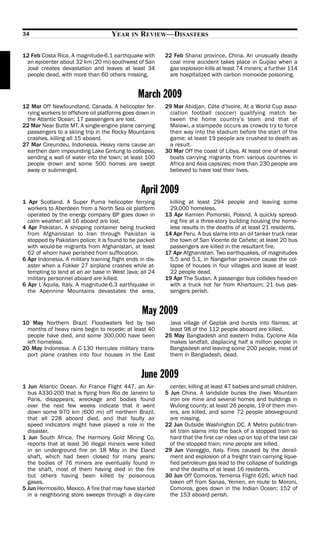
  • 13.
    12 YEAR IN REVIEW—CHRONOLOGY 21 Jul Radovan Karadzic, who was indicted by the UN ers Barney Dreyfuss and Walter O’Malley, and for- war crimes tribunal on 24 Jul 1995 for his part in mer commissioner Bowie Kuhn. the massacre of some 8,000 Muslims in Sre- 28 Jul In California, Virgin Galactic head Richard brenica, Bosnia and Herzegovina, earlier that year, Branson unveils WhiteKnightTwo, the prototype of is arrested in Belgrade, Serbia, where he had been the booster ship that will carry the company’s com- living in disguise. mercial rocket into space. Nepal’s constituent assembly elects as the coun- 29 Jul The Doha round of world trade talks, begun in try’s first president Ram Baran Yadav, who is not a 2001, reaches an impasse in Geneva as partici- member of the majority Maoist party. pants are unable to compromise on protections for 22 Jul The Italian legislature approves a bill granting farmers in less-developed countries. immunity from prosecution to the prime minister, 30 Jul Turkey’s Constitutional Court issues a ruling president, and speakers of the two legislative that the governing Justice and Development Party chambers during their terms of office; the bill ben- has not violated secular principles of the country to efits Prime Minister Silvio Berlusconi, who is await- the point that it should be banned but that it has ing trial on bribery charges. veered too far in an Islamic direction and therefore 23 Jul The US Geological Survey releases an assess- its public funding must be cut in half. ment that the Arctic may contain as much as 90 bil- Zimbabwe’s central bank announces that the lion bbl of undiscovered oil and 47.29 trillion cu m country’s currency will be devalued by dropping 10 (about 1.67 quadrillion cu ft) of natural gas, most zeros, so that a 10-billion-dollar note will become a of it in coastal areas under territorial sovereignty, one-dollar note; on 16 July the inflation rate offi- much of it in Russia. cially reached 2,200,000%. Cape Verde becomes the 153rd member of the 31 Jul NASA scientists announce that the Phoenix World Trade Organization. Mars lander has tested Martian soil and, for the 24 Jul A British judge awards £60,000 (about first time, has proved conclusively that it contains US$120,000) in damages to Max Mosley, president water ice. of the governing body of Formula 1 automobile rac- ing, in his lawsuit against a tabloid newspaper that QUOTE OF THE MONTH had printed pictures from a video of a sado- masochistic sex gathering Mosley had participated in; the judge ruled that there was no good reason to “ We’ve now finally touched it and tasted it. And I’d like to say, from my stand- ” expose Mosley’s private life. point, it tastes very fine. 25 Jul The US Office of the Special Inspector General for Iraq Reconstruction reports that oil exports —William V. Boynton, designer of the through the country’s northern pipeline have in- Phoenix Mars lander’s Thermal and creased from 1 million to more than 13 million bbl Evolved Gas Analyzer, on the proof that a month since 2007. water exists on Mars, 31 July 26 Jul Some 22 small bombs explode in crowded neighborhoods in Ahmedabad, India, killing at least 42 people. Massachusetts Gov. Deval Patrick signs a bill that 27 Jul The National Baseball Hall of Fame in Cooper- will allow same-sex couples living in states that do stown NY inducts pitcher Rich (“Goose”) Gossage, not permit same-sex marriage to marry in Massa- managers Dick Williams and Billy Southworth, own- chusetts August 2008 1 Aug Georgian troops enter the separatist province 5 Aug The US Government Accountability Office re- of South Ossetia, and six people die in the fighting veals that Iraq has a budget surplus of some between the soldiers and the rebel militia. US$79 billion, very little of which is being used in 2 Aug Bookstores throughout the US hold midnight the rebuilding of the country’s infrastructure; those parties as the fourth novel of the popular Twilight costs are largely financed by the US. vampire series by Stephenie Meyer, Breaking The Wildlife Conservation Society reports to the In- Dawn, goes on sale. ternational Primatological Society Congress in Ed- 3 Aug At the conclusion of the Lambeth Conference inburgh its discovery of some 125,000 western in Canterbury, England, Anglican Archbishop lowland gorillas in the northern area of the Repub- Rowan Williams announces an agreement to nego- lic of the Congo; the gorillas are coming under in- tiate a new covenant between the member creasing pressure in most parts of the world. churches; in the meantime, liberal members are 6 Aug The US mortgage finance giant Freddie Mac enjoined to refrain from ordaining gay clergy and posts figures for the second quarter that reflect a blessing same-sex unions, and conservative mem- much deeper loss than had been expected, as does bers are asked not to leave their churches. the large insurer American International Group South Korean golfer Shin Ji Yai captures the (AIG). Women’s British Open golf tournament; at age 20 7 Aug Georgian troops take control of several villages years 3 months 6 days, she is the youngest to have in the separatist province of South Ossetia; some won the title. 10 people die in the fighting. 4 Aug Chinese state media report that two Uighur 8 Aug Russian troops join the battle in Georgia’s sep- separatists rammed a truck into a brigade of bor- aratist province of South Ossetia, fighting against der-patrol officers outside their barracks in Kash- Georgia; also, a Russian air strike hits the Georgian gar, Xinjiang state, and then attacked the officers port of Poti. with knives and several bombs, killing at least 16 of A spectacular opening ceremony featuring some them. 15,000 performers directed by filmmaker Zhang
  • 14.
    YEAR IN REVIEW—CHRONOLOGY 13 Yimou marks the start of the Olympic Games in Bei- The government of Peru declares a state of emer- jing. gency in response to 10 days of occupation of oil fa- cilities and a hydroelectric plant in the Amazon QUOTE OF THE MONTH basin by indigenous people fighting development. 19 Aug In Isser, Algeria, a suicide car bomber kills at “ War has started. ” —Russian Prime Minister Vladimir Putin on Russia’s least 48 people, many of whom had been waiting in line to take an examination at a police academy. 20 Aug Algeria endures its second bombing in as many days as two bombs go off in Bouira, one of invasion of Georgia in support which damages a military compound and the other of South Ossetia, 8 August of which kills at least 12 people on a bus trans- porting construction workers. Jamaican sprinter Usain Bolt runs the men’s 200- 9 Aug Russian troops enter the separatist province of m race in 19.30 sec at the Olympics, breaking the Abkhazia in Georgia as they continue to pour into world record by an astonishing two-hundredths of a South Ossetia and to drop bombs on other parts of second. Georgia; Georgian Pres. Mikheil Saakashvili asks 21 Aug In Wah, Pakistan, outside Pakistan’s largest the outside world for help. weapons-manufacturing compound, two suicide 10 Aug At the Oakland Hills Country Club in Bloom- bombers kill at least 64 people; two days earlier a field Hills MI, Padraig Harrington of Ireland defeats suicide attack in a hospital emergency room in Sergio García of Spain and American Ben Curtis by Dera Ismail Khan left 32 people dead. two strokes to become the first European since 22 Aug Aerial bombing in Afghanistan’s Herat 1930 to win the Professional Golfers’ Association province by US-led coalition forces after a battle of America championship. against Taliban insurgents is reported by 11 Aug Philippine officials say that some 130,000 Afghanistan to have killed 76 civilians, though the people have fled the violence in North Cotabato coalition forces say that 30 militants were killed; province on the island of Mindanao since a the next day the civilian death toll is raised to 95. Supreme Court ruling halting the signing of an 23 Aug South Korea defeats Cuba 3–2 in a stunning agreement between the Philippine government and upset to win the gold medal in baseball at the the Moro Islamic Liberation Front caused an out- Olympic Games in Beijing. break of fighting between rebel and government 24 Aug Pres. Nicolas Sarkozy of France calls an emer- forces. gency meeting of the European Union to address 12 Aug A Taliban attack on a minibus carrying Pak- relations with Russia and support for Georgia in istani soldiers leaves at least 13 of the troops light of the fact that Russia has failed to comply dead; the soldiers are part of Pakistan’s strong mil- with the terms of the cease-fire agreement. itary response to Taliban aggressiveness in Bajaur The Waipio team from Waipahu, Hawaii, defeats in the Tribal Areas. the Matamoros team from Mexico 12–3 to win 13 Aug Lebanon and Syria announce that they will, baseball’s 62nd Little League World Series. for the first time since independence, establish 25 Aug A government attack on Kalma, a large camp diplomatic relations, but the news is overshadowed housing some 90,000 internal refugees in the Dar- by a bomb explosion that destroys a bus in Tripoli, fur region of The Sudan, kills dozens of people. Lebanon, killing 15 people. 26 Aug Russia officially recognizes the independence 14 Aug The US reaches an agreement with Poland of the Georgian provinces of South Ossetia and that will allow placement of an American missile- Abkhazia. defense base in the European country. North Korea announces that it has ceased dis- Nigeria officially cedes the potentially oil-rich abling its main nuclear complex at Yongbyon be- Bakassi Peninsula to Cameroon in compliance with cause it has not been removed from a US terrorism a 2002 ruling by the International Court of Justice. blacklist. 15 Aug Prachanda, leader of the former Maoist in- 27 Aug Democratic Party delegates, meeting at their surgency, is elected prime minister of Nepal. national convention in Denver, nominate Barack The journal Science publishes a study describing Obama, senator from Illinois, and Joe Biden, sena- the rapid growth of marine dead zones, areas tor from Delaware, as the party’s candidates for starved of oxygen because of nitrogen from fertil- president and vice president, respectively. izer runoff in oceanic coastal areas; such zones, 28 Aug Iraq signs an agreement with the China Na- frequently in fishing grounds, have doubled every tional Petroleum Corp. for the development of the decade since the 1960s. Ahdab oil field. 16 Aug Russian Pres. Dmitry Medvedev signs a re- 29 Aug Georgia and Russia mutually sever diplomatic vised cease-fire agreement with Georgia, but Russ- relations. ian troops continue operations in Georgia. The state-owned airline Alitalia files for bankruptcy 17 Aug Iran reports that it has successfully test-fired protection in Italy. a rocket that could place a satellite in orbit. 30 Aug Italy signs an agreement with Libya to provide At the Olympics in Beijing, American swimmer US$5 billion in aid and projects as compensation Michael Phelps wins a record eighth gold medal, for Italy’s 1911–42 occupation of Libya; in return, surpassing the previous record for a single Libya is to take steps to prevent illegal immigration Olympiad of seven gold medals won by Mark Spitz to Italy from Libya. in 1972; Phelps has also set four individual world 31 Aug As the intermittently strengthening Hurricane records and one Olympic record and participated in Gustav, having caused destruction in Haiti, the Do- three relays that set world records. minican Republic, Jamaica, and Cuba, heads to- 18 Aug Pres. Pervez Musharraf of Pakistan an- ward the Gulf Coast in the US, some two million nounces his resignation in a nationally televised people in Texas, Mississippi, Louisiana, and Al- speech. abama evacuate.
  • 15.
    14 YEAR IN REVIEW—CHRONOLOGY September 2008 1 Sep US and Iraqi military officials announce that re- and Complaining violates the country’s constitu- sponsibility for paying and commanding Sunni tion; he is forced from office. Awakening Councils in Baghdad and the surround- 10 Sep CERN’s (the European Organization for Nu- ing area will be taken over by Iraq’s government be- clear Research’s) Large Hadron Collider, which is in- ginning next month, and the US military formally tended to create conditions identical to those im- hands over control of once-violent Anbar province mediately after the big bang and is the largest to Iraqi armed forces. particle collider in the world, is activated outside 2 Sep The US Library of Congress announces that Geneva. Stevie Wonder is the winner of the Gershwin Prize Bolivian Pres. Evo Morales orders the US ambas- for Popular Song and that in conjunction with the sador to leave, accusing him of assisting those prize it has commissioned a song from him; the seeking autonomy for Bolivia’s eastern provinces. prize will be presented in February 2009. The US Library of Congress presents its first Award 3 Sep At the Republican National Convention in St. for Lifetime Achievement in the Writing of Fiction to Paul MN, Sen. John McCain of Arizona and Gov. novelist Herman Wouk. Sarah Palin of Alaska are nominated as the party’s 11 Sep Pres. Hugo Chávez of Venezuela expels the candidates for president and vice president, re- US ambassador and recalls the Venezuelan am- spectively, in the upcoming election in November. bassador from Washington DC. 4 Sep The journal Nature publishes a study suggest- 12 Sep A High Court judge in South Africa dismisses ing that the most powerful hurricanes and ty- corruption charges against Jacob Zuma, leader of phoons, particularly in the Atlantic and Indian the African National Congress (ANC), citing proce- oceans, have become stronger over the past 25 dural errors in the case. years. 13 Sep Hurricane Ike goes ashore in Texas, flooding 5 Sep US Secretary of State Condoleezza Rice meets Galveston and Orange and causing considerable with Libyan leader Muammar al-Qaddafi in his com- damage in Houston; some 51 people are killed pound in Tripoli; it is the first visit to the country by throughout the region, 20 of them in Texas. a current US secretary of state in more than 50 New Zealand defeats Australia to win the Tri-Na- years. tions rugby union title. The US National Snow and Ice Center reports that 14 Sep The American investment firm Merrill Lynch for the first time since recordings began being sells itself to Bank of America for about US$50 bil- taken in the area, both the Northwest Passage lion. above North America and the Northern Sea Route In Madrid, Russia defeats Spain four matches to over Europe and Asia were open during the sum- none to win the Fed Cup in tennis. mer, providing a ring of navigable waters in the Arc- 15 Sep In Zimbabwe, Pres. Robert Mugabe signs a tic. power-sharing agreement with opposition leader The Naismith Memorial Basketball Hall of Fame in Morgan Tsvangirai that makes Tsvangirai prime Springfield MA inducts as members National Bas- minister and envisions an even division of power, ketball Association players Adrian Dantley, Patrick though many important details remain to be Ewing, and Hakeem Olajuwon and coach Pat Riley, worked out. women’s college coach Cathy Rush, and broad- As widely expected, the venerable investment caster Dick Vitale. bank Lehman Brothers, which received no help 6 Sep Pakistan’s two legislative houses and four from the US government and was unable to find a provincial assemblies elect Asif Ali Zardari presi- buyer, files for bankruptcy protection; it is the dent of the country. biggest bankruptcy filing in the country’s history. Turkish Pres. Abdullah Gul attends an association 16 Sep The US government takes over the giant in- football (soccer) match in Armenia after an invita- surer American International Group (AIG), fearing tion by Armenian Pres. Serzh Sarkisyan; he is the that the company’s imminent collapse would send first Turkish head of state to visit the country. economies worldwide into a tailspin. 7 Sep The US government takes over the mortgage fi- Lieut. Gen. Ray Odierno takes over command of nance companies Fannie Mae and Freddie Mac in US forces in Iraq from Gen. David Petraeus in a cer- a rescue package that will all but wipe out their emony presided over by US Secretary of Defense shareholders’ stake but will guarantee the corpo- Robert Gates. rate debt. 17 Sep In Nalchik, Russia, Aleksandra Kostenyuk of Serena Williams of the US defeats Jelena Jankovic Russia becomes the Fédération Internationale des of Serbia to win the women’s US Open tennis cham- Échecs (FIDE) women’s world chess champion after pionship; the following day Roger Federer of defeating Hou Yifan of China 2.5–1.5 in the final Switzerland defeats Andy Murray of Scotland to win round of the three-week tournament. the men’s title for the fifth straight year. 18 Sep In an effort to contain the global credit crisis, With his second-place finish behind Helio Castron- the US Federal Reserve joins with the European eves of Brazil in the Indy 300 race in Joliet IL, New Central Bank, the Bank of England, and the Bank of Zealand driver Scott Dixon wins the overall IndyCar Japan as well as the central banks of Canada and drivers’ championship. Switzerland to make US$180 billion in currency ex- 8 Sep Russia agrees to withdraw its troops from Geor- changes available. gia but maintains that Russian troops will remain in Two days of legislative elections in Rwanda result the separatist regions of South Ossetia and Abk- in the world’s first legislature that has a female ma- hazia; it also agrees that observers from the EU jority; women win 45 of 80 seats. may monitor the agreement. The Dow Jones Industrial Average replaces Ameri- 9 Sep Thailand’s Constitutional Court rules that can International Group (AIG) with Kraft Foods on Prime Minister Samak Sundaravej’s acceptance of its listing. payments for hosting the TV cooking show Tasting 19 Sep North Korea declares that it is no longer in-
  • 16.
    YEAR IN REVIEW—CHRONOLOGY 15 terested in being removed from the US govern- QUOTE OF THE MONTH ment’s list of state sponsors of terrorism. 20 Sep Pres. George W. Bush formally proposes a bailout bill that would give the Treasury Depart- ment unlimited authority to buy and sell up to US$700 billion in mortgage-related assets; the “ The idea of the all-powerful market which wasn’t to be impeded by any rules or po- litical intervention was a mad one. The idea that the markets are always right was plan contains few details. ” mad. 21 Sep The US Federal Reserve approves the re- quests of investment banks Goldman Sachs and —Pres. Nicolas Sarkozy of France in a Morgan Stanley to convert themselves into bank nationally televised speech on the global holding companies. economic difficulties, 25 September The Emmy Awards are presented in Los Angeles; winners include the television shows 30 Rock and Mad Men and the actors Alec Baldwin, Bryan among other things, replaces a 2,500-member ap- Cranston, Tina Fey, Glenn Close, Jeremy Piven, pointed legislature with a 125-member popularly Zeljko Ivanek, Jean Smart, and Dianne Wiest. elected one and sets the presidential term at five In golf’s Ryder Cup competition in Louisville KY, years; legislative elections are set for December. the US defeats Europe for the first time since 1999, The Global Carbon Project issues an update saying with a 16–11 margin of victory. that worldwide emissions of carbon dioxide, a 22 Sep Li Changjiang, the head of China’s food and greenhouse gas, had an annual increase in product quality agency, is dismissed in a scandal in 2000–07 that was nearly four times the rate in the which melamine-tainted infant formula has made 1990s, largely because of economic growth in less- tens of thousands of babies ill throughout China. developed countries. 23 Sep The US House of Representatives passes leg- 27 Sep Astronaut Zhai Zhigang of China successfully islation that is intended to prevent the waters of the performs the Chinese space program’s first space Great Lakes from being diverted outside the basin walk, floating outside the orbital module for 18 and requires conservation measures from the minutes. states bordering the lakes; Pres. George W. Bush In the Australian Football League Grand Final in signs the bill into law the following month. Melbourne, the Hawthorn Hawks defeat the heavily The world’s first wave farm, in which the power of favored Geelong Cats 18.7 (115) to 11.23 (89). the ocean’s waves is harnessed to generate electri- 28 Sep Haile Gebrselassie of Ethiopia shatters the cal power, begins operation off Aguçadoura, Portu- world marathon record that he set in 2007 as he gal. wins the Berlin Marathon with a time of 2 hr 3 min 24 Sep US Pres. George W. Bush makes a nationally 59 sec; Irina Mikitenko of Germany is the fastest televised speech to ask for the country’s support woman, with a time of 2 hr 19 min 19 sec. for a US$700 billion bailout plan to avert financial 29 Sep The US House of Representatives rejects the catastrophe and invites presidential candidates US$700 billion bailout bill supported by US Pres. John McCain and Barack Obama to Washington DC George W. Bush; as countries around the world to join negotiations on the plan. struggle to save large banks, the Dow Jones Indus- 25 Sep In the biggest bank failure in American his- trial Average falls nearly 7%, and global stock mar- tory, the US government takes over the savings and kets also lose value. loan bank Washington Mutual and arranges its sale The US Department of Health and Human Ser- to financial services giant JPMorgan Chase. vices reports that more than 90% of nursing homes French Pres. Nicolas Sarkozy makes a speech in in the US have been found to have violated health which he asserts that the world’s monetary system and safety standards and that for-profit institutions needs to be overhauled and that, though the eco- were cited more often for such violations than gov- nomic crisis in the US is having an effect in France, ernment or not-for-profit homes. the French government will act to protect bank de- The World Institute for Nuclear Security is inaugu- posits and taxpayers. rated in Vienna, with Roger Howsley of Great Britain Somali pirates in the Indian Ocean seize the Faina, as its director; the organization seeks to prevent a Ukrainian ship carrying millions of dollars of mili- nuclear weapons from falling into the hands of ter- tary weaponry that had been purchased by Kenya; rorists. by the following day the US and Russia have sent 30 Sep London’s High Court rules that Nepalese naval ships in pursuit. Gurkhas who have served with the British army 26 Sep Turkmenistan adopts a new constitution that, have the right to live in the UK. October 2008 1 Oct The US Congress ratifies a nuclear trade agree- 4 Oct Tyler Perry Studios, featuring five sound- ment made with India in 2005. stages for television and film work, opens in At- 2 Oct The Sri Lankan air force bombs the main politi- lanta; it is the first major film and television stu- cal offices of the Liberation Tigers of Tamil Eelam in dio owned by an African American producer to Kilinochhi. open in the US. Remains believed to be those of missing adventurer 5 Oct A magnitude-6.6 earthquake strikes Kyrgyz- Steve Fossett, who disappeared in September 2007, stan, killing at least 72 people and flattening the are found in the Inyo National Forest in California. village of Nura. 3 Oct The US House of Representatives passes a re- The Detroit Shock defeats the San Antonio Silver vised version of the US$700 billion financial Stars 76–60 to complete a three-game sweep and bailout bill that was rejected in September, and US win its third Women’s National Basketball Associa- Pres. George W. Bush signs it into law. tion championship.
  • 17.
    16 YEAR IN REVIEW—CHRONOLOGY 6 Oct The Russian stock market declines by 19.1%; 15 Oct The Dow Jones Industrial Average drops a indexes in London and Frankfurt, Germany, drop stunning 733 points, losing 7.9% of its value. more than 7%; Paris stocks lose 9%; and the Dow The price of a barrel of light, sweet crude oil falls Jones Industrial Average finishes below 10,000 to US$74.54, the first time since August 2007 that points for the first time since 2004. it has fallen below US$75. The Nobel Prize for Physiology or Medicine is 16 Oct NASA reports that the Fermi Gamma-ray awarded to Françoise Barré-Sinoussi and Luc Space Telescope has made a discovery in the con- Montagnier of France for their discovery of HIV, stellation Cepheus of a previously unknown type of the virus that causes AIDS, and to Harald zur pulsar that emits only gamma rays. Hausen of Germany for his discovery of the 17 Oct Japan, Austria, Turkey, Mexico, and Uganda human papillomavirus, a major cause of cervical are elected to two-year nonpermanent seats on the cancer. UN Security Council. 7 Oct In Stockholm the Nobel Prize for Physics is 18 Oct A demonstration against the proposed status- awarded to Yoichiro Nambu of the US and to of-forces security agreement between Iraq and the Makoto Kobayashi and Toshihide Maskawa of US by followers of ShiCite cleric Muqtada al-Sadr Japan for their work searching for hidden symme- takes place in Baghdad. tries among elementary particles. Thai Prime Minister Somchai Wongsawat says that 8 Oct British Prime Minister Gordon Brown an- he wishes to have face-to-face talks with Cambo- nounces a financial plan to offer recapitalization dian Prime Minister Hun Sen in an attempt to re- funds to troubled banks in return for ownership solve the dispute over a 900-year-old temple on the stakes and to provide government guarantees to border between the countries; a firefight on 15 Oc- help banks refinance debt; the government will tober left three Cambodian soldiers dead. provide £50 billion (US$75 billion) in this initia- 19 Oct China announces a rural-reform policy that tive. will allow farmers to lease or exchange land-use The Nobel Prize for Chemistry is awarded to grants. Osamu Shimomura of Japan and to Martin Chalfie At the world open squash championships in Man- and Roger Y. Tsien of the US for their research on chester, England, Ramy Ashour of Egypt wins the the green fluorescent protein produced by the jelly- men’s competition and Nicol David of Malaysia the fish Aequorea victoria and its use as a marker for women’s title. observing cells in other animals. 20 Oct The genomes and phenotypes of 10 volun- 9 Oct Iceland takes over Kaupthing Bank, the last of teers are made publicly available as part of the Per- the country’s three major banks to be nationalized, sonal Genome Project, which seeks to increase shuts down the stock market, and ceases to sup- medical knowledge by making this information eas- port its currency, the króna. ily available; the project founders hope to supply the data on 100,000 volunteers. QUOTE OF THE MONTH Festus Mogae, who was president of Botswana from 1998 until April 2008, wins the Mo Ibrahim “ Iceland is bankrupt. The Icelandic króna is history. The only sensible option is for the Prize for Achievement in African Leadership. 21 Oct The inaugural Steinberg Distinguished Play- ” IMF to come and rescue us. wright Award, which carries an unusually generous prize of US$200,000, is presented to Tony Kushner. —University of Iceland professor For the first time, trade takes place between India Ársæll Valfells, on the collapse of and Pakistan across the Line of Control in Kashmir Iceland’s economic system, 9 October as 16 Indian trucks carrying apples and walnuts cross into Pakistan; Pakistani trucks loaded with rice and raisins later travel into India. The Nobel Prize for Literature is awarded to French 22 Oct India launches Chandrayaan-1, an unmanned writer Jean-Marie Gustave Le Clézio. spacecraft that will orbit the Moon, gathering infor- 10 Oct The Nobel Peace Prize is awarded to former mation to create a three-dimensional atlas and Finnish president and international mediator Martti searching for mineral resources, particularly ura- Ahtisaari. nium; it is India’s first scientific spacecraft. 11 Oct US Pres. George W. Bush announces that US Secretary of State Condoleezza Rice meets North Korea is to be removed from the list of state with Mexican Secretary of Foreign Affairs Patricia sponsors of terrorism; the following day North Espinosa in Puerto Vallarta, Mexico, to discuss co- Korea indicates that it will resume dismantling its operation in confronting Mexico’s drug cartels. Yongbyon nuclear complex. 23 Oct The European Parliament names jailed Chi- 12 Oct The Chicago Marathon is won by Evans nese human rights activist Hu Jia the winner of the Cheruiyot of Kenya with a time of 2 hr 6 min 25 sec; Sakharov Prize for Freedom of Thought. the women’s victor is Lidiya Grigoryeva of Russia 24 Oct The International Monetary Fund tentatively with a time of 2 hr 27 min 17 sec. agrees to grant Iceland a US$2 billion loan over two 13 Oct The Dow Jones Industrial Average gains 936 years to help it rebuild its economy; the last time points, its largest-ever point gain and an increase of the IMF made a loan to a Western country was in 11.1%; the Standard & Poor’s 500 index and the 1976. Nasdaq composite also rise more than 11%. The UN reports that a quickly spreading cholera The Nobel Memorial Prize in Economic Sciences outbreak in Guinea-Bissau has infected some goes to American Paul Krugman for his work eluci- 12,000 people, 200 of whom have died. dating patterns in world trade and locations of eco- 25 Oct Hong Kong’s Centre for Food Safety reports nomic activity. that it found eggs from northeastern China to be 14 Oct The Man Booker Prize for Fiction goes to In- heavily contaminated with melamine, suggesting dian writer Aravind Adiga for his first novel, The that the toxic substance has been deliberately White Tiger. added to animal feed.
  • 18.
    YEAR IN REVIEW—CHRONOLOGY 17 The Breeders’ Cup Classic Thoroughbred horse The online-search company Google announces an race is won by Raven’s Pass at Santa Anita Park in agreement with book publishers that will allow it to Arcadia CA; favorite Curlin finishes fourth. scan and make available for a fee out-of-print 26 Oct A US Predator drone launches a missile attack books that are under copyright; the deal will allow on a compound in the village of Manduta in Pak- both Google and the authors and publishers to be istan’s South Waziristan province, killing 20 peo- paid for the use of such books. ple; reportedly among the dead are two Taliban 29 Oct Pakistan formally protests US attacks against leaders who were responsible for attacks against Taliban and al-Qaeda militants on its soil and de- US personnel in Afghanistan. mands a stop to the incursions. 27 Oct South Korea’s central bank holds an emer- In the World Series, the Philadelphia Phillies de- gency meeting and lowers its key interest rate by feat the Tampa Bay Rays 4–3 in the final three and three-quarters of a percentage point; elsewhere, a half innings of the fifth game, which began on 27 the Bank of Israel lowers its rate by one-quarter October and was suspended for two days because point, and Australia’s central bank buys Australian of rain and snow, to win the Major League Baseball dollars to improve the exchange rate. championship. Sen. Ted Stevens of Alaska is convicted in the Dis- 30 Oct The oil company Exxon Mobil reports a record trict of Columbia on seven felony counts for having US$14.8 billion in profit in its most recent fiscal failed to report some US$250,000 in gifts and ser- quarter. vices he had received; Stevens is running for his 31 Oct US Gen. David Petraeus takes over the Central seventh term of office. Command, which oversees military operations in 28 Oct Iran announces that it has opened a new Iraq, Afghanistan, and much of the Middle East, naval base in the port of Jask on the Gulf of Central Asia, and South Asia. Oman. November 2008 1 Nov Libyan leader Muammar al-Qaddafi meets with 6 Nov The heads of the automobile companies Russian Pres. Dmitry Medvedev and Prime Minister General Motors, Ford, and Chrysler and the leader Vladimir Putin in Moscow, apparently to discuss of the United Automobile Workers union travel to closer commercial relations. Washington DC to ask for a second time for gov- 2 Nov With a fifth-place finish at the Brazilian Grand ernment help to prevent the collapse of their in- Prix, British race-car driver Lewis Hamilton, age 23, dustry. becomes the youngest person to have won the For- 7 Nov US government figures show that 240,000 mula 1 drivers’ championship. jobs were lost in October as the unemployment rate Sébastien Loeb of France secures a record fifth rose to 6.5%, its highest level in 14 years. successive world-rally-championship automobile- 8 Nov Iraq’s executive council ratifies a law setting racing drivers’ title with a third-place finish in the the composition of provincial councils; the law al- Rally of Japan. lots only six seats on the councils to members of re- Marílson Gomes dos Santos of Brazil wins the New ligious minorities, half of what the United Nations York City Marathon with a time of 2 hr 8 min 43 sec, recommended. while Britain’s Paula Radcliffe is the fastest 9 Nov At an emergency summit meeting of the South- woman, with a time of 2 hr 23 min 56 sec. ern African Development Community in Johannes- 3 Nov The US Department of Commerce releases fig- burg, participants call for a cease-fire in the eastern ures showing that the sales of new cars and trucks region of the Democratic Republic of the Congo and in October fell to levels not seen since the early agree to send military advisers to assist the gov- 1980s, with figures down almost 32% compared ernment. with sales in October 2007. 10 Nov The American electronics retailer Circuit City In a complicated spy and bribery case known as files for bankruptcy protection. “Suitcasegate”—for the suitcase full of cash found The 11th annual Mark Twain Prize for American in the airport in Buenos Aires that began the scan- Humor is awarded posthumously to comic George dal—Venezuelan businessman Franklin Durán is Carlin in a ceremony at the John F. Kennedy Center convicted by a court in Miami of having acted as an for the Performing Arts in Washington DC. “unregistered agent” in the US. 11 Nov Food inspectors in Hong Kong report finding 4 Nov In a historic presidential election in the US, De- high levels of the toxic chemical melamine in fish mocratic candidate Barack Obama wins with feed from China. 52.9% of the popular vote and 365 electoral votes, Peter Eastgate of Denmark wins the World Series against Republican candidate John McCain’s of Poker; at 22, he is the youngest winner of the 45.7% and 173 electoral votes; Obama celebrates card game tournament. his victory with a rally in Grant Park in Chicago. 12 Nov US Secretary of the Treasury Henry Paulson Gen. Mario Montoya resigns as head of Colom- announces that the government no longer plans to bia’s army in a spreading scandal about the appar- use the US$700 billion bailout package to buy ently pervasive practice of the armed forces’ killing bad assets but will rather try to use the money to of civilians in an attempt to inflate the figures of in- capitalize banks and to help companies make surgents killed by security forces. loans. China and Taiwan sign an agreement that will The 2008 Dorothy and Lillian Gish Prize is greatly increase transportation connections as well awarded to film actor and director Robert Red- as trade between the two entities. ford. 5 Nov Officials in Afghanistan complain that a US air 13 Nov At the Latin Grammy Awards in Houston, strike two days earlier killed at least 40 civilians at Colombian rock musician Juanes wins five awards, a wedding party in Kandahar province. including album of the year for La vida…es un
  • 19.
    18 YEAR IN REVIEW—CHRONOLOGY ratico and both song and record of the year for “Me 23 Nov Spain defeats Argentina 3–1 to win the Davis enamora.” Cup in international team tennis. 14 Nov With an EU report showing that the economy The Columbus Crew wins the Major League Soccer of the 15-country euro zone shrank 0.2% in the title with a 3–1 victory over the New York Red Bulls third quarter, the euro zone is officially in reces- in the MLS Cup in Carson CA. sion. The Calgary Stampeders capture the 96th Cana- The journal Science publishes an article reporting dian Football League Grey Cup, defeating the Mon- that the Hubble Space Telescope has produced the treal Alouettes 22–14. first visible-light image of a planet in another solar 24 Nov Antigovernment protesters in Bangkok sur- system; the observations are of the planet Fomal- round the legislative building and cut off its elec- haut b orbiting the star Fomalhaut in the constella- tricity and march on the airport where the govern- tion Piscis Australis. ment has been meeting since protests began in 15 Nov California Gov. Arnold Schwarzenegger de- August. clares a state of emergency in Los Angeles county The US Treasury agrees to inject US$20 billion into as several wildfires, driven by Santa Ana winds, the funds of the banking giant Citigroup and to pay burn hundreds of houses and compel the evacua- for losses on bad assets; it is the second rescue tion of more than 10,000 residents. plan from the government for the bank. 16 Nov Iraq’s cabinet approves a status-of-forces 25 Nov Voters in Greenland overwhelmingly approve agreement negotiated with the US; the pact, which a new law to increase the dependency’s autonomy must also be approved by the legislature, begins re- from Denmark, in particular giving it greater rights stricting the scope of US combat operations start- to profit from local oil resources. ing on 1 Jan 2009 and calls for a complete US with- Atlantic Records, a label owned by Warner Music drawal by the end of 2011. Group, says that it has become the first label to After the final auto race of the season, Jimmie have more than half of its music sales come from Johnson is crowned winner of the NASCAR drivers’ digital products, such as MP3 downloads and ring- championship for the third year in a row. tones. 17 Nov The Saudi-owned supertanker Sirius Star is 26 Nov In a brazen strike in Mumbai (Bombay), ter- seized by pirates some 450 nautical miles south- rorists attack several public sites, among them east of Mombasa, Kenya, far from the usual area train stations, hospitals, and a restaurant, and then menaced by pirates. take over two luxury hotels and a Jewish community 18 Nov A court in Egypt rules that a contract to pro- center; at least 82 people are initially reported vide natural gas to Israel signed in 2005 should killed in the siege. have been approved by the legislature and so should not be honored. QUOTE OF THE MONTH 19 Nov The US Department of Labor reports that the consumer price index for October dropped by 1%, the biggest one-month drop ever measured, and the Dow Jones Industrial Average falls below 8,000 for the first time since 2003. “ I ran into the hotel kitchen, and then we were shunted into a restaurant in the base- ment. We are now in the dark in this room, and we have barricaded all the doors. It’s ” The US Food and Drug Administration opens a really bad. branch in Beijing to screen food and drugs that will be exported to the US; it is intended to be the first —European Parliament member of several overseas offices for the agency. Sajjad Karim describing his ordeal 20 Nov At the first habeas corpus hearing on the US during the terrorist siege of his hotel in government’s holding of six detainees at the mili- Mumbai (Bombay), 26 November tary detention camp in Guantánamo Bay, Cuba, Judge Richard J. Leon of the Federal District Court in Washington DC rules that five of the men have In Alto Minho in northern Portugal, a wind farm been illegally held for almost seven years and made up of 120 wind turbines and five substations should be released immediately. officially opens; it is the largest wind farm in Europe. The price of a barrel of oil falls below US$50. 27 Nov Iraq’s legislature ratifies the status-of-forces 21 Nov The World Health Organization reports that a agreement that mandates the end of US military cholera epidemic that broke out in August in Zim- occupation of Iraq by the end of 2011. babwe and has accelerated in November has so far The Perimeter Institute for Theoretical Physics in killed 294 people. Ontario announces that physicist Stephen Hawking After an emergency session, the state legislature will hold its first distinguished research chair. of Nebraska revises a safe-haven law to allow only 28 Nov Authorities in Mumbai (Bombay) succeed in infants up to the age of 30 days to be legally aban- regaining control of the two luxury hotels and the doned at hospitals; as originally written, the law Jewish center that were attacked by terrorists, end- had said that all children could be safely aban- ing the siege; at least 174 people are believed to doned, and since it went into effect on 1 Septem- have been killed. ber, 35 older children, several from outside Ne- 29 Nov Two days of ferocious ethnic and religious vi- braska, had been left at Nebraska hospitals. olence between Muslims and Christians in Jos, 22 Nov On a man-made island in Doha, Qatar, the Nigeria, end with the imposition of a curfew; at Museum of Islamic Art celebrates its grand opening least 400 people died in fighting. with a ceremony attended by heads of state and 30 Nov The space shuttle Endeavour lands in Califor- other luminaries; it will open to the public on 1 De- nia after a successful mission to enlarge the ca- cember. pacity of the International Space Station; among New Zealand defeats Australia 34–20 to win the those aboard are the space station’s outgoing flight Rugby League World Cup final in an astonishing engineer, Gregory E. Chamitoff, who had spent six upset. months at the station.
  • 20.
    YEAR IN REVIEW—CHRONOLOGY 19 December 2008 1 Dec The National Bureau of Economic Research re- terrorist attacks in Mumbai (Bombay) in November, ports that the US economy has been in recession including its operational leader. since December 2007; this is an unusually long re- Gov. Rod Blagojevich of Illinois is arrested on fed- cession, and analysts expect it to continue for eral charges of conspiracy and bribe solicitation; some time. prosecutors say that, among other things, he at- The Dow Jones Industrial Average falls 680 points, tempted to sell the Senate seat vacated by Presi- losing 7.7% of its value, while the Standard & dent-elect Barack Obama, to which he was empow- Poor’s 500 index drops by 8.9% and the Nasdaq ered to appoint the successor. composite loses 9.0%. 10 Dec During six-party talks on North Korea’s nu- Britain’s Turner Prize is presented in London to clear program, North Korea refuses to accept a Chi- artist Mark Leckey; his work includes the multime- nese proposal on nuclear verification; negotiations dia exhibition Industrial Light & Magic, which con- break down the following day. tains images of the animated characters Felix the In the UK the Channel island of Sark holds its first- Cat and Homer Simpson. ever democratic election after 450 years of feudal 2 Dec The Women’s National Basketball Association government. shuts down the Houston Comets, unable to afford 11 Dec Bernard L. Madoff, a well-connected and ap- to keep the franchise going or to find a buyer. parently exceptionally successful trader, is arrested 3 Dec A group of conservative Episcopal bishops an- by federal agents in New York City; he is believed to nounce that they are forming a new province have been running an enormous Ponzi scheme, de- within the Anglican Communion to serve as an al- frauding many individual and institutional cus- ternative to the Episcopal Church (US); the new tomers of some US$50 billion. province is to be called the Anglican Church in 12 Dec The day after the US Senate refused to ap- North America. prove a rescue package for automobile manufac- Against the preferences of the US, Afghan Pres. turers, officials from the White House and the Trea- Hamid Karzai decides to sign the Convention on sury Department say that the government is willing Cluster Munitions, banning the use of cluster to use money from the US$700 billion bailout fund bombs; he participates along with more than 90 to prevent the collapse of General Motors and other countries’ delegates in a signing ceremony in Chrysler. Oslo. Pres. Rafael Correa of Ecuador declines to make a 4 Dec Zimbabwe declares its cholera epidemic a na- US$31 million interest payment, declaring his tional emergency and appeals for international as- country to be in default on foreign debt. sistance. 13 Dec Steer roper Trevor Brazile of Texas wins his The telecommunications company AT&T declares sixth all-around cowboy world championship at the that it plans to lay off 12,000 people over the next 50th annual Wrangler National Finals Rodeo in Las year; one difficulty the company is encountering is Vegas. a decline in the number of subscribers to landline 14 Dec The military forces of the Democratic Repub- telephones. lic of the Congo, Uganda, and The Sudan start an 5 Dec The US Bureau of Labor Statistics releases a offensive against the insurgent group the Lord’s Re- report showing that 533,000 jobs were lost in No- sistance Army, seeking to drive it from the Democ- vember; this is the largest monthly total since De- ratic Republic of the Congo back to Uganda, cember 1974. whence it originated. The Mortgage Bankers Association reports that At a news conference held in Baghdad by Iraqi 1.35 million American homes were in foreclosure in Pres. Nuri al-Maliki and US Pres. George W. Bush, a the third quarter, a new record and an increase of journalist from an independent television channel 76% over the previous year. throws both his shoes at Bush, denouncing him for 6 Dec In the course of one of the frequent fights be- bringing war to Iraq; Bush avoids both shoes. tween police and leftist youths in Athens, the police 15 Dec A charter to transform the Association of shoot to death a 15-year-old boy; ferocious rioting Southeast Asian Nations (ASEAN) into an entity begins within hours and spreads to other cities in similar to the EU goes into force. Greece. 16 Dec The US Federal Reserve lowers its key inter- 7 Dec Hundreds of militants attack a lot in Peshawar, est rate to a range of 0–0.25% and announces new Pakistan, and destroy more than 100 trucks fully lending programs to get money to businesses and loaded with supplies for US and NATO armed forces to consumers. in Afghanistan. A team of astronomers using NASA’s Chandra X- The annual Kennedy Center Honors are presented ray Observatory report that they have found that in Washington DC to musicians George Jones, Pete the reason that clusters of galaxies have not grown Townshend, and Roger Daltrey, actor Morgan Free- in the past five billion years may be that their man, singer and actress Barbra Streisand, and growth is inhibited by the antigravitional force choreographer Twyla Tharp. called dark energy. 8 Dec Belize and Guatemala agree to submit a border 17 Dec At a meeting in Oran, Algeria, OPEC member disagreement dating from 1821 to the Interna- countries agree to cut oil production by a record 2.2 tional Court of Justice. million bbl a day. The Tribune Co., which publishes the Chicago Tri- 18 Dec The UN reports that the death toll from the bune, the Los Angeles Times, and 10 other news- cholera epidemic in Zimbabwe has risen to 1,111, papers and also owns several television stations, with 133 people dying in the past two days alone. files for bankruptcy protection. 19 Dec The Palestinian organization Hamas an- 9 Dec Pakistani authorities say that they have ar- nounces that its unwritten truce with Israel is over. rested some 20 members of Lashkar-e-Taiba, the US Pres. George W. Bush announces an emer- Islamist militant group believed to be behind the gency bailout of US$17.4 billion for the automobile
  • 21.
    20 YEAR IN REVIEW—CHRONOLOGY manufacturers General Motors and Chrysler, in re- 27 Dec Israel launches massive air strikes against turn for which the companies must produce a plan Hamas facilities in the Gaza Strip; more than 225 for profitability by 31 March 2009; the money people in Gaza are killed. comes from the US$700 billion authorized by Con- 28 Dec With a final-game loss to the Green Bay Pack- gress to rescue the financial services industry. ers, the Detroit Lions become the first National 20 Dec Canadian Prime Minister Stephen Harper and Football League team ever to lose every game of a Premier Dalton McGuinty of Ontario offer the Cana- 16-game regular season. dian subsidiaries of the automakers General Mo- 29 Dec Israel continues its air assault against Hamas tors and Chrysler Can$4 billion (US$3 billion) in targets in the Gaza Strip; as the death toll passes emergency loans. 350 and Hamas rockets kill three Israelis, Israeli 21 Dec Police in Tehran shut down the office of the Defense Minister Ehud Barak declares that Israel is Center for Protecting Human Rights, headed by engaged in an “all-out war” with Hamas. Shirin Ebadi, who won the Nobel Peace Prize in 30 Dec Ghana’s election commission says that the 2003. results of the country’s presidential runoff are too 22 Dec The Organization for Security and Co-opera- close to call and that one district that was unable to tion in Europe announces that its mission in Geor- hold voting on election day will vote on 2 Jan 2009; gia will be terminated because the organization has the results there will determine the winner. been unable to reach a compromise with member 31 Dec As an emergency meeting of the Arab League country Russia, which insists that the separatist en- convenes, Israel rejects a proposed 48-hour cease- claves of South Ossetia and Abkhazia be treated as fire and continues its bombardment of Gaza. separate countries. 23 Dec The prestigious but nearly insolvent Museum QUOTE OF THE MONTH of Contemporary Art in Los Angeles announces that it will be rescued by arts patron Eli Broad, who will give it US$30 million and require that its manage- ment be restructured; Charles Young replaces Je- “ This terrible massacre would not have hap- pened if the Palestinian people were united behind one leadership, speaking in one ” remy Strick as the museum’s director. voice. 24 Dec The Japanese automobile manufacturers Toy- ota and Nissan report that their worldwide sales of —Prince Saud al-Faisal of Saudi vehicles in November fell 21.8% and 19.8%, re- Arabia, speaking at an emergency spectively, from a year before. Arab League summit, 31 December The US Federal Reserve Board allows GMAC, the fi- nancing arm of the car manufacturer General Mo- tors, to become a bank holding company. At the last bell of the year at the New York Stock 25 Dec In his annual Christmas message, Pope Bene- Exchange, the Dow Jones Industrial Average has dict XVI calls for peace in the world, particularly in lost 33.8% of its value from the beginning of the the Middle East, and gives blessings in 64 lan- year, its worst annual loss since 1931; the Stan- guages, including, for the first time, Icelandic. dard & Poor’s 500-stock index has lost 39.5% of its 26 Dec Israel opens crossings into the Gaza Strip, al- value. lowing relief supplies to reach the area; nonethe- China and Vietnam announce that they have com- less, a dozen rockets and mortar shells are fired to- pleted the demarcation of the 1,350-km (840-mi) ward Israel. border between the countries. January 2009 1 Jan The Green Zone, a 14.5-sq-km (5.6-sq-mi) area 6 Jan In South Korea opposition lawmakers end a 12- in Baghdad that has been the center of the US oc- day occupation of the parliament building after suc- cupation, is turned over to Iraqi control. cessfully blocking a vote on a free-trade agreement Two newspapers in Mexico report that more than with the US as well as other legislation. 5,000 people were killed by gangsters in drug-re- US Pres. George W. Bush creates the largest ma- lated violence in 2008, more than twice as many as rine reserve in the world, totaling 505,773 sq km died in 2007. (195,280 sq mi) in area, by designating the Mari- 2 Jan The government of Sri Lanka announces that ana Trench, Pacific Remote Islands, and Rose Atoll its military has captured the city of Kilinochchi, the marine national monuments. administrative center of the Liberation Tigers of 7 Jan Violent protests take place in Oakland CA, Tamil Eelam. where demonstrators are angry over the slow re- 3 Jan After a week of aerial and naval assaults sponse to an incident in which an unarmed young against Hamas targets in the Gaza Strip, Israeli African American man was shot and killed early on troops and tanks cross the border into Gaza, initi- 1 January by a transit policeman on the platform of ating a ground war there. a Bay Area Rapid Transit station. 4 Jan A suicide bomber detonates his weapon among The centenary of the UK’s domestic intelligence a crowd of pilgrims visiting a Shi!ite shrine in Bagh- agency, MI5, is marked by the first-ever interview of dad; at least 40 people, many of them Iranians, are the agency’s head by the press as Jonathan Evans killed. meets with reporters at MI5 headquarters in Lon- 5 Jan India gives Pakistan evidence that the terrorists don. who attacked Mumbai (Bombay) in November 8 Jan The US Department of Labor releases statistics 2008 were linked to Pakistan; it demands that showing that the number of people receiving un- those responsible be tried in India. employment benefits at the end of 2008 reached The new US embassy compound in Baghdad is 4.61 million, the highest number since November dedicated; it is the largest US embassy in the world. 1982.
  • 22.
    YEAR IN REVIEW—CHRONOLOGY 21 The University of Florida defeats the University of QUOTE OF THE MONTH Oklahoma 24–14 in college football’s Bowl Cham- pionship Series title game in Miami to win the NCAA Football Bowl Subdivision championship. 9 Jan The Sirius Star, a Saudi-owned supertanker that was seized by Somali pirates in November “ In reaffirming the greatness of our nation, we understand that greatness is never a given. It must be earned. Our journey has never been one of shortcuts or settling for ” 2008, is released in return for the payment of less. US$3 million in ransom; however, a boat carrying pirates to shore capsizes, which results in the US Pres. Barack Obama in his drowning of five of the pirates and the loss of some inauguration address, 20 January of the ransom money. 10 Jan Israel warns residents of the Gaza Strip that it intends to intensify its operations against Hamas, stake in Chrysler and will sell its Fiat and Alfa which have so far left some 820 Palestinians dead, Romeo brands of cars in Chrysler dealerships. while heavy rocket fire from Gaza into Israel con- 21 Jan Hillary Rodham Clinton is confirmed as US tinues. secretary of state, and Janet Napolitano is sworn in 11 Jan At the Golden Globe Awards in Beverly Hills as US secretary of homeland security. CA, best picture honors go to Slumdog Millionaire 22 Jan Japan reports that its export rate in December and Vicky Cristina Barcelona; best director goes to 2008 fell drastically, while China announces a Danny Boyle for Slumdog Millionaire. sharp slowdown in growth in the final quarter of the 12 Jan Health officials in Minnesota report that they year and South Korea says that its economy shrank have linked an outbreak of salmonella that has af- in the same period; all these results are related to fected some 400 people in 43 states with peanut the economic crisis in the US and Europe. butter that is sold to institutions. US Pres. Barack Obama signs executive orders re- 13 Jan Ethiopian troops complete their withdrawal quiring that the military prison at Guantánamo Bay from Mogadishu, Somalia. in Cuba be closed within a year, insisting that inter- 14 Jan After several days of severe flooding in Fiji, the rogation methods fall within the guidelines of the country’s sugar farms have been decimated, 9,000 Army Field Manual, and ending the CIA’s secret people have been evacuated, and at least 11 peo- overseas prison program. ple have died. 23 Jan The biggest wind-power complex in Latin Amer- 15 Jan A US Airways A320 jet loses power in both en- ica is ceremonially inaugurated along the southern gines because of bird strikes shortly after taking off coast of Mexico’s Isthmus of Tehuantepec. from New York City’s La Guardia Airport; pilot Ches- 24 Jan Pope Benedict XVI revokes the excommunica- ley B. Sullenberger III successfully lands the plane tions of four bishops who were consecrated in in the Hudson River, and all 155 aboard are safely 1988 without Vatican permission by Archbishop rescued. Marcel Lefebvre, who opposed the reforms of the 16 Jan Zimbabwe’s Reserve Bank issues a new de- Second Vatican Council; one of the bishops has de- nomination of bank notes denoted at Z$10 trillion; nied that the Holocaust took place. Z$20 trillion, Z$50 trillion, and Z$100 trillion bills 25 Jan The Sri Lankan military reports that it has are also planned. taken control of Mullaittivu, the last major town The American electronics retailer Circuit City controlled by the Liberation Tigers of Tamil Eelam. Stores, with 567 outlets and 34,000 employees, 26 Jan In the field of children’s literature, the New- announces that it is going out of business. bery Medal is awarded to Neil Gaiman for The 17 Jan Israel declares that it will begin a cease-fire Graveyard Book, and Beth Krommes wins the early the following day in its operations against Caldecott Medal for her illustrations for The House Hamas in the Gaza Strip; some 1,200 Palestinians in the Night by Susan Marie Swanson. and 13 Israelis have died during the 22-day opera- A single mother of six in California gives birth to oc- tion. tuplets conceived by in vitro fertilization, arousing The organization Human Rights Watch details controversy; it is only the second time that octu- massacres in which at least 620 people have been plets have been born alive in the US, the first occa- slaughtered by the Lord’s Resistance Army militia sion having taken place in Texas in 1998. group in the Democratic Republic of the Congo over 27 Jan The UK offers a package of £2.3 billion (about the past month. US$3.2 billion) in aid to the faltering automobile 18 Jan Prime Minister Vladimir Putin of Russia and manufacturers Jaguar Land Rover, owned by Prime Minister Yuliya Tymoshenko of Ukraine reach India’s Tata Motors, and Vauxhall, owned by Gen- an agreement on the price that Ukraine will pay for eral Motors of the US. Russian natural gas; previous accords have fallen Mexico’s central bank reports that for the first through, and at least 12 people have frozen to time since it began tracking the figure, the amount death while some 20 countries are cut off from gas of money sent in remittances to Mexico fell in supplies from Russia. 2008, by 3.6%. 19 Jan Prominent Russian human rights lawyer 28 Jan The US House of Representatives passes a Stanislav Markelov and a freelance reporter for the US$819 billion economic stimulus package sup- independent newspaper Novaya Gazeta are shot ported by Pres. Barack Obama. down in broad daylight in Moscow. 29 Jan The Illinois state Senate votes unanimously 20 Jan Barack Obama is inaugurated as the 44th that Gov. Rod Blagojevich is guilty of abuse of president of the United States before what is per- power and removes him from office; Pat Quinn be- haps the largest crowd ever to attend a presidential comes governor in his place. inauguration. Ford Motor Co. reports that it suffered a net loss of A partnership is announced between troubled US$14.6 billion in 2008, a record for the company. American car company Chrysler LLC and the Italian 30 Jan North Korea announces the nullification of all automobile manufacturer Fiat, which will acquire a of its previous agreements with South Korea.
  • 23.
    22 YEAR IN REVIEW—CHRONOLOGY 31 Jan In Djibouti, Somalia’s transitional legislature American Serena Williams defeats Dinara Safina elects Sheikh Sharif Sheikh Ahmed, former head of of Russia to win the Australian Open women’s ten- the Islamic Courts Union, president; the news is nis championship; the following day Rafael Nadal of greeted with exultation in Mogadishu. Spain defeats Roger Federer of Switzerland to win Elections to provincial councils are held through- the men’s title. out Iraq in relative peace. February 2009 1 Feb Jóhanna Sigurðardóttir is sworn in as prime some of the fires are believed to have been delib- minister of Iceland at the head of a caretaker coali- erately set. tion government. In Tampa FL the Pittsburgh Steelers defeat the Ari- QUOTE OF THE MONTH zona Cardinals 27–23 to win the National Football League’s Super Bowl XLIII. 2 Feb At a meeting in Addis Ababa, Ethiopia, Muam- mar al-Qaddafi of Libya is elected chairman of the “ Hell in all its fury has visited the good people of Victoria. This is an appalling tragedy. African Union. Eric Holder is confirmed as US attorney general; he is the first African American to hold that position. 3 Feb Iran announces that it has for the first time —Australian Prime Minister Kevin Rudd in response to wildfires that have consumed 1,995 sq km (770 sq mi) ” launched a satellite into orbit. and left dozens dead, 8 February In Moscow, Kyrgyz Pres. Kurmanbek Bakiyev an- nounces that he will close the Manas air base used by the US as a staging area for military forces in 4 At the Grammy Awards in Los Angeles, the top Afghanistan. winner is British and American duo Robert Plant Carmakers report that new-car sales in the US fell and Alison Krauss, who win five awards, including 37% in January in the industry’s worst January fig- album of the year for Raising Sand and record of ures since 1963. the year for “Please Read the Letter”; the award for 4 Feb US Pres. Barack Obama announces new rules song of the year goes to Coldplay’s “Viva la Vida,” that will cap the salary of top executives at compa- and the best new artist is British singer Adele. nies receiving government financial assistance at 9 Feb Star slugger Alex Rodriguez of the New York US$500,000 and will impose restrictions on bonus Yankees Major League Baseball team confesses and severance pay for such company leaders. that he used illegal performance-enhancing drugs In Puthukkudiyiruppu, Sri Lanka, the last opera- when he played for the Texas Rangers in 2001–03. tional hospital in the region where government 10 Feb US Secretary of the Treasury Timothy F. Gei- forces are fighting the remnants of the Liberation thner announces a large and complex financial res- Tigers of Tamil Eelam comes under fire, and pa- cue package involving as much as US$2.5 trillion; tients, doctors, and other staff flee; it is thought the markets drop as a result of the lack of details in that as many as 250,000 Tamil civilians are the presentation. trapped in the war zone. The US Senate passes a US$838 billion economic 5 Feb After the payment of US$3.2 million in ransom, stimulus bill and begins talks to reconcile that bill the Faina, a Ukrainian ship carrying millions of dol- with the one passed by the House of Representa- lars of military weaponry, is released by the Somali tives earlier; the resultant bill is signed into law on pirates who hijacked it in September 2008; the 17 February. ship, which had been surrounded by US warships to Clussexx Three D Grinchy Glee wins Best in Show keep the pirates from unloading the weapons, ar- at the Westminster Kennel Club’s 133rd dog show; rives safely at Mombasa, Kenya, on 12 February. the Sussex spaniel, known as Stump, is at 10 years Pat Summitt, coach of the University of Tennessee of age the oldest dog to win the top award at the Lady Vols women’s basketball team, becomes the premier American dog show. first NCAA Division I college basketball coach to win 11 Feb Pres. Robert Mugabe of Zimbabwe swears in 1,000 games. Morgan Tsvangirai as prime minister; the previous 6 Feb The US Department of Labor releases figures day Tsvangirai chose Tendai Biti as finance minis- showing that job losses in November and Decem- ter. ber were worse than previously reported and that 12 Feb Officials in Pakistan acknowledge that the ter- job losses for January reached 598,000, the worst rorist attacks that took place in Mumbai (Bombay) figure since December 1974; since the recession in November 2008 were partially planned in Pak- began in December 2007, 3.6 million jobs have istan and announce the arrest of six people in con- disappeared. nection with the attack. The Aragua Tigers (Tigres) of Venezuela defeat the 13 Feb Somalia’s president names Omar Abdirashid Mazatlán Deer (Venados) of Mexico 5–3 to win Ali Sharmarke to serve as prime minister of the baseball’s Caribbean Series. transitional government. 7 Feb In Ohio, 134 ice fishers stranded when an ice The Peanut Corp. of America, the company whose floe under them breaks away on Lake Erie are res- peanut-butter and peanut-paste products caused cued by local authorities and the US Coast Guard; an outbreak of salmonella poisoning, goes out of one man dies. business. 8 Feb Wildfires race through the Australian state of Researchers at the Max Planck Institute for Evolu- Victoria for a second day, consuming 1,995 sq km tionary Anthropology in Germany announce that (770 sq mi) of forest and farmland, two towns, and they have reconstructed the genome of Nean- 750 homes and leaving at least 210 people dead; derthals using DNA from bone fragments; analysis
  • 24.
    YEAR IN REVIEW—CHRONOLOGY 23 of the genome is expected to shed light on many ing the US, to negotiate a treaty to limit the emis- areas of human evolution. sions of mercury into the atmosphere; mercury is a 14 Feb King Abdullah of Saudi Arabia makes changes neurotoxin. to the cabinet that include naming a woman as A Chinese official complains that Russia has re- deputy minister of education and replacing two sponded inadequately to a situation in which Russ- Wahhabi clerics with members of more-moderate ian warships on 14 February fired on and sank a Sunni sects. Chinese tanker flying a Sierra Leonean flag; seven The Peruvian film La teta asustada (The Milk of or eight sailors were lost at sea in the attack. Sorrow), directed by Claudia Llosa, wins the Golden The Dow Jones Industrial Average falls 100 points, Bear at the Berlin International Film Festival. losing 1.3% of its value, to close at 7365.67, its 15 Feb Voters in Venezuela approve a ballot measure lowest point since 9 Oct 2002. that will remove term limits for all elected officials, 21 Feb US military officials concede that an air strike including Pres. Hugo Chávez. in Afghanistan’s Herat province by coalition forces Belgium opens Princess Elisabeth station in East on 17 February killed 13 civilians and 3 militants; Antarctica; it uses wind and solar power and is the the US military had initially said that all the dead first zero-emission research station on the conti- were militants. nent. 22 Feb A study published in Nature Structural & In Daytona Beach FL, the 51st running of the Day- Molecular Biology describes the engineering of an- tona 500 NASCAR race, shortened to 152 laps tibodies that attack a portion of the influenza from 200 because of rain, is won by Matt Kenseth. virus that does not mutate, suggesting the pos- 16 Feb The government of Pakistan agrees to an ac- sibility of a single vaccine effective against all cord offered by the Taliban that will allow Shari!ah strains of flu. law in the Swat valley region of the North-West Fron- At the 81st Academy Awards presentation, hosted tier Province and restrict government military ac- by Hugh Jackman, Oscars are won by, among oth- tion to responding to attacks, in effect ceding that ers, Slumdog Millionaire (best picture) and its di- area to the Taliban. rector, Danny Boyle, and actors Sean Penn, Kate The US Securities and Exchange Commission de- Winslet, Heath Ledger, and Penélope Cruz. clares that the Stanford Group, parent of Stanford 23 Feb The Liberation Tigers of Tamil Eelam send International Bank, may have perpetrated a US$8 communications indicating that they would like to billion fraud involving certificates of deposit in its participate in an internationally brokered cease- bank in Antigua and Barbuda. fire. 17 Feb The UN releases a report saying that the num- The US government describes its intention to give ber of civilians killed in the war in Afghanistan in US$900 million to nongovernmental organizations 2008 was 2,118, up from 1,523 the previous year, to help in rebuilding in the Gaza Strip. and that 828 of them had been killed by forces of 24 Feb NASA launches the Orbiting Carbon Observa- the US-led coalition and Afghan soldiers. tory satellite, which is expected to help scientists Kaing Guek Eav, known as Duch, becomes the first understand the workings of carbon dioxide in the defendant to stand trial before a UN-assisted tri- atmosphere; the launch fails, however. bunal investigating genocide carried out by mem- 25 Feb At a conference of the Bangladesh Rifles, a bers of the Khmer Rouge in Cambodia; he had run paramilitary border guard organization, in Dhaka, a particularly brutal prison during the regime. Bangladesh, hundreds of troops mutiny, leading to The automakers General Motors and Chrysler LLC a lengthy gun battle between the mutineers and ask for an additional US$14 billion in assistance army troops in which some 148 people (mostly of- from the US government, while promising to cut ficers) die. costs; GM promises to lay off 47,000 workers, Indigenous rights activist Mick Dodson, a member close five North American plants, and drop half of of the Yawuru people of Western Australia, is rec- its brands. ognized as Australian of the Year. 18 Feb The Swiss bank UBS agrees to reveal the 26 Feb At reconciliation talks in Cairo, leaders of the names of American holders of secret bank ac- Palestinian parties Fatah and Hamas announce counts whom US authorities believe culpable of tax that committees have been established to find a evasion. way to form a unity government and to work out US Pres. Barack Obama announces a new many other issues. US$275 billion plan that is intended to help as US Pres. Barack Obama proposes a sweeping 10- many as nine million people save their homes from year budget that would overhaul health care, push foreclosure or refinance their mortgages. back global warming, and reverse a 30-year trend At the Brit Awards in London, Welsh singer Duffy of increasing economic inequality. wins three prizes, including best British album for The Fox television network declares that it has re- Rockferry; the award for best international album newed the animated comedy series The Simpsons goes to American band Kings of Leon for Only by for two more seasons; The Simpsons is currently the Night. tied with Gunsmoke as the longest-running scripted 19 Feb The International Atomic Energy Agency re- prime-time show. ports that it has found that Iran has a third more 27 Feb The US Department of Commerce announces enriched uranium than the country had disclosed that the country’s economy in the final quarter of and that the amount of uranium would be sufficient 2008 contracted at a rate of 6.2%, not 3.8% as pre- to make an atomic bomb. viously stated; also, the Department of the Treasury LittleBigPlanet, a Sony jumping-and-climbing game says that it is expanding its stake in the banking for the PlayStation 3 console, wins the prize for giant Citigroup from 8% to 36%. game of the year at the 12th annual Interactive The final issue of the Rocky Mountain News is pub- Achievement Awards in Las Vegas. lished in Denver; the newspaper was founded in 20 Feb A UN-sponsored meeting in Nairobi, Kenya, April 1859 and had been owned by the E.W. produces an agreement by 140 countries, includ- Scripps Co. since 1926, but Scripps had been un-
  • 25.
    24 YEAR IN REVIEW—CHRONOLOGY successfully trying to sell it and felt it could not af- China and the US conclude with an agreement that ford to keep publishing. high-level discussions between the two countries 28 Feb Two days of military consultations between about military issues will be resumed. March 2009 1 The US government agrees to allow American Inter- for her contributions to the use of data abstraction national Group (AIG) to draw as much as US$30 bil- to make software easier to create, change, and lion from the Troubled Asset Relief Program; it is maintain. the fourth time the government has had to inter- 11 Mar Pres. Nicolas Sarkozy of France announces vene to save the insurance giant from bankruptcy. that the country will once again become a full mem- 2 Mar Pres. João Bernardo Vieira of Guinea-Bissau is ber of NATO; it had withdrawn from the organiza- killed by army troops; the previous day the army tion’s military command in 1966. chief of staff had died in a bomb attack. Forbes magazine releases its annual list of the The Dow Jones Industrial Average drops below world’s billionaires, which contains 332 fewer 7,000 for the first time since October 1997, losing names than the previous year’s edition; notably, 4.2% of its value, while the major British stock Joaquín Guzmán Loera, head of the drug-trafficking index falls 5.3% and that in Italy sinks 6%. Sinaloa cartel in Mexico, appears on the list. 3 Mar Twelve well-armed gunmen ambush a bus car- 12 Mar Bernard L. Madoff pleads guilty in US federal rying the Sri Lankan cricket team to a match in La- court to 11 charges arising from the Ponzi scheme hore, Pakistan; six police officers escorting the bus that he ran, which prosecutors say bilked investors and two bystanders are killed, six cricketers are of some US$50 billion–US$65 billion over 20 wounded, and the attackers all escape. years. Sales figures for automobiles in the US reveal that In New York City the winners of the National Book sales throughout the industry in February were Critics Circle Awards are announced: Roberto Bo- 4.9% lower than in January and 41% lower than in laño for 2666 (fiction), Dexter Filkins for The For- the previous February. ever War (nonfiction), Patrick French for The World 4 Mar The International Criminal Court issues an in- Is What It Is: The Authorized Biography of V.S. ternational warrant for the arrest of Pres. Omar Naipaul (biography), Ariel Sabar for My Father’s Hassan al-Bashir of The Sudan to face charges re- Paradise: A Son’s Search for His Jewish Past in Kur- lating to atrocities in the Darfur region; Bashir al- dish Iraq (autobiography), August Kleinzahler for most immediately expels several international aid Sleeping It Off in Rapid City and Juan Felipe Her- groups working in Darfur. rera for Half the World in Light: New and Selected 5 Mar The European Central Bank lowers its key in- Poems (poetry), and Seth Lerer for Children’s Liter- terest rate by half a percentage point, to 1.5%, its ature: A Reader’s History from Aesop to Harry Pot- lowest level since its inception, and for the first ter (criticism). time forecasts that the economy of the 16 euro- 13 Mar Medet Sadyrkulov, a high-ranking politician in zone countries is likely to shrink in the coming year. Kyrgyzstan who had recently changed camps to join Relief organizations in Sri Lanka say that some the opposition, is killed in a car accident that his 150,000–200,000 civilians are trapped in a 26-sq- supporters characterize as highly suspicious. km (10-sq-mi) war zone in northern Sri Lanka. 14 Mar The revelation that executives at the troubled 6 Mar US government data show that the unemploy- insurer AIG are to receive large bonuses, particu- ment rate in February reached 8.1%, its highest larly in the financial products unit that caused the level in 25 years. company’s difficulties, ignites a firestorm of public NASA successfully launches its Kepler spacecraft criticism. into space; Kepler will scan the cosmos for planets 15 Mar Venezuelan Pres. Hugo Chávez orders the that are about the size of Earth and that are at dis- takeover of two key ports in petroleum-exporting tances from their stars that would allow water to re- states in compliance with a new law shifting control main in liquid form. of ports, airports, and highways from the state gov- 7 Mar Gunmen attack a British army base in Antrim, ernment to the central government. Northern Ireland, killing two soldiers and wounding French driver Sébastien Loeb’s win in the Cyprus two soldiers and two pizza deliverymen; the dissi- Rally makes him the first competitor ever to have dent group the Real IRA claims responsibility for the achieved 50 victories in World Rally Championship first attack on the British military in Northern Ire- racing. land since 1997. 16 Mar The day after opposition leader Nawaz Sharif 8 Mar In London Black Watch wins four Laurence broke out of house arrest in Lahore to lead a mas- Olivier Awards—best new play, best director (John sive demonstration toward Islamabad, Pakistani Tiffany), best theater choreographer (Steven Pres. Asif Ali Zardari agrees to restore Iftikhar Hoggett), and best sound design. Muhammad Chaudhry as chief justice. 9 Mar The Mamoond, a large clan in the Bajaur re- Bernard d’Espagnat, a French physicist and gion of Pakistan that is connected with the Taliban, philosopher, is named the winner of the Templeton signs a peace agreement with the Pakistani gov- Prize for Progress Toward Research or Discoveries ernment in which, among other things, the About Spiritual Realities. Mamoond agree to turn over local Taliban leaders. 17 Mar The last print edition of the Seattle Post-Intel- 10 Mar Somalia’s cabinet agrees to base the coun- ligencer goes on sale; the newspaper will continue try’s legal system on ShariCah, the Islamic law; the its online presence with a news staff of about 20 legislature must approve the plan. people; the previous staff numbered 165. The US$250,000 A.M. Turing Award for excellence 18 Mar The US Federal Reserve announces plans to in computer science is granted to Barbara Liskov buy about US$1 trillion in Treasury bonds and mort-
  • 26.
    YEAR IN REVIEW—CHRONOLOGY 25 QUOTE OF THE MONTH 24 Mar The Palestinian reading-promotion organiza- tion the Tamer Institute is announced as the winner “ From here, God willing, the fate of this na- tion will change. From here, a journey of development will start. From here, a revo- of the Astrid Lindgren Memorial Award for Litera- ture. 25 Mar In a visit to Mexico, US Secretary of State ” lution will come. Hillary Rodham Clinton acknowledges that US de- mand for illegal drugs and its failure to prevent —Pakistani opposition leader arms from being smuggled from the US into Mexico Nawaz Sharif, on the reinstatement are significant contributing factors to the drug trade of Iftikhar Muhammad Chaudhry and the violence attending it in Mexico. as chief justice, 16 March 26 Mar The Norwegian Academy of Science and Let- ters awards its annual Abel Prize for outstanding work in mathematics to Russian-born French math- gage securities in an attempt to get more money ematician Mikhail L. Gromov for his contributions to moving in the economy. geometry. US Attorney General Eric H. Holder, Jr., declares 27 Mar Health authorities in China report that an out- that the government will no longer seek to prose- break of hand, foot, and mouth disease has killed cute people distributing marijuana in compliance 18 children and made some 41,000 people sick with state medical marijuana laws. since the beginning of the year. Lance Mackey wins the Iditarod Trail Sled Dog The Grand Palais in Paris opens an exhibition, Race for the third consecutive year, crossing the “Tag,” that celebrates graffiti art; among those rep- Burled Arch in Nome AK after a journey of 9 days resented are American graffiti artists Quick, Ram- 21 hours 38 minutes 46 seconds. mellzee, Seen, and Toxic. 19 Mar At a meeting in Tromsø, Norway, representa- 28 Mar Researchers at the Munk Centre for Interna- tives of the US, Canada, Russia, Denmark, and Nor- tional Studies at the University of Toronto reveal way—all signatories of a 1973 treaty that limited that they have found a sophisticated China-based polar bear hunting—issue a joint statement claim- computer-spying operation that has infiltrated ing that the greatest long-term threat to the survival some 1,300 computers in 103 countries; the net- of polar bears is climate change. work seems to be focused on the Dalai Lama, Ti- Brazil’s Supreme Court upholds the creation of the betan exiles, and the governments of countries in Raposa Serra do Sol indigenous reserve, first es- South and Southwest Asia. tablished in 2005 by Pres. Luiz Inácio Lula da Silva, Well Armed wins the Dubai World Cup, the world’s in Roraima state; this allows for the removal of rice richest horse race, by a record 14 lengths. farmers who petitioned to be permitted to remain in 29 Mar Oxford defeats Cambridge in the 155th Uni- the 1.6 million-ha (4 million-ac) reserve. versity Boat Race; Cambridge still leads the series, 20 Mar The African Union suspends Madagascar’s however, by 79–75. membership, saying that the country must restore Fiji wins the Hong Kong Sevens rugby title for a a constitutional government within the next six record 12th time with its 26–24 defeat of South months. Africa. 21 Mar With its 17–15 defeat of Wales, Ireland wins 30 Mar At the Arab League’s annual summit meeting, its first Six Nations rugby union championship, hav- in Doha, Qatar, indicted Sudanese Pres. Omar Has- ing achieved a won-lost record of 5–0. san al-Bashir is among the attendees, and other 22 Mar The 3,100-m (10,200-ft) volcano Mt. Redoubt members express strong support for him. in Alaska begins erupting, throwing ash on several US Pres. Barack Obama announces that in order cities north of Anchorage; it last erupted for a five- to remain eligible for government financial assis- month period in 1989–90. tance, carmaker Chrysler LLC must complete a 23 Mar In an exciting final game, Japan defeats merger with Italian automobile company Fiat by 30 South Korea 5–3 in 10 innings in Los Angeles to April and General Motors must greatly restructure win its second World Baseball Classic champi- itself, a process that would require major conces- onship. sions from the United Auto Workers union, within In New Delhi, Tata Motors introduces the much-an- 60 days. ticipated Tata Nano, a small four-passenger fuel- 31 Mar Pakistan’s Supreme Court restores Shahbaz efficient car that will sell for about US$2,230. Sharif to his position as chief minister of Punjab Workers United, a splinter group of some 150,000 state; he had been removed from office in Febru- apparel and laundry workers, announces that it will ary, and Punjab had been put under executive secede from the union coalition Unite Here and join rule. the Service Employees International Union. April 2009 1 Apr A protest against capitalism by some 4,000 2 Apr At the end of a meeting in London of the people in London’s financial district turns violent as Group of 20 of the world’s major advanced and some demonstrators attack the Royal Bank of Scot- emerging economies, the members produce an land building and fight with riot police. agreement that, among other things, increases the The television channel CBS announces the can- resources available to the IMF by US$1.1 trillion, cellation of the soap opera Guiding Light, broad- creates new regulations for hedge funds and rating casting’s longest-running scripted program; the companies, and sets new rules to govern the pay final episode of the serial, which began on NBC of bankers. radio in 1937 and moved to television in 1952, will A US federal judge rules that three people who had air on 18 September. been detained for more than four years at the US
  • 27.
    26 YEAR IN REVIEW—CHRONOLOGY QUOTE OF THE MONTH for the captain, Richard Phillips, and begin ransom negotiations. “ Taken together, these actions will constitute the largest fiscal and monetary stimulus and the most comprehensive support pro- gram for the financial sector in modern For the second consecutive year, the Pacific Fish- ery Management Council cancels California’s com- mercial chinook salmon fishing season because of the decline in the population of the game fish. ” times. 9 Apr The US Central Intelligence Agency declares that its secret overseas prisons will be decommis- —statement from the Group of sioned. 20 economic meeting, 2 April 10 Apr The day after a court ruling that Fiji’s govern- ment, installed after a coup in 2006, is illegal, Pres. Ratu Josefa Iloilo abrogates the constitution, ap- air base in Bagram, Afghanistan, have the right to points himself head of government, and abolishes challenge their continued detention in US courts the judiciary. because they neither are from Afghanistan nor 11 Apr A summit meeting of leaders of the Associa- were captured there. tion of Southeast Asian Nations (ASEAN) and other 3 Apr The US Department of Labor releases a report Asian countries to discuss the global economic cri- stating that more than two million jobs were lost in sis is abruptly canceled and participants evacuated the first quarter of 2009 and that the unemploy- after antigovernment protesters gain access to the ment rate has reached 8.5%. convention center in the resort town of Pattaya, 4 Apr A summit meeting to celebrate the 60th an- Thailand, where the gathering is being held. niversary of NATO takes place in Strasbourg, Pres. Ratu Josefa Iloilo of Fiji appoints Voreque France, but near the Bridge of Europe, which links Bainimarama interim prime minister; Bainimarama, France and Germany, riots break out as thousands who initially became prime minister after a 2006 of demonstrators, both French and German, rally coup, reappoints most of the previous cabinet. on either side of the bridge. 12 Apr US Navy snipers aboard the USS Bainbridge An ice bridge that is believed to hold Antarctica’s kill three Somalian pirates who were holding Capt. Wilkins Ice Shelf in place shatters at its narrowest Richard Phillips of the Maersk Alabama hostage on point. a lifeboat, rescuing Phillips. In a ceremony in Cleveland, the Rock and Roll Hall Ángel Cabrera of Argentina wins the Masters golf of Fame inducts solo musicians Jeff Beck, Bobby tournament in Augusta GA in a sudden-death play- Womack, and Wanda Jackson; sidemen Bill Black, off over Americans Kenny Perry and Chad Campbell. D.J. Fontana, and Spooner Oldham; and the groups 13 Apr US Pres. Barack Obama lifts restrictions on Little Anthony and the Imperials, Metallica, and travel to Cuba by those with family in that country Run-DMC. as well as all restrictions on remittances to ordinary 5 Apr North Korea’s test launch of a long-range mis- people living in Cuba; in addition, American sile rocket intended to put a satellite into orbit fails, telecommunications companies are empowered to though North Korea declares it a success; on 13 seek licensing agreements in Cuba. April the UN Security Council responds with a call Swiss architect Peter Zumthor is named winner of for sanctions against the country to be strength- the 2009 Pritzker Architecture Prize; among his ened. works are the Kolumba Art Museum in Cologne, 6 Apr A magnitude-6.3 earthquake centered on Germany, and an art museum in Bregenz, Austria. L’Aquila, Italy, causes widespread devastation; at Pres. Asif Ali Zardari of Pakistan signs a measure least 295 people are killed, and some 28,000 are imposing Shar!iah (Islamic law) in the Swat valley, in left. compliance with an agreement with Taliban mili- The member countries of the EU adopt restrictions tants in power there. on fishing intended to help the endangered bluefin 14 Apr After the UN Security Council voted to respond tuna to return to a healthy population size. to a trial missile launch by North Korea by tighten- The National Collegiate Athletic Association cham- ing sanctions on Pyongyang, the country an- pionship in men’s basketball is won by the Univer- nounces that it will abandon nuclear disarmament sity of North Carolina, which defeats Michigan talks and will restart its nuclear weapons program. State University 89–72; the following day the Uni- 15 Apr A particularly brutal drug lord, Daniel Rendón versity of Connecticut defeats the University of Herrera, whose capture was a top priority for Louisville 76–54 to win the women’s NCAA title, be- Colombian law enforcement, is arrested in northern coming the fifth team in the history of women’s col- Colombia. lege basketball to achieve an undefeated season. The first commercial container ship puts in at the 7 Apr Alberto Fujimori, who was president of Peru in new Khalifa bin Salman seaport in Bahrain; the 1990–2000, is found guilty by a panel of judges of port was built by the Danish ports-management having ordered kidnappings and death-squad company APM Terminals and the Bahraini govern- killings of 25 people in the early 1990s and is sen- ment to serve Bahrain, Qatar, Kuwait, Iraq, Iran, tenced to 25 years in prison. and part of Saudi Arabia. The state legislature of Vermont overrides Gov. Jim 16 Apr The US Department of Justice releases docu- Douglas’s veto and makes same-sex marriage legal ments that describe in detail the harsh techniques in the state; also, the District of Columbia council employed by the Central Intelligence Agency in in- votes to recognize same-sex marriages performed terrogating suspected al-Qaeda operatives in in other states as valid marriages. 2002–05. 8 Apr The Maersk Alabama, a US container ship car- Russia announces the end of its counterterrorism rying agricultural supplies and food for aid agen- program in its republic of Chechnya. cies, including the World Food Programme, is 17 Apr Leaders of 34 countries in the Western Hemi- seized by Somali pirates; after the ship is disabled sphere gather for a Summit of the Americas in Port by its crew, the pirates release the crew in exchange of Spain, Trinidad and Tobago; at the opening cere-
  • 28.
    YEAR IN REVIEW—CHRONOLOGY 27 mony US Pres. Barack Obama declares that the US 24 Apr Officials in Mexico close museums and seeks a positive change in its relations with Cuba. schools in and around Mexico City in an attempt to The US Environmental Protection Agency declares control an outbreak of what is believed to be a new six greenhouse, or heat-trapping, gases to be pollu- strain of H1N1 swine flu that has killed 61 people tants that pose a danger to human health. and infected as many as 1,004 in the country. 18 Apr Iranian American journalist Roxana Saberi is 25 Apr North Korea declares that it has begun repro- convicted of spying on Iran for the US and is sen- cessing nuclear fuel rods. tenced to eight years in prison in Tehran. 26 Apr In response to a declaration of a unilateral 19 Apr South Korea agrees to engage in talks with cease-fire by the Liberation Tigers of Tamil Eelam, North Korea over the future of a joint industrial the government of Sri Lanka calls for the organiza- complex in Kaesong, North Korea. tion to surrender. After four days of negotiations with Malta, Italy Samuel Wanjiru of Kenya wins the London agrees to take in some 140 African migrants who Marathon with a time of 2 hr 5 min 9 sec, and Irina were rescued by a Turkish cargo ship from two sink- Mikitenko of Germany is for the second year in a ing boats; the migrants had been bound for the Ital- row the fastest woman in the race, with a time of 2 ian island of Lampedusa when Malta received dis- hr 22 min 11 sec. tress signals from their vessels. At the BAFTA Television Awards in London, winners 20 Apr It is reported that the first government project include the drama series Wallander, the situation to map the Great Wall of China has found that the comedy The IT Crowd, and the entertainment pro- length of the wall is 8,850 km (5,500 mi), much gram The X Factor; the award for entertainment longer than the previously estimated 5,000 km performance goes to Harry Hill. (3,000 mi); sections of the wall dating to the Ming 27 Apr In an attempt to avoid bankruptcy, the Ameri- dynasty (1368–1644) were discovered in Gansu can car company General Motors announces a plan province. to cut 23,000 jobs in the US by 2011, drop 40% of In New York City the winners of the 2009 Pulitzer its dealers, close out the Pontiac brand, and offer a Prizes are announced; five awards go to the New swap of company stock for unsecured debt to bond- York Times; winners in letters include Annette Gor- holders. don-Reed in history and Lynn Nottage in drama. The international beekeeping organization Api- The 113th Boston Marathon is won by Deriba mondia declares that high mortality in beehives Merga of Ethiopia, with a time of 2 hr 8 min 42 sec; throughout Europe threatens the industry with ex- the fastest woman is Salina Kosgei of Kenya, who tinction within a decade; about 30% of the hives in posts a time of 2 hr 32 min 16 sec. Europe died in 2008. 21 Apr The IMF releases a report on the global finan- The US National Endowment for the Arts names as cial crisis in which it estimates the amount of the recipients of the 2009 Opera Honors general di- losses faced by financial establishments through- rector Lotfi Mansouri, director and librettist Frank out the world as US$4.05 trillion. Corsaro, conductor Julius Rudel, composer John The World Digital Library, containing some 1,250 Adams, and mezzo-soprano Marilyn Horne. books, maps, and works of art from more than 30 28 Apr Pakistan’s military mobilizes to reverse the national libraries, is inaugurated in a ceremony at Taliban takeover of Buner district in the North-West UNESCO headquarters in Paris; the international Frontier Province; it is also reported that some online library is supported by UNESCO and the US 6,000 Pakistani troops will be moved from the bor- Library of Congress. der with India to the border with Afghanistan. 22 Apr The 16-year civil war in Burundi is declared 29 Apr The US Department of Commerce releases over as the National Liberation Forces becomes a figures showing that output fell at a 6.1% annual political party; elections are to take place in 2010. rate in the first quarter of 2009 after having fallen Turkey and Armenia issue a statement declaring at a 6.3% annual rate the previous quarter, a con- that diplomatic negotiations between the two coun- traction of a magnitude last seen in 1958, but that tries have achieved meaningful progress. consumer spending rose slightly after January. Afghanistan’s National Environmental Protection For the first time ever, the World Health Organiza- Agency announces the creation of the country’s tion raises its global alert level to Phase 5, meaning first national park, Band-e-Amir, an area of deep that it is highly likely that the new H1N1 swine flu blue lakes separated by natural dams of travertine. will become a pandemic. 23 Apr The US Centers for Disease Control and Pre- 30 Apr The automobile manufacturer Chrysler LLC vention say an unusual strain of swine influenza A files for bankruptcy protection after some of its (H1N1) that contains gene segments from avian smaller creditors refuse to accept a reduced repay- and human flu strains as well as from swine ment; an agreement may now be reached with Ital- strains has been found in people in California and ian car company Fiat that will allow Chrysler to stay Texas. in business. May 2009 1 May Fiji’s military regime misses the deadline to re- 3 May Conservative businessman Ricardo Martinelli turn the country to democratic rule, and the Pacific Is- is elected president of Panama. lands Forum suspends Fiji’s membership on 2 May. 4 May Pushpa Kamal Dahal (also called Prachanda) Carol Ann Duffy is named poet laureate of Britain; resigns as prime minister of Nepal after the presi- she is the first woman appointed to the post in its dent overruled his attempt to fire the head of the 341-year history. army, who had refused to integrate former Maoist 2 May Fifty-to-one long shot Mine That Bird, ridden by guerrillas from the country’s civil war into the Calvin Borel, wins the Kentucky Derby by six and armed forces. three-quarters lengths. LeBron James of the Cleveland Cavaliers is
  • 29.
    28 YEAR IN REVIEW—CHRONOLOGY granted the National Basketball Association’s Most anthropoid lineage that produced monkeys, apes, Valuable Player award in Akron OH. and humans; the species has been designated Dar- 5 May Officials in Afghanistan say that US military air winius masillae. strikes the previous day following heavy fighting 16 May The new 24,500-sq-m (264,000-sq-ft) Mod- against Taliban militants in Bala Baluk district ern Wing of the Art Institute of Chicago, designed by killed at least 30 civilians. Renzo Piano, opens to positive reviews. The Legend of Sigurd and Gudrun, written by In Moscow, Norwegian singer and violinist Alexan- J.R.R. Tolkien in the 1920s and ’30s and edited der Rybak wins the Eurovision Song Contest with by Christopher Tolkien, is published for the first his song “Fairytale.” time. Rachel Alexandra, under jockey Calvin Borel, be- 6 May Jacob Zuma is elected president of South comes the first filly since 1924 to win the Preak- Africa by the country’s legislature. ness Stakes, the second event in US Thoroughbred 7 May The US announces the results of its “stress horse racing’s Triple Crown, coming in one length tests” for banks and tells 10 major institutions, in- ahead of Kentucky Derby winner Mine That Bird. cluding Bank of America, Citigroup, Wells Fargo, 17 May In Manchester, England, Usain Bolt of Ja- and GMAC, that they must raise US$75 billion more maica runs a 150-m street race in 14.35 sec, a in capital to achieve good financial health. world best in the rarely contested distance. 8 May The Pakistani military offensive against the 18 May The Sri Lankan government reports that Lib- Taliban in the Swat valley intensifies as some eration Tigers of Tamil Eelam leader Vellupillai 200,000 civilians flee the area. Prabhakaran has been killed, and the LTTE ac- The US Department of Labor reveals that the na- knowledge defeat. tional unemployment rate in April reached 8.9%. 9 May The government of Chad announces that after QUOTE OF THE MONTH two days of fighting in which as many as 220 in- surgents and 21 Chadian soldiers were killed, it has won conclusive victory over rebels in eastern Chad who sought to overthrow the country’s gov- ernment. “ This battle has reached its bitter end.…We have decided to silence our guns. —Liberation Tigers of Tamil Eelam ” 10 May Russia defeats Canada 2–1 to win the Inter- spokesman Selvarasa Pathmanathan, national Ice Hockey Federation world champi- ahead of the Sri Lankan government’s onship for the second consecutive year. declaration of victory, 18 May 11 May US Secretary of Defense Robert M. Gates an- nounces that Gen. David D. McKiernan is being re- placed as the top commander of US forces in A spokesman for the UN High Commissioner for Afghanistan by Lieut. Gen. Stanley A. McChrystal, Refugees declares that some 1.5 million people who has a stronger background in unconventional have been displaced by fighting in Pakistan’s warfare. North-West Frontier Province since the beginning of The space shuttle Atlantis takes off on the final the month. mission to make repairs to the Hubble Space Tele- 19 May Pres. Mahinda Rajapakse of Sri Lanka in a scope. nationally televised speech declares that the gov- 12 May In the annual report of the trustees of the US ernment has defeated the Liberation Tigers of Medicare and Social Security benefit systems, it is Tamil Eelam; the death of the rebel group’s leader, projected that the Medicare fund will run out of Velupillai Prabhakaran, is confirmed. money in 2017 and Social Security in 2037; this is The day after the fifth round of reconciliation talks two years and four years, respectively, earlier than between Fatah and Hamas ended without previous estimates. progress, Salam Fayyad is again appointed prime The Royal Swedish Academy announces that the minister of the Palestinian Authority at the head of winners of the Polar Music Prize are British rock a government that contains no Hamas members. musician Peter Gabriel and Venezuelan composer The Ruth Lilly Poetry Prize is presented in Chicago José Antonio Abreu. to Fanny Howe. 13 May Japan’s legislature ratifies an agreement 20 May Iran successfully test-fires a solid-fuel Sejil signed in February that will see 8,000 US Marines missile that is believed to have a range greater than transferred from Okinawa island in Japan to Guam. 1,930 km (1,200 mi), which suggests a rapidly ad- NASA’s Kepler spacecraft, designed to scan the vancing weapons-development program. cosmos for planets similar to Earth and launched in The Whitelee wind farm, south of Glasgow, Scot- March, begins its mission. land, is officially inaugurated; it is the largest on- 14 May Notice is given to 789 Chrysler dealerships shore wind farm in Europe and is expected to gen- across the US that they will be forced to close the erate 322 MW of electricity, and there are plans to next month. increase its capacity to 452 MW. The Herschel Space Observatory, which will collect The Ukrainian association football (soccer) club FC long-range radiation and study the creation of Shakhtar Donetsk defeats Werder Bremen of Ger- galaxies, is launched from French Guiana by the Eu- many 2–1 in overtime to win the final Union of Euro- ropean Space Agency’s Ariane 5 rocket. pean Football Associations (UEFA) Cup in Istanbul. 15 May US government officials announce that some 21 May The US National Weather Service reports that detainees at the military prison at Guantánamo the Red River in North Dakota has, after a record Bay, Cuba, will be tried in military tribunals that 61 days, fallen below flood level. have been changed to allow more rights for the de- 22 May At a summit meeting between the European fendants than had been earlier permitted. Union and Russia in Khabarovsk, Russia, no agree- The Wall Street Journal publishes an article de- ment is reached on how to prevent price disputes scribing a fossil found near Darmstadt, Germany, of between Ukraine and Russia from interrupting nat- an Eocene-era primate that may be ancestral to the ural gas supplies to EU countries.
  • 30.
    YEAR IN REVIEW—CHRONOLOGY 29 23 May Nepal’s interim legislature elects Communist legal in Mauritania and continues to fight the prac- Party of Nepal (Unified Marxist-Leninist) leader tice of slavery in a country in which it is believed Madhav Kumar Nepal prime minister. that some 600,000 people are still enslaved. 24 May A trilateral meeting in Tehran between Iran- In association football (soccer), FC Barcelona of ian Pres. Mahmoud Ahmadinejad, Afghan Pres. Spain defeats the English team Manchester United Hamid Karzai, and Pakistani Pres. Asif Ali Zardari 2–0 to win the UEFA Champions League title in produces an agreement to work together to fight Is- Rome. lamic extremism and drug smuggling. 28 May The computer software company Microsoft The Deccan Chargers defeat the Royal Challengers unveils a search service intended to compete with Bangalore by six runs to win the Indian Premier Google; the new service is dubbed Bing. League championship in cricket. The media company Time Warner announces The 93rd Indianapolis 500 automobile race is won plans to spin off its online subsidiary AOL, acquired by Helio Castroneves of Brazil as the Indianapolis with much fanfare in 2000. Motor Speedway, known as the Brickyard, cele- The 82nd Scripps National Spelling Bee is won by brates its centennial. Kavya Shivashankar of California Trail Junior High 25 May North Korea conducts its second under- School in Olathe KS, when she correctly spells ground test of a nuclear weapon; its first was in Oc- Laodicean. tober 2006. 29 May At the Lawrence Livermore National Labora- The Organisation for Economic Co-operation and tory in California, the National Ignition Facility, Development reports that the combined econo- which will use lasers to create fusion reactions, is mies of its 30 member countries fell 2.1% in the officially dedicated. first quarter of the year compared with the previous The Federal Deposit Insurance Corporation re- quarter and fell 2% in the final quarter of 2008; this ports that as of the end of March, a record 7.75% is the biggest decline since such measurements of all loans and leases held by American banks began in 1960. were in distress. 26 May Pakistan’s Supreme Court overturns a judg- The final night of the NBC television show The ment made in February and rules that opposition Tonight Show with Jay Leno as host is broadcast; leader Nawaz Sharif is entitled to run for and hold Conan O’Brien will take over as host on 1 June. public office. 30 May Chelsea FC, helmed by Guus Hiddink of The US Pres. Barack Obama names Sonia Sotomayor Netherlands, defeats Everton FC 2–1 to win Eng- of the Court of Appeals for the 2nd Circuit as his land’s FA Cup in association football (soccer). choice to replace the retiring David Souter on the 31 May George Tiller, one of three doctors in the US US Supreme Court. who performs third-trimester abortions under cer- France opens a military base in Abu Dhabi; as tain circumstances, is shot to death in Wichita KS; many as 500 troops will be stationed there for his clinic later closes. training and support. Millvina Dean, the last known person to have sur- 27 May Boubacar Messaoud of Mauritania accepts vived the sinking of the Titanic passenger the 2009 Anti-Slavery International Award for his steamship in 1912, dies at the age of 97 in organization SOS Esclaves; the organization was in- Southampton, England; she was nine weeks old at strumental in the creation of laws making slavery il- the time of the disaster. June 2009 1 Jun The 101-year-old American automobile com- 8 June they are sentenced to 12 years of hard pany General Motors files for bankruptcy protection labor. and announces the closing of 14 plants. 5 Jun The US Department of Labor reports that the Air France Flight 447 from Rio de Janeiro to Paris national unemployment rate in May rose to 9.4% disappears over the Atlantic Ocean; wreckage of but that the rate of job loss has slowed. the Airbus A330-200 found later shows that it went 6 Jun Svetlana Kuznetsova of Russia defeats her down and that all 228 aboard perished. countrywoman Dinara Safina to win the women’s 2 Jun It is reported in South Korea that North Korean French Open tennis title; the following day Roger leader Kim Jong Il has chosen his youngest son, Federer of Switzerland defeats Robin Söderling of Kim Jong Un, as his successor. Sweden to capture the men’s championship for the General Motors declares that it has reached a pre- first time, making him the sixth man to have won all liminary agreement to sell its Hummer division to four Grand Slam titles. the Sichuan Tengzhong Heavy Industrial Machinery Long shot Summer Bird wins the Belmont Stakes, Co., based in Chengdu, China; the operations are to the last event in Thoroughbred horse racing’s US remain in the US. Triple Crown, by two and three-quarters lengths; 3 Jun Gov. John Lynch of New Hampshire signs legis- both Summer Bird and Kentucky Derby winner lation making same-sex marriage legal in the state; Mine That Bird, who finished third, were sired by the law will go into effect on 1 Jan 2010. Birdstone. 4 Jun In Cairo, US Pres. Barack Obama makes a The Derby, in its 230th year at Epsom Downs in major speech addressing the Muslims of the world, Surrey, England, is won by Sea The Stars, ridden by asking for a change in the relationship between the Mick Kinane; Sea The Stars had previously won the West and the Muslim countries and addressing the 2,000 Guineas race and was the first horse since conflict between Israel and Palestine. 1989 to win both of those British Triple Crown races. Two American reporters, Euna Lee and Laura Ling, 7 Jun The 63rd annual Tony Awards are presented in who were seized in March at North Korea’s border New York City; winners include God of Carnage, with China, go on trial in North Korea for having il- Billy Elliot: the Musical (which takes 10 awards), legally entered the country “with hostile intent”; on The Norman Conquests, and Hair and the actors
  • 31.
    30 YEAR IN REVIEW—CHRONOLOGY Geoffrey Rush, Marcia Gay Harden, Alice Ripley, sional Golf Association Championship tournament and David Alvarez, Trent Kowalik, and Kiril Kulish, by four strokes over Lindsey Wright of Australia. who shared a role. 15 Jun Russia vetoes an extension of the UN ob- 8 Jun Pres. Omar Bongo of Gabon dies in Barcelona; server mission in the separatist Georgian republic he had been in office since 1967 and was Africa’s of Abkhazia unless the mission changes its name longest-ruling head of state. to recognize Abkhazia as an independent coun- The US Supreme Court rules that the due process try; only Russia and Nicaragua recognize Abk- clause of the Constitution requires elected judges hazia. to recuse themselves from cases in which any of The US Department of State asks the social-net- the people involved have donated unusually great working site Twitter to postpone scheduled mainte- amounts of money to their election campaigns. nance lest it disrupt the flow of information within 9 Jun The US government announces that 10 major Iran and from Iran to the West about the political banks, including JPMorgan Chase, Goldman Sachs, situation there. Morgan Stanley, and US Bancorp, will be permitted 16 Jun In Hamilton, Bermuda, some 600 people op- to return bailout funds to the government and exit posed to the settling in Bermuda of four Chinese from the Troubled Asset Relief Program (TARP). Uighur former detainees at the US military prison in In the Wisconsin Dells resort area, festivities are Guantánamo Bay, Cuba, demand the resignation of held to celebrate the return of Lake Delton, which Premier Ewart Brown. has been completely refilled a year after heavy 17 Jun For the third consecutive day, tens of thou- rains washed away a dam impounding it and sands of people who demand new elections march thereby caused it to empty into the Wisconsin River. in silence in Tehran; demonstrations are also tak- 10 Jun The permanent members of the UN Security ing place in other cities in Iran. Council agree on a draft resolution to increase 18 Jun The US Supreme Court rules that convicted sanctions against North Korea; the full Security prisoners are not constitutionally entitled to DNA Council unanimously approves it on 12 June. testing that could prove their innocence, noting 11 Jun The World Health Organization declares the that many state legislatures have conferred that outbreak of H1N1 flu a pandemic; it has spread to legal right. 74 countries, caused 144 deaths, and sickened at NASA launches the Lunar Reconnaissance Orbiter, least 27,000 people worldwide. which will spend a year measuring and mapping The US government announces that 4 of the 17 the Moon to find suitable landing sites and re- Chinese Uighur detainees at its military base at sources; the mission also includes the Lunar Crater Guantánamo Bay, Cuba—all of whom had been Observation and Sensing Satellite, which will crash found not to be enemy combatants—have been re- a portion of the expended rocket into a crater on leased and settled in Bermuda. the Moon so that subsurface strata can be ana- American writer Michael Thomas wins the Interna- lyzed. tional IMPAC Dublin Literary Award for his first The 2009 winners of the Kyoto Prize are an- novel, Man Gone Down. nounced: semiconductor scientist Isamu Akasaki 12 Jun Shortly after the polls close for what was ex- (advanced technology), evolutionary biologists pected to be a very close presidential election in Peter Raymond Grant and Barbara Rosemary Grant Iran, Pres. Mahmoud Ahmadinejad is declared the (basic sciences), and composer and conductor winner by a landslide; opposition candidate Mir Pierre Boulez (arts and philosophy). Hossein Mousavi insists that in fact he has won the 19 Jun Ayatollah Ali Khamenei, Iran’s supreme election. leader, declares the presidential election results The Pittsburgh Penguins defeat the Detroit Red valid and orders an end to demonstrations oppos- Wings 2–1 to win the Stanley Cup, the National ing the reported results. Hockey League championship trophy. Near Truth or Consequences NM, Gov. Bill Richard- 13 Jun Thousands of people take to the streets of son officially breaks ground on Spaceport America, Tehran, enraged by what they believe to be fraudu- the country’s first commercial spaceport; Virgin lent results in the previous day’s presidential elec- Galactic plans to use the facility when it is com- tion. pleted to give tourists rides into suborbital space. 20 Jun Members of Iran’s Basij militia use violent QUOTE OF THE MONTH beatings and tear gas in Tehran and other cities against thousands of demonstrators demanding “ It is our duty to defend people’s votes. There is no turning back. new elections. The long-awaited dramatic new glass-and-concrete ” Acropolis Museum in Athens celebrates its grand —Mir Hossein Mousavi, Iranian opening. opposition presidential candidate, after At the 124th British Amateur Championship tour- the government declared the election for nament in golf, Matteo Manassero of Italy emerges Pres. Mahmoud Ahmadinejad, 12 June victorious; at age 16 years 2 months, he is by far the youngest golfer to have won the competition. 21 Jun Greenland’s new self-governing status within 14 Jun For the first time, Israeli Prime Minister Ben- Denmark goes into effect amid ceremony and cele- jamin Netanyahu in a speech endorses the princi- bration. ple of a Palestinian state, but he makes no other At Lord’s Cricket Ground in London, Pakistan de- changes in his previously stated position. feats Sri Lanka to win the men’s World Twenty20 The Los Angeles Lakers defeat the Orlando Magic championship; England beats New Zealand for the 99–86 in game five of the best-of-seven National women’s title. Basketball Association finals to secure the team’s 22 Jun Pres. Nicolas Sarkozy becomes the first 15th NBA championship. French president to address the National Assembly Anna Nordqvist of Sweden wins the Ladies Profes- and Senate since presidents were barred from Par-
  • 32.
    YEAR IN REVIEW—DISASTERS 31 liament in 1875; in his speech he discusses the Force and the Red Hand Commando state that they economy and also declares that the burka worn by have disarmed and put their weapons beyond use, some Muslim women is a sign of subjugation that an assertion that the government of Northern Ire- is not welcome in France. land corroborates. The American photography company Eastman Ko- On the American television show Antiques Road- dak Co. announces that it is retiring its iconic color show, in an episode in Raleigh NC, a collection of film Kodachrome, which was introduced in 1935. 18th-century jade and celadon pieces is valued at Lucas Glover holds off Phil Mickelson, David US$1.07 million; it is the first million-dollar ap- Duval, and Ricky Barnes to win a rain-delayed US praisal in the show’s 13-year history. Open golf tournament in Farmingdale NY. 28 Jun The military of Honduras overthrows Pres. 23 Jun Kyrgyzstan agrees to allow the US to keep Manuel Zelaya in a coup and deports him to Costa Manas Air Base open in spite of having ordered it Rica; the country’s legislature replaces him with closed in February; the US will pay a higher rent, Roberto Micheletti. and the base is to be renamed as a transit center. In Johannesburg, Brazil defeats the US 3–2 to win 24 Jun Archaeologists report that a flute made from the Confederations Cup in association football the bone of a griffon vulture discovered at Hohle (soccer). Fels cave in southwestern Germany, together with Fame And Glory wins the Irish Derby by five previously found ivory and bone flutes, indicates lengths; this is a record seventh victory in the race that music making took place at least 35,000 by horses trained by Aidan O’Brien. years ago, far earlier than had previously been be- 29 Jun The US Supreme Court reaches a decision on lieved. a case in which the results of a test for promotion 25 Jun Israel agrees to allow Palestinian security for firefighters were thrown out because nearly all forces greater authority in the West Bank towns of those who did well on the test were white; the court Ramallah, Qalqilyah, Bethlehem, and Jericho; also, rules that the firefighters who had the top scores several Israeli checkpoints in the West Bank have on the test but were not promoted were unfairly dis- been removed. criminated against and orders the test results rein- UNESCO removes Dresden, Germany, from its stated. World Heritage List of culturally significant sites, cit- Bernard L. Madoff, convicted of having run the ing the impact of a new four-lane bridge over the largest Ponzi scheme ever uncovered, is sentenced Elbe River. to 150 years in prison. 26 Jun In Iran, Ayatollah Ahmad Khatami states that 30 Jun In accordance with the terms of a security leaders of the protests against the presidential agreement, US troops withdraw from Iraq’s cities; election results should be punished, the Council of the milestone is celebrated in Iraq, though a bomb Guardians reiterates the validity of the results, and in Kirkuk kills 33 people. opposition leader Mir Hossein Mousavi declares Some eight months after the US Senate election, that he will not call for more protests without first Minnesota’s Supreme Court dismisses a challenge applying for permits. from Norm Coleman, saying that Al Franken was The US Department of Commerce reports that the the winner and can be seated as the state’s junior personal saving rate of Americans in May rose to senator. 6.9%, its highest rate since December 1993. The wide-circulation hip-hop music magazine Vibe 27 Jun The pro-British militias the Ulster Volunteer goes out of business. Disasters Listed here are major disasters between July 2008 and June 2009. The list includes natural and nonmilitary mechanical disasters that claimed 25 or more lives and/or resulted in significant damage to property. July 2008 8 Jul Southern Bolivia. A truck carrying some 60 peo- 22 Jul Democratic Republic of the Congo. A motor- ple goes off a mountain road, plunging 200 m (650 boat carrying passengers from Mobayi Bongo to the ft) into a ravine; at least 47 people, including 12 Central African Republic sinks in the Ubangi River; children, die. some 47 people drown, with a further 100 missing. 16 Jul Northern Egypt. A truck rear-ends a car waiting 27 Jul Ukraine and Romania. Officials report that five at a railroad crossing, pushing three vehicles onto days of heavy storms have left 13 people dead in the tracks, where they are crushed by a train; at Ukraine and 5 others dead in Romania; some least 40 people are killed. 8,000 people in the region have been evacuated. August 2008 1 Aug Balcilar, Turkey. A gas explosion causes the col- a nearly dry culvert below; at least 40 people lapse of a three-story girls’ dormitory; at least 17 die. students are crushed to death. 3 Aug Himachel Pradesh state, India. Near the Naina 1 Aug Andhra Pradesh state, India. The Secunder- Devi temple, fears of a landslide lead to a stam- abad–Kakinada Gautami Express train is engulfed pede in which more than 150 pilgrims, most of in flames; at least 30 passengers expire. them women and children, lose their lives. 2 Aug Bihar state, India. A truck loaded with 8 Aug Near Sherman TX. An illegally operated char- grain sacks and people goes off a bridge into tered bus carrying Vietnamese Roman Catholics to
  • 33.
    32 YEAR IN REVIEW—DISASTERS a religious gathering in Carthage MO crashes over 20 Aug Spain. An MD-82 airliner operated by the low- a guardrail, killing 17 passengers. cost carrier Spanair and bound for the Canary Is- 9 Aug Boussoukoula, Burkina Faso. At an illegal gold lands goes off the end of the runway at Madrid mine, rain causes a mine collapse and mud slide in Barajas International Airport on takeoff and bursts which at least 34 workers are buried, with dozens into flames; at least 154 of those aboard perish. more reported missing. 24 Aug Kyrgyzstan. A passenger jet bound for Iran 10 Aug Southern India. Officials report that monsoon crashes shortly after takeoff from Manas Interna- rains caused the deaths of at least 99 people, in- tional Airport in Bishkek, killing at least 64 passen- cluding 40 who are swept away when a truck in gers. which they are riding fails to negotiate a flooded 26 Aug Hispaniola. Hurricane Gustav makes landfall bridge in Andhra Pradesh state. in Haiti and the Dominican Republic; at least 84 15 Aug Dominican Republic. On the highway between people are killed, and thousands of homes are ru- La Romana and Higüey, a passenger bus attempt- ined. ing to go around a parked vehicle hits another pas- 27 Aug South of Malta. An overloaded boat that left senger bus head-on; at least 20 people are killed. Zuwarah, Libya, carrying would-be migrants from 18 Aug Southeast Asia. It is reported that over the The Sudan and Eritrea takes on water and sinks; past week, record flooding has devastated much of 71 people are feared lost. the region, with thousands of people throughout 28 Aug Limani, Cameroon. After an oil tanker over- the area forced from their homes and at least 160 turns, residents rush to salvage the leaking gaso- people dead in Vietnam alone. line, but a spark from a passing bus causes an ex- 18 Aug Bihar state, India. As a result of heavy rains plosion and fire; dozens of people, including that cause the breach of a dam in Nepal, the Kosi passengers on the bus, are incinerated. River breaks its embankments and changes 30 Aug Sichuan province, China. A magnitude-5.7 course, inundating villages in Nepal, Bangladesh, earthquake causes houses to collapse in several and India, leaving a minimum of two million home- villages and leads to the deaths of at least 28 less and at least 90 dead. people. September 2008 1 Sep Democratic Republic of the Congo. A small tensive damage in Houston; some 51 people in the plane crashes into a mountainside during a thun- region succumb. derstorm; all 17 aboard, most of them aid workers, 14 Sep Russia. While traveling from Moscow to Perm, are feared dead. a Boeing 737 passenger jet operated by an Aeroflot 6 Sep Egypt. The Muqattam cliffs outside Cairo subsidiary crashes when preparing to land; all 88 begin to collapse, loosing hundreds of pounds of aboard die. rocks and boulders that crush a shantytown in 20 Sep Guangdong province, China. In Shenzhen ig- the shadow of the cliffs; dozens of people are nited fireworks cause a fire in a nightclub that killed. leaves at least 43 people dead. 6 Sep Haiti. After a week of flooding caused by Tropi- 21 Sep Henan province, China. A gas explosion in a cal Storm Hanna, at least 529 people have per- coal mine kills at least 37 miners; 9 are missing. ished, most of them in Gonaïves. 22 Sep India. The death toll from three days of heavy 8 Sep Haiti. Hurricane Ike sweeps through Haiti, leav- monsoon rains is reported to have reached 119. ing at least 58 people dead. 28 Sep Vietnam. Authorities report that Typhoon 12 Sep Los Angeles. A commuter train crashes head- Hagupit has caused flooding that has left at least on into a freight train, killing at least 25 people, 41 people dead; the storm had earlier killed some when the engineer fails to stop at a red signal; it is 8 people in the Philippines and 17 people in China. thought that he may have been distracted by text 30 Sep Jodhpur, Rajasthan state, India. On the first messaging on his cell phone. day of a nine-day festival devoted to the Hindu god- 13 Sep Texas. Hurricane Ike spreads heavy flooding dess Durga, a stampede causes at least 224 peo- throughout Galveston and Orange and causes ex- ple to be trampled to death. October 2008 1 Oct Tabora, Tanzania. At an event in a disco hall to 10 Oct Eastern Thailand. On an overnight trip to the celebrate CId al-Fitr, overcrowding among the young coast from a technology university in Khon Kaen people attending engenders panic, and 19 children province, a bus carrying students crashes into a hill- are crushed in the ensuing stampede. side; at least 22 people are killed and 50 badly hurt. 2 Oct Algeria. Torrential rains cause a flash flood in a 23 Oct Rajasthan state, India. A powerful explosion normally dry river in the Sahara desert; the town of demolishes an illegal fireworks factory in the village Ghardaia is inundated, with some 600 homes de- of Deeg; at least 26 people lose their lives in the stroyed and at least 33 people killed. blast. 5 Oct Kyrgyzstan. A magnitude-6.6 earthquake 25 Oct Yemen. After two days of heavy rain from a strikes, killing at least 72 people and flattening the tropical storm, massive flooding along the Wadi village of Nura. Hadramawt leaves at least 180 people dead and 8 Oct Nepal. A Yeti Airlines Twin Otter airplane at- some 20,000 people displaced. tempting to land at tiny Lukla Airport in the Hi- 29 Oct Balochistan province, Pakistan. A shallow malayan mountains catches its wheels on a secu- magnitude-6.4 earthquake strikes, killing at least rity fence and crashes; 18 of the 19 people aboard 215 people and leaving some 15,000 homeless at are killed. the beginning of winter.
  • 34.
    YEAR IN REVIEW—DISASTERS 33 November 2008 3 Nov Yemen. The international group Doctors With- 8 Nov Sea of Japan. A Russian nuclear submarine out Borders reports that 60 bodies have washed up undergoing testing suffers an accident with its fire- onto the shores over the past two days; the dead extinguishing system that fills two compartments had put out from Boosaaso, Somalia, in boats, and with Freon gas, asphyxiating at least 20 occu- some had been forced overboard by smugglers. pants. 4 Nov Philippines. An interisland ferry bound for Sor- 15 Nov Near Boromo, Burkina Faso. A collision oc- sogon goes down in bad weather; at least 40 peo- curs between a passenger bus carrying workers to ple perish. Côte d’Ivoire and a commercial truck, and both ve- 7 Nov Vietnam. Authorities report that unseasonal hicles burst into flames; at least 66 of the passen- flooding in recent weeks has left at least 82 people gers perish. dead and led to an outbreak of dengue fever. 24 Nov Southern Brazil. Flooding and landslides have 7 Nov Pétionville, Haiti. A church-run school col- left at least 59 people dead and displaced some lapses, crushing to death at least 91 schoolchild- 43,000 others; by 1 December the death toll has ren and teachers. risen to at least 116. December 2008 14 Dec Philippines. An overloaded ferry just entering an apartment building, and at least 19 people the mouth of the Cagayan River capsizes; at least are killed; it is thought that oxygen tanks stored in 23 passengers drown, with 33 others missing. the basement may have been the cause of the 16 Dec Israel. A bus transporting Russian tour guides blast. to the resort town of Elat goes off the road and rolls 27 Dec Tangail, Bangladesh. A truck leaves the road down a mountain slope; at least 24 of the passen- in thick fog and goes into a ditch; at least 24 of the gers are killed. passengers, most of whom were heading home 24 Dec Yevpatoria, Ukraine. An explosion destroys from Dhaka to vote in legislative elections, die. January 2009 1 Jan Bangkok, Thailand. At Santika, a nightclub, fire- attempting to migrate from Myanmar (Burma) and works set off to celebrate the new year cause a fire, Bangladesh and sent them back to sea in unsea- which quickly spreads; the conflagration and result- worthy vessels; the report said that at least 300 of ing stampede result in the deaths of at least 59 the Rohingya have disappeared at sea. people. 24 Jan Spain and France. Ferocious winds cause the 4 Jan Northern Guatemala. Part of a mountain col- collapse of the roof of a sports center in Sant Boi lapses, creating a large landslide that leaves at de Llobregat, Spain; four children are killed, which least 37 people, mostly coffee workers, dead and a brings the death toll from the windstorm in France further 50 missing. and Spain over the past two days to at least 15. 8 Jan Costa Rica. A magnitude-6.1 earthquake leaves 25 Jan Central Vietnam. A wooden boat ferrying shop- at least 20 people dead. pers across the Gianh River overturns and sinks; at 9 Jan Karachi, Pakistan. A fire of unknown cause kills least 40 passengers drown. at least 40 people in a shantytown. 28 Jan US. A winter storm that began the previous 11 Jan Indonesia. A ferry traveling from Parepare day causes power failures and traffic accidents in across the Makassar Strait to Samarinda is caught Texas, Arkansas, Kentucky, Indiana, and Ohio; at in a storm and sinks; some 300 people are lost. least 23 deaths are attributed to the weather sys- 11 Jan Off Guinea-Bissau. An open wooden boat cap- tem. sizes in the Atlantic Ocean; more than 40 people, 31 Jan Near Molo, Kenya. After a tanker transporting among them members of the National Islamic gasoline overturns, looters rush to collect the fuel; Council, which runs mosques and schools in the an explosion, possibly caused by a tossed match, country, are missing. kills at least 115 villagers. 16 Jan Thailand. Officials in Thailand deny a report in 31 Jan Podyelsk, Russia. A fire quickly spreads Hong Kong’s South China Morning Post that the through a wooden structure housing a nursing country had turned away ethnic Rohingya people home; at least 23 of the residents expire. February 2009 2 Feb Indonesia. The Indonesian navy rescues some from Coari to Manaus goes down in the Manaca- 200 Rohingya men who were spotted after drifting puru River; 24 of those aboard die. in a wooden boat for close to three weeks, during 8 Feb Victoria, Australia. Wildfires, some of which which time 22 of the boat’s passengers had per- may have been deliberately set, burn for a second ished. day; two towns and 750 homes are destroyed, and 6 Feb Nigeria. The minister of health reports that at some 173 people lose their lives. least 84 children in the country have died after in- 12 Feb Near Buffalo NY. Continental Connection Flight gesting teething medication that contained the in- 3407, a turboprop traveling from Newark NJ to Buf- dustrial solvent diethylene glycol. falo NY, goes down on its approach and crashes into 7 Feb Brazil. A twin turboprop airplane operated by a house in Clarence Center NY, killing all 49 on Manaus Aerotaxi and chartered by a family to fly board as well as the occupant of the house.
  • 35.
    34 YEAR IN REVIEW—DISASTERS 12 Feb Costa Rica. A magnitude-6.1 earthquake with 22 Feb Shanxi province, China. An unusually deadly an epicenter about 32 km (20 mi) southwest of San coal mine accident takes place in Guijiao when a José creates devastation and leaves at least 34 gas explosion kills at least 74 miners; a further 114 people dead, with more than 60 others missing. are hospitalized with carbon monoxide poisoning. March 2009 12 Mar Off Newfoundland, Canada. A helicopter fer- 29 Mar Abidjan, Côte d’Ivoire. At a World Cup asso- rying workers to offshore oil platforms goes down in ciation football (soccer) qualifying match be- the Atlantic Ocean; 17 passengers are lost. tween the home country’s team and that of 22 Mar Near Butte MT. A single-engine plane carrying Malawi, a stampede occurs as crowds try to force passengers to a skiing trip in the Rocky Mountains their way into the stadium before the start of the crashes, killing all 15 aboard. game; at least 19 people are crushed to death as 27 Mar Cireundeu, Indonesia. Heavy rains cause an a result. earthen dam impounding Lake Gintung to collapse, 30 Mar Off the coast of Libya. At least one of several sending a wall of water into the town; at least 100 boats carrying migrants from various countries in people drown and some 500 homes are swept Africa and Asia capsizes; more than 230 people are away or submerged. believed to have lost their lives. April 2009 1 Apr Scotland. A Super Puma helicopter ferrying killing at least 294 people and leaving some workers to Aberdeen from a North Sea oil platform 29,000 homeless. operated by the energy company BP goes down in 13 Apr Kamien Pomorski, Poland. A quickly spread- calm weather; all 16 aboard are lost. ing fire at a three-story building housing the home- 4 Apr Pakistan. A shipping container being trucked less results in the deaths of at least 21 residents. from Afghanistan to Iran through Pakistan is 14 Apr Peru. A bus slams into an oil tanker truck near stopped by Pakistani police; it is found to be packed the town of San Vicente de Cañete; at least 20 bus with would-be migrants from Afghanistan, at least passengers are killed in the resultant fire. 62 of whom have perished from suffocation. 17 Apr Afghanistan. Two earthquakes, of magnitudes 6 Apr Indonesia. A military training flight ends in dis- 5.5 and 5.1, in Nangarhar province cause the col- aster when a Fokker 27 airplane crashes while at- lapse of houses in four villages and leave at least tempting to land at an air base in West Java; all 24 22 people dead. military personnel aboard are killed. 19 Apr The Sudan. A passenger bus collides head-on 6 Apr L’Aquila, Italy. A magnitude-6.3 earthquake in with a truck not far from Khartoum; 21 bus pas- the Apennine Mountains devastates the area, sengers perish. May 2009 10 May Northern Brazil. Floodwaters fed by two Java village of Geplak and bursts into flames; at months of heavy rains begin to recede; at least 40 least 98 of the 112 people aboard are killed. people have died, and some 300,000 have been 25 May Bangladesh and eastern India. Cyclone Aila left homeless. makes landfall, displacing half a million people in 20 May Indonesia. A C-130 Hercules military trans- Bangladesh and leaving some 200 people, most of port plane crashes into four houses in the East them in Bangladesh, dead. June 2009 1 Jun Atlantic Ocean. Air France Flight 447, an Air- center, killing at least 47 babies and small children. bus A330-200 that is flying from Rio de Janeiro to 5 Jun China. A landslide buries the Jiwei Mountain Paris, disappears; wreckage and bodies found iron ore mine and several homes and buildings in over the next few weeks indicate that it went Wulong county; at least 26 people, 19 of them min- down some 970 km (600 mi) off northern Brazil, ers, are killed, and some 72 people aboveground that all 228 aboard died, and that faulty air are missing. speed indicators might have played a role in the 22 Jun Outside Washington DC. A Metro public-tran- disaster. sit train slams into the back of a stopped train so 1 Jun South Africa. The Harmony Gold Mining Co. hard that the first car rides up on top of the last car reports that at least 36 illegal miners were killed of the stopped train; nine people are killed. in an underground fire on 18 May in the Eland 29 Jun Viareggio, Italy. Fires caused by the derail- shaft, which had been closed for many years; ment and explosion of a freight train carrying lique- the bodies of 76 miners are eventually found in fied petroleum gas lead to the collapse of buildings the shaft, most of them having died in the fire and the deaths of at least 16 residents. but others having been killed by poisonous 30 Jun Off Comoros. Yemenia Flight 626, which had gases. taken off from Sanaa, Yemen, en route to Moroni, 5 Jun Hermosillo, Mexico. A fire that may have started Comoros, goes down in the Indian Ocean; 152 of in a neighboring store sweeps through a day-care the 153 aboard perish.
  • 36.
    The TIME 100,2009 E ach year the editors of TIME designate some Robin Chase Zipcar’s cofounder continues to pioneer 100 individuals as the most influential persons an Internet-based sharing culture with GoLoco. of the year in five categories of endeavor. As with Jamie Dimon Blunt and savvy, the CEO of JPMorgan TIME’s annual Person of the Year designation, the list Chase is one survivor of Wall Street’s debacle. includes both heroes and villains; inclusion reflects Timothy Geithner After a rocky start, the US treasury the power of an individual’s impact on history, secretary has steadied the fragile US economy. whether for good or for ill. Jack Ma The Internet entrepreneur chased eBay out of China with his successful Taobao.com. Bernie Madoff Guilty! He stole US$65 billion from in- LEADERS AND REVOLUTIONARIES vestors and became the poster boy for fraud. Gordon Brown Britain’s PM led the global response to Stella McCartney The Brit fashion designer wears to- the international economic crisis, insisting on firm morrow’s face: authentic, chic, green, and vegan. regulations over financial firms. Alexander Medvedev The head of Gazprom Export is Hillary Clinton The US secretary of state brings wit, leading Russia’s energy industry into the future. brains, courage, and compassion to her new role. moot The mysterious 21-year-old is the creator of the Thomas Dart Cook county’s sheriff advocated a more influential Internet message board 4chan.org. humane approach to foreclosure evictions at the Alan Mulally He brought Boeing back from near height of the US credit crunch. death. Can Ford’s new boss work his magic again? Norah al-Faiz The deputy minister for women’s edu- Nandan Nilekani The cofounder of India’s Infosys cation is Saudi Arabia’s first female minister, and she Technologies is leading his nation’s rapid growth. says she will work for freedom and equality. Suze Orman The TV financial advisor is a strong, Joaquín Guzmán The Mexican drug lord’s war of ter- trusted voice for personal fiscal responsibility. ror defies his government’s power to control crime. T. Boone Pickens The energy mogul has become an Boris Johnson London’s mayor is an eloquent, witty unlikely, highly effective environmental crusader. Conservative who is impossible to pigeonhole. Brad Pitt His passion and labor to rebuild New Paul Kagame Rwanda’s smart, reforming president Orleans have brought life and hope to a unique is the new face of emerging African leadership. American city. Ashfaq Kayani Pakistan’s army boss kept his word, Tessa Ross The British television producer claims she strongly supporting US antiterrorism efforts. only dabbles in movies, but she has helped conjure Edward Kennedy The US Senate’s veteran liberal icon up such engaging, award-winning films as In Bruges is a warrior for the less fortunate, filled with energy and Slumdog Millionaire. and passion—even as he fights brain cancer. Carlos Slim The Mexican media baron fights for Christine Lagarde France’s astute finance minister change with courage, determination, and vision. has pursued intelligent economic reforms with zeal. Ted Turner CNN’s founder is the biggest landowner in Avigdor Lieberman Israel’s tough-talking foreign min- the US and a strong voice for a greener future. ister says, “If you want peace, prepare for war.” The Twitter Guys American techies Biz Stone, Evan Nouri al-Maliki Iraq’s PM demanded sovereignty—and Williams, and Jack Dorsey created a revolutionary got his wish. Now, can he bring his long-divided peo- form of communication—just ask the demonstrators ple together to shape a united future? in Iran. David McKiernan The US general convinced President Meredith Whitney The financial analyst blew the Obama to send more troops to Afghanistan, but he whistle on inflated bank stocks—at the height of the won’t lead them; he was replaced there in May 2009. housing bubble—and was proved correct. Angela Merkel Germany’s chancellor is a popular, Lauren Zalaznick The boss of cable’s Bravo network strong voice for her economically challenged nation. has built a brand with her taste and passion. Barack Obama The new US president is a listener who calmly combines both realism and idealism. ARTISTS & ENTERTAINERS Nicolas Sarkozy France’s pro-US president is an ad- Penélope Cruz The Spanish star is one of film’s lead- vocate for women, immigrants, and the weak—even ing ladies, brimming with grace and insight. as he has made his nation’s voice stronger. Elizabeth Diller and Ricardo Scofidio The fearlessly Wang Qishan China’s vice-premier is a watchdog for creative husband-and-wife architects excel at making his nation’s economic interests worldwide. public spaces more welcoming to the public. Elizabeth Warren As chair of the US congressional Gustavo Dudamel The wunderkind Venezuelan con- committee overseeing the Troubled Asset Relief Pro- ductor and violinist now wields the principal baton of gram (TARP), she is a leader in reforming markets. the LA Philharmonic—and he’s only 28. Xi Jinping As vice president, the fix-it specialist is Zac Efron The teen heartthrob is an entertainer, an likely to become China’s new president in 2012. artist, and a song-and-dance man for the long run. Susilo Bambang Yudhoyono Indonesia’s president Tina Fey Smart, funny, beautiful, the 30 Rock star faces poverty, terror—and a reelection campaign. also writes, produces, acts, and promotes—wow. Tom Hanks The popular film star has a wondrous ca- BUILDERS AND TITANS pacity for wonder—and for sharing it with us. Sheila Bair The reform-leading FDIC boss, a firm Re- Werner Herzog The German film director, renown- publican, gained even more power under a new De- ed for his early work, continues to find new audi- mocratic president, Barack Obama. ences for his films at age 67.
  • 37.
    36 PEOPLE Sam and Dan Houser The British brothers keep lap- order to save his crew and then was rescued when his ping the video-game field with Grand Theft Auto. captors were killed. Judith Jamison For 20 years now, the great dancer Sister Mary Scullion The nun who cofounded has led ballet’s Alvin Ailey troupe to new heights. Philadelphia’s Project H.O.M.E. has sharply reduced William Kentridge The South African artist creates homelessness on the city’s streets. riveting images that express ideas words cannot. Chesley B. Sullenberger The veteran pilot lost power Jeff Kinney He writes the popular Diary of a Wimpy in both engines but kept his head, saving 155 lives Kid books, charting the pulse of young America. with his quick ditch in the Hudson River. Lang Lang China’s popular young pianist opens his Rick Warren The maverick megapastor preaches a heart to audiences, and they return the favor. gospel based on reaching out—and did so by giving John Legend The hardworking singer, rooted in the invocation at Barack Obama’s inauguration. gospel but trained in the classics, is a genius. Oprah Winfrey The next stop for America’s Great Jay Leno Late night’s longtime king passed the Communicator: a cable channel start-up in 2010. Tonight Show baton to Conan O’Brien and began a Tiger Woods He respects the greats, wins new fans prime-time, five-night-a-week show in fall 2009. for golf, is a role model—and keeps winning. Rush Limbaugh When the master of radio intimacy talks, Republicans—and Democrats—must listen. SCIENTISTS AND THINKERS M.I.A. Sri Lankan refugee Maya Arulpragasam is a cit- Shai Agassi His Better Place company aims to make izen of the world whose hit songs speak to all. all American cars electric-powered within decades, A.R. Rahman The prolific hit maker has shaped with a nationwide system of battery-swap sites. India’s musical sound track for more than a decade. Dan Barber The chef’s upstate New York farm and Tavis Smiley The gifted black communicator heads restaurant, Blue Hill at Stone Barns, have become up an empire devoted to his message: America’s un- models for the locavore movement. finished agenda is to heal racial division. Nicholas Christakis The Harvard scientist is quantify- The View Women Our TV family, these five women ing what many have long believed, showing how so- ask us in, speak their minds—and pull no punches. cial networks can spread happiness. Kate Winslet Fearless, risky, honest, and a shape- Steven Chu Barack Obama’s secretary of energy is a shifter, she’s fast becoming our best screen actor. scientist, not a politician, who uses his bully pulpit to argue for an energy-independent US. HEROES & ICONS Paul Ekman The psychologist pioneered the study of Leonard Abess The Florida banker and community facial expression to reveal our inner thoughts. activist made a fortune, survived the economic Jon Favreau At 28, he is Barack Obama’s main meltdown—and then did the right thing, sharing his speechwriter—and thus his words are shaping the profits with his employees. future. Seth Berkley The head of the International AIDS Vac- Roland Fryer Harvard’s young black economist is rig- cine Initiative works to alleviate suffering. orously rethinking education and race in the US. Jeff Bezos With his successful introduction of the Kin- Connie Hedegaard Denmark’s climate and energy dle e-book reader, Amazon’s founder stayed in the minister is making the world accept the reality of lead of the digital revolution. global warming and is crafting a plan to address it. George Clooney The actor and activist is a pragmatic Barbara Hogan South Africa’s minister of health is idealist whose commitment to ending the atrocities in leading her nation’s overdue fight against AIDS. The Sudan is deep, informed, and effective. Paul Krugman The New York Times columnist won Michael Eavis The farmer who founded rock’s Glas- the Nobel Prize for Economics for his insightful analy- tonbury Festival keeps the music magical by making sis of today’s great global depression. his annual festival center on the fans. Martin Lindstrom The Dane pioneered the merger of Brady Gustafson Lance Corporal Gustafson was high-tech brain imaging with marketing: ca-ching! awarded the Navy Cross after he saved the lives of 20 Amory Lovins The green visionary has been preach- fellow Marines during an assault in Afghanistan. ing environmental responsibility for decades, and Van Jones Barack Obama’s special adviser on green he’s finally seeing his plans become reality. labor, a pioneer in fusing social justice and economic Doug Melton The Harvard biologist is using adult opportunity, is helping today’s workers master tomor- stem cells to replace cells lost to diabetes. row’s jobs. Dambisa Moyo The Zambian activist has become a Somaly Mam Once sold into sexual slavery, the Cam- forceful voice against foreign aid to African nations bodian activist now fights for women’s rights. when it serves to prop up corrupt governments. Hadizatou Mani The Nigerian activist, sold as a slave Yoichiro Nambu The Japanese physicist illuminated at age 12, fought through the courts to win her free- the subatomic world—and won the Nobel Prize. dom and continues to fight for equality. Daniel Nocera The MIT chemist hopes to create hy- Rafael Nadal At only 23, the Spaniard has become drogen fuel from water—we hope he succeeds. one of the all-time greats of the tennis court. Nouriel Roubini The visionary economist warned us Michelle Obama A new first lady inspires and affirms of the housing bubble and subprime mess before Americans with her intelligence, depth, authenticity, they hit. Will we listen next time? compassion—and gardening shoes. Stephan Schuster and Webb Miller The Penn State Manny Pacquiao The Filipino boxing champ is a role scientists are pioneers who managed to sequence model who exemplifies his country’s pride. the DNA of a 20,000-year-old mammoth. Suraya Pakzad Her Voice of Women organization is David Sheff His memoir of his son’s meth addiction, fighting to secure women’s rights in Afghanistan. Beautiful Boy, helped redefine the way we view ad- Sarah Palin Love her or hate her, she remains a diction and dependence. volatile force in the Republican Party—and the US— Nate Silver The baseball statistician’s FiveThirty- after her resignation as Alaska’s governor. Eight.com Web site was the go-to source for poll- Richard Phillips As skipper of the Maersk Alabama, based political analysis in the 2008 US presidential he offered himself as a hostage to Somali pirates in campaign.
  • 38.
    PEOPLE 37 Celebrities and Newsmakers These mini-biographies are intended to provide background information about people in the news. See also the Obituaries (below) for recently deceased persons. 50 Cent (Curtis Jackson; 6 Jul 1976, Jamaica, Bertie Ahern (Bartholomew Patrick Ahern; 12 Sep Queens NY), American hard-core rapper. 1951, Dublin, Ireland), Irish politician; prime minis- Eva Aariak (Arctic Bay, NT [now in NU], Canada), Cana- ter (taoiseach) of Ireland, 1997–2008. dian politician; premier of Nunavut from 2008. Mahmoud Ahmadinejad (28 Oct 1956, Garmsar, Mahmoud (Ridha) Abbas (nom de guerre Abu Mazen; Iran), Iranian politician; president from 2005. 26 Mar 1935, Zefat, British Palestine), Palestinian Abdullahi Yusuf Ahmed (15 Dec 1934, Galcaio, So- politician; secretary-general of the Palestinian Lib- malia), Somali military officer; nominally president eration Organization executive committee and co- from 2004 to 2008. founder (with Yasir Arafat) of the Fatah movement; Iajuddin Ahmed (1 Feb 1931, Nayagaon, Bengal, he served as the first prime minister of the Pales- British India [now in Bangladesh]), Bangladeshi sci- tine Authority and was its president from 2005. entist and educator; president of Bangladesh, Mohamed Ould Abdel Aziz (1956, Akjoujt, Mauritania), 2002–09. Mauritanian military leader; chairman of the high Sheikh Sharif Sheikh Ahmed (25 Jul 1964, Somalia), council of state, 2008–09, and president from 2009. Somali politician; nominally president from 2009. Paula (Julie) Abdul (19 Jun 1962, San Fernando CA), Martii Ahtisaari (23 Jun 1937, Viipuri, Finland [now American pop singer, choreographer, and TV per- Vyborg, Russia]), Finnish politician; president of Fin- sonality. land, 1994–2000, and winner of the 2008 Nobel Abdullah (CAbdullah ibn CAbd al-CAziz al-SaCud; 1923, Peace Prize. Riyadh, Saudi Arabia), Saudi royal; king of Saudi Akihito (original name Tsugu Akihito; era name Hei- Arabia from 2005. sei; 23 Dec 1933, Tokyo, Japan), Japanese royal; Datuk Seri Abdullah Ahmad Badawi (26 Nov 1939, emperor of Japan from 1989. Penang state, Malaysia), Malaysian politician; Akil Akilov (1944, Tajikistan?), Tajik politician; prime prime minister, 2003–09. minister from 1999. Abdullah II (CAbd Allah ibn al-Husayn; 30 Jan 1962, Peter Akinola (27 Jan 1944, Abeokuta, Nigeria), Amman, Jordan), Jordanian royal; king from 1999. Nigerian Anglican churchman; archbishop of Nige- George Abela (22 Apr 1948, Qormi, Malta), Maltese ria from 2000. politician; president from 2009. Jessica (Marie) Alba (28 Apr 1981, Pomona CA), Tuanku Mizan Zainal Abidin ibni al-Marhum Sultan American TV and film actress. Mahmud (22 Jan 1962, Kuala Terengganu, Albert II (Albert Félix Humbert Théodore Christian Eu- Malaysia), Malaysian politician; yang di-pertuan gène Marie of Saxe-Coburg-Gotha; 6 Jun 1934, agong (head of state) in 2001 and again from Brussels, Belgium), Belgian royal; king from 1993. 2006. Albert II (Albert Alexandre Louis Pierre; 14 Mar 1958, J(effrey) J(acob) Abrams (27 Jun 1966, New York Monaco), Monegasque prince and ruler of Monaco NY), American producer and director whose credits from 2005. include the TV series Alias (2001–06) and Lost Claribel Alegría (12 May 1924, Estelí, Nicaragua), (from 2004) and the film Star Trek (2009). Nicaraguan-born Salvadoran poet, essayist, and Chinua Achebe (Albert Chinualumogu Achebe; 16 journalist; recipient of the 2006 Neustadt Prize. Nov 1930, Ogidi, Nigeria), Nigerian novelist and Sherman J. Alexie, Jr. (7 Oct 1966, Wellpinit, poet who in 2007 won the second Man Booker In- Spokane Indian Reservation, Washington), Ameri- ternational Prize for fiction. can poet and novelist who writes of his Native Amy (Lou) Adams (20 Aug 1974, Aviano, Italy), Amer- American upbringing. ican stage and film actress. Monica Ali (20 Oct 1967, Dacca, Pakistan [now Dhaka, Gerry Adams (Gerard Adams; Irish: Gearóid Mac Ád- Bangladesh]), Bangladeshi-born British writer. haimh; 6 Oct 1948, West Belfast, Northern Ire- Muhammad Ali (Cassius Marcellus Clay, Jr.; 17 Jan land), Irish resistance leader; president of Sinn 1942, Louisville KY), American boxer, the first to win Féin, the political wing of the Irish Republican Army, the heavyweight championship three separate times. from 1983. Samuel A. Alito, Jr. (1 Apr 1950, Trenton NJ), Ameri- John (Coolidge) Adams (15 Feb 1947, Worcester can jurist; associate justice of the US Supreme MA), American composer. Court from 2006. Thomas Adès (27 Jun 1971, London, England), Ilham Aliyev (Ilham Geidar ogly Aliev; 24 Dec 1961, British composer, pianist, and conductor. Baku, USSR [now in Azerbaijan]), Azerbaijani politi- Chimamanda Ngozi Adichie (15 Sep 1977, Enugu, cian; prime minister briefly in 2003 and president Nigeria), Nigerian novelist; winner of the 2007 Or- from October 2003. ange Broadband Prize for Fiction. Joan Allen (20 Aug 1956, Rochelle IL), American film Aravind Adiga (1974, India), Indian author; recipient and theater actress. of the 2008 Man Booker Prize for The White Tiger. Paul G. Allen (21 Jan 1953, Mercer Island WA), Amer- Ben(jamin Geza) Affleck (15 Aug 1972, Berkeley CA), ican corporate executive; cofounder (1975) of Mi- American actor, writer, and director. crosoft Corp. and owner of several professional (Caleb) Casey Affleck (12 Aug 1975, Falmouth MA), sports teams. American film actor. Woody Allen (Allen Stewart Konigsberg; 1 Dec 1935, Isaias Afwerki (2 Feb 1946, Asmara, Ethiopia [now in Brooklyn NY), American filmmaker and actor. Eritrea]), Eritrean independence leader, secretary- Isabel Allende (2 Aug 1942, Lima, Peru), Chilean general of the Provisional Government, and first writer in the magic realist tradition. president of Eritrea, from 1993. Pedro Almodóvar (Caballero) (24 Sep 1949, Calzada Christina (Maria) Aguilera (18 Dec 1980, Staten Is- de Calatrava, Spain), Spanish film director special- land NY), American pop singer. izing in melodrama.
  • 39.
    38 PEOPLE Alois (Alois Philipp Maria Prince von und zu Liechten- Billie Joe Armstrong (17 Feb 1972, Rodeo CA), Amer- stein; 11 Jun 1968, Zürich, Switzerland), Liechten- ican punk-rock vocalist and guitarist (for Green stein crown prince. Day). Marin Alsop (16 Oct 1956, New York NY), American Lance Armstrong (18 Sep 1971, Plano TX), American conductor; music director of the Baltimore Sym- cyclist who won the Tour de France seven years in phony Orchestra from 2007; she was the first succession, 1999–2005. woman to head a major American orchestra. Courteney Cox Arquette (Courteney Bass Cox; 15 Jun Amadou (Amadou Bagayoko; 24 Oct 1954, Bamako, 1964, Birmingham AL), American TV and film actress. French West Africa [now in Mali]), Malian guitarist Taro Aso (20 Sep 1940, Iizuka, Fukuoka prefecture, (for Amadou and Mariam). Japan), Japanese politician (Liberal Democratic Yukiya Amano (9 May 1947, Japan), Japanese inter- Party); prime minister from 2008. national official; director general of the Interna- Bashar al-Assad (11 Sep 1965, Damascus, Syria), tional Atomic Energy Agency from 2009. Syrian politician; president from 2000. Pamela (Denise) Anderson (1 Jul 1967, Ladysmith, Alaa Al Aswany (1957, Egypt), Egyptian dentist and BC, Canada), Canadian-born model and actress. popular writer. Paul Thomas Anderson (26 Jun 1970, Studio City Susan Athey (29 Nov 1970, Boston MA), American CA), American film director. economist specializing in economic theory, empiri- Wes Anderson (1 May 1969, Houston TX), American cal economics, and econometrics. film director. Kate Atkinson (1951, York, England), British author. Tadao Ando (13 Sep 1941, Osaka, Japan), Japanese Abdul Rahman ibn Hamad al-Attiyah (1950, Qatar), architect; recipient of the 1995 Pritzker Prize. Qatari international official; secretary-general of André 3000 (André Benjamin; Dré; 27 May 1975, At- the Gulf Cooperation Council from 2002. lanta GA), American hip-hop artist and actor. Margaret (Eleanor) Atwood (18 Nov 1939, Ottawa, Marc Andreessen (9 Jul 1971, Cedar Falls IA), Ameri- ON, Canada), Canadian poet, novelist, and critic. can computer innovator; developer of Netscape. Daw Aung San Suu Kyi (19 Jun 1945, Rangoon, Burma Andrew (Andrew Albert Christian Edward Mountbat- [now Yangon, Myanmar]), Burmese human rights ac- ten-Windsor; 19 Feb 1960, Buckingham Palace, tivist; recipient in 1991 of the Nobel Peace Prize. London, England), British prince; second son of David Axelrod (22 Feb 1953, New York, NY), Ameri- Queen Elizabeth II and Prince Philip, duke of Edin- can political consultant (Democrat); senior adviser burgh; and duke of York. to US Pres. Barack Obama. Leif Ove Andsnes (7 Apr 1970, Karmøy, Norway), Nor- Hank Azaria (25 Apr 1964, Forest Hills NY), American wegian pianist. actor best known for comic film roles and for pro- Criss Angel (Christopher Nicholas Sarantakos; 19 viding voices for TV’s The Simpsons. Dec 1967, Long Island NY), American magician and (Verónica) Michelle Bachelet (Jeria) (29 Sep 1951, illusionist. Santiago, Chile), Chilean politician (Socialist); pres- Maya Angelou (Marguerite Annie Johnson; 4 Apr ident from 2006. 1928, St. Louis MO), American poet. Bob Baffert (13 Jan 1953, Nogales AZ), American Jennifer Aniston (Jennifer Linn Anistassakis; 11 Feb trainer of Thoroughbred racehorses. 1969, Sherman Oaks CA), American TV and film ac- Jerry D. Bailey (29 Aug 1957, Dallas TX), American tress. jockey. Kofi (Atta) Annan (18 Apr 1938, Kumasi, Gold Coast (Josiah) Voreque (“Frank”) Bainimarama (27 Apr [now Ghana]), Ghanaian diplomat; UN secretary- 1954, Kiuva, Fiji), Fijian military leader; self-ap- general, 1997–2006; corecipient, with the UN, of pointed acting prime minister from 2007. the 2001 Nobel Peace Prize. Sheila (Colleen) Bair (3 Apr 1954, Wichita KS), Amer- Anne (Anne Elizabeth Alice Louise Mountbatten- ican businesswoman; chair of the Federal Deposit Windsor; 15 Aug 1950, Clarence House, London, Insurance Corporation (FDIC) from 2006. England), British princess; daughter of Queen Eliza- Gordon Bajnai (5 Mar 1968, Szeged, Hungary) Hun- beth II and Prince Philip, duke of Edinburgh. garian politician; prime minister from 2009. Andrus Ansip (1 Oct 1956, Tartu, USSR [now in Esto- Kurmanbek Bakiyev (1 Aug 1949, Masadan, Kirghiz nia]), Estonian politician; prime minister from SSR, USSR [now Teyyit, Kyrgyzstan]), Kyrgyz politi- 2005. cian; president of Kyrgyzstan from 2005. Carmelo Anthony (29 May 1984, New York NY), John E(lias) Baldacci (30 Jan 1955, Bangor ME), American pro basketball forward. American politician (Democrat); governor of Maine Marc Anthony (Marco Antonio Muñiz; 16 Sep 1968, from 2003. Spanish Harlem, New York NY), American salsa Alec Baldwin (Alexander Rae Baldwin III; 3 Apr 1958, singer. Massapequa NY), American film and TV actor. Judd Apatow (6 Dec 1967, Syosset NY), American Christian (Charles Philip) Bale (30 Jan 1974, Haver- filmmaker. fordwest, Pembrokeshire, Wales), British film actor. Denys Arcand (25 Jun 1941, Deschambault, QC, Jan Peter Balkenende (7 May 1956, Kapelle, Nether- Canada), French-Canadian film director, screen- lands), Dutch politician (Christian Democratic Ap- writer, and actor. peal); prime minister from 2002. Martha Argerich (5 Jun 1941, Buenos Aires, Ar- Steven A. Ballmer (24 Mar 1956, Detroit? MI), Amer- gentina), Argentine concert pianist. ican corporate executive; CEO of Microsoft Corp. Óscar Arias (Sánchez) (13 Sep 1941, Heredia, Costa from 2000. Rica), Costa Rican statesman; president of Costa Ed(ward) Balls (25 Feb 1967, Norwich, England), Rica, 1986–90 and again from 2006; recipient of British public official; secretary of state for children, the 1987 Nobel Peace Prize. schools, and families from 2007. Alan (Wolf) Arkin (26 Mar 1934, Brooklyn NY), Amer- Ban Ki-moon (13 Jun 1944, Umsong, Japanese-oc- ican film and TV actor. cupied Korea [now in South Korea]), Korean gov- Giorgio Armani (11 Jul 1934, Piacenza, Italy), Italian ernment and international official; secretary-gen- fashion designer. eral of the United Nations from 2007.
  • 40.
    PEOPLE 39 Eric Bana (Eric Banadinovich; 9 Aug 1968, Mel- Beatrix (31 Jan 1938, Soestdijk, Netherlands), Dutch bourne, VIC, Australia), Australian actor. royal; queen of The Netherlands from 1980. Rupiah Banda (13 Feb 1937, Gwanda, Zimbabwe), Glenn Beck (10 Feb 1964, Mount Vernon WA), Amer- Zambian politician; president from 2008. ican conservative TV commentator and author. Russell Banks (28 Mar 1940, Newton MA), American David (Robert) Beckham (2 May 1975, Leytonstone, novelist. East London, England), British association football Tyra Banks (4 Dec 1973, Los Angeles CA), American (soccer) player. model, actress, and TV show host. Victoria Beckham (Victoria Caroline Adams; 7 Apr Banksy (1974?, Bristol?, England), British graffiti 1975, Goff’s Oak, Hertfordshire, England), British artist. pop singer (“Posh Spice” of the Spice Girls) and Haley (Reeves) Barbour (22 Oct 1947, Yazoo City celebrity. MS), American politician (Republican); governor of Kate Beckinsale (26 Jul 1973, London, England), Mississippi from 2004. British actress. Javier (Ángel Encinas) Bardem (1 Mar 1969, Las Pal- Mike Beebe (Michael Dale Beebe; 28 Dec 1946, Am- mas, Canary Islands, Spain), Spanish film actor. agon AR), American politician (Democrat); governor Daniel Barenboim (15 Nov 1942, Buenos Aires, Ar- of Arkansas from 2007. gentina), Israeli pianist and conductor; recipient of Kenenisa Bekele (13 Jun 1982, near Bekoji, a Praemium Imperiale in 2007. Ethiopia), Ethiopian cross-country runner. Nir Barkat (1959, Israel), Israeli businessman and Bill Belichick (William Stephen Belichick; 16 Apr politician; mayor of Jerusalem from 2008. 1952, Nashville TN), American football coach. Julian Barnes (pseudonyms Edward Pygge and Dan Arden L. Bement, Jr. (22 May 1932, Pittsburgh PA), Kavanagh; 19 Jan 1946, Leicester, Leicestershire, American materials scientist; director of the Na- England), British author and TV critic. tional Science Foundation from 2004. Sacha (Noam) Baron Cohen (13 Oct 1971, Hammer- Zine al-Abidine Ben Ali (3 Sep 1936, Hammam- smith, London, England), British comedian and Sousse, French Tunisia), Tunisian politician and actor. president from 1987. Francoise Barre-Sinoussi (30 Jul 1947, Paris, Benedict XVI (Joseph Alois Ratzinger; 16 Apr 1927, France), French virologist; cowinner of the 2008 Marktl am Inn, Bavaria, Germany), German Roman Nobel Prize for Physiology or Medicine. Catholic churchman; pope from 2005. José Manuel Durão Barroso (23 Mar 1956, Lisbon, Raymond Benjamin (24 Nov 1945, Alexandria, Portugal), Portuguese politician; prime minister, Egypt), French international official; secretary-gen- 2002–04, and president of the European Commis- eral of the International Civil Aviation Organization sion from 2004. from 2009. Dean (Oliver) Barrow (2 Mar 1951, Belize City, British Regina (Marcia) Benjamin (26 Oct 1956, Mobile AL), Honduras [now Belize]), Belizean politician (United American physician; nominee for US surgeon gen- Democratic Party); prime minister from 2008. eral. John D(avid) Barrow (29 Nov 1952, London, Eng- Alan Bennett (9 May 1934, Leeds, England), British land), British cosmologist, a specialist in the an- dramatist and writer. thropic principle; recipient of the 2006 Templeton Gurbanguly Berdymukhammedov (29 Jun 1957, Prize. Bararab, USSR [now in Turkmenistan]), Turkmen Dave Barry (3 Jul 1947, Armonk NY), American hu- politician; president from 2006. morist, newspaper columnist, and author. Sali (Ram) Berisha (15 Oct 1944, Tropojë, Albania), Drew Barrymore (Andrew Blythe Barrymore; 22 Feb Albanian cardiologist and politician (Democratic 1975, Culver City CA), American film actress. Party); president, 1992–97, and prime minister Frederick Barthelme (10 Oct 1943, Houston TX), from 2005. American writer of short stories and novels. Silvio Berlusconi (29 Sep 1936, Milan, Italy), Italian Bartholomew I (Dimitrios Archontonis; 29 Feb 1940, businessman and politician; prime minister, Imbros [now Gokceada], Turkey), Eastern Orthodox 1994–95, 2001–06, and again from 2008. archbishop of Constantinople and ecumenical pa- Ben(jamin Shalom) Bernanke (13 Dec 1953, Au- triarch from 1991. gusta GA), American economist; chairman of the Richard Barton (2 Jun 1967, New Canaan CT), Amer- Board of Governors of the Federal Reserve System ican Internet entrepreneur (Expedia.com, Zillow.- from 2006. com). Tim(othy J.) Berners-Lee (8 Jun 1955, London, Eng- Jaume Bartumeu Cassany (10 Nov 1954, Andorra), land), British inventor of the World Wide Web and Andorran chief executive from 2009. director of the World Wide Web Consortium (W3C) Carol (Ann) Bartz (29 Aug 1948, Winona MN), Ameri- from 1994. can corporate executive; CEO and president of Halle (Maria) Berry (14 Aug 1968, Cleveland OH), Yahoo! Inc. from 2009. American film actress and model. Mikhail (Nikolayevich) Baryshnikov (28 Jan 1948, Tarcisio Cardinal Bertone (2 Dec 1934, Romano Riga, USSR [now in Latvia]), Soviet-born American Canavese, Italy), Italian Roman Catholic church- ballet dancer, director, and actor. man; secretary of state of the Vatican from 2006. Traian Basescu (4 Nov 1951, Basarabi, Romania), Steve(n Lynn) Beshear (21 Sep 1944, Dawson Romanian politician; president from 2004. Springs KY), American politician (Democrat); gover- Omar Hassan Ahmad al-Bashir (1944, Hosh Ban- nor of Kentucky from 2007. naga, Anglo-Egyptian Sudan), Sudanese military Beyoncé (Beyoncé Knowles; 4 Sep 1981, Houston leader; president from 1989. TX), American R&B singer and actress. Michael (Benjamin) Bay (17 Feb 1965, Los Angeles Jeffrey P. Bezos (12 Jan 1964, Albuquerque NM), CA), American director and producer of action American corporate executive; founder and CEO of films. Amazon.com from 1995. Sanj(aagiyn) Bayar (1956, Ulaanbaatar, Mongolia), Bhumibol Adulyadej (Rama IX; 5 Dec 1927, Cam- Mongolian diplomat; prime minister from 2007. bridge MA), Thai royal; king of Thailand from 1946.
  • 41.
    40 PEOPLE Joe Biden (Joseph Robinette Biden, Jr., 20 Nov 1942, Usain Bolt (21 Aug 1986, Montego Bay, Jamaica), Ja- Scranton PA), American politician (Democrat); sen- maican sprinter. ator from Delaware, 1973–2009, and vice presi- Barry (Lamar) Bonds (24 Jul 1964, Riverside CA), dent of the US from 2009. American baseball player who broke the all-time Jessica (Claire) Biel (3 Mar 1982, Ely MN), American home run record in 2007. TV and film actress. (Thomas) Yayi Boni (1952, Tchaourou, French Da- Osama bin Laden (also spelled Usamah ibn Ladin; homey [now Benin]), Beninese politician (indepen- 10 Mar 1957, Riyadh, Saudi Arabia), Saudi Ara- dent); president from 2006. bian–born terrorist and leader of the al-Qaeda or- Jon Bon Jovi (John Francis Bongiovi, Jr.; 2 Mar 1962, ganization. Perth Amboy NJ), American rock singer, musician, Harrison Birtwistle (15 Jul 1934, Accrington, Lan- and songwriter. cashire, England), British composer of operas, Bono (Paul David Hewson; also known as Bono Vox; 10 chamber music, and orchestral music. May 1960, Dublin, Ireland), Irish rock vocalist (for Paul Biya (13 Feb 1933, Mvomeka’a, Cameroon), U2) as well as a human rights activist and mediator. Cameroonian politician; president from 1982. Umberto Bossi (19 Sep 1941, Cassano Magnano, Jack Black (28 Aug 1969, Hermosa Beach CA), Amer- Italy), Italian politician and leader of the separatist ican film actor and comic rock musician. Northern League from 1991. Douglas A. Blackmon (6 Sep 1964, Stuttgart AR); Kate Bosworth (Catherine Anne Bosworth; 2 Jan American journalist and author; recipient of the 1983, Los Angeles CA), American film and TV ac- 2009 Pulitzer Prize for general nonfiction for Slav- tress. ery by Another Name: The Re-Enslavement of Black Bouasone Bouphavanh (3 Jun 1954, Ban Tao Poun, Americans from the Civil War to World War II. Salavan province, French Indochina [now in Laos]), Rubén Blades (16 Jul 1948, Panama City, Panama), Laotian politician and prime minister from 2006. Panamanian salsa singer and songwriter, actor, Anthony (Michael) Bourdain (25 Jun 1956, New York and politician. NY), American chef, author, and TV personality. Rod Blagojevich (Milorad R. Blagojevich; 10 Dec Abdelaziz Bouteflika (2 Mar 1937, Tlemcen, Algeria), Al- 1956, Chicago IL), American politician (Democrat); gerian politician, diplomat, and president from 1999. governor of Illinois, 2003–09; he was impeached Danny Boyle (20 Oct 1956, Manchester, England), on corruption allegations that included the at- British film director. tempted sale of US Pres. Barack Obama’s vacated T. Coraghessan Boyle (Thomas John Boyle; 2 Dec Senate seat. 1948, Peekskill NY), American author. Dennis C(utler) Blair (4 Feb 1947, Kittery ME), Amer- François Bozizé (14 Oct 1946, Mouila, French Equa- ican military official; US director of national intelli- torial Africa [now in Gabon]), Central African Re- gence from 2009. public politician; president from 2003. Tony Blair (Anthony Charles Lynton Blair; 6 May 1953, Tom Brady (Thomas Brady; 3 Aug 1977, San Mateo Edinburgh, Scotland), British politician (Labour); CA), American professional football quarterback. prime minister of the UK, 1997–2007, and special Zach(ary Israel) Braff (6 Apr 1975, South Orange NJ), envoy to the Middle East thereafter. American TV and film actor. Cate Blanchett (Catherine Elise Blanchett; 14 May Lakhdar Brahimi (1 Jan 1934, Algeria), Algerian 1969, Melbourne, VIC, Australia), Australian film statesman, diplomat, and international official. actress. Serge Brammertz (17 Feb 1962, Eupen, Belgium), Kathleen Babineaux Blanco (15 Dec 1942, Coteau Belgian jurist; deputy prosecutor for the Interna- LA), American politician (Democrat); governor of tional Criminal Court, 2003–07, and prosecutor for Louisiana, 2004–08. the International Tribunal for the Former Yugoslavia Mary J. Blige (11 Jan 1971, New York NY), American from 2008. hip-hop soul singer. Russell Brand (4 Jun 1975, Grays, Essex, England), Amy Bloom (1953, New York NY), American writer. British comedian and actor. Harold (Irving) Bloom (11 Jul 1930, New York NY), Richard (Charles Nicholas) Branson (18 Jul 1950, American literary critic. Shamley Green, Surrey, England), British entrepre- Orlando Bloom (13 Jan 1977, Canterbury, Kent, Eng- neur who founded the Virgin empire in 1973. land), British film actor. Anthony Braxton (4 Jun 1945, Chicago IL), American Michael R. Bloomberg (14 Feb 1942, Medford MA), avant-garde reed player and composer. American businessman, philanthropist, and politi- Phil(ip Norman) Bredesen (21 Nov 1943, Oceanport cian (independent); mayor of New York City from NJ), American politician (Democrat); governor of 2002. Tennessee from 2003. Matt(hew Roy) Blunt (20 Nov 1970, Springfield MO), Abigail (Kathleen) Breslin (14 Apr 1996, New York American politician (Republican); governor of Mis- NY), American child actress. souri, 2005–08. Thierry Breton (15 Jan 1955, Paris, France), French Emil Boc (6 Sep 1966, Rachitele, Romania), Roman- businessman and politician; executive chairman of ian politician, prime minister from 2008. France Télécom, 2002–05, and French economic Andrea Bocelli (22 Sep 1958, Lajatico, Italy), Italian minister, 2005–07. operatic tenor, blind from childhood. Jan(ice K.) Brewer (26 Sep 1944, Hollywood CA), Samuel (Wright) Bodman (26 Nov 1938, Chicago IL), American politician (Republican), governor of Ari- American chemical engineer, corporate leader, and zona from 2009. official; US secretary of energy, 2005–09. Stephen (Gerald) Breyer (15 Aug 1938, San Fran- Charles F(rank) Bolden, Jr. (19 Aug 1946, Columbia cisco CA), American jurist; associate justice of the SC), American astronaut; administrator of NASA US Supreme Court from 1994. from 2009. Sergey (Mikhaylovich) Brin (21 Aug 1973, Moscow, Haji Hassanal Bolkiah MuCizzadin Waddaulah (15 Jul USSR [now in Russia]), Russian-born computer sci- 1946, Brunei Town [now Bandar Seri Begawan], entist and Internet entrepreneur who cofounded Brunei), Bruneian royal; sultan from 1967. (1998) the Google Internet search engine.
  • 42.
    PEOPLE 41 Matthew Broderick (21 Mar 1962, New York NY), George H(erbert) W(alker) Bush (12 Jun 1924, Mil- American actor. ton MA), American statesman; vice president of the Martin Brodeur (6 May 1972, Montreal, QC, Canada), US, 1981–89, and 41st president, 1989–93; fa- French Canadian ice-hockey player; in 2009 he be- ther of US Pres. George W. Bush. came the all-time winningest goalie in the National George W(alker) Bush (6 Jul 1946, New Haven CT), Hockey League. American politician (Republican); 43rd president of Wallace S. Broecker (29 Nov 1931, Chicago IL), the US, 2001–09; son of US Pres. George H.W. American geochemist, a specialist in climate Bush. change; recipient of a National Medal of Science in Laura Bush (Laura Lane Welch; 4 Nov 1946, Midland 1996 and a Crafoord Prize in 2006. TX), American first lady; wife of US Pres. George W. Josh (J.) Brolin (12 Feb 1968, Los Angeles CA), Amer- Bush (married 5 Nov 1977). ican film and TV actor. Mangosuthu Gatsha Buthelezi (27 Aug 1928, Mahla- Kix Brooks (Leon Eric Brooks; 12 May 1955, Shreve- batini, Natal, Union of South Africa [now KwaZulu port LA), American country-and-western singer (for Natal province, South Africa]), South African Zulu Brooks & Dunn). chief, the founder (1975) and leader of the Inkatha (Troyal) Garth Brooks (7 Feb 1962, Tulsa OK), Ameri- Freedom Party. can country-and-western singer. Gerard (James) Butler (13 Nov 1969, Glasgow, Scot- Pierce (Brendan) Brosnan (16 May 1953, Navan, land), British actor. County Meath, Ireland), Irish actor. A.S. Byatt (Antonia Susan Drabble; 24 Aug 1936, Dan Brown (22 Jun 1964, Exeter NH), American nov- Sheffield, England), English literary critic and novel- elist. ist. Ewart (Frederick) Brown, Jr. (1946, Bermuda), Robert C(arlyle) Byrd (20 Nov 1917, North Wilkes- Bermudan politician; prime minister from 2006. boro NC), American politician (Democrat); senator (James) Gordon Brown (20 Feb 1951, Glasgow, Scot- from West Virginia from 1959 and president pro land), Scottish-born politician (Labour); chancellor tempore of the Senate from 2007. of the Exchequer, 1997–2007, and prime minister (Mary) Rose Byrne (24 Jul 1979, Balmain, Sydney, from 2007. NSW, Australia), Australian actress. Jerry Bruckheimer (21 Sep 1945, Detroit MI), Ameri- Nicolas Cage (Nicholas Kim Coppola; 7 Jan 1964, can film and TV producer. Long Beach CA), American film actor. Kobe Bryant (23 Aug 1978, Philadelphia PA), Ameri- Cai Guo Qiang (8 Dec 1957, Quanzhou, Fujian can basketball player. province, China), Chinese installation artist. Quentin Bryce (1942, Brisbane, QLD, Australia), Aus- Michael Caine (Maurice Joseph Micklewhite, Jr.; 14 tralian politician; governor-general of Australia from Mar 1933, London, England), British actor. 2008. Santiago Calatrava (28 Jul 1951, Valencia, Spain), Bill Bryson (1951, Des Moines IA), American-born Spanish architect. journalist and travel writer. Felipe (de Jesús) Calderón (Hinojosa) (18 Aug Michael Bublé (9 Sep 1975, Burnaby, BC, Canada), 1962, Morelia, Michoacán state, Mexico), Mexi- Canadian pop singer. can politician (National Action Party); president Patrick J(oseph) Buchanan (2 Nov 1938, Washington from 2006. DC), American conservative journalist. Felix Perez Camacho (30 Oct 1957, Camp Zama, Christopher (Taylor) Buckley (1952, New York NY), Japan), Guamanian politician (Republican); gover- American satiric novelist and magazine editor. nor of Guam from 2003. Mark (Anthony) Buehrle (23 Mar 1979, St. Charles Moussa Dadis Camara (1964, Koure, Guinea), MO), American professional baseball starting Guinean military leader, president from 2008. pitcher; he pitched a perfect game for the Chicago David (William Donald) Cameron (9 Oct 1966, Lon- White Sox in July 2009, only the 18th player in MLB don, England), British politician; leader of the Con- history to do so. servative Party from 2005. Warren (Edward) Buffett (30 Aug 1930, Omaha NE), Camilla (Camilla Parker Bowles; Camilla Shand; 17 American investor; CEO of Berkshire Hathaway Inc. Jul 1947, London, England), British duchess of from 1965; named the world’s richest person by Cornwall and celebrity; wife of Charles, prince of Forbes in 2008. Wales (married 9 Apr 2005). Sandra (Annette) Bullock (26 Jul 1964, Arlington VA), Louis C. Camilleri (1955, Alexandria, Egypt), Ameri- American film actress. can corporate executive; chairman and CEO of Gisele (Caroline Nonnenmacher) Bündchen (20 Jul Philip Morris International from 2008. 1980, Horizontina, Rio Grande do Sul state, Brazil), Gordon Campbell (12 Jan 1948, Vancouver, BC, Brazilian fashion model. Canada), Canadian politician (Liberal); premier of Daniel Buren (25 Mar 1938, Paris, France), French British Columbia from 2001. conceptual artist; recipient of a 2007 Praemium John D. Campbell (8 Apr 1955, Ailsa Craig, ON, Imperiale. Canada), Canadian harness race driver; he was Mark Burnett (17 Jul 1960, Myland, East London, named 2006 Driver of the Year by the US Harness England), English-born American reality-TV-show Writers Association. producer. Menzies Campbell (22 May 1941, Glasgow, Scot- Ken(neth Lauren) Burns (29 Jul 1953, Brooklyn NY), land), British politician; leader of the Liberal Demo- American documentary filmmaker. cratic Party, 2006–07. Tim(othy William) Burton (25 Aug 1958, Burbank Naomi Campbell (22 May 1970, London, England), CA), American film director and writer. British runway and photographic model. Steve Buscemi (13 Dec 1957, Brooklyn NY), Ameri- Fabio Cannavaro (13 Sep 1973, Naples, Italy), Italian can film actor. association football (soccer) player. Barbara Bush (Barbara Pierce; 8 Jun 1925, Rye NY), Don(ald L.) Carcieri (16 Dec 1942, East Greenwich American first lady; wife of US Pres. George W. RI), American banker and politician (Republican); Bush (married 6 Jan 1945). governor of Rhode Island from 2003.
  • 43.
    42 PEOPLE Drew (Allison) Carey (23 May 1958, Cleveland OH), Riccardo Chailly (20 Feb 1953, Milan, Italy), Italian American comic TV actor and game-show host. orchestra conductor; music director of the Leipzig Mariah Carey (27 Mar 1970, Huntington, Long Is- Opera, 2005–08, and Leipzig’s Gewandhaus Or- land, NY), American pop singer. chestra from 2005. Peter (Philip) Carey (7 May 1943, Bacchus Marsh, Martin Chalfie (15? Jan 1947, Chicago IL), American VIC, Australia), Australian author. chemist; corecipient of the 2008 Nobel Prize for Carl XVI Gustaf (Carl Gustaf Folke Hubertus; 30 Apr Chemistry. 1946, Stockholm, Sweden), Swedish royal; king John T. Chambers (23 Aug 1949, Cleveland OH), from 1973. American corporate executive; president and CEO Lennart (Axel Edvard) Carleson (18 Mar 1928, Stock- of Cisco Systems, Inc., from 1997. holm, Sweden), Swedish mathematician; recipient Jackie Chan (Chan Kwong-Sang; 7 Apr 1954, Hong of the 2006 Abel Prize. Kong), Chinese actor and director of martial arts Robert A. Caro (30 Oct 1935, New York NY), Ameri- films. can biographer. Margaret Chan (1947, Hong Kong), Hong Kong–born Caroline (Caroline Louise Margaret Grimaldi; 23 Jan public health officer; director general of the World 1957, Monte Carlo, Monaco), Monegasque Health Organization from 2006. princess, the elder daughter of Prince Rainier III Elaine L. Chao (26 Mar 1953, Taipei, Taiwan), Ameri- and Princess Grace. can government official; secretary of labor, Alain (Frédéric) Carpentier (11 Aug 1933, Toulouse, 2001–09. France), French cardiovascular surgeon; recipient Manu Chao (José-Manuel Thomas Arthur Chao; 21 of a 2007 Lasker Medical Prize. Jun 1961, Paris, France), French-born Spanish rock Steve(n John) Carrell (16 Aug 1962, Concord MA), musician. American comic actor. Dave Chappelle (David Chappelle; 24 Aug 1973, Jim Carrey (James Eugene Carrey; 17 Jan 1962, New- Washington DC), American film and TV comedian market, ON, Canada), Canadian-born American and actor. comic actor. Jean Charest (John James Charest; 24 Jun 1958, Edwin W. Carrington (1938, Tobago, British West In- Sherbrooke, QC, Canada), French Canadian politi- dies [now in Trinidad and Tobago]), Trinidadian in- cian; leader of the Quebec Liberal Party from 1998 ternational official; secretary-general of the and premier of Quebec from 2003. Caribbean Community (CARICOM) from 1992. Charles (Charles Philip Arthur George Mountbatten- Jimmy Carter (James Earl Carter, Jr.; 1 Oct 1924, Windsor; 14 Nov 1948, Buckingham Palace, Lon- Plains GA), American statesman; 39th president of don, England), British prince of Wales; the eldest the US, 1977–81, and recipient of the 2002 Nobel son of Queen Elizabeth II and Prince Philip, duke of Peace Prize. Edinburgh; and heir apparent to the throne. Marsh(all N.) Carter (1940, Washington DC?), Ameri- David Chase (David DeCesare; 22 Aug 1945, Mount can corporate executive; chairman of the New York Vernon NY), American TV writer, producer, and di- Stock Exchange from 2005. rector. David Caruso (7 Jan 1956, Forest Hills NY), American Hugo Chávez (Frías) (28 Jul 1954, Sabaneta, actor. Venezuela), Venezuelan military leader and politi- James Carville, Jr. (25 Oct 1944, Carville LA), Ameri- cian; president of Venezuela from 1999. can political strategist and commentator. Don Cheadle (29 Nov 1964, Kansas City MO), Ameri- George W. Casey, Jr. (22 Jul 1948, Sendai, Japan), can film and TV actor. American military officer; chief of staff of the US Chen Shui-bian (Ch’en Shui-pian; 18 Feb 1951, Army from 2007. Hsichuang village, Tainan county, Taiwan), Tai- Fidel (Alejandro) Castro (Ruz) (13 Aug 1926, near wanese politician and president, 2000–08. Birán, Holguín province, Cuba), Cuban revolution- Dick Cheney (Richard Bruce Cheney; 30 Jan 1941, ary; leader of Cuba, 1959–2008; he became a Lincoln NE), American politician (Republican); US symbol of communist revolution in Latin America. secretary of defense, 1989–93, and vice presi- Raúl (Modesto) Castro (Ruz) (3 Jun 1931, near Birán, dent, 2001–09. Holguín province, Cuba), Cuban revolutionary Michael Chertoff (28 Nov 1953, Elizabeth NJ), Amer- leader and politician; acting president of Cuba from ican attorney; secretary of homeland security, 2006, following the illness of his brother Fidel, and 2005–09. president from 2008. Robert Kipkoech Cheruiyot (26 Sep 1978, Eldoret, Helio Castroneves (10 May 1975, São Paulo, Brazil), Kenya), Kenyan long-distance runner. Brazilian race-car driver. Kenny Chesney (26 Mar 1968, Luttrell TN), American Kim Cattrall (21 Aug 1956, Liverpool, England), country-and-western singer. British-born film and TV actress. Judy Chicago (Judy Cohen; 20 Jul 1939, Chicago IL), Aníbal (António) Cavaco Silva (15 Jul 1939, American artist. Boliqueime, Algarve, Portugal), Portuguese politi- Dale Chihuly (20 Sep 1941, Tacoma WA), American cian; prime minister, 1985–95, and president from glass artist. 2006. Fujio Cho (1937, Tokyo, Japan), Japanese corporate Roberto Cavalli (15 Nov 1940, Florence, Italy), Italian executive; chairman of Toyota Motor Corp. from fashion designer. 2005. Michael Cera (7 Jun 1988, Brampton, ON, Canada), Deepak Chopra (22 Oct 1946, New Delhi, British Canadian actor. India), Indian-born American endocrinologist, alter- Vinton G(ray) Cerf (23 Jun 1943, New Haven CT), native-medicine advocate, and best-selling author. American computer scientist known as the “father Choummaly Sayasone (6 Mar 1936, Attapu province, of the Internet”; recipient of a Japan Prize in French Indochina [now in Laos]), Laotian political 2008. official; general secretary of the Lao People’s Revo- Michael Chabon (24 May 1963, Washington DC), lutionary Party from 2006, and president from American novelist and short-story writer. 2006.
  • 44.
    PEOPLE 43 Chow Yun-Fat (Zhou Runfa; 18 May 1955, Lamma Is- Stephen Colbert (13 May 1964, Charleston SC), land, Hong Kong), Hong Kong actor. American TV commentator and satirist; host of The Julie (Frances) Christie (14 Apr 1941, Chukua, Colbert Report from 2005. Assam, British India), British film actress. Ornette Coleman (9 Mar 1930, Fort Worth TX), Amer- Dimitris Christofias (29 Aug 1946, Kato Dhikomo, ican jazz saxophonist, composer, and bandleader; British Cyprus), Cypriot politician; president of his Sound Grammar won the 2007 Pulitzer Prize Cyprus from 2008. for music. Steven Chu (28 Feb 1948, St. Louis MO), American Pierluigi Collina (13 Feb 1960, Bologna, Italy), Italian physicist; corecipient of the 1997 Nobel Prize for association football (soccer) referee. Physics; US secretary of energy from 2009. Billy Collins (1941, New York NY), American poet; Ralph J(ohn) Cicerone (2 May 1943, New Castle PA), poet laureate of the US, 2001–03. American electrical engineer and atmospheric sci- Francis S. Collins (14 Apr 1950, Staunton VA), Amer- entist; president of the National Academy of Sci- ican physician, geneticist, and medical administra- ences from 2005. tor; director of the National Institutes of Health Sandra Cisneros (20 Dec 1954, Chicago IL), Ameri- from 2009. can short-story writer and poet. Marva Collins (Marva Delores Knight; 31 Aug 1936, Tom Clancy (Thomas L. Clancy, Jr.; 12 Apr 1947, Bal- Monroeville AL), American educator. timore MD), American best-selling novelist. Alan Colmes (24 Sep 1950, Long Island NY), Ameri- Eric Clapton (Eric Patrick Clapp; 30 Mar 1945, Ripley, can liberal journalist and commentator on radio Surrey, England), British guitarist, singer, and song- and TV. writer. Álvaro Colom (Caballeros) (15 Jun 1951, Guatemala Helen Clark (26 Feb 1950, Hamilton, New Zealand), City, Guatemala), Guatemalan politician (National New Zealand politician (Labour); prime minister, Union for Hope); president from 2008. 1999-2008. Sean Combs (“Puffy”; Puff Daddy; P. Diddy; Diddy; 4 Kelly Clarkson (24 Apr 1982, Burleson TX), American Nov 1970, Harlem, New York NY), American rap pop singer. artist, impresario, fashion mogul, and actor. Patricia (Davies) Clarkson (29 Dec 1959, New Or- Common (Lonnie Rashid Lynn, Jr.; Common Sense; leans LA), American stage, film, and TV actress. 13 Mar 1972, Chicago IL), American hip-hop artist John (Marwood) Cleese (27 Oct 1939, Weston-super- and actor. Mare, England), British comic actor. Blaise Compaoré (1951, Ziniane, Upper Volta [now Nick Clegg (Nicholas William Peter Clegg; 7 Jan Burkina Faso]), Burkinabe politician; president of 1967, Chalfont St. Giles, Buckinghamshire, Eng- Burkina Faso from 1987. land), British politician and MP; leader of the Lib- Jennifer Connelly (12 Dec 1970, Round Top NY), eral Democrats from 2007. American fashion model and film actress. Van Cliburn (Harvey Lavan Cliburn, Jr.; 12 Jul 1934, (Thomas) Sean Connery (25 Aug 1930, Edinburgh, Shreveport LA), American pianist. Scotland), Scottish film actor. Lucille Clifton (27 Jun 1936, Depew NY), American Alberto Contador (6 Dec 1982, Pinto, Spain), Span- poet; recipient of the 2007 Ruth Lilly Poetry Prize. ish cyclist; winner of the 2007 and 2009 Tours de Bill Clinton (William Jefferson Blythe III; 19 Aug 1946, France. Hope AR), American statesman; 42nd president of James T. Conway (26 Dec 1947, Walnut Ridge AR), the US, 1993–2001. American military officer; commandant of the US Hillary Rodham Clinton (Hillary Diane Rodham; 26 Marine Corps from 2006. Oct 1947, Chicago IL), American politician (Democ- Dane (Jeffrey) Cook (18 Mar 1972, Boston MA), rat); senator from New York, 2001–09, unsuccess- American comedian and actor. ful candidate for president in 2008, and US secre- Anderson (Hays) Cooper (3 Jun 1967, New York NY), tary of state from 2009; wife of US Pres. Bill American TV journalist. Clinton. Bradley Cooper (5 Jan 1975, Philadephia PA), Ameri- George Clooney (6 May 1961, Lexington KY), Ameri- can TV and film actor. can film and TV actor. Chris(topher W.) Cooper (9 Jul 1951, Kansas City Chuck Close (Charles Thomas Close; 5 Jul 1940, MO), American film and TV actor. Monroe WA), American Photo-realist painter. Cynthia Cooper (14 Apr 1963, Chicago IL), American Glenn Close (19 Mar 1947, Greenwich CT), American basketball player and coach. actress. Francis Ford Coppola (7 Apr 1939, Detroit MI), Amer- G(erald) Wayne Clough (24 Sep 1941, Douglas GA), ican film director, writer, and producer. American educator and executive; secretary of the Sofia Coppola (14 May 1971, New York NY), Ameri- Smithsonian Institution from 2008. can film director, writer, actress, and designer; Diablo Cody (Brooke Busey; 14 Jun 1978, Chicago daughter of director Francis Ford Coppola. IL), American stripper-turned-writer; author of the Chick Corea (Armando Anthony Corea; 12 Jun 1941, screenplay for the film Juno (2007). Chelsea MA), American jazz pianist, composer, and Paulo Coelho (24 Aug 1947, Rio de Janeiro, Brazil), bandleader. Brazilian novelist. Patricia Cornwell (Patricia Daniels; 9 Jun 1956, Ethan Coen (21 Sep 1958, St. Louis Park MN), Amer- Miami FL), American author of mystery novels. ican filmmaker. Rafael (Vicente) Correa (Delgado) (6 Apr 1963, Joel Coen (29 Nov 1955, St. Louis Park MN), Ameri- Guayaquil, Ecuador), Ecuadorian politician; presi- can filmmaker. dent from 2007. J(ohn) M(axwell) Coetzee (9 Feb 1940, Cape Town, Carlos Correia (6 Nov 1933, Bissau, Portuguese Union of South Africa), South African novelist and Guinea [now Guinea-Bissau]), Guinea-Bissauan critic; recipient of the 2003 Nobel Prize for Litera- politician; prime minister, 2008–09. ture. Jon (Stevens) Corzine (1 Jan 1947, Willey’s Station Leonard Cohen (21 Sep 1934, Montreal, QC, IL), American politician (Democrat); senator from Canada), Canadian singer and songwriter. New Jersey, 2001–06, and governor from 2006.
  • 45.
    44 PEOPLE Bill Cosby (William Henry Cosby, Jr.; 12 Jul 1937, Dalai Lama (the 14th Dalai Lama, Tenzin Gyatso; Philadelphia PA), American comedian and actor. original name Lhamo Dhondrub; 6 Jul 1935, Tak- Bob Costas (Robert Quinlan Costas; 22 Mar 1952, ster, Amdo province, Tibet [now Tsinghai New York NY), American TV sportscaster and host. province, China]), Tibetan spiritual leader (en- Kevin (Michael) Costner (18 Jan 1955, Lynwood CA), throned in 1940) and ruler-in-exile; head of the Ti- American film actor and director. betan Buddhists; recipient of the 1989 Nobel Marion Cotillard (30 Sep 1975, Paris, France), French Peace Prize. actress. Richard M(ichael) Daley (24 Apr 1942, Chicago IL), Pascal Couchepin (5 Apr 1942, Martigny, Switzer- American politician (Democrat); mayor of Chicago land), Swiss politician; president, 2003, and from 1989. 2008–09. Matt(hew Page) Damon (8 Oct 1970, Cambridge Tom Coughlin (Thomas Richard Coughlin; 31 Aug MA), American film actor. 1946, Waterloo NY), American football coach. Claire (Catherine) Danes (12 Apr 1979, New York David Coulthard (27 Mar 1971, Twynholm, Scotland), NY), American actress. British Formula 1 race-car driver. Mitch(ell Elais) Daniels, Jr. (7 Apr 1949, Mononga- Katie Couric (7 Jan 1957, Arlington VA), American TV hela PA), American businessman and politician (Re- talk-show host and news anchor. publican); director of the US Office of Management Simon (Phillip) Cowell (7 Oct 1959, Brighton, East and Budget, 2001–03, and governor of Indiana Sussex, England), British record producer and TV from 2005. personality; a judge on the American Idol show Edwidge Danticat (19 Jan 1969, Port-au-Prince, (from 2002). Haiti), Haitian-born American author. Brian Cowen (Irish: Brian Ó Comhain; 10 Jan 1960, Larry David (2 Jul 1947, Brooklyn NY), American Tullamore, County Offaly, Ireland), Irish politician actor and writer. (Fianna Fáil); prime minister from 2008. Mario Davidovsky (4 Mar 1934, Médanos, Buenos Christopher Cox (16 Oct 1952, St. Paul MN), Ameri- Aires, Argentina), Argentine-born American com- can politician (Republican); chairman of the US Se- poser of electronic and electroacoustic works. curities and Exchange Commission, 2005–09. Terry Davis (Terence Anthony Gordon Davis; 5 Jan Tony Cragg (1949, Liverpool, England), British sculp- 1938, Stourbridge, West Midlands, England), tor and installation artist; recipient of a Praemium British politician (Labour) and international execu- Imperiale in 2007. tive; secretary-general of the Council of Europe Daniel (Wroughton) Craig (2 Mar 1968, Chester, from 2004. Cheshire, England), British stage and movie actor Patrick Day (13 Oct 1953, Brush CO), American who played James Bond in films from 2006. jockey. Bryan Cranston (7 Mar 1956, San Fernando Valley, Daniel (Michael Blake) Day-Lewis (29 Apr 1957, Lon- California), American actor. don, England), British film actor. Charlie Crist (Charles Joseph Crist, Jr.; 24 Jul 1956, Jaap de Hoop Scheffer (Jakob Gijsbert de Hoop Altoona PA), American politician (Republican); gov- Scheffer; 3 Apr 1948, Amsterdam, Netherlands), ernor of Florida from 2007. Dutch international official; secretary-general of Stanley Crouch (14 Dec 1945, Los Angeles CA), NATO, 2004–09. American journalist and critic. Danielle de Niese (1980, Melbourne, VIC, Australia), Sheryl Crow (11 Feb 1962, Kennett MO), American Australian-born American operatic soprano. singer-songwriter. Robert De Niro (17 Aug 1943, New York NY), Ameri- Russell (Ira) Crowe (7 Apr 1964, Wellington, New can film actor. Zealand), New Zealand–born Australian film actor. Howard (Brush) Dean III (17 Nov 1948, New York Tom Cruise (Thomas Cruise Mapother IV; 3 Jul 1962, NY), American physician and politician (Democ- Syracuse NY), American actor. rat); governor of Vermont, 1991–2003, and chair- Gastão Cruz (20 Jul 1941, Faro, Portugal), Por- man of the Democratic National Committee, tuguese poet and literary critic. 2005–09. Nilo Cruz (1962?, Matanzas, Cuba), Cuban-born Idriss Déby Itno (1952, Fada, Chad, French Equator- American playwright. ial Africa [now in Chad]), Chadian politician; presi- Penélope Cruz (Sánchez) (28 Apr 1974, Madrid, dent from 1990. Spain), Spanish film actress. Ellen DeGeneres (26 Jan 1958, Metairie LA), Ameri- Branko Crvenkovski (12 Oct 1962, Sarajevo, Yu- can comedian and TV personality. goslavia [now in Bosnia and Herzegovina]), Mace- John P. deJongh, Jr. (13 Nov 1957, St. Thomas, US donian politician; prime minister, 1992–98 and Virgin Islands), Virgin Islander politician (Democ- 2002–04, and president, 2004–09. rat); governor of the US Virgin Islands from 2007. Jamie Cullum (20 Aug 1979, Essex, England), British Benicio Del Toro (19 Feb 1967, San Turce, Puerto pop, jazz, and rock pianist and vocalist. Rico), American film actor. Chet Culver (Chester John Culver; 25 Jan 1966, Bertrand Delanoë (30 May 1950, Tunis, French Washington DC), American politician (Democrat); Tunisia), French politician (Socialist); mayor of Paris governor of Iowa from 2007. from 2001. Joan Cusack (11 Oct 1962, New York NY), American Don DeLillo (20 Nov 1936, New York NY), American film and TV actress. postmodernist novelist. John (Paul) Cusack (28 Jun 1966, Evanston IL), Michael S. Dell (23 Feb 1965, Houston TX), American American film actor. businessman; founder of Dell Computer Corp. and Mirko Cvetkovic (16 Aug 1950, Zajecar, Yugoslavia its CEO, 1984–2004 and again from 2007. [now in Serbia]), Serbian politician; prime minister Yelena (Vyacheslavovna) Dementyeva (15 Oct 1981, from 2008. Moscow, USSR [now in Russia]), Russian tennis Miley (Ray) Cyrus (Destiny Hope Cyrus; 23 Nov 1992, player. Franklin TN), American TV (Hannah Montana) and Patrick Dempsey (13 Jan 1966, Lewiston ME), Amer- film actress and singer. ican film and TV actor.
  • 46.
    PEOPLE 45 Judi Dench (Judith Olivia Dench; 9 Dec 1934, York, Domenico Dolce (13 Aug 1958, Polizzi Generosa, England), British stage, TV, and film actress. near Palermo, Italy), Italian fashion designer and Carl Dennis (17 Sep 1939, St. Louis MO), American partner of Stefano Gabbana. poet. Valdis Dombrovskis (5 Aug 1971, Riga, Latvia), Lat- Nick Denton (24 Aug 1966, Hampstead, London, vian politician, prime minister of Latvia from 2009. England), British founder of Gawker Media. Plácido Domingo (21 Jan 1941, Madrid, Spain), Johnny Depp (John Christopher Depp II; 9 Jun 1963, Spanish-born Mexican operatic tenor. Owensboro KY), American film actor. John (Joseph) Donahoe II (1960, US?), American ex- Kiran Desai (3 Sep 1971, New Delhi, India), Indian- ecutive; president and CEO of eBay from 2008. born American novelist; her The Inheritance of Loss Vincent (Phillip) D’Onofrio (30 Jul 1959, Brooklyn won the 2006 Booker Prize. NY), American TV and film actor. Bernard d’Espagnat (22 Aug 1921, Fourmagnac, Shaun Donovan (24 Jan 1966, New York NY), Ameri- France), French physicist and philosopher of sci- can architect and government official; US secretary ence; recipient of the 2009 Templeton Prize. of housing and urban development from 2009. Frankie Dettori (Lanfranco Dettori; 15 Dec 1970, Jack Dorsey (4 Apr 1977, St. Louis MO), American en- Milan, Italy), Italian-born English jockey. trepreneur; cofounder of Twitter. Darrell Dexter (10 Sep 1957, Halifax, NS, Canada), José Eduardo dos Santos (28 Aug 1942, Luanda, Por- Canadian politician (Nova Scotia New Democratic tuguese Angola), Angolan statesman and president Party); premier of Nova Scotia from 2009. from 1979. Cameron (Michelle) Diaz (30 Aug 1972, San Diego Denzil L. Douglas (14 Jan 1953, St. Paul’s, Saint CA), American model and actress. Kitts, British West Indies [now in Saint Kitts and Junot Díaz (31 Dec 1968, Santo Domingo, Dominican Nevis]), West Indian politician; prime minister of Republic), Dominican-born American writer; his Saint Kitts and Nevis from 1995. novel The Brief Wondrous Life of Oscar Wao won James H. Douglas (21 Jun 1951, Springfield MA), the 2008 Pulitzer Prize for fiction. American politician (Republican); governor of Ver- Kate DiCamillo (25 Mar 1965, Philadelphia PA), mont from 2003. American author of children’s books. Michael Douglas (25 Sep 1944, New Brunswick NJ), Leonardo (Wilhelm) DiCaprio (11 Nov 1974, Los An- American film actor and producer. geles CA), American film actor. Rita (Frances) Dove (28 Aug 1952, Akron OH), Amer- Joan Didion (5 Dec 1934, Sacramento CA), American ican writer and teacher; poet laureate of the US, author and journalist. 1993–95. Vin Diesel (Mark Vincent; 18 Jul 1967, New York NY), Maureen Dowd (14 Jan 1952, Washington DC), American film actor. American journalist and op-ed columnist for the Matt Dillon (18 Feb 1964, New Rochelle NY), Ameri- New York Times. can film actor. Robert Downey, Jr. (4 Apr 1965, New York NY), Amer- Jamie Dimon (James Dimon; 13 Mar 1956, New ican actor. York NY), American executive; president (from Jim Doyle (James Edward Doyle; 23 Nov 1945, Wash- 2004) and CEO (from 2005) of JPMorgan Chase & ington DC), American politician (Democrat); gover- Co. nor of Wisconsin from 2003. Fatou Diome (1968, Niodior island, Senegal), Sene- Dr. Dre (Andre Young; 18 Feb 1965, Los Angeles CA), galese French-language novelist. American rap musician and impresario, considered Céline Dion (30 Mar 1968, Charlemagne, QC, a pioneer of gangsta rap. Canada), French Canadian pop singer. Stacy Dragila (Stacy Mikaelson; 25 Mar 1971, Stéphane Dion (28 Sep 1955, Quebec city, QC, Auburn CA), American pole vaulter. Canada), Canadian politician; leader of the Liberal Deborah Drattell (1956, Brooklyn NY), American Party of Canada from 2007. composer of operas. El Hadj Diouf (15 Jan 1981, Dakar, Senegal), Paquito D’Rivera (Francisco Dejesus Rivera; 4 Jun Senegalese association football (soccer) star for 1948, Havana, Cuba), Cuban-born American jazz French clubs and for the Senegalese national reed player and Afro-Cuban bandleader. team. Didier Drogba (11 Mar 1978, Abidjan, Côte d’Ivoire), Jacques Diouf (1 Aug 1938, Saint-Louis, French West Ivorian association football (soccer) player; he was Africa [now in Senegal]), Senegalese international voted African Footballer of the Year for 2006. official; director general of the Food and Agriculture Matt Drudge (27 Oct 1967), American Internet jour- Organization of the UN from 1994. nalist; editor of the Drudge Report. Milo Djukanovic (15 Feb 1962, Niksic, Yugoslavia Nicanor Duarte (Frutos) (11 Oct 1956, Coronel [now in Montenegro]), Montenegrin politician; pres- Oviedo, Paraguay), Paraguayan politician; presi- ident of Montenegro, 1998–2002, and prime min- dent, 2003–08. ister, 2003–06 and again from 2008. David (William) Duchovny (7 Aug 1960, New York Lou Dobbs (24 Sep 1945, Childress TX), American NY), American TV and film actor. business journalist and TV anchorman. Gustavo (Adolfo) Dudamel (Ramírez) (26 Jan 1981, E(dgar) L(aurence) Doctorow (6 Jan 1931, New York Barquisimeto, Venezuela), Venezuelan conductor; NY), American novelist. music director of the Göteborg (Sweden) Symphony Christopher J(ohn) Dodd (27 May 1944, Willimantic Orchestra from 2007 and the Los Angeles Philhar- CT), American politician (Democrat); senator from monic from 2009. Connecticut from 1981. Hilary (Ann Lisa) Duff (28 Sep 1987, Houston TX), Gary Doer (31 Mar 1948, Winnipeg, MB, Canada), American TV and film actress and pop singer. Canadian politician (New Democratic Party); pre- Carol Ann Duffy (23 Dec 1955, Glasgow, Scotland), mier of Manitoba from 1999. British poet; first woman to serve as poet laureate Timothy M(ichael) Dolan (6 Feb 1950, St. Louis MO), of Britain, from 2009. American Roman Catholic church leader; arch- Mike Duke (Michael T. Duke), American corporate ex- bishop of New York from 2009. ecutive; president and CEO of Wal-Mart from 2009.
  • 47.
    46 PEOPLE Sarah Dunant (8 Aug 1950, London, England), British Dave Eggers (8 Jan 1970, Chicago IL), American au- crime and historical novelist, broadcaster, and critic. thor, screenwriter, and graphic artist; founder and Arne Duncan (6 Nov 1964, Chicago IL), American ed- editor of McSweeney’s, a journal and Web site, ucation administrator; US secretary of education from 1998. from 2009. Michael D(ammann) Eisner (7 Mar 1942, Mount Tim(othy Theodore) Duncan (25 Apr 1976, St. Croix, Kisco NY), American corporate executive; CEO and US Virgin Islands), American basketball player. chairman of the Walt Disney Co., 1984–2004. Ronnie Gene Dunn (1 Jun 1953, Coleman TX), Amer- Hicham El Guerrouj (14 Sep 1974, Berkane, Mo- ican country-and-western singer (for Brooks & rocco), Moroccan distance runner who set several Dunn). world records. Kirsten (Caroline) Dunst (30 Apr 1982, Point Pleas- Mohamed ElBaradei (Muhammad al-Baradei; 17 Jun ant NJ), American film actress. 1942, Cairo, Egypt), Egyptian international official; Ann E. Dunwoody (January 1953, Fort Belvoir VA), US director general of the International Atomic Energy general; first woman to reach (2008) four-star sta- Agency, 1997–2009. tus in the US military. Carmen Electra (Tara Leigh Patrick; 20 Apr 1972, Robert Duvall (5 Jan 1931, San Diego CA), American Sharonville OH), American model, TV actress, and actor, producer, and screenwriter. celebrity. Bob Dylan (Robert Allen Zimmerman; 24 May 1941, Olafur Eliasson (1967, Copenhagen, Denmark), Dan- Duluth MN), American singer and songwriter; he re- ish installation artist. ceived a special citation from the Pulitzer Prize Elizabeth II (Elizabeth Alexandra Mary Windsor; 21 committee in 2008. Apr 1926, London, England), British royal; queen of Esther Dyson (14 Jul 1951, Zürich, Switzerland), the United Kingdom of Great Britain and Northern American economist and journalist specializing in Ireland from 1952. computer and cyberspace issues. George F(rancis) R(ayner) Ellis (11 Aug 1939, Johan- Freeman (John) Dyson (15 Dec 1923, Crowthorne, nesburg, Union of South Africa), South African ap- Berkshire, England), British-born American physi- plied mathematician and professor; recipient of the cist and educator; recipient of the 2000 Templeton 2004 Templeton Prize. Prize. Lawrence J(oseph) Ellison (17 Aug 1944, Chicago IL), James Dyson (2 May 1947, Cromer, Norfolk, Eng- American corporate executive; founder and CEO of land), British inventor. Oracle Corp. from 1977. Steve Earle (Stephen Fain Earle; 17 Jan 1955, Fort James Ellroy (Lee Earle Ellroy; 4 Mar 1948, Los An- Monroe VA), American country singer, guitarist, and geles CA), American mystery writer. songwriter. Ernie Els (Theodore Ernest Els; 17 Oct 1969, Johan- (Ralph) Dale Earnhardt, Jr. (10 Oct 1974, Concord nesburg, South Africa), South African golfer. NC), American NASCAR race-car driver. Rahm Emanuel (29 Nov 1959, Chicago IL), American Michael F(rancis) Easley (23 Mar 1950, Nash county politician (Democrat); congressman from Illinois, NC), American politician (Democrat); governor of 2003–09, and White House chief of staff from North Carolina, 2001–09. 2009. Clint(on) Eastwood, Jr. (31 May 1930, San Francisco Eminem (Marshall Bruce Mathers III; 17 Oct 1973, CA), American film actor and moviemaker. St. Joseph MO), American hip-hop artist. Martin Eberhard (15 May 1960, Berkeley CA), Ameri- Emmanuel III Delly (Emmanuel-Karim Delly; 6 Oct can entrepreneur and cofounder of Tesla Motors. 1927, Telkaif, Iraq), Iraqi churchman; patriarch of Roger Ebert (18 Jun 1942, Urbana IL), American film Babylonia and the Chaldeans (leader of the critic. Chaldean Catholic Church) from 2003 and Roman Marcelo (Luis) Ebrard (Casaubon) (10 Oct 1959, Catholic cardinal from 2007. Mexico City, Mexico), Mexican politician (Party of Nambaryn Enhbayar (1 Jun 1958, Ulaanbaatar, the Democratic Revolution); head of government of Mongolia), Mongolian politician (People’s Revolu- the Federal District (mayor of Mexico City) from tionary Party); prime minister, 2000–04, and 2006. president of the Great Hural (parliament) from Umberto Eco (5 Jan 1932, Alessandria, Italy), Italian 2005. literary critic, novelist, and semiotician. Anne Enright (11 Oct 1962, Dublin, Ireland), Irish Marian Wright Edelman (6 Jun 1939, Bennettsville writer; her novel The Gathering was awarded the SC), American attorney and civil rights advocate 2007 Man Booker Prize. who founded the Children’s Defense Fund. Enya (Eithne Ní Bhraonáin; 17 May 1961, Gweedore, Edward (Edward Anthony Richard Louis Mountbatten- County Donegal, Ireland), Irish New Age singer. Windsor; 10 Mar 1964, Buckingham Palace, Lon- Recep Tayyip Erdogan (26 Feb 1954, Istanbul, don, England), British prince; third son of Queen Turkey), Turkish politician (Justice and Development Elizabeth II and Prince Philip, duke of Edinburgh; Party); prime minister from 2003. and earl of Wessex. Patricia Espinosa Cantellano (21 Oct 1958, Mexico John Edwards (10 Jun 1953, Seneca SC), American City, Mexico), Mexican diplomat and government of- politician (Democrat); senator from North Carolina, ficial; secretary of foreign affairs from 2006. 1999–2005. Melissa Etheridge (29 May 1961, Leavenworth KS), Tuiatua Tupua Tamasese Efi (1 Mar 1938, Samoa?), American rock singer and songwriter. Samoan royal; O le Ao o le Malo (elective monarch) Robin Eubanks (25 Oct 1955, Philadelphia PA), from 2007. American jazz trombone player. Zac Efron (18 Oct 1987, San Luis Obispo CA), Ameri- Richard D. Fairbank (18 Sep 1950, Menlo Park CA), can TV and film actor. American corporate executive; founder, chair- Edward Michael Cardinal Egan (2 Apr 1932, Oak man, and CEO of Capital One Financial Corp. from Park IL), American Roman Catholic church leader; 1988. archbishop of New York, 2000–09, and cardinal Edie Falco (Edith Falco; 5 Jul 1963, Brooklyn NY), from 2001. American film and TV actress.
  • 48.
    PEOPLE 47 Jimmy Fallon (James Thomas Fallon, Jr.; 19 Sep Robert Fico (15 Sep 1964, Topolcany, Czechoslova- 1974, Brooklyn NY), American comedian and talk- kia [now in Slovakia]), Slovak politician (Social De- show host. mocrat); prime minister from 2006. (Hannah) Dakota Fanning (23 Feb 1994, Conyers Sally (Margaret) Field (6 Nov 1946, Pasadena CA), GA), American child film actress. American comic and dramatic actress. Abdirahman Mohamed Farole (1945, Italian Soma- Ralph (Nathaniel) Fiennes (22 Dec 1962, Suffolk, liland [now in Somalia]), Somali politician; presi- England), British dramatic actor. dent of the secessionist republic of Puntland from Harvey (Forbes) Fierstein (6 Jun 1954, Brooklyn NY), 2009. American playwright and actor. Louis (Abdul) Farrakhan (Louis Eugene Walcott; 11 François Fillon (4 Mar 1954, LeMans, France), May 1933, Bronx NY), American leader of the Na- French politician; prime minister from 2007. tion of Islam (Black Muslims) from 1978. David (Leo) Fincher (28 Aug 1962, Denver CO), Amer- Colin (James) Farrell (31 May 1976, Dublin, Ireland), ican film director. Irish actor. Harvey V. Fineberg (15 Sep 1945, Pittsburgh PA), Suzanne Farrell (Roberta Sue Ficker; 16 Aug 1945, American public-health physician and medical ad- Cincinnati OH), American ballet dancer. ministrator; president of the Institute of Medicine Justin Fatica (1980?, Erie PA), American Catholic from 2002. youth evangelist; founder (2002) of the Hard as Carly Fiorina (Cara Carleton Sneed; 6 Sep 1954, Nails Ministry to bring students to Christ. Austin TX), American corporate executive and polit- Anthony S(tephen) Fauci (24 Dec 1940, Brooklyn ical adviser; president and CEO of Hewlett-Packard, NY), American public-health physician and AIDS re- 1999–2005, and chairman, 2000–05. searcher; director of the National Institute of Allergy Heinz Fischer (9 Oct 1938, Graz, Austria), Austrian and Infectious Diseases from 1984; recipient of a politician (Social Democrat); president from 2004. Lasker Medical Award in 2007. Jan Fischer (2 Jan 1951, Prague, Czechoslovakia (Catharine) Drew Gilpin Faust (18 Sep 1947, New [now in the Czech Republic]), Czech politician; York NY), American educator and historian; presi- prime minister from 2009. dent of Harvard University from 2007. Allison Fisher (24 Feb 1968, Cheshunt, Hertford- Brett (Lorenzo) Favre (10 Oct 1969, Kiln MS), Ameri- shire, England), British pocket-billiards cham- can pro football quarterback. pion. Salam Fayyad (1952, near Tulkarm, Jordan [West Isla (Lang) Fisher (3 Feb 1976, Muscat, Oman), Bank]), Palestinian politician (Third Way); prime British film actress. minister of the Palestinian Authority from 2007. Benígno (Repeki) Fitial (27 Nov 1945, Saipan, North- Roger Federer (8 Aug 1981, Basel, Switzerland), ern Mariana Islands), Northern Marianas politician Swiss tennis player who has won the most Grand (Covenant Party); governor of the Northern Mariana Slam tournaments in men’s professional tennis his- Islands from 2006. tory. Patrick Fitzgerald (22 Dec 1960, New York NY), Russ(ell Dana) Feingold (2 Mar 1953, Janesville WI), American special prosecutor in a number of high- American politician (Democrat); senator from Wis- profile cases. consin from 1993. Tim Flannery (28 Jan 1956, Melbourne, VIC, Aus- Felipe (Felipe de Borbón y Grecia; 30 Jan 1968, tralia), Australian zoologist and environmentalist; Madrid, Spain), Spanish royal, prince of Asturias, he was named Australian of the Year for 2007. and heir to the Spanish throne. Leon Fleisher (23 Jul 1928, San Francisco CA), Ameri- Eddie Fenech Adami (7 Feb 1934, Birkirkara, Malta), can pianist; recipient of a 2007 Kennedy Center Maltese politician; prime minister, 1987–96 and Honor. 1998–2004, and president, 2004–09. Renée Fleming (14 Feb 1959, Indiana PA), American Dennis Fentie (8 Nov 1950, Edmonton, AB, Canada), operatic soprano. Canadian businessman and politician (Yukon Juan Diego Flórez (13 Jan 1973, Lima, Peru), Peru- Party); premier of Yukon from 2002. vian bel canto tenor. Craig Ferguson (17 May 1962, Glasgow, Scotland), Carlisle Floyd (11 Jun 1926, Latta SC), American British film and TV actor; host of TV’s The Late Late opera composer and librettist. Show from 2005. Ken Follett (pseudonyms Zachary Stone and Simon Sarah (Margaret) Ferguson (15 Oct 1959, London, Myles; 5 Jun 1949, Cardiff, Wales), British author of England), British celebrity; duchess of York after political thrillers. her marriage (23 Jul 1986) to Prince Andrew; they Phil Fontaine (Larry Phillip Fontaine; “Buddy”; 20 Sep divorced in 1996. 1944, Fort Alexander Reserve, MB, Canada), Cana- Cristina (Elisabet) Fernández (Wilhelm) de Kirchner dian Ojibway First Nations activist; national chief of (19 Feb 1953, La Plata, Argentina), Argentine politi- the Assembly of First Nations from 1997. cian; president, following her husband, Néstor Harrison Ford (13 Jul 1942, Chicago IL), American Kirchner, from 2007. film actor. Leonel Fernández (Reyna) (26 Dec 1953, Santo Richard Ford (16 Feb 1944, Jackson MS), American Domingo, Dominican Republic), Dominican politi- writer of novels and short stories. cian; president, 1996–2000 and again from 2004. Tom Ford (27 Aug 1961, Austin TX), American fashion Gil de Ferran (11 Nov 1967, Paris, France), French- designer. born Brazilian race-car driver. William Clay Ford, Jr. (3 May 1957, Detroit MI), Amer- (John) Will(iam) Ferrell (16 Jul 1967, Irvine CA), ican businessman; executive chairman of Ford American comedian and actor. Motor Co. from 2006. America (Georgine) Ferrera (18 Apr 1984, Los Ange- William Forsythe (1949, New York NY), American bal- les CA), American film and TV actress. let dancer, choreographer, and director. Tina Fey (Elizabeth Stamatina Fey; 18 May 1970, Luis G. Fortuño (31 Oct 1960, San Juan PR), Puerto Upper Darby PA), American comedian, writer, and Rican politician; governor of Puerto Rico from actress. 2009.
  • 49.
    48 PEOPLE Jodie Foster (Alicia Christian Foster; 19 Nov 1962, Gabriel (José) García Márquez (6 Mar 1928, Aracataca, Los Angeles CA), American film actress. Colombia), Colombian novelist and short-story writer, Norman (Robert) Foster (1 Jun 1935, near Manches- a figure in the magic realism movement in Latin ter, England), British architect; recipient of the 1999 American literature; recipient of the 1972 Neustadt Pritzker Prize and a 2002 Praemium Imperiale. Prize and the 1982 Nobel Prize for Literature. Megan (Denise) Fox (16 May 1986, Rockwood TN), Alan García (Pérez) (23 May 1949, Lima, Peru), Pe- American actress. ruvian politician; president, 1985–90 and again Jamie Foxx (Eric Bishop; 13 Dec 1967, Terrell TX), from 2006. American actor and comedian. Jennifer (Anne) Garner (17 Apr 1972, Houston TX), Don Francisco (Mario Kreutzberger; 28 Dec 1940, American TV and film actress. Talca, Chile), Chilean-born American TV personality; Kevin (Maurice) Garnett (19 May 1976, Mauldin SC), host of the popular show Sábado Gigante on the American professional basketball player. Spanish-language Univision channel. Ivan Gasparovic (27 Mar 1941, Poltar, Czechoslova- James (Edward) Franco (19 Apr 1978, Palo Alto CA), kia [now in Slovakia]), Slovak politician; president American actor. from 2004. Al Franken (21 May 1951, New York NY), American Bill Gates (William Henry Gates III; 28 Oct 1955, comedian, writer, and politician; senator from Min- Seattle WA), American computer programmer, busi- nesota from 2009. nessman, philanthropist, and cofounder of the Mi- Jonathan Franzen (17 Aug 1959, Western Springs IL), crosoft Corp.; he has been named the world’s rich- American author. est person by Forbes numerous times, including in Frederik (Frederik André Henrik Christian; 26 May 2009. 1968, Copenhagen, Denmark), Danish crown Melinda Gates (Melinda French; 15 Aug 1964, Dallas prince. TX), American philanthropist; cofounder of the Bill Morgan Freeman (1 Jun 1937, Memphis TN), Ameri- & Melinda Gates Foundation. can theater and film actor. Robert M(ichael) Gates (25 Sep 1943, Wichita KS), Dawn French (11 Oct 1957, Holyhead, Wales), British American government official; CIA director, actress, comedian, and writer. 1991–93, and secretary of defense from 2006. Lucian Freud (8 Dec 1922, Berlin, Germany), Ger- Jean-Paul Gaultier (24 Apr 1952, Arcueil, France), man-born British painter. French fashion designer. Dave Freudenthal (David Duane Freudenthal; 12 Oct Laurent Gbagbo (31 May 1945, Gagnoa, French 1950, Thermopolis WY), American politician (De- West Africa [now in Côte d’Ivoire]), Ivorian politician; mocrat); governor of Wyoming from 2003. president of Côte d’Ivoire from 2000. Saul Friedländer (11 Oct 1932, Prague, Czechoslova- Haile Gebrselassie (18 Apr 1973, Assela, Ethiopia), kia [now in the Czech Republic]), Czech-born Ethiopian runner and world record holder in the French-Israeli historian and professor whose study marathon. The Years of Extermination: Nazi Germany and the Frank Gehry (Frank Owen Goldberg; 28 Feb 1929, Jews, 1939–1945 won the 2008 Pulitzer Prize for Toronto, ON, Canada), Canadian-born American ar- general nonfiction. chitect and designer whose original, sculptural, Thomas L. Friedman (20 Jul 1953, Minneapolis MN), often audacious work won him worldwide renown; American journalist and author; foreign-affairs recipient of the 1989 Pritzker Prize. columnist for the New York Times. Timothy (Franz) Geithner (18 Aug 1961, New York Janus Friis (1976, Denmark), Danish Internet entre- NY), American public official; US secretary of the preneur; codeveloper of Joost, a popular program treasury from 2009. for receiving TV broadcasts on a personal com- Bob Geldof (Robert Frederick Xenon Geldof; 5 Oct puter. 1954, Dublin, Ireland), Irish singer and songwriter Takeo Fukui (28 Nov 1944, Tokyo, Japan), Japanese and humanitarian. corporate executive; president and CEO of Honda Juan Gelman (3 May 1930, Buenos Aires, Argentina), Motor Co. from 2003. Argentine poet; recipient of the 2007 Cervantes Richard S. Fuld, Jr. (26 Apr 1946), American corpo- Prize. rate executive; the last CEO of Lehman Brothers Julius Genachowski (19 Aug 1962), American busi- Holdings, 1993–2008. nessman and public official; chairman of the Fed- (Carlos) Mauricio Funes (Cartagena) (18 Oct 1959, eral Communications Commission from 2009. San Salvador, El Salvador), Salvadoran journalist Francis (Eugene) Cardinal George (16 Jan 1937, and politician; president from 2009. Chicago IL), American Roman Catholic churchman; Nelly (Kim) Furtado (2 Dec 1978, Victoria, BC, archbishop of Chicago from 1997 and cardinal Canada), Canadian singer and songwriter. from 1998. Stefano Gabbana (14 Nov 1962, Milan, Italy), Ital- George Tupou V (Tupouto’a; 4 May 1948, Nuku’alofa, ian fashion designer and partner of Domenico British Tonga), Tongan royal; king from 2006. Dolce. Leo W. Gerard (1947?, Sudbury, ON, Canada), Cana- John Galliano (Juan Carlos Antonio Galliano Guillen; dian labor leader; international president of the 28 Nov 1960, Gibraltar), British fashion designer United Steelworkers International from 2001. and designer in chief at Christian Dior. Richard (Tiffany) Gere (31 Aug 1949, Philadelphia Sonia Gandhi (Sonia Maino; 9 Dec 1947, Turin, Italy), PA), American film actor. Italian-born Indian widow of Rajiv Gandhi and a po- Valery (Abisalovich) Gergiev (2 May 1953, Moscow, litical force in India. USSR [now in Russia]), Russian conductor; artistic and James Gandolfini (18 Sep 1961, Westwood NJ), general director of the Mariinsky Theatre from 1996. American TV and film actor. Ricky (Dene) Gervais (25 Jun 1961, Reading, Berk- Mario Garcia (1947?, Cuba), Cuban-born American shire, England), British comedian and actor. newspaper designer. Ron(ald Anthony) Gettelfinger (1 Aug 1944, near De- Gael García Bernal (30 Oct 1978, Guadalajara, Pauw IN), American labor leader; president of the Jalisco state, Mexico), Mexican actor. United Automobile Workers from 2002.
  • 50.
    PEOPLE 49 Mohamed Ghannouchi (18 Aug 1941, Al-Hamma, Carlos Gomes, Jr. (19 Dec 1949, Bolama, Por- French Tunisia), Tunisian politician; prime minister tuguese Guinea [now Guinea-Bissau]), Guinea-Bis- from 1999. sauan politician; prime minister, 2004–05 and Robert Ghiz (21 Jan 1974, Charlottetown, PE, again from 2009. Canada), Canadian politician (Liberal); premier of Ralph E. Gonsalves (8 Aug 1946, Colonarie, Saint Prince Edward Island from 2007. Vincent, British West Indies [now in Saint Vincent Paul (Edward Valentine) Giamatti (6 Jun 1967, New and the Grenadines]), West Indian politician; prime Haven CT), American film actor. minister of Saint Vincent and the Grenadines from Frida Giannini (1972, Rome, Italy), Italian fashion de- 2001. signer; creative director at Gucci from 2006. Alejandro González Iñárritu (15 Aug 1963, Mexico Jim Gibbons (James Arthur Gibbons; 16 Dec 1944, City, Mexico), Mexican film director. Sparks NV), American politician (Republican); gov- Lawrence Gonzi (1 Jul 1953, Valletta, Malta), Maltese ernor of Nevada from 2007. politician (Nationalist); prime minister from 2004. Robert Gibbs (29 Mar 1971, Auburn AL), American Roger Goodell (19 Feb 1959, Jamestown NY), Ameri- political consultant and media official; White House can sports executive; commissioner of the National press secretary from 2009. Football League from 2006. Charles (deWolf) Gibson (9 Mar 1943, Evanston IL), Allegra Goodman (1967, Brooklyn NY), American American TV journalist and anchorman. writer, notably on Jewish themes. Mel (Columcille Gerard) Gibson (3 Jan 1956, Peek- Doris Kearns Goodwin (4 Jan 1943, Brooklyn NY), skill NY), Australian American actor, producer, and American historian, biographer, and TV commenta- director. tor. (Makhdoom Syed) Yousaf Raza Gilani (9 Jun 1952, Annette Gordon-Reed (19 Nov 1958, Livingston TX), Karachi, Pakistan), Pakistani politician (PPP); prime American author; recipient of the 2009 Pulitzer minister from 2008. Prize for history for The Hemingses of Monticello: Melissa Gilbert (8 May 1964, Los Angeles CA), Amer- An American Family. ican film and TV actress; president of the Screen Al(bert Arnold) Gore, Jr. (31 Mar 1948, Washington Actors Guild, 2002–05. DC), American statesman and environmental advo- João Gilberto (do Prado Pereira de Oliveira) (10 Jun cate; vice president of the US, 1993–2001, and 1931, Juazeiro, Bahia state, Brazil), Brazilian corecipient of the 2007 Nobel Peace Prize. bossa-nova singer, songwriter, and guitarist. Ryan (Thomas) Gosling (12 Nov 1980, London, ON, Vince Gill (Vincent Grant Gill; 12 Apr 1957, Norman Canada), Canadian TV and film actor. OK), American country and progressive-bluegrass Jorie Graham (9 May 1951, New York NY), American instrumentalist and singer. poet. Tony Gilroy (Anthony Joseph Gilroy; 11 Sep 1956, Shawn Graham (22 Feb 1968, Rexton, NB, Canada), New York NY), American screenwriter and director. Canadian politician (Liberal); premier of New Ruth Bader Ginsburg (15 Mar 1933, Brooklyn NY), Brunswick from 2006. American jurist; associate justice of the US (Allen) Kelsey Grammer (21 Feb 1955, St. Thomas, Supreme Court from 1993. US Virgin Islands), American TV actor, writer, and Dana Gioia (24 Dec 1950, Los Angeles CA), American producer. poet and critic; chairman of the US National En- Michael Grandage (2 May 1962, Yorkshire, England), dowment for the Arts, 2003–09. British theater director; artistic director of London’s Nikki Giovanni (Yolande Cornelia Giovanni, Jr.; 7 Jun Donmar Warehouse from 2002. 1943, Knoxville TN), American poet. Jennifer Granholm (Jennifer Mulhern; 5 Feb 1959, Rudy Giuliani (Rudolph William Giuliani; 28 May Vancouver, BC, Canada), Canadian-born American 1944, Brooklyn NY), American politician (Republi- attorney and politician (Democrat); governor of can) and consultant; mayor of New York City, Michigan from 2003. 1994–2002. Hugh Grant (9 Sep 1960, London, England), British Ira Glass (3 Mar 1959, Baltimore MD), American film actor. radio broadcaster, creator (1995) and host of This Günter (Wilhelm) Grass (16 Oct 1927, Danzig, Ger- American Life on public radio and later also on many [now Gdansk, Poland]), German poet, novel- cable TV. ist, playwright, sculptor, and printmaker; recipient Philip Glass (31 Jan 1937, Baltimore MD), American of the 1999 Nobel Prize for Literature. minimalist composer. Michael Graves (9 July 1934, Indianapolis IN), Amer- Savion Glover (19 Nov 1973, Newark NJ), American ican postmodernist architect and housewares de- dancer and choreographer. signer. Louise (Elisabeth) Glück (22 Apr 1943, New York NY), Zinaida Greceanii (7 Feb 1956, Tomsk oblast, USSR American poet; US poet laureate, 2003–04. [now in Russia], Moldovan politician; prime minister Faure (Essozimna) Gnassingbé (Eyadéma) (6 Jun from 2008. 1966, Afagnan, Togo), Togolese politician; presi- Richard Greenberg (1958, Long Island NY), American dent in February 2005 and again from May 2005. playwright. Jean-Luc Godard (3 Dec 1930, Paris, France), French Brian Greene (9 Feb 1963, New York NY), American film director. physicist and expert on string theory. Ivars Godmanis (27 Nov 1951, Riga, USSR [now in Paul Greengrass (13 Aug 1955, Cheam, Surrey, Eng- Latvia]), Latvian politician; prime minister (1990- land), British film director. 93, 2007–09). Alan Greenspan (6 Mar 1926, New York NY), Ameri- Whoopi Goldberg (Caryn Elaine Johnson; 13 Nov can monetary policy maker; chairman of the Board 1955, New York NY), American comedian, film ac- of Governors of the Federal Reserve System, tress, and TV talk-show host. 1987–2006. (Orette) Bruce Golding (5 Dec 1947, Clarendon, Ja- Christine Gregoire (Christine O’Grady; 24 Mar 1947, maica, British West Indies), Jamaican politician; Auburn WA), American politician (Democrat); gover- prime minister from 2007. nor of Washington from 2005.
  • 51.
    50 PEOPLE Grégoire III Laham (Lutfi Laham; 15 Dec 1933, António (Manuel de Oliveira) Guterres (30 Apr 1949, Daraya, Syria), Syrian church leader; patriarch of Lisbon, Portugal), Portuguese politician (Socialist); Antioch in the Greek Melkite Catholic Church from prime minister, 1995–2002, and UN high commis- 2000. sioner for refugees from 2005. Philippa Gregory (9 Jan 1954, Nairobi, Kenya), British Carlos M. Gutierrez (4 Nov 1953, Havana, Cuba), historical novelist. Cuban-born American corporate executive and gov- Brad Grey (1958?, Bronx NY), American talent ernment official; CEO of Kellogg Company, agent, producer, and film executive; chairman 2000–05, and US secretary of commerce, and CEO of Paramount Motion Picture Group from 2005–09. 2005. Buddy Guy (George Guy; 30 Jul 1936, Lettsworth LA), Ólafur Ragnar Grímsson (14 May 1943, Ísafjörður, American blues guitarist and singer. Iceland), Icelandic politician; president from 1996. Gyanendra Bir Bikram Shah Dev (7 Jul 1947, Kath- John Grisham (8 Feb 1955, Jonesboro AR), American mandu, Nepal), Nepalese king, 1950–51 and lawyer and best-selling novelist. again in 2001–07. Matt(hew Abram) Groening (15 Feb 1954, Portland Jake Gyllenhaal (Jacob Benjamin Gyllenhaal; 19 Dec OR), American cartoonist and creator (1989) of 1980, Los Angeles CA), American film actor. TV’s The Simpsons. Ferenc Gyurcsány (4 Jun 1961, Pápa, Hungary), Hun- Dave Grohl (David Eric Grohl; 14 Jan 1969, Warren garian politician; prime minister, 2004–09. OH), American rock drummer, guitarist, and singer Haakon (Haakon Magnus; 20 Jul 1973, Oslo, Norway), (for Nirvana and Foo Fighters). Norwegian crown prince and heir to the throne. Gilbert M. Grosvenor (5 May 1931, Washington DC), Geir (Hilmar) Haarde (8 Apr 1951, Reykjavík, Ice- American executive; president of the National Geo- land), Icelandic politician; prime minister, graphic Society, 1980–96, and chairman of the 2006–09. board from 1987. Jürgen Habermas (18 Jun 1929, Düsseldorf, Ger- Jon Gruden (17 Aug 1963, Sandusky OH), American many), German philosopher, sociologist, and origi- professional football coach and TV commentator. nator of the theory of communication ethics; he Nikola Gruevski (31 Aug 1970, Skopje, Yugoslavia won a 2004 Kyoto Prize. [now in Macedonia]), Macedonian politician; prime Charlie Haden (6 Aug 1937, Shenandoah IA), Ameri- minister from 2006. can jazz bass player. Dalia Grybauskaite (1 Mar 1956, Vilnius, USSR [now Zaha Hadid (31 Oct 1950, Baghdad, Iraq), Iraqi-born in Lithuania]), Lithuanian politician; president from architect; recipient of the 2004 Pritzker Prize. 2009. Stephen (John) Hadley (13 Feb 1947, Toledo OH), (Edward Michael) Bear Grylls (7 Jun 1974, Isle of American security official; US national security ad- Wight), British survival expert and TV star. visor, 2005–09. Armando (Emílio) Guebuza (20 Jan 1943, Mar- Hilary Hahn (27 Nov 1979, Lexington VA), American rupula, Portuguese Mozambique), Mozambican violinist. politician; secretary-general of the Frelimo political Stelios Haji-Ioannou (14 Feb 1967, Athens, Greece), party from 2002 and president from 2005. Greek entrepreneur and corporate executive (easy- Ismail Omar Guelleh (27 Nov 1947, Diré-Dawa, Jet and easyGroup). Ethiopia), Djiboutian politician; president from Donald (Andrew) Hall, Jr. (20 Sep 1928, New Haven 1999. CT), American poet, essayist, and critic; US poet Guillaume (Guillaume Jean Joseph Marie; 11 Nov laureate, 2006–07. 1981, Château de Betzdorf, Luxembourg), Luxem- Tarja (Kaarina) Halonen (24 Dec 1943, Helsinki, Fin- bourgian grand duke, prince of Nassau and Bour- land), Finnish politician; president from 2000. bon-Parma, and heir to the throne. Jane Hamilton (13 Jul 1957, Oak Park IL), American Ozzie Guillen (Oswaldo José Guillen Barrios; 20 Jan novelist. 1964, Ocumare del Tuy, Venezuela), Venezuelan- Richard Hamilton (24 Feb 1922, London, England), born professional baseball manager. British artist; recipient of a 2008 Praemium Imperi- Abdullah Gul (29 Oct 1950, Kayseri, Turkey), Turkish ale. economist and politician; prime minister, Herbie Hancock (Herbert Jeffrey Hancock; 12 Apr 2002–03, and president from 2007. 1940, Chicago IL), American jazz keyboardist and Natalie (Anne) Gulbis (7 Jan 1983, Sacramento CA), composer. American golfer. Daniel Handler (pseudonym Lemony Snicket; 28 Feb James Edward Gunn (21 Oct 1938, Livingstone TX), 1970, San Francisco CA), American children’s book American cosmologist; corecipient of the 2005 author. Crafoord Prize for research into the evolution of the Tom Hanks (Thomas Jeffrey Hanks; 9 Jul 1956, Con- universe. cord CA), American film actor and director. Tim(othy) Gunn (29 Jul 1953, Washington DC), fash- Sean (Patrick) Hannity (30 Dec 1961, New York NY), ion consultant and TV personality. American conservative commentator and talk-show José Ángel Gurría Treviño (8 May 1950, Tampico, host. Tamaulipas state, Mexico), Mexican economist; Hans Adam II (14 Feb 1945, Vaduz, Liechtenstein), secretary-general of the Organisation for Economic Liechtenstein royal; prince of Liechtenstein from Co-operation and Development from 2006. 1989. Alfred Gusenbauer (8 Feb 1960, Sankt Pölten, Aus- Harald V (21 Feb 1937, Skaugum, Norway), Norwe- tria), Austrian politician (Social Democrat); chancel- gian royal; king from 1991. lor from 2007. Marcia Gay Harden (14 Aug 1959, La Jolla CA), Amer- Xanana Gusmão (José Alexandre Gusmão; 20 Jun ican film, stage, and TV actress. 1946, Laleia, Portuguese Timor [now East Timor Roy Hargrove (16 Oct 1969, Waco TX), American jazz (Timor-Leste)]), Timorese independence leader; trumpeter. first president of independent East Timor, Joy Harjo (9 May 1951, Tulsa OK), American poet, mu- 2002–07, and prime minister from 2007. sician, and Native American (Muskogee) activist.
  • 52.
    PEOPLE 51 Nikolaus Harnoncourt (6 Dec 1929, Berlin, Ger- Thierry (Daniel) Henry (17 Aug 1977, Châtillon, near many), Austrian conductor, cellist, and viol player; Paris, France), French association football (soccer) cofounder in the 1950s of the Concentus Musicus player. Wien, an early-music group. Gary R(ichard) Herbert (7 May 1947, American Fork Stephen (Joseph) Harper (30 Apr 1959, Toronto, ON, UT), American politician (Republican); governor of Canada), Canadian politician (Conservative); prime Utah from 2009. minister of Canada from 2006. Seymour M(yron) Hersh (8 Apr 1937, Chicago IL), Padraig Harrington (31 Aug 1971, Dublin, Ireland), American investigative reporter and writer. Irish golfer. Mohamud Muse Hersi, Somali general; president of Ed(ward Allen) Harris (28 Nov 1950, Englewood NJ), the secessionist republic of Puntland, 2005–09. American film and stage actor and director. Jacques Herzog (19 Apr 1950, Basel, Switzerland), Harry (Henry Charles Albert David Mountbatten-Wind- Swiss architect; corecipient of the 2001 Pritzker sor; 15 Sep 1984, London, England), British prince Prize and of a Praemium Imperiale in 2007. of Wales; son of Charles and Diana, prince and Rosalyn Higgins (Rosalyn Cohen; 2 Jun 1937, Lon- princess of Wales, and third in line to the British don, England), British jurist; president of the Inter- throne. national Court of Justice, 2006–09. Mary Hart (Mary Johanna Harum; 8 Nov 1950, Madi- Tommy Hilfiger (Thomas Jacob Hilfiger; 24 Mar son SD), American actress and cohost of Entertain- 1951, Elmira NY), American fashion designer. ment Tonight on TV from 1982. Faith Hill (Audrey Faith Perry; 21 Sep 1967, Jackson Dominik Hasek (29 Jan 1965, Pardubice, Czechoslo- MS), American country singer. vakia [now in the Czech Republic]), Czech ice- Julia Butterfly Hill (18 Feb 1974, Mount Vernon MO), hockey goalie. American environmental activist. Sheikh Hasina Wazed (28 Sep 1947, Tungipara, Paris Hilton (17 Feb 1981, New York NY), American India [now in Bangladesh]), Bangladeshi politi- heiress and socialite. cian; prime minister, 1996–2001 and again from Sam(uel Archibald Anthony) Hinds (27 Dec 1943, 2009. Mahaicony, British Guiana [now Guyana]), Robert Hass (1 Mar 1941, San Francisco CA), Amer- Guyanese politician; president in 1997 and prime ican poet; US poet laureate, 1995–97; his Time minister, 1992–97, 1997–99, and again from and Materials won a 2008 Pulitzer Prize for po- 1999. etry. Emile (Davenport) Hirsch (13 Mar 1985, Palms CA), Anne (Jacqueline) Hathaway (12 Nov 1982, Brooklyn American film actor. NY), American film actress. Damien Hirst (1965, Bristol, England), British artist. Tony Hawk (Anthony Frank Hawk; 12 May 1968, San Christopher Hitchens (26 Apr 1949, Portsmouth, Diego CA), American professional skateboarder. England), American cultural and political critic and Stephen W. Hawking (8 Jan 1942, Oxford, Oxford- journalist. shire, England), British theoretical physicist, a spe- Stanley Ho (Ho Hung-sun; 25 Nov 1921, Hong Kong), cialist in cosmology and quantum gravity. Macanese gaming magnate and multibillionaire. Issa Hayatou (9 Aug 1945, Garoua), Cameroonian as- Susan Hockfield (1951, Chicago IL), American neuro- sociation football (soccer) executive. scientist; president of the Massachusetts Institute Michael (Vincent) Hayden (17 Mar 1945, Pittsburgh of Technology from 2004. PA), American director of the National Security David Hockney (9 Jul 1937, Bradford, Yorkshire, Eng- Agency, 1999–2005, and director of the CIA, land), British painter, draftsman, printmaker, pho- 2006–09. tographer, and stage designer. Salma Hayek (Jiménez) (2 Sep 1966, Coatzacoalcos, John (Henry) Hoeven III (13 Mar 1957, Bismarck ND), Veracruz state, Mexico), Mexican-born actress. American politician (Republican); governor of North Roy Haynes (13 Mar 1926, Roxbury, Boston MA), Dakota from 2000. American jazz drummer and bandleader. James P(hillip) Hoffa (19 May 1941, Detroit MI), Todd Haynes (2 Jan 1961, Los Angeles CA), American American labor leader; president of the Interna- film director, producer, and screenwriter. tional Brotherhood of Teamsters from 1999. Seamus (Justin) Heaney (13 Apr 1939, near Cas- Dustin Hoffman (8 Aug 1937, Los Angeles CA), Amer- tledawson, County Londonderry, Northern Ireland), ican film and stage actor. Irish poet; recipient of the 1995 Nobel Prize for Lit- Philip Seymour Hoffman (23 Jul 1967, Fairport NY), erature. American stage and film actor and theater director. Hugh M. Hefner (9 Apr 1926, Chicago IL), American Hulk Hogan (Terry Gene Bollea; 11 Aug 1953, Au- magazine publisher (Playboy). gusta GA), American professional wrestler and Katherine (Marie) Heigl (24 Nov 1978, Washington actor. DC), American model and TV and film actress. Eric (Himpton) Holder (Jr.) (21 Jan 1951, New York Dave Heineman (David Eugene Heineman; 12 May NY), American lawyer; US attorney general from 1948, Falls City NE), American politician (Republi- 2009. can); governor of Nebraska from 2005. John (Paul) Holdren (1 Mar 1944, Sewickley PA), Michael Heller (Michal Heller; 12 Mar 1936, Tarnow, presidential science adviser and director of the Of- Poland), Polish cosmologist and Roman Catholic fice of Science and Technology Policy from 2009. priest; recipient of the 2008 Templeton Prize. Katie Holmes (Kate Noelle Holmes; 18 Dec 1978, Frederick (“Fritz”) Henderson (29 Nov 1958, Detroit Toledo OH), American TV, film, and stage actress. MI), American businessman; president and CEO of (Philip) Anthony Hopkins (31 Dec 1937, Margam, General Motors from 2009. West Glamorgan, Wales), British film and stage Henri (16 Apr 1955, Château de Betzdorf, Luxem- actor. bourg), Luxembourgian grand duke from 2000. Nick Hornby (17 Apr 1957, Redhill, Surrey, England), (Charles) Brad(ford) Henry (10 Jun 1963, Shawnee British novelist and journalist. OK), American politician (Democrat); governor of Khaled Hosseini (4 Mar 1965, Kabul, Afghanistan), Oklahoma from 2003. Afghan-born American novelist.
  • 53.
    52 PEOPLE Whitney (Elizabeth) Houston (9 Aug 1963, Newark Ratu Josefa Iloilo(vatu Uluivuda) (29 Dec 1920, Tave- NJ), American pop singer and film actress. uni island, Fiji), Fijian politician; president, 2000– Dwight Howard (8 Dec 1985, Atlanta GA), American 09. basketball player. Toomas Hendrik Ilves (26 Dec 1953, Stockholm, Ron Howard (1 Mar 1954, Duncan OK), American TV Sweden), Estonian diplomat; president from 2006. and film actor and director. Jeffrey R(obert) Immelt (19 Feb 1956, Cincinnati Terrence (Dashon) Howard (11 Mar 1969, Chicago OH), American corporate executive; CEO of the Gen- IL), American TV and film actor. eral Electric Co. from 2001. Daniel Walker Howe (1937, Ogden UT), American Hubert (Alexander) Ingraham (4 Aug 1947, Pine historian and professor who won the 2008 Ridge, Bahamas, British West Indies), Bahamian Pulitzer Prize for history for his book What Hath politician; prime minister, 1992–2002 and again God Wrought. from 2007. Hu Jintao (25 Dec 1942, Jixi, Anhui province, China), José Miguel Insulza (2 Jun 1943, Santiago, Chile), Chinese statesman; general secretary of the Com- Chilean government official (Socialist); secretary- munist Party of China, vice chairman of the Mili- general of the Organization of American States tary Commission, and president of China from from 2005. 2003. Valentin Inzko (22 May 1949, Klagenfurt, Austria) Hu Shuli (1953, Beijing, China), Chinese journalist Austrian diplomat; high representative for Bosnia and editor; cofounder of Caijin, a business maga- and Herzegovina from 2009. zine. Bill Irwin (11 Apr 1950, Santa Monica CA), American Berthold Huber (15 Feb 1950, Ulm, West Germany), actor and choreographer. German corporate executive; chairman of IG Metall Walter Isaacson (20 May 1952, New Orleans LA), from 2007. American corporate executive; chairman and CEO of Jan Huber (Johannes Huber; 1947?, The Nether- the Cable News Network (CNN), 2001–03, and pres- lands), Dutch international official; executive secre- ident and CEO of the Aspen Institute from 2003. tary of the Antarctic Treaty system from 2004. Riduan Isamuddin (Encep Nurjaman; “Hambali”; 4 Mike Huckabee (Michael Dale Huckabee; 24 Aug Apr 1966, Pamokolan, West Java, Indonesia), In- 1955, Hope AR), American politician (Republican) donesian militant and leader of the Jemaah Is- and political commentator; governor of Arkansas, lamiyah group; arrested in 2003 by American 1996–2007. agents for his alleged involvement in several terror- Jennifer (Kate) Hudson (12 Sep 1981, Chicago IL), ist attacks. American soul and gospel singer and film actress. Kazuo Ishiguro (8 Nov 1954, Nagasaki, Japan), Arianna Huffington (Ariana Stassinopoulos; 1950, Japanese-born British novelist. Athens, Greece), Greek-born American political Shintaro Ishihara (30 Sep 1932, Kobe, Japan), commentator, syndicated newspaper columnist, Japanese author and nationalist politician; gover- and author. nor of Tokyo from 1999. Felicity (Kendall) Huffman (9 Dec 1962, Bedford NY), Gjorge Ivanov (2 May 1960, Valandovo, Yugoslavia American TV and film actress. [now in Macedonia]), Macedonian politician, presi- Robert (Studley Forrest) Hughes (28 Jul 1938, Syd- dent of Macedonia from 2009. ney, NSW, Australia), Australian art critic and au- Allen (Ezail) Iverson (7 Jun 1975, Hampton VA), thor. American basketball player. Hun Sen (4 Apr 1951, Kampong Cham province, James (Francis) Ivory (7 Jun 1928, Berkeley CA), Cambodia), Cambodian politician; prime minister American film director. from 1985. Hugh (Michael) Jackman (12 Oct 1968, Sydney, Holly Hunter (20 Mar 1958, Conyers GA), American NSW, Australia), Australian film and stage actor. film and TV actress. Alan (Eugene) Jackson (17 Oct 1958, Newnan GA), Jon M(eade) Huntsman, Jr. (26 Mar 1960, Palo Alto American country-and-western singer and guitarist. CA), American businessman (Huntsman Family Janet (Damita Jo) Jackson (16 May 1966, Gary IN), Holdings), politician (Republican), and philan- American singer and film and TV actress. thropist; governor of Utah, 2005–09, and US am- Jesse (Louis) Jackson (8 Oct 1941, Greenville SC), bassador to China from 2009. American civil rights leader, minister, and politi- Lubomyr Cardinal Husar (26 Feb 1933, Lwow, Poland cian. [now Lviv, Ukraine]), Ukrainian Greek Catholic Lisa P(erez) Jackson (8 Feb 1962, Philadelphia PA), Church leader; cardinal from 2001 and major arch- American public official; administrator of the US En- bishop of Kyiv-Halyc from 2005. vironmental Protection Agency from 2009. Nicholas Hytner (7 May 1956, Didsbury, near Man- Peter Jackson (31 Oct 1961, Pukerua Bay, New chester, England), British theater director; artistic Zealand), New Zealand film director and producer. director of the National Theatre from 2003. Phil(ip Douglas) Jackson (17 Sep 1945, Deer Lodge Ice Cube (O’Shea Jackson; 15 Jun 1969), American MT), American basketball player and coach. rapper, songwriter, and actor. Samuel L(eroy) Jackson (21 Dec 1948, Washington Ice-T (Tracy Morrow; 16 Feb 1958, Newark NJ), Amer- DC), American film actor. ican hip-hop artist and actor. Marc Jacobs (9 Apr 1963, New York NY), American Apisai Ielemia (19 Aug 1955, Vaitupu?, British Ellice fashion designer. Islands [now Tuvalu]), Tuvaluan politician; prime Bharrat Jagdeo (23 Jan 1964, Unity village, De- minister from 2006. marara, Guyana), Guyanese politician; president Ieronymos II (Ioannis Liapis; 1938, Oinofyta, Greece), from 1999. Greek Orthodox churchman; archbishop of Athens Mick Jagger (Michael Philip Jagger; 26 Jul 1943, and all Greece from 2008. Dartford, Kent, England), British rock musician and Ekmeleddin Ihsanoglu (26 Dec 1943, Cairo, Egypt), lead singer for the Rolling Stones. Turkish professor of history; secretary-general of the Helmut Jahn (4 Jan 1940, Nürnberg, Germany), Ger- Organisation of the Islamic Conference from 2005. man-born architect.
  • 54.
    PEOPLE 53 Zsuzsanna Jakab (17 May 1951, Hungary), Hungar- Bill T. Jones (William Tass Jones; 15 Feb 1952, ian epidemiologist; the first director of the Euro- Steuben county NY), American dancer, choreogra- pean Centre for Disease Prevention and Control pher, and director. (ECDC), from 2005. Edward P(aul) Jones (5 Oct 1950, Washington DC), LeBron James (30 Dec 1984, Akron OH), American American short-story writer and novelist. professional basketball player. James Earl Jones (Todd Jones; 17 Jan 1931, Ark- Judith (Ann) Jamison (10 May 1944, Philadelphia abutla MS), American actor. PA), American dancer and choreographer (Alvin James L(ogan) Jones (19 Dec 1943, Kansas City Ailey American Dance Theater). MO), American military officer; US national security Yahya Jammeh (Alphonse Jamus Jebulai Jammeh; advisor from 2009. 25 May 1965, Kanilai village, Gambia), Gambian Marion Jones (12 Oct 1975, Los Angeles CA), Ameri- politician; president from 1994. can sprinter and long jumper. Mariss Jansons (14 Jan 1943, Riga, Latvia), Lat- Norah Jones (30 Mar 1979, New York NY), American vian-born American director; conductor of the jazz-pop vocalist and pianist. Royal Concertgebouw Orchestra of Amsterdam Quincy (Delight) Jones, Jr. (14 Mar 1933, Chicago IL), from 2004. American jazz and pop arranger, composer, and Jim Jarmusch (22 Jan 1953, Akron OH), American producer. avant-garde filmmaker. Tommy Lee Jones (15 Sep 1946, San Saba TX), Neeme Järvi (7 Jun 1937, Tallinn, Estonia), Estonian American actor. conductor; music director of the Detroit Symphony Michael (Jeffrey) Jordan (17 Feb 1963, Brooklyn NY), Orchestra, 1990–2005, and of the New Jersey American basketball player; he was voted ESPN’s Symphony Orchestra, 2005–09, and chief conduc- Athlete of the Century and is believed by many to be tor of the Hague Philharmonic from 2005. the best basketball player in history. Jay-Z (Shawn Corey Carter; 4 Dec 1970, Brooklyn NY), Juan Carlos I (Juan Carlos Alfonso Victor María de American rapper. Borbón y Borbón; 5 Jan 1938, Rome, Italy), Span- Michaëlle Jean (6 Sep 1957, Port-au-Prince, Haiti), ish royal; king from 1975. Haitian-born Canadian journalist; governor-general Juanes (Juan Estebán Aristizábal Vásquez; 9 Aug of Canada from 2005. 1972, Medellín, Colombia), Colombian singer, Katharine Jefferts Schori (26 Mar 1954, Pensacola songwriter, and guitarist. FL), American church leader; presiding bishop of Anerood Jugnauth (29 Mar 1930, Mauritius), Maurit- the US Episcopal Church from 2006. ian politician; prime minister, 1982–95 and Derek (Sanderson) Jeter (26 Jun 1974, Pequannock 2000–03, and president from 2003. NJ), American baseball player. Jean-Claude Juncker (9 Dec 1954, Rédange-sur-At- Ha Jin (Xuefei Jin; 21 Feb 1956, Jinzhou, Liaoning tert, Luxembourg), Luxembourgian politician; prime province, China), Chinese American novelist. minister from 1995. Bobby Jindal (Piyush Jindal; 10 Jun 1971, Baton Emilia Kabakov (3 Dec 1945, Dnipropetrovsk, USSR Rouge LA), American politician (Republican); gover- [now in Ukraine]), Ukranian sculptor; recipient of a nor of Louisiana from 2008. 2008 Praemium Imperiale. Steven (Paul) Jobs (24 Feb 1955, San Francisco CA), Ilya Kabakov (30 Sep 1933, Dnipropetrovsk, USSR American inventor and corporate executive; co- [now in Ukraine]), Ukranian sculptor; recipient of a founder of Apple Computer and CEO from 1997. 2008 Praemium Imperiale. Scarlett Johansson (22 Nov 1984, New York NY), Joseph Kabila (4 Jun 1971, Sud-Kivu province, De- American film actress. mocratic Republic of the Congo), Congolese politi- Elton John (Reginald Kenneth Dwight; 25 Mar 1947, cian; president of the Democratic Republic of the Pinner, Middlesex, England), British singer, com- Congo from 2001. poser, and pianist. Lech Kaczynski (18 Jun 1949, Warsaw, Poland), Pol- Jasper Johns (15 May 1930, Augusta GA), American ish politician (Law and Justice); president from painter and graphic artist, a pioneer of Pop art. 2005. Boris Johnson (Alexander Boris de Pfeffel Johnson; Ismail Kadare (28 Jan 1938, Gjirokastër, Albania), Al- 19 Jun 1964, New York NY), American-born British banian novelist and poet; recipient of the first Man journalist, editor (Spectator), and MP (Conserva- Booker International Prize, in 2005. tive); mayor of London from 2008. Paul Kagame (23 Oct 1957, Gitarama, Ruanda- Denis Johnson (1949, Munich, West Germany), Amer- Urundi [now Rwanda]), Rwandan politician; presi- ican novelist, short-story writer, and poet; his Tree dent from 2000. of Smoke won a National Book Award in 2007. Dahir Riyale Kahin (1952), Somali politician; presi- Dwayne (Douglas) Johnson (“The Rock”; 2 May dent of the secessionist Republic of Somaliland 1972, Hayward CA), American professional wrest- from 2002. ler-turned-actor. Robert E(lliot) Kahn (23 Dec 1938, Brooklyn NY), Robert L. Johnson (8 Apr 1946, Hickory MS), Ameri- American computer scientist, a key developer of can entrepreneur; founder (1980) of BET (Black En- the network that became the Internet; recipient of tertainment Television) and owner of the Charlotte a Japan Prize in 2008. Bobcats NBA team. Tim(othy Michael) Kaine (26 Feb 1958, St. Paul MN), Stephen L. Johnson (21 Mar 1951, Washington DC), American politician (Democrat); governor of Virginia American government official; administrator of the from 2006 and chairman of the Democratic Na- US Environmental Protection Agency, 2005–09. tional Committee from 2009. Ellen Johnson-Sirleaf (29 Oct 1938, Monrovia, Kaká (Ricardo Izecson dos Santos Leite; 22 Apr Liberia), Liberian government and international of- 1982, Brasília, Brazil), Brazilian association foot- ficial; president from 2006. ball (soccer) player. Angelina Jolie (Angelina Jolie Voight; 4 Jun 1975, Los Ingvar Kamprad (1926, Småland province, Sweden), Angeles CA), American film actress and philan- Swedish businessman; founder of the home-fur- thropist. nishing company IKEA.
  • 55.
    54 PEOPLE Hiroo Kanamori (17 Oct 1936, Tokyo, Japan), Japan- John (Phillip) Key (9 Aug 1961, Auckland, New ese seismologist; recipient of a 2007 Kyoto Prize. Zealand); New Zealand politician (National Party), Radovan Karadzic (19 Jun 1945, Petnjica, Yugoslavia prime minister from 2008. [now in Montenegro]), Bosnian Serb politician and Alicia Keys (Alicia Augello Cook; 25 Jan 1981, New president of Republika Srpska (Bosnia and Herze- York NY), American R&B singer and pianist. govina), 1992–96; he was wanted as a war crimi- Cheb Khaled (Khaled Hadj Brahim; 29 Feb 1960, nal and was arrested in 2008. Sidi-El-Houri, near Oran, French Algeria), Algerian Kostas Karamanlis (Konstantinos Karamanlis; 14 rai performer. Sep 1956, Athens, Greece), Greek politician (New Hamad ibn Isa al-Khalifah (28 Jan 1950, Bahrain), Democracy); prime minister from 2004. Bahraini sheikh; emir and chief of state from 1999; Donna Karan (Donna Faske; 2 Oct 1948, Forest Hills he proclaimed himself king in 2002. NY), American fashion designer. Zalmay (Mamozy) Khalilzad (22 Mar 1951, Mazar-i- Islam Karimov (30 Jan 1938, Samarkand, USSR Sharif, Afghanistan), Afghan-born American diplo- [now in Uzbekistan]), Uzbek politician; president mat; ambassador to Afghanistan, 2003–05, to from 1990. Iraq, 2005–07, and to the United Nations, Mel(vin Alan) Karmazin (24 Aug 1943, New York NY), 2007–09. American media executive; CEO of Sirius XM Radio (Seretse Khama) Ian Khama (27 Feb 1953, Bechua- (formerly Sirius Satellite Radio) from 2004. naland [now Botswana]), Botswanan military offi- Hamid Karzai (24 Dec 1957, Karz, Afghanistan), Afghan cer; president from 2008. statesman; president of Afghanistan from 2001. Hojatolislam Sayyed Ali Khamenei (15 Jul 1939, Garry Kasparov (Garri Kimovich Kasparov; original Meshed, Iran), Iranian ShiCite clergyman and politi- name Garri or Harry Weinstein; 13 Apr 1963, Baku, cian who served as president, 1981–89, and as USSR [now in Azerbaijan]), Azerbaijani-born Russ- that country’s rahbar, or leader, from 1989. ian chess champion of the world, 1985–2000. Mikhail (Borisovich) Khodorkovsky (26 Jun 1963, Jeffrey Katzenberg (21 Dec 1950, New York NY), Moscow, USSR [now in Russia]), Russian business- American film producer and a cofounder (1994) of man, the imprisoned former billionaire head of DreamWorks SKG. Yukos Oil Co. Takashi Kawamura (19 Dec 1939, Japan?), Japan- Abbas Kiarostami (22 Jun 1940, Tehran, Iran), Iran- ese businessman; CEO and president of Hitachi ian film director. Corp. from 2009. Mwai Kibaki (15 Nov 1931, Gatuyaini village, Central Naomi Kawase (30 May 1969, Nara, Japan), Japan- province, Kenya), Kenyan politician; president from ese film director. 2002. Diane Keaton (Diane Hall; 5 Jan 1946, Los Angeles Angelique Kidjo (14 Jul 1960, Ouidah, Dahomey CA), American actress and director. [now Benin]), Beninese pop singer. Keb’ Mo’ (Kevin Moore; 3 Oct 1951, Los Angeles CA), Nicole (Mary) Kidman (20 Jun 1967, Honolulu HI), American blues musician. American-born Australian actress. Garrison Keillor (Gary Edward Keillor; 7 Aug 1942, Anselm Kiefer (8 Mar 1945, Donaueschingen, Ger- Anoka MN), American humorist and writer best many), German Neo-Expressionist painter. known for his long-running radio variety show, A Jakaya (Mrisho) Kikwete (7 Oct 1950, Msoga, British Prairie Home Companion. Tanganyika [now in Tanzania]), Tanzanian military Toby Keith (Toby Keith Covel; 8 Jul 1961, Clinton OK), officer and government official; president from American country-and-western singer. 2005. Bill Keller (18 Jan 1949), American journalist; man- Val (Edward) Kilmer (31 Dec 1959, Los Angeles CA), aging editor of the New York Times, 1997–2001, American film actor. and executive editor from 2003. Jeong H. Kim (1961, Seoul, South Korea), Korean- Tim(othy J.) Keller (1950, Pennsylvania), American born American electronics industry executive who churchman and author; founding pastor (1989) of was founder (1992) of Yurie Systems, Inc., and Redeemer Presbyterian Church, New York City. president of Alcatel-Lucent’s Bell Labs from Ellsworth Kelly (31 May 1923, Newburgh NY), Ameri- 2005. can painter and sculptor. Kim Jong Il (16 Feb 1941, near Khabarovsk, USSR R. Kelly (Robert S. Kelly; 8 Jan 1969, Chicago IL), [now in Russia]), North Korean leader and succes- American R&B performer. sor to his father, Kim Il-Sung, as general secretary William M. Kelso (30 Mar 1941, Chicago IL), Ameri- of the Central Committee of the Worker’s Party of can archaeologist; director of archaeology for the Korea (North Korea) from 1997. Jamestown Rediscovery Project. Jimmy Kimmel (13 Nov 1967, Brooklyn NY), Ameri- Thomas (Michael) Keneally (pseudonym William can comedian and TV talk-show host. Coyle; 7 Oct 1935, Sydney, NSW, Australia), Aus- Jamaica Kincaid (Elaine Potter Richardson; 25 May tralian novelist. 1949, Saint John’s, Antigua, British West Indies Anthony (McCleod) Kennedy (23 Jul 1936, Sacra- [now in Antigua and Barbuda]), Antiguan American mento CA), American jurist; associate justice of the writer. US Supreme Court from 1988. B.B. King (Riley B. King; 16 Sep 1925, Itta Bena, near R(ichard) Gil Kerlikowske (1949, Fort Myers FL), Indianola MS), American blues guitarist and singer. American law enforcement official; director of na- Larry King (Lawrence Harvey Zeiger; 19 Nov 1933, tional drug control policy (“drug czar”) from 2009. Brooklyn NY), American TV journalist. Lee Kernaghan (15 Apr 1964, Corryong, VIC, Aus- Stephen (Edward) King (pseudonym Richard Bach- tralia), Australian country singer; he was named man; 21 Sep 1947, Portland ME), American writer Australian of the Year for 2008. of novels combining horror, fantasy, and science John F(orbes) Kerry (11 Dec 1943, Fitzsimmons Army fiction. Hospital [now in Aurora CO]), American politician (De- Stephenson King (13 Nov 1958, Saint Lucia, British mocrat) and senator from Massachusetts from 1985; West Indies?), West Indian politician (United Work- the Democratic candidate for president in 2004. ers Party); prime minister of Saint Lucia from 2007.
  • 56.
    PEOPLE 55 Galway Kinnell (1 Feb 1927, Providence RI), Ameri- Joseph Kony (1964?, Odek, Uganda), Ugandan rebel can poet. commander; leader of the Lord’s Resistance Army. Michael Kinsley (9 Mar 1951, Detroit MI), American Rem Koolhaas (17 Nov 1944, Rotterdam, Nether- political commentator and editor. lands), Dutch architect; recipient of the 2000 Kirill I (20 Nov 1946, Leningrad, USSR [now St. Pe- Pritzker Prize. tersburg, Russia]), Russian Orthodox patriarch of Jeff Koons (21 Jan 1955, York PA), American Pop-art Moscow and all Russia from 2009. painter and sculptor. Ron Kirk (1954, Austin TX), American politician (De- Dean (Ray) Koontz (9 Jul 1945, Everett PA), American mocrat); mayor of Dallas, 1995–2001, and US novelist. trade representative from 2009. Ted Kooser (Theodore Kooser; 25 Apr 1939, Ames Philippe Kirsch (1 Apr 1947, Namur, Belgium), Bel- IA), American poet; US poet laureate, 2004–06. gian-born Canadian jurist; president of the Interna- Ernest Bai Koroma (2 Oct 1953, Makeni, British tional Criminal Court, 2003–09. Sierra Leone), Sierra Leonean politician; president Vaclav Klaus (19 Jun 1941, Prague, Czechoslovakia from 2007. [now in the Czech Republic]), Czech politician who Michael (David) Kors (Karl Anderson, Jr.; 1959, Mer- served as prime minister, 1992–97, and president rick, Long Island NY), American fashion designer. for one month in 1993 and again from 2003. Jadranka Kosor (1 Jul 1953, Pakrac, Yugoslavia [now Calvin (Richard) Klein (19 Nov 1942, Bronx NY), in Croatia]), Croatian politician; prime minister from American fashion designer. 2009. August Kleinzahler (1949, Jersey City NJ), American Vojislav Kostunica (24 Mar 1944, Belgrade, Yu- poet. goslavia [now in Serbia]), Serbian politician; presi- Heidi Klum (1 Jun 1973, Bergisch Gladbach, West dent of Yugoslavia, 2000–03; prime minister of Germany), German American supermodel and TV- Serbia, 2004–08. show host. Bernard Kouchner (1 Nov 1939, Avignon, France), Bobby Knight (Robert Montgomery Knight; 25 Oct French foreign minister from 2007. 1940, Massillon OH), American basketball coach; Lansana Kouyaté (15 Jul 1950, Koba, French West the winningest coach in men’s collegiate basketball. Africa [now in Guinea]), Guinean diplomat and Keira Knightley (26 Mar 1985, Teddington, London, statesman; prime minister, 2007–08. England), British film actress. Jon Krakauer (12 Apr 1954, Brookline MA), American Ko Un (1 Aug 1933, Kunsan, North Cholla province, author of nonfiction. Japanese-occupied Korea [now in South Korea]), Vladimir (Borisovich) Kramnik (25 Jun 1975, Tuapse, Korean poet. USSR [now in Russia]), Russian chess grand mas- Eizo Kobayashi (7 Jan 1949, Fukui prefecture, ter. Japan), Japanese businessman; CEO and president Alison Krauss (23 Jul 1971, Decatur IL), American of Itochu Corp. from 2004. bluegrass fiddle player and singer. Makoto Kobayashi (7 Apr 1944, Nagoya, Japan), Lenny Kravitz (26 May 1964, Brooklyn NY), American Japanese scientist; cowinner of the 2008 Nobel rock musician. Prize in Physics. Gidon Kremer (27 Feb 1947, Riga, USSR [now in Samuel Kobia (20 Mar 1947, Miathene, British Kenya), Latvia]), Latvian-born violinist and conductor. Kenyan Methodist church leader; general secretary of William Kristol (23 Dec 1952, New York NY), Ameri- the World Council of Churches from 2004. can editor and columnist. Robert (Sedraki) Kocharyan (31 Aug 1954, Paul Krugman (28 Feb 1953, New York NY), Ameri- Stepanakert, Nagorno-Karabakh, USSR [now in can economist and journalist; winner of the 2008 Azerbaijan]), Armenian politician; president, Nobel Prize for Economics. 1998–2008. Andrius Kubilius (8 Dec 1956, Vilnius, USSR [now in Horst Köhler (22 Feb 1943, Skierbieszow, Poland), Lithuania]), Lithuanian politician; prime minister of German international economic official; president Lithiuania, 1999–2000 and again from 2008. of Germany from 2004. Dennis J. Kucinich (8 Oct 1946, Cleveland OH), Girija Prasad Koirala (1925, Tadi, Bihar, British American politician (Democrat); mayor of Cleve- India), Nepalese politician; prime minister, land, 1977–79; congressman from Ohio from 1991–94, 1998–99, 2000–01, and 2006–08, 1997. and acting head of state, 2007–08. John (Kofi Agyekum) Kufuor (8 Dec 1938, Kumisi, Yorihiko Kojima (1941, Tokyo, Japan), Japanese busi- Gold Coast [now Ghana]), Ghanaian politician; pres- nessman; president and CEO of Mitsubishi Corp. ident, 2001–09. from 2004. Ted Kulongoski (Theodore R. Kulongoski; 5 Nov 1940 Kabine Komara (1950, French West Africa [now in Missouri), American politician (Democrat); governor Guinea]), Guinean businessman and politician; of Oregon from 2003. prime minister of Guinea from 2009. Yayoi Kusama (22 Mar 1929, Matsumoto, Nagano Yusef Komunyakaa (29 Apr 1947, Bogalusa LA), prefecture, Japan), Japanese artist; recipient of a American poet. 2006 Praemium Imperiale. Zeljko Komsic (20 Jan 1964, Sarajevo, Yugoslavia Tony Kushner (16 Jul 1956, New York NY), American [now in Bosnia and Herzegovina]), Bosnia and Herze- playwright. govinian politician; chairman of the presidency of Shia LaBeouf (11 Jun 1986, Los Angeles CA), Ameri- the republic, 2007–08 and again from 2009. can actor. Alpha Oumar Konaré (2 Feb 1946, Kayes, French Lady Gaga (Stefani Joanne Angelina Germanotta; 28 West Africa [now in Mali]), Malian statesman; pres- Mar 1986, Yonkers NY), American singer. ident of Mali, 1992–2002, and chairman of the Christine Lagarde (1 Jan 1956, Paris, France), French Commission of the African Union, 2003–08. lawyer; minister of finance from 2007. Maxim Kontsevich (25 Aug 1964, Khimki, USSR [now Emeril (John) Lagasse (15 Oct 1959, Fall River MA), in Russia]), Russian mathematician; recipient of the American TV chef, restaurateur, and media person- Fields Medal in 1998 and a Crafoord Prize in 2008. ality.
  • 57.
    56 PEOPLE Karl Lagerfeld (10 Sep 1938, Hamburg, Germany), Richard (Erskine Frere) Leakey (19 Dec 1944, German-born French fashion designer. Nairobi, Kenya), Kenyan physical anthropologist, Ray LaHood (6 Dec 1945, Peoria IL), American politi- paleontologist, conservationist, and politician. cian (Republican); congressman from Illinois, Michael O. Leavitt (11 Feb 1951, Cedar City UT), 1995–2009, and US secretary of transportation American politician (Republican) and official; gover- from 2009. nor of Utah, 1993–2003, EPA administrator, Miroslav Lajcak (20 Mar 1963, Poprad, Czechoslova- 2003–05, and US secretary of heath and human kia [now in Slovakia]), Slovak diplomat and govern- services, 2005–09. ment official; high representative for Bosnia and Ang Lee (23 Oct 1954, P’ing-Tung county, Taiwan), Herzegovina, 2007–09. Taiwanese-born film director. Guy Laliberté (1959, Quebec city, QC, Canada), Cana- Jason (Michael) Lee (25 Apr 1970, Orange CA), Amer- dian circus performer and founder of Cirque du ican skateboarder and film and TV actor. Soleil. Spike Lee (Shelton Lee; 20 Mar 1957, Atlanta GA), Edward S. Lampert (19 Jul 1962, Roslyn NY), Ameri- American film director. can business executive; founder (1988) of ESL In- Stan Lee (Stanley Martin Lieber; 28 Dec 1922, New vestments and chairman of Sears Holdings Corp. York NY), American comic-book artist; creator of from 2005. Spider-Man and other superheroes. Pascal Lamy (8 Apr 1947, Levallois-Perret, Paris, Lee Hsien Loong (10 Feb 1952, Singapore), Singa- France), French financial and government official; porean politician and economic expert; prime min- EU trade commissioner, 1999–2004, and director ister from 2004. general of the World Trade Organization from 2005. Lee Kun Hee (9 Jan 1942, Uiryung, Japanese-occu- Rocco Landesman (20 Jul 1947, St. Louis MO), pied Korea [now in South Korea]), South Korean American theater producer; chairman of the US Na- corporate executive; chairman of the Samsung tional Endowment for the Arts from 2009. Group, 1987–2008. Diane Lane (22 Jan 1965, New York NY), American Lee Myung-bak (19 Dec 1941, Osaka, Japan), South film actress. Korean politician (Grand National Party); mayor of Nathan Lane (Joseph Lane; 3 Feb 1956, Jersey City Seoul, 2002–06, and president of South Korea NJ), American stage and film actor. from 2008. David Lang (8 Jan 1957, Los Angeles CA), American John Leguizamo (22 Jul 1964, Bogotá, Colombia), opera composer whose The Little Match Girl Pas- Colombian-born American comedian and actor. sion won the 2008 Pulitzer Prize for music. Dennis Lehane (4 Aug 1966, Dorchester, Boston MA), Helmut Lang (10 Mar 1956, Vienna, Austria), Aus- American crime novelist. trian fashion designer. Jim Lehrer (James C. Lehrer; 19 May 1934, Wichita Frank Langella (1 Jan 1940, Bayonne NJ), American KS), American TV journalist and author. film actor. Annie Leibovitz (Anna-Lou Leibovitz; 2 Oct 1949, Anthony M. LaPaglia (31 Jan 1959, Adelaide, SA, Westbury CT), American portrait photographer and Australia), Australian film and TV actor. photojournalist. Lewis H. Lapham (8 Jan 1935, San Francisco CA), Jean Lemierre (6 Jun 1950, Sainte Adresse, France), American liberal political commentator and author; French international banking executive and presi- editor of Harper’s Magazine, 1976–81 and dent of the European Bank for Reconstruction and 1983–2006. Development from 2000. Lyndon (Hermyle) LaRouche, Jr. (8 Sep 1922, Jay Leno (James Douglas Muir Leno; 28 Apr 1950, Rochester NH), American economist, populist politi- Short Hills NJ), American comedian and TV talk- cian, and perennial presidential candidate. show host. John Lasseter (12 Jan 1957, Hollywood CA), Ameri- Robert Lepage (12 Dec 1957, Quebec, QC, Canada), can animator and director; chief creative officer at Canadian actor, director, and playwright. Pixar Animation Studios from 2006. Doris Lessing (Doris May Thaler; 22 Oct 1919, Ker- Matt(hew Todd) Lauer (30 Dec 1957, New York NY), manshah, Persia [now Bakhtaran, Iran]), British American TV journalist and news anchor. novelist and short-story writer; recipient of the Ralph Lauren (Ralph Lipschitz; 14 Oct 1939, New 2007 Nobel Prize for Literature. York NY), American fashion designer. Jonathan (Allen) Lethem (19 Feb 1964, Brooklyn NY), Hugh Laurie (James Hugh Calum Laurie; 11 Jun American novelist, short-story writer, and essayist. 1959, Oxford, England), British TV and film actor. Letsie III (David Mohato; 17 Jul 1963, Morija, Basu- Sergey (Viktorovich) Lavrov (21 Mar 1950, Moscow, toland [now Lesotho]), Lesotho royal; king of USSR [now in Russia]), Russian politician; foreign Lesotho, 1990–95 and again from 1996. minister from 2004. David (Michael) Letterman (12 Apr 1947, Indianapo- Jude Law (29 Dec 1972, Blackheath, London, Eng- lis IN), American TV talk-show host. land), British stage and screen actor. Tracy Letts (4 Jul 1965, Tulsa OK), American play- Martin Lawrence (16 Apr 1965, Frankfurt am Main, wright and actor whose August: Osage County won West Germany), American TV actor and comedian. the 2008 Pulitzer Prize for drama. Nigella (Lucy) Lawson (6 Jan 1960), British cook and Simon Asher Levin (22 Apr 1941, Baltimore MD), author of food-related books. American biologist who specializes in the applica- John Le Carré (David John Moore Cornwell; 19 Oct tion of mathematics to problems in ecology. 1931, Poole, Dorset, England), English spy novelist. James Levine (23 Jun 1943, Cincinnati OH), Ameri- Jean-Marie Gustave Le Clézio (13 Apr 1940, Nice, can conductor and pianist; music director of the France), French author; winner of the 2008 Nobel Metropolitan Opera from 1976 and principal con- Prize for Literature. ductor of the Boston Symphony Orchestra from Ursula K(roeber) Le Guin (21 Oct 1929, Berkeley CA), 2004. American science-fiction and fantasy writer. Bernard-Henri Lévy (5 Nov 1948, Béni-Saf, French Al- Meave Leakey (28 Jul 1942, London, England), geria), Algerian-born French media darling and au- British-born Kenyan paleoanthropologist. thor of best-selling “enhanced nonfiction” books.
  • 58.
    PEOPLE 57 Eugene Levy (17 Dec 1946, Hamilton, ON, Canada), Jennifer Lopez (24 Jul 1970, Bronx NY), American Canadian comic actor and writer. pop singer, actress, and fashion designer. Kenneth D. Lewis (9 Apr 1947, Meridian MS), Ameri- Andrés Manuel López Obrador (13 Nov 1953, Te- can corporate executive; CEO of the Bank of Amer- petitán, Mexico), Mexican politician (Party of the ica Corp. from 2001. Democratic Revolution); head of government of (Diane) Monique Lhuillier (1971, Cebu, Philippines), the Federal District (mayor of Mexico City), American couturier. 2000–05; unsuccessful candidate for president in Jet Li (Li Lian Jie; 26 Apr 1963, Beijing, China), Chi- 2006. nese-born wushu (acrobatic martial arts) champion Peter Löscher (17 Sep 1957, Villach, Austria), Aus- and film actor. trian corporate executive; president and CEO of Li Ka-shing (13 Jun 1928, Chaozhou, Guangdong Siemens AG from 2007. province, China), Chinese (Hong Kong) corporate Trent Lott (9 Oct 1941, Grenada MS), American politi- executive; chairman of Hutchison Whampoa Ltd. cian (Republican); senator from Mississippi, and Cheung Kong Holdings. 1989–2007, Senate leader, 1996–2003, and Sen- Daniel Libeskind (12 May 1946, Lodz, Poland), Pol- ate whip, 1995–96 and again in 2007. ish-born Israeli American architect. Christian Louboutin (7 Jan 1963, Paris, France), Abu Yahya al-Libi (1963, Libya), Libyan militant Is- French high-fashion shoe designer. lamic extremist leader associated with the Libyan Henri Loyrette (31 May 1952, Neuilly-sur-Seine, Islamic Fighting Group and a top strategist for al- France), French museum curator; director of the Qaeda. Louvre from 2001. Nicklas (Erik) Lidström (28 Apr 1970, Västerås, Swe- George (Walton) Lucas, Jr. (14 May 1944, Modesto den), Swedish ice-hockey defenseman. CA), American film producer. Joseph I. Lieberman (24 Feb 1942, Stamford CT), Susan Lucci (23 Dec 1947, Scarsdale NY), American American politician (Independent Democrat); sena- TV soap opera star. tor from Connecticut from 1989. Fernando (Armindo) Lugo (Méndez) (30 May 1951, Lil’ Kim (Kimberly Denise Jones; 11 Jul 1975, Bed- San Pedro del Paraná, Paraguay), Paraguayan ford-Stuyvesant, Brooklyn NY), American hip-hop Roman Catholic bishop and missionary; president performer. from 2008. Rush Limbaugh (12 Jan 1951, Cape Girardeau MO), Baz(mark Anthony) Luhrmann (17 Sep 1962, near American radio talk-show host and conservative Sydney, NSW, Australia), Australian film and stage commentator. director and producer. Linda Lingle (Linda Cutter; 4 Jun 1953, St. Louis MO), Alyaksandr (Hrygorevich) Lukashenka (30 Aug 1954, American politician (Republican); governor of Kopys, Vitebsk oblast, Belorussian SSR, USSR [now Hawaii from 2002. Belarus]), Belarusian politician; president from Laura Linney (5 Feb 1964, New York NY), American 1994. actress. Luiz Inácio Lula da Silva (27 Oct 1945, Garanhuns, John Lithgow (19 Oct 1945, Rochester NY), American Pernambuco state, Brazil), Brazilian labor leader film and TV actor. and politician (Workers Party); president from Lucy (Alexis) Liu (2 Dec 1968, Jackson Heights, 2003. Queens NY), American TV and film actress. Hilary Lunke (7 Jun 1979, Edina MN), American Liu Chao-shiuan (10 May 1943, Hengyang, Hunan golfer. province, China), Taiwanese politician; president of John (H.) Lynch (25 Nov 1952, Waltham MA), Ameri- the Executive Yuan (premier) from 2008. can businessman and politician (Democrat); gover- Nicholas (Joseph Orville) Liverpool (9 Sep 1934, Do- nor of New Hampshire from 2005. minica, British West Indies), West Indian politician; Yo-Yo Ma (7 Oct 1955, Paris, France), American cel- president of Dominica from 2003. list. Kenneth Livingstone (17 Jun 1945, Lambeth, Lon- Ma Ying-jeou (Ma Yingjiu; 13 Jul 1950, Hong Kong), don, England), British politician (Labour); mayor of Taiwanese politician and government official; London, 2000–08. mayor of Taipei, 1998–2006, and president from Tzipi Livni (Tzipora Malka Livni; 8 Jul 1958, Tel 2008. Aviv–Yafo, Israel), Israeli politician (Kadima); for- Lorin Maazel (6 Mar 1930, Neuilly, France), French- eign minister of Israel, 2006–09, and leader of the born American conductor and violinist; music direc- Kadima party from 2008. tor of the New York Philharmonic from 2002. LL Cool J (James Todd Smith; 14 Jan 1968, Queens Gloria (Macaraeg) Macapagal Arroyo (5 Apr 1947, NY), American hip-hop artist and actor. San Juan, Philippines), Philippine politician; presi- Andrew Lloyd Webber (22 Mar 1948, London, Eng- dent from 2001. land), British composer of stage musicals; recipient Rodney (Joseph) MacDonald (2 Jan 1972, Inverness, of a Praemium Imperiale in 1995 and a 2006 NS, Canada), Canadian fiddle player and politician Kennedy Center Honor. (Progressive Conservative); premier of Nova Scotia, Gary Locke (21 Jan 1950, Seattle WA), American 2006–09. politician (Democrat); governor of Washington, Alistair MacLeod (20 Jul 1936, North Batteford, SK, 1997–2005, and US secretary of commerce from Canada), Canadian writer. 2009. Rachel Maddow (1 Apr 1973, Castro Valley CA), Keith Alan Lockhart (7 Nov 1959, Poughkeepsie NY), American liberal television commentator and radio American conductor of the Boston Pops from 1993. talk-show host. Lindsay (Morgan) Lohan (2 Jul 1986, New York NY), Bernard L. Madoff (29 Apr 1938, Queens NY), Amer- American actress and film starlet. ican financier; convicted in 2009 of having oper- Jonah Tali Lomu (12 May 1975, Auckland, New ated one of the world’s largest Ponzi schemes. Zealand), New Zealand rugby winger. Madonna (Madonna Louise Veronica Ciccone; 16 Aug Eva (Jacqueline) Longoria Parker (15 Mar 1975, Cor- 1958, Bay City MI), American singer, songwriter, ac- pus Christi TX), American TV actress. tress, and entrepreneur.
  • 59.
    58 PEOPLE Tobey Maguire (Tobias Vincent Maguire; 27 Jun Jack Markell (26 Nov 1940, Newark DE), American 1975, Santa Monica CA), American film actor. politician (Democrat); governor of Delaware from Bill Maher (20 Jan 1956, New York NY), American TV 2009. comedian and personality. Branford Marsalis (26 Aug 1960, Breaux Bridge LA), Roger Michael Cardinal Mahony (27 Feb 1936, Hol- American jazz saxophonist, bandleader, and pro- lywood CA), American Roman Catholic churchman; ducer. archbishop of Los Angeles from 1985 and cardinal Wynton Marsalis (18 Oct 1961, New Orleans LA), from 1991. American jazz trumpeter and composer. Natalie Maines (14 Oct 1974, Lubbock TX), American Yann Martel (25 Jun 1963, Salamanca, Spain), Span- country vocalist (for the Dixie Chicks). ish-born Canadian novelist; recipient of the 2002 Mohammed ibn Rashid al-Maktum (1949, Dubai, Man Booker Prize. British Trucial States [now in United Arab Emi- Kevin Martin (14 Dec 1966, Charlotte NC), American rates]?), UAE sheikh; crown prince from 1995 and politician and chairman of the Federal Communica- ruler of Dubai from 2006. tions Commission, 2005–09. Tuilaepa Sailele Malielegaoi (14 Apr 1945, Lepa, Steve Martin (14 Aug 1945, Waco TX), American Samoa), Samoan politician; prime minister of comedic actor, screenwriter, playwright, and author; Samoa from 1998. recipient of a 2007 Kennedy Center Honor. Nuri (Kamal) al-Maliki (Jawad al-Maliki; Abu Isra; 1 Ricardo (Alberto) Martinelli (Berrocal) (11 Mar 1952, Jul 1950, near Karbala, Iraq), Iraqi politician Panama City, Panama), Panamanian politician; (ShiCite); prime minister of Iraq from 2006. president from 2009. Evgeni Malkin (31 Jul 1986, Magnitogorsk, Russia), Mel Martinez (Melquíades Rafael Martínez; 23 Oct Russian ice-hockey player. 1946, Sagua la Grande, Cuba), Cuban-born Ameri- John (Gavin) Malkovich (9 Dec 1953, Christopher IL), can politician and official; US secretary of housing American film actor and filmmaker. and urban development, 2001–03, senator (Repub- David (George Joseph) Malouf (20 Mar 1934, Bris- lican) from Florida, 2005–09, and general chairman bane, QLD, Australia), Australian poet and novelist; of the Republican National Committee in 2007. recipient of the 2000 Neustadt Prize. Mary (Mary Donaldson; 5 Feb 1972, Hobart, TAS, David (Alan) Mamet (30 Nov 1947, Chicago IL), Australia), Australian-born marketing executive and American playwright, director, and screenwriter. crown princess of Denmark; wife of Crown Prince Joe Manchin (Joseph Manchin III; 24 Aug 1947, Frederik (married 14 May 2004). Farmington WV), American businessman and politi- Masako (Masako Owada; 9 Dec 1963, Tokyo, Japan), cian (Democrat); governor of West Virginia from Japanese royal; princess consort of Crown Prince 2005. Naruhito (married 9 Jun 1993). Nelson (Rolihlahla) Mandela (18 Jul 1918, Umtata, Toshihide Maskawa (7 Feb 1940, Nagoya, Japan), Cape of Good Hope, Union of South Africa [now Japanese physicist; cowinner of the 2008 Nobel Mthatha, South Africa]), South African black na- Prize for Physics. tionalist leader and statesman; he was a political Master P (Percy Miller; 29 Apr 1970, New Orleans prisoner, 1962–90, president of South Africa LA), American gangsta rap performer and producer. (1994–99), and corecipient of the 1993 Nobel Kalkot Mataskelekele (Mauliliu) (24 Apr 1949, Port Peace Prize. Vila?, New Hebrides [now Vanuatu]), Vanuatuan Barry Manilow (Barry Alan Pincus; 17 Jun 1946, lawyer and politician; president, 2004–09. Brooklyn NY), American pop singer and songwriter. Mathilde (Mathilde d’Udekem d’Acoz; 21 Jan 1973, Michael (Kenneth) Mann (5 Feb 1943, Chicago IL), Uccle, Belgium), Belgian royal; princess consort of American film director. Prince Philippe (married 4 Dec 1999) and heir to Eli(sha Nelson) Manning (3 Jan 1981, New Orleans the throne. LA), American pro football quarterback. Hideki Matsui (12 Jun 1974, Ishikawa prefecture, Patrick (Augustus Merving) Manning (17 Aug 1946, Japan), Japanese baseball outfielder. San Fernando, Trinidad, British West Indies [now in Koichiro Matsuura (29 Sep 1937, Tokyo, Japan), Trinidad and Tobago]), Trinidadian politician; prime Japanese diplomat and international official; direc- minister of Trinidad and Tobago, 1991–95 and tor general of UNESCO from 1999. again from 2001. Daisuke Matsuzaka (13 Sep 1980, Tokyo, Japan), Peyton (Williams) Manning (24 Mar 1976, New Or- Japanese baseball player. leans LA), American pro football quarterback. Dave Matthews (David John Matthews; 9 Jan 1967, John H. Marburger III (1941?, Staten Island NY), Johannesburg, South Africa), American rock musi- American physicist; presidential science adviser cian (of the Dave Matthews Band). and head of the Office of Science and Technology Máxima (Máxima Zorreguieta Cerruti; 17 May 1971, Policy, 2001–09. Buenos Aires, Argentina), Argentine-born Dutch in- Sergio Marchionne (17 Jun 1952, Chieti, Italy), Italian vestment banker and princess consort of Crown Canadian businessman; CEO of Chrysler Group Prince Willem-Alexander (married 2 Feb 2002). LLC. John (Clayton) Mayer (16 Oct 1977, Bridgeport CT), Brice Marden (15 Oct 1938, Bronxville NY), American American singer and songwriter. minimalist painter and printmaker. Thom Mayne (19 Jan 1944, Waterbury CT), American Margrethe II (Margrethe Alexandrine Thorhildur In- architect; recipient of the 2005 Pritzker Prize. grid; 16 Apr 1940, Copenhagen, Denmark), Danish Floyd Mayweather, Jr. (“Pretty Boy”; 24 Feb 1977, royal; queen from 1972. Grand Rapids MI), American boxing champion in Mariam (Mariam Doumbia; 15 Apr 1958), Malian several weight classes, from lightweight to super singer (of Amadou and Mariam). welterweight. Mariza (Mariza Nunes; 1974?, Mozambique), Por- Kiran Mazumdar-Shaw (1954?, Bangalore [now Ben- tuguese fado singer. galuru], India), Indian business executive; founder Mary Ellen Mark (20 Mar 1940, Philadelphia PA), (1978) of Biocon India, India’s first biotechnology American photojournalist. company.
  • 60.
    PEOPLE 59 Thabo (Mvuyelwa) Mbeki (18 Jun 1942, Idutywa, Marian McPartland (Margaret Marian Turner; 20 Mar Cape of Good Hope, Union of South Africa [now in 1918, Slough, England), English-born jazz pianist Eastern Cape province, South Africa]), South and composer. African politician; president, 1999–2008. James M. McPherson (11 Oct 1936, Valley City ND), Mary (Patricia) McAleese (27 Jun 1951, Belfast, American historian of slavery and the antislavery Northern Ireland), Irish politician; president from movement. 1997. Ian McShane (29 Sep 1942, Blackburn, Lancashire, James (Andrew) McAvoy (21 Apr 1979, Glasgow, England), British film and TV actor. Scotland), British actor. Jon Meacham (1969, Chattanooga TN), American au- John (Sidney) McCain III (29 Aug 1936, Panama thor, political commentator, and magazine editor; Canal Zone), American politician (Republican); sen- his American Lion: Andrew Jackson in the White ator from Arizona from 1987; the Republican can- House won the 2009 Pulitzer Prize for biography or didate for president in 2008. autobiography. Cormac McCarthy (Charles McCarthy, Jr.; 20 Jul Russell (Charles) Means (10 Nov 1939, Pine Ridge 1933, Providence RI), American novelist in the SD), American Lakota Sioux activist. Southern gothic tradition. Dmitry (Anatolyevich) Medvedev (14 Sep 1965, (James) Paul McCartney (18 Jun 1942, Liverpool, Leningrad, USSR [now St. Petersburg, Russia]), England), British singer, songwriter, and former Russian lawyer and politician; president of Russia member of the Beatles. from 2008. Stella (Nina) McCartney (13 Sep 1971, London, Eng- Zubin Mehta (29 Apr 1936, Bombay, British India land), British fashion designer. [now Mumbai, India]), Indian orchestral conduc- Matthew McConaughey (4 Nov 1969, Uvalde TX), tor; music director of the Israel Philharmonic American film actor. from 1977; recipient of a 2008 Praemium Impe- Mike McConnell (John Michael McConnell; 26 Jul riale. 1943, Greenville SC), American military intelligence Cildo Meireles (1948, Rio de Janeiro, Brazil), Brazil- officer; director of the National Security Agency, ian installation artist and sculptor. 1992–96, and director of national intelligence, John Mellencamp (Johnny Cougar; John Cougar Mel- 2007–09. lencamp; 7 Oct 1951, Seymour IN), American (Addison) Mitch(ell) McConnell (Jr.) (20 Feb 1942, singer and songwriter. Tuscumbia, AL), American politician (Republican); Eva Mendes (5 Mar 1974, Miami FL), American senator from Kentucky from 1985, Senate whip, model and film actress. 2003–07, and Senate leader from 2007. Sam(uel Alexander) Mendes (1 Aug 1965, Reading, David McCullough (7 Jul 1933, Pittsburgh PA), Amer- England), British film director. ican biographer and historian. Paulo Mendes da Rocha (25 Oct 1928, Vitória, Es- Audra (Ann) McDonald (3 Jul 1970, West Berlin, pírito Santo state, Brazil), Brazilian architect and West Germany [now in Berlin, Germany), American professor; recipient of the 2006 Pritzker Prize. theater actress. Fradique de Menezes (1942), São Tomé and Príncipe Frances McDormand (23 Jun 1957, Chicago IL), politician; president, 2001–03 and again from American film actress. 2003. John (Patrick) McEnroe, Jr. (16 Feb 1959, Wies- Angela Merkel (Angela Dorothea Kasner; 17 Jul baden, West Germany), American tennis player and 1954, Hamburg, West Germany), German politician TV sportscaster. (Christian Democratic Union); chancellor of Ger- Reba McEntire (28 Mar 1954, McAlester OK), Ameri- many from 2005. can country singer and TV and film actress. Hans-Rudolf Merz (10 Nov 1942, Herisau, Switzer- Ian (Russell) McEwan (21 Jun 1948, Aldershot, Eng- land), Swiss politician; president from 2009. land), British novelist. W(illiam) S(tanley) Merwin (30 Sep 1927, New York Glenn (Donald) McGrath (9 Feb 1970, Dubbo, NSW, NY), American poet and translator; his The Shadow Australia), Australian cricket fast bowler. of Sirius won the 2009 Pulitzer Prize for poetry. Phil(lip C.) McGraw (1 Sep 1950, Vinita OK), Ameri- Stipe Mesic (Stjepan Mesic; 24 Dec 1934, Orahovica, can talk-show host, author, and psychologist-edu- Yugoslavia [now in Croatia]), Croatian politician; cator. president from 2000. (Samuel) Tim(othy) McGraw (1 May 1967, Delhi LA), Mette-Marit (Mette-Marit Tjessem Høiby; 19 Aug American country-and-western singer. 1973, Kristiansand, Norway), Norwegian royal; Dalton McGuinty (19 Jul 1955, Ottawa, ON, Canada), princess consort of Crown Prince Haakon (married Canadian lawyer and politician (Liberal); premier of 25 Aug 2001). Ontario from 2003. Pierre de Meuron (8 May 1950, Basel, Switzerland), Kevin McKenzie (29 Apr 1954, Burlington VT), Ameri- Swiss architect; corecipient of the 2001 Pritzker can ballet dancer, choreographer, and director. Prize and of a Praemium Imperiale in 2007. Beverley McLachlin (7 Sep 1943, Pincher Creek, AB, Stephenie Meyer (24 Dec 1973, Hartford CT), Ameri- Canada), Canadian Supreme Court justice from can author of fiction for young adults. 1989 and chief justice from 2000. Jonathan Rhys Meyers (Jonathan Michael Francis Vince McMahon (Vincent Kennedy McMahon, Jr.; 24 O’Keefe; 27 Jul 1977, Dublin, Ireland), Irish film Aug 1945, Pinehurst NC), American wrestling pro- actor. moter; owner of World Wrestling Entertainment, M.I.A. (Mathangi [“Maya”] Arulpragasam; 18 Jul Inc., from 1982. 1975, London, England), British-born rapper. Larry McMurtry (3 Jun 1936, Wichita Falls TX), Amer- Michael (Michael Hohenzollern-Sigmaringen; ruled as ican novelist. Mihai I; 25 Oct 1921, Sinaia, Romania), Romanian W. James McNerney, Jr. (22 Aug 1949, Providence king, 1927–30 (under regency) and 1940–47. RI), American corporate executive; chairman of the Lorne Michaels (Lorne Michael Lipowitz; 17 Nov board, president, and CEO of the Boeing Co. from 1944, Toronto, ON, Canada), Canadian-born TV and 2005. film producer.
  • 61.
    60 PEOPLE James (Alix) Michel (16 Aug 1944, Mahe Island, Sey- Lorrie Moore (Marie Lorena Moore; 13 Jan 1957, chelles), Seychelles politician; president from Glens Falls NY), American short-story writer and 2004. novelist. Roberto Micheletti (Baín) (13 Aug 1948, El Progreso, Mandy Moore (Amanda Leigh Moore; 10 Apr 1984, Honduras), Honduran politician; de facto president Nashua NH), American pop singer and film ac- from 2009, as the result of a military ouster of tress. Pres. Manuel Zelaya. Michael Moore (23 Apr 1954, Davison MI), American Michiko (Michiko Shoda; 20 Oct 1934, Tokyo, Japan), film director and author. Japanese royal; empress consort of Emperor Aki- (Juan) Evo Morales (Ayma) (26 Oct 1959, Orinoca, hito (married 10 Apr 1959). Bolivia), Bolivian farm-union leader; president from Bette Midler (1 Dec 1945, Honolulu HI), American co- 2006. median, singer, and actress. Jason Moran (21 Jan 1975, Houston TX), American Midori (Midori Goto; 25 Oct 1971, Osaka, Japan), jazz pianist and bandleader. Japanese-born American violinist. Luis Moreno Ocampo (4 Jun 1952, Buenos Aires, David (Wright) Miliband (15 Jul 1965, London, Eng- Argentina), Argentine lawyer; the first chief prose- land), British politician (Labour); foreign secretary cutor of the International Criminal Court, from from 2007. 2003. David (Raymond) Miller (26 Dec 1958, San Fran- Rhodri Morgan (29 Sep 1939, Cardiff, Wales), Welsh cisco CA), American-born Canadian politician (inde- politician (Labour); first minister of Wales from pendent); mayor of Toronto from 2003. 2000. Dennis Miller (3 Nov 1953, Pittsburgh PA), American Manny Mori (Emanuel Mori; 1948, Chuuk state?, Mi- TV comedian, radio talk-show host, and writer. cronesia), Micronesian politician; president from (Samuel) Bode Miller (12 Oct 1977, Easton NH), 2007. American Alpine skier. Mark Morris (29 Aug 1956, Seattle WA), American Sienna (Rose) Miller (28 Dec 1981, New York NY), dancer and choreographer. American-born British stage and film actress. Toni Morrison (Chloe Anthony Wofford; 18 Feb 1931, Sue Miller (29 Nov 1943, Chicago IL), American nov- Lorain OH), American novelist; recipient of the elist. 1993 Nobel Prize for Literature. John Atta Mills (21 Jul 1944, Tarkwa, Gold Coast Viggo (Peter) Mortensen (20 Oct 1958, New York NY), [now Ghana]), Ghanaian politician; president from American film actor. 2009. Martin Mosebach (31 Jul 1951, Frankfurt am Main, Ruth Ann Minner (Ruth Ann Coverdale; 17 Jan 1935, West Germany), German novelist; recipient of the Milford DE), American politician (Democrat); gover- 2007 Georg Büchner Prize. nor of Delaware (2001–09). Walter Mosley (12 Jan 1952, Los Angeles CA), Amer- Kylie (Ann) Minogue (28 May 1968, Melbourne, VIC, ican writer of science fiction and mystery novels. Australia), Australian actress and pop singer. Kgalema (Petrus) Motlanthe (19 Jul 1949, Johan- Helen Mirren (Ilyena Lydia Mironoff; 26 Jul 1945, nesburg, Union of South Africa), South African Chiswick, London, England), British stage, TV, and politician (African National Congress); president, film actress. 2008–09, and deputy president from 2009. Joni Mitchell (Roberta Joan Anderson; 7 Nov 1943, Andrew Motion (26 Oct 1952, London, England), Eng- Fort Macleod, AB, Canada), Canadian singer, song- lish poet, teacher, editor, and biographer; poet lau- writer, and painter. reate of England, 1999–2009. Efthimios E. Mitropoulos (30 May 1939, Piraeus, Patrice (Tlhopane) Motsepe (28 Jan 1962, Johan- Greece), Greek international official; secretary-gen- nesburg, South Africa), South African mining tycoon eral of the International Maritime Organization from and sports club owner; founder (1997) and chair- 2004. man of African Rainbow Minerals Ltd. Lakshmi (Narayan) Mittal (15 Jun 1950, Sadulpur, Markos Moulitsas (Zúniga) (“Kos”; 11 Sep 1971, Rajasthan state, India), Indian-born British steel Chicago IL), American populist journalist and blog- magnate. ger; founder and editor of the Daily Kos blog from Satoshi Miura (3 Apr 1944, Japan?), Japanese cor- 2002. porate executive; CEO and president of Nippon Amr Muhammad Moussa (3 Oct 1936, Cairo, Egypt), Telephone & Telegraph from 2007. Egyptian secretary-general of the League of Arab Ratko Mladic (12 Mar 1943, Kalinovik village, States from 2001. Bosnia, Yugoslavia [now in Bosnia and Herzegov- Bill Moyers (Billy Don Moyers; 5 Jun 1934, Hugo OK), ina]), Bosnian Serb military officer sought as a war American TV journalist, former government official, criminal. and author. N(avarre) Scott Momaday (27 Feb 1934, Lawton OK), Mswati III (19 Apr 1968, Swaziland), Swazi royal; king American writer of Kiowa heritage. of Swaziland from 1986. Thomas S(pencer) Monson (21 Aug 1927, Salt Lake (Muhammed) Hosni Mubarak (4 May 1928, Al-Minu- City UT), American church leader; president of the fiyah governorate, Egypt), Egyptian politician; presi- Church of Jesus Christ of Latter-day Saints from dent from 1981. 2008. Daniel H. Mudd (1959), American corporate execu- Luc Montagnier (18 Aug 1932, Chabris, France), tive; president and CEO of Fannie Mae, 2005–08. French scientist; cowinner of the 2008 Nobel Prize Edward A. Mueller (1947, St. Louis MO), American for Physiology or Medicine. corporate executive; chairman and CEO of Qwest Alan Moore (18 Nov 1953), British author and cre- Communications International Inc. from 2007. ator of graphic novels. Lisel Mueller (Lisel Neumann; 8 Feb 1924, Hamburg, Demi Moore (Demetria Gene Guynes; 11 Nov 1962, Germany), German-born American poet. Roswell NM), American film actress. Robert S(wan) Mueller III (7 Aug 1944, New York NY), Julianne Moore (Julie Anne Smith; 3 Dec 1960, Fayet- American government official; FBI director from teville NC), American film actress. 2001.
  • 62.
    PEOPLE 61 Robert (Gabriel) Mugabe (21 Feb 1924, Kutama, Parminder K. Nagra (5 Oct 1975, Leicester, Leices- Southern Rhodesia [now Zimbabwe]), Zimbabwean tershire, England), British film and TV actress. politician; the first prime minister (1980–87) of the Khalifah ibn Zayid Al Nahyan (c. 1948, Al-CAyn, Abu reconstituted state of Zimbabwe and president Dhabi, British Trucial States [now United Arab Emi- from 1987. rates]), UAE sheikh; ruler of Abu Dhabi and presi- Muhammad VI (Muhammad ibn al-Hassan; 21 Aug dent of the United Arab Emirates from 2004. 1963, Rabat, Morocco), Moroccan royal; king from V(idiadhar) S(urajprasad) Naipaul (17 Aug 1932, Ch- 1999. aguanas, Trinidad, British West Indies [now in Ali Muhammad Mujawar (1953, Shabwah, British- Trinidad and Tobago]), Trinidadian-born British protected Aden [now in Yemen]), Yemeni politician; writer; recipient of the 2001 Nobel Prize for Litera- prime minister from 2007. ture. Michael (Bernard) Mukasey (28 Jul 1941, Bronx NY), Datuk Seri Najib Tun Razak (23 Jul 1953, Kuala American jurist; US attorney general, 2007–09. Lipis, Malaysia), Malaysian politician; prime minis- Pranab Mukherjee (11 Dec 1935, Mirati village, West ter from 2009. Bengal, British India), Indian politician (Indian Na- Yoichiro Nambu (18 Jan 1921, Tokyo, Japan), Ameri- tional Congress); foreign minister, 1995–96 and can physicist; cowinner of the 2008 Nobel Prize for 2006–09, and finance minister from 2009. Physics. Alan Mulally (4 Aug 1945, Oakland CA), American Giorgio Napolitano (29 Jun 1925, Naples, Italy), Ital- businessman; president and CEO of Ford Motor Co. ian politician (Communist); president from 2006. Paul Muldoon (20 Jun 1951, Portadown, Northern Janet Napolitano (29 Nov 1957, New York NY), Amer- Ireland), Irish-born American poet. ican politician (Democrat); governor of Arizona, Alice Munro (Alice Anne Laidlaw; 10 Jul 1931, Wing- 2003–09, and US secretary of homeland security ham, ON, Canada), Canadian short-story writer; re- from 2009. cipient of the 2009 Man Booker International Prize. Robert (Louis) Nardelli (17 May 1948, Old Forge PA), (Keith) Rupert Murdoch (11 Mar 1931, Melbourne, American corporate executive; CEO of the Home VIC, Australia), Australian-born British newspaper Depot, Inc., 2000–07, and of Chrysler Corp., publisher and media entrepreneur; founder of the 2007–09. global media holding company News Corporation Naruhito (23 Feb 1960, Tokyo, Japan), Japanese Ltd. crown prince. Eddie Murphy (3 Apr 1961, Brooklyn NY), American Nas (Nasir bin Olu Dara Jones; “Nasty Nas”; “Nas Es- comedian and film actor. cobar”; 14 Sep 1973, Queens NY), American hip- Cormac Cardinal Murphy-O’Connor (24 Aug 1932, hop artist. Reading, Berkshire, England), British church leader; Milton Nascimento (26 Oct 1942, Rio de Janeiro, archbishop of Westminster (leader of the Roman Brazil), Brazilian pop singer and songwriter. Catholic Church in the UK), 2000–09, and cardinal Mohamed Nasheed (17 May 1967, Male, Maldives), from 2001. Maldivian politician; president from 2008. Narayana Murthy (20 Aug 1946, Kolar, British India), Sayyed Hassan Nasrallah (31 Aug 1960, Borj Ham- Indian international business executive and pio- moud, Beirut, Lebanon), Lebanese Islamic extrem- neer in India’s high-tech industry; cofounder and ist military leader; secretary-general of Hezbollah chairman of Infosys Technologies Ltd., a technology from 1992. and consulting firm. Taslima Nasrin (25 Aug 1962, Mymensingh, Yoweri (Kaguta) Museveni (15 Aug 1944, Mbarra dis- Bangladesh), Bangladeshi Islamic feminist writer. trict, Uganda), Ugandan politician; president from S(ellapan) R(amanathan) Nathan (3 Jul 1924, Sin- 1986. gapore?), Singaporean politician; president from Pervez Musharraf (Pervez Musharraf Nish-i-Imtiaz; 11 1999. Aug 1943, New Delhi, British India), Pakistani mili- Bruce Nauman (6 Nov 1941, Fort Wayne IN), Ameri- tary leader and politician; head of Pakistan’s gov- can sculptor and installation and performance ernment, 1999–2001, and president, 2001–08. artist. Bingu wa Mutharika (24 Feb 1934, Thyolo district, Nursultan Nazarbayev (6 Jul 1940, Chemolgan, British Nyasaland [now Malawi]), Malawian politi- USSR [now in Kazakhstan]), Kazakh politician; pres- cian (United Democratic Front); president from ident from 1990. 2004. Youssou N’Dour (1 Oct 1959, Dakar, French West Riccardo Muti (28 Jul 1941, Naples, Italy), Italian Africa [now in Senegal]), Senegalese singer and conductor; music director of La Scala Orchestra in songwriter. Milan, 1986–2005; named to become music di- Liam Neeson (William Neeson; 7 Jun 1952, Bally- rector of the Chicago Symphony Orchestra from mena, Northern Ireland), British film actor. 2010. Willie (Hugh) Nelson (30 Apr 1933, Fort Worth TX), Anne-Sophie Mutter (29 Jun 1963, Rheinfelden, American songwriter and guitarist. West Germany), German violinist. Madhav Kumar Nepal (9 Mar 1953, Gaur, Nepal), Mike Myers (25 May 1963, Scarborough, ON, Nepalese politician; prime minister from 2009. Canada), Canadian comedian and actor. Nerses Bedros XIX (Boutros Tarmouni; 17 Jan 1940, James Nachtwey (14 Mar 1948, Syracuse NY), Amer- Cairo, Egypt), Armenian churchman; patriarch of ican news photographer. the Catholic Armenians from 1999. Rafael Nadal (Parera) (3 Jun 1986, Manacor, Mal- Benjamin Netanyahu (21 Oct 1949, Tel Aviv [now Tel lorca, Spain), Spanish tennis player. Aviv–Yafo], Israel), Israeli politician; prime minister, Ralph Nader (27 Feb 1934, Winsted CT), American 1996–99 and again from 2009. social activist and politician; he was a presidential Randy Newman (Randall Stuart Newman; 28 Nov candidate in 2000, 2004, and 2008. 1943, Los Angeles CA), American songwriter, (Clarence) Ray Nagin, Jr. (11 Jun 1956, New Orleans singer, and pianist. LA), American politician (Democrat); mayor of New Marc Newson (1963, Sydney, NSW, Australia), Aus- Orleans from 2002. tralian industrial designer.
  • 63.
    62 PEOPLE Thandie Newton (Thandiwe Newton; 6 Nov 1972, Conan O’Brien (18 Apr 1963, Brookline MA), Ameri- Zambia), Zambian-born British TV and film actress. can TV talk-show host. Teodoro Obiang Nguema Mbasogo (1942, Acoacan, Lorena Ochoa (15 Nov 1981, Guadalajara, Jalisco Río Muni [now Equatorial Guinea]), Equatorial state, Mexico), Mexican golfer. Guinean politician; president of Equatorial Guinea Mark O’Connor (5 Aug 1961, Seattle WA), American from 1979. country fiddle player. Ngugi wa Thiong’o (James Thiong’o Ngugi; 5 Jan Sandra Day O’Connor (26 Mar 1930, El Paso TX), 1938, Limuru, Kenya), Kenyan novelist. American jurist; associate justice of the US Nguyen Minh Triet (8 Oct 1942, Ben Cat district, Supreme Court, 1981–2005, the first woman ap- French Indochina [now in Vietnam]), Vietnamese pointed to the court. politician; president from 2006. Piermaria J. Oddone (26 Mar 1944, Arequipa, Peru), Nguyen Tan Dung (17 Nov 1949, Ca Mau, French In- Peruvian-born American experimental particle dochina [now in Vietnam]), Vietnamese politician; physicist and administrator; director of the Fermi prime minister from 2006. National Accelerator Laboratory from 2005. Vincent Gerard Nichols (8 Nov 1945, Crosby, Mersey- Raila (Amollo) Odinga (7 Jan 1945, Maseno, Nyanza side, England), British church leader; archbishop of province, British Kenya), Kenyan politician (Liberal Westminster (leader of the Roman Catholic Church Democratic); prime minister from 2008. in the UK) from 2009. Nelson O. Oduber (7 Feb 1947), Aruban prime minis- Jack Nicholson (John Joseph Nicholson; 22 Apr ter, 1989–94 and again from 2001. 1937, Neptune NJ), American film actor. Kenzaburo Oe (31 Jan 1935, Ose, Ehime prefecture, Takashi Nishioka (1936?, Japan?), Japanese corpo- Japan), Japanese novelist; recipient of the 1994 rate executive; chairman of Mitsubishi Motors Corp. Nobel Prize for Literature. from 2005. Sadaharu Oh (20 May 1940, Tokyo, Japan), Japanese Jay Nixon (Jeremiah W. Nixon; 13 Feb 1956, De Soto baseball player. MO), American politician (Democrat); governor of Keith Olbermann (27 Jan 1959, New York NY), Amer- Missouri from 2008. ican TV sportscaster and commentator. Pierre Nkurunziza (18 Dec 1963, Ngozi province, Bu- Claes (Thure) Oldenburg (28 Jan 1929, Stockholm, rundi), Burundian Hutu rebel leader; president from Sweden), Swedish-born Pop-art sculptor. 2005. Sharon Olds (19 Nov 1942, San Francisco CA), Amer- Ronald K(enneth) Noble (1957?, New Jersey), Ameri- ican poet. can law professor and government official; secre- Jamie Oliver (27 May 1975, Essex, England), British tary-general of Interpol from 2000. chef and TV personality. Christopher (Jonathan James) Nolan (30 Jul 1970, Ehud Olmert (30 Sep 1945, Binyamina, British Pales- London, England), British film director. tine [now in Israel]), Israeli politician (Kadima); Indra Nooyi (28 Oct 1955, Madras [now Chennai], prime minister, 2006–09. Tamil Nadu state, India), Indian-born American Ashley (Fuller) Olsen (13 Jun 1986, Sherman Oaks businesswoman; chairman and CEO of PepsiCo CA), American former child star and a marketing from 2007. phenomenon in modeling, films, TV, and music Norodom Sihamoni (14 May 1953, Phnom Penh, videos. Cambodia), Cambodian royal; king from 2004. Mary-Kate Olsen (13 Jun 1986, Sherman Oaks CA), Norodom Sihanouk (Preah Baht Samdach Preah American former child star and a marketing phe- Norodom Sihanuk Varman; 31 Oct 1922, Phnom nomenon in modeling, films, TV, and music Penh, Cambodia), Cambodian king, 1941–55 and videos. 1993–2004; head of state, 1960–70 and Martin (Joseph) O’Malley (18 Jan 1963, Washington 1991–93. DC), American politician (Democrat); mayor of Balti- Chris Noth (13 Nov 1954, Madison WI), American film more, 1999–2007, and governor of Maryland from and TV actor. 2007. Lynn Nottage (1964, Brooklyn NY), American play- Sean Patrick O’Malley (29 Jun 1944, Lakewood OH), wright; her Ruined won the 2009 Pulitzer Prize for American Roman Catholic churchman; archbishop drama. of Boston from 2003; cardinal from 2006. Jean Nouvel (12 Aug 1945, Fumel, France), French Marc Ona Essangui (1964?, Gabon?), Gabonese en- architect; recipient of a Praemium Imperiale in vironmental activist; winner of the 2009 Goldman 2001 and the 2008 Pritzker Prize. Environmental Prize. Jim Nussle (James Allen Nussle; 27 Jun 1960, Des (Philip) Michael Ondaatje (12 Sep 1943, Colombo, Moines IA), American politician (Republican); direc- British Ceylon [now Sri Lanka]), Canadian novelist tor of the Office of Management and Budget, and poet. 2007–09. Shaquille (Rashaun) O’Neal (6 Mar 1972, Newark Michael A(nthony) Nutter (29 Jun 1957, Philadelphia NJ), American basketball center. PA), American politician (Democrat); mayor of Makoto Ooka (16 Feb 1931, Mishima, Shizuoka pre- Philadelphia from 2008. fecture, Japan), Japanese poet and literary critic. Joyce Carol Oates (16 Jun 1938, Lockport NY), Amer- Bill O’Reilly (William James O’Reilly, Jr.; 10 Sep 1949, ican novelist, short-story writer, and essayist. New York NY), American TV journalist and talk-show Thoraya Obaid (2 Mar 1945, Baghdad, Iraq), Iraqi- host. born Saudi Arabian civil servant; executive director David J. O’Reilly (January 1947, Dublin, Ireland), of the UN Population Fund from 2001. Irish-born American corporate executive; chairman Barack (Hussein) Obama (II) (4 Aug 1961, Honolulu and CEO of ChevronTexaco Corp. from 2000. HI), American politician (Democrat); 44th president Suze Orman (5 Jun 1951, Chicago IL), American fi- of the US, from 2009. nancial adviser and best-selling author. Michelle Obama (Michelle LaVaughn Robinson; 17 Peter Orszag (16 Dec 1968, Boston MA), American Jan 1964, Chicago IL), American first lady; wife of economist; director of the Office of Management Pres. Barack Obama (married 3 Oct 1992). and Budget from 2009.
  • 64.
    PEOPLE 63 Amancio Ortega Gaona (28 Mar 1936, León, Leon Panetta (28 Jun 1938, Monterey CA), American Spain), Spanish textile magnate; founder (1985) politician; congressman from California, 1977–93, and chairman of Inditex Group and of its sub- director of the Office of Management and Budget, sidiary Zara España S.A., a retail and distribution 1993–94, White House chief of staff, 1994–97, company. and director of the CIA from 2009. (José) Daniel Ortega (Saavedra) (11 Nov 1945, La Paola (Paola dei Principi Ruffo di Calabria; 11 Sep Libertad, Nicaragua), Nicaraguan guerrilla leader 1937, Forte dei Marmi, Italy), Italian-born Belgian and politician; president, 1984–90 and again from royal; queen consort of King Albert II (married 2 Jul 2007. 1959). Joel Osteen (5 Mar 1963, Houston TX), American Karolos Papoulias (4 Jun 1929, Ioannina, Greece), evangelist; head of the Lakewood Church in Hous- Greek politician; president from 2005. ton. Anna (Helene) Paquin (24 Jul 1982, Winnipeg, MB, Paul S. Otellini (12 Oct 1950, San Francisco CA), Canada), New Zealand film actress. American corporate executive; president of Intel Sara Paretsky (8 Jun 1947, Ames IA), American mys- Corp. from 2002 and CEO from 2005. tery writer. Peter (Seamus) O’Toole (2 Aug 1932, Connemara, Nick Park (Nicholas Wulstan Park; 6 Dec 1958, Pre- County Galway, Irish Free State), British stage and ston, Lancashire, England), British film animator. film actor. Alan (William) Parker (14 Feb 1944, Islington, Lon- Butch Otter (Clement Leroy Otter; 3 May 1942, Cald- don, England), British advertising copywriter and well ID), American politician (Republican); governor film director. of Idaho from 2007. Mary-Louise Parker (2 Aug 1964, Fort Jackson SC), Alexander (Mikhailovich) Ovechkin (17 Sep 1985, American actress on stage, in film, and on TV. Moscow, USSR [now in Russia]), Russian hockey Sarah Jessica Parker (25 Mar 1965, Nelsonville OH), player. American TV and film actress. Hisashi Owada (18 Sep 1932, Niigata, Japan), Japan- Mark Parkinson (24 Jun 1957, Wichita KS), American ese jurist; president of the International Court of politician (Democrat); governor of Kansas from 2009. Justice from 2009. Suzan-Lori Parks (10 May 1963, Fort Knox KY), Amer- Clive Owen (3 Oct 1964, Keresley, Coventry, War- ican playwright. wickshire, England), British actor. Sean R. Parnell (19 Nov 1962, Hanford CA), Ameri- Amos Oz (4 May 1939, Jerusalem, British Palestine), can politician (Republican); governor of Alaska from Israeli novelist, short-story writer, and essayist. 2009. Mehmet Oz (11 Jun 1960, Cleveland OH), American Anja Pärson (25 Apr 1981, Umeå, Sweden), Swedish cardiac surgeon, professor, TV medical expert, and downhill skier. author. Richard D(ean) Parsons (4 Apr 1949, Bedford- Cynthia Ozick (17 Apr 1928, New York NY), American Stuyvesant, Brooklyn NY), American corporate ex- novelist, short-story writer, and playwright. ecutive; CEO of Time Warner (formerly AOL Time Makoto Ozone (25 Mar 1961, Kobe, Japan), Japan- Warner), 2002–07, and chairman of Citigroup from ese jazz pianist. 2009. Rajendra K. Pachauri (20 Aug 1940, Nainital, Arvo Pärt (11 Sep 1935, Paide, Estonia), Estonian Uttar Pradesh [now in Uttarakhand state], British composer. India), Indian businessman; head of the Inter- Dolly (Rebecca) Parton (19 Jan 1946, Locust Ridge governmental Panel on Climate Change from TN), American country-and-western singer, song- 2002. writer, and actress; recipient of a 2006 Kennedy Al(fredo James) Pacino (25 Apr 1940, New York NY), Center Honor. American film actor. Amy Pascal (1959, Los Angeles CA), American film Larry Page (Lawrence Edward Page; 1972, East Lans- executive; chairman of Sony Pictures Entertain- ing MI), American computer scientist and Internet ment Motion Picture Group from 2003 and cochair- entrepreneur who cofounded (1998) the Google In- man of Sony Pictures Entertainment from 2006. ternet search engine. Ann Patchett (2 Dec 1963, Los Angeles CA), Ameri- Borut Pahor (2 Nov 1963, Postojna, Yugoslavia [now can novelist. in Slovenia]), Slovenian politician; prime minister of David A. Paterson (20 May 1954, Brooklyn NY), Slovenia from 2008. American politician (Democrat); governor of New Brad Paisley (28 Oct 1972, Glen Dale WV), American York from 2008. contemporary country-and-western singer. Pratibha Patil (19 Dec 1934, Jalgaon, British India), Ian (Richard Kyle) Paisley (6 Apr 1926, Armagh, Indian politician; the country’s first female presi- County Armagh, Northern Ireland), Northern Irish dent, from 2007. Protestant leader and politician; first minister for Danica (Sue) Patrick (25 Mar 1982, Beloit WI), Amer- Northern Ireland, 2007–08. ican race-car driver. Sarah Palin (Sarah Heath; 11 Feb 1964, Sandpoint Deval (Laurdine) Patrick (31 Jul 1956, Chicago IL), ID), American politician (Republican); governor of American politician (Democrat); governor of Massa- Alaska, 2006–09, and the Republican nominee for chusetts from 2007. vice president in 2008. Robert Pattinson (13 May 1986, London, England), Eddie Palmieri (15 Dec 1936, New York NY), Ameri- British actor. can jazz-salsa pianist. Ron Paul (Ronald Ernest Paul; 20 Aug 1935, Pitts- Samuel J. Palmisano (29 Jul 1951), American corpo- burgh PA), American physician and libertarian politi- rate executive; president and CEO of the Interna- cian; congressman from Texas from 1997. tional Business Machines (IBM) Corp. from 2002. Henry M(erritt) Paulson, Jr. (28 Mar 1946, Palm Gwyneth Paltrow (28 Sep 1972, Los Angeles CA), Beach FL), American corporate executive and gov- American film and stage actress. ernment official; CEO of Goldman Sachs Group, Orhan Pamuk (7 Jun 1952, Istanbul, Turkey), Turkish 1999–2006, and US secretary of the treasury, novelist; winner of the 2006 Nobel Prize for Literature. 2006–09.
  • 65.
    64 PEOPLE Tim(othy James) Pawlenty (21 Nov 1960, St. Paul T(homas) Boone Pickens (22 May 1928, Holdenville MN), American politician (Republican); governor of OK), American billionaire oilman; advocate of ag- Minnesota from 2003. gressive investment in alternative energy. James (Benjamin) Peake (18 Jun 1944, St. Louis Jodi Picoult (19 May 1966, Neconset, NY), American MO), American army medical officer; US secretary author. of veterans affairs, 2007–09. DBC Pierre (Peter Warren Finlay; June 1961, Amanda Peet (11 Jan 1972, New York NY), American Reynella, SA, Australia), Australian-born British nov- film and TV actress. elist; winner of the 2003 Man Booker Prize. Pelé (Edson Arantes do Nascimento; 23 Oct 1940, Navanethem Pillay (23 Sep 1941, Durban, Union of Três Corações, Minas Gerais state, Brazil), Brazilian South Africa), South African judge; UN high com- association football (soccer) legend. missioner for human rights (from 2008). Cesar Pelli (12 Oct 1926, Tucumán, Argentina), Ar- François Pinault (21 Aug 1936, Les Champs-Géraux, gentine architect. Brittany, France), French corporate executive (Pin- Nancy Pelosi (Nancy D’Alesandro; 26 Mar 1940, Bal- ault-Printemps-Redoute) and art collector. timore MD), American politician (Democrat); con- Laffit Pincay, Jr. (29 Dec 1946, Panama City, gresswoman from California from 1987, House De- Panama), Panamanian-born American jockey. mocratic leader, 2003–07, and speaker of the Jean Ping (24 Nov 1942, Omboué, French Gabon), House from 2007. Gabonese statesman; UN General Assembly presi- Sean (Justin) Penn (17 Aug 1960, Santa Monica CA), dent, 2004, and chairman of the Commission of American film actor and director. the African Union from 2008. Murray Perahia (19 Apr 1947, New York NY), Ameri- Pink (Alecia Beth Moore; 8 Sep 1979, Doylestown can concert pianist. PA), American pop singer. Bev(erly Eaves) Perdue (14 Jan 1947, Grundy VA), Jada Pinkett Smith (Jada Koren Pinkett; 18 Sep American politician (Democrat); governor of North 1971, Baltimore MD), American actress, video di- Carolina from 2009. rector, and clothing designer. Sonny Perdue (George Ervin Perdue III; 20 Dec 1946, Robert Pinsky (20 Oct 1940, Long Branch NJ), Amer- Perry GA), American agribusinessman and politi- ican poet and critic; poet laureate of the US, cian (Republican); governor of Georgia from 2003. 1997–2000. Shimon Peres (Shimon Perski; 2 Aug 1923, Wolozyn, Pedro (Verona Rodrigues) Pires (April 1934, Ilha do Poland [now Valozhyn, Belarus]), Israeli statesman, Fogo, Cape Verde), Cape Verdean politician; presi- prime minister, 1984–86 and 1995–96, and pres- dent from 2001. ident from 2007; he won the Nobel Peace Prize in Surin Pitsuwan (28 Oct 1949, Nakhon Si Thammarat, 1994 for his efforts to work with the Palestinian Thailand), Thai intellectual and government official; Liberation Organization. secretary-general of the Association of Southeast Grayson Perry (24 Mar 1960, Chelmsford, Essex, Asian Nations from 2008. England), British artist; recipient of the 2003 (William) Brad(ley) Pitt (18 Dec 1963, Shawnee OK), Turner Prize. American film actor. Rick Perry (James Richard Perry; 4 Mar 1950 West Kira (Sergeyevna) Plastinina (1 Jun 1992, Moscow, Texas), American politician (Republican); governor Russia), Russian teenage fashion designer. of Texas from 2000. Yevgeny (Viktorovich) Plushchenko (also spelled Mary E. Peters (4 Dec 1948, Phoenix AZ), American Evgeni Plushenko; 3 Nov 1982, Solnechny, USSR transportation official; US secretary of transporta- [now in Russia]), Russian figure skater. tion, 2006–09. Amy Poehler (16 Sep 1971, Burlington MA), Ameri- David (Howell) Petraeus (7 Nov 1952, Cornwall-on- can actress and comedian on TV and in films. Hudson NY), American military leader; commander Hifikepunye (Lucas) Pohamba (18 Aug 1935, of Multinational Force Iraq (MNF-I), 2007–08, and Okanghudi, South West Africa [now Namibia]), of US Central Command from 2008. Namibian independence leader and politician; Michelle Pfeiffer (29 Apr 1958, Santa Ana CA), Amer- president from 2005. ican film actress. Sidney Poitier (20 Feb 1927?, Miami FL), Bahamian Michael Phelps (30 Jun 1985, Baltimore MD), Ameri- American stage and film actor and director. can swimmer. Roman Polanski (Raimund Liebling; 18 Aug 1933, Regis (Francis Xavier) Philbin (25 Aug 1934, New Paris, France), Polish film director, scriptwriter, and York NY), American TV personality. actor. Philip (Prince Philip of Greece and Denmark; 10 Jun Judit Polgar (23 Jul 1976, Budapest, Hungary), Hun- 1921, Corfu, Greece), British duke of Edinburgh; garian chess grand master. prince consort of Queen Elizabeth II (married 20 Sigmar Polke (13 Feb 1941, Oels, Germany [now November 1947). Olesnica, Poland]), German Pop-art painter of Capi- Philippe (Philippe Leopold Louis Marie; 15 Apr 1960, talist Realism. Brussels, Belgium), Belgian royal; duke of Brabant Gregg Popovich (28 Jan 1949, East Chicago IN), and crown prince of Belgium. American professional basketball coach. (Matthew) Ryan Phillippe (10 Sep 1974, New Castle Natalie Portman (Natalie Hershlag; 9 Jun 1981, DE), American TV and film actor. Jerusalem, Israel), American film actress. Stone Phillips (2 Dec 1954, Texas City TX), American Zac(hary E.) Posen (24 Oct 1980, Brooklyn NY), TV host and anchorman. American fashion designer. Ellen (Philpotts-) Page (21 Feb 1987, Halifax, NS, John E. Potter (1956, Bronx NY), American corporate Canada), Canadian TV and film actress. executive; CEO and postmaster general of the US Joaquin Phoenix (Joaquin Raphael Bottom; 28 Oct Postal Service from 2001. 1974, San Juan, Puerto Rico), American film actor. Earl A. (“Rusty”) Powell III (24 Oct 1943, Spartan- Renzo Piano (14 Sep 1937, Genoa, Italy), Italian ar- burg SC), American museum official; director of the chitect; winner of the 1998 Pritzker Prize and the National Gallery of Art in Washington DC from 2002 UIA Gold Medal for Architecture. 1992.
  • 66.
    PEOPLE 65 Samantha Power (1970, Ireland), Irish-born Ameri- Sam(uel M.) Raimi (23 Oct 1959, Franklin MI), Amer- can writer and political adviser; foreign-policy ad- ican cult filmmaker. viser to the National Security Council from 2009. Rain (Jeong Ji-hoon; 25 Jun 1982, Seoul, South Miuccia Prada (1949, Milan, Italy), Italian fashion de- Korea), Korean pop singer and actor. signer. Mahinda Rajapakse (18 Nov 1945, British Ceylon Azim Hasham Premji (24 Jul 1945, Bombay, British [now Sri Lanka]), Sri Lankan politician; prime minis- India [now Mumbai, India]), Indian corporate execu- ter, 2004–05, and president from 2005. tive; chairman of the Wipro Corp. of Bangalore from Andry Rajoelina (30 May 1974), Malagasy politician; 1977. president of Madagascar from 2009. Steve(n Clyde) Preston (1961?, Janesville WI?), Imomali Rakhmonov (5 Oct 1952, Dangara, Tadzhik American government official; US secretary of SSR, USSR [now Tajikistan]), Tajik politician; presi- housing and urban development, 2008–09. dent from 1992. René (García) Préval (17 Jan 1943, Port-au-Prince, Samuel Ramey (28 Mar 1942, Colby KS), American Haiti), Haitian politician; president, 1996–2001 operatic bass. and again from 2006. José Ramos-Horta (26 Dec 1949, Dili, Portuguese André (George) Previn (6 Apr 1929, Berlin, Germany), Timor [now East Timor (Timor-Leste)]), Timorese na- German-born American pianist, composer, and con- tionalist leader; prime minister, 2006–07, and ductor. president from 2007; corecipient of the 1996 Richard Price (12 Oct 1949, Bronx NY), American Nobel Peace Prize. novelist and screenwriter. Gordon (James) Ramsay (8 Nov 1966, Glasgow, Prince (Prince Rogers Nelson; 7 Jun 1958, Min- Scotland), British chef and TV personality; propri- neapolis MN), American singer and songwriter. etor of the London restaurants Aubergine, Birgit Prinz (25 Oct 1977, Frankfurt am Main, West 1993–98, and Restaurant Gordon Ramsay, from Germany), German association football (soccer) 1998. player. Rania al-Abdullah (Rania al-Yaseen; 31 Aug 1970, Romano Prodi (9 Aug 1939, Scandiano, Italy), Italian Kuwait), Kuwaiti-born Jordanian royal; queen con- politician and prime minister, 1996–98 and sort of King Abdullah II (married 10 Jun 1993). 2006–08. Ian Rankin (28 Apr 1960, Cardenden, Fife, Scotland), E(dna) Annie Proulx (22 Aug 1935, Norwich CT), British crime novelist. American writer. Phylicia Rashad (Phylicia Ayers-Allen; 19 Jun 1948, Albert Pujols (José Alberto Pujols; 16 Jan 1980, Houston TX), American TV and stage actress. Santo Domingo, Dominican Republic), Dominican Anders Fogh Rasmussen (26 Jan 1953, Ginnerup, baseball player. Denmark), Danish politician; prime minister, Georgi Purvanov (28 Jun 1957, Kovachevtsi, Bul- 2001–09, and secretary-general of NATO from garia), Bulgarian politician; president from 2002. 2009. Vladimir (Vladimirovich) Putin (7 Oct 1952, Lars Løkke Rasmussen (15 May 1964, Vejle, Den- Leningrad, USSR [now St. Petersburg, Russia]), mark) Danish politician; prime minister from 2009. Russian intelligence officer; prime minister of Rus- Aleksei (Osipovich) Ratmansky (27 Aug 1968, sia, 1999–2000, president, 1999–2008, and Leningrad, USSR [now St. Petersburg, Russia]), prime minister again from 2008. Russian dancer, choreographer, and director. (Sayyid) Qabus ibn SaCid (18 Nov 1940, Salalah, Simon (Denis) Rattle (19 Jan 1955, Liverpool, Eng- Oman), Omani head of state; sultan of Oman from land), British orchestra conductor; principal con- 1970 and prime minister from 1972. ductor and artistic director of the Berlin Philhar- Muammar al-Qaddafi (also spelled Muammar monic from the 2002–03 season. Khadafy, Moammar Gadhafi, or MuCammar al-Qad- Marc Ravalomanana (1949, near Atananarivo, hdhafi; spring 1942, near Surt, Libya), Libyan mili- French Madagascar), Malagasy politician; presi- tary leader and Arab statesman; de facto chief of dent of Madagascar, 2002–09. state from 1969. Rachael (Domenica) Ray (25 Aug 1968, Cape Cod Dennis Quaid (9 Apr 1954, Houston TX), American MA), American TV cook and cookbook author. film actor. (Charles) Robert Redford, Jr. (18 Aug 1937, Santa Thomas Quasthoff (9 Nov 1959, Hildesheim, West Monica CA), American film actor and director. Germany), German bass-baritone. Lynn Redgrave (8 Mar 1943, London, England), Queen Latifah (Dana Elaine Owens; 18 Mar 1970, British stage, screen, and TV actress. Newark NJ), American rap musician, film actress, Vanessa Redgrave (30 Jan 1937, London, England), and TV personality. British stage and screen actress and political ac- Anna (Marie) Quindlen (8 Jul 1953, Philadelphia PA), tivist. American political commentator and author. Joshua Redman (1 Feb 1969, Berkeley CA), Ameri- Pat Quinn (16 Dec 1948, Hinsdale IL), American can jazz saxophone player. politician (Democrat); governor of Illinois from Sumner Redstone (Sumner Murray Rothstein; 27 2009. May 1923, Boston MA), American media executive. Daniel Radcliffe (23 July 1989, Fulham, London, Eng- David Rees (1973?), American comic artist. land), British film and stage actor. Martin J(ohn) Rees (23 Jun 1942, Shropshire, Eng- Paula Radcliffe (17 Dec 1973, Northwich, Cheshire, land), British astronomer royal; recipient of the England), British marathon runner. Crafoord Prize in 2005. Nebojsa Radmanovic (1 Oct 1949, Gracanica, Yu- Keanu (Charles) Reeves (2 Sep 1964, Beirut, goslavia [now in Bosnia and Herzegovina]), Bosnia Lebanon), American actor. and Herzegovinian politician; chairman of the pres- Steve Reich (3 Oct 1936, New York NY), American idency of the republic, 2008–09. composer; his Double Sextet won the 2009 Pulitzer Aishwarya Rai (1 Nov 1973, Mangalore, Karnataka Prize for music. state, India), Indian beauty queen and film ac- Kathy Reichs (Kathleen Joan Toelle; 1950, Chicago tress. IL), American anthropologist-turned-novelist.
  • 67.
    66 PEOPLE Harry Reid (2 Dec 1939, Searchlight NV), American Rivaldo (Vitor Borba Ferreira; 19 Apr 1972, Recife, politician (Democrat); senator from Nevada from Brazil), Brazilian association football (soccer) 1987, Senate whip, 1998–2005, and Senate player. leader from 2005. Geraldo (Miguel) Rivera (4 Jul 1943, Brooklyn NY), John C(hristopher) Reilly (24 May 1965, Chicago IL), American TV journalist and talk-show host. American stage and film actor. Tim Robbins (16 Oct 1958, West Covina CA), Ameri- Rob Reiner (6 Mar 1947, Bronx NY), American actor, can actor. director, writer, and producer. Cecil E(dward) Roberts, Jr. (31 Oct 1946, Kayford (John) Fredrik Reinfeldt (4 Aug 1965, Österhaninge, WV), American labor leader; president of the United Sweden), Swedish politician (Moderate Party); Mine Workers of America from 1995. prime minister from 2006. John G(lover) Roberts (27 Jan 1955, Buffalo NY), Jason Reitman (19 Oct 1977, Montreal, QC, Canada), American jurist; chief justice of the US from 2005. Canadian actor, director, and writer. Julia Roberts (Julie Fiona Roberts; 28 Oct 1967, M(argaret) Jodi Rell (Mary Carolyn Reavis; 16 Jun Smyrna GA), American film actress. 1946, Norfolk VA), American politician (Republi- Nora Roberts (Eleanor Marie Robertson; 10 Oct can); governor of Connecticut from 2004. 1950, Silver Spring MD), American novelist. Thomas Esang Remengesau, Jr. (1956), Palauan Marilynne Robinson (1947, Sandpoint ID), American politician; president, 2001–09. author; recipient of the 2009 Orange Prize for Fic- Edward (Gene) Rendell (5 Jan 1944, New York NY), tion for Home. American politician (Democrat); mayor of Philadel- Peter (David) Robinson (29 Dec 1948, Belfast, phia, 1992–2000, and governor of Pennsylvania Northern Ireland), Northern Irish Protestant loyalist from 2003. politician; first minister of Northern Ireland from Ruth Rendell (Baroness Rendell of Babergh; pseudo- 2008. nym Barbara Vine; 17 Feb 1930, London, England), Smokey Robinson (William Robinson, Jr.; 19 Feb British mystery novelist. 1940, Detroit MI), American R&B singer and song- Ryan Reynolds (23 Oct 1976, Vancouver, BC, writer; recipient of a 2006 Kennedy Center Honor. Canada), Canadian film actor. Chris Rock (7 Feb 1966, Georgetown SC), American Yasmina Reza (1 May 1959, Paris, France), French stand-up comedian and actor. playwright; winner of the 2009 Tony Award for best Kid Rock (Robert James Ritchie; 17 Jan 1971, play for God of Carnage. Romeo MI), American rap-rock artist. Christina Ricci (12 Feb 1980, Santa Monica CA), Andy Roddick (30 Aug 1982, Omaha NE), American American film actress. tennis player. Anne Rice (Howard Allen O’Brien; pseudonyms A.N. Alex Rodriguez (27 Jul 1975, New York NY), American Roquelaure and Anne Rampling; 4 Oct 1941, New baseball shortstop and third baseman. Orleans LA), American Gothic novelist. Narciso Rodríguez (January 1961, New Jersey), Condoleezza Rice (14 Nov 1954, Birmingham AL), American fashion designer. American academic and government official; na- Robert (Anthony) Rodriguez (20 Jun 1968, San Anto- tional security advisor, 2001–05, and US secretary nio TX), Mexican American filmmaker. of state, 2005–09. Seth Rogen (15 Apr 1982, Vancouver, BC, Canada), Adrienne (Cecile) Rich (16 May 1929, Baltimore MD), Canadian film actor. American poet. James E. Rogers (20 Sep 1947, Birmingham AL), (George) Maxwell Richards (1931, San Fernando, American corporate executive; president and CEO Trinidad, British West Indies [now in Trinidad and (from 2006) and chairman of the board (from Tobago]), Trinidadian chemical engineer and uni- 2007) of Duke Energy. versity professor; president of Trinidad and Tobago Richard (George) Rogers (23 Jul 1933, Florence, from 2003. Italy), British architect; recipient of a Praemium Im- Keith Richards (18 Dec 1943, Dartford, Kent, Eng- periale in 2000 and the Pritzker Prize in 2007. land), British rock guitarist and singer (for the Jacques Rogge (2 May 1942, Ghent, Belgium), Bel- Rolling Stones). gian Olympic yachtsman, surgeon, and sports exec- Bill Richardson (William Blaine Richardson; 15 Nov utive; president of the International Olympic Com- 1947, Pasadena CA), American politician (Demo- mittee from 2001. crat); governor of New Mexico from 2003. Floyd Roland (23 Nov 1961, Inuvik, NT, Canada), Nicole Richie (15 Sep 1981, Berkeley CA), American Canadian politician; premier of the Northwest Terri- celebrity entertainer. tories from 2007. Gerhard Richter (9 Feb 1932, Dresden, Germany), Sonny Rollins (Theodore Walter Rollins; 7 Sep 1930, German Capitalist Realist artist. Harlem, New York NY), American jazz saxophonist. Sally K(risten) Ride (26 May 1951, Encino CA), Amer- Ray Romano (21 Dec 1957, Queens NY), American ican astronaut and astrophysicist. comic actor. Rihanna (Robyn Rihanna Fenty; 20 Feb 1988, Saint (Willard) Mitt Romney (12 Mar 1947, Bloomfield MI), Michael parish, Barbados), West Indian pop singer American businessman, sports executive, and and entertainer. politician (Republican); governor of Massachusetts, Robert R. Riley (3 Oct 1944, Ashland AL), American 2003–07. politician (Republican); governor of Alabama from Tony Romo (21 Apr 1980, San Diego CA), American 2003. pro football quarterback. LeAnn Rimes (28 Aug 1982, Jackson MS), American Ronaldo (Ronaldo Luiz Nazario de Lima; 22 Sep country-and-western singer. 1976, Itaguai, Rio de Janeiro state, Brazil), Brazil- Kelly Ripa (2 Oct 1970, Stratford NJ), American talk- ian association football (soccer) player. show host and actress. Cristiano Ronaldo (5 Feb 1985, Madeira, Portugal), Bill Ritter (August William Ritter, Jr.; 6 Sep 1956, Den- Portuguese association football (soccer) player. ver CO), American politician (Democrat); governor Charlie Rose (5 Jan 1942, Henderson NC), American of Colorado from 2007. TV journalist and interviewer.
  • 68.
    PEOPLE 67 Alan Rosenberg (4 Oct 1950, Passaic NJ), American Oliver (Wolf) Sacks (9 Jul 1933, London, England), actor; president of the Screen Actors Guild from British-born American neurologist and author of 2005. books on medical topics. Diana Ross (Diane Earle; 26 Mar 1944, Detroit MI), Muqtada al-Sadr (1974, Al-Najaf, Iraq), Iraqi ShiCite American R&B singer and actress; recipient of a Muslim cleric, a charismatic figure in the anti-Amer- 2007 Kennedy Center Honor. ican and anti-Western insurrection in Iraq following Wilbur Ross (28 Nov 1937, North Bergen NJ), Ameri- the US-led occupation of March 2003. can financier and turnaround specialist. Ken Salazar (2 March 1955, Alamosa CO), American Philip (Milton) Roth (19 Mar 1933, Newark NJ), Amer- lawyer and politician (Democrat); senator from Col- ican novelist and short-story writer. orado, 2005–09, and US secretary of the interior Mike Rounds (Marion Michael Rounds; 24 Oct 1954, from 2009. Huron SD), American politician (Republican); gover- Sebastião (Ribeiro) Salgado (8 Feb 1944, Aimorés, nor of South Dakota from 2003. Minas Gerais state, Brazil), Brazilian photographer. Mickey Rourke (16 Sep 1952, Schenectady NY), CAli CAbdallah Salih (21 Mar 1942, Beit al-Ahmar, American actor. Yemen), Yemeni politician; president of Yemen Karl Rove (25 Dec 1950, Denver CO), American right- (SanCa), 1978–90, and of the unified Yemen since. wing political operative, consultant, and commen- Alex(ander Elliot Anderson) Salmond (31 Dec 1954, tator; former chief strategist for Pres. George W. Linlithgow, Scotland), Scottish politician (Scottish Bush. National Party); first minister of Scotland from J(oanne) K(athleen) Rowling (31 Jul 1965, Chipping 2007. Sodbury, near Bristol, Gloucestershire, England), Esa-Pekka Salonen (30 Jun 1958, Helsinki, Finland), British author, creator of the Harry Potter series. Finnish conductor; musical director of the Los An- Rick Rubin (Frederick Jay Rubin; 10 Mar 1963, Lido geles Philharmonic, 1992–2009, and principal Beach NY), American record producer. conductor and artistic adviser of the Philharmonia Kevin (Michael) Rudd (21 Sep 1957, Nambour, QLD, Orchestra, London, from 2008. Australia), Australian politician (Labor); prime min- Ahmed Abdallah Sambi (5 Jun 1958, Mutsamudu, ister from 2007. Anjouan, French Comoro Islands), Comoran Muslim Erkki Ruoslahti (16 Feb 1940, Helsinki, Finland), religious leader; president from 2006. Finnish-born American cell biologist and distin- Ivo Sanader (8 Jun 1953, Split, Yugoslavia [now in guished professor at the Burnham Institute for Croatia]), Croatian scholar and politician; prime Medical Research, La Jolla CA; corecipient of a minister, 2003–09. 2005 Japan Prize. Adam Sandler (9 Sep 1966, Brooklyn NY), American Ed(ward Joseph) Ruscha (16 Dec 1937, Omaha NE), comic actor. American Pop-art artist. Mark Sanford (Marshall Clement Sanford, Jr.; 15 Jan Geoffrey Rush (6 Jul 1951, Toowoomba, QLD, Aus- 1960, Fort Lauderdale FL), American politician (Re- tralia), Australian film actor. publican); governor of South Carolina from 2003. (Ahmed) Salman Rushdie (19 Jun 1947, Bombay, Malam Bacai Sanhá (5 May 1947, Darsalame, Por- British India [now Mumbai, India]), Anglo-Indian tuguese Guinea [now Guinea-Bissau]), Guinea-Bis- novelist. sauan politician; president from 2009. Richard Russo (15 Jul 1949, Johnstown NY), Ameri- Johan (Alexander) Santana (Araque) (13 Mar 1979, can author; winner of the 2002 Pulitzer Prize for fic- Tovar, Venezuela), Venezuelan pro baseball starting tion. pitcher. Burt Rutan (Elbert L. Rutan; 17 Jun 1943, Portland Albert Pintat Santolària (23 Jun 1943, Sant Julià de OR), American test pilot, aerospace engineer, and Lòria, Andorra), Andorran chief executive, designer of specialized aircraft. 2005–09. John Rutter (24 Sep 1945, London, England), British Alejandro Sanz (Alejandro Sánchez Pizarro; 18 Dec composer and conductor; founder (1981) and 1968, Madrid, Spain), Spanish singer-songwriter leader of the Cambridge Singers. and flamenco-pop artist. Kay Ryan (11 Sep 1945, San Jose CA), American Cristina Saralegui (29 Jan 1948, Havana, Cuba), poet; recipient of the 2004 Ruth Lilly Poetry Prize Cuban-born American Spanish-language TV talk- and US poet laureate from 2008. show host. Meg Ryan (Margaret Mary Emily Anne Hyra; 19 Nov José Saramago (16 Nov 1922, Azinhaga, Portugal), 1961, Fairfield CT), American film actress. Portuguese novelist and man of letters; recipient of Alexander Rybak (13 May 1986, Minsk, USSR [now the 1998 Nobel Prize for Literature. in Belarus]), Norwegian pop singer; winner of the Susan Sarandon (Susan Abigail Tomalin; 4 Oct 1946, 2009 Eurovision Song Contest. New York NY), American film actress. Winona Ryder (Winona Laura Horowitz; 29 Oct 1971, Serzh (Azati) Sarkisyan (30 Jun 1954, Stepanakert, Winona MN), American film actress. Nagorno-Karabakh autonomous oblast, USSR [now Mikhail Saakashvili (21 Dec 1967, Tbilisi, USSR [now in Azerbaijan]), Armenian politician; prime minister, in Georgia]), Georgian politician; president from 2007–08, and president from April 2008. 2004. Tigran Sarkisyan (29 Jan 1960, Kirovakan, USSR Charles Saatchi (9 Jun 1943, Baghdad, Iraq), Iraqi- [now Vanadzor, Armenia]), Armenian economist born British advertising executive and art patron. and politician; prime minister from 2008. Sabah al-Ahmad al-Jabir Al Sabah (1929?, Kuwait Nicolas Sarkozy (Nicolas Paul-Stéphane Sarközy de city, Kuwait), Kuwaiti sheikh; emir from 2006. Nagy-Bocsa; 28 Jan 1955, Paris, France), French Antonio (Elías) Saca (González) (9 Mar 1965, Usu- conservative politician; interior minister, 2005–07, lután, El Salvador), Salvadoran politician (National- and president from 2007. ist Republican Alliance); president, 2004–09. Denis Sassou-Nguesso (1943, Edou, French Equator- Jeffrey D(avid) Sachs (5 Nov 1954, Detroit MI), Amer- ial Africa [now in the Republic of the Congo]), Con- ican economist; involved in efforts to eradicate golese politician; president of the Republic of poverty on a global scale. Congo, 1979–92 and again from 1997.
  • 69.
    68 PEOPLE Marjane Satrapi (22 Nov 1969, Rasht, Iran), Iranian- Ryan (John) Seacrest (24 Dec 1974, Atlanta GA), born French graphic novelist; author of the Perse- American TV program host (American Idol). polis books, her memoirs of Iran during the last Seal (Sealhenry Olusegun Olumide Samuel; 19 Feb decades of the 20th century. 1963, Kilburn, London, England), British soul al-Walid ibn Talal ibn Abdulaziz al-Saud (1954, singer. Riyadh, Saudi Arabia), Saudi prince and billionaire Sean Paul (Sean Paul Ryan Francis Henriques; 8 Jan businessman. 1973, St. Andrew, Jamaica), Jamaican reggae and Diane K. Sawyer (Lila Sawyer; 22 Dec 1945, Glasgow rap musician. KY), American TV journalist. Kathleen Sebelius (Kathleen Gilligan; 15 May 1948, Antonin Scalia (11 Mar 1936, Trenton NJ), American Cincinnati OH), American politician (Democrat); gov- jurist; associate justice of the US Supreme Court ernor of Kansas, 2003–09, and US secretary of from 1986. health and human services from 2009. Joe Scarborough (Charles Joseph Scarborough; 9 Apr Alice Sebold (1963, Madison WI), American novelist. 1963, Atlanta GA), American conservative TV host Amy Sedaris (29 Mar 1961, Endicott NY), American and commentator. comic actress and writer. Marjorie Scardino (Marjorie Morris; 25 Jan 1947, David Sedaris (26 Dec 1956, Johnson City NY), Amer- Flagstaff AZ), American-born British media execu- ican writer and humorist. tive; CEO of Pearson PLC from 1997. Kyra (Minturn) Sedgwick (19 Aug 1965, New York Edward T(homas) Schafer (8 Aug 1946, Bismarck NY), American film and TV actress. ND), American businessman and politician (Repub- Ivan G. Seidenberg (1947?, Bronx NY), American cor- lican); US secretary of agriculture, 2008–09. porate executive; CEO of Verizon Communications Mary L. Schapiro (19 June 1955, New York NY), from 2002. American finance administrator; chairman of the Jerry Seinfeld (Jerome Seinfeld; 29 Apr 1954, Brook- Securities and Exchange Commission from 2009. lyn NY), American comic and TV personality. Eric E. Schmidt (1955?), American computer scien- Fatmir Sejdiu (23 Oct 1951, Pakashtice, Yugoslavia tist and corporate executive; CTO of Sun Microsys- [now in Kosovo]), Kosovar professor and politician; tems, Inc., 1983–97, chairman and CEO of Novell, president of Kosovo from 2006. Inc., 1997–2001, and chairman and CEO of Bud Selig (Allan H. Selig; 30 Jul 1934, Milwaukee WI), Google, Inc., from 2001. American sports executive; Major League Baseball Julian Schnabel (26 Oct 1951, Brooklyn NY), Ameri- commissioner from 1998. can Neo-Expressionist artist and film director. Senait (Senait G. Mehari; 3 Dec 1976, Asmara, Daniel Schorr (31 Aug 1916, New York NY), American Ethiopia [now in Eritrea]), Eritrean-born German TV and radio journalist and political commentator. singer. Howard Schultz (19 Jul 1953, Brooklyn NY), Ameri- Paul Sereno (11 Oct 1957, Aurora IL), American pa- can businessman; CEO of Starbucks Corp. from leontologist. 1987, and principal owner of the Seattle Super- Marija Serifovic (14 Nov 1984, Kragujevac, Yu- Sonics professional basketball team, 2001–06. goslavia [now in Serbia]), Serbian pop singer; win- Philip Schultz (1945, Rochester NY), American poet ner of the 2007 Eurovision Song Contest. whose Failure won a 2008 Pulitzer Prize for poetry. Richard Serra (2 Nov 1939, San Francisco CA), Amer- Michael Schumacher (3 Jan 1969, Hürth-Hermül- ican minimalist sculptor of large outdoor works; re- heim, West Germany), German Formula 1 race-car cipient of a Praemium Imperiale in 1994. driver. Vikram Seth (20 Jun 1952, Calcutta [now Kolkata], Wolfgang Schüssel (7 Jun 1945, Vienna, Austria), India), Indian poet, novelist, and travel writer. Austrian politician; chancellor, 2000–07. Nasrallah Pierre Cardinal Sfeir (Nasrallah Boutros Susan (Carol) Schwab (23 Mar 1955, Washington Pierre Sfeir; 15 May 1920, Reyfoun, Lebanon), DC), American trade official; US trade representa- Lebanese (Maronite Catholic) patriarch of Antioch tive, 2006–09. and all the East from 1986 and Roman Catholic Arnold (Alois) Schwarzenegger (30 Jul 1947, Thal bei cardinal from 1994. Graz, Austria), Austrian-born American bodybuilder, Gil Shaham (19 Feb 1971, Champaign-Urbana IL), film actor, and politician (Republican); governor of American violinist. California from 2003. Shakira (Shakira Isabel Mebarak Ripoll; 2 Feb 1977, Brian (David) Schweitzer (4 Sep 1955, Havre MT), Barranquilla, Colombia), Colombian-born pop American politician (Democrat); governor of Mon- singer. tana from 2005. Tony Shalhoub (Anthony Marcus Shalhoub; 9 Oct David Schwimmer (2 Nov 1966, Astoria, Queens NY), 1953, Green Bay WI), American TV and film actor. American TV and film actor. John Patrick Shanley (1950, Bronx NY), American Jon Scieszka (8 Sep 1954, Flint MI), American author screenwriter and playwright. of books for children. Mariya (Yuryevna) Sharapova (19 Apr 1987, Nyagan, John Scofield (26 Dec 1951, Dayton OH), American USSR [now in Russia]), Russian tennis player. jazz electric guitarist, composer, and bandleader. Kamalesh Sharma (30 Sep 1941), Indian diplomat; Martin Scorsese (17 Nov 1942, Flushing, Long Island secretary-general of the Commonwealth from NY), American film director, writer, and producer. 2008. H. Lee Scott, Jr. (1949?, Joplin MO), American corpo- Al Sharpton (3 Oct 1954, New York NY), American rate executive; president and CEO of Wal-Mart politician (Democrat), political activist, and civil Stores, 2000–09. rights leader. Ridley Scott (30 Nov 1937, South Shields, Durham, William Shatner (22 Mar 1931, Montreal, QC, England), British film director and producer. Canada), Canadian TV actor. Kristin Scott Thomas (24 May 1960, Redruth, Corn- Charlie Sheen (Carlos Irwin Estevez; 3 Sep 1965, wall, England), British actress. New York NY), American film and TV actor. Vincent J(ames) Scully, Jr. (1930, New Haven CT), Martin Sheen (Ramon Estevez; 3 Aug 1940, Dayton American architectural historian and critic. OH), American stage, film, and TV actor.
  • 70.
    PEOPLE 69 Judith Sheindlin (21 Oct 1942, Brooklyn NY), Ameri- (Sayyid) Ali (Hussaini) al-Sistani (4 Aug 1930?, near can TV judge (of Judge Judy). Meshed, Iran), Iranian ShiCite Muslim cleric. Sam Shepard (Samuel Shepard Rogers; 5 Nov 1943, Antonio Skármeta (7 Nov 1940, Antofagasta, Chile), Fort Sheridan IL), American playwright and actor. Chilean novelist and screenwriter. Cindy Sherman (Cynthia Morris Sherman; 19 Jan Jeffrey S. Skoll (16 Jan 1965, Montreal, QC, Canada), 1954, Glen Ridge NJ), American photographer. Canadian entrepreneur; cofounder of eBay and, Osamu Shimomura (27 Aug 1928, Kyoto, Japan), from 1999, the president of the philanthropic Skoll Japanese chemist; cowinner of the 2008 Nobel Foundation. Prize for Chemistry. Leonard (Edward) Slatkin (1 Sep 1944, Los Angeles Eric K. Shinseki (28 Nov 1942, Lihue HI), American CA), American conductor; music director of the De- army officer; US secretary of veterans affairs from troit Symphony Orchestra from 2008. 2009. Carlos Slim (Helú) (28 Jan 1940, Mexico City, Mex- Masaaki Shirakawa (27 Sep 1949, Kitakyushu, ico), Mexican investor; head of Grupo Carso, SA de Japan), Japanese banker; governor of the Bank of CV, and longtime chairman and CEO of the national Japan from 2008. telephone monopoly, Teléfonos de México (Telmex). Vandana Shiva (5 Nov 1952, Dehra Dun, Uttar Lawrence M. Small (14 Sep 1941, New York NY), Pradesh [now in Uttarakhand] state, India), Indian American businessman; president and COO of Fan- biologist and social activist against the “biological nie Mae, 1991–2000, and secretary of the Smith- theft” of the resources of poor countries by the sonian Institution, 2000–07. richer ones. Tavis Smiley (13 Sep 1964, Gulfport MS), American Will Shortz (26 Aug 1952, Crawfordsville IN), Ameri- advocacy journalist on radio and TV. can “enigmatologist” and “puzzlemaster”; cross- Alexander McCall Smith (24 Aug 1948, Bulawayo, word-puzzle editor at the New York Times. Southern Rhodesia [now Zimbabwe]), British author Than Shwe (2 Feb 1933, Kyaukse, Burma [now Myan- of crime novels and works for children. mar]), Burmese military officer; head of govern- Anna Deavere Smith (18 Sep 1950, Baltimore MD), ment in Myanmar, 1992–2003, and chairman of American playwright, actress, professor. the State Peace and Development Council (head of Marc (Kelly) Smith (195?, Chicago IL), American per- state) from 1992. formance poet; originator of the poetry slam. M(anoj) Night Shyamalan (6 Aug 1970, Pondicherry, Michael W. Smith (7 Oct 1957, Kenova WV), Ameri- India), Indian-born film director and screenwriter. can Christian singer. Malick Sidibé (1935/36, Soloba, French Sudan [now Patti (Lee) Smith (30 Dec 1946, Chicago IL), Ameri- Mali]), Malian photographer. can musician, poet, and visual artist. Jóhanna Sigurðardóttir (4 Oct 1942, Reykjavik, Ice- Stephen Smith (12 Dec 1955, Narrogin, WA, Aus- land), Icelandic politician; prime minister from tralia), Australian politician (Labor); foreign minister 2009. from 2007. (David) Derek Sikua (10 Sep 1959, Guadalcanal Will(ard Christopher) Smith, Jr. (25 Sep 1968, province, British-protected Solomon Islands), Philadelphia PA), American rapper and actor. Solomon Islands politician; prime minister from Zadie Smith (Sadie Smith; 27 Oct 1975, Willesden 2007. Green, London, England), British novelist. Sarah (Kate) Silverman (1 Dec 1970, Bedford NH), Snoop Dogg (Calvin Broadus; 20 Oct 1972, Long American comedian, TV actress, and writer. Beach CA), American gangsta rap musician. Silvia (Silvia Renate Sommerlath; 23 Dec 1943, Hei- Gary (Sherman) Snyder (8 May 1930, San Francisco delberg, Germany), Swedish royal and social ac- CA), American poet. tivist; queen consort of King Carl XVI Gustaf (mar- José Sócrates (José Sócrates Carvalho Pinto de ried 19 Jun 1976). Sousa; 6 Sep 1957, Vilar de Maçada, Portugal), Charles Simic (9 May 1938, Belgrade, Yugoslavia Portuguese civil engineer and politician (Socialist); [now in Serbia]), Yugoslav-born American poet; US prime minister from 2005. poet laureate, 2007–08. Steven Soderbergh (14 Jan 1963, Atlanta GA), Amer- Russell Simmons (4 Oct 1957, Queens NY), Ameri- ican film director. can hip-hop impresario and cofounder of Def Jam Sofia (Princess Sophie of Greece; Sofia de Grecia y Records. Hannover; 2 Nov 1938, Athens, Greece), Spanish Jessica Simpson (10 Jul 1980, Dallas TX), American royal; queen consort of King Juan Carlos I (married pop singer and actress. 12 May 1962). Lorna Simpson (13 Aug 1960, Brooklyn NY), Ameri- Javier Solana (Madariaga) (14 Jul 1942, Madrid, can multimedia artist. Spain), Spanish statesman; NATO secretary-gen- Ashlee Simpson-Wentz (3 Oct 1984, Dallas TX), eral, 1995–99, and secretary-general of the Coun- American actress and singer. cil of the European Union from 1999. Hammerskjoeld Simwinga (17 Nov 1964, Isoka, Hilda Solis (20 Oct 1957, Los Angeles CA), American Zambia), Zambian environmentalist; recipient of politician (Democrat); congresswoman from Califor- the 2007 Goldman Environmental Prize for Africa. nia, 2001–09, and US secretary of labor from Kushal Pal Singh (15 Aug 1931, Bulandshahr, Uttar 2009. Pradesh, British India), Indian real-estate baron. László Sólyom (3 Jan 1942, Pécs, Hungary), Hungar- Manmohan Singh (26 Sep 1932, Gah, Punjab, ian jurist and politician; president from 2005. British India [now in Pakistan]), Indian economist; Michael (Thomas) Somare (9 Apr 1936, Rabaul, Aus- prime minister from 2004. tralian-mandated New Guinea [now Papua New Fouad Siniora (July 1943, Sidon, Lebanon), Guinea]), Papua New Guinean politician; prime Lebanese banker and Sunni politician; prime min- minister, 1975–80, 1982–85, and again from ister from 2005 and acting president from 2002. 2007–08. Juan (Octavio) Somavia (21 Apr 1941, Chile), Chilean Gary Sinise (17 Mar 1955, Blue Island IL), American international official; director general of the Inter- TV and film actor and director. national Labour Organization from 1999.
  • 71.
    70 PEOPLE Stephen (Joshua) Sondheim (22 Mar 1930, New Danielle (Fernande Schuelein-) Steel (14 Aug 1947, York NY), American composer and lyricist for musi- New York NY), American romance novelist. cal theater. Michael Steele (19 Oct 1958, Andrews AFB, Prince Sang-Hyun Song (21 Dec 1941, Japanese-occupied George’s county MD), American politician (Republi- Korea [now in South Korea]), South Korean jurist; can); first African American chairman of the Repub- president of the International Criminal Court from lican National Committee, from 2009. 2009. Gwen Stefani (3 Oct 1969, Fullerton CA), American Sonja (Sonja Haraldsen; 4 Jul 1937, Oslo, Norway), rock and pop vocalist. Norwegian royal; queen consort of King Harald V Gregg Steinhafel (1955), American businessman; (married 29 Aug 1968). president of Target Corp. from 1999 and its CEO Sophie (Sophie Helen Rhys-Jones; 20 Jan 1965, Ox- from 2008. ford, England), British royal; wife of Prince Edward Ralph M(arvin) Steinman (14 Jan 1943, Montreal, (married 19 Jun 1999) and countess of Wessex. QC, Canada), American immunologist and special- Annika Sörenstam (9 Oct 1970, Stockholm, Swe- ist in immune response in cells; recipient of a 2007 den), Swedish golfer. Lasker Medical Prize. Aaron Sorkin (9 Jun 1961, Scarsdale NY), American Frank-Walter Steinmeier (5 Jan 1956, Detmold, West screenwriter, playwright, and TV producer. Germany), German government official; foreign Guillaume Soro (8 May 1972, Kofiplé, Côte d’Ivoire), minister from 2005 and vice-chancellor from 2007. Ivorian politician; prime minister from 2007. Frank P(hilip) Stella (12 May 1936, Malden MA), Sonia (Maria) Sotomayor (25 Jun 1954, Bronx NY), American painter. American jurist; associate justice of the US Ed Stelmach (11 May 1951, Lamont, AB, Canada), Supreme Court from 2009. Canadian politician (Progressive Conservative); pre- Ahmed Tidiane Souaré (1951, French West Africa?), mier of Alberta from 2006. Guinean economist and statesman; prime minister, Stephanie (Stéphanie Marie Elizabeth Grimaldi; 1 2008–09. Feb 1965, Monaco), Monegasque princess; the David H(ackett) Souter (17 Sep 1939, Melrose MA), youngest child of Prince Rainier III and Grace Kelly. American jurist; associate justice of the US Marcus Stephen (1 Oct 1969, Nauru?), Nauruan Supreme Court, 1990–2009. weight lifter and politician; president from 2007. Wole Soyinka (Akinwande Oluwole Soyinka; 13 Jul Howard Stern (12 Jan 1954, Roosevelt NY), American 1934, Abeokuta, Nigeria), Nigerian playwright, radio and TV personality. poet, novelist, and critic; recipient of the 1986 John Paul Stevens (20 Apr 1920, Chicago IL), Ameri- Nobel Prize for Literature. can jurist; associate justice of the US Supreme Kevin Spacey (Kevin Matthew Fowler; 26 Jul 1959, Court from 1975. South Orange NJ), American stage and film actor Ellen Stewart (7 Nov 1919, Chicago IL), American and artistic director of the Old Vic theater in Lon- theater director and producer, the founder (1961) don. of La MaMa Experimental Theater Club in New York Nicholas Sparks (31 Dec 1965, Omaha NE), Ameri- City; recipient of a Praemium Imperiale in 2007. can novelist. Jon Stewart (Jonathan Stewart Leibowitz; 28 Nov Britney (Jean) Spears (2 Dec 1981, Kentwood LA), 1962, New York NY), American actor, writer, and American pop singer and celebrity. comedian; anchor of TV’s The Daily Show from Margaret Spellings (30 Nov 1957, Michigan), Ameri- 1999. can political adviser, education expert, and secre- Kristen Stewart (9 April 1990, Los Angeles CA), Amer- tary of education, 2005–09. ican actress. W(inston) Baldwin Spencer (8 Oct 1948), West In- Patrick Stewart (13 Jul 1940, Mirfield, Yorkshire, dian politician; prime minister of Antigua and Bar- England), British actor. buda from 2004. Ben Stiller (30 Nov 1965, New York NY), American co- Steven Spielberg (18 Dec 1947, Cincinnati OH), median, actor, and film director. American film director and producer. Sting (Gordon Matthew Sumner; 2 Oct 1951, Nikola Spiric (4 Sep 1956, Drvar, Yugoslavia [now in Wallsend, Newcastle upon Tyne, England), British Bosnia and Herzegovina]), Bosnia and Herzegovin- singer, songwriter, and actor. ian politician; chairman of the Council of Ministers Jens Stoltenberg (16 Mar 1959, Oslo, Norway), Nor- (prime minister) from 2007. wegian economist and politician (Norwegian Labor Eliot (Laurence) Spitzer (10 Jun 1959, Riverdale, Party); prime minister, 2000–01 and again from Bronx NY), American attorney and politician (Demo- 2005. crat); governor of New York, 2007–08. Biz Stone (Christopher Isaac Stone; 10 Mar 1974, Bruce Springsteen (23 Sep 1949, Freehold NJ), Massachusetts), American entrepreneur; co- American rock singer and songwriter. founder of Twitter. (Michael) Sylvester (Enzio) Stallone (“Sly”; 6 Jul Joss Stone (Joscelyn Eve Stoker; 11 Apr 1987, Dover, 1946, New York NY), American film actor and di- Kent, England), English soul singer. rector. Oliver (William) Stone (15 Sep 1946, New York NY), Sergey (Dmitriyevich) Stanishev (5 May 1966, Kher- American director, writer, and producer. son, USSR [now in Ukraine]), Bulgarian politician Tom Stoppard (Tomas Straussler; 3 Jul 1937, Zlin, (Socialist); prime minister from 2005. Moravia, Czechoslovakia [now in the Czech Repub- Albert Starr (1 Jun 1926, New York NY), American lic]), Czech-born British playwright and screenwriter. cardiovascular surgeon and inventor of an artificial Mark Strand (11 Apr 1934, Summerside, PE, heart valve; recipient of a 2007 Lasker Medical Canada), Canadian poet, writer of short fiction, and Prize. translator. James G. Stavridis (15 Feb 1955, West Palm Beach Dominique Strauss-Kahn (25 Apr 1949, Neuilly-sur- FL), American military official; Supreme Allied Com- Seine, France), French politician (Socialist); manag- mander, Europe (SACEUR) from 2009 and com- ing director of the International Monetary Fund mander of the US European Command from 2009. from 2007.
  • 72.
    PEOPLE 71 Jack Straw (John Whitaker Straw; 3 Aug 1946, Brent- Mamadou Tandja (1938, Maïné-Soroa, French West wood, Essex, England), British politician; home sec- Africa [now in Niger]), Nigerois politician; president retary, 1997–2001, foreign secretary, 2001–06, from 1999. and secretary of state for justice and lord high Quentin (Jerome) Tarantino (27 Mar 1963, Knoxville chancellor from 2007. TN), American film director. Meryl Streep (Mary Louise Streep; 22 Jun 1949, Marc Tarpenning (1 Jun 1964, Sacramento CA), Summit NJ), American film actress. American entrepreneur and cofounder of Tesla Mo- Barbra Streisand (Barbara Joan Streisand; 24 Apr tors. 1942, Brooklyn NY), American singer, actress, and Ratan (Naval) Tata (28 Dec 1937, Bombay, British film director. India [now Mumbai, India]), Indian corporate execu- Ted Strickland (4 Aug 1941, Lucasville OH), Ameri- tive; chairman of the Tata Group and its several can politician (Democrat); governor of Ohio from subsidiary companies in steel, motors, chemicals, 2007. hotels, etc. Howard Stringer (19 Feb 1942, Cardiff, Wales), Audrey Tautou (9 Aug 1978, Beaumont, France), Welsh-born business executive; chairman and CEO French film actress. of Sony Corp. from 2005. John Tavener (28 Jan 1944, London, England), Susan Stroman (17 Oct 1954, Wilmington DE), Amer- British composer. ican theater director. Charles M(argrave) Taylor (5 Nov 1931, Montreal, Elizabeth Strout (6 Jan 1956, Portland ME), Ameri- QC, Canada), Canadian philosopher and professor; can author; winner of the 2009 Pulitzer Prize for fic- recipient of the 2007 Templeton Prize. tion for Olive Kitteridge. Elizabeth (Rosemond) Taylor (27 Feb 1932, London, (Christopher) Ruben Studdard (12 Sep 1978, Frank- England), American film actress. furt am Main, West Germany), American singer. Julie Taymor (15 Dec 1952, Newton MA), American Juan Manuel Suárez del Toro Rivero (1952, Spain), theater and film director. Spanish international official; president of the In- Oscar Temaru (1 Nov 1944, Faaa, Tahiti, French Poly- ternational Federation of Red Cross and Red Cres- nesia) French Polynesian politician; president, cent Societies from 2001. 2004, 2005–06, 2007–08, and again from 2009. Arthur Ochs Sulzberger, Jr. (22 Sep 1951, Mount Mario Testino (1954, Lima, Peru), Peruvian fashion Kisco NY), American newspaper executive, pub- photographer. lisher of the New York Times from 1992 and CEO Hashim Thaci (24 Apr 1969, Buroja, Yugoslavia [now from 1997. in Kosovo]), Kosovar politician; prime minister from Pat Summitt (Patricia Head; 14 Jun 1952, Henrietta 2008. TN), American women’s basketball coach; the win- Bal (Keshav) Thackeray (23 Jan 1927), Indian politi- ningest coach in NCAA basketball history. cian who established the Shiv Sena party. Rashid Sunyaev (Rashid [Aliyevich] Syunyayev; 1 Mar John A. Thain (26 May 1955, Antioch IL), American fi- 1943, Tashkent, USSR [now in Uzbekistan]), Uzbek- nancial official; CEO of the New York Stock Ex- born Russian astrophysicist, a specialist in cosmo- change, 2004–07, and the last CEO of Merrill logical background radiation and black holes; di- Lynch, 2007–09. rector of the Max Planck Institute for Astrophysics Hamad ibn Khalifah al-Thani (1950, Doha, Qatar), from 1996; recipient of the 2000 Bruce Medal and Qatari sheikh; emir from 1995. a 2008 Crafoord Prize. Twyla Tharp (1 Jul 1941, Portland IN), American Kiefer Sutherland (William Frederick Dempsey dancer, director, and choreographer. George Sutherland; 21 Dec 1966, London, Eng- Charlize Theron (7 Aug 1975, Benoni, South Africa), land), Canadian film and TV actor. South African actress. Ichiro Suzuki (22 Oct 1973, Kasugai, Aichi prefec- Thich Nhat Hanh (11 Oct 1926, central Vietnam), ture, Japan), Japanese baseball player. Vietnamese Buddhist monk, pacifist, and teacher. Hilary Swank (30 Jul 1974, Lincoln NE), American Lyonchen Jigme (Yoeser) Thinley (1952, Bumthang film actress. district, Bhutan), Bhutanese prime minister, John J. Sweeney (5 May 1934, New York NY), Ameri- 1998–99, 2003–04, and again from 2008. can labor leader; president of the AFL-CIO from Clarence Thomas (23 Jun 1948, Pinpoint community, 1995. near Savannah GA), American jurist; associate jus- Taylor Swift (13 Dec 1989, Reading PA), American tice of the US Supreme Court from 1991. country singer. Michael Tilson Thomas (21 Dec 1944, Hollywood Tilda Swinton (Katherine Matilda Swinton; 5 Nov CA), American conductor and composer; music di- 1960, London, England), British actress. rector of the San Francisco Symphony from Wanda Sykes (7 Mar 1964, Portsmouth VA), Ameri- 1995. can comedian and actress. Tillman (Joseph) Thomas (13 Jun 1945, Hermitage, Boris Tadic (15 Jan 1958, Sarajevo, Yugoslavia [now St. Patrick, Grenada, British West Indies), West In- in Bosnia and Herzegovina]), Serbian politician dian politician; prime minister of Grenada from and government official; president of Serbia from 2008. 2004. David (John Howard) Thompson (December 1961, Masatoshi Takeichi (27 Nov 1943, Nagoya, Japan), London, England), Barbadian politician; prime min- Japanese developmental biologist, professor, and ister from 2008. director of the RIKEN Center for Developmental Bi- Emma Thompson (15 Apr 1959, London, England), ology. British film actress. Jalal Talabani (1933, Kalkan, Iraq), Iraqi Kurdish Robert Thomson (11 Mar 1961, Echuca, VIC, Aus- politician; president of Iraq from 2005. tralia), Australian journalist; editor of The Times of Mehmet Ali Talat (6 Jul 1952, Girne, British Cyprus), London, 2002–07, and managing editor of The Turkish Cypriot politician; prime minister of the Wall Street Journal from 2008. Turkish Republic of Northern Cyprus, 2004–05, Billy Bob Thornton (4 Aug 1955, Hot Springs AR), and president from 2005. American director and actor.
  • 73.
    72 PEOPLE Uma (Karuna) Thurman (29 Apr 1970, Boston MA), Garry R. Trudeau (21 Jul 1948, New York NY), Ameri- American film actress. can cartoonist; creator of the durable Doonesbury Rex W. Tillerson (23 Mar 1952, Wichita Falls TX), syndicated comic strip. American petroleum company executive; president Donald (John) Trump (14 Jun 1946, New York NY), (from 2004) and CEO (from 2006) of Exxon Mobil American real-estate developer and reality-TV per- Corp. sonality. Timbaland (Timothy Z. Mosley; 10 Mar 1972, Norfolk Ronald A. Tschetter (4 Oct 1941, Huron SD), Ameri- VA), American R&B and rap composer, record pro- can investment executive; director of the Peace ducer, and performer. Corps from 2006. Justin (Randall) Timberlake (31 Jan 1981, Memphis Roger Y. Tsien (1 Feb 1952, New York NY), American TN), American pop singer. chemist; cowinner of the 2008 Nobel Prize for Sakata Tojuro (31 Dec 1931, Kyoto, Japan), Japan- Chemistry. ese actor; recipient of a 2008 Praemium Imperiale. Morgan Tsvangirai (10 Mar 1952, Gutu, Southern Claire Tomalin (Claire Delavenay; 20 Jun 1933, Lon- Rhodesia [now Zimbabwe]), Zimbabwean labor don, England), English biographer and author. leader and politician; head of the Movement for De- (Iroij) Litokwa Tomeing (14 Oct 1939, Wotje atoll, mocratic Change (from 1999), main opposition Japanese-mandated Marshall Islands), Mar- leader to the regime of Pres. Robert Mugabe, and shallese politician; president of the Marshall Is- prime minister of Zimbabwe in a historic power- lands from 2008. sharing agreement from 2009. Anote Tong (1952), Kiribati politician; president from Togiola T(alalei) A. Tulafono (28 Feb 1947, Aunu’u Is- 2003. land, American Samoa), American Samoan politi- Gaston Tong Sang (7 Aug 1949, Bora-Bora, Tahiti, cian (Democrat); governor of American Samoa from French Polynesia), French Polynesian politician; 2003. president of French Polynesia, 2006–07 and again Tommy Tune (28 Feb 1939, Wichita Falls TX), Ameri- in 2008–09. can musical-comedy dancer and actor. Bamir Topi (24 Apr 1957, Tiranë, Albania), Albanian Danilo Turk (19 Feb 1952, Maribor, Yugoslavia [now biologist and politician; president from 2007. in Slovenia]), Slovenian law professor and diplomat; Mirek Topolanek (15 May 1956, Vsetin, Moravia, president from 2007. Czechoslovakia [now in the Czech Republic]), Czech Ted Turner (Robert Edward Turner III; 19 Nov 1938, industrial engineer, businessman, and politician; Cincinnati OH), American TV executive, the founder prime minister, 2006–09. of Turner Broadcasting System (TBS) and Cable Johnson Toribiong (1946, Airai, US-occupied Palau), News Network (CNN); sports club owner (of the At- Palauan politician, president of Palau from 2009. lanta Braves, the Atlanta Hawks, and the Atlanta Martín Torrijos (Espino) (18 Jul 1963, Panama City, Thrashers); yachtsman; and philanthropist. Panama), Panamanian politician (Democratic Revo- John Turturro (27 Feb 1957, Brooklyn NY), American lutionary Party); president, 2004–09. stage, film, and TV actor. Amadou Toumani Touré (4 Nov 1948, Mpoti, French Donald (Franciszek) Tusk (22 Apr 1957, Gdansk, Sudan [now in Mali]), Malian politician; president, Poland), Polish politician (Civic Platform); prime 1991–92 and again from 2002. minister from 2007. Hamadoun Touré (3 Sep 1953, French Sudan [now Desmond (Mpilo) Tutu (7 Oct 1931, Klerksdorp, Mali]), Malian international official; secretary-gen- South Africa), South African Anglican cleric who eral of the International Telecommunication Union in 1984 received the Nobel Peace Prize for his from 2007. role in the opposition to apartheid in South Avraham Trahtman (Avraam Trakhtman; 10 Feb Africa. 1944, Kalinovo, Sverdlovsk oblast, USSR [now Cy Twombly (Edwin Parker Twombly, Jr.; 25 Apr 1928, Yekaterinburg, Russia]), Russian-born Israeli math- Lexington VA), American abstract artist and sculp- ematician who published a proof of the road-color- tor. ing problem in 2007. Anne Tyler (25 Oct 1941, Minneapolis MN), American Randy Travis (Randy Traywick; 4 May 1959, novelist and short-story writer. Marshville NC), American country-and-western Liv Tyler (Liv Rundgren; 1 Jul 1977, Portland ME), singer, songwriter, and actor. American actress and model. John (Joseph) Travolta (18 Feb 1955, Englewood NJ), Yuliya (Volodymyrivna) Tymoshenko (27 Nov 1960, American TV and film actor. Dnipropetrovsk, USSR [now in Ukraine]), Ukrainian Natasha Trethewey (26 Apr 1966, Gulfport MS), businesswoman and politician (Yuliya Tymoshenko American poet whose Native Guard won the 2007 Bloc); prime minister in 2005 and again from Pulitzer Prize for poetry. 2007. Jean-Claude Trichet (20 Dec 1942, Lyons, France), (Alfred) McCoy Tyner (Sulaimon Saud; 11 Dec 1938, French banker, governor of the Banque de France, Philadelphia PA), American jazz pianist and com- 1993–2003, and president of the European Cen- poser. tral Bank from 2003. João Ubaldo (Osório Pimentel) Ribeiro (23 Jan 1941, Libby Trickett (Lisbeth Lenton; 28 Jan 1985, Itaparica, Bahia state, Brazil), Brazilian novelist. Townsville, QLD, Australia), Australian swimmer. Robert J. Ulrich (1944?, Minneapolis MN), American Lars von Trier (30 Apr 1956, Copenhagen, Denmark), corporate executive; CEO of Target Corp., Danish film director and cinematographer. 1994–2008. Calvin Trillin (5 Dec 1935, Kansas City MO), American Carrie Underwood (10 Mar 1983, Muskogee OK), author, commentator, and occasional poet. American country singer. Travis Tritt (9 Feb 1963, Marietta GA), American Keith (Lionel) Urban (26 Oct 1967, Whangerei, New country-and-western singer. Zealand), New Zealand–born Australian country Robert L. Trivers (19 Feb 1943, Washington DC), singer. American evolutionary biologist and sociobiologist; Álvaro Uribe (Vélez) (4 Jul 1952, Medellín, Colombia), recipient of a 2007 Crafoord Prize. Colombian politician; president from 2002.
  • 74.
    PEOPLE 73 Usher (Usher Raymond IV; 14 Oct 1978, Chattanooga Tom Vilsack (13 Dec 1950, Pittsburgh PA), American TN), American R&B singer. politician (Democrat); governor of Iowa, Martine Van Hamel (16 Nov 1945, Brussels, Bel- 1999–2007, and US secretary of agriculture from gium), Belgian dancer and choreographer for the 2009. American Ballet Theatre. Diana Vishneva (Diana Viktorovna Vishnyova; 13 Jun Herman Van Rompuy (31 Oct 1947, Etterbeek, Bel- 1976, Leningrad, USSR [now St. Petersburg, Rus- gium), Belgian politician (Christian Democratic and sia]), Russian ballerina with the Mariinsky Ballet Flemish); prime minister from 2008. and, from 2003, the American Ballet Theatre. Gus van Sant (24 Jul 1952, Louisville KY), American Lindsey Vonn (Lindsey Kildow; 18 Oct 1984, St. Paul film director. MN), American Alpine skier. Matti Vanhanen (4 Nov 1955, Jyväskylä, Finland), Vladimir Voronin (25 May 1941, Corjova, Moldavian Finnish politician; prime minister from 2003. SSR, USSR [now Moldova]), Moldovan politician; (Jorge) Mario (Pedro) Vargas Llosa (28 Mar 1936, president from 2001. Arequipa, Peru), Peruvian-born Spanish novelist. Peter Voser (29 Aug 1958, Switzerland), Swiss busi- Harold (Eliot) Varmus (18 Dec 1939, Oceanside NY), nessman; CEO of Royal Dutch Shell from 2009. American virologist; corecipient of 1989 Nobel Filip Vujanovic (1 Sep 1954, Belgrade, Yugoslavia Prize for Physiology or Medicine; director of the Na- [now in Serbia]), Montenegrin politician; president tional Institutes of Health, 1993–99, and president of the Republic of Montenegro, before and after its of Memorial Sloan-Kettering Cancer Center in New independence, 2002–03 (acting) and again from York City from 2000. 2003. Vince Vaughn (Vincent Anthony Vaughn; 28 Mar Abdoulaye Wade (29 May 1926, Kébémer, French 1970, Minneapolis MN), American actor. West Africa [now in Senegal]), Senegalese politi- Tabaré (Ramón) Vázquez (Rosas) (17 Jan 1940, Bar- cian; president from 2000. rio La Teja, Montevideo, Uruguay), Uruguayan physi- G. Richard Wagoner, Jr. (9 Feb 1953, Wilmington DE), cian and politician (Socialist); president from 2005. American corporate executive; CEO of General Mo- Eddie Vedder (Edward Louis Severson III; 23 Dec tors Corp., 2000–09. 1964, Evanston IL), American rock vocalist and Mark (Robert Michael) Wahlberg (5 Jun 1971, Dorch- songwriter (for Pearl Jam). ester, Boston MA), American actor. Abhisit Vejjajiva (3 Aug 1964, Newcastle upon Tyne, Rufus Wainwright (22 Jul 1973, Rhinebeck NY), England), Thai politician; prime minister of Thailand Canadian singer and songwriter. from 2008. Ted Waitt (18 Jan 1963, Sioux City IA), American Jaci Velasquez (Jacquelyn Davette Velasquez; 15 Oct computer executive and philanthropist; cofounder 1979, Houston TX), American Latin and gospel of Gateway Inc. in 1985 and chairman and CEO of singer. the charitable Waitt Family Foundation from 1993. Ann M. Veneman (29 Jun 1949, Modesto CA), Amer- Derek (Alton) Walcott (23 Jan 1930, Castries, Saint ican government official; US secretary of agricul- Lucia, British West Indies), West Indian poet and ture, 2001–05, and executive director of UNICEF playwright; recipient of the 1992 Nobel Prize for Lit- from 2005. erature. (Runaldo) Ronald Venetiaan (18 Jun 1936, Para- Jimmy (Donal) Wales (7 Aug 1966, Huntsville AL), maribo, Dutch Guiana [now Suriname]), Suri- American Internet publisher; founder of Wikipedia. namese mathematician and politician; president, Alice (Malsenior) Walker (9 Feb 1944, Eatonton GA), 1991–96 and again from 2000. American novelist, poet, and short-story writer. Maxim Vengerov (Maksim Aleksandrovich Vengerov; Brad Wall (24 Nov 1965, Swift Current, SK, Canada), 20 Aug 1974, Novosibirsk, USSR [now in Russia]), Canadian businessman and politician (Progressive Russian-born concert violinist. Conservative); premier of Saskatchewan from J. Craig Venter (14 Oct 1946, Salt Lake City UT), 2007. American geneticist and researcher into the Mike Wallace (Myron Leon Wallace; 9 May 1918, human genome; he was the founder of Celera Ge- Brookline MA), American TV journalist, interviewer, nomics. and coeditor of CBS’s 60 Minutes. Guy Verhofstadt (11 Apr 1953, Dendermonde, Bel- Mark J. Walport (1953, England), British immunolo- gium), Belgian politician (VLD); prime minister, gist; director of the Wellcome Trust from 2003. 1999–2008. Barbara (Ann) Walters (25 Sep 1931, Boston MA), Donatella Versace (2 May 1955, Reggio di Calabria, American broadcast journalist and TV interviewer. Italy), Italian fashion designer; creative director at John P. Walters (1951?), American civic and govern- the Versace design house from 1997. ment official; director of national drug control policy Ben Verwaayen (11 Feb 1952, Driebergen, Nether- (“drug czar”), 2001–09. lands), Dutch corporate executive; CEO of Alcatel- Alice L. Walton (c. 1949), American heiress of part of Lucent from 2008. the Wal-Mart fortune. Charles M. Vest (9 Sep 1941, Morgantown WV), Jim C. Walton (c. 1948), American business execu- American scientist and educator; president of the tive; chairman and CEO of the Arvest Group. Massachusetts Institute of Technology, 1990–2004, Vera Wang (27 Jun 1949, New York NY), American and president of the National Academy of Engineer- fashion designer. ing from 2007. Jigme Khesar Namgyal Wangchuk (21 Feb 1980, Jack Vettriano (Jack Hoggan; 17 Nov 1951, St. An- Thimphu, Bhutan), Bhutanese royal; king from drews, Fife, Scotland), British painter. 2006. Victoria (Victoria Ingrid Alice Desirée; 14 Jul 1977, Shane Keith Warne (13 Sep 1969, Ferntree Gully, Stockholm, Sweden), Swedish crown princess and VIC, Australia), Australian cricketer, a spin bowler duchess of Västergötland. named one of Wisden’s Five Cricketers of the Cen- Antonio Villaraigosa (Antonio Ramón Villar, Jr.; 23 Jan tury. 1953, East Los Angeles CA), American politician Rick Warren (1954, San Jose CA), American evange- (Democrat); mayor of Los Angeles from 2005. list minister.
  • 75.
    74 PEOPLE Denzel Washington, Jr. (28 Dec 1954, Mount Vernon George F(rederick) Will (4 May 1941, Champaign IL), NY), American film and TV actor. American conservative political commentator and (Chaudhry) Wasim Akram (3 Jun 1966, Lahore, Pak- columnist. istan), Pakistani cricket left-handed fast bowler. Willem-Alexander (27 Apr 1967, Utrecht, Nether- Alice Waters (28 Apr 1944, Chatham NJ), American lands), Dutch crown prince. chef and restaurant owner (Chez Panisse, Berkeley William (William Arthur Philip Louis Mountbatten- CA). Windsor; 21 Jun 1982, London, England), British John Waters (22 Apr 1946, Baltimore MD), American prince of Wales; son of Charles and Diana, prince filmmaker. and princess of Wales, and second in line to the Naomi Watts (28 Sep 1968, Shoreham, Kent, Eng- British throne. land), Australian film actress. Brian (Douglas) Williams (5 May 1959, Elmira NY), George (Manneh Oppong Ousman) Weah (1 Oct American TV newsman; anchor of NBC Nightly 1966, Monrovia, Liberia), Liberian-born association News from 2004. football (soccer) star, named in 1998 African Player C(harles) K(enneth) Williams (4 Nov 1936, Newark of the Century. NJ), American poet. Hugo Weaving (4 Apr 1960, Austin, Nigeria), Aus- Danny Williams (4 Aug 1950, St. John’s, NF [now NL], tralian film actor. Canada), Canadian lawyer and politician (Progres- Karrie Webb (21 Dec 1974, Ayr, QLD, Australia), Aus- sive Conservative); premier of Newfoundland and tralian golfer. Labrador from 2003. Andrew (Thomas) Weil (8 Jun 1942, Philadelphia Evan Williams (31 Mar 1972, Nebraska), American PA), American physician and champion of alterna- entrepreneur; cofounder of Twitter. tive medicine. John Williams (24 Apr 1941, Melbourne, VIC, Aus- Bob Weinstein (18 Oct 1954, Queens NY), American tralia), Australian-born classical guitarist. film executive; cofounder of Miramax Films and the John (Towner) Williams (8 Feb 1932, Queens NY), Weinstein Co. American conductor and composer of movie sound Harvey Weinstein (19 Mar 1952, Queens NY), Ameri- tracks. can film executive; cofounder of Miramax Films and Lucinda Williams (26 Jan 1953, Lake Charles LA), the Weinstein Co. American contemporary folk and country singer Rachel Weisz (7 Mar 1971, London, England), British and songwriter. film actress. Pharrell Williams (“Skateboard P”; 5 Apr 1973, Vir- Gillian Welch (2 Oct 1967, New York NY), American ginia Beach VA), American hip-hop artist, song- folk and country-and-western singer. writer, and producer. Wen Jiabao (September 1942, Tianjin, China), Chi- Robbie Williams (Robert Peter Maximillian Williams; nese geologist and party and state official; premier 13 Feb 1974, Tunstall, Stoke-on-Trent, Stafford- from 2003. shire, England), British singer. Jann S. Wenner (7 Jan 1946, New York NY), American Robin Williams (21 Jul 1952, Chicago IL), American journalist; originator (1967) and publisher of comedian and actor. Rolling Stone magazine. Rowan (Douglas) Williams (14 Jun 1950, Swansea, Kanye West (8 Jun 1977, Atlanta GA), American rap- Wales), Welsh-born Anglican clergyman; archbishop per and music producer. of Canterbury from 2003. Randy Weston (Randolph Edward Weston; 6 Apr Serena Williams (26 Sep 1981, Saginaw MI), Ameri- 1926, Brooklyn NY), American jazz pianist and can tennis player and clothing designer. composer. Vanessa (Lynn) Williams (18 Mar 1963, Tarrytown Vivienne Westwood (Vivienne Swire; 8 Apr 1941, Tin- NY), American singer and actress. twistle, Derbyshire, England), British fashion de- Venus Williams (17 Jun 1980, Lynwood CA), Ameri- signer. can tennis player. Christopher Wheeldon (22 Mar 1973, Yeovil, Somer- Bruce Willis (Walter Bruce Willison; 19 Mar 1955, set, England), British dancer and choreographer; Idar-Oberstein, West Germany [now in Germany]), founder (2007) of Morphoses/The Wheeldon Com- American actor. pany. Brian Wilson (20 Jun 1942, Inglewood CA), Ameri- Forest (Steven) Whitaker (15 Jul 1961, Longview TX), can pop music songwriter and producer (for the American film actor and director. Beach Boys); recipient of a 2007 Kennedy Center Jack White (John Anthony Gillis; 9 Jul 1975, Detroit Honor. MI), American alternative-rock guitarist, drummer, Lanford Wilson (13 Apr 1937, Lebanon MO), Ameri- and vocalist (for the White Stripes, the Raconteurs, can playwright. and the Dead Weather) and record producer. Owen (Cunningham) Wilson (18 Nov 1968, Dallas Shaun White (3 Sep 1986, San Diego CA), American TX), American actor. snowboarder. Robert Wilson (4 Oct 1941, Waco TX), American Ratnasiri Wickremanayake (5 May 1933, British Cey- avant-garde theater director. lon [now Sri Lanka]), Sri Lankan politician; prime Amy (Jade) Winehouse (14 Sep 1983, Enfield, Mid- minister of Sri Lanka, 2000–01 and again from dlesex, England), British singer and songwriter. 2005. Oprah Winfrey (29 Jan 1954, Kosciusko MS), Ameri- John Edgar Wideman (14 Jun 1941, Washington DC), can TV personality; host and producer of The Oprah American novelist. Winfrey Show from 1985. Richard (Purdy) Wilbur (1 Mar 1921, New York NY), Kate Winslet (5 Oct 1975, Reading, England), British American poet associated with the New Formalist film actress. movement; poet laureate of the US, 1987–88, and Anna Wintour (3 Nov 1949, London, England), recipient of the 2006 Ruth Lilly Poetry Prize. British-born fashion magazine editor, editor in chief Tom Wilkinson (Thomas Jeffery Wilkinson, Jr.; 12 Dec of American Vogue from 1988. 1948, Leeds, West Yorkshire, England), British (Laura Jean) Reese Witherspoon (22 Mar 1976, character actor. Baton Rouge LA), American film actress.
  • 76.
    PEOPLE 75 Edward Witten (26 Aug 1951, Baltimore MD), Ameri- Sadi Yusuf (1934, near Basra, Iraq), Iraqi-born poet. can mathematician and specialist in superstring Raúl Yzaguirre (22 Jul 1939, south Texas), American theory; recipient of the 1990 Fields Medal and a Hispanic rights activist. 2008 Crafoord Prize. Adam Zagajewski (21 Jun 1945, Lwow, Poland [now Patricia A(nn) Woertz (17 Mar 1953, Pittsburgh PA), Lviv, Ukraine]), Polish poet, novelist, and essayist; American corporate executive; CEO of Archer recipient of the 2004 Neustadt Prize. Daniels Midland from 2006. José Luis Rodríguez Zapatero (4 Aug 1960, Val- Girma Wolde-Giorgis (December 1924, Addis Ababa, ladolid, Spain), Spanish politician (Socialist Work- Ethiopia), Ethiopian military officer; president from ers Party); prime minister from 2004. 2001. Asif Ali Zardari (21 Jul 1956, Nawabshah, Pakistan), Nathan Wolfe (24 Aug 1970, Detroit MI), American vi- Pakistani politician and widower of Benazir Bhutto; rologist and professor, a specialist in the transfer of cochairman of the Pakistan People’s Party from viruses from animals to humans. 2007 and president of Pakistan from 2008. Tom Wolfe (Thomas Kennerly Wolfe, Jr.; 2 Mar 1930, Valdis Zatlers (22 Mar 1955), Latvian politician; pres- Richmond VA), American novelist, journalist, and ident from 2007. social commentator. Ayman al-Zawahiri (19 Jun 1951, Maadi, Egypt), Tobias (Jonathan Ansell) Wolff (19 Jun 1945, Birm- Egyptian-born physician and militant Islamic ex- ingham AL), American writer. tremist leader, the chief lieutenant of Osama bin Stevie Wonder (Steveland Judkins; Steveland Morris; Laden. 13 May 1950, Saginaw MI), American pop song- (José) Manuel Zelaya (Rosales) (20 Sep 1952, Cata- writer and singer. camas, Honduras), Honduran politician (Liberal Elijah (Jordan) Wood (28 Jan 1981, Cedar Rapids IA), Party); president, 2006–09. American film actor. Sam Zell (Samuel Zielonka; 28 Sep 1941, Chicago Tiger Woods (Eldrick Woods; 30 Dec 1975, Cypress IL), American real-estate tycoon. CA), American golfer. Renée (Kathleen) Zellweger (25 Apr 1969, Katy TX), Klaus Wowereit (1 Oct 1953, West Berlin, West Ger- American actress. many [now in Berlin, Germany]), German politician Robert Zemeckis (14 May 1952, Chicago IL), Ameri- (Social Democrat); mayor of Berlin from 2001. can film director. Stephen Wozniak (11 Aug 1950, San Jose CA), Amer- Meles Zenawi (8 May 1955, Adoua, Ethiopia), ican electrical engineer, cofounder of Apple Com- Ethiopian politician; prime minister from 1995. puter Corp., and youth leader. Niklas Zennström (1966, Sweden), Swedish Internet Ram Baran Yadav (4 Feb 1948, Sapahi, Dhanukha, entrepreneur; codeveloper of Joost, a popular pro- Nepal), Nepalese politician; the first president of gram for receiving TV broadcasts on a personal Nepal, from 2008. computer. Shinya Yamanaka (4 Sep 1962, Osaka, Japan), Catherine Zeta-Jones (Catherine Jones; 25 Sep Japanese physician and stem-cell researcher. 1969, Swansea, West Glamorgan, Wales), Welsh- Yang Jiechi (May 1950, Shanghai, China), Chinese born American actress. foreign minister from 2007. Zhang Yimou (14 Nov 1951, Xi’an, Shaanxi province, Yao Ming (12 Sep 1980, Shanghai, China), Chinese China), Chinese film director. basketball player. Zhang Ziyi (9 Feb 1979, Beijing, China), Chinese ac- Umaru Musa Yar’Adua (1951, Katsina, Nigeria), tress. Nigerian politician; president from 2007. Mary (Alice) Zimmerman (23 Aug 1960, Lincoln NE), Catherine Yass (1963, London, England), British pho- American stage director. tographic artist. Slavoj Zizek (21 Mar 1949, Ljubljana, Yugoslavia Trisha Yearwood (Patricia Lynn Yearwood; 19 Sep [now in Slovenia]), Slovenian political philosopher 1964, Monticello GA), American country singer. and social critic. Michelle Yeoh (Yang Zi Chong or Yeoh Chu-keng; 6 Robert B. Zoellick (25 Jul 1953, Evergreen Park IL), Aug 1962, Ipoh, Malaysia), Malaysian-born film ac- American businessman and government official; tress. US trade representative, 2001–05, deputy secre- Gloria Yerkovich (1942), American child-welfare ad- tary of state, 2005–06, and president of the World vocate; founder of Child Find, an organization that Bank from 2007. helps to locate missing children. Mark Zuckerberg (14 May 1984, Dobbs Ferry NY), Francis Yip (Yip Lai Yee; 1948, Hong Kong), Hong American Internet entrepreneur; founder and CEO Kong Chinese pop singer. of Facebook, a social networking Web site. Banana Yoshimoto (Yoshimoto Mahoko; 24 Jul 1964, Mortimer B. Zuckerman (4 Jun 1937, Montreal, QC, Tokyo, Japan), Japanese writer of best-selling fic- Canada), Canadian-born American publisher, tion. columnist, and editor in chief of U.S. News & World Will(iam Robert) Young (20 Jan 1979, Hungerford, Report. Berkshire, England), British pop singer. Jacob (Gedleyihlekisa) Zuma (12 Apr 1942, Susilo Bambang Yudhoyono (9 Sep 1949, Pacitan, Inkandla, Natal, Union of South Africa [now in East Java, Indonesia), Indonesian military officer; KwaZulu Natal province, South Africa]), South president from 2004. African politician; deputy president of South Africa, Muhammad Yunus (28 Jun 1940, Chittagong, East 1999–2005, president of the African National Con- Bengal, British India [now in Bangladesh]), gress from 2007, and president of South Africa Bangladeshi economist specializing in microcredit from 2009. and founder of the Grameen Bank; corecipient of Peter Zumthor (26 Apr 1943, Basel, Switzerland), the 2006 Nobel Peace Prize. Swiss architect; recipient of the 2009 Pritzker Viktor (Andriyovych) Yushchenko (23 Feb 1954, Kho- Prize. ruzhivka, Sumy oblast, USSR [now in Ukraine]), Harald Zur Hausen (11 Mar 1936, Gelsenkirchen, Ukrainian banker and politician (Our Ukraine); prime Germany), German virologist; cowinner of the 2008 minister, 1999–2001, and president from 2005. Nobel Prize for Physiology or Medicine.
  • 77.
    76 OBITUARIES Obituaries Death of notable people since 1 July 2008 Edie Adams (Elizabeth Edith Enke; 16 Apr 1927, Dragons (D&D), the ancestor to a host of computer- Kingston PA—15 Oct 2008, Los Angeles CA), Ameri- based video RPGs. can singer, a sultry blonde beauty who served as the Gerald Arpino (Gennaro Peter Arpino; 14 Jan 1923, comic foil for her husband, Ernie Kovacs, in his TV Staten Island NY—29 Oct 2008, Chicago IL), Ameri- comedy-show sketches; she also found success on can ballet choreographer who was a leader of the Broadway, earning (1957) a Tony Award for her fea- Joffrey Ballet from its founding in 1956 until 2007; tured (supporting) role as Daisy Mae in Li’l Abner. he toured with the Ballet Russe and appeared in Aleksey II (Aleksey Mikhailovich Ridiger; 23 Feb 1929, Broadway musicals before helping dancer Robert Tallinn, Estonia—5 Dec 2008, near Moscow, Rus- Joffrey found the Joffrey Ballet; Arpino became sia), Russian Orthodox prelate who, as the Russian artistic director after Joffrey’s death in 1988, and Orthodox patriarch of Moscow and all Russia from he moved the company to Chicago in 1995. 1990, was the spiritual leader of more than 140 mil- Bea Arthur (Bernice Frankel; 13 May 1922, New York lion people and the first patriarch in Soviet history to NY—25 Apr 2009, Los Angeles CA), American ac- be chosen without government pressure. tress who portrayed an acerbic-tongued feminist in Raúl (Ricardo) Alfonsín (Foulkes) (12 Mar 1927, the television sitcom Maude (1972–78) and a Chascomús, Argentina—31 Mar 2009, Buenos sharp-witted divorcée in The Golden Girls Aires, Argentina), Argentine politician who emerged (1985–92), which, like Maude, often explored such victorious in the 1983 Argentine presidential elec- hot-button issues as abortion, homosexuality, infi- tions; his victory marked the first time that the Per- delity, gun control, and aging; Arthur, who garnered onist party had been beaten in a free election, and 11 Emmy Award nominations, won an Emmy in his term followed eight years of military rule in 1977 for Maude, and in 1988 she was awarded the which at least 9,000 persons “disappeared.” statuette for her work in The Golden Girls. In 1966 Betty Allen (Elizabeth Louise Allen; 17 Mar 1927, she won a Tony Award for best supporting actress Campbell OH—22 Jun 2009, Valhalla NY), Ameri- for her role in the original production of Mame. can opera singer who was part of the post-World Ron(ald Franklin) Asheton (17 Jul 1948, Washington War II wave of African American singers on the in- DC—found dead 6 Jan 2009, Ann Arbor MI), Ameri- ternational stage; she sang with many compa- can guitarist for the Stooges, an American rock nies, notably the New York City Opera, the Metro- band of the late 1960s and early ’70s that helped politan Opera, and the New York Philharmonic define punk music; described by one critic as the conducted by Leonard Bernstein, and she was “godfather of punk guitar,” Asheton was included the executive director (1979–92) of the Harlem by Rolling Stone magazine in 2003 on its list of the School of the Arts. 100 greatest guitarists of all time. Ken(neth Cooper) Annakin (10 Aug 1914, Beverley, J(ames) G(raham) Ballard (15 Nov 1930, Shanghai, Yorkshire, England—22 Apr 2009, Beverly Hills CA), China—19 Apr 2009, London, England), British au- British film director who was responsible for more thor who was much admired for his science fiction than 40 widely varied motion pictures, including set in ecologically unbalanced landscapes caused the Walt Disney family adventure Swiss Family by decadent technological excess; to the wider pub- Robinson (1960), the classic war movie The lic, however, he was best known for his largely auto- Longest Day (1962), and the comedy Those Mag- biographical novel Empire of the Sun (1984; filmed nificent Men in Their Flying Machines or How I Flew 1987) and for the novel Crash (1973; filmed 1996). from London to Paris in 25 Hours 11 Minutes Bernard (Leon) Barker (17 Mar 1917, Havana, (1965); he was made OBE in 2002. Cuba—5 Jun 2009, Miami FL), Cuban-born Ameri- Corazon Aquino (Maria Corazon Cojuangco Aquino; can CIA agent and Watergate burglar who was one 25 Jan 1933, Tarlac province, Philippines—1 Aug of five men arrested for breaking into the Demo- 2009, Makati, Philippines), Philippine political cratic National Committee headquarters in the Wa- leader who, as president (1986–92) of the Philip- tergate complex in Washington DC in 1972; he was pines, restored democratic rule in that country recruited by Nixon White House aide E. Howard after the long dictatorship of Ferdinand Marcos. Hunt, Jr., whom he met in the CIA while planning Her husband, Benigno Simeon Aquino, Jr., a promi- the 1961 Bay of Pigs invasion of Cuba. nent opposition leader, was jailed by Marcos for Sammy Baugh (Samuel Adrian Baugh; “Slingin’ eight years (1972–80), and her husband’s assassi- Sammy”; 17 Mar 1914, Temple TX—17 Dec 2008, nation in 1983 galvanized opposition to the Marcos Rotan TX), American football player who led the Na- government; when Marcos called for presidential tional Football League (NFL) in passing in 6 of his elections in February 1986, Aquino became the 16 seasons (1937–52) with the Washington Red- unified opposition’s candidate, and though she was skins and was considered the first outstanding officially reported to have lost to Marcos, high offi- quarterback in the history of American professional cials in the military publicly renounced Marcos and gridiron football—he also excelled as a punter and proclaimed Aquino the rightful president. She ap- as a defensive back; in 1943 Baugh led the NFL in pointed a commission to write a new constitution, passing, punting, and interceptions; he was elected which restored the bicameral Congress abolished to the Pro Football Hall of Fame in 1963. by Marcos in 1973, held elections to the new Con- Louie Bellson (Luigi Paulino Alfredo Francesco Anto- gress, and broke up the monopolies held by Mar- nio Balassoni; 6 Jul 1924, Rock Falls IL—14 Feb cos’s allies over the economy. 2009, Los Angeles CA), American musician, an ex- Dave (Lance) Arneson (1 Oct 1947, Hennepin county, traordinary drummer who electrified audiences Minnesota—7 Apr 2009, St. Paul MN), American in- with his solos and, while still a teenager, invented ventor who cocreated (1974), with Gary Gygax, the the double-bass drum kit that became his trade- first fantasy role-playing game (RPG), Dungeons & mark; he was an accompanist for popular singers
  • 78.
    OBITUARIES 77 such as Tony Bennett and Ella Fitzgerald and for honorary Oscar (2001) for his artistic achievements other musicians such as Count Basie, and he in cinematography. achieved celebrity status as drummer with the David Carradine (John Arthur Carradine; 8 Dec 1936, Duke Ellington Orchestra in the early 1950s. Hollywood CA—found dead 4 Jun 2009, Bangkok, Estelle Bennett (22 Jul 1941, New York NY—found Thailand), American actor who was best known for dead 11 Feb 2009, Englewood NJ), American singer his iconic portrayal of Kwai Chang Caine, a Shaolin who, with her sister, Veronica (Ronnie) Bennett, and monk, in the television series Kung Fu (1972–75); their cousin, Nedra Talley, formed the Ronettes, one he also played the title character in Quentin Taran- of the premier pop girl singing groups of the early tino’s film Kill Bill: Vol. 1 (2003), a role he reprised 1960s; the Ronettes released a string of hit singles, in Kill Bill: Vol. 2 (2004). including “Be My Baby” (1963); the Ronettes were in- Marilyn Chambers (Marilyn Ann Briggs; 22 Apr 1952, ducted into the Rock and Roll Hall of Fame in 2007. Providence RI—found dead 12 Apr 2009, near Santa Jay Bennett (15 Nov 1963, Rolling Meadows IL— Clarita CA), American adult-film actress who initially found dead 24 May 2009, Urbana IL), American cultivated an image as a fresh-faced blonde, adorn- musician and songwriter who was best known for ing the boxes of Ivory Snow laundry soap, the slogan his role in the alternative rock band Wilco. of which was “99 and 44/100% pure,” but whose the Rev. James L(uther) Bevel (19 Oct 1936, Itta persona underwent a sensational transformation Bena MS—19 Dec 2008, Springfield VA), American when she starred in the X-rated film Behind the civil rights leader who, as the project director of the Green Door (1972), which was credited with helping Southern Christian Leadership Conference, be- to establish a mainstream market for pornography. came one of the most influential advisers to the Lansana Conté (1934?, Loumbaya-Moussaya, Rev. Martin Luther King, Jr.; Bevel was also instru- Dubréka prefecture, French West Africa [now in mental in organizing the historic march in Alabama Guinea]—22 Dec 2008, Conakry, Guinea), Guinean from Selma to Montgomery. strongman who was the autocratic ruler of his Doc Blanchard (Felix Anthony Blanchard, Jr.; “Mr. In- country for almost 25 years; he was reelected three side”; 11 Dec 1924, McColl SC—19 Apr 2009, Bul- times (1993, 1998, and 2003) in ostensibly multi- verde TX), American football player who was, with party ballots, but he grew increasingly authoritarian Glenn (“Mr. Outside”) Davis, part of the famed col- amid growing accusations of fraud and intimidation lege football backfield on the undefeated Army of the opposition. teams of 1944–46; in 1945 he rushed for 19 touch- Hank Crawford (Bennie Ross Crawford, Jr.; 21 Dec downs and 718 yd, averaging 7.1 yd a carry, and 1934, Memphis TN—29 Jan 2009, Memphis TN), won the Heisman Trophy for the best college player; American jazz and blues musician who played alto he also was the first football player to win the Sulli- saxophone with a fervently emotional sound that van Award for best amateur athlete; he was inducted fused gospel music with blues; Crawford was the into the College Football Hall of Fame in 1959. arranger, pianist, saxophonist, and musical director Omar Bongo (El Hadj Omar Bongo Ondimba; Albert- of Ray Charles’s band (1958–63). Bernard Bongo; 30 Dec 1935, Lewai, French Equa- (John) Michael Crichton (23 Oct 1942, Chicago IL—4 torial Africa [now Bongoville, Gabon]—8 Jun 2009, Nov 2008, Los Angeles CA), American author, physi- Barcelona, Spain), Gabonese political leader who cian, and television and motion picture producer-di- was president of Gabon for nearly 42 years; at the rector who used his medical training and vivid time of his death, Bongo was the longest-serving imagination to pen wildly popular fictional tales head of government in the world; during his time in that blended scientific and technological themes office, Bongo preserved economic and political ties amid a fast-paced narrative; among his blockbuster with France, the former colonial power, offering thrillers were the novels The Andromeda Strain privileged oil-drilling rights to the French state- (1969; filmed 1971; TV miniseries 2008), Jurassic owned petroleum company, and also maintained Park (1990; cowriter of 1993 screenplay), and, relative stability in Gabon despite periodic accusa- under the name Jeffrey Hudson, the Edgar Award- tions of corruption, money laundering, election rig- winning medical detective novel A Case of Need ging, and intimidation of political opponents. Bongo (1968; filmed as The Carey Treatment [1972]); his was believed to be one of the richest men in the screenplays include The Great Train Robbery world, with foreign bank accounts totaling an al- (1979), Rising Sun (1993), and Congo (1995)—all leged US$130 million and real estate in France based on his books—and Coma (1978) and Twister worth some US$190 million. (1996); he was also the creator of the Emmy Award- Luís de Almeida Cabral (11 Apr 1931, Bissau, Por- winning television series ER (1994–2009). tuguese Guinea [now Guinea-Bissau]—30 May Walter (Leland) Cronkite (Jr.) (4 Nov 1916, St. Joseph 2009, Lisbon, Portugal), Guinea-Bissauan politician MO—17 Jul 2009, New York NY), American journalist who was the first president of independent Guinea- who was a pioneer of television news programming Bissau (1974–80); he participated in the guerrilla and became known as “the most trusted man in war launched in 1960 against the Portuguese colo- America” as the longtime anchor of the CBS Evening nial government and became president when News with Walter Cronkite (1962–81); from the an- Guinea-Bissau gained independence in 1974. chor chair, he reported on the assassination (1963) Jack Cardiff (18 Sep 1914, Great Yarmouth, Norfolk, of US Pres. John F. Kennedy, the Apollo 11 Moon England—22 Apr 2009, Ely, Cambridgeshire, Eng- landing (1969), the Watergate Scandal (1972–75), land), British cinematographer and director who was the resignation (1974) of US Pres. Richard M. Nixon, known for his dazzling camera work in such films as the historic peace negotiations (1977–78) between Black Narcissus (1947), for which he won an Acad- Egyptian Pres. Anwar el-Sadat and Israeli Prime Min- emy Award, War and Peace (1956), and The African ister Menachem Begin, and the Vietnam War, which Queen (1951); he received the International Award he famously denounced as unwinnable in 1968. He (1993) from the American Society of Cinematogra- won several Emmy and Peabody awards, and in phers, a lifetime achievement award (1995) from 1981 US Pres. Jimmy Carter awarded him the Pres- the British Society of Cinematographers, and an idential Medal of Freedom.
  • 79.
    78 OBITUARIES Merce Cunningham (Mercier Philip Cunningham; 16 Star team seven times; in 1948 he set an American Apr 1919, Centralia WA—26 Jul 2009, New York League record by making 503 putouts, and the fol- NY), American dancer and choreographer who lowing year he batted safely in 34 consecutive made a mark on modern dance in the US and games, establishing a franchise record that re- Britain by expanding the potentialities of space, mained unbroken at the time of his death. time, and movement in the creation of abstract David Herbert Donald (1 Oct 1920, Goodman MS—17 dance, especially in works for the Merce Cunning- May 2009, Boston MA), American historian, an es- ham Dance Company, which he founded in 1953; teemed writer who twice won the Pulitzer Prize for he developed “choreography by chance,” a tech- biography, in 1961 for Charles Sumner and the nique in which selected isolated movements are as- Coming of the Civil War (1960) and in 1988 for signed sequence by such random methods as toss- Look Homeward: A Life of Thomas Wolfe (1987); he ing a coin. was also well known for his many works on Abra- Chuck Daly (Charles Jerome Daly; 20 Jul 1930, St. ham Lincoln, and in 2005 the Abraham Lincoln Mary’s PA—9 May 2009, Jupiter FL), American bas- Presidential Museum established the David Herbert ketball coach who led the Detroit Pistons, nick- Donald Prize for “excellence in Lincoln studies.” named the Bad Boys, to back-to-back NBA cham- Ronnie Drew (16 Sep 1934, Dun Laoghaire, Irish pionships (1989, 1990) and coached the Free State—16 Aug 2008, Dublin, Ireland), Irish folk so-called Dream Team that won the gold medal at musician who founded (1962) the highly popular the 1992 Olympic Games in Barcelona; known for and influential musical group the Dubliners and his ability to work with disparate high-powered served as its front man for more than 30 years. strong personalities and make them into a cohe- Maurice(-Samuel-Roger-Charles) Druon (23 Apr sive team, he coached the Pistons for nine years, 1918, Paris, France—14 Apr 2009, Paris, France), beginning in 1983, and led them to the playoffs French author, politician, and man of letters whose each year, as well as to the Eastern Conference fi- Les Grandes Familles (1948) won the 1948 Prix nals from 1987 to 1991; with a regular-season Goncourt; he was perhaps best known for cowriting won-lost coaching record of 638–437 over 14 sea- the lyrics to “Chant des partisans,” the unofficial sons, he was inducted into the Naismith Memorial anthem of France’s World War II Resistance move- Basketball Hall of Fame in 1994 and in 1996 was ment; in 1966 he was elected to the French Acad- named one of the 10 best coaches in the 50-year emy (the official arbiter of French language and lit- history of the NBA. erary standards), of which he was secretary from Glenn (Ashby) Davis (“Jeep”; 12 Sep 1934, Wellsburg 1985 to 1999; he was awarded the Grand Cross of WV—28 Jan 2009, Barberton OH), American hur- the Legion of Honor, and the British government dler who was a world-record holder (1956–62) in made him honorary CBE in 1988 and KBE in 1999. the 400-m hurdles and the first man to win the Avery (Robert) Cardinal Dulles (24 Aug 1918, Auburn Olympic gold medal twice in that event (1956, NY—12 Dec 2008, Bronx NY), American prelate 1960); in 1958 he won the James E. Sullivan who was one of the preeminent Roman Catholic award; in 1960 he also ran the 200-m hurdles in a theologians in the United States and an astute liai- world-record time of 22.5 sec. son between the church’s liberal and conservative Michael (Ellis) DeBakey (7 Sep 1908, Lake Charles factions; born to a family of Protestant statesmen LA—11 Jul 2008, Houston TX), American cardiovas- (his father was politician John Foster Dulles), Dulles cular surgeon and educator who pioneered surgical was elevated to cardinal in 2001, thereby becom- procedures for the treatment of defects and dis- ing the first American to be appointed to that posi- eases of the cardiovascular system; in 1932 he de- tion without first having served as bishop. vised the “roller pump,” an essential component Dominick Dunne (29 Oct 1925, Hartford CT—26 Aug that permitted open-heart surgery, and he also per- 2009, New York NY), American writer who covered formed the first successful coronary artery bypass high-profile crime trials for the magazine Vanity Fair (1964) and the first successful implantation of a and wrote popular novels based on true crimes in ventricular assist device (1966); he was awarded high society; he was best known for his coverage of (2008) the Congressional Gold Medal. the 1995 murder trial of former football star O.J. Dom(inick) DeLuise (1 Aug 1933, Brooklyn NY—4 Simpson. May 2009, Santa Monica CA), American comic David Eddings (7 Jul 1931, Spokane WA—2 Jun actor who starred in dozens of movies, especially in 2009, Carson City NV), American author who association with director Mel Brooks and actor Burt topped best-seller lists with his richly crafted sword- Reynolds; his best-known films include Blazing Sad- and-sorcery fantasy novels; he broke into the fan- dles (1974), The Cannonball Run (1981), and The tasy genre with the epic-length Belgariad series Best Little Whorehouse in Texas (1982); DeLuise (1982–84), five novels that followed a young farm was also known as a talented cook and wrote two boy as he uncovered the secrets of his lineage. cookbooks as well as several books for children. Osborn (“Oz”) Elliott (25 Oct 1924, New York NY—28 Mamadou (Moustapha) Dia (18 Jul 1910, Khombole, Sep 2008, New York NY), American journalist and Senegal—25 Jan 2009, Dakar, Senegal), Sene- editor who advanced Newsweek magazine to a galese politician who was a protégé of Léopold stature rivaling that of its chief competitor, Time, Sédar Senghor and served (1959–62) as the first during his tenure (1961–76) as its editor; under his prime minister of Senegal. watch Newsweek gave high-profile coverage to civil Dom(inic Paul) DiMaggio (“The Little Professor”; 12 rights issues, expressing support for the cause of Feb 1917, San Francisco CA—8 May 2009, Marion equality, and circulation nearly doubled. MA), American baseball player who enjoyed a stel- Philip José Farmer (26 Jan 1918, North Terre Haute lar career in Major League Baseball as a center IN—25 Feb 2009, Peoria IL), American science-fic- fielder for the Boston Red Sox, despite being over- tion author; his short story “The Lovers” (1952) won shadowed by the prowess of his legendary older him a Hugo Award for best new writer, and his brother, Joe; during Dom’s 11 seasons (1940–42, novella Riders of the Purple Wage (1967) and novel 1946–53) with the club, he was selected to the All- To Your Scattered Bodies Go (1971) also gained
  • 80.
    OBITUARIES 79 Hugo Awards; he was honored as a Nebula Award Marilyn French (Marilyn Edwards; 21 Nov 1929, Grand Master by the Science Fiction and Fantasy Brooklyn NY—2 May 2009, New York NY), American Writers of America in 2001 and with the World Fan- author who was a staunch feminist whose works tasy Award for Lifetime Achievement in 2001. explored her radical beliefs about relationships be- (Mary) Farrah (Leni) Fawcett (Farrah Fawcett-Majors; tween the sexes, most notably in her debut novel, 2 Feb 1947, Corpus Christi TX—25 Jun 2009, The Women’s Room (1977), in which she main- Santa Monica CA), American actress who was a tained that women’s identities were lost when they glamorous pinup girl—her feathered blonde hair in- married; it sold more than 20 million copies and spired the style adopted by legions of fans in the was translated into 20 languages. 1970s, and a poster of her clad in a wet one-piece Millard (Dean) Fuller (3 Jan 1935, Lanett AL—3 Feb red bathing suit and flashing her dazzling smile be- 2009, Americus GA), American philanthropist who came iconic and sold some six million copies; her founded (1976) the Christian charity organization beguiling look vaulted her to superstardom in the Habitat for Humanity International; the principle of hit television series Charlie’s Angels, in which she the organization is based on sweat equity—involving appeared (1976–77) as a sexy private investigator. future homeowners in the construction of their own León Febres Cordero (Ribadeneyra) (9 Mar 1931, homes, which they are then able to purchase Guayaquil, Ecuador—15 Dec 2008, Guayaquil, through interest-free loans; Pres. Bill Clinton awarded Ecuador), Ecuadoran politician who developed a (1996) Fuller the Presidential Medal of Freedom. reputation as a larger-than-life strongman while Estelle Getty (Estelle Scher Gettleman; 25 Jul 1923, serving a tumultuous term (1984–88) as president New York NY—22 Jul 2008, Los Angeles CA), Amer- of Ecuador; though his free-market approach to ican actress who earned a legion of fans and seven economic policy won him the admiration of US straight Emmy Award nominations (1986–92; she Pres. Ronald Reagan, his relationship with his own won in 1988) for her portrayal of Sophia Petrillo, legislature was frequently contentious, and his the sharp-tongued octogenarian in NBC television’s brief kidnapping in 1987 at the hands of rebel com- situation comedy The Golden Girls (1985–92). mandos underscored Ecuador’s political instability. William Gibson (13 Nov 1914, Bronx NY—25 Nov W(illiam) Mark Felt (Sr.) (17 Aug 1913, Twin Falls ID— 2008, Stockbridge MA), American playwright who 18 Dec 2008, Santa Rosa CA), American govern- won instant acclaim for his play The Miracle Worker ment official who served as the associate director (1959), which was based on the life of Helen Keller, of the FBI in the early 1970s and in 2005 revealed a deaf and blind child whose determined teacher, that he was “Deep Throat,” the anonymous infor- Annie Sullivan, taught her to communicate by using mant who secretly cooperated with reporter Bob sign language; the play ran 719 performances on Woodward in the Washington Post’s investigation Broadway and received four Tony Awards, including into the abuses of presidential powers stemming one for best play. from the break-in of the Watergate complex during Robert Giroux (8 Apr 1914, Jersey City NJ—5 Sep the 1972 presidential election campaign. 2008, Tinton Falls NJ), American editor and pub- Mark (Steven) Fidrych (“the Bird”; 15 Aug 1954, lisher who introduced and guided many of the top Worcester MA—13 Apr 2009, Northborough MA), authors of the 20th century in a lengthy career in American baseball player who had a phenomenal which he ascended to chairman (1973) of the dis- rookie year as a pitcher for Major League Base- tinguished publishing house Farrar, Straus and ball’s Detroit Tigers in 1976, with a won-lost record Giroux; he published the debut novels of numerous of 19–9, an earned run average of 2.34, and 97 significant writers, including Robert Lowell, Flan- strikeouts; he was named the American League nery O’Connor, Jack Kerouac, and Susan Sontag. Rookie of the Year and was the starting pitcher for Robert Graham (19 Aug 1938, Mexico City, Mexico— that season’s All-Star game. 27 Dec 2008, Santa Monica CA), Mexican-born (Albert) Horton Foote (Jr.) (14 Mar 1916, Wharton American sculptor who was celebrated for his TX—4 Mar 2009, Hartford CT), American playwright bronze civic monuments, many of them massive in and screenwriter who evoked American life in beau- scale; among his best-known designs are the tifully observed minimal stories frequently set in Olympic Gateway (1984) in Los Angeles, the Joe the early 20th century in the fictional small town of Louis Memorial (1986) in Detroit, the Franklin De- Harrison, Texas; his best-known work, The Trip to lano Roosevelt Memorial (1997) in Washington DC, Bountiful, was broadcast as a television play and and the Charlie “Bird” Parker Memorial (1999) in staged on Broadway in 1953; he won Oscars for Kansas City MO. screenwriting for the movies To Kill a Mockingbird Charles Gwathmey (19 Jun 1938, Charlotte NC—3 (1962) and Tender Mercies (1983), and he was Aug 2009, New York NY), American architect who honored with a Pulitzer Prize for drama in 1995 for was celebrated for his geometric-inspired Mod- The Young Man from Atlanta. ernist architecture; Gwathmey Siegel & Associates, Alan (Robert) Ford (7 Dec 1923, Panama Canal the firm that he founded in 1968 with fellow archi- Zone—3 Nov 2008, Sarasota FL), American swim- tect Robert Siegel, was noted for creating massive mer who became (1944) the first person to break public buildings (especially museums). the 50-second barrier in the 100-yd freestyle, and Jörg Haider (26 Jan 1950, Bad Goisern, Austria—11 he won the silver medal in the 100-m freestyle at Oct 2008, near Klagenfurt, Austria), Austrian politi- the 1948 Olympics; in 1966 he was inducted into cian who was the controversial populist leader of the International Swimming Hall of Fame. the far-right Freedom Party of Austria (FPÖ; John Hope Franklin (2 Jan 1915, Rentiesville OK—25 1986–2000) and the governor of the state of Kärn- Mar 2009, Durham NC), American historian and ed- ten (1989–91; 1999–2008); he denounced immi- ucator who helped to fashion the legal brief that led gration, opposed the expansion of the EU to the to the historic Supreme Court decision outlawing east, and exploited the Austrian people’s disgust public school segregation, Brown v. Board of Educa- with their scandal-ridden government, but his ex- tion of Topeka (1954); in 1995 Pres. Bill Clinton hon- treme views and complimentary remarks about Nazi ored him with the Presidential Medal of Freedom. Germany eventually cost him (and the FPÖ) support.
  • 81.
    80 OBITUARIES Ned Harkness (Nevin D. Harkness; 19 Sep 1921, Ot- stance on social issues, leading crusades against tawa, ON, Canada—19 Sep 2008, Rochester NY), abortion, supporting prayer in public schools, and Canadian hockey and lacrosse coach who became opposing the busing of students for racial integra- the first coach to win national collegiate champi- tion, but he was perhaps best known for his vehe- onships in two different sports when he led the ment opposition to civil rights and gay rights. Por- lacrosse team at Rensselaer Polytechnic Institute, trayed by his critics as an extremist and a bigot, he Troy NY, to the NCAA championship in 1952 and the famously opposed the creation of a national holi- hockey team to a title in 1954; he moved to Cornell day in honor of Martin Luther King, Jr. University, Ithaca NY (1963–70), where his teams Don(ald Shepard) Hewitt (14 Dec 1922, New York won NCAA ice hockey championships in 1967 and NY—19 Aug 2009, Bridgehampton NY), American 1970, the latter squad scoring a perfect 29–0–0 television producer who was best known as the cre- record, becoming the only undefeated, untied na- ator and longtime producer (1968–2004) of the tional championship team in NCAA history; he was compelling television newsmagazine 60 Minutes, inducted into the US Hockey Hall of Fame in 1994 which combined hard-hitting investigative reporting and the National Lacrosse Hall of Fame in 2001. with candid profiles and interviews of celebrities René (Reynaldo) Harris (11 Nov 1947?, Nauru—5 Jul and news makers; he also produced (1960) the 2008, Nauru), Nauruan politician who served four first-ever televised US presidential debate; Hewitt times (27 Apr 1999–20 Apr 2000; 30 Mar 2001–9 won eight Emmy Awards and an Edward R. Murrow Jan 2003; 17–18 Jan 2003; 8 Aug 2003–22 Jun Award (2008). 2004) as Nauru’s president; his 31 years Richard Hickox (5 Mar 1948, Stokenchurch, Bucking- (1977–2008) as a member of the country’s Parlia- hamshire, England—23 Nov 2008, Cardiff, Wales), ment made him Nauru’s longest-serving politician; British conductor who was noted for his success as in 2001 Harris and Australian Prime Minister John a choral conductor and for his prodigious output of Howard negotiated the controversial “Pacific Solu- more than 300 classical recordings; in 1971 he tion,” in which Nauru received millions of dollars in founded the Richard Hickox Orchestra and Richard financial aid in exchange for maintaining detention Hickox Singers (later renamed the City of London centers for Australia-bound asylum seekers. Sinfonia and City of London Singers), and his ap- Paul Harvey (Aurandt) (4 Sep 1918, Tulsa OK—28 Feb pointments included music director (1976–91) and 2009, Phoenix AZ), American radio commentator conductor emeritus (from 1991) of the London who enthralled millions of listeners via more than Symphony Chorus and music director of Opera Aus- 1,200 radio stations throughout the US with his tralia (from 2005); he was made CBE in 2002. down-to-earth conservative radio programs during a Phil(lip Toll) Hill (Jr.) (20 Apr 1927, Miami FL—28 Aug career that spanned nearly 60 years; he was dubbed 2008, Monterey CA), American race-car driver who “the voice of Middle America” and “the voice of the became the first American-born race-car driver to silent majority”; his no-nonsense approach to news win (1961) the Formula 1 (F1) Grand Prix world and editorials, laced with long pauses for suspense, championship of drivers; he also won the Le Mans along with the genuine warmth and humor that he 24-hour endurance race (1958, 1961–62), the Se- brought to human-interest stories, created a per- bring 12-hour race (1958–59, 1961), and the sonal connection with listeners; he also wrote his 1964 Daytona Continental 2,000-km road race; in own commercials and endorsed only products that 1991 he was inducted into the International Motor- he trusted. He was awarded the Presidential Medal sports Hall of Fame. of Freedom in 2005. Tony Hillerman (Anthony Grove Hillerman; 27 May Don(ald L.) Haskins (4 Mar 1930, Enid OK—7 Sep 1925, Sacred Heart OK—26 Oct 2008, Albu- 2008, El Paso TX), American college basketball querque NM), American novelist who produced taut coach who helped bring racial integration to college mysteries that brought to light rich American Indian basketball when in 1966 he started five African customs and culture and featured Navajo tribal of- American players on his Texas Western College ficers as protagonists; these characters use the lat- team that defeated the all-white University of Ken- est police crime-solving methods coupled with tra- tucky team to win the NCAA University Division ditional Navajo beliefs (hozro, or harmony) in their championship; in his 38-year career, Haskins led detection; among his numerous awards were two 14 teams to the NCAA tournament and had a ca- Edgar Allan Poe Awards from the Mystery Writers of reer won-lost record of 719–353; he was inducted America: best novel (1974) and the Grand Master into the Naismith Memorial Basketball Hall of Fame Award (1991). individually in 1997 and in 2007 with his 1965–66 Jerome Holtzman (12 Jul 1926, Chicago IL—19 Jul Texas Western team. 2008, Evanston IL), American sportswriter who Isaac (Lee) Hayes (Jr.) (20 Aug 1942, Covington TN— possessed an encyclopedic knowledge of baseball 10 Aug 2008, East Memphis TN), American singer- and was dubbed the “dean” of sportswriters; he songwriter, musician, and actor who was a pioneer- was responsible for the implementation (1969) of a ing figure in soul music whose recordings new baseball rule that designated a “save” to a re- influenced the development of such musical genres lief pitcher who took the mound when his team was as disco, rap, and urban contemporary; he was per- ahead in scoring and secured the win (the first sig- haps best remembered for his compelling sound nificant addition to baseball statistics since 1920) track for the 1971 film Shaft, the title song of which and wrote the Encyclopædia Britannica entry on became a number one hit and earned him an Acad- baseball; in 1998 he was named baseball’s official emy Award for best original song; Hayes was in- historian, and he was inducted into the writers’ ducted in 2002 into the Rock and Roll Hall of Fame. wing of the Baseball Hall of Fame in 1989. Jesse (Alexander) Helms (18 Oct 1921, Monroe NC— Hua Guofeng (Su Zhu; 16 Feb 1921, Jiaocheng, 4 Jul 2008, Raleigh NC), American politician who, Shanxi province, China—20 Aug 2008, Beijing, as a longtime member (1973–2003) of the US China), Chinese politician who served as premier Senate, was a leading figure in the conservative (1976–80) of China and chairman (1976–81) of movement; he maintained a staunchly right-wing the Chinese Communist Party (CCP).
  • 82.
    OBITUARIES 81 John (Wilden) Hughes (Jr.) (18 Feb 1950, Lansing pionships in 1939 and 1940; in 1950 she was one MI—6 Aug 2009, New York NY), American film- of the founding members of the Ladies Professional maker who captured the essence of teen angst in Golf Association (LPGA). In 1951 she was inducted comedic coming-of-age tales; he wrote and directed into the Hall of Fame of Women’s Golf, in 1967 she the iconic films Sixteen Candles (1984), The Break- was one of the six original inductees of the LPGA fast Club (1985), Ferris Bueller’s Day Off (1986), Tour Hall of Fame, and in 1999 she was named to and Planes, Trains, and Automobiles (1987) and the Women’s Sports Foundation Hall of Fame. wrote the screenplays for such films as Mr. Mom Maurice(-Alexis) Jarre (13 Sep 1924, Lyon, France— (1983), Pretty in Pink (1986), and three of the four 29 Mar 2009, Malibu CA), French composer who Home Alone movies (1990, 1992, 1997). wrote the music sound tracks for more than 150 John Isaacs (15 Sep 1915, Panama City, Panama— motion pictures, of which 3—Lawrence of Arabia 26 Jan 2009, Bronx NY), American basketball (1962), Doctor Zhivago (1965, including his best- player who was a standout point guard for the known work, the balalaika-infused song “Lara’s Harlem Renaissance, a barnstorming all-black pro- Theme”), and A Passage to India (1984)—earned fessional basketball team that rose to prominence him the Academy Award for best original score; he in New York City during the era that preceded the was an officer of the Legion of Honor, and in Feb- formation of the NBA; he helped lead the Renais- ruary 2009 he was awarded the Berlin Film Festi- sance to a victory in 1939 over the National Bas- val’s Golden Bear for Lifetime Achievement. ketball League’s Oshkosh (WI) All-Stars in a game (Charles) Van Johnson (25 Aug 1916, Newport RI—12 that was billed as the first world professional bas- Dec 2008, Nyack NY), American actor who was one ketball championship. of Hollywood’s biggest stars during the early part of Michael (Joseph) Jackson (29 Aug 1958, Gary IN—25 his six-decade career, particularly during his 12-year Jun 2009, Los Angeles CA), American singer, song- tenure (1942–54) at MGM studios, where he made writer, and dancer who was the most popular en- nearly 50 films (in 1945 he ranked second only to tertainer in the world in the 1980s. Jackson began Bing Crosby on the list of top 10 box-office stars). his lifelong performance career as the youngest Uriel Jones (13 Jun 1934, Detroit MI—24 Mar 2009, and most talented of five brothers known as the Dearborn MI), American musician who was the Jackson 5, who sported the loudest fashions, the drummer for numerous Motown hits while playing largest Afros, the snappiest choreography, and a as a member (1963–72) of the label’s house stu- youthful, soulful exuberance, and who scored dio band, the Funk Brothers; his biggest success (1969–70) four consecutive number one pop hits came playing drums for such chart-topping hits as for Motown Records: “I Want You Back,” “ABC,” “Ain’t Too Proud To Beg,” “I Heard It Through the “The Love You Save,” and “I’ll Be There.” Michael’s Grapevine,” “My Girl,” “Signed, Sealed, Delivered, solo effort Off the Wall (1979) became the best- I’m Yours,” and “Ain’t No Mountain High Enough”; selling album of the year and yielded the interna- the Funk Brothers were honored in 2004 with a tional hit singles “Don’t Stop ’til You Get Enough” Grammy Award for lifetime achievement. and “Rock with You.” Three years later he returned Harry Kalas (26 Mar 1936, Chicago IL—13 Apr with Thriller, a tour de force that elevated him to a 2009, Washington DC), American radio and televi- worldwide superstar; it captured a record-setting sion sports announcer who was known as the eight Grammys, remained on the charts for more voice of the Philadelphia Phillies Major League than two years, and sold more than 40 million Baseball team from 1971; his sonorous voice and copies worldwide, long holding the distinction of his home-run call of “Outta here!” made him pop- being the best-selling album in history. The album’s ular, and he was honored in 2002 with the Na- second single, “Billie Jean,” an electrifying dance tional Baseball Hall of Fame’s Ford C. Frick Award track and the vehicle for Jackson’s trademark for broadcasters. “moonwalk” dance, topped the pop charts, as did Adrian Kantrowitz (4 Oct 1918, New York NY—14 Nov “Beat It,” which featured a raucous solo from 2008, Ann Arbor MI), American heart surgeon who famed guitarist Eddie Van Halen, while the electri- was a pioneer in the development of heart surgery fying 14-minute “Thriller” video (1983) became a and devices to improve heart function; he intro- cultural icon and set a new standard for production duced a pacemaker small enough to implant values in the genre. In 1997 the Jackson 5 was in- (1962), and in 1967 he performed the first human ducted into the Rock and Roll Hall of Fame, with heart transplant in the US. Michael following in 2001. Despite his professional Ephraim Katzir (Ephraim Katchalski; 16 May 1916, success, Jackson’s eccentric, secluded lifestyle Kiev, Russian Empire [now in Ukraine]—30 May grew increasingly controversial in later years, 2009, Rehovot, Israel), Russian-born Israeli scientist clouded by allegations of child molestation in and politician who, as president of Israel (1973–78), 1993, an arrest on child molestation charges in promoted understanding between Israeli Jews and 2003, and finally, a financial collapse that nearly their Arab neighbors; a recognized authority on pro- resulted in the loss of his lavish Neverland ranch. teins, he was also the first Israeli elected (1966) to Janet Jagan (Janet Rosalie Rosenberg; 20 Oct 1920, the US National Academy of Sciences. Chicago IL—28 Mar 2009, Georgetown, Guyana), George (Clyde) Kell (23 Aug 1922, Swifton AR—24 American-born Guyanese politician who, as presi- Mar 2009, Swifton AR), American baseball player dent of Guyana from 1997 to 1999, was the coun- who, as a slugging third baseman, played for 15 try’s first white president and the first elected fe- seasons (1943–57) and amassed a career batting male president in South America. average of .306; in 1949 he edged out Ted Betty Jameson (Elizabeth May Jameson; 9 May 1919, Williams for the American League batting title; Kell, Norman OK—31 Jan 2009, Boynton Beach FL), who also was named to 10 AL All-Star teams, was American golfer who shot a 295 to capture the inducted into the Baseball Hall of Fame in 1983. 1947 US Women’s Open and thereby became the Jack (French) Kemp (Jr.) (13 Jul 1935, Los Angeles first female golfer to break 300 in a 72-hole tour- CA—2 May 2009, Bethesda MD), American politi- nament; she had previously won US amateur cham- cian and football player who, after an illustrious ca-
  • 83.
    82 OBITUARIES reer with the American Football League (AFL), be- tralia’s boutique wine industry; he received the came one of the country’s leading conservative Order of Australia Medal in 2002. politicians following his election in 1970 to the US Dante (Bert Joseph) Lavelli (“Gluefingers”; 23 Feb House of Representatives; he represented subur- 1923, Hudson OH—20 Jan 2009, Cleveland OH), ban Buffalo NY for nine terms (1971–89) and was American football player who was a star wide re- the Republican nominee for vice president in 1996; ceiver (1946–56) for the Cleveland Browns profes- he also served (1989–93) as secretary of housing sional football team, helping the Browns capture and urban development under Pres. George H.W. four All-America Football Conference champi- Bush. Kemp led the Buffalo Bills to the AFL cham- onships (1946–49) and three National Football pionship in 1964 and again in 1965, when he also League (NFL) championships (1950, 1954, and won the league’s most valuable player award, and 1955); he was enshrined in the Pro Football Hall of he was named seven times to the AFL All-Star Fame in 1975; after his retirement, he helped team; he retired from the game in 1969 as the found the charitable NFL Alumni Association. AFL’s all-time leader in passing yards, with 21,130. Andrea Mead Lawrence (19 Apr 1932, Rutland VT— Ted Kennedy (Edward Moore Kennedy; 22 Feb 1932, 31 Mar 2009, Mammoth Lakes CA), American skier Boston MA—25 Aug 2009, Hyannis Port MA), Amer- who was the first American Alpine skier to win two ican politician who was a respected US senator gold medals in a single Winter Olympics, winning (1962–2009), as well as a prominent figure in the the slalom and the giant slalom at the 1952 Democratic Party and in liberal politics in general Games in Oslo; her Olympic victories—coupled with for more than four decades. Kennedy, the last sur- her US championship titles in the downhill, slalom, viving brother of Pres. John F. Kennedy, was also a and Alpine combined in 1950, 1952, and 1955 noteworthy spokesman for the policies that had and in the giant slalom in 1953—led to her induc- come to be associated with his family name—sup- tion in 1983 into the International Women’s Sports port for social-welfare legislation and active partici- Hall of Fame. pation in world affairs; he was known as the “lion of Hugh Leonard (John Joseph Byrne; John Keyes Byrne; the Senate,” serving as a leading advocate for many 9 Nov 1926, Dalkey, County Dublin, Irish Free liberal causes, including voting rights, fair housing, State—12 Feb 2009, Dublin, Ireland), Irish drama- consumer protection, and national health insur- tist who was best known for the play Da, which was ance, and at the same time, he was recognized for first produced in 1973 and triumphed on Broadway his willingness to cooperate with Republicans to ad- for almost two years (1978–80), winning the vance important legislation, such as the No Child Drama Desk Award for outstanding new play and Left Behind Act (2001). In the last months of his four Tony Awards, including best play. life, he was granted an honorary British knighthood Li Ximing (February 1926, Shulu county, Hebei (KBE) and the US Presidential Medal of Freedom. province, China—8 Nov 2008, Beijing, China), Chi- Kim Dae-Jung (6 Jan 1924?, Mokp’o, Japanese-oc- nese government official who, as the Communist cupied Korea [now in South Korea]—18 Aug 2009, Party of China boss in Beijing during the 1989 Seoul, South Korea), South Korean politician who Tiananmen Square pro-democracy movement, ad- served (1998–2003) as South Korean president, vocated the military crackdown on the student-led the first opposition leader to win election to that of- demonstrators that ended in a massacre. fice; he was awarded (2000) the Nobel Prize for Hank Locklin (Lawrence Hankins Locklin; 15 Feb Peace for his efforts to restore democracy in South 1918, McLellan FL—8 Mar 2009, Brewton AL), Korea and to improve relations with North Korea— American country-and-western singer who was his “sunshine” policy allowed South Koreans to visit known for his tremulous tenor voice on such chart- relatives in the North and eased rules governing topping hit singles as “Send Me the Pillow You South Korean investment in the country. Dream On” (1949) and “Please Help Me, I’m Falling” Willie King (8 Mar 1943, Prairie Point MS—8 Mar (1960); during a career that spanned some five 2009, near Old Memphis AL), American musician decades, Locklin recorded 65 albums, sold 15 mil- who turned a lifelong love of the blues into a pro- lion records, and produced 6 singles that reached fessional career in the last decades of his life; he number one on the Billboard country singles chart. earned a 2001 Living Blues Readers’ Award for Huey Long (25 Apr 1904, Sealy TX —10 Jun 2009, best blues artist (male), an award he received Houston TX), American jazz guitarist who played again in 2003, along with Critics’ Awards for best with the influential Ink Spots in a musical career blues artist (male) and best song. that lasted more than seven decades; he also Eartha (Mae) Kitt (17 Jan 1927, North SC—25 Dec played alongside innovative jazz and bebop musi- 2008, Connecticut), American singer and dancer cians Charlie Parker and Dizzy Gillespie (1943) and who seduced audiences with her extraordinary and as the leader of his own trio. distinctive sultry voice; she also achieved success Orlando López (“Cachaito”; 2 Feb 1933, Havana, as a dramatic stage and film actress, earning two Cuba—9 Feb 2009, Havana, Cuba), Cuban musi- Daytime Emmy Awards (2007 and 2008) for her cian who was internationally renowned for his vir- role in The Emperor’s New School. tuoso double-bass playing in the Buena Vista Social Willem (Johan) Kolff (14 Feb 1911, Leiden, Nether- Club, the group of veteran Cuban musicians who lands—11 Feb 2009, Newtown Square PA), Dutch- created a global sensation in 1997 with their self- born American physician who was a pioneering bio- titled Grammy Award-winning debut album; López medical engineer who invented the kidney dialysis was prominently featured in the film Buena Vista machine and led the medical team that in 1982 im- Social Club (1999), which documented the group. planted the first artificial human heart. Karl Malden (Mladen Sekulovich; 22 Mar 1912, Max (Emory) Lake (24 Jul 1924, Albany NY—14 Apr Chicago IL—1 Jul 2009, Los Angeles CA), American 2009, Sydney, NSW, Australia), Australian wine- actor who won critical acclaim for his strong char- maker, author, and surgeon who in 1963 founded acter roles, most notably alongside Marlon Brando Lake’s Folly, the first modern vineyard in New South in A Streetcar Named Desire (1951), a role that Wales’s Hunter Valley, where he pioneered Aus- won him the Academy Award for best supporting
  • 84.
    OBITUARIES 83 actor (1951), and On the Waterfront (1954); he player who played 13 NFL seasons (1995–2008) reached a new audience as lead detective Mike as one of a small number of high-profile African Stone in the television show The Streets of San American quarterbacks; he was the third NFL draft Francisco (1972–77) opposite a young Michael pick in 1995, selected by the Houston Oilers (later Douglas; Malden served (1989–92) as president of the Tennessee Titans), whom he led in 2000 to the Academy of Motion Picture Arts and Sciences, Super Bowl XXXIV; he played in three Pro Bowls and and he was presented with the 2003 Screen Actors was named joint Most Valuable Player in 2003. Guild’s Life Achievement Award. Robert S(trange) McNamara (9 Jun 1916, San Fran- Anna Manahan (18 Oct 1924, County Waterford, cisco CA—6 Jul 2009, Washington DC), American Irish Free State—8 Mar 2009, Waterford, Ireland), government official who served (1961–68) as US Irish character actress who originated the demand- secretary of defense and played a major role in the ing role of Mag Folan, the controlling mother in play- country’s military involvement in Vietnam—though he wright Martin McDonagh’s fierce family drama The initially advocated the deepening military involve- Beauty Queen of Leenane, for which she was ment of the US in Vietnam, by 1967 he was openly awarded (1998) a Tony for best featured actress. seeking a way to launch peace negotiations; he later Del Martin (Dorothy L. Taliaferro; 5 May 1921, San served (1968–81) as president of the World Bank. Francisco CA—27 Aug 2008, San Francisco CA), Ahmad (Ali) al-Mirghani (16 Aug 1941, Khartoum, American activist who was a leader in the battle for Anglo-Egyptian Sudan [now in The Sudan]—2 Nov lesbian and gay rights for more than 50 years; she 2008, Alexandria, Egypt), Sudanese politician who and her partner, Phyllis Lyon, founded (1955) the first headed a rare democratically elected government advocacy group for lesbians, Daughters of Bilitis, and in The Sudan as chairman of the Supreme Council wrote the landmark book Lesbian/Woman (1972); from 1986 until he was overthrown by a military Martin was the first avowed lesbian to serve on the coup in 1989; in November 1988 he reached a board of directors of the National Organization for peace agreement with the Sudan People’s Libera- Women (NOW); in 2008 she and Lyon became the tion Army (SPLA), headed by John Garang. first same-sex couple to be legally wed in California. Mitch Mitchell (John Mitchell; 9 Jul 1947, Ealing, Mid- Dewey Martin (Walter Milton Dwayne Midkiff; 30 Sep dlesex, England—12 Nov 2008, Portland OR), 1940, Chesterville, ON, Canada—found dead 1 Feb British rock-and-roll musician who was the powerful 2009, Van Nuys CA), Canadian-born drummer who and innovative drummer of the legendary trio the provided the beat behind the songs of the seminal Jimi Hendrix Experience from 1966; Mitchell folk-rock band Buffalo Springfield, of which he was backed Hendrix at the Monterey Pop Festival in an original member; Buffalo Springfield was in- 1967 and at the Woodstock festival in 1969; the ducted into the Rock and Roll Hall of Fame in 1997. Jimi Hendrix Experience was inducted into the Rock Billy Mays (William Darrell Mays, Jr.; 20 Jul 1958, Mc- and Roll Hall of Fame in 1992. Kees Rocks PA—28 Jun 2009, Tampa FL), American Warith Deen Mohammed (Wallace D. Muhammad; television pitchman who became a pop-culture icon 30 Oct 1933, Detroit MI—9 Sep 2008, Markham with his enthusiastic sales of household products IL), American religious leader who, after succeed- in infomercials; he was frequently parodied, includ- ing his father, Elijah Muhammad, as head of the ing in a series of humorous commercials he did for black nationalist Nation of Islam in 1975, re- sports network ESPN, and he also costarred in the formed the organization and moved it toward in- reality TV show Pitchmen (2009). clusion within the worldwide Islamic community, George (Anderson) McAfee (“One-Play”; 13 Mar renaming it the World Community of al-Islam in the 1918, Corbin KY—4 Mar 2009, Durham NC), Amer- West (the name was changed to the American ican professional gridiron football player who was a Muslim Mission in 1978 and to the Muslim Ameri- phenomenally versatile player for the Chicago can Society in 1985); in 1992 Mohammed be- Bears during the 1940s, excelling on offense and came the first Muslim to give the traditional invo- defense while helping the Bears capture three NFL cation in the US Senate. championships (1940, 1941, and 1946); he was in- Ricardo Montalbán (Ricardo Gonzalo Pedro Montal- ducted into the Pro Football Hall of Fame in 1966. bán y Merino; 25 Nov 1920, Mexico City, Mexico— Frank McCourt (Francis McCourt; 19 Aug 1930, 14 Jan 2009, Los Angeles CA), Mexican actor who Brooklyn NY—19 Jul 2009, New York NY), American possessed a distinctive voice and debonair per- author and teacher who was perhaps best known sona and enjoyed a 60-year career appearing on- for the Pulitzer Prize-winning memoir Angela’s stage; in films such as Escape from the Planet of Ashes (1996), a vivid portrayal of a Dickensian the Apes (1971) and Star Trek II: The Wrath of childhood amid the grinding conditions of Irish Khan (1982); and on television, where he starred slum life that also won the National Book Critics Cir- as the suave Mr. Rourke in the hit TV series Fantasy cle Award and was adapted into a well-received film Island (1978–84) and earned an Emmy Award for (1999); he taught public school for 29 years. his performance as Indian chief Satangkai in the Ed(ward Peter Leo) McMahon (Jr.) (6 Mar 1923, De- miniseries How the West Was Won (1978). troit MI—23 Jun 2009, Los Angeles CA), American Charles Morgan, Jr. (11 Mar 1930, Cincinnati OH—8 TV personality and actor who was the jovial side- Jan 2009, Destin FL), American attorney who ar- kick of Johnny Carson, the host of The Tonight gued and won several prominent civil rights cases, Show (1962–92), and was best remembered for most notably Reynolds v. Sims, in which the US his belly laughs and booming “H-e-e-e-e-e-ere’s Supreme Court required the Alabama state legisla- Johnny!” which was the nightly tagline used to in- ture to create voting districts that were equitably troduce the late-night star; in the 1980s McMahon apportioned, which was credited with helping to es- joined Dick Clark as a host of TV’s Bloopers & Prac- tablish the legal doctrine of “one person, one vote” tical Jokes and began a long run as the emcee on and curtailing voting discrimination in the South; he the TV talent show Star Search. was the American Civil Liberties Union’s Southern Steve (LaTreal) McNair (14 Feb 1973, Mount Olive director (1964–72) and director of its legislative of- MS—4 Jul 2009, Nashville TN), American football fice (1972–77).
  • 85.
    84 OBITUARIES John (Clifford) Mortimer (21 Apr 1923, London, Eng- western Butch Cassidy and the Sundance Kid land—16 Jan 2009, near Henley-on-Thames, Ox- (1969) and the Depression-era film The Sting fordshire, England), British barrister and writer who (1973), which won the Academy Award for best pic- wrote plays for the stage, television, radio, and mo- ture. Newman maintained his star status with such tion pictures; he was best known, however, as the popular films as The Towering Inferno (1974), Slap creator of the crusty old British barrister Horace Shot (1977), Fort Apache the Bronx (1981), Absence Rumpole, whom he featured in numerous stories of Malice (1981), and The Verdict (1982). He finally and on the long-running (1978–92) TV series won an Academy Award for his reprise as Felson in Rumpole of the Bailey; he was knighted in 1998. The Color of Money (1986). In 2005 he starred in the Robert (Patrick) Mulligan (23 Aug 1925, Bronx NY— television movie Empire Falls, for which he won 20 Dec 2008, Lyme CT), American film and TV di- Emmy, Golden Globe, and Screen Actors Guild rector who earned an Emmy Award for his direction awards. In addition to his Hollywood career, Newman of the TV film The Moon and the Sixpence (1959), launched (1982) the successful Newman’s Own line but who achieved his greatest renown for directing of food products; its profits benefited a number of movies that involved complex human relationships, charitable causes, and in 1988 he founded the Hole notably To Kill a Mockingbird (1962). in the Wall Gang Camp in south-central Connecticut Tharon (Myrene) Musser (8 Jan 1925, Roanoke VA—19 for children with serious medical conditions. Apr 2009, Newtown CT), American lighting designer Gaafar Mohamed el-Nimeiri (JaCfar Muhammad al- who illuminated the sets of at least 150 Broadway Numayri, or Nimeiry; 1 Jan 1930, Wad Nubawi, Om- productions and won Tony Awards for Follies (1972), durman, Sudan—30 May 2009, Omdurman, A Chorus Line (1976), and Dreamgirls (1982). Sudan), Sudanese military leader and politician Levy Patrick Mwanawasa (3 Sep 1948, Mufulira, who governed The Sudan from 1969 until he was Northern Rhodesia [now Zambia]—19 Aug 2008, ousted in a bloodless coup in 1985; Nimeiri was Paris, France), Zambian attorney and politician credited with the negotiations that led to a settle- who, as the third president (2002–08) of Zambia, ment of a 10-year conflict in the southern Sudan re- launched an anticorruption campaign that included gion, to which he granted autonomy in 1972, but stripping his predecessor, Frederick Chiluba, of im- his attempts to promulgate measures of ShariCah munity from prosecution and distinguished himself (Islamic law) in The Sudan alienated many in the as one of the few African leaders to publicly criticize predominantly Christian southern region. Zimbabwean Pres. Robert Mugabe. Thubten Jigme Norbu (Tashi Tsering; Taktser Rin- Ibrahim Nasir (2 Sep 1926, Male, British Maldives— poche; 16 Aug 1922, Takster, Amdo, Tibet [now in 22 Nov 2008, Singapore), Maldivian politician who China]—5 Sep 2008, Bloomington IN), Tibetan reli- dominated life in the Indian Ocean archipelago for gious leader, scholar, and activist who was identi- more than 20 years; under his control, Maldives fied as the reincarnation of the Tibetan lama Tak- was transformed into a modern country. tser Rinpoche at age three, 10 years before the Peter (Francis) Newell (31 Aug 1915, Vancouver, BC, birth of his brother, the future 14th Dalai Lama; Canada—17 Nov 2008, Rancho Santa Fe CA), Cana- Norbu, who disagreed with his brother’s belief in dian-born American basketball coach who served peaceful resistance to Chinese rule in Tibet, worked as the influential coach of the basketball teams at as a CIA translator and endorsed guerrilla warfare the University of San Francisco (1946–50), where for Tibetan independence. his 1949 team captured the National Invitation Nouhak Phoumsavan (Nouhak Phoumsavanh; 9 Apr Tournament (NIT) title, and the University of Califor- 1914, Mukdahan, French Indochina [now in Thai- nia, Berkeley (1954–60), where he guided his team land]—9 Sep 2008, Vientiane, Laos), Laotian resis- to triumph in the 1959 NCAA tournament; in 1960 tance leader and politician who was a leader of he led the US basketball team to a gold medal in Laotian resistance to French rule in Indochina and, the 1960 Rome Olympic Games; he was inducted after independence from France (1954), in the gov- into the Basketball Hall of Fame in 1979. ernment that replaced it; he was president in Paul (Leonard) Newman (26 Jan 1925, Cleveland 1992–98. OH—26 Sep 2008, Westport CT), American actor, a Robert (David Sanders) Novak (26 Feb 1931, Joliet matinee idol whose striking good looks and startling IL—18 Aug 2009, Washington DC), American politi- blue eyes became hallmarks in a film career in which cal journalist and commentator who wrote the syn- he was honored for his compelling performances dicated newspaper column “Inside Report” for more with nine Academy Award nominations and one win; than 40 years and from 1980 espoused a conserv- he also won two honorary Oscars, a lifetime achieve- ative viewpoint on a number of political TV talk ment (1986) and the Jean Hersholt Humanitarian shows, notably CNN’s Crossfire; in 2003 he courted Award (1994). Newman honed his craft at New York controversy when he identified Valerie Plame as a City’s Actors Studio, and his impressive portrayal of CIA operative in a column after her husband, boxer Rocky Graziano in Somebody Up There Likes Joseph Wilson, had publicly asserted that the ad- Me (1956) was followed by Cat on a Hot Tin Roof ministration of Pres. George W. Bush had distorted (1958; for which he received his first Academy Award intelligence to justify the 2003 invasion of Iraq. nomination), The Long, Hot Summer (1958), and Odetta (Holmes Felious) (31 Dec 1930, Birmingham The Young Philadelphians (1959). Newman essayed AL—2 Dec 2008, New York NY), American folksinger the role that perhaps best defined his screen per- whose renditions of spirituals encapsulated for sona, that of pool shark “Fast” Eddie Felson in The many the civil rights movement; she sang at the Hustler (1961), and earned another Oscar nomina- March on Washington led by the Rev. Martin Luther tion; Hud (1963) and Cool Hand Luke (1967) further King, Jr. (1963), as well as for US Pres. John F. solidified his image as an ingratiating iconoclast. Kennedy; in 1999 Pres. Bill Clinton awarded her Newman costarred in 11 films with his second wife, the National Medal of Arts, and in 2003 the Library actress Joanne Woodward, and directed her in sev- of Congress named her a Living Legend. eral others. Two enormously popular comedies George E(mil) Palade (19 Nov 1912, Iasi, Romania— teamed Newman with costar Robert Redford: the 7 Oct 2008, Del Mar CA), Romanian-born American
  • 86.
    OBITUARIES 85 cell biologist who developed tissue-preparation Billy Powell (William Norris Powell; 3 Jun 1952, Cor- methods, advanced centrifuging techniques, and pus Christi TX—28 Jan 2009, Orange Park FL), conducted electron microscopy studies that re- American rock musician who played keyboards for sulted in the discovery of several cellular struc- the Southern-rock band Lynyrd Skynyrd, notably tures; with Albert Claude and Christian de Duve, he playing the piano introduction to the hit song “Free was awarded the Nobel Prize for Physiology or Med- Bird”; in 1977 Powell survived the crash of a tour icine in 1974; he also received the Albert Lasker plane that killed several members of the band; Award for Basic Medical Research (1966) and the Lynyrd Skynyrd was inducted into the Rock and Roll National Medal of Science (1986). Hall of Fame in 2006. Earl Palmer (25 Oct 1924, New Orleans LA—19 Sep Velupillai Prabhakaran (26 Nov 1954, Velvettithurai, 2008, Banning CA), American drummer who laid the Jaffna Peninsula, Ceylon [now Sri Lanka]—18 May foundations for rock-and-roll drumming on such 2009, near Nanthikadal Lagoon, Sri Lanka), Tamil recordings as Little Richard’s “Tutti Frutti,” the Right- nationalist and guerrilla leader who was dedicated eous Brothers’ “You’ve Lost That Lovin’ Feelin’,” Sam to establishing an independent homeland for the Cooke’s “You Send Me,” and Ike and Tina Turner’s Tamil ethnic minority in northern Sri Lanka and who “River Deep, Mountain High”; Palmer was inducted thus founded (1972) the Liberation Tigers of Tamil into the Rock and Roll Hall of Fame in 2000. Eelam (LTTE) and built that organization, commonly Tassos Papadopoulos (7 Jan 1934, Nicosia, British known as the Tamil Tigers, into one of the world’s Cyprus—12 Dec 2008, Nicosia, Cyprus), Cypriot most relentless insurgent groups; over a 30-year politician who in 2003 became the Republic of period, the Tigers were held responsible for thou- Cyprus’s fifth president, in which position he called sands of deaths, including those of former Indian on the Greek Cypriot community to reject a UN- prime minister Rajiv Gandhi in 1991 and Sri sponsored reunification plan and then oversaw the Lankan Pres. Ranasinghe Premadasa in 1993; fol- entry of the Greek portion of the island country into lowing months of heavy fighting against govern- the EU in May 2004 and its adoption of the euro ment troops in early 2009, the Tigers were currency in January 2008. crushed, and Prabhakaran was killed in action. Les Paul (Lester William Polsfuss; 9 Jun 1915, Richard Quick (31 Jan 1943, Akron OH—10 Jun Waukesha WI—13 Aug 2009, White Plains NY), 2009, Austin TX), American swim coach who led nu- American musician and inventor who designed a merous American swimmers to collegiate and solid-body electric guitar in 1941 that acquired a Olympic victory in a career of more than 30 years— devoted following—its versatility and balance made beginning in 1984 he coached for six consecutive it the favored instrument of such guitarists as Eric Olympic Games, working with swimmers such as Clapton, Jimmy Page, and Peter Frampton; in 1977 Matt Biondi, who won eight gold medals, and Janet Paul earned a Grammy Award for Chester & Lester Evans, who won four; Quick was also a successful (1976), an instrumental duet album with country college coach with 13 NCAA titles, more than any legend Chet Atkins, and in 2006 he collected two other Division I swimming coach, and the College more Grammys; Paul was inducted into the Grammy Swimming Coaches Association named him the Hall of Fame (1978), the Rock and Roll Hall of Fame NCAA Coach of the Year six times before honoring (1988), and the National Inventors Hall of Fame him in 2009 with its first Lifetime Achievement (2005), and he was awarded a National Medal of Award; in 2000 he was inducted into the Interna- Arts by Pres. George W. Bush in 2007. tional Swimming Hall of Fame. Tullio Pinelli (24 Jun 1908, Turin, Italy—7 Mar 2009, Mieczyslaw (Franciszek) Rakowski (1 Dec 1926, Rome, Italy), Italian screenwriter who collaborated Kowalewko, Poland—7 Nov 2008, Warsaw, Poland), with filmmaker Federico Fellini on the scripts for Polish newspaper editor and politician who, as the more than two dozen motion pictures, 13 of them last communist prime minister of Poland (Septem- directed by Fellini, including La strada (1954), La ber 1988–July 1989), presided over the dissolution dolce vita (1960), and 8½ (1963); La strada, Le of the old regime and the transfer of power to the notti de Cabiria (1957; Nights of Cabiria), and 8½ country’s first democratically elected government. won Oscars for best foreign-language film. Nick Reynolds (Nicholas Wells Reynolds; 27 Jul Harold Pinter (10 Oct 1930, London, England—24 1933, San Diego CA—1 Oct 2008, San Diego CA), Dec 2008, London, England), British playwright, di- American musician who, with Bob Shane and Dave rector, actor, and screenwriter who won interna- Guard, was a founding member (1957) of the tional renown—and the 2005 Nobel Prize for Litera- Kingston Trio, one of the groups that helped spark ture—as one of the most complex post-World War II the folk-music revival of the 1960s. English-language dramatists. His 29 plays are Wendy Richard (Wendy Emerton; 20 Jul 1943, Mid- noted for their use of understatement and subtle dleborough, England—26 Feb 2009, London, Eng- underlying menace within deceptively ordinary set- land), British actress who displayed her versatility tings, while his characters’ colloquial “Pinteresque” on two long-running BBC television shows: the speech consists of disjointed and oddly ambivalent bawdy sitcom Are You Being Served? (1972–85; conversation punctuated by resonant hesitations and in the 1977 movie of the same name) and the and silences that reveal the many layers of mean- evening soap opera EastEnders (1985–2006); she ing that can be contained in even the most innocu- was made MBE in 2000. ous statements. His reputation as the originator of Natasha (Jane) Richardson (11 May 1963, London, a unique dramatic idiom was secured by his plays England—18 Mar 2009, New York NY), British ac- The Caretaker (1960; filmed 1963) and The Home- tress who arose within a renowned acting dynasty coming (1965; filmed 1969); his later successes to make her own mark in motion pictures and, es- included Old Times (1971), No Man’s Land (1975), pecially, onstage. She was the elder daughter of di- Betrayal (1978; filmed 1983), Moonlight (1993), rector Tony Richardson and actress Vanessa Red- and Celebration (2000); he was made (2002) a grave—herself the daughter of actors Michael Companion of Honour and named (2007) a cheva- Redgrave and Rachel Kempson, the sister of actors lier of the French Legion of Honor. Corin Redgrave and Lynn Redgrave, and the grand-
  • 87.
    86 OBITUARIES daughter of silent-film actor Roy Redgrave; Richard- Senators Robert F. Kennedy and Edward M. son made her West End debut in 1985 opposite her Kennedy, Shriver became in 1957 the director of mother in Anton Chekhov’s The Seagull, winning a the Joseph P. Kennedy, Jr., Foundation, the goals of London Drama Critics’ Award as most promising which were to seek the causes of mental retarda- newcomer; she captured the attention of American tion and improve the social treatment of the men- audiences with her starring film roles in Patty tally challenged; she was also a force behind the Hearst (1988), The Handmaid’s Tale (1990), and 1962 creation of the National Institute of Child The Comfort of Strangers (1990). In 1993 Richard- Health and Human Development, which now bears son captured a Tony Award nomination for her per- her name. Shriver was granted the 1966 Albert formance in the revival of Eugene O’Neill’s Anna Lasker Public Service Award, and in 1984 she re- Christie, and she returned to Broadway three times: ceived the Presidential Medal of Freedom. in an acclaimed revival of the musical Cabaret, win- Ron(ald Arthur) Silver (Ronald Zimelman; 2 Jul 1946, ning the Tony for her star turn as Sally Bowles; as New York NY—15 Mar 2009, New York NY), Ameri- Anna in Closer (1999); and as Blanche DuBois in a can actor and activist who won a Tony Award for his 2005 revival of A Streetcar Named Desire. role in David Mamet’s Speed-the-Plow (1988) and Bobby Robson (Robert William Robson; 18 Feb 1933, compiled an impressive list of film credits that in- Sacriston, Durham county, England—31 Jul 2009, clude Silkwood (1983), Garbo Talks (1984), and Durham county, England), British association football Reversal of Fortune (1990). (soccer) player and manager who was one of Eng- Naomi (Ruth) Sims (30 Mar 1949, Oxford MS—1 Aug land’s most respected athletes; he played 20 2009, Newark NJ), American model and business ex- matches with the national team, including appear- ecutive who shattered the barrier that had prevented ances in the 1958 and 1962 World Cup finals, and black models from achieving supermodel status later, as the England manager (1982–90), he steered when she became (1968) the first black model to the team to two World Cup finals tournaments (1986, adorn the cover of Ladies’ Home Journal. 1990); he was knighted in 2002 and was inducted V(ishwanath) P(ratap) Singh (25 Jun 1931, Alla- into the English Football Hall of Fame in 2003. habad, Uttar Pradesh, British India—27 Nov 2008, Roh Moo Hyun (6 Aug 1946, Gimhae, near Pusan, US- New Delhi, India), Indian politician who was prime occupied Korea [now in South Korea]—23 May minister (1989–1990) of India at the head of a 2009, Pusan, South Korea), South Korean politician coalition government formed of parties that op- who served (2003–08) as president of South Korea posed the powerful Congress (I) Party. during a time in which he faced labor unrest and a Sister Emmanuelle (Madeleine Cinquin; 16 Nov 1908, faltering economy and found himself in the midst of Brussels, Belgium—20 Oct 2008, Callian, France), a financial scandal after several of his aides were Belgian-born Roman Catholic nun who lived for more accused of having accepted illegal donations. than two decades among the zabbaleen, the Karine Ruby (4 Jan 1978, Bonneville, France—29 garbage scavengers in the slums of Cairo, where she May 2009, Chamonix, France), French snow- established schools, clinics, and other social ser- boarder who was the most decorated female snow- vices—her humanitarian work was often compared boarder in the world, with two Olympic medals (in- to that of Mother Teresa in India. cluding the first Olympic medal in the sport of Clint Smith (“Snuffy”; 12 Dec 1913, Assiniboia, SK, snowboarding awarded to a woman), six Fédération Canada—19 May 2009, North Vancouver, BC, Internationale de Ski (FIS) world championship gold Canada), Canadian hockey player who was known medals, and 67 FIS World Cup victories. during his 11 seasons (1936–47) in the NHL for his Gerald Schoenfeld (22 Sep 1924, New York NY—25 playmaking ability as well as for his gentlemanly Nov 2008, New York NY), American producer and conduct on the ice; he helped lead the New York theater owner who led a revitalization of theater in Rangers to the Stanley Cup in 1940 and estab- New York City, bringing to Broadway such hits as lished an NHL record for assists (49) in 1944; in Equus, A Chorus Line, and The Phantom of the Opera 1945 he became only the third player in league his- and transforming a run-down and sleazy neighbor- tory to score four goals in a single period; he twice hood into a gleaming attraction for audiences. received (1939, 1944) the NHL’s Lady Byng Trophy, Eve Kosofsky Sedgwick (2 May 1950, Dayton OH—12 awarded for good sportsmanship, and he was in- Apr 2009, New York NY), American author and pro- ducted into the Hockey Hall of Fame in 1991. fessor who published the highly influential Episte- W(illiam) D(eWitt) Snodgrass (S.S. Gardons; 5 Jan mology of the Closet (1990), a groundbreaking 1926, Wilkinsburg PA—13 Jan 2009, Erieville NY), work in the academic field of queer studies, which American poet who composed verse that was dis- she was credited with helping to found. tinguished by a careful attention to form and by a Shi Pei Pu (21 Dec 1938, Shandong, China—30 Jun relentless yet delicate examination of personal ex- 2009, Paris, France), Chinese opera singer and spy periences; his first collection, Heart’s Needle who engaged in a bizarre love affair and in espi- (1959), won the Pulitzer Prize. onage work with French embassy clerk Bernard Ted Solotaroff (Theodore Solotaroff; 9 Oct 1928, Eliz- Boursicot that became the basis for the Tony Award- abeth NJ—8 Aug 2008, East Quogue NY), American winning play M. Butterfly (1988; filmed 1993); Shi literary critic who founded (1967) the New American convinced Boursicot that he was actually a woman Review (later American Review), a literary journal disguised as a man, and the two began a love affair that featured writing by such luminaries as E.L. Doc- that continued for 20 years, during which time Bour- torow, Gabriel García Márquez, and Norman Mailer. sicot turned over as many as 150 documents Jo (Elizabeth) Stafford (12 Nov 1917, Coalinga CA— through Shi to the Chinese secret service. 16 Jul 2008, Century City CA), American singer who Eunice (Mary) Kennedy Shriver (10 Jul 1921, Brook- during the 1940s and ’50s became a sensation, line MA—11 Aug 2009, Hyannis MA), American so- hosting and performing on the radio show The cial activist who worked to improve the lives of the Chesterfield Supper Club and the television pro- mentally disabled and founded (1968) the Special gram The Jo Stafford Show (1954); she also Olympics; the sister of Pres. John F. Kennedy and recorded a succession of charted singles that in-
  • 88.
    OBITUARIES 87 cluded the number one hit “You Belong to Me” its backdrop (its cancellation was due to Terkel’s (1952), which sold two million copies; she won leftist leanings, which got him blacklisted in the (1960) a Grammy Award for best comedy perfor- early 1950s). In 1967 he published the best-selling mance for the album Jonathan and Darlene Ed- Division Street: America, a book consisting of con- wards in Paris. versations he had recorded with people in the Gale Storm (Josephine Owaissa Cottle; 5 Apr 1922, Chicago area, and he won a Pulitzer Prize for “The Bloomington TX—27 Jun 2009, Danville CA), Ameri- Good War”: An Oral History of World War II (1984). can actress and singer who was the vivacious star Wayman (Lawrence) Tisdale (9 Jun 1964, Tulsa OK— of two popular television sitcoms, My Little Margie 15 May 2009, Tulsa OK), American basketball player (1952–55) and The Gale Storm Show: Oh! Su- who became a top-selling smooth-jazz recording sanna (1956–60); she also enjoyed a recording ca- artist. A star basketball player at the University of Ok- reer with a number of chart-topping hit songs, in- lahoma, where he set a Big Eight conference record cluding “I Hear You Knockin’” and “Why Do Fools for career points (2,661), he was also the leading re- Fall in Love?” bounder on the US team that won the gold medal at Levi Stubbs (Levi Stubbles; 6 Jun 1936, Detroit MI— the 1984 Olympic Games in Los Angeles, and he 17 Oct 2008, Detroit MI), American singer who was went on to play 12 seasons (1985–97) in the NBA, the lead vocalist for the Four Tops, one of Motown’s averaging 15.3 points and 6.1 rebounds per game; most popular acts in the 1960s; his gruff, passion- he was elected to the College Basketball Hall of ate vocals were set against gentler background har- Fame in 2009. As a bass guitarist he released eight monies and propelled the group to the pinnacle of albums, including three that reached number one fame with such songs as “Baby I Need Your Loving” on the Billboard contemporary jazz chart. (1964), “I Can’t Help Myself (Sugar Pie, Honey John (Hoyer) Updike (18 Mar 1932, Reading PA—27 Bunch)” (1965), “It’s the Same Old Song” (1965), Jan 2009, Danvers MA), American writer who was and “Reach Out I’ll Be There” (1966); the Four Tops renowned for his careful craftsmanship and realistic were inducted into the Rock and Roll Hall of Fame but subtle depiction of “American, Protestant, small- in 1990. town, middle-class” life; he began in 1955 an associ- Koko Taylor (Cora Walton; 28 Sep 1928, Bartlett TN— ation with The New Yorker magazine, to which he con- 3 Jun 2009, Chicago IL), American blues singer tributed editorials, poetry, stories, and criticism who forged a musical career that spanned nearly throughout his career. Rabbit, Run (1960), consid- half a century and earned her the nickname ered to be one of Updike’s best works, was followed “Queen of the Blues”; while singing at a blues club by three subsequent novels, Rabbit Redux (1971), in Chicago, she came to the attention of Chess Rabbit Is Rich (1981), and Rabbit at Rest (1990) (the Records producer Willie Dixon, who promptly signed latter two of which won Pulitzer Prizes), that follow the her to that label, and she was soon recording with same character during later periods of his life—Rabbit such blues legends as Buddy Guy, Big Walter Hor- Remembered (2001) returns to characters from ton, and Robert Nighthawk. Under Dixon’s guid- those books in the wake of Rabbit’s death; Updike ance, Taylor released a pair of albums and a num- often expounded upon other characters from earlier ber of singles for Chess, most notably the 1965 hit novels, omitting decades of their lives only to place “Wang Dang Doodle,” which sold more than a mil- them in the middle of new adventures—The Witches lion copies and reached the top five on the Bill- of Eastwick (1984; filmed 1987) was followed by The board rhythm-and-blues singles chart; she garnered Widows of Eastwick (2008), which trails the women eight Grammy Award nominations and collected protagonists into old age, and Bech: A Book (1970), more than two dozen Blues Music Awards. Bech Is Back (1982), and Bech at Bay (1998) hu- Lou(is Milton) Teicher (24 Aug 1924, Wilkes-Barre morously trace the tribulations of a Jewish writer. PA—3 Aug 2008, Highlands NC), American pianist Gene Upshaw (15 Aug 1945, Robstown, Texas—20 who performed in the 1960s with pianist Arthur Aug 2008, near Lake Tahoe, California), American Ferrante; the two (billed as Ferrante & Teicher) be- football player who was a standout offensive line- came a sensation with their florid renditions on man for the Oakland Raiders—he led the team to twin pianos; during their 50-year association, they three Super Bowls (1968, 1977, 1981) and was se- sold more than 88 million records. lected to play in seven Pro Bowls (1968, 1972–77); John M(arks) Templeton (29 Nov 1912, Winchester after his retirement he served as the executive di- TN—8 Jul 2008, Nassau, Bahamas), American-born rector (1983–2008) of the National Football British investor, mutual fund manager, and philan- League Players Association; he was inducted into thropist who established (1972) the Templeton Prize the Pro Football Hall of Fame in 1987. for Progress in Religion (from 2003 the Templeton Jørn Utzon (9 Apr 1918, Copenhagen, Denmark—29 Prize for Progress Toward Research or Discoveries Nov 2008, Copenhagen, Denmark), Danish archi- About Spiritual Realities), to be awarded annually to tect who was best known for his design for the a living person who demonstrated “extraordinary iconic Sydney Opera House, which in 2007 was originality in advancing humankind’s understanding designated a UNESCO World Heritage site; he was of God and/or spirituality”; Templeton, who took awarded the Pritzker Architectural Prize (2003). British citizenship in 1968, was knighted in 1987. Ramaswamy Venkataraman (4 Dec 1910, Raja- Studs Terkel (Louis Terkel; 16 May 1912, New York madam, British India—27 Jan 2009, New Delhi, NY—31 Oct 2008, Chicago IL), American author and India), Indian politician and lawyer who was presi- oral historian who chronicled the lives of Americans dent of India from 1987 to 1992; in this largely cer- from the Great Depression to the early 21st century; emonial post, he provided relative stability amid a in 1945 he began his long association with Chicago politically turbulent period. radio by inaugurating The Wax Museum, a program João Bernardo Vieira (“Nino”; 27 Apr 1939, Bissau, that showcased his knack for engaging people in Portuguese Guinea [now Guinea-Bissau]—2 Mar impromptu interviews; Studs’ Place, Terkel’s nation- 2009, Bissau, Guinea-Bissau), Guinea-Bissauan ally broadcast television show (1949–52), com- politician who was president (1980–99 and prised songs and stories and used a fictional bar as 2005–09) of his country until ethnic tensions, ri-
  • 89.
    88 OBITUARIES valries within the ruling party, and ongoing conflict (1993–94) during the crucial period immediately between Vieira and the military led to his temporary following the assassination on 1 May 1993 of Pres. exile in 1999–2005 and to his eventual assassina- Ranasinghe Premadasa. tion; he served as prime minister (1978–80), and the Rev. Abraham (Lincoln) Woods (Jr.) (7 Oct 1928, in 1980 he took control in a bloodless coup; one Birmingham AL—7 Nov 2008, Birmingham AL), day after the army chief of staff died in a bomb at- American pastor and civil rights activist who led the tack, Vieira was shot dead by government soldiers. protesters who staged (1963) the first sit-ins at a Sunny von Bülow (Martha Sharp Crawford; 1 Sep whites-only lunch counter in downtown Birming- 1931, Manassas VA—6 Dec 2008, New York NY), ham, a landmark event in the fight for civil rights; American heiress who spent nearly 28 years in a Woods was jailed along with the Rev. Martin Luther coma after being found unconscious in her Newport King, Jr. (a friend from his Morehouse College days); RI mansion in December 1980; her second hus- Woods was also on the scene on 15 Sep 1963, band, Claus von Bülow, was initially convicted but when a dynamite blast claimed the lives of four then acquitted of having attempted to murder her by black girls at the 16th Street Baptist Church, and injecting her with drugs; the story was the basis of he was instrumental years later in fighting for a the popular movie Reversal of Fortune (1990). reinvestigation of the bombing. David Foster Wallace (21 Feb 1961, Ithaca NY— Rick Wright (Richard William Wright; 28 Jul 1943, found dead 12 Sep 2008, Claremont CA), Ameri- Pinner, Middlesex, England—15 Sep 2008, London, can novelist, short-story writer, and essayist who England), British singer-songwriter and keyboardist produced dense works that provide a dark, often who was a founding member of the rock group Pink satiric analysis of American culture; his debut Floyd; his atmospheric keyboard work became a novel, The Broom of the System (1987), was highly central feature of the group’s psychedelic sound; regarded, but he became best known for his sec- he composed songs for several of the group’s ac- ond novel, Infinite Jest (1996), a massive, multilay- claimed albums, notably The Dark Side of the ered novel that features a sweeping cast of post- Moon (1973) and Wish You Were Here (1975). modern characters and calendar years that have Andrew (Newell) Wyeth (12 Jul 1917, Chadds Ford been named by companies that purchased the PA—16 Jan 2009, Chadds Ford PA), American water- rights to promote their products. colorist who was noted primarily for his realistic de- Gordon (Trueman Riviere) Waller (4 Jun 1945, Baer- pictions of the buildings, fields, hills, and people of mar, Aberdeenshire, Scotland—17 Jul 2009, Norwich his personal world, almost entirely from two locali- CT), British singer who was the lower-voiced member ties, the Brandywine Valley around Chadds Ford and of the pop-singing duo Peter and Gordon; between the area near his summer home in Cushing ME; he 1964 and 1968, Waller and his singing partner, was the first painter to receive the Presidential Free- Peter Asher, racked up eight top 20 hit records. dom Award (1963), the first American artist since Thomas H(uckle) Weller (15 Jun 1915, Ann Arbor MI— John Singer Sargent to be elected to the French 23 Aug 2008, Needham MA), American physician Académie des Beaux-Arts (1977), the first living and virologist who was in 1954 the corecipient (with American artist to be elected to Britain’s Royal Acad- John Enders and Frederick Robbins) of the Nobel emy (1980), and the first artist to be awarded the US Prize for Physiology or Medicine for the successful Congressional Gold Medal (1990), and in 2007 he cultivation of poliomyelitis virus in tissue cultures, was a recipient of the National Medal of the Arts. which led to the development of polio vaccines. Xiao Ke (14 Jul 1907, Jiahe county, Hunan province, Donald E(dwin) Westlake (12 Jul 1933, New York China—24 Oct 2008, Beijing, China), Chinese mili- NY—31 Dec 2008, San Tancho, Mexico), American tary official and writer who was the last surviving writer who attracted a wide readership as well as military leader of the Long March (1934–36), the great critical acclaim with his stylish crime novels; epic 10,000-km (6,000-mi) trek of the Chinese he won three Edgar Allan Poe Awards from the Mys- communists into northwestern China; he later be- tery Writers of America before being bestowed the came known for his opposition to the use of troops title Grand Master—its highest honor—in 1993. to suppress the pro-democracy demonstrations in Jerry Wexler (10 Jan 1917, New York NY—15 Aug Tiananmen Square in 1989—a position he refused 2008, Sarasota FL), American record producer and to retract despite political pressure to do so. music journalist who coined the phrase “rhythm Jerry Yang (Yang Xiangzhong; 31 Jul 1959, Weixian, and blues” in 1949; as an executive for Atlantic Hebei province, China—5 Feb 2009, Boston MA), Records he guided the careers of such classic per- Chinese-born American reproductive biologist who, formers as Ray Charles, Wilson Pickett, Aretha as a pioneer in cloning research, in 1999 suc- Franklin, and the British group Led Zeppelin, and ceeded in producing the first cloned farm animal in he was inducted into the Rock and Roll Hall of the US—a Holstein calf named Amy. Fame in 1987. (Sandra) Kay Yow (14 Mar 1942, Gibsonville NC—24 James Whitmore (1 Oct 1921, White Plains NY—6 Jan 2009, Cary NC), American basketball coach Feb 2009, Malibu CA), American actor who won who served (1975–2009) as the head coach at critical acclaim for his live one-man shows during North Carolina State University and became one of the 1970s; he famously portrayed Will Rogers, the winningest coaches in NCAA Division I history; Harry Truman, and Theodore Roosevelt; Whitmore she tallied a career coaching record of 737–344 won (2000) an Emmy Award as outstanding guest over 38 seasons on the collegiate level and, at the actor in a drama series for the TV series The Prac- time of her death, was one of only six Division I tice and earned a Tony Award as best newcomer for women’s basketball coaches to have won at least his performance in the Broadway production Com- 700 games; in addition to leading North Carolina mand Decision (1947). State to 20 appearances in the NCAA tournament, Dingiri Banda Wijetunga (15 Feb 1916, Polgahanga, she was the head coach of the US women’s team Ceylon [now Sri Lanka]—21 Sep 2008, Kandy, Sri that captured a gold medal at the 1988 Olympic Lanka), Sri Lankan politician who brought stability Games in Seoul, and she was inducted into the Nai- to Sri Lanka as the country’s head of state smith Memorial Basketball Hall of Fame in 2002.
  • 90.
    TIME’s Top 100Films T here’s nothing like a list to stimulate a strong K–M discussion, so in the hopes of striking a few Kandahar (2001) sparks among movie lovers, TIME asked its long- Kind Hearts and Coronets (1949) time film critics Richard Corliss and Richard Schickel King Kong (1933) to compile a list of the 100 greatest films ever made. The Lady Eve (1941) Of course, the discussions that followed between the The Last Command (1928) two critics were entirely civil at all times. Below, the Lawrence of Arabia (1962) films and the year they were released. Léolo (1992) The Lord of the Rings (2001, 2002, 2003) A–C The Man with a Camera (1929) Aguirre: The Wrath of God (1972) The Manchurian Candidate (1962) The Apu Trilogy (1955, 1956, 1959) Meet Me in St. Louis (1944) The Awful Truth (1937) Metropolis (1927) Baby Face (1933) Miller’s Crossing (1990) Bande à part (1964) Mon oncle d’Amérique (1980) Barry Lyndon (1975) Mouchette (1967) Berlin Alexanderplatz (1980) Blade Runner (1982) N–P Bonnie and Clyde (1967) Nayakan (1987) Brazil (1985) Ninotchka (1939) Bride of Frankenstein (1935) Notorious (1946) Camille (1936) Olympia, Parts 1 and 2 (1938) Casablanca (1942) On the Waterfront (1954) Charade (1963) Once upon a Time in the West (1968) Children of Paradise (1945) Out of the Past (1947) Chinatown (1974) Persona (1966) Chungking Express (1994) Pinocchio (1940) Citizen Kane (1941) Psycho (1960) City Lights (1931) Pulp Fiction (1994) City of God (2002) The Purple Rose of Cairo (1985) Closely Watched Trains (1966) Pyaasa (1957) The Crime of Monsieur Lange (1936) The Crowd (1928) Q–S Raging Bull (1980) D–F Schindler’s List (1993) Day for Night (1973) The Searchers (1956) The Decalogue (1989) Sherlock, Jr. (1924) Detour (1945) The Shop Around the Corner (1940) The Discreet Charm of the Bourgeoisie (1972) Singin’ in the Rain (1952) Dodsworth (1936) The Singing Detective (1986) Double Indemnity (1944) Smiles of a Summer Night (1955) Dr. Strangelove or: How I Learned To Stop Some Like It Hot (1959) Worrying and Love the Bomb (1964) Star Wars (1977) Drunken Master II (1994) A Streetcar Named Desire (1951) E.T.: The Extra-Terrestrial (1982) Sunrise (1927) 8 1/2 (1963) Sweet Smell of Success (1957) The 400 Blows (1959) Swing Time (1936) Farewell My Concubine (1993) Finding Nemo (2003) T–Z The Fly (1986) Talk to Her (2002) Taxi Driver (1976) G–J Tokyo Story (1953) The Godfather, Parts I and II (1972, 1974) A Touch of Zen (1971) The Good, the Bad, and the Ugly (1966) Ugetsu (1953) Goodfellas (1990) Ulysses’ Gaze (1995) A Hard Day’s Night (1964) Umberto D (1952) His Girl Friday (1940) Unforgiven (1992) Ikiru (1952) White Heat (1949) In a Lonely Place (1950) Wings of Desire (1987) Invasion of the Body Snatchers (1956) Yojimbo (1961) It’s a Gift (1934) It’s a Wonderful Life (1946)
  • 91.
    90 AWARDS TIME’s Person of the Year, 1927–2008 E very year since 1927, TIME has named a Per- 1968 Apollo 8 astronauts Frank Borman, son of the Year, identifying the individual who Jim Lovell, and William Anders has done the most to affect the news in the 1969 The Middle Americans past twelve months. The designation is often mis- (representing the American electorate’s taken for an honor, but the magazine has always turn to the right) pointed out that inclusion on the list is not a recog- 1970 Willy Brandt nition of good works (like the Nobel Peace prize, for 1971 Richard Nixon example), but rather a reflection of the sheer power 1972 Richard Nixon and Henry Kissinger of one’s actions, whether for good or for ill. Hence, 1973 John Sirica both Adolf Hitler and Ayatollah Ruhollah Khomeini 1974 King Faisal were chosen Person of the Year at the time when 1975 American Women their actions commanded the attention of the world. (represented by Betty Ford, Carla Hills, Below, the complete list of Persons of the Year. Ella Grasso, Barbara Jordan, Susie Sharp, Jill Conway, Billie Jean King, Susan Brown- 1927 Charles Lindbergh miller, Addie Wyatt, Kathleen Byerly, Carol 1928 Walter Chrysler Sutton, and Alison Cheek) 1929 Owen Young 1976 Jimmy Carter 1930 Mahatma Gandhi 1977 Anwar el-Sadat 1931 Pierre Laval 1978 Deng Xiaoping 1932 Franklin Delano Roosevelt 1979 Ayatollah Ruhollah Khomeini 1933 Hugh Johnson 1980 Ronald Reagan 1934 Franklin Delano Roosevelt 1981 Lech Walensa 1935 Haile Selassie 1982 The Computer 1936 Wallis Simpson (first non-human abstract chosen; 1937 Chiang Kai-Shek and Soong Mei-ling termed “Machine of the Year”) 1938 Adolf Hitler 1983 Ronald Reagan and Yuri Andropov 1939 Joseph Stalin 1984 Peter Ueberroth 1940 Winston Churchill 1985 Deng Xiaoping 1941 Franklin Delano Roosevelt 1986 Corazon Aquino 1942 Joseph Stalin 1987 Mikhail Gorbachev 1943 George Marshall 1988 Endangered Earth 1944 Dwight Eisenhower (“Planet of the Year”) 1945 Harry Truman 1989 Mikhail Gorbachev 1946 James F. Byrnes (“Man of the Decade”) 1947 George Marshall 1990 George H.W. Bush 1948 Harry Truman 1991 Ted Turner 1949 Winston Churchill 1992 Bill Clinton (“Man of the Half-Century”) 1993 The Peacemakers 1950 The American Fighting-Man (represented by Nelson Mandela and (representing US troops fighting in the F.W. de Klerk of South Africa and Korean War; first abstract chosen) Yasir Arafat and Yitzhak Rabin of the 1951 Mohammed Mossadegh Middle East) 1952 Queen Elizabeth II 1994 Pope John Paul II 1953 Konrad Adenauer 1995 Newt Gingrich 1954 John Foster Dulles 1996 David Ho 1955 Harlow Curtice 1997 Andy Grove 1956 Hungarian Freedom Fighter 1998 Bill Clinton and Kenneth Starr (representing the citizens’ uprising 1999 Jeffrey P. Bezos against Soviet domination) 2000 George W. Bush 1957 Nikita Khrushchev 2001 Rudolph Giuliani 1958 Charles De Gaulle 2002 The Whistleblowers 1959 Dwight Eisenhower (represented by Cynthia Cooper of 1960 US Scientists Worldcom, Sherron Watkins of Enron, (represented by Linus Pauling, Isidor and Coleen Rowley of the FBI) Rabi, Edward Teller, Joshua Lederberg, 2003 The American Soldier Donald A. Glaser, Willard Libby, Robert (representing US troops fighting in Iraq Woodward, Charles Draper, William and Afghanistan) Shockley, Emilio Segrè, John Enders, 2004 George W. Bush Charles Townes, George Beadle, James 2005 The Good Samaritans Van Allen, and Edward Purcell) (represented by Bono [Paul Hewson], 1961 John F. Kennedy Bill Gates, and Melinda Gates) 1962 Pope John XXIII 2006 You 1963 Martin Luther King, Jr. (representing the new age of user- 1964 Lyndon Johnson generated Internet content) 1965 William Westmoreland 2007 Vladimir Putin 1966 The Generation Twenty-Five and Under 2008 Barack Obama (representing American youth) 1967 Lyndon Johnson
  • 92.
    AWARDS—NOBEL PRIZES 91 Nobel Prizes T he Alfred B. Nobel Prizes are widely re- assemblies, and others, requesting nominations for the garded as the world’s most prestigious various prizes. The country given is the citizenship awards given for intellectual achievement. of the recipient at the time that the award was They are awarded annually from a fund be- made. Prizes may be withheld or not awarded in queathed for that purpose by the Swedish inven- years when no worthy recipient can be found or tor and industrialist Alfred Bernhard Nobel and when the world situation (e.g., World Wars I and II) administered by the Nobel Foundation. Nobel’s prevents the gathering of information needed to 1895 will established five of the six prizes: those reach a decision. Prizes are announced in mid-Oc- for physics, chemistry, literature, physiology or tober and awarded in December in Stockholm and medicine, and peace. The prize for economic sci- Oslo. A cash award of SEK 10 million (about ences was added in 1969. Each year thousands of US$1,323,000), a personal diploma, and a commemo- invitations are sent out to members of scholarly rative medal are given for each prize category. academies, scientists, university professors, previous Nobel laureates, members of parliaments and other Nobel Foundation Web site: <http://nobelprize.org>. Physics YEAR WINNER(S) COUNTRY ACHIEVEMENT 1901 Wilhelm Conrad Röntgen Germany discovery of X-rays 1902 Hendrik Antoon Lorentz Neth. investigation of the influence Pieter Zeeman Neth. of magnetism on radiation 1903 Henri Becquerel France discovery of spontaneous radioactivity Marie Curie France investigations of radiation phenomena Pierre Curie France discovered by Becquerel 1904 John William Strutt, UK discovery of argon 3rd Baron Rayleigh (of Terling Place) 1905 Philipp Lenard Germany research on cathode rays 1906 J.J. Thomson UK research into the electrical conductivity of gases 1907 A.A. Michelson US spectroscopic and metrological investigations 1908 Gabriel Lippmann France photographic reproduction of colors 1909 Ferdinand Braun Germany development of Guglielmo Marconi Italy wireless telegraphy 1910 Johannes Diederik Neth. research concerning the equation of state van der Waals of gases and liquids 1911 Wilhelm Wien Germany discoveries regarding laws governing heat radiation 1912 Nils Dalén Sweden invention of automatic regulators for lighting coastal beacons and light buoys 1913 Heike Kamerlingh Neth. investigation into the properties of matter at Onnes low temperatures; production of liquid helium 1914 Max von Laue Germany discovery of diffraction of X-rays by crystals 1915 Lawrence Bragg UK analysis of crystal structure William Bragg UK by means of X-rays 1917 Charles Glover Barkla UK discovery of the characteristic X-radiation of elements 1918 Max Planck Germany discovery of the elemental quanta 1919 Johannes Stark Germany discovery of the Doppler effect in positive ion rays and the division of spectral lines in the electric field 1920 Charles Édouard Switz. discovery of anomalies in alloys Guillaume 1921 Albert Einstein Switz. work in theoretical physics 1922 Niels Bohr Denmark investigation of atomic structure and radiation 1923 Robert Andrews US work on the elementary charge of electricity and on the Millikan photoelectric effect 1924 Karl Manne Georg Sweden work in X-ray spectroscopy Siegbahn 1925 James Franck Germany discovery of the laws governing the Gustav Hertz Germany impact of an electron upon an atom 1926 Jean Perrin France work on the discontinuous structure of matter 1927 Arthur Holly Compton US discovery of the wavelength change in diffused X-rays C.T.R. Wilson UK method of making visible the paths of electrically charged particles 1928 Owen Willans Richardson UK work on electron emission by hot metals 1929 Louis-Victor, 7e duc France discovery of the wave nature of electrons (duke) de Broglie
  • 93.
    92 AWARDS—NOBEL PRIZES Physics (continued) YEAR WINNER(S) COUNTRY ACHIEVEMENT 1930 Chandrasekhara India work on light diffusion; discovery of Raman effect, Venkata Raman light wavelength variation that occurs when a light beam is deflected by molecules 1932 Werner Heisenberg Germany creation of quantum mechanics 1933 P.A.M. Dirac UK introduction of wave equations Erwin Schrödinger Austria in quantum mechanics 1935 James Chadwick UK discovery of the neutron 1936 Carl David Anderson US discovery of the positron Victor Francis Hess Austria discovery of cosmic radiation 1937 Clinton Joseph Davisson US experimental demonstration of the interference George Paget Thomson UK phenomenon in crystals irradiated by electrons 1938 Enrico Fermi Italy disclosure of artificial radioactive elements produced by neutron irradiation 1939 Ernest Orlando Lawrence US invention of the cyclotron 1943 Otto Stern US discovery of the magnetic moment of the proton 1944 Isidor Isaac Rabi US resonance method for the registration of various properties of atomic nuclei 1945 Wolfgang Pauli Austria discovery of the exclusion principle of electrons 1946 Percy Williams Bridgman US discoveries in the domain of high-pressure physics 1947 Edward V. Appleton UK discovery of the Appleton layer in the upper atmosphere 1948 Patrick M.S. Blackett UK discoveries in the domain of nuclear physics and cosmic radiation 1949 Hideki Yukawa Japan prediction of the existence of mesons 1950 Cecil Frank Powell UK photographic method of studying nuclear processes; discoveries concerning mesons 1951 John D. Cockcroft UK work on the transmutation of atomic nuclei Ernest T.S. Walton Ireland by accelerated particles 1952 Felix Bloch US discovery of nuclear magnetic E.M. Purcell US resonance in solids 1953 Frits Zernike Neth. method of phase-contrast microscopy 1954 Max Born UK statistical studies of atomic wave functions Walther Bothe W.Ger. invention of the coincidence method 1955 Polykarp Kusch US measurement of the magnetic moment of the electron Willis Eugene Lamb, Jr. US discoveries in the hydrogen spectrum 1956 John Bardeen US investigations on Walter H. Brattain US semiconductors and the William B. Shockley US invention of the transistor 1957 Tsung-Dao Lee China discovery of violations of the principle of parity, the Chen Ning Yang China symmetry between phenomena in coordinate systems 1958 Pavel Alexeyevich USSR discovery and interpretation of the Cherenkov effect, Cherenkov which indicates that electrons emit light as they Ilya Mikhaylovich Frank USSR pass through a transparent medium at a speed Igor Yevgenyevich Tamm USSR higher than the speed of light in that medium 1959 Owen Chamberlain US confirmation of the existence Emilio Segrè US of the antiproton 1960 Donald A. Glaser US development of the bubble chamber 1961 Robert Hofstadter US determination of the shape and size of atomic nucleons Rudolf Ludwig W.Ger. discovery of the Mössbauer effect, a nuclear process Mössbauer permitting the resonance absorption of gamma rays 1962 Lev Davidovich Landau USSR contributions to the understanding of condensed states of matter 1963 J. Hans D. Jensen W.Ger. development of the shell model theory of Maria Goeppert Mayer US the structure of the atomic nuclei Eugene Paul Wigner US principles governing the interaction of protons and neutrons in the nucleus 1964 Nikolay G. Basov USSR work in quantum electronics leading to the Aleksandr M. Prokhorov USSR construction of instruments based on Charles Hard Townes US maser-laser principles 1965 Richard P. Feynman US work in quantum electrodynamics, which Julian Seymour Schwinger US describes mathematically all interactions of light with Shin’ichiro Tomonaga Japan matter and of charged particles with one another 1966 Alfred Kastler France discovery of optical methods for studying Hertzian resonances in atoms 1967 Hans Albrecht Bethe US discoveries concerning the energy production of stars 1968 Luis W. Alvarez US work with elementary particles, in particular the discovery of resonance states 1969 Murray Gell-Mann US classification of elementary particles and their interactions
  • 94.
    AWARDS—NOBEL PRIZES 93 Physics (continued) YEAR WINNER(S) COUNTRY ACHIEVEMENT 1970 Hannes Alfvén Sweden work in magnetohydrodynamics and Louis-Eugène-Félix Néel France in antiferromagnetism and ferrimagnetism 1971 Dennis Gabor UK invention of holography 1972 John Bardeen US development of the theory of superconductivity, the Leon N. Cooper US disappearance of electrical resistance in various solids John Robert Schrieffer US when they are cooled below certain temperatures 1973 Leo Esaki Japan experimental discoveries in tunneling in Ivar Giaever US semiconductors and superconductors Brian D. Josephson UK predictions of supercurrent properties through a tunnel barrier 1974 Antony Hewish UK work in radio Martin Ryle UK astronomy 1975 Aage N. Bohr Denmark work on the atomic nucleus Ben R. Mottelson Denmark that paved the way for nuclear James Rainwater US fusion 1976 Burton Richter US discovery of new class of Samuel C.C. Ting US elementary particles (psi, or J) 1977 Philip W. Anderson US contributions to understanding the Nevill F. Mott UK behavior of electrons in John H. Van Vleck US magnetic, noncrystalline solids 1978 Pyotr L. Kapitsa USSR research in magnetism and low-temperature physics Arno Penzias US discovery of cosmic microwave background Robert Woodrow Wilson US radiation, providing support for the big-bang theory 1979 Sheldon Lee Glashow US contributions to the theory of the Abdus Salam Pakistan unified weak and electromagnetic Steven Weinberg US interactions of subatomic particles 1980 James Watson Cronin US demonstration of the simultaneous violation of both Val Logsdon Fitch US charge-conjugation and parity-inversion symmetries 1981 Nicolaas Bloembergen US applications of lasers Arthur L. Schawlow US in spectroscopy Kai M.B. Siegbahn Sweden development of electron spectroscopy 1982 Kenneth G. Wilson US analysis of continuous phase transitions 1983 Subrahmanyan US contributions to understanding the evolution and Chandrasekhar devolution of stars William A. Fowler US studies of nuclear reactions key to the formation of chemical elements 1984 Simon van der Meer Neth. discovery of subatomic particles W and Z, Carlo Rubbia Italy which supports the electroweak theory 1985 Klaus von Klitzing W.Ger. discovery of the quantized Hall effect, permitting exact measurements of electrical resistance 1986 Gerd Binnig W.Ger. development of the scanning tunneling Heinrich Rohrer Switz. electron microscope Ernst Ruska W.Ger. development of the electron microscope 1987 J. Georg Bednorz W.Ger. discoveries of superconductivity in Karl Alex Müller Switz. ceramic materials 1988 Leon Max Lederman US research in Melvin Schwartz US subatomic Jack Steinberger US particles 1989 Hans Georg Dehmelt US development of methods to isolate atoms Wolfgang Paul W.Ger. and subatomic particles for study Norman Foster Ramsey US development of the atomic clock 1990 Jerome Isaac Friedman US discovery of Henry Way Kendall US atomic Richard E. Taylor Canada quarks 1991 Pierre-Gilles de Gennes France discovery of general rules for behavior of molecules 1992 Georges Charpak France invention of a detector that traces subatomic particles 1993 Russell Alan Hulse US identification of Joseph H. Taylor, Jr. US binary pulsars 1994 Bertram N. Brockhouse Canada development of Clifford G. Shull US neutron-scattering techniques 1995 Martin Lewis Perl US discovery of the tau subatomic particle Frederick Reines US discovery of the neutrino subatomic particle 1996 David M. Lee US discovery of Douglas D. Osheroff US superfluidity in Robert C. Richardson US isotope helium-3 1997 Steven Chu US process of Claude Cohen-Tannoudji France cooling and trapping atoms with William D. Phillips US laser light
  • 95.
    94 AWARDS—NOBEL PRIZES Physics (continued) YEAR WINNER(S) COUNTRY ACHIEVEMENT 1998 Robert B. Laughlin US discovery of fractional quantum Hall effect, showing Horst L. Störmer US that electrons in a low-temperature magnetic field can Daniel C. Tsui US form a quantum fluid with fractional electric charges 1999 Gerardus ’t Hooft Neth. study of the quantum structure Martinus J.G. Veltman Neth. of electroweak interactions 2000 Zhores I. Alferov Russia development of fast semiconductors Herbert Kroemer Germany for use in microelectronics Jack S. Kilby US development of the integrated circuit (microchip) 2001 Eric A. Cornell US achievement of Bose-Einstein condensation in dilute Wolfgang Ketterle Germany gases of alkali atoms; early fundamental studies of Carl E. Wieman US the properties of the condensates 2002 Raymond Davis, Jr. US pioneering contributions to astrophysics, Masatoshi Koshiba Japan in particular the detection of cosmic neutrinos Riccardo Giacconi US pioneering contributions to astrophysics, which have led to the discovery of cosmic X-ray sources 2003 Alexei A. Abrikosov US/Russia pioneering contributions Vitaly L. Ginzburg Russia to the theory of superconductors Anthony J. Leggett UK/US and superfluids 2004 David J. Gross US discovery of asymptotic H. David Politzer US freedom in the theory of Frank Wilczek US the strong interaction 2005 Roy J. Glauber US contributions to quantum theory of optical coherence John L. Hall US contributions to the development of laser-based Theodor W. Hänsch Germany precision spectroscopy, including the optical frequency comb technique 2006 John C. Mather US discovery of the blackbody form and variability of George F. Smoot US cosmic microwave background radiation 2007 Albert Fert France discovery of Giant Magnetoresistance (large resistance Peter Grünberg Germany changes in materials composed of alternating layers of various metallic elements), a nanotechnology application 2008 Makoto Kobayashi Japan research on the origin of the broken symmetry in Toshihide Maskawa Japan subatomic physics that predicts three families of quarks Yoichiro Nambu US discovery of spontaneous broken symmetry in subatomic physics Chemistry YEAR WINNER(S) COUNTRY ACHIEVEMENT 1901 Jacobus H. van ’t Hoff Neth. discovery of the laws of chemical dynamics and osmotic pressure 1902 Emil Fischer Germany work on sugar and purine syntheses 1903 Svante Arrhenius Sweden theory of electrolytic dissociation 1904 William Ramsay UK discovery of inert gas elements and their places in the periodic system 1905 Adolf von Baeyer Germany work on organic dyes and hydroaromatic compounds 1906 Henri Moissan France isolation of fluorine; introduction of the Moissan furnace 1907 Eduard Buchner Germany discovery of noncellular fermentation 1908 Ernest Rutherford UK investigations into the disintegration of elements and the chemistry of radioactive substances 1909 Wilhelm Ostwald Germany pioneer work on catalysis, chemical equilibrium, and reaction velocities 1910 Otto Wallach Germany pioneer work in alicyclic combinations 1911 Marie Curie France discovery of radium and polonium; isolation of radium 1912 Victor Grignard France discovery of the Grignard reagents Paul Sabatier France method of hydrogenating organic compounds 1913 Alfred Werner Switz. work on the linkage of atoms in molecules 1914 Theodore W. Richards US accurate determination of various atomic weights 1915 Richard Willstätter Germany research in plant pigments, especially chlorophyll 1918 Fritz Haber Germany synthesis of ammonia 1920 Walther Hermann Nernst Germany work in thermochemistry 1921 Frederick Soddy UK investigation into the chemistry of radioactive sub- stances and the occurrence and nature of isotopes 1922 Francis William Aston UK work with mass spectrographs; formulation of the whole- number rule 1923 Fritz Pregl Austria method of microanalysis of organic substances 1925 Richard Zsigmondy Austria elucidation of the heterogeneous nature of colloidal solutions
  • 96.
    AWARDS—NOBEL PRIZES 95 Chemistry (continued) YEAR WINNER(S) COUNTRY ACHIEVEMENT 1926 Theodor H.E. Svedberg Sweden work on disperse systems 1927 Heinrich Otto Wieland Germany research into the constitution of bile acids 1928 Adolf Windaus Germany research into the constitution of sterols and their connection with vitamins 1929 Hans von Euler-Chelpin Sweden investigations into the fermentation of sugars Arthur Harden UK and the enzyme action involved 1930 Hans Fischer Germany hemin, chlorophyll research; synthesis of hemin 1931 Friedrich Bergius Germany invention and development of Carl Bosch Germany chemical high-pressure methods 1932 Irving Langmuir US discoveries and investigations in surface chemistry 1934 Harold C. Urey US discovery of heavy hydrogen 1935 Frédéric and Irène France synthesis of new radioactive elements Joliot-Curie 1936 Peter Debye Neth. work on dipole moments and diffraction of X-rays and electrons in gases 1937 Norman Haworth UK research on carbohydrates and vitamin C Paul Karrer Switz. research on carotenoids, flavins, and vitamins 1938 Richard Kuhn (declined) Germany carotenoid and vitamin research 1939 Adolf Butenandt Germany work on sexual hormones (declined) Leopold Ruzicka Switz. work on polymethylenes and higher terpenes 1943 Georg Charles von Hevesy Hungary use of isotopes as tracers in chemical research 1944 Otto Hahn Germany discovery of the fission of heavy nuclei 1945 Artturi Ilmari Virtanen Finland invention of the fodder preservation method 1946 John Howard Northrop US preparation of enzymes and Wendell M. Stanley US virus proteins in pure form James B. Sumner US discovery of enzyme crystallization 1947 Robert Robinson UK investigation of alkaloids and other plant products 1948 Arne Tiselius Sweden research on electrophoresis and adsorption analysis; discoveries concerning serum proteins 1949 William Francis Giauque US behavior of substances at extremely low temperatures 1950 Kurt Alder W.Ger. discovery and development of Otto Paul Hermann Diels W.Ger. diene synthesis 1951 Edwin M. McMillan US discovery of and research on Glenn T. Seaborg US transuranium elements 1952 A.J.P. Martin UK development of partition R.L.M. Synge UK chromatography 1953 Hermann Staudinger W.Ger. work on macromolecules 1954 Linus Pauling US study of the nature of the chemical bond 1955 Vincent du Vigneaud US first synthesis of a polypeptide hormone 1956 Cyril N. Hinshelwood UK work on the kinetics of Nikolay N. Semyonov USSR chemical reactions 1957 Alexander Robertus UK work on nucleotides and nucleotide coenzymes Todd, Baron Todd (of Trumpington) 1958 Frederick Sanger UK determination of the structure of the insulin molecule 1959 Jaroslav Heyrovsky Czecho- discovery and development of polarography slovakia 1960 Willard Frank Libby US development of radiocarbon dating 1961 Melvin Calvin US study of chemical steps that take place during photosynthesis 1962 John C. Kendrew UK determination of the structure of Max Ferdinand Perutz UK hemoproteins 1963 Giulio Natta Italy research into the structure and synthesis of polymers Karl Ziegler W.Ger. in the field of plastics 1964 Dorothy M.C. Hodgkin UK determination of the structure of biochemical compounds essential in combating pernicious anemia 1965 R.B. Woodward US synthesis of sterols, chlorophyll, and other substances 1966 Robert S. Mulliken US work concerning chemical bonds and the electronic structure of molecules 1967 Manfred Eigen W.Ger. studies of Ronald G.W. Norrish UK extremely fast George Porter UK chemical reactions 1968 Lars Onsager US work on the theory of thermodynamics of irreversible processes 1969 Derek H.R. Barton UK work in determining the actual three-dimensional Odd Hassel Norway shape of molecules
  • 97.
    96 AWARDS—NOBEL PRIZES Chemistry (continued) YEAR WINNER(S) COUNTRY ACHIEVEMENT 1970 Luis Federico Leloir Argentina discovery of sugar nucleotides and their role in the biosynthesis of carbohydrates 1971 Gerhard Herzberg Canada research in the structure of molecules 1972 Christian B. Anfinsen US fundamental contributions to the study of ribonuclease Stanford Moore US fundamental contributions William H. Stein US to enzyme chemistry 1973 Ernst Otto Fischer W.Ger. organometallic Geoffrey Wilkinson UK chemistry 1974 Paul J. Flory US studies of long-chain molecules 1975 John W. Cornforth UK work in Vladimir Prelog Switz. stereochemistry 1976 William N. Lipscomb, Jr. US studies on the structure of boranes 1977 Ilya Prigogine Belgium widening the scope of thermodynamics 1978 Peter Dennis Mitchell UK formulation of a theory of energy transfer processes in biological systems 1979 Herbert Charles Brown US introduction of compounds of boron and Georg Wittig W.Ger. phosphorus in the synthesis of organic substances 1980 Paul Berg US first preparation of a hybrid DNA Walter Gilbert US development of chemical and Frederick Sanger UK biological analyses of DNA structure 1981 Kenichi Fukui Japan orbital symmetry interpretation Roald Hoffmann US of chemical reactions 1982 Aaron Klug UK determination of the structure of biological substances 1983 Henry Taube US study of electron transfer reactions 1984 Bruce Merrifield US development of a method of polypeptide synthesis 1985 Herbert A. Hauptman US development of a way to map the Jerome Karle US chemical structure of small molecules 1986 Dudley R. Herschbach US development of methods Yuan T. Lee US for analyzing basic John C. Polanyi Canada chemical reactions 1987 Donald J. Cram US development of molecules Jean-Marie Lehn France that can link with Charles J. Pedersen US other molecules 1988 Johann Deisenhofer W.Ger. discovery of structure Robert Huber W.Ger. proteins needed Hartmut Michel W.Ger. in photosynthesis 1989 Sidney Altman US discovery of certain Thomas Robert Cech US basic properties of RNA 1990 Elias James Corey US development of retrosynthetic analysis for synthesis of complex molecules 1991 Richard R. Ernst Switz. improvements in nuclear magnetic resonance spectroscopy 1992 Rudolph A. Marcus US explanation of how electrons transfer between molecules 1993 Kary B. Mullis US invention of techniques for Michael Smith Canada gene study and manipulation 1994 George A. Olah US development of techniques to study hydrocarbon molecules 1995 Paul Crutzen Neth. explanation of processes Mario Molina US that deplete Earth’s F. Sherwood Rowland US ozone layer 1996 Robert F. Curl, Jr. US discovery of new Harold W. Kroto UK carbon compounds Richard E. Smalley US called fullerenes 1997 Paul D. Boyer US explanation of the enzymatic John E. Walker UK conversion of adenosine triphosphate Jens C. Skou Denmark discovery of sodium-potassium-activated adenosine triphosphatase 1998 Walter Kohn US development of the density-functional theory John A. Pople UK development of computational methods in quantum chemistry 1999 Ahmed H. Zewail Egypt/US study of the transition states of chemical reactions using femtosecond spectroscopy 2000 Alan J. Heeger US discovery of plastics Alan G. MacDiarmid US that conduct Hideki Shirakawa Japan electricity
  • 98.
    AWARDS—NOBEL PRIZES 97 Chemistry (continued) YEAR WINNER(S) COUNTRY ACHIEVEMENT 2001 William S. Knowles US work on chirally catalyzed Ryoji Noyori Japan hydrogenation reactions K. Barry Sharpless US work on chirally catalyzed oxidation reactions 2002 John B. Fenn US development of soft desorption ionization methods Koichi Tanaka Japan for mass spectrometric analyses of biological macromolecules Kurt Wüthrich Switz. development of nuclear magnetic resonance spectroscopy for determining the three-dimensional structure of biological macromolecules in solution 2003 Peter Agre US cell membrane channel Roderick MacKinnon US discoveries 2004 Aaron Ciechanover Israel discovery of Avram Hershko Israel ubiquitin-mediated Irwin Rose US protein degradation 2005 Yves Chauvin France development of the Robert H. Grubbs US metathesis method in Richard R. Schrock US organic synthesis 2006 Roger D. Kornberg US studies of the molecular basis of eukaryotic transcription 2007 Gerhard Ertl Germany studies of chemical processes on solid surfaces 2008 Martin Chalfie US discovery and development Osamu Shimomura US of GFP, the green Roger Y. Tsien US fluorescent protein Physiology or Medicine YEAR WINNER(S) COUNTRY ACHIEVEMENT 1901 Emil von Behring Germany work on serum therapy 1902 Ronald Ross UK discovery of how malaria enters an organism 1903 Niels Ryberg Finsen Denmark treatment of skin diseases with light 1904 Ivan Petrovich Pavlov Russia work on the physiology of digestion 1905 Robert Koch Germany tuberculosis research 1906 Camillo Golgi Italy work on the structure Santiago Ramón y Cajal Spain of the nervous system 1907 Alphonse Laveran France discovery of the role of protozoa in diseases 1908 Paul Ehrlich Germany work on Élie Metchnikoff Russia immunity 1909 Emil Theodor Kocher Switz. work on aspects of the thyroid gland 1910 Albrecht Kossel Germany researches in cellular chemistry 1911 Allvar Gullstrand Sweden work on dioptrics of the eye 1912 Alexis Carrel France work on the vascular suture; the transplantation of organs 1913 Charles Richet France work on anaphylaxis 1914 Robert Bárány Austria- work on vestibular apparatus Hungary 1919 Jules Bordet Belgium work on immunity factors in blood serum 1920 August Krogh Denmark discovery of the capillary motor-regulating mechanism 1922 A.V. Hill UK discoveries concerning heat production in muscles Otto Meyerhof Germany work on metabolism of lactic acid in muscles 1923 Frederick G. Banting Canada discovery of J.J.R. Macleod UK insulin 1924 Willem Einthoven Neth. discovery of the electrocardiogram mechanism 1926 Johannes Fibiger Denmark contributions to cancer research 1927 Julius Wagner-Jauregg Austria work on malaria inoculation in dementia paralytica 1928 Charles-Jules-Henri France work on typhus Nicolle 1929 Christiaan Eijkman Neth. discovery of the antineuritic vitamin Frederick Gowland UK discovery of growth-stimulating vitamins Hopkins 1930 Karl Landsteiner US discovery of human blood groups 1931 Otto Warburg Germany discovery of the nature and action of the respiratory enzyme 1932 Edgar Douglas Adrian, UK discoveries 1st Baron Adrian regarding the (of Cambridge) functions Charles Scott Sherrington UK of neurons 1933 Thomas Hunt Morgan US discoveries concerning chromosomal heredity functions
  • 99.
    98 AWARDS—NOBEL PRIZES Physiology or Medicine (continued) YEAR WINNER(S) COUNTRY ACHIEVEMENT 1934 George Richards Minot US discoveries concerning William P. Murphy US liver treatment George H. Whipple US for anemia 1935 Hans Spemann Germany discovery of the organizer effect in embryos 1936 Henry Dale UK work on the chemical Otto Loewi Germany transmission of nerve impulses 1937 Albert Szent-Gyorgyi Hungary work on biological combustion 1938 Corneille Heymans Belgium discovery of the role of sinus and aortic mechanisms in respiration regulation 1939 Gerhard Domagk (declined) Germany discovery of the antibacterial effect of Prontosil 1943 Henrik Dam Denmark discovery of vitamin K Edward Adelbert Doisy US discovery of the chemical nature of vitamin K 1944 Joseph Erlanger US research on differentiated Herbert S. Gasser US functions of nerve fibers 1945 Ernst Boris Chain UK discovery of penicillin Alexander Fleming UK and its curative value Howard Walter Florey, Australia Baron Florey 1946 Hermann J. Muller US production of mutations by X-ray irradiation 1947 Carl and Gerty Cori US discovery of how glycogen is catalytically converted Bernardo A. Houssay Argentina discovery of the pituitary hormone function in sugar metabolism 1948 Paul Hermann Müller Switz. discovery of properties of DDT 1949 António Egas Moniz Portugal discovery of therapeutic value in leucotomy for psychoses Walter Rudolf Hess Switz. discovery of the function of the interbrain 1950 Philip Showalter Hench US research on adrenal cortex Edward Calvin Kendall US hormones, their structure, and Tadeus Reichstein Switz. their biological effects 1951 Max Theiler South yellow fever discoveries Africa 1952 Selman A. Waksman US discovery of streptomycin 1953 Hans Adolf Krebs UK discovery of the citric-acid cycle Fritz Albert Lipmann US discovery of coenzyme A metabolism 1954 John Franklin Enders US cultivation of the Frederick C. Robbins US poliomyelitis virus in Thomas H. Weller US tissue cultures 1955 Axel H.T. Theorell Sweden discoveries concerning oxidation enzymes 1956 André F. Cournand US discoveries concerning Werner Forssmann W.Ger. heart catheterization and Dickinson W. Richards US circulatory changes 1957 Daniel Bovet Italy production of synthetic curare 1958 George Wells Beadle US discovery of the genetic regulation Edward L. Tatum US of chemical processes Joshua Lederberg US discoveries concerning genetic recombination 1959 Arthur Kornberg US work on producing nucleic Severo Ochoa US acids artificially 1960 Macfarlane Burnet Australia discovery of acquired immunity to Peter B. Medawar UK tissue transplants 1961 Georg von Békésy US discovery of functions of the inner ear 1962 Francis H.C. Crick UK discoveries concerning James Dewey Watson US the molecular structure Maurice Wilkins UK of DNA 1963 John Carew Eccles Australia study of the transmission Alan Hodgkin UK of impulses along Andrew F. Huxley UK a nerve fiber 1964 Konrad Bloch US discoveries concerning Feodor Lynen W.Ger. cholesterol and fatty-acid metabolism 1965 François Jacob France discoveries concerning André Lwoff France regulatory activities Jacques Monod France of the body cells 1966 Charles B. Huggins US research on causes and Peyton Rous US treatment of cancer 1967 Ragnar Arthur Granit Sweden discoveries about chemical Haldan Keffer Hartline US and physiological visual George Wald US processes in the eye 1968 Robert William Holley US deciphering Har Gobind Khorana US of the Marshall W. Nirenberg US genetic code
  • 100.
    AWARDS—NOBEL PRIZES 99 Physiology or Medicine (continued) YEAR WINNER(S) COUNTRY ACHIEVEMENT 1969 Max Delbrück US research and discoveries A.D. Hershey US concerning viruses and Salvador Luria US viral diseases 1970 Julius Axelrod US discoveries concerning Ulf von Euler Sweden the chemistry of Sir Bernard Katz UK nerve transmission 1971 Earl W. Sutherland, Jr. US discoveries concerning the action of hormones 1972 Gerald M. Edelman US research on the chemical Rodney Robert Porter UK structure of antibodies 1973 Karl von Frisch Austria discoveries in Konrad Lorenz Austria animal behavior Nikolaas Tinbergen UK patterns 1974 Albert Claude US research on the structural Christian René de Duve Belgium and functional organization George E. Palade US of cells 1975 David Baltimore US discoveries concerning the interaction between Renato Dulbecco US tumor viruses and the genetic Howard Martin Temin US material of the cell 1976 Baruch S. Blumberg US studies of the origin and D. Carleton Gajdusek US spread of infectious diseases 1977 Roger C.L. Guillemin US research on pituitary Andrew Victor Schally US hormones Rosalyn S. Yalow US development of radioimmunoassay 1978 Werner Arber Switz. discovery and application Daniel Nathans US of enzymes that Hamilton O. Smith US fragment DNA 1979 Allan M. Cormack US development of Godfrey N. Hounsfield UK the CAT scan 1980 Baruj Benacerraf US investigations of genetic Jean Dausset France control of the response of the George Davis Snell US immune system to foreign substances 1981 David Hunter Hubel US discoveries concerning the processing of visual Torsten Nils Wiesel Sweden information by the brain Roger Wolcott Sperry US discoveries concerning cerebral hemisphere functions 1982 Sune K. Bergström Sweden discoveries concerning the biochemistry Bengt I. Samuelsson Sweden and physiology of John Robert Vane UK of prostaglandins 1983 Barbara McClintock US discovery of mobile plant genes that affect heredity 1984 Niels K. Jerne Denmark theory and development Georges J.F. Köhler W.Ger. of a technique César Milstein UK/ for producing Argentina monoclonal antibodies 1985 Michael S. Brown US discovery of cell receptors relating to Joseph L. Goldstein US cholesterol metabolism 1986 Stanley Cohen US discovery of chemical agents Rita Levi-Montalcini Italy that help regulate the growth of cells 1987 Susumu Tonegawa Japan study of genetic aspects of antibodies 1988 James Black UK development of new Gertrude Belle Elion US classes of drugs for George H. Hitchings US combating disease 1989 J. Michael Bishop US study of cancer-causing Harold Varmus US genes called oncogenes 1990 Joseph E. Murray US development of kidney and E. Donnall Thomas US bone-marrow transplants 1991 Erwin Neher Germany discovery of how cells Bert Sakmann Germany communicate, as related to diseases 1992 Edmond H. Fischer US discovery of a class of enzymes Edwin Gerhard Krebs US called protein kinases 1993 Richard J. Roberts UK discovery of “split,” or Phillip A. Sharp US interrupted, genetic structure 1994 Alfred G. Gilman US discovery of cell signalers Martin Rodbell US called G-proteins 1995 Edward B. Lewis US identification of genes Christiane Nüsslein-Volhard Germany that control the body’s Eric F. Wieschaus US early structural development 1996 Peter C. Doherty Australia discovery of how the immune Rolf M. Zinkernagel Switz. system recognizes virus-infected cells 1997 Stanley B. Prusiner US discovery of the prion, a type of disease-causing protein
  • 101.
    100 AWARDS—NOBEL PRIZES Physiology or Medicine (continued) YEAR WINNER(S) COUNTRY ACHIEVEMENT 1998 Robert F. Furchgott US discovery that nitric oxide Louis J. Ignarro US acts as a signaling molecule in Ferid Murad US the cardiovascular system 1999 Günter Blobel US discovery that proteins help govern cellular organization 2000 Arvid Carlsson Sweden discovery of how signals Paul Greengard US are transmitted between nerve Eric Kandel US cells in the brain 2001 Leland H. Hartwell US discovery of key R. Timothy Hunt UK regulators of Paul M. Nurse UK the cell cycle 2002 Sydney Brenner UK discoveries concerning how genes H. Robert Horvitz US regulate and program organ John E. Sulston UK development and cell death 2003 Paul C. Lauterbur US discoveries concerning magnetic Peter Mansfield UK resonance imaging 2004 Richard Axel US discoveries of odorant receptors and the Linda B. Buck US organization of the olfactory system 2005 Barry J. Marshall Australia discovery of the bacterium Helicobacter pylori and its J. Robin Warren Australia role in peptic ulcer disease and gastritis 2006 Andrew Z. Fire US discovery of RNA interference: gene silencing Craig C. Mello US by double-stranded RNA 2007 Mario R. Capecchi US discoveries of principles for introducing Martin J. Evans UK specific gene modifications Oliver Smithies US using embryonic stem cells 2008 Françoise Barré-Sinoussi France discovery of the human Luc Montagnier France immunodeficiency virus (HIV) Harald zur Hausen Germany research supporting the theory that human papillomaviruses cause cervical cancer Literature YEAR WINNER(S) COUNTRY FIELD 1901 Sully Prudhomme France poetry 1902 Theodor Mommsen Germany history 1903 Bjørnstjerne Martinus Bjørnson Norway prose fiction, poetry, drama 1904 José Echegaray y Eizaguirre Spain drama Frédéric Mistral France poetry 1905 Henryk Sienkiewicz Poland prose fiction 1906 Giosuè Carducci Italy poetry 1907 Rudyard Kipling UK poetry, prose fiction 1908 Rudolf Christoph Eucken Germany philosophy 1909 Selma Lagerlöf Sweden prose fiction 1910 Paul Johann Ludwig von Heyse Germany poetry, prose fiction, drama 1911 Maurice Maeterlinck Belgium drama 1912 Gerhart Hauptmann Germany drama 1913 Rabindranath Tagore India poetry 1915 Romain Rolland France prose fiction 1916 Verner von Heidenstam Sweden poetry 1917 Karl Gjellerup Denmark prose fiction Henrik Pontoppidan Denmark prose fiction 1918 Erik Axel Karlfeldt (declined) Sweden poetry 1919 Carl Spitteler Switzerland poetry, prose fiction 1920 Knut Hamsun Norway prose fiction 1921 Anatole France France prose fiction 1922 Jacinto Benavente y Martínez Spain drama 1923 William Butler Yeats Ireland poetry 1924 Wladyslaw Stanislaw Reymont Poland prose fiction 1925 George Bernard Shaw Ireland drama 1926 Grazia Deledda Italy prose fiction 1927 Henri Bergson France philosophy 1928 Sigrid Undset Norway prose fiction 1929 Thomas Mann Germany prose fiction 1930 Sinclair Lewis US prose fiction 1931 Erik Axel Karlfeldt (posthumously) Sweden poetry 1932 John Galsworthy UK prose fiction 1933 Ivan Alekseyevich Bunin USSR poetry, prose fiction 1934 Luigi Pirandello Italy drama
  • 102.
    AWARDS—NOBEL PRIZES 101 Literature (continued) YEAR WINNER(S) COUNTRY FIELD 1936 Eugene O'Neill US drama 1937 Roger Martin du Gard France prose fiction 1938 Pearl Buck US prose fiction 1939 Frans Eemil Sillanpää Finland prose fiction 1944 Johannes V. Jensen Denmark prose fiction 1945 Gabriela Mistral Chile poetry 1946 Hermann Hesse Switzerland prose fiction 1947 André Gide France prose 1948 T.S. Eliot UK poetry, criticism 1949 William Faulkner US prose fiction 1950 Bertrand Russell UK philosophy 1951 Pär Lagerkvist Sweden prose fiction 1952 François Mauriac France poetry, prose fiction, drama 1953 Winston Churchill UK history, oration 1954 Ernest Hemingway US prose fiction 1955 Halldór Laxness Iceland prose fiction 1956 Juan Ramón Jiménez Spain poetry 1957 Albert Camus France prose fiction, drama 1958 Boris L. Pasternak (declined) USSR prose fiction, poetry 1959 Salvatore Quasimodo Italy poetry 1960 Saint-John Perse France poetry 1961 Ivo Andric Yugoslavia prose fiction 1962 John Steinbeck US prose fiction 1963 George Seferis Greece poetry 1964 Jean-Paul Sartre (declined) France philosophy, drama 1965 Mikhail A. Sholokhov USSR prose fiction 1966 S.Y. Agnon Israel prose fiction Nelly Sachs Sweden poetry 1967 Miguel Ángel Asturias Guatemala prose fiction 1968 Yasunari Kawabata Japan prose fiction 1969 Samuel Beckett Ireland prose fiction, drama 1970 Aleksandr I. Solzhenitsyn USSR prose fiction 1971 Pablo Neruda Chile poetry 1972 Heinrich Böll West Germany prose fiction 1973 Patrick White Australia prose fiction 1974 Eyvind Johnson Sweden prose fiction Harry Martinson Sweden prose fiction, poetry 1975 Eugenio Montale Italy poetry 1976 Saul Bellow US prose fiction 1977 Vicente Aleixandre Spain poetry 1978 Isaac Bashevis Singer US prose fiction 1979 Odysseus Elytis Greece poetry 1980 Czeslaw Milosz US poetry 1981 Elias Canetti Bulgaria prose 1982 Gabriel García Márquez Colombia prose fiction, journalism, social criticism 1983 William Golding UK prose fiction 1984 Jaroslav Seifert Czechoslovakia poetry 1985 Claude Simon France prose fiction 1986 Wole Soyinka Nigeria drama, poetry 1987 Joseph Brodsky US poetry, prose 1988 Naguib Mahfouz Egypt prose fiction 1989 Camilo José Cela Spain prose fiction 1990 Octavio Paz Mexico poetry, prose 1991 Nadine Gordimer South Africa prose fiction 1992 Derek Walcott Saint Lucia poetry 1993 Toni Morrison US prose fiction 1994 Kenzaburo Oe Japan prose fiction 1995 Seamus Heaney Ireland poetry 1996 Wislawa Szymborska Poland poetry 1997 Dario Fo Italy drama 1998 José Saramago Portugal prose fiction 1999 Günter Grass Germany prose fiction 2000 Gao Xingjian France prose fiction, drama 2001 V.S. Naipaul UK prose fiction 2002 Imre Kertész Hungary prose fiction 2003 J.M. Coetzee South Africa prose fiction 2004 Elfriede Jelinek Austria prose fiction, drama 2005 Harold Pinter UK drama
  • 103.
    102 AWARDS—NOBEL PRIZES Literature (continued) YEAR WINNER(S) COUNTRY FIELD 2006 Orhan Pamuk Turkey prose fiction 2007 Doris Lessing UK prose fiction, social criticism 2008 Jean-Marie Gustave Le Clézio France/Mauritius prose fiction, essays Peace YEAR WINNER(S) COUNTRY YEAR WINNER(S) COUNTRY 1901 Henri Dunant Switzerland 1951 Léon Jouhaux France Frédéric Passy France 1952 Albert Schweitzer France 1902 Élie Ducommun Switzerland 1953 George C. Marshall US Charles-Albert Gobat Switzerland 1954 Office of the United Nations (founded 1951) 1903 Randal Cremer UK High Commissioner for 1904 Institute of International (founded 1873) Refugees Law 1957 Lester B. Pearson Canada 1905 Bertha, Freifrau von Austria-Hungary 1958 Dominique Pire Belgium Suttner 1959 Philip John Noel-Baker, UK 1906 Theodore Roosevelt US Baron Noel-Baker (of the 1907 Ernesto Teodoro Moneta Italy City of Derby) Louis Renault France 1960 Albert John Luthuli South Africa 1908 Klas Pontus Arnoldson Sweden 1961 Dag Hammarskjöld Sweden Fredrik Bajer Denmark (posthumously) 1909 Auguste-Marie-François Belgium 1962 Linus Pauling US Beernaert 1963 International Committee of (founded 1863) Paul-H.-B. d’Estournelles France the Red Cross de Constant League of Red Cross (founded 1919) 1910 International Peace Bureau (founded 1891) Societies 1911 Tobias Michael Carel Asser The Netherlands 1964 Martin Luther King, Jr. US Alfred Hermann Fried Austria-Hungary 1965 United Nations Children’s (founded 1946) 1912 Elihu Root US Fund 1913 Henri-Marie Lafontaine Belgium 1968 René Cassin France 1917 International Committee of (founded 1863) 1969 International Labour (founded 1919) the Red Cross Organisation 1919 Woodrow Wilson US 1970 Norman Ernest Borlaug US 1920 Léon Bourgeois France 1971 Willy Brandt West Germany 1921 Karl Hjalmar Branting Sweden 1973 Henry Kissinger US Christian Lous Lange Norway Le Duc Tho (declined) North Vietnam 1922 Fridtjof Nansen Norway 1974 Seán MacBride Ireland 1925 Austen Chamberlain UK Eisaku Sato Japan Charles G. Dawes US 1975 Andrey Dmitriyevich USSR 1926 Aristide Briand France Sakharov Gustav Stresemann Germany 1976 Mairéad Corrigan Northern 1927 Ferdinand-Édouard Buisson France Ireland Ludwig Quidde Germany Betty Williams Northern 1929 Frank B. Kellogg US Ireland 1930 Nathan Söderblom Sweden 1977 Amnesty International (founded 1961) 1931 Jane Addams US 1978 Menachem Begin Israel Nicholas Murray Butler US Anwar el-Sadat Egypt 1933 Norman Angell UK 1979 Mother Teresa India 1934 Arthur Henderson UK 1980 Adolfo Pérez Esquivel Argentina 1935 Carl von Ossietzky Germany 1981 Office of the United Nations (founded 1951) 1936 Carlos Saavedra Lamas Argentina High Commissioner for 1937 Robert Gascoyne-Cecil, UK Refugees 1st Viscount Cecil 1982 Alfonso García Robles Mexico (of Chelwood) Alva Myrdal Sweden 1938 Nansen International Office (founded 1931) 1983 Lech Walesa Poland for Refugees 1984 Desmond Tutu South Africa 1944 International Committee of (founded 1863) 1985 International Physicians for (founded 1980) the Red Cross the Prevention of Nuclear 1945 Cordell Hull US War 1946 Emily Greene Balch US 1986 Elie Wiesel US John R. Mott US 1987 Oscar Arias Sánchez Costa Rica 1947 American Friends Service US 1988 United Nations Peace- Committee keeping Forces Friends Service Council UK 1989 Dalai Lama Tibet 1949 John Boyd Orr, Baron Boyd- UK 1990 Mikhail Gorbachev USSR Orr of Brechin Mearns 1991 Aung San Suu Kyi Myanmar 1950 Ralph Bunche US (Burma)
  • 104.
    AWARDS—NOBEL PRIZES 103 Peace (continued) YEAR WINNER(S) COUNTRY YEAR WINNER(S) COUNTRY 1992 Rigoberta Menchú Guatemala 1999 Doctors Without Borders (founded 1971) 1993 F.W. de Klerk South Africa 2000 Kim Dae Jung Republic of Nelson Mandela South Africa Korea 1994 Yasir Arafat Palestinian 2001 Kofi Annan Ghana territories United Nations (founded 1945) Shimon Peres Israel 2002 Jimmy Carter US Yitzhak Rabin Israel 2003 Shirin Ebadi Iran 1995 Pugwash Conferences (founded 1957) 2004 Wangari Maathai Kenya Joseph Rotblat UK 2005 Mohamed ElBaradei Egypt 1996 Carlos Filipe Ximenes Belo East Timor International Atomic (founded 1957) José Ramos-Horta East Timor Energy Agency 1997 International Campaign to (founded 1992) 2006 Muhammad Yunus Bangladesh Ban Landmines Grameen Bank (founded 1976) Jody Williams US 2007 Intergovernmental Panel (founded 1988) 1998 John Hume Northern on Climate Change Ireland Albert Arnold (Al) Gore, Jr. US David Trimble Northern 2008 Martti Ahtisaari Finland Ireland Economics YEAR WINNER(S) COUNTRY ACHIEVEMENT 1969 Ragnar Frisch Norway work in Jan Tinbergen Neth. econometrics 1970 Paul Samuelson US work in scientific analysis of economic theory 1971 Simon Kuznets US extensive research on the economic growth of nations 1972 Kenneth J. Arrow US contributions to general economic John R. Hicks UK equilibrium theory and welfare theory 1973 Wassily Leontief US development of input-output analysis 1974 Friedrich von Hayek UK pioneering analysis of the interdependence of Gunnar Myrdal Sweden economic, social, and institutional phenomena 1975 Leonid V. Kantorovich USSR contributions to the theory of Tjalling C. Koopmans US optimum allocation of resources 1976 Milton Friedman US work in consumption analysis, monetary theory, and economic stabilization 1977 James Edward Meade UK contributions to the theory Bertil Ohlin Sweden of international trade 1978 Herbert A. Simon US research into decision-making processes in economic organizations 1979 Arthur Lewis UK research into analyses of economic processes Theodore W. Schultz US in developing nations 1980 Lawrence Robert Klein US development and analysis of empirical models of business fluctuations 1981 James Tobin US portfolio-selection theory of investment 1982 George J. Stigler US studies of economic effects of governmental regulation 1983 Gerard Debreu US mathematical proof of the supply-and-demand theory 1984 Richard Stone UK development of national income accounting systems 1985 Franco Modigliani US analyses of household savings and financial markets 1986 James M. Buchanan US public-choice theory bridging economics and political science 1987 Robert Merton Solow US contributions to the theory of economic growth 1988 Maurice Allais France contributions to the theory of markets and efficient use of resources 1989 Trygve Haavelmo Norway development of statistical techniques for economic forecasting 1990 Harry M. Markowitz US study of financial Merton H. Miller US markets and investment William F. Sharpe US decision making 1991 Ronald Coase US application of economic principles to the study of law 1992 Gary S. Becker US application of economic theory to social sciences 1993 Robert William Fogel US contributions to Douglass C. North US economic history 1994 John C. Harsanyi US development John F. Nash US of game Reinhard Selten Germany theory 1995 Robert E. Lucas, Jr. US incorporation of rational expectations in macroeco- nomic theory
  • 105.
    104 AWARDS—NOBEL PRIZES Economics (continued) YEAR WINNER(S) COUNTRY ACHIEVEMENT 1996 James A. Mirrlees UK contributions to the theory of incentives under William Vickrey US conditions of asymmetric information (posthumously) 1997 Robert C. Merton US method for determining the value of Myron S. Scholes US stock options and other derivatives 1998 Amartya Sen India contribution to welfare economics 1999 Robert A. Mundell Canada analysis of optimum currency areas and of policy under different exchange-rate regimes 2000 James J. Heckman US development of methods of statistical Daniel L. McFadden US analysis of individual and household behavior 2001 George A. Akerlof US analyses of A. Michael Spence US markets with asymmetric Joseph E. Stiglitz US information 2002 Daniel Kahneman US/Israel integration of psychological research into economics, particularly concerning factors in decision making Vernon L. Smith US establishment of laboratory experiments for empirical economic analysis of alternative market mechanisms 2003 Robert F. Engle US methods of analysis of economic time series with time-varying volatility Clive W.J. Granger UK methods of analysis of economic time series with common trends 2004 Finn E. Kydland Norway macroeconomic analysis of the time consistency of Edward C. Prescott US economic policy and the driving forces behind business cycles 2005 Robert J. Aumann Israel/US enhancement of the understanding of conflict and Thomas C. Schelling US cooperation through game-theory analysis 2006 Edmund S. Phelps US analysis of intertemporal tradeoffs in macroeconomics 2007 Leonid Hurwicz US research that Eric S. Maskin US laid the foundations Roger B. Myerson US of mechanism design theory 2008 Paul Krugman US research into trade patterns and location of economic activity Special Achievement Awards Kennedy Center Honors T he Kennedy Center Honors are bestowed annu- lifetime achievement in the performing arts and are ally by the John F. Kennedy Center for the Per- celebrated by a televised gala in December. Web site: forming Arts in Washington DC. First conferred in <www.kennedy-center.org/programs/specialevents/ 1978, the honors salute several artists each year for honors/>. YEAR NAME FIELD YEAR NAME FIELD 1978 Marian Anderson opera singer 1982 George Abbott theater producer, direc- Fred Astaire dancer, actor tor, writer George Balanchine choreographer Lillian Gish actress Richard Rodgers composer Benny Goodman swing musician Arthur Rubenstein pianist Gene Kelly dancer, actor 1979 Aaron Copland composer Eugene Ormandy conductor Ella Fitzgerald singer 1983 Katherine Dunham dancer, choreographer Henry Fonda actor Elia Kazan theater and film direc- Martha Graham dancer, choreographer tor Tennessee Williams playwright Frank Sinatra singer, actor 1980 Leonard Bernstein conductor James Stewart actor James Cagney actor Virgil Thomson composer, music critic Agnes de Mille dancer, choreographer 1984 Lena Horne singer, actress Lynn Fontanne actress Danny Kaye actor, comedian Leontyne Price opera singer Gian Carlo Menotti composer 1981 Count Basie jazz pianist Arthur Miller playwright Cary Grant actor Isaac Stern violinist Helen Hayes actress 1985 Merce Cunningham dancer, choreographer Jerome Robbins dancer, choreographer Irene Dunne actress Rudolf Serkin pianist Bob Hope entertainer, actor
  • 106.
    AWARDS—KENNEDY CENTER HONORS 105 Kennedy Center Honors (continued) YEAR NAME FIELD YEAR NAME FIELD 1985 Alan Jay Lerner playwright, lyricist 1997 Jessye Norman opera singer (cont.) Frederick Loewe composer (cont.) Edward Villella dancer, choreographer Beverly Sills opera singer 1998 Bill Cosby actor, comedian 1986 Lucille Ball actress Fred Ebb lyricist Ray Charles soul musician John Kander composer Hume Cronyn actor Willie Nelson country musician Jessica Tandy actress André Previn pianist, composer, Yehudi Menuhin violinist conductor Antony Tudor choreographer Shirley Temple Black actress, diplomat 1987 Perry Como singer 1999 Victor Borge pianist, comedian Bette Davis actress Sean Connery actor Sammy Davis, Jr. singer, dancer, enter- Judith Jamison dancer, choreographer tainer Jason Robards actor Nathan Milstein violinist Stevie Wonder musician Alwin Nikolais choreographer 2000 Mikhail Baryshnikov dancer 1988 Alvin Ailey dancer, choreographer Chuck Berry musician George Burns actor, comedian Plácido Domingo opera singer Myrna Loy actress Clint Eastwood actor, director Alexander Schneider violinist, conductor Angela Lansbury actress Roger L. Stevens arts administrator 2001 Julie Andrews actress 1989 Harry Belafonte folk singer, actor Van Cliburn pianist Claudette Colbert actress Quincy Jones music producer, Alexandra Danilova ballet dancer composer Mary Martin actress, singer Jack Nicholson actor William Schuman composer Luciano Pavarotti opera singer 1990 Dizzy Gillespie jazz musician 2002 James Earl Jones actor Katharine Hepburn actress James Levine conductor Risë Stevens opera singer Chita Rivera musical theater Jule Styne composer performer Billy Wilder film director Paul Simon singer 1991 Roy Acuff country musician Elizabeth Taylor actress Betty Comden theater and film writer 2003 James Brown musician Adolph Green theater and film writer Carol Burnett actress Fayard Nicholas dancer Loretta Lynn musician Harold Nicholas dancer Mike Nichols director Gregory Peck actor Itzhak Perlman musician Robert Shaw conductor 2004 Warren Beatty film actor, director 1992 Lionel Hampton swing musician Ossie Davis actor, writer, producer, Paul Newman actor director Joanne Woodward actress Ruby Dee actress, writer Ginger Rogers dancer, actress Elton John musician Mstislav Rostropovich musician, conductor Joan Sutherland opera singer Paul Taylor dancer, choreographer John Williams composer 1993 Johnny Carson television entertainer 2005 Tony Bennett singer Arthur Mitchell dancer, choreographer Suzanne Farrell dancer, teacher George Solti conductor Julie Harris actress Stephen Sondheim composer, lyricist Robert Redford film actor, director, Marion Williams gospel singer producer 1994 Kirk Douglas actor Tina Turner singer, actress Aretha Franklin soul singer 2006 Zubin Mehta conductor Morton Gould composer Dolly Parton singer, actress Harold Prince theater director, pro- Andrew Lloyd Webber composer ducer Steven Spielberg film director, producer Pete Seeger folk musician William “Smokey” singer 1995 Jacques d’Amboise dancer, choreographer Robinson Marilyn Horne opera singer 2007 Steve Martin actor, writer B.B. King blues musician Diana Ross singer, actress Sidney Poitier actor Leon Fleisher pianist, conductor Neil Simon playwright Martin Scorsese film director 1996 Edward Albee playwright Brian Wilson composer, singer Benny Carter jazz musician 2008 Morgan Freeman actor Johnny Cash country musician George Jones country musician Jack Lemmon actor Barbra Streisand singer, actress, direc- Maria Tallchief ballet dancer tor, producer, writer 1997 Lauren Bacall actress Twyla Tharp dancer, choreographer Bob Dylan singer, songwriter Pete Townshend musician, composer Charlton Heston actor Roger Daltrey singer, composer, actor
  • 107.
    106 AWARDS—NATIONAL MEDAL OF ARTS National Medal of Arts T he National Medal of Arts, awarded annually president choose candidates for the award, and the since 1985 by the National Endowment for the winners are selected by the president. Arts (NEA) and the president of the United States, honors artists and art patrons for remarkable Web site: <www.nea.gov/honors/medals/ contributions to American arts. Both the NEA and the medalists_year.html>. YEAR NAME FIELD YEAR NAME FIELD 1985 Elliott Carter, Jr. composer 1990 George Abbott theater producer, Ralph Ellison writer director, writer José Ferrer actor Hume Cronyn actor, director Martha Graham dancer, choreographer Jessica Tandy actress Louise Nevelson sculptor Merce Cunningham dancer, Georgia O’Keeffe painter choreographer Leontyne Price opera singer Jasper Johns painter, sculptor Dorothy Buffum patron Jacob Lawrence painter Chandler B.B. King blues musician Lincoln Kirstein patron Beverly Sills opera singer Paul Mellon patron Ian McHarg landscape architect Alice Tully patron Harris and Carroll patrons Hallmark Cards, Inc. patron Sterling Masterson 1986 Marian Anderson opera singer David Lloyd Kreeger patron Frank Capra film director Southeastern Bell patron Aaron Copland composer Corp. Willem de Kooning painter 1991 Maurice Abravanel conductor, music Agnes de Mille dancer, choreographer director Eva Le Gallienne actress, producer Roy Acuff country musician Alan Lomax ethnomusicologist Pietro Belluschi architect Lewis Mumford architectural critic J. Carter Brown museum director Eudora Welty writer Charles “Honi” Coles tap dancer Dominique de Menil patron John O. Crosby opera director, con- Exxon Corp. patron ductor Seymour H. Knox patron Richard Diebenkorn painter 1987 Romare Bearden painter Isaac Stern violinist Ella Fitzgerald singer Kitty Carlisle Hart actress, singer Howard Nemerov writer, scholar R. Philip Hanes, Jr. patron Alwin Nikolais choreographer Pearl Primus choreographer, an- Isamu Noguchi sculptor thropologist William Schuman composer Texaco Inc. patron Robert Penn Warren writer 1992 Marilyn Horne opera singer J.W. Fisher patron James Earl Jones actor Armand Hammer patron Allan Houser sculptor Sydney and Frances patrons Minnie Pearl Grand Ole Opry Lewis performer 1988 Saul Bellow writer Robert Saudek television producer, Helen Hayes actress museum director Gordon Parks filmmaker, photograph- Earl Scruggs banjo player er, writer Robert Shaw conductor I.M. Pei architect Billy Taylor jazz pianist Jerome Robbins dancer, choreographer Robert Venturi and architects Rudolf Serkin pianist Denise Scott Brown Virgil Thomson composer, music critic Robert Wise film director Sydney J. Freedberg art historian, curator AT&T patron Roger L. Stevens arts administrator Lila Wallace– patron Brooke Astor patron Reader’s Digest Fund Francis Goelet patron 1993 Cabell “Cab” Calloway jazz musician Obert C. Tanner patron Ray Charles soul musician 1989 Leopold Adler historic preservation- Bess Lomax Hawes folklorist, musician ist, civic leader Stanley Kunitz poet Katherine Dunham dancer, choreographer Robert Merrill opera singer Alfred Eisenstaedt photojournalist Arthur Miller playwright Martin Friedman museum director Robert Rauschenberg painter Leigh Gerdine civic leader, patron Lloyd Richards theater director Dizzy Gillespie jazz musician William Styron writer Walker K. Hancock sculptor Paul Taylor dancer, choreographer Vladimir Horowitz1 pianist Billy Wilder film director, writer Czeslaw Milosz writer Walter and Leonore patrons Robert Motherwell painter Annenberg John Updike writer 1994 Harry Belafonte folksinger, actor Dayton Hudson Corp. patron Dave Brubeck jazz musician
  • 108.
    AWARDS—NATIONAL MEDAL OFARTS 107 National Medal of Arts (continued) YEAR NAME FIELD YEAR NAME FIELD 1994 Celia Cruz salsa singer 1999 Aretha Franklin soul singer (cont.) Dorothy DeLay violin instructor Michael Graves architect, designer Julie Harris actress Odetta folksinger Erick Hawkins dancer, choreographer Norman Lear television producer, Gene Kelly dancer, actor writer Pete Seeger folk musician Rosetta LeNoire actress, theater Wayne Thiebaud painter founder Richard Wilbur poet Harvey Lichtenstein arts administrator Young Audiences arts organization Lydia Mendoza Tejano musician Catherine Filene patron George Segal sculptor Shouse Maria Tallchief ballet dancer 1995 Licia Albanese opera singer The Juilliard School performing arts school Gwendolyn Brooks poet Irene Diamond patron Ossie Davis and actors 2000 Maya Angelou poet, writer Ruby Dee Eddy Arnold country musician David Diamond composer Mikhail Baryshnikov dancer, dance James Ingo Freed architect company director Bob Hope entertainer Benny Carter jazz musician Roy Lichtenstein painter Chuck Close painter Arthur Mitchell dancer, choreographer Horton Foote dramatist William S. Monroe bluegrass musician Claes Oldenburg sculptor Urban Gateways arts education Itzhak Perlman violinist organization Harold Prince theater director B. Gerald and patrons Barbra Streisand singer, actress Iris Cantor Lewis Manilow patron 1996 Edward Albee playwright National Public Radio broadcaster Sarah Caldwell opera conductor cutural programming Harry Callahan photographer division Zelda Fichandler theater founder, 2001 Alvin Ailey Dance modern dance com- director Foundation pany and school Eduardo “Lalo” Chicano musician Rudolfo Anaya writer Guerrero Johnny Cash country musician Lionel Hampton swing musician Kirk Douglas actor Bella Lewitzky dancer, choreographer Helen Frankenthaler painter Robert Redford actor, film director Judith Jamison dancer, choreographer Maurice Sendak illustrator, writer Yo-Yo Ma cellist Stephen Sondheim composer, lyricist Mike Nichols theater and film Boys Choir of Harlem choir director Vera List patron 2002 Florence Knoll designer, architect 1997 Louise Bourgeois sculptor Bassett Betty Carter jazz singer Trisha Brown dancer, choreographer Daniel Urban Kiley landscape architect Philippe de museum director Angela Lansbury actress Montebello James Levine opera conductor, Uta Hagen actress, educator pianist Lawrence Halprin landscape architect Tito Puente jazz and mambo Al Hirschfeld1 artist, caricaturist musician George Jones singer, songwriter Jason Robards actor Ming Cho Lee painter, stage designer Edward Villella dancer, choreographer William “Smokey” singer, songwriter Doc Watson folk and country Robinson, Jr. musician 2003 Austin City Limits television show MacDowell Colony artists’ colony Beverly Cleary children's book author Agnes Gund patron Rafe Esquith arts educator 1998 Jacques d’Amboise dancer, choreo- Suzanne Farrell dancer, artistic direc- grapher tor, arts educator Antoine “Fats” rock-and-roll musician Buddy Guy blues musician Domino Ron Howard actor, director, writer Ramblin’ Jack Elliott folk musician Mormon Tabernacle choir Frank O. Gehry architect Choir Agnes Martin painter Leonard Slatkin conductor Gregory Peck actor George Strait singer, songwriter Roberta Peters opera singer Tommy Tune director, actor Philip Roth writer 2004 Andrew W. Mellon patron Gwen Verdon actress, dancer Foundation Steppenwolf Theatre arts organization Ray Bradbury writer Company Carlisle Floyd opera composer Sara Lee Corp. patron Frederick “Rick” Hart1 sculptor Barbara Handman patron Anthony Hecht 1 poet
  • 109.
    108 AWARDS—NATIONAL MEDAL OF ARTS National Medal of Arts (continued) YEAR NAME FIELD YEAR NAME FIELD 2004 John Ruthven painter 2006 Gregory Rabassa translator (cont.) Vincent Scully architectural historian (cont.) Viktor Schreckengost industrial designer Twyla Tharp dancer, choreographer Dr. Ralph Stanley bluegrass musician 2005 Louis Auchincloss writer 2007 Morten Lauridsen composer James DePreist conductor N. Scott Momaday author, poet Paquito D’Rivera musician Roy R. Neuberger patron Robert Duvall actor R. Craig Noel theater director Leonard Garment arts advocate Les Paul guitarist, inventor Ollie Johnston animator, artist Henry Steinway patron Wynton Marsalis musician, educator George Tooker painter Pennsylvania Academy arts academy Lionel Hampton Inter- music competition, of the Fine Arts national Jazz Festival festival Tina Ramirez dancer, choreographer Andrew Wyeth painter Dolly Parton singer, songwriter 2008 Olivia de Havilland actress 2006 William Bolcom composer Fisk Jubilee Singers choral ensemble Cyd Charisse dancer Ford’s Theatre Society theater, museum Roy R. DeCarava photographer Hank Jones jazz musician Wilhelmina C. Holladay patron Stan Lee comic book writer Interlochen Center music school José Limón Dance dance company for the Arts Foundation Erich Kunzel conductor Jesús Moroles sculptor Preservation Hall Jazz jazz ensemble Presser Foundation patron Band Sherman Brothers songwriters Awarded posthumously. 1 Spingarn Medal The National Association for the Advancement of Colored People (NAACP) presents the medal for distinguished achievement among African Americans. The medal is named for early NAACP activist Joel E. Spingarn. YEAR NAME FIELD YEAR NAME FIELD 1915 Ernest Everett Just zoologist, marine 1940 Louis T. Wright surgeon, civil rights biologist leader 1916 Charles Young army officer 1941 Richard Wright writer 1917 Harry Thacker Burleigh singer, composer 1942 A. Philip Randolph labor and civil rights 1918 William Stanley Braith- poet, literary critic leader waite 1943 William H. Hastie lawyer, judge 1919 Archibald Henry Grimké lawyer, diplomat, 1944 Charles Richard Drew surgeon, research social activist scientist 1920 W.E.B. Du Bois sociologist, social 1945 Paul Robeson actor, singer, social activist activist 1921 Charles S. Gilpin actor 1946 Thurgood Marshall lawyer, US Supreme 1922 Mary Burnett Talbert civil rights activist Court justice 1923 George Washington agricultural chemist 1947 Percy L. Julian chemist Carver 1948 Channing H. Tobias civil rights leader 1924 Roland Hayes singer, composer 1949 Ralph Bunche diplomat, scholar 1925 James Weldon Johnson diplomat, antholo- 1950 Charles Hamilton lawyer gist Houston (posthumously) 1926 Carter G. Woodson historian 1951 Mabel Keaton Staupers nurse, social activist 1927 Anthony Overton businessman 1952 Harry T. Moore civil rights activist, 1928 Charles W. Chesnutt writer (posthumously) educator 1929 Mordecai W. Johnson minister, university 1953 Paul R. Williams architect president 1954 Theodore K. Lawless dermatologist, phil- 1930 Henry Alexander Hunt educator, govern- anthropist ment official 1955 Carl Murphy journalist, civil rights 1931 Richard B. Harrison actor activist 1932 Robert Russa Moton educator, civil rights 1956 Jackie Robinson baseball player leader 1957 Martin Luther King, Jr. civil rights leader 1933 Max Yergan civil rights leader 1958 Daisy Bates and the school integration 1934 William T.B. Williams educator Little Rock Nine activists 1935 Mary McLeod Bethune educator, social 1959 Duke Ellington jazz musician activist 1960 Langston Hughes writer 1936 John Hope educator 1961 Kenneth Bancroft Clark educator (posthumously) 1962 Robert C. Weaver economist, govern- 1937 Walter White civil rights leader ment official 1938 no medal awarded 1963 Medgar Evers civil rights activist 1939 Marian Anderson opera singer (posthumously)
  • 110.
    AWARDS—FIELDS MEDAL 109 Spingarn Medal (continued) YEAR NAME FIELD YEAR NAME FIELD 1964 Roy Wilkins civil rights leader 1989 Jesse Jackson minister, politician, 1965 Leontyne Price opera singer civil rights leader 1966 John H. Johnson publisher 1990 L. Douglas Wilder politician 1967 Edward W. Brooke III lawyer, US senator 1991 Colin Powell army general, gov- 1968 Sammy Davis, Jr. singer, dancer, ernment official entertainer 1992 Barbara Jordan lawyer, politician 1969 Clarence M. Mitchell, Jr. civil rights lobbyist 1993 Dorothy I. Height social activist 1970 Jacob Lawrence painter 1994 Maya Angelou poet 1971 Leon H. Sullivan minister, civil rights 1995 John Hope Franklin historian, educator activist 1996 A. Leon Higginbotham lawyer, judge, scholar 1972 Gordon Parks filmmaker, photogra- 1997 Carl T. Rowan journalist, commen- pher, writer tator 1973 Wilson C. Riles educator 1998 Myrlie Evers-Williams civil rights activist 1974 Damon Keith lawyer, judge 1999 Earl G. Graves publisher 1975 Hank Aaron baseball player 2000 Oprah Winfrey television host, 1976 Alvin Ailey dancer, choreogrpher media personality 1977 Alex Haley writer 2001 Vernon E. Jordan, Jr. lawyer, civil rights 1978 Andrew Young civil rights leader activist 1979 Rosa Parks civil rights activist 2002 John Lewis politician, civil rights 1980 Rayford W. Logan educator, writer activist 1981 Coleman A. Young labor activist, politi- 2003 Constance Baker judge, lawyer, civil cian Motley rights activist 1982 Benjamin E. Mays educator, minister 2004 Robert L. Carter judge, lawyer, civil 1983 Lena Horne singer, actress rights activist 1984 Thomas Bradley politician 2005 Oliver W. Hill lawyer, civil rights 1985 Bill Cosby actor, comedian activist 1986 Benjamin L. Hooks civil rights leader, 2006 Benjamin S. Carson physician government official 2007 John Conyers, Jr. politician 1987 Percy Ellis Sutton civil rights activist, 2008 Ruby Dee actress, writer politician 2009 Julian Bond statesman, civil 1988 Frederick Douglass educator rights activist Patterson (posthumously) Dalmatians were originally bred as guard dogs for stagecoaches. Because they were used to running long distances and being around horses, and because their bright white coats with black spots were easily visible, they were chosen by fire departments to run ahead of horse- drawn fire engines, barking a warning and clearing the path of onlookers. With the advent of motorized fire trucks, Dalmatians were retained as the official mascot of firehouses everywhere. Science Honors Fields Medal The Fields Medal, officially known as the International ematicians for outstanding or groundbreaking re- Medal for Outstanding Discoveries in Mathematics, is search. It is traditionally given to mathematicians under granted every four years to between two and four math- the age of 40. Prize: Can$15,000 (about US$13,200). YEAR NAME BIRTHPLACE PRIMARY RESEARCH 1936 Lars Ahlfors Helsinki, Finland Riemann surfaces Jesse Douglas New York NY Plateau problem 1950 Laurent Schwartz Paris, France functional analysis Atle Selberg Langesund, Norway number theory 1954 Kunihiko Kodaira Tokyo, Japan algebraic geometry Jean-Pierre Serre Bages, France algebraic topology 1958 Klaus Roth Breslau, Germany number theory René Thom Montbéliard, France topology 1962 Lars Hörmander Mjällby, Sweden partial differential equations John Milnor Orange NJ differential topology 1966 Michael Atiyah London, England topology Paul Cohen Long Branch NJ set theory Alexandre Grothendieck Berlin, Germany algebraic geometry Stephen Smale Flint MI topology
  • 111.
    110 AWARDS—FIELDS MEDAL Fields Medal (continued) YEAR NAME BIRTHPLACE PRIMARY RESEARCH 1970 Alan Baker London, England number theory Heisuke Hironaka Yamaguchi prefecture, Japan algebraic geometry Sergey Novikov Gorky, USSR (now in Russia) topology John Thompson Ottawa KS group theory 1974 Enrico Bombieri Milan, Italy number theory David Mumford Worth, Sussex, England algebraic geometry 1978 Pierre Deligne Brussels, Belgium algebraic geometry Charles Fefferman Washington DC classical analysis Gregory Margulis Moscow, USSR (now in Russia) Lie groups Daniel Quillen Orange NJ algebraic K-theory 1983 Alain Connes Darguignan, France operator theory William Thurston Washington DC topology Shing-Tung Yau Swatow, China differential geometry 1986 Simon Donaldson Cambridge, England topology Gerd Faltings Gelsenkirchen, West Germany Mordell conjecture Michael Freedman Los Angeles CA Poincaré conjecture 1990 Vladimir Drinfeld Kharkov, USSR (now in Ukraine) algebraic geometry Vaughan Jones Gisborne, New Zealand knot theory Shigefumi Mori Nagoya, Japan algebraic geometry Edward Witten Baltimore MD superstring theory 1994 Jean Bourgain Ostend, Belgium analysis Pierre-Louis Lions Grasse, France partial differential equations Jean-Christophe Yoccoz Paris, France dynamical systems Yefim Zelmanov Khabarovsk, USSR (now in Russia) group theory 1998 Richard Borcherds Cape Town, South Africa mathematical physics William Gowers Marlborough, Wiltshire, England functional analysis Maksim Kontsevich Khimki, USSR (now in Russia) mathematical physics Curt McMullen Berkeley CA chaos theory 2002 Laurent Lafforgue Antony, France number theory and analysis Vladimir Voevodsky Moscow, USSR (now in Russia) algebraic geometry 2006 Andrei Okounkov Moscow, USSR (now in Russia) algebraic geometry Grigory Perelman (declined) Leningrad, USSR (now in Russia) Ricci flow Terence Tao Adelaide, SA, Australia prime numbers, nonlinear equations Wendelin Werner Cologne, West Germany mathematics of critical phenomena National Medal of Science T he National Medal of Science was established ences. A presidentially appointed committee selects by Congress in 1959. Awarded annually since the winners from a pool of nominees. 1962 by the National Science Foundation, it rec- ognizes notable achievements in mathematics, engi- National Science Foundation Web site: neering, and the physical, natural, and social sci- <www.nsf.gov/od/nms/medal.jsp>. YEAR NAME FIELD YEAR NAME FIELD 1962 Theodore von Karman aerospace engineer- 1964 Harold C. Urey chemistry ing (cont.) Robert Burns Woodward chemistry 1963 Luis W. Alvarez physics 1965 John Bardeen physics Vannevar Bush electrical engineering Peter J.W. Debye physical chemistry John Robinson Pierce communications Hugh L. Dryden physics engineering Clarence L. Johnson aerospace engineer- Cornelius Barnardus biology ing van Niel Leon M. Lederman physics Norbert Wiener mathematics Warren K. Lewis chemical engineering 1964 Roger Adams chemistry Francis Peyton Rous pathology Othmar Herman civil engineering William W. Rubey geology Ammann George Gaylord Simp- paleontology Theodosius Dobzhansky genetics son Charles Stark Draper aerospace engineer- Donald D. Van Slyke chemistry ing Oscar Zariski mathematics Solomon Lefschetz mathematics 1966 Jacob A.B. Bjerknes meteorology Neal Elgar Miller psychology Subrahmanyan Chan- astrophysics H. Marston Morse mathematics drasekhar Marshall Warren biochemistry Henry Eyring chemistry Nirenberg Edward F. Knipling entomology Julian Seymour physics Fritz Albert Lipmann biochemistry Schwinger John Willard Milnor mathematics
  • 112.
    AWARDS—NATIONAL MEDAL OFSCIENCE 111 National Medal of Science (continued) YEAR NAME FIELD YEAR NAME FIELD 1966 William C. Rose biochemistry 1974 Nicolaas Bloembergen physics (cont.) Claude E. Shannon mathematics, electri- Britton Chance biophysics cal engineering Erwin Chargaff biochemistry John H. Van Vleck physics Paul J. Flory physical chemistry Sewall Wright genetics William A. Fowler nuclear astrophysics Vladimir Kosma electrical engineering Kurt Gödel mathematics Zworykin Rudolf Kompfner physics 1967 Jesse W. Beams physics James Van Gundia genetics Francis Birch geophysics Neel Gregory Breit physics Linus Pauling chemistry Paul Joseph Cohen mathematics Ralph Brazelton Peck geotechnical engi- Kenneth S. Cole biophysics neering Louis P. Hammett chemistry Kenneth Sanborn physical chemistry Harry F. Harlow psychology Pitzer Michael Heidelberger immunology James Augustine physiology George B. Kistiakowsky chemistry Shannon Edwin Herbert Land physics Abel Wolman sanitary engineering Igor I. Sikorsky aircraft design 1975 John W. Backus computer science Alfred H. Sturtevant genetics Manson Benedict nuclear engineering 1968 Horace A. Barker biochemistry Hans Albrecht Bethe theoretical physics Paul D. Bartlett chemistry Shiing-shen Chern mathematics Bernard B. Brodie pharmacology George B. Dantzig mathematics Detlev W. Bronk biophysics Hallowell Davis physiology J. Presper Eckert, Jr. engineering, com- Paul Gyorgy medicine, vitamin puter science research Herbert Friedman astrophysics Sterling Brown Hen- chemistry Jay L. Lush livestock genetics dricks Nathan M. Newmark civil engineering Joseph O. Hirschfelder chemistry Jerzy Neyman statistics William Hayward physics Lars Onsager chemistry Pickering B.F. Skinner psychology Lewis H. Sarett chemistry Eugene Paul Wigner mathematical Frederick Emmons electrical engineering physics Terman 1969 Herbert C. Brown chemistry Orville Alvin Vogel research agronomy William Feller mathematics Wernher von Braun aerospace engineer- Robert J. Huebner virology ing Jack Kilby electrical engineering E. Bright Wilson, Jr. chemistry Ernst Mayr biology Chien-Shiung Wu physics Wolfgang K.H. Panofsky physics 1976 Morris Cohen materials science 1970 Richard Dagobert mathematics Kurt Otto Friedrichs mathematics Brauer Peter C. Goldmark communications Robert H. Dicke physics engineering Barbara McClintock genetics Samuel Abraham physics George E. Mueller physics Goudsmit Albert Bruce Sabin medicine, vaccine Roger Charles Louis physiology development Guillemin Allan R. Sandage astronomy Herbert S. Gutowsky chemistry John C. Slater physics Erwin W. Mueller physics John Archibald physics Keith Roberts Porter cell biology Wheeler Efraim Racker biochemistry Saul Winstein chemistry Frederick D. Rossini chemistry 1971 no awards given Verner E. Suomi meteorology 1972 no awards given Henry Taube chemistry 1973 Daniel I. Arnon biochemistry George Eugene physics Carl Djerassi chemistry Uhlenbeck Harold E. Edgerton electrical engineer- Hassler Whitney mathematics ing, photography Edward O. Wilson biology Maurice Ewing geophysics 1977 no awards given Arie Jan Haagen-Smit biochemistry 1978 no awards given Vladimir Haensel chemical engineering 1979 Robert H. Burris biochemistry Frederick Seitz physics Elizabeth C. Crosby neuroanatomy Earl W. Sutherland, Jr. biochemistry Joseph L. Doob mathematics John Wilder Tukey statistics Richard P. Feynman theoretical physics Richard T. Whitcomb aerospace Donald E. Knuth computer science engineering Arthur Kornberg biochemistry Robert Rathbun particle physics Emmett N. Leith electrical engineering Wilson Herman F. Mark chemistry
  • 113.
    112 AWARDS—NATIONAL MEDAL OF SCIENCE National Medal of Science (continued) YEAR NAME FIELD YEAR NAME FIELD 1979 Raymond D. Mindlin mechanical engineer- 1986 George Emil Palade cell biology (cont.) ing (cont.) Herbert A. Simon social science Robert N. Noyce computer science Joan A. Steitz molecular biology Severo Ochoa biochemistry Frank H. Westheimer chemistry Earl R. Parker materials science Chen Ning Yang theoretical physics Edward M. Purcell physics Antoni Zygmund mathematics Simon Ramo electrical engineering 1987 Philip Hauge Abelson physical chemistry John H. Sinfelt chemical engineering Anne Anastasi psychology Lyman Spitzer, Jr. astrophysics Robert Byron Bird chemical engineering Earl Reece Stadtman biochemistry Raoul Bott mathematics George Ledyard botany, genetics Michael E. DeBakey heart surgery Stebbins Theodor O. Diener plant pathology Victor F. Weisskopf physics Harry Eagle cell biology Paul Alfred Weiss biology Walter M. Elsasser physics 1980 no awards given Michael H. Freedman mathematics 1981 Philip Handler biochemistry William S. Johnson chemistry 1982 Philip W. Anderson physics Har Gobind Khorana biochemistry Seymour Benzer molecular biology Paul C. Lauterbur chemistry Glenn W. Burton genetics Rita Levi-Montalcini neurology Mildred Cohn biochemistry George E. Pake research, physics F. Albert Cotton chemistry H. Bolton Seed civil engineering Edward H. Heinemann aerospace engineer- George J. Stigler economics ing Walter H. Stockmayer chemistry Donald L. Katz chemical engineering Max Tishler chemistry Yoichiro Nambu theoretical physics James Alfred Van physics Marshall H. Stone mathematics Allen Gilbert Stork organic chemistry Ernst Weber electrical engineering Edward Teller nuclear physics 1988 William O. Baker chemistry Charles Hard Townes physics Konrad E. Bloch biochemistry 1983 Howard L. Bachrach biochemistry David Allan Bromley physics Paul Berg biochemistry Michael S. Brown molecular genetics E. Margaret Burbidge astronomy Paul C.W. Chu physics Maurice Goldhaber physics Stanley N. Cohen genetics Herman H. Goldstine computer science Elias James Corey chemistry William R. Hewlett electrical engineering Daniel C. Drucker engineering educa- Roald Hoffmann chemistry tion Helmut E. Landsberg climatology Milton Friedman economics George M. Low aerospace engineer- Joseph L. Goldstein molecular genetics ing Ralph E. Gomory mathematics, Walter H. Munk oceanography research George C. Pimentel chemistry Willis M. Hawkins aerospace engineer- Frederick Reines physics ing Wendell L. Roelofs chemistry, entomology Maurice R. Hilleman vaccine research Bruno B. Rossi astrophysics George W. Housner earthquake engineer- Berta V. Scharrer neuroscience ing John Robert Schrieffer physics Eric Kandel neurobiology Isadore M. Singer mathematics Joseph B. Keller mathematics John G. Trump electrical engineering Walter Kohn physics Richard N. Zare chemistry Norman Foster physics 1984 no awards given Ramsey 1985 no awards given Jack Steinberger physics 1986 Solomon J. Buchsbaum physics Rosalyn S. Yalow medical physics Stanley Cohen biochemistry 1989 Arnold O. Beckman chemistry Horace R. Crane physics Richard B. Bernstein chemistry Herman Feshbach physics Melvin Calvin biochemistry Harry Gray chemistry Harry G. Drickamer chemistry, physics Donald A. Henderson medicine, public Katherine Esau botany health Herbert E. Grier aerospace engineer- Robert Hofstadter physics ing Peter D. Lax mathematics Viktor Hamburger biology Yuan Tseh Lee chemistry Samuel Karlin mathematics Hans Wolfgang aerospace engineer- Philip Leder genetics Liepmann ing Joshua Lederberg genetics T.Y. Lin civil engineering Saunders Mac Lane mathematics Carl S. Marvel chemistry Rudolph A. Marcus chemistry Vernon B. Mount- neurophysiology Harden M. McConnell chemistry castle Eugene N. Parker theoretical astro- Bernard M. Oliver electrical engineering physics
  • 114.
    AWARDS—NATIONAL MEDAL OFSCIENCE 113 National Medal of Science (continued) YEAR NAME FIELD YEAR NAME FIELD 1989 Robert P. Sharp geology 1993 Vera C. Rubin astronomy (cont.) Donald C. Spencer mathematics (cont.) Salome G. Waelsch molecular genetics Roger Wolcott Sperry neurobiology 1994 Ray W. Clough civil engineering Henry M. Stommel oceanography John Cocke computer science Harland G. Wood biochemistry Thomas Eisner chemical ecology 1990 Baruj Benacerraf pathology, immunol- George S. Hammond chemistry ogy Robert K. Merton sociology Elkan R. Blout chemistry Elizabeth F. Neufeldbiochemistry Herbert W. Boyer biochemistry, genet- Albert W. Overhauserphysics ics Frank Press geophysics, adminis- George F. Carrier mathematics tration Allan MacLeod Cormack physics 1995 Thomas Robert Cech biochemistry Mildred S. Dresselhaus physics Hans Georg Dehmelt physics Karl August Folkers chemistry Peter M. Goldreich astrophysics Nick Holonyak, Jr. electrical engineering Hermann A. Haus electrical engineering Leonid Hurwicz economics Isabella L. Karle chemistry Stephen Cole Kleene mathematics Louis Nirenberg mathematics Daniel E. Koshland, Jr. biochemistry Alexander Rich molecular biology Edward B. Lewis genetics Roger N. Shepard psychology John McCarthy computer science 1996 Wallace S. Broecker geochemistry Edwin Mattison nuclear physics Norman Davidson chemistry, molecular McMillan biology David G. Nathan pediatrics James L. Flanagan electrical engineering Robert V. Pound physics Richard M. Karp computer science Roger R.D. Revelle oceanography C. Kumar N. Patel electrical engineering John D. Roberts chemistry Ruth Patrick limnology Patrick Suppes philosophy, statistics Paul Samuelson economics education Stephen Smale mathematics E. Donnall Thomas medicine 1997 William K. Estes psychology 1991 Mary Ellen Avery pediatrics Darleane C. Hoffman chemistry Ronald Breslow chemistry Harold S. Johnston chemistry Alberto P. Calderon mathematics Marshall N. Rosen- theoretical plasma Gertrude B. Elion pharmacology bluth physics George H. Heilmeier electrical engineering Martin Schwarzschild astrophysics Dudley R. Herschbach chemistry James Dewey Watson genetics, biophysics G. Evelyn Hutchinson zoology Robert A. Weinberg biology, cancer Elvin A. Kabat immunology research Robert W. Kates geography George W. Wetherill planetary science Luna B. Leopold hydrology, geology Shing-Tung Yau mathematics Salvador Luria biology 1998 Bruce N. Ames biochemistry, cancer Paul A. Marks hematology, cancer research research Don L. Anderson geophysics George A. Miller psychology John N. Bahcall astrophysics Arthur L. Schawlow physics John W. Cahn materials science Glenn T. Seaborg nuclear chemistry Cathleen Synge mathematics Folke K. Skoog botany Morawetz H. Guyford Stever aerospace engineer- Janet D. Rowley medicine, cancer ing research Edward C. Stone physics Eli Ruckenstein chemical engineering Steven Weinberg nuclear physics George M. Whitesides chemistry Paul C. Zamecnik molecular biology William Julius Wilson sociology 1992 Eleanor J. Gibson psychology 1999 David Baltimore virology, administra- Allen Newell computer science tion Calvin F. Quate electrical engineering Felix E. Browder mathematics Eugene M. Shoemaker planetary geology Ronald R. Coifman mathematics Howard E. chemistry James Watson Cronin particle physics Simmons, Jr. Jared Diamond physiology Maxine F. Singer biochemistry, admin- Leo P. Kadanoff theoretical physics istration Lynn Margulis microbiology Howard Martin Temin virology Stuart A. Rice chemistry John Roy Whinnery electrical engineering John Ross chemistry 1993 Alfred Y. Cho electrical engineering Susan Solomon atmospheric science Donald J. Cram chemistry Robert M. Solow economics Val Logsdon Fitch particle physics Kenneth N. Stevens electrical engineer- Norman Hackerman chemistry ing, speech Martin D. Kruskal mathematics 2000 Nancy C. Andreasen psychiatry Daniel Nathans microbiology John D. Baldeschwieler chemistry
  • 115.
    114 AWARDS—NATIONAL MEDAL OF SCIENCE National Medal of Science (continued) YEAR NAME FIELD YEAR NAME FIELD 2000 Gary S. Becker economics 2003 R. Duncan Luce cognitive science (cont.) Yuan-Cheng B. Fung bioengineering (cont.) John M. Prausnitz chemical engineering Ralph F. Hirschmann chemistry Solomon H. Snyder neuroscience Willis Eugene Lamb, Jr. physics Charles Yanofsky molecular biology Jeremiah P. Ostriker astrophysics 2004 Kenneth J. Arrow economics Peter H. Raven botany Norman E. Borlaug agriculture John Griggs Thompson mathematics Robert N. Clayton geochemistry Karen K. Uhlenbeck mathematics Edwin N. Lightfoot engineering Gilbert F. White geography Stephen J. Lippard chemistry Carl R. Woese microbiology Phillip A. Sharp molecular biology, 2001 Andreas Acrivos chemical engineering biochemistry Francisco J. Ayala molecular biology Thomas E. Starzl medicine George F. Bass nautical archaeology Dennis P. Sullivan mathematics Mario R. Capecchi genetics 2005 Jan D. Achenbach mechanical engineer- Marvin L. Cohen materials science ing Ernest R. Davidson chemistry Ralph A. Alpher astronomy Raymond Davis, Jr. chemistry, astro- Gordon H. Bower psychology physics Bradley Efron statistics Ann M. Graybiel neuroscience Anthony S. Fauci immunology Charles D. Keeling oceanography Tobin J. Marks chemistry Gene E. Likens ecology Lonnie G. Thompson glaciology Victor A. McKusick medical genetics Torsten N. Wiesel neurobiology Calyampudi R. Rao mathematics, 2006 Hyman Bass mathematics statistics Marvin H. Caruthers genetic engineering Gabor A. Somorjai chemistry Rita R. Colwell marine microbiology Elias M. Stein mathematics Peter B. Dervan organic chemistry Harold Varmus virology, administra- Nina V. Fedoroff molecular biology tion Daniel Kleppner atomic physics 2002 Leo L. Beranek engineering Robert S. Langer medical research John I. Brauman chemistry Lubert Stryer biochemistry James E. Darnell cell biology 2007 Fay Ajzenberg-Selove nuclear physics Richard L. Garwin physics Mostafa A. El-Sayed laser dynamics James G. Glimm mathematics, Leonard Kleinrock Internet technology statistics Robert J. Lefkowitz receptor biology W. Jason Morgan geophysics Bert W. O’Malley molecular biology Evelyn M. Witkin genetics Charles P. Slichter condensed-matter Edward Witten mathematical physics physics 2003 J. Michael Bishop microbiology Andrew J. Viterbi wireless communi- G. Brent Dalrymple geology cations Carl R. de Boor mathematics David J. Wineland ionic physics Riccardo Giacconi astrophysics
  • 116.
    The New Ageof Extinction by Bryan Walsh, TIME T here have been five extinction waves in the Conservationists are working with locals on the planet’s history—including the Permian extinc- ground, ensuring that the protection of endangered tion 250 million years ago, when an estimated species is tied to the welfare of the people who live 70% of all terrestrial animals and 96% of all marine closest to them. creatures vanished, and, most recently, the Creta- A strategy called avoided deforestation encourages ceous event 65 million years ago, which ended the environmental protection by putting a price on the reign of the dinosaurs. Though scientists have di- carbon locked in rain forests and allowing countries rectly assessed the viability of fewer than 3% of the to trade credits in an international market, provided world’s described species, the sample polling of ani- that the carbon stays in the trees and is not cut or mal populations so far suggests that we may have en- burned. And as global warming forces animals to mi- tered what will be the planet’s sixth great extinction grate in order to escape changing climates, conser- wave. And this time the cause isn’t an errant asteroid vationists hope to create protected corridors that or megavolcanoes. It’s us. would give species room to roam. It’s uncertain that Through our growing numbers, our thirst for natural any of this will stop the sixth extinction wave, let alone resources, and, most of all, climate change—which, preserve the biodiversity we still enjoy, but we have by one reckoning, could help carry off 20% to 30% of no choice but to try. “We have a window of opportu- all species before the end of the century—we’re shap- nity,” says Kassie Siegel, director of the climate, en- ing an Earth that will be biologically impoverished. A ergy, and air program of the Center for Biological Di- 2008 assessment by the International Union for Con- versity (CBD). “But it’s slamming shut.” servation of Nature found that nearly one in four Well-run ecotourism can provide support for conser- mammals worldwide was at risk for extinction, in- vation, but even the best parks might be hard- cluding endangered species like the famous Tasman- pressed to compete with the potential revenues from ian devil. Overfishing and acidification of the oceans logging, poaching, or mining. The strategy of avoided are threatening marine species as diverse as the deforestation, however, offers much more. Rain bluefin tuna and reef-forming corals. forests contain billions and billions of tons of carbon; Scary for fishermen, yes, but the question arises, destroying the trees and releasing the carbon not “Why should it matter to the rest of us?” After all, only kills local species but also speeds global warm- nearly all the species that were ever alive in the past ing. Proposals in the global climate negotiations are gone today. Evolution demands extinction. Why would allow countries to offset some of their green- should the loss of a few species among millions mat- house-gas emissions by paying rain-forest nations to ter? Answer: for one thing, we’re animals too, depen- preserve their trees. It’s win-win, with both the cli- dent on this planet like every other form of life. When mate and the critters getting a boost. we pollute and deforest and make a mess of the eco- As global warming changes the climate, species will logical web, we’re taking out mortgages on the Earth try to migrate, often right into the path of develop- that we can’t pay back—and those loans will come ment and extinction. What good is a nature reserve— due. Then there are the undiscovered organisms and fought for, paid for, and protected—if global warming animals that could serve as the basis of needed med- renders it unlivable? “Climate change could under- icines—as the original ingredients of aspirin were de- mine the conservation work of whole generations,” rived from the herb meadowsweet—unless we unwit- says Larry Schweiger, president of the National tingly destroy them first. Wildlife Federation. “It turns out you can’t save Forests razed can grow back, polluted air and water species without saving the sky.” can be cleaned—but extinction is forever. And we’re not That will mean reducing carbon emissions as fast as talking about losing just a few species. In fact, conser- possible. In the US, the CBD has made an art out of vationists quietly acknowledge that we’ve entered an using the Endangered Species Act, which mandates age of triage, when we might have to decide which that the government prevent the extinction of listed species can truly be saved. The worst-case scenarios of species, to force Washington to act on global warm- habitat loss and climate change show the planet losing ing. The CBD’s Siegel led a successful campaign to hundreds of thousands to millions of species, many of get the Bush administration to list the polar bear as which we haven’t even discovered yet. The result could threatened by climate change, and she expects more be a virtual genocide of much of the animal world. species to follow. So if you care about tigers and tamarins, rhinos and In a world where hundreds of millions of human be- orangutans, if you believe Earth is more than just a ings still go hungry, it’s easy to wonder why we should home for 6.7 billion human beings and counting, be concerned about the dwindling of the planet’s bio- then you should be scared. But fear shouldn’t leave diversity. The answer is that we can’t afford not to. We us paralyzed. Environmental groups worldwide are re- can save life on this special planet—or be its unwitting sponding with new methods to new threats to wildlife. executioner.
  • 117.
    116 NATURE, SCIENCE, MEDICINE, & TECHNOLOGY—TIME ZONE MAP Time Time Zone Map
  • 118.
    NATURE, SCIENCE, MEDICINE,& TECHNOLOGY—JEWISH CALENDAR 117 Daylight Saving Time A lso called summer time, daylight saving time is to Greenwich Mean (standard) Time in the autumn. a system for uniformly advancing clocks, espe- Several countries, including Australia, Great Britain, cially in summer, so as to extend daylight hours Germany, and the United States, adopted summer during conventional waking time. In the Northern daylight saving time during World War I to conserve Hemisphere, clocks are usually set ahead one hour in fuel by reducing the need for artificial light. During late March or in April and are set back one hour in World War II, clocks were kept continuously advanced late September or in October; most Southern Hemi- by an hour in some nations—for instance, in the US sphere countries that observe daylight saving time from 9 Feb 1942 to 30 Sep 1945—and England used set clocks ahead in October or November and reset “double summer time” during part of the year, advanc- them in March or April. Equatorial countries do ing clocks two hours from the standard time during the not observe daylight saving time because daylight summer and one hour during the winter months. hours stay about the same from season to season in In 2005 the US Congress changed the law govern- the lower latitudes. ing daylight saving time, moving the start of daylight The practice was first suggested in a whimsical essay saving time from the first Sunday in April to the sec- by Benjamin Franklin in 1784. In 1907 an En- ond Sunday in March, while moving the end date glishman, William Willett, campaigned for setting the from the last Sunday in October to the first Sunday in clock ahead by 80 minutes in four moves of 20 min- November starting in 2007. In most of the countries utes each during the spring and summer months. In of Western Europe, daylight saving time starts on the 1908 the British House of Commons rejected a bill to last Sunday in March and ends on the last Sunday in advance the clock by one hour in the spring and return October. Julian and Gregorian Calendars T he Julian calendar, also called the Old Style cal- the New Style calendar, is still in general use. Gre- endar, is a dating system established by Julius gory’s proclamation in 1582 restored the calendar to Caesar as a reform of the Roman republican the seasonal dates of AD 325, an adjustment of 10 calendar. Caesar, advised by the Alexandrian as- days. Although the amount of regression was some tronomer Sosigenes, made the new calendar solar, 14 days by Pope Gregory’s time, Gregory based his not lunar, and he took the length of the solar year as reform on restoration of the vernal equinox, then 365¼ days. The year was divided into 12 months, falling on 11 March, to the date (21 March) it had in all of which had either 30 or 31 days except Febru- AD 325, the time of the Council of Nicaea. Advancing ary, which contained 28 days in common (365-day) the calendar 10 days after 4 Oct 1582, the day fol- years and 29 in every fourth year (a leap year, of lowing being reckoned as 15 October, effected the 366 days). Because of misunderstandings, the cal- change. endar was not established in smooth operation until The Gregorian calendar differs from the Julian only AD 8. Further, Sosigenes had overestimated the in that no century year is a leap year unless it is ex- length of the year by 11 minutes 14 seconds, and by actly divisible by 400 (e.g., 1600, 2000). A further re- the mid-1500s, the cumulative effect of this error finement, the designation of years evenly divisible by had shifted the dates of the seasons by about 10 4,000 as common (not leap) years, will keep the Gre- days from Caesar’s time. gorian calendar accurate to within one day in 20,000 This inaccuracy led Pope Gregory XIII to reform the years. Julian calendar. His Gregorian calendar, also called Jewish Calendar T he Jewish calendar is lunisolar—i.e., regulated poned to Second Adar.) A leap year consists of ei- by the positions of both the Moon and the Sun. ther 383, 384, or 385 days and occurs seven times It consists usually of 12 alternating lunar during every 19-year period (the so-called Metonic months of 29 and 30 days each (except for Heshvan cycle). Among the consequences of the lunisolar and Kislev, which sometimes have either 29 or 30 structure are these: (1) The number of days in a year days), and totals 353, 354, or 355 days per year. may vary considerably, from 353 to 385 days. (2) The average lunar year (354 days) is adjusted to the The first day of a month can fall on any day of the solar year (365¼ days) by the periodic introduction week, that day varying from year to year. Conse- of leap years in order to assure that the major festi- quently, the days of the week upon which an annual vals fall in their proper season. The leap year con- Jewish festival falls vary from year to year despite sists of an additional 30-day month called First the festival’s fixed position in the Jewish month. The Adar, which always precedes the month of (Second) months of the Jewish calendar and their Gregorian Adar. (During leap year, the Adar holidays are post- equivalents are as follows: JEWISH MONTH GREGORIAN MONTH(S) JEWISH MONTH GREGORIAN MONTH(S) Tishri September–October Nisan March–April Heshvan, or Marheshvan October–November Iyyar April–May Kislev November–December Sivan May–June Tevet December–January Tammuz June–July Shevat January–February Av July–August Adar February–March Elul August–September
  • 119.
    118 NATURE, SCIENCE, MEDICINE, & TECHNOLOGY—MUSLIM CALENDAR Muslim Calendar T he Muslim calendar (also called the Islamic cal- cycle, Dhu al-Hijjah has 30 days, and in the other 19 endar, or Hijrah) is a dating system used in the years it has 29. Thus the year has either 354 or 355 Muslim world that is based on a year of 12 days. No months are intercalated, so that the named months. Each month begins with the sighting of the months do not remain in the same seasons but ret- crescent of the new moon as it emerges from eclipse. rogress through the entire solar, or seasonal, year (of The months of the Muslim calendar are Muharram, about 365.25 days) every 32.5 solar years. Safar, Rabi I, Rabi II, Jumada I, Jumada II, Rajab, ShaA- There are some exceptions to this calendar in the ban, Ramadan, Shawwal, Dhu al-QaAdah, and Dhu al- Muslim world. Turkey uses the Gregorian calendar, Hijjah. while the Iranian Muslim calendar is based on a solar In the standard Muslim calendar the months are al- year. The Iranian calendar still begins from the same ternately 30 and 29 days long except for the 12th dating point as other Muslim calendars—that is, some month, Dhu al-Hijjah, the length of which is varied in 10 years prior to the death of Muhammad in AD 632. a 30-year cycle intended to keep the calendar in step Thus, the Gregorian year AD 2010 corresponds to the with the true phases of the Moon. In 11 years of this Hijrah years of AH 1431–32. Chinese Calendar T he Chinese calendar is a dating system used The 24 points within the meteorologic cycle coincide concurrently with the Gregorian (Western) cal- with points 15° apart on the ecliptic (the plane of the endar in China and Taiwan and in neighboring Earth’s yearly journey around the Sun or, if it is countries (e.g., Japan). The calendar consists of 12 thought that the Sun turns around the Earth, the ap- months of alternately 29 and 30 days, equal to 354 parent journey of the Sun against the stars). It takes or 355 days, or approximately 12 full lunar cycles. about 15.2 days for the Sun to travel from one of Intercalary months have been inserted to keep the these points to another (because the ecliptic is a calendar year in step with the solar year of about complete circle of 360°), and the Sun needs 365¼ 365 days. Months have no names but are instead days to finish its journey in this cycle. Supposedly, referred to by numbers within a year and sometimes each of the 12 months of the year contains two also by a series of 12 animal names that from points, but, because a lunar month has only 29½ ancient times have been attached to years and to days and the two points share about 30.4 days, there hours of the day. is always the chance that a lunar month will fail to The calendar also incorporates a meteorologic contain both points, though the distance between cycle that contains 24 points, each beginning one of any two given points is only 15°. If such an occasion the periods named. The establishment of this cycle occurs, the intercalation of an extra month takes required a fair amount of astronomical understand- place. For instance, one may find a year with two ing of the Earth as a celestial body. Modern scholars “Julys” or with two “Augusts” in the Chinese calendar. acknowledge the superiority of pre-Sung Chinese as- In fact, as mentioned above, the exact length of the tronomy (at least until about the 13th century AD) month in the Chinese calendar is either 30 days or over that of other, contemporary nations. 29 days—a phenomenon that reflects its lunar origin. SOLAR TERMS—CHINESE GREGORIAN DATE LUNAR MONTH (CORRESPONDENCE OF (ENGLISH EQUIVALENTS) (APPROXIMATE) LUNAR AND SOLAR MONTHS APPROXIMATE) Lichun (spring begins) 5 February 1—tiger Yushui (rain water) 19 February Jingzhe (excited insects) 5 March 2—rabbit/hare Chunfen (vernal equinox) 20 March Qingming (clear and bright) 5 April 3—dragon Guyu (grain rains) 20 April Lixia (summer begins) 5 May 4—snake Xiaoman (grain fills) 21 May Mangzhong (grain in ear) 6 June 5—horse Xiazhi (summer solstice) 21 June Xiaoshu (slight heat) 7 July 6—sheep/ram Dashu (great heat) 23 July Liqiu (autumn begins) 7 August 7—monkey Chushu (limit of heat) 23 August Bailu (white dew) 8 September 8—chicken/rooster Qiufen (autumn equinox) 23 September Hanlu (cold dew) 8 October 9—dog Shuangjiang (hoar frost descends) 24 October Lidong (winter begins) 8 November 10—pig/boar Xiaoxue (little snow) 22 November Daxue (heavy snow) 7 December 11—rat Dongzhi (winter solstice) 22 December Xiaohan (little cold) 6 January 12—cow/ox Dahan (severe cold) 20 January
  • 120.
    NATURE, SCIENCE, MEDICINE,& TECHNOLOGY—HOLIDAYS 119 Chinese Calendar (continued) CHINESE CHINESE NEW YEAR GREGORIAN DATE ANIMAL NEW YEAR GREGORIAN DATE ANIMAL 4700 12 Feb 2002 horse 4707 26 Jan 2009 cow/ox 4701 1 Feb 2003 sheep/ram 4708 14 Feb 2010 tiger 4702 22 Jan 2004 monkey 4709 3 Feb 2011 rabbit/hare 4703 9 Feb 2005 chicken/rooster 4710 23 Jan 2012 dragon 4704 29 Jan 2006 dog 4711 10 Feb 2013 snake 4705 18 Feb 2007 pig/boar 4712 31 Jan 2014 horse 4706 7 Feb 2008 rat 4713 19 Feb 2015 sheep/ram Religious and Traditional Holidays The word holiday comes from “holy day,” and it was tinctive rite of lighting the menorah also recalls the originally a day of dedication to religious observance; Talmud story of how the small supply of nondese- in modern times a holiday may be of either religious crated oil—enough for one day—miraculously burned or secular commemoration. All dates in this article in the Temple for eight full days until new oil could be are Gregorian. obtained. During Hanukkah, in addition to the lighting of the ceremonial candles, gifts are exchanged and Jewish holidays—The major holidays are the Pilgrim children play holiday games. The festival occurs 11 Festivals: Pesah (Passover), Shavuot (Feast of through 19 Dec 2009, subsequently spanning 1 Weeks, or Pentecost), and Sukkoth (Tabernacles); through 9 Dec 2010. and the High Holidays: Rosh Hashana (New Year) and Yom Kippur (Day of Atonement). Christian holidays—The major holidays celebrated by Pesah commemorates the Exodus from Egypt and nearly all Christians are Easter and Christmas. the servitude that preceded it. As such, it is the Easter celebrates the Resurrection of Jesus on the most significant of the commemorative holidays, for third day after his Crucifixion. In the Christian liturgi- it celebrates the very inception of the Jewish peo- cal year, Easter is preceded by the period of Lent, the ple—i.e., the event that provided the basis for the 40 days (not counting Sundays) before Easter, which covenant between God and Israel. The term Pesah traditionally were observed as a period of penance refers to the paschal (Passover) lamb sacrificed on and fasting. Lent begins on Ash Wednesday, a day the eve of the Exodus, the blood of which marked devoted to penitence. Holy Week precedes Easter the Jewish homes to be spared from God’s plague. Sunday and includes Maundy Thursday, the com- Leaven (se’or) and foods containing leaven (hametz) memoration of Jesus’ last supper with his disciples; are neither to be owned nor consumed during Good Friday, the day of his Crucifixion; and Holy Sat- Pesah. Aside from meats, fresh fruits, and vegeta- urday, the transition between Crucifixion and Resur- bles, it is customary to consume only those foods rection. Easter shares with Christmas the presence of prepared under rabbinic supervision and labeled numerous customs, some of which have little to do “kosher for Passover.” The unleavened bread with the Christian celebration of the resurrection but (matzo) consists entirely of flour and water. On the clearly derive from folk customs. In 2010 the Western eve of Pesah families partake of the seder, an elab- churches (nearly all Christian denominations) will ob- orate festival meal. The table is bedecked with an serve Ash Wednesday on 17 February and Easter on assortment of foods symbolizing the passage from 4 April. For Eastern Orthodox Christians, Lent begins slavery (e.g., bitter herbs) into freedom (e.g., wine). on 15 February in 2010. Pesah will begin at sundown on 30 March and end Christmas commemorates the birth of Jesus Christ. on 6 April in 2010. (All Jewish holidays begin at sun- Since the early part of the 20th century, Christmas down.) has also become a secular family holiday, observed A distinctive Rosh Hashana observance is the by non-Christians, devoid of Christian elements, and sounding of the ram’s horn (shofar) at the synagogue marked by an increasingly elaborate exchange of service. Symbolic ceremonies, such as eating bread gifts. In this secular Christmas celebration, a mythical and apples dipped in honey, accompanied by prayers figure named Santa Claus plays the pivotal role. for a “sweet” and propitious year, are performed at Christmas is held on 25 December in most Christian the festive meals. In 2010 Rosh Hashana will begin cultures but occurs on the following 7 January in at sundown on 8 September and will end on 10 some Eastern Orthodox churches. September. Yom Kippur is a day when sins are con- fessed and expiated and man and God are recon- Islamic holidays—Ramadan is the holy month of ciled. It is the holiest and most solemn day of the Jew- fasting for Muslims. The Islamic ordinance prescribes ish year. It is marked by fasting, penitence, and abstention from evil thoughts and deeds as well as prayer. Working, eating, drinking, washing, anointing from food, drink, and sexual intercourse from dawn one’s body, engaging in sexual intercourse, and don- until dusk throughout the month. The beginning and ning leather shoes are all forbidden. Yom Kippur be- end of Ramadan are announced when one trustwor- gins at sundown on 17 September in 2010. thy witness testifies before the authorities that the Though not as important theologically, the feast of new moon has been sighted; a cloudy sky may there- Hanukkah has become socially significant, especially fore delay or prolong the fast. The end of the fast is in Western cultures. Hanukkah commemorates the celebrated as the feast of AId al-Fitr. Ramadan is rededication (164 BCE) of the Second Temple of scheduled to begin on 11 August in 2010 and AId al- Jerusalem after its desecration three years earlier. Fitr on 10 September of that year (all Islamic holidays Though modern Israel tends to emphasize the mili- begin at sundown). The Muslim New Year, Hijrah, is tary victory of the general Judas Maccabeus, the dis- on 18 December in 2009 and 7 December in 2010.
  • 121.
    120 NATURE, SCIENCE, MEDICINE, & TECHNOLOGY—HOLIDAYS Religious and Traditional Holidays (continued) After AId al-Fitr, the second major Islamic festival is AId In mid-July (or mid-August, in some areas) the al-Adha. Throughout the Muslim world, all who are Japanese celebrate Bon (also known as Bon Matsuri, able sacrifice sheep, goats, camels, or cattle and then or Urabon). The festival honors the spirits of de- divide the flesh equally among themselves, the poor, ceased householders and of the dead generally. and friends and neighbors to commemorate the ran- Memorial stones are cleaned, community dances are som of Ishmael with a ram. This festival falls at the performed, and paper lanterns and fires are lit to wel- end of the hajj, the pilgrimage to the holy city of Mecca come the dead and to bid them farewell at the end of in Saudi Arabia, which every adult Muslim of either their visit. The Shinto New Year, Gantan-sai, is cele- sex must make at least once in his or her lifetime. AId brated on 1–3 January. al-Adha will be observed on 16 November in 2010. AAshura was originally designated in AD 622 by Hindu holidays—Dussehra celebrates the victory of Muhammad as a day of fasting from sunset to sunset, Rama over Ravana, the symbol of evil on earth. In probably patterned on the Jewish Day of Atonement, 2010 Dussehra falls on 17 October. Diwali is a festi- Yom Kippur. Among the ShiAites, AAshura is a major val of lights devoted to Laksmi, the goddess of festival that commemorates the death of Husayn wealth. During the festival, small earthenware lamps (Hussein), son of AAli and grandson of Muhammad. It filled with oil are lit and placed in rows along the para- is a period of expressions of grief and of pilgrimage to pets of temples and houses and set adrift on rivers Karbala (the site of Husayn’s death, in present-day and streams. Diwali is on 5 November in 2010. Iraq). AAshura is on 27 December in 2009 and 16 De- Maha-sivaratri, the most important sectarian festival cember in 2010. of the year for devotees of the Hindu god Shiva, oc- curs on 12 February in 2010. Holi is a spring festival, Buddhist holidays—Holidays practiced by a large probably of ancient origin. Participants throw colored number of Buddhists are uposatha days and days waters and powders on one another, and, on this day, that commemorate events in the life of the Buddha. the usual restrictions of caste, sex, status, and age The four monthly holy days of ancient Buddhism are disregarded. It will be on 1 March in 2010. continue to be observed in the Theravada countries of Southeast Asia. These uposatha days—the new Sikh holidays—Sikhs observe all festivals celebrated moon and full moon days of each lunar month and by the Hindus of northern India. In addition, they cel- the eighth day following the new and full moons— ebrate the birthdays of the first and the last Gurus have their origin, according to some scholars, in the and the martyrdom of the fifth (Arjun) and the ninth fast days that preceded the Vedic soma sacrifices. (Tegh Bahadur). In 2010 Guru Nanak Dev Sahib’s The three major events of the Buddha’s life—his birthday is celebrated on 21 November, and that of birth, Enlightenment, and entrance into final Guru Gobind Singh Sahib is celebrated on 5 January nirvana—are commemorated in all Buddhist coun- in 2011. On 16 June in 2011 Arjun’s martyrdom is tries but not everywhere on the same day. In the observed. Kachi lassi (sweetened milk) is offered to Theravada countries the three events are all ob- passersby to commemorate his death. On 24 No- served together on Vesak, the full moon day of the vember in 2011 the martyrdom of Tegh Bahadur is sixth lunar month, which usually occurs in May. In observed. Japan and other Mahayana countries, the three anniversaries of the Buddha are observed on sepa- Baha’i holidays—The Baha’i New Year (Naw Ruz) in rate days (in some countries the birth date is 8 April, 2010 will fall on 21 March (all Baha’i holidays begin at the Enlightenment date is 8 December, and the death sundown). Other important observances include the date is 15 February). declaration of the Bab (23 May), the Baha Ullah’s birth (12 November), and Ascension (29 May). Chinese holidays—The Chinese New Year is cele- brated with a big family meal, and presents of cash Zoroastrian holidays—Noruz (New Day) is on 21 are given to children in red envelopes. In 2010 the March for 2010, and the 28th of that month is Khor- Chinese New Year will be on 14 February. dad Sal, the birth of the prophet Zarathustra. During the Chinese Moon Festival, on the 15th day of the 8th month of the lunar calendar, people return African American holiday—Kwanzaa (Swahili for to their homes to visit with their family. The traditional “First Fruits”) is celebrated each year from 26 food is moon cakes, round pastries stuffed with food December to 1 January and is patterned after various such as red bean paste. The Moon Festival will occur African harvest festivals. Maulana Karenga, a black- on 22 September in 2010. studies professor, created Kwanzaa in 1966 as a nonreligious celebration of family and social values. Japanese holidays—The Japanese celebrate 7-5-3 Each day of Kwanzaa is dedicated to one of seven day (Shichi-go-san no hi), in which parents bring chil- principles: unity (umoja), self-determination (kuji- dren of those ages to the Shinto shrine to pray for chagulia), collective responsibility (ujima), coopera- their continued health. This day is held on 15 No- tive economics (ujamaa), purpose (nia), creativity vember. (kuumba), and faith (imani). A small-scale climatic stage that affected most parts of the world and lasted roughly from the beginning of the 16th century until the mid-19th century is known as the Little Ice Age. The harsh winters, moist, cool summers, and advancing ice sheets that characterized the Little Ice Age led to crop failures and the abandonment of the northern villages, and it necessitated the altering of oceanic sailing routes.
  • 122.
    NATURE, SCIENCE, MEDICINE,& TECHNOLOGY—PERPETUAL CALENDAR 121 Perpetual Calendar T he perpetual calendar is a type of dating system table, first find the proper dominical letter (one of that makes it possible to find the correct day of the letters A through G) for the year in the upper the week for any date over a wide range of table. Leap years have two dominical letters, the years. Aspects of the perpetual calendar can be first applicable to dates in January and February, found in the Jewish religious and the Julian calen- the second to dates in the remaining months. Then dars, and some form of it has appeared in many pro- find the same dominical letter in the lower table, in posed calendar reforms. whichever column it appears opposite the month in To find the day of the week for any Gregorian or Ju- question. The days then fall as given in the lowest lian date in the perpetual calendar provided in this section of the column. YEAR CENTURY JULIAN CALENDAR GREGORIAN CALENDAR 0 100 200 300 400 500 600 1500** 1600 1700 1800 1900 700 800 900 1000 1100 1200 1300 2000 2100 2200 2300 1400 1500* 10 DC ED FE GF AG BA CB … BA C E G 11 29 57 85 B C D E F G A F G B D F 12 30 58 86 A B C D E F G E F A C E 13 31 59 87 G A B C D E F D E G B D 14 32 60 88 FE GF AG BA CB DC ED CB DC FE AG CB 15 33 61 89 D E F G A B C A B D F A 16 34 62 90 C D E F G A B G A C E G 17 35 63 91 B C D E F G A F G B D F 18 36 64 92 AG BA CB DC ED FE GF ED FE AG CB ED 19 37 65 93 F G A B C D E C D F A C 10 38 66 94 E F G A B C D B C E G B 11 39 67 95 D E F G A B C A B D F A 12 40 68 96 CB DC ED FE GF AG BA GF AG CB ED GF 13 41 69 97 A B C D E F G E F A C E 14 42 70 98 G A B C D E F D E G B D 15 43 71 99 F G A B C D E C D F A C 16 44 72 ED FE GF AG BA CB DC … CB ED GF BA 17 45 73 C D E F G A B … A C E G 18 46 74 B C D E F G A … G B D F 19 47 75 A B C D E F G … F A C E 20 48 76 GF AG BA CB DC ED FE … ED GF BA DC 21 49 77 E F G A B C D … C E G B 22 50 78 D E F G A B C … B D F A 23 51 79 C D E F G A B … A C E G 24 52 80 BA CB DC ED FE GF AG … GF BA DC FE 25 53 81 G A B C D E F … E G B D 26 54 82 F G A B C D E C D F A C 27 55 83 E F G A B C D B C E G B 28 56 84 DC ED FE GF AG BA CB AG BA DC FE AG MONTH DOMINICAL LETTER January, October A B C D E F G February, March, D E F G A B C November April, July G A B C D E F May B C D E F G A June E F G A B C D August C D E F G A B September, F G A B C D E December 1 18 15 22 29 Sunday Saturday Friday Thursday Wednesday Tuesday Monday 2 19 16 23 30 Monday Sunday Saturday Friday Thursday Wednesday Tuesday 3 10 17 24 31 Tuesday Monday Sunday Saturday Friday Thursday Wednesday 4 11 18 25 Wednesday Tuesday Monday Sunday Saturday Friday Thursday 5 12 19 26 Thursday Wednesday Tuesday Monday Sunday Saturday Friday 6 13 20 27 Friday Thursday Wednesday Tuesday Monday Sunday Saturday 7 14 21 28 Saturday Friday Thursday Wednesday Tuesday Monday Sunday *On and before 1582, 4 October only. **On and after 1582, 15 October only. Source: Smithsonian Physical Tables, 9th edition, rev. 2003.
  • 123.
    122 NATURE, SCIENCE, MEDICINE, & TECHNOLOGY—CIVIL HOLIDAYS Civil Holidays DAY EVENT 1 January New Year’s Day, the first day of the modern calendar (various countries) 20 January Inauguration Day, for quadrennial inauguration of US president 26 January Australia Day, commemorates the establishment of the first British settlement in Australia 3rd Monday in January Martin Luther King Day, for birth of US civil rights leader 2nd new moon after New Year, for Chinese lunar year, inaugurating a 15-day celebration winter solstice (at the earliest 21 January and at the latest 19 February) 6 February Waitangi Day, for Treaty of Waitangi, granting British sovereignty (New Zealand) 11 February National Foundation Day, for founding by first emperor (Japan) 14 February St. Valentine’s Day, celebrating the exchange of love messages and named for either of two 3rd-century Christian martyrs (various) 3rd Monday in February Presidents’ Day, Washington-Lincoln Day, or Washington’s Birthday, for birth- days of US Presidents George Washington and Abraham Lincoln 8 March International Women’s Day, celebration of the women’s liberation movement 17 March St. Patrick’s Day, for patron saint of Ireland (Ireland and various) 21 or 22 March Vernal Equinox Day, for beginning of spring (Japan) 25 March Independence Day, for proclamation of independence from the Ottoman Empire (Greece) 4th Sunday in Lent Mothering Day (UK) 1 April April Fools’ Day, or All Fools’ Day, day for playing jokes, falling one week after the old New Year’s Day of 25 March (various) 5 April Qingming, for sweeping tombs and honoring the dead (China) 7 April World Health Day, for founding of World Health Organization 22 April Earth Day, for conservation and reclaiming of the natural environment (various) 25 April ANZAC Day, for landing at Gallipoli (Australia/New Zealand/Samoa/Tonga) 29 April Green Day, national holiday for environment and nature (Japan) 30 April Queen’s Birthday, for Queen Beatrix’s investiture and former queen Juliana’s birthday (The Netherlands) 1 May May Day, celebrated as labor day or as festival of flowers (various) 3 May Constitution Memorial Day, for establishment of democratic government (Japan) 5 May Children’s Day, honoring children (Japan/Republic of Korea) 5 May Cinco de Mayo, anniversary of Mexico’s victory over France in the Battle of Puebla (Mexico) 8/9 May V-E Day, or Liberation Day, for end of World War II in Europe (various) 2nd Sunday in May Mother’s Day, honoring mothers (US) Monday on or preceding Victoria Day, for Queen Victoria’s birthday (Canada) 25 May 30 or last Monday in May Memorial Day, or Decoration Day, in honor of the deceased, especially the war dead (US) 2 June Anniversary of the Republic, for referendum establishing republic (Italy) 5 June Constitution Day (Denmark) 6 June National Day, for Gustav I Vasa’s ascension to the throne and adoption of Constitution (Sweden) 10 June Portugal’s Day, or Camões Memorial Day, anniversary of Luis de Camões’s death 14 June Flag Day, honoring flag (US) 3rd Saturday in June Queen’s Official Birthday, for Queen Elizabeth II (UK/New Zealand) 3rd Sunday in June Father’s Day, honoring fathers (US) 23 June National Day, for Grand Duke Jean’s official birthday (Luxembourg) 23–24 June Midsummer Eve and Midsummer Day, celebrating the return of summer (various European) last Sunday in June Gay and Lesbian Pride Day, final day of weeklong advocacy of rights of gay men and lesbians (international) 1 July Canada Day (formerly Dominion Day), for establishment of dominion 4 July Independence Day, for Declaration of Independence from Britain (US) 12 July Orangemen’s Day, or Orange Day, anniversary of the Battle of the Boyne (Northern Ireland) 14 July Bastille Day, for fall of the Bastille and onset of French Revolution (France) 21 July National Day, for separation from The Netherlands (Belgium) 1 August National Day, anniversary of the founding of the Swiss Confederation (Switzerland) 6 August Hiroshima Day, for dropping of atomic bomb (Japan) full-moon day of 8th lunar Chusok, harvest festival (Republic of Korea) month 1st Monday in September Labor Day, tribute to workers (US/Canada) 15 September Respect-for-the-Aged Day, for the elderly (Japan) 16 September Independence Day, for independence from Spain (Mexico) 23 or 24 September Autumnal Equinox Day, for beginning of autumn; in honor of ancestors (Japan)
  • 124.
    NATURE, SCIENCE, MEDICINE,& TECHNOLOGY—ASTRONOMICAL CONSTANTS 123 Civil Holidays (continued) DAY EVENT two weeks ending on 1st Oktoberfest, festival of food and drink, formerly commemorating marriage of Sunday in October King Louis (Ludwig) I (Germany) 3 October Day of German Unity, for reunification of Germany 5 October Republic Day, for founding of the republic (Portugal) 12 or 2nd Monday in Hispanic Day, Columbus Day, Discovery Day, or Day of the Race, for October Christopher Columbus’s discovery of the New World on behalf of Spain (Spain and various) 2nd Monday in October Thanksgiving Day, harvest festival (Canada) 24 October United Nations Day, for effective date of UN Charter (international) 26 October National Day, for end of postwar occupation and return of sovereignty (Austria) 31 October Halloween, or All Hallows’ Eve, festive celebration of ghosts and spirits, on eve of All Saints’ Day (various) 5 November Guy Fawkes Day, anniversary of the Gunpowder Plot to blow up the king and Parliament (UK) 11 November Armistice Day, Remembrance Day, or Veterans Day, honoring participants in past wars and recalling the Armistice of World War I (various) 23 November Labor Thanksgiving Day, honoring workers (Japan) 4th Thursday in November Thanksgiving Day, harvest festival (US) 16 December Day of Reconciliation, for promoting national unity (South Africa) 23 December Emperor’s Birthday, for birthday of Emperor Akihito (Japan) 26 December Boxing Day, second day of Christmas, for giving presents to service people (various) 31 December New Year’s Eve, celebration ushering out the old year and in the new year (various) The Universe Astronomical Constants QUANTITY SYMBOL VALUE astronomical unit AU length of the semimajor axis of the Earth’s orbit around the Sun—149,597,870 km (92,955,808 mi) measures large distances in space; equals the average distance from the Earth to the Sun parsec pc one parsec equals 3.26 light-years measures the distance at which the radius of the Earth’s orbit subtends an angle of one second of arc 12 12 light-year ly 9.46089 x 10 km (5.8787 x 10 mi) measures the distance traveled by light moving in a vacuum in the course of one year 10 speed of light (in a vacuum) c 2.99792458 x 10 cm per sec (186,282 mi per sec) 30 mass of the Sun Sun M. 1.989 x 10 kg (330,000 times the mass of the Earth) 8 radius of the Sun Sun R. 6.96 x 10 m (109 times the radius of Earth) Earth’s mean radius 6,378 km (3,963 mi) mean solar day (on Earth) 24 h 3 min 56.55 sec of mean sideral time the interval between two successive passages of the Sun across the same meridian is a solar day; in practice, since the rate of the Sun’s motion varies with the seasons, use is made of a fictitious Sun that always moves across the sky at an even rate tropical (or solar) year (on Earth) 365.242 days the time required for the Earth’s orbital motion to return the Sun’s position to the spring equinoctial point synodic month (on Earth) 29.53 days the time required for the Moon to pass through one complete cycle of phases
  • 125.
    124 NATURE, SCIENCE, MEDICINE, & TECHNOLOGY—ASTRONOMICAL DEFINITIONS Definitions of Astronomical Positions A conjunction is an apparent meeting or passing of two or more celestial bodies. For example, the Moon is in conjunction with the Sun at the phase of new Moon, when it moves between the Earth and Sun and the side turned toward the Earth is dark. Inferior planets—those with orbits smaller than the Earth’s (namely, Venus and Mercury)—have two kinds of conjunctions with the Sun. An inferior conjunction occurs when the planet passes approximately between Earth and Sun; if it passes exactly between them, moving across the Sun’s face as seen from Earth, it is said to be in transit (see below). A superior conjunction occurs when Earth and the other planet are on opposite sides of the Sun, but all three bodies are again nearly in a straight line. Superior planets, those having orbits larger than the Earth’s can have only superior conjunctions with the Sun. When celestial bodies appear in opposite directions in the sky they are said to be in opposition. The Moon, when full, is said to be in opposition to the Sun (the Earth is then approximately between them). A superior planet (one with an orbit farther from the Sun than Earth’s) is in opposition when Earth passes between it and the Sun. The opposition of a planet is a good time to observe it, because the planet is then at its nearest point to the Earth and in its full phase. The inferior planets, Venus and Mercury, can never be in opposition to the Sun. When a celestial body as seen from the Earth makes a right angle with the direction of the Sun it is said to be in quadrature. The Moon at first or last quarter is said to be at east or west quadrature, respectively. A su- perior planet is at west quadrature when its position is 90° west of the Sun. The east–west coordinate by which the position of a celestial body is ordinarily measured is known as the right ascension. Right ascension in combination with declination defines the position of a celestial object. Declina- tion is the angular distance of a body north or south of the celestial equator. North declination is considered positive and south, negative. Thus, +90° declination marks the north celestial pole, 0° the celestial equator, and −90° the south celestial pole. The symbol for right ascension is the Greek letter α (alpha) and for decli- nation the lowercase Greek letter Δ (delta). The angular distance in celestial longitude separating the Moon or a planet from the Sun is known as elon- gation. The greatest elongation possible for the two inferior planets is about 48° in the case of Venus and about 28° in that of Mercury. Elongation may also refer to the angular distance of any celestial body from an- other around which it revolves or from a particular point in the sky; e.g., the extreme east or west position of a star with reference to the north celestial pole. The point at which a planet is closest to the Sun is called the perihelion, and the most distant point in that planet’s orbit is the aphelion. The term helion refers specifically to the Sun as the primary body about which the planet is orbiting. Occultation refers to the obscuring of the light of an astronomical body, most commonly a star, by another as- tronomical body, such as a planet or a satellite. Hence, a solar eclipse is the occultation of the Sun by the Moon. From occultations of stars by planets, asteroids, and satellites, astronomers are able to determine the precise sizes and shapes of the latter bodies in addition to the temperatures of planetary atmospheres. For example, astronomers unexpectedly discovered the rings of Uranus during a stellar occultation on 10 Mar 1977. A complete or partial obscuring of a celestial body by another is an eclipse; these occur when three celestial objects become aligned. The Sun is eclipsed when the Moon comes between it and the Earth; the Moon is eclipsed when it moves into the shadow of the Earth cast by the Sun. Eclipses of natural or artificial satellites of a planet occur as the satellites move into the planet’s shadow. When the apparent size of the eclipsed body is much smaller than that of the eclipsing body, the phenomenon is known as an occultation (see above). Ex- amples are the disappearance of a star, nebula, or planet behind the Moon, or the vanishing of a natural satel- lite or space probe behind some body of the solar system. A transit (see above) occurs when, as viewed from the Earth, a relatively small body passes across the disk of a larger body, usually the Sun or a planet, eclipsing only a very small area: Mercury and Venus periodically transit the Sun, and a satellite may transit its planet. When an object orbiting the Earth is at the point in its orbit that is the greatest distance from the center of the Earth, this point is known as apogee; the term is also used to describe the point farthest from a planet or a satellite (as the Moon) reached by an object orbiting it. Perigee is the opposite of apogee. The difference in direction of a celestial object as seen by an observer from two widely separated points is termed parallax. The measurement of parallax is used directly to find the distance of the body from the Earth (geocentric parallax) and from the Sun (heliocentric parallax). The two positions of the observer and the posi- tion of the object form a triangle; if the base line between the two observing points is known and the direction of the object as seen from each has been measured, the apex angle (the parallax) and the distance of the ob- ject from the observer can be determined. An hour angle is the angle between an observer’s meridian (a great circle passing over his head and through the celestial poles) and the hour circle (any other great circle passing through the poles) on which some celes- tial body lies. This angle, when expressed in hours and minutes, is the time elapsed since the celestial body’s last transit of the observer’s meridian. The hour angle can also be expressed in degrees, 15° of arc being equal to one hour. Constellations F rom the earliest times the star groups known as or mythological beliefs. At one time it was held that constellations, the smaller groups (parts of con- the constellation names and myths were of Greek ori- stellations) known as asterisms, and, also, indi- gin, but it is now thought that they are primarily of Se- vidual stars have received names connoting some mitic or even pre-Semitic origin and that they came to meteorological phenomena or symbolizing religious the Greeks through the Phoenicians.
  • 126.
    NATURE, SCIENCE, MEDICINE,& TECHNOLOGY—CONSTELLATIONS 125 Constellations (continued) The Alexandrian astronomer Ptolemy lists the cepted were added by European astronomers in the names and orientation of 48 constellations in his Al- 17th and 18th centuries. In the 20th century the de- magest, and, with but few exceptions, they are identi- lineation of precise boundaries for all 88 constella- cal with those used at the present time. The majority tions was undertaken by a committee of the Interna- of the remaining 40 constellations that are now ac- tional Astronomical Union. NAME GENITIVE MEANING NOTES Constellations described by Ptolemy: the zodiac (First-magnitude stars are given in italics in this column) Aries Arietis Ram Taurus Tauri Bull Aldebaran is the constellation’s brightest star. Taurus also contains the Pleiades star cluster and the Crab Nebula. Gemini Geminorum Twins The brightest stars in Gemini are Castor and Pollux. Cancer Cancri Crab Cancer contains the well-known star cluster Praesepe. Leo Leonis Lion Regulus is the brightest star in Leo. Virgo Virginis Virgin Spica is the brightest star in Virgo. Libra Librae Balance Scorpius Scorpii Scorpion Antares is the brightest star of Scorpius. Sagittarius Sagittarii Archer The center of the Milky Way Galaxy lies in Sagit- tarius, with the densest star clouds of the galaxy. Capricornus Capricorni Sea-goat Aquarius Aquarii Water-bearer Pisces Piscium Fishes Other Ptolemaic constellations Andromeda Andromedae Andromeda (an The constellation’s most notable feature is the Ethiopian princess great spiral galaxy Andromeda (also called of Greek legend) M31). Aquila Aquilae Eagle The brightest star in Aquila is Altair. Ara Arae Altar Argo Navis Argus Navis the ship Argo Argo Navis is now divided into smaller constella- tions that include Carina, Puppis, Pyxis, and Vela. Auriga Aurigae Charioteer The brightest star in Auriga is Capella. The con- stellation also contains open star clusters M36, M37, and M38. Boötes Boötis Herdsman Arcturus is the brightest star in Boötes. Canis Major Canis Majoris Greater Dog Sirius is the brightest star in Canis Major. Canis Minor Canis Minoris Smaller Dog Procyon is the brightest star in Canis Minor. Cassiopeia Cassiopeiae Cassiopeia was a Tycho’s nova, one of the few recorded super- legendary queen novae in the Galaxy, appeared in Cassiopeia in of Ethiopia 1572. Centaurus Centauri Centaur (possibly Alpha Centauri in Centaurus contains Proxima, represents Chiron) the nearest star to the Sun. Cepheus Cephei Cepheus (legendary Delta Cephei was the prototype for cepheid vari- king of Ethiopia) ables (a class of variable stars). Cetus Ceti Whale Mira Ceti was the first recognized variable star. Corona Austrina Coronae Austrinae Southern Crown Corona Borealis Coronae Borealis Northern Crown Corvus Corvi Raven Crater Crateris Cup Cygnus Cygni Swan Cygnus contains the asterism known as the Northern Cross; the constellation’s brightest star is Deneb. Delphinus Delphini Dolphin Delphinus contains the asterism known as Job’s Coffin. Draco Draconis Dragon Draco contains the star Thuban, which was the polestar in 3000 BC. Equuleus Equulei Little Horse Eridanus Eridani River Eridanus or Achernar is the brightest star in Eridanus. river god Hercules Herculis Hercules (Greek Hercules contains the great globular star cluster hero) M13. Hydra Hydrae Water Snake Lepus Leporis Hare Lupus Lupi Wolf
  • 127.
    126 NATURE, SCIENCE, MEDICINE, & TECHNOLOGY—CONSTELLATIONS Constellations (continued) NAME GENITIVE MEANING NOTES Other Ptolemaic constellations (continued) Lyra Lyrae Lyre The brightest star in Lyra is Vega. In some 10,000 years, Vega will become the polestar. Lyra also contains the Ring Nebula (M57). Ophiuchus Ophiuchi Serpent-bearer Orion Orionis Hunter Rigel is the brightest star in Orion; M42 (the Great Nebula) resides in Orion. Pegasus Pegasi Pegasus (winged The constellation contains stars of the Great horse) Square of Pegasus. Perseus Persei Perseus (legendary Greek hero) Piscis Austrinus Piscis Austrini Southern Fish The brightest star in Piscis Austrinus is Fomalhaut. Sagitta Sagittae Arrow Serpens Serpentis Serpent Triangulum Trianguli Triangle The constellation contains M33, a nearby spiral galaxy. Ursa Major Ursae Majoris Great Bear The seven brightest stars of this constellation are the Big Dipper (also called the Plough). Ursa Minor Ursae Minoris Lesser Bear Ursa Minor contains Polaris (the north polestar). Southern constellations, added c. 1600 Apus Apodis Bird of Paradise Chamaeleon Chamaeleontis Chameleon Dorado Doradus Swordfish The most notable object in Dorado is the Large Magellanic Cloud. Grus Gruis Crane Hydrus Hydri Water Snake Indus Indi Indian Musca Muscae Fly Pavo Pavonis Peacock Phoenix Phoenicis Phoenix (mythical bird) Triangulum Aus- Trianguli Australis Southern Triangle trale Tucana Tucanae Toucan The most notable object in Tucana is the Small Magellanic Cloud. Volans Volantis Flying Fish Constellations of Bartsch, 1624 Camelopardalis Camelopardalis Giraffe Columba Columbae Dove Monoceros Monocerotis Unicorn Constellations of Hevelius, 1687 Canes Venatici Canum Venatico- Hunting Dogs The constellation contains M51 (the Whirlpool rum Galaxy). Lacerta Lacertae Lizard Leo Minor Leonis Minoris Lesser Lion Lynx Lyncis Lynx Scutum Scuti Shield Scutum contains the Scutim star cloud in the Milky Way. Sextans Sextantis Sextant Vulpecula Vulpeculae Fox Vulpecula contains M27 (the Dumbbell Nebula). Ancient asterisms that are now separate constellations Carina Carinae Keel [of the Argo, a The brightest star in Carina is Canopus. legendary ship] Coma Comae Berenices Berenice’s Hair The constellation contains both a coma (star Berenices cluster) and the north galactic pole (a point that lies perpendicular to the Milky Way). Crux Crucis [Southern] Cross Puppis Puppis Stern [of the Argo] Pyxis Pyxidis Compass [of the Argo] Vela Velorum Sails [of the Argo]
  • 128.
    NATURE, SCIENCE, MEDICINE,& TECHNOLOGY—CLASSIFICATION OF STARS 127 Constellations (continued) NAME GENITIVE MEANING NOTES Southern constellations of Lacaille, c. 1750 Antlia Antliae Pump Caelum Caeli [Sculptor’s] Chisel Circinus Circini Drawing Compasses Fornax Fornacis [Chemical] Furnace Horologium Horologii Clock Mensa Mensae Table [Mountain] Microscopium Microscopii Microscope Norma Normae Square Octans Octantis Octant Octans contains the south celestial pole. Pictor Pictoris Painter’s [Easel] Reticulum Reticuli Reticle Sculptor Sculptoris Sculptor’s [Work- Sculptor contains the south galactic pole. shop] Telescopium Telescopii Telescope Astrology: The Zodiac Signs of the zodiac are popularly used for divination as well as for designation of constellations. NAME SYMBOL DATES SEX/NATURE TRIPLICITY HOUSE EXALTATION Aries the Ram 21 Mar–19 Apr masculine/moving fire Mars Sun (19°) Taurus the Bull 20 Apr–20 May feminine/fixed earth Venus Moon (3°) Gemini the Twins 21 May–21 Jun masculine/common air Mercury Cancer the Crab 22 Jun–22 Jul feminine/moving water Moon Jupiter (15°) Leo the Lion 23 Jul–22 Aug masculine/fixed fire Sun Virgo the Virgin 23 Aug–22 Sep feminine/common earth Mercury Mercury (15°) Libra the Balance 23 Sep–23 Oct masculine/moving air Venus Saturn (21°) Scorpius the Scorpion 24 Oct–21 Nov feminine/fixed water Mars Sagittarius the Archer 22 Nov–21 Dec masculine/common fire Jupiter Capricorn the Goat 22 Dec–19 Jan feminine/moving earth Saturn Mars (28°) Aquarius the Water 20 Jan–18 Feb masculine/fixed air Saturn Bearer Pisces the Fish 19 Feb–20 Mar feminine/common water Jupiter Venus (27°) Classification of Stars T he spectral sequence O–M represents stars of the hottest and 9 the coolest. (Spectral class O is essentially the same chemical composition but unusual in that it is subdivided into O4–O9.) Be- of different temperatures and atmospheric tween two stars of the same spectral type, the more pressures. Stars belonging to other, more rare types luminous star will also be larger in diameter. Thus of spectral classifications differ in chemical compo- the Yerkes system of luminosity also tells some- sition from those stars classified under the O–M thing of a star’s radius, with Ia being the largest and scheme. V the smallest. Approximately 90% of all stars are Each spectral class is additionally subdivided into main-sequence, or type V, stars. 10 spectral types. For example, spectral class A is Based upon these systems, the Sun would be a subdivided into spectral types A0–A9 with 0 being G2 V star (a yellow, relatively hot dwarf star). APPROXIMATE SPECTRAL CLASS COLOR SURFACE TEMP (°C) EXAMPLES O blue 30,000 or greater these stars are relatively rare B blue-white 20,000 to 30,000 Rigel, Alpha Crucis, Beta Crucis A white 10,000 to 20,000 Sirius, Vega, Fomalhaut F yellow-white 7,000 to 10,000 Canopus, Procyon G yellow 6,000 to 7,000 Sun K orange 4,500 to 6,000 Arcturus, Aldebaran M red 3,000 to 4,500 Betelgeuse, Antares LUMINOSITY CLASSES (BASED UPON THE YERKES SYSTEM) Ia most luminous supergiants Ib luminous supergiants II bright giants III normal giants IV subgiants V main-sequence stars (dwarfs)
  • 129.
    128 NATURE, SCIENCE, MEDICINE, & TECHNOLOGY—ASTRONOMICAL PHENOMENA Astronomical Phenomena for 2010 Source: The Astronomical Almanac for the Year 2010. HOUR HOUR MONTH DAY (GMT) EVENT MONTH DAY (GMT) EVENT January 1 21 Moon at perigee April 6 10 last quarter 3 00 Earth at perihelion 7 01 Pluto stationary 3 12 Mars 7° N of Moon 7 18 Vesta stationary 4 19 Mercury in inferior 8 23 Mercury greatest conjunction elongation E (19°) 6 19 Saturn 8° N of Moon 9 03 Moon at apogee 7 11 last quarter 10 01 Neptune 4° S of Moon 7 21 Vesta stationary 11 22 Jupiter 6° S of Moon 11 13 . Antares 1°1 S of Moon1 12 14 Uranus 6° S of Moon 11 21 Venus in superior 14 12 new moon conjunction 15 23 . Mercury 1°5 S of Moon 13 16 Mercury 5° N of Moon 16 13 Venus 4° S of Moon 14 19 Saturn stationary 18 10 Mercury stationary 15 07 new moon2 21 18 first quarter 15 16 Mercury stationary 22 09 Mars 5° N of Moon 17 02 Moon at apogee 24 21 Moon at perigee 17 23 Neptune 4° S of Moon 26 00 Saturn 8° N of Moon 18 10 Jupiter 5° S of Moon 28 12 full moon 20 11 Uranus 6° S of Moon 28 17 Mercury in inferior 23 11 first quarter conjunction 27 05 Mercury greatest 29 05 Ceres stationary elongation W (25°) 27 19 Mars closest approach May 4 04 Pallas at opposition 29 20 Mars at opposition 4 04 Venus 6° N of 30 06 full moon Aldebaran 30 08 Mars 7° N of Moon 6 04 last quarter 30 09 Moon at perigee 6 22 Moon at apogee 7 10 Neptune 4° S of Moon February 3 02 Saturn 8° N of Moon 9 18 Jupiter 7° S of Moon 6 00 last quarter 10 01 Uranus 6° S of Moon 7 19 . Antares 1°1 S of Moon1 11 00 Mercury stationary 12 06 Mercury 2° S of Moon 12 17 Mercury 8° S of Moon 13 02 Moon at apogee 14 01 new moon 14 03 new moon 16 10 . Venus 0°08 S of Moon1 14 23 Neptune in conjunction 20 09 Moon at perigee with Sun 20 12 Mars 5° N of Moon 16 19 Uranus 6° S of Moon 21 00 first quarter 18 06 Vesta at opposition 23 05 Saturn 8° N of Moon 22 01 first quarter 26 02 Mercury greatest 26 05 Mars 5° N of Moon elongation W (25°) 27 22 Moon at periogee 27 23 full moon 28 11 Jupiter in conjunction 29 22 . Ceres 0°09 N of Moon1 with Sun 31 16 Saturn stationary 28 17 full moon June 1 02 Neptune stationary March 2 10 Saturn 8° N of Moon 3 17 Moon at apogee 7 16 last quarter 3 18 Neptune 5° S of Moon 11 09 Mars stationary 4 22 last quarter 12 10 Moon at apogee 6 11 Jupiter 7° S of Moon 13 16 Neptune 4° S of Moon 6 11 Uranus 6° S of Moon 14 13 Mercury in superior 6 15 . Mars 0°9 N of Regulus conjunction 6 19 . Jupiter 0°5 S of Uranus 15 21 new moon 9 10 Venus 5° S of Pollux 17 07 Uranus in conjunction 11 03 Mercury 5° S of Moon with Sun 12 11 new moon 17 12 Venus 7° S of Moon 15 07 Venus 4° N of Moon 20 18 equinox 15 15 Moon at perigee 22 01 Saturn at opposition 16 02 Mercury 5° N of 23 11 first quarter Aldebaran 25 03 Pallas stationary 17 19 Mars 6° N of Moon 25 14 Mars 5° N of Moon 18 22 Ceres at opposition 28 05 Moon at perigee 19 04 first quarter 29 18 Saturn 8° N of Moon 19 11 Saturn 8° N of Moon 30 02 full moon 21 11 solstice
  • 130.
    NATURE, SCIENCE, MEDICINE,& TECHNOLOGY—ASTRONOMICAL PHENOMENA 129 Astronomical Phenomena for 2010 (continued) HOUR HOUR MONTH DAY (GMT) EVENT MONTH DAY (GMT) EVENT June 25 19 . Ceres 1°0 S of Moon 1 September 8 10 new moon (continued) 25 19 Pluto at opposition (continued) 9 22 Saturn 8° N of Moon 26 12 full moon2 11 08 Mars 5° N of Moon 28 12 Mercury in superior 11 13 . Venus 0°3 N of Moon1 conjunction 12 03 Mercury stationary 14 01 Pluto stationary July 1 01 Neptune 5° S of Moon 15 06 first quarter 1 10 Moon at apogee 19 17 Mercury greatest 3 11 Pallas stationary elongation W (18°) 3 20 Uranus 7° S of Moon 20 16 Neptune 5° S of Moon 4 01 Jupiter 7° S of Moon 21 08 Moon at apogee 4 15 last quarter 21 12 Jupiter at opposition 6 01 Uranus stationary 21 17 Uranus at opposition 6 11 Earth at aphelion 22 19 . Jupiter 0°9 S of Uranus 9 04 Juno in conjunction with 23 03 equinox Sun 23 09 full moon 10 03 . Venus 1°1 N of 23 11 Jupiter 7° S of Moon Regulus 23 11 Uranus 6° S of Moon 11 20 new moon2 23 20 Venus greatest 13 01 Mercury 4° N of Moon illuminated extent 13 11 Moon at perigee 29 06 Venus 6° S of Mars 15 01 Venus 6° N of Moon 16 05 Mars 6° N of Moon October 1 01 Saturn in conjunction 16 19 Saturn 8° N of Moon with Sun 18 10 first quarter 1 04 last quarter 24 04 Jupiter stationary 6 14 Moon at perigee 26 02 full moon 7 19 new moon 27 23 . Mercury 0°3 S of 7 19 Venus stationary Regulus1 9 16 Venus 3° S of Moon 28 07 Neptune 5° S of Moon 10 02 Mars 4° N of Moon 29 00 Moon at apogee 14 21 first quarter 31 03 Uranus 6° S of Moon 17 01 Mercury in superior 31 09 Jupiter 7° S of Moon conjunction 17 22 Neptune 5° S of Moon August 1 20 . Mars 1°9 S of Saturn 18 18 Moon at apogee 3 05 last quarter 20 11 Jupiter 7° S of Moon 7 01 Mercury greatest 20 15 Uranus 6° S of Moon elongation E (27°) 23 02 full moon 9 02 Ceres stationary 29 01 Venus in inferior 10 02 Venus 3° S of Saturn conjunction 10 03 new moon 30 13 last quarter 10 18 Moon at perigee 12 02 Mercury 2° N of Moon November 2 00 . Juno 0°7 S of Moon1 13 07 Saturn 8° N of Moon 3 17 Moon at perigee 13 12 Venus 5° N of Moon 4 06 Saturn 8° N of Moon 13 17 Mars 6° N of Moon 6 05 new moon 16 18 first quarter 7 08 Neptune stationary 20 04 Mercury stationary 7 22 . Mars 1°6 N of Moon 20 04 Venus greatest 10 00 Vesta in conjunction elongation E (46°) with Sun 20 10 Neptune at opposition 10 04 Mars 4° N of Antares 23 21 Venus 2° S of Mars 13 17 first quarter 24 12 Neptune 5° S of Moon 14 06 Neptune 5° S of Moon 24 17 full moon 15 11 Mercury 2° N of Antares 25 06 Moon at apogee 15 12 Moon at apogee 27 07 Uranus 6° S of Moon 16 16 Jupiter 7° S of Moon 27 12 Jupiter 7° S of Moon 16 16 Venus stationary 16 22 Uranus 6° S of Moon September 1 17 last quarter 19 06 Jupiter stationary 1 18 . Venus 1°2 S of Spica 21 01 . Mercury 1°7 S of Mars 3 13 Mercury in inferior 21 17 full moon conjunction 28 21 last quarter 4 14 Mars 2° N of Spica 29 23 . Juno 0°5 N of Moon1 8 04 Moon at perigee 30 19 Moon at perigee
  • 131.
    130 NATURE, SCIENCE, MEDICINE, & TECHNOLOGY—ASTRONOMICAL PHENOMENA Astronomical Phenomena for 2010 (continued) HOUR HOUR MONTH DAY (GMT) EVENT MONTH DAY (GMT) EVENT December 1 16 Mercury greatest December 14 06 Uranus 7° S of Moon elongation E (21°) (continued) 20 01 Mercury in inferior 1 18 Saturn 8° N of Moon conjunction 2 21 Venus 6° N of Moon 21 08 full moon2 4 10 Venus greatest 22 00 solstice illuminated extent 22 17 Pallas in conjunction 5 18 new moon with Sun 6 10 Uranus stationary 25 12 Moon at perigee 7 09 . Mercury 1°8 S of Moon 27 01 Pluto in conjunction 10 10 Mercury stationary with Sun 11 15 Neptune 5° S of Moon 28 04 last quarter 13 09 Moon at apogee 29 03 Saturn 8° N of Moon 13 14 first quarter 30 08 Mercury stationary 14 02 Jupiter 7° S of Moon 31 16 Venus 7° N of Moon 1 Occultation. 2Eclipse. Morning and Evening Stars This table gives the morning and evening stars for autumn 2009 through 2010. The morning and evening stars are actually planets visible to the naked eye during the early morning and at evening twilight. PLANET MORNING STAR EVENING STAR Mercury 28 Sep–23 Oct 2009; 11 Jan–4 Mar, 8 1–14 Sep, 22 Nov–30 Dec 2009; 24 Mar–20 May–21 Jun, 11 Sep–5 Oct, 26–31 Apr, 6 Jul–27 Aug, 1 Nov–14 Dec 2010 Dec 2010 Venus 1 Sep–1 Dec 2009; 4 Nov–31 Dec 2010 23 Feb–24 Oct 2010 Mars 1 Sep–31 Dec 2009; 1–29 Jan 2010 29 Jan–5 Dec 2010 Jupiter 14 Mar–21 Sep 2010 1 Sep–31 Dec 2009; 1 Jan–15 Feb, 21 Sep– 31 Dec 2010 Saturn 6 Oct–31 Dec 2009; 1 Jan–22 Mar, 19 22 Mar–13 Sep 2010 Oct–31 Dec 2010 Uranus 1 Sep–mid-December 2009; early April– mid-December 2009–late February 2010, mid-December 2010 mid-December–31 Dec 2010 Neptune 1 Sep–mid-November 2009; early March– mid-November–31 Dec 2009; 1 Jan–late mid-November 2010 January, mid-November–31 Dec 2010 Characteristics of Celestial Bodies Mean orbital velocity indicates the average speed at which a planet orbits the Sun unless otherwise speci- fied. Inclination of orbit to ecliptic indicates the angle of tilt between a planet’s orbit and the plane of Earth’s orbit (essentially the plane of the solar system). Orbital period indicates the planet’s sidereal year (in Earth days except where noted). Rotation period indicates the planet’s sidereal day (in Earth days except where noted). Inclination of equator to orbit indicates the angle of tilt between a planet’s orbit and its equator. Gravitational acceleration is a measure of the body’s gravitational pull on other objects. Escape velocity is the speed needed at the surface to escape the planet’s gravitational pull. Eccentricity of orbit is a measure of the circularity or elongation of an orbit; 0 indicates circular orbits, and closer to 1 more elliptical ones. Sun gravitational acceleration: 275 m/sec2 (902.2 diameter (at equator): 1.39 million km (863,705 mi) ft/sec2) mass (in 1020 kg): 19.8 billion escape velocity: 618.02 km/sec (384.01 mi/sec) density (mass/volume, in kg/m3): 1,408 mean temperature at visible surface: 5,527 °C mean orbital velocity: the Sun orbits the Milky Way’s (9,980 °F) center at around 220 km/sec (136.7 mi/sec) probes and space missions: US—Pioneer 5–9, orbital period: the Sun takes approximately 250 mil- launched 1960–68; Skylab, 1973; Genesis, lion Earth years to complete its orbit around the 2001; Japan—Yohkoh, 1991; US/European Space Milky Way’s center Agency (ESA)—Ulysses, 1990; SOHO, 1995. rotation period: 25–36 Earth days
  • 132.
    NATURE, SCIENCE, MEDICINE,& TECHNOLOGY—CELESTIAL BODIES 131 Characteristics of Celestial Bodies (continued) Mercury inclination of orbit to ecliptic: 5.1° average distance from the Sun: 58 million km (36 orbital period: the Moon revolves around Earth in million mi) 27.32 Earth days diameter (at equator): 4,879 km (3,032 mi) rotation period: the Moon rotates on its axis every mass (in 1020 kg): 3,300 27.32 Earth days (synchronous with orbital period) density (mass/volume, in kg/m3): 5,427 inclination of equator to orbit: 6.7° eccentricity of orbit: 0.206 gravitational acceleration: 1.6 m/sec2 (5.3 ft/sec2) mean orbital velocity: 47.9 km/sec (29.7 mi/sec) escape velocity: 2.4 km/sec (1.5 mi/sec) inclination of orbit to ecliptic: 7.0° mean temperature at surface†: daytime: 107 °C orbital period: 88 Earth days (224.6 °F); nighttime: −153 °C (−243.4 °F) rotation period: 58.6 Earth days probes and space missions: USSR, US, ESA, Japan— inclination of equator to orbit: probably 0° collectively about 70 missions since 1959, includ- gravitational acceleration: 3.7 m/sec2 (12.1 ft/sec2) ing 9 manned missions by the US. On 20 Jul 1969 escape velocity: 4.3 km/sec (2.7 mi/sec) humans first set foot on the Moon, from NASA’s mean temperature at surface†: 167 °C (333 °F) Apollo 11. satellites: none known probes and space missions: US—Mariner 10, 1973; Mars Messenger, 2004. average distance from the Sun: 227.9 million km (141.6 million mi) Venus diameter (at equator): 6,794 km (4,222 mi) average distance from the Sun: 108.2 million km mass (in 1020 kg): 6,420 (67.2 million mi) density (mass/volume, in kg/m3): 3,933 diameter (at equator): 12,104 km (7,521 mi) eccentricity of orbit: 0.094 mass (in 1020 kg): 48,700 mean orbital velocity: 24.1 km/sec (15 mi/sec) density (mass/volume, in kg/m3): 5,243 inclination of orbit to ecliptic: 1.9° eccentricity of orbit: 0.007 orbital period: 687 Earth days (1.88 Earth years) mean orbital velocity: 35.0 km/sec (21.8 mi/sec) rotation period: 24.6 Earth hours inclination of orbit to ecliptic: 3.4° inclination of equator to orbit: 24.9° orbital period: 224.7 Earth days gravitational acceleration: 3.7 m/sec2 (12.1 ft/sec2) rotation period: 243.0 Earth days (retrograde) escape velocity: 5.0 km/sec (3.1 mi/sec) inclination of equator to orbit: 177.4° mean temperature at surface†: −65 °C (−85 °F) gravitational acceleration: 8.9 m/sec2 (29.1 ft/sec2) satellites: 2 known—Phobos and Deimos escape velocity: 10.4 km/sec (6.4 mi/sec) probes and space missions: US—Mariner 4, 6, 7, and mean temperature at surface†: 464 °C (867 °F) 9, 1964–71; Viking 1 and 2, 1975; Mars Global satellites: none known Surveyor, 1996; Mars Pathfinder, 1996; 2001 probes and space missions: USSR—Venera 1–16, Mars Odyssey, 2001; Mars Exploration Rovers, 1961–83; Vega 1 and 2, 1984; US—Mariner 2, 5, 2003; Mars Reconnaissance Orbiter, 2005; USSR— and 10, 1962, 1967, and 1973; Pioneer Venus Or- Mars 2–7, 1971–73; Phobos 1 and 2, 1988; ESA— biter and Pioneer Venus Multiprobe, 1978; Galileo, Mars Express, 2003; Phoenix, 2007. 1989; Magellan, 1989; ESA—Venus Express, 2005. Jupiter Earth average distance from the Sun: 778.6 million km average distance from the Sun: 149.6 million km (93 (483.8 million mi) million mi) diameter (at equator): 142,984 km (88,846 mi) diameter (at equator): 12,756 km (7,926 mi) mass (in 1020 kg): 18.99 million mass (in 1020 kg): 59,700 density (mass/volume, in kg/m3): 1,326 density (mass/volume, in kg/m3): 5,515 eccentricity of orbit: 0.049 eccentricity of orbit: 0.017 mean orbital velocity: 13.1 km/sec (8.1 mi/sec) mean orbital velocity: 29.8 km/sec (18.5 mi/sec) inclination of orbit to ecliptic: 1.3° inclination of orbit to ecliptic: 0.00° orbital period: 11.86 Earth years orbital period: 365.25 days rotation period: 9.9 Earth hours rotation period: 23 hours, 56 minutes, and 4 inclination of equator to orbit: 3.1° seconds of mean solar time gravitational acceleration: 23.1 m/sec2 (75.9 ft/sec2) inclination of equator to orbit: 23.5° escape velocity: 59.5 km/sec (37.0 mi/sec) gravitational acceleration: 9.8 m/sec2 (32.1 ft/sec2) mean temperature at surface†: −110 °C (−166 °F) escape velocity: 11.2 km/sec (7.0 mi/sec) satellites: at least 62 moons—including Callisto, mean temperature at surface†: 15 °C (59 °F) Ganymede, Europa, and Io—plus rings satellites: 1 known—the Moon. probes and space missions: US—Pioneer 10 and 11, 1972–73; Voyager 1 and 2, 1977; Galileo, Moon (of Earth) 1989; Ulysses, 1990; US/ESA—Cassini-Huygens, average distance from Earth: 384,401 km 1997. (238,855.7 mi) diameter (at equator): 3,475 km (2,159 mi) Saturn mass (in 1020 kg): 730 average distance from the Sun: 1.433 billion km density (mass/volume, in kg/m3): 3,340 (890.8 million mi) eccentricity of orbit: orbital eccentricity of Moon diameter (at equator): 120,536 km (74,897 mi) around Earth is 0.055 mass (in 1020 kg): 5.68 million mean orbital velocity: the Moon orbits Earth at 1.0 density (mass/volume, in kg/m3): 687 km/sec (0.64 mi/sec) eccentricity of orbit: 0.057
  • 133.
    132 NATURE, SCIENCE, MEDICINE, & TECHNOLOGY—CELESTIAL BODIES Characteristics of Celestial Bodies (continued) mean orbital velocity: 9.7 km/sec (6 mi/sec) mean temperature at surface†: −225 °C (−375 °F) inclination of orbit to ecliptic: 2.5° satellites: 3 known—including Charon orbital period: 29.43 Earth years probes and space missions: US—New Horizons, 2006. rotation period: 10.66 Earth hours inclination of equator to orbit: 26.7° asteroids gravitational acceleration: 9.0 m/sec2 (29.4 ft/sec2) (several hundred thousand small rocky bodies, about escape velocity: 35.5 km/sec (22.1 mi/sec) 1,000 km [610 mi] or less in diameter, that orbit mean temperature at surface†: −140 °C (−220 °F) the Sun primarily between the orbits of Mars and satellites: at least 61 moons—including Titan—plus Jupiter) rings distance from the Sun: between approximately 300 probes and space missions: US—Pioneer 11, 1973; million km (190 million mi) and 600 million km Voyager 1 and 2, 1977; US/ESA—Cassini/Huygens, (380 million mi), with notable outliers 1997. estimated mass (in 1021 kg): 2.3 probes and space missions: US—Galileo, 1989; Uranus Ulysses, 1990; NEAR Shoemaker, 1996; Deep average distance from the Sun: 2.872 billion km Space 1, 1998; Stardust, 1999; Dawn, 2007; (1.784 billion miles) US/ESA—Cassini-Huygens, 1997; Japan—Hayabusa, diameter (at equator): 51,118 km (31,763 mi) 2003; ESA—Rosetta, 2004. mass (in 1020 kg): 868,000 density (mass/volume, in kg/m3): 1,270 Comet 1P/Halley eccentricity of orbit: 0.046 distance from the Sun at closest point of orbit: 87.8 mean orbital velocity: 6.8 km/sec (4.2 mi/sec) million km (54 million mi); farthest distance from inclination of orbit to ecliptic: 0.8° the Sun: 5.2 billion km (3.2 billion mi). orbital period: 84.01 Earth years diameter (at equator): 16 x 8 x 8 km (9.9 x 4.9 x 4.9 mi) rotation period: 17.2 Earth hours (retrograde) density (mass/volume, in kg/m3): possibly as low inclination of equator to orbit: 97.8° as 200 gravitational acceleration: 8.7 m/sec2 (28.5 ft/sec2) eccentricity of orbit: 0.967 escape velocity: 21.3 km/sec ( 13.2 mi/sec) inclination of orbit to ecliptic: 18° mean temperature at surface†: −195 °C (−320 °F) orbital period: 76.1 to 79.3 Earth years; the next ap- satellites: at least 27 moons, plus rings pearance will be 2061. The comet’s orbit is retro- probes and space missions: US—Voyager 2, 1977. grade. rotation period: 52 Earth hours Neptune probes and space missions: USSR—Vega 1 and 2, average distance from the Sun: 4.495 billion km 1984; ESA—Giotto, 1985; Japan—Sakigake and Su- (2.793 billion mi) isei, 1985. diameter (at equator): 49,528 km (30,775 mi) mass (in 1020 kg): 1.02 million Comet Hale-Bopp density (mass/volume, in kg/m3): 1,638 distance from the Sun at closest point of orbit: 136 eccentricity of orbit: 0.009 million km (84.5 million mi); farthest distance from mean orbital velocity: 5.48 km/sec (3.40 mi/sec) the Sun: 74.7 billion km (46.4 billion mi). inclination of orbit to ecliptic: 1.8° eccentricity of orbit: 0.995 orbital period: 164.79 Earth years orbital period: 4,000 Earth years; last closest pass of rotation period: 16.1 Earth hours Sun was on 31 Mar 1997. inclination of equator to orbit: 28.3° gravitational acceleration: 11.0 m/sec 2 (36.0 Kuiper belt ft/sec2) (a huge flat ring located beyond Neptune containing escape velocity: 23.5 km/sec (14.6 mi/sec) residual icy material from the formation of the outer mean temperature at surface†: −200 °C (−330 °F) planets) satellites: at least 13 moons, plus rings average distance from the Sun (main concentration): probes and space missions: US—Voyager 2, 1977. 4.5–7.5 billion km (2.8–4.7 billion mi) mass: scientists estimate there may be as many as Pluto 100,000 icy, cometlike bodies of a size greater average distance from the Sun: 5.910 billion km than 100 km in the Kuiper belt; the belt is esti- (3.67 billion mi); Pluto lies within the Kuiper belt mated to have a mass of 6,000 x 1020 kg. and can be considered its largest known member probes and space missions: US—New Horizons, diameter (at equator): 2,344 km (1,485 mi) 2006. mass (in 1020 kg): 125 density (mass/volume, in kg/m3): about 2,000 Oort cloud eccentricity of orbit: 0.249 (an immense, roughly spherical cloud of icy, comet- mean orbital velocity: 4.72 km/sec (2.93 mi/sec) like bodies inferred to orbit the Sun at distances inclination of orbit to ecliptic: 17.2° roughly 1,000 times that of the orbit of Pluto) orbital period: 248 Earth years average distance from the Sun: 3–7 trillion km rotation period: 6.4 Earth days (retrograde) (1.9–4.3 trillion mi) inclination of equator to orbit: 122.5° mass: some trillions of the cloud’s icy objects have an gravitational acceleration: 0.6 m/sec2 (1.9 ft/sec2) estimated total mass of at least 600,000 x 1020 kg escape velocity: 1.1 km/sec (0.7 mi/sec) (10 times the mass of Earth). †For celestial bodies with no surface, temperature given is at a level in the atmosphere equal to 1 bar of pressure.
  • 134.
    NATURE, SCIENCE, MEDICINE,& TECHNOLOGY—THE SUN 133 Solar System Superlatives Largest planet: Jupiter (142,984 km [88,846 mi] di- Fastest orbiting planet: Mercury (47.9 km/sec [29.7 ameter); all of the other planets in the solar system mi/sec] mean orbital velocity). could fit inside Jupiter. Slowest orbiting planet: Neptune (5.48 km/sec Largest moon: Jupiter’s moon Ganymede (5,268 km [3.40 mi/sec] mean orbital velocity). [3,273 mi] diameter). Hottest planet: Venus (464 °C [867 °F] average tem- Smallest planet: Mercury (4,879 km [3,032 mi] di- perature); although Mercury is closer to the Sun, ameter). Venus is hotter because Mercury has no atmos- Smallest moons: Saturn and Jupiter both have nu- phere, whereas the atmosphere of Venus traps merous satellites that are smaller than 10 km (6 heat via a strong greenhouse effect. mi) in diameter. Coldest planet: Neptune (−220 °C [−364 °F] aver- Planet closest to the Sun: Mercury (average distance age temperature). from the Sun 58 million km [36 million mi]). Brightest visible star in the night sky: Sirius (appar- Planet farthest from the Sun: Neptune (average ent visual magnitude −1.46). distance from the Sun 4.50 billion km [2.79 bil- Brightest planet in the night sky: Venus (apparent vi- lion mi]); Pluto, demoted to the status of dwarf sual magnitude −4.5 to −3.77). planet in 2006, was the farthest planet from the Densest planet: Earth (density of 5,515 kg/m3). Sun for all but 20 years of its 248-year orbital pe- Least dense planet: Saturn (density of 687 kg/m3); riod. Saturn in theory would float in water. Planet with the most eccentric (least circular) orbit: Planet with strongest gravity: Jupiter (more than Mercury (eccentricity of 0.206). twice the gravitational force of Earth at an alti- Moon with the most eccentric orbit: Neptune’s moon tude at which one bar of atmospheric pressure is Nereid (eccentricity of 0.75). exerted). Planet with the least eccentric orbit: Venus (eccen- Planet with weakest gravity: Mars (slightly more than tricity of 0.007). one-third the gravitational force of Earth). Moon with the least eccentric orbit: Saturn’s moon Planet with the largest mountain: Mars (Olympus Tethys (eccentricity of 0.0001). Mons, an extinct volcano, stands some 21 km [13 Planet most tilted on its axis: Uranus (axial tilt of 98° mi] above the planet’s mean radius and 540 km from its orbital plane). [335 mi] across). Planet with the most moons: Jupiter (at least 62). Planet with the deepest valley: Mars (Valles Planets with the fewest moons: Mercury and Venus Marineris, a system of canyons, is some 4,000 km (none). [2,500 mi] long and from about 2 to 9 km [1 to 5.6 Planet with the longest day: Venus (1 day on Venus mi] deep). equals 243 Earth days). Largest known impact crater: Valhalla, a crater on Planet with the shortest day: Jupiter (1 day on Jupiter Jupiter’s moon Callisto, has a bright central area that equals 9.9 Earth hours). is about 600 km (370 mi) across, with concentric Planet with the longest year: Neptune (1 year on ridges extending about 1,500 km (900 mi) from the Neptune equals 165 Earth years). center. (The largest crater on Earth believed to be of Planet with the shortest year: Mercury (1 year on impact origin is the Vredefort ring structure in South Mercury equals 88 Earth days). Africa, which is about 300 km [190 mi] across.) The Sun T he Sun is the star around which the Earth and terplanetary gravitational phenomena are negligible the other components of the solar system re- effects in comparison to the gravitational force volve. It is the dominant body of the system, con- exerted by the Sun. Under the force of gravity, the stituting more than 99% of the system’s entire mass. great mass of the Sun presses inward, and to keep The Sun is the source of an enormous amount of en- the star from collapsing, the central pressure outward ergy, a portion of which provides the Earth with the must be great enough to support its weight. The light and heat necessary to support life. The geologic Sun’s core, which occupies approximately 25% of the record of the Earth and Moon reveals that the Sun star’s radius, has a density about 100 times that of was formed about 4.5 billion years ago. The energy water (roughly 6 times that at the center of the Earth), radiated by the Sun is produced during the conver- but the temperature at the core is at least 15 million sion of hydrogen atoms to helium. The Sun is at least °C (27 million °F), so the central pressure is at least 90% hydrogen by number of atoms, so the fuel is 10,000 times greater than that at the center of the readily available. Earth. In this environment atoms are completely The Sun is classified as a G2 V star, where G2 stripped of their electrons, and at this high tempera- stands for the second hottest stars of the yellow G ture the bare nuclei collide to produce the nuclear re- class—of surface temperature about 5,500 °C actions that are responsible for generating the energy (10,000 °F)—and V represents a main sequence, or vital to life on Earth. dwarf, star, the typical star for this temperature class The temperature of the Sun’s surface is so high that (see also “Classification of Stars”). The Sun exists in no solid or liquid can exist; the constituent materials the outer part of the Milky Way Galaxy and was are predominantly gaseous atoms, with a very small formed from material that had been processed inside number of molecules. As a result, there is no fixed other stars and supernovas. surface. The surface viewed from Earth, the photos- The mass of the Sun is 743 times the total mass of phere, is approximately 400 km (250 mi) thick and is all the planets in the solar system and 330,000 times the layer from which most of the radiation reaches us; that of the Earth. All the interesting planetary and in- the radiation from below the photosphere is ab-
  • 135.
    134 NATURE, SCIENCE, MEDICINE, & TECHNOLOGY—THE SUN The Sun (continued) sorbed and reradiated, while the emission from over- perature of 1 million °C (1.8 million °F) and reaches lying layers drops sharply, by about a factor of six far past the planets. Beyond a distance of around 3.5 every 200 km (124 mi). million km (2.2 million mi) from the Sun, the corona While the temperature of the Sun drops from 15 mil- flows outward at a speed (near the Earth) of 400 lion °C (27 million °F) at the core to around 5,500 °C km/sec (250 mi/sec); this flow of charged particles is (10,000 °F) at the photosphere, a surprising reversal called the solar wind. occurs above that point; the temperature begins to The Sun is a very stable source of energy. Super- rise in the chromosphere, a layer several thousand posed on this stability, however, is an interesting 11- kilometers thick. Temperatures there range from year cycle of magnetic activity manifested by regions 4,200 °C (7,600 °F) to 100,000 °C (180,000 °F). of transient strong magnetic fields called sunspots. Above the chromosphere is a comparatively dim, The largest sunspots can be seen on the solar sur- extended halo called the corona, which has a tem- face even without a telescope. Mercury M ercury is the planet closest to the Sun, re- of the mass of the Earth. Escape velocity, the speed volving around it at an average distance of needed to escape from a planet’s gravitational field, is 58 million km (36 million mi). In Sumerian about 4.3 km per second (2.7 mi per second)—com- times, some 5,000 years ago, it was already known pared with 11.2 km per sec (7 mi per sec) for the Earth. in the night sky. In classical Greece the planet was The mean density of Mercury, calculated from its called Apollo when it appeared as a morning star mass and radius, is about 5.43 grams per cubic cm, and Hermes, for the Greek equivalent of the Roman nearly the same as that of the Earth (5.52 grams per god Mercury, when it appeared as an evening star. cubic cm). Mercury’s orbit lies inside the orbit of the Earth and Photographs relayed by the Mariner 10 spacecraft is more elliptical than those of most of the other plan- showed that Mercury spins on its axis (rotates) once ets. At its closest approach (perihelion), Mercury is every 58.646 Earth days, exactly two-thirds of the only 46 million km (28.5 million mi) from the Sun, orbital period of 87.9694 Earth days. This observa- while its greatest distance (aphelion) approaches 70 tion confirmed that Mercury is in a 3:2 spin-orbit tidal million km (43.5 million mi). Mercury orbits the Sun in resonance—i.e., that tides raised on Mercury by the 88 Earth days at an average speed of 48 km per sec- Sun have forced it into a condition that causes it to ond (29.8 mi per sec), allowing it to overtake and rotate three times on its axis in the same time it takes pass Earth every 116 Earth days (synodic period). to revolve around the Sun twice. The 3:2 spin-orbit Because of its proximity to the Sun, the surface of coupling combines with Mercury’s eccentric orbit to Mercury can become extremely hot. High tempera- create very unusual temperature effects. tures at “noon” may reach 400 °C (755 °F) while the Although Mercury rotates on its axis once every “predawn” lowest temperature is −173 °C (−280 °F). 58.646 Earth days, one rotation does not bring the Mercury’s equator is almost exactly in its orbital Sun back to the same part of the sky, because during plane (its spin-axis inclination is nearly zero), and that time Mercury has moved partway around the thus Mercury does not have seasons as does the Sun. A solar day on Mercury (for example, from one Earth. Because of its elliptical orbit and a peculiarity sunrise to another, or one noon to another) is 176 of its rotational period (see below), however, certain Earth days (exactly two Mercurian years). longitudes experience cyclical variations in tempera- Mercury’s low escape velocity and high surface tures on a “yearly” as well as on a “diurnal” basis. temperatures do not permit it to retain a significant Mercury is about 4,879 km (3,032 mi) in diameter, the atmosphere. smallest of the planets. Mercury is only a bit larger than In January 2008 the MESSENGER spacecraft flew by the Moon. Its mass, as measured by the gravitational Mercury, revealing previously unseen details in pho- perturbation of the path of the Mariner 10 spacecraft tographs, and scientists approved dozens of new during close flybys in 1974–75, is about one-eighteenth names for surface features such as craters. Venus V enus is the second planet from the Sun and the rotates in the opposite, or retrograde, direction. Were planet whose orbit is closest to that of the Earth. it not for the planet’s clouds, an observer on Venus’s When visible, Venus is the brightest planet in the surface would see the Sun rise in the west and set in sky. Viewed through a telescope, it presents a brilliant, the east. yellow-white, essentially featureless face to the ob- Venus spins on its axis slowly, taking 243 Earth days server. The obscured appearance results because the to complete one rotation. Venus’s spin and orbital peri- surface of the planet is hidden from sight by a continu- ods are nearly synchronized with the Earth’s orbit such ous and permanent cover of clouds. that Venus presents almost the same face toward the Venus’s orbit is the most nearly circular of that of Earth when the two planets are at their closest. any planet, with a deviation from perfect circularity of Venus is nearly the Earth’s twin in terms of size and only about 1 part in 150. The period of the orbit—that mass. Venus’s equatorial diameter is about 95% of the is, the length of the Venusian year—is 224.7 Earth Earth’s diameter, while its mass is 81.5% that of the days. The rotation of Venus is unusual in both its di- Earth. The similarities to the Earth in size and mass rection and speed. Most of the planets in the solar also produce a similarity in density; Venus’s density is system rotate in a counterclockwise direction when 5.24 grams per cubic cm, as compared with 5.52 for viewed from above their north poles; Venus, however, the Earth.
  • 136.
    NATURE, SCIENCE, MEDICINE,& TECHNOLOGY—THE MOON 135 Venus (continued) In terms of its shape, Venus is more nearly a per- 3.5% nitrogen. The atmospheric pressure at the fect sphere than are most planets. A planet’s rota- planet’s surface varies with the surface elevation but tion generally causes a slight flattening at the poles averages about 90 bars, or 90 times the atmospheric and bulging at the equator, but Venus’s very slow ro- pressure at the Earth’s surface. This is the same pres- tation rate allows it to maintain its highly spherical sure found at a depth of about one kilometer in the shape. Earth’s oceans. Temperatures range between a mini- Venus has the most massive atmosphere of all the mum temperature of −45 °C (−49 °F) and a maximum terrestrial planets (Mercury, Venus, Earth, and Mars). Its temperature of 500 °C (932 °F); the average tempera- atmosphere is composed of 96.5% carbon dioxide and ture is 464 °C (867 °F). Earth E arth is the third planet in distance outward Earth’s atmosphere consists of a mixture of from the Sun. It is the only planetary body in gases, chiefly nitrogen (78%) and oxygen (21%). the solar system that has conditions suitable Argon makes up much of the remainder of the for life, at least as known to modern science. gaseous envelope, with trace amounts of water The average distance of Earth from the Sun—149.6 vapor, carbon dioxide, and various other gases million km (93 million mi)—is designated as the dis- also present. tance of the unit of measurement known as the AU Earth’s structure consists of an inner core of (astronomical unit). Earth orbits the Sun at a speed of nearly solid iron, surrounded by successive lay- 29.8 km (18.5 mi) per second, making one complete ers of molten metals and solid rock, and a revolution in 365.25 days. As it revolves around the thin layer at the surface comprising the conti- Sun, Earth spins on its axis and rotates completely nental crust. once every 23 hr 56 min 4 sec. Earth has a single nat- Earth is surrounded by a magnetosphere, a re- ural satellite, the Moon. gion dominated by Earth’s magnetic field and ex- The fifth largest planet of the solar system, Earth has tending upward from about 140 km (90 mi) in the a total surface area of roughly 509.6 million sq km upper atmosphere. In the magnetosphere, the (197 million sq mi), of which about 29%, or 148 mil- magnetic field of Earth traps rapidly moving lion square km (57 million square mi), is land. charged particles (mainly electrons and protons), Oceans and smaller seas cover the balance of the the majority of which flow from the Sun (as solar surface. Earth is the only planet known to have liq- wind). If it were not for this shielding effect, such uid water. Together with ice, the liquid water consti- particles would bombard the terrestrial surface tutes the hydrosphere. Seawater makes up more and destroy life. High concentrations of the than 98% of the total mass of the hydrosphere trapped particles make up two doughnut-shaped and covers about 71% of Earth’s surface. Sig- zones called the Van Allen radiation belts. These nificantly, seawater constituted the environment belts play a key role in certain geophysical phe- of the earliest terrestrial life forms. nomena, such as auroras. The Moon T he Moon is the sole natural satellite of the Earth. studies, more detailed maps and, eventually, It revolves around the planet from west to east at photographs were produced. A Soviet space probe a mean distance of about 384,400 km photographed the side of the Moon facing away from (238,900 mi). The Moon is less than one-third the the Earth in 1959. By the late 1960s the US Lunar Or- size of the Earth, having a diameter of only about biter missions had yielded close-up photographs of the 3,475 km (2,159 mi) at its equator. The Moon shines entire lunar surface. On 20 Jul 1969, Apollo 11 as- by reflecting sunlight, but its albedo—i.e., the fraction tronauts Neil Armstrong and Edwin (“Buzz”) Aldrin set of light received that is reflected—is only 0.073. foot on the Moon. The Moon rotates about its own axis in about 27.32 The most striking formations on the Moon are its days, which is virtually identical to the time it takes to craters. These features, which measure up to about complete its orbit around the Earth. As a result, the 200 km (320 mi) or more in diameter, are scattered Moon always presents nearly the same face to the over the surface in great profusion and often overlap Earth. The rate of actual rotation is uniform, but the one another. Meteorites hitting the lunar surface at arc through which the Moon moves from day to day high velocity produced most of the large craters. varies somewhat, causing the lunar globe (as seen by Many of the smaller ones—those measuring less than a terrestrial observer) to oscillate slightly over a pe- 1 km (0.6 mi) across—appear to have been formed by riod nearly equal to that of revolution. explosive volcanic activity, however. The Moon’s The surface of the Moon has been a subject of con- maria have relatively few craters. These lava outpour- tinuous telescopic study from the time of Galileo’s ings spread over vast areas after most of the craters first observation in 1609. The Italian Jesuit as- had already been formed. tronomer Giovanni B. Riccioli designated the dark Various theories for the Moon’s origin have been pro- areas on the Moon as seas (maria), with such fanciful posed. At the end of the 19th century, the English names as Mare Imbrium (“Sea of Showers”) and Mare astronomer Sir George H. Darwin advanced a hypoth- Nectaris (“Sea of Nectar”). This nomenclature contin- esis stating that the Moon had been originally part of ues to be used even though it is now known that the the Earth but had broken away as a result of tidal grav- Moon is completely devoid of surface water. During the itational action and receded from the planet. This was centuries that followed the publication of these early proved unlikely in the 1930s. A theory that arose dur-
  • 137.
    136 NATURE, SCIENCE, MEDICINE, & TECHNOLOGY—THE MOON The Moon (continued) ing the 1950s postulated that the Moon had formed impact hypothesis, which postulates that a Mars-sized elsewhere in the solar system and was then later body struck the proto-Earth early in the history of the captured by the Earth. This idea was also proved to be solar system. As a result, a cloud of fragments from physically implausible and was dismissed. Today, most both bodies was ejected into orbit around the Earth, investigators favor an explanation known as the giant- and this later accreted into the Moon. Moon Phases, 2009–2010 A s the Moon orbits Earth, more or less of the half of the Moon illuminated by the Sun is visible on Earth. Dur- ing the lunar month the Moon’s appearance changes from dark (the new moon) to being illuminated more and more on the right side (waxing crescent, first quarter, and waxing gibbous) to the full disc being illumi- nated (the full moon). The phases of the Moon are completed by the Moon being illuminated less and less on the left side (waning gibbous, last quarter, and waning crescent) and end with another new moon. This cycle takes place over a period of around 29 days; the time from new moon to new moon is referred to as a lunation. The phases of the Moon are caused by the positions of the Sun in relationship to the Moon. Thus, when the Sun and the Moon are close in the sky a dark new moon is the result (the Sun is lighting the half of the Moon not visible to Earth). When the Sun and the Moon are at opposition (in opposite parts of the sky) the full moon occurs (the Sun illuminates fully the half of the Moon seen on Earth). When the Sun and the Moon are at about a 90-degree angle, one sees either a first quarter or a last quarter moon. The dates for the new moon, first quarter, full moon, and last quarter for late May 2009–December 2010 are given in the table below. MONTH NEW MOON FIRST QUARTER FULL MOON LAST QUARTER May 2009 24 31 (7 June) (15 June) June 2009 22 29 (7 July) (15 July) July 2009 22 28 (6 August) (13 August) August 2009 20 27 (4 September) (12 September) September 2009 18 26 (4 October) (11 October) October 2009 18 26 (2 November) (9 November) November 2009 16 24 (2 December) (9 December) December 2009 16 24 31 (7 Jan 2010) January 2010 15 23 30 (5 February) February 2010 14 22 28 (7 March) March 2010 15 23 30 (6 April) April 2010 14 21 28 (6 May) May 2010 14 20 27 (4 June) June 2010 12 19 26 (4 July) July 2010 11 18 26 (3 August) August 2010 10 16 24 (1 September) September 2010 8 15 23 (1 October) October 2010 7 14 23 30 November 2010 6 13 21 28 December 2010 5 13 21 28 Mars M ars is the fourth planet in order of average dis- Earth, but it recedes to almost 400 million km (248.5 tance from the Sun and the seventh in order of million mi). Mars is a small planet. Its equatorial radius diminishing size and mass. It orbits the Sun is about half that of Earth, and its mass is only one- once in 687 Earth days and spins on its axis once tenth the terrestrial value. every 24 Earth hours and 37 minutes. The axis of rotation is inclined to the orbital plane Because of its blood-red color, Mars has often been at an angle of 24.9°, and, as on Earth, the tilt gives associated with warfare and slaughter. It is named for rise to seasons. The Martian year consists of 668.6 the Roman god of war; as far back as 3,000 years ago, Martian solar days (called sols). The orientation and Babylonian astronomer-astrologers called the planet eccentricity of the orbit (eccentricity denotes how Nergal for their god of death and pestilence. The much the orbit deviates from a perfect circle: the Greeks called it Ares for their god of battle; the planet’s more elongated, the more eccentric) leads to sea- two satellites, Phobos (Fear) and Deimos (Terror), were sons that are quite uneven in length. The Martian at- later named for the two sons of Ares and Aphrodite. mosphere is mainly composed of carbon dioxide. It Mars moves around the Sun at a mean distance is very thin (less than 1% of Earth’s atmospheric of approximately 1.52 times that of Earth from the pressure). Evidence suggests that the atmosphere Sun. Because the orbit of Mars is relatively elongated, was much denser in the remote past and that water the distance between Mars and the Sun varies from was once much more abundant at the surface. Only 206.6 to 249.2 million km (128.4 to 154.8 million mi). small amounts of water are found in the lower at- Mars completes a single orbit in roughly the time in mosphere today, occasionally forming thin ice which Earth completes two. At its closest approach, clouds at high altitudes and, in several localities, Mars is less than 56 million km (34.8 million mi) from morning ice fogs. Mars’s polar caps consist of frozen
  • 138.
    NATURE, SCIENCE, MEDICINE,& TECHNOLOGY—JUPITER 137 Mars (continued) carbon dioxide and water ice. Intriguing spacecraft The two satellites of Mars—Phobos and Deimos—were observations confirm that water ice also is present discovered in 1877 by Asaph Hall of the United States under large areas of the Martian surface and hint Naval Observatory. Little was known about these bodies that liquid water may have flowed in geologically re- until observations were made by NASA’s orbiting cent times. Mariner 9 spacecraft nearly a century later. The moons The characteristic temperature in the lower atmos- of Mars cannot be seen from all locations on the planet phere is about − 70 °C (−100 °F). Unlike that of because of their small size, proximity to the planet, and Earth, the total mass (and pressure) of the atmos- near-equatorial orbits. phere experiences large seasonal variations, as car- Two Mars Exploration Rovers—Spirit and Opportunity— bon dioxide “snows out” at the winter pole. landed on Mars in January 2004. In May 2008 the The surface of Mars shows some of the most spacecraft Phoenix successfully landed on the planet dramatic variation in the solar system: the massive ex- and began its mission to be the first spacecraft to re- tinct volcano Olympus Mons stands some 21 km (13 trieve and study water (ice) from another planet. In late mi) above the planet’s mean radius and is 540 km July it confirmed the presence of water on Mars. In (335 mi) across, and Valles Marineris, a system of 2009 the Rovers continued to explore features of the canyons, is some 4,000 km (2,500 mi) long and from planet, notably stratigraphy and volcanic activity, in their about 2 to 9 km (1 to 5.6 mi) deep. fourth Martian winter. The speed of steamboats increased dramatically over the years; the run from New Orleans to Louisville KY, which took 25 days in 1816, required only 4 days by 1853. The average life span of a steamboat was only four to five years because of poor construction and mainte- nance, exploding boilers, and sinkings due to river construction. Spontaneous races were common and contributed greatly to the approximately 4,000 deaths in steamboat disasters between 1810 and 1850. Jupiter J upiter is the most massive of the planets and disappearing on time scales dependent on their is fifth in average distance from the Sun. sizes and locations. Also observed to vary are the When ancient astronomers named the planet pastel shades of various colors present in the Jupiter for the ruler of the gods in the Greco- cloud layers—from the tawny yellow that seems to Roman pantheon, they had no idea of the planet’s characterize the main layer, through browns and true dimensions, but the name is appropriate, for blue-grays, to the well-known salmon-colored Jupiter is larger than all the other planets com- Great Red Spot, Jupiter’s largest, most prominent, bined. It has a narrow ring system and at least and longest-lived feature. 62 known satellites, 3 larger than Earth’s Moon. Because Jupiter has no solid surface, it has no Jupiter also has an internal heat source—i.e., it topographic features, and latitudinal currents emits more energy than it receives from the Sun. dominate the planet’s large-scale circulation. The This giant has the strongest magnetic field of any lack of a solid surface with physical boundaries planet, with a magnetosphere so large that, if it and regions with different heat capacities makes could be seen from Earth, its apparent diameter the persistence of these currents and their asso- would exceed that of the Moon. Jupiter’s system ciated cloud patterns all the more remarkable. is the source of intense bursts of radio noise, at The Great Red Spot, for example, moves in longi- some frequencies occasionally radiating more en- tude with respect to Jupiter’s rotation, but it does ergy than the Sun. not move in latitude. Of particular interest concerning Jupiter’s physi- The Voyager 1 spacecraft verified the existence cal properties is its low mean density of 1.33 of a ring system surrounding Jupiter when it grams per cubic cm—in contrast with Earth’s crossed the planet’s equatorial plane. Subse- 5.52 grams/cm3—coupled with the large dimen- quently, images from the Galileo spacecraft re- sions and mass and the short rotational period. vealed that the ring system consists principally The low density and large mass indicate that of four concentric components whose boundaries Jupiter’s composition and structure are quite un- are associated with the orbits of Jupiter’s four in- like those of Earth and the other inner planets, a nermost moons. The ring system is composed of deduction that is supported by detailed investiga- large numbers of micrometer-sized particles that tions of the giant planet’s atmosphere and inte- produce strong forward scattering of incident rior. sunlight. The presence of such small particles re- Jupiter has no solid surface; the transition from quires a source, and the association of the ring the atmosphere to its highly compressed core oc- boundaries with the four moons makes the curs gradually at great depths. The close-up source clear. The particles are thought to be gen- views of Jupiter from the Voyager spacecraft re- erated by impacts on these moons (and on still vealed a variety of cloud forms, with a predomi- smaller bodies within the main part of the ring) nance of elliptical features reminiscent of cy- by micrometeoroids, cometary debris, and possibly clonic and anticyclonic storm systems on Earth. volcanically produced material from Jupiter’s All these systems are in motion, appearing and moon Io.
  • 139.
    138 NATURE, SCIENCE, MEDICINE, & TECHNOLOGY—JOVIAN MOONS Jovian Moons T he satellites orbiting Jupiter are numerous; planet’s equator) and low eccentricities (their or- there are at least 62 Jovian moons and bits are relatively circular). The orbits of the likely additional ones to be discovered. outer eight have much higher inclinations and The first objects in the solar system discov- eccentricities, and four of them are retrograde ered by means of a telescope (by Galileo in (they are opposite to Jupiter’s spin and orbital 1610) were the four brightest moons of Jupiter. motion around the Sun). The innermost four Now known as the Galilean satellites, they are satellites are thought to be intimately associ- (in order of increasing distance from Jupiter) Io, ated with Jupiter’s ring and are the sources of Europa, Ganymede, and Callisto. Each is a the fine particles within the ring itself. unique world in its own right. Callisto and Beginning in 1999 some 47 tiny moons (in- Ganymede, for example, are as large as or cluding one seen in 1975 and then lost) were larger than the planet Mercury, but, while Cal- discovered photographically in observations from listo’s icy surface is ancient and heavily cratered Earth. All have high orbital eccentricities and in- from impacts, Ganymede’s appears to have clinations and large orbital radii; nearly all of been extensively modified by internal activity. the orbits are retrograde. Rough size estimates Europa may still be geologically active and may based on their brightness place them between harbor an ocean of liquid water, and possibly 2 and 8 km (1.2 and 5 mi) in diameter. They even life, beneath its frozen surface. Io is the were assigned provisional numerical designa- most volcanically active body in the solar sys- tions on discovery; many also have received of- tem; its surface is a vividly colored landcape of ficial names. erupting vents, pools and solidified flows of In the table, “sync” denotes that the orbital lava, and sulfurous deposits. period and rotational period are the same, or Data for the first 16 known Jovian moons (dis- synchronous; hence, the moon always keeps the covered 1610–1979) are summarized below. same face toward Jupiter. “R” following the or- The orbits of the inner eight satellites have low bital period indicates a retrograde orbit. Unspec- inclinations (they are not tilted relative to the ified quantities are unknown. ROTATIONAL NAME MEAN DISTANCE MASS ORBITAL PERIOD PERIOD (DESIGNATION) FROM JUPITER DIAMETER (1020 KG) (EARTH DAYS) (EARTH DAYS) Metis (JXVI) 128,000 km 40 km 0.001 0.295 sync (79,500 mi) (25 mi) Adrastea (JXV) 129,000 km 20 km 0.0002 0.298 sync (80,000 mi) (12 mi) Amalthea (JV) 1 181,000 km 189 km 0.075 0.498 sync (112,500 mi) (117 mi) Thebe (JXIV) 222,000 km 100 km 0.008 0.675 sync (138,000 mi) (62 mi) Io (JI)1 422,000 km 3,630 km 893.2 1.769 sync (262,000 mi) (2,256 mi) Europa (JII)1 671,000 km 3,130 km 480 3.551 sync (417,000 mi) (1,945 mi) Ganymede (JIII) 1 1,070,000 km 5,268 km 1,482 7.155 sync (665,000 mi) (3,273 mi) Callisto (JIV) 1 1,883,000 km 4,806 km 1,076 16.689 sync (1,170,000 mi) (2,986 mi) Leda (JXIII) 11,127,000 km 10 km 0.00006 234 (6,914,000 mi) (6 mi) Himalia (JVI) 11,480,000 km 170 km 0.095 251 0.4 (7,133,000 mi) (106 mi) Lysithea (JX) 11,686,000 km 24 km 0.0008 258 0.5 (7,261,300 mi) (15 mi) Elara (JVII) 11,737,000 km 80 km 0.008 256 0.5 (7,293,000 mi) (50 mi) Ananke (JXII) 21,269,000 km 20 km 0.0004 634 R 0.4 (13,216,000 mi) (12.5 mi) Carme (JXI) 23,350,000 km 30 km 0.001 729 R 0.4 (14,509,000 mi) (18.6 mi) Pasiphae (JVIII) 23,500,000 km 36 km 0.003 735 R (14,602,000 mi) (22.3 mi) Sinope (JIX) 23,700,000 km 28 km 0.0008 758 R 0.5 (14,726,500 mi) (17.3 mi) 1Densities are known for these moons: Amalthea (0.86 grams/cm3), Io (3.53 grams/cm3), Europa (3.01 grams/cm3), Ganymede (1.94 grams/cm3), Callisto (1.83 grams/cm3).
  • 140.
    NATURE, SCIENCE, MEDICINE,& TECHNOLOGY—SATURNIAN MOONS 139 Jovian Ring J upiter’s complex ring was discovered and first 6,000 km (3,700 mi) from the orbits of Adrastea studied by the twin Voyager spacecraft during (129,000 km; 80,000 mi) and Metis (128,000 km; their flybys of the giant planet in 1979. It is now 79,500 mi); and a halo of particles with a thickness known to consist of four main components: an outer of 25,000 km (15,500 mi) that extends from the main gossamer ring, whose outer radius coincides with the ring inward to a radius of about 95,000 km (59,000 orbital radius of the Jovian moon Thebe (222,000 mi). For comparison, Jupiter’s visible surface lies at a km; 138,000 mi); an inner gossamer ring bounded on radius of about 71,500 km (44,400 mi) from its cen- its outer edge by the orbit of Amalthea (181,000 km; ter. The four moons involved with the ring are believed 112,500 mi); the main ring, extending inward some to supply the fine particles that compose it. Saturn S aturn is the sixth planet in order of average dis- trace out a variety of rotation periods, with periods as tance from the Sun and the second largest of short as about 10 hours 10 minutes near the equa- the planets in mass and size. Its dimensions tor and increasing with some oscillation to about 30 are almost equal to those of Jupiter, while its mass is minutes longer at latitudes higher than 40°. The ro- about a third as large; it has the lowest mean density tation period of Saturn’s deep interior can be deter- of any object in the solar system. mined from the rotation period of the magnetic field, Both Saturn and Jupiter resemble stellar bodies in which is presumed to be rooted in an outer core of hy- that the light gas hydrogen dominates their bulk drogen compressed to a metallic state. The “surface” chemical composition. Saturn’s atmosphere is 91% of Saturn that is seen through telescopes and in hydrogen by mass and is thus the most hydrogen- spacecraft images is actually a complex layer of rich atmosphere in the solar system. Saturn’s clouds. structure and evolutionary history, however, differ The atmosphere of Saturn shows many smaller- significantly from those of its larger counterpart. Like scale time-variable features similar to those found in the other giant planets—Jupiter, Uranus, and that of Jupiter, such as red, brown, and white spots; Neptune—Saturn has extensive satellite and ring bands; eddies; and vortices. The atmosphere gener- systems, which may provide clues to its origin and ally has a much blander appearance than Jupiter’s, evolution. The planet has at least 61 moons, includ- however, and is less active on a small scale. A spec- ing the second largest in the solar system. Saturn’s tacular exception occurred during September–No- dense and extended rings, which lie in its equatorial vember 1990, when a large white spot appeared plane, are the most impressive in the solar system. near the equator, expanded to a size exceeding Saturn has no single rotation period. Cloud motions 20,000 km (12,400 mi), and eventually spread in its massive upper atmosphere can be used to around the equator before fading. Saturnian Moons A t least 61 natural satellites are known to circle bly volcanic and tectonic activity. Saturn’s second Saturn. Data for the first 18 Saturnian moons largest moon is Rhea, followed by Iapetus and Dione. (discovered 1655–1990) are summarized below. An unusual Saturnian satellite is Hyperion. Because As with those of the other giant planets, the satellites of its highly irregular shape and eccentric orbit, it closest to Saturn are mostly regular, meaning that their does not rotate stably about a fixed axis. Unlike any orbits are fairly circular and not greatly inclined (tilted) other known object in the solar system, Hyperion ro- with respect to the planet’s equator. All of the satellites tates chaotically, alternating unpredictably between in the table except distant Phoebe are regular. periods of tumbling and seemingly regular rotation. Titan is Saturn’s largest moon and the only satellite Between 2000 and 2005 about 30 additional tiny in the solar system known to have clouds and a dense moons occupying various (mostly distant) orbits were atmosphere (composed mostly of nitrogen and discovered. Like the numerous outer moons of Jupiter, methane). The moon is also enveloped in a reddish nearly all of the recent finds around Saturn belong to haze, which is thought to be composed of complex or- the irregular class, meaning that their orbits are highly ganic compounds that are produced by the action of inclined and elliptical. More than half of them, plus sunlight on its clouds and atmosphere. That organic Phoebe, are in retrograde orbits (they move opposite molecules may have been settling out of the haze to Saturn’s spin and orbital motion around the Sun). onto Titan’s surface for much of its history has en- In March 2008 it was announced that the Cassini couraged some scientists to speculate on the possi- spacecraft had taken images of Rhea in 2005 that bility that life may have evolved there. Observations by appeared to show the first known ring around a moon. the Cassini-Huygens spacecraft showed Titan to have In the table, “sync” denotes that the orbital period a varied surface sculpted by rains of hydrocarbon and rotational period are the same, or synchronous. compounds, flowing liquids, wind, impacts, and possi- Unspecified quantities are unknown. ROTATIONAL NAME MEAN DISTANCE MASS DENSITY ORBITAL PERIOD PERIOD (DESIGNATION) FROM SATURN DIAMETER (1020 KG) (GRAMS/CM3) (EARTH DAYS) (EARTH DAYS) Pan (SXVIII) 133,580 km 20 km 0.00003 0.63 0.5750 (83,000 mi) (12 mi) Atlas (SXV) 137,670 km 28 km 0.0001 0.63 0.6019 (85,540 mi) (17 mi)
  • 141.
    140 NATURE, SCIENCE, MEDICINE, & TECHNOLOGY—SATURNIAN MOONS Saturnian Moons (continued) ROTATIONAL NAME MEAN DISTANCE MASS DENSITY ORBITAL PERIOD PERIOD (DESIGNATION) FROM SATURN DIAMETER (1020 KG) (GRAMS/CM3) (EARTH DAYS) (EARTH DAYS) Prometheus (SXVI) 139,350 km 92 km 0.0033 0.63 0.6130 (86,590 mi) (57 mi) Pandora (SXVII) 141,700 km 92 km 0.002 0.63 0.6285 (88,050 mi) (57 mi) Epimetheus (SXI) 151,420 km 114 km 0.0054 0.60 0.6942 sync (94,090 mi) (71 mi) Janus (SX) 151,470 km 178 km 0.0192 0.65 0.6945 sync (94,120 mi) (111 mi) Mimas (SI) 185,520 km 392 km 0.375 1.14 0.94 sync (115,280 mi) (244 mi) Enceladus (SII) 238,020 km 520 km 0.7 1.0 1.37 sync (147,900 mi) (323 mi) Tethys (SIII) 294,660 km 1,060 km 6.27 1.0 1.88 sync (183,090 mi) (659 mi) Telesto (SXIII)* 294,660 km 30 km 0.00007 1.0 1.88 (183,090 mi) (19 mi) Calypso (SXIV)* 294,660 km 26 km 0.00004 1.0 1.88 (183,090 mi) (16 mi) Dione (SIV) 377,400 km 1,120 km 11 1.5 2.73 sync (234,510 mi) (696 mi) Helene (SXII)† 377,400 km 32 km 0.0003 1.5 2.73 (234,510 mi) (20 mi) Rhea (SV) 527,040 km 1,530 km 23.1 1.24 4.51 sync (327,490 mi) (951 mi) Titan (SVI) 1,221,830 km 5,150 km 1,350 1.881 15.94 sync (759,210 mi) (3,200 mi) Hyperion (SVII) 1,481,100 km 286 km 0.2 1.50 21.27 chaotic (920,310 mi) (178 mi) Iapetus (SVIII) 3,561,300 km 1,460 km 16 1.02 79.33 sync (2,212,890 mi) (907 mi) Phoebe (SIX) 12,952,000 km 220 km 0.004 1.3 550.5 0.4 (8,048,000 mi) (137 mi) (retrograde) *Telesto and Calypso occupy the same orbit as Tethys but about 60° ahead and behind, respectively. †Helene occupies the same orbit as Dione but about 60° behind. Saturnian Rings S aturn’s rings rank among the most spectac- present. Some of this detail is explained by gravi- ular phenomena in the solar system. They tational interaction with a number of Saturn’s 61 have intrigued astronomers ever since they moons (the orbits of well more than a dozen were discovered telescopically by Galileo in 1610, known moons, from Pan to Dione and Helene, lie and their mysteries have only deepened since within the rings), but much of it remains unac- they were photographed and studied by Voyager 1 counted for. and 2 in the early 1980s. The particles that make Numerous divisions or gaps are seen in the up the rings are composed primarily of water ice major ring regions. A few of the more prominent and range from dust specks to car- and house- ones are named for famous astronomers who sized chunks. The rings exhibit a great amount of were associated with studies of Saturn. structure on many scales, from the broad A, B, The major rings and divisions, listed outward and C rings visible from Earth down to myriad nar- from Saturn, are given below. For comparison, Sat- row component ringlets. Odd structures resem- urn’s visible surface lies at a radius of about bling spokes, braids, and spiral waves are also 60,300 km (37,500 mi). RING (OR DIVISION) RADIUS OF RING’S INNER EDGE WIDTH COMMENTS D ring 66,970 km (41,610 mi) 7,500 km (4,700 mi) faint, visible only in reflected light (Guerin division) C ring 74,490 km (46,290 mi) 17,500 km (10,900 mi) also called Crepe ring (Maxwell division) B ring 91,980 km (57,150 mi) 25,500 km (15,800 mi) brightest ring (Cassini division, Cassini division is the Huygens gap) largest ring gap A ring 122,050 km (75,840 mi) 14,600 km (9,100 mi) the outermost ring visible from Earth
  • 142.
    NATURE, SCIENCE, MEDICINE,& TECHNOLOGY—URANIAN MOONS AND RINGS 141 Saturnian Rings (continued) RING (OR DIVISION) RADIUS OF RING’S INNER EDGE WIDTH COMMENTS (Encke division) located within the A ring, near its outer edge F ring 140,220 km (87,130 mi) 30–500 km (20–300 mi) faint, narrowest major ring G ring 166,000 km (103,150 mi) 8,000 km (5,000 mi) faint E ring 180,000 km (111,850 mi) 300,000 km (186,400 mi) faint Uranus U ranus is the seventh planet in order of dis- and Saturn are prograde. No satisfactory theory tance from the Sun and the first found with the exists to explain these differences. aid of a telescope. Its low density and large Uranus has no large spots like the Great Red Spot of size place it among the four giant planets, all of Jupiter or the Great Dark Spot of Neptune. Since the which are composed primarily of hydrogen, helium, giant planets have no solid surfaces, the spots water, and other volatile compounds and which thus represent atmospheric storms. For reasons that are are without solid surfaces. Absorption of red light by not clear, Uranus seems to have the smallest number methane gas gives the planet a blue-green color. The of storms of any of the giant planets. Most of the planet has at least 27 satellites, ranging up to 789 mass of Uranus (roughly 80%) is in the form of a liq- km (490 mi) in radius, and 13 narrow rings. uid core made primarily of icy materials (water, Uranus spins on its side; its rotation axis is tipped at methane, and ammonia). an angle of 98° relative to its orbit axis. The 98° tilt Uranus was discovered in 1781 by the English as- is thought to have arisen during the final stages of tronomer William Herschel, who had undertaken a planetary accretion when bodies comparable in size survey of all stars down to eighth magnitude—i.e., to the present planets collided in a series of violent those about five times fainter than stars visible to events that knocked Uranus onto its side. the naked eye. Herschel suggested naming the new Although Uranus is nearly featureless, extreme con- planet the Georgian Planet after his patron, King trast enhancement of images taken by the Voyager George III of England, but the planet was eventually spacecraft reveals faint bands oriented parallel to cir- named according to the tradition of naming planets cles of constant latitude. Apparently the rotation of for the gods of Greek and Roman mythology; the planet and not the distribution of absorbed sun- Uranus is the father of Saturn, who is in turn the fa- light controls the cloud patterns. ther of Jupiter. Wind is the motion of the atmosphere relative to the After the discovery, Herschel continued to observe rotating planet. At high latitudes on Uranus, as on the the planet with larger and better telescopes and Earth, this relative motion is in the direction of the eventually discovered its two largest satellites, Tita- planet’s rotation. At low (that is, equatorial) latitudes, nia and Oberon, in 1787. Two more satellites, Ariel the relative motion is in the opposite direction. On the and Umbriel, were discovered by the British Earth these directions are called east and west, re- astronomer William Lassell in 1851. The names of spectively, but the more general terms are prograde the four satellites come from English literature—they and retrograde. The winds that exist on Uranus are are characters in works by Shakespeare and Pope— several times stronger than are those of the Earth. and were proposed by Herschel’s son, John Her- The wind is 200 m (656 ft) per second (prograde) at schel. A fifth satellite, Miranda, was discovered by a latitude of 55° S and 110 m (360.8 ft) per second Gerard P. Kuiper in 1948. The tradition of naming (retrograde) at the equator. Neptune’s equatorial the satellites after characters in Shakespeare’s and winds are also retrograde, although those of Jupiter Pope’s works continues to the present. Uranian Moons and Rings U ranus has 27 known satellites forming three dis- The 5 major moons were discovered telescopically tinct groups: 13 small moons orbiting quite close from Earth between 1787 and 1948. Eleven of the 13 to the planet, 5 large moons located somewhat innermost moons, with diameters of about 40–160 km farther out, and finally, another 9 small and much more (25–100 mi), were found in Voyager 2 images. The rest distant moons. The members of the first two groups are of the moons, with diameters of 10–200 km (6–120 in nearly circular orbits with low inclinations with respect mi), were detected in Earth-based observations be- to the planet. tween 1997 and 2003; the orbital motion of nearly all The densities of the four largest satellites, Ariel, Um- of the outermost moons is retrograde (opposite to the briel, Titania, and Oberon, suggest that they are about direction of Uranus’s spin and revolution around the half (or more) water ice and the rest rock. Oberon and Sun). Umbriel are heavily scarred with large impact craters Thirteen narrow rings are known to encircle Uranus, dating back to the very early history of the solar system, with radii from 39,600 to 97,700 km (24,600 to evidence that their surfaces probably have been stable 60,700 mi), for the most part within the orbits of the since their formation. In contrast, Titania and Ariel have innermost moons. For comparison, Uranus’s visible far fewer large craters, indicating relatively young sur- surface lies at a radius of about 25,600 km (15,900 faces shaped over time by internal geological activity. mi). The ring system was first detected in 1977 dur- Miranda, though small compared with the other major ing Earth-based observations of Uranus. Subsequent moons, has a unique jumbled patchwork of varied sur- observations from Earth and images from Voyager 2 face terrain revealing surprisingly extensive past activity. and the Hubble Space Telescope clarified the num- Data for the major satellites are summarized below. ber and other features of the rings.
  • 143.
    142 NATURE, SCIENCE, MEDICINE, & TECHNOLOGY—URANIAN MOONS AND RINGS Uranian Moons and Rings (continued) ORBITAL PERIOD/ NAME MEAN DISTANCE MASS DENSITY ROTATIONAL PERIOD (DESIGNATION) FROM URANUS DIAMETER (1020 KG) (GRAMS/CM3) (EARTH DAYS)* Miranda (V) 129,390 km 472 km 0.66 1.2 1.41 (80,400 mi) (293 mi) Ariel (I) 191,020 km 1,158 km 13.5 1.67 2.52 (118,690 mi) (720 mi) Umbriel (II) 266,300 km 1,169 km 11.7 1.4 4.14 (165,470 mi) (726 mi) Titania (III) 435,910 km 1,578 km 35.3 1.71 8.71 (270,860 mi) (981 mi) Oberon (IV) 583,520 km 1,523 km 30.1 1.63 13.46 (362,580 mi) (946 mi) *The orbital period and rotational period are the same, or synchronous, for the listed moons. Neptune N eptune is the eighth planet in average distance altitude to about 477 °C (891 °F) at 2,000 km (1,240 from the Sun. It has 13 known satellites. It was mi, which corresponds to a pressure of 10−11 bar) as named for the Roman god of the sea, whose tri- measured from the one-bar level and remains uniform dent serves as the planet’s astronomical symbol. above that altitude. It also increases with depth to Neptune’s distance from the Sun varies between 29.8 about 6,730 °C (12,140 °F) near the center of the and 30.4 astronomical units (AUs). Its diameter is planet. about four times that of Earth, but because of its great As is the case with several of the other large planets, distance Neptune cannot be seen from Earth without the winds on Neptune are constrained to blow generally the aid of a telescope. Neptune’s deep blue color is due along lines of constant latitude and are relatively invari- to the absorption of red light by methane gas in its at- able with time. Winds on Neptune vary from about 100 mosphere. It receives less than half as much sunlight m/sec (328 ft/sec) in an easterly (prograde) direction as Uranus, but heat escaping from its interior makes near latitude 70° S to as high as 700 m/sec (2,300 Neptune slightly warmer than the latter. The heat re- ft/sec) in a westerly (retrograde) direction near latitude leased may also be responsible for Neptune’s stormier 20° S. atmosphere, which exhibits the fastest winds seen on The high winds and relatively large contribution of es- any planet in the solar system. caping internal heat may be responsible for the ob- Neptune’s orbital period is 164.8 Earth years. It has served turbulence in Neptune’s visible atmosphere. not completely circled the Sun since its discovery in Two large dark ovals are clearly visible in images of 1846, so some refinements in calculations of its Neptune’s southern hemisphere taken by Voyager 2 in orbital size and shape are still expected. The planet’s 1989, although they are not present in Hubble Space orbital eccentricity of 0.009 means that its orbit is very Telescope images made two years later. The largest, nearly circular; among the planets in the solar system, called the Great Dark Spot because of its similarity in only Venus has a smaller eccentricity. Neptune’s sea- latitude and shape to Jupiter’s Great Red Spot, is com- sons (and the seasons of its moons) are therefore of parable to the entire Earth in size. It was near this fea- nearly equal length, each about 41 Earth years in du- ture that the highest wind speeds were measured. At- ration. The length of Neptune’s day, as determined by mospheric storms such as the Great Dark Spot may be Voyager 2, is 16.11 Earth hours. centers where strong upwelling of gases from the inte- As with the other giant planets of the outer solar sys- rior takes place. tem, Neptune’s atmosphere is composed predomi- Neptune’s mean density is about 30% of Earth’s; nev- nantly of hydrogen and helium. The temperature of ertheless, it is the densest of the giant planets. Nep- Neptune’s atmosphere varies with altitude. A minimum tune’s greater density implies that a larger percentage temperature of about −223 °C (−369 °F) occurs at of its interior is composed of melted ices and molten pressure near 0.1 bar. The temperature increases with rocky materials than is the case for the other gas giants. Neptunian Moons and Rings N eptune has at least 13 natural satellites, but Triton is Neptune’s only large moon and the only Earth-based observations had found only 2 large satellite in the solar system to orbit its planet of them, Triton in 1846 and Nereid in 1949, in the retrograde direction (opposite the planet’s ro- before Voyager 2 flew by the planet. The space- tation and orbital motion around the Sun). Thus, as craft observed 5 small moons orbiting close to Nep- is also suspected of the solar system’s other retro- tune and verified the existence of a 6th that had grade moons, Triton likely was captured by its been detected from Earth in 1981. Data for these planet rather than formed in orbit with its planet 8 moons are summarized in the table below. In from the solar nebula. Its density (2 grams/cm3) 2002–03, 5 additional small moons (diameters suggests that it is about 25% water ice and the rest roughly 30–60 km [20–40 mi]) were discovered rock. Triton has a tenuous atmosphere, mostly of telescopically from Earth; they all occupy highly in- nitrogen. Its varied icy surface, imaged by Voyager clined and elliptical orbits that are comparatively 2, contains giant faults and dark markings that far from Neptune. have been interpreted as the product of geyserlike
  • 144.
    NATURE, SCIENCE, MEDICINE,& TECHNOLOGY—PLUTO 143 Neptunian Moons and Rings (continued) “ice volcanoes” in which the eruptive material may unusual in that it contains several clumps, or con- be gaseous nitrogen and methane. Nereid has the centrations of material, that before Voyager 2’s visit most elliptical orbit of any planet or moon in the solar had been interpreted incorrectly as independent ring system; it also is probably a captured object. arcs. What created and has maintained this structure Neptune’s system of six faint rings, with radii from has not yet been fully explained; it has been sug- about 42,000 to 63,000 km (26,000–39,000 mi), gested that the clumps resulted from the relatively re- straddles the orbits of its 4 innermost moons. (Nep- cent breakup of a small moon and are being tem- tune’s visible surface lies at a radius of 24,800 km, porarily held together by the gravitational effects of or 15,400 mi.) The outermost ring, named Adams, is the nearby moon Galatea. NAME MEAN DISTANCE MASS ORBITAL PERIOD (DESIGNATION) FROM NEPTUNE DIAMETER (1020 KG) (EARTH DAYS) Naiad (III) 48,230 km 58 km 0.002 0.294 (29,970 mi) (36 mi) Thalassa (IV) 50,070 km 80 km 0.004 0.311 (31,110 mi) (50 mi) Despina (V) 52,530 km 148 km 0.02 0.335 (32,640 mi) (92 mi) Galatea (VI) 61,950 km 158 km 0.04 0.429 (38,490 mi) (98 mi) Larissa (VII) 73,550 km 192 km 0.05 0.555 (45,700 mi) (119 mi) Proteus (VIII) 117,640 km 416 km 0.5 1.122 (73,100 mi) (258 mi) Triton (I)* 354,800 km 2,700 km 214 5.877 (220,460 mi) (1,678 mi) (retrograde) Nereid (II) 5,509,100 km 340 km 0.2 359.632 (3,423,200 mi) (211 mi) *Among the rotational periods of Neptune’s moons, only Triton’s has been established; it is the same as (synchronous with) the orbital period. Pluto P luto is named for the god of the underworld in two bodies. Most scientists now believe that Pluto Roman mythology. It was long considered the and Charon are large icy planetesimals left over from planet normally farthest from the Sun, but on 24 the formation of the giant outer planets of the solar Aug 2006, the International Astronomical Union an- system. Accordingly, Pluto can be interpreted to be nounced that it was downgrading the status of Pluto to the largest known member of the Kuiper belt (which, a dwarf planet. The key criterion in this classification as discussed, includes the outer part of Pluto’s orbit). was that Pluto, which orbits in the cluttered, icy Kuiper Observations of Pluto show that it appears slightly red, belt, had not cleared the neighborhood around its though not as red as Mars or Io. Thus, the surface of orbit. This was a controversial decision sure to be re- Pluto cannot be composed simply of pure ices. Its over- visited. all reflectivity, or albedo, ranges from 0.3 to 0.5, as Pluto has three natural satellites, Charon, Hydra, and compared with 0.1 for the Moon and 0.8 for Triton. Nix. Because Charon’s diameter is more than half the The surface temperature of Pluto has proved very size of Pluto’s and they orbit around a common center difficult to measure. Observations made from the of gravity, it was common to speak of the Pluto-Charon Infrared Astronomical Satellite suggest values in the system as a double planet. Charon, named for the range of −228 to −215 °C (−379 to −355 °F), boatman in Greek mythology who carried the souls of whereas measurements at radio wavelengths imply a the dead across the river Styx, was discovered in range of −238 to −223 °C (−397 to −370 °F). The 1978, while Hydra and Nix were both first seen in temperature certainly must vary over the surface, 2005. The New Horizons spacecraft, launched in Jan- depending on the local reflectivity and solar zenith uary 2006 and scheduled to arrive at Pluto in 2015, angle. There is also expected to be a seasonal de- will search for yet more new satellites. crease in incident solar energy by a factor of roughly Pluto is so distant (its average distance from the Sun three as Pluto moves from perihelion to aphelion. is 39.6 astronomical units, or AU) that sunlight travel- The detection of methane ice on Pluto’s surface ing at 299,792 km/sec (186,282.1 mi/sec) takes made scientists confident that it had an atmosphere more than five hours to reach it. An observer standing before one was actually discovered. The atmosphere on the dwarf planet’s surface would see the Sun as an was finally detected in 1988 when Pluto passed in extremely bright star in the dark sky, providing Pluto front of a star as observed from the Earth. The light with only 1/1600 the amount of sunlight reaching the of the star was dimmed before disappearing entirely Earth. behind Pluto during the occultation. This proved that Pluto has a diameter less than half that of Mercury; a thin, greatly distended atmosphere was present. it is about two-thirds the size of the Moon. Pluto’s Because that atmosphere must consist of vapors in physical characteristics are unlike those of any of the equilibrium with their ices, small changes in temper- planets. Pluto resembles most closely Neptune’s icy ature will have a large effect on the amount of gas in satellite Triton, which implies a similar origin for these the atmosphere.
  • 145.
    144 NATURE, SCIENCE, MEDICINE, & TECHNOLOGY—INTERNATIONAL SYSTEM Measurements and Numbers The International System of Units (SI) R apid advances in science and technology in the follows: the meter, defined as the distance traveled 19th and 20th centuries fostered the develop- by light in a vacuum in 1/299,792,458 second; the ment of several overlapping systems of units of kilogram (about 2.2 pounds avoirdupois), which measurements as scientists improvised to meet the equals 1,000 grams as defined by the international practical needs of their disciplines. The General Con- prototype kilogram of platinum-iridium in the keep- ference on Weights and Measures was chartered by ing of the International Bureau of Weights and Mea- international convention in 1875 to produce stan- sures; the second, the duration of 9,192,631,770 dards of physical measurement based upon an ear- periods of radiation associated with a specified tran- lier international standard, the meter-kilogram-sec- sition of the cesium-133 atom; the ampere, which is ond (MKS) system. The convention calls for regular the current that, if maintained in two wires placed General Conference meetings to consider improve- one meter apart in a vacuum, would produce a force ments or modifications in standards, an International of 2 × 10⁻⁷ newton per meter of length; the candela, Committee of Weights and Measures elected by the defined as the intensity in a given direction of a Conference (meets annually), and several consulta- source emitting radiation of frequency 540 × 1012 tive committees. The International Bureau of hertz and that has a radiant intensity in that direc- Weights and Measures (Bureau International des tion of 1/683 watt per steradian; the mole, defined Poids et Mesures) at Sèvres, France, serves as a de- as containing as many elementary entities of a pository for the primary international standards and substance as there are atoms in 0.012 kilogram of as a laboratory for certification and intercomparison carbon-12; and the kelvin, which is 1/273.16 of the of national standard copies. thermodynamic temperature of the triple point (equi- The 1960 International System (universally abbre- librium among the solid, liquid, and gaseous viated as SI, from système international) builds upon phases) of pure water. the MKS system. Its seven basic units, from which International Bureau of Weights and Measures other units are derived, are currently defined as Web site: <www.bipm.fr>. Elemental and Derived SI Units and Symbols Quantity SI Units FORMULA/EXPRESSION UNIT IN BASE UNITS SYMBOL elemental units length meter — m mass kilogram — kg time second — s electric current ampere — A luminous intensity candela — cd amount of substance mole — mol thermodynamic temperature kelvin — K derived units acceleration meter/second squared m/s2 area square meter m2 charge coulomb A×s C Celsius temperature degree Celsius K °C density kilogram/cubic meter kg/m3 electric field strength volt/meter V/m electrical potential volt W/A V energy joule N×m J force newton kg × m/s2 N frequency hertz s−1 Hz illumination lux lm/m2 lx inductance henry V × s/A H kinematic viscosity square meter/second m2/s luminance candela/square meter cd/m2 luminous flux lumen cd × sr lm magnetic field strength ampere/meter A/m magnetic flux weber V×s Wb magnetic flux density tesla Wb/m2 T plane angle radian m × m−1=1 rad power watt J/s W pressure pascal (newton/square meter) N/m2 Pa resistance ohm V/A Ω stress pascal (newton/square meter) N/m2 Pa velocity meter/second m/s viscosity newton-second/square meter N × s/m2 volume cubic meter m3
  • 146.
    NATURE, SCIENCE, MEDICINE,& TECHNOLOGY—COOKING MEASUREMENTS 145 Conversion of Metric Weights and Measures conversions accurate within 10 parts per million inches × 25.41 = millimeters; millimeters × 0.0393701 = inches feet × 0.30481 = meters; meters × 3.28084 = feet yards × 0.91441 = meters; meters × 1.09361 = yards miles (statute) × 1.60934 = kilometers; kilometers × 0.621371 = miles (statute) square inches × 6.45161 = square centimeters; square centimeters × 0.155000 = square inches square feet × 0.0929030 = square meters; square meters × 10.7639 = square feet square yards × 0.836127 = square meters; square meters × 1.19599 = square yards acres × 0.404686 = hectares2; hectares2 × 2.47105 = acres cubic inches × 16.3871 = cubic centimeters; cubic centimeters × 0.0610237 = cubic inches cubic feet × 0.0283168 = cubic meters; cubic meters × 35.3147 = cubic feet cubic yards × 0.764555 = cubic meters; cubic meters × 1.30795 = cubic yards quarts (liquid) × 0.946353 = liters2; liters2 × 1.05669 = quarts (liq) gallons × 0.00378541 = cubic meters; cubic meters × 264.172 = gallons ounces (avdp)3 × 28.3495 = grams; grams × 0.0352740 = ounces (avdp)3 pounds (avdp)3 × 0.453592 = kilograms; kilograms × 2.20462 = pounds (avdp)3 horsepower × 0.745700 = kilowatts; kilowatts × 1.34102 = horsepower 1Exact. 2Common term not used in SI. 3avdp = avoirdupois. Source: National Institute of Standards and Technology. Tables of Equivalents: Metric System Prefixes prefixes designating multiples and submultiples PREFIX SYMBOL FACTOR BY WHICH UNIT IS MULTIPLIED EXAMPLES exa- E 1018 = 1,000,000,000,000,000,000 peta- P 1015 = 1,000,000,000,000,000 tera- T 1012 = 1,000,000,000,000 giga- G 109 = 1,000,000,000 mega- M 106 = 1,000,000 megaton (Mt) kilo- k 103 = 1,000 kilometer (km) hecto-, hect- h 102 = 100 hectare (ha) deca- dec- da 10 = 10 decastere (das) 1 deci- d 10−1 = 0.1 decigram (dg) centi-, cent- c 10−2 = 0.01 centimeter (cm) milli- m 10−3 = 0.001 milliliter (ml) micro-, micr- μ 10−6 = 0.000001 microgram (μg) nano- n 10−9 = 0.000000001 pico- p 10−12 = 0.000000000001 femto- f 10−15 = 0.000000000000001 atto- a 10−18 = 0.000000000000000001 Cooking Measurements MEASURE CONVENTIONAL EQUIVALENTS1 METRIC EQUIVALENT drop ⁄ teaspoon 1 60 0.08 ml dash ⁄ teaspoon 18 0.62 ml teaspoon 8 dashes; 1⁄3 tablespoon; 1⁄6 fluid ounce 4.93 ml tablespoon 3 teaspoons; 1⁄2 fluid ounce 14.79 ml ounce (weight) 1⁄16 pound 28.35 g fluid ounce (volume) 2 tablespoons 29.57 ml cup 8 fluid ounces; 16 tablespoons; 1⁄2 pint 236.59 ml pound 16 ounces 453.6 g pint 16 fluid ounces; 2 cups; 1⁄2 quart 473.18 ml quart 32 fluid ounces; 4 cups; 2 pints; 1⁄4 gallon 946.36 ml gallon 128 fluid ounces; 16 cups; 8 pints; 4 quarts 3.785 l peck 2 gallons 7.57 l bushel 8 gallons; 4 pecks 30.28 l All ounce measurements are in US ounces or fluid ounces. 1
  • 147.
    146 NATURE, SCIENCE, MEDICINE, & TECHNOLOGY—SPIRITS MEASURES Spirits Measures Many specific volumes have varied over time and from place to place, but the proportional relationships within families of measures have generally remained the same. All ounce measures are in US fluid ounces. MEASURE CONVENTIONAL EQUIVALENTS METRIC EQUIVALENT pony 0.75 oz = 3⁄4 shot= 1⁄2 jigger 22.17 ml shot/ounce/finger 1 oz = 11⁄3 ponies = 2⁄3 jigger 29.57 ml jigger 1.5 oz = 2 ponies = 1 1⁄2 shots 44.36 ml double 2 oz = 2 shots 59.15 ml triple 3 oz = 3 shots 88.72 ml pint 16 oz = 5⁄8 fifth = 1⁄2 quart 473.2 ml bottle (champagne or other wine) about 25.5 oz or 1⁄6 imperial gallon 750 ml (industry standard) fifth 25.6 oz = 4⁄5 quart = 1⁄5 gallon 757.1 ml quart 32 oz = 1⁄2 magnum = 1⁄4 gallon 946.3 ml magnum 2 bottles (champagne or other wine) 1.5 l magnum 64 oz = 2 quarts = 1⁄2 gallon 1.893 l yard 80 oz = 5 pints 2.365 l gallon/double magnum 128 oz = 4 quarts = 5 fifths = 2 magnums 3.785 l imperial gallon 1.20 gallons = 2⁄5 barn gallon 4.546 l ale/beer gallon 1.22 gallons 4.620 l barn gallon 2 1⁄2 imperial gallons 11.37 l half keg 5 gallons (type varies) varies keg 10 gallons (type varies) varies British bottle 126 bottles = 21 imperial gallons 95.47 l barrel (wine) 126 quarts = 311⁄2 gallons 119.2 l barrel (ale/beer) 144 quarts = 36 gallons 136.3 l British hogshead (ale/beer) 54 imperial gallons = 1⁄2 butt (ale/beer) = 1⁄4 tun (ale/beer) 245.5 l British hogshead (wine) 63 imperial gallons = 1⁄2 butt (wine) = 1⁄4 tun (wine) 286.4 l butt/pipe (ale/beer) 108 imperial gallons = 1⁄2 tun (ale/beer) 491.0 l butt/pipe (wine) 126 imperial gallons = 1⁄2 tun (wine) 572.8 l tun (ale/beer) 216 imperial gallons = 4 British hogsheads (ale/beer) = 982.0 l 2 butts (ale/beer) tun (wine) 252 imperial gallons = 12 British bottles = 2 butts (wine) 1,146 l Playing Cards Chances Blackjack Number of two-card combinations Approximate chances of various hands reaching or in a 52-card deck (where aces equal 1 or exceeding 21 11 and face cards equal 10) for each number between 13 and 21 TOTAL WITH POSSIBLE COMBINATIONS TOTAL IN HAND CHANCE OF CHANCE OF EXCEEDING 21 TWO CARDS FROM 52 CARDS BEFORE DEAL REACHING A ANY 21 64 (TWO OR MORE COUNT OF ONE NUMBER 20 136 CARDS) 17 TO 21 CARD OF CARDS 19 80 (%) (%) (%) 18 86 16 38 62 62 17 96 15 42 54 58 16 86 14 44 46 56 15 96 13 48 38 52 14 102 13 118 Poker Number of ways to reach and odds of reaching various five-card combinations on a single deal (52-card deck, no wild cards) NUMBER OF ODDS OF RECEIVING HAND COMBINATIONS ON A SINGLE DEAL royal flush 4 1 in 649,740 straight flush 36 1 in 72,193 four of a kind 624 1 in 4,165 full house 3,744 1 in 694 flush 5,108 1 in 509 straight 10,200 1 in 255 three of a kind 54,912 1 in 47 two pairs 123,552 1 in 21 one pair 1,098,240 1 in 2
  • 148.
    NATURE, SCIENCE, MEDICINE,& TECHNOLOGY—LARGE NUMBERS 147 Roman Numerals Seven numeral-characters compose the Roman nu- 1,000. However, because Roman numerals are now meral system. When a numeral appears with a line seldom utilized for values beyond 4,999, this con- above it, it represents the base value multiplied by vention is no longer in use. ARABIC ROMAN ARABIC ROMAN ARABIC ROMAN ARABIC ROMAN 11 I 15 XV 170 LXX 1,000 M 12 II 16 XVI 180 LXXX 1,001 MI 13 III 17 XVII 190 XC 1,002 MII 14 IV 18 XVIII 100 C 1,003 MIII 15 V 19 XIX 101 CI 1,900 MCM 16 VI 20 XX 102 CII 2,000 MM 17 VII 21 XXI 200 CC 2,001 MMI 18 VIII 22 XXII 300 CCC 2,002 MMII 19 IX 23 XXIII 400 CD 2,100 MMC 10 X 24 XXIV 500 D 3,000 MMM _ 11 XI 30 XXX 600 DC 4,000 MMMM or MV _ 12 XII 40 XL 700 DCC 5,000 V 13 XIII 50 L 800 DCCC 14 XIV 60 LX 900 CM Mathematical Formulas The ratio of the circumference of a circle to its diameter is π (3.141592653589793238462643383279…, generally rounded to 22⁄7 or 3.1416). It occurs in various mathematical problems involving the lengths of arcs or other curves, the areas of surfaces, and the volumes of many solids. SHAPE ACTION FORMULA circumference circle multiply diameter by π πd area circle multiply radius squared by π πr2 rectangle multiply height by length hl sphere surface multiply radius squared by π by 4 4πr2 square length of one side squared s2 trapezoid parallel side length A + parallel side length B multiplied by height and divided by 2 (A+B)h/2 triangle multiply base by height and divide by 2 hb/2 volume cone multiply base radius squared by π by height and divide by 3 br2πh/3 cube length of one edge cubed a3 cylinder multiply base radius squared by π by height br2πh pyramid multiply base area by height and divide by 3 hb/3 sphere multiply radius cubed by π by 4 and divide by 3 4πr3/3 Large Numbers T he American system of numeration for denomi- millions (the British milliard) is 1,000 times the pre- nations above one million was modeled on a ceding one, but each of the denominations above French system, but subsequently the French sys- 1,000 milliards (the British billion) is 1,000,000 times tem changed to correspond to the German and British the preceding one (one trillion = 1,000,000 billions; systems. In the American system each of the denom- one quadrillion = 1,000,000 trillions). In recent years, inations above 1,000 millions (the American billion) is however, British usage has reflected widespread and 1,000 times the preceding one (one trillion = 1,000 increasing use of the values of the American system. billions; one quadrillion = 1,000 trillions). In the Source: Merriam-Webster, Inc., Merriam-Webster’s British system the first denomination above 1,000 Collegiate Dictionary, 11th ed., 2003. VALUE IN VALUE IN POWERS NUMBER POWERS NUMBER AMERICAN NAME OF TEN OF ZEROS BRITISH NAME OF TEN OF ZEROS billion 10 9 9 billion 10 12 12 trillion 1012 12 trillion 1018 18 quintillion 1018 18 quintillion 1030 30 septillion 1024 24 septillion 1042 42 quattuordecillion 1045 45 quattuordecillion 1084 84 googol 10100 100 googol 10100 100 centillion 10303 303 centillion 10600 600 googolplex 10googol googol googolplex 10googol googol
  • 149.
    148 NATURE, SCIENCE, MEDICINE, & TECHNOLOGY—PERIODIC TABLE OF ELEMENTS
  • 150.
    NATURE, SCIENCE, MEDICINE,& TECHNOLOGY—INTERNET 149 Applied Science Chemistry C hemistry is the science that deals with the prop- are composed of more elementary particles, they are erties, composition, and structure of sub- the basic building blocks of chemical substances; stances (defined as elements and compounds), there is no quantity of oxygen, mercury, or gold, for ex- the transformations that they undergo, and the en- ample, smaller than an atom of that substance. ergy that is released or absorbed during these Chemistry, therefore, is concerned not with the sub- processes. Every substance, whether naturally occur- atomic domain but with the properties of atoms and ring or artificially produced, consists of one or more the laws governing their combinations and with how of the hundred-odd species of atoms that have been the knowledge of these properties can be used to identified as elements. Although these atoms, in turn, achieve specific purposes. Physics P hysics is the science that deals with the struc- behavior of objects under the action of given forces ture of matter and the interactions between the but also the nature and origin of gravitational, elec- fundamental constituents of the observable tromagnetic, and nuclear force fields. Its ultimate ob- universe. The basic physical science, its aim is the jective is the formulation of a few comprehensive discovery and formulation of the fundamental laws of principles that bring together and explain all such dis- nature. In the broadest sense, physics (from the parate phenomena. Physics can, at base, be defined Greek physikos) is concerned with all aspects of na- as the science of matter, motion, and energy. Its laws ture on both the macroscopic and submicroscopic are typically expressed with economy and precision in levels. Its scope of study encompasses not only the the language of mathematics. Weight, Mass, and Density ass, strictly defined, is the quantitative mea- uct of an object’s mass and the acceleration of grav- M sure of inertia, the resistance a body offers to a change in its speed or position when force is applied to it. The greater the mass of a body, the ity at the point where the object is located. A given ob- ject will have the same mass on the Earth’s surface, on the Moon, or in the absence of gravity, while its smaller the change produced by an applied force. In weight on the Moon would be about one sixth of its more practical terms, it is the measure of the amount weight on the Earth’s surface, because of the Moon’s of material in an object, and in common usage is smaller gravitational pull (due in turn to the Moon’s often expressed as weight. However, the mass of an smaller mass and radius), and in the absence of grav- object is constant regardless of its position, while ity the object would have no weight at all. weight varies according to gravitational pull. Weight is measured in units of force, not mass, In the International System of Units (SI; the metric though in practice units of mass (such as the kilo- system), the kilogram is the standard unit of mass, gram) are often substituted because of mass’s rela- defined as equaling the mass of the international pro- tively constant relation to weight on the Earth’s sur- totype of the kilogram, currently a platinum-iridium face. The weight of a body can be obtained by cylinder kept at Sèvres, near Paris, France; it is multiplying the mass by the acceleration of gravity. In roughly equal to the mass of 1,000 cubic centimeters SI, weight is expressed in newtons, or the force re- of pure water at the temperature of its maximum den- quired to impart an acceleration of one meter per sity. In the US customary system, the unit is the slug, second per second to a mass of one kilogram. In the defined as the mass which a one pound force can ac- US customary system, it is expressed in pounds. celerate at a rate of one foot per second per second, which is the same as the mass of an object weighing Density is the mass per unit volume of a material sub- 32.17 pounds on the earth’s surface. stance. It offers a convenient means of obtaining the mass of a body from its volume, or vice versa; the mass Weight is the gravitational force of attraction on an is equal to the volume multiplied by the density, while object, caused by the presence of a massive second the volume is equal to the mass divided by the density. object, such as the Earth or Moon. Weight is the prod- In SI, density is expressed in kilograms per cubic meter. Communications Introduction to the Internet T he Internet is a dynamic collection of computer States in the 1970s but was not widely used by the networks that has revolutionized communica- general public until the early 1990s. By early 2009 tions and methods of commerce by enabling nearly 1.6 billion people, or roughly 24% of the those networks around the world to interact with world’s population, were estimated to be regular each other. Sometimes referred to as a “network of users of the Internet. It is widely assumed that at networks,” the Internet was developed in the United least half of the world’s population will have some
  • 151.
    150 NATURE, SCIENCE, MEDICINE, & TECHNOLOGY—INTERNET Introduction to the Internet (continued) form of Internet access by 2010 and that wireless ac- ent. One is the increased availability of wireless ac- cess will play a growing role. cess, enabling better real-time use of Web-managed The Internet is so powerful and general that it can information. Another future development is toward be used for almost any purpose that depends on the higher backbone and network access speeds. Back- processing of information, and it is accessible by bone data rates of 10 billion bits (10 gigabits) per sec- every individual who connects to one of its con- ond are readily available today, but data rates of 1 tril- stituent networks. It supports human communication lion bits (1 terabit) per second or higher will eventually via electronic mail (e-mail), real-time “chat rooms,” become commercially feasible. At very high data instant messaging (IM), newsgroups, and audio and rates, high-resolution video, for example, would oc- video transmission and allows people to work collab- cupy only a small fraction of available bandwidth, and oratively at many different locations. It supports ac- remaining bandwidth could be used to transmit auxil- cess to information by many applications, including iary information about the data being sent, which in the World Wide Web, which uses text and graphical turn would enable rapid customization of displays and presentations. Publishing has been revolutionized, prompt resolution of certain local queries. as whole novels and reference works are available on Communications connectivity will be a key function the Web, and online periodicals, including data pre- of a future Internet as more machines and devices pared daily for an individual subscriber (such as are interconnected. Since the Internet Engineering stock market reports or news summaries), are also Task Force published its 128-bit IP address standard common. The Internet has attracted a large and in 1998, the increased number of available ad- growing number of “e-businesses” (including sub- dresses (2128, as opposed to 232 under the previous sidiaries of traditional “brick-and-mortar” compa- standard) allowed almost every electronic device nies) that carry out most of their sales and services imaginable to be assigned a unique address. Thus over the Internet. the expressions “wired” office, home, and car may While the precise structure of the future Internet is all take on new meanings, even if the access is really not yet clear, many directions of growth seem appar- wireless. Growth of Internet Use Source: International Telecommunication Union, ICT Indicators Database. YEAR US USERS WORLD USERS YEAR US USERS WORLD USERS 1999 102,000,000 279,177,900 2004 194,159,000 934,952,700 2000 124,000,000 393,446,100 2005 205,766,900 1,047,860,400 2001 142,823,000 494,134,400 2006 210,720,400 1,216,976,900 2002 172,834,300 679,819,300 2007 221,724,000 1,402,145,800 2003 183,195,700 790,121,400 2008 220,000,000 1,542,464,500 Worldwide Cellular Mobile Telephone Subscribers, 2008 Source: International Telecommunication Union, ICT Indicators Database. SUBSCRIBERS SUBSCRIBERS PER 1,000 PER 1,000 COUNTRY SUBSCRIBERS RESIDENTS COUNTRY SUBSCRIBERS RESIDENTS China 634,000,000 474 Vietnam 70,000,000 791 India 346,890,000 292 Philippines 68,101,800 760 United States 270,500,000 876 Turkey 65,824,100 868 Russia 187,500,000 1,323 Nigeria 62,988,500 416 Brazil 150,641,400 776 France 57,972,000 936 Indonesia 140,578,200 600 Ukraine 55,694,500 1,215 Japan 110,395,000 863 Spain 49,681,600 1,114 Germany 107,245,000 1,299 Argentina 46,508,800 1,165 Italy 88,580,000 1,503 Republic of Korea 45,607,000 943 Pakistan 88,019,700 527 South Africa 45,000,000 922 Thailand 79,065,8001 1,2381 Bangladesh 44,640,000 277 United Kingdom 75,565,400 1,238 Iran 43,000,000 596 Mexico 75,303,500 699 world 4,014,191,800 597 1 Data for 2007. Growth of Cell Phone Use in the US Number of cellular mobile telephone subscribers in the US, 1997–2008. Source: CTIA- The Wireless Association’s Annualized Wireless Industry Survey Results, December 1985–December 2008. YEAR SUBSCRIBERS YEAR SUBSCRIBERS YEAR SUBSCRIBERS YEAR SUBSCRIBERS 1997 55,312,293 2000 109,478,031 2003 158,721,981 2006 233,040,781 1998 69,209,321 2001 128,374,512 2004 182,140,362 2007 255,395,599 1999 86,047,003 2002 140,766,842 2005 207,896,198 2008 270,333,881
  • 152.
    NATURE, SCIENCE, MEDICINE,& TECHNOLOGY—SPACE EXPLORATION 151 Aerospace Technology Space Exploration T hree men were the first scientists to conceive and navigation satellites, lunar and planetary probes, pragmatically of spaceflight: the Russian Kon- and manned craft. The USSR launched the first stantin Tsiolkovsky, the American Robert God- human, Yury Gagarin, into orbit around Earth on 12 dard, and the German Hermann Oberth. By the end Apr 1961. On 20 July 1969, the US landed two men, of World War II, the German development of rocket Neil Armstrong and Edwin (“Buzz”) Aldrin, on the sur- propulsion for aircraft and guided missiles (notably face of the Moon as part of the Apollo 11 mission. On the V-2) had reached a high level. After the war the US 12 Apr 1981, the 20th anniversary of manned space and its allies fell heir to the technical knowledge of flight, the US launched the first reusable manned rocket power developed by the Germans. The techni- space transportation system, the space shuttle. Since cal director of the German missile effort, Wernher von the 1960s various European countries, Japan, India, Braun, and some 150 of his top aides surrendered to China, and other countries have formed their own US troops. Most immigrated to the US, where they as- agencies for space exploration and development. The sembled and launched V-2 missiles that had been European Space Agency (ESA) consists of 18 member captured and shipped there. The USSR carried out an states. Private corporations, too, offer space launches unpublicized but extensive and likely similar program; for communications and remote-sensing satellites. Britain and France conducted smaller programs. In the post-Apollo decades, while the US focused In both the US and the USSR the development of much of its manned space program on the shuttle, military missile technology was essential to the the USSR concentrated on launching a series of in- achievement of satellite flight. Preparations for the In- creasingly sophisticated Earth-orbiting space sta- ternational Geophysical Year (IGY, 1957–58) stimu- tions, beginning with the world’s first in 1971. Station lated discussion of the possibility of launching artifi- crews, who were carried up in two- and three-person cial Earth satellites for scientific investigations. Both spacecraft, carried out mostly scientific missions the US and the USSR became determined to prepare while gaining experience in living and working for long scientific satellites for launching during the IGY. While periods in the space environment. After the USSR the US was still developing a space launch vehicle, was dissolved in 1991, its space program was con- the USSR startled the world by placing Sputnik 1 in tinued by Russia on a much smaller scale owing to orbit on 4 Oct 1957. This was followed a month later economic constraints. The US launched a space sta- by Sputnik 2, which carried a live dog. The failure by tion in 1973 using surplus Apollo hardware and con- the US to launch its small payload on 6 Dec 1957 ducted shuttle missions to a Russian station, Mir, in heightened that country’s political discomfiture in the 1990s. In 1998, at the head of a 16-country con- view of its supposed advanced status in science. Fol- sortium and with Russia as a major partner, the US lowing debates on the necessity of achieving parity, began in-orbit assembly of the International Space the US government established the National Aero- Station (ISS), using the shuttle and Russian expend- nautics and Space Administration (NASA) in 1958. able launch vehicles to ferry the facility’s modular Since that time, NASA has conducted virtually all components and crews into space. In addition to major aspects of the US space program. manned and unmanned lunar exploration, space ex- The first successful US satellite, Explorer 1, was ploration programs have included deep-space robotic launched about four months after Sputnik 1. During missions to the planets, their moons, and smaller the next decades the two countries participated in a bodies such as comets and asteroids. Also important space race, conducting thousands of successful has been the development of unmanned space- launches of spacecraft of all varieties including scien- based astronomical observatories, which allow obser- tific-research, communications, meteorological, re- vation of near and distant cosmic objects above the mote-sensing, military-reconnaissance, early-warning, filtering and distorting effects of Earth’s atmosphere. Significant space programs and missions: Sputnik (Russian for “fellow traveler”) Pioneer Years launched: 1957–58. Country or space Years launched: 1958–78. Country or space agency: agency: USSR. Designation: 1 through 3 (first se- US. Designation: 1 through 13. Not manned. Events of ries). Not manned. Events of note: Sputnik 1 was the note: Pioneer 10 was the first spacecraft to travel first satellite to be successfully launched into space, through the asteroid belt, to fly by Jupiter, and to escape and Sputnik 2 carried a small dog named Laika the solar system; Pioneer 11 was the first to visit Saturn. (“Barker”). Luna (Russian for “Moon”) Vanguard Years launched: 1959–76. Country or space agency: Years launched: 1958–59. Country or space agency: USSR. Designation: 1 through 24. Not manned. US. Designation: 1 through 3. Not manned. Events of Events of note: Luna 2 was the first spacecaft to note: The first attempted Vanguard launch, hastily crash-land on the lunar surface; Luna 3 took the first mounted in December 1957 after the USSR’s Sputnik photographs of the Moon’s far side; three Lunas (16, successes, failed with the launch vehicle’s explosion. 20, and 24) returned with samples of lunar soil. Explorer Vostok (Russian for “east”) Years launched: 1958–75. Country or space agency: Years launched: 1961–63. Country or space agency: US. Designation: 1 through 55. Not manned. Events USSR. Designation: 1 through 6. Manned. Events of of note: Explorer 1, the first successful US satellite, note: The first man in space and to orbit Earth was discovered Earth’s inner radiation belt. Soviet cosmonaut Yury Gagarin in Vostok 1, launched
  • 153.
    152 NATURE, SCIENCE, MEDICINE, & TECHNOLOGY—SPACE EXPLORATION on 12 April 1961. Vostok 6 was launched with Valentina space station. Soyuz TM-31 carried up the Interna- Tereshkova, the first woman in space, in 1963. tional Space Station’s first three-man crew. Mercury Apollo Years launched: 1961–63 (manned missions). Country Years launched: 1968–72 (manned missions). Country or space agency: US. Designation: Mercury spacecraft or space agency: US. Designation: 7 through 17. Events had program designations, but they were better known of note: Several unmanned test flights preceded 11 by the individual names bestowed on them, such as manned Apollo missions, including two in Earth orbit (7 Freedom 7, to honor the seven NASA astronauts cho- and 9), two in lunar orbit (8 and 10), one lunar flyby (13), sen for the program. Events of note: Some 20 prelimi- and six lunar landings (11, 12, and 14–17) in which a nary unmanned Mercury missions took place between total of 12 astronauts walked on the Moon. Apollo 11, 1959 and 1961. Of the six manned missions, Freedom crewed by Neil Armstrong, Michael Collins, and Buzz 7 was launched in 1961 with Alan Shepard (the first Aldrin, was the first mission to land humans on the American in space) aboard, and Friendship 7 in 1962 Moon, on 20 Jul 1969. Apollo 13, planned as a lunar with John Glenn (the first American to orbit Earth). landing mission, experienced an onboard explosion en route to the Moon; after a swing around the Moon, the Ranger crippled spacecraft made a harrowing but safe return to Years launched: 1961–65. Country or space agency: Earth with its crew, James Lovell, John Swigert, and Fred US. Designation: 1 through 9. Not manned. Events of Haise. The landing missions collectively returned al- note: Ranger 4 was the first US spacecraft to crash- most 382 kg (842 lb) of lunar rocks and soil for study. land on the Moon; the last three Rangers returned thousands of images of the lunar surface before Salyut (Russian for “salute”) crashing on the lunar surface as planned. Years launched: 1971–82. Country or space agency: USSR. Designation: 1 through 7 (two designs). Mariner Manned. Events of note: Salyut 1, launched 19 Apr Years launched: 1962–73. Country or space agency: 1971, was the world’s first space station; its crew, US. Designation: 1 through 10. Not manned. Events cosmonauts Georgy Dobrovolsky, Vladislav Volkov, of note: Various Mariners in the program flew by and Viktor Patsayev, died returning to Earth when Venus, Mercury, and Mars. Mariner 9 mapped Mars their Soyuz spacecraft depressurized. Salyut 6 oper- in detail from orbit, becoming the first spacecraft to ated as a highly successful scientific space platform, orbit another planet. Mariner 10 was the first space- supporting a series of crews over a four-year period. craft to have visited the vicinity of Mercury. Skylab Voskhod (Russian for “sunrise” or “ascent”) Year launched: 1973. Country or space agency: US. Years launched: 1964–65. Country or space agency: Manned. Events of note: Skylab, based on the outfit- USSR. Designation: 1 and 2. Manned. Events of note: ted and pressurized upper stage of a Saturn V Moon Voskhod 1 was the first spacecraft to carry more than rocket, was the first US space station. Three succes- one person; Aleksey Leonov performed the first space sive astronaut crews carried out solar astronomy walk, from the Voskhod 2 spacecraft, on 18 Mar 1965. studies, materials-sciences research, and biomedical experiments on the effects of weightlessness. Gemini Years launched: 1965–66. Country or space agency: Apollo-Soyuz US. Designation: 1 through 12. Manned. Events of Year launched: 1975. Countries or space agencies: note: Ten two-person manned missions followed two un- US and USSR. Manned. Events of note: As a sign of manned test flights. Gemini 8 was the first spacecraft improved US-Soviet relations, an Apollo spacecraft to rendezvous and dock with another craft. The Gemini carrying three astronauts docked in Earth orbit with a program showed that astronauts could live and work in Soyuz vehicle carrying two cosmonauts. It was the space for the time needed for a round-trip to the Moon. first cooperative multinational space mission. Lunar Orbiter Viking Years launched: 1966–67. Country or space agency: Year launched: 1975. Country or space agency: US. US. Designation: 1 through 5. Not manned. Events of Designation: 1 and 2. Not manned. Events of note: note: Five consecutive spacecraft made detailed pho- Both probes traveled to Mars, released landers, and tographic surveys of most of the Moon’s surface, pro- took photographs of large expanses of Mars from viding the mapping essential for choosing landing orbit. The Viking 1 lander transmitted the first pic- sites for the manned Apollo missions. tures from the Martian surface; both landers carried experiments designed to detect living organisms or Soyuz (Russian for “union”) life processes but found no convincing signs of life. Years launched: 1967–present. Country or space agency: USSR. Designation: 1 through 40 (first se- Voyager ries). Three subsequent series of upgraded space- Year launched: 1977. Country or space agency: US. craft received the additional suffix letters T, TM, or Designation: 1 and 2. Not manned. Events of note: TMA and were renumbered from 1. Manned. Events Both Voyager spacecraft flew past Jupiter and Saturn, of note: On 24 Apr 1967 cosmonaut Vladimir Ko- transmitting measurements and photographs; Voy- marov conducted the inaugural test flight (Soyuz 1) of ager 2 went on to Uranus in 1986 and then to Nep- this multiperson transport craft but died returning to tune. Both craft continued out of the solar system, Earth after the parachute system failed, becoming with Voyager 1 overtaking Pioneer 10 in 1998 to be- the first fatality during a spaceflight. Soyuz 11 ferried come the most distant human-made object in space. the crew of the first space station, Salyut 1. Soyuz TM-2 made the inaugural manned flight of this TM up- space shuttle (Space Transportation System, or STS) grade while transporting the second crew of the Mir Years launched: 1981–present. Country or space
  • 154.
    NATURE, SCIENCE, MEDICINE,& TECHNOLOGY—SPACE EXPLORATION 153 agency: US. Designation: Individual missions were studied Eros for a year with cameras and instruments designated STS with a number (and sometimes letter) and then made a soft landing and transmitted gamma- suffix, though the orbiter spacecraft themselves were ray data from the surface for more than two weeks. reused. Manned. Events of note: The first flight of a manned space shuttle, STS-1, was on 12 Apr 1981 Mars Pathfinder with the orbiter Columbia. The other original opera- Year launched: 1996. Country or space agency: US. tional orbiters were Challenger, Discovery, and At- Not manned. Events of note: This was the first space- lantis. During shuttle mission STS-51-L, Challenger ex- craft to land on Mars since the 1976 Viking missions; ploded after liftoff on 28 Jan 1986, killing all seven the lander and its robotic surface rover, Sojourner, to- astronauts aboard, including a private citizen, Christa gether successfully collected 17,000 images and McAuliffe; the orbiter Endeavour was built as a re- other data. placement vehicle. Space shuttle missions were used to deploy satellites, space observatories, and plane- Cassini-Huygens tary probes; to carry out in-space repairs of orbiting Year launched: 1997. Countries or space agencies: US spacecraft; and to take US astronauts to the Russian and ESA. Not manned. Events of note: Consisting of an space station Mir. Beginning in 1998 a series of shut- orbiter (Cassini) and a descent probe (Huygens), the tle missions ferried components, supplies, and crews spacecraft traveled to the Saturnian system. En route it to the International Space Station during its assembly flew by Jupiter and returned detailed images. Cassini and operation. In 2003 the orbiter Columbia disinte- then established an orbit around Saturn for several grated while returning from a space mission, claiming years of studies, while the Huygens probe parachuted the lives of its seven-person crew, including Ilan through the atmosphere of the moon Titan, transmitting Ramon, the first Israeli astronaut to go into space. data during its descent and from the moon’s surface. Giotto International Space Station (ISS) Year launched: 1985. Country or space agency: ESA. Years launched: 1998–present. Countries or space Not manned. Events of note: This first deep-space agencies: US, Russia, ESA, Canada, Japan, and Brazil. probe launched by ESA made a close flyby of Halley’s Manned. Events of note: A large complex of habitat Comet, collecting data and transmitting images of modules and laboratories, the ISS continued to be as- the icy nucleus. It was then redirected to a second sembled in Earth orbit by means of space-shuttle and comet, using a gravity-assist flyby of Earth, the first Proton and Soyuz rocket flights that brought compo- time that a spacecraft coming back from deep space nents, crews, and supplies. The first component, had made such a maneuver. called Zarya, was launched on 20 Nov 1998. The ISS received its first resident crew on 2 Nov 2000. Mir (Russian for “peace” and “world”) Years launched: 1986–96. Country or space agency: Chandra X-Ray Observatory USSR/Russia. Manned. Events of note: The core of Year launched: 1999. Country or space agency: US. this modular space station was launched on 20 Feb Not manned. Events of note: The world’s most pow- 1986; five additional modules were added over the erful X-ray telescope, it revolves in an elliptical orbit next decade to create a large, versatile space labora- around Earth, delivering roughly 1,000 observations tory. Although intended for a five-year life, it sup- of the universe annually. ported human habitation between 1986 and 2000, including an uninterrupted stretch of occupancy of al- 2001 Mars Odyssey most 10 years, and it hosted a series of US astro- Year launched: 2001. Country or space agency: US. nauts as part of a Mir–space shuttle cooperative en- Not manned. Events of note: This spacecraft was deavor. In 1995 Mir cosmonaut Valery Polyakov set a launched to study Mars from orbit and serve as a space endurance record of nearly 438 days. communications relay for future landers. Some of its data suggested the presence of huge subsurface Magellan reservoirs of frozen water in both polar regions. Year launched: 1989. Country or space agency: US. Not manned. Events of note: Magellan was the first Mars Express deep-space probe deployed by the space shuttle. Dur- Year launched: 2003. Country or space agency: ESA. ing four years in orbit above Venus, it mapped some Not manned. Events of note: The spacecraft’s lander, 98% of the surface of the planet with radar at high Beagle 2, which was designed to examine the rocks resolution. At the end of its mission, it was sent on a and soil for signs of past or present life, failed to es- gradual dive into the Venusian atmosphere, where it tablish radio contact after presumably reaching the measured various properties before burning up. Martian surface. Galileo Mars Exploration Rovers Year launched: 1989. Country or space agency: US. Year launched: 2003. Country or space agency: US. Not manned. Events of note: Galileo released an at- Designation: Spirit and Opportunity. Not manned. mospheric probe into the Jovian system and then Events of note: Twin six-wheeled robotic rovers, each went into orbit around Jupiter for an extended study equipped with cameras, a microscopic imager, a rock- of the giant planet and its Galilean moons. Among grinding tool, and other instruments, landed on oppo- many discoveries, Galileo found evidence of a liquid- site sides of Mars. Both rovers found evidence of past water ocean below the moon Europa’s icy surface. water; particularly dramatic was the discovery by Op- portunity of rocks that appeared to have been laid NEAR Shoemaker (Near Earth Asteroid Rendezvous) down at the shoreline of an ancient body of salty water. Year launched: 1996. Country or space agency: US. Not manned. Events of note: This spacecraft was the Deep Impact first to orbit a small body (the Earth-approaching as- Year launched: 2005. Country or space agency: US. teroid Eros) and then to touch down on its surface. It Not manned. Events of note: Deep Impact was the first
  • 155.
    154 NATURE, SCIENCE, MEDICINE, & TECHNOLOGY—SPACE EXPLORATION spacecraft designed to study the interior composition of Phoenix a comet. It released an instrumented impactor into the Year launched: 2007. Country or space agency: US. path of Comet Tempel 1’s icy nucleus. A high-resolution Not manned. Events of note: Phoenix was the first camera and other apparatuses on the flyby portion of spacecraft designed to measure water (ice) on a the probe studied the impact and the resulting crater. planet other than Earth. It was equipped with robotic arms and sophisticated sensors to dig under the sur- Mars Reconnaissance Orbiter face of Mars, collect soil samples, and analyze them. Year launched: 2005. Country or space agency: US. It landed on the surface of Mars on 25 May 2008 and Not manned. Events of note: It carries the most pow- quickly established communications with Earth. Be- erful camera ever flown on a space mission. The Or- fore the end of its planned three-month experiment, biter is an important communications link between Phoenix verifed the presence of water (ice) in the Mar- other spacecraft, Mars, and Earth. tian subsurface. Space Exploration Firsts COUNTRY OR DATE EVENT DETAILS AGENCY ACCOMPLISHED first person to study in detail the Konstantin Tsiolkovsky Russia late 19th–early use of rockets for spaceflight 20th centuries first launch of a liquid-fueled rocket Robert Goddard US 16 Mar 1926 first launch of the V-2 ballistic missile, Wernher von Braun Germany 3 Oct 1942 the forerunner of modern space rockets first artificial Earth satellite Sputnik 1 USSR 4 Oct 1957 first animal launched into space dog Laika aboard Sputnik 2 USSR 3 Nov 1957 first spacecraft to hard-land on another Luna 2 USSR 14 Sep 1959 celestial object (the Moon) first pictures of the far side of the Moon Luna 3 USSR 7 Oct 1959 first applications satellite launched TIROS 1 (weather observation) US 1 Apr 1960 first recovery of a payload from Earth orbit Discoverer 13 US 11 Aug 1960 first piloted spacecraft to orbit Earth Vostok 1 (piloted by Yury Gagarin) USSR 12 Apr 1961 first US citizen in space Alan Shepard on Freedom 7 US 5 May 1961 first piloted US spacecraft to orbit Earth Friendship 7 (piloted by John Glenn) US 20 Feb 1962 first active communications satellite Telstar 1 US 10 July 1962 first data transmitted to Earth from vicinity Mariner 2 US 14 Dec 1962 of another planet (Venus) first woman in space Valentina Tereshkova on Vostok 6 USSR 16 Jun 1963 first satellite to operate in geostationary Syncom 2 (telecommunications US 26 Jul 1963 orbit satellite) first space walk Aleksey Leonov on Voskhod 2 USSR 18 Mar 1965 first spacecraft pictures of Mars Mariner 4 US 14 Jul 1965 first spacecraft to soft-land on the Moon Luna 9 USSR 3 Feb 1966 first death during a space mission Vladimir Komarov on Soyuz 1 USSR 24 Apr 1967 first humans to orbit the Moon Frank Borman, James Lovell, and US 24 Dec 1968 William Anders on Apollo 8 first human to walk on the Moon Neil Armstrong on Apollo 11 US 20 Jul 1969 first unmanned spacecraft to carry lunar Luna 16 USSR 24 Sep 1970 samples back to Earth first soft landing on another planet (Venus) Venera 7 USSR 15 Dec 1970 first space station launched Salyut 1 USSR 19 Apr 1971 first spacecraft to orbit another planet (Mars) Mariner 9 US 13 Nov 1971 first spacecraft to soft-land on Mars Mars 3 USSR 2 Dec 1971 first spacecraft to fly by Jupiter Pioneer 10 US 3 Dec 1973 first international docking in space Apollo and Soyuz spacecraft US/USSR 17 Jul 1975 during Apollo-Soyuz Test Project first pictures transmitted from the Viking 1 US 20 Jul 1976 surface of Mars first spacecraft to fly by Saturn Pioneer 11 US 1 Sep 1979 first reusable spacecraft launched and space shuttle Columbia US 12–14 Apr 1981 returned from space first spacecraft to fly by Uranus Voyager 2 US 24 Jan 1986 first spacecraft to make a close flyby of Giotto at Halley’s Comet European 13 Mar 1986 a comet’s nucleus Space Agency (ESA) first spacecraft to fly by Neptune Voyager 2 US 24 Aug 1989 first large optical space telescope launched Hubble Space Telescope US/ESA 25 Apr 1990 first spacecraft to orbit Jupiter Galileo US 7 Dec 1995 first resident crew to occupy the William Shepherd, Yury Gidzenko, US/Russia 2 Nov 2000 International Space Station and Sergey Krikalev first spacecraft to orbit and land on NEAR Shoemaker at the asteroid Eros US 14 Feb 2000– an asteroid 12 Feb 2001
  • 156.
    NATURE, SCIENCE, MEDICINE,& TECHNOLOGY—FLIGHT HISTORY 155 Space Exploration Firsts (continued) COUNTRY OR DATE EVENT DETAILS AGENCY ACCOMPLISHED first piloted Chinese spacecraft to orbit Shenzhou 5, piloted by Yang Liwei China 15 Oct 2003 Earth first privately funded human spaceflight SpaceShipOne, piloted by US 21 Jun 2004 (to 100 km [62 mi]) Michael W. Melvill (private venture) first spacecraft to strike a comet’s nucleus Deep Impact at Comet Tempel 1 US 4 Jul 2005 and study its interior composition first spacecraft designed to measure Phoenix US 5 Jun 2008 water (ice) on a planet other than Earth Air Travel Flight History H umanity has been fascinated with the possibil- could be controlled in every direction. Fitting a small ity of flight for millennia. The history of flight engine and two propellers to another biplane, the began at least as early as about AD 400 with Wrights on 17 Dec 1903 made the world’s first suc- historical references to a Chinese kite that used a ro- cessful flight of a man-carrying, engine-powered, tary wing as a source of lift. Toys using the principle heavier-than-air craft at a site near Kitty Hawk NC. of the helicopter—in this case a rotary blade turned by World War I (1914–18) further accelerated the ex- the pull of a string—were known during the Middle pansion of aviation. Though initially used for aerial re- Ages. During the latter part of the 15th century, connaissance, aircraft were soon fitted with machine Leonardo da Vinci made drawings pertaining to flight. guns to shoot at other aircraft and with bombs to In the 1700s experiments were made with the or- drop on ground targets; military aircraft with these nithopter, a machine with flapping wings. types of missions and armaments became known, re- The history of successful flight begins with the hot- spectively, as fighters and bombers. air balloon. Two French brothers, Joseph and Étienne By the 1920s the first small commercial airlines Montgolfier, experimented with a large cell contrived had begun to carry mail, and the increased speed of paper in which they could collect heated air. On 19 and range of aircraft made nonstop flights over the Sep 1783 the Montgolfiers sent aloft a balloon with world’s oceans, poles, and continents possible. In the a rooster, a duck, and a sheep, and on 21 November 1930s more efficient monoplane aircraft with all- the first manned flight was made. Balloons gained metal fuselages and retractable undercarriages be- importance as their flights increased into hundreds came standard. Aircraft played a key role in World of miles, but they were essentially unsteerable. War II (1939–45), developing in size, weight, speed, Count Ferdinand von Zeppelin, a former military man, power, range, and armament. The war marked the spent much of his life after retiring in 1890 working high point of piston-engined propeller craft while also with balloons, particularly on the steering problem. Hy- introducing the first aircraft with jet engines, which drogen and illuminating gas were eventually substi- could fly at higher speeds. Jet-engined craft became tuted for hot air, and a motor was mounted on a bag the norm for fighters in the late 1940s and proved filled with gas that had been fitted with propellers and their superiority as commercial transports beginning rudders. It was Zeppelin who first saw clearly that main- in the ’50s. The high speeds and low operating costs taining a steerable shape was essential. On 2 Jul 1900 of jet airliners led to a massive expansion of com- Zeppelin undertook the first experimental flight of what mercial air travel in the second half of the 20th cen- he called an airship. The development of the dirigible tury. went well until the docking procedure at Lakehurst NJ The next great aviation innovation after the jet en- on 6 May 1937, when the Hindenburg burst into gine was aircraft able to fly at supersonic speeds. The flames and exploded, with a loss of 36 lives. Public feel- first was a Bell XS-1 rocket-powered research plane pi- ing about the craft made further development futile. loted by Maj. Charles E. Yeager of the US Air Force on It should be remembered, however, that neither bal- 14 Oct 1947. The XS-1 broke the sound barrier at loons nor dirigibles had produced true flight: what 1,066 km/hr (662 mph) and attained a top speed of they had done was harness the dynamics of the 1,126 km/hr (700 mph). Thereafter many military air- atmosphere to lift a craft off the ground, using what craft capable of supersonic flight were built. The first power (if any) they supplied primarily to steer. The first supersonic passenger-carrying commercial airplane, scientific exposition of the principles that ultimately the Concorde, was built jointly by aircraft manufactur- led to the successful flight with a heavier-than-air de- ers in Great Britain and France and was in regular vice came in 1843 from Sir George Cayley, who is re- commercial service between 1976 and 2003. In the garded by many as the father of fixed-wing flight. He 21st century aircraft manufacturers strove to produce built a successful man-carrying glider that came larger planes. A huge new passenger airliner, the dou- close to permitting real flight. His work was built upon ble-decker Airbus A380, with a passenger capacity of in the experimentson gliders from the late 1800s by 555 (40% greater than the next largest airplane), Otto Lilienthal of Germany and Octave Chanute of the began commercial flights in late October 2007. The United States. The works of Cayley, Lilienthal, and Boeing 787 Dreamliner, undergoing final tests in Chanute would inspire the Wright brothers. 2009, has a capacity of 330 but a range of 3,050 The Americans Wilbur and Orville Wright by 1902 nautical miles, making it more fuel-efficient than the had developed a fully practical biplane glider that A380.
  • 157.
    156 NATURE, SCIENCE, MEDICINE, & TECHNOLOGY—AIRLINES Airlines in the US: Best On-Time Arrival Performance Data for 2008. Source: US Department of Transportation, February 2009. AIRLINE % OF ALL FLIGHTS AIRLINE % OF ALL FLIGHTS AIRLINE % OF ALL FLIGHTS 1 Hawaiian Airlines 90.0 7 Northwest Airlines 76.8 11 Continental Airlines 74.0 2 Southwest Airlines 80.5 8 AirTran Airways 76.7 12 Mesa Airlines 73.0 3 US Airways 80.1 9 Delta Air Lines 76.4 13 American Eagle 72.9 4 Frontier Airlines 79.0 10 Atlantic Southeast 74.2 JetBlue Airways 72.9 SkyWest Airlines 79.0 Airlines 15 United Airlines 71.6 6 Alaska Airlines 78.3 World’s Busiest Airports Ranked by total aircraft movement (takeoffs and landings), 2008. Source: Airports Council International (preliminary statistics), <www.airports.org>. AIRPORT TOTAL RANK AIRPORT SERVES CODE MOVEMENTS 1 Hartsfield-Jackson Atlanta Atlanta GA ATL 978,824 International Airport 2 O’Hare International Airport Chicago IL ORD 881,566 3 Dallas/Fort Worth International Airport Dallas/Fort Worth TX DFW 656,310 4 Denver International Airport Denver CO DEN 615,573 5 Los Angeles International Airport Los Angeles CA LAX 615,525 6 McCarran International Airport Las Vegas NV LAS 578,949 7 George Bush Intercontinental Airport Houston TX IAH 576,062 8 Paris Charles de Gaulle International Airport Paris, France CDG 559,812 9 Charlotte Douglas International Airport Charlotte NC CLT 536,253 10 Phoenix Sky Harbor International Airport Phoenix AZ PHX 502,499 11 Philadelphia International Airport Philadelphia PA PHL 492,010 12 Frankfurt Airport Frankfurt, Germany FRA 485,783 13 Heathrow Airport London, UK LHR 478,569 14 Madrid Barajas International Airport Madrid, Spain MAD 469,740 15 Detroit Metropolitan Wayne County Airport Detroit MI DTW 462,284 16 Minneapolis–St. Paul International Airport Minneapolis/St. Paul MN MSP 446,840 17 Amsterdam Airport Schiphol Amsterdam, Netherlands AMS 446,626 18 John F. Kennedy International Airport New York NY JFK 435,750 19 Newark Liberty International Airport Newark NJ EWR 433,463 20 Munich International Airport Munich, Germany MUC 432,296 21 Beijing Capital International Airport Beijing, China PEK 431,675 22 Toronto Pearson International Airport Toronto, ON, Canada YYZ 429,829 23 San Francisco International Airport San Francisco CA SFO 387,710 24 Salt Lake City International Airport Salt Lake City UT SLC 387,695 25 Van Nuys Airport Los Angeles CA VNY 386,706 Meteorology World Temperature Extremes highest recorded air temperature lowest recorded air temperature REGION PLACE (ELEVATION) °F °C PLACE (ELEVATION) °F °C Africa Al-AAziziyah, Libya 136.0 57.8 Ifrane, Morocco −11.0 −23.9 (112 m [367 ft]; (1,635 m [5,364 ft]; 13 Sep 1922) 11 Feb 1935) Antarctica Vanda Station, Scott 59.0 15.0 Vostok, 78° 27″ S, −129.0 −89.4 Coast (15 m [49 ft]; 106° 52″ E (3,420 m 5 Jan 1974) [11,220 ft]; 21 Jul 1983) Asia Tirat Zevi, Israel (−220 m 129.0 53.9 Oymyakon, Russia (806 m −90.0 −67.8 [−722 ft]; 21 Jun 1942) [2,625 ft]; 6 Feb 1933) Australia Cloncurry, Queensland 128.0 53.3 Charlotte Pass, New −9.4 −23.0 (190 m [622 ft]; South Wales (1,755 m 16 Jan 1889) [5,758 ft]; 29 Jun 1994) Europe Seville, Spain (8 m [26 ft]; 122.0 50.0 Ust-Shchuger, Russia (85 m −67.0 −55.0 4 Aug 1881) [279 ft]; exact date unknown) North America Greenland Ranch, Death 134.0 56.7 Snag, Yukon (646 m −81.4 −63.0 Valley, California (−54 m [2,120 ft]; 3 Feb 1947) [−178 ft]; 10 Jul 1913)
  • 158.
    NATURE, SCIENCE, MEDICINE,& TECHNOLOGY—HEAT INDEX 157 World Temperature Extremes (continued) highest recorded air temperature lowest recorded air temperature REGION PLACE (ELEVATION) °F °C PLACE (ELEVATION) °F °C South America Rivadavia, Argentina 120.0 48.9 Colonia, Sarmiento, −27.0 −32.8 (206 m [676 ft]; Argentina (268 m [879 ft]; 11 Dec 1905) 1 Jun 1907) Tropical Pacific Tuguegarao, Philippines 108.0 42.2 Haleakala, Hawaii 12.0 −11.1 (22 m [72 ft]; (2,972 m [9,750 ft]; 29 Apr 1912) 17 May 1979) The oldest detected meteorite impact on Earth occurred 3.47 billion years ago. The meteor left geochemical evidence of its impact in southern Africa and Australia and is thought to have been about 20 km (12 mi) wide. It would have taken less than two seconds to pass through the atmosphere and slam into the surface of the planet, causing immense tsunamis and devastating erosion to the ocean floor and small con- tinents. Indexes Wind Chill Index The wind chill index is based upon a formula that determines how cold the atmosphere feels by combining the temperature and wind speed and applying other factors. For more information, see <www.nws.noaa.gov/om/windchill/index.shtml>. TEMPERATURE (°F) CALM 40 35 30 25 20 15 10 5 0 –5 –10 –15 –20 –25 –30 5 36 31 25 19 13 7 1 –5 –11 –16 –22 –28 –34 –40 –46 10 34 27 21 15 9 3 –4 –10 –16 –22 –28 –35 –41 –47 –53 15 32 25 19 13 6 0 –7 –13 –19 –26 –32 –39 –45 –51 –58 20 30 24 17 11 4 –2 –9 –15 –22 –29 –35 –42 –48 –55 –61 WIND 25 29 23 16 9 3 –4 –11 –17 –24 –31 –37 –44 –51 –58 –64 SPEED 30 28 22 15 8 1 –5 –12 –19 –26 –33 –39 –46 –53 –60 –67 (MPH) 35 28 21 14 7 0 –7 –14 –21 –27 –34 –41 –48 –55 –62 –69 40 27 20 13 6 –1 –8 –15 –22 –29 –36 –43 –50 –57 –64 –71 45 26 19 12 5 –2 –9 –16 –23 –30 –37 –44 –51 –58 –65 –72 50 26 19 12 4 –3 –10 –17 –24 –31 –38 –45 –52 –60 –67 –74 55 25 18 11 4 –3 –11 –18 –25 –32 –39 –46 –54 –61 –69 –75 60 25 17 10 3 −4 –11 –19 –26 –33 –40 –48 –55 –62 –69 –76 Heat Index The Heat Index shows the effects of the combination of heat and humidity. Apparent temperature is the temperature as it feels to your body. For more information see <www.jeonet.com/heat.htm>. AIR TEMPERATURE (°F) relative 70 75 80 85 90 95 100 105 110 115 120 humidity apparent temperature 0% 64 69 73 78 83 87 91 95 99 103 107 10% 65 70 75 80 85 90 95 100 105 111 116 20% 66 72 77 82 87 93 99 105 112 120 130 30% 67 73 78 84 90 96 104 113 123 135 148 40% 68 74 79 86 93 101 110 123 137 151 50% 69 75 81 88 96 107 120 135 150 60% 70 76 82 90 100 114 132 149 70% 70 77 85 93 106 124 144 80% 71 78 86 97 113 136 157 90% 71 79 88 102 122 150 170 100% 72 80 91 108 133 166
  • 159.
    158 NATURE, SCIENCE, MEDICINE, & TECHNOLOGY—ULTRAVIOLET INDEX Ultraviolet (UV) Index T he Ultraviolet (UV) Index predicts the intensity of Some simple precautions can be taken to reduce the sun’s ultraviolet rays. It was developed by the the risk of sun-related illness: limit time in the sun be- National Weather Service and the US Environ- tween 10 AM and 4 PM, when rays are generally the mental Protection Agency to provide a daily forecast strongest; seek shade whenever possible; use a of the expected risk of overexposure to the sun. The broad spectrum sunscreen with an SPF of at least 15; Index is calculated on a next-day basis for dozens of wear a wide-brimmed hat and, if possible, tightly cities across the US. Other local conditions, such as woven, full-length clothing; wear UV-protective sun- cloud cover, are taken into account in determining the glasses; avoid sunlamps and tanning salons; and UV Index number. UV Index numbers are: 0–2 (mini- watch for the UV Index daily. The UV Index should not mal exposure); 3–4 (low exposure); 5–6 (moderate ex- be used by seriously sun-sensitive individuals, who posure); 7–9 (high exposure); and 10 and over (very should consult their doctors and take additional pre- high exposure). cautions regardless of the exposure level. Hurricanes Hurricane and Tornado Classifications The Saffir/Simpson Hurricane Scale1 is used to rank Tornado classifications. tropical cyclones. Tornado intensity is commonly estimated after the Category 1. Barometric pressure: 28.91 in or more; fact by analyzing damaged structures and then corre- wind speed: 74–95 mph; storm surge: 4–5 ft; dam- lating the damage with the wind speeds known to age: minimal. produce various degrees of damage. Tornadoes are Category 2. Barometric pressure: 28.50–28.91 in; assigned specific values on the Fujita Scale,or F- wind speed: 96–110 mph; storm surge: 6–8 ft; Scale, of tornado intensity established by meteorolo- damage: moderate. gist T. Theodore Fujita. Category 3. Barometric pressure: 27.91–28.47 in; Categories: wind speed: 111–130 mph; storm surge: 9–12 ft; F0. Wind speed: 40–72 mph; damage: light. damage: extensive. F1. Wind speed: 73–112 mph; damage: moderate. Category 4. Barometric pressure: 27.17–27.88 in; F2. Wind speed: 113–157 mph; damage: consider- wind speed: 131–155 mph; storm surge: 13–18 ft; able. damage: extreme. F3. Wind speed: 158–206 mph; damage: severe. Category 5. Barometric pressure: less than 27.17 in; F4. Wind speed: 207–260 mph; damage: devastat- wind speed: 155 mph or more; storm surge: 18 ft ing. or more; damage: catastrophic. F5. Wind speed: 261–318 mph; damage: incredible. 1 Published by permission of Herbert Saffir, consulting engineer, and Robert Simpson, meteorologist. Hurricane Names Source: National Hurricane Center. I n 1953, the National Hurricane Center developed currently in rotation, so names can be reused every a list of given names for Atlantic tropical storms. six years. Any country affected by a hurricane, how- This list is now maintained by the World Meteoro- ever, can request that its name be retired for ten logical Organization (WMO). Until 1979 only women’s years. Also, if a storm has been particularly destruc- names were used, but since then men’s and tive, the WMO can remove it from the list and replace women’s names have alternated. There are six lists it with a different name. Deadliest Hurricanes in the US Listed below, in order of number of deaths, are the Note: ranking numbers 10 and 20 on the list are re- 25 deadliest hurricanes to hit the US or its territo- peated due to the equal number of fatalities in sep- ries in 1851–2006. Hurricane names are given in arate hurricanes. Source: National Hurricane Center. parentheses after the location, when applicable. <www.nhc.noaa.gov/Deadliest_Costliest.shtml>. HURRICANE LOCATION YEAR CATEGORY DEATHS HURRICANE LOCATION YEAR CATEGORY DEATHS 1 Galveston TX 1900 4 8,0001 6 Sea Islands, South 1893 3 1,0004 2 NC; SC; Puerto Rico 1899 3 3,419 Carolina and Georgia 3 Lake Okeechobee, 1928 4 2,5002 7 Puerto Rico; US Virgin 1867 3 811 Florida Islands 4 Cheniere Caminada 1893 4 2,0003 8 Puerto Rico 1852 1 800 LA 9 GA; SC 1881 2 700 5 southeastern LA; 2005 3 1,500 10 Last Island, Louisiana 1856 4 6003 MS (Katrina)
  • 160.
    NATURE, SCIENCE, MEDICINE,& TECHNOLOGY—COSTLIEST HURRICANES 159 Deadliest Hurricanes in the US (continued) HURRICANE LOCATION YEAR CATEGORY DEATHS HURRICANE LOCATION YEAR CATEGORY DEATHS 10 New Orleans LA 1915 4 6003 19 Galveston TX 1915 4 275 12 southwestern LA; 1957 4 416 20 MS; southeastern LA; 1969 5 256 northern TX (Audrey) VA (Camille) 13 Florida Keys 1935 5 408 20 New England 1938 3 256 14 northeastern US 1944 3 3903 22 US Virgin Islands; 1932 2 225 15 FL; MS; AL 1926 4 372 Puerto Rico 16 Grand Isle LA 1909 3 350 23 northeastern US 1955 1 184 17 Puerto Rico (San 1928 5 312 (Diane) Felipe) 24 GA; SC; NC 1898 4 179 18 Florida Keys; 1919 4 287 25 TX 1875 3 176 southern TX 1Death toll may have been as high as 12,000. 2Death toll may have been as high as 3,000. 3 Including those lost at sea. 4Death toll may have been as high as 2,000. Costliest Hurricanes in the US Listed below, in order of the highest monetary dam- that figures for Hurricane Hugo reflect the damage age figures in constant 2008 US dollars, are the 25 done by that storm both on the US mainland and on costliest hurricanes to hit the US or its territories in its Caribbean territories. Source: National Hurricane 1900–2008. Locations of the damaged areas are Center. given in parentheses after the hurricane name. Note <www.nhc.noaa.gov/Deadliest_Costliest.shtml>. ESTIMATED DAMAGE DAMAGE (US$), IN CONSTANT RANK HURRICANE (LOCATION) YEAR CATEGORY NOT ADJUSTED 2008 US DOLLARS 1 Katrina (southeastern FL; 2005 3 81,000,000,000 89,296,200,000 southeastern LA; MS) 2 Andrew (southeastern FL; 1992 5 26,500,000,000 40,666,600,000 southeastern LA) 3 Wilma (southern FL) 2005 3 20,600,000,000 22,709,900,000 4 Ike (TX; LA) 2008 2 19,300,000,000 19,300,000,000 5 Charley (southwestern FL) 2004 4 15,000,000,000 17,096,600,000 6 Ivan (AL; northwestern FL) 2004 3 14,200,000,000 16,184,800,000 7 Hugo (SC; US Virgin Islands; Puerto 1989 4 8,000,000,000 13,890,500,000 Rico) 8 Rita (southwestern LA; northern 2005 3 11,300,000,000 12,457,400,000 TX) 9 Agnes (FL; northeastern US) 1972 1 2,100,000,000 10,816,700,000 10 Frances (FL) 2004 2 8,900,000,000 10,144,000,000 11 Betsy (southeastern FL; 1965 3 1,420,500,000 9,709,100,000 southeastern LA) 12 Camille (MS; southeastern LA; VA) 1969 5 1,420,700,000 8,334,600,000 13 Jeanne (FL) 2004 3 6,900,000,000 7,864,400,000 14 Frederic (AL; MS) 1979 3 2,300,000,000 6,820,900,000 15 Diane (northeastern US) 1955 1 831,700,000 6,681,600,000 16 Allison (northern TX) 2001 TS1 5,000,000,000 6,078,600,000 17 Floyd (mid-Atlantic US; 1999 2 4,500,000,000 5,815,500,000 northeastern US) 18 (New England) 1938 3 300,000,000 4,580,900,000 19 Fran (NC) 1996 3 3,200,000,000 4,391,100,000 20 Alicia (northern TX) 1983 3 2,000,000,000 4,323,400,000 21 Gustav (LA) 2008 2 4,300,000,000 4,300,000,000 22 Opal (northwestern FL; AL) 1995 3 3,000,000,000 4,238,300,000 23 Isabel (mid-Atlantic US) 2003 2 3,370,000,000 3,943,300,000 24 Carol (northeastern US) 1954 3 460,000,000 3,681,800,000 25 Juan (LA) 1985 1 1,500,000,000 3,001,400,000 1 Of tropical storm intensity but included because of high damage. The amount of water in river systems at any given time is but a tiny fraction of the Earth’s total water. The oceans contain 97% of all water. About three-quarters of all fresh water is stored as land ice; nearly all of the remainder occurs as groundwater. Lakes ac- count for less than 0.5% of all fresh water, soil moisture 0.05%, and water in river chan- nels only 0.025%, or about one four-thousandth of the Earth’s total fresh water.
  • 161.
    160 NATURE, SCIENCE, MEDICINE, & TECHNOLOGY—MEASURING EARTHQUAKES Geologic Disasters Measuring Earthquakes The seismologists Beno Gutenberg and Charles Fran- the different components of seismic waves, such as cis Richter introduced measurement of the seismic wave type, intensity, and duration. This table shows energy released by earthquakes on a magnitude the typical effects of earthquakes in various magni- scale in 1935. Each increase of one unit on the scale tude ranges. For further information, see represents a 10-fold increase in the magnitude of an <www.seismo.unr.edu/ftp/pub/louie/class/100/ma earthquake. Seismographs are designed to measure gnitude.html>. MAGNITUDE EARTHQUAKE EFFECTS Less than 3.5 Generally not felt, but recorded. 3.5–5.4 Often felt, but rarely causes damage. Less than 6.0 At most, slight damage to well-designed buildings. Can cause major damage to poorly constructed buildings over small regions. 6.1–6.9 Can be destructive in areas up to about 100 km (61 mi) across where people live. 7.0–7.9 Major earthquake. Can cause serious damage over larger areas. 8 or greater Great earthquake. Can cause serious damage in areas several hundred km across. Major Historical Earthquakes Magnitudes given for pre-20th-century events are generally estimations from intensity data. In cases where no magnitude is available, the earthquake’s maximum intensity, written as a Roman numeral from I to XII, is given. YEAR MAGNITUDE OR YEAR MAGNITUDE OR (AD) AFFECTED AREA INTENSITY DEATHS (AD) AFFECTED AREA INTENSITY DEATHS 365 Knossos, Crete, XI 50,000 1905 Calabria, Italy 7.9 557 Greece 1905 Kangra, India 7.5 19,000 526 Antioch, Syria unknown 250,000 1906 off the coast of Ecuador 8.8 1,000 844 Damascus, Syria VIII 50,000 1906 Valparaíso, Chile 8.2 20,000 847 Damascus, Syria X 70,000 1906 San Francisco CA 7.8 c. 3,000 847 Mosul, Iraq unknown 50,000 1907 southwestern Tajikistan 8.0 12,000 856 Damghan, Iran unknown 200,000 1908 Messina, Italy 7.2 70,000 893 Daipur, India unknown 180,000 1912 Sea of Marmara, Turkey 7.8 2,800 893 Ardabil, Iran unknown 150,000 1915 Avezzano, Italy 7.0 32,610 893 Caucasus unknown 82,000 1920 Ningxia province, China 7.8 200,000 1042 Palmyra, Syria X 50,000 1923 Tokyo; Yokohama, Japan 7.9 143,000 1138 Aleppo, Syria unknown 230,000 1927 Qinghai province, China 7.6 40,900 1201 Upper Egypt or IX 1,100,000 1932 Gansu province, China 7.6 unknown Syria 1933 Sanriku, Japan 8.4 2,990 1268 Cilicia, Turkey unknown 60,000 1935 Quetta, Pakistan 7.5 30,000 1290 Chihli, China unknown 100,000 1939 Erzincan, Turkey 7.8 32,700 1556 Shaanxi province, 8.0 830,000 1939 Chillán, Chile 7.8 28,000 China 1944 Tonankai, Japan 8.1 998 1667 Shemakha, unknown 80,000 1944 San Juan, Argentina 7.4 c. 8,000 Azerbaijan 1945 off the coast of Pakistan 8.0 4,000 1668 Shandong province, XII 50,000 1946 Nankaido, Japan 8.1 1,362 China 1948 Ashgabat, Turkmenistan 7.3 110,000 1693 Sicily, Italy 7.5 60,000 1950 China-India border, 8.6 1,526 1703 Jeddo, Japan unknown 200,000 near Myanmar (Burma) 1727 Tabriz, Iran unknown 77,000 1960 Puerto Montt, Chile 9.5 1,655– 1730 Hokkaido, Japan unknown 137,000 5,700 1731 Beijing, China unknown 100,000 1960 Agadir, Morocco 5.7 10,000– 1739 China X 50,000 15,000 1755 Lisbon, Portugal; 8.7 70,000 1964 Prince William Sound, 9.2 128 Spain; Morocco Alaska 1755 Kashan, Iran unknown 40,000 1968 Khorasan, Iran 7.3 12,000 1780 Tabriz, Iran unknown 100,000 1970 northern Peru 7.9 66,000 1783 Calabria, Italy unknown 50,000 1970 Yunnan province, 7.5 10,000 1811 New Madrid MO 8.6 unknown China 1812 Caracas, Venezuela 7.7 26,000 1972 Fars, Iran 7.1 5,054 1835 northern Japan 7.6 28,300 1972 Managua, Nicaragua 6.2 5,000 1857 Tejon Pass, California 7.9 1 1974 Yunnan province, China 6.8 20,000 1868 Arica, Chile 9.0 25,000 1974 North-West Frontier 6.2 5,300 1868 Ecuador; Colombia 7.7 70,000 Province, Pakistan 1883 Java, Indonesia unknown 100,000 1975 Liaoning province, China 7.0 2,000 1896 Sanriku, Japan 8.5 27,000 1976 Mindanao, Philippines 7.9 8,000
  • 162.
    NATURE, SCIENCE, MEDICINE,& TECHNOLOGY—VOLCANIC ERUPTIONS 161 Major Historical Earthquakes (continued) YEAR MAGNITUDE OR YEAR MAGNITUDE OR (AD) AFFECTED AREA INTENSITY DEATHS (AD) AFFECTED AREA INTENSITY DEATHS 1976 Tangshan, China 7.5 255,000– 1998 Feyzabad, Afghanistan 6.6 4,000 655,000 1999 Taiwan 7.6 2,400 1976 Guatemala City, 7.5 23,000 1999 Golcuk, Turkey 7.6 17,118 Guatemala 2001 El Salvador 7.7 852 1976 Turkey-Iran border 7.3 5,000 2001 Gujarat state, India 7.6 20,023 1977 Bucharest, Romania 7.2 1,500 2003 northern Algeria 6.8 2,266 1978 Khorasan, Iran 7.8 15,000 2003 Bam, Iran 6.6 31,000 1979 Colombia; Ecuador 7.9 579 2004 off the western coast of 9.1 227,898 1980 Ech-Cheliff (El-Asnam), 7.7 5,000 Sumatra, Indonesia Algeria 2005 northern Sumatra, 8.6 1,313 1980 southern Italy 6.5 3,114 Indonesia 1985 Michoacán state, 8.0 9,500– 2005 Kashmir, Pakistan 7.6 c. 86,000 Mexico 35,000 2006 Kuril Islands, Russia 8.3 unknown 1988 Gyumri (Leninakan), 6.8 25,000 2006 Tonga 7.9 unknown Armenia 2006 Bantul, Indonesia 6.3 5,749 1990 Luzon, Philippines 7.7 1,621 2007 southern Sumatra, 8.5 25 1990 Rasht, Iran 7.4 50,000 Indonesia 1991 northern India 6.8 2,000 2007 Solomon Islands 8.1 54 1992 Flores, Indonesia 7.5 2,500 2007 off the coast of central 8.0 514 1993 Latur, India 6.2 9,748 Peru 1995 Sakhalin Island, Russia 7.1 1,989 2008 eastern Sichuan 7.9 69,000– 1995 Kobe, Japan 6.9 5,502 province, China 87,000 1997 eastern Iran 7.3 1,567 2009 central Italy 6.3 295 Tsunami A tsunami is a catastrophic ocean wave, usually normal wind waves and swell to completely obscure caused by a submarine earthquake occurring the waves in deep water. Thus, a ship in the open less than 30 mi (50 km) beneath the seafloor, ocean experiences the passage of a tsunami as an in- with a magnitude greater than 6.5. Underwater or significant rise and fall. As the waves approach the coastal landslides or volcanic eruptions also may continental coasts, friction with the increasingly shal- cause a tsunami. The often-used term tidal wave is a low bottom reduces the velocity of the waves. The pe- misnomer: the wave has no connection with the tides. riod must remain constant; consequently, as the ve- After the earthquake or other generating impulse, a locity lessens, the wavelengths become shortened train of simple, progressive oscillatory waves is propa- and the wave amplitudes increase, coastal waters ris- gated great distances at the ocean surface in ever- ing as high as 100 feet (30 m) in 10 to 15 minutes. By widening circles, much like the waves produced by a a poorly understood process, the continental shelf wa- pebble falling into a shallow pool. In deep water, the ters begin to oscillate after the rise in sea level. Be- wavelengths are enormous, about 60 to 125 mi (100 tween three and five major oscillations generate most to 200 km), and the wave heights are very small, only of the damage; the oscillations cease, however, only 1 to 2 ft (0.3 to 0.6 m). The resulting wave steepness several days after they begin. Occasionally, the first ar- is extremely low; coupled with the waves’ long periods rival of a tsunami at a coast may be a trough, the that vary from five minutes to an hour, this enables water receding and exposing the shallow seafloor. Deadly Volcano Eruptions Casualty figures are approximate. VOLCANO (LOCATION) YEAR CASUALTIES VOLCANO (LOCATION) YEAR CASUALTIES Tambora (Indonesia) 1815 92,0001 Raung (Indonesia) 1730 3,000 Krakatoa (Indonesia) 1883 36,0001 Lamington (Papua New Guinea) 1951 3,000 Pelée (Martinique) 1902 30,000 Awu (Indonesia) 1856 2,800 Ruiz (Colombia) 1985 25,0002 Taal (Philippines) 1906 1,500 Etna (Italy) 1669 20,000 Taal (Philippines) 1911 1,300 Unzen (Japan) 1792 15,000 Etna (Italy) 1536 1,000 Kelud (Indonesia) 1586 10,000 Paricutín (Mexico) 1949 1,000 Laki (Iceland) 1783 9,000 Purace (Colombia) 1949 1,000 Kelud (Indonesia) 1919 5,000 Pinatubo (Philippines) 1991 350 Vesuvius (Italy) 79 3,360 El Chichón (Mexico) 1982 100 Awu (Indonesia) 1711 3,200 St. Helens (Washington) 1980 57 Raung (Indonesia) 1638 3,000 1 Includes tsunami triggered by eruption. 2 Includes mudflow triggered by eruption.
  • 163.
    162 NATURE, SCIENCE, MEDICINE, & TECHNOLOGY—SEVEN WONDERS Civil Engineering The Seven Wonders of the Ancient World T he seven wonders of the ancient world were con- 80 ft]) but also for the magnificent works of art that sidered to be the preeminent architectural and adorned it. It was destroyed by invading Goths in AD sculptural achievements of the Mediterranean 262, and though it was never rebuilt, copies survive and Middle East. Although different lists exist, the of the famous statue of Artemis in it. This early rep- classic list contains the following: resentation stands stiffly straight, with her hands Pyramids of Giza. The oldest of the wonders and the extended outward. The original was made of gold, only one substantially in existence today, the pyramids ebony, silver, and black stone. of Giza were erected c. 2575–c. 2465 BC on the west Mausoleum of Halicarnassus. This monumental bank of the Nile River in northern Egypt. The designa- tomb of Mausolus, the tyrant of Caria in southwest- tions of the pyramids—Khufu, Khafre, and Menkaure— ern Asia Minor, was built between about 353 and correspond to the kings for whom they were built. 351 BC by Mausolus’ sister and widow, Artemisia. Ac- Khufu (also called the Great Pyramid) is the largest of cording to the description of Pliny the Elder, the the three, the length of each side at the base averag- monument, designed by the architect Pythius ing 230 m (755 ¾ ft). According to Herodotus, the (Pytheos), was almost square, with a total periphery Great Pyramid took 20 years to construct and de- of 125 m (411 ft). It was bounded by 36 columns, manded the labor of 100,000 men. and the top formed a pyramid surmounted by a mar- Hanging Gardens of Babylon. A series of landscaped ble chariot. Fragments of the mausoleum’s sculpture terraces ascribed to either Queen Sammu-ramat are preserved in the British Museum. The mau- (810–783 BC) or King Nebuchadrezzar II (c. 605–c. soleum was probably destroyed by an earthquake, 561 BC), the gardens were built within the walls of the and the stones were reused in local buildings. royal palace at Babylon (in present-day southern Iraq). Colossus of Rhodes. This huge bronze statue was They did not actually “hang” but were instead roof gar- built at the harbor of Rhodes in ancient Greece in dens laid out on a series of ziggurat terraces that were commemoration of the raising of the siege of irrigated by pumps from the Euphrates River. Rhodes (305–304 BC). The sculptor was Chares of Statue of Zeus. An ornate figure of Zeus on his Lyndus. The Colossus was said to be 32 m (105 ft) throne, this wonder was completed about 430 BC by high, making it technically impossible that it could Phidias of Athens after eight years of work. It was have straddled the harbor entrance, as was popu- placed in the huge Temple of Zeus at Olympia in west- larly believed. The Colossus took 12 years to build ern Greece. The statue, almost 12 m (40 ft) high and (c. 294–282 BC) and was toppled by an earthquake plated with gold and ivory, represented the god sitting about 225 BC. on an elaborate throne ornamented with ebony, ivory, Pharos of Alexandria. This lighthouse, the most fa- gold, and precious stones. On his outstretched right mous of the ancient world, was built by Sostratus of hand was a statue of Nike (Victory), and in the god’s Cnidus about 280 BC on the island of Pharos off left hand was a scepter on which an eagle was Alexandria, and it is said to have been more than perched. 100 m (350 ft) high. It is the archetype of all light- Temple of Artemis. The great temple was built by houses since. The lighthouse was destroyed by an Croesus, king of Lydia, in about 550 BC and was re- earthquake in the 1300s. In 1994 a large amount built after being burned by a madman named Hero- of masonry blocks and statuary, thought to be wreck- stratus in 356 BC. The artemesium was famous not age from the lighthouse, was found in the waters off only for its great size (over 110 by 55 m [350 by Pharos. Tallest Buildings in the World Building height equals the distance from the sidewalk level of the main entrance to the structural top of the building, including spires but not including antennae, signage, or flag poles. Only buildings that have been completed are included here. Source: Council on Tall Buildings and Urban Habitat. YEAR HEIGHT RANK BUILDING CITY COMPLETED IN FT/M STORIES 1 Taipei 101 Taipei, Taiwan 2004 1,670/509 101 2 Shanghai World Finance Center Shanghai, China 2008 1,614/492 101 3 Petronas Tower 1 Kuala Lumpur, Malaysia 1998 1,483/452 88 4 Petronas Tower 2 Kuala Lumpur, Malaysia 1998 1,483/452 88 5 Willis Tower (Sears Tower) Chicago IL 1974 1,451/442 110 6 Jin Mao Building Shanghai, China 1999 1,381/421 88 7 Two International Finance Centre Hong Kong, China 2003 1,362/415 88 8 CITIC Plaza Guangzhou, China 1996 1,283/391 80 9 Shun Hing Square Shenzhen, China 1996 1,260/384 69 10 Empire State Building New York NY 1931 1,250/381 102 11 Central Plaza Hong Kong, China 1992 1,227/374 78 12 Bank of China Hong Kong, China 1989 1,205/367 70 13 Almas Tower Dubai, UAE 2008 1,191/363 68 14 Emirates Tower One Dubai, UAE 1999 1,165/355 54 15 Tuntex Sky Tower Kaohsiung, Taiwan 1997 1,140/348 85
  • 164.
    NATURE, SCIENCE, MEDICINE,& TECHNOLOGY—LONGEST SPAN STRUCTURES 163 Tallest Buildings in the World (continued) YEAR HEIGHT RANK BUILDING CITY COMPLETED IN FT/M STORIES 16 Aon Centre Chicago IL 1973 1,136/346 83 17 The Center Hong Kong, China 1998 1,135/346 73 18 John Hancock Center Chicago IL 1969 1,127/344 100 19 Rose Rotana Tower Dubai, UAE 2007 1,093/333 72 20 Shimao International Plaza Shanghai, China 2006 1,093/333 60 21 Minsheng Bank Building Wuhan, China 2008 1,087/331 68 22 Q1 Gold Coast, QLD, Australia 2005 1,058/323 78 23 Burj Al Arab Dubai, UAE 1999 1,053/321 60 24 Nina Tower I Hong Kong, China 2006 1,046/319 80 25 Chrysler Building New York NY 1930 1,046/319 77 Longest Span Structures in the World by Type Bridges YEAR OF MAIN SUSPENSION LOCATION COMPLETION SPAN (M) Akashi Kaikyo Kobe–Awaji Island, Japan 1998 1,991 part of eastern link between islands of Honshu and Shikoku Xihoumen Zhoushan archipelago, China 2007 1,650 links Jintang and Cezi islands Store Baelt (Great Belt) Zealand–Funen, Denmark 1998 1,624 part of link between Copenhagen and mainland Europe Nancha Zhenjiang, China 2005 1,490 world’s third longest suspension bridge Humber near Kingston upon Hull, England 1981 1,410 crosses Humber estuary between Yorkshire and Lincolnshire CABLE-STAYED (STEEL) Sutong Nantong, China 2008 1,088 longest main span, highest main-bridge tower, and deepest foundation piers for a cable-stayed bridge Stonecutters (Angchuanzhou) Tsing Yi–Sha Tin, Hong Kong 2009 1,018 links growing areas of Northeast New Territories and Kowloon, Hong Kong Edong Huangshi–Huanggang, China 2009 926 alleviates congestion on Huangshi Yangtze Bridge Tatara Onomichi–Imabari, Japan 1999 890 part of western link between islands of Honshu and Shikoku Normandie near Le Havre, France 1995 856 crosses Seine estuary between upper and lower Normandy ARCH steel Chaotianmen Chongqing, China (across the Yangtze) 2009 552 world’s longest steel-arch bridge Lupu Shanghai, China 2003 550 crosses Huangpujiang (Huangpu River) between central Shanghai and Pudong New District New River Gorge Fayetteville WV 1977 518 provides road link through scenic New River Gorge National River area concrete Wanxian Sichuan province, China 1997 425 crosses Chang Jiang (Yangtze River) in Three Gorges area Krk I Krk island, Croatia 1980 390 links scenic Krk island with mainland Croatia Jiangjiehe Guizhou province, China 1995 330 spans gorge of Wujiang (Wu River) CANTILEVER steel truss Québec Quebec City, QC, Canada 1917 549 provides rail crossing over St. Lawrence River Forth Edinburgh–North Queensferry, Scotland 1890 2 spans, provides rail crossing over Firth of Forth each 521 Minato Osaka–Amagasaki, Japan 1974 510 carries road traffic across Osaka’s harbor
  • 165.
    164 NATURE, SCIENCE, MEDICINE, & TECHNOLOGY—LONGEST SPAN STRUCTURES Longest Span Structures in the World by Type (continued) CANTILEVER (CONTINUED) prestressed concrete Shibanpo-2 Chongqing, China 2006 336 world’s longest prestressed-concrete box girder bridge Stolmasundet Austevoll, Norway 1998 301 links islands of Stolmen and Sjelbörn south of Bergen Raftsundet Lofoten, Norway 1998 298 crosses Raft Sound in arctic Lofoten islands BEAM steel truss Ikitsuki Ohashi Nagasaki prefecture, Japan 1991 400 connects islands of Iki and Hirado off northwest Kyushu Astoria Astoria OR 1966 376 carries Pacific Coast Highway across Columbia River between Oregon and Washington Francis Scott Key Baltimore MD 1977 366 spans Patapsco River at Baltimore harbor steel plate and box girder Presidente Costa e Silva Rio de Janeiro state, Brazil 1974 300 crosses Guanabara Bay between Rio de Janeiro and suburb of Niterói Neckartalbrücke-1 Weitingen, Germany 1978 263 carries highway across Neckar River valley Brankova Belgrade, Serbia 1956 261 provides road crossing of Sava River between Old and New Belgrade MOVABLE vertical lift Arthur Kill Elizabeth NJ–New York NY 1959 170 provides rail link between port of Elizabeth and Staten Island Cape Cod Canal Cape Cod MA 1935 166 provides rail crossing over waterway near Buzzard’s Bay Delair Delair NJ–Philadelphia PA 1960 165 provides rail link across Delaware River between Philadelphia and southern Jersey Shore swing span Al-Firdan (El-Ferdan) Suez Canal, Egypt 2001 340 provides road and rail link between Sinai Peninsula and eastern Nile delta region Santa Fe Fort Madison IA–Niota IL 1927 160 provides road and rail crossing of Mississippi River Kaiser-Wilhelm-Brücke Wilhelmshaven, Germany 1907 159 crosses the Wupper River BASCULE South Capitol Street/Frederick Washington DC 1949 118 Douglass Memorial carries road traffic over Anacostia River Sault Sainte Marie Sault Sainte Marie MI–Ontario, Canada 1941 102 connects rail systems of United States and Canada Charles Berry Lorain OH 1940 101 carries road traffic over Black River Market Street/Chief John Ross Chattanooga TN 1917 94 carries road traffic over Tennessee River Causeways (fixed link over water only) Lake Pontchartrain-2 Metairie–Mandeville LA 1969 38,422 carries northbound road traffic from suburbs of New Orleans to north lakeshore Lake Pontchartrain-1 Mandeville–Metairie LA 1956 38,352 carries southbound road traffic from north lakeshore to suburbs of New Orleans Hangzhou Bay Transoceanic near Jiaxing–near Cixi, China 2008 36,000 world’s longest transoceanic bridge or causeway King Fahd Bahrain–Saudi Arabia 1986 24,950 carries road traffic across Gulf of Bahrain in Persian Gulf Confederation Borden-Carleton, PE–Cape Jourimain, NB, 1997 12,900 carries road traffic over Canada Northumberland Strait
  • 166.
    NATURE, SCIENCE, MEDICINE,& TECHNOLOGY—CIVIL ENGINEERING PROJECTS 165 Notable Civil Engineering Projects (in progress or completed as of July 2009) YEAR OF NAME LOCATION COMPLETION NOTES airports terminal area (sq m) Beijing Capital northeast of 986,000 2008 Opened 29 February; is the (new Terminal 3) Beijing world’s largest airport terminal Dubai International near Dubai, UAE 532,000 2008 Opened 14 October; total area (new Terminal 3) including concourse and car park is 1,459,000 sq m; 40 km from Al Maktoum Interna- tional Airport Changi (new Terminal 3) mostly on landfill 380,000 2008 Opened 9 January; new ter- at eastern tip of minal in Asia’s sixth busiest Singapore airport in passenger traffic bridges length (main span; m) Manifa Causeway in Persian Gulf, 41,000 2011 Includes 20 km of laterals offshore of Manifa, (total from main causeway to Saudi Arabia causeway drilling islands; will enable length) massive oil field redevelop- ment Hangzhou Bay Transoceanic near Jiaxing, 36,000 2008 Opened to traffic 1 May; China–near Cixi, world’s longest transoceanic China bridge/causeway I-95 (Woodrow Wilson #2) Alexandria VA–Mary- 1,852 2008 Two bascule spans forming land suburbs (length wider inverted V shape for of Washington DC of each ships; outer span opened 10 span) Jun 2006, inner span on 30 May 2008 buildings height (m) Burj Dubai (Dubai Tower) Dubai, UAE 800* 2009 Claimed to be world’s tallest (*as of June 2009; final building on 21 July 2007 height with spire is undis- closed) Pentominium Dubai, UAE 618 2012 Will be world’s tallest residential tower Freedom Tower or New York 1,776 ft 2013 Complex to include six new 1 World Trade Center City (541.3 m) buildings, a memorial, and a museum
  • 167.
    166 NATURE, SCIENCE, MEDICINE, & TECHNOLOGY—CIVIL ENGINEERING PROJECTS Notable Civil Engineering Projects (in progress or completed as of July 2009) (continued) YEAR OF NAME LOCATION COMPLETION NOTES dams and hydrologic projects crest length (m) Sardar Sarovar (Narmada) Narmada River, 1,210 2009 Largest dam of controversial Project Madhya Pradesh 30-dam project; drinking and state, India irrigation water for Gujarat state Merowe (earth core rockfill) on Nile River, 350 km 841 2010 To contain 20% of Nile annual Dam north of Khartoum, flow; to double The Sudan’s Sudan power capacity Manuel Piar (Tocoma) Caroní River, northern ? 2010 Final unit of world’s third (fourth of four-dam Lower Bolívar state, largest hydroelectric Caroní Development scheme) Venezuela complex highways length (km) Interoceanic Highway Iñapari–Ilo/ c. 3,100 2010 To be paved road for Brazilian Matarani/San Juan imports/exports from/to Asia de Marcona, Peru via three Peruvian ports East-West Highway Tunisian border 1,216 2010 To facilitate economic develop- (across northern Algeria) (near Annaba)– ment and trade across North Moroccan border Africa (near Tlemcen) Transylvanian Motorway Brasov–Bors, Romania 415 2013 To link Romania and Hungary and open Transylvania to tourism canals and floodgates length (m) Arabian Canal Dubai, UAE 75,000 2010 Largest civil engineering project in the history of the UAE; 150-m-wide waterway to turn arid interior into exclu- sive waterfront property New Orleans Surge Barrier Gulf Intercoastal 2,283 2011 Central component of 3-km- Waterway–Mississippi long project to prevent storm- River Gulf Outlet, surge flooding using barrier New Orleans walls and floodgates Panama Canal Expansion between Panama City — 2014 Will include new wider and and Colón, Panama longer three-chamber locks, doubling the canal’s capacity and allowing the passage of the world’s biggest container ships railways (heavy) length (km) Benguela Railway Benguela–Luau, 1,314 2011 Will enable resumption of (rehabilitation; closed Angola (at DR copper exports from DR by civil war 1975–2002) Congo border) Congo and Zambia Xinqiu–Bayan Ul Railway Xinqiu, Liaoning prov- 487 2010 To be important for coal trans- ince–Bayan Ul, Inner port; future link to Mongolia Mongolia, China expected North-South Railway (in part) Araguaína, Tocantins– 361 2009 Rail exports of agriculture, Palmas, Tocantins, forestry, and mineral prod- Brazil ucts from vast area of interior of northern Brazil is expected railways (high speed) length (km) Beijing–Shanghai Express Beijing–Shanghai 1,318 2013 To halve travel time between Railway capital and financial center Spanish high speed Madrid–France 719 2012 Madrid to Barcelona link (via Barcelona) opened 20 Feb 2008 Turkish high speed Ankara–Istanbul 533 2010 To connect capital with largest city subways/metros/light rails length (km) New Mexico Rail Runner Belen–Santa c. 141 2008 Operational in Albuquerque Express (commuter rail Fe NM (via area in 2006; final c. 67-km service) Albuquerque) extension to Santa Fe in ser- vice from 17 December
  • 168.
    NATURE, SCIENCE, MEDICINE,& TECHNOLOGY—TAXONOMY 167 Notable Civil Engineering Projects (in progress or completed as of July 2009) (continued) YEAR OF NAME LOCATION COMPLETION NOTES subways/metros/light rails (continued) length (km) Delhi Metro Delhi 124.8 2010 Many extensions of lines under construction between 2008 and 2010 Dubai Metro (Red/Green Dubai, UAE 69.7 2009/2010 To be world’s longest fully lines) automated driverless trans- port system tunnels length (m) Apennine Range tunnels (9) Bologna, Italy– 73,400 2010 Longest tunnel (Vaglia) to be Florence (high- 18.7 km; tunnels to cover speed railway) 93% of railway Marmaray railroad connecting 13,600 2011 To include 1.4-km-long bored project tunnels European and tunnel, world’s deepest Asian portions sunken-tube tunnel (56 m of Istanbul under the Bosporus strait) Eiksund Undersea Ørsta–Hareidlandet 7,765 2008 Opened to traffic 23 February; (Heroy Island), world’s deepest underwater Norway tunnel (287 m under water surface) miscellaneous length (km) Eastern Africa Submarine western Indian 13,700 2010 To be first underwater fiber- Cable System Ocean between optic cable in Indian Ocean, South Africa and providing Internet and com- The Sudan munications services to 250 million people in Africa Svalbard Global Seed Vault near Longyearbyen — 2008 Capable of storing three million Spitsbergen, in the seeds in perpetuity and guard- Norwegian Arctic ing them against disease, war, and other catastrophes; opened 26 February 1 m=3.28 ft; 1 km=0.62 mi Life on Earth Taxonomy axonomy is the classification of living and ex- tion supports a relatively uniform and internation- T tinct organisms. The term is derived from the Greek taxis (“arrangement”) and nomos (“law”) and refers to the methodology and princi- ally understood nomenclature, thereby simplifying cross-referencing and retrieval of information. Carolus Linnaeus, who is usually regarded as the ples of systematic botany and zoology by which the founder of modern taxonomy and whose books various kinds of plants and animals are arranged are considered the beginning of modern botanical in hierarchies of superior and subordinate groups. and zoological nomenclature, drew up rules for as- Popularly, classifications of living organisms arise signing names to plants and animals and was the according to need and are often superficial; for ex- first to use binomial nomenclature consistently, ample, although the term fish is common to the beginning in 1758. Classification since Linnaeus names shellfish, crayfish, and starfish, there are has incorporated newly discovered information more anatomical differences between a shellfish and more closely approaches a natural system, and a starfish than there are between a bony fish and the process of clarifying relationships contin- and a human. Also, vernacular names vary widely. ues to this day. The table below shows the seven Biologists have attempted to view all living organ- ranks that are accepted as obligatory by zoolo- isms with equal thoroughness and thus have de- gists and botanists and sample listings for ani- vised a formal classification. A formal classifica- mals and plants. ANIMALS PLANTS Kingdom Animalia Plantae Phylum/Division Chordata Tracheophyta Class Mammalia Pteropsida Order Primates Coniferales
  • 169.
    168 NATURE, SCIENCE, MEDICINE, & TECHNOLOGY—TAXONOMY Taxonomy (continued) ANIMALS PLANTS Family Hominidae Pinaceae Genus Homo Pinus Species Homo sapiens (human) Pinus strobus (white pine) Names of the Male, Female, Young, and Group of Selected Animals ANIMAL MALE FEMALE YOUNG GROUP ape male female baby shrewdness bear boar sow cub sleuth, sloth deer buck, stag doe fawn herd donkey jack, jackass jennet, jenny colt, foal drove, herd ferret hob jill kit business, fesynes fox reynard vixen kit, cub, pup skulk, leash giraffe bull doe calf herd, corps, tower hamster buck doe pup horde hippopotamus bull cow calf herd, bloat horse stallion, stud mare, dam foal, colt (male), stable, harras, herd, team (working) filly (female) string or field (racing) human man woman baby, infant, toddler clan (related), crowd, family (closely related), community, tribe lion lion lioness cub pride mouse buck doe pup, pinkie, kitten horde, mischief pig boar sow piglet, shoat, farrow drove, herd, litter (of pups), sounder quail cock hen chick bevy, covey, drift rhinoceros bull cow calf crash seal bull cow pup herd, pod, rookery, harem sheep buck, ram ewe, dam lamb, lambkin, cosset drift, drove, flock, herd, mob, trip turkey tom hen poult rafter whale bull cow calf gam, grind, herd, pod, school Forests of the World This table shows the 20 countries or dependencies that lost the most forest area between 1990 and 2005 and those that gained the most, as well as forest losses or gains by continent. 1 hectare (ha) = .01 sq km, .004 sq mi. Source: State of the World’s Forests 2009. Web site: <www.fao.org/forestry>. PERCENTAGE LAND AREA TOTAL FOREST IN TOTAL FOREST IN OF LAND AREA % CHANGE COUNTRY/AREA (’000 HA) 1990 (’000 HA) 2005 (’000 HA) IN 2005 (%) 1990–2005 Kiribati 81 28 2 3.0 −92.86 Kazakhstan 269,970 9,758 3,337 1.2 −65.80 Comoros 186 12 5 2.9 −58.33 Togo 5,439 719 386 7.1 −46.31 Lesotho 3,035 14 8 0.3 −42.86 The Bahamas 1,001 842 515 51.5 −38.84 Brunei 527 452 278 52.8 −38.50 Mozambique 78,638 31,238 19,262 24.6 −38.34 Burundi 2,568 241 152 5.9 −36.93 Nigeria 91,077 17,501 11,089 12.2 −36.64 Afghanistan 65,209 1,351 867 1.3 −35.83 Mauritania 103,070 415 267 0.3 −35.66 Niger 126,670 1,945 1,266 1.0 −34.91 Haiti 2,756 158 105 3.8 −33.54 Pakistan 77,088 2,755 1,902 2.5 −30.96 Libya 175,954 311 217 0.1 −30.23 Benin 11,062 3,349 2,351 21.3 −29.80 Uganda 19,710 5,103 3,627 18.4 −28.92 Ghana 22,754 7,535 5,517 24.2 −26.78 Albania 2,740 1,069 794 29.0 −25.72 Lebanon 1,023 37 137 13.3 +270.27 Federated States of Micronesia 70 24 63 90.6 +162.50 Ethiopia 100,000 4,996 13,000 11.9 +160.21 Cape Verde 403 35 84 20.7 +140.00 Northern Mariana Islands 46 14 33 72.4 +135.71
  • 170.
    NATURE, SCIENCE, MEDICINE,& TECHNOLOGY—CONTINENTS 169 Forests of the World (continued) PERCENTAGE LAND AREA TOTAL FOREST IN TOTAL FOREST IN OF LAND AREA % CHANGE COUNTRY/AREA (’000 HA) 1990 (’000 HA) 2005 (’000 HA) IN 2005 (%) 1990–2005 Mauritius 203 17 37 18.2 +117.65 Tunisia 15,536 499 1,056 6.8 +111.62 Kuwait 1,782 3 6 0.3 +100.00 Oman 30,950 1 2 1 +100.00 Sierra Leone 7,162 1,416 2,754 38.5 +94.49 Uruguay 17,502 791 1,506 8.6 +90.39 Iceland 10,025 25 46 1 +84.00 Saudi Arabia 214,969 1,504 2,728 1.3 +81.38 Puerto Rico 887 234 408 46.0 +74.36 Uzbekistan 42,540 1,923 3,295 8.0 +71.35 St. Vincent and the Grenadines 39 7 11 27.4 +57.14 El Salvador 2,072 193 298 14.4 +54.40 Iran 162,855 7,299 11,075 6.8 +51.73 East Timor 1,487 541 798 53.7 +47.50 Cyprus 924 119 174 18.9 +46.22 South America 1,760,726 922,731 831,540 47.7 −9.88 Africa 2,963,666 702,502 635,412 21.4 −9.55 Europe 2,208,811 1,030,475 1,001,394 44.3 −2.82 North and Central America 2,112,080 555,002 699,875 33.1 +26.10 Asia 3,096,597 551,448 571,576 18.5 +3.65 Oceania 849,091 201,271 206,254 24.3 +2.48 World 13,013,868 3,963,429 3,952,025 30.3 −0.29 1 Negligible. Geology The Continents Figures given are approximate. Area and population as of 2008. Highest and lowest points listed are all given in relation to sea level. % OF TOTAL CONTINENT POPULATION AREA LAND AREA1 HIGHEST/LOWEST POINT Africa 955,761,100 30,247,722 sq km 20.2 Mt. Kilimanjaro (Tanzania): 11,678,801 sq mi 5,895 m (19,340 ft) Lake Assal (Djibouti): −157 m (−515 ft) Antarctica N/A 14,200,000 sq km 9.5 Vinson Massif: 4,892 m (16,050 ft) 5,500,000 sq mi Bentley Subglacial Trench: −2,500 m (−8,200 ft) Asia 4,018,522,000 31,700,654 sq km 21.1 Mt. Everest (China/Nepal): 12,239,721 sq mi 8,850 m (29,035 ft) Dead Sea (Israel/Jordan): −400 m (−1,312 ft) Europe 735,213,700 23,041,330 sq km 15.4 Mont Blanc (France/Italy/Switzer- 8,896,305 sq mi land); 4,807 m (15,771 ft) Caspian Sea (Russia): −27 m (−90 ft) North America 526,827,700 24,393,718 sq km 16.3 Mt. McKinley (Alaska): 9,418,467 sq mi 6,194 m (20,320 ft) Death Valley (California): −86 m (−282 ft) Australia (and Oceania) 35,120,640 8,515,146 sq km 5.7 Jaya Peak (Indonesia): 3,287,718 sq mi 5,030 m (16,500 ft) Lake Eyre (Australia): −15 m (−50 ft) South America 378,448,500 17,824,370 sq km 11.9 Mt. Aconcagua (Argentina/Chile): 6,882,027 sq mi 6,959 m (22,834 ft) Valdés Peninsula (Argentina): −40 m (−131 ft) 1 Together, the continents make up about 29.2% of the Earth’s surface.
  • 171.
    170 NATURE, SCIENCE, MEDICINE, & TECHNOLOGY—GEOLOGIC TIME SCALE
  • 172.
    NATURE, SCIENCE, MEDICINE,& TECHNOLOGY—HIGHEST MOUNTAINS 171 Geography Largest Islands of the World AREA1 NAME AND LOCATION REGION SQ MI SQ KM Greenland North America 836,330 2,166,086 New Guinea, Papua New Guinea/Indonesia Oceania 309,000 800,000 Borneo, Indonesia/Malaysia/Brunei Asia 292,000 755,000 Madagascar Africa 226,662 587,051 Baffin, Nunavut, Canada North America 195,928 507,451 Sumatra, Indonesia Asia 170,233 446,687 Great Britain, UK Europe 88,394 228,938 Honshu, Japan Asia 87,992 227,898 Victoria, Northwest Territories/Nunavut, Canada North America 83,896 217,291 Ellesmere, Nunavut, Canada North America 75,767 196,236 Celebes, Indonesia Asia 74,845 193,847 South Island, New Zealand Oceania 58,776 152,229 Java, Indonesia Asia 49,926 129,307 North Island, New Zealand Oceania 44,872 116,219 Cuba North America 42,427 109,886 Newfoundland, Canada North America 42,031 108,860 Luzon, Philippines Asia 40,420 104,688 Iceland Europe 39,769 103,000 Mindanao, Philippines Asia 36,537 94,630 Ireland, Ireland/UK Europe 32,590 84,408 1Area given may include small adjoining islands. Conversions for rounded figures may be rounded to the nearest hundred. Highest Mountains of the World by Region “I” in the name of a peak refers to the highest in a group of numbered peaks of the same name. YEAR FIRST NAME AND LOCATION HEIGHT IN M HEIGHT IN FT CLIMBED Africa Kilimanjaro (Kibo peak), Tanzania 5,895 19,340 1889 Kenya (Batian peak), Kenya 5,199 17,058 1899 Margherita, Ruwenzori Range, Dem. Rep. of the Congo/Uganda 5,119 16,795 1906 Ras Dejen, Simen Mtns., Ethiopia 4,533 14,872 1841 Antarctica Vinson Massif, Sentinel Range, Ellsworth Mtns. 4,892 16,050 1966 Tyree, Sentinel Range, Ellsworth Mtns. 4,852 15,918 1967 Shinn, Sentinel Range, Ellsworth Mtns. 4,660 15,289 1966 Gardner, Sentinel Range, Ellsworth Mtns. 4,573 15,003 1966 Asia Everest (Chomolungma), Himalayas, 8,850 29,035 1953 China/Nepal K2 (Godwin Austen) (Chogori), Karakoram Range, 8,611 28,251 1954 Pakistan/China Kanchenjunga I, Himalayas, Nepal/India 8,586 28,169 1955 Lhotse I, Himalayas, Nepal/China 8,501 27,890 1956 Caucasus Elbrus, Russia 5,642 18,510 1874 Dykhtau, Russia 5,204 17,073 1888 Koshtantau, Russia 5,151 16,900 1889 Shkhara, Russia/Georgia 5,068 16,627 1888 Europe Mont Blanc, Alps, France/Italy/Switzerland 4,807 15,771 1786 Dufourspitze, Monte Rosa Massif, Alps, Switzerland/Italy 4,634 15,203 1855 Dom (Mischabel), Alps, Switzerland 4,545 14,912 1858 Weisshorn, Alps, Switzerland 4,505 14,780 1861
  • 173.
    172 NATURE, SCIENCE, MEDICINE, & TECHNOLOGY—HIGHEST MOUNTAINS Highest Mountains of the World by Region (continued) YEAR FIRST NAME AND LOCATION HEIGHT IN M HEIGHT IN FT CLIMBED North America McKinley, Alaska Range, Alaska 6,194 20,320 1913 Logan, St. Elias Mtns., Yukon, Canada 5,951 19,524 1925 Citlaltépetl (Orizaba), Cordillera Neo-Volcánica, 5,610 18,406 1848 Mexico St. Elias, St. Elias Mtns., Alaska/Canada 5,489 18,008 1897 Oceania Jaya (Sukarno) (Carstensz), Sudirman Range, Indonesia 5,030 16,5001 1962 Pilimsit (Idenburg), Sudirman Range, Indonesia 4,800 15,7501 1962 Trikora (Wilhelmina), Jayawijaya Mtns., Indonesia 4,750 15,5801 1912 Mandala (Juliana), Jayawijaya Mtns., Indonesia 4,700 15,4201 1959 South America Aconcagua, Andes, Argentina/Chile 6,959 22,834 1897 Ojos del Salado, Andes, Argentina/Chile 6,893 22,614 1937 Bonete, Andes, Argentina 6,872 22,546 1913 Mercedario, Andes, Argentina/Chile 6,770 22,211 1934 1 Conversions rounded to the nearest 10 ft. Major Caves and Cave Systems of the World by Continent Source: Bob Gulden, National Speleological Society. DEPTH1 LENGTH2 NAME AND LOCATION FT M MI KM Africa Ifflis, Algeria 3,839 1,170 1.2 2.0 Boussouil, Algeria 2,641 805 2.0 3.2 Tafna (Bou Ma’za), Algeria N/A N/A 11.4 18.4 Tamdoun, Morocco N/A N/A 11.4 18.4 Asia Krubera, Georgia 7,188 2,191 8.2 13.2 Illyuzia-Mezhonnogo-Snezhnaya, Georgia 5,751 1,753 15.0 24.1 Air Jernih, Malaysia 1,165 355 109.2 175.7 Shuanghe Dongqun, China 1,946 593 74.4 119.8 Australia (and Oceania) Neide-Muruk, Papua New Guinea 4,127 1,258 10.6 17.0 Nettlebed, New Zealand 2,917 889 15.1 24.3 Bullita, Northern Territory, Australia 75 23 68.1 109.6 Mamo Kananda, Papua New Guinea 1,732 528 34.1 54.8 Europe Lamprechtsofen Vogelschacht, Austria 5,354 1,632 31.7 51.0 Gouffre Mirolda–Lucien Bouclier, France 5,335 1,626 8.1 13.0 Optimisticheskaya, Ukraine 49 15 143.0 230.1 Hölloch, Switzerland 3,079 939 120.9 194.5 North America Cuicateco, Mexico 4,869 1,484 16.3 26.2 Huautla, Mexico 4,839 1,475 38.6 62.1 Mammoth–Flint Ridge, Kentucky 379 116 367.0 590.6 Jewel, South Dakota 632 193 144.8 233.1 South America Kaukiran, Peru 1,335 407 1.3 2.1 Aonda, Venezuela 1,188 362 N/A N/A Boa Vista, Brazil 164 50 63.7 102.5 Barriguda, Brazil 200 61 18.6 30.0 1 Below highest entrance. 2Explored portion of cave.
  • 174.
    NATURE, SCIENCE, MEDICINE,& TECHNOLOGY—MAJOR VOLCANOES 173 Major Deserts of the World by Continent AREA AREA NAME AND LOCATION SQ KM SQ MI NAME AND LOCATION SQ KM SQ MI Africa Australia (continued) Sahara, northern Africa 8,600,000 3,320,000 Great Sandy, northern 400,000 150,000 Kalahari, southwestern 930,000 360,000 Western Australia Africa Gibson, Western Australia 156,000 60,000 Namib, southwestern 135,000 52,000 Simpson, Northern Territory 143,000 55,000 Africa Libyan, Libya, Egypt, and N/A N/A North America Sudan Great Basin, southwestern 492,000 190,000 US Asia Chihuahuan, northern 450,000 175,000 Arabian, southwestern Asia 2,330,000 900,000 Mexico Gobi, Mongolia and 1,300,000 500,000 Sonoran, southwestern US 310,800 120,000 northeastern China and Baja California RubA al-Khali, southern 650,000 250,000 Mojave, southwestern US 65,000 25,000 Arabian Peninsula Karakum, Turkmenistan 350,000 135,000 South America Patagonian, southern 673,000 260,000 Australia Argentina Great Victoria, Western 647,000 250,000 Atacama, northern Chile 140,000 54,000 and South Australia Major Volcanoes of the World by Continent FIRST ELEVATION RECORDED MOST RECENT NAME AND LOCATION M FT ERUPTION ERUPTION Africa Kilimanjaro, Tanzania1 5,895 19,340 N/A N/A Cameroon, Cameroon 4,095 13,435 1650 2000 Teide (Tenerife), Canary Islands 3,715 12,188 N/A 1909 Nyiragongo, Democratic Republic of the Congo 3,470 11,384 1884 2009 Antarctica Erebus, Ross Island 3,794 12,447 1841 2009 Melbourne, Victoria Land 2,732 8,963 N/A c. 1750 Belinda, Montagu Island 1,370 4,495 N/A 2007 Darnley, Sandwich Islands 1,100 3,609 1823 1956 Asia and Australia (and Oceania) Klyuchevskaya, Kamchatka, Russia 4,835 15,863 1697 2009 Mauna Kea, Hawaii 4,205 13,796 N/A c. 2460 BC Mauna Loa, Hawaii 4,170 13,681 1750 1984 Kerinci, Sumatra, Indonesia 3,800 12,467 1838 2009 Europe Etna, Italy 3,330 10,925 N/A 2009 Askja, Iceland 1,516 4,974 1875 1961 Hekla, Iceland 1,491 4,892 1104 2000 Vesuvius, Italy 1,281 4,203 79 1944 North America Citlaltépetl (Orizaba), Mexico 5,675 18,619 N/A 1846 Popocatépetl, Mexico 5,426 17,802 1347 2009 Rainier, Washington 4,392 14,409 N/A 1894 Shasta, California 4,317 14,163 1786 1786 South America Guallatiri, Chile 6,071 19,918 1825 1960 Tupungatito, Chile 6,000 19,685 1829 1987 Cotopaxi, Ecuador 5,911 19,393 1532 1940 Láscar, Chile 5,592 18,346 1848 2007 1 Includes three dormant volcanoes (Kibo, Mawensi, and Shira) that have not erupted in historic times.
  • 175.
    174 NATURE, SCIENCE, MEDICINE, & TECHNOLOGY—OCEANS AND SEAS Oceans and Seas AREA VOLUME SQ KM SQ MI CU KM CU MI Pacific Ocean without marginal seas 165,250,000 63,800,000 707,600,000 169,900,000 with marginal seas 179,680,000 69,370,000 723,700,000 173,700,000 Atlantic Ocean without marginal seas 82,440,000 31,830,000 324,600,000 77,900,000 with marginal seas 106,460,000 41,100,000 354,700,000 85,200,000 Indian Ocean without marginal seas 73,440,000 28,360,000 291,000,000 69,900,000 with marginal seas 74,920,000 28,930,000 291,900,000 70,100,000 Arctic Ocean 14,090,000 5,440,000 17,000,000 4,100,000 Gulf of Mexico and 4,320,000 1,670,000 9,600,000 2,300,000 Caribbean Sea Mediterranean and 2,970,000 1,150,000 4,200,000 100,000 Black Seas Bering Sea 2,304,000 890,000 3,330,000 80,000 Hudson Bay 1,230,000 470,000 160,000 40,000 North Sea 570,000 220,000 50,000 10,000 Baltic Sea 420,000 160,000 20,000 5,000 Irish Sea 100,000 40,000 6,000 1,000 English Channel 75,000 29,000 4,000 1,000 AVERAGE DEPTH M FT DEEPEST POINT Pacific Ocean without marginal seas 4,280 14,040 Mariana Trench with marginal seas 4,030 13,220 (11,034 m; 36,201 ft) Atlantic Ocean without marginal seas 3,930 12,890 Puerto Rico Trench with marginal seas 3,330 10,920 (8,380 m; 27,493 ft) Indian Ocean without marginal seas 3,960 10,040 Sunda Deep of the Java with marginal seas 3,900 12,790 Trench (7,450 m; 24,442 ft) Arctic Ocean 1,205 3,950 (5,502 m; 18,050 ft) Gulf of Mexico and 2,220 7,280 Cayman Trench Caribbean Sea (7,686 m; 25,216 ft) Mediterranean and 1,430 4,690 Ionian Basin Black Seas (4,900 m; 16,000 ft) Bering Sea 1,440 4,720 Bowers Basin (4,097 m; 13,442 ft) Hudson Bay 128 420 (867 m; 2,846 ft) North Sea 94 310 Skagerrak (700 m; 2,300 ft) Baltic Sea 55 180 Landsort Deep (459 m; 1,506 ft) Irish Sea 60 200 Mull of Galloway (175 m; 576 ft) English Channel 54 180 Hurd Deep (172 m; 565 ft) Major Natural Lakes of the World Conversions for figures may have been rounded, thousands to the nearest hundred and hundreds to the nearest ten. AREA AREA NAME LOCATION SQ MI SQ KM NAME LOCATION SQ MI SQ KM Caspian Sea Central Asia 149,200 386,400 Tanganyika eastern Africa 12,700 32,900 Superior Canada/US 31,700 82,100 Great Bear Canada 12,096 31,328 Victoria eastern Africa 26,828 69,484 Nyasa (Malawi) eastern Africa 11,430 29,604 Huron Canada/US 23,000 59,600 Great Slave Canada 11,030 28,568 Michigan US 22,300 57,800 Erie Canada/US 9,910 25,667 Wall Street, which was recognized even before the Civil War as the financial capital of the US, is narrow and short, extending only about seven blocks across part of southern Manhattan in New York City. It was named for an earthen wall built by Dutch settlers in 1653 to repel an expected English invasion.
  • 176.
    NATURE, SCIENCE, MEDICINE,& TECHNOLOGY—US NATIONAL PARKS 175 Longest Rivers of the World by Continent This list includes both rivers and river systems. Conversions of rounded figures may be rounded to the nearest 10 or 100 miles or kilometers. LENGTH NAME OUTFLOW MI KM Africa Nile Mediterranean Sea 4,132 6,650 Congo South Atlantic Ocean 2,900 4,700 Niger Gulf of Guinea 2,600 4,200 Zambezi Mozambique Channel 2,200 3,540 Asia Yangtze East China Sea 3,915 6,300 Yenisey-Baikal-Selenga Kara Sea 3,442 5,539 Huang He (Yellow) Gulf of Chihli 3,395 5,464 Ob-Irtysh Gulf of Ob 3,362 5,410 Europe Volga Caspian Sea 2,193 3,530 Danube Black Sea 1,770 2,850 Ural Caspian Sea 1,509 2,428 Dnieper Black Sea 1,367 2,200 North America Mississippi-Missouri-Jefferson Gulf of Mexico 3,710 5,971 Mackenzie-Slave-Peace Beaufort Sea 2,635 4,241 Missouri-Jefferson Mississippi River 2,540 4,088 St. Lawrence–Great Lakes Gulf of St. Lawrence 2,500 4,000 Australia Darling Murray River 1,702 2,739 Murray Great Australian Bight 1,572 2,530 Murrumbidgee Murray River 1,050 1,690 Lachlan Murrumbidgee River 930 1,500 South America Amazon-Ucayali-Apurímac South Atlantic Ocean 4,000 6,400 Paraná Río de la Plata 3,032 4,880 Madeira-Mamoré-Guaporé Amazon River 2,082 3,352 Juruá Amazon River 2,040 3,283 Preserving Nature US National Parks Dates in parentheses indicate when the area was first designated a park, in most cases under a different name. Web site: <www.nps.gov/parks.html>. PARK LOCATION DESIGNATION DATE SQ MI SQ KM Acadia Bar Harbor ME 1929 (1916) 74 192 American Samoa American Samoa 1993 (1988) 14 36 Arches Moab UT 1971 (1929) 120 311 Badlands southwestern South Dakota 1978 (1939) 379 982 Big Bend curve of the Rio Grande river, Texas 1944 1,252 3,243 Biscayne near Miami FL 1980 (1968) 270 699 Black Canyon of the near Montrose CO 1999 (1933) 43 112 Gunnison Bryce Canyon Bryce Canyon, Utah 1928 (1923) 56 145 Canyonlands near Moab UT 1964 527 1,366 Capitol Reef near Torrey UT 1971 (1937) 379 982 Carlsbad Caverns near Carlsbad NM 1930 (1923) 73 189 Channel Islands Ventura CA 1980 (1938) 75 194 Congaree Hopkins SC 2003 34 88 Crater Lake Crater Lake OR 1902 286 741 Cuyahoga Valley near Cleveland and Akron OH 2000 (1974) 51 133 Death Valley Death Valley, California 1994 (1933) 5,219 13,518 Denali central Alaska 1980 (1917) 9,492 24,584 Dry Tortugas Key West FL 1992 (1935) 101 262 Everglades southern Florida 1947 2,358 6,107
  • 177.
    176 NATURE, SCIENCE, MEDICINE, & TECHNOLOGY—US NATIONAL PARKS US National Parks (continued) PARK LOCATION DESIGNATION DATE SQ MI SQ KM Gates of the Arctic Bettles AK 1980 (1978) 13,238 34,287 Glacier northwest Montana 1910 1,584 4,102 Glacier Bay Gustavus AK 1980 (1925) 5,130 13,287 Grand Canyon Grand Canyon, Arizona 1919 (1908) 1,902 4,927 Grand Teton Moose WY 1950 (1929) 484 1,255 Great Basin near Baker NV 1986 (1922) 121 313 Great Sand Dunes Mosca CO 2000 (1932) 132 343 Great Smoky Mountains Tennessee and North Carolina 1934 815 2,110 Guadalupe Mountains Salt Flat TX 1972 135 350 Haleakala Kula, Maui HI 1960 (1916) 47 121 Hawaii Volcanoes near Hilo HI 1961 (1916) 328 849 Hot Springs Hot Springs AR 1921 (1832) 9 22 Isle Royale Houghton MI 1940 (1931) 893 2,314 Joshua Tree near Palm Springs CA 1994 (1936) 1,591 4,120 Katmai near King Salmon AK 1980 (1918) 7,385 19,128 Kenai Fjords Seward AK 1980 (1978) 1,047 2,711 Kobuk Valley Kotzebue AK 1980 (1978) 2,672 6,920 Lake Clark Port Alsworth AK 1980 (1978) 6,297 16,309 Lassen Volcanic Mineral CA 1916 (1907) 166 430 Mammoth Cave Mammoth Cave, Kentucky 1941 83 214 Mesa Verde near Cortez and Mancos CO 1906 81 211 Mount Rainier near Ashford WA 1899 368 954 North Cascades near Marblemount WA 1968 1,069 2,769 Olympic near Port Angeles WA 1938 1,442 3,734 Petrified Forest Arizona 1962 (1906) 146 379 Redwood Crescent City CA 1994 172 445 Rocky Mountain near Estes Park and Grand 1915 415 1,076 Lake CO Saguaro Tucson AZ 1994 (1933) 143 370 Sequoia & Kings Canyon near Three Rivers CA 1940 (1890) 1,351 3,498 Shenandoah near Luray VA 1935 311 805 Theodore Roosevelt Medora ND (south unit); near 1978 (1947) 110 285 Watford City ND (north unit) Virgin Islands St. John, US Virgin Islands 1956 23 59 Voyageurs International Falls MN 1975 341 883 Wind Cave near Hot Springs SD 1903 44 115 Wolf Trap Vienna VA 2002 (1966) 130 acres Wrangell–St. Elias near Copper Center AK 1980 20,587 53,320 Yellowstone Idaho, Montana, and Wyoming 1872 3,468 8,983 Yosemite in the Sierra Nevada, California 1890 (1864) 1,189 3,081 Zion Springdale UT 1919 (1909) 229 593 Health Worldwide Health Indicators Column data as follows: Life expectancy in 2005; Doctors = persons per doctor1; Infant mortality per 1,000 births in 2005; Water = percentage (%) of population with access to safe drinking water in 2004; Food = percentage (%) of the FAO recommended minimum in 20042. LIFE EXPECTANCY INFANT REGION/BLOC MALE FEMALE DOCTORS MORTALITY WATER FOOD World 66.0 70.0 730 38.3 83 118 Africa 51.8 53.8 2,560 78.4 643 103 Central Africa 49.8 50.2 12,890 96.1 463 80 East Africa 46.9 48.2 13,620 86.7 503 86 North Africa 67.2 71.0 890 39.2 91 125 Southern Africa 47.8 51.2 1,610 55.1 853 119 West Africa 47.7 49.7 6,260 94.3 653 109 Americas 71.5 77.6 520 17.1 913 129 Anglo-America4 75.0 80.4 370 6.2 1003 140 Canada 76.7 83.6 540 4.8 100 136 United States 74.8 80.1 360 6.4 100 141
  • 178.
    NATURE, SCIENCE, MEDICINE,& TECHNOLOGY—CAUSES OF DEATH 177 Worldwide Health Indicators (continued) LIFE EXPECTANCY INFANT REGION/BLOC MALE FEMALE DOCTORS MORTALITY WATER FOOD Americas (continued) Latin America 69.4 76.0 690 23.6 91 123 Caribbean 67.5 71.6 380 29.4 793 118 Central America 67.9 73.7 950 21.4 883 106 Mexico 72.7 77.6 810 12.6 97 134 South America 68.9 76.2 710 26.3 863 122 Andean Group 69.4 75.6 830 23.5 863 108 Brazil 67.7 75.9 770 30.7 90 132 Other South America 72.1 79.4 410 17.5 823 120 Asia 67.2 70.3 970 39.6 813 116 Eastern Asia 71.2 75.0 610 22.3 785 121 China 70.4 73.7 620 25.2 77 123 Japan 78.6 85.6 530 2.7 100 110 Republic of Korea 71.7 79.3 740 6.4 92 123 Other Eastern Asia 71.7 77.3 500 13.8 943 93 South Asia 63.3 64.6 2,100 60.5 856 108 India 63.6 65.2 1,920 56.3 86 112 Pakistan 64.7 65.5 1,840 76.2 91 100 Other South Asia 60.4 60.5 5,080 71.0 853 97 Southeast Asia 66.8 71.9 3,120 33.9 82 123 Southwest Asia 67.3 71.9 610 35.5 853 118 Central Asia 61.0 68.9 330 54.0 823 99 Gulf Cooperation Council 73.4 77.5 620 12.7 953 117 Iran 68.6 71.4 1,200 41.6 94 131 Other Southwest Asia 67.6 71.9 690 31.6 823 119 Europe 71.0 79.1 300 7.2 983 130 European Union (EU) 75.5 81.8 290 4.8 1003 137 France 76.7 83.8 330 3.6 100 142 Germany 75.8 82.0 290 4.1 100 131 Italy 77.6 83.2 180 5.9 1003 151 Spain 76.7 83.2 240 4.4 100 138 United Kingdom 75.9 81.0 720 5.1 100 137 Other EU 73.6 80.3 320 5.2 1003 133 Non-EU7 78.5 83.5 480 3.8 1003 131 Eastern Europe 62.3 73.8 290 11.7 953 119 Russia 59.9 73.3 240 11.5 97 117 Ukraine 62.2 74.0 330 10.0 96 120 Other Eastern Europe 67.3 74.7 370 13.4 843 121 Australia 78.5 83.3 400 4.7 100 116 Oceania 74.5 79.4 480 14.7 508 117 Pacific Ocean Islands 68.3 73.3 770 30.1 673 118 1Latest data available for individual countries. 2The Food and Agriculture Organization of the United Nations (FAO) calculates this percentage by dividing the caloric equivalent to the known average daily supply of foodstuffs for human consumption in a given country by its population, thus arriving at a minimum daily per capita caloric intake. The higher the percentage, the more calories consumed. 3Data for 2000. 4Includes Canada, the US, Green- land, Bermuda, and St. Pierre and Miquelon. 5Does not include Japan. 6Includes Iran. 7Western Europe only; includes Andorra, Faroe Islands, Gibraltar, Guernsey, Iceland, Isle of Man, Jersey, Liechtenstein, Monaco, Norway, San Marino, and Switzerland. 8Does not include New Zealand. Causes of Death, Worldwide, by Region Global estimates for 2002 as published in the World Health Organization (WHO) World Health Report 2004. Regions are as defined by the WHO. Numbers are in thousands (’000). REGION EASTERN LEADING ALL CATE- ALL CATE- AFRI- AMER- MEDITER- EUROPE SOUTHEAST WESTERN CAUSES OF DEATH GORIES (%) GORIES CA ICAS RANEAN ASIA PACIFIC 1 Ischemic heart disease 12.6 7,208 332 921 538 2,373 2,039 993 2 Cerebrovascular disease 9.7 5,509 359 452 227 1,447 1,059 1,957 3 Lower respiratory 6.8 3,884 1,104 223 348 280 1,453 471 infections
  • 179.
    178 NATURE, SCIENCE, MEDICINE, & TECHNOLOGY—CAUSES OF DEATH Causes of Death, Worldwide, by Region (continued) REGION EASTERN LEADING ALL CATE- ALL CATE- AFRI- AMER- MEDITER- EUROPE SOUTHEAST WESTERN CAUSES OF DEATH GORIES (%) GORIES CA ICAS RANEAN ASIA PACIFIC 4 HIV disease 4.9 2,777 2,095 103 44 36 436 61 5 Chronic obstructive 4.8 2,748 117 241 95 261 656 1,375 pulmonary disease 6 Perinatal conditions 4.3 2,462 554 175 303 65 1,012 349 7 Diarrheal diseases 3.2 1,798 707 57 259 16 604 154 8 Tuberculosis 2.7 1,566 348 46 138 69 599 366 9 Malaria 2.2 1,272 1,136 1 59 0 65 11 10 Trachea, bronchus, and 2.2 1,243 17 231 27 366 174 427 lung cancers 11 Road traffic accidents 2.1 1,192 195 135 133 127 296 304 12 Diabetes mellitus 1.7 988 80 253 55 142 263 192 13 Hypertensive heart disease 1.6 911 60 135 97 179 152 284 14 Self-inflicted injuries 1.5 873 34 63 34 163 246 331 15 Stomach cancer 1.5 850 34 74 21 157 63 500 16 Cirrhosis of the liver 1.4 786 54 105 67 171 204 185 17 Nephritis and nephrosis 1.2 677 99 102 65 76 169 165 18 Colon and rectum cancers 1.1 622 20 109 15 228 63 186 19 Liver cancer 1.1 618 45 37 15 66 61 394 20 Measles 1.1 611 311 0 70 6 196 28 21 Violence 1.0 559 134 146 26 73 113 66 22 Congenital anomalies 0.9 493 56 58 83 38 149 108 23 Breast cancer 0.8 477 35 89 27 150 93 82 24 Esophagus cancer 0.8 446 22 32 16 48 82 245 25 Inflammatory heart disease 0.7 404 42 67 37 101 76 81 Ten Leading Causes of Death in the US, by Age Preliminary data for 2006. Numbers in thousands. Rates per 100,000 population. Numbers are based on weighted data rounded to the nearest individual, so category percentages and rates may not add to totals given. Source: National Vital Statistics Report, <www.cdc.gov/nchs>. CAUSE NUMBER RATE % CAUSE NUMBER RATE % ALL AGES 1–4 YEARS (CONTINUED) 1 Diseases of heart 629,121 210.2 25.9 4 Assault (homicide) 350 2.1 7.5 Ischemic heart disease 424,892 141.9 17.5 5 Diseases of heart 160 1.0 3.5 Heart failure 60,315 20.1 2.5 6 Influenza and pneumonia 114 0.7 2.5 2 Malignant neoplasms 560,102 187.1 23.1 7 Septicemia 88 0.5 1.9 Neoplasms of the 158,525 52.9 6.5 8 Conditions of perinatal origin 67 0.4 1.4 trachea, bronchus, 9 Nonmalignant/unknown 63 0.4 1.4 and lung neoplasms Neoplasms of the colon, 53,465 17.9 2.2 10 Cerebrovascular diseases 53 0.3 1.1 rectum, and anus All other causes 1,277 7.8 27.5 Neoplasms of the breast 41,223 13.8 1.7 All causes, 1–4 years 4,636 28.5 100 3 Cerebrovascular diseases 137,265 45.8 5.7 4 Chronic lower 124,614 41.6 5.1 5–14 YEARS respiratory diseases 1 Accidents 2,228 5.5 36.3 5 Accidents 117,748 39.3 4.9 Motor-vehicle accidents 1,323 3.3 21.6 Motor-vehicle accidents 44,572 14.9 1.8 All other accidents 905 2.2 14.7 6 Diabetes mellitus 72,507 24.2 3.0 2 Malignant neoplasms 916 2.3 14.9 7 Alzheimer disease 72,914 24.4 3.0 3 Assault (homicide) 387 1.0 6.3 8 Pneumonia 55,387 18.5 2.3 4 Congenital malformations, 330 0.8 5.4 9 Nephritis, nephrotic 44,791 15.0 1.8 deformations, and chromo- syndrome, and nephrosis somal abnormalities 10 Septicemia 34,031 11.4 1.4 5 Diseases of heart 242 0.6 3.9 All other causes 455,333 152.1 18.8 6 Intentional self-harm 213 0.5 3.5 All causes, all ages 2,425,901 810.3 100 (suicide) 7 Chronic lower respiratory 113 0.3 1.8 1–4 YEARS diseases 1 Accidents 1,591 9.8 34.3 8 Cerebrovascular diseases 93 0.2 1.5 Motor-vehicle accidents 586 3.6 12.6 9 Septicemia 78 0.2 1.3 All other accidents 1,005 6.2 21.7 10 Nonmalignant/unknown 76 0.2 1.2 2 Congenital malformations, 501 3.1 10.8 neoplasms deformations, and chromo- All other causes 1,460 3.6 23.8 somal abnormalities All causes, 5–14 years 6,136 15.2 100 3 Malignant neoplasms 372 2.3 8.0
  • 180.
    NATURE, SCIENCE, MEDICINE,& TECHNOLOGY—HIV/AIDS 179 Ten Leading Causes of Death in the US, by Age (continued) CAUSE NUMBER RATE % CAUSE NUMBER RATE % 15–24 YEARS 45–64 YEARS (CONTINUED) 1 Accidents 15,859 37.4 45.8 3 Accidents 29,505 39.4 6.4 Motor-vehicle accidents 10,845 25.6 31.3 Motor-vehicle 10,939 14.6 2.4 All other accidents 5,014 11.8 14.5 accidents 2 Assault (homicide) 5,596 13.2 16.2 All other accidents 18,566 24.8 4.0 3 Intentional self-harm 4,097 9.7 11.8 4 Diabetes mellitus 17,012 22.7 3.7 (suicide) 5 Cerebrovascular 16,779 22.4 3.6 4 Malignant neoplasms 1,643 3.9 4.7 diseases 5 Diseases of heart 1,021 2.4 2.9 6 Chronic lower 16,181 21.6 3.5 6 Congenital malformations, 456 1.1 1.3 respiratory diseases deformations, and chromo- 7 Chronic liver disease 14,725 19.7 3.2 somal abnormalities and cirrhosis 7 Cerebrovascular diseases 206 0.5 0.6 8 Intentional self-harm 11,492 15.4 2.5 8 HIV disease 198 0.5 0.6 (suicide) 9 Influenza and pneumonia 180 0.4 0.5 9 Nephritis, nephrotic 6,495 8.7 1.4 10 Pregnancy and childbirth 172 0.4 0.5 syndrome, and All other causes 5,204 12.3 15.0 nephrosis All causes, 15–24 years 34,632 81.6 100 10 Septicemia 6,184 8.3 1.3 All other causes 92,848 124.0 20.0 25–44 YEARS All causes, 45–64 464,463 620.4 100 1 Accidents 30,949 36.8 24.7 years Motor-vehicle 13,779 16.4 11.0 65 YEARS AND OVER accidents 1 Diseases of heart 510,934 1,371.3 29.0 All other accidents 17,170 20.4 13.7 2 Malignant 387,828 1,040.9 22.0 2 Malignant neoplasms 17,604 20.9 14.1 neoplasms 3 Diseases of heart 14,873 17.7 11.9 3 Cerebrovascular 117,284 314.8 6.7 4 Intentional self-harm 11,240 13.4 9.0 diseases (suicide) 4 Chronic lower 107,058 287.3 6.1 5 Assault (homicide) 7,525 8.9 6.0 respiratory 6 HIV disease 5,150 6.1 4.1 diseases 7 Chronic liver disease 2,805 3.3 2.2 5 Alzheimer disease 72,135 193.6 4.1 and cirrhosis 6 Diabetes mellitus 52,599 141.2 3.0 8 Diabetes mellitus 2,705 3.2 2.2 7 Influenza and 49,459 132.7 2.8 9 Cerebrovascular 2,703 3.2 2.2 pneumonia diseases 8 Nephritis, nephrotic 36,960 99.2 2.1 10 Septicemia 1,131 1.3 0.9 syndrome, and All other causes 28,488 33.9 22.8 nephrosis All causes, 25–44 125,173 148.9 100 9 Accidents 36,436 97.8 2.1 years Motor-vehicle 6,953 18.7 0.4 accidents 45–64 YEARS All other accidents 29,483 79.1 1.7 1 Malignant 151,654 202.6 32.7 10 Septicemia 26,125 70.1 1.5 neoplasms All other causes 365,186 980.1 20.7 2 Diseases of heart 101,588 135.7 21.9 All causes, 65 years 1,762,004 4,728.9 100 and over HIV/AIDS A cquired immunodeficiency syndrome, or AIDS, is a able virus, it is not contagious and cannot be spread fatal transmissable disorder of the immune sys- through coughing, sneezing, or casual physical contact. tem that is caused by the human immunodefi- Other sexually transmitted diseases, such as genital ciency virus (HIV). HIV was first isolated in 1983. In most herpes, may increase the risk of contracting HIV through cases, HIV slowly attacks and destroys the immune sys- sexual contact. tem, leaving the infected individual vulnerable to malig- The main cellular target of HIV is a special class of nancies and infections that eventually cause death. white blood cells critical to the immune system known AIDS is the last stage of HIV infection, during which time as T4 helper cells. Once HIV has entered, it can cause these diseases arise. An average interval of 10 years ex- these cells to function poorly or to die. A hallmark of the ists between infection with HIV and development of the onset of AIDS is a drastic reduction in the number of conditions typical of AIDS. Pneumonia and Kaposi sar- helper T cells in the body. Two predominant strains of coma are two of the most common diseases seen in the virus, designated HIV-1 and HIV-2, are known. AIDS patients. Worldwide the most common strain is HIV-1, with HIV-2 HIV is contracted through semen, vaginal fluid, breast more common primarily in western Africa; the two milk, blood, or other body fluids containing blood. strains act in a similar manner, but the latter causes a Health care workers may come into contact with other form of AIDS that progresses much more slowly. body fluids that may transmit the HIV virus, including Diagnosis is made on the basis of blood tests ap- amniotic and synovial fluids. Although it is a transmiss- proved by the Centers for Disease Control and Pre-
  • 181.
    180 NATURE, SCIENCE, MEDICINE, & TECHNOLOGY—HIV/AIDS HIV/AIDS (continued) vention that may be administered by a health pro- HIV/AIDS is a major problem in developing coun- fessional. Alternately, a home collection kit may be tries, particularly sub-Saharan Africa. The most re- purchased. No vaccine or cure has yet been devel- cent UN report states that at the end of 2007, as oped that can prevent HIV infection. Several drugs many as 36.1 million people were estimated to be liv- are now used to slow the development of AIDS, in- ing with HIV. In 2007 alone, as many as 4.1 million cluding azidothymidine (AZT). Protease inhibitors, contracted the disease and up to 2.4 million died of such as ritonavir and indinavir, have been shown to it. block the development of AIDS, at least temporarily. For confidential information on HIV/AIDS, call Protease inhibitors are most effective when used in 1-800-342-AIDS. conjunction with two different reverse transcriptase inhibitors—the so-called triple-drug therapy. Internet resources: <www.cdc.gov/hiv>. Sexually Transmitted Diseases (STDs) S exually transmitted diseases (STDs) are usu- Gonorrhea, a form of urethritis (an infection and ally passed from person to person by direct inflammation of the urethra), is one of the most sexual contact. They may also be transmitted common STDs. Although spread through sexual from a mother to her child before or at birth or, contact, the gonorrhea infection can also be less frequently, may be passed from person to spread to other parts of the body after touching the person in nonsexual contact. STDs usually initially infected area. Men manifest symptoms, which in- affect the genitals, the reproductive tract, the uri- clude discharge and a burning sensation when uri- nary tract, the oral cavity, the anus, or the rectum, nating, more often than women. If gonorrhea is left but they may mature in the body to attack various untreated, women may develop pelvic inflamma- organs and systems. Following are some of the tory disease (PID) and men may become infertile. major STDs: The disease can also spread to the blood or joints Syphilis was first widely reported by European and is potentially life threatening. writers in the 16th century, and a virtual epidemic Chlamydia, another form of urethritis, can be trans- swept Europe around the year 1500. Syphilis is mitted during vaginal, anal, or oral sex. Since there are spread through direct contact with a syphilis sore frequently no symptoms, most infected individuals do (chancre); development of this sore is the first not know they have the disease until complications stage of the disease. The second stage manifests develop. Untreated chlamydia can cause pain during itself as a rash on the palms and the bottoms of the urination or sex in men and PID in women. Antibiotics feet. In the last stage, symptoms disappear, but the can successfully cure the disease. disease remains in the body and may damage in- Genital herpes, a disease that became especially ternal organs and lead to paralysis, blindness, de- widespread in the 1960s and 1970s, often presents mentia, and even death. For individuals infected minimal symptoms upon infection. The most com- less than a year, a single dose of penicillin will cure mon sign, however, is blistering in the genital area; the disease. Larger doses are needed for those outbreaks can occur over many years but generally who have had it for a longer period of time. decrease in severity and number. Genital herpes is
  • 182.
    NATURE, SCIENCE, MEDICINE,& TECHNOLOGY—BODY MASS INDEX 181 Sexually Transmitted Diseases (STDs) (continued) caused by the herpes simplex viruses type 1 (HSV-1) can also leave individuals more susceptible to HIV in- and type 2 (HSV-2). The former causes infections on fection and make those carrying the disease more in- and around the mouth but may be spread through fectious. A variety of treatments, including antiviral the saliva to the genitals; the latter is transmitted dur- medications, have been used to help manage genital ing sexual contact with someone who has a genital herpes, but currently there is no cure for the disease. infection. The HSV-2 infection can cause problems for people with suppressed immune systems and for in- Internet resources: fants who contract the disease upon delivery. Herpes <www.cdc.gov/nchstp/od/nchstp.html>. Diet and Exercise The Food and Drug Administration (FDA) The FDA is a division of the US Department of Health and Human Services. FDA Web site: <www.fda.gov>. Mission: To promote and protect the public health by Drugs: Margaret Hamburg. Budget: FY 2010 (re- helping safe and effective products reach the market quested) US$3.2 billion. Functions: The FDA is the in a timely way and monitoring products for continued agency of the US federal government authorized by safety after they are in use. History: The FDA cele- Congress to inspect, test, approve, and set safety brated its 100th anniversary in 2006, having been standards for foods and food additives, drugs, chem- created by the passing of the Food and Drugs Act, or icals, cosmetics, and household and medical de- Wiley Act, in 1906. The Food, Drug, and Cosmetic Act vices. Generally, the FDA is empowered to prevent of 1938 then brought cosmetics and medical devices untested products from being sold and to take legal under the authority of the FDA. The Food and Drug action to halt the sale of undoubtedly harmful prod- Administration Act of 1988 officially established the ucts or of products that involve a health or safety risk. body as an agency of the Department of Health and Through court procedure, the FDA can seize products Human Services, with a commissioner of food and and prosecute the persons or firms responsible for drugs appointed by the president with the consent of legal violation. FDA authority is limited to interstate the Senate. Location: Rockville MD (with a transfer to commerce. The agency cannot control prices nor di- Silver Spring MD in progress and scheduled to be rectly regulate advertising except of prescription completed in 2012). Commissioner of Food and drugs and medical devices. Body Mass Index (BMI) The BMI is a measure expressing the relationship of of Health recommend using the BMI scale to help as- weight to height determined by dividing body weight sess the risk of diseases and disabilities associated in kilograms by the square of height in meters (for with an unhealthy weight. The BMI may overestimate convenience, the information has been converted to body fat in athletes and others who have a muscular standard US measurements in the table below). It is build, and it may underestimate body fat in older per- more highly correlated with body fat than any other in- sons and others who have lost muscle mass. dicator of height and weight. The National Institutes Source: <www.nhlbi.nih.gov>. HEIGHT BODY WEIGHT (INCHES) (POUNDS) 58 91 96 100 105 110 115 119 124 129 134 138 143 148 153 158 162 167 172 177 181 186 59 94 99 104 109 114 119 124 128 133 138 143 148 153 158 163 168 173 178 183 188 193 60 97 102 107 112 118 123 128 133 138 143 148 153 158 163 168 174 179 184 189 194 199 61 100 106 111 116 122 127 132 137 143 148 153 158 164 169 174 180 185 190 195 201 206 62 104 109 115 120 126 131 136 142 147 153 158 164 169 175 180 186 191 196 202 207 213 63 107 113 118 124 130 135 141 146 152 158 163 169 175 180 186 191 197 203 208 214 220 64 110 116 122 128 134 140 145 151 157 163 169 174 180 186 192 197 204 209 215 221 227 65 114 120 126 132 138 144 150 156 162 168 174 180 186 192 198 204 210 216 222 228 234 66 118 124 130 136 142 148 155 161 167 173 179 186 192 198 204 210 216 223 229 235 241 67 121 127 134 140 146 153 159 166 172 178 185 191 198 204 211 217 223 230 236 242 249 68 125 131 138 144 151 158 164 171 177 184 190 197 203 210 216 223 230 236 243 249 256 69 128 135 142 149 155 162 169 176 182 189 196 203 209 216 223 230 236 243 250 257 263 70 132 139 146 153 160 167 174 181 188 195 202 209 216 222 229 236 243 250 257 264 271 71 136 143 150 157 165 172 179 186 193 200 208 215 222 229 236 243 250 257 265 272 279 72 140 147 154 162 169 177 184 191 199 206 213 221 228 235 242 250 258 265 272 279 287 73 144 151 159 166 174 182 189 197 204 212 219 227 235 242 250 257 265 272 280 288 295 74 148 155 163 171 179 186 194 202 210 218 225 233 241 249 256 264 272 280 287 295 303 75 152 160 168 176 184 192 200 208 216 224 232 240 248 256 264 272 279 287 295 303 311 BMI 19 20 21 22 23 24 25 26 27 28 29 30 31 32 33 34 35 36 37 38 39 NORMAL OVERWEIGHT OBESE
  • 183.
    182 NATURE, SCIENCE, MEDICINE, & TECHNOLOGY—FOOD GUIDE PYRAMID
  • 184.
    NATURE, SCIENCE, MEDICINE,& TECHNOLOGY—NUTRITIONAL VALUES 183 Nutrient Composition of Selected Fruits and Vegetables Values shown are approximations for 100 grams (3.57 oz.). Foods are raw unless otherwise noted. Source: USDA Nutrient Data Laboratory. kcal: kilocalorie; g: gram; mg: milligram; IU: international unit. CARBO- RIBO- ENERGY WATER HYDRATE PROTEIN FAT VITAMIN A VITAMIN C THIAMINE FLAVIN NIACIN (KCAL) (G) (G) (G) (G) (IU) (MG) (MG) (MG) (MG) Fruits Apple 59 83.93 15.25 0.19 0.36 53 5.7 0.017 0.014 0.077 Avocado 161 74.27 7.39 1.98 15.32 61 7.9 0.108 0.122 1.921 Banana 92 74.26 23.43 1.03 0.48 81 9.1 0.045 0.100 0.540 Blueberries 56 84.61 14.13 0.67 0.38 100 13.0 0.048 0.050 0.359 Cherries (sweet) 72 80.76 16.55 1.20 0.96 214 7.0 0.050 0.060 0.400 Grapes 67 81.30 17.15 0.63 0.35 100 4.0 0.092 0.057 0.300 Grapefruit 32 90.89 8.08 0.63 0.10 124 34.4 0.036 0.020 0.250 Lemon 29 88.98 9.32 1.10 0.30 29 53.0 0.040 0.020 0.100 Orange 47 86.75 11.75 0.94 0.12 205 53.2 0.087 0.040 0.282 Peach 43 87.66 11.10 0.70 0.09 535 6.6 0.017 0.041 0.990 Pear 59 83.81 15.11 0.39 0.40 20 4.0 0.020 0.040 0.100 Pineapple 49 86.50 12.39 0.39 0.43 23 15.4 0.092 0.036 0.420 Plum 55 85.20 13.01 0.79 0.62 323 9.5 0.043 0.096 0.500 Raspberries 49 86.57 11.57 0.91 0.55 130 25.0 0.030 0.090 0.900 Strawberries 30 91.57 7.02 0.61 0.37 27 56.7 0.020 0.066 0.230 Vegetables Asparagus1 24 92.20 4.23 2.59 0.31 539 10.8 0.123 0.126 1.082 Beans (snap, green) 31 90.27 7.14 1.82 0.12 668 16.3 0.084 0.105 0.752 Broccoli 28 90.69 5.24 2.98 0.35 1,542 93.2 0.065 0.119 0.638 Cabbage 25 92.15 5.43 1.44 0.27 133 32.2 0.050 0.040 0.300 Carrot 43 87.79 10.14 1.03 0.19 28,129 9.3 0.097 0.059 0.928 Cauliflower 25 91.91 5.20 1.98 0.21 19 46.4 0.057 0.063 0.526 Collards1 26 91.86 4.90 2.11 0.36 3,129 18.2 0.040 0.106 0.575 Corn (sweet, 108 69.57 25.11 3.32 1.28 217 6.2 0.215 0.072 1.614 yellow)1 Mushroom1 27 91.08 5.14 2.17 0.47 0 4.0 0.073 0.300 4.460 Onion1 44 87.86 10.15 1.36 0.19 0 5.2 0.042 0.023 0.165 Pepper (sweet, red) 27 92.19 6.43 0.89 0.19 5,700 190.0 0.066 0.030 0.509 Potato2 93 75.42 21.56 1.96 0.10 0 12.8 0.105 0.021 1.395 Spinach 22 91.58 3.50 2.86 0.35 6,715 28.1 0.078 0.189 0.724 Sweet potato2 103 72.85 24.27 1.72 0.11 21,822 24.6 0.073 0.127 0.604 Tomato (red) 21 93.76 4.64 0.85 0.33 623 19.1 0.059 0.048 0.628 Boiled. 1 2Baked. Nutritional Value of Selected Foods Values shown are approximations. Source: Home and Garden Bulletin No. 72, USDA. kcal: kilocalorie; g: gram; mg: milligram; oz: ounce; fl oz: fluid ounce. SATU- CARBO- TOTAL RATED ENERGY HYDRATE PROTEIN FAT FAT CALCIUM IRON SODIUM FOOD AMOUNT GRAMS (KCAL) (G) (G) (G) (G) (MG) (MG) (MG) Beverages Beer 12 fl oz 360 150 13 1 0 0 14 0.1 18 Cola, regular 12 fl oz 369 160 41 0 0 0 11 0.2 18 Cola, diet (w/aspartame and 12 fl oz 355 0 0 0 0 0 14 0.2 32 saccharine) Coffee, brewed 6 fl oz 180 0 0 0 0 0 4 0 2 Wine, table, red 3.5 fl oz 102 75 3 0 0 0 8 0.4 5 Dairy Butter, salted 4 oz 113 810 0 1 92 57.1 27 0.2 933 Cheese, American (pasteurized, 1 oz 28.35 105 0 6 9 5.6 174 0.1 406 processed) Cottage cheese, small curd 8 oz 210 215 6 26 9 6 126 0.3 850 Cream cheese 1 oz 28.35 100 1 2 10 6.2 23 0.3 84 Cream, sour 8 oz 230 495 10 7 48 30 268 0.1 123 Eggs, cooked, fried 1 egg 46 90 1 6 7 1.9 25 0.7 162 Ice cream, vanilla, 11% fat 8 oz 133 270 32 5 14 8.9 176 0.1 116 Milk, whole, 3.3% fat 8 oz 244 150 11 8 8 5.1 291 0.1 120
  • 185.
    184 NATURE, SCIENCE, MEDICINE, & TECHNOLOGY—NUTRITIONAL VALUES Nutritional Value of Selected Foods (continued) SATU- CARBO- TOTAL RATED ENERGY HYDRATE PROTEIN FAT FAT CALCIUM IRON SODIUM FOOD AMOUNT GRAMS (KCAL) (G) (G) (G) (G) (MG) (MG) (MG) Dairy (continued) Milk, low fat, 2% fat 8 oz 244 120 12 8 5 2.9 297 0.1 122 Milk, skim 8 oz 245 85 12 8 0 0.3 302 0.1 126 Yogurt, plain, low fat 8 oz 227 145 16 12 4 2.3 415 0.2 159 Fats, oils Margarine, hard, 80% fat 0.5 oz 14 100 0 0 11 2.2 4 0 132 Olive oil 0.5 oz 14 125 0 0 14 1.9 0 0 0 Vegetable shortening 0.5 oz 13 115 0 0 13 3.3 0 0 0 Fish Fish sticks, frozen 1 piece 28 70 4 6 3 0.8 11 0.3 53 Ocean perch, breaded, fried 1 piece 85 185 7 16 11 2.6 31 1.2 138 Oysters, raw 8 oz 240 160 8 20 4 1.4 226 15.6 175 Salmon, baked, red 3 oz 85 140 0 21 5 1.2 26 0.5 55 Shrimp, fried 3 oz 85 200 11 16 10 2.5 61 2 384 Tuna, canned, white, in water 3 oz 85 135 0 30 1 0.3 17 0.6 468 Fruits, fruit products Applesauce, canned, 8 oz 255 195 51 0 0 0.1 10 0.9 8 sweetened Pineapple, canned, heavy 8 oz 255 200 52 1 0 0 36 1 3 syrup Raisins 8 oz 145 435 115 5 1 0.2 71 3 17 Watermelon 1 piece 482 155 35 3 2 0.3 39 0.8 10 Grains Bagels, plain 1 bagel 68 200 38 7 2 0.3 29 1.8 245 Bread, rye, light 1 slice 25 65 12 2 1 0.2 20 0.7 175 Bread, white 1 slice 25 65 12 2 1 0.3 32 0.7 129 Bread, whole wheat 1 slice 28 70 13 3 1 0.4 20 1 180 Cereal, Cheerios 1 oz 28.35 110 20 4 2 0.3 48 4.5 307 Cereal, Kellogg’s Corn Flakes 1 oz 28.35 110 24 2 0 0 1 1.8 351 Cereal, Lucky Charms 1 oz 28.35 110 23 3 1 0.2 32 4.5 201 Cereal, Post Raisin Bran 1 oz 28.35 85 21 3 1 0.1 13 4.5 185 Cake, white, w/white 1 piece 71 260 42 3 9 2.1 33 1 176 frosting, commercial Cheesecake 1 piece 92 280 26 5 18 9.9 52 0.4 204 Chocolate chip cookies, 4 cookies 42 180 28 2 9 2.9 13 0.8 140 commercial Doughnuts, cake, plain 1 doughnut 50 210 24 3 12 2.8 22 1 192 English muffins, plain 1 muffin 57 140 27 5 1 0.3 96 1.7 378 Oatmeal, instant, cooked, 8 oz 234 145 25 6 2 0.4 19 1.6 374 w/salt Popcorn, air-popped, 8 oz 8 30 6 1 0 0 1 0.2 0 unsalted Rice, brown, cooked 8 oz 195 230 50 5 1 0.3 23 1 0 Rice, white, instant, cooked 8 oz 165 180 40 4 0 0.1 5 1.3 0 Meat, poultry Bacon, regular, cooked 3 slices 19 110 0 6 9 3.3 2 0.3 303 Chicken, breast, roasted 3 oz 86 140 0 27 3 0.9 13 0.9 64 Chicken, drumstick, floured, 1.7 oz 49 120 1 13 7 1.8 6 0.7 44 fried Ham, roasted, lean and fat 3 oz 85 205 0 18 14 5.1 6 0.7 1009 Hamburger 4-oz patty 174 445 38 25 21 7.1 75 4.8 763 Lamb chops, braised, lean 1.7 oz 48 135 0 17 7 2.9 12 1.3 36 Turkey, roasted 8 oz 140 240 0 41 7 2.3 35 2.5 98 Nuts, legumes, seeds Peanuts, oil-roasted, unsalted 8 oz 145 840 27 39 71 9.9 125 2.8 22 Peanut butter 0.5 oz 16 95 3 5 8 1.4 5 0.3 75 Tofu 1 piece 120 85 3 9 5 0.7 108 2.3 8
  • 186.
    NATURE, SCIENCE, MEDICINE,& TECHNOLOGY—READING FOOD LABELS 185 Nutritional Value of Selected Foods (continued) SATU- CARBO- TOTAL RATED ENERGY HYDRATE PROTEIN FAT FAT CALCIUM IRON SODIUM FOOD AMOUNT GRAMS (KCAL) (G) (G) (G) (G) (MG) (MG) (MG) Sauces, dressings, condiments Catsup 0.5 oz 15 15 4 0 0 0 3 0.1 156 Cheese sauce w/milk, from mix 8 fl oz 279 305 23 16 17 9.3 569 0.3 1565 Mayonnaise 0.5 oz 14 100 0 0 11 1.7 3 0.1 80 Mustard, yellow 0.17 oz 5 5 0 0 0 0 4 0.1 63 Salad dressing, French 0.5 oz 16 85 1 0 9 1.4 2 0 188 Salad dressing, Italian, low 0.5 oz 15 5 2 0 0 0 1 0 136 calorie Sugars, sweets, miscellaneous snacks Chocolate, dark, sweet 1 oz 28.35 150 16 1 10 5.9 7 0.6 5 Potato chips 10 chips 20 105 10 1 7 1.8 5 0.2 94 Pudding, chocolate, instant 4 oz 130 155 27 4 4 2.3 130 0.3 440 Sugar, brown 8 oz 220 820 212 0 0 0 187 4.8 97 Sugar, white, granulated 8 oz 200 770 199 0 0 0 3 0.1 5 Reading Food Labels T he FDA requires most food manufacturers to provide standardized information about certain nutrients. Within strict guidelines the nutri- tional labels are designed to aid the consumer in making informed dietary decisions as well as to regulate claims made by manufacturers about their products. The percent daily value is based on a 2,000-calorie- per-day diet. Some larger packages will have listings for both 2,000-calorie and 2,500-calorie diets. For products that require additional preparation before eating, such as dry cake mixes, manufacturers often provide two columns of nutritional information, one with the values of the food as purchased, the other with the values of the food as prepared. The FDA selects mandatory label components (see sample label at right) based on current understand- ing of nutrition concerns, and component order on the label is consistent with the priority of dietary recommendations. Components that may appear in addition to the mandatory components are limited to the following: calories from saturated fat, polyunsat- urated fat, monounsaturated fat, potassium, soluble fiber, insoluble fiber, sugar alcohol (for example, the sugar substitutes xylitol, mannitol, and sorbitol), other carbohydrate (the difference between total car- bohydrate and the sum of dietary fiber, sugars, and sugar alcohol if declared), percent of vitamin A pres- ent as beta-carotene, and other essential vitamins and minerals. Any of these optional components that form the basis of product claims, fortification, or en- richment must appear in the nutrition facts. In 2006 labels were required to specify amounts of trans fatty acids. Certain key descriptions are also regulated by the FDA. They include the following, in amounts per serving: Low fat: 3 g or less Low saturated fat: 1 g or less Low sodium: 140 mg or less Low cholesterol: 20 mg or less and 2 g or less of saturated fat Low calorie: 40 calories or less Dietary Guidelines for Americans, 2005 Web site: <www.health.gov/dietaryguidelines>.
  • 187.
    186 NATURE, SCIENCE, MEDICINE, & TECHNOLOGY—WAYS TO BURN 150 CALORIES Ways To Burn 150 Calories Values shown are approximations. Activities are listed specific distances are given, the activity must be per- from more to less vigorous—the more vigorous an ac- formed in the time shown (for example, one must run tivity, the less time it takes to burn a calorie. When 1.5 miles in 15 minutes to burn 150 calories). DURATION DURATION ACTIVITY (MINUTES) ACTIVITY (MINUTES) Climbing stairs 15 Raking leaves 30 Shoveling snow 15 Pushing a stroller 1.5 miles 30 Running 1.5 miles (10 minutes/mile) 15 Dancing fast 30 Jumping rope 15 Shooting baskets 30 Bicycling 4 miles 15 Walking 1.75 miles (20 minutes/mile) 35 Playing basketball 15–20 Gardening (standing) 30–45 Playing wheelchair basketball 20 Playing touch football 30–45 Swimming laps 20 Playing volleyball 45 Performing water aerobics 30 Washing windows or floors 45–60 Walking 2 miles (15 minutes/mile) 30 Washing and waxing a car or boat 45–60 In 17th-century Holland a speculative frenzy erupted over the sale of tulip bulbs. Tulips had been introduced into Europe from Turkey shortly after 1550. Demand for new vari- eties soon exceeded the supply, and prices rose to astonishing heights. The craze, known as the tulip mania, reached its peak in Holland in 1633–37. Homes, estates, and industries were mortgaged so that bulbs could be purchased; bulbs of rare varieties sold for the equivalent of hundreds of dollars each. The crash came in 1637, when almost overnight the price structure collapsed, sweeping away fortunes and leaving behind financial ruin for many Dutch families.
  • 188.
    Iran: Power ofthe People by Nahid Siamdoust, TIME/Tehran After sitting Pres. Mahmoud Ahmadinejad was hastily declared the winner in Iran’s 12 June national election, the nation, and especially the capital city of Tehran, erupted in street demonstrations against Iran’s regime, which is led by Muslim clerics. TIME’s Nahid Siamdoust reported on the first days of the uprising. W hen a million people showed up on Revolu- the determination of millions of Iranians to reach for tion Avenue in downtown Tehran to protest a future that suddenly seems within their grasp. the results of the 12 June presidential elec- The mood on the streets of Tehran has been a mix tion, most of them wore sneakers, in case they had to of anger, exhilaration, and dread. The day after Ah- run for their lives. The crowd included people of all madinejad was declared the victor in a landslide, peo- walks and ages. Students holding posters that read ple emptied into the streets in rage. Downtown, “Lies forbidden” walked side by side with chadori groups of demonstrators set several buses, a build- housewives, heavily made-up young girls, manual la- ing, and hundreds of garbage bins on fire, smashed borers, middle-aged government workers, and the el- the windows of state banks, and destroyed ATMs. On derly. The marchers didn’t chant insulting slogans, Ghaem-Magham Street, I watched a lone woman and there were few police in sight. Beneath the placid dressed in a head-to-toe black chador standing on surface simmered frustration and anger—but also the side of the road, flashing the peace sign to pass- traces of hope. “People have come out because ing cars and yelling, “Only Mousavi.” The woman, a they’ve finally had enough. They’re tired of all the lies 36-year-old bank employee named Maryam, had told that Ahmadinejad has dished out,” said Massoumeh, her children to find dinner for themselves. “What I’m 46, who brought her two young daughters to the doing here is more important for their future,” she march. (Like most other Iranians I talked to, she did said. When people driving by warned her that she not want to give her full name.) might get beaten for speaking so openly, she said, The popular revolt that spread across the country in “Let them beat me. My country is going to waste. the days after the election has been as startling to or- What am I worth in comparison?” dinary Iranians as to the authorities trying to sup- Just then, a Basiji charged at her from nowhere car- press it. Not since the Islamic Revolution of 1979 rying a metal rod. As he prepared to strike her, a has Tehran seen such spontaneous outpourings of group of men got out of their cars, tackled the man, emotion. Within hours of the announcement of the and started beating him. Maryam got up from the election results, Tehranis developed their own sign ground, composed herself, and went right back to her language of dissent. People passing one another spot to continue her mission. I watched as seven stretched hands in peace signs. Drivers on jam- more people joined her, until they were chased away packed streets honked their horns in protest. Apart- by police special forces wielding batons. ment dwellers climbed to their rooftops to shout “Al- Despite the initial postelection mayhem, the govern- lahu akbar” and “Death to dictator!”—a gesture last ment had some reason to believe that the fury would seen three decades ago. subside. Since Ahmadinejad’s victory in 2005, when When the regime blocked the Internet and cell- many voters stayed away from the polls, the reform phone networks, demonstrators organized their ral- movement had been largely dormant. So when lies by word of mouth. It was democracy in action. Mousavi called for a demonstration on 15 June, no “The amazing thing is that this movement has no one was sure how many people would show up—until leader,” said Sima, 40, a book editor in Tehran. Ahmadinejad’s victory speech, in which he compared “Sure, people support [opposition presidential candi- the protesters to fans upset about losing a soccer date Mir-Hossein] Mousavi, but the real reason match and called them a minority of “twigs and they’re here is to protest against the fraud.” mote.” A number of people I talked to at the pro- It’s not yet clear where the movement is headed. Mousavi march on Revolution Avenue cited the Presi- The regime has crushed challenges to its authority dent’s comments as reason to keep up the fight. before, most recently in 1999, when students poured “What he said drove me crazy,” said a 26-year-old me- into the streets to protest the closing of a reformist chanic from Hashemiye, in south Tehran. newspaper, prompting the government to unleash vig- That people are now willing to risk their lives and ilantes on them. The state deployed its shock troops take action shows that Iran has crossed a threshold. again this time: members of the Basij, a pro-Ah- The nature of the demonstrations has reminded the madinejad paramilitary group, stormed dormitories state that people do, after all, care as much about de- at Tehran University, reportedly killing five students mocratic rights as they do about the economy. Ah- and detaining hundreds. At least one demonstrator madinejad has done poorly on both counts, but as was killed when a Basiji opened fire on a crowd. long as the state respected the vote, Iranians were There are eyewitness reports of deaths from clashes willing to overlook other shortcomings. Now that trust across Iran. Yet no matter what transpires—whether is gone. “This time they went too far,” says Mohsen, a the government bows to the demands for change or 32-year-old government employee. “We already de- launches a bloodier crackdown—Iran will never be the posed one of the strongest dictatorships in the world same. The election and its aftermath exposed the 30 years ago. They should know that we won’t toler- cynicism of the country’s leaders but also revealed ate another.”
  • 189.
    188 COUNTRIES OF THE WORLD—AFGHANISTAN Countries of the World T he information about the countries of the world A few definitions of terms used in the articles may that follows has been assembled and analyzed be useful. GDP (gross domestic product) is the total by Encyclopædia Britannica editors from hun- value of goods and services produced in a country dreds of private, national, and international sources. during a given accounting period, usually a year. Included are all the sovereign states of the world. Typically the value is given in current prices of the The historical background sketches have been year indicated. GNI (gross national income) is es- adapted, augmented, and updated from Britannica sentially GDP plus income from foreign transactions Concise Encyclopedia and the statistical sections minus payments made outside the country. Imports from Britannica World Data, which is published an- are material goods legally entering a country (or nually in conjunction with the Britannica Book of customs area) and subject to customs regulations. the Year. The section called Recent Developments The value of goods imported is given free on board also has been adapted from material appearing in (f.o.b.) unless otherwise specified; the value of recent issues of the yearbook, as well as from other goods exported and imported f.o.b. is calculated sources inside and outside Britannica. The locator from the cost of production and excludes the cost of maps have been prepared by Britannica’s cartogra- transport. The principal alternate basis for valuation phy department. Several countries, including those of goods in international trade is that of cost, insur- with the largest economies, are given expanded cov- ance, and freight (c.i.f.); its use is restricted to im- erage in this section. ports, as it comprises the principal charges needed All information is the latest available to Britannica. It to bring the goods to the customs house in the must be understood that in many cases it takes sev- country of destination. Exports are material goods eral years for the various countries or agencies to legally leaving a country and subject to customs reg- gather and process statistics—the most current data ulations. Valuation of goods exported is virtually al- available will normally be dated several years earlier. ways f.o.b. Afghanistan 44.6%; 15–29, 26.7%; 30–44, 16.0%; 45–59, 8.6%; 60–74, 3.5%; 75 and over, 0.6%. Ethnolinguistic composition (2004): Pashtun 42%; Tajik 27%; Haz- ara 9%; Uzbek 9%; Chahar Aimak 4%; Turkmen 3%; other 6%. Religious affiliation (2004): Sunni Muslim 82%; ShiCi Muslim 17%; other 1%. Major cities (2006): Kabul 2,536,300; Herat 349,000; Kandahar (Qandahar) 324,800; Mazar-e Sharif 300,600; Jalal- abad 168,600. Location: southern Asia, bordering Uzbekistan, Tajikistan, China, Pakistan, Iran, and Turkmenistan. Vital statistics Birth rate per 1,000 population (2006): 46.6 (world avg. 20.3). Death rate per 1,000 population (2006): 20.3 (world avg. 8.6). Total fertility rate (avg. births per childbearing woman; 2006): 6.69. Life ex- pectancy at birth (2006): male 43.2 years; female Official name: Islamic Republic of Afghanistan 43.5 years. (Jomhuri-ye Eslami-ye Afghanestan [Dari (Persian)]; Da Afghanestan Eslami Jamhuriyat [Pashto]). Form of government: Islamic republic with two legislative bod- National economy ies (House of Elders [102]; House of the People Budget (2005–06). Revenue: Af 67,531,000,000 [249]). Chief of state and head of government: Pres- (grants for development revenue 51.3%; grants for ident Hamid Karzai (from 2002). Capital: Kabul. Offi- current revenue 24.8%; domestic revenue 23.9%, of cial languages: Dari (Persian); Pashto; six additional which taxes 18.2%). Expenditures: Af 91,417,- languages have local official status per the 2004 000,000 (development expenditures 64.0%; current constitution. Official religion: Islam. Monetary unit: 1 expenditures 36.0%). Gross national income (2007): (new) afghani (Af) = 100 puls; valuation (1 Jul 2009) US$10,137,000,000 (US$373 per capita). Public US$1 = Af 47.30. debt (external, outstanding; 2006): US$1,761,- 000,000. Production (metric tons except as noted). Agriculture and fishing (2006–07): wheat Demography 3,363,000, barley 364,000, rice 361,000, opium Area: 249,347 sq mi, 645,807 sq km. Population poppy (2007) 8,200 (93% of world production); live- (2008): 28,266,000. Density (2008): persons per sq stock (number of live animals) 9,259,000 sheep, mi 113.4, persons per sq km 43.8. Urban (2006) 6,746,000 goats, 174,000 camels; fisheries produc- 21.5%. Sex distribution (2006): male 51.14%; fe- tion (2005) 1,000 (from aquaculture, none). Mining male 48.86%. Age breakdown (2006): under 15, and quarrying: salt (2005) 34,000. Manufacturing 1 metric ton = about 1.1 short tons; 1 kilometer = 0.6 mi (statute); 1 metric ton-km cargo = about 0.68 short ton-mi cargo; c.i.f.: cost, insurance, and freight; f.o.b.: free on board
  • 190.
    COUNTRIES OF THE WORLD—ALBANIA 189 (value added in Af ’000,000; 2005–06): food prod- 18th century, when other Persians under Nadir Shah ucts 48,575; chemical products 1,206; cement, took control. Great Britain and Russia fought several bricks, and ceramics 809. Energy production (con- wars in the area in the 19th century. From the 1930s sumption): electricity (kW-hr; 2006–07) Afghanistan had a stable monarchy; it was over- 916,900,000 (483,600,000); hard coal (metric tons; thrown in the 1970s. The rebels’ intention was to in- 2005) 33,000 (33,000); petroleum products (metric stitute Marxist reforms, but the reforms sparked re- tons; 2005) none (186,000); natural gas (cu m; bellion, and troops from the USSR invaded to 2005) 2,600,000 (2,600,000). Population economi- establish order. Afghan guerrillas prevailed, and the cally active (2005): total 4,296,300; activity rate of Soviet Union withdrew in 1988–89. In 1992 an Is- total population 18.0% (participation rates: female lamic republic was established, and in 1996 the Tal- 47.0%; unemployed 8.5%). Selected balance of pay- iban militia took power and enforced a harsher Is- ments data. Receipts from (US$’000,000): tourism lamic order. The militia’s unwillingness to extradite (1998) 1.0; foreign direct investment (2004–06 avg.) Osama bin Laden and members of his al-Qaeda mili- 2; official development assistance (2006) 3,000. tant organization following the September 11 attacks in 2001 led to military conflict with the US and allied nations and the overthrow of the Taliban, and a multi- Foreign trade national force continued to occupy the country in the Imports (2006–07; c.i.f.): US$2,744,000,000 (ma- early 21st century. chinery and equipment 19.4%; household items and medicine 12.0%; food products 12.0%; base and fab- ricated metals 10.0%; mineral fuels 9.3%). Major im- Recent Developments port sources (2005–06): Japan 16.8%; Pakistan Afghanistan in 2008 saw a surge of violence from mili- 15.9%; China 12.8%; Russia 9.2%; Uzbekistan 8.3%. tants relentlessly attacking the US-backed Kabul gov- Exports (2006–07; f.o.b.): US$416,000,000 (carpets ernment. The number of roadside bombs in and handicrafts 45.0%; dried fruits 30.3%; fresh Afghanistan doubled from a year earlier, to some fruits 9.4%; skins 5.5%). Major export destinations 2,000, and the increased use of suicide attacks and (2005–06): Pakistan 77.6%; India 6.0%; Russia roadside bombs suggested that the Taliban was adopt- 3.4%; UAE 2.9%. ing strategies from fighting in Iraq. Bold operations in Afghanistan reflected more aggressive Taliban and al- Qaeda activity inside areas in northwestern Pakistan Transport and communications that were being used as a base and sanctuary. An as- Transport. Railroads (2006): none. Roads (2005): sassination attempt on Pres. Hamid Karzai at a public total length 34,782 km (paved 7%). Vehicles ceremony in Kabul occurred in April. In June a prison in (2004–05): passenger cars 197,449; trucks and Kandahar was blown open, freeing almost 400 Taliban buses 123,964. Air transport (2004–05): passenger- fighters. In September US forces adopted an aggressive km 681,000,000; metric ton-km cargo 20,624,000. strategy, including the launch of commando raids and Communications, in total units (units per 1,000 per- unmanned drone attacks inside Pakistan’s tribal areas. sons). Telephone landlines (2007): 81,000 (3); cellu- In mid-2009 US Pres. Barack Obama began his stated lar telephone subscribers (2007): 4,668,000 (172); goal of sending an additional 20,000 US troops to the total Internet users (2007): 580,000 (21); broadband country to aid in the stabilization efforts. The death toll Internet subscribers (2005): 220 (0.01). for foreign troops by the middle of July, however, had al- ready made it the deadliest month of the conflict. Education and health Internet resources: <www.afghan-web.com>. Literacy (2006): total population ages 15 and over lit- erate 28.1%; males 43.1%; females 12.6%. Health: physicians (2005) 4,747 (1 per 5,000 persons); hos- pital beds (2004) 9,667 (1 per 2,381 persons); infant Albania mortality rate (2006) 160.2. Military Total active duty personnel (2008): 76,000 (army 100%); foreign troops (2008): 41-country NATO-spon- sored security and development force 50,700, of which US 20,600, UK 8,300, Germany 3,300, France 2,700, Canada 2,500, Italy 2,400; other combat op- erations along Pakistan border 20,000 troops, of which US 18,000. Military expenditure as percent- age of GDP (2005): 9.9%; per capita expenditure US$31. Background The area was part of the Persian empire in the 6th Official name: Republika e Shqipërisë (Republic of Al- century BC and was conquered by Alexander the Great bania). Form of government: unitary multiparty re- in the 4th century BC. Hindu influence entered with public with one legislative house (Assembly [140]). the Hephthalites and Sasanians; Islam became en- Chief of state: President Bamir Topi (from 2007). trenched during the rule of the Saffarids, c. AD 870. Head of government: Prime Minister Sali Berisha Afghanistan was divided between the Mughal empire (from 2005). Capital: Tirana (Tiranë). Official lan- of India and the Safavid empire of Persia until the guage: Albanian. Official religion: none. Monetary
  • 191.
    190 COUNTRIES OF THE WORLD—ALBANIA unit: 1 lek = 100 qindarka; valuation (1 Jul 2009) (US$’000,000): tourism (2005) 786; remittances US$1 = 93.59 leks. (2006) 27; FDI (2004–06 avg.) 10. Demography Foreign trade Area: 11,082 sq mi, 28,703 sq km. Population Imports (2007; c.i.f.): 376,796,000,000 leks (non- (2008): 3,194,000. Density (2008): persons per sq electrical and electrical machinery 20.8%; mineral mi 288.2, persons per sq km 111.3. Urban (2004): fuels and electricity 16.7%; food, beverages, and to- 44.5%. Sex distribution (2004): male 49.82%; fe- bacco 16.6%; construction materials and base and male 50.18%. Age breakdown (2005): under 15, fabricated metals 15.8%; textiles and footwear 26.9%; 15–29, 25.3%; 30–44, 19.8%; 45–59, 10.4%). Major import sources: Italy 27.1%; Greece 16.0%; 60–74, 9.3%; 75–84, 2.4%; 85 and over, 14.6%; China 8.0%; Turkey 7.3%; Germany 5.5%. Ex- 0.3%. Ethnic composition (2000): Albanian 91.7%; ports (2007; f.o.b.): 96,688,000,000 leks (textiles Greek 2.3%; Aromanian 1.8%; Rom 1.8%; other 2.4%. and footwear 48.4%; construction materials and Traditional religious groups (2005): Muslim 68%, of base and fabricated metals 15.8%; mineral fuels which Sunni 51%, Bektashi 17%; Orthodox 22%; and electricity 15.4%; food, beverages, and tobacco Roman Catholic 10%. Major cities (2001): Tirana 7.3%). Major export destinations: Italy 68.1%; (Tiranë) 343,078; Durrës 99,546; Elbasan 87,797; Greece 8.3%; Germany 2.4%; Macedonia 2.3%; Shkodër 82,455; Vlorë 77,691. Location: southeast- Turkey 2.3%. ern Europe, bordering Montenegro, Kosovo, Macedo- nia, Greece, and the Mediterranean Sea. Transport and communications Transport. Railroads (2004): length (2005) 447 km; Vital statistics passenger-km 89,000,000; metric ton-km cargo Birth rate per 1,000 population (2007): 10.7 (world 32,000,000. Roads (2002): total length 18,000 km avg. 20.3). Death rate per 1,000 population (2007): (paved 39%). Vehicles (2004): passenger cars 4.8 (world avg. 8.6). Natural increase rate per 1,000 190,004; trucks and buses 71,875. Air transport population (2007): 5.9 (world avg. 11.7). Total fertil- (2005; Albanian Air only): passenger-km ity rate (avg. births per childbearing woman; 2006): 152,000,000; metric ton-km, none. Communica- 2.03. Life expectancy at birth (2006): male 74.8 tions, in total units (units per 1,000 persons). Tele- years; female 80.3 years. phone landlines (2007): 81,000 (3); cellular tele- phone subscribers (2007): 2,300,000 (721); personal computers (2002): 36,000 (12); total Inter- National economy net users (2006): 471,000 (150); broadband Inter- Budget (2005). Revenue: 199,600,000,000 leks (tax net subscribers (2006): 300,000 (95). revenue 91.3%, of which turnover tax/VAT 31.7%, so- cial security contributions 18.4%, customs duties and excise taxes 17.0%; other revenue 8.7%). Expendi- Education and health tures: 245,100,000,000 leks (current expenditures Educational attainment (2001). Population ages 20 79.4%, of which social security and welfare 22.5%, and over having: no formal schooling/incomplete pri- wages and salaries 22.5%, debt service 12.2%; de- mary education 7.8%; primary 55.6%; lower sec- velopment expenditures 20.6%). Gross national in- ondary 2.7%; upper secondary 17.9%; vocational come (2007): US$10,456,000,000 (US$3,290 per 8.8%; university 7.2%. Literacy (2006): total popula- capita). Public debt (external, outstanding; 2006): tion ages 15 and over literate 98.7%; males 99.2%; US$1,588,000,000. Production (metric tons except females 98.3%. Health: physicians (2004) 3,699 (1 as noted). Agriculture and fishing (2006): alfalfa for per 845 persons); hospital beds (2005) 9,284 (1 per forage and silage 2,962,000, corn (maize) 245,400, 339 persons); infant mortality rate per 1,000 live wheat 230,900; livestock (number of live animals) births (2006) 20.8; undernourished population 1,830,000 sheep, 940,000 goats, 634,000 cattle; (2002–04) 200,000 (6% of total population based fisheries production (2005) 5,275 (from aquaculture on the consumption of a minimum daily requirement 28%). Mining and quarrying (2005): chromium ore of 1,980 calories). 50,000. Manufacturing (value added in US$’000,000; 2005): basic chemicals 33; textiles 33; base metals 32. Energy production (consump- Military tion): electricity (kW-hr; 2005) 5,443,000,000 Total active duty personnel (2007): 11,020 (army (5,814,000,000); lignite (metric tons; 2005) 92,000 56.3%, navy 10.0%, air force 12.4%, other [includes (105,000); crude petroleum (barrels; 2007) command structure] 21.3%). Military expenditure as 1,820,000 ([2005] 2,950,000); petroleum products percentage of GDP (2005): 1.4%; per capita expendi- (metric tons; 2005) 222,000 (1,048,000); natural ture US$37. gas (cu m; 2005) 17,170,000 (17,170,000). Popula- tion economically active (2006): total 1,084,000; activity rate of total population 34.6% (participation Background rates: ages 15–64, 53.7%; female 39.6%; unem- The Albanians are descended from the Illyrians, an ployed 13.8%). Selected balance of payments data. ancient Indo-European people who lived in central Eu- Receipts from (US$’000,000): tourism (2005) 854; rope and migrated south by the beginning of the Iron remittances (2006) 1,359; foreign direct invest- Age. Of the two major Illyrian migrating groups, the ment (FDI) (2004–06 avg.) 313; official develop- Ghegs settled in the north and the Tosks in the south, ment assistance (2006) 321. Disbursements for along with Greek colonizers. The area was under 1 metric ton = about 1.1 short tons; 1 kilometer = 0.6 mi (statute); 1 metric ton-km cargo = about 0.68 short ton-mi cargo; c.i.f.: cost, insurance, and freight; f.o.b.: free on board
  • 192.
    COUNTRIES OF THE WORLD—ALGERIA 191 Roman rule by the 1st century BC; after AD 395 it was Minister Ahmed Ouyahia (from 2008). Capital: Al- connected administratively to Constantinople. Turk- giers. Official languages: Arabic; Tamazight is desig- ish invasion began in the 14th century and continued nated as a national language. Official religion: Islam. into the 15th century; though the national hero, Monetary unit: 1 Algerian dinar (DA) = 100 centimes; Skanderbeg, was able to resist them for a time, after valuation (1 Jul 2009) US$1 = DA 71.58. his death (1468) the Turks consolidated their rule. The country achieved independence in 1912 and was admitted into the League of Nations in 1920. It Demography was briefly a republic in 1925–28 and then became Area: 919,595 sq mi, 2,381,741 sq km. Population a monarchy under Zog I, whose initial alliance with (2008): 34,574,000. Density (2008): persons per sq Benito Mussolini led to Italy’s invasion of Albania in mi 37.6, persons per sq km 14.5. Urban (2005): 1939. After the war a socialist government under 60.0%. Sex distribution (2005): male 50.46%; fe- Enver Hoxha was installed. Gradually Albania cut it- male 49.54%. Age breakdown (2005): under 15, self off from the nonsocialist international community 29.7%; 15–29, 32.1%; 30–44, 21.0%; 45–59, and eventually from all nations, including China, its 10.8%; 60–74, 5.0%; 75–84, 1.2%; 85 and over, last political ally. By 1990 economic hardship had 0.2%. Ethnic composition (2000): Algerian Arab produced antigovernment demonstrations, and in 59.1%; Berber 26.2%, of which Arabized Berber 1992 a noncommunist government was elected and 3.0%; Bedouin Arab 14.5%; other 0.2%. Religious af- Albania’s international isolation ended. In the late filiation (2000): Muslim 99.7%, of which Sunni 20th and early 21st centuries, Albania continued to 99.1%, Ibadiyah 0.6%; Christian 0.3%. Major cities experience economic uncertainty and ethnic turmoil, (1998): Algiers 1,519,570 (urban agglomeration the latter involving Albanian minorities in Serbia and [2007] 3,354,000); Oran 692,516; Constantine Macedonia. 462,187; Annaba 348,554; Batna 242,514. Loca- tion: northern Africa, bordering the Mediterranean Sea, Tunisia, Libya, Niger, Mali, Mauritania, Western Recent Developments Sahara, and Morocco. In April 2009 Albania (along with Croatia) joined NATO, reflecting both Albania’s progress in develop- ing stable democratic institutions and its achieve- Vital statistics ments in transforming the military into a small pro- Birth rate per 1,000 population (2006): 17.1 (world fessional force able to contribute to NATO’s avg. 20.3). Death rate per 1,000 population (2006): collective defense. Albania also continued to pursue 4.6 (world avg. 8.6). Natural increase rate per 1,000 EU integration, with plans to apply for membership population (2006): 12.5 (world avg. 11.7). Total fer- in 2009. tility rate (avg. births per childbearing woman; 2006): 1.89. Life expectancy at birth (2006): male 71.7 Internet resources: <www.instat.gov.al>. years; female 74.9 years. Algeria National economy Budget (2006). Revenue: DA 3,639,900,000,000 (hydrocarbon revenue 76.9%; nonhydrocarbon rev- enue 23.1%). Expenditures: DA 2,452,700,000,000 (current expenditures 58.5%; capital expenditures 41.5%). Public debt (external, outstanding; 2006): US$3,738,000,000. Production (metric tons except as noted). Agriculture and fishing (2006): wheat 2,687,930, potatoes 2,180,961, barley 1,235,880, dates 491,188, olives 364,733; livestock (number of live animals) 19,615,730 sheep, 3,754,590 goats; fisheries production (2005) 126,627 (from aquaculture, negligible). Mining and quarrying (2006): iron ore 1,996,000; phosphate rock 1,510,000; zinc (metal content) 572. Manufacturing (value added in US$’000,000; 2005): food and bev- erages 1,230; fabricated metal products 880; refined petroleum/manufactured gas 720. Energy produc- tion (consumption): electricity (kW-hr; 2005) 32,873,000,000 (32,846,000,000); hard coal (metric tons; 2005) none (779,000); crude petro- leum (barrels; 2006) 524,700,000 ([2005] 142,200,000); petroleum products (metric tons; 2005) 37,994,000 (10,393,000); natural gas (cu m; 2006) 84,900,000,000 ([2005] 31,450,000,000). Official name: Al-Jumhuriyah al-Jazairiyah al- Gross national income (2007): US$122,465,- Dimuqratiyah al-ShaCbiyah (Arabic) (People’s Democ- 000,000 (US$3,620 per capita). Population eco- ratic Republic of Algeria). Form of government: multi- nomically active (2006): total 10,109,600; activity party republic with two legislative bodies (Council of rate of population 30% (participation rates: ages the Nation [144; includes 48 nonelected seats ap- 15–64 [1998] 52.6%; female 16.9%; unemployed pointed by the president]; National People’s Assem- 12.3%). Selected balance of payments data. Re- bly [389]). Chief of state: President Abdelaziz Boute- ceipts from (US$’000,000): tourism (2005) 184; re- flika (from 1999). Head of government: Prime mittances (2006) 2,527; foreign direct investment
  • 193.
    192 COUNTRIES OF THE WORLD—ANDORRA (FDI) (2004–06 avg.) 1,253; official development as- followed, most prominently the Almoravid (c. sistance (2006) 209. Disbursements for 1054–1130), which extended its domain to Spain, (US$’000,000): tourism (2005) 370; FDI (2004–06 and the Almohad (c. 1130–1269). The Barbary Coast avg.) 117. pirates, operating in the area, had menaced Medi- terranean trade for centuries, and France seized this pretext to enter Algeria in 1830. By 1847 France had Foreign trade established control in the region, and by the late Imports (2006; c.i.f.): US$21,456,000,000 (food and 19th century it had instituted civil rule. Popular live animals 16.9%; nonelectrical machinery 16.0%; movements resulted in the bloody Algerian War base metals 12.9%). Major import sources: France (1954–62); independence was achieved following a 20.4%; Italy 8.8%; China 8.0%; Germany 6.9%; US referendum in 1962. Beginning in the 1990s, Islamic 6.6%. Exports (2006; f.o.b): US$54,613,000,000 fundamentalists opposing secular rule brought Alge- (crude petroleum 55.6%; natural gas 27.7%; manu- ria to a state of civil war. factured gas 7.4%; refined petroleum 7.2%). Major export destinations: US 27.2%; Italy 17.1%; Spain 11.0%; France 8.4%; Canada 6.6%. Recent Developments The parliament in 2008 approved constitutional amendments allowing more than two presidential Transport and communications terms for an incumbent, lengthening each term to Transport. Railroads (2004): route length 3,973 km; seven years, and making the government answerable (2000) passenger-km 1,142,000,000; metric ton- to the president rather than to the parliament. This km cargo 2,029,000,000. Roads (2004): total was precipitated partly by the worsening security sit- length 108,302 km (paved 70%). Vehicles (2005): uation. Although there was relative calm following the passenger cars 1,905,892; trucks and buses devastating bombings in December 2007, the sum- 1,068,520. Air transport (2005; Air Algérie only): mer of 2008 was violent, with several serious bomb passenger-km 3,101,000,000; metric ton-km cargo attacks in June and August and at least 68 deaths. 36,177,000. Communications, in total units (units per 1,000 persons). Telephone landlines (2007): Internet resources: <www.algeria.com>. 2,923,000 (86); cellular telephone subscribers (2007): 21,446,000 (633); personal computers (2005): 1,920,000 (58); total Internet users (2007): 3,500,000 (103); broadband Internet subscribers Andorra (2005): 195,000 (5.9). Education and health Educational attainment (1998). Percentage of eco- nomically active population ages 6 and over having: no formal schooling 30.1%; primary education 29.9%; lower secondary 20.7%; upper secondary 13.4%; higher 4.3%; other 1.6%. Literacy (2005): total population ages 15 and over literate 72.1%; males literate 80.6%; females literate 63.4%. Health: physicians (2003) 36,347 (1 per 877 per- sons); hospital beds (1999) 57,796 (1 per 520 per- sons); infant mortality rate per 1,000 live births (2006) 29.9; undernourished population (2002–04) 1,400,000 (4% of total population based on the con- sumption of a minimum daily requirement of 1,870 calories). Official name: Principat d’Andorra (Principality of An- dorra). Form of government: parliamentary coprinci- Military pality with one legislative house (General Council [28]). Total active duty personnel (2007): 147,000 (army Chiefs of state: French President Nicolas Sarkozy (from 86.4%, navy 4.1%, air force 9.5%). Military expendi- 2007); Bishop of Urgell, Spain, Joan Enric Vives Sicília ture as percentage of GDP (2005): 2.9%; per capita (from 2003). Head of government: Chief Executive Al- expenditure US$89. bert Pintat Santolària (from 2005). Capital: Andorra la Vella. Official language: Catalan. Official religion: none (Roman Catholicism enjoys special recognition in ac- Background cordance with Andorran tradition). Monetary unit: 1 Phoenician traders settled the area early in the 1st euro (>) = 100 cents; valuation (1 Jul 2009) US$1 = millennium BC; several centuries later the Romans in- >0.71 (Andorra uses the euro as its official currency, vaded, and by AD 40 they had control of the Mediter- even though it is not a member of the EU). ranean coast. The fall of Rome in the 5th century led to invasion by the Vandals and later by Byzantium. The Islamic invasion began in the 7th century; by 711 Demography all of northern Africa was under the control of the Area: 179 sq mi, 464 sq km. Population (2008): Umayyad caliphate. Several Islamic Berber empires 84,100. Density (2008): persons per sq mi 469.8, 1 metric ton = about 1.1 short tons; 1 kilometer = 0.6 mi (statute); 1 metric ton-km cargo = about 0.68 short ton-mi cargo; c.i.f.: cost, insurance, and freight; f.o.b.: free on board
  • 194.
    COUNTRIES OF THE WORLD—ANGOLA 193 persons per sq km 181.3. Urban (2003): 93%. Sex distribution (2005): male 52.16%; female 47.84%. Transport and communications Age breakdown (2004): under 15, 14.8%; 15–29, Transport. Railroads: none. Roads (1999): total 19.4%; 30–44, 29.3%; 45–59, 20.2%; 60–74, length 269 km (paved 74%). Vehicles (2006): pas- 10.3%; 75–84, 4.2%; 85 and over, 1.8%. Ethnic senger cars 50,952; trucks and buses 4,463. Com- composition (by nationality; 2004): Spanish 37.4%; munications, in total units (units per 1,000 persons). Andorran 35.7%; Portuguese 13.0%; French 6.6%; Telephone landlines (2006): 36,000 (457); cellular British 1.3%; Moroccan 0.7%; Argentine 0.5%; telephone subscribers (2006): 69,000 (864); total In- other 4.8%. Religious affiliation (2000): Roman ternet users (2005): 27,000 (284); broadband Inter- Catholic 89.1%; other Christian 4.3%; Muslim 0.6%; net subscribers (2006): 15,000 (183). Hindu 0.5%; nonreligious 5.0%; other 0.5%. Major urban areas (2007): Andorra la Vella 24,574; Es- caldes-Engordany 16,475; Encamp 14,029. Loca- Education and health tion: southwestern Europe, between France and Literacy: resident population literate, virtually 100%. Spain. Health (2003): physicians 244 (1 per 296 persons); hospital beds 233 (1 per 310 persons); infant mor- tality rate per 1,000 live births (2006) 4.0. Vital statistics Birth rate per 1,000 population (2007): 10.0 (world avg. 20.3). Death rate per 1,000 population (2007): Military 2.8 (world avg. 8.6). Natural increase rate per 1,000 Total active duty personnel: none. France and Spain population (2007): 7.2 (world avg. 11.7). Total fertil- are responsible for Andorra’s external security; the ity rate (avg. births per childbearing woman; 2006): police force is assisted in alternate years by either 1.30. Life expectancy at birth (2006): male 80.6 French gendarmerie or Barcelona police. Andorra has years; female 86.6 years. no defense budget. National economy Background Budget (2005). Revenue: >308,500,000 (indirect Andorra’s independence is traditionally ascribed to taxes 70.9%; investment income 7.1%; taxes and Charlemagne, who recovered the region from the other income 22.0%). Expenditures: >308,500,000 Muslims in 803. It was placed under the joint (current expenditures 52.6%; development expen- suzerainty of the French counts of Foix and the Span- ditures 47.2%; financial operations 0.2%). Public ish bishops of the See of Urgell in 1278, and it was debt (2004): US$278,000,000. Production. Agri- subsequently governed jointly by the Spanish bishop culture (metric tons except as noted; 2006): to- of Urgell and the French head of state. This feudal bacco 315; other traditional crops include pota- system of government, the last in Europe, lasted until toes, grapes, and grasses for feed; livestock 1993, when a constitution was adopted that trans- (number of live animals; 2006) 2,524 sheep, ferred most of the coprinces’ powers to the Andorran 1,434 cattle, 508 goats. Quarrying: small amounts General Council, a body elected by universal suf- of marble are quarried. Manufacturing (value of frage. Andorra has long had a strong affinity with Cat- recorded exports in >’000; 2003): transportation alonia; its institutions are based in Catalonian law, equipment 17,513; electrical machinery and appa- and it is part of the diocese of the See of Urgell ratus 11,433; optical, photographic, and measur- (Spain). The traditional economy was based on sheep ing apparatus 10,658; perfumery and cosmetic raising, but tourism has been very important since preparations 5,008. Energy production (consump- the 1950s. tion): electricity (kW-hr; 2005) 83,900,000 (568,000,000); petroleum products (metric tons; 1998) none (nearly 100,000). Population economi- Recent Developments cally active (2007): total 43,234; activity rate of A principal goal of Andorra was to institute reforms total population 55% (participation rates: ages needed to remove the country from the Organisation 15–64 [2003] 75.1%; female 46.6%; unemployed, for Economic Co-operation and Development’s list of n.a.). Gross national income (at current market tax havens. To that end, in early 2009 plans to im- prices; 2007): US$3,250,000,000 (US$43,504 plement tax information exchange protocols by No- per capita). Selected balance of payments data. vember were announced. Disbursements for (US$’000,000): remittances (2001–02) 12. Internet resources: <www.estadistica.ad>. Foreign trade Angola Imports (2005): >1,442,000,000 (food and bever- ages 16.6%; electrical machinery 13.0%; motor vehi- Official name: República de Angola (Republic of An- cles 11.3%; clothing and knitwear 7.8%; perfumes, gola). Form of government: unitary multiparty repub- cosmetics, and soaps 7.4%). Major import sources lic with one legislative house (National Assembly (2007): Spain 58.7%; France 18.8%; Germany 5.1%; [220, excluding 3 unfilled seats reserved for An- Italy 3.3%; Japan 2.7%. Exports (2005): >114,000,- golans living abroad]). Head of state and govern- 000 (food and beverages 28.7%; electrical machin- ment: President José Eduardo dos Santos (from ery 18.7%; motor vehicles 16.3%; optical, photo- 1979), assisted by Prime Minister Paulo Kassoma graphic, and measuring apparatus 6.3%; perfumes, (from 2008). Capital: Luanda. Official language: Por- cosmetics, and soaps 3.0%). Major export destina- tuguese. Official religion: none. Monetary unit: 1 tions (2007): Spain 61.6%; France 16.2%; Germany kwanza (AOA) = 100 cêntimos; valuation (1 Jul 2009) 15.7%; Italy 2.2%. US$1 = kwanza 74.78.
  • 195.
    194 COUNTRIES OF THE WORLD—ANGOLA 4,150,000 cattle, 2,050,000 goats, 780,000 pigs; fisheries production (2005) 240,000 (from aquacul- ture, none). Mining and quarrying (2006): diamonds 9,175,000 carats. Manufacturing (2003): fuel oil 639,319; cement 500,620; diesel fuel 407,542. En- ergy production (consumption): electricity (kW-hr; 2005) 2,653,000,000 (2,653,000,000); crude pe- troleum (barrels; 2007) 627,000,000 ([2005] 13,500,000); petroleum products (metric tons; 2005) 1,595,000 (1,834,000); natural gas (cu m; 2005) 730,000,000 (730,000,000). Selected bal- ance of payments data. Receipts from (US$’000,000): tourism (2005) 88; foreign direct dis- investment (2004–06 avg.) −331; official develop- ment assistance (2006) 171. Disbursements for (US$’000,000): tourism (2005) 74; remittances (2006) 413; foreign direct investment (2004–06 avg.) 138. Gross national income (2007): US$43,635,000,000 (US$2,560 per capita). Public debt (external, outstanding; 2006): US$7,398,- 000,000. Population economically active (1999): total 5,729,000; activity rate of total population 57.7% (participation rates: ages 11 and over [1991] Demography 60.1%; female 38.4%; unemployed [2002] 70%). Area: 481,354 sq mi, 1,246,700 sq km. Population (2008): 12,531,000. Density (2008): persons per sq Foreign trade mi 26.0, persons per sq km 10.1. Urban (2006): Imports (2006): US$10,776,000,000 (consumer 55.8%. Sex distribution (2005): male 50.48%; female goods 60.3%; capital goods 28.8%; intermediate 49.52%. Age breakdown (2005): under 15, 43.8%; goods 10.9%). Major import sources (2005): South 15–29, 26.5%; 30–44, 16.7%; 45–59, 8.5%; 60–74, Korea 20.5%; Portugal 13.4%; US 12.5%; South 3.9%; 75 and over, 0.6%. Ethnic composition (2000): Africa 7.4%; Brazil 7.0%. Exports (2006): Ovimbundu 25.2%; Kimbundu 23.1%; Kongo 12.6%; US$31,817,000,000 (crude petroleum 94.2%; dia- Lwena (Luvale) 8.2%; Chokwe 5.0%; Kwanyama monds 3.6%; refined petroleum 0.9%). Major export 4.1%; Nyaneka 3.9%; Luchazi 2.3%; Ambo (Ovambo) destinations (2005): US 39.8%; China 29.6%; France 2.0%; Mbwela 1.7%; Nyemba 1.7%; mixed race (Eur- 7.8%; Chile 5.4%; Taiwan 4.4%. african) 1.0%; white 0.9%; other 8.3%. Religious affil- iation (2001): Christian 94.1%, of which Roman Catholic 62.1%, Protestant 15.0%; traditional beliefs Transport and communications 5.0%; other 0.9%. Major cities (2004): Luanda (urban Transport. Railroads (2004): route length of lines in agglomeration; 2005) 2,766,000; Huambo 173,600; operation 850 km; passenger-km (2001) Lobito 137,400; Benguela 134,500; Namibe 3,722,300,000. Roads (2001): total length 51,429 132,900. Location: southern Africa, bordering the km (paved 10%). Vehicles (2001): passenger cars Democratic Republic of the Congo (DRC), Zambia, 117,200; trucks and buses 118,300. Air transport: Namibia, and the Atlantic Ocean; the exclave of passenger-km (TAAG airline only; 2001) 732,- Cabinda on the Atlantic Ocean borders the Republic 968,000; metric ton-km cargo (2004) 64,000,000. of the Congo and the DRC. Communications, in total units (units per 1,000 per- sons). Telephone landlines (2005): 94,000 (7.9); cel- lular telephone subscribers (2007): 3,307,000 Vital statistics (194); personal computers (2004): 27,000 (2.3); Birth rate per 1,000 population (2006): 45.0 (world total Internet users (2007): 100,000 (5.9). avg. 20.3). Death rate per 1,000 population (2006): 25.2 (world avg. 8.6). Natural increase rate per 1,000 population (2006): 19.8 (world avg. 11.7). Education and health Total fertility rate (avg. births per childbearing Literacy (2006): percentage of population ages 15 woman; 2006): 6.35. Life expectancy at birth (2006): and over literate 67.4%; males literate 82.9%; fe- male 36.5 years; female 38.2 years. males literate 54.2%. Health: physicians (2004) 1,165 (1 per 9,890 persons); hospital beds (2001) 13,810 (1 per 769 persons); infant mortality rate per National economy 1,000 live births (2006) 186.6; undernourished pop- Budget (2006). Revenue: US$20,966,000,000 (pe- ulation (2002–04) 4,800,000 (35% of total popula- troleum revenue 80.1%, nonpetroleum revenue tion based on the consumption of a minimum daily 19.9%). Expenditures: US$14,269,000,000 (current requirement of 1,800 calories). expenditures 71.8%; development expenditures 28.2%). Production (metric tons except as noted). Agriculture and fishing (2006): cassava 8,810,000, Military sweet potatoes 685,000, potatoes 593,000, oil palm Total active duty personnel (2007): 107,000 (army fruit 291,233; livestock (number of live animals) 93.5%, navy 0.9%, air force 5.6%). Military expendi- 1 metric ton = about 1.1 short tons; 1 kilometer = 0.6 mi (statute); 1 metric ton-km cargo = about 0.68 short ton-mi cargo; c.i.f.: cost, insurance, and freight; f.o.b.: free on board
  • 196.
    COUNTRIES OF THE WORLD—ANTIGUA AND BARBUDA 195 ture as percentage of GDP (2005): 5.7%; per capita Official language: English. Official religion: none. expenditure US$140. Monetary unit: 1 Eastern Caribbean dollar (EC$) = 100 cents; valuation (1 Jul 2009) US$1 = EC$2.67. Background An influx of Bantu-speaking peoples in the 1st mil- Demography lennium AD led to their dominance in the area by c. Area: 171 sq mi, 442 sq km. Population (2008): 1500. The most important Bantu kingdom was the 87,500. Density (2008): persons per sq mi 513.2, Kongo; south of the Kongo was the Ndongo king- persons per sq km 198.1. Urban (2003): 37.7%. Sex dom of the Mbundu people. Portuguese explorers distribution (2001): male 46.96%; female 53.04%. arrived in 1483 and over time gradually extended Age breakdown (2001): under 15, 28.3%; 15–29, their rule. Angola’s frontiers were largely determined 24.4%; 30–44, 25.0%; 45–59, 13.0%; 60–74, 6.2%; with other European nations in the 19th century, 75–84, 2.3%; 85 and over, 0.8%. Ethnic composition but not without severe resistance by the indigenous (2000): black 82.4%; US white 12.0%; mulatto 3.5%; peoples. Its status as a Portuguese colony was British 1.3%; other 0.8%. Religious affiliation (2001): changed to that of an overseas province in 1951. Christian 74%, of which Anglican 23%, independent Resistance to colonial rule led to the outbreak of Christian 23%, other Protestant (including Methodist, fighting in 1961, which led ultimately to indepen- Moravian, and Seventh-day Adventist) 28%; Rastafar- dence in 1975. Rival factions continued fighting ian 2%; atheist/nonreligious 5%; other/unknown after independence; although a peace accord was 19%. Major settlements (2001): Saint John’s (2004) reached in 1994, forces led by Jonas M. Savimbi 23,600; All Saints 3,412; Liberta 2,239. Location: is- continued to resist government control. The killing lands in the eastern Caribbean Sea. of Savimbi in February 2002 changed the political balance and led to the signing of a cease-fire agree- ment in Luanda in April that effectively ended the Antigua, the “gateway to the civil war. Caribbean,” is home to Nelson’s Dockyard, constructed by British Adm. Horatio Nelson. The col- Recent Developments lection of buildings, most built In early 2008 the discovery of another extensive off- between 1785 and 1792, is con- shore oil field was announced, which boosted An- sidered an architectural treasure gola’s prospects of remaining among the world’s top and is a major tourist attraction. 10 fastest-growing economies. The wealth accrued from sales of oil remained in the hands of a small number of people, however, and had not brought no- ticeable benefit to the population as a whole—coun- Vital statistics trywide, unemployment remained extremely high, Birth rate per 1,000 population (2006): 16.9 (world and poverty was a continuing problem. avg. 20.3); (2001) within marriage 25.7%; outside of marriage 74.3%. Death rate per 1,000 population Internet resources: <www.angola.org>. (2006): 5.4 (world avg. 8.6). Natural increase rate per 1,000 population (2006): 11.5 (world avg. 11.7). Total fertility rate (avg. births per childbearing Antigua and Barbuda woman; 2006): 2.24. Life expectancy at birth (2006): male 69.8 years; female 74.7 years. National economy Budget (2007). Revenue: EC$718,300,000 (tax rev- enue 91.4%, of which taxes on international transac- tions 38.3%, taxes on income and profits 14.0%; cur- rent nontax revenue 5.1%; grants 2.8%; development revenue 0.7%). Expenditures: EC$923,800,000 (cur- rent expenditures 78.3%, of which transfers and sub- sidies 21.7%; development expenditures 21.7%). Production (metric tons except as noted). Agriculture and fishing (2005): tropical fruit (including papayas, guavas, soursops, and oranges) 7,900, mangoes 1,430, “Antiguan Black” pineapples 210; livestock (number of live animals) 19,000 sheep, 14,300 cat- tle; fisheries production 2,999 (from aquaculture, none). Mining and quarrying: crushed stone for local use. Manufacturing: manufactures include cement, handicrafts, and furniture, as well as electronic com- ponents for export. Energy production (consumption): Official name: Antigua and Barbuda. Form of govern- electricity (kW-hr; 2005) 109,000,000 (109,000,- ment: constitutional monarchy with two legislative 000); petroleum products (metric tons; 2005) none houses (Senate [17]; House of Representatives [17]). (134,000). Population economically active (2001): Chief of state: British Queen Elizabeth II (from 1952), total 39,564; activity rate of total population 51.5% represented by Governor-General Louise Lake-Tack (participation rates: ages 15–64, 77.0%; female (from 2007). Head of government: Prime Minister 50%; unemployed 8.4%). Gross national income Baldwin Spencer (from 2004). Capital: Saint John’s. (2007): US$977,000,000 (US$11,520 per capita).
  • 197.
    196 COUNTRIES OF THE WORLD—ARGENTINA Public debt (external, outstanding; 2004): US$519,- 900,000. Selected balance of payments data. Re- Recent Developments ceipts from (US$’000,000): tourism (2005) 327; re- The country was rocked in 2009 by allegations that mittances (2006) 11; foreign direct investment local banks owned by billionaire Texan R. Allen Stan- (2004–06 avg.) 145; official development assistance ford had been involved in a US$8 billion fraud. Regu- (2006) 3.3. Disbursements for (US$’000, 000): lators took over businesses run by Stanford, the tourism (2005) 40. country’s largest private employer, leading to fears not only of problems related to unemployment but also of attacks on the nation’s reputation as a finan- Foreign trade cial center. Imports (2005): US$525,000,000 (refined petro- leum products 33.8%; food and live animals 13.3%; Internet resources: <www.ab.gov.ag>. machinery and apparatus 11.5%; transport equip- ment 9.5%). Major import sources: US 48.9%; Trinidad and Tobago 10.9%; Netherlands Antilles 10.2%; UK 6.8%; Japan 2.8%. Exports (2005): Argentina US$121,000,000 (refined petroleum products 69.9%; yachts, sailboats, and other boats 10.4%; telecommunications equipment 5.1%). Major export destinations: Netherlands Antilles 23.4%; UK 16.7%; Saint Kitts and Nevis 10.3%; US 7.7%; Anguilla 7.0%. Transport and communications Transport. Roads (2002): total length 1,165 km (paved 33%). Vehicles: passenger cars (1998) 24,000; trucks and buses (1995) 1,342. Air trans- port (2001): passenger-km 304,000,000; metric ton- km cargo 200,000. Communications, in total units (units per 1,000 persons). Telephone landlines (2004): 38,000 (494); cellular telephone subscribers (2004): 54,000 (701); total Internet users (2007): 60,000 (723). Education and health Educational attainment (2001). Percentage of popu- lation ages 25 and over having: no formal schooling 0.6%; incomplete primary education 2.6%; complete Official name: República Argentina (Argentine Re- primary 27.9%; secondary 43.6%; higher (not univer- public). Form of government: federal republic with sity) 14.4%; university 10.9%. Literacy (2003): per- two legislative houses (Senate [72]; Chamber of centage of total population ages 15 and over literate Deputies [257]). Head of state and government: 85.8%. Health: physicians (1999) 76 (1 per 867 per- President Cristina Fernández de Kirchner (from sons); hospital beds (1996) 255 (1 per 269 persons); 2007), assisted by Cabinet Chief Sergio Massa infant mortality rate per 1,000 live births (2006) (from 2008). Capital: Buenos Aires. Official lan- 18.9. guage: Spanish. Official religion: none (Roman Catholicism has special status and receives finan- cial support from the state). Monetary unit: 1 peso Military (ARS) = 100 centavos; valuation (1 Jul 2009) US$1 Total active duty personnel (2007): a 170-member = ARS 3.80. defense force (army 73.5%, navy 26.5%) is part of the Eastern Caribbean regional security system. Military expenditure as percentage of GDP (2004): 0.6%; per Demography capita expenditure US$57. Area: 1,073,519 sq mi, 2,780,403 sq km. Popula- tion (2008): 39,737,000. Density (2008): persons per sq mi 37.0, persons per sq km 14.3. Urban Background (2003): 90.1%. Sex distribution (2007): male Christopher Columbus visited Antigua in 1493 and 49.23%; female 50.77%. Age breakdown (2005): named it after a church in Seville, Spain. It was colo- under 15, 26.4%; 15–29, 25.5%; 30–44, 19.1%; nized in 1632 by English settlers, who imported 45–59, 15.0%; 60–74, 9.6%; 75–84, 3.5%; 85 and African slaves to grow tobacco and sugarcane. Bar- over, 0.9%. Ethnic composition (2000): European ex- buda was colonized by the English in 1678. In 1834 traction 86.4%; mestizo 6.5%; Amerindian 3.4%; its slaves were emancipated. Antigua (with Barbuda) Arab 3.3%; other 0.4%. Religious affiliation (2000): was part of the British colony of the Leeward Islands Roman Catholic 79.8%; Protestant 5.4%; Muslim from 1871 until that colony was defederated in 1.9%; Jewish 1.3%; other 11.6%. Major cities (2001): 1956. The islands achieved full independence in Buenos Aires 2,776,138 (metropolitan area 1981. 11,460,575); Córdoba 1,267,521; San Justo 1 metric ton = about 1.1 short tons; 1 kilometer = 0.6 mi (statute); 1 metric ton-km cargo = about 0.68 short ton-mi cargo; c.i.f.: cost, insurance, and freight; f.o.b.: free on board
  • 198.
    COUNTRIES OF THE WORLD—ARGENTINA 197 1,253,921; Rosario 908,163; La Plata 563,943. Lo- cation: southern South America, bordering Bolivia, Transport and communications Paraguay, Brazil, Uruguay, the South Atlantic Ocean, Transport. Railroads: route length (2003) 35,753 km; and Chile. passenger-km (2004) 7,526,000,000; metric ton-km cargo (2001) 11,603,000,000. Roads (2003): total length 233,000 km (paved 31%). Vehicles: passen- Vital statistics ger cars (2000) 5,386,700; trucks and buses (1998) Birth rate per 1,000 population (2007): 18.3 (world 1,496,567. Air transport (2005): passenger-km avg. 20.3). Death rate per 1,000 population (2007): 14,916,000,000; metric ton-km cargo 132,444,000. 7.5 (world avg. 8.6). Natural increase rate per 1,000 Communications, in total units (units per 1,000 per- population (2007): 10.8 (world avg. 11.7). Total fer- sons). Telephone landlines (2007): 9,500,000 (240); tility rate (avg. births per childbearing woman; 2007): cellular telephone subscribers (2007): 40,402,000 2.39. Life expectancy at birth (2007): male 72.9 (1,022); personal computers (2005): 3,500,000 years; female 79.6 years. (90); total Internet users (2007): 9,309,000 (236); broadband Internet subscribers (2007): 2,600,000 (66). National economy Budget (2005). Revenue: ARS 82,106,000,000 (tax revenue 77.4%; social security contributions Education and health 16.2%; nontax revenue 2.3%; other 4.1%). Expendi- Educational attainment (2001). Percentage of popu- tures: ARS 77,531,000,000 (current expenditures lation ages 15 and over having: no formal schooling 88.2%, of which interest on debt 13.0%; capital ex- 3.7%; incomplete primary education 14.2%; com- penditures 11.8%). Public debt (external, outstand- plete primary 28.0%; secondary 37.1%; some higher ing; 2006): US$64,711,000,000. Gross national in- 8.3%; complete higher 8.7%. Literacy (2001): per- come (2007): US$238,853,000,000 (US$6,050 centage of total population ages 10 and over literate per capita). Production (metric tons except as 97.4%; males literate 97.4%; females literate 97.4%. noted). Agriculture and fishing (2006): soybeans Health: physicians (2004) 122,706 (1 per 312 per- 40,467,100, sugarcane 18,799,056, corn (maize) sons); hospital beds (2000) 150,813 (1 per 244 per- 14,445,538, sunflower seeds 3,797,836, maté sons); infant mortality rate (2007) 12.1; undernour- 265,181; livestock (number of live animals; 2006) ished population (2002–04) 1,200,000 (3% of total 50,768,000 cattle, 12,450,000 sheep, 3,655,000 population based on the consumption of a minimum horses; fisheries production (2005) 933,902 (from daily requirement of 1,940 calories). aquaculture, negligible). Mining and quarrying (2006): copper (metal content) 180,144; silver 248,227 kg; gold 44,131 kg. Manufacturing (value Military added in US$’000,000; 2002): food products Total active duty personnel (2007): 76,000 (army 10,152, of which vegetable oils and fats 3,864; 54.5%, navy 26.3%, air force 19.2%). Military expen- base metals 4,031; industrial and agricultural chem- diture as percentage of GDP (2005): 1.0%; per capita icals 2,770; refined petroleum products 2,514. En- expenditure US$50. ergy production (consumption): electricity (kW-hr; 2007) 104,448,000,000 ([2005] 110,930,- 000,000); coal (metric tons; 2005) 25,000 Background (1,380,000); crude petroleum (barrels; 2007) Little is known of Argentina’s indigenous population 238,200,000 ([2005] 188,100,000); petroleum before the Europeans’ arrival. The area was explored products (metric tons; 2005) 25,370,000 (20,- for Spain by Sebastian Cabot in 1526–30; by 1580, 303,000); natural gas (cu m; 2007) Asunción, Santa Fe, and Buenos Aires had been set- 59,484,000,000 ([2005] 42,992,000,000). Se- tled. At first attached to the Viceroyalty of Peru lected balance of payments data. Receipts from (1620), it was later included with regions of modern (US$’000,000): tourism (2006) 3,308; remittances Uruguay, Paraguay, and Bolivia in the Viceroyalty of (2006) 542; foreign direct investment (FDI) the Río de la Plata, or Buenos Aires (1776). With the (2004–06 avg.) 4,800; official development assis- establishment of the United Provinces of the Río de la tance (2006) 114. Disbursements for (US$’000,- Plata in 1816, Argentina achieved its independence 000): tourism (2006) 3,131; remittances (2006) from Spain, but its boundaries were not set until the 367; FDI (2004–06 avg.) 1,200. Population eco- early 20th century. In 1943 the government was over- nomically active (2006): total 11,089,700; activity thrown by the military; Col. Juan Perón took control in rate of total population 46.2% (participation rates: 1946. He in turn was overthrown in 1955. He re- ages 15 and over 68.5%; female 43.4%; unem- turned to power in 1973 after two decades of turmoil. ployed 9.5%). His second wife, Isabel, became president on his death in 1974 but lost power after a military coup in 1976. The military government tried to take the Falk- Foreign trade land Islands (Islas Malvinas) in 1982 but was de- Imports (2006): US$34,160,000,000 (machinery feated by the British, with the result that the govern- and apparatus 31.1%; chemical products 18.8%; ment returned to civilian rule in 1983. The road vehicles 15.1%; mineral fuels 4.7%). Major im- government of Raúl Alfonsín worked to end the port sources: Brazil 34.4%; US 12.6%; China 9.1%; human rights abuses that characterized the former Germany 4.5%; Mexico 3.3%. Exports (2006): regimes. Hyperinflation led to public riots and Alfon- US$46,423,000,000 (soybeans [all forms] 19.2%; sín’s electoral defeat in 1989; his Peronist successor, mineral fuels 14.6%; road vehicles 8.6%; chemical Carlos Menem, instituted laissez-faire economic poli- products 8.1%; cereals 7.0%; copper 4.0%). Major ex- cies. In 1999 Fernando de la Rúa of the Alliance port destinations: Brazil 17.3%; Chile 9.4%; US 8.7%; coalition was elected president, and his administra- China 7.5%; Spain 4.1%. tion struggled with rising unemployment, foreign
  • 199.
    198 COUNTRIES OF THE WORLD—ARMENIA debt, and government corruption until the collapse of 2,996,000. Density (2008): persons per sq mi the government late in 2001. 260.9, persons per sq km 100.7. Urban (2006): 64.1%. Sex distribution (2006): male 48.32%; fe- male 51.68%. Age breakdown (2005): under 15, Recent Developments 20.9%; 15–29, 27.2%; 30–44, 19.5%; 45–59, Argentina faced serious economic challenges in 17.9%; 60–74, 10.2%; 75–84, 3.8%; 85 and over, 2008, including an annual inflation rate of about 0.5%. Ethnic composition (2001): Armenian 97.9%; 25% and a decelerating economic growth rate of 7% Kurdish 1.3%; Russian 0.5%; other 0.3%. Religious (with a 5% growth rate projected for 2009). In an ef- affiliation (2005): Armenian Apostolic (Orthodox) fort to spur foreign investment, the government an- 72.9%; Roman Catholic 4.0%; Sunni Muslim 2.4%; nounced in September that Argentina would begin other Christian 1.3%; Yazidi 1.3%; other/nonreligious paying back the country’s overdue loans from the 18.1%. Major cities (2005): Yerevan 1,103,800; Paris Club of creditor nations. In April 2009 the Ar- Gyumri 148,300; Vanadzor 105,500; Vagharshapat gentine government laid claim to some 1,700,000 sq 56,700; Hrazdan 52,800. Location: western Trans- km (660,000 sq mi) of seabed stretching to the caucasia, bordering Georgia, Azerbaijan, Iran, and Antarctic and to the Falkland, South Sandwich, and Turkey. South Georgia islands, all territories of the UK. The UK rejected these claims. A similar disagreement was the cause of the Falkland Islands War between the Vital statistics two countries in 1982. Birth rate per 1,000 population (2006): 11.7 (world avg. 20.3); (2005) within marriage 88.5%; outside of Internet resources: <www.turismo.gov.ar/eng/ marriage 11.5%. Death rate per 1,000 population menu.htm>. (2006): 8.5 (world avg. 8.6). Natural increase rate per 1,000 population (2006): 3.2 (world avg. 11.7). Total fertility rate (avg. births per childbearing woman; Armenia 2006): 1.33. Life expectancy at birth (2006): male 70.0 years; female 76.4 years. National economy Budget (2005). Revenue: AMD 374,746,900,000 (tax revenue 81.2%, of which VAT 39.2%, tax on prof- its 12.4%; nontax revenue 18.8%). Expenditures: AMD 417,505,900,000 (defense 15.4%; education and science 14.6%; public administration 10.6%; so- cial security 10.6%; police 8.4%). Public debt (exter- nal, outstanding; 2006): US$1,037,000,000. Gross national income (2007): US$7,925,000,000 (US$2,640 per capita). Production (metric tons ex- cept as noted). Agriculture and fishing (2007): pota- toes 540,000, tomatoes 250,000, grapes 200,000; livestock (number of live animals) 620,200 cattle, 587,200 sheep, 3,870,000 chickens; fisheries pro- duction (2005) 1,033 (from aquaculture 79%). Mining and quarrying (2005): copper (metal con- tent) 16,256; molybdenum (metal content) 3,030; gold (metal content) 1,400 kg. Manufacturing (value of production in AMD ’000,000; 2005): base and fabricated metals 259,305; food products and bev- Official name: Hayastani Hanrape-toutioun (Republic erages 202,057; construction materials 23,648; of Armenia). Form of government: unitary multiparty wood and paper products 4,688; 320,000 carats of republic with a single legislative body (National As- cut diamonds were processed in 2004. Energy pro- sembly [131]). Head of state: President Serzh Sark- duction (consumption): electricity (kW-hr; 2007) isyan (from 2008). Head of government: Prime Min- 5,896,000,000 ([2005] 5,537,000,000); coal (met- ister Tigran Sarkisyan (from 2008). Capital: Yerevan. ric tons; 2005), none (negligible); petroleum prod- Official language: Armenian. Official religion: none ucts (metric tons; 2005) none (320,000); natural (the Armenian Apostolic Church [Armenian Orthodox gas (cu m; 2005) none (1,596,000,000). Population Church] has special status per 1991 religious law). economically active: total (2006) 1,181,300; Monetary unit: 1 dram (AMD) = 100 luma; valuation activity rate of total population (2001) 49.5% (1 Jul 2009) US$1 = 360.06 drams. (participation rates: ages 15–64 [2001] 72.1%; fe- male 45.7%; officially unemployed 7.5%). Se- lected balance of payments data. Receipts from Demography (US$’000,000): tourism (2006) 271; remittances Area: 11,484 sq mi, 29,743 sq km; in addition, about (2006) 1,175; foreign direct investment (FDI) 16% of neighboring Azerbaijan (including the 1,700- (2004–06 avg.) 273; official development assis- sq mi [4,400-sq km] geographic region of Nagorno- tance (2006) 213. Disbursements for (US$’000,- Karabakh [Armenian: Artsakh]) has been occupied by 000): tourism (2006) 286; remittances (2006) 148; Armenian forces since 1993. Population (2008): FDI (2004–06 avg.) 4. 1 metric ton = about 1.1 short tons; 1 kilometer = 0.6 mi (statute); 1 metric ton-km cargo = about 0.68 short ton-mi cargo; c.i.f.: cost, insurance, and freight; f.o.b.: free on board
  • 200.
    COUNTRIES OF THE WORLD—AUSTRALIA 199 clared its independence in 1991. It fought Azerbaijan Foreign trade for control over Nagorno-Karabakh until a cease-fire Imports (2006; c.i.f.): US$2,194,000,000 (machin- in 1994. About one-fifth of the population left the ery and apparatus 14.0%; food products 10.6%; dia- country beginning in 1993 because of an energy cri- monds 10.2%; chemical products 8.6%; refined pe- sis. Political tension escalated, and in 1999 the troleum products 7.9%; natural gas 7.2%). Major prime minister and some legislators were killed in a import sources: Russia 13.7%; Turkmenistan 7.7%; terrorist attack on the legislature. Ukraine 7.5%; Belgium 5.5%; Iran 5.1%. Exports (2006; f.o.b.): US$1,004,000,000 (cut diamonds 23.6%; ferroalloys 16.0%; copper 14.4%; grape Recent Developments brandy 7.2%; gold 3.7%;). Major export destinations: Armenia’s GDP grew by 10.3% during the first six Germany 14.7%; The Netherlands 12.6%; Russia months of 2008, but the August war between Russia 11.6%; Belgium 10.8%; Israel 10.6%. and Georgia caused serious short-term economic dis- ruptions; growth for the whole year was cut to 6.8%. In the realm of foreign affairs, Turkish Pres. Abdullah Transport and communications Gul accepted an invitation from Pres. Serzh Sarkisyan Transport (2005). Railroads: length 732 km; pas- to attend a September soccer match between the Ar- senger-km 26,600,000; metric ton-km cargo menian and Turkish national teams. 654,100,000. Roads: length 7,515 km (paved 69%). Air transport: passenger-km 959,500,000; metric ton- Internet resources: <www.armstat.am/en/>. km cargo 10,700,000. Communications, in total units (units per 1,000 persons). Telephone landlines (2005): 537,000 (180); cellular telephone subscribers (2006): 318,000 (105); personal computers (2004): 200,000 Australia (67); total Internet users (2006): 173,000 (57); broad- band Internet subscribers (2006): 2,000 (0.3). Education and health Educational attainment (2001). Percentage of popu- lation ages 25 and over having: no formal schooling 0.7%; primary education 13.0%; completed sec- ondary and some postsecondary 66.0%; higher 20.3%. Literacy (2006): percentage of total popula- tion ages 15 and over literate, virtually 100%. Health (2005): physicians 12,307 (1 per 242 persons); hos- pital beds 14,353 (1 per 208 persons); infant mor- tality rate per 1,000 live births (2006) 13.9; under- nourished population (2002–04) 700,000 (24% of total population based on the consumption of a min- imum daily requirement of 1,980 calories). Official name: Commonwealth of Australia. Form of Military government: federal parliamentary state (formally a Total active duty personnel (2007): 42,080 (army constitutional monarchy) with two legislative houses 94.7%, air force 5.3%); Russian troops (2007) 3,170. (Senate [76]; House of Representatives [150]). Chief Military expenditure as percentage of GDP (2005): of state: British Queen Elizabeth II (from 1952), rep- 2.7%; per capita expenditure US$46. resented by Governor-General Quentin Bryce (from 2008). Head of government: Prime Minister Kevin Rudd (from 2007). Capital: Canberra. Official lan- Background guage: English. Official religion: none. Monetary unit: Armenia is a successor state to a historical region in 1 Australian dollar ($A) = 100 cents; valuation (1 Jul southwestern Asia. Historical Armenia’s boundaries 2009) US$1 = $A 1.24. have varied considerably, but the region extended over what is now northeastern Turkey and the Repub- lic of Armenia. The area was later conquered by the Demography Medes and the Macedonians and still later allied with Area: 2,969,978 sq mi, 7,692,208 sq km. Popula- the Roman Empire. Armenia adopted Christianity as tion (2008): 21,338,000. Density (2008): persons its national religion in AD 303. It came under the rule per sq mi 7.2, persons per sq km 2.8. Urban (2005): of the Ottoman Turks in 1514. Over the next cen- 88.2%. Sex distribution (2006): male 49.35%; fe- turies, as parts were ceded to other rulers, national- male 50.65%. Age breakdown (2006): under 15, ism arose among the scattered Armenians; by the 19.8%; 15–29, 20.1%; 30–44, 21.9%; 45–59, late 19th century it was causing widespread disrup- 20.1%; 60–74, 11.7%; 75–84, 4.8%; 85 and over, tion. Fighting between Turks and Russians escalated 1.6%. Ethnic composition (2001): white 92%; Asian when part of Armenia was ceded to Russia in 1878, 6%; Aboriginal 2%. Religious affiliation (2006): Chris- and it continued through World War I, leading to Ar- tian 63.9%, of which Roman Catholic 25.6%, Anglican menian deaths on a genocidal scale. With the Turkish Church of Australia 18.7%, other Christian 19.6% defeat, the Russian-controlled part of Armenia was (Uniting Church 5.7%, Presbyterian 2.9%, Orthodox set up as a Soviet republic in 1921. Armenia became 2.6%, Baptist 1.6%, Lutheran 1.3%); Buddhist 2.1%; a constituent republic of the USSR in 1936. With the Muslim 1.7%; Hindu 0.7%; Jewish 0.4%; no religion latter’s dissolution in the late 1980s, Armenia de- 18.7%; other 12.5%. Major urban centers (urban ag-
  • 201.
    200 COUNTRIES OF THE WORLD—AUSTRALIA glomerations) (2001 [2006]): Sydney 3,502,301 prisoners 124; suicide 10.3. Material well-being (4,293,105); Melbourne 3,160,171 (3,684,461); (2005). Households possessing: refrigerator 99.9%; Brisbane 1,508,161 (1,820,375); Perth 1,176,542 washing machine 96.4%; dishwasher 41.5%; auto- (1,507,949); Adelaide 1,002,127 (1,138,833); Gold mobiles per 1,000 population (2006) 544. Coast 421,557 ([2005] 482,000); Canberra 339,727 (328,441); Newcastle 279,975 (512,131); Gosford (Central Coast) 255,429; Wollongong National economy 228,846 (276,155); Sunshine Coast 169,931 Gross national income (2007): US$755,795,- (220,199); Geelong 130,194 (167,781); Hobart 000,000 (US$35,960 per capita). Budget 126,048 (205,510); Townsville 119,504 (153,631); (2005–06). Revenue: $A 225,513,000,000 (tax rev- Cairns 98,981 (127,856); Toowomba 89,338 enue 91.6%, of which income tax 50.7%, corporate (121,612). Place of birth (2006): 70.9% native-born; taxes 21.7%; nontax revenue 8.4%). Expenditures: 29.1% foreign-born, of which Europe 10.5% (UK $A 209,797,000,000 (social security and welfare 5.2%, Italy 1.0%, Greece 0.6%, Germany 0.5%, The 41.2%; health 17.9%; economic services 8.0%; pub- Netherlands 0.4%, Poland 0.3%), Asia and Middle lic services 8.0%; education 7.9%; defense 7.5%). East 7.3% (China [including Hong Kong] 1.4%, Viet- Public debt (2002–03): $A 69,926,000,000. Pro- nam 0.8%, India 0.7%), New Zealand 2.0%, Africa, duction (gross value in $A ’000 except as noted). Agri- the Americas, and other 9.3%. Location: Oceania, culture and fishing (2006–07): livestock (slaughtered continent between the Indian Ocean and the South value) 12,339,100 (cattle 7,987,900, sheep and Pacific Ocean. Mobility (1999). Population ages 15 lambs 2,055,900, poultry 1,301,500, pigs 943,600); and over living in the same residence as in 1998: wheat 2,522,300, wool 2,278,400, sugarcane 84.4%; different residence between states, regions, 1,182,700, grapes 1,140,800, barley 1,012,800, and neighborhoods 15.6%. Migration (2004–05): seed cotton 514,400, potatoes 513,700, apples permanent immigrants admitted 123,400, from UK 475,000, bananas (2004–05) 327,000, oranges 14.7%, New Zealand 14.0%, China 9.0%, India 7.6%, (2004–05) 310,000, tomatoes 293,800, sorghum Sudan 4.6%, South Africa 3.7%, Philippines 3.4%, 291,700, canola 201,600, oats 174,200, carrots Malaysia 2.4%, Singapore 2.4%, Sri Lanka 1.9%, Viet- (2004–05) 166,000; livestock (number of live ani- nam 1.8%, Iraq 1.5%; refugee arrivals 13,200; emi- mals; 2006) 92,728,000 sheep, 28,846,000 cattle, gration 59,200. 2,755,000 pigs, 93,600,000 chickens; fisheries pro- duction (2005) 293,022 (from aquaculture 16%); aquatic plants production 14,167 (from aquaculture, Vital statistics none). Mining and quarrying (metric tons except as Birth rate per 1,000 population (2006): 12.8 (world noted; 2006): iron ore (metal content) 170,933,000 avg. 20.3); (2005) within marriage 67.8%; outside of (world rank: 2), bauxite 62,307,000 (world rank: 1), il- marriage 32.2%. Death rate per 1,000 population menite 2,377,000 (world rank: 1), zinc (metal con- (2006): 6.5 (world avg. 8.6). Natural increase rate per tent) 1,362,000 (world rank: 2), copper (metal con- 1,000 population (2006): 6.3 (world avg. 11.7). Total tent) 879,000 (world rank: 5), lead (metal content) fertility rate (avg. births per childbearing woman; 686,000 (world rank: 2), rutile 232,000 (world rank: 2005): 1.81. Life expectancy at birth (2005): male 1), nickel (metal content) 185,000 (world rank: 3), 78.5 years; female 83.3 years. cobalt (metal content) 7,400 (world rank: 3), opal (value of production) $A 50,000,000 (world rank: 1), diamonds 21,915,000 carats (world rank by volume: Social indicators 2), gold 247,000 kilograms (world rank: 4). Manufac- Quality of working life. Average workweek (2006): turing (gross value added in $A ’000,000; 2004–05): 33.2 hours. Working 50 hours a week or more (2006) food, beverages, and tobacco 19,076; machinery 22.5%. Annual rate per 100,000 workers (2004) for: and apparatus 18,185; fabricated metal products accidental injury and industrial disease 1,220; death 17,483; mineral fuels 12,817; printing and publish- 1.0. Proportion of employed persons insured for dam- ing 10,095; wood and paper products 6,924; ce- ages or income loss resulting from: injury 100%; per- ment, bricks, and ceramics 4,852; textiles and wear- manent disability 100%; death 100%. Working days ing apparel 2,621. Energy production (consumption): lost to industrial disputes per 1,000 employees electricity (kW-hr; 2007) 227,496,000,000 ([2005] (2006): 22. Means of transportation to work (2003): 251,120,000,000); hard coal (metric tons; 2005) private automobile 74.5%; public transportation 265,426,000 (35,830,000); lignite (metric tons; 12.0%; motorcycle, bicycle, and on foot 5.7%. Dis- 2005) 110,160,000 (108,617,000); crude petro- couraged job seekers (2006): 52,900 (0.5% of labor leum (barrels; 2006–07) 171,900,000 ([2005] force). Educational attainment (2005). Percentage of 224,000,000); petroleum products (metric tons; population ages 15–64 having: no formal schooling 2005) 32,306,000 (36,423,000); natural gas (cu m; through incomplete secondary education 48.5%; 2007) 37,211,000,000 ([2005] 28,779,000,000). completed secondary and postsecondary, technical, Population economically active (July 2007): total or other certificate/diploma 28.9%; bachelor’s de- 10,952,000; activity rate of total population 52.5% gree 14.2%; incomplete graduate and graduate de- (participation rates: ages 15 and over, 65.0%; female gree or diploma 5.4%; unknown 3.0%. Social partici- [2006] 45.0%; unemployed [June 2008] 4.2%). Se- pation. Trade union membership in total workforce lected balance of payments data. Receipts from (2006): 20.3%. Social deviance (2005). Offense rate (US$’000,000): tourism (2006) 17,854; remittances per 100,000 population for: murder 1.3; sexual as- (2006) 3,064; foreign direct investment (2004–06 sault (2003) 92; assault (2003) 798; auto theft 419; avg.) 8,290. Disbursements for (US$’000,000): burglary and housebreaking (2004) 1,534; robbery tourism (2006) 11,690; remittances (2006) 2,681; 69. Incidence per 100,000 in general population of: foreign direct disinvestment (2004–06 avg.) −4. 1 metric ton = about 1.1 short tons; 1 kilometer = 0.6 mi (statute); 1 metric ton-km cargo = about 0.68 short ton-mi cargo; c.i.f.: cost, insurance, and freight; f.o.b.: free on board
  • 202.
    COUNTRIES OF THE WORLD—AUSTRALIA 201 than 1,000,000. Widespread European knowledge of Foreign trade Australia began with 17th-century explorations. The Imports (2005–06; f.o.b.): $A 167,603,000,000 Dutch landed in 1616 and the British in 1688, but (machinery and apparatus 29.3%, of which the first large-scale expedition was that of James telecommunications equipment 5.8%, office ma- Cook in 1770, which established Britain’s claim to chines and automatic data-processing equipment Australia. The first English settlement, at Port Jack- 5.3%, electrical machinery 4.8%; transportation son (1788), consisted mainly of convicts and sea- equipment 15.8%, of which motor vehicles 12.2%; men; convicts were to make up a large proportion of crude and refined petroleum 12.7%; chemical prod- the incoming settlers. By 1859 the colonial nuclei of ucts 6.1%, of which medicines and pharmaceuti- all Australia’s states had been formed, but with dev- cals 4.3%; textiles and wearing apparel 3.9%). astating effects on the Aborigines, whose population Major import sources (2006–07): China 15.0%; US declined sharply with the introduction of European 13.8%; Japan 9.6%; Singapore 5.6%; Germany diseases and weaponry. Britain granted its colonies 5.1%; UK 4.1%; Thailand 4.0%; Malaysia 3.7%; limited self-government in the mid-19th century, and South Korea 3.3%; New Zealand 3.1%. Exports Australia achieved federation in 1901. Australia (2005–06; f.o.b.): $A 151,792,000,000 (mineral fought alongside the British in World War I, notably at fuels 24.9%, of which coal [all forms] 16.0%, pe- Gallipoli, and again in World War II, preventing the oc- troleum products and natural gas 8.9%; food and cupation of Australia by the Japanese. It joined the beverages 12.0%, of which meat and meat prepa- US in the Korean and Vietnam wars. Since the 1960s rations 4.4%, cereals and cereal preparations the government has sought to deal more fairly with 3.2%; iron ore 8.2%; aluminum and aluminum ore the Aborigines, and a loosening of immigration re- 6.9%; gold 4.8%; machinery and apparatus 4.1%; strictions has led to a more heterogeneous popula- transportation equipment 3.5%). Major export des- tion. Constitutional links allowing British interference tinations (2006–07): Japan 19.4%; China 13.6%; in government were formally abolished in 1968, and South Korea 7.8%; US 5.8%; New Zealand 5.6%; Australia has assumed a leading role in Asian and Pa- UK 3.7%; Taiwan 3.7%; Singapore 2.7%; Indonesia cific affairs. During the 1990s it experienced several 2.5%; Thailand 2.5%. debates about giving up its British ties and becoming a republic. Transport and communications Transport. Railroads (2006): route length 38,550 Recent Developments km; passengers carried (2004–05) 616,270,000; The government of Kevin Rudd, the Australian prime passenger-km (2004–05) 11,200,000,000; metric minister elected in late 2007, began well, and the ton-km cargo (2004–05) 182,990,000,000. Roads country celebrated in February 2008 when Prime (2004): total length 810,641 km (paved 42%). Vehi- Minister Rudd apologized to the country’s indige- cles (2006): passenger cars 11,189,000; trucks nous citizens, declaring that “business as usual” and buses 2,665,000. Merchant marine (2006): was not working and pledging that within five years vessels (1,000 gross tons and over) 53; total dead- Aboriginal mortality would be halved to close the weight tonnage 1,532,874. Air transport (domestic massive 17-year gap in life expectancy between carriers only; 2006): passenger-km 88,173,000,- Aboriginal and non-Aboriginal Australians. Rudd 000; metric ton-km cargo 2,633,000,000. Commu- chose Ross Garnaut to shed expert light on the is- nications, in total units (units per 1,000 persons). sues of climate change and global warming, and Telephone landlines (2007): 9,760,000 (471); cellu- Garnaut issued a report in which he proposed that lar telephone subscribers (2007): 21,260,000 the government set limits on the level of carbon (1,025); personal computers (2005): 14,007,000 emissions that companies could generate and rec- (689); total Internet users (2007): 11,200,000 ommended the introduction of a “carbon tax.” Ac- (540); broadband Internet subscribers (2007): tion to begin the political process of combating 4,830,000 (232). global warming, by reducing emissions by 60% by 2050, began at the end of 2008. By signing the Kyoto Protocol and withdrawing Australian troops Education and health from Iraq, Prime Minister Rudd distanced himself Literacy (2006): percentage of total population liter- from the policies of his predecessor, John Howard. ate, virtually 100%. Health (2005–06): physicians The government trod carefully, however, stressing its 63,300 (1 per 322 persons); hospital beds (2005) pivotal relationship with the US. Maintaining the cru- 83,349 (1 per 244 persons); infant mortality rate per cial alliance with the US was such a priority that the 1,000 live births 5.0; undernourished population prime minister visited Washington DC at the begin- (2002–04) less than 2.5% of total population. ning of a 17-day overseas tour aimed at explaining Australian foreign policy under the new administra- tion. During Rudd’s talks with US Pres. George W. Military Bush in March, both leaders agreed on the ap- Total active duty personnel (2007): 51,293 (army proach to take in Afghanistan, and in April 2009 49.2%, navy 24.9%, air force 25.9%). Military expen- Australia announced that it was nearly doubling the diture as percentage of GDP (2005): 1.8%; per capita size of its force there. In early 2009, forest fires expenditure US$645. swept through Victoria state. The fires, at least some of which were blamed on arson, claimed an estimated 173 lives. Many in Australia counted such Background fires, as well as what some were calling the worst Australia has long been inhabited by Aborigines, who drought in a century, as proof of the perils of global arrived on the continent 40,000–60,000 years ago. warming. Estimates of the population at the time of European settlement in 1788 range from 300,000 to more Internet resources: <www.abs.gov.au>.
  • 203.
    202 COUNTRIES OF THE WORLD—AUSTRIA Austria 7.3%; nontax revenue 2.7%). Expenditures: >62,- 667,000,000 (social security, health, and welfare 34.4%; education 14.3%; interest on debt 13.3%; transportation 9.6%). Public debt (December 2006): US$194,118,000,000. Production (metric tons except as noted). Agriculture and fishing (2006): sugar beets 2,493,097, corn (maize) 1,471,668, wheat 1,396,300; livestock (number of live animals) 3,160,382 pigs, 2,002,143 cattle; fisheries production (2005) 2,790 (from aquacul- ture 87%). Mining and quarrying (2006): iron ore (metal content) 650,000; manganese (metal con- tent) 16,000; tungsten 1,300. Manufacturing (value added in >’000,000; 2004): nonelectrical machinery and apparatus 5,034; electrical machin- ery and electronics 4,060; fabricated metal prod- ucts 3,979. Energy production (consumption): elec- tricity (kW-hr; 2007) 63,744,000,000 ([2005] 68,346,000,000); hard coal (metric tons; 2005) none (4,039,000); lignite (metric tons; 2005) none Official name: Republik Österreich (Republic of Aus- (1,270,000); crude petroleum (barrels; 2006) tria). Form of government: federal state with two leg- 6,500,000 ([2005] 64,100,000); petroleum prod- islative houses (Federal Council [64]; National Coun- ucts (metric tons; 2005) 7,776,000 (12,450,000); cil [183]). Chief of state: President Heinz Fischer natural gas (cu m; 2006) 1,700,000,000 ([2005] (from 2004). Head of government: Chancellor 10,531,000,000). Population economically active Werner Faymann (from 2008). Capital: Vienna. Offi- (2005): total 4,032,200; activity rate of total popu- cial language: German. Official religion: none. Mone- lation 49.7% (participation rates: ages 15–64, tary unit: 1 euro (>) = 100 cents; valuation (1 Jul 72.4%; female 45.4%; unemployed 7.2%). Gross 2009) US$1 = >0.71. national income (2007): US$355,088,000,000 (US$42,700 per capita). Selected balance of pay- ments data. Receipts from (US$’000,000): tourism Demography (2006) 17,854; remittances (2006) 2,941; foreign Area: 32,386 sq mi, 83,879 sq km. Population direct investment (FDI) (2004–06 avg.) 4,394. Dis- (2008): 8,338,000. Density (2008): persons per sq bursements for (US$’000,000): tourism (2006) mi 257.5, persons per sq km 99.4. Urban (2003): 11,690; remittances (2006) 2,543; FDI (2004–06 65.8%. Sex distribution (2007): male 48.66%; fe- avg.) 7,470. male 51.34%. Age breakdown (2005): under 15, 16.0%; 15–29, 18.5%; 30–44, 24.1%; 45–59, 19.4%; 60–74, 14.3%; 75–84, 6.1%; 85 and over, Foreign trade 1.6%. Ethnic composition (2000): Austrian 86.5%; Imports (2005; c.i.f.): >96,499,000,000 (machinery German Swiss 4.0%; German 3.5%; Bosniac 0.9%; and transportation equipment 36.8%, of which non- Turkish 0.9%; Polish 0.5%; other 3.7%. Religious af- electrical machinery and apparatus 11.5%, road ve- filiation (2001): Christian 81.5%, of which Roman hicles 11.5%; mineral fuels 12.2%; chemical prod- Catholic 73.7%, Protestant (mostly Lutheran) 4.7%, ucts 10.9%; food products 5.2%). Major import Orthodox 2.2%; Muslim 4.2%; nonreligious 12.0%; sources: Germany 42.2%; Italy 6.6%; France 4.0%; other 0.3%; unknown 2.0%. Major cities (2006): Vi- Switzerland 3.3%; Czech Republic 3.3%. Exports enna 1,664,146 (urban agglomeration 1,954,964); (2005; f.o.b.): >94,705,000,000 (machinery and Graz 247,698; Linz 188,894; Salzburg 149,018; transportation equipment 41.6%, of which nonelec- Innsbruck 117,693. Location: central Europe, bor- trical machinery and apparatus 17.2%, road vehicles dering the Czech Republic, Slovakia, Hungary, Slove- 11.8%, electrical machinery and apparatus 7.3%; nia, Italy, Switzerland, Liechtenstein, and Germany. chemical products 9.8%; base metals 5.7%). Major export destinations: Germany 31.8%; Italy 8.6%; US 5.6%; Switzerland 4.5%; France 4.2%. Vital statistics Birth rate per 1,000 population (2007): 9.2 (world avg. 20.3); within marriage 61.8%; outside of mar- Transport and communications riage 38.2%. Death rate per 1,000 population Transport. Railroads (federal railways only; 2004) (2007): 9.0 (world avg. 8.6). Natural increase rate per route length 5,629 km; passenger-km (2003) 1,000 population (2007): 0.2 (world avg. 11.7). Total 8,248,700,000; metric ton-km cargo 17,931,- fertility rate (avg. births per childbearing woman; 100,000. Roads (2003): total length 133,718 km 2007): 1.38. Life expectancy at birth (2007): male (paved 100%). Vehicles (2004): passenger cars 77.3 years; female 82.9 years. 4,109,129; trucks and buses 342,384. Air transport (2007): passenger-km 17,412,000,000; metric ton- km cargo 453,756,000. Communications, in total National economy units (units per 1,000 persons). Telephone landlines Budget (2004). Revenue: >59,237,000,000 (tax (2007): 3,374,000 (404); cellular telephone sub- revenue 97.3%, of which turnover tax 32.0%, indi- scribers (2007): 9,768,000 (1,168); personal com- vidual income taxes 29.2%, corporate income tax puters (2005): 4,000,000 (489); total Internet users 1 metric ton = about 1.1 short tons; 1 kilometer = 0.6 mi (statute); 1 metric ton-km cargo = about 0.68 short ton-mi cargo; c.i.f.: cost, insurance, and freight; f.o.b.: free on board
  • 204.
    COUNTRIES OF THE WORLD—AZERBAIJAN 203 (2007): 4,277,000 (512); broadband Internet sub- on track to miss its Kyoto Protocol targets. In Octo- scribers (2007): 1,577,000 (190). ber a set of measures to shore up liquidity in the banking sector was agreed upon, offering up to >100 billion (US$133 billion) in aid to commercial Education and health banks. Educational attainment (2002). Percentage of popu- lation ages 25 and over having: no formal schooling Internet resources: <www.statistik.at/web_en>. through lower-secondary education 22%; upper sec- ondary/higher vocational 63%; university 14%. Liter- acy: virtually 100%. Health: physicians (2005) 39,750 (1 per 208 persons); hospital beds (2004) Azerbaijan 65,053 (1 per 133 persons); infant mortality rate per 1,000 live births (2007) 3.7; undernourished population (2002–04) less than 2.5% of total popu- lation. Military Total active duty personnel (2007): 39,600 (army 83.1%; air force 16.9%). Military expenditure as per- centage of GDP (2005): 0.9%; per capita expenditure US$329. Background Settlement in Austria goes back some 3,000 years, when Illyrians were probably the main inhabitants. The Celts invaded c. 400 BC and established Noricum. The Romans arrived after 200 BC and es- tablished the provinces of Raetia, Noricum, and Pan- nonia; prosperity followed and the population be- came Romanized. With the fall of Rome in the 5th century AD, many tribes invaded, including the Slavs; they were eventually subdued by Charlemagne, and Official name: Azerbaycan Respublikasi (Republic of the area became ethnically Germanic. The distinct Azerbaijan). Form of government: unitary multiparty political entity that would become Austria emerged in republic with a single legislative body (National As- 976 with Leopold I of Babenberg as margrave. In sembly [125]). Head of state and government: Presi- 1278 Rudolf I of the Holy Roman Empire (formerly dent Ilham Aliyev (from 2003), assisted by Prime Min- Rudolf IV of Habsburg) conquered the area; Habs- ister Artur Rasizade (from 2003). Capital: Baku. burg rule lasted until 1918. While in power the Habs- Official language: Azerbaijani. Official religion: none. burgs created a kingdom centered on Austria, Bo- Monetary unit: 1 (new) manat (AZN) = 100 gopik; val- hemia, and Hungary. The Napoleonic Wars brought uation (1 Jul 2009) free rate, US$1 = AZN 0.80 (the about the creation of the Austrian Empire (1804) [new] manat replaced the [old] manat [AZM] 1 Jan and the end of the Holy Roman Empire (1806). 2006, at the rate of 1 AZN = 4,500 AZM). Count von Metternich tried to assure Austrian su- premacy among Germanic states, but war with Prus- sia led Austria to divide the empire into the Dual Demography Monarchy of Austria-Hungary. Nationalist sentiment Area: 33,400 sq mi, 86,600 sq km. Population plagued the kingdom, and the assassination of Fran- (2008): 8,178,000. Density (2008): persons per sq cis Ferdinand by a Serbian nationalist in 1914 trig- mi 244.8, persons per sq km 94.5. Urban (2007): gered World War I, which destroyed the Austro-Hun- 51.7%. Sex distribution (2006): male 49.16%; fe- garian Empire. In the postwar carving up of male 50.84%. Age breakdown (2006): under 15, Austria-Hungary, Austria became an independent re- 26.3%; 15–29, 27.9%; 30–44, 22.7%; 45–59, public. It was annexed by Nazi Germany in 1938 and 14.1%; 60–74, 6.7%; 75–84, 1.9%; 85 and over, joined the Axis powers in World War II. The republic 0.4%. Ethnic composition (1999): Azerbaijani was restored in 1955 after 10 years of Allied occu- 90.6%; Lezgian (Dagestani) 2.2%; Russian 1.8%; Ar- pation. Austria became a member of the European menian 1.5%; other 3.9%. Religious affiliation Union in 1995. (2005): Muslim 87.0%, of which ShiCi 52.8%, Sunni 34.2%; nonreligious/other 13.0%. Major cities (2005): Baku 1,132,800 (urban agglomeration Recent Developments 1,856,000); Ganca 305,600; Sumqayit (Sumgait) In March 2008 the Austrian government earmarked 266,600; Mingacevir (Mingechaur) 95,300; Ali >10.7 billion (US$16.4 billion) for railway improve- Bayramli 68,700. Location: eastern Transcaucasia, ments and >8.1 billion (US$12.4 billion) for motor- bordering Russia, the Caspian Sea, Iran, Turkey, Ar- way expansion and renovation projects. The largest menia, and Georgia. infrastructure project was the creation of a tunnel under the Brenner Pass, linking Italy with southern Tyrol, which would help to shift some of the trans- Vital statistics port between Germany and Italy from roads to rail- Birth rate per 1,000 population (2006): 17.8 (world ways and thereby reduce Austria’s carbon dioxide avg. 20.3); within marriage 85.2%; outside of mar- emissions, a significant concern since Austria was riage 14.8%. Death rate per 1,000 population
  • 205.
    204 COUNTRIES OF THE WORLD—AZERBAIJAN (2006): 6.2 (world avg. 8.6). Natural increase rate per cargo 11,892,000. Communications, in total units 1,000 population (2006): 11.6 (world avg. 11.7). (units per 1,000 persons). Telephone landlines Total fertility rate (avg. births per childbearing (2007): 1,254,000 (148); cellular telephone sub- woman; 2005): 2.33. Life expectancy at birth (2006): scribers (2007): 4,300,000 (508); personal comput- male 69.6 years; female 75.1 years. ers (2005): 195,000 (23); total Internet users (2007): 1,036,000 (122); broadband Internet sub- scribers (2006): 2,200 (0.3). National economy Budget (2005). Revenue: AZN 2,055,200,000 (tax revenue 86.0%, of which VAT 29.2%, taxes on profits Education and health 17.3%, personal income tax 15.5%; nontax revenue Educational attainment (1999). Percentage of popu- 14.0%). Expenditures: AZN 2,140,700,000 (national lation ages 25 and over having: primary education economy 21.6%; education 18.1%; social 4.1%; some secondary 9.3%; secondary 50.1%; vo- security/welfare 14.8%; defense/police 10.0%). Pro- cational 4.2%; some higher 0.9%; higher 13.3%. Lit- duction (metric tons except as noted). Agriculture eracy (1999): 98.8%. Health (2006): physicians and fishing (2006): wheat 1,460,303, potatoes 30,800 (1 per 264 persons); hospital beds 68,400 (1 999,343, barley 399,737; livestock (number of live per 119 persons); infant mortality rate per 1,000 live animals) 7,304,431 sheep, 2,148,108 cattle; fish- births 10.1; undernourished population (2002–04) eries production (2005) 9,016 (from aquaculture, 600,000 (7% of total population based on the con- negligible). Mining and quarrying (2004): limestone sumption of a minimum daily requirement of 1,940 800,000. Manufacturing (value added in calories). US$’000,000; 2005): food, beverages, and tobacco products 301; petroleum products 251; base metals, fabricated metals, and machinery 126. Energy pro- Military duction (consumption): electricity (kW-hr; 2007) Total active duty personnel (2007): 66,740 (army 20,337,000,000 ([2005] 24,074,000,000); crude 85.2%, navy 3.0%, air force 11.8%). Military expendi- petroleum (barrels; 2007) 303,000,000 ([2005] ture as percentage of GDP (2005): 2.5%; per capita 56,800,000); petroleum products (metric tons; expenditure US$37. 2005) 7,152,000 (4,898,000); natural gas (cu m; 2007) 9,606,000,000 ([2005] 9,687,000,000). Pop- ulation economically active (2005): total 3,906,500; Background activity rate of total population 46.3% (participation Azerbaijan adjoins the Iranian region of the same rates: ages 15–61 [male], 15–56 [female] 71.8%; name, and the origin of their respective inhabitants is female 47.7%; officially unemployed 1.4%). Gross the same. By the 9th century AD the area had come national income (2007): US$21,872,000,000 under Turkish influence, and in ensuing centuries it (US$2,550 per capita). Public debt (external, out- was fought over by Arabs, Mongols, Turks, and Irani- standing; 2006): US$1,359,000,000. Selected ans. Russia acquired the territory of what is now in- balance of payments data. Receipts from dependent Azerbaijan in the early 19th century. After (US$’000,000): tourism (2006) 117; remittances the Russian Revolution of 1917, Azerbaijan declared (2007) 1,287; foreign direct investment (FDI) its independence; it was subdued by the Red Army in (2004–06 avg.) 1,537; official development assis- 1920 and became a Soviet Socialist Republic. It de- tance (2006) 206. Disbursements for (US$’000,- clared independence from the collapsing Soviet 000): tourism (2006) 201; remittances (2007) 435; Union in 1991. Azerbaijan has two geographic pecu- FDI (2004–06 avg.) 1,044. liarities. The exclave Nakhichevan is separated from the rest of Azerbaijan by Armenian territory. Nagorno- Karabakh, which lies within Azerbaijan and is admin- Foreign trade istered by it, has a Christian Armenian majority. Azer- Imports (2006; c.i.f.): US$5,268,000,000 (machin- baijan and Armenia went to war over both territories ery and apparatus 29.8%; natural gas 8.8%; base in the 1990s, causing great economic disruption. metals 7.7%; food and live animals 7.6%; road vehi- Though a cease-fire was declared in 1994, the politi- cles 7.5%; drilling/production platforms 5.0%). Major cal situation remained unresolved. import sources: Russia 22.4%; UK 8.6%; Germany 7.7%; Turkey 7.3%; Turkmenistan 7.0%. Exports (2006; f.o.b.): US$6,372,000,000 (crude petroleum Recent Developments 60.4%; refined petroleum products 23.6%; alu- In October 2008 Azerbaijan’s prosecutor general an- minum oxide 2.4%; fruits and nuts 1.5%; ships and nounced the arrest of 25 suspects who were identi- boats 1.1%). Major export destinations: Italy 44.7%; fied as belonging to a group of militants with links to Israel 10.7%; Turkey 6.1%; France 5.5%; Russia neighboring Dagestan, a republic in southern Rus- 5.4%. sia. Following visits in January and June to Armenia and Azerbaijan by Minsk Group mediators of the Or- ganization for Security and Co-operation in Europe, Transport and communications Pres. Ilham Aliyev and his Armenian counterpart, Transport. Railroads (2005): length 2,122 km; pas- Serzh Sarkisyan, on 2 November signed a declara- senger-km 881,000,000; metric ton-km cargo tion in Moscow affirming their shared commitment 9,524,000,000. Roads (2004): total length 59,141 to a peaceful solution to the Nagorno-Karabakh con- km (paved 49%). Vehicles (2005): passenger cars flict. 479,447; trucks and buses 117,587. Air transport (2007): passenger-km 1,764,000,000; metric ton-km Internet resources: <www.azstat.org/indexen.php>. 1 metric ton = about 1.1 short tons; 1 kilometer = 0.6 mi (statute); 1 metric ton-km cargo = about 0.68 short ton-mi cargo; c.i.f.: cost, insurance, and freight; f.o.b.: free on board
  • 206.
    COUNTRIES OF THE WORLD—BAHAMAS, THE 205 Bahamas, The ric tons except as noted). Agriculture and fishing (2006): sugarcane 55,500, fruits 33,472; livestock (number of live animals; 2005) 3,000,000 chickens; fisheries production (2005) 11,357 (mainly lobsters, crayfish, and conch; from aquaculture, negligible). Mining and quarrying (2006): salt 1,150,000; arago- nite 1,100. Manufacturing (value of export produc- tion in B$’000; 2004): rum 31,344; chemical prod- ucts (2001) 13,842. Energy production (consumption): electricity (kW-hr; 2006–07) 2,149,000,000 ([2005] 2,090,000,000); petroleum products (metric tons; 2005) none (684,000). Gross national income (2006): US$6,077,000,000 (US$18,570 per capita). Population economically ac- tive (2007): total 186,105; activity rate of total popu- lation 56.2% (participation rates: ages 15–64, 76.2%; female [2004] 48.8%; unemployed 7.9%). Se- lected balance of payments data. Receipts from (US$’000,000): tourism (2006) 2,069; foreign direct investment (2004–06 avg.) 571. Disbursements for (US$’000,000): tourism (2006) 385; remittances Official name: The Commonwealth of The Bahamas. (2007) 164. Form of government: constitutional monarchy with two legislative houses (Senate [16]; House of Assem- bly [41]). Chief of state: British Queen Elizabeth II Foreign trade (from 1952), represented by Governor-General Arthur Imports (2005; c.i.f.): B$2,567,000,000 (machinery Dion Hanna (from 2006). Head of government: Prime and transportation equipment 22.1%; mineral fuels Minister Hubert Ingraham (from 2007). Capital: Nas- 19.8%; food products 13.2%; chemical products sau. Official language: English. Official religion: 7.0%). Major import sources: US 83.9%; Curaçao none. Monetary unit: 1 Bahamian dollar (B$) = 100 7.1%; Puerto Rico 1.9%; Japan 1.2%. Exports (2005; cents; valuation (1 Jul 2009) US$1 = B$1.00. f.o.b.): B$450,800,000 (domestic exports 60.1%, of which plastics 25.7%, fish, crustaceans, and mol- lusks [mainly crayfish] 17.2%, alcoholic beverages Demography [mainly rum] 3.7%; reexports 39.9%, of which petro- Area: 5,382 sq mi, 13,939 sq km. Population leum 9.0%). Major export destinations: US 68.9%; (2008): 335,000. Density (2008): persons per sq mi France 8.3%; Germany 7.0%; UK 4.6%; Canada 4.5%. 86.1, persons per sq km 33.3. Urban (2003): 89.5%. Sex distribution (2007): male 48.62%; female 51.38%. Age breakdown (2006): under 15, 27.6%; Transport and communications 15–29, 26.0%; 30–44, 22.2%; 45–59, 14.9%; Transport. Railroads: none. Roads (2000): total 60–74, 7.1%; 75 and over, 2.2%. Ethnic composition length 2,693 km (paved 57%). Vehicles: passenger (2000): local black 67.5%; mulatto 14.2%; British cars (2002) 90,000; trucks and buses (2001) 12.0%; Haitian black 3.0%; US white 2.4%; other 25,000. Air transport (Bahamasair only; 2001): pas- 0.9%. Religious affiliation (2000): Baptist 35.4%; An- senger-km 374,000,000; short ton-mi cargo glican 15.1%; Roman Catholic 13.5%; other Protes- 1,208,000, metric ton-km cargo 1,764,000. Com- tant/independent Christian 32.3%; other/nonreli- munications, in total units (units per 1,000 persons). gious 3.7%. Major cities (2002): Nassau 179,300; Telephone landlines (2007): 133,000 (401); cellular Freeport 42,600; West End 7,800; Cooper’s Town telephone subscribers (2007): 374,000 (1,129); 5,700; Marsh Harbour 3,600. Location: chain of is- total Internet users (2007): 120,000 (362); broad- lands in the Caribbean Sea, southeast of Florida. band Internet subscribers (2007): 13,000 (39). Vital statistics Education and health Birth rate per 1,000 population (2006): 13.9 (world Educational attainment (2000). Percentage of popu- avg. 20.3); (2000) within marriage 43.2%; outside of lation ages 15 and over having: no formal school- marriage 56.8%. Death rate per 1,000 population ing/unknown 2.5%; primary education 8.7%; incom- (2006): 5.3 (world avg. 8.6). Natural increase rate per plete secondary 19.9%; complete secondary 53.7%; 1,000 population (2006): 8.6 (world avg. 11.7). Total incomplete higher 8.1%; complete higher 7.1%. Liter- fertility rate (avg. births per childbearing woman; acy (2005): percentage of total population ages 15 2006): 2.18. Life expectancy at birth (2006): male and over literate 95.8%; males literate 95.0%; females 62.2 years; female 69.0 years. literate 96.7%. Health (2001): physicians 458 (1 per 672 persons); hospital beds 1,540 (1 per 200 per- sons); infant mortality rate per 1,000 live births (2006) National economy 16.3; undernourished population (2002–04) 25,000 Budget (2004–05). Revenue: B$1,039,376,000 (tax (8% of total population based on the consumption of revenue 89.0%, of which import taxes 39.7%, stamp a minimum daily requirement of 1,940 calories). taxes from imports 10.8%; nontax revenue 11.0%). Expenditures: B$1,143,469,000 (education 18.7%, health 16.9%, public order 12.3%, interest on public Military debt 10.3%, tourism 6.0%). Public debt (external, out- Total active duty personnel (2007): 860 (paramilitary standing; 2007): US$324,300,000. Production (met- coast guard 100%). Military expenditure as percent-
  • 207.
    206 COUNTRIES OF THE WORLD—BAHRAIN age of GDP (2005): 0.7%; per capita expenditure US$121. Demography Area: 290 sq mi, 750 sq km. Population (2008): 1,084,000. Density (2008): persons per sq mi Background 3,857.7, persons per sq km 1,489.0. Urban (2005): The islands were inhabited by Lucayan Indians 96.4%. Sex distribution (2005): male 57.52%; fe- when Christopher Columbus sighted them on 12 male 42.48%. Age breakdown (2005): under 15, Oct 1492. He is thought to have landed on San 27.2%; 15–29, 23.2%; 30–44, 29.9%; 45–59, Salvador (Watling) Island. The Spaniards made no 15.2%; 60–74, 3.6%; 75–84, 0.8%; 85 and over, attempt to settle but carried out slave raids that 0.1%. Ethnic composition (2000): Bahraini Arab depopulated the islands; when English settlers ar- 63.9%; Indo-Pakistani 14.8%, of which Urdu 4.5%, rived in 1648 from Bermuda, the islands were un- Malayali 3.5%; Persian 13.0%; Filipino 4.5%; British inhabited. They became a haunt of pirates, and 2.1%; other 1.7%. Religious affiliation (2000): Mus- few of the ensuing settlements prospered. The is- lim 82.4%, of which ShiCi 58%, Sunni 24%; Christian lands enjoyed some prosperity following the Ameri- 10.5%; Hindu 6.3%; other 0.8%. Major urban areas can Revolution, when Loyalists fled the US and es- (2001): Manama 143,035; Muharraq 91,307; Al- tablished cotton plantations. The islands were a RifaC 79,550; Madinat Hamad 52,718; Al-CAli 47,529. center for blockade runners during the American Location: the Middle East, archipelago in the Persian Civil War. Not until the development of tourism Gulf, east of Saudi Arabia. after World War II did permanent economic pros- perity arrive. The Bahamas was granted internal self-government in 1964 and became independent Vital statistics in 1973. Birth rate per 1,000 population (2005): 21.0 (world avg. 20.3). Death rate per 1,000 population (2005): 3.1 (world avg. 8.6). Natural increase rate per 1,000 Recent Developments population (2005): 17.9 (world avg. 11.7). Total fer- In early 2009 the Organisation for Economic Co-oper- tility rate (avg. births per childbearing woman; 2005): ation and Development announced that The Ba- 2.63. Life expectancy at birth (2005): male 71.7 hamas was on its so-called “gray list” of countries; years; female 76.8 years. these nations have agreed to improve financial trans- parency standards but have not signed the necessary international accords to do so. National economy Budget (2005). Revenue: BD 1,671,400,000 (petro- Internet resources: leum and natural gas revenue 75.7%; other 24.3%). <http://statistics.bahamas.gov.bs>. Expenditures: BD 1,289,200,000 (current expendi- tures 79.4%; development expenditures 20.6%). Production (metric tons except as noted). Agricul- Bahrain ture and fishing (2005): dates 15,000, vegetables 7,703 (of which tomatoes 2,100, onions 1,149), fruit (excluding dates) 5,010; livestock (number of live animals) 40,000 sheep, 26,000 goats, 470,000 chickens, 930 camels; fisheries produc- tion 11,857 (from aquaculture, negligible). Manu- facturing (barrels; 2005): jet fuel 19,956,000; dis- tillate fuel oil 19,278,000; gasoline 7,309,000; naphtha 1,783,000. Energy production (consump- tion): electricity (kW-hr; 2005–06) 9,567,000,000 ([2005] 8,698,000,000); crude petroleum (barrels; 2005–06) 66,400,000 ([2005] 97,300,000); petro- leum products (metric tons; 2005) 11,437,000 (1,192,000); natural gas (cu m; 2006) 10,700,000,000 ([2005] 7,447,000,000). Gross national income (2007): US$14,022,000,000 (US$12,935 per capita). Population economically active (2005): total 350,000; activity rate of total population 48.3% (participation rates: ages 15 and over 67%; female 23.2%; unemployed [citizens only; Official name: Mamlakat al-Bahrayn (Kingdom of early 2006] 16–18%). Public debt (December Bahrain). Form of government: constitutional monar- 2004): US$3,866,000,000. Selected balance of chy with a parliament comprising two legislative houses (Shura Council [40] and Council of Represen- tatives [40]). Chief of state: King Sheikh Hamad ibn The first petroleum well in the CIsa al-Khalifah (from 2002). Head of government: Middle East was drilled in Prime Minister Sheikh Khalifah ibn Sulman al-Khali- Bahrain, beginning in 1931, near fah (from 1970). Capital: Manama. Official language: the highest point in Jebel Dukhan. Arabic. Official religion: Islam. Monetary unit: 1 At a drilling depth of 2,008 feet, Bahrain dinar (BD) = 1,000 fils; valuation (1 Jul 70 tons of petroleum flowed naturally from the well. 2009) US$1 = BD 0.38. 1 metric ton = about 1.1 short tons; 1 kilometer = 0.6 mi (statute); 1 metric ton-km cargo = about 0.68 short ton-mi cargo; c.i.f.: cost, insurance, and freight; f.o.b.: free on board
  • 208.
    COUNTRIES OF THE WORLD—BANGLADESH 207 payments data. Receipts from (US$’000,000): its large ShiCite population. Constitutional revisions, tourism (2006) 1,048; foreign direct investment ratified in 2002, made Bahrain a constitutional (FDI) (2004–06 avg.) 1,609. Disbursements for monarchy and enfranchised women. (US$’000,000): tourism (2006) 455; remittances (2007) 1,531; FDI (2004–06 avg.) 1,046. Recent Developments In July 2008 Huda Nonoo, a Bahraini Jew, was ap- Foreign trade pointed ambassador to the US—the first Jewish per- Imports (2006; c.i.f.): US$8,957,000,000 (crude pe- son ever appointed ambassador by an Arab country. troleum 54.7%, machinery and apparatus 9.3%, road Bahrain’s usually robust economy was damaged by vehicles 7.0%, metal and metal scrap 4.6%, food the global recession beginning in the fall of 2008. and live animals 4.5%). Major import sources (2004): Saudi Arabia 47.7%; Japan 6.2%; UK 3.7%; Internet resources: <www.cio.gov.bh/en/>. Germany 3.6%; France 3.6%. Exports (2006; f.o.b.): US$11,662,000,000 (refined petroleum products 79.1%, aluminum [all forms] 12.1%, iron ore ag- glomerates 1.2%, urea 1.1%). Major export destina- Bangladesh tions (2004): unknown destinations for petroleum ex- ports 76.5%; Saudi Arabia 6.4%; US 3.2%; Taiwan 2.7%. Transport and communications Transport. Railroads: none. Roads (2003): total length 3,498 km (paved 79%). Vehicles (private vehi- cles only; 2005): passenger cars 241,813; trucks and buses 44,811. Air transport (Gulf Air, the na- tional airline of both Bahrain and Oman, only; 2007): passenger-km 13,999,000,000; metric ton-km cargo 498,000,000. Communications, in total units (units per 1,000 persons). Telephone landlines (2006): 190,000 (262); cellular telephone subscribers (2007): 1,116,000 (1,483); personal computers (2004): 121,000 (164); total Internet users (2007): 250,000 (332); broadband Internet subscribers Official name: Gana Prajatantri Bangladesh (Peo- (2006): 39,000 (52). ple’s Republic of Bangladesh). Form of government: unitary multiparty republic with one legislative house (Parliament [300]). Chief of state: President Zillur Education and health Rahman (from 2009). Head of government: Prime Educational attainment (2001). Percentage of popu- Minister Sheikh Hasina Wazed (from 2009). Capital: lation ages 15 and over having: no formal education Dhaka. Official language: Bengali. Official religion: 24.0%; primary education 37.1%; secondary 26.4%; Islam. Monetary unit: 1 Bangladesh taka (Tk) = 100 higher 12.5%. Literacy (2005): percentage of popula- paisa; valuation (1 Jul 2009) US$1 = Tk 68.70. tion ages 15 and over literate 90.0%; males literate 92.6%; females literate 86.4%. Health (2005): physi- cians 1,973 (1 per 362 persons); hospital beds Demography 2,033 (1 per 352 persons); infant mortality rate per Area: 56,977 sq mi, 147,570 sq km. Population 1,000 live births 17.3. (2008): 142,547,000. Density (2008): persons per sq mi 2,649.7, persons per sq km 1,023.1. Urban (2006): 24.6%. Sex distribution (2006): male Military 51.21%; female 48.79%. Age breakdown (2005): Total active duty personnel (2007): 8,200 (army under 15, 35.5%; 15–29, 28.6%; 30–44, 19.5%; 73.2%, navy 8.5%, air force 18.2%); US troops in 45–59, 10.8%; 60–74, 4.6%; 75–84, 0.9%; 85 and Bahrain (2006): 3,000. Military expenditure as per- over, 0.1%. Ethnic composition (1997): Bengali centage of GDP (2005): 3.6%; per capita expenditure 97.7%; tribal 1.9%, of which Chakma 0.4%, Saontal US$675. 0.2%, Marma 0.1%; other 0.4%. Religious affilia- tion (2005): Muslim (nearly all Sunni) 88.3%; Hindu 10.5%; Buddhist 0.6%; Christian (mostly Roman Background Catholic) 0.3%; other 0.3%. Major cities (metro- The area has long been an important trading center politan areas) (2006): Dhaka 6,479,751 and is mentioned in Persian, Greek, and Roman ref- (11,813,728); Chittagong 2,438,403 (4,090,809); erences. It was ruled by Arabs from the 7th century AD Khulna 830,454 (1,323,071); Rajshahi 447,031 but was then occupied by the Portuguese in (737,336); Comilla 404,200. Location: South Asia, 1521–1602. Since 1783 it has been ruled by the bordering India, Myanmar (Burma), and the Bay of Khalifah family, though through a series of treaties its Bengal. defense remained a British responsibility from 1820 to 1971. After Britain withdrew its forces from the Persian Gulf (1968), Bahrain declared its indepen- Vital statistics dence in 1971. It served as a center for the allies in Birth rate per 1,000 population (2006): 29.8 (world the Persian Gulf War (1990–91). Since 1994 it has avg. 20.3). Death rate per 1,000 population (2006): experienced bouts of political unrest, mainly among 8.3 (world avg. 8.6). Total fertility rate (avg. births per
  • 209.
    208 COUNTRIES OF THE WORLD—BARBADOS childbearing woman; 2006): 3.11. Life expectancy at cellular telephone subscribers (2007): 34,370,000 birth (2006): male 64.4 years; female 66.0 years. (217); personal computers (2004): 1,650,000 (12); total Internet users (2007): 500,000 (3.2). National economy Budget (2005–06). Revenue: Tk 448,700,000,000 Education and health (tax revenue 80.6%, of which VAT 27.6%, import du- Educational attainment (2004). Percentage of popu- ties 18.4%, taxes on income and profits 15.5%; non- lation ages 25 and over having: no formal schooling tax revenue 19.4%). Expenditures: Tk 610,600,- 48.8%; incomplete primary education 17.9%; com- 000,000 (current expenditures 57.0%, of which plete primary 7.7%; incomplete secondary 15.1%; education 10.4%, domestic interest payments complete secondary or higher 10.5%. Literacy (2002) 10.2%; development expenditures 35.2%; other total population ages 15 and over literate 41.1%; 7.8%). Public debt (external, outstanding; 2006): males literate 50.3%; females literate 31.4%. Health US$18,866,000,000. Production (metric tons except (2002): physicians 32,498 (1 per 4,049 persons); as noted). Agriculture and fishing (2007): rice hospital beds 45,607 (1 per 2,886 persons); infant 43,729,000, sugarcane 6,423,440, jute 801,000, mortality rate per 1,000 live births (2006) 60.8; un- rapeseed 234,865, tea 57,580, sesame seeds dernourished population (2002–04) 44,000,000 50,000, ginger 49,405; livestock (number of live ani- (30% of total population based on the consumption mals) 36,900,000 goats, 24,500,000 cattle, of a minimum daily requirement of 1,780 calories). 142,000,000 chickens; fisheries production (2005) 2,215,957 (from aquaculture 40%). Mining and quar- rying (2005–06): marine salt 350,000; kaolin 8,500. Military Manufacturing (value added in US$’000,000; 1998): Total active duty personnel (2007): 150,000 (army wearing apparel 839; tobacco products 634; textiles 80.0%, navy 10.7%, air force 9.3%). Military expendi- 567. Energy production (consumption): electricity ture as percentage of GDP (2005): 1.0%; per capita (kW-hr; 2007) 22,572,000,000 ([2005] 22,643,- expenditure US$5. 000,000); coal (metric tons; 2005) n.a. (700,000); crude petroleum (barrels; 2006) 2,000,000 ([2005] 10,100,000); petroleum products (metric tons; Background 2005) 884,000 (3,617,000); natural gas (cu m; In its early years Bangladesh was known as Bengal. 2007) 15,225,000,000 ([2005] 14,340,000,000). When the British left the subcontinent in 1947, the Population economically active (2002–03): total area that was East Bengal became the part of Pak- 46,324,000; activity rate of total population 34.7% istan called East Pakistan. Bengali nationalist senti- (participation rates: ages 15–64, 58.6%; female ment increased after the creation of an independent 22.3%; officially unemployed 4.3%). Gross national Pakistan. In 1971 violence erupted; some one mil- income (2007): US$75,047,000,000 (US$470 per lion Bengalis were killed, and millions more fled to capita). Selected balance of payments data. Re- India, which finally entered the war on the side of the ceipts from (US$’000,000): tourism (2006) 80; re- Bengalis, ensuring West Pakistan’s defeat. East Pak- mittances (2007) 6,560; foreign direct investment istan became the independent nation of Bangladesh. (2004–06 avg.) 592; official development assistance Little of the devastation caused by the war has been (2006) 1,223. Disbursements for (US$’000,000): repaired, and political instability, including the assas- tourism (2006) 140; remittances (2007) 6. sinations of two presidents, has continued. In addi- tion, the low-lying country has been repeatedly bat- tered by natural disasters, notably tropical storms Foreign trade and flooding. Imports (2005–06): US$14,746,000,000 (textile yarn, fabrics, and made-up articles 15.1%; machinery and aparatus 10.4%; imports for export processing Recent Developments zone 7.2%; base metals 6.6%; cotton 5.0%). Major A huge blow was dealt to the US$8 billion “man- import sources (2004): India 18.5%; China 13.1%; power” export as Bangladeshi workers in a number of Singapore 10.5%; Japan 5.4%; Hong Kong 5.0%. Ex- Middle Eastern countries protested violently against ports (2005–06): US$10,526,300,000 (woven gar- low wages and exploitation. Several of these coun- ments 38.8%; hosiery and knitwear 36.3%; frozen tries decided to stop taking in any more workers from fish and shrimp 4.4%; jute manufactures 3.4%). selective sectors in Bangladesh, and thousands were Major export destinations (2004): US 25.6%; Ger- also deported. In February 2009, soldiers from the many 17.6%; UK 12.0%; France 7.5%; Italy 4.6%. Bangladesh Rifles mutinied in protest over poor treat- ment and pay, killing more than 140 army officers and 20 civilians. Transport and communications Transport. Railroads (2002): route length 2,768 km; Internet resources: passenger-km 3,970,000,000; metric ton-km cargo <www.discoverybangladesh.com>. 908,000,000. Roads (2003): total length 239,226 km (paved 10%). Vehicles (2004): passenger cars 185,000; trucks and buses 88,000. Air transport (Biman Bangladesh only; 2005): passenger-km Barbados 5,163,000,000; metric ton-km cargo 181,034,000. Official name: Barbados. Form of government: con- Communications, in total units (units per 1,000 per- stitutional monarchy with two legislative houses (Sen- sons). Telephone landlines (2007): 1,187,000 (7.5); ate [21]; House of Assembly [30]). Chief of state: 1 metric ton = about 1.1 short tons; 1 kilometer = 0.6 mi (statute); 1 metric ton-km cargo = about 0.68 short ton-mi cargo; c.i.f.: cost, insurance, and freight; f.o.b.: free on board
  • 210.
    COUNTRIES OF THE WORLD—BARBADOS 209 and fishing (2006): raw sugar 33,701, sweet pota- toes 2,000, coconuts 1,950, okra 1,550; livestock (number of live animals) 19,000 pigs, 10,800 sheep, 3,400,000 chickens; fisheries production (2005) 1,869 (from aquaculture, none). Manufacturing (value added in US$’000,000; 1997): industrial chemicals 87; food products 63; beverages (signifi- cantly rum and beer) 58. Energy production (con- sumption): electricity (kW-hr; 2007) 924,000,000 (924,000,000); crude petroleum (barrels; 2007) 303,000 ([2005] negligible); petroleum products (metric tons; 2005) 1,000 (360,000); natural gas (cu m; 2007) 21,100,000 ([2005] 26,300,000). Popula- tion economically active (December 2005): total 145,800; activity rate of total population 53.1% (par- ticipation rates: ages 15 and over, 69.0%; female 49.5%; unemployed [January–March 2008] 7.9%). Gross national income (2006): US$3,307,000,000 (US$11,291 per capita). Selected balance of pay- ments data. Receipts from (US$’000,000): tourism British Queen Elizabeth II (from 1952), represented (2006) 978; remittances (2007) 140; foreign direct by Governor-General Sir Clifford Husbands (from investment (FDI) (2004–06 avg.) 29. Disbursements 1996). Head of government: Prime Minister David for (US$’000,000): tourism (2005) 96; remittances Thompson (from 2008). Capital: Bridgetown. Official (2007) 40; FDI (2004–06 avg.) 6. language: English. Official religion: none. Monetary unit: 1 Barbados dollar (BDS$) = 100 cents; valua- tion (1 Jul 2009) US$1 = BDS$1.98. Foreign trade Imports (2006; c.i.f.): Bds$3,257,000,000 (machin- ery and apparatus 19.8%; refined petroleum prod- Demography ucts 17.4%; food products 11.5%; chemical products Area: 166 sq mi, 430 sq km. Population (2008): 9.5%). Major import sources: US 37.6%; Trinidad and 282,000. Density (2008): persons per sq mi Tobago 22.5%; UK 5.8%; Japan 3.7%; Canada 3.7%. 1,698.8, persons per sq km 655.8. Urban (2005): Exports (2006; f.o.b.): Bds$882,000,000 (refined pe- 52.6%. Sex distribution (2005): male 48.26%; fe- troleum products 25.9%; food products 10.2%, of male 51.74%. Age breakdown (2005): under 15, which raw sugar 4.4%; crude petroleum 5.2%; rum 19.0%; 15–29, 22.8%; 30–44, 26.1%; 45–59, 5.0%; medicines 4.9%). Major export destinations: 19.0%; 60–74, 8.2%; 75–84, 3.8%; 85 and over, US 20.1%; Trinidad and Tobago 11.0%; UK 7.5%; 1.1%. Ethnic composition (2000): local black 87.1%; Saint Lucia 5.1%; ships’ stores and bunkers 25.9%. mulatto 6.0%; British expatriates 4.3%; US white 1.2%; Indo-Pakistani 1.1%; other 0.3%. Religious af- filiation (2000): Christian 72.5%, of which Anglican Transport and communications 28.3%, Pentecostal 18.7%, Adventist 5.5%, Transport. Railroads: none. Roads (2004): total Methodist 5.1%; Rastafarian 1.1%; Muslim 0.7%; length 1,600 km (paved 100%). Vehicles (2004): pas- Hindu 0.3%; nonreligious 17.3%; other/unknown senger cars 92,195; trucks and buses 8,597. Air 8.1%. Major urban areas (2004): Bridgetown 99,100; transport (2003): metric ton-km cargo 200,000. Speightstown 3,600; Oistins (2000) 1,203. Location: Communications, in total units (units per 1,000 per- island at the eastern edge of the Caribbean Sea sons). Telephone landlines (2005): 135,000 (501); where it adjoins the North Atlantic Ocean, northeast cellular telephone subscribers (2005): 206,000 of Venezuela. (766); personal computers (2005): 40,000 (148); total Internet users (2007): 280,000 (953); broad- band Internet subscribers (2005): 32,000 (118). Vital statistics Birth rate per 1,000 population (2006): 12.7 (world avg. 20.3). Death rate per 1,000 population (2006): Education and health 8.7 (world avg. 8.6). Natural increase rate per 1,000 Educational attainment (2003). Percentage of em- population (2006): 4.0 (world avg. 11.7). Total fertil- ployed labor force having: no formal schooling/un- ity rate (avg. births per childbearing woman; 2006): known 1.4%; primary education 14.9%; secondary 1.65. Life expectancy at birth (2006): male 70.8 58.7%; technical/vocational 5.4%; university 19.6%. years; female 74.8 years. Literacy (2002): total population ages 15 and over lit- erate 99.7%. Health (2002): physicians 376 (1 per 721 persons); hospital beds 501 (1 per 541 per- National economy sons); infant mortality rate per 1,000 live births Budget (2005–06). Revenue: Bds$2,145,000,000 (2006) 11.8; undernourished population (2002–04) (tax revenue 95.2%, of which VAT 31.8%, corporate less than 2.5% of total population. taxes 16.8%, personal income taxes 14.3%; nontax revenue 4.8%). Expenditures: Bds$2,328,500,000 (current expenditures 85.2%, of which education Military 18.3%, debt payments 12.8%, health 11.3%; devel- Total active duty personnel (2007): 610 (army opment expenditures 14.8%). Public debt (external, 82.0%, navy 18.0%). Military expenditure as percent- outstanding; December 2005): US$763,500,000. age of GDP (2005): 0.5%; per capita expenditure Production (metric tons except as noted). Agriculture US$52.
  • 211.
    210 COUNTRIES OF THE WORLD—BELARUS male 53.31%. Age breakdown (2005): under 15, Background 15.2%; 15–29, 24.1%; 30–44, 22.0%; 45–59, The island of Barbados was probably inhabited by 20.2%; 60–74, 12.8%; 75–84, 5.0%; 85 and over, Arawak Indians who originally came from South 0.7%. Ethnic composition (1999): Belarusian 81.2%; America. Spaniards may have landed by 1518, and Russian 11.4%; Polish 3.9%; Ukrainian 2.4%; Jewish by 1536 they had apparently wiped out the Indian 0.3%; other 0.8%. Religious affiliation (2000): Be- population. Barbados was settled by the English in larusian Orthodox 48.7%; Roman Catholic 13.2%; un- the 1620s. Slaves were brought in to work the sugar affiliated Christian 5.9%; other Christian 2.4%; Jewish plantations, which were especially prosperous in the 0.6%; Muslim 0.3%; nonreligious 24.0%; atheist 17th–18th centuries. The British Empire abolished 4.9%. Major cities (2004): Minsk 1,765,800; Homyel slavery in 1834, and all the slaves in Barbados were 481,200; Mahilyow 366,900; Vitsyebsk 342,700; freed by 1838. In 1958 Barbados joined the West In- Hrodna 316,700. Location: eastern Europe, border- dies Federation. When the latter dissolved in 1962, ing Latvia, Russia, Ukraine, Poland, and Lithuania. Barbados sought independence from Britain; it achieved it and joined the Commonwealth in 1966. Vital statistics Birth rate per 1,000 population (2005): 9.2 (world Recent Developments avg. 20.3); within marriage 75.9%; outside marriage Barbados reaffirmed in February 2008 its decision 24.1%. Death rate per 1,000 population (2005): not to join Venezuela’s PetroCaribe initiative, under 14.5 (world avg. 8.6). Natural increase rate per which Caracas provided petroleum products and 1,000 population (2005): −5.3 (world avg. 11.7). crude oil to Caricom countries on a deferred-payment Total fertility rate (avg. births per childbearing basis. woman; 2005): 1.21. Life expectancy at birth (2005): male 62.9 years; female 75.1 years. Internet resources: <www.barstats.gov.bb>. National economy Belarus Budget (2004). Revenue: Br 17,417,000,000 (tax revenue 72.7%, of which VAT 21.9%, tax on profits 9.3%, personal income tax 8.1%; nontax revenue 5.7%; other 21.6%). Expenditures: Br 17,595,- 000,000 (current expenditure 75.1%; development expenditure 4.6%; other 20.3%). Public debt (exter- nal, outstanding; 2006): US$846,000,000. Popula- tion economically active (2005): 4,426,300; activity rate of total population 45.4% (participation rate [1999]: ages 15–64, 69.7%; female 53.1%; officially unemployed [December 2006] 1.2%). Production (metric tons except as noted). Agriculture and fishing (2007): potatoes 8,744,000, corn (maize) 5,410,000, sugar beets 3,624,000, flax fiber and tow 39,000; livestock (number of live animals) 3,988,900 cattle, 3,641,800 pigs, 27,900,000 chickens; fisheries production (2006) 5,050 (from aquaculture 82%). Mining and quarrying (2005): potash 4,844,000; peat 2,408,000. Manufacturing (2006): fertilizers 5,469,000; cement 3,495,000; steel (2002) 1,607,000. Energy production (con- sumption): electricity (kW-hr; 2006) 31,800,000,000 ([2005] 34,999,000,000); coal (metric tons; 2005) none (168,000); crude petroleum (barrels; 2007) Official name: Respublika Belarus (Republic of Be- 12,800,000 ([2005] 145,400,000); petroleum prod- larus). Form of government: republic with two legisla- ucts (metric tons; 2005) 17,137,000 (4,850,000); tive bodies (Council of the Republic [64]; House of natural gas (cu m; 2005) 228,000,000 (20,407,- Representatives [110]). Head of state and govern- 000,000). Gross national income (2007): US$40,- ment: President Alyaksandr H. Lukashenka (from 897,000,000 (US$4,220 per capita). Selected 1994), assisted by Prime Minister Syarhey Sidorski balance of payments data. Receipts from (US$’000,- (from 2003). Capital: Minsk. Official languages: Be- 000): tourism (2006) 272; remittances (2007) 363; larusian; Russian. Official religion: none. Monetary foreign direct investment (2004–06 avg.) 274. Dis- unit: Belarusian ruble (Br); valuation (1 Jul 2009) bursements for (US$’000,000): tourism (2006) 735; US$1 = Br 2,825.00. remittances (2007) 111. Demography Foreign trade Area: 80,153 sq mi, 207,595 sq km. Population Imports (2006; c.i.f.): US$22,323,000,000 (crude (2008): 9,675,000. Density (2008): persons per sq petroleum 25.1%; nonelectrical machinery 10.6%; mi 120.7, persons per sq km 46.6. Urban (2006): chemical products 9.9%; food products 6.7%; base 72.8%. Sex distribution (2006): male 46.69%; fe- metals 6.5%). Major import sources: Russia 58.6%; 1 metric ton = about 1.1 short tons; 1 kilometer = 0.6 mi (statute); 1 metric ton-km cargo = about 0.68 short ton-mi cargo; c.i.f.: cost, insurance, and freight; f.o.b.: free on board
  • 212.
    COUNTRIES OF THE WORLD—BELGIUM 211 Germany 7.5%; Ukraine 5.5%; Poland 3.4%; China try, and the respective embassies were reduced to a 2.5%. Exports (2006; f.o.b.): US$19,739,000,000 skeleton staff. The Belarusian economy performed (refined petroleum products 34.1%; machinery and well in 2008, however. GDP rose by 10.0%, and the apparatus 11.4%; road vehicles 7.2%; food products value of industrial output increased by 10.8% and 6.9%, of which dairy products 3.2%; potassium chlo- agriculture output by 8.9%. Official unemployment ride 5.1%). Major export destinations: Russia 34.7%; dropped by 15.4%. Nonetheless, during a period of The Netherlands 17.7%; UK 7.5%; Ukraine 6.3%; international economic uncertainty, Belarus was Poland 5.2%. forced to negotiate a new US$2 billion loan from Rus- sia, and Moscow continued to demand that Belarus begin using the Russian ruble as a common currency. Transport and communications Transport. Railroads (2007): length (2002) 5,533 Internet resources: km; passenger-km 9,366,000,000; metric ton-km <http://belstat.gov.by/homep/en/main.html>. cargo 47,933,000,000. Roads (2005): total length 94,797 km (paved 89%). Vehicles: passenger cars (2005) 1,771,398; trucks and buses (2001) 85,791. Air transport (2007): passenger-km 975,000,000; Belgium metric ton-km cargo 66,000,000. Communications, in total units (units per 1,000 persons). Telephone landlines (2007): 3,672,000 (379); cellular tele- phone subscribers (2006): 5,960,000 (614); total In- ternet users (2007): 6,000,000 (619); broadband In- ternet subscribers (2006): 11,000 (1.2). Education and health Literacy (2001): total population ages 15 and over lit- erate 99.7%; males literate 99.8%; females literate 99.6%. Health (2007): physicians 46,900 (1 per 207 persons); hospital beds 108,900 (1 per 89 persons); infant mortality rate per 1,000 live births (2005) 6.3; undernourished population (2002–04) 400,000 (4% of total population based on the consumption of a minimum daily requirement of 1,970 calories). Military Total active duty personnel (2007): 72,940 (army 40.6%, air force and air defense 24.9%, centrally con- trolled units 34.5%). Military expenditure as percent- Official name: Koninkrijk België (Dutch); Royaume de age of GDP (2005): 7.2%; per capita expenditure Belgique (French); Königreich Belgien (German) (King- US$38. dom of Belgium). Form of government: federal con- stitutional monarchy with two legislative chambers (Senate [71]; House of Representatives [150]). Chief Background of state: King Albert II (from 1993). Head of govern- While Belarusians share a distinct identity and lan- ment: Prime Minister Herman Van Rompuy (from guage, they did not enjoy political sovereignty until 2008). Capital: Brussels. Official languages: Dutch; the late 20th century. The territory that is now Be- French; German. Official religion: none. Monetary larus underwent partition and changed hands often; unit: 1 euro (>) = 100 cents; US$1 = >0.71 (1 Jul as a result its history is entwined with those of its 2009). neighbors. In medieval times the region was ruled by Lithuanians and Poles. Following the Third Partition of Poland, it was ruled by Russia. After World War I, Demography the western part was assigned to Poland, and the Area: 11,787 sq mi, 30,528 sq km. Population eastern part became Soviet Russian territory. After (2008): 10,697,000. Density (2008): persons per sq World War II, the Soviets expanded what had been mi 907.5, persons per sq km 350.4. Urban (2005): the Belorussian SSR by annexing more of Poland. 97.2%. Sex distribution (2005): male 48.94%; fe- Much of the area suffered radiation contamination male 51.06%. Age breakdown (2005): under 15, from the Chernobyl accident in 1986, forcing many to 16.8%; 15–29, 18.1%; 30–44, 21.9%; 45–59, evacuate. Belarus declared its independence in 20.8%; 60–74, 14.1%; 75–84, 6.5%; 85 and over, 1991 and later joined the Commonwealth of Inde- 1.8%. Ethnic composition (2000): Flemish 53.7%; pendent States. Amid increasing political turmoil in Walloon (French) 31.6%; Italian 2.6%; French 2.0%; the 1990s, it proposed a union with Russia in 1997 Arab 1.8%; German 1.5%; Berber 0.9%; other 5.9%. that was still being debated at the start of the 21st Religious affiliation (2001): self-identified Roman century. Catholic 46.7%; other Christian 2.6%; Muslim 3.9%; nonreligious/secular/other 46.8%. Major cities (2007): Brussels (population of capital region) Recent Developments 1,809,242; Antwerp 466,203; Gent (Ghent) Relations with the US soured in 2008 as Belarus re- 235,143; Charleroi 201,550; Liège 188,907. Loca- fused to release all designated political prisoners. In tion: western Europe, bordering The Netherlands, March US Ambassador Karen Stewart left the coun- Germany, Luxembourg, France, and the North Sea.
  • 213.
    212 COUNTRIES OF THE WORLD—BELGIUM 8,130,000,000. Roads (2004): total length 150,567 Vital statistics km (paved 78%). Vehicles (2006): passenger cars Birth rate per 1,000 population (2007): 11.4 (world 4,976,286; trucks and buses 638,579. Air transport avg. 20.3); within marriage 61.0%; outside of mar- (Brussels Airlines only; 2007): passenger-km riage 39.0%. Death rate per 1,000 population 7,069,000,000; metric ton-km cargo 80,000,000. (2007): 9.7 (world avg. 8.6). Total fertility rate (avg. Communications, in total units (units per 1,000 per- births per childbearing woman; 2005): 1.72. Life ex- sons). Telephone landlines (2006): 4,719,000 (452); pectancy at birth (2006): male 76.6 years; female cellular telephone subscribers (2006): 9,660,000 82.3 years. (926); personal computers (2004): 3,627,000 (351); total Internet users (2005): 4,800,000 (458); broad- band Internet subscribers (2005): 2,005,000 (191). National economy Budget (2005). Revenue: >149,218,000,000 (social security contributions 28.2%; income tax 24.3%; Education and health taxes on goods and services 23.0%). Expenditures: Educational attainment (2002). Percentage of popu- >149,504,000,000 (social insurance benefits lation ages 25 and over having: no formal schooling 46.3%, of which health 12.6%; wages 24.1%; interest through lower-secondary education 39%; upper sec- on debt 9.1%). Production (metric tons except as ondary/higher vocational 33%; university 28%. noted). Agriculture and fishing (2007): sugar beets Health: physicians (2005) 42,176 (1 per 248 per- 5,746,892, potatoes 2,877,685, wheat 1,480,710, sons); hospital beds (2004) 70,865 (1 per 147 per- chicory roots 361,305; livestock (number of live ani- sons); infant mortality rate per 1,000 live births mals) 6,270,000 pigs, 2,639,700 cattle; fisheries (2007) 3.1; undernourished population (2002–04) production (2005) 25,767 (from aquaculture 5%). less than 2.5% of total population. Mining and quarrying (2005): Belgian bluestone 1,200,000 cu m. Manufacturing (value added in >’000,000; 2005): chemical products 8,903; base Military and fabricated metals 7,116; food, beverages, and Total active duty personnel (2007): 39,690 (army tobacco 6,046; value of traded polished diamonds 31.7%, navy 4.0%, air force 18.8%, medical service handled in Antwerp (2005) US$15,900,000,000. En- 4.6%, joint service 40.9%). Military expenditure as ergy production (consumption): electricity (kW-hr; percentage of GDP (2005): 1.1%; per capita expendi- 2007) 88,278,000,000 ([2005] 93,248,000,000); ture US$403. hard coal (metric tons; 2005) none (7,474,000); lig- nite (metric tons; 2005) 109,000 (283,000); crude petroleum (barrels; 2005) none (235,000,000); pe- Background troleum products (metric tons; 2005) 27,934,000 Inhabited in ancient times by the Belgae, a Celtic peo- (17,176,000); natural gas (cu m; 2005) none, ple, the area was conquered by Caesar in 57 BC; (16,825,000,000). Population economically active under Augustus it became the Roman province of Gal- (2006): total 4,647,200; activity rate 44.2% (partici- lia Belgica. Conquered by the Franks, it later broke up pation rates: ages 15–64, 58.8%; female 44.4%; un- into semi-independent territories, including Brabant employed [2007] 6.9%). Gross national income and Luxembourg. By the late 15th century AD, the ter- (2007): US$432,540,000,000 (US$40,710 per ritories of The Netherlands, of which the future Bel- capita). Public debt (December 2006): US$357,000,- gium was a part, had gradually united and passed to 000,000. Selected balance of payments data. Re- the Habsburgs. In the 16th century, it was a center for ceipts from (US$’000,000): tourism (2006) 10,242; European commerce. The basis of modern Belgium remittances (2007) 8,027; foreign direct investment was laid in the southern Catholic provinces that split (FDI) (2004–06 avg.) 49,824. Disbursements for from the northern provinces after the Union of Utrecht (US$’000,000): tourism (2006) 15,482; remittances in 1579. Overrun by the French and incorporated into (2007) 3,156; FDI (2004–06 avg.) 42,918. France in 1801, it was reunited to Holland and with it became the independent Kingdom of The Nether- lands in 1815. After the revolt of its citizens in 1830, Foreign trade it became the independent Kingdom of Belgium. Imports (2006; c.i.f.): US$353,790,000,000 (min- Under Léopold II it acquired vast lands in Africa. Over- eral fuels 13.5%; road vehicles 10.6%; medicine and run by the Germans in World Wars I and II, Belgium pharmaceuticals 8.9%; organic chemicals 7.6%; non- was the scene of the Battle of the Bulge. Internal dis- electrical machinery 6.3%). Major import sources: cord led to legislation in the 1970s and 1980s that The Netherlands 18.4%; Germany 17.5%; France created three nearly autonomous regions in accor- 11.3%; UK 6.6%; Ireland 5.8%. Exports (2006; f.o.b.): dance with language distribution: Flemish Flanders, US$369,256,000,000 (road vehicles 11.9%; medi- French Wallonia, and bilingual Brussels. In 1993 it be- cines and pharmaceuticals 8.9%; mineral fuels 7.7%; came a federation comprising the three regions, food products 6.9%; organic chemicals 6.8%; dia- which gained greater autonomy at the outset of the monds 4.2%). Major export destinations: Germany 21st century. It is a member of the European Union. 19.9%; France 17.0%; The Netherlands 12.0%; UK 8.0%. Recent Developments The longest-running political crisis in Belgium’s his- Transport and communications tory formally ended in March 2008 when Flemish Transport. Railroads (2005): route length 3,536 km; Christian Democrat Yves Leterme’s five-party coali- passenger-km 9,117,000,000; metric ton-km cargo tion government was sworn in—nine months after the 1 metric ton = about 1.1 short tons; 1 kilometer = 0.6 mi (statute); 1 metric ton-km cargo = about 0.68 short ton-mi cargo; c.i.f.: cost, insurance, and freight; f.o.b.: free on board
  • 214.
    COUNTRIES OF THE WORLD—BELIZE 213 country’s general election in June 2007. The partner- marriage 59.7%. Death rate per 1,000 population ship between the French- and Dutch-speaking Christ- (2007): 5.7 (world avg. 8.6). Natural increase rate per ian Democrats and Liberals and the French-speaking 1,000 population (2007): 22.6 (world avg. 11.7). Socialists was far from smooth, however, as the par- Total fertility rate (avg. births per childbearing ties negotiated possible constitutional reforms that woman; 2007): 3.52. Life expectancy at birth (2007): would affect the future status of the bilingual Brus- male 66.4 years; female 70.1 years. sels-Halle-Vilvoorde constituency and devolve more power to the country’s three regions. King Albert II ac- cepted the prime minister’s resignation, however, on National economy 22 December after aides to Leterme were accused of Budget (2006–07). Revenue: BZ$598,048,000 (tax having tried to influence a ruling by the country’s ap- revenue 85.9%, of which taxes on goods and services peals court. 33.8%, taxes on international trade 28.5%, taxes on income and profits 22.6%; other revenue 14.1%). Ex- Internet resources: <www.visitbelgium.com>. penditures: BZ$667,943,000 (current expenditures 84.1%; capital expenditures 15.9%). Production (metric tons except as noted). Agriculture and fishing Belize (2007): sugarcane 1,250,000, oranges 225,000, ba- nanas 90,000; livestock (number of live animals) 58,500 cattle, 1,600,000 chickens; fisheries produc- tion (2005) 14,548 (from aquaculture 73%). Mining and quarrying (2005): limestone 600,000; sand and gravel 160,000. Manufacturing (value added in US’000,000; 2004): food products and beverages (significantly citrus concentrate, flour, sugar, and beer) 69.2; textiles, clothing, and footwear 7.2. En- ergy production (consumption): electricity (kW-hr; 2005) 174,000,000 (204,000,000); crude petro- leum (barrels; 2007) 1,100,000 (n.a.); petroleum products (metric tons; 2005) none (266,000). Popu- lation economically active (2005): total 110,786; ac- tivity rate of total population 38.2% (participation rates: ages 14 and over 59.4%; female 36.7%; un- employed 11.0%). Gross national income (2007): US$1,157,000,000 (US$3,800 per capita). Public Official name: Belize. Form of government: constitu- debt (external, outstanding; September 2006): tional monarchy with two legislative houses (Senate US$929,600,000. Selected balance of payments [12]; House of Representatives [32]). Chief of state: data. Receipts from (US’000,000): tourism (2006) British Queen Elizabeth II (from 1952), represented 253; remittances (2007) 75; foreign direct invest- by Governor-General Sir Colville Young (from 1993). ment (2004–06 avg.) 104; official development as- Head of government: Prime Minister Dean Barrow sistance (2006) 7.6. Disbursements for (from 2008). Capital: Belmopan. Official language: (US’000,000): tourism (2006) 41; remittances English. Official religion: none. Monetary unit: 1 Be- (2007) 22. lize dollar (BZ$) = 100 cents; valuation (1 Jul 2009) US$1 = BZ$1.93. Belize’s waters contain the world’s Demography second-largest barrier reef, making Area: 8,867 sq mi, 22,965 sq km. Population (2008): the country a popular destination for 323,000. Density (2008): persons per sq mi 36.4, underwater sports enthusiasts. Eco- persons per sq km 14.1. Urban (2005): 50.2%. Sex tourists also come to visit the rain- distribution (2007): male 50.66%; female 49.34%. forests and view the abundant wildlife. Age breakdown (2007): under 15, 38.9%; 15–29, 29.4%; 30–44, 17.7%; 45–59, 8.9%; 60–74, 3.8%; 75–84, 1.1%; 85 and over, 0.2%. Ethnic composition (2000): mestizo (Spanish-Indian) 48.7%; Creole (pre- dominantly black) 24.9%; Mayan Indian 10.6%; Gari- Foreign trade funa (black–Carib Indian) 6.1%; white 4.3%; East In- Imports (2005): BZ$1,226,200,000 (mineral fuels dian 3.0%; other or not stated 2.4%. Religious and electricity 19.2%; machinery and transporta- affiliation (2000): Roman Catholic 49.6%; Protestant tion equipment 16.3%; direct imports to commer- 31.8%, of which Pentecostal 7.4%, Anglican 5.3%, cial free zone 15.0%; food and live animals 9.8%; Seventh-day Adventist 5.2%, Mennonite 4.1%; other chemical products 7.2%). Major import sources: Christian 1.9%; nonreligious 9.4%; other 7.3%. Major US 39%; Central American countries 19%; Mexico cities (2007): Belize City 63,670; San Ignacio/Santa 9%; EU 7%; Caricom (Caribbean Community) 2%. Elena 18,265; Belmopan 16,435; Orange Walk Exports (2005): BZ$643,800,000 (domestic ex- 15,990; Dangriga 11,600. Location: Central America, ports 60.4%, of which seafood products [signifi- bordering Mexico, the Caribbean Sea, and Guatemala. cantly shrimp] 14.1%, citrus [mostly oranges] con- centrate 11.9%, raw sugar 10.8%, bananas 7.9%; reexports [principally to Mexico] 39.6%). Major ex- Vital statistics port destinations (domestic exports only): US Birth rate per 1,000 population (2007): 28.3 (world 52%; UK 22%; other EU 7%; Caricom 11%; Mexico avg. 20.3); (1997) within marriage 40.3%; outside of 4%.
  • 215.
    214 COUNTRIES OF THE WORLD—BENIN Transport and communications Benin Transport. Railroads: none. Roads (2000): total length 2,984 km (paved 14%). Vehicles (2003): passenger cars 36,952; trucks and buses 7,380. Air transport (Belize international airport only; 2001): passenger ar- rivals 256,564, passenger departures 240,900; cargo loaded 186 metric tons, cargo unloaded 1,272 metric tons. Communications, in total units (units per 1,000 persons). Telephone landlines (2007): 34,000 (118); cellular telephone subscribers (2007): 118,000 (411); personal computers (2002): 35,000 (132); total Internet users (2007): 32,000 (111); broadband Internet subscribers (2007): 6,500 (21). Education and health Educational attainment (2000). Percentage of popu- lation ages 25 and over having: no formal school- ing/unknown 37.2%; primary education 40.9%; sec- ondary 11.7%; postsecondary/advanced vocational 6.4%; university 3.8%. Literacy (2001): total popula- tion ages 14 and over literate 93.4%; males 93.6%; females 93.3%. Health (2004): physicians 221 (1 per 1,279 persons); hospital beds 650 (1 per 435 per- sons); infant mortality rate per 1,000 live births Official name: République du Bénin (Republic of (2007) 21.2; undernourished population (2002–04) Benin). Form of government: multiparty republic 10,000 (4% of total population based on the con- with one legislative house (National Assembly [83]). sumption of a minimum daily requirement of 1,810 Head of state and government: President Yayi calories). Boni (from 2006). Capital: Porto-Novo (official capi- tal and seat of legislature; administrative seat in Cotonou). Official language: French. Official reli- Military gion: none. Monetary unit: 1 CFA franc (CFAF) = Total active duty personnel (2007): 1,050 (army 100 centimes; valuation (1 Jul 2009) US$1 = CFAF 100%); foreign troops (2006): British army 30. Mili- 462.89. tary expenditure as percentage of GDP (2004): 1.4%; per capita expenditure US$55. Demography Area: 43,484 sq mi, 112,622 sq km. Population Background (2008): 8,295,000. Density (2008): persons per The area was inhabited by the Maya c. 300 BC–AD sq mi 190.8, persons per sq km 73.7. Urban 900; the ruins of their ceremonial centers, including (2005): 38.8%. Sex distribution (2007): male Caracol and Xunantunich, can still be seen. The Span- 49.90%; female 50.10%. Age breakdown (2007): ish claimed sovereignty from the 16th century but under 15, 45.7%; 15–29, 27.3%; 30–44, 15.5%; never tried to settle Belize, though they regarded as 45–59, 7.4%; 60–74, 3.4%; 75–84, 0.6%; 85 and interlopers the British who did. British logwood cutters over, 0.1%. Ethnic composition (2002): Fon 39.2%; arrived in the mid-17th century; Spanish opposition Adjara 15.2%; Yoruba (Nago) 12.3%; Bariba 9.2%; was finally overcome in 1798. When settlers began to Fulani 7.0%; Somba (Otomary) 6.1%; Yoa-Lokpa penetrate the interior they met with Indian resistance. 4.0%; other 7.0%. Religious affiliation (2002): In 1871 British Honduras became a crown colony, but Christian 42.8%, of which Roman Catholic 27.1%, an unfulfilled provision of an 1859 British- Protestant 5.4%, indigenous Christian 5.3%; Mus- Guatemalan treaty led Guatemala to claim the terri- lim 24.4%; traditional beliefs 23.3%, of which tory. The situation had not been resolved when Belize voodoo 17.3%; nonreligious 6.5%; other 3.0%. was granted its independence in 1981. A British Major cities (2004): Cotonou 818,100; Porto-Novo force, stationed there to ensure the new nation’s se- 234,300; Parakou 227,900; Djougou 206,500; curity, was withdrawn after Guatemala officially rec- Abomey 126,800. Location: western Africa, border- ognized the territory’s independence in 1991. ing Burkina Faso, Niger, Nigeria, the Atlantic Ocean, and Togo. Recent Developments Although petroleum exports to the US outpaced Vital statistics tourism and agriculture as the primary source of for- Birth rate per 1,000 population (2007): 40.4 (world eign exchange in 2008, Belize’s vulnerability to world avg. 20.3). Death rate per 1,000 population (2007): economic shocks led during the first half of 2008 to 10.0 (world avg. 8.6). Natural increase rate per a record increase (6.9%) in the consumer price index 1,000 population (2007): 30.4 (world avg. 11.7). (which dropped to 6.4% for the twelve-month figure). Total fertility rate (avg. births per childbearing woman; 2007): 5.66. Life expectancy at birth (2007): Internet resources: <www.statisticsbelize.org.bz>. male 57.0 years; female 59.2 years. 1 metric ton = about 1.1 short tons; 1 kilometer = 0.6 mi (statute); 1 metric ton-km cargo = about 0.68 short ton-mi cargo; c.i.f.: cost, insurance, and freight; f.o.b.: free on board
  • 216.
    COUNTRIES OF THE WORLD—BHUTAN 215 (2001): physicians 923 (1 per 7,183 persons); hospi- National economy tal beds 590 (1 per 11,238 persons); infant mortality Budget (2005). Revenue: CFAF 422,100,000,000 rate per 1,000 live births (2007) 67.8; undernour- (tax revenue 79.2%; nontax revenue 11.7%; grants ished population (2002–04) 800,000 (12% of total 9.1%). Expenditures: CFAF 455,300,000,000 (cur- population based on the consumption of a minimum rent expenditures 73.4%, of which interest on public daily requirement of 1,800 calories). debt 1.5%; development expenditures 26.8%; net lending –0.2%). Public debt (external, outstanding; 2005): US$1,762,000,000. Gross national income Military (2007): US$5,120,000,000 (US$570 per capita). Total active duty personnel (2007): 4,750 (army Production (metric tons except as noted). Agriculture 90.5%, navy 2.1%, air force 7.4%). Military expendi- and fishing (2007): cassava 2,525,000, yams ture as percentage of GNI (2005): 1.7%; per capita 2,240,000, corn (maize) 900,000, seed cotton expenditure US$10. 313,500, oil palm fruit 275,000; livestock (number of live animals) 1,900,000 cattle, 1,439,600 goats, 811,200 sheep; fisheries production (2005) 38,407 Background (from aquaculture, negligible). Mining (2006): in- In southern Benin, the Dahomey, or Fon, established significant production of clay and gold. Manufactur- the Abomey kingdom in 1625. In the 18th century, ing (value added in US$’000,000; 1999): food prod- the kingdom became known as Dahomey when it ex- ucts 74; textiles 42; beverages 36. Energy production panded to include Allada and Ouidah, where French (consumption): electricity (kW-hr; 2005) forts had been established in the 17th century. In 107,000,000 (702,000,000); crude petroleum (bar- 1857 the French reestablished themselves in the rels; 2005) 137,000 (negligible); petroleum products area, and eventually fighting ensued. In 1894 Da- (metric tons; 2005) none (796,000). Population eco- homey became a French protectorate; it was incorpo- nomically active (2002): total 2,830,900; activity rated into the federation of French West Africa in rate of total population 41.4% (participation rates: 1904. It achieved independence in 1960. The area ages 15–64 [1997] 84.3%; female [1998] 50.8%; called Dahomey was renamed Benin in 1975. Its unemployed in Cotonou [April 2003] 6.8%). Selected chronically weak economy produced tension between balance of payments data. Receipts from laborers and the government into the 21st century. (US$’000,000): tourism (2005) 103; remittances (2007) 173; foreign direct investment (2004–06 avg.) 60; official development assistance (2006) Recent Developments 375. Disbursements for (US$’000,000): tourism In March 2008, ministers from Benin and Burkina (2005) 27; remittances (2007) 40. Faso reached an agreement on lowering tensions in a 68-sq-km (26-sq-mi) border area claimed by both. Meeting at Porga in northern Benin, the delegations Foreign trade agreed that neither would attempt to establish sover- Imports (2005): CFAF 454,600,000,000 (food prod- eignty over the disputed region and that joint border ucts 31.2%; refined petroleum products 14.7%; ma- patrols would operate to maintain security. chinery and transportation equipment 13.6%). Major import sources (2004): China 32%; France 13%; Thai- Internet resources: <http://benintourisme.com/ land 7%; Côte d’Ivoire 5%. Exports (2005): CFAF ?lang=en>. 300,000,000,000 (domestic exports 59.5%, of which cotton 30.4%; reexports 40.5%). Major export destinations (2004): China 30%; India 19%; Ghana 6%; Niger 6%; Nigeria 4%. Bhutan Transport and communications Transport. Railroads (2002): length (2004) 578 km; passenger-km 62,194,000; metric ton-km cargo 88,832,000. Roads (2004): total length 19,000 km (paved 9.5%). Vehicles: passenger cars (2002) 103,000; trucks and buses (1996) 8,058. Air trans- port (2003): passengers carried 46,000; metric ton- km cargo 7,000,000. Communications, in total units (units per 1,000 persons). Telephone landlines (2007): 110,000 (12); cellular telephone subscribers (2007): 1,895,000 (210); personal computers (2005): 32,000 (4.2); total Internet users (2007): 150,000 (17); broadband Internet subscribers (2007): 2,000 (0.2). Official name: Druk-Yul (Kingdom of Bhutan). Form of government: constitutional monarchy with two leg- Education and health islative houses (National Council [25]; National As- Educational attainment (2002). Percentage of popu- sembly [47]). Chief of state: King Jigme Khesar Nam- lation ages 15 and over having: no formal schooling gyal Wangchuk (from 2006). Head of government: 63.5%; primary education 18.7%; secondary 15.9%; Prime Minister Lyonchen Jigmi Thinley (from 2008). postsecondary 1.9%. Literacy (2005): percentage of Capital: Thimphu. Official language: Dzongkha (a Ti- total population ages 15 and over literate 43.2%; betan dialect). Official religion: Mahayana Buddhism. males literate 58.8%; females literate 28.4%. Health Monetary unit: 1 ngultrum (Nu) = 100 chetrum; valu-
  • 217.
    216 COUNTRIES OF THE WORLD—BHUTAN ation (1 Jul 2009) US$1 = Nu 47.85 (the Indian rupee beverages 14.9%; textiles 4.2%). Major import is also accepted as legal tender). sources: India 75.1%; Japan 3.8%; Singapore 2.6%; Thailand 1.6%; South Korea 1.5%. Exports (2005; f.o.b.): Nu 11,386,000,000 (electricity 30.2%; copper Demography wire and cable 9.6%; calcium carbide 6.2%; ferroal- Area: 14,824 sq mi, 38,394 sq km. Population loys 6.0%; cement 5.4%). Major export destinations: (2008): 682,000. Density (2008): persons per sq mi India 87.6%; Hong Kong 6.0%; Bangladesh 4.9%. 46.0, persons per sq km 17.8. Urban (2005): 30.9%. Sex distribution (2005): male 54.20%; female 45.80%. Age breakdown (2005): under 15, 33.1%; Transport and communications 15–29, 32.0%; 30–44, 17.5%; 45–59, 10.4%; Transport. Railroads: none. Roads (2004): total 60–74, 5.5%; 75–84, 1.3%; 85 and over, 0.2%. Eth- length 4,153 km (paved 59%). Vehicles (2003): pas- nic composition (2005): Bhutia (Ngalops) 50%; senger cars 10,574; trucks and buses 3,852. Air Nepalese (Gurung) 35%; Sharchops 15%. Religious transport (2002): passenger-km 61,000,000; metric affiliation (2005): Buddhist 74%; Hindu 25%; Christ- ton-km cargo 5,700,000. Communications, in total ian 1%. Major towns (2001): Thimphu 50,510; units (units per 1,000 persons). Telephone landlines Phuentsholing 13,292; Gedu 7,826; Gelaphu 6,384; (2007): 30,000 (34); cellular telephone subscribers Samtse 3,703. Location: southern Asia, bordering (2007): 149,000 (172); personal computers (2005): China and India. 13,000 (16); total Internet users (2007): 40,000 (46). Vital statistics Birth rate per 1,000 population (2005): 20.5 (world Education and health avg. 20.3). Death rate per 1,000 population (2005): Literacy (2005): total population ages 6 and over lit- 7.5 (world avg. 8.6). Natural increase rate per 1,000 erate 59.5%; males literate 69.1%; females literate population (2005): 13.0 (world avg. 11.7). Total fer- 48.7%. Health (2003): physicians 140 (1 per 5,245 tility rate (avg. births per childbearing woman; 2005): persons); hospital beds 1,093 (1 per 672 persons); 2.55. Life expectancy at birth (2005): male 62.9 infant mortality rate per 1,000 live births (2005) years; female 66.4 years. 48.8. National economy Military Budget (2005–06). Revenue: Nu 13,534,000,000 Total active duty personnel (2002): about 6,000 (grants 47.2%; tax revenue 27.8%; nontax revenue (army 100%). Military expenditure as percentage of 22.5%; other 2.5%). Expenditures: Nu 16,151,- GDP (2005): 1.0%; per capita expenditure US$11. 000,000 (capital expenditures 55.1%; current expen- ditures 44.9%). Public debt (external, outstanding; September 2007): US$756,200,000. Production Background (metric tons except as noted). Agriculture and fishing Bhutan’s mountains and forests long made it inac- (2007): corn (maize) 94,500, rice 69,000, potatoes cessible to the outside world, and its feudal rulers 57,000, ginger 7,350, nutmeg, mace, and car- banned foreigners until well into the 20th century. In damom 5,800, mustard seed 4,500; livestock (num- 1865 it came under British influence, and in 1910 it ber of live animals) 385,000 cattle, 35,000 pigs, agreed to be guided by Britain in its foreign affairs. 26,000 horses; fisheries production (2005) 300 India took over Britain’s role in 1949, and China’s (from aquaculture, negligible). Mining and quarrying 1950 occupation of neighboring Tibet further (2006): limestone 550,000; dolomite 410,000; gyp- strengthened Bhutan’s ties with India. The apparent sum 160,000; ferrosilicon 20,000. Manufacturing Chinese threat made Bhutan’s rulers aware of the (value of sales in Nu ’000,000; 2005): chemical need to modernize, and it embarked on a program to products 857; cement 807; ferroalloys 651; wood build roads and hospitals and to create a system of board products 158. Energy production (consump- secular education. The transition from an absolute tion): electricity (kW-hr; 2005) 2,355,000,000 monarchy to a parliamentary democracy was com- (739,000,000); coal (metric tons; 2005) 51,000 pleted in March 2008, and a new constitution was (65,000); petroleum products (metric tons; 2005) promulgated in July. none (51,000). Population economically active (2005): total 257,000; activity rate of total popula- tion 38.2% (officially unemployed 3.1%). Gross Recent Developments national income (2007): US$1,166,000,000 Thanks to a boom in tourism and hydropower, (US$1,770 per capita). Selected balance of pay- Bhutan’s economic growth rate stood at 8% in 2008. ments data. Receipts from (US$’000,000): tourism Living standards were among the region’s highest, (2006) 24; remittances (2005) 1.5; foreign direct in- with an average per capita income of more than vestment (2004–06 avg.) 6; official development as- US$1,400. Hydropower exports to India drove GDP sistance (2006) 94. growth, and total exports to India in 2006–07 amounted to about US$200 million. Indian Prime Minister Manmohan Singh visited Bhutan in May Foreign trade 2008 and addressed a joint session of the parlia- Imports (2005; c.i.f.): Nu 17,035,000,000 (machin- ment. ery, transportation equipment, and base and fabri- cated metals 45.5%; mineral fuels 16.1%; food and Internet resources: <www.rma.org.bt>. 1 metric ton = about 1.1 short tons; 1 kilometer = 0.6 mi (statute); 1 metric ton-km cargo = about 0.68 short ton-mi cargo; c.i.f.: cost, insurance, and freight; f.o.b.: free on board
  • 218.
    COUNTRIES OF THE WORLD—BOLIVIA 217 Bolivia population (2007): 20.3 (world avg. 11.7). Total fer- tility rate (avg. births per childbearing woman; 2007): 3.54. Life expectancy at birth (2007): male 63.3 years; female 67.5 years. National economy Budget (2006). Revenue: Bs 30,071,900,000 (taxes on hydrocarbons 35.4%; other tax income 49.5%; other 15.1%). Expenditures: Bs 26,876,500,000 (cur- rent expenditures 65.3%; capital expenditures 34.7%). Public debt (external, outstanding; 2006): US$3,203,000,000. Production (metric tons except as noted). Agriculture and fishing (2007): sugarcane 6,200,000, soybeans 1,900,000, potatoes 755,000 (Bolivia was the third largest producer of coca in the world in 2005); livestock (number of live animals) 8,990,000 sheep, 7,515,000 cattle, 2,490,000 pigs, (2004) 1,900,000 llamas and alpacas; fisheries pro- duction (2006) 7,130 (from aquaculture 6%). Mining and quarrying (metal content; 2005): zinc 157,019; tin 18,694; silver 420; gold 8,906 kg. Manufacturing (value added in Bs ’000,000; 2004): food products 1,545; beverages and tobacco products 581; refined petroleum products 497. Energy production (con- Official name: República de Bolivia (Republic of Bo- sumption): electricity (kW-hr; 2005) 5,230,000,000 livia). Form of government: unitary multiparty repub- (5,235,000,000); crude petroleum (barrels; 2005) lic with two legislative houses (Chamber of Senators 16,600,000 (15,800,000); petroleum products (met- [27]; Chamber of Deputies [130]). Head of state and ric tons; 2005) 1,639,000 (1,849,000); natural gas government: President Evo Morales (from 2006). (cu m; 2005) 11,875,000,000 (997,000,000). Popu- Capitals: La Paz (executive and legislative); Sucre (ju- lation economically active (2000): total 3,823,937; dicial). Official languages: Spanish and 36 indige- activity rate of total population 46.2% (participation nous languages. Official religion: none. Monetary rates: ages 15–64, 71.8%; female 44.6%; unem- unit: 1 boliviano (Bs) = 100 centavos; valuation (1 Jul ployed [2006] 8% in urban areas; underemployment 2009) US$1 = Bs 6.89. widespread). Gross national income (2007): US$11,964,000,000 (US$1,260 per capita). Se- lected balance of payments data. Receipts from Demography (US$’000,000): tourism (2006) 201; remittances Area: 424,164 sq mi, 1,098,581 sq km. Population (2007) 870; foreign direct investment (FDI) (2004–06 (2008): 9,694,000. Density (2008): persons per sq avg.) 22; official development assistance (2006) 581. mi 22.9, persons per sq km 8.8. Urban (2005): Disbursements for (US$’000,000): tourism (2006) 64.2%. Sex distribution (2006): male 49.85%; fe- 226; remittances (2007) 73; FDI (2004–06 avg.) 3. male 50.15%. Age breakdown (2005): under 15, 38.1%; 15–29, 27.1%; 30–44, 17.6%; 45–59, 10.4%; 60–74, 5.3%; 75–84, 1.3%; 85 and over, Foreign trade 0.2%. Ethnic composition (2001): Amerindian 62%, Imports (2006; c.i.f.): US$2,824,200,000 (chemical of which Quechua 31%, Aymara 25%; mestizo 28%; products 17.6%; road vehicles 10.5%; refined petro- white 10%, of which German 3%. Religious affiliation leum products 9.4%; specialized industrial machinery (2001): Roman Catholic 78%; Protestant/indepen- 9.1%; base metals 7.1%). Major import sources: dent Christian 16%; other Christian 3%, of which Mor- Brazil 20.4%; Argentina 15.8%; US 12.1%; Chile mon 1.8%; nonreligious 2.5%; other 0.5%. Major 8.3%; Japan 7.9%. Exports (2006; f.o.b.): cities (2001): Santa Cruz 1,116,059 (urban agglom- US$4,223,300,000 (natural gas 39.5%; zinc 13.0%; eration [2005] 1,320,000); La Paz 789,585 (urban crude petroleum 8.2%; soybeans 8.2%; silver 3.9%; agglomeration [2005] 1,527,000); El Alto 647,350; gold 3.0%). Major export destinations: Brazil 37.7%; Cochabamba 516,683; Oruro 201,230. Location: US 9.8%; Argentina 9.3%; Japan 9.0%; Peru 5.9%. central South America, bordering Brazil, Paraguay, Ar- gentina, Chile, and Peru. Transport and communications Transport. Railroads (1997): route length (2004) The Bolivian national bird is the 3,519 km; passenger-km 224,900,000; metric ton- Andean condor. The largest flying km cargo 838,900,000. Roads (2004): total length bird in the world, it has a wingspan 62,479 km (paved 7%). Vehicles (2004): passenger that has been measured at 3.2 me- cars 171,642; trucks and buses 173,864. Air trans- ters (10.5 feet). port (2006): passenger-km 1,056,000,000; metric ton-km cargo 7,668,000. Communications, in total units (units per 1,000 persons). Telephone landlines (2007): 678,000 (71); cellular telephone subscribers Vital statistics (2007): 3,254,000 (342); personal computers Birth rate per 1,000 population (2007): 27.9 (world (2004): 210,000 (23); total Internet users (2007): avg. 20.3). Death rate per 1,000 population (2007): 198,000 (21); broadband Internet subscribers 7.6 (world avg. 8.6). Natural increase rate per 1,000 (2007): 34,000 (3.6).
  • 219.
    218 COUNTRIES OF THE WORLD—BOSNIA AND HERZEGOVINA Education and health Bosnia and Herzegovina Educational attainment (2003). Percentage of popu- lation ages 19 and over having: no formal school- ing/unknown 14.8%; some to complete primary edu- cation 44.9%; some to complete secondary 24.8%; some to complete higher 15.5%. Literacy (2003): per- centage of total population ages 15 and over literate 87.2%; males literate 93.1%; females literate 81.6%. Health: physicians (2002) 2,987 (1 per 2,827 per- sons); hospital beds (2005) 9,886 (1 per 954 per- sons); infant mortality rate per 1,000 live births (2007) 46.5; undernourished population (2002–04) 2,000,000 (23% of total population based on the consumption of a minimum daily requirement of 1,780 calories). Military Total active duty personnel (2007): 46,100 (army Official name: Bosna i Hercegovina (Bosnia and 75.5%, navy 10.4%, air force 14.1%). Military expen- Herzegovina). Form of government: emerging repub- diture as percentage of GDP (2005): 1.6%; per capita lic with bicameral legislature (House of Peoples [15]; expenditure US$16. House of Representatives [42]). Chiefs of state: tri- partite presidency with 8-month-long rotating chair- manship (final authority rests with International High Background Representative Miroslav Lajcák [from 2007]). Head The Bolivian highlands were the location of the ad- of government: Prime Minister Nebojsa Radmanovic vanced Tiwanaku culture in the 7th–11th centuries (from 2008). Capital: Sarajevo. Official language: and, with its passing, became the home of the Ay- Bosnian; Croatian; Serbian. Official religion: none. mara, an Indian group conquered by the Incas in the Monetary unit: 1 convertible marka (KM; plural 15th century. The Incas were overrun by the invad- maraka) = 100 feninga; valuation (1 Jul 2009) US$1 ing Spanish under Francisco Pizarro in the 1530s. = KM 1.39 (the euro [>] also circulates as semioffi- By 1600 Spain had established the cities of Char- cial legal tender). cas (now Sucre), La Paz, Santa Cruz, and what would become Cochabamba and had begun to ex- ploit the silver wealth of Potosí. Bolivia flourished in Demography the 17th century, and for a time Potosí was the Area: 19,772 sq mi, 51,209 sq km. Population largest city in the Americas. By the end of the cen- (2008): 3,858,000. Density (2008): persons per sq tury, the mineral wealth had dried up. Talk of inde- mi 195.1, persons per sq km 75.3. Urban (2005): pendence began as early as 1809, but not until 45.7%. Sex distribution (2005): male 48.63%; female 1825 were Spanish forces finally defeated. Bolivia 51.37%. Age breakdown (2005): under 15, 17.6%; shrank in size when it lost Atacama province to 15–29, 21.6%; 30–44, 22.8%; 45–59, 18.9%; Chile in 1884 at the end of the War of the Pacific 60–74, 15.5%; 75–84, 3.3%; 85 and over, 0.3%. Eth- and again in 1939 when it lost most of Gran Chaco nic composition (1999): Bosniac 44.0%; Serb 31.0%; to Paraguay. One of South America’s poorest coun- Croat 17.0%; other 8.0%. Religious affiliation (2002): tries, it was plagued by governmental instability for Sunni Muslim 40%; Serbian Orthodox 31%; Roman much of the 20th century. Social and economic ten- Catholic 15%; Protestant 4%; nonreligious/other sion continued in the early 21st century, fueled by 10%. Major cities (2005): Sarajevo 380,000 (urban resistance to government efforts to eradicate the agglomeration [2004] 602,500); Banja Luka growth of coca (from which the narcotic cocaine is 165,100; Zenica 84,300; Tuzla 84,100; Mostar derived), by unrest among Bolivia’s Indians, and by 63,500. Location: southeastern Europe, bordered by disagreements over how to exploit the country’s vast Croatia, Serbia, Montenegro, and the Adriatic Sea. natural gas reserves. Vital statistics Recent Developments Birth rate per 1,000 population (2007): 8.8 (world Pres. Evo Morales, who had nationalized most of the avg. 20.3); (2005) within marriage 88.8%; outside of petroleum industry in 2006, remained determined in marriage 11.2%. Death rate per 1,000 population 2008 to distribute export revenues widely among Bo- (2007): 8.6 (world avg. 8.6). Natural increase rate per livians. The resulting stimulus at a time of high world 1,000 population (2007): 0.2 (world avg. 11.7). Total energy prices led Bolivia’s GDP to grow by 6.2%. His fertility rate (avg. births per childbearing woman; willingness to nationalize key industries was pre- 2005): 1.19. Life expectancy at birth (2005): male dicted to prove controversial in the future, as Bolivia 71 years; female 77 years. possessed half of the world’s known reserves of lithium, a key component in battery production and the growing field of electric-car manufacturing. National economy Budget (2004). Revenue: KM 6,191,000,000 (indi- Internet resources: <www.ine.gov.bo>. rect taxes 42.1%; social security contributions 30.1%; 1 metric ton = about 1.1 short tons; 1 kilometer = 0.6 mi (statute); 1 metric ton-km cargo = about 0.68 short ton-mi cargo; c.i.f.: cost, insurance, and freight; f.o.b.: free on board
  • 220.
    COUNTRIES OF THE WORLD—BOTSWANA 219 taxes on trade 8.1%; other 19.7%). Expenditures: KM beds (2003) 11,981 (1 per 322 persons); infant mor- 6,601,000,000 (current expenditures 87.3%; devel- tality rate per 1,000 live births (2007) 5.3; under- opment expenditures 12.3%). Gross national income nourished population (2002–04) 350,000 (9% of (2007): US$14,051,000,000 (US$3,580 per capita). total population based on the consumption of a min- Production (metric tons except as noted). Agriculture imum daily requirement of 2,000 calories). and fishing (2007): corn (maize) 635,344, potatoes 387,239, wheat 257,112; livestock (number of live animals) 1,000,000 sheep, 712,000 pigs, 515,000 Military cattle, in addition, 285,000 beehives; fisheries pro- Total active duty personnel: EU-sponsored (EUFOR) duction (2006) 9,626 (from aquaculture 79%). Min- peacekeeping troops (November 2007) 2,450. Mili- ing (2005): bauxite 900,000; iron ore (metal content) tary expenditure as percentage of GDP (2005): 1.9%; 150,000; lime 120,000. Manufacturing (value of ex- per capita expenditure US$46. ports in KM ’000,000; 2003): base metals and fabri- cated metal products 498.3; wood products 398.9; machinery and apparatus 286.1. Energy production Background (consumption): electricity (kW-hr; 2005) 12,718,- Habitation long predates the era of Roman rule, when 000,000 (11,312,000,000); hard coal (metric tons; much of the country was included in the province of 2005) 3,550,000 (3,550,000); lignite (metric tons; Dalmatia. Slav settlement began in the 6th century 2005) 9,040,000 (9,380,000); petroleum products AD. For the next several centuries, parts of the region (metric tons; 2005) none (1,165,000); natural gas fell under the rule of Serbs, Croats, Hungarians, Vene- (cu m; 2005) none (437,000,000). Public debt (ex- tians, and Byzantines. The Ottoman Turks invaded ternal, outstanding; 2006): US$2,830,000,000. Pop- Bosnia in the 14th century, and after many battles it ulation economically active (2006): total 1,177,000; became a Turkish province in 1463. Herzegovina, activity rate of total population 30.6% (participation then known as Hum, was taken in 1482. In the rates: ages 15–64, 51.3%; female 36%; unemployed 16th–17th centuries the area was an important Turk- 31.1%). Selected balance of payments data. Re- ish outpost, constantly at war with the Habsburgs ceipts from (US$’000,000): tourism (2006) 592; re- and Venice. During this period much of the native mittances (2007) 2,514; foreign direct investment population converted to Islam. At the Congress of (2004–06 avg.) 537; official development assistance Berlin after the Russo-Turkish War of 1877–78, (2006) 494. Disbursements for (US$’000,000): Bosnia and Herzegovina was assigned to Austria-Hun- tourism (2006) 158; remittances (2007) 65. gary, and it was fully annexed in 1908. Growing Serb nationalism resulted in the 1914 assassination of the Austrian archduke Francis Ferdinand at Sarajevo Foreign trade by a Bosnian Serb, an event that precipitated World Imports (2006; c.i.f.): US$7,559,000,000 (machin- War I. After the war the area was annexed to Serbia. ery and apparatus 16.2%; food products 12.4%; Following World War II the twin territory became a re- crude petroleum 11.5%; chemical products 10.7%; public of communist Yugoslavia. With the collapse of road vehicles 6.4%). Major import sources: Croatia communist regimes in Eastern Europe, Bosnia and 17.1%; Germany 12.4%; Serbia 9.8%; Italy 9.0%; Herzegovina declared its independence in 1992; its Slovenia 7.6%. Exports (2006; f.o.b.): US$3,428,- Serb population objected, and conflict ensued among 000,000 (aluminum 10.2%; base metals 7.0%; fabri- Serbs, Croats, and Muslims. The 1995 peace accord cated metal products 6.6%; engine parts 6.1%; established a loosely federated government roughly footwear 5.7%). Major export destinations: Croatia divided between a Muslim-Croat Federation and a 18.7%; Italy 13.8%; Serbia 13.2%; Germany 12.9%; Serb Republic (Republika Srpska). From 1996 to Slovenia 12.2%. 2002 an EU peacekeeping force was installed there. Transport and communications Recent Developments Transport. Railroads (2004): length 1,021 km; pas- Bosnia and Herzegovina’s June 2008 signing of the senger-km (2005) 51,396,000; metric ton-km cargo Stabilization and Association Agreement (SAA) sig- (2005) 1,159,000,000. Roads (2005) total length naled the first concrete step in the country’s path to- 22,419 km (paved [2001] 64%). Vehicles (1996): ward EU membership. Both the Muslim-Croatian Fed- passenger cars 96,182; trucks and buses 10,919. eration and the Republika Srpska approved laws for Air transport (2001) passenger-km 44,000,000; met- police reform, a requirement that needed to occur ric ton-km (2003) 1,000,000. Communications, in prior to the SAA signing. Agreement on state property total units (units per 1,000 persons). Telephone land- law, another key requirement for EU integration, was lines (2007) 1,065,000 (271); cellular telephone reached in April 2009. subscribers (2007): 2,450,000 (623); total Internet users (2007): 1,055,000 (268); broadband Internet Internet resources: <www.bhas.ba/eng>. subscribers (2007): 85,000 (22). Education and health Botswana Educational attainment (2004). Percentage of popu- Official name: Republic of Botswana. Form of gov- lation ages 18 and over having: no formal schooling ernment: multiparty republic with one legislative 8.0%; some to complete primary education 31.9%; body (National Assembly [63]). Head of state and lower secondary 24.4%; upper secondary 26.6%; government: President Ian Khama (from 2008). Cap- higher 4.9%; advanced 4.2%. Literacy (2002): total ital: Gaborone. Official language: English (Tswana is population ages 15 and over literate 94.6%; males lit- the national language). Official religion: none. Mone- erate 98.4%; females literate 91.1%. Health: physi- tary unit: 1 pula (P) = 100 thebe; valuation (1 Jul cians (2004) 5,004 (1 per 769 persons); hospital 2009) US$1 = P 6.66.
  • 221.
    220 COUNTRIES OF THE WORLD—BOTSWANA (2007): sorghum 33,000, corn (maize) 12,000, sun- flower seeds 7,000; livestock (number of live ani- mals) 3,100,000 cattle, 1,960,000 goats, 300,000 sheep; fisheries production (2005) 132 (from aqua- culture, none). Mining and quarrying (2006): soda ash 255,677; nickel ore (metal content) 38,000; cop- per ore (metal content) 24,300; diamonds 34,293,- 000 carats (about 70% gem and near-gem quality; Botswana is the world’s leading producer of dia- monds by value). Manufacturing (value added in US$’000,000; 2004): beverages 50; motor vehicles (1997) 33; textiles 12. Energy production (consump- tion): electricity (kW-hr; 2005) 912,000,000 (2,602,000,000); hard coal (metric tons; 2006) 962,000 ([2004] 916,000). Gross national income (2007): US$10,991,000,000 (US$5,840 per capita). Selected balance of payments data. Receipts from (US$’000,000): tourism (2006) 537; remittances (2007) 117; foreign direct investment (2004–06 avg.) 316; official development assistance (2006) 65. Disbursements for (US$’000,000): tourism (2006) 277; remittances (2007) 118. Foreign trade Demography Imports (2005; c.i.f.): US$3,247,000,000 (machin- Area: 224,848 sq mi, 582,356 sq km. Population ery and apparatus 16.3%; food, beverages, and to- (2008): 1,842,000. Density (2008): persons per sq bacco 13.7%; mineral fuels 13.3%; transportation mi 8.2, persons per sq km 3.2. Urban (2005): 53.6%. equipment 12.5%; chemical and rubber products Sex distribution (2007): male 50.07%; female 11.9%). Major import sources: Customs Union of 49.93%. Age breakdown (2007): under 15, 35.8%; Southern Africa (CUSA) 85.1%; Europe 6.5%; Zim- 15–29, 33.7%; 30–44, 16.3%; 45–59, 8.7%; babwe 1.5%. Exports (2005; f.o.b.): US$4,395,- 60–74, 3.9%; 75–84, 1.2%; 85 and over, 0.4%. Eth- 000,000 (diamonds 75.1%; copper-nickel matte nic composition (2000): Tswana 66.8%; Kalanga 10.3%; textiles 5.0%; meat products 1.7%). Major ex- 14.8%; Ndebele 1.7%; Herero 1.4%; San (Bushman) port destinations: Europe 77.0%, of which UK 75.7%; 1.3%; Afrikaner 1.3%; other 12.7%. Religious affilia- CUSA 9.0%; Zimbabwe 4.1%. tion (2005): independent Christian 41.7%; traditional beliefs 35.0%; Protestant 12.8%; Muslim 0.3%; Hindu 0.2%; other 10.0%. Major cities (2004): Transport and communications Gaborone 199,600; Francistown 89,100; Molepolole Transport. Railroads (2001): route length (2002) 888 58,600; Selebi-Pikwe 53,500; Maun 47,000. Loca- km; passenger-km 106,000,000; metric ton-km tion: southern Africa, bordered by Namibia, Zim- cargo 747,000,000. Roads (2004): total length babwe, and South Africa. 24,455 km (paved 33%). Vehicles (2005): passenger cars 82,056; trucks and buses 74,387. Air transport (Air Botswana only; 2002): passenger-km Vital statistics 96,000,000; metric ton-km cargo 300,000. Commu- Birth rate per 1,000 population (2007): 23.2 (world nications, in total units (units per 1,000 persons). avg. 20.3). Death rate per 1,000 population (2007): Telephone landlines (2006): 137,000 (78); cellular 13.6 (world avg. 8.6). Total fertility rate (avg. births telephone subscribers (2007): 1,427,000 (758); per- per childbearing woman; 2007): 2.73. Life ex- sonal computers (2005): 86,000 (49); total Internet pectancy at birth (2007): male 51.6 years; female users (2007): 80,000 (43); broadband Internet sub- 49.6 years. scribers (2005): 1,600. National economy Education and health Budget (2005–06). Revenue: P 21,697,300,000 (tax Educational attainment (1993). Percentage of pop- revenue 88.2%, of which mineral royalties 50.2%, ulation ages 25 and over having: no formal school- customs duties and excise tax 16.1%; nontax revenue ing 34.7%; primary education 44.1%; some sec- 10.8%; grants 1.0%). Expenditures: P 20,122,- ondary 19.8%; postsecondary 1.4%. Literacy 200,000 (general government services including de- (2005): percentage of total population ages 16 and fense 27.7%; education 24.5%; economic services over literate 81.4%; males literate 78.6%; females 15.4%; health 12.4%; transfers 9.0%). Public debt literate 84.1%. Health (2006): physicians 526 (1 (external, outstanding; 2006): US$384,000,000. per 3,346 persons); hospital beds 3,911 (1 per 450 Population economically active (2001): total persons); infant mortality rate per 1,000 live births 587,882; activity rate of total population 35.0% (par- (2007) 44.0; undernourished population (2002–04) ticipation rates: ages 15–64, 57.6%; female 43.8%; 600,000 (32% of total population based on the con- unemployed [2004] more than 20%). Production sumption of a minimum daily requirement of 1,860 (metric tons except as noted). Agriculture and fishing calories). 1 metric ton = about 1.1 short tons; 1 kilometer = 0.6 mi (statute); 1 metric ton-km cargo = about 0.68 short ton-mi cargo; c.i.f.: cost, insurance, and freight; f.o.b.: free on board
  • 222.
    COUNTRIES OF THE WORLD—BRAZIL 221 Official name: República Federativa do Brasil (Feder- Military ative Republic of Brazil). Form of government: multi- Total active duty personnel (2007): 9,000 (army party federal republic with two legislative houses 94.4%, air force 5.6%). Military expenditure as per- (Federal Senate [81]; Chamber of Deputies [513]). centage of GDP (2005): 3.0%; per capita expenditure Chief of state and government: President Luiz Inácio US$177. Lula da Silva (from 2003). Capital: Brasília. Official language: Portuguese. Official religion: none. Mone- tary unit: 1 real (R$; plural reais) = 100 centavos; val- Background uation (1 Jul 2009) US$1 = 1.93 reais. The region’s earliest inhabitants were the Khoekhoe and San (Bushmen). Sites were settled as early as AD 190 during the southerly migration of Bantu-speak- Demography ing farmers. Tswana dynasties, which developed in Area: 3,287,612 sq mi, 8,514,877 sq km. Popula- the western Transvaal in the 13th–14th centuries, tion (2008): 187,163,000. Density (2008): persons moved into Botswana in the 18th century and estab- per sq mi 56.9, persons per sq km 22.0. Urban lished several powerful states. European missionar- (2005): 82.8%. Sex distribution (2005): male ies arrived in the early 19th century, but it was the 49.34%; female 50.66%. Age breakdown (2005): discovery of gold in 1867 that excited European in- under 15, 27.8%; 15–29, 27.6%; 30–44, 21.7%; terest. In 1885 the area became the British Bechua- 45–59, 14.1%; 60–74, 6.5%; 75–84, 1.8%; 85 and naland Protectorate. The next year the region south over, 0.5%. Racial composition (2000): white 53.7%; of the Molopo River became a crown colony, and it mulatto and mestizo 39.1%; black and was annexed by the Cape Colony 10 years later. black/Amerindian 6.2%; Asian 0.5%; Amerindian Bechuanaland itself continued as a British protec- 0.4%. Religious affiliation (2005): Roman Catholic torate until the 1960s. In 1966 the Republic of 65.1%; Protestant 12.7%, of which Assemblies of Bechuanaland (later Botswana) was proclaimed an God 9.2%; independent Christian 10.7%, of which independent member of the British Commonwealth. Universal Church of the Kingdom of God 2.2%; Spiri- Independent Botswana tried to maintain a delicate tist (Kardecist) 1.3%; Jehovah’s Witness 0.7%; balance between its economic dependence on South African and syncretic religions 0.4%; Muslim 0.4%; Africa and its relations with the surrounding black nonreligious/other 8.7%. Major cities (metropolitan countries; the independence of Namibia in 1990 areas) (2007): São Paulo 10,238,500 (19,226,426); and South Africa’s rejection of apartheid eased ten- Rio de Janeiro 6,093,500 (11,563,302); Belo Hori- sions. zonte 2,412,900 (5,450,084); Porto Alegre 1,379,- 100 (3,896,515); Recife 1,533,600 (3,654,534); Salvador 2,891,400 (3,598,454); Brasília 2,348,600 Recent Developments (3,507,662); Fortaleza 2,431,400 (3,436,515); Cu- Botswana, the world’s leading producer of diamonds ritiba 1,797,400 (3,124,596); Campinas 1,022,000 by value, opened a new rough-diamond sorting center (2,635,261); Belém 1,399,800 (2,043,543); Goiânia in March 2008. The center, created in partnership 1,236,400 (1,973,892); Manaus 1,602,100 with the De Beers diamond conglomeration, in- (1,612,475); Vitória 314,000 (1,609,532). Location: creased manufacturing employment in the country by eastern South America, bordered by Venezuela, some 10%. It also marked the first instance in which Guyana, Suriname, French Guiana, Uruguay, Ar- the entire diamond trade process—from mining to gentina, Paraguay, Bolivia, Peru, and Colombia. Fam- marketing—took place within the country. ilies. Average family size (2005) 3.2; (1996) 1–2 per- sons 25.2%, 3 persons 20.3%, 4 persons 22.2%, Internet resources: <www.cso.gov.bw>. 5–6 persons 23.3%, 7 or more persons 9.0%. Migra- tion (2000). Brazilian emigrants living abroad 1,887,895; in the US 42.3%, in Paraguay 23.4%, in Brazil Japan 12.0%. Foreign-born immigrants living in Brazil 683,830; from Europe 56.3%, of which Portugal 31.2%; South/Central America 21.0%; Asia 17.8%, of which Japan 10.4%. Vital statistics Birth rate per 1,000 population (2006): 17.3 (world avg. 20.3). Death rate per 1,000 population (2006): 6.2 (world avg. 8.6). Natural increase rate per 1,000 population (2006): 11.1 (world avg. 11.7). Total fer- tility rate (avg. births per childbearing woman; 2005): 2.30. Life expectancy at birth (2006): male 68.7 years; female 76.2 years. Social indicators Educational attainment (2005). Percentage of popu- lation ages 25 and over having: no formal school- ing/unknown or less than one year of primary educa- tion 15.5%; 1 to 3 years of primary education 13.7%; complete primary/incomplete secondary 40.2%; complete secondary 18.8%; 1 to 3 years of higher ed- ucation 3.8%; 4 years or more of higher education
  • 223.
    222 COUNTRIES OF THE WORLD—BRAZIL 8.0%. Quality of working life. Proportion of employed ([2005] 627,500,000); petroleum products (metric population receiving minimum wage (2002) 53.5%. tons; 2005) 79,814,000 (73,452,000); natural gas Number and percentage of children (ages 5–17) (cu m; 2007) 18,151,000,000 ([2005] 17,776,- working 5,400,000 (12.6% of age group). Access to 000,000); ethanol (litres; 2007) 19,000,000,000 services (1999). Proportion of households having ac- (16,700,000,000). Population economically active cess to: electricity (2002) 96.0%, of which urban (2004): total 92,860,100; activity rate of total popu- households having access 98.8%, rural households lation 51.1% (participation rates: ages 15–64, having access 73.2%; safe public (piped) water sup- 73.2%; female 43.1%; unemployed [February ply 79.8%, of which urban households having access 2006–January 2007] 10.0%). Selected balance of 92.3%, rural households having access 24.9%; public payments data. Receipts from (US$’000,000): (piped) sewage system 43.6%, of which urban house- tourism (2006) 4,316; remittances (2007) 4,382; holds having access 52.5%, rural households having foreign direct investment (FDI) (2004–06 avg.) access 4.5%; no sewage disposal 8.5%, of which 17,331; official development assistance (2006) 82. urban households having no disposal 2.9%, rural Disbursements for (US$’000,000): tourism (2006) households having no disposal 32.9%. Social partici- 5,764; remittances (2007) 896; FDI (2004–06 avg.) pation. Trade union membership in total workforce 13,509. (2001) 19,500,000. Social deviance. Annual murder rate per 100,000 population (2002): Brazil 28; Rio de Janeiro only, 56; São Paulo only, 54. Material well- Foreign trade being (2003). Households possessing: television re- Imports (2006): US$91,343,000,000 (mineral fuels ceiver 89.9%, of which urban 94.5%, rural 69.4%; re- 18.8%, of which crude petroleum 9.9%, refined pe- frigerator 86.7%, of which urban 91.7%, rural 60.0%; troleum products 4.7%; chemical products 18.0%, of washing machine 34.0%, of which urban 38.1%, rural which organic chemicals 4.9%, medicines and phar- 10.0%. maceuticals 3.3%; road vehicles 6.2%; general in- dustrial machinery 5.1%; microcircuits/transistors 4.3%; telecommunications equipment 4.1%; power- National economy generating machinery 3.8%; food products 3.8%). Gross national income (2007): US$1,133,030,- Major import sources (2006): US 16.2%; Argentina 000,000 (US$5,910 per capita). Budget (2004). Rev- 8.8%; China 8.7%; Germany 7.1%; Japan 4.2%; South enue: R$422,450,000,000 (tax revenue 76.4%, of Korea 3.4%; Chile 3.2%; France 3.1%. Exports which income tax 24.3%, social security contribu- (2006): US$137,806,000,000 (food products tions 18.2%; social welfare contributions 22.2%; 18.4%, of which meat 6.2%, raw sugar 2.9%, coffee other 1.4%). Expenditures: R$372,730,000,000 (so- 2.1%; road vehicles 8.6%; base metals 6.9%; chemi- cial security and welfare 33.8%; personnel 23.5%; cal products 6.7%, of which organic chemicals 2.7%; transfers to state and local governments 18.1%; iron ore and concentrates 6.5%; soybeans [all forms] other 24.6%). Public debt (external, outstanding; 5.0%; crude petroleum 5.0%; power-generating ma- 2005): US$94,497,000,000. Production (’000 met- chinery 3.3%; refined petroleum products 2.6%; air- ric tons except as noted). Agriculture and fishing craft/spacecraft 2.5%; specialized industrial machin- (2007): sugarcane 514,080, soybeans 58,197, corn ery 2.5%; telecommunications equipment 2.3%; (maize) 51,590, cassava 27,313, oranges 18,279, aluminum 2.0%; wood pulp and waste paper 1.8%). rice 11,080, bananas 6,972, wheat 3,998, seed cot- Major export destinations (2006): US 18.0%; Ar- ton 3,854, potatoes 3,394, tomatoes 3,364, dry gentina 8.5%; China 6.1%; The Netherlands 4.2%; beans 3,330, coconuts 2,771, pineapples 2,666, Germany 4.1%; Mexico 3.2%; Japan 2.8%; Italy 2.8%; coffee 2,178, papayas 1,898, cashew apples (2006) Chile 2.8%. 1,660, mangoes and guavas 1,546, sorghum 1,386, grapes 1,342, dry onions 1,302, apples 1,094, lemons and limes 1,060, tobacco 919, oil palm fruit Transport and communications 590, maté 435, peanuts (groundnuts) 225, cacao Transport. Railroads (2005): route length 29,605 km; beans 221, cashews 176, natural rubber 106, garlic passenger-km 5,852,000,000; metric ton-km cargo 93, Brazil nuts (2006) 30; livestock (number of live 154,870,000,000. Roads (2004): total length animals) 207,170,000 cattle, 34,080,000 pigs, 1,751,868 km (paved [2000] 6%). Vehicles (2004): 15,600,000 sheep, 5,800,000 horses; fisheries pro- passenger cars 24,936,541; trucks and buses duction (2005) 1,008,066 (from aquaculture 26%). 6,294,502. Air transport (2005): passenger-km Mining and quarrying (metric tons; 2004): iron ore 50,689,000,000; metric ton-km cargo (metal content) 169,300,000 (world rank: 1); 1,530,700,000. Communications, in total units columbium (niobium) 39,741 of pyrochlore in con- (units per 1,000 persons). Telephone landlines centrates (world rank: 1); bauxite 19,700,000 (world (2007): 39,400,000 (205); cellular telephone sub- rank: 2); manganese (metal content in concentrate) scribers (2007): 120,980,000 (631); personal com- 3,143,000 (world rank: 2); tantalum 277 (world rank: puters (2005): 32,130,000 (174); total Internet 2); asbestos fiber 231,115 (world rank: 4); tin (mine users (2007): 50,000,000 (261); broadband Internet output; metal content) 12,468 (world rank: 5); kaolin subscribers (2007): 8,100,000 (44). (marketable product) 2,148,000; copper (metal con- tent) 103,153; nickel (metal content in ore) 51,886; gold 47,596 kg; diamonds 300,000 carats. Energy Education and health production (consumption): electricity (kW-hr; 2006) Literacy (2005): total population ages 15 and over lit- 412,159,000,000 ([2005] 441,980,000,000); hard erate (functionally literate) 89.0% (76.5%); males lit- coal (metric tons; 2005) 6,250,000 (20,000,000); erate (functionally literate) 88.7% (75.9%); females crude petroleum (barrels; 2007) 645,800,000 literate (functionally literate) 89.2% (77.0%). Health: 1 metric ton = about 1.1 short tons; 1 kilometer = 0.6 mi (statute); 1 metric ton-km cargo = about 0.68 short ton-mi cargo; c.i.f.: cost, insurance, and freight; f.o.b.: free on board
  • 224.
    COUNTRIES OF THE WORLD—BRUNEI 223 physicians (2001) 357,888 (1 per 485 persons); hos- pital beds (2005) 443,210 (1 per 416 persons); in- Brunei fant mortality rate per 1,000 live births (2006) 25.1; undernourished population (2002–04) 13,100,000 (7% of total population based on the consumption of a minimum daily requirement of 1,900 calories). Military Total active duty personnel (2007): 367,901 (army 64.7%, navy 16.9%, air force 18.4%). Military expen- diture as percentage of GDP (2005): 1.6%; per capita expenditure US$68. Background Little is known about Brazil’s early indigenous inhab- itants. Though the area was theoretically allotted to Portugal by the 1494 Treaty of Tordesillas, it was not Official name: Negara Brunei Darussalam (State of formally claimed by discovery until Pedro Álvares Brunei, Abode of Peace). Form of government: Cabral accidentally touched land in 1500. It was first monarchy (sultanate) with one advisory body (Leg- settled by the Portuguese in the early 1530s on the islative Council [29]). Head of state and government: southeastern coast and at São Vicente (near modern Sultan and Prime Minister Haji Hassanal Bolkiah Mu- São Paulo); the French and Dutch created small set- Cizzadin Waddaulah (from 1967). Capital: Bandar Seri tlements over the next century. A viceroyalty was es- Begawan. Official language: Malay. Official religion: tablished in 1640, and Rio de Janeiro became the Islam. Monetary unit: 1 Brunei dollar (B$) = 100 sen; capital in 1763. In 1808 Brazil became the refuge valuation (1 Jul 2009) US$1 = B$1.43. and the seat of the government of John VI of Portu- gal when Napoleon invaded Portugal; ultimately the Kingdom of Portugal, Brazil, and the Algarves was Demography proclaimed, and John ruled from Brazil in 1815–21. Area: 2,226 sq mi, 5,765 sq km. Population (2008): On John’s return to Portugal, his son Pedro I pro- 400,000. Density (2008): persons per sq mi 179.7, claimed Brazilian independence. In 1889 his suc- persons per sq km 69.4. Urban (2005): 73.5%. Sex cessor, Pedro II, was deposed, and a constitution distribution (2005): male 52.77%; female 47.23%. mandating a federal republic was adopted. The 20th Age breakdown (2005): under 15, 29.5%; 15–29, century saw increased immigration and growth in 28.4%; 30–44, 24.1%; 45–59, 13.2%; 60–74, 4.0%; manufacturing along with frequent military coups 75 and over, 0.8%. Ethnic composition (2003): Malay and suspensions of civil liberties. Construction of a 66.6%; Chinese 10.9%; other indigenous 3.6%; other new capital at Brasília, intended to spur develop- 18.9%. Religious affiliation (2004): Muslim 67%; ment of the country’s interior, worsened the inflation Buddhist 13%; Christian 10%; traditional beliefs/ rate. After 1979 the military government began a other 10%. Major cities (2004): Bandar Seri Begawan gradual return to democratic practices, and in 1989 (urban agglomeration) 81,500; Kuala Belait 28,400; the first popular presidential election in 29 years Seria 23,500. Location: southeastern Asia, bordering was held. the South China Sea and Malaysia. Recent Developments Vital statistics In 2008 Brazil benefited from a wave of high com- Birth rate per 1,000 population (2005): 19.9 (world modity prices, new infrastructure investment pro- avg. 20.3). Death rate per 1,000 population (2005): grams, a burgeoning domestic market, and record 2.8 (world avg. 8.6). Natural increase rate per 1,000 state and federal revenues. In April Standard & Poor’s population (2005): 17.1 (world avg. 11.7). Total fer- became the first rating agency to upgrade Brazil to in- tility rate (avg. births per childbearing woman; 2005): vestment-grade status. After riding the commodity 2.10. Life expectancy at birth (2005): male 74.6 boom to its peak in July, however, Brazil witnessed de- years; female 77.5 years. clining liquidity and tighter credit markets as the global economy began its downturn. Notwithstanding this global financial crisis, the Brazilian economy National economy showed continued signs of growth. GDP grew an esti- Budget (2005–06). Revenue: B$8,441,000,000 (tax mated 11.2% and accumulated inflation reached revenue 62.2%, of which taxes on petroleum and nat- only 5.9%. Global volatility, however, did affect the ural gas companies 59.1%; nontax revenue 37.8%, of Brazilian stock market, which fell nearly 60% in late which dividends paid by petroleum companies October from its highest close of 2008. Severe flood- 22.9%, petroleum and natural gas royalties 10.0%). ing wreaked havoc in the south in late November. The Expenditures: B$5,086,000,000 (current expendi- flooding resulted in the deaths of more than 130 peo- tures 80.1%; capital expenditures 19.9%). Produc- ple and left tens of thousands homeless and more tion (metric tons except as noted). Agriculture and than one million without power. Flooding occurred in fishing (2007): cassava 1,800, rice 1,200, pineap- the north in April and May 2009, leaving at least 40 ples 990; livestock (number of live animals) 4,580 dead and more than 300,000 homeless. buffalo, 15,500,000 chickens; fisheries production (2005) 3,108 (from aquaculture 23%). Mining and Internet resources: <www.ibge.gov.br/english/de- quarrying: sand and gravel for construction. Manu- fault.php>. facturing (value added in B$’000,000; 2005): lique-
  • 225.
    224 COUNTRIES OF THE WORLD—BULGARIA fied natural gas 1,672; textiles and apparel 197; 110; Singaporean troops 500. Military expenditure other manufactures 83. Energy production (con- as percentage of GDP (2005): 3.9%; per capita ex- sumption): electricity (kW-hr; 2005) 3,264,000,000 penditure US$684. (3,264,000,000); crude petroleum (barrels; 2006) 72,300,000 ([2005] 100,000); petroleum products (metric tons; 2005) 1,115,000 (1,136,000); natural Background gas (cu m; 2005) 10,364,000,000 (1,476,000,000). Brunei traded with China in the 6th century AD. Gross national income (at current market prices; Through allegiance to the Javanese Majapahit king- 2007): US$12,400,000,000 (US$31,523 per dom (13th–15th centuries), it came under Hindu in- capita). Population economically active (2001): total fluence. In the early 15th century, with the decline of 157,594 (foreign workers accounted for 70% of the the Majapahit kingdom, many people converted to economically active in 2004); activity rate of total Islam, and Brunei became an independent sultanate. population 45.2% (participation rates: ages 15–64, When Ferdinand Magellan’s ships visited in 1521, 65.9%; female 41.2%; unemployed [2005] 4.3%). the sultan of Brunei controlled almost all of Borneo Public debt (external, outstanding; 2005): none. Se- and its neighboring islands. Beginning in the late lected balance of payments data. Receipts from 16th century, Brunei lost power because of the Por- (US$’000,000): tourism (2006) 224; foreign direct in- tuguese, Dutch, and, later, British activities in the re- vestment (FDI) (2004–06 avg.) 352. Disbursements gion. By the 19th century, the sultanate of Brunei in- for (US$’000,000): tourism (2006) 408; remittances cluded Sarawak (present-day Brunei) and part of (2003) 139; FDI (2004–06 avg.) 26. North Borneo (now part of Sabah). In 1841 a revolt took place against the sultan, and a British soldier, James Brooke, helped put it down; he was later pro- Foreign trade claimed governor. In 1847 the sultanate entered into Imports (2006; c.i.f.): US$1,676,000,000 (food and a treaty with Great Britain and by 1906 had yielded live animals 14.1%; road vehicles 10.5%; chemical all administration to a British resident. Brunei re- products 10.5%; base metals 7.6%; power-generating jected membership in the Federation of Malaysia in machinery 6.0%). Major import sources: Malaysia 1963, negotiated a new treaty with Britain in 1979, 21.6%; Singapore 17.4%; Japan 12.8%; US 9.0%; and achieved independence in 1984, with member- China 7.9%. Exports (2006; f.o.b.): US$7,636,000,- ship in the Commonwealth. 000 (crude petroleum 67.3%; liquefied natural gas 29.0%; apparel and clothing accessories 1.7%). Major export destinations: Japan 30.6%; Indonesia Recent Developments 19.8%; South Korea 15.1%; Australia 12.2%; US 6.7%. In a bid to promote industrial investment in nonen- ergy sectors, Brunei signed an agreement in early 2008 with the American company Alcoa to study the Transport and communications feasibility of building an aluminum-smelting plant. Transport. Railroads (2004): length 19 km. Roads Brunei also inaugurated Wawasan Brunei 2035, a (2005): total length 3,650 km (paved 77%). Vehicles strategic economic-development plan with the goal of (2003): passenger cars 212,000; trucks and buses seeing the sultanate rank in the top 10 countries in (2002) 20,000. Air transport (2007): passenger-km the world in terms of GDP per capita by the year 3,720,000,000; metric ton-km cargo 115,536,000. 2035. It envisioned coordinated educational, employ- Communications, in total units (units per 1,000 per- ment, and environmental plans, among others, creat- sons). Telephone landlines (2006): 80,000 (210); cel- ing a diversified, sustainable economy. lular telephone subscribers (2006): 254,000 (665); personal computers (2004): 31,000 (87); total Inter- Internet resources: <www.tourismbrunei.com>. net users (2006): 166,000 (434); broadband Inter- net subscribers (2006): 11,000 (28). Bulgaria Education and health Educational attainment (1991). Percentage of popu- lation ages 25 and over having: no formal school- ing/unknown 17.5%; primary education 43.3%; sec- ondary 26.3%; postsecondary and higher 12.9%. Literacy (2002): percentage of total population ages 15 and over literate 93.9%; males literate 96.3%; fe- males literate 91.4%. Health (2004): physicians 463 (1 per 773 persons); hospital beds 943 (1 per 379 persons); infant mortality rate per 1,000 live births (2005) 8.8; undernourished population (2002–04) 15,000 (4% of total population based on the con- sumption of a minimum daily requirement of 1,910 calories). Military Official name: Republika Bulgariya (Republic of Bul- Total active duty personnel (2007): 7,000 (army garia). Form of government: unitary multiparty re- 70.0%, navy 14.3%, air force 15.7%); British troops public with one legislative body (National Assembly 1 metric ton = about 1.1 short tons; 1 kilometer = 0.6 mi (statute); 1 metric ton-km cargo = about 0.68 short ton-mi cargo; c.i.f.: cost, insurance, and freight; f.o.b.: free on board
  • 226.
    COUNTRIES OF THE WORLD—BULGARIA 225 [240]). Chief of state: President Georgi Purvanov from (US$’000,000): tourism (2006) 2,610; remit- (from 2002). Head of government: Prime Minister tances (2007) 2,087; foreign direct investment (FDI) Boiko Borisov (from 2009). Capital: Sofia. Official lan- (2004–06 avg.) 4,162. Disbursements for (US$’000,- guage: Bulgarian. Official religion: none. Monetary 000): tourism (2006) 1,474; remittances (2007) 86; unit: 1 lev (Lw; plural leva) = 100 stotinki; valuation (1 FDI (2004–06 avg.) 82. Jul 2009) US$1 = 1.38 leva. Foreign trade Demography Imports (2006; c.i.f.): >18,375,000,000 (crude pe- Area: 42,858 sq mi, 111,002 sq km. Population troleum and natural gas 17.4%; transportation equip- (2008): 7,569,000. Density (2008): persons per sq ment 13.8%; machinery and apparatus 12.1%; tex- mi 176.6, persons per sq km 68.2. Urban (2007): tiles 7.7%; base and fabricated metals 6.6%). Major 70.7%. Sex distribution (2007): male 48.42%; fe- import sources: Russia 17.3%; Germany 12.4%; Italy male 51.58%. Age breakdown (2007): under 15, 8.7%; Turkey 6.0%; Greece 4.9%. Exports (2006): 13.4%; 15–29, 20.4%; 30–44, 21.5%; 45–59, >11,982,600,000 (base and fabricated metals 21.2%; 60–74, 16.1%; 75–84, 6.3%; 85 and over, 21.6%, of which iron and steel 7.4%; mineral fuels 1.1%. Ethnic composition (2001): Bulgarian 83.9%; 15.5%, of which refined petroleum products 13.3%; Turkish 9.4%; Rom (Gypsy) 4.7%; other 2.0%. Reli- machinery and transportation equipment 14.3%; gious affiliation (2005): Bulgarian Orthodox 81%; clothing and footwear 13.4%). Major export destina- Sunni Muslim 12%; Evangelical Protestant 2%; tions: Turkey 11.4%; Italy 10.1%; Germany 9.6%; Catholic 1%; other 4%. Major cities (2007): Sofia Greece 8.9%; Belgium 6.5%. 1,240,788; Plovdiv 341,464; Varna 312,026; Bur- gas 189,529; Ruse 158,201. Location: southeastern Europe, bordering Romania, the Black Sea, Turkey, Transport and communications Greece, Macedonia, and Serbia. Transport. Railroads (2004): track length 6,238 km; passenger-km 2,404,000,000; metric ton-km cargo 5,212,000,000. Roads (2004): length 44,033 km Vital statistics (paved 99%). Vehicles (2004): cars 2,438,383; Birth rate per 1,000 population (2007): 9.8 (world trucks and buses 353,681. Air transport (2003): pas- avg. 20.3); (2005) within marriage 51.0%; outside of senger-km 3,005,000,000; metric ton-km cargo marriage 49.0%. Death rate per 1,000 population 21,000,000. Communications, in total units (units (2007): 14.8 (world avg. 8.6). Natural increase rate per 1,000 persons). Telephone landlines (2007): per 1,000 population (2007): 5.0 (world avg. 11.7). 2,300,000 (301); cellular telephone subscribers Total fertility rate (avg. births per childbearing (2007): 9,897,000 (1,296); personal computers woman; 2007): 1.42. Life expectancy at birth (2007): (2004): 461,000 (59); total Internet users (2006): male 69.2 years; female 76.3 years. 1,870,000 (244); broadband Internet subscribers (2007): 563,000 (50). National economy Budget (2005). Revenue: 17,030,000,000 leva (tax Education and health revenue 79.7%, of which VAT 28.2%, social insurance Educational attainment (2004). Percentage of popu- 20.6%; nontax revenue 20.3%). Expenditures: lation ages 25–64 having: no formal schooling to 17,008,000,000 leva (social insurance 33.1%; eco- complete primary education 28%; secondary 50%; nomic services 14.4%; defense and security 12.2%; higher 22%. Literacy (2003): percentage of total pop- health 11.8%; education 10.7%). Public debt (exter- ulation ages 15 and over literate 98.6%; males liter- nal, outstanding; January 2007): US$7,253,300,- ate 99.1%; females literate 98.2%. Health (2005): 000. Gross national income (2007): US$35,062,- physicians 28,030 (1 per 274 persons); hospital 000,000 (US$4,590 per capita). Production (metric beds 50,688 (1 per 152 persons); infant mortality tons except as noted). Agriculture and fishing (2007): rate per 1,000 live births (2007) 9.2; undernourished wheat 2,390,000, corn (maize) 1,312,900, sun- population (2002–04) 600,000 (8% of total popula- flower seeds 564,447; livestock (number of live ani- tion based on the consumption of a minimum daily mals) 1,635,410 sheep, 1,012,655 pigs, 628,271 requirement of 1,990 calories). cattle; fisheries production (2005) 8,579 (from aqua- culture 37%). Mining and quarrying (2004): copper (metal content) 107,000; iron (metal content) Military 27,000; gold 2,431 kg. Manufacturing (value added Total active duty personnel (2007): 40,747 (army in US$’000,000; 2004): refined petroleum products, 46.1%, navy 10.1%, air force 22.9%, other 20.9%). n.a.; wearing apparel 359; food products 320. Energy Military expenditure as percentage of GDP (2005): production (consumption): electricity (kW-hr; 2007) 2.4%; per capita expenditure US$74. 43,392,000,000 ([2005] 36,781,000,000); hard coal (metric tons; 2005) 9,000 (4,361,000); lignite (metric tons; 2007) 28,308,000 ([2005] Background 24,870,000); crude petroleum (barrels; 2005) Evidence of human habitation in Bulgaria dates from 220,000 (45,400,000); petroleum products (metric prehistoric times. Thracians were its first recorded in- tons; 2005) 5,268,000 (3,821,000); natural gas (cu habitants, dating from c. 3500 BC, and their first state m; 2007) 312,000,000 ([2005] 3,343,000,000). dates from about the 5th century BC; the area was Population economically active (2005): total subdued by the Romans, who divided it into the 3,314,200; activity rate of total population 49.7% provinces of Moesia and Thrace. In the 7th century AD (participation rates: ages 15–64 [2003] 60.9%; fe- the Bulgars took the region to the south of the male 44.4%; unemployed [January–March 2008] Danube. The Byzantine Empire in 681 formally recog- 6.5%). Selected balance of payments data. Receipts nized Bulgar control over the area between the
  • 227.
    226 COUNTRIES OF THE WORLD—BURKINA FASO Balkans and the Danube. In the second half of the Minister Tertius Zongo (from 2007). Capital: Oua- 14th century, Bulgaria fell to the Turks and ultimately gadougou. Official language: French. Official religion: lost its independence. At the end of the Russo-Turkish none. Monetary unit: 1 CFA franc (CFAF) = 100 cen- War (1877–78), Bulgaria rebelled. The ensuing times; valuation (1 Jul 2009) US$1 = CFAF 462.89. Treaty of San Stefano was unacceptable to the Great Powers, and the Congress of Berlin (1878) resulted. In 1908 the Bulgarian ruler, Ferdinand, declared Bul- Demography garia’s independence. After its involvement in the Area: 103,456 sq mi, 267,950 sq km. Population Balkan Wars (1912–13), Bulgaria lost territory. It (2008): 14,391,000. Density (2008): persons per sq sided with the Central Powers in World War I and with mi 139.1, persons per sq km 53.7. Urban (2007): Germany in World War II. A communist coalition 19.2%. Sex distribution (2006): male 48.33%; female seized power in 1944, and in 1946 a people’s re- 51.67%. Age breakdown (2006): under 15, 46.7%; public was declared. Like other Eastern European 15–29, 28.0%; 30–44, 14.8%; 45–59, 6.5%; 60–74, countries in the late 1980s, Bulgaria experienced po- 3.3%; 75 and over, 0.7%. Ethnic composition (1995): litical unrest; its communist leader resigned in 1989. Mossi 47.9%; Fulani 10.3%; Lobi 6.9%; Bobo 6.9%; A new constitution proclaiming a republic was imple- Mande 6.7%; Senufo 5.3%; Grosi 5.0%; Gurma 4.8%; mented in 1991. Bulgaria joined NATO in 2004 and Tuareg 3.1%. Religious affiliation (2005): Muslim the EU in 2007. 48%; traditional beliefs 32%; Roman Catholic 12%; Protestant/independent Christian 8%. Major cities (2006): Ouagadougou 1,181,702; Bobo-Dioulasso Recent Developments 435,543; Koudougou 82,720; Banfora 72,144; In 2008 Bulgaria’s GDP rose 6.0%, largely fueled by Ouahigouya 70,957. Location: western Africa, border- the services and construction sectors; tourism ing Mali, Niger, Benin, Togo, Ghana, and Côte d’Ivoire. boomed by 10.4%, and real-estate prices were valued 24.9% higher than in 2007. Nevertheless, experts pointed to the slowdown in health care reform as one Vital statistics of the biggest risk factors for Bulgaria’s long-term Birth rate per 1,000 population (2006): 45.6 (world economic development. Moreover, the country con- avg. 20.3). Death rate per 1,000 population (2006): tinued to face a large trade deficit and a persisting 15.6 (world avg. 8.6). Natural increase rate per pattern of emigration among young professionals. 1,000 population (2006): 30.0 (world avg. 11.7). The energy sector made some long-term investments, Total fertility rate (avg. births per childbearing including participation in the South Stream project, a woman; 2006): 6.47. Life expectancy at birth (2006): gas pipeline that would supply natural gas to Roma- male 47.3 years; female 50.4 years. nia, Hungary, the Czech Republic, Italy, Austria, and Serbia, starting in 2013. National economy Internet resources: <www.nsi.bg/Index_e.htm>. Budget (2006). Revenue: CFAF 793,000,000,000 (tax revenue 52.3%, of which taxes on goods and ser- vices 29.3%; loans 23.2%; grants 18.5%; nontax rev- Burkina Faso enue 3.6%; other 2.4%). Expenditures: CFAF 892,- 100,000,000 (current expenditures 50.1%; development expenditures 49.9%). Public debt (ex- ternal; 2006): US$1,022,000,000. Production (met- ric tons except as noted). Agriculture and fishing (2007): sorghum 1,619,590, millet 1,104,010, seed cotton 690,000, shea nuts (2005) 70,000, bambara beans 40,500, sesame 25,600; livestock (number of live animals) 11,427,500 goats, 8,764,100 cattle, 7,321,200 sheep; fisheries production (2005) 9,006 (from aquaculture, negligible). Mining and quarrying (2006): gold 1,571 kg. Manufacturing (value added in CFAF ’000,000; 1999): food products, beverages, and tobacco 126,125; textiles 46,217; chemical products 9,335; cement, bricks, and ceramics 3,484; paper products 2,150. Energy production (consump- tion): electricity (kW-hr; 2005) 417,000,000 (417,000,000); petroleum products (metric tons; 2005) none (237,000). Population economically ac- tive (2003): total 5,417,000; activity rate 43.6% (par- ticipation rates: ages 15–64, 84.7%; female 46.6%; unemployed, n.a.). Gross national income (2007): US$6,384,000,000 (US$430 per capita). Selected balance of payments data. Receipts from (US$’000,000): tourism (2005) 45; remittances Official name: Burkina Faso. Form of government: (2007) 50; foreign direct investment (2004–06 avg.) multiparty republic with one legislative body (National 25; official development assistance (2006) 871. Dis- Assembly [111]). Chief of state: President Blaise bursements for (US$’000,000): tourism (2005) 46; Compaoré (from 1987). Head of government: Prime remittances (2007) 44. 1 metric ton = about 1.1 short tons; 1 kilometer = 0.6 mi (statute); 1 metric ton-km cargo = about 0.68 short ton-mi cargo; c.i.f.: cost, insurance, and freight; f.o.b.: free on board
  • 228.
    COUNTRIES OF THE WORLD—BURUNDI 227 several coups; following one in 1983, the country re- Foreign trade ceived its present name. A new constitution, adopted Imports (2005): CFAF 619,000,000,000 (mineral in 1991, restored multiparty rule. fuels 24.6%; machinery and apparatus 14.3%; chem- ical products 14.1%; transportation equipment 9.1%). Major import sources: France 18.7%; Côte Recent Developments d’Ivoire 18.0%; Togo 11.4%; Benin 6.8%; Ghana In late February 2008 popular discontent over rapidly 5.9%. Exports (2005): CFAF 175,000,000,000 (raw increasing food prices erupted into serious riots in cotton 74.5%, sesame 2.9%, cigarettes 2.1%, sugar the Burkina Faso capital and in the cities of Bobo- 1.5%). Major export destinations: Togo 41.1%; Ghana Dioulasso, Banfora, and Ouahigouya. Security forces 16.7%; Côte d’Ivoire 10.5%; France 9.8%; Switzer- arrested at least 180 people for organizing the land 9.4%. protests. Import taxes on basic necessities were sus- pended that month, and in March the government an- nounced that food prices were to be artificially cut by Transport and communications 5–15%. These actions were reversed late in the year Transport. Railroads: route length (2004) 622 km; as pressure on food prices eased. Economic growth passenger-km (2003) 9,980,000; metric ton-km was nonetheless estimated at 4.5% for the year. cargo (2005) 674,900,000. Roads (2006): total length 15,272 km (paved 17%). Vehicles (2005): pas- Internet resources: <www.burkina.com/>. senger cars 84,161; trucks and buses 38,261. Air transport (Ouagadougou and Bobo-Dioulasso air- ports only; 2005): passenger arrivals 134,247, pas- senger departures 137,373; cargo unloaded 2,837 Burundi metric tons, cargo loaded 1,347 metric tons. Com- munications, in total units (units per 1,000 persons). Telephone landlines (2006): 95,000 (7); cellular tele- phone subscribers (2007): 1,611,000 (109); per- sonal computers (2005): 31,000 (2.4); total Internet users (2006): 80,000 (5.9); broadband Internet sub- scribers (2006): 1,700 (0.1). Education and health Educational attainment (2003). Percentage of popu- lation ages 25 and over having: no formal school- ing/unknown 85.4%; incomplete to complete primary education 7.9%; incomplete to complete secondary 5.5%; higher 1.2%. Literacy (2003): percentage of total population ages 15 and over literate 26.6%; males literate 36.8%; females literate 16.6%. Health: physicians (2004) 369 (1 per 35,439 persons); hos- pital beds (2001) 15,801 (1 per 735 persons); infant mortality rate per 1,000 live births (2006) 91.4; un- dernourished population (2002–04) 2,000,000 (15% of total population based on the consumption of a minimum daily requirement of 1,800 calories). Official name: Republika y’u Burundi (Rundi); République du Burundi (French) (Republic of Bu- Military rundi). Form of government: republic with two leg- Total active duty personnel (2007): 10,800 (army islative bodies (Senate [49]; National Assembly 98.1%, air force 1.9%). Military expenditure as per- [100]). Head of state and government: President centage of GDP (2005): 1.3%; per capita expenditure Pierre Nkurunziza (from 2005). Capital: Bujumbura. US$6. Official languages: Rundi; French. Official religion: none. Monetary unit: 1 Burundi franc (FBu) = 100 centimes; valuation (1 Jul 2009) US$1 = FBu Background 1,193.00. Probably in the 14th century, the Mossi and Gurma peoples established themselves in eastern and cen- tral areas of what is now Burkina Faso. The Mossi Demography kingdoms of Yatenga and Ouagadougou existed into Area: 10,740 sq mi, 27,816 sq km. Population the early 20th century. A French protectorate was es- (2008): 8,691,000. Density (2008): persons per sq tablished over the region (1895–97), and its south- mi 867.5, persons per sq km 334.9. Urban (2007): ern boundary was demarcated through an Anglo- 9.9%. Sex distribution (2005): male 48.82%; female French agreement. It was part of the Upper 51.18%. Age breakdown (2005): under 15, 45.1%; Senegal–Niger colony and then became a separate 15–29, 29.0%; 30–44, 13.7%; 45–59, 8.2%; colony in 1919. Named Upper Volta, it was consti- 60–74, 3.2%; 75–84, 0.7%; 85 and over, 0.1%. Eth- tuted an overseas territory within the French Union in nic composition (2000): Hutu 80.9%; Tutsi 15.6%; 1947, became an autonomous republic within the Lingala 1.6%; Twa Pygmy 1.0%; other 0.9%. Religious French Community in 1958, and achieved total inde- affiliation (2004): Christian 67%, of which Roman pendence in 1960. Since then, the country has been Catholic 62%, Protestant 5%; traditional beliefs 23%; ruled primarily by the military and has experienced Muslim 10%. Major cities (2004): Bujumbura
  • 229.
    228 COUNTRIES OF THE WORLD—BURUNDI 340,300; Gitega 46,900; Muyinga 45,300; Ngozi cars (2003) 7,000; trucks and buses (2002) 14,400. 40,200; Ruyigi 36,800. Location: central Africa, bor- Air transport (Bujumbura airport only; 2005): pas- dering Rwanda, Tanzania, Lake Tanganyika, and the senger arrivals 73,072, passenger departures Democratic Republic of the Congo. 63,908; cargo unloaded 3,093 metric tons, cargo loaded 188 metric tons. Communications, in total units (units per 1,000 persons). Telephone landlines Vital statistics (2005): 31,000 (4.1); cellular telephone subscribers Birth rate per 1,000 population (2005): 45.6 (world (2007): 250,000 (29); personal computers (2004): avg. 20.3). Death rate per 1,000 population (2005): 34,000 (4.8); total Internet users (2006): 60,000 16.1 (world avg. 8.6). Natural increase rate per (7.7). 1,000 population (2005): 29.5 (world avg. 11.7). Total fertility rate (avg. births per childbearing woman; 2005): 6.80. Life expectancy at birth (2005): Education and health male 47.0 years; female 49.8 years. Literacy (2007): percentage of total population ages 15 and over literate 56.1%; males literate 61.4%; fe- males literate 51.1%. Health (2004): physicians 200 National economy (1 per 37,581 persons); hospital beds (1999) 3,380 Budget (2006). Revenue: FBu 220,170,000,000 (tax (1 per 1,657 persons); infant mortality rate per 1,000 revenue 71.3%, of which sales tax 37.8%, taxes on in- live births (2005) 64.4; undernourished population ternational trade 11.7%, corporate taxes 11.1%, in- (2002–04) 4,500,000 (66% of total population come tax 8.7%; grants 18.8%; nontax revenue 6.9%; based on the consumption of a minimum daily re- other 3.0%). Expenditures: FBu 319,061,000,000 quirement of 1,800 calories). (current expenditures 70.1%, of which debt service 6.4%; capital expenditures 27.9%; other 2.0%). Pub- lic debt (external, outstanding; September 2006): Military US$1,227,000,000. Production (metric tons except Total active duty personnel (2007): 35,000 (army as noted). Agriculture and fishing (2007): bananas 100%); South African peacekeeping troops (Novem- 1,600,000, sweet potatoes 835,000, cassava ber 2007) 862. Military expenditure as percentage 710,000; livestock (number of live animals) 750,000 of GDP (2005): 6.2%; per capita expenditure goats, 400,000 cattle, 250,000 sheep; fisheries pro- US$6. duction (2005) 14,200 (from aquaculture 1%). Min- ing and quarrying (2006): columbite-tantalite ore 16,177 kg; gold 4,313 kg. Manufacturing (2005): Background beer 1,012,500 hectoliters; carbonated beverages Original settlement by the Twa people was fol- 143,600 hectoliters; cottonseed oil 135,900 liters. lowed by Hutu settlement, which occurred gradu- Energy production (consumption): electricity (kW-hr; ally and was completed by the 11th century. The 2005) 101,000,000 (172,000,000); petroleum prod- Tutsi arrived 300–400 years later; though a mi- ucts (metric tons; 2005) none (71,000); peat (metric nority, they established the kingdom of Burundi in tons; 2005) 4,700 ([2000] 12,000). Selected bal- the 16th century. In the 19th century the area ance of payments data. Receipts from came within the German sphere of influence, but (US$’000,000): tourism (2006) 1.3; foreign direct in- the Tutsi remained in power. Following World War I vestment (2004–06 avg.) 97; official development the Belgians took control of the area, which be- assistance (2006) 415. Disbursements for came a UN trusteeship after World War II. Colo- (US$’000,000): tourism (2006) 125. Gross national nial-period conditions had intensified Hutu-Tutsi income (2007): US$923,000,000 (US$110 per ethnic animosities, and as independence neared, capita). Population economically active (2003): total hostilities flared. Independence was granted in 3,464,000; activity rate of total population 49.2% 1962 in the form of a kingdom ruled by the Tutsi. (participation rates: ages 15–64, 92.2%; female In 1965 the Hutu rebelled but were brutally re- 52.1%; unemployed, n.a.). pressed. The rest of the 20th century saw violent clashes between the two groups. In 2001 a power- sharing transitional government was established, Foreign trade paving the way to the promulgation of a new con- Imports (2006): FBu 442,500,000,000 (machinery stitution and the installation of a new government and apparatus 21.3%; transportation equipment in 2005. 15.7%; mineral fuels 13.4%; fabricated metal prod- ucts 7.2%; pharmaceuticals 6.6%). Major import sources: Saudi Arabia 12.6%; Belgium and Luxem- Recent Developments bourg 11.7%; Kenya 8.2%; Japan 7.8%; Russia 4.7%. The National Liberation Forces (FNL), the last rebel Exports (2006): FBu 60,400,000,000 (coffee 67.7%; group in Burundi following a 14-year civil war, tea 17.0%; hides and skins 2.6%; cotton fabric 1.9%). launched several deadly attacks in April 2008 before Major export destinations: Switzerland 34.4%; UK signing a peace agreement in June. The removal of 12.3%; Pakistan 7.8%; Rwanda 5.1%; other EU an ethnic term from the FNL’s official name, its regis- 24.6%. tration as a political party, and the release of more than 100 former child soldiers in April 2009 led to greater hopes for peace. Transport and communications Transport. Railroads: none. Roads (2004): total Internet resources: <www.burunditourisme.com/ length 12,322 km (paved 7%). Vehicles: passenger index.php?id=10&L=1>. 1 metric ton = about 1.1 short tons; 1 kilometer = 0.6 mi (statute); 1 metric ton-km cargo = about 0.68 short ton-mi cargo; c.i.f.: cost, insurance, and freight; f.o.b.: free on board
  • 230.
    COUNTRIES OF THE WORLD—CAMBODIA 229 Cambodia tion (2005) 410,000 (from aquaculture 6%); aquatic plants production 16,000 (from aquaculture 100%). Mining and quarrying (2007): gold, n.a.; gemstones, n.a.; salt 76,700. Manufacturing (value added in KHR ’000,000,000; 2002): wearing apparel 1,808; food products 392; base and fabricated metals 120. Energy production (consumption): electricity (kW-hr; 2005) 764,000,000 (846,000,000); petroleum prod- ucts (metric tons; 2005) none (176,000). Selected balance of payments data. Receipts from (US$’000,- 000): tourism (2006) 963; remittances (2007) 353; foreign direct investment (2004–06 avg.) 332; offi- cial development assistance (2006) 529. Disburse- ments for (US$’000,000): tourism (2006) 122; remit- tances (2007) 157. Gross national income (2007): US$7,858,000,000 (US$540 per capita). Public debt (external, outstanding; 2006): US$3,318,000,000. Population economically active (2004): total Official name: Preahreacheanachakr Kampuchea 7,557,600; activity rate of total population 55% (par- (Kingdom of Cambodia). Form of government: consti- ticipation rates: ages 15–64, 82.6%; female 49.4%; tutional monarchy with two legislative houses (Senate registered unemployed [November 2001] 1.8%). [61]; National Assembly [123]). Chief of state: King Norodom Sihamoni (from 2004). Head of govern- ment: Prime Minister Samdech Hun Sen (from 1998). Foreign trade Capital: Phnom Penh. Official language: Khmer. Offi- Imports (2005): US$4,254,000,000 (retained im- cial religion: Buddhism. Monetary unit: 1 riel (KHR) = ports 97.3%; imports for reexport 2.7%). Major im- 100 sen; valuation (1 Jul 2009) US$1 = 4,124.10 port sources (2004): Thailand 23.9%; Hong Kong riels. 15.0%; China 13.5%; Singapore 11.5%; Vietnam 7.6%. Exports (2005): US$2,910,000,000 (domestic exports 95.3%, of which garments 77.7%, rice 6.1%, Demography rubber 4.1%, fish 2.6%; reexports 4.7%). Major ex- Area: 69,898 sq mi, 181,035 sq km. Population port destinations (2004): US 56.2%; Germany 11.5%; (2008): 14,242,000. Density (2008): persons per sq UK 7.0%; Canada 4.3%; Vietnam 3.7%. mi 207.2, persons per sq km 80.0. Urban (2004): 15.0%. Sex distribution (2005): male 48.75%; fe- male 51.25%. Age breakdown (2005): under 15, Transport and communications 36.6%; 15–29, 30.5%; 30–44, 18.4%; 45–59, 9.4%; Transport. Railroads: length (2004) 602 km; passen- 60–74, 4.1%; 75–84, 0.9%; 85 and over, 0.1%. Eth- ger-km (2000) 45,000,000; metric ton-km (1999) nic composition (2000): Khmer 85.2%; Chinese 76,171,000. Roads (2004): total length 38,257 km 6.4%; Vietnamese 3.0%; Cham 2.5%; Lao 0.6%; other (paved 6%). Vehicles (2004): passenger cars 2.3%. Religious affiliation (2000): Buddhist 84.7%; 235,298; trucks and buses 35,448. Air transport Chinese folk religionist 4.7%; traditional beliefs 4.3%; (2005–06): passenger-km 198,000,000; metric ton- Muslim 2.3%; Christian 1.1%; other 2.9%. Major km cargo 1,214,000. Communications, in total units urban areas (1998): Phnom Penh (2005) 1,364,000; (units per 1,000 persons). Telephone landlines Battambang 124,290; Sisophon 85,382; Siemreap (2007): 38,000 (2.6); cellular telephone subscribers 83,715; Sihanoukville 66,723. Location: southeast- (2007): 2,583,000 (179); personal computers ern Asia, bordering Thailand, Laos, Vietnam, and the (2004): 38,000 (2.6); total Internet users (2007): Gulf of Thailand. 70,000 (4.8); broadband Internet subscribers (2007): 5,000 (0.4). Vital statistics Birth rate per 1,000 population (2007): 25.5 (world Education and health avg. 20.3). Death rate per 1,000 population (2007): Educational attainment (2004). Percentage of liter- 8.2 (world avg. 8.6). Natural increase rate per 1,000 ate population ages 25 and over having: no formal population (2007): 17.3 (world avg. 11.7). Total fer- schooling/unknown 4.6%; incomplete primary educa- tility rate (avg. births per childbearing woman; 2007): tion 54.0%; complete primary 23.7%; incomplete sec- 3.12. Life expectancy at birth (2007): male 59.3 ondary 11.3%; secondary/vocational 5.3%; higher years; female 63.4 years. 1.1%. Literacy (2004): percentage of total population ages 15 and over literate 74.4%; males literate 82.1%; females literate 67.4%. Health: physicians National economy (2004) 2,122 (1 per 6,169 persons); hospital beds Budget (2005). Revenue: KHR 3,280,300,000,000 (2002) 9,800 (1 per 1,405 persons); infant mortality (tax revenue 58.3%; nontax revenue 17.2%; grants rate per 1,000 live births (2007) 58.5; undernour- 20.0%; other 4.5%). Expenditures: KHR 3,294,700,- ished population (2002–04) 4,600,000 (33% of total 000,000 (current expenditure 59.7%, development population based on the consumption of a minimum expenditure 40.3%). Production (metric tons except daily requirement of 1,770 calories). as noted). Agriculture and fishing (2007): rice 5,995,000, cassava 2,000,000, corn (maize) 380,- 000, rubber 22,000; livestock (number of live ani- Military mals) 3,500,000 cattle, 2,790,000 pigs, 775,000 Total active duty personnel (2007): 124,300 (army buffalo, (2005) 120,000 crocodiles; fisheries produc- 60.3%, navy 2.3%, air force 1.2%, provincial forces
  • 231.
    230 COUNTRIES OF THE WORLD—CAMEROON 36.2%). Military expenditure as percentage of GDP (2005): 1.8%; per capita expenditure US$8. Cameroon Background In the early Christian era, what is now Cambodia was under Hindu and, to a lesser extent, Buddhist influence. The Khmer state gradually spread in the early 7th century and reached its height under Jayavarman II and his successors in the 9th–12th centuries, when it ruled the Mekong Valley and the tributary Shan states and built Angkor. Widespread adoption of Buddhism occurred in the 13th century, resulting in a script change from Sanskrit to Pali. From the 13th century Cambodia was attacked by Annam and Siamese city-states and was alternately a province of one or the other. The area became a French protectorate in 1863. It was occupied by the Japanese in World War II and became independent in 1954. Cambodia’s borders were the scene of fighting in the Vietnam War from 1961, and in 1970 its northeastern and eastern areas were occupied by the North Vietnamese and penetrated by US and South Vietnamese forces. An indiscriminate US bombing campaign alienated much of the popula- tion, enabling the communist Khmer Rouge under Official name: République du Cameroun (French); Re- Pol Pot to seize power in 1975. Their regime of ter- public of Cameroon (English). Form of government: ror resulted in the deaths of at least one million unitary multiparty republic with one legislative house Cambodians. Vietnam invaded in 1979 and drove (National Assembly [180]). Chief of state: President the Khmer Rouge into the western hinterlands, but it Paul Biya (from 1982). Head of government: Prime was unable to effect reconstruction of the country, Minister Ephraïm Inoni (from 2004). Capital: and Cambodian infighting continued. A peace ac- Yaoundé. Official languages: French; English. Official cord was reached by most Cambodian factions religion: none. Monetary unit: 1 CFA franc (CFAF) = under UN auspices in 1991, and elections were held 100 centimes; valuation (1 Jul 2009) US$1 = CFAF in 1993. In 2004 King Norodom Sihanouk abdi- 462.89. cated, and his son Sihamoni was named his suc- cessor. Demography Area: 183,920 sq mi, 476,350 sq km (includes the 270-sq-mi [699-sq-km] area of Bakassi Peninsula, The Kizuna Bridge became the which was formally ceded by Nigeria to Cameroon in first bridge ever to span the August 2008). Population (2008): 18,468,000. Mekong River when it opened to Density (2008): persons per sq mi 102.6, persons the public on 4 Dec 2001. The per sq km 39.6. Urban (2007): 56.0%. Sex distribu- Mekong flows through Cambodia tion (2006): male 50.15%; female 49.85%. Age for about 500 km (300 mi) and is considered the breakdown (2006): under 15, 41.5%; 15–29, country’s most important river. 29.0%; 30–44, 15.7%; 45–59, 8.8%; 60–74, 4.1%; 75–84, 0.8%; 85 and over, 0.1%. Ethnic composi- tion (1983): Fang 19.6%; Bamileke and Bamum 18.5%; Duala, Luanda, and Basa 14.7%; Fulani Recent Developments 9.6%; Tikar 7.4%; Mandara 5.7%; Maka 4.9%; A major crisis in Cambodia was a standoff between Chamba 2.4%; Mbum 1.3%; Hausa 1.2%; French Thai and Cambodian troops in the area around the 0.2%; other 14.5%. Religious affiliation (2005): ancient temple of Preah Vihear. A 1962 World Court Roman Catholic 27.4%; traditional beliefs 22.2%; decision that had declared the temple site Cambo- Protestant 20.2%; Sunni Muslim 20.0%; nonreli- dian territory was never popularly accepted among gious/other 10.2%. Major urban areas (2004): Thais, and Preah Vihear carried great symbolic Douala 1,532,800; Yaoundé 1,434,700; Garoua weight in both countries. In July 2008 UNESCO de- 409,000; Kousséri 332,900; Bamenda 298,500. clared Preah Vihear a World Heritage site; a troop Location: western Africa, bordering Chad, the Cen- buildup began, and soon there were reportedly thou- tral African Republic, the Republic of the Congo, sands of troops from both countries along the dis- Gabon, Equatorial Guinea, the Bight of Biafra, and puted border. Actual fighting broke out in October, Nigeria. when three Cambodian soldiers were killed and sev- eral Thai troops captured. Despite continuing talks, three Thai soldiers were killed in fighting in April Vital statistics 2009. Birth rate per 1,000 population (2006): 35.6 (world avg. 20.3). Death rate per 1,000 population (2006): Internet resources: <www.nbc.org.kh/index.asp>. 13.0 (world avg. 8.6). Natural increase rate per 1 metric ton = about 1.1 short tons; 1 kilometer = 0.6 mi (statute); 1 metric ton-km cargo = about 0.68 short ton-mi cargo; c.i.f.: cost, insurance, and freight; f.o.b.: free on board
  • 232.
    COUNTRIES OF THE WORLD—CANADA 231 1,000 population (2006): 22.6 (world avg. 11.7). Total fertility rate (avg. births per childbearing Education and health woman; 2006): 4.58. Life expectancy at birth (2006): Educational attainment (2004). Percentage of popu- male 51.7 years; female 53.0 years. lation ages 25 and over having: no formal school- ing/unknown 34.3%; primary education 35.3%; sec- ondary 26.2%; higher 4.2%. Literacy (2007): National economy percentage of total population ages 15 and over liter- Budget (2005). Revenue: CFAF 1,590,000,000,000 ate 78.8%; males literate 84.6%; females literate (non-oil revenue 69.4%, of which VAT 22.0%, direct 73.2%. Health (2004): physicians 2,966 (1 per 5,609 taxes 16.5%, customs duties 11.9%, nontax rev- persons); hospital beds 38,067 (1 per 437 persons); enue 7.9%; oil revenue 27.6%; grants 3.0%). Ex- infant mortality rate per 1,000 live births (2006) penditures: CFAF 1,278,000,000,000 (current ex- 67.2; undernourished population (2002–04) penditure 82.6%, of which interest on public debt 4,200,000 (26% of total population based on the 10.1%; capital expenditure 16.1%; other 1.3%). consumption of a minimum daily requirement of Gross national income (2007): US$19,447,- 1,860 calories). 000,000 (US$1,050 per capita). Population eco- nomically active (2003): total 6,093,000; activity rate of total population 38.7% (participation rates: Military ages 15–64, 68.4%; female 39.6%; unemployed, Total active duty personnel (2007): 14,100 (army n.a.). Public debt (external, outstanding; 2006): 88.7%, navy 9.2%, air force 2.1%). Military expendi- US$2,078,000,000. Production (metric tons except ture as percentage of GDP (2005): 1.3%; per capita as noted). Agriculture and fishing (2007): cassava expenditure US$13. 2,076,000, sugarcane 1,430,000, plantains 1,317,000, oil palm fruit 1,300,000; livestock (number of live animals) 6,000,000 cattle, Background 4,400,000 goats, 3,800,000 sheep; fisheries pro- The Cameroon area had long been inhabited be- duction (2005) 142,682 (from aquaculture, negligi- fore European colonization. Bantu speakers from ble). Mining and quarrying (2006): pozzolana equatorial Africa settled in the south, followed by 600,000; limestone 100,000; gold 20,000 kg. Muslim Fulani from the Niger River basin, who set- Manufacturing (value added in US$’000,000; tled in the north. Portuguese explorers visited in 2002): food products 97; refined petroleum prod- the late 15th century and established a foothold, ucts 88; beverages 78. Energy production (con- but they lost control to the Dutch in the 17th cen- sumption): electricity (kW-hr; 2005) 4,145,000,000 tury. In 1884 the Germans took control and ex- (4,145,000,000); crude petroleum (barrels; 2005) tended their protectorate over Cameroon. In World 43,500,000 (13,920,000); petroleum products War I joint French-British action forced the Ger- (metric tons; 2005) 1,784,000 (932,000). Selected mans to retreat, and after the war the region was balance of payments data. Receipts from divided into French and British administrative (US$’000,000): tourism (2005) 36; remittances zones. After World War II the two areas became UN (2007) 103; foreign direct investment (2004–06 trusteeships. In 1960 the French trust territory be- avg.) 284; official development assistance (2006) came an independent republic. In 1961 the south- 1,684. Disbursements for (US$’000,000): tourism ern part of the British trust territory voted for union (2004) 323; remittances (2007) 42. with the new republic of Cameroon, and the north- ern part voted for union with Nigeria. In recent decades economic problems have produced unrest Foreign trade in the country. Imports (2005): CFAF 1,524,200,000,000 (crude petroleum 27.8%; machinery and apparatus 11.6%; chemical products 11.1%; cereals 7.4%; motor vehi- Recent Developments cles 6.1%). Major import sources: Nigeria 21.0%; On 14 August 2008, Nigeria officially relinquished France 17.7%; China 5.0%; US 4.6%; Japan 3.9%. the Bakassi Peninsula to Cameroon, six years after Exports (2005): CFAF 1,476,000,000,000 (crude the World Court decision to uphold Cameroon’s petroleum 44.8%; fuels and lubricants 12.2%; sawn claims to the oil-rich area. In the months before the wood 12.0%; cocoa beans 7.5%; aluminum 4.7%). handover, more than 50 people died in clashes be- Major export destinations: Spain 19.7%; France tween the mainly Nigerian residents and the 12.7%; Italy 11.7%; The Netherlands 7.6%; US Cameroonian army. Despite promises of security for 6.7%. all, an estimated 100,000 people fled Bakassi for Akwa Ibom state in Nigeria. Transport and communications Internet resources: <www.spm.gov.cm/acceuil.php Transport. Railroads (2005): route length 1,016 km; ?lang=en>. passenger-km 323,000,000; metric ton-km cargo 1,119,000,000. Roads (2004): total length 50,000 km (paved 10%). Vehicles (2005): passenger cars 175,981; trucks and buses 59,399. Air transport Canada (2001): passenger-km 796,567,000; metric ton-km Official name: Canada. Form of government: federal cargo 23,255,000. Communications, in total units multiparty parliamentary state with two legislative (units per 1,000 persons). Telephone landlines houses (Senate [105]; House of Commons [308]). (2005): 100,000 (6.1); cellular telephone sub- Chief of state: British Queen Elizabeth II (from scribers (2007): 4,536,000 (245); personal comput- 1952), represented by Governor-General Michaëlle ers (2005): 200,000 (12); total Internet users Jean (from 2005). Head of government: Prime Min- (2006): 370,000 (22). ister Stephen Harper (from 2006). Capital: Ottawa.
  • 233.
    232 COUNTRIES OF THE WORLD—CANADA Vital statistics Birth rate per 1,000 population (2005–06): 10.6 (world avg. 20.3); (1997) within marriage 72.3%; out- side of marriage 27.7%. Death rate per 1,000 popu- lation (2005–06): 7.2 (world avg. 8.6). Natural in- crease rate per 1,000 population (2005–06): 3.4 (world avg. 11.7). Total fertility rate (avg. births per childbearing woman; 2006): 1.61. Life expectancy at birth (2006): male 76.9 years; female 83.7 years. Social indicators Educational attainment (2004). Percentage of popu- lation ages 15 and over having: incomplete primary and complete primary education 8.8%; incomplete secondary 15.7%; complete secondary 19.3%; some university/higher vocational 39.0%; bachelor’s de- gree or higher 17.2%. Quality of working life. Average workweek (2005): 35.2 hours. Annual rate per 100,000 workers (2005) for: injury, accident, or in- Official languages: English; French. Official religion: dustrial illness 2,090; death 6.8. Average days lost to none. Monetary unit: 1 Canadian dollar (Can$) = labor stoppages per 1,000 employee-workdays 100 cents; valuation (1 Jul 2009) US$1 = (2001): 0.7. Average commuting distance (2001): Can$1.14. 7.2 km; mode of transportation: automobile 80.7%, public transportation 10.5%, walking 6.6%, other 2.2%. Labor force covered by a pension plan (2001): Demography 33.6%. Access to services. Proportion of households Area: 3,855,103 sq mi, 9,984,670 sq km. Popula- having access to: electricity (2002) 100%; public tion (2008): 33,213,000. Density (2008): persons water supply (1996) 99.8%; public sewage collection per sq mi 9.5, persons per sq km 3.7. Urban (1996) 99.3%. Social participation. Population ages (2005): 80.1%. Sex distribution (2006): male 19 and over participating in voluntary work (2000): 48.95%; female 51.05%. Age breakdown (2006): 26.7%. Union membership as percentage of civilian under 15, 17.7%; 15–29, 19.6%; 30–44, 21.6%; labor force (2003) 25.0%. Attendance at religious 45–59, 22.3%; 60–74, 12.3%; 75–84, 4.8%; 85 services on a weekly basis (2006): 17%. Social de- and over, 1.7%. Ethnic origin (2000): Anglo-Cana- viance (2004). Offense rate per 100,000 population dian 45.5%; French Canadian 23.5%; Chinese for: violent crime 946.1, of which assault 731.8, sex- 3.4%; British expatriates 3.3%; Indo-Pakistani 2.6%, ual assault 73.7, homicide 2.0; property crime of which Punjabi 2.3%; German 2.4%; Italian 2.2%; 3,990.9, of which auto theft 530.7, breaking and en- US white 1.8%; Métis (part Indian) 1.8%; Indian tering 859.9. Material well-being (2003). Households 1.5%; Jewish 1.4%; Arab 1.3%; Ukrainian 1.2%; Es- possessing: automobile 62.4%; telephone 96.3%; kimo (Inuit) 0.1%; other 8.0%. Religious affiliation cellular phone 53.9%; color television 99.0%; central (2001): Christian 77.1%, of which Roman Catholic air conditioner 39.3%; cable television 65.1%; home 43.2%, Protestant 28.3%, unspecified Christian computers 66.8%; Internet access 56.9%. 2.6%, Orthodox 1.7%, other Christian 1.3%; Muslim 2.0%; Jewish 1.1%; Hindu 1.0%; Buddhist 1.0%; Sikh 0.9%; nonreligious 16.5%; other 0.4%. Major National economy metropolitan areas (2006): Toronto 5,113,149; Gross national income (2007): US$1,300,025,- Montreal 3,635,571; Vancouver 2,116,581; Ot- 000,000 (US$39,420 per capita). Budget (2005– tawa-Hull 1,130,761; Calgary 1,079,310; Edmon- 06). Revenue: Can$229,660,000,000 (income tax ton 1,034,945; Quebec 715,515; Winnipeg 62.9%; sales tax 15.4%; contributions to social secu- 694,668; Hamilton 692,911; London 457,720. Lo- rity 9.6%; other 12.1%). Expenditures: Can$216,- cation: northern North America, bordering the Arctic 156,000,000 (social services and welfare 37.1%; de- Ocean, the North Atlantic Ocean, the US, and the fense and social protection 11.2%; health 10.0%; North Pacific Ocean. Place of birth (2001): 81.6% public debt interest 9.9%; resource conservation and native-born; 18.4% foreign-born, of which in the UK industrial development 3.8%; education 2.3%). Pub- 2.0%, elsewhere in Europe 5.7%, Asia 5.8%, US lic debt (January 2007): US$582,601,000,000. Pro- 0.8%, other 4.1%. Mobility (2001). Population living duction (metric tons except as noted). Agriculture and in the same residence as in 1996: 58.1%; different fishing (2007): wheat 20,641,100, barley 11,822,- residence, same municipality 22.4%; same 100, corn (maize) 10,554,500, rapeseed 8,864,200, province, different municipality 3.3%; different oats 5,009,100, potatoes 4,970,938, dry peas province 12.7%; different country 3.5%. Immigra- 3,023,600, soybeans 2,785,400, lentils 669,700, tion (2004): permanent immigrants admitted linseed 633,500, tomatoes 607,852, apples 235,824; from Asia 48.6%, of which China 15.4%, 405,089, canary seed 169,200, cranberries and India 10.8%, Philippines 5.6%; Europe 17.8%, of blueberries (2005) 139,099, mustard seed which UK 2.6%, France 2.1%; US 3.2%; refugee ar- 112,000, mushrooms 81,500; livestock (number of rivals 26,526; overall refugee population (end of live animals; 2006) 14,329,000 pigs, 14,315,000 2004) 141,398. cattle, 590,500 sheep; fisheries production (2005) 1 metric ton = about 1.1 short tons; 1 kilometer = 0.6 mi (statute); 1 metric ton-km cargo = about 0.68 short ton-mi cargo; c.i.f.: cost, insurance, and freight; f.o.b.: free on board
  • 234.
    COUNTRIES OF THE WORLD—CANADA 233 1,235,065 (from aquaculture 13%). Mining and quar- rying (value of production in Can$’000,000; 2005): Education and health nickel 3,302 (world rank: 3); potash 2,839 (world Literacy (2005): percentage of total population ages rank: 1); copper 2,455 (world rank: 8); gold 2,041 15 and over literate, virtually 100%. Health: physi- (world rank: 8); diamonds (gemstones) 1,684 (world cians (2004) 67,087 (1 per 476 persons); hospital rank: 4); iron ore 1,496 (world rank: 9); zinc 998 beds (2002–03) 115,120 (1 per 274 persons); in- (world rank: 4); silver 299 (world rank: 6); lime 262 fant mortality rate per 1,000 live births (2005) 5.4; (world rank: 10); gypsum 100 (world rank: 3); cobalt undernourished population (2002–04) less than 91 (world rank: 4). Manufacturing (value added in 2.5% of total population. Can$’000,000,000 at prices of 1997; 2005): trans- portation equipment 28.1; food products 17.6; chem- ical products 17.2; fabricated metal products 14.2; Military wood industries 13.7; machinery and apparatus Total active duty personnel (2007): 64,000 (army 12.5; base metals 12.3; paper products 11.4; rubber 52.0%, navy 17.3%, air force 30.7%). Military expen- and plastic products 10.3; computers and electronic diture as percentage of GDP (2005): 1.1%; per capita products 10.3. Energy production (consumption): expenditure US$403. electricity (kW-hr; 2005) 628,194,000,000 (604,343,000,000); hard coal (metric tons; 2005) 28,586,000 (15,107,000); lignite (metric tons; Background 2005) 36,759,000 (45,413,000); crude petroleum Originally inhabited by American Indians and Inuit, produced from the Alberta oil sands (barrels; 2007) Canada was visited c. AD 1000 by Scandinavian ex- 914,000,000 ([2005] 670,900,000) (in 2006 there plorers, whose discovery is confirmed by archaeolog- were 411,000,000 barrels of marketable crude pe- ical evidence from Newfoundland. Fishing expedi- troleum [47% of total production]); petroleum prod- tions off Newfoundland by the English, French, ucts (metric tons; 2005) 88,583,000 (80,070,000); Spanish, and Portuguese began as early as 1500. natural gas (cu m; 2007) 166,467,000,000 ([2005] The French claim to Canada was made in 1534 when 96,376,000,000). Population economically active Jacques Cartier entered the Gulf of St. Lawrence. A (2006): total 17,825,800; activity rate of total popu- small settlement was made in Nova Scotia (Acadia) in lation 55.6% (participation rates: ages 15 and over, 1605, and in 1608 Samuel de Champlain founded 67.5%; female 46.7%; unemployed [February 2007] Quebec. Fur trading was the impetus behind the early 6.1%). Selected balance of payments data. Receipts colonizing efforts. In response to French activity, the from (US$’000,000): tourism (2006) 14,678; foreign English in 1670 formed the Hudson’s Bay Company. direct investment (FDI) (2004–06 avg.) 32,533. Dis- The British-French rivalry for the interior of upper bursements for (US$’000,000): tourism (2006) North America lasted almost a century. The first 20,538; FDI (2004–06 avg.) 40,825. French loss occurred in 1713 at the conclusion of Queen Anne’s War (War of the Spanish Succession) when Nova Scotia and Newfoundland were ceded to Foreign trade the British. The Seven Years’ War (French and Indian Imports (2006): Can$404,535,000,000 (machinery War) resulted in France’s expulsion from continental and apparatus 24.7%; transportation equipment North America in 1763. After the US War of Indepen- 23.4%, of which road vehicles and parts 19.7%; dence, the population was augmented by Loyalists chemical products 7.3%; base metals 6.9%; food fleeing the US, and the increasing number arriving in products 5.8%; crude petroleum 5.6%). Major import Quebec led the British to divide the colony into Upper sources (2006): US 65.5%; Japan 2.9%; UK 2.4%; and Lower Canada in 1791. The British reunited the other European Economic Community countries two provinces in 1841. Canadian expansionism re- 8.0%. Exports (2006): Can$458,166,900,000 (trans- sulted in the confederation movement of the mid- portation equipment 22.7%, of which road vehicles 19th century, and in 1867 the Dominion of Canada, and parts 18.1%; machinery and apparatus 16.4%; comprising Nova Scotia, New Brunswick, Quebec, and base metals and alloys 9.9%; crude petroleum 8.4%; Ontario, came into existence. After confederation, food products 6.9%; chemical products 6.8%; natural Canada entered a period of westward expansion. gas 6.0%; wood and wood pulp 4.9%; paper products The prosperity that accompanied Canada into the 2.4%). Major export destinations (2006): US 78.9%; 20th century was marred by continuing conflict be- UK 2.6%; Japan 2.3%; other European Economic tween the English and French communities. Through Community countries 4.7%. the Statute of Westminster (1931), Canada was rec- ognized as an equal of Great Britain. With the Consti- tution Act of 1982, the British gave Canada total con- Transport and communications trol over its constitution and severed the remaining Transport. Railroads (2005): length 72,168 km; pas- legal connections between the two countries. French senger-km 1,472,781,000; metric ton-km cargo Canadian unrest continued to be a major concern, 352,133,000,000. Roads (2004): total length with a movement growing for Quebec separatism in 1,408,900 km (paved 35%). Vehicles (2005): pas- the late 20th century. Referendums for more political senger cars 18,123,885; trucks and buses 785,649. autonomy for Quebec were rejected in 1992 and Air transport (Air Canada only; 2007): passenger-km 1995, but the issue remained unresolved. In 1999 74,400,000,000; metric ton-km cargo 1,184,- Canada formed the new territory of Nunavut, and in 868,000. Communications, in total units (units per December 2001 Newfoundland was renamed New- 1,000 persons). Telephone landlines (2006): foundland and Labrador. 21,000,000 (645); cellular telephone subscribers (2006): 18,749,000 (576); personal computers (2004): 22,390,000 (701); total Internet users Recent Developments (2007): 28,000,000 (852); broadband Internet sub- Although Prime Minister Stephen Harper’s Conserva- scribers (2006): 7,676,000 (236). tive Party won reelection in October, 2008 was an
  • 235.
    234 COUNTRIES OF THE WORLD—CAPE VERDE otherwise difficult year for the Conservatives, who faced several scandals. Harper came under fire in Cape Verde February after an audiotape interview from 2005 was released in which the Conservative leader seemed to indicate that his party had offered finan- cial incentives to Independent MP Chuck Cadman in an effort to persuade him to cast a vote of no confi- dence in the previous Liberal government. Foreign Af- fairs Minister Maxime Bernier—who had previously been criticized for promising to fly aid to hurricane- ravaged Myanmar (Burma) on military planes that were actually unavailable and for not knowing the name of the president of Haiti—resigned in May, hours before news leaked that he had left confiden- tial NATO documents at the home of a woman with whom he had been involved and had asked her to dispose of them. In June the prime minister made a formal apology on behalf of the country to former stu- dents of residential schools that were operated by the government and numerous Christian churches from the 19th century until 1996. The schools, often sites of physical, emotional, and sexual abuse, re- moved aboriginal children from their families as part of an aggressive assimilation policy that sought to de- stroy First Nations culture. Approximately 86,000 of Official name: República de Cabo Verde (Republic of the former students were still living in 2008; they Cape Verde). Form of government: multiparty repub- would share in a Can$2 billion government compen- lic with one legislative house (National Assembly sation package. [72]). Chief of state: President Pedro Pires (from Finance Minister Jim Flaherty in February pre- 2001). Head of government: Prime Minister José sented Canada’s smallest budget in 11 years. Major Maria Neves (from 2001). Capital: Praia. Official lan- spending announcements included Can$1 billion guage: Portuguese. Official religion: none. Monetary over three years and Can$250 million over five unit: 1 escudo (C.V.Esc.) = 100 centavos; valuation (1 years to assist the struggling manufacturing and Jul 2009) US$1 = C.V.Esc. 78.28. auto industries, respectively; a Can$2 billion infra- structure investment fund; a tax savings account in which Canadians could deposit or invest up to Demography Can$5,000 tax free each year; and Can$500 mil- Area: 1,557 sq mi, 4,033 sq km. Population (2008): lion for public transit. Spending increased by only 500,000. Density (2008): persons per sq mi 321.1, 3.4%—a significant reduction from the 14.8% rise persons per sq km 124.0. Urban (2007): 58.9%. Sex from two previous Conservative budgets. The out- distribution (2005): male 48.47%; female 51.53%. look had changed by the end of the year in the Age breakdown (2005): under 15, 39.4%; 15–29, wake of a global credit and financial crisis. In Au- 31.0%; 30–44, 16.6%; 45–59, 7.5%; 60–74, 4.1%; gust and September 2008 Canada’s stock market 75–84, 1.2%; 85 and over, 0.2%. Ethnic composition lost 20% of its value and was off by almost 40% (2000): Cape Verdean mestico (black-white admix- from record highs set the previous year. The federal ture) 69.6%; Fulani 12.2%; Balanta 10.0%; government was expected to have a deficit of Mandyako 4.6%; Portuguese white 2.0%; other 1.6%. Can$40 billion in fiscal year 2009, while Ontario an- Religious affiliation (2000): Christian 95.1%, of nounced the largest deficit in its history, Can$14.2 which Roman Catholic 88.1%, Protestant 3.3%, inde- billion. The Canadian dollar was valued below pendent Christian 2.7%; Muslim 2.8%; other 2.1%. US$0.90 in May 2009, following a 30-year high in Major cities (2005): Praia 111,500; Mindelo 70,000; 2007 in which it had closed above parity with the Santa Maria (2000) 13,220; Assomada 11,900; US dollar. Pedra Badejo 10,700. Location: islands in the North Arctic initiatives, particularly those strengthening Atlantic Ocean, off the coast of western Africa. Canada’s claim of sovereignty over its territorial wa- ters for security and resource-extraction purposes, were high priorities. In August 2008 the government Vital statistics announced a state-of-the-art mapping program to Birth rate per 1,000 population (2006): 24.9 (world identify energy- and mineral-development potential in avg. 20.3). Death rate per 1,000 population (2006): the area and a series of large-scale rehearsals for 6.6 (world avg. 8.6). Natural increase rate per 1,000 emergencies involving cruise ships and commercial population (2006): 18.3 (world avg. 11.7). Total fer- vessels. In April 2009 the government announced tility rate (avg. births per childbearing woman; 2005): the composition of a new 500-soldier Arctic force that 2.90. Life expectancy at birth (2006): male 68.3 would be formed in the next several years. The fol- years; female 76.1 years. lowing month soldiers underwent extreme-weather training at the site of the new Arctic base under con- struction at Resolute Bay. National economy Budget (2006). Revenue: C.V.Esc. 34,603,000,000 Internet resources: <www.statcan.gc.ca>. (tax revenue 68.1%, of which consumption taxes 1 metric ton = about 1.1 short tons; 1 kilometer = 0.6 mi (statute); 1 metric ton-km cargo = about 0.68 short ton-mi cargo; c.i.f.: cost, insurance, and freight; f.o.b.: free on board
  • 236.
    COUNTRIES OF THE WORLD—CENTRAL AFRICAN REPUBLIC 235 28.6%, taxes on income and profits 22.0%; grants penditure as percentage of GDP (2004): 0.7%; per 20.2%; nontax revenue 11.0%; net lending 0.7%). Ex- capita expenditure US$15. penditures: C.V.Esc. 36,309,000,000 (current expen- ditures 59.7%; capital expenditures 34.8%; other 5.5%). Public debt (external, outstanding; 2005): Background US$545,800,000. Gross national income (2007): When visited by the Portuguese in 1456–60, the is- US$1,287,000,000 (US$2,430 per capita). Produc- lands were uninhabited. In 1460 Diogo Gomes tion (metric tons except as noted). Agriculture and sighted and named Maio and São Tiago, and in 1462 fishing (2007): sugarcane 15,400, corn (maize) the first settlers landed on São Tiago, founding the 12,000, bananas 6,800; livestock (number of live ani- city of Ribeira Grande. The city’s importance grew mals) 217,000 pigs, 115,400 goats; fisheries produc- with the development of the slave trade, but its tion (2005) 7,742 (from aquaculture, none). Mining wealth attracted pirates so often that it was aban- and quarrying (2006): salt 1,600. Manufacturing doned after 1712. The prosperity of the Portuguese- (1999): flour 15,901; soap 1,371; frozen fish (2002) controlled islands vanished with the decline of the 900. Energy production (consumption): electricity slave trade in the 19th century but later improved be- (kW-hr; 2005) 237,000,000 (237,000,000); petro- cause of their position on the great trade routes be- leum products (metric tons; 2005) none (93,000). tween Europe, South America, and southern Africa. In Population economically active (2003): total 157,- 1951 the colony became an overseas province of 000; activity rate of total population 32.5% (partici- Portugal. Many islanders preferred independence, pation rates: ages 15–64, 58%; female 34%; unem- and it was granted in 1975. At one time associated ployed [2006] 21.1%). Selected balance of payments politically with Guinea-Bissau, Cape Verde split from it data. Receipts from (US$’000,000): tourism (2006) in the wake of a 1980 coup there. 215; remittances (2007) 143; foreign direct invest- ment (2004–06 avg.) 73; official development assis- tance (2006) 138. Disbursements for (US$’000,- Recent Developments 000): tourism (2006) 82; remittances (2007) 6. In 2008 Cape Verde continued to enjoy political sta- bility and annual economic growth of more than 6%, thanks in part to new infrastructure development and Foreign trade increased tourism. In January, Cape Verde was up- Imports (2006): C.V.Esc. 47,578,000,000 (food and graded by the United Nations from a lower-income agricultural products 27.2%; machinery and appara- country to a middle-income country, joining only 13 tus 10.7%; mineral fuels 8.6%; transportation equip- other African countries with that status. On 23 July ment 5.4%, base metals 5.2%). Major import Cape Verde became the 153rd member of the World sources: Portugal 30.9%; The Netherlands and Bel- Trade Organization. gium 13.3%; US 12.8%; Spain 7.6%; Brazil 5.4%. Ex- ports (2006): C.V.Esc. 7,286,000,000 (reexports [sig- Internet resources: <www. governo.cv/ nificantly resold fuel (bunkering) to passing ships and index.php?lang=en>. aircraft] 75.9%; domestic exports 24.1%, of which fresh fish 10.5%, clothing 6.7%, footwear 3.3%). Major export destinations: Portugal 49.8%; Spain 27.3%. Central African Republic Transport and communications Transport. Railroads: none. Roads (2001): total length 1,400 km (paved [2000] 69%). Vehicles (2003): passenger cars 23,811; trucks and buses 5,032. Air transport (2002): passenger-km 279,000,- 000. Communications, in total units (units per 1,000 persons). Telephone landlines (2006): 72,000 (138); cellular telephone subscribers (2007): 148,000 (279); personal computers (2004): 48,000 (102); total Internet users (2007): 37,000 (70); broadband Internet subscribers (2006): 1,800 (3.7). Education and health Educational attainment (1990). Percentage of popu- lation ages 25 and over having: no formal school- ing/unknown 52.3%; primary 40.9%; incomplete sec- ondary 3.9%; complete secondary 1.4%; higher 1.5%. Literacy (2007): total population ages 15 and over lit- erate 79.4%; males literate 87.5%; females literate 72.6%. Health (2005): physicians 241 (1 per 1,976 persons); hospital beds 950 (1 per 501 persons); in- Official name: République Centrafricaine (Central fant mortality rate per 1,000 live births 30.0. African Republic). Form of government: multiparty re- public with one legislative body (National Assembly [105]). Chief of state: President François Bozizé (from Military 2003). Head of government: Prime Minister Faustin Total active duty personnel (2007): 1,200 (army Archange Touadéra (from 2008). Capital: Bangui. Of- 83.3%, air force 8.3%, coast guard 8.4%). Military ex- ficial languages: French; Sango. Official religion:
  • 237.
    236 COUNTRIES OF THE WORLD—CENTRAL AFRICAN REPUBLIC none. Monetary unit: 1 CFA franc (CFAF) = 100 cen- times; valuation (1 Jul 2009) US$1 = CFAF 462.89. Foreign trade Imports (2005): CFAF 90,300,000,000 (petroleum products 19.6%; unspecified 80.4%). Major import Demography sources: France 17%; The Netherlands 10%; Area: 240,324 sq mi, 622,436 sq km. Population Cameroon 10%; US 7%. Exports (2005): CFAF (2008): 4,424,000. Density (2008): persons per sq 67,400,000,000 (diamonds 48.7%; wood products mi 18.4, persons per sq km 7.1. Urban (2007): 38.3%; cotton 1.6%; coffee 1.3%). Major export des- 38.3%. Sex distribution (2005): male 48.72%; fe- tinations: Belgium 35%; France 10%; Spain 9%; Italy male 51.28%. Age breakdown (2005): under 15, 8%; China 7%. 42.7%; 15–29, 28.1%; 30–44, 14.7%; 45–59, 8.8%; 60–74, 4.6%; 75–84, 1.0%; 85 and over, 0.1%. Eth- nolinguistic composition (2004): Gbaya (Baya) 33%; Transport and communications Banda 27%; Mandjia 13%; Sara 10%; Mbum 7%; Ng- Transport. Railroads: none. Roads (national roads baka 4%; other 6%. Religious affiliation (2005): in- only; much of the 9,700-mi [15,600-km] local road dependent Christian 20.2%; Roman Catholic 19.8%; network is unusable; 2005): total length 10,000 km traditional beliefs 19.5%; Protestant 16.4%; Sunni (paved 7%). Vehicles: passenger cars (2002) 5,000; Muslim 14.5%; nonreligious/other 9.6%. Major cities trucks and buses (2001) 6,300. Air transport (2003): (2003): Bangui 622,771; Bimbo 124,176; Berbérati passenger arrivals 19,250, passenger departures 76,918; Carnot 45,421; Bambari 41,356. Location: 19,107; metric ton-km cargo 7,000,000. Communi- central Africa, bordering Chad, The Sudan, the De- cations, in total units (units per 1,000 persons). Tele- mocratic Republic of the Congo, the Republic of the phone landlines (2005): 10,000 (2.5); cellular tele- Congo, and Cameroon. phone subscribers (2007): 130,000 (30); personal computers (2005): 12,000 (3); total Internet users (2006): 13,000 (3.2). Vital statistics Birth rate per 1,000 population (2006): 33.9 (world avg. 20.3). Death rate per 1,000 population (2006): Education and health 18.7 (world avg. 8.6). Natural increase rate per Educational attainment (1994–95). Percentage of 1,000 population (2006): 15.1 (world avg. 11.7). population ages 25 and over having: no formal Total fertility rate (avg. births per childbearing schooling/unknown 55.1%; at least some primary ed- woman; 2006): 4.41. Life expectancy at birth (2006): ucation 30.5%; at least some secondary education male 43.5 years; female 43.6 years. 14.4%. Literacy (2007): total population ages 15 and over literate 56.6%; males literate 67.6%; females lit- erate 46.4%. Health: physicians (2004) 331 (1 per National economy 11,867 persons); hospital beds (2001) 4,365 (1 per Budget (2005). Revenue: CFAF 88,000,000,000 879 persons); infant mortality rate per 1,000 live (taxes 57.5%, of which indirect domestic taxes births (2006) 85.6; undernourished population 30.0%, direct taxes on income and profits 16.7%, (2002–04) 1,700,000 (44% of total population taxes on international trade 10.8%; grants 33.5%; based on the consumption of a minimum daily re- nontax revenue 9.0%). Expenditures: CFAF 120,400,- quirement of 1,800 calories). 000,000 (current expenditures 62.6%; development expenditures 31.9%; interest payments 5.5%). Public debt (external, outstanding; 2006): US$863,000,- Military 000. Production (metric tons except as noted). Agri- Total active duty personnel (2007): 3,150 (army culture and fishing (2007): cassava 565,000, yams 63.5%, air force 4.8%, paramilitary [gendarmerie] 346,000, peanuts (groundnuts) 137,000, sesame 31.7%); deployment of 3,700 troops from 14 EU na- seeds 40,000; livestock (number of live animals) tions to protect refugees and displaced persons in 3,378,000 cattle, 3,087,000 goats, 805,000 pigs; both the Central African Republic and Chad began in fisheries production (2005) 15,000 (from aquacul- March 2008. Military expenditure as percentage of ture, negligible). Mining and quarrying (2006): dia- GDP (2005): 1.1%; per capita expenditure US$2. monds 420,000 carats (official figure; a roughly equal amount was smuggled out of the country in 2006). Manufacturing (2002): refined sugar 10,570; Background palm oil 2,743; soap 1,625. Energy production (con- For several centuries before the arrival of Europeans, sumption): electricity (kW-hr; 2005) 110,000,000 the territory was subjected to slave traders. The (110,000,000); petroleum products (metric tons; French explored and claimed central Africa and in 2005) none (82,000). Gross national income 1889 established a post at Bangui. In 1898 they par- (2007): US$1,667,000,000 (US$380 per capita). titioned the colony among commercial concession- Population economically active (2003): total aires. United with Chad in 1906 to form the French 1,786,000; activity rate of total population 45.4% colony of Ubangi-Shari, it later became part of French (participation rates: ages 15–64, 80.4%; female Equatorial Africa. It was separated from Chad in 46.2%; unemployed [Bangui only; 2001] 23%). Se- 1920 and became an overseas territory in 1946. lected balance of payments data. Receipts from Named an autonomous republic within the French (US$’000,000): tourism (2005) 4.0; foreign direct in- Community in 1958, the country achieved indepen- vestment (2004–06 avg.) 26; official development dence in 1960. In 1966 the military overthrew a civil- assistance (2006) 134. Disbursements for ian government and installed Jean-Bédel Bokassa, (US$’000,000): tourism (2004) 32. who in 1976 declared himself Emperor Bokassa I 1 metric ton = about 1.1 short tons; 1 kilometer = 0.6 mi (statute); 1 metric ton-km cargo = about 0.68 short ton-mi cargo; c.i.f.: cost, insurance, and freight; f.o.b.: free on board
  • 238.
    COUNTRIES OF THE WORLD—CHAD 237 and renamed the country the Central African Empire. jaraï) 6.7%; Tangale (Tandjilé) peoples 6.5%; Gorane The military again seized power in the 1980s. A new peoples 6.3%; Fitri-Batha peoples 4.7%; Fulani (Peul) constitution was promulgated in 2004, and a demo- 2.4%; other 4.2%. Religious affiliation (2005): Sunni cratically elected government was installed in 2005. Muslim 57.0%; animist 18.8%; Protestant 10.5%; other (significantly Roman Catholic and nonreligious) 13.7%. Major cities (2000): N’Djamena (urban ag- Recent Developments glomeration; 2005) 888,000; Moundou 108,728; By early 2008, 100,000 Central Africans had fled Sarh 95,050; Abéché 63,165; Kelo 36,643. Loca- from the north to neighboring countries, while an ad- tion: central Africa, bordered by Libya, The Sudan, the ditional 200,000 had been driven from their homes Central African Republic, Cameroon, Nigeria, and by continuing violent confrontations between the Niger. army and various rebel groups. An EU force of more than 3,000 was mobilized in March of that year to the Central African Republic and Chad to protect dis- Vital statistics placed people fleeing from the strife in Darfur, a re- Birth rate per 1,000 population (2007): 42.4 (world gion in The Sudan. As violence continued, a UN avg. 20.3). Death rate per 1,000 population (2007): peacekeeping mission, with a mandate for up to 16.7 (world avg. 8.6). Natural increase rate per 5,200 soldiers, took over from the EU force in March 1,000 population (2007): 25.7 (world avg. 11.7). 2009. Total fertility rate (avg. births per childbearing woman; 2007): 5.56. Life expectancy at birth (2007): Internet resources: <www.stat-centrafrique.com/>. male 46.2 years; female 48.3 years. Chad National economy Budget (2005). Revenue: CFAF 311,100,000,000 (tax revenue 45.9%; petroleum revenue 43.7%; non- tax revenue 10.4%). Expenditures: CFAF 482,000,000,000 (capital expenditures 61.9%; cur- rent expenditures 38.1%, of which wages and salaries 13.9%, materials and supply 7.8%, transfer payments 7.1%, defense 6.3%). Public debt (external, outstanding; 2006): US$1,686,000,000. Production (metric tons except as noted). Agriculture and fishing (2007): rice 1,290,000, sorghum 700,000, millet 550,000, gum arabic (2006) 20,000; livestock (num- ber of live animals) 6,820,300 cattle, 6,096,390 goats, 2,981,800 sheep, 749,500 camels; fisheries production (2005) 70,000 (from aquaculture, none). Mining and quarrying (2006): natron 12,000; salt 10,000; gold 150 kg. Manufacturing (2004–05): cot- ton fiber 88,158; refined sugar 51,823; woven cotton fabrics (2000) 1,000,000 meters. Energy production (consumption): electricity (kW-hr; 2005) 100,000,- 000 (100,000,000); crude petroleum (barrels; 2006) 55,900,000 (n.a.); petroleum products (metric tons; 2005) none (61,000). Selected balance of payments data. Receipts from (US$’000,000): tourism (2005) 14; foreign direct investment (2004–06 avg.) 603; of- Official name: Jumhuriyah Tshad (Arabic); ficial development assistance (2006) 284. Disburse- République du Tchad (French) (Republic of Chad). ments for (US$’000,000): tourism (2002) 80. Popu- Form of government: unitary republic with one leg- lation economically active (2003): total 3,385,000; islative body (National Assembly [155]). Chief of activity rate of total population 37.1% (participation state: President Idriss Déby (from 1990). Head of rates: ages 15–64, 70.2%; female 47.3%). Gross na- government: Prime Minister Youssouf Saleh Abbas tional income (2007): US$5,760,000,000 (US$540 (from 2008). Capital: N’Djamena. Official languages: per capita). Arabic; French. Official religion: none. Monetary unit: 1 CFA franc (CFAF) = 100 centimes; valuation (1 Jul 2009) US$1 = CFAF 462.89. Foreign trade Imports (2005): CFAF 323,500,000,000 (nonpetro- leum private sector 42.7%; public sector 19.3%; pe- Demography troleum sector 15.6%). Major import sources: France Area: 495,755 sq mi, 1,284,000 sq km. Population 21%; Cameroon 15%; US 12%; Belgium 7%; Portugal (2008): 10,111,000. Density (2008): persons per sq 5%. Exports (2004): CFAF 1,152,300,000,000 mi 20.4, persons per sq km 7.9. Urban (2007): (crude petroleum 84.5%; live cattle 10.4%; cotton 26.3%. Sex distribution (2005): male 48.82%; fe- 3.3%). Major export destinations: US 78%; China male 51.18%. Age breakdown (2005): under 15, 10%; Taiwan 4%. 48.0%; 15–29, 26.7%; 30–44, 13.7%; 45–59, 7.3%; 60–74, 3.5%; 75 and over, 0.8%. Ethnolinguistic composition (1993): Sara 27.7%; Sudanic Arab Transport and communications 12.3%; Mayo-Kebbi peoples 11.5%; Kanem-Bornu Transport. Railroads: none. Roads (2002): total peoples 9.0%; Ouaddaï peoples 8.7%; Hadjeray (Had- length 33,400 km (paved 1%). Vehicles (2002): pas-
  • 239.
    238 COUNTRIES OF THE WORLD—CHILE senger cars 8,900; trucks and buses 12,400. Air to the government in the form of new oil revenues transport: passenger-km (2001) 130,000,000; met- seemed to disappear. In March 2009 a UN peace- ric ton-km cargo (2004) 7,000,000. Communica- keeping force with a mandate for 5,200 troops re- tions, in total units (units per 1,000 persons). Tele- placed EUFOR. phone landlines (2006): 13,000 (1.3); cellular telephone subscribers (2007): 918,000 (85); per- Internet resources: <www.inseed-tchad.org>. sonal computers (2004): 15,000 (1.6); total Internet users (2006): 60,000 (6). Chile Education and health Educational attainment (2003). Percentage of popu- lation ages 25 and over having: no formal schooling 74.5%; primary education 17.4%; secondary educa- tion 6.8%; higher education 1.3%. Literacy (2007): percentage of total population ages 15 and over liter- ate 53.7%; males literate 61.5%; females literate 46.3%. Health: physicians (2004) 345 (1 per 27,180 persons); hospital beds (1998) 4,105 (1 per 1,908 persons); infant mortality rate per 1,000 live births (2007) 102.1; undernourished population (2002– 04) 3,000,000 (35% of total population based on the consumption of a minimum daily requirement of 1,810 calories). Military Total active duty personnel (2007): 25,350 (army 78.9%; air force 1.4%; other 19.7%); deployment of 3,700 troops from 14 EU nations to protect refugees and displaced persons in both Chad and the Central African Republic began in March 2008. Military ex- penditure as percentage of GDP (2005): 1.0%; per capita expenditure US$6. Official name: República de Chile (Republic of Chile). Form of government: multiparty republic with two leg- islative houses (Senate [38]; Chamber of Deputies Background [120]). Head of state and government: President About AD 800 the kingdom of Kanem was founded in Michelle Bachelet (from 2006). Capital: Santiago north-central Africa, and by the early 1200s its bor- (legislative bodies meet in Valparaíso). Official lan- ders had expanded to form a new kingdom, Kanem- guage: Spanish. Official religion: none. Monetary Bornu, in the northern regions of the area. Its power unit: 1 peso (Ch$) = 100 centavos; valuation (1 Jul peaked in the 16th century with its command of the 2009) US$1 = Ch$529.10. southern terminus of the trans-Sahara trade route to Tripoli. Around this time the rival kingdoms of Baguirmi and Wadai evolved in the south. In the years Demography 1883–93 all three kingdoms fell to the Sudanese ad- Area: 291,930 sq mi, 756,096 sq km. Population venturer Rabih al-Zubayr, who was in turn pushed out (2008): 16,454,000. Density (2008): persons per sq by the French in 1900. Extending their power, the mi 56.4, persons per sq km 21.8. Urban (2003): French in 1910 made Chad a part of French Equato- 87.0%. Sex distribution (2005): male 49.47%; female rial Africa. Chad became a separate colony in 1920 50.53%. Age breakdown (2005): under 15, 24.9%; and was made an overseas territory in 1946. The 15–29, 24.3%; 30–44, 23.0%; 45–59, 16.2%; country achieved independence in 1960. This was 60–74, 8.3%; 75–84, 2.5%; 85 and over, 0.8%. Eth- followed by decades of civil war and frequent inter- nic composition (2002): mestizo 72%; white 22%; vention by France and Libya. Amerindian 5%, of which Araucanian (Mapuche) 4%; other 1%. Religious affiliation (2002): Roman Catholic 70.0%; Protestant/independent Christian Recent Developments 15.1%; other Christian 2.0%; atheist/nonreligious An EU military force of 3,700 troops (EUFOR) was de- 8.3%. Major urban agglomerations (2002): Santiago ployed to Chad in early 2008 to help protect humani- 5,428,590; Valparaíso/Viña del Mar 803,683; Con- tarian personnel providing services mainly to cepción 666,381; La Serena/Coquimbo 296,253; refugees streaming in from Darfur, a war-torn region Antofagasta 285,255. Location: southern South in The Sudan, as well as to some 180,000 internally America, bordering Peru, Bolivia, Argentina, the South displaced people. In February the long-standing con- Atlantic Ocean, and the South Pacific Ocean. flict in eastern Chad between the government and rebels reached the capital, and heavy fighting oc- curred there before the rebels were expelled. Chad re- Vital statistics tained its reputation as one of the most corrupt coun- Birth rate per 1,000 population (2006): 15.2 (world tries in the world, and much of the money that flowed avg. 20.3). Death rate per 1,000 population (2006): 1 metric ton = about 1.1 short tons; 1 kilometer = 0.6 mi (statute); 1 metric ton-km cargo = about 0.68 short ton-mi cargo; c.i.f.: cost, insurance, and freight; f.o.b.: free on board
  • 240.
    COUNTRIES OF THE WORLD—CHILE 239 5.8 (world avg. 8.6). Total fertility rate (avg. births per phone landlines (2007): 3,379,000 (203); cellular childbearing woman; 2006): 2.00. Life expectancy at telephone subscribers (2007): 13,955,000 (839); birth (2006): male 73.5 years; female 80.2 years. personal computers (2005): 2,800,000 (172); total Internet users (2007): 5,570,000 (335); broadband Internet subscribers (2007): 1,198,000 (72). National economy Budget (2005). Revenue: Ch$15,680,877,000,000 (tax revenue 71.3%; copper revenue 15.6%; other Education and health 13.1%). Expenditures: Ch$10,582,361,000,000 Educational attainment (2002). Percentage of popu- (subsidies and grants 31.0%; pension payments lation ages 25 and over having: no formal school- 28.7%; wages and salaries 23.8%; goods and ser- ing/other 5.4%; incomplete primary education vices 11.1%). Public debt (external, outstanding; 24.6%; complete primary 8.7%; secondary 43.9%; 2006): US$9,454,000,000. Population economi- higher technical 4.9%; university 12.5%. Literacy cally active (2005): total 6,345,400; activity rate of (2002): total population ages 15 and over literate total population 39.2% (participation rates: ages 95.7%; males literate 95.8%; females literate 95.6%. 15–64, 59.3%; female 35.6%; unemployed [2006] Health: physicians (2004) 20,726 (1 per 778 per- 7.8%). Production (metric tons except as noted). Agri- sons); hospital beds (2003) 39,782 (1 per 401 per- culture and fishing (2007): grapes 2,350,000, sugar sons); infant mortality rate per 1,000 live births beets 1,806,600, corn (maize) 1,557,100; livestock (2006) 8.6; undernourished population (2002–04) (number of live animals) 4,350,000 cattle, 600,000 (4% of total population based on the con- 3,480,000 pigs, 3,420,000 sheep; fisheries produc- sumption of a minimum daily requirement of 1,920 tion (2005) 5,028,539 (from aquaculture 14%); calories). aquatic plants production 425,343 (from aquacul- ture 4%). Mining (2005): copper (metal content) 5,321,000; iron ore (metal content) 4,707,000; Military molybdenum (metal content) 47,748; lithium carbon- Total active duty personnel (2007): 64,966 (army ate 43,595; silver (metal content) 1,400,000 kg; gold 55.4%, navy 31.5%, air force 13.1%). Military expen- (metal content) 40,447 kg. Manufacturing (value diture as percentage of GDP (2005): 3.8%; per capita added in US$’000,000; 2003): food products 2,041; expenditure US$270. nonferrous base metals 1,877; beverages 962; re- fined petroleum products 845. Energy production (consumption): electricity (kW-hr; 2007) 57,576,- Background 000,000 ([2005] 56,535,000,000); hard coal (met- Originally inhabited by native peoples, including the ric tons; 2007) 192,000 ([2005] 4,426,000); crude Mapuche, the Chilean coast was invaded by the petroleum (barrels; 2006) 1,210,000 ([2005] Spanish in 1536. A settlement begun at Santiago in 74,600,000); petroleum products (metric tons; 1541 was governed under the Viceroyalty of Peru but 2005) 9,747,000 (11,066,000); natural gas (cu m; became a separate captaincy general in 1778. It re- 2007) 1,999,000,000 ([2005] 8,311,000,000). volted against Spanish rule in 1810; its indepen- Gross national income (2007): US$138,630,- dence was finally assured by the victory of José de 000,000 (US$8,350 per capita). Selected balance of San Martín in 1818, and the area was then governed payments data. Receipts from (US$’000,000): by Bernardo O’Higgins to 1823. In the War of the Pa- tourism (2006) 1,214; remittances (2007) 3; foreign cific against Peru and Bolivia, it won the rich nitrate direct investment (FDI) (2004–06 avg.) 7,362; official fields on the coast of Bolivia, effectively forcing that development assistance (2006) 83. Disbursements country into a landlocked position. Chile remained for (US$’000,000): tourism (2006) 1,252; remit- neutral in World War I and World War II but severed tances (2007) 6; FDI (2004–06 avg.) 2,216. diplomatic ties with the Axis powers in 1943. In 1970 Salvador Allende was elected president, becoming the first avowed Marxist to be elected chief of state in Foreign trade Latin America. Following economic upheaval, he was Imports (2005): US$32,021,400,000 (capital goods ousted in 1973 in a coup led by Gen. Augusto 22.3%; consumer goods 14.7%; crude petroleum Pinochet, whose military junta for many years harshly 11.8%; free zone imports 5.1%). Major import suppressed all internal opposition. A national refer- sources (2006): US 16.0%; Argentina 12.9%; Brazil endum in 1988 rejected Pinochet, and elections held 12.2%; China 10.0%. Exports (2005): in 1989 returned the country to civilian rule. US$39,881,400,000 (copper 45.9%; food products 12.0%, of which salmon and trout 4.2%; wood and wooden furniture 4.5%; paper products 4.2%). Major Recent Developments export destinations (2006): US 16.0%; Japan 10.8%; Chile’s economy in 2008 continued to thrive, with China 8.8%; The Netherlands 6.8%; South Korea yearly growth estimated at 4%, though inflation was 6.1%. up, running at 9%. Ironically, the consequences of the US financial crisis for Chile had positive as well as negative aspects. For example, the US dollar, which Transport and communications had dropped markedly in recent years, gained signifi- Transport. Railroads (2002): route length 8,707 km; cant ground in late 2008. This, coupled with the de- (2004) passenger-km 830,259,000; metric ton-km cline in the price of oil, helped boost the Chilean ex- cargo 3,899,000,000. Roads (2003): total length port sector, one of the most vibrant sectors of Chile’s 80,505 km (paved 22%). Vehicles (2005): passenger economy. The price of copper, Chile’s longtime lead- cars 1,406,796; trucks and buses 681,974. Air ing export, declined in the later part of the year, how- transport (2007): passenger-km 16,056,000,000; ever, as the global slowdown reduced demand for the metric ton-km cargo 1,294,968,000. Communica- metal. The spread of a virus among Chile’s farmed tions, in total units (units per 1,000 persons). Tele- salmon caused concern in the aquaculture industry.
  • 241.
    240 COUNTRIES OF THE WORLD—CHINA Although dozens of salmon farms were affected, the Guangzhou 8,829,000; Shenzhen 7,581,000; volume of Chile’s exports of farmed fish remained Wuhan 7,243,000; Tianjin 7,180,000; Chongqing strong, with most going to the US and Japan, the 6,461,000; Shenyang 4,787,000; Dongguan country’s largest export markets. 4,528,000; Chengdu 4,123,000; Xi’an 4,009,000; Nanjing 3,679,000; Guiyang 3,662,000; Harbin Internet resources: <www.bcentral.cl/eng/ 3,621,000; Changchun 3,183,000; Dalian 3,167,- index.htm>. 000; Zibo 3,061,000; Hangzhou 3,007,000; Kun- ming 2,931,000; Taiyuan 2,913,000; Qingdao 2,866,000; Jinan 2,798,000; Zhengzhou 2,636,000; China Fuzhou 2,606,000; Changsha 2,604,000; Lanzhou 2,561,000. Location: eastern Asia, bordering Mongo- lia, Russia, North Korea, the Yellow Sea, the East China Sea, the South China Sea, Vietnam, Laos, Myanmar (Burma), India, Bhutan, Nepal, Pakistan, Afghanistan, Tajikistan, Kyrgyzstan, and Kazakhstan. Mobility (2004). Population residing in registered enumeration area 91.3%; population not residing in registered enumeration area for more than 6 months 7.4%; remainder 1.3%. Vital statistics Birth rate per 1,000 population (2006): 12.1 (world avg. 20.3). Death rate per 1,000 population (2006): 6.8 (world avg. 8.6). Natural increase rate per 1,000 population (2006): 5.3 (world avg. 11.7). Total fertil- ity rate (avg. births per childbearing woman; 2005): 1.72. Life expectancy at birth (2005): male 70.9 years; female 74.3 years. Social indicators Educational attainment (2000). Percentage of popu- lation ages 15 and over having: no schooling/incom- Official name: Zhonghua Renmin Gongheguo (Peo- plete primary education 15.6%; completed primary ple’s Republic of China). Form of government: single- 35.7%; some secondary 34.0%; complete secondary party people’s republic with one legislative house 11.1%; some postsecondary through advanced de- (National People’s Congress [3,000]). Chief of state: gree 3.6%. Quality of working life. Average workweek President Hu Jintao (from 2003). Head of govern- (1998) 40 hours. Annual rate per 100,000 workers ment: Premier Wen Jiabao (from 2003). Capital: Bei- (2006) for: death in mining, industrial, or commercial jing (Peking). Official language: Mandarin Chinese. enterprises 3.33. Death toll from work accidents Official religion: none. Monetary unit: 1 renminbi (2006) 112,822. Access to services. Percentage of (yuan) (Y) = 10 jiao = 100 fen; valuation (1 Jul 2009) population having access to electricity (2003) 97.7%. US$1 = Y 6.83. Percentage of total (urban, rural) population with safe public water supply (2002) 83.6% (94.0%, 73.0%). Sewage system (1999): total (urban, rural) Demography households with flush apparatus 20.7% (50.0%, Area: 3,696,100 sq mi, 9,572,900 sq km. Popula- 4.3%); with pit latrines 69.3% (33.6%, 86.7%); with tion (2008): 1,324,681,000. Density (2008): per- no latrine 5.3% (7.8%, 4.1%). Social participation. sons per sq mi 358.4, persons per sq km 138.4. Trade union membership in total labor force (2004) Urban (2006): 43.9%. Sex distribution (2006): male 18%. Percentage of population who consider them- 51.52%; female 48.48%. Age breakdown (2004): selves religious (2005–06) 31.4%. Social deviance. under 15, 19.3%; 15–29, 22.1%; 30–44, 27.2%; Annual reported arrest rate per 100,000 population 45–59, 19.0%; 60–74, 9.6%; 75–84, 2.4%; 85 and (2004) for: murder, n.a.; rape, n.a.; thievery 197; rob- over, 0.4%. Ethnic composition (2000): Han (Chi- bery 23. Material well-being. Urban households pos- nese) 91.53%; Chuang 1.30%; Manchu 0.86%; Hui sessing (number per household; 2004): bicycles 1.4; 0.79%; Miao 0.72%; Uighur 0.68%; Tuchia 0.65%; Yi color televisions 1.3; washing machines 1.0; refriger- 0.62%; Mongolian 0.47%; Tibetan 0.44%; Puyi ators 0.9; air conditioners 0.7; cameras 0.5. Rural 0.24%; Tung 0.24%; Yao 0.21%; Korean 0.15%; Pai families possessing (number per household; 2004): 0.15%; Hani 0.12%; Kazakh 0.10%; Li 0.10%; Tai bicycles 1.2; color televisions 0.8; washing machines 0.09%; other 0.54%. Religious affiliation (2005): 0.4; refrigerators 0.2; air conditioners 0.05; cameras nonreligious 39.2%; Chinese folk-religionist 28.7%; 0.04. Christian 10.0%, of which unregistered Protestant 7.7%, registered Protestant 1.2%, unregistered Roman Catholic 0.5%, registered Roman Catholic National economy 0.4%; Buddhist 8.4%; atheist 7.8%; traditional beliefs Gross national income (2007): US$3,120,891,- 4.4%; Muslim 1.5%. Major urban agglomerations 000,000 (US$2,360 per capita). Budget (2004). Rev- (2007): Shanghai 14,987,000; Beijing 11,106,000; enue: Y 2,639,647,000,000 (tax revenue 91.5%, of 1 metric ton = about 1.1 short tons; 1 kilometer = 0.6 mi (statute); 1 metric ton-km cargo = about 0.68 short ton-mi cargo; c.i.f.: cost, insurance, and freight; f.o.b.: free on board
  • 242.
    COUNTRIES OF THE WORLD—CHINA 241 which VAT 34.2%, corporate taxes 15.0%, business 225,341,000 (248,048,000); natural gas (cu m; tax 13.6%, consumption tax 5.7%; nontax revenue 2007) 68,611,000,000 ([2006] 55,600,000,000). 8.5%). Expenditures: Y 2,848,689,000,000 (eco- Population economically active (2003): total nomic development 27.8%, of which agriculture 766,430,000; activity rate of total population 59.0% 8.3%; social, cultural, and educational development (participation rates: ages 15–64, 82.4%; female 26.3%; administration 19.4%; defense 7.7%; other 44.6%; registered unemployed in urban areas [2005] 18.8%). Public debt (external, outstanding; 2006): 4.2%). Urban employed workforce (2004): US$85,802,000,000. Production (metric tons ex- 264,760,000; by sector: state enterprises cept as noted). Agriculture and fishing (2007): 67,100,000, privately run enterprises 29,940,000, grains—rice 185,490,000, corn (maize) 151,830,- self-employment 25,210,000, limited liability corpo- 000, wheat 109,860,000, barley 3,851,000; rations 14,360,000. Selected balance of payments oilseeds—soybeans 15,600,000, peanuts (ground- data. Receipts from (US$’000,000): tourism (2006) nuts) 13,016,000, rapeseed 10,375,000, sunflower 33,950; remittances (2007) 25,703; foreign direct seeds 1,800,000; fruits and nuts—watermelons investment (FDI) (2004–06 avg.) 67,501; official de- 63,000,000, apples 27,500,000, citrus 19,617,- velopment assistance (2006) 1,245. Disbursements 100, cantaloupes 13,650,000, pears 12,500,000, for (US$’000,000): tourism (2006) 24,322; remit- bananas 7,100,000; other—sugarcane 105,651,- tances (2007) 3,025; FDI (2004–06 avg.) 11,296. 000, sweet potatoes 102,000,000, potatoes 72,000,000, cabbage 36,000,000, tomatoes 33,500,000, cucumbers 28,000,000, seed cotton Foreign trade 22,872,000, onions 20,500,000, eggplants Imports (2006; c.i.f.): US$791,461,000,000 (ma- 18,000,000, chilies and peppers 14,000,000, garlic chinery and apparatus 41.4%, of which electronic 12,000,000, spinach 12,000,000, asparagus integrated circuits and micro-assemblies 13.4%, 6,250,000, tobacco leaves 2,395,000, tea computers and office machines 5.1%, telecom- 1,186,500, silkworm cocoons (2003) 667,000; live- munications equipment and parts 4.1%; mineral stock (number of live animals) 501,475,621 pigs, fuels 11.2%, of which crude petroleum 8.4%; chemi- 197,267,883 goats, 171,961,000 sheep, cal products 11.0%; metal ore and metal scrap 5.6%; 116,859,793 cattle, 22,717,000 water buffalo, optical devices 4.5%). Major import sources: Japan 4,509,633,000 chickens, 736,912,000 ducks; fish- 14.6%; South Korea 11.3%; Taiwan 11.0%; Chinese eries production (2005) 49,467,309 (from aquacul- free trade zones 9.3%; US 7.5%; Germany 4.8%; ture 66%); aquatic plants production (2005) Malaysia 3.0%; Australia 2.4%; Thailand 2.3%; Philip- 11,103,395 (from aquaculture 97%). Mining and pines 2.2%. Exports (2006; f.o.b.): US$968,- quarrying (2005; by world rank): metal content of 936,000,000 (machinery and apparatus 43.2%, of mine output—iron ore 138,000,000 (3), zinc which computers and office machines 13.9%, electri- 2,450,000 (1), manganese 1,100,000 (5), lead cal machinery 10.5%, telecommunications equip- 1,000,000 (1), copper 740,000 (7), antimony ment and parts 8.8%; wearing apparel and acces- 120,000 (1), tin 110,000 (1), tungsten 61,000 (1), sories 9.8%; textile yarn, fabrics, and made-up silver 2,500 (3), gold 225 (2); metal ores—bauxite articles 5.0%; chemical products 4.6%; iron and steel 18,000,000 (3), vanadium 17,000 (1); nonmetals— 3.4%). Major export destinations: US 21.0%; Hong salt 44,547,000 (2), phosphate rock 9,130,000 (2), Kong 16.0%; Japan 9.5%; South Korea 4.6%; Ger- magnesite 4,700,000 (1), barite 4,200,000 (1), talc many 4.2%; The Netherlands 3.2%; UK 2.5%; Singa- 3,000,000 (1), fluorspar 2,700,000 (1), asbestos pore 2.4%; Taiwan 2.1%; Italy 1.6%. 520,000 (2), strontium 140,000 (2). Manufacturing (value added in US$’000,000; 2003): electrical ma- chinery (including telecommunications equipment) Transport and communications 66,521; industrial chemicals, paints, and soaps Transport. Railroads (2005): route length (2004) 45,727; transportation equipment 35,000; iron and 74,400 km; passenger-km 662,200,000,000; metric steel 34,119; nonelectrical machinery (including ton-km cargo 2,195,400,000,000. Roads (2005): computers) 31,395; food products 25,776; textiles total length 1,930,544 km (paved 82%). Vehicles 23,036; tobacco products 19,010; cement, bricks, (2005): passenger cars 19,186,682; trucks and tiles 16,334; refined petroleum products 12,383,863. Air transport (2007): passenger-km 15,554; fabricated metal products 11,731; wearing 271,476,000,000; metric ton-km cargo 11,116,- apparel 11,073; nonferrous base metals 10,899. 608,000. Communications, in total units (units per Distribution of industrial production (percentage of 1,000 persons). Telephone landlines (2006): total value added by sector; 2004): directly state- 367,810,000 (279); cellular telephone subscribers owned and state-controlled enterprises 42.4%; pri- (2006): 461,080,000 (350); personal computers vate enterprises 15.1%; collectives 5.3%; other (2004): 52,990,000 (40); total Internet users (2007): 37.2%. Retail trade (percentage of total sales by sec- 210,000,000 (158); broadband Internet subscribers tor; 2004): domestically funded enterprises 81.8%, (2007): 66,464,000 (50). of which shareholding corporations 29.2%, limited li- ability corporations 23.8%, private enterprises 18.3%, state-owned enterprises 6.8%, collectives Education and health 1.0%; foreign-funded enterprises 11.1%; Hong Kong-, Literacy (2000): percentage of total population ages Macau-, or Taiwan-based enterprises 7.1%. Energy 15 and over literate 90.9%; males literate 95.1%; fe- production (consumption): electricity (kW-hr; 2007) males literate 86.5%. Health (2006): physicians 3,180,560,000,000 ([2005] 2,491,258,000,000); 1,970,000 (1 per 668 persons); hospital beds hard coal (metric tons; 2006) 2,210,000,000 3,216,000 (1 per 409 persons); infant mortality rate ([2005] 2,145,000,000 [including lignite]); lignite per 1,000 live births (2005) 24.4; undernourished (metric tons; 2006) 110,000 (n.a.); crude petroleum population (2002–04) 150,000,000 (12% of total (barrels; 2007) 1,367,000,000 ([2006] 2,346,- population based on the consumption of a minimum 000,000); petroleum products (metric tons; 2005) daily requirement of 1,930 calories).
  • 243.
    242 COUNTRIES OF THE WORLD—CHINA mixture of state-owned and private enterprises in Military manufacturing and services, in the process growing Total active duty personnel (2007): 2,105,000 (army dramatically and transforming Chinese society. The 76.0%, navy 12.1%, air force 11.9%). Military expen- Tiananmen Square incident in 1989 was a challenge diture as percentage of GDP (2005): 2.0%; per capita to an otherwise increasingly stable political environ- expenditure US$34. ment after 1980. The death of Deng in 1997 marked the end of a political era, but power passed peace- fully to Jiang Zemin. In 1997 Hong Kong reverted to Background Chinese rule, as did Macao in 1999. The discovery of Peking man (Homo erectus) in 1927 dated the advent of early humans in what is now China to the Middle Pleistocene, about 900,000 to Playing cards are thought to have 130,000 years ago. Chinese civilization probably originated in China in about the spread from the Huang He (Yellow River) valley, where 10th century. An Indian origin has it existed c. 3000 BC. The first dynasty for which there been suggested by the resem- is definite historical material is the Shang (c. 16th blance of symbols on some early century BC), which had a writing system and a calen- European decks to the ring, sword, cup, and baton dar. The Zhou overthrew its Shang rulers in the 11th classically depicted in the four hands of Hindu stat- century BC and ruled until the 3rd century BC. Taoism ues. Yet another theory is that cards derived from an- and Confucianism were founded in this era. cient divinatory procedures used by primitive peoples. A time of conflict, called the Warring States period, lasted from the 5th century BC until 221 BC, when the Qin (Ch’in) dynasty (from whose name China is de- rived) was established after its rulers had conquered Recent Developments rival states and created a unified empire. The Han dy- The Beijing Olympic Games in August 2008 went rel- nasty was established in 206 BC and ruled until AD atively smoothly. A policy of shifting heavy industry 220. A time of turbulence followed, and Chinese re- outside Beijing and last-minute traffic-control mea- unification was not achieved until the Sui dynasty sures effectively reduced smog levels. Visitors found was established in 581. a modern capital city studded with ambitious archi- After the founding of the Song dynasty in 960, the tecture, including the Beijing National Stadium, capital was moved to the south because of northern known as the Bird’s Nest. It was the location of the invasions. In 1279 this dynasty was overthrown and Games’ opening ceremony, a spectacle that involved Mongol (Yuan) domination began. During this time some 15,000 performers and celebrated 5,000 Marco Polo visited Kublai Khan. The Ming dynasty fol- years of Chinese cultural achievements. Protest lowed the period of Mongol rule and lasted from zones where residents could protest if they regis- 1368 to 1644, cultivating antiforeign feelings to the tered to receive a permit were set up. No permits point that China closed itself off from the rest of the were granted, however, and 58 foreigners were de- world. Peoples from Manchuria overran China in ported during the Games for protesting. Prior to the 1644 and established the Qing (Manchu) dynasty. Games, the tour of the Olympic torch drew protests Ever-increasing incursions by Western and Japanese around the world in support of Tibetan and human interests led in the 19th century to the Opium Wars, rights. the Taiping Rebellion, and the Sino-Japanese War, all Despite record high oil prices and the world finan- of which weakened the Manchus. cial crisis, China’s economy continued its rapid ex- The dynasty fell in 1911, and a republic was pro- pansion in 2008. Economic growth reached 9.0%, claimed in 1912 by Sun Yat-sen. The power struggles and China’s trade surplus continued to increase at a of warlords weakened the republic. Under Sun’s suc- record-setting pace. China’s foreign-exchange re- cessor, Chiang Kai-shek, some national unification serves—the world’s largest—grew to almost US$1.95 was achieved in the 1920s, but Chiang soon broke trillion by the end of the year—up to US$1 trillion of with the Communists, who had formed their own which was held in US treasury bills. A dramatic drop armies. Japan invaded northern China in 1937; its in share prices on the Shanghai Stock Exchange, occupation lasted until 1945. The Communists however, combined with a sharp decline in real-estate gained support after the Long March (1934–35), in transactions in major cities and slower growth in in- which Mao Zedong emerged as their leader. dustrial output, contributed to fears that the economy Upon Japan’s surrender at the end of World War II, would continue to slow down in 2009. a fierce civil war began; in 1949 the Nationalists fled Direct talks between China and Taiwan resumed in to the island of Taiwan and the Communists pro- 2008 after having been suspended for nearly a claimed the People’s Republic of China. The Commu- decade. Historic agreements on expansion of direct nists undertook extensive reforms, but pragmatic flights and trade between the two were signed in policies alternated with periods of revolutionary up- Taipei in November. The Chinese were dismayed by heaval, most notably in the Great Leap Forward and the Russian invasion of Georgia in August and Rus- the Cultural Revolution. The anarchy, terror, and eco- sia’s diplomatic recognition of South Ossetia and nomic paralysis of the latter led, after Mao’s death in Abkhazia, since these acts could create precedents 1976, to a turn to moderation under Deng Xiaoping, for the diplomatic recognition of Tibet or Taiwan as in- who undertook economic reforms and renewed dependent countries. Chinese ties with Africa contin- China’s ties to the West; the country established ued to expand, with bilateral trade hitting US$100 bil- diplomatic ties with the US in 1979. The economy lion during the year. has been in transition since the late 1970s, moving from central planning and state-run industries to a Internet resources: <www.stats.gov.cn/english>. 1 metric ton = about 1.1 short tons; 1 kilometer = 0.6 mi (statute); 1 metric ton-km cargo = about 0.68 short ton-mi cargo; c.i.f.: cost, insurance, and freight; f.o.b.: free on board
  • 244.
    COUNTRIES OF THE WORLD—COLOMBIA 243 Colombia outstanding; 2006): US$25,764,000,000. Popula- tion economically active (2006): total 20,177,100; activity rate of total population 44.5% (participation rates: ages 12–55, 63.2%; female 43.0%; unem- ployed 12.7%). Production (metric tons except as noted). Agriculture and fishing (2007): sugarcane 40,000,000, plantains 3,600,000, rice 2,250,000 (also major producer of cut flowers; export value [2006] US$1,000,000,000); livestock (number of live animals) 26,000,000 cattle, 3,400,000 sheep, 2,500,000 horses; fisheries production (2006) 155,100 (from aquaculture 39%). Mining and quar- rying (2005): nickel (metal content) 81,000; gold 35,785 kg; emeralds 6,746,000 carats. Manufactur- ing (value added in Col$’000,000,000; 2003): processed food products 6,471; chemical products 5,737; beverages 3,775; petroleum products 3,712 (illegal cocaine production [2004] 430 metric tons). Energy production (consumption): electricity (kW-hr; 2005) 50,665,000,000 (48,923,000,000); hard coal (metric tons; 2005) 59,100,000 (4,170,000); crude petroleum (barrels; 2007) 191,900,000 ([2005] 107,600,000); petroleum products (metric tons; 2005) 13,613,000 (9,438,000); natural gas (cu m; 2005) 8,229,000,000 (8,229,000,000). Official name: República de Colombia (Republic of Gross national income (2007): US$149,934,000,- Colombia). Form of government: unitary multiparty 000 (US$3,250 per capita). Selected balance of pay- republic with two legislative houses (Senate [102]; ments data. Receipts from (US$’000,000): tourism House of Representatives [166]). Head of state and (2006) 1,550; remittances (2007) 4,523; foreign di- government: President Álvaro Uribe Vélez (from rect investment (FDI) (2004–06 avg.) 6,545; official 2002). Capital: Bogotá. Official language: Spanish. development assistance (2006) 988. Disbursements Official religion: none. Monetary unit: 1 peso (Col$) = for (US$’000,000): tourism (2006) 1,329; remit- 100 centavos; valuation (1 Jul 2009) US$1 = tances (2007) 95; FDI (2004–06 avg.) 1,967. Col$2,142.50. Foreign trade Demography Imports (2006): US$26,162,000,000 (chemical Area: 440,762 sq mi, 1,141,568 sq km. Population products 20.2%; transportation equipment 15.3%; (2008): 44,442,000. Density (2008): persons per sq mi nonelectrical machinery 11.2%; telecommunications 100.8, persons per sq km 38.9. Urban (2005): 72.7%. equipment 8.6%). Major import sources (2006): US Sex distribution (2005): male 49.25%; female 50.75%. 26.5%; Mexico 8.8%; China 8.5%; Brazil 7.2%; Age breakdown (2005): under 15, 30.3%; 15–29, Venezuela 5.7%. Exports (2006): US$24,391,- 27.1%; 30–44, 21.6%; 45–59, 13.4%; 60–74, 5.6%; 000,000 (crude and refined petroleum 26.0%; coal 75–84, 1.6%; 85 and over, 0.4%. Ethnic composition 11.9%; chemical products 7.4%; base metals 6.6%; (2000): mestizo 47.3%; mulatto 23.0%; white 20.0%; food, beverages, and tobacco 6.5%). Major export black 6.0%; black-Amerindian 1.0%; Amerindian/other destinations (2006): US 39.6%; EU 13.7%; Venezuela 2.7%. Religious affiliation (2005): Roman Catholic 11.1%; Ecuador 5.1%; Peru 2.8%. 92.5%; Protestant 2.8%; independent Christian 2.4%; Mormon 0.3%; Muslim 0.2%; other 1.8%. Major cities (2005): Bogotá 6,763,325; Medellín 2,187,356; Cali Transport and communications 2,039,626; Barranquilla 1,109,067; Cartagena Transport. Railroads (1999): route length (2004) 845,801. Location: northern South America, bordering 3,304 km; passenger-km, negligible; metric ton-km the Caribbean Sea, Venezuela, Brazil, Peru, Ecuador, cargo 473,000,000. Roads (2005): total length the Pacific Ocean, and Panama. 164,257 km (paved [2000] 23%). Vehicles (2005): cars 1,606,880; trucks and buses 1,079,247. Air transport (2007): passenger-km 9,552,000,000; Vital statistics metric ton-km cargo 189,804,000. Communications, Birth rate per 1,000 population (2006): 20.5 (world in total units (units per 1,000 persons). Telephone avg. 20.3). Death rate per 1,000 population (2006): landlines (2007): 7,936,000 (172); cellular tele- 5.6 (world avg. 8.6). Natural increase rate per 1,000 phone subscribers (2007): 33,941,000 (735); per- population (2006): 14.9 (world avg. 11.7). Total fer- sonal computers (2005): 1,892,000 (44); total Inter- tility rate (avg. births per childbearing woman; 2006): net users (2007): 12,100,000 (262); broadband 2.54. Life expectancy at birth (2006): male 68.2 Internet subscribers (2007): 1,207,000 (28). years; female 76.0 years. Education and health National economy Educational attainment (2005). Percentage of popu- Budget (2003–04). Revenue: Col$39,951,400,- lation ages 25 and over having: no schooling/un- 000,000 (tax revenue 92.0%; nontax revenue 8.0%). known 10.2%; primary education 40.1%; secondary Expenditures: Col$53,934,600,000,000 (transfers 34.2%; higher 15.5%. Literacy (2003): percentage of 53.1%; debt service 19.0%). Public debt (external, total population ages 15 and over literate 92.5%;
  • 245.
    244 COUNTRIES OF THE WORLD—COMOROS males literate 92.4%; females literate 92.6%. Health (2004): physicians 59,235 (1 per 714 persons); hos- pital beds 50,773 (1 per 833 persons); infant mor- tality rate per 1,000 live births (2006) 20.4; under- nourished population (2002–04) 5,900,000 (13% of total population based on the consumption of a min- imum daily requirement of 1,830 calories). Military Total active duty personnel (2007): 254,259 (army 85.3%, navy 10.9%, air force 3.8%). Military expendi- ture as percentage of GDP (2005): 3.7%; per capita expenditure US$106. Background The Spanish arrived in what is now Colombia c. 1500 and by 1538 had defeated the area’s Chibchan- speaking Indians and made the area subject to the Viceroyalty of Peru. After 1740 authority was trans- ferred to the newly created Viceroyalty of New Granada. Parts of Colombia threw off Spanish juris- diction in 1810, and full independence came after of government: republic with one legislative house Spain’s defeat by Simón Bolívar in 1819. Civil war in (Assembly of the Union [33]). Head of state and gov- 1840 checked development. Conflict between the ernment: President Ahmed Abdallah Mohamed Liberal and Conservative parties led to the War of a Sambi (from 2006). Capital: Moroni. Official lan- Thousand Days (1899–1903). Years of relative guages: Comorian (Shikomor); Arabic; French. Official peace followed, but hostility erupted again in 1948; religion: Islam. Monetary unit: 1 Comorian franc (CF) the two parties agreed in 1958 to a scheme for alter- = 100 centimes; valuation (1 Jul 2009) US$1 = CF nating governments. A new constitution was adopted 349.50. in 1991, but democratic power remained threatened by civil unrest. Many leftist rebels and right-wing para- military groups funded their activities through kid- Demography nappings and narcotics trafficking. Area: 719 sq mi, 1,862 sq km. Population (2008): 645,000. Density (2008): persons per sq mi 897.1, persons per sq km 346.4. Urban (2007): 28.0%. Sex Recent Developments distribution (2006): male 49.61%; female 50.39%. The left-wing paramilitary group the Revolutionary Age breakdown (2006): under 15, 42.7%; 15–29, Armed Forces of Colombia (FARC) suffered several 26.6%; 30–44, 17.8%; 45–59, 8.2%; 60–74, 3.9%; major setbacks in 2008. In March the Colombian mil- 75 and over, 0.8%. Ethnic composition (2000): Co- itary struck a rebel camp in Ecuador, killing senior morian (a mixture of Bantu, Arab, Malay, and Mala- leader Raúl Reyes and setting off a diplomatic skir- gasy peoples) 97.1%; Makua 1.6%; French 0.4%; mish with Venezuela, Nicaragua, and Ecuador. In May Arab 0.1%; other 0.8%. Religious affiliation (2005): the group revealed that its leader and founding mem- Muslim (nearly all Sunni) 98.4%; other 1.6%. Major ber, Pedro Antonio Marín, had died. In July the Colom- cities (2002): Moroni (2003) 41,557 (urban agglom- bian military rescued 15 FARC hostages, including eration [2003] 53,000); Mutsamudu 21,558; former presidential candidate Ingrid Betancourt. A Domoni 13,254; Fomboni 13,053; Tsembehou military operation in September resulted in the killing 10,552. Location: islands in the western Indian of a particularly violent FARC commander, Aicardo de Ocean, between Madagascar and Mozambique. Jesús Agudelo. In April 2009 Daniel Rendón Herrera, a drug lord whose organization was thought to be re- sponsible for 3,000 murders since 2008, was cap- Vital statistics tured and extradited to the US, where he was charged Birth rate per 1,000 population (2006): 36.9 (world with conspiring to support terrorism (for his affiliation avg. 20.3). Death rate per 1,000 population (2006): with the right-wing paramilitary group the United Self- 8.2 (world avg. 8.6). Natural increase rate per 1,000 Defense Groups of Colombia [AUC]) and to import population (2006): 28.7 (world avg. 11.7). Total fer- tons of cocaine. tility rate (avg. births per childbearing woman; 2006): 5.03. Life expectancy at birth (2006): male 60.0 Internet resources: <www.turiscolombia.andes.com/ years; female 64.7 years. colombia_eng.htm>. National economy Comoros Budget (2005). Revenue: CF 30,509,000,000 (tax revenue 58.3%, of which taxes on international trade Official names: Udzima wa Komori (Comorian); 31.0%, income and profit taxes 20.3%; grants 21.4%; Jumhuriyat al-Qamar al-Muttahidah (Arabic); Union nontax revenue 20.3%). Expenditures: CF 30,425,- des Comores (French) (Union of the Comoros). Form 000,000 (current expenditures 77.3%, of which edu- 1 metric ton = about 1.1 short tons; 1 kilometer = 0.6 mi (statute); 1 metric ton-km cargo = about 0.68 short ton-mi cargo; c.i.f.: cost, insurance, and freight; f.o.b.: free on board
  • 246.
    COUNTRIES OF THE WORLD—CONGO, DEMOCRATIC REPUBLIC OF THE 245 cation 25.1%, health 15.6%; development expendi- armed security. France provides training for military tures 22.7%). Public debt (external, outstanding; personnel. Military expenditure as percentage of 2004): US$301,000,000. Production (metric tons ex- GDP (2005): 3.5%; per capita expenditure US$21. cept as noted). Agriculture and fishing (2007): co- conuts 77,000, bananas 65,000, cassava 58,000, vanilla 90, ylang-ylang essence (2006) 47; livestock Background (number of live animals) 115,000 goats, 45,000 cat- The Comoro Islands were known to European naviga- tle, 21,000 sheep; fisheries production (2006) tors from the 16th century. In 1843 France officially 15,070 (from aquaculture, none). Mining and quarry- took possession of Mayotte and in 1886 placed the ing: sand, gravel, and crushed stone from coral min- other three islands under protection. Subordinated to ing for local construction. Manufacturing: products of Madagascar in 1912, Comoros became an overseas small-scale industries include processed vanilla and territory of France in 1947. In 1961 it was granted ylang-ylang, cement, woodwork, and clothing. Energy autonomy. In 1974 majorities on three of the islands production (consumption): electricity (kW-hr; 2006) voted for independence, which was granted in 1975. 50,600,000 ([2005] 35,900,000); petroleum prod- The following decade saw several coup attempts, ucts (metric tons; 2005) none (29,000). Population which culminated in the assassination of the presi- economically active (2000): total 287,000; activity dent in 1989. French intervention permitted multi- rate of total population 41.0% (participation rates: party elections in 1990, but the country remained in ages 15–64, 73.2%; female 40.4%; unemployed a state of chronic instability. Anjouan and Mohéli se- [2005] 13.3%). Gross national income (2007): ceded from the Comoros federation in 1997. The US$425,000,000 (US$680 per capita). Selected bal- army took control of the government in 1999. A ref- ance of payments data. Receipts from erendum at the end of 2001 renamed the country (US$’000,000): tourism (2006) 27; remittances the Union of the Comoros and granted the three main (2007) 12; foreign direct investment (2004–06 avg.) islands partially autonomous status. 1; official development assistance (2006) 30. Dis- bursements for (US$’000,000): tourism (2006) 11. Recent Developments In March 2009 the people of Mayotte voted over- Foreign trade whelmingly to become a French overseas depart- Imports (2004; c.i.f.): CF 33,917,000,000 (food prod- ment. Once a part of Comoros when ruled by France, ucts 30.3%, of which rice 14.3%, meat 8.9%; petro- Mayotte had voted against independence in 1974. leum products 20.9%; vehicles 11.5%; cement 5.1%). Comoran Pres. Ahmed Abdallah Mohamed Sambi de- Major import sources: France 23%; South Africa 11%; nounced the referendum and called upon Arab lead- UAE 7%; Kenya 7%; Mauritius 6%. Exports (2004; ers to repudiate it. Several protests occurred, and the f.o.b.): CF 5,777,000,000 (cloves 49.9%; vanilla US State Department issued an alert against travel to 30.8%; ylang-ylang 14.7%). Major export destina- Comoros in the immediate aftermath. tions: US 42%; France 18%; Singapore 16%; Turkey 5%; Germany 4%. Internet resources: <www.bancecom.com>. Transport and communications Congo, Democratic Republic of the Transport. Railroads: none. Roads (2004): total length 793 km (paved 70%). Vehicles (1996): pas- senger cars 9,100; trucks and buses 4,950. Air transport (2001): passengers arriving/departing Mo- roni 108,000. Communications, in total units (units per 1,000 persons). Telephone landlines (2005): 17,000 (28); cellular telephone subscribers (2007): 40,000 (48); personal computers (2004): 5,000 (6.3); total Internet users (2006): 21,000 (26). Education and health Educational attainment (1996). Percentage of popu- lation ages 25 and over having: no formal school- ing/unknown 73.9%; primary education 11.0%; sec- ondary 15.1%. Literacy (2007): percentage of total population ages 15 and over literate 57.1%; males lit- erate 64.2%; females literate 50.1%. Health (2004): physicians 48 (1 per 12,417 persons); hospital beds (1995) 1,450 (1 per 342 persons); infant mortality rate per 1,000 live births (2006) 72.9; undernour- ished population (2002–04) 500,000 (60% of total population based on the consumption of a minimum daily requirement of 1,830 calories). Official name: République Democratique du Congo (Democratic Republic of the Congo). Form of govern- Military ment: unitary multiparty republic with two legislative Total active duty personnel (2006): the Comorian bodies (Senate [108]; National Assembly [500]). small standing army is not necessarily accepted by Chief of state: President Joseph Kabila (from 2001). each of the islands; each island also has its own Head of government: Prime Minister Adolphe Muzito
  • 247.
    246 COUNTRIES OF THE WORLD—CONGO, DEMOCRATIC REPUBLIC OF THE (from 2008). Capital: Kinshasa. Official languages: 21,718,000; activity rate of total population 40.0% French (Kongo, Lingala, Swahili, and Tshiluba are na- (participation rates: ages 15–64, 77.1%; female tional languages). Official religion: none. Monetary 41.1%; unemployed, n.a.). Selected balance of pay- unit: Congolese franc (FC) = 100 centimes; valuation ments data. Receipts from (US$’000,000): tourism (1 Jul 2009) US$1 = FC 748.18. (2005) 1.0; foreign direct investment (2004–06 avg.) 37; official development assistance (2005) 1,828. Disbursements for (US$’000,000): tourism (1997) Demography 7.0. Area: 905,355 sq mi, 2,344,858 sq km. Population (2008): 66,515,000. Density (2008): persons per sq mi 73.5, persons per sq km 28.4. Urban (2005): Foreign trade 32.1%. Sex distribution (2005): male 49.48%; fe- Imports (2005): US$2,465,000,000 (aid-related im- male 50.52%. Age breakdown (2005): under 15, ports 22.9%; other imports 77.1%). Major import 47.2%; 15–29, 27.1%; 30–44, 14.2%; 45–59, 7.4%; sources (2004): South Africa 18.5%; Belgium 15.6%; 60–74, 3.4%; 75–84, 0.6%; 85 and over, 0.1%. Eth- France 10.9%; US 6.2%; Germany 5.9%. Exports nic composition (1983): Luba 18.0%; Kongo 16.1%; (2005): US$2,042,000,000 (diamonds 48.4%; crude Mongo 13.5%; Rwanda 10.3%; Azande 6.1%; Bangi petroleum 20.0%; cobalt [2004] 15.0%; copper and Ngale 5.8%; Rundi 3.8%; Teke 2.7%; Boa 2.3%; [2004] 3.3%; coffee [2004] 0.9%; gold [2004] 0.7%). Chokwe 1.8%; Lugbara 1.6%; Banda 1.4%; other Major export destinations: Belgium 42.5%; Finland 16.6%. Religious affiliation (2004): Roman Catholic 17.8%; Zimbabwe 12.2%; US 9.2%; China 6.5%. 50%; Protestant 20%; Kimbanguist (indigenous Christian) 10%; Muslim 10%; traditional beliefs and syncretic sects 10%. Major urban areas (2004): Kin- Transport and communications shasa 7,273,947; Lubumbashi 1,283,380; Mbuji- Transport. Railroads (2003): length (2004) 5,138 Mayi 1,213,726; Kananga 720,362; Kisangani km; passenger-km 152,930,000; metric ton-km 682,599. Location: central Africa, bordering the Cen- cargo 506,010,000. Roads (2004): total length tral African Republic, The Sudan, Uganda, Rwanda, 153,497 km (paved 2%). Vehicles (1999): passenger Burundi, Tanzania, Zambia, Angola, the South At- cars 172,600; trucks and buses 34,600. Air trans- lantic Ocean, and the Republic of the Congo. port (1999): passenger-km 263,000,000; metric ton- km cargo 39,000,000. Communications, in total units (units per 1,000 persons). Telephone landlines Vital statistics (2006): 9,700 (0.2); cellular telephone subscribers Birth rate per 1,000 population (2005): 49.6 (world (2007): 6,592,000 (105); total Internet users (2007): avg. 20.3). Death rate per 1,000 population (2005): 230,000 (3.7); broadband Internet subscribers 18.7 (world avg. 8.6). Natural increase rate per (2007): 1,500 (0.02). 1,000 population (2005): 30.9 (world avg. 11.7). Total fertility rate (avg. births per childbearing woman; 2005): 6.70. Life expectancy at birth (2005): Education and health male 44.3 years; female 47.0 years. Literacy (2003): percentage of total population ages 15 and over literate 65.5%; males literate 76.2%; fe- males literate 55.1%. Health: physicians (2004) National economy 5,827 (1 per 9,585 persons); infant mortality rate per Budget (2005). Revenue: FC 564,900,000,000 1,000 live births (2005) 116.5; undernourished pop- (grants 31.1%; customs and excise taxes 25.7%; di- ulation (2002–04) 39,000,000 (74% of total popula- rect and indirect taxes 19.7%; petroleum royalties tion based on the consumption of a minimum daily and taxes 17.4%). Expenditures: FC 655,500,000,- requirement of 1,830 calories). 000 (current expenditures 65.3%, of which interest on external debt 14.8%; capital expenditures 17.4%; expenditures on demobilization and reintegration Military 14.8%). Public debt (external, outstanding; 2006): Total active duty personnel (2007): 134,484 (army US$9,848,000,000. Production (metric tons except 93.1%, air force 1.9%, navy 5.0%); UN peacekeepers as noted). Agriculture and fishing (2007): cassava (April 2008): 16,700 troops; 1,100 police. Military 15,000,000, sugarcane 1,550,000, plantains expenditure as percentage of GDP (2005): 2.4%; per 1,200,000; livestock (number of live animals) capita expenditure US$2. 4,000,000 goats, 957,000 pigs, game meat 89,000 metric tons; fisheries production 222,965 (from aquaculture 1%). Mining and quarrying (2005): cop- Background per (metal content) 92,000; cobalt (metal content) Prior to European colonization, several native king- 22,000; silver 53,553 kg; gold 4,200 kg; diamonds doms had emerged in the Congo region, including the 30,300,000 carats. Manufacturing (2004): cement 16th-century Luba kingdom and the Kuba federation, 402,500; flour 199,000; steel 130,000. Energy pro- which reached its peak in the 18th century. European duction (consumption): electricity (kW-hr; 2005) development began late in the 19th century when 7,419,000,000 (5,625,000,000); coal (metric tons; King Léopold II of Belgium financed Henry Morton 2005) 120,000 (163,000); crude petroleum (barrels; Stanley’s exploration of the Congo River. The 2005) 7,200,000 (negligible); petroleum products 1884–85 Berlin West Africa Conference recognized (metric tons; 2005) none (373,000). Gross national the Congo Free State with Léopold as its sovereign. income (2007): US$8,573,000,000 (US$140 per The growing demand for rubber helped finance the capita). Population economically active (2003): total exploitation of the Congo, but abuses against native 1 metric ton = about 1.1 short tons; 1 kilometer = 0.6 mi (statute); 1 metric ton-km cargo = about 0.68 short ton-mi cargo; c.i.f.: cost, insurance, and freight; f.o.b.: free on board
  • 248.
    COUNTRIES OF THE WORLD—CONGO, REPUBLIC OF THE 247 peoples outraged Western nations and forced Prime Minister Isidore Mvouba (from 2005). Capital: Léopold to grant the Free State a colonial charter as Brazzaville. Official language: French (Lingala and the Belgian Congo in 1908. Independence was Monokutuba are national languages). Official religion: granted in 1960, and the country’s name was none. Monetary unit: 1 CFA franc (CFAF) = 100 cen- changed to Zaire in 1971. The postindependence pe- times; valuation (1 Jul 2009) US$1 = CFAF 462.89. riod was marked by unrest, culminating in a military coup that brought Gen. Mobutu Sese Seko to power in 1965. Mismanagement, corruption, and increasing Demography violence devastated the infrastructure and economy. Area: 132,047 sq mi, 342,000 sq km. Population Mobutu was deposed in 1997 by Laurent Kabila, who (2008): 3,847,000. Density (2008): persons per sq restored the country’s name to Democratic Republic mi 29.1, persons per sq km 11.2. Urban (2007): of the Congo (DRC). Instability in neighboring coun- 61.0%. Sex distribution (2006): male 49.68%; fe- tries, an influx of refugees from Rwanda, and a desire male 50.32%. Age breakdown (2006): under 15, for Congo’s mineral wealth led to military involvement 46.4%; 15–29, 27.1%; 30–44, 14.9%; 45–59, by various African countries. Unrest continued in the 7.3%; 60–74, 3.5%; 75 and over, 0.8%. Ethnic com- early 21st century. position (2000): Kongo 21.2%; Yombe 11.5%; Teke 10.7%; Kougni 8.0%; Mboshi 5.4%; Ngala 4.2%; Sundi 4.0%; other 35.0%. Religious affiliation Recent Developments (2005): Roman Catholic 49%; independent Christian The savage violence continued in the DRC—rebel mili- 13%; Protestant 11%; Muslim 2%; other (mostly tias from several countries remained active there. In traditional beliefs and nonreligious) 25%. Major March the UN Security Council unanimously called for cities (2004): Brazzaville 1,174,005; Pointe-Noire the immediate and unconditional disarmament and 663,359; Dolisie 106,262; Nkayi 56,686; Ouesso repatriation of all Rwandan rebels in the DRC. That 24,322. Location: west-central Africa, bordering same month, however, Rwandan Pres. Paul Kagame Cameroon, the Central African Republic, the Democ- accused the DRC of arming and supplying the Hutu ratic Republic of the Congo, Angola, the South At- Democratic Forces for the Liberation of Rwanda lantic Ocean, and Gabon. (FDLR). Starting on Christmas Eve in 2008 and con- tinuing into 2009, Ugandan rebels of the Lord’s Re- sistance Army massacred some 865 villagers in the One of Africa’s least-explored re- northern DRC, forcing 140,000 Congolese to flee gions, the northern part of the Re- their homes. Fighters from the FDLR continued at- public of the Congo, an area of tacks on DRC soil in 2009, killing at least seven in huge swamps and nearly impene- April. The peacekeeping UN Organization Mission in trable forests, was traversed by the DRC (MONUC) saw its mandate extended through foot in 1999. Dr. Michael Fay, an ecologist with the 2009 and its approved military component enlarged Wildlife Conservation Society, and a team of 12 oth- to almost 20,000 soldiers. ers undertook a 1,200-mi (1,900-km) survey of this area as well as similar areas in neighboring Gabon. Internet resources: <www.bcc.cd>. The team concluded that this wilderness is seriously threatened. Congo, Republic of the Vital statistics Birth rate per 1,000 population (2006): 42.6 (world avg. 20.3). Death rate per 1,000 population (2006): 12.9 (world avg. 8.6). Natural increase rate per 1,000 population (2006): 29.6 (world avg. 11.7). Total fertility rate (avg. births per childbearing woman; 2006): 6.07. Life expectancy at birth (2006): male 51.7 years; female 54.0 years. National economy Budget (2005). Revenue: CFAF 1,300,100,000,000 (petroleum revenue 80.6%; nonpetroleum revenue 16.9%; grants 2.5%). Expenditures: CFAF 736,400,000,000 (current expenditures 77.0%, of which debt interest 20.4%, wages and salaries 17.7%; capital expenditures 23.0%). Public debt (ex- ternal, outstanding; 2006): US$5,328,000,000. Gross national income (2007): US$5,797,000,000 (US$1,540 per capita). Production (metric tons ex- cept as noted). Agriculture and fishing (2007): cas- sava 915,000, sugarcane 550,000, oil palm fruit 90,000, cacao beans 1,000; livestock (number of Official name: République du Congo (Republic of the live animals) 290,000 goats, 110,000 cattle, 99,000 Congo). Form of government: republic with two leg- sheep; fisheries production (2006) 59,506 (from islative houses (Senate [72]; National Assembly aquaculture, negligible). Mining and quarrying [137]). Chief of state and government: President (2006): gold 100 kg; diamonds 50,000 carats (the Denis Sassou-Nguesso (from 1997), assisted by Republic of the Congo was a major illegal transship-
  • 249.
    248 COUNTRIES OF THE WORLD—COSTA RICA ment conduit for diamonds from nearby countries ture as percentage of GDP (2005): 1.4%; per capita and was expelled from the Kimberley Process in expenditure US$22. 2004; it was readmitted in 2007). Manufacturing (2000): residual fuel oils 206,000; refined sugar (2001) 71,814; distillate fuel oils 62,000; gasoline Background 40,000; aviation gas 38,000. Energy production In precolonial days the Congo area was home to sev- (consumption): electricity (kW-hr; 2005) 356,000,- eral thriving kingdoms, including the Kongo, which 000 (774,000,000); crude petroleum (barrels; 2005) had its beginnings in the 1st millennium AD. The slave 92,100,000 (4,140,000); petroleum products (met- trade began in the 15th century with the arrival of the ric tons; 2005) 430,000 (305,000); natural gas (cu Portuguese; it supported the local kingdoms and m; 2005) 122,400,000 (122,400,000). Population dominated the area until its suppression in the 19th economically active (2000): total 1,232,000; activity century. The French arrived in the mid-19th century rate of total population 35.7% (participation rates: and established treaties with two of the kingdoms, ages 15–64, 60.3%; female [1997] 43.4%; unem- placing them under French protection prior to their ployed, n.a.). Selected balance of payments data. Re- becoming part of the colony of French Congo. In ceipts from (US$’000,000): tourism (2005) 34; re- 1910 the French possessions were renamed French mittances (2007) 11; foreign direct investment Equatorial Africa, and Congo became known as Mid- (2004–06 avg.) 352; official development assistance dle (Moyen) Congo. In 1946 Middle Congo became a (2006) 254. Disbursements for (US$’000,000): French overseas territory and in 1958 voted to be- tourism (2005) 103; remittances (2007) 45. come an autonomous republic within the French Community. Full independence came two years later. The area has suffered from political instability since Foreign trade independence. Congo’s first president was ousted in Imports (2005): CFAF 746,400,000,000 (nonpetro- 1963. A Marxist party, the Congolese Labor Party, leum sector 85.9%; petroleum sector 14.1%). Major gained strength, and in 1968 another coup, led by import sources (2002): France 26%; US 11%; Italy Maj. Marien Ngouabi, created the People’s Republic 8%; Lebanon 6%; The Netherlands 5%. Exports of the Congo. Ngouabi was assassinated in 1977, (2005): CFAF 2,484,300,000,000 (crude petroleum and a series of military rulers followed. Fighting be- 92.5%; wood products 4.6%; refined petroleum prod- tween local militias that began in 1997 badly dis- ucts 1.2%). Major export destinations (2002): Taiwan rupted the economy, and though a 2003 peace 27%; North Korea 11%; US 10%; South Korea 7%; agreement largely ended the conflict, sporadic vio- France 7%. lence continued. Transport and communications Recent Developments Transport. Railroads (1998): length 894 km; passen- In June 2008 a program of disarmament and reinte- ger-km 242,000,000; metric ton-km cargo gration of the former rebels known as “Ninjas” was 135,000,000. Roads (2004): total length 17,289 km launched in the southern Pool region. There were an (paved 5%). Vehicles: passenger cars (2002) 30,000; estimated 30,000 combatants from the bloody trucks and buses (1997) 15,500. Air transport 1998–2003 rebellion eligible for the program. While (2002): passenger-km 27,000,000; metric ton-km security had greatly improved in the region, the pres- cargo 3,000,000. Communications, in total units ence of thousands of former rebels still bearing arms (units per 1,000 persons). Telephone landlines continued to create a volatile situation. (2005): 16,000 (4); cellular telephone subscribers (2007): 1,334,000 (354); personal computers Internet resources: <www.cnsee.org>. (2005): 19,000 (4.8); total Internet users (2006): 70,000 (17). Costa Rica Education and health Educational attainment (2005). Percentage of popu- lation ages 15–49 having: no formal schooling 5.6%; primary education 28.1%; lower secondary 47.2%; upper secondary/higher 19.1%. Literacy (2005): per- centage of total population ages 15 and over literate 87.4%; males literate 92.3%; females literate 82.9%. Health: physicians (2000) 540 (1 per 5,745 per- sons); hospital beds (2001) 5,195 (1 per 623 per- sons); infant mortality rate per 1,000 live births (2006) 85.3; undernourished population (2002–04) 1,200,000 (33% of total population based on the consumption of a minimum daily requirement of 1,830 calories). Military Official name: República de Costa Rica (Republic of Total active duty personnel (2007): 10,000 (army Costa Rica). Form of government: unitary multiparty 80.0%, navy 8.0%, air force 12.0%). Military expendi- republic with one legislative house (Legislative As- 1 metric ton = about 1.1 short tons; 1 kilometer = 0.6 mi (statute); 1 metric ton-km cargo = about 0.68 short ton-mi cargo; c.i.f.: cost, insurance, and freight; f.o.b.: free on board
  • 250.
    COUNTRIES OF THE WORLD—COSTA RICA 249 sembly [57]). Head of state and government: Presi- (2007) 650; foreign direct investment (FDI) (2004– dent Óscar Arias Sánchez (from 2006). Capital: San 06 avg.) 1,041; official development assistance José. Official language: Spanish. Official religion: (2006) 24. Disbursements for (US$’000,000): Roman Catholicism. Monetary unit: 1 Costa Rican tourism (2006) 485; remittances (2007) 271; FDI colón (?) = 100 céntimos; valuation (1 Jul 2009) (2004–06 avg.) 43. US$1 = ?571.00. Foreign trade Demography Imports (2005; c.i.f.): US$9,640,100,000 (machin- Area: 19,730 sq mi, 51,100 sq km. Population ery and apparatus 34.2%; chemical products 11.0%; (2008): 4,389,000. Density (2008): persons per sq mineral fuels 10.5%; plastics 7.0%; fabricated metal mi 222.5, persons per sq km 85.9. Urban (2003): products 6.8%). Major import sources: US 40.1%; 60.6%. Sex distribution (2006): male 50.76%; fe- Japan 5.8%; Mexico 5.0%; Venezuela 4.9%; Ireland male 49.24%. Age breakdown (2005): under 15, 4.5%. Exports (2005; f.o.b.): US$7,150,690,000 28.4%; 15–29, 28.1%; 30–44, 21.5%; 45–59, (machinery and apparatus 29.8%; food products 13.7%; 60–74, 5.9%; 75–84, 1.8%; 85 and over, 24.8%, of which bananas 6.8%, pineapples 4.6%, 0.6%. Ethnic composition (2000): white 77.0%; mes- coffee 3.7%; professional and scientific equipment tizo 17.0%; black/mulatto 3.0%; East Asian (mostly 8.1%; textiles 7.5%; chemical products 6.0%). Major Chinese) 2.0%; Amerindian 1.0%. Religious affilia- export destinations: US 40.2%; Hong Kong 6.8%; The tion (2004): Roman Catholic (practicing) 47%; Roman Netherlands 6.3%; Guatemala 4.0%; Nicaragua Catholic (nonpracticing) 25%; Evangelical Protestant 3.9%. 13%; nonreligious 10%; other 5%. Major cities (2006): San José 344,747 (urban agglomeration [2003] 1,085,000); Limón 68,215; Alajuela 49,376; Transport and communications San Isidro de El General 46,490; San Francisco Transport. Railroads (2004): 278 km. Roads (2004): 45,972. Location: Central America, bordering total length 35,330 km (paved 24%). Vehicles Nicaragua, the Caribbean Sea, Panama, and the (2004): passenger cars 620,992; trucks and buses North Pacific Ocean. 220,456. Air transport (Lacsa [Costa Rican Airlines] only; 2005): passenger-km 2,284,000,000; metric ton-km cargo 10,351,000. Communications, in total Vital statistics units (units per 1,000 persons). Telephone landlines Birth rate per 1,000 population (2007): 16.3 (world (2007): 1,437,000 (322); cellular telephone sub- avg. 20.3); within marriage 40.1%; outside of mar- scribers (2007): 1,508,000 (338); personal comput- riage 59.9%. Death rate per 1,000 population ers (2005): 1,000,000 (233); total Internet users (2007): 3.8 (world avg. 8.6). Natural increase rate per (2007): 1,500,000 (336); broadband Internet sub- 1,000 population (2007): 12.5 (world avg. 11.7). scribers (2007): 131,000 (29). Total fertility rate (avg. births per childbearing woman; 2006): 1.97. Life expectancy at birth (2006): male 77.0 years; female 81.4 years. Education and health Educational attainment (2004). Percentage of popu- lation ages 5 and over having: no formal National economy schooling/unknown 12.8%; incomplete primary edu- Budget (2004). Revenue: ?1,860,988,000,000 cation 23.3%; complete primary 24.5%; incomplete (taxes on goods and services 38.5%; social security secondary 18.2%; complete secondary 8.5%; higher contributions 27.2%; income tax 14.4%). Expendi- 12.7%. Literacy (2003): percentage of total popula- tures: ?1,951,392,000,000 (current expenditures tion ages 15 and over literate 96.0%; males literate 92.9%, of which wages 37.7%, transfers 25.8%, debt 95.9%; females literate 96.1%. Health (2004): physi- interest 17.2%; development expenditures 7.1%). cians 6,600 (1 per 644 persons); hospital beds Public debt (external, outstanding; 2006): (2003) 5,908 (1 per 714 persons); infant mortality US$3,669,000,000. Gross national income (2007): rate per 1,000 live births (2007) 10.1; undernour- US$24,831,000,000 (US$5,560 per capita). Produc- ished population (2002–04) 200,000 (5% of total tion (metric tons except as noted). Agriculture and population based on the consumption of a minimum fishing (2007): sugarcane 4,300,000, bananas daily requirement of 1,930 calories). 2,240,000, pineapples 1,225,000; livestock (num- ber of live animals) 1,000,000 cattle, 550,000 pigs, 19,500,000 chickens; fisheries production (2006) Military 42,302 (from aquaculture 47%). Mining and quarry- Paramilitary expenditure as percentage of GDP ing (2005): limestone 920,000; gold 150 kg. Manu- (2005): 0.4%; per capita expenditure US$24. The facturing (value added in US$’000,000; 2003): food army was officially abolished in 1948. Paramilitary products 734; beverages 188; paints, soaps, and (police) forces had 9,800 members in 2007. pharmaceuticals 169. Energy production (consump- tion): electricity (kW-hr; 2005) 8,252,000,000 (8,263,000,000); coal (metric tons; 2005) none Background (63,000); crude petroleum (barrels; 2005) none Christopher Columbus landed in Costa Rica in 1502 (3,920,000); petroleum products (metric tons; 2005) in an area inhabited by a number of small, indepen- 475,000 (1,948,000). Population economically ac- dent Indian tribes. These peoples were not easily tive (2005): total 1,903,068; activity rate of total pop- dominated, and it took almost 60 years for the Span- ulation 44.6% (participation rates: ages 12–59, ish to establish a permanent settlement. Ignored by 60.8%; female 36.2%; unemployed 6.6%). Selected the Spanish crown because of its lack of mineral balance of payments data. Receipts from wealth, the colony grew slowly. Coffee exports and (US$’000,000): tourism (2006) 1,732; remittances the construction of a rail line improved its economy in
  • 251.
    250 COUNTRIES OF THE WORLD—COTE D’IVOIRE the 19th century. It joined the short-lived Mexican Empire in 1821, was a member of the United Demography Provinces of Central America (1823–38), and Area: 123,863 sq mi, 320,803 sq km. Population adopted a constitution in 1871. In 1890 Costa Ri- (2008): 19,624,000. Density (2008): persons per sq cans held what is considered to be the first free and mi 158.4, persons per sq km 61.2. Urban (2007): honest election in Central America, beginning a tradi- 48.1%. Sex distribution (2007): male 50.75%; fe- tion of democracy for which Costa Rica is renowned. male 49.25%. Age breakdown (2007): under 15, In 1987 then president Óscar Arias Sánchez was 41.2%; 15–29, 29.2%; 30–44, 16.5%; 45–59, 8.4%; awarded the Nobel Peace Prize. In the early 21st cen- 60–74, 3.9%; 75–84, 0.6%; 85 and over, 0.2%. Eth- tury, many Costa Ricans looked to increasingly free nolinguistic composition (1998): Akan 42.1%; trade with the US as a solution to the country’s eco- Mande 26.5%; other 31.4%. Religious affiliation nomic woes. (2005): traditional beliefs 37%; Christian 32%, of which Roman Catholic 17%, Protestant 8%, indepen- dent Christian 7%; Muslim 28%; other 3%. Major Recent Developments cities (2005): Abidjan (urban agglomeration) International relations dominated Costa Rican news 3,576,000; Bouaké 573,700; Daloa 215,100; Ya- in 2009. Although extremely controversial, the Cen- moussoukro (2003) 185,600; Korhogo (2003) tral America–Dominican Republic Free Trade Agree- 115,000. Location: western Africa, bordering Mali, ment (CAFTA–DR) came into force between the US Burkina Faso, Ghana, the Atlantic Ocean, Liberia, and and Costa Rica on 1 January. In March it was an- Guinea. nounced that the country would restore diplomatic ties with Cuba. Costa Rica and El Salvador had been the only Central American states maintaining the Vital statistics freeze. The next month the Organisation for Eco- Birth rate per 1,000 population (2007): 33.3 (world nomic Co-operation and Development announced avg. 20.3). Death rate per 1,000 population (2007): that it was moving Costa Rica off its blacklist of tax 11.6 (world avg. 8.6). Total fertility rate (avg. births havens to a “gray list” of countries that were cooper- per childbearing woman; 2007): 4.33. Life ex- ating but had not yet passed required financial trans- pectancy at birth (2007): male 53.3 years; female parency legislation. 54.5 years. Internet resources: <www.tourism.co.cr>. National economy Budget (2005). Revenue: CFAF 1,566,000,000,000 Côte d’Ivoire (tax revenue 79.9%; nontax revenue 14.1%; grants 6.0%). Expenditures: CFAF 1,536,600,000,000 (cur- rent expenditures 78.4%; public debt interest 11.5%). Public debt (external, outstanding; 2006): US$10,830,000,000. Production (metric tons except as noted). Agriculture and fishing (2007): yams 4,900,000, cassava 2,110,000, plantains 1,590,- 000, cacao beans 1,300,000, natural rubber 128,000, fonio 9,700; livestock (number of live ani- mals) 1,523,000 sheep, 1,500,000 cattle; fisheries production 33,461 (from aquaculture 2%). Mining and quarrying (2006): gold 1,324 kg; diamonds 420,000 carats (a UN embargo on rough diamond ex- ports was in effect from November 2004 to Novem- ber 2007). Manufacturing (value added in CFAF ’000,000,000; 1997): food products 156.6, of which cocoa and chocolate 72.4; chemical products 60.2; wood products 55.9; refined petroleum products 46.0. Energy production (consumption): electricity (kW-hr; 2005) 5,578,000,000 (4,181,000,000); crude petroleum (barrels; 2007) 18,800,000 ([2005] 30,000,000); petroleum products (metric tons; 2005) 3,136,000 (974,000); natural gas (cu m; 2005) 1,661,000,000 (1,661,000,000). Population economically active (2003): total 6,544,000; activity Official name: République de Côte d’Ivoire (Repub- rate of total population 37.2% (participation rates: lic of Côte d’Ivoire). Form of government: transi- ages 15–64, 65.5%; female 28.9%). Selected bal- tional regime with one legislative house (National ance of payments data. Receipts from Assembly [225]). Chief of state and government: (US$’000,000): tourism (2003) 50; remittances President Laurent Gbagbo (from 2000), assisted by (2007) 179; foreign direct investment (2004–06 Prime Minister Guillaume Soro (from 2007). Capi- avg.) 283; official development assistance (2006) tal: Abidjan. Official language: French. Official reli- 251. Disbursements for (US$’000,000): tourism gion: none. Monetary unit: 1 CFA franc (CFAF) = (2001) 192; remittances (2007) 19. Gross national 100 centimes; valuation (1 Jul 2009) US$1 = CFAF income (2007): US$17,543,000,000 (US$910 per 462.89. capita). 1 metric ton = about 1.1 short tons; 1 kilometer = 0.6 mi (statute); 1 metric ton-km cargo = about 0.68 short ton-mi cargo; c.i.f.: cost, insurance, and freight; f.o.b.: free on board
  • 252.
    COUNTRIES OF THE WORLD—CROATIA 251 Foreign trade Recent Developments Imports (2005): CFAF 2,687,000,000,000 (machin- In January 2009 the UN Security Council voted to ery and transportation equipment 40.1%; crude and continue its peacekeeping operations in Côte refined petroleum 32.3%; food products 17.0%). d’Ivoire’s “zone of confidence”—by midyear there Major import sources (2004): France 24.3%; Nigeria were nearly 9,200 uniformed personnel in the force. 19.2%; UK 4.0%; China 4.0%; Italy 3.8%. Exports In May 2008 more than 1,000 former members of (2005): CFAF 3,950,000,000,000 (cocoa beans and the New Forces rebel group had participated in a dis- products 27.5%; crude and refined petroleum 26.9%; armament ceremony in Bouaké. Public services in wood products 3.8%; coffee 2.1%). Major export des- the north began reopening as the 2007 peace pact tinations (2004): US 11.6%; The Netherlands 10.3%; held. In January 2008 post office employees started France 9.5%; Italy 5.5%; Belgium 4.7%. to clear the five-year mail backlog, and customs offi- cials resumed their duties in the north in May. Transport and communications Internet resources: <www.ins.ci>. Transport. Railroads (1999): route length (2004) 660 km; passenger-km 93,100,000; metric ton-km cargo 537,600,000. Roads (2004): total length 80,000 km (paved 8%). Vehicles: passenger cars (2002) Croatia 114,000; trucks and buses (2001) 54,900. Air trans- port (Abidjan airport only; 2002): passenger arrivals and departures 821,400; cargo unloaded and loaded 16,699 metric tons. Communications, in total units (units per 1,000 persons). Telephone landlines (2006): 261,000 (14); cellular telephone subscribers (2007): 7,050,000 (366); personal computers (2004): 262,000 (16); total Internet users (2006): 300,000 (16); broadband Internet subscribers (2005): 1,200 (0.07). Education and health Educational attainment (1998–99). Percentage of population ages 25 and over having: no formal schooling/unknown 63.0%; primary education 19.4%; secondary 14.3%; higher 3.3%. Literacy Official name: Republika Hrvatska (Republic of Croa- (2007): percentage of total population ages 15 and tia). Form of government: multiparty republic with over literate 55.5%; males literate 65.1%; females lit- one legislative house (Croatian Parliament [153]). erate 45.5%. Health: physicians (2004) 2,081 (1 per Head of state: President Stipe Mesic (from 2000). 8,143 persons); hospital beds (2001) 5,981 (1 per Head of government: Prime Minister Jadranka Kosor 2,660 persons); infant mortality rate per 1,000 live (from 2009). Capital: Zagreb. Official language: births (2007) 71.6; undernourished population Croatian. Official religion: none (Roman Catholicism (2002–04) 2,200,000 (13% of total population has special status and receives financial support based on the consumption of a minimum daily re- from the state). Monetary unit: 1 kuna (kn; plural quirement of 1,850 calories). kune) = 100 lipa; valuation (1 Jul 2009) US$1 = kn 5.13. Military Total active duty personnel (2007): 17,050 (army Demography 38.1%, navy 5.3%, air force 4.1%, presidential guard Area: 21,831 sq mi, 56,542 sq km. Population 7.9%, gendarmerie 44.6%); peacekeeping troops: UN (2008): 4,433,000. Density (2008): persons per sq (September 2008) 7,800, French (March 2008) mi 202.9, persons per sq km 78.3. Urban (2005): 1,800; however, dismantling of the buffer zone occu- 56.5%. Sex distribution (2006): male 48.17%; fe- pied by the peacekeeping troops began in April 2007. male 51.83%. Age breakdown (2004): under 15, Military expenditure as percentage of GDP (2005): 16.1%; 15–29, 20.2%; 30–44, 20.9%; 45–59, 1.2%; per capita expenditure US$11. 20.7%; 60–74, 15.9%; 75–84, 5.3%; 85 and over, 0.9%. Ethnic composition (2001): Croat 89.6%; Serb 4.5%; Bosniac 0.5%; Italian 0.4%; Hungarian 0.4%; Background other 4.6%. Religious affiliation (2001): Christian Europeans came to the area to trade in ivory and 92.6%, of which Roman Catholic 87.8%, Eastern Or- slaves beginning in the 15th century, and local king- thodox 4.4%; Muslim 1.3%; nonreligious/atheist doms gave way to French influence in the 19th cen- 5.2%; other 0.9%. Major cities (2001): Zagreb tury. The French colony of Côte d’Ivoire was founded in 691,724; Split 175,140; Rijeka 143,800; Osijek 1893, and full occupation took place during 90,411; Zadar 69,556. Location: southeastern Eu- 1908–18. In 1946 it became a territory in the French rope, bordering Slovenia, Hungary, Serbia, Montene- Union. Côte d’Ivoire achieved independence in 1960, gro, Bosnia and Herzegovina, and the Adriatic Sea. when Félix Houphouët-Boigny was elected president. The country’s first multiparty presidential elections were held in 1990. In 2002 the country began to frac- Vital statistics ture politically into north and south, and civil war en- Birth rate per 1,000 population (2006): 9.5 (world sued. A power-sharing agreement was signed in 2007. avg. 20.3); within marriage 89.0%; outside of mar-
  • 253.
    252 COUNTRIES OF THE WORLD—CROATIA riage 11.0%. Death rate per 1,000 population cargo 3,183,000,000. Roads (2005): total length (2006): 11.5 (world avg. 8.6). Natural increase rate 28,472 km (paved [2003] 85%). Vehicles (2006): per 1,000 population (2006): −2.0 (world avg. 11.7). passenger cars 1,435,781; trucks and buses Total fertility rate (avg. births per childbearing 174,612. Air transport (2007): passenger-km woman; 2006): 1.38. Life expectancy at birth (2005): 1,080,000,000; metric ton-km cargo 2,220,000. male 71.8 years; female 78.8 years. Communications, in total units (units per 1,000 per- sons). Telephone landlines (2007): 1,825,000 (401); cellular telephone subscribers (2007): 5,035,000 National economy (1,105); personal computers (2004): 842,000 Budget (2006). Revenue: kn 95,236,000,000 (tax (191); total Internet users (2007): 1,995,000 (438); revenue 61.4%, of which VAT 36.7%, excise taxes broadband Internet subscribers (2007): 385,000 12.1%; social security contributions 35.6%; nontax (87). revenue 2.8%; grants 0.2%). Expenditures: kn 95,948,000,000 (social security and welfare 43.5%; wages and salaries 25.3%; debt interest 4.9%). Pop- Education and health ulation economically active (2005): total 1,802,000; Educational attainment (2001). Percentage of activity rate of total population 40.5% (participation population ages 15 and over having: no school- rates: ages 15–64, 58.3%; female 45.5%; unem- ing/unknown 3.5%; incomplete primary education ployed [July 2005–June 2006] 12.7%). Production 15.8%; primary 21.7%; secondary 47.1%; postsec- (metric tons except as noted). Agriculture and fishing ondary and higher 11.9%. Literacy (2003): per- (2007): sugar beets 1,582,606, corn (maize) centage of total population ages 15 and over lit- 1,424,599, wheat 950,000, sunflower seed 54,303; erate 98.5%; males literate 99.4%; females livestock (number of live animals) 1,489,000 pigs, literate 97.8%. Health (2005): physicians 8,216 (1 680,000 sheep, 483,000 cattle; fisheries produc- per 541 persons); hospital beds 24,000 (1 per tion (2006) 52,750 (from aquaculture 28%). Mining 185 persons); infant mortality rate per 1,000 live and quarrying (2005): ceramic clay 200,000; orna- births 5.7; undernourished population (2002–04) mental stone 1,000,000 sq m. Manufacturing (value 300,000 (7% of total population based on the added in kn ’000,000; 2004): food and beverages consumption of a minimum daily requirement of 7,112; refined petroleum products 4,005; chemical 2,010 calories). products 2,774; bricks, cement, and ceramics 2,642; fabricated metal products 2,623. Energy production (consumption): electricity (kW-hr; 2007) Military 12,540,000,000 ([2005] 17,574,000,000); coal Total active duty personnel (2007): 17,660 (army (metric tons; 2005) none (1,140,000); crude petro- 69.6%, navy 9.6%, air force and air defense 10.2%, leum (barrels; 2007) 6,710,000 ([2005] 35,800,- headquarters staff 10.6%). Military expenditure as 000); petroleum products (metric tons; 2005) percentage of GDP (2005): 1.6%; per capita expendi- 4,807,000 (4,478,000); natural gas (cu m; 2007) ture US$138. 2,713,000,000 ([2005] 2,834,000,000). Gross na- tional income (2007): US$46,426,000,000 (US$10,460 per capita). Public debt (external, out- Background standing; December 2006): US$8,350,000,000. Se- The Croats, a southern Slavic people, arrived in the lected balance of payments data. Receipts from area in the 7th century AD and in the 8th century (US$’000,000): tourism (2006) 7,990; remittances came under Charlemagne’s rule. They converted to (2007) 1,788; foreign direct investment (FDI) Christianity soon afterward and formed a kingdom in (2004–06 avg.) 2,191; official development assis- the 10th century. Most of Croatia was taken by the tance (2006) 200. Disbursements for (US$’000,- Turks in 1526; the rest voted to accept Austrian rule. 000): tourism (2006) 737; remittances (2007) 86; In 1867 it became part of Austria-Hungary, with Dal- FDI (2004–avg.) 267. matia and Istria ruled by Vienna and Croatia-Slavonia a Hungarian crown land. In 1918, after the defeat of Austria-Hungary in World War I, it joined other south- Foreign trade ern Slavic territories to form the Kingdom of Serbs, Imports (2006; c.i.f.): US$21,503,000,000 (machin- Croats, and Slovenes, renamed Yugoslavia in 1929. ery and apparatus 20.0%; mineral fuels 15.9%; During World War II an independent state of Croatia chemical products 10.8%; road vehicles and parts was established by Germany and Italy, embracing 9.2%). Major import sources: Italy 16.7%; Germany Croatia-Slavonia, part of Dalmatia, and Bosnia and 14.5%; Russia 10.1%; Slovenia 6.3%; Austria 5.4%. Herzegovina; after the war Croatia was rejoined to Yu- Exports (2006; f.o.b.): US$10,377,000,000 (machin- goslavia as a people’s republic. It declared its inde- ery and apparatus 15.7%; mineral fuels 15.1%; ships pendence in 1991, sparking insurrections by Croat- and boats [particularly tankers] 10.5%; chemical ian Serbs, who carved out autonomous regions with products 9.2%; food products 9.1%). Major export Serbian-led Yugoslav army help; Croatia had taken destinations: Italy 23.1%; Bosnia and Herzegovina back most of these regions by 1995. With some sta- 12.6%; Germany 10.3%; Slovenia 8.2%; Austria bility returning, Croatia’s economy began to revive in 6.0%. the late 1990s. Transport and communications Recent Developments Transport. Railroads (2006): length (2004) 2,726 Croatia in 2008 continued to pursue accession ne- km; passenger-km 1,339,000,000; metric ton-km gotiations with the EU, but a border dispute with 1 metric ton = about 1.1 short tons; 1 kilometer = 0.6 mi (statute); 1 metric ton-km cargo = about 0.68 short ton-mi cargo; c.i.f.: cost, insurance, and freight; f.o.b.: free on board
  • 254.
    COUNTRIES OF THE WORLD—CUBA 253 Slovenia led Slovenia to block Croatia’s ability to 7.3 (world avg. 8.6). Natural increase rate per 1,000 begin those talks. A separate obstacle was the re- population (2007): 2.7 (world avg. 11.7). Total fertil- quest by the European Commission for Croatia to ity rate (avg. births per childbearing woman; 2007): reform its shipbuilding sector, to which it would be 1.43. Life expectancy at birth (2006): male 75.1 required to cease providing state subsidies upon years; female 79.0 years. joining the EU. Shipbuilding accounted for 12–15% of total exports and directly employed more than 11,000 workers, yet five of the six state-owned National economy shipyards were operating at a deficit. In April Budget (2006). Revenue: CUP 30,012,400,000 2009, however, Croatia, along with Albania, joined (tax revenue 73.6%; nontax revenue 26.4%). Ex- NATO, and Croatia was also a nonpermanent mem- penditures: CUP 31,742,400,000 (current expendi- ber of the UN Security Council for the 2008–09 tures 84.2%, of which education 14.8%, social se- term. curity contributions 11.2%, health 9.7%, housing and community services 7.2%; capital expenditures Internet resources: <www.dzs.hr/default_e.htm>. 15.8%). Public debt (external, outstanding; 2004): US$12,000,000,000. Production (metric tons ex- cept as noted). Agriculture and fishing (2007): sug- Cuba arcane 11,100,000, tomatoes 640,000, plantains 540,000, tobacco leaves 30,000; livestock (num- ber of live animals) 3,750,000 cattle, 2,765,000 sheep, 1,765,000 pigs; fisheries production (2006) 54,753 (from aquaculture 50%). Mining and quar- rying (2006): nickel (metal content) 75,000; cobalt (metal content) 4,300. Manufacturing (2006): ce- ment 1,713,900; steel 257,200; cigarettes (2004) 12,800,000,000 units. Energy production (con- sumption): electricity (kW-hr; 2006) 16,468,- 500,000 ([2005] 15,638,000,000); coal (metric tons; 2005) none (13,000); crude petroleum (barrels; 2006) 18,700,000 ([2005] 30,300,- 000); petroleum products (metric tons; 2005) 1,954,000 (4,925,000); natural gas (cu m; 2006) 1,085,000,000 ([2005] 754,000,000). Population economically active (2004): total 4,729,386; activ- ity rate of total population 42.1% (participation rates: ages 15 and over, 52.3%; female 36.5%; un- employed [2006] 1.9%). Gross national income Official name: República de Cuba (Republic of (2006): US$51,504,000,000 (US$4,571 per Cuba). Form of government: unitary socialist repub- capita). Selected balance of payments data. Re- lic with one legislative house (National Assembly of ceipts from (US$’000,000): tourism (2006) 2,138; the People’s Power [609]). Head of state and gov- remittances (2003) 1,200; foreign direct invest- ernment: President Raúl Castro Ruz (from 2008). ment (2004–06 avg.) 2; official development assis- Capital: Havana. Official language: Spanish. Official tance (2006) 78. religion: none. Monetary unit: 1 Cuban peso (CUP) = 100 centavos; valuation (1 Jul 2009) US$1 = 22.22 CUP. Foreign trade Imports (2004; c.i.f.): US$5,610,000,000 (food prod- ucts 18.4%, of which cereals 8.0%; machinery and Demography apparatus 17.5%; refined petroleum products 12.8%; Area: 42,804 sq mi, 110,861 sq km. Population chemical products 9.6%; crude petroleum 9.4%). (2008): 11,236,000. Density (2008): persons per Major import sources (2006): Venezuela 23.5%; sq mi 264.8, persons per sq km 102.3. Urban China 16.7%; Spain 9.0%; Germany 6.5%; US 5.1%. (2005): 75.5%. Sex distribution (2007): male Exports (2004; f.o.b.): US$2,332,000,000 (nickel 50.08%; female 49.92%. Age breakdown (2005): oxide 45.5%; food products 19.7%, of which raw cane under 15, 19.2%; 15–29, 20.5%; 30–44, 27.6%; sugar 11.5%; cigars 8.7%; medicine 6.0%). Major ex- 45–59, 17.0%; 60–74, 10.8%; 75–84, 3.6%; 85 port destinations (2006): The Netherlands 28.0%; and over, 1.3%. Ethnic composition (1994): mixed Canada 19.8%; Venezuela 10.7%; China 8.9%; Spain 51.0%; white 37.0%; black 11.0%; other 1.0%. Re- 5.4%. ligious affiliation (2005): Roman Catholic 47%; Protestant 5%; nonreligious 22%; other 26%. Major cities (2006): Havana 2,174,790; Santiago de Transport and communications Cuba 425,990; Camagüey 306,702; Holguín Transport. Railroads (Cuban Railways only; length of 274,805; Santa Clara 208,739; Guantánamo railways exclusively for the transport of sugar 208,579. Location: island southeast of Florida (US), equals 7,742 km; 2003): length 4,226 km; (2001) between the North Atlantic Ocean and the passenger-km 1,766,600; metric ton-km cargo Caribbean Sea. 806,900,000. Roads (2000): total length 60,856 km (paved 49%). Vehicles (1998): passenger cars 172,574; trucks and buses 185,495. Air transport Vital statistics (Cubana airline only; 2003): passenger-km Birth rate per 1,000 population (2007): 10.0 (world 2,044,000,000; metric ton-km cargo 40,933,000. avg. 20.3). Death rate per 1,000 population (2007): Communications, in total units (units per 1,000
  • 255.
    254 COUNTRIES OF THE WORLD—CYPRUS persons). Telephone landlines (2007): 1,043,000 (93); cellular telephone subscribers (2007): Recent Developments 198,000 (18); personal computers (2005): Fidel Castro officially resigned as president of Cuba 377,000 (33); total Internet users (2007): in February 2008, thus ending his 49-year tenure 1,310,000 (116); broadband Internet subscribers as the country’s leader. His younger brother and (2007): 1,900 (0.2). longtime minister of defense, Raúl Castro, was ele- vated to the presidency, and he stated that the gov- ernment would embrace a limited path of economic Education and health reform. In March the government lifted a ban on Educational attainment (2002): Percentage of popu- buying consumer electronic goods, such as DVD lation ages 25 and over having: no formal schooling players and cell phones, and dropped a stricture 14.1%; primary education 17.2%; secondary 26.6%; preventing Cubans from staying in the country’s top vocational/technical/teacher training 32.8%; univer- tourist hotels, and in April it introduced a plan al- sity 9.3%. Literacy (2004): percentage of total popu- lowing thousands of Cubans to receive titles to lation ages 15 and over literate 96.9%; males literate their homes, eliminated salary caps, and raised 97.0%; females literate 96.8%. Health (2006): physi- pensions for the country’s retirees. New US Pres. cians 70,594 (1 per 160 persons); hospital beds Barack Obama called for increased dialogue be- (2004) 70,079 (1 per 160 persons); infant mortality tween the US and Cuban governments, and in April rate per 1,000 live births (2007) 5.3; undernourished 2009, weeks after a US congressional delegation population (2002–04) less than 2.5% of total popu- visited the island and met with Fidel, Obama signed lation. a law easing travel restrictions to Cuba for Cuban Americans and allowing for eased remittance trans- fers. Military Total active duty personnel (2007): 49,000 (army Internet resources: <www.cubatravel.cu>. 77.6%, navy 6.1%, air force 16.3%); US military forces at Naval Base Guantánamo Bay (2007) 903. Military expenditure as percentage of GDP (2005): 3.8%; per capita expenditure US$151. Cyprus Background Several Indian groups, including the Ciboney, the Taino, and the Arawak, inhabited Cuba at the time of the first Spanish contact. Christopher Columbus claimed the island for Spain in 1492, and the Span- ish conquest began in 1511, when the settlement of Baracoa was founded. The native Indians were erad- icated over the succeeding centuries, and African slaves, from the 18th century until slavery was abol- ished in 1886, were imported to work the sugar plantations. Cuba revolted unsuccessfully against Spain in the Ten Years’ War (1868–78); a second war of independence began in 1895. In 1898 the US entered the war; Spain relinquished its claim to Cuba, which was occupied by the US for three years before gaining its independence in 1902. The US in- vested heavily in the Cuban sugar industry in the first half of the 20th century, and this, combined Two de facto states currently exist on the island of with tourism and gambling, caused the economy to Cyprus: the Republic of Cyprus (ROC), predominantly prosper. Inequalities in the distribution of wealth per- Greek in character, occupying the southern two- sisted, however, as did political corruption. In thirds of the island, which is the original and still 1958–59 the communist revolutionary Fidel Castro the internationally recognized de jure government of overthrew Cuba’s longtime dictator, Fulgencio the whole island; and the Turkish Republic of North- Batista, and established a socialist state aligned ern Cyprus (TRNC), proclaimed unilaterally 15 Nov with the Soviet Union, abolishing capitalism and na- 1983, on territory originally secured for the Turkish tionalizing foreign-owned enterprises. Relations with Cypriot population by the 20 Jul 1974 intervention the US deteriorated, reaching a low point with the of Turkey. Only Turkey recognizes the TRNC, and the 1961 Bay of Pigs invasion and the 1962 Cuban mis- two ethnic communities have failed to reestablish a sile crisis. In 1980 about 125,000 Cubans, including single state. Provision of separate data below does many that their government officially labeled “unde- not imply recognition of either state’s claims but is sirables,” were shipped to the US in what became necessitated by the lack of unified data. known as the “Mariel boatlift.” When communism collapsed in the USSR, Cuba lost important financial Area: 3,572 sq mi, 9,251 sq km. Population (2008): backing and its economy suffered greatly. The latter 1,076,000; includes 140,000–150,000 “settlers” gradually improved in the 1990s with the encour- (mostly from Turkey) in the TRNC; excludes 3,300 agement of tourism, though diplomatic relations with British military in the Sovereign Base Areas (SBAs) in the US were not resumed. the ROC and 850 UN peacekeeping forces. Location: 1 metric ton = about 1.1 short tons; 1 kilometer = 0.6 mi (statute); 1 metric ton-km cargo = about 0.68 short ton-mi cargo; c.i.f.: cost, insurance, and freight; f.o.b.: free on board
  • 256.
    COUNTRIES OF THE WORLD—CYPRUS 255 the Middle East, island in the Mediterranean Sea, Major import sources: Greece 17.3%; Italy 11.4%; UK south of Turkey. 8.9%; Germany 8.9%; Israel 6.2%. Exports (2006; f.o.b.): US$1,414,900,000 (refined petroleum prod- ucts 18.2%; telecommunications equipment 9.9%; Republic of Cyprus road vehicles 9.8%; vegetables and fruit 8.9%; medi- Official name: Kipriaki Dhimokratia (Greek); Kibris cine 8.6%). Major export destinations: UK 14.6%; Cumhuriyeti (Turkish) (Republic of Cyprus). Form of Greece 13.2%; France 7.4%; Germany 4.5%. government: unitary multiparty republic with a uni- cameral legislature (House of Representatives [80]). Head of state and government: President Transport and communications Dimitris Christofias (from 2008). Capital: Lefkosia Transport. Roads (2004): total length 12,059 km (Nicosia). Official languages: Greek; Turkish. Mone- (paved 65%). Vehicles (2004): cars 335,634; trucks tary unit: 1 euro (>) = 100 cents; valuation (1 Jul and buses 121,024. Air transport (Cyprus Airways 2009) US$1 = >0.71 (the euro replaced the only; 2007): passenger-km 3,385,000,000; metric Cyprus pound [£C] 1 Jan 2008, at the rate of >1 ton-km cargo 53,000,000. Communications, in total = £C 0.59). units (units per 1,000 persons). Telephone landlines (2007): 376,000 (440); cellular telephone sub- scribers (2007): 962,000 (1,126); personal comput- Demography ers (2004): 249,000 (309); total Internet users Area: 2,276 sq mi, 5,896 sq km (includes 99 sq mi (2007): 380,000 (445); broadband Internet sub- [256 sq km] of British military SBAs and 107 sq mi scribers (2006): 81,000 (77). [278 sq km] of the UN Buffer Zone). Population (2008): 805,000; excludes 3,300 British military in the SBAs and 850 UN peacekeeping troops. Age Education and health breakdown (2005): under 15, 18.4%; 15–29, 23.9%; Educational attainment (2004). Percentage of popu- 30–44, 21.8%; 45–59, 19.2%; 60–74, 11.7%; lation ages 20 and over having: no formal school- 75–84, 3.9%; 85 and over, 1.1%. Ethnic composition ing/incomplete primary education 10%; complete (2000): Greek Cypriot 91.8%; Armenian 3.3%; Arab primary 20%; secondary 45%; higher education 2.9%, of which Lebanese 2.5%; British 1.4%; other 25%. Health (2004): physicians 1,965 (1 per 375 0.6%. Religious affiliation (2001): Greek Orthodox persons); hospital beds 3,075 (1 per 240 persons); 94.8%; Roman Catholic 2.1%, of which Maronite infant mortality rate per 1,000 live births (2005) 0.6%; Anglican 1.0%; Muslim 0.6%; other 1.5%. 4.6. Urban areas (2004): Lefkosia (ROC only) 219,200; Li- massol 172,500; Larnaca 77,000. Military Total active duty personnel (2007): 10,000 (national Vital statistics guard 100%); Greek troops 950. Military expenditure Birth rate per 1,000 population (2006): 11.2 (world as percentage of GDP (2005): 1.4%; per capita ex- avg. 20.3). Death rate per 1,000 population (2006): penditure US$241. 6.8 (world avg. 8.6). Total fertility rate (avg. births per childbearing woman; 2005): 1.42. Life expectancy at birth (2004–05): male 77.0 years; female 81.7 years. Turkish Republic of Northern Cyprus Official name: Kuzey Kibris Turk Cumhuriyeti (Turkish) (Turkish Republic of Northern Cyprus). Capital: National economy Lefkosa (Nicosia). Official language: Turkish. Mone- Budget (2005). Revenue: £C 3,273,700,000 (excises tary unit: new Turkish lira (YTL) = 100 new kurus; val- and import duties 41.4%; income tax 22.3%; social uation (1 Jul 2009) US$1 = YTL 1.52. Population security contributions 19.9%). Expenditures: £C (2008): 271,100; includes 140,000–150,000 “set- 3,459,300,000 (current expenditures 91.3%; devel- tlers” (mostly from Turkey). Urban areas (2006): opment expenditures 8.7%). Gross national income Lefkosa (TRNC only) 49,237; Magusa (Famagusta) (2007): US$19,617,000,000 (US$24,940 per 34,803; Girne (Kyrenia) 24,122; Guzelyurt (Morphou) capita). Production. Agriculture and livestock (in ’000 12,425. Sex distribution (2006): male 53.99%; fe- metric tons; 2007): potatoes 135.0, pork 50.4, male 46.01%. Ethnic composition (2006): Turkish grapes 45.5, chicken meat 22.0, olives 18.0. Manu- Cypriot/Turkish 96.8%; other 3.2%. Birth rate per facturing (value added in US$’000,000; 2005): food, 1,000 population (2004): 16.0 (world avg. 21.1). beverages, and tobacco 281; cement, bricks, and ce- Death rate per 1,000 population (2004): 8.0 (world ramics 98; base and fabricated metals 67; paper avg. 8.8). Total fertility rate (avg. births per childbear- products 56. Energy production (consumption): elec- ing woman; 2004) 1.90. Budget (2004). Revenue: tricity (kW-hr; 2005) 4,338,000,000 (3,931,000,- US$885,187,000 (indirect taxes 21.4%; direct taxes 000). Selected balance of payments data. Receipts 18.8%; foreign aid 13.9%; loans 11.8%). Expendi- from (US$’000,000): tourism (2006) 2,240; remit- tures: US$885,187,000 (wages and salaries 29.7%; tances (2007) 172; foreign direct investment (FDI) social transfers 22.9%; investments 10.3%; defense (2004–06 avg.) 1,265. Disbursements for (US$’000,- 6.2%). Imports (2004; c.i.f.): US$853,100,000 (ma- 000): tourism (2006) 982; remittances (2007) 371; chinery and transportation equipment 35.7%; food FDI (2004–06 avg.) 636. products 9.4%). Major import sources: Turkey 60.1%; UK 10.7%. Exports (2004; f.o.b.): US$62,000,000 (citrus fruits 32.4%; clothing 18.9%). Major export Foreign trade destinations: Turkey 46.3%; UK 21.8%. Health Imports (2006; c.i.f.): US$7,046,000,000 (refined (2004): physicians 422 (1 per 573 persons); hospital petroleum products 17.2%; machinery and appara- beds 1,291 (1 per 186 persons); infant mortality rate tus 16.4%; road vehicles 11.0%; food products 9.2%). per 1,000 live births 10.0.
  • 257.
    256 COUNTRIES OF THE WORLD—CZECH REPUBLIC Official name: Ceska Republika (Czech Republic). Background Form of government: unitary multiparty republic with By the late Bronze Age Cyprus had been visited and two legislative houses (Senate [81]; Chamber of settled by Mycenaeans and Achaeans, who intro- Deputies [200]). Chief of state: President Vaclav duced Greek culture and language, and it became a Klaus (from 2003). Head of government: Prime Min- trading center. By 800 BC Phoenicians had begun to ister Mirek Topolanek (from 2006). Capital: Prague. settle there. Ruled over the centuries by the Assyrian, Official language: Czech. Official religion: none. Mon- Persian, and Ptolemaic empires, it was annexed by etary unit: 1 koruna (Kc) = 100 haleru; valuation (1 Rome in 58 BC. It was part of the Byzantine Empire in Jul 2009) US$1 = 18.12 Kc. the 4th–12th centuries AD. Cyprus was conquered by the English king Richard I in 1191. A part of the Venetian empire from 1489, it was taken by Ottoman Demography Turks in 1571. In 1878 the British assumed control, Area: 30,451 sq mi, 78,867 sq km. Population and Cyprus became a British crown colony in 1925. It (2008): 10,408,000. Density (2008): persons per sq gained independence in 1960. Conflict between mi 341.8, persons per sq km 132.0. Urban (2003): Greek and Turkish Cypriots led to the establishment 74.3%. Sex distribution (2006): male 48.83%; fe- of a UN peacekeeping mission in 1964. In 1974, male 51.17%. Age breakdown (2004): under 15, fearing a movement to unite Cyprus with Greece, 14.9%; 15–29, 22.1%; 30–44, 21.3%; 45–59, Turkish soldiers occupied the northern third of the 22.0%; 60–74, 13.6%; 75–84, 5.2%; 85 and over, country, and Turkish Cypriots established a govern- 0.9%. Ethnic composition (2001): Czech 90.4%; ment, which obtained recognition only from Turkey. Moravian 3.7%; Slovak 1.9%; Polish 0.5%; German Conflict has continued to the present, and the UN 0.4%; Silesian 0.1%; Rom (Gypsy) 0.1%; other 2.9%. peacekeeping mission has remained in place. The Religious affiliation (2000): Christian 63.0%, of Republic of Cyprus joined the European Union in which Roman Catholic 40.4%, unaffiliated Christian 2004 and adopted the euro as its official currency in 16.0%, Protestant (mostly Lutheran) 3.1%, indepen- 2008. dent Christian (mostly independent Catholic [Hussite Church of the Czech Republic]) 2.6%; atheist 5.0%; Jewish 0.1%; nonreligious 31.9%. Major cities Recent Developments (2006): Prague 1,188,126; Brno 366,680; Ostrava The political situation on the divided island of Cyprus 309,098; Plzen 163,392; Olomouc 100,168. Loca- showed signs of improvement in 2008. The presi- tion: central Europe, bordering Germany, Poland, Slo- dents of the two sides agreed on a single sovereignty vakia, and Austria. and a single citizenship. Major negotiations contin- ued throughout the year. The border was increasingly porous, with goods and people crossing in both di- Vital statistics rections. The two regimes still differed on foreign pol- Birth rate per 1,000 population (2007): 11.1 (world icy, however. Turkish Cyprus recognized Kosovo’s in- avg. 20.3); (2007) within marriage 65.5%; outside of dependence—the Greek zone did not share the marriage 34.5%. Death rate per 1,000 population enthusiasm. On 1 Jan 2008 Greek Cyprus adopted (2007): 10.2 (world avg. 8.6). Natural increase rate the euro, and the Cyprus pound ceased to be legal per 1,000 population (2007): 0.9 (world avg. 11.7). tender a month later. Total fertility rate (avg. births per childbearing woman; 2007): 1.44. Life expectancy at birth (2007): Internet resources: <www.visitcyprus.com>. male 73.7 years; female 79.9 years. Czech Republic National economy Budget (2005). Revenue: Kc 1,279,628,000,000 (tax revenue 82.8%, of which social security contri- butions 32.5%, taxes on goods and services 26.8%, taxes on income and profits 22.4%; nontax revenue 4.5%; grants 2.5%). Expenditures: Kc 1,279,054,- 000,000 (social security and welfare 29.1%; health 14.5%; transportation and communications 9.8%; education 9.6%). Production (metric tons except as noted). Agriculture and fishing (2007): cereals 7,065,752 (of which wheat 3,955,437, barley 1,919,712, corn [maize] 608,179), sugar beets 2,598,676, rapeseed 1,038,400; livestock (number of live animals) 2,741,300 pigs, 1,389,600 cattle; fisheries production (2006) 25,077 (from aqua- culture 81%). Mining and quarrying (2005): kaolin 3,882,000; feldspar 472,000. Manufacturing (value added in Kc ’000,000; 2003): base and fab- ricated metals 93,380; food, beverages, and to- bacco products 81,440; electrical and optical equipment 70,800; transportation equipment 64,144; nonelectrical machinery and apparatus 57,837. Energy production (consumption): electric- 1 metric ton = about 1.1 short tons; 1 kilometer = 0.6 mi (statute); 1 metric ton-km cargo = about 0.68 short ton-mi cargo; c.i.f.: cost, insurance, and freight; f.o.b.: free on board
  • 258.
    COUNTRIES OF THE WORLD—DENMARK 257 ity (kW-hr; 2007) 88,187,000,000 ([2005] centage of GDP (2005): 1.8%; per capita expenditure 69,944,000,000); hard coal (metric tons; 2007) US$216. 12,900,000 ([2005] 9,220,000); lignite (metric tons; 2007) 49,300,000 ([2005] 47,600,000); crude petroleum (barrels; 2005) 3,860,000 Background (58,300,000); petroleum products (metric tons; Until 1918 the history of what is now the Czech Re- 2005) 5,567,000 (6,811,000); natural gas (cu m; public was largely that of Bohemia. In that year the in- 2007) 223,000,000 ([2005] 9,217,000,000). Pop- dependent republic of Czechoslovakia was born ulation economically active (2005): total through the union of Bohemia and Moravia with Slo- 5,174,000; activity rate of total population 50.6% vakia. Czechoslovakia came under the domination of (participation rates: ages 15–64, 70.4%; female the Soviet Union after World War II, and from 1948 to 44.1%; unemployed [2006] 7.1%). Public debt (ex- 1989 it was ruled by a communist government. Its ternal, outstanding; 2004): US$12,020,000,000. growing political liberalization was suppressed by a Gross national income (2007): US$149,378,- Soviet invasion in 1968. After communist rule col- 000,000 (US$14,450 per capita). Selected balance lapsed in 1989–90, separatist sentiments emerged of payments data. Receipts from (US$’000,000): among the Slovaks, and in 1992 the Czechs and Slo- tourism (2006) 5,026; remittances (2007) 1,300; vaks agreed to break up their federated state. On 1 foreign direct investment (FDI) (2004–06 avg.) Jan 1993 the Czechoslovakian republic was peace- 7,530. Disbursements for (US$’000,000): tourism fully dissolved and replaced by two new countries, the (2006) 2,670; remittances (2007) 2,831; FDI Czech Republic and Slovakia, with the region of (2004–06 avg.) 850. Moravia remaining in the former. In 1999 the Czech Republic entered NATO and in 2004 the EU. Foreign trade Imports (2006): Kc 2,111,100,000,000 (machinery Recent Developments and apparatus 31.9%; chemical products 10.2%; The proposed radar installation in the Czech Repub- mineral fuels 9.0%; road vehicles and parts 8.5%). lic, part of a planned US antimissile shield, continued Major import sources: Germany 28.5%; China to be a source of contention. Russia, which saw it as 6.1%; Russia 6.0%; Poland 5.6%; Slovakia 5.4%. a threat, repeatedly protested against the move and Exports (2006): Kc 2,149,800,000,000 (machinery vowed to station short-range missiles in its exclave of and apparatus 34.7%, of which computers, office Kaliningrad in response. In April 2009 US Pres. machinery, and parts 7.8%, general industrial ma- Barack Obama traveled to Prague, where he said that chinery 6.8%; motor vehicles and parts 15.7%; the missile shield was integral to the defense of Eu- chemical products 5.8%; fabricated metal products rope against rogue states, such as Iran, but that if the 5.5%). Major export destinations: Germany 31.9%; threat of a missile launch from Iran were removed, Slovakia 8.4%; Poland 5.7%; France 5.5%; Austria there would be no need for the missile shield in Eu- 5.1%. rope. This was interpreted as a message to the Rus- sians seeking their help in ending Iran’s uranium en- richment and missile projects. Transport and communications Transport. Railroads (2004): route length 9,441 km; Internet resources: passenger-km (2005) 6,667,000; metric ton-km <www.czso.cz/eng/redakce.nsf/i/home>. cargo (2005) 14,866,000,000. Roads (2004): total length 127,781 km (paved 100%). Vehicles (2005): passenger cars 3,958,708; trucks and buses 435,235. Air transport (2007): passenger-km Denmark 6,288,000,000; metric ton-km cargo 32,508,000. Communications, in total units (units per 1,000 per- sons). Telephone landlines (2006): 3,541,000 (345); cellular telephone subscribers (2007): 13,075,000 (1,284); personal computers (2004): 5,100,000 (500); total Internet users (2007): 4,400,000 (432); broadband Internet subscribers (2007): 1,625,000 (158). Education and health Educational attainment (2001). Percentage of popu- lation ages 15 and over having: no formal schooling 0.2%; primary education 21.6%; secondary 68.7%; higher 9.5%. Literacy (2001): 99.8%. Health (2005): physicians 36,381 (1 per 282 persons); hospital beds 65,022 (1 per 158 persons); infant mortality rate per 1,000 live births (2007) 3.1; undernourished population (2002–04) less than 2.5% of total popu- lation. Official name: Kongeriget Danmark (Kingdom of Denmark). Form of government: constitutional monarchy with one legislative house (Folketing Military [179]). Chief of state: Queen Margrethe II (from Total active duty personnel (2007): 23,092 (army 1972). Head of government: Prime Minister Anders 73.5%, air force 26.5%). Military expenditure as per- Fogh Rasmussen (from 2001). Capital: Copenhagen.
  • 259.
    258 COUNTRIES OF THE WORLD—DENMARK Official language: Danish. Official religion: Evangeli- (US$54,910 per capita). Selected balance of pay- cal Lutheran. Monetary unit: 1 Danish krone (DKK; ments data. Receipts from (US$’000,000): tourism plural kroner) = 100 øre; valuation (1 Jul 2009) US$1 (2006) 5,587; remittances (2007) 987; foreign di- = DKK 5.25. rect investment (FDI) (2004–06 avg.) 3,231. Dis- bursements for (US$’000,000): tourism (2006) 7,428; remittances (2007) 2,933; FDI (2004–06 Demography avg.) 4,282. Area: 16,640 sq mi, 43,098 sq km (excludes the Faroe Islands and Greenland). Population (2008): 5,494,000. Density (2008): persons per sq mi Foreign trade 330.2, persons per sq km 127.5. Urban (2004): Imports (2006; c.i.f.): DKK 502,587,000,000 (ma- 85.4%. Sex distribution (2007): male 49.54%; fe- chinery and apparatus 25.9%; chemical products male 50.46%. Age breakdown (2006): under 15, 10.8%; food products 9.2%; road vehicles 8.5%). 18.6%; 15–29, 17.3%; 30–44, 21.9%; 45–59, Major import sources: Germany 21.5%; Sweden 20.2%; 60–74, 15.0%; 75–84, 5.1%; 85 and over, 14.3%; The Netherlands 6.2%; UK 5.8%; China 5.3%. 1.9%. Ethnic composition (2006): Danish 91.9%; Exports (2006; f.o.b.): DKK 535,933,000,000 (ma- Turkish 0.6%; German 0.5%; Iraqi 0.4%; Swedish chinery and apparatus 23.3%, of which general in- 0.4%; Norwegian 0.3%; Bosnian 0.3%; other 5.6%. dustrial machinery 6.4%, power-generating machin- Religious affiliation (2006): Evangelical Lutheran ery 4.5%; food products 16.1%, of which meat 5.6% 83.0%; other Christian 1.3%; Muslim 3.7%; nonreli- [including swine meat 3.8%]; crude petroleum 9.3%; gious 5.4%; atheist 1.5%; other 5.1%. Major urban medicine and pharmaceuticals 7.3%). Major export areas (2007): Greater Copenhagen 1,153,615; destinations: Germany 15.5%; Sweden 13.8%; UK Århus 237,551; Odense 158,163; Ålborg 121,818; 8.4%; US 6.0%; Norway 5.7%. Esbjerb 70,880. Location: northern Europe, border- ing the North Sea, the Baltic Sea, and Germany. Transport and communications Transport. Railroads (2004): route length 2,644 km; Vital statistics passenger-km 6,132,000,000; metric ton-km cargo Birth rate per 1,000 population (2007): 11.7 (world 1,976,000,000. Roads (2006): total length 72,362 avg. 20.3); (2005) within marriage 54.3%; outside of km (paved 100%). Vehicles (2006): passenger cars marriage 45.7%. Death rate per 1,000 population 2,020,013; trucks and buses 508,788. Air transport (2007): 10.2 (world avg. 8.6). Natural increase rate (Danish share of Scandinavian Airlines System only; per 1,000 population (2007): 1.5 (world avg. 11.7). 2007): passenger-km 5,928,000,000; metric ton-km Total fertility rate (avg. births per childbearing cargo 8,748,000. Communications, in total units woman; 2007): 1.85. Life expectancy at birth (units per 1,000 persons). Telephone landlines (2006–07): male 76.0 years; female 80.5 years. (2007): 2,825,000 (519); cellular telephone sub- scribers (2007): 6,230,000 (1,145); personal com- puters (2004): 3,543,000 (659); total Internet users National economy (2007): 3,500,000 (643); broadband Internet sub- Budget (2005). Revenue: DKK 882,940,000,000 (in- scribers (2007): 1,977,000 (363). come/wealth taxes 54.4%; import/production taxes 31.0%). Expenditures: DKK 821,539,000,000 (so- cial protection 41.9%; education 15.2%; health Education and health 13.4%; economic affairs 6.6%). National debt (De- Educational attainment (2004). Percentage of popu- cember 2006): US$57,887,000,000. Population lation ages 25–69 having: completed lower sec- economically active (2005): total 2,876,100; activity ondary or not stated 30.3%; completed upper sec- rate of total population 53.1% (participation rates: ondary or vocational 43.9%; undergraduate 19.6%; ages 15–64, 80.2%; female 47.0%; unemployed graduate 6.2%. Literacy: percentage of total popula- [July 2005–June 2006] 5.0%). Production (metric tion literate 100%. Health: physicians (2004) 19,450 tons except as noted). Agriculture and fishing (2007): (1 per 278 persons); hospital beds (2005) 20,487 (1 wheat 4,519,200, barley 3,104,200, sugar beets per 265 persons); infant mortality rate per 1,000 live 2,255,300; livestock (number of live animals) births (2007) 4.0; undernourished population 13,599,000 pigs, 1,579,000 cattle; fisheries pro- (2002–04) less than 2.5% of total population. duction (2006) 904,894 metric tons (from aquacul- ture 4%). Mining and quarrying (2006): sand and gravel 28,600,000 cu m; chalk 1,900,000 metric Military tons. Manufacturing (value of sales in DKK Total active duty personnel (2007): 29,960 (army ’000,000; 2005): food products 121,040; nonelec- 47.5%, air force 12.2%, navy 12.8%, other 27.5%). trical machinery and apparatus 66,050; computer Military expenditure as percentage of GDP (2005): and telecommunications equipment 49,078. Energy 1.8%; per capita expenditure US$640. production (consumption): electricity (kW-hr; 2007) 37,394,000,000 ([2005] 37,644,000,000); coal (metric tons; 2006) none (9,436,000); crude petro- Background leum (barrels; 2007) 111,300,000 ([2005] The Danes, a Scandinavian branch of the Teutons, 57,100,000); petroleum products (metric tons; settled the area c. the 6th century AD. During the 2005) 7,495,000 (6,660,000); natural gas (cu m; Viking period the Danes expanded their territory, and 2006) 10,053,000,000 (4,918,000,000). Gross na- by the 11th century the united Danish kingdom in- tional income (2007): US$299,804,000,000 cluded parts of what are now Germany, Sweden, Eng- 1 metric ton = about 1.1 short tons; 1 kilometer = 0.6 mi (statute); 1 metric ton-km cargo = about 0.68 short ton-mi cargo; c.i.f.: cost, insurance, and freight; f.o.b.: free on board
  • 260.
    COUNTRIES OF THE WORLD—DJIBOUTI 259 land, and Norway. Scandinavia was united under Muhammad Dileita (from 2001). Capital: Djibouti. Of- Danish rule from 1397 until 1523, when Sweden be- ficial languages: Arabic; French. Official religion: came independent; a series of debilitating wars with none. Monetary unit: 1 Djibouti franc (FDJ) = 100 Sweden in the 17th century resulted in the Treaty of centimes; valuation (1 Jul 2009) US$1 = FDJ 174.26. Copenhagen (1660), which established the modern Scandinavian frontiers. Denmark gained and lost var- ious other territories, including Norway, in the 19th Demography and 20th centuries; it went through three constitu- Area: 8,950 sq mi, 23,200 sq km. Population tions between 1849 and 1915 and was occupied by (2009): 864,000. Density (2009): persons per sq mi Nazi Germany in 1940–45. A founding member of 96.5, persons per sq km 37.2. Urban (2007): 86.9%. NATO (1949), Denmark adopted its current constitu- Sex distribution (2006): male 51.19%; female tion in 1953. It became a member of the European 48.81%. Age breakdown (2006): under 15, 43.3%; Community in 1973 and of the EU in 1993, but it ne- 15–29, 28.0%; 30–44, 13.7%; 45–59, 9.2%; gotiated exemptions from certain EU provisions in re- 60–74, 5.1%; 75 and over, 0.7%. Ethnic composition sponse to some Danes’ concerns regarding environ- (2000): Somali 46.0%; Afar 35.4%; Arab 11.0%; mental protection and social welfare. mixed African and European 3.0%; French 1.6%; other/unspecified 3.0%. Religious affiliation (2000): Muslim (nearly all Sunni) 94.1%; Christian 4.5%, of Recent Developments which Orthodox 3.0%, Roman Catholic 1.4%; nonreli- The Muhammad cartoon scandal that sparked viru- gious 1.3%; other 0.1%. Major city and towns (2009): lent anti-Denmark protest across the Muslim world in Djibouti (2007) 583,000; CAli Sabieh 23,000; Dikhil 2006 reemerged in February 2008. After Danish po- 16,700; Arta 11,600; Tadjourah 8,700. Location: the lice arrested three young people—two Tunisians and a Horn of Africa, bordering Eritrea, the Red Sea, the Dane of Moroccan origin—suspected of plotting to kill Gulf of Aden, Somalia, and Ethiopia. one of the cartoonists behind the satiric drawings, major Danish newspapers, in a show of support for freedom of speech, reprinted the infamous carica- Vital statistics tures. This again sparked mass demonstrations by Birth rate per 1,000 population (2006): 39.5 (world Danish Muslims and scattered protests throughout avg. 20.3). Death rate per 1,000 population (2006): the Islamic world, culminating in June in a car bomb 19.3 (world avg. 8.6). Natural increase rate per attack on the Danish embassy in Islamabad, Pak- 1,000 population (2006): 20.2 (world avg. 11.7). istan, in which six Pakistanis were killed and 30 in- Total fertility rate (avg. births per childbearing jured. In an Internet statement, al-Qaeda took re- woman; 2006): 5.31. Life expectancy at birth (2006): sponsibility for the blast, warning that further action male 41.9 years; female 44.5 years. would ensue if Denmark failed to apologize for pub- lishing the cartoons. National economy Internet resources: <www.dst.dk/HomeUK.aspx>. Budget (2005). Revenue: FDJ 46,710,000,000 (tax revenue 65.8%, of which indirect taxes 26.3%, direct taxes 24.8%, transit taxes, harbor dues and other Djibouti registration fees 14.7%; nontax revenue 17.5%; grants 16.7%). Expenditures: FDJ 46,378,000,000 (current expenditures 74.7%; capital expenditures 25.3%). Public debt (external, outstanding; February 2006): US$474,000,000. Production (metric tons except as noted). Agriculture and fishing (2007): lemons and limes 1,800, dry beans 1,500, toma- toes 1,200; livestock (number of live animals) 512,000 goats, 466,000 sheep, 297,000 cattle, 69,000 camels; fisheries production (2006) 260 (from aquaculture, none). Mining and quarrying: mineral production limited to locally used construc- tion materials such as basalt and evaporated salt (2006) 138,000. Manufacturing (2003): products of limited value include furniture, nonalcoholic bever- ages, meat and hides, light electromechanical goods, and mineral water. Energy production (con- sumption): electricity (kW-hr; 2005) 255,000,000 (255,000,000); petroleum products (metric tons; 2005) none (135,000); natural gas (cu m; 2004) none (4,380,000); geothermal, wind, and solar re- sources are substantial but largely undeveloped. Population economically active (2003): total 299,000; activity rate of total population 39.1% (par- ticipation rates: ages 15–64, 69.0%; female 39.5%; Official name: Jumhuriyah Jibuti (Arabic); République unemployed [2006] 60%). Gross national income de Djibouti (French) (Republic of Djibouti). Form of (2007): US$908,000,000 (US$1,090 per capita). government: multiparty republic with one legislative Selected balance of payments data. Receipts from house (National Assembly [65]). Chief of state and (US$’000,000): tourism (2006) 9.2; remittances head of government: President Ismail Omar Guelleh (2007) 28; foreign direct investment (2004–06 avg.) (from 1999), assisted by Prime Minister Dileita 56; official development assistance (2006) 117. Dis-
  • 261.
    260 COUNTRIES OF THE WORLD—DOMINICA bursements for (US$’000,000): tourism (2006) 3.5; mali Issas. In AD 825 Islam was brought to the area by remittances (2007) 5. missionaries. Arabs controlled the trade in this region until the 16th century; it became the French protec- torate of French Somaliland in 1888. In 1946 it be- Foreign trade came a French overseas territory, and in 1977 it Imports (1999): US$152,700,000 (food and bever- gained its independence. In the late 20th century, the ages 25.0%; machinery and electric appliances country received refugees from the Ethiopian-Somali 12.5%; khat 12.2%; petroleum products 10.9%; war and from civil conflicts in Eritrea. In the 1990s it transportation equipment 10.3%). Major import suffered from political unrest. sources (2004): Saudi Arabia 21.9%; India 18.7%; China 10.2%; Ethiopia 4.8%; France 4.7%. Exports (2001): US$10,200,000 (aircraft parts 24.5%; hides Recent Developments and skins of cattle, sheep, goats, and camels 20.6%; Djibouti faced a tumultuous year in 2008 as it unspecified special transactions 8.8%; leather 7.8%; teetered on the brink of a war with Eritrea. In April Er- live animals 6.9%). Major export destinations (2005): itrea amassed troops along the Ras Doumeira border Somalia 66.4%; Ethiopia 21.5%; Yemen 3.4%. area of Djibouti; this action resulted in border skir- mishes that led to the deaths of some 35 people, in- cluding about 20 Djibouti soldiers. The UN Security Transport and communications Council called on both sides to pull back forces and Transport. Railroads (2006): length 100 km; passen- negotiate, but as of April 2009, Eritrean troops re- ger-km (1999) 81,000,000; metric ton-km cargo mained on the border. (2002) 201,000,000. Roads (2002): total length 2,890 km (paved 13%). Vehicles (2002): passenger Internet resources: <www.ministere-finances.dj>. cars 15,700; trucks and buses 3,200. Air transport (2005): passenger arrivals and departures 219,119; metric tons of freight loaded and unloaded 10,973. Communications, in total units (units per 1,000 per- Dominica sons). Telephone landlines (2005): 11,000 (23); cel- lular telephone subscribers (2007): 45,000 (54); per- sonal computers (2005): 19,000 (41); total Internet users (2006): 11,000 (23); broadband Internet sub- scribers (2005): 40 (0.09). Djibouti, virtually a city-state, is a deepwater port city and railhead bordered on three sides by a sparsely populated hot, arid land- scape. In 1985 this small country won the first world cup men’s team marathon. Education and health Literacy (2007): percentage of total population ages 15 and over literate 72.2%; males literate 81.2%; fe- males literate 63.8%. Health: physicians (2004) 129 Official name: Commonwealth of Dominica. Form of (1 per 3,619 persons); hospital beds (2000) 694 (1 government: multiparty republic with one legislative per 621 persons); infant mortality rate per 1,000 live house (House of Assembly [32]). Chief of state: Pres- births (2006) 102.4; undernourished population ident Nicholas Liverpool (from 2003). Head of gov- (2002–04) 200,000 (24% of total population based ernment: Prime Minister Roosevelt Skerrit (from on the consumption of a minimum daily requirement 2004). Capital: Roseau. Official language: English. of 1,770 calories). Official religion: none. Monetary unit: 1 East Caribbean dollar (EC$) = 100 cents; valuation (1 Jul 2009) US$1 = EC$2.67. Military Total active duty personnel (2007): 10,950 (army 73.1%, navy 1.8%, air force 2.3%, national security Demography force 22.8%). Foreign troops: French (2007) 2,850; Area: 290 sq mi, 750 sq km. Population (2008): US and German military personnel at Camp Lemonier 72,500. Density (2008): persons per sq mi 250.0, (2007) 2,038 and 257, respectively. Military expen- persons per sq km 96.7. Urban (2003): 72.0%. Sex diture as percentage of GDP (2004): 4.0%; per capita distribution (2006): male 50.34%; female 49.66%. expenditure US$52. Age breakdown (2006): under 15, 26.1%; 15–29, 23.8%; 30–44, 27.4%; 45–59, 12.4%; 60–74, 7.0%; 75 and over, 3.3%. Ethnic composition (2000): black Background 88.3%; mulatto 7.3%; black-Amerindian 1.7%; British Settled around the 3rd century BC by the Arab ances- expatriates 1.0%; Indo-Pakistani 1.0%; other 0.7%. tors of the Afars, Djibouti was later populated by So- Religious affiliation (2001): Roman Catholic 61%; 1 metric ton = about 1.1 short tons; 1 kilometer = 0.6 mi (statute); 1 metric ton-km cargo = about 0.68 short ton-mi cargo; c.i.f.: cost, insurance, and freight; f.o.b.: free on board
  • 262.
    COUNTRIES OF THE WORLD—DOMINICAN REPUBLIC 261 four largest Protestant groups (including Seventh-day 15.2%; Antigua and Barbuda 13.0%; France 8.2%; Adventist, Pentecostal groups, and Methodist) 28%; Trinidad and Tobago 7.5%. nonreligious 6%; other 5%. Major towns (2006): Roseau 16,600; Portsmouth 3,600; Marigot 2,900; Berekua 2,600; Atkinson 2,500. Location: island in Transport and communications the southern Caribbean Sea, south of Guadeloupe Transport. Railroads: none. Roads (1999): total length and north of Martinique. 780 km (paved 50%). Vehicles (1998): passenger cars 8,700; trucks and buses 3,400. Air transport (1997): passenger arrivals and departures 74,100; Vital statistics cargo unloaded 575 metric tons, cargo loaded 363 Birth rate per 1,000 population (2006): 15.3 (world metric tons. Communications, in total units (units per avg. 20.3); (1991) within marriage 24.1%; outside of 1,000 persons). Telephone landlines (2004): 21,000 marriage 75.9%. Death rate per 1,000 population (295); cellular telephone subscribers (2004): 42,000 (2006): 6.7 (world avg. 8.6). Natural increase rate per (589); personal computers (2004): 13,000 (182); 1,000 population (2006): 8.5 (world avg. 11.7). Total total Internet users (2005): 26,000 (372); broadband fertility rate (avg. births per childbearing woman; Internet subscribers (2004): 3,300 (46). 2006): 1.94. Life expectancy at birth (2006): male 72.0 years; female 77.9 years. Education and health Educational attainment (2002). Percentage of popu- National economy lation ages 15 and over having: primary education Budget (2005–06). Revenue: EC$325,000,000 (tax 62%; secondary 31%; vocational through university revenue 73.7%, of which taxes on international trade 7%. Literacy (1996): percentage of total population and transactions 29.8%, taxes on goods and services ages 15 and over literate, 94.0%. Health (2004): 25.3%; grants 18.6%; nontax revenue 7.3%; develop- physicians 38 (1 per 1,824 persons); hospital beds ment revenue 0.4%). Expenditures: EC$315,- (2002) 270 (1 per 257 persons); infant mortality rate 300,000 (current expenditures 76.2%, of which per 1,000 live births (2006) 13.7; undernourished wages and salaries 33.4%, transfers 14.7%, debt in- population (2002–04) 5,000 (8% of total population terest 13.6%; development expenditures and net based on the consumption of a minimum daily re- lending 23.8%). Public debt (external, outstanding; quirement of 1,930 calories). 2005): US$208,400,000. Gross national income (2007): US$310,000,000 (US$4,250 per capita). Population economically active (2001): total Military 27,865; activity rate of total population 40.0% (par- Total active duty personnel (2003): none (a 300- ticipation rates: ages 15–64, 64.7%; female 38.9%; member police force includes a coast guard unit). unemployed [2002] 25%). Production (metric tons except as noted). Agriculture and fishing (2007): ba- nanas 30,000, root crops 26,870 (of which taro Background 11,200, yams 8,000, yautia 4,550, sweet potatoes At the time of the arrival of Christopher Columbus in 1,850), grapefruit and pomelos 17,000; livestock 1493, Dominica was inhabited by the Caribs. With its (number of live animals) 13,500 cattle, 9,700 goats, steep coastal cliffs and inaccessible mountains, it 7,600 sheep; fisheries production (2006) 694 (from was one of the last islands to be explored by Euro- aquaculture, negligible). Mining and quarrying: peans, and the Caribs remained in possession until pumice, limestone, and sand and gravel are quarried the 18th century; it was then settled by the French primarily for local consumption. Manufacturing and ultimately taken by Britain in 1783. Subsequent (value of production in EC$’000; 2004): toilet and hostilities between the settlers and the native inhab- laundry soap 24,588; toothpaste 8,774; crude co- itants resulted in the Caribs’ near extinction. Incorpo- conut oil (2001) 1,758; other products include fruit rated with the Leeward Islands in 1883 and with the juices, beer, garments, bottled spring water, and Windward Islands in 1940, it became a member of cardboard boxes. Energy production (consumption): the West Indies Federation in 1958. Dominica be- electricity (kW-hr; 2005) 84,000,000 (84,000,000); came independent in 1978. petroleum products (metric tons; 2005) none (37,000). Selected balance of payments data. Re- ceipts from (US$’000,000): tourism (2006) 68; re- Recent Developments mittances (2007) 5; foreign direct investment Dominica joined the Bolivarian Alternative for the (2004–06 avg.) 31; official development assistance Americas (ALBA), a group vigorously promoted by (2006) 19. Disbursements for (US$’000,000): Venezuelan Pres. Hugo Chávez, in early 2008. ALBA tourism (2006) 10. aimed to promote more government control over the economy and integration among Latin American and Caribbean states. Besides Venezuela, ALBA’s mem- Foreign trade bership included Cuba, Bolivia, Honduras, Nicaragua, Imports (2006; c.i.f): US$166,900,000 (machinery and Saint Vincent and the Grenadines. and apparatus 17.1%; food products 15.5%; refined petroleum products 14.2%; chemical products Internet resources: <www.ndcdominica.dm>. 12.2%; road vehicles 5.9%). Major import sources: US 36.1%; Trinidad and Tobago 22.1%; UK 5.8%; Japan 4.0%; China 3.9%. Exports (2006; f.o.b.): US$41,500,000 (food products 32.8%, of which ba- Dominican Republic nanas 21.2%; soap 25.3%; dental/oral hygiene Official name: República Dominicana (Dominican Re- preparations 13.5%; stone, sand, and gravel 6.7%). public). Form of government: multiparty republic with Major export destinations: UK 18.6%; Jamaica two legislative houses (Senate [32]; Chamber of
  • 263.
    262 COUNTRIES OF THE WORLD—DOMINICAN REPUBLIC come (2007): US$34,611,000,000 (US$3,550 per capita). Production (metric tons except as noted). Agri- culture and fishing (2007): sugarcane 5,700,000, rice 710,000, bananas 552,500; livestock (number of live animals) 2,210,000 cattle, 47,500,000 chick- ens; fisheries production (2006) 13,894 (from aqua- culture 7%). Mining (2006): nickel (metal content) 46,526; marble 6,000 cu m. Manufacturing (2005): cement 2,779,000; refined sugar 139,203; beer 4,541,000 hectoliters; rum 499,000 hectoliters. En- ergy production (consumption): electricity (kW-hr; 2005) 12,961,000,000 (12,961,000,000); coal (metric tons; 2005) none (476,000); crude petroleum (barrels; 2005) none (15,800,000); petroleum prod- ucts (metric tons; 2005) 1,970,000 (5,084,000); nat- ural gas (cu m; 2005) none (9,300,000). Population economically active (2004): total 3,701,804; activity rate of total population 43.1% (participation rates: ages 10 and over, 55.1%; female 38.7%; unemployed [2006] 16.2%). Selected balance of payments data. Receipts from (US$’000,000): tourism (2006) 3,792; remittances (2007) 3,414; foreign direct investment (2004–06 avg.) 1,038; official development assis- Deputies [178]). Head of state and government: tance (2006) 53. Disbursements for (US$’000,000): President Leonel Fernández Reyna (from 2004). Cap- tourism (2006) 333; remittances (2007) 28. ital: Santo Domingo. Official language: Spanish. Offi- cial religion: none (Roman Catholicism is the state re- ligion per concordat with Vatican City). Monetary unit: Foreign trade 1 Dominican peso (RD$) = 100 centavos; valuation Imports (2006): US$8,745,000,000 (consumer (1 Jul 2009) US$1 = RD$35.85. goods 50.7%, of which refined petroleum products 21.0%, food products 5.8%; capital goods 15.4%; crude petroleum 10.9%). Major import sources (2005): Demography US 50.0%; Colombia 6.2%; Mexico 5.8%. Exports Area: 18,792 sq mi, 48,671 sq km. Population (2006): US$6,440,000,000 (reexports of free zones (2008): 9,507,000. Density (2008): persons per sq 70.0%, of which clothing 24.8%, electronics 10.3%, mi 505.9, persons per sq km 195.3. Urban (2005): jewelry 9.8%; ferronickel 11.0%; mineral fuels 5.6%; 66.8%. Sex distribution (2005): male 50.18%; fe- raw sugar 1.6%). Major export destinations (2005): US male 49.82%. Age breakdown (2002): under 15, 78.9%; The Netherlands 2.4%; Mexico 1.9%. 33.5%; 15–29, 26.6%; 30–44, 20.2%; 45–59, 11.7%; 60–74, 5.9%; 75–84, 1.6%; 85 and over, 0.5%. Ethnic composition (2003): mulatto 73%; Transport and communications white 16%; black 11%. Religious affiliation (2004): Transport. Railroads (2004): route length 615 km. Roman Catholic 64.4%; other Christian 11.4%; non- Roads (2002): total length 19,705 km (paved 51%). religious 22.5%; other 1.7%. Major urban centers Vehicles (2005): passenger cars 690,027; trucks and (2002): Santo Domingo 1,887,586; Santiago buses 335,294. Air transport: passenger-km (1999) 507,418; San Pedro de Macorís 193,713; La Ro- 4,900,000; metric ton-km cargo (2003) 200,000. mana 191,303; San Cristóbal 137,422. Location: Communications, in total units (units per 1,000 per- eastern two-thirds of the island of Hispaniola, bor- sons). Telephone landlines (2007): 907,000 (93); cel- dered by the North Atlantic Ocean, the Caribbean lular telephone subscribers (2007): 5,513,000 Sea, and Haiti. (565); personal computers (2005): 206,000 (22); total Internet users (2007): 1,677,000 (172); broad- band Internet subscribers (2007): 154,000 (16). Vital statistics Birth rate per 1,000 population (2006): 23.2 (world avg. 20.3). Death rate per 1,000 population (2006): Education and health 5.4 (world avg. 8.6). Total fertility rate (avg. births per Educational attainment (2002). Percentage of popu- childbearing woman; 2006): 2.83. Life expectancy at lation ages 25 and older having: no formal educa- birth (2006): male 71.0 years; female 74.5 years. tion/unknown 4.1%; primary education 53.1%; sec- ondary 25.9%; undergraduate 15.9%; graduate 1.0%. Literacy (2003): percentage of total population National economy ages 15 and over literate 84.7%. Health (2005): Budget (2005). Revenue: RD$157,585,000,000 (tax physicians (public sector only) 12,966 (1 per 730 revenue 94.2%, of which taxes on goods and services persons); hospital beds 9,640 (1 per 982 persons); 49.0%, import duties 24.0%, income tax 18.8%; non- infant mortality rate per 1,000 live births (2006) tax revenue 5.8%). Expenditures: RD$161,612,- 29.0; undernourished population (2002–04) 000,000 (current expenditures 75.7%; development 2,500,000 (29% of total population based on the expenditures 24.3%). Public debt (external, outstand- consumption of a minimum daily requirement of ing; 2006): US$6,571,000,000. Gross national in- 1,920 calories). 1 metric ton = about 1.1 short tons; 1 kilometer = 0.6 mi (statute); 1 metric ton-km cargo = about 0.68 short ton-mi cargo; c.i.f.: cost, insurance, and freight; f.o.b.: free on board
  • 264.
    COUNTRIES OF THE WORLD—EAST TIMOR 263 Leste). Form of government: republic with one leg- Military islative body (National Parliament [65]). Chief of Total active duty personnel (2007): 49,910 (army State: President José Ramos-Horta (from 2007). 81.0%, navy 8.0%, air force 11.0%). Military expendi- Head of government: Prime Minister Xanana Gus- ture as percentage of GDP (2005): 0.5%; per capita mão (from 2007). Capital: Dili. Official languages: expenditure US$20. Tetum; Portuguese. Official religion: none. Monetary unit: 1 US dollar (US$) = 100 centavos. Background The Dominican Republic was originally part of the Demography Spanish colony of Hispaniola. In 1697 the western Area: 5,760 sq mi, 14,919 sq km. Population third of the island, which later became Haiti, was (2008): 1,078,000. Density (2008): persons per sq ceded to France; the remainder of the island passed mi 187.2, persons per sq km 72.3. Urban (2005): to France in 1795. The eastern two-thirds of the is- 7.8%. Sex distribution (2004): male 50.90%; female land was returned to Spain in 1809, and the colony 49.10%. Age breakdown (2004): under 15, 43.2%; declared its independence in 1821. Within a matter 15–29, 24.7%; 30–44, 17.0%; 45–59, 9.4%; of weeks it was overrun by Haitian troops and occu- 60–74, 4.5%; 75 and over, 1.2%. Ethnic composition pied until 1844. Since then the country has been (1999): East Timorese 80%; other (nearly all Indone- under the rule of a succession of dictators, except for sian, and particularly West Timorese) 20%. Religious short interludes of democratic government, and the affiliation (2005): Roman Catholic 98%; Protestant US has frequently been involved in its affairs. The ter- 1%; Muslim 1%. Major urban areas (2004): Dili mination of the dictatorship of Rafael Trujillo in 1961 151,026; Los Palos (Lospalos) 12,612; Same 9,966; led to civil war in 1965 and US military intervention. Pante Macassar 9,754; Maliana 9,721. Location: The country frequently suffered from severe hurri- southeast Asia, eastern end of the island of Timor canes, as in 1979 and 1998. plus an exclave on the western end, bordering the Timor Sea and Indonesia. Recent Developments The global economic downturn had a serious impact Vital statistics in 2008 on a country that was heavily dependent on Birth rate per 1,000 population (2006): 27.0 (world tourism, free trade, remittances from the US, and avg. 20.3). Death rate per 1,000 population (2006): mining. GDP growth was more than 5%—high by re- 6.2 (world avg. 8.6). Natural increase rate per 1,000 gional standards—but faltering. Contradictions be- population (2006): 20.8 (world avg. 11.7). Total fer- tween fiscal performance and quality of life for a tility rate (avg. births per childbearing woman; 2006): large percentage of Dominicans stood out. The ne- 3.53. Life expectancy at birth (2006): male 64.0 glect of investment in human and physical infrastruc- years; female 68.7 years. ture steadily eroded the government’s popularity. A survey detailing the decline of public education in Latin America put the Dominican Republic in last National economy place. Public outrage over endemic electrical outages Budget (2005–06). Revenue: US$485,000,000 (oil resulted in widespread demonstrations and several and gas revenue 93.1%, of which taxes 74.8%, royal- deaths. Drug trafficking flourished in a climate of cor- ties 15.5%; domestic revenue 6.9%). Expenditures: rupt and weak institutions. Complaints about a profli- US$93,000,000 (current expenditures 71.3%; capi- gate election system persisted. Despite food and fuel tal expenditures 16.9%; previous year spending subsidies, inflation ran at 13%. 11.8%). Production (metric tons except as noted). Agriculture and fishing (2007): corn (maize) 63,430, Internet resources: <www.bancentral.gov.do/eng- cassava 49,720, rice 41,386, candlenut (2001) lish/index-e.asp>. 1,063; livestock (number of live animals) 346,000 pigs, 171,000 cattle, 110,000 buffalo; fisheries pro- duction (2006) 350 (from aquaculture, none). Mining East Timor (Timor-Leste) and quarrying (2006): commercial quantities of mar- ble are exported. Manufacturing (2001): principally the production of textiles, garments, handicrafts, bot- tled water, and processed coffee. Energy production (consumption): electricity (kW-hr; 2005) 300,000,- 000 (300,000,000); crude petroleum (barrels; 2005) 1,130,000 (negligible); petroleum products (metric tons; 2005) 6,725,000 (57,000). Population eco- nomically active (2001): total 232,000; activity rate of total population 28% (participation rates: ages 15–64, 57%; unemployed 50%). Gross national in- come (2007): US$1,604,000,000 (US$1,510 per capita). Selected balance of payments data. Re- ceipts from (US$’000,000): foreign direct investment (2004–06 avg.) 2; official development assistance (2006) 210. Official name: Republika Demokratika Timor Foreign trade Lorosa’e (Tetum); República Democrática de Timor- Imports (2005): US$101,600,000 (mineral fuels Leste (Portuguese) (Democratic Republic of Timor- 34.6%; machinery and apparatus 13.1%; food prod-
  • 265.
    264 COUNTRIES OF THE WORLD—ECUADOR ucts 11.0%; road vehicles 6.9%; iron and steel 4.7%). been responsible for the 2008 assassination at- Major import sources: Indonesia 47.0%; Singapore tempt on Pres. José Ramos-Horta. Reinado was killed 14.6%; Australia 13.9%; Japan 10.4%; Vietnam 4.5%. by the president’s security guards during the inci- Exports (2005): US$8,100,000 (coffee 94.3%). dent; consequently, motives were hard to determine. Major export destinations: US 49.2%; Germany The attack led to a security crisis that threatened 20.7%; Portugal 12.0%; Australia 5.5%; Indonesia East Timor’s precarious grip on parliamentary 5.0%. democracy. Internet resources: Transport and communications <www.bancocentral.tl/en/main.asp>. Transport. Railroads: none. Roads (2005): total length 5,000 km (paved 50%). Vehicles (1998): pas- senger cars 3,156; trucks and buses 7,140. Com- munications, in total units (units per 1,000 persons). Ecuador Telephone landlines (1996): 6,600 (8); cellular tele- phone subscribers (2007): 69,000 (60); total Internet users (2004): 1,000 (1.1). Education and health Educational attainment (2002). Percentage of popu- lation ages 15 and over having: no formal education 54.3%; some primary education 14.4%; complete pri- mary 6.2%; lower secondary 10.4%; upper secondary and higher 14.7%. Literacy (2005): percentage of total population ages 15 and over literate 49%; males literate 54%; females literate 45%. Health: physicians (2002) 47 (1 per 17,355 persons); hospital beds (1999) 560 (1 per 1,277 persons); infant mortality rate per 1,000 live births (2006) 45.9. Military Total active duty personnel (2007): 1,286 (army 97%, navy 3%); Australian peacekeeping troops (Au- gust 2008) 750. Military expenditure as percentage of GDP (2003): 1.3%; per capita expenditure US$5. Official name: República del Ecuador (Republic of Ecuador). Form of government: unitary multiparty re- Background public with one legislative house (National Assembly The Portuguese first settled on the island of Timor in [124]). Head of state and government: President 1520 and were granted rule over Timor’s eastern half Rafael Correa Delgado (from 2007). Capital: Quito. in 1860. The Timorese political party Fretilin declared Official language: Spanish (Quechua and Shuar are East Timor independent in 1975 after Portugal with- also official languages for the indigenous peoples). drew its troops. It was invaded by Indonesian forces Official religion: none. Monetary unit: 1 US dollar and was incorporated as a province of Indonesia in (US$) = 100 centavos. 1976. The takeover, which resulted in thousands of East Timorese deaths during the next two decades, was disputed by the UN. In 1999 an independence Demography referendum won overwhelmingly; civilian militias, Area: 105,037 sq mi, 272,045 sq km. Population armed by the military and led by local supporters of (2008): 13,481,000. Density (2008): persons per integration, then rampaged through the province, sq mi 128.3, persons per sq km 49.6. Urban killing 1,000–2,000 people. The Indonesian parlia- (2005): 62.8%. Sex distribution (2005): male ment rescinded Indonesia’s annexation of the terri- 50.15%; female 49.85%. Age breakdown (2005): tory, and East Timor was returned to its preannexa- under 15, 32.6%; 15–29, 27.4%; 30–44, 19.5%; tion status as a non-self-governing territory, though 45–59, 12.1%; 60–74, 6.1%; 75–84, 1.8%; 85 and this time under UN supervision. Preparation for inde- over, 0.5%. Ethnic composition (2000): mestizo pendence got under way in 2001, with East Timorese 42.0%; Amerindian 40.8%; white 10.6%; black voting by universal suffrage in August for a Con- 5.0%; other 1.6%. Religious affiliation (2005): stituent Assembly of 88 members. Independence Roman Catholic (practicing) 35%; Roman Catholic was declared on 20 May 2002 and was followed by (nonpracticing) 50%; other (significantly Evangelical the swearing in of Xanana Gusmão as the first presi- Protestant) 15%. Major cities (2003): Guayaquil dent of the country. (urban agglomeration; 2005) 2,387,000; Quito (urban agglomeration; 2005) 1,514,000; Cuenca 303,994; Machala 217,266; Santo Domingo de los Recent Developments Colorados 211,689. Location: northwestern South Maj. Alfredo Reinado, leader of a band of disaffected America, bordering Colombia, Peru, and the Pacific soldiers known as “the petitioners,” was said to have Ocean. 1 metric ton = about 1.1 short tons; 1 kilometer = 0.6 mi (statute); 1 metric ton-km cargo = about 0.68 short ton-mi cargo; c.i.f.: cost, insurance, and freight; f.o.b.: free on board
  • 266.
    COUNTRIES OF THE WORLD—ECUADOR 265 puters (2005): 866,000 (65); total Internet users Vital statistics (2006): 1,549,000 (115); broadband Internet sub- Birth rate per 1,000 population (2005): 22.1 (world scribers (2007): 319,000 (24). avg. 20.3). Death rate per 1,000 population (2005): 5.0 (world avg. 8.6). Total fertility rate (avg. births per childbearing woman; 2005): 2.70. Life expectancy at Education and health birth (2005): male 71.7 years; female 77.6 years. Educational attainment (1995). Percentage of popu- lation ages 25 and over having: no formal school- ing/incomplete primary education 18.8%; complete National economy primary/incomplete secondary 47.2%; complete sec- Budget (2006). Revenue: US$6,895,000,000 (non- ondary 16.1%; higher 17.9%. Literacy (2003): total petroleum revenue 75.1%, of which VAT 32.3%, in- population ages 15 and over literate 92.5%; males lit- come tax 15.5%, customs duties 9.0%; petroleum erate 94.0%; females literate 91.0%. Health: physi- export revenue 24.9%). Expenditures: US$7,011,- cians (2004) 21,625 (1 per 603 persons); hospital 000,000 (current expenditures 76.2%; capital expen- beds (2004) 21,200 (1 per 615 persons); infant mor- ditures 23.8%). Production (metric tons except as tality rate per 1,000 live births (2005) 23.0; under- noted). Agriculture and fishing (2007): sugarcane nourished population (2002–04) 700,000 (6% of 7,300,000, bananas 6,130,000, oil palm fruit total population based on the consumption of a min- 2,100,000, pyrethrum and dried flowers (2004) 105; imum daily requirement of 1,820 calories). livestock (live animals) 5,050,000 cattle, 1,300,000 pigs, 1,050,000 sheep; fisheries production (2006) 527,128 (from aquaculture 15%). Mining and quar- Military rying (2004): limestone 5,160,000; gold 5,300 kg. Total active duty personnel (2007): 57,100 (army Manufacturing (value added in US$’000,000; 2004): 82.3%, navy 10.7%, air force 7.0%). Military expendi- refined petroleum products 1,794; food products ture as percentage of GDP (2005): 2.6%; per capita 870; beverages 845; plastics 341; printing and expenditure US$66. publishing 233. Energy production (consumption): electricity (kW-hr; 2005) 13,404,000,000 (15,127,- 000,000); crude petroleum (barrels; 2007) Background 187,000,000 ([2006] 55,500,000); petroleum prod- Ecuador was conquered by the Incas in AD 1450 and ucts (metric tons; 2005) 7,419,000 (7,221,000); nat- came under Spanish control in 1534. Under the ural gas (cu m; 2005) 756,000,000 (756,000,000). Spaniards it was a part of the Viceroyalty of Peru until Population economically active (2005): total 1740, when it became a part of the Viceroyalty of 4,225,400; activity rate of total population 47.9% New Granada. It gained its independence from Spain (participation rates: ages 15–64, 70.6%; female in 1822 as part of the republic of Gran Colombia, and 41.5%; unemployed [March 2006–February 2007] in 1830 it became a sovereign state. A succession of 10.1%). Gross national income (2007): authoritarian governments ruled into the mid-20th US$41,148,000,000 (US$3,080 per capita). Se- century, and economic hardship and social unrest lected balance of payments data. Receipts from prompted the military to take a strong role. Border (US$’000,000): tourism (2006) 490; remittances disputes led to war between Peru and Ecuador in (2007) 3,080; foreign direct investment (2004–06 1941; the two fought periodically until agreeing to a avg.) 1,631; official development assistance (2006) final demarcation in 1998. The economy, booming in 189. Disbursements for (US$’000,000): tourism the 1970s with petroleum profits, was depressed in (2006) 466; remittances (2006) 62. the 1980s by reduced oil prices and earthquake damage. A new constitution was adopted in 1979. In the 1990s social unrest caused political instability Foreign trade and several changes of heads of state. In a contro- Imports (2006): US$12,114,000,000 (mineral fuels versial move to help stabilize the economy, the US 21.1%; machinery and apparatus 20.0%; chemical dollar replaced the sucre as the national currency in products 15.3%; road vehicles and parts 11.5%; 2000. iron and steel 6.0%). Major import sources: US 22.6%; Colombia 12.8%; Brazil 7.3%; China 6.8%; Chile 4.0%. Exports (2006): US$12,728,000,000 Recent Developments (crude petroleum 54.5%; bananas and plantains Ecuadoran Pres. Rafael Correa secured popular sup- 9.5%; fish 5.4%; shrimp 4.6%; refined petroleum port for sweeping political change in a referendum 3.9%; cut flowers 3.4%). Major export destinations: held in September 2008. More than 60% of those US 53.6%; Peru 8.2%; Colombia 5.6%; Chile 4.4%; who voted approved a new constitution that en- Italy 3.4%. trenched programs, such as social security benefits for mothers and the self-employed, and increased presidential powers over economic and monetary Transport and communications policy. Strong world prices for oil, Ecuador’s principal Transport. Railroads (2005): route length 965 km; export, enabled Correa to stimulate the economy with passenger-km (2004) 3,000,000; metric ton-km social-spending programs that would provide seeds cargo (2004) 2,000. Roads (2004): total length to farmers and building materials to would-be home- 43,197 km (paved 15%). Vehicles (2004): passenger owners. Meanwhile, Correa said that the lease cars 413,432; trucks and buses 310,009. Air trans- (scheduled to expire in November 2009) allowing the port (2005): passenger-km 867,100,000; metric ton- US to conduct anti-drug-trafficking surveillance km cargo 5,400,000. Communications, in total units flights from the Manta air base would not be re- (units per 1,000 persons). Telephone landlines newed. (2007): 1,805,000 (135); cellular telephone sub- scribers (2007): 10,086,000 (756); personal com- Internet resources: <www.ecuador.com>.
  • 267.
    266 COUNTRIES OF THE WORLD—EGYPT Egypt National economy Budget (2003–04). Revenue: LE 116,490,000,000 (income and profits taxes 28.3%; sales taxes 19.4%; customs duties 13.0%; Suez Canal fees 4.4%; pe- troleum revenue 3.5%). Expenditures: LE 159,600,- 000,000 (current expenditures 76.6%; capital ex- penditures 23.4%). Population economically active (2005): total 22,310,000; activity rate 31.3% (par- ticipation rates: ages 15–64 [2001] 46.9%; female 23.3%; unemployed {2006] 9.3%). Production (’000; Metric tons except as noted). Agriculture and fishing (2007): sugarcane 16,200, tomatoes 7,550, wheat 7,379, dates 1,130; livestock (’000; number of live animals) 5,180 sheep, 4,550 cattle, 3,950 buffalo, 120 camels; fisheries production (2006) 970,924 (from aquaculture 61%). Mining and quarrying (2006): gypsum 3,300; iron ore 2,600; phosphate rock 2,200; kaolin 416. Manufacturing (value added in US$’000,000; 2002): chemical products 2,823; food products 1,016; textiles and wearing apparel 618; bricks, cement, ceramics 466; paper products 160. Energy production (consumption): electricity (’000,000 kW-hr; 2005) 108,690 (107,912); coal (’000 metric tons; 2005) 33 Official name: Jumhuriah Misr al-CArabiyah (Arab (1,850); crude petroleum (’000 barrels; 2007) Republic of Egypt). Form of government: republic 221,000 ([2005] 237,000); petroleum products with two legislative houses (Shoura Assembly (’000 metric tons; 2005) 31,202 (30,025); natural [264]; People’s Assembly [454]). Chief of state: gas (’000,000 cu m; 2006) 54,000 (37,000). Gross President Hosni Mubarak (from 1981). Head of national income (2007): US$119,405,000,000 government: Prime Minister Ahmed Nazif (from (US$1,580 per capita). Public debt (external, out- 2004). Capital: Cairo. Official language: Arabic. Of- standing; 2006): US$28,000,000,000. Selected ficial religion: Islam. Monetary unit: 1 Egyptian balance of payments data. Receipts from pound (LE) = 100 piastres; valuation (1 Jul 2009) (US$’000,000): tourism (2006) 7,591; remittances US$1 = LE 5.60. (2007) 5,865; foreign direct investment (FDI) (2004–06 avg.) 5,859; official development assis- tance (2006) 873. Disbursements for (US$’000,- Demography 000): tourism (2006) 1,784; remittances (2007) Area: 385,250 sq mi, 997,793 sq km. Population 135; FDI (2004–06 avg.) 133. (2008): 74,805,000. Density (2008): persons per sq mi 194.2, persons per sq km 75.0. Urban (2006): 42.6%. Sex distribution (2006): male Foreign trade 51.11%; female 48.89%. Age breakdown (2005): Imports (2005–06; c.i.f.): US$30,441,000,000 under 15, 33.0%; 15–29, 28.0%; 30–44, 19.8%; (crude petroleum 17.6%; machinery and apparatus 45–59, 12.3%; 60–74, 5.7%; 75 and over, 1.2%. 10.9%; food products 9.7%; metal products 7.3%; Ethnic composition (2000): Egyptian Arab 84.1%; chemical products 6.0%). Major import sources Sudanese Arab 5.5%; Arabized Berber 2.0%; (2006): free zones 14%; US 8%; Saudi Arabia 7%; Bedouin 2.0%; Rom (Gypsy) 1.6%; other 4.8%. Re- China 6%; Kuwait 5%. Exports (2005–06; f.o.b.): ligious affiliation (2000): Muslim 84.4% (nearly all US$18,455,100,000 (crude and refined petroleum Sunni); Christian 15.1%, of which Orthodox 13.6%; 55.4%, of which crude petroleum 17.4%; finished nonreligious 0.5%. Major cities (’000; 2006): Cairo goods 28.0%; semi-manufactured goods 6.4%; raw 6,759 (urban agglomeration [2005] 11,128); cotton 0.8%). Major export destinations (2006): Alexandria 4,085; Al-Jizah 2,891; Shubra al- free zones 12%; India 10%; Italy 9%; US 9%; Spain Khaymah 1,026; Port Said 571. Location: north- 8%. ern Africa, bordering the Mediterranean Sea, the Gaza Strip, Israel, the Red Sea, The Sudan, and Libya. Transport and communications Transport. Railroads (2005): length 9,525 km; pas- senger-km 54,853,000,000; metric ton-km cargo Vital statistics 4,234,000,000. Roads (2004): length 92,370 km Birth rate per 1,000 population (2005): 25.5 (paved 81%). Vehicles: passenger cars (2004) (world avg. 20.3). Death rate per 1,000 popula- 1,960,000; trucks and buses (2002) 650,000. In- tion (2005): 6.4 (world avg. 8.6). Natural increase land water (2006): Suez Canal, number of transits rate per 1,000 population (2005): 19.1 (world 18,664; metric ton cargo 742,708,000. Air transport avg. 11.7). Total fertility rate (avg. births per (2006): passenger-km 10,332,000,000; metric ton- childbearing woman; 2006): 2.83. Life expectancy km cargo 323,160,000. Communications, in total at birth (2006): male 69.2 years; female 73.6 units (units per 1,000 persons). Telephone landlines years. (2007): 11,229,000 (149); cellular telephone sub- 1 metric ton = about 1.1 short tons; 1 kilometer = 0.6 mi (statute); 1 metric ton-km cargo = about 0.68 short ton-mi cargo; c.i.f.: cost, insurance, and freight; f.o.b.: free on board
  • 268.
    COUNTRIES OF THE WORLD—EL SALVADOR 267 scribers (2007): 30,065,000 (398); personal com- puters (2005): 2,800,000 (40); total Internet users Recent Developments (2007): 8,620,000 (114); broadband Internet sub- Egypt experienced an unprecedented surge in 2008 scribers (2007): 427,000 (5.8). in the political involvement of its citizens, whose ac- tivities flouted limitations imposed since 1981 by the state of emergency. Rising food prices, unemploy- Education and health ment, the poor quality of health services and educa- Educational attainment (2006). Percentage of popu- tion, and charges of nepotism and corruption were lation ages 10 and over having: no formal schooling among the many grievances, and there was support 42.9%; incomplete primary 19.4%; complete primary for the breakout of the besieged population of Gaza 24.9%; secondary 3.2%; higher 9.6%. Literacy into Egypt. A strike in April by textile workers marked (2001): percentage of total population ages 15 and a watershed in civil political action. An estimated over literate 56.1%; males literate 67.2%; females lit- 25,000 workers and thousands of irate supporters erate 44.8%. Health (2006): physicians 161,000 (1 staged a preannounced strike to protest the govern- per 451 persons); hospital beds (2007) 185,000 (1 ment’s failure to honor a promise for an improved per 393 persons); infant mortality rate per 1,000 live compensation package. births (2005) 20.5; undernourished population (2002–04) 2,600,000 (4% of total population based Internet resources: <www.capmas.gov.eg>. on the consumption of a minimum daily requirement of 1,900 calories). El Salvador Military Total active duty personnel (2007): 468,500 (army 72.6%, navy 3.9%, air force [including air defense] 23.5%). Military expenditure as percentage of GDP (2005): 2.8%; per capita expenditure US$37. Background Egypt is home to one of the world’s oldest continuous civilizations. Upper and Lower Egypt were united c. 3000 BC, beginning a period of cultural achievement and a line of native rulers that lasted nearly 3,000 years. Egypt’s ancient history is divided into the Old, Middle, and New Kingdoms, spanning 31 dynasties and lasting to 332 BC. The pyramids date from the Old Kingdom, the cult of Osiris and the refinement of sculpture from the Middle Kingdom, and the era of Official name: República de El Salvador (Republic empire and the Exodus of the Jews from the New of El Salvador). Form of government: republic with Kingdom. An Assyrian invasion occurred in the 7th one legislative house (Legislative Assembly [84]). century BC, and the Persian Achaemenids established Chief of state and government: President Mauricio a dynasty in 525 BC. The invasion by Alexander the Funes (from 2009). Capital: San Salvador. Official Great in 332 BC inaugurated the Macedonian Ptole- language: Spanish. Official religion: none (Roman maic period and the ascendancy of Alexandria. The Catholicism, though not official, enjoys special Romans held Egypt from 30 BC to AD 395; later it was recognition in the constitution). Monetary unit: 1 placed under the control of Constantinople. Constan- colón (?) = 100 centavos; valuation (1 Jul 2009) tine’s granting of tolerance in 313 to the Christians US$1 = ?8.58 (the US dollar [US$] has also been began the development of a formal Egyptian (Coptic) legal tender since 1 Jan 2001; the colón is rarely in church. Egypt came under Arab control in 642 and ul- use). timately was transformed into an Arabic-speaking state, with Islam as the dominant religion. Held by the Umayyad and Abbasid dynasties, in 969 it became Demography the center of the Fatimid dynasty. In 1250 the Mam- Area: 8,124 sq mi, 21,041 sq km. Population luks established a dynasty that lasted until 1517, (2008): 5,794,000. Density (2008): persons per sq when Egypt fell to the Ottoman Turks. An economic mi 713.2, persons per sq km 275.4. Urban (2007): decline ensued, and with it a decline in Egyptian cul- 62.7%. Sex distribution (2007): male 47.34%; fe- ture. Egypt became a British protectorate in 1914 male 52.66%. Age breakdown (2007): under 15, and received nominal independence in 1922, when a 33.9%; 15–29, 26.9%; 30–44, 18.5%; 45–59, constitutional monarchy was established. A coup 11.3%; 60–74, 6.5%; 75–84, 2.1%; 85 and over, overthrew the monarchy in 1952, with Gamal Abdel 0.8%. Ethnic composition (2000): mestizo 88.3%; Nasser taking power. Following three wars with Israel, Amerindian 9.1%, of which Pipil 4.0%; white 1.6%; Egypt, under Nasser’s successor, Anwar el-Sadat, ul- other/unknown 1.0%. Religious affiliation (2005): timately played a leading role in Middle East peace Roman Catholic 71%; independent Christian 11%; talks. Sadat was succeeded by Hosni Mubarak, who Protestant 10%; Jehovah’s Witness 2%; other 6%. followed Sadat’s peace initiatives and in 1982 re- Major cities (2007): San Salvador 316,090 (urban gained Egyptian sovereignty (lost in 1967) over the agglomeration 1,433,000); Santa Ana 245,421; Sinai Peninsula. Although Egypt took part in the coali- Soyapango 241,403; San Miguel 218,410; Meji- tion against Iraq during the Persian Gulf War (1991), canos 140,751. Location: Central America, border- it later made peace overtures to Iraq and other coun- ing Guatemala, Honduras, and the North Pacific tries in the region. Ocean.
  • 269.
    268 COUNTRIES OF THE WORLD—EL SALVADOR metric ton-km cargo 37,883,000. Communications, Vital statistics in total units (units per 1,000 persons). Telephone Birth rate per 1,000 population (2005): 16.3 (world landlines (2007): 1,080,000 (158); cellular tele- avg. 20.3); (1998) within marriage 27.2%; outside of phone subscribers (2007): 6,137,000 (895); per- marriage 72.8%. Death rate per 1,000 population sonal computers (2005): 350,000 (51); total Internet (2005): 4.5 (world avg. 8.6). Natural increase rate per users (2006): 700,000 (100); broadband Internet 1,000 population (2005): 11.8 (world avg. 11.7). subscribers (2007): 90,000 (13). Total fertility rate (avg. births per childbearing woman; 2006): 3.12. Life expectancy at birth (2006): male 67.9 years; female 75.3 years. Education and health Educational attainment (2004). Percentage of popu- lation ages 26 and over having: no formal schooling National economy 22.0%; primary education: grades 1–3 19.1%, Budget (2005). Revenue: US$2,307,500,000 (VAT grades 4–6 19.9%; secondary: grades 7–9 13.9%, 47.8%; income tax 29.0%; import duties 7.8%; non- grades 10–12 14.6%; higher 10.5%. Literacy (2007): tax revenue 5.5%). Expenditures: US$2,484,- total population ages 15 and over literate 74.0%; 600,000 (education 18.6%; defense and public se- males literate 72.7%; females literate 75.2%. Health curity 11.4%; public health and welfare 9.8%; public (2005): physicians 8,670 (1 per 794 persons); hospi- works 6.3%). Public debt (external, outstanding; tal beds 4,816 (1 per 1,429 persons); infant mortal- 2006): US$5,504,000,000. Production (metric tons ity rate per 1,000 live births (2004) 10.5; undernour- except as noted). Agriculture and fishing (2007): sug- ished population (2002–04) 700,000 (11% of total arcane 5,400,000, corn (maize) 836,695, sorghum population based on the consumption of a minimum 181,694; livestock (number of live animals) daily requirement of 1,800 calories). 1,380,112 cattle, 451,482 pigs, 96,000 horses; fish- eries production (2006) 46,296 (from aquaculture 7%). Mining and quarrying (2004): limestone Military 1,161,000. Manufacturing (value added in Total active duty personnel (2007): 15,660 (army US$’000,000; 2004): food products 875; textiles 88.4%, navy 5.5%, air force 6.1%). Military expendi- and wearing apparel 262; chemical products 262; re- ture as percentage of GDP (2007): 0.6%; per capita fined petroleum products 234. Energy production expenditure US$16. (consumption): electricity (kW-hr; 2006) 5,293,000,000 (5,204,000,000); crude petroleum (barrels; 2005) none (7,280,000); petroleum prod- Background ucts (metric tons; 2005) 1,012,000 (1,898,000). The Spanish arrived in the area in 1524 and subju- Population economically active (2004): total gated the Pipil Indian kingdom of Cuzcatlán by 1539. 2,710,237; activity rate of total population 40.1% The country was divided into two districts, San Sal- (participation rates: ages 15–64, 63.2%; female vador and Sonsonate, both attached to Guatemala. 39.6%; unemployed [2005] 7.2%). Gross national in- When independence came in 1821, San Salvador come (2007): US$19,520,000,000 (US$2,850 per was incorporated into the Mexican Empire; upon its capita). Selected balance of payments data. Re- collapse in 1823, Sonsonate and San Salvador com- ceipts from (US$’000,000): tourism (2006) 871; re- bined to form the new state of El Salvador within the mittances (2007) 3,695; foreign direct investment United Provinces of Central America. From its found- (FDI) (2004–06 avg.) 366; official development as- ing, El Salvador experienced a high degree of political sistance (2006) 157. Disbursements for turmoil and was under military rule from 1931 to (US$’000,000): tourism (2006) 518; remittances 1979, when the government was ousted in a coup. (2007) 29; FDI (2004–06 avg.) 38. Elections held in 1982 set up a new government, and in 1983 a new constitution was adopted, but civil war continued through the 1980s. An accord in 1992 Foreign trade brought an uneasy truce. Imports (2006; c.i.f.): US$7,627,000,000 (food, bev- erages, and tobacco 16.2%; imports for reexport 15.8%; machinery and apparatus 14.4%; crude pe- Recent Developments troleum 13.7%). Major import sources: US 40.5%; El Salvador enjoyed economic growth of 7.5% in Guatemala 8.0%; Mexico 7.7%; Brazil 4.0%; Costa 2008. Rising foreign trade and remittances from Sal- Rica 2.9%. Exports (2006; f.o.b.): US$3,513,- vadorans in the United States accounted for much of 000,000 (reexports [mostly clothing] 45.6%; fabri- this success. Although the Central America–Domini- cated metal products 5.9%; coffee 5.4%; distilled can Republic Free Trade Agreement (CAFTA–DR) had spirits 4.5%; paper products 4.2%). Major export des- not provided all the benefits that the government tinations: US 57.1%; Guatemala 13.0%; Honduras promised, it had increased trade with the US and the 8.0%; Nicaragua 4.8%; Costa Rica 3.4%. Dominican Republic. Separate trade agreements with Chile, Mexico, Panama, and Taiwan had further ex- panded Salvadoran trade, and negotiations with Cari- Transport and communications com (Caribbean Community and Common Market), Transport. Railroads (2007): length 562 km. Roads Canada, Israel, and the European Union promised ad- (2002): total length 11,458 km (paved 23%). Vehi- ditional growth. The global economic downturn, how- cles (2000): passenger cars 148,000; trucks and ever, slowed the economy in late 2008. buses 250,800. Air transport (TACA International Air- lines only; 2005): passenger-km 8,117,465,000; Internet resources: <www.bcr.gob.sv/?lang=en>. 1 metric ton = about 1.1 short tons; 1 kilometer = 0.6 mi (statute); 1 metric ton-km cargo = about 0.68 short ton-mi cargo; c.i.f.: cost, insurance, and freight; f.o.b.: free on board
  • 270.
    COUNTRIES OF THE WORLD—EQUATORIAL GUINEA 269 Equatorial Guinea 15.6 (world avg. 8.6). Natural increase rate per 1,000 population (2005): 23.5 (world avg. 11.7). Total fertility rate (avg. births per childbearing woman; 2005): 5.50. Life expectancy at birth (2005): male 49.2 years; female 51.7 years. National economy Budget (2005). Revenue: CFAF 1,528,825,000,000 (oil revenue 94.3%, of which profit sharing 32.1%, royalties 30.1%; non-oil revenue 5.6%, of which tax revenue 3.8%, nontax revenue 1.8%; grants 0.1%). Expenditures: CFAF 697,948,000,000 (capital ex- penditures 63.9%; current expenditures 22.8%; net lending 13.3%). Public debt (external, outstanding; 2006): US$156,800,000. Gross national income (2007): US$6,527,000,000 (US$12,860 per capita). Production (metric tons except as noted). Agriculture and fishing (2007): roots and tubers 105,000 (of which cassava 45,000, sweet potatoes 36,000), oil palm fruit 35,000, plantains 31,000, cacao beans 3,000; livestock (number of live animals) 37,600 sheep, 9,000 goats, 6,100 pigs; fisheries production (2006) 2,500 (from aquaculture, none). Mining and quarrying: gold (2006) 200 kg. Manufacturing Official name: República de Guinea Ecuatorial (Span- (2004): methanol 1,027,300; processed timber ish); République du Guinée Équatoriale (French) (Re- 31,200 cu m. Energy production (consumption): elec- public of Equatorial Guinea). Form of government: re- tricity (kW-hr; 2005) 27,000,000 (27,000,000); public with one legislative house (House of People’s crude petroleum (barrels; 2007) 133,000,000 Representatives [100]). Chief of state: President ([2005] negligible); petroleum products (metric tons; Teodoro Obiang Nguema Mbasogo (from 1979). 2005) none (47,000); natural gas (cu m; 2005) Head of government: Prime Minister Ignacio Milam 1,247,000,000 (1,247,000,000). Population eco- Tang (from 2008). Capital: Malabo. Official lan- nomically active (1997): total 177,000; activity rate guages: Spanish; French. Official religion: none. of total population 40.0% (participation rates: ages Monetary unit: 1 CFA franc (CFAF) = 100 centimes; 15–64, 74.7%; female 35.4%; unemployed [1998] valuation (1 Jul 2009) US$1 = CFAF 462.89. 30%). Selected balance of payments data. Receipts from (US$’000,000): tourism (2005) 5; foreign direct investment (2004–06 avg.) 1,727; official develop- Demography ment assistance (2006) 27. Area: 10,831 sq mi, 28,051 sq km. Population (2008): 616,000. Density (2008): persons per sq mi 56.9, persons per sq km 22.0. Urban (2006): 50.9%. Foreign trade Sex distribution (2005): male 48.82%; female Imports (2005): CFAF 1,112,500,000,000 (for petro- 51.18%. Age breakdown (2005): under 15, 42.4%; leum sector 55.8%; for public sector 33.0%; petro- 15–29, 26.2%; 30–44, 15.5%; 45–59, 9.5%; leum products 4.5%). Major import sources (2005): 60–74, 5.0%; 75–84, 1.2%; 85 and over, 0.2%. Eth- US 26.8%; Côte d’Ivoire 21.4%; Spain 13.6%; France nic composition (2000): Fang 56.6%; migrant labor- 8.8%; UK 7.8%. Exports (2005): CFAF 3,764,200,- ers from Nigeria 12.5%, of which Yoruba 8.0%, Igbo 000,000 (crude petroleum 92.1%; methanol 6.9%; 4.0%; Bubi 10.0%; Seke 2.9%; Spanish 2.8%; other timber 0.7%). Major export destinations (2005): US 15.2%. Religious affiliation (2000): Roman Catholic 24.6%; China 21.8%; Spain 10.8%; Canada 7.3%; 79.9%; Sunni Muslim 4.1%; independent Christian The Netherlands 5.2%. 3.7%; Protestant 3.2%; traditional beliefs 2.1%; non- religious/atheist 4.9%; other 2.1%. Major cities (2003): Malabo 92,900; Bata 66,800; Mbini 11,600; Transport and communications Ebebiyin 9,100; Luba 6,800. Location: western Transport. Railroads: none. Roads (2000): total Africa, the mainland portion bordering Cameroon, length 2,880 km (paved 13%). Vehicles (2002): pas- Gabon, and the Bight of Biafra. senger cars 8,380; trucks and buses 6,618. Com- munications, in total units (units per 1,000 persons). Telephone landlines (2005): 10,000 (20); cellular Equatorial Guinea has seen its eco- telephone subscribers (2007): 220,000 (434); per- nomic condition radically change sonal computers (2004): 7,000 (3.3); total Internet as a result of oil and gas discover- users (2006): 8,000 (16). ies in the past decade. Its per capita GNI, estimated at US$590 in 1998, was US$12,860 in 2007. Education and health Literacy (2006): percentage of total population ages 15 and over literate 87.0%; males literate 93.4%; fe- males literate 80.5%. Health: physicians (2004) 101 Vital statistics (1 per 5,020 persons); hospital beds (1998) 907 (1 Birth rate per 1,000 population (2005): 39.1 (world per 472 persons); infant mortality rate per 1,000 live avg. 20.3). Death rate per 1,000 population (2005): births (2005) 96.5.
  • 271.
    270 COUNTRIES OF THE WORLD—ERITREA Military Total active duty personnel (2007): 1,320 (army 83.3%, navy 9.1%, air force 7.6%). Military expendi- ture as percentage of GDP (2005): 0.1%; per capita expenditure US$14. Background The first inhabitants of the mainland region appear to have been Pygmies. The now-prominent Fang and Bubi reached the mainland region in the 17th-century Bantu migrations. Equatorial Guinea was ceded by the Portuguese to the Spanish in the late 18th cen- tury; it was frequented by slave traders, as well as by British, German, Dutch, and French merchants. Inde- pendence was declared in 1968, followed by a reign of terror and economic chaos under the dictatorial president Macías Nguema, who was overthrown by a military coup in 1979 and later executed. A new con- stitution was adopted in 1982, but political unrest persisted into the 21st century despite the country’s oil wealth. 31.4%; Afar 5.0%; Saho 5.0%; Beja 2.5%; Bilen 2.1%; other 4.0%. Religious affiliation (2004): Muslim (vir- Recent Developments tually all Sunni) 50%; Christian 48%, of which Eritrean Equatorial Guinea continued to be Africa’s third Orthodox 40%, Roman Catholic 5%; traditional beliefs largest oil producer (after Nigeria and Angola) in 2%. Major cities (2003): Asmara 435,000; Keren 2008. A pressing issue was the maritime border dis- 57,000; Assab 28,000; Mendefera 25,000; Mas- pute with Gabon over the island of Mbanie in the Gulf sawa 25,000. Location: the Horn of Africa, bordering of Guinea, where oil had been discovered. The UN ap- The Sudan, the Red Sea, Djibouti, and Ethiopia. pointed a Swiss legal expert to try to resolve the dis- pute. New attention was focused on Equatorial Guinea when British mercenary Simon Mann—who Vital statistics was accused of having led a coup in 2004 to topple Birth rate per 1,000 population (2006): 34.3 (world Pres. Teodoro Obiang Nguema Mbasogo—was extra- avg. 20.3). Death rate per 1,000 population (2006): dited secretly from Zimbabwe, where he had served 9.6 (world avg. 8.6). Natural increase rate per 1,000 four years in prison. Mann was put on trial in Malabo, population (2006): 24.7 (world avg. 11.7). Total fer- and the proceedings were broadcast internationally. tility rate (avg. births per childbearing woman; 2006): He revealed new details about the failed coup at- 5.08. Life expectancy at birth (2006): male 57.4 tempt, implicating the son of former British prime years; female 60.7 years. minister Margaret Thatcher and claiming that Spain, South Africa, and the United States knew of the plot and approved it. National economy Budget (2002). Revenue: Nfa 3,409,800,000 (tax Internet resources: <http://guinea-equatorial.com>. revenue 45.1%, of which import duties 18.1%, sales tax 10.8%, corporate tax 9.9%; grants 32.8%; nontax revenue 21.2%; extraordinary revenue 0.9%). Expen- Eritrea ditures: Nfa 6,138,200,000 (defense 34.3%; health 9.6%; humanitarian assistance 7.9%; education Official name: State of Eritrea. Form of government: 7.6%). Public debt (external, outstanding; 2006): transitional regime with one interim legislative body US$781,000,000. Gross national income (2007): (transitional National Assembly [150]). Head of state US$1,108,000,000 (US$230 per capita). Production and government: President Isaias Afwerki (from (metric tons except as noted). Agriculture and fishing 1993). Capital: Asmara. Official language: none. Of- (2007): sorghum 130,000, millet 20,000, sesame ficial religion: none. Monetary unit: 1 nakfa (Nfa) = seeds 19,000; livestock (number of live animals) 100 cents; valuation (1 Jul 2009) US$1 = Nfa 15.04. 2,120,000 sheep, 1,960,000 cattle, 1,720,000 goats, 76,000 camels; fisheries production (2006) 8,813 (from aquaculture, none). Mining and quarry- Demography ing (2005): granite 350,280, basalt 184,027, coral Area: 46,774 sq mi, 121,144 sq km. Population 91,348. Manufacturing (value added in US$’000,- (2008): 5,028,000. Density (2008): persons per sq 000; 2004): beverages 31; tobacco products 8; fur- mi 128.9, persons per sq km 49.8. Urban (2006): niture 7. Energy production (consumption): electricity 21.3%. Sex distribution (2006): male 49.84%; fe- (kW-hr; 2005) 289,000,000 (289,000,000); petro- male 50.16%. Age breakdown (2006): under 15, leum products (metric tons; 2005) none (240,000). 44.0%; 15–29, 27.9%; 30–44, 14.3%; 45–59, 8.2%; Population economically active (2000): 1,451,000; 60–74, 4.5%; 75 and over, 1.1%. Ethnolinguistic activity rate of total population 40.8% (participation composition (2004): Tigrinya (Tigray) 50.0%; Tigré rates: ages 15–64, 75.4%; female 41.5%; unem- 1 metric ton = about 1.1 short tons; 1 kilometer = 0.6 mi (statute); 1 metric ton-km cargo = about 0.68 short ton-mi cargo; c.i.f.: cost, insurance, and freight; f.o.b.: free on board
  • 272.
    COUNTRIES OF THE WORLD—ESTONIA 271 ployed, n.a.). Selected balance of payments data. Re- the base for the Italian invasions of Ethiopia (1896 ceipts from (US$’000,000): tourism (2006) 60; re- and 1935–36) and in 1936 became part of Italian mittances (2003) 150; foreign direct disinvestment East Africa. It was captured by the British in 1941, (2004–06 avg.) −2; official development assistance federated to Ethiopia in 1952, and made a province (2006) 129. Disbursements for (US$’000,000): re- of Ethiopia in 1962. Thirty years of guerrilla warfare mittances (2000) 1. by Eritrean secessionist groups ensued. A provisional Eritrean government was established in 1991, and independence came in 1993. A border war with Foreign trade Ethiopia that began in 1998 ended in an Ethiopian Imports (2003; c.i.f.): US$432,800,000 (food and victory in 2000. live animals 40.5%, of which cereals 25.5%; machin- ery and apparatus 14.8%; road vehicles 7.3%; chem- ical products 6.1%). Major import sources (2005): Recent Developments Italy 31.4%; US 11.9%; Belarus 5.9%; France 5.1%; Eritrea entered into another frontier dispute in 2008, Germany 4.6%. Exports (2003; f.o.b.): US$6,600,000 this time with its neighbor Djibouti. In June soldiers of (food and live animals 36.4%, of which fresh fish the two countries clashed along their undemarcated 22.7%; leather products 10.6%; corals and shells border, leading to more than 30 deaths. The fighting 9.1%). Major export destinations (2005): Italy 15.1%; came as the UN prepared to disband a mission aimed France 11.8%; US 9.5%; Germany 8.6%; Taiwan at preserving a fragile cease-fire between Eritrea and 7.4%. Ethiopia. The UN, which had earlier complained that Eritrea had cut off fuel supplies to the mission (which had arrived in December 2000 to keep the peace Transport and communications after a deal was reached to end a two-year war in Transport. Railroads (2005): route length 306 km. which 70,000 lives were lost), completed the pullout Roads (2004): total length 4,000 km (paved 20%). in July. Vehicles (1996): automobiles 5,940. Air transport (Asmara airport only; 2001): passenger arrivals Internet resources: <www.shabait.com>. 39,266, passenger departures 46,448; freight loaded 202 metric tons, freight unloaded 1,548 met- ric tons. Communications, in total units (units per 1,000 persons). Telephone landlines (2006): 38,000 Estonia (8.2); cellular telephone subscribers (2007): 70,000 (14); personal computers (2005): 35,000 (7.5); total Internet users (2007): 120,000 (24). Education and health Educational attainment (2002). Percentage of popu- lation ages 25 and over having: no formal educa- tion/unknown 67.6%; incomplete primary education 16.6%; complete primary 1.3%; incomplete sec- ondary 5.8%; complete secondary 5.7%; higher 3.0%. Literacy (2006): total population ages 15 and over lit- erate 61.4%; males literate 72.3%; females literate 50.7%. Health: physicians (2004) 215 (1 per 20,791 persons); hospital beds (2000) 3,126 (1 per 1,187 persons); infant mortality rate per 1,000 live births (2006) 46.3; undernourished population (2002–04) 3,100,000 (75% of total population based on the consumption of a minimum daily requirement of Official name: Eesti Vabariik (Republic of Estonia). 1,730 calories). Form of government: unitary multiparty republic with a single legislative body (Riigikogu [101]). Chief of state: President Toomas Hendrik Ilves (from 2006). Military Head of government: Prime Minister Andrus Ansip Total active duty personnel (2007): 201,750 (army (from 2005). Capital: Tallinn. Official language: Es- 99.1%, navy 0.7%, air force 0.2%); mandate for the tonian. Official religion: none. Monetary unit: 1 kroon UN peacekeeping force along the Eritrean-Ethiopian (EEK; plural krooni) = 100 senti; valuation (1 Jul border was terminated in July 2008. Military expen- 2009) US$1 = EEK 11.04. diture as percentage of GDP (2003): 24.1%; per capita expenditure US$49. Demography Area: 17,462 sq mi, 45,227 sq km. Population Background (2008): 1,340,000. Density (2008): persons per sq As the site of the main ports of the Aksumite empire, mi 81.9, persons per sq km 31.6. Urban (2005): Eritrea was linked to the beginnings of the Ethiopian 69.3%. Sex distribution (2005): male 46.06%; fe- kingdom, but it retained much of its independence male 53.94%. Age breakdown (2005): under 15, until it came under Ottoman rule in the 16th century. 15.1%; 15–29, 22.7%; 30–44, 20.5%; 45–59, From the 17th to the 19th centuries, control of the 20.2%; 60–74, 14.7%; 75–84, 5.7%; 85 and over, territory was disputed between Ethiopia, the Ot- 1.1%. Ethnic composition (2005): Estonian 68.6%; tomans, the kingdom of Tigray, Egypt, and Italy; it be- Russian 25.7%; Ukrainian 2.1%; Belarusian 1.2%; came an Italian colony in 1890. Eritrea was used as Finnish 0.8%; other 1.6%. Religious affiliation
  • 273.
    272 COUNTRIES OF THE WORLD—ESTONIA (2000): Christian 63.5%, of which unaffiliated Christ- Sweden 12.3%; Latvia 8.7%; Russia 7.9%; Germany ian 25.6%, Protestant (mostly Lutheran) 17.2%, Or- 5.0%. thodox 16.5%; nonreligious 25.1%; atheist 10.9%; other 0.5%. Major cities (2006): Tallinn 396,852; Tartu 101,965; Narva 66,712; Kohtla-Järve 45,399; Transport and communications Pärnu 44,074. Location: eastern Europe, bordering Transport. Railroads (2004): route length 958 km; the Gulf of Finland, Russia, Latvia, the Gulf of Riga, passenger-km (2005) 246,951,000; metric ton-km and the Baltic Sea. cargo (2005) 10,629,398,000. Roads (2005): total length 57,016 km (paved 23%). Vehicles (2005): pas- senger cars 493,800; trucks and buses 91,400. Air Vital statistics transport (2007): passenger-km 756,000,000; met- Birth rate per 1,000 population (2007): 11.8 (world ric ton-km cargo 1,044,000. Communications, in avg. 20.3); within marriage 41.9%; outside of mar- total units (units per 1,000 persons). Telephone land- riage 58.1%. Death rate per 1,000 population lines (2007): 496,000 (371); cellular telephone sub- (2007): 13.0 (world avg. 8.6). Total fertility rate (avg. scribers (2007): 1,982,000 (1,484); personal com- births per childbearing woman; 2007): 1.64. Life ex- puters (2005): 650,000 (483); total Internet users pectancy at birth (2006): male 67.4 years; female (2007): 780,000 (584); broadband Internet sub- 78.5 years. scribers (2007): 278,000 (208). National economy Education and health Budget (2004). Revenue: EEK 54,836,300,000 (tax Educational attainment (2000). Percentage of popu- revenue 82.3%, of which social security contributions lation ages 10 and over having: no formal school- 28.3%, VAT 20.6%, income tax 17.4%, excise taxes ing/incomplete primary education 6.7%; complete 9.6%; nontax revenue 11.8%; grants 5.9%). Expendi- primary/lower secondary 31.6%; complete sec- tures: EEK 52,429,100,000 (current expenditures ondary 29.2%; higher vocational 17.5%; undergradu- 90.9%, of which social benefits 29.6%; capital ex- ate 12.3%; advanced degree 0.4%; unknown 2.3%. penditures 7.8%; other 1.3%). Production (metric Literacy (2003): percentage of total population liter- tons except as noted). Agriculture and fishing (2007): ate, virtually 100%. Health: physicians (2003) 4,277 barley 372,800, wheat 322,000, potatoes 173,700; (1 per 316 persons); hospital beds (2004) 7,850 (1 livestock (number of live animals) 345,800 pigs, per 172 persons); infant mortality rate per 1,000 live 244,800 cattle; fisheries production (2006) 87,193 births (2007) 5.0; undernourished population (from aquaculture, negligible). Mining and quarrying (2002–04) less than 2.5% of total population. (2005): oil shale 11,500,000; peat 800,000. Manu- facturing (value added in US$’000,000; 2004): food products 163; fabricated metal products 150; wood Military products (excluding furniture) 138. Energy produc- Total active duty personnel (2007): 4,100 (army tion (consumption): electricity (kW-hr; 2007) 87.8%, navy 7.3%, air force 4.9%). Military expendi- 12,135,000,000 ([2005] 8,394,000,000); hard coal ture as a percentage of GDP (2005): 1.7%; per capita (metric tons; 2005) none (56,000); lignite (metric expenditure US$152. tons; 2007) 16,508,000 ([2005] 14,804,000); pe- troleum products (metric tons; 2005) none (867,- 000); natural gas (cu m; 2005) none (953,000,000). Background Population economically active (2005): total The lands on the eastern shores of the Baltic Sea 659,600; activity rate of total population 48.8% (par- were invaded by Vikings in the 9th century AD, but the ticipation rates: ages 15–64, 69.6%; female 50.1%; Estonians were able to withstand the assaults until unemployed [2007] 4.7%). Gross national income the Danes took control in 1219. In 1346 the Danes (2007): US$17,706,000,000 (US$13,200 per sold their sovereignty to the Teutonic Order, which capita). Selected balance of payments data. Re- was then in possession of Livonia (southern Estonia ceipts from (US$’000,000): tourism (2006) 1,035; re- and Latvia). In the mid-16th century Estonia was mittances (2007) 426; foreign direct investment (FDI) once again divided, with northern Estonia capitulat- (2004–06 avg.) 1,841. Disbursements for ing to Sweden and Poland gaining Livonia, which it (US$’000,000): tourism (2006) 592; remittances surrendered to Sweden in 1629. Russia acquired (2007) 96; FDI (2004–06 avg.) 667. Livonia and Estonia in 1721. Serfdom was abolished, and from 1881 Estonia underwent intensive Russifi- cation. In 1918 Estonia obtained independence from Foreign trade Russia, which lasted until the Soviet Union occupied Imports (2006; c.i.f.): EEK 165,298,500,000 (min- the country in 1940 and forcibly incorporated it into eral fuels 16.1%; electrical machinery and apparatus the USSR. Germany held the region (1941–44) dur- 15.9%; transportation equipment 12.1%; chemical ing World War II, but the Soviet regime was restored products 6.5%; textiles and wearing apparel 5.1%). in 1944, after which Estonia’s economy was collec- Major import sources: Finland 18.2%; Russia 13.1%; tivized and integrated into that of the Soviet Union. In Germany 12.4%; Sweden 9.0%; Lithuania 6.5%. Ex- 1991, along with other parts of the former USSR, it ports (2006; f.o.b.): EEK 119,519,700,000 (electri- proclaimed its independence and subsequently held cal machinery and apparatus 19.4%; mineral fuels elections. Estonia continued negotiations with Russia 15.9%; wood and paper products 11.6%; transporta- to settle their common border, and, along with the tion equipment 6.7%; textiles and wearing apparel other Baltic states, Estonia joined the EU and NATO in 5.2%). Major export destinations: Finland 18.2%; 2004. 1 metric ton = about 1.1 short tons; 1 kilometer = 0.6 mi (statute); 1 metric ton-km cargo = about 0.68 short ton-mi cargo; c.i.f.: cost, insurance, and freight; f.o.b.: free on board
  • 274.
    COUNTRIES OF THE WORLD—ETHIOPIA 273 14.9 (world avg. 8.6). Total fertility rate (avg. births Recent Developments per childbearing woman; 2006): 5.22. Life ex- After nearly a decade of rapid growth, Estonia suf- pectancy at birth (2006): male 47.9 years; female fered a sharp economic downturn and the onset of a 50.2 years. recession in 2008, further magnified by the global fi- nancial crisis late in the year. The inflation rate reached double digits, which made adoption of the National economy euro—a key government goal—unlikely before 2011. Budget (2004–05). Revenue: Br 20,032,000,000 (tax revenue 61.2%, of which import duties 28.7%, in- Internet resources: <www.vm.ee/estonia>. come and profits tax 17.8%, sales tax 9.3%; grants 22.8%; nontax revenue 16.0%). Expenditures: Br 24,551,000,000 (current expenditures 53.1%, of Ethiopia which defense 11.9%, education 11.8%; capital ex- penditures 46.9%, of which economic development 31.6%). Public debt (external, outstanding; 2006): US$2,212,000,000. Gross national income (2007): US$17,565,000,000 (US$220 per capita). Produc- tion (metric tons except as noted). Agriculture and fishing (2007): corn (maize) 4,000,000, wheat 3,000,000, teff (2006–07) 2,437,700, maté 260,000; leading producer of beeswax, honey, cut flowers, and khat; livestock (number of live animals) 43,000,000 cattle, 23,700,000 sheep, 18,000,000 goats, 2,300,000 camels, (1998) 3,037 civets; fish- eries production (2006) 9,890 (from aquaculture, negligible). Mining and quarrying (2006): rock salt 218,000; tantalum 70,000 kg; niobium 11,000 kg; gold 4,028 kg. Manufacturing (value added in US$’000,000; 2004): food products 157; beverages 118; bricks, cement, and ceramics 69. Energy pro- duction (consumption): electricity (kW-hr; 2005) 2,872,000,000 (2,872,000,000); crude petroleum (barrels; 2005) none (5,640,000); petroleum prod- ucts (metric tons; 2005) 3,000 (1,547,000). Popula- tion economically active (2005): total 32,158,392; activity rate of total population 50.9% (participation rates: ages 10 and over, 78.4%; female [1999] Official name: Federal Democratic Republic of 45.5%; unemployed 5.0%). Selected balance of pay- Ethiopia. Form of government: federal republic with ments data. Receipts from (US$’000,000): tourism two legislative houses (House of the Federation (2006) 162; remittances (2007) 172; foreign direct [112]; House of Peoples’ Representatives [547]). investment (2004–06 avg.) 377; official develop- Chief of state: President Girma Wolde-Giorgis (from ment assistance (2006) 1,947. Disbursements for 2001). Head of government: Prime Minister Meles (US$’000,000): tourism (2006) 97; remittances Zenawi (from 1995). Capital: Addis Ababa. Official (2007) 14. language: none (Amharic is the “working” language). Official religion: none. Monetary unit: 1 birr (Br) = 100 cents; valuation (1 Jul 2009) US$1 = Br 11.22. Foreign trade Imports (2006; c.i.f.): US$5,207,000,000 (machin- ery and apparatus 20.7%; refined petroleum prod- Demography ucts 19.5%; road vehicles 14.1%; chemical products Area: 435,186 sq mi, 1,127,127 sq km. Population 11.0%; food 6.7%). Major import sources: Saudi Ara- (2008): 78,254,000. Density (2008): persons per sq bia 17.9%; China 12.3%; Italy 7.7%; UAE 7.6%; India mi 179.8, persons per sq km 69.4. Urban (2007): 5.8%. Exports (2006): US$1,043,000,000 (coffee 16.6%. Sex distribution (2006): male 49.88%; female and khat 40.8%; sesame seeds 15.4%; gum prod- 50.12%. Age breakdown (2006): under 15, 43.7%; ucts, cut flowers, and foliage 12.4%; gold 6.2%; 15–29, 28.1%; 30–44, 15.3%; 45–59, 8.5%; 60–74, leather products 4.2%). Major export destinations: 3.7%; 75 and over, 0.7%. Ethnolinguistic composi- Germany 12.6%; China 9.7%; Japan 8.4%; Switzer- tion (2000) Oromo 35.8%; Amharic 31.0%; Tigrinya land 6.4%; Saudi Arabia 6.3%. 6.1%; Gurage 4.9%; Sidamo 3.8%; Welaita 2.1%; So- mali 1.4%; other 14.9%. Religious affiliation (2005): Muslim 33.7%; Ethiopian Orthodox 33.4%; Protestant Transport and communications 16.3%; traditional beliefs 10.4%; other 6.2%. Major Transport. Railroads (2003): length 781 km; passen- cities (2006): Addis Ababa 2,973,000; Dire Dawa ger-km (1998–99) 151,000,000; metric ton-km 281,750; Nazret 228,623; Gonder 194,773; Dese cargo (1998–99) 90,000,000. Roads (2006): total 169,104. Location: the Horn of Africa, bordering Er- length 39,477 km (paved [2004] 19%). Vehicles itrea, Djibouti, Somalia, Kenya, and The Sudan. (2003): passenger cars 71,311; trucks and buses 65,557. Air transport (2007): passenger-km 8,340,000,000; metric ton-km cargo 160,320,000. Vital statistics Communications, in total units (units per 1,000 per- Birth rate per 1,000 population (2006): 38.0 (world sons). Telephone landlines (2007): 880,000 (11); cel- avg. 20.3). Death rate per 1,000 population (2006): lular telephone subscribers (2007): 1,209,000 (15);
  • 275.
    274 COUNTRIES OF THE WORLD—FIJI personal computers (2004): 113,000 (1.7); total In- (exports grew by 40% in 2008), tea, spices, cereals, ternet users (2007): 291,000 (3.5); broadband Inter- pulses, oilseeds, flowers, fruits, and vegetables. net subscribers (2007): 300. Whereas tourism and other aspects of the economy continued to grow in 2008, inflation and rising prices on consumer goods strained the government’s ability Education and health to meet local demand. In early 2009 Ethiopia com- Educational attainment (2000). Percentage of popu- pleted the withdrawal of thousands of troops in So- lation ages 15 and over having: no formal schooling malia that had been supporting the Transitional Fed- 63.8%; incomplete primary education 21.6%; primary eral Government against insurgents since late 2006. 2.6%; incomplete secondary 8.1%; secondary 2.5%; postsecondary 1.4%. Literacy (2007): total popula- Internet resources: <www.csa.gov.et>. tion ages 15 and over literate 47.5%. Health (2004–05): physicians 1,077 (1 per 66,236 per- sons); hospital beds 13,851 (1 per 5,150 persons); infant mortality rate per 1,000 live births (2006) Fiji 93.6; undernourished population (2002–04) 32,700,000 (46% of total population based on the consumption of a minimum daily requirement of 1,720 calories). Military Total active duty personnel (2007): 138,000 (army 97.8%, air force 2.2%); mandate for the UN peace- keeping force along the Ethiopian-Eritrean border was terminated in July 2008. Military expenditure as per- centage of GDP (2005): 3.9%; per capita expenditure US$5. Background Ethiopia, the Biblical land of Cush, was inhabited Official name: Republic of the Fiji Islands; Matanitu from earliest antiquity and was once under ancient Tu-Vaka-i-koya ko Viti (Fijian); Fiji Ripablik (Hindus- Egyptian rule. Ge’ez-speaking agriculturalists estab- tani). Form of government: interim regime. Chief of lished the kingdom of Da’amat in the 2nd millennium state: President Ratu Josefa Iloilo (from 2000). Head BC. After 300 BC they were superseded by the king- of government: Prime Minister Voreque Bainimarama dom of Aksum, whose King Menilek I, according to (from 2007). Capital: Suva. Official languages: Eng- legend, was the son of King Solomon and the Queen lish, Fijian, and Hindustani have equal status per con- of Sheba. Christianity was introduced in the 4th cen- stitution. Official religion: none. Monetary unit: 1 Fiji tury AD and became widespread. Ethiopia’s prosper- dollar (F$) = 100 cents; valuation (1 Jul 2009) US$1 ous Mediterranean trade was cut off by the Muslim = F$2.04. Arabs in the 7th and 8th centuries, and the area’s in- terests were directed eastward. Contact with Europe resumed in the late 15th century with the arrival of Demography the Portuguese. Modern Ethiopia began with the Area: 7,055 sq mi, 18,272 sq km. Population reign of Tewodros II, who began the consolidation of (2008): 839,000. Density (2008): persons per sq mi the country. In the wake of European encroachment, 118.9, persons per sq km 45.9. Urban (2007): the coastal region was made an Italian colony in 50.9%. Sex distribution (2006): male 50.17%; fe- 1890, but under Emperor Menilek II the Italians were male 49.83%. Age breakdown (2006): under 15, defeated and ousted in 1896. Ethiopia prospered 31.1%; 15–29, 28.6%; 30–44, 19.7%; 45–59, under his rule, and his modernization programs were 13.6%; 60–74, 6.1%; 75 and over, 0.9%. Ethnic com- continued by Emperor Haile Selassie in the 1930s. In position (2007): Fijian 57.3%; Indian 37.6%; Rotu- 1936 Italy again gained control of the country, and it man (Polynesian) 1.2%; other 3.9%. Religious affilia- was held as part of Italian East Africa until 1941, tion (2005): Protestant (mostly Methodist) 35%; when it was liberated by the British. Ethiopia incorpo- Hindu 33%; independent Christian 11%; Roman rated Eritrea in 1952. In 1974 Haile Selassie was de- Catholic 8%; Muslim 7%; other 6%. Major urban posed, and a Marxist government, plagued by civil areas (2007): Nasinu 87,433; Suva 86,702 (urban wars and famine, controlled the country until 1991. agglomeration 241,432); Lautoka 52,867; Nausori In 1993 Eritrea gained its independence, but there 47,074; Nadi 43,367. Location: Oceania, archipel- were continuing border conflicts with it and neighbor- ago in the South Pacific Ocean, between Hawaii (US) ing Somalia into the 21st century. and New Zealand. Recent Developments Vital statistics The Ethiopian economy was estimated to have grown Birth rate per 1,000 population (2006): 22.6 (world at the vibrant rate of 11.6% in 2008, marking four avg. 20.3). Death rate per 1,000 population (2006): straight years of double-digit growth. Most exports 5.7 (world avg. 8.6). Natural increase rate per 1,000 came from the agricultural sector, particularly coffee population (2006): 16.9 (world avg. 11.7). Total fer- 1 metric ton = about 1.1 short tons; 1 kilometer = 0.6 mi (statute); 1 metric ton-km cargo = about 0.68 short ton-mi cargo; c.i.f.: cost, insurance, and freight; f.o.b.: free on board
  • 276.
    COUNTRIES OF THE WORLD—FINLAND 275 tility rate (avg. births per childbearing woman; 2006): 47.7%; complete secondary 17.0%; some higher 2.73. Life expectancy at birth (2006): male 67.3 6.7%; university degree 1.9%. Literacy (2003): total years; female 72.5 years. population ages 15 and over literate 93.7%; males lit- erate 95.5%; females literate 91.9%. Health (2005): physicians 361 (1 per 2,343 persons); hospital beds National economy 1,810 (1 per 467 persons); infant mortality rate per Budget (2005). Revenue: F$1,218,332,000 (cus- 1,000 live births (2006) 12.3; undernourished popu- toms duties and port dues 59.4%; income tax 28.9%; lation (2002–04) 40,000 (5% of total population fees and royalties 4.7%). Expenditures: F$1,231,- based on the consumption of a minimum daily re- 556,000 (department expenditures 70.7%; public quirement of 1,920 calories). debt interest 26.3%). Public debt (external, outstand- ing; March 2008): US$262,600,000. Production (metric tons except as noted). Agriculture and fishing Military (2007): sugarcane 3,200,000, coconuts 140,000, Total active duty personnel (2007): 3,500 (army taro 38,000, yaqona (kava) (2006) 2,259; livestock 91.4%, navy 8.6%, air force, none). Military expendi- (number of live animals) 315,000 cattle, 4,300,000 ture as percentage of GDP (2004): 1.2%; per capita chickens; fisheries production (2006) 47,319 (from expenditure US$36. aquaculture 1%). Mining and quarrying (2005): gold 3,800 kg; silver 1,500 kg. Manufacturing (value added in F$’000,000; 2001): food products 94.6; Background textiles and wearing apparel 92.4; beverages and to- Archaeological evidence shows that the islands of Fiji bacco 88.3. Energy production (consumption): elec- were occupied in the late 2nd millennium BC. The first tricity (kW-hr; 2005) 823,000,000 (823,000,000); European sighting was by the Dutch in the 17th cen- coal (metric tons; 2005) none (12,000); petroleum tury; in 1774 the islands were visited by Capt. James products (metric tons; 2005) none (509,000). Popu- Cook, who found a mixed Melanesian-Polynesian lation economically active (2000): total 341,700; ac- population with a complex society. Traders and the tivity rate of total population 42.2% (participation first missionaries arrived in 1835. In 1857 a British rates: ages 15–64 [1996] 60.6%; female 32.2%; un- consul was appointed, and in 1874 Fiji was pro- employed [2002] 14.1%). Gross national income claimed a crown colony. It became independent as a (2007): US$3,189,000,000 (US$3,800 per capita). member of the Commonwealth in 1970 and was de- Selected balance of payments data. Receipts from clared a republic in 1987 following a military coup. (US$’000,000): tourism (2006) 433; remittances Elections in 1992 restored civilian rule. A new consti- (2007) 165; foreign direct investment (2004–06 tution was approved in 1997. Coups in 2000 and avg.) 64; official development assistance (2006) 56. 2006 created continuing political instability. Disbursements for (US$’000,000): tourism (2006) 101; remittances (2007) 30. Recent Developments A standoff between Fiji’s interim government and its Foreign trade Pacific neighbors continued throughout 2008. The in- Imports (2006; c.i.f.): F$3,119,920,000 (mineral terim military leadership insisted that the objectives products 33.4%; machinery and apparatus 14.9%; of the 2006 coup—the elimination of institutional cor- transportation equipment 7.1%; chemical products ruption and the adoption of a People’s Charter— 5.3%; textiles and wearing apparel 5.0%). Major im- should precede general elections tentatively sched- port sources: Singapore 34.4%; Australia 22.4%; New uled for early 2009 and the return of an elected Zealand 15.9%; Japan 3.6%; China 3.6%. Exports government. The Pacific Islands Forum, a regional or- (2006; f.o.b.): F$1,175,206,000 (reexports 29.4%; ganization headquartered in Fiji and of which Fiji was sugar 18.3%; fish 8.3%; wearing apparel 8.1%; min- a founding member, suspended Fiji’s membership eral water 7.4%). Major export destinations: Australia after a deadline to publish a schedule for the election 17.4%; US 14.4%; UK 11.2%; Japan 8.1%; New passed in May 2009. Zealand 5.9%. Internet resources: <www.statsfiji.gov.fj>. Transport and communications Transport. Railroads (owned by the Fiji Sugar Corpo- ration; 2003): length 597 km. Roads (1999): total Finland length 3,440 km (paved 49%). Vehicles (2005): pas- Official names: Suomen Tasavalta (Finnish); Repub- senger cars 76,273; trucks and buses 42,311. Air liken Finland (Swedish) (Republic of Finland). Form of transport (Air Pacific only; 2004–05): passenger-km government: multiparty republic with one legislative 2,360,000,000; metric ton-km cargo 92,108,000. house (Parliament [200]). Chief of state: President Communications, in total units (units per 1,000 per- Tarja Halonen (from 2000). Head of government: sons). Telephone landlines (2007): 108,000 (130); Prime Minister Matti Vanhanen (from 2003). Capital: cellular telephone subscribers (2007): 437,000 Helsinki. Official languages: none (Finnish and (524); personal computers (2004): 44,000 (52); total Swedish are national [not official] languages). Official Internet users (2006): 80,000 (94); broadband Inter- religion: none. Monetary unit: 1 euro (>) = 100 net subscribers (2006): 8,500 (10). cents; valuation (1 Jul 2009) US$1 = >0.71. Education and health Demography Educational attainment (1996). Percentage of popu- Area (includes inland water area of 13,255 sq mi lation ages 25 and over having: no formal schooling [34,331 sq km]): 130,664 sq mi; 338,417 sq km. 4.4%; some education 22.3%; incomplete secondary Population (2008): 5,310,000. Density (2008): per-
  • 277.
    276 COUNTRIES OF THE WORLD—FINLAND 2005) 11,825,000 (10,234,000); natural gas (cu m; 2005) none ([2005] 4,344,000,000). Population economically active (2006): total 2,648,000; activity rate of total population 50.3% (participation rates: ages 15–64 [2004] 73.8%; female [2004] 48.1%; unemployed 7.7%). Gross national income (2007): US$234,833,000,000 (US$44,400 per capita). Se- lected balance of payments data. Receipts from (US$’000,000): tourism (2006) 2,357; remittances (2007) 772; foreign direct investment (FDI) (2004–06 avg.) 3,739. Disbursements for (US$’000,000): tourism (2006) 3,417; remittances (2007) 391; FDI (2004–06 avg.) 1,136. Foreign trade Imports (2006; c.i.f.): >55,341,000,000 (machinery and apparatus 26.8%; crude petroleum 11.6%; chem- sons per sq mi 45.2, persons per sq km 17.5. Urban ical products 10.8%; road vehicles and parts 8.5%). (2004): 62.1% Sex distribution (2006): male Major import sources (2006): Russia 14.1%; Ger- 48.96%; female 51.04%. Age breakdown (2006): many 13.9%; Sweden 9.8%; China 7.4%; UK 4.8%. Ex- under 15, 17.1%; 15–29, 18.7%; 30–44, 19.5%; ports (2006; f.o.b.): >61,599,000,000 (telecommu- 45–59, 22.3%; 60–74, 14.7%; 75–84, 5.9%; 85 and nications equipment 15.7%; paper and cardboard over, 1.8%. Linguistic composition (2006): Finnish 13.2%; chemical products 6.1%; specialized machin- 91.5%; Swedish 5.5%; Russian 0.8%; other 2.2%. Re- ery 5.7%; refined petroleum products 4.9%). Major ex- ligious affiliation (2005): Evangelical Lutheran port destinations (2006): Germany 11.3%; Sweden 83.1%; nonreligious 14.7%; Finnish (Greek) Orthodox 10.5%; Russia 10.1%; UK 6.5%; US 6.5%. 1.1%; Muslim 0.4%; other 0.7%. Major cities (2007): Helsinki 568,531 (urban agglomeration [2003] 1,075,000); Espoo 238,047; Tampere 207,866; Van- Transport and communications taa 192,522; Turku 175,286. Location: northern Eu- Transport. Railroads (2007): route length 5,899 km; rope, bordering Norway, Russia, the Gulf of Finland, passenger-km 3,800,000,000; metric ton-km cargo the Baltic Sea, the Gulf of Bothnia, and Sweden. 10,400,000,000. Roads (2004): total length 78,168 km (paved 65%). Vehicles (2005): passenger cars 2,430,345; trucks and buses 363,644. Air transport Vital statistics (2007): passenger-km 15,564,000,000; metric ton- Birth rate per 1,000 population (2007): 11.1 (world km cargo 489,672,000. Communications, in total avg. 20.3); within marriage 59.4%; outside of mar- units (units per 1,000 persons). Telephone landlines riage 40.6%. Death rate per 1,000 population (2007): 1,740,000 (330); cellular telephone sub- (2007): 9.3 (world avg. 8.6). Natural increase rate per scribers (2007): 6,080,000 (1,152); personal com- 1,000 population (2007): 1.8 (world avg. 11.7). Total puters (2004): 2,515,000 (482); total Internet users fertility rate (avg. births per childbearing woman; (2007): 3,600,000 (682); broadband Internet sub- 2007): 1.83. Life expectancy at birth (2007): male scribers (2007): 1,759,000 (333). 75.9 years; female 82.9 years. Education and health National economy Educational attainment (2003). Percentage of popu- Budget (2006). Revenue: >39,582,000,000 (VAT lation ages 25 and over having: incomplete upper- 33.3%; income and property taxes 32.4%; excise du- secondary education 35.6%; complete upper sec- ties 11.7%). Expenditures: >39,582,000,000 (social ondary or vocational 35.8%; higher 28.6%. Literacy: security and health 28.6%; education 16.3%; agricul- virtually 100%. Health (2004): physicians (2007) ture and forestry 6.8%; defense 5.7%;). Public debt 18,843 (1 per 281 persons); hospital beds 36,082 (1 (2007): US$83,629,000,000. Production (metric per 145 persons); infant mortality rate per 1,000 live tons except as noted). Agriculture and fishing (2007): births 3.3; undernourished population (2002–04) barley 1,984,000, oats 1,222,000, wheat 797,000; less than 2.5% of total population. livestock (number of live animals) 1,448,000 pigs, 927,000 cattle, 193,000 reindeer; fisheries produc- tion (2006) 162,341 (from aquaculture 8%). Mining Military and quarrying (2006): chromite 320,000; zinc (metal Total active duty personnel (2007): 29,300 (army content) 66,109; gold 5,292 kg. Manufacturing 70.0%, navy 14.0%, air force 16.0%). Military expen- (value added in >’000,000; 2005): electrical and op- diture as percentage of GDP (2005): 1.4%; per capita tical equipment (largely telephone apparatus) 7,187; expenditure US$515. nonelectrical machinery and apparatus 3,744; chem- ical products 3,615. Energy production (consump- tion): electricity (kW-hr; 2007) 77,970,000,000 Background ([2005] 87,539,000,000); coal (metric tons; 2005) Recent archaeological discoveries have led some to none (4,598,000); crude petroleum (barrels; 2005) suggest that human habitation in Finland dates back none (72,100,000); petroleum products (metric tons; at least 100,000 years. Ancestors of the Sami ap- 1 metric ton = about 1.1 short tons; 1 kilometer = 0.6 mi (statute); 1 metric ton-km cargo = about 0.68 short ton-mi cargo; c.i.f.: cost, insurance, and freight; f.o.b.: free on board
  • 278.
    COUNTRIES OF THE WORLD—FRANCE 277 parently were present in Finland by about 7000 BC. The ancestors of the present-day Finns came from Demography the southern shore of the Gulf of Finland in the 1st Area: 210,026 sq mi, 543,965 sq km. Population millennium BC. The area was gradually Christianized (2008): 62,028,000. Density (2008): persons per sq from the 11th century. From the 12th century Swe- mi 295.3, persons per sq km 114.0. Urban (2003): den and Russia contested for supremacy in Finland, 76.3%. Sex distribution (2006): male 48.60%; fe- but by 1323 Sweden ruled most of the country. Rus- male 51.40%. Age breakdown (2005): under 15, sia was ceded part of Finnish territory in 1721; in 18.4%; 15–29, 19.1%; 30–44, 21.1%; 45–59, 1808 Alexander I of Russia invaded Finland, which in 20.4%; 60–74, 12.7%; 75–84, 6.3%; 85 and over, 1809 was formally ceded to Russia. The subsequent 2.0%. Ethnic composition (2000): French 76.9%; Al- period saw the growth of Finnish nationalism. Rus- gerian and Moroccan Berber 2.2%; Italian 1.9%; Por- sia’s losses in World War I and the Russian Revolu- tuguese 1.5%; Moroccan Arab 1.5%; Fleming 1.4%; tion of 1917 set the stage for Finland’s indepen- Algerian Arab 1.3%; Basque 1.3%; Jewish 1.2%; Ger- dence in 1917. It was defeated by the Soviet Union in man 1.2%; Vietnamese 1.0%; Catalan 0.5%; other the Russo-Finnish War (1939–40) but then sided 8.1%. Religious affiliation (2004): Roman Catholic with Nazi Germany against the Soviets during World 64.3%, of which practicing 8%; nonreligious/atheist War II and regained the territory it had lost. Facing de- 27%; Muslim 4.3%; Protestant 1.9%; Buddhist 1%; feat again by the advancing Soviets in 1944, it Jewish 0.6%; Jehovah’s Witness 0.4%; Orthodox reached a peace agreement with the USSR, ceding 0.2%; other 0.3%. Major cities (urban agglomera- territory and paying reparations. Finland’s economy tion) (2005): Paris 2,153,600 (9,854,000); Marseille recovered after World War II. It joined the EU in 1995. 820,900 (1,384,000); Lyon 466,400 (1,408,000); Toulouse 435,000 (839,000); Nice 347,900 (915,000); Nantes 281,800; Strasbourg 272,700; Recent Developments Montpellier 244,300; Bordeaux 230,600 (794,000); Although the Finnish economy remained relatively Lille 225,100 (1,031,000); Rennes 209,900; Reims strong, the global financial crisis negatively affected 184,800; Le Havre 183,900; Saint-Étienne 175,700. it. In 2008 unemployment dropped half a percent to Location: western Europe, bordering the North At- 6.4% and the economy grew by 3.6%, but this was lantic Ocean, Belgium, Luxembourg, Germany, half the growth rate of the previous two years, and ex- Switzerland, Italy, the Mediterranean Sea, Spain, and ports and foreign investment stagnated. Key indica- Andorra. Immigration: total immigrant population tors began to fall in the second half of the year, and (2004) 4,850,000; immigrants admitted (2002) by March 2009 unemployment had jumped to 8.3%. 205,707, of which North African 30.7%, EU 20.8%, Former president (1994–2000) and career diplomat sub-Saharan African 15.2%, Asian 14.1%, other Eu- Martti Ahtisaari in October 2008 was awarded the ropean 11.8%. Nobel Prize for Peace. Internet resources: <www.stat.fi/index_en.html>. Vital statistics Birth rate per 1,000 population (2006): 13.1 (world avg. 20.3); (2005) within marriage 52.6%; outside of France marriage 47.4%. Death rate per 1,000 population (2006): 8.4 (world avg. 8.6). Natural increase rate per 1,000 population (2006): 4.7 (world avg. 11.7). Total fertility rate (avg. births per childbearing woman; 2006): 2.00. Life expectancy at birth (2006): male 77.2 years; female 84.1 years. Social indicators Educational attainment (2002). Percentage of popu- lation ages 25–64 having: no formal schooling through lower-secondary education 35%; upper sec- ondary/higher vocational 41%; university 24%. Qual- ity of working life. Legally worked week for full-time employees (2005) 36.0 hours. Rate of fatal injuries per 100,000 insured workers (2004) 3.7. Average days lost to labor stoppages per 1,000 workers (2004) 13. Trade union membership (2003) 1,900,000 (8% of labor force). Access to services (2004). Percentage of principal residences having: electricity 97.4%; indoor toilet 94.6%; indoor kitchen with sink 94.2%; hot water 60.3%; air conditioner 15.4%. Social participation. Population ages 16 and Official name: République Française (French Repub- over participating in voluntary associations (1997) lic). Form of government: republic with two legislative 28.0%. Percentage of population who “never” or “al- houses (Senate [343], National Assembly [577]). most never” attend church services (2000) 60%; per- Chief of state: President Nicolas Sarkozy (from centage of Roman Catholic population who attend 2007). Head of government: Prime Minister François Mass weekly (2003) 12%. Social deviance. Offense Fillon (from 2007). Capital: Paris. Official language: rate per 100,000 population (2006) for: murder 1.5, French. Official religion: none. Monetary unit: 1 euro rape 16.0, other assault 269.2; theft (including bur- (>) = 100 cents; valuation (1 Jul 2009) US$1 = glary and housebreaking) 3,403.8. Incidence per >0.71. 100,000 in general population (2001) of: homicide
  • 279.
    278 COUNTRIES OF THE WORLD—FRANCE 0.8; suicide 16.1. Leisure. Members of sports feder- 46.4%; unemployed [April 2007] 8.2%). Selected bal- ations (2004): 15,226,000, of which football (soccer) ance of payments data. Receipts from 2,147,000, tennis 1,066,000. Movie tickets sold (US$’000,000): tourism (2005) 42,283; remittances (2005) 174,200,000. Average daily hours of televi- (2006) 12,554; foreign direct investment (FDI) sion viewing for population ages 4 and over (2005) (2004–06 avg.) 64,900. Disbursements for 3.43. Material well-being (2004). Households pos- (US$’000,000): tourism (2005) 31,180; remittances sessing: automobile 81%; color television 95%; per- (2006) 4,268; FDI (2004–06 avg.) 97,581. sonal computer 45%; washing machine 92%; mi- crowave 74%; dishwasher (2001) 39%. Foreign trade Imports (2006; c.i.f.): US$529,902,000,000 (ma- National economy chinery and apparatus 22.1%, of which electrical ma- Gross national income (2006): US$2,256,465,- chinery and parts 5.4%, general industrial machinery 000,000 (US$35,725 per capita). Budget (2004). 3.9%, office machines and computers 3.5%; mineral Revenue: >330,140,000,000 (VAT 47.1%; direct fuels 14.8%, of which crude petroleum 7.5%, refined taxes 38.3%; other taxes 14.6%). Expenditures: petroleum products 3.5%; chemical products 12.7%, >355,470,000,000 (current civil expenditures of which medicines and pharmaceuticals 3.5%; road 86.0%; military expenditures 8.7%, development ex- vehicles and parts 10.2%; wearing apparel 3.5%; iron penditures 5.3%). Public debt (2005): US$1,375,- and steel 3.2%). Major import sources: Germany 000,000,000. Production (metric tons except as 16.3%; Italy 8.5%; Belgium 8.3%; Spain 6.9%; UK noted). Agriculture and fishing (2007): wheat 6.1%; US 6.0%; China 5.7%; The Netherlands 4.1%; 36,840,806, sugar beets 31,242,506, corn (maize) Japan 2.4%; Russia 2.4%. Exports (2006; f.o.b.): 13,107,000, barley 9,472,000, grapes 6,500,000, US$479,013,000,000 (machinery and apparatus potatoes 6,271,000, rapeseed 4,554,000, apples 22.1%, of which electrical machinery and parts 6.2%, 1,800,000, triticale 1,539,000, sunflower seeds general industrial machinery 4.8%, power-generating 1,376,000, tomatoes 750,000, carrots and turnips machinery 3.7%, telecommunications equipment 710,000, dry peas 643,000, lettuce and chicory 3.1%; chemical products 15.7%, of which medicines 471,000, oats 443,000, peaches and nectarines and pharmaceuticals 5.1%, perfumery and cosmet- 401,000, cauliflower and broccoli 370,000, green ics 2.3%; road vehicles and parts 12.1%; food prod- peas 355,000, string beans 355,000, leeks ucts 6.1%; aircraft and parts 6.0%; mineral fuels 182,910, chicory roots 141,000, mushrooms and 4.3%; iron and steel 3.7%; alcoholic beverages truffles 125,000, flax fiber and tow 95,000; livestock [mostly wine] 2.4%). Major export destinations: Ger- (number of live animals) 19,359,000 cattle, many 14.5%; Spain 9.9%; Italy 9.1%; UK 8.5%; Bel- 14,736,000 pigs, 8,499,000 sheep, 161,500,000 gium 7.4%; US 6.9%; The Netherlands 4.1%; Switzer- chickens, 28,105,000 turkeys, 23,190,000 ducks; land 2.7%; China 2.1%; Poland 1.8%. fisheries production (2005) 832,793 (from aquacul- ture 31%); aquatic plants production 76,678 (from aquaculture, negligible). Mining and quarrying Transport and communications (2005): gypsum 3,500,000; crude talc 340,000; Transport. Railroads (2003): route length (in opera- kaolin 316,000; gold (2004) 1,312 kg. Manufactur- tion; 2004) 29,085 km; passenger-km 53,080,000,- ing (value added in US$’000,000; 2003): food prod- 000; metric ton-km cargo 46,840,000,000. Roads ucts 27,023; pharmaceuticals, soaps, and paints (2004): total length 951,220 km (paved 100%). Vehi- 22,675; motor vehicles, trailers, and motor vehicle cles (2004): passenger cars 29,900,000; trucks and parts 20,269; fabricated metal products 14,264; buses 6,139,000. Air transport (2005): passenger- general purpose machinery 10,595; plastic products km 115,116,000,000; metric ton-km cargo 5,526,- 8,754; medical, measuring, and testing appliances 000,000. Communications, in total units (units per 7,551; aircraft and spacecraft 7,476; publishing 1,000 persons). Telephone landlines (2006): 6,911; special purpose machinery 6,605; bricks, ce- 33,897,000 (558); cellular telephone subscribers ment, and ceramics 5,922; basic chemicals 5,843; (2006): 51,662,000 (851); personal computers base metals 5,547, of which basic iron and steel (2005): 35,000,000 (573); total Internet users 4,117; paper products 5,532; beverages 5,509; (2006): 30,100,000 (496); broadband Internet sub- furniture 4,218. Energy production (consumption): scribers (2006): 12,699,000 (208). electricity (kW-hr; 2005) 575,351,000,000 (515,- 055,000,000); coal (metric tons; 2007) 168,000 ([2005] 21,346,000); lignite (metric tons; 2005) neg- Health ligible (36,000); crude petroleum (barrels; 2007) Health (2003): physicians 203,487 (1 per 296 per- 7,430,000 ([2005] 627,000,000); petroleum prod- sons); hospital beds 457,132 (1 per 132 persons); in- ucts (metric tons; 2005) 73,322,000 (73,378,000); fant mortality rate per 1,000 live births (2006) 3.7; natural gas (cu m; 2007) 1,079,000,000 ([2005] undernourished population (2002–04) less than 50,857,000,000). Retail trade (value of sales in 2.5% of total population. >’000,000; 2004): large food stores 162,600; large nonfood stores 136,400; auto repair shops 120,400; pharmacies and stores selling orthopedic equipment Military 32,600; shops selling bread, pastries, or meat Total active duty personnel (2007): 254,895 (army 31,800; small food stores and boutiques 15,300. 52.4%, navy 17.3%, air force 24.9%, headquarters Population economically active (2005): total staff 2.0%, health services 3.4%). Military expendi- 27,635,800; activity rate of total population 45.5% ture as percentage of GDP (2005): 2.5%; per capita (participation rates: ages 15–64, 69.1%; female expenditure US$871. 1 metric ton = about 1.1 short tons; 1 kilometer = 0.6 mi (statute); 1 metric ton-km cargo = about 0.68 short ton-mi cargo; c.i.f.: cost, insurance, and freight; f.o.b.: free on board
  • 280.
    COUNTRIES OF THE WORLD—GABON 279 mand. There was political resistance, however, and Background Sarkozy made France’s reintegration into NATO con- Archaeological excavations in France indicate contin- ditional on parallel improvement in EU military coop- uous settlement from Paleolithic times. About 1200 eration. France was the only European member of BC the Gauls migrated into the area, and in 600 BC NATO to send reinforcements to Afghanistan in 2008, Ionian Greeks established several settlements, in- transporting 800 additional troops. cluding one at Marseille. Julius Caesar completed the Roman conquest of Gaul in 50 BC. During the 6th cen- Internet resources: <www.insee.fr/en>. tury AD, the Salian Franks ruled; by the 8th century power had passed to the Carolingians, the greatest of whom was Charlemagne. The Hundred Years’ War (1337–1453) resulted in the return to France of land Gabon that had been held by the British; by the end of the 15th century, France approximated its modern boundaries. The 16th century was marked by the Wars of Religion between Protestants (Huguenots) and Roman Catholics. Henry IV’s Edict of Nantes (1598) granted substantial religious toleration, but this was revoked in 1685 by Louis XIV, who helped to raise monarchical absolutism to new heights. In 1789 the French Revolution proclaimed the rights of the individual and destroyed the ancien régime. Napoleon ruled from 1799 to 1814, after which a lim- ited monarchy was restored until 1871, when the Third Republic was created. World War I (1914–18) ravaged the northern part of France. After Nazi Ger- many’s invasion during World War II, the collabora- tionist Vichy regime governed. Liberated by Allied and Free French forces in 1944, France restored parlia- mentary democracy under the Fourth Republic. A costly war in Indochina and rising nationalism in French colonies during the 1950s overwhelmed the Fourth Republic. The Fifth Republic was established in 1958 under Charles de Gaulle, who presided over the dissolution of most of France’s overseas colonies. In 1981 François Mitterrand became France’s first Official name: République Gabonaise (Gabonese Re- elected Socialist president. During the 1990s the public). Form of government: unitary multiparty re- French government, balancing right- and left-wing public with two legislative houses (Senate [102]; Na- forces, moved toward solidifying European unity. tional Assembly [120]). Chief of state: President Rose Francine Rogombé (from 2009). Head of govern- ment: Prime Minister Paul Biyoghé Mba (from 2009). Recent Developments Capital: Libreville. Official language: French. Official The legislature gave the necessary 60% majority ap- religion: none. Monetary unit: 1 CFA franc (CFAF) = proval to constitutional reforms supported by French 100 centimes; valuation (1 Jul 2009) US$1 = CFAF Pres. Nicolas Sarkozy that would give the Assembly 462.89. more power, including the right to be informed within three days of any foreign military operation and the right to veto any such operation lasting more than Demography four months. The reforms also limited the president’s Area: 103,347 sq mi, 267,667 sq km. Population tenure to two five-year terms. Sarkozy pushed on with (2008): 1,486,000. Density (2008): persons per sq his economic reforms even as France began to feel mi 14.3, persons per sq km 5.6. Urban (2006): the effects of the international credit crisis. Legisla- 85.7%. Sex distribution (2006): male 49.67%; fe- tion was passed to encourage people to work more male 50.33%. Age breakdown (2005): under 15, (by allowing more overtime beyond the standard 35- 40.0%; 15–29, 28.3%; 30–44, 16.1%; 45–59, 9.3%; hour workweek) and longer (by offering incentives for 60–74, 4.6%; 75–84, 1.4%; 85 and over, 0.3%. Eth- older people to stay in the workforce). In March 2009 nic composition (2000): Fang 28.6%; Punu 10.2%; the government announced that it would provide Nzebi 8.9%; French 6.7%; Mpongwe 4.1%; Teke 4.0%; compensation to surviving participants of France’s other 37.5%. Religious affiliation (2005): Christian nuclear testing from the 1960s to the 1990s. French 73%, of which Roman Catholic 45%, Protestant/inde- foreign and defense policies during 2008 were pendent Christian 28%; Muslim 12%; traditional be- marked by a further shift toward the US and NATO. liefs 10%; nonreligious 5%. Major urban areas The improvement in relations with Washington, (2003): Libreville 661,600; Port-Gentil 116,200; begun during Sarkozy’s successful 2007 trip to the Franceville 41,300; Lambaréné 9,000. Location: US, continued as the French president kept to his western Africa, bordering Cameroon, the Republic of tough line toward Iran and friendly tone to Israel and the Congo, the South Atlantic Ocean, and Equatorial as a result of his decisions on NATO and Afghanistan. Guinea. Sarkozy broadly endorsed a high-level military com- mission’s recommendations in June for big troop and base cuts (with financial savings going into better Vital statistics equipment), more stress on intelligence, and the rein- Birth rate per 1,000 population (2006): 36.2 (world tegration of French forces into NATO’s military com- avg. 20.3). Death rate per 1,000 population (2006):
  • 281.
    280 COUNTRIES OF THE WORLD—GABON 12.3 (world avg. 8.6). Natural increase rate per tions, in total units (units per 1,000 persons). Tele- 1,000 population (2006): 23.9 (world avg. 11.7). phone landlines (2007): 27,000 (18); cellular tele- Total fertility rate (avg. births per childbearing phone subscribers (2007): 1,169,000 (803); per- woman; 2006): 4.74. Life expectancy at birth (2006): sonal computers (2005): 45,000 (33); total Internet male 53.2 years; female 55.8 years. users (2007): 145,000 (100); broadband Internet subscribers (2007): 2,000 (1.3). National economy Budget (2005). Revenue: CFAF 1,432,200,000,000 Education and health (oil revenues 63.3%; taxes on international trade Educational attainment (2000). Percentage of popu- 15.0%, of which VAT 5.6%; direct taxes 9.7%; indi- lation ages 15–59 having: no formal schooling 6.2%; rect taxes 7.9%). Expenditures: CFAF 872,400,- incomplete primary and complete primary education 000,000 (current expenditures 82.2%, of which 32.7%; lower secondary 41.3%; upper secondary wages and salaries 26.1%, transfers 23.8%, debt 14.2%; higher 5.6%. Literacy (2000): percentage of service 14.8%; capital expenditures 17.8%). Public total population ages 15 and over literate 71%; males debt (external, outstanding; 2006): US$3,860,- literate 80%; females literate 62%. Health 000,000. Gross national income (2007): (2003–04): physicians 270 (1 per 5,006 persons); US$8,876,000,000 (US$6,670 per capita). Produc- hospital beds 4,460 (1 per 303 persons); infant mor- tion (metric tons except as noted). Agriculture and tality rate per 1,000 live births (2006) 54.5; under- fishing (2007): plantains 275,000, cassava nourished population (2002–04) 60,000 (5% of total 240,000, sugarcane 220,000, natural rubber population based on the consumption of a minimum 12,000; livestock (number of live animals) 213,000 daily requirement of 1,850 calories). pigs, 3,100,000 chickens; fisheries production (2006) 41,647 (from aquaculture, negligible). Min- ing and quarrying (2005): manganese ore 2,859,- Military 000; gold 300 kg. Manufacturing (value added in Total active duty personnel (2007): 4,700 (army CFAF ’000,000,000; 2004): agricultural products 68.1%, navy 10.6%, air force 21.3%); French troops 48.0; wood products (excluding furniture) 31.3; re- (2007) 2,260. Military expenditure as percentage of fined petroleum products 18.1. Energy production GDP (2005): 1.5%; per capita expenditure US$79. (consumption): electricity (kW-hr; 2005) 1,569,- 000,000 (1,569,000,000); crude petroleum (bar- rels; 2007) 83,900,000 ([2005] 5,540,000); petro- Background leum products (metric tons; 2005) 727,000 Artifacts dating from late Paleolithic and early Ne- (431,000); natural gas (cu m; 2005) 126,000,000 olithic times have been found in Gabon, but it is not (126,000,000). Population economically active known when the Bantu speakers who established (2003): total 570,000; activity rate of total popula- Gabon’s ethnic composition arrived. Pygmies were tion 42.5% (participation rates: ages 15–64, 74.1%; probably the original inhabitants. The Fang arrived in female 43.0%; unemployed 21%). Selected balance the late 18th century and were followed by the Por- of payments data. Receipts from (US$’000,000): tuguese and by French, Dutch, and English traders. tourism (2005) 15; remittances (2007) 7; foreign di- The slave trade dominated commerce in the 18th rect investment (2004–06 avg.) 269; official devel- and much of the 19th century. The French then took opment assistance (2006) 31. Disbursements for control, and Gabon was administered (1843–86) (US$’000,000): tourism (2004) 214; remittances with French West Africa. In 1886 the colony of French (2007) 110. Congo was established to include both Gabon and the Congo; in 1910 Gabon became a separate colony within French Equatorial Africa. An overseas territory Foreign trade of France from 1946, it became an autonomous re- Imports (2006; c.i.f.): US$1,725,000,000 (machin- public within the French Community in 1958 and de- ery and apparatus 27.6%, of which general industrial clared its independence in 1960. Rule by a sole po- machinery 8.8%; food products 13.0%; road vehicles litical party was established in the 1960s, but and parts 9.9%; chemical products 9.2%). Major im- discontent with it led to riots in Libreville in 1989. Le- port sources: France 39.9%; Belgium 14.2%; US galization of opposition parties led to new elections in 7.3%; Cameroon 3.5%; Japan 3.0%. Exports (2006; 1990. The country continued to face economic diffi- f.o.b.): US$6,015,000,000 (crude petroleum 84.4%; culties despite large revenues from petroleum ex- rough wood 5.1%; manganese ore and concentrate ports. 3.1%; veneer and plywood 2.0%; refined petroleum products 1.2%). Major export destinations: US 58.4%; China 10.6%; France 7.1%; Singapore 5.3%; Recent Developments Switzerland 2.6%. Under the auspices of the UN, diplomats from Gabon and Equatorial Guinea met in New York City in June 2008 to negotiate a long-standing dispute over own- Transport and communications ership of oil-rich Mbanie island. In 2009 the govern- Transport. Railroads (2002): route length (2005) 814 ment planned to open up some 100,000 sq km km; passenger-km 97,500,000; metric ton-km cargo (40,000 sq mi) of offshore territory for oil explo- 1,553,000,000. Roads (2004): total length 9,170 ration. km (paved 10%). Vehicles (1997): passenger cars 24,750; trucks and buses 16,490. Air transport Internet resources: (2002): passenger-km 643,000,000. Communica- <www.legabon.org/uk/home.php>. 1 metric ton = about 1.1 short tons; 1 kilometer = 0.6 mi (statute); 1 metric ton-km cargo = about 0.68 short ton-mi cargo; c.i.f.: cost, insurance, and freight; f.o.b.: free on board
  • 282.
    COUNTRIES OF THE WORLD—GAMBIA, THE 281 Gambia, The and fishing (2007): millet 160,000, peanuts (ground- nuts) 100,000, sorghum 40,000, findo (local cereal; 2005) 600; livestock (number of live animals) 334,000 cattle, 280,000 goats, 150,000 sheep; fisheries production (2006) 34,912 (from aquacul- ture, negligible). Mining and quarrying: sand, clay ([2006] 13,700), and gravel are excavated for local use. Manufacturing (value added in US$; 1995): food and beverages 6,000,000; textiles, wearing apparel, and footwear 750,000; wood products 550,000. En- ergy production (consumption): electricity (kW-hr; 2005) 151,000,000 (151,000,000); petroleum prod- ucts (metric tons; 2005) none (102,000). Population economically active (2003): total 730,000; activity rate of total population 52.2% (participation rates: fe- male 44.2%; unemployed [2004] extremely high). Public debt (external, outstanding; 2006): US$689,000,000. Gross national income (2007): US$544,000,000 (US$320 per capita). Selected bal- ance of payments data. Receipts from (US$’000,- 000): tourism (2006) 66; remittances (2007) 64; for- eign direct investment (2004–06 avg.) 55; official development assistance (2006) 74. Disbursements for (US$’000,000): tourism (2006) 6; remittances (2007) 1. Official name: Republic of The Gambia. Form of gov- ernment: multiparty republic with one legislative house (National Assembly [53]). Head of state and Foreign trade government: President Col. Yahya Jammeh (from Imports (2004; c.i.f.): US$236,600,000 (food and 1994). Capital: Banjul. Official language: English. Of- live animals 27.3%; machinery and transportation ficial religion: none. Monetary unit: 1 dalasi (D) = equipment 18.1%; mineral fuels 10.1%; chemical 100 bututs; valuation (1 Jul 2009) US$1 = D 25.93. products 7.4%). Major import sources: China 24.6%; Brazil 16.8%; Senegal 10.4%; UK 5.8%; The Nether- lands 4.5%. Exports (2004; f.o.b.): US$127,000,000 Demography (reexports 79.7%; peanuts [groundnuts] 13.3%; fruits Area: 4,363 sq mi, 11,300 sq km. Population and vegetables 4.1%). Major export destinations: (2008): 1,754,000. Density (2008): persons per sq Thailand 16.5%; UK 15.4%; France 14.0%; India mi 402.0, persons per sq km 155.2. Urban (2006): 12.8%; Germany 9.1%. 26.2%. Sex distribution (2003): male 49.59%; fe- male 50.41%. Age breakdown (2005): under 15, 40.1%; 15–29, 26.4%; 30–44, 17.3%; 45–59, Transport and communications 10.2%; 60–74, 5.0%; 75–84, 0.9%; 85 and over, Transport. Railroads: none. Roads (2004): total 0.1%. Ethnic composition (2003): Malinke 42%; Fu- length 3,742 km (paved 19%). Vehicles (2004): pas- lani 18%; Wolof 16%; Diola 10%; Soninke 9%; other senger cars 8,109; trucks and buses 2,961. Air trans- 5%. Religious affiliation (2005): Muslim 90%; Christ- port (Yumdum International Airport at Banjul only; ian (mostly Roman Catholic) 9%; traditional 2001): passenger arrivals 300,000, passenger de- beliefs/other 1%. Major cities (2004): Serekunda partures 300,000; cargo loaded and unloaded 2,700 225,500; Brikama 81,400; Bakau 74,700; Banjul metric tons. Communications, in total units (units per 36,100 (Greater Banjul [2003] 523,589); Farafenni 1,000 persons). Telephone landlines (2007): 76,000 31,600. Location: western Africa, bordering Senegal (45); cellular telephone subscribers (2007): 796,000 and the North Atlantic Ocean. (469); personal computers (2004): 23,000 (16); total Internet users (2007): 100,000 (59); broadband In- ternet subscribers (2005): 100 (0.06). Vital statistics Birth rate per 1,000 population (2006): 39.4 (world avg. 20.3). Death rate per 1,000 population (2006): Education and health 12.3 (world avg. 8.6). Natural increase rate per Literacy (2007): percentage of total population ages 1,000 population (2006): 27.1 (world avg. 11.7). 15 and over literate 44.9%; males literate 52.3%; fe- Total fertility rate (avg. births per childbearing males literate 37.8%. Health (2003): physicians 156 woman; 2003): 5.13. Life expectancy at birth (2006): (1 per 9,769 persons); hospital beds (2000) 1,140 (1 male 52.3 years; female 56.0 years. per 1,199 persons); infant mortality rate per 1,000 live births (2006) 71.6; undernourished population (2002–04) 450,000 (29% of total population based National economy on the consumption of a minimum daily requirement Budget (2005). Revenue: D 2,823,500,000 (tax rev- of 1,850 calories). enue 80.2%, of which taxes on international trade 42.7%, corporate taxes 14.4%; nontax revenue 12.0%; grants 7.8%). Expenditures: D 3,961,- Military 100,000 (current expenditures 61.1%, of which inter- Total active duty personnel (2007): 800 (army est payments 28.6%; capital expenditures 38.9%). 100%). Military expenditure as percentage of GDP Production (metric tons except as noted). Agriculture (2005): 0.5%; per capita expenditure US$2.
  • 283.
    282 COUNTRIES OF THE WORLD—GEORGIA thodox Church). Monetary unit: 1 Georgian lari (GEL) Background = 100 tetri; valuation (1 Jul 2009) US$1 = 1.65 lari. Beginning about the 13th century AD, the Wolof, Ma- linke, and Fulani peoples settled in different parts of what is now The Gambia and established villages and Demography then kingdoms in the region. European exploration Area: 27,086 sq mi, 70,152 sq km. Population began when the Portuguese sighted the Gambia (2008): 4,360,000. Density (2008): persons per sq River in 1455. Britain and France both settled in the mi 196.0, persons per sq km 75.7. Urban (2004): area in the 17th century. The British Ft. James, on an 52.3%. Sex distribution (2005): male 47.50%; fe- island about 20 mi (32 km) from the river’s mouth, male 52.50%. Age breakdown (2005): under 15, was an important collection point for the slave trade. 17.9%; 15–29, 24.2%; 30–44, 21.5%; 45–59, In 1783 the Treaty of Versailles reserved the Gambia 18.9%; 60 and over, 17.5%. Ethnic composition River for Britain. After the British abolished slavery in (2002): Georgian 83.8%; Azerbaijani 6.5%; Armenian 1807, they built a fort at the mouth of the river to 5.7%; Russian 1.5%; Ossetian 0.9%; other 1.6%. Re- block the continuing slave trade. In 1889 The Gam- ligious affiliation (2005): Georgian Orthodox 54.8%; bia’s boundaries were agreed upon by Britain and Sunni Muslim 14.5%; ShiCi Muslim 5.0%; Armenian France; the British declared a protectorate over the Apostolic (Orthodox) 3.9%; Catholic 0.8%; Yazidi area in 1894. Independence was proclaimed in 0.4%; Protestant 0.4%; nonreligious 13.0%; other 1965, and The Gambia became a republic within the 7.2%. Major cities (2006): Tbilisi 1,103,300; Kutaisi Commonwealth in 1970. It formed a limited confed- 190,100; Batumi 122,100; Rustavi 118,200; eration with Senegal in 1982 that was dissolved in Sokhumi (2002) 45,000. Location: northern Trans- 1989. During the 1990s the government was in tur- caucasia, bordering Russia, Azerbaijan, Armenia, moil. Turkey, and the Black Sea. Recent Developments Vital statistics When rising world food and oil prices began to have a Birth rate per 1,000 population (2005): 10.7 (world serious impact on the economy in 2008, Pres. Yahya avg. 20.3); within marriage 50.3%; outside of mar- Jammeh called on Gambians to work for food self-suf- riage 49.7%. Death rate per 1,000 population ficiency. Human rights monitors continued to express (2005): 9.9 (world avg. 8.6). Natural increase rate per concern about numerous infringements of press free- 1,000 population (2005): 0.8 (world avg. 11.7). Total dom in the country. fertility rate (avg. births per childbearing woman; 2005): 1.35. Life expectancy at birth (2005): male Internet resources: <www.gambia.gm>. 69.3 years; female 76.7 years. Georgia National economy Budget (2005). Revenue: GEL 3,257,200,000 (tax revenue 74.0%, of which VAT 30.3%, income tax 8.9%, excise tax 8.8%, corporate taxes 6.5%; nontax revenue 23.0%; grants 3.0%). Expenditures: GEL 3,280,800,000 (social security and welfare 19.1%; defense 12.1%; general public service 10.8%; edu- cation 8.8%; public order 8.7%). Population eco- nomically active (2005): total 2,023,900; activity rate of total population 44.1% (participation rates: ages 15–64, 68.4%; female 46.9%; unemployed 13.8%). Production (metric tons except as noted). Agriculture and fishing (2007): potatoes 174,500, grapes 93,000, wheat 92,300; livestock (number of live animals) 1,318,800 cattle, 509,700 pigs; fish- eries production (2006) 3,075 (from aquaculture 2%). Mining and quarrying (2004): manganese ore 218,700. Manufacturing (value of production in GEL ’000,000; 2005): food and beverages 799.6; base metals 205.7; cement, bricks, and ceramics 131.2. Energy production (consumption): electricity (kW-hr; 2005) 7,267,000,000 (8,613,000,000); coal (met- ric tons; 2005) 5,000 (18,000); crude petroleum (barrels; 2005) 487,000 (145,000); petroleum Official name: Sakartvelo (Georgia). Form of govern- products (metric tons; 2005) 5,000 (653,000); nat- ment: unitary multiparty republic with a single leg- ural gas (cu m; 2005) 13,000,000 (1,283,000,- islative body (Parliament [150]). Head of state and 000). Gross national income (2007): US$9,337,- government: President Mikheil Saakashvili (from 000,000 (US$2,120 per capita). Public debt 2008), assisted by Prime Minister Nika Gilauri (from (external, outstanding; 2006): US$1,457,000,000. 2009). Capital: Tbilisi. Official language: Georgian Selected balance of payments data. Receipts from (locally Abkhazian, in Abkhazia). Official religion: (US$’000,000): tourism (2006) 313; remittances none (special recognition is given to the Georgian Or- (2007) 705; foreign direct investment (2004–06 1 metric ton = about 1.1 short tons; 1 kilometer = 0.6 mi (statute); 1 metric ton-km cargo = about 0.68 short ton-mi cargo; c.i.f.: cost, insurance, and freight; f.o.b.: free on board
  • 284.
    COUNTRIES OF THE WORLD—GERMANY 283 avg.) 675; official development assistance (2006) Azerbaijan to Circassia, forming a pan-Caucasian em- 361. Disbursements for (US$’000,000): tourism pire. Invasions by Mongols and Turks in the 13th and (2006) 167; remittances (2007) 28. 14th centuries disintegrated the kingdom, and the fall of Constantinople (now Istanbul) to the Ottoman Turks in 1453 isolated it from Western Christendom. Foreign trade The next three centuries saw repeated invasions by Imports (2006; c.i.f.): US$3,681,230,000 (mineral the Armenians, Turks, and Persians. Georgia sought fuels 17.8%; food and beverages 15.4%; motor vehi- Russian protection in 1783, and in 1801 it was an- cles 9.1%; nonelectrical machinery 9.1%; chemical nexed to Russia. After the Russian Revolution of products 8.2%). Major import sources (2007): Turkey 1917, the area was briefly independent; in 1921 a 14.0%; Russia 11.1%; Ukraine 11.0%; Germany Soviet regime was installed, and in 1936 Georgia be- 7.4%; Azerbaijan 7.3%. Exports (2006; f.o.b.): came the Georgian SSR, a full member of the Soviet US$993,054,000 (food and beverages [significantly Union. In 1990 a noncommunist coalition came to wine] 23.3%; iron and steel 16.6%; transportation power in the first free elections ever held in Soviet equipment 14.1%; chemical products 7.8%). Major Georgia, and in 1991 Georgia declared indepen- export destinations (2007): Turkey 13.9%; US 12.1%; dence. In the 1990s, while Pres. Eduard Shevard- Azerbaijan 11.1%; Armenia 8.9%; Ukraine 7.6%. nadze tried to steer a middle course, internal dissen- sion resulted in conflicts with the northwestern republic of Abkhazia and the northern republic of Transport and communications South Ossetia, and external distrust of Russian mo- Transport. Railroads (2005): 1,559 km; passenger- tives in the area grew. In 1992 Abkhazia reinstated km 719,500,000; metric ton-km cargo 6,127,100,- its 1925 constitution and declared independence, 000. Roads (2005): 20,329 km (paved [2004] 40%). which Georgia refused to recognize. Vehicles (2004): passenger cars 255,200; trucks and buses 68,600. Air transport (2005): passenger-km 510,800,000; metric ton-km cargo 3,600,000. Com- Recent Developments munications, in total units (units per 1,000 persons). Tensions between the Georgian government and the Telephone landlines (2006): 553,000 (119); cellular breakaway republics of Abkhazia and South Ossetia telephone subscribers (2006): 1,704,000 (368); per- increased in 2008. Following several weeks of spo- sonal computers (2004): 192,000 (42); total Internet radic exchanges of gunfire between Georgian troops users (2007): 360,000 (82); broadband Internet sub- and rebel forces in South Ossetia, Georgian troops scribers (2007): 47,000 (11). entered the republic on 7 August. In response, Russ- ian tanks and troops advanced into South Ossetia on 8 August, bombed the port of Poti and several mili- Education and health tary bases, and occupied Gori. Several hundred ser- Educational attainment (2004). Percentage of popu- vicemen and civilians died during the fighting, and lation ages 15 and over having: no formal edu- tens of thousands were forced to flee their homes. cation/unknown 1.6%; primary education 4.1%; in- Following the deployment of EU observers in October, complete secondary 10.5%; secondary 48.2%; Russian troops withdrew from the conflict zones. Al- incomplete higher 12.3%; higher 23.3%. Literacy though Georgia was not offered a NATO membership (2004): percentage of total population literate, virtu- action plan in 2008, NATO exercises were held in ally 100%. Health (2005): physicians 20,311 (1 per Georgia in May 2009. 226 persons); hospital beds 17,100 (1 per 268 per- sons); infant mortality rate per 1,000 live births 19.7; Internet resources: undernourished population (2002–04) 500,000 (9% <www.statistics.ge/index.php?plang=1>. of total population based on the consumption of a minimum daily requirement of 1,960 calories). Germany Military Total active duty personnel (2007): 21,150 (army 84.0%, national guard 7.5%, navy 2.3%, air force 6.2%); Russian troops to be stationed in Abkhazia and South Ossetia per September 2008 official an- nouncement: 3,800 in each. Military expenditure as percentage of GDP (2005): 3.5%; per capita expendi- ture US$51. Background Ancient Georgia was the site of the kingdoms of Iberia and Colchis, whose fabled wealth was known to the ancient Greeks. The area was part of the Roman Empire by 65 BC and became Christian in AD 337. For the next three centuries it was involved in the conflicts between the Byzantine and Persian em- pires; after 654 it was controlled by Arab caliphs, who established an emirate in Tbilisi. It was controlled by the Bagratids from the 8th to the 12th century, and the zenith of Georgia’s power was reached in the reign of Queen Tamara, whose realm stretched from
  • 285.
    284 COUNTRIES OF THE WORLD—GERMANY Official name: Bundesrepublik Deutschland (Federal disability, virtually 100%; death, virtually 100%. Aver- Republic of Germany). Form of government: federal age days lost to labor stoppages per 1,000 workers multiparty republic with two legislative houses (Fed- (2005) 0.5. Access to services. Proportion of eral Council [69]; Federal Diet [612]). Chief of state: dwellings (2002) having: electricity, virtually 100%; President Horst Köhler (from 2004). Head of govern- piped water supply, virtually 100%; public fire protec- ment: Chancellor Angela Merkel (from 2005). Capital: tion, virtually 100%. Social participation. Trade union Berlin; some ministries remain in Bonn, the previous membership in total workforce (2003): 18%. Practic- capital of West Germany. Official language: German. ing religious population: 5% of Protestants (1994) Official religion: none. Monetary unit: 1 euro (>) = and 15% of Roman Catholics (2003) “regularly” at- 100 cents; valuation (1 Jul 2009) US$1 = >0.71. tend religious services. Social deviance (2000). Of- fense rate per 100,000 population for: murder and manslaughter 3.8; sexual abuse 37.0, of which rape Demography and forcible sexual assault 11.7, child molestation Area: 137,874 sq mi, 357,093 sq km. Population 10.2; assault and battery 153.2; theft 754.2. (2008): 82,143,000. Density (2008): persons per sq Leisure. Favorite leisure activities include playing mi 595.8, persons per sq km 230.0. Urban (2003): football (soccer; registered participants, 2004) 88.1%. Major cities (urban agglomerations) (2005): 6,272,804, as well as watching television, going to Berlin 3,395,189 (4,200,072); Hamburg 1,743,627 the cinema, attending theatrical and musical perfor- (2,549,339); Munich 1,259,677 (7,940,477); mances, and visiting museums. Material well-being Cologne 983,347 (1,846,241); Frankfurt am Main (2005). Households possessing: automobile 76.8%; 651,899 (1,915,002); Stuttgart 592,569 (2,625,- telephone (2006) 95.2%; mobile telephone (2006) 690); Dortmund 588,168 (5,746,018); Essen 80.6%; refrigerator 99.1%; television (2004) 95.0%; 585,430 (5,746,018); Düsseldorf 574,514 (1,318,- DVD player 50.1%; washing machine (2004) 95.5%; 512); Bremen 546,852 (858,488); Hannover clothes dryer 39.3%; personal computer (2006) 515,729 (1,001,580); Leipzig 502,651 (580,050); 71.6%; dishwasher 59.1%; microwave oven 67.0%; Duisburg 501,564 (5,746,018); Nuremberg (Nürn- Internet access (2006) 57.9%; MP3 player 14.7%. berg) 499,237 (1,030,168). Location: central Europe, bordering Denmark, the Baltic Sea, Poland, the Czech Republic, Austria, Switzerland, France, Luxembourg, National economy Belgium, The Netherlands, and the North Sea. Sex Budget (2004). Revenue: >639,220,000,000 (social distribution (2007): male 48.98%; female 51.02%. security contributions 58.3%; tax revenue 37.6%, of Ethnic composition (by nationality; 2000): German which income tax 13.7%, taxes on goods and ser- 88.2%; Turkish 3.4% (including Kurdish 0.7%); Italian vices 10.2%, excise taxes 10.2%; nontax revenue 1.0%; Greek 0.7%; Serb 0.6%; Russian 0.6%; Polish 2.2%; other 1.9%). Expenditures: >691,480,- 0.4%; other 5.1%. Age breakdown (2003): under 15, 000,000 (social benefits 71.4%; grants 7.9%; debt 14.7%; 15–29, 17.4%; 30–44, 23.9%; 45–59, interest 5.7%; wages and salaries 5.5%). Total public 19.3%; 60–74, 16.9%; 75–84, 6.1%; 85 and over, debt (2004): US$1,732,000,000,000. Production 1.7%. Religious affiliation (2005): Protestant 35.0%, (metric tons except as noted; 2007). Agriculture and of which Lutheran/Reformed churches 34%; Roman fishing: cereal grains 42,294,600 (of which wheat Catholic 32.5%; Sunni Muslim 4.3%; Orthodox 1.7%; 21,366,800, barley 11,034,200), sugar beets 26,- New Apostolic (an independent Christian group) 0.5%; 114,000, potatoes 11,604,500, rapeseed 5,320,- Buddhist 0.3%; Jewish 0.2%; nonreligious 18.0%; 000, grapes 1,300,000, apples 911,900, cabbages atheist 2.0%; other 5.5%. Immigration (2003): immi- 735,500, gooseberries (2006) 40,000, hops grant arrivals 601,759, from Poland 14.6%, Turkey 28,600, currants 8,800; livestock (number of live an- 8.0%, Russia 5.2%, Romania 3.9%. imals) 26,530,000 pigs, 12,600,800 cattle, 2,444,400 sheep, 108,000,000 chickens; fisheries production (2006) 333,216 (from aquaculture 11%). Vital statistics Mining and quarrying (metric tons; 2005): potash Birth rate per 1,000 population (2007): 8.3 (world (potassium oxide content) 3,664,000; feldspar avg. 20.3); (2004) within marriage 72.0%; outside of 500,000. Manufacturing (value added in US$’000,- marriage 28.0%. Death rate per 1,000 population 000; 2003): transportation equipment 80,003, of (2007): 10.1 (world avg. 8.6). Natural increase rate which motor vehicles 46,854, motor vehicle parts per 1,000 population (2007): −1.8 (world avg. 11.7). 20,655; nonelectrical machinery and apparatus Total fertility rate (avg. births per childbearing 64,943; electrical machinery and electronics woman; 2007): 1.37. Life expectancy at birth 47,403, of which electricity distribution and control (2005–07): male 76.9 years; female 82.3 years. apparatus 18,799; fabricated metal products 41,855; food products 31,727; paints, soaps, and pharmaceuticals 26,172; industrial chemicals Social indicators 20,211; printing and publishing 19,829; professional Educational attainment (2002). Percentage of popu- and scientific equipment 19,045, of which medical, lation ages 25–64 having: no formal schooling measuring, and testing appliances 16,737; plastic through lower secondary education 17%; upper sec- products 17,333; cement, bricks, and ceramics ondary/higher vocational 60%; university 23%. Qual- 10,736. Energy production (consumption): electricity ity of working life. Average workweek (2005) 38.2 (kW-hr; 2007) 522,779,000,000 ([2005] 615,734,- hours. Annual rate per 100,000 workers (2005) for: 000,000); hard coal (metric tons; 2007) 21,500,- injuries or accidents at work 2,835; deaths 2.4. Pro- 000 ([2005] 64,000,000); lignite (metric tons; portion of labor force insured for damages of income 2007) 180,400,000 ([2005] 177,900,000); crude loss resulting from: injury, virtually 100%; permanent petroleum (barrels; 2007) 33,100,000 ([2005] 1 metric ton = about 1.1 short tons; 1 kilometer = 0.6 mi (statute); 1 metric ton-km cargo = about 0.68 short ton-mi cargo; c.i.f.: cost, insurance, and freight; f.o.b.: free on board
  • 286.
    COUNTRIES OF THE WORLD—GERMANY 285 840,700,000); petroleum products (metric tons; US troops in Germany (2008) 56,200; British troops 2005) 106,211,000 (98,378,000); natural gas (cu (2007) 22,000; French troops (2007) 2,800; Dutch m; 2007) 21,832,000,000 ([2005] 101,222,- troops (2007) 2,300. Military expenditure as per- 000,000). Gross national income (2007): centage of GDP (2005): 1.4%; per capita expenditure US$3,197,029,000,000 (US$38,860 per capita). US$462. Population economically active (2005): total 41,150,000; activity rate of total population 49.9% (participation rates: ages 15–64, 73.7%; female Background 44.8%; unemployed [2006] 8.1%). Selected balance Germanic tribes entered the region about the 2nd of payments data. Receipts from (US$’000,000): century BC, displacing the Celts. The Romans failed to tourism (2006) 32,846; remittances (2007) 7,000; conquer the region, which became a political entity foreign direct investment (FDI) (2004–06 avg.) only with the division of the Carolingian empire in the 23,180. Disbursements for (US$’000,000): tourism 9th century AD. The monarchy’s control was weak, (2006) 74,123; remittances (2007) 12,344; FDI and power increasingly devolved upon the nobility, or- (2004–06 avg.) 49,923. ganized in feudal states. The monarchy was restored under Saxon rule in the 10th century, and the Holy Roman Empire, centering on Germany and northern Foreign trade Italy, was revived. Continuing conflict between the Imports (2005; c.i.f.): >625,632,000,000 (machin- Holy Roman emperors and the Roman Catholic popes ery and apparatus 21.7%, of which televisions, undermined the empire, and its dissolution was ac- telecommunications equipment, and electronic com- celerated by Martin Luther’s revolt in 1517, which di- ponents 6.4%, office machinery and computers vided Germany, and ultimately Europe, into Protes- 4.6%; transportation equipment 14.2%, of which tant and Roman Catholic camps, culminating in the road vehicles 10.2%; chemical products 11.3%; Thirty Years’ War (1618–48). Germany’s population crude petroleum and natural gas 8.3%; base metals and borders were greatly reduced, and its numerous 6.0%; food and beverages 4.5%; wearing apparel feudal princes gained virtually full sovereignty. In 2.6%). Major import sources (2006): France 8.7%; 1862 Otto von Bismarck came to power in Prussia The Netherlands 8.3%; China 6.7%; US 6.6%; UK and over the next decade reunited Germany in the 5.9%; Italy 5.5%; Belgium 4.9%; Russia 4.1%; Austria German Empire. It was dissolved in 1918 after the 4.1%; Switzerland 3.4%. Exports (2005; f.o.b.): German defeat in World War I. Germany was stripped >786,186,000,000 (machinery and apparatus of much of its territory and all of its colonies. In 1933 26.5%, of which televisions, telecommunications Adolf Hitler became chancellor and established a to- equipment, and electronic components 4.7%; trans- talitarian state, the Third Reich, dominated by the portation equipment 22.6%, of which road vehicles Nazi Party. Hitler’s invasion of Poland in 1939 19.2%; chemical products 13.1%; base metals 5.2%; plunged the world into World War II. Following its de- medical and precision instruments and watches and feat in 1945, Germany was divided by the Allied Pow- clocks 4.2%). Major export destinations (2006): ers into four zones of occupation. Disagreement with France 9.6%; US 8.7%; UK 7.3%; Italy 6.7%; The the USSR over the reunification of the zones led to the Netherlands 6.2%; Belgium 5.5%; Austria 5.5%; creation in 1949 of the Federal Republic of Germany Spain 4.7%; Switzerland 3.9%; Poland 3.2%. (West Germany) and the German Democratic Repub- lic (East Germany). Berlin, the former capital, re- mained divided. West Germany became a prosperous Transport and communications parliamentary democracy and East Germany a one- Transport. Railroads (2001): length 85,653 km; pas- party state under Soviet control. The East German senger-km (2003) 71,292,000,000; metric ton-km Communist government was brought down peacefully cargo (2004) 86,400,000,000. Roads (2005): total in 1989, and Germany was reunited in 1990. After length 231,480 km (paved [2003] 100%). Vehicles the initial euphoria over unity, the former West Ger- (2006): passenger cars 46,090,300; trucks and many sought to incorporate the former East Germany buses 2,573,100. Air transport (2007): passenger- both politically and economically, resulting in heavy fi- km 206,112,000,000; metric ton-km cargo nancial burdens for the wealthier western Germans. 8,345,976,000. Communications, in total units The country continued to move toward deeper politi- (units per 1,000 persons). Telephone landlines cal and economic integration with Western Europe (2007): 53,750,000 (651); cellular telephone sub- through its membership in the European Union. scribers (2007): 97,151,000 (1,176); personal com- puters (2004): 46,300,000 (561); total Internet users (2007): 42,500,000 (515); broadband Internet Recent Developments subscribers (2007): 19,800,000 (241). Western countries such as the UK and the US de- manded in 2008 that Berlin take on more military re- sponsibility in international conflicts. After World War Health II, it was clear in the collective German mind that there Health (2006): physicians 311,000 (1 per 265 per- would never again be a German military presence, sons); hospital beds 510,767 (1 per 161 persons); in- and by 2008 young Germans found it difficult to even fant mortality rate per 1,000 live births 4.1; under- contemplate that military force might be a solution in nourished population (2002–04) less than 2.5% of any conflict. Moreover, the suggestion that Germany total population. should provide troops, as opposed to giving financial aid or noncombatant support within the remit of a peacekeeping force, triggered immediate public dis- Military approval. In October, after months of pressure from Total active duty personnel (2007): 245,702 (army NATO, the Bundestag agreed to send 1,000 additional 65.4%, navy 9.9%, air force 24.7%); German peace- troops to Afghanistan and to extend the mission there keeping troops abroad (April 2006) more than 7,500; by 14 months, but Berlin still resisted transferring Ger-
  • 287.
    286 COUNTRIES OF THE WORLD—GHANA man forces from the relative peace in northern 9.7 (world avg. 8.6). Total fertility rate (avg. births per Afghanistan to the war-torn south. By mid-2009 Ger- childbearing woman; 2006): 3.99. Life expectancy at many had roughly 3,800 troops in the country. birth (2006): male 58.0 years; female 59.6 years. Internet resources: <www.destatis.de/jetspeed/por- tal/cms>. National economy Budget (2006). Revenue: ?31,917,680,000,000 (tax revenue 77.2%, of which VAT 18.4%, trade tax Ghana 17.0%, petroleum tax 12.8%, income tax 9.7%; grants 19.9%; nontax revenue 2.9%). Expenditures: ?38,734,730,000,000 (current expenditures 63.9%, of which transfers 14.7%, debt service 10.2%; capital expenditures 36.1%). Public debt (external, outstanding; March 2008): US$3,739,- 040,000. Gross national income (2007): US$13,- 905,000,000 (US$590 per capita). Production (met- ric tons except as noted). Agriculture and fishing (2007): cassava 9,650,000, yams 3,550,000, plan- tains 2,930,000, cacao 690,000; livestock (number of live animals) 3,704,700 goats, 3,420,000 sheep, 1,427,100 cattle; fisheries production (2006) 368,069 (from aquaculture, negligible). Mining and quarrying (2006): bauxite 842,000; manganese (metal content) 560,000; gold 66,205 kg; gem dia- monds 780,000 carats. Manufacturing (value added in US$’000,000; 2003): wood products 157; chemi- cal products 115; food products 108; refined petro- leum products 55. Energy production (consump- tion): electricity (kW-hr; 2005) 6,793,000,000 (6,969,000,000); crude petroleum (barrels; 2006) none ([2005] 14,700,000); petroleum products (metric tons; 2005) 1,655,000 (1,718,000). Popula- tion economically active (2000): total 9,039,318; Official name: Republic of Ghana. Form of govern- activity rate of total population 47.8% (participation ment: unitary multiparty republic with one legislative rates: ages 15–64, 76.2%; female 54.1%; unem- house (House of Parliament [230]). Head of state ployed [2001] 20.3%). Selected balance of pay- and government: President John Atta Mills (from ments data. Receipts from (US$’000,000): tourism 2009). Capital: Accra. Official language: English. Of- (2006) 861; remittances (2007) 105; foreign direct ficial religion: none. Monetary unit: 1 Ghana cedi investment (2004–06 avg.) 240; official develop- (GH¢) = 100 pesewas; valuation (1 Jul 2009) US$1 = ment assistance (2006) 1,176. Disbursements for GH¢ 15,144.90 (the Ghana cedi replaced the cedi [?] (US$’000,000): tourism (2006) 345; remittances 1 Jul 2007, at the rate of 1 GH¢ = ?10,000). (2007) 6. Demography Foreign trade Area: 92,098 sq mi, 238,533 sq km. Population Imports (2006; c.i.f.): US$5,329,000,000 (machin- (2008): 23,383,000. Density (2008): persons per sq ery and apparatus 19.1%; road vehicles 14.8%; mi 253.9, persons per sq km 98.0. Urban (2006): crude petroleum 12.9%; food products 12.2%; chem- 46.8%. Sex distribution (2006): male 50.05%; fe- ical products 10.8%). Major import sources: Nigeria male 49.95%. Age breakdown (2006): under 15, 9.6%; China 9.5%; UK 8.9%; US 6.6%; Belgium 5.6%. 38.7%; 15–29, 29.0%; 30–44, 18.1%; 45–59, Exports (2006; f.o.b.): US$3,614,000,000 (cocoa 8.9%; 60–74, 4.2%; 75–84 1.0%; 85 and over, 34.3%; gold 31.3%; woven cotton fabrics 6.3%; wood 0.1%. Ethnic composition (2000): Akan 41.6%; products [excluding furniture] 5.5%). Major export Mossi 23.0%; Ewe 10.0%; Ga-Adangme 7.2%; Gurma destinations: South Africa 25.8%; Burkina Faso 3.4%; Nzima 1.8%; Yoruba 1.6%; other 11.4%. Reli- 12.6%; The Netherlands 11.1%; Switzerland 6.8%; gious affiliation (2005): Protestant 23.7%; tradi- France 4.6%. tional beliefs 21.5%; Sunni Muslim 20.1%; indepen- dent Christian 15.9%; Roman Catholic 12.2%; other 6.6%. Major cities (2002): Accra (2003) 1,847,432; Transport and communications Kumasi 627,600; Tamale 269,200; Tema 237,700; Transport. Railroads (2002): route length (2005) 953 Obuasi 122,600. Location: western Africa, bordering km; passenger-km 238,000,000; metric ton-km Burkina Faso, Togo, the Atlantic Ocean, and Côte cargo 168,000,000. Roads (2003): total length d’Ivoire. 47,787 km (paved 18%). Vehicles (2002): passenger cars 463,000; trucks and buses 56,000. Air trans- port (Ghana Airways only [which ceased operations in Vital statistics July 2004]; 2003): passenger-km 906,000,000; met- Birth rate per 1,000 population (2006): 30.5 (world ric ton-km cargo 16,630,000. Communications, in avg. 20.3). Death rate per 1,000 population (2006): total units (units per 1,000 persons). Telephone land- 1 metric ton = about 1.1 short tons; 1 kilometer = 0.6 mi (statute); 1 metric ton-km cargo = about 0.68 short ton-mi cargo; c.i.f.: cost, insurance, and freight; f.o.b.: free on board
  • 288.
    COUNTRIES OF THE WORLD—GREECE 287 lines (2007): 377,000 (16); cellular telephone sub- scribers (2007): 7,604,000 (324); personal comput- Greece ers (2004): 112,000 (5.2); total Internet users (2007): 650,000 (28); broadband Internet sub- scribers (2007): 14,000 (0.6). Education and health Educational attainment (2003). Percentage of popu- lation ages 25 and over having: no formal school- ing/unknown 41.8%; incomplete primary education 9.6%; primary 3.6%; incomplete secondary 35.0%; secondary 5.4%; higher 4.6%. Literacy (2005): per- centage of total population ages 15 and over literate 77.0%; males literate 84.2%; females literate 70.0%. Health: physicians (2004) 3,240 (1 per 6,631 per- sons); hospital beds (2001) 18,448 (1 per 1,089 per- sons); infant mortality rate per 1,000 live births (2006) 54.9; undernourished population (2002–04) 2,300,000 (11% of total population based on the Official name: Elliniki Dhimokratia (Hellenic Repub- consumption of a minimum daily requirement of lic). Form of government: unitary multiparty republic 1,860 calories). with one legislative house (Hellenic Parliament [300]). Chief of state: President Karolos Papoulias (from 2005). Head of government: Prime Minister Military Konstantinos (Kostas) Karamanlis (from 2004). Cap- Total active duty personnel (2007): 13,500 (army ital: Athens. Official language: Greek. Official reli- 74.1%, navy 14.8%, air force 11.1%). Military expen- gion: Eastern Orthodox. Monetary unit: 1 euro (>) = diture as percentage of GDP (2005): 0.7%; per capita 100 cents; valuation (1 Jul 2009) US$1 = >0.71. expenditure US$4. Demography Background Area: 50,949 sq mi, 131,957 sq km. Population The modern state of Ghana is named after the an- (2008): 11,239,000. Density (2008): persons per sq cient Ghana empire that flourished until the 13th mi 220.6, persons per sq km 85.2. Urban (2005): century AD in the western Sudan, about 800 km (500 60.4%. Sex distribution (2006): male 49.51%; fe- mi) northwest of the modern state. The Akan peo- male 50.49%. Age breakdown (2006): under 15, ples then founded their first states in modern 14.3%; 15–29, 19.3%; 30–44, 22.9%; 45–59, Ghana. Gold-seeking Mande traders arrived by the 19.7%; 60–74, 15.8%; 75–84, 6.6%; 85 and over, 14th century, and Hausa merchants arrived by the 1.4%. Ethnic composition (2000; unofficial source; 16th century. During the 15th century the Mande government states there are no ethnic divisions in founded the states of Dagomba and Mamprussi in Greece): Greek 90.4%; Macedonian 1.8%; Albanian the northern half of the region. The Asante, an Akan 1.5%; Turkish 1.4%; Pomak 0.9%; Rom (Gypsy) 0.9%; people, originated in the central forest region and other 3.1%. Religious affiliation (2005): Orthodox formed a strongly centralized empire that was at its 90%; Sunni Muslim 5%; Roman Catholic 2%; other height in the 18th and 19th centuries. European ex- 3%. Major cities (2001): Athens 745,514 (urban ag- ploration of the region began early in the 15th cen- glomeration 3,187,734); Thessaloniki 363,987 tury, when the Portuguese landed on the Gold Coast; (urban agglomeration 800,764); Piraeus (Piraievs) they later established a settlement at Elmina as 175,697; Patrai 161,114; Peristerion 137,918. Lo- headquarters for the slave trade. By the mid-18th cation: southern Europe, bordering Albania, Macedo- century the Gold Coast was dominated by numerous nia, Bulgaria, Turkey, and the Mediterranean Sea. forts controlled by Dutch, British, and Danish mer- chants. Britain made the Gold Coast a crown colony in 1874, and British protectorates over Asante and Vital statistics the northern territories were established in 1901. In Birth rate per 1,000 population (2006): 10.0 (world 1957 the Gold Coast became the independent state avg. 20.3); (2005) within marriage 94.9%; outside of of Ghana. marriage 5.1%. Death rate per 1,000 population (2006): 9.5 (world avg. 8.6). Total fertility rate (avg. births per childbearing woman; 2005): 1.28. Life ex- Recent Developments pectancy at birth (2005): male 76.6 years; female Although Ghana in 2008 enjoyed unhampered pros- 81.5 years. perity owing to an economic boom, reigned as the world’s second largest cocoa producer and Africa’s second largest gold producer, and was looking for- National economy ward to the start of offshore oil production in 2010, Budget (2006). Revenue: >48,600,000,000 (tax rev- there was rising public anger over the inflation (about enue 92.2%, of which VAT 32.6%, income tax 30.4%; 17%) in the price of food and fuel imports. Additional nontax revenue 7.8%). Expenditures: >50,413,- concerns involved disputes over land rights and spo- 000,000 (pensions and salaries 38.8%; debt interest radic ethnic clashes, especially in the northern re- 18.9%; health and social insurance 17.2%; operating gion. expenditures 17.0%). Public debt (consolidated, gen- eral; 2007): US$328,757,540,000. Production (met- Internet resources: <www.touringghana.com>. ric tons except as noted). Agriculture and fishing
  • 289.
    288 COUNTRIES OF THE WORLD—GREECE (2007): olives 2,600,000, corn (maize) 1,767,500, acy (2007): percentage of total population ages 15 tomatoes 1,450,000; livestock (number of live ani- and over literate 97.1%; males literate 98.2%; fe- mals) 8,803,350 sheep, 5,570,885 goats (in addi- males literate 96.0%. Health (2006): physicians (pub- tion, 1,315,000 beehives); fisheries production lic health institutions only) 21,038 (1 per 436 per- (2006) 211,622 (from aquaculture 54%). Mining and sons); hospital beds (public health institutions only) quarrying (2006): bauxite 2,162,900; nickel (metal 44,307 (1 per 207 persons); infant mortality rate per content) 21,670; marble 150,000 cu m. Manufactur- 1,000 live births 3.7; undernourished population ing (value added in US$’000,000; 2005): food and (2002–04) less than 2.5% of total population. beverages 5,300; textiles 1,950; chemical products 1,750; refined petroleum and coal derivatives 1,500. Energy production (consumption): electricity (kW-hr; Military 2007) 59,776,000,000 ([2005] 63,800,000,000); Total active duty personnel (2007): 156,600 (army hard coal (metric tons; 2005) none (563,000); lignite 59.7%, navy 12.8%, air force 20.1%, joint staff 7.4%); (metric tons; 2007) 63,448,000 ([2005] 70,096,- Greek troops in Cyprus (2007) 1,150. Military expen- 000); crude petroleum (barrels; 2006) 760,000 diture as percentage of GDP (2005): 4.1%; per capita ([2005] 137,000,000); petroleum products (metric expenditure US$833. tons; 2005) 19,768,000 (18,695,000); natural gas (cu m; 2006) 16,000,000 ([2005] 2,806,000,000). Population economically active (2007): total Background 4,917,900; activity rate of total population 44.1% The earliest urban society in Greece was the palace- (participation rates: ages 15–64 [2006] 66.9%; fe- centered Minoan civilization, which reached its height male 40.9%; unemployed [April 2007–March 2008] on Crete c. 2000 BC. It was succeeded by the main- 8.1%). Gross national income (2007): US$331,658,- land Mycenaean civilization, which arose c. 1600 BC 000,000 (US$29,630 per capita). Selected balance following a wave of Indo-European invasions. About of payments data. Receipts from (US$’000,000): 1200 BC a second wave of invasions destroyed the tourism (2006) 14,402; remittances (2007) 1,543; Bronze Age cultures, and a dark age followed, known foreign direct investment (FDI) (2004–06 avg.) mostly through the epics of Homer. At the end of this 2,690. Disbursements for (US$’000,000): tourism time, classical Greece began to emerge (c. 750 BC) as (2006) 2,997; remittances (2007) 982; FDI (2004– a collection of independent city-states, including 06 avg.) 2,216. Sparta in the Peloponnese and Athens in Attica. The civilization reached its zenith after repelling the Per- sians at the beginning of the 5th century BC and Foreign trade began to decline after the civil strife of the Pelopon- Imports (2006; c.i.f.): US$63,739,000,000 (machin- nesian War at the century’s end. In 338 BC the Greek ery and apparatus 14.4%; crude petroleum 13.1%; city-states were taken over by Philip II of Macedon, food products 8.7%; road vehicles and parts 8.5%; and Greek culture was spread by Philip’s son Alexan- medicine and pharmaceuticals 5.8%). Major import der the Great throughout his empire. The Romans, sources: Germany 12.5%; Italy 11.6%; Russia 7.1%; themselves heavily influenced by Greek culture, con- France 5.9%; The Netherlands 5.2%. Exports (2006; quered the Greek states in the 2nd century BC. After f.o.b.): US$20,943,000,000 (food products 14.0%; the fall of Rome, Greece remained part of the Byzan- refined petroleum products 12.4%; machinery and tine Empire until the mid-15th century, when it be- apparatus 10.6%; wearing apparel 7.4%; medicine came part of the expanding Ottoman Empire; it 5.3%). Major export destinations: Germany 11.3%; gained its independence in 1832. It was occupied by Italy 11.2%; Bulgaria 6.3%; UK 6.0%; Cyprus 5.3%. Nazi Germany during World War II. Civil war followed and lasted until 1949, when communist forces were defeated. In 1952 Greece joined NATO. A military Transport and communications junta ruled the country from 1967 to 1974, when Transport. Railroads (2006): length 2,509 km; pas- democracy was restored and a referendum declared senger-km 1,811,000,000; metric ton-km cargo an end to the Greek monarchy. In 1981 Greece joined 662,000,000. Roads (2005): total length 34,863 km the European Community, the first Eastern European (paved 93%). Vehicles (2007): passenger cars country to do so. Upheavals in the Balkans in the 4,798,530; trucks and buses 1,283,047. Air trans- 1990s strained Greece’s relations with some neigh- port (Aegean Airlines and Olympic Airlines only; boring states, notably the former Yugoslav entity that 2007): passenger-km 10,919,000,000; metric ton- took the name Republic of Macedonia. km cargo 81,000,000. Communications, in total units (units per 1,000 persons). Telephone landlines (2007): 6,227,000 (559); cellular telephone sub- Recent Developments scribers (2007): 11,997,000 (1,076); personal com- In January 2008 Konstantinos (Kostas) Karamanlis puters (2004): 1,476,000 (150); total Internet users became the first Greek prime minister since 1959 to (2007): 2,540,000 (228); broadband Internet sub- pay an official visit to Turkey, where both sides scribers (2007): 1,018,000 (91). pledged to “open a new page” in their relations. For- eign policy was dominated, however, by the ongoing dispute with Macedonia over that country’s name, Education and health and Greece vetoed Macedonia’s accession to NATO Educational attainment (2001). Percentage of popu- after no resolution had been found. The Greek econ- lation ages 25 and over having: no formal schooling omy was hurt by the global economic crisis, with GDP 12.7%; primary education 34.3%; lower secondary growing by 6.5% but inflation reaching 4.4% and un- 8.5%; upper secondary 25.7%; higher 18.8%. Liter- employment rising to 7.9%. In April 2009 a European 1 metric ton = about 1.1 short tons; 1 kilometer = 0.6 mi (statute); 1 metric ton-km cargo = about 0.68 short ton-mi cargo; c.i.f.: cost, insurance, and freight; f.o.b.: free on board
  • 290.
    COUNTRIES OF THE WORLD—GREENLAND 289 Commission report predicted that GDP would fall by fertility rate (avg. births per childbearing woman; 0.9% in 2009. 2006): 2.40. Life expectancy at birth (2006): male 66.4 years; female 73.6 years. Internet resources: <www.statistics.gr/Main_eng.asp>. National economy Budget (general government; 2005). Revenue: DKK Greenland 8,031,552,000 (block grant from Danish government 45.4%; income tax 32.3%; import duties 6.9%). Ex- penditures: DKK 7,466,650,000 (social welfare 25.4%; education 17.9%; health 12.0%; public order 3.2%; defense 3.0%). Tourism (2006): number of overnight stays at hotels 245,432, of which visitors from within Greenland 104,012, from Denmark 101,387, from the US 9,536. Production (metric tons except as noted). Agriculture, fishing, other marine: locally grown broccoli, cauliflower, and cabbage were sold commercially for the first time in 2007, potatoes also were produced; fish catch (2004) 262,200 (by local boats 192,100, of which prawn 144,400, capelin 42,000, halibut 40,600, crab 6,400; by for- eign boats 70,100); other marine catch (2006): whales/narwhals 606, porpoises 2,373, seals (2005) 188,068; livestock (number of live animals; 2006) 21,289 sheep, 2,318 tame reindeer, 217 horses; animal products (value of external sales in DKK ’000; 2004) sealskins 23,026, polar bear skins (1998) 579 (164 polar bears were killed by trophy hunters in 2004). Mining and quarrying (2008): n.a. Manufacturing: principally handicrafts and fish pro- cessing. Energy production (consumption): electricity (kW-hr; 2005) 272,000,000 (272,000,000); petro- Official name: Kalaallit Nunaat (Greenlandic) (Green- leum products (metric tons; 2005) none (181,000). land). Political status: integral part of the Danish Gross national income (2006): US$1,618,000,000 realm with one legislative house (Parliament [31]). (US$27,991 per capita). Public debt (2000): Chief of state: Danish Queen Margrethe II (from US$53,000,000. Population economically active 1972). Heads of government: High Commissioner (2003): total 32,119; activity rate of total population (for Denmark) Søren Hald Møller (from 2005); Prime 56.5% (participation rates: ages 15–62, 83.5%; fe- Minister (for Greenland) Hans Enoksen (from 2002). male [2002] 45.7%; unemployed [2006] 8.6%). Capital: Nuuk. Official language: Greenlandic. Offi- cial religion: Evangelical Lutheran (Lutheran Church of Greenland). Monetary unit: 1 Danish krone (DKK; Foreign trade plural kroner) = 100 øre; valuation (1 Jul 2009) US$1 Imports (2006): DKK 3,454,000,000 (refined petro- = DKK 5.25. leum products 21.8%; machinery and apparatus 16.9%; food products 16.5%; fabricated metal prod- ucts 5.4%). Major import sources: Denmark 59.7%; Demography Sweden 22.5%; Germany 3.0%; Norway 1.8%. Ex- Area: 836,330 sq mi, 2,166,086 sq km. Population ports (2006): DKK 2,418,000,000 (shrimp 49.5%; (2008): 56,700. Density (2008): persons per sq mi halibut 21.1%; gold 6.9%; cod 5.3%; crab 2.2%; seal, 0.36, persons per sq km 0.14. Urban (2005): 82.7%. whale, and shark products 1.9%). Major export desti- Sex distribution (2005): male 53.04%; female nations: Denmark 86.6%; Spain 7.0%; UK 1.9%; Ice- 46.96%. Age breakdown (2006): under 15, 23.9%; land 1.6%. 15–29, 21.1%; 30–44, 24.3%; 45–59, 19.4%; 60–74, 8.8%; 75–84, 1.7%; 85 and over, 0.8%. Eth- nic composition (2000): Greenland Eskimo 79.1%; Transport and communications Danish 13.6%; other 7.3%. Religious affiliation Transport. Railroads: none. Roads (1998): total (2000): Protestant 69.2%, of which Evangelical length 150 km (paved 60%). Vehicles (2004): pas- Lutheran 64.2%, Pentecostal 2.8%; other Christian senger cars 2,861; trucks and buses 1,531. Air 27.4%; other/nonreligious 3.4%. Major towns transport (Air Greenland A/S only; 2006): passenger- (2006): Nuuk (Godthåb) 14,719; Sisimiut (Holsteins- km 441,422,000; metric ton-km cargo 49,485,000. borg) 5,344; Ilulissat (Jakobshavn) 4,512; Qaqortoq Communications, in total units (units per 1,000 per- (Julianehåb) 3,238. Location: island in the North At- sons). Telephone landlines (2005): 24,000 (421); cel- lantic Ocean, east of northern Canada. lular telephone subscribers (2007): 66,000 (1,175); total Internet users (2007): 52,000 (920). Vital statistics Birth rate per 1,000 population (2006): 16.0 (world Education and health avg. 20.3); (1993) within marriage 29.2%; outside of Educational attainment (2002). Two-thirds of labor marriage 70.8%. Death rate per 1,000 population force has no formal education. Literacy (2001): per- (2006): 7.9 (world avg. 8.6). Natural increase rate per centage of total population ages 15 and over literate, 1,000 population (2006): 8.1 (world avg. 11.7). Total virtually 100%. Health: physicians (2004) 91 (1 per
  • 291.
    290 COUNTRIES OF THE WORLD—GRENADA 626 persons); hospital beds (2001) 406 (1 per 139 by Governor-General Carlyle Glean (from 2008). Head persons); infant mortality rate per 1,000 live births of government: Prime Minister Tillman Thomas (from (2006) 15.4. 2008). Capital: St. George’s. Official language: Eng- lish. Official religion: none. Monetary unit: 1 East Caribbean dollar (EC$) = 100 cents; valuation (1 Jul Military 2009) US$1 = EC$2.67. Total active duty personnel. Denmark is responsible for Greenland’s defense. Greenlanders are not liable for military service. US troops (2007) 138. Demography Area: 133 sq mi, 344 sq km. Population (2008): 108,000. Density (2008): persons per sq mi 812.0, Background persons per sq km 314.0. Urban (2004): 41.5%. Sex The Inuit probably crossed to Greenland from North distribution (2001): male 49.19%; female 50.81%. America, along the islands of the Canadian Arctic, Age breakdown (2001): under 15, 35.1%; 15–29, from 4000 BC to AD 1000. The Norwegian Erik the Red 28.1%; 30–44, 17.6%; 45–59, 9.0%; 60 and over, visited Greenland in 982; his son, Leif Eriksson, in- 10.2%. Ethnic composition (2000): black 51.7%; troduced Christianity. Greenland came under joint mixed 40.0%; Indo-Pakistani 4.0%; white 0.9%; Danish-Norwegian rule in the late 14th century. The other 3.4%. Religious affiliation (2005): Roman original Norse settlements became extinct in the Catholic 41%; Protestant (significantly Anglican and 15th century, but Greenland was recolonized by Den- Seventh-day Adventist) 30%; Rastafarian 5%; nonre- mark. In 1776 Denmark closed the Greenland coast ligious/ other 24%. Major localities (2004): St. to foreign trade; it was not reopened until 1950. George’s 4,300 (urban agglomeration [2001] Greenland became part of Denmark in 1953. Home 35,559); Gouyave 3,200; Grenville 2,300; Victoria rule was established in 1979. In the early 21st cen- 2,100. Location: island between the Caribbean Sea tury, the movement for full independence gained sup- and the Atlantic Ocean, north of Trinidad and To- port, as did the belief that global warming was re- bago. sponsible for the accelerated melting of the Greenlandic ice. Vital statistics Birth rate per 1,000 population (2006): 22.1 (world Recent Developments avg. 20.3). Death rate per 1,000 population (2006): In May 2008 Ilulissat, Greenland, was the site of an 6.9 (world avg. 8.6). Natural increase rate per 1,000 international summit on Arctic sovereignty attended population (2006): 15.2 (world avg. 11.7). Total fer- by official representatives from Canada, Denmark, tility rate (avg. births per childbearing woman; 2006): Norway, Russia, and the US. The Ilulissat Declaration, 2.34. Life expectancy at birth (2006): male 63.1 released at the end of the summit, provided a legal years; female 66.7 years. framework for Arctic development. In November the electorate in Greenland voted resoundingly in favor of greater autonomy from Denmark. National economy Budget (2006). Revenue: EC$490,800,000 (tax rev- Internet resources: <www.stat.gl>. enue 73.3%, of which tax on international trade 43.3%, income tax 11.4%; grants 21.3%; nontax rev- enue 5.4%). Expenditures: EC$588,800,000 (cur- Grenada rent expenditures 53.9%, of which wages and salaries 26.2%, transfers 11.6%, debt service 4.9%; capital expenditures 46.1%). Public debt (external, outstanding; 2007): US$249,740,000. Gross na- tional income (2007): US$505,000,000 (US$4,670 per capita). Production (metric tons except as noted). Agriculture and fishing (2007): sugarcane 7,200, coconuts 7,000, bananas 4,300, cacao 1,000; livestock (number of live animals) 13,200 sheep, 7,200 goats, 2,650 pigs; fisheries produc- tion (2006) 2,169 (from aquaculture, negligible). Mining and quarrying: excavation of limestone, sand, and gravel for local use. Manufacturing (value of production in EC$’000; 1997): wheat flour 13,390; soft drinks 9,798; beer 7,072. Energy pro- duction (consumption): electricity (kW-hr; 2005) 166,000,000 (166,000,000); petroleum products (metric tons; 2005) none (76,000). Population eco- nomically active (2004): total 37,000; activity rate of total population 35% (participation rates: ages 15–64 [1998] 78%; female [1998] 43.5%; unem- Official name: Grenada. Form of government: consti- ployed [2002] 12.2%). Selected balance of pay- tutional monarchy with two legislative houses (Senate ments data. Receipts from (US$’000,000): tourism [13]; House of Representatives [15]). Chief of state: (2006) 93; remittances (2007) 25; foreign direct in- British Queen Elizabeth II (from 1952), represented vestment (2004–06 avg.) 90; official development 1 metric ton = about 1.1 short tons; 1 kilometer = 0.6 mi (statute); 1 metric ton-km cargo = about 0.68 short ton-mi cargo; c.i.f.: cost, insurance, and freight; f.o.b.: free on board
  • 292.
    COUNTRIES OF THE WORLD—GUATEMALA 291 assistance (2006) 27. Disbursements for (US$’000,- in 1984. Grenada’s relations with Cuba, once sus- 000): tourism (2006) 11; remittances (2007) 2. pended, were restored in 1997. Foreign trade Recent Developments Imports (2005): US$334,000,000 (machinery and In early 2008 a receiver was appointed to take over apparatus 17.5%; food products 14.2%; chemical the operations of Grenada’s Capital Bank Interna- products 8.1%; fabricated metal products 6.9%; iron tional because of the bank’s “failure” to accede to and steel 6.5%; refined petroleum 6.4%). Major im- withdrawal requests by customers, raising questions port sources: US 37.5%; Trinidad and Tobago 21.0%; about its solvency. UK 5.8%; Japan 4.0%; China 3.2%. Exports (2005): US$27,600,000 (food products 61.2%, of which Internet resources: <www.grenadagrenadines.com>. spices [nearly all nutmeg and mace] 29.7%, wheat flour 13.8%, fish 9.9%; toilet paper 8.7%). Major ex- port destinations: US 21.4%; The Netherlands 14.1%; Trinidad and Tobago 10.1%; Saint Lucia 9.4%; Barba- Guatemala dos 6.2%. Transport and communications Transport. Railroads: none. Roads (2000): total length 1,127 km (paved 61%). Vehicles (2001): pas- senger cars 15,800; trucks and buses 4,200. Air transport (Point Salines airport only; 2001): passen- gers 331,000; cargo 2,747 metric tons. Communi- cations, in total units (units per 1,000 persons). Tele- phone landlines (2006): 28,000 (262); cellular telephone subscribers (2006): 46,000 (431); per- sonal computers (2004): 16,000 (155); total Internet users (2007): 23,000 (218); broadband Internet sub- scribers (2006): 5,500 (52). Official name: República de Guatemala (Republic of Education and health Guatemala). Form of government: republic with one Educational attainment (2001). Percentage of popu- legislative house (Congress of the Republic [158]). lation ages 18 and over having: no formal schooling Head of state and government: President Álvaro or unknown 7.6%; primary education 65.1%; sec- Colom Caballeros (from 2008). Capital: Guatemala ondary 21.7%; higher 5.6%. Literacy (2004): percent- City. Official language: Spanish. Official religion: age of total population ages 15 and over literate none. Monetary unit: 1 quetzal (Q) = 100 centavos; 98.0%. Health (2003): physicians 127 (1 per 803 valuation (1 Jul 2009) US$1 = Q 8.02. persons); hospital beds 330 (1 per 309 persons); in- fant mortality rate per 1,000 live births (2006) 14.3; undernourished population (2002–04) 7,000 (7% of Demography total population based on the consumption of a min- Area: 42,130 sq mi, 109,117 sq km. Population imum daily requirement of 1,910 calories). (2008): 13,002,000. Density (2008): persons per sq mi 308.6, persons per sq km 119.2. Urban (2005): 47.2%. Sex distribution (2006): male 49.35%; fe- Military male 50.65%. Age breakdown (2006): under 15, Total active duty personnel (2001) A 755-member 41.5%; 15–29, 28.6%; 30–44, 14.7%; 45–59, 9.6%; police force includes an 80-member paramilitary unit 60–74, 4.4%; 75–84, 1.1%; 85 and over, 0.1%. Eth- and a 40-member coast guard unit. nic composition (2000): mestizo 63.7%; Amerindian (virtually all Mayan) 33.1%; black 2.0%; white 1.0%; other 0.2%. Religious affiliation (2005): Roman Background Catholic 57%; Protestant/independent Christian The warlike Carib Indians dominated Grenada when 40%; traditional Mayan religions 1%; other 2%. Major Christopher Columbus sighted the island in 1498 and cities (2002): Guatemala City 942,348 (urban ag- named it Concepción; they ruled it for the next 150 glomeration [2001] 3,366,000); Mixco 277,400; years. In 1674 it became subject to the French crown Villa Nueva 187,700; Quetzaltenango 106,700; Es- and remained so until 1762, when British forces cap- cuintla 65,400. Location: Central America, bordering tured it. In 1833 the island’s black slaves were freed. Mexico, Belize, the Caribbean Sea, Honduras, El Sal- Grenada was the headquarters of the government of vador, and the Pacific Ocean. the British Windward Islands (1885–1958) and a member of the West Indies Federation (1958–62). It became a self-governing state in association with Vital statistics Britain in 1967 and gained its independence in Birth rate per 1,000 population (2006): 29.6 (world 1974. In 1979 a left-wing government took control in avg. 20.3). Death rate per 1,000 population (2006): a bloodless coup. Relations with its US-oriented Latin 5.4 (world avg. 8.6). Natural increase rate per 1,000 American neighbors became strained as Grenada population (2006): 24.2 (world avg. 11.7). Total fer- leaned toward Cuba and the Soviet bloc. In order to tility rate (avg. births per childbearing woman; 2005): counteract this trend, the US invaded the island in 4.30. Life expectancy at birth (2005): male 64.3 1983; democratic self-government was reestablished years; female 71.6 years.
  • 293.
    292 COUNTRIES OF THE WORLD—GUATEMALA complete/complete primary education 46.1%; incom- National economy plete/complete secondary 15.0%; higher 5.6%. Liter- Budget (2005). Revenue: Q 24,521,300,000 (tax rev- acy (2005): percentage of total population ages 15 enue 95.2%, of which VAT 43.8%, income tax 24.7%; and over literate 71.8%; males literate 79.1%; fe- nontax revenue 4.8%). Expenditures: Q 28,500,- males literate 64.6%. Health (2003): physicians 500,000 (current expenditures 66.4%; capital expen- 11,700 (1 per 1,053 persons); hospital beds 6,118 ditures 33.6%). Production (metric tons except as (1 per 1,961 persons); infant mortality rate per 1,000 noted). Agriculture and fishing (2007): sugarcane live births (2006) 30.8; undernourished population 18,000,000, corn (maize) 1,100,000, bananas (2002–04) 2,800,000 (22% of total population 1,010,000, cardamom and nutmeg 19,000; livestock based on the consumption of a minimum daily re- (number of live animals; 2007) 2,800,000 cattle, quirement of 1,760 calories). 265,000 sheep, 27,000,000 chickens; fisheries pro- duction (2006) 34,960 (from aquaculture 47%). Min- ing and quarrying (2005): gypsum 349,589; gold 740 Military kg; marble 3,000 cu m. Manufacturing (value added Total active duty personnel (2007): 15,500 (army in Q ’000,000 at prices of 1958; 2005): food products 86.7%, navy 6.4%, air force 6.9%). Military expendi- 213; beverages 98; textiles 75. Energy production ture as percentage of GDP (2005): 0.3%; per capita (consumption): electricity (kW-hr; 2005) 7,550,000,- expenditure US$8. 000 (7,238,000,000); coal (metric tons; 2005) none (408,000); crude petroleum (barrels; 2006) 7,340,- 000 ([2005] 735,000); petroleum products (metric Background tons; 2005) 26,000 (3,048,000). Gross national in- From simple farming villages dating to 2500 BC, come (2007): US$32,585,000,000 (US$2,440 per the Maya of Guatemala and the Yucatán developed capita). Public debt (external, outstanding; April an impressive civilization. The civilization of the 2007): US$4,162,600,000. Population economically Maya declined after AD 900, and the Spanish active (2004): total 5,059,800; activity rate of total began the subjugation of their descendants in population 40.5% (participation rates: ages 15–64, 1523. The Central American colonies declared in- 64.7%; female 34.9%; unemployed [2003] 7.5%). Se- dependence from Spain in Guatemala City in lected balance of payments data. Receipts from 1821, and Guatemala became part of the Mexican (US$’000,000): tourism (2006) 969; remittances Empire until its collapse in 1823. In 1839 (2007) 4,130; foreign direct investment (FDI) Guatemala became an independent republic under (2004–06 avg.) 245; official development assistance the first of a series of dictators who held power al- (2006) 487. Disbursements for (US$’000,000): most continuously for the next century. In 1945 a tourism (2006) 494; remittances (2007) 35; FDI liberal-democratic coalition came to power and in- (2004–06 avg.) 24. stituted sweeping reforms. Attempts to expropriate land belonging to American business interests prompted the US government in 1954 to sponsor Foreign trade an invasion. In the following years Guatemala’s so- Imports (2006; c.i.f.): US$9,540,000,000 (machin- cial revolution came to an end and most of the re- ery and apparatus 18.5%; refined petroleum prod- forms were reversed. Chronic political instability ucts 17.1%; chemical products 16.0%; road vehicles and violence thenceforth marked Guatemalan poli- 10.1%). Major import sources: US 38.8%; Mexico tics; most of the 200,000 deaths that resulted 9.1%; China 4.8%; Brazil 3.9%; Panama 3.8%. Ex- were blamed on government forces. In 1991 the ports (2006; f.o.b.): US$3,198,000,000 (coffee country abandoned its long-standing claims of sov- 14.5%; raw sugar 9.3%; bananas 7.3%; crude petro- ereignty over Belize, and the two established diplo- leum 7.3%; toiletries and perfumery 3.9%; natural matic relations. It continued to experience violence rubber 2.9%). Major export destinations: US 31.4%; as guerrillas sought to seize power. A peace treaty El Salvador 15.3%; Honduras 9.7%; Mexico 5.4%; was signed in 1996, and the country started slowly Nicaragua 4.4%. to recover from its civil war. Transport and communications Recent Developments Transport. Railroads (2004): route length 886 km. Following his inauguration on 14 Jan 2008, Roads (2002): total length 14,044 km (paved 39%). Ve- Guatemalan Pres. Álvaro Colom launched an am- hicles (2004): passenger cars 1,328,100; trucks and bitious program of social reform. A Council of Social buses (2000) 53,236. Air transport (1999): passenger- Cohesion, headed by his wife, Sandra Torres de km 341,700,000; metric ton-km cargo (2003) 200,- Colom, coordinated educational and economic bene- 000. Communications, in total units (units per 1,000 fits for the rural poor. By July Colom had improved ac- persons). Telephone landlines (2006): 1,355,000 cess to drinking water, health care, and education, (105); cellular telephone subscribers (2007): 10,- and he had initiated hydroelectric and thermal- 150,000 (760); personal computers (2005): 262,000 energy projects. Guatemala opened trade with India (21); total Internet users (2006): 1,320,000 (102); and China and negotiated new trade agreements broadband Internet subscribers (2005): 27,000 (2.1). with the EU and Brazil. Remittances from Guate- malans abroad (mostly in the US) remained crucially important. Education and health Educational attainment (2002). Percentage of heads Internet resources: of households having: no formal schooling 33.3%; in- <www.visitguatemala.com/nuevo/mainE.asp>. 1 metric ton = about 1.1 short tons; 1 kilometer = 0.6 mi (statute); 1 metric ton-km cargo = about 0.68 short ton-mi cargo; c.i.f.: cost, insurance, and freight; f.o.b.: free on board
  • 294.
    COUNTRIES OF THE WORLD—GUINEA 293 Guinea rent expenditures 76.2%, of which debt interest 18.7%, wages and salaries 15.5%; capital expendi- tures 23.4%; net lending and restructuring 0.4%). Public debt (external, outstanding; 2006): US$2,980,000,000. Production (metric tons except as noted). Agriculture and fishing (2007): rice 1,401,592, cassava 1,122,171, oil palm fruit 883,000, fonio 243,361; livestock (number of live animals) 4,180,965 cattle, 1,590,400 goats, 1,330,600 sheep; fisheries production 94,000 (from aquaculture, negligible). Mining and quarrying (2006): bauxite 16,956,200; gold 25,100 kg; dia- monds 444,000 carats. Manufacturing (2006): ce- ment 151,500; flour 54,600; paints 1,362. Energy production (consumption): electricity (kW-hr; 2006) 583,400,000 ([2005] 802,000,000); petroleum products (metric tons; 2005) none (384,000). Popu- lation economically active (2003): total 4,247,000; activity rate of total population 49.0% (participation rates: ages 15–64, 86.2%; female 46.3%; unem- ployed, n.a.). Gross national income (2007): US$3,722,000,000 (US$400 per capita). Selected balance of payments data. Receipts from (US$’000,000): tourism (2006) 70; remittances (2007) 42; foreign direct investment (2004–06 avg.) Official name: République de Guinée (Republic of 103; official development assistance (2006) 164. Guinea). Form of government: military regime. Head Disbursements for (US$’000,000): tourism (2005) of state and government: President Moussa Dadis 28; remittances (2007) 48. Camara (from 2008), assisted by Prime Minister Kabiné Komara (from 2009). Capital: Conakry. Offi- cial language: French. Official religion: none. Mone- Foreign trade tary unit: 1 Guinean franc (FG) = 100 centimes; valu- Imports (2004): US$569,320,000 (machinery and ation (1 Jul 2009) US$1 = FG 4,892.12. apparatus 28.0%; food products 20.6%; refined pe- troleum products 18.9%). Major import sources: France 14.6%; China 9.6%; The Netherlands 6.8%; Demography Belgium 6.0%; US 5.9%. Exports (2004): US$772,- Area: 94,918 sq mi, 245,836 sq km. Population 820,000 (bauxite 39.0%; alumina 20.3%; gold (2008): 9,572,000. Density (2008): persons per sq 18.9%; diamonds 6.5%; cotton 5.6%;). Major export mi 100.8, persons per sq km 38.9. Urban (2007): destinations: South Korea 15.6%; Russia 13.1%; 33.7%. Sex distribution (2005): male 50.00%; fe- Spain 12.3%; Ireland 9.1%; US 7.5%. male 50.00%. Age breakdown (2005): under 15, 44.4%; 15–29, 26.5%; 30–44, 15.4%; 45–59, 8.7%; 60–74, 4.1%; 75 and over, 0.9%. Ethnic composition Transport and communications (2000): Fulani 38.3%; Malinke 25.6%; Susu 12.2%; Transport. Railroads (2006): route length (mostly for Kpelle 5.2%; Kisi 4.8%; other 13.9%. Religious affili- bauxite transport) 837 km; metric ton-km cargo ation (2005): Muslim (nearly all Sunni) 85%; Christian (1993) 710,000,000. Roads (2003): total length 8%; traditional beliefs 7%. Major cities (2004): 44,348 km (paved 10%). Vehicles (2003): passenger Conakry 1,851,800; Kankan 113,900; Labé (2001) cars 47,524; trucks and buses 26,467. Air transport 64,500; Kindia (2001) 56,000; Nzérékoré (2001) (1999): passenger-km 94,000,000; metric ton-km 55,000. Location: western Africa, bordering Guinea- cargo 10,000,000. Communications, in total units Bissau, Senegal, Mali, Côte d’Ivoire, Liberia, Sierra (units per 1,000 persons). Telephone landlines Leone, and the North Atlantic Ocean. (2005): 26,000 (3.3); cellular telephone subscribers (2005): 189,000 (24); personal computers (2005): 45,000 (5.6); total Internet users (2006): 50,000 Vital statistics (5.4). Birth rate per 1,000 population (2005): 42.0 (world avg. 20.3). Death rate per 1,000 population (2005): 15.6 (world avg. 8.6). Natural increase rate per Education and health 1,000 population (2005): 26.4 (world avg. 11.7). Educational attainment (1999). Percentage of popu- Total fertility rate (avg. births per childbearing lation ages 25 and over having: no formal schooling woman; 2005): 5.83. Life expectancy at birth (2005): or unknown 81.4%; primary education 7.8%; sec- male 48.2 years; female 50.6 years. ondary 6.8%; higher 4.0%. Literacy (2006): percent- age of total population ages 15 and over literate 29.5%; males literate 42.6%; females literate National economy 18.1%. Health (2004): physicians 987 (1 per 9,323 Budget (2006). Revenue: FG 2,397,800,000,000 persons); hospital beds 2,990 (1 per 3,078 per- (current revenue 90.6%, of which mining sector rev- sons); infant mortality rate per 1,000 live births enue 28.2%, taxes on domestic production and (2006) 96.0; undernourished population (2002–04) trade 25.9%, taxes on international trade 18.2%, in- 2,000,000 (24% of total population based on the come tax 11.7%, nontax revenue 6.7%; grants consumption of a minimum daily requirement of 9.4%). Expenditures: FG 2,871,400,000,000 (cur- 1,830 calories).
  • 295.
    294 COUNTRIES OF THE WORLD—GUINEA-BISSAU Military Total active duty personnel (2007): 9,700 (army 87.7%, navy 4.1%, air force 8.2%). Military expendi- ture as percentage of GDP (2005): 2.8%; per capita expenditure US$8. Background About AD 900 successive migrations of the Susu swept down from the desert and pushed the original inhabitants of Guinea, the Baga, to the Atlantic coast. Small kingdoms of the Susu rose in importance in the 13th century and later extended their rule to the coast. In the mid-15th century the Portuguese visited the coast and developed a slave trade. In the 16th century the Fulani established domination over the Fouta Djallon region; they ruled into the 19th century. In the early 19th century the French arrived and in 1849 proclaimed the coastal region a French protec- torate. In 1895 French Guinea became part of the federation of French West Africa. In 1946 it was made an overseas territory of France, and in 1958 it achieved independence. Following a military coup in Malinke 13%; Pepel 7%; nonindigenous Cape 1984, Guinea began implementing Westernized gov- Verdean mulatto 2%; other 14%. Religious affiliation ernment systems. A new constitution was adopted in (2005): traditional beliefs 49%; Muslim 42%; Christ- 1991, and the first multiparty elections were held in ian and other 9%. Major cities (2004): Bissau 1993. During the 1990s Guinea accommodated sev- 305,700; Bafatá 15,000; Cacheu 14,000; Gabú eral hundred thousand war refugees from neighbor- 10,000. Location: western Africa, bordering Senegal, ing Liberia and Sierra Leone. Guinea, and the North Atlantic Ocean. Recent Developments Vital statistics Pres. Lansana Conté, leader of Guinea for almost 25 Birth rate per 1,000 population (2005): 37.6 (world years, died on 22 Dec 2008. A military coup quickly avg. 20.3). Death rate per 1,000 population (2005): followed, prompting international condemnation, in- 16.7 (world avg. 8.6). Natural increase rate per cluding suspension from the African Union that 1,000 population (2005): 20.9 (world avg. 11.7). month and from the Economic Community of West Total fertility rate (avg. births per childbearing African States in January 2009. The US also sus- woman; 2005): 4.93. Life expectancy at birth (2005): pended all nonhumanitarian aid until the resumption male 44.8 years; female 48.5 years. of civilian rule. Internet resources: <www.stat-guinee.org>. National economy Budget (2005). Revenue: CFAF 41,378,000,000 (tax revenue 44.3%, of which taxes on international trade Guinea-Bissau 15.5%, general sales tax 13.6%; grants 32.4%; non- tax revenue 23.3%, of which fishing licenses 18.2%). Official name: Républica da Guiné-Bissau (Republic Expenditures: CFAF 60,524,000,000 (current expen- of Guinea-Bissau). Form of government: republic with ditures 72.7%, of which wages and salaries 35.1%, one legislative house (National People’s Assembly scheduled external debt interest 11.1%; capital ex- [102]). Head of state and government: President penditures 27.3%). Production (metric tons except as Malam Bacai Sanhá (from 2009), assisted by Prime noted). Agriculture and fishing (2007): rice 88,700, Minister Carlos Gomes Júnior (from 2009). Capital: cashew nuts 81,000, oil palm fruit 80,000; livestock Bissau. Official language: Portuguese. Official reli- (number of live animals) 549,800 cattle, 390,500 gion: none. Monetary unit: 1 CFA franc (CFAF) = 100 pigs; fisheries production (2006) 6,200 (from aqua- centimes; valuation (1 Jul 2009) US$1 = CFAF culture, none). Mining and quarrying: extraction of 462.89. construction materials only. Manufacturing (2003): processed wood 11,000; bakery products 7,900; wood products 4,400. Energy production (consump- Demography tion): electricity (kW-hr; 2005) 61,000,000 Area: 13,948 sq mi, 36,125 sq km. Population (61,000,000); petroleum products (metric tons; (2008): 1,503,000. Density (2008): persons per sq 2005) none (88,000). Selected balance of payments mi 138.4, persons per sq km 53.4. Urban (2003): data. Receipts from (US$’000,000): tourism (2005) 34.0%. Sex distribution (2005): male 48.53%; fe- 1.6; remittances (2006) 29; foreign direct investment male 51.47%. Age breakdown (2005): under 15, (2006 avg.) 18; official development assistance 41.6%; 15–29, 28.1%; 30–44, 16.1%; 45–59, 9.4%; (2006) 82. Disbursements for (US$’000,000): 60–74, 4.1%; 75 and over, 0.7%. Ethnic composition tourism (2005) 10; remittances (2006) 5. Population (1996): Balante 30%; Fulani 20%; Mandyako 14%; economically active (2003): total 643,000; activity 1 metric ton = about 1.1 short tons; 1 kilometer = 0.6 mi (statute); 1 metric ton-km cargo = about 0.68 short ton-mi cargo; c.i.f.: cost, insurance, and freight; f.o.b.: free on board
  • 296.
    COUNTRIES OF THE WORLD—GUYANA 295 rate of total population 47.2% (participation rates Guerrilla warfare in the 1960s led to the country’s [1995]: ages 11 and over, 65.5%; female 39.9%; un- independence in 1974, but political turmoil contin- employed, n.a.). Public debt (external, outstanding; ued and the government was overthrown by a mili- 2006): US$695,000,000. Gross national income tary coup in 1980. A new constitution was adopted (2007): US$331,000,000 (US$200 per capita). in 1984, and the first multiparty elections were held in 1994. A destructive civil war in 1998 was followed by a military coup in 1999 and another in Foreign trade 2003. Imports (2005; c.i.f.): US$119,100,000 (construc- tion material 17.3%; refined petroleum products 13.3%; food 12.6%, of which rice 9.1%; transpor- Recent Developments tation equipment 11.1%; machinery and apparatus A failed coup occurred in Guinea-Bissau in 2008, and 10.1%). Major import sources: Senegal 34.6%; Italy its alleged leader, the head of the country’s navy, es- 20.4%; Portugal 12.7%; The Netherlands 3.0%; caped by sea but was soon arrested in The Gambia. France 2.5%. Exports (2005; f.o.b.): US$100,- Another apparent coup attempt followed the Novem- 800,000 (cashew nuts 89.5%; cotton 1.4%; wood ber legislative election, with Pres. João Bernardo products 1.4%). Major export destinations: India Vieira surviving an attack at his home by mutinous 67.4%; Nigeria 19.0%; Senegal 1.5%; Portugal 1.1%. soldiers. In March 2009, however, army chief of staff and Vieira rival Gen. Tagme Na Waie was killed in a bombing, and only hours later President Vieira was Transport and communications shot dead, allegedly by the military. Transport. Railroads: none. Roads (2003): total length 2,755 km (paved 28%). Vehicles (1996): pas- Internet resources: <www.guineabissau-govern- senger cars 7,120; trucks and buses 5,640. Air ment.com/english/index-english.php>. transport (1998): passenger-km 10,000,000. Com- munications, in total units (units per 1,000 persons). Telephone landlines (2005): 4,600 (3.1); cellular tele- phone subscribers (2007): 296,000 (201); total In- Guyana ternet users (2006): 37,000 (26). Education and health Literacy (2003): percentage of total population ages 15 and over literate 32.2%; males literate (2001) 55.2%; females literate (2001) 24.7%. Health: physicians (2004) 188 (1 per 7,374 per- sons); hospital beds (2001) 1,448 (1 per 902 per- sons); infant mortality rate per 1,000 live births (2005) 107.2; undernourished population (2002– 04) 600,000 (39% of total population based on the consumption of a minimum daily requirement of 1,800 calories). Military Total active duty personnel (2007): 9,250 (army 73.5%, navy 3.8%, air force 1.1%, paramilitary [gen- darmerie] 21.6%). Military expenditure as percent- age of GNP (2005): 4.0%; per capita expenditure US$6. Official name: Co-operative Republic of Guyana. Background Form of government: unitary multiparty republic with More than 1,000 years ago the coast of Guinea-Bis- one legislative house (National Assembly [65]). Head sau was occupied by iron-using agriculturists. They of state and government: President Bharrat Jagdeo grew irrigated and dry rice and were also the major (from 1999). Capital: Georgetown. Official language: suppliers of marine salt to the western Sudan. At English. Official religion: none. Monetary unit: 1 about the same time, the region came under the in- Guyanese dollar (G$) = 100 cents; valuation (1 Jul fluence of the Mali empire and became a tributary 2009) US$1 = G$147.03. kingdom known as Gabú. After 1546 Gabú was vir- tually autonomous; vestiges of the kingdom lasted until 1867. The earliest overseas contacts came in Demography the 15th century with the Portuguese, who im- Area: 83,012 sq mi, 214,999 sq km. Population ported slaves from the Guinea area to the offshore (2008): 736,000. Density (2008): persons per sq mi Cape Verde Islands. Portuguese control of Guinea- 9.7, persons per sq km 3.7. Urban (2005): 38.5%. Bissau was marginal despite claims to sovereignty Sex distribution (2007): male 50.06%; female there. The end of the slave trade forced the Por- 49.94%. Age breakdown (2005): under 15, 26.5%; tuguese inland in search of new profits. Their sub- 15–29, 29.7%; 30–44, 23.0%; 45–59, 13.3%; jugation of the interior was slow and sometimes vi- 60–74, 5.6%; 75 and over, 1.9%. Ethnic composition olent; it was not effectively achieved until 1915, (2002): East Indian 43.5%; black 30.2%; mixed race though sporadic resistance continued until 1936. 16.7%; Amerindian 9.2%; other 0.4%. Religious affil-
  • 297.
    296 COUNTRIES OF THE WORLD—GUYANA iation (2002): Christian 57.3%, of which Protestant and independent Christian 48.2% (including Anglican Transport and communications 6.9%), Roman Catholic 8.0%, Jehovah’s Witness Transport. Railroads (devoted entirely to the trans- 1.1%; Hindu 28.4%; Muslim 7.2%; Rastafarian 0.5%; portation of ore; 2001): 187 km. Roads (2000): total nonreligious 4.3%; other/unknown 2.3%. Major cities length 7,970 km (paved 7%). Vehicles (2001): pas- (2002): Georgetown 134,497; Linden 29,298; New senger cars 61,300; trucks and buses 15,500. Air Amsterdam 17,033; Anna Regina 12,391; Corriver- transport (2001): passenger-km 174,800,000; met- ton 11,494. Location: northern South America, bor- ric ton-km cargo 1,600,000. Communications, in dering the North Atlantic Ocean, Suriname, Brazil, total units (units per 1,000 persons). Telephone land- and Venezuela. lines (2005): 110,000 (146); cellular telephone sub- scribers (2005): 281,000 (375); personal computers (2005): 29,000 (39); total Internet users (2007): Vital statistics 190,000 (258); broadband Internet subscribers Birth rate per 1,000 population (2005): 18.5 (world (2005): 2,000 (2.6). avg. 20.3). Death rate per 1,000 population (2005): 8.3 (world avg. 8.6). Natural increase rate per 1,000 population (2005): 10.2 (world avg. 11.7). Total fer- Education and health tility rate (avg. births per childbearing woman; 2005): Educational attainment (2002). Percentage of popu- 2.05. Life expectancy at birth (2005): male 62.9 lation ages 15 and over having: no formal school- years; female 68.3 years. ing/unknown 3.4%; primary education 26.0%; sec- ondary 62.1%; postsecondary 3.7%; higher 4.8%. Literacy (2005): percentage of total population ages National economy 15 and over literate 99.0%; males literate 99.2%; fe- Budget (2005): Revenue: G$69,414,800,000 (tax males literate 98.7%. Health (2005): physicians 323 revenue 76.2%, of which income tax 34.2%, con- (1 per 2,325 persons); hospital beds 3,267 (1 per sumption taxes 31.0%, taxes on international trade 230 persons); infant mortality rate per 1,000 live 6.9%; nontax revenue 4.6%; grants 11.4%). Expendi- births 33.3; undernourished population (2002–04) tures: G$88,861,400,000 (current expenditures 60,000 (8% of total population based on the con- 60.5%, of which wages and salaries 20.9%, transfers sumption of a minimum daily requirement of 1,880 13.3%, interest payments 4.9%; development expen- calories). ditures 39.5%). Production (metric tons except as noted). Agriculture and fishing (2007): sugarcane 3,250,000, rice 475,000, coconuts 45,000; live- Military stock (number of live animals) 130,000 sheep, Total active duty personnel (2007): 1,100 (army 110,000 cattle, 21,500,000 chickens; fisheries pro- 81.8%, navy 9.1%, air force 9.1%). Military expendi- duction (2006) 54,660 (from aquaculture 1%), of ture as percentage of GDP (2004): 1.8%; per capita which shrimp or prawns 19,860. Mining and quarry- expenditure US$19. ing (2007): bauxite 2,248,929; gold 7,412 kg; dia- monds 268,945 carats. Manufacturing (2006): flour 37,400; margarine 2,265; rum 119,000 hectoliters. Background Energy production (consumption): electricity (kW-hr; Guyana was colonized by the Dutch in the 17th cen- 2005) 862,000,000 (862,000,000); petroleum prod- tury. During the Napoleonic Wars the British occupied ucts (metric tons; 2005) none (485,000). Population the territory and afterward purchased the colonies of economically active (2006): total 279,100; activity Demerara, Berbice, and Essequibo, united in 1831 rate of total population 37% (participation rates: ages as British Guiana. The slave trade was abolished in 15–65, 60%; female [2002] 34.1%; unemployed 1807, but emancipation of the 100,000 slaves in the [2002] 11.7%). Gross national income (2007): colonies was not completed until 1838. From the US$959,000,000 (US$1,300 per capita). Public debt 1840s East Indian and Chinese indentured servants (external, outstanding; 2007): US$718,513,000. Se- were brought to work the plantations; by 1917 almost lected balance of payments data. Receipts from 240,000 East Indians had migrated to British (US$’000,000): tourism (2006) 37; remittances Guiana. It was made a crown colony in 1928 and (2007) 218; foreign direct investment (2004–06 granted home rule in 1953. Political parties began to avg.) 70; official development assistance (2006) emerge, developing on racial lines as the People’s 173. Disbursements for (US$’000,000): tourism Progressive Party (largely East Indian) and the Peo- (2006) 49; remittances (2007) 48. ple’s National Congress (largely black). The PNC formed a coalition government and led the country into independence as Guyana in 1966. In 1970 Foreign trade Guyana became a republic within the Common- Imports (2006; c.i.f.): US$892,900,000 (refined pe- wealth; in 1980 it adopted a new constitution. troleum products 29.1%; machinery and apparatus Venezuela has long claimed land west of the Esse- 20.4%; chemical products 10.2%; food products quibo River, and the UN continued to arbitrate the 10.1%). Major import sources: Trinidad and Tobago issue in the early 21st century. 33.6%; US 27.2%; China 5.1%; UK 4.5%; Netherlands Antilles 4.0%. Exports (2006; f.o.b.): US$567,- 400,000 (sugar 22.9%; gold 14.0%; rice 8.8%; sawn Recent Developments wood 8.0%; diamonds 6.8%). Major export destina- Following the settlement of Guyana’s maritime tions: UK 20.4%; Canada 18.0%; US 15.5%; The boundary dispute with Suriname in 2007, it was an- Netherlands 6.3%; Trinidad and Tobago 6.2%. nounced in May 2008 that the world’s largest oil 1 metric ton = about 1.1 short tons; 1 kilometer = 0.6 mi (statute); 1 metric ton-km cargo = about 0.68 short ton-mi cargo; c.i.f.: cost, insurance, and freight; f.o.b.: free on board
  • 298.
    COUNTRIES OF THE WORLD—HAITI 297 company, ExxonMobil, had begun exploration work in 3.50. Life expectancy at birth (2007): male 59.1 its offshore Stabroek block. years; female 62.8 years. Internet resources: <www.statisticsguyana.gov.gy>. National economy Budget (2007). Revenue: G 25,323,750,000 (cus- Haiti toms duties 53.1%; sales tax 27.5%; individual taxes on income and profits 17.8%). Expenditures: G 29,534,070,000 (current expenditures 77.1%, of which wages and salaries 33.9%, transfers 4.2%, in- terest on public debt 2.3%; capital expenditures 22.9%). Gross national income (2007): US$5,366,- 000,000 (US$560 per capita). Production (metric tons except as noted). Agriculture and fishing (2007): sugarcane 1,000,000, cassava 330,000, bananas 293,000; livestock (number of live animals) 1,900,000 goats, 1,450,000 cattle, 1,000,000 pigs; fisheries production (2006) 10,000 (from aquacul- ture, none). Mining and quarrying (2006): sand 2,000,000 cu m. Manufacturing (value added in G ’000,000 at prices of 1986–87; 2002): food and beverages 484.5; textiles, wearing apparel, and footwear 195.7; chemical and rubber products 63.8. Energy production (consumption): electricity (kW-hr; 2007) 241,990,000 (215,400,000 [estimate]); pe- troleum products (metric tons; 2005) none (527,000). Population economically active (2003): total 3,467,000; activity rate of total population Official name: Repiblik d’ Ayiti (Haitian Creole); 41.8% (participation rates: ages 15–64, 69.5%; fe- République d’Haïti (French) (Republic of Haiti). Form male 41.5%; unemployed [official estimate] 32.7%). of government: republic with two legislative houses Public debt (external, outstanding; December 2007): (Senate [30, statutory number]; Chamber of Deputies US$1,478,000,000. Selected balance of payments [99]). Chief of state: President René Préval (from data. Receipts from (US$’000,000): tourism (2006) 2006). Head of government: Prime Minister Michèle 135; remittances (2007) 1,184; foreign direct invest- Pierre-Louis (from 2008). Capital: Port-au-Prince. Of- ment (2004–06 avg.) 64; official development as- ficial languages: Haitian Creole; French. Official reli- sistance (2006) 581. Disbursements for (US$’000,- gions: Roman Catholicism has special recognition per 000): tourism (2006) 56; remittances (2007) 68. concordat with the Vatican; voodoo became officially sanctioned per governmental decree of April 2003. Monetary unit: 1 gourde (G) = 100 centimes; valua- Foreign trade tion (1 Jul 2009) US$1 = G 39.03. Imports (2006): US$1,623,600,000 (food products 21.9%; refined petroleum products 19.7%; machin- ery and transportation equipment 17.1%). Major im- Demography port sources (2004): US 52.9%; Dominican Republic Area: 10,695 sq mi, 27,700 sq km. Population 6.0%; Japan 2.9%. Exports (2006): US$511,500,000 (2008): 9,751,000. Density (2008): persons per sq (reexports to US 88.4%, of which wearing apparel or mi 911.7, persons per sq km 352.0. Urban (2007): accessories 87.7%; mangoes 1.8%; cacao 1.5%; es- 40.1%. Sex distribution (2005): male 49.29%; female sential oils 1.3%; coffee 1.0%). Major export destina- 50.71%. Age breakdown (2005): under 15, 42.6%; tions (2004): US 81.8%; Dominican Republic 7.2%; 15–29, 30.5%; 30–44, 14.2%; 45–59, 7.5%; 60–74, Canada 4.2%. 4.2%; 75 and over, 1.0%. Ethnic composition (2000): black 94.2%; mulatto 5.4%; other 0.4%. Religious af- filiation (2003): Roman Catholic 54.7% (about 80% Transport and communications of all Roman Catholics also practice voodoo); Protes- Transport. Railroads: none. Roads (1999): total tant and independent Christian 28.5%, of which Bap- length 4,160 km (paved 24%). Vehicles (1999): pas- tist 15.4%, Pentecostal 7.9%; voodoo 2.1%; nonreli- senger cars 93,000; trucks and buses 61,600. Com- gious 10.2%; other/unknown 4.5%. Major cities munications, in total units (units per 1,000 persons). (2003): Port-au-Prince 703,023 (metropolitan area Telephone landlines (2006): 150,000 (17); cellular 1,977,036); Carrefour (1999) 336,222; Delmas telephone subscribers (2007): 2,200,000 (229); per- (1999) 284,079; Cap-Haïtien 111,094; Gonaïves sonal computers (2005): 16,000 (1.9); total Internet 104,825. Location: western third of the island of His- users (2007): 1,000,000 (104). paniola, bordered by the North Atlantic Ocean, the Caribbean Sea, and the Dominican Republic. Education and health Educational attainment (2000). Percentage of popu- Vital statistics lation ages 25 and over having: no formal school- Birth rate per 1,000 population (2007): 27.9 (world ing/unknown 46.1%; incomplete primary education avg. 20.3). Death rate per 1,000 population (2007): 28.9%; primary 5.3%; incomplete secondary 15.6%; 9.2 (world avg. 8.6). Natural increase rate per 1,000 secondary 1.8%; higher 2.3%. Literacy (2007): per- population (2007): 18.7 (world avg. 11.7). Total fer- centage of total population ages 15 and over literate tility rate (avg. births per childbearing woman; 2007): 62.1%; males literate 60.1%; females literate 64.0%.
  • 299.
    298 COUNTRIES OF THE WORLD—HONDURAS Health: physicians (1999) 1,910 (1 per 4,000 per- sons); hospital beds (2000) 6,431 (1 per 1,234 per- Honduras sons); infant mortality rate per 1,000 live births (2007) 71.0; undernourished population (2002–04) 3,800,000 (46% of total population based on the consumption of a minimum daily requirement of 1,940 calories). Military Total active duty personnel: The Haitian army was disbanded in 1995. The national police force had 2,000 personnel in late 2007; peacekeeping forces (July 2008): 7,105 UN troops and 1,935 UN per- sonnel. Background Haiti gained its independence when the former Official name: República de Honduras (Republic of slaves of the island rebelled against French rule in Honduras). Form of government: multiparty republic 1791–1804. The new republic encompassed the en- with one legislative house (National Assembly [128]). tire island of Hispaniola, but the eastern portion was Head of state and government: President Roberto restored to Spain in 1809. The island was reunited Micheletti (from 2009). Capital: Tegucigalpa. Official under Haitian Pres. Jean-Pierre Boyer (1818–43); language: Spanish. Official religion: none. Monetary after his overthrow the eastern portion revolted and unit: 1 lempira (L) = 100 centavos; valuation (1 Jul formed the Dominican Republic. Haiti’s government 2009) US$1 = L 18.54. was marked by instability, with frequent coups and assassinations. It was occupied by the US in 1915–34. In 1957 the dictator François (“Papa Doc”) Demography Duvalier came to power. Despite an economic decline Area: 43,433 sq mi, 112,492 sq km. Population and civil unrest, Duvalier ruled until his death in (2008): 7,639,000. Density (2008): persons per sq 1971. He was succeeded by his son, Jean-Claude mi 175.9, persons per sq km 67.9. Urban (2006): (“Baby Doc”) Duvalier, who was forced into exile in 45.5%. Sex distribution (2006): male 48.47%; fe- 1986. Haiti’s first free presidential elections, held in male 51.53%. Age breakdown (2005): under 15, 1990, were won by Jean-Bertrand Aristide. He was 40.5%; 15–29, 29.2%; 30–44, 16.7%; 45–59, 8.6%; deposed by a military coup in 1991, after which tens 60–74, 3.9%; 75 and over, 1.1%. Ethnic composition of thousands of Haitians attempted to flee to the US (2000): mestizo 86.6%; Amerindian 5.5%; black (in- in small boats. The military government stepped cluding Black Carib) 4.3%; white 2.3%; other 1.3%. down in 1994, and Aristide returned from exile and Religious affiliation (2002): Roman Catholic 63%; resumed the presidency. Economic and political in- Evangelical Protestant 23%; other 14%. Major cities stability continued to plague Haiti in the early 21st (2007): Tegucigalpa 944,400; San Pedro Sula century. 600,600; Choloma 200,400; La Ceiba 162,200; El Progreso 114,500. Location: Central America, bor- dering the Caribbean Sea, Nicaragua, the North Pa- Recent Developments cific Ocean, El Salvador, and Guatemala. Skyrocketing food and fuel prices hit Haiti hard in 2008, owing to dependence on costly imports in a country where 78% of the population lived on less Vital statistics than US$2 a day. Resilient crime, especially urban Birth rate per 1,000 population (2005): 28.5 (world kidnapping, and the government’s inability to improve avg. 20.3). Death rate per 1,000 population (2005): material conditions of the population dampened 6.0 (world avg. 8.6). Natural increase rate per 1,000 hopes for a brighter future. Remittances, reaching population (2005): 22.5 (world avg. 11.7). Total fer- US$1.83 billion, or 30% of GDP, in 2007, were ex- tility rate (avg. births per childbearing woman; 2005): pected to stagnate or decline. A new coalition gov- 3.50. Life expectancy at birth (2005): male 66.5 ernment led by Michèle Pierre-Louis, a respected ed- years; female 70.7 years. ucator and social activist, confronted a country ravaged by two hurricanes and two tropical storms within a 23-day period (16 August–7 September). The National economy storms displaced hundreds of thousands of people, Budget (2005). Revenue: L 32,305,100,000 (tax left 800 dead, and caused massive food deficits, revenue 82.7%; nontax revenue 5.8%; transfers thus setting back national efforts to address depen- 11.5%). Expenditures: L 37,017,900,000 (current ex- dence on costly imported rice. The renewal in mid-Oc- penditures 78.6%; capital expenditures 21.4%). Pub- tober of the one-year mandate of the UN Stabilization lic debt (external, outstanding; March 2006): Mission in Haiti (MINUSTAH) offered relief, however, US$4,327,500,000. Production (metric tons except particularly in view of its capabilities in disaster re- as noted). Agriculture and fishing (2007): sugarcane sponse and in reinforcing public safety. 5,000,000, oil palm fruit 1,250,000, bananas 910,- 000; livestock (number of live animals) 2,510,000 Internet resources: <www.brh.net>. cattle, 490,000 pigs, 19,000,000 chickens; fisheries 1 metric ton = about 1.1 short tons; 1 kilometer = 0.6 mi (statute); 1 metric ton-km cargo = about 0.68 short ton-mi cargo; c.i.f.: cost, insurance, and freight; f.o.b.: free on board
  • 300.
    COUNTRIES OF THE WORLD—HONG KONG 299 production (2006) 46,294 (from aquaculture 64%). (2008) 406. Military expenditure as percentage of Mining and quarrying (2005): gypsum 60,000; zinc GDP (2005): 0.6%; per capita expenditure US$7. (metal content) 42,698; silver 53,617 kg; gold 3,600 kg. Manufacturing (value added in US$’000,000; 2005): food and beverages 542; wearing apparel Background 371; bricks, cement, and ceramics 94. Energy pro- Early residents of Honduras were part of the Mayan duction (consumption): electricity (kW-hr; 2005) civilization that flourished in the 1st millennium AD. 5,545,000,000 (5,604,000,000); coal (metric tons; Christopher Columbus reached Honduras in 1502, 2005) none (32,000); petroleum products (metric and permanent settlement followed. A major war be- tons; 2005) none (2,157,000). Population economi- tween the Spanish and the Indians broke out in cally active (2005): total 2,651,300; activity rate of 1537, culminating in the decimation of the Indian total population 36.5% (participation rates: ages 15 population through disease and enslavement. After and over, 57.7%; female 32.4%; unofficially unem- 1570 Honduras was part of the captaincy general of ployed [2006] 27.9%). Gross national income Guatemala until Central American independence in (2007): US$11,339,000,000 (US$1,600 per capita). 1821. Part of the United Provinces of Central Amer- Selected balance of payments data. Receipts from ica, Honduras withdrew in 1838 and declared its in- (US$’000,000): tourism (2006) 488; remittances dependence. In the 20th century, under military rule, (2007) 2,675; foreign direct investment (FDI) there was constant civil war and some intervention by (2004–06 avg.) 361; official development assistance the US. A civilian government assumed office in (2006) 587. Disbursements for (US$’000,000): 1982. The military remained in the background, how- tourism (2006) 283; remittances (2007) 1; FDI ever, as the activity of leftist guerrillas increased. (2004–06 avg.) 23. Recent Developments Foreign trade To counter rising oil prices, in 2008 Honduras joined Imports (2006): US$5,417,800,000 (mineral fuels PetroCaribe, which enabled it to receive petroleum and lubricants 20.6%; food products and live animals from Venezuela at a reduced price. Tegucigalpa also 16.6%; machinery and electrical equipment 15.6%; negotiated agreements that would allow Hondurans chemical products 12.9%, fabricated metal products to work in Canada and Spain legally. 7.6%%). Major import sources (2005): US 37.5%; Guatemala 9.0%; El Salvador 5.9%; Costa Rica 5.5%; Internet resources: <www.honduras.com>. Mexico 5.3%. Exports (2006): US$1,929,500,000 (coffee 20.9%; bananas 13.0%; shrimp 9.4%; zinc 5.8%; gold 4.1%). Major export destinations (2005): US 36.8%; El Salvador 10.5%; Germany 8.5%; Hong Kong Guatemala 7.9%; Belgium 5.4%. Transport and communications Transport. Railroads (2005): serviceable lines 253 km (most tracks are out of use). Roads (2005): total length 13,720 km (paved 22%). Vehicles (2003): pas- senger cars 386,468; trucks and buses 113,744. Air transport (1995): passenger-km 341,000,000; met- ric ton-km cargo 33,000,000. Communications, in total units (units per 1,000 persons). Telephone land- lines (2006): 708,000 (97); cellular telephone sub- scribers (2006): 2,241,000 (306); personal comput- ers (2005): 120,000 (17); total Internet users (2006): 337,000 (46). Official name: Xianggang Tebie Xingzhengqu (Chi- Education and health nese); Hong Kong Special Administrative Region (Eng- Educational attainment (1988). Percentage of popu- lish). Political status: special administrative region of lation ages 10 and over having: no formal schooling the People’s Republic of China with one legislative 33.4%; primary education 50.1%; secondary educa- house (Legislative Council [60]). Chief of state: Chi- tion 13.4%; higher 3.1%. Literacy (2005): percent- nese President Hu Jintao (from 2003). Head of gov- age of total population ages 15 and over literate ernment: Chief Executive Donald Tsang (from 2005). 78.0%; males literate 77.6%; females literate 78.3%. Official languages: Chinese; English. Official religion: Health: physicians (2001) 5,681 (1 per 1,149 per- none. Monetary unit: 1 Hong Kong dollar (HK$) = sons); hospital beds (2005) 5,546 (1 per 1,292 per- 100 cents; valuation (1 Jul 2009) US$1 = HK$7.75. sons); infant mortality rate per 1,000 live births (2005) 26.5; undernourished population (2002–04) 1,600,000 (23% of total population based on the Demography consumption of a minimum daily requirement of Area: 426 sq mi, 1,104 sq km. Population (2008): 1,780 calories). 6,992,000. Density (2008): persons per sq mi 16,413, persons per sq km 6,333. Urban (2003): 100.0%. Sex distribution (2006): male 47.68%; fe- Military male 52.32%. Age breakdown (2005): under 15, Total active duty personnel (2007): 12,000 (army 14.2%; 15–29, 19.9%; 30–44, 27.0%; 45–59, 69.2%, navy 11.7%, air force 19.1%); US troops 23.3%; 60–74, 10.2%; 75–84, 4.2%; 85 and over,
  • 301.
    300 COUNTRIES OF THE WORLD—HUNGARY 1.2%. Ethnic composition (2006): Chinese 95.0%; Fil- domestic exports 4.1%, of which clothing accessories ipino 1.6%; Indonesian 1.3%; assorted Caucasian and apparel 1.4%). Major export destinations: China 0.5%; Indian 0.3%; Nepalese 0.2%; other 1.1%. Reli- 48.7%; US 13.7%; EU 13.5%; Japan 4.3%. gious affiliation (2002): nonreligious/non-practi- tioner of religion 57%; participant of religious practice 43%, of which Protestant 4.5%, Roman Catholic Transport and communications 3.5%, Muslim 1.5%, remainder (mostly Buddhist, Transport. Railroads (2003): route length 64 km. Taoist, or Confucianist) 33.5%. Major built-up areas Roads (2006): total length 1,984 km (paved 100%). (2006): Kowloon 2,019,533; Victoria 981,714; Tuen Vehicles (2006): passenger cars 378,000; trucks and Mun 488,249; Sha Tin 425,140; Tseung Kwan O buses 131,000. Air transport (Cathay Pacific and 344,872. Location: eastern Asia, bordering China Dragonair only; 2005): passenger-km 71,595,000,- and the South China Sea. 000; metric ton-km cargo 8,026,729,000. Communi- cations, in total units (units per 1,000 persons). Tele- phone landlines (2007): 3,875,000 (559); cellular Vital statistics telephone subscribers (2007): 10,550,000 (1,516); Birth rate per 1,000 population (2006): 9.6 (world personal computers (2005): 4,172,000 (602); total In- avg. 20.3). Death rate per 1,000 population (2006): ternet users (2007): 3,961,000 (572); broadband In- 5.4 (world avg. 8.6). Natural increase rate per 1,000 ternet subscribers (2007): 1,879,000 (271). population (2006): 4.2 (world avg. 11.7). Total fertil- ity rate (avg. births per childbearing woman; 2005): 0.97. Life expectancy at birth (2006): male 79.5 Education and health years; female 85.6 years. Literacy (2000): percentage of total population ages 15 and over literate 93.5%; males literate 96.5%; fe- males literate 90.2%. Health (2005): physicians National economy 11,775 (1 per 588 persons) (there were an additional Budget (2005–06). Revenue: HK$247,035,000,000 4,848 practitioners of traditional Chinese medicine (earnings and profits taxes 45.6%; indirect taxes in Hong Kong in 2005); hospital beds 33,939 (1 per 20.4%; capital revenue 17.3%). Expenditures: 204 persons); infant mortality rate per 1,000 live HK$245,000,000,000 (education 22.0%; social wel- births (2006) 1.8. fare 13.6%; health 12.9%; police 10.1%; housing 6.2%; economic services 5.3%). Public debt (exter- nal, outstanding; January 2007): US$1,673,- Military 000,000. Gross national income (2007): US$218,- Total active duty personnel (2007): 7,000 troops of 910,000,000 (US$31,610 per capita). Production Chinese military (including elements of army, navy, (metric tons except as noted). Agriculture and fishing and air force); Hong Kong residents are exempted (2006): vegetables 21,200, fruits 450, cut flowers from military service. are also produced; livestock (number of live animals) 381,200 pigs, 9,155,000 chickens; fisheries produc- tion 158,661 (from aquaculture 3%). Quarrying Background (2006): stone/aggregates 6,000,000. Manufacturing The island of Hong Kong and adjacent islets were (value added in HK$’000,000; 2004): publishing and ceded by China to the British in 1842, and the printed materials 11,270; textiles 6,067; food prod- Kowloon Peninsula and the New Territories were later ucts 5,031; wearing apparel 4,454. Energy produc- leased by the British from China for 99 years tion (consumption): electricity (kW-hr; 2005) (1898–1997). A joint Chinese-British declaration, 38,451,000,000 (44,955,000,000); coal (metric signed on 19 Dec 1984, paved the way for the entire tons; 2005) none (10,893,000); petroleum products territory to be returned to China, which occurred on 1 (metric tons; 2005) none (3,816,000); natural gas Jul 1997. (cu m; 2005) none (2,198,000,000). Selected balance of payments data. Receipts from (US$’000,- 000): tourism (2006) 11,461; remittances (2007) Recent Developments 348; foreign direct investment (FDI) (2004–06 avg.) Hong Kong, whose stock market was a leading indi- 36,847. Disbursements for (US$’000,000): tourism cator of Asian financial health, was negatively af- (2006) 13,974; remittances (2007) 380; FDI fected by the global financial crisis in the second half (2004–06 avg.) 38,792. Population economically of 2008. The economy grew only 2.5% for the year, active (2004): total 3,529,000; activity rate of total and it contracted 2.6% in the fourth quarter com- population 52.0% (participation rates: 15–64, pared to the same period in 2007. By April 2009 un- 70.2%; female 44.2%; unemployed [January 2007– employment had reached 5.1%. March 2007] 4.3%). Internet resources: <www.censtatd.gov.hk/home/index.jsp>. Foreign trade Imports (2007; c.i.f.): HK$2,868,000,000,000 (capi- tal goods 29.4%; consumer goods 26.6%; mineral fuels and lubricants 3.1%; foodstuffs 2.7%). Major Hungary import sources: China 46.4%; Japan 10.0%; Taiwan Official name: Magyar Köztársaság (Republic of Hun- 7.2%; EU 7.2%; Singapore 6.8%. Exports (2007; gary). Form of government: unitary multiparty repub- f.o.b.): HK$2,687,500,000,000 (reexports 95.9%, of lic with one legislative house (National Assembly which capital goods 30.7%, consumer goods 30.3%; [386]). Chief of state: President László Sólyom (from 1 metric ton = about 1.1 short tons; 1 kilometer = 0.6 mi (statute); 1 metric ton-km cargo = about 0.68 short ton-mi cargo; c.i.f.: cost, insurance, and freight; f.o.b.: free on board
  • 302.
    COUNTRIES OF THE WORLD—HUNGARY 301 ing (value added in US$’000,000; 2004): electrical machinery and apparatus 2,087; motor vehicles and parts 1,988; food products 1,868. Energy production (consumption): electricity (’000,000 kW-hr; 2007) 32,749 ([2005] 41,983); hard coal (’000 metric tons; 2005) none (1,341); lignite (’000 metric tons; 2007) 9,813 ([2005] 10,247); crude petroleum (’000 bar- rels; 2007) 5,630 ([2005] 51,800); petroleum prod- ucts (’000 metric tons; 2005) 6,178 (5,988); natural gas (’000,000 cu m; 2007) 2,535 ([2005] 14,628). Selected balance of payments data. Receipts from (US$’000,000): tourism (2006) 4,254; remittances (2007) 363; foreign direct investment (FDI) (2004–06 avg.) 6,074. Disbursements for (US$’000,000): tourism (2006) 2,126; remittances (2007) 190; FDI (2004–06 avg.) 2,154. Population economically ac- tive (2006): total 4,246,900; activity rate of total pop- ulation 42.2% (participation rates: ages 15–64, 62.0%; female [2004] 45.7%; unemployed 7.5%). 2005). Head of government: Prime Minister Gordon Gross national income (2007): US$116,303,- Bajnai (from 2009). Capital: Budapest. Official lan- 000,000 (US$11,570 per capita). Public debt (exter- guage: Hungarian. Official religion: none. Monetary nal, outstanding; 2006): US$28,017,000,000. unit: 1 forint (Ft) = 100 filler; valuation (1 Jul 2009) US$1 = Ft 189.51. Foreign trade Imports (2006; c.i.f.): Ft 16,196,000,000,000 (elec- Demography trical machinery 14.9%; nonelectrical machinery Area: 35,919 sq mi, 93,030 sq km. Population 13.0%; chemical products 9.1%; mineral fuels 7.4%; (2008): 10,032,000. Density (2008): persons per sq road vehicles 7.3%). Major import sources (2006): mi 279.3, persons per sq km 107.8. Urban (2004): Germany 27.4%; Russia 8.2%; Austria 6.2%; China 64.8%. Sex distribution (2007): male 47.48%; fe- 5.1%; France 4.7%. Exports (2006; f.o.b.): Ft male 52.52%. Age breakdown (2005): under 15, 15,581,000,000,000 (nonelectrical machinery 15.6%; 15–29, 21.3%; 30–44, 20.4%; 45–59, 16.9%, of which engines and parts 9.2%; telecom- 21.3%; 60–74, 14.7%; 75–84, 5.6%; 85 and over, munications equipment 10.9%; electrical machinery 1.1%. Ethnic composition (2000): Hungarian 84.4%; 10.5%; road vehicles 9.5%). Major export destina- Rom 5.3%; Ruthenian 2.9%; German 2.4%; Roman- tions (2006): Germany 29.4%; Italy 5.4%; Austria ian 1.0%; Slovak 0.9%; Jewish 0.6%; other 2.5%. Re- 4.8%; France 4.6%; UK 4.5%. ligious affiliation (2001): Roman Catholic 51.9%; Re- formed 15.9%; Lutheran 3.0%; Greek Catholic 2.6%; Jewish 0.1%; nonreligious 14.5%; other/unknown Transport and communications 12.0%. Major cities (2007): Budapest 1,702,297; Transport. Railroads (2007): route length (2003) Debrecen 205,084; Miskolc 171,096; Szeged 7,898 km; passenger-km 8,751,000,000; metric ton- 167,039; Pécs 156,664. Location: central Europe, km cargo 9,998,000,000. Roads (2003): total length bordering Slovakia, Ukraine, Romania, Serbia, Croa- 159,568 km (paved 44%). Vehicles (2007): passen- tia, Slovenia, and Austria. ger cars 3,012,165; trucks and buses 416,045. Air transport (Malév Hungarian Airlines only; 2007): pas- senger-km 4,537,000,000; metric ton-km cargo Vital statistics 29,000,000. Communications, in total units (units Birth rate per 1,000 population (2007): 9.7 (world per 1,000 persons). Telephone landlines (2007): avg. 20.3); (2004) within marriage 66.0%; outside of 3,251,000 (324); cellular telephone subscribers marriage 34.0%. Death rate per 1,000 population (2007): 11,030,000 (1,100); personal computers (2007): 13.2 (world avg. 8.6). Total fertility rate (avg. (2005): 1,504,000 (149); total Internet users (2007): births per childbearing woman; 2007): 1.32. Life ex- 4,200,000 (419); broadband Internet subscribers pectancy at birth (2007): male 69.2 years; female (2007): 1,510,000 (150). 77.3 years. Education and health National economy Educational attainment (2002). Percentage of popu- Budget (2005). Revenue: Ft 6,458,391,000,000 (VAT lation ages 25–64 having: no formal schooling 27.6%; income tax 15.5%; corporate taxes 15.5%; ex- through lower-secondary education 29%; upper sec- cise taxes 11.4%). Expenditures: Ft 7,003,392,000,- ondary/higher vocational 57%; university 14%. 000 (general administration 47.6%; public debt inter- Health (2004): physicians 38,877 (1 per 260 per- est 13.1%; family benefits 7.1%; housing grant 3.3%). sons); hospital beds 79,610 (1 per 127 persons); in- Production (metric tons except as noted). Agriculture fant mortality rate per 1,000 live births (2007) 5.9. and fishing (2007): corn (maize) 8,400,000, wheat 3,988,177, sugar beets 1,676,000, sunflower seeds 1,043,000, Hungarian red paprika (2006) 32,633; Military livestock (number of live animals) 3,987,000 pigs, Total active duty personnel (2007): 32,300 (army 702,000 cattle, 2,708,000 geese; fisheries produc- 74.2%, air force 23.2%, headquarters staff 2.6%). tion (2006) 22,229 (from aquaculture 66%). Mining Military expenditure as percentage of GDP (2005): and quarrying (2005): bauxite 535,000. Manufactur- 1.5%; per capita expenditure US$158.
  • 303.
    302 COUNTRIES OF THE WORLD—ICELAND Background The western part of Hungary was incorporated into the Roman Empire in 14 BC. The Magyars, a nomadic people, occupied the middle basin of the Danube River in the late 9th century AD. Stephen I, crowned in 1000, Christianized the country and organized it into a strong and independent state. Invasions by the Mongols in the 13th century and by the Ottoman Turks in the 14th century devastated the country, and by 1568 the territory of modern Hungary had been di- vided into three parts: Royal Hungary went to the Hab- sburgs; Transylvania gained autonomy in 1566 under the Turks; and the central plain remained under Turk- ish control until the late 17th century, when the Aus- trian Habsburgs took over. Hungary declared its inde- pendence from Austria in 1849, and in 1867 the dual 34.3, persons per sq km 13.2. Urban (2007): 92.6%. monarchy of Austria-Hungary was established. Its de- Sex distribution (2008): male 51.10%; female feat in World War I resulted in the dismemberment of 48.90%. Age breakdown (2005): under 15, 21.8%; Hungary, leaving it only those areas in which Magyars 15–29, 21.9%; 30–44, 21.5%; 45–59, 18.9%; predominated. In an attempt to regain some of this 60–74, 10.2%; 75–84, 4.3%; 85 and over, 1.4%. lost territory, Hungary cooperated with the Germans Ethnic composition (2008): Icelandic 93.2%; Euro- against the Soviet Union during World War II. After the pean 5.5%, of which Polish 2.7%, Nordic 0.6%; Asian war, a pro-Soviet provisional government was estab- 0.8%; other 0.5%. Religious affiliation (2007): Evan- lished, and in 1949 the Hungarian People’s Republic gelical Lutheran 80.7%; Roman Catholic 2.5%; other was formed. Opposition to this Stalinist regime broke Christian 6.8%; other/not specified 10.0%. Major out in 1956 but was suppressed. Nevertheless, from cities (2008): Reykjavík 119,000 (urban area [2005] 1956 to 1988 communist Hungary grew to become 187,426); Kópavogur 29,795; Hafnarfjörður the most tolerant of the Soviet-bloc nations of East- 25,434; Akureyri 17,390; Garðabaer 10,272. Loca- ern Europe. It gained its independence in 1989 and tion: northern Europe, island between the Greenland soon attracted the largest amount of direct foreign in- Sea, the Norwegian Sea, and the North Atlantic vestment in east-central Europe. In 1999 it joined Ocean. NATO and in 2004 the European Union. Vital statistics Recent Developments Birth rate per 1,000 population (2007): 14.6 (world The drying up of credit markets led in the autumn of avg. 20.3); within marriage 36.2%; outside of mar- 2008 to a crisis of investor confidence and a weak- riage 63.8%. Death rate per 1,000 population ening of the forint, which triggered the most serious (2007): 6.2 (world avg. 8.6). Natural increase rate per budget crisis the country had seen since the fall of 1,000 population (2007): 8.4 (world avg. 11.7). Total communism in 1989. Tension was high, as a key cri- fertility rate (avg. births per childbearing woman; terion for membership in the euro zone was the re- 2007): 2.10. Life expectancy at birth (2007): male duction of the country’s budget deficit (3.4% of GDP 79.4 years; female 82.9 years. in 2008). A Hungarian austerity program and the global financial meltdown combined to hold GDP growth to 0.6%, while soaring fuel and food prices National economy pushed inflation to 6.1%. Budget (2007). Revenue: ISK 454,588,000,000 (tax revenue 78.4%, of which VAT 42.9%, income tax Internet resources: <www.hungary.com>. 31.5%; nontax revenue 21.6%, of which social secu- rity contributions 8.9%). Expenditures: ISK 403,199,- 000,000 (social security and health 48.8%; educa- Iceland tion 10.6%; social affairs 9.4%; interest payment 6.9%). Production (metric tons except as noted). Agri- Official name: Lýdhveldidh Ísland (Republic of Ice- culture and fishing (2007): potatoes 13,000, cereals land). Form of government: unitary multiparty repub- 11,246, tomatoes 1,603; livestock (number of live lic with one legislative house (Althingi [63]). Chief of animals) 454,812 sheep, 70,660 cattle, 41,497 state: President Ólafur Ragnar Grímsson (from mink; fisheries production (value in ISK ’000,000) 1996). Head of government: Prime Minister Jóhanna 80,251, of which cod 29,585, haddock 14,538, red- Sigurðardóttir (from 2009). Capital: Reykjavík. Offi- fish 7,646, herring 5,700, saithe 4,263, capelin cial language: Icelandic. Official religion: Evangelical 4,247, blue whiting 3,022; fisheries production by Lutheran. Monetary unit: 1 króna (ISK; plural krónur) tonnage 1,395,716 (from aquaculture [2006] 1%). = 100 aurar; valuation (1 Jul 2009) US$1 = ISK Mining and quarrying (2005): diatomite 3,236. Man- 125.93. ufacturing (value of sales in ISK ’000,000; 2007): food and beverages (mainly preserved and processed fish) 202,606; base metals 76,581; printing and pub- Demography lishing 37,075. Energy production (consumption): Area: 39,769 sq mi, 103,000 sq km. Population electricity (kW-hr; 2006) 9,924,900,000 (9,925,- (2008): 315,000. Density (2008): persons per sq mi 000,000); coal (metric tons; 2005) none (117,000); 1 metric ton = about 1.1 short tons; 1 kilometer = 0.6 mi (statute); 1 metric ton-km cargo = about 0.68 short ton-mi cargo; c.i.f.: cost, insurance, and freight; f.o.b.: free on board
  • 304.
    COUNTRIES OF THE WORLD—INDIA 303 petroleum products (metric tons; 2005) none legislature, the Althing, was founded in 930, mak- (720,000). Selected balance of payments data. Re- ing it one of the oldest legislative assemblies in ceipts from (US$’000,000): tourism (2006) 439; re- the world. Iceland united with Norway in 1262. It mittances (2007) 41; foreign direct investment (FDI) became an independent state of Denmark in (2004–06 avg.) 2,555. Disbursements for (US$’000,- 1918 but severed those ties to become an inde- 000): tourism (2006) 1,076; remittances (2007) 100; pendent republic in 1944. Vigdís Finnbogadóttir FDI (2004–06 avg.) 4,815. Population economically became the world’s first female elected president active (2007): total 181,500; activity rate of total pop- in 1980. ulation 58.5% (participation rates: ages 16–74, 83.3%; female 45.5%; unemployed [July 2007–June 2008] 2.4%). Gross national income (2007): Recent Developments US$16,826,000,000 (US$54,100 per capita). Public Iceland’s economy, in recent years one of the fastest debt (December 2005): US$4,222,000,000. growing in the developed world, was brought to a halt by the global financial crisis in late 2008. The gov- ernment was forced to nationalize its leading banks, Foreign trade which held debt worth six times the Icelandic GDP, Imports (2006): ISK 420,545,000,000 (nonelectrical and secure some $US10 billion in loans from the IMF machinery 13.2%; road vehicles 10.9%; refined pe- and donor countries, including its Nordic neighbors. troleum products 8.2%; aircraft and parts 7.5%; elec- In early 2009 the government collapsed as a result of trical machinery 7.3%). Major import sources: US the financial emergency. 13.1%; Germany 12.4%; Norway 7.2%; Sweden 7.1%; Denmark 6.2%. Exports (2006): ISK 242,390,- Internet resources: <www.statice.is>. 000,000 (fresh fish 33.1%; aluminum 23.5%; dried and salted fish 9.8%; aircraft and parts 6.2%; fish foodstuff for animals 4.2%). Major export destina- tions: The Netherlands 16.6%; UK 15.6%; Germany India 15.0%; US 10.9%; Spain 6.4%. Transport and communications Transport. Railroads: none. Roads (2006): total length 13,038 km (paved 33%). Vehicles (2007): pas- senger cars 207,513; trucks and buses 33,038. Air transport (Icelandair only; 2007): passenger-km 4,252,000; metric ton-km cargo (2005) 121,591,- 000. Communications, in total units (units per 1,000 persons). Telephone landlines (2007): 187,000 (620); cellular telephone subscribers (2007): 348,000 (1,154); personal computers (2005): 142,000 (481); total Internet users (2007): 202,000 (672); broadband Internet subscribers (2007): 105,000 (348). Official name: Bharat (Hindi); Republic of India (Eng- lish). Form of government: multiparty federal repub- Education and health lic with two legislative houses (Council of States Educational attainment (2003): Percentage of pop- [245], House of the People [545]). Chief of state: ulation ages 25–64 having unknown to lower sec- President Pratibha Patil (from 2007). Head of gov- ondary education 34%; upper secondary 40%; ernment: Prime Minister Manmohan Singh (from higher 26%. Literacy: percentage of total population 2004). Capital: New Delhi. Official languages: Hindi; literate, virtually 100%. Health: physicians (2006) English. Official religion: none. Monetary unit: 1 In- 1,120 (1 per 270 persons); hospital beds (2002) dian rupee (Re; plural Rs) = 100 paise; valuation (1 2,432 (1 per 118 persons); infant mortality rate per Jul 2009) US$1 = Rs 47.92. 1,000 live births (2007) 2.4; undernourished popu- lation (2002–04) less than 2.5% of total popula- tion. Demography Area: 1,222,559 sq mi, 3,166,414 sq km (excludes 46,660 sq mi [120,849 sq km] of territory claimed Military by India as part of Jammu and Kashmir but occu- Total active duty personnel (2007): 130 coast guard pied by Pakistan or China). Population (2008): personnel; NATO-sponsored US-manned Iceland De- 1,147,996,000. Density (2008): persons per sq mi fense Force (2005): 1,250; US military withdrew per- 939.0, persons per sq km 362.6. Urban (2004): manently in September 2006, and NATO agreed to 28.5%. Sex distribution (2005): male 51.57%; fe- begin regular supervision of Icelandic airspace from male 48.43%. Age breakdown (2005): under 15, July 2007. Coast guard expenditure as percentage 32.1%; 15–29, 27.1%; 30–44, 20.2%; 45–59, of GDP (2005): 0.3%; per capita expenditure 12.7%; 60–74, 6.2%; 75–84, 1.4%; 85 and over, US$140. 0.3%. Major cities (urban agglomerations) (2006 [2007]): Mumbai (Bombay) 12,880,000 (18,- 978,000); Delhi 11,220,000 (15,926,000); Kolkata Background (Calcutta) 4,640,000 (14,787,000); Chennai Iceland was settled by Norwegian seafarers in the (Madras) 4,350,000 (7,163,000); Bengaluru (Ban- 9th century and was Christianized by 1000. Its galore) 5,100,000 (6,787,000); Hyderabad
  • 305.
    304 COUNTRIES OF THE WORLD—INDIA 3,630,000 (6,376,000); Ahmadabad 3,770,000 (1.8%, 9.3%); kerosene 4.7% (13.0%, 1.9%); coal (5,375,000); Pune (Poona) 3,040,000 (4,672,000); 1.5% (3.3%, 0.9%); other 4.6% (6.6%, 3.9%). Surat 3,020,000 (3,842,000); Kanpur 2,900,000 Source of drinking water: hand pump or tube well (3,162,000); Jaipur 2,820,000 (2,917,000); New 41.3% (21.3%, 48.9%); piped water 36.7% (68.7%, Delhi (2001) 302,363. Location: southern Asia, bor- 24.3%); well 18.2% (7.7%, 22.2%); river, canal, dering Pakistan, China, Nepal, Bhutan, Myanmar spring, public tank, pond, or lake 2.7% (0.7%, (Burma), Bangladesh, and the Indian Ocean. Lin- 3.5%). Social participation. Registered trade unions guistic composition (2001): Hindi 41.03%; Bengali (2004) 74,403. Social deviance (2003). Offense 8.11%; Telugu 7.19%; Marathi 6.99%; Tamil 5.91%; rate per 100,000 population for: murder 3.1; rape Urdu 5.01%; Gujarati 4.48%; Kannada 3.69%; 1.5; dacoity (gang robbery) 0.5; theft 23.0; riots Malayalam 3.21%; Oriya 3.21%; Punjabi 2.83%; As- 5.4. Rate of suicide per 100,000 population samese 1.28%; Maithili 1.18%; Bhili/Bhilodi 0.93%; (2002) 11.2. Material well-being (2001). Total Santhali 0.63%; Kashmiri 0.54%; Nepali 0.28%; (urban, rural) households possessing: television re- Gondi 0.26%; Sindhi 0.25%; Konkani 0.24%; Dogri ceivers 31.6% (64.3%, 18.9%); telephones 9.1% 0.22%; Khandeshi 0.20%; Tulu 0.17%; Kurukh/ (23.0%, 3.8%); scooters, motorcycles, or mopeds Oraon 0.17%; Manipuri 0.14%; Bodo 0.13%; Khasi 11.7% (24.7%, 6.7%); cars, jeeps, or vans 2.5% 0.11%; Mundari 0.10%; Ho 0.10%; Sanskrit (5.6%, 1.3%). Households availing banking services 0.0013%; other 1.41%. Hindi (roughly 66%) and 35.5% (49.5%, 30.1%). English (roughly 33%) are also spoken as lingua francas. Castes/ tribes (2001): number of Sched- uled Castes (formerly referred to as “Untouch- National economy ables”) 166,635,700; number of Scheduled Tribes Gross national income (2007): US$1,069,427,- (aboriginal peoples) 84,326,240. Religious affilia- 000,000 (US$950 per capita). Budget (2004). Rev- tion (2005): Hindu 72.04%; Muslim 12.26%, of enue: Rs 3,941,400,000,000 (tax revenue 80.6%, of which Sunni 8.06%, ShiCi 4.20%; Christian 6.81%, which taxes on income and profits 35.4%, excise of which independent Christian 3.23%, Protestant taxes 27.7%; nontax revenue 18.1%). Expenditures: 1.74%, Roman Catholic 1.62%, Orthodox 0.22%; Rs 5,104,800,000,000 (general public services traditional beliefs 3.83%; Sikh 1.87%; Buddhist 59.3%, of which public debt payments 24.6%; eco- 0.67%; Jain 0.51%; Baha’i 0.17%; Zoroastrian nomic affairs 17.7%; defense 15.1%; housing 4.2%; (Parsi) 0.02%; nonreligious 1.22%; atheist 0.17%; education 2.2%). Public debt (external, outstanding; unknown 0.43%. 2006): US$59,570,000,000. Production (in ’000 metric tons except as noted). Agriculture and fishing (2007): sugarcane 355,520, cereals 252,121 (of Vital statistics which rice 141,134, wheat 74,890, corn [maize] Birth rate per 1,000 population (2006): 23.5 (world 16,780, millet 10,610, sorghum 7,402), fruits avg. 20.3). Death rate per 1,000 population (2006): 51,142 (of which bananas 21,766, mangoes 7.5 (world avg. 8.6). Natural increase rate per 1,000 13,501, oranges 3,900, lemons and limes 2,060, ap- population (2006): 16.0 (world avg. 11.7). Total fer- ples 2,001, pineapples 1,308), oilseeds 45,321 (of tility rate (avg. births per childbearing woman; 2005): which soybeans 9,433, rapeseed 7,097, peanuts 2.78. Life expectancy at birth (2005): male 63.6 [groundnuts] 6,600, sunflower seeds 1,420, castor years; female 65.2 years. beans 830, sesame 670), potatoes 26,280, pulses 14,500 (of which chickpeas 5,970, dry beans 3,000, pigeon peas 2,510), seed cotton 9,480, coconuts Social indicators 9,400, eggplants 8,450, cauliflower 5,014, okra Educational attainment (2001). Percentage of pop- 3,497, jute 2,140, anise, badian, fennel, and corian- ulation ages 25 and over having: no formal school- der 1,100, tea 949, natural rubber 803, garlic 645, ing 48.1%; incomplete primary education 9.0%; tobacco 555, betel 520, ginger 420; livestock (num- complete primary 22.1%; secondary 13.7%; higher ber of live animals) 177,840,000 cattle, 7.1%. Quality of working life. Average workweek 125,456,000 goats, 98,700,000 water buffalo, (2006) 50 hours. Rate of fatal injuries per 64,269,000 sheep, 14,000,000 pigs, 632,000 100,000 employees (2004) 28. Agricultural work- camels; fisheries production (2006) 6,979 (from ers in servitude to creditors (early 1990s) 10–20%. aquaculture 45%). Mining and quarrying (2005): Children ages 5–14 working as child laborers mica 1.6 (world rank: 1); iron ore (metal content) (2003) 35,000,000 (14% of age group). Percent- 90,000 (world rank: 4); bauxite 11,957; chromium age of population living below the poverty line 3,255; barite 1,000; manganese (metal content) (2004–05) 21.7%. Access to services (2001). Per- 640; zinc (metal content) 200; lead (metal content) centage of total (urban, rural) households having 42.0; copper (metal content) 26.9; gold 3,200 kg; access to: electricity for lighting purposes (2003) gem diamonds 16,000 carats. Manufacturing (value 61.5% (90.8%, 51.6%); kerosene for lighting pur- added in US$’000,000; 2003): refined petroleum poses 36.9% (8.3%, 46.6%); water closets 18.0% products 5,955; iron and steel 5,834; paints, soaps, (46.1%, 7.1%); pit latrines 11.5% (14.6%, 10.3%); varnishes, drugs, and medicines 4,891; industrial no latrines 63.6% (26.3%, 78.1%); closed drainage chemicals 4,105; food products 3,467; textiles for wastewater 12.5% (34.5%, 3.9%); open 3,432; motor vehicles and parts 3,193; nonelectrical drainage for wastewater 33.9% (43.4%, 30.3%); no machinery and apparatus 2,333; cements, bricks, drainage for wastewater 53.6% (22.1%, 65.8%). and tiles 2,029. Energy production (consumption): Type of fuel used for cooking in households (2003): electricity (kW-hr; 2007) 695,196,000,000 ([2005] firewood 61.1% (20.0%, 74.9%); liquefied petro- 699,048,000,000); coal (metric tons; 2007) leum gas 20.8% (55.4%, 9.1%); cow dung 7.4% 445,448,000 ([2005] 432,271,000); lignite (metric 1 metric ton = about 1.1 short tons; 1 kilometer = 0.6 mi (statute); 1 metric ton-km cargo = about 0.68 short ton-mi cargo; c.i.f.: cost, insurance, and freight; f.o.b.: free on board
  • 306.
    COUNTRIES OF THE WORLD—INDIA 305 tons; 2007) 33,292,000 ([2005] 29,555,000); crude of total population based on the consumption of a petroleum (barrels; 2007) 253,500,000 ([2005] minimum daily requirement of 1,820 calories). 968,200,000); petroleum products (metric tons; 2005–06) 121,940,000 ([2005] 88,854,000); nat- ural gas (cu m; 2007) 32,229,000,000 ([2005] Military 27,226,000,000). Population economically active Total active duty personnel (2007): 1,288,000 (army (2001): total 402,234,724; activity rate of total pop- 85.4%, navy 4.3%, air force 10.3%); personnel in ulation 39.1% (participation rates: ages 15–69, paramilitary forces 1,300,586. Military expenditure 60.2%; female 31.6%; unemployed [2005] 9.9%). as percentage of GDP (2005): 2.8%; per capita ex- Service enterprises (net value added in Rs penditure US$20. ’000,000,000; 1998–99): wholesale and retail trade 1,562; finance, real estate, and insurance 1,310; transport and storage 804; community, social, and Background personal services 763; construction 545. Selected Agriculture in India dates back to at least the 7th mil- balance of payments data. Receipts from lennium BC, and an urban civilization, that of the (US$’000,000): tourism (2006) 8,934; remittances Indus valley, was established by 2600 BC. Buddhism (2007) 27,000; foreign direct investment (FDI) and Jainism arose in the 6th century BC in reaction to (2004–06 avg.) 9,776; official development assis- the caste-based society created by the Vedic religion tance (2006) 1,379. Disbursements for (US$’000,- and its successor, Hinduism. Muslim invasions began 000): tourism (2006) 7,352; remittances (2007) c. AD 1000, establishing the long-lived Delhi sultanate 1,580; FDI (2004–06 avg.) 4,783. in 1206 and the Mughal dynasty in 1526. Vasco da Gama’s voyage to India in 1498 initiated several cen- turies of commercial rivalry among the Portuguese, Foreign trade Dutch, English, and French. British conquests in the Imports (2006): US$185,385,000,000 (crude petro- 18th and 19th centuries led to the rule of the British leum 25.4%; nonelectrical machinery and apparatus East India Co., and direct administration by the 8.3%; gold 7.8%; organic and inorganic chemicals British Empire began in 1858. After Mohandas K. 4.2%; diamonds 3.9%; telecommunications equip- Gandhi helped end British rule in 1947, Jawaharlal ment and parts 3.8%; refined petroleum products Nehru became India’s first prime minister, and he, In- 3.5%; iron and steel 3.4%; copper ore and concen- dira Gandhi (his daughter), and Rajiv Gandhi (his trates 2.8%; aircraft 2.8%). Major import sources: grandson) guided the nation’s destiny for all but a few China 9.4%; Saudi Arabia 7.2%; US 6.3%; Switzer- years until 1989. The subcontinent was partitioned land 4.9%; UAE 4.7%; Iran 4.1%; Germany 4.1%; into two countries—India, with a Hindu majority, and Nigeria 3.8%; Australia 3.8%; Kuwait 3.2%. Exports Pakistan, with a Muslim majority—in 1947. A later (2006): US$126,125,000,000 (refined petroleum clash with Pakistan resulted in the creation of products 14.5%; diamonds 8.0%; food products Bangladesh in 1971. In the 1980s and ’90s, Sikhs 7.6%; wearing apparel and accessories 7.5%; ma- sought to establish an independent state in Punjab, chinery and apparatus 7.5%; textile yarn, fabrics, and and ethnic and religious conflicts took place in other made-up articles 7.1%; iron and steel 5.6%; organic parts of the country as well. In particular, the Kashmir chemicals 4.3%; gold and silver jewelry 3.9%). Major region in the northwest has been a source of violent export destinations: US 15.0%; UAE 9.5%; China conflict. 6.6%; Singapore 4.8%; UK 4.4%; Hong Kong 3.7%; Germany 3.1%; Italy 2.8%; Belgium 2.7%; Japan 2.3%. Recent Developments In late November 2008 India was rocked by terrorist attacks in Mumbai (Bombay). Gunmen believed to be Transport and communications connected to Lashkar-e-Taiba, a Pakistan-based ter- Transport. Railroads (2005–06): route length rorist organization, attacked 10 locations across the 63,000 km; passenger-km 616,000,000,000; met- city with grenades and automatic weapons, taking ric ton-km cargo 440,000,000,000. Roads (2002): hostages in several buildings, including two luxury ho- total length 3,319,644 km (paved 46%). Vehicles tels. When the police finally gained control three days (2003): passenger cars 8,619,000; trucks and later, at least 174 people had been killed and more buses 4,215,000. Air transport (2006): passenger- than 300 wounded. km 55,524,000,000; metric ton-km cargo 763,- Securing an unconditional waiver from the Nuclear 536,000. Communications, in total units (units per Suppliers Group for the resumption of commerce in 1,000 persons). Telephone landlines (2007): civil nuclear energy became the most important for- 39,420,000 (34); cellular telephone subscribers eign-policy objective for India in 2008. The measure (2007): 233,620,000 (200); personal computers was approved in September, shortly before Prime (2005): 17,000,000 (15); total Internet users Minister Manmohan Singh’s visit to the US, where he (2007): 81,000,000 (69); broadband Internet sub- met with US Pres. George W. Bush. A bilateral agree- scribers (2007): 3,130,000 (2.8). ment with the US was signed and ratified in October, opening the doors for increased trade in nuclear and high-technology areas. India signed a bilateral agree- Education and health ment in September with France and a civil nuclear co- Literacy (2003): percentage of total population ages operation agreement in early December with Russia. 15 and over literate 59.5%; males literate 70.2%; fe- In October India also elevated its international status males literate 48.3%. Health: physicians (2005) by launching an unmanned spacecraft, Chandrayaan- 767,500 (1 per 1,425 persons); hospital beds 1, that would orbit the Moon and send a probe to its (2003) 963,720 (1 per 1,111 persons); infant mor- surface. tality rate per 1,000 live births (2006) 57.0; under- nourished population (2002–04) 209,500,000 (20% Internet resources: <http://mospi.nic.in>.
  • 307.
    306 COUNTRIES OF THE WORLD—INDONESIA Indonesia 000,000 (current expenditures 58.5%; regional ex- penditures 29.5%; developmental expenditures 12.0%). Public debt (external, outstanding; Decem- ber 2007): US$80,609,000,000. Population eco- nomically active (2006): total 106,388,935; activity rate of total population 46.5% (participation rates: ages 16 and over, 66.2%; unemployed 10.3%). Pro- duction (metric tons except as noted). Agriculture and fishing (2007): rice 57,048,558, sugarcane 25,200,- 000, cassava 19,610,071, coconuts 17,000,000, corn (maize) 12,381,561, natural rubber 2,540,000, cloves 84,000, cinnamon 60,000; livestock (number of live animals) 14,873,516 goats, 11,365,873 cat- tle, 9,859,667 sheep; fisheries production (2006) 6,051,979 (from aquaculture 21%); aquatic plants production 920,466 (from aquaculture 99%). Mining and quarrying (2006): bauxite 1,502,000; copper (metal content) 793,000; nickel (metal content) Official name: Republik Indonesia (Republic of In- 140,000; silver 327,557 kg; gold 164,400 kg. Man- donesia). Form of government: multiparty republic ufacturing (value added in US$’000,000; 2003): tex- with two legislative houses (Regional Representatives tiles, wearing apparel, and footwear 5,011; tobacco Council [128]; House of Representatives [560]). products 4,584; transportation equipment 4,189; Head of state and government: President Susilo food products 3,970; chemical products 3,464; Bambang Yudhoyono (from 2004). Capital: Jakarta. paper products 1,774. Energy production (consump- Official language: Indonesian (Bahasa Indonesia). tion): electricity (kW-hr; 2005) 127,362,000,000 Official religion: monotheism. Monetary unit: 1 In- (127,362,000,000); coal (metric tons; 2007) donesian rupiah (Rp) = 100 sen; valuation (1 Jul 174,800,000 ([2005] 41,300,000); crude petroleum 2009) US$1 = Rp 10,101.00. (barrels; 2007) 357,500,000 ([2005] 424,100,000); petroleum products (metric tons; 2005) 44,196,000 (58,025,000); natural gas (cu m; 2007) 85,200,- Demography 000,000 (37,700,000,000). Gross national income Area: 718,289 sq mi, 1,860,360 sq km. Population (2007): US$373,125,000,000 (US$1,650 per (2008): 234,342,000. Density (2008): persons per capita). Selected balance of payments data. Re- sq mi 326.3, persons per sq km 126.0. Urban ceipts from (US$’000,000): tourism (2006) 4,448; re- (2003): 45.6%. Sex distribution (2006): male mittances (2007) 6,143; foreign direct investment 50.01%; female 49.99%. Age breakdown (2006): (FDI) (2004–06 avg.) 5,263; official development under 15, 29.1%; 15–29, 27.0%; 30–44, 22.2%; assistance (2006) 1,404. Disbursements for 45–59, 13.5%; 60–74, 6.7%; 75–84, 1.4%; 85 and (US$’000,000): tourism (2006) 3,600; remittances over, 0.1%. Ethnic composition (2000): Javanese (2007) 2,003; FDI (2004–06 avg.) 3,297. 36.4%; Sundanese 13.7%; Malay 9.4%; Madurese 7.2%; Han Chinese 4.0%; Minangkabau 3.6%; other 25.7%. Religious affiliation (2005): Muslim (exclud- Foreign trade ing syncretists) 55.8%; Neoreligionists (syncretists) Imports (2005–06; c.i.f.): US$65,712,154,000 21.2%; Christian 13.2%; Hindu 3.2%; traditional be- (crude petroleum and natural gas 23.7%; machin- liefs 2.6%; nonreligious 1.8%; other 2.2%. Major mu- ery and apparatus 16.8%; chemical products nicipalities (2005): Jakarta 8,603,349; Surabaya 10.4%; base metals 8.8%; transportation equipment 2,611,506; Bandung 2,288,570; Medan 2,029,797; 6.5%). Major import sources (2006): Singapore Bekasi 1,940,308; Tangerang 1,451,595; Semarang 16.4%; China 10.9%; Japan 9.0%; US 6.7%; Saudi 1,352,869; Depok 1,339,263; Palembang 1,323,- Arabia 5.5%. Exports (2005–06; f.o.b.): US$78,- 169; Makasar 1,168,258. Location: archipelago in 740,892,000 (crude petroleum and natural gas southeastern Asia, bordering Malaysia, the Pacific 27.4%; rubber products 15.7%; machinery and appa- Ocean, Papua New Guinea, the Indian Ocean, and ratus 14.5%; textiles 10.8%; base metals 7.0%). East Timor. Major export destinations (2006): Japan 21.6%; US 11.2%; Singapore 8.9%; China 8.3%; South Korea 7.6%. Vital statistics Birth rate per 1,000 population (2006): 20.1 (world avg. 20.3). Death rate per 1,000 population (2006): Transport and communications 6.3 (world avg. 8.6). Total fertility rate (avg. births per Transport. Railroads (2004): route length 6,458 km; childbearing woman; 2006): 2.41. Life expectancy at passenger-km 15,077,000,000; metric ton-km cargo birth (2006): male 67.4 years; female 72.4 years. 4,698,000,000. Roads (2005): length 391,009 km (paved 55%). Vehicles (2005): passenger cars 5,494,034; trucks and buses 4,105,746. Air trans- National economy port (2005): passenger-km 22,986,000,000; metric Budget (2005). Revenue: Rp 495,444,000,000,000 ton-km cargo (2004) 248,000,000. Communica- (tax revenue 70.0%, of which income tax 35.4%, VAT tions, in total units (units per 1,000 persons). Tele- 20.4%; nontax revenue 30.0%, of which revenue from phone landlines (2007): 17,828,000 (77); cellular petroleum 14.7%). Expenditures: Rp 509,419,000,- telephone subscribers (2007): 81,835,000 (353); 1 metric ton = about 1.1 short tons; 1 kilometer = 0.6 mi (statute); 1 metric ton-km cargo = about 0.68 short ton-mi cargo; c.i.f.: cost, insurance, and freight; f.o.b.: free on board
  • 308.
    COUNTRIES OF THE WORLD—IRAN 307 personal computers (2005): 3,285,000 (15); total In- ments eventually won cautious approval from both ternet users (2007): 13,000,000 (56); broadband In- grassroots communities and welfare groups. Despite ternet subscribers (2007): 257,000 (1.1). the backlash on fuel prices, SBY’s economic record remained good. The overall economy continued to grow more strongly than most others in the region, Education and health recording an annual increase of 6.4%, though infla- Educational attainment (2002–03). Percentage of tion was relatively high, at 12.2%. Unemployment lev- population ages 15–64 having: no schooling or in- els fell slightly, from 9.75% in early 2007 to 8.39% in complete primary education 19.3%; primary and mid-2008. some secondary 57.2%; complete secondary 19.3%; higher 4.2%. Literacy (2003): percentage of total pop- Internet resources: <www.bps.go.id>. ulation ages 15 and over literate 88.4%; males liter- ate 92.8%; females literate 84.1%. Health: physi- cians (2003) 29,499 (1 per 7,368 persons); hospital beds (2001) 124,834 (1 per 1,697 persons); infant Iran mortality rate per 1,000 live births (2006) 33.3; un- dernourished population (2002–04) 13,800,000 (6% of total population based on the consumption of a minimum daily requirement of 1,840 calories). Military Total active duty personnel (2007): 302,000 (army 77.2%, navy 14.9%, air force 7.9%). Military expendi- ture as percentage of GDP (2005): 1.2%; per capita expenditure US$38. Background Proto-Malay peoples migrated to Indonesia from mainland Asia before 1000 BC. Commercial relations were established with China in about the 5th century AD, and Hindu and Buddhist cultural influences from India began to take hold. Arab traders brought Islam to the islands in the 13th century; the religion took hold throughout the islands, except for Bali, which re- tained its Hindu religion and culture. European influ- ence began in the 16th century, and the Dutch ruled Official name: Jomhuri-ye Eslami-ye Iran (Islamic Re- Indonesia from the late 17th century until 1942, public of Iran). Form of government: unitary Islamic when the Japanese invaded. Independence leader republic with one legislative house (Islamic Consulta- Sukarno declared Indonesia’s sovereignty in 1945, tive Assembly [290]). Supreme political/religious au- which the Dutch granted, with nominal union to The thority: Rahbar (Spiritual Leader) Ayatollah Sayyed Ali Netherlands, in 1949; Indonesia dissolved this union Khamenei (from 1989). Head of state and govern- in 1954. The suppression of an alleged coup attempt ment: President Mahmoud Ahmadinejad (from in 1965 resulted in the deaths of more than 300,000 2005). Capital: Tehran. Official language: Farsi (Per- people the government claimed to be communists, sian). Official religion: Islam. Monetary unit: 1 rial and by 1968 Gen. Suharto had taken power. His gov- (Rls) = 100 dinars; valuation (1 Jul 2009) US$1 = Rls ernment forcibly incorporated East Timor into In- 9,933.00. donesia in 1975–76, with much loss of life; East Timor became independent in 2002. In the 1990s the country was beset by political, economic, and en- Demography vironmental problems, and Suharto was deposed in Area (land area only): 628,874 sq mi, 1,628,777 sq 1998. km. Population (2008): 72,269,000. Density (2008): persons per sq mi 113.6, persons per sq km 43.8. Urban (2007): 69.4%. Sex distribution (2006–07): Recent Developments male 50.88%; female 49.12%. Age breakdown The falling popularity in 2008 of Indonesian Pres. (2006–07): under 15, 25.1%; 15–29, 35.4%; Susilo Bambang Yudhoyono (commonly known as 30–44, 20.6%; 45–59, 11.6%; 60–74, 5.4%; SBY) was attributed in part to the government’s deci- 75–84, 1.6%; 85 and over, 0.3%. Ethnic composition sion to reduce fuel subsidies by an average of almost (2000): Persian 34.9%; Azerbaijani 15.9%; Kurdish 30%. The rising cost of these subsidies—some US$19 13.0%; Luri 7.2%; Gilaki 5.1%; Mazandarani 5.1%; billion annually, or about one-fifth of total budget out- Afghan 2.8%; Arab 2.5%; other 13.5%. Religious af- lays—had become unsustainable, especially as the filiation (2005): Muslim 98.2% (ShiCi 86.1%, Sunni cost of crude oil imports spiraled upward. Though 10.1%, other 2.0%); Baha’i 0.5%; Christian 0.4%; welcomed by most economists, the fuel price rises Zoroastrian 0.1%; other 0.8%. Major cities (2007): sparked public protests, some of them violent. The Tehran 7,873,000; Mashhad 2,469,000; Esfahan government sought to offset the impact of price rises 1,628,000; Karaj 1,423,000; Tabriz 1,240,000. Lo- on the poor by introducing a direct payment of cation: the Middle East, bordering the Caspian Sea, 100,000 rupiah (about US$10) per month to low-in- Turkmenistan, Afghanistan, Pakistan, the Gulf of come households. Initially criticized as financially in- Oman, the Persian Gulf, Iraq, Turkey, Azerbaijan, and adequate and prone to corruption, the direct pay- Armenia.
  • 309.
    308 COUNTRIES OF THE WORLD—IRAN 72,611 km (paved 92%). Vehicles (2006–07): pas- Vital statistics senger cars 920,136; trucks and buses 184,629. Air Birth rate per 1,000 population (2006–07): 17.8 transport (Iran Air only; 2005): passenger-km (world avg. 20.3). Death rate per 1,000 population 7,347,795,000; metric ton-km cargo 83,396,000. (2006–07): 5.8 (world avg. 8.6). Total fertility rate Communications, in total units (units per 1,000 per- (avg. births per childbearing woman; 2005): 1.82. sons). Telephone landlines (2007): 23,835,000 Life expectancy at birth (2005): male 68.6 years; fe- (335); cellular telephone subscribers (2007): male 71.4 years. 29,770,000 (418); personal computers (2005): 8,694,000 (125); total Internet users (2007): 23,000,000 (323); broadband Internet subscribers National economy (2006): 465,000 (6.7). Budget (2005–06). Revenue: Rls 503,765,000,- 000,000 (petroleum and natural gas revenue 71.8%; taxes 20.4%, of which corporate taxes 10.4%, import Education and health duties 7.1%). Expenditures: Rls 484,332,000,- Literacy (2006–07): percentage of total population 000,000 (current expenditures 68.3%; development ages 6 and over literate 84.6%; males literate 88.7%; expenditures 24.1%). Public debt (external, outstand- females literate 80.3%. Health (2006–07): physi- ing; 2006): US$11,090,000,000. Gross national in- cians (public sector only) 29,937 (1 per 2,355 per- come (2007): US$246,544,000,000 (US$3,470 per sons); hospital beds 116,474 (1 per 605 persons); in- capita). Production (metric tons except as noted). fant mortality rate per 1,000 live births (2005) 41.6; Agriculture and fishing (2007): wheat 15,000,000, undernourished population (2002–04) 2,500,000 sugarcane 5,700,000, sugar beets 5,300,000, dates (4% of total population based on the consumption of 1,000,000; livestock (number of live animals) a minimum daily requirement of 1,850 calories). 52,220,000 sheep, 25,860,000 goats, 9,776,000 cattle, 146,000 camels; fisheries production (2006) 575,560 (from aquaculture 23%). Mining and quar- Military rying (2004–05): iron ore (metal content) 9,000,000; Total active duty personnel (2007): 545,000 (revolu- chromite 223,563; copper ore (metal content) tionary guard corps 22.9%, army 64.2%, navy 3.3%, 190,000; zinc (metal content) 125,000. Manufactur- air force 9.6%). Military expenditure as percentage of ing (value added in US$’000,000; 2005): base met- GDP (2005): 5.8%; per capita expenditure US$130. als 3,032; motor vehicles and parts 2,850; refined petroleum products 2,210. Energy production (con- sumption): electricity (kW-hr; 2007) 189,356,000,- Background 000 ([2005–06] 134,238,000,000); coal (metric Habitation in Iran dates to c. 100,000 BC, but tons; 2005–06) 1,898,000 ([2005] 1,810,000); recorded history began with the Elamites c. 3000 BC. crude petroleum (barrels; 2007) 1,345,100,000 The Medes flourished from c. 728 BC but were over- ([2005] 519,600,000); petroleum products (metric thrown (550 BC) by the Persians, who were in turn tons; 2005) 76,973,000 (68,951,000); natural gas conquered by Alexander the Great in the 4th century (cu m; 2006–07) 143,200,000,000 (121,200,000,- BC. The Parthians created a Greek-speaking empire 000). Population economically active (2006–07): that lasted from 247 BC to AD 226, when control total 23,469,000; activity rate of total population passed to the Sasanians. Arab Muslims conquered 33.3% (participation rates: ages 10 and over, 39.4%; them in 640 and ruled Iran for 850 years. In 1502 female 15.5%; unemployed 12.7%). Selected bal- the Safavids established a dynasty that lasted until ance of payments data. Receipts from (US$’000,- 1736. The Qajars ruled from 1779, but in the 19th 000): tourism (2006) 1,194; remittances (2007) century the country was controlled economically by 1,115; foreign direct investment (FDI) (2004–06 the Russian and British empires. Reza Khan seized avg.) 514; official development assistance (2006) power in a coup (1921). His son Mohammad Reza 121. Disbursements for (US$’000,000): tourism Shah Pahlavi alienated religious leaders with a pro- (2006) 4,597; FDI (2004–06 avg.) 302. gram of modernization and Westernization and was overthrown in 1979; ShiAite cleric Ruhollah Khomeini then set up a fundamentalist Islamic republic, and Foreign trade Western influence was suppressed. The destructive Imports (2005–06; c.i.f.): US$40,969,000,000 (non- Iran-Iraq War of the 1980s ended in a stalemate. electrical machinery 23.5%; base metals 13.8%; road Among the most contentious of Iran’s foreign policy vehicles 13.0%; chemical products 10.7%). Major im- issues at the beginning of the 21st century was the port sources: UAE 19.7%; Germany 13.1%; France ongoing question of the development of its nuclear 6.8%; Italy 6.0%; China 5.5%. Exports (2005–06; capabilities. Iran insisted that its nuclear pursuits f.o.b.): US$60,013,000,000 (crude petroleum were intended for peaceful purposes, but the inter- 73.1%; chemical products 5.2%; fruits and nuts national community, expressing deep suspicion that 2.2%, of which pistachios 1.4%; wool carpets 0.8%). Iran’s activities included the development of nuclear Major export destinations: Japan 16.9%; China weapons, advocated efforts to suspend them. 11.9%; Turkey 5.8%; Italy 5.7%; South Korea 5.7%. Recent Developments Transport and communications Pres. Mahmoud Ahmadinejad’s alleged continuing Transport. Railroads (2006–07): route length 8,565 preoccupation with obtaining nuclear weaponry was km; passenger-km 12,549,000,000; metric ton-km opposed by the US and the EU, which continued in cargo 20,542,000,000. Roads (2006–07): length 2008 to attempt to deny Iran the capability to manu- 1 metric ton = about 1.1 short tons; 1 kilometer = 0.6 mi (statute); 1 metric ton-km cargo = about 0.68 short ton-mi cargo; c.i.f.: cost, insurance, and freight; f.o.b.: free on board
  • 310.
    COUNTRIES OF THE WORLD—IRAQ 309 facture nuclear warheads. In March the UN Security ShiCi Muslim 62.0%; Sunni Muslim 34.0%; Christian Council passed the third in a series of minor sanc- (primarily Chaldean rite and Syrian rite Catholic and tions against Iran. In dialogue with Security Council Nestorian) 3.2%; other (primarily Yazidi syncretist) members and Germany, Iran was given more incen- 0.8%. Major urban agglomerations (2007): Baghdad tives to dissuade it from enriching uranium; the talks, 5,054,000; Mosul 1,316,000; Irbil 926,000; Al-Bas- however, only gave Iran time to press ahead. After rah 870,000; Karkuk (2003) 750,000. Location: the Iran tested long-range missiles in July, the Security Middle East, bordering Turkey, Iran, the Persian Gulf, Council warned Tehran to comply with its resolution Kuwait, Saudi Arabia, Jordan, and Syria. or face further sanctions, and at the end of Septem- ber the council imposed a freeze on Iran’s financial assets. Meanwhile, the International Atomic Energy Vital statistics Agency reported that month that Iran had increased Birth rate per 1,000 population (2005): 32.5 (world the number of uranium-enrichment centrifuges and avg. 20.3). Death rate per 1,000 population (2005): was poised to install thousands more. In June 2009, 5.5 (world avg. 8.6). Natural increase rate per 1,000 a presidential election was held, and Ahmadinejad population (2005): 27.0 (world avg. 11.7). Total fer- was declared the winner under a cloud of allegations tility rate (avg. births per childbearing woman; 2005): of irregularities and cheating. Thousands protested 4.28. Life expectancy at birth (2005): male 67.5 the results—hundreds were arrested and as many as years; female 70.0 years. 69 killed in clashes with security forces. Internet resources: <www.cbi.ir/default_en.aspx>. National economy Budget (2006). Revenue: ID 61,650,000,000,000 (petroleum revenue 79.9%; grants 20.1%). Expendi- Iraq tures: ID 53,480,000,000,000 (current expenditures 79.8%; development expenditures 20.2%). Public debt (external, outstanding; December 2007): US$100,900,000,000. Production (metric tons ex- cept as noted). Agriculture and fishing (2007): wheat 1,700,000, tomatoes 830,000, potatoes 740,000, dates 290,000; livestock (number of live animals) 6,200,000 sheep, 1,500,000 cattle; fisheries pro- duction (2006) 74,126 (from aquaculture 20%). Min- ing and quarrying (2005): phosphate rock 1,000. Manufacturing (value added in US$’000,000; 1995): refined petroleum products 143; bricks, tiles, and ce- ment 103; food products 59. Energy production (con- sumption): electricity (kW-hr; 2005) 34,000,000,000 (35,388,000,000); crude petroleum (barrels; 2007) 783,000,000 ([2005] 171,100,000); petroleum products (metric tons; 2005) 19,099,000 (21,960,- 000); natural gas (cu m; 2006) 1,800,000,000 ([2005] 2,580,000,000). Population economically active (1997): total 4,757,000; activity rate of total population 24.8% (participation rates: ages 15–59, 42.9%; female 10.5%; unemployed [2004] 28%). Gross national income (2006): US$55,726,000,000 Official name: Al-Jumhuriyah al-CIraqiyah (Republic of (US$1,955 per capita). Selected balance of pay- Iraq). Form of government: multiparty republic with ments data. Receipts from (US$’000,000): tourism one legislative house (Council of Representatives (2002) 45; foreign direct investment (FDI) (2004–06 [275]). Head of state: President Jalal Talabani (from avg.) 362; official development assistance (2006) 2005). Head of government: Prime Minister Nuri al- 8,661. Disbursements for (US$’000,000): tourism Maliki (from 2006). Capital: Baghdad. Official lan- (2002) 26; FDI (2001–05 avg.) negligible. guages: Arabic; Kurdish. Official religion: Islam. Mon- etary unit: 1 Iraqi dinar (ID) = 1,000 fils; valuation (1 Jul 2009) US$1 = ID 1,167.35. Foreign trade Imports (2007): US$18,289,000,000 (private sector imports 55.7%, of which capital goods 41.8%, con- Demography sumer goods 13.9%; government imports 44.3%, of Area: 167,618 sq mi, 434,128 sq km. Population which refined petroleum products 7.9%). Major im- (2008): 29,492,000 (including about 1,400,000 port sources (2006): Syria 29.9%; Turkey 19.3%; US Iraqi refugees in Syria, 500,000 Iraqi refugees in Jor- 10.8%; Jordan 4.9%; China 4.6%. Exports (2007): dan, and 400,000 elsewhere; nearly 2.8 million US$39,590,000,000 (crude petroleum 95.4%; re- Iraqis were internally displaced in March 2008). Den- fined petroleum products 4.0%). Major export desti- sity (2008): persons per sq mi 175.9, persons per sq nations (2006): US 40.0%; Italy 13.7%; Spain 5.6%; km 67.9. Urban (2007): 66.5%. Sex distribution Canada 5.5%; France 4.7%. (2007): male 50.35%; female 49.65%. Age break- down (2007): under 15, 43.1%; 15–29, 27.9%; 30–44, 16.4%; 45–59, 8.2%; 60–74, 3.3%; 75 and Transport and communications over, 1.0%. Ethnic composition (2000): Arab 64.7%; Transport. Railroads (2006): route length 580 km. Kurdish 23.0%; Azerbaijani 5.6%; Turkmen 1.2%; Per- Roads (2002): total length 45,550 km (paved 84%). sian 1.1%; other 4.4%. Religious affiliation (2000): Vehicles (2001): passenger cars 754,066; trucks and
  • 311.
    310 COUNTRIES OF THE WORLD—IRELAND buses 372,241. Air transport: Iraqi Airways resumed international flights in September 2004 after 14 Recent Developments years of being grounded by war and sanctions. Com- Despite acts of violence, including kidnappings and munications, in total units (units per 1,000 persons). suicide bombings, the security situation improved no- Telephone landlines (2004): 1,034,000 (40); cellular ticeably in Baghdad and elsewhere in Iraq in 2008. telephone subscribers (2007): 14,021,000 (484); The decline in violence was due in part to the “surge” personal computers (2002): 212,000 (8.3); total In- of US forces starting in 2007 and to the commitment ternet users (2007): 54,000 (1.9). of US-backed Sunni militias—the Awakening Coun- cils—who in 2006 had turned against al-Qaeda. In October the ShiCite-dominated Iraqi government, Education and health eager to assert its control, took command of the Educational attainment (2004). Percentage of popu- Sunni Awakening Councils from the US. A shift to- lation ages 25 and over having: no formal schooling ward national reconciliation occurred when Iraq’s 28%; incomplete primary education 12%; primary largest Sunni bloc, the Iraqi National Accord (INA), 36%; secondary 9%; higher 15%. Literacy (2003): ended a nearly yearlong boycott and in July rejoined percentage of total population ages 15 and over liter- the cabinet—the INA had left Prime Minister Nuri al- ate 40.4%; males literate 55.9%; females literate Maliki’s government in 2007 at the height of vio- 24.4%. Health (2003): physicians 16,594 (1 per lence between Sunni and ShiCite Arabs. The Iraqi par- 1,587 persons); hospital beds 34,505 (1 per 763 liament in September passed a crucial election law persons); infant mortality rate per 1,000 live births organizing the important provincial elections later (2005) 50.3. held in January 2009, except in Kirkuk and the three provinces in the Kurdish region. Passage of the law fulfilled a major benchmark requested by the US and Military marked an important advance in the political sphere. Total active duty personnel (2008): 444,500 (army Although Iraq’s long-awaited oil law was stalled in the 40.6%, army support 4.4%, navy 0.3%, air force 0.3%, parliament at year’s end, Royal Dutch Shell con- ministry of interior/police 53.6%, special operations cluded a natural-gas agreement with the state-run 0.8%); US forces (2008) 147,400; allied coalition Southern Oil Co. in September and set up an office forces (2007) 12,400. in Baghdad. It was the first major international oil and gas firm to return to Iraq since the nationaliza- tion of the Iraqi oil industry in 1972. Several Arab Background countries (including Kuwait and Syria) sent ambas- Called Mesopotamia in Classical times, the region sadors to Iraq, signaling an Arab thaw toward Bagh- gave rise to the world’s earliest civilizations, including dad. During the year Iraq negotiated a status-of- those of Sumer, Akkad, and Babylon. Conquered by forces security agreement that would decide the Alexander the Great in 330 BC, the area later became future of US forces in Iraq. The final accord, approved a battleground between Romans and Parthians and in November, called for US forces to leave Iraqi towns then between Sasanians and Byzantines. Arab Mus- and villages by June 2009 and for a total withdrawal lims conquered it in the 7th century AD and ruled until of US forces from Iraq by the end of 2011. Iraqi au- the Mongols took over in 1258. The Ottomans took thorities were given the right to prosecute US soldiers control in the 16th century and ruled until 1917. The and defense contractors in cases of serious crimes British occupied the country during World War I and committed off duty and off bases. A broader strate- created the kingdom of Iraq in 1921. The British oc- gic framework agreement covered future bilateral re- cupied Iraq again during World War II. A king was re- lations between the US and Iraq. In early 2009 the stored following the war, but a revolution ended the UK’s campaign in Iraq officially ended with a cere- monarchy in 1958. Following a series of military mony handing control of the southern city of Basra coups, the socialist BaCth Party, led by Saddam Hus- over to American forces. Limited numbers of British sein, took control and established totalitarian rule in forces were scheduled to remain in Iraq for the im- 1968. The Iran-Iraq War of the 1980s and the Per- mediate future, however. Controversy arose in May sian Gulf War (precipitated by the Iraqi invasion of 2009 when it was reported that official Iraqi govern- Kuwait in 1990) brought heavy casualties and dis- ment statistics put the number of Iraqi civilians killed rupted the economy. The 1990s were dominated by since the March 2003 invasion at more than economic and political turmoil. In response to in- 110,600. creasingly willful and autocratic behavior by Saddam and the contention that Iraq was in possession of Internet resources: <www.cbi.iq/index2.htm>. weapons of mass destruction (none were ever found), on 19 Mar 2003 air attacks on Baghdad began, and soon afterward US and British ground forces invaded southern Iraq from Kuwait; within a Ireland month most of the country was under the control of Official name: Éire (Irish); Ireland (English). Form of coalition forces. Saddam was taken into custody in government: unitary multiparty republic with two leg- December. In July 2003 US authorities established islative houses (Senate [60]; House of Representa- an Iraqi Governing Council, and a new interim consti- tives [166]). Chief of state: President Mary McAleese tution was agreed upon in late February 2004. Al- (from 1997). Head of government: Prime Minister most immediately after the occupation began, how- Brian Cowen (from 2008). Capital: Dublin. Official ever, various forms of Iraqi opposition arose, and languages: Irish; English. Official religion: none. Mon- resistance attacks grew in frequency and violence in etary unit: 1 euro (>) = 100 cents; valuation (1 Jul the years that followed. 2009) US$1 = >0.71. 1 metric ton = about 1.1 short tons; 1 kilometer = 0.6 mi (statute); 1 metric ton-km cargo = about 0.68 short ton-mi cargo; c.i.f.: cost, insurance, and freight; f.o.b.: free on board
  • 312.
    COUNTRIES OF THE WORLD—IRELAND 311 coal (metric tons; 2005) none (2,923,000); crude pe- troleum (barrels; 2005) none (24,200,000); petro- leum products (metric tons; 2005) 3,115,000 (7,104,000); natural gas (cu m; 2007) 498,000,000 ([2005] 4,126,000,000); peat (metric tons; 2006) 4,300,000 (n.a.). Population economically active (2005): total 2,014,800 (in 2005 there were 243,000 foreigners in the labor force, of which 120,000 were from Poland); activity rate of total pop- ulation 48.8% (participation rates: ages 15–64, 70.2%; female 42.3%; unemployed [March 2005–February 2006] 4.4%). Selected balance of payments data. Receipts from (US$’000,000): tourism (2006) 6,677; remittances (2007) 580; for- eign direct disinvestment (2004–06 avg.) −9,643. Disbursements for (US$’000,000): tourism (2006) 6,862; remittances (2007) 2,554; foreign direct in- vestment (2004–06 avg.) 17,913. Demography Foreign trade Area: 27,133 sq mi, 70,273 sq km. Population Imports (2006; c.i.f.): >60,665,000,000 (machinery (2008): 4,467,000. Density (2008): persons per sq and apparatus 33.0%, of which office machines and mi 164.6, persons per sq km 63.6. Urban (2005): parts 17.2%, electrical machinery 6.3%; chemical 60.5%. Sex distribution (2006): male 50.03%; fe- products 13.2%; transportation equipment 9.0%; male 49.97%. Age breakdown (2006): under 15, mineral fuels 7.7%; food products 6.7%). Major im- 20.4%; 15–29, 23.7%; 30–44, 23.0%; 45–59, port sources (2006): UK 31.9%; US 11.2%; Germany 17.6%; 60–74, 10.5%; 75–84, 3.7%; 85 and over, 8.2%; China 7.3%; The Netherlands 4.0%. Exports 1.1%. Ethnic composition (2000): Irish 95.0%; British (2006; f.o.b.): >86,861,000,000 (organic chemicals 1.7%, of which English 1.4%; Ulster Irish 1.0%; US 19.6%; medicinal and pharmaceutical products white 0.8%; other 1.5%. Religious affiliation (2006): 16.4%; office machines and parts 16.2%; food prod- Roman Catholic 86.8%; Church of Ireland (Anglican) ucts 8.1%). Major export destinations (2006): US 3.0%; other Christian 2.7%; nonreligious 4.4%; other 18.7%; UK 17.9%; Belgium 14.1%; Germany 8.1%; 3.1%. Major cities (2006): Dublin 506,211 (urban ag- France 5.8%. glomeration 1,186,159); Cork 119,418; Galway 72,414; Limerick 52,539; Waterford 45,748. Loca- tion: western Europe, bordering the UK (Northern Ire- Transport and communications land), the Irish Sea, the Celtic Sea, and the North At- Transport. Railroads (2004): route length 3,312 km; lantic Ocean. passenger-km 1,581,698,000; metric ton-km cargo 343,747,000. Roads (2003): length 96,602 km (paved 100%). Vehicles (2003): passenger cars Vital statistics 1,507,106; trucks and buses 251,130. Air transport Birth rate per 1,000 population (2006): 15.2 (world (Aer Lingus only; 2007): passenger-km 14,807,- avg. 20.3); within marriage 66.8%; outside of mar- 000,000; metric ton-km cargo 75,400,000. Commu- riage 33.2%. Death rate per 1,000 population nications, in total units (units per 1,000 persons). (2006): 6.5 (world avg. 8.6). Total fertility rate (avg. Telephone landlines (2007): 2,112,000 (502); cellu- births per childbearing woman; 2006): 1.90. Life ex- lar telephone subscribers (2007): 4,940,000 pectancy at birth (2005): male 75.0 years; female (1,149); personal computers (2005): 2,198,000 80.3 years. (530); total Internet users (2007): 1,708,000 (397); broadband Internet subscribers (2007): 705,000 (163). National economy Budget (2005). Revenue: >39,849,000,000 (VAT 30.3%; income tax 28.3%; corporate taxes 13.5%). Education and health Expenditures: >33,496,000,000 (current expendi- Educational attainment (2005). Percentage of popu- tures 88.4%; capital expenditures 11.6%). Total pub- lation ages 25–64 having: no formal schooling/un- lic debt (December 2005): US$50,288,000,000. known through primary education 19.3%; secondary Gross national income (2007): US$210,168,000,- 52.4%; some higher 10.4%; complete higher 17.9%. 000 (US$48,140 per capita). Production (metric tons Health: physicians (2004) 11,141 (1 per 365 per- except as noted). Agriculture and fishing (2007): bar- sons); hospital beds (public hospitals only; 2004) ley 1,125,000, wheat 713,000, potatoes 399,000; 12,377 (1 per 330 persons); infant mortality rate livestock (number of live animals) 6,704,000 cattle, per 1,000 live births (2007) 2.9; undernourished 5,522,000 sheep, 1,588,000 pigs; fisheries produc- population (2002–04) less than 2.5% of total popu- tion (2006) 264,232 (from aquaculture 20%). Mining lation. and quarrying (2005): zinc ore (metal content) 428,596; lead ore (metal content) 63,810. Manufac- turing (gross value added in >’000,000; 2003): Military chemical products 15,988; food, beverages, and to- Total active duty personnel (2007): 10,460 (army bacco 9,111; electrical and optical equipment 6,677. 81.3%, navy 10.5%, air force 8.2%). Military expendi- Energy production (consumption): electricity (kW-hr; ture as percentage of GDP (2005): 0.6%; per capita 2007) 27,888,000,000 ([2005] 28,072,000,000); expenditure US$275.
  • 313.
    312 COUNTRIES OF THE WORLD—ISRAEL Background Human settlement in Ireland began c. 6000 BC, and Celtic migration dates from c. 300 BC. St. Patrick is credited with Christianizing the country in the 5th century AD. Norse domination began in 795 and ended in 1014, when the Norse were defeated by Brian Boru. Gaelic Ireland’s independence ended in 1171, when English King Henry II proclaimed himself overlord of the island. Beginning in the 16th century, Irish Catholic landowners fled religious persecution by the English and were replaced by English and Scot- tish Protestants. The United Kingdom of Great Britain and Ireland was established in 1801. The Great Famine of the 1840s led over two million people to emigrate and built momentum for Irish Home Rule. The Easter Rising (1916) was followed by civil war (1919–21) between the Catholic majority in southern Ireland, who favored complete independence, and the proclaimed capital of Israel and the actual seat of the Protestant majority in the north, who preferred government, but recognition of its status as capital by continued union with Britain. Southern Ireland was the international community has largely been with- granted dominion status and became the Irish Free held. Official languages: Hebrew; Arabic. Official reli- State in 1921, and in 1937 it adopted the name Éire gion: none. Monetary unit: 1 new (Israeli) sheqel and became a sovereign independent nation. Britain (NIS) = 100 agorot; valuation (1 Jul 2009) US$1 = recognized the status of Ireland in 1949 but declared NIS 3.86. that cession of the northern six counties could not occur without the consent of the Parliament of North- ern Ireland. In 1973 Ireland joined the European Eco- Demography nomic Community (later the European Community); it Area: 8,357 sq mi, 21,643 sq km (excludes the West is now a member of the EU. The late 20th century Bank and the Gaza Strip; includes the Golan Heights was dominated by sectarian hostilities. The Irish gov- and East Jerusalem). Population (2008): 7,018,000 ernment played a pivotal role in winning public sup- (excludes Jewish population of West Bank [290,- port for the Belfast Agreement (1998), which secured 000]). Density (2008): persons per sq mi 839.8, per- it a consultative role in the affairs of Northern Ireland sons per sq km 324.3. Urban (2004): 91.5%. Sex dis- and removed Ireland’s constitutional claim to the en- tribution (2005): male 49.39%; female 50.61%. Age tire island’s territory. breakdown (2005): under 15, 28.3%; 15–29, 24.2%; 30–44, 19.0%; 45–59, 15.6%; 60–74, 8.3%; 75–84, 3.6%; 85 and over, 1.0%. Ethnic composition Recent Developments (2005): Jewish 76.2%; Arab and other 23.8%. Reli- The end of a decade of growth in housing construc- gious affiliation (2005): Jewish 76.3%, of which “sec- tion—the famed “Celtic Tiger”—had been flagged in ular” 33%, “traditionally observant” 30%, Orthodox 2007, but there were hopes of a “soft landing.” When 7%, ultra-Orthodox 6%; Muslim 16.1%; Christian it came, however, the landing provided quite a shock, 2.1%; Druze 1.6%; other 3.9%. Major cities (2006): as the economy shrank 1.5% in 2008. In the first 11 Jerusalem 729,100; Tel Aviv–Yafo 382,500 (metro months of 2008, average house prices fell by 8.3%, area 3,040,400); Haifa 267,000 (metro area with a year-on-year drop of 9.6%. (The figures re- 996,000); Rishon LeZiyyon 221,500. Location: Mid- flected only completed deals, taking no account of an dle East, bordering Lebanon, Syria, Jordan, the West excess of unsold stock.) The “live register” measure Bank, Egypt, the Gaza Strip, and the Mediterranean of unemployment increased from 181,449 in January Sea. 2008 to 291,363 in December, taking the annual rate to 8.6%; by April 2009 the total had reached 384,448. The rise in unemployment owed much to Vital statistics the drop in construction output, down by 25.2% in Birth rate per 1,000 population (2007): 21.1 (world 2008. By the end of 2008, the government reported avg. 20.3). Death rate per 1,000 population (2007): an >8 billion shortfall in tax receipts, due to the con- 5.5 (world avg. 8.6). Natural increase rate per 1,000 struction slump and slowing consumer spending. population (2007): 15.6 (world avg. 11.7). Total fer- tility rate (avg. births per childbearing woman; 2007): Internet resources: <www.cso.ie>. 2.90. Life expectancy at birth (2006): male 78.5 years; female 82.2 years. Israel National economy Official name: Medinat Yisrael (Hebrew); Dawlat Israil Budget (2005). Revenue: NIS 262,954,000,000 (tax (Arabic) (State of Israel). Form of government: multi- revenue 67.3%; social contributions 15.5%; nontax party republic with one legislative house (Knesset revenue 13.2%; grants 4.0%). Expenditures: NIS [120]). Chief of state: President Shimon Peres (from 276,000,000,000 (social security and welfare 2007). Head of government: Prime Minister Ben- 24.4%; defense 17.2%; education 15.2%; debt inter- jamin Netanyahu (from 2009). Capital: Jerusalem is est 11.2%; health 10.5%). Public debt (2004): 1 metric ton = about 1.1 short tons; 1 kilometer = 0.6 mi (statute); 1 metric ton-km cargo = about 0.68 short ton-mi cargo; c.i.f.: cost, insurance, and freight; f.o.b.: free on board
  • 314.
    COUNTRIES OF THE WORLD—ISRAEL 313 US$121,839,000,000. Gross national income 42,632 (1 per 157 persons); infant mortality rate per (2007): US$157,065,000,000 (US$21,900 per 1,000 live births (2007) 3.9; undernourished popula- capita). Production (metric tons except as noted). tion (2002–04) less than 2.5% of total population. Agriculture and fishing (2007): potatoes 579,000, tomatoes 472,000, grapefruit and pomelos 245,000, dates 17,900; livestock (number of live an- Military imals) 455,000 sheep, 440,000 cattle; fisheries pro- Total active duty personnel (2007): 176,500 (army duction (2006) 26,036 (from aquaculture 85%). Min- 75.4%, navy 5.4%, air force 19.2%). Military expendi- ing and quarrying (2006): phosphate rock ture as percentage of GDP (2005): 9.7%; per capita 2,949,000; potash 2,220,000. Manufacturing (value expenditure US$1,875. added in US$’000,000; 2003): medical, measuring, and testing appliances 1,959; fabricated metal prod- ucts 1,766; food products 1,661. Energy production Background (consumption): electricity (kW-hr; 2005) 49,843,- The record of human habitation in Israel is at least 000,000 (48,180,000,000); coal (metric tons; 2005) 100,000 years old. Efforts by Jews to establish a na- none (12,124,000); lignite (metric tons; 2005) tional state there began in the late 19th century. 413,000 (413,000); crude petroleum (barrels; 2006) Britain supported Zionism and in 1922 assumed po- 24,500 ([2005] 68,700,000); petroleum products litical responsibility for what was Palestine. Migration (metric tons; 2005) 10,953,000 (11,422,000); nat- of Jews there during Nazi persecution led to deterio- ural gas (cu m; 2006) 2,313,000,000 ([2005] rating relations with Arabs. In 1947 the UN voted to 1,549,000,000). Population economically active partition the region into separate Jewish and Arab (2004): total 2,678,500; activity rate of total popula- states, a decision opposed by neighboring Arab coun- tion 40.8% (participation rates: ages 15 and over, tries. The State of Israel was proclaimed in 1948, and 54.9%; female 49.6%; unemployed [April 2006– Egypt, Transjordan, Syria, Lebanon, and Iraq immedi- March 2007] 8.2%). Selected balance of payments ately declared war on it. Israel won this war as well as data. Receipts from (US$’000,000): tourism (2006) the 1967 Six-Day War, in which it claimed the West 2,777; remittances (2007) 1,265; foreign direct in- Bank from Jordan and the Gaza Strip from Egypt. An- vestment (FDI) (2004–06 avg.) 7,044. Disburse- other war with its Arab neighbors followed in 1973, ments for (US$’000,000): tourism (2006) 2,983; re- but the Camp David Accords led to the signing of a mittances (2007) 2,770; FDI (2004–06 avg.) 7,291. peace treaty between Israel and Egypt in 1979. Israel invaded Lebanon to quell the Palestine Liberation Or- ganization (PLO) in 1982, and in the late 1980s a Foreign trade Palestinian resistance movement arose in the occu- Imports (2006; c.i.f.): US$47,834,000,000 (machin- pied territories. Peace negotiations between Israel ery and apparatus 20.6%; diamonds 18.9%; chemi- and the Arab states and Palestinians began in 1991. cal products 11.2%; crude petroleum 10.0%; road ve- Israel and the PLO agreed in 1993 upon a five-year hicles 5.6%). Major import sources: US 12.4%; extension of self-government to the Palestinians of Belgium 8.2%; Germany 6.7%; Switzerland 5.9%; UK the West Bank and the Gaza Strip. Israel signed a full 5.1%. Exports (2006; f.o.b.): US$46,792,000,000 peace treaty with Jordan in 1994. Israeli soldiers and (worked diamonds 27.7%; machinery and apparatus Lebanon’s Hezbollah forces clashed in 1997. Follow- 16.1%; rough diamonds 6.7%; medicine 6.4%; pro- ing numerous contentious talks between Israel and fessional and scientific equipment 2.9%). Major ex- Lebanon, Israeli troops abruptly withdrew from port destinations: US 38.4%; Belgium 6.6%; Hong Lebanon in 2000, and negotiations between Israel Kong 5.9%; Germany 3.8%; UK 3.4%. and the Palestinians broke down amid violence that claimed hundreds of lives. In an effort to stem the fighting, Israel in 2005 withdrew its soldiers and set- Transport and communications tlers from parts of the West Bank and from all of the Transport. Railroads (2007): route length 913 km; Gaza Strip, which came under Palestinian control. passenger-km 1,834,000,000, metric ton-km cargo 1,716,000,000. Roads (2007): total length 17,870 km (paved 100%). Vehicles (2006): passenger cars Recent Developments 1,684,694; trucks and buses 367,021. Air transport In September 2008 Israeli Prime Minister Ehud (El Al only; 2007): passenger-km 17,712,000,000; Olmert resigned after more than two years of inten- metric ton-km cargo 897,000,000. Communications, sive police investigations. Six days before his resigna- in total units (units per 1,000 persons). Telephone tion, Olmert leaked details of a far-reaching peace landlines (2006): 3,005,000 (439); cellular tele- offer made to the Palestinians. In return for peace, Is- phone subscribers (2007): 8,902,000 (1,285); per- rael would hand over the equivalent of 100% of the sonal computers (2004): 5,037,000 (734); total In- West Bank, set up a temporary joint regime for ternet users (2007): 2,000,000 (289); broadband Jerusalem’s holy basin, and agree to the return to Is- Internet subscribers (2007): 1,529,000 (222). rael proper of 2,000 Palestinian refugees annually over a 10-year period. The radical group Hamas cate- gorically rejected any peacemaking with Israel and Education and health throughout the year fired thousands of rockets and Educational attainment (2004). Percentage of popu- mortar shells at Israeli towns and villages bordering lation ages 25 and over having: no formal school- the Gaza Strip. In an attempt to pressure Hamas, Is- ing/unknown 3.7%; primary education 12.5%; sec- rael maintained a land and sea blockade, causing a ondary 37.9%; postsecondary, vocational, and higher degree of humanitarian suffering for which it was 45.9%. Literacy (2003): percentage of total popula- widely criticized. Partly out of concern that the Gaza tion ages 15 and over literate 95.4%; males literate violence might overflow into Egypt, Cairo mediated a 97.3%; females literate 93.6%. Health (2005): physi- truce that went into effect on 19 June. In December cians 25,058 (1 per 266 persons); hospital beds Hamas refused to renew the truce and later fired
  • 315.
    314 COUNTRIES OF THE WORLD—ITALY more than 70 rockets and mortar shells at civilian tar- ern Europe, bordering Switzerland, Austria, Slovenia, gets in Israel. Israel’s response was harsh. On 27 De- the Mediterranean Sea, and France; wholly contained cember, in an initial strike that lasted just under 4 within Italy are the countries of San Marino and Vati- minutes, Israeli warplanes and helicopters destroyed can City. Immigration (2006): foreign residents dozens of Hamas government buildings and installa- 4,000,000 (mostly North African but also including tions, killing about 150 people, most of them militia- 500,000 Romanians). men. By the end of January 2009, an estimated 1,300 Gazans, many of them civilians, had been killed. Vital statistics Birth rate per 1,000 population (2006): 9.5 (world Internet resources: <www.cbs.gov.il/engindex.htm>. avg. 20.3); (2004) within marriage 85.1%; outside of marriage 14.9%. Death rate per 1,000 population (2006): 9.4 (world avg. 8.6). Natural increase rate per Italy 1,000 population (2006): 0.1 (world avg. 11.7). Total fertility rate (avg. births per childbearing woman; 2006): 1.35. Life expectancy at birth (2006): male 78.6 years; female 84.0 years. Social indicators Educational attainment (2002). Percentage of labor force ages 25 to 64 having: no formal schooling through lower secondary education 55.6%; com- pleted upper secondary 34.0%; completed higher 10.4%. Quality of working life. Average workweek (2004) 39.7 hours. Annual rate per 100,000 workers (2005) for: nonfatal injury 2,848; fatal injury 5. Num- ber of working days lost to labor stoppages per 1,000 workers (2005) 40. Material well-being. Rate per 100 households possessing (2006): mobile phone 82.3; personal computer 46.1; Internet access 35.6; satel- lite television 25.0. Social participation. Trade union membership in total workforce (2004) 30%. Social deviance (2003). Offense rate per 100,000 popula- tion for: murder 1.2; rape 4.8; theft 2,306; robbery 72.5; drug trafficking 64.7; suicide (2002) 7.0. Ac- Official name: Repubblica Italiana (Italian Republic). cess to services (2002). Nearly 100% of dwellings Form of government: republic with two legislative have access to electricity, a safe water supply, and toi- houses (Senate [322]; Chamber of Deputies [630]). let facilities. Leisure (2006). Favorite leisure activities Chief of state: President Giorgio Napolitano (from (attendance per 100 people ages 6 and over): cin- 2006). Head of government: Prime Minister Silvio ema 48.9; museum/art exhibition 27.7; sporting Berlusconi (from 2008). Capital: Rome. Official lan- events 27.3; discotheque 24.8; archaeological guage: Italian. Official religion: none. Monetary unit: sites/monuments 21.1. 1 euro (>) = 100 cents; valuation (1 Jul 2009) US$1 = >0.71. National economy Gross national income (2007): US$1,991,284,- Demography 000,000 (US$33,540 per capita). Budget (2006). Area: 116,346 sq mi, 301,336 sq km. Population Revenue: >680,054,000,000 (current revenue (2008): 59,760,000. Density (2008): persons per sq 99.3%, of which indirect taxes 32.1%, direct taxes mi 513.6, persons per sq km 198.3. Urban (2005): 31.4%, social security contributions 28.2%; capital 67.6%. Sex distribution (2004): male 48.54%; fe- revenue 0.7%). Expenditures: >745,558,000,000 male 51.46%. Age breakdown (2005): under 15, (current expenditures 88.1%, of which social assis- 14.0%; 15–29, 16.5%; 30–44, 23.8%; 45–59, tance benefits 39.5%, wages and salaries 21.9%, in- 20.1%; 60–74, 16.3%; 75–84, 7.2%; 85 and over, terest payments 9.1%; capital expenditures 11.9%). 2.1%. Ethnolinguistic composition (2000): Italian Public debt (April 2008): US$2,593,196,000,000. 96.0%; North African Arab 0.9%; Italo-Albanian 0.8%; Production (metric tons except as noted). Agriculture Albanian 0.5%; German 0.4%; Austrian 0.4%; other and fishing (2007): corn (maize) 9,891,362, grapes 1.0%. Religious affiliation (2005): Roman Catholic 8,519,418, wheat 7,260,309, tomatoes 6,025,613, 83%, of which practicing 28%; Muslim 2%; nonreli- sugar beets 4,629,900, olives 3,481,379, oranges gious/atheist 14%; other 1%. Major cities (urban ag- 2,293,466, apples 2,072,500, potatoes 1,837,844, glomerations) (2007): Rome 2,705,603 (3,339,- peaches and nectarines 1,718,938, pears 840,516, 000); Milan 1,303,437 (2,945,000); Naples artichokes 474,253, kiwi fruit 454,609, hazelnuts 975,139 (2,250,000); Turin 900,569 (1,652,000); 130,743; livestock (number of live animals) Palermo 666,552 (863,000); Genoa 615,686; 9,281,000 pigs, 8,227,000 sheep, 6,109,500 cat- Bologna 373,026; Florence 365,966; Bari 325,052; tle, 100,000,000 chickens; fisheries production Catania 301,564; Venice 268,934; Verona 260,718; (2006) 488,519 (from aquaculture 35%). Mining and Messina 245,159; Padua 210,301. Location: south- quarrying (2005): limestone 120,000,000; marble 1 metric ton = about 1.1 short tons; 1 kilometer = 0.6 mi (statute); 1 metric ton-km cargo = about 0.68 short ton-mi cargo; c.i.f.: cost, insurance, and freight; f.o.b.: free on board
  • 316.
    COUNTRIES OF THE WORLD—JAMAICA 315 5,600,000; feldspar 3,000,000; pumice 600,000. 692 (1 per 162 persons); hospital beds (2003) Manufacturing (value added in US$’000,000; 2003): 237,216 (1 per 243 persons); infant mortality rate nonelectrical machinery and apparatus 31,422; fab- per 1,000 live births (2004) 6.1; undernourished pop- ricated metal products 30,311; paints, soaps, phar- ulation (2002–04) less than 2.5% of total population. maceuticals 13,975; food products 13,203; bricks, cement, ceramics 11,749; printing and publishing 9,454; textiles 9,093; plastic products 8,473; motor Military vehicles and parts 7,796; wearing apparel 7,761; fur- Total active duty personnel (2007): 186,049 (army niture 7,120; footwear and leather products 6,230. 58.0%, navy 18.3%, air force 23.7%); US military Energy production (consumption): electricity (kW-hr; forces (2008) 9,700. Military expenditure as per- 2007) 312,840,000,000 ([2005] 352,854,000,- centage of GDP (2005): 1.9%; per capita expenditure 000); coal (metric tons; 2005) 95,000 (24,248,000); US$578. crude petroleum (barrels; 2007) 39,300,000 ([2005] 687,000,000); petroleum products (metric tons; 2005) 91,405,000 (77,465,000); natural gas (cu m; Background 2007) 9,717,000,000 ([2005] 84,517,000,000). The Etruscan civilization arose in the 9th century BC Population economically active (2005): total and was overthrown by the Romans in the 4th–3rd 24,451,400; activity rate of total population 42.1% centuries BC. Barbarian invasions of the 4th and 5th (participation rates: ages 15–64, 62.4%; female centuries AD destroyed the Western Roman Empire. 40.1%; unemployed [2006] 6.8%). Selected balance Italy’s political fragmentation lasted for centuries but of payments data. Receipts from (US$’000,000): did not diminish its impact on European culture, no- tourism (2006) 38,257; remittances (2007) 3,165; tably during the Renaissance. From the 15th to the foreign direct investment (FDI) (2004–06 avg.) 18th century, Italian lands were ruled by France, the 25,315. Disbursements for (US$’000,000): tourism Holy Roman Empire, Spain, and Austria. When (2006) 23,152; remittances (2007) 11,287; FDI Napoleonic rule ended in 1815, Italy was again a (2004–06 avg.) 34,373. grouping of independent states. The Risorgimento successfully united most of Italy, including Sicily and Sardinia, by 1861, and the unification of peninsular Foreign trade Italy was completed by 1870. Italy joined the Allies Imports (2006; c.i.f.): US$437,397,000,000 (ma- during World War I, but social unrest in the 1920s chinery and apparatus 16.5%; chemical products brought to power the Fascist movement of Benito 12.4%; road vehicles and parts 10.6%; crude petro- Mussolini, and Italy allied itself with Nazi Germany in leum 9.2%; food products 6.4%; iron and steel 5.1%). World War II. Defeated by the Allies in 1943, Italy pro- Major import sources: Germany 16.4%; France 9.1%; claimed itself a republic in 1946. It was a charter China 5.2%; The Netherlands 5.1%; Belgium 4.2%; member of NATO (1949) and of the European Com- Spain 4.1%; UK 3.5%; Libya 3.1%; US 3.1%; Switzer- munity. It completed the process of setting up re- land 3.0%. Exports (2006; f.o.b.): US$410,845,- gional legislatures with limited autonomy in the 000,000 (assorted manufactured goods 21.1%, of 1970s. Since World War II it has experienced rapid which iron and steel 4.8%, fabricated metal products changes of government but has remained socially 4.3%; nonelectrical machinery and apparatus 21.0%, stable. It worked with other European countries to es- of which general industrial machinery 9.6%, special- tablish the European Union. ized machinery 6.1%; chemical products 10.5%; road vehicles and parts 7.8%; electrical machinery and ap- paratus 5.6%; wearing apparel and accessories 4.8%; Recent Developments food products 4.5%). Major export destinations: Ger- In 2008 Roberto Maroni, an official of the anti-immi- many 13.1%; France 11.6%; US 7.5%; Spain 7.2%; gration Northern League party, was named interior UK 6.0%; Switzerland 3.9%; Belgium 2.8%; Austria minister of Italy, and he swiftly produced controver- 2.4%; The Netherlands 2.4%; Russia 2.3%. sial legislation intended to rein in immigration. In July Italy declared a state of emergency to limit the coun- try’s rising Roma (Gypsy) population. A plan to finger- Transport and communications print all Roma in nomad camps was decried by Transport. Railroads (2003): length (2004) 19,319 UNICEF as a violation of the UN Convention on the km; passenger-km 45,221,000,000; metric ton-km Rights of the Child. New immigration and crime legis- cargo 22,457,000,000. Roads (2003): total length lation also called for proof of income and residence 484,688 km (paved 100%). Vehicles (2004): passen- for stays of more than 90 days from foreign residents ger cars 33,973,147; trucks and buses 4,108,486. in Italy. Prime Minister Silvio Berlusconi recom- Air transport (Alitalia and Alitalia Express only; 2006): mended the implementation of a satellite tracking passenger-km 39,502,000,000; metric ton-km cargo system to help deter potential immigrants at their 1,473,000,000. Communications, in total units point of origin, most often from Balkan and North (units per 1,000 persons). Telephone landlines African seaports. (2005): 25,049,000 (431); cellular telephone sub- scribers (2006): 78,571,000 (1,333); personal com- Internet resources: <www.istat.it/english>. puters (2005): 21,486,000 (370); total Internet users (2007): 32,000,000 (539); broadband Internet subscribers (2007): 10,860,000 (183). Jamaica Official name: Jamaica. Form of government: consti- Education and health tutional monarchy with two legislative houses (Senate Literacy (2003): percentage of total population ages [21]; House of Representatives [60]). Chief of state: 15 and over literate 98.6%; males literate 99.0%; fe- British Queen Elizabeth II (from 1952), represented males literate 98.3%. Health: physicians (2002) 353,- by Governor-General Patrick Allen (from 2009). Head
  • 317.
    316 COUNTRIES OF THE WORLD—JAMAICA 170,000, yams 127,000, coffee 2,700; livestock (number of live animals) 430,000 cattle, 12,500,000 chickens; fisheries production (2006) 18,700 (from aquaculture 30%). Mining and quarrying (2006): bauxite 14,865,400; alumina 4,099,500; gypsum 375,000. Manufacturing (2005): cement 848,365,- 000; animal feeds 367,600; sugar 127,001; rum [and other distilled spirits] 246,740 hectoliters. En- ergy production (consumption): electricity (kW-hr; 2005) 7,526,000,000 (7,526,000,000); coal (metric tons; 2005) none (60,000); crude petroleum (barrels; 2005) none (3,450,000); petroleum products (metric tons; 2005) 460,000 (3,120,000). Population eco- nomically active (2006): total 1,251,600; activity rate of total population 46.9% (participation rates: ages 14 and over, 64.6%; female 44.2%; unemployed [April 2008] 8.9%). Gross national income (2007): US$9,923,000,000 (US$3,710 per capita). Selected balance of payments data. Receipts from (US$’000,- 000): tourism (2006) 1,870; remittances (2007) of government: Prime Minister Bruce Golding (from 2,021; foreign direct investment (FDI) (2004–06 2007). Capital: Kingston. Official language: English. avg.) 711; official development assistance (2006) Official religion: none. Monetary unit: 1 Jamaican 37. Disbursements for (US$’000,000): tourism dollar (J$) = 100 cents; valuation (1 Jul 2009) US$1 (2006) 273; remittances (2007) 385; FDI (2004–06 = J$88.83. avg.) 90. Demography Foreign trade Area: 4,244 sq mi, 10,991 sq km. Population Imports (2006; c.i.f.): US$5,041,000,000 (crude pe- (2008): 2,688,000. Density (2008): persons per sq troleum 23.6%; machinery and apparatus 15.5%; mi 633.4, persons per sq km 244.6. Urban (2005): food products 12.5%; chemical products 11.3%; road 52.2%. Sex distribution (2005): male 49.41%; fe- vehicles 6.1%). Major import sources: US 36.8%; male 50.59%. Age breakdown (2005): under 15, Trinidad and Tobago 11.5%; Venezuela 10.7%; Japan 33.7%; 15–29, 29.4%; 30–44, 17.6%; 45–59, 9.5%; 4.2%; China 4.1%. Exports (2006; f.o.b.): US$1,989,- 60–74, 6.7%; 75 and over, 3.1%. Ethnic composition 000,000 (alumina 52.3%; refined petroleum prod- (2001): black 91.6%; mixed race 6.2%; East Indian ucts 13.5%; food products 12.0%, of which raw sugar 0.9%; Chinese 0.2%; white 0.2%; other/unknown 4.5%, coffee 1.5%; alcoholic beverages 4.2%). Major 0.9%. Religious affiliation (2001): Protestant 61.2%, export destinations: US 30.4%; Canada 15.6%; China of which Church of God 23.8%, Seventh-day Adventist 15.1%; UK 10.3%; The Netherlands 7.0%. 10.8%, Pentecostal 9.5%; Roman Catholic 2.6%; other Christian 1.7%; Rastafarian 0.9%; nonreligious 20.9%; other 12.7%. Major cities (2006): Kingston Transport and communications (urban agglomeration) 585,300; Spanish Town Transport. Railroads (2004): route length 201 km. 148,800; Portmore 103,900; Montego Bay 82,700; Roads (2005): total length 21,532 km (paved 74%). Mandeville 47,700. Location: island in the Caribbean Vehicles (2004): passenger cars 357,660; trucks and Sea, south of Cuba. buses 128,239. Air transport (Air Jamaica only; 2006): passenger-km 3,907,530,000; metric ton-km cargo 20,192,000. Communications, in total units Vital statistics (units per 1,000 persons). Telephone landlines Birth rate per 1,000 population (2007): 17.0 (world (2005): 342,000 (125); cellular telephone sub- avg. 20.3). Death rate per 1,000 population (2007): scribers (2005): 2,804,000 (1,058); personal com- 6.4 (world avg. 8.6). Natural increase rate per 1,000 puters (2005): 179,000 (68); total Internet users population (2007): 10.6 (world avg. 11.7). Total fer- (2007): 1,500,000 (553); broadband Internet sub- tility rate (avg. births per childbearing woman; 2005): scribers (2006): 79,000 (30). 2.50. Life expectancy at birth (2005): male 69.2 years; female 72.7 years. Education and health Educational attainment (2001). Percentage of popu- National economy lation ages 15 and over having: no formal school- Budget (2005). Revenue: J$177,986,900,000 (tax ing/unknown 6.7%; primary education 25.5%; sec- revenue 88.4%, of which income tax 35.2%, taxes on ondary 55.5%; higher 12.3%, of which university goods and services 27.5%, customs duties 8.6%; 4.2%. Literacy (2005): percentage of total population nontax revenue 6.4%). Expenditures: J$204,513,- ages 15 and over literate 88.7%; males literate 700,000 (public debt 42.4%; wages and salaries 85.0%; females literate 92.3%. Health: physicians 30.8%; capital expenditures 8.1%). Public debt (ex- (2003) 2,253 (1 per 1,193 persons); hospital beds ternal, outstanding; June 2008): US$6,456,500,000. (2004) 4,882 (1 per 556 persons); infant mortality Production (metric tons except as noted). Agriculture rate per 1,000 live births (2005) 19.2; undernour- and fishing (2007): sugarcane 2,000,000, coconuts ished population (2002–04) 250,000 (9% of total 1 metric ton = about 1.1 short tons; 1 kilometer = 0.6 mi (statute); 1 metric ton-km cargo = about 0.68 short ton-mi cargo; c.i.f.: cost, insurance, and freight; f.o.b.: free on board
  • 318.
    COUNTRIES OF THE WORLD—JAPAN 317 population based on the consumption of a minimum daily requirement of 1,930 calories). Demography Area: 145,898 sq mi, 377,873 sq km. Population (2008): 127,674,000. Density (2008): persons per Military sq mi 875.0, persons per sq km 337.8. Urban Total active duty personnel (2007): 2,830 (army (2003): 65.4%. Sex distribution (2008): male 88.3%, coast guard 6.7%, air force 5.0%). Military ex- 48.76%; female 51.24%. Age breakdown (2008): penditure as percentage of GDP (2005): 0.6%; per under 15, 13.5%; 15–29, 16.5%; 30–44, 21.1%; capita expenditure US$20. 45–59, 20.1%; 60–74, 18.5%; 75–84, 7.6%; 85 and over, 2.7%. Composition by nationality (2004): Japanese 98.5%; Korean 0.5%; Chinese 0.4%; Brazil- Background ian 0.2%; other 0.4%. Migration (2005). Permanent The island of Jamaica was settled by Arawak Indians immigrants/registered aliens in Japan 2,011,555; c. AD 600. It was sighted by Christopher Columbus in from North and South Korea 29.8%, Taiwan, Hong 1494; Spain colonized it in the early 16th century but Kong, Macau, and China 25.8%, Brazil 15.0%, Philip- neglected it because it lacked gold reserves. Britain pines 9.3%, Peru 2.9%, US 2.5%, other 14.7%. gained control in 1655, and by the end of the 18th Japanese living abroad 1,012,547; in the US 34.7%, century Jamaica had become a prized colonial pos- in China 11.3%, in Brazil 6.5%, in the UK 5.4%, in session due to the volume of sugar produced by slave Australia 5.2%, other 36.9%. Major cities (2008): laborers. Slavery was abolished in the late 1830s, Tokyo 8,731,000; Yokohama 3,648,000; Osaka and the plantation system collapsed. Jamaica gained 2,651,000; Nagoya 2,246,000; Sapporo 1,898,000; full internal self-government in 1959 and became an Kobe 1,533,000; Kyoto 1,467,000; Fukuoka independent country within the British Common- 1,437,000; Kawasaki 1,388,000; Saitama 1,210,- wealth in 1962. 000; Hiroshima 1,166,000; Sendai 1,031,000; Kita-Kyushu 985,000. Major metropolitan areas (2005): Tokyo 35,197,000; Osaka-Kobe 11,268,- Recent Developments 000; Nagoya 3,179,000; Fukuoka–Kita-Kyushu Jamaica in April 2008 began soliciting proposals for 2,800,000; Sapporo 2,530,000; Sendai 2,224,000; the provision of 73 MW of renewable energy. Addi- Hiroshima 2,044,000. Location: eastern Asia, island tionally, the takeover of Jamaica’s five sugar factories chain between the North Pacific Ocean and the Sea by Brazil’s Infinity Bio-Energy was confirmed in July, of Japan. Religious affiliation (2003): Shinto and re- with the company stressing its intention to use sugar lated beliefs 84.2%; Buddhism and related beliefs as the basis of a significant ethanol industry in the 73.6%; Christian 1.7%; Muslim 0.1%; other 7.8%. country. Mobility (2007). Percentage of total population mov- ing: within a prefecture 2.3%; between prefectures Internet resources: <www.statinja.com>. 2.0%. Japan Vital statistics Birth rate per 1,000 population (2007): 8.6 (world avg. 20.3). Death rate per 1,000 population (2007): 8.8 (world avg. 8.6). Natural increase rate per 1,000 population (2007): −0.2 (world avg. 11.7). Total fer- tility rate (avg. births per childbearing woman; 2007): 1.34. Life expectancy at birth (2007): male 79.2 years; female 86.0 years. Social indicators Educational attainment (2003). Percentage of popu- lation ages 25–64 having: no formal schooling through lower-secondary education 16%; upper sec- ondary/higher vocational 47%; university 37%. Qual- ity of working life. Average hours worked per month (2007) 154.2. Annual rate of industrial deaths per 100,000 workers (2006) 3.0. Proportion of labor force insured for damages or income loss resulting from injury, permanent disability, and death (2005) 53.1%. Average man-days lost to labor stoppages per 1,000 workdays (2006) 1.8. Average duration of jour- ney to work (2003) 34.2 minutes. Rate per 1,000 workers of discouraged workers (unemployed no Official name: Nihon, Nippon (Japan). Form of gov- longer seeking work; 1997) 89.4. Access to services ernment: constitutional monarchy with a national (2004). Proportion of households having access to: Diet consisting of two legislative houses (House of safe public water supply 96.9%; public sewage sys- Councillors [242]; House of Representatives [480]). tem 65%. Social participation. Adult population work- Symbol of state: Emperor Akihito (from 1989). Head ing as volunteers at least once in the year (2006) of government: Prime Minister Taro Aso (from 2008). 26.2%. Trade union membership in total workforce Capital: Tokyo. Official language: Japanese. Official (2006) 15.1%. Social deviance (2005). Offense rate religion: none. Monetary unit: 1 yen (¥) = 100 sen; per 100,000 population for: homicide 1.0; robbery valuation (1 Jul 2009) US$1 = ¥96.40. 3.0; larceny and theft 151.6. Rate of suicide per
  • 319.
    318 COUNTRIES OF THE WORLD—JAPAN 100,000 population (2007) 24.1. Material well- 000,000). Composition of energy supply by source being (2003–04). Households possessing: automo- (2002): crude oil and refined petroleum products bile 81.6%; air conditioner (2002) 87.2%; personal 49.7%; coal 19.5%; natural gas 13.5%; nuclear computer 77.5%; cellular phone 91.1%; Internet con- power 11.6%; hydroelectric power 3.2%; solar power nection (2004) 86.8%. 2.4%; geothermal 0.1%. Domestic energy demand by end use (1998): mining and manufacturing 46.3%; residential and commercial 26.3%; transportation National economy 25.2%; other 2.2%. Selected balance of payments Gross national income (2007): US$4,813,341,- data. Receipts from (US$’000,000): tourism (2006) 000,000 (US$37,670 per capita). Budget (2007– 8,470; remittances (2007) 1,577; foreign direct in- 08). Revenue: ¥83,000,000,000,000 (government vestment (FDI) (2004–06 avg.) 1,362. Disburse- bonds 30.5%; corporate taxes 20.1%; income tax ments for (US$’000,000): tourism (2006) 26,876; re- 19.6%; VAT 12.8%). Expenditures: ¥83,000,000,- mittances (2007) 4,037; FDI (2004–06 avg.) 000,000 (social security 26.2%; debt service 24.3%; 42,333. public works 8.1%; education and science 6.4%; na- tional defense 5.8%). Public debt (July 2008): US$7,699,508,000,000. Population economically Foreign trade active (2008): total 66,620,000; activity rate of total Imports (2006; c.i.f.): ¥67,345,000,000,000 (min- population 52.2% (participation rates: ages 15 and eral fuels 27.9%, of which crude petroleum 20.1%, over, 60.3%; female 41.7%; unemployed [August natural gas 5.3%, coal 2.5%; machinery and appara- 2007–July 2008] 3.9%). Production (metric tons ex- tus 21.1%, of which heavy machinery 4.8%, office cept as noted). Agriculture and fishing (2007): rice machines and computers 4.6%, electronic integrated 10,970,000, sugar beets 4,025,000, potatoes circuits and micro-assemblies 3.7%; food products 2,650,000, cabbages 2,390,000, sugarcane 7.4%, of which marine products 2.3%; chemical prod- 1,275,000, dry onions 1,165,000, sweet potatoes ucts 7.1%; metal ores and metal scrap 4.2%; wearing 1,000,000, wheat 858,000, tangerines and man- apparel and accessories 4.1%; nonferrous base met- darin oranges 853,000, apples 850,000, carrots als [particularly aluminum and platinum-group met- 750,000, tomatoes 750,000, cucumbers 634,000, als] 3.1%; professional/scientific equipment 2.7%; green onions 560,000, lettuce 560,000, eggplant road vehicles 2.4%). Major import sources: China 375,000, pears 325,000, spinach 302,000, persim- 20.5%; US 12.0%; Saudi Arabia 6.4%; UAE 5.5%; Aus- mons 240,000, pumpkins 237,000, soybeans tralia 4.8%; South Korea 4.7%; Indonesia 4.2%; un- 235,000, grapes 215,000, yams 205,000, taro specified Asia (probably Taiwan) 3.5%; Germany 195,000, strawberries 193,000, peaches 150,000, 3.2%; Thailand 2.9%. Exports (2006; f.o.b.): chilies 150,000, cauliflower 132,000, apricots ¥75,214,000,000,000 (machinery and apparatus 125,000, tea 95,000, mushrooms 67,000, ginger 39.5%, of which microcircuits and transistors 6.5%, 42,000, chestnuts 24,000, cherries 22,000; live- machinery specialized for particular industries 5.9%, stock (number of live animals) 9,759,000 pigs, general industrial machinery 5.4%, telecommunica- 4,398,000 cattle, 288,511,000 chickens; fisheries tions equipment 5.2%, office machines and comput- production (2005) 4,819,116, of which mackerel ers 3.7%, power-generating machinery 3.7%; road ve- 811,728, anchovy 348,647, skipjack tuna 293,087, hicles 21.6%, of which passenger cars 14.6%, parts Yesso scallop 287,486 (from aquaculture 15% [in- for road vehicles 4.1%; chemical products 8.9%; iron cluding Pacific oyster 218,896, Yesso scallop and steel 4.6%). Major export destinations: US 203,352]); aquatic plants 612,635 (from aquacul- 22.8%; China 14.3%; South Korea 7.8%; unspecified ture [mostly seaweed] 83%); 945 whales caught; Asia (probably Taiwan) 6.8%; Hong Kong 5.6%; Thai- pearls (2007) 27 metric tons. Mining and quarrying land 3.5%; Germany 3.2%; Singapore 3.0%; UK 2.4%; (2006): limestone 166,621,000; silica sand The Netherlands 2.3%. 4,593,000; dolomite 3,695,000; pyrophyllite 350,000; zinc 7,162; lead 777; silver 11,463 kg; gold 8,904 kg. Manufacturing (value added in Transport and communications US$’000,000; 2004): machinery and apparatus Transport. Railroads (2006): length (2004) 23,577 250,137, of which nonelectrical machinery 108,196, km; passengers carried 22,243,000; passenger-km electronics, televisions, and radios 104,767, electri- (2007) 395,908,000,000; metric ton-km cargo cal machinery 37,174; transportation equipment 23,191,000,000. Roads (2004): total length 1,188,- 127,800; chemical products 103,999; food products 000 km (paved 80%). Vehicles (2008): passenger 83,185; fabricated metal products 70,485; rubber cars 57,617,000; trucks and buses 16,490,000. Air and plastic products 52,461, of which plastic prod- transport (2007): passengers carried 112,543,000; ucts 40,150; iron and steel 38,052; printing 32,332; passenger-km 162,954,000,000; metric ton-km beverages and tobacco 25,491; cement, bricks, and cargo 9,449,850,000. Urban transport (Tokyo, ceramics 25,205; paper products 25,057; profes- Nagoya, and Osaka metropolis traffic range only; sional and scientific equipment and watches 23,569; 2000): passengers carried 57,719,000, of which by textiles, wearing apparel, and footwear 21,776. En- rail 34,020,000, by road 19,466,000, by subway ergy production (consumption): electricity (kW-hr; 4,233,000. Communications, in total units (units per 2007) 1,004,620,000,000 (959,660,000,000); coal 1,000 persons). Telephone landlines (2007): (metric tons; 2006) 1,341,000 ([2005] 174,710,- 51,232,000 (400); cellular telephone subscribers 000); crude petroleum (barrels; 2007) 5,950,000 (2007): 107,339,000 (839); personal computers ([2005] 1,520,000,000); petroleum products (metric (2005): 86,389,000 (675); total Internet users tons; 2005) 178,255,000 (184,128,000); natural (2007): 88,110,000 (689); broadband Internet sub- gas (cu m; 2007) 3,358,000,000 ([2005] 84,117,- scribers (2007): 28,750,000 (225). Radio and televi- 1 metric ton = about 1.1 short tons; 1 kilometer = 0.6 mi (statute); 1 metric ton-km cargo = about 0.68 short ton-mi cargo; c.i.f.: cost, insurance, and freight; f.o.b.: free on board
  • 320.
    COUNTRIES OF THE WORLD—JORDAN 319 sion broadcasting (2003): total radio stations 1,612, wide economic slowdown that had begun in the US of which commercial 723; total television stations after the collapse of the housing bubble was hitting 15,021, of which commercial 8,276. Commercial Japan hard. Contraction of Japan’s economy in the broadcasting hours (by percentage of programs): re- third quarter pushed it into recession, and it shrank ports—radio 12.3%, television 19.8%; education— by nearly 1.6% for the year. In the first quarter of radio 2.4%, television 12.3%; culture—radio 13.3%, 2009, the Japanese economy recorded its largest an- television 25.1%; entertainment—radio 69.3%, televi- nual contraction ever, 15.2% over the preceding 12 sion 37.5%. Advertisements (daily average): radio months. The rise in Japan’s import bill as the country 149, television 445. paid record-high prices for imported oil, combined with a slump in exports, was devastating. The slow- down was also a product of developments at home, Education and health where both private residential investment and public Literacy: percentage of total population ages 15 and investment declined sharply. These developments over literate, virtually 100%. Health (2006): physi- fed a sharp decline in the Japanese stock markets; cians 275,127 (1 per 464 persons); dentists 95,944 the Nikkei 225 Stock Average fell to a 26-year low in (1 per 1,332 persons); nurses and assistant nurses late October before recovering slightly at year’s end. 1,194,129 (1 per 107 persons); pharmacists 234,- The unemployment rate moved up to 4.0% in 2008, 429 (1 per 545 persons); midwives (2004) 25,257 (1 and by April 2009 it had risen another 1.1%. In re- per 5,059 persons); hospital beds 1,626,589 (1 per sponse to the slowdown, the government passed a 79 persons); infant mortality rate per 1,000 live fiscal stimulus package valued at ¥1.8 trillion (about births (2007) 2.6; undernourished population US$18.8 billion) in October 2008. A second package, (2002–04) less than 2.5% of total population. valued at ¥5 trillion (about US$52.3 billion) was an- nounced on 30 October. The next day, the Bank of Japan announced that it was lowering interest rates Military from 0.5% to 0.3%, the first time the central bank Total active duty personnel (2007): 240,400 (army had cut rates in seven years. Additional measures de- 61.7%, navy 18.5%, air force 19.1%, central staff signed to inject public funds into banks, along with a 0.7%); US troops (2008) 33,122. Military expendi- major economic stimulus package, worked their way ture as percentage of GDP (2005): 1.0%; per capita through the Diet in late 2008. expenditure US$345. Japan improved its relations with China and Europe in 2008. Chinese Pres. Hu Jintao traveled to Japan in May—the first visit by a Chinese head of state since Background 1998. His trip—which came after several years in Japan’s history began with the accession of the leg- which visits by Japanese heads of state to the Ya- endary first emperor, Jimmu, in 660 BC. The Yamato sukuni Shrine (where both Japanese war dead and court established the first unified Japanese state in 14 Class A war criminals were enshrined) and anti- the 4th–5th centuries AD; during this period Bud- Japanese demonstrations in China had aggravated dhism arrived in Japan by way of Korea. For centuries relations between the two neighbors—marked a mile- Japan borrowed heavily from Chinese culture, but it stone in improving ties. Nevertheless, the two coun- began to sever its links with the mainland by the 9th tries continued to face difficulties dealing with issues century. In 1192 Minamoto Yoritomo established such as the Chinese tainted-food scandal, which Japan’s first bakufu, or shogunate. Unification was caused problems throughout Asia and elsewhere dur- achieved in the late 1500s under the leadership of ing the year. Oda Nobunaga, Toyotomi Hideyoshi, and Tokugawa Ieyasu. During the Tokugawa shogunate, beginning in Internet resources: <www.stat.go.jp/english>. 1603, the government imposed a policy of isolation. Under the leadership of Emperor Meiji (1868–1912), it adopted a constitution (1889) and began a pro- gram of modernization and Westernization. Japanese Jordan imperialism led to war with China (1894–95) and Russia (1904–05) as well as to the annexation of Korea (1910) and Manchuria (1931). During World War II Japan attacked US forces in Hawaii and the Philippines (December 1941) and occupied Euro- pean colonial possessions in South Asia. In 1945 the US dropped atomic bombs on Hiroshima and Na- gasaki, and Japan surrendered to the Allied powers. US postwar occupation of Japan led to a new democ- ratic constitution in 1947. In rebuilding Japan’s ru- ined industrial plant, new technology was used in every major industry. A tremendous economic recov- ery followed, and it was able to maintain a favorable balance of trade into the 1990s. Recent Developments In July the International Monetary Fund (IMF) re- ported that the Japanese economy was showing “re- Official name: Al-Mamlakah al-Urdunniyah al- silience to recent external shocks” and that “activity Hashimiyah (Hashemite Kingdom of Jordan). Form of remained robust through the first quarter of 2008.” government: constitutional monarchy with two leg- By October, though, it was apparent that the world- islative houses (Senate [55]; House of Representa-
  • 321.
    320 COUNTRIES OF THE WORLD—JORDAN tives [110]). Head of state and government: King Ab- rate of total population 23.6% (participation rates: dullah II (from 1999), assisted by Prime Minister ages 16 and over, 37.9%; female 14.9%; unem- Nader Dahabi (from 2007). Capital: Amman. Official ployed 14.5%). Gross national income (2007): language: Arabic. Official religion: Islam. Monetary US$16,282,000,000 (US$2,850 per capita). Se- unit: 1 Jordanian dinar (JD) = 1,000 fils; valuation (1 lected balance of payments data. Receipts from Jul 2009) US$1 = JD 0.71. (US$’000,000): tourism (2006) 1,642; remittances (2006) 2,934; foreign direct investment (FDI) (2004–06 avg.) 1,768; official development assis- Demography tance (2006) 580. Disbursements for (US$’000,- Area: 34,277 sq mi, 88,778 sq km. Population 000): tourism (2006) 625; remittances (2006) 402; (2008): 5,844,000 (includes roughly 1,900,000 reg- FDI (2004–avg.), none. istered Palestinian refugees and excludes roughly 600,000 Iraqi refugees). Density (2008): persons per sq mi 170.5, persons per sq km 65.8. Urban (2004): Foreign trade 78.3%. Sex distribution (2006): male 51.55%; fe- Imports (2006; c.i.f.): JD 8,116,000,000 (crude pe- male 48.45%. Age breakdown (2005): under 15, troleum 17.7%; machinery and apparatus 14.8%; 37.2%; 15–29, 28.9%; 30–44, 20.7%; 45–59, 8.2%; food products 12.9%; road vehicles 8.8%; chemical 60–74, 4.2%; 75–84, 0.7%; 85 and over, 0.1%. Eth- products 8.7%). Major import sources: Saudi Arabia nic composition (2000): Arab 97.8%, of which Jor- 25.6%; China 10.4%; Germany 7.8%; US 4.7%; Egypt danian 32.4%, Palestinian 32.2%, Iraqi 14.0%, 4.2%. Exports (2006; f.o.b.): JD 3,663,000,000 Bedouin 12.8%; Circassian 1.2%; other 1.0%. Reli- (wearing apparel 24.3%; machinery and apparatus gious affiliation (2005): Sunni Muslim 95%; Christian 9.2%; crude fertilizers [potash] 8.0%; medicine 5.9%; 3%; other (mostly ShiCi Muslim and Druze) 2%. Major gold 5.4%;). Major export destinations: US 25.1%; cities (2004): Amman 1,036,330; Al-Zarqa 395,227; Iraq 12.3%; India 7.7%; free zones 7.6%; Saudi Ara- Irbid 250,645; Al-Rusayfah 227,735; Al-Quwaysimah bia 7.1%. 135,500. Location: the Middle East, bordering Syria, Iraq, Saudi Arabia, the Gulf of Aqaba, Israel, and the West Bank. Transport and communications Transport. Railroads (2003): length 788 km; passen- ger-km 2,100,000; metric ton-km cargo 348,000,- Vital statistics 000. Roads (2005): total length 7,601 km (paved Birth rate per 1,000 population (2006): 29.1 (world 100%). Vehicles (2005): passenger cars 429,306; avg. 20.3). Death rate per 1,000 population (2006): trucks and buses 201,127. Air transport (Royal Jor- 3.6 (world avg. 8.6). Natural increase rate per 1,000 danian airlines only; 2006): passenger-km 5,521,- population (2006): 25.5 (world avg. 11.7). Total fer- 000,000; metric ton-km cargo 210,000,000. Com- tility rate (avg. births per childbearing woman; 2005): munications, in total units (units per 1,000 persons). 2.71. Life expectancy at birth (2003): male 70.6 Telephone landlines (2007): 586,000 (99); cellular years; female 72.4 years. telephone subscribers (2007): 4,771,000 (805); per- sonal computers (2005): 355,000 (62); total Internet users (2007): 1,127,000 (190); broadband Internet National economy subscribers (2007): 92,000 (16). Budget (2004). Revenue: JD 2,949,800,000 (tax rev- enue 48.4%, of which sales tax 28.0%, customs du- ties 8.8%, income and profits taxes 7.4%; foreign Since 1986 Jordan’s only seaport, grants 27.5%; nontax revenue 22.0%, of which li- Aqaba, has been the site of an on- censes and fees 12.4%; repayments 2.1%). Expendi- going archaeological excavation tures: JD 3,102,100,000 (current expenditures that is revealing the city plan of an 75.0%, of which defense 21.1%, wages and salaries Islamic city in existence from the 15.0%, social security and pensions 12.9%, oil subsi- mid-7th century to the early 12th century. dies 8.4%; capital expenditures 25.0%). Public debt (external, outstanding; 2006): US$7,143,000,000. Production (metric tons except as noted). Agriculture and fishing (2007): tomatoes 550,000, potatoes Education and health 170,000, cucumbers 140,000, olives 115,000; live- Educational attainment (2004). Percentage of popu- stock (number of live animals) 2,100,000 sheep, lation ages 25 and over having: no formal schooling 434,000 goats, 25,000,000 chickens; fisheries pro- 18.8% (illiterate 14.0%, literate 4.8%); primary/lower duction (2006) 1,045 (from aquaculture 54%). Min- secondary education 36.6%; upper secondary ing and quarrying (2005): phosphate ore 6,375,000; 19.4%; some higher 25.1%, of which advanced de- potash 1,830,000. Manufacturing (value added in gree 2.1%; unknown 0.1%. Literacy (2005): percent- US$’000,000; 2004): chemical products 347; age of total population ages 15 and over literate bricks, cement, and ceramics 287; food products 91.1%; males literate 95.2%; females literate 87.0%. 232. Energy production (consumption): electricity Health: physicians (2005) 17,569 (1 per 316 per- (kW-hr; 2007) 12,564,000,000 ([2005] 10,388,- sons); hospital beds (2006) 11,049 (1 per 507 per- 000,000); crude petroleum (barrels; 2005) 7,200 sons); infant mortality rate per 1,000 live births (33,600,000); petroleum products (metric tons; (2005) 24.0; undernourished population (2002–04) 2005) 4,197,000 (4,743,000); natural gas (cu m; 300,000 (6% of total population based on the con- 2005) 214,000,000 (1,650,000,000). Population sumption of a minimum daily requirement of 1,810 economically active (2003): total 1,293,000; activity calories). 1 metric ton = about 1.1 short tons; 1 kilometer = 0.6 mi (statute); 1 metric ton-km cargo = about 0.68 short ton-mi cargo; c.i.f.: cost, insurance, and freight; f.o.b.: free on board
  • 322.
    COUNTRIES OF THE WORLD—KAZAKHSTAN 321 Military Total active duty personnel (2007): 100,500 (army 84.6%, navy 0.5%, air force 14.9%). Military expendi- ture as percentage of GDP (2008): 10.6%; per capita expenditure US$332. Background Jordan shares much of its history with Israel, since both occupy the area known historically as Palestine. Much of present-day eastern Jordan was incorpo- rated into Israel under Kings David and Solomon c. 1000 BC. It fell to the Seleucids in 330 BC and to Mus- lim Arabs in the 7th century AD. The Crusaders ex- tended the kingdom of Jerusalem east of the Jordan River in 1099. Jordan submitted to Ottoman Turkish rule during the 16th century. In 1920 the area com- prising Jordan (then known as the Transjordan) was established within the British mandate of Palestine. Transjordan became an independent state in 1927, although the British mandate did not end until 1948. After hostilities with the new state of Israel ceased in per sq mi 14.9, persons per sq km 5.7. Urban (2006): 1949, Jordan annexed the West Bank of the Jordan 57.4%. Sex distribution (2005): male 48.30%; fe- River, administering the territory until Israel gained male 51.70%. Age breakdown (2005): under 15, control of it in the Six-Day War of 1967. In 1970–71 23.7%; 15–29, 28.7%; 30–44, 20.7%; 45–59, Jordan was wracked by fighting between the govern- 16.4%; 60–74, 7.9%; 75–84, 2.3%; 85 and over, ment and guerrillas of the Palestine Liberation Orga- 0.3%. Ethnic composition (2003): Kazakh 57.2%; nization (PLO), a struggle that ended in the expulsion Russian 27.2%; Ukrainian 3.1%; Uzbek 2.7%; Ger- of the PLO from Jordan. In 1988 King Hussein re- man 1.6%; Tatar 1.6%; Uighur 1.5%; other 5.1%. Re- nounced all Jordanian claims to the West Bank in ligious affiliation (2000): Muslim (mostly Sunni) favor of the PLO. In 1994 Jordan and Israel signed a 42.7%; nonreligious 29.3%; Christian 16.7%, of full peace agreement. Upon the death of King Hus- which Orthodox 8.6%; atheist 10.9%; other 0.4%. sein in 1999, his son Abdullah took over the throne. Major cities (2005): Almaty 1,247,896; Astana 550,438; Shymkent (Chimkent) 526,140; Qaraghandy (Karaganda) 446,139; Taraz 336,057. Recent Developments Location: central Asia, bordering Russia, China, Kyr- Despite mounting inflation in 2008 spurred by un- gyzstan, Uzbekistan, the Aral Sea, Turkmenistan, and bridled increases in world oil and cereal prices, the Caspian Sea. which was a risk factor for social upheaval, the gov- ernment seemed firmly in control of the domestic se- curity situation as it also tried to cope with its popu- Vital statistics lation of 750,000 Iraqi refugees. Though subsidies Birth rate per 1,000 population (2006): 19.7 (world were eliminated, the salaries of public- and private- avg. 20.3); (2000) within marriage 76.1%, outside of sector employees were raised. The Jordanian econ- marriage 23.9%. Death rate per 1,000 population omy grew at an estimated annual rate of 6%, but of- (2006): 10.3 (world avg. 8.6). Natural increase rate ficials considered rates of unemployment and per 1,000 population (2006): 9.4 (world avg. 11.7). poverty high. Total fertility rate (avg. births per childbearing woman; 2005): 1.90. Life expectancy at birth (2006): Internet resources: male 60.6 years; female 72.0 years. <www.dos.gov.jo/dos_home_e/main/index.htm>. National economy Kazakhstan Budget (2004). Revenue: T 1,441,000,000,000 (tax revenue 90.7%, of which corporate taxes 33.8%, VAT Official name: Qazaqstan Respublikasy (Kazakh); 16.9%, social security 11.7%, petroleum taxes Kazakhstan Respublika (Russian) (Republic of Ka- 10.0%; nontax revenue 9.3%). Expenditures: T zakhstan). Form of government: unitary republic 1,289,300,000,000 (social security 21.1%; educa- with a parliament consisting of two chambers (Sen- tion 14.8%; health 10.2%; public order 9.2%). Public ate [47] and Assembly [107]). Head of state and debt (external, outstanding; 2006): US$2,136,- government: President Nursultan Nazarbayev (from 000,000. Population economically active (2006): 1990), assisted by Prime Minister Karim Masimov total 8,028,900; activity rate of total population (from 2007). Capital: Astana. Official languages: 52.4% (participation rates: ages 15–64 [2004] Kazakh; Russian. Official religion: none. Monetary 76.6%; female [2004] 49.0%; unemployed 7.8%). unit: 1 tenge (T) = 100 tiyn; valuation (1 Jul 2009) Production (metric tons except as noted). Agriculture US$1 = T 148.27. and fishing (2007): wheat 16,500,000, barley 2,600,000, potatoes 2,414,800; livestock (number of live animals) 13,046,800 sheep, 5,660,400 cat- Demography tle, 2,303,500 goats; fisheries production (2006) Area: 1,052,100 sq mi, 2,724,900 sq km. Popula- 35,676 (from aquaculture 1%). Mining and quarrying tion (2008): 15,655,000. Density (2008): persons (2005): iron ore 16,469,900; bauxite 4,800,000;
  • 323.
    322 COUNTRIES OF THE WORLD—KENYA chromite 3,579,000; copper (metal content) 402,000; zinc (metal content) 400,000; silver Military 832,000 kg; gold 18,062 kg. Manufacturing (value of Total active duty personnel (2007): 49,000 (army production in T ’000,000; 2004): base metals 61.2%, navy 6.1%, air force 24.5%, Ministry of De- 600,000; food products 356,000; coke, refined pe- fense staff 8.2%). Military expenditure as percentage troleum products, and nuclear fuel 134,000. Energy of GDP (2005): 1.1%; per capita expenditure US$39. production (consumption): electricity (kW-hr; 2007) 76,145,000,000 (76,283,000,000); hard coal (met- ric tons; 2005) 86,600,000 (61,900,000); lignite Background (metric tons; 2005) 4,500,000 (4,240,000); crude Named for its earliest inhabitants, the Kazakhs, the petroleum (barrels; 2007) 496,600,000 (92,000,- area came under Mongol rule in the 13th century. 000); petroleum products (metric tons; 2005) The Kazakhs consolidated a nomadic empire in the 11,841,000 (7,625,000); natural gas (cu m; 2006) 15th–16th centuries. Under Russian rule by the mid- 25,655,000,000 (31,007,000,000). Gross national 19th century, it became part of the Kirgiz Au- income (2007): US$78,281,000,000 (US$5,060 per tonomous Republic formed by the Soviets in 1920, capita). Selected balance of payments data. Re- and in 1925 its name was changed to the Kazakh Au- ceipts from (US$’000,000): tourism (2006) 838; re- tonomous Soviet Socialist Republic. Kazakhstan ob- mittances (2007) 223; foreign direct investment tained its independence in 1991, and during the (2004–06 avg.) 4,092; official development assis- 1990s it attempted to stabilize its economy. tance (2006) 172. Disbursements for (US$’000,- 000): tourism (2006) 821; remittances (2007) 4,297. Recent Developments The political leadership in Kazakhstan spent 2008 seeking to prove its worthiness to head the Organiza- Foreign trade tion for Security and Co-operation in Europe in 2010 Imports (2006; c.i.f.): US$23,663,000,000 (ma- and pledged to meet certain requirements in the chinery and apparatus 27.7%; road vehicles areas of political reform. Kazakhstan showed less 10.9%; crude petroleum 10.1%; chemical products willingness to meet international standards in the 8.6%; iron and steel 8.3%). Major import sources: sphere of human rights protection. The government Russia 38.3%; China 8.1%; Germany 7.6%; Italy was sharply criticized by the international human 6.0%; US 4.7%. Exports (2006; f.o.b.): US$38,244,- rights community for handing Uzbek asylum seekers 000,000 (crude petroleum 61.7%; nonferrous met- over to Uzbek security services on what were widely als 10.4%, of which refined copper 6.2%; iron believed to be trumped-up charges. and steel 5.5%; metal ore and metal scrap 5.0%). Major export destinations: Italy 18.0%; Switzer- Internet resources: <www.eng.stat.kz>. land 17.6%; Russia 9.8%; China 9.4%; France 8.8%. Kenya Transport and communications Transport. Railroads (2006): route length (2004) 13,700 km; passenger-km 12,705,000,000; metric ton-km cargo 191,000,000,000. Roads (2004): total length 90,018 km (paved 93%). Vehicles (2005): passenger cars 1,405,325; trucks and buses 347,236. Air transport (2006): passenger-km 3,716,- 000,000; metric ton-km cargo (2003) 94,000,000. Communications, in total units (units per 1,000 per- sons). Telephone landlines (2007): 3,237,000 (210); cellular telephone subscribers (2007): 12,588,000 (816); total Internet users (2007): 1,901,000 (128); broadband Internet subscribers (2007): 381,000 (25). Education and health Educational attainment (1999). Percentage of popu- lation ages 25 and over having: no formal school- ing/some primary education 9.1%; primary 23.1%; secondary/some postsecondary 57.8%; higher 10.0%. Literacy (2003): percentage of total popula- tion ages 15 and over literate, virtually 100%. Health (2006): physicians 57,500 (1 per 266 persons); hos- Official name: Jamhuri ya Kenya (Swahili); Republic pital beds 119,000 (1 per 129 persons); infant mor- of Kenya (English). Form of government: unitary mul- tality rate per 1,000 live births 13.9; undernourished tiparty republic with one legislative house (National population (2002–04) 900,000 (6% of total popula- Assembly [224]). Head of state and government: tion based on the consumption of a minimum daily President Mwai Kibaki (from 2002), assisted by requirement of 1,950 calories). Prime Minister Raila Odinga (from 2008). Capital: 1 metric ton = about 1.1 short tons; 1 kilometer = 0.6 mi (statute); 1 metric ton-km cargo = about 0.68 short ton-mi cargo; c.i.f.: cost, insurance, and freight; f.o.b.: free on board
  • 324.
    COUNTRIES OF THE WORLD—KENYA 323 Nairobi. Official languages: Swahili; English. Official bursements for (US$’000,000): tourism (2006) 178; religion: none. Monetary unit: 1 Kenya shilling (K Sh) remittances (2007) 25. = 100 cents; valuation (1 Jul 2009) US$1 = K Sh 75.95. Foreign trade Imports (2006; c.i.f.): K Sh 526,870,000,000 (ma- Demography chinery and transportation equipment 30.7%; crude Area: 224,961 sq mi, 582,646 sq km. Population and refined petroleum products 23.9%; chemical (2008): 37,954,000. Density (2008): persons per sq products 13.7%; food and live animals 5.2%). Major mi 168.7, persons per sq km 65.1. Urban (2005): import sources (2006): UAE 14.7%; India 7.1%; UK 20.7%. Sex distribution (2006): male 48.90%; fe- 6.5%; South Africa 6.4%; Japan 5.6%. Exports (2006; male 51.10%. Age breakdown (2006): under 15, f.o.b.): K Sh 267,900,000,000 (soda ash 35.6%; 43.1%; 15–29, 30.2%; 30–44, 15.2%; 45–59, 7.0%; food products 22.4%, of which tea 17.3%, coffee 60–74, 3.5%; 75 and over, 1.0%. Ethnic composition 3.6%; cut flowers 15.7%; refined petroleum products (2004): Kikuyu 21%; Luhya 14%; Luo 13%; Kalenjin 2.7%). Major export destinations (2006): Uganda 11%; Kamba 11%; Gusii 6%; Meru 5%; other 19%. 10.4%; UK 10.1%; The Netherlands 7.3%; Tanzania Religious affiliation (2006): Protestant and inde- 6.8%; US 6.6%. pendent Christian 66%; Roman Catholic 23%; Mus- lim 8%; nonreligious 2%; traditional beliefs 1%. Major cities (2006): Nairobi 2,864,700; Mombasa Transport and communications 823,500; Nakuru 266,500; Eldoret 227,800; Transport. Railroads (2000): route length 2,700 km; Kisumu 220,000. Location: eastern Africa, bordering passenger-km 302,000,000; metric ton-km cargo Ethiopia, Somalia, the Indian Ocean, Tanzania, 1,557,000,000. Roads (2000): total length 63,942 Uganda, and The Sudan. km (paved 12%). Vehicles (2000): passenger cars 244,836; trucks and buses 96,726. Air transport (Kenya Airways only, 2004): passenger-km Vital statistics 5,283,000,000; metric ton-km cargo 193,430,000. Birth rate per 1,000 population (2005): 40.1 (world Communications, in total units (units per 1,000 per- avg. 20.3). Death rate per 1,000 population (2005): sons). Telephone landlines (2007): 265,000 (7); cel- 14.7 (world avg. 8.6). Natural increase rate per lular telephone subscribers (2007): 11,440,000 1,000 population (2005): 25.5 (world avg. 11.7). (301); personal computers (2004): 330,000 (9.5); Total fertility rate (avg. births per childbearing total Internet users (2007): 3,000,000 (79); broad- woman; 2005): 4.96. Life expectancy at birth (2006): band Internet subscribers (2006): 18,000 (0.5). male 54.3 years; female 59.1 years. Education and health National economy Educational attainment (1998–99). Percentage of Budget (2004–05). Revenue: K Sh 304,705,- population ages 6 and over having: no formal school- 000,000 (tax revenue 79.7%, of which income and ing/unknown 20.2%; primary education 59.0%; sec- profit taxes 32.6%, VAT 24.9%, excise tax 14.5%; ondary 19.7%; university 1.1%. Literacy (2002): per- nontax revenue 15.4%; grants 4.9%). Expenditures: centage of total population ages 15 and over literate K Sh 303,705,000,000 (recurrent expenditures 84.3%; males literate 90.0%; females literate 78.5%. 85.0%, of which wages and salaries 34.3%, interest Health: physicians (2007) 6,271 (1 per 5,886 per- payments 10.0%; development expenditures 15.0%). sons); hospital beds (2004) 65,971 (1 per 485 per- Production (metric tons except as noted). Agriculture sons); infant mortality rate per 1,000 live births and fishing (2007): sugarcane 4,950,000, corn (2005) 61.5; undernourished population (2002–04) (maize) 3,240,000, cassava 850,000, largest sup- 9,900,000 (31% of total population based on the plier to EU of cut flowers (25% of total market in consumption of a minimum daily requirement of 2002); livestock (number of live animals) 12,500,- 1,840 calories). 000 cattle, 9,300,000 sheep; fisheries production (2006) 159,696 (from aquaculture, negligible). Min- ing and quarrying (2004): soda ash 355,380; fluo- Military rite 108,000; salt 22,000. Manufacturing (value Total active duty personnel (2008): 24,120 (army added in US$’000,000; 2002): food products 400; 82.9%, navy 6.7%, air force 10.4%). Military expendi- textiles and wearing apparel 245; chemical products ture as percentage of GDP (2008): 2.1%; per capita 142. Energy production (consumption): electricity expenditure US$17. (kW-hr; 2005) 6,003,000,000 (5,994,000,000); coal (metric tons; 2005) none (108,000); crude petroleum (barrels; 2005) none (13,003,000); pe- Background troleum products (metric tons; 2005) 1,586,000 The coastal region of East Africa was dominated by (3,013,000). Population economically active Arabs until it was seized by the Portuguese in the (2001): total 12,952,000; activity rate of total pop- 16th century. The Masai people held sway in the ulation 42.1% (participation rates [1998–99]: ages north and moved into central Kenya in the 18th cen- 15–64, 73.6%; female [1997] 46.1%; unemployed tury, while the Kikuyu expanded from their home re- 14.6%). Gross national income (2007): US$25,559,- gion in south-central Kenya. The interior was explored 000,000 (US$680 per capita). Public debt (external, by European missionaries in the 19th century. After outstanding; 2006): US$5,807,000,000. Selected the British took control, Kenya was established as a balance of payments data. Receipts from (US$’000,- British protectorate (1890) and a crown colony 000): tourism (2006) 688; remittances (2007) (1920). The Mau Mau rebellion of the 1950s was di- 1,300; foreign direct investment (2004–06 avg.) 39; rected against European colonialism. In 1963 the official development assistance (2007) 943. Dis- country became fully independent, and a year later a
  • 325.
    324 COUNTRIES OF THE WORLD—KIRIBATI republican government under Jomo Kenyatta was 35.7%; Mormon 3.1%; Baha’i 2.2%; other/nonreli- elected. In 1992 Kenyan Pres. Daniel arap Moi al- gious 3.7%. Major villages (2005): Betio 12,509; lowed the country’s first multiparty elections in three Bikenibeu 6,170; Teaoraereke 3,939; Bairiki 2,766. decades, though the balloting was marred by vio- Location: Oceania, islands in the western Pacific lence and fraud. Political turmoil occurred over the Ocean, south of the Hawaiian Islands (US). following years. Vital statistics Recent Developments Birth rate per 1,000 population (2007): 30.5 (world Fighting between Kalenjin ethnic groups, who avg. 20.3). Death rate per 1,000 population (2007): claimed traditional ownership of the land, and Kikuyu 8.1 (world avg. 8.6). Natural increase rate per 1,000 tenant farmers, who had settled in the area that was population (2007): 22.4 (world avg. 11.7). Total fer- occupied by white farmers prior to independence, be- tility rate (avg. births per childbearing woman; 2007): came politicized and violent in 2008 after the dis- 4.12. Life expectancy at birth (2007): male 59.4 puted presidential election in December 2007. Can- years; female 65.7 years. didate Raila Odinga accused the government of having rigged the election when incumbent Mwai Kibaki was sworn in as president before an official re- National economy sult was announced. Violence by Odinga’s supporters Budget (2005). Revenue: $A 182,369,000 (nontax in the west was countered by Kikuyu attacks on west- revenue 35.7%; tax revenue 16.7%; grants 47.6%). ern ethnic-group settlers. More than 1,000 people Expenditures: $A 78,560,000 (education 25.3%; were killed, and 300,000–600,000 people were dis- health 16.7%; economic services 15.6%; defense placed. In February an outline agreement to create 7.3%). Production (metric tons except as noted). the new post of prime minister was signed, with Agriculture and fishing (2007): coconuts 110,000, Kibaki remaining president and Odinga named prime roots and tubers 8,200 (of which taro 2,200), ba- minister. nanas 5,800; livestock (number of live animals) 12,600 pigs, 480,000 chickens; fisheries produc- Internet resources: <www.cbs.go.ke>. tion (2006) 31,010 (from aquaculture, negligible); aquatic plants (all seaweed) production 3,900 (from aquaculture 100%). Mining and quarrying: none. Kiribati Manufacturing: copra (6,194 metric tons produced in 2005), processed fish, wearing apparel, and handicrafts. Energy production (consumption): elec- tricity (kW-hr; 2005) 10,000,000 (10,000,000); pe- troleum products (metric tons; 2005) none (8,000). Selected balance of payments data. Receipts from (US$’000,000): tourism (2001) 3.2; remittances (2007) 7; foreign direct investment (2004–06 avg.) 11; official development assistance (2006) −45. Dis- bursements for (US$’000,000): tourism (1999) 2.0. Population economically active (2005): total 36,969; activity rate of total population 38.8% (participation rates: ages 16 and over, 63.4%; fe- male 45.9%; unemployed 6.1%). Gross national in- come (2007): US$120,000,000 (US$1,170 per capita). Public debt (external, outstanding; 2002): US$3,900,000. Official name: Republic of Kiribati. Form of govern- ment: unitary republic with a unicameral legislature (House of Assembly [46]). Head of state and govern- Foreign trade ment: President Anote Tong (from 2003). Capital: Imports (2005): $A 96,900,000 (food products Bairiki, on Tarawa Atoll. Official language: English. Of- 29.6%, of which rice 10.7%; refined petroleum prod- ficial religion: none. Monetary unit: 1 Australian dol- ucts 16.8%; machinery and apparatus 14.6%, of lar ($A) = 100 cents; valuation (1 Jul 2009) US$1 = which starting equipment and generators 6.2%; road $A 1.24. vehicles 5.7%). Major import sources: Australia 35.5%; Fiji 20.9%; Japan 17.0%; New Zealand 5.4%; other Asia (probably Taiwan) 5.0%. Exports (2003): Demography $A 4,470,000 (domestic exports 82.2%, of which Area: 312.9 sq mi, 810.5 sq km. Population (2008): copra 47.3%, shark fins 10.5%, seaweed 8.6%, 97,200. Density (2008): persons per sq mi 347.1, aquarium fish 7.2%, trepang 5.7%; reexports 17.8%). persons per sq km 133.9. Urban (2005): 47.5%. Sex Major export destinations (2005): free zones 34%; distribution (2007): male 49.64%; female 50.36%. Australia 22%; Fiji 17%; other Asia (probably Taiwan) Age breakdown (2007): under 15, 38.2%; 15–29, 14%; Hong Kong 8%. 27.7%; 30–44, 18.0%; 45–59, 10.7%; 60–74, 4.5%; 75 and over, 0.9%. Ethnic composition (2000): Mi- cronesian 98.8%; Polynesian 0.7%; European 0.2%; Transport and communications other 0.3%. Religious affiliation (2005): Roman Transport. Roads (1999): total length 670 km (paved Catholic 55.3%; Kiribati Protestant (Congregational) [1996] 5%). Vehicles (registered vehicles in South 1 metric ton = about 1.1 short tons; 1 kilometer = 0.6 mi (statute); 1 metric ton-km cargo = about 0.68 short ton-mi cargo; c.i.f.: cost, insurance, and freight; f.o.b.: free on board
  • 326.
    COUNTRIES OF THE WORLD—KOREA, NORTH 325 Tarawa only; 2004): passenger cars 610; trucks and buses 808. Air transport (1998): passenger-km 11,000,000; metric ton-km cargo 2,000,000 (Air Kiri- bati international service ended in 2004). Communi- cations, in total units (units per 1,000 persons). Tele- phone landlines (2006): 4,000 (43); cellular telephone subscribers (2007): 700 (7.5); personal computers (2005): 1,000 (11); total Internet users (2007): 2,000 (21). Education and health Educational attainment (2005). Percentage of pop- ulation ages 5 and over having: no schooling/un- known 9.2%; primary education 40.3%; secondary 47.6%; higher 2.9%. Literacy (2001): percentage of total population ages 15 and over literate 94.0%; males literate 93.0%; females literate 95.0%. Health: physicians (2006) 30 (1 per 3,120 per- sons); hospital beds (2005) 140 (1 per 681 per- sons); infant mortality rate per 1,000 live births (2007) 45.9; undernourished population (2002–04) 5,000 (7% of total population based on the con- sumption of a minimum daily requirement of 1,810 calories). Demography Area: 47,399 sq mi, 122,762 sq km. Population (2008): 23,867,000. Density (2008): persons per sq Military mi 503.5, persons per sq km 194.4. Urban (2005): Total active duty personnel (2008): none; defense 61.6%. Sex distribution (2005): male 48.49%; fe- assistance is provided by Australia and New Zealand. male 51.51%. Age breakdown (2005): under 15, 24.2%; 15–29, 22.8%; 30–44, 25.5%; 45–59, 15.0%; 60–74, 10.5%; 75 and over, 2.0%. Ethnic Background composition (1999): Korean 99.8%; Chinese 0.2%. The islands were settled by Austronesian-speaking Religious affiliation (2005): mostly nonreligious/ peoples before the 1st century AD. In 1765 the British atheist; autonomous religious activities almost discovered the island of Nikunau; the first permanent nonexistent. Major cities (2005): P’yongyang (urban European settlers arrived in 1837. In 1916 the agglomeration) 3,351,000; Namp’o (urban agglomer- Gilbert and Ellice islands and Banaba became a ation) 1,102,000; Hamhung (urban agglomeration) crown colony of Britain; they were later joined by the 804,000; Ch’ongjin (1993) 582,480; Kaesong Phoenix and Line islands. The Ellice Islands declared (1993) 334,433. Location: eastern Asia, bordering independence (as Tuvalu) in 1978, and in 1979 the China, Russia, the Sea of Japan (East Sea), the Re- remaining islands became the nation of Kiribati. public of Korea, and the Yellow Sea. Recent Developments Vital statistics In 2008 Kiribati confronted serious challenges to its Birth rate per 1,000 population (2005): 16.1 (world future from accelerating climate change and rising avg. 20.3). Death rate per 1,000 population (2005): sea levels, which some analysts predicted could 7.1 (world avg. 8.6). Natural increase rate per 1,000 leave the low-lying island country uninhabitable by population (2005): 9.0 (world avg. 11.7). Total fertil- the end of the century. However, the same sea was ity rate (avg. births per childbearing woman; 2005): thought to contain mineral wealth, and Kiribati was 2.15. Life expectancy at birth (2005): male 68.7 seeking recognition of a huge submerged continental years; female 74.2 years. shelf area beyond the country’s 370-km (200-nauti- cal-mile) exclusive economic zone. National economy Internet resources: <www.spc.int/prism/Country/KI/ Budget (1999). Revenue: W 19,801,000,000 Stats>. (turnover tax and profits from state enterprises). Ex- penditures: W 20,018,200,000 (1994; national economy 67.8%; social and cultural affairs 19.0%; Korea, North defense 11.6%). Population economically active (2003): total 10,708,000; activity rate of total popu- Official name: Choson Minjujuui In’min Konghwaguk lation 48.1% (participation rates: ages 15–64, (Democratic People’s Republic of Korea). Form of 67.4%; female 39.4%; unemployed [2000] 24.1%). government: unitary single-party republic with one Production (metric tons except as noted). Agriculture legislative house (Supreme People’s Assembly [687]). and fishing (2007): rice 2,165,000, potatoes Head of state and government: Chairman of the Na- 1,900,000, corn (maize) 1,645,000, cabbages tional Defense Commission Kim Jong Il (from 1998). 700,000; livestock (number of live animals) Capital: P’yongyang. Official language: Korean. Offi- 3,300,000 pigs, 2,760,000 goats, 576,000 cattle; cial religion: none. Monetary unit: 1 North Korean fisheries production (2006) 268,700 (from aquacul- won (W) = 100 chon; valuation (1 Jul 2009) US$1 = ture 24%). Mining and quarrying (2007): iron ore 140.00 won. (metal content) 1,400,000; magnesite 1,000,000;
  • 327.
    326 COUNTRIES OF THE WORLD—KOREA, SOUTH phosphate rock 300,000; zinc (metal content) ture as percentage of GNP (2004): 8.1%; per capita 70,000; sulfur 42,000; lead (metal content) 13,000; expenditure US$80. copper (metal content) 12,000; silver 20; gold 2,000 kg. Manufacturing (2006): cement 6,155,000; steel semimanufactures (1994) 2,700,000; coke 2,000,- Background 000. Energy production (consumption): electricity According to tradition, the ancient kingdom of Cho- (kW-hr; 2005) 22,913,000,000 (22,913,000,000); son was established in the northern part of the Ko- hard coal (metric tons; 2005) 24,060,000 (23,935,- rean peninsula, probably by peoples from northern 000); lignite (metric tons; 2005) 7,746,000 (7,746,- China, in the 3rd millennium BC and was conquered 000); crude petroleum (barrels; 2005) none by China in 108 BC. The kingdom was ruled by the Yi (3,500,000); petroleum products (metric tons; 2005) dynasty from 1392 to 1910. That year Korea was 459,000 (916,000). Public debt (external, outstand- formally annexed by Japan. It was freed from Japan- ing; 2000): US$12,500,000,000. Gross national in- ese control in 1945, at which time the USSR occu- come (2007): US$26,700,000,000 (US$1,152 per pied the area north of latitude 38° N and the US oc- capita). Selected balance of payments data. Re- cupied the area south of it. The Democratic People’s ceipts from (US$’000,000): foreign direct investment Republic of Korea was established as a communist (2004–06 avg.) 127; official development assistance state in 1948. North Korea launched an invasion of (2006) 55. South Korea in 1950, initiating the Korean War, which ended with an armistice in 1953. Under Kim Il-sung, North Korea became one of the most harshly Foreign trade regimented societies in the world, with a state-owned Imports (2005): US$2,718,472,000 ([excluding economy that failed to produce adequate food. In trade with South Korea; 2002] food, beverages, and the late 1990s, under Kim Il-sung’s successor, Kim other agricultural products 19.3%; mineral fuels and Jong Il, the country endured a serious famine; as lubricants 15.5%; machinery and apparatus 15.4%; many as one million Koreans may have died. In Oc- textiles and wearing apparel 10.4%). Major import tober 2006 North Korea conducted an underground sources: China 39.8%; South Korea 26.3%; Russia nuclear test. 8.2%; Thailand 7.6%; Singapore 2.7%. Exports (2005): US$1,338,281,000 ([excluding trade with South Korea; 2002] live animals and agricultural Recent Developments products 39.3%; textiles and wearing apparel 16.7%; Ongoing international negotiations to rid North machinery and apparatus 11.6%; mineral fuels and Korea of nuclear weapons and related programs lubricants 9.5%). Major export destinations: China made no progress. In April 2009 North Korea con- 37.3%; South Korea 25.4%; Japan 9.8%; Thailand troversially test-fired a long-range missile, and after 9.3%; Russia 0.6%. receiving international condemnation, it announced that it was pulling out of disarmament talks and restarting its nuclear facilities, including those Transport and communications aimed at producing plutonium. On 25 May the Transport. Railroads (2007): length 5,242 km. Roads country conducted its second nuclear test, an un- (2007): total length 25,621 km (paved [2004] 12%). derground explosion roughly equal in strength to Vehicles (1990): passenger cars 248,000. Air trans- those that destroyed Hiroshima and Nagasaki in port (2004): passenger-km (2002) 35,000,000; met- World War II. The next day it test-fired two more ric ton-km cargo 2,000,000. Communications, in missiles. South Korea responded to the nuclear test total units (units per 1,000 persons). Telephone land- by joining the Proliferation Security Initiative, a US- lines (2004): 980,000 (44); a ban on cellular phones, led effort involving 94 nations’ navies that inter- which was imposed in 2004, was lifted in 2008, and cepted and searched ships around the world sus- service began in December 2008; in 2005 an esti- pected of carrying weapons of mass destruction. mated 20,000 North Koreans had access to black North Korea, in turn, pointedly refused to guarantee market Chinese cellular phones. the safety of any US or South Korean ships in the vicinity of its waters. It also declared that it was no longer bound by the terms of the cease-fire that Education and health had effectively ended the Korean War more than Educational attainment (1987–88). Percentage of 50 years earlier. population ages 16 and over having attended or grad- uated from postsecondary-level school 13.7%. Liter- Internet resources: <www.kcna.co.jp/index-e.htm>. acy (1997): percentage of total population literate 95%. Health: physicians (2003) 74,597 (1 per 299 persons); hospital beds (2002) 292,340 (1 per 76 persons); infant mortality rate per 1,000 live births Korea, South (2005) 24.0; undernourished population (2002–04) Official name: Taehan Min’guk (Republic of Korea). 7,600,000 (33% of total population based on the Form of government: unitary multiparty republic with consumption of a minimum daily requirement of one legislative house (National Assembly [299]). 1,900 calories). Head of state and government: President Lee Myung Bak (from 2008), assisted by Prime Minister Han Seung Soo (from 2008). Capital: Seoul. Official lan- Military guage: Korean. Official religion: none. Monetary unit: Total active duty personnel (2008): 1,106,000 (army 1 South Korean won (W) = 100 chon; valuation (1 Jul 85.9%, navy 4.2%, air force 9.9%). Military expendi- 2009) US$1 = W 1,260.11. 1 metric ton = about 1.1 short tons; 1 kilometer = 0.6 mi (statute); 1 metric ton-km cargo = about 0.68 short ton-mi cargo; c.i.f.: cost, insurance, and freight; f.o.b.: free on board
  • 328.
    COUNTRIES OF THE WORLD—KOREA, SOUTH 327 tions equipment, and electronic parts 57,865; trans- portation equipment 42,071, of which automobiles 18,026, automobile parts 12,962, ships and boats 9,191; chemical products 25,157; nonelectrical ma- chinery 23,009; iron and steel 19,714. Energy pro- duction (consumption): electricity (kW-hr; 2007) 403,129,000,000 ([2005] 389,390,000,000); coal (metric tons; 2007) 2,915,000 ([2005] 79,410,000); lignite (metric tons; 2005) none (2,862,000); crude petroleum (barrels; 2005) 396,000 (842,000,000); petroleum products (metric tons; 2005) 93,880,000 (59,802,000); natural gas (cu m; 2006) 453,000,- 000 (32,281,000,000). Gross national income (2007): US$955,802,000,000 (US$19,690 per capita). Public debt (2005): US$240,000,000,000. Population economically active (2005): total 23,743,000; activity rate of total population 49.3% (participation rates: ages 15–64, 66.4%; female 41.5%; unemployed [July 2007] 3.2%). Selected bal- ance of payments data. Receipts from (US$’000,- 000): tourism (2006) 5,322; remittances (2007) 1,128; foreign direct investment (FDI) (2004–06 avg.) 6,993. Disbursements for (US$’000,000): tourism (2006) 18,241; remittances (2007) 4,070; Demography FDI (2004–06 avg.) 5,362. Area: 38,486 sq mi, 99,678 sq km. Population (2008): 50,187,000. Density (2008): persons per sq mi 1,304.2, persons per sq km 503.5. Urban (2005): Foreign trade 81.5%. Sex distribution (2005): male 49.97%; female Imports (2006; c.i.f.): US$309,379,000,000 (mineral 50.03%. Age breakdown (2005): under 15, 18.6%; fuels 28.0%, of which crude petroleum 18.1%; ma- 15–29, 22.5%; 30–44, 26.0%; 45–59, 19.2%; chinery and apparatus 27.1%, of which heavy ma- 60–74, 10.7%; 75–84, 2.5%; 85 and over, 0.5%. Eth- chinery 8.6%, electronic microcircuits 7.0%; chemical nic composition (2000): Korean 97.7%; Japanese products 8.9%). Major import sources: Japan 16.8%; 2.0%; US white 0.1%; Han Chinese 0.1%; other 0.1%. China 15.7%; US 10.9%; Saudi Arabia 6.6%; UAE Religious affiliation (2005): Christian 43%, of which 4.2%. Exports (2006; f.o.b.): US$325,457,000,000 Protestant 17%, independent Christian 16%, Roman (road vehicles 13.0%; telecommunications equip- Catholic 9%; traditional beliefs 15%; Buddhist 14%; ment 10.4%; electronic microcircuits 7.8%; organic New Religionist 14%; Confucianist 10%; other 4%. chemicals and plastic products 7.5%; heavy machin- Major cities (2007): Seoul 10,421,782; Pusan ery 7.3%). Major export destinations: China 21.3%; US 3,615,101; Inch’on 2,710,540; Taegu 2,512,670; 13.3%; Japan 8.2%; Hong Kong 5.8%; Germany 3.1%. Taejon 1,487,836. Location: eastern Asia, bordering the Democratic People’s Republic of Korea, the Sea of Japan (East Sea), and the Yellow Sea. Transport and communications Transport. Railroads (2005): length (2001) 6,819 km; passenger-km 31,004,200,000; metric ton-km Vital statistics cargo 9,336,000,000. Roads (2005): total length Birth rate per 1,000 population (2007): 10.1 (world 102,293 km (paved 77%). Vehicles (2005): passen- avg. 20.3). Death rate per 1,000 population (2007): ger cars 11,122,199; trucks and buses 4,274,513. 5.0 (world avg. 8.6). Total fertility rate (avg. births per Air transport (2006): passenger-km 74,184,000,- childbearing woman; 2007): 1.26. Life expectancy at 000; metric ton-km cargo 9,486,060,000. Commu- birth (2005): male 75.1 years; female 81.9 years. nications, in total units (units per 1,000 persons). Telephone landlines (2007): 23,905,000 (496); cel- lular telephone subscribers (2007): 43,498,000 National economy (902); personal computers (2005): 25,685,000 Budget (2005). Revenue: W 191,447,000,000,000 (532); total Internet users (2007): 35,590,000 (738); (current revenue 99.3%, of which tax revenue 79.6%, broadband Internet subscribers (2007): 14,198,000 nontax revenue 19.7%; capital revenue 0.7%). Ex- (293). penditures: W 184,922,000,000,000 (current ex- penditures 86.7%; capital expenditures 13.3%). Pro- duction (metric tons except as noted). Agriculture and Education and health fishing (2007): rice 5,959,500, cabbages 3,000,- Educational attainment (2002). Percentage of popu- 000, tangerines, mandarins, and satsumas 615,000; lation ages 25–64 having: no formal schooling livestock (number of live animals) 9,850,000 pigs, through lower secondary education 29%; upper sec- 2,580,000 cattle, 121,000,000 chickens; fisheries ondary/higher vocational 45%; university 26%. Liter- production (2006) 2,263,497 (from aquaculture acy (2001): percentage of total population ages 15 23%); aquatic plants production (2006) 779,349 and over literate 97.9%; males literate 99.2%; fe- (from aquaculture 98%). Mining and quarrying males literate 96.6%. Health (2005): physicians (2006): feldspar 427,378, iron ore (metal content) 85,369 (1 per 564 persons); hospital beds (2004) 155,000. Manufacturing (value added in US$’000,- 353,289 (1 per 136 persons); infant mortality rate 000; 2005): electrical machinery and apparatus per 1,000 live births (2007) 3.5; undernourished pop- 79,423, of which televisions, radios, telecommunica- ulation (2002–04) less than 2.5% of total population.
  • 329.
    328 COUNTRIES OF THE WORLD—KOSOVO Military Total active duty personnel (2007): 687,000 (army 81.5%, navy 9.2%, air force 9.3%); US military forces (2008) 26,339. Military expenditure as percentage of GDP (2005): 2.6%; per capita expenditure US$430. Background Civilization in the Korean peninsula dates to the 3rd millennium BC. The Republic of Korea was estab- lished in 1948 in the southern portion of the Korean peninsula. In 1950 North Korean troops invaded South Korea, precipitating the Korean War. UN forces sided with South Korea, while Chinese troops backed North Korea in the war, which ended with an armistice in 1953. The devastated country was re- Demography built with US aid, and South Korea prospered in the Area: 4,212 sq mi, 10,908 sq km. Population postwar era, developing a strong export-oriented (2008): 2,143,000. Density (2008): persons per sq economy. It experienced an economic downturn in mi 508.8, persons per sq km 196.5. Urban (2006): the mid-1990s that affected many Asian economies. 37%. Sex distribution (2006): male 50.9%; female Efforts at reconciliation between North and South 49.1%. Age breakdown (2003): under 15, 32.2%; Korea, including the first-ever summit between their 15–59, 58.7%; 60 and over, 9.1%. Ethnic composi- leaders (2000) and reunions of families from both tion (2008): Albanian 92.0%; Serb 5.3%; other 2.7%. countries, were accompanied by periods of continu- Religious affiliation (2006): Muslim 91%; Orthodox ing tension. 5.5%; Roman Catholic 3%; Protestant 0.5%. Major cities (2003): Pristina 165,844; Prizren 107,614; Ferizaj 71,758; Mitrovicë 68,929; Gjakovë 68,645. Recent Developments Location: southeastern Europe, bordering Serbia, South Korea, a country heavily dependent on foreign Macedonia, Albania, and Montenegro. trade and investment, was hit hard by the global eco- nomic downturn in 2008. The stock market plum- meted nearly 40% for the year, while at one point the Vital statistics local currency lost half of its value against the US dol- Birth rate per 1,000 population (2007): 15.6 (world lar. Korea also experienced a trade deficit for the first avg. 20.3); within marriage 55.0%; outside of mar- time since 1997. Amazingly, the unemployment rate riage 41.5%; unknown 3.5%. Death rate per 1,000 remained low (3.3% in December), and economic population (2007): 3.1 (world avg. 8.6). Natural in- growth was positive for the year, but Pres. Lee Myung- crease rate per 1,000 population (2007): 12.5 (world bak warned that the economy could shrink in 2009. avg. 11.7). Total fertility rate (avg. births per child- Fortunately, the crisis did lead to something that two bearing woman; 2003): 3.0. Life expectancy at birth successive nuclear standoffs with North Korea had (2004): male 69.8 years; female 71.4 years. failed to accomplish: the first-ever summit between South Korea, China, and Japan, which took place on 13 December. China and Japan agreed to provide National economy South Korea with a badly needed foreign-currency Budget (2007–08). Revenue: >2,148,400,000 (tax swap, and the three countries agreed to make their revenue 79.7%, of which border taxes [including cus- gathering an annual occurrence. toms duties and VAT] 59.8%, domestic taxes [mostly income and corporate taxes] 19.9%; nontax revenue Internet resources: 20.3%). Expenditures: >1,523,000,000 (current <www.nso.go.kr/eng2006/emain/index.html>. expenditures 81.1%, of which wages and salaries 32.8%, transfers 27.8%; capital expenditures 18.9%). Production (metric tons except as noted). Kosovo Agriculture and fishing (2006): wheat 239,464, corn (maize) 138,248, potatoes 71,245; livestock (num- Official name: Republika e Kosovës (Albanian); Re- ber of live animals) 381,995 cattle, 100,814 sheep, publika Kosovo (Serbian) (Republic of Kosovo). Form 2,337,086 chickens. Manufacturing (2006): cement, of government: multiparty transitional republic with bricks, and tiles for reconstruction of housing; food one legislative house (Assembly of Kosovo [120]). products; and beverages. Energy production (con- Chief of state: President Fatmir Sejdiu (from 2008; sumption): electricity (kW-hr; 2007–08) 4,192,- final authority rests with UN Interim Administrator 650,000 (2,710,462,000); lignite (metric tons; Lamberto Zannier [from 2008]). Head of govern- 2007–08) 6,787,305 (n.a.). Gross national income ment: Prime Minister Hashim Thaçi (from 2008). (at current market prices; 2005): US$3,364,000,000 Capital: Pristina. Official languages: Albanian; Ser- (US$1,640 per capita). Population economically ac- bian. Official religion: none. Monetary unit: 1 euro tive (2007): total 633,000; activity rate of total popu- (>) = 100 cents; valuation (1 Jul 2009) US$1 = lation 30% (participation rates: ages 15–64, 47%; fe- >0.71 (Kosovo uses the euro as its official currency, male 28%; unemployed [June 2008] 15.7%). even though it is not a member of the EU). Selected balance of payments data. Receipts from 1 metric ton = about 1.1 short tons; 1 kilometer = 0.6 mi (statute); 1 metric ton-km cargo = about 0.68 short ton-mi cargo; c.i.f.: cost, insurance, and freight; f.o.b.: free on board
  • 330.
    COUNTRIES OF THE WORLD—KUWAIT 329 (US$’000,000): tourism (2006) 32; remittances public of Yugoslavia (containing roughly 45% of the (2006) 586; foreign direct investment (2004–06 population and 40% of the area of its predecessor) avg.) 505. Disbursements for (US$’000,000): tourism was proclaimed by Serbia and Montenegro. Still fu- (2006) 78; remittances (2006) 126. eled by long-standing ethnic tensions, hostilities con- tinued into the 1990s. Despite the approval of the Dayton Peace Agreement (1995), sporadic fighting Foreign trade continued and was followed in 1998–99 by Serbian Imports (2007; c.i.f.): >1,575,600,000 (food and live repression and expulsion of ethnic populations in the animals 24.4%; mineral fuels 20.2%; machinery and province of Kosovo. In September–October 2000, the apparatus 12.5%; iron and steel [all forms] 9.2%; battered nation of Yugoslavia ended the autocratic chemical products 7.5%). Major import sources: rule of Pres. Slobodan Milosevic. In April 2001 he Macedonia 15.0%; Serbia 14.1%; Germany 9.1%; was arrested and in June extradited to The Hague to China 6.6%; Turkey 6.4%. Exports (2007; f.o.b.): stand trial for war crimes, genocide, and crimes >165,100,000 (iron and steel [all forms] 44.9%; min- against humanity committed during the fighting in eral fuels 16.5%; machinery and apparatus 12.9%; Kosovo. In February 2003 both houses of the Yu- food and live animals 10.7%). Major export destina- goslav federal legislature voted to accept a new state tions: Albania 11.5%; Serbia 10.2%; Germany 9.4%; charter and change the name of the country from Yu- Macedonia 9.3%; Switzerland 7.5%. goslavia to Serbia and Montenegro. Henceforth, de- fense, international political and economic relations, and human rights matters would be handled cen- Transport and communications trally, while all other functions would be run from the Transport. Railroads (2007): route length 430 km. republican capitals, Belgrade and Podgorica, respec- Roads (2007): total length 1,924 km (paved 87%). Air tively. The move was seen as an acknowledgment transport (Pristina airport only; 2007–08): passenger that Serbia and Montenegro had little in common, arrivals 542,781; passenger departures 1,061,353. and a provision was included for both states to vote Communications, in total units (units per 1,000 per- on independence after three years; Serbia declared sons). Telephone landlines (2006): 135,000 (65); cel- its independence in June 2006, shortly after Mon- lular telephone subscribers (2006): 540,000 (259); tenegro severed its federal union with Serbia. From total Internet users (2006): 50,000 (24); broadband 1999 an autonomous region administered by the UN, Internet subscribers (2005): 4,700 (2.3). Kosovo declared its independence from Serbia on 17 Feb 2008. That December the UN transferred most of its powers of oversight to the EU. Education and health Educational attainment (2003). Percentage of popu- lation ages 25–49 having: no formal schooling 3.5%; Recent Developments incomplete/complete primary education 46.0%; in- On 17 Feb 2008, Kosovo formally declared its inde- complete/complete secondary 45.0%; higher 5.5%. pendence from Serbia. Though calm endured in Literacy (2004): percentage of total population ages much of the country, tension centered on the ethni- 15 and over literate 94.1%; males literate 97.3%; fe- cally divided northern town of Mitrovica, where Ser- males literate 91.3%. Health (2006): physicians bia’s influence on Kosovo’s Serbs remained signifi- 1,534 (1 per 1,368 persons); hospital beds (2005) cant and violence broke out. Organized crime and a 5,308 (1 per 387 persons); infant mortality rate per thriving black market continued to be concerns, 1,000 live births (2007) 11.1. along with an unemployment rate of more than 40% and a per capita income that remained among the lowest in Europe. By year’s end 53 countries (includ- Military ing all of the neighboring states except Serbia) recog- Total active duty personnel (2008): NATO-led Kosovo nized Kosovo’s independence. Force 15,900. Internet resources: <www.ks-gov.net/esk/eng>. Background The Kingdom of the Serbs, Croats, and Slovenes was created after the collapse of Austria-Hungary at the Kuwait end of World War I. The country signed treaties with Official name: Dawlat al-Kuwayt (State of Kuwait). Czechoslovakia and Romania in 1920–21, marking Form of government: constitutional monarchy with the beginning of the Little Entente. In 1929 an ab- one legislative body (National Assembly [50]). Head solute monarchy was established, the country’s of state and government: Emir Sheikh Sabah al- name was changed to Yugoslavia, and it was divided Ahmad al-Jabir al-Sabah (from 2006), assisted by into regions without regard to ethnic boundaries. Axis Prime Minister Sheikh Nassar Muhammad al-Ahmad powers invaded Yugoslavia in 1941, and German, al-Sabah (from 2006). Capital: Kuwait (city). Official Italian, Hungarian, and Bulgarian troops occupied it language: Arabic. Official religion: Islam. Monetary for the rest of World War II. In 1945 the Socialist Fed- unit: 1 Kuwaiti dinar (KD) = 1,000 fils; valuation (1 Jul eral Republic of Yugoslavia was established; it in- 2009) US$1 = KD 0.29. cluded the republics of Bosnia and Herzegovina, Croatia, Macedonia, Montenegro, Serbia, and Slove- nia. Its independent form of communism under Josip Demography Broz Tito’s leadership provoked the USSR. Internal Area: 6,880 sq mi, 17,818 sq km. Population (2008): ethnic tensions flared up in the 1980s, causing the 3,530,000. Density (2008): persons per sq mi 513.1, country’s ultimate collapse. In 1991–92 indepen- persons per sq km 198.1. Urban (2005): 98.3%. Sex dence was declared by Croatia, Slovenia, Macedonia, distribution (2005): male 62.69%; female 37.31%. and Bosnia and Herzegovina; the new Federal Re- Age breakdown (2005): under 15, 24.3%; 15–29,
  • 331.
    330 COUNTRIES OF THE WORLD—KUWAIT tion economically active (2004): total 1,634,315, of which Kuwaiti 18.3%, non-Kuwaiti 81.7%; activity rate of total population 59.4% (participation rates: ages 15 and over, 76.4%; female [2002] 25.7%; un- employed 2.2%). Selected balance of payments data. Receipts from (US$’000,000): tourism (2006) 205; foreign direct investment (FDI) (2004–06 avg.) 128. Disbursements for (US$’000,000): tourism (2006) 5,253; remittances (2007) 3,021; FDI (2004–06 avg.) 5,187. Foreign trade Imports (2006): KD 4,629,000,000 (industrial re- quirements 31.0%; capital goods [both machinery and transportation equipment] 24.2%; durable con- sumer goods 11.1%; food and beverages 10.0%). Major import sources: US 11.9%; Germany 11.2%; Saudi Arabia 8.0%; Japan 7.6%; China 7.0%. Exports (2006): KD 17,015,000,000 (crude petroleum 67.3%; refined petroleum products 23.2%; liquefied 26.8%; 30–44, 34.2%; 45–59, 11.6%; 60–74, 2.7%; petroleum gas 4.5%; ethylene products 2.0%). Major 75–84, 0.3%; 85 and over, 0.1%. Ethnic composition export destinations (2005): Japan 20%; South Korea (2005): Arab 57%, of which Kuwaiti 35%; Bedouin 15%; US 12%; Taiwan 11%; Singapore 10%. 4%; non-Arab (primarily Asian) 39%. Religious affilia- tion (2005): Muslim 74%, of which Sunni 59%, ShiCi 15%; Christian 13%, of which Roman Catholic 9%; Transport and communications Hindu 10%; Buddhist 3%. Major cities (2005): Qalib Transport. Railroads: none. Roads (2004): total al-Shuyukh 179,264; Al-Salimiyah 145,328; Hawalli length 5,720 km (paved [1999] 81%). Vehicles 106,992; Kuwait (city) 32,403 (urban agglomeration (2004): passenger cars 848,590; trucks and buses 1,810,000). Location: the Middle East, bordering 172,219. Air transport (2006): passenger-km Iraq, the Persian Gulf, and Saudi Arabia. 6,948,000,000; metric ton-km cargo 260,052,000. Communications, in total units (units per 1,000 per- sons). Telephone landlines (2005): 510,000 (190); Vital statistics cellular telephone subscribers (2007): 2,774,000 Birth rate per 1,000 population (2006): 17.1 (world (973); personal computers (2005): 600,000 (223); avg. 20.3). Death rate per 1,000 population (2006): total Internet users (2007): 900,000 (316); broad- 1.7 (world avg. 8.6). Natural increase rate per 1,000 band Internet subscribers (2005): 25,000 (8.1). population (2006): 15.4 (world avg. 11.7). Total fer- tility rate (avg. births per childbearing woman; 2004): 3.00. Life expectancy at birth (2004): male 75.9 Education and health years; female 77.9 years. Educational attainment (2005). Percentage of popu- lation ages 10 and over having: no formal schooling 44.1% (illiterate 6.2%, literate 37.9%); primary edu- National economy cation 12.7%; lower secondary 20.8%; upper sec- Budget (2004–05). Revenue: KD 12,346,700,000 ondary 11.7%; some higher 4.1%; completed under- (oil revenue 93.8%). Expenditures: KD 6,315,200,- graduate 6.6%. Literacy (2005): percentage of total 000 (defense 20.9%; transfers 18.5%; public utilities population ages 15 and over literate 84.4%; males lit- 14.0%; education 8.0%; health 5.6%). Public debt erate 85.7%; females literate 82.8%. Health (2006): (external, outstanding; 2004): US$668,000,000. physicians 4,775 (1 per 646 persons); hospital beds Gross national income (2007): US$122,780,- 5,760 (1 per 535 persons); infant mortality rate per 000,000 (US$43,063 per capita). Production (metric 1,000 live births 8.6; undernourished population tons except as noted). Agriculture and fishing (2002–04) 120,000 (5% of total population based (2007): tomatoes 55,500, cucumbers and gherkins on the consumption of a minimum daily requirement 35,000, potatoes 23,500, dates 14,500; livestock of 1,980 calories). (number of live animals) 900,000 sheep, 160,000 goats, 28,000 cattle, 5,000 camels; fisheries pro- duction (2006) 6,203 (from aquaculture 9%). Mining Military and quarrying (2006): sulfur 650,000; lime 50,000. Total active duty personnel (2007): 15,500 (army Manufacturing (value added in US$’000,000; 71.0%, navy 12.9%, air force 16.1%); US troops for 2004): refined petroleum products 2,701; chemical Iraqi support (2007) 10,000–20,000. Military ex- products 533; fabricated metal products 319. En- penditure as percentage of GDP (2005): 4.8%; per ergy production (consumption): electricity (kW-hr; capita expenditure US$1,370. 2005) 43,734,000,000 (43,734,000,000); crude petroleum (barrels; 2007) 899,400,000 ([2005] 330,000,000); petroleum products (metric tons; Background 2005) 36,930,000 (14,060,000); natural gas (cu m; Faylakah Island, in Kuwait Bay, had a civilization 2005) 13,298,000,000 (13,298,000,000). Popula- dating back to the 3rd millennium BC that flourished 1 metric ton = about 1.1 short tons; 1 kilometer = 0.6 mi (statute); 1 metric ton-km cargo = about 0.68 short ton-mi cargo; c.i.f.: cost, insurance, and freight; f.o.b.: free on board
  • 332.
    COUNTRIES OF THE WORLD—KYRGYZSTAN 331 until 1200 BC. Greek colonists resettled the island in etary unit: 1 som (KGS) = 100 tyiyn; valuation (1 Jul the 4th century BC. Abd Rahim of the Sabah dynasty 2009) US$1 = KGS 43.26. became sheikh in 1756, the first of a family that continues to rule Kuwait. In 1899, to thwart German and Ottoman influences, Kuwait gave Britain control Demography of its foreign affairs. Following the outbreak of war Area: 77,182 sq mi, 199,900 sq km. Population in 1914, Britain established a protectorate there. In (2008): 5,281,000. Density (2008): persons per sq 1961, after Kuwait became independent, Iraq laid mi 68.4, persons per sq km 26.4. Urban (2007): claim to it. British troops defended Kuwait, the Arab 34.7%. Sex distribution (2005): male 49.03%; fe- League recognized its independence, and Iraq male 50.97%. Age breakdown (2005): under 15, dropped its claim. Iraqi forces invaded and occupied 31.5%; 15–29, 29.8%; 30–44, 18.8%; 45–59, Kuwait in 1990, and a US-led military coalition 12.0%; 60–74, 5.7%; 75–84, 1.9%; 85 and over, drove them out in 1991. The destruction of many of 0.3%. Ethnic composition (2005): Kyrgyz 67.4%; Kuwait’s oil wells complicated reconstruction ef- Uzbek 14.2%; Russian 10.3%; Hui 1.1%; Uighur forts. 1.0%; other 6.0%. Religious affiliation (2000): Mus- lim (mostly Sunni) 60.8%; Christian 10.4%, of which Russian Orthodox 7.7%; nonreligious 21.6%; atheist Recent Developments 6.3%; other 0.9%. Major cities (1999): Bishkek Declining economic conditions in Kuwait for foreign 750,327; Osh 208,520; Jalal-Abad 70,401; Karakol workers, who made up two-thirds of the population, 64,322; Tokmok 59,409. Location: central Asia, bor- led them in July 2008 to strike. Disturbances contin- dering Kazakhstan, China, Tajikistan, and Uzbek- ued for three days, resulting in clashes with the se- istan. curity force and the deportation of hundreds of work- ers (mainly Bengalis). In an attempt to address the problem, the government announced plans to raise Vital statistics the workers’ minimum wage, revise work contracts, Birth rate per 1,000 population (2007): 23.5 (world and improve living conditions. Kuwaiti nationals also avg. 20.3); (1994) within marriage 83.2%; outside of protested the rise in food and commodity prices. In marriage 16.8%. Death rate per 1,000 population response the government twice increased the (2007): 7.3 (world avg. 8.6). Natural increase rate per salaries of Kuwaitis working in the public sector by 1,000 population (2007): 16.2 (world avg. 11.7). 170 Kuwaiti dinars (about US$643). Relations be- Total fertility rate (avg. births per childbearing tween Kuwait and Iraq saw a noticeable improvement woman; 2005): 2.69. Life expectancy at birth (2007): during the year. In July Kuwait announced the ap- male 63.6 years; female 72.2 years. pointment of an ambassador in Baghdad, the first since Iraq’s 1990 invasion. National economy Internet resources: <www.cbk.gov.kw>. Budget (2005). Revenue: KGS 20,368,100,000 (tax revenue 80.3%, of which VAT 34.8%, income tax 8.6%, profit tax 6.3%; nontax revenue 17.7%; grants Kyrgyzstan 2.0%). Expenditures: KGS 20,143,700,000 (adminis- tration, defense, and police 30.5%; education 24.4%; social security 14.2%; health 11.3%). Public debt (external, outstanding; 2006): US$1,860,- 000,000. Population economically active (2005): total 2,260,600; activity rate of total population 43.4% (participation rates: ages 15–64 [2002] 68.7%; female 42.9%; unemployed 8.1%). Produc- tion (metric tons except as noted). Agriculture and fishing (2007): potatoes 1,373,800, wheat 708,900, corn (maize) 460,700; livestock (number of live ani- mals) 3,198,000 sheep, 1,117,000 cattle, 350,600 horses; fisheries production (2006) 27 (from aqua- culture 74%). Mining and quarrying (2005): mercury 200; antimony 10; gold 16,700 kg. Manufacturing (value of production in KGS ’000,000; 2004): base and fabricated metals 24,330; food and tobacco products 6,811; cement, bricks, and ceramics 3,574. Energy production (consumption): electricity (kW-hr; 2005) 16,415,000,000 (13,731,000,- 000); coal (metric tons; 2005) 49,000 (887,000); lignite (metric tons; 2005) 286,000 (452,000); crude petroleum (barrels; 2005) 542,000 (579,000); petroleum products (metric tons; 2005) Official name: Kyrgyz Respublikasy (Kyrgyz); Respub- 76,000 (561,000); natural gas (cu m; 2005) lika Kirgizstan (Russian) (Kyrgyz Republic). Form of 25,000,000 (736,000,000). Gross national income government: unitary multiparty republic with one leg- (2007): US$3,099,000,000 (US$590 per capita). islative house (Supreme Council [90]). Head of state Selected balance of payments data. Receipts from and government: President Kurmanbek Bakiyev (US$’000,000): tourism (2006) 167; remittances (from 2005), assisted by Prime Minister Igor Chudi- (2007) 715; foreign direct investment (FDI) nov (from 2007). Capital: Bishkek. Official lan- (2004–06 avg.) 113; official development assis- guages: Kyrgyz; Russian. Official religion: none. Mon- tance (2006) 311. Disbursements for (US$’000,-
  • 333.
    332 COUNTRIES OF THE WORLD—LAOS 000): tourism (2006) 92; remittances (2007) 218; creating a democratic process and with establishing FDI (2004–06 avg.) 15. a stable economy. Foreign trade Recent Developments Imports (2006; c.i.f.): US$1,718,200,000 (refined Despite large amounts of international assistance to petroleum products 25.1%; machinery and appara- the development of its economy, Kyrgyzstan contin- tus 16.2%; chemical products 10.4%; road vehicles ued in 2008 to flounder both politically and econom- 6.0%). Major import sources (2006): Russia 38.0%; ically. According to the country’s national bank, by the China 14.4%; Kazakhstan 11.6%; US 5.7%; Uzbek- beginning of 2009 more than US$1 billion had been istan 3.8%. Exports (2006; f.o.b.): US$794,100,000 poured into Kyrgyzstan in the form of foreign invest- (gold 25.9%; refined petroleum products 15.2%; ma- ment and grants. Increasing numbers of Kyrgyz citi- chinery and apparatus 6.4%; fruit and vegetables zens were searching for work abroad, and in early 4.6%; cotton 4.6%;). Major export destinations 2008 the National Migration Agency reported that (2006): Switzerland 26.2%; Kazakhstan 20.5%; Rus- 250,000 Kyrgyz were employed in Russia—a figure sia 19.4%; Afghanistan 9.4%; China 4.8%. that did not include the number working in Ka- zakhstan and other neighboring countries. The World Bank noted that remittances from labor migrants Transport and communications made up 37% of Kyrgyzstan’s GDP. Transport. Railroads (2004): length (2000) 424 km; passenger-km 45,300,000; metric ton-km cargo Internet resources: <www.nbkr.kg/web/ 714,900,000. Roads (2000): total length 18,500 km interfeis.builder_frame?language=ENG>. (paved 91%). Vehicles (2005): passenger cars 201,430. Air transport (2007): passenger-km 456,000,000; metric ton-km cargo 1,200,000. Com- munications, in total units (units per 1,000 persons). Laos Telephone landlines (2007): 482,000 (91); cellular telephone subscribers (2007): 2,152,000 (405); per- sonal computers (2005): 100,000 (19); total Internet users (2007): 750,000 (141); broadband Internet subscribers (2007): 2,900 (0.5). Education and health Educational attainment (1999). Percentage of popu- lation ages 15 and over having: primary education 6.3%; some secondary 18.3%; completed secondary 50.0%; some postsecondary 14.9%; higher 10.5%. Literacy (2003): percentage of total population ages 15 and over literate 98.7%; males literate 99.3%; fe- males literate 98.1%. Health: physicians (2004) 13,996 (1 per 363 persons); hospital beds (2004) 26,040 (1 per 195 persons); infant mortality rate per Official name: Sathalanalat Paxathipatai Paxaxon 1,000 live births (2007) 30.6; undernourished popu- Lao (Lao People’s Democratic Republic). Form of gov- lation (2002–04) 200,000 (4% of total population ernment: unitary single-party people’s republic with based on the consumption of a minimum daily re- one legislative house (National Assembly [115]). quirement of 1,930 calories). Chief of state: President Choummaly Sayasone (from 2006). Head of government: Prime Minister Boua- sone Bouphavanh (from 2006). Capital: Vientiane Military (Viangchan). Official language: Lao. Official religion: Total active duty personnel (2007): 10,900 (army none. Monetary unit: 1 kip (KN) = 100 at; valuation 78.0%, air force 22.0%); Russian troops (2007) 500. (1 Jul 2009) US$1 = KN 8,337.20. Military expenditure as percentage of GDP (2005): 3.1%; per capita expenditure US$15. Demography Area: 91,429 sq mi, 236,800 sq km. Population Background (2008): 5,963,000. Density (2008): persons per sq The Kyrgyz, a nomadic people of Central Asia, settled mi 65.2, persons per sq km 25.2. Urban (2005): in the Tian Shan region in ancient times. They were 27.1%. Sex distribution (2005): male 49.81%; fe- conquered by Genghis Khan’s son Jochi in 1207. The male 50.19%. Age breakdown (2005): under 15, area became part of the Qing empire of China in the 39.4%; 15–29, 28.3%; 30–44, 17.0%; 45–59, 9.5%; mid-18th century. The region came under Russian 60–74, 4.4%; 75 and over, 1.4%. Ethnic composition control in the 19th century, and its rebellion against (2005): Lao 54.6%; Khmou 10.9%; Hmong 8.0%; Tai Russia in 1916 resulted in a long period of brutal re- 3.8%; Phu Tai (Phouthay) 3.3%; Lue 2.2%; Katang pression. Kirgiziya became an autonomous province 2.1%; Makong 2.1%; other 13.0%. Religious affilia- of the USSR in 1924 and was made the Kirghiz Soviet tion (2005): traditional beliefs 49%; Buddhist 43%; Socialist Republic in 1936. Kyrgyzstan gained inde- Christian 2%; nonreligious/other 6%. Major cities pendence in 1991. It subsequently struggled with (2003): Vientiane 194,200 (urban agglomeration 1 metric ton = about 1.1 short tons; 1 kilometer = 0.6 mi (statute); 1 metric ton-km cargo = about 0.68 short ton-mi cargo; c.i.f.: cost, insurance, and freight; f.o.b.: free on board
  • 334.
    COUNTRIES OF THE WORLD—LAOS 333 [2005] 702,000); Savannakhét 58,200; Pakxé transport (2004): passenger-km 216,300,000; met- 50,100; Xam Nua 40,700; Muang Khammouan ric ton-km cargo 2,000,000. Communications, in 27,300. Location: southeastern Asia, bordering total units (units per 1,000 persons). Telephone land- China, Vietnam, Cambodia, Thailand, and Myanmar lines (2007): 95,000 (16); cellular telephone sub- (Burma). scribers (2007): 1,478,000 (252); personal comput- ers (2005): 100,000 (17); total Internet users (2007): 100,000 (17); broadband Internet sub- Vital statistics scribers (2007): 3,600 (0.6). Birth rate per 1,000 population (2005): 34.7 (world avg. 20.3). Death rate per 1,000 population (2005): 9.8 (world avg. 8.6). Natural increase rate per 1,000 Education and health population (2005): 24.9 (world avg. 11.7). Total fer- Educational attainment (2005). Percentage of popu- tility rate (avg. births per childbearing woman; 2005): lation ages 25 and over having: no formal schooling 4.77. Life expectancy at birth (2005): male 53.1 32.8%; incomplete primary education 21.6%; com- years; female 57.2 years. plete primary 18.2%; lower secondary 11.4%; upper secondary 6.2%; higher 9.8%. Literacy (2005): per- centage of total population ages 15 and over literate National economy 72.7%; males literate 82.5%; females literate 63.2%. Budget (2005–06). Revenue: KN 4,962,000,- Health (2005): physicians 5,000 (1 per 1,129 per- 000,000 (tax revenue 73.4%, of which sales tax sons); hospital beds 6,736 (1 per 838 persons); in- 17.9%, excise tax 16.1%; grants 14.0%; nontax rev- fant mortality rate per 1,000 live births 85.2; under- enue 12.6%). Expenditures: KN 6,205,000,000,000 nourished population (2002–04) 1,100,000 (19% of (current expenditures 50.3%; capital expenditures total population based on the consumption of a min- 49.7%, of which foreign-financed expenditure imum daily requirement of 1,730 calories). 26.9%). Public debt (external, outstanding; 2006): US$2,191,000,000. Population economically active (2005): total 2,778,000; activity rate of total popula- Military tion 66.6% (participation rates: ages 15–64, 81.3%; Total active duty personnel (2007): 29,100 (army female 50.2%; unofficially unemployed [2004] 7.0%). 88.0%, air force 12.0%). Military expenditure as per- Production (metric tons except as noted). Agriculture centage of GDP (2004): 0.4%; per capita expenditure and fishing (2007): rice 2,870,000, corn (maize) US$2. 450,000, sugarcane 220,000, natural rubber (hectares; 2006) 11,778; livestock (number of live animals) 2,260,000 pigs, 1,337,000 cattle, Background 1,120,000 water buffalo; fisheries production (2006) The Lao people migrated into Laos from southern 107,800 (from aquaculture 72%). Mining and quar- China after the 8th century AD, displacing indigenous rying (2007): gypsum 775,000; limestone 750,000; tribes. In the 14th century Fa Ngum founded the first copper (metal content) 99,040; tin (metal content) Laotian state, Lan Xang. Except for a period of rule by 450; gold 4,161 kg. Manufacturing (value added in Burma (1574–1637), the Lan Xang kingdom ruled US$’000,000; 1999): food products 22; wearing ap- Laos until 1713, when it split into three kingdoms. parel 14; tobacco products 8. Energy production France gained control of the region in 1893. In 1945 (consumption): electricity (kW-hr; 2005) Japan seized it and declared Laos independent. The 3,513,000,000 (733,000,000); coal (metric tons; area reverted to French rule after World War II. The 2005) 300,000 (300,000); petroleum products (met- Geneva Conference of 1954 unified and granted in- ric tons; 2005) none (126,000). Gross national in- dependence to Laos. Communist forces took control come (2007): US$3,413,000,000 (US$580 per in 1975, establishing the Lao People’s Democratic capita). Selected balance of payments data. Re- Republic. Laos held its first election in 1989 and pro- ceipts from (US$’000,000): tourism (2006) 173; re- mulgated a new constitution in 1991. Although its mittances (2007) 1.0; foreign direct investment economy was adversely affected by the mid-1990s (2004–06 avg.) 77; official development assistance Asian monetary crises, it realized a longtime goal in (2006) 364. Disbursements for (US$’000,000): 1997 when it joined the Association of Southeast tourism (2001) 0.1; remittances (2007) 1.0. Asian Nations. Foreign trade Recent Developments Imports (2006; c.i.f.): US$1,384,000,000 (capital In exchange for a 50-year concession of thousands of goods 52.6%; crude petroleum 14.5%; materials for acres of wetlands north of the capital, a Chinese-led wearing apparel assembly 7.1%). Major import joint venture agreed in 2008 to build a sports com- sources (2005): Thailand 67%; China 9%; Vietnam plex on the outskirts of Vientiane in preparation for 6%; Singapore 3%; Japan 2%. Exports (2006; f.o.b.): the 2009 Southeast Asian Games. This agreement US$996,000,000 (copper 41.1%; timber 15.9%; was received very poorly by the population living in wearing apparel 13.3%; gold 11.7%; electricity the capital. Land concessions had emerged as a se- 10.8%). Major export destinations (2005): Thailand rious and complex issue over the past few years in 29%; Vietnam 12%; France 6%; Germany 5%; China Laos—they often covered village lands, owing to 3%. poorly defined and enforced regulations governing land rights. The most controversial aspect of land concessions concerned the lease of vast areas of cul- Transport and communications tivable land to foreign investors for the commercial Transport. Railroads: none. Roads (2004): total production of crops (notably rubber and cassava). length 24,000 km (paved 16%). Vehicles (1996): pas- senger cars 16,320; trucks and buses 4,200. Air Internet resources: <www.visit-laos.com>.
  • 335.
    334 COUNTRIES OF THE WORLD—LATVIA Latvia 25.9%; education 14.6%; health 10.3%; police 6.7%; defense 4.2%). Public debt (external, outstanding; March 2007): US$1,224,000,000. Production (met- ric tons except as noted). Agriculture and fishing (2007): wheat 807,300, potatoes 642,000, barley 363,200; livestock (number of live animals) 416,800 pigs, 377,100 cattle; fisheries production 153,800 (from aquaculture, negligible). Mining and quarrying (2006): peat 1,000,000; limestone 468,100. Manu- facturing (value added in Ls ’000,000; 2006): food products 262.4; wood products (excluding furniture) 231.6; printing and publishing 85.3. Energy produc- tion (consumption): electricity (kW-hr; 2007–08) 4,803,000,000 (7,658,000,000); coal (metric tons; 2007–08) none (174,000); petroleum products (metric tons; 2007–08) none (1,531,000); natural gas (cu m; 2007–08) none (1,652,000,000). Gross national income (2007): US$22,595,000,000 (US$9,930 per capita). Population economically ac- tive (2007): total 1,191,100; activity rate of total Official name: Latvijas Republika (Republic of Latvia). population 52.2% (participation rates: ages 15–64, Form of government: unitary multiparty republic with 72.9%; female 48.5%; unemployed [April 2007– a single legislative body (Parliament, or Saeima March 2008] 5.9%). Selected balance of payments [100]). Chief of state: President Valdis Zatlers (from data. Receipts from (US$’000,000): tourism (2006) 2007). Head of government: Prime Minister Valdis 480; remittances (2007) 552; foreign direct invest- Dombrovskis (from 2009). Capital: Riga. Official lan- ment (FDI) (2004–06 avg.) 998. Disbursements for guage: Latvian. Official religion: none. Monetary unit: (US$’000,000): tourism (2006) 704; remittances 1 lats (Ls; plural lati) = 100 santimi; valuation (1 Jul (2007) 45; FDI (2004–06 avg.) 125. 2009) US$1 = 0.50 Ls. Foreign trade Demography Imports (2007; c.i.f.): Ls 7,782,131,000 (machinery Area: 24,938 sq mi, 64,589 sq km. Population and apparatus 20.8%; transportation equipment (2008): 2,266,000. Density (2008): persons per sq 14.6%; mineral fuels 11.5%; iron and steel [all forms] mi 90.9, persons per sq km 35.1. Urban (2007): 9.6%; food products 9.1%). Major import sources: 67.9%. Sex distribution (2007): male 46.10%; fe- Germany 15.2%; Lithuania 13.9%; Russia 8.4%; Es- male 53.90%. Age breakdown (2007): under 15, tonia 8.1%; Poland 7.0%. Exports (2007; f.o.b.): Ls 13.7%; 15–29, 22.8%; 30–44, 20.9%; 45–59, 3,299,000,000 (wood products 22.5%; iron and steel 20.5%; 60–74, 15.0%; 75–89, 6.8%; 90 and over, [all forms] 14.6%; food products 14.1%; machinery 0.3%. Ethnic composition (2007): Latvian 59.2%; and apparatus 11.0%; chemical products 7.4%). Russian 28.0%; Belarusian 3.7%; Ukrainian 2.5%; Major export destinations: Lithuania 15.8%; Estonia Polish 2.4%; Lithuanian 1.3%; other 2.9%. Religious 14.4%; Russia 9.6%; Germany 8.7%; Sweden 7.7%. affiliation (2005): Orthodox 29%, of which Russian 16%; Roman Catholic 19%; Lutheran 14%; nonreli- gious 26%; atheist/other 12%. Major cities (2007): Transport and communications Riga 717,371; Daugavpils 105,958; Liepaja 85,050; Transport. Railroads (2007): length 2,265 km; pas- Jelgava 65,635; Jurmala 55,580. Location: eastern senger-km 983,000,000; metric ton-km cargo Europe, bordering Estonia, Russia, Belarus, Lithua- 18,313,000,000. Roads (2007): total length 51,600 nia, and the Baltic Sea. km (paved 39%). Vehicles (2007): passenger cars 904,900; trucks and buses 140,200. Air transport (2007): passenger-km 2,766,000,000; metric ton-km Vital statistics cargo 13,000,000. Communications, in total units Birth rate per 1,000 population (2007): 10.2 (world (units per 1,000 persons). Telephone landlines avg. 20.3); within marriage 57.0%; outside of mar- (2007): 644,000 (283); cellular telephone sub- riage 43.0%. Death rate per 1,000 population scribers (2007): 2,217,000 (974); personal comput- (2007): 14.5 (world avg. 8.6). Natural increase rate ers (2005): 566,000 (245); total Internet users per 1,000 population (2007): −3.3 (world avg. 11.7). (2007): 1,177,000 (517); broadband Internet sub- Total fertility rate (avg. births per childbearing scribers (2007): 146,000 (64). woman; 2007): 1.41. Life expectancy at birth (2007): male 65.8 years; female 76.5 years. Education and health Educational attainment (2007). Percentage of popu- National economy lation ages 15–74 having: none/unknown through Budget (2006). Revenue: Ls 4,213,000,000 (tax rev- complete primary education 26.1%; secondary enue 56.4%, of which VAT 22.3%, income tax 16.0%, 25.5%; vocational 30.1%; higher 18.3%. Literacy corporate taxes 6.0%; nontax revenue 43.6%, of (2003): percentage of total population ages 15 and which social security contributions 23.2%). Expendi- over literate, virtually 100%. Health (2007): physi- tures: Ls 4,237,100,000 (social security and welfare cians 8,014 (1 per 283 persons); hospital beds 1 metric ton = about 1.1 short tons; 1 kilometer = 0.6 mi (statute); 1 metric ton-km cargo = about 0.68 short ton-mi cargo; c.i.f.: cost, insurance, and freight; f.o.b.: free on board
  • 336.
    COUNTRIES OF THE WORLD—LEBANON 335 17,497 (1 per 130 persons); infant mortality rate per 1,000 live births (2007) 8.7; undernourished popula- tion (2002–04) 70,000 (3% of total population based on the consumption of a minimum daily requirement of 1,960 calories). Military Total active duty personnel (2007): 5,696 (army 26.8%, navy 10.6%, air force 8.4%, headquarters/ad- ministrative 54.2%). Military expenditure as percent- age of GDP (2005): 1.7%; per capita expenditure US$119. Background Latvia was settled by the Balts in ancient times. It was conquered by the Vikings in the 9th century and later dominated by its German-speaking neighbors, who Christianized the people in the 12th–13th cen- turies. By 1230 German rule was established. From the mid-16th to the early 18th century, the region was tered Palestinian refugees). Density (2008): persons split between Poland and Sweden, but by the end of per sq mi 1,031, persons per sq km 398.3. Urban the 18th century all of Latvia had been annexed by (2005): 86.6%. Sex distribution (2005): male Russia. Latvia declared its independence after the 48.99%; female 51.01%. Age breakdown (2005): Russian Revolution of 1917, but in 1940 the Soviet under 15, 28.6%; 15–29, 26.2%; 30–44, 21.2%; Red Army invaded. Held by Nazi Germany in 45–59, 13.7%; 60–74, 7.9%; 75–84, 2.1%; 85 and 1941–44, the country was recaptured by the Soviets over, 0.3%. Ethnic composition (2000): Arab 84.5%, and incorporated into the Soviet Union. Latvia gained of which Lebanese 71.2%, Palestinian 12.1%; Ar- its independence in 1991 with the breakup of the So- menian 6.8%; Kurdish 6.1%; other 2.6%. Religious viet Union; subsequently it sought to build ties with affiliation (1995): Muslim 55.3%, of which ShiCi Western Europe (becoming a member of both the EU 34.0%, Sunni 21.3%; Christian 37.6%, of which and NATO in 2004). Catholic 25.1% (Maronite 19.0%, Greek Catholic or Melchite 4.6%), Orthodox 11.7% (Greek Orthodox 6.0%, Armenian Apostolic 5.2%), Protestant 0.5%; Recent Developments Druze 7.1%. Major cities (2003): Beirut (urban ag- In 2008 Latvia’s economy, which had enjoyed growth glomeration; 2005) 1,777,000; Tripoli 212,900; of 10.3% in 2007, was affected by the international Sidon 149,000; Tyre (Sur) 117,100; Al-Nabatiyah financial crises and contracted to a trickle. Inflation 89,400. Location: the Middle East, bordering Syria, hit 16.5%, the cost of natural gas and electricity rose Israel, and the Mediterranean Sea. 30–40%, and earlier promises to raise pensions and the salaries of medical personnel and the police had to be broken. In the realm of foreign affairs, Latvia de- plored Russia’s invasion of Georgia; Riga increased The Phoenicians, inventors of the its assistance to that country and supported the EU’s alphabet, originally occupied the peace-fostering efforts there. Nonetheless, Riga fo- area of what is now Lebanon. cused on forging specific bilateral agreements with Many scholars believe that the first Russia and also discussed energy and trade with alphabet was created in the city of Kazakhstan, Uzbekistan, and Turkmenistan. Byblos around 1300 BC. Internet resources: <www.csb.lv/avidus.cfm?lng=en>. Vital statistics Lebanon Birth rate per 1,000 population (2007): 19.7 (world avg. 20.3). Death rate per 1,000 population (2007): Official name: Al-Jumhuriyah al-Lubnaniyah 5.1 (world avg. 8.6). Natural increase rate per 1,000 (Lebanese Republic). Form of government: unitary population (2007): 14.6 (world avg. 11.7). Total fer- multiparty republic with one legislative house (Na- tility rate (avg. births per childbearing woman; 2005): tional Assembly [128]). Chief of state: President 1.92. Life expectancy at birth (2005): male 70.2 Michel Suleiman (from 2008). Head of government: years; female 75.2 years. Prime Minister Fouad Siniora (from 2005). Capital: Beirut. Official language: Arabic. Official religion: none. Monetary unit: 1 Lebanese pound (LBP) = 100 National economy piastres; valuation (1 Jul 2009) US$1 = LBP Budget (2005). Revenue: LBP 6,984,200,000,000 1,503.00. (tax revenue 69.7%, of which VAT 24.2%, customs and excise revenues 18.1%; nontax revenue 30.3%). Expenditures: LBP 7,802,200,000,000 (general ex- Demography penditures 54.7%; interest expenditures 45.3%, of Area: 4,016 sq mi, 10,400 sq km. Population which foreign debt 25.7%). Public debt (external, out- (2008): 4,142,000 (includes about 415,000 regis- standing; July 2008): US$21,495,000,000. Gross
  • 337.
    336 COUNTRIES OF THE WORLD—LEBANON national income (2007): US$23,651,000,000 per 364 persons); hospital beds (2006) 9,786 (1 per (US$5,770 per capita). Production (metric tons ex- 414 persons); infant mortality rate per 1,000 live cept as noted). Agriculture and fishing (2007): pota- births (2005) 24.5; undernourished population toes 490,000, tomatoes 255,000, oranges 195,000, (2002–04) 120,000 (3% of total population based olives 83,000, almonds 27,000; livestock (number of on the consumption of a minimum daily requirement live animals) 495,000 goats, 340,000 sheep, of 1,920 calories). 77,000 cattle; fisheries production (2006) 4,614 (from aquaculture 17%). Mining and quarrying (2006): gypsum 30,000; lime 14,000; salt 3,500. Military Manufacturing (value added in US$’000,000; 1998): Total active duty personnel (2007): 56,000 (army food products 345; cement, bricks, and ceramics 96.3%, navy 2.0%, air force 1.7%); UN peacekeeping 212; wood products 188, of which furniture (includ- troops (June 2007): 13,300; Syrian troops ended a ing metal furniture) 135. Energy production (con- 29-year presence in April 2005. Military expenditure sumption): electricity (kW-hr; 2007) 9,072,000,000 as percentage of GDP (2005): 4.5%; per capita ex- (10,590,000,000); coal (metric tons; 2004) none penditure US$280. (200,000); petroleum products (metric tons; 2005) none (4,797,000). Population economically active (2004): total 1,170,800; activity rate of total popula- Background tion 30% (participation rates: ages 15–64 [1997] Much of present-day Lebanon corresponds to ancient 49.2%; female 21.2%; unemployed 8.2%). Selected Phoenicia, which was settled c. 3000 BC. In the 6th balance of payments data. Receipts from century AD, Christians fleeing Syrian persecution set- (US$’000,000): tourism (2006) 5,015; remittances tled in what is now northern Lebanon and founded (2007) 5,769; foreign direct investment (FDI) the Maronite Church. Arab tribesmen settled in south- (2004–06 avg.) 2,513; official development assis- ern Lebanon and by the 11th century had founded tance (2006) 707. Disbursements for (US$’000,- the Druze faith. Lebanon was later ruled by the Mam- 000): tourism (2006) 3,006; remittances (2007) luks. In 1516 the Ottoman Turks seized control; the 2,845; FDI (2004–06 avg.) 135. Turks ended the local rule of the Druze Shihab princes in 1842. After the massacre of Maronites by Druze in 1860, France forced the Ottomans to form Foreign trade an autonomous province for the Christian area, Imports (2005; c.i.f.): US$9,339,900,000 (mineral known as Mount Lebanon. Following World War I, it products 23.8%; electrical equipment 11.4%; food was administered by the French military, but by 1946 and live animals 10.3%; chemical products 8.8%; it was fully independent. After the Arab-Israeli War of transportation equipment 8.7%). Major import 1948–49, Palestinian refugees settled in southern sources: Italy 10.4%; France 8.4%; China 7.9%; Ger- Lebanon. In 1970 the Palestine Liberation Organiza- many 7.0%; US 5.9%. Exports (2005): tion (PLO) moved its headquarters there and began US$1,879,800,000 (electrical equipment 16.7%; raids into northern Israel. Political and religious divi- base metals 14.7%; precious metal jewelry and sions and a growing Palestinian “state within a state” stones [significantly gold and pearls] 11.9%; food and fueled a descent into civil war. In 1976 Syria inter- live animals 10.7%; chemical products 8.7%). Major vened on behalf of the Christians, and in 1982 Israeli export destinations: Syria 10.0%; Iraq 9.5%; UAE forces attempted to drive Palestinian fighters out of 8.2%; Saudi Arabia 7.4%; Switzerland 6.7%. southern Lebanon. Israeli troops had withdrawn from all but a narrow buffer zone in the south by 1985; thereafter, guerrillas from the Lebanese ShiCite militia Transport and communications Hezbollah clashed with the Israelis regularly, includ- Transport. Railroads (2004): length 401 km. Roads ing open warfare in 2006. Israeli soldiers completely (2004): total length 7,300 km (paved 85%). Vehicles withdrew from Lebanon in 2000, and Syrian forces (2001): passenger cars 1,370,897; trucks and buses disengaged from the country in 2005. 102,394. Air transport (Middle East Airlines only; 2007): passenger-km 2,225,000,000; metric ton-km cargo 34,000,000. Communications, in total units Recent Developments (units per 1,000 persons). Telephone landlines In May 2008, following an 18-month political stand- (2006): 681,000 (178); cellular telephone sub- off between various Lebanese factions and a brush scribers (2007): 1,260,000 (307); personal comput- with civil war between the Sunnis and the ShiCites two ers (2005): 409,000 (102); total Internet users weeks earlier, Gen. Michel Suleiman was elected (2006): 950,000 (248); broadband Internet sub- president in Lebanon. The election was made possi- scribers (2006): 170,000 (44). ble by the Qatari-brokered Doha Agreement, which entailed important concessions on the part of the pro-Saudi, pro-Western, Sunni-dominated govern- Education and health ment whereby the majority consented to turn a blind Educational attainment (2004). Percentage of popu- eye toward Hezbollah arms stockpiles and agreed to lation ages 4 and over having: no formal educa- give veto power in the cabinet to the organization. tion/unknown 13.7%; incomplete primary education They also gave the Christian opposition, through a 3.2%; primary 54.2%; secondary/vocational 15.5%; reenactment of the 1960 electoral law, the political upper vocational 1.7%; higher 11.7%. Literacy strength to elect their own representatives without (2005): percentage of total population ages 15 and the need to enlist the votes of Muslims. The security over literate 88.3%; males literate 93.6%; females lit- situation remained unstable, especially in the north erate 83.4%. Health (2004): physicians 10,304 (1 of the country. A visit in August by President Suleiman 1 metric ton = about 1.1 short tons; 1 kilometer = 0.6 mi (statute); 1 metric ton-km cargo = about 0.68 short ton-mi cargo; c.i.f.: cost, insurance, and freight; f.o.b.: free on board
  • 338.
    COUNTRIES OF THE WORLD—LESOTHO 337 to Damascus resulted in an agreement to establish 22.7 (world avg. 8.6). Natural increase rate per diplomatic relations between the two countries. 1,000 population (2006): 2.4 (world avg. 11.7). Total Suleiman also visited the UN and Washington DC, but fertility rate (avg. births per childbearing woman; he was disappointed that Washington did not agree 2006): 3.28. Life expectancy at birth (2006): male to rearm the Lebanese army with technologically ad- 40.4 years; female 39.1 years. vanced weapons that would counter the technology of Hezbollah. National economy Internet resources: <www.cas.gov.lb>. Budget (2006–07). Revenue: M 6,479,200,000 (tax revenue 89.3%, of which customs receipts 60.9%, in- come and profit tax 15.0%, sales tax 11.0%; nontax Lesotho revenue 9.3%; grants 1.4%). Expenditures: M 4,909,100,000 (education and community services 26.8%; health and social security 14.0%; public order 11.9%; defense 5.4%; interest payments 2.0%). Pub- lic debt (external, outstanding; 2006): US$633,- 000,000. Production (metric tons except as noted). Agriculture and fishing (2007): potatoes 96,000, corn (maize) 50,800, sorghum 11,200; livestock (number of live animals) 1,025,000 sheep, 715,000 goats, 695,000 cattle; fisheries production (2006) 47 (from aquaculture 4%). Mining and quarrying (2006): dia- monds 37,000 carats. Manufacturing (value of man- ufactured exports; US$’000,000; 2002): wearing ap- parel and accessories 233.7; footwear 23.9; television receivers 13.8. Energy production (con- sumption): electricity (kW-hr; 2004) 250,000,000 (244,500,000); petroleum products (metric tons; 2003) none (100,000). Population economically ac- tive (2003): total 640,000; activity rate of total popu- lation 35.5% (participation rates: ages 15–64, 60.8%; female 45.0%; unemployed [2005] 50%). Gross national income (2007): US$2,007,000,000 (US$1,000 per capita). Selected balance of payments data. Receipts from (US$’000,000): tourism (2006) 28; remittances (2007) 371; foreign direct invest- Official name: Musa oa Lesotho (Sotho); Kingdom of ment (2004–06 avg.) 56; official development assis- Lesotho (English). Form of government: constitutional tance (2006) 72. Disbursements for (US$’000,000): monarchy with two legislative houses (Senate [33]; Na- tourism (2006) 19; remittances (2007) 11. tional Assembly [120]). Chief of state: King Letsie III (from 1996). Head of government: Prime Minister Bethuel Pakalitha Mosisili (from 1998). Capital: Foreign trade Maseru. Official languages: Sotho; English. Official reli- Imports (2006; c.i.f.): US$1,278,000,000 (assorted gion: Christianity. Monetary unit: 1 loti (plural maloti [M]) manufactured goods 40%; food products 24%; chem- = 100 licente; valuation (1 Jul 2009) US$1 = M 7.76 ical products 13%; machinery and transportation (the South African rand is also accepted as legal tender). equipment 13%). Major import sources (2004): other Africa 73%; Asian countries 24%. Exports (2004–05; f.o.b.): US$633,000,000 (wearing apparel, acces- Demography sories, and textiles 69%, of which woven clothing for Area: 11,720 sq mi, 30,355 sq km. Population males 42%, knitted or crocheted clothing 9%, (2008): 2,020,000. Density (2008): persons per sq footwear 7%; beverages 4%; rawhides and skins 4%). mi 172.4, persons per sq km 66.5. Urban (2007): Major export destinations (2006): Western Hemi- 24.8%. Sex distribution (2006): male 48.69%; fe- sphere (mostly US) 61%; other Africa 25%; Europe male 51.31%. Age breakdown (2001): under 15, 13%. 35.8%; 15–29, 31.2%; 30–44, 14.7%; 45–59, 10.0%; 60–74, 6.0%; 75 and over, 2.1%; unknown 0.2%. Ethnic composition (2000): Sotho 80.3%; Zulu Transport and communications 14.4%; other 5.3%. Religious affiliation (2000): Transport. Railroads (2001): length 12.6 km. Roads Christian 91.0%, of which Roman Catholic 37.5%, un- (2000): total length 5,940 km (paved 18%). Vehicles affiliated Christian 23.9%, Protestant (mostly Re- (1996): passenger cars 12,610; trucks and buses formed and Anglican) 17.7%, independent Christian 25,000. Communications, in total units (units per 11.8%; traditional beliefs 7.7%; other 1.3%. Major 1,000 persons). Telephone landlines (2005): 48,000 urban centers (2004): Maseru 178,300; Maputsoe (24); cellular telephone subscribers (2007): 456,000 36,200; Mafeteng 36,000; Teyateyaneng 23,700; (227); personal computers (2005): 1,000 (0.5); total Hlotse 23,400. Location: southern Africa, sur- Internet users (2007): 70,000 (35); broadband Inter- rounded by South Africa. net subscribers (2005): 50 (0.02). Vital statistics Education and health Birth rate per 1,000 population (2006): 25.1 (world Educational attainment (2001). Percentage of popu- avg. 20.3). Death rate per 1,000 population (2006): lation ages 25 and over having: no formal education
  • 339.
    338 COUNTRIES OF THE WORLD—LIBERIA 22%; incomplete primary 40%; complete primary 17%; secondary and higher 21%. Literacy (2007): percentage of total population ages 15 and over liter- ate 86.5%; males literate 77.1%; females literate 95.6%. Health (2003): physicians 140 (1 per 16,298 persons); hospital beds 1,025 (1 per 2,226 persons); infant mortality rate per 1,000 live births (2006) 81.3; undernourished population (2002–04) 250,000 (13% of total population based on the con- sumption of a minimum daily requirement of 1,850 calories). Military Total active duty personnel (2007): 2,000 (army 100%). Military expenditure as percentage of GDP (2005): 2.3%; per capita expenditure US$17. Background Bantu-speaking farmers created a number of chief- doms in the area in the 16th century. The most pow- erful organized the Basotho in 1824 and obtained British protection in 1843 as tension between the Ba- 43.6%; 15–29, 27.7%; 30–44, 15.2%; 45–59, 8.9%; sotho and the South African Boers increased. The 60–74, 4.0%; 75 and over, 0.6%. Ethnic composition area became a British territory in 1868 and was an- (2000): Kpelle 18.9%; Bassa 13.1%; Grebo 10.3%; nexed to the Cape Colony in 1871. The colony’s effort Gio (Dan) 7.4%; Kru 6.9%; Mano 6.1%; Loma 5.3%; to disarm the Basotho resulted in revolt in 1880, and Kissi 3.8%; Krahn 3.7%; Americo-Liberians (descen- four years later it separated from the colony and be- dants of freed US slaves) 2.4%; other 22.1%. Reli- came a British High Commission Territory. In 1966 it gious affiliation (2005): traditional beliefs 40%; gained independence. A new constitution (1993) Christian (mostly Protestant/independent Christian) ended seven years of military rule. At the beginning of 40%; Muslim 20%. Major urban areas (2008): Mon- the 21st century, Lesotho suffered from a deteriorat- rovia 1,010,970; Ganta 41,106; Buchanan 34,270; ing economy and one of the world’s highest HIV/AIDS Gbarnga 34,046; Kakata 33,945. Location: western infection rates. Africa, bordering Guinea, Côte d’Ivoire, the North At- lantic Ocean, and Sierra Leone. Recent Developments Although Lesotho’s 2008 crops were better than Vital statistics those of previous years, some 352,000 people re- Birth rate per 1,000 population (2007): 43.8 (world quired food or financial assistance—the World Food avg. 20.3). Death rate per 1,000 population (2007): Programme helped provide free meals for some 22.2 (world avg. 8.6). Natural increase rate per 80,000 schoolchildren. The country’s HIV prevalence 1,000 population (2007): 21.6 (world avg. 11.7). rate was 23.2%, one of the world’s highest; life ex- Total fertility rate (avg. births per childbearing pectancy fell to only 35 years; and more than woman; 2007): 5.94. Life expectancy at birth (2007): 100,000 children had been orphaned by AIDS. male 38.9 years; female 41.9 years. Internet resources: <www.bos.gov.ls>. National economy Budget (2007). Revenue: L$10,222,400,000 (cus- Liberia toms and excise duties 44.3%; direct taxes 32.1%; in- direct taxes 12.6%; maritime revenue 7.6%). Expen- Official name: Republic of Liberia. Form of govern- ditures: L$9,498,000,000 (general administration ment: multiparty republic with two legislative bodies 41.5%; social and community services 19.8%; eco- (Senate [30]; House of Representatives [64]). Head nomic services 6.9%). Public debt (external, out- of state and government: President Ellen Johnson- standing; 2006): US$1,115,000,000. Population Sirleaf (from 2006). Capital: Monrovia. Official lan- economically active (2003): total 1,182,000; activity guage: English. Official religion: none. Monetary unit: rate 36.7% (participation rates: ages 15–64, 70.0%; 1 Liberian dollar (L$) = 100 cents; valuation (1 Jul female 39.8%; unemployed [2007] 80%). Production 2009) US$1 = L$70.00. (metric tons except as noted). Agriculture and fishing (2007): cassava 550,000, sugarcane 265,000, oil palm fruit 183,000, natural rubber 100,000, cacao Demography beans 3,000; livestock (number of live animals) Area: 37,466 sq mi, 97,036 sq km. Population 261,600 goats, 230,340 sheep, 173,000 pigs; fish- (2008): 3,543,000. Density (2008): persons per sq eries production (2006) 10,424 (from aquaculture, mi 93.9, persons per sq km 36.2. Urban (2006): none). Mining and quarrying (2007): diamonds 59.0%. Sex distribution (2007): male 49.75%; fe- 21,699 carats (UN sanctions on exports of rough di- male 50.25%. Age breakdown (2007): under 15, amonds from 2001 ended in April 2007); gold 284 1 metric ton = about 1.1 short tons; 1 kilometer = 0.6 mi (statute); 1 metric ton-km cargo = about 0.68 short ton-mi cargo; c.i.f.: cost, insurance, and freight; f.o.b.: free on board
  • 340.
    COUNTRIES OF THE WORLD—LIBYA 339 kg. Manufacturing (value of sales in L$’000; 2007): peacekeeping troops, was established in 2003. Pres- cement 1,308,767; beer 1,023,734; carbonated idential elections were held in 2005, and Ellen John- beverages 429,776. International maritime licensing son Sirleaf was declared the winner, the first woman (registration fees earned; 2007): more than to be elected head of state in Africa. US$12,000,000. Energy production (consumption): electricity (kW-hr; 2005) 335,000,000 (335,000,- 000); petroleum products (metric tons; 2005) negligi- Recent Developments ble (148,000). Gross national income (2007): In January 2008 the Truth and Reconciliation Com- US$554,000,000 (US$150 per capita). Selected mission, established to investigate war crimes com- balance of payments data. Receipts from (US$’000,- mitted during Liberia’s civil war, began proceedings. 000): remittances (2007) 685; foreign direct dis- Modeled on South Africa’s postapartheid body, the investment (2004–06 avg.) −108; official develop- seven-member commission heard testimony from ment assistance (2006) 269. Disbursements for people around the country, including gruesome ac- (US$’000,000): remittances (2006) 639; foreign di- counts of child-soldier recruitment, severed limbs, rect investment (2004–06 avg.) 362. and rape. Former rebel commander Milton Blahyi (also known as General Butt-Naked) testified about having taken part in human sacrifices. Meanwhile, in- Foreign trade ternational attention turned to the war crimes trials of Imports (2007): US$499,000,000 (refined petro- former president Gen. Charles Taylor in The Hague leum products 25.1%; food products 24.4%, of which and his son Charles (Chuckie) Taylor, Jr., in the US. In rice 13.1%; machinery and transportation equipment October Chuckie was convicted of charges of torture 18.1%; assorted manufactures 12.8%). Major import and related war crimes. He was sentenced in January sources (2005): South Korea 38%; Japan 21%; Sin- 2009 to 97 years in prison. gapore 14%; Croatia 5%; China 3%. Exports (2007): US$184,000,000 (rubber 92.8%; gold 2.4%; dia- Internet resources: <www.cbl.org.lr>. monds 1.2%). Major export destinations (2005): Bel- gium 42%; Spain 12%; US 9%; Malaysia 6%; Thailand 5%. Libya Transport and communications Transport. Railroads (2007): route length 78 km. Roads (2003): total length 10,600 km (paved 6%). Vehicles (2002): passenger cars 17,100; trucks and buses 12,800. Communications, in total units (units per 1,000 persons). Telephone landlines (2007): 2,000 (0.5); cellular telephone subscribers (2007): 563,000 (150); total Internet users (2007): 20,000 (5.3). Education and health Literacy (2007): percentage of total population ages 15 and over literate 55.5%; males literate 60.2%; fe- males literate 50.9%. Health: physicians (2004) 103 (1 per 27,255 persons); hospital beds (2001) 2,751 (1 per 1,003 persons); infant mortality rate per 1,000 live births (2007) 149.7; undernourished population (2002–04) 1,700,000 (50% of total population based on the consumption of a minimum daily re- quirement of 1,820 calories). Official name: Al-Jamahiriyah al-CArabiyah al-Libiyah Military al-ShaCbiyah al-Ishtirakiyah al-CUzma (Great Socialist Total active duty personnel (2007): 2,400; UN peace- People’s Libyan Arab Jamahiriya). Form of govern- keeping troops (May 2008): 13,934. Military expen- ment: authoritarian state with one policy-making diture as percentage of GDP (2003): 11%; per capita body (General People’s Congress [468]). Chief of expenditure US$16. state: Muammar al-Qaddafi (de facto; from 1969); Secretary of the General People’s Congress Mubarak Abdallah al-Shamikh (de jure; from 2009). Head of Background government: Secretary of the General People’s Com- Africa’s oldest republic, Liberia was established as a mittee (Prime Minister) Al-Baghdadi Ali al-Mahmudi home for freed American slaves under the American (from 2006). Capital: Tripoli. Official language: Ara- Colonization Society, which founded a colony at Cape bic. Official religion: Islam. Monetary unit: 1 Libyan Mesurado in 1821. Joseph Jenkins Roberts, Liberia’s dinar (LD) = 1,000 dirhams; valuation (1 Jul 2009) first nonwhite governor, proclaimed Liberian indepen- US$1 = LD 1.22. dence in 1847. In 1980 a coup led by Samuel K. Doe marked the end of the Americo-Liberians’ long politi- cal dominance over the descendants of indigenous Demography Africans. A destructive civil war consumed the 1990s. Area: 679,362 sq mi, 1,759,540 sq km. Population A National Transitional Government, supported by UN (2008): 5,871,000. Density (2008): persons per sq
  • 341.
    340 COUNTRIES OF THE WORLD—LIBYA mi 8.6, persons per sq km 3.3. Urban (2005): 84.8%. Gross national income (2007): US$55,473,000,000 Sex distribution (2006): male 51.93%; female (US$9,010 per capita). Selected balance of pay- 48.07%. Age breakdown (2005): under 15, 30.1%; ments data. Receipts from (US$’000,000): tourism 15–29, 32.2%; 30–44, 19.8%; 45–59, 11.4%; (2006) 190; remittances (2007) 16; foreign direct in- 60–74, 5.3%; 75–84, 1.0%; 85 and over, 0.2%. Eth- vestment (2004–06 avg.) 1,043; official develop- nic composition (2000): Arab 87.1%, of which Libyan ment assistance (2006) 37. Disbursements for 57.2%, Bedouin 13.8%, Egyptian 7.7%, Sudanese (US$’000,000): tourism (2006) 668; remittances 3.5%, Tunisian 2.9%; Amazigh (Berber) 6.8%, of (2007) 945. which Arabized 4.2%; other 6.1%. Religious affilia- tion (2000): Muslim (nearly all Sunni) 96.1%; Ortho- dox 1.9%; Roman Catholic 0.8%; other 1.2%. Major Foreign trade cities (2005): Tripoli (Tarabulus) 911,643 (urban ag- Imports (2004): US$8,768,000,000 (machinery and glomeration 2,098,000); Banghazi 685,367 (urban transportation equipment 48.0%; food and live ani- agglomeration 1,114,000); Misratah (2003) mals 14.1%; chemical products 4.0%). Major import 121,669. Location: northern Africa, bordering the sources (2006): Europe 58.7%, of which Italy 9.9%, Mediterranean Sea, Egypt, The Sudan, Chad, Niger, Germany 8.5%, UK 3.7%; Arab countries 11.3%; Algeria, and Tunisia. Japan 5.7%. Exports (2004): US$20,600,000,000 (hydrocarbons [mostly crude petroleum] 95.7%). Major export destinations (2006): Europe 82.3%, of Vital statistics which Italy 42.5%, Germany 9.8%, Spain 8.5%, Birth rate per 1,000 population (2005): 26.8 (world France 4.8%; Asian countries 5.4%. avg. 20.3). Death rate per 1,000 population (2005): 3.5 (world avg. 8.6). Natural increase rate per 1,000 population (2005): 23.3 (world avg. 11.7). Total fer- Transport and communications tility rate (avg. births per childbearing woman; 2005): Transport. Railroads: none. Roads (2000): total 3.34. Life expectancy at birth (2005): male 74.3 length 83,200 km (paved 57%). Vehicles (2005): pas- years; female 78.8 years. senger cars 1,356,987; trucks and buses 145,935. Air transport (2003): passenger-km 825,000,000; metric ton-km cargo (2001) 259,000. Communica- tions, in total units (units per 1,000 persons). Tele- The world’s largest civil engineer- phone landlines (2006): 483,000 (81); cellular tele- ing scheme, called the “Great phone subscribers (2007): 4,500,000 (731); Man-Made River Project,” will tap personal computers (2005): 130,000 (21); total In- Libya’s vast underground reserves ternet users (2005): 232,000 (40). of water beneath the southern deserts and deliver it via a series of 4-m (14-ft) pipes to cities and agricultural areas as far as 1500 km Education and health (900 mi) away. Literacy (2007): percentage of total population ages 15 and over literate 85.4%; males literate 94.1%; fe- males literate 76.0%. Health: physicians (2004) 7,405 (1 per 775 persons); hospital beds (2002) National economy 21,400 (1 per 256 persons); infant mortality rate per Budget (2007). Revenue: LD 54,114,000,000 (petro- 1,000 live births (2005) 24.6; undernourished popu- leum revenues 89.9%; other 10.1%). Expenditures: lation (2002–04) less than 2.5% of total population. LD 31,018,000,000 (development expenditures 59.7%; current expenditures 40.3%, of which wages and salaries 23.5%). Public debt (external, outstand- Military ing; 2005): US$3,900,000,000. Production (metric Total active duty personnel (2007): 76,000 (army tons except as noted). Agriculture and fishing (2007): 59.2%, navy 10.5%, air force 30.3%). Military expen- potatoes 196,000, dry onions 181,000, dates diture as percentage of GDP (2005): 2.0%; per capita 175,000, olives 165,000; livestock (number of live expenditure US$128. animals) 4,500,000 sheep, 1,265,000 goats, 130,- 000 cattle, 47,000 camels; fisheries production (2006) 40,827 (from aquaculture 1%). Mining and Background quarrying (2006): lime 250,000; gypsum 175,000; Greeks and Phoenicians settled the area in the 7th salt 40,000. Manufacturing (value of production in century BC. It was conquered by Rome in the 1st cen- LD ’000,000; 1996): base metals 212; electrical tury BC and by Arabs in the 7th century AD. In the 16th equipment 208; petrochemicals 175. Energy produc- century the Ottoman Turks combined Libya’s three re- tion (consumption): electricity (kW-hr; 2005) gions under one regency in Tripoli. In 1911 Italy 22,500,000,000 (22,500,000,000); coal (metric claimed control of Libya, and by the outbreak of World tons; 2002) none (4,000); crude petroleum (barrels; War II, 150,000 Italians lived there. It became an in- 2007) 653,800,000 ([2005] 129,000,000); petro- dependent state in 1951. The discovery of oil in leum products (metric tons; 2007) 16,300,000 1959 brought wealth to Libya. A decade later a group (8,607,000); natural gas (cu m; 2005) 11,700,- of army officers led by Muammar al-Qaddafi deposed 000,000 (6,441,000,000). Population economically the king and made the country an Islamic republic. active (2003): total 2,137,000; activity rate of total Under Qaddafi’s rule it supported the Palestinian Lib- population 37.9% (participation rates: ages 15 to 64, eration Organization and terrorist groups, bringing 56.7%; female 24.7%; unemployed [2004] 30.0%). protests from many countries, particularly the US. In- 1 metric ton = about 1.1 short tons; 1 kilometer = 0.6 mi (statute); 1 metric ton-km cargo = about 0.68 short ton-mi cargo; c.i.f.: cost, insurance, and freight; f.o.b.: free on board
  • 342.
    COUNTRIES OF THE WORLD—LIECHTENSTEIN 341 termittent warfare with Chad during the 1970s and ’80s ended with Chad’s defeat of Libya in 1987. In- Demography ternational relations in the 1990s were dominated by Area: 62.0 sq mi, 160.5 sq km. Population (2008): the consequences of the 1988 bombing of an Ameri- 35,500. Density (2008): persons per sq mi 572.6, can airliner over Lockerbie, Scotland; the US accused persons per sq km 221.2. Urban (2005): 14.3%. Sex Libyan nationalists of the deed and imposed a trade distribution (2006): male 49.31%; female 50.69%. embargo on Libya, endorsed by the UN in 1992. This Age breakdown (2006): under 15, 17.0%; 15–29, sanction was lifted in 2003. 18.7%; 30–44, 24.4%; 45–59, 22.3%; 60–74, 12.5%; 75–84, 3.8%; 85 and over, 1.3%. Ethnic com- position (2006): Liechtensteiner 66.1%; Swiss Recent Developments 10.3%; Austrian 5.8%; Italian 3.4%; German 3.4%; Five years of fence mending between Libya and West- other 11.0%. Religious affiliation (2002): Christian ern countries culminated in a visit to Tripoli in Sep- 83.9%, of which Roman Catholic 76.0%, Protestant tember 2008 by US Secretary of State Condoleezza 7.0%, Orthodox 0.8%; Muslim 4.1%; nonreligious/ Rice—the first direct contact by a high-ranking US of- other 12.0%. Major cities (2007): Schaan 5,690; ficial since 1957. Rice’s trip marked a major thaw in Vaduz 5,109; Triesen 4,713; Balzers 4,509; Eschen relations and paved the way for trade and investment 4,137. Location: central Europe, between Austria by American corporations, particularly in the energy and Switzerland. sector. Although in October Libya completed the com- pensation payments to the families of the victims of the Lockerbie tragedy, the moneys due to the families Vital statistics of the victims of the 1986 Berlin disco bombing, for Birth rate per 1,000 population (2007): 10.0 (world which Libya also took responsibility, remained un- avg. 20.3); within marriage 82.9%; outside of mar- paid. The US Congress blocked the establishment of riage 17.1%. Death rate per 1,000 population formal diplomatic relations until this had been set- (2007): 6.4 (world avg. 8.6). Natural increase rate per tled. During his August visit to Libya, Italian Prime 1,000 population (2007): 3.6 (world avg. 11.7). Total Minister Silvio Berlusconi offered a formal apology for fertility rate (avg. births per childbearing woman; Italy’s years of colonial rule (1911–43) as well as 2006): 1.42. Life expectancy at birth (2006): male US$5 billion in compensation. In return Italy expected 78.9 years; female 83.1 years. to receive favorable concessions in the energy sector and cooperation in combating illegal boat immigrants who sailed from Libyan territorial waters. In another National economy sign of international acceptance, Libyan leader Budget (2004). Revenue: CHF 1,068,400,000 (cur- Muammar al-Qaddafi assumed the chairmanship of rent revenue 72.0%, of which taxes and duties the African Union in February 2009. 55.4%, investment income 10.9%; capital revenue 28.0%). Expenditures: CHF 1,048,500,000 (current Internet resources: <www.cbl.gov.ly/en>. expenditures 74.5%, of which financial affairs 21.7%, social welfare 17.3%, education 12.3%; capital expenditures 25.5%). Public debt: none. Liechtenstein Tourism (2007): 59,603 tourist arrivals. Population economically active (2005): total 15,667; activity rate of total population 44.8% (participation rates: ages 15 and over, 54.3%; female [2003] 41.4%; unemployed [2006] 3.3%). Production (metric tons except as noted). Agriculture and fishing (2006): grapes 200; significantly market gardening, other crops include cereals and apples; livestock (num- ber of live animals) 6,000 cattle, 3,000 pigs, 3,000 sheep. Manufacturing (2007): small-scale precision manufacturing includes optical lenses, electron microscopes, electronic equipment, and high-vacuum pumps. Energy production (consump- tion): electricity (kW-hr; 2007) 72,273,000 (379,013,000); coal (metric tons; 2004) none ([2003] 13); petroleum products (metric tons; 2004) none (50,000). Foreign trade Imports (2007; excludes trade with and transship- ments through Switzerland, with which Liechten- stein has had a customs union since 1923): CHF 2,416,000,000 (base and fabricated metals Official name: Fürstentum Liechtenstein (Principality of 36.8%; machinery and electronics 31.9%; mineral Liechtenstein). Form of government: constitutional fuels and chemical products 15.2%; glass products, monarchy with one legislative house (Diet [25]). Chief of ceramics, and textiles 8.5%). Major import sources: state: Prince Hans Adam II (from 1989). Head of gov- Germany 40.2%; Austria 36.9%; Italy 5.2%; US ernment: Prime Minister Klaus Tschütscher (from 1.8%; France 1.8%. Exports (2007; excludes trade 2009). Capital: Vaduz. Official language: German. Offi- with and transshipments through Switzerland, with cial religion: none. Monetary unit: 1 Swiss franc (CHF) = which Liechtenstein has had a customs union 100 centimes; valuation (1 Jul 2009) US$1 = CHF 1.07. since 1923): CHF 4,182,000,000 (machinery and
  • 343.
    342 COUNTRIES OF THE WORLD—LITHUANIA electronics 34.0%; fabricated metal products and precision tools 33.2%; transportation equipment Lithuania 8.6%; glass and ceramic products [including lead crystal and specialized dental products] and tex- tiles 7.3%). Major export destinations: Germany 20.0%; US 14.3%; Austria 11.5%; France 9.9%; Italy 6.3%. Transport and communications Transport. Railroads (2006): length 18.5 km. Roads (2007): total length 380 km (paved 100%). Vehi- cles (2007): passenger cars 24,368; trucks and buses 7,532. Air transport: the nearest scheduled airport service is through Zürich, Switzerland. Com- munications, in total units (units per 1,000 per- sons). Telephone landlines (2006): 20,000 (575); cellular telephone subscribers (2006): 29,000 (820); total Internet users (2006): 22,000 (627); broadband Internet subscribers (2006): 10,000 (285). Official name: Lietuvos Respublika (Republic of Lithuania). Form of government: unitary multiparty republic with a single legislative body (Seimas [141]). Education and health Head of state: President Dalia Grybauskaite (from Educational attainment (2000). Percentage of popu- 2009). Head of government: Prime Minister Andrius lation ages 25 and over having: incomplete compul- Kubilius (from 2008). Capital: Vilnius. Official lan- sory education (schooling to age 16) 3.0%; complete guage: Lithuanian. Official religion: none. Monetary compulsory 22.9%; lower vocational 44.5%; higher unit: 1 litas (LTL; plural litai) = 100 centai; valuation vocational, teacher training 13.8%; university 6.6%; (1 Jul 2009) US$1 = LTL 2.45. unknown 9.2%. Literacy: percentage of total popula- tion literate, virtually 100%. Health: physicians (2005) 79 (1 per 441 persons); hospital beds (1997) Demography 108 (1 per 288 persons); infant mortality rate per Area: 25,212 sq mi, 65,300 sq km. Population 1,000 live births (2006) 5.5. (2008): 3,358,000. Density (2008): persons per sq mi 133.2, persons per sq km 51.4. Urban (2006): 66.8%. Sex distribution (2006): male 46.59%; fe- Military male 53.41%. Age breakdown (2005): under 15, Total active duty personnel: none. Liechtenstein has 16.7%; 15–29, 22.1%; 30–44, 22.4%; 45–59, had no standing army since 1868; defense is the re- 18.2%; 60–74, 14.2%; 75–84, 5.3%; 85 and over, sponsibility of Switzerland. 1.1%. Ethnic composition (2001): Lithuanian 83.5%; Polish 6.7%; Russian 6.3%; Belarusian 1.2%; Ukrain- ian 0.7%; other 1.6%. Religious affiliation (2001): Background Roman Catholic 79.0%; Orthodox 4.8%, of which Old The Rhine plain was occupied for centuries by two Believers 0.8%; Protestant 1.0%; nonreligious 9.5%; independent lordships of the Holy Roman Empire, unknown 5.7%. Major cities (2007): Vilnius 544,206; Vaduz and Schellenberg. The principality of Liecht- Kaunas 355,586; Klaipeda 184,657; Siauliai enstein, consisting of these two lordships, was 127,059; Panevezys 113,653. Location: eastern Eu- founded in 1719 and remained part of the Holy rope, bordering Latvia, Belarus, Poland, Russia, and Roman Empire. It was included in the German Con- the Baltic Sea. federation (1815–66). In 1866 it became indepen- dent, recognizing Vaduz and Schellenberg as unique regions forming separate electoral districts. An al- Vital statistics most 60-year ruling coalition dissolved in 1997, and Birth rate per 1,000 population (2007): 9.5 (world the prince won the passage of constitutional re- avg. 20.3); within marriage 70.8%; outside of mar- forms in 2003 that greatly strengthened royal riage 29.2%. Death rate per 1,000 population power. (2007): 13.5 (world avg. 8.6). Natural increase rate per 1,000 population (2007): −4.0 (world avg. 11.7). Total fertility rate (avg. births per childbearing Recent Developments woman; 2006): 1.31. Life expectancy at birth (2006): Liechtenstein found itself in trouble for its banking male 65.3 years; female 77.1 years. practices in 2008. A former clerk at LGT, the bank owned by the Liechtenstein royal family, had offered Germany’s Federal Intelligence Service a CD-ROM National economy with data on German clients who held secret ac- Budget (2004). Revenue: LTL 17,960,900,000 (tax counts at the Liechtenstein bank as part of a cross- revenue 59.2%, of which VAT 36.4%, income tax border tax-evasion scheme. 22.2%; social security contributions 32.0%). Expen- ditures: LTL 17,817,400,000 (social security and Internet resources: <www.liechtenstein.li/en>. welfare 40.4%; wages and salaries 18.3%; grants 1 metric ton = about 1.1 short tons; 1 kilometer = 0.6 mi (statute); 1 metric ton-km cargo = about 0.68 short ton-mi cargo; c.i.f.: cost, insurance, and freight; f.o.b.: free on board
  • 344.
    COUNTRIES OF THE WORLD—LUXEMBOURG 343 and subsidies 17.3%; interest on debt 3.4%). Gross 27,114 (1 per 125 persons); infant mortality rate national income (2007): US$33,472,000,000 per 1,000 live births (2007) 5.9; undernourished (US$9,920 per capita). Production (metric tons ex- population (2002–04) less than 2.5% of total popu- cept as noted). Agriculture and fishing (2007): lation. wheat 1,390,700, barley 1,013,700, sugar beets 799,900; livestock (number of live animals) 1,127,100 pigs, 838,800 cattle; fisheries produc- Military tion (2006) 156,772 (from aquaculture, negligible). Total active duty personnel (2007): 13,850 (army Mining and quarrying (2005): limestone 1,242,200; 90.3%, navy 3.2%, air force 6.5%). Military expendi- peat 535,000; sulfur 74,277. Manufacturing (value ture as percentage of GDP (2005): 1.2%; per capita added in LTL ’000,000; 2005): food and beverages expenditure US$90. 2,569; refined petroleum products 2,077; textiles 1,395. Energy production (consumption): electricity (kW-hr; 2005) 14,784,000,000 (11,818,000,000); Background coal (metric tons; 2005) none (284,000); crude pe- Lithuanian tribes united in the mid-13th century to troleum (barrels; 2005) 1,570,000 (68,037,000); oppose the Teutonic knights. Gediminas, one of the petroleum products (metric tons; 2005) 8,870,000 grand dukes, expanded Lithuania into an empire (2,308,000); natural gas (cu m; 2005) none that dominated much of Eastern Europe in the 14th (2,952,000,000). Public debt (external, outstand- through 16th centuries. In 1386 the Lithuanian ing; March 2006): US$3,156,000,000. Population grand duke became the king of Poland, and the two economically active (2007): total 1,603,100; activ- countries remained closely associated until Lithua- ity rate of total population 47.6% (participation nia was acquired by Russia in the Third Partition of rates: ages 15–64, 67.9%; female 49.3%; regis- Poland in 1795. Occupied by Germany during World tered unemployed 4.3%). Selected balance of pay- War I, it declared its independence in 1918. In ments data. Receipts from (US$’000,000): tourism 1940 the Soviet Red Army gained control of Lithua- (2006) 1,038; remittances (2007) 994; foreign di- nia. Germany occupied it again in 1941–44, but rect investment (FDI) (2004–06 avg.) 1,206. Dis- the USSR regained control in 1944. With the bursements for (US$’000,000): tourism (2006) breakup of the USSR, Lithuania became indepen- 909; remittances (2007) 426; FDI (2004–06 avg.) dent in 1991. It signed a border treaty with Russia 294. in 1997, and it joined the European Union and NATO in 2004. Foreign trade Imports (2006; c.i.f.): LTL 53,357,000,000 (machin- Recent Developments ery and apparatus 23.4%; crude petroleum 18.3%; Lithuania supported Georgia following the August motor vehicles 11.8%; chemical products 11.5%). 2008 incursion into that country by Russian troops. Major import sources: Russia 24.2%; Germany Pres. Valdas Adamkus traveled to Tbilisi—together 14.9%; Poland 9.5%; Latvia 4.8%; The Netherlands with the leaders of Estonia, Latvia, and Poland—and 3.7%. Exports (2006; f.o.b.): LTL 38,900,000,000 (re- in a joint declaration demanded the withdrawal of the fined petroleum products 21.6%; machinery and ap- Russian troops and suggested that the NATO Mem- paratus 12.4%; food products 11.7%; chemical prod- bership Action Plan be offered to Georgia. In 2009 ucts 9.1%; motor vehicles and parts 7.7%). Major Vilnius was named one of two European Capitals of export destinations: Russia 12.8%; Latvia 11.1%; Culture, and Lithuania celebrated the 1,000th an- Germany 8.6%; Estonia 6.5%; Poland 6.1%. niversary of its name. Internet resources: <www.stat.gov.lt/en>. Transport and communications Transport. Railroads (2007): length 2,180 km; pas- senger-km 408,710,000; metric ton-km cargo 14,372,677,000. Roads (2007): total length 80,715 Luxembourg km (paved 88%). Vehicles (2007): passenger cars 1,587,903; trucks and buses 140,995. Air transport (2007): passenger-km 1,521,700,000; metric ton-km cargo 5,777,000. Communications, in total units (units per 1,000 persons). Telephone landlines (2007): 799,000 (236); cellular telephone sub- scribers (2007): 4,912,000 (1,449); personal com- puters (2005): 616,000 (180); total Internet users (2007): 1,333,000 (393); broadband Internet sub- scribers (2007): 508,000 (150). Education and health Educational attainment (2005). Percentage of popu- lation ages 15 and over having: no schooling through complete primary education 14.7%; lower secondary 18.0%; higher secondary 28.2%; voca- tional/technical 19.3%; higher 19.8%. Literacy (2003): percentage of total population ages 15 and over literate, virtually 100%. Health (2006): physi- cians 13,510 (1 per 251 persons); hospital beds
  • 345.
    344 COUNTRIES OF THE WORLD—LUXEMBOURG Official name: Groussherzogtum Lëtzebuerg (Luxem- male 44.5%; unemployed [September 2007–August bourgian); Grand-Duché de Luxembourg (French); 2008] 4.3%). Selected balance of payments data. Grossherzogtum Luxemburg (German) (Grand Duchy Receipts from (US$’000,000): tourism (2006) 3,626; of Luxembourg). Form of government: constitutional remittances (2007) 1,565; foreign direct investment monarchy with one legislative body (Chamber of (FDI) (2004–06 avg.) 14,126. Disbursements for Deputies [60]). Chief of state: Grand Duke Henri (US$’000,000): tourism (2006) 3,136; remittances (from 2000). Head of government: Prime Minister (2007) 9,279; FDI (2004–06 avg.) 6,130. Jean-Claude Juncker (from 1995). Capital: Luxem- bourg. Official language: none (Luxembourgian is the national language, French is used for most official Foreign trade purposes, and German is the lingua franca). Official Imports (2006; c.i.f.): US$19,640,000,000 (machin- religion: none. Monetary unit: 1 euro (>) = 100 ery and apparatus 15.3%; motor vehicles 11.5%; cents; valuation (1 Jul 2009) US$1 = >0.71. chemical products 9.4%; refined petroleum products 9.3%; iron and steel 7.1%). Major import sources: Belgium 34.0%; Germany 25.7%; France 11.5%; The Demography Netherlands 5.7%; US 3.1%. Exports (2006; f.o.b.): Area: 999 sq mi, 2,586 sq km. Population (2008): US$14,183,000,000 (iron and steel 23.3%; machin- 488,000. Density (2008): persons per sq mi 488.5, ery and apparatus 17.9%; chemical products 6.3%; persons per sq km 188.7. Urban (2005): 82.8%. Sex motor vehicles and parts 5.9%; nonferrous metals distribution (2007): male 49.52%; female 50.48%. [particularly aluminum] 5.9%). Major export destina- Age breakdown (2007): under 15, 18.2%; 15–29, tions: Germany 24.6%; France 16.7%; Belgium 18.6%; 30–44, 24.1%; 45–59, 20.4%; 60–74, 12.3%; Italy 5.5%; The Netherlands 5.0%. 12.1%; 75–84, 5.2%; 85 and over, 1.4%. Ethnic composition (nationality; 2007): Luxembourger 57.4%; Portuguese 15.8%; French 5.5%; Italian Transport and communications 3.9%; Belgian 3.4%; German 2.4%; other 11.6%. Re- Transport. Railroads (2007): route length 275 km; ligious affiliation (2005): Roman Catholic (including passenger-km 316,000,000; metric ton-km cargo nonpracticing) 90%; Protestant 3%; Muslim 2%; Or- 293,000,000. Roads (2007): total length 2,894 km thodox 1%; other 4%. Major cities (2007): Luxem- (paved 100%). Vehicles (2007): passenger cars bourg 85,467; Esch-sur-Alzette 29,515; Differdange 321,520; trucks and buses 28,498. Air transport 20,443; Dudelange 18,052; Pétange 15,151. Loca- (Luxair only; 2007): passenger-km 1,211,000,000; tion: western Europe, bordering Belgium, Germany, metric ton-km cargo, negligible. Communications, in and France. total units (units per 1,000 persons). Telephone land- lines (2007): 248,000 (532); cellular telephone sub- scribers (2007): 604,000 (1,295); personal comput- Vital statistics ers (2005): 290,000 (634); total Internet users Birth rate per 1,000 population (2007): 11.3 (world (2007): 345,000 (740); broadband Internet sub- avg. 20.3); (2006) within marriage 71.2%; outside of scribers (2007): 113,000 (242). marriage 28.8%. Death rate per 1,000 population (2007): 8.0 (world avg. 8.6). Natural increase rate per 1,000 population (2007): 3.3 (world avg. 11.7). Total Education and health fertility rate (avg. births per childbearing woman; Educational attainment (2003). Percentage of popu- 2005): 1.70. Life expectancy at birth (2005): male lation ages 25–64 having: no formal schooling 76.2 years; female 82.3 years. through primary education 19%; lower secondary 10%; upper secondary/higher vocational 56%; higher 15%. Literacy (2007): percentage of total pop- National economy ulation literate, virtually 100%. Health: physicians Budget (2004). Revenue: >6,392,568,500 (indirect (2005) 1,675 (1 per 273 persons); hospital beds taxes 48.6%; direct taxes 46.2%). Expenditures: (2004) 3,045 (1 per 149 persons); infant mortality >6,476,725,500 (current expenditure 89.7%; devel- rate per 1,000 live births (2007) 1.8; undernour- opment expenditure 10.3%). Public debt (2007): neg- ished population (2002–04) less than 2.5% of total ligible. Production (metric tons except as noted). Agri- population. culture and fishing (2007): wheat 70,400, barley 44,600, triticale 20,600; livestock (number of live an- imals) 191,500 cattle, 96,920 pigs; Mining and quar- Military rying (2006): limited quantities of limestone and Total active duty personnel (2007): 900 (army slate. Manufacturing (value added in >’000,000; 100%). Military expenditure as percentage of GDP 2007): base metals 589; fabricated metal products (2005): 0.8%; per capita expenditure US$584. 490; cement, bricks, and ceramics 317. Energy pro- duction (consumption): electricity (kW-hr; 2006) 4,333,500,000 ([2005] 6,140,000,000); coal (met- Background ric tons; 2005) none (111,000); petroleum products At the time of Roman conquest (57–50 BC), Luxem- (metric tons; 2005) none (2,586,000); natural gas bourg was inhabited by a Belgic tribe. After AD 400, (cu m; 2007) none (1,403,300,000). Gross national Germanic tribes invaded the region. Made a duchy in income (2007): US$36,420,000,000 (US$75,880 1354, it was ceded to the house of Burgundy in per capita). Population economically active (2007): 1443 and to the Habsburgs in 1477. In the mid-16th total 213,200; activity rate of total population century it became part of the Spanish Netherlands. 44.8% (participation rates: ages 15–64, 66.1%; fe- It was made a grand duchy in 1815. After an upris- 1 metric ton = about 1.1 short tons; 1 kilometer = 0.6 mi (statute); 1 metric ton-km cargo = about 0.68 short ton-mi cargo; c.i.f.: cost, insurance, and freight; f.o.b.: free on board
  • 346.
    COUNTRIES OF THE WORLD—MACEDONIA 345 ing in 1830, its western portion became part of Bel- 32%; Roman Catholic 1%; other (mostly Protestant) gium, while the remainder was held by The Nether- 2%. Major municipalities (2002): Skopje (city; 2004) lands. In 1867 the European powers guaranteed the 506,926; Kumanovo 103,025; Bitola 86,408; Prilep neutrality and independence of Luxembourg. In the 73,351; Tetovo 70,841. Location: southeastern Eu- late 19th century it exploited its extensive iron-ore rope, bordering Kosovo, Serbia, Bulgaria, Greece, and deposits. It was invaded and occupied by Germany in Albania. both world wars. It abandoned its neutrality by join- ing NATO in 1949; it had joined the Benelux Eco- nomic Union in 1944. A member of the European Vital statistics Union, its economy has continued to expand. On 7 Birth rate per 1,000 population (2006): 11.2 (world Oct 2000, Grand Duke Jean abdicated power in favor avg. 20.3); within marriage 87.5%; outside of mar- of his son, Crown Prince Henri, after 36 years on the riage 12.5%. Death rate per 1,000 population throne. (2006): 9.1 (world avg. 8.6). Natural increase rate per 1,000 population (2006): 2.1 (world avg. 11.7). Total fertility rate (avg. births per childbearing woman; Recent Developments 2005): 1.57. Life expectancy at birth (2005): male Luxembourg’s economy continued to provide an ex- 71.3 years; female 76.4 years. traordinarily high standard of living in 2008, with a GDP per capita ranked second in the world. How- ever, the meltdown in the world’s financial markets National economy was expected to affect even Luxembourg’s economy Budget (2005). Revenue: MKD 92,805,000,000 (tax in 2009, as experts predicted a contraction of revenue 90.8%, of which social contributions 30.8%, 4.8%. VAT 29.2%, excise taxes 12.7%, income and profit tax 11.8%, import duties 5.7%; nontax revenue 9.2%). Internet resources: <www.ont.lu>. Expenditures: MKD 92,228,000,000 (transfers 55.0%; wages and salaries 24.0%). Production (met- ric tons except as noted). Agriculture and fishing Macedonia (2007): grapes 225,000, potatoes 192,500, wheat 157,400; livestock (number of live animals) 817,500 sheep, 253,800 cattle; fisheries production 735 (from aquaculture 88%). Mining and quarrying (2006): copper (metal content) 33,591; zinc (metal content) 21,700; lead (metal content) 15,600. Man- ufacturing (value added in US$’000,000; 2006): food and beverages 297; cement, bricks, and glass products 177; iron and steel (including ferronickel) 103. Energy production (consumption): electricity (kW-hr; 2005) 6,942,000,000 (8,541,000,000); coal (metric tons; 2005) none (3,000); lignite (metric tons; 2005) 6,881,000 (7,470,000); crude petroleum (bar- rels; 2005) none (6,940,000); petroleum products (metric tons; 2005) 921,000 (848,000); natural gas (cu m; 2005) none (77,000,000). Population eco- nomically active (2006): total 891,679; activity rate of total population 55.1% (participation rates: ages Official name: Republika Makedonija (Macedonian); 15–64, 61.4%; female 39.5%; unemployed 36.0%). Republika e Maqedonisë (Albanian) (Republic of Gross national income (2007): US$7,052,000,000 Macedonia [member of the UN under the name The (US$3,460 per capita). Public debt (external, out- Former Yugoslav Republic of Macedonia]). Form of standing; 2006): US$1,498,000,000. Selected bal- government: unitary multiparty republic with a uni- ance of payments data. Receipts from (US$’000,- cameral legislature (Assembly [120]). Head of state: 000): tourism (2006) 129; remittances (2007) 267; President Branko Crvenkovski (from 2004). Head of foreign direct investment (2004–06 avg.) 203; offi- government: Prime Minister Nikola Gruevski (from cial development assistance (2006) 200. Disburse- 2006). Capital: Skopje. Official languages: Macedon- ments for (US$’000,000): tourism (2006) 71; remit- ian; Albanian. Official religion: none. Monetary unit: tances (2007) 18. 1 denar (MKD) = 100 deni; valuation (1 Jul 2009) US$1 = 43.39 MKD. In Plutarch’s classic history of Demography Alexander the Great, he claims Area: 9,928 sq mi, 25,713 sq km. Population that the famous Macedonian gen- (2008): 2,039,000. Density (2008): persons per sq eral was tutored as a youth by mi 205.4, persons per sq km 79.3. Urban (2005): none other than Aristotle. 68.9%. Sex distribution (2005): male 49.95%; fe- male 50.05%. Age breakdown (2005): under 15, 20.5%; 15–29, 23.8%; 30–44, 21.8%; 45–59, 18.8%; 60–74, 11.5%; 75–84, 3.2%; 85 and over, Foreign trade 0.4%. Ethnic composition (2002): Macedonian Imports (2006; c.i.f.): US$3,763,000,000 (crude pe- 64.2%; Albanian 25.2%; Turkish 3.9%; Rom (Gypsy) troleum 14.3%; machinery and apparatus 12.2%; 2.7%; Serbian 1.8%; Bosniac 0.8%; other 1.4%. Reli- iron and steel 9.9%; food products 9.8%; chemical gious affiliation (2005): Orthodox 65%; Sunni Muslim products 9.7%). Major import sources: Russia 15.1%;
  • 347.
    346 COUNTRIES OF THE WORLD—MADAGASCAR Germany 9.8%; Greece 8.5%; Serbia 7.5%; Bulgaria 6.6%. Exports (2006; f.o.b.): US$2,401,000,000 Recent Developments (iron and steel 27.8%, of which flat-rolled products Macedonia’s bid to join NATO was vetoed in April 9.1%, ferronickel 8.4%; clothing and accessories 2008 by Greece during the alliance’s summit meet- 21.2%, of which female outerwear 11.9%; refined pe- ing in Bucharest, Romania. Prior to the summit, a troleum products 8.4%; food products 8.0%; tobacco round of intense UN-mediated talks between Skopje [all forms] 4.7%). Major export destinations: Serbia and Athens over Macedonia’s name had failed to 23.2%; Germany 15.6%; Greece 15.0%; Italy 9.9%; produce any results. Though talks continued through- Bulgaria 5.4%. out 2008, both sides stuck to their previous posi- tions. Macedonia’s GDP grew 4.8% in 2008, but in- flation rose to 8.4% and unemployment stood at Transport and communications 34.5%. Transport. Railroads (2005): length (2004) 699 km; passenger-km 94,000,000; metric ton-km cargo Internet resources: 531,000,000. Roads (2000): length 12,522 km <www.stat.gov.mk/english/glavna_eng.asp>. (paved 58%). Vehicles (2002): passenger cars 307,581; trucks and buses 33,002. Air transport (Macedonian Airlines only; 2005): passenger-km 266,000,000; metric ton-km cargo 111,000. Com- Madagascar munications, in total units (units per 1,000 persons). Telephone landlines (2007): 464,000 (227); cellular telephone subscribers (2007): 1,518,000 (744); per- sonal computers (2005): 451,000 (221); total Inter- net users (2007): 685,000 (336); broadband Inter- net subscribers (2007): 45,000 (22). Education and health Educational attainment (2002). Percentage of popu- lation ages 15 and over having: less than full primary education 18.1%; primary 35.0%; secondary 36.9%; postsecondary and higher 10.0%. Literacy (2003): percentage of total population ages 10 and over liter- ate 96.1%; males literate 98.2%; females literate 94.1%. Health: physicians (2001) 4,459 (1 per 452 persons); hospital beds (2002) 9,757 (1 per 207 per- sons); infant mortality rate per 1,000 live births (2006) 8.9; undernourished population (2002–04) 100,000 (5% of total population based on the con- sumption of a minimum daily requirement of 1,980 calories). Official name: Repoblikan’i Madagasikara (Malagasy); Military République de Madagascar (French) (Republic of Total active duty personnel (2007): 10,890 (army Madagascar). Form of government: transitional regime 89.6%, air force 10.4%). Military expenditure as per- with two legislative houses (Senate [33]; National As- centage of GDP (2005): 2.2%; per capita expenditure sembly [127]; both suspended from March 2007). US$62. Heads of state and government: President of High Au- thority of Transition Andry Rajoelina (from 2009), as- sisted by Prime Minister Monja Roindefo (from 2009). Background Capital: Antananarivo. Official languages: French; Eng- Macedonia has been inhabited since before 7000 BC. lish (Malagasy is the national language). Official reli- Part of it was incorporated into a Roman province in gion: none. Monetary unit: 1 ariary (MGA) = 100 iraim- AD 29. It was settled by Slavic tribes by the mid-6th bilanja; valuation (1 Jul 2009) US$1 = MGA 1,889.10. century AD. Seized by the Bulgarians in 1185, it was ruled by the Ottoman Empire from 1371 to 1912. The north and center of the region were annexed by Ser- Demography bia in 1913 and in 1918 became part of what was Area: 226,662 sq mi, 587,051 sq km. Population later known as Yugoslavia. When Yugoslavia was par- (2008): 20,215,000. Density (2008): persons per titioned by the Axis powers in 1941, Yugoslav Mace- sq mi 89.2, persons per sq km 34.4. Urban (2006): donia was occupied principally by Bulgaria. Macedo- 27.3%. Sex distribution (2005): male 49.72%; fe- nia again became part of Yugoslavia in 1946. After male 50.28%. Age breakdown (2006): under 15, Croatia and Slovenia seceded from Yugoslavia, fear 44.1%; 15–29, 27.1%; 30–44, 15.7%; 45–59, of Serbian dominance drove Macedonia to declare its 8.4%; 60–74, 3.7%; 75–84, 0.9%; 85 and over, independence in 1991. Because of Greek objections 0.1%. Ethnic composition (2000): Malagasy 95.9%, over using the name of an ancient Greek province, it of which Merina 24.0%, Betsi-misaraka 13.4%, Bet- entered the UN in 1993 as “The Former Yugoslav Re- sileo 11.3%, Tsimihety 7.0%, Sakalava 5.9%; Makua public of Macedonia.” 1.1%; French 0.6%; Comorian 0.5%; Reunionese 1 metric ton = about 1.1 short tons; 1 kilometer = 0.6 mi (statute); 1 metric ton-km cargo = about 0.68 short ton-mi cargo; c.i.f.: cost, insurance, and freight; f.o.b.: free on board
  • 348.
    COUNTRIES OF THE WORLD—MADAGASCAR 347 0.4%; other 1.5%. Religious affiliation (2005): tradi- tional beliefs 42%; Protestant (significantly Transport and communications Lutheran) 27%; Roman Catholic 20%; Sunni Muslim Transport. Railroads (2000): route length (2003) 901 2%; other 9%. Major cities (2001): Antananarivo km; passenger-km 24,471,000; metric ton-km cargo 1,403,449; Toamasina 179,045; Antsirabe 27,200,000. Roads (2000): total length 49,827 km 160,356; Fianarantsoa 144,225; Mahajanga (paved 12%). Vehicles (1998): passenger cars 135,660. Location: island in the Indian Ocean, east 64,000; trucks and buses 9,100. Air transport of Mozambique. (2007): passenger-km 1,248,000,000; metric ton-km cargo (2006) 18,768,000. Communications, in total units (units per 1,000 persons). Telephone landlines Vital statistics (2007): 134,000 (6.8); cellular telephone sub- Birth rate per 1,000 population (2006): 38.8 (world scribers (2007): 2,218,000 (113); personal comput- avg. 20.3). Death rate per 1,000 population (2006): ers (2005): 102,000 (5.5); total Internet users 8.7 (world avg. 8.6). Natural increase rate per 1,000 (2006): 110,000 (5.8). population (2006): 30.1 (world avg. 11.7). Total fer- tility rate (avg. births per childbearing woman; 2006): 5.29. Life expectancy at birth (2006): male 59.9 Education and health years; female 63.7 years. Educational attainment (2003–04). Percentage of population ages 25–59 (male) and 25–49 (female) having: no formal schooling 20.4%; incomplete pri- National economy mary education 33.6%; complete primary 13.2%; in- Budget (2004). Revenue: MGA 1,653,000,000,000 complete secondary 23.0%; complete secondary (tax revenue 53.7%, of which import duties 26.9%, 6.4%; higher 3.4%. Literacy (2006): percentage of VAT 10.5%; grants 40.6%; nontax revenue 5.7%). total population ages 15 and over literate 70.7%; Expenditures: MGA 2,045,000,000,000 (current males literate 76.5%; females literate 65.3%. expenditures 50.2%; capital expenditures 49.8%). Health (2004): physicians 1,861 (1 per 9,998 per- Public debt (external, outstanding; 2006): sons); hospital beds 9,303 (1 per 2,000 persons); US$1,236,000,000. Production (metric tons except infant mortality rate per 1,000 live births (2006) as noted). Agriculture and fishing (2007): rice 58.5; undernourished population (2002–04) 3,596,000, sugarcane 2,700,000, cassava 2,400,- 6,600,000 (38% of total population based on the 000, vanilla 2,600; livestock (number of live animals) consumption of a minimum daily requirement of 9,600,000 cattle, 1,610,000 pigs, 3,000,000 1,800 calories). geese; fisheries production (2006) 145,630 (from aquaculture 8%). Mining and quarrying (2006): chromite ore 100,000; graphite 15,000; sapphires Military 4,700 kg; rubies 920 kg; gold 5 kg (illegally smug- Total active duty personnel (2007): 13,500 (army gled, 2,000 kg). Manufacturing (value in US$’000,- 92.6%, navy 3.7%, air force 3.7%). Military expendi- 000; 2004): beverages 107; wearing apparel 57; ture as percentage of GDP (2005): 1.1%; per capita fabricated metal products 35. Energy production expenditure US$3. (consumption): electricity (kW-hr; 2005) 1,035,- 000,000 (1,035,000,000); coal (metric tons; 2005) none (10,000); crude petroleum (barrels; 2005) Background none (3,504,000); petroleum products (metric tons; Indonesians migrated to Madagascar about AD 700. 2005) 325,000 (736,000). Population economically The first European to visit the island was Portuguese active (2005): total 9,844,100; activity rate of total navigator Diogo Dias in 1500. Trade in arms and population 52.8% (participation rates: ages 15–64, slaves allowed the development of Malagasy king- 88.1%; female 49.6%; unemployed 2.8%). Selected doms at the beginning of the 17th century. The Me- balance of payments data. Receipts from rina kingdom became dominant in the 18th century (US$’000,000): tourism (2006) 237; remittances and in 1868 signed a treaty granting France control (2007) 11; foreign direct investment (2004–06 over the northwestern coast. In 1895 French troops avg.) 137; official development assistance (2006) took the island, and Madagascar became a French 754. Disbursements for (US$’000,000): tourism overseas territory in 1946. As the Malagasy Republic, (2006) 86; remittances (2007) 21. Gross national it gained independence in 1960. It severed ties with income (2007): US$6,331,000,000 (US$320 per France in the 1970s. A new constitution was adopted capita). in 1992, and the country was named the Republic of Madagascar. The country has since been both politi- cally and economically unstable. Foreign trade Imports (2006; c.i.f.): US$1,760,300,000 (refined petroleum products 17.7%; machinery and appara- Recent Developments tus 12.8%; food products 11.4%, of which cereals Though the cyclones that hit the northern part of 4.3%; fabrics 9.3%; chemical products 8.6%). Major Madagascar in early 2008 did not do as much dam- import sources: China 17.8%; Bahrain 16.4%; France age as those the previous year, hundreds of thou- 13.2%; South Africa 5.7%; US 3.6%. Exports (2006; sands of people were left without homes, much of the f.o.b.): US$1,008,200,000 (food and spices 32.4%, harvest in the areas affected was destroyed, and the of which shrimp 12.0%, vanilla 4.7%, fish 4.4%, steep rise in food and fuel prices in 2008 brought fur- cloves 2.7%; wearing apparel and accessories ther hardship to many—the UN estimated in 2009 25.0%; refined petroleum products 7.9%; precious that nearly 3.4 million people required humanitarian and semiprecious stones 2.6%). Major export desti- assistance. nations: France 39.5%; US 15.0%; Germany 6.0%; Italy 4.2%; UK 3.0%. Internet resources: <www.wildmadagascar.org>.
  • 349.
    348 COUNTRIES OF THE WORLD—MALAWI Malawi ditures: MK 110,943,700,000 (current expenditures 76.3%; capital expenditures 21.0%; other 2.7%). Pro- duction (metric tons except as noted). Agriculture and fishing (2007): corn (maize) 3,444,700, sugarcane 2,500,000, cassava 2,150,000, seed cotton 42,000; livestock (number of live animals) 1,900,000 goats, 752,000 cattle, 458,000 pigs; fisheries production (2006) 72,787 (from aquaculture 2%). Mining and quarrying (2006): limestone 34,226; gemstones (in- cluding rubies and sapphires) 2,171 kg. Manufactur- ing (value added in US$’000,000; 2001): food prod- ucts 62; beverages 28; chemical products 11. Energy production (consumption): electricity (kW-hr; 2005) 1,273,000,000 (1,265,000,000); coal (metric tons; 2006) 48,000 ([2005] 52,000); petroleum products (metric tons; 2005) none (261,000). Population eco- nomically active (2003): total 5,707,000; activity rate of total population 46.3% (participation rates: ages 15–64, 88.0%; female 49.7%; unemployed, n.a.). Gross national income (2007): US$3,506,- 000,000 (US$250 per capita). Public debt (external, outstanding; March 2008): US$556,920,000. Se- lected balance of payments data. Receipts from (US$’000,000): tourism (2006) 24; remittances (2007) 1.0; foreign direct investment (2004–06 avg.) Official name: Republic of Malawi. Form of govern- 26; official development assistance (2006) 669. Dis- ment: multiparty republic with one legislative house bursements for (US$’000,000): tourism (2006) 65; (National Assembly [193]). Head of state and govern- remittances (2007) 1.0. ment: President Bingu wa Mutharika (from 2004). Capital: Lilongwe. Official language: none. Official re- ligion: none. Monetary unit: 1 Malawian kwacha (MK) Foreign trade = 100 tambala; valuation (1 Jul 2009) US$1 = MK Imports (2006): MK 164,468,000,000 (chemical 138.19. products 18.6%, of which fertilizers 6.1%; motor ve- hicles 15.7%; machinery and apparatus 13.0%; re- fined petroleum products 10.8%; cereals 5.2%). Demography Major import sources: South Africa 35.9%; Mozam- Area: 45,747 sq mi, 118,484 sq km. Population bique 12.5%; UAE 6.0%; UK 5.8%; India 4.1%. Ex- (2008): 13,932,000. Density (2008): persons per sq ports (2006): MK 90,911,000,000 (tobacco 61.4%; mi 382.7, persons per sq km 147.8. Urban (2007): tea 7.4%; wearing apparel and accessories 6.1%; raw 18.2%. Sex distribution (2008): male 48.72%; fe- sugar 5.7%; cotton 2.2%). Major export destinations: male 51.28%. Age breakdown (2007): under 15, South Africa 22.2%; UK 13.2%; Germany 10.5%; US 46.1%; 15–29, 29.3%; 30–44, 13.1%; 45–59, 7.3%; 8.2%; Egypt 5.1%. 60–74, 3.5%; 75 and over, 0.7%. Ethnic composition (2000): Chewa 34.7%; Maravi 12.2%; Ngoni 9.0%; Yao 7.9%; Tumbuka 7.9%; Lomwe 7.7%; Ngonde Transport and communications 3.5%; other 17.1%. Religious affiliation (2005): Transport. Railroads: route length (2006) 797 km; Protestant and independent Christian 55%; Roman passenger-km (2004) 29,523,000; metric ton-km Catholic 20%; Muslim 20%; traditional beliefs 3%; cargo (2007) 18,438,000. Roads (2003): total length other 2%. Major cities (2008): Lilongwe 669,021; 15,451 km (paved 45%). Vehicles (2001): passenger Blantyre 661,444; Mzuzu 128,432; Zomba 87,366; cars 22,500; trucks and buses 57,600. Air transport Kasungu 42,351. Location: southeastern Africa, bor- (Air Malawi only; 2005): passenger-km 201,000,000; dering Tanzania, Mozambique, and Zambia. metric ton-km cargo 1,364,000. Communications, in total units (units per 1,000 persons). Telephone land- lines (2007): 175,000 (13); cellular telephone sub- Vital statistics scribers (2007): 1,051,000 (76); personal computers Birth rate per 1,000 population (2007): 42.1 (world (2006): 25,000 (1.9); total Internet users (2007): avg. 20.3). Death rate per 1,000 population (2007): 140,000 (10); broadband Internet subscribers 18.2 (world avg. 8.6). Natural increase rate per (2007): 1,600 (0.1). 1,000 population (2007): 23.9 (world avg. 11.7). Total fertility rate (avg. births per childbearing woman; 2007): 5.74. Life expectancy at birth (2007): Education and health male 43.4 years; female 42.6 years. Educational attainment (2004). Percentage of popu- lation ages 25 and over having: no formal educa- tion/unknown 33.5%; incomplete primary education National economy 24.2%; complete primary 27.9%; secondary and uni- Budget (2005). Revenue: MK 103,298,600,000 (tax versity 14.4%. Literacy (2007): percentage of total revenue 52.9%, of which VAT 16.7%, income tax population ages 15 and over literate 65.9%; males lit- 11.7%; grants 38.7%; nontax revenue 8.4%). Expen- erate 78.1%; females literate 53.9%. Health: physi- 1 metric ton = about 1.1 short tons; 1 kilometer = 0.6 mi (statute); 1 metric ton-km cargo = about 0.68 short ton-mi cargo; c.i.f.: cost, insurance, and freight; f.o.b.: free on board
  • 350.
    COUNTRIES OF THE WORLD—MALAYSIA 349 cians (2004) 266 (1 per 46,644 persons); hospital Official name: Malaysia. Form of government: fed- beds (1998) 14,087 (1 per 735 persons); infant mor- eral constitutional monarchy with two legislative tality rate per 1,000 live births (2007) 92.1; under- houses (Senate [70]; House of Representatives nourished population (2002–04) 4,200,000 (35% of [222]). Chief of state: Yang di-Pertuan Agong (Para- total population based on the consumption of a min- mount Ruler) Tuanku Mizan Zainal Abidin ibni al- imum daily requirement of 1,790 calories). Marhum Sultan Mahmud (from 2006). Head of government: Prime Minister Datuk Seri Najib Tun Razak (from 2009). Capital: transferring from Military Kuala Lumpur to Putrajaya between 1999 and Total active duty personnel (2007): 5,300 (army 2012. Official language: Malay. Official religion: 100%). Military expenditure as percentage of GDP Islam. Monetary unit: 1 ringgit, or Malaysian dollar (2005): 0.7%; per capita expenditure US$1. (RM) = 100 sen; valuation (1 Jul 2009) US$1 = RM 3.52. Background Inhabited since at least 8000 BC, the region was set- Demography tled by Bantu-speaking peoples between the 1st and Area: 127,366 sq mi, 329,876 sq km. Population the 4th century AD. About 1480 they founded the (2008): 27,027,000. Density (2008): persons per sq Maravi Confederacy, which encompassed most of mi 212.2, persons per sq km 81.9. Urban (2006): central and southern Malawi. In northern Malawi the 68.3%. Sex distribution (2005): male 50.75%; fe- Ngonde people established a kingdom about 1600. male 49.25%. Age breakdown (2005): under 15, The slave trade flourished during the 18th–19th 32.4%; 15–29, 26.2%; 30–44, 20.6%; 45–59, centuries. Britain established colonial authority in 13.8%; 60–74, 5.6%; 75–84, 1.2%; 85 and over, 1891, and the area became known as Nyasaland in 0.2%. Ethnic composition (2005): indigenous 61.5%, 1907. The colonies of Northern and Southern of which Malay 50.5%; Chinese 23.5%; Indian 7.0%; Rhodesia and Nyasaland formed (1951–53) a feder- other citizen 1.2%; noncitizen 6.8%. Religious affilia- ation, which was dissolved in 1963. The next year tion (2000): Muslim 60.4%; Buddhist 19.2%; Christ- Malawi achieved independence. In 1966 it became ian 9.1%; Hindu 6.3%; Chinese folk religionist 2.6%; a republic, with Hastings Banda as president. In animist 0.8%; other 1.6%. Major cities (2006): Kuala 1971 Banda was designated president for life, and Lumpur 1,482,400; Subang Jaya 954,300; Klang he ruled until he was defeated in multiparty elec- 936,700; Johor Bahru 838,900; Ipoh 692,200; Pu- tions in 1994. A new constitution was adopted in trajaya 55,000. Location: southeastern Asia, on the 1995. Malay Peninsula and the northern third of the island of Borneo, bordering Thailand, the South China Sea, Brunei, and Indonesia. Recent Developments Heavy rains and floods destroyed homes and crops in Malawi in 2008 and aroused fears of food shortages. Vital statistics The government’s assurances that there were ade- Birth rate per 1,000 population (2007): 17.6 (world quate reserves from previous years failed to silence avg. 20.3). Death rate per 1,000 population (2007): criticisms of the export in 2007 of 300,000 metric 4.4 (world avg. 8.6). Total fertility rate (avg. births tons of corn (maize) to Zimbabwe. The food-shortage per childbearing woman; 2007): 2.60. Life ex- fears, however, eventually proved unfounded. The pectancy at birth (2007): male 71.9 years; female government’s distribution of subsidized seed and fer- 76.4 years. tilizers was so effective that it even became possible to again export some of the surplus grain. National economy Internet resources: <www.nso.malawi.net>. Budget (2007). Revenue: RM 139,885,000,000 (tax revenue 68.0%, of which corporate taxes 23.0%, taxes on petroleum 14.6%; nontax revenue 32.0%). Malaysia Expenditures: RM 163,648,000,000 (current expen- ditures 75.2%; development expenditures 24.8%). Population economically active (2007): total 10,889,500; activity rate of total population 41.0% (participation rates: ages 15–64 [2000] 65.5%; fe- male 36.1%; unemployed [June 2008] 3.5%). Pro- duction (metric tons except as noted). Agriculture and fishing (2007): oil palm fruit 77,700,000, rice 2,231,000, natural rubber 1,270,000, pepper 19,000; livestock (number of live animals) 2,290,- 000 pigs, 138,000 buffalo; fisheries production (2006) 1,464,652 (from aquaculture 11%). Mining and quarrying (2006): iron ore 667,082; tin (metal content) 2,398; gold 3,497 kg. Manufacturing (value added in RM ’000,000; 2005): electrical machinery and electronics 31,238; petroleum and coal products 16,058; chemical products 15,056. Energy pro- duction (consumption): electricity (kW-hr; 2006) 100,831,000,000 ([2005] 85,068,000,000); coal (metric tons; 2006) 901,801 ([2005] 11,380,000); crude petroleum (barrels; 2007–08) 251,370,000
  • 351.
    350 COUNTRIES OF THE WORLD—MALDIVES ([2005] 190,200,000); petroleum products (metric tons; 2005) 20,475,000 (23,937,000); natural gas Background (cu m; 2007–08) 69,000,000,000 ([2005] 61,780,- Malaya has been inhabited for 6,000–8,000 years, 000,000). Gross national income (2007): US$173,- and small kingdoms existed in the 2nd–3rd centuries 705,000,000 (US$6,540 per capita). Public debt (ex- AD, when adventurers from India first arrived. Suma- ternal, outstanding; 2006): US$21,899,000,000. tran exiles founded the city-state of Malacca about Selected balance of payments data. Receipts from 1400, and it flourished as a trading and Islamic reli- (US$’000,000): tourism (2006) 10,427; remittances gious center until its capture by the Portuguese in (2007) 1,700; foreign direct investment (FDI) 1511. Malacca passed to the Dutch in 1641. The (2004–06 avg.) 4,883; official development assis- British founded a settlement on Singapore Island in tance (2006) 240. Disbursements for (US$’000,- 1819, and by 1867 they had established the Straits 000): tourism (2006) 4,020; remittances (2007) Settlements, including Malacca, Singapore, and 6,385; FDI (2004–06 avg.) 3,691. Penang. During the late 19th century the Chinese began to migrate to Malaya. Japan invaded in 1941. Opposition to British rule led to the creation of the Foreign trade United Malays National Organization (UNMO) in Imports (2006; c.i.f.): RM 481,000,000,000 (micro- 1946, and in 1948 the peninsula was federated with circuits and transistors 23.9%; crude petroleum Penang. Malaya gained independence in 1957, and 8.3%; office machinery and computers 7.8%; chem- the Federation of Malaysia was established in 1963. ical products 7.8%; base metals 6.8%). Major im- Its economy expanded greatly from the late 1970s, port sources: Japan 13.2%; US 12.5%; China but it suffered from the economic slump that struck 12.1%; Singapore 11.7%; Thailand 5.5%. Exports the area in the mid-1990s. (2006; f.o.b.): RM 589,367,000,000 (office machin- ery and computers 17.4%; microcircuits and tran- sistors 15.9%; crude petroleum 8.9%; telecommuni- Recent Developments cations equipment 5.7%; natural gas 4.8%; palm oil Malaysia’s economy continued its strong expansion 3.2%). Major export destinations: US 18.8%; Singa- for the most part in 2008, with GDP growth of 6.7% pore 15.4%; Japan 8.9%; China 7.2%; Thailand during the first half of the year and 4.6% overall. The 5.3%. country benefited from surging fuel prices, with the value of its palm-oil and crude-petroleum exports in- creasing by more than 50%. The global financial cri- Transport and communications sis at the end of the year was sobering, however. Un- Transport. Railroads (2007): route length (2006) employment grew slightly, to 3.7%. Inflation, already 1,890 km; passenger-km 1,315,900,000; metric ton- on the rise, soared to 8.5% in July, the highest level in km cargo 1,354,900,000. Roads (2004): total length 27 years. Analysts attributed the spike to a 40% re- 77,695 km (paved 76%). Vehicles (2004): passenger duction in government fuel subsidies in June. Rubber cars 5,987,421; trucks and buses 827,215. Air exports fell more than 10%, total external public debt transport (2007): passenger-km 40,096,000,000; rose by US$11.2 billion, and the ringgit fell 4.5% metric ton-km cargo 2,621,500,000. Communica- against the US dollar. Analysts warned that the im- tions, in total units (units per 1,000 persons). Tele- pact of a string of collapses of US financial institu- phone landlines (2007): 4,350,000 (164); cellular tions on the country’s crucial Asian export markets telephone subscribers (2007): 23,347,000 (879); could be severe. personal computers (2005): 5,600,000 (218); total Internet users (2007): 15,868,000 (597); broadband Internet resources: <www.bnm.gov.my>. Internet subscribers (2007): 1,369,000 (52). Education and health Maldives Educational attainment (2002). Percentage of popu- lation ages 25–64 having: no formal schooling/un- known 8.4%; primary education 28.7%; lower sec- ondary 20.7%; upper secondary 31.1%; higher 11.1%. Literacy (2007): percentage of total popula- tion ages 15 and over literate 91.9%; males literate 94.2%; females literate 89.6%. Health (2006): physi- cians 21,937 (1 per 1,214 persons); hospital beds 50,262 (1 per 530 persons); infant mortality rate per 1,000 live births (2007) 6.7; undernourished popula- tion (2002–04) 600,000 (3% of total population based on the consumption of a minimum daily re- quirement of 1,850 calories). Military Total active duty personnel (2007): 109,000 (army 73.4%, navy 12.8%, air force 13.8%). Military expen- diture as percentage of GDP (2005): 2.4%; per capita expenditure US$119. 1 metric ton = about 1.1 short tons; 1 kilometer = 0.6 mi (statute); 1 metric ton-km cargo = about 0.68 short ton-mi cargo; c.i.f.: cost, insurance, and freight; f.o.b.: free on board
  • 352.
    COUNTRIES OF THE WORLD—MALDIVES 351 Official name: Dhivehi Raajjeyge Jumhooriyyaa (Re- public of Maldives). Form of government: multiparty Foreign trade republic with one legislative house (People’s Majlis Imports (2007; c.i.f.): US$1,096,300,000 (consumer [77]). Head of state and government: President Mo- goods 33.6%, of which food products 16.0%; refined hamed Nasheed (from 2008). Capital: Male. Official petroleum products 18.5%; goods for construction language: Dhivehi. Official religion: Islam. Monetary 15.7%; transportation equipment 7.2%). Major im- unit: 1 rufiyaa (Rf) = 100 laari; valuation (1 Jul 2009) port sources: Singapore 22.5%; UAE 19.1%; India US$1 = Rf 12.62. 11.5%; Malaysia 8.5%; Sri Lanka 6.9%. Exports (2007; f.o.b.): US$228,000,000 (reexports [mostly jet fuel] 52.7%; fish 46.0%, of which skipjack tuna Demography 18.4%, yellowfin tuna 15.5%, canned fish 4.7%). Area: 115 sq mi, 298 sq km. Population (2008): Major export destinations: Thailand 40.9%; Sri Lanka 386,000 (including foreign workers). Density 14.9%; UK 11.4%; France 7.3%; Japan 4.5%. (2008): persons per sq mi 8,559, persons per sq km 3,305. Urban (2006): 34.7%. Sex distribution (2006): male 50.66%; female 49.34%. Age break- Transport and communications down (2006): under 15, 31.1%; 15–29, 33.2%; Transport. Railroads: none. Vehicles: passenger cars 30–44, 18.3%; 45–59, 9.2%; 60–74, 5.2%; (2007) 3,393; trucks and buses (2005) 1,573. Air 75–84, 1.1%; 85 and over, 0.2%; unknown 1.7%. transport (Male airport only; 2005): passenger ar- Ethnic composition (2000): Maldivian 98.5%; Sin- rivals 773,845, passenger departures 761,922; halese 0.7%; other 0.8%. Religious affiliation: cargo unloaded 17,336 metric tons, cargo loaded Sunni Muslim, virtually 100%. Major islets (2006): 10,923 metric tons. Communications, in total units Male (capital island) 103,693; Hithadhoo 9,465; Fu- (units per 1,000 persons). Telephone landlines vammulah 7,636; Kulhudhuffushi 6,998; Thinadhoo (2007): 33,000 (109); cellular telephone subscribers 4,442. Location: islands in the Indian Ocean, south (2007): 318,000 (1,040); personal computers of India. (2005): 45,000 (152); total Internet users (2007): 33,000 (108); broadband Internet subscribers (2007): 7,500 (25). Vital statistics Birth rate per 1,000 population (2006): 19.5 (world avg. 20.3). Death rate per 1,000 population (2006): Education and health 3.6 (world avg. 8.6). Natural increase rate per 1,000 Educational attainment (2000). Percentage of popu- population (2006): 15.9 (world avg. 11.7). Total fer- lation ages 25 and over with university education tility rate (avg. births per childbearing woman; 2005): 0.4%. Literacy (2006): percentage of total population 2.72. Life expectancy at birth (2005): male 71.7 ages 15 and over literate 93.5%; males literate years; female 72.7 years. 92.5%; females literate 94.5%. Health (2005): physi- cians 380 (1 per 775 persons); hospital beds 765 (1 per 384 persons); infant mortality rate per 1,000 live National economy births 12.1; undernourished population (2002–04) Budget (2006). Revenue: Rf 6,548,800,000 (nontax 30,000 (10% of total population based on the con- revenue 41.3%, of which resort lease rent 19.2%; sumption of a minimum daily requirement of 1,840 tax revenue 32.2%, of which import duties 23.2%; calories). grants 25.9%; other 0.6%). Expenditures: Rf 8,644,700,000 (community programs 25.7%; eco- nomic services 18.0%; general administration Military 17.6%; education 13.6%). Public debt (external, out- Total active duty personnel (2006): the national se- standing; 2007): US$523,700,000. Production curity service (paramilitary police force) includes an (metric tons except as noted). Agriculture and fish- air element and coast guard. Military expenditure as ing (2007): bananas 11,000, coconuts 2,625, nuts percentage of GDP (2005): 5.5%; per capita expendi- 2,100; fisheries production (2006) 184,158, of ture US$169. which skipjack tuna 138,458, yellowfin tuna 21,772 (from aquaculture, none). Mining and quar- rying: coral for construction materials. Manufac- Background turing: major industries include boat building and The archipelago was settled in the 5th century BC repairing, coir yarn and mat weaving, coconut and by Buddhists from Sri Lanka and southern India, fish processing, lacquerwork, garment manufactur- and Islam was adopted there in 1153. The Por- ing, and handicrafts. Energy production (consump- tuguese held sway in Male in 1558–73. The islands tion): electricity (kW-hr; 2005) 160,000,000 were a sultanate under the Dutch rulers of Ceylon (160,000,000); petroleum products (metric tons; (now Sri Lanka) during the 17th century. After the 2005) none (233,000). Selected balance of pay- British gained control of Ceylon in 1796, the area ments data. Receipts from (US$’000,000): tourism became a British protectorate, a status formalized (2006) 434; remittances (2007) 2; foreign direct in 1887. The islands won full independence from investment (2004–06 avg.) 13; official develop- Britain in 1965, and in 1968 a republic was ment assistance (2006) 39. Disbursements for founded. The Maldives joined the Commonwealth in (US$’000,000): tourism (2006) 78; remittances 1982. (2007) 84. Population economically active (2006): total 128,836; activity rate of total population 43.1% (participation rates: ages 15–64, 65.8%; fe- Recent Developments male 41.3%; unemployed 14.4%). Gross national in- The adoption in 2008 of a democratic constitution come (2007): US$977,000,000 (US$3,200 per marked the beginning of a remarkable political capita). change in Maldives, which on 8 October held multi-
  • 353.
    352 COUNTRIES OF THE WORLD—MALI party elections for the first time in its history. Ob- kina Faso, Côte d’Ivoire, Guinea, Senegal, and Mauri- servers from the UN, the Commonwealth of Nations, tania. and the EU monitored the balloting, in which voter turnout was registered at about 86%. A runoff poll was won by Mohamed Nasheed, ending Pres. Mau- Vital statistics moon Abdul Gayoom’s 30-year rule. The constitution Birth rate per 1,000 population (2006): 49.9 (world also fixed a maximum of two five-year terms for can- avg. 20.3). Death rate per 1,000 population (2006): didates seeking election to the presidency, strength- 16.9 (world avg. 8.6). Natural increase rate per ened the People’s Majlis (parliament), and ensured 1,000 population (2006): 33.0 (world avg. 11.7). the independence of the judiciary. Total fertility rate (avg. births per childbearing woman; 2006): 7.42. Life expectancy at birth (2006): Internet resources: <www.visitmaldives.com>. male 47.2 years; female 51.0 years. Mali National economy Budget (2006). Revenue: CFAF 694,300,000,000 (tax revenue 66.1%; grants 23.4%; nontax revenue 4.3%). Expenditures: CFAF 795,100,000,000 (cur- rent expenditures 56.8%; capital expenditures 43.2%). Public debt (external, outstanding; 2006): US$1,411,000,000. Selected balance of payments data. Receipts from (US$’000,000): tourism (2006) 167; remittances (2007) 212; foreign direct invest- ment (2004–06 avg.) 170; official development as- sistance (2006) 825. Disbursements for (US$’000,- 000): tourism (2005) 77; remittances (2007) 57. Population economically active (2004): total 2,598,200; activity rate of total population 23% (participation rates: ages 15–64, 51.1%; female 42.5%; officially unemployed 8.8%). Production (metric tons except as noted). Agriculture and fish- ing (2007): millet 1,074,440, rice 955,300, sorghum 907,966, seed cotton 414,965; livestock (number of live animals) 13,010,000 goats, 8,595,000 sheep, 7,917,000 cattle, 476,000 camels; fisheries production 101,000 (from aqua- culture 1%). Mining and quarrying (2007): gold 52,800 kg. Manufacturing (2002): raw sugar (2005) 35,000; cement 18,125; soft drinks 197,700 hec- Official name: République du Mali (Republic of Mali). toliters. Energy production (consumption): electricity Form of government: multiparty republic with one (kW-hr; 2005) 459,000,000 (459,000,000); petro- legislative house (National Assembly [147]). Chief of leum products (metric tons; 2005) none (184,000). state: President Amadou Toumani Touré (from 2002). Gross national income (2007): US$6,136,000,000 Head of government: Prime Minister Modibo Sidibé (US$500 per capita). (from 2007). Capital: Bamako. Official language: French. Official religion: none. Monetary unit: 1 CFA franc (CFAF) = 100 centimes; valuation (1 Jul 2009) Foreign trade US$1 = CFAF 462.89. Imports (2007): CFAF 842,700,000,000 (machinery and apparatus 30.3%; refined petroleum products 28.9%; food products 19.7%). Major import sources Demography (2004): France 15.9%; Senegal 12.2%; Côte d’Ivoire Area: 482,077 sq mi, 1,248,574 sq km. Population 9.4%; Togo 8.5%; Benin 7.4%. Exports (2007): CFAF (2008): 12,324,000. Density (2008): persons per sq 705,600,000,000 (gold 73.0%; raw cotton and cot- mi 25.6, persons per sq km 9.9. Urban (2005): ton products 15.2%; livestock 4.3%). Major export 30.5%. Sex distribution (2006): male 49.67%; fe- destinations (2004): South Africa 30.9%; Switzerland male 50.33%. Age breakdown (2006): under 15, 20.4%; Senegal 6.3%; China 4.7%; Côte d’Ivoire 48.1%; 15–29, 27.7%; 30–44, 12.9%; 45–59, 6.4%; 4.7%. 60–74, 4.1%; 75–84, 0.7%; 85 and over, 0.1%. Eth- nic composition (2000): Bambara 30.6%; Senufo 10.5%; Fula Macina (Niafunke) 9.6%; Soninke 7.4%; Transport and communications Tuareg 7.0%; Maninka 6.6%; Songhai 6.3%; Dogon Transport. Railroads (2002): route length (2004) 729 4.3%; Bobo 3.5%; other 14.2%. Religious affiliation km; passenger-km 196,000,000; metric ton-km (2005): Muslim (nearly all Sunni) 90%; Christian cargo 188,000,000. Roads (2004): total length (mostly Roman Catholic) 5%; traditional beliefs/non- 18,709 km (paved 18%). Vehicles (2001): passenger religious 5%. Major cities (1998): Bamako (urban ag- cars 18,900; trucks and buses 31,700. Communi- glomeration; 2007) 1,494,000; Sikasso 113,803; cations, in total units (units per 1,000 persons). Tele- Ségou 90,898; Mopti 79,840; Koutiala 74,153. Lo- phone landlines (2007): 85,000 (7.1); cellular tele- cation: western Africa, bordering Algeria, Niger, Bur- phone subscribers (2007): 2,483,000 (207); 1 metric ton = about 1.1 short tons; 1 kilometer = 0.6 mi (statute); 1 metric ton-km cargo = about 0.68 short ton-mi cargo; c.i.f.: cost, insurance, and freight; f.o.b.: free on board
  • 354.
    COUNTRIES OF THE WORLD—MALTA 353 personal computers (2005): 45,000 (4.1); total Inter- net users (2007): 100,000 (8.3); broadband Internet subscribers (2007): 3,200 (0.3). Education and health Educational aTtainment (2001). Percentage of pop- ulation ages 25 and over having: no formal school- ing/unknown 82.1%; incomplete primary education 7.7%; complete primary 2.0%; secondary 6.5%; higher 1.7%. Literacy (2005): percentage of total population ages 15 and over literate 29.5%; males literate 40.0%; females literate 19.4%. Health: physicians (2004) 1,053 (1 per 10,566 persons); hospital beds (2001) 1,664 (1 per 6,203 persons); infant mortality rate per 1,000 live births (2006) 107.5; undernourished population (2002–04) 3,800,000 (29% of total population based on the consumption of a minimum daily requirement of cents; valuation (1 Jul 2009) US$1 = >0.71 (the euro 1,800 calories). replaced the Maltese lira [Lm] 1 Jan 2008, at the rate of >1 = Lm 0.43). Military Total active duty personnel (2007): 7,350 (army Demography 100%). Military expenditure as percentage of GDP Area: 121.9 sq mi, 315.6 sq km. Population (2008): (2005): 2.3%; per capita expenditure US$10. 412,000. Density (2008): persons per sq mi 3,380, persons per sq km 1,305. Urban (2005): 95.3%. Sex distribution (2007): male 49.75%; female 50.25%. Background Age breakdown (2007): under 15, 16.2%; 15–29, Inhabited since prehistoric times, the region was situ- 21.6%; 30–44, 19.7%; 45–59, 21.9%; 60–74, ated on a caravan route across the Sahara. In the 14.6%; 75–84, 4.7%; 85 and over, 1.3%. Ethnic com- 12th century, the Malinke empire of Mali was position (2005): Maltese 97.0%; other European founded on the Upper and Middle Niger. In the 15th 2.3%, of which British 1.2%; other 0.7%. Religious af- century, the Songhai empire in the Timbuktu-Gao re- filiation (2004): Roman Catholic 95%, of which prac- gion gained control. In 1591 Morocco invaded the ticing 63%; other Christian 0.5%; Muslim 0.7%; non- area, and Timbuktu remained under the Moors for religious/atheist 2%; other 1.8%. Major localities two centuries. In the mid-19th century, the French (2007): Birkirkara 22,241; Mosta 19,018; Qormi conquered the area, which became a part of French 16,625; Zabbar 14,849; Valletta 6,319 (urban ag- West Africa known as the French Sudan. In 1946 it glomeration 81,204). Location: islands in the became an overseas territory of the French Union. It Mediterranean Sea, south of Sicily (Italy). was proclaimed the Sudanese Republic in 1958, briefly joined with Senegal (1959–60) to form the Mali Federation, and became the Republic of Mali in Vital statistics 1960. The government was overthrown by military Birth rate per 1,000 population (2007): 9.5 (world coups in 1968 and 1991. Democratic multiparty avg. 20.3); within marriage 75.1%; outside of mar- elections have been held every five years since 1992. riage 24.9%. Death rate per 1,000 population (2007): 7.6 (world avg. 8.6). Natural increase rate per 1,000 population (2007): 1.9 (world avg. 11.7). Total Recent Developments fertility rate (avg. births per childbearing woman; Efforts to resolve the Tuareg rebellion in the deserts 2007): 1.37. Life expectancy at birth (2005): male of northern Mali continued. In March 2008, Tuaregs 77.7 years; female 81.4 years. led by Ibrahim Ag Bahanga released the last hostages captured in August 2007. In February 2009 it was announced that fighters for Ag Bahanga, who National economy reportedly had fled Mali, were the only Tuareg group Budget (2005). Revenue: Lm 1,032,046,000 (social who had not rejoined peace talks. security 21.5%; income tax 19.0%; grants and loans 17.1%; VAT 16.3%). Expenditures: Lm 985,552,000 Internet resources: <www.malitourisme.com>. (recurrent expenditures 76.7%, of which social secu- rity 22.4%, education 5.2%; capital expenditures 13.3%; public debt service 9.0%). Public debt (De- Malta cember 2007): US$4,053,000,000. Production (met- ric tons except where noted). Agriculture and fishing Official name: Repubblika ta’ Malta (Maltese); Re- (2007): potatoes 25,000, tomatoes 16,600, wheat public of Malta (English). Form of government: uni- 9,200; livestock (number of live animals) 73,683 pigs, tary multiparty republic with one legislative house 19,233 cattle, 1,100,000 chickens; fisheries produc- (Kamra tad-Deputati, or House of Representatives tion (2006) 3,537 (from aquaculture 32%). Mining [65]). Chief of state: President Eddie Fenech Adami and quarrying (2006): limestone 1,200,000 cu m; (from 2004). Head of government: Prime Minister small quantities of salt. Manufacturing (value added Lawrence Gonzi (from 2004). Capital: Valletta. Offi- in US$’000,000; 2004): telecommunications equip- cial languages: Maltese; English. Official religion: ment and electronics 171; food products 78; printing Roman Catholicism. Monetary unit: 1 euro (>) = 100 and publishing 59. Energy production (consumption):
  • 355.
    354 COUNTRIES OF THE WORLD—MARSHALL ISLANDS electricity (kW-hr; 2005) 2,240,000,000 (2,240,- 000,000); petroleum products (metric tons; 2005) Background none (831,000). Population economically active Inhabited as early as 3800 BC, Malta was ruled by the (2006): total 164,400; activity rate of total population Carthaginians from the 6th century BC until it came 40.5% (participation rates: ages 15–64, 59.1%; fe- under Roman control in 218 BC. In AD 60 the apostle male 32.1%; unemployed [March 2007] 6.8%). Gross Paul converted the inhabitants to Christianity. It was national income (2007): US$7,200,000,000 under Byzantine rule until the Arabs seized control in (US$17,600 per capita). Selected balance of pay- 870. In 1091 the Normans defeated the Arabs, and ments data. Receipts from (US$’000,000): tourism Malta was ruled by feudal lords until it came under (2006) 770; remittances (2007) 40; foreign direct in- the Knights of Malta in 1530. Napoleon seized con- vestment (2004–06 avg.) 914. Disbursements for trol in 1798; the British took it in 1800 and returned (US$’000,000): tourism (2006) 321; remittances it to the Knights in 1802. The Maltese protested and (2007) 51; foreign direct disinvestment (2004–06 acknowledged the British as sovereign, an arrange- avg.) −8. ment ratified in 1814. It became self-governing in 1921 but reverted to a colonial regime in 1936. Malta was severely bombed by Germany and Italy Foreign trade during World War II, and in 1942 it received the Imports (2006; c.i.f.): US$4,260,000,000 (machin- George Cross, Britain’s highest civilian decoration. In ery and apparatus 39.5%, of which electronic inte- 1964 it gained independence within the Common- grated circuits and micro-assemblies 22.9%; food wealth and in 1974 became a republic. In 2004 it products 9.7%; refined petroleum products 8.7%; joined the EU, and it adopted the euro as its official chemical products 8.6%). Major import sources: Italy currency in 2008. 28.3%; UK 10.0%; France 9.5%; Germany 7.7%; Sin- gapore 6.3%. Exports (2006; f.o.b.): US$2,780,- 000,000 (machinery and apparatus 59.9%, of which Recent Developments semiconductor devices 47.3%; food products 5.5%; On 1 Jan 2008, after three years of working to get the medicine 4.6%; printed matter 3.7%; professional economy back on track, Malta joined the euro zone, and scientific equipment 3.6%). Major export desti- replacing the Maltese lira, which had been in exis- nations: France 15.0%; Germany 12.8%; Singapore tence since Malta abandoned the British system in 12.7%; US 12.5%; UK 9.4%. May 1972. Illegal immigration was on the increase throughout the year, as Frontex, the EU’s border se- curity agency, did not achieve the positive results an- Transport and communications ticipated. Transport. Railroads: none. Roads (2004): total length 2,254 km (paved 88%). Vehicles (2005): pas- Internet resources: <www.nso.gov.mt/>. senger cars 207,055; trucks and buses 45,054. Air transport (Air Malta only; 2006): passenger-km 2,376,000,000; metric ton-km cargo 11,000,000. Communications, in total units (units per 1,000 per- Marshall Islands sons). Telephone landlines (2007): 198,000 (484); cellular telephone subscribers (2007): 372,000 (908); personal computers (2005): 67,000 (166); total Internet users (2007): 158,000 (386); broad- band Internet subscribers (2007): 61,000 (150). Education and health Educational attainment (2005). Percentage of popu- lation ages 15 and over having: no formal schooling 2.4%; special education for disabled 0.3%; primary education 25.9%; secondary 45.3%; some postsec- ondary 16.5%; undergraduate or professional qualifi- cation 7.2%; graduate 2.4%. Literacy (2005): per- centage of total population ages 10 and over literate 92.8%; males literate 91.7%; females literate 93.9%. Health: physicians (2006) 1,320 (1 per 308 per- Official name: Majol (Marshallese); Republic of the sons); hospital beds (2002) 1,932 (1 per 205 per- Marshall Islands (English). Form of government: uni- sons); infant mortality rate per 1,000 live births tary republic with one legislative house (Nitijela [33]). (2005) 6.0; undernourished population (2002–04) Head of state and government: President Litokwa less than 2.5% of total population. Tomeing (from 2008). Capital: Majuro (Rita). Official languages: Marshallese (Kajin-Majol); English. Offi- cial religion: none. Monetary unit: 1 US dollar (US$) Military = 100 cents. Total active duty personnel (2008): 1,954 (armed forces includes air and marine elements); Italian troops (2008) 49. Military expenditure as percent- Demography age of GDP (2007): 0.6%; per capita expenditure Area: 70.05 sq mi, 181.43 sq km. Population US$107. (2008): 53,200. Density (2008): persons per sq mi 1 metric ton = about 1.1 short tons; 1 kilometer = 0.6 mi (statute); 1 metric ton-km cargo = about 0.68 short ton-mi cargo; c.i.f.: cost, insurance, and freight; f.o.b.: free on board
  • 356.
    COUNTRIES OF THE WORLD—MAURITANIA 355 759.5, persons per sq km 293.2. Urban (2005): 66.1%. Sex distribution (2006): male 51.02%; fe- Transport and communications male 48.98%. Age breakdown (2006): under 15, Transport. Roads (2002): only Majuro and Kwajalein 38.1%; 15–29, 30.8%; 30–44, 16.5%; 45–59, have paved roads (64.5 km). Vehicles (2004): pas- 10.3%; 60–74, 3.4%; 75–84, 0.8%; 85 and over, senger cars 1,694; trucks and buses 602. Air trans- 0.1%. Ethnic composition (nationality; 2000): Mar- port (Air Marshall Islands only; 2006): passenger-km shallese 88.5%; US white 6.5%; other Pacific Islander 31,236,000; metric ton-km cargo 348,000. Commu- and East Asian 5.0%. Religious affiliation (1999): nications, in total units (units per 1,000 persons). Protestant 85.0%, of which United Church of Christ Telephone landlines (2004): 4,500 (82); cellular tele- 54.8%, Assemblies of God 25.8%; Roman Catholic phone subscribers (2004): 600 (12); personal com- 8.4%; Mormon 2.1%; nonreligious 1.5%; other/un- puters (2004): 5,000 (92); total Internet users known 3.0%. Major towns (1999): Majuro (2004) (2006): 2,200 (36). 20,800; Ebeye 9,345; Laura 2,256; Ajeltake 1,170; Enewetak 823. Location: Oceania, group of atolls and reefs in the North Pacific Ocean, halfway be- Education and health tween Hawaii (US) and Papua New Guinea. Educational attainment (2006). Percentage of pop- ulation ages 25 and over having: no formal school- ing 2.1%; elementary education 28.0%; secondary Vital statistics 55.8%; some higher 7.9%; undergraduate degree Birth rate per 1,000 population (2006): 33.0 (world 5.1%; advanced degree 1.1%. Literacy (2000): per- avg. 20.3). Death rate per 1,000 population (2006): centage of total population ages 15 and over liter- 4.7 (world avg. 8.6). Natural increase rate per 1,000 ate 92.0%; males literate 92.0%; females literate population (2006): 28.3 (world avg. 11.7). Total fer- 92.0%. Health (2004): physicians 33 (1 per 1,744 tility rate (avg. births per childbearing woman; 2006): persons); hospital beds 140 (1 per 411 persons); in- 3.84. Life expectancy at birth (2006): male 68.3 fant mortality rate per 1,000 live births (2006) years; female 72.3 years. 28.3. National economy Military Budget (2005). Revenue: US$83,900,000 (US gov- Total active duty personnel: none. The US provides ernment grants 63.9%; tax revenue 26.4%, of which for the defense of the Republic of the Marshall Is- income tax 11.7%, import duties 9.3%; nontax rev- lands under the 1984 and 2003 compacts of free as- enue 9.7%). Expenditures: US$86,900,000 (current sociation; the US Army’s premier ballistic missile test expenditures 80.2%; capital expenditures 19.8%). site is at Kwajalein. Public debt (external, outstanding; 2006–07): US$98,700,000. Production (metric tons except as noted). Agriculture and fishing (2002–03): copra Background (2007) 5,491, breadfruit 4,536, coconuts 885, pan- The islands were sighted in 1529 by the Spanish nav- danus 114; livestock (number of live animals) igator Álvaro Saavedra. Germany purchased them 12,900 pigs, 86,000 chickens; fisheries production from Spain in 1899, and Japan seized them in 1914. (2006) 42,019, of which skipjack tuna 37,661 During World War II the US took Kwajalein and Enewe- (from aquaculture, none). Mining and quarrying: for tak, and the Marshall Islands were made part of a UN local construction only. Manufacturing (2005): trust territory under US jurisdiction in 1947. Bikini copra 5,194; coconut oil and processed (chilled and Enewetak atolls served as testing grounds for US or frozen) fish are important products; the man- nuclear weapons from 1946 to 1958. The country ufacture of handicrafts and personal items (cloth- became an internally self-governing republic in 1979. ing, mats, boats, etc.) is also significant. Energy In 1986 it became fully self-governing when it en- production (consumption): electricity (kW-hr; 2005) tered into a Compact of Free Association with the US, 81,000,000 (81,000,000). Population economi- which was renewed in 2003. cally active (1999): total 14,677; activity rate of total population 28.9% (participation rates: ages 15–64, 52.1%; female 34.1%; unemployed [2007] Recent Developments 30.9%). Gross national income (2007): US$204,- Economic growth in the Marshall Islands hovered 000,000 (US$3,070 per capita). Selected balance around 1% in 2008. Debt was roughly 75% of the of payments data. Receipts from (US$’000,000): GDP, and a number of loans were coming due. Mean- tourism (2004–05) 5.5; remittances (2005) 0.4; while, nearly US$10 million in taxes remained uncol- foreign direct investment (FDI) (2004–06 avg.) lected, and there was little investment in the private 279; official development assistance (2006) 55. sector. Disbursements for (US$’000,000): FDI (2004–06 avg.) 13. Internet resources: <www.visitmarshallislands.com>. Foreign trade Mauritania Imports (2000): US$68,200,000 (mineral fuels and lubricants 43.6%; machinery and transportation Official name: Al-Jumhuriyah al-Islamiyah al-Muri- equipment 16.9%; food, beverages, and tobacco taniyah (Islamic Republic of Mauritania). Form of gov- 10.9%). Major import sources (2005): US 47.1%; ernment: transitional regime with two legislative Guam 13.5%; Australia 8.5%; Japan 7.9%; Philip- houses (Senate [56]; National Assembly [95]). Head of pines 5.9%. Exports (2005): US$16,400,000 (reex- state and government: President Mohamed Ould ports of diesel fuel 80.9%; crude coconut oil 15.4%). Abdel Aziz (from 2009), assisted by Prime Minister Major export destinations (2005): mostly the US. Moulaye Ould Mohamed Laghdaf (from 2008). Capital:
  • 357.
    356 COUNTRIES OF THE WORLD—MAURITANIA 2007): US$1,751,000,000. Production (metric tons except as noted). Agriculture and fishing (2007): rice 77,000, sorghum 58,000, dates 22,000; livestock (number of live animals) 8,850,000 sheep, 5,600,000 goats, 1,692,000 cattle, 1,600,000 camels; fisheries production (2006) 571,496, of which octopuses 15,589 (from aquaculture, none). Mining and quarrying (gross weight; 2006–07): iron ore 11,439,000; gypsum (2005) 39,000; copper 5,000. Manufacturing (value added in US$’000,000; 1997): food, beverages, and tobacco products 5.2; machinery, transportation equipment, and fabricated metal products 3.8; bricks, tiles, and cement 1.6. En- ergy production (consumption): electricity (kW-hr; 2006–07) 404,000,000 (290,000,000); coal (metric tons; 2004) none (7,000); crude petroleum (barrels; 2006–07) 9,600,000 ([2004] 8,830,000); petro- leum products (metric tons; 2006–07) none (431,000). Selected balance of payments data. Re- ceipts from (US$’000,000): tourism (2005) 11; re- mittances (2007) 2; foreign direct investment (2004–06 avg.) 418; official development assistance (2006) 188. Disbursements for (US$’000,000): Nouakchott. Official language: Arabic (Arabic, Fulani, tourism (1999) 55. Population economically active Soninke, and Wolof are national languages). Official (2006): total 1,238,000; activity rate of total popula- religion: Islam. Monetary unit: 1 ouguiya (UM) = 5 tion 39.2% (participation rates: ages 16 and over, khoums; valuation (1 Jul 2009) US$1 = UM 259.48. 68.8%; female 40.4%; unemployed [2005] 32.5%). Gross national income (2007): US$2,636,000,000 (US$840 per capita). Demography Area: 398,000 sq mi, 1,030,700 sq km. Population (2008): 3,204,000. Density (2008): persons per sq mi 8.1, persons per sq km 3.1. Urban (2006): The Atlantic Ocean off Mauritania 65.5%. Sex distribution (2006): male 49.50%; fe- has historically been among the male 50.50%. Age breakdown (2006): under 15, richest fisheries in the world for 45.6%; 15–29, 27.2%; 30–44, 15.6%; 45–59, both pelagic (open sea) and demer- 8.0%; 60–74, 3.1%; 75 and over, 0.5%. Ethnic com- sal (seafloor) species. Since gain- position (2003): black African-Arab-Berber (Black ing its independence in 1960, Mauritania has derived Moor) 40%; Arab-Berber (White Moor) 30%; black a significant proportion of national revenue from reg- African (mostly Wolof, Tukulor, Soninke, and Fulani) ulating the fishing fleets of Japan, China, the EU, 30%. Religious affiliation (2000): Sunni Muslim and others. A lack of enforcement of these regula- 99.1%; traditional beliefs 0.5%; Christian 0.3%; tions by 2002 had led to a dramatic fall in overall other 0.1%. Major cities (2005): Nouakchott species catch because of overfishing (particularly for 743,500; Nouadhibou 94,700; Rosso (2000) octopus), as well as a damaged marine environment. 48,922; Boghe (2000) 37,531; Adel Bagrou (2000) 36,007. Location: northern Africa, bordering West- ern Sahara, Algeria, Mali, Senegal, and the North At- lantic Ocean. Foreign trade Imports (2007): US$1,198,800,000 (imports for ex- tractive industries 28.3%; refined petroleum products Vital statistics 23.1%). Major import sources (2006): France 11.9%; Birth rate per 1,000 population (2006): 41.0 (world China 8.2%; US 6.8%; Belgium 6.7%; Italy 5.9%. Ex- avg. 20.3). Death rate per 1,000 population (2006): ports (2007): US$1,342,500,000 (iron ore 39.7%; 12.2 (world avg. 8.6). Total fertility rate (avg. births crude petroleum 23.1%; fish 15.3%). Major export per childbearing woman; 2006): 5.86. Life ex- destinations (2006): China 26.3%; Italy 11.8%; pectancy at birth (2006): male 50.9 years; female France 10.2%; Belgium 6.8%; Spain 6.7%. 55.4 years. Transport and communications National economy Transport. Railroads (2000): route length (2005) 697 Budget (2005). Revenue: UM 131,300,000,000 (tax km; passenger-km, negligible; metric ton-km cargo revenue 57.9%, of which VAT 20.3%, corporate taxes 7,766,000,000. Roads (2005): total length 9,144 17.0%, import taxes 8.2%; nontax revenue 34.3%, of km (paved 30%). Vehicles (2001): passenger cars which fishing royalties 26.9%; grants 7.8%). Expendi- 12,200; trucks and buses 18,200. Communications, tures: UM 166,100,000,000 (current expenditures in total units (units per 1,000 persons). Telephone 76.2%, of which goods and services 36.5%, wages landlines (2006): 34,000 (11); cellular telephone and salaries 13.5%, defense 10.7%; capital expendi- subscribers (2007): 1,300,000 (416); personal com- tures 23.8%). Public debt (external, outstanding; puters (2005): 42,000 (14); total Internet users 1 metric ton = about 1.1 short tons; 1 kilometer = 0.6 mi (statute); 1 metric ton-km cargo = about 0.68 short ton-mi cargo; c.i.f.: cost, insurance, and freight; f.o.b.: free on board
  • 358.
    COUNTRIES OF THE WORLD—MAURITIUS 357 (2006): 100,000 (33); broadband Internet sub- scribers (2006): 700 (0.2). Education and health Educational attainment (2000). Percentage of popu- lation ages 6 and over having: no formal schooling 43.9% (illiterate 41.4%, literate 2.5%); Islamic school- ing 18.4%; primary education 23.2%; lower sec- ondary 5.3%; upper secondary 4.6%; higher technical 0.4%; higher 1.7%. Literacy (2007): percentage of total population ages 15 and over literate 43.6%; males literate 53.2%; females literate 34.3%. Health (2006): physicians (2005) 477 (1 per 6,212 per- sons); hospital beds 1,826 (1 per 1,667 persons); in- fant mortality rate per 1,000 live births 69.5; under- nourished population (2002–04) 300,000 (10% of total population based on the consumption of a min- imum daily requirement of 1,840 calories). Military Total active duty personnel (2008): 15,870 (army 94.5%, navy 3.9%, air force 1.6%). Military expendi- ture as percentage of GDP (2007): 0.5%; per capita Demography expenditure US$6. Area: 788 sq mi, 2,040 sq km. Population (2008): 1,269,000. Density (2008): persons per sq mi 1,610, persons per sq km 622.1. Urban (2006): Background 42.1%. Sex distribution (2007): male 49.42%; fe- Inhabited in ancient times by Sanhadja Berbers, in male 50.58%. Age breakdown (2006): under 15, the 11th and 12th centuries Mauritania was the cen- 23.9%; 15–29, 24.9%; 30–44, 23.4%; 45–59, ter of the Berber Almoravid movement, which im- 18.0%; 60–74, 7.2%; 75–84, 2.1%; 85 and over, posed Islam. Arab tribes arrived in the 15th century 0.5%. Ethnic composition (2000): Indo-Pakistani and formed powerful confederations; the Portuguese 67.0%; Creole (mixed Caucasian, Indo-Pakistani, and also arrived then. France gained control of the coast African) 27.4%; Chinese 3.0%; other 2.6%. Religious in 1817 and in 1903 made the territory a protec- affiliation (2000): Hindu 49.6%; Christian 32.2%, of torate. In 1904 it was added to French West Africa, which Roman Catholic 23.6%; Muslim 16.6%; and later it became a colony. In 1960 Mauritania Buddhist 0.4%; other 1.2%. Major municipalities achieved independence. Its first president was (2007): Port Louis 148,939; Beau Bassin–Rose Hill ousted in a 1978 military coup. After a series of mili- 109,701; Vacoas-Phoenix 106,865; Curepipe tary rulers, in 1991 a new constitution was adopted, 83,754; Quatre Bornes 80,780. Location: island in and multiparty elections were held in 1992. The the Indian Ocean, east of Madagascar. country faced continued economic hardship and po- litical unrest, including coups, in the late 20th and early 21st centuries. Vital statistics Birth rate per 1,000 population (2007): 13.5 (world avg. 20.3). Death rate per 1,000 population (2007): Recent Developments 6.7 (world avg. 8.6). Natural increase rate per 1,000 Mauritania’s brief experiment with democracy ended population (2007): 6.8 (world avg. 11.7). Total fertil- in August 2008, when a military coup toppled Pres. ity rate (avg. births per childbearing woman; 2006): Sidi Mohamed Ould Cheikh Abdallahi, the country’s 1.73. Life expectancy at birth (2007): male 69.1 first democratically elected president since indepen- years; female 75.8 years. dence in 1960. The coup immediately elicited inter- national condemnation, the freezing of aid from major donors, suspension from the African Union, National economy and in early 2009, the severing of ties with the EU. Budget (2005–06). Revenue: Mau Rs 39,220,- 000,000 (tax revenue 90.2%, of which taxes on Internet resources: <www.ons.mr>. goods and services 47.8%, taxes on trade 18.3%, corporate taxes 12.0%; nontax revenue and grants 9.8%). Expenditures: Mau Rs 48,875,000,000 (so- Mauritius cial security 21.1%; interest on debt 15.0%; educa- tion 14.0%; police and defense 8.8%; health 8.6%). Official name: Republic of Mauritius. Form of govern- Public debt (external, outstanding; 2006): US$585,- ment: republic with one legislative house (National 000,000. Gross national income (2007): US$6,878,- Assembly [70]). Chief of state: President Sir Anerood 000,000 (US$5,450 per capita). Production (metric Jugnauth (from 2003). Head of government: Prime tons except as noted). Agriculture and fishing (2007): Minister Navin Ramgoolam (from 2005). Capital: Port sugarcane 4,400,000, potatoes 13,000, bananas Louis. Official language: English. Official religion: 10,500; livestock (number of live animals) 28,500 none. Monetary unit: 1 Mauritian rupee (Mau Re; cattle, 10,000,000 chickens; fisheries production plural Mau Rs) = 100 cents; valuation (1 Jul 2009) (2006) 8,784 (from aquaculture 5%). Mining (2005): US$1 = Mau Rs 31.79. marine salt 7,900. Manufacturing (value added in
  • 359.
    358 COUNTRIES OF THE WORLD—MEXICO Mau Rs ’000,000; 2005): wearing apparel 8,823; coast guard unit. Paramilitary expenditure as per- food products 6,220; beverages and tobacco prod- centage of GDP (2005): 0.2%; per capita expenditure ucts 3,053. Energy production (consumption): elec- US$9. tricity (kW-hr; 2007) 2,465,000,000 ([2005] 2,271,000,000); coal (metric tons; 2005) none (364,000); petroleum products (metric tons; 2005) Background none (796,000). Population economically active The island was visited by the Portuguese in the (2004): total 549,600; activity rate of total popula- early 16th century. The Dutch took possession in tion 44.5% (participation rates: ages 15 and over, 1598 and made attempts to settle it (1638–58 59.2%; female 35.0%; unemployed [2006] 8.9%). Se- and 1664–1710) before abandoning it to pirates. lected balance of payments data. Receipts from The French East India Company occupied Mauritius (US$’000,000): tourism (2006) 1,005; remittances in 1721 and administered it until the French gov- (2007) 215; foreign direct investment (FDI) ernment took over in 1767. Sugar production al- (2004–06 avg.) 54; official development assistance lowed the colony to prosper. The British captured (2006) 19. Disbursements for (US$’000,000): the island in 1810 and were granted formal control tourism (2006) 327; remittances (2007) 13; FDI in 1814. In the late 19th century, competition from (2004–06 avg.) 30. beet sugar and the opening of the Suez Canal caused an economic decline. After World War II, Mauritius adopted political and economic reforms, Foreign trade and in 1968 it became an independent state Imports (2006; c.i.f.): Mau Rs 115,522,000,000 (ma- within the Commonwealth. In 1992 it became a re- chinery and apparatus 21.0%, of which telecommu- public. It experienced political unrest during the nications equipment 8.5%; food products 15.0%, of 1990s. which fish 5.2%; refined petroleum products 14.7%; aircraft and parts 6.2%; fabrics and yarn 6.1%). Major import sources: France 14.3%; India 13.6%; China Recent Developments 8.6%; South Africa 7.3%; Germany 4.0%. Exports In a bid to strengthen trade ties with China, the (2006; f.o.b.): Mau Rs 68,927,000,000 (wearing ap- Mauritian government in 2008 agreed to a parel and accessories 35.5%; food products 29.2%, US$730 million project, the country’s largest for- of which raw sugar 16.2%, tuna 7.2%; telecommuni- eign direct investment, to build a trade-develop- cations equipment 12.3%). Major export destina- ment zone that would house several Chinese busi- tions: UK 32.4%; France 15.1%; UAE 11.4%; US 8.3%; nesses. Mauritius’s two main economic sectors, Madagascar 4.8%. sugarcane and textiles, had suffered downturns since the lifting in 2005 of trade preferences, and officials hoped the deal would result in making the Transport and communications country a center for regional economic develop- Transport. Railroads: none. Roads (2005): total ment. length 2,020 km (paved 98%). Vehicles (2005): pas- senger cars 84,818; trucks and buses 38,596. Air Internet resources: <www.mauritius.net>. transport (Air Mauritius only; 2005): passenger-km 6,274,000,000; metric ton-km cargo 211,716,000. Communications, in total units (units per 1,000 per- sons). Telephone landlines (2006): 357,000 (285); Mexico cellular telephone subscribers (2007): 936,000 (742); personal computers (2005): 210,000 (169); total Internet users (2007): 340,000 (270); broad- band Internet subscribers (2006): 22,000 (17). Education and health Educational attainment (2000). Percentage of popu- lation ages 25 and over having: no formal educa- tion/unknown 12.8%; primary 44.1%; lower sec- ondary 23.2%; upper secondary/some higher 17.3%; complete higher 2.6%. Literacy (2000): percentage of total population ages 12 and over literate 85.1%; males literate 88.7%; females literate 81.6%. Health (2007): physicians 1,444 (1 per 873 persons); hospi- tal beds 3,756 (1 per 336 persons); infant mortality rate per 1,000 live births (2006) 14.1; undernour- Official name: Estados Unidos Mexicanos (United ished population (2002–04) 60,000 (5% of total pop- Mexican States). Form of government: federal repub- ulation based on the consumption of a minimum lic with two legislative houses (Senate [128]; Cham- daily requirement of 1,910 calories). ber of Deputies [500]). Head of state and govern- ment: President Felipe Calderón Hinojosa (from 2006). Capital: Mexico City. Official language: Span- Military ish. Official religion: none. Monetary unit: 1 Mexican Total active duty personnel (2007): none; a 2,000- peso (Mex$) = 100 centavos; valuation (1 Jul 2009) person paramilitary force includes a 500-person US$1 = Mex$13.10. 1 metric ton = about 1.1 short tons; 1 kilometer = 0.6 mi (statute); 1 metric ton-km cargo = about 0.68 short ton-mi cargo; c.i.f.: cost, insurance, and freight; f.o.b.: free on board
  • 360.
    COUNTRIES OF THE WORLD—MEXICO 359 ligious population (1995–97): percentage of adult Demography population attending church services at least once Area: 758,450 sq mi, 1,964,375 sq km. Population per week 46%. Social deviance (2006). Formally reg- (2008): 106,683,000. Density (2008): persons per istered offense rate per 100,000 population for: mur- sq mi 140.7, persons per sq km 54.3. Urban (2005): der 6.1; property damage 14.9; rape 4.5; battery 76.0%. Sex distribution (2005): male 48.66%; female 31.5; robbery 67.1; illegal narcotics possession 15.6; 51.34%. Age breakdown (2005): under 15, 30.7%; fraud 4.5; breaking and entering 2.7. Incidence per 15–29, 26.3%; 30–44, 20.4%; 45–59, 11.8%; 100,000 in general population of: alcoholism (2000) 60–74, 5.9%; 75–84, 1.7%; 85 and over, 0.5%; un- 7.6; suicide (2006) 3.4. known 2.7%. Ethnic composition (2000): mestizo 64.3%; Amerindian 18.0%, of which detribalized 10.5%; Mexican white 15.0%; Arab 1.0%; Mexican National economy black 0.5%; Spanish 0.3%; US white 0.2%; other Gross national income (2007): US$878,020,- 0.7%. Religious affiliation (2000): Christian 96.3%, of 000,000 (US$8,340 per capita). Budget (2007). Rev- which Roman Catholic 87.0%, Protestant 3.2%, inde- enue: Mex$2,485,600,000,000 (tax revenue 40.3%, pendent Christian 2.7%, unaffiliated Christian 1.4%, of which income tax 21.2%; nontax revenue 28.6%; other Christian (mostly Mormon and Jehovah’s Wit- revenue from PEMEX state oil company 15.0%; rev- ness) 2.0%; Muslim 0.3%; nonreligious 3.1%; other enue from other state-owned organizations or compa- 0.3%. Major cities (urban agglomerations) (2005 nies 16.1%). Expenditures: Mex$2,483,000,000,000 [2007]): Mexico City 8,463,906 (19,028,000); Ecate- (current expenditures 59.4%; capital expenditures pec 1,687,549; Guadalajara 1,600,894 (4,198,000); 16.9%; extra-budgetary expenditures 23.7%). Public Puebla 1,399,519 (2,195,000); Juárez 1,301,452 debt (external, outstanding; 2006): US$96,304,- (1,343,000); Tijuana 1,286,187 (1,553,000); León 000,000. Production (metric tons except as noted). 1,137,465 (1,488,000); Ciudad Netzahualcóyotl Agriculture and fishing (2007): sugarcane 1,136,300; Monterrey 1,133,070 (3,712,000); Za- 50,680,000, corn (maize) 22,500,000, sorghum popan 1,026,492; Naucalpan 792,226; Chihuahua 5,500,000, oranges 4,160,000, wheat 3,000,000, 748,518 (841,000); Mérida 734,153 (1,017,000); tomatoes 2,900,000, bananas 2,200,000, guavas Guadelupe 691,434; San Luis Potosí 685,934 and mangoes 2,050,000, lemons and limes (1,050,000); Tlalnepantla 674,417; Aguascalientes 1,880,000, chilies and green peppers 1,690,000, 663,671 (927,000); Mexicali 653,046 (935,000); potatoes 1,530,000, dry beans 1,390,000, dry Hermosillo 641,791; Saltillo 633,667 (802,000); onions 1,200,000, avocados 1,140,000, papayas Acapulco 616,394; Morelia 608,049; Culiacán 800,000, blue agave (2006) 778,000, string beans 605,304 (837,000); Querétaro 596,450 (1,032,- 755,000, pineapples 635,000, grapefruit and pome- 000); Torreon 548,723 (1,201,000); Toluca 467,712 los 390,000, coffee (green) 320,000, nuts 165,000, (1,584,000). Location: southern North America, bor- green onions and shallots 150,000; livestock (num- dering the US, the Gulf of Mexico, the Caribbean Sea, ber of live animals) 29,000,000 cattle, 15,500,000 Belize, Guatemala, and the North Pacific Ocean. Mi- pigs, 8,900,000 goats, 7,500,000 sheep, 6,350,000 gration. Legal Mexican immigrants entering the US horses, 290,000,000 chickens; fisheries production (2004) 173,664; total number of illegal Mexican im- (2006) 1,458,642 (from aquaculture 11%); aquatic migrants in US (2006) roughly 6,600,000. plants production (2006) 27,000 (from aquaculture, none). Mining and quarrying (2005): fluorite 876,000 (world rank: 2); bismuth (metal content) 970 (world Vital statistics rank: 2); silver (metal content) 2,894,161 kg (world Birth rate per 1,000 population (2007): 18.6 (world rank: 2); celestite 110,833 (world rank: 3); lead (metal avg. 20.3). Death rate per 1,000 population (2007): content) 134,388 (world rank: 5); cadmium (metal 4.8 (world avg. 8.6). Natural increase rate per 1,000 content) 1,627 (world rank: 5); gypsum 6,251,969 population (2007): 13.8 (world avg. 11.7). Total fer- (world rank: 6); zinc (metal content) 476,307 (world tility rate (avg. births per childbearing woman; 2007): rank: 6); iron ore (metal content) 7,012,000; sulfur 2.10. Life expectancy at birth (2006): male 72.4 1,590,000; copper (metal content) 429,042; gold years; female 77.2 years. 30,356 kg. Manufacturing (value added in US$’000,000; 2005): food and beverages 29,000; motor vehicles and parts 20,800; chemical products Social indicators 13,100; bricks, cement, and ceramics 7,600; base Educational attainment (2005). Percentage of popu- metals 7,350; fabricated metal products 4,900; non- lation ages 15 and over having: no formal school- electrical machinery and apparatus 4,150; textiles ing/unknown 10.9%; incomplete primary education 4,050; rubber and plastic products 3,800; electrical 14.3%; complete primary 17.6%; secondary 25.2%; machinery and apparatus 3,550; radio, television, vocational/professional 31.3%; advanced university and communications equipment 3,450; paper prod- (master’s or doctorate degree) 0.7%. Access to ser- ucts 2,800; printing and publishing 2,800; computers vices (2005). Proportion of dwellings having: electric- and office machinery 2,700; refined petroleum prod- ity 96.6%; piped water supply 87.8%; piped sewage ucts, coke, and nuclear fuel 2,550. Energy production 84.8%. Material well-being. Percentage of house- (consumption): electricity (kW-hr; 2005) 234,895,- holds possessing (2005): television 91.0%; refrigera- 000,000 (233,691,000,000); coal (metric tons; tor 79.0%; washing machine 62.7%; computer 2005) 1,790,000 (1,830,000); lignite (metric tons; 19.6%. Quality of working life. Average workweek 2005) 8,960,000 (15,100,000); crude petroleum (2004) 43.5 hours. Annual rate per 100,000 insured (barrels; 2007) 1,160,000,000 ([2005] 530,000,- workers for (2004): injury 2,922; death 11. Labor 000); petroleum products (metric tons; 2005) stoppages (2001): 35, involving 23,234 workers. So- 66,952,000 (74,614,000); natural gas (cu m; 2007) cial participation. Trade union membership in total 66,081,000,000 ([2005] 52,701,000,000). Popula- workforce (2000): formal sector only, less than 20%; tion economically active (2006): total 43,575,500; both formal and informal sectors, 17%. Practicing re- activity rate of total population 41.6% (participation
  • 361.
    360 COUNTRIES OF THE WORLD—MEXICO rates: ages 15–64, 63.0%; female 37.1%; unem- ployed 3.2%). Selected balance of payments data. Background Receipts from (US$’000,000): tourism (2007) Inhabited for more than 20,000 years, Mexico pro- 12,901, of which border shoppers only 2,648; remit- duced great civilizations in AD 100–900, including tances (2007) 23,979; foreign direct investment (FDI) the Olmec, Toltec, Mayan, and Aztec. The Aztec were (2004–06 avg.) 20,390; official development assis- conquered in 1521 by Spanish explorer Hernán tance (2006) 247. Disbursements for (US$’000,000): Cortés, who established Mexico City on the site of the tourism (2007) 8,378, of which border shoppers only Aztec capital, Tenochtitlán. Francisco de Montejo con- 4,089; FDI (2004–06 avg.) 5,555. quered the remnants of Mayan civilization in the mid- 16th century, and Mexico became part of the Viceroy- alty of New Spain. In 1821 rebels negotiated a status Foreign trade quo independence from Spain, and in 1823 a new Imports (2006): US$256,130,000,000 (non- congress declared Mexico a republic. In 1845 the US maquiladora sector 65.8%, of which imports for the voted to annex Texas, initiating the Mexican-American automotive industry 10.9%, special machinery for in- War. Under the Treaty of Guadalupe Hidalgo in 1848, dustries 9.8%, imports for extractive industries 8.2%, Mexico ceded a vast territory in what is now the west- electrical and electronic equipment 6.3%, imports for ern and southwestern US. The Mexican government the chemical industry 5.6%; maquiladora sector endured several rebellions and civil wars in the late 34.2%, of which electrical machinery and electronics 19th and early 20th centuries. During World War II it 15.5%). Major import sources: US 50.9%; China 9.5%; declared war on the Axis powers (1942), and in the Japan 6.0%; South Korea 4.2%; Germany 3.7%; postwar era it was a founding member of the UN Canada 2.9%; Brazil 2.2%; Taiwan 1.9%; Malaysia (1945) and the Organization of American States 1.7%; Italy 1.6%. Exports (2006): US$249,997,000,- (1948). In 1993 it ratified the North American Free 000 (non-maquiladora sector 55.3%, of which motor Trade Agreement. The election of Vicente Fox to the vehicles and parts 15.1%, crude petroleum 13.9%, presidency in 2000 ended 71 years of rule by the In- special machinery for industries 3.1%, electrical ma- stitutional Revolutionary Party. chinery and electronics 2.5%, food, beverages, and to- bacco products 2.4%; maquiladora sector 44.7%, of which electrical machinery and electronics 20.1%, ex- Recent Developments ports of the automotive industry 6.1%, professional The most serious challenge confronting Mexico was and scientific equipment 2.6%). Major export destina- an increasingly violent struggle against drug traffick- tions: US 84.7%; Canada 2.1%; Spain 1.3%; Germany ers. Since assuming office in 2006, Pres. Felipe 1.2%; Colombia 0.9%; Venezuela 0.7%; China 0.7%. Calderón had dispatched approximately 40,000 army troops and federal police officers to different Mexican states in a high-visibility offensive against drug cartels. Transport and communications During 2008 the government arrested several promi- Transport. Railroads (2006): route length 26,662 km; nent traffickers and maintained its policy of extradit- passenger-km 73,000,000; metric ton-km cargo ing cartel leaders to the US. These advances, however, 55,113,000,000. Roads (2005): total length came at a very high price for Mexico. As shipping co- 355,796 km (paved 34%). Vehicles (2004): passen- caine, marijuana, and other drugs into the US became ger cars 14,713,085; trucks and buses 7,158,105. more difficult, traffickers began selling a higher pro- Air transport (2005): passenger-km 27,864,000,- portion of their products in Mexico, where addiction 000; metric ton-km cargo 177,048,000. Communi- levels rose steadily. Fragmented cartels waged war cations, in total units (units per 1,000 persons). Tele- against each other for control over lucrative smuggling phone landlines (2007): 19,754,000 (187); cellular routes, and they increasingly turned their formidable telephone subscribers (2007): 68,254,000 (645); firepower (derived in large part from sophisticated ar- personal computers (2005): 14,000,000 (131); total maments smuggled from the US) against army and po- Internet users (2007): 22,812,000 (216); broadband lice personnel. In a particularly gruesome turn, they Internet subscribers (2007): 4,549,000 (43). frequently beheaded their victims. The violence claimed victims ranging from rival cartel members to senior federal police commanders and law-enforce- Education and health ment personnel to innocent bystanders. Furthermore, Literacy (2005): percentage of total population ages the overall incidence of drug-related violence was on 15 and over literate (2005) 91.6%; males literate the rise, with more than 6,500 deaths in 2008. Mex- 93.2%; females literate 90.2%. Health (2005): physi- ico-US relations during the year focused heavily on the cians 134,157 (1 per 777 persons); hospital beds challenges posed by illegal drug trafficking and un- 76,420 (1 per 1,364 persons); infant mortality rate documented migration. The Mexican government ob- per 1,000 live births (2006) 16.2; undernourished jected to US congressional amendments that condi- population (2002–04) 5,300,000 (5% of total popu- tioned proposed aid on the Mexican military’s human lation based on the consumption of a minimum daily rights record, and it insisted that the US government requirement of 1,900 calories). do more to control the flow of illegal firearms into Mex- ico. Following lengthy bilateral negotiations, in June 2008 the US Congress finally approved revised legis- Military lation that provided a US$400 million aid package to Total active duty personnel (2007): 248,700 (army Mexico during the first year of a three-year technical 71.6%, navy 18.6%, marines 5.1%, air force 4.7%). assistance program known as the Mérida Initiative. Military expenditure as percentage of GDP (2005): 0.4%; per capita expenditure US$29. Internet resources: <www.visitmexico.com>. 1 metric ton = about 1.1 short tons; 1 kilometer = 0.6 mi (statute); 1 metric ton-km cargo = about 0.68 short ton-mi cargo; c.i.f.: cost, insurance, and freight; f.o.b.: free on board
  • 362.
    COUNTRIES OF THE WORLD—MICRONESIA, FEDERATED STATES OF 361 Micronesia, Federated States of woman; 2007): 4.00. Life expectancy at birth (2007): male 67.4 years; female 68.0 years. National economy Budget (2005–06). Revenue: US$140,000,000 (ex- ternal grants 60.9%; tax revenue 21.2%; nontax rev- enue 17.9%, of which fishing access revenue [foreign licenses and transshipment fees] 9.5%). Expendi- tures: US$153,000,000 (current expenditures 95.7%; capital expenditures 4.3%). Public debt (ex- ternal, outstanding; 2005): US$60,800,000. Popula- tion economically active (2000): total 37,414; activ- ity rate of total population 35.0% (participation rates: ages 15–64, 60.7%; female 42.9%; unemployed 22.0%). Production (metric tons except as noted). Agriculture and fishing (2007): coconuts 41,000, cassava 12,000, sweet potatoes 3,200, betel nuts (2005) 228; livestock (number of live animals) 33,000 pigs, 14,000 cattle; fisheries production (2006) 11,630, of which significantly skipjack tuna (from aquaculture, none). Mining and quarrying: quarrying of sand and aggregate for local construc- tion only. Manufacturing: n.a.; however, copra and coconut oil, traditionally important products, are Official name: Federated States of Micronesia. Form being displaced by garment production; the manu- of government: federal nonparty republic in free as- facture of handicrafts and personal items (clothing, sociation with the US with one legislative house (Con- mats, boats, etc.) by individuals is also important. gress [14]). Head of state and government: President Energy production (consumption): electricity (kW-hr; Emanuel Mori (from 2007). Capital: Palikir. Official 2005) 74,400,000 (n.a.). Gross national income language: none. Official religion: none. Monetary (2007): US$274,000,000 (US$2,470 per capita). unit: 1 US dollar (US$) = 100 cents. Selected balance of payments data. Receipts from (US$’000,000): tourism (2005) 17; remittances (2005) 6.0; official development assistance (2006) Demography 108. Disbursements for (US$’000,000): tourism Area: 270.8 sq mi, 701.4 sq km. Population (2008): (2005) 5.7. 110,000. Density (2008): persons per sq mi 406.2, persons per sq km 156.8. Urban (2007): 22.0%. Sex distribution (2007): male 50.37%; female 49.63%. Foreign trade Age breakdown (2005): under 15, 37.1%; 15–29, Imports (2006; c.i.f.): US$137,993,000 (food and 29.6%; 30–44, 17.2%; 45–59, 11.7%; 60–74, 3.5%; beverages 32.1%; mineral fuels 22.4%; machinery 75 and over, 0.9%. Ethnic composition (2000): and apparatus 10.6%; transportation equipment Chuukese/Mortlockese 33.6%; Pohnpeian 24.9%; 6.0%; chemical products 5.9%). Major import Yapese 10.6%; Kosraean 5.2%; US white 4.5%; Asian sources (2006): US 39.7%; Japan 8.8%; South Korea 1.3%; other 19.9%. Religious affiliation (2005): 5.8%; Singapore 4.6%; Philippines 4.4%. Exports Roman Catholic 50%; Protestant 47%; other 3%. (2005; f.o.b.): US$12,984,000 (deep-sea products Major towns (2000): Weno 13,802; Palikir 6,444; [nearly all fish] 89.9%; reef fish 4.0%; betel nuts Nett 6,158; Kolonia 5,681; Colonia 3,216. Location: 3.1%; kava [sakau] 1.0%). Major export destinations Oceania, island group in the North Pacific Ocean, (2004): Japan 21.4%; US 20.9%; Guam 3.4%; North- northeast of New Guinea. ern Mariana Islands 1.0%. Transport and communications Pohnpei, the largest island in Mi- Transport. Railroads: none. Roads (2000): total cronesia, has over 767 varieties of length 240 km (paved 18%). Vehicles (2004): pas- plant and flora species, 111 of senger cars 4,601; trucks and buses 3,770. Air which are not found anywhere else transport (Continental Micronesia only; 2006): pas- in the world. Many of these unique senger-km 4,762,000,000; metric ton-km cargo plants are found in the upland forest regions of the is- 102,000,000. Communications, in total units (units land where rainfall can average over 400 in annually. per 1,000 persons). Telephone landlines (2007): 8,700 (78); cellular telephone subscribers (2007): 27,000 (247); personal computers (2005): 6,000 (55); total Internet users (2007): 15,000 (135). Vital statistics Birth rate per 1,000 population (2007): 25.5 (world Education and health avg. 20.3); (2003) within marriage 78.9%; outside of Educational attainment (2000). Percentage of popu- marriage 21.1%. Death rate per 1,000 population lation ages 25 and over having: no formal school- (2007): 5.5 (world avg. 8.6). Natural increase rate per ing/unknown 13.4%; primary education 37.0%; some 1,000 population (2007): 20.0 (world avg. 11.7). secondary 18.3%; secondary 12.9%; some college Total fertility rate (avg. births per childbearing 18.4%. Literacy (2000): percentage of total popula-
  • 363.
    362 COUNTRIES OF THE WORLD—MOLDOVA tion ages 10 and over literate 92.4%; males literate Official name: Republica Moldova (Republic of 92.9%; females literate 91.9%. Health: physicians Moldova). Form of government: unitary parliamen- (2005) 62 (1 per 1,774 persons); hospital beds tary republic with a single legislative body (Parlia- (2006) 365 (1 per 301 persons); infant mortality rate ment [101]). Head of state: President Vladimir per 1,000 live births (2007) 37.5. Voronin (from 2001). Head of government: Prime Minister Zinaida Greceanii (from 2008). Capital: Chisinau. Official language: Romanian (constitution- Military ally designated as Moldovan). Official religion: none. Total active duty personnel: none. External security is Monetary unit: 1 Moldovan leu (plural lei) = 100 bani; provided by the US. valuation (1 Jul 2009) free rate, US$1 = 11.02 Moldovan lei. Background The islands of Micronesia were probably settled by Demography people from eastern Melanesia some 3,500 years Area: 13,067 sq mi, 33,843 sq km. Population ago. Europeans first landed on the islands in the (2008): 3,760,000. Density (2008): persons per sq 16th century. Spain took control of the islands in mi 287.7, persons per sq km 111.1. Urban (2007): 1886 and then sold them to Germany in 1899. The 41.3%. Sex distribution (2007): male 48.06%; fe- islands came under Japanese rule after World War male 51.94%. Age breakdown (2004): under 15, I. They were captured by US forces during World 19.1%; 15–29, 26.3%; 30–44, 20.9%; 45–59, War II, and in 1947 they became a UN trust terri- 19.1%; 60 and over, 14.3%; unknown 0.3%. Ethnic tory administered by the US. The group of islands composition (2004): Moldovan 75.8%; Ukrainian centered on the Caroline Islands became an inter- 8.4%; Russian 5.9%; Gagauz 4.4%; Rom (Gypsy) nally self-governing federation in 1979. In 1986 the 2.2%; Bulgarian 1.9%; other 1.4%. Religious affilia- Federated States of Micronesia (FSM) entered into tion (2005): Moldovan Orthodox 31.8%; Bessarabian a Compact of Free Association with the US, which Orthodox 16.1%; Russian Orthodox 15.4%; Sunni was amended in 2003. In the early 21st century, Muslim 5.5%; Protestant 1.7%; Jewish 0.6%; nonreli- Micronesia found itself threatened by rising water gious 19.9%; other 9.0%. Major cities (2007): levels. Chisinau 630,300; Tiraspol 155,000; Balti 122,200; Bender (Tighina) 95,000; Rabnita (Rybnitsa) 52,000. Location: eastern Europe, bordering Ukraine and Ro- Recent Developments mania. The economy of the FSM contracted by an estimated 3.5% in 2008. Meanwhile, external debt equaled 25.1% of GDP. The FSM remained highly dependent Vital statistics on US government transfers provided under the Birth rate per 1,000 population (2007): 10.6 (world amended Compact of Free Association, which repre- avg. 20.3); within marriage 77.3%; outside of mar- sented 65% of the FSM’s revenue, and on payments riage 22.7%. Death rate per 1,000 population by the US to the FSM Trust Fund, which would even- (2007): 12.0 (world avg. 8.6). Total fertility rate (avg. tually replace compact income. births per childbearing woman; 2006): 1.22. Life ex- pectancy at birth (2006): male 64.6 years; female Internet resources: <www.spc.int/prism/country/fm/ 72.2 years. stats>. National economy Moldova Budget (2004). Revenue: 11,324,000,000 Moldovan lei (tax revenue 84.3%, of which VAT 30.3%, social fund contributions 22.0%; nontax and extra budgetary revenue 14.6%; grants 1.1%). Ex- penditures: 11,092,000,000 Moldovan lei (current expenditures 95.5%, of which social fund expendi- tures 25.0%, education 15.2%, interest payments 5.5%; capital expenditures 4.5%). Production (metric tons except as noted). Agriculture and fishing (2007): sugar beets 612,000, grapes 598,000, wheat 402,000; livestock (number of live animals) 835,077 sheep, 531,818 pigs, 299,105 cattle; fisheries pro- duction (2006) 5,082 (from aquaculture 88%). Min- ing and quarrying (2005): gypsum 110,000. Manu- facturing (value of production in ’000,000 Moldovan lei; 2004): alcoholic beverages 4,013, of which wine 3,098; food products 3,461; cement, bricks, and ce- ramics 1,273. Energy production (consumption): electricity (kW-hr; 2005) 3,865,000,000 (7,006,000,000); coal (metric tons; 2005) none (167,000); petroleum products (metric tons; 2005) 4,000 (621,000); natural gas (cu m; 2005) none (2,924,000,000). Population economically active 1 metric ton = about 1.1 short tons; 1 kilometer = 0.6 mi (statute); 1 metric ton-km cargo = about 0.68 short ton-mi cargo; c.i.f.: cost, insurance, and freight; f.o.b.: free on board
  • 364.
    COUNTRIES OF THE WORLD—MONACO 363 (2005): total 1,422,300; activity rate of total de facto In 1774 it came under Russian control and lost population 39.5% (participation rates: ages 15–64, portions of its territory. In 1859 it joined with the 53.2%; female 51.5%; unemployed [2006] 7.4%). principality of Walachia to form the state of Ro- Gross national income (2007): US$4,323,000,000 mania, and in 1918 some of the territory it had (US$1,260 per capita). Public debt (external, out- ceded earlier also joined Romania. Romania was standing; end of 2006): US$718,000,000. Selected compelled to cede some of the Moldavian area to balance of payments data. Receipts from Russia in 1940, and that area combined with (US$’000,000): tourism (2006) 112; remittances what Russia already controlled to become the Mol- (2007) 1,498; foreign direct investment (2004–06 davian SSR. In 1991 Moldavia declared indepen- avg.) 190; official development assistance (2006) dence from the Soviet Union. It adopted the Ro- 228. Disbursements for (US$’000,000): tourism manian spelling of Moldova after having (2006) 187; remittances (2007) 87. legitimized the use of the Roman rather than the Cyrillic alphabet in 1989. It was admitted to the UN in 1992. Foreign trade Imports (2006; c.i.f.): US$2,693,000,000 (machin- ery and apparatus 13.8%; refined petroleum prod- Recent Developments ucts 12.6%; chemical products 11.9%; natural Moldovan Pres. Vladimir Voronin met in January gas 8.1%; food products 7.4%). Major import 2008 with his Russian counterpart, Vladimir Putin, sources: Ukraine 19.2%; Russia 15.5%; Romania and in August with Putin’s successor, Dmitry 12.8%; Germany 7.9%; Italy 7.3%. Exports (2006; Medvedev. The future of the breakaway territory of f.o.b.): US$1,051,000,000 (food products 19.8%, Transdniestria dominated the talks. In a referendum of which cereals 4.3%, walnuts 3.6%; wearing ap- held in 2006, 97% of Transdniestrian residents had parel and accessories 19.1%; wine and grape expressed a desire to join the Russian Federation, must 15.4%; machinery and apparatus 5.2%). but the Russian preference was for a reunified Major export destinations: Russia 17.3%; Roma- Moldova in which the breakaway region would enjoy nia 14.8%; Ukraine 12.2%; Italy 11.1%; Belarus substantial autonomy and be able to influence the 7.0%. central government. In April, for the first time since 2001, Voronin met with Igor Smirnov (the leader of the Transdniestrian regime), with whom he agreed Transport and communications to launch confidence-building measures designed to Transport. Railroads (2007): length 1,154 km; pas- lead eventually to reunification. senger-km 468,000,000; metric ton-km cargo 3,120,000,000. Roads (2007): total length 9,337 Internet resources: km (paved 94%). Vehicles (2003): passenger cars <www.statistica.md/index.php?l=en>. 252,490; trucks and buses 77,534. Air transport (2007): passenger-km 550,000,000; metric ton-km cargo 1,300,000. Communications, in total units (units per 1,000 persons). Telephone landlines Monaco (2007): 1,080,000 (285); cellular telephone sub- scribers (2007): 1,883,000 (496); personal comput- ers (2005): 348,000 (83); total Internet users (2007): 700,000 (185); broadband Internet sub- scribers (2007): 47,000 (12). Education and health Literacy (2003): percentage of total population ages 15 and over literate 99.1%. Health (2006): physi- cians 12,674 (1 per 283 persons); hospital beds 22,471 (1 per 160 persons); infant mortality rate per 1,000 live births (2007) 11.3; undernourished popu- lation (2002–04) 450,000 (11% of total population based on the consumption of a minimum daily re- quirement of 1,970 calories). Military Total active duty personnel (2008): 6,000 (army 85.8%, air force 14.2%); opposition forces (ex- cluding Russian troops) in Transdniestria (2008) Official name: Principauté de Monaco (Principality of 7,500; Russian troops in Transdniestria (2008) Monaco). Form of government: constitutional 1,500. Military expenditure as percentage of monarchy with one legislative body (National Council GDP (2008): 0.4%; per capita expenditure [24]). Chief of state: Prince Albert II (from 2005). US$7. Head of government: Minister of State Jean-Paul Proust (from 2005). Capital: no separate area is dis- tinguished as such. Official language: French. Offi- Background cial religion: Roman Catholicism. Monetary unit: 1 Moldova, once part of the principality of Moldavia, euro (>) = 100 centimes; valuation (1 Jul 2009) was founded by the Vlachs in the 14th century. In US$1 = >0.71 (Monaco uses the euro as its official the mid-16th century it was under Ottoman rule. currency, even though it is not a member of the EU).
  • 365.
    364 COUNTRIES OF THE WORLD—MONACO fumes, clothing, and publishing 19.2%; rubber and Demography plastic products, glass, construction materials, or- Area: 0.76 sq mi, 1.97 sq km. Population (2008): ganic chemicals, and paper products 15.7%; food 34,300. Density (2008): persons per sq mi 43,974, products 7.4%; motor vehicles and parts 7.0%). Major persons per sq km 16,980. Urban (2008): urban import sources: China 34.9%; Italy 18.6%; Japan 100%. Sex distribution (2008): male 47.94%; female 8.5%; UK 7.1%; Belgium 5.3%. Exports (2007; ex- 52.06%. Age breakdown (2008): under 15, 12.8%; cludes trade with France, with which Monaco has par- 15–29, 12.7%; 30–44, 19.2%; 45–59, 21.8%; ticipated in a customs union since 1963): >834,108,- 60–74, 19.1%; 75–84, 7.9%; 85 and over, 4.2%; un- 693 (rubber and plastic products, glass, construction known 2.3%. Ethnic composition (2007): French materials, organic chemicals, and paper products 47%; Italian 16%; Monegasque 16%; other 21%. Re- 39.9%; motor vehicles and parts 12.7%; pharmaceu- ligious affiliation (2000): Christian 93.2%, of which ticals, perfumes, clothing, and publishing 12.2%; non- Roman Catholic 89.3%; Jewish 1.7%; nonreligious electrical machinery and apparatus 12.1%; food prod- and other 5.1%. Location: western Europe, bordering ucts 9.6%). Major export destinations: Germany the Mediterranean Sea and France. 10.7%; Italy 8.4%; Spain 7.9%; UK 6.6%; Lithuania 5.2%. Vital statistics Birth rate per 1,000 population (2006): 26.8 (world Transport and communications avg. 20.3); (2005) within marriage 61.4%, outside of Transport. Railroads (2001): length 1.7 km; passen- marriage 38.6%. Death rate per 1,000 population gers 2,171,100; cargo 3,357 tons. Roads (2001): (2006): 16.3 (world avg. 8.6). Natural increase rate total length 50 km (paved 100%). Vehicles (1997): per 1,000 population (2006): 10.5 (world avg. 11.7). passenger cars 21,120; trucks and buses 2,770. Total fertility rate (avg. births per childbearing Air transport: fixed-wing service is provided at Nice, woman; 2005): 1.70. Life expectancy at birth (2005): France; helicopter service is available at Fontvieille. male 74.7 years; female 83.6 years. Communications, in total units (units per 1,000 per- sons). Telephone landlines (2005): 34,000 (1,019); cellular telephone subscribers (2005): 17,000 (510); total Internet users (2006): 20,000 (593); Monaco is the second smallest broadband Internet subscribers (2005): 9,400 country in the world and the (282). smallest country in the United Na- tions. Its area covers only two square kilometers. Education and health Educational attainment (2000). Percentage of popu- lation ages 17 and over having: primary/lower sec- ondary education 24.7%; upper secondary 27.6%; National economy vocational 12.7%; university 35.0%. Literacy: per- Budget (2007). Revenue: >845,600,700 (taxes on centage of total population literate, virtually 100%. commerce 47.4%; property taxes 12.9%; state-run Health (2002): physicians 156 (1 per 207 persons); monopolies 10.0%; customs duties 3.1%). Expendi- hospital beds 521 (1 per 62 persons); infant mortal- tures: >843,119,681 (current expenditures 65.1%; ity rate per 1,000 live births (2005) 5.4. capital expenditures 34.9%). Production. Agricul- ture and fishing: some horticulture and greenhouse cultivation; no agriculture as such; fisheries pro- Military duction (metric tons; 2006) 1 (from aquaculture, Total active duty personnel: none. Defense responsi- none). Mining and quarrying: none. Manufacturing bility lies with France according to the terms of the (value of sales in >’000; 2007): chemicals, cos- Versailles Treaty of 1919. metics, perfumery, and pharmaceuticals 364,077; plastic products 266,366; light electronics and pre- cision instruments 86,113. Energy production (con- Background sumption): electricity (kW-hr; 2001) n.a. (475,- Inhabited since prehistoric times, Monaco was known 000,000 [imported from France]). Gross national to the Phoenicians, Greeks, Carthaginians, and Ro- income (2006): US$1,165,000,000 (US$35,725 mans. In 1191 the Genoese took possession of it; in per capita). Population economically active (2005): 1297 the reign of the Grimaldi family began. The total 40,289; activity rate of total population 58.4% Grimaldis allied themselves with France except for (participation rates: ages 17–64 [2000] 61.1%; the period 1524–1641, when they were under the female 41.4%; unemployed [2000] 3.6%). Se- protection of Spain. France annexed Monaco in lected balance of payments data. Tourism 1793, and it remained under French control until the (2007): 2,773 hotel rooms, 327,985 overnight fall of Napoleon, when the Grimaldis returned. In visitors. 1815 it was put under the protection of Sardinia. A treaty in 1861 called for the sale of the towns of Men- ton and Roquebrune to France and the establishment Foreign trade of Monaco’s independence. It joined the UN in 1993. Imports (2007; excludes trade with France, with In 1997 the 700-year rule of the Grimaldis, then which Monaco has participated in a customs union under Prince Rainier III, was celebrated. Although not since 1963): >850,202,845 (nonelectrical machin- a member of the EU, Monaco adopted the euro as its ery and apparatus 40.2%; pharmaceuticals, per- currency in 2002. 1 metric ton = about 1.1 short tons; 1 kilometer = 0.6 mi (statute); 1 metric ton-km cargo = about 0.68 short ton-mi cargo; c.i.f.: cost, insurance, and freight; f.o.b.: free on board
  • 366.
    COUNTRIES OF THE WORLD—MONGOLIA 365 outside of marriage 17.8%. Death rate per 1,000 Recent Developments population (2007): 5.9 (world avg. 8.6). Natural in- Monaco’s land-reclamation project, which would in- crease rate per 1,000 population (2007): 15.3 crease the principality’s area by approximately 10 ha (world avg. 11.7). Total fertility rate (avg. births per (about 25 ac), was put on hold in December 2008 be- childbearing woman; 2005): 1.97. Life expectancy cause of environmental concerns and the financial at birth (2004): male 61.6 years; female 67.8 climate. years. Internet resources: < www.monte-carlo.mc>. National economy Budget (2006). Revenue: Tug 1,360,400,000,000 Mongolia (tax revenue 83.0%, of which income tax 35.0%, taxes on goods and services 25.9%; nontax rev- enue 16.6%; other 0.4%). Expenditures: Tug 1,237,000,000,000 (economic services 26.1%; so- cial security 20.8%; general administration 19.6%; education 15.6%). Population economically active (2004): total 986,100; activity rate of total popula- tion 39.3% (participation rates: ages 16–59, 63.7%; female 51.0%; unemployed [2006] 3.2%). Production (metric tons except as noted). Agricul- ture and fishing (2007): hay 930,405, potatoes 114,490, wheat 109,560; livestock (number of live animals) 15,451,700 goats, 14,815,100 sheep, 2,167,900 cattle, 2,114,800 horses, 253,500 camels; fisheries production (2006) 289 (from aquaculture, none). Mining and quarrying (2006): fluorspar 393,000; copper (metal content) 129,693; molybdenum (metal content) 1,404; gold 22,561 kg. Manufacturing (value of production in Tug ’000,000; 2006): textiles 93,475; base metals 74,879; food products 71,428. Energy production (consumption): electricity (kW-hr; 2005) 3,419,- 000,000 (3,575,000,000); coal (metric tons; 2005) 1,225,000 (1,225,000); lignite (metric tons; 2005) 6,292,000 (4,176,000); crude petroleum (barrels; Official name: Mongol Uls (Mongolia). Form of gov- 2005) 201,000 (n.a.); petroleum products (metric ernment: unitary multiparty republic with one legisla- tons; 2005) none (545,000). Gross national tive house (State Great Hural [76]). Chief of state: income (2007): US$3,362,000,000 (US$1,290 President Tsakhiagiyn Elbegdorj (from 2009). Head of per capita). Public debt (external; 2006): government: Prime Minister Sanj Bayar (from 2007). US$1,361,000,000. Selected balance of payments Capital: Ulaanbaatar (Ulan Bator). Official language: data. Receipts from (US$’000,000): tourism (2006) Khalkha Mongolian. Official religion: none. Monetary 225; remittances (2007) 194; foreign direct invest- unit: 1 tugrik (Tug) = 100 mongo; valuation (1 Jul ment (2004–06 avg.) 147; official development 2009) US$1 = Tug 1,435.49. assistance (2006) 203. Disbursements for (US$’000,000): tourism (2006) 188; remittances (2007) 77. Demography Area: 603,930 sq mi, 1,564,160 sq km. Population (2008): 2,652,000. Density (2008): persons per sq mi Foreign trade 4.4, persons per sq km 1.7. Urban (2006): 60.9%. Sex Imports (2006; c.i.f.): US$1,489,200,000 (mineral distribution (2004): male 49.60%; female 50.40%. fuels 30.0%; machinery and apparatus 18.2%; food Age breakdown (2005): under 15, 28.9%; 15–29, and agricultural products 12.4%; transportation 32.3%; 30–44, 22.6%; 45–59, 10.3%; 60–74, 4.5%; equipment 10.3%). Major import sources: Russia 75–84, 1.1%; 85 and over, 0.3%. Ethnic composition 36.6%; China 27.5%; Japan 6.8%; South Korea 5.6%; (2000): Khalkha Mongol 81.5%; Kazakh 4.3%; Kazakhstan 3.5%. Exports (2006; f.o.b.): US$1,528,- Dorbed Mongol 2.8%; Bayad 2.1%; Buryat Mongol 800,000 (copper concentrate 42.7%; gold 18.1%; re- 1.7%; Dariganga Mongol 1.3%; Zakhchin 1.3%; Tuvan fined copper 7.2%; combed goat down 5.3%; raw (Uriankhai) 1.1%; other 3.9%. Religious affiliation [greasy] cashmere 4.2%, molybdenum 3.2%). Major (2005): traditional beliefs (shamanism) 32%; Bud- export destinations: China 68.1%; Canada 11.2%; US dhist (Lamaism) 23%; Muslim 5%; Christian 1%; non- 7.8%; Russia 2.9%; UK 2.5%. religious 30%; atheist/other 9%. Major cities (2007): Ulaanbaatar (Ulan Bator) 1,031,200; Erdenet 74,300; Darhan 72,400; Choybalsan (2000) 41,714; Transport and communications Ulaangom (2000) 26,319. Location: north-central Transport. Railroads (2006): route length 1,810 km; Asia, bordering Russia and China. passenger-km 1,287,000,000; metric ton-km cargo 10,513,000,000. Roads (2002): total length 49,250 km (paved 4%). Vehicles (2006): passenger cars Vital statistics 95,115; trucks and buses 41,234. Air transport Birth rate per 1,000 population (2007): 21.2 (2006): passenger-km 835,800,000; metric ton-km (world avg. 20.3); (2001) within marriage 82.2%; cargo 86,400,000. Communications, in total units
  • 367.
    366 COUNTRIES OF THE WORLD—MONTENEGRO (units per 1,000 persons). Telephone landlines (2005): 156,000 (59); cellular telephone subscribers Montenegro (2005): 557,000 (211); personal computers (2005): 340,000 (133); total Internet users (2007): 320,000 (123); broadband Internet subscribers (2007): 7,400 (2.8). Education and health Educational attainment (2000). Percentage of popu- lation ages 10 and over having: no formal education 11.6%; primary education 23.5%; secondary 46.1%; vocational secondary 11.2%; higher 7.6%. Literacy (2004): percentage of total population ages 15 and over literate 97.8%; males literate 98.0%; females literate 97.5%. Health (2004): physicians 6,590 (1 per 384 persons); hospital beds 18,400 (1 per 138 persons); infant mortality rate per 1,000 live births (2006) 19.8; undernourished population (2002–04) Official name: Crna Gora (Montenegro). Form of gov- 700,000 (27% of total population based on the con- ernment: multiparty republic with one legislative sumption of a minimum daily requirement of 1,870 house (Parliament [81]). Chief of state: President calories). Filip Vujanovic (from 2003). Head of government: Prime Minister Milo Djukanovic (from 2008). Capital: Podgorica; Cetinje is the old royal capital. Official lan- Military guage: Montenegrin. Official religion: none. Mone- Total active duty personnel (2007): 8,600 (army tary unit: 1 euro (>) = 100 cents; valuation (1 Jul 87.2%, air force 9.3%, unspecified 3.5%). Military ex- 2009) US$1 = >0.71 (Montenegro uses the euro as penditure as percentage of GDP (2005): 1.6%; per its official currency, even though it is not a member of capita expenditure US$12. the EU). Background Demography In Neolithic times Mongolia was inhabited by small Area: 5,333 sq mi, 13,812 sq km. Population groups of nomads. During the 3rd century BC it be- (2008): 626,000. Density (2008): persons per sq mi came the center of the Xiongnu empire. Turkic-speak- 117.4, persons per sq km 45.3. Urban (2005): ing peoples held sway in the 4th–10th centuries AD. 52.2%. Sex distribution (2006): male 49.28%; fe- In the early 13th century Genghis Khan united the male 50.72%. Age breakdown (2005): under 15, Mongol tribes and conquered central Asia. His suc- 19.6%; 15–29, 23.6%; 30–44, 19.8%; 45–59, cessor, Ogodei, conquered the Chin dynasty of China 19.1%; 60–74, 12.8%; 75–84, 4.3%; 85 and over, in 1234. Kublai Khan established the Yuan, or Mon- 0.8%. Ethnic composition (2003): Montenegrin gol, dynasty in China in 1279. After the 14th century 43.2%; Serb 32.0%; Bosniac/Muslim 11.8%; Alban- the Ming dynasty of China confined the Mongols to ian 5.0%; undeclared 4.0%; other 4.0%. Religious their homeland in the steppes; later they became affiliation (2003): Orthodox 70%; Muslim 21%; part of the Chinese Ch’ing dynasty. Inner Mongolia Roman Catholic 4%; other 5%. Major cities (2006): was incorporated into China in 1644. After the fall of Podgorica 174,000; Niksic 75,000; Bijelo Polje the Ch’ing dynasty in 1911, Mongol princes declared 50,000; Bar 41,000; Berane 35,000. Location: Mongolia’s independence from China, and in 1921 southeastern Europe, bordering Bosnia and Herze- Russian forces helped drive off the Chinese. The govina, Serbia, Kosovo, Albania, the Mediterranean Mongolian People’s Republic was established in Sea, and Croatia. 1924 and recognized by China in 1946. The nation adopted a new constitution in 1992 and shortened its name to Mongolia. Vital statistics Birth rate per 1,000 population (2007): 12.6 (world avg. 20.3); (2005) within marriage 79.1%, Recent Developments outside of marriage 20.9%. Death rate per 1,000 Despite the fall in the world prices of some metal population (2007): 9.6 (world avg. 8.6). Natural in- commodities, Mongolia’s outlook for 2009 was posi- crease rate per 1,000 population (2007): 3.0 tive. The Finance Ministry in October 2008 projected (world avg. 11.7). Total fertility rate (avg. births economic growth topping 14% and unemployment per childbearing woman; 2006): 1.64. Life ex- under 3%. A leading producer of copper, silver, gold, pectancy at birth (2004): male 71 years; female and uranium, among other metals, Mongolia in 75 years. March 2009 announced the completion of a survey indicating large uranium reserves in the Dornod proj- ect area in the northeast of the country. Production National economy there was to begin in the next three years. Budget (2006). Revenue: >582,258,287 (tax rev- enue 85.8%, of which VAT 44.5%, income tax Internet resources: 12.5%, excise tax 12.4%; nontax revenue 14.2%). <www.nso.mn/v2/index2.php>. Expenditures: >579,780,129 (wages and salaries 1 metric ton = about 1.1 short tons; 1 kilometer = 0.6 mi (statute); 1 metric ton-km cargo = about 0.68 short ton-mi cargo; c.i.f.: cost, insurance, and freight; f.o.b.: free on board
  • 368.
    COUNTRIES OF THE WORLD—MONTENEGRO 367 27.4%; transfers 20.7%; debt service 20.0%). Pub- 490 persons); hospital beds 4,043 (1 per 154 per- lic debt (external, outstanding; January 2008): sons); infant mortality rate per 1,000 live births US$680,259,100. Production (metric tons except (2007) 7.4. as noted). Agriculture and fishing (2007): potatoes 130,000, grapes 41,000, tomatoes 22,000; live- stock (number of live animals) 249,281 sheep, Military 114,922 cattle, 13,294 pigs; fisheries production Total active duty personnel (2007): 5,800 (army (2006) 911 (from aquaculture 1%). Mining and 43.1%, navy 56.9%). quarrying (2007): bauxite 667,053. Manufacturing (gross value added in >’000; 2004): base and fab- ricated metals (mostly aluminum) 58,718; food, Background beverages, and tobacco products 56,846; paper The Kingdom of the Serbs, Croats, and Slovenes products, publishing, and printing 6,647. Energy was created after the collapse of Austria-Hungary at production (consumption): electricity (kW-hr; 2007) the end of World War I. The country signed treaties 2,144,000,000 ([2005] 19,000,000); coal (metric with Czechoslovakia and Romania in 1920–21, tons; 2006) 10,000 ([2005] 66,900); lignite (met- marking the beginning of the Little Entente. In 1929 ric tons; 2007) 1,195,500 ([2005] 1,230,000); an absolute monarchy was established, the coun- crude petroleum (barrels; 2004) n.a. (164,000). try’s name was changed to Yugoslavia, and it was di- Population economically active (2007): total vided into regions without regard to ethnic bound- 269,500; activity rate of total population 43.2% aries. Axis powers invaded Yugoslavia in 1941, and (participation rates: ages 15 and over, 52.9%; fe- German, Italian, Hungarian, and Bulgarian troops oc- male 43.0%; unemployed [September 2007–Au- cupied it for the rest of World War II. In 1945 the So- gust 2008] 15.8%). Gross national income (2007): cialist Federal Republic of Yugoslavia was estab- US$3,109,000,000 (US$5,180 per capita). Se- lished; it included the republics of Bosnia and lected balance of payments data. Receipts from Herzegovina, Croatia, Macedonia, Montenegro, Ser- (US$’000,000): tourism (2006) 340; remittances bia, and Slovenia. Its independent form of commu- (2006) 100; foreign direct investment (FDI) nism under Josip Broz Tito’s leadership provoked the (2004–06 avg.) 391; official development assis- USSR. Internal ethnic tensions flared up in the tance (2006) 96. Disbursements for (US$’000,- 1980s, causing the country’s ultimate collapse. In 000): FDI (2004–06 avg.) 14. 1991–92 independence was declared by Croatia, Slovenia, Macedonia, and Bosnia and Herzegovina; the new Federal Republic of Yugoslavia (containing Foreign trade roughly 45% of the population and 40% of the area Imports (2007; c.i.f.): >2,134,377,900 (mineral of its predecessor) was proclaimed by Serbia and fuels 11.6%; motor vehicles 11.4%; nonelectrical Montenegro. Still fueled by long-standing ethnic ten- machinery and apparatus 9.0%; electrical machinery sions, hostilities continued into the 1990s. Despite and apparatus 8.8%; base and fabricated metals the approval of the Dayton Peace Agreement 7.1%). Major import sources: Serbia 29.9%; Ger- (1995), sporadic fighting continued and was fol- many 10.0%; Italy 9.8%; Croatia 3.9%; Greece 3.5%. lowed in 1998–99 by Serbian repression and expul- Exports (2007; f.o.b.): >599,020,700,000 (alu- sion of ethnic populations in the province of Kosovo. minum products 47.0%; base metals 11.9%; bever- In September–October 2000, the battered nation of ages and tobacco 8.9%; mineral fuels 8.1%). Major Yugoslavia ended the autocratic rule of Pres. Slobo- export destinations: Serbia 28.3%; Italy 27.4%; dan Milosevic. In April 2001 he was arrested and in Greece 12.3%; Hungary 11.1%; Bosnia and Herze- June extradited to The Hague to stand trial for war govina 5.1%. crimes, genocide, and crimes against humanity com- mitted during the fighting in Kosovo. In February 2003 both houses of the Yugoslav federal legisla- Transport and communications ture voted to accept a new state charter and change Transport. Railroads (2007): length (2006) 250 the name of the country from Yugoslavia to Serbia km; passenger-km 110,000,000; metric ton-km and Montenegro. Henceforth, defense, international cargo 184,957,000. Roads (2006): total length political and economic relations, and human rights 7,368 km (paved 64%). Vehicles (2006): passen- matters would be handled centrally, while all other ger cars 152,581. Air transport (2007): passen- functions would be run from the republican capitals, gers 1,024,491; freight 1,320 metric tons. Com- Belgrade and Podgorica, respectively. A provision munications, in total units (units per 1,000 was included for both states to vote on indepen- persons). Telephone landlines (2006): 353,000 dence after three years, and in June 2006 Mon- (589); cellular telephone subscribers (2006): tenegro’s parliament declared the republic’s inde- 644,000 (1,073); personal computers (2004): pendence, severing some 88 years of union with 389,000 (359); total Internet users (2007): Serbia. 280,000 (468); broadband Internet subscribers (2006): 26,000 (42). Recent Developments Montenegro’s marked economic improvement con- Education and health tinued to attract foreign investors in 2008, espe- Educational attainment (2005). Percentage of popu- cially for tourism and construction projects. The lation ages 15 and over having: no formal education World Travel and Tourism Council ranked Montene- 3.2%; incomplete primary 6.8%; complete primary gro as a top tourism destination, with growth esti- 22.5%; secondary 55.0%; higher 12.5%. Literacy mated at 10% annually through 2016, and (2003): percentage of total population ages 20 and 1,188,116 tourists visited the country in 2008 over literate 97.3%; males literate 99.2%; females lit- compared with 1,133,432 in 2007. The central erate 95.5%. Health (2006): physicians 1,274 (1 per bank estimated that per capita foreign direct in-
  • 369.
    368 COUNTRIES OF THE WORLD—MOROCCO vestment was US$2,200, among the highest in Eu- lim more than 99% (including Sunni 97%; ShiCi rope. The GDP growth was 18.9%; inflation fell from 2%); other less than 1%. Major urban agglomera- 7.7% in 2007 to 7.2%; and the unemployment rate tions (2007): Casablanca 3,181,000; Fès dropped from 16.5% to 14.4%. In April 2008 Mon- 1,002,000; Marrakech 872,000; Salé (2004) tenegro concluded a World Trade Organization 760,186; Tangier (2004) 669,685. Location: north- agreement with the EU and attended a major NATO ern Africa, bordering the Mediterranean Sea, the conference in Bucharest, Romania. In October Mon- Spanish exclaves of Ceuta and Melilla, Algeria, tenegro recognized Kosovo’s independence. West- Mauritania, and the North Atlantic Ocean. ern observers regarded the action as a snub to Ser- bia, Montenegro’s traditional ally. Montenegro formally applied for EU membership on 15 Decem- Vital statistics ber. Birth rate per 1,000 population (2005): 22.3 (world avg. 20.3). Death rate per 1,000 population (2005): Internet resources: 5.6 (world avg. 8.6). Total fertility rate (avg. births <www.monstat.cg.yu/EngPrva.htm>. per childbearing woman; 2005): 2.73. Life ex- pectancy at birth (2005): male 68.4 years; female 73.1 years. Morocco National economy Budget. Revenue (2007): DH 167,904,000,000 (VAT 29.6%; corporate taxes 18.1%; income tax 16.5%; nontax revenue 8.8%). Expenditures (2007): DH 168,959,000,000 (current expenditures 78.5%; capital expenditures 16.3%). Public debt (external, outstanding; 2006): US$14,108,000,000. Popula- tion economically active (2006): total 10,990,000; activity rate of total population 36.0% (participation rates: ages 15 and over, 51.3%; female [2005] 27.5%; unemployed 9.7%). Production (metric tons except as noted). Agriculture and fishing (2007): sugar beets 3,000,000, wheat 1,583,000, pota- toes 1,450,000, olives 657,000; livestock (number of live animals) 17,250,000 sheep, 2,700,000 cat- tle, 140,000,000 chickens; fisheries production (2006) 866,083 (roughly 60% of Morocco’s fish- eries production comes from Atlantic waters off Western Sahara) (from aquaculture, negligible). Min- ing and quarrying (2006): phosphate rock 28,000,000; barite 612,800; zinc (metal content) 72,600; lead (metal content) 45,000; cobalt (metal content) 1,100; silver 245,700 kg. Manufacturing Official name: Al-Mamlakah al-Maghribiyah (King- (value added in US$’000,000; 2004): food prod- dom of Morocco). Form of government: constitu- ucts 1,130; wearing apparel 733; tobacco products tional monarchy with two legislative houses (House 595. Energy production (consumption): electricity of Councillors [270]; House of Representatives (kW-hr; 2007) 19,116,000,000 ([2005] 20,057,- [325]). Chief of state and head of government: 000,000); coal (metric tons; 2005) none (6,750,- King Muhammad VI (from 1999), assisted by Prime 000); crude petroleum (barrels; 2007) 81,000 Minister Abbas El Fassi (from 2007). Capital: ([2005] 51,500,000); petroleum products (metric Rabat. Official language: Arabic. Official religion: tons; 2005) 5,815,000 (7,481,000); natural gas Islam. Monetary unit: 1 Moroccan dirham (DH) = (cu m; 2007) 61,000,000 ([2005] 460,000,000). 100 santimat; valuation (1 Jul 2009) US$1 = DH Selected balance of payments data. Receipts 7.94. from (US$’000,000): tourism (2006) 5,984; remit- tances (2007) 5,700; foreign direct investment (FDI) (2004–06 avg.) 2,305; official development Demography assistance (2006) 1,046. Disbursements for Area: 274,461 sq mi, 710,850 sq km (includes (US$’000,000): tourism (2006) 703; remittances Western Sahara). Population (2008): 32,103,000 (2007) 41; FDI (2004–06 avg.) 225. Gross national (includes Western Sahara). Density (2008): per- income (2007): US$69,352,000,000 (US$2,250 sons per sq mi 117.0, persons per sq km 45.2 (in- per capita). cludes Western Sahara). Urban (2006): 56.0%. Sex distribution (2006): male 49.51%; female 50.49%. Age breakdown (2006): under 15, 29.8%; 15–29, Foreign trade 29.2%; 30–44, 20.3%; 45–59, 12.7%; 60–74, Imports (2006; c.i.f.): DH 204,934,000,000 (min- 5.9%; 75 and over, 2.1%. Ethnic composition eral fuels 21.6%, of which crude petroleum 12.3%; (2000): Amazigh (Berber) 45%, of which Arabized machinery and apparatus 19.6%; chemical prod- 24%; Arab 44%; Moors originally from Mauritania ucts 9.7%; food products 7.0%; fabrics 6.1%). 10%; other 1%. Religious affiliation (2004): Mus- Major import sources: France 16.5%; Spain 11.6%; 1 metric ton = about 1.1 short tons; 1 kilometer = 0.6 mi (statute); 1 metric ton-km cargo = about 0.68 short ton-mi cargo; c.i.f.: cost, insurance, and freight; f.o.b.: free on board
  • 370.
    COUNTRIES OF THE WORLD—MOZAMBIQUE 369 Saudi Arabia 6.8%; Italy 6.4%; China 5.4%. Exports and in 1976 Spanish troops withdrew from the re- (2006; f.o.b.): DH 110,219,000,000 (wearing ap- gion, leaving behind the Algerian-supported Saharan parel and accessories 25.8%; fish, shrimp, and oc- guerrillas of the Polisario movement. Relations with topuses 9.3%; inorganic chemicals 8.2%; vegeta- Mauritania and Algeria deteriorated, and fighting bles and fruit 6.8%; equipment for distributing over the region continued. Attempts at mediation electricity 6.7%; additionally, cannabis is an impor- have repeatedly been made by the international com- tant illegal export; Morocco was the world’s largest munity. producer in 2005). Major export destinations: France 28.4%; Spain 20.8%; UK 6.0%; Italy 4.9%; India 4.3%. Recent Developments Negotiations in 2008 between Morocco and the Polisario Front over the disputed region of the Transport and communications Western Sahara did not yield a solution. Though Transport. Railroads (2004): route length 1,907 km; King Muhammad VI supported French Pres. Nico- passenger-km 2,645,000,000; metric ton-km cargo las Sarkozy’s initiative for the establishment of a 5,563,000,000. Roads (2004): total length 56,987 Union for the Mediterranean, he did not attend km (paved 61%). Vehicles: passenger cars (2002) the inaugural conference in July in Paris, irritated 1,326,108; trucks and buses (2000) 415,700. Air over French overtures to Algeria (where Polisario transport (Royal Air Maroc only; 2006): passenger- camps housed Saharawi refugees). In March km 8,643,000,000; metric ton-km cargo 72,000,- 2009 Morocco severed diplomatic ties to Iran 000. Communications, in total units (units per 1,000 over alleged meddling in Morocco’s religious af- persons). Telephone landlines (2007): 2,394,000 fairs. (75); cellular telephone subscribers (2007): 20,029,- 000 (632); personal computers (2005): 740,000 Internet resources: (24); total Internet users (2007): 7,300,000 (230); <www.visitmorocco.com/index.php/eng>. broadband Internet subscribers (2007): 477,000 (15). Mozambique Education and health Educational attainment (2004). Percentage of pop- ulation ages 10 and over having: no formal school- ing through incomplete primary education 45.5%; complete primary 40.8%; secondary 8.7%; higher 5.0%. Literacy (2005): percentage of total popula- tion ages 16 and over literate 53.5%; males literate 65.5%; females literate 41.5%. Health (2004): physicians 16,775 (1 per 1,778 persons); hospital beds (public hospitals only) 26,136 (1 per 1,141 persons); infant mortality rate per 1,000 live births (2005) 41.6; undernourished population (2002–04) 1,800,000 (6% of total population based on the consumption of a minimum daily requirement of 1,870 calories). Military Total active duty personnel (2007): 195,800 (army 89.4%, navy 4.0%, air force 6.6%). Military expendi- ture as percentage of GDP (2005): 4.5%; per capita expenditure US$77. Official name: República de Moçambique (Republic Background of Mozambique). Form of government: multiparty re- The Berbers entered Morocco near the end of the public with a single legislative house (Assembly of the 2nd millennium BC. Phoenicians established trading Republic [250]). Head of state and government: Pres- posts along the Mediterranean during the 12th cen- ident Armando Guebuza (from 2005). Capital: Ma- tury BC, and Carthage had settlements along the At- puto. Official language: Portuguese. Official religion: lantic in the 5th century BC. After the fall of Carthage, none. Monetary unit: 1 (new) metical (MTn; plural Morocco became a loyal ally of Rome, and in AD 42 it meticais) = 100 centavos; valuation (1 Jul 2009) was annexed by Rome as part of the province of Mau- US$1 = MTn 26.52 (the [new] metical replaced the retania. It was invaded by Muslims in the 7th century. [old] metical [MT] 1 Jul 2006, at the rate of 1 MTn = Beginning in the mid-11th century, the Almoravids, MT 1,000). Almohads, and Marinids ruled successively. After the fall of the Marinids in the mid-15th century, the SaAdis ruled for a century beginning in 1550. The Demography French fought Morocco over the Algerian boundary in Area: 308,642 sq mi, 799,379 sq km. Population the 1840s, and the Spanish seized part of Moroccan (2008): 21,285,000. Density (2008): persons territory in 1859. It was a French protectorate from per sq mi 69.0, persons per sq km 26.6. Urban 1912 until its independence in 1956. In the mid- (2007): 36.2%. Sex distribution (2007): male 1970s it reasserted claim to the Western Sahara, 47.67%; female 52.33%. Age breakdown (2005):
  • 371.
    370 COUNTRIES OF THE WORLD—MOZAMBIQUE under 15, 43.1%; 15–29, 26.8%; 30–44, 16.5%; 13.1%; food products 11.4%, of which cereals 45–59, 9.0%; 60–74, 3.9%; 75 and over, 0.7%. 6.7%; motor vehicles 9.4%). Major import Ethnic composition (2000): Makuana 15.3%; sources: South Africa 37.4%; The Netherlands Makua 14.5%; Tsonga 8.6%; Sena 8.0%; Lomwe 15.8%; India 4.6%; UAE 4.2%; US 3.5%. Exports 7.1%; Tswa 5.7%; Chwabo 5.5%; other 35.3%. Reli- (2006): US$2,381,000,000 (aluminum 58.9%; gious affiliation (2005): traditional beliefs 46%; food products 10.2%, of which shrimp 3.6%; elec- Christian 37%, of which Roman Catholic 19%, tricity 7.5%; natural gas 4.6%; tobacco 4.6%). Protestant 11%; Muslim 9%; other 8%. Major cities Major export destinations: The Netherlands (2007): Maputo 1,094,315 (urban agglomeration 59.7%; South Africa 14.1%; Zimbabwe 3.2%; 1,766,823); Matola 672,508; Nampula 477,900; Switzerland 2.2%. Beira 431,583; Chimoio 237,278. Location: south- ern Africa, bordering Tanzania, the Indian Ocean, South Africa, Swaziland, Zimbabwe, Zambia, and Transport and communications Malawi. Transport. Railroads (2003): route length (2002) 3,123 km; passenger-km 167,000,000; metric ton- km cargo 1,362,000,000. Roads (2000): total Vital statistics length 30,400 km (paved 19%). Vehicles (2001): Birth rate per 1,000 population (2006): 39.0 passenger cars 81,600; trucks and buses 76,000. (world avg. 20.3). Death rate per 1,000 popula- Air transport (LAM [Linhas Aéreas de Moçambique] tion (2006): 20.7 (world avg. 8.6). Natural in- only; 2007): passenger-km 440,000,000; metric ton- crease rate per 1,000 population (2006): 18.3 km cargo 6,000,000. Communications, in total units (world avg. 11.7). Total fertility rate (avg. births (units per 1,000 persons). Telephone landlines per childbearing woman; 2006): 5.35. Life ex- (2006): 67,000 (3.3); cellular telephone subscribers pectancy at birth (2006): male 41.2 years; female (2007): 3,300,000 (154); personal computers 40.4 years. (2005): 283,000 (14); total Internet users (2007): 200,000 (9.3). National economy Budget (2004). Revenue: MT 26,891,000,000,000 Education and health (tax revenue 58.0%, of which VAT 23.9%, income Educational attainment (1997). Percentage of tax 9.0%, taxes on international trade 8.5%; grants population ages 15 and over having: no formal 37.4%; nontax revenue 4.6%). Expenditures: MT schooling/unknown 79.0%; primary education 32,602,000,000,000 (current expenditures 58.3%; 18.4%; secondary 2.0%; technical 0.4%; higher capital expenditures 38.5%; net lending 3.2%). 0.2%. Literacy (2007): percentage of total popula- Public debt (external, outstanding; 2006): tion ages 15 and over literate 53.0%; males liter- US$2,511,000,000. Production (metric tons except ate 67.9%; females literate 38.6%. Health: physi- as noted). Agriculture and fishing (2007): cassava cians (2003) 635 (1 per 30,525 persons); 7,350,000, sugarcane 2,650,000, corn (maize) hospital beds (2003) 16,493 (1 per 1,175 per- 1,579,400; livestock (number of live animals) sons); infant mortality rate per 1,000 live births 1,330,000 cattle, 393,000 goats, 28,500,000 (2006) 112.1; undernourished population (2002– chickens; fisheries production (2006) 43,710 (from 04) 8,300,000 (44% of total population based on aquaculture 3%). Mining and quarrying (2006): the consumption of a minimum daily requirement limestone 750,000; bauxite 12,000; tantalite of 1,890 calories). 240,000 kg; garnet 4,400 kg; gold 68 kg. Manu- facturing (value added in MT ’000,000,000; 2003): aluminum 19,067; beverages 4,773; food Military products 2,577. Energy production (consumption): Total active duty personnel (2008): 11,200 (army electricity (kW-hr; 2005) 13,289,000,000 89.3%, navy 1.8%, air force 8.9%). Military expendi- (10,866,000,000); coal (metric tons; 2005) ture as percentage of GDP (2007): 0.7%; per capita 41,000 (26,000); petroleum products (metric tons; expenditure US$3. 2005) none (478,000); natural gas (cu m; 2005) 2,256,000,000 (73,191,000). Population econom- ically active (2003): total 8,981,000; activity rate Background 47.1% (participation rates: ages 15–64, 84.4%; fe- Mozambique was settled by Bantu peoples about male 53.8%; unemployed, n.a.). Gross national in- the 3rd century AD. Arab traders occupied the come (2007): US$6,787,000,000 (US$320 per coastal region from the 14th century, and the Por- capita). Selected balance of payments data. Re- tuguese controlled the area from the early 16th cen- ceipts from (US$’000,000): tourism (2006) 140; tury. The slave trade later became an important part remittances (2007) 80; foreign direct investment of the economy. In the late 19th century private trad- (2004–06 avg.) 169; official development assis- ing companies began to administer parts of the in- tance (2006) 1,611. Disbursements for land areas. It became an overseas province of Por- (US$’000,000): tourism (2006) 179; remittances tugal in 1951. After years of war beginning in the (2007) 26. 1960s, the country was granted independence in 1975. It was wracked by civil war in the 1970s and ’80s. In 1990 a new constitution was promulgated, Foreign trade and a peace treaty was signed with the rebels in Imports (2006): US$2,869,000,000 (machinery 1992. The first multiparty elections were held two and apparatus 14.5%; refined petroleum products years later. 1 metric ton = about 1.1 short tons; 1 kilometer = 0.6 mi (statute); 1 metric ton-km cargo = about 0.68 short ton-mi cargo; c.i.f.: cost, insurance, and freight; f.o.b.: free on board
  • 372.
    COUNTRIES OF THE WORLD—MYANMAR (BURMA) 371 Naypyidaw (Nay Pyi Taw) 930,000; Mawlamyine Recent Developments (Moulmein; city, 2004) 405,800; Pathein (Bassein; Following the unexpected return in May 2008 of city, 2004) 215,600. Location: southeastern Asia, some 26,000 Mozambicans from South Africa, a bordering China, Laos, Thailand, the Andaman Sea, state of emergency was called. The local popula- the Bay of Bengal, Bangladesh, and India. tion in South Africa had turned on foreign work- ers, who, they believed, were taking jobs from South African nationals. Buildings were burned Vital statistics and immigrants driven from their homes, and at Birth rate per 1,000 population (2006): 17.7 (world least 56 people, most of them Mozambicans, were avg. 20.3). Death rate per 1,000 population (2006): killed. 9.4 (world avg. 8.6). Total fertility rate (avg. births per childbearing woman; 2006): 1.98. Life ex- Internet resources: <www.moztour.com>. pectancy at birth (2006): male 59.9 years; female 64.4 years. Myanmar (Burma) National economy Budget (2002–03). Revenue: K 279,377,000,000 (nontax revenue 59.6%; tax revenue 40.3%, of which taxes on goods and services 22.1%, income tax 16.3%; foreign grants 0.1%). Expenditures: K 353,389,000,000 (economic affairs 31.4%; public services 23.4%; defense 21.5%; education 14.6%). Public debt (external, outstanding; 2006): US$5,234,000,000. Production (metric tons except as noted). Agriculture and fishing (2007): rice 32,610,000, sugarcane 7,450,000, sesame seeds 600,000, pigeon peas 540,000, sunflower seeds 365,000, chickpeas 225,000; livestock (number of live animals) 12,500,000 cattle, 6,300,000 pigs, 94,500,000 chickens; fisheries production (2006) 2,581,780 (from aquaculture 22%). Mining and quarrying (2006): copper (metal content; 2005) Official name: Pyidaungzu Myanma Naingngandaw 34,500; jade 20,647,000 kg; rubies 1,685,000 (Union of Myanmar). Form of government: mili- carats; spinel 908,000 carats; sapphires 423,000 tary regime. Head of state and government: carats. Manufacturing (value added in US$’000,- Chairman of the State Peace and Development 000; 2003): tobacco products (2002) 1,320; non- Council Gen. Than Shwe (from 1997), assisted by electrical machinery and apparatus 728; trans- Prime Minister Thein Sein (from 2007). Capital: portation equipment 483. Energy production Naypyidaw (Nay Pyi Taw). Official language: (consumption): electricity (kW-hr; 2005) 6,015,- Burmese. Official religion: none. Monetary unit: 1 000,000 (6,015,000,000); coal (metric tons; Myanmar kyat (K) = 100 pyas; valuation (1 Jul 2005) 993,000 (124,000); lignite (metric tons; 2009) US$1 = K 6.31. 2005) 367,000 (72,000); crude petroleum (barrels; 2006) 7,675,000 ([2005] 5,153,000); petroleum products (metric tons; 2005) 645,000 (1,844,000); natural gas (cu m; 2006) 12,502,000,000 ([2005] Myanmar was one of the first 2,526,000,000). Selected balance of payments areas in Southeast Asia to receive data. Receipts from (US$’000,000): tourism (2006) Buddhism, and by the 11th cen- 46; remittances (2007) 125; foreign direct invest- tury it had become the center of ment (2004–06 avg.) 210; official development the Theravada branch. Almost assistance (2006) 147. Disbursements for 90% of the population practices Buddhism. (US$’000,000): tourism (2006) 37; remittances (2007) 32. Population economically active (2003): total 26,361,000; activity rate of total population 53.3% (participation rates: ages 15–64, 78.7%; fe- male 44.9%; unemployed [2006] 10.2%). Demography Area: 261,228 sq mi, 676,577 sq km. Population (2008): 47,758,000. Density (2008): persons per sq Foreign trade mi 182.8, persons per sq km 70.6. Urban (2005): Imports (2006–07; c.i.f.): K 16,835,000,000 (min- 30.6%. Sex distribution (2006): male 49.48%; fe- eral fuels 24.8%; nonelectrical machinery and male 50.52%. Age breakdown (2006): under 15, transportation equipment 15.9%; base and fabri- 26.5%; 15–29, 29.2%; 30–44, 23.1%; 45–59, cated metals 7.0%; synthetic fabrics 6.5%). Major 13.5%; 60–74, 6.1%; 75–84, 1.4%; 85 and over, import sources: Singapore 36.5%; China 24.4%; 0.2%. Ethnic composition (2000): Burman 55.9%; Thailand 10.3%; India 5.3%; Japan 4.9%. Exports Karen 9.5%; Shan 6.5%; Han Chinese 2.5%; Mon (2006–07; f.o.b.): K 30,026,000,000 (natural gas 2.3%; Yangbye 2.2%; Kachin 1.5%; other 19.6%. Re- 42.6%; pulses [mostly beans] 11.1%; hardwood ligious affiliation (2005): Buddhist 74%; Protestant 10.0%, of which teak 6.0%; garments 5.3%). 6%; Muslim 3%; Hindu 2%; traditional beliefs 11%; Major export destinations: Thailand 48.9%; India other 4%. Major urban agglomerations (2007): Yan- 13.7%; Hong Kong 8.2%; China 7.9%; Singapore gon (Rangoon) 4,088,000; Mandalay 961,000; 3.5%.
  • 373.
    372 COUNTRIES OF THE WORLD—NAMIBIA more than US$4 billion in damages. The economy re- Transport and communications mained weak, with real GDP growth estimated at Transport. Railroads (2006): route length (2004) 0.9% and inflation at 27.7%, owing partly to the surge 3,955 km; passenger-km 5,263,000,000; metric in food prices in the wake of the cyclone. On the pos- ton-km cargo 829,000,000. Roads (1999): total itive side, export revenues were buoyant at US$3.5 length 27,966 km (paved 11%). Vehicles (2006): billion, largely as a result of exports of oil, natural gas, passenger cars 203,441; trucks and buses and gems. 74,037. Air transport (2006): passenger-km 124,697,000; metric ton-km cargo 245,000,000. Internet resources: Communications, in total units (units per 1,000 <www.myanmar-tourism.com>. persons). Telephone landlines (2005): 504,000 (9.3); cellular telephone subscribers (2006): 214,000 (4.2); personal computers (2005): 400,000 (8.6); total Internet users (2007): 40,000 Namibia (0.8); broadband Internet subscribers (2007): 1,500. Education and health Literacy (2003): percentage of total population ages 15 and over literate 89.7%; males literate 93.7%; females literate 86.2%. Health (2004–05): physicians 17,564 (1 per 2,660 persons); hospital beds 34,654 (1 per 1,350 persons); infant mor- tality rate per 1,000 live births (2006) 52.3; un- dernourished population (2002–04) 2,400,000 (5% of total population based on the consumption of a minimum daily requirement of 1,820 calo- ries). Military Total active duty personnel (2007): 513,250 (army 73.1%, navy 3.1%, air force 2.9%, paramilitary [people’s militia and people’s police] 20.9%). Mili- tary expenditure as percentage of GDP (2004): 7.6%. Official name: Republic of Namibia. Form of government: republic with two legislative houses Background (National Council [26]; National Assembly [78]). Myanmar, until 1989 known as Burma, has long Head of state and government: President Hi- been inhabited, with the Mon and Pyu states fikepunye Pohamba (from 2005). Capital: Wind- dominant between the 1st century BC and the 9th hoek. Official language: English. Official religion: century AD. It was united in the 11th century none. Monetary unit: 1 Namibian dollar (N$) = under a Burmese dynasty that was overthrown by 100 cents; valuation (1 Jul 2009) US$1 = the Mongols in the 13th century. The Portuguese, N$7.63. Dutch, and English traded there in the 16th–17th centuries. The modern Burmese state was founded in the 18th century. It fell to the British Demography in 1885 and became a province of India. It was Area: 318,193 sq mi, 824,116 sq km. Population occupied by Japan in World War II and became (2008): 2,089,000. Density (2008): persons per sq independent in 1948. A military coup took power mi 6.6, persons per sq km 2.5. Urban (2007): in 1962 and nationalized major economic sectors. 36.3%. Sex distribution (2006): male 50.13%; fe- Civilian unrest in the 1980s led to antigovern- male 49.87%. Age breakdown (2006): under 15, ment rioting. In 1990 opposition parties won in 38.2%; 15–29, 31.3%; 30–44, 15.6%; 45–59, national elections, but the army remained in con- 9.2%; 60–74, 4.5%; 75 and over, 1.2%. Ethnic trol. Trying to negotiate for a freer government composition (2000): Ovambo 34.4%; mixed race amid the unrest, Aung San Suu Kyi, the National (black/white) 14.5%; Kavango 9.1%; Afrikaner League for Democracy leader, was awarded the 8.1%; San (Bushmen) and Bergdama 7.0%; Herero Nobel Peace Prize in 1991. She spent extended 5.5%; Nama 4.4%; Kwambi 3.7%; German 2.8%; periods of the 1990s and 2000s under house ar- other 10.5%. Religious affiliation (2000): Protes- rest. tant (mostly Lutheran) 49.3%; Roman Catholic 17.7%; unaffiliated Christian 14.1%; independent Christian 10.8%; traditional beliefs 6.0%; other Recent Developments 2.1%. Major urban localities (2006): Windhoek Tragedy struck in early May 2008 when Cyclone Nar- 277,300; Rundu 62,300; Walvis Bay 54,900; Os- gis swept across Myanmar’s Irrawaddy delta, leaving hakati 34,900; Swakopmund 26,700. Location: more than 138,000 dead or missing and causing southwestern Africa, bordering Angola, Zambia, 1 metric ton = about 1.1 short tons; 1 kilometer = 0.6 mi (statute); 1 metric ton-km cargo = about 0.68 short ton-mi cargo; c.i.f.: cost, insurance, and freight; f.o.b.: free on board
  • 374.
    COUNTRIES OF THE WORLD—NAMIBIA 373 Botswana, South Africa, and the South Atlantic Ocean. Transport and communications Transport. Railroads: route length (2006) 2,382 km; passenger-km (1995–96) 48,300,000; metric ton- Vital statistics km (2003–04) 1,247,400. Roads (2004): total Birth rate per 1,000 population (2006): 24.3 length 42,237 km (paved 13%). Vehicles (2002): (world avg. 20.3). Death rate per 1,000 popula- passenger cars 82,580; trucks and buses 81,002. tion (2006): 18.9 (world avg. 8.6). Natural in- Air transport (Air Namibia only; 2006): passenger- crease rate per 1,000 population (2006): 5.4 km 1,588,466,000; metric ton-km cargo (2005) (world avg. 11.7). Total fertility rate (avg. births 60,429,000. Communications, in total units (units per childbearing woman; 2006): 3.06. Life ex- per 1,000 persons). Telephone landlines (2007): pectancy at birth (2006): male 44.5 years; female 138,000 (67); cellular telephone subscribers 42.3 years. (2007): 800,000 (386); personal computers (2004): 220,000 (109); total Internet users (2007): 101,000 (49); broadband Internet subscribers National economy (2007): 300. Budget (2006–07). Revenue: N$16,209,000,000 (tax revenue 90.0%, of which customs duties and excises 39.9%, income tax 28.9%, VAT 19.7%; non- Education and health tax revenue and grants 10.0%). Expenditures: Educational attainment (2000). Percentage of N$15,287,800,000 (current expenditures 82.0%, population ages 25 and over having: no formal of which wages and salaries 40.2%; capital expen- schooling/unknown 26.5%; incomplete primary ed- ditures 18.0%). Production (metric tons except as ucation 25.5%; complete primary 8.0%; incom- noted). Agriculture and fishing (2007): millet plete secondary 24.9%; complete secondary 58,000, corn (maize) 40,000, wheat 10,000; live- 11.4%; higher 3.7%. Literacy (2007): percentage stock (number of live animals) 2,700,000 sheep, of total population ages 15 and over literate 2,500,000 cattle, 2,000,000 goats; fisheries pro- 86.6%; males literate 86.5%; females literate duction (2006) 509,445 (from aquaculture, negligi- 86.7%. Health: physicians (2004) 598 (1 per ble). Mining and quarrying (2006): fluorspar 3,201 persons); hospital beds (public sector only; 132,249; zinc (metal content) 100,000; lead 2004–05) 6,811 (1 per 283 persons); infant (metal content) 11,830; copper (metal content) mortality rate per 1,000 live births (2006) 48.1; 6,262; uranium oxide 3,617; amethyst 40,000 kg; undernourished population (2002–04) 450,000 silver 31,307 kg; gold 2,790 kg; gem diamonds (24% of total population based on the consump- 2,356,000 carats. Manufacturing (value added in tion of a minimum daily requirement of 1,830 N$’000,000; 2006): food products 2,633 (of which calories). processed fish 620, processed meat 101); other manufactures (including fur products [from Karakul sheep], textiles, carved wood products, and refined Military metals) 2,962. Energy production (consumption): Total active duty personnel (2007): 9,200 (army electricity (kW-hr; 2004) 1,397,000,000 (2,819,- 97.8%, navy 2.2%). Military expenditure as percent- 000,000). Selected balance of payments data. age of GDP (2005): 3.2%; per capita expenditure Receipts from (US$’000,000): tourism (2006) 381; US$92. remittances (2007) 17; foreign direct investment (2004–06 avg.) 300; official development as- sistance (2006) 145. Disbursements for Background (US$’000,000): tourism (2006) 118; remittances Long inhabited by indigenous peoples, Namibia (2007) 20; foreign direct disinvestment (2004–06 was explored by the Portuguese in the late 15th avg.) −16. Population economically active (2006): century. In 1884 it was annexed by Germany as total 656,000; activity rate of total population German South West Africa. It was captured in 32.0% (participation rates: ages 16 and over, World War I by South Africa, which received it as a 54.0%; female 43.4%; officially unemployed 5.3%). mandate from the League of Nations in 1920 and Public debt (external, outstanding; 2006–07): refused to give it up after World War II. A UN reso- US$2,526,000,000. Gross national income lution in 1966 ending the mandate was challenged (2007): US$6,970,000,000 (US$3,360 per capita). by South Africa in the 1970s and ’80s. Through long negotiations involving many factions and inter- ests, Namibia achieved independence in 1990. Foreign trade Imports (2006): N$21,719,000,000 (refined petro- leum products 18.3%; transportation equipment Recent Developments 16.0%; chemical, rubber, and plastic products A strike at TransNamib in 2008 crippled road and 12.1%; food, beverages, and tobacco 11.5%; ma- rail transport before the Labour Court ordered the chinery and apparatus 9.8%). Major import striking workers to return to work. In April 2008 a sources (2004): South Africa 85.4%; UK 2.6%; 16th-century Portuguese trading ship that had lain Germany 1.9%; China 1.2%; Zimbabwe 0.8%. Ex- undisturbed for hundreds of years on Namibia’s ports (2006): N$20,605,000,000 (diamonds “Skeleton Coast” was unearthed in mining opera- 33.0%; fish 18.2%; other minerals [mainly gold, tions. Although negatively affected by the global eco- zinc, copper, lead, and silver] 12.4%; refined zinc nomic crisis, Namibia saw its inflation rate drop to a 12.2%; meat preparations [mostly beef] 7.8%). 19-month low in June 2009. Major export destinations (2004): South Africa 27.8%; UK 14.9%; Angola 13.8%; US 11.0%; Spain Internet resources: 9.6%. <www.npc.gov.na/cbs/index.htm>.
  • 375.
    374 COUNTRIES OF THE WORLD—NAURU Nauru per capita). Production (metric tons except as noted). Agriculture and fishing (2007): coconuts 1,800, veg- etables 500 (tropical fruit, coffee, almonds, figs, and pandanus are also cultivated); livestock (number of live animals) 2,900 pigs, 5,000 chickens; fisheries production (2006) 39 (from aquaculture, none). Min- ing and quarrying (2007): phosphate rock (gross weight including basic slag and guano) 45,000 (phosphate extraction, the backbone of the Nauruan economy, halted in 2003 but resumed in 2006; ex- pect phosphate extraction for the next 5 years [on the surface] to 20 years [from the subsurface] using processing refurbishments). Manufacturing: none; virtually all consumer manufactures are imported. Energy production (consumption): electricity (kW-hr; 2005) 32,000,000 (32,000,000); petroleum prod- ucts (metric tons; 2005) none (46,000). Population Official name: Naoero (Republic of Nauru). Form economically active (2002): 3,280; activity rate of of government: republic with one legislative total population 32.6% (participation rates: ages 16 house (Parliament [18]). Head of state and gov- and over, 76.7%; female 45.5%; unemployed ernment: President Marcus Stephen (from 2007). 22.7%). Selected balance of payments data. Re- Capital: government offices are located in Yaren ceipts from (US$’000,000): foreign direct investment district. Official language: none (Nauruan is the (2004–06 avg.) 1.0; official development assistance national language; English is the language of (2006) 17. business and government). Official religion: none. Monetary unit: 1 Nauruan dollar ($N) = 1 Australian dollar ($A) = 100 Nauruan and Aus- Foreign trade tralian cents; valuation (1 Jul 2009) US$1 = $A Imports (2005–06): $A 32,300,000 (mostly per- 1.24. sonal material needs). Major import sources (2005): South Korea 48%; Australia 36%; US 6%; Germany 5%. Exports (2005–06): $A 1,500,000 (phosphate, Demography virtually 100% [coral gravel, a by-product of phos- Area: 8.2 sq mi, 21.2 sq km. Population (2008): phate extraction, was exported in 2008]). Major ex- 10,200. Density (2008): persons per sq mi 1,244, port destinations (2005): South Korea 30%; Canada persons per sq km 481.1. Urban (2006): urban 24%. 100%. Sex distribution (2005): male 50.11%; fe- male 49.89%. Age breakdown (2005): under 15, 37.5%; 15–29, 29.5%; 30–44, 17.8%; 45–59, Transport and communications 11.8%; 60–74, 3.1%; 75 and over, 0.3%. Ethnic Transport. Railroads (2001): length 5 km. Roads composition (2006): Nauruan 95.8%; Kiribertese (2004): total length 40 km (paved 73%). Air transport (Gilbertese) 1.5%; Asian 1.4%; other Pacific Is- (2001): passenger-km 287,000,000; metric ton-km lander 0.3%; other/unknown 1.0%. Religious affili- cargo 29,000,000. Communications, in total units ation (2005): Protestant 49%, of which Congrega- (units per 1,000 persons). Telephone landlines tional 29%; Roman Catholic 24%; Chinese (2003): 1,600 (160); cellular telephone subscribers folk-religionist 10%; other 17%. Major cities: none; (2003): 1,300 (130). population of Yaren urban area (2007) 4,616. Lo- cation: Oceania, island in the western Pacific Ocean, near the equator east of Papua New Education and health Guinea. Educational attainment (2002). Percentage of popu- lation ages 6 and over having: primary education 4.9%; secondary 88.5%; higher 3.3%; unknown 3.3%. Vital statistics Literacy (2004): percentage of total population ages Birth rate per 1,000 population (2005): 25.1 (world 15 and over literate 97%. Health (2004): physicians avg. 20.3). Death rate per 1,000 population (2005): 5 (1 per 2,012 persons); hospital beds 60 (1 per 168 6.8 (world avg. 8.6). Natural increase rate per 1,000 persons); infant mortality rate per 1,000 live births population (2005): 18.3 (world avg. 11.7). Total fer- (2005) 10.0. tility rate (avg. births per childbearing woman; 2005): 3.19. Life expectancy at birth (2005): male 59.2 years; female 66.5 years. Military Total active duty personnel (2007): none. Nauru does not have any military establishment. The de- National economy fense is assured by Australia, but no formal agree- Budget (2006). Revenue: $A 20,905,000 (grants ment exists. 46.4%; property income 36.7%; sales of goods and services 10.4%). Expenditures: $A 25,935,000. Total public and private external debt (2006): Background US$249,000,000. Gross national income (at current Nauru was inhabited by Pacific islanders when market prices; 2007): US$32,240,000 (US$3,176 British explorers arrived in 1798. Annexed by Ger- 1 metric ton = about 1.1 short tons; 1 kilometer = 0.6 mi (statute); 1 metric ton-km cargo = about 0.68 short ton-mi cargo; c.i.f.: cost, insurance, and freight; f.o.b.: free on board
  • 376.
    COUNTRIES OF THE WORLD—NEPAL 375 many in 1888, in 1919 it was placed under a joint Nepalese 55.8%; Maithili 10.8%; Bhojpuri 7.9%; mandate of Britain, Australia, and New Zealand. Tharu 4.4%; Tamang 3.6%; Newar 3.0%; Awadhi During World War II it was occupied by the Japan- 2.7%; Magar 2.5%; Gurkha 1.7%; other 7.6%. Reli- ese. Made a UN trust territory under Australian ad- gious affiliation (2001): Hindu 80.6%; Buddhist ministration in 1947, it gained independence in 10.7%; Muslim 4.2%; Kirat (local traditional belief) 1968 and became a member of the Common- 3.6%; Christian 0.5%; other 0.4%. Major cities wealth and the UN in 1999. Nauru once had the (2001): Kathmandu 671,846; Biratnagar 166,674; world’s largest concentration of phosphate and be- Lalitpur 162,991; Pokhara 156,312; Birganj came wealthy from mining and processing it. The 112,484. Location: south-central Asia, bordering deposits have been severely depleted, however, and China and India. the economy has been converting to fishing activi- ties. Mt. Everest, the tallest mountain Recent Developments on Earth at 8,850 m (29,035 feet), In early 2008 a group of Sri Lankan refugees left is located between Nepal and Nauru for Australia, the last asylum seekers to China on Nepal’s northern border. be detained at Australia’s controversial offshore immigration-processing center. Nauru’s economy was badly affected by Australia’s decision to close the establishment. In July, however, Aus- tralia agreed to provide US$27 million in devel- Vital statistics opment assistance. Nauru also was once again Birth rate per 1,000 population (2007): 29.2 making money from phosphate mining, as the (world avg. 20.3). Death rate per 1,000 popula- global food crisis had tripled the price of fertil- tion (2007): 8.5 (world avg. 8.6). Natural increase izer. rate per 1,000 population (2007): 20.7 (world avg. 11.7). Total fertility rate (avg. births per Internet resources: childbearing woman; 2007): 3.10. Life expectancy <www.spc.int/prism/country/nr/stats>. at birth (2007): male 63.3 years; female 64.1 years. Nepal National economy Budget (2006–07). Revenue: NRs 87,712,100,000 (tax revenue 81.1%, of which VAT 29.8%, customs duties 19.0%, corporate taxes 13.2%; nontax rev- enue 18.9%). Expenditures: NRs 125,323,600,000 (current expenditures 59.1%; capital expenditures 25.8%). Public debt (external, outstanding; July 2007): US$3,263,200,000. Production (metric tons except as noted). Agriculture and fishing (2007): rice 3,680,839, sugarcane 2,599,789, potatoes 1,943,246, ginger 158,905, mustard seed 141,000; livestock (number of live animals) 7,847,624 goats, 7,044,279 cattle, 4,366,813 buffalo; fisheries pro- duction (2006) 45,425 (from aquaculture 56%). Min- ing and quarrying (2006): limestone 402,130; mar- ble 28,110 sq m; talc 6,648. Manufacturing (value added in US$’000,000; 2002): food products 83; Official name: Sanghiya Loktantrik Ganatantra textiles and wearing apparel 73; tobacco products Nepal (Federal Democratic Republic of Nepal). 55. Energy production (consumption): electricity (kW- Form of government: multiparty republic with in- hr; 2005–06) 2,777,400,000 (2,066,400,000); coal terim legislature (Constituent Assembly [601]). (metric tons; 2006) 11,963 ([2005] 309,000); petro- Chief of state: President Ram Baran Yadav (from leum products (metric tons; 2005) none (704,000). 2008). Head of government: Prime Minister Mad- Gross national income (2007): US$9,660,000,000 hav Kumar Nepal (from 2009). Capital: Kathmandu. (US$340 per capita). Population economically Official language: Nepali. Official religion: none. active (2003): total 9,981,000; activity rate of total Monetary unit: 1 Nepalese rupee (NR; plural NRs) population 38.3% (participation rates: ages 15–64, = 100 paisa; valuation (1 Jul 2009) US$1 = NRs 66.3%; female 41.0%; unofficially unemployed 75.00. [2004] 42%). Selected balance of payments data. Receipts from (US$’000,000): tourism (2006) 128; remittances (2007) 1,734; foreign direct disin- Demography vestment (2004–06 avg.) −2.0; official develop- Area: 56,827 sq mi, 147,181 sq km. Population ment assistance (2006) 514. Disbursements for (2008): 28,757,000. Density (2008): persons per (US$’000,000): tourism (2006) 185; remittances sq mi 506.0, persons per sq km 195.4. Urban (2007) 79. (2006): 16.7%. Sex distribution (2007): male 50.10%; female 49.90%. Age breakdown (2005): under 15, 39.0%; 15–29, 27.9%; 30–44, 17.2%; Foreign trade 45–59, 10.2%; 60–74, 4.7%; 75–84, 0.9%; 85 Imports (2006–07; c.i.f.): NRs 191,709,000,000 and over, 0.1%. Ethnic composition (2000): (basic manufactures [including fabrics, yarns, and
  • 377.
    376 COUNTRIES OF THE WORLD—NETHERLANDS, THE made-up articles] 24.8%; mineral fuels [mostly re- turned the gun on himself. After a historic vote by fined petroleum products] 19.0%; machinery and a constituent assembly in 2008, the monarchy transportation equipment 18.6%; chemical prod- was abolished and Nepal became a multiparty re- ucts 13.5%). Major import sources (2006): India public. 48%; China 13%; UAE 12%; Saudi Arabia 5%; Kuwait 4%. Exports (2006–07; f.o.b.): NRs 60,796,- 000,000 (ready-made garments 9.8%; woolen car- Recent Developments pets 9.2%; vegetable ghee 6.8%; thread 6.7%; zinc The Maoists emerged as the largest single party sheets 5.9; jute goods 4.5%). Major export desti- after Nepal’s election for its new Constituent As- nations (2006): India 58%; US 14%; Germany 6%; sembly (CA) in April 2008. At its first meeting, UK 3%; France 2%. the CA dissolved the 240-year-old monarchy. Pushpa Kamal Dahal of the Maoists—popularly known as Prachanda—was elected prime minis- Transport and communications ter, and the CA elected Ram Baran Yadav the Transport. Railroads (2006): route length 59 km; first president of Nepal. Prachanda resigned in passengers carried (2002) 1,600,000; freight han- May 2009, however, after Yadav reversed the dled 22,000 metric tons. Roads (2006): total government’s firing of the army chief, who had length 17,433 km (paved 29%). Vehicles (2006): refused to integrate former Maoist rebels into passenger cars 83,369; trucks and buses the military. Violent protests continued in mid- 49,700. Air transport: passenger-km (2003) 2009. 652,000,000; metric ton-km cargo (2005) 7,000,000. Communications, in total units (units Internet resources: <www.welcomenepal.com>. per 1,000 persons). Telephone landlines (2007): 766,000 (27); cellular telephone subscribers (2006): 1,157,000 (42); personal computers (2005): 132,000 (4.9); total Internet users Netherlands, The (2007): 337,000 (12); broadband Internet sub- scribers (2007): 14,000 (0.5). Education and health Educational attainment (2005–06). Percentage of population having: unknown through literacy 15.4%; primary education 22.0%; secondary 44.0%; higher 18.6%. Literacy (2003–04): percent- age of total population ages 15 and over literate 48.0%; males literate 64.5%; females literate 33.8%. Health (2006): physicians (public health system only) 1,259 (1 per 21,737 persons); hospi- tal beds 9,881 (1 per 2,801 persons); infant mor- tality rate per 1,000 live births (2007) 48.0; un- dernourished population (2002–04) 4,400,000 (17% of total population based on the consump- tion of a minimum daily requirement of 1,810 calo- ries). Military Total active duty personnel (2007): 69,000 (army Official name: Koninkrijk der Nederlanden (King- 100%). Miltary expenditure as percentage of GDP dom of The Netherlands). Form of government: (2005): 2.1%; per capita expenditure US$6. constitutional monarchy with a parliament (States General) comprising two legislative houses (Sen- ate [75]; House of Representatives [150]). Chief Background of state: Queen Beatrix (from 1980). Head of Nepal developed under early Buddhist influence, government: Prime Minister Jan Peter Balkenende and dynastic rule dates from about the 4th cen- (from 2002). Capital: Amsterdam. Seat of govern- tury AD. It was formed into a single kingdom in ment: The Hague. Official language: Dutch. Offi- 1769 and fought border wars with China, Tibet, cial religion: none. Monetary unit: 1 euro (>) = and British India in the 18th–19th centuries. Its 100 cents; valuation (1 Jul 2009) US$1 = independence was recognized by Britain in 1923. >0.71. A new constitution in 1990 restricted royal author- ity and accepted a democratically elected parlia- mentary government. The Communist Party of Demography Nepal (Maoist) began an armed insurgency in Area: 16,034 sq mi, 41,528 sq km. Population 1996. Nepal signed trade agreements with India in (2008): 16,433,000. Density (2008): persons per 1997. On 1 Jun 2001, King Birendra, the queen, sq mi 1,260, persons per sq km 486.4. Urban and seven other members of the royal family were (2005): 80.2%. Sex distribution (2006): male fatally shot by Crown Prince Dipendra, who then 49.45%; female 50.55%. Age breakdown (2005): 1 metric ton = about 1.1 short tons; 1 kilometer = 0.6 mi (statute); 1 metric ton-km cargo = about 0.68 short ton-mi cargo; c.i.f.: cost, insurance, and freight; f.o.b.: free on board
  • 378.
    COUNTRIES OF THE WORLD—NETHERLANDS, THE 377 under 15, 18.3%; 15–29, 18.1%; 30–44, 23.0%; crude petroleum 8.7%; chemical products 12.6%; 45–59, 21.3%; 60–74, 12.9%; 75–84, 4.9%; 85 food products 7.0%). Major import sources: Germany and over, 1.5%. Ethnic composition (by place of 18.1%; Belgium 10.3%; US 8.8%; China 8.7%; UK origin [including 2nd generation]; 2005): Nether- 6.2%. Exports (2006; f.o.b.): >295,094,000,000 (ma- lander 80.7%; Indonesian 2.4%; Turkish 2.2%; Suri- chinery and apparatus 26.7%, of which office ma- namese 2.0%; Moroccan 2.0%; other 10.7%. Reli- chinery and computers 11.0%; chemical products gious affiliation (2004): Roman Catholic 30%; 17.0%; food products 10.5%; refined petroleum prod- Reformed/Lutheran tradition 20%; Muslim 6%; non- ucts 8.6%). Major export destinations: Germany religious/atheist 40%; other 4%. Major urban ag- 24.2%; Belgium 11.9%; UK 8.6%; France 8.2%; US glomerations (2007): Amsterdam 1,482,287; Rot- 5.4%. terdam 1,169,800; The Hague 997,323; Utrecht 592,463; Haarlem 407,521. Location: northwestern Europe, bordering the North Sea, Germany, and Bel- Transport and communications gium. Transport. Railroads (2006): length 2,797 km; pas- senger-km (2004) 14,097,000,000; metric ton-km cargo (2001) 4,293,000,000. Roads (2006): total Vital statistics length 134,981 km (paved 90%). Vehicles (2006): Birth rate per 1,000 population (2007): 11.1 (world passenger cars 7,230,178; trucks and buses avg. 20.3); within marriage 60.5%; outside of mar- 1,064,846. Air transport (2007): passenger-km riage 39.5%. Death rate per 1,000 population 75,012,000,000; metric ton-km cargo 4,735,500,- (2007): 8.1 (world avg. 8.6). Total fertility rate (avg. 000. Communications, in total units (units per 1,000 births per childbearing woman; 2007): 1.72. Life ex- persons). Telephone landlines (2007): 7,334,000 pectancy at birth (2006): male 77.6 years; female (447); cellular telephone subscribers (2005): 81.9 years. 15,834,000 (971); personal computers (2005): 12,060,000 (740); total Internet users (2007): 15,000,000 (914); broadband Internet subscribers National economy (2007): 5,507,000 (336). Budget (2007). Revenue: >261,628,000,000 (so- cial security contributions 31.3%; indirect taxes 28.3%; direct taxes 26.0%; nontax revenue 7.3%). Education and health Expenditures: >259,526,000,000 (current expendi- Educational attainment (2004). Percentage of popu- tures 92.3%, of which social security and welfare lation ages 15–64 having: primary education 9.5%; 45.3%; development expenditures 7.7%). National lower secondary 9.6%; upper secondary 10.7%; vo- debt (2006): US$322,400,000,000. Production cational 44.0%; higher 25.4%, of which university (metric tons except as noted). Agriculture and fish- 9.2%; unknown 0.8%. Health: physicians (2003) ing (2007): potatoes 7,200,000, sugar beets 50,854 (1 per 319 persons); hospital beds (2003) 5,400,000, wheat 990,000, flowering bulbs and tu- 81,125 (1 per 200 persons); infant mortality rate bers 80,000 acres (32,400 hectares), of which per 1,000 live births (2007) 4.1; undernourished tulips 27,200 acres (11,000 hectares), cut flow- population (2002–04) less than 2.5% of total popu- ers/plants under glass 10,900 acres (4,400 lation. hectares); livestock (number of live animals) 11,663,000 pigs, 3,763,000 cattle, 1,369,000 sheep; fisheries production (2006) 479,280 (from Military aquaculture 9%). Manufacturing (value added in Total active duty personnel (2007): 45,608 (army >’000,000; 2002): food, beverages, and tobacco 40.0%, navy 22.8%, air force 22.2%, military con- 12,936; chemical products 7,542; printing and stabulary 15.0%). Military expenditure as percent- publishing 5,743. Energy production (consumption): age of GDP (2005): 1.5%; per capita expenditure electricity (kW-hr; 2005) 96,366,000,000 (95,556,- US$523. 000,000); coal (metric tons; 2005) negligible (13,009,000); crude petroleum (barrels; 2005) 10,578,000 (385,133,000); petroleum products Background (metric tons; 2005) 64,640,000 (27,433,000); nat- Celtic and Germanic tribes inhabited the Nether- ural gas (cu m; 2005) 82,707,000,000 (51,924,- lands at the time of the Roman conquest. Under 000,000). Gross national income (2007): US$750,- the Romans, trade and industry flourished, but by 526,000,000 (US$45,820 per capita). Population the mid-3rd century AD Roman power had waned, economically active (2005): total 8,308,000; activ- eroded by resurgent German tribes and the en- ity rate of total population 51% (participation rates: croachment of the sea. A Germanic invasion ages 15–64, 75.1%; female 45.1%; unemployed (406–07) ended Roman control. The Merovingian [April 2005–March 2006] 6.3%). Selected balance dynasty followed the Romans but was supplanted in of payments data. Receipts from (US$’000,000): the 7th century by the Carolingian dynasty, which tourism (2006) 11,381; remittances (2007) 3,004; converted the area to Christianity. After Charle- foreign direct investment (FDI) (2004–06 avg.) magne’s death in 814, the area was increasingly 15,983. Disbursements for (US$’000,000): tourism the target of Viking attacks. It became part of the (2006) 17,087; remittances (2007) 7,650; FDI kingdom of Lotharingia, which established an Impe- (2004–06 avg.) 64,063. rial Church. In the 12th–14th centuries dike build- ing occurred on a large scale. The dukes of Bur- gundy gained control in the late 14th century. By Foreign trade the early 16th century the Low Countries were Imports (2006; c.i.f.): >264,236,000,000 (machin- ruled by the Spanish Habsburgs. In 1581 the seven ery and apparatus 28.5%, of which office machinery northern provinces, led by Calvinists, declared their and computers 12.5%; mineral fuels 17.8%, of which independence from Spain, and in 1648, following
  • 379.
    378 COUNTRIES OF THE WORLD—NEW ZEALAND the Thirty Years’ War, Spain recognized Dutch inde- chy with one legislative house (House of Representa- pendence. The 17th century was the golden age of tives [120]). Chief of state: British Queen Elizabeth II Dutch civilization. The Dutch East India Company (from 1952), represented by Governor-General secured Asian colonies, and the country’s standard Anand Satyanand (from 2006). Head of government: of living soared. In the 18th century the region was Prime Minister John Key (from 2008). Capital: conquered by the French and became the Kingdom Wellington. Official languages: English; Maori. Offi- of Holland under Napoleon (1806). It remained cial religion: none. Monetary unit: 1 New Zealand neutral in World War I and declared neutrality in dollar (NZ$) = 100 cents; valuation (1 Jul 2009) World War II but was occupied by Germany. It US$1 = NZ$ 1.55. joined NATO in 1949, was a founding member of what is now the European Community, and is part of the EU. Demography Area: 104,515 sq mi, 270,692 sq km. Population (2008): 4,268,000. Density (2008): persons per sq Recent Developments mi 40.8, persons per sq km 15.8. Urban (2007): The Dutch parliament voted in July 2008 to extend 86.0%. Sex distribution (2006): male 48.96%; fe- the Dutch contribution to the NATO training mission male 51.04%. Age breakdown (2006): under 15, in Iraq, to maintain troops in the EU’s force in 21.1%; 15–29, 20.8%; 30–44, 21.8%; 45–59, Bosnia and Herzegovina, and to continue its activi- 19.5%; 60–74, 11.2%; 75 and over, 5.6%. Ethnic ties in Afghanistan through 2010. The economy of composition (2006): European 67.6%, of which The Netherlands was stable in 2008, though its New Zealand European 59.1%; Maori (local Polyne- strongly international orientation made it vulnera- sian) 14.6%; Asian 9.2%, of which Chinese 3.7%; ble to the worldwide turbulence in the autumn. Un- other Pacific peoples (mostly other Polynesian) employment was low at 3.8%, GDP grew by 2.1%, 6.9%; other 1.7%. Religious affiliation (2006): and the national pension and social security sys- Christian 51.1%, of which Anglican 13.3%, Roman tems remained healthy, though public debt in- Catholic 12.2%, Presbyterian 9.2%, Methodist 2.9%, creased by >87 billion (US$123 billion). In light of Maori (indigenous) Christian 1.6%; Hindu 1.6%; the aging population and high standards for social Buddhist 1.3%; Muslim 1.0%; nonreligious 31.1%; services, the government offered financial incen- other 13.9%. Major urban agglomerations (2008): tives to individuals who would continue to work Auckland 1,313,200; Christchurch 382,200; after age 62 and to employers who would hire se- Wellington 381,900; Hamilton 197,300; Napier niors, the long-term unemployed, or those who 122,600. Location: Oceania, islands between the were disabled. The Netherlands saw its first three- South Pacific Ocean and the Tasman Sea, south- month decrease in the prices of homes in 18 east of Australia. years; the sales volume also dropped dramatically. In response to the international crisis in the bank- ing and financial markets, the government set Vital statistics aside >200 billion (US$272 billion) in guarantees Birth rate per 1,000 population (2007): 15.4 (world for interbank lending. avg. 20.3); within marriage 52.8%; outside of mar- riage 47.2%. Death rate per 1,000 population Internet resources: (2007): 6.8 (world avg. 8.6). Total fertility rate (avg. <www.cbs.nl/en-GB/menu/home>. births per childbearing woman; 2007): 2.17. Life ex- pectancy at birth (2004–06): male 77.9 years; fe- male 81.9 years. New Zealand National economy Budget (2004–05). Revenue: NZ$51,489,000,000 (tax revenue 91.8%, of which income tax 45.7%, taxes on goods and services 26.7%; nontax rev- enue 8.0%; grants 0.2%). Expenditures: NZ$44,099,000,000 (social protection 35.0%; health 20.0%; education 17.9%; defense 3.0%). Production (metric tons except as noted). Agricul- ture and fishing (2007): potatoes 505,000, barley 400,000, apples 380,000, kiwifruit 315,000, grapes 190,000; livestock (number of live animals) 40,000,000 sheep, 9,650,000 cattle; fisheries pro- duction (2006) 578,230 (from aquaculture 19%); aquatic plants 225 (from aquaculture, none). Min- ing and quarrying (2006): limestone/marl 5,032,000; silver 27,221 kg; gold 10,618 kg. Man- ufacturing (value added in US$’000,000; 2005): food products 4,175; fabricated metal products 1,350; printing and publishing 1,250. Energy pro- duction (consumption): electricity (kW-hr; 2007–08) Official name: New Zealand (English); Aotearoa 42,728,000,000 ([2006] 37,390,000,000); coal (Maori). Form of government: constitutional monar- (metric tons; 2007–08) 2,178,000 ([2005] 1 metric ton = about 1.1 short tons; 1 kilometer = 0.6 mi (statute); 1 metric ton-km cargo = about 0.68 short ton-mi cargo; c.i.f.: cost, insurance, and freight; f.o.b.: free on board
  • 380.
    COUNTRIES OF THE WORLD—NICARAGUA 379 173,000); lignite (metric tons; 2007–08) 2,855,000 ([2005] 4,038,000); crude petroleum Background (barrels; 2007–08) 20,607,500 ([2005] 33,537,- Polynesian occupation of New Zealand dates to 500); petroleum products (metric tons; 2007–08) about AD 1000. First sighted by Dutch explorer Abel 5,187,000 ([2005] 6,266,000); natural gas (cu m; Janszoon Tasman in 1642, the main islands were 2007–08) 4,290,200,000 ([2006] 3,700,000,000). charted by Capt. James Cook in 1769. Named a Population economically active (2007): total British crown colony in 1840, the area was the scene 2,235,400; activity rate of total population 52.8% of warfare between colonists and native Maori (participation rates: ages 15–64, 76.9%; female through the 1860s. In 1907 the colony became the 46.3%; unemployed [July 2007–June 2008] 3.6%). Dominion of New Zealand. It administered Western Gross national income (2007): US$121,708,- Samoa during 1919–62 and participated in both 000,000 (US$28,780 per capita). Public debt (ex- world wars. New Zealand took a strong stand against ternal, outstanding; 2007): n.a. Selected balance of nuclear proliferation, since the mid-1980s banning payments data. Receipts from (US$’000,000): nuclear-powered ships or those carrying nuclear tourism (2006) 4,563; remittances (2007) 650; for- weapons from its waters. There has been a revival of eign direct investment (2004–06 avg.) 4,183. Dis- traditional Maori culture and art, and Maori social bursements for (US$’000,000): tourism (2006) and economic activism have been central to political 2,526; remittances (2007) 1,207; foreign direct dis- developments in the country since the late 20th cen- investment (2004–06 avg.) −287. tury. Foreign trade Recent Developments Imports (2006): NZ$40,774,000,000 (machinery After nine years in office, the Labour-led government and apparatus 21.4%; mineral fuels 14.9%; motor of Prime Minister Helen Clark was defeated in elec- vehicles 11.7%; aircraft 4.2%; plastics 3.8%). Major tions held in New Zealand in November 2008, ced- import sources: Australia 20.1%; China 12.2%; US ing power to an administration led by National Party 12.1%; Japan 9.1%; Germany 4.4%. Exports leader John Key. Key initiated a 100-day action plan (2006): NZ$34,619,000,000 (dairy products that included tax cuts; a line-by-line review of de- 20.6%; beef and sheep meat 12.1%; wood and partmental spending; enhancement of the country’s paper [all forms] 9.4%; machinery and apparatus infrastructure; and a transitional relief package for 8.6%; aluminum 4.3%). Major export destinations: those individuals worst hit by job losses. In April New Australia 20.5%; US 13.1%; Japan 10.3%; China Zealand became the first Organisation for Economic 5.4%; UK 4.9%. Co-operation and Development member country to conclude a comprehensive free-trade agreement with China, in a deal calculated to boost New Transport and communications Zealand’s annual exports to China by up to NZ$400 Transport. Railroads (2006): route length 4,128 million (about US$300 million). Under the terms of km; metric ton-km cargo (1999–2000) 4,040,- the agreement, New Zealand would concede tariff- 000,000. Roads (2005): total length 93,148 km free access to China for 96% of its products by (paved 64%). Vehicles (2007): passenger cars 2019. 2,775,717; trucks and buses 558,412. Air trans- port (Air New Zealand only; 2007): passenger-km Internet resources: <www.stats.govt.nz>. 28,423,000,000; metric ton-km cargo 906,000,- 000. Communications, in total units (units per 1,000 persons). Telephone landlines (2007): 1,747,000 (418); cellular telephone subscribers Nicaragua (2007): 4,251,000 (1,017); personal computers (2005): 2,077,000 (507); total Internet users (2007): 2,260,000 (541); broadband Internet sub- scribers (2007): 709,000 (170). Education and health Educational attainment (2007). Percentage of popu- lation ages 15 and over having: no formal schooling through incomplete primary education 26.8%; com- plete primary 9.0%; vocational 29.8%; secondary 15.0%; higher 19.4%. Literacy: percentage of total population literate, virtually 100%. Health: physicians (2006) 9,547 (1 per 434 persons); hospital beds (2002) 23,825 (1 per 165 persons); infant mortality rate per 1,000 live births (2007) 5.0; undernourished population (2002–04) less than 2.5% of total popu- Official name: República de Nicaragua (Republic lation. of Nicaragua). Form of government: unitary multi- party republic with one legislative house (National Assembly [92]). Head of state and government: Military President Daniel Ortega (from 2007). Capital: Man- Total active duty personnel (2007): 9,051 (army agua. Official language: Spanish. Official religion: 50.6%, navy 22.5%, air force 26.9%). Military expen- none. Monetary unit: 1 córdoba (CUS$) = 100 diture as percentage of GDP (2005): 1.0%; per capita centavos; valuation (1 Jul 2009) US$1 = expenditure US$269. CUS$19.41.
  • 381.
    380 COUNTRIES OF THE WORLD—NICARAGUA Demography Foreign trade Area: 50,337 sq mi, 130,373 sq km; land area Imports (2006): US$2,741,000,000 (chemical prod- alone equals 46,464 sq mi, 120,340 sq km. Popu- ucts 16.7%; machinery and apparatus 15.6%; crude lation (2008): 5,667,000. Density (2008): persons petroleum 13.2%; refined petroleum products 10.8%; per sq mi 122.0, persons per sq km 47.1. Urban food products 9.7%). Major import sources: US (2005): 55.9%. Sex distribution (2006): male 22.8%; Mexico 14.8%; China 7.6%; Venezuela 6.8%; 49.67%; female 50.33%. Age breakdown (2005): Costa Rica 5.4%. Exports (2006): US$759,000,000 under 15, 37.6%; 15–29, 29.9%; 30–44, 17.1%; (coffee 26.4%; bovine meat 10.3%; crustaceans 45–59, 9.3%; 60–74, 4.3%; 75–84, 1.3%; 85 and 9.3%; gold 7.7%; raw sugar 6.6%). Major export des- over, 0.5%. Ethnic composition (2000): mestizo tinations: US 46.5%; Mexico 6.2%; Canada 6.0%; (Spanish/Indian) 63.1%; white 14.0%; black 8.0%; Spain 4.5%; Honduras 4.4%. multiple ethnicities 5.0%; other 9.9%. Religious af- filiation (2005): Roman Catholic 58.5%; Protes- tant/independent Christian 23.2%, of which Evan- Transport and communications gelical 21.6%, Moravian 1.6%; nonreligious 15.7%; Transport. Railroads (private rail service only; other 2.6%. Major urban agglomerations (2005): 2004): length 6 km. Roads (2004): total length Managua 908,892; León 139,433; Chinandega 18,669 km (paved [2002] 11%). Vehicles (2004): 95,614; Masaya 92,598; Estelí 90,294. Location: passenger cars 94,998; trucks and buses Central America, bordering Honduras, the 152,813. Air transport (2000): passenger-km Caribbean Sea, Costa Rica, and the North Pacific 72,200,000; metric ton-km cargo (2003) 200,000. Ocean. Communications, in total units (units per 1,000 persons). Telephone landlines (2006): 248,000 (44); cellular telephone subscribers (2007): Vital statistics 2,123,000 (379); personal computers (2005): Birth rate per 1,000 population (2006): 22.4 (world 220,000 (43); total Internet users (2006): 155,000 avg. 20.3). Death rate per 1,000 population (2006): (28); broadband Internet subscribers (2006): 3.0 (world avg. 8.6). Natural increase rate per 1,000 19,000 (3.6). population (2006): 19.4 (world avg. 11.7). Total fer- tility rate (avg. births per childbearing woman; 2005): 2.94. Life expectancy at birth (2005): male 68.3 Education and health years; female 74.4 years. Educational attainment (2005). Percentage of pop- ulation ages 10 and over having: no formal school- ing/unknown 20.5%; 1–3 years 16.6%; 4–6 years National economy 27.0%; 7–9 years 16.1%; 10–12 years 10.5%; vo- Budget (2004). Revenue: CUS$12,250,700,000 (tax cational 2.3%; incomplete university 2.6%; com- revenue 96.3%, of which sales tax 38.2%, import du- plete university 4.4%. Literacy (2005): percentage ties 27.8%, tax on income and profits 25.9%; non- of total population ages 15 and over literate 78.0%; tax revenue 3.7%). Expenditures: CUS$16,697,- males literate 78.1%; females literate 77.9%. 800,000 (current expenditures 58.4%; development Health (2003): physicians 2,076 (1 per 2,538 per- expenditures 41.6%). Production (metric tons except sons); hospital beds 5,030 (1 per 1,047 persons); as noted). Agriculture and fishing (2007): sugarcane infant mortality rate per 1,000 live births (2005) 4,875,000, corn (maize) 569,948, rice 302,697; 26.4; undernourished population (2002–04) livestock (number of live animals) 3,600,000 cattle, 1,500,000 (27% of total population based on the 268,000 horses; fisheries production (2006) consumption of a minimum daily requirement of 44,500, of which lobster 3,726 (from aquaculture 1,820 calories). 25%). Mining and quarrying (2004–05): gold 123,600 troy oz. Manufacturing (value added in CUS$’000,000 at prices of 1994; 2003): food Military products 1,917; textiles and wearing apparel 969; Total active duty personnel (2007): 14,000 (army beverages 713. Energy production (consumption): 85.7%, navy 5.7%, air force 8.6%). Military expendi- electricity (kW-hr; 2005) 2,866,000,000 (2,883,- ture as percentage of GDP (2005): 0.7%; per capita 000,000); crude petroleum (barrels; 2005) none expenditure US$6. (5,512,000); petroleum products (metric tons; 2005) 711,000 (1,234,000). Population economically ac- tive (2006): total 2,204,300; activity rate of total Background population 39.9% (participation rates: ages 10 Nicaragua has been inhabited for thousands of and over [2005] 55.0%; female [2005] 35.2%; offi- years, most notably by the Maya. Christopher cially unemployed 5.2%). Gross national income Columbus arrived in 1502, and Spanish explorers (2007): US$5,519,000,000 (US$980 per capita). discovered Lake Nicaragua soon thereafter. Public debt (external, outstanding; 2006): Nicaragua was governed by Spain until 1821, US$3,425,000,000. Selected balance of pay- when it declared its independence. It was part of ments data. Receipts from (US$’000,000): tourism Mexico and then the United Provinces of Central (2006) 231; remittances (2007) 990; foreign direct America until 1838, when full independence was investment (FDI) (2004–06 avg.) 258; official de- achieved. The US intervened in political affairs by velopment assistance (2006) 733. Disbursements maintaining troops there in 1912–33. Ruled by the for (US$’000,000): tourism (2006) 97; FDI (2004– dictatorial Somoza dynasty from 1936 to 1979, it 06 avg.) 6. was taken over by the Sandinistas after a popular 1 metric ton = about 1.1 short tons; 1 kilometer = 0.6 mi (statute); 1 metric ton-km cargo = about 0.68 short ton-mi cargo; c.i.f.: cost, insurance, and freight; f.o.b.: free on board
  • 382.
    COUNTRIES OF THE WORLD—NIGER 381 revolt. They were opposed by armed insurgents, per sq mi 32.1, persons per sq km 12.4. Urban the US-backed contras, from 1981. The Sandinista (2006): 16.6%. Sex distribution (2005): male government nationalized several sectors of the 50.69%; female 49.31%. Age breakdown (2005): economy. They lost the national elections in 1990, under 15, 47.9%; 15–29, 24.1%; 30–44, 14.7%; but Sandinista leader Daniel Ortega returned to 45–59, 8.5%; 60–74, 3.6%; 75–84, 0.9%; 85 power after winning the presidential election of and over, 0.3%. Ethnolinguistic composition 2006. (2001): Hausa 55.4%; Zarma-Songhai-Dendi 21.0%; Tuareg 9.3%; Fulani (Peul) 8.5%; Kanuri 4.7%; other 1.1%. Religious affiliation (2005): Recent Developments Muslim 90%, of which Sunni 85%, ShiCi 5%; tradi- Nicaragua claimed US$520 million in Venezuelan tional beliefs 9%; other 1%. Major cities (2001): aid in 2008; however, this remained off the official Niamey 707,951 (urban agglomeration [2007] budget and without state oversight. The central 915,000); Zinder 170,575; Maradi 148,017; bank of Nicaragua worked to increase foreign re- Agadez 78,289; Tahoua 73,002. Location: western serves and to return to more orthodox monetary Africa, bordering Algeria, Libya, Chad, Nigeria, policies aimed at controlling inflation. Nonetheless, Benin, Burkina Faso, and Mali. high food and oil prices dampened economic growth while raising inflation. The government re- sponded by increasing the minimum wage by 18%. Vital statistics Exports grew strongly due to rising coffee prices Birth rate per 1,000 population (2006): 50.7 and expansion in the US market, and Nicaragua (world avg. 20.3). Death rate per 1,000 popula- remained committed to the Central America–Do- tion (2006): 20.9 (world avg. 8.6). Natural in- minican Republic Free Trade Agreement (CAFTA– crease rate per 1,000 population (2006): 29.8 DR). It sought to reduce its dependence on oil by (world avg. 11.7). Total fertility rate (avg. births bringing wind turbines online and by signing an per childbearing woman; 2006): 7.46. Life ex- agreement with Brazil to build a 160-MW hydro- pectancy at birth (2006): male 43.8 years; female electric plant. 43.7 years. Internet resources: <www.intur.gob.ni>. National economy Budget (2007). Revenue: CFAF 427,600,000,000 Niger (tax revenue 54.5%; external aid and grants 27.7%; nontax revenue 16.7%). Expenditures: CFAF 446,500,000,000 (current expenditures 53.6%; capital expenditures 46.4%). Public debt (external, outstanding; 2006): US$703,000,000. Selected balance of payments data. Receipts from (US$’000,000): tourism (2006) 35; remit- tances (2007) 66; foreign direct investment (2004–06 avg.) 23; official development assis- tance (2006) 401. Disbursements for (US$’000,- 000): tourism (2006) 31; remittances (2007) 29. Gross national income (2007): US$3,992,000,000 (US$280 per capita). Production (metric tons ex- cept as noted). Agriculture and fishing (2007): mil- let 2,781,928, cowpeas 1,001,139, sorghum 975,223, sesame seed 35,000; livestock (number of live animals) 7,400,000 goats, 4,750,000 sheep, 2,360,000 cattle, 430,000 camels; fish- eries production (2006) 29,875 (from aquaculture, negligible). Mining and quarrying (2007): uranium 3,154; gold (2006) 2,615 kg. Manufacturing (value added in CFAF ’000,000; 2002): textiles 1,876; food products 1,695; soaps and other chemical products 1,302. Energy production (con- sumption): electricity (kW-hr; 2005) 250,000,000 Official name: République du Niger (Republic of (470,000,000); coal (metric tons; 2006) 176,320 Niger). Form of government: multiparty republic ([2005] 182,000); petroleum products (metric with one legislative house (National Assembly tons; 2005) none (179,000). Population economi- [113]). Head of state and government: President cally active (2006): total 6,139,000; activity rate Mamadou Tandja (from 1999), assisted by Prime of total population 42.6% (participation rates: Minister Seyni Oumarou (from 2007). Capital: Ni- ages 15 and over, 83.5%; female 41.9%; unem- amey. Official language: French. Official religion: ployed, n.a.). none. Monetary unit: 1 CFA franc (CFAF) = 100 centimes; valuation (1 Jul 2009) US$1 = CFAF 462.89. Foreign trade Imports (2006): CFAF 391,300,000,000 (machinery and apparatus 41.4%; refined petroleum products Demography 20.6%). Major import sources (2005): France 15.8%; Area: 459,286 sq mi, 1,189,546 sq km. Popula- Côte d’Ivoire 9.1%; Nigeria 5.5%; China 5.5%; US tion (2008): 14,731,000. Density (2008): persons 5.4%. Exports (2006): CFAF 265,600,000,000 (ura-
  • 383.
    382 COUNTRIES OF THE WORLD—NIGERIA nium 30.0%; livestock [significantly cattle] 13.4%; gold 9.4%; cowpeas 7.2%; onions are another impor- Nigeria tant food export). Major export destinations (2005): France 30.9%; Switzerland 18.6%; Nigeria 14.3%; Japan 11.8%; Ghana 3.9%. Transport and communications Transport. Railroads: none. Roads (2005): total length 18,423 km (paved 21%). Vehicles (2005): pas- senger cars 21,360. Air transport (Niamey airport only; 2005): passenger arrivals 50,002, passenger departures 59,824; cargo unloaded 3,085 metric tons, cargo loaded 140 metric tons. Communica- tions, in total units (units per 1,000 persons). Tele- phone landlines (2005): 24,000 (1.9); cellular tele- phone subscribers (2007): 900,000 (63); personal computers (2005): 10,000 (0.8); total Internet users (2006): 40,000 (3.1); broadband Internet sub- scribers (2005): 200 (0.02). Education and health Educational attainment (Niamey only; 2006). Per- centage of population ages 25 and over having: no formal schooling/unknown 86.2%; incomplete pri- Official name: Federal Republic of Nigeria. Form of mary education 6.9%; complete primary 1.0%; in- government: federal republic with two legislative bod- complete secondary 3.7%; complete secondary ies (Senate [109]; House of Representatives [360]). 0.4%; higher 0.9%. Literacy (2006): percentage of Head of state and government: President Umaru total population ages 15 and over literate 28.7%; Musa Yar’Adua (from 2007). Capital: Abuja. Official males literate 42.9%; females literate 15.1%. language: English. Official religion: none. Monetary Health (2005): physicians 452 (1 per 27,599 per- unit: 1 naira (N) = 100 kobo; valuation (1 Jul 2009) sons); hospital beds 1,865 (1 per 6,689 persons); US$1 = N147.43. infant mortality rate per 1,000 live births (2006) 118.2; undernourished population (2002–04) 3,900,000 (32% of total population based on the Demography consumption of a minimum daily requirement of Area: 356,669 sq mi, 923,768 sq km. Population 1,800 calories). (2008): 146,255,000. Density (2008): persons per sq mi 410.1, persons per sq km 158.3. Urban (2007): 47.7%. Sex distribution (2006): male 50.80%; female Military 49.20%. Age breakdown (2005): under 15, 44.4%; Total active duty personnel (2007): 5,300 (army 15–29, 27.7%; 30–44, 15.0%; 45–59, 8.3%; 60–74, 98.1%, air force 1.9%). Military expenditure as per- 3.8%; 75–84, 0.7%; 85 and over, 0.1%. Ethnic com- centage of GDP (2006): 1.1%; per capita expenditure position (2000): Yoruba 17.5%; Hausa 17.2%; Igbo US$2. (Ibo) 13.3%; Fulani 10.7%; Ibibio 4.1%; Kanuri 3.6%; Egba 2.9%; Tiv 2.6%; Igbira 1.1%; Nupe 1.0%; Edo 1.0%; Ijo 0.8%; detribalized 0.9%; other 23.3%. Reli- Background gious affiliation (2003): Muslim 50.5%; Christian In the territory of Niger, there is evidence of Neolithic 48.2%, of which Protestant 15.0%, Roman Catholic culture, and several kingdoms existed there before 13.7%, other (mostly independent Christian) 19.5%; the colonialists arrived. First explored by Europeans other 1.3%. Major urban agglomerations (2007): in the late 18th century, it became a French colony in Lagos 9,466,000; Kano 3,140,000; Ibadan 1922. It became an overseas territory of France in 2,628,000; Abuja 1,576,000; Kaduna 1,442,000. 1946 and gained independence in 1960. The first Location: western Africa, bordering Niger, Chad, multiparty elections were held in 1993. Cameroon, the Atlantic Ocean, and Benin. Recent Developments Vital statistics The Tuareg rebellion in northern Niger escalated dur- Birth rate per 1,000 population (2007): 39.9 (world ing 2008. In January members of the Movement of avg. 20.3). Death rate per 1,000 population (2007): Nigerians for Justice killed 7 policemen in Tanout and 16.8 (world avg. 8.6). Total fertility rate (avg. births per kidnapped 11 others, including the mayor, and con- childbearing woman; 2007): 5.30. Life expectancy frontations continued throughout the year. In April at birth (2007): male 46.4 years; female 47.3 years. 2009, however, it was announced that the two sides had agreed to peace at Libyan-brokered talks. National economy Internet resources: <www.niger-tourisme.com/ac- Budget (2007). Revenue: N5,715,600,000,000 (pe- cueil_gb.php>. troleum and gas revenue 78.1%, of which crude pe- 1 metric ton = about 1.1 short tons; 1 kilometer = 0.6 mi (statute); 1 metric ton-km cargo = about 0.68 short ton-mi cargo; c.i.f.: cost, insurance, and freight; f.o.b.: free on board
  • 384.
    COUNTRIES OF THE WORLD—NIGERIA 383 troleum export proceeds 32.4%, petroleum profits subscribers (2007): 40,396,000 (273); personal tax 26.3%, crude petroleum sales to domestic re- computers (2006): 1,200,000 (8.9); total Internet fineries 19.2%; nonpetroleum revenue 21.9%). Ex- users (2007): 10,000,000 (68); broadband Internet penditures: N2,450,900,000,000 (current expendi- subscribers (2005): 500. tures 64.8%, of which wages and salaries 35.4%, debt service 8.7%; capital expenditures 31.0%). Pub- lic debt (external, outstanding; January 2008): Education and health US$3,629,000,000. Production (metric tons except Educational attainment (2003). Percentage of popu- as noted). Agriculture and fishing (2007): cassava lation ages 25 and over having: no formal school- 45,750,000, yams 37,150,000, sorghum 10,500,- ing/unknown 50.4%; primary education 20.4%; sec- 000, sugarcane 10,290,000, oil palm fruit 8,500,- ondary 20.1%; higher 9.1%. Literacy (2007): 000, corn (maize) 7,800,000, millet 7,700,000, taro percentage of total population ages 15 and over liter- 5,485,000, rice 4,677,400, peanuts (groundnuts) ate 73.1%; males literate 79.4%; females literate 3,835,600, sweet potatoes 3,490,000, cowpeas 67.0%. Health (2005): physicians 42,563 (1 per 3,150,000, plantains 2,800,000, cashews 660,000, 3,234 persons); hospital beds 85,523 (1 per 1,609 cocoa beans 500,000, ginger 138,000, sesame persons); infant mortality rate per 1,000 live births seeds 100,000; livestock (number of live animals) (2007) 109.0; undernourished population (2002– 28,583,000 goats, 23,993,500 sheep, 16,258,560 04) 11,400,000 (9% of total population based on the cattle; fisheries production 711,500 (from aqua- consumption of a minimum daily requirement of culture 11%). Mining and quarrying (2006): lime- 1,830 calories). stone 15,300,000; marble 200,000. Manufacturing (value added in N’000,000; 2006): refined petro- leum products 40,740; cement 20,291; other un- Military specified (particularly food, beverages, and textiles) Total active duty personnel (2007): 80,000 (army 432,335. Energy production (consumption): elec- 77.5%, navy 10.0%, air force 12.5%). Military expen- tricity (kW-hr; 2005) 20,468,000,000 (20,468,- diture as percentage of GDP (2005): 0.7%; per capita 000,000); coal (metric tons; 2006) 10,000 ([2005] expenditure US$5. 8,000); crude petroleum (barrels; 2007–08) 767,080,000 ([2005] 75,388,000); petroleum prod- ucts (metric tons; 2005) 4,190,000 ([2007] Background 6,954,000); natural gas (cu m; 2007) 57,753,- Inhabited for thousands of years, Nigeria was the 700,000 (39,374,800,000). Gross national income center of the Nok culture from 500 BC to AD 200 (2007): US$137,091,000 (US$930 per capita). Pop- and of several precolonial empires, including the ulation economically active (2003): total state of Kanem-Bornu and the Songhai, Hausa, and 45,165,000; activity rate of total population 35.9% Fulani kingdoms. Visited in the 15th century by Eu- (participation rates: ages 15–64, 65.9%; female ropeans, it became a center for the slave trade. 35.1%; officially unemployed [2007] 14.6%). Se- The area began to come under British control in lected balance of payments data. Receipts from 1861; by 1903 British rule was total. Nigeria (US$’000,000): tourism (2006) 21; remittances gained independence in 1960 and became a re- (2007) 3,329; foreign direct investment (FDI) public in 1963. Ethnic strife soon led to military (2004–06 avg.) 3,658; official development assis- coups, and military groups ruled the country from tance (2006) 11,434. Disbursements for (US$’000,- 1966 to 1979 and from 1983 to 1999. A civil war 000): tourism (2006) 1,664; remittances (2007) 18; between the central government and the former FDI (2004–06 avg.) 230. Eastern Region—which seceded and called itself Bi- afra—began in 1967 and ended in 1970 with Bi- afra’s surrender after widespread starvation and Foreign trade civilian deaths. In 1991 the capital was moved Imports (2007): N4,687,982,160,000 (basic man- from Lagos to Abuja. The government’s execution of ufactures 32.8%; chemical products 24.2%; ma- environmental activist Ken Saro-Wiwa in 1995 led chinery and transportation equipment 22.6%; food to international sanctions, and civilian rule was fi- and live animals 6.2%). Major import sources nally reestablished in 1999. Ethnic conflicts contin- (nonpetroleum imports only [78.7% of all im- ued in the early 21st century, as did violent ports]): US 29.6%; Japan 22.9%; China 13.0%; protests over oil production in the Niger delta. Fric- India 9.5%; France 8.3%. Exports (2007): tion also increased between Muslims and Chris- N8,126,000,510,000 (crude petroleum 89.9%; tians after some of the northern and central states natural gas 8.0%; skins 0.5%; cocoa [all forms] adopted Islamic law. 0.4%). Major export destinations (petroleum ex- ports only): US 39.5%; India 7.6%; Spain 5.2%; Italy 4.2%; France 4.2%. Nigeria is Africa’s most populous country and a land of extreme di- Transport and communications versity, with at least 250 different Transport. Railroads (2005): length (2006) 3,505 ethnic groups and more than 500 km; passenger-km 75,170,000; metric ton-km cargo spoken languages. 18,027,000. Roads (2005): total length 34,403 km (paved 64%). Vehicles (2004): passenger cars 2,176,000. Air transport (2006): passenger-km (Vir- gin Nigeria Airways only) 969,900,000; metric ton- Recent Developments km cargo (2005) 10,000,000. Communications, in In 2008 Nigeria’s economy was severely affected total units (units per 1,000 persons). Telephone by the global financial crisis. The price of crude landlines (2007): 1,580,000 (11); cellular telephone oil, the country’s major export, underwent wild
  • 385.
    384 COUNTRIES OF THE WORLD—NORWAY fluctuations—beginning the year at US$95, peaking sq mi 37.5, persons per sq km 14.5. Urban at US$147 in July, and then plunging below (2005): 77.4%. Sex distribution (2007): male US$40 at the end of the year. Nigeria’s prospects 49.81%; female 50.19%. Age breakdown (2007): had looked hopeful midyear to realize its Vision under 15, 19.2%; 15–29, 18.9%; 30–44, 21.8%; 2020 (plans for the economy to rank in the top 45–59, 19.6%; 60–74, 13.0%; 75–84, 5.3%; 85 20 in the world and first in Africa by 2020)—the and over, 2.2%. Ethnic composition (2000): Nor- average growth rate was about 7%, external re- wegian 93.8%; Vietnamese 2.4%; Swedish 0.5%; serves amounted to some US$63 billion, and the Punjabi 0.4%; Urdu 0.3%; US white 0.3%; Lapp non-oil sector showed strong performance. By mid- 0.3%; other 2.0%. Religious affiliation (2003): October, however, the government had depleted Evangelical Lutheran 85.7%; other Christian 4.5%; US$14.6 billion in windfall oil profits. Violence in Muslim 1.8%; other/nonreligious 8.0%. Major cities the Niger delta surged to new levels, pushing the (2007): Oslo 560,484 (urban agglomeration region to the verge of anarchy and resulting in the 856,915); Bergen 247,746; Trondheim 165,191; loss of billions of dollars in oil revenue. A volatile Stavanger 119,586; Baerum 108,144. Location: mix of armed militias, unemployed youths, corrupt northern Europe, bordering the Barents Sea, Rus- police and military officers, and intransigent oil sia, Finland, Sweden, the North Sea, and the Nor- companies competed for a share in oil profits. In wegian Sea. June and September, the Movement for the Eman- cipation of the Niger Delta spearheaded sophisti- cated armed operations against the oil companies Vital statistics and the federal army, which forced Royal Dutch Birth rate per 1,000 population (2007): 12.4 Shell to suspend production temporarily, and at- (world avg. 20.3); within marriage 45.5%; outside tacks on and kidnappings of foreign oil workers of marriage 54.5%. Death rate per 1,000 popu- continued in 2009. Rather than address the so- lation (2007): 8.9 (world avg. 8.6). Natural in- cioeconomic roots of unrest, the government’s crease rate per 1,000 population (2007): 3.5 Joint Task Force launched military attacks on rebel (world avg. 11.7). Total fertility rate (avg. births camps and arrested hundreds of suspected mili- per childbearing woman; 2007): 1.90. Life ex- tants. pectancy at birth (2007): male 78.2 years; fe- male 82.7 years. Internet resources: <http://nigerianstat.gov.ng/index.php>. National economy Budget (2005). Revenue: NOK 1,066,860,000,000 Norway (income tax 41.1%; social security 16.2%; VAT 14.8%). Expenditures: NOK 763,318,000,000 (so- cial security and welfare 40.5%; health 17.2%; ed- ucation 14.0%; general public service 9.7%). Pro- duction (metric tons except as noted). Agriculture and fishing (2007): barley 580,000, wheat 380,000, potatoes 380,000; livestock (number of live animals) 2,400,000 sheep, 930,000 cattle; fisheries production 2,964,293 (from aquaculture 24%); aquatic plants production 145,429 (from aquaculture, none). Mining and quarrying (2006): il- menite concentrate 850,000, iron ore (metal con- tent) 400,000, cobalt (refined metal) 4,927. Manu- facturing (value added in US$’000,000; 2004): food products 3,382; chemical products 2,238; ships and oil platforms 2,224. Energy production (consumption): electricity (kW-hr; 2005) 138,108,- 000,000 (126,065,000,000); coal (metric tons; 2005) 1,471,000 (795,000); crude petroleum (barrels; 2005) 986,700,000 (130,990,000); petro- Official name: Kongeriket Norge (Kingdom of Nor- leum products (metric tons; 2005) 20,340,000 way). Form of government: constitutional monarchy (10,435,000); natural gas (cu m; 2005) 88,041,- with one legislative house (Parliament [169]). Chief 000,000 (5,923,000,000). Selected balance of of state: Norwegian King Harald V (from 1991). payments data. Receipts from (US$’000,000): Head of government: Prime Minister Jens tourism (2006) 3,613; remittances (2007) 613; for- Stoltenberg (from 2005). Capital: Oslo. Official lan- eign direct investment (FDI) (2004–06 avg.) 4,947. guage: Norwegian. Official religion: Evangelical Disbursements for (US$’000,000): tourism (2006) Lutheran. Monetary unit: 1 Norwegian krone (NOK; 11,586; remittances (2007) 3,791; FDI (2004–06 plural kroner) = 100 øre; valuation (1 Jul 2009) avg.) 12,230. Population economically active US$1 = NOK 6.32. (2006): total 2,446,000; activity rate of total popu- lation 52.5% (participation rates: ages 15–64, 80.8%; female 47.1%; unemployed 3.4%). Gross Demography national income (2007): US$360,036,000,000 Area: 148,726 sq mi, 385,199 sq km. Population (US$76,450 per capita). Public debt (2003): (2008): 4,762,000. Density (2008): persons per US$79,880,000,000. 1 metric ton = about 1.1 short tons; 1 kilometer = 0.6 mi (statute); 1 metric ton-km cargo = about 0.68 short ton-mi cargo; c.i.f.: cost, insurance, and freight; f.o.b.: free on board
  • 386.
    COUNTRIES OF THE WORLD—OMAN 385 Foreign trade Recent Developments Imports (2006; c.i.f.): NOK 411,624,000,000 (ma- Norway’s economy remained strong in 2008 de- chinery and apparatus 25.5%, of which nonelectri- spite turbulence in the global financial market. Oil cal machinery and apparatus 11.8%; base and prices reached new heights in the summer before fabricated metals 10.7%; motor vehicles 10.2%; retreating in the autumn, and exports of fish and chemical products 9.1%; metal ore and metal industrial products continued to expand. GDP scrap 5.3%). Major import sources: Sweden growth was 2.0%, and employment grew by 3.2%. 15.0%; Germany 13.5%; Denmark 6.9%; UK 6.4%; However, inflation reached 3.5% during the year China 5.7%. Exports (2006; f.o.b.): NOK and manufacturing fell 4.0%. During the global fi- 780,009,000,000 (crude petroleum 42.5%; natural nancial crisis that began in September, the Govern- gas 18.0%; machinery and apparatus 5.8%; re- ment Pension Fund experienced big losses in its in- fined petroleum products 4.6%; aluminum 4.2%). vestments in international financial instruments. Major export destinations: UK 26.0%; Germany Economists proclaimed that such a large fund with 11.8%; The Netherlands 10.1%; France 8.1%; Swe- long-term investments could handle short-term den 6.1%. losses. Internet resources: <www.ssb.no/english>. Transport and communications Transport. Railroads (2006): route length 4,087 km; passenger-km 2,827,000,000; metric ton-km cargo (2001) 3,351,000,000. Roads (2006): total Oman length 92,946 km (paved [2002] 78%). Vehicles: passenger cars (2007) 2,153,730; trucks and buses (2005) 431,257. Air transport (SAS [Norwe- gian part], Braathens, Norwegian, and Widerøe only; 2004): passenger-km 13,229,000,000; met- ric ton-km cargo 177,522,000. Communications, in total units (units per 1,000 persons). Telephone landlines (2007): 1,988,000 (423); cellular tele- phone subscribers (2007): 5,192,000 (1,105); per- sonal computers (2004): 2,630,000 (578); total Internet users (2007): 3,800,000 (809); broad- band Internet subscribers (2007): 1,436,000 (305). Education and health Educational attainment (2007). Percentage of popu- lation ages 16 and over having: primary and lower secondary education 29.6%; higher secondary Official name: Saltanat CUman (Sultanate of Oman). 41.3%; higher 24.8%; unknown 4.3%. Literacy Form of government: monarchy with two advisory (2000): percentage of total population literate, virtu- bodies (State Council [70]; Consultative Council ally 100%. Health (2006): physicians 15,443 (1 per [84]). Head of state and government: Sultan (from 302 persons); hospital beds 16,303 (1 per 286 per- 1970) and Prime Minister (from 1972) Qabus ibn sons); infant mortality rate per 1,000 live births SaCid. Capital: Muscat. Official language: Arabic. Of- (2007) 3.1; undernourished population (2002–04) ficial religion: Islam. Monetary unit: 1 Omani rial less than 2.5% of total population. (RO) = 1,000 baiza; valuation (1 Jul 2009) US$1 = RO 0.38. Military Total active duty personnel (2007): 15,800 (army Demography 42.4%, navy 25.9%, air force 31.7%). Military expen- Area: 119,500 sq mi, 309,500 sq km. Population diture as percentage of GDP (2005): 1.7%; per capita (2008): 2,651,000. Density (2008): persons per sq expenditure US$1,058. mi 22.2, persons per sq km 8.6. Urban (2005): 71.5%. Sex distribution (2007): male 59.13%; fe- male 40.87%. Age breakdown (2007): under 15, Background 28.8%; 15–29, 34.2%; 30–44, 24.9%; 45–59, 9.1%; Several principalities were united into the king- 60–74, 2.5%; 75 and over, 0.5%. Ethnic composition dom of Norway in the 11th century. From 1380 it (2000): Omani Arab 48.1%; Indo-Pakistani 31.7%, of had the same king as Denmark until it was which Balochi 15.0%, Bengali 4.4%, Tamil 2.5%; ceded to Sweden in 1814. The union with Swe- other Arab 7.2%; Persian 2.8%; Zanzibari (blacks orig- den was dissolved in 1905, and Norway’s econ- inally from Zanzibar) 2.5%; other 7.7%. Religious af- omy grew rapidly. The country remained neutral filiation (2005): Muslim 89%, of which Ibadiyah 75%, during World War I, although its shipping industry Sunni 8%, ShiCi 6%; Hindu 5%; Christian 5%; other played a vital role in the conflict. It declared its 1%. Major cities (populations of districts; 2007): Al- neutrality in World War II but was invaded and Sib 268,259; Matrah 203,159; Bawshar 193,778; occupied by German troops. Norway is a member Salalah 185,780; Muscat 28,987 (urban agglomera- of NATO but turned down membership in the EU tion 620,000). Location: the Middle East, bordering in 1994. Its economy grew consistently during the the Gulf of Oman, the Arabian Sea, Yemen, Saudi Ara- 1990s. bia, and the UAE; the RuCus al-Jibal exclave occupies
  • 387.
    386 COUNTRIES OF THE WORLD—OMAN the northern tip of the Musandam Peninsula and bor- ders the UAE, the Persian Gulf, and the Strait of Hor- Transport and communications muz. Transport. Railroads: none. Roads (2004): total length 40,116 km (paved 37%). Vehicles (2003): passenger cars 324,085; trucks and buses Vital statistics 116,438. Air transport (Oman Air only; 2006): pas- Birth rate per 1,000 population (2007): 25.0 senger-km 1,749,000,000; metric ton-km cargo (world avg. 20.3). Death rate per 1,000 popula- 11,000,000. Communications, in total units (units tion (2007): 3.1 (world avg. 8.6). Natural increase per 1,000 persons). Telephone landlines (2007): rate per 1,000 population (2007): 21.9 (world 268,000 (103); cellular telephone subscribers avg. 11.7). Total fertility rate (avg. births per (2007): 2,500,000 (963); personal computers childbearing woman; 2005): 5.84. Life expectancy (2005): 130,000 (51); total Internet users (2007): at birth (2007): male 70.4 years; female 73.6 340,000 (131); broadband Internet subscribers years. (2007): 19,000 (7.3). National economy Education and health Budget (2006). Revenue: RO 5,027,200,000 (oil rev- Educational attainment (2003). Percentage of popu- enue 64.2%; natural gas revenue 12.2%; tax revenue lation ages 10 and over having: no formal schooling 7.2%). Expenditures: RO 4,936,100,000 (current ex- 38.2% (illiterate 15.9%, literate 22.3%); primary edu- penditures 71.5%, of which defense 31.4%, educa- cation 35.3%; secondary 17.0%; higher technical tion 11.3%, social security and welfare 6.8%; capital 3.3%; higher undergraduate 5.2%; higher graduate expenditures 24.3%). Public debt (external, outstand- 0.7%; other 0.3%. Literacy (2003): percentage of ing; 2006): US$819,000,000. Gross national in- total population ages 15 and over literate 75.8%; come (2007): US$38,325,000,000 (US$14,768 per males literate 83.0%; females literate 67.2%. Health capita). Production (metric tons except as noted). (2007): physicians 4,909 (1 per 529 persons); hospi- Agriculture and fishing (2007): dates 260,000, toma- tal beds 5,403 (1 per 480 persons); infant mortality toes 41,000, bananas 26,000; livestock (number of rate per 1,000 live births 10.1. live animals) 1,600,000 goats, 360,000 sheep, 310,000 cattle, 120,000 camels; fisheries produc- tion (2006) 154,078 (from aquaculture, negligible). Military Mining and quarrying (2007): limestone 4,438,000; Total active duty personnel (2007): 42,600 (army marble 964,100; chromite (gross weight) 407,700; 58.7%, navy 9.9%, air force 11.7%, royal house- gypsum 187,200. Manufacturing (value added in hold/foreign troops 19.7%). Military expenditure as US$’000,000; 2004): petroleum products 1,168; ce- percentage of GDP (2005): 11.9%; per capita expen- ment, bricks, and ceramics 232; food products 152. diture US$1,516. Energy production (consumption): electricity (kW-hr; 2007) 14,443,000,000 (11,191,000,000); crude petroleum (barrels; 2007) 259,000,000 ([2005] Background 32,000,000); petroleum products (metric tons; Oman has been inhabited for at least 10,000 years. 2005) 3,987,000 (3,562,000); natural gas (cu m; Arabs began migrating there in the 9th century BC. 2005) 18,968,000,000 (8,368,000,000). Popula- Tribal warfare was endemic until the conversion to tion economically active (2003): total 736,624; ac- Islam in the 7th century AD. It was ruled by Ibadi tivity rate of total population 31.5% (participation imams until 1154, when a royal dynasty was estab- rates: female 15.4%; unemployed [2004] 15%). Se- lished. The Portuguese controlled the coastal areas lected balance of payments data. Receipts from from about 1507 to 1650, when they were expelled. (US$’000,000): tourism (2006) 538; remittances The Al Bu SaAid dynasty, founded in the mid-18th cen- (2007) 43; foreign direct investment (FDI) (2004–06 tury, still rules Oman. Oil was discovered in 1964. In avg.) 694; official development assistance (2006) 1970 the sultan was deposed by his son, who began 35. Disbursements for (US$’000,000): tourism a policy of modernization, and under him the country (2006) 686; remittances (2007) 2,788; FDI joined the Arab League and the UN. In the Persian (2004–06 avg.) 204. Gulf War, Oman cooperated with the allied forces against Iraq. In the 1990s it continued to expand its foreign relations. Foreign trade Imports (2007; c.i.f.): RO 6,144,000,000 (motor ve- hicles and parts 24.1%; nonelectrical machinery Recent Developments and apparatus 17.8%; food and live animals 8.3%; Petroleum prices remained crucial to Oman’s econ- iron and steel 8.2%; chemical products 6.4%). Major omy, which grew 6% in 2008, allowing continued ex- import sources: UAE 26.5%; Japan 15.8%; India pansion of the sultanate’s burgeoning tourism and 6.5%; US 5.8%; Germany 5.3%. Exports (2007; transportation sectors. Three new airports were f.o.b.): RO 9,494,000,000 (domestic exports 89.4%, opened, and Vogue magazine declared Oman the top of which crude petroleum 58.5%, liquefied natural travel destination for 2008. Meanwhile, the port of gas 12.4%, refined petroleum products 4.9%; reex- Salalah gained the distinction of being the only port ports 10.6%, of which motor vehicles and parts between Europe and Singapore that could handle the 8.3%). Major export destinations (2005): China world’s largest container vessels. 28%; South Korea 25%; Thailand 16%; UAE 9%; Iran 5%. Internet resources: <www.mone.gov.om/index.asp>. 1 metric ton = about 1.1 short tons; 1 kilometer = 0.6 mi (statute); 1 metric ton-km cargo = about 0.68 short ton-mi cargo; c.i.f.: cost, insurance, and freight; f.o.b.: free on board
  • 388.
    COUNTRIES OF THE WORLD—PAKISTAN 387 Pakistan profits 28.4%, sales tax 27.4%, customs 11.3%; nontax revenue 24.7%). Expenditures: PKR 1,353,660,000,000 (general public service 47.4%; defense 20.3%; economic affairs 5.8%). Production (metric tons except as noted). Agriculture and fish- ing (2007): sugarcane 54,752,000, wheat 23,520,- 000, rice 8,300,000, sunflower seeds 560,000; livestock (number of live animals) 53,800,000 goats, 29,600,000 cattle, 27,300,000 buffalo, 900,000 camels; fisheries production (2007–08) 640,000 (from aquaculture [2006] 20%). Mining and quarrying (2007–08): limestone 30,825,000; gypsum 682,000; kaolin (2006) 38,000. Manu- facturing (value of production in PKR ’000,000,000; 2000–01): textiles 321; food prod- ucts 189; refined petroleum products and coke 94. Energy production (consumption): electricity (kW-hr; 2007–08) 109,021,000,000 ([2006–07] 72,712,000,000); coal (metric tons; 2007–08) Official name: Islamic Republic of Pakistan. Form of 3,482,000 ([2006–07] 7,894,000); crude petro- government: federal republic with two legislative leum (barrels; 2007–08) 25,610,000 ([2005] houses (Senate [100]; National Assembly [342]). 89,000,000); petroleum products (metric tons; Chief of state and government: President Asif Ali 2005) 10,189,000 ([2006–07] 16,847,000); nat- Zardari (from 2008), assisted by Prime Minister ural gas (cu m; 2007–08) 40,981,000,000 Yousaf Raza Gilani (from 2008). Capital: Islamabad. ([2006–07] 34,601,000,000). Population economi- Official language: none (Urdu is the national lan- cally active (2007): total 50,331,000; activity rate guage). Official religion: Islam. Monetary unit: 1 Pak- of total population 31.8% (participation rates: ages istan rupee (PKR) = 100 paisa; valuation (1 Jul 2009) 15–64, 53.7%; female 20.7%; officially unem- US$1 = PKR 81.10. ployed 5.3%). Gross national income (2007): US$141,009,000,000 (US$870 per capita). Public debt (external, outstanding; June 2008): Demography US$40,243,000,000. Selected balance of pay- Area and density data exclude the 33,125-sq-mi ments data. Receipts from (US$’000,000): tourism (85,793-sq-km) area of Pakistani-administered Jam- (2006) 255; remittances (2007–08 avg.) 6,449; mu and Kashmir (comprising both Azad Kashmir [AK] foreign direct investment (FDI) (2004–08 avg.) and the Northern Areas [NA]); population and density 4,420; official development assistance (2006) data exclude Afghan refugees and the 2008 popula- 2,147. Disbursements for (US$’000,000): tourism tions of AK (3,799,000) and the NA (996,000). Area: (2006) 1,545; remittances (2007) 3.0; FDI 307,374 sq mi, 796,096 sq km. Population (2008): (2004–06 avg.) 69. 161,910,000. Density (2008): persons per sq mi 526.8, persons per sq km 203.4. Urban (2007): 36.0%. Sex distribution (2007): male 51.89%; fe- male 48.11%. Age breakdown (2005): under 15, The mountainous northern region 37.2%; 15–29, 29.9%; 30–44, 16.8%; 45–59, of Pakistan is home to the world’s 10.2%; 60–74, 4.7%; 75–84, 1.0%; 85 and over, highest road, the Karakoram High- 0.2%. Ethnic composition (2000): Punjabi 52.6%; way, which extends for about 800 Pashtun 13.2%; Sindhi 11.7%; Urdu-speaking muha- km (500 mi) from Kashgar, China, jir 7.5%; Balochi 4.3%; other 10.7%. Religious affilia- to Islamabad, Pakistan. tion (2000): Muslim 96.1% (mostly Sunni, with ShiCi constituting about 17% of total population); Christian 2.5%; Hindu 1.2%; others (including Ahmadiyah) 0.2%. Major urban agglomerations (2007): Karachi 12,130,000; Lahore 6,577,000; Faisalabad 2,617,- Foreign trade 000; Rawalpindi 1,858,000; Multan 1,522,000; Gu- Imports (2007–08): US$35,417,333,000 (refined jranwala 1,513,000; Hyderabad 1,459,000; Pesha- petroleum products 17.4%; machinery and appara- war 1,303,000. Location: southern Asia, bordering tus 16.2%; chemical products 14.4%; crude petro- China, India, the Arabian Sea, Iran, and Afghanistan. leum 12.2%; food products 10.0%). Major import sources: UAE 14.5%; Saudi Arabia 10.2%; China 8.6%; Kuwait 6.9%; Singapore 4.8%. Exports Vital statistics (2007–08): US$20,122,394,000 (textiles 49.8%, Birth rate per 1,000 population (2007): 25.5 (world of which woven cotton fabric 11.5%, knitwear avg. 20.3). Death rate per 1,000 population (2007): 10.5%, bedding 6.9%, ready-made garments 5.5%, 7.9 (world avg. 8.6). Total fertility rate (avg. births cotton yarn 5.3%; rice 5.6%; refined petroleum per childbearing woman; 2007): 3.13. Life ex- products 3.7%). Major export destinations: US pectancy at birth (2007): male 64.3 years; female 18.6%; UAE 8.6%; UK 5.3%; Afghanistan 5.1%; 64.4 years. Germany 4.1%. National economy Transport and communications Budget (2007–08). Revenue: PKR 1,368,139,- Transport. Railroads (2007): length (2005–06) 000,000 (tax revenue 75.3%, of which corporate 11,515 km; passenger-km 25,821,000,000; metric
  • 389.
    388 COUNTRIES OF THE WORLD—PALAU ton-km cargo 5,876,000,000. Roads (2007–08): total length 264,853 km (paved 67%). Vehicles Recent Developments (2006): passenger cars 1,418,790; trucks and Suicide bombings, assassinations, and military op- buses 352,172. Air transport (Pakistan International erations against terrorists remained the top preoc- Airlines only; 2007–08): passenger-km 12,772,- cupations in Pakistan. In September 2008 Islam- 500,000; metric ton-km cargo 325,700,000. Com- abad cited 88 suicide attacks, causing 1,188 munications, in total units (units per 1,000 per- deaths, since mid-2007—twice as high as the toll sons). Telephone landlines (2007): 4,940,000 (30); from the previous five years. In February a suicide cellular telephone subscribers (2007): 78,853,000 bomber killed the army’s surgeon general, and in (481); personal computers (2005): 803,000 (5.2); November the former commander of the Special total Internet users (2007): 17,500,000 (107); Services Group was murdered. Government negotia- broadband Internet subscribers (2007): 129,000 tors and pro-Taliban militants in the Swat valley (0.8). signed a peace agreement in May. Fighting involving US-led coalition forces in Afghanistan spilled over into Pakistan throughout the year, and it was re- Education and health vealed that US Special Forces had been authorized Literacy (2006–07): percentage of total population to operate in Pakistan. Despite Pakistani protesta- ages 15 and over literate 52%; males literate 65%; tions, numerous US drone attacks claimed an in- females literate 38%. Health: physicians (2007) creasing number of al-Qaeda and Taliban opera- 127,859 (1 per 1,280 persons); hospital beds tives. Militants were not subdued, however. (2006) 103,285 (1 per 1,585 persons); infant Islamabad’s Marriott Hotel was demolished by a mortality rate per 1,000 live births (2007) 68.0; truck bomb in September, killing at least 54. In late undernourished population (2002–04) 37,500,000 November Pakistan-based terrorists struck multiple (24% of total population based on the consump- targets in Mumbai (Bombay), killing at least 174. In tion of a minimum daily requirement of 1,770 March 2009 an ambush of the Sri Lankan cricket calories). team in Lahore left six policemen and two by- standers dead. In response, the International Cricket Council stripped Pakistan of its hosting duties for Military the 2011 Cricket World Cup. Throughout the first Total active duty personnel (2008): 617,000 (army half of 2009, Pakistani forces battled militants in 89.1%, navy 3.6%, air force 7.3%). Military expendi- the tribal areas near the border with Afghanistan, ture as percentage of GDP (2008): 2.8%; per capita and the peace accord in the Swat valley was effec- expenditure US$21. tively abandoned. Internet resources: <www.statpak.gov.pk>. Background Pakistan has been inhabited since about 3500 BC. From the 3rd century BC to the 2nd century AD, it was part of the Mauryan and Kushan kingdoms. The Palau first Muslim conquests were in the 8th century AD. The British East India Company subdued the reign- ing Mughal dynasty in 1757. During the period of British colonial rule, what is now Pakistan was part of India. When the British withdrew in 1947, the new state of Pakistan came into existence by act of the British Parliament. Kashmir remained a disputed territory between Pakistan and India, resulting in full-scale war in 1965 and continued military clashes. Civil war between East Pakistan and West Pakistan resulted in independence for the former, which became Bangladesh, in 1971. Many Afghan refugees migrated to Pakistan during the Soviet- Afghan war in the 1980s. Pakistan elected Benazir Bhutto prime minister in 1988; she was the first woman to head a modern Islamic state. She was ousted in 1990 on charges of corruption and in- competence. During the 1990s border flare-ups with India continued, and Pakistan conducted tests of nuclear weapons. Pakistan’s political landscape changed dramatically after the terrorist attacks of September 11. It was quickly determined that they had been staged by the Muslim militant organization al-Qaeda, which was operating out of Afghanistan Official name: Beluu er a Belau (Palauan); Repub- with the support of the Taliban regime, with which lic of Palau (English). Form of government: republic Pakistan had diplomatic relations. As the US pre- with two legislative houses (Senate [13]; House of pared to move militarily against both organizations, Delegates [16]). Head of state and government: Pakistan chose to provide support to the US-led President Johnson Toribiong (from 2009). Capital: coalition. Melekeok. Official languages: Palauan; English. 1 metric ton = about 1.1 short tons; 1 kilometer = 0.6 mi (statute); 1 metric ton-km cargo = about 0.68 short ton-mi cargo; c.i.f.: cost, insurance, and freight; f.o.b.: free on board
  • 390.
    COUNTRIES OF THE WORLD—PANAMA 389 Official religion: none. Monetary unit: 1 US dollar Major export destinations (2003): Japan 86.7%; Viet- (US$) = 100 cents. nam 5.9%; Zambia 4.6%. Demography Transport and communications Area: 188 sq mi, 488 sq km. Population (2008): Transport. Railroads: none. Roads (2004): total 20,300. Density (2008): persons per sq mi 108.0, length 61 km (paved 59%). Vehicles (2004): passen- persons per sq km 41.6. Urban (2005): 70.0%. Sex ger cars and trucks 7,247. Air transport (2003): pas- distribution (2006): male 53.72%; female 46.28%. senger arrivals 80,017, passenger departures Age breakdown (2006): under 15, 23.4%; 15–29, 78,608. Communications, in total units (units per 21.6%; 30–44, 28.4%; 45–59, 18.3%; 60–74, 5.9%; 1,000 persons). Telephone landlines (2006): 8,000 75 and over, 2.4%. Ethnic composition (2005): (399); cellular telephone subscribers (2006): 8,300 Palauan 65.2%; Asian 30.3%, of which Filipino (414); total Internet users (2003): 3,200 (156). 21.6%, Vietnamese 2.3%; other Micronesian 3.1%; white 1.1%; other 0.3%. Religious affiliation (2005): Roman Catholic 51.0%; Protestant 26.7%; Mod- Education and health ekngei (marginal Christian sect) 8.9%; other Christian Educational attainment (2005). Percentage of popu- 1.8%; other 11.6%. Major towns (2005): Koror lation ages 25 and over having: no formal schooling 10,743; Meyuns 1,153. Location: Oceania, island 1.9%; incomplete primary education 9.0%; complete group in the North Pacific Ocean, east of the Philip- primary 3.9%; incomplete secondary 14.9%; com- pines. plete secondary 42.2%; some postsecondary 10.0%; vocational 4.1%; higher 14.0%. Literacy (2005): per- centage of total population ages 15 and over literate, Vital statistics virtually 100%. Health (2004): physicians 21 (1 per Birth rate per 1,000 population (2006): 12.9 (world 942 persons); hospital beds 135 (1 per 147 per- avg. 20.3). Death rate per 1,000 population (2006): sons); infant mortality rate per 1,000 live births 7.2 (world avg. 8.6). Natural increase rate per 1,000 (2006) 7.7. population (2006): 5.7 (world avg. 11.7). Total fertil- ity rate (avg. births per childbearing woman; 2005): 1.80. Life expectancy at birth (2005): male 68.0 Military years; female 72.0 years. Total active duty personnel: none. The US is re- sponsible for the external security of Palau, as spec- ified in the Compact of Free Association of 1 Oct National economy 1994. Budget (2005–06). Revenue: US$83,671,000 (grants from the US 53.7%; tax revenue 34.9%; non- tax revenue 7.9%; trust fund revenue 3.5%). Expen- Background ditures: US$87,586,000 (current expenditures Palau’s inhabitants began arriving 3,000 years ago 74.1%; capital expenditures 25.9%). Public debt in successive waves from the Indonesian and Philip- (gross external debt; 2006–07): US$22,857,000. pine archipelagos and from Polynesia. The islands Production (metric tons except as noted). Agriculture had been under nominal Spanish ownership for and fishing (value of sales in US$; 2001): cabbages more than three centuries when they were sold to 116,948, cucumbers 44,009, green onions 23,043; Germany in 1899. They were seized by Japan in livestock (number of live animals; 2001) 702 pigs, 1914 and taken by Allied forces in 1944 during 21,189 poultry; fisheries production (2006) 972 World War II. Palau became part of the UN Trust Ter- (from aquaculture 1%). Manufacturing: includes ritory of the Pacific Islands in 1947 and became a handicrafts and small items. Energy production sovereign state in 1994; the US provides economic (consumption): electricity (kW-hr; 2005) assistance and maintains a military presence in the 128,000,000 ([2006] 114,000,000); petroleum islands. products (metric tons; 2005) none (37,000). Se- lected balance of payments data. Receipts from (US$’000,000): tourism (2006) 90; foreign direct in- Recent Developments vestment (FDI) (2004–06 avg.) 3; official develop- Palau’s economy, already damaged by the world fi- ment assistance (2006) 37. Disbursements for nancial turmoil, was further injured in May 2008 (US$’000,000): tourism (2006) 1.4. Population eco- when Far Eastern Air Transport stopped flying to nomically active (2005): total 10,203; activity rate Palau from Taiwan, Palau’s largest source of tourist of total population 51.3% (participation rates: ages income. 16 and over, 69.1%; female 39.1%; unemployed 4.2%). Gross national income (2007): US$167,- Internet resources: <www.palaugov.net/stats>. 000,000 (US$8,210 per capita). Foreign trade Panama Imports (2006–07): US$91,287,000 (mineral fuels Official name: República de Panamá (Republic of and lubricants 37.5%; machinery and transportation Panama). Form of government: multiparty republic equipment 17.6%; beverages and tobacco products with one legislative house (National Assembly [71]). 14.9%; food and live animals 9.4%; chemical prod- Head of state and government: President Ricardo ucts 8.7%). Major import sources (2006–07): US Martinelli (from 2009). Capital: Panama City. Official 33.2%; Singapore 24.8%; Guam 11.2%; Japan 9.6%; language: Spanish. Official religion: none. Monetary Philippines 7.6%. Exports (2006–07): US$10,- unit: 1 balboa (B) = 100 centésimos; valuation (1 Jul 081,000 (mostly high-grade tuna and garments). 2009) US$1 = B 0.98.
  • 391.
    390 COUNTRIES OF THE WORLD—PANAMA hr; 2005) 5,850,000,000 (5,799,000,000); crude petroleum, none (negligible); petroleum products (metric tons; 2005) negligible (1,782,000). Selected balance of payments data. Receipts from (US$’000,000): tourism (2006) 960; remittances (2007) 173; foreign direct investment (FDI) (2004–06 avg.) 1,530; official development assis- tance (2006) 30. Disbursements for (US$’000,000): tourism (2006) 271; remittances (2007) 151; FDI (2004–06 avg.) 1,492. Population economically active (2006): total 1,332,059; activity rate of total population 39.8% (participation rates: ages 15–64, 66.9%; female 37.1%; unemployed 9.1%). Gross national income (2007): US$18,423,000,000 (US$5,510 per capita). Public debt (external, out- standing; 2006): US$7,774,000,000. Demography Foreign trade Area: 29,024 sq mi, 75,173 sq km. Population Imports (2006; c.i.f.): US$4,828,000,000 (machin- (2008): 3,310,000. Density (2008): persons per sq ery and apparatus 18.3%; refined petroleum prod- mi 114.0, persons per sq km 44.0. Urban (2005): ucts 15.9%; motor vehicles 10.8%; food products 70.8%. Sex distribution (2005): male 50.54%; female 9.6%; iron and steel 4.7%). Major import sources: US 49.46%. Age breakdown (2005): under 15, 30.5%; 27.0%; free zones 15.6%; Netherlands Antilles 15–29, 26.3%; 30–44, 21.4%; 45–59, 12.8%; 10.1%; Costa Rica 5.1%; Japan 4.7%. Exports (2006; 60–74, 6.6%; 75 and over, 2.4%. Ethnic composition f.o.b.): US$1,086,000,000 (food and live animals (2000): mestizo 58.1%; black and mulatto 14.0%; 77.0%, of which fish 25.9% [including tuna 8.0%, white 8.6%; Amerindian 6.7%; Asian 5.5%; other salmon 5.5%], melons and papayas 15.3%, bananas 7.1%. Religious affiliation (2000): Roman Catholic 10.1%, crustaceans 5.7%). Major export destina- 70.6%; Protestant/independent Christian 14.0%; tions: US 39.0%; Spain 7.7%; The Netherlands 6.3%; Muslim 4.4%; Baha’i 1.2%; Buddhist 0.8%; traditional Sweden 5.2%. beliefs 0.7%; nonreligious 2.5%; other 5.8%. Major cities (2000): Panama City 415,964 (urban agglom- eration [2005] 1,216,000); San Miguelito 293,745; Transport and communications David 77,734; Arraiján 63,753. Location: Central Transport. Railroads (2002): route length (2005) 355 America, bordering the Caribbean Sea, Colombia, the km; passenger-km (data for Panama Canal Railway, North Pacific Ocean, and Costa Rica. which reopened in 2001, and National Railway of Chiriquí only) 35,693,000,000; metric ton-km cargo (data for Panama Canal Railway only) 20,665,- Vital statistics 000,000. Roads (2005): total length 11,984 km Birth rate per 1,000 population (2007): 20.2 (world (paved 72%). Vehicles (2005): passenger cars avg. 20.3); (2006) within marriage 17.3%; outside of 269,704; trucks and buses 78,699. Panama Canal marriage 82.7%. Death rate per 1,000 population traffic (2006–07): oceangoing transits 13,223; cargo (2007): 4.4 (world avg. 8.6). Natural increase rate per 211,572,000 metric tons. Air transport (COPA only; 1,000 population (2007): 15.8 (world avg. 11.7). 2007): passenger-km 7,944,000,000; metric ton-km Total fertility rate (avg. births per childbearing cargo (2005) 37,226,000. Communications, in total woman; 2006): 2.40. Life expectancy at birth (2005): units (units per 1,000 persons). Telephone landlines male 72.7 years; female 77.9 years. (2007): 492,000 (147); cellular telephone sub- scribers (2007): 2,392,000 (715); personal comput- ers (2005): 147,000 (47); total Internet users National economy (2007): 525,000 (157); broadband Internet sub- Budget (2004). Revenue: B 2,042,000,000 (tax rev- scribers (2007): 35,000 (10). enue 59.2%, of which income tax 23.9%, taxes on do- mestic transactions 20.9%; other current revenue 39.9%, of which revenue from Panama Canal 9.0%). Education and health Expenditures: B 2,810,000,000 (current expendi- Educational attainment (2000). Percentage of popu- tures 83.8%, of which wages and salaries 27.2%, lation ages 25 and over having: no formal school- transfers 26.3%, debt service 21.1%; development ing/unknown 13.8%; primary 36.4%; secondary expenditures 16.2%). Production (metric tons except 33.9%; undergraduate 14.4%; graduate 1.5%. Liter- as noted). Agriculture and fishing (2007): sugarcane acy (2005): percentage of total population ages 15 1,800,000, bananas 440,000, rice 280,000; live- and over literate 93.0%; males 93.6%; females stock (number of live animals) 1,650,000 cattle, 92.4%. Health (2004): physicians 4,321 (1 per 715 300,000 pigs, 190,000 horses; fisheries production persons); hospital beds 7,564 (1 per 408 persons); (2006) 235,569 (from aquaculture 4%). Mining and infant mortality rate per 1,000 live births (2007) quarrying (2005): limestone 270,000. Manufactur- 14.7; undernourished population (2002–04) ing (value added in B ’000,000; 2004): food products 700,000 (23% of total population based on the con- 410; beverages 167; cement, bricks, and ceramics sumption of a minimum daily requirement of 1,830 70. Energy production (consumption): electricity (kW- calories). 1 metric ton = about 1.1 short tons; 1 kilometer = 0.6 mi (statute); 1 metric ton-km cargo = about 0.68 short ton-mi cargo; c.i.f.: cost, insurance, and freight; f.o.b.: free on board
  • 392.
    COUNTRIES OF THE WORLD—PAPUA NEW GUINEA 391 cial religion: none. Monetary unit: 1 kina (K) = 100 Military toea; valuation (1 Jul 2009) US$1 = K 2.57. Total active duty personnel (2007): none (military was abolished in 1990; a 12,000-member paramili- tary includes air and maritime units). Paramilitary ex- Demography penditure as percentage of GDP (2005): 1.1%; per Area: 178,704 sq mi, 462,840 sq km. Population capita expenditure US$50. (2008): 6,474,000. Density (2008): persons per sq mi 36.2, persons per sq km 14.0. Urban (2005): 13.4%. Sex distribution (2005): male 50.79%; female Background 49.21%. Age breakdown (2005): under 15, 40.6%; Panama was inhabited by Native Americans when the 15–29, 27.3%; 30–44, 18.9%; 45–59, 9.3%; 60–74, Spanish arrived in 1501. The first successful Spanish 3.3%; 75–84, 0.5%; 85 and over, 0.1%. Ethnic com- settlement was founded by Vasco Núñez de Balboa in position (1983): New Guinea Papuan 84.0%; New 1510. Panama was part of the Viceroyalty of New Guinea Melanesian 15.0%; other 1.0%. Religious af- Granada until it declared its independence from filiation (2005): Protestant and independent Christ- Spain in 1821 to join the Gran Colombia union. In ian 44%; Roman Catholic 22%; traditional beliefs 1903 it revolted and was recognized by the US, to 34%. Major cities (2006): Port Moresby 289,900; Lae which it ceded the Canal Zone. The completed 75,600; Arawa 40,300; Mount Hagen 34,900; Po- Panama Canal was opened in 1914; its jurisdiction pondetta 30,400. Location: Oceania, group of is- reverted from the US to Panama in 1999. An invasion lands, including the eastern half of the island of New by US troops in 1989 overthrew the de facto ruler, Guinea, in the South Pacific Ocean near the Equator, Gen. Manuel Noriega. In 2007 a project to expand bordering Indonesia and to the north of Australia. the canal began. Vital statistics Recent Developments Birth rate per 1,000 population (2005): 31.8 (world Panama’s economy, benefiting from a continued avg. 20.3). Death rate per 1,000 population (2005): boom in the construction sector, grew at an annual 9.8 (world avg. 8.6). Natural increase rate per 1,000 rate of 9.2% in 2008, and unemployment dropped to population (2005): 22.0 (world avg. 11.7). Total fer- 5.8%. In the previous three years, the economy had tility rate (avg. births per childbearing woman; 2005): experienced growth ranging from 7.2% to 11.5% and 4.05. Life expectancy at birth (2005): male 54.3 unemployment had been as high as 10.3%. The rate years; female 60.2 years. of growth was expected to slow in 2009 as a result of the global financial crisis. Meanwhile, the US$5.2 bil- lion expansion of the Panama Canal remained on National economy schedule. Budget (2007). Revenue: K 7,167,000,000 (tax rev- enue 79.4%, of which taxes on minerals and petro- Internet resources: leum 33.6%, indirect taxes 18.2%, income tax 13.9%; <www.visitpanama.com/?id=&lang=en>. grants 14.1%; nontax revenue 6.5%). Expenditures: K 6,845,000,000 (current expenditures 52.2%, of which transfers to provincial governments 10.9%, in- Papua New Guinea terest payments 5.4%; development expenditures 47.8%). Public debt (external, outstanding; June 2008): US$1,101,000,000. Production (metric tons except as noted). Agriculture and fishing (2007): oil palm fruit 1,400,000, bananas 870,000, coconuts 677,000, cacao 50,300, natural rubber 4,700; live- stock (number of live animals) 1,800,000 pigs; fish- eries production (2006) 274,680 (from aquaculture, negligible). Mining and quarrying (2007): copper (metal content) 169,184; gold 65,000 kg; silver 51,300 kg. Manufacturing (value of exports in US$’000; 2005): forest products 153,000; palm oil 126,100; coconut oil 30,200. Energy production (consumption): electricity (kW-hr; 2005) 3,500,- 000,000 (3,500,000,000); coal (metric tons; 2004) none (1,000); crude petroleum (barrels; 2005) 15,837,000 (3,124,000); petroleum products (met- ric tons; 2005) 420,000 (1,386,000); natural gas (cu m; 2005) 128,135,000 (128,135,000). Population economically active (2000): total 2,413,357; activity Official names: Independent State of Papua New rate of total population 46.5% (participation rates: Guinea (English); Gau Hedinarai ai Papua–Matamata ages 15–64, 73.2%; female 47.9%; unemployed, Guinea (Hiri Motu); Papua–Niugini (Tok Pisin). Form n.a.). Gross national income (2007): US$5,400,- of government: constitutional monarchy with one leg- 000,000 (US$850 per capita). Selected balance of islative house (National Parliament [109]). Chief of payments data. Receipts from (US$’000,000): state: British Queen Elizabeth II (from 1952), repre- tourism (2005) 3.6; remittances (2007) 13; foreign sented by Governor-General Sir Paulias Matane (from direct investment (FDI) (2004–06 avg.) 31; official 2004). Head of government: Prime Minister Sir development assistance (2006) 279. Disbursements Michael Somare (from 2002). Capital: Port Moresby. for (US$’000,000): tourism (2005) 56; remittances Official languages: English; Hiri Motu; Tok Pisin. Offi- (2007) 135; FDI (2004–06 avg.) 2.
  • 393.
    392 COUNTRIES OF THE WORLD—PARAGUAY came the Territory of Papua in 1906 and passed to Foreign trade Australia, which also governed the German sector Imports (2003): K 4,628,000,000 (nonelectrical ma- after World War I. After World War II, Australia gov- chinery 18.5%; food products 14.8%, of which cere- erned both sectors as the Territory of Papua and New als 7.3%; refined petroleum products 12.9%; trans- Guinea. Dutch New Guinea was annexed to Indonesia portation equipment 8.8%; chemical products 8.4%). in 1969. Papua New Guinea achieved independence Major import sources (2007): Australia 41.9%; US in 1975 and joined the British Commonwealth. It 19.6%; Singapore 15.1%; Japan 4.3%; China 3.0%. moved to resolve its war with independence fighters Exports (2007): K 13,847,000,000 (copper 30.1%; on the island of Bougainville in the 1990s. The gold 26.5%; crude petroleum 21.5%; palm oil 4.9%; decadelong war ended when final terms for peace logs 4.1%). Major export destinations (2007): Aus- were negotiated on 1 Jun 2001; Bougainville became tralia 40.4%; Japan 16.9%; Germany 8.3%; Philip- an autonomous region in 2005. pines 7.7%; China 3.4%. Recent Developments Transport and communications An agreement between the PNG government and a Transport. Railroads: none. Roads (2000): total consortium including ExxonMobil was signed in length 19,600 km (paved 4%). Vehicles (2002): pas- 2008, launching a US$11 billion liquefied natural senger cars 24,900; trucks and buses 87,800. Air gas (LNG) deal. Thought to be PNG’s largest in- transport: passenger-km (Air Niugini only; 2006) vestment project, it would create 5,000 jobs in the 748,000,000; metric ton-km cargo 22,000,000. construction phase and add 15% to the country’s Communications, in total units (units per 1,000 per- GDP. sons). Telephone landlines (2007): 60,000 (9.5); cel- lular telephone subscribers (2007): 300,000 (47); Internet resources: <www.nso.gov.pg>. personal computers (2005): 391,000 (64); total In- ternet users (2006): 110,000 (18). Paraguay Education and health Educational attainment (1990). Percentage of popu- lation ages 25 and over having: no formal schooling 82.6%; some primary education 8.2%; completed pri- mary 5.0%; some secondary 4.2%. Literacy (2003): percentage of total population ages 15 and over liter- ate 57.3%; males literate 63.4%; females literate 50.9%. Health (2005): physicians 750 (1 per 7,849 persons); hospital beds (2000) 14,516 (1 per 371 persons); infant mortality rate per 1,000 live births 63.0. Military Total active duty personnel (2008): 3,100 (army 80.6%, maritime element [coastal patrol] 12.9%, air force 6.5%). Military expenditure as percentage of GDP (2008): 0.6%; per capita expenditure US$7. Papua New Guinea’s 96-km (60- mi) Kokoda Trail across the Owen Official name: República del Paraguay (Spanish); Stanley Range to the northeast of Tetä Paraguáype (Guaraní) (Republic of Paraguay). Port Moresby was the site of an Form of government: multiparty republic with two leg- epic World War II struggle (in islative houses (Chamber of Senators [45]; Chamber 1942) between invading Japanese forces and Aus- of Deputies [80]). Head of state and government: tralian troops. President Fernando Lugo (from 2008). Capital: Asun- ción. Official languages: Spanish; Guaraní. Official religion: none (Roman Catholicism enjoys special recognition in the 1992 constitution). Monetary unit: Background 1 guaraní (@; plural guaraníes) = 100 céntimos; valu- Papua New Guinea (PNG) has been inhabited since ation (1 Jul 2009) US$1 = @ 4,966.70. prehistoric times. The Portuguese sighted the coast of New Guinea in 1512. The first colony was founded in 1793 by the British. In 1828 the Dutch claimed the Demography western half as part of the Dutch East Indies. In 1884 Area: 157,048 sq mi, 406,752 sq km. Population Britain annexed the southeastern part and Germany (2008): 6,238,000. Density (2008): persons per sq took over the northeastern sector. The British part be- mi 39.7, persons per sq km 15.3. Urban (2006): 1 metric ton = about 1.1 short tons; 1 kilometer = 0.6 mi (statute); 1 metric ton-km cargo = about 0.68 short ton-mi cargo; c.i.f.: cost, insurance, and freight; f.o.b.: free on board
  • 394.
    COUNTRIES OF THE WORLD—PARAGUAY 393 57.1%. Sex distribution (2006): male 50.57%; fe- 13.6%; Japan 8.3%; US 6.4%. Exports (2006): male 49.43%. Age breakdown (2006): under 15, US$1,906,367,000 (excludes electricity exports; con- 35.4%; 15–29, 28.8%; 30–44, 17.4%; 45–59, tracted value of electricity sold to Brazil [2006] 11.4%; 60–74, 5.2%; 75 and over, 1.8%. Ethnic com- US$210,000,000) (soybeans 23.0%; meat 22.3%; position (2000): mixed (white/Amerindian) 85.6%; cereals 11.4%; flour 7.5%; vegetable oils 6.2%). white 9.3%, of which German 4.4%, Latin American Major export destinations: Uruguay 22.0%; Brazil 3.4%; Amerindian 1.8%; other 3.3%. Religious affilia- 17.2%; Russia 11.9%; Argentina 8.8%; Chile 6.9%. tion (2002): Roman Catholic 89.6%; Protestant (in- cluding all Evangelicals) 6.2%; other Christian 1.1%; nonreligious/atheist 1.1%; traditional beliefs 0.6%; Transport and communications other/unknown 1.4%. Major urban areas (2002): Transport. Railroads (2006): operational route length Asunción (2006) 519,361 (urban agglomeration 36 km. Roads (1999): total length 29,500 km (paved [2007] 1,870,000); Ciudad del Este 222,274; San 51%). Vehicles (2005): passenger cars 360,070; Lorenzo 204,356; Luque 170,986; Capiatá 154,274. trucks 81,207. Air transport (Transportes Aéreos del Location: central South America, bordering Brazil, Ar- Mercosur only; 2005): passenger-km 501,000,000; gentina, and Bolivia. metric ton-km cargo, none. Communications, in total units (units per 1,000 persons). Telephone landlines (2007): 454,000 (74); cellular telephone subscribers Vital statistics (2007): 4,330,000 (707); personal computers Birth rate per 1,000 population (2005): 25.8 (world (2005): 460,000 (78); total Internet users (2007): avg. 20.3). Death rate per 1,000 population (2005): 280,000 (46); broadband Internet subscribers 5.7 (world avg. 8.6). Natural increase rate per 1,000 (2007): 49,000 (8). population (2005): 20.1 (world avg. 11.7). Total fer- tility rate (avg. births per childbearing woman; 2005): 3.30. Life expectancy at birth (2005): male 69.2 Education and health years; female 73.4 years. Educational attainment (2003). Percentage of popu- lation ages 15 and over having: no formal schooling 4.1%; incomplete primary education 30.2%; com- National economy plete primary 30.8%; secondary 26.9%; higher 8.0%. Budget (2006–07): Revenue: @10,174,723,000,- Literacy (2005): percentage of total population ages 000 (tax revenue 65.2%, of which VAT 28.5%, income 15 and over literate 94.9%; males literate 95.9%; fe- tax 10.9%, taxes on international trade 8.5%; nontax males literate 93.9%. Health (2005): physicians revenue [including grants] 34.8%). Expenditures: 5,517 (1 per 873 persons); hospital beds 5,843 (1 @9,682,282,000,000 (current expenditures 77.3%, per 1,010 persons); infant mortality rate per 1,000 of which wages and salaries 42.9%; capital expendi- live births 33.8; undernourished population tures 22.7%). Public debt (external, outstanding; De- (2002–04) 900,000 (15% of total population based cember 2007): US$2,197,000,000. Population eco- on the consumption of a minimum daily requirement nomically active (2006): total 2,735,646; activity of 1,850 calories). rate of total population 46.0% (participation rates: ages 15–64 [2002] 61.4%; female 38.5%; un- employed 11.1%). Production (metric tons except as Military noted). Agriculture and fishing (2007): cassava Total active duty personnel (2007): 10,650 (army 5,100,000, soybeans 3,900,000, sugarcane 71.4%, navy 18.3%, air force 10.3%). Military expen- 3,400,000, maté 87,500; livestock (number of live diture as percentage of GDP (2005): 0.7%; per capita animals; 2007) 10,000,000 cattle, 1,600,000 pigs, expenditure US$9. 17,000,000 chickens; fisheries production (2006) 22,100 (from aquaculture 10%). Mining and quarry- ing (2006): dimension stone 70,000; kaolin 66,000. Background Manufacturing (value added in US$’000,000; 2002): Seminomadic tribes speaking Guaraní were in food products 253; chemical products 77; beverages Paraguay long before it was settled by Spain in the 67. Energy production (consumption): electricity (kW- 16th and 17th centuries. Paraguay was part of the hr; 2005) 51,156,000,000 (Paraguay is the world’s Viceroyalty of the Río de la Plata until it became in- second largest net exporter of electricity) (7,375,- dependent in 1811. It suffered from dictatorial gov- 000,000); crude petroleum (barrels; 2005) none ernments in the 19th century and from the 1865 war (249,000); petroleum products (metric tons; 2005) with Brazil, Argentina, and Uruguay. The Chaco War 33,000 (1,157,000). Gross national income (2007): with Bolivia over disputed territory was settled pri- US$10,225,000,000 (US$1,670 per capita). Se- marily in Paraguay’s favor by the peace treaty of lected balance of payments data. Receipts from 1938. Military governments, including that of Alfredo (US$’000,000): tourism (2006) 91; remittances Stroessner, predominated in the mid-20th century (2007) 450; foreign direct investment (FDI) until the election of a civilian president, Juan Carlos (2004–06 avg.) 89; official development assistance Wasmosy, in 1993. Paraguay suffered political unrest (2006) 56. Disbursements for (US$’000,000): and a financial crisis beginning in the 1990s and con- tourism (2006) 91; FDI (2004–06 avg.) 9. tinuing into the 21st century. Foreign trade Recent Developments Imports (2006): US$5,254,271,000 (machinery and Former Roman Catholic bishop Fernando Lugo won a apparatus 35.9%; mineral fuels 13.2%; transporta- stunning victory in Paraguay’s presidential election in tion equipment 11.5%; chemical products 6.3%; food, April 2008, putting an end to the Colorado Party’s 61- beverages, and tobacco products 6.1%). Major import year hold on power. Lugo faced massive challenges in sources: China 27.0%; Brazil 20.0%; Argentina a country in which Colorado Party functionaries still
  • 395.
    394 COUNTRIES OF THE WORLD—PERU occupied nearly all posts in the judicial and adminis- South America, bordering Ecuador, Colombia, Brazil, trative systems—and in which 1% of the population Bolivia, Chile, and the South Pacific Ocean. controlled more than three-fourths of the arable land, while 42% of the population lived in poverty. Peasant groups staged dozens of land invasions, particularly Vital statistics of soybean producers because of concerns over their Birth rate per 1,000 population (2007): 20.2 (world use of toxic pesticides. By promising that it would re- avg. 20.3). Death rate per 1,000 population (2007): distribute some 8 million ha (20 million ac) allegedly 6.2 (world avg. 8.6). Total fertility rate (avg. births seized by former dictator Alfredo Stroessner per childbearing woman; 2007): 2.46. Life ex- (1954–89) and handed out to his cronies, Lugo’s ad- pectancy at birth (2007): male 68.3 years; female ministration persuaded most peasant leaders to halt 72.0 years. the invasions. Internet resources: <www.paraguay.com>. National economy Budget (2005). Revenue: S/. 41,432,000,000 (tax revenue 85.8%, of which VAT 44.6%, corporate taxes Peru 14.8%; nontax revenue 14.2%). Expenditures: S/. 43,534,000,000 (current expenditures 77.1%, of which transfers 30.1%; debt service 11.7%; capital expenditures 11.2%). Production (metric tons except as noted). Agriculture and fishing (2007): sugarcane 8,246,406, potatoes 3,388,147, rice 2,455,809, quinoa 34,000 (in 2007 Peru was the world’s second largest producer of coca, with 116,800 metric tons produced); livestock (number of live animals) 15,000,000 sheep, 5,300,000 cattle, (2005) 4,500,000 llamas and alpacas; fisheries production (2006) 7,045,884 (from aquaculture, negligible). Mining and quarrying (metal content; 2006): iron ore 4,785,000; zinc 1,201,786; copper 1,049,933; lead 313,322; molybdenum 17,209; silver 3,471. Manu- facturing (value in S/. ’000,000; 2005): food prod- ucts 11,854; textiles and wearing apparel 5,310; chemical products 4,212. Energy production (con- sumption): electricity (kW-hr; 2005) 25,660,000,000 (25,660,000,000); coal (metric tons; 2005) 43,000 (1,075,000); crude petroleum (barrels; 2005) 28,828,000 (59,710,000); petroleum products (met- ric tons; 2005) 9,010,000 (6,598,000); natural gas (cu m; 2005) 1,965,000,000 (1,965,000,000). Se- lected balance of payments data. Receipts from Official name: República del Perú (Spanish) (Repub- (US$’000,000): tourism (2006) 1,381; remittances lic of Peru). Form of government: unitary multiparty (2007) 2,100; foreign direct investment (FDI) republic with one legislative house (Congress [120]). (2004–06 avg.) 2,548; official development assis- Head of state and government: President Alan García tance (2006) 468. Disbursements for (US$’000,- (from 2006), assisted by Prime Minister Yehude 000): tourism (2006) 760; remittances (2007) 133; Simon (from 2008). Capital: Lima. Official languages: FDI (2004–06 avg.) 220. Population economically Spanish; Quechua; Aymara. Official religion: none. active (2002): total 12,892,000; activity rate of total Monetary unit: 1 nuevo sol (S/.) = 100 céntimos; val- population 48.2% (participation rates: ages 15–64, uation (1 Jul 2009) US$1 = S/. 3.01. 72.6%; female 42.0%; urban unemployed [2005] 9.6%). Gross national income (2007): US$96,241,- 000,000 (US$3,450 per capita). Public debt (exter- Demography nal, outstanding; 2006): US$21,825,000,000. Area: 496,218 sq mi, 1,285,198 sq km. Population (2008): 28,534,000. Density (2008): persons per sq mi 57.5, persons per sq km 22.2. Urban (2007): Foreign trade 75.9%. Sex distribution (2007): male 49.68%; fe- Imports (2006; c.i.f.): US$15,312,000,000 (machin- male 50.32%. Age breakdown (2007): under 15, ery and apparatus 24.5%; chemical products 15.2%; 30.5%; 15–29, 27.5%; 30–44, 20.4%; 45–59, crude petroleum 14.3%; food products 8.2%; base 12.5%; 60–74, 6.4%; 75–84, 2.0%; 85 and over, and fabricated metals 8.2%). Major import sources: 0.7%. Ethnic composition (2000): Quechua 47.0%; US 16.4%; Brazil 10.4%; China 10.3%; Ecuador 7.1%; mestizo 31.9%; white 12.0%; Aymara 5.4%; Japan- Colombia 6.2%. Exports (2006): US$23,765,- ese 0.5%; other 3.2%. Religious affiliation (2005): 000,000 (ores and concentrates 26.7%, of which Roman Catholic 85%, of which practicing weekly copper 12.1%, zinc 7.4%, molybdenum 3.6%; gold 15%; Protestant 7%; independent Christian 4%; other 16.8%; food products 13.8%, of which fish meal 4%. Major cities (2007): Lima (urban agglomeration) 5.0%; refined copper 12.9%; crude petroleum 7.9%). 8,472,935; Arequipa 749,291; Trujillo 682,834; Chi- Major export destinations: US 24.0%; China 9.5%; clayo 524,442; Piura 377,496. Location: western Switzerland 7.1%; Canada 6.8%; Chile 6.0%. 1 metric ton = about 1.1 short tons; 1 kilometer = 0.6 mi (statute); 1 metric ton-km cargo = about 0.68 short ton-mi cargo; c.i.f.: cost, insurance, and freight; f.o.b.: free on board
  • 396.
    COUNTRIES OF THE WORLD—PHILIPPINES 395 table sign of overall economic well-being emerged Transport and communications when Peru’s debt was moved up to investment Transport. Railroads (2002): length (2005) 3,462 grade status by international brokerage houses km; passenger-km 98,000,000; metric ton-km cargo Standard & Poor’s and Fitch Ratings. However, while 1,008,000,000. Roads (2004): total length 78,829 some parts of the country were booming (notably km (paved 14%). Vehicles (2004): passenger cars Lima and along the coast), many residents of south- 824,613; trucks and buses 462,803. Air transport ern and highland Peru, where many of the country’s (2007): passenger-km 4,440,000,000; metric ton-km indigenous peoples lived, continued to see them- cargo 117,072,000. Communications, in total units selves as left out. Work in the informal sector often (units per 1,000 persons). Telephone landlines provided only part-time employment, poor wages, (2007): 2,673,000 (96); cellular telephone sub- and no benefits, and many Peruvians were also scribers (2007): 15,417,000 (553); personal com- alarmed at the emergence of inflation that rekindled puters (2005): 2,800,000 (103); total Internet users memories of the late 1980s and its 7,600% hyper- (2007): 7,636,000 (274); broadband Internet sub- inflation. In January 2009 US Pres. George W. Bush scribers (2007): 570,000 (20). signed a controversial free-trade agreement with Peru, though detractors argued that Peru had not enacted key environmental and labor-rights legisla- Education and health tion. Educational attainment (2005). Percentage of pop- ulation ages 15 and over having: no formal school- Internet resources: <www.peru.info/perueng.asp>. ing 11.8%; less than complete primary education 24.3%; complete primary 11.5%; incomplete sec- ondary 15.3%; complete secondary 19.0%; higher 18.1%. Literacy (2005): percentage of total popula- Philippines tion ages 15 and over literate 91.6%; males liter- ate 95.6%; females literate 87.7%. Health (2004): physicians 41,266 (1 per 651 persons); hospital beds (2005) 42,159 (1 per 647 persons); infant mortality rate per 1,000 live births (2007) 30.5; undernourished population (2002–04) 3,300,000 (12% of total population based on the consump- tion of a minimum daily requirement of 1,820 calo- ries). Military Total active duty personnel (2007): 114,000 (army 64.9%, navy 20.2%, air force 14.9%). Military expen- diture as percentage of GDP (2005): 1.4%; per capita expenditure US$39. Official name: Republika ng Pilipinas (Filipino); Re- public of the Philippines (English). Form of govern- Background ment: unitary republic with two legislative houses Peru was the center of the Inca empire, which was es- (Senate [24]; House of Representatives [240]). Chief tablished about 1230 with its capital at Cuzco. In of state and head of government: President Gloria 1533 it was conquered by Francisco Pizarro, and it Macapagal-Arroyo (from 2001). Capital: Manila; other was dominated by Spain for almost 300 years as the government offices and ministries are located in Que- Viceroyalty of Peru. It declared its independence in zon City. Official languages: Filipino; English. Official 1821, and freedom was achieved in 1824. Peru was religion: none. Monetary unit: 1 Philippine piso (P) = defeated in the War of the Pacific with Chile 100 sentimos; valuation (1 Jul 2009) US$1 = P (1879–83). A boundary dispute with Ecuador 47.98. erupted into war in 1941 and gave Peru control over a larger part of the Amazon basin; further disputes ensued until the border was demarcated again in Demography 1998. The government was overthrown by a military Area: 122,121 sq mi, 316,294 sq km. Population junta in 1968, and civilian rule was restored in 1980. (2008): 90,227,000. Density (2008): persons per The government of Alberto Fujimori dissolved the leg- sq mi 779.0, persons per sq km 300.8. Urban islature in 1992 and promulgated a new constitution (2007): 64.0%. Sex distribution (2005): male the following year. It later successfully combated the 50.35%; female 49.65%. Age breakdown (2005): Sendero Luminoso (Shining Path) and Tupac Amarú under 15, 35.1%; 15–29, 28.8%; 30–44, 19.0%; rebel movements. Fujimori won a second term in 45–59, 11.0%; 60–74, 5.0%; 75–84, 1.0%; 85 and 1995 and a controversial third term in 2000, but he over, 0.1%. Ethnic composition (2000): Tagalog left office and the country late that year amid allega- 20.9%; Visayan (Cebu) 19.0%; Ilocano 11.1%; Hili- tions of corruption. gaynon (Visaya) 9.4%; Waray-Waray (Binisaya) 4.7%; Central Bikol (Naga) 4.6%; Filipino mestizo 3.5%; Pampango 3.1%; other 23.7%. Religious affiliation Recent Developments (2005): Roman Catholic 64.9%; independent Christ- The year 2008 saw Peru’s economy advance ian 17.7%; Muslim 5.1%; Protestant 5.0%; tradi- strongly, growing 9.8%, with significant increases tional beliefs 2.2%; other 5.1%. Major cities (2007): across the board in mining, agriculture, construction, Quezon City 2,679,450; Manila 1,660,714 (Na- manufacturing, and the entire service sector. A no- tional Capital Region 11,553,427); Caloocan
  • 397.
    396 COUNTRIES OF THE WORLD—PHILIPPINES 1,378,856; Davao 1,363,337; Cebu City 798,809. destinations: US 18.3%; Japan 16.7%; The Nether- Location: southeastern Asia, archipelago between lands 10.1%; China 9.8%; Hong Kong 7.8%. the Philippine Sea and the South China Sea, east of Vietnam. Transport and communications Transport. Railroads (2004): route length 897 km; Vital statistics passenger-km 83,400,000; metric ton-km cargo Birth rate per 1,000 population (2005): 24.1 (world (2000) 660,000,000. Roads (2003): total length avg. 20.3). Death rate per 1,000 population (2005): 200,037 km (paved 10%). Vehicles (2006): passen- 5.6 (world avg. 8.6). Total fertility rate (avg. births ger cars 767,000; trucks and buses 240,000. Air per childbearing woman; 2005): 3.41. Life ex- transport (Philippines Airlines only; 2006): passen- pectancy at birth (2005): male 67.0 years; female ger-km 13,513,000,000; metric ton-km cargo 72.9 years. 257,000,000. Communications, in total units (units per 1,000 persons). Telephone landlines (2006): 3,633,000 (43); cellular telephone subscribers National economy (2007): 51,795,000 (586); personal computers Budget (2005). Revenue: P 757,945,000,000 (in- (2005): 4,521,000 (54); total Internet users (2007): come tax 47.1%; taxes on international trade 5,300,000 (60); broadband Internet subscribers 19.6%; general sales tax 16.1%; nontax revenues (2007): 968,000 (11). 11.8%). Expenditures: P 899,990,000,000 (debt service 33.5%; local government allotments 16.8%; education and culture 15.1%; transportation and Education and health communications 6.1%). Public debt (external, out- Educational attainment (2000). Percentage of popu- standing; September 2007): US$37,082,000,000. lation ages 25 and over having: no formal school- Production (metric tons except as noted). Agricul- ing/unknown 6.1%; primary education 38.5%; incom- ture and fishing (2007): sugarcane 25,300,000, plete secondary 12.5%; complete secondary 17.2%; rice 16,000,000, coconuts 15,580,000; livestock technical 5.9%; incomplete undergraduate 11.8%; (number of live animals) 13,250,000 pigs, complete undergraduate 7.3%; graduate 0.7%. Liter- 3,365,000 buffalo, 136,000,000 chickens; fish- acy (2003): percentage of total population ages 15 eries production (2006) 2,942,000 (from aquacul- and over literate 92.6%. Health: physicians (2005) ture 21%); aquatic plants production 1,469,000 98,210 (1 per 865 persons); hospital beds (2006) (from aquaculture 100%). Mining and quarrying 106,316 (1 per 815 persons); infant mortality rate (2005): chromite 36,070; nickel (metal content) per 1,000 live births (2007) 21.9; undernourished 22,560; copper (metal content) 16,320; gold population (2002–04) 14,600,000 (18% of total pop- 37,490 kg. Manufacturing (value added in ulation based on the consumption of a minimum US$’000,000; 2003): petroleum products 1,980; daily requirement of 1,810 calories). electronics 1,696; food products 1,338. Energy pro- duction (consumption): electricity (kW-hr; 2005) 56,549,000,000 (56,549,000,000); coal (metric Military tons; 2005) 178,000 (3,566,000); lignite (metric Total active duty personnel (2007): 106,000 (army tons; 2005) 2,986,000 (6,254,000); crude petro- 62.3%, navy 22.6%, air force 15.1%). Military expen- leum (barrels; 2005) 211,000 (79,500,000); petro- diture as percentage of GDP (2005): 0.9%; per capita leum products (metric tons; 2005) 9,909,000 expenditure US$10. (13,573,000); natural gas (cu m; 2005) 3,269,000,- 000 (3,269,000,000). Selected balance of pay- ments data. Receipts from (US$’000,000): tourism Background (2006) 3,501; remittances (2007) 17,217; foreign Waves of diverse immigrants from the Asian main- direct investment (FDI) (2004–06 avg.) 1,629. Dis- land occupied the Philippines in ancient times. Ferdi- bursements for (US$’000,000): tourism (2006) nand Magellan arrived in 1521. The islands were col- 1,232; remittances (2007) 20; FDI (2004–06 avg.) onized by the Spanish, who retained control until the 290. Gross national income (2007): US$142,623,- islands were ceded to the US in 1898 following the 000,000 (US$1,620 per capita). Population eco- Spanish-American War. The Commonwealth of the nomically active (2007): total 36,434,000; activity Philippines was established in 1935 to prepare the rate of total population 41% (participation rates: country for political and economic independence, ages 15 and over, 63.6%; female [2006] 39.4%; un- which was delayed by World War II and the Japanese employed [April 2007–March 2008] 7.2%). invasion. The islands were liberated by US forces dur- ing 1944–45, and the Republic of the Philippines was proclaimed in 1946, with a government pat- Foreign trade terned on that of the US. In 1965 Ferdinand Marcos Imports (2006; c.i.f.): US$54,078,000,000 (electron- was elected president. He declared martial law in ics 33.6%; crude petroleum 14.1%; chemical products 1972, and it lasted until 1981. After 20 years of dic- 7.4%; parts for office machines and computers 6.6%; tatorial rule, he was driven from power in 1986. Cora- food products 5.9%). Major import sources: US 16.2%; zon Aquino became president and instituted demo- Japan 14.2%; Singapore 8.4%; Taiwan 7.9%; China cratic rule. The government has tried to come to 7.2%. Exports (2006; f.o.b.): US$47,410,000,000 terms with Muslim independence fighters in the (microcircuits and transistors 35.8%; computers, of- south by establishing the Muslim Mindanao au- fice machinery, and parts 17.2%; wearing apparel and tonomous region in Mindanao and nearby islands, accessories 5.5%; food products 3.8%). Major export but violent conflict continued into the 21st century. 1 metric ton = about 1.1 short tons; 1 kilometer = 0.6 mi (statute); 1 metric ton-km cargo = about 0.68 short ton-mi cargo; c.i.f.: cost, insurance, and freight; f.o.b.: free on board
  • 398.
    COUNTRIES OF THE WORLD—POLAND 397 mi 315.7, persons per sq km 121.9. Urban (2008): Recent Developments 61.1%. Sex distribution (2008): male 48.32%; fe- An attempt to end decades of conflict in the south- male 51.68%. Age breakdown (2008): under 16, ern Philippines collapsed in August 2008, and this 17.0%; 16–29, 22.6%; 30–44, 20.3%; 45–59, led to intensified fighting between government 22.3%; 60–74, 11.9%; 75–84, 4.9%; 85 and over, forces and Muslim insurgents who sought to 1.0%. Ethnic composition (2000): Polish 90.0%; strengthen an autonomous Islamic state. In July the Ukrainian 4.0%; German 4.0%; Belarusian 0.5%; government had reached an agreement with the Kashubian 0.4%; other 1.1%. Religious affiliation Moro Islamic Liberation Front (MILF), which pro- (2006): Roman Catholic 88.8%; other Catholic 0.3%; vided for an expanded homeland with greater au- Polish Orthodox 1.3%; Protestant 0.4%; Jehovah’s tonomy for some four million Muslims on the south- Witness 0.3%; other (mostly nonreligious) 8.9%. ern island of Mindanao. In August, however, Major cities (2007): Warsaw 1,706,624; Krakow officials from the Roman Catholic areas of Min- 756,583; Lodz 753,192; Wroclaw 632,930; Poznan danao obtained a Supreme Court order temporarily 560,932. Location: central Europe, bordering the blocking the formal signing of the agreement. MILF Baltic Sea, the Russian exclave of Kaliningrad, Lithua- guerrillas angrily reacted to the order by launching nia, Belarus, Ukraine, Slovakia, Czech Republic, and attacks on government forces and villages in Min- Germany. danao, and that month the government canceled the agreement. The resumed fighting in Mindanao caused nearly 100 deaths, and some 500,000 peo- Vital statistics ple fled their homes. The MILF said that it would Birth rate per 1,000 population (2007): 10.2 (world take its case to the UN as well as to the Organiza- avg. 20.3); (2006) within marriage 81.1%; outside of tion of the Islamic Conference. Meanwhile, both the marriage 18.9%. Death rate per 1,000 population MILF and the government indicated that they would (2007): 9.9 (world avg. 8.6). Natural increase rate per resume observing a cease-fire they had signed in 1,000 population (2007): 0.3 (world avg. 11.7). Total 2003, but violent clashes continued throughout fertility rate (avg. births per childbearing woman; 2009. 2007): 1.31. Life expectancy at birth (2007): male 71.0 years; female 79.7 years. Internet resources: <www.nscb.gov.ph>. National economy Poland Budget (2007). Revenue: Zl 236,367,500,000 (VAT 40.8%; excise tax 20.7%; income tax 15.0%; corpo- rate taxes 10.4%). Expenditures: Zl 252,323,- 900,000 (social security and welfare 21.5%; trans- fers 14.6%; public debt 10.9%; wages and salaries 10.7%). Gross national income (2007): US$374,- 633,000,000 (US$9,840 per capita). Production (metric tons except as noted). Agriculture and fishing (2007): potatoes 11,221,100, sugar beets 11,057,- 800, wheat 8,378,600, triticale 4,201,600; live- stock (number of live animals) 18,128,510 pigs, 5,696,200 cattle (in addition, 1,450,000 beehives); fisheries production (2006) 180,265 (from aquacul- ture 20%). Mining and quarrying (2006): sulfur (2007–08) 860,200; copper ore (metal content) 570,000; silver (metal content) 1,300. Manufactur- ing (value of sales in Zl’000,000; 2007): food prod- ucts 153,080; transportation equipment 93,977; fabricated metal products 61,857. Energy produc- tion (consumption): electricity (’000,000 kW-hr; 2007–08) 158,162 ([2006] 135,333); coal (’000 metric tons; 2007–08) 84,998 ([2006] 86,130); lig- nite (’000 metric tons; 2007–08) 58,189 ([2006] 60,801); crude petroleum (barrels; 2007) Official name: Rzeczpospolita Polska (Republic of 5,311,000 ([2006] 148,730,900); petroleum prod- Poland). Form of government: unitary multiparty re- ucts (metric tons; 2007–08) 27,680,000 ([2006] public with two legislative houses (Senate [100]; 21,354,000); natural gas (cu m; 2007–08) Sejm [460]). Chief of state: President Lech Kaczyn- 5,506,000,000 ([2006] 16,521,000,000). Public ski (from 2005). Head of government: Prime Minis- debt (external, outstanding; January 2008): ter Donald Tusk (from 2007). Capital: Warsaw. Offi- US$49,742,000,000. Population economically ac- cial languages: Polish. Official religion: none tive (2007): total 16,860,000; activity rate of total (Roman Catholicism has special recognition per population 44.2% (participation rates: ages 15–64, 1997 concordat with Vatican City). Monetary unit: 1 63.2%; female 45.2%; unemployed [October zloty (Zl) = 100 groszy; valuation (1 Jul 2009) US$1 2007–September 2008] 10.3%). Selected balance = Zl 3.07. of payments data. Receipts from (US$’000,000): tourism (2006) 7,239; remittances (2007) 10,671; foreign direct investment (FDI) (2004–06 avg.) Demography 12,138. Disbursements for (US$’000,000): tourism Area: 120,726 sq mi, 312,679 sq km. Population (2006) 5,760; remittances (2007) 1,279; FDI (2008): 38,111,000. Density (2008): persons per sq (2004–06 avg.) 2,694.
  • 399.
    398 COUNTRIES OF THE WORLD—PORTUGAL was a Russian province. After World War I, an inde- Foreign trade pendent Poland was established by the Allies. The in- Imports (2007; c.i.f.): Zl 456,828,439,700 (chemical vasion of Poland in 1939 by the USSR and Germany products 13.0%; electrical equipment 12.9%; base precipitated World War II, during which the Nazis and fabricated metals 12.3%; machinery and appa- sought to purge its culture and its large Jewish popu- ratus 11.7%; transportation equipment 11.0%). lation. Reoccupied by Soviet forces in 1945, it was Major import sources: Germany 24.1%; Russia 8.7%; controlled by a Soviet-dominated government from China 7.1%; Italy 6.9%; France 5.1%. Exports (2007; 1947. In the 1980s the Solidarity labor movement f.o.b.): Zl 386,555,639,200 (transportation equip- led by Lech Walesa achieved major political reforms, ment 16.4%; electrical equipment 13.6%; base and and free elections were held in 1989. An economic fabricated metals 12.7%; machinery and apparatus austerity program instituted in 1990 sped the transi- 10.9%; food products 8.1%). Major export destina- tion to a market economy. Poland became a member tions: Germany 25.9%; Italy 6.6%; France 6.1%; UK of NATO in 1999 and the EU in 2004. 5.9%; Czech Republic 5.5%. Recent Developments Transport and communications The war between Georgia and Russia in August 2008 Transport (2007). Railroads: length 20,107 km; pas- inspired Pres. Lech Kaczynski to take a strong anti- senger-km 19,859,000,000; metric ton-km cargo Russian stand. On 12 August he and the presidents 54,253,000,000. Roads (public roads only): total of Estonia, Latvia, Lithuania, and Ukraine flew to Tbi- length 383,100 km (paved 68%). Vehicles: passen- lisi to express support for Georgia. Also in August, ger cars 14,588,700; trucks and buses 2,608,100. after 18 months of tough negotiations and influenced Air transport: passenger-km 11,291,000,000; metric strongly by the developments in Georgia, Poland ton-km cargo 98,000,000. Communications, in total signed an agreement with the US to host antiballistic units (units per 1,000 persons). Telephone landlines interceptor missiles as part of the proposed US global (2007): 10,243,000 (269); cellular telephone sub- missile defense system. Although the agreement re- scribers (2007): 41,510,000 (1,089); personal com- mained to be ratified by the Polish parliament and puters (2004): 7,362,000 (191); total Internet users signed into law by the president, the move angered (2007): 16,000,000 (420); broadband Internet sub- Russia, who saw it as a threat and promised to aim scribers (2006): 2,911,000 (76). missiles at Poland if the system was installed. Internet resources: <www.stat.gov.pl/english>. Education and health Educational attainment (2006). Percentage of popu- lation ages 13 and over having: no formal school- ing/incomplete primary education 2.5%; complete Portugal primary 20.9%; lower secondary/vocational 28.2%; upper secondary and postsecondary 33.1%; univer- sity 15.3%. Literacy (2003): percentage of total pop- ulation literate, virtually 100%. Health (2006): physi- cians 77,479 (1 per 492 persons); hospital beds 234,691 (1 per 163 persons); infant mortality rate per 1,000 live births (2007) 5.9; undernourished pop- ulation (2002–04) less than 2.5% of total population. Military Total active duty personnel (2007): 127,266 (army 62.1%, navy 9.1%, air force 22.4%, centrally con- trolled staff 6.4%). Military expenditure as percent- ages of GDP (2005): 1.9%; per capita expenditure US$154. Official name: República Portuguesa (Portuguese Re- public). Form of government: republic with one leg- Background islative house (Assembly of the Republic [230]). Chief Established as a kingdom in 922 under Mieszko I, of state: President Aníbal Cavaco Silva (from 2006). Poland united with Lithuania in 1386 under the Head of government: Prime Minister José Sócrates Jagiellon dynasty (1386–1572) to become the domi- (from 2005). Capital: Lisbon. Official language: Por- nant power in east-central Europe. In 1466 it wrested tuguese. Official religion: none. Monetary unit: 1 western and eastern Prussia from the Teutonic Order, euro (>) = 100 cents; valuation (1 Jul 2009) US$1 = and its lands eventually stretched to the Black Sea. >0.71. Wars with Sweden and Russia in the late 17th cen- tury led to the loss of considerable territory. In 1697 the electors of Saxony became kings of Poland, virtu- Demography ally ending Polish independence. In the late 18th cen- Area: 35,556 sq mi, 92,090 sq km. Population tury, Poland was divided among Prussia, Russia, and (2008): 10,649,000. Density (2008): persons per sq Austria. After 1815 the former Polish lands came mi 299.5, persons per sq km 115.6. Urban (2005): under Russian domination, and from 1863 Poland 57.6%. Sex distribution (2005): male 48.40%; fe- 1 metric ton = about 1.1 short tons; 1 kilometer = 0.6 mi (statute); 1 metric ton-km cargo = about 0.68 short ton-mi cargo; c.i.f.: cost, insurance, and freight; f.o.b.: free on board
  • 400.
    COUNTRIES OF THE WORLD—PORTUGAL 399 male 51.60%. Age breakdown (2005): under 15, products 9.3%). Major import sources: Spain 28.9%; 15.7%; 15–29, 20.4%; 30–44, 22.6%; 45–59, Germany 13.1%; France 8.1%; Italy 5.6%; The Nether- 19.2%; 60–74, 14.8%; 75–84, 5.9%; 85 and over, lands 4.4%. Exports (2006; f.o.b.): >34,561,000,- 1.4%. Ethnic composition (2000): Portuguese 000 (machinery, apparatus, and electronics 18.6%; 91.9%; mixed-race people from Angola, Mozambique, motor vehicles and parts 12.5%; base and fabricated and Cape Verde 1.6%; Brazilian 1.4%; Marrano 1.2%; metals 7.4%; wearing apparel and accessories 6.8%; other European 1.2%; Han Chinese 0.9%; other 1.8%. chemical products 6.5%). Major export destinations: Religious affiliation (2000): Christian 92.4%, of Spain 26.5%; Germany 12.8%; France 12.0%; UK which Roman Catholic 87.4%, independent Christian 6.6%; US 6.1%. 2.7%, Protestant 1.3%, other Christian 1.0%; nonreli- gious/atheist 6.5%; Buddhist 0.6%; other 0.5%. Major cities (2001): Lisbon 564,657 (urban agglom- Transport and communications eration [2005] 2,761,000); Porto 263,131 (urban ag- Transport. Railroads (2004): length 2,836 km; pas- glomeration [2005] 1,309,000); Braga 164,192; senger-km 3,217,000,000; metric ton-km cargo Coimbra 148,443; Funchal 103,961. Location: 2,588,000,000. Roads (2004): total length 78,470 southwestern Europe, bordering Spain and the North km (paved 86%). Vehicles (2003): passenger cars Atlantic Ocean. 4,918,310; trucks and buses 372,179. Air transport (Continental Portugal only; 2007): passenger-km 20,592,000,000; metric ton-km cargo 321,396,000. Vital statistics Communications, in total units (units per 1,000 per- Birth rate per 1,000 population (2007): 9.7 (world sons). Telephone landlines (2007): 4,139,000 (390); avg. 20.3); within marriage 66.4%; outside of mar- cellular telephone subscribers (2007): 13,413,000 riage 33.6%. Death rate per 1,000 population (1,263); personal computers (2005): 1,406,000 (2007): 9.8 (world avg. 8.6). Natural increase rate per (133); total Internet users (2007): 3,549,000 (334); 1,000 population (2007): −0.1 (world avg. 11.7). broadband Internet subscribers (2007): 1,608,000 Total fertility rate (avg. births per childbearing (151). woman; 2007): 1.30. Life expectancy at birth (2007): male 75.2 years; female 81.6 years. Education and health Educational attainment (2002). Percentage of popu- National economy lation ages 25–64 having: no formal schooling Budget (2004). Revenue: >59,636,000,000 (social through complete primary education 67%; complete contributions 30.9%; indirect taxes 28.4%; direct lower secondary 13%; complete upper secondary taxes 21.0%). Expenditures: >63,511,000,000 (cur- 11%; higher 9%. Literacy (2002): percentage of total rent expenditures 90.0%; development expenditures population ages 15 and over literate 92.5%; males lit- 10.0%). Public debt (2007): US$158,000,000,000. erate 95.2%; females literate 90.3%. Health: physi- Production (metric tons except as noted). Agriculture cians (2007) 37,904 (1 per 280 persons); hospital and fishing (2007): grapes 1,050,000, tomatoes beds (2006) 36,563 (1 per 290 persons); infant mor- 1,000,000, corn (maize) 646,500, cork (2008) tality rate per 1,000 live births (2007) 3.4; under- 165,000; livestock (number of live animals) nourished population (2002–04) less than 2.5% of 3,549,000 sheep, 2,295,450 pigs, 1,407,270 cattle; total population. fisheries production (2006) 235,853 (from aquacul- ture 3%). Mining and quarrying (2006): marble (2005) 752,000; kaolin (2005) 164,072; copper Military (metal content) 78,660; tungsten (metal content) Total active duty personnel (2008): 42,910 (army 780. Manufacturing (value added in US$’000,000; 62.2%, navy 21.2%, air force 16.6%); US troops 2003): food products 2,148; cement, tiles, and ce- (2008) 792. Military expenditure as percentage of ramics 1,611; fabricated metal products 1,536. En- GDP (2007): 1.5%; per capita expenditure US$319. ergy production (consumption): electricity (kW-hr; 2005) 46,575,000,000 (53,399,000,000); coal (metric tons; 2005) none (5,476,000); crude petro- Background leum (barrels; 2005) none (96,324,000); petroleum Celtic peoples settled the Iberian Peninsula in the 1st products (metric tons; 2005) 11,682,000 millennium BC. They were conquered about 140 BC by (12,600,000); natural gas (cu m; 2005) none the Romans, who ruled until the 5th century AD, when (4,471,000,000). Population economically active the area was invaded by Germanic tribes. A Muslim in- (2006): total 5,587,300; activity rate of total popula- vasion in 711 left only the northern part of Portugal in tion 52.5% (participation rates: ages 15–64, 73.9%; Christian hands. In 1139 it became the kingdom of female 46.6%; unemployed 7.7%). Gross national in- Portugal and expanded as it reconquered the Muslim- come (2007): US$201,079,000,000 (US$18,950 held sectors. The boundaries of modern continental per capita). Selected balance of payments data. Re- Portugal were completed in 1270 under King Afonso ceipts from (US$’000,000): tourism (2006) 8,388; re- III. In the 15th and 16th centuries, exploration took mittances (2007) 3,750; foreign direct investment Portuguese navigators to Africa, India, Indonesia, (FDI) (2004–06 avg.) 4,554. Disbursements for China, the Middle East, and South America, where (US$’000,000): tourism (2006) 3,298; remittances colonies were established. António de Oliveira Salazar (2007) 1,386; FDI (2004–06 avg.) 4,477. ruled Portugal as a dictator in the mid-20th century; he died in office in 1970, and his successor was ousted in a coup in 1974. A new constitution was Foreign trade adopted in 1976 (revised 1982), and civilian rule re- Imports (2006; c.i.f.): >53,162,000,000 (machinery sumed. The government returned Macau, its last over- and apparatus 18.7%; chemical products 10.9%; seas territory, to Chinese rule in 1999. Portugal was a motor vehicles 10.3%; crude petroleum 9.5%; food charter member of NATO and is a member of the EU.
  • 401.
    400 COUNTRIES OF THE WORLD—PUERTO RICO composition (2000): local white 72.1%; black 15.0%; Recent Developments mulatto 10.0%; US white 2.2%; other 0.7%. Religious Against the backdrop of the global financial crisis, affiliation (2000): Roman Catholic 74%; Protestant the Portuguese economy stalled in 2008. While ex- 13%; independent Christian 6%; Jehovah’s Witness ports remained robust, they were outpaced by im- 2%; nonreligious/atheist 2%; Spiritist 1%; other 2%. port growth, and consumer confidence dwindled, re- Major metropolitan areas (2006): San Juan sulting in stagnating GDP growth. Since Portugal’s 2,590,824; Aguadilla 333,408; Ponce 263,799; San housing market had long been more stable than that Germán 144,595; Yauco 123,441. Location: island of neighboring Spain, there was little backlash from in the Caribbean Sea, east of Cuba. that segment; however, unemployment was essen- tially steady at 7.6% and inflation ran at 2.6% on an annualized basis, driven by the higher prices of fuel Vital statistics and food. Prime Minister José Sócrates signed a se- Birth rate per 1,000 population (2007): 12.7 (world ries of trade agreements with Venezuela, which avg. 20.3). Death rate per 1,000 population (2007): pledged to send crude oil to Portugal in exchange for 7.8 (world avg. 8.6). Total fertility rate (avg. births finished goods. The stock prices of Galp Energia, per childbearing woman; 2007): 1.76. Life ex- Portugal’s only oil refiner, soared after the Brazil- pectancy at birth (2007): male 74.5 years; female based consortium in which it held a 10% stake 82.6 years. made a series of potentially huge crude oil discover- ies off the Brazilian coast. The Portuguese govern- ment also launched one of the world’s first wave- National economy powered generators in the waters off northern Budget. Revenue (2005–06): US$14,155,000,000 Portugal. (tax revenue 58.0%, of which income tax 43.7%, ex- cise taxes 14.2%; federal grants 32.9%). Expendi- Internet resources: <www.ine.pt/index_eng.htm>. tures (2005–06): US$15,957,000,000 (education 25.7%; public housing and welfare 19.6%; general government services 15.6%; public safety 13.2%). Puerto Rico Public debt (December 2007): US$42,818,000,000. Production (in metric tons except as noted). Agricul- ture and fishing (2007): plantains 80,000, bananas 53,500, oranges 19,500; livestock (number of live animals) 380,000 cattle, 50,000 pigs, 13,000,000 chickens; fisheries production (2006) 2,308 (from aquaculture 12%). Mining and quarrying (2005): crushed stone 7,830,000. Manufacturing (value added in US$’000,000; 2004): chemical products (nearly all drugs and medicine) 20,276; nonelectrical machinery and apparatus 3,271; professional and scientific equipment 3,211. Energy production (con- sumption): electricity (kW-hr; 2006) 24,900,000,000 ([2007– 08] 19,602,000,000); crude petroleum (bar- rels; 2005) none (70,800,000); petroleum products (metric tons; 2002) 3,001,000 (6,610,000); natural gas (cu m; 2005) none (694,000,000). Gross na- tional income (2007): US$60,107,000,000 (US$15,062 per capita). Population economically ac- tive (2005): total 1,410,000; activity rate of total pop- ulation 36.0% (participation rates: ages 16–64, Official name: Estado Libre Asociado de Puerto Rico 56.1%; female 43.7%; unemployed [September (Spanish); Commonwealth of Puerto Rico (English). 2007–August 2008] 11.0%). Selected balance of Political status: self-governing commonwealth in as- payments data. Receipts from (US$’000,000): sociation with the US, with two legislative houses tourism (2006) 3,369; foreign direct investment (Senate [27]; House of Representatives [51]). Chief of (2004–06 avg.) 26. Disbursements for (US$’000,- state: US President Barack Obama (from 2009). 000): tourism (2006) 1,205. Head of government: Governor Luis Fortuño (from 2009). Capital: San Juan. Official languages: Span- ish; English. Monetary unit: 1 US dollar (US$) = 100 Foreign trade cents. Imports (2006–07): US$45,266,000,000 (imports for pharmaceutical industry 36.4%; petroleum and coal products 9.2%; base chemicals 9.2%; comput- Demography ers, electronics, and electrical equipment 8.8%; food Area: 3,515 sq mi, 9,104 sq km. Population (2008): products 5.4%). Major import sources (2006): US 3,958,000. Density (2008): persons per sq mi 55.0%; Ireland 23.7%; Japan 5.4%. Exports (2006– 1,126, persons per sq km 434.8. Urban (2005): 07): US$60,011,000,000 (pharmaceuticals and 97.6%. Sex distribution (2007): male 48.00%; fe- medicine 60.9%; computers, office machinery, and male 52.00%. Age breakdown (2007): under 15, parts 6.7%; food products 6.3%). Major export desti- 20.9%; 15–29, 22.0%; 30–44, 20.3%; 45–59, nations (2006): US 90.3%; UK 1.6%; The Netherlands 18.5%; 60–74, 12.6%; 75 and over, 5.7%. Ethnic 1.4%. 1 metric ton = about 1.1 short tons; 1 kilometer = 0.6 mi (statute); 1 metric ton-km cargo = about 0.68 short ton-mi cargo; c.i.f.: cost, insurance, and freight; f.o.b.: free on board
  • 402.
    COUNTRIES OF THE WORLD—QATAR 401 Transport and communications Transport. Railroads (privately owned railway for sug- arcane transport only; 2004): length 96 km. Roads (2005): total length 25,735 km (paved 95%). Vehi- cles (2006): passenger cars 2,341,820; trucks and buses 104,344. Air transport (2006): passenger ar- rivals and departures 11,450,700; cargo loaded and unloaded 352,396 metric tons. Communications, in total units (units per 1,000 persons). Telephone land- lines (2005): 1,038,000 (262); cellular telephone subscribers (2005): 3,354,000 (848); personal com- puters (2005): 33,000 (8.3); total Internet users (2007): 1,000,000 (254); broadband Internet sub- scribers (2006): 118,000 (30). Education and health Educational attainment (2000). Percentage of popu- al-Thani (from 1995), assisted by Prime Minister lation ages 25 and over having: no formal schooling Sheikh Hamad ibn Jassim ibn Jabr al-Thani (from to lower secondary education 25.4%; some upper 2007). Capital: Doha. Official language: Arabic. Of- secondary to some higher 56.3%; undergraduate or ficial religion: Islam. Monetary unit: 1 riyal (QR) = graduate degree 18.3%. Literacy (2002): percentage 100 dirhams; valuation (1 Jul 2009) US$1 = QR of total population ages 15 and over literate 94.1%. 3.64. Health: physicians (2001) 7,623 (1 per 504 per- sons); hospital beds (2002) 12,351 (1 per 312 per- sons); infant mortality rate per 1,000 live births Demography (2007) 8.8. Area: 4,184 sq mi, 10,836 sq km. Population (2008): 1,448,000. Density (2008): persons per sq mi 346.1, persons per sq km 133.6. Urban (2005): Military 95.4%. Sex distribution (2007): male 75.60%; fe- Total active duty personnel (US troops; 2008): 191 male 24.40%. Age breakdown (2005): under 15, (the US naval base at Ceiba was closed in March 21.8%; 15–29, 25.5%; 30–44, 33.7%; 45–59, 2004); Puerto Rican paramilitary forces (national 16.3%; 60–74, 2.4%; 75 and over, 0.3%. Ethnic com- guard; 2007): 11,000. position (2000): Arab 52.5%, of which Palestinian 13.4%, Qatari 13.3%, Lebanese 10.4%, Syrian 9.4%; Persian 16.5%; Indo-Pakistani 15.2%; black African Background 9.5%; other 6.3%. Religious affiliation (2000): Mus- Puerto Rico was inhabited by Arawak Indians when lim 83%, of which Sunni 73%, ShiCi 10%; Christian it was settled by the Spanish in the early 16th cen- 10%, of which Roman Catholic 6%; Hindu 3%; Bud- tury. It remained largely undeveloped economically dhist 2%; nonreligious 2%. Major cities (2004): Doha until the late 18th century. After 1830 it gradually 339,847; Al-Rayyan 258,193; Al-Wakrah 26,993; developed a plantation economy based on the ex- Umm Salal Muhammad 25,413; Al-Khawr 18,036. port crops of sugarcane, coffee, and tobacco. The in- Location: the Middle East, bordering the Persian Gulf dependence movement began in the late 19th cen- and Saudi Arabia. tury, and Spain ceded the island to the US in 1898, after the Spanish-American War. In 1917 Puerto Ri- cans were granted US citizenship, and in 1952 the Vital statistics island became a commonwealth with autonomy in Birth rate per 1,000 population (2007): 12.8 (world internal affairs. The question of Puerto Rican state- avg. 20.3). Death rate per 1,000 population (2007): hood has been a political issue, with commonwealth 1.4 (world avg. 8.6). Natural increase rate per 1,000 status approved by voters in 1967, 1993, and population (2007): 11.4 (world avg. 11.7). Total fer- 1998. tility rate (avg. births per childbearing woman; 2005): 2.80. Life expectancy at birth (2005): male 74.4 years; female 75.8 years. Recent Developments Former Puerto Rican governor Aníbal Acevedo Vilá was acquitted in March 2009 of nine counts of cor- National economy ruption. The charges included collecting illegal dona- Budget (2005–06). Revenue: QR 64,984,000,000 tions to pay off campaign debts and using campaign (oil and natural gas revenue 67.1%; investment in- money for personal expenses. come 21.9%). Expenditures: QR 50,833,000,000 (current expenditures 64.4%; capital expenditures Internet resources: <www.gotopuertorico.com>. 35.6%). Production (metric tons except as noted). Agriculture and fishing (2007): dates 21,000, toma- toes 5,400, barley 5,000; livestock (number of live Qatar animals) 160,000 goats, 120,000 sheep, 14,000 camels; fisheries production (2006) 16,412 (from Official name: Dawlat Qatar (State of Qatar). Form aquaculture, negligible). Mining and quarrying of government: constitutional emirate with one ad- (2006): limestone 1,100,000; gypsum, sand and visory body (Advisory Council [35]). Head of state gravel, and clay are also produced. Manufacturing and government: Emir Sheikh Hamad ibn Khalifah (value added in QR ’000,000; 2005): refined petro-
  • 403.
    402 COUNTRIES OF THE WORLD—ROMANIA leum products 4,502; chemical products 2,168; base metals 1,959. Energy production (consumption): Background electricity (kW-hr; 2005) 14,396,000,000 (14,396,- Qatar was partly controlled by Bahrain in the 18th 000,000); crude petroleum (barrels; 2006) 272,- and 19th centuries and was part of the Ottoman Em- 600,000 ([2005] 40,121,000); petroleum products pire until World War I. In 1916 it became a British pro- (metric tons; 2005) 7,046,000 (2,564,000); natural tectorate. Oil was discovered in 1939, and the coun- gas (cu m; 2005) 45,764,000,000 (16,074,000,- try rapidly modernized. Qatar declared independence 000). Population economically active (2004): total in 1971, when the British protectorate ended. In 444,133; activity rate of total population 59.7% (par- 1991 it served as a base for air strikes against Iraq in ticipation rates: ages 15 and over, 77.1%; female the Persian Gulf War. 15.1%; unemployed 1.5%). Gross national income (2007): US$61,194,000,000 (US$72,795 per capi- ta). Selected balance of payments data. Receipts Recent Developments from (US$’000,000): tourism (2006) 374; foreign di- Qatar’s economy, which already boasted one of the rect investment (FDI) (2004–06 avg.) 1,379. Dis- world’s highest per capita incomes, continued to soar bursements for (US$’000,000): tourism (2006) in 2008 as a result of increased hydrocarbon produc- 3,993; remittances (2006–07) 5,000; FDI (2004–06 tion and heightened revenues from energy exports. avg.) 308. The country remained the world’s largest producer of gas-to-liquids fuels and increasingly invested substan- tial surplus revenues in foreign financial institutions. Foreign trade The rapid economic expansion was accompanied by Imports (2006; c.i.f.): US$16,440,000,000 (nonelec- a dramatic rise in inflation, however, resulting partly trical machinery and apparatus 23.5%; iron and steel from significantly higher costs for imported skilled 13.7%; electrical machinery and apparatus 8.6%; labor and the scarcity of construction materials. motor vehicles 6.8%; chemical products 5.1%). Major import sources: Japan 12.0%; US 9.9%; Germany Internet resources: <www.qsa.gov.qa>. 9.3%; Italy 9.3%; UAE 6.0%. Exports (2006; f.o.b.): US$34,051,000,000 (crude petroleum 46.9%; lique- fied natural gas 34.8%; refined petroleum products 4.6%; liquefied propane and butane 3.4%; polyethyl- Romania ene 3.3). Major export destinations: Japan 41.5%; South Korea 13.9%; Singapore 9.5%; India 4.9%; UAE 4.3%. Transport and communications Transport. Railroads: none. Roads (2000): total length 1,230 km (paved 90%). Vehicles (2004): pas- senger cars 265,609; trucks and buses 114,115. Air transport (Qatar Airways only; 2007): passenger-km 32,329,000,000; metric ton-km cargo 1,328,000,- 000. Communications, in total units (units per 1,000 persons). Telephone landlines (2007): 237,000 (282); cellular telephone subscribers (2007): 1,264,- 000 (1,504); personal computers (2005): 145,000 (182); total Internet users (2007): 351,000 (418); broadband Internet subscribers (2007): 70,000 (83). Education and health Educational attainment (2004). Percentage of popu- lation ages 10 and over having: no formal educa- Official name: Romania. Form of government: uni- tion/unknown 34.9%, of which illiterate 10.2%; pri- tary republic with two legislative houses (Senate mary 13.0%; preparatory (lower secondary) 16.2%; [137]; Chamber of Deputies [334]). Chief of state: secondary 20.0%; postsecondary 15.9%. Literacy President Traian Basescu (from 2004). Head of gov- (2004): percentage of total population ages 15 and ernment: Prime Minister Emil Boc (from 2008). Capi- over literate 89.0%; males literate 89.1%; females lit- tal: Bucharest. Official language: Romanian. Official erate 88.6%. Health (2007): physicians (public sector religion: none. Monetary unit: 1 Romanian (new) leu only) 1,775 (1 per 691 persons); hospital beds (pub- (RON; plural lei) = 100 bani; valuation (1 Jul 2009) lic sector only) 1,651 (1 per 743 persons); infant mor- US$1 = 2.96 (new) lei (the [new] leu replaced the tality rate per 1,000 live births 7.5. [old] leu [ROL] 1 Jul 2005, at the rate of 1 RON = 10,000 ROL). Military Total active duty personnel (2007): 11,800 (army Demography 72.0%, navy 15.3%, air force 12.7%); US troops Area: 92,043 sq mi, 238,391 sq km. Population (2007) 512. Military expenditure as percentage of (2008): 21,508,000. Density (2008): persons per sq GDP (2005): 6.2%; per capita expenditure US$2,751. mi 233.7, persons per sq km 90.2. Urban (2007): 1 metric ton = about 1.1 short tons; 1 kilometer = 0.6 mi (statute); 1 metric ton-km cargo = about 0.68 short ton-mi cargo; c.i.f.: cost, insurance, and freight; f.o.b.: free on board
  • 404.
    COUNTRIES OF THE WORLD—ROMANIA 403 55.3%. Sex distribution (2007): male 48.84%; fe- 15.2%; Italy 14.6%; Russia 7.9%; France 6.5%; male 51.16%. Age breakdown (2005): under 15, Turkey 5.0%. Exports (2006): US$32,336,000,000 15.7%; 15–29, 23.8%; 30–44, 21.5%; 45–59, (wearing apparel and accessories 13.7%; base and 19.7%; 60–74, 13.8%; 75–84, 4.8%; 85 and over, fabricated metals 12.6%; refined petroleum products 0.7%. Ethnic composition (2002): Romanian 89.5%; 8.9%; nonelectrical machinery and apparatus 8.0%; Hungarian 6.6%; Rom (Gypsy) 2.5%; Ukrainian 0.3%; motor vehicles and parts 6.2%). Major export desti- German 0.3%; other 0.8%. Religious affiliation nations: Italy 18.1%; Germany 15.7%; Turkey 7.7%; (2002): Romanian Orthodox 86.7%; Protestant 6.3%; France 7.5%; Hungary 4.9%. Roman Catholic 4.7%; Greek Catholic 0.9%; Muslim 0.3%; other 1.1%. Major cities (2007): Bucharest 1,931,838; Iasi 315,214; Cluj-Napoca 310,243; Transport and communications Timisoara 307,347; Constanta 304,279. Location: Transport. Railroads (2007): route length (2003) southeastern Europe, bordering Ukraine, Moldova, 11,053 km; passenger-km 7,476,000,000; metric the Black Sea, Bulgaria, Serbia, and Hungary. ton-km cargo 16,000,000,000. Roads (public roads only; 2004): length 79,454 km (paved 26%). Vehi- cles (2007): cars 3,541,000; trucks and buses Vital statistics 519,000. Air transport (2007): passenger-km Birth rate per 1,000 population (2007): 10.0 (world 3,696,000,000; metric ton-km cargo 5,688,000. avg. 20.3); within marriage 73.3%; outside of mar- Communications, in total units (units per 1,000 per- riage 26.7%. Death rate per 1,000 population sons). Telephone landlines (2007): 4,300,000 (201); (2007): 11.7 (world avg. 8.6). Total fertility rate (avg. cellular telephone subscribers (2007): 22,875,000 births per childbearing woman; 2007): 1.29. Life ex- (1,067); personal computers (2005): 2,800,000 pectancy at birth (2007): male 69.2 years; female (129); total Internet users (2007): 12,000,000 76.1 years. (560); broadband Internet subscribers (2007): 2,132,000 (99). National economy Budget (in ROL ’000,000,000,000; 2004). Revenue: Education and health 322.0 (VAT 35.0%; excise tax 24.7%; tax on profits Educational attainment (2002). Percentage of popu- 20.0%; nontax revenue 5.8%). Expenditures: 340.7 lation ages 10 and over having: no formal schooling (economic affairs 26.7%; social assistance 14.0%; 5.5%; primary education 20.1%; lower secondary police 11.9%; defense 10.5%; interest payments 27.6%; upper secondary/vocational 36.7%; higher 7.7%). Public debt (external, outstanding; 2006): vocational 3.0%; university 7.1%. Literacy (2004): US$14,204,000,000. Population economically ac- percentage of total population ages 15 and over liter- tive (2006): total 10,041,600; activity rate of total ate 97.3%; males literate 98.4%; females literate population 46.5% (participation rates: ages 15–64, 96.3%. Health (2007): physicians 47,531 (1 per 453 63.7%; female 45.0%; unemployed [2007] 6.4%). persons); hospital beds 138,010 (1 per 156 per- Production (metric tons except as noted). Agriculture sons); infant mortality rate per 1,000 live births 12.0; and fishing (2007): corn (maize) 3,686,502, pota- undernourished population (2002–04) less than toes 3,498,443, wheat 2,866,234; livestock (num- 2.5% of total population. ber of live animals) 7,678,000 sheep, 6,815,000 pigs, 2,934,000 cattle; fisheries production (2006) 14,752 (from aquaculture 55%). Mining and quarry- Military ing (2006): copper (metal content) 12,200; zinc Total active duty personnel (2007): 74,267 (army (metal content) 9,574; lead (metal content) 7,500. 56.8%, navy 10.9%, air force 14.1%, other 18.2%). Manufacturing (value added in US$’000,000; 2004): Military expenditure as percentage of GDP (2005): wearing apparel 1,015; iron and steel 883; food prod- 2.0%; per capita expenditure US$90. ucts 782. Energy production (consumption): electric- ity (kW-hr; 2006) 61,829,000,000 ([2005] 56,510,- 000,000); coal (metric tons; 2005) negligible Background (3,041,000); lignite (metric tons; 2006) 32,400,000 Romania was formed in 1862 by the unification of ([2005] 32,961,000); crude petroleum (barrels; the principalities Moldavia and Walachia, which 2006) 35,900,000 ([2005] 104,108,000); petro- had once been part of the ancient country of leum products (metric tons; 2005) 13,531,000 Dacia. During World War I, Romania sided with the (8,808,000); natural gas (cu m; 2006) 10,231,- Allies and doubled its territory in 1918 with the ad- 000,000 ([2005] 16,275,000,000). Gross national dition of Transylvania, Bukovina, and Bessarabia. income (2007): US$132,502,000,000 (US$6,150 Allied with Germany in World War II, it was occu- per capita). Selected balance of payments data. Re- pied by Soviet troops in 1944 and became a satel- ceipts from (US$’000,000): tourism (2006) 1,308; re- lite country of the USSR in 1948. During the mittances (2007) 8,533; foreign direct investment 1960s Romania’s foreign policy was frequently in- (FDI) (2004–06 avg.) 8,131. Disbursements for dependent of the Soviet Union’s. The communist (US$’000,000): tourism (2006) 1,310; remittances regime of Nicolae Ceausescu was overthrown in (2007) 351; FDI (2004–06 avg.) 26. 1989, and free elections were held in 1990. In 2004 it joined NATO, and in 2007 it became a member of the EU. Foreign trade Imports (2006): US$51,106,000,000 (mineral fuels 13.5%, of which crude petroleum 7.7%; nonelectrical Recent Developments machinery and apparatus 11.1%; motor vehicles In August 2008 the European Commission com- 10.6%; chemical products 10.6%; base and fabri- plained that the refusal of Romanian authorities to cated metals 9.7%). Major import sources: Germany combat high-level corruption was the main problem
  • 405.
    404 COUNTRIES OF THE WORLD—RUSSIA affecting the country’s relations with the rest of the Roman Catholic 1.0%, Ukrainian Orthodox 0.9%, EU, but the commission declined to impose sanctions Protestant 0.9%; Muslim 8.2%; traditional beliefs on Romania for failing to bring its justice procedures 0.8%; Jewish 0.6%; nonreligious 25.8%; atheist 5.0%; into line with those of established EU members. The other 1.2%. Major cities (2006): Moscow government reported that in the second quarter Ro- 10,425,075; St. Petersburg 4,580,620; Novosibirsk mania recorded a 9.3% growth rate year-on-year; it 1,397,015; Yekaterinburg 1,308,441; Nizhny Nov- was the highest pace in the 27-member EU. Growth gorod 1,283,553; Samara 1,143,346; Omsk for the entire year was 7.1%. Much of this was de- 1,138,822; Kazan 1,112,673; Chelyabinsk 1,092,- rived from foreign investment in the property sector, 958; Rostov-na-Donu 1,054,865; Ufa 1,029,616. Lo- however, and did not boost long-term employment, cation: eastern Europe and northern Asia, bordering and the International Monetary Fund projected in the Arctic Ocean, the North Pacific Ocean, North May 2009 that GDP would contract an alarming 4.1% Korea, China, Mongolia, Kazakhstan, the Caspian over the course of the year. Sea, Azerbaijan, Georgia, the Black Sea, Ukraine, Be- larus, Latvia, Estonia, Finland, and Norway; the ex- Internet resources: clave of Kaliningrad on the Baltic Sea borders Lithua- <www.insse.ro/cms/rw/pages/index.en.do>. nia and Poland. Migration (2006): immigrants 186,380; emigrants 54,061. Refugees (2008): 159,500; from Afghanistan 84,500, Georgia 45,000. Russia Vital statistics Birth rate per 1,000 population (2007): 11.1 (world avg. 20.3); (2005) within marriage 70.0%; outside of marriage 30.0%. Death rate per 1,000 population (2007): 14.5 (world avg. 8.6). Natural increase rate per 1,000 population (2007): −3.4 (world avg. 11.7). Total fertility rate (avg. births per childbearing woman; 2007): 1.39. Life expectancy at birth (2005): male 60.4 years; female 73.2 years. Social indicators Educational attainment (2002). Percentage of popu- lation ages 15 and over having: no formal schooling 2.1%; primary education 7.7%; some secondary 18.1%; complete secondary/basic vocational 53.0%; incomplete higher 3.1%; complete higher 16.0%, of which advanced degrees 0.3%. Quality of working Official name: Rossiyskaya Federatsiya (Russian Fed- life (2006). Average workweek (2004) 40 hours. An- eration). Form of government: federal multiparty re- nual rate per 100,000 workers of: injury or accident public with a bicameral legislative body (Federal As- 290; industrial illness 16.0; death 11.8. Average sembly comprising the Federation Council [178] and working days lost to labor strikes per 1,000 employ- the State Duma [450]). Head of state: President ees 0.2. Social participation. Trade union member- Dmitry Medvedev (from 2008). Head of government: ship in total workforce (2003) 45%. Social deviance. Prime Minister Vladimir Putin (from 2008). Capital: Offense rate per 100,000 population (2007) for: mur- Moscow. Official language: Russian. Official religion: der and attempted murder 15.6; rape and attempted none. Monetary unit: 1 ruble (RUB) = 100 kopecks; rape 4.9; serious injury 33.3; burglary 207.6; drug valuation (1 Jul 2009) market rate, US$1 = RUB abuse 162.6; robbery 31.9; theft 1,102.7. Incidence 30.92. per 100,000 population of suicide (2007) 29.0. Demography National economy Area: 6,592,800 sq mi, 17,075,400 sq km. Popula- Public debt (external, outstanding; March 2008): tion (2008): 141,841,000. Density (2008): persons US$35,200,000,000. Budget (2007). Revenue: RUB per sq mi 21.5, persons per sq km 8.3. Urban (2007): 7,443,900,000,000 (VAT 30.0%; taxes on natural re- 73.0%. Sex distribution (2007): male 46.22%; fe- sources 15.0%; corporate taxes 8.5%; income tax male 53.78%. Age breakdown (2007): under 15, 5.2%). Expenditures: RUB 6,531,400,000,000 (trans- 14.6%; 15–29, 23.9%; 30–44, 21.3%; 45–59, fers 29.7%; social and cultural services 14.1%; de- 22.8%; 60–74, 11.9%; 75–84, 4.7%; 85 and over, fense 12.8%; national economy 11.2%; public secu- 0.8%. Ethnic composition (2002): Russian 79.82%; rity 10.3%). Gross national income (2007): Tatar 3.83%; Ukrainian 2.03%; Bashkir 1.15%; Chu- US$1,071,000,000,000 (US$7,560 per capita). Pro- vash 1.13%; Chechen 0.94%; Armenian 0.78%; duction (metric tons except as noted). Agriculture and Mordvin 0.58%; Belarusian 0.56%; Avar 0.52%; fishing (2007): wheat 49,389,860, potatoes Kazakh 0.45%; Udmurt 0.44%; Azerbaijani 0.43%; 36,784,200, sugar beets 29,000,000, barley Mari 0.42%; German 0.41%; Kabardinian 0.36%; Os- 15,663,110 (world’s leading producer), sunflower setian 0.35%; Dargin 0.35%; Buryat 0.31%; Sakha seeds 5,656,500 (world’s leading producer), oats 0.31%; other 4.83%. Religious affiliation (2005): 5,407,000 (world’s leading producer), corn (maize) Christian 58.4%, of which Russian Orthodox 53.1%, 3,953,240, rye 3,910,290 (world’s leading producer), 1 metric ton = about 1.1 short tons; 1 kilometer = 0.6 mi (statute); 1 metric ton-km cargo = about 0.68 short ton-mi cargo; c.i.f.: cost, insurance, and freight; f.o.b.: free on board
  • 406.
    COUNTRIES OF THE WORLD—RUSSIA 405 tomatoes 2,393,000, apples 2,211,000, carrots and machinery and apparatus 2.4%; coal and coke 1.5%; turnips 1,900,000, dry onions 1,770,000, currants food products 1.2%). Major export destinations: The 600,000 (world’s leading producer), raspberries Netherlands 11.9%; Italy 8.3%; Germany 8.1%; China (2005) 175,000 (world’s leading producer), sour cher- 5.2%; Ukraine 5.0%; Turkey 4.7%; Belarus 4.3%; ries 153,000 (world’s leading producer); livestock Switzerland 4.0%; Poland 3.8%; UK 3.4%. (number of live animals) 21,466,000 cattle, 17,508,000 sheep, 15,793,000 pigs; fisheries pro- duction (2006) 3,389,651 (from aquaculture 3%); Transport and communications aquatic plants production (2006) 66,372 (from aqua- Transport. Railroads (2005): length (2007) 85,000 culture 1%). Mining and quarrying (2006): nickel km; passenger-km 171,600,000,000; metric ton-km (metal content) 320,000 (world rank: 1); platinum- cargo 1,858,000,000,000. Roads (2007): total group metals 138,300 (world rank: 2), of which palla- length 854,000 km (paved 85%). Vehicles (2002): dium 96,800 (world rank: 1); mica 100,000 (world passenger cars 22,342,000; trucks and buses rank: 2); gem diamonds 23,400,000 carats (world (2000) 5,040,700. Air transport (2006–07): passen- rank: 2); vanadium (metal content) 15,100 (world ger-km 97,510,000,000; metric ton-km cargo rank: 3); industrial diamonds 15,000,000 carats 2,980,000,000. Communications, in total units (world rank: 3); iron ore (metal content) 59,100,000 (units per 1,000 persons). Telephone landlines (world rank: 5); cobalt (metal content) 5,100 (world (2006): 43,900,000 (308); cellular telephone sub- rank: 5); copper ore (metal content) 725,000 (world scribers (2007): 170,000,000 (1,196); personal rank: 6); molybdenum (metal content) 3,100 (world computers (2005): 17,400,000 (121); total Internet rank: 6); gold 159,340 kg (world rank: 7). Manufac- users (2007): 30,000,000 (211); broadband Internet turing (value added in US$’000,000; 2005): refined subscribers (2006): 2,900,000 (20). petroleum products 28,950; food products 12,942; iron and steel 11,904; nonferrous base metals 9,981; base chemicals 8,524; cement, bricks, and ceramics Health 4,892; beverages 4,532; general purpose machinery Health (2006): physicians 690,000 (1 per 206 per- 4,075; motor vehicles 3,423; fabricated metal prod- sons); hospital beds 1,575,000 (1 per 90 persons); ucts 2,831; special purpose machinery 2,802; rubber infant mortality rate per 1,000 live births (2007) 9.2; products 2,313; paints, soaps, and pharmaceuticals undernourished population (2002–04) 3,900,000 2,155; professional and scientific equipment 2,151; (3% of total population based on the consumption of paper products 1,982; publishing 1,733; wood prod- a minimum daily requirement of 1,980 calories). ucts (excluding furniture) 1,730. Energy production (consumption): electricity (kW-hr; 2007) 1,015,872,- 000,000 ([2005] 940,734,000,000); coal (metric Military tons; 2007) 242,100,000 ([2005] 141,400,000); Total active duty personnel (2007): 1,027,000 (army lignite (metric tons; 2007) 72,200,000 ([2005] 73,- 38.5%, navy 13.8%, air force 15.6%, strategic deter- 200,000); crude petroleum (barrels; 2007) 3,568,- rent forces 7.8%, command and support 24.3%). Mil- 000,000 ([2005] 1,444,000,000); petroleum prod- itary expenditure as percentage of GDP (2005): ucts (metric tons; 2005) 186,292,000 (92,877,000); 4.1%; per capita expenditure US$217. natural gas (cu m; 2007) 654,000,000,000 ([2005] 470,000,000,000). Population economically active (2006): total 74,146,000; activity rate of total popu- Background lation 52.0% (participation rates: ages 15–64, The region between the Dniester and Volga rivers was 73.0%; female 49.4%; unemployed [October 2007] inhabited from ancient times by various peoples, in- 6.1%). Selected balance of payments data. Receipts cluding the Slavs. The area was overrun from the 8th from (US$’000,000): tourism (2006) 7,628; remit- century BC to the 6th century AD by successive no- tances (2007) 4,100; foreign direct investment (FDI) madic peoples, including the Sythians, Sarmatians, (2004–06 avg.) 18,981. Disbursements for Goths, Huns, and Avars. Kievan Rus, a confederation (US$’000,000): tourism (2006) 18,235; remittances of principalities ruled from Kiev, emerged c. the 10th (2007) 17,716; FDI (2004–06 avg.) 14,841. century. It lost supremacy in the 11th and 12th cen- turies to independent principalities, including Nov- gorod and Vladimir. Novgorod ascended in the north Foreign trade and was the only Russian principality to escape the Imports (2006; c.i.f.): US$137,728,000,000 (ma- domination of the Mongol Golden Horde in the 13th chinery and apparatus 27.6%, of which telecommu- century. In the 14th–15th centuries the princes of nications equipment and television receivers 6.3%, Moscow gradually overthrew the Mongols. Under Ivan general industrial machinery 6.2%, machinery spe- IV, Russia began to expand. The Romanov dynasty cialized for particular industries 5.4%, electrical ma- arose in 1613. Expansion continued under Peter I chinery, electronics, and parts 5.3%; motor vehicles (the Great) and Catherine II (the Great). The area was and parts 13.4%; chemical products 12.2%, of which invaded by Napoleon in 1812; after his defeat, Rus- pharmaceuticals and medicine 4.6%; food products sia received most of the grand duchy of Warsaw 11.9%; base and fabricated metals 6.9%, of which (1815). Russia annexed Georgia, Armenia, and other iron and steel 3.6%). Major import sources: Germany Caucasian territories in the 19th century. The Russ- 13.4%; China 9.4%; Ukraine 6.7%; Japan 5.7%; Be- ian southward advance against the Ottoman Empire larus 5.0%; South Korea 4.9%; US 4.7%; France was of key importance to Europe. Russia was de- 4.3%; Italy 4.2%; Finland 2.9%. Exports (2006; f.o.b.): feated in the Crimean War. It sold Alaska to the US in US$301,551,000,000 (crude petroleum 32.1%; re- 1867. Russia’s defeat in the Russo-Japanese War led fined petroleum products 14.7%; natural gas 14.2%; to an unsuccessful uprising in 1905. In World War I it nonferrous base metals 6.2%, of which aluminum fought against the Central Powers. 2.5%, nickel 2.0%, copper 1.5%; iron and steel 5.7%; The Russian Revolution that overthrew the czarist chemical products 3.8%, of which fertilizers 1.4%; regime in 1917 marked the beginning of a govern-
  • 407.
    406 COUNTRIES OF THE WORLD—RWANDA ment of soviets (councils). The Bolsheviks brought the main part of the former empire under communist Rwanda control and organized it as the Russian Soviet Feder- ated Socialist Republic (RSFSR; coextensive with pre- sent-day Russia). The RSFSR joined other soviet re- publics in 1922 to form the Union of Soviet Socialist Republics (USSR). Although it fought with the Allies in World War II, after the war tensions with the West led to the decades-long Cold War. Upon the dissolution of the USSR in 1991, the RSFSR was renamed Russia and became the leading member of the Common- wealth of Independent States. It adopted a new con- stitution in 1993. During the 1990s and into the 21st century, it struggled on several fronts, beset with eco- nomic difficulties, political corruption, and indepen- dence movements. Vladimir Putin was elected presi- dent in 2000, with economic reform, governmental reorganization, cutbacks in the military, and rooting out corruption and favoritism as his chief goals. Recent Developments On 2 Mar 2008, Dmitry Medvedev was elected Rus- sia’s president, the handpicked successor of the out- going president, Vladimir Putin, who was, after two consecutive terms in office, obliged by the constitu- Official name: Repubulika y’u Rwanda (Rwanda); tion to stand down. As soon as he was sworn in, République Rwandaise (French); Republic of Rwanda Medvedev named Putin, a hugely popular figure cred- (English). Form of government: multiparty republic ited with rescuing Russia from the virtual economic with two legislative bodies (Senate [26]; Chamber of disintegration of the 1990s, prime minister. It soon Deputies [80]). Head of state and government: Pres- became clear that Putin retained the dominant role in ident Maj. Gen. Paul Kagame (from 2000), assisted the government. by Prime Minister Bernard Makuza (from 2000). Cap- Tensions over Russia’s demand for droit de regard ital: Kigali. Official languages: Rwanda; French; Eng- in former Soviet territory culminated in August in five lish. Official religion: none. Monetary unit: 1 Rwan- days of armed conflict with neighboring Georgia. dan franc (RF); valuation (1 Jul 2009) US$1 = RF Moscow’s relations with Tbilisi had been fraught 557.69. since the collapse of the USSR, the flashpoint being Russia’s support for Georgia’s secessionist provinces, Abkhazia and South Ossetia. Tensions Demography erupted when on 7 August the Georgian military Area: 10,185 sq mi, 26,379 sq km. Population launched a ground and air attack against the South (2008): 10,009,000. Density (2008): persons per sq Ossetian capital. Russia, which had peacekeepers mi 1,024, persons per sq km 395.4. Urban (2007): stationed in the region, sent additional armed forces 17.6%. Sex distribution (2007): male 49.75%; fe- into South Ossetia and launched bombing raids male 50.25%. Age breakdown (2007): under 15, against Georgia. The Russians went on to eject the 41.9%; 15–29, 30.8%; 30–44, 15.5%; 45–59, 8.1%; Georgian forces from South Ossetia and occupy one- 60–74, 2.9%; 75 and over, 0.8%. Ethnic composition third of the territory of Georgia proper. The conflict (2002): Hutu 85%; Tutsi 14%; Twa 1%. Religious af- caused substantial loss of civilian life and displaced filiation (2005): Roman Catholic 44%; Protestant more than 100,000 people. Moscow protested that 25%; Muslim 13%; other 18%. Major cities (2002): it had been compelled to act in order to protect the Kigali (2003) 656,153; Gitarama 84,669; Butare lives of its peacekeepers and of those residents of 77,449; Ruhengeri 71,511; Gisenyi 67,766. Loca- South Ossetia with Russian citizenship. The EU bro- tion: east-central Africa, bordering Uganda, Tanzania, kered a cease-fire on 12 August. Although Medvedev Burundi, and the Democratic Republic of the Congo. announced on 26 August Russia’s formal recogni- tion of both South Ossetia and Abkhazia as inde- pendent states, Russia failed to persuade any other Vital statistics country—with the sole exception of Nicaragua—to Birth rate per 1,000 population (2007): 40.2 (world recognize the breakaway provinces. In October, fol- avg. 20.3). Death rate per 1,000 population (2007): lowing the conflict, Moscow withdrew most of its 14.9 (world avg. 8.6). Natural increase rate per forces, though Russian troops remained in Abkhazia 1,000 population (2007): 25.3 (world avg. 11.7). and South Ossetia. In April 2009 Moscow officially Total fertility rate (avg. births per childbearing suspended its military operations in the breakaway woman; 2007): 5.37. Life expectancy at birth (2007): republic of Chechnya, declaring victory over the sep- male 47.9 years; female 50.2 years. aratists. The 10-year campaign had left more than 20,000 dead. National economy Internet resources: <www.gks.ru/wps/portal/eng- Budget (2007). Revenue: RF 472,300,000,000 lish>. (grants 46.6%; taxes on goods and services 25.6%; 1 metric ton = about 1.1 short tons; 1 kilometer = 0.6 mi (statute); 1 metric ton-km cargo = about 0.68 short ton-mi cargo; c.i.f.: cost, insurance, and freight; f.o.b.: free on board
  • 408.
    COUNTRIES OF THE WORLD—SAINT KITTS AND NEVIS 407 income tax 18.2%; import and export duties 6.6%; males literate 79.3%; females literate 70.2%. nontax revenue 3.0%). Expenditures: RF 491,400,- Health: physicians (2005) 450 (1 per 19,054 per- 000,000 (current expenditures 63.7%, of which sons); hospital beds (2007) 14,246 (1 per 588 per- wages and salaries 10.7%, defense 6.5%; capital ex- sons); infant mortality rate per 1,000 live births penditures 36.3%). Public debt (external, outstand- (2007) 85.3; undernourished population (2002–04) ing; 2007): US$503,200,000. Production (metric 2,800,000 (33% of total population based on the tons except as noted). Agriculture and fishing (2007): consumption of a minimum daily requirement of plantains 2,580,000, potatoes 1,200,000, sweet 1,750 calories). potatoes 940,000, pyrethrum 15; livestock (number of live animals) 1,300,000 goats, 950,000 cattle, 470,000 sheep; fisheries production (2006) 8,200 Military (from aquaculture 5%). Mining and quarrying (2006): Total active duty personnel (2007): 33,000 (army cassiterite (tin content) 700; tungsten (wolframite 97.0%, air force 3.0%). Military expenditure as per- content) 400; niobium 88,000 kg; tantalum 62,000 centage of GDP (2005): 2.9%; per capita expenditure kg. Manufacturing (value added in RF ’000,000; US$7. 2007): food, beverages, and tobacco products 63,000; cement, bricks, and ceramics 10,000; chemical products 6,000. Energy production (con- Background sumption): electricity (kW-hr; 2007–08) 170,800,- Originally inhabited by the Twa, a Pygmy people, 000 ([2005] 245,000,000); petroleum products Rwanda became home to the Hutu, who were well es- (metric tons; 2005) none (180,000); natural gas (cu tablished there when the Tutsi appeared in the 14th m; 2005) 589,400 (589,400). Population economi- century. The Tutsi conquered the Hutu and in the cally active (2002): total 3,418,047; activity rate of 15th century founded a kingdom near Kigali. The Bel- total population 42.0% (participation rates: ages 6 gians occupied Rwanda in 1916, and the League of and over, 52.1%; female 55.2%; officially unem- Nations created Ruanda-Urundi as a Belgian man- ployed [2006] 1.0%). Gross national income (2007): date in 1923. The Tutsi retained their dominance US$3,072,000,000 (US$320 per capita). Selected until shortly before Rwanda reached independence in balance of payments data. Receipts from (US$’000,- 1962, when the Hutu took control of the government 000): tourism (2004) 44; remittances (2007) 51; and stripped the Tutsi of much of their land. Many foreign direct investment (FDI) (2004–06 avg.) 11; Tutsi fled Rwanda, and the Hutu dominated the coun- official development assistance (2006) 585. Dis- try’s political system, waging sporadic civil wars until bursements for (US$’000,000): tourism (2004) 31; mid-1994, when the death of the country’s leader in remittances (2007) 68; FDI (2004–06 avg.) negli- a plane crash—apparently shot down—led to massive gible. violence. The Tutsi-led Rwandan Patriotic Front took over the country by force after the massacre of al- most one million Tutsi and Tutsi sympathizers by the Foreign trade Hutu. A transitional government was replaced in Imports (2006): US$582,000,000 (intermediate 2003 following the country’s first multiparty elec- goods 25.1%; machinery and apparatus 21.8%; min- tions. eral fuels 19.8%; food products 8.2%). Major import sources (2003): Kenya 28.4%; Belgium 12.2%; Uganda 7.7%; UAE 7.6%; Tanzania 5.6%. Exports Recent Developments (2006): US$142,700,000 (coffee 37.9%; tea 22.5%; On 18 Dec 2008, the International Criminal Tribunal cassiterite [major ore of tin] 11.1%; tungsten 7.8%; for Rwanda, whose mandate was extended through columbite/tantalite 6.7%). Major export destinations 2009, issued its first convictions for the organization (2003): Kenya 40.9%; Uganda 26.6%; Tanzania of the 1994 genocide. Former army colonel Théon- 7.9%; UK 6.2%; Democratic Republic of the Congo este Bagosora and two codefendants were sen- 4.2%. tenced to life imprisonment for having masterminded the killings. The local gacacas (“traditional courts”), which had been convened in 2002 to help alleviate Transport and communications the backlog of cases involving the genocide, contin- Transport. Railroads: none. Roads (2004): total ued their work. By March 2009 some 1.5 million length 14,008 km (paved 19%). Vehicles (vehicles cases had gone before these courts, and they were registered since 2003 only; 2006): passenger cars expected to close in 2010. 12,269; trucks 15,093. Air transport (Kigali airport only; 2006): passengers embarked and disembarked Internet resources: <www.rwandatourism.com>. 180,000; cargo loaded and unloaded (2000) 4,300 metric tons. Communications, in total units (units per 1,000 persons). Telephone landlines (2007): 23,000 (2.4); cellular telephone subscribers (2007): Saint Kitts and Nevis 635,000 (65); personal computers (2006): 19,000 Official name: Federation of Saint Kitts and Nevis. (2.2); total Internet users (2006): 100,000 (11); Form of government: federated constitutional monar- broadband Internet subscribers (2007): 700 (0.1). chy with one legislative house (National Assembly [15]). Chief of state: British Queen Elizabeth II (from 1952), represented by Governor-General Sir Cuthbert Education and health Sebastian (from 1996). Head of government: Prime Educational attainment (2005). Percentage of popu- Minister Denzil Douglas (from 1995). Capital: Bas- lation ages 15–49 having: no formal education/un- seterre. Official language: English. Official religion: known 21.4%; primary education 68.2%; secondary none. Monetary unit: 1 Eastern Caribbean dollar 9.6%; higher 0.8%. Literacy (2007): percentage of (EC$) = 100 cents; valuation (1 Jul 2009) US$1 = total population ages 15 and over literate 74.7%; EC$2.67.
  • 409.
    408 COUNTRIES OF THE WORLD—SAINT KITTS AND NEVIS tricity (kW-hr; 2005) 133,000,000 (133,000,000); petroleum products (metric tons; 2005) none (44,000). Gross national income (2007): US$470,- 000,000 (US$9,630 per capita). Public debt (exter- nal, outstanding; 2007): US$272,000,000. Popula- tion economically active (1995): total 18,170; activity rate of total population 41.7% (participation rates [1991]: ages 15–64, 70.5%; female 44.4%; un- employed [2006] 5.1%). Selected balance of pay- ments data. Receipts from (US$’000,000): tourism (2006) 116; remittances (2007) 4; foreign direct in- vestment (2004–06 avg.) 120; official development assistance (2006) 5.2. Disbursements for (US$’000,- 000): tourism (2006) 12; remittances (2007) 3. Foreign trade Imports (2006): US$249,500,000 (machinery and apparatus 23.1%, of which electrical machinery and parts 10.6%; food products 15.5%; base and fabri- Demography cated metals 9.2%; refined petroleum products Area: 104.0 sq mi, 269.4 sq km. Population (2008): 6.6%; motor vehicles 6.5%). Major import sources: 51,300. Density (2008): persons per sq mi 493.3, US 58.3%; Trinidad and Tobago 12.5%; UK 5.3%; persons per sq km 190.4. Urban (2005): 33%. Sex Japan 4.3%; Canada 2.6%. Exports (2006): distribution (2001): male 49.70%; female 50.30%. US$39,700,000 (electrical switches 43.8%; telecom- Age breakdown (2000): under 15, 30.7%; 15–29, munications equipment and parts 25.4%; generators 26.5%; 30–44, 21.1%; 45–59, 10.8%; 60–74, 6.1%; 9.8%; beverages [water and beer] 5.5%). Major ex- 75–84, 2.9%; 85 and over, 1.9%. Ethnic composition port destinations: US 89.3%; UK 2.3%; Trinidad and (2000): black 90.4%; mulatto 5.0%; Indo-Pakistani Tobago 1.5%. 3.0%; white 1.0%; other/unspecified 0.6%. Religious affiliation (2005): Protestant 75%, of which Anglican 24%, Methodist 23%; Roman Catholic 11%; other Transport and communications 14%. Major towns (2006): Basseterre 12,900; Transport. Railroads (2003): length 58 km. Roads Charlestown 1,500; St. Paul’s 1,200. Location: is- (2002): total length 383 km (paved [2001] 44%). Ve- lands in the Caribbean Sea, between the US Virgin Is- hicles (2002): passenger cars 6,900; trucks and lands and Antigua and Barbuda. buses 2,500. Air transport (Saint Kitts airport only; 2001): passenger arrivals 135,237, passenger de- partures 134,937; cargo handled 1,802. Communi- Vital statistics cations, in total units (units per 1,000 persons). Tele- Birth rate per 1,000 population (2005): 18.1 (world phone landlines (2004): 25,000 (513); cellular avg. 20.3). Death rate per 1,000 population (2005): telephone subscribers (2004): 10,000 (205); per- 8.5 (world avg. 8.6). Natural increase rate per 1,000 sonal computers (2004): 11,000 (226); total Internet population (2005): 9.6 (world avg. 11.7). Total fertil- users (2002): 10,000 (214); broadband Internet sub- ity rate (avg. births per childbearing woman; 2005): scribers (2002): 500 (11). 2.33. Life expectancy at birth (2005): male 69.3 years; female 75.2 years. Education and health Educational attainment (1991). Percentage of popu- National economy lation ages 25 and over having: no formal school- Budget (2006). Revenue: EC$524,600,000 (tax rev- ing/unknown 6.8%; primary education 45.9%; sec- enue 71.3%, of which taxes on international trade ondary 38.4%; higher 8.9%. Literacy (2004): 33.6%, taxes on domestic goods and services 17.3%, percentage of total population ages 15 and over liter- corporate taxes 12.7%; nontax revenue 22.4%). Ex- ate 97.8%. Health (2005): physicians 62 (1 per 796 penditures: EC$551,200,000 (current expenditures persons); hospital beds 247 (1 per 200 persons); in- 86.0%, of which interest payments 19.1%; develop- fant mortality rate per 1,000 live births 14.5; under- ment expenditures 14.0%). Production (metric tons nourished population (2002–04) 5,000 (10% of total except as noted). Agriculture and fishing (2007): sug- population based on the consumption of a minimum arcane (2005) 100,000 (sugarcane production daily requirement of 1,910 calories). ended in July 2005), coconuts 1,000, pineapples (2006) 55; livestock (number of live animals) 16,000 goats, 12,600 sheep, 4,850 cattle; fisheries produc- Military tion (2006) 450 (from aquaculture, negligible). Min- Total active duty personnel: the defense force in- ing and quarrying: excavation of sand and crushed cludes coast guard and police units. stone for local use. Manufacturing (2003): raw sugar 22,000; carbonated beverages (2002) 32,000 hec- toliters; beer (2002) 20,000 hectoliters; other manu- Background factures include electronic components, garments, Saint Kitts became the first British colony in the and cement. Energy production (consumption): elec- West Indies in 1623. Anglo-French rivalry grew in the 1 metric ton = about 1.1 short tons; 1 kilometer = 0.6 mi (statute); 1 metric ton-km cargo = about 0.68 short ton-mi cargo; c.i.f.: cost, insurance, and freight; f.o.b.: free on board
  • 410.
    COUNTRIES OF THE WORLD—SAINT LUCIA 409 17th century and lasted more than a century. In 1783, by the Treaty of Versailles, the islands became Vital statistics wholly British possessions. They were united with An- Birth rate per 1,000 population (2005): 15.1 (world guilla from 1882 to 1980 but became an indepen- avg. 20.3); within marriage 15.0%; outside of mar- dent federation within the British Commonwealth in riage 85.0%. Death rate per 1,000 population 1983. (2005): 7.2 (world avg. 8.6). Natural increase rate per 1,000 population (2005): 7.9 (world avg. 11.7). Total fertility rate (avg. births per childbearing woman; Recent Developments 2005): 2.21. Life expectancy at birth (2005): male Saint Kitts and Nevis was actively pursuing nontradi- 70.0 years; female 77.4 years. tional energy sources in 2008, and a company called West Indies Power launched a drilling program in Nevis to access geothermal energy. The company’s National economy planned five wells were forecast to fulfill all of Nevis’s Budget (2005). Revenue: EC$575,700,000 (tax rev- power requirements. enue 93.9%, of which taxes, duties, and service charges on imports 47.7%, taxes on domestic goods Internet resources: <www.stkittsnevishta.org>. and services 15.5%, corporate taxes 10.5%; nontax revenue 6.1%). Expenditures: EC$663,200,000 (cur- rent expenditures 74.9%, of which interest payments Saint Lucia 10.6%; development expenditures 25.1%). Public debt (external, outstanding; 2007–08): US$397,- 500,000. Production (metric tons except as noted). Agriculture and fishing (2007): bananas 34,000, co- conuts 14,000, plantains 750, pepper 260; livestock (number of live animals) 15,000 pigs, 12,500 sheep, 12,500 cattle; fisheries production (2006) 1,496, of which tuna 410 (from aquaculture, negligible). Min- ing and quarrying: excavation of sand for local con- struction and pumice. Manufacturing (value of pro- duction in EC$’000; 2007): food, beverages (significantly alcoholic beverages), and tobacco prod- ucts 81,005; electrical products 31,489; paper prod- ucts and cardboard boxes 21,253. Energy production (consumption): electricity (kW-hr; 2005) 310,000,- 000 (310,000,000); petroleum products (metric tons; 2005) none (121,000). Population economi- cally active (2004): total 80,600; activity rate of total population 49.7% (participation rates: ages 15 and over, 68.6%; female [2000] 47.2%; unemployed [2006] 15.7%). Gross national income (2007): US$929,000,000 (US$5,530 per capita). Selected Official name: Saint Lucia. Form of government: con- balance of payments data. Receipts from (US$’000,- stitutional monarchy with two legislative houses (Sen- 000): tourism (2006) 347; remittances (2007) 3; for- ate [11]; House of Assembly [17]). Chief of state: eign direct investment (2004–06 avg.) 94; official de- British Queen Elizabeth II (from 1952), represented velopment assistance (2006) 18. Disbursements for by Governor-General Dame Pearlette Louisy (from (US$’000,000): tourism (2006) 43; remittances 1997). Head of government: Prime Minister Stephen- (2007) 1. son King (from 2007). Capital: Castries. Official lan- guage: English. Official religion: none. Monetary unit: 1 Eastern Caribbean dollar (EC$) = 100 cents; valua- Foreign trade tion (1 Jul 2009) US$1 = EC$2.67. Imports (2006; c.i.f.): US$592,300,000 (food prod- ucts 15.9%; machinery and apparatus 15.3%; motor vehicles 10.2%; chemical products 6.9%; base and Demography fabricated metals 6.2%; refined petroleum products Area: 238 sq mi, 617 sq km. Population (2008): 5.7%). Major import sources (2006): US 39.2%; 171,000. Density (2008): persons per sq mi 718.5, Trinidad and Tobago 16.8%; UK 6.9%; Japan 6.3%; persons per sq km 277.1. Urban (2005): 28.0%. Sex Barbados 4.4%. Exports (2005; f.o.b.): US$64,200,- distribution (2005): male 48.91%; female 51.09%. 000 (bananas 24.1%; beer 16.2%; refined petro- Age breakdown (2005): under 15, 28.4%; 15–29, leum products 15.4%; nonelectrical machinery and 28.4%; 30–44, 21.5%; 45–59, 12.3%; 60–74, apparatus 6.7%; paperboard cartons 5.1%). Major 6.5%; 75 and over, 2.9%. Ethnic composition export destinations (2005): UK 26.0%; Trinidad and (2000): black 50%; mulatto 44%; East Indian 3%; Tobago 22.4%; US 14.0%; Barbados 10.1%; Grenada white 1%; other 2%. Religious affiliation (2001): 5.1%. Roman Catholic 67.5%; Protestant 22.0%, of which Seventh-day Adventist 8.4%, Pentecostal 5.6%; Rastafarian 2.1%; nonreligious 4.5%; other/un- Transport and communications known 3.9%. Major towns (2006): Castries 65,000; Transport. Railroads: none. Roads (1999): total Vieux Fort 4,600; Micoud 3,400; Soufrière 2,900; length 1,210 km (paved 5%). Vehicles (2001): pas- Dennery 2,900. Location: island between the senger cars 22,453; trucks and buses 8,972. Air Caribbean Sea and North Atlantic Ocean, north of transport (Castries and Vieux Fort airports only; Saint Vincent and the Grenadines. 2001): passenger arrivals and departures 679,000;
  • 411.
    410 COUNTRIES OF THE WORLD—SAINT VINCENT AND THE GRENADINES cargo unloaded and loaded 3,500 metric tons. Com- munications, in total units (units per 1,000 persons). Telephone landlines (2002): 51,000 (336); cellular telephone subscribers (2005): 106,000 (657); per- sonal computers (2004): 26,000 (173); total Internet users (2004): 55,000 (339). Education and health Educational attainment (2004). Percentage of popu- lation ages 15 and over having: no formal school- ing/unknown 9.8%; incomplete primary education 7.4%; complete primary 45.0%; secondary 28.6%; higher vocational 6.2%; university 3.0%. Literacy (2004): percentage of total population literate 94.8%. Health (2005): physicians 83 (1 per 1,983 persons); hospital beds 477 (1 per 345 persons); infant mor- tality rate per 1,000 live births 18.9; undernourished population (2002–04) 8,000 (5% of total population based on the consumption of a minimum daily re- persons per sq km 272.3. Urban (2006): 46.3%. Sex quirement of 1,900 calories). distribution (2005): male 50.85%; female 49.15%. Age breakdown (2005): under 15, 27.1%; 15–29, 30.0%; 30–44, 22.1%; 45–59, 12.1%; 60–74, Military 5.8%; 75 and over, 2.9%. Ethnic composition Total active duty personnel (2006): a 300-member (1999): black 65.5%; mulatto 23.5%; Indo-Pakistani police force includes a specially trained paramilitary 5.5%; white 3.5%; black-Amerindian 2.0%. Religious unit and a coast guard unit. affiliation (2000): Protestant 47.0%; unaffiliated Christian 20.3%; independent Christian 11.7%; Roman Catholic 8.8%; Hindu 3.4%; Spiritist 1.8%; Background Muslim 1.5%; nonreligious 2.3%; other 3.2%. Major Caribs replaced early Arawak inhabitants on the is- cities (2006): Kingstown 18,200; Georgetown land c. AD 800–1300. Settled by the French in 1650, 1,700; Byera 1,400; Port Elizabeth 850. Location: is- it was ceded to Great Britain in 1814 and became lands in the Caribbean Sea, north of Trinidad and To- one of the Windward Islands in 1871. It became fully bago. independent as Saint Lucia in 1979. The economy is based on agriculture and tourism. Vital statistics Birth rate per 1,000 population (2006): 20.0 (world Recent Developments avg. 20.3); (2003) within marriage 15.6%; outside of It was announced in March 2008 that the govern- marriage 84.4%. Death rate per 1,000 population ment had accepted a Cuban proposal that Saint (2006): 6.7 (world avg. 8.6). Natural increase rate per Lucia become the hub for the transit of Cuban-made 1,000 population (2006): 13.3 (world avg. 11.7). goods to the eastern Caribbean. Transportation be- Total fertility rate (avg. births per childbearing tween the two countries would be upgraded, and Air woman; 2006): 2.20. Life expectancy at birth (2006): Cubana would convert some of its older aircraft to male 69.0 years; female 74.6 years. cargo planes in support of the venture. Internet resources: <www.stats.gov.lc>. National economy Budget (2006). Revenue: EC$399,240,000 (tax rev- enue 90.6%, of which taxes on international trade Saint Vincent and the Grenadines and transactions 40.6%, income tax 12.4%, corpo- rate taxes 10.9%, stamp duty 9.6%; nontax revenue Official name: Saint Vincent and the Grenadines. 9.4%). Expenditures: EC$456,740,000 (current ex- Form of government: constitutional monarchy with penditures 77.8%, of which wages and salaries one legislative house (House of Assembly [22]). Chief 37.5%; development expenditures 22.2%). Public of state: British Queen Elizabeth II (from 1952), rep- debt (external, outstanding; 2005): US$248,300,- resented by Governor-General Sir Frederick Bal- 000. Production (metric tons except as noted). Agri- lantyne (from 2002). Head of government: Prime culture and fishing (2007): bananas 51,000, sugar- Minister Ralph Gonsalves (from 2001). Capital: cane 20,000, plantains 3,600; soursops, papayas, Kingstown. Official language: English. Official reli- and eddoes and dasheens (varieties of taro roots) gion: none. Monetary unit: 1 Eastern Caribbean dol- are also grown; livestock (number of live animals) lar (EC$) = 100 cents; valuation (1 Jul 2009) US$1 = 12,000 sheep, 9,150 pigs, 7,200 goats; fisheries EC$2.67. production 2,745 (from aquaculture, none). Mining and quarrying: sand and gravel for local use. Manu- facturing (value added in EC$’000,000; 2000): bev- Demography erages and tobacco products 17.4; food products Area: 150.3 sq mi, 389.3 sq km. Population (2008): 15.6; paper products and publishing 3.6; textiles, 106,000. Density (2008): persons per sq mi 705.3, wearing apparel, and footwear 3.3. Energy produc- 1 metric ton = about 1.1 short tons; 1 kilometer = 0.6 mi (statute); 1 metric ton-km cargo = about 0.68 short ton-mi cargo; c.i.f.: cost, insurance, and freight; f.o.b.: free on board
  • 412.
    COUNTRIES OF THE WORLD—SAMOA 411 tion (consumption): electricity (kW-hr; 2005) was ceded to England by the Treaty of Paris. The orig- 124,000,000 (124,000,000); petroleum products inal inhabitants, the Caribs, recognized British sover- (metric tons; 2005) none (62,000). Selected bal- eignty but revolted in 1795. Most of the Caribs were ance of payments data. Receipts from (US$’000,- deported; many who remained were killed in volcanic 000): tourism (2006) 113; remittances (2006) 5.0; eruptions in 1812 and 1902. In 1969 Saint Vincent foreign direct investment (FDI) (2004–06 avg.) 64; and the Grenadines became a self-governing state in official development assistance (2006) 4.7. Dis- association with the United Kingdom, and in 1979 it bursements for (US$’000,000): tourism (2005) 14; achieved full independence. remittances (2006) 2.0; FDI (2001–05 avg.) negli- gible. Gross national income (2007): US$507,- 000,000 (US$4,210 per capita). Population eco- Recent Developments nomically active (2006): total 58,000; activity rate of The prime minister in May 2008 condemned those total population 48.3% (participation rates: ages who portrayed Venezuelan Pres. Hugo Chávez as a 15–64, 75.3%; female 41.4%; unemployed [2004] “monster,” shortly after the arrival from Venezuela of 12.0%). millions of dollars’ worth of construction equipment for the country’s new international airport. Foreign trade Internet resources: <www.svgtourism.com>. Imports (2006): US$271,300,000 (machinery and apparatus 17.4%; food products 17.1%; refined pe- troleum products 13.0%; base and fabricated metals 8.6%; chemical products 8.0%). Major import Samoa sources: US 32.7%; Trinidad and Tobago 25.9%; UK 7.1%; Japan 3.9%; Canada 3.6%. Exports (2006): US$38,100,000 (food products 72.4%, of which ba- nanas 29.4%, wheat flour 13.1%, roots and tubers 10.8%, rice 10.0%; base and fabricated metals 6.6%; aerated water 3.9%). Major export destinations: UK 25.5%; Trinidad and Tobago 14.7%; Barbados 13.9%; Saint Lucia 12.1%; Antigua and Barbuda 7.9%. Transport and communications Transport. Railroads: none. Roads (2004): total length 829 km (paved 70%). Vehicles (2003): pas- senger cars 12,196; trucks and buses 4,447. Air transport (2003): passenger arrivals 133,769; pas- senger departures 137,899. Communications, in Official name: Malo Sa’oloto Tuto’atasi o Samoa total units (units per 1,000 persons). Telephone land- (Samoan); Independent State of Samoa (English). lines (2007): 23,000 (190); cellular telephone sub- Form of government: mix of parliamentary democ- scribers (2007): 111,000 (918); personal computers racy and constitutional monarchy with one legislative (2005): 16,000 (152); total Internet users (2007): house (Legislative Assembly [49]). Chief of state: 57,000 (473); broadband Internet subscribers Head of State Tuiatua Tupua Tamasese Efi (from (2007): 8,000 (75). 2007). Head of government: Prime Minister Tu- ila’epa Sa’ilele Malielegaoi (from 1998). Capital: Apia. Official languages: Samoan; English. Official Education and health religion: none. Monetary unit: 1 tala (SAT) = 100 Educational attainment (2001). Percentage of em- sene; valuation (1 Jul 2009) US$1 = SAT 2.62. ployed population having: no formal schooling/un- known 1.7%; primary education 55.6%; secondary 27.3%; higher vocational 15.1%; university 0.3%. Lit- Demography eracy (2004): percentage of total population ages 15 Area: 1,093 sq mi, 2,831 sq km. Population (2008): and over literate 88.1%. Health (2005): physicians 180,000. Density (2008): persons per sq mi 164.7, 72 (1 per 1,458 persons); hospital beds 472 (1 per persons per sq km 63.6. Urban (2007): 23.0%. Sex 222 persons); infant mortality rate per 1,000 live distribution (2006): male 51.88%; female 48.12%. births 15.7; undernourished population (2002–04) Age breakdown (2001): under 15, 40.7%; 15–29, 10,000 (10% of total population based on the con- 25.5%; 30–44, 17.8%; 45–59, 9.3%; 60–74, 5.0%; sumption of a minimum daily requirement of 1,900 75–84, 1.3%; 85 and over, 0.2%; unknown 0.2%. calories). Ethnic composition (2000): Samoan (Polynesian) 88.1%; Euronesian (European and Polynesian) 10.1%; European and US white 1.2%; other 0.6%. Re- Military ligious affiliation (2001): Congregational 34.8%; Total active duty personnel (2007): no regular mili- Roman Catholic 19.6%; Methodist 15.0%; Mormon tary forces; the paramilitary includes coast guard and 12.7%; Assemblies of God 6.6%; other Christian police units. 9.6%; other/unknown 1.7%. Major towns (2006): Apia 37,237 (urban agglomeration 60,702); Vaitele 6,294; Faleasi’u 3,548; Vailele 3,174; Le’auva’a Background 3,015. Location: Oceania, group of islands in the The French and the British contested for control of South Pacific Ocean, about halfway between Hawaii Saint Vincent and the Grenadines until 1763, when it (US) and New Zealand.
  • 413.
    412 COUNTRIES OF THE WORLD—SAN MARINO net users (2006): 8,000 (45); broadband Internet Vital statistics subscribers (2005): 100 (0.5). Birth rate per 1,000 population (2005): 27.1 (world avg. 20.3). Death rate per 1,000 population (2005): 5.6 (world avg. 8.6). Natural increase rate per 1,000 Education and health population (2005): 21.5 (world avg. 11.7). Total fer- Educational attainment (2002). Percentage of popu- tility rate (avg. births per childbearing woman; 2005): lation ages 25 and over having: no formal schooling 4.17. Life expectancy at birth (2005): male 67.8 1.8%; primary education 32.4%; secondary 55.4%; years; female 74.2 years. higher 10.4%. Literacy (2003): percentage of total population ages 16 and over literate 99.7%. Health (2005): physicians 50 (1 per 3,570 persons); hospi- National economy tal beds 229 (1 per 780 persons); infant mortality Budget (2005–06). Revenue: SAT 387,200,000 (tax rate per 1,000 live births 27.7; undernourished pop- revenue 70.5%, of which VAT 28.0%, excise taxes ulation (2002–04) 7,000 (4% of total population 17.8%, income tax 12.2%; grants 18.6%; nontax rev- based on the consumption of a minimum daily re- enue 10.9%). Expenditures: SAT 391,700,000 (cur- quirement of 1,870 calories). rent expenditures 72.0%, of which general services 22.9%, economic services 14.4%, education 14.1%, health 12.1%; development expenditures 22.0%). Military Production (metric tons except as noted). Agriculture Total active duty personnel: none; informal defense and fishing (2007): coconuts 146,000, bananas ties exist with New Zealand. 23,000, taro 17,600, noni (fruit known locally as nonu; also known as Indian mulberry), n.a.; livestock (number of live animals) 202,000 pigs, 29,000 cat- Background tle; fisheries production 3,340 (from aquaculture, Polynesians inhabited the islands of the Samoan negligible). Manufacturing (value of manufactured archipelago for thousands of years before they were exports in SAT ’000; 2006–07): beer 3,520; noni visited by Europeans in the 18th century. Control of juice 3,130; coconut cream 2,130. Energy produc- the islands was contested by the US, Britain, and Ger- tion (consumption): electricity (kW-hr; 2006) 113,- many until 1899, when they were divided between 000,000 (90,000,000); petroleum products (metric the US and Germany. In 1914 Western Samoa was tons; 2005) none (49,000). Population economically occupied by New Zealand, which received it as a active (2003): total 64,000; activity rate of total pop- League of Nations mandate in 1920. After World War ulation 35% (participation rates: ages 15–64, 63%; II, it became a UN trust territory administered by New female 32%; unemployed, n.a.). Public debt (exter- Zealand, and it achieved independence in 1962. In nal, outstanding; March 2008): US$192,000,000. 1997 the word Western was dropped from the coun- Gross national income (2007): US$454,000,000 try’s name. (US$2,430 per capita). Selected balance of pay- ments data. Receipts from (US$’000,000): tourism (2007–08) 110; remittances (2007–08) 122; foreign Recent Developments direct disinvestment (2004–06 avg.) −1; official de- Samoa’s economic growth slowed to 3% in 2008 as velopment assistance (2006) 47. Disbursements for the country confronted higher fuel and food prices. (US$’000,000): tourism (2006) 6; remittances Food security again became a national issue, with (2007) 2; foreign direct investment (2004–06 avg.) 1. politicians urging Samoans to increase production of traditional staples to counter growing dependence on imported foodstuffs. Banks were encouraged to lend Foreign trade to the primary sector to increase local food produc- Imports (2007): SAT 593,000,000 (refined petro- tion. leum products 20.6%; products for government 5.1%; unspecified 74.3%). Major import sources Internet resources: <www.visitsamoa.ws>. (2005–06): New Zealand 29.3%; Australia 18.8%; US 10.6%; Fiji 7.0%; China 5.3%. Exports (2007): SAT 36,000,000 (fresh fish 55.3%; noni juice 10.6%; beer 8.6%; coconut cream 6.5%; noni fruit 1.9%). San Marino Major export destinations (2005–06): American Samoa 49.1%; US 32.6%; New Zealand 9.4%; Aus- tralia 3.4%; Japan 3.1%. Transport and communications Transport. Railroads: none. Roads (2001): total length 2,337 km (paved 14%). Vehicles (2005): pas- senger cars 4,638; trucks and buses 4,894. Air transport (Polynesian Airlines only; 2004): passenger- km 326,090,000; metric ton-km cargo 2,709,000. Communications, in total units (units per 1,000 per- sons). Telephone landlines (2005): 19,000 (106); cel- lular telephone subscribers (2007): 86,000 (479); personal computers (2005): 4,000 (22); total Inter- 1 metric ton = about 1.1 short tons; 1 kilometer = 0.6 mi (statute); 1 metric ton-km cargo = about 0.68 short ton-mi cargo; c.i.f.: cost, insurance, and freight; f.o.b.: free on board
  • 414.
    COUNTRIES OF THE WORLD—SAO TOME AND PRINCIPE 413 Official name: Repubblica di San Marino (Republic of nificantly Italy (a customs union with Italy has existed San Marino). Form of government: unitary multiparty since 1862). Exports (2005): US$2,531,000,000 republic with one legislative house (Great and General (goods include electronics, postage stamps, leather Council [60]). Heads of state and government: two products, ceramics, wine, wood products, and build- captains-regent who serve six-month terms beginning ing stone). Major export destination (2004): Italy 90% in April and October. Capital: San Marino. Official lan- (a customs union with Italy has existed since 1862). guage: Italian. Official religion: none. Monetary unit: 1 euro (>) = 100 cents; valuation (1 Jul 2009) US$1 = >0.71 (San Marino uses the euro as its official cur- Transport and communications rency, even though it is not a member of the EU). Transport. Railroads: none (nearest rail terminal is at Rimini, Italy, 27 km northeast). Roads (2001): total length 252 km. Vehicles (2007): passenger cars Demography 34,025; trucks and buses 5,084. Air transport: a he- Area: 23.63 sq mi, 61.20 sq km. Population (2008): liport provides passenger and cargo service between 31,000. Density (2008): persons per sq mi 1,312, San Marino and Rimini, Italy, during the summer persons per sq km 506.5. Urban (2005): 96%. Sex dis- months. Communications, in total units (units per tribution (2008): male 49.08%; female 50.92%. Age 1,000 persons). Telephone landlines (2006): 21,000 breakdown (2004): under 15, 15.3%; 15–29, 16.1%; (696); cellular telephone subscribers (2006): 17,000 30–44, 27.3%; 45–59, 19.6%; 60–74, 14.1%; (576); personal computers (2003): 23,000 (819); 75–84, 6.0%; 85 and over, 1.6%. Ethnic composition total Internet users (2006): 15,000 (510); broadband (2006): Sammarinesi 87.0%; Italian 11.4%; other Internet subscribers (2006): 1,500 (50). 1.6%. Religious affiliation (2000): Roman Catholic 88.7%; other Christian 3.5%; nonreligious 5.1%; other 2.7%. Major municipalities (2008): Serravalle Education and health 10,051; Borgo Maggiore 6,198; San Marino 4,376. Educational attainment (2007). Percentage of popu- Location: southern Europe, surrounded by Italy. lation ages 15 and over having: basic literacy or pri- mary education 55.3%; secondary or vocational 34.5%; higher degree 10.2%. Literacy (2001): per- Vital statistics centage of total population ages 15 and over literate Birth rate per 1,000 population (2006): 9.9 (world 98.7%; males literate 98.9%; females literate 98.4%. avg. 20.3); (2005) within marriage 90.1%; outside of Health (2002): physicians 117 (1 per 230 persons); marriage 9.9%. Death rate per 1,000 population hospital beds 134 (1 per 191 persons); infant mor- (2006): 7.4 (world avg. 8.6). Natural increase rate per tality rate per 1,000 live births (2004) 3.4. 1,000 population (2007): 2.5 (world avg. 11.7). Total fertility rate (avg. births per childbearing woman; 2005): 1.11. Life expectancy at birth (2007): male Military 79.6 years; female 85.3 years. Total active duty personnel (2007): defense is the re- sponsibility of Italy; a small voluntary military force performs ceremonial duties and provides limited as- National economy sistance to police. Budget (2005). Revenue: >504,800,000 (VAT 23.6%; social contributions 21.3%; income tax 20.2%). Ex- penditures: >433,100,000 (wages and salaries Background 35.4%; social benefits 30.5%). Public debt (2003): According to tradition, San Marino was founded in the US$52,900,000. Tourism: number of visitor arrivals early 4th century AD by St. Marinus. By the 12th cen- (2007–08) 2,166,066. Population economically ac- tury it had developed into a commune and remained tive (2007): total 22,056; activity rate of total popula- independent despite challenges from neighboring tion 72.3% (participation rates: ages 15–64 [2002] rulers, including the Malatesta family in nearby Rim- 72.1%; female 41.9%; unemployed 2.6%). Production. ini, Italy. San Marino survived the Renaissance as a Agriculture and fishing: small amounts of wheat, relic of the self-governing Italian city-state and re- grapes, and barley; livestock (number of live animals; mained an independent republic after the unification 2005) 991 cattle, 91 sheep, 32 pigs. Quarrying: build- of Italy in 1861. It is one of the smallest republics in ing stone is an important export product. Manufactur- the world, and it may be the oldest one in Europe. ing (2005): processed meats 283,674 kg, of which beef 270,616 kg, veal 8,549 kg, pork 3,615 kg; cheese 56,610 kg; butter 8,110 kg; other major prod- Recent Developments ucts include electrical appliances, musical instru- San Marino continued to enjoy economic growth in ments, printing ink, paint, cosmetics, furniture, floor 2008. GNP increased by 5.2%, an extraordinary re- tiles, gold and silver jewelry, clothing, and postage sult, considering the sluggish economy of European stamps. Energy production (consumption): all electri- countries in general. San Marino’s robust economic cal power is imported via electrical grid from Italy (kW- performance translated into high levels of remunera- hr; consumption [2006] 230,070,000); coal, none tion and solid employment rates, with fewer than 300 (n.a.); petroleum products, none (n.a.); natural gas (cu workers reported unemployed. m; 2006) none (54,888,000). Gross national income (2007): US$1,493,000,000 (US$48,285 per capita). Internet resources: <www.upeceds.sm/eng>. Foreign trade São Tomé and Príncipe Imports (2005): US$2,582,000,000 (manufactured goods of all kinds, petroleum products, natural gas, Official name: República Democrática de São Tomé e electricity, and gold). Major import source (2004): sig- Príncipe (Democratic Republic of São Tomé and
  • 415.
    414 COUNTRIES OF THE WORLD—SAO TOME AND PRINCIPE capital expenditures 35.5%). Public debt (external, outstanding; 2005): US$293,700,000. Production (metric tons except as noted). Agriculture and fish- ing (2007): oil palm fruit 40,000, coconuts 28,000, taro 27,000; livestock (number of live animals) 5,000 goats, 4,600 cattle, 2,800 sheep; fisheries production (2006) 4,000 (from aquaculture, none). Mining and quarrying: some quarrying to support local construction industry. Manufacturing (value in Db; 1995): beer 880,000; wearing apparel 679,000; lumber 369,000. Energy production (con- sumption): electricity (kW-hr; 2005) 19,000,000 (19,000,000); petroleum products (metric tons; 2005) none (33,000). Population economically active (2006): total 53,266; activity rate of total population 35.1% (participation rates: ages 10 and over (2001) 43.7%; female 41.6%; unemployed 30%). Gross national income (2007): US$138,- 000,000 (US$870 per capita). Selected balance of payments data. Receipts from (US$’000,000): tourism (2005) 14; remittances (2007) 2; foreign di- rect disinvestment (2004–06 avg.) −1; official de- velopment assistance (2006) 22. Disbursements for Príncipe). Form of government: multiparty republic (US$’000,000): tourism (2002) 0.6; remittances with one legislative house (National Assembly [55]). (2007) 1. Chief of state: President Fradique de Menezes (from 2003). Head of government: Prime Minister Joaquim Rafael Branco (from 2008). Capital: São Tomé. Offi- Foreign trade cial language: Portuguese. Official religion: none. Imports (2006): US$70,853,000 (food and bever- Monetary unit: 1 dobra (Db) = 100 cêntimos; valua- ages 30.1%; refined petroleum products 20.4%; ma- tion (1 Jul 2009) US$1 = Db 15,233.00. chinery and apparatus 13.5%; construction materi- als 8.7%; transportation equipment 8.2%). Major import sources: Portugal 63.6%; Angola 18.3%; Demography Belgium 4.6%; Gabon 3.5%. Exports (2006): Area: 386 sq mi, 1,001 sq km. Population (2008): US$3,820,000 (cocoa beans 64.9%; coffee 24.2%). 160,000. Density (2008): persons per sq mi 414.5, Major export destinations: Portugal 33.3%; The persons per sq km 159.8. Urban (2007): 59.9%. Sex Netherlands 27.1%; Belgium 14.3%; France 8.9%; distribution (2006): male 48.63%, female 51.37%. US 5.3%. Age breakdown (2006): under 15, 41.2%; 15–29, 30.8%; 30–44, 14.6%; 45–59, 7.8%; 60–74, 4.1%; 75 and over, 1.5%. Ethnic composition (2000): black- Transport and communications white admixture 79.5%; Fang 10.0%; Angolar (de- Transport. Railroads: none. Roads (2000): total scendants of former Angolan slaves) 7.6%; Por- length 320 km (paved 68%). Vehicles (1996): pas- tuguese 1.9%; other 1.0%. Religious affiliation senger cars 4,040; trucks and buses 1,540. Air (2005): Roman Catholic 80%; Protestant 15%; Mus- transport (2001): passenger-km 7,000,000. Com- lim 3%; other 2%. Major urban agglomerations munications, in total units (units per 1,000 persons). (2001): São Tomé 49,957; Neves 6,635; Santana Telephone landlines (2007): 7,700 (49); cellular tele- 6,228; Trindade 6,049; Santo António 1,010. Loca- phone subscribers (2007): 30,000 (191); personal tion: islands in the Gulf of Guinea, straddling the computers (2005): 6,000 (38); total Internet users Equator west of Gabon. (2007): 23,000 (146); broadband Internet sub- scribers (2007): 2,500 (16). Vital statistics Birth rate per 1,000 population (2006): 33.4 (world Cocoa has been the chief export of avg. 20.3). Death rate per 1,000 population (2006): São Tomé and Príncipe since the 7.3 (world avg. 8.6). Natural increase rate per 1,000 late 19th century. Prior to indepen- population (2006): 26.1 (world avg. 11.7). Total fer- dence in 1975, the cocoa planta- tility rate (avg. births per childbearing woman; 2005): tions (roças) were worked by in- 5.71. Life expectancy at birth (2006): male 63.5 dentured laborers (slavery was officially abolished in years; female 68.5 years. 1875) recruited by Portuguese plantation managers. Some of the distinctive colonial buildings on the roças are now tourist attractions. National economy Budget (2005). Revenue: Db 972,100,000,000 (pe- troleum exploration bonuses 57.8%; grants 18.9%; tax revenue 18.9%, of which consumption taxes Education and health 7.1%; nontax revenue 4.4%). Expenditures: Db Educational attainment (2001). Percentage of popu- 545,500,000,000 (current expenditures 58.7%; lation ages 25 and over having: no formal school- 1 metric ton = about 1.1 short tons; 1 kilometer = 0.6 mi (statute); 1 metric ton-km cargo = about 0.68 short ton-mi cargo; c.i.f.: cost, insurance, and freight; f.o.b.: free on board
  • 416.
    COUNTRIES OF THE WORLD—SAUDI ARABIA 415 ing/unknown 22.9%; primary education 41.4%; lower and government: King Abdullah (from 2005). Capital: secondary 25.0%; upper secondary/vocational 8.8%; Riyadh. Official language: Arabic. Official religion: higher 1.9%. Literacy (2006): percentage of total pop- Islam. Monetary unit: 1 Saudi riyal (SR) = 100 halala; ulation ages 15 and over literate 85%; males literate valuation (1 Jul 2009) US$1 = SR 3.75. 92%; females literate 78%. Health: physicians (2006) 58 (1 per 2,621 persons); hospital beds (1991) 532 (1 per 211 persons); infant mortality rate per 1,000 Demography live births (2006) 43.9; undernourished population Area: 830,000 sq mi, 2,149,690 sq km. Population (2002–04) 15,000 (10% of total population based (2008): 24,780,000. Density (2008): persons per sq on the consumption of a minimum daily requirement mi 29.9, persons per sq km 11.5. Urban (2005): of 1,770 calories). 81.0%. Sex distribution (2007): male 55.24%; fe- male 44.76%. Age breakdown (2007): under 15, 32.6%; 15–29, 27.5%; 30–44, 25.2%; 45–59, Military 10.5%; 60–74, 3.3%; 75 and over, 0.9%. Ethnic com- Total active duty personnel (2005): 460 (army and position (2005): Saudi Arab 74%; expatriates 26%, of coast guard 65.2%; presidential guard 34.8%). Mili- which Indian 5%, Bangladeshi 3.5%, Pakistani 3.5%, tary expenditure as percentage of GDP (2005): 1.2%; Filipino 3%, Egyptian 3%, Palestinian 1%, other 7%. per capita expenditure US$4. Religious affiliation (2000): Muslim 94%, of which Sunni 84%, ShiCi 10%; Christian 3.5%, of which Ro- man Catholic 3%; Hindu 1%; nonreligious/other Background 1.5%. Major urban agglomerations (2007): Riyadh First visited by European navigators in the 1470s, the 4,465,000; Jiddah 3,012,000; Mecca 1,385,000; islands of São Tomé and Príncipe were colonized by Medina 1,010,000; Al-Dammam 822,000. Location: the Portuguese in the 16th century and were used in the Middle East, bordering Iraq, Kuwait, the Persian the trade and transshipment of slaves. Sugarcane Gulf, Qatar, the UAE, Oman, Yemen, the Red Sea, the and cacao were the main cash crops. The islands be- Gulf of Aqaba, and Jordan. came an overseas province of Portugal in 1951 and achieved independence in 1975. Príncipe became autonomous in 1995. During recent decades the Vital statistics country’s economy has been heavily dependent on in- Birth rate per 1,000 population (2007): 24.5 (world ternational assistance. avg. 20.3). Death rate per 1,000 population (2007): 3.9 (world avg. 8.6). Total fertility rate (avg. births per childbearing woman; 2007): 3.17. Life expectancy at Recent Developments birth (2006): male 73.7 years; female 77.8 years. New hope for political stability arose in São Tomé and Príncipe in February 2008 when Patrice Trovoada be- came the new prime minister. Only three months National economy later, however, the new coalition government lost a Budget (2007). Revenue: SR 642,800,000,000 (oil parliamentary vote of confidence after Trovoada was revenues 87.5%). Expenditures: SR 466,248,000,- accused of corruption. Portugal, the country’s main 000 (current expenditures 74.5%; capital expendi- donor, responded by postponing its debt pardon, ap- tures 25.5%). National debt (public only; end of proved in 2007. 2007): US$71,200,000,000. Production (metric tons except as noted). Agriculture and fishing (2007): Internet resources: <www.saotome.st>. wheat 2,700,000, dates 970,000, potatoes 570,- 000; livestock (number of live animals) 7,000,000 sheep, 2,200,000 goats, 372,000 cattle, 260,000 Saudi Arabia camels; fisheries production (2006) 81,057 (from aquaculture 19%). Mining and quarrying (2007): gyp- sum 537,537; silver 8,230 kg; gold 4,048 kg. Manu- facturing (value added in US$’000,000; 1998): in- dustrial chemicals 3,349; refined petroleum products 1,806; cement, bricks, and tiles 1,505. Energy pro- duction (consumption): electricity (kW-hr; 2006) 156,119,000,000 ([2007] 169,302,800,000); crude petroleum (barrels; 2007–08) 3,291,300,000 (69,390,000); petroleum products (metric tons; 2005) 115,372,000 (63,272,000); natural gas (cu m; 2006) 75,853,300,000 ([2005] 71,237,600,- 000). Population economically active (2007): total 8,229,654, of which 4,029,955 Saudi workers and 4,199,699 foreign nationals; activity rate of total pop- ulation 34.0% (participation rates: ages 15–64, 51.8%; female 15.4%; unemployed 5.6%). Gross na- tional income (2007): US$373,490,000,000 (US$15,440 per capita). Selected balance of pay- ments data. Receipts from (US$’000,000): tourism (2007) 5,230; foreign direct investment (FDI) Official name: Al-Mamlakah al-CArabiyah al-SuCudiyah (2004–06 avg.) 10,777; official development assis- (Kingdom of Saudi Arabia). Form of government: tance (2006) 25. Disbursements for (US$’000,000): monarchy (assisted by the Consultative Council con- tourism (2007) 4,883; remittances (2007) 15,611; sisting of 150 appointed members). Head of state FDI (2004–06 avg.) 882.
  • 417.
    416 COUNTRIES OF THE WORLD—SENEGAL were unified as the Kingdom of Saudi Arabia in 1932. Foreign trade Since World War II, it has supported the Palestinian Imports (2007; c.i.f.): SR 338,088,000,000 (machin- cause in the Middle East and maintained close ties ery and apparatus 29.5%; transportation equipment with the US. 17.6%; base and fabricated metals 15.0%; food and live animals 13.3%; chemical products 11.8%). Major import sources: US 13.6%; China 9.7%; Germany Recent Developments 8.9%; Japan 8.7%; Italy 4.5%. Exports (2007; f.o.b.): Saudi Arabia’s King Abdullah made international SR 877,457,000,000 (crude petroleum 75.8%; re- headlines in July 2008 when he convened a three- fined petroleum products 12.2%; other mineral fuels day interfaith conference in Madrid that was at- [mostly natural gas] 6.2%). Major export destinations tended by more than 200 religious and political lead- (2006): Japan 16.5%; US 15.1%; South Korea 9.2%; ers from around the world. The conference, which China 6.3%; India 6.1%. marked the first time that a Saudi ruler had invited Jewish clerics to participate in a religious meeting, was aimed at developing mutual understanding and Transport and communications tolerance between the followers of different faiths. Transport. Railroads (2007): route length (2006) King Abdullah attended a second interfaith meeting 1,392 km; passenger-km 343,000,000; metric ton- in November in New York City. On the economic front, km cargo 1,257,000,000. Roads (2007): total length Saudi Arabia continued to enjoy ample revenues from 178,946 km (paved 100%). Vehicles (2001): passen- the sale of crude oil. A joint-exploration venture be- ger cars 4,452,793; trucks and buses 4,110,271. Air tween Royal Dutch Shell and the state-owned oil com- transport (Saudi Arabian Airlines only; 2007): pas- pany Saudi Aramco in the RubC al-Khali desert re- senger-km 26,904,000,000; metric ton-km cargo portedly yielded a new natural gas discovery in 1,238,000,000. Communications, in total units August. Also in August, Riyadh announced that non- (units per 1,000 persons). Telephone landlines resident foreign investors would be allowed to buy (2007): 3,996,000 (162); cellular telephone sub- shares of Saudi stocks through licensed Saudi inter- scribers (2007): 23,381,000 (1,147); personal com- mediaries; this move was perceived as a major step puters (2005): 8,184,000 (354); total Internet users toward opening up the Saudi stock market com- (2007): 6,200,000 (251); broadband Internet sub- pletely. scribers (2007): 600,000 (24). Internet resources: <www.planning.gov.sa>. Education and health Educational attainment (2007). Percentage of Saudi ([2000] non-Saudi) population ages 10 and over who: Senegal are illiterate 13.7% (12.1%); are literate/have primary education 34.0% (40.6%); have some/completed secondary 42.1% (36.0%); have at least begun uni- versity 10.2% (11.3%). Literacy (2005): percentage of total population ages 15 and over literate 80.4%; males literate 85.8%; females literate 73.3%. Health (2006): physicians 45,589 (1 per 520 persons); hos- pital beds 54,724 (1 per 433 persons); infant mor- tality rate per 1,000 live births (2007) 17.9; under- nourished population (2002–04) 1,000,000 (4% of total population based on the consumption of a min- imum daily requirement of 1,860 calories). Military Total active duty personnel (2007): 114,500 (army 65.5%, navy 13.5%, air force 17.5%, air defense forces 3.5%); US troops (2008) 287. Military expen- diture as percentage of GDP (2008): 8.6%; per capita expenditure US$1,540. Background Saudi Arabia is the historical home of Islam, founded Official name: République du Sénégal (Republic of by Muhammad in Medina in 622. During medieval Senegal). Form of government: multiparty republic times, local and foreign rulers fought for control of the with two legislative houses (Senate [100]; National Arabian Peninsula; in 1517 the Ottomans prevailed. Assembly [150]). Head of state and government: In the 18th–19th centuries Islamic leaders support- President Abdoulaye Wade (from 2000), assisted by ing religious reform struggled to regain Saudi terri- Prime Minister Cheikh Hadjibou Soumaré (from tory, all of which was restored by 1904. The British 2007). Capital: Dakar. Official language: French. Of- held Saudi lands as a protectorate from 1915 to ficial religion: none. Monetary unit: 1 CFA franc 1927; then they acknowledged the sovereignty of the (CFAF) = 100 centimes; valuation (1 Jul 2009) US$1 Kingdom of the Hejaz and Najd. The two kingdoms = CFAF 462.89. 1 metric ton = about 1.1 short tons; 1 kilometer = 0.6 mi (statute); 1 metric ton-km cargo = about 0.68 short ton-mi cargo; c.i.f.: cost, insurance, and freight; f.o.b.: free on board
  • 418.
    COUNTRIES OF THE WORLD—SENEGAL 417 18.4%; food products 19.0%, of which cereals Demography 8.8%; chemical products 9.4%; nonelectrical Area: 75,955 sq mi, 197,021 sq km. Population machinery and apparatus 9.0%). Major import (2008): 12,688,000. Density (2008): persons per sq sources: France 24.4%; UK 6.0%; China 4.3%; Thai- mi 166.8, persons per sq km 64.4. Urban (2007): land 4.0%; Spain 3.8%. Exports (2006; f.o.b.): 42.1%. Sex distribution (2006): male 49.99%; fe- US$1,492,000,000 (food products 27.8%, of which male 50.01%. Age breakdown (2006): under 15, fish 10.7%, crustaceans and mollusks 6.9%; refined 42.2%; 15–29, 28.4%; 30–44, 16.0%; 45–59, 8.7%; petroleum products 24.3%; portland cement 5.3%; 60–74, 3.9%; 75–84, 0.7%; 85 and over, 0.1%. Eth- phosphoric acid [and related products] 5.2%). Major nic composition (2000): Wolof 34.6%; Peul (Fulani) export destinations: Mali 20.2%; bunkers and ships’ and Tukulor 27.1%; Serer 12.0%; Malinke (Mandingo) stores 16.2%; France 7.6%; The Gambia 5.6%; India 9.7%; other 16.6%. Religious affiliation (2005): Mus- 5.3%. lim 94%, of which ShiCi 5%; Christian (mostly Roman Catholic) 4%; other 2%. Major cities (2007): Dakar 2,243,400; Touba 529,200; Thiès 263,500; Kaolack Transport and communications 186,000; Mbour 181,800. Location: western Africa, Transport. Railroads (2004): route length (2005) 906 bordering Mauritania, Mali, Guinea, Guinea-Bissau, km; passenger-km 122,000,000; metric ton-km the North Atlantic Ocean, and The Gambia. cargo 358,000,000. Roads (2003): total length 13,576 km (paved 29%). Vehicles (2004): passen- ger cars 147,000; trucks and buses 46,000. Air Vital statistics transport (Air Sénégal International only; 2006): Birth rate per 1,000 population (2006): 38.3 (world passenger-km 937,000,000; metric ton-km cargo, avg. 20.3). Death rate per 1,000 population (2006): none. Communications, in total units (units per 11.2 (world avg. 8.6). Natural increase rate per 1,000 persons). Telephone landlines (2007): 1,000 population (2006): 27.1 (world avg. 11.7). 269,000 (22); cellular telephone subscribers Total fertility rate (avg. births per childbearing (2007): 4,123,000 (333); personal computers woman; 2006): 5.13. Life expectancy at birth (2006): (2005): 250,000 (21); total Internet users (2007): male 55.0 years; female 57.7 years. 820,000 (66); broadband Internet subscribers (2007): 38,000 (3). National economy Budget (2005). Revenue: CFAF 955,800,000,000 Education and health (tax revenue 89.0%, of which taxes on domestic Educational attainment (2005). Percentage of pop- goods and services 28.7%, income tax 21.4%, taxes ulation ages 25 and over having: no formal school- on imports 19.7%; grants 7.9%; nontax revenue ing/unknown 70.0%; incomplete primary education 3.1%). Expenditures: CFAF 1,084,400,000,000 (cur- 13.0%; complete primary 3.7%; incomplete sec- rent expenditures 58.0%, of which public debt inter- ondary 9.5%; complete secondary 1.4%; higher est payments 4.3%; development expenditures 2.4%. Literacy (2007): percentage of total popula- 42.0%). Public debt (external, outstanding; 2006): tion ages 15 and over literate 44.0%; males liter- US$1,712,000,000. Production (metric tons except ate 53.4%; females literate 34.9%. Health: physi- as noted). Agriculture and fishing (2007): sugarcane cians (2005) 693 (1 per 17,115 persons); hospital 836,000, peanuts (groundnuts) 427,093, millet beds (1998) 3,582 (1 per 2,500 persons); infant 362,825; livestock (number of live animals) 5,131,- mortality rate per 1,000 live births (2006) 61.4; 300 sheep, 4,382,900 goats, 3,180,900 cattle, undernourished population (2002–04) 2,100,000 521,160 horses; fisheries production (2006) 377,- (20% of total population based on the consump- 885 (from aquaculture, negligible). Mining and quar- tion of a minimum daily requirement of 1,850 calo- rying (2006): calcium phosphate 584,000. Manufac- ries). turing (value added in US$’000,000; 2002): food products 108; industrial chemicals 70; cement, bricks, and ceramics 31. Energy production (con- Military sumption): electricity (kW-hr; 2005) 2,595,000,000 Total active duty personnel (2007): 13,620 (army (2,595,000,000); crude petroleum (barrels; 2005) 87.4%, navy 7.0%, air force 5.6%); French troops none (6,641,000); petroleum products (metric tons; (2007) 841. Military expenditure as percentage of 2005) 883,000 (1,220,000); natural gas (cu m; GDP (2005): 1.5%; per capita expenditure US$11. 2005) 16,145,000 (16,145,000). Population eco- nomically active (2003): total 4,383,000; activity rate of total population 39.4% (participation rates: Background ages 15–64, 71.5%; female 42.0%; unemployed Links between the peoples of Senegal and North [2005] 40%). Selected balance of payments data. Africa were established in the 10th century AD. Islam Receipts from (US$’000,000): tourism (2005) 242; was introduced in the 11th century, though animism remittances (2007) 874; foreign direct investment retained a hold on the country into the 19th century. (2004–06 avg.) 60; official development assistance The Portuguese explored the coast in 1445, and in (2006) 825. Disbursements for (US$’000,000): 1638 the French established a trading post—the Eu- tourism (2005) 65; remittances (2007) 77. Gross na- ropeans exported slaves, ivory, and gold from Sene- tional income (2007): US$10,170,000,000 gal. The French gained control over the coast in the (US$820 per capita). early 19th century, checking the expansion of the Tukulor empire; in 1895 Senegal became part of French West Africa. Its inhabitants were made French Foreign trade citizens in 1946, and it became an overseas territory Imports (2006; c.i.f.): US$3,671,000,000 (mineral of France. It became an autonomous republic in fuels 25.9%, of which refined petroleum products 1958 and was federated with Mali in 1959–60. It be-
  • 419.
    418 COUNTRIES OF THE WORLD—SERBIA came an independent state in 1960. In 1982 it en- tered a confederation with The Gambia, called Vital statistics Senegambia, which was dissolved in 1989. Sepa- Birth rate per 1,000 population (2007): 9.2 (world ratists fighting in the south since the early 1980s avg. 20.3); within marriage 77.7%; outside of mar- signed a peace accord with the government in 2004. riage 22.3%. Death rate per 1,000 population (2007): 13.9 (world avg. 8.6). Total fertility rate (avg. births per childbearing woman; 2007): 1.40. Life ex- Recent Developments pectancy at birth (2007): male 70.7 years; female Poor rains and escalating global food prices resulted 76.2 years. in high levels of malnutrition in Senegal in 2008, and approximately two million faced food shortages. Pres. Abdoulaye Wade attacked the Food and Agriculture National economy Organization’s policy of retaining 20% of the private Budget (2006). Revenue: CSD 867,500,000,000 donations destined for African countries facing a food (social security contributions 26.7%; VAT 26.0%; crisis. income tax 13.7%; excises tax 10.0%). Expendi- tures: CSD 898,400,000,000 (current expendi- Internet resources: <www.senegal-tourism.com>. tures 89.9%; capital expenditures 8.9%). Popula- tion economically active (2007): total 3,241,200; activity rate of total population 42.9% (participa- Serbia tion rates: ages 15–64, 63.4%; female 43.4%; un- employed 18.1%). Production (metric tons except as noted). Agriculture and fishing (including Kosovo; 2007): corn (maize) 3,904,825, sugar beets 3,206,380, wheat 1,863,811, sunflower seeds 294,502; livestock (number of live animals) 3,998,927 pigs, 1,106,000 cattle; fisheries pro- duction (2006) 7,463 (from aquaculture 65%). Mining and quarrying (including Kosovo; 2006): copper (metal content) 28,000; zinc (metal con- tent) 2,100. Manufacturing (value added in CSD ’000,000 in constant prices of 2002; 2006): food and beverages 52,302; chemical products 23,813; cement, bricks, and ceramics 11,532. Energy pro- duction (consumption): electricity (kW-hr; 2007) 35,360,000,000 ([2006] 26,253,000,000); coal (including Kosovo; metric tons; 2006) 65,000 ([also including Montenegro; 2005] 161,000); lig- Many of these statistics include Kosovo, which de- nite (metric tons; 2007) 37,005,000 ([including clared its independence in February 2008. Official Kosovo and Montenegro; 2005] 40,449,000); name: Republika Srbija (Republic of Serbia). Form of crude petroleum (including Kosovo; barrels; 2006) government: republic with National Assembly (250). 4,790,000 ([also including Montenegro; 2005] Chief of state: President Boris Tadic (from 2004). 29,900,000); petroleum products (including Head of government: Prime Minister Mirko Cvetkovic Kosovo and Montenegro; metric tons; 2005) (from 2008). Capital: Belgrade. Official language: 3,242,000 (3,244,000); natural gas (cu m; 2007) Serbian. Official religion: none. Monetary unit: 1 Ser- 271,000,000 ([including Kosovo and Montenegro; bian dinar (CSD) = 100 paras; valuation (1 Jul 2009) 2005] 2,308,000,000). Gross national income US$1 = 66.22 CSD. (2007): US$34,969,000,000 (US$4,730 per capita). Public debt (external, outstanding; Sep- tember 2008): US$8,559,000,000. Selected bal- Demography ance of payments data. Receipts from (US$’000,- Area: 29,922 sq mi, 77,498 sq km. Population 000): tourism (2006) 398; remittances (including (2008): 7,352,000. Density (2008): persons per sq Montenegro; 2007) 4,910; foreign direct invest- mi 245.7, persons per sq km 94.9. Urban (2002): ment (including Montenegro; 2004–06 avg.) 56.4%. Sex distribution (2007): male 48.62%; female 2,358; official development assistance (including 51.38%. Age breakdown (2002): under 15, 15.7%; Montenegro; 2006) 1,586. Disbursements for 15–29, 20.2%; 30–44, 19.9%; 45–59, 21.1%; (US$’000,000): tourism (2006) 322. 60–74, 17.2%; 75–84, 4.7%; 85 and over, 0.6%; un- known 0.6%. Ethnic composition (2002): Serb 82.9%; Hungarian 3.9%; Bosniac 1.8%; Rom (Gypsy) Foreign trade 1.4%; Yugoslav 1.1%; Croat 0.9%; Montenegrin 0.9%; Imports (2006): US$13,172,000,000 (mineral fuels other 7.1%. Religious affiliation (2002): Orthodox 19.7%; machinery and apparatus 18.1%; chemical 85.0%; Roman Catholic 5.5%; Muslim 3.2%; Protes- products 14.2%; base metals 7.9%; motor vehicles tant 1.1%; other/unknown 5.2%. Major cities (2002): 7.2%). Major import sources: Russia 16.3%; Germany Belgrade 1,120,092; Novi Sad 191,405; Nis 9.5%; unspecified EU 9.2%; Italy 8.3%; China 5.9%. 173,724; Kragujevac 146,373; Subotica 99,981. Lo- Exports (2006): US$6,428,000,000 (food products cation: southeastern Europe, bordering Romania, 16.6%; iron and steel 13.6%; nonferrous metals Bulgaria, Macedonia, Kosovo, Montenegro, Bosnia 9.5%, of which copper 6.4%; machinery and appara- and Herzegovina, Croatia, and Hungary. tus 9.1%; wearing apparel and accessories 5.0%). 1 metric ton = about 1.1 short tons; 1 kilometer = 0.6 mi (statute); 1 metric ton-km cargo = about 0.68 short ton-mi cargo; c.i.f.: cost, insurance, and freight; f.o.b.: free on board
  • 420.
    COUNTRIES OF THE WORLD—SEYCHELLES 419 Major export destinations: Italy 14.4%; Bosnia and pression and expulsion of ethnic populations in the Herzegovina 11.7%; Germany 9.9%; Montenegro province of Kosovo. In September–October 2000, the 9.6%; Russia 4.8%. battered nation of Yugoslavia ended the autocratic rule of Pres. Slobodan Milosevic. In April 2001 he was arrested and in June extradited to The Hague to Transport and communications stand trial for war crimes, genocide, and crimes Transport. Railroads (2006): route length (2004) against humanity committed during the fighting in 3,809 km; passenger-km 684,000,000; metric ton- Kosovo. In February 2003 the government accepted km cargo 4,232,000,000. Roads (2006): total length a new state charter and changed the name of the 38,616 km (paved 62%). Vehicles (2005): passenger country from Yugoslavia to Serbia and Montenegro. cars 1,497,418; trucks and buses 257,642. Air Henceforth, defense, international political and eco- transport (2006): passenger-km 1,252,000,000; nomic relations, and human rights matters would be metric ton-km cargo 5,470,000. Communications, in handled centrally, while all other functions would be total units (units per 1,000 persons). Telephone land- run from the republican capitals, Belgrade and Pod- lines (2007): 2,993,000 (315); cellular telephone gorica, respectively. A provision was included for both subscribers (2007): 8,453,000 (890); personal com- states to vote on independence after three years; puters (2005): 446,000 (55); total Internet users Serbia declared its independence in June 2006, (2007): 1,500,000 (158); broadband Internet sub- shortly after Montenegro severed its federal union scribers (2007): 326,000 (34). with Serbia. In 2008 Kosovo formally seceded, but Serbia refused to recognize it as an independent country. Education and health Educational attainment (2002). Percentage of popu- lation ages 15 and over having: no formal school- Recent Developments ing/unknown 7.8%; incomplete primary education On 17 Feb 2008 the southern province of Kosovo 16.2%; complete primary 23.9%; secondary 41.1%; formally declared its independence from Serbia. By higher 11.0%. Health (2006): physicians 20,157 (1 year’s end 53 countries had recognized Kosovo. Ser- per 368 persons); hospital beds 43,115 (1 per 172 bia, meanwhile, supported Serbs in northern Kosovo persons); infant mortality rate per 1,000 live births who challenged the new Kosovar government. At the (2007) 7.1; undernourished population (including same time, Serbia made increased efforts toward Kosovo and Montenegro; 2002–04) 900,000 (9% of European integration. The Serbian parliament rati- total population based on the consumption of a min- fied the Stability and Association Agreement, a re- imum daily requirement of 2,000 calories). quired step toward consideration for European Union membership. The country also cooperated with the International Criminal Tribunal for the For- Military mer Yugoslavia (ICTY); in July Serbian authorities ar- Total active duty personnel (2007): 24,257 (army rested Radovan Karadzic, the former leader of the 46.1%, air force/air defense 17.1%, training/ministry Bosnian Serb Republic whom the ICTY had indicted of defense 36.8%). Military expenditure as percent- in 1995 for war crimes. Prime Minister Mirko age of GDP (2006) 2.3%; per capita expenditure Cvetkovic noted that Serbia had extradited 44 out of US$99. 46 suspected war criminals sought by the ICTY and pledged to apprehend Bosnian Serb Gen. Ratko Mladic and Goran Hadzic, former leader of Croatia’s Background Krajina Serbs. The Kingdom of the Serbs, Croats, and Slovenes was created after the collapse of Austria-Hungary at the Internet resources: end of World War I. The country signed treaties with <http://webrzs.statserb.sr.gov.yu/axd/en>. Czechoslovakia and Romania in 1920–21, marking the beginning of the Little Entente. In 1929 an ab- solute monarchy was established, the country’s name was changed to Yugoslavia, and it was divided Seychelles into regions without regard to ethnic boundaries. Axis Official name: Repiblik Sesel (Creole); République powers invaded Yugoslavia in 1941, and German, des Seychelles (French); Republic of Seychelles (Eng- Italian, Hungarian, and Bulgarian troops occupied it lish). Form of government: multiparty republic with for the rest of World War II. In 1945 the Socialist Fed- one legislative house (National Assembly [34]). Head eral Republic of Yugoslavia was established; it in- of state and government: President James Michel cluded the republics of Bosnia and Herzegovina, (from 2004). Capital: Victoria. Official languages: Croatia, Macedonia, Montenegro, Serbia, and Slove- none (Creole, English, and French are national lan- nia. Its independent form of communism under Josip guages). Official religion: none. Monetary unit: 1 Sey- Broz Tito’s leadership provoked the USSR. Internal chelles rupee (SR) = 100 cents; valuation (1 Jul ethnic tensions flared up in the 1980s, causing the 2009) US$1 = SR 13.59. country’s ultimate collapse. In 1991–92 indepen- dence was declared by Croatia, Slovenia, Macedonia, and Bosnia and Herzegovina; the new Federal Re- Demography public of Yugoslavia (containing roughly 45% of the Area: 176 sq mi, 455 sq km. Population (2008): population and 40% of the area of its predecessor) 85,500. Density (2008): persons per sq mi 486.6, was proclaimed by Serbia and Montenegro. Fueled by persons per sq km 187.9. Urban (2005): 53%. Sex long-standing ethnic tensions, hostilities continued distribution (2008): male 51.75%; female 48.25%. into the 1990s. Despite the approval of the Dayton Age breakdown (2006): under 15, 23.8%; 15–29, Peace Agreement (1995), sporadic fighting contin- 26.4%; 30–44, 24.4%; 45–59, 15.1%; 60–74, 7.0%; ued and was followed in 1998–99 by Serbian re- 75 and over, 3.3%. Ethnic composition (2000): Sey-
  • 421.
    420 COUNTRIES OF THE WORLD—SEYCHELLES (2002): total 43,859; activity rate of total population 53.6% (participation rates: ages 15–64, 80.1%; fe- male [1997] 47.6%; unemployed [2006] 2.6%). Se- lected balance of payments data. Receipts from (US$’000,000): tourism (2006) 228; remittances (2007) 15; foreign direct investment (FDI) (2004–06 avg.) 90; official development assistance (2006) 14. Disbursements for (US$’000,000): tourism (2006) 36; remittances (2007) 17; FDI (2004–06 avg.) 8. Foreign trade Imports (2007; c.i.f.): SR 5,728,000,000 (mineral fuels 25.1%; machinery and apparatus 22.4%; food products 19.5%, of which marine products 11.9%; transportation equipment 4.1%; iron and steel 3.4%). Major import sources: Saudi Arabia 24.8%; Germany 9.5%; Singapore 8.5%; France 7.8%; Spain 6.6%. Ex- ports (2007; f.o.b.): SR 2,435,000,000 (domestic ex- ports 55.3%, of which canned tuna 50.6%, fish meal 1.2%, medicine and medical appliances 1.2%; reex- ports 44.7%, of which petroleum products to ships chellois Creole (mixture of Asian, African, and Euro- and aircraft 43.1%). Major export destinations (do- pean) 93.2%; British 3.0%; French 1.8%; Chinese mestic exports only): UK 40.1%; France 34.7%; Italy 0.5%; Indian 0.3%; other unspecified 1.2%. Religious 10.0%; Germany 3.2%. affiliation (2002): Roman Catholic 82.3%; Anglican 6.4%; other Christian 4.5%; Hindu 2.1%; Muslim 1.1%; other 2.1%; unknown 1.5%. Major towns Transport and communications (2004): Victoria 23,200; Anse Royale 3,800. Loca- Transport. Railroads: none. Roads (2006): total tion: group of islands in the Indian Ocean, northeast length 502 km (paved 96%). Vehicles (2006): pas- of Madagascar. senger cars 7,070; trucks and buses 2,796. Air transport (Air Seychelles only; 2006–07): passenger- km 1,593,000,000; metric ton-km cargo Vital statistics 31,000,000. Communications, in total units (units Birth rate per 1,000 population (2007): 17.6 (world per 1,000 persons). Telephone landlines (2007): avg. 20.3); (2007) within marriage 20.8%; outside of 23,000 (262); cellular telephone subscribers marriage 79.2%. Death rate per 1,000 population (2007): 77,000 (892); personal computers (2005): (2007): 7.4 (world avg. 8.6). Natural increase rate per 16,000 (193); total Internet users (2007): 32,000 1,000 population (2007): 10.2 (world avg. 11.7). (370); broadband Internet subscribers (2007): Total fertility rate (avg. births per childbearing 3,000 (36). woman; 2006): 2.11. Life expectancy at birth (2006): male 68.9 years; female 75.7 years. Education and health Educational attainment (2003). Percentage of popu- National economy lation ages 12 and over having: primary education or Budget (2006). Revenue: SR 2,476,000,000 (cur- less 23.2%; secondary 73.4%; higher 3.4%. Literacy rent revenue 97.1%, of which dividends and interest (2006): percentage of total population ages 15 and 14.0%, income and business tax 12.0%, indirect over literate 91.8%; males literate 91.4%; females lit- taxes on services 9.5%, trades tax 9.1%, indirect erate 92.3%. Health (2006): physicians 83 (1 per taxes on locally manufactured goods 8.8%). Expen- 1,019 persons); hospital beds 417 (1 per 203 per- ditures: SR 2,302,000,000 (current expenditures sons); infant mortality rate per 1,000 live births 82.5%, of which public debt interest charges 17.6%, (2007) 10.7; undernourished population (2002–04) education 8.6%, health 8.4%; development expendi- 7,000 (9% of total population based on the con- tures 17.5%). Public debt (2006): US$1,035,- sumption of a minimum daily requirement of 1,810 000,000. Gross national income (2007): US$762,- calories). 000,000 (US$8,960 per capita). Production (metric tons except as noted). Agriculture and fishing (2007): coconuts 3,200, bananas 2,000, cinnamon Military 315; livestock (number of live animals) 18,700 pigs, Total active duty personnel (2007): 200 (army 5,200 goats, 575,000 chickens; fisheries production 100%). Military expenditure as percentage of GDP (2006) 93,327 (from aquaculture 1%). Mining and (2005): 1.8%; per capita expenditure US$157. quarrying (2006): granite 93,000. Manufacturing (2006): canned tuna 40,222; fish meal 14,821; copra 253. Energy production (consumption): elec- Background tricity (kW-hr; 2006) 251,000,000 ([2005] 220,- The first recorded landing on the uninhabited Sey- 000,000); petroleum products (metric tons; 2005) chelles was made in 1609 by an expedition of the none (189,000). Population economically active British East India Co. The archipelago was claimed 1 metric ton = about 1.1 short tons; 1 kilometer = 0.6 mi (statute); 1 metric ton-km cargo = about 0.68 short ton-mi cargo; c.i.f.: cost, insurance, and freight; f.o.b.: free on board
  • 422.
    COUNTRIES OF THE WORLD—SIERRA LEONE 421 by the French in 1756 and surrendered to the British in 1810. Seychelles became a British crown Vital statistics colony in 1903 and a republic within the Common- Birth rate per 1,000 population (2005): 46.5 (world wealth in 1976. A one-party socialist state since avg. 20.3). Death rate per 1,000 population (2005): 1979, Seychelles began moving toward democracy 22.8 (world avg. 8.6). Natural increase rate per in the 1990s; it adopted a new constitution in 1,000 population (2005): 23.7 (world avg. 11.7). 1993. Total fertility rate (avg. births per childbearing woman; 2005): 6.49. Life expectancy at birth (2005): male 40.1 years; female 43.5 years. Recent Developments As a result of the global food crisis and a spike in oil and commodities prices, the Seychelles govern- National economy ment in 2008 entered into a debt-restructuring pro- Budget (2007). Revenue: Le 1,179,000,000,000 gram with the aim of alleviating the US$800 million (grants 42.7%; import duties 21.8%; corporate taxes debt burden, which was one of the highest in the 7.7%; income tax 7.1%; excise duties on petroleum world. products 6.6%). Expenditures: Le 1,222,000,000,- 000 (current expenditures 63.4%; capital expendi- Internet resources: <www.nsb.gov.sc>. tures 36.6%). Gross national income (2007): US$1,537,000,000 (US$260 per capita). Production (metric tons except as noted). Agriculture and fishing Sierra Leone (2007): rice 650,000, cassava 370,000, oil palm fruit 195,000, cacao beans 12,000; livestock (num- ber of live animals) 300,000 cattle, 7,500,000 chick- ens; fisheries production (2006) 148,146 (from aquaculture, negligible). Mining and quarrying (2007): bauxite 1,169,000; rutile 82,810; ilmenite 15,750; diamonds 603,700 carats; gold 212 kg. Manufacturing (2006): soap 467,360; cement 234,- 440; paint 142,730 gallons. Energy production (con- sumption): electricity (kW-hr; 2005) 102,000,000 (102,000,000); crude petroleum (barrels; 2005) none (1,960,000); petroleum products (metric tons; 2005) 178,000 (228,000). Public debt (external, out- standing; 2006): US$1,323,000,000. Population economically active (2003–04): total 2,005,900; ac- tivity rate of total population 40.0% (participation rates: ages 15–64, 68.2%; female 53.6%; unoffi- cially unemployed [2007] 65%). Selected balance of payments data. Receipts from (US$’000,000): tourism (2006) 23; remittances (2007) 38; foreign direct investment (2004–06 avg.) 54; official devel- opment assistance (2006) 364. Disbursements for (US$’000,000): tourism (2006) 12; remittances (2007) 35. Official name: Republic of Sierra Leone. Form of gov- ernment: republic with one legislative body (Parlia- Foreign trade ment [124]). Head of state and government: Presi- Imports (2007; c.i.f.): Le 1,333,189,000,000 (min- dent Ernest Bai Koroma (from 2007). Capital: eral fuels 37.7%; machinery and transportation Freetown. Official language: English. Official religion: equipment 16.8%; food products 15.2%, of which none. Monetary unit: 1 leone (Le) = 100 cents; valu- rice 5.4%; manufactured goods 11.6%). Major import ation (1 Jul 2009) US$1 = Le 3,255.13. sources (2005): Germany 19%; Côte d’Ivoire 11%; UK 8%; US 7%; China 6%. Exports (2007; f.o.b.): Le 733,407,000,000 (diamonds 57.8%; rutile 15.5%; Demography bauxite 13.3%; cacao 4.6%; gold 1.2%). Major export Area: 27,699 sq mi, 71,740 sq km. Population destinations (2007): Belgium 49.5%; US 20.6%; The (2008): 5,969,000. Density (2008): persons per sq Netherlands 4.6%; Canada 4.0%. mi 215.5, persons per sq km 83.2. Urban (2005): 40.7%. Sex distribution (2005): male 49.23%; fe- male 50.77%. Age breakdown (2005): under 15, Transport and communications 42.8%; 15–29, 26.1%; 30–44, 16.0%; 45–59, 9.6%; Transport. Railroads (Marampa Mineral Railway only 60–74, 4.7%; 75–84, 0.7%; 85 and over, 0.1%. Eth- [there are no passenger railways]; 2002): length 84 nic composition (2000): Mende 26.0%; Temne km. Roads (2002): total length 11,300 km (paved 24.6%; Limba 7.1%; Kuranko 5.5%; Kono 4.2%; Fu- 8%). Vehicles (2005): passenger cars 7,700; trucks lani 3.8%; Bullom-Sherbro 3.5%; other 25.3%. Reli- and buses 7,700. Air transport (2004): passenger- gious affiliation (2005): Muslim 65%; Christian 25%; km 85,000,000; metric ton-km cargo 8,000,000. traditional beliefs/other 10%. Major cities (2004): Communications, in total units (units per 1,000 Freetown 772,873; Bo 149,957; Kenema 128,402; persons). Telephone landlines (2002): 24,000 (4.8); Makeni 82,840; Koidu 80,025. Location: western cellular telephone subscribers (2007): 776,000 Africa, bordering Guinea, Liberia, and the North At- (132); personal computers (1999): 100; total Inter- lantic Ocean. net users (2007): 13,000 (2.2).
  • 423.
    422 COUNTRIES OF THE WORLD—SINGAPORE Education and health Educational attainment (2004): percentage of total population having: no formal schooling 62.2%; pri- mary education 24.6%; lower secondary 6.4%; upper secondary 4.2%; vocational 2.0%; higher 0.6%. Liter- acy (2004): percentage of total population ages 10 and over literate 39%; males literate 49%; females lit- erate 29%. Health: physicians (2004) 168 (1 per 32,083 persons); hospital beds (2001) 2,770 (1 per 1,698 persons); infant mortality rate per 1,000 live births (2005) 163.0; undernourished population (2002–04) 2,500,000 (51% of total population based on the consumption of a minimum daily re- quirement of 1,820 calories). islative house (Parliament [94]). Head of state: Presi- Military dent Sellapan Rama (S.R.) Nathan (from 1999). Head Total active duty personnel (2007): 10,500 (army of state government: Prime Minister Lee Hsien Loong 98%, navy 2%, air force, none). Military expenditure (from 2004). Capital: Singapore. Official languages: as percentage of GDP (2005): 1.0%; per capita ex- Mandarin Chinese; Malay; Tamil; English. Official reli- penditure US$2. gion: none. Monetary unit: 1 Singapore dollar (S$) = 100 cents; valuation (1 Jul 2009) US$1 = S$1.44. Background The earliest inhabitants of Sierra Leone were proba- Demography bly the Buloms; the Mende and Temne peoples ar- Area: 273.0 sq mi, 707.1 sq km. Population (2008): rived in the 15th century. The coastal region was vis- 4,839,000. Density (2008): persons per sq mi ited by the Portuguese in the 15th century, and by 17,725, persons per sq km 6,843. Urban: 100%. Sex 1495 there was a Portuguese fort on the site of mod- distribution (2007): male 49.48%; female 50.52%. ern Freetown. European ships visited the coast regu- Age breakdown (2007): under 15, 18.9%; 15–29, larly to trade for slaves and ivory, and the English built 20.2%; 30–44, 25.8%; 45–59, 22.7%; 60–74, 9.1%; trading posts on offshore islands in the 17th century. 75–84, 2.6%; 85 and over, 0.7%. Ethnic composition British abolitionists and philanthropists founded (2007): Chinese 74.8%; Malay 13.5%; Indian 9.0%; Freetown in 1787 as a private venture for freed and other 2.7%. Religious affiliation (2000): Buddhist/ runaway slaves. In 1808 the coastal settlement be- Taoist/Chinese folk-religionist 51.0%; Muslim 14.9%; came a British colony. The region became a British Christian 14.6%; Hindu 4.0%; traditional beliefs protectorate in 1896. It achieved independence in 0.6%; nonreligious 14.9%. Location: southeastern 1961 and became a republic in 1971. It was marked Asia, islands between Malaysia and Indonesia. by political and economic turmoil in the late 20th cen- tury as successive military regimes tried to assume power. UN peacekeeping forces were stationed there Vital statistics but were ineffectual in preventing bloodletting and Birth rate per 1,000 population (2007): 10.3 (world atrocities until 2002, when a formal cease-fire was avg. 20.3). Death rate per 1,000 population (2007): signed. 4.5 (world avg. 8.6). Natural increase rate per 1,000 population (2007): 5.8 (world avg. 11.7). Total fertil- ity rate (avg. births per childbearing woman; 2007): Recent Developments 1.29. Life expectancy at birth (2007): male 78.2 The environment in Sierra Leone remained grim in years; female 82.9 years. 2008. More than 70% of the country’s population lived below the poverty line; the UN ranked the coun- try as the second least developed in the world; and National economy an estimated two-thirds of its youth were unem- Budget (2006). Revenue: S$31,072,000,000 (in- ployed. The country had the world’s highest rates of come tax 48.1%; goods and services tax 12.7%; fees child and maternal mortality: one-quarter of the chil- and charges 6.8%). Expenditures: S$29,875,000,- dren died before their fifth birthday, and a woman’s 000 (security and external relations 42.8%; educa- risk of dying during pregnancy or childbirth was one tion 21.3%; transportation 6.8%; health 6.2%). Public in eight. debt (2006): US$122,000,000,000. Production (metric tons except as noted). Agriculture and fishing Internet resources: <www.statistics.sl>. (2007): orchids (15% of the world market) and other ornamental plants are cultivated for export; livestock (number of live animals) 260,000 pigs, 2,700,000 Singapore chickens; fisheries production 11,676 (from aquacul- ture 73%) (aquarium fish farming is also an important Official name: Xinjiapo Gongheguo (Mandarin Chi- economic pursuit; Singapore produces 30% of the nese); Republik Singapura (Malay); Cingkappur Kudi- world’s ornamental fish). Manufacturing (value yarasu (Tamil); Republic of Singapore (English). Form of added in S$’000,000; 2005): pharmaceuticals government: unitary multiparty republic with one leg- 8,204; semiconductors 7,636; computer-related 1 metric ton = about 1.1 short tons; 1 kilometer = 0.6 mi (statute); 1 metric ton-km cargo = about 0.68 short ton-mi cargo; c.i.f.: cost, insurance, and freight; f.o.b.: free on board
  • 424.
    COUNTRIES OF THE WORLD—SLOVAKIA 423 electronics 7,218; professional and scientific equip- ment 6,203; refined petroleum products and petro- Background chemicals 4,826; other electronics 3,066. Energy Long inhabited by fishermen and pirates, Singapore production (consumption): electricity (kW-hr; 2005) was an outpost of the Sumatran empire of Srivijaya 38,213,000,000 (34,761,000,000); crude petro- until the 14th century, when it passed to Java and leum (barrels; 2005) none (400,365,000); petroleum then to Siam. It became part of the Malacca empire products (metric tons; 2005) 38,894,000 (8,141,- in the 15th century. In the 16th century the Por- 000); natural gas (cu m; 2005) none (7,076,000,- tuguese controlled the area, followed by the Dutch. In 000). Gross national income (2007): US$148,992,- 1819 Singapore was ceded to the British East India 000,000 (US$32,470 per capita). Population Co., becoming part of the Straits Settlements and the economically active (2006): total 1,880,800; activity center of British colonial activity in Southeast Asia. rate of total population 52.1% (participation rates: The Japanese occupied the islands in 1942–45. In ages 15–64, 71.3%; female 42.5%; unemployed 1946 it became a crown colony. It achieved full inter- 3.6%). Selected balance of payments data. Receipts nal self-government in 1959, became a part of from (US$’000,000): tourism (2006) 7,069; foreign Malaysia in 1963, and gained independence in direct investment (FDI) (2004–06 avg.) 19,680. Dis- 1965. It is influential in the affairs of the Association bursements for (US$’000,000): tourism (2006) of Southeast Asian Nations and has become a re- 10,384; FDI (2004–06 avg.) 7,245. gional economic powerhouse. The country’s domi- nant voice in politics for 30 years after independence was Lee Kuan Yew. Foreign trade Imports (2006; c.i.f.): S$379,277,000,000 (electri- cal machinery and electronics 26.2%; refined petro- Recent Developments leum products 10.1%; nonelectrical machinery and Inflation surged in 2008 to almost 7%, a 25-year apparatus 9.1%; crude petroleum 8.6%; office ma- high. As the prices of basic foodstuffs such as rice chinery and computers 8.1%; telecommunications and cooking oil escalated sharply, some hoarding equipment 6.8%). Major import sources (2007): began to take place. By the end of the year, however, Malaysia 13.1%; US 12.3%; China 12.1%; Japan recession had replaced inflation as the biggest worry. 8.2%; Taiwan 5.9%. Exports (2006; f.o.b.): S$431,- Singapore became the first country in Southeast Asia 864,000,000 (machinery and apparatus 55.5%, of to record a technical recession (defined as two fiscal which electronic integrated circuits and micro-assem- quarters of contraction) in 2008; its extremely open blies 20.9%, office machinery and computers 11.8%, and trade-dependent economy made it vulnerable to nonelectrical machinery and apparatus 6.8%; refined economic slumps in the United States and Europe. petroleum products 12.5%; organic chemicals 4.8%). Major export destinations (2007): Malaysia 12.9%; Internet resources: <www.singstat.gov.sg>. Hong Kong 10.5%; Indonesia 9.8%; China 9.7%; US 8.8%. Slovakia Transport and communications Transport. Railroads (2006): length 39 km. Roads (2005): total length 3,234 km (paved [2004] 99%). Vehicles (2007): passenger cars 517,041; trucks and buses 165,509. Air transport (2007): passenger-km 93,684,000,000; metric ton-km cargo 7,956,000,- 000. Communications, in total units (units per 1,000 persons). Telephone landlines (2007): 1,859,000 (419); cellular telephone subscribers (2007): 5,619,000 (1,267); personal computers (2005): 2,960,000 (682); total Internet users (2007): 3,105,000 (700); broadband Internet subscribers (2007): 881,000 (193). Education and health Educational attainment (nonstudent population only; 2005). Percentage of population ages 15 and over having: no schooling 16.4%; primary education 22.0%; lower secondary 21.3%; upper secondary 15.1%; technical 8.2%; university 17.0%. Literacy (2007): percentage of total population literate 95.7%. Health (2007): physicians 7,384 (1 per 618 per- Official name: Slovenska Republika (Slovak Repub- sons); hospital beds 11,580 (1 per 394 persons); in- lic). Form of government: unitary multiparty republic fant mortality rate per 1,000 live births 2.1. with one legislative house (National Council [150]). Chief of state: President Ivan Gasparovic (from 2004). Head of government: Prime Minister Robert Military Fico (from 2006). Capital: Bratislava. Official lan- Total active duty personnel (2007): 72,500 (army guage: Slovak. Official religion: none. Monetary unit: 69.0%, navy 12.4%, air force 18.6%). Military expen- 1 euro (>) = 100 cents; valuation (1 Jul 2009) US$1 diture as percentage of GDP (2005): 4.7%; per capita = >0.71 (the euro replaced the Slovak koruna [Sk] 1 expenditure US$1,274. Jan 2009, at the rate of >1 = Sk 30.126).
  • 425.
    424 COUNTRIES OF THE WORLD—SLOVAKIA (2004–06 avg.) 3,101. Disbursements for (US$’000,- Demography 000): tourism (2006) 1,055; remittances (2007) 16; Area: 18,932 sq mi, 49,034 sq km. Population FDI (2004–06 avg.) 168. (2008): 5,401,000. Density (2008): persons per sq mi 285.3, persons per sq km 110.1. Urban (2006): 55.4%. Sex distribution (2005): male 48.54%; fe- Foreign trade male 51.46%. Age breakdown (2007): under 15, Imports (2006): US$44,383,000,000 (machinery 16.4%; 15–29, 24.4%; 30–44, 21.9%; 45–59, and apparatus 26.3%; mineral fuels 13.6%; motor ve- 21.0%; 60–74, 11.3%; 75–84, 4.2%; 85 and over, hicles and parts 12.1%; base and fabricated metals 0.8%. Ethnic composition (2001): Slovak 85.8%; 9.7%; chemical products 8.9%). Major import Hungarian 9.7%; Rom (Gypsy) 1.7%; Czech 0.8%; sources: Germany 20.4%; Czech Republic 12.0%; Ruthenian and Ukrainian 0.7%; other 1.3%. Religious Russia 11.5%; Italy 4.6%; Hungary 4.6%. Exports affiliation (2001): Roman Catholic 68.9%; Protestant (2006): US$41,719,000,000 (machinery and appa- 9.2%, of which Lutheran 6.9%, Reformed Christian ratus 27.5%, of which color television receivers 7.6%; 2.0%; Greek Catholic 4.1%; Eastern Orthodox 0.9%; motor vehicles and parts 20.5%, of which passenger nonreligious 13.0%; other/unknown 3.9%. Major cars 15.3%; base and fabricated metals 14.4%, of cities (2005): Bratislava 417,653; Kosice 222,492; which iron and steel 8.5%; refined petroleum prod- Presov 91,621; Zilina 85,425; Nitra 85,172. Loca- ucts 5.2%). Major export destinations: Germany tion: central Europe, bordering Poland, Ukraine, Hun- 23.5%; Czech Republic 13.7%; Italy 6.5%; Poland gary, Austria, and the Czech Republic. 6.2%; Austria 6.0%. Vital statistics Transport and communications Birth rate per 1,000 population (2007): 9.9 (world Transport. Railroads (2005): length (2006) 3,658 avg. 20.3); (2004) within marriage 75.2%; outside of km; passenger-km 2,181,000,000; metric ton-km marriage 24.8%. Death rate per 1,000 population cargo 9,463,000,000. Roads (2004): total length (2007): 10.0 (world avg. 8.6). Natural increase rate 43,000 km (paved 87%). Vehicles (2006): passenger per 1,000 population (2007): −0.1 (world avg. 11.7). cars 1,334,000; trucks and buses 182,000. Air Total fertility rate (avg. births per childbearing transport (SkyEurope and Slovak airlines only; 2006): woman; 2005): 1.25. Life expectancy at birth (2006): passenger-km 2,596,207,000; metric ton-km cargo male 70.4 years; female 78.2 years. 29,000. Communications, in total units (units per 1,000 persons). Telephone landlines (2007): 1,151,000 (213); cellular telephone subscribers National economy (2007): 6,068,000 (1,124); personal computers Budget (2006). Revenue: Sk 573,650,000,000 (tax (2005): 1,929,000 (358); total Internet users (2007): revenue 49.5%, of which taxes on goods and services 2,350,000 (435); broadband Internet subscribers 31.9%; social security contributions 35.0%; nontax (2007): 444,000 (82). revenue 14.3%; grants 1.2%). Expenditures: Sk 634,860,000,000 (social protection 29.0%; health 16.9%; general administration 16.6%; economic af- Education and health fairs 13.4%; education 9.9%). Production (metric Educational attainment (2002). Percentage of popu- tons except as noted). Agriculture and fishing (2007): lation ages 25–64 having: primary education 1%; wheat 1,440,637, sugar beets 855,343, barley complete lower secondary 13%; complete upper sec- 695,042, sunflower seeds 135,376; livestock (num- ondary 75%; higher 11%. Literacy (2007): percent- ber of live animals) 1,104,830 pigs, 507,820 cattle; age of total population ages 15 and over literate, vir- fisheries production (2006) 2,981 (from aquaculture tually 100%. Health (2005): physicians 20,158 (1 per 42%). Mining and quarrying (2006): magnesite 267 persons); hospital beds 48,622 (1 per 111 per- 555,710; kaolin 30,000; barite 25,000. Manufactur- sons); infant mortality rate per 1,000 live births 6.4; ing (value added in US$’000,000; 2006): fabricated undernourished population (2002–04) 400,000 (7% metal products 1,200; nonelectrical machinery and of total population based on the consumption of a apparatus 1,165; motor vehicles and parts 1,000. minimum daily requirement of 2,030 calories). Energy production (consumption): electricity (kW-hr; 2007) 28,063,000,000 ([2005] 28,190,000,000); coal (metric tons; 2005) none (4,983,000); lignite Military (metric tons; 2007) 2,113,000 ([2005] 3,307,000); Total active duty personnel (2007): 17,129 (army crude petroleum (barrels; 2005) 210,000 (39,900,- 42.8%, air force 25.0%, headquarters staff 15.3%, 000); petroleum products (metric tons; 2005) support/training 16.9%). Military expenditure as per- 5,269,000 (3,122,000); natural gas (cu m; 2005) centage of GDP (2005): 1.7%; per capita expenditure 151,000,000 (7,014,000,000). Population econom- US$153. ically active (2006): total 2,654,800; activity rate of total population 49.2% (participation rates: ages 15–64, 68.9%; female 45.8%; unemployed [2007] Background 8.4%). Public debt (external, outstanding; 2006): Slovakia was inhabited in the first centuries AD by Il- US$4,508,000,000. Gross national income (2007): lyrian, Celtic, and Germanic tribes. Slovaks settled US$63,324,000,000 (US$11,730 per capita). Se- there around the 6th century. It became part of Great lected balance of payments data. Receipts from Moravia in the 9th century but was conquered by the (US$’000,000): tourism (2006) 1,513; remittances Magyars c. 907. It remained in the kingdom of Hun- (2007) 424; foreign direct investment (FDI) gary until the end of World War I, when the Slovaks 1 metric ton = about 1.1 short tons; 1 kilometer = 0.6 mi (statute); 1 metric ton-km cargo = about 0.68 short ton-mi cargo; c.i.f.: cost, insurance, and freight; f.o.b.: free on board
  • 426.
    COUNTRIES OF THE WORLD—SLOVENIA 425 joined the Czechs to form the new state of Czecho- 1.3%. Ethnic composition (2002): Slovene 91.2%; slovakia in 1918. Slovakia was nominally indepen- Serb 2.2%; Croat 2.0%; Bosniac 1.8%; other 2.8%. dent under German protection in 1939–45. After the Religious affiliation (2002): Roman Catholic 57.8%, expulsion of the Germans, Slovakia joined a reconsti- Muslim 2.4%, Orthodox 2.3%, Protestant 0.8%, non- tuted Czechoslovakia, which came under Soviet dom- religious/atheist 10.2%, other/unknown 26.5%. ination in 1948. In 1969 a partnership between the Major municipalities (2007): Ljubljana 267,760; Czechs and the Slovaks established the Slovak So- Maribor 111,340; Kranj 53,872; Koper 50,708; Celje cialist Republic. The fall of the communist regime in 49,501. Location: southeastern Europe, bordering 1989 led to a revival of interest in autonomy, and Slo- Austria, Hungary, Croatia, the Adriatic Sea, and Italy. vakia became an independent nation in 1993. It joined both NATO and the EU in 2004. Vital statistics Birth rate per 1,000 population (2007): 9.8 (world Recent Developments avg. 20.3); within marriage 49.2%; outside of mar- The most important development for Slovakia was its riage 50.8%. Death rate per 1,000 population entry into the euro zone on 1 Jan 2009. Despite skep- (2007): 9.2 (world avg. 8.6). Natural increase rate per ticism over Slovak inflation prospects, European 1,000 population (2007): 0.6 (world avg. 11.7). Total Union authorities backed the move, and the final con- fertility rate (avg. births per childbearing woman; version rate was set at 30.126 koruny per euro, a 2007): 1.38. Life expectancy at birth (2007): male much stronger rate than was originally expected. Al- 75.0 years; female 82.3 years. though many Slovaks also feared that euro adoption could negatively affect inflation, the accession was a source of pride. Slovakia was the second EU state in National economy the former communist bloc—after Slovenia—to be ad- Budget (2007). Revenue: >13,658,091,000 (tax mitted to the euro zone. The Slovak economy contin- revenue 59.7%, of which taxes on goods and ser- ued to hold up well after the international financial vices 32.9%, income tax 13.2%; social security crisis struck; GDP growth for 2008 was 9.5%. contributions 33.7%; nontax revenue 5.2%; other [in- cluding grants] 1.4%). Expenditures: >13,092,- Internet resources: <http://portal.statistics.sk/show- 376,000 (current expenditures 88.8%, of which so- doc.do?docid=359>. cial protection 46.9%, wages and salaries 21.5%; capital expenditures 11.2%). Public debt (2007): US$10,875,000,000. Production (metric tons ex- Slovenia cept as noted). Agriculture and fishing (2007): corn (maize) 308,259, sugar beets 260,000, wheat 133,339, hops 2,157; livestock (number of live ani- mals) 575,120 pigs, 451,293 cattle (in addition, 212,000 beehives); fisheries production 1,967 (from aquaculture 54%). Mining and quarrying (2007): sand and gravel 11,008,600; salt (2005) 125,000. Manufacturing (value added in >’000,000; 2007): chemical products 971; fabri- cated metal products 961; nonelectrical machinery and apparatus 776. Energy production (consump- tion): electricity (kW-hr; 2007) 14,044,000,000 (13,337,000,000); hard coal (metric tons; 2005) none (49,000); lignite (metric tons; 2007) 4,562,000 (5,197,000); crude petroleum (barrels; 2007) 2,199 (negligible); petroleum products (metric tons; 2007) none (2,296,000); natural gas (cu m; 2007) 3,400,000 (1,124,000,000). Gross national income (2007): US$42,306,000,000 (US$20,960 Official name: Republika Slovenija (Republic of Slove- per capita). Population economically active (2007): nia). Form of government: unitary multiparty republic total 1,041,600; activity rate of total population with two legislative houses (National Council [40]; Na- 51.8% (participation rates: ages 15–64, 71.7%; fe- tional Assembly [90]). Head of state: President Danilo male 46.0%; unemployed [April 2007–March 2008] Turk (from 2007). Head of government: Prime Minis- 7.4%). Selected balance of payments data. Receipts ter Borut Pahor (from 2008). Capital: Ljubljana. Offi- from (US$’000,000): tourism (2006) 1,797; remit- cial language: Slovene. Official religion: none. Mone- tances (2007) 300; foreign direct investment (FDI) tary unit: 1 euro (>) = 100 cents; valuation (1 Jul (2004–06 avg.) 562. Disbursements for (US$’000,- 2009) US$1 = >0.71 (the euro replaced the tolar 000): tourism (2006) 974; remittances (2007) 207; [SIT] 1 Jan 2007, at the rate of >1 = SIT 239.64). FDI (2004–06 avg.) 620. Demography Foreign trade Area: 7,827 sq mi, 20,273 sq km. Population Imports (2007; c.i.f.): >21,487,000,000 (base and (2008): 2,029,000. Density (2008): persons per sq fabricated metals 14.1%; motor vehicles 13.2%; mi 259.2, persons per sq km 100.1. Urban (2005): chemical products 12.1%; nonelectrical machinery 51.0%. Sex distribution (2008): male 49.64%; fe- and apparatus 10.6%; mineral fuels 9.4%). Major im- male 50.36%. Age breakdown (2007): under 15, port sources: Germany 19.4%; Italy 18.3%; Austria 13.9%; 15–29, 20.0%; 30–44, 22.6%; 45–59, 12.5%; France 5.4%; Croatia 4.0%. Exports (2007; 22.4%; 60–74, 14.1%; 75–84, 5.7%; 85 and over, f.o.b.): >19,385,000,000 (motor vehicles and parts
  • 427.
    426 COUNTRIES OF THE WORLD—SOLOMON ISLANDS 15.9%; base and fabricated metals 13.6%; nonelec- which would streamline the workings of the EU; to trical machinery and apparatus 12.5%; electrical ma- renew the Lisbon Strategy, an EU economic develop- chinery and electronics 9.6%; medicine and pharma- ment plan; and to establish the Ljubljana Process, ceuticals 7.2%). Major export destinations: Germany which would accelerate cooperation between Euro- 18.9%; Italy 13.2%; Croatia 8.1%; Austria 7.8%; pean research institutions. The global financial crisis France 6.5%. dominated economic news, with the Slovenian stock- exchange index SBI 20 plunging about 67% during the year. Transport and communications Transport. Railroads (2007): length 1,228 km; pas- Internet resources: <www.stat.si/eng/index.asp>. senger-km 812,000,000; metric ton-km cargo 3,603,000,000. Roads (2006): total length 38,562 km (paved 100%). Vehicles (2007): passenger cars 1,014,122; trucks and buses 79,898. Air transport Solomon Islands (2007): passenger-km 1,186,000,000; metric ton-km cargo 3,724,000. Communications, in total units (units per 1,000 persons). Telephone landlines (2007): 857,000 (428); cellular telephone sub- scribers (2007): 1,928,000 (964); personal comput- ers (2005): 808,000 (404); total Internet users (2007): 992,000 (496); broadband Internet sub- scribers (2007): 345,000 (172). Education and health Educational attainment (2006). Percentage of pop- ulation ages 15 and over having: no formal school- ing through complete primary education 27.7%; secondary 6.0%; vocational 55.1%; some higher 2.9%; undergraduate 7.1%; advanced degree 1.2%. Literacy (2007): percentage of total population liter- ate, virtually 100%. Health (2007): physicians 4,441 (1 per 453 persons); hospital beds 9,414 (1 Official name: Solomon Islands. Form of govern- per 214 persons); infant mortality rate per 1,000 ment: constitutional monarchy with one legislative live births 2.8; undernourished population house (National Parliament [50]). Chief of state: (2002–04) 60,000 (3% of total population based British Queen Elizabeth II (from 1952), represented on the consumption of a minimum daily require- by Governor-General Sir Nathaniel Waena (from ment of 1,990 calories). 2004). Head of government: Prime Minister Derek Sikua (from 2007). Capital: Honiara. Official lan- guage: English. Official religion: none. Monetary unit: Military 1 Solomon Islands dollar (SI$) = 100 cents; valuation Total active duty personnel (2007): 5,973 (army (1 Jul 2009) US$1 = SI$6.97. 100%). Military expenditure as percentage of GNI (2005): 1.5%; per capita expenditure US$257. Demography Area: 10,954 sq mi, 28,370 sq km. Population Background (2008): 517,000. Density (2008): persons per sq mi The Slovenes settled the region in the 6th century AD. 47.2, persons per sq km 18.2. Urban (2005–06): In the 8th century it was incorporated into the Frank- 16.0%. Sex distribution (2006): male 51.53%; fe- ish empire of Charlemagne, and in the 10th century male 48.47%. Age breakdown (2006): under 15, it came under Germany as part of the Holy Roman 40.0%; 15–29, 28.7%; 30–44, 17.9%; 45–59, 8.5%; Empire. Except for 1809–14, when Napoleon ruled 60–74, 3.9%; 75 and over, 1.0%. Ethnic composition the area, most of the lands belonged to Austria until (2002): Melanesian 93.0%; Polynesian 4.0%; Mi- the formation of the Kingdom of Serbs, Croats, and cronesian 1.5%; other 1.5%. Religious affiliation Slovenes in 1918. It became a constituent republic of (2005): Protestant 70%, of which Anglican 32%, Ad- Yugoslavia in 1946. In 1990 Slovenia held the first ventist 10%; Roman Catholic 18%; traditional beliefs contested multiparty elections in Yugoslavia since be- 5%; other 7%. Major towns (2004): Honiara 57,600; fore World War II. In 1991 it seceded from Yugoslavia. Gizo 6,200; Auki 4,700; Buala 2,900. Location: Subsequently it sought to privatize the economy and Oceania, island group in the South Pacific Ocean, build ties with Western Europe, joining both the EU east of Papua New Guinea. and NATO in 2004. Vital statistics Recent Developments Birth rate per 1,000 population (2006): 30.0 (world Slovenia presided over the Council of the European avg. 20.3). Death rate per 1,000 population (2006): Union (EU) during the first half of 2008; it was the 3.9 (world avg. 8.6). Natural increase rate per 1,000 first postcommunist country to do so. During its population (2006): 26.1 (world avg. 11.7). Total fer- tenure Slovenia led efforts to ratify the Lisbon Treaty, tility rate (avg. births per childbearing woman; 2006): 1 metric ton = about 1.1 short tons; 1 kilometer = 0.6 mi (statute); 1 metric ton-km cargo = about 0.68 short ton-mi cargo; c.i.f.: cost, insurance, and freight; f.o.b.: free on board
  • 428.
    COUNTRIES OF THE WORLD—SOMALIA 427 3.78. Life expectancy at birth (2006): male 70.4 ondary 32.8%; vocational 4.0%; higher 0.9%. Literacy years; female 75.5 years. (2004): percentage of total population ages 15 and over literate 76.6%. Health (2005): physicians 89 (1 per 5,293 persons); hospital beds 691 (1 per 682 National economy persons); infant mortality rate per 1,000 live births Budget (2006). Revenue: SI$946,200,000 (tax rev- (2006) 20.6; undernourished population (2002–04) enue 73.0%, of which VAT 17.9%, logging duties 90,000 (21% of total population based on the con- 13.6%, import duties 9.3%, corporate taxes 8.2%; sumption of a minimum daily requirement of 1,780 nontax revenue 13.9%; grants 13.1%). Expenditures: calories). SI$911,100,000 (current expenditures 90.5%, of which wages and salaries 27.3%, debt service 13.9%; capital expenditures 9.5%). Public debt (ex- Military ternal, outstanding; 2007): US$147,300,000. Gross Total active duty personnel (2007): none; 200–300 national income (2007): US$363,000,000 (US$730 military troops and police in an Australian-led multi- per capita). Population economically active (2006): national regional intervention force (from mid-2003) total 201,000; activity rate of total population maintain civil and political order. 41.0% (participation rates: ages 15 and over 68.8%; female 38.3%; unemployed [2003] 15.2%). Produc- tion (metric tons except as noted). Agriculture and Background fishing (2007): coconuts 276,000, oil palm fruit The Solomon Islands were settled c. 2000 BC by Aus- 155,000, sweet potatoes 86,000; livestock (number tronesian people. Visited by the Spanish in 1568, the of live animals) 54,000 pigs, 13,600 cattle, islands were subsequently explored by the Dutch, the 235,000 chickens; fisheries production (2006) French, and the British. They came under British pro- 39,336 (from aquaculture, negligible); aquatic tection in 1893. During World War II, the Japanese in- plants production (2006) 120 (from aquaculture vasion of 1942 ignited three years of the most bitter 100%). Mining and quarrying (2005): gold 10 kg. fighting in the Pacific, particularly on Guadalcanal. Manufacturing (2006): coconut oil 59,000, veg- The protectorate became self-governing in 1976 and etable oils and fats (2002) 50,000, copra 21,214. fully independent in 1978. In the late 20th and early Energy production (consumption): electricity (kW-hr; 21st centuries, ethnic tensions led to political insta- 2006) 68,000,000 (55,000,000); petroleum prod- bility; a multinational force led by Australia helped re- ucts (metric tons; 2005) none (57,000). Selected store order. balance of payments data. Receipts from (US$’000,000): tourism (2006) 2; remittances (2007) 20; foreign direct investment (2004–06 avg.) Recent Developments 15; official development assistance (2006) 205. The Regional Assistance Mission to Solomon Islands Disbursements for (US$’000,000): tourism (2006) (RAMSI) continued to guarantee the country’s secu- 8; remittances (2007) 3. rity in 2009. Fifteen neighboring nations contributed to RAMSI’s police force, while four, led by Australia and New Zealand, contributed troops. RAMSI also Foreign trade provided technical assistance to rebuild Solomon Is- Imports (2006; c.i.f.): US$250,613,000 (machinery lands’ governance structures, civil service, and econ- and transportation equipment 24.7%; petroleum [all omy, all of which were proceeding well. forms] 21.7%; food products 14.1%; construction ma- terials 10.0%; chemical products 5.2%). Major import Internet resources: <www.spc.int/prism/country/sb/ sources: Australia 25.3%; Singapore 23.4%; Japan stats>. 7.8%; New Zealand 5.0%; Fiji 4.2%. Exports (2007; f.o.b.): US$156,008,000 (logs 63.7%; palm oil 8.6%; frozen fish 7.2%; cacao beans 5.8%; copra 3.7%). Major export destinations (2006): China 45.7%; Somalia South Korea 14.0%; Japan 8.5%; Thailand 4.4%; Philippines 4.0%. Transport and communications Transport. Railroads: none. Roads (2007): total length 1,500 km (paved 2.7%). Vehicles (1993): pas- senger cars 2,052; trucks and buses 2,574. Air transport (Solomon Airlines only; 2006): passenger- km 74,870,000; metric ton-km cargo 648,000. Com- munications, in total units (units per 1,000 persons). Telephone landlines (2005): 7,400 (16); cellular tele- phone subscribers (2007): 11,000 (22); personal computers (2005): 22,000 (47); total Internet users (2006): 8,000 (17); broadband Internet subscribers (2007): 1,000 (2). Education and health Educational attainment (2005–06). Percentage of population ages 15 and over having: no schooling/ unknown 15.6%; primary education 46.7%; sec-
  • 429.
    428 COUNTRIES OF THE WORLD—SOMALIA Proclamation of the “Republic of Somaliland” in processed meat. Energy production (consumption): May 1991 on territory corresponding to the former electricity (kW-hr; 2005) 290,000,000 (290,000,- British Somaliland had not received international 000); crude petroleum (barrels; 2005) none recognition as of early 2009. This entity represents (388,000); petroleum products (metric tons; 2005) about a quarter of Somalia’s territory. Official 30,000 (169,000). Population economically active name: Soomaaliya (Somali); Al-Sumal (Arabic) (So- (2001–02): total 3,906,000; activity rate of total pop- malia). Form of government: transitional regime ulation 52.6% (participation rates: ages 15–64, (the “new transitional government” from October 56.4%; unemployed 47.4%). Gross national income 2004 lacked effective control in mid-2009) with one (2007): US$2,450,000,000 (US$282 per capita). Se- legislative body (Transitional Federal Assembly lected balance of payments data. Receipts from [550]). At present Somalia is divided into three au- (US$’000,000): remittances (2007) 1,000; foreign di- tonomous regions: Somaliland in the northwest, rect investment (2004–06 avg.) 38; official develop- Puntland in the northeast, and Somalia in the ment assistance (2006) 392. south. Head of state and government: President Sheikh Sharif Sheikh Ahmed (from 2009), assisted by Prime Minister Omar Abdirashid Ali Sharmarke Foreign trade (from 2009). Capital: Mogadishu. Official lan- Imports (2005): US$671,000,000 (agricultural prod- guages: Somali; Arabic. Official religion: Islam. Mon- ucts 37.9%, of which cereals and cereal products etary unit: 1 Somali shilling (So.Sh.) = 100 cents; 15.8%, sugar 10.3%; unspecified 62.1%). Major im- valuation (1 Jul 2009) US$1 = So.Sh. 1,372.74 (in port sources: Djibouti 30%; Kenya 14%; India 8%; early 2008 the black-market value was about Brazil 7%; Oman 5%. Exports (2005): US$249,- 34,000 So.Sh. = US$1). 000,000 (goats 11.8%; cattle 9.0%; sheep 6.4%; un- specified 72.8%). Major export destinations: UAE 48%; Yemen 21%; Oman 6%; India 4%; Saudi Arabia Demography 3%. Area: 246,201 sq mi, 637,657 sq km. Population (2008): 8,956,000. Density (2008): persons per sq mi 36.4, persons per sq km 14.0. Urban (2006): Transport and communications 36.5%. Sex distribution (2005): male 49.60%; fe- Transport. Railroads: none. Roads (2003): total male 50.40%. Age breakdown (2005): under 15, length 22,000 km (paved 12%). Air transport (four 44.1%; 15–29, 27.1%; 30–44, 16.1%; 45–59, 8.5%; Somaliland airports only; 2003): passenger arrivals 60–74, 3.5%; 75–84, 0.6%; 85 and over, 0.1%. Eth- 50,096, passenger departures 41,979; cargo un- nic composition (2000): Somali 92.4%; Arab 2.2%; loaded 3,817 metric tons, cargo loaded 152 metric Afar 1.3%; other 4.1%. Religious affiliation (2005): tons. Communications, in total units (units per 1,000 Muslim (nearly all Sunni) 99%; other 1%. Major cities persons). Telephone landlines (2007): 100,000 (11); (2008): Mogadishu (2007) 1,100,000; Hargeysa cellular telephone subscribers (2007): 600,000 (69); 436,232; Burao 151,451; Belet Weyne 108,125; personal computers (2005): 75,000 (9.1); total Inter- Boosaaso 108,016. Location: the Horn of Africa, bor- net users (2007): 98,000 (11). dering Djibouti, the Gulf of Aden, the Indian Ocean, Kenya, and Ethiopia. Education and health Literacy (2002): percentage of total population ages Vital statistics 15 and over literate 19.2%; males literate 25.1%; fe- Birth rate per 1,000 population (2005): 45.6 (world males literate 13.1%. Health (2006): physicians 34 avg. 20.3). Death rate per 1,000 population (2005): (1 per 250,000 persons); infant mortality rate per 17.0 (world avg. 8.6). Natural increase rate per 1,000 live births (2005) 121.8. 1,000 population (2005): 28.6 (world avg. 11.7). Total fertility rate (avg. births per childbearing woman; 2005): 6.84. Life expectancy at birth (2005): Military male 46.4 years; female 49.9 years. Total active duty personnel: no national army from 1991; African Union peacekeeping troops from Uganda and Burundi (December 2008) 3,000 (of National economy planned 8,000). Budget: n.a.; UN assistance (2007): US$175,000,- 000, of which food aid US$50,000,000. Public debt (external, outstanding; 2006): US$1,923,000,000. Background Production (metric tons except as noted). Agriculture Muslim Arabs and Persians first established trading and fishing (2007): milk 2,166,000 (from camels posts along the coasts of Somalia in the 7th–10th 870,000, sheep 468,000, cows 435,000), sugar- centuries. By the 10th century Somali nomads oc- cane 215,000, corn (maize) 99,000, cassava cupied the area inland from the Gulf of Aden, and 82,000; other tree/bush products include khat, the south and west were inhabited by various groups frankincense, and myrrh; livestock (number of live an- of pastoral Oromo peoples. Intensive European ex- imals) 13,100,000 sheep, 12,700,000 goats, ploration began after the British occupation of Aden 7,000,000 camels; fisheries production (2006) in 1839, and in the late 19th century Britain and 30,000 (from aquaculture, none). Mining and quarry- Italy set up protectorates in the region. During World ing (2006): small quantities of gemstones (including War II the Italians invaded British Somaliland garnet and opal) and salt. Manufacturing: small man- (1940); a year later British troops retook the area, ufacturers produce textiles, handicrafts, and and Britain administered the region until 1950, 1 metric ton = about 1.1 short tons; 1 kilometer = 0.6 mi (statute); 1 metric ton-km cargo = about 0.68 short ton-mi cargo; c.i.f.: cost, insurance, and freight; f.o.b.: free on board
  • 430.
    COUNTRIES OF THE WORLD—SOUTH AFRICA 429 when Italian Somaliland became a UN trust territory. Official religion: none. Monetary unit: 1 rand (R) = In 1960 it was united with the former British Soma- 100 cents; valuation (1 Jul 2009) US$1 = R 7.72. liland, and the two became the independent Repub- lic of Somalia. Since then it has suffered political and civil strife, including military dictatorship, civil Demography war, drought, and famine. No effective central gov- Area: 471,359 sq mi, 1,220,813 sq km. Population ernment has existed since the early 1990s. In 1991 (2008): 48,783,000. Density (2008): persons per sq a proclamation of a Republic of Somaliland, on terri- mi 103.5, persons per sq km 40.0. Urban (2005): tory corresponding to the former British Somaliland, 59.28%. Sex distribution (2007): male 49.24%; fe- was issued by a breakaway group, but it did not re- male 50.76%. Age breakdown (2007): under 15, ceive international recognition. A multinational force 31.9%; 15–29, 29.2%; 30–44, 19.3%; 45–59, intervened from 1992 to 1994 in an unsuccessful 11.7%; 60–74, 6.3%; 75 and over, 1.6%. Ethnic com- attempt to stabilize the region. The country re- position (2001): black 78.4%, of which Zulu 23.8%, mained in turmoil. Xhosa 17.6%, Pedi 9.4%, Tswana 8.2%, Sotho 7.9%, Tsonga 4.4%, Swazi 2.7%, other black 4.4%; white 9.6%; mixed white/black 8.9%; Asian 2.5%; other Recent Developments 0.6%. Religious affiliation (2005): independent Somalia continued to be wracked by violence and an- Christian 37.1%, of which Zion Christian 9.5%; archy. An African Union peacekeeping force, com- Protestant 26.1%; traditional beliefs 8.9%; Roman posed of 2,600 troops from Uganda and Burundi, Catholic 6.7%; Muslim 2.5%; Hindu 2.4%; nonreli- continued to operate in Somalia, but that force had gious 3.0%; other/unknown 13.3%. Major urban ag- been unable to stop the fighting and was limited to glomerations (2005): Johannesburg 3,288,000; providing VIP escorts and guarding the presidential Cape Town 3,103,000; Ekurhuleni (East Rand) residence, airport, and seaport in Mogadishu, the 3,043,000; eThekwini (Durban) 2,643,000; Tshwane country’s capital. Ethiopian troops who had entered (name of larger municipality including Pretoria) the country in late 2006 began their withdrawal from 1,282,000. Location: southern Africa, bordering Somalia in early 2009. In March 2008 it was re- Namibia, Botswana, Zimbabwe, Mozambique, Swazi- ported that many refugee families were surviving on land, and the Indian and South Atlantic oceans; less than one meal a day. Food prices in Somalia wholly contained within South Africa is the country of were soaring, partly due to the emerging global food Lesotho. crisis and partly because the country, which was heavily dependent on agriculture, was in the midst of a severe three-year drought. Vital statistics Birth rate per 1,000 population (2005): 18.5 (world Internet resources: <www.unsomalia.net>. avg. 20.3). Death rate per 1,000 population (2005): 21.3 (world avg. 8.6). Total fertility rate (avg. births per childbearing woman; 2007): 2.69. Life ex- South Africa pectancy at birth (2008): male 50.3 years; female 53.9 years. National economy Budget (2005–06). Revenue: R 411,085,100,000 (income tax 30.6%; VAT 28.0%; corporate taxes 23.5%). Expenditures: R 417,819,200,000 (transfer to provinces 36.0%; debt payments 12.7%; police and prisons 9.0%; defense 5.4%). Production (in met- ric tons except as noted). Agriculture and fishing (2007): sugarcane 20,500,000, corn (maize) 7,338,738, potatoes 1,900,000, grapes 1,600,000; livestock (number of live animals) 25,000,000 sheep, 13,500,000 cattle; fisheries production (2006) 620,740 (from aquaculture, negligible); aquatic plants production (2006) 9,600 (from aqua- culture 31%). Mining and quarrying (value of sales in R ’000,000,000; 2007): platinum-group metals 79.9; coal 43.1; gold 39.0; iron ore 13.4; rough diamond production 15,249,000 carats. Manufacturing (value of sales in R ’000,000; 2005): food and beverages 153,496; transportation equipment 137,870; chem- ical products 81,240. Energy production (consump- tion) (data include Botswana, Lesotho, Namibia, and Official name: Republic of South Africa. Form of gov- Swaziland): electricity (kW-hr; 2005) 248,075,- ernment: multiparty republic with two legislative 000,000 (248,975,000,000); coal (metric tons; houses (National Council of Provinces [90]; National 2005) 246,313,000 (176,736,000); crude petro- Assembly [400]). Head of state and government: leum (barrels; 2005) 10,576,000 (166,670,000); pe- President Jacob Zuma (from 2009). Capitals (de troleum products (metric tons; 2005) 26,263,000 facto): Pretoria/Tshwane (executive); Bloem- (20,104,000); natural gas (cu m; 2005) 2,126,- fontein/Mangaung (judicial); Cape Town (legislative). 000,000 (4,331,000,000) Population economically Official languages: Afrikaans; English; Ndebele; Pedi; active (2005): total 16,788,000; activity rate of total Sotho; Swazi; Tsonga; Tswana; Venda; Xhosa; Zulu. population 35.8% (participation rates: ages 15–64,
  • 431.
    430 COUNTRIES OF THE WORLD—SPAIN 56.5%; female 45.7%; unemployed 26.7%). Gross na- latter had developed a pastoralist culture by the time tional income (2007): US$274,009,000,000 of European contact. By the 14th century, Bantu- (US$5,760 per capita). Public debt (external, out- speaking peoples had settled in the area and devel- standing; 2006): US$13,940,000,000. Selected bal- oped gold and copper mining and an active East ance of payments data. Receipts from (US$’000,- African trade. In 1652 the Dutch established a 000): tourism (2006) 7,876; remittances (2007) colony at the Cape of Good Hope; the Dutch settlers 834; foreign direct investment (FDI) (2004–06 avg.) became known as Boers and later as Afrikaners, 2,242; official development assistance (2006) 718. after their Afrikaans language. In 1795 British forces Disbursements for (US$’000,000): tourism (2006) captured the Cape, and in the 1830s, to escape 3,384; remittances (2007) 1,186; FDI (2004–06 British rule, Dutch settlers began the Great Trek avg.) 2,985. northward and established the independent Boer re- publics of the Orange Free State and the South African Republic (later the Transvaal region), which Foreign trade the British annexed as colonies by 1902 as a result Imports (2006): US$69,185,000,000 (machinery of the 30-month-long Boer War. In 1910 the British and apparatus 26.5%; crude petroleum 13.9%; colonies of Cape Colony, Transvaal, Natal, and Or- motor vehicles 9.6%; chemical products 8.9%). Major ange River were unified into the new Union of South import sources: Germany 12.5%; China 10.0%; US Africa. It became independent and withdrew from the 7.6%; Japan 6.5%; Saudi Arabia 5.3%. Exports Commonwealth in 1961. Throughout the 20th cen- (2006): US$53,170,000,000 (excluding gold export tury South African politics were dominated by the earnings estimated at US$5,400,000,000) (plat- issue of maintaining white supremacy over the coun- inum-group metals 15.3%; iron and steel 10.8%; try’s black majority, and in 1948 apartheid was for- motor vehicles 9.0%; metal ores 7.4%; coal 6.0%; di- mally instituted. Faced by increasing worldwide con- amonds 4.6%). Major export destinations: Japan demnation, it began dismantling the apartheid laws 11.9%; US 11.5%; UK 8.8%; Germany 7.5%; The in 1990. In free elections in 1994, Nelson Mandela Netherlands 5.2%. became the country’s first black president. The coun- try also rejoined the Commonwealth in 1994. A per- manent nonracial constitution was promulgated in Transport and communications 1997. Transport. Railroads (2001): route length (2005) 20,872 km; passenger-km 3,930,000,000; metric ton-km cargo 106,786,000,000. Roads (2002): Recent Developments length 362,099 km (paved 20%). Vehicles (2005): South Africa continued to struggle with “two cen- passenger cars 4,574,972; trucks and buses ters of power” in 2008 following the election of 2,112,601. Air transport (2007): passenger-km Jacob Zuma as president of the African National 27,576,000,000; metric ton-km cargo 935,600,000. Congress (ANC), replacing South African Pres. Communications, in total units (units per 1,000 per- Thabo Mbeki. In September the Natal High Court sons). Telephone landlines (2007): 4,642,000 (96); significantly upheld Zuma’s claims that there had cellular telephone subscribers (2007): 42,300,000 been political interference from the presidency in (871); personal computers (2005): 3,966,000 (85); the prosecuting of a case against Zuma on allega- total Internet users (2007): 3,966,000 (82); broad- tions of corruption and fraud. The atmosphere was band Internet subscribers (2007): 378,000 (7.8). highly charged, and violent disputes between sup- porters of Zuma and those of Mbeki affected all as- pects of the new South African democracy. In April Education and health 2009, however, the case was thrown out, and Educational attainment (2006). Percentage of popu- weeks later Zuma was selected South Africa’s pres- lation ages 20 and over having: no formal schooling ident. 10.4%; some primary education 21.1%; complete pri- mary/some secondary 34.0%; complete secondary Internet resources: <www.statssa.gov.za>. 24.9%; higher 9.1%. Literacy (2007): percentage of total population ages 15 and over literate 87.8%. Health: physicians (2006) 33,220 (1 per 1,427 per- sons); hospital beds (2004) 153,465 (1 per 303 per- Spain sons); infant mortality rate per 1,000 live births (2007) 45.2; undernourished population (2002–04) less than 2.5% of total population. Military Total active duty personnel (2007): 62,334 (army 66.3%, navy 9.3%, air force 14.7%, military health service 9.7%). Military expenditure as percentage of GDP (2005): 1.5%; per capita expenditure US$76. Background San and Khoikhoi peoples roamed southern Africa as hunters and gatherers in the Stone Age, and the 1 metric ton = about 1.1 short tons; 1 kilometer = 0.6 mi (statute); 1 metric ton-km cargo = about 0.68 short ton-mi cargo; c.i.f.: cost, insurance, and freight; f.o.b.: free on board
  • 432.
    COUNTRIES OF THE WORLD—SPAIN 431 Official name: Reino de España (Kingdom of Spain). (consumption): electricity (kW-hr; 2007–08) 303,- Form of government: constitutional monarchy with 278,000,000 (279,709,000,000); coal (metric tons; two legislative houses (Senate [259]; Congress of 2007) 10,995,000 (36,281,000); lignite (metric Deputies [350]). Chief of state: King Juan Carlos I tons; 2007) 6,016,000 (6,016,000); crude petro- (from 1975). Head of government: Prime Minister leum (barrels; 2007–08) 1,133,400 (453,309,900); José Luis Rodríguez Zapatero (from 2004). Capital: petroleum products (metric tons; 2007–08) 55,886,- Madrid. Official language: Castilian Spanish (per con- 000 ([2005] 60,628,000); natural gas (cu m; stitution, Euskera [Basque], Catalan, Galician, and all 2007–08) 15,447,500 (39,414,926,000). Popula- other Spanish languages are also official in their au- tion economically active (2007): total 22,189,900; tonomous communities). Official religion: none. Mon- activity rate of total population 49.7% (participation etary unit: 1 euro (>) = 100 cents; valuation (1 Jul rates: ages 16–64, 72.6%; female 42.3%; un- 2009) US$1 = >0.71. employed [October 2007–September 2008] 10.0%). Selected balance of payments data. Receipts from (US$’000,000): tourism (2007–08) 62,905; remit- Demography tances (2007) 10,633; foreign direct investment Area: 195,364 sq mi, 505,990 sq km. Population (FDI) (2004–06 avg.) 23,266. Disbursements for (2008): 45,661,000. Density (2008): persons per sq (US$’000,000): tourism (2007–08) 21,277; remit- mi 233.7, persons per sq km 90.2. Urban (2005): tances (2007) 14,721; FDI (2004–06 avg.) 64,013. 76.7%. Sex distribution (2008): male 49.38%; fe- male 50.62%. Age breakdown (2008): under 15, 14.7%; 15–29, 18.9%; 30–44, 25.4%; 45–59, Foreign trade 19.2%; 60–74, 13.4%; 75–84, 6.3%; 85 and over, Imports (2006; c.i.f.): >263,024,000,000 (machin- 2.1%. Ethnic composition (2000): Spanish 44.9%; ery and apparatus 19.7%; mineral fuels 15.7%; Catalonian 28.0%; Galician 8.2%; Basque 5.5%; motor vehicles and parts 14.6%; chemical products Aragonese 5.0%; Rom (Gypsy) 2.0%; other 6.4% (for- 11.0%; base and fabricated metals 7.6%). Major im- eign residents [2007]: 4.5 million, of which Moroccan port sources (2007): Germany 15.2%; France 12.2%; 13%, Romanian 12%, Ecuadorian 9%). Religious af- Italy 8.7%; China 6.7%; UK 4.7%. Exports (2006; filiation (2006): Roman Catholic 77%, of which prac- f.o.b.): >170,628,000,000 (motor vehicles and parts ticing weekly 19%; Muslim 2.5%; Protestant 1%; 20.7%; machinery and apparatus 15.2%; food prod- other (mostly nonreligious) 19.5%. Major cities ucts 10.9%, of which fruits and vegetables 5.8%; (2007): Madrid 3,132,463 (urban agglomeration base and fabricated metals 8.9%). Major export des- 5,764,000); Barcelona 1,595,110 (urban agglomera- tinations (2007): France 18.6%; Germany 10.8%; tion 5,057,000); Valencia 797,654; Sevilla 699,145; Portugal 8.6%; Italy 8.5%; UK 7.5%. Zaragoza 654,390. Location: southwestern Europe, bordering France, Andorra, the Mediterranean Sea, Gibraltar, the Atlantic Ocean, and Portugal; the North Transport and communications African exclaves of Ceuta and Melilla border Morocco. Transport. Railroads (2007–08): route length (2006) 15,212 km; passenger-km 22,794,600,000; metric ton-km cargo 10,839,100,000. Roads (2006): length Vital statistics 681,224 km (paved 100%). Vehicles (2007): cars Birth rate per 1,000 population (2007): 10.8 (world 21,440,700; trucks, vans, and buses 5,273,000. Air avg. 20.3); (2006) within marriage 71.6%; outside of transport (2007–08): passenger-km 81,252,000,- marriage 28.4%. Death rate per 1,000 population 000; metric ton-km cargo 1,169,204,000. Commu- (2007): 8.5 (world avg. 8.6). Total fertility rate (avg. nications, in total units (units per 1,000 persons). births per childbearing woman; 2007): 1.37. Life ex- Telephone landlines (2007): 20,328,000 (459); cel- pectancy at birth (2007): male 77.3 years; female lular telephone subscribers (2007): 48,813,000 83.8 years. (1,102); personal computers (2005): 12,000,000 (269); total Internet users (2007): 20,097,000 (454); broadband Internet subscribers (2007): 8,070,000 National economy (182). Budget (2007). Revenue: >147,545,000,000 (direct taxes 56.9%; indirect taxes 34.4%; transfers 3.9%). Expenditures: >188,417,000,000 (current expendi- Education and health tures 63.8%, of which wages and salaries 12.6%, Educational attainment (2007). Percentage of pop- debt service 8.5%; capital expenditures 10.2%, of ulation ages 16 and over having: no formal school- which transfers 4.9%). Public debt (2007): ing through incomplete primary education 11.6%; US$520,918,000,000. Gross national income complete primary 20.9%; secondary 44.4%; under- (2007): US$1,321,756,000,000 (US$29,450 per graduate degree 14.2%; graduate degree 8.9%. Lit- capita). Production (metric tons except as noted). eracy (2003): percentage of total population ages Agriculture and fishing (2007): barley 11,684,000, 15 and over literate 97.9%; males literate 98.7%; fe- wheat 6,376,900, grapes 6,013,000, olives males literate 97.2%. Health (2007): physicians 5,787,600, almonds 201,100, garlic 142,400; live- 208,098 (1 per 218 persons); hospital beds stock (number of live animals) 26,034,000 pigs, 160,292 (1 per 283 persons); infant mortality rate 21,847,050 sheep, 6,456,350 cattle (in addition, per 1,000 live births (2007) 3.7; undernourished 2,500,000 beehives); fisheries production (2006) population (2002–04) less than 2.5% of total popu- 1,242,802 (from aquaculture 24%). Mining and quar- lation. rying (2005): slate 1,200,000; sepiolite 800,000; fluorspar 133,495; gold 5,500 kg. Manufacturing (value added in US$’000,000; 2004): food products Military 15,786; fabricated metal products 15,717; trans- Total active duty personnel (2007): 149,150 (army portation equipment 14,508. Energy production 64.1%, navy 15.6%, air force 14.0%, other 6.3%). Mil-
  • 433.
    432 COUNTRIES OF THE WORLD—SRI LANKA itary expenditure as percentage of GDP (2005): 1.1%; per capita expenditure US$268. Sri Lanka Background Remains of Stone Age populations dating back some 35,000 years have been found in Spain. Celtic peo- ples arrived in the 9th century BC, followed by the Ro- mans, who dominated Spain from c. 200 BC until the Visigoth invasion in the early 5th century. In the early 8th century most of the peninsula fell to Muslims (Moors) from North Africa and remained under their control until it was gradually reconquered by the Christian kingdoms of Castile, Aragon, and Portugal. Spain was reunited in 1479 following the marriage of Ferdinand II (of Aragon) and Isabella I (of Castile). The last Muslim kingdom, Granada, was recon- quered in 1492, and around this time Spain also es- tablished a colonial empire in the Americas. In 1516 Official name: Sri Lanka Prajatantrika Samajavadi the throne passed to the Habsburgs, whose rule Janarajaya (Sinhala); Ilangai Jananayaka Socialisa ended in 1700 when Philip V became the first Bour- Kudiarasu (Tamil) (Democratic Socialist Republic of bon king of Spain. His ascendancy caused the War Sri Lanka). Form of government: unitary multiparty of the Spanish Succession, which resulted in the republic with one legislative house (Parliament loss of numerous European possessions and [225]). Head of state and government: President sparked revolution in most of Spain’s American Mahinda Rajapakse (from 2005), assisted by Prime colonies. Spain lost its remaining overseas posses- Minister Ratnasiri Wickremanayake (from 2005). sions to the US in the Spanish-American War (1898). Capitals: Colombo (executive and judicial); Sri It became a republic in 1931. The Spanish Civil War Jayewardenepura Kotte (Colombo suburb; legisla- (1936–39) ended in victory for the Nationalists tive). Official languages: Sinhala; Tamil. Official reli- under Gen. Francisco Franco, who ruled as dictator gion: none. Monetary unit: 1 Sri Lankan rupee (LKR) until his death in 1975. His successor as head of = 100 cents; valuation (1 Jul 2009) US$1 = LKR state, King Juan Carlos I, restored the monarchy; a 114.85. new constitution in 1978 established a parliamen- tary monarchy. Spain joined NATO in 1982 and the European Community in 1986. In the late 20th and Demography early 21st centuries, Basque separatists continued Area: 25,332 sq mi, 65,610 sq km. Population to resort to violence as they pressed for indepen- (2008): 19,394,000. Density (2008): persons per sq dence, but it was Islamic militants who were respon- mi 765.6, persons per sq km 295.6. Urban (2005): sible for the 11 Mar 2004 bombings in Madrid that 15.1%. Sex distribution (2005): male 49.42%; fe- killed 191 people—the worst terrorist incident in Eu- male 50.58%. Age breakdown (2005): under 15, rope since World War II. 24.1%; 15–29, 26.6%; 30–44, 21.4%; 45–59, 18.1%; 60–74, 7.4%; 75–84, 1.9%; 85 and over, 0.5%. Ethnic composition (2000): Sinhalese 72.4%; Recent Developments Tamil 17.8%; Sri Lankan Moor 7.4%; other 2.4%. Re- Almost exactly four years after the terrorist attacks on ligious affiliation (2005): Buddhist 70%; Hindu 15%; Madrid that helped to bring the Socialist Workers’ Christian (mostly Roman Catholic) 8%; Muslim (nearly Party to power in 2004, Spanish Prime Minister José all Sunni) 7%. Major cities (2004): Colombo 669,700 Luis Rodríguez Zapatero won a second term in the (greater Colombo 2,490,300); Dehiwala–Mount general elections held on 9 Mar 2008. The Socialists Lavinia 218,800; Moratuwa 184,800; Jaffna and the opposition Popular Party found common 172,300; Negombo 127,200. Location: island in the ground in the fight against the Basque separatist or- Indian Ocean, southeast of India. ganization Euskadi Ta Askatasuna (ETA). The govern- ment’s resolve to defeat ETA was strengthened fol- lowing the end of the organization’s 14-month Vital statistics cease-fire in June 2007. In February two political par- Birth rate per 1,000 population (2006): 18.7 (world ties associated with ETA were suspended (followed avg. 20.3). Death rate per 1,000 population (2006): later by their illegalization) and thereby prevented 5.8 (world avg. 8.6). Total fertility rate (avg. births from standing in the March general elections, which per childbearing woman; 2005): 2.11. Life ex- resulted in the first non-nationalist local government pectancy at birth (2005): male 72.5 years; female in the Basque region in nearly 30 years. French police 76.5 years. detained the alleged top leader of ETA in May, the or- ganization’s alleged military chief in November, and, just weeks later, the man reported to have succeeded National economy as military chief. In 2009 the trend continued, as Budget (2005). Revenue: LKR 584,783,000,000 (tax French authorities arrested the alleged ETA leader revenue 57.6%, of which VAT 23.7%, excises 13.2%; and military chief in April. domestic borrowings 21.2%; foreign loans and grants 13.8%; nontax revenue 7.4%). Expenditures: LKR Internet resources: <www.ine.es/welcoing.htm>. 584,783,000,000 (interest payments 20.5%; welfare 1 metric ton = about 1.1 short tons; 1 kilometer = 0.6 mi (statute); 1 metric ton-km cargo = about 0.68 short ton-mi cargo; c.i.f.: cost, insurance, and freight; f.o.b.: free on board
  • 434.
    COUNTRIES OF THE WORLD—SRI LANKA 433 15.9%; education 10.9%; defense 10.5%; tsunami based on the consumption of a minimum daily re- expenditures 4.1%). Public debt (external, outstand- quirement of 1,860 calories). ing; 2006): US$10,140,000,000. Selected balance of payments data. Receipts from (US$’000,000): tourism (2006) 410; remittances (2007) 2,700; for- Military eign direct investment (2004–06 avg.) 328; official Total active duty personnel (2007): 150,900 (army development assistance (2006) 796. Disbursements 78.1%, navy 9.9%, air force 12.0%). Military expendi- for (US$’000,000): tourism (2006) 373; remittances ture as percentage of GDP (2005): 2.6%; per capita (2007) 283. Production (metric tons except as expenditure US$30. noted). Agriculture and fishing (2007): rice 3,131,000, coconuts 954,000, sugarcane 785,510, natural rubber 117,600, peppercorns 19,390, cinna- Background mon 13,360; livestock (number of live animals) The Sinhalese people of Sri Lanka (Ceylon) probably 1,222,990 cattle, 318,920 buffalo; fisheries produc- originated with the blending of aboriginal inhabitants tion (2006) 234,346 (from aquaculture 2%). Mining and migrating Indo-Aryans from India c. the 5th cen- and quarrying (2006): kaolin 9,500; graphite 3,200; tury BC. The Tamils were later immigrants from Dra- sapphires 790,000 carats. Manufacturing (value vidian India, migrating over a period from the early added in LKR ’000,000; 2007): food, beverages, and centuries AD to c. 1200. Buddhism was introduced tobacco 282,843; textiles and wearing apparel during the 3rd century BC. As Buddhism spread, the 131,522; rubber and plastic products 45,753. En- Sinhalese kingdom extended its political control over ergy production (consumption): electricity (kW-hr; Ceylon but lost it to invaders from southern India in 2005) 8,769,000,000 (8,769,000,000); coal (metric the 10th century AD. Between 1200 and 1505 Sin- tons; 2005) none (95,000); crude petroleum (barrels; halese power gravitated to southwestern Ceylon, 2005) none (14,500,000); petroleum products (met- while a southern Indian dynasty seized power in the ric tons; 2005) 1,824,000 (3,405,000). Gross na- north and established the Tamil kingdom in the 14th tional income (2007): US$30,785,000,000 century. Foreign invasions from India, China, and (US$1,540 per capita). Population economically ac- Malaya occurred in the 13th–15th centuries. In 1505 tive (2006): total 7,602,000; activity rate 38.2% (par- the Portuguese arrived, and by 1619 they controlled ticipation rates: ages 15–59 [2000] 60.6%; female most of the island. The Sinhalese enlisted the Dutch 36.3%; unemployed 6.5%). to help oust the Portuguese and eventually came under the control of the Dutch East India Co., which relinquished power in 1796 to the British. In 1802 Foreign trade Ceylon became a crown colony, gaining indepen- Imports (2007; c.i.f.): LKR 1,251,135,000,000 (cot- dence in 1948. It became the Republic of Sri Lanka ton yarn and textiles 14.4%; machinery and appara- in 1972 and took its current name in 1978. Civil tus 13.9%; refined petroleum products 13.0%; crude strife between Tamil and Sinhalese groups has beset petroleum 9.1%; food and beverages 7.3%). Major the country in recent years, with the Tamils demand- import sources: India 22.3%; Singapore 9.6%; China ing a separate autonomous state in northern Sri 7.9%; Iran 7.2%; Hong Kong 6.2%. Exports (2007; Lanka. f.o.b.): LKR 856,808,000,000 (garments 40.6%; tea 13.3%, of which black 11.5%; gemstones 5.7%, of which diamonds 4.5%; rubber tires 4.5%; coconut products 1.8%; fish 1.6%; rubber 1.4%; cinnamon Adam’s Peak (Sri Pada), a modest- 1.0%). Major export destinations: US 24.5%; UK sized mountain in southern Sri 12.7%; India 6.4%; Germany 5.5%; Belgium 5.0%. Lanka, has a long history as a sa- cred monument. Early inhabitants of the island (the Veddas) were the Transport and communications first known to worship it as a religious place. Present- Transport. Railroads (2004): route length 1,449 km; day Buddhists, Christians, Hindus, and Muslims in passenger-km 4,684,000,000; metric ton-km cargo Sri Lanka, for various reasons, have Adam’s Peak as 134,000,000. Roads (2003): total length 97,286 km a centerpiece in their religious histories. (paved 81%). Vehicles (2004): passenger cars 293,747; trucks and buses 453,610. Air transport (2007): passenger-km 9,768,000,000; metric ton-km cargo 345,720,000. Communications, in total units Recent Developments (units per 1,000 persons). Telephone landlines Sri Lanka’s civil war, which began in 1983 and had (2007): 2,742,000 (142); cellular telephone sub- claimed between 80,000 and 100,000 lives, ap- scribers (2007): 7,984,000 (414); personal comput- peared to end in May 2009. By late spring, the Liber- ers (2005): 734,000 (35); total Internet users ation Tigers of Tamil Eelam (LTTE), a terrorist organi- (2007): 772,000 (40); broadband Internet sub- zation in the eyes of the US and the EU, were scribers (2007): 63,000 (3.3). surrounded, along with hundreds of thousands of civilians. The government estimated that 1,000 civil- ians a day lost their lives in fighting from late April Education and health until 18 May, the day that LTTE leader Vellupillai Prab- Literacy (2003–04): percentage of total population hakaran, his naval commander, and his intelligence ages 5 and over literate 93.0%; males literate 94.9%; chief were killed in battle. Pres. Mahinda Rajapaksa females literate 91.3%. Health (2004): physicians officially declared victory in parliament on 19 May 8,749 (1 per 2,351 persons); hospital beds 60,328 and assured the world that the Tamil minority in Sri (1 per 341 persons); infant mortality rate per 1,000 Lanka would be embraced. live births (2003) 11.2; undernourished population (2002–04) 4,200,000 (22% of total population Internet resources: <www.statistics.gov.lk>.
  • 435.
    434 COUNTRIES OF THE WORLD—THE SUDAN The Sudan 15.2 (world avg. 8.6). Total fertility rate (avg. births per childbearing woman; 2006): 4.79. Life ex- pectancy at birth (2006): male 47.1 years; female 48.8 years. National economy Budget (2007). Revenue: SDG 18,555,000,000 (nontax revenue 66.1%, of which government re- ceipts for crude petroleum 58.7%; tax revenue 31.1%, of which taxes on international trade 11.8%, VAT 7.2%). Expenditures: SDG 21,414,000,000 (federal government 65.6%; transfers to: northern states 18.7%, southern Sudan 15.7%). Public debt (external, outstanding; 2006): US$11,609,000,- 000. Gross national income (2007): US$37,031,- 000,000 (US$960 per capita). Production (metric tons except as noted). Agriculture and fishing (2007): sugarcane 7,500,000, sorghum 5,048,000, millet 792,000, sesame seeds 260,000, gum ara- bic (2005–06) 11,600; livestock (number of live an- imals) 49,000,000 sheep, 42,000,000 goats, 39,500,000 cattle, 3,700,000 camels; fisheries production (2006) 64,600 (from aquaculture 2%). Mining and quarrying (2006): marble 11,470 cu m; Official name: Jumhuriyat al-Sudan (Republic of the gold 3,246 kg. Manufacturing (2006): diesel Sudan). Form of government: military-backed interim 1,817,000; flour 1,200,000; benzene 1,139,000. regime with two legislative houses (Council of States Energy production (consumption): electricity (kW-hr; [50]; National Assembly [450]). Head of state and 2006) 4,521,000,000 (3,458,000,000); crude pe- government: President Omar Hassan Ahmad al- troleum (barrels; 2007) 176,700,000 ([2006] Bashir (from 1989). Capitals: Khartoum (executive); 34,300,000); petroleum products (metric tons; Omdurman (legislative). Official language: Arabic; 2006) 3,912,000 (3,623,000). Population econom- English has been designated the “principal” lan- ically active (2006): total 11,504,000; activity rate guage in southern Sudan. Official religion: Islamic of total population 30.5% (participation rates: ages law and custom are sources of national law per 15–64, 52.0%; female 30.3%; unemployed, n.a.). 1998 constitution. Monetary unit: 1 Sudanese Selected balance of payments data. Receipts from pound (SDG); valuation (1 Jul 2009) US$1 = SDG (US$’000,000): tourism (2006) 126; remittances 2.38 (the Sudanese pound replaced the Sudanese (2007) 1,156; foreign direct investment (2004–06 dinar [SDD] 10 Jan 2007, at the rate of 1 SDG = 100 avg.) 2,452; official development assistance (2006) SDD). 2,058. Disbursements for (US$’000,000): tourism (2006) 1,403; remittances (2007) 2. Demography Area: 967,499 sq mi, 2,505,810 sq km. Population Foreign trade (2008): 39,445,000. Density (2008): persons per sq Imports (2007; c.i.f.): US$8,775,000,000 (machin- mi 40.8, persons per sq km 15.7. Urban (2006): ery and apparatus 36.4%; manufactured goods 37.6%. Sex distribution (2006): male 50.69%; fe- 22.1%; transportation equipment 16.7%; food prod- male 49.31%. Age breakdown (2006): under 15, ucts 8.4%, of which wheat and wheat flour 4.1%). 42.1%; 15–29, 28.4%; 30–44, 16.9%; 45–59, Major import sources: China 27.8%; EU 12.5%; 8.4%; 60–74, 3.6%; 75–84, 0.5%; 85 and over, African countries 8.5%; Saudi Arabia 7.5%; India 0.1%. Ethnic composition (2003): black 52%; Arab 6.2%. Exports (2007; f.o.b.): US$8,879,000,000 39%; Beja 6%; foreigners 2%; other 1%. Religious (crude petroleum 90.7%; refined petroleum products affiliation (2005): Sunni Muslim 68.4%; traditional 4.1%; sesame seeds 1.0%; livestock [mainly sheep beliefs 10.8%; Roman Catholic 9.5%; Protestant and camels] 0.9%; cotton 0.8%; gold 0.7%; gum ara- 8.8%, of which Anglican 5.4%; other 2.5%. Major bic 0.6%). Major export destinations: China 82.0%; cities (1993): Omdurman 1,271,403; Khartoum Japan 8.5%; UAE 2.5%; Saudi Arabia 1.1%; The 947,483 (urban agglomeration [2008] 8,000,000); Netherlands 1.1%. Khartoum North 700,887; Port Sudan 308,195; Kassala 234,622. Location: northeastern Africa, bordering Egypt, the Red Sea, Eritrea, Ethiopia, Transport and communications Kenya, Uganda, the Democratic Republic of the Transport. Railroads (2006): route length 4,578 km; Congo, the Central African Republic, Chad, and passenger-km 49,000,000; metric ton-km cargo Libya. 893,000,000. Roads (2000): total length 11,900 km (paved 36%). Vehicles (2002): passenger cars 47,300; trucks and buses 62,500. Air transport Vital statistics (2004): passenger-km 758,000,000; metric ton-km Birth rate per 1,000 population (2006): 35.3 (world cargo 100,000,000. Communications, in total units avg. 20.3). Death rate per 1,000 population (2006): (units per 1,000 persons). Telephone landlines 1 metric ton = about 1.1 short tons; 1 kilometer = 0.6 mi (statute); 1 metric ton-km cargo = about 0.68 short ton-mi cargo; c.i.f.: cost, insurance, and freight; f.o.b.: free on board
  • 436.
    COUNTRIES OF THE WORLD—SURINAME 435 (2007): 345,000 (8.9); cellular telephone sub- scribers (2007): 7,464,000 (194); total Internet Recent Developments users (2007): 1,500,000 (39); broadband Internet Raids by government aircraft and militia ground subscribers (2006): 3,500 (0.09). forces on suspected rebel bases—as well as on camps for displaced persons and even on AU and UN peacekeeping troops—continued in The Sudan. Education and health In June 2008 the International Criminal Court de- Literacy (2003): percentage of total population ages clared the Sudanese government responsible for 15 and over literate 60.9%; males literate 71.6%; fe- the situation in Darfur, and on 4 Mar 2009 an ar- males literate 50.4%. Health (2006): physicians rest warrant was issued for Pres. Omar al-Bashir 8,799 (1 per 4,384 persons); hospital beds 26,577 for crimes against humanity in the war-torn (1 per 1,451 persons); infant mortality rate per 1,000 province. While international attention was largely live births 96.8; undernourished population focused on Darfur, events in the border region be- (2002–04) 8,700,000 (26% of total population tween northern and southern Sudan proved an based on the consumption of a minimum daily re- equally serious threat to the country’s stability. In quirement of 1,840 calories). particular, armed northern nomads began to pre- vent southerners displaced during the civil war from returning to their homes in the border area. Military This was interpreted as a northern plot to distort a Total active duty personnel (2007): 109,300 (army census scheduled for April in order to enhance the 96.1%, navy 1.2%, air force 2.7%); foreign troops north’s claims to the oil-rich border region. At the (September 2008): UN peacekeeping force in south- south’s insistence, the census was postponed, but ern Sudan 8,700; African Union/UN hybrid peace- meetings between representatives of northern and keeping force in Darfur 8,300. Military expenditure southern Sudan to find a solution to the conflict as percentage of GDP (2005): 1.8%; per capita ex- proved unavailing. penditure US$13. Internet resources: <http://cbs.gov.sd>. The Sudan is geographically the largest country on the African conti- Suriname nent. At just under 1,000,000 square miles in area, the massive country encompasses a range of climes, from the Sahara, the world’s largest desert, in the north, to the fertile valley of the Nile, the world’s longest river. Background From the end of the 4th millennium BC, Nubia (now the northern Sudan) periodically came under Egypt- ian rule, and it was part of the kingdom of Cush from the 11th century BC to the 4th century AD. Chris- tian missionaries converted the Sudan’s three prin- cipal kingdoms during the 6th century AD; these black Christian kingdoms coexisted with their Mus- lim Arab neighbors in Egypt for centuries, until the influx of Arab immigrants brought about their col- lapse in the 13th–15th centuries. Egypt had con- quered all of the Sudan by 1874 and encouraged British interference in the region; this aroused Mus- lim opposition and led to the revolt of al-Mahdi, who captured Khartoum in 1885 and established a Mus- Official name: Republiek Suriname (Republic of Suri- lim theocracy in the Sudan that lasted until 1898, name). Form of government: multiparty republic with when Mahdist forces were defeated by the British. one legislative house (National Assembly [51]). Head The British ruled the country, generally in partner- of state and government: President Ronald Veneti- ship with Egypt, until The Sudan achieved indepen- aan (from 2000). Capital: Paramaribo. Official lan- dence in 1956. Since then the country has fluctu- guage: Dutch. Official religion: none. Monetary unit: ated between ineffective parliamentary government 1 Surinamese dollar (SRD) = 100 cents; valuation (1 and unstable military rule. The non-Muslim popula- Jul 2009) US$1 = SRD 2.70. tion of the south began rebellion against the Mus- lim-controlled government of the north in the early 1980s, leading to famines and the displacement of Demography millions of people. Meanwhile, fighting broke out in Area: 63,251 sq mi, 163,820 sq km. Population 2003 between non-Arab Muslims in the Darfur re- (2008): 516,000. Density (2008): persons per sq mi gion of western Sudan and government-backed Arab 8.2, persons per sq km 3.1. Urban (2005): 73.9%. militias known as Janjaweed; tens of thousands of Sex distribution (2006): male 49.71%; female people were killed and hundreds of thousands more 50.29%. Age breakdown (2006): under 15, 28.5%; were displaced. 15–29, 26.8%; 30–44, 24.3%; 45–59, 12.0%;
  • 437.
    436 COUNTRIES OF THE WORLD—SURINAME 60–74, 6.2%; 75 and over, 2.2%. Ethnic composition 15.6%; food products 9.1%; chemical products 6.9%). (2004): Indo-Pakistani (“Hindustani”) 27.4%; Suri- Major import sources (2007): US 31.7%; The Nether- name Creole (“Afro-Surinamese”) 17.7%; Maroon (de- lands 20.4%; Trinidad and Tobago 17.9%; China scendants of runaway slaves living in the interior) 5.5%; Japan 3.6%. Exports (2005): US$929,100,000 14.7%; Javanese (“Indonesian”) 14.6%; mixed race (alumina 48.1%; gold 36.4%; shrimp and fish 6.1%; 12.5%; Amerindian 1.5%; other/unknown 11.6%. Re- crude petroleum 5.8%; rice 1.5%). Major export des- ligious affiliation (2004): Christian (mostly Roman tinations (2007): Canada 23.0%; Norway 14.4%; US Catholic and Moravian) 40.7%; Hindu 19.9%; Muslim 12.1%; Trinidad and Tobago 7.2%; France 5.4%. 13.5%; nonreligious 4.4%; traditional beliefs 3.3%; other 2.5%; unknown 15.7%. Major city/towns (2004): Paramaribo 242,946; Lelydorp (1996–97) Transport and communications 15,600; Nieuw Nickerie 13,842; Mungo (Moengo; Transport. Railroads (2003): there are no public rail- 1996–97) 6,800; Nieuw Amsterdam 5,489. Loca- ways operating in Suriname; 83 km of private railroad tion: northern South America, bordering the North At- were operational in 2003. Roads (2003): total length lantic Ocean, French Guiana, Brazil, and Guyana. 4,304 km (paved 26%). Vehicles (2004): passenger cars 76,466; trucks and buses 29,946. Air transport (2005): passenger-km 1,745,800,000; metric ton-km Vital statistics cargo 27,100,000. Communications, in total units Birth rate per 1,000 population (2006): 17.6 (world (units per 1,000 persons). Telephone landlines avg. 20.3). Death rate per 1,000 population (2006): (2006): 82,000 (162); cellular telephone subscribers 5.5 (world avg. 8.6). Natural increase rate per 1,000 (2006): 320,000 (634); personal computers (2001): population (2006): 12.1 (world avg. 11.7). Total fer- 20,000 (45); total Internet users (2007): 44,000 (96); tility rate (avg. births per childbearing woman; 2006): broadband Internet subscribers (2006): 2,700 (5.3). 2.05. Life expectancy at birth (2006): male 70.3 years; female 75.8 years. Education and health Literacy (2004): percentage of total population ages National economy 15 and over literate 89.6%; males literate 92.0%; fe- Budget (2007). Revenue: SRD 2,002,000,000 (tax males literate 87.2%. Health: physicians (2001) 236 revenue 79.1%, of which corporate taxes 22.0%, (1 per 2,000 persons); hospital beds (2005) 1,797 (1 taxes on international trade 21.5%, income tax per 278 persons); infant mortality rate per 1,000 live 15.4%; nontax revenue 16.0%; grants 4.9%). Expen- births (2006) 20.8; undernourished population ditures: SRD 1,806,500,000 (current expenditures (2002–04) 40,000 (8% of total population based on 87.5%, of which wages and salaries 37.6%, transfers the consumption of a minimum daily requirement of 12.0%, debt interest 5.2%; capital expenditures 1,910 calories). 12.5%). Production (metric tons except as noted). Agriculture and fishing (2007): rice 195,000, sugar- cane 120,000, bananas 44,000; livestock (number Military of live animals) 137,000 cattle, 24,500 pigs, Total active duty personnel (2007): 1,840 (army 3,800,000 chickens; fisheries production (2006) 76.1%, navy 13.0%, air force 10.9%). Military expen- 30,801 (from aquaculture 1%). Mining and quarrying diture as percentage of GDP (2005): 1.6%; per capita (2007): bauxite 5,331,000; alumina 2,152,000; gold expenditure US$43. (2005) 10,619 kg (recorded production; unrecorded production may be as high as 30,000 kg). Manufac- turing (value of production at factor cost in SRG; Background 1993): food products 992,000,000; beverages Suriname was inhabited by various native peoples 558,000,000; tobacco 369,000,000. Energy pro- prior to European settlement. Spanish explorers duction (consumption): electricity (kW-hr; 2005) claimed it in 1593, but the Dutch began to settle 1,571,000,000 (1,571,000,000); crude petroleum there in 1602, followed by the English in 1651. It was (barrels; 2006) 4,800,000 ([2005] 3,378,000); pe- ceded to the Dutch in 1667, and in 1682 the Dutch troleum products (metric tons; 2005) 390,000 West India Co. introduced coffee and sugarcane plan- (609,000). Population economically active (2004): tations and African slaves to cultivate them. Slavery total 173,130; activity rate of total population 35.1% was abolished in 1863, and indentured servants (participation rates: ages 15–64, 56.0%; female were brought from China, Java, and India to work the 36.7%; unemployed 9.5%). Gross national income plantations, adding to the population mix. Except for (2007): US$2,166,000,000 (US$4,730 per capita). brief interludes of British rule (1799–1802, Public debt (external, outstanding; 2007): 1804–15), it remained a Dutch colony. It gained in- US$161,100,000. Selected balance of payments ternal autonomy in 1954 and independence in 1975. data. Receipts from (US$’000,000): tourism (2006) A military coup in 1980 ended civilian control until 95; remittances (2007) 140; foreign direct invest- the electorate approved a new constitution in 1987. ment (2004–06 avg.) 336; official development as- Military control resumed after a coup in 1990. Elec- sistance (2006) 64. Disbursements for (US$’000,- tions were held in 1991, followed by a resumption of 000): tourism (2006) 18; remittances (2007) 65. democratic government. Foreign trade Recent Developments Imports (2005): US$1,099,900,000 (machinery and Although GDP growth figures were lowered as the transportation equipment 26.8%; mineral fuels worldwide financial crisis unfolded at the end of 1 metric ton = about 1.1 short tons; 1 kilometer = 0.6 mi (statute); 1 metric ton-km cargo = about 0.68 short ton-mi cargo; c.i.f.: cost, insurance, and freight; f.o.b.: free on board
  • 438.
    COUNTRIES OF THE WORLD—SWAZILAND 437 2008, Suriname’s economy enjoyed a modestly successful year. The external debt ratio was the Vital statistics third lowest in the Caribbean area. Production Birth rate per 1,000 population (2007): 27.0 from onshore oil fields reached the level of do- (world avg. 20.3). Death rate per 1,000 popula- mestic consumption. Agriculture, with the excep- tion (2007): 30.4 (world avg. 8.6). Natural in- tion of the troubled rice industry, also performed crease rate per 1,000 population (2007): −3.4 well. (world avg. 11.7). Total fertility rate (avg. births per childbearing woman; 2007): 3.43. Life ex- Internet resources: pectancy at birth (2007): male 31.8 years; female <www.surinametourism.com>. 32.6 years. Swaziland National economy Budget (2007–08). Revenue: E 8,341,100,000 (re- ceipts from Customs Union of Southern Africa 59.8%; income tax 13.5%; sales taxes 8.7%). Expenditures: E 6,992,900,000 (education 24.1%; police and de- fense 18.2%; general administration 16.9%; trans- portation and communications 9.6%; health 8.9%). Gross national income (2007): US$2,951,000,000 (US$2,580 per capita). Population economically ac- tive (2006): total 337,200; activity rate of total popu- lation 32.8% (unemployed 30%). Public debt (exter- nal; March 2008): US$403,100,000. Production (metric tons except as noted). Agriculture and fishing (2007): sugarcane 5,000,000, corn (maize) 68,000, grapefruit and pomelos 37,000; livestock (number of live animals) 585,000 cattle, 276,000 goats, 3,200,000 chickens; fisheries production (2006) 70 (from aquaculture, negligible). Mining and quarrying (2007): ferrovanadium (2006) 491; crushed stone 207,535 cu m. Manufacturing (value of exports in US$’000; 2007): wearing apparel and accessories (2002) 173,500; sugar 159,821; unbleached wood pulp 97,099. Energy production (consumption): elec- tricity (kW-hr; 2007) 134,200,000 (1,151,900,000); coal (metric tons; 2007) 241,200 ([2003] 372,000); Official name: Umbuso weSwatini (Swati); King- petroleum products, none (n.a.). Selected balance of dom of Swaziland (English). Form of government: payments data. Receipts from (US$’000,000): constitutional monarchy with two legislative tourism (2006) 74; remittances (2007) 99; foreign di- houses (Senate [30]; House of Assembly [65]). rect investment (2004–06 avg.) 19; official develop- Head of state and government: King Mswati III ment assistance (2006) 35. Disbursements for (from 1986), assisted by Prime Minister Barnabas (US$’000,000): tourism (2006) 48; remittances Sibusiso Dlamini (from 2008). Capitals: Mbabane (2007) 17; foreign direct disinvestment (2004–06 (administrative and judicial); Lozitha and Ludzidzini avg.) −8.0. (royal); Lobamba (legislative). Official languages: Swati (Swazi); English. Official religion: none. Mon- etary unit: 1 lilangeni (plural emalangeni [E]) = Foreign trade 100 cents; valuation (1 Jul 2009) US$1 = E Imports (2005; c.i.f.): US$1,654,000,000 (food prod- 7.80. ucts 15.1%; chemical products 13.5%; machinery and apparatus 13.0%; refined petroleum products 10.2%; motor vehicles and parts 7.6%). Major import Demography sources: South Africa 88.3%; unspecified Asia (prob- Area: 6,704 sq mi, 17,364 sq km. Population ably Taiwan) 2.8%; China 2.3%. Exports (2005): (2008): 1,018,000. Density (2008): persons per sq US$1,570,000,000 (essential oils 38.4%; food prod- mi 151.8, persons per sq km 58.6. Urban (2007): ucts 16.2%, of which raw sugar 8.8%; wearing ap- 22.1%. Sex distribution (2007): male 47.27%; fe- parel and accessories 12.0%; pulp and waste paper male 52.73%. Age breakdown (2007): under 15, 4.0%). Major export destinations: South Africa 40.3%; 15–29, 33.9%; 30–44, 12.9%; 45–59, 74.6%; US 7.5%; Mozambique 5.4%. 7.6%; 60–74, 4.1%; 75 and over, 1.2%. Ethnic composition (2000): Swazi 82.3%; Zulu 9.6%; Tsonga 2.3%; Afrikaner 1.4%; mixed (black-white) Transport and communications 1.0%; other 3.4%. Religious affiliation (2006): Transport. Railroads (2006): route length 301 km; Protestant 35%; syncretistic Christianity/traditional metric ton-km cargo (2004) 710,000,000. Roads beliefs 30%; Roman Catholic 25%; Muslim 1%; (2002): total length 3,594 km (paved 30%). Vehicles other (including Baha’i and Mormon) 9%. Major (2003): passenger cars 44,113; trucks and buses towns (2006): Manzini (urban agglomeration) 47,761. Air transport (2000): passenger-km 115,200; Mbabane 78,700; Lobamba 11,000; Big 68,000,000; metric ton-km cargo 6,000,000. Com- Bend 10,400; Malkerns 10,000. Location: south- munications, in total units (units per 1,000 persons). ern Africa, bordering South Africa and Mozam- Telephone landlines (2006): 44,000 (43); cellular bique. telephone subscribers (2007): 380,000 (333); per-
  • 439.
    438 COUNTRIES OF THE WORLD—SWEDEN sonal computers (2006): 42,000 (37); total Internet users (2006): 42,000 (41). Education and health Literacy (2007): percentage of total population ages 15 and over literate 84.0%; males literate 84.7%; fe- males literate 83.4%. Health (2004): physicians 171 (1 per 6,047 persons); hospital beds (2000) 1,570 (1 per 665 persons); infant mortality rate per 1,000 live births (2007) 70.7; undernourished population (2002–04) 250,000 (22% of total population based on the consumption of a minimum daily requirement of 1,840 calories). Military Total active duty personnel (2006): 3,000. Military expenditure as percentage of GDP (2004): 1.8%; per Swedish. Official religion: none. Monetary unit: 1 capita expenditure US$39. Swedish krona (SEK; plural kronor) = 100 ore; valua- tion (1 Jul 2009) US$1 = SEK 7.56. Background Stone tools and rock paintings indicate prehistoric Demography habitation in the region, but it was not settled until Area: 173,860 sq mi, 450,295 sq km. Population the Bantu-speaking Swazi people migrated there in (2008): 9,214,000. Density (2008) persons per the 18th century. The British gained control in the sq mi 58.2, persons per sq km 22.5. Urban 19th century after the Swazi king sought their aid (2005): 84.4%. Sex distribution (2007): male against the Zulus. Following the South African War, 49.70%; female 50.30%. Age breakdown (2006): the British governor of Transvaal administered under 15, 17.0%; 15–29, 18.8%; 30–44, 20.7%; Swaziland; his powers were transferred to the British 45–59, 19.5%; 60–74, 15.2%; 75–84, 6.2%; 85 high commissioner in 1906. In 1949 the British re- and over, 2.6%. Ethnic composition (2005): jected the Union of South Africa’s request to control Swedish 83.8%; other European 10.1%, of which Swaziland. The country gained limited self-govern- Finnish 2.9%, pre-1991 Yugoslav 2.2%; Asian ment in 1963 and achieved independence in 1968. 4.1%; other 2.0%. Religious affiliation (2005): In the 1970s new constitutions were framed based Church of Sweden (including nonpracticing) 77%; on the supreme authority of the king. During the other Protestant 4.5%; Muslim 4%; Roman 1990s forces demanding democracy arose, but the Catholic 1.5%; Orthodox 1%; other 12%. Major kingdom remained in place. In 2005 a new consti- cities (2007): Stockholm 795,163; Göteborg tution was signed that contained a bill of rights, but 493,502; Malmö 280,801; Uppsala 187,541; it retained the ban on political parties. Swaziland Linköping 140,367. Location: northern Europe, has one of the highest rates of HIV infection in the bordering Finland, the Gulf of Bothnia, the Baltic world. Sea, and Norway. Recent Developments Vital statistics Poverty, hunger, unemployment, the HIV/AIDS epi- Birth rate per 1,000 population (2007): 11.7 (world demic, and political uncertainty remained the major avg. 20.3); (2007) within marriage 45.3%; outside of challenges in Swaziland in 2008. The cost of living marriage 54.7%. Death rate per 1,000 population was high, and energy and food prices increased over (2007): 10.0 (world avg. 8.6). Total fertility rate (avg. the previous year. Swaziland’s per capita GPD was births per childbearing woman; 2007): 1.88. Life ex- US$2,903, and almost 70% of the population was liv- pectancy at birth (2007): male 78.9 years; female ing below the poverty line. The rate of HIV/AIDS in- 83.0 years. fection was reported to be 26% among Swazi adults ages 15–49 and 19% overall. National economy Internet resources: Budget (2005). Revenue: SEK 718,249,000,000 <www.welcometoswaziland.com>. (taxes on goods and services 45.6%; social security fees 37.9%; income/profits/capital gains taxes 9.5%). Expenditures: SEK 750,965,000,000 (social Sweden insurance 40.0%; defense 5.9%; education 5.8%; health 5.1%). Public debt (September 2007): Official name: Konungariket Sverige (Kingdom of US$175,055,000,000. Production (metric tons ex- Sweden). Form of government: constitutional monar- cept as noted). Agriculture and fishing (2007): wheat chy with one legislative house (Parliament [349]). 2,254,700, sugar beets 2,000,000, barley 1,439,- Chief of state: King Carl XVI Gustaf (from 1973). 000; livestock (number of live animals) 1,694,570 Head of government: Prime Minister Fredrik Reinfeldt pigs, 1,560,670 cattle, 505,466 sheep, (2004) (from 2006). Capital: Stockholm. Official language: 250,500 reindeer; fisheries production (2006) 1 metric ton = about 1.1 short tons; 1 kilometer = 0.6 mi (statute); 1 metric ton-km cargo = about 0.68 short ton-mi cargo; c.i.f.: cost, insurance, and freight; f.o.b.: free on board
  • 440.
    COUNTRIES OF THE WORLD—SWITZERLAND 439 276,800 (from aquaculture 3%). Mining and quarry- 1,000 live births (2007) 2.5; undernourished popu- ing (metal content; 2006): iron ore 16,000,000; zinc lation (2002–04) less than 2.5% of total popula- 208,551; copper 86,700; silver 292,000 kg. Manu- tion. facturing (value added in SEK ’000,000 at constant prices of 2000; 2005): electrical machinery, telecom- munications equipment, and electronics 108,909; Military motor vehicles and parts 65,211; chemical products Total active duty personnel (2007): 24,000 (army 62,320; nonelectrical machinery and apparatus 42.5%, navy 32.9%, air force 24.6%). Military expen- 61,004; paper products 44,198. Energy production diture as percentage of GDP (2005): 1.5%; per capita (consumption): electricity (kW-hr; 2005) 154,981,- expenditure US$612. 000,000 (147,587,000,000); coal (metric tons; 2005) none (3,070,000); crude petroleum (barrels; 2005) none (146,700,000); petroleum products Background (metric tons; 2005) 17,620,000 (11,442,000); nat- The first inhabitants of Sweden were apparently ural gas (cu m; 2005) none (1,005,000,000). Gross hunters who crossed the land bridge from Europe c. national income (2007): US$421,342,000,000 9000 BC. During the Viking era (9th–10th centuries) (US$46,060 per capita). Population economically ac- the Swedes controlled river trade in eastern Europe tive (2006): total 4,586,000; activity rate of total pop- between the Baltic Sea and the Black Sea and also ulation 50.5% (participation rates: ages 16–64, raided western European lands. Sweden was loosely 78.7%; female 47.6%; unemployed [October 2008] united and Christianized in the 11th–12th cen- 5.7%). Selected balance of payments data. Receipts turies. It conquered the Finns in the 12th century from (US$’000,000): tourism (2006) 9,133; remit- and in the 14th united with Norway and Denmark tances (2007) 336; foreign direct investment (FDI) under a single monarchy. It broke away in 1523 (2004–06 avg.) 16,288. Disbursements for under Gustav I Vasa. In the 17th century it emerged (US$’000,000): tourism (2006) 11,543; remittances as a great European power in the Baltic region, but (2007) 589; FDI (2004–06 avg.) 24,298. its dominance declined after its defeat in the Sec- ond Northern War (1700–21). Sweden became a constitutional monarchy in 1809 and united with Foreign trade Norway in 1814; it acknowledged Norwegian inde- Imports (2006; c.i.f.): SEK 908,300,000,000 pendence in 1905. It maintained its neutrality dur- (motor vehicles 10.9%; crude and refined petro- ing both world wars. It was a charter member of the leum 10.8%; nonelectrical machinery and appara- UN but abstained from membership in the European tus 10.1%; office machinery and telecommunica- Union until 1995 and in NATO altogether. A new con- tions equipment 9.9%; base metals 6.8%). Major stitution drafted in 1975 reduced the monarch’s import sources: Germany 17.9%; Denmark 9.4%; role to that of ceremonial head of state. By the early Norway 8.7%; The Netherlands 6.3%; UK 6.2%. Ex- 21st century, Sweden had emerged as a European ports (2006; f.o.b.): SEK 1,067,600,000,000 (non- center of telecommunications and information tech- electrical machinery and apparatus 14.4%; motor nology. vehicles 13.6%; telecommunications equipment 8.5%; paper products 6.8%; medicines and phar- maceuticals 6.0%). Major export destinations: Ger- Recent Developments many 9.9%; US 9.4%; Norway 9.3%; UK 7.2%; Den- In 2008 Sweden’s economy worsened in line with the mark 7.0%. global financial downturn. The decline could be seen in a sharply lower stock market, falling housing prices, diminishing pension funds, rising unemploy- Transport and communications ment, and a weakening currency. In 2008 GDP grew Transport. Railroads (2004): length 11,050 km; only 1%, with the central bank assuming zero growth (2005) passenger-km 8,922,000,000; metric ton-km for 2009. Unemployment in Sweden reached 6%, the cargo 21,675,000,000. Roads (2005): total length Swedish stock market plunged some 40%, and hous- 425,383 km (paved 31%). Vehicles (2005): passen- ing prices fell 10–20%, depending on location and ger cars 4,154,000; trucks and buses 474,000. Air price. transport (includes SAS international and domestic traffic applicable to Sweden only; 2007): passenger- Internet resources: km 4,896,000,000; metric ton-km cargo 2,580,000. <www.scb.se/default____2154.aspx>. Communications, in total units (units per 1,000 per- sons). Telephone landlines (2007): 5,506,000 (604); cellular telephone subscribers (2007): 10,371,000 (1,137); personal computers (2005): 7,548,000 Switzerland (836); total Internet users (2007): 7,000,000 (768); Official name: Confédération Suisse (French); broadband Internet subscribers (2007): 3,280,000 Schweizerische Eidgenossenschaft (German); Con- (360). federazione Svizzera (Italian); Confederaziun Svizra (Romansh) (Swiss Confederation). Form of govern- ment: federal state with two legislative houses Education and health (Council of States [46]; National Council [200]). Educational attainment (2005). Percentage of pop- Head of state and government: President Hans- ulation ages 15–74 having: incomplete or complete Rudolf Merz (from 2009). Capitals: Bern (adminis- primary education 24.1%; incomplete or complete trative); Lausanne (judicial). Official languages: secondary 50.4%; incomplete or complete higher French; German; Italian; Romansh (locally). Official 23.9%; unknown 1.6%. Health (2005): physicians religion: none. Monetary unit: 1 Swiss franc (CHF) = 27,600 (1 per 327 persons); hospital beds 26,540 100 centimes; valuation (1 Jul 2009) US$1 = CHF (1 per 340 persons); infant mortality rate per 1.07.
  • 441.
    440 COUNTRIES OF THE WORLD—SWITZERLAND cal products and refined petroleum products 18,260; professional and scientific equipment and watches 13,488; nonelectrical machinery and apparatus 12,804; fabricated metal products 8,564; food, bev- erages, and tobacco 8,325. Energy production (con- sumption): electricity (kW-hr; 2007) 65,918,000,000 ([2005] 65,962,000,000); coal (metric tons; 2005) none (183,000); crude petroleum (barrels; 2005) none (35,000,000); petroleum products (metric tons; 2005) 4,756,000 (10,702,000); natural gas (cu m; 2005) none (3,318,000,000). Population econo- mically active (2006): total 4,220,000 (foreign work- ers account for roughly 26% of the economically ac- tive population); activity rate of total population 55.8% (participation rates: ages 15–64, 81.2%; fe- male 45.7%; unemployed [May 2007–April 2008] 2.6%). Gross national income (2007): US$452,121,- 000,000 (US$59,880 per capita). Public debt (De- cember 2006): US$188,701,000,000. Selected balance of payments data. Receipts from (US$’000,- 000): tourism (2006) 10,640; remittances (2007) 2,077; foreign direct investment (FDI) (2004–06 Demography avg.) 8,398. Disbursements for (US$’000,000): Area: 15,940 sq mi, 41,284 sq km. Population tourism (2006) 9,919; remittances (2007) 15,422; (2008): 7,617,000. Density (2008): persons per sq FDI (2004–06 avg.) 54,029. mi 477.9, persons per sq km 184.5. Urban (2005): 75.2%. Sex distribution (2007): male 49.08%; fe- male 50.92%. Age breakdown (2007): under 15, Foreign trade 15.5%; 15–29, 18.3%; 30–44, 23.0%; 45–59, Imports (2006; c.i.f.): CHF 177,287,000,000 (ma- 20.9%; 60–74, 14.4%; 75–84, 5.7%; 85 and over, chinery and apparatus 18.8%; medicine and phar- 2.2%. National composition (2007): Swiss 78.9%; maceuticals 10.5%; base and fabricated metals [ex- Italian 3.8%; German 2.7%; Serb or Montenegrin cluding gold] 10.2%; mineral fuels 7.9%; motor 2.5%; Portuguese 2.4%; Turkish 1.0%; other 8.7%. vehicles 6.5%). Major import sources (2007): Ger- Religious affiliation (2000): Roman Catholic 41.8%; many 31.5%; Italy 10.4%; France 9.0%; US 4.8%; The Protestant 33.0%; Muslim 4.3%; Orthodox 1.8%; Jew- Netherlands 4.4%. Exports (2006; f.o.b.): CHF ish 0.2%; other Christian 2.7%; nonreligious 11.1%; 185,382,000,000 (medicine and pharmaceuticals other 0.8%; unknown 4.3%. Major urban agglomera- 21.1%; nonelectrical machinery and apparatus tions (2006): Zürich 1,111,909; Geneva 497,386; 15.1%; watches 6.9%; organic chemicals 6.8%). Basel 486,952; Bern 344,724; Lausanne 313,074. Major export destinations (2007): Germany 20.8%; Location: central Europe, bordering Germany, Aus- US 9.3%; Italy 8.9%; France 8.4%; UK 4.8%. tria, Liechtenstein, Italy, and France. Transport and communications Vital statistics Transport. Railroads (2005): length 5,062 km; pas- Birth rate per 1,000 population (2007): 9.9 (world senger-km 16,144,000,000; metric ton-km cargo avg. 20.3); within marriage 83.8%; outside of mar- 10,149,000,000. Roads (2006): total length 71,353 riage 16.2%. Death rate per 1,000 population km. Vehicles (2007): passenger cars 3,955,787; (2007): 8.0 (world avg. 8.6). Total fertility rate (avg. trucks and buses 324,153. Air transport (2006): pas- births per childbearing woman; 2007): 1.45. Life ex- senger-km 22,788,000,000; metric ton-km cargo pectancy at birth (2007): male 79.4 years; female 1,039,032,000. Communications, in total units 84.2 years. (units per 1,000 persons). Telephone landlines (2007): 5,000,000 (662); cellular telephone sub- scribers (2007): 8,096,000 (1,072); personal com- National economy puters (2005): 6,430,000 (857); total Internet users Budget (2007). Revenue: CHF 165,097,000,000 (tax (2007): 4,610,000 (611); broadband Internet sub- revenue 59.1%, of which taxes on income and wealth scribers (2007): 2,400,000 (318). 39.6%; nontax revenue 22.2%; social security obliga- tions 18.7%). Expenditures: CHF 170,738,000,000 (social security 19.0%; social welfare 16.2%; educa- Education and health tion 16.2%; health 11.3%; transportation 8.4%). Pro- Educational attainment (2006). Percentage of resi- duction (metric tons except as noted). Agriculture and dent Swiss and resident alien population ages fishing (2007): sugar beets 1,584,000, wheat 25–64 having: compulsory education 17.9%; sec- 562,200, potatoes 490,000; livestock (number of ondary 52.2%; higher 29.9%. Health: physicians live animals) 1,650,000 pigs, 1,565,000 cattle; fish- (2005) 28,251 (1 per 263 persons); hospital beds eries production (2006) 2,636 (from aquaculture (2006) 40,347 (1 per 185 persons); infant mortality 46%). Mining (2006): salt 560,000 (polished dia- rate per 1,000 live births (2007) 3.9; undernourished mond exports [2006] US$661,000,000). Manufac- population (2002–04) less than 2.5% of total popu- turing (value added in CHF ’000,000; 2006): chemi- lation. 1 metric ton = about 1.1 short tons; 1 kilometer = 0.6 mi (statute); 1 metric ton-km cargo = about 0.68 short ton-mi cargo; c.i.f.: cost, insurance, and freight; f.o.b.: free on board
  • 442.
    COUNTRIES OF THE WORLD—SYRIA 441 Military Total active duty personnel (2007): 22,600. Military expenditure as percentage of GDP (2005): 1.0%; per capita expenditure US$464. Background The original inhabitants of Switzerland were the Hel- vetians, who were conquered by the Romans in the 1st century BC. Germanic tribes penetrated the re- gion from the 3rd to the 6th century AD, and Muslim and Magyar raiders ventured in during the 10th cen- tury. It came under the Holy Roman Empire in the 11th century. In 1291 three cantons formed an anti- Habsburg league that became the nucleus of the Swiss Confederation. It was a center of the Reforma- tion, which divided the confederation and led to a pe- riod of political and religious conflict. The French or- ganized Switzerland as the Helvetic Republic in 1798. In 1815 the Congress of Vienna recognized Capital: Damascus. Official language: Arabic. Offi- Swiss independence and guaranteed its neutrality. A cial religion: none (Islam is the required religion of new federal state was formed in 1848 with Bern as the head of state and is the basis of the legal sys- the capital. It remained neutral in both world wars tem). Monetary unit: 1 Syrian pound (S.P) = 100 and thereafter. With the formation of the EU, Switzer- piastres; valuation (1 Jul 2009) US$1 = S.P land took steps toward provisional association with 45.05. the European economic area, and it joined the UN in 2002. Demography Area: 71,498 sq mi, 185,180 sq km. Population Although Switzerland has officially (2008): 19,639,000. Density (2008): persons per sq been neutral since 1815, it is the mi 274.7, persons per sq km 106.1. Urban (2005): famed Swiss Guards who have 50.6%. Sex distribution (2007): male 51.11%; fe- guarded the lives of the popes in male 48.89%. Age breakdown (2006): under 15, the Vatican City for over 500 years. 37.0%; 15–29, 31.1%; 30–44, 18.7%; 45–59, 8.4%; 60–74, 3.7%; 75 and over, 1.1%. Ethnic composition (2000): Syrian Arab 74.9%; Bedouin Arab 7.4%; Kur- dish 7.3%; Palestinian Arab 3.9%; Armenian 2.7%; Recent Developments other 3.8%. Religious affiliation (2000): Muslim The legendary stability of the Swiss banking system 86%, of which Sunni 74%, CAlawite (ShiCi) 11%; Chris- was shaken in 2008 when the government had to tian 8%, of which Orthodox 5%, Roman Catholic 2%; intervene in October with a package of nearly Druze 3%; nonreligious/atheist 3%. Major cities US$60 billion to rescue the country’s biggest bank, (2004): Aleppo 1,975,200; Damascus 1,614,500; UBS AG. Both UBS and the second largest bank, Homs (Hims) 800,400; Latakia 468,700; Hamah Credit Suisse, were hard hit by bad loans originating 366,800. Location: the Middle East, bordering in the United States, and UBS Chairman Marcel Turkey, Iraq, Jordan, Israel, Lebanon, and the Ospel resigned in April after the bank reported a Mediterranean Sea. first-quarter net loss of 12 billion Swiss francs (about US$12 billion). In February 2009 the bank announced that it would lift the veil on the famous Vital statistics Swiss banking secrecy by agreeing to provide the Birth rate per 1,000 population (2006): 27.8 (world names of American account holders suspected of avg. 20.3). Death rate per 1,000 population (2006): being tax evaders. The bank also admitted to con- 4.8 (world avg. 8.6). Total fertility rate (avg. births spiring to defraud the US Internal Revenue Service per childbearing woman; 2006): 3.40. Life ex- and agreed to pay a fine of US$780 million. With a pectancy at birth (2006): male 69.0 years; female high rate of gross national savings—more than one- 71.7 years. third of GDP—non–EU member Switzerland looked set to weather the global economic turmoil better than many European neighbors. National economy Budget (2005). Revenue: S.P 377,100,000,000 (pe- Internet resources: troleum royalties and taxes 33.2%; nonpetroleum <www.bfs.admin.ch/bfs/portal/en/index.html>. nontax revenues 27.0%; nonpetroleum tax on in- come and profits 13.5%; taxes on international trade 6.7%). Expenditures: S.P 436,500,000,000 (current Syria expenditures 61.4%; capital expenditures 38.6%). Public debt (external, outstanding; 2006): Official name: Al-Jumhuriyah al-CArabiyah al-Suriyah US$5,576,000,000. Gross national income (2007): (Syrian Arab Republic). Form of government: uni- US$34,993,000,000 (US$1,760 per capita). Pro- tary multiparty republic with one legislative house duction (metric tons except as noted). Agriculture (People’s Assembly [250]). Head of state and gov- and fishing (2007): wheat 4,500,000, sugar beets ernment: President Bashar al-Assad (from 2000). 1,150,000, seed cotton 1,100,000, almonds
  • 443.
    442 COUNTRIES OF THE WORLD—SYRIA 132,000; livestock (number of live animals) lation (2002–04) 600,000 (4% of total population 21,000,000 sheep, 1,350,000 goats, 1,150,000 based on the consumption of a minimum daily re- cattle; fisheries production (2006) 17,166 (from quirement of 1,840 calories). aquaculture 52%). Mining and quarrying (2006): phosphate rock 3,664,000; gypsum 443,800. Man- ufacturing (value added in S.P ’000,000; 2002): Military food, beverages, and tobacco 23,788; textiles and Total active duty personnel (2007): 292,600 (army wearing apparel 20,344; fabricated metal products 73.5%, navy 2.6%, air force 10.3%, air defense 15,462. Energy production (consumption): electricity 13.6%); UN peacekeeping troops in Golan Heights (kW-hr; 2006) 37,453,000,000 (37,453,000,000); (September 2008) 1,043. Military expenditure as crude petroleum (barrels; 2006) 147,825,000 percentage of GDP (2005): 7.2%; per capita expendi- (83,950,000); petroleum products (metric tons; ture US$80. 2005) 10,246,000 (11,005,000); natural gas (cu m; 2006) 8,500,000,000 (5,100,000,000). Population economically active (2006): total 7,880,000; activity Background rate of total population 40.4% (participation rates: Syria has been inhabited for several thousand years. ages 15–64, 66.8%; female 30.9%; unemployed From the 3rd millennium BC it was under the control 8.5%). Selected balance of payments data. Receipts variously of Sumerians, Akkadians, Amorites, Egyp- from (US$’000,000): tourism (2006) 2,025; remit- tians, Hittites, Assyrians, and Babylonians. In the 6th tances (2007) 824; foreign direct investment (FDI) century BC it became part of the Persian Achaemen- (2004–06 avg.) 458; official development assis- ian dynasty, which fell to Alexander the Great in 330 tance (2006) 27. Disbursements for (US$’000,000): BC. Seleucid rulers governed it from 301 BC to c. 164 tourism (2006) 540; remittances (2007) 235; FDI BC; Parthians and Nabataean Arabs then divided the (2004–06 avg.) 55. region. It flourished as a Roman province (64 BC–AD 300) and as part of the Byzantine Empire (300–634) until Muslims invaded and established Foreign trade control. It came under the Ottoman Empire in 1516, Imports (2006; c.i.f.): US$11,488,000,000 (refined which held it, except for brief rules by Egypt, until petroleum products 24.4%; food products 10.7%; the British invaded in World War I. After the war it motor vehicles 8.6%; iron and steel 8.3%; nonelectri- became a French mandate; it achieved indepen- cal machinery and apparatus 7.3%). Major import dence in 1945. It united with Egypt in the United sources: Russia 10.2%; China 6.5%; Ukraine 5.3%; Arab Republic (1958–61). During the Six-Day War Egypt 5.2%; Saudi Arabia 5.1%. Exports (2006; (1967), it lost the Golan Heights to Israel. Syrian f.o.b.): US$10,919,000,000 (crude petroleum troops frequently clashed with Israeli troops in 33.6%; food and live animals 14.9%; wearing apparel Lebanon during the 1980s and ’90s. Hafez al- and accessories 7.9%; textile yarn, fabrics, and Assad’s long and harsh regime (1971–2000) was made-up articles 7.5%; refined petroleum products marked also by antagonism toward Syria’s neighbors 6.7%). Major export destinations: Italy 19.6%; France Turkey and Iraq. 8.8%; Saudi Arabia 8.7%; Iraq 6.4%; UK 4.3%. Recent Developments Transport and communications Violence spread in Syria in 2008. A car bombing in Transport. Railroads (2006): route length 2,711 km; Damascus in February killed CImad Mughniyyah, a passenger-km 658,605,000; metric ton-km cargo commander in the military wing of the Lebanese Is- 2,458,088,000. Roads (2006): total length 51,967 lamic extremist organization Hezbollah. In March a km (paved 75%). Vehicles (2006): passenger cars crowd celebrating the Kurdish New Year skirmished 358,032; trucks and buses 527,177. Air transport with police, resulting in three deaths. In July ethnic (SyrianAir only; 2006): passenger-km 2,340,000,- violence erupted among inmates at Saidnaya prison 000; metric ton-km cargo 16,000,000. Communica- outside the capital, and two dozen prisoners were tions, in total units (units per 1,000 persons). Tele- killed when guards stormed the cell blocks. One of phone landlines (2007): 3,452,000 (173); cellular Syria’s most powerful military officers, Gen. Muham- telephone subscribers (2007): 6,700,000 (336); per- mad Sulaiman, was assassinated in August. His ties sonal computers (2005): 800,000 (44); total Internet to both Pres. Bashar al-Assad and Hezbollah, his users (2007): 3,470,000 (174); broadband Internet purported rivalry with Gen. CAsif Shawkat, and inti- subscribers (2007): 7,000 (0.3). mations of an aborted coup d’état precipitated a va- riety of rumors surrounding his death. Equally puz- zling was a September car bomb that killed more Education and health than a dozen people at the crossroads leading to Educational attainment (2003–04). Percentage of the mausoleum of Sayyidah Zainab south of the cap- population having: no formal education 24.2% (illiter- ital. Because the explosion took place outside the ate 14.3%, literate 9.9%); primary education 45.8%; headquarters of one of the security services, some secondary 22.5%; incomplete higher 3.9%; higher speculated that it was an attack on a senior com- 3.6%. Literacy (2005): percentage of total population mander there. Others linked the bombing to the ages 15 and over literate 78.4%; males literate ShiCite pilgrims, particularly from Iran, who fre- 90.6%; females literate 66.1%. Health (2006): physi- quented the district. cians 27,636 (1 per 671 persons); hospital beds 27,443 (1 per 676 persons); infant mortality rate per Internet resources: 1,000 live births (2006) 28.6; undernourished popu- <www.syriatourism.org/index.php?newlang=eng>. 1 metric ton = about 1.1 short tons; 1 kilometer = 0.6 mi (statute); 1 metric ton-km cargo = about 0.68 short ton-mi cargo; c.i.f.: cost, insurance, and freight; f.o.b.: free on board
  • 444.
    COUNTRIES OF THE WORLD—TAIWAN 443 Taiwan National economy Budget (2006). Revenue: NT$2,172,436,000,000 (tax revenue 71.7%; income from public enterprises 14.3%). Expenditures: NT$2,261,958,000,000 (ed- ucation, science, and culture 21.6%; economic de- velopment 17.0%; general administration 15.3%; social welfare 13.6%; defense 10.5%). Population economically active (2006): total 10,522,000; ac- tivity rate of total population 46.3% (participation rates: ages 15–64, 57.9%; female 42.4%; unem- ployed [2007] 3.9%). Production (metric tons ex- cept as noted). Agriculture and fishing (2007): rice 1,363,458, pineapples 476,811, bamboo shoots 291,709, betel nuts 134,497, tea 17,502; live- stock (number of live animals; 2006) 7,068,621 pigs, 134,793 cattle; fisheries production 1,498,- 197 (from aquaculture 22%). Mining and quarrying (2006): marble 25,493,000. Manufacturing (value added in NT$’000,000,000; 2006): electronic parts and components 610; base metals 288; base chemicals 230; refined petroleum products and coal products 206; computers, telecommunications, video electronics 191; nonelectrical machinery and apparatus 164. Energy production (consumption): Official name: Chung-hua Min-kuo (Republic of electricity (kW-hr; 2005) 210,300,000,000 China) Form of government: multiparty republic (201,580,000,000); coal (metric tons; 2006) none with one legislative body (Legislative Yuan [113]). (66,000,000); crude petroleum (barrels; 2007) Chief of state: President Ma Ying-jeou (from 2008). 292,000 ([2006] 347,000,000); natural gas (cu m; Head of government: Premier Liu Chao-shiuan 2007) 396,000,000 (11,298,000,000). Gross na- (from 2008). Administrative center: Taipei. Official tional income (2007): US$393,200,000,000 language: Mandarin Chinese. Official religion: (US$17,169 per capita). Selected balance of pay- none. Monetary unit: 1 New Taiwan dollar (NT$) = ments data. Receipts from (US$’000,000): tourism 100 cents; valuation (1 Jul 2009) US$1 = (2006) 5,136; remittances (2006) 355; foreign di- NT$32.69. rect investment (FDI) (2004–06 avg.) 3,649. Dis- bursements for (US$’000,000): tourism (2006) 8,746; remittances (2006) 1,370; FDI (2004–06 Demography avg.) 6,857. Area: 13,972 sq mi, 36,188 sq km. Population (2008): 22,996,000. Density (2008): persons per sq mi 1,646, persons per sq km 635. Urban (2005): Foreign trade 81%. Sex distribution (2007): male 50.57%; female Imports (2007; c.i.f.): US$219,252,000,000 (min- 49.43%. Age breakdown (2007): under 15, 17.6%; eral fuels 20.9%; electronics 16.6%; base and fabri- 15–29, 23.2%; 30–44, 24.4%; 45–59, 21.2%; cated metals 12.1%; chemical products 11.3%). 60–74, 9.3%; 75–84, 3.5%; 85 and over, 0.8%. Eth- Major import sources: Japan 21.0%; US 12.1%; nic composition (2003): Taiwanese 84%; mainland China 11.3%; South Korea 6.9%; Saudi Arabia 4.5%. Chinese 14%; indigenous tribal peoples 2%, of which Exports (2007; f.o.b.): US$246,677,000,000 (ma- Ami 0.6%. Religious affiliation (2002): Buddhism chinery and electronic goods 47.8%; base and fabri- 23.8%; Taoism 19.7%; Christian 4.5%, of which cated metals 11.3%; precision instruments, watches, Protestant 2.6%, Roman Catholic 1.3%; I-kuan Tao and musical instruments 8.1%; plastics and rubber 3.7% (syncretistic religion); Muslim 0.6%; other products 7.7%). Major export destinations: China (mostly Chinese folk-religionist or nonreligious) 21.0%; Hong Kong 15.4%; US 13.0%; Japan 6.5%; 47.7%. Major cities (urban agglomerations) (2007): Singapore 4.3%. Taipei 2,629,269 (6,698,319); Kao-hsiung 1,520,- 555 (2,767,655); T’ai-chung 1,055,898 (2,218,527); T’ao-yuan 391,822 (1,905,973); T’ai-nan 764,658 Transport and communications (1,255,450). Location: island between the East Transport. Railroads (Taiwan Railway Administration China Sea, the Philippine Sea, and the South China only; 2006): route length 1,118 km; passenger-km Sea, north of the Philippines and southeast of main- (2007) 15,769,000,000, metric ton-km cargo (2007) land China. 890,000,000. Roads (2006): total length 39,286 km (paved, n.a.). Vehicles (2007): passenger cars 5,713,000; trucks and buses 1,003,000. Air trans- Vital statistics port (China Airlines, EVA, and Far Eastern Air only; Birth rate per 1,000 population (2007): 8.9 (world 2006): passenger-km 59,108,000,000; metric ton- avg. 20.3); within marriage 95.6%; outside of mar- km cargo 11,470,000,000. Communications, in riage 4.4%. Death rate per 1,000 population (2007): total units (units per 1,000 persons). Telephone land- 6.2 (world avg. 8.6). Natural increase rate per 1,000 lines (2007): 14,313,000 (625); cellular telephone population (2007): 2.7 (world avg. 11.7). Total fertil- subscribers (2007): 24,302,000 (1,061); personal ity rate (avg. births per childbearing woman; 2007): computers (2005): 13,098,000 (575); total Internet 1.10. Life expectancy at birth (2007): male 75.1 users (2007): 14,760,000 (644); broadband Internet years; female 81.9 years. subscribers (2007): 4,794,000 (209).
  • 445.
    444 COUNTRIES OF THE WORLD—TAJIKISTAN used in China. The new administration also de- Education and health clared a unilateral truce in the decades-long strug- Educational attainment (2003). Percentage of popu- gle between Taipei and Beijing over diplomatic lation ages 15 and over having: no formal schooling recognition of Taiwan by other countries. In return 4.6%; primary education 19.8%; vocational 23.7%; for not seeking new diplomatic allies, Taipei hoped secondary 26.8%; some college 12.0%; higher that Beijing would allow the island republic to main- 13.1%. Literacy (2006): percentage of population tain as allies the 19 countries that already recog- ages 15 and over literate 97.5%. Health (2007): nized it. Moreover, Taipei abandoned its annual bid physicians 35,849 (excludes 4,862 doctors of Chi- for admission to the UN after 15 successive fail- nese medicine) (1 per 639 persons); hospital beds ures. 150,628 (1 per 152 persons); infant mortality rate per 1,000 live births (2007) 4.7. Internet resources: <http://eng.dgbas.gov.tw/mp.asp?mp=2>. Military Total active duty personnel (2007): 290,000 (army 69.0%, navy 15.5%, air force 15.5%). Military expen- Tajikistan diture as percentage of GDP (2005): 2.2%; per capita expenditure US$324. Background Known to the Chinese as early as the 7th century, Taiwan was widely settled by them early in the 17th century. In 1646 the Dutch seized control of the is- land, only to be ousted in 1661 by a large influx of Chinese refugees from the Ming dynasty. Taiwan fell to the Manchus in 1683 and was not open to Euro- peans again until 1858. In 1895 it was ceded to Japan following the Sino-Japanese War. A Japanese military center in World War II, it was frequently bombed by US planes. After Japan’s defeat it was re- turned to China, which was then governed by the Na- tionalists. When the Communists took over mainland China in 1949, the Nationalist government fled to Taiwan and made it their seat of government, with Gen. Chiang Kai-shek as president. In 1954 he and the US signed a mutual defense treaty, and Taiwan received US support for almost three decades, de- veloping its economy in spectacular fashion. It was Official name: Jumhurii Tojikiston (Republic of Tajik- recognized by many noncommunist countries as the istan). Form of government: republic with two legisla- representative of all China until 1971, when it was tive houses (National Assembly [34]; Assembly of replaced in the UN by the People’s Republic of China. Representatives [63]). Chief of state: President Imo- Martial law was lifted in Taiwan in 1987 and travel malii Rakhmon (from 1994). Head of government: restrictions with mainland China in 1988. In 1989 Prime Minister Akil Akilov (from 1999). Capital: opposition parties were legalized. The relationship Dushanbe. Official language: Tajik (Tojik). Official re- with the mainland became increasingly close in the ligion: none. Monetary unit: 1 somoni (TJS) = 100 di- 1990s. rams; valuation (1 Jul 2009) US$1 = TJS 4.40. Recent Developments Demography In January 2008 the Kuomintang (KMT), or Nation- Area: 55,300 sq mi, 143,100 sq km Population alist Party, and its allies won 86 seats in Taiwan’s (2008): 6,839,000 (includes at least 1,000,000 Tajik 113-seat legislature, and the KMT’s Ma Ying-jeou workers abroad [particularly in Russia]). Density easily won in the presidential election held in (2008): persons per sq mi 123.7, persons per sq km March. Ma moved quickly to mend relations with 47.8. Urban (2007): 26.3%. Sex distribution (2007): China. A June agreement allowed regular charter male 49.74%; female 50.26%. Age breakdown flights across the Taiwan Strait. Further agreements (2007): under 15, 35.0%; 15–29, 31.5%; 30–44, on the expansion of direct flights and trade be- 18.8%; 45–59, 9.7%; 60–74, 3.8%; 75 and over, tween Taiwan and China were signed in November, 1.2%. Ethnic composition (2000): Tajik 80.0%; Uzbek and in March 2009 the first direct passenger cruise 15.3%; Russian 1.1%; Tatar 0.3%; other 3.3%. Reli- between the two countries took place. In August gious affiliation (2005): Sunni Muslim 78%; ShiCi 2008 the administration changed the official name Muslim 6%; nonreligious 12%; other (mostly Christ- of the national postal service back to its original ian) 4%. Major cities (2006): Dushanbe 660,900; name, Chunghwa (“Chinese”) Post. Chiang Kai-shek Khujand 154,700; Kulyab 91,900; Kurgan-Tyube Memorial Hall in Taipei was reopened, and the offi- 69,900; Ura-Tyube 59,200. Location: central Asia, cial system of romanization was switched from one bordering Kyrgyzstan, China, Afghanistan, and Uzbek- developed in Taiwan to Hanyu pinyin, the standard istan. 1 metric ton = about 1.1 short tons; 1 kilometer = 0.6 mi (statute); 1 metric ton-km cargo = about 0.68 short ton-mi cargo; c.i.f.: cost, insurance, and freight; f.o.b.: free on board
  • 446.
    COUNTRIES OF THE WORLD—TANZANIA 445 1,087,000,000. Roads (2000): total length 27,767 Vital statistics km (paved [1996] 83%). Air transport (Tajikistan Air- Birth rate per 1,000 population (2007): 27.3 (world lines only; 2005): passenger-km 1,030,000,000; avg. 20.3); (1994) within marriage 90.8%; outside of metric ton-km cargo 7,031,000. Communications, in marriage 9.2%. Death rate per 1,000 population total units (units per 1,000 persons). Telephone land- (2007): 7.0 (world avg. 8.6). Natural increase rate per lines (2005): 280,000 (43); cellular telephone sub- 1,000 population (2007): 20.0 (world avg. 11.7). scribers (2005): 265,000 (40); total Internet users Total fertility rate (avg. births per childbearing (2005): 20,000 (3.1); broadband Internet sub- woman; 2007): 3.09. Life expectancy at birth (2007): scribers (2003): 10,000 (1.6). male 61.6 years; female 67.8 years. Education and health National economy Literacy (2007): percentage of total population ages Budget (2006). Revenue: TJS 1,566,000,000 (tax 15 and over literate, virtually 100%. Health (2007): revenue 87.7%, of which taxes on goods and ser- physicians 13,400 (1 per 510 persons); hospital vices 46.5%, customs duties 16.1%, payroll tax beds 38,800 (1 per 176 persons); infant mortality 11.0%, income tax 10.0%; nontax revenue 9.8%; rate per 1,000 live births (2007) 43.6; undernour- grants 2.3%). Expenditures: TJS 1,944,000,000 (ed- ished population (2002–04) 3,500,000 (56% of total ucation 17.3%; defense 12.3%; social security and population based on the consumption of a minimum welfare 12.2%; general administrative services daily requirement of 1,910 calories). 9.5%; health 5.5%). Public debt (external, outstand- ing; 2006): US$982,000,000. Production (metric tons except as noted). Agriculture and fishing Military (2007): potatoes 659,900, wheat 612,000, raw Total active duty personnel (2008): 8,800 (army seed cotton 419,700; livestock (number of live ani- 83%, air force 17%); Russian troops (2008) 5,500. mals) 1,922,000 sheep, 1,418,000 cattle, Military expenditure as percentage of GDP (2007): 1,250,000 goats, 42,000 camels; fisheries produc- 2.4%; per capita expenditure US$13. tion (2006) 210 (from aquaculture 12%). Mining and quarrying (2005): antimony (metal content) 2,000; silver 5,000 kg; gold 3,000 kg. Manufactur- Background ing (value of production in TJS ’000,000 at constant Settled by the Persians c. the 6th century BC, Tajik- prices of 1998; 2007): nonferrous metals (nearly all istan was part of the empires of the Persians and aluminum) 585,103; food products 301,156; tex- of Alexander the Great and his successors. In the tiles 209,375. Energy production (consumption): 7th–8th centuries AD it was conquered by the electricity (kW-hr; 2007–08) 16,294,200,000 Arabs, who introduced Islam. The Uzbeks controlled ([2007] 17,600,000,000); coal (metric tons; 2007) the region in the 15th–18th centuries. In the 165,000 ([2005] 91,000); lignite (metric tons; 1860s Russia took over much of Tajikistan. In 1924 2005) 15,000 (15,000); crude petroleum (barrels; it became an autonomous republic under the ad- 2007) 190,600 ([2005] 124,600); petroleum prod- ministration of the Uzbek Soviet Socialist Republic, ucts (metric tons; 2005) none (1,377,000); natural and it gained republic status in 1929. It achieved gas (cu m; 2007) 15,000,000 (689,000,000). Pop- independence with the collapse of the Soviet Union ulation economically active (2007): total 2,201,- in 1991. Civil war raged through much of the 000; activity rate of total population 30.5% (partici- 1990s between government forces and an opposi- pation rates: ages 15–62 [male], 15–57 [female] tion of mostly Islamic forces. Peace was achieved in 51.7%; female [1996] 46.5%; officially unemployed 1997. 2.3%). Gross national income (2007): US$3,103,- 000,000 (US$460 per capita). Selected balance of payments data. Receipts from (US$’000,000): Recent Developments tourism (2004) 1.0; remittances (2007) 1,250; for- In 2008 Tajikistan experienced its most severe winter eign direct investment (FDI) (2004–06 avg.) 237; in 44 years, with estimated damage to the country’s official development assistance (2006) 240. Dis- economy of at least US$1 billion. The economic bursements for (US$’000,000): tourism (2004) 3.0; growth rate was halved, as most of the country’s in- remittances (2007) 395; FDI (2004–06 avg.) negli- dustries lacked power and were closed temporarily. gible. The price of bread and cooking oil doubled, and many families were forced to choose between food and fuel. The number of labor migrants, believed to ex- Foreign trade ceed one-seventh of the population, increased as the Imports (2007; c.i.f.): US$2,547,000,000 (refined domestic situation worsened, and Dushanbe ap- petroleum products 10.8%; grain and flour 5.3%; pealed to Russia to raise from 600,000 to 800,000 electricity 2.6%; natural gas 2.6%). Major import the official quota for the number of Tajiks allowed to sources: Russia 19.8%; China 19.4%; Kazakhstan work in Russia. 8.8%; Uzbekistan 8.3%; Azerbaijan 6.5%. Exports (2007; f.o.b.): US$1,468,000,000 (cotton fiber 9.4%; Internet resources: electricity 4.1%). Major export destinations: Norway <www.stat.tj/english/database.htm>. 10.4%; Turkey 8.9%; Italy 6.8%; Iran 6.8%; Russia 5.8%. Tanzania Transport and communications Official name: Jamhuri ya Muungano wa Tanzania Transport. Railroads (2003): length (2006) 482 km; (Swahili); United Republic of Tanzania (English). Form passenger-km 50,000,000; metric ton-km cargo of government: unitary multiparty republic with one
  • 447.
    446 COUNTRIES OF THE WORLD—TANZANIA 27.6%, income tax 19.4%; nontax revenue 5.7%; grants 25.8%). Expenditures: TZS 4,474,680,- 900,000 (current expenditures 70.1%, of which inter- est payments on debt 4.8%; capital expenditures 29.9%). Gross national income (2007): US$16,287,- 000,000 (US$400 per capita). Public debt (external, outstanding; 2006): US$2,929,000,000. Production (metric tons except as noted). Agriculture and fishing (2007): cassava 6,600,000, corn (maize) 3,400,000, rice 1,240,000, cloves 9,900; livestock (number of live animals) 18,000,000 cattle, 12,550,000 goats, 3,550,000 sheep; fisheries production (2006) 341,120 (from aquaculture, negligible); aquatic plants production (2006) 320 (from aquaculture 100%). Mining and quarrying (2006): gold 47,000 kg; garnets 5,900 kg; tanzanites 3,400 kg; rubies 2,700 kg; diamonds 272,200 carats. Manufacturing (2005): cement 1,281,000; wheat flour 347,296; sugar 202,200; konyagi (a Tanzanian liquor) 41,050 hectoliters. Energy production (consumption): elec- tricity (kW-hr; 2005) 3,036,000,000 (3,172,000,- 000); coal (metric tons; 2005) 75,000 (75,000); pe- troleum products (metric tons; 2005) none legislative house (National Assembly [323]). Head of (1,149,000). Population economically active (2002): state and government: President Jakaya Kikwete total 14,841,000; activity rate of total population (from 2005). Capital: Dar es Salaam (Dodoma is the 43.1% (participation rates: ages 10 and over, 64.9%; capital designate). Official languages: Swahili; Eng- female 48.0%; officially unemployed 3.7%). Selected lish. Official religion: none. Monetary unit: 1 Tanza- balance of payments data. Receipts from nia shilling (TZS) = 100 cents; valuation (1 Jul 2009) (US$’000,000): tourism (2006) 914; remittances US$1 = TZS 1,295.17. (2007) 15; foreign direct investment (2004–06 avg.) 385; official development assistance (2006) 1,825. Disbursements for (US$’000,000): tourism (2006) Demography 534; remittances (2007) 30. Area: 364,901 sq mi, 945,090 sq km. Population (2008): 40,213,000. Density (2008): persons per sq mi 110.2, persons per sq km 42.5. Urban (2006): Foreign trade 38.5%. Sex distribution (2006): male 49.46%; fe- Imports (2006): TZS 5,558,000,000,000 (refined pe- male 50.54%. Age breakdown (2006): under 15, troleum products 23.7%; nonelectrical machinery 44.3%; 15–29, 29.1%; 30–44, 14.6%; 45–59, and apparatus 12.0%; chemical products 11.5%; 7.6%; 60–74, 3.6%; 75–84, 0.7%; 85 and over, motor vehicles 9.9%; food products 6.5%). Major im- 0.1%. Ethnolinguistic composition (2000): 130 dif- port sources: South Africa 12.3%; UAE 11.3%; ferent Bantu tribes 95%, of which Sukuma 9.5%, Bahrain 9.2%; China 7.0%; Saudi Arabia 5.7%. Ex- Hehe and Bena 4.5%, Gogo 4.4%, Haya 4.2%, ports (2006): TZS 2,116,000,000,000 (gold 34.9%; Nyamwezi 3.6%, Makonde 3.3%, Chagga 3.0%, Ha other metal ores [including copper and silver] 11.0%; 2.9%; other 5%. Religious affiliation (2005): Muslim fish 10.2%; tobacco 6.2%; vegetables and fruit 4.7%). 35%, of which Sunni 30%, ShiCi 5%; Christian 35%; Major export destinations: Switzerland 21.7%; South other (significantly traditional beliefs) 30%; Zanzibar Africa 14.3%; China 8.9%; Germany 6.7%; The only is 99% Muslim. Major urban areas (2002): Dar Netherlands 6.0%. es Salaam 2,339,910; Arusha 270,485; Mbeya 232,596; Mwanza 209,806; Morogoro 209,058. Lo- cation: eastern Africa, bordering Kenya, the Indian Transport and communications Ocean, Mozambique, Malawi, Zambia, the Democra- Transport. Railroads (2001): length 3,690 km; pas- tic Republic of the Congo, Burundi, Rwanda, and senger-km (2003) 1,305,000,000; metric ton-km Uganda. cargo (2003) 4,461,000,000. Roads (2007): length 78,892 km (paved 6%). Vehicles: passenger cars (2000) 36,000; trucks and buses (1999) 98,800. Air Vital statistics transport (2007): passenger-km 228,000,000; met- Birth rate per 1,000 population (2007): 41.6 (world ric ton-km (2006) 1,704,000. Communications, in avg. 20.3). Death rate per 1,000 population (2007): total units (units per 1,000 persons). Telephone land- 14.9 (world avg. 8.6). Total fertility rate (avg. births lines (2007): 237,000 (5.8); cellular telephone sub- per childbearing woman; 2006): 4.93. Life ex- scribers (2007): 8,252,000 (204); personal comput- pectancy at birth (2006): male 48.5 years; female ers (2005): 356,000 (9.3); total Internet users 50.9 years. (2007): 400,000 (9.9). National economy Education and health Budget (2006–07). Revenue: TZS 3,691,247,- Educational attainment (2002). Percentage of popu- 900,000 (tax revenue 68.5%, of which excise tax lation ages 25 and over having: no formal school- 1 metric ton = about 1.1 short tons; 1 kilometer = 0.6 mi (statute); 1 metric ton-km cargo = about 0.68 short ton-mi cargo; c.i.f.: cost, insurance, and freight; f.o.b.: free on board
  • 448.
    COUNTRIES OF THE WORLD—THAILAND 447 ing/unknown 49.6%; primary education 44.0%; sec- ondary 5.5%; postsecondary 0.9%. Literacy (2006): Thailand percentage of total population ages 15 and over liter- ate 69.4%; males literate 77.5%; females literate 62.2%. Health (2002): physicians 822 (1 per 42,085 persons); hospital beds 36,853 (1 per 939 persons); infant mortality rate per 1,000 live births (2006) 73.0; undernourished population (2002–04) 16,400,000 (44% of total population based on the consumption of a minimum daily requirement of 1,810 calories). Military Total active duty personnel (2007): 27,000 (army 85.2%, navy 3.7%, air force 11.1%). Military expendi- ture as percentage of GDP (2005): 1.1%; per capita expenditure US$4. Official name: Ratcha Anachak Thai (Kingdom of Thailand). Form of government: constitutional Background monarchy with two legislative houses (Senate [150]; Inhabited from the 1st millennium BC, Tanzania was House of Representatives [480]). Chief of state: occupied by Arab and Indian traders and Bantu- King Bhumibol Adulyadej (from 1946). Head of gov- speaking peoples by the 10th century AD. The Por- ernment: Prime Minister Abhisit Vejjajiva (from tuguese gained control of the coastline in the late 2008). Capital: Bangkok. Official language: Thai. Of- 15th century, but they were driven out by the Arabs of ficial religion: none. Monetary unit: 1 baht (THB) = Oman and Zanzibar in the late 18th century. German 100 satang; valuation (1 Jul 2009) US$1 = THB colonists entered the area in the 1880s, and in 1891 34.08. the Germans declared the region a protectorate as German East Africa. In World War I, Britain captured the German holdings, which became a British man- Demography date (1920) under the name Tanganyika. Britain re- Area: 198,117 sq mi, 513,120 sq km. Population tained control of the region after World War II when it (2008): 64,316,000. Density (2008): persons per became a UN trust territory (1947). Tanganyika sq mi 324.6, persons per sq km 125.3. Urban gained independence in 1961 and became a repub- (2006): 29.9%. Sex distribution (2006): male lic in 1962. In 1964 it united with Zanzibar under the 49.35%; female 50.65%. Age breakdown (2006): name Tanzania. under 15, 20.9%; 15–29, 23.6%; 30–44, 25.6%; 45–59, 17.3%; 60–74, 7.8%; 75–84, 2.0%; 85 and over, 0.5%; unknown/not citizen 2.3%. Ethnic composition (2000): Tai peoples 81.4%, of which It is believed that Homo erectus Thai (Siamese) 34.9%, Lao 26.5%; Han Chinese used wood for fire at least 10.6%; Malay 3.7%; Khmer 1.9%; other 2.4%. Reli- 750,000 years ago. The oldest evi- gious affiliation (2005): Buddhist 83%; Muslim dence of the use of wood for con- (nearly all Sunni) 9%; traditional beliefs 2.5%; struction, found at the Kalambo nonreligious 2%; other (significantly Christian) Falls site in Tanzania, dates from some 60,000 years 3.5%. Major cities (2000): Bangkok (2007) ago. Fossils at another site, on the eastern Serengeti 6,704,000; Samut Prakan 378,741; Nonthaburi Plain, show evidence of hominid habitation in Tanza- 291,555; Udon Thani 222,425; Nakhon Ratcha- nia dating as far back as 1.75 million years. sima 204,641. Location: southeastern Asia, border- ing Laos, Cambodia, the Gulf of Thailand, Malaysia, and Myanmar (Burma). Recent Developments Vital statistics The cost of living rose markedly in Tanzania in 2008 Birth rate per 1,000 population (2006): 13.9 because of increased food and fuel prices. It was (world avg. 20.3). Death rate per 1,000 popula- welcome news early in the year, therefore, when the tion (2006): 7.0 (world avg. 8.6). Natural in- Tanzanian National Microfinance Bank launched a crease rate per 1,000 population (2006): 6.9 US$6.1 million scheme to train poor farmers and (world avg. 11.7). Total fertility rate (avg. births ease access to fertilizers and seed. The awareness per childbearing woman; 2005): 1.84. Life ex- of endemic corruption in official circles and of the di- pectancy at birth (2006): male 69.9 years; fe- visive potential of oil and natural gas exploitation male 74.7 years. forced the governments of both mainland Tanzania and Zanzibar to give serious consideration to meth- ods by which they might share equitably the profits National economy from offshore exploration. The announcement in Oc- Budget (2007). Revenue: THB 1,703,700,000,000 tober of the expansion of drilling for gas in Mnazi Bay (tax revenue 87.9%, of which VAT 25.5%, corporate promised even richer returns and more potential taxes 22.6%, excise tax 16.9%, income tax 11.3%; conflicts. nontax revenue 12.1%). Expenditures: THB 1,575,000,000,000 (current expenditures 78.7%; Internet resources: <www.nbs.go.tz>. capital expenditures 21.3%). Public debt (external,
  • 449.
    448 COUNTRIES OF THE WORLD—THAILAND outstanding; 2006): US$11,914,000,000. Produc- tion (metric tons except as noted). Agriculture and Education and health fishing (2007): sugarcane 64,365,682, rice Educational attainment (2007). Percentage of em- 27,879,000, cassava 26,411,233, oil palm fruit ployed population having: no formal schooling/un- 7,642,598, natural rubber 3,121,883; livestock known 5.4%; incomplete primary education 32.4%; (number of live animals) 8,381,122 pigs, 6,480,876 complete primary 21.2%; lower secondary 29.6%; cattle, 209,105,000 chickens; fisheries production upper secondary/higher 11.4%. Literacy (2007): 4,162,096 (from aquaculture 33%). Mining and quar- percentage of total population ages 15 and over rying (2006): gypsum 8,355,000; feldspar literate 94.1%; males literate 95.9%; females liter- 1,068,000; dolomite 899,512; zinc [metal content] ate 92.6%. Health: physicians (2004) 18,918 (1 32,100; gemstones (significantly rubies and sap- per 3,307 persons); hospital beds (2005) phires) 81,000 carats; gold 3,500 kg. Manufacturing 134,016 (1 per 470 persons); infant mortality (value added in US$’000,000; 2000): textiles and rate per 1,000 live births (2005) 11.3; under- wearing apparel 1,905; electronics 1,817; food prod- nourished population (2002–04) 13,800,000 ucts 1,311. Energy production (consumption): elec- (22% of total population based on the consump- tricity (kW-hr; 2007) 142,538,000,000 (138,609,- tion of a minimum daily requirement of 1,870 000,000); coal (metric tons; 2005) none calories). (6,703,000); lignite (metric tons; 2006) 19,056,000 ([2005] 21,046,000); crude petroleum (barrels; 2007) 39,000,000 (250,000,000); petroleum prod- Military ucts (metric tons; 2005) 43,347,000 (39,345,- Total active duty personnel (2007): 306,600 (army 000); natural gas (cu m; 2007) 26,254,000,000 62.0%, navy 23.0%, air force 15.0%). Military expen- ([2005] 29,066,000,000). Population economically diture as percentage of GDP (2005): 1.1%; per capita active (2006): total 36,867,200; activity rate of expenditure US$31. total population 56.4% (participation rates: ages 15–59, 78.5%; female 46.0%; unemployed [2007] 1.4%). Gross national income (2007): US$217,- Background 348,000,000 (US$3,400 per capita). Selected bal- The region of Thailand has been occupied contin- ance of payments data. Receipts from (US$’000,- uously for 20,000 years. It was part of the Mon 000): tourism (2006) 12,432; remittances (2007) and Khmer kingdoms from the 9th century AD. 1,635; foreign direct investment (FDI) (2004–06 Thai-speaking peoples emigrated from China c. the avg.) 8,190. Disbursements for (US$’000,000): 10th century. During the 13th century two Thai tourism (2006) 4,632; FDI (2004–06 avg.) 473. states emerged: the Sukhothai kingdom, founded c. 1220 after a successful revolt against the Khmer, and Chiang Mai, founded in 1296 after Foreign trade the defeat of the Mon. In 1350 the Thai kingdom Imports (2007; c.i.f.): THB 4,872,000,000,000 of Ayutthaya succeeded Sukhothai. The Burmese (mineral fuels 18.4%, of which crude petroleum were its most powerful rivals, occupying it briefly 13.9%; base and fabricated metals 12.4%; elec- in the 16th century and destroying the kingdom in tronic parts 11.3%; electrical machinery and appa- 1767. The Chakri dynasty came to power in ratus 9.0%; nonelectrical machinery and apparatus 1782, moving the capital to Bangkok and extend- 7.0%). Major import sources: Japan 20.3%; China ing the empire along the Malay Peninsula and into 11.6%; US 6.8%; Malaysia 6.2%; UAE 4.9%. Ex- Laos and Cambodia. The country was named ports (2007; f.o.b.): THB 5,255,000,000,000 (inte- Siam in 1856. Though Western influence in- grated circuits 12.8%; computer equipment 10.3%; creased during the 19th century, Siam’s rulers motor vehicles and parts 8.4%; agricultural prod- avoided colonization by granting concessions to ucts 7.8%; electrical machinery and apparatus European countries; it was the only Southeast 7.5%). Major export destinations: US 12.6%; Japan Asian nation able to do so. In 1917 it entered 11.9%; China 9.7%; Singapore 6.2%; Hong Kong World War I on the side of the Allies. It became a 5.7%. constitutional monarchy following a military coup in 1932 and was officially renamed Thailand in 1939. It was occupied by Japan in World War II. It Transport and communications participated in the Korean War as a UN forces Transport. Railroads (2006): route length 4,044 member and was allied with South Vietnam in the km; passenger-km 8,824,000,000; metric ton-km Vietnam War. Along with other Southeast Asian cargo 3,508,000,000. Roads (2004): total length nations, it suffered from the 1990s regional fi- 57,403 km (paved 99%). Vehicles (2006): pas- nancial crisis. senger cars 3,312,941; trucks and buses 4,568,895. Air transport (Thai and Bangkok air- ways only; 2006): passenger-km 56,891,000,000; Recent Developments metric ton-km cargo 2,107,000,000. Communica- Prime Minister Samak Sundaravej faced criticism in tions, in total units (units per 1,000 persons). June 2008 when his government endorsed Cambo- Telephone landlines (2007): 7,024,000 (110); cel- dia’s bid to have the temple of Preah Vihear—a lular telephone subscribers (2007): 51,377,000 source of long-standing land disputes between the (804); personal computers (2005): 4,408,000 two countries—listed as a UNESCO World Heritage (70); total Internet users (2007): 13,416,000 site. This conflict led to a troop build-up on each side (210); broadband Internet subscribers (2007): that continued in 2009—in April, 3 Thai soldiers 913,000 (14). were killed and 10 arrested during an exchange of 1 metric ton = about 1.1 short tons; 1 kilometer = 0.6 mi (statute); 1 metric ton-km cargo = about 0.68 short ton-mi cargo; c.i.f.: cost, insurance, and freight; f.o.b.: free on board
  • 450.
    COUNTRIES OF THE WORLD—TOGO 449 gunfire. In addition, Samak faced a defamation tion: western Africa, bordering Burkina Faso, Benin, charge, and against this backdrop, he was found the Atlantic Ocean, and Ghana. guilty by the Constitutional Court of having illegally accepted payment for appearing on a television cooking show and was ordered to step down in Sep- Vital statistics tember 2008. In December the parliament elected Birth rate per 1,000 population (2005): 37.2 (world as prime minister Abhisit Vejjajiva, while supporters avg. 20.3). Death rate per 1,000 population (2005): of former prime minister Thaksin Shinawatra dis- 10.0 (world avg. 8.6). Total fertility rate (avg. births rupted the scheduled opening of parliament. These per childbearing woman; 2005): 5.01. Life ex- protests continued in 2009, and clashes with the pectancy at birth (2005): male 55.0 years; female army claimed hundreds of injuries and at least two 59.1 years. deaths in April. Internet resources: <web.nso.go.th/index.htm>. National economy Budget (2005). Revenue: CFAF 175,600,000,000 (tax revenue 87.0%, of which taxes on international Togo trade 41.5%; nontax revenue 7.0%; grants 6.0%). Expenditures: CFAF 168,400,000,000 (current ex- penditures 80.0%; capital expenditures 20.0%). Pro- duction (metric tons except as noted). Agriculture and fishing (2007): cassava 770,000, yams 630,000, corn (maize) 500,000; livestock (number of live animals) 1,950,100 sheep, 1,499,000 goats; fisheries production (2006) 27,899 (from aquacul- ture 11%). Mining and quarrying (2006): limestone 2,400,000; phosphate rock 1,650,000; diamonds 28,200 carats. Manufacturing (value added in CFAF ’000,000; 2006): food, beverages, and tobacco products 33,800; bricks, cement, and ceramics 19,300; base and fabricated metals 10,800. Energy production (consumption): electricity (kW-hr; 2005) 187,000,000 (673,000,000); petroleum products (metric tons; 2005) none (308,000). Population economically active (2003): total 2,295,000; ac- tivity rate of total population 38.9% (participa- tion rates: ages 16 and over, 70.2%; female 37.0%; unemployed [2004] 32%). Gross national income (2007): US$2,383,000,000 (US$360 per capita). Public debt (external, outstanding; 2006): US$1,565,000,000. Selected balance of pay- ments data. Receipts from (US$’000,000): tourism Official name: République Togolaise (Togolese Re- (2006) 10; remittances (2007) 193; foreign direct public). Form of government: multiparty republic investment (2004–06 avg.) 64; official develop- with one legislative body (National Assembly [81]). ment assistance (2006) 79. Disbursements for Head of state and government: President Faure (US$’000,000): tourism (2006) 3; remittances Gnassingbé (from 2005), assisted by Prime Minis- (2007) 35. ter Gilbert Houngbo (from 2008). Capital: Lomé. Official language: French. Official religion: none. Monetary unit: 1 CFA franc (CFAF) = 100 cen- Foreign trade times; valuation (1 Jul 2009) US$1 = CFAF Imports (2005; c.i.f.): US$592,600,000 (refined pe- 462.89. troleum products 28.5%; food products 10.5%, of which cereals 5.5%; machinery and apparatus 10.1%; iron and steel 6.9%; cement clinker 6.3%). Demography Major import sources: France 17.6%; China 13.2%; Area: 21,925 sq mi, 56,785 sq km. Population Côte d’Ivoire 6.5%; Italy 4.5%; The Netherlands 3.9%. (2008): 6,762,000. Density (2008): persons per sq Exports (2005; f.o.b.): US$359,900,000 (food prod- mi 308.4, persons per sq km 119.1. Urban (2007): ucts 17.4%, of which cocoa 5.6%; cement clinker 41.4%. Sex distribution (2005): male 49.07%; fe- 16.3%; portland cement 11.1%; crude fertilizer 9.7%; male 50.93%. Age breakdown (2005): under 15, iron and steel 9.0%). Major export destinations: 42.3%; 15–29, 29.9%; 30–44, 15.6%; 45–59, 8.0%; Ghana 20.3%; Burkina Faso 18.4%; Benin 11.6%; 60–74, 3.5%; 75 and over, 0.7%. Ethnic composition Mali 7.4%; India 5.9%. (2000): Ewe 22.2%; Kabre 13.4%; Wachi 10.0%; Mina 5.6%; Kotokoli 5.6%; Bimoba 5.2%; Losso 4.0%; Gurma 3.4%; Lamba 3.2%; Adja 3.0%; other 24.4%. Transport and communications Religious affiliation (2004): Christian 47.2%, of Transport. Railroads (2001): route length (2004) 568 which Roman Catholic 27.8%, Protestant 9.5%, inde- km; passenger-km 44,000,000; metric ton-km cargo pendent and other Christian 9.9%; traditional beliefs 440,000,000. Roads (2001): total length 7,500 km 33.0%; Muslim 13.7%; nonreligious 4.9%; other (paved 24%). Vehicles (2002): passenger cars 1.2%. Major cities (2005): Lomé 921,000 (urban ag- 51,400; trucks and buses 24,500. Air transport: pas- glomeration 1,337,000); Sokodé 106,300; Kara senger-km (2001) 130,000,000; metric ton-km cargo 100,400; Atakpamé 72,700; Kpalimé 71,400. Loca- (2003) 7,000,000. Communications, in total units
  • 451.
    450 COUNTRIES OF THE WORLD—TONGA (units per 1,000 persons). Telephone landlines (2006): 82,000 (13); cellular telephone subscribers Tonga (2007): 1,190,000 (181); personal computers (2005): 185,000 (34); total Internet users (2006): 320,000 (51). Education and health Educational attainment (1998). Percentage of popu- lation ages 25 and over having: no formal school- ing/unknown 57.2%; primary education 24.5%; sec- ondary and higher 18.3%. Literacy (2007): percentage of total population ages 15 and over liter- ate 65.8%; males literate 79.1%; females literate 52.8%. Health: physicians (2004) 225 (1 per 23,357 persons); hospital beds (2002) 4,991 (1 per 997 per- sons); infant mortality rate per 1,000 live births (2005) 62.2; undernourished population (2002–04) 1,200,000 (24% of total population based on the consumption of a minimum daily requirement of Official name: Fakatu’i ’o Tonga (Tongan); Kingdom of 1,830 calories). Tonga (English). Form of government: constitutional monarchy with one legislative house (Legislative As- sembly [34]). Chief of state: King Siaosi (George) Military Tupou V (from 2006). Head of government: Prime Total active duty personnel (2007): 8,550 (army Minister of the Privy Council Feleti Sevele (from 94.7%, navy 2.3%, air force 3.0%). Military expendi- 2006). Capital: Nuku’alofa. Official languages: Ton- ture as percentage of GDP (2005): 1.5%; per capita gan; English. Official religion: none. Monetary unit: 1 expenditure US$5. pa’anga (T$) = 100 seniti; valuation (1 Jul 2009) US$1 = T$2.04. Background Until 1884 what is now Togo was an intermediate Demography zone between the black African military states of Area: 289.5 sq mi, 749.9 sq km. Population (2008): Asante and Dahomey, and its various ethnic 103,000. Density (2008): persons per sq mi 370.4, groups lived in general isolation from each other. persons per sq km 143.0. Urban (2006): 23.2%. Sex In 1884 it became part of the Togoland German distribution (2006): male 50.76%; female 49.24%. protectorate, which was occupied by British and Age breakdown (2006): under 15, 38.2%; 15–29, French forces in 1914. In 1922 the League of Na- 26.3%; 30–44, 17.2%; 45–59, 10.1%; 60–74, 6.1%; tions assigned eastern Togoland to France and 75 and over, 2.1%. Ethnic composition (2006): Ton- the western portion to Britain. In 1946 the British gan 96.6%; mixed (Tongan/other) 1.6%; white 0.6%; and French governments placed the territories Chinese 0.4%; other 0.8%. Religious affiliation under UN trusteeship. Ten years later British To- (2006): Protestant 64.9%, of which Methodist-related goland was incorporated into the Gold Coast, and denominations 55.9%; Mormon 16.8%; Roman French Togoland became an autonomous republic Catholic 15.6%; Baha’i 0.7%; unknown 1.4%; other within the French Union. Togo gained indepen- 0.6%. Major towns (2006): Nuku’alofa 23,658 dence in 1960. It suspended its constitution in (Greater Nuku’alofa 34,311); Neiafu 4,123; 1967–80. A multiparty constitution was approved Haveloloto 3,405; Tofoa-Koloua 3,213; Pangai-Hihifo in 1992, but the political situation remained un- 2,523. Location: Oceania, archipelago in the South stable. Pacific Ocean between Hawaii (US) and New Zealand. Recent Developments Vital statistics Togo returned to favor among international donors in Birth rate per 1,000 population (2007): 25.0 (world 2008. The African Development Bank, France, Ger- avg. 20.3). Death rate per 1,000 population (2007): many, the EU, and the World Bank granted substan- 5.7 (world avg. 8.6). Natural increase rate per 1,000 tial sums for economic and social projects. In August population (2007): 19.3 (world avg. 11.7). Total fer- UN and African Union representatives remarked on tility rate (avg. births per childbearing woman; 2006): the human rights improvements Togo had made over 3.30. Life expectancy at birth (2007): male 72.2 the previous few years—though they observed that years; female 74.2 years. much more needed to be done—and in October the European commissioner for development and hu- manitarian aid, Louis Michel, congratulated the gov- National economy ernment for the progress it had made over the previ- Budget (2005–06). Revenue: T$172,446,000 (tax ous three years, calling Togo an example for the rest revenue 72.9%; grants 15.1%; nontax revenue of Africa. 12.0%). Expenditures: T$166,031,000 (current expenditures 93.0%; development expenditures Internet resources: <www.togo-tourisme.com/index- 7.0%). Public debt (external, outstanding; 2006): eng.php>. US$84,000,000. Gross national income (2007): 1 metric ton = about 1.1 short tons; 1 kilometer = 0.6 mi (statute); 1 metric ton-km cargo = about 0.68 short ton-mi cargo; c.i.f.: cost, insurance, and freight; f.o.b.: free on board
  • 452.
    COUNTRIES OF THE WORLD—TRINIDAD AND TOBAGO 451 US$233,000,000 (US$2,320 per capita). Production (metric tons except as noted). Agriculture and fishing Background (2007): coconuts 58,500, pumpkins, squash, and Tonga was inhabited at least 3,000 years ago by peo- gourds 21,000, cassava 9,700; livestock (number of ple of the Lapita culture. The Tongans developed a live animals) 81,200 pigs, 12,600 goats, 11,500 stratified social system headed by a paramount ruler horses; fisheries production (2006) 2,505 (from whose dominion by the 13th century extended as far aquaculture, negligible); aquatic plants production as the Hawaiian Islands. The Dutch visited the is- (2006) 356 (from aquaculture, negligible). Mining lands in the 17th century; in 1773 Capt. James Cook and quarrying: coral and sand for local use. Manu- arrived and named the archipelago the Friendly Is- facturing (value of production in T$’000; 2005): food lands. The modern kingdom was established during and beverages 19,722; bricks, cement, and ceramics the reign (1845–93) of King George Tupou I. It be- 4,109; chemical products 2,044. Energy production came a British protectorate in 1900. This was dis- (consumption): electricity (kW-hr; 2007) 46,000,000 solved in 1970 when Tonga, the only ancient king- (42,000,000); petroleum products (metric tons; dom surviving from the pre-European period in 2005) none (38,000). Population economically ac- Polynesia, achieved complete independence within tive (2003): total 36,450; activity rate of total popu- the Commonwealth. lation 34.1% (participation rates: ages 15–64 [1996] 60.4%; female 41.9%; unemployed 5.2%). Selected balance of payments data. Receipts from Recent Developments (US$’000,000): tourism (2006–07) 13; remittances The rebuilding of Tonga’s capital, destroyed in No- (2007) 77; foreign direct investment (2004–06 avg.) vember 2006 during antigovernment riots, continued 11; official development assistance (2006) 21. Dis- in 2008. Tensions ebbed during the August corona- bursements for (US$’000,000): tourism (2006) 8; re- tion of King Siaosi (George) Tupou V when the king mittances (2007) 12. pledged to surrender many of his royal powers, ac- cept a reduced role in the state, and divest himself of business interests that he had acquired when state Foreign trade trading operations were privatized and that had been Imports (2006–07): T$245,200,000 (food and bev- a source of contention. erages 31.4%; refined petroleum products 29.5%; machinery and transportation equipment 14.2%). Internet resources: Major import sources: New Zealand 33.5%; Fiji <www.spc.int/prism/country/to/stats>. 27.3%; Australia 13.8%; US 10.3%. Exports (2006– 07): T$20,900,000 (fish 40.2%; squash 26.8%; root crops 13.9%; kava 6.7%). Major export destinations: Japan 35.2%; New Zealand 20.2%; US 12.2%; Aus- Trinidad and Tobago tralia 6.1%. Transport and communications Transport. Railroads: none. Roads (2000): total length 680 km (paved 27%). Vehicles (2004): pas- senger cars 7,705; trucks and buses 5,297. Air transport (2002): passenger-km 14,000,000; metric ton-km cargo 1,000,000. Communications, in total units (units per 1,000 persons). Telephone landlines (2007): 21,000 (210); cellular telephone sub- scribers (2007): 47,000 (464); personal computers (2005): 5,000 (50); total Internet users (2007): 8,400 (84); broadband Internet subscribers (2007): 800 (7.8). Education and health Educational attainment (2006). Percentage of popu- lation ages 25 and over having: no formal school- Official name: Republic of Trinidad and Tobago. Form ing/unknown 1.8%; primary education 29.5%; lower of government: multiparty republic with two legisla- secondary 46.7%; upper secondary 11.0%; higher tive houses (Senate [31]; House of Representatives 11.0%, of which university 3.6%. Literacy (2006): per- [41]). Chief of state: President George Maxwell centage of total population literate 99%. Health Richards (from 2003). Head of government: Prime (2004): physicians 41 (1 per 2,447 persons); hospi- Minister Patrick Manning (from 2001). Capital: Port tal beds 296 (1 per 332 persons); infant mortality of Spain. Official language: English. Official religion: rate per 1,000 live births (2006) 20.0. none. Monetary unit: 1 Trinidad and Tobago dollar (TT$) = 100 cents; valuation (1 Jul 2009) US$1 = TT$6.18. Military Total active duty personnel (2007): 450-member force includes air and coast guard elements. Tonga Demography has defense cooperation agreements with both Aus- Area: 1,990 sq mi, 5,155 sq km. Population (2008): tralia and New Zealand. Military expenditure as per- 1,305,000. Density (2008): persons per sq mi centage of GDP (2004): 1.0%; per capita expenditure 655.8, persons per sq km 253.2. Urban (2005): US$23. 12.2%. Sex distribution (2005): male 49.17%; fe-
  • 453.
    452 COUNTRIES OF THE WORLD—TRINIDAD AND TOBAGO male 50.83%. Age breakdown (2005): under 15, paratus 11.5%; chemical products 8.1%; base and 22.3%; 15–29, 30.2%; 30–44, 22.6%; 45–59, fabricated metals 7.5%). Major import sources: US 15.4%; 60–74, 7.0%; 75–84, 2.0%; 85 and over, 27.6%; Brazil 13.9%; Republic of the Congo 6.0%; 0.5%. Ethnic composition (2000): black 39.2%; East Colombia 5.9%; Nigeria 5.9%. Exports (2006; Indian 38.6%; mixed 16.3%; Chinese 1.6%; white f.o.b.): US$14,018,700,000 (liquefied natural gas 1.0%; other/unknown 3.3%. Religious affiliation 31.2%; refined petroleum products 27.3%; crude (2005): Roman Catholic 29%; Hindu 24%; Protestant petroleum 15.0%; ammonia 6.4%; methanol 19%; independent and other Christian 7%; Muslim 6.3%). Major export destinations: US 58.1%; Ja- 7%; nonreligious 2%; other/unknown 12%. Major maica 5.8%; Spain 5.3%; Barbados 3.3%; France cities/built-up areas (2006): Chaguanas 73,100; 3.2%. San Juan 57,100; San Fernando 56,600; Port of Spain 49,800 (greater Port of Spain [2004] 264,000); Arima 35,600. Location: islands northeast Transport and communications of Venezuela, between the North Atlantic Ocean and Transport. Railroads: none. Roads (2000): total the Caribbean Sea. length 8,320 km (paved 51%). Vehicles (2005): passenger cars 320,000; trucks and buses 71,000. Air transport (BWIA only; 2005): passenger-km Vital statistics 3,101,000,000; metric ton-km cargo 47,883,000. Birth rate per 1,000 population (2006): 13.7 (world Communications, in total units (units per 1,000 avg. 20.3). Death rate per 1,000 population (2006): persons). Telephone landlines (2007): 324,000 7.7 (world avg. 8.6). Natural increase rate per 1,000 (249); cellular telephone subscribers (2007): population (2006): 6.0 (world avg. 11.7). Total fertil- 1,008,000 (773); personal computers (2005): ity rate (avg. births per childbearing woman; 2005): 129,000 (100); total Internet users (2007): 1.63. Life expectancy at birth (2005): male 67.3 431,000 (331); broadband Internet subscribers years; female 71.4 years. (2007): 16,000 (12). National economy Education and health Budget (2006–07). Revenue: TT$40,064,000,000 Educational attainment (2000). Percentage of popu- (taxes on petroleum and natural gas corporations lation ages 15 and over having: no formal school- 40.5%; VAT 12.1%; nonoil corporate taxes 12.0%; ing/unknown 8.0%; primary education 35.4%; sec- nontax revenue 6.7%; import duties 5.0%). Expen- ondary 52.0%; university 4.6%. Literacy (2002): ditures: TT$37,766,000,000 (current expenditures percentage of total population ages 15 and over liter- 79.4%; development expenditures and net lending ate 98.5%; males literate 99.0%; females literate 20.6%). Production (metric tons except as noted). 97.9%. Health (2006): physicians 1,592 (1 per 815 Agriculture and fishing (2007): sugarcane persons); hospital beds 3,556 (1 per 365 persons); 358,000, bananas 7,000, oranges 5,250; live- infant mortality rate per 1,000 live births (2005) stock (number of live animals) 60,000 goats, 13.8; undernourished population (2002–04) 45,000 pigs, 28,500,000 chickens; fisheries pro- 130,000 (10% of total population based on the con- duction (2006) 8,444 (from aquaculture, negligi- sumption of a minimum daily requirement of 1,950 ble). Mining and quarrying (2006): limestone calories). 850,000; natural asphalt 16,200. Manufacturing (value added in US$’000,000; 2003): refined pe- troleum products and natural gas products 732; Military base chemicals 515; food products 129. Energy Total active duty personnel (2007): 2,700 (army production (consumption): electricity (kW-hr; 2006) 74.1%, coast guard 25.9%). Military expenditure as 7,110,000,000 ([2005] 7,058,000,000); crude pe- percentage of GNP (2005): 0.2%; per capita expendi- troleum (barrels; 2007) 44,200,000 ([2005] ture US$25. 60,500,000); petroleum products (metric tons; 2005) 8,080,000 (887,000); natural gas (cu m; 2006) 37,973,000,000 ([2005] 13,086,000,000). Background Selected balance of payments data. Receipts from When Christopher Columbus visited Trinidad in (US$’000,000): tourism (2006) 177; remittances 1498, it was inhabited by the Arawak Indians; Caribs (2007) 92; foreign direct investment (FDI) inhabited Tobago. The islands were settled by the (2004–06 avg.) 909. Disbursements for (US$’000,- Spanish in the 16th century. In the 17th and 18th 000): tourism (2006) 82; FDI (2004–06 avg.) 245. centuries African slaves were imported for planta- Gross national income (2007): US$18,795,- tion labor to replace the original Indian population, 000,000 (US$14,100 per capita). Population eco- which had been worked to death by the Spanish. nomically active (2005): total 623,700; activity Trinidad was surrendered to the British in 1797. The rate of total population 48.2% (participation rates: British attempted to settle Tobago in 1721, but the ages 15–64, 70.1%; female 41.9%; unemployed French captured the island in 1781 and trans- [2007] 5.5%). Public debt (external, outstanding; formed it into a sugar-producing colony; the British 2007): US$1,265,000,000. acquired it in 1802. After slavery ended in the is- lands in 1834–38, immigrants from India were brought in to work the plantations. The islands of Foreign trade Trinidad and Tobago were administratively combined Imports (2006; c.i.f.): US$6,477,700,000 (crude in 1889. Granted limited self-government in 1925, petroleum 33.1%; nonelectrical machinery and ap- the islands became an independent state within the 1 metric ton = about 1.1 short tons; 1 kilometer = 0.6 mi (statute); 1 metric ton-km cargo = about 0.68 short ton-mi cargo; c.i.f.: cost, insurance, and freight; f.o.b.: free on board
  • 454.
    COUNTRIES OF THE WORLD—TUNISIA 453 Commonwealth in 1962 and a republic in 1976. Po- Africa, bordering the Mediterranean Sea, Libya, and litical unrest was followed in 1990 by an attempted Algeria. Muslim fundamentalist coup against the govern- ment. Vital statistics Birth rate per 1,000 population (2007): 17.4 (world Recent Developments avg. 20.3). Death rate per 1,000 population (2007): Trinidad and Tobago’s success in discovering off- 5.5 (world avg. 8.6). Total fertility rate (avg. births shore natural gas was again evident in 2008 when per childbearing woman; 2007): 2.03. Life ex- 17 billion–37 billion cu m (600 billion–1.3 trillion cu pectancy at birth (2007): male 72.4 years; female ft) of new reserves were identified north of Tobago. 76.3 years. The economy of the country, the world’s fifth-largest exporter of liquefied natural gas and the leading source for the US, grew 3.5%, the 17th straight year National economy of growth. Budget (2007). Revenue: TND 13,880,700,000 (tax revenue 68.6%, of which VAT 19.2%, income tax Internet resources: <www.cso.gov.tt>. 9.8%; grants and loans 17.5%; nontax revenue 13.9%). Expenditures: TND 15,089,000,000 (social services 40.9%; debt service 26.0%; economic ser- Tunisia vices 17.4%). Production (metric tons except as noted). Agriculture and fishing (2007): wheat 1,442,800, tomatoes 1,000,000, olives 900,000; livestock (live animals) 7,618,350 sheep, 1,550,650 goats, 710,130 cattle, 230,000 camels; fisheries production 105,100 (from aquaculture [2006] 2%). Mining and quarrying (2007–08): phos- phate rock 7,659,300; iron ore 178,100. Manufac- turing (value added in TND ’000,000; 2007): tex- tiles, leather, and wearing apparel 2,574; electrical machinery and apparatus 1,868; crude and refined petroleum (2005) 1,478. Energy production (con- sumption): electricity (kW-hr; 2007–08) 13,485,- 700,000 (11,612,500,000); coal (metric tons; 2002) none (1,000); crude petroleum (barrels; 2007–08) 31,415,000 ([2005] 13,740,000); petro- leum products (metric tons; 2007–08) 1,742,700 (3,844,000); natural gas (cu m; 2007–08) 2,038,700,000 (4,063,400,000). Gross national in- come (2007): US$32,820,000,000 (US$3,200 per capita). Public debt (external, outstanding; 2007): US$10,380,000,000. Population economically ac- tive (2007): total 3,593,200; activity rate of total population 35.1% (participation rates: ages 15 and over 46.8%; female 25.3%; unemployed 14.1%). Se- Official name: Al-Jumhuriyah al-Tunisiyah (Tunisian lected balance of payments data. Receipts from Republic). Form of government: multiparty republic (US$’000,000): tourism (2007) 2,401; remittances with two legislative houses (Chamber of Councilors (2007) 1,669; foreign direct investment (FDI) [126]; Chamber of Deputies [189]). Chief of state: (2004–06 avg.) 1,578; official development assis- President Zine al-Abidine Ben Ali (from 1987). Head tance (2006) 432. Disbursements for (US$’000,- of government: Prime Minister Mohamed Ghan- 000): tourism (2006) 410; remittances (2007) 16; nouchi (from 1999). Capital: Tunis. Official language: FDI (2004–06 avg.) 17. Arabic. Official religion: Islam. Monetary unit: 1 dinar (TND) = 1,000 millimes; valuation (1 Jul 2009) US$1 = TND 1.33. Foreign trade Imports (2007; c.i.f.): TND 24,438,700,000 (ma- chinery and apparatus 42.7%; food products 10.7%; Demography chemical products 9.3%; fabric 8.5%; refined petro- Area: 63,170 sq mi, 163,610 sq km. Population leum products 7.9%). Major import sources: France (2008): 10,325,000. Density (2008): persons per sq 21.4%; Italy 19.3%; Germany 7.9%; Spain 4.7%; Rus- mi 163.4, persons per sq km 63.1. Urban (2007): sia 4.1%. Exports (2007; f.o.b.): TND 19,409,- 66.1%. Sex distribution (2007): male 50.30%; fe- 600,000 (machinery and apparatus 27.1%; wearing male 49.70%. Age breakdown (2005): under 15, apparel 17.8%; crude petroleum 13.6%; food prod- 25.9%; 15–29, 30.1%; 30–44, 22.1%; 45–59, ucts 9.7%; phosphate products [mostly fertilizers] 13.2%; 60–74, 6.6%; 75–84, 1.8%; 85 and over, 6.5%). Major export destinations: France 32.1%; Italy 0.3%. Ethnic composition (2000): Tunisian Arab 23.3%; Germany 8.2%; Spain 5.2%; Libya 4.6%. 67.2%; Bedouin Arab 26.6%; Algerian Arab 2.4%; Amazigh (Berber) 1.4%; other 2.4%. Religious affilia- tion (2005): Muslim 99%, of which Sunni 97%; other Transport and communications 1%. Major cities (2004): Tunis (2007) 745,000; Transport. Railroads (2007–08): route length (2006) Safaqis 265,131; Al-Arianah 240,749; Susah 2,153 km; passenger-km 1,491,400,000; metric 173,047; Ettadhamen 118,487. Location: northern ton-km cargo 2,158,500,000. Roads (2004): total
  • 455.
    454 COUNTRIES OF THE WORLD—TURKEY length 19,232 km (paved 66%). Vehicles (2004): Security continued to be a concern, though less passenger cars 825,990; trucks and buses acute than elsewhere in North Africa. Of the 30 indi- 119,064. Air transport (Tunis Air only; 2007): pas- viduals arrested on charges of having threatened at- senger-km 3,035,000,000; metric ton-km cargo tacks on foreign embassies after clashes with secu- 17,000,000. Communications, in total units (units rity forces in December 2006 and January 2007, 2 per 1,000 persons). Telephone landlines (2007): were sentenced to death, but one sentence was com- 1,273,000 (123); cellular telephone subscribers muted upon appeal in February 2008; the other 28 (2007): 7,842,000 (759); personal computers received lengthy prison sentences. Fourteen mem- (2005): 568,000 (56); total Internet users (2007): bers of the Soldiers of Assad Ibn al-Fourat had been 1,722,000 (167); broadband Internet subscribers killed in the clashes with police. In late February (2007): 114,000 (11). 2008, two Austrian tourists traveling in southern Tunisia were kidnapped by an Islamic militant group as a protest against Western support of Israel. They Education and health were taken to Mali, where their captors first de- Educational attainment (2005). Percentage of popu- manded the release of prisoners held in Tunisia and lation ages 10 and over having: no formal schooling Algeria but later demanded a ransom. The tourists 22.0%; primary education 36.5%; secondary 33.1%; eventually were freed in November, and tourism con- higher 8.4%. Literacy (2007): percentage of total tinued to be an important economic engine in population ages 10 and over literate 77.9%; males Tunisia. literate 87.0%; females literate 68.7%. Health (2007): physicians 10,554 (1 per 969 persons); hos- Internet resources: <www.tourismtunisia.com>. pital beds 17,998 (1 per 568 persons); infant mor- tality rate per 1,000 live births 18.5; undernourished population (2002–04) less than 2.5% of total popu- lation. Turkey Military Total active duty personnel (2007): 35,800 (army 75.4%, navy 13.4%, air force 11.2%). Military expen- diture as percentage of GDP (2005): 1.6%; per capita expenditure US$29. Background From the 12th century BC the Phoenicians had a se- ries of trading posts on the northern African coast. By the 6th century BC the Carthaginian kingdom encom- passed most of present-day Tunisia. The Romans ruled from 146 BC until the Muslim Arab invasions in the mid-7th century AD. The area was fought over, won, and lost by many, including the Abbasids, the Al- mohads, the Spanish, and the Ottoman Turks, who fi- nally conquered it in 1574 and held it until the late 19th century. For a time it maintained autonomy as the French, the British, and the Italians contended for Official name: Turkiye Cumhuriyeti (Republic of the region. In 1881 Tunisia became a French protec- Turkey). Form of government: multiparty republic torate. In World War II, US and British forces captured with one legislative house (Grand National Assem- it (1943) to end a brief German occupation. In 1956 bly of Turkey [550]). Chief of state: President Ab- France granted it full independence; Habib Bour- dullah Gul (from 2007). Head of government: Prime guiba assumed power and remained in office until Minister Recep Tayyip Erdogan (from 2003). Capi- 1987. tal: Ankara. Official language: Turkish. Official reli- gion: none. Monetary unit: 1 new Turkish lira (YTL) = 100 kurus; valuation (1 Jul 2009) US$1 = YTL Recent Developments 1.52. Tunisia’s economy was estimated to have grown by more than 5% in 2008, while carrying a budget deficit of almost 4% of GDP, largely because of the Demography global economic downturn. The European Union pro- Area: 302,535 sq mi, 783,562 sq km. Population vided 82% of Tunisia’s imports and absorbed 74% of (2008): 71,002,000. Density (2008): persons per sq its exports. Increased imported energy and food mi 234.7, persons per sq km 90.6. Urban (2007): costs took year-on-year inflation to over 5%. The 70.5%. Sex distribution (2007): male 50.12%; fe- value of energy imports doubled in the first half of male 49.88%. Age breakdown (2005): under 15, the year, and Tunisia imported more than 600,000 28.3%; 15–29, 27.7%; 30–44, 22.4%; 45–59, tons of soft wheat. As a result, the trade deficit rose 13.4%; 60–74, 6.5%; 75–84, 1.5%; 85 and over, by more than 7%, to US$4.25 billion. Increased do- 0.2%. Ethnic composition (2000): Turkish 65.1%; mestic prices caused riots in June in Redayef and in Kurdish 18.9%; Crimean Tatar 7.2%; Arab 1.8%; nearby Gafsa, where unemployment reached 30%. Azerbaijani 1.0%; Yoruk 1.0%; other 5.0%. Religious 1 metric ton = about 1.1 short tons; 1 kilometer = 0.6 mi (statute); 1 metric ton-km cargo = about 0.68 short ton-mi cargo; c.i.f.: cost, insurance, and freight; f.o.b.: free on board
  • 456.
    COUNTRIES OF THE WORLD—TURKEY 455 affiliation (2005): Muslim 97.5%, of which Sunni base and fabricated metals 15.2%; transportation 82.5%, ShiCi (mostly nonorthodox Alevi) 15.0%; non- equipment 8.5%). Major import sources: Russia religious 2.0%; other (mostly Christian) 0.5%. Major 13.8%; Germany 10.3%; China 7.8%; Italy 5.9%; US cities (2007): Istanbul 10,757,327; Ankara 4.8%. Exports (2007; f.o.b.): US$107,213,000,000 3,763,591; Izmir 2,606,294; Bursa 1,431,172; (textiles and wearing apparel 21.4%; transportation Adana 1,366,027; Gaziantep 1,175,042. Location: equipment 17.0%; machinery and apparatus 15.1%; southwestern Asia and southeastern Europe, border- base and fabricated metals 14.6%; vegetables, fruits, ing the Black Sea, Georgia, Armenia, Azerbaijan, and nuts 4.1%). Major export destinations: Germany Iran, Iraq, Syria, the Mediterranean Sea, Greece, and 11.2%; UK 8.1%; Italy 7.0%; France 5.6%; Russia Bulgaria. 4.4%. Vital statistics Transport and communications Birth rate per 1,000 population (2007): 19.4 (world Transport. Railroads (2006): length 8,697 km; pas- avg. 20.3). Death rate per 1,000 population (2007): senger-km 5,277,000; metric ton-km cargo 6.6 (world avg. 8.6). Total fertility rate (avg. births 9,676,000,000. Roads (2005): total length 426,914 per childbearing woman; 2007): 2.17. Life ex- km (paved [2004] 45%). Vehicles (2007): passenger pectancy at birth (2007): male 69.3 years; female cars 6,472,156; trucks and buses 3,181,390. Air 74.2 years. transport (Atlasjet, Turkish, Pegasus, and Sun Ex- press airlines only; 2006): passenger-km 37,512,- 000,000; metric ton-km cargo 391,831,000. Com- National economy munications, in total units (units per 1,000 persons). Budget (2005). Revenue: YTL 134,819,231,000 (tax Telephone landlines (2007): 18,413,000 (246); cel- revenue 79.3%, of which income tax 22.5%; nontax lular telephone subscribers (2007): 61,976,000 revenue 17.2%; grants and other revenue 3.5%). Ex- (828); personal computers (2005): 4,073,000 (57); penditures: YTL 141,020,860,000 (finances 51.8%; total Internet users (2007): 21,141,000 (282); education 10.5%; labor and social security 10.2%; broadband Internet subscribers (2007): 4,554,000 defense 7.2%). Production (in ’000 metric tons ex- (61). cept as noted). Agriculture and fishing (2007): wheat 17,678, sugar beets 14,800, tomatoes 9,920, barley 7,423, potatoes 4,281, grapes 3,923, corn (maize) 3,875, seed cotton 2,500, apples In 1928, the replacement of the 2,266, cucumbers and gherkins 1,876; livestock Arabic script by the Latin alphabet (number of live animals) 25,400,000 sheep, was a reform of truly revolutionary 10,871,364 cattle, 344,820,000 chickens, (2004) proportions in Turkey. This action 230,037 angora goats; fisheries production (2006) set Turkey on the path to achieving 662 (from aquaculture 20%). Mining and quarrying one of the highest literacy rates in the Middle East. (2006): magnesite 2,088; refined borates 1,021; Mustafa Kemal (later called Atatürk) went into the chromite 458; copper ore (metal content) 46; mar- countryside, and with chalk and a blackboard he ble 1,200,000 cu m. Manufacturing (value added in demonstrated the new alphabet to the Turkish people US$’000,000; 2005): food products 8,800; telecom- and explained how the letters should be pronounced. munications equipment and electronics 7,450; chemical products 7,400; base metals 7,000; motor vehicles and parts 6,500; textiles 6,100. Energy pro- duction (consumption): electricity (kW-hr; 2005) Education and health 161,955,000,000 (160,793,000,000); coal (metric Educational attainment (2003). Percentage of popu- tons; 2005) 2,170,000 (19,421,000); lignite (metric lation ages 25–64 having: no formal schooling tons; 2005) 56,170,000 (57,315,000); crude petro- through primary education 64%; lower secondary leum (barrels; 2006) 15,900,000 ([2005] 189,500,- 10%; upper secondary/higher vocational 17%; uni- 000); petroleum products (metric tons; 2005) versity 9%. Literacy (2006): percentage of total popu- 21,775,000 (24,474,000); natural gas (cu m; 2005) lation ages 15 and over literate 88.1%; males literate 923,000,000 (27,172,000,000). Population eco- 96.0%; females literate 80.4%. Health: physicians nomically active (2006): total 24,775,000; activity (2004) 104,226 (1 per 683 persons); hospital beds rate of total population 34.2% (participation rates: (2006) 180,767 (1 per 404 persons); infant mortality ages 15–64, 51.1%; female 26.1%; unemployed rate per 1,000 live births (2007) 21.7; undernour- [May 2006–April 2007] 9.7%). Gross national in- ished population (2002–04) 2,100,000 (3% of total come (2007): US$592,850,000,000 (US$8,020 per population based on the consumption of a minimum capita). Public debt (external, outstanding; June daily requirement of 1,970 calories). 2007): US$65,310,000,000. Selected balance of payments data. Receipts from (US$’000,000): tourism (2006) 21,503; remittances (2007) 1,200; Military foreign direct investment (FDI) (2004–06 avg.) Total active duty personnel (2007): 510,600 (army 10,935; official development assistance (2006) 78.7%, navy 9.5%, air force 11.8%); US troops in 570. Disbursements for (US$’000,000): tourism Turkey (2008) 1,570. Military expenditure as per- (2006) 2,743; remittances (2007) 107; FDI centage of GDP (2005): 2.8%; per capita expenditure (2004–06 avg.) 957. US$143. Foreign trade Background Imports (2007; c.i.f.): US$170,057,000,000 (ma- Turkey’s early history corresponds to that of Asia chinery and apparatus 21.1%; mineral fuels 20.6%; Minor, the Byzantine Empire, and the Ottoman Em-
  • 457.
    456 COUNTRIES OF THE WORLD—TURKMENISTAN pire. Byzantine rule emerged when Constantine the Official name: Turkmenistan. Form of government: Great made Constantinople (now Istanbul) his capi- unitary single-party republic with one legislative body tal. The Ottoman Empire, begun in the 12th century, (Mejlis, or Assembly [125]). Head of state and gov- dominated for more than 600 years; it ended in ernment: President Gurbanguly Berdymukhamme- 1918 after the Young Turk revolt. Under the leader- dov (from 2006). Capital: Ashgabat. Official lan- ship of Mustafa Kemal Ataturk, a republic was pro- guage: Turkmen. Official religion: none. Monetary claimed in 1923, and the caliphate was abolished in unit: 1 (new) manat (TMT) = 100 tennesi; valuation (1 1924. Turkey remained neutral throughout most of Jul 2009) US$1 = TMT 2.85 (the [new] manat re- World War II, siding with the Allies in 1945. It has placed the [old] manat 1 Jan 2009, at the rate of since alternated between civil and military govern- [new] TMT 1 = [old] TMM 5,000). ments and has had several conflicts with Greece over Cyprus. The early 21st century saw political and civic turmoil between fundamentalist Muslims and Demography secularists and ongoing violent conflict with Kurdish Area: 188,500 sq mi, 488,100 sq km. Population separatists. (2008): 5,180,000. Density (2008): persons per sq mi 27.5, persons per sq km 10.6. Urban (2005): 47.3%. Sex distribution (2005): male 49.24%; fe- Recent Developments male 50.76%. Age breakdown (2005): under 15, Turkey’s ruling conservative Justice and Development 31.8%; 15–29, 30.0%; 30–44, 20.6%; 45–59, Party (AKP), led by Prime Minister Recep Tayyip Erdo- 11.4%; 60–74, 4.6%; 75–84, 1.4%; 85 and over, gan, was threatened with closure in 2008, less than 0.2%. Ethnic composition (2000): Turkmen 79.2%; a year after it had won a second term in office. In Uzbek 9.0%; Russian 3.0%; Kazakh 2.5%; Tatar 1.1%; March the Constitutional Court agreed to hear a peti- other 5.2%. Religious affiliation (2000): Muslim tion by Turkey’s chief prosecutor, who alleged that the (mostly Sunni) 87.2%; Russian Orthodox 1.7%; non- AKP had become a “focus of activity against the sec- religious 9.0%; other 2.1%. Major cities (1999): Ash- ular order” and asked that the party be closed down gabat (2007) 744,000; Turkmenabat 203,000; Da- and that its leading members be banned from politics soguz 165,000; Mary 123,000; Balkanabat for five years. Although the court accepted the charge 108,000. Location: central Asia, bordering Kazakh- in July, it failed to muster the majority needed for the stan, Uzbekistan, Afghanistan, Iran, and the Caspian ban. The Kurdish nationalist separatists of the Kur- Sea. distan Workers’ Party (PKK) persistently attacked se- curity personnel and engaged in other terrorist activi- ties from northern Iraq. The army launched an Vital statistics incursion into the area in February and claimed to Birth rate per 1,000 population (2006): 25.6 have killed some 250 militants, while in April 2009 (world avg. 20.3); (1998) within marriage 96.2%; the Turkish air force bombed PKK bases there. Explo- outside of marriage 3.8%. Death rate per 1,000 sions blamed on the PKK killed 17 in Istanbul in July population (2006): 6.3 (world avg. 8.6). Natural in- 2008; 15 soldiers perished at a border post in Octo- crease rate per 1,000 population (2006): 19.3 ber; and in April 2009, 10 soldiers died in two at- (world avg. 11.7). Total fertility rate (avg. births per tacks. childbearing woman; 2006): 3.19. Life expectancy at birth (2006): male 64.9 years; female 71.3 Internet resources: years. <www.tourismturkey.org>. National economy Turkmenistan Budget (2006). Revenue: TMM 22,474,000,- 000,000 (tax revenue 93.8%; nontax revenue 6.2%). Expenditures: TMM 16,631,000,000,000 (current expenditures 94.2%; development expendi- tures 5.8%). Public debt (external, outstanding; 2006): US$725,000,000. Production (metric tons except as noted). Agriculture and fishing (2007): wheat 2,700,000, seed cotton 946,000, tomatoes 256,000; livestock (number of live animals) 15,500,000 sheep, 1,948,000 cattle; fisheries pro- duction (2006) 15,016 (from aquaculture, negligi- ble). Mining and quarrying (2005): iodine 270,000, salt 215,000, gypsum 100,000. Manufacturing (2004): distillate fuel (gas-diesel oil) 2,511,000; residual fuel oils 1,745,000; motor spirits (gasoline) 1,265,000. Energy production (consumption): elec- tricity (kW-hr; 2005) 12,820,000,000 (9,902,000,- 000); crude petroleum (barrels; 2007) 65,700,000 (40,200,000); petroleum products (metric tons; 2005) 6,466,000 (3,533,000); natural gas (cu m; 2006) 62,000,000,000 ([2005] 14,619,000,000). Population economically active (2006): total 2,181,000; activity rate of total population 44.5% 1 metric ton = about 1.1 short tons; 1 kilometer = 0.6 mi (statute); 1 metric ton-km cargo = about 0.68 short ton-mi cargo; c.i.f.: cost, insurance, and freight; f.o.b.: free on board
  • 458.
    COUNTRIES OF THE WORLD—TUVALU 457 (participation rates: ages 15–64, 68.5%; female viet Socialist Republic in 1924 and became a con- 46.9%; unofficially unemployed, n.a.). Gross na- stituent republic of the USSR in 1925. The country tional income (2007): US$6,820,000,000 gained full independence from the USSR in 1991 (US$1,374 per capita). Selected balance of pay- under the name Turkmenistan. From 1990 to ments data. Receipts from (US$’000,000): foreign 2006 the country was ruled by the ever more au- direct investment (2004–06 avg.) 501; official de- tocratic and mercurial strongman Saparmurad velopment assistance (2006) 26. Niyazov. Foreign trade Recent Developments Imports (2003; c.i.f.): US$2,450,000,000 (machin- The process of reform in Turkmenistan proceeded un- ery and transportation equipment 45.9%; basic evenly in 2008. Turkmenistan’s isolation from the in- manufactures 19.9%; chemical products 11.1%; ternational community weakened, and travel abroad food products 5.3%). Major import sources for many Turkmen became easier. The influence of (2007): UAE 15%; Turkey 11%; China 10%; the security services on everyday life, however, con- Ukraine 9%; Russia 8%. Exports (2003; f.o.b.): tinued to be overwhelming. One reform that proved to US$3,720,000,000 (natural gas 49.7%; petro- be unpopular was the introduction in February of free chemicals 18.3%; crude petroleum 8.9%; cotton gasoline (water, electricity, and natural gas were al- fiber 3.2%; cotton yarn 2.2%). Major export desti- ready supplied free of cost). Whereas car owners nations (2007): Ukraine 49%; Iran 18%; Azerbai- were entitled to a certain amount of free fuel per jan 5%; Turkey 5%. month, they paid a steep price if additional fuel was needed. Turkmenistan’s huge natural gas resources continued to generate worldwide interest in the coun- Transport and communications try. Russia’s energy giant Gazprom promised in July to Transport. Railroads (2006): length 2,980 km; pas- buy increasing amounts of Turkmen gas at world mar- senger-km (1999) 701,000,000; metric ton-km ket prices, the US urged Turkmenistan to diversify its cargo (2002) 7,476,000,000. Roads (2001): total gas-export routes, and a gas pipeline to China was length 22,000 km (paved 82%). Vehicles (1995): under construction. American firms interested in the passenger cars 220,000; trucks and buses 58,200. development of Turkmenistan’s energy sector lob- Air transport (Turkmenistan Airlines only; 2005): pas- bied the government. senger-km 1,913,000,000; metric ton-km cargo 25,997,000. Communications, in total units (units Internet resources: per 1,000 persons). Telephone landlines (2005): <www.turkmenistanembassy.org>. 398,000 (81); cellular telephone subscribers (2006): 217,000 (43); personal computers (2005): 348,000 (72); total Internet users (2007): 70,000 (14). Tuvalu Education and health Educational attainment (2000). Percentage of pop- ulation ages 25 and over having: no formal school- ing/unknown 3.2%; incomplete primary to com- plete standard secondary education 60.1%; vocational secondary 23.5%; higher 13.2%. Liter- acy (2007): percentage of total population ages 15 and over literate, virtually 100%. Health: physi- cians (2004) 12,722 (1 per 381 persons); hospital beds (2002) 23,524 (1 per 199 persons); infant mortality rate per 1,000 live births (2006) 55.2; undernourished population (2002–04) 300,000 (7% of total population based on the consumption of a minimum daily requirement of 1,930 calo- ries). Official name: Tuvalu. Form of government: con- stitutional monarchy with one legislative house (Parliament [15]). Chief of state: British Queen Eliz- Military abeth II (from 1952), represented by Governor-Gen- Total active duty personnel (2008): 22,000 (army eral Filoimea Telito (from 2005). Head of govern- 84.1%, navy 2.3%, air force 13.6%). Military expendi- ment: Prime Minister Apisai Ielemia (from 2006). ture as percentage of GDP (2007): 1.7%; per capita Capital: government offices are at Vaiaku, on Fu- expenditure US$44. nafuti atoll. Official language: none. Official reli- gion: none. Monetary units: 1 Tuvaluan dollar ($T) = 1 Australian dollar ($A) = 100 Tuvaluan and Background Australian cents; valuation (1 Jul 2009) US$1 = The earliest traces of human settlement in central $A 1.24. Asia, dating back to Paleolithic times, have been found in Turkmenistan. The nomadic, tribal Turk- men probably entered the area in the 11th century Demography AD. They were conquered by the Russians in the Area: 9.90 sq mi, 25.63 sq km. Population (2008): early 1880s, and the region became part of Russ- 9,700. Density (2008): persons per sq mi 979.8, ian Turkistan. It was organized as the Turkmen So- persons per sq km 378.5. Urban (2004): 55.2%. Sex
  • 459.
    458 COUNTRIES OF THE WORLD—TUVALU distribution (2007): male 48.84%; female 51.16%. cated metals 3.9%). Major import sources: Australia Age breakdown (2007): under 15, 29.7%; 15–29, 24.9%; Fiji 24.6%; Singapore 13.5%; New Zealand 27.9%; 30–44, 20.0%; 45–59, 14.9%; 60–74, 11.3%; China 7.7%. Exports (2007; f.o.b.): $A 5.7%; 75 and over, 1.8%. Ethnic composition 109,413 ([2005] precision instruments 18.6%; ma- (2004–05): Tuvaluan (Polynesian) 95.1%; mixed (Tu- chinery and apparatus 17.4%; base and fabricated valuan/other) 3.4%; I-Kiribati 1.1%; other 0.4%. Reli- metals 15.4%; wood products 12.5%; transportation gious affiliation (2002): Christian 97.0%, of which equipment 11.6%). Major export destinations: Fiji Church of Tuvalu (Congregational) 91.0%, Seventh- 93.1%; El Salvador 4.6%; New Zealand 2.2%; UK day Adventist 2.0%, Roman Catholic 1.0%; Baha’i 0.1%. 1.9%; other 1.1%. Major locality (2002): Fongafale islet of Funafuti atoll 4,492. Location: Oceania, group of islands in the South Pacific Ocean, east of Transport and communications Papua New Guinea. Transport. Railroads: none. Roads (2002): total length 8 km (paved 100%). Vehicles (2007): passen- ger cars 15; trucks and buses 2. Communications, in Vital statistics total units (units per 1,000 persons). Telephone land- Birth rate per 1,000 population (2007): 22.4 lines (2006): 900 (85); cellular telephone subscribers (world avg. 20.3); (2005) within marriage 92.7%; (2006): 1,300 (124); total Internet users (2006): outside of marriage 7.3%. Death rate per 1,000 1,700 (162). population (2007): 7.0 (world avg. 8.6). Natural in- crease rate per 1,000 population (2007): 15.4 (world avg. 11.7). Total fertility rate (avg. births per Education and health childbearing woman; 2007): 2.96. Life expectancy Educational attainment (2004–05). Percentage of at birth (2007): male 66.4 years; female 71.0 population ages 15 and over having: no formal ed- years. ucation/unknown 8.8%; primary education 52.4%; secondary 29.8%; higher 9.0%. Literacy (2004): percentage of total population literate 95%. National economy Health: physicians (2003) 4 (1 per 2,393 persons); Budget (2007). Revenue: $A 19,126,000 (tax rev- hospital beds (2001) 56 (1 per 170 persons); in- enue 33.1%; nontax revenue [including remittances fant mortality rate per 1,000 live births (2007) from phosphate miners in Nauru and seafarers on 19.5. German ships, rentals of fishing resources to Japan, Taiwan, and the US, and the leasing of the country’s Internet domain “tv”] 48.1%; grants 18.8%). Expen- Military ditures: $A 23,682,000 (current expenditures Total active duty personnel (2007): none; Tuvalu has 91.6%; development expenditures 8.4%). Public nonformal security arrangements with Australia and debt (external; 2002): US$5,000,000. Gross na- New Zealand. tional income (2006): US$26,000,000 (US$2,441 per capita). Production (metric tons except as noted). Agriculture and fishing (2007): coconuts Background 1,700, bananas 280, roots and tubers 150, other The original Polynesian settlers of Tuvalu probably agricultural products include breadfruit, pulaka came mainly from Samoa or Tonga. The islands were (taro), pandanus fruit, sweet potatoes, and paw- sighted by the Spanish in the 16th century. Euro- paws; livestock (number of live animals) 13,600 peans settled there in the 19th century and inter- pigs, 45,000 chickens, 15,000 ducks; fisheries pro- married with Tuvaluans. During this period Peruvian duction (2006) 2,201 (from aquaculture, negligible). slave traders, known as “blackbirders,” decimated Manufacturing (value added in $A ’000; 2002): the population. In 1856 the US claimed the four local cigarettes 755; cottage industries (including southern islands for guano mining. Missionaries handicrafts and garments) 158. Energy production from Europe arrived in 1865 and rapidly converted (consumption): electricity (kW-hr; 2006) n.a. (4,235,- the islanders to Christianity. In 1892 Tuvalu joined 100); petroleum products, none (none). Population the British Gilbert Islands, a protectorate that be- economically active (2004): total 4,302; activity came the Gilbert and Ellice Islands Colony in 1916. rate of total population 44.8% (participation rates: Tuvaluans voted in 1974 for separation from the ages 15 and over [2002] 58.2%; female [2002] Gilberts (now Kiribati), whose people are Microne- 43.4%; unemployed 16.3%). Selected balance of sian. Tuvalu gained independence in 1978, and in payments data. Receipts from (US$’000,000): 1979 the US relinquished its claims. Elections were tourism (1998) 0.2; remittances (2006) 3.0; foreign held in 1981, and a revised constitution was direct investment (FDI) (2004–06 avg.) none; offi- adopted in 1986. In recent decades, the government cial development assistance (2006) 15. Disburse- has tried to find overseas job opportunities for its cit- ments for (US$’000,000): FDI (2004–06 avg.) negli- izens. gible. Recent Developments Foreign trade Tuvalu faced continuing threats in 2008 from rising Imports (2007; c.i.f.): $A 18,386,120 (food products sea levels, which were beginning to contaminate its [including live animals] 30.2%; mineral fuels 16.1%, freshwater aquifers, and from accelerating coastal of which diesel fuel 9.1%; telecommunications equip- degradation. Talks continued with Australia and New ment 4.4%; wearing apparel 4.1%; base and fabri- Zealand concerning the taking in of Tuvaluans when 1 metric ton = about 1.1 short tons; 1 kilometer = 0.6 mi (statute); 1 metric ton-km cargo = about 0.68 short ton-mi cargo; c.i.f.: cost, insurance, and freight; f.o.b.: free on board
  • 460.
    COUNTRIES OF THE WORLD—UGANDA 459 their islands eventually become uninhabitable. Tu- tion (2006): 13.0 (world avg. 8.6). Natural in- valu became the 11th signatory to ratify the Pacific Is- crease rate per 1,000 population (2006): 35.1 land Countries Trade Agreement, and a new biweekly (world avg. 11.7). Total fertility rate (avg. births air service from Funafuti to Fiji opened the possibility per childbearing woman; 2006): 6.88. Life ex- of expanding tourism. pectancy at birth (2006): male 50.2 years; female 51.9 years. Internet resources: <www.spc.int/prism/country/tv/ stats>. National economy Budget (2006–07). Revenue: UGX 3,574,000,- Uganda 000,000 (tax revenue 63.3%, of which VAT and sales tax 21.7%, petroleum taxes 10.1%, income tax 6.9%; grants 25.4%; nontax revenue 11.3%). Expenditures: UGX 4,031,900,000,000 (current expenditures 60.6%, of which public administration 14.7%, de- fense 9.3%, public order 4.6%; capital expenditures 39.4%). Production (metric tons except as noted). Agriculture and fishing (2007): plantains 9,231,000, cassava 4,456,000, sweet potatoes 2,602,000, sesame 168,000, pigeon peas 89,000, cowpeas 75,000; livestock (number of live animals) 8,275,020 goats, 7,182,293 cattle, 2,000,000 pigs; fisheries production (2006) 399,491 (from aquacul- ture 8%). Mining and quarrying (2006): cobalt 689; columbite-tantalite 275 kg. Manufacturing (2005): cement 692,709; sugar 182,906; soap 127,589. En- ergy production (consumption): electricity (kW-hr; 2005) 1,835,000,000 (1,670,000,000); petroleum products (metric tons; 2005) none (647,000). Gross national income (2007): US$10,469,000,000 (US$340 per capita). Population economically active (2002–03): total 9,773,000; activity rate of total pop- ulation 37.7% (participation rates [2001]: ages 15–64, 78.9%; female 35.2%; officially unemployed 3.5%). Public debt (external, outstanding; 2006): Official name: Republic of Uganda. Form of govern- US$1,107,000,000. Selected balance of payments ment: multiparty republic with one legislative house data. Receipts from (US$’000,000): tourism (2006) (Parliament [333]). Head of state and government: 355; remittances (2007) 849; foreign direct invest- President Yoweri Museveni (from 1986), assisted by ment (2004–06 avg.) 262; official development as- Prime Minister Apolo Nsibambi (from 1999). Capital: sistance (2006) 1,551. Disbursements for Kampala. Official language: English; Swahili. Official (US$’000,000): tourism (2006) 137; remittances religion: none. Monetary unit: 1 Ugandan shilling (2007) 364. (UGX) = 100 cents; valuation (1 Jul 2009) US$1 = UGX 2,055.00. Foreign trade Imports (2006; c.i.f.): US$2,557,300,000 (refined Demography petroleum products 20.2%; machinery and appara- Area: 93,263 sq mi, 241,551 sq km. Population tus 17.2%; chemical products 13.2%; food prod- (2008): 29,166,000. Density (2008): persons per sq ucts 9.1%, of which cereals 6.1%; motor vehicles mi 382.4, persons per sq km 147.6. Urban (2007): 8.5%). Major import sources: Kenya 15.7%; UAE 12.6%. Sex distribution (2006): male 50.08%; fe- 12.7%; India 8.2%; Japan 6.8%; South Africa male 49.92%. Age breakdown (2006): under 15, 6.1%. Exports (2006; f.o.b.): US$962,200,000 50.3%; 15–29, 27.7%; 30–44, 12.9%; 45–59, 5.7%; (food and beverages 49.2%, of which coffee 60–74, 2.7%; 75–84, 0.6%; 85 and over, 0.1%. Eth- 19.5%, fresh fish 14.4%, black tea 5.2%; gold nolinguistic composition (2002): Ganda 17.3%; 12.7%; telecommunications equipment 5.7%). Nkole 9.8%; Soga 8.6%; Kiga 7.0%; Teso 6.6%; Lango Major export destinations: UAE 19.4%; The Sudan 6.2%; Acholi 4.8%; Gisu 4.7%. Religious affiliation 9.5%; Kenya 9.1%; The Netherlands 6.4%; Switzer- (2002): Christian 85.3%, of which Roman Catholic land 4.7%. 41.9%, Anglican 35.9%, Pentecostal 4.6%, Seventh- day Adventist 1.5%; Muslim 12.1%; traditional beliefs 1.0%; nonreligious 0.9%; other 0.7%. Major cities Transport and communications (2002): Kampala (urban agglomeration) 1,208,544; Transport. Railroads (2005): route length 1,244 km; Gulu 119,430; Lira 80,879; Jinja 71,213; Mbale metric ton-km cargo 185,559,000. Roads (2003): 71,130. Location: eastern Africa, bordering The total length 70,746 km (paved 23%). Vehicles Sudan, Kenya, Tanzania, Rwanda, and the Democra- (2005): passenger cars 65,472; trucks and buses tic Republic of the Congo. 100,323. Air transport: passenger-km (2003) 237,000,000; metric ton-km cargo (2004) 27,000,000. Communications, in total units (units Vital statistics per 1,000 persons). Telephone landlines (2007): Birth rate per 1,000 population (2006): 48.1 162,000 (5.3); cellular telephone subscribers (world avg. 20.3). Death rate per 1,000 popula- (2007): 4,195,000 (136); personal computers
  • 461.
    460 COUNTRIES OF THE WORLD—UKRAINE (2005): 300,000 (10); total Internet users (2006): (DRC), where in December 2008 they massacred an 750,000 (25); broadband Internet subscribers estimated 300 villagers. Forces from southern (2007): 1,900 (0.1). Sudan, the DRC, and Uganda launched combined at- tacks against the LRA, and despite failing to capture Kony, they captured Col. Thomas Kwoyelo, the LRA’s Education and health field operations commander, in March 2009. Mean- Educational attainment (2002). Percentage of while, Uganda continued in 2009 to provide soldiers population ages 25 and over having: no formal for the 4,300-strong African Union peacekeeping schooling 34.4%; incomplete primary education force in Somalia. 36.0%; complete primary 11.1%; incomplete sec- ondary 12.0%; complete secondary (some higher) Internet resources: <www.ubos.org>. 1.8%; complete higher (including vocational) 4.7%. Literacy (2007): percentage of total population ages 15 and over literate 73.2%; males literate 81.7%; females literate 64.8%. Health (2004): Ukraine physicians 2,209 (1 per 11,947 persons); hospi- tal beds 26,772 (1 per 986 persons); infant mor- tality rate per 1,000 live births (2006) 68.5; un- dernourished population (2002–04) 4,800,000 (19% of total population based on the consump- tion of a minimum daily requirement of 1,770 calories). Military Total active duty personnel (2007): 45,000 (army 100%). Military expenditure as percentage of GDP (2005): 2.3%; per capita expenditure US$7. Background By the 19th century the region around Uganda comprised several separate kingdoms inhabited by various peoples, including Bantu- and Nilotic-speak- ing tribes. Arab traders reached the area in the 1840s. The native kingdom of Buganda was visited by the first European explorers in 1862. Protestant and Roman Catholic missionaries arrived in the Official name: Ukrayina (Ukraine). Form of govern- 1870s, and the development of religious factions ment: unitary multiparty republic with a single leg- led to persecution and civil strife. In 1894 islative body (Parliament [450]). Head of state: Presi- Buganda was formally proclaimed a British protec- dent Viktor Yushchenko (from 2005). Head of torate. As Uganda, it gained its independence in government: Prime Minister Yuliya Tymoshenko (from 1962, and in 1967 it adopted a republican consti- 2007). Capital: Kiev (Kyiv). Official language: Ukrain- tution. The civilian government was overthrown in ian. Official religion: none. Monetary unit: 1 hryvnya 1971 and replaced by a military regime under Idi (UAH) = 100 kopiykas; valuation (1 Jul 2009) US$1 = Amin. His invasion of Tanzania in late 1978 re- UAH 7.62. sulted in the collapse of his regime. In 1985 the civilian government was again deposed by the mil- itary, which in turn was overthrown in 1986. A con- Demography stituent assembly enacted a new constitution in Area: 233,062 sq mi, 603,628 sq km. Population 1995. (2008): 46,222,000. Density (2008): persons per sq mi 198.3, persons per sq km 76.6. Urban (2008): 68.3%. Sex distribution (2005): male Recent Developments 45.97%; female 54.03%. Age breakdown (2006): Any prospect of an end to the civil war in Uganda under 15, 14.3%; 15–29, 23.0%; 30–44, 21.1%; waged by the Lord’s Resistance Army (LRA) —re- 45–59, 21.2%; 60–74, 14.1%; 75–84, 5.5%; 85 sponsible for thousands of deaths and the displace- and over, 0.8%. Ethnic composition (2001): Ukrain- ment of an estimated two million Ugandans—ap- ian 77.8%; Russian 17.3%; Belarusian 0.6%; peared as elusive as ever. Discussions between Moldovan 0.5%; Crimean Tatar 0.5%; other 3.3%. representatives of the government and the LRA Religious affiliation (2004): Ukrainian Orthodox, of recommenced on 31 Jan 2008 in Juba, Sudan, but which “Kiev patriarchy” 19%, “no particular patri- soon afterward an LRA spokesman said that its archy” 16%, “Moscow patriarchy” 9%, Ukrainian Au- leader, Joseph Kony, would sign no final agreement tocephalous Orthodox 2%; Ukrainian Catholic 6%; until the charges of war crimes and crimes against Protestant 2%; Latin Catholic 2%; Muslim 1%; Jew- humanity brought against him by the International ish 0.5%; nonreligious/atheist/other 42.5%. Major Criminal Court had been withdrawn. LRA fighters cities (2005): Kiev (Kyiv) 2,718,000; Kharkiv were increasingly forced into the Central African Re- 1,461,000; Dnipropetrovsk 1,039,000; Odessa public and the Democratic Republic of the Congo (Odesa) 1,001,000; Donetsk 999,975. Location: 1 metric ton = about 1.1 short tons; 1 kilometer = 0.6 mi (statute); 1 metric ton-km cargo = about 0.68 short ton-mi cargo; c.i.f.: cost, insurance, and freight; f.o.b.: free on board
  • 462.
    COUNTRIES OF THE WORLD—UKRAINE 461 eastern Europe, bordering Belarus, Russia, the chemical products 12.1%; natural gas 10.6%; motor Black Sea, Romania, Moldova, Hungary, Slovakia, vehicles and parts 10.5%). Major import sources: and Poland. Russia 30.6%; Germany 9.5%; Turkmenistan 7.8%; China 5.1%; Poland 4.7%. Exports (2006; f.o.b.): US$38,368,000,000 (iron and steel 38.5%, of which ingots 11.4%; machinery and apparatus 8.8%; The Pripet Marshes, a 104,000-sq- crude petroleum 5.0%; cereals 3.9%; metal ore and mi (270,000-sq-km) waterlogged scrap 3.9%). Major export destinations: Russia region in southern Belarus and 22.5%; Italy 6.5%; Turkey 6.2%; Poland 3.5%; Ger- northwestern Ukraine, is Europe's many 3.3%. largest swamp. Transport and communications Transport. Railroads (2007): length 21,852 km; pas- Vital statistics senger-km 52,400,000,000; metric ton-km cargo Birth rate per 1,000 population (2007): 10.2 (world 223,400,000,000. Roads (2007): total length avg. 20.3); within marriage 78.6%; outside of mar- 169,422 km (paved 98%). Vehicles: passenger cars riage 21.4%. Death rate per 1,000 population (2005) 5,538,972; trucks and buses 490,495. Air (2007): 16.4 (world avg. 8.6). Total fertility rate (avg. transport (2006): passenger-km 4,393,000,000; births per childbearing woman; 2006): 1.30. Life ex- metric ton-km cargo 40,692,000,000. Communica- pectancy at birth (2006): male 62.4 years; female tions, in total units (units per 1,000 persons). Tele- 74.1 years. phone landlines (2007): 12,859,000 (277); cellular telephone subscribers (2007): 55,240,000 (1,188); total Internet users (2007): 10,000,000 (215); National economy broadband Internet subscribers (2007): 800,000 Budget (2007). Revenue: UAH 165,942,000,000 (17). (tax revenue 70.3%, of which VAT 35.8%, corporate taxes 20.5%, excise tax 6.3%; nontax revenue 25.4%). Expenditures: UAH 174,236,000,000 (so- Education and health cial security 16.8%; education and health 13.4%; Educational attainment (2001). Percentage of transportation and communications 6.7%; energy population ages 25 and over having: no formal and construction 4.7%; agriculture 4.6%). Produc- schooling 0.7%; incomplete primary education tion (metric tons except as noted). Agriculture and 2.8%; complete primary/incomplete secondary fishing (2007): potatoes 19,102,300, sugar beets 22.7%; complete secondary 35.9%; incomplete 16,978,000, wheat 13,800,000, sunflower seeds higher 21.7%; complete higher 16.2%. Literacy 4,173,700, sour cherries 126,000; livestock (num- (2004): percentage of total population literate, vir- ber of live animals) 8,055,000 pigs, 6,175,400 cat- tually 100%. Health (2006): physicians 225,000 tle, 145,600,000 chickens; fisheries production (1 per 208 persons); hospital beds 444,000 (1 (2006) 242,764 (from aquaculture 2%). Mining and per 105 persons); infant mortality rate per 1,000 quarrying (2005): iron ore (2007) 77,952,000; live births (2007) 11.0; undernourished popula- manganese (metal content) 770,000; ilmenite con- tion (2002–04) less than 2.5% of total popula- centrate 370,000. Manufacturing (value of sales in tion. UAH ’000,000,000; 2007): base and fabricated metals 157.5; food, beverages, and tobacco prod- ucts 110.0; coke and refined petroleum products Military 52.5. Energy production (consumption): electricity Total active duty personnel (2007): 129,925 (kW-hr; 2007) 195,230,000,000 ([2005] 177,702,- (army 54.5%, air force/air defense 34.8%, navy 000,000); coal (metric tons; 2007) 58,742,000 10.7%); Russian naval forces at Sevastopol ([2005] 64,013,000); crude petroleum (barrels; (2007) 13,000. Military expenditure as percent- 2007) 31,700,000 ([2005] 132,600,000); petro- age of GDP (2005): 2.4%; per capita expenditure leum products (metric tons; 2005) 17,558,000 US$42. (11,957,000); natural gas (cu m; 2007) 20,200,- 000,000 ([2005] 80,428,000,000). Population eco- nomically active (2005): total 22,280,800; activity Background rate of total population 47% (participation rates The area around Ukraine was invaded and occupied [2003]: ages 15–64, 65.8%; female 48.9%; unem- in the 1st millennium BC by the Cimmerians, Scythi- ployed [2007] 6.9%). Gross national income ans, and Sarmatians and in the 1st millennium AD by (2007): US$118,445,000,000 (US$2,550 per the Goths, Huns, Bulgars, Avars, Khazars, and Mag- capita). Public debt (external; April 2008): yars. Slavic tribes settled there after the 4th century. US$15,100,000,000. Selected balance of pay- Kiev was the chief town of Kievan Rus. The Mongol ments data. Receipts from (US$’000,000): tourism conquest in the mid-13th century decisively ended (2006) 3,485; remittances (2007) 1,170; foreign di- Kievan power. Ruled by Lithuania in the 14th cen- rect investment (2004–06 avg.) 4,909; official de- tury and Poland in the 16th century, it fell to Russ- velopment assistance (2006) 484. Disbursements ian rule in the 18th century. The Ukrainian National for (US$’000,000): tourism (2006) 2,834; remit- Republic, established in 1917, declared its indepen- tances (2007) 42. dence from Soviet Russia in 1918 but was recon- quered in 1919; it was made the Ukrainian Soviet Socialist Republic of the USSR in 1922. The north- Foreign trade western region was held by Poland from 1919 to Imports (2006; c.i.f.): US$45,022,000,000 (machin- 1939. Ukraine suffered a severe famine in ery and apparatus 17.7%; crude petroleum 15.2%; 1932–33 under Soviet leader Joseph Stalin; over
  • 463.
    462 COUNTRIES OF THE WORLD—UNITED ARAB EMIRATES five million Ukrainians died of starvation. Overrun by Official name: Al-Imarat al-CArabiyah al-Muttahidah Axis armies in 1941 in World War II, it was further (United Arab Emirates). Form of government: feder- devastated before being retaken by the Soviets in ation of seven emirates with one advisory body (Fed- 1944. It was the site of the 1986 accident in Cher- eral National Council [40]). Chief of state: President nobyl, at a Soviet-built nuclear power plant. Ukraine Sheikh Khalifah ibn Zayid al-Nahyan (from 2004). declared independence in 1991. The turmoil it ex- Head of government: Prime Minister Sheikh perienced in the 1990s as it attempted to imple- Muhammad ibn Rashid al-Maktum (from 2006). ment economic and political reforms culminated in Capital: Abu Dhabi. Official language: Arabic. Offi- the disputed presidential election of 2004; mass cial religion: Islam. Monetary unit: 1 UAE dirham protests over the results came to be known as the (AED) = 100 fils; valuation (1 Jul 2009) US$1 = AED Orange Revolution. 3.67. Recent Developments Demography There was a divided response in Ukraine to the war Area: 32,280 sq mi, 83,600 sq km. Population that broke out between Georgia and Russia in Au- (2008): 4,660,000. Density (2008): persons per sq gust 2008. Whereas Pres. Viktor Yushchenko con- mi 144.4, persons per sq km 55.7. Urban (2006): demned Russia’s presence in Georgia and report- 82.5%. Sex distribution (2007): male 68.65%; fe- edly authorized military aid to Georgia, Prime male 31.35%. Age breakdown (2007): under 15, Minister Yuliya Tymoshenko took a neutral position 20.6%; 15–29, 29.2%; 30–44, 37.0%; 45–59, and met with Russian Pres. Dmitry Medvedev in 11.4%; 60–74, 1.6%; 75 and over, 0.2%. Ethnic Moscow in October. At the NATO summit in composition (2000): Arab 48.1%, of which UAE Bucharest, Romania, in April, membership for Arab 12.2%, UAE Bedouin 9.4%, Egyptian Arab Ukraine was supported by US Pres. George W. Bush 6.2%, Omani Arab 4.1%, Saudi Arab 4.0%; South but rejected by Germany, France, and the UK. More- Asian 35.7%, of which Pashtun 7.1%, Balochi over, Russia warned that Ukrainian entry into NATO 7.1%, Malayali 7.1%; Persian 5.0%; Filipino 3.4%; would seriously strain relations, already tense, be- white 2.4%; other 5.4%. Religious affiliation tween the two countries. The Russian natural-gas (2005): Muslim 62% (mostly Sunni); Hindu 21%; monopoly Gazprom demanded that Ukraine repay Christian 9%; Buddhist 4%; other 4%. Major cities debts totaling US$2 billion for gas imports, and after (2007): Dubai 1,225,137; Abu Dhabi 633,136; talks between the countries failed, Russia cut off Sharjah 584,286; Al-CAyn 444,331; CAjman gas supplies to Ukraine in January 2009. The world- 250,808. Location: the Middle East, bordering the wide financial crisis had a devastating impact on Persian Gulf, the Gulf of Oman, Oman, and Saudi Ukraine. In November 2008 the economy shrank by Arabia. more than 14%, and the metallurgical industry, which had accounted for almost 30% of GDP, suf- fered a 50% drop in production. Unemployment rose Vital statistics to almost 7% and inflation reached 22%. Much of Birth rate per 1,000 population (2007): 16.1 (world the initial tranche of a US$16.5 billion loan from the avg. 20.3). Death rate per 1,000 population (2007): International Monetary Fund (IMF) was used to sta- 2.2 (world avg. 8.6). Natural increase rate per 1,000 bilize the national currency. In April 2009 the IMF population (2007): 13.9 (world avg. 11.7). Total fer- predicted that Ukraine’s economy would contract by tility rate (avg. births per childbearing woman; 2007): 8% in 2009. 2.43. Life expectancy at birth (2007): male 73.2 years; female 78.3 years. Internet resources: <www.ukrstat.gov.ua>. National economy Budget (2007). Revenue: AED 228,750,000,000 United Arab Emirates (royalties on hydrocarbons 77.1%; tax revenue 6.0%). Expenditures: AED 159,726,000,000 (cur- rent expenditures 76.0%; loans, net equity, and for- eign grants 13.2%; development expenditures 10.8%). Gross national income (2007): US$204,- 556,000,000 (US$46,030 per capita). Public debt (2005): US$20,000,000,000. Production (metric tons except as noted). Agriculture and fishing (2007): dates 755,000, tomatoes 215,000, egg- plants 22,000; livestock (number of live animals) 1,570,000 goats, 615,000 sheep, 260,000 camels; fisheries production (2006) 87,570 (from aquaculture 1%). Mining and quarrying (2006): gypsum 130,000; lime 60,000. Manufacturing (value added in AED ’000,000; 2002): chemical products (including refined petroleum products) 18,467; textiles and wearing apparel 4,281; fabri- cated metal products and machinery 3,695. Energy production (consumption): electricity (kW-hr; 2007) 76,532,000,000 (74,717,000,000); crude petro- 1 metric ton = about 1.1 short tons; 1 kilometer = 0.6 mi (statute); 1 metric ton-km cargo = about 0.68 short ton-mi cargo; c.i.f.: cost, insurance, and freight; f.o.b.: free on board
  • 464.
    COUNTRIES OF THE WORLD—UNITED KINGDOM 463 leum (barrels; 2007–08) 852,511,000 ([2005] century, and the British East India Company arrived 153,000,000); petroleum products (metric tons; about 100 years later. In 1820 the British exacted 2005) 20,931,000 (10,051,000); natural gas (cu a peace treaty with local rulers along the coast of 222222 Population economically active (2005): the eastern Arabian Peninsula. The area formerly total 2,559,668; activity rate of total population called the Pirate Coast became known as the Tru- 54.6% (participation rates: ages 15–64, 78.1%; fe- cial Coast. In 1892 the rulers agreed to restrict for- male 13.5%; unemployed 3.1%). Selected balance eign relations to Britain. Though the British admin- of payments data. Receipts from (US$’000,000): istered the region from 1853, they never assumed tourism (2006) 4,972; foreign direct investment sovereignty; each state maintained full internal con- (FDI) (2006 est.) 9,763. Disbursements for trol. The states formed the Trucial States Council in (US$’000,000): tourism (2006) 8,827; FDI (2006 1960. In 1971 the sheikhs terminated defense est.) 2,758. treaties with Britain and established the six-mem- ber federation. Ras al-Khaymah joined it in 1972. The United Arab Emirates (UAE) aided coalition Foreign trade forces against Iraq in the Persian Gulf War Imports (2006): AED 316,280,000,000 (emirate (1990–91). imports 78.7%; free zone imports 21.3%). Major import sources: US 11.4%; China 11.0%; India 9.8%; Germany 6.2%; Japan 5.8%. Exports Recent Developments (2006): AED 523,350,000,000 (crude petroleum The UAE’s economic growth, based largely on oil 40.8%; reexports 32.3%; free zone exports 14.4%; and tourism revenue, slowed to an estimated natural gas 5.0%; nonpetroleum emirate-produced 6.6% in 2008. The stock market declined, but exports 4.1%; refined petroleum products 3.4%). panic was averted by an injection of US$6.8 bil- Major export destinations: Japan 25.9%; South lion into local banks. Economic turmoil notwith- Korea 10.3%; Thailand 5.9%; India 4.5%; Iran standing, a US$7 billion loan to Iraq was forgiven 3.6%. in its entirety in an effort to build international confidence in the Iraqi government, and the Emi- rati envoy to the UN pledged an “unlimited finan- Transport and communications cial contribution” to ease the suffering of the Transport. Railroads: none. Roads (2008): total Palestinians. length, n.a. (paved roads only, 4,080 km). Vehicles (2007): passenger cars 1,279,098; trucks and buses Internet resources: <www.economy.ae>. 48,205. Air transport (2007): passenger-km 90,530,000,000; metric ton-km cargo 5,497,149,- 000. Communications, in total units (units per 1,000 persons). Telephone landlines (2007): 1,386,000 United Kingdom (316); cellular telephone subscribers (2007): 7,732,000 (1,765); personal computers (2005): 850,000 (208); total Internet users (2007): 2,260,000 (516); broadband Internet subscribers (2007): 380,000 (87). Education and health Educational attainment (2005). Percentage of popu- lation ages 10 and over having: no formal schooling 23.3% (illiterate/unknown 9.4%, literate 13.9%); pri- mary education 14.6%; incomplete/complete sec- ondary 43.7%; postsecondary 4.0%; undergraduate 12.8%; graduate 1.6%. Literacy (2007): percentage of total population ages 10 and over literate 90.4%; males literate 90.9%; females literate 89.2%. Health (2005): physicians 7,289 (1 per 643 persons); hospi- tal beds 7,891 (1 per 594 persons); infant mortality rate per 1,000 live births (2007) 13.5; undernour- ished population (2002–04) less than 2.5% of total population. Official name: United Kingdom of Great Britain and Northern Ireland. Form of government: constitu- Military tional monarchy with two legislative houses (House Total active duty personnel (2007): 51,000 (army of Lords [732]; House of Commons [646]). Chief of 86.3%, navy 4.9%, air force 8.8%). Military expendi- state: British Queen Elizabeth II (from 1952). Head ture as percentage of GDP (2005): 2.0%; per capita of government: Prime Minister Gordon Brown (from expenditure US$546. 2007). Capital: London. Official languages: English (also Scots Gaelic in Scotland and Welsh in Wales). Official religion: Churches of England and Scotland Background “established” (protected by the state but not “offi- The Persian Gulf was the location of important trad- cial”) in their respective countries; no established ing centers as early as Sumerian times. Its people church in Northern Ireland or Wales. Monetary converted to Islam in Muhammad’s lifetime. The unit: 1 pound sterling (£) = 100 new pence; valu- Portuguese entered the region in the early 16th ation (1 Jul 2009) US$1 = £0.61.
  • 465.
    464 COUNTRIES OF THE WORLD—UNITED KINGDOM dent 1,113; death 1.0. Proportion of labor force Demography (employed persons) insured for damages or income Area: 93,851 sq mi, 243,073 sq km (England loss resulting from (2004): injury 100%; permanent 50,302 sq mi, 130,281 sq km; Wales 8,005 sq mi, disability 100%; death 100%. Average days lost to 20,732 sq km; Scotland 30,087 sq mi, 77,925 sq labor stoppages per 1,000 employee workdays km; Northern Ireland 5,457 sq mi, 14,135 sq km). (2007) 38. Social participation. Population ages 16 Population (2008): 61,446,000. Density (2008): and over participating in voluntary work (Great persons per sq mi 654.7, persons per sq km Britain [England, Scotland, and Wales] only; 2001) 252.8. Urban (2005): 89.7% Age breakdown 39%. Trade union membership in total workforce (2006): under 15, 17.7%; 15–29, 19.3%; 30–44, (2004) 25%. Percentage of population attending 22.3%; 45–59, 19.4%; 60–74, 13.6%; 75–84, weekly church services (2001) 8%. Social deviance 5.6%; 85 and over, 2.1%. Ethnic composition (England and Wales only; 2005–06). Offense rate (2005): white 87.8%, of which British 83.4%; Asian per 100,000 population for: theft and handling 4.9%, of which Indian 1.8%, Pakistani 1.4%, stolen goods 3,342; criminal damage 1,961; vio- Bangladeshi 0.6%, Chinese 0.4%; black 2.2%, of lence against a person 1,754; burglary 1,068; which from Africa 1.1%, from the Caribbean 1.0%; fraud and forgery 386; drug offenses 295; robbery mixed race 1.0%; other 1.2%; unknown 2.9%. Reli- 163; sex offenses 103. Material well-being gious affiliation (2001): Christian 71.8%, of which (2005–06). Households possessing: automobile Anglican-identified 29%, other Protestant-identified 74%, of which two cars 23%, three cars 5%; refrig- (significantly Presbyterian) 14%, Roman Catholic- erator/freezer 97%; washing machine 95%; central identified 10%; Muslim 2.8%; Hindu 1.0%; Sikh heating 94%; digital, cable, or satellite television re- 0.6%; Jewish 0.5%; nonreligious 15.0%; other 0.5%; ceiver 65%; Internet connection 55%; dishwasher unknown 7.8%. Sex distribution (2006): male 35%. 49.01%; female 50.99%. Major cities (urban ag- glomerations) (2006 [2007]): London 7,512,000 (8,567,000); Birmingham 1,007,000 (2,285,000); National economy Manchester 452,000 (2,230,000); Leeds 750,000 Budget (2005–06). Revenue: £485,400,000,000 (1,529,000); Glasgow 581,000 (1,160,000); New- (income tax 26.9%; production and import taxes castle 271,000 (882,000); Liverpool 436,000 24.9%; social security contributions 17.6%). Expen- (811,000); Sheffield 526,000; Bradford 493,000; ditures: £500,700,000,000 (social protection Edinburgh 464,000; Bristol 411,000; Wakefield 34.2%; health 17.7%; education 13.9%; defense 321,000; Cardiff 318,000; Coventry 307,000; Sun- 6.1%; public order 6.0%). Public debt (December derland 291,000; Doncaster 290,000; Leicester 2007): US$1,068,000,000,000. Gross national in- 290,000; Nottingham 286,000; Belfast 267,000. come (2007): US$2,608,513,000,000 (US$42,740 Location: western Europe, bordering the North Sea, per capita). Production (metric tons except as the English Channel, the Celtic Sea, the Irish Sea, noted). Agriculture and fishing (2007): wheat and Ireland. Mobility (2001). Population living in the 13,362,000, sugar beets 6,500,000, potatoes same residence as 2000, 88.6%; different resi- 5,635,000, barley 5,149,000, rapeseed 2,108,- dence, same country/region (of the UK) 8.6%; dif- 000, carrots 859,300, mushrooms and truffles ferent residence, different country/region (of the 72,000; livestock (number of live animals) UK) 2.1%; from outside the UK 0.7%. Immigration 33,582,000 sheep, 9,987,570 cattle, 157,265,- (2004): permanent residents 518,000; from 000 chickens; fisheries production (2006) 795,671 Bangladesh, India, and Sri Lanka 10.6%, South (from aquaculture 22%). Mining and quarrying Africa 5.6%, Australia 5.0%, Pakistan 4.1%, US (2006): sand and gravel 95,000,000; rock salt 2.7%, New Zealand 1.5%, Canada 1.0%, other 2,000,000; china clay (kaolin) 1,900,000; slate 69.5% (of which EU 20.8%). 900,000; potash 700,000. Manufacturing (value added in US$’000,000; 2006): chemical products 42,400; food and beverages 39,100; nonelectrical Vital statistics machinery and apparatus 26,000; printing and Birth rate per 1,000 population (2007): 12.6 publishing 24,800; fabricated metal products (world avg. 20.3); (2006) within marriage 56.3%; 23,900; motor vehicles and parts 19,400; rubber outside of marriage 43.7%. Death rate per 1,000 and plastic products 13,300; bricks, cement, and population (2007): 9.4 (world avg. 8.6). Natural in- ceramics 11,800; telecommunications equipment crease rate per 1,000 population (2007): 3.2 11,800. Energy production (consumption): electric- (world avg. 11.7). Total fertility rate (avg. births per ity (kW-hr; 2007) 356,954,000,000 ([2005] childbearing woman; 2006): 1.85. Life expectancy 408,845,000,000); coal (metric tons; 2007) at birth (2007): male 77.6 years; female 81.7 17,031,000 ([2005] 61,800,000); crude petroleum years. (barrels; 2007) 580,000,000 ([2005] 607,000,- 000); petroleum products (metric tons; 2005) 81,644,000 (68,397,000); natural gas (cu m; Social indicators 2006) 80,000,000,000 ([2005] 111,948,000,000). Educational attainment (2003). Percentage of pop- Population economically active (2006): total ulation ages 25–64 having: up to lower secondary 30,613,000; activity rate of total population 50.6% education only 16%; upper secondary 56%; higher (participation rates: ages 16 and over, 60.1%; fe- 28%, of which at least some university 19%. Qual- male 45.9%; unemployed [2007] 5.4%). Selected ity of working life. Average full-time workweek balance of payments data. Receipts from (hours; 2006): male 38.9; female 34.0. Annual rate (US$’000,000): tourism (2006) 33,888; remit- per 100,000 workers for (2006–07): injury or acci- tances (2007) 8,124; foreign direct investment 1 metric ton = about 1.1 short tons; 1 kilometer = 0.6 mi (statute); 1 metric ton-km cargo = about 0.68 short ton-mi cargo; c.i.f.: cost, insurance, and freight; f.o.b.: free on board
  • 466.
    COUNTRIES OF THE WORLD—UNITED KINGDOM 465 (FDI) (2004–06 avg.) 129,733. Disbursements for (US$’000,000): tourism (2006) 63,319; remit- Background tances (2007) 4,850; FDI (2004–06 avg.) 84,728. The early pre-Roman inhabitants of Britain were Celtic-speaking peoples, including the Brythonic peo- ple of Wales, the Picts of Scotland, and the Britons Foreign trade of Britain. Celts also settled in Ireland c. 500 BC. Imports (2006; c.i.f.): US$606,428,000,000 (ma- Julius Caesar invaded and took control of the area chinery and apparatus 23.6%, of which industrial in 55–54 BC. The Roman province of Britannia en- and power-generating machinery 7.0%, telecommu- dured until the 5th century AD and included present- nications equipment and televisions 6.9%, comput- day England and Wales. Germanic tribes, including ers and office machinery 4.8%; motor vehicles and Angles, Saxons, and Jutes, invaded Britain in the 5th parts 10.2%; chemical products 9.6%; mineral century. The invasions had little effect on the Celtic fuels 8.9%, of which crude petroleum 7.3%; food peoples of Wales and Scotland. Christianity began products 6.2%; base and fabricated metals 5.3%; to flourish in the 6th century. During the 8th–9th wearing apparel and accessories 3.7%). Major im- centuries, Vikings, particularly Danes, raided the port sources: Germany 12.1%; unspecified Europe coasts of Britain. In the late 9th century Alfred the 8.7%; US 8.0%; France 6.6%; The Netherlands Great repelled a Danish invasion, which helped 6.2%; China 6.1%; Norway 4.4%; Belgium 4.3%; bring about the unification of England under Athel- Italy 3.8%; Spain 3.2%. Exports (2006; f.o.b.): stan. The Scots attained dominance in Scotland, US$444,439,000,000 (machinery and apparatus which was finally unified under Malcolm II 34.7%, of which telecommunications equipment (1005–34). 11.5%, industrial machinery 6.3%, power-generating William of Normandy took England in 1066. The machinery 5.7%, electrical machinery and electron- Norman kings established a strong central gov- ics 4.8%, office machinery and computers 4.7%; ernment and feudal state. The French language chemical products 14.4%, of which medicine and of the Norman rulers eventually merged with the pharmaceuticals 5.7%; mineral fuels 9.7%, of Anglo-Saxon of the common people to form the which crude petroleum 8.7%; motor vehicles and English language. From the 11th century, Scot- parts 8.0%; base and fabricated metals 6.0%; food land came under the influence of the English products 2.8%; whiskey 1.0%). Major export desti- throne. Henry II conquered Ireland in the late nations: US 13.2%; France 11.9%; Germany 11.1%; 12th century. His sons Richard I and John had Ireland 7.1%; The Netherlands 6.8%; Belgium 5.4%; conflicts with the clergy and nobles, and eventu- Spain 5.1%; Italy 3.9%; Sweden 2.1%; Switzerland ally John was forced to grant the nobles conces- 1.8%. sions in the Magna Carta (1215). The concept of community of the realm developed during the 13th century, providing the foundation for parlia- Transport and communications mentary government. During the reign of Edward Transport. Railroads (2005–06): length (2005) I, statute law developed to supplement English 17,156 km; passenger-km (Great Britain only) common law, and the first Parliament was con- 43,211,000,000; metric ton-km cargo (Great Britain vened. In 1314 Robert the Bruce won indepen- only) 22,000,000,000. Roads (Great Britain only; dence for Scotland. 2005): total length 388,008 km (paved 100%). Vehi- The Tudors became the ruling family of England fol- cles (2004): passenger cars 27,765,100; trucks and lowing the Wars of the Roses (1455–85). Henry VIII buses 3,522,424. Air transport (2006): passenger- established the Church of England and made Wales km 231,515,000,000; metric ton-km cargo part of his realm. The reign of Elizabeth I began a pe- 6,215,000,000. Communications, in total units riod of colonial expansion; 1588 brought the defeat (units per 1,000 persons). Telephone landlines of the Spanish Armada. In 1603 James VI of Scotland (2007): 33,682,000 (552); cellular telephone sub- ascended to the English throne, becoming James I, scribers (2007): 71,993,000 (1,179); personal com- and established a personal union of the two king- puters (2005): 45,659,000 (765); total Internet doms. users (2007): 40,200,000 (658); broadband Internet The English Civil Wars erupted in 1642 between subscribers (2007): 15,529,000 (254). Royalists and Parliamentarians, ending in the exe- cution of Charles I (1649). After 11 years of Puritan rule under Oliver Cromwell and his son (1649–60), Education and health the monarchy was restored with Charles II. In 1707 Literacy (2006): percentage of total population liter- England and Scotland assented to the Act of Union, ate, about 99%. Health (2007): physicians (England forming the kingdom of Great Britain. The Hanoveri- and Scotland only) 143,220 (1 per 393 persons [Eng- ans ascended to the English throne in 1714, when land and Scotland only]); hospital beds (2005) George Louis, elector of Hanover, became George I 226,300 (1 per 266 persons); infant mortality rate of Great Britain. During the reign of George III, per 1,000 live births (2008) 4.7; undernourished Great Britain’s American colonies won indepen- population (2002–04) less than 2.5% of total popu- dence (1783). This was followed by a period of war lation. with revolutionary France and later with the empire of Napoleon (1789–1815). In 1801 legislation united Great Britain with Ireland to create the Military United Kingdom of Great Britain and Ireland. Britain Total active duty personnel (2008): 160,280 (army was the birthplace of the Industrial Revolution in 59.7%, navy 19.3%, air force 21.0%); UK troops de- the late 18th century, and it remained the world’s ployed abroad (2008) 41,700; US troops in the UK foremost economic power until the late 19th cen- (2008) 9,600. Military expenditure as percentage tury. During the reign of Queen Victoria, Britain’s of GDP (2008): 2.3%; per capita expenditure colonial expansion reached its zenith, though the US$972. older dominions, including Canada and Australia,
  • 467.
    466 COUNTRIES OF THE WORLD—UNITED STATES were granted independence (1867 and 1901, re- also retained some 8,000 troops in Afghanistan, spectively). mainly in Helmand province and the capital. By The UK entered World War I allied with France June 2009 the number of fatalities among British and Russia in 1914. Following the war, revolution- troops in Afghanistan since 2001 had reached ary disorder erupted in Ireland, and in 1921 the 166. Irish Free State was granted dominion status. The In June 2008 Ian Paisley stepped down as North- six counties of Ulster, however, remained in the UK ern Ireland’s first minister and leader of the Demo- as Northern Ireland. The UK entered World War II cratic Unionist Party (since its founding in 1971). In in 1939. Following the war the Irish Free State be- September the International Monitoring Council de- came the Irish Republic and left the Common- clared that the Army Council of the Provisional Irish wealth. India gained independence from the UK in Republican Army (IRA) was “no longer operational.” 1947. Throughout the postwar period and into the The council had directed the IRA’s terrorist cam- 1970s, the UK continued to grant independence paign against British rule for three decades until to its overseas colonies and dependencies. With the Good Friday Agreement in 1998. In March UN forces, it participated in the Korean War 2009, however, two British soldiers were shot dead (1950–53). In 1956 it intervened militarily in in an attack in Northern Ireland committed by a Egypt during the Suez Crisis. It joined the Euro- splinter group, the Real IRA. They were the first pean Economic Community, a forerunner of the Eu- British soldiers killed in Northern Ireland in 12 ropean Union, in 1973. In 1982 it defeated Ar- years. gentina in the Falkland Islands War. As a result of continuing social strife in Northern Ireland, it Internet resources: <www.visitbritain.com>. joined with Ireland in several peace initiatives, which eventually resulted in an agreement to es- tablish an assembly in Northern Ireland. In 1997 referenda approved in Scotland and Wales de- United States volved power to both countries, though both re- mained part of the UK. In 1991 the UK joined an international coalition to reverse Iraq’s conquest of Kuwait. In 2003 the UK and the US attacked Iraq and overthrew the government of Saddam Hus- sein. Terrorist bombings in London on 7 Jul 2005 killed more than 50 people. Recent Developments The United Kingdom’s economy suffered from the global financial crisis in 2008. The GDP, which had grown in each quarter for 16 years, began to con- tract in the second half of the year. Unemployment reached 6.0%, house prices fell by almost 20% from their 2007 peak, and the main index of share prices was down 31%. A number of well- Official name: United States of America. Form of known companies went out of business, most no- government: federal republic with two legislative tably Woolworths, whose 800 general stores had houses (Senate [100]; House of Representatives for decades formed the heart of many high [435, excluding 5 nonvoting delegates from the Dis- streets. As house prices fell and worries about bad trict of Columbia, the US Virgin Islands, American debts grew, it became almost impossible to borrow Samoa, the Northern Mariana Islands, and Guam the full price of a home; demands for down pay- and a nonvoting resident commissioner from ments of 20% or more became common. Even Puerto Rico]). Head of state and government: Pres- more serious, banks almost completely stopped ident Barack Obama (from 2009). Capital: Wash- lending to each other; the wholesale market in ington DC. Official language: none. Official religion: loans virtually dried up. In October Prime Minister none. Monetary unit: 1 US dollar (US$) = 100 Gordon Brown announced that the government cents. would buy preference shares in Britain’s banks worth up to £50 billion (about US$87 billion) and would provide £200 billion (about US$350 billion) Demography in short-term loans to revive interbank lending and Area: 3,676,486 sq mi, 9,522,055 sq km; inland £250 billion (about US$438 billion) to guarantee water area equals 78,797 sq mi (204,083 sq km), bank debts. A second plan, worth a further £200 and Great Lakes water area equals 60,251 sq mi billion (about US$300 billion) was unveiled in early (156,049 sq km). Population (2008): 305,146,000. 2009. Density (2008): persons per sq mi 86.3, persons The mission of all but about 300 British troops per sq km 33.3. Urban (2005): 80.8%. Sex distribu- based in southern Iraq to train and advise Iraq’s tion (2005): male 49.26%; female 50.74%. Age police and armed forces came to an official close in breakdown (2005): under 15, 20.5%; 15–29, a ceremony handing over Basra to American forces 20.9%; 30–44, 21.6%; 45–59, 20.2%; 60–74, in March 2009. Since the invasion in 2003, 179 10.7%; 75–84, 4.4%; 85 and over, 1.7%. Popula- British soldiers had died in Iraq, including those tion by race and Hispanic origin (2006): non-His- killed in accidents and by “friendly fire.” The UK panic white 66.4%; Hispanic 14.8%; non-Hispanic 1 metric ton = about 1.1 short tons; 1 kilometer = 0.6 mi (statute); 1 metric ton-km cargo = about 0.68 short ton-mi cargo; c.i.f.: cost, insurance, and freight; f.o.b.: free on board
  • 468.
    COUNTRIES OF THE WORLD—UNITED STATES 467 black 12.8%; Asian and Pacific Islander 4.6%; Amer- 2.5%; work at home 4.0%; other 2.0%). Rate per ican Indian and Eskimo 1.0%; other 0.4%. Religious 1,000 employed workers of discouraged workers affiliation (2005): Christian 83.3%, of which inde- (unemployed no longer seeking work) 3.1. Access to pendent Christian 23.2%, Roman Catholic 19.6%, services (2005). Proportion of occupied dwellings Protestant (including Anglican) 18.9%, unaffiliated having access to: electricity 100%; safe public Christian 16.5%, Orthodox 1.8%, other Christian (pri- water supply 100%; public sewage collection marily Mormon and Jehovah’s Witness) 3.3%; Jew- 79.8%; septic tanks 20.2%. Social participation ish 1.9%; Muslim 1.6%; Buddhist 0.9%; New Reli- (2006). Population ages 16 and over volunteering gionists 0.5%; Hindu 0.4%; traditional beliefs 0.4%; for an organization 26.7%; median annual hours Baha’i 0.3%; Sikh 0.1%; nonreligious 9.8%; atheist 52. Trade union membership in total workforce 0.5%; other 0.3%. Mobility (2005). Reported gross 12.0%. Social deviance (2007). Offense rate per percentage of population living in the same resi- 100,000 population for: murder 5.6; rape 30.0; dence as in 2004: 86%; different residence, same robbery 147.6; aggravated assault 283.8; motor-ve- county 8%; different county, same state 3%; differ- hicle theft 363.3; burglary and housebreaking ent state 3%; moved from abroad 1%. Place of birth 722.5; larceny-theft 2,177.8; drug-abuse violation (2005): native-born 255,999,000 (87.9%); foreign- (2005) 560.1; drunkenness (2003) 149.1. Esti- born 35,157,000 (12.1%), of which (2004) Mexico mated drug and substance users (current users in 10,011,000, the Philippines 1,222,000, China and population ages 12 and over; 2005): cigarettes Hong Kong 1,067,000, India 1,007,000, Cuba 24.9%; binge alcohol (drinking 5 or more drinks on 952,000, Vietnam 863,000, El Salvador 765,000, the same occasion on at least one day in the past South Korea 701,000. Location: North America, 30 days per survey population) 22.7%; marijuana bordering Canada, the North Atlantic Ocean, the and hashish 6.0%. Rate per 100,000 population of Gulf of Mexico, Mexico, and the North Pacific suicide (2005) 10.7. Leisure (2006). Favorite Ocean; the outlying state of Alaska nearly touches leisure activities (percentage of total population eastern Russia and borders the Arctic Ocean, ages 18 and over that undertook activity at least Canada, and the North Pacific Ocean; Hawaii is an once in the previous year): dining out 48.6%; enter- island group in the North Pacific Ocean. Immigra- taining friends or relatives at home 40.2%; reading tion (2006–07): permanent immigrants admitted books 38.7%; barbecuing 33.9%; going to the 1,052,415; from Mexico 14.1%, China 7.3%, Philip- beach 22.9%. Material well-being (2005). Occupied pines 6.9%, India 6.2%, Vietnam 2.7%, Dominican dwellings with householder possessing: automo- Republic 2.7%, South Korea 2.1%, El Salvador biles, trucks, or vans 91.5%, 1 car with or without 2.0%, Jamaica 1.8%, Guatemala 1.7%, Peru 1.7%, trucks or vans 47.5%, 2 cars 23.9%, only trucks Canada 1.5%, UK 1.4%, other 39.0%. Refugees and vans 12.7%, no cars, trucks, or vans 8.5%, 3 or (2005) 380,000. Asylum seekers (end of 2000) more cars 7.4%; telephone 97.1%; television re- 386,330. ceiver 98.2%; video 90.2%; washing machine 82.0%; clothes dryer 79.1%; air conditioner 89.5%; cable television 67.5%; personal computer (2003) Vital statistics 61.8%; Internet connection (2003) 54.6%; broad- Birth rate per 1,000 population (2007): 14.3 (world band Internet (2003) 19.9%. Recreational expendi- avg. 20.3); (2006) within marriage 64.2%; outside of tures (2003): US$660,700,000,000 (television and marriage 35.8%. Death rate per 1,000 population radio receivers, computers, and video equipment (2007): 8.0 (world avg. 8.6). Natural increase rate 18.4%; golfing, bowling, and other participatory ac- per 1,000 population (2007): 6.3 (world avg. 11.7). tivities 13.5%; sports supplies 10.3%; nondurable Total fertility rate (avg. births per childbearing toys and sports equipment 9.1%; books and maps woman; 2007): 2.09. Life expectancy at birth 5.8%). (2004): male 75.2 years, of which white male 75.7 years, black male 69.8 years; female 80.4 years, of which white female 80.8 years, black female 76.5 National economy years. Budget (2007). Revenue: US$2,415,900,000,000 (income tax 45.4%; social-insurance taxes and con- tributions 36.6%; corporate taxes 10.8%; excise Social indicators taxes 3.1%). Expenditures: US$2,700,700,000,000 Educational attainment (2006). Percentage of pop- (social security and medicare 36.3%; defense ulation ages 25 and over having: unknown/primary 17.3%; health 10.2%; interest on debt 9.0%). Total and incomplete secondary education 14.6%; sec- outstanding national debt (November 2008): ondary 31.7%; some postsecondary 25.7%; 4-year US$10,681,135,920,000, of which debt held by the higher degree 18.3%; advanced degree 9.7%. Num- public US$6,434,879,220,000, intragovernment ber of earned degrees (2005): associate’s degree holdings US$4,246,256,700,000. Gross national in- 697,000; bachelor’s degree 1,439,000; master’s come (2007): US$13,886,472,000,000 (US$46,- degree 575,000; doctoral degree 53,000; first-pro- 040 per capita). Production. Agriculture and fishing fessional degrees (in fields such as medicine, the- (value of production in US$’000,000 except as ology, and law) 87,000. Quality of working life noted; 2007): corn (maize) 52,090, soybeans (2005). Average workweek (2007) 41.3 hours. An- 26,752, wheat 13,669, alfalfa hay 8,972, cotton nual death rate per 100,000 workers (2006): 3.9; 5,197, grapes 3,381, potatoes 3,198, lettuce leading causes of occupational deaths: transporta- 2,751, apples 2,398, almonds 2,325, rice 2,274, tion incidents 42%, falls 14%, assaults/violent acts tomatoes 2,179, oranges 2,111, sorghum 1,951, 13%, struck by object 10%. Annual occupational in- strawberries 1,746, sugar beets (2006) 1,526, to- jury rate per 100,000 workers 4.6. Average dura- bacco 1,310, cottonseed 1,061, mushrooms 956, tion of journey to work (2006) 25.0 minutes (private sugarcane (2006) 897, barley 852, onions 840, automobile 86.7%, of which drive alone 76.0%, car- broccoli 764, peanuts (groundnuts) 763, cherries pool 10.7%; take public transportation 4.8%; walk 651, carrots 614, sunflowers 607, blueberries 589,
  • 469.
    468 COUNTRIES OF THE WORLD—UNITED STATES peppers 588, walnuts (2006) 564, pistachios 549, nomically active (November 2008): total (civilian peaches 499, watermelons 476, cabbage 413, population only) 154,616,000; activity rate of total lemons 403, pecans 376, sweet potatoes 374, population 50.7% (participation rates [2004]: ages pears 346, cantaloupe 313; livestock (number of 16–64, 74.0%; female [2007] 46.5%; unemployed live animals) 97,003,000 cattle, 61,860,000 pigs, 6.7%). Selected balance of payments data. Re- 9,500,000 horses, 6,165,000 sheep, 2,050,- ceipts from (US$’000,000): tourism (2006) 000,000 chickens; fisheries production (2006) 106,736; remittances (2007) 2,962; foreign direct 5,324,933 metric tons (from aquaculture 9%); investment (FDI) (2004–06 avg.) 137,415. Dis- aquatic plants production (2006) 6,238 (from aqua- bursements for (US$’000,000): tourism (2006) culture, none). Metals mining (metal content in met- 76,807; remittances (2007) 43,680; FDI (2004–06 ric tons unless otherwise noted; 2007): molybde- avg.) 148,948. Number of foreign visitors (2007) num 59,400 (world rank: 1); beryllium 100 (world 56,716,277 (17,735,000 from Canada, 15,- rank: 1); copper 1,190,000 (world rank: 3); lead 089,000 from Mexico, 11,406,000 from Europe); 430,000 (world rank: 3); zinc 740,000 (world rank: number of nationals traveling abroad (2007) 4); gold 240,000 kg (world rank: 4); palladium 64,052,000 (19,453,000 to Mexico, 13,371,000 to 13,500 kg (world rank: 4); platinum 3,400 kg (world Canada, 12,304,000 to Europe). rank: 5); iron 52,000,000 (world rank: 7); silver 1,220,000 kg (world rank: 7). Nonmetals mining (metric tons; 2007): diatomite 830,000 (world rank: Foreign trade 1); bromine 235,000 (world rank: 1); boron (2006) Imports (2007): US$1,953,698,800,000 (crude 1,150,000 (world rank: 2); perlite 444,000 (world and refined petroleum 16.5%; motor vehicles and rank: 2); kyanite 90,000 (world rank: 2); vermiculite parts 10.8%; chemical products 8.0%; telecommu- 100,000 (world rank: 3); barite 540,000 (world nications equipment 6.6%; electrical machinery and rank: 4); feldspar 760,000 (world rank: 6); silicon apparatus 5.8%; computers and office equipment 156,000 (world rank: 6). Quarrying (metric tons; 5.2%; wearing apparel 4.2%; industrial machinery 2007): gypsum 22,000,000 (world rank: 1); salt 3.3%; food and beverages 3.1%). Major import 43,800,000 (world rank: 2); phosphate rock sources: China 16.5%; Canada 16.0%; Mexico 29,700,000 (world rank: 2); lime 20,200,000 (world 10.8%; Japan 7.4%; Germany 4.8%; UK 2.9%; South rank: 2). Manufacturing (value added in Korea 2.4%; France 2.1%; Venezuela 2.0%; Taiwan US$’000,000; 2005): chemical products 328,440, 2.0%; Saudi Arabia 1.8%; Italy 1.8%; Malaysia 1.7%; of which pharmaceuticals and medicine 124,586; Nigeria 1.7%; Ireland 1.6%. Exports (2007): transportation equipment 254,665, of which motor US$1,162,708,300,000 (chemical products 13.6%; vehicle parts 81,600, motor vehicles 78,772, aero- electrical machinery and apparatus 9.0%; motor ve- space products and parts 71,221; food products hicles and parts 8.8%; other transportation equip- 235,673; electronic products 226,319, of which ment 7.0%; agricultural commodities 5.9%; power- navigational, measuring, medical, and scientific generating machinery 4.6%; general industrial equipment 68,730, computers and related compo- machinery 4.5%; specialized industrial machinery nents 36,407, communications equipment 32,413; 4.4%; scientific and precision equipment 4.1%; fabricated metal products 154,928; nonelectrical computers and office equipment 4.0%; mineral machinery and apparatus 142,488; crude petro- fuels 3.6%; telecommunications equipment 3.3%). leum and coal 117,541; plastic and rubber products Major export destinations: Canada 21.4%; Mexico 96,348; beverages and tobacco products 80,716; 11.7%; China 5.6%; Japan 5.4%; UK 4.3%; Germany base metals 77,179; paper products 75,889; ce- 4.3%; South Korea 3.0%; The Netherlands 2.8%; ment, bricks, and ceramics 64,545; printing and France 2.4%; Taiwan 2.3%; Singapore 2.3%; Bel- publishing 58,930; general electrical equipment gium 2.2%; Brazil 2.1%; Hong Kong 1.7%; Australia 54,318; furniture 46,801; wood products 44,763; 1.7%. textiles 32,395. Construction (completed; 2006): pri- vate US$937,047,000,000, of which residential US$641,332,000,000, nonresidential US$295,- Transport and communications 715,000,000; public US$255,191,000,000. Energy Transport. Railroads (2004): route length 156,300 production (consumption): electricity (kW-hr; 2005) km, of which Amtrak operates 35,610 km; passen- 4,286,357,000,000 (4,311,081,000,000); coal ger-km 41,574,000,000; metric ton-km cargo (metric tons; 2005) 531,822,000 (514,818,000); (2006) 2,835,000,000,000. Roads (2006): total lignite (metric tons; 2005) 506,769,000 (514,903,- length 6,487,956 km (paved 65%). Vehicles 000); crude petroleum (barrels; 2005) 1,882,000,- (2006): passenger cars 135,399,945; trucks and 000 (5,786,000,000); petroleum products (metric buses 108,765,741. Merchant marine (2006): ves- tons; 2005) 816,677,000 (847,867,000); natural sels (1,000 gross tons and over) 625; total dead- gas (cu m; 2005) 519,875,000,000 (623,534,- weight tonnage 10,172,000. Navigable channels 000,000). Domestic production of energy by source (2004): 41,843 km. Oil pipeline length (2005) (2005): coal 33.3%, natural gas 27.2%, crude petro- 210,824 km; gas pipeline length (2004) 2,353,300 leum 15.7%, nuclear power 11.8%, renewable en- km. Air transport (2007): passenger-km 1,334,- ergy 8.8%, other 3.2%. Energy consumption by 199,200,000; metric ton-km cargo 43,104,- source (2006): crude petroleum and refined petro- 300,000. Certified route passenger/cargo air carri- leum products 40.3%, natural gas 22.4%, coal ers (2005): 80; operating revenue (US$’000,000; 22.5%, nuclear electric power 8.2%, hydroelectric 2007) 173,104; operating expenses (US$’000,000; and thermal 2.9%, other renewable energy 3.7%; by 2007) 163,894. Communications, in total units end use: industrial 32.3%, residential and commer- (units per 1,000 persons). Telephone landlines cial 39.2%, transportation 28.5%. Population eco- (2007): 163,170,000 (534); cellular telephone sub- 1 metric ton = about 1.1 short tons; 1 kilometer = 0.6 mi (statute); 1 metric ton-km cargo = about 0.68 short ton-mi cargo; c.i.f.: cost, insurance, and freight; f.o.b.: free on board
  • 470.
    COUNTRIES OF THE WORLD—UNITED STATES 469 scribers (2007): 255,396,000 (835); personal com- placement of the Indians. The first permanent Eu- puters (2005): 223,810,000 (755); total Internet ropean settlement, by the Spanish, was at St. Au- users (2007): 220,000,000 (719); broadband Inter- gustine FL in 1565; the British settled Jamestown net subscribers (2007): 73,207,000 (239). VA (1607), Plymouth MA (1620), Maryland (1632), and Pennsylvania (1681). They took New York, New Jersey, and Delaware from the Dutch in 1664, a Education and health year after the Carolinas had been granted to Literacy (2003): percentage of total population ages British noblemen. The British defeat of the French 16 and over “illiterate” (able to perform no more in 1763 ensured British political control over the than the most simple literacy skills) 14% (or 13 colonies. 30,000,000 people); “basically literate” (able to Political unrest caused by British colonial policy perform simple and everyday literacy activities) 29% culminated in the American Revolution (1775–83) (or 63,000,000 people); “intermediately and profi- and the Declaration of Independence (1776). The ciently literate” (able to perform moderately chal- US was first organized under the Articles of Con- lenging to complex literacy activities) 57% (or federation (1781) and then finally under the Con- 123,000,000 people). An additional 6,500,000 stitution (1787) as a federal republic. Boundaries people were not interviewed for this 2003 survey extended west to the Mississippi River, excluding because they did not speak English or had cognitive Spanish Florida. Land acquired from France by or mental disabilities. Food (2005): daily per capita the Louisiana Purchase (1803) nearly doubled the caloric intake 3,754 (vegetable products 72.2%, an- country’s territory. The US fought the War of imal products 27.8%); 143% of FAO recommended 1812 with the British and acquired Florida from minimum requirement. Per capita consumption of Spain in 1819. In 1830 it legalized removal of major food groups (kilograms annually; 2005): milk American Indians to lands west of the Mississippi 256.4; fresh vegetables 125.5; cereal products River. Settlement expanded to the West Coast in 177.2; fresh fruits 122.7; red meat 62.7; potatoes the mid-19th century, especially after the discov- 54.7; poultry products 55.8; fats and oil 31.6; ery of gold in California in 1848. Victory in the sugar 30.2; fish and shellfish 23.4; undernourished Mexican-American War (1846–48) brought the ter- population (2002–04) less than 2.5% of total pop- ritory of seven more future states (including Cali- ulation. Health (2005): doctors of medicine fornia and Texas) into US hands. The northwest- 902,100 (1 per 329 persons), of which office-based ern boundary was established by treaty with Great practice 563,200 (male 72.8%; female 27.2%) (in- Britain in 1846. The US acquired southern Ari- cluding specialties in internal medicine 17.1%, zona by the Gadsden Purchase (1853). It suffered general and family practice 10.3%, pediatrics disunity during the conflict between the slavery- 8.2%, obstetrics and gynecology 4.7%, psychiatry based plantation economy in the South and the 4.6%, anesthesiology 4.5%, general surgery 4.2%, free industrial and agricultural economy in the emergency medicine 3.2%, diagnostic radiology North, culminating in the American Civil War 2.7%, orthopedic surgery 2.7%, cardiovascular dis- (1861–65) and the abolition of slavery under the eases 2.5%, pathology 2.2%, ophthalmology 2.1%); 13th Amendment. doctors of osteopathy 56,500; nurses (2004) After Reconstruction (1865–77), the US experi- 2,421,000 (1 per 824 persons); dentists (2004) enced rapid growth, urbanization, industrial devel- 167,000 (1 per 1,760 persons); hospital beds opment, and European immigration. In 1877 it au- 947,000 (1 per 314 persons), of which nonfed- thorized allotment of Indian reservation land to eral 95.1% (community hospitals 84.7%, psychi- individual tribesmen, resulting in widespread loss atric 8.7%, long-term general and special 1.6%), of land to whites. By the beginning of the 20th federal 4.9%; infant mortality rate per 1,000 live century, it had acquired outlying territories, includ- births (2007) 6.4. ing Alaska, the Midway Islands, the Hawaiian Is- lands, the Philippines, Puerto Rico, Guam, Wake Is- land, American Samoa, the Panama Canal Zone, Military and part of the Virgin Islands. The US participated Total active duty personnel (2007): 1,498,157 in World War I during 1917–18. It granted suf- (army 39.6%, navy 22.8%, air force 22.4%, marines frage to women in 1920 and citizenship to Ameri- 12.5%, coast guard 2.7%). Total reserve duty per- can Indians in 1924. The stock market crash of sonnel (2007): national guard 458,030 (army 1929 led to the Great Depression. The US entered 76.7%, air force 23.3%); ready reserves 1,082,718 World War II after the Japanese bombing of Pearl (army 62.4%, navy 11.9%, air force 16.5%, marines Harbor (7 Dec 1941). The explosion of the first 8.5%, coast guard 0.7%). Total special operations atomic bomb (6 Aug 1945), on Hiroshima, Japan, forces (2007): active 31,496; reserve 11,247. Mili- brought about the end of the war and set the US tary expenditure as percentage of GDP (2007): apart as a military power. After the war the US 4.5%; per capita expenditure US$2,060. Foreign was involved in the reconstruction of Europe and military sales to the world (2007): US$19,119,- Japan and embroiled in a rivalry with the Soviet 454,000, of which to Australia 16.0%, to Turkey Union that became known as the Cold War. It par- 10.6%, to Saudi Arabia 9.0%, to UAE 8.6%, to Iraq ticipated in the Korean War (1950–53). In 1952 it 7.4%, to Canada 6.8%. granted autonomous commonwealth status to Puerto Rico. Racial segregation in schools was declared un- Background constitutional in 1954. Alaska and Hawaii were The territory that is now the United States was made states in 1959, bringing the total to 50. In originally inhabited for several thousand years by 1964 Congress passed the Civil Rights Act and au- numerous American Indian peoples who had prob- thorized full-scale intervention in the Vietnam War. ably emigrated from Asia. European exploration The mid- to late 1960s were marked by widespread and settlement from the 16th century began dis- civil disorder, including race riots and antiwar
  • 471.
    470 COUNTRIES OF THE WORLD—UNITED STATES demonstrations. The US accomplished the first on Wall Street in at least 75 years, with the Dow manned lunar landing in 1969. All US troops were Jones Industrial Average (DJIA) down 18%. Under withdrawn from Vietnam by 1973. With the disso- pressure to prevent a complete financial collapse, lution of the Soviet Union in 1991, the US as- that month the Fed made more than US$2.5 trillion sumed the status of sole world superpower. The US in emergency loans to businesses and lowered in- led a coalition of forces against Iraq in the Persian terest rates. In November, as confidence continued Gulf War (1990–91). Administration of the Panama to erode, plans to buy troubled assets under TARP Canal was turned over to Panama in 1999. After were abandoned. A plan was launched to recapital- the September 11 attacks on the US in 2001 de- ize financial firms, mostly by purchasing preferred stroyed the World Trade Center and part of the shares of banks. The Fed also pledged another Pentagon, the US attacked Afghanistan’s Taliban US$800 billion to shore up distressed mortgages. government for harboring and refusing to extradite Those actions, in addition to similar moves by Eu- the mastermind of the terrorist acts, Osama bin ropean and Asian governments, appeared to stabi- Laden. In 2003 the US attacked Iraq, with British lize investor confidence. The stock market hit bot- support, and overthrew the government of Saddam tom for the year on 20 November, with the DJIA Hussein. settling at just over half of its record level of a year earlier. The federal deficit for the fiscal year that ended 30 September almost tripled, to US$454.8 billion, and analysts predicted that it would top It is a common misperception that US$1 trillion in 2009. Investors lost an estimated John F. Kennedy was the youngest US$7.3 trillion in value from the decline in the US president. Kennedy was the 5,000 largest stocks alone, and the median home youngest elected president, at age resale price dropped 13% while an estimated 1 in 43, but Theodore Roosevelt, at age 10 homeowners was in financial distress. Unem- 42, was the youngest to be inaugurated, following ployment started the year at a modest 5% but the assassination of President McKinley. stood at 7.2% in December and had risen to nearly 9.5% in mid-2009. In February 2009 Pres. Barack Obama, historically elected the previous November, signed a US$787 billion stimulus plan. By the mid- Recent Developments dle of 2009, two of the Big Three automakers, Waning confidence in the value of securitized home Chrysler and General Motors, had entered bank- mortgages and derivatives finally caught up with ruptcy protection after having received billions of the US economy, prompting a disastrous chain re- dollars in aid. action that eventually infected financial markets More than five years after leading the invasion that worldwide. The mortgages were packaged together toppled Saddam Hussein, the US signed a status-of- and sold in bundles, backed by intricate and highly forces agreement with Iraq that called for the re- leveraged financial contracts designed by Wall moval of allied troops from Iraqi cities by mid-2009 Street lawyers outside government regulatory over- and the complete withdrawal of US combat troops by sight. When cracks appeared it created a domino the end of 2011. The agreement also gave Iraqi au- effect that spread across the financial system, from thorities criminal jurisdiction over off-duty US troops housing to mortgage lending, to investment banks, who committed crimes while away from their bases. to securities firms, and beyond. In July 2008 Pres. In March 2008 the Iraqi government deployed George W. Bush signed a bill designed to 30,000 Iraqi troops to Basra in a successful thrust strengthen mortgage lenders by guaranteeing up to to depose the Mahdi Army, a radical ShiCite militia US$300 billion in new fixed-rate mortgages. The that had long controlled the port city. Iraqi troops measure was ineffectual, however, and in Septem- later occupied Sadr City, a ShiCite section of Bagh- ber the dam broke. The government essentially na- dad, without significant resistance. In September tionalized both Fannie Mae and Freddie Mac, which Anbar province, once the cradle of the Sunni insur- together owned or guaranteed half of the country’s gency against the government, was turned over to US$12 trillion mortgage market. Merrill Lynch, the full Iraqi control. The military progress in Iraq was country’s largest brokerage house, was sold to offset by renewed violence in Afghanistan, as mili- Bank of America under duress. Investment bank tant groups, including the Taliban and al-Qaeda, Lehman Brothers filed for bankruptcy, and federal challenged NATO forces. In tacit recognition of the regulators said that the firm owned so many toxic threat, US Army Gen. David Petraeus, architect of the assets that a bailout attempt would be futile. The Iraq “surge” strategy, was elevated in October to Federal Reserve (Fed) offered US$105 billion to head the US Central Command, effectively taking shore up money funds and also pumped US$85 bil- control of allied military strategy in the war on ter- lion into insurance giant American International rorism. No progress was made in relations with Group (AIG), which had provided backing for mort- North Korea. As a show of good faith, President gage instruments. Washington Mutual, the country’s Bush removed Pyongyang from an international largest thrift institution, was seized as insolvent blacklist as a state sponsor of terrorism in October and sold for a fraction of its former value. A 2008. In May 2009, however, less than two months US$700 billion rescue bill—the Troubled Asset Re- after controversially test-firing a long-range missile, lief Program (TARP)—was approved by Congress on North Korea conducted its second nuclear-weapon 3 October. It allowed federal authorities to purchase explosion, worsening the already tense environment assets of failing banks and eased rules requiring between the two countries. strict valuation of distressed securities. The week of 6–10 October, however, proved to be the worst one Internet resources: <www.fedstats.gov>. 1 metric ton = about 1.1 short tons; 1 kilometer = 0.6 mi (statute); 1 metric ton-km cargo = about 0.68 short ton-mi cargo; c.i.f.: cost, insurance, and freight; f.o.b.: free on board
  • 472.
    COUNTRIES OF THE WORLD—URUGUAY 471 Uruguay 12.3%; property taxes 7.1%; nontax revenue 6.7%). Expenditures: UYU 117,225,000,000 (social security and welfare 27.6%; government transfers including debt servicing 20.7%; public administration 13.9%; education 12.3%). Production (metric tons except as noted). Agriculture and fishing (2007): rice 1,200,000, soybeans 800,000, wheat 620,000, sun- flower seeds 60,000; livestock (number of live ani- mals) 12,000,000 cattle, 11,000,000 sheep; fish- eries production (2006) 134,140 (from aquaculture, negligible). Mining and quarrying (2005): limestone 1,185,000; clays 64,450; gold 3,151 kg. Manufac- turing (value added in UYU ’000,000; 2005): food and beverages 17,390; refined petroleum products 5,945; textiles, hides, and leather goods 4,633. En- ergy production (consumption): electricity (kW-hr; 2005) 7,684,000,000 (8,428,000,000); coal (metric tons; 2005) none (1,000); crude petroleum (barrels; 2005) none (15,700,000); petroleum products (met- ric tons; 2005) 2,020,000 (1,532,000); natural gas (cu m; 2005) none (105,000,000). Population eco- nomically active (2006): total 1,580,400; activity rate of total population 47.7% (participation rates: ages 14–64, 72.7%; female 43.5%; unemployed [2007] 9.2%). Gross national income (2007): Official name: República Oriental del Uruguay (Ori- US$21,186,000,000 (US$6,380 per capita). Public ental Republic of Uruguay). Form of government: debt (external, outstanding; 2006): US$7,211,- republic with two legislative houses (Senate [31]; 000,000. Selected balance of payments data. Re- Chamber of Representatives [99]). Head of state ceipts from (US$’000,000): tourism (2006) 597; re- and government: President Tabaré Ramón mittances (2007) 97; foreign direct investment (FDI) Vázquez Rosas (from 2005). Capital: Montevideo. (2004–06 avg.) 851; official development assistance Official language: Spanish. Official religion: none. (2006) 21. Disbursements for (US$’000,000): Monetary unit: 1 Uruguayan peso (UYU) = 100 tourism (2006) 213; remittances (2007) 4; FDI centésimos; valuation (1 Jul 2009) US$1 = UYU (2004–06 avg.) 17. 22.74. Foreign trade Demography Imports (2006; c.i.f.): US$4,775,000,000 (crude and Area: 68,679 sq mi, 177,879 sq km. Population refined petroleum 27.5%; machinery and apparatus (2008): 3,350,000. Density (2008): persons per sq 16.0%; chemical products 12.7%; food, beverages, mi 48.8, persons per sq km 18.8. Urban (2007): and tobacco products 8.7%; transportation equip- 93.7%. Sex distribution (2007): male 48.30%; fe- ment 7.4%). Major import sources: Argentina 22.6%; male 51.70%. Age breakdown (2007): under 15, Brazil 22.6%; Venezuela 12.6%; China 7.3%; US 23.4%; 15–29, 22.8%; 30–44, 19.6%; 45–59, 6.8%. Exports (2006; f.o.b.): US$3,952,000,000 16.5%; 60–74, 11.5%; 75–84, 4.7%; 85 and over, (beef 23.7%; hides and leather goods 8.6%; dairy 1.5%. Ethnic composition (2006): white (mostly products, eggs, and honey 6.9%; textiles and wearing Spanish, Italian, or mixed Spanish-Italian) 87.4%; apparel 6.8%; rice 5.5%). Major export destinations: black/part-black 8.4%; Amerindian/part-Amerindian Brazil 14.7%; US 13.2%; Argentina 7.6%; Russia 3.0%; other/unknown 1.2%. Religious affiliation 5.7%; Germany 4.2%. (2004): Roman Catholic 54%; Protestant 11%; Mor- mon 3%; Jewish 0.8%; nonreligious/atheist 26%; other 5.2%. Major cities (2004): Montevideo Transport and communications 1,269,552; Salto 99,072; Paysandú 73,272; Las Transport. Railroads (2006): route length 2,073 Piedras 69,222; Rivera 64,426. Location: southern km; passenger-km (2004) 11,000,000; metric ton- South America, bordering Brazil, the South Atlantic km cargo (2005) 331,000,000. Roads (2007): Ocean, and Argentina. length 16,398 km (paved 22%). Vehicles (2005): passenger cars 523,866; trucks and buses 84,354. Air transport (PLUNA only; 2006): passen- Vital statistics ger-km 1,096,000,000; metric ton-km cargo, none. Birth rate per 1,000 population (2007): 14.7 (world Communications, in total units (units per 1,000 avg. 20.3); (2002) within marriage 42.9%; outside of persons). Telephone landlines (2007): 965,000 marriage 57.1%. Death rate per 1,000 population (289); cellular telephone subscribers (2007): (2007): 9.4 (world avg. 8.6). Total fertility rate (avg. 3,004,000 (899); personal computers (2005): births per childbearing woman; 2007): 2.02. Life ex- 450,000 (135); total Internet users (2007): pectancy at birth (2007): male 72.3 years; female 968,000 (290); broadband Internet subscribers 79.6 years. (2007): 165,000 (49). National economy Education and health Budget (2006). Revenue: UYU 111,321,000,000 Educational attainment (2006). Percentage of pop- (taxes on goods and services 59.1%; corporate taxes ulation ages 25 and over having: no formal school-
  • 473.
    472 COUNTRIES OF THE WORLD—UZBEKISTAN ing 1.9%; incomplete primary education 15.1%; complete primary 25.8%; incomplete secondary 20.8%; complete secondary 17.6%; incomplete higher 7.2%; complete higher 11.6%. Literacy (2003): percentage of total population ages 15 and over literate 98.0%; males literate 97.6%; females literate 98.4%. Health: physicians (2006) 13,603 (1 per 245 persons); hospital beds (2003) 6,661 (1 per 499 persons); infant mortality rate per 1,000 live births (2006) 10.5; undernourished pop- ulation (2002–04) less than 2.5% of total popula- tion. Military Total active duty personnel (2007): 25,400 (army 66.1%, navy and coast guard 22.1%, air force 11.8%). Military expenditure as percentage of GDP (2005): 1.3%; per capita expenditure US$67. Background The Spanish navigator Juan Díaz de Solís sailed two legislative bodies (Senate [100]; Legislative into the Río de la Plata in 1516. The Portuguese Chamber [120]). Chief of state and government: established Colonia in 1680. Subsequently, the President Islam Karimov (from 1990), assisted by Spanish established Montevideo in 1726, driving Prime Minister Shavkat Mirziyayev (from 2003). the Portuguese from their settlement; 50 years Capital: Tashkent (Toshkent). Official language: later Uruguay became part of the Viceroyalty of the Uzbek. Official religion: none. Monetary unit: sum Río de la Plata. It gained independence from (UZS; plural sumy); valuation (1 Jul 2009) US$1 = Spain in 1811. The Portuguese regained it in UZS 1,462.36. 1821, incorporating it into Brazil as a province. A revolt against Brazil in 1825 led to its being rec- ognized as an independent state in 1828. It bat- Demography tled Paraguay in 1865–70. For much of World War Area: 172,700 sq mi, 447,400 sq km. Population II, Uruguay remained neutral. The presidential of- (2008): 27,345,000. Density (2008): persons per fice was abolished in 1951 but restored in 1966. sq mi 158.3, persons per sq km 61.1. Urban A military coup occurred in 1973, but the country (2006): 35.9%. Sex distribution (2006): male returned to civilian rule in 1985. The 1990s 49.56%; female 50.44%. Age breakdown (2006): brought a general upturn in the economy, largely under 15, 32.9%; 15–29, 30.3%; 30–44, 19.6%; the result of reform measures and membership in 45–59, 11.2%; 60–74, 4.3%; 75 and over, 1.7%. Mercosul, the Southern Common Market, from Ethnic composition (2000): Uzbek 78.3%; Tajik 1991. 4.7%; Kazakh 4.1%; Tatar 3.3%; Russian 2.5%; Karakalpak 2.1%; other 5.0%. Religious affiliation (2000): Muslim (mostly Sunni) 76.2%; Russian Or- Recent Developments thodox 0.8%; Jewish 0.2%; nonreligious 18.1%; Uruguay experienced a year of positive economic other 4.7%. Major cities (2007): Tashkent results in 2008, with GDP growth of about (Toshkent) 1,959,190; Namangan 446,237; Andi- 18.4%. Inflation remained under double digits, jon 321,622; Samarkand 312,863; Bukhara running at 9.2%, and unemployment dropped to 249,037. Location: central Asia, bordering Kazakh- 6.8%. In the second half of the year, however, stan, Kyrgyzstan, Tajikistan, Afghanistan, and Turk- the global economic crisis began to affect the menistan. country, with the Uruguayan peso falling from 19 to 24 against the US dollar and significant layoffs occurring in the meatpacking and textile indus- Vital statistics tries. Nevertheless, Pres. Tabaré Vázquez vowed Birth rate per 1,000 population (2007): 22.4 (world to bring down the retailer inflation rate to the avg. 20.3). Death rate per 1,000 population (2007): promised 3–7% threshold (the figure had risen to 5.2 (world avg. 8.6). Total fertility rate (avg. births 8.1% in the first 11 months of the year) and to per childbearing woman; 2006): 2.91. Life ex- guard against food price speculation or monopo- pectancy at birth (2006): male 61.2 years; female lization of food. 68.1 years. Internet resources: <www.turismo.gub.uy>. National economy Budget (2006). Revenue: UZS 6,406,000,000,000 Uzbekistan (taxes on income and profits 20.2%; VAT 17.3%; taxes on property and resources 12.2%; excise Official name: Uzbekiston Respublikasi (Republic of taxes 10.2%). Expenditures: UZS 6,331,000,- Uzbekistan). Form of government: republic with 000,000 (health and education 34.4%; social se- 1 metric ton = about 1.1 short tons; 1 kilometer = 0.6 mi (statute); 1 metric ton-km cargo = about 0.68 short ton-mi cargo; c.i.f.: cost, insurance, and freight; f.o.b.: free on board
  • 474.
    COUNTRIES OF THE WORLD—UZBEKISTAN 473 curity 27.0%; national economy 9.0%; centralized 9.0%; primary 7.3%; secondary 66.0%; higher investments 8.1%). Public debt (external, outstand- 15.2%. Literacy (2003): percentage of total popula- ing; 2006): US$3,343,000,000. Production (metric tion ages 15 and over literate, virtually 100%. tons except as noted). Agriculture and fishing Health (2005): physicians 70,159 (1 per 371 per- (2007): wheat 5,900,000, seed cotton 3,300,000, sons); hospital beds 135,143 (1 per 193 persons); tomatoes 1,327,000, raw silk 487; livestock (num- infant mortality rate per 1,000 live births (2006) ber of live animals) 10,450,000 sheep, 7,042,500 70.0; undernourished population (2002–04) cattle, 1,974,300 goats, 16,500 camels; fisheries 6,500,000 (25% of total population based on the production (2006) 7,200 (from aquaculture 53%). consumption of a minimum daily requirement of Mining and quarrying (2005): copper (metal con- 1,930 calories). tent) 100,000; uranium (metal content) 2,300; gold 90,000 kg. Manufacturing (value of production in UZS ’000,000,000; 2006): nonferrous metals Military 2,705; mineral fuels 2,487; machinery and metal- Total active duty personnel (2007): 67,000 (army working products 1,986. Energy production (con- 74.6%, air force 25.4%); German troops 163. Mil- sumption): electricity (kW-hr; 2007) 48,950,- itary expenditure as percentage of GDP (2005): 000,000 ([2006] 47,000,000,000); lignite (metric 0.4%; per capita expenditure US$2. tons; 2005) 3,003,000 (2,930,000); crude petro- leum (barrels; 2006) 39,465,000 ([2005] 25,729,- 000); petroleum products (metric tons; 2005) Background 5,062,000 (4,821,000); natural gas (cu m; 2006) Genghis Khan’s grandson Shibaqan received the 62,500,000,000 (48,400,000,000). Population territory of Uzbekistan as his inheritance in the economically active (2004): total 9,945,500; ac- 13th century AD. His Mongols ruled over nearly tivity rate of total population 38.7% (participa- 100 mainly Turkic tribes, who would eventually tion rates [2001]: ages 16–59 [male], 16–54 [fe- intermarry with the Mongols to form the Uzbeks male] 70.4%; female 44.0%; officially unemployed and other Turkic peoples of central Asia. In the [2007] 0.8%). Gross national income (2007): early 16th century, a federation of Mongol- US$19,721,000,000 (US$730 per capita). Selected Uzbeks invaded and occupied settled regions, in- balance of payments data. Receipts from cluding an area called Transoxania that would (US$’000,000): tourism (2006) 43; remittances become the Uzbeks’ permanent homeland. By (2003) 600; foreign direct investment (2004–06 the early 19th century the region was dominated avg.) 146; official development assistance (2006) by the khanates of Khiva, Bukhara, and Quqon, 149. all of which eventually succumbed to Russian domination. The Uzbek Soviet Socialist Republic was created in 1924. In June 1990 Uzbekistan Foreign trade became the first Central Asian republic to de- Imports (2006; c.i.f.): US$4,395,900,000 (ma- clare sovereignty. It achieved full independence chinery and metalworking products 40.3%; chemi- from the USSR in 1991. During the 1990s its cal products 15.0%; base metals 10.4%; food economy was considered the strongest in Central products 8.1%). Major import sources: Russia Asia, though its political system was deemed 27.8%; South Korea 15.2%; China 10.4%; Kaza- harsh. khstan 7.3%; Germany 7.1%. Exports (2006; f.o.b.): US$6,389,800,000 (cotton fiber 17.2%; energy products [including natural gas and crude Recent Developments petroleum] 13.1%; base metals 12.9%; machinery In 2008 Uzbekistan continued to maintain good and apparatus 10.1%; gold, n.a.; uranium, n.a. relations with Russia. In March the Uzbek Senate Major export destinations: Russia 23.7%; Poland ratified Uzbekistan’s return to the Collective Secu- 11.7%; China 10.4%; Turkey 7.7%; Kazakhstan rity Treaty Organization. During Russian Prime 5.9%. Minister Vladimir Putin’s visit to Tashkent in Sep- tember, an economic cooperation pact was signed. Included in the accord was an agreement Transport and communications on the construction of a new pipeline for the ex- Transport. Railroads (2007): length (2006) 3,950 port of Uzbek natural gas to Russia. Relations km; passenger-km 2,400,000,000; metric ton-km were less smooth with Tajikistan. Much of the cargo 21,600,000,000. Roads (2005): total Central Asian region was affected by the ex- length 84,400 km (paved 85%). Vehicles (1994): tremely cold weather in January and February; passenger cars 865,300; buses 14,500. Air Uzbek authorities, however, refused to honor an transport (2007): passenger-km 5,400,000,000; agreement to deliver electricity to Tajikistan, metric ton-km cargo 76,600,000. Communica- which was far more severely affected than was tions, in total units (units per 1,000 persons). Uzbekistan, on the grounds that the power was Telephone landlines (2005): 1,794,000 (67); cel- needed at home. In August Uzbekistan accused lular telephone subscribers (2005): 720,000 (27); Kyrgyzstan of having violated a water-sharing total Internet users (2007): 1,200,000 (44); agreement by holding back water that was broadband Internet subscribers (2005): 8,300 needed for irrigation of Uzbek farms. Agreements (0.3). between the five Central Asian states in October raised hopes in the region that a solution might soon be found to intraregional power and water-use Education and health problems. Educational attainment (2002). Percentage of popu- lation ages 25 and over having: no formal educa- Internet resources: tion/unknown 2.5%; incomplete primary education <www.stat.uz/STAT/index.php?lng=1>.
  • 475.
    474 COUNTRIES OF THE WORLD—VANUATU Vanuatu 27.1%; transfers 9.1%; interest payments 3.3%). Public debt (external, outstanding; 2004): US$71,900,000. Production (metric tons except as noted). Agriculture and fishing (2007): coconuts 322,000, copra 21,644, bananas 14,500, kava (2004) 825; livestock (number of live animals) 174,137 cattle, 88,694 pigs, 8,792 goats; fisheries production (2006) 88,189 (from aquaculture, negli- gible). Mining and quarrying: small quantities of coral-reef limestone, crushed stone, sand, and gravel. Manufacturing (value added in Vt ’000,000; 1995): food, beverages, and tobacco 645; wood products 423; fabricated metal products 377. En- ergy production (consumption): electricity (kW-hr; 2005) 45,000,000 (45,000,000); petroleum prod- ucts (metric tons; 2005) none (29,000). Population economically active (1999): total 76,370; activity rate of total population 40.9% (participation rates: ages 15–64, 75.1%; female 44.9%; unemployed [2000] 1.7%). Gross national income (2007): Official name: Ripablik blong Vanuatu (Bislama); US$417,000,000 (US$1,840 per capita). Selected République de Vanuatu (French); Republic of Van- balance of payments data. Receipts from uatu (English). Form of government: republic (US$’000,000): tourism (2006) 92; remittances with a single legislative house (Parliament [52]). (2007) 11; foreign direct investment (FDI) Chief of state: President Kalkot Mataskelekele (2004–06 avg.) 31; official development assistance (from 2004). Head of government: Prime Minister (2006) 49. Disbursements for (US$’000,000): Edward Natapei (from 2008). Capital: Port-Vila. tourism (2006) 9; remittances (2007) 18; FDI Official languages: Bislama; French; English. Of- (2004–06 avg.) 1. ficial religion: none. Monetary unit: vatu (Vt); val- uation (1 Jul 2009) US$1 = Vt 102.00. Foreign trade Imports (2006; c.i.f.): Vt 17,645,000,000 (ma- Demography chinery and transportation equipment 25.9%; food Area: 4,707 sq mi, 12,190 sq km. Population and live animals 18.3%; mineral fuels 11.9%; (2008): 233,000. Density (2008): persons per sq chemical products 9.6%). Major import sources mi 49.5, persons per sq km 19.1. Urban (2005): (2007): Australia 31.3%; New Zealand 16.8%; Sin- 23.5%. Sex distribution (2003): male 51.40%; fe- gapore 12.5%; Fiji 9.1%; Japan 4.5%. Exports male 48.60%. Age breakdown (1999): under 15, (2006; f.o.b.): Vt 5,130,000,000 (domestic ex- 42.2%; 15–29, 26.9%; 30–44, 17.0%; 45–59, ports 71.2%, of which kava 13.6%, beef 9.1%, 8.8%; 60–74, 3.7%; 75 and over, 1.4%. Ethnic copra 6.3%, timber 6.0%, cocoa 5.4%; reexports composition (1999): Ni-Vanuatu (Melanesian) 28.8%). Major export destinations (domestic ex- 98.7%; European and other Pacific Islanders ports only; 2007): EU 23.1%; New Caledonia 1.3%. Religious affiliation (2005): Protestant 70%, 13.3%; Japan 7.3%; Australia 4.3%; New Zealand of which Presbyterian 32%, Anglican 13%, Adven- 3.9%. tist 11%; Roman Catholic 13%; traditional beliefs (significantly John Frum cargo cult) 5%; other 12%. Major towns (2006): Port-Vila 37,100; Lu- Transport and communications ganville 13,900; Norsup 3,000; Isangel 1,500. Lo- Transport. Railroads: none. Roads (2000): total cation: Oceania, island group between the South length 1,070 km (paved 24%). Vehicles (2001): pas- Pacific Ocean and the Coral Sea. senger cars 2,600; trucks and buses 4,400. Air transport (Air Vanuatu only; 2005): passenger-km 220,861,000; metric ton-km cargo 1,647,000. Com- Vital statistics munications, in total units (units per 1,000 persons). Birth rate per 1,000 population (2005): 23.1 Telephone landlines (2007): 8,800 (39); cellular tele- (world avg. 20.3). Death rate per 1,000 popula- phone subscribers (2007): 26,000 (115); personal tion (2005): 7.9 (world avg. 8.6). Natural increase computers (2005): 3,000 (14); total Internet users rate per 1,000 population (2005): 15.2 (world (2007): 17,000 (75); broadband Internet subscribers avg. 11.7). Total fertility rate (avg. births per (2004): 20 (0.1). childbearing woman; 2005): 2.77. Life expectancy at birth (2005): male 61.0 years; female 64.1 years. Education and health Educational attainment (1999). Percentage of pop- ulation ages 15 and over having: no formal school- National economy ing 18.0%; incomplete primary education 20.6%; Budget (2007). Revenue: Vt 11,764,000,000 (tax completed primary 35.5%; some secondary 12.2%; revenue 83.5%; nontax revenue 10.2%; foreign completed secondary 8.5%; higher 5.2%, of which grants 6.3%). Expenditures: Vt 11,860,000,000 university 1.3%. Literacy (2007): percentage of (wages and salaries 55.0%; goods and services total population ages 15 and over literate 74%. 1 metric ton = about 1.1 short tons; 1 kilometer = 0.6 mi (statute); 1 metric ton-km cargo = about 0.68 short ton-mi cargo; c.i.f.: cost, insurance, and freight; f.o.b.: free on board
  • 476.
    COUNTRIES OF THE WORLD—VATICAN CITY STATE 475 Health (2004): physicians 29 (1 per 7,138 persons); hospital beds (2003) 397 (1 per 511 persons); in- fant mortality rate per 1,000 live births (2005) 55.2; undernourished population (2002–04) 20,000 (11% of total population based on the consumption of a minimum daily requirement of 1,790 calories). Military Total active duty personnel (2008): none; Australia and New Zealand assist paramilitary forces through defense assistance programs. Background The islands of Vanuatu were inhabited for at least 3,000 years by Melanesian peoples before being discovered in 1606 by the Portuguese. They were rediscovered by French navigator Louis-Antoine de Bougainville in 1768 and then explored by English mariner Capt. James Cook in 1774 and named the New Hebrides. Sandalwood merchants and Eu- budget: US$209,000,000. Industries: banking ropean missionaries arrived in the mid-19th cen- and finance; printing; production of a small tury; they were followed by British and French cot- amount of mosaics and uniforms; tourism. ton planters. Control of the islands was sought by both the French and British, who agreed in 1906 to form a condominium government. During World Background War II a major Allied naval base was on Espíritu Vatican City, the independent papal state, is the Santo; the island group escaped Japanese inva- smallest independent state in the world. Its me- sion. The New Hebrides became the independent dieval and Renaissance walls form its boundaries Republic of Vanuatu in 1980. Much of the na- except on the southeast, at St. Peter’s Square. tion’s housing was ravaged by a hurricane in Within the walls is a miniature nation, with its own 1987. diplomatic missions, newspaper, post office, radio station, banking system, army of more than 100 Swiss Guards, and publishing house. Extraterritorial- Recent Developments ity of the state extends to Castel Gandolfo, summer Vanuatu’s economy grew by 5.7% in 2008, but home of the Pope, and to several churches and growth was slower in inaccessible rural areas, with palaces in Rome proper. Its independent sovereignty continuing expansion of squatter settlements. De- was recognized in the Lateran Treaty of 1929. The spite the problems, tourism revenues rose by 8.5%, pope has absolute executive, legislative, and judicial and low-cost regional airlines opened markets in powers within the city. He appoints the members of Australia and New Zealand, which saw airline ar- the Vatican’s government organs, which are sepa- rivals increase by 19%. Vanuatu sent its first 200 rate from those of the Holy See. The state’s many overseas seasonal workers to labor in New imposing buildings include St. Peter’s Basilica, the Zealand’s horticulture industry, and the country Vatican Palace, and the Vatican Museums. Frescoes was invited to participate in a parallel temporary- by Michelangelo and Pinturicchio (in the Sistine worker scheme to be set up in Australia. Remit- Chapel) and Raphael’s Stanze are also there. The tances from these seasonal workers were expected Vatican Library contains a priceless collection of to broaden the sources of Vanuatu’s national in- manuscripts from the pre-Christian and Christian come. eras. Internet resources: <www.vanuatutourism.com>. Recent Developments As part of the Vatican’s diplomatic outreach, Pope Vatican City State Benedict XVI met visitors from many countries in 2008. One was Iraqi Prime Minister Nuri al-Maliki, Official name: State of the Vatican City (Holy who in turn invited the pontiff to Iraq. In early No- See). Form of government: ecclesiastical. Chief vember the Vatican hosted an unprecedented sum- of state: Pope Benedict XVI (from 2005). mit with Muslim representatives from several coun- Head of government: Secretary of State Tarci- tries and branches of Islam. In April Benedict sio Cardinal Bertone (from 2006). Capital: Vati- made his first trip to the US as pope. Changes in can City. Languages: Italian; Latin. Religion: Roman the Roman Catholic liturgy for the Good Friday cel- Catholic. Monetary unit: 1 euro (>) = 100 cents; val- ebration prompted members of the Jewish faith to uation (1 Jul 2009) US$1 = >0.71. also express the wish to intensify dialogue. Bene- dict visited Israel and the West Bank in May 2009 (only the second papal visit ever to Israel) and Demography publicly supported the creation of a Palestinian Area: 0.17 sq mi, 0.44 sq km. Population (2008): state. 930. Density (2008): persons per sq mi 5,471, persons per sq km 2,114. Location: southern Eu- Internet resources: rope, within the commune of Rome, Italy. Annual <www.vatican.va/phome_en.htm>.
  • 477.
    476 COUNTRIES OF THE WORLD—VENEZUELA Venezuela pectancy at birth (2007): male 70.7 years; female 76.6 years. National economy Budget (2006). Revenue: VEB 117,326,000,000,- 000 (petroleum income 52.9%, of which royalties 37.5%, taxes 13.0%; nonpetroleum income 47.1%, of which VAT 22.4%). Expenditures: VEB 117,255,- 000,000,000 (current expenditures 75.0%; devel- opment expenditures 22.8%; other 2.2%). Public debt (external, outstanding; 2006): US$27,180,- 000,000. Production (metric tons except as noted). Agriculture and fishing (2007): sugarcane 9,300,000, corn (maize) 2,104,000, rice 800,000; livestock (number of live animals) 16,700,000 cat- tle, 120,000,000 chickens; fisheries production (2006) 482,210 (from aquaculture 5%). Mining and quarrying (2006): iron ore (metal content) 15,200,000; bauxite 5,928,000; phosphate rock 400,000; gold 12,400 kg; gem diamonds 45,000 carats. Manufacturing (value added in VEB ’000,000,000; 2004): food products 8,122; iron and steel 3,022; refined petroleum products 2,890. Energy production (consumption): electricity Official name: República Bolivariana de Venezuela (kW-hr; 2005) 101,544,000,000 (101,544,000,- (Bolivarian Republic of Venezuela). Form of gov- 000); coal (metric tons; 2005) 7,195,000 (52,000); ernment: federal multiparty republic with a uni- crude petroleum (barrels; 2007) 888,000,000 cameral legislature (National Assembly [167]). ([2005] 384,000,000); petroleum products (metric Head of state and government: President Hugo tons; 2005) 60,084,000 (25,901,000); natural gas Chávez Frias (from 2002). Capital: Caracas. Offi- (cu m; 2005) 24,320,000,000 (24,320,000,000). cial language: Spanish (31 indigenous Indian lan- Selected balance of payments data. Receipts from guages were made official in May 2002). Official (US$’000,000): tourism (2006) 768; remittances religion: none. Monetary unit: 1 bolívar fuerte (2007) 136; foreign direct investment (FDI) (VEF) = 100 céntimos; valuation (1 Jul 2009) (2004–06 avg.) 1,174; official development assis- US$1 = VEF 2.15 (the bolívar fuerte replaced the tance (2006) 58. Disbursements for (US$’000,- bolívar [VEB] 1 Jan 2008, at the rate of 1 VEF = 000): tourism (2006) 1,229; remittances (2007) VEB 1,000). 598; FDI (2004–06 avg.) 1,297. Gross national in- come (2007): US$201,146,000,000 (US$7,320 per capita). Population economically active (2006): Demography total 12,379,700; activity rate of total population Area: 353,841 sq mi, 916,445 sq km. Popula- 45.9% (participation rates: ages 15–64, 68.7%; fe- tion (2008): 27,884,000. Density (2008): persons male 38.6%; unemployed [July 2006–June 2007] per sq mi 78.8, persons per sq km 30.4. Urban 9.4%). (2005): 93.4%. Sex distribution (2007): male 50.19%; female 49.81%. Age breakdown (2006): under 15, 32.1%; 15–29, 26.9%; 30–44, 20.5%; Foreign trade 45–59, 13.2%; 60–74, 5.5%; 75–84, 1.5%; 85 Imports (2006): US$30,559,000,000 (machinery and over, 0.3%. Ethnic composition (2000): mes- and apparatus 26.6%; motor vehicles 12.1%; tizo 63.7%; local white 20.0%; local black 10.0%; chemical products 11.0%, food products 5.9%). other white 3.3%; Amerindian 1.3%; other 1.7%. Major import sources: US 30.6%; Colombia 10.2%; Religious affiliation (2005): Roman Catholic Brazil 10.1%; Mexico 5.9%; China 4.9%. Exports 84.5%; Protestant 4.0%; nonreligious/other 11.5%. (2006): US$61,385,000,000 (crude petroleum Major cities (urban agglomerations) (2001 91.6%; iron and steel 2.8%; aluminum 1.7%; or- [2007]): Caracas 1,836,286 (2,985,000); Mara- ganic chemicals 0.6%). Major export destinations: caibo 1,571,885 (2,072,000); Valencia 1,199,510 US 46.2%; Netherlands Antilles 13.5%; China (1,770,000); Barquisimeto 862,519 (1,116,000); 3.2%. Ciudad Guayana 635,978. Location: northern South America, bordering the Caribbean Sea, the North Atlantic Ocean, Guyana, Brazil, and Colom- Transport and communications bia. Transport. Railroads (2005): route length 768 km; metric ton-km cargo (2004) 22,000,000. Roads (2004): total length 96,200 km (paved 34%). Vehi- Vital statistics cles (2004): passenger cars 2,466,000; trucks and Birth rate per 1,000 population (2007): 21.5 (world buses 677,000. Air transport (2005): passenger-km avg. 20.3). Death rate per 1,000 population (2007): 2,578,700,000; metric ton-km cargo 2,100,000. 5.1 (world avg. 8.6). Total fertility rate (avg. births Communications, in total units (units per 1,000 per- per childbearing woman; 2007): 2.58. Life ex- sons). Telephone landlines (2007): 5,082,000 1 metric ton = about 1.1 short tons; 1 kilometer = 0.6 mi (statute); 1 metric ton-km cargo = about 0.68 short ton-mi cargo; c.i.f.: cost, insurance, and freight; f.o.b.: free on board
  • 478.
    COUNTRIES OF THE WORLD—VIETNAM 477 (184); cellular telephone subscribers (2007): had acted openly in the Caribbean since the Cold 23,820,000 (861); personal computers (2005): War. In September Venezuela had controversially 2,475,000 (98); total Internet users (2007): hosted two Russian bombers, and in March 2009 5,720,000 (207); broadband Internet subscribers Chávez stated that Russian bombers continued to be (2007): 858,000 (31). welcome in his country. Venezuelan maneuvering was an important consideration in US Pres. George W. Bush’s decision to reestablish the US Navy’s Education and health Fourth Fleet (oriented in the Caribbean and Latin Educational attainment (2003). Percentage of America) in April 2008. head-of-household population having: no formal schooling 10.2%; primary education or less 38.5%; Internet resources: <www.venezuelatuya.com/index- some secondary 36.9%; completed secondary/ eng.htm>. higher 14.4%. Literacy (2003): percentage of total population literate 93.0%. Health (2003): physicians 35,756 (1 per 722 persons); hospital beds 74,866 (1 per 345 persons); infant mortal- Vietnam ity rate per 1,000 live births (2006) 23.0; un- dernourished population (2002–04) 4,700,000 (18% of total population based on the consump- tion of a minimum daily requirement of 1,850 calories). Military Total active duty personnel (2008): 115,000 (army 54.8%, navy 15.2%, air force 10.0%, national guard 20.0%). Military expenditure as percentage of GDP (2007): 1.2%; per capita expenditure US$101. Background In 1498 Christopher Columbus sighted Venezuela; Official name: Cong Hoa Xa Hoi Chu Nghia Viet Nam in 1499 the navigators Alonso de Ojeda, Amerigo (Socialist Republic of Vietnam). Form of government: Vespucci, and Juan de la Cosa traced the coast. socialist republic with one legislative house (National A Spanish missionary established the first Euro- Assembly [493]). Head of state: President Nguyen pean settlement at Cumaná c. 1520. In 1718 it Minh Triet (from 2006). Head of government: Prime was included in the Viceroyalty of New Granada Minister Nguyen Tan Dung (from 2006). Capital: and was made a captaincy general in 1731. Hanoi. Official language: Vietnamese. Official reli- Venezuelan Creoles led by Francisco de Miranda gion: none. Monetary unit: 1 dong (VND) = 10 hao = and Simón Bolívar spearheaded the South Ameri- 100 xu; valuation (1 Jul 2009) US$1 = VND can independence movement, and though 17,802.00. Venezuela declared independence from Spain in 1811, that status was not assured until 1821. Military dictators generally ruled the country from Demography 1830 until the overthrow of Marcos Pérez Area: 127,882 sq mi, 331,212 sq km. Population Jiménez in 1958. A new constitution adopted in (2008): 88,537,000. Density (2008): persons per sq 1961 marked the beginning of democracy. As a mi 692.3, persons per sq km 267.3. Urban (2005): founding member of OPEC, it enjoyed relative eco- 27.0%. Sex distribution (2007): male 49.15%; fe- nomic prosperity from oil production during the male 50.85%. Age breakdown (2005): under 15, 1970s, and its economy has remained dependent 27.9%; 15–29, 30.1%; 30–44, 22.2%; 45–59, on the world petroleum market. The leftist presi- 12.1%; 60–74, 5.4%; 75–84, 1.9%; 85 and over, dent Hugo Chávez promulgated a new constitu- 0.4%. Ethnic composition (1999): Vietnamese tion in 1999, and he was reelected in 2002; a 86.2%; Tho (Tay) 1.9%; Montagnards 1.7%; Thai period of great political and economic tumult en- 1.7%; Muong 1.5%; Khmer 1.4%; Nung 1.1%; Miao sued. (Hmong) 1.0%; Dao 0.8%; other 2.7%. Religious affil- iation (2005): Buddhist 48%; New-Religionist (mostly Cao Dai and Hoa Hao) 11%; traditional beliefs 10%; Recent Developments Roman Catholic 7%; Protestant 1%; nonreligious/ In November 2008 Pres. Hugo Chávez called for a atheist 20%; other 3%. Major cities (urban agglom- popular referendum that would amend the constitu- erations) (2004 [2005]): Ho Chi Minh City 3,452,- tion to allow for the removal of presidential term lim- 100 (5,065,000); Hanoi 1,420,400 (4,164,000); its. Voters had narrowly rejected a similar proposal in Haiphong 591,100 (1,873,000); Da Nang 459,400. December 2007, but in February 2009 the referen- Location: southeastern Asia, bordering China, the dum passed, clearing the way for Chávez to run for a Gulf of Tonkin, the South China Sea, the Gulf of Thai- third term in 2012. The country continued to develop land, Cambodia, and Laos. close ties with Russia, from whom Venezuela had pur- chased more than US$4 billion in arms, including air- craft and attack submarines, since 2005. In Decem- Vital statistics ber 2008 the countries engaged in joint naval Birth rate per 1,000 population (2005): 17.1 (world exercises, marking the first time that Russian ships avg. 20.3). Death rate per 1,000 population (2005):
  • 479.
    478 COUNTRIES OF THE WORLD—VIETNAM 6.2 (world avg. 8.6). Total fertility rate (avg. births 137,359 km (paved 44%). Vehicles (2003): pas- per childbearing woman; 2005): 1.94. Life ex- senger cars, trucks, and buses 600,000. Air trans- pectancy at birth (2005): male 67.8 years; female port (2005–06): passenger-km 11,787,000,000; 73.6 years. metric ton-km cargo 251,100,000. Communica- tions, in total units (units per 1,000 persons). Tele- phone landlines (2007): 28,529,000 (327); cellu- National economy lar telephone subscribers (2007): 23,730,000 Budget (2007). Revenue: VND 281,900,000,000,- (272); personal computers (2005): 1,174,000 000 (tax revenue 82.1%, of which corporate taxes (14); total Internet users (2007): 17,872,000 35.1%, VAT 28.0%; nontax revenues 16.8%; grants (205); broadband Internet subscribers (2007): 1.1%). Expenditures: VND 360,100,000,000,000 1,294,000 (15). (current expenditures 61.5%, of which social ser- vices 27.0%; capital expenditures 27.6%; off-budget investment expenditures 10.9%). Public debt (exter- Education and health nal, outstanding; 2006): US$17,518,000,000. Educational attainment (1999). Percentage of Gross national income (2007): US$67,236,- population ages 18 and over having: no formal ed- 000,000 (US$790 per capita). Production (metric ucation 9.0%; primary education 29.2%; lower sec- tons except as noted). Agriculture and fishing ondary 32.5%; upper secondary 24.9%; incom- (2007): rice 35,566,800, sugarcane 16,000,000, plete/complete higher 4.3%; advanced degree cassava 8,900,000, black pepper 82,000, cinna- 0.1%. Literacy (2003): percentage of total popula- mon 9,500; livestock (number of live animals) tion ages 15 and over literate 94.0%; males liter- 26,500,000 pigs, 6,840,000 cattle, 2,921,100 buf- ate 95.8%; females literate 92.3%. Health (2007): falo, 62,800,000 ducks; fisheries production (2006) physicians 54,798 (1 per 1,594 persons); hospital 3,617,627 (from aquaculture 46%); aquatic plants beds 210,800 (1 per 415 persons); infant mortal- production (2006) 30,000 (from aquaculture ity rate per 1,000 live births (2005) 26.0; under- 100%). Mining and quarrying (2006): phosphate nourished population (2002–04) 13,000,000 rock 1,220,000; tin (metal content) 3,500. Manu- (16% of total population based on the consump- facturing (value added in US$’000,000; 2000): food tion of a minimum daily requirement of 1,840 products 736; cement, bricks, and pottery 418; calories). wearing apparel 376. Energy production (consump- tion): electricity (kW-hr; 2005) 53,463,000,000 (53,463,000,000); coal (metric tons; 2005) Military 32,400,000 (14,900,000); crude petroleum (bar- Total active duty personnel (2007): 455,000 (army rels; 2005) 131,725,000 (negligible); petroleum 90.5%, navy 2.9%, air force 6.6%). Military expen- products (metric tons; 2005) 343,000,000 (11,- diture as percentage of GDP (2005): 6.0%; per 811,000); natural gas (cu m; 2005) 6,342,000,000 capita expenditure US$38. (6,342,000,000). Population economically active (2004): total 43,242,000; activity rate of total pop- ulation 52.9% (participation rates: ages 15–64, 77.7%; female 49.0%; unemployed [2006] 4.8%). Vietnam is perhaps best known Selected balance of payments data. Receipts from for its wars of rebellion and unifi- (US$’000,000): tourism (2006) 3,200; remittances cation in the latter half of the 20th (2007) 5,500; foreign direct investment (FDI) century, yet perhaps even more (2004–06 avg.) 1,982; official development assis- important to the national psyche tance (2006) 1,846. Disbursements for (US$’000,- are the 2,000 years of struggle against recurrent inva- 000): FDI (2005–06 avg.) 68. sions from the north. Foreign trade Imports (2005; c.i.f.): US$36,761,000,000 (machin- Background ery and apparatus [including aircraft] 20.7%; chemi- A distinct Vietnamese group began to emerge c. cal products 14.4%; refined petroleum products 200 BC in the independent kingdom of Nam Viet, 13.7%; textile yarn, fabrics, and made-up articles which was annexed to China in the 1st century BC. 9.3%; iron and steel 8.7%). Major import sources The Vietnamese were under continuous Chinese (2006): China 16.5%; Singapore 14.0%; Taiwan control until the 10th century AD. The southern re- 10.7%; Japan 10.5%; South Korea 8.6%. Exports gion was gradually overrun by Vietnamese from the (2005; f.o.b.): US$32,447,000,000 (crude petroleum north in the late 15th century. The area was di- 22.7%; garments 14.4%; footwear 9.5%; marine vided into two parts in the early 17th century, with products 8.5%; electrical machinery and apparatus the northern part known as Tonkin and the south- 4.5%). Major export destinations (2006): US 19.7%; ern part as Cochin China. In 1802 the northern and Japan 13.1%; Australia 9.2%; China 7.6%; Singapore southern parts of Vietnam were unified under a sin- 4.1%. gle dynasty. Following several years of attempted French colonial expansion in the region, the French captured Saigon in 1859 and later the rest of the Transport and communications area, controlling it until World War II. The Japanese Transport. Railroads (2005): route length 2,600 occupied Vietnam in 1940–45 and declared it in- km; passenger-km 4,580,000,000; metric ton-km dependent at the end of World War II, a move the cargo 2,948,400,000. Roads (2004): total length French opposed. The French and Vietnamese 1 metric ton = about 1.1 short tons; 1 kilometer = 0.6 mi (statute); 1 metric ton-km cargo = about 0.68 short ton-mi cargo; c.i.f.: cost, insurance, and freight; f.o.b.: free on board
  • 480.
    COUNTRIES OF THE WORLD—YEMEN 479 fought the First Indochina War until French forces Official name: Al-Jumhuriyah al-Yamaniyah (Repub- with US financial backing were defeated at Dien lic of Yemen). Form of government: multiparty re- Bien Phu in 1954; evacuation of French troops en- public with two legislative houses (Consultative sued. Following an international conference at Council [111]; House of Representatives [301]). Geneva, Vietnam was partitioned along the 17th Head of state: President Major General CAli CAbdal- parallel, with the northern part under Ho Chi Minh lah Salih (from 1990). Head of government: Prime and the southern part under Bao Dai; the partition Minister Ali Muhammad Mujawar (from 2007). Cap- was to be temporary, but the reunification elections ital: Sanaa. Official language: Arabic. Official reli- scheduled for 1956 were never held. Bao Dai de- gion: Islam. Monetary unit: 1 Yemeni rial (YR) = clared the independence of South Vietnam (Repub- 100 fils; valuation (1 Jul 2009): US$1 = YR lic of Vietnam), while the Communists established 199.75. North Vietnam (Democratic Republic of Vietnam). The activities of North Vietnamese guerrillas and pro-communist rebels in South Vietnam led to US Demography intervention and the Vietnam War. A cease-fire Area: 203,891 sq mi, 528,076 sq km. Popula- agreement was signed in 1973, and US troops tion (2008): 23,013,000. Density (2008): per- were withdrawn. The civil war soon resumed, and in sons per sq mi 112.9, persons per sq km 43.6. 1975 North Vietnam invaded South Vietnam and Urban (2006): 28.6%. Sex distribution (2007): the South Vietnamese government collapsed. In male 50.84%; female 49.16%. Age breakdown 1976 the two Vietnams were united as the Social- (2007): under 15, 46.3%; 15–29, 29.0%; ist Republic of Vietnam. From the mid-1980s the 30–44, 13.2%; 45–59, 7.5%; 60–74, 3.1%; 75 government enacted a series of economic reforms and over, 0.9%. Ethnic composition (2000): Arab and began to open up to Asian and Western na- 92.8%; Somali 3.7%; black 1.1%; Indo-Pakistani tions. In 1995 the US officially normalized relations 1.0%; other 1.4%. Religious affiliation (2005): with Vietnam. Muslim, nearly 100%, of which Sunni 58%, ShiCi 42%. Major cities (2004): Sanaa (2007) 2,006,619; Aden 588,938; TaCizz 466,968; Al-Hu- Recent Developments daydah 409,994; Ibb 212,992. Location: the Inflation began to rise in Vietnam in February Middle East, bordering Saudi Arabia, Oman, the 2008, reaching a high of 28.3% in August, and by Arabian Sea, the Gulf of Aden, and the Red year’s end Vietnam’s economy had begun to feel Sea. the impact of the global financial crisis. Accelerated inflation resulted in more than 500 strikes in the first half of the year by workers who could not sub- Vital statistics sist on their wages. Vietnam’s top leaders—party Birth rate per 1,000 population (2007): 42.7 Secretary-General Nong Duc Manh, Pres. Nguyen (world avg. 20.3). Death rate per 1,000 popula- Minh Triet, and Prime Minister Nguyen Tan Dung— tion (2007): 8.1 (world avg. 8.6). Natural increase visited Beijing in 2008. On 31 December, just rate per 1,000 population (2007): 34.6 (world hours before the midnight deadline, Vietnam and avg. 11.7). Total fertility rate (avg. births per China settled the demarcation boundary for a long- childbearing woman; 2007): 6.49. Life expectancy disputed border area. A maritime dispute was still at birth (2007): male 60.6 years; female 64.5 pending, but in March 2009 both countries reiter- years. ated their intention to resolve this peacefully, and an encrypted hotline was established between the two capitals. National economy Budget (2007). Revenue: YR 1,406,400,000,000 Internet resources: (petroleum revenue 69.1%; tax revenue 21.9%; non- <www.gso.gov.vn/default_en.aspx>. tax revenue and grants 9.0%). Expenditures: YR 1,748,300,000,000 (transfers and subsidies 29.7%; wages and salaries 27.9%; interest on debt Yemen 5.7%). Population economically active (2005–06): total 4,944,763; activity rate of total population 24.3% (participation rates: ages 15 and over, 44.4%; female 12.0%; unemployed 16.1%). Produc- tion (metric tons except as noted). Agriculture and fishing (2007): sorghum 429,972, potatoes 231,432, tomatoes 212,000, khat 147,444 (khat’s agricultural and nonagricultural contribution to total GDP is about 10%; khat cultivation employs nearly 15% of the labor force); livestock (number of live an- imals) 8,420,000 sheep, 8,220,000 goats, 1,480,000 cattle, 500,000 asses, 361,000 camels; fisheries production (2006) 250,000 (from aqua- culture, none). Mining and quarrying (2007): gyp- sum 44,000. Manufacturing (value added in YR ’000,000; 2006): food and beverages 121,761; cement, bricks, and ceramics 34,294; tobacco products 26,556. Energy production (consumption): electricity (kW-hr; 2007) 5,243,000,000 (4,094,- 000,000); crude petroleum (barrels; 2007) 117,029,000 ([2005] 31,000,000); petroleum prod-
  • 481.
    480 COUNTRIES OF THE WORLD—ZAMBIA ucts (metric tons; 2005) 3,115,000 (4,975,000); natural gas (cu m; 2007) 25,000,000,000 (virtually Background all natural gas was flared or reinjected for field pres- Yemen was the home of ancient Minaean, sure maintenance). Gross national income (2007): Sabaean, and Himyarite kingdoms. The Romans in- US$19,421,000,000 (US$870 per capita). Public vaded the region in the 1st century AD. In the 6th debt (external, outstanding; January 2008): century it was conquered by Ethiopians and Per- US$5,818,700,000. Selected balance of payments sians. Following conversion to Islam in the 7th cen- data. Receipts from (US$’000,000): tourism (2006) tury, it was ruled nominally under a caliphate. The 181; remittances (2007) 1,283; foreign direct disin- Egyptian Ayyubid dynasty ruled there from 1173 to vestment (2004–06 avg.) −181; official develop- 1229, after which the region passed to the Ra- ment assistance (2006) 284. Disbursements for sulids. From 1517 through 1918, the Ottoman Em- (US$’000,000): tourism (2006) 162; remittances pire maintained varying degrees of control, espe- (2007) 120; foreign direct investment (2004–06 cially in the northwestern section. A boundary avg.) 28. agreement was reached in 1934 between the northwestern imam-controlled territory, which sub- sequently became the Yemen Arab Republic (North Foreign trade Yemen), and the southeastern British-controlled ter- Imports (2006; c.i.f.): YR 1,043,119,407,000 ritory, which subsequently became the People’s De- (crude and refined petroleum 24.8%; food and live mocratic Republic of Yemen (South Yemen). Rela- animals 19.2%; machinery and apparatus 13.7%; tions between the two Yemens remained tense and base and fabricated metals 10.2%; transportation were marked by conflict throughout the 1970s and equipment 9.7%). Major import sources: UAE 1980s. Reaching an accord, the two officially united 22.0%; Saudi Arabia 9.7%; Switzerland 9.1%; China as the Republic of Yemen in 1990. Its 1993 elec- 7.3%; Kuwait 6.7%. Exports (2006; f.o.b.): YR tions were the first free, multiparty general elec- 1,316,197,658,000 (crude and refined petroleum tions held in the Arabian Peninsula, and they were 91.7%; food and live animals 3.9%, of which fish the first in which women participated. In 1994, 2.0%; machinery and apparatus 1.3%; transporta- after a two-month civil war, a new constitution was tion equipment 1.0%). Major export destinations: approved. India 24.0%; China 22.5%; Thailand 14.4%; UK 5.9%; US 5.7%. Recent Developments In 2008 Yemen continued its open-door policy for Transport and communications tens of thousands of Somali refugees fleeing poverty Transport. Railroads: none. Roads (2007): total and war, a policy that put a strain on the country’s length 71,300 km (paved 9%). Vehicles (2004): meager resources. Many refugees died during passenger cars 522,437; trucks and buses treacherous journeys across the Gulf of Aden. The 506,766. Air transport (2005): passenger-km UN High Commissioner for Refugees recommended (2003) 1,956,000,000; metric ton-km cargo a global initiative to address the problem of Somali 67,000,000. Communications, in total units (units and other African refugees in Yemen. During the per 1,000 persons). Telephone landlines (2007): year media attention was brought to the Yemeni 968,000 (44); cellular telephone subscribers practice of child marriage when three Yemeni child (2007): 4,283,000 (193); personal computers brides—one only eight years old—came forward to ac- (2005): 300,000 (14); total Internet users (2007): cuse their fathers of having forced them to marry 320,000 (14). against their wills and to seek divorces in the Yemeni courts. Education and health Internet resources: <www.yementourism.com>. Educational attainment (2004). Percentage of population ages 10 and over having: no formal schooling 46.0%; reading and writing ability 31.5%; primary education 12.0%; secondary Zambia 7.2%; higher 3.3%. Literacy (2005): percentage of Official name: Republic of Zambia. Form of govern- total population ages 15 and over literate 53.0%; ment: multiparty republic with one legislative males literate 74.7%; females literate 52.4%. house (National Assembly [158]). Head of state and Health (2007): physicians 6,024 (1 per 3,690 per- government: President Rupiah Banda (from 2008). sons); hospital beds 14,970 (1 per 1,485 per- Capital: Lusaka. Official language: English. Official sons); infant mortality rate per 1,000 live births religion: none (however, in 1996 Zambia was de- 57.9; undernourished population (2002–04) clared a Christian nation per the preamble of a con- 7,600,000 (38% of total population based on the stitutional amendment). Monetary unit: 1 Zambian consumption of a minimum daily requirement of kwacha (K) = 100 ngwee; valuation (1 Jul 2009) 1,770 calories). US$1 = K 5,170.00. Military Demography Total active duty personnel (2007): 66,700 (army Area: 290,585 sq mi, 752,612 sq km. Population 90.0%, navy 2.5%, air force 7.5%). Military expen- (2008): 11,670,000. Density (2008): persons per sq diture as percentage of GDP (2005): 7.0%; per mi 40.2, persons per sq km 15.5. Urban (2007): capita expenditure US$50. 35.2%. Sex distribution (2005): male 49.75%; fe- 1 metric ton = about 1.1 short tons; 1 kilometer = 0.6 mi (statute); 1 metric ton-km cargo = about 0.68 short ton-mi cargo; c.i.f.: cost, insurance, and freight; f.o.b.: free on board
  • 482.
    COUNTRIES OF THE WORLD—ZAMBIA 481 Energy production (consumption): electricity (kW-hr; 2005) 8,938,000,000 (8,695,000,000); coal (met- ric tons; 2005) 244,000 (161,000); crude petro- leum (barrels; 2005) none (4,266,000); petroleum products (metric tons; 2005) 525,000 (553,000). Selected balance of payments data. Receipts from (US$’000,000): tourism (2006) 110; remit- tances (2007) 59; foreign direct investment (2004–06 avg.) 365; official development assis- tance (2006) 1,425. Disbursements for (US$’000,- 000): tourism (2006) 53; remittances (2007) 124. Population economically active (2000): total 3,165,200; activity rate of total population 32.0% (participation rates: ages 12–64, 55.8%; female 41.3%; unemployed 12.7%). Gross national in- come (2007): US$9,479,000,000 (US$800 per capita). Public debt (external, outstanding; 2006): US$1,003,000,000. Zambia is home to 19 national male 50.25%. Age breakdown (2005): under 15, parks and 33 game management 46.2%; 15–29, 30.6%; 30–44, 13.4%; 45–59, areas that contribute to the pro- 6.1%; 60–74, 3.0%; 75–84, 0.6%; 85 and over, tection of its biodiversity. Cook- 0.1%. Ethnic composition (2000): Bemba 21.5%; son’s wildebeest, the red lechwa, Tonga 11.3%; Lozi 5.2%; Nsenga 5.1%; Tumbuka and Thornicroft’s giraffe are among the rare and en- 4.3%; Ngoni 3.8%; Chewa 2.9%; other 45.9%. Reli- dangered species enjoying protection in Zambia. gious affiliation (2000): Christian 82.4%, of which Roman Catholic 29.7%, Protestant (including Angli- can) 28.2%, independent Christian 15.2%, unaffili- ated Christian 5.5%; traditional beliefs 14.3%; Ba- Foreign trade ha’i 1.8%; Muslim 1.1%; other 0.4%. Major cities Imports (2006; c.i.f.): US$3,074,000,000 (machin- (2000): Lusaka 1,084,703 (urban agglomeration ery and apparatus 29.7%, of which industrial ma- [2005] 1,260,000); Ndola 374,757; Kitwe chinery and equipment 19.5%; chemical products 363,734; Kabwe 176,758; Chingola 147,448. Lo- 14.6%; crude petroleum 13.6%; motor vehicles cation: southern Africa, bordering Tanzania, 10.0%). Major import sources: South Africa 47.0%; Malawi, Mozambique, Zimbabwe, Botswana, UAE 10.4%; Zimbabwe 5.7%; Norway 4.0%; UK Namibia, Angola, and the Democratic Republic of 3.7%. Exports (2006; f.o.b.): US$3,770,000,000 the Congo. (refined copper 67.9%; copper ore and concentrate 11.2%; cobalt 3.8%; food products 3.8%). Major export destinations: Switzerland 39.8%; South Vital statistics Africa 11.0%; Thailand 7.7%; China 6.8%; Egypt Birth rate per 1,000 population (2006): 41.0 (world 4.2%. avg. 20.3). Death rate per 1,000 population (2006): 21.8 (world avg. 8.6). Natural increase rate per 1,000 population (2006): 19.2 (world avg. 11.7). Transport and communications Total fertility rate (avg. births per childbearing Transport. Railroads (1998): length (2006) 2,157 woman; 2006): 5.39. Life expectancy at birth (2006): km; passenger-km 586,000,000; metric ton-km male 38.0 years; female 38.2 years. cargo 702,000,000. Roads (2001): total length 91,440 km (paved 22%). Vehicles (1996): passen- ger cars 157,000; trucks and buses 81,000. Air National economy transport (Zambian Airways Limited only; 2006): Budget (2006). Revenue: K 16,635,000,000,000 passenger-km 56,609,000; metric ton-km cargo, (grants 60.2%; tax revenue 38.4%, of which in- none. Communications, in total units (units per come tax 18.0%, VAT 10.9%; nontax revenue 1,000 persons). Telephone landlines (2007): 1.4%). Expenditures: K 9,248,000,000,000 (cur- 92,000 (7.7); cellular telephone subscribers (2007): rent expenditures 77.1%; capital expenditures 2,639,000 (221); personal computers (2005): 20.3%; other 2.6%). Production (metric tons except 131,000 (11); total Internet users (2007): 500,000 as noted). Agriculture and fishing (2007): sugar- (42); broadband Internet subscribers (2006): 2,300 cane 2,500,000, corn (maize) 1,366,158, cassava (0.2). 940,000, sunflower seeds 8,200, cut flowers (value of sales; 2000) US$21,000,000; livestock (number of live animals) 2,610,000 cattle, Education and health 1,275,000 goats, 340,000 pigs; fisheries produc- Educational attainment (2001–02). Percentage of tion (2006) 70,125 (from aquaculture 7%). Mining population ages 15 and over having: no formal and quarrying (2006): copper (metal content) schooling/unknown 14.7%; some primary educa- 514,000; cobalt (metal content) 8,000; amethyst tion 33.4%; completed primary 19.7%; some sec- 1,200,000 kg; emeralds 2,600 kg. Manufacturing ondary 22.0%; completed secondary 5.9%; higher (2005): cement 435,000; refined copper 399,000; 4.3%. Literacy (2007): percentage of total popula- vegetable oils (2001) 11,800; refined cobalt 5,422. tion ages 15 and over literate 83.5%; males liter-
  • 483.
    482 COUNTRIES OF THE WORLD—ZIMBABWE ate 88.5%; females literate 78.6%. Health: physi- cians (2004) 1,264 (1 per 8,672 persons); hospital beds (2004) 21,924 (1 per 500 persons); infant mortality rate per 1,000 live births (2006) 100.5; undernourished population (2002–04) 5,000,000 (46% of total population based on the consump- tion of a minimum daily requirement of 1,820 calo- ries). Military Total active duty personnel (2008): 15,100 (army 89.4%; navy, none; air force 10.6%). Military expen- diture as percentage of GDP (2007): 2.2%; per capita expenditure US$20. Background Archaeological evidence suggests that early hu- mans roamed present-day Zambia one to two mil- lion years ago. Ancestors of the modern Tonga tribe reached the region early in the 2nd millen- nium BC, but other modern peoples from Congo language: English. Official religion: none. Monetary and Angola reached the country only in the 17th unit: 1 (redenominated) Zimbabwean dollar (Z$) = and 18th centuries. Portuguese trading missions 100 cents; valuation (1 Jul 2009) US$1 = Z$37,410,- were established early in the 18th century. Emis- 030.00 (the [redenominated] dollar replaced the saries of Cecil Rhodes and the British South [third, second, and old] dollar 1 Aug 2008, at the rate Africa Co. concluded treaties with most of the of [redenominated] Z$1 = [old] Z$12,000,000,- Zambian chiefs during the 1890s. The company 000,000,000; previous redenominations of the dol- administered the region known as Northern lar occurred on 1 Aug 2006 and 6 Sep 2007; on 10 Rhodesia until 1924, when it became a British Sep 2008 the black-market value was about [rede- protectorate. It was part of the Central African nominated] Z$2,000 = US$1). Federation of Rhodesia and Nyasaland in 1953–63. In 1964 Northern Rhodesia became the independent republic of Zambia. A constitu- Demography tional amendment was passed in 1990 allowing Area: 150,872 sq mi, 390,757 sq km. Population opposition parties; the following years were filled (2008): 11,350,000 (includes 3,000,000 Zimbab- with political tension. weans living outside of the country, many of whom are in South Africa). Density (2008): persons per sq mi 75.2, persons per sq km 29.0. Urban (2007): Recent Developments 36.7%. Sex distribution (2005): male 49.95%; fe- Economic growth remained impressive in the early male 50.05%. Age breakdown (2005): under 15, part of 2008, but inflation soared later as a re- 37.6%; 15–29, 35.2%; 30–44, 14.5%; 45–59, 7.7%; sult of the high cost of food and fuel. Heavy 60–74, 3.8%; 75 and over, 1.2%. Ethnic composition floods at the beginning of the year increased (2003): Shona 71%; Ndebele 16%; other African food shortages, damaging between 60% and 80% 11%; white 1%; mixed race/Asian 1%. Religious affil- of the country’s food crops and prompting a ban iation (2005): African independent Christian 38%; on the export of corn (maize). Moreover, there traditional beliefs 25%; Protestant 14%; Roman was concern that the country relied disproportion- Catholic 8%; Muslim 1%; other (mostly unaffiliated ately on foreign earnings from copper exports. Christian) 14%. Major cities (2002): Harare Meanwhile, the vast majority of Zambians re- 1,444,534; Bulawayo 676,787; Chitungwiza mained poor, and jobs were scarce. The govern- 321,782; Mutare 170,106; Gweru 141,260. Loca- ment attempted to help poorer farmers by sup- tion: southern Africa, bordering Mozambique, South plying subsidized seed and fertilizer, but the Africa, Botswana, Namibia, and Zambia. country’s poor infrastructure made marketing crops difficult. Vital statistics Internet resources: <www.zamstats.gov.zm>. Birth rate per 1,000 population (2007): 31.8 (world avg. 20.3). Death rate per 1,000 population (2007): 18.3 (world avg. 8.6). Total fertility rate (avg. births Zimbabwe per childbearing woman; 2007): 3.74. Life ex- pectancy at birth (2007): male 43.9 years; female Official name: Republic of Zimbabwe. Form of gov- 41.9 years. ernment: multiparty republic with two legislative houses (Senate [93]; House of Assembly [210]). Chiefs of state and government: President Robert National economy Mugabe (from 1987), assisted by Prime Minister Mor- Budget (2004). Revenue: (old) Z$8,071,700,- gan Tsvangirai (from 2009). Capital: Harare. Official 000,000 (tax revenue 96.2%, of which income tax 1 metric ton = about 1.1 short tons; 1 kilometer = 0.6 mi (statute); 1 metric ton-km cargo = about 0.68 short ton-mi cargo; c.i.f.: cost, insurance, and freight; f.o.b.: free on board
  • 484.
    COUNTRIES OF THE WORLD—ZIMBABWE 483 50.5%, sales tax 29.4%, customs duties 11.5%; non- schooling 22.3%; primary education 54.3%; sec- tax revenue 3.8%). Expenditures: (old) ondary 13.1%; higher 3.4%. Literacy (2007): Z$9,630,900,000,000 (current expenditures 87.3%, percentage of total population ages 15 and of which goods and services 52.1%, transfer pay- over literate 92.8%; males literate 95.8%; fe- ments 21.7%, interest payments 13.5%; develop- males literate 89.9%. Health: physicians (2004) ment expenditures 12.7%). Population economically 2,086 (1 per 5,792 persons); hospital beds active (2003): total 5,542,000; activity rate of total (1996) 22,975 (1 per 501 persons); infant mor- population 43.1% (participation rates: ages 15–64, tality rate per 1,000 live births (2007) 35.8; 74.0%; female 44.0%; unemployed [2006] 70%). Pro- undernourished population (2002–04) 6,000,000 duction (metric tons except as noted). Agriculture and (47% of total population based on the con- fishing (2007): sugarcane 3,600,000, corn (maize) sumption of a minimum daily requirement of 952,600, seed cotton 235,000; livestock (number of 1,840 calories). live animals) 5,400,000 cattle, 3,000,000 goats, 630,000 pigs; fisheries production (2006) 15,450 (from aquaculture 16%). Mining and quarrying Military (2006): chromite 700,001; asbestos 97,000; nickel Total active duty personnel (2008): 29,000 (army (metal content) 8,825; cobalt (metal content) 26; 86.2%, air force 13.8%). Military expenditure as per- gold 11,354 kg; platinum-group metals (palladium, centage of GDP (2005): 2.3%; per capita expenditure platinum, rhodium, ruthenium, and iridium) 9,894 kg; US$11. diamonds 1,046,000 carats. Manufacturing (value added in US$’000,000; 1998): beverages 171; food products 148; textiles 99. Energy production (con- Background sumption): electricity (kW-hr; 2005) 10,269,000,000 Remains of Stone Age cultures dating back (13,246,000,000); coal (metric tons; 2005) 3,622,- 500,000 years have been found in the Zimbabwe 000 (3,699,000); petroleum products (metric tons; area. The first Bantu-speaking peoples reached it 2005) none (648,000). Public debt (external, out- during the 5th–10th centuries AD, driving the San standing; 2006): US$3,452,000,000. Gross national (Bushmen) inhabitants into the desert. A second income (2007): US$2,112,000,000 (US$158 per migration of Bantu speakers began c. 1830. Dur- capita). Selected balance of payments data. ing this period the British and the Afrikaners Receipts from (US$’000,000): tourism (2006) 338; moved up from the south, and the area came remittances (2005) 500–1,300; foreign direct invest- under the administration of the British South Africa ment (2004–06 avg.) 51; official development assis- Co. in 1889–1923. Called Southern Rhodesia tance (2006) 280. Disbursements for (US$’000,- (1911–64), it became a self-governing British 000): tourism (1998) 131. colony in 1923. The colony united in 1953 with Nyasaland (Malawi) and Northern Rhodesia (Zam- bia) to form the Central African Federation of Foreign trade Rhodesia and Nyasaland. The federation dissolved Imports (2005; c.i.f.): US$2,072,000,000 (copper in 1963, and Southern Rhodesia reverted to its for- [all forms] 28.2%; machinery and apparatus mer colonial status; beginning in 1964 it called it- 10.4%; electricity 9.0%; chemical products 7.0%; self Rhodesia. In 1965 it issued a unilateral decla- refined petroleum products 5.7%). Major import ration of independence considered illegal by the sources: Zambia 40.9%; South Africa 15.0%; British government, which led to economic sanc- Mozambique 9.9%; Botswana 5.0%; Kuwait 4.0%. tions against it. The country proclaimed itself a re- Exports (2005; f.o.b.): US$1,393,000,000 (nickel public in 1970. In 1979 it instituted limited major- [all forms] 16.4%; raw tobacco and cigarettes ity rule and changed its name to Zimbabwe 15.8%; gold 14.9%; iron and steel 13.5%; food Rhodesia. It was granted independence by Britain products 9.8%). Major export destinations: South in 1980 and became Zimbabwe. Robert Mugabe, Africa 41.5%; US 6.9%; Switzerland 6.4%; Zambia Zimbabwe’s first prime minister, became president 5.6%; UK 5.3%. in 1987. Although a multiparty system was estab- lished in 1990, Mugabe’s rule became more and more autocratic. Transport and communications Transport. Railroads (2004): route length 3,077 km; (1998) passenger-km 408,223,000; metric ton-km Recent Developments cargo 1,377,000. Roads (2002): total length After a lengthy delay, Morgan Tsvangirai was reported 97,267 km (paved 19%). Vehicles (2002): passen- to have tallied 48% of the vote in the presidential ger cars 570,866; trucks and buses 84,456. Air election held in Zimbabwe in March 2008. Incumbent transport (Air Zimbabwe only; 2006): passenger-km Pres. Robert Mugabe of the Zimbabwe African Na- 671,185,000; metric ton-km cargo 8,547,000. tional Union–Patriotic Front (ZANU–PF) received 43%. Communications, in total units (units per 1,000 Because neither candidate garnered the constitu- persons). Telephone landlines (2007): 345,000 tionally required minimum of 50% plus one vote, a (26); cellular telephone subscribers (2007): runoff election was scheduled. Violent intimidation of 1,226,000 (92); personal computers (2005): Tsvangirai supporters by police and ZANU–PF mem- 850,000 (71); total Internet users (2007): bers began immediately, causing Tsvangirai to with- 1,351,000 (101); broadband Internet subscribers draw from the contest and take refuge in the Dutch (2007): 15,000 (1.1). embassy. The election went ahead, however, and Mu- gabe was sworn in as president in June. South African Pres. Thabo Mbeki attempted to reconcile the oppos- Education and health ing factions. In September the parties signed a Educational attainment (1992). Percentage of power-sharing agreement, and on 11 Feb 2009, population ages 25 and over having: no formal Tsvangirai was inaugurated to the newly reinstated
  • 485.
    484 COUNTRIES OF THE WORLD—ANTARCTICA post of prime minister, leading to hope among mil- lions for stability and peace. Arctic Regions Internet resources: <www.gta.gov.zw>. Antarctica . The Arctic regions may be defined in physical terms (as- tronomical [north of the Arctic Circle], climatic [above the 10 °C (50 °F) July isotherm], or vegetational [above the northern limit of the tree line]) or in human terms (the territory inhabited by the circumpolar cultures— Inuit [Eskimo] and Aleut in North America and Russia, Background Sami [Lapp] in northern Scandinavia and Russia, and The Russian F.G. von Bellingshausen, the English- 29 other peoples of the Russian North, Siberia, and man Edward Bransfield, and the American East Asia). The region includes portions of Canada, the Nathaniel Palmer all claimed first sightings of the United States, Russia, Finland, Sweden, Norway, Ice- continent in 1820. The period from the 1760s to c. land, and Greenland (part of Denmark). The Arctic 1900 was dominated by the exploration of Antarctic Ocean, 14.09 million sq km (5.44 million sq mi) in area, and subantarctic seas. In the early 20th century, constitutes about two-thirds of the region. The land the “heroic era” of Antarctic exploration, Robert area consists of permanent ice cap, tundra, or taiga. Scott and, later, Ernest Shackleton made expedi- The population of peoples belonging to the circumpolar tions deep into the interior. Roald Amundsen cultures (2008 estimate) is about 535,000 (Aleuts [in reached the South Pole in December 1911, and Russia and Alaska], more than 4,000; Athabascans Scott followed in 1912. The first half of the 20th [North America], 40,000; Inuits [or Eskimos, in Russian century was also Antarctica’s colonial period. Seven Chukhotka, North America, and Greenland], 155,000; nations claimed sectors of the continent, while Sami [Northern Europe], 85,000; and 41 indigenous many other nations carried out explorations. In peoples of the Russian North, totaling about 250,000). 1957–58, 12 nations established over 50 stations International organizations concerned with the Arctic in- on the continent for cooperative study. In 1961 the clude the Arctic Council, the Inuit Circumpolar Council, Antarctic Treaty, which reserved Antarctica for free and the Indigenous Peoples’ Secretariat. In 2008 the and nonpolitical scientific study, was enacted. A amount of summer sea ice hit its second lowest level 1991 agreement imposed a 50-year ban on mineral on record, 34% below the long-term average from 1979 exploitation. to 2000, and the Greenland Ice Sheet, the largest ice mass in the Northern Hemisphere, lost 222 cu km (53 cu mi), an increase of 70% in melt over previous years. Recent Developments Released in July, the US Geological Survey’s four-year During the 2008–09 austral summer, about 44,500 study on Arctic oil and gas reserves stated that the “ex- tourists traveled to Antarctica by ship, with about tensive Arctic continental shelves may constitute the three-fourths of them landing in the Antarctic Treaty geographically largest unexplored prospective area for area. In December 2008 the passenger ship MV petroleum remaining on Earth.” Overall, the Arctic was Ushuaia ran aground at the entrance of Wilhelmina estimated to hold 22–23% of the world’s oil and gas, Bay with 82 passengers and 40 crew on board. Al- about 13% of global oil reserves, and 30% of global gas though the passengers were not in immediate dan- reserves. For the first time, both the Northwest Pas- ger, they were evacuated the next day by the Chilean sage in North America and the Northern Sea Route in naval vessel Aquiles. In February 2008 a 400-sq-km Eurasia opened concurrently, and it was thus possible (155-sq-mi) section of ice broke away from the to circumnavigate the Arctic Ocean. Wilkins Ice Shelf on the west coast of the Antarctic Peninsula in a sudden collapse, and in the spring of 2009 an ice bridge that had been preventing the re- Throughout most of the Arctic, the maining ice shelf from breaking away from the penin- cold is so intense that the ground is sula collapsed; serious fears that the ice shelf would permanently frozen except for a shal- disappear persisted. low zone called the active layer, which thaws during the brief summer. Internet resources: <www.antarctica.org>. 1 metric ton = about 1.1 short tons; 1 kilometer = 0.6 mi (statute); 1 metric ton-km cargo = about 0.68 short ton-mi cargo; c.i.f.: cost, insurance, and freight; f.o.b.: free on board
  • 486.
    WORLD—MEMBERSHIP IN INTERNATIONALORGANIZATIONS 485 Membership in International Organizations African Union (AU) European Union (EU) Founded: 1963. Members: 52 countries of Africa Founded: 1950. Members: Austria, Belgium, Bul- (all except Morocco), Western Sahara (Guinea was garia, Cyprus, Czech Republic, Denmark, Estonia, suspended in December 2008; Madagascar was sus- Finland, France, Germany, Greece, Hungary, Ireland, pended in March 2009). Italy, Latvia, Lithuania, Luxembourg, Malta, The Web site: <www.africa-union.org>. Netherlands, Poland, Portugal, Romania, Slovakia, Slovenia, Spain, Sweden, UK. Asia-Pacific Economic Cooperation (APEC) Web site: <http://europa.eu>. Founded: 1989. Members: Australia, Brunei, Canada, Chile, China, Hong Kong, Indonesia, Japan, Group of Eight (G8) Republic of Korea, Malaysia, Mexico, New Zealand, Founded: 1975. Members: Canada, France, Ger- Papua New Guinea, Peru, Philippines, Russia, Singa- many, Italy, Japan, Russia, UK, US. pore, Taiwan, Thailand, US, Vietnam. Web site: <www.g8.utoronto.ca>. Web site: <www.apec.org>. Gulf Cooperation Council (GCC) Association of Southeast Asian Nations (ASEAN) Founded: 1981. Members: Bahrain, Kuwait, Oman, Founded: 1967. Members: Brunei, Cambodia, In- Qatar, Saudi Arabia, UAE. donesia, Laos, Malaysia, Myanmar (Burma), Philip- Web site: <www.gccsg.org/eng/index.php>. pines, Singapore, Thailand, Vietnam. Web site: <www.aseansec.org>. League of Arab States (LAS; also called Arab League) Founded: 1945. Members: Algeria, Bahrain, Co- Caribbean Community (Caricom) moros, Djibouti, Egypt, Iraq, Jordan, Kuwait, Founded: 1973. Members: Antigua and Barbuda, Lebanon, Libya, Mauritania, Morocco, Oman, Pales- The Bahamas, Barbados, Belize, Dominica, Grenada, tinian Authority, Qatar, Saudi Arabia, Somalia, The Guyana, Haiti, Jamaica, Montserrat, Saint Kitts and Sudan, Syria, Tunisia, UAE, Yemen; observer states Nevis, Saint Lucia, Saint Vincent and the Grenadines, Eritrea, Venezuela. Suriname, Trinidad and Tobago; associate members Web site: Anguilla, Bermuda, British Virgin Islands, Cayman Is- <www.arableagueonline.org/las/index_en.jsp>. lands, Turks and Caicos Islands. Web site: <www.caricom.org>. North Atlantic Treaty Organization (NATO) Founded: 1949. Members: Albania, Belgium, Bul- Commonwealth (also called Commonwealth of garia, Canada, Croatia, Czech Republic, Denmark, Es- Nations) tonia, France, Germany, Greece, Hungary, Iceland, Founded: 1931. Members: United Kingdom and 52 Italy, Latvia, Lithuania, Luxembourg, The Nether- other countries, all of which were once under British lands, Norway, Poland, Portugal, Romania, Slovakia, rule or administratively connected to another Slovenia, Spain, Turkey, UK, US. member country (Fiji was suspended in December Web site: <www.nato.int>. 2006; Nauru is a Member in Arrears). Web site: <www.thecommonwealth.org>. Organisation for Economic Co-operation and Devel- opment (OECD) Commonwealth of Independent States (CIS) Founded: 1961. Members: Australia, Austria, Belgium, Founded: 1991. Members: Armenia, Azerbaijan, Be- Canada, Czech Republic, Denmark, Finland, France, larus, Kazakhstan, Kyrgyzstan, Moldova, Russia, Tajik- Germany, Greece, Hungary, Iceland, Ireland, Italy, istan, Turkmenistan, Ukraine, Uzbekistan. Japan, Republic of Korea, Luxembourg, Mexico, The Web site: <www.cisstat.com>. Netherlands, New Zealand, Norway, Poland, Portugal, Slovakia, Spain, Sweden, Switzerland, Turkey, UK, US. Community of Portuguese Language Countries (CPLP) Web site: <www.oecd.org>. Founded: 1996. Members: Angola, Brazil, Cape Verde, East Timor (Timor-Leste), Guinea-Bissau, Organization for Security and Co-operation in Europe Mozambique, Portugal, São Tomé and Príncipe; ob- (OSCE) server states Equatorial Guinea, Mauritius, Senegal. Founded: 1972. Members: 54 countries of Europe Web site: <www.cplp.org>. and Central Asia, plus Canada and the US. Web site: <www.osce.org>. Council of Europe Founded: 1949. Members: 47 European and former Organization of American States (OAS) Soviet countries; observer states Canada, Japan, Founded: 1948. Members: all 35 independent coun- Mexico, US, Vatican City. tries of the Western Hemisphere (Honduras was sus- Web site: <www.coe.int>. pended in July 2009); 63 permanent observer states (including the EU). Economic Community of West African States Web site: <www.oas.org>. (ECOWAS) Founded: 1975. Members: Benin, Burkina Faso, Organization of the Petroleum Exporting Countries Cape Verde, Côte d’Ivoire, The Gambia, Ghana, (OPEC) Guinea, Guinea-Bissau, Liberia, Mali, Niger, Nigeria, Founded: 1960. Members: Algeria, Angola, Ecuador, Senegal, Sierra Leone, Togo (Guinea was suspended Iran, Iraq, Kuwait, Libya, Nigeria, Qatar, Saudi Arabia, in January 2009). UAE, Venezuela. Web site: <www.ecowas.int>. Web site: <www.opec.org>.
  • 487.
    486 WORLD—MEMBERSHIP IN INTERNATIONAL ORGANIZATIONS Organization of the Islamic Conference (OIC) Union of South American Nations (UNASUR/UNASUL) Founded: 1969. Members: 56 Islamic countries Founded: 2004. Members: Argentina, Bolivia, Brazil, (mainly in Africa and Asia), Palestinian Authority; ob- Chile, Colombia, Ecuador, Guyana, Paraguay, Peru, server states Bosnia and Herzegovina, Central Suriname, Uruguay, Venezuela. African Republic, Russia, Thailand, Turkish Republic Web site: <www.comunidadandina.org>. of Northern Cyprus. Web site: <www.oic-oci.org>. Southern African Development Community (SADC) Founded: 1979. Members: Angola, Botswana, Demo- Secretariat of the Pacific Community (SPC) cratic Republic of the Congo, Lesotho, Madagascar, Founded: 1947. Members: American Samoa, Aus- Malawi, Mauritius, Mozambique, Namibia, Seychelles, tralia, Cook Islands, Federated States of Micronesia, South Africa, Swaziland, Tanzania, Zambia, Zimbabwe Fiji, France, French Polynesia, Guam, Kiribati, Marshall (Madagascar was suspended in March 2009). Islands, Nauru, New Caledonia, New Zealand, Niue, Web site: <www.sadc.int>. Northern Mariana Islands, Palau, Papua New Guinea, Pitcairn Islands, Samoa, Solomon Islands, Tokelau, World Trade Organization (WTO) Tonga, Tuvalu, US, Vanuatu, Wallis and Futuna. Founded: 1995. Members: 153 member countries Web site: <www.spc.int>. worldwide; 30 observer states as of July 2008. Web site: <www.wto.org>. United Nations Membership by Date of Admission COUNTRY DATE OF ADMISSION COUNTRY DATE OF ADMISSION COUNTRY DATE OF ADMISSION Argentina 24 Oct 1945 Ecuador 21 Dec 1945 Gabon 20 Sep 1960 Belarus 24 Oct 1945 Iraq 21 Dec 1945 Madagascar 20 Sep 1960 Brazil 24 Oct 1945 Belgium 27 Dec 1945 Niger 20 Sep 1960 Chile 24 Oct 1945 Afghanistan 19 Nov 1946 Somalia 20 Sep 1960 China1 24 Oct 1945 Iceland 19 Nov 1946 Togo 20 Sep 1960 Cuba 24 Oct 1945 Sweden 19 Nov 1946 Mali 28 Sep 1960 Denmark 24 Oct 1945 Thailand 16 Dec 1946 Senegal 28 Sep 1960 Dominican Rep. 24 Oct 1945 Pakistan 30 Sep 1947 Nigeria 7 Oct 1960 Egypt 24 Oct 1945 Yemen 30 Sep 1947 Sierra Leone 27 Sep 1961 El Salvador 24 Oct 1945 Myanmar 19 Apr 1948 Mauritania 27 Oct 1961 France 24 Oct 1945 Israel 11 May 1949 Mongolia 27 Oct 1961 Haiti 24 Oct 1945 Indonesia 28 Sep 1950 Tanzania 14 Dec 1961 Iran 24 Oct 1945 Albania 14 Dec 1955 Burundi 18 Sep 1962 Lebanon 24 Oct 1945 Austria 14 Dec 1955 Jamaica 18 Sep 1962 Luxembourg 24 Oct 1945 Bulgaria 14 Dec 1955 Rwanda 18 Sep 1962 New Zealand 24 Oct 1945 Cambodia 14 Dec 1955 Trinidad and Tobago 18 Sep 1962 Nicaragua 24 Oct 1945 Finland 14 Dec 1955 Algeria 8 Oct 1962 Paraguay 24 Oct 1945 Hungary 14 Dec 1955 Uganda 25 Oct 1962 Philippines 24 Oct 1945 Ireland 14 Dec 1955 Kuwait 14 May 1963 Poland 24 Oct 1945 Italy 14 Dec 1955 Kenya 16 Dec 1963 USSR (later Russia) 24 Oct 1945 Jersey 14 Dec 1955 Malawi 1 Dec 1964 Saudi Arabia 24 Oct 1945 Jordan 14 Dec 1955 Malta 1 Dec 1964 Syria 24 Oct 1945 Laos 14 Dec 1955 Zambia 1 Dec 1964 Turkey 24 Oct 1945 Libya 14 Dec 1955 The Gambia 21 Sep 1965 Ukraine 24 Oct 1945 Nepal 14 Dec 1955 Maldives 21 Sep 1965 UK 24 Oct 1945 Portugal 14 Dec 1955 Singapore 21 Sep 1965 US 24 Oct 1945 Romania 14 Dec 1955 Guyana 20 Sep 1966 Greece 25 Oct 1945 Spain 14 Dec 1955 Lesotho 17 Oct 1966 India 30 Oct 1945 Sri Lanka 14 Dec 1955 Botswana 17 Oct 1966 Peru 31 Oct 1945 Morocco 12 Nov 1956 Barbados 9 Dec 1966 Australia 1 Nov 1945 The Sudan 12 Nov 1956 Mauritius 24 Apr 1968 Costa Rica 2 Nov 1945 Tunisia 12 Nov 1956 Swaziland 24 Sep 1968 Liberia 2 Nov 1945 Japan 18 Dec 1956 Equatorial Guinea 12 Nov 1968 Colombia 5 Nov 1945 Ghana 8 Mar 1957 Fiji 13 Oct 1970 Mexico 7 Nov 1945 Malaysia 17 Sep 1957 Bahrain 21 Sep 1971 South Africa 7 Nov 1945 Guinea 12 Dec 1958 Bhutan 21 Sep 1971 Canada 9 Nov 1945 Benin 20 Sep 1960 Qatar 21 Sep 1971 Ethiopia 13 Nov 1945 Burkina Faso 20 Sep 1960 Oman 7 Oct 1971 Panama 13 Nov 1945 Cameroon 20 Sep 1960 United Arab Emirates 9 Dec 1971 Bolivia 14 Nov 1945 Central African Rep. 20 Sep 1960 The Bahamas 18 Sep 1973 Venezuela 15 Nov 1945 Chad 20 Sep 1960 Germany 18 Sep 1973 Guatemala 21 Nov 1945 Dem. Rep. of the 20 Sep 1960 Bangladesh 17 Sep 1974 Norway 27 Nov 1945 Congo Grenada 17 Sep 1974 The Netherlands 10 Dec 1945 Rep. of the Congo 20 Sep 1960 Guinea-Bissau 17 Sep 1974 Honduras 17 Dec 1945 Côte d’Ivoire 20 Sep 1960 Cape Verde 16 Sep 1975 Uruguay 18 Dec 1945 Cyprus 20 Sep 1960 Mozambique 16 Sep 1975
  • 488.
    WORLD—INTERNATIONAL CRIMINAL COURT 487 United Nations Membership by Date of Admission (continued) COUNTRY DATE OF ADMISSION COUNTRY DATE OF ADMISSION COUNTRY DATE OF ADMISSION São Tomé 16 Sep 1975 Brunei 21 Sep 1984 Bosnia and 22 May 1992 and Príncipe Namibia 23 Apr 1990 Herzegovina Papua New Guinea 10 Oct 1975 Liechtenstein 18 Sep 1990 Croatia 22 May 1992 Comoros 12 Nov 1975 Estonia 17 Sep 1991 Slovenia 22 May 1992 Suriname 4 Dec 1975 Dem. People’s 17 Sep 1991 Georgia 31 Jul 1992 Seychelles 21 Sep 1976 Republic of Korea Czech Republic 19 Jan 1993 Angola 1 Dec 1976 Republic of Korea 17 Sep 1991 Slovakia 19 Jan 1993 Samoa 15 Dec 1976 Latvia 17 Sep 1991 Macedonia2 8 Apr 1993 Djibouti 20 Sep 1977 Lithuania 17 Sep 1991 Eritrea 28 May 1993 Vietnam 20 Sep 1977 Marshall Islands 17 Sep 1991 Monaco 28 May 1993 Solomon Islands 19 Sep 1978 Federated States 17 Sep 1991 Andorra 28 Jul 1993 Dominica 18 Dec 1978 of Micronesia Palau 15 Dec 1994 St. Lucia 18 Sep 1979 Armenia 2 Mar 1992 Kiribati 14 Sep 1999 Zimbabwe 25 Aug 1980 Azerbaijan 2 Mar 1992 Nauru 14 Sep 1999 St. Vincent and 16 Sep 1980 Kazakhstan 2 Mar 1992 Tonga 14 Sep 1999 the Grenadines Kyrgyzstan 2 Mar 1992 Tuvalu 5 Sep 2000 Vanuatu 15 Sep 1981 Moldova 2 Mar 1992 Serbia 1 Nov 2000 Belize 25 Sep 1981 San Marino 2 Mar 1992 Switzerland 10 Sep 2002 Antigua and 11 Nov 1981 Tajikistan 2 Mar 1992 East Timor 27 Sep 2002 Barbuda Turkmenistan 2 Mar 1992 (Timor-Leste) St. Kitts and Nevis 23 Sep 1983 Uzbekistan 2 Mar 1992 Montenegro 28 Jun 2006 1The Republic of China (Taiwan) held the seat until 25 Oct 1971, when UN Res. 2758 gave the membership and a seat on the Security Council to the People’s Republic of China. 2Macedonia is known in the UN as The Former Yugoslav Republic of Macedonia. Secretaries-General of the United Nations The UN General Assembly appoints the Secretary-General to a five-year term on the recommendation of the 15-member Security Council; permanent members of the Security Council have veto power over nominees. The Secretary-General balances diverse and sometimes conflicting duties in the various roles of diplomat, advo- cate, administrator, and civil servant. The Secretary-General has a broad mandate, being able to marshal re- sources and advocacy on issues as various as peace efforts around the globe and disease prevention and treatment. Internet resource: <www.un.org>. SECRETARY GENERAL TERM COMMENTS Sir Gladwyn Jebb (acting) (UK) 1945–1946 Trygve Lie (Norway) 1946–1952 resigned in November 1952 Dag Hammarskjöld (Sweden) 1953–1961 died in September 1961 U Thant (Burma, now Myanmar) 1962–1971 acting Secretary-General November 1961; elected 1962 Kurt Waldheim (Austria) 1972–1981 China vetoed a third term Javier Pérez de Cuéllar (Peru) 1982–1991 Boutros Boutros-Ghali (Egypt) 1992–1996 US vetoed a second term Kofi Annan (Ghana) 1997–2006 Ban Ki-moon (Republic of Korea) 2007– International Criminal Court The International Criminal Court (ICC) was estab- the ICC went into force on 1 Jul 2002; the court was lished by the Rome Statute of the International Crim- fully operational as of July 2003. As of 29 Jun 2009, inal Court on 17 Jul 1998. The statute that created the ICC has 109 member countries. President Judges Song Sang-Hyun (Republic of Korea) List A—elected as experts in criminal law and proce- dure First Vice President Joyce Aluoch (Kenya) Fatoumata Dembele Diarra (Mali) Bruno Cotte (France) Fatoumata Dembele Diarra (Mali) Second Vice President Adrian Fulford (United Kingdom) Hans-Peter Kaul (Germany) Daniel David Ntanda Nsereko (Uganda) Elizabeth Odio Benito (Costa Rica) Chief Prosecutor Song Sang-Hyun (Republic of Korea) Luis Moreno-Ocampo (Argentina) Sylvia Steiner (Brazil) Cuno Tarfusser (Italy)
  • 489.
    FLAGS OF THE WORLD Plate 1 Afghanistan Albania Algeria Andorra* Angola Antigua & Barbuda Argentina Armenia Australia Austria* Azerbaijan The Bahamas Bahrain Bangladesh Barbados Belarus L IV BO IA SUB. O UM RE BR A . F LO Belgium Belize Benin Bhutan Bolivia* O R D E M E P R O G R E S S O Bosnia & Herzegovina Botswana Brazil Brunei Bulgaria Burkina Faso Burundi Cambodia Cameroon Canada Cape Verde Central African Republic Chad Chile China Colombia Comoros Civil flags are shown except where marked thus (*); in these cases, government flags are shown in order to illustrate emblems. Both styles are official national flags.
  • 490.
    Plate 2 FLAGS OF THE WORLD Democratic Republic Republic of the Costa Rica* Côte d’Ivoire of the Congo Congo Croatia Cuba Cyprus Czech Republic Denmark Djibouti Dominica Dominican Republic* East Timor (Timor-Leste) Ecuador* Egypt El Salvador Equatorial Guinea Eritrea Estonia Ethiopia Fiji Finland* France Gabon The Gambia Georgia Germany Ghana LIBERTAD LIBER 15 DE SEPTIEMBRE DE 1821 Greece Greenland Grenada Guatemala* Guinea Guinea-Bissau Guyana Haiti* Civil flags are shown except where marked thus (*); in these cases, government flags are shown in order to illustrate emblems. Both styles are official national flags.
  • 491.
    FLAGS OF THE WORLD Plate 3 Honduras Hong Kong Hungary Iceland India Indonesia Iran Iraq Ireland Israel Italy Jamaica Japan Jordan Kazakhstan Kenya Kiribati North Korea South Korea Kosovo Kuwait Kyrgyzstan Laos Latvia Lebanon Lesotho Liberia Libya Liechtenstein Lithuania Luxembourg Macedonia Madagascar Malawi Malaysia Maldives Civil flags are shown except where marked thus (*); in these cases, government flags are shown in order to illustrate emblems. Both styles are official national flags.
  • 492.
    Plate 4 FLAGS OF THE WORLD Mali Malta Marshall Islands Mauritania Mauritius Mexico Micronesia Moldova Monaco Mongolia Montenegro Morocco Mozambique Myanmar (Burma) Namibia Nauru Nepal The Netherlands New Zealand Nicaragua* Niger Nigeria Norway Oman Pakistan Palau Panama Papua New Guinea Paraguay Peru* Philippines Poland Portugal Puerto Rico Qatar Romania Russia Civil flags are shown except where marked thus (*); in these cases, government flags are shown in order to illustrate emblems. Both styles are official national flags.
  • 493.
    FLAGS OF THE WORLD Plate 5 Rwanda St. Kitts & Nevis St. Lucia St. Vincent & the Grenadines Samoa San Marino* São Tomé and Príncipe Saudi Arabia Senegal Serbia Seychelles Sierra Leone Singapore Slovakia Slovenia Solomon Islands P LV S V L TR A A Somalia South Africa Spain Sri Lanka The Sudan Suriname Swaziland Sweden Switzerland Syria Taiwan Tajikistan Tanzania Thailand Togo Tonga Trinidad & Tobago Tunisia Turkey Turkmenistan Civil flags are shown except where marked thus (*); in these cases, government flags are shown in order to illustrate emblems. Both styles are official national flags.
  • 494.
    Plate 6 FLAGS OF THE WORLD Tuvalu Uganda Ukraine United Arab Emirates United Kingdom United States Uruguay Uzbekistan Vanuatu Vatican City Venezuela* Vietnam Yemen Zambia Zimbabwe Civil flags are shown except where marked thus (*); in these cases, government flags are shown in order to illustrate emblems. Both styles are official national flags.
  • 495.
    WORLD MAPS Plate 7 World Religions
  • 498.
    Plate 10 WORLD MAPS Africa
  • 499.
    WORLD MAPS Plate 11 Asia
  • 500.
    Plate 12 WORLD MAPS Europe
  • 501.
    WORLD MAPS Plate 13 North America
  • 502.
    Plate 14 WORLD MAPS South America
  • 503.
    WORLD MAPS Plate 15 Australia
  • 504.
    Plate 16 WORLD MAPS Oceania/Pacific Islands
  • 505.
    488 WORLD—INTERNATIONAL CRIMINAL COURT International Criminal Court (continued) Judges—List A (continued) Judges—List B (continued) Ekaterina Trendafilova (Bulgaria) Erkki Kourula (Finland) Christine Van den Wyngaert (Belgium) Akua Kuenyehia (Ghana) Sanji Mmasenono Monageng (Botswana) List B—elected as experts in international law and Anita Usacka (Latvia) human rights law René Blattmann (Bolivia) Registrar Hans-Peter Kaul (Germany) Silvana Arbia (Italy) Philippe Kirsch (Canada) Rulers and Regimes Europe Roman Emperors Overlapping reigns denote corulers. Diocletian vided administratively. Theodosius I (379–395) was (284–305) laid the foundation for the Byzantine Em- the last emperor to rule over a unified Roman Empire. pire in the East when he appointed Maximian When he died, Rome split into Eastern and Western (286–305) to rule over the Western portion of the em- empires. For a complete list of the Eastern emperors pire. Rome thus remained a unified state but was di- after the fall of Rome, see “Byzantine Empire.” REIGN BYNAME FULL NAME2 27 BC–AD 14 Augustus Caesar Augustus 14–37 Tiberius Tiberius Caesar Augustus 37–41 Caligula Gaius Caesar Augustus Germanicus 41–54 Claudius Tiberius Claudius Caesar Augustus Germanicus 54–68 Nero Nero Claudius Caesar Augustus Germanicus 68–69 Galba Servius Galba Caesar Augustus 69 Otho Marcus Otho Caesar Augustus 69 Vitellius Aulus Vitellius Germanicus 69–79 Vespasian Caesar Vespasianus Augustus 79–81 Titus Titus Vespasianus Augustus 81–96 Domitian Caesar Domitianus Augustus 96–98 Nerva Nerva Caesar Augustus 98–117 Trajan Caesar Nerva Traianus Augustus 117–138 Hadrian Caesar Traianus Hadrianus Augustus 138–161 Antoninus Pius Caesar Titus Aelius Hadrianus Antoninus Augustus Pius 161–180 Marcus Aurelius Marcus Aurelius Antoninus 161–169 Lucius Verus Lucius Aurelius Verus 177–192 Commodus Lucius Aelius Aurelius Commodus 193 Pertinax Publius Helvius Pertinax 193 Didius Julianus Marcus Didius Severus Julianus 193–211 Septimius Severus Lucius Septimius Severus Pertinax 198–217 Caracalla Marcus Aurelius Severus Antoninus 209–212 Geta Publius Septimius Geta 217–218 Macrinus Marcus Opellius Severus Macrinus 218–222 Elagabalus Sacerdos dei invicti solis Elagabali Marcus Aurelius Antoninus 222–235 Alexander Severus Marcus Aurelius Severus Alexander 235–238 Maximin Gaius Julius Verus Maximinus 238 Gordian I Marcus Antonius Gordianus Sempronianus Romanus Africanus 238 Gordian II Marcus Antonius Gordianus Sempronianus Romanus Africanus 238 Maximus Marcus Clodius Pupienus Maximus 238 Balbinus Decius Caelius Calvinus Balbinus 238–244 Gordian III Marcus Antonius Gordianus 244–249 Philip 249–251 Decius Galus Messius Quintus Trianus Decius 251 Hostilian Gaius Valens Hostilianus Messius Quintus 251–253 Gallus Gaius Vibius Trebonianus Gallus 253 Aemilian Marcus Aemilius Aemilianus 253–260 Valerian Publius Licinius Valerianus 253–268 Gallienus Publius Licinius Egnatius Gallienus 268–270 Claudius II Gothicus Marcus Aurelius Valerius Claudius 269–270 Quintillus Marcus Aurelius Claudius Quintillus 270–275 Aurelian Lucius Domitius Aurelianus 275–276 Tacitus Marcus Claudius Tacitus
  • 506.
    WORLD—SOVEREIGNS OF BRITAIN 489 Roman Emperors (continued) REIGN BYNAME FULL NAME2 276 Florian Marcus Annius Florianus 276–282 Probus Marcus Aurelius Probus 282–283 Carus Marcus Aurelius Carus 283–285 Carinus Marcus Aurelius Carinus 283–284 Numerian Marcus Aurelius Numerius Numerianus 284–3051 Diocletian Gaius Aurelius Valerius Diocletianus 286–3052 Maximian Marcus Aurelius Valerius Maximianus Heraclius 305–3111 Galerius Gaius Galerius Valerius Maximianus 305–3062 Constantius I Chlorus Flavius Valerius Constantius 306–3072 Severus Flavius Valerius Severus 306–3122 Maxentius Marcus Aurelius Valerius Maxentius 308–3241 Licinius Valerius Licinianus Licinius 312–3372 Constantine I Flavius Valerius Constantinus 337–3402 Constantine II Flavius Claudius [or Julius] Constantinus 337–3502 Constans I Flavius Julius Constans 337–3612 Constantius II Flavius Julius [or Valerius] Constantius 350–3532 Magnentius Flavius Magnus Magnentius 361–3632 Julian Flavius Claudius Julianus 363–3642 Jovian Flavius Jovianus 364–3752 Valentinian I Flavius Valentinianus 364–3781 Valens Flavius Valens 365–3661 Procopius 375–3832 Gratian Flavius Gratianus Augustus 375–3922 Valentinian II Flavius Valentinianus 379–3952 Theodosius I Flavius Theodosius 395–4081 Arcadius Flavius Arcadius 395–4232 Honorius Flavius Honorius 408–4501 Theodosius II 4212 Constantius III 425–4552 Valentinian III Flavius Placidius Valentinianus 450–4571 Marcian Marcianus 4552 Petronius Maximus Flavius Ancius Petronius Maximus 455–4562 Avitus Flavius Maccilius Eparchus Avitus 457–4741 Leo I Leo Thrax Magnus 457–4612 Majorian Julius Valerius Majorianus 461–4672 Libius Severus Libius Severianus Severus 467–4722 Anthemius Procopius Anthemius 4722 Olybrius Anicius Olybrius 473–4742 Glycerius 474–4752 Julius Nepos 4741 Leo II 474–4911 Zeno 475–4762 Romulus Augustulus Flavius Momyllus Romulus Augustulus Ruled in the East only. 1 2Ruled in the West only. Sovereigns of Britain SOVEREIGN DYNASTY OR HOUSE REIGN SOVEREIGN DYNASTY OR HOUSE REIGN Kings of Wessex (West Saxons) Sovereigns of England (continued) Egbert Saxon 802–839 Sweyn Forkbeard Danish 1013–14 Aethelwulf (Ethelwulf) Saxon 839–856/858 Ethelred II the Unready Saxon 1014–16 Aethelbald (Ethelbald) Saxon 855/856–860 (restored) Aethelberht (Ethelbert) Saxon 860–865/866 Edmund II Ironside Saxon 1016 Aethelred I (Ethelred) Saxon 865/866–871 Canute Danish 1016–35 Alfred the Great Saxon 871–899 Harold I Harefoot Danish 1035–40 Edward the Elder Saxon 899–924 Hardecanute Danish 1040–42 Edward the Confessor Saxon 1042–66 Sovereigns of England Harold II Saxon 1066 Athelstan1 Saxon 925–939 William I the Conqueror Norman 1066–87 Edmund I Saxon 939–946 William II Norman 1087–1100 Eadred (Edred) Saxon 946–955 Henry I Norman 1100–35 Eadwig (Edwy) Saxon 955–959 Stephen Blois 1135–54 Edgar Saxon 959–975 Henry II Plantagenet 1154–89 Edward the Martyr Saxon 975–978 Richard I Plantagenet 1189–99 Ethelred II the Unready Saxon 978–1013 (Aethelred)
  • 507.
    490 WORLD—SOVEREIGNS OF BRITAIN Sovereigns of Britain (continued) SOVEREIGN DYNASTY OR HOUSE REIGN SOVEREIGN DYNASTY OR HOUSE REIGN Sovereigns of England (continued) Sovereigns of Great Britain and the United John Plantagenet 1199–1216 Kingdom2, 3 Henry III Plantagenet 1216–72 James I (VI of Scotland)2 Stuart 1603–25 Edward I Plantagenet 1272–1307 Charles I Stuart 1625–49 Edward II Plantagenet 1307–27 Edward III Plantagenet 1327–77 Commonwealth Richard II Plantagenet 1377–99 Oliver Cromwell, Lord 1653–58 Henry IV Plantagenet: 1399–1413 Protector Lancaster Richard Cromwell, Lord 1658–59 Henry V Plantagenet: 1413–22 Protector Lancaster Henry VI Plantagenet: 1422–61 Sovereigns of Great Britain and the United Lancaster Kingdom (restored) Edward IV Plantagenet: 1461–70 Charles II Stuart 1660–85 York James II Stuart 1685–88 Henry VI (restored) Plantagenet: 1470–71 William III and Mary II4 Orange/ 1689–1702 Lancaster Stuart Edward IV (restored) Plantagenet: 1471–83 Anne Stuart 1702–14 York George I Hanover 1714–27 Edward V Plantagenet: 1483 George II Hanover 1727–60 York George III3 Hanover 1760–1820 Richard III Plantagenet: 1483–85 George IV5 Hanover 1820–30 York William IV Hanover 1830–37 Henry VII Tudor 1483–1509 Victoria Hanover 1837–1901 Henry VIII Tudor 1509–47 Edward VII Saxe-Coburg- 1901–10 Edward VI Tudor 1547–53 Gotha Mary I Tudor 1553–58 George V 6 Windsor 1910–36 Elizabeth I Tudor 1558–1603 Edward VIII7 Windsor 1936 George VI Windsor 1936–52 Elizabeth II Windsor 1952–00 1Athelstan was king of Wessex and the first king of all England. 2James VI of Scotland became also James I of England in 1603. Upon accession to the English throne he styled himself “King of Great Britain” and was so proclaimed. Legally, however, he and his successors held separate English and Scottish kingships until the Act of Union of 1707, when the two kingdoms were united as the Kingdom of Great Britain. 3The United Kingdom was formed on 1 Jan 1801, with the union of Great Britain and Ireland. After 1801 George III was styled “King of the United Kingdom of Great Britain and Ireland.” 4William and Mary, as husband and wife, reigned jointly until Mary’s death in 1694. William then reigned alone until his own death in 1702. 5George IV was regent from 5 Feb 1811. 6In 1917, during World War I, George V changed the name of his house from Saxe-Coburg- Gotha to Windsor. 7Edward VIII succeeded upon the death of his father, George V, on 20 Jan 1936, but ab- dicated on 11 Dec 1936, before coronation. British Prime Ministers The origin of the term prime minister and the question Before the development of the Conservative and of to whom it should originally be applied have long Liberal parties in the mid-19th century, parties in been issues of scholarly and political debate. Al- Britain were, for the most part, simply alliances of though the term was used as early as the reign of prominent groups or aristocratic families. The desig- Queen Anne (1702–14), it acquired wider currency nations Whig and Tory tend often to be approximate. during the reign of George II (1727–60), when it In all cases, the party designation is that of the prime began to be used as a term of reproach toward Robert minister; he or she might lead a coalition govern- Walpole. The title prime minister did not become offi- ment, as did David Lloyd George and Winston cial until 1905, to refer to the leader of a government. Churchill (in his first term). PRIME MINISTER PARTY TERM PRIME MINISTER PARTY TERM Robert Walpole Whig 1721–42 Frederick North 1770–82 Spencer Compton Whig 1742–43 Charles Watson Went- Whig 1782 Henry Pelham Whig 1743–54 worth Thomas Pelham-Holles Whig 1754–56 William Petty-Fitzmaurice 1782–83 William Cavendish Whig 1756–57 William Henry Cavendish- Whig 1783 Thomas Pelham-Holles Whig 1757–62 Bentinck John Stuart 1762–63 William Pitt Tory 1783–1801 George Grenville 1763–65 Henry Addington Tory 1801–04 Charles Watson Went- Whig 1765–66 William Pitt Tory 1804–06 worth William Wyndham Gren- 1806–07 William Pitt 1766–68 ville Augustus Henry Fitzroy 1768–70
  • 508.
    WORLD—RULERS OF FRANCE 491 British Prime Ministers (continued) PRIME MINISTER PARTY TERM PRIME MINISTER PARTY TERM William Henry Cavendish- Whig 1807–09 Archibald Philip Primrose Liberal 1894–95 Bentinck Robert Cecil Conservative 1895–1902 Spencer Perceval Tory 1809–12 Arthur James Balfour Conservative 1902–05 Robert Banks Jenkinson Tory 1812–27 Henry Campbell-Banner- Liberal 1905–08 George Canning Tory 1827 man Frederick John Robinson Tory 1827–28 H.H. Asquith Liberal 1908–16 Arthur Wellesley Tory 1828–30 David Lloyd George Liberal 1916–22 Charles Grey Whig 1830–34 Bonar Law Conservative 1922–23 William Lamb Whig 1834 Stanley Baldwin Conservative 1923–24 Arthur Wellesley Tory 1834 Ramsay Macdonald Labour 1924 Robert Peel Tory 1834–35 Stanley Baldwin Conservative 1924–29 William Lamb Whig 1835–41 Ramsay Macdonald Labour 1929–35 Robert Peel Conservative 1841–46 Stanley Baldwin Conservative 1935–37 John Russell Whig-Liberal 1846–52 Neville Chamberlain Conservative 1937–40 Edward Geoffrey Stanley Conservative 1852 Winston Churchill Conservative 1940–45 George Hamilton-Gordon 1852–55 Clement Attlee Labour 1945–51 Henry John Temple Liberal 1855–58 Winston Churchill Conservative 1951–55 Edward Geoffrey Stanley Conservative 1858–59 Anthony Eden Conservative 1955–57 Henry John Temple Liberal 1859–65 Harold Macmillan Conservative 1957–63 John Russell Liberal 1865–66 Alec Douglas-Home Conservative 1963–64 Edward Geoffrey Stanley Conservative 1866–68 Harold Wilson Labour 1964–70 Benjamin Disraeli Conservative 1868 Edward Heath Conservative 1970–74 William Ewart Gladstone Liberal 1868–74 Harold Wilson Labour 1974–76 Benjamin Disraeli Conservative 1874–80 James Callaghan Labour 1976–79 William Ewart Gladstone Liberal 1880–85 Margaret Thatcher Conservative 1979–90 Robert Cecil Conservative 1885–86 John Major Conservative 1990–97 William Ewart Gladstone Liberal 1886 Tony Blair Labour 1997–2007 Robert Cecil Conservative 1886–92 Gordon Brown Labour 2007– William Ewart Gladstone Liberal 1892–94 Rulers of France RULER REIGN RULER REIGN Carolingian dynasty Capetian dynasty (continued) Pippin III the Short 751–768 Louis VI 1108–37 Charles I (Charlemagne, Kingdom of the 768–814 Louis VII 1137–80 Franks) Philip II (Philippe) 1180–1223 Louis I (Kingdom of the Franks) 814–840 Louis VIII 1223–26 civil war 840–843 Louis IX (Saint Louis) 1226–70 Charles II (Kingdom of the West Franks) 843–877 Philip III (Philippe) 1270–85 Louis II (Kingdom of the West Franks) 877–879 Philip IV (Philippe) 1285–1314 Louis III (Kingdom of the West Franks) 879–882 Louis X 1314–16 Carloman (Kingdom of the West Franks) 879–884 John I (Jean) 1316 Charles (III) (Charles III, Holy Roman 884–887 Philip V (Philippe) 1316–22 Empire) Charles IV 1322–28 Robertian (Capetian) dynasty Valois dynasty Eudes 888–898 Philip VI (Philippe) 1328–50 John II (Jean) 1350–64 Carolingian dynasty Charles V 1364–80 Charles III 893/898–923 Charles VI 1380–1422 Charles VII 1422–61 Robertian (Capetian) dynasty Louis XI 1461–83 Robert I 922–923 Charles VIII 1483–98 Rudolf (Raoul, or Rodolphe) 923–936 Valois dynasty (Orléans branch) Carolingian dynasty Louis XII 1498–1515 Louis IV 936–954 Lothair (Lothaire) 954–986 Valois dynasty (Angoulême branch) Louis V 986–987 Francis I (François) 1515–47 Henry II (Henri) 1547–59 Capetian dynasty Francis II (François) 1559–60 Hugh Capet (Hugues Capet) 987–996 Charles IX 1560–74 Robert II 996–1031 Henry III (Henri) 1574–89 Henry I (Henri) 1031–60 Philip I (Philippe) 1060–1108
  • 509.
    492 WORLD—RULERS OF FRANCE Rulers of France (continued) RULER REIGN RULER REIGN House of Bourbon Third Republic (presidents) Henry IV (Henri) 1589–1610 Adolphe Thiers 1871–73 Louis XIII 1610–43 Marie-Edmé-Patrice-Maurice 1873–79 Louis XIV 1643–1715 Jules Grévy 1879–87 Louis XV 1715–74 Sadi Carnot 1887–94 Louis XVI 1774–92 Jean Casimir-Périer 1894–95 Louis (XVII) 1793–95 Félix Faure 1895–99 Émile Loubet 1899–1906 First Republic Armand Fallières 1906–13 National Convention 1792–95 Raymond Poincaré 1913–20 Directorate 1795–99 Paul Deschanel 1920 Consulate (Napoléon Bonaparte) 1799–1804 Alexandre Millerand 1920–24 Gaston Doumergue 1924–31 First Empire (emperors) Paul Doumer 1931–32 Napoleon I (Napoléon Bonaparte) 1804–14, 1815 Albert Lebrun 1932–40 Napoleon (II) 1815 French State (État Français, or Vichy France) House of Bourbon Philippe Pétain 1940–44 Louis XVIII 1814–24 Charles X 1824–30 Provisional government 1944–47 House of Orléans Fourth Republic (presidents) Louis-Philippe 1830–48 Vincent Auriol 1947–54 René Coty 1954–59 Second Republic (president) Louis-Napoléon Bonaparte 1848–52 Fifth Republic (presidents) Charles de Gaulle 1959–69 Second Empire (emperor) Georges Pompidou 1969–74 Napoleon III (Louis-Napoléon Bonaparte) 1852–70 Valéry Giscard d’Estaing 1974–81 François Mitterrand 1981–95 Jacques Chirac 1995–2007 Nicolas Sarkozy 2007– Rulers of Germany On 25 Jul 1806 the Confederation of the Rhine was was founded. In 1867 the governing structure be- founded, with Karl Theodor von Dalberg as prince came the North German Confederation, and in primate (1806–13). After the dissolution of the 1871 the German Reich. For rulers of Germany be- Rhine Confederation, there was no true central fore the Confederation of the Rhine, see Holy power until 1815, when the German Confederation Roman Emperors. RULER REIGN OR TERM RULER REIGN OR TERM Emperors Chancellors (continued) Hohenzollern dynasty Georg Graf von Hertling 1917–18 Wilhelm I 1871–88 Maximilian Prinz von Baden 1918 Friedrich III 1888 Friedrich Ebert 1918 Wilhelm II 1888–1918 Philipp Scheidemann 1919 Gustav Bauer 1919–20 Presidents Wolfgang Kapp (in rebellion) 1920 Richard Müller 1918 Hermann Müller 1920 Robert Leinert 1918–19 Konstantin Fehrenbach 1920–21 Wilhelm Pfannkuch 1919 Joseph Wirth 1921–22 Eduard David 1919 Wilhelm Cuno 1922–23 Friedrich Ebert 1919–25 Gustav Stresemann 1923 Paul von Hindenburg 1925–34 Wilhelm Marx 1923–24 Adolf Hitler (Führer) 1934–45 Hans Luther 1925–26 Karl Dönitz 1945 Wilhelm Marx 1926–28 Hermann Müller 1928–30 Chancellors Heinrich Brüning 1930–32 Otto Fürst von Bismarck 1871–90 Franz von Papen 1932 Leo Graf von Caprivi 1890–94 Kurt von Schleicher 1932–33 Chlodwig Fürst zu Hohenlohe- 1894–1900 Adolf Hitler 1933–45 Schillingsfürst Joseph Goebbels 1945 Bernhard Graf Fürst von Bülow 1900–09 Lutz Graf Schwerin von Krosigk 1945 Theobald von Bethmann Hollweg 1909–17 (chairman of interim government) Georg Michaelis 1917
  • 510.
    WORLD—HOLY ROMAN EMPERORS 493 Rulers of Germany (continued) Allied occupation 1945–49 German Democratic Republic (East Germany)1 Presidents Chairmen of the Council of State (continued) Wilhelm Pieck 1949–60 Erich Honecker 1976–89 Egon Krenz 1989 Chairmen of the Council of State Sabine Bergmann-Pohl 1990 Walter Ulbricht 1960–73 Willi Stoph 1973–76 Federal Republic of Germany (West Germany)1 Presidents Chancellors Theodor Heuss 1949–59 Konrad Adenauer 1949–63 Heinrich Lübke 1959–69 Ludwig Erhard 1963–66 Gustav Heinemann 1969–74 Kurt Georg Kiesinger 1966–69 Walter Scheel 1974–79 Willy Brandt 1969–74 Karl Carstens 1979–84 Helmut Schmidt 1974–82 Richard von Weizsäcker 1984–94 Helmut Kohl 1982–98 Roman Herzog 1994–99 Gerhard Schröder 1998–2005 Johannes Rau 1999–2004 Angela Merkel 2005–l Horst Köhler 2004– 1After World War II, Germany was split into four occupational zones, governed by the French, British, Amer- ican, and Soviet powers. The Western zones were merged and, on 23 May 1949, became the independent Federal Republic of Germany. On 7 October of the same year, the Soviet zone was proclaimed the German Democratic Republic. On 3 Oct 1990, the latter was incorporated into the Federal Republic of Germany. Holy Roman Emperors The Holy Roman Empire encompassed a varying complex of lands in Western and Central Europe. Ruled over by Frankish and then German kings, the empire officially dissolved on 6 Aug 1806, when Francis II resigned his title. EMPEROR REIGN EMPEROR REIGN Carolingian dynasty Salian dynasty (continued) Charlemagne (Charles I) 800–814 Henry IV 1056–1106 Louis I 814–840 Rival claimants: Civil War 840–843 Rudolf 1077–80 Lothair I 843–855 Hermann 1081–93 Louis II 855–875 Conrad 1093–1101 Charles II 875–877 Henry V 1105/06–25 Interregnum 877–881 Charles III 881–887 House of Supplinburg interregnum 887–891 Lothair II 1125–37 House of Spoleto House of Hohenstaufen Guy 891–894 Conrad III 1138–52 Lambert 894–898 Frederick I (Barbarossa) 1152–90 Henry VI 1190–97 Carolingian dynasty Philip 1198–1208 Arnulf 896–899 Louis III 901–905 Welf dynasty Otto IV 1198–1214 House of Franconia Conrad I 911–918 House of Hohenstaufen Frederick II 1215–50 Carolingian dynasty Rival claimants: Berengar 915–924 Henry (VII) 1220–35 Henry Raspe 1246–47 House of Saxony (Liudolfings) William of Holland 1247–56 Henry I 919–936 Conrad IV 1250–54 Otto I 936–973 Great Interregnum 1254–73 Otto II 973–983 Richard 1257–72 Otto III 983–1002 Alfonso (Alfonso X of Castile) 1257–75 Henry II 1002–24 House of Habsburg Salian dynasty Rudolf I 1273–91 Conrad II 1024–39 Henry III 1039–56
  • 511.
    494 WORLD—HOLY ROMAN EMPERORS Holy Roman Emperors (continued) EMPEROR REIGN EMPEROR REIGN House of Nassau House of Habsburg Adolf 1292–98 Albert II 1438–39 Frederick III 1440–93 House of Habsburg Maximilian I 1493–1519 Albert I 1298–1308 Charles V 1519–56 Ferdinand I 1556–64 House of Luxembourg Maximilian II 1564–76 Henry VII 1308–13 Rudolf II 1576–1612 Matthias 1612–19 House of Habsburg Ferdinand II 1619–37 Frederick (III) 1314–26 Ferdinand III 1637–57 Leopold I 1658–1705 House of Wittelsbach Joseph I 1705–11 Louis IV 1314–46 Charles VI 1711–40 House of Luxembourg House of Wittelsbach Charles IV 1346–78 Charles VII 1742–45 Wenceslas 1378–1400 House of Habsburg House of Wittelsbach Francis I 1745–65 Rupert 1400–10 Joseph II 1765–90 Leopold II 1790–92 House of Luxembourg Francis II 1792–1806 Jobst 1410–11 Sigismund 1410–37 Rulers of Russia1 RULER REIGN RULER REIGN Princes and Grand Princes of Moscow Tsars and Empresses of Russia and the (Muscovy): Danilovich dynasty2 Russian Empire: Romanov dynasty3 (continued) Daniel (son of Alexander Nevsky) c. 1276–1303 Peter II 1727–30 Yury 1303–25 Anna 1730–40 Ivan I 1325–40 Ivan VI 1740–41 Semyon (Simeon) 1340–53 Elizabeth 1741–61 (O.S.) Ivan II 1353–59 Peter III4 1761–62 (O.S.) Dmitry Donskoy 1359–89 Catherine II 1762–96 Vasily I 1389–1425 Paul 1796–1801 Vasily II 1425–62 Alexander I 1801–25 Ivan III 1462–1505 Nicholas I 1825–55 Vasily III 1505–33 Alexander II 1855–81 Ivan IV 1533–47 Alexander III 1881–94 Nicholas II 1894–1917 Tsars of Russia: Danilovich dynasty Ivan IV 1547–84 Provisional government 1917 Fyodor I 1584–98 Chairmen (or First Secretaries) of the Tsars of Russia: Time of Troubles Communist Party of the Soviet Union Boris Godunov 1598–1605 Vladimir Lenin 1917–24 Fyodor II 1605 Joseph Stalin 1924–53 False Dmitry 1605–06 Georgy Malenkov 1953 Vasily (IV) 1606–10 Nikita Khrushchev 1953–64 Leonid Brezhnev 1964–82 Interregnum 1610–12 Yury Andropov 1982–84 Konstantin Chernenko 1984–85 Tsars and Empresses of Russia and the Mikhail Gorbachev 1985–91 Russian Empire: Romanov dynasty3 Michael III 1613–45 Presidents of Russia Alexis 1645–76 Boris Yeltsin 1990–99 Fyodor III 1676–82 Vladimir Putin 2000–08 Peter I (Ivan V coruler 1682–96) 1682–1725 Dmitry Medvedev 2008– Catherine I 1725–27 1This table includes leaders of Muscovy, Russia, the Russian Empire, and the Soviet Union. 2The Danilovich dynasty is a late branch of the Rurik dynasty, named after its progenitor, Daniel. 3On 22 Oct (Old Style) 1721, Peter I the Great took the title of “emperor.” However, despite the official titling, conventional usage took an odd
  • 512.
    WORLD—BYZANTINE EMPERORS 495 Rulers of Russia1 (continued) turn. Every male sovereign continued usually to be called tsar, but every female sovereign was conventionally called empress. 4The direct line of the Romanov dynasty came to an end in 1761 with the death of Elizabeth, daughter of Peter I, but subsequent rulers of the “Holstein-Gottorp dynasty” (the first, Peter III, was son of Charles Frederick, duke of Holstein-Gottorp, and Anna, daughter of Peter I) took the family name of Romanov. Middle East Byzantine Emperors The Byzantine Empire comprised what was previ- fell to Ottoman Turkish onslaughts in 1453. For em- ously the eastern half of the Roman Empire. It sur- perors of the Eastern Roman Empire (at Constan- vived for nearly 1,000 years after the western half tinople) before the fall of Rome, see “Roman Em- had crumbled into various feudal kingdoms; it finally perors.” EMPEROR REIGN EMPEROR REIGN Zeno 474–491 Theodora (empress) 1055–56 Anastasius I 491–518 Michael VI Stratioticus 1056–57 Justin I 518–527 Isaac I Comnenus 1057–59 Justinian I 527–565 Constantine X Ducas 1059–67 Justin II 565–578 Romanus IV Diogenes 1067–71 Tiberius II Constantine 578–582 Michael VII Ducas 1071–78 Maurice Tiberius 582–602 Nicephorus III Botaniates 1078–81 Phocas 602–610 Alexius I Comnenus 1081–1118 Heraclius 610–641 John II Comnenus 1118–43 Heraclius Constantine 641 Manuel I Comnenus 1143–80 Heraclonas (or Heraclius) 641 Alexius II Comnenus 1180–83 Constans II (Constantine Pogonatus) 641–668 Andronicus I Comnenus 1183–85 Constantine IV 668–685 Isaac II Angelus 1185–95 Justinian II Rhinotmetus 685–695 Alexius III Angelus 1195–1203 Leontius 695–698 Isaac II Angelus (restored) 1203–04 Tiberius III 698–705 and Alexius IV Angelus (joint ruler) Justinian II Rhinotmetus (restored) 705–711 Alexius V Ducas Murtzuphlus 1204 Philippicus 711–713 Anastasius II 713–715 Latin emperors Theodosius III 715–717 Baldwin I 1204–06 Leo III 717–741 Henry 1206–16 Constantine V Copronymus 741–775 Peter 1217 Leo IV 775–780 Yolande (empress) 1217–19 Constantine VI 780–797 Robert 1221–28 Irene (empress) 797–802 Baldwin II 1228–61 Nicephorus I 802–811 John 1231–37 Stauracius 811 Michael I Rhangabe 811–813 Nicaean emperors Leo V 813–820 Constantine (XI) Lascaris 1204–05? Michael II Balbus 820–829 Theodore I Lascaris 1205?–22 Theophilus 829–842 John III Ducas Vatatzes 1222–54 Michael III 842–867 Theodore II Lascaris 1254–58 Basil I 867–886 John IV Lascaris 1258–61 Leo VI 886–912 Alexander 912–913 Greek emperors restored Constantine VII Porphyrogenitus 913–959 Michael VIII Palaeologus 1261–82 Romanus I Lecapenus 920–944 Andronicus II Palaeologus 1282–1328 Romanus II 959–963 Andronicus III Palaeologus 1328–41 Nicephorus II Phocas 963–969 John V Palaeologus 1341–76 John I Tzimisces 969–976 John VI Cantacuzenus 1347–54 Basil II Bulgaroctonus 976–1025 Andronicus IV Palaeologus 1376–79 Constantine VIII 1025–28 John V Palaeologus (restored) 1379–90 Romanus III Argyrus 1028–34 John VII Palaeologus 1390 Michael IV 1034–41 John V Palaeologus (restored) 1390–91 Michael V Calaphates 1041–42 Manuel II Palaeologus 1391–1425 Zoe (empress) 1042–56 John VIII Palaeologus 1421–48 Constantine IX Monomachus 1042–55 Constantine XI Palaeologus 1449–53
  • 513.
    496 WORLD—CALIPHS Caliphs When Muhammad died on 8 Jun 632, Abu Bakr, his when the Buyids took Baghdad under their rule. father-in-law, succeeded to his political and adminis- They retained the AAbbasid caliphs as figureheads; trative functions. He and his three immediate suc- other dynasties in Central Asia and the Ganges River cessors are known as the “perfect” or “rightly basin acknowledged the AAbbasid caliphs as spiritual guided” caliphs. After them, the title was borne by leaders. The Fatimids, however, proclaimed a new the 14 Umayyad caliphs of Damascus (from caliphate in 920 in their capital of al-Mahdiyah in 661–750) and subsequently by the 38 AAbbasid Tunisia; it lasted until 1171, by which time opposi- caliphs of Baghdad (both are named after their tion within the sect caused it to disintegrate. AAb- clans of origin). The empire of the caliphate grew basid authority was partially restored in the 12th rapidly through conquest during its first two cen- century, but the caliphate ceased to exist with the turies to include most of southwestern Asia, North Mongol destruction of Baghdad in 1258. Some prin- Africa, and Spain. AAbbasid power ended in 945, cipal caliphs are listed below. CALIPH REIGN CALIPH REIGN “Perfect” caliphs Fatimid caliphs (al-Mahdiyah) Abu Bakr 632–634 al-Mahdi 909–934 AUmar I 634–644 al-Qaim 934–946 AUthman ibn AAffan 644–656 al-Mansur 946–953 AAli 656–661 al-MuAizz 953–975 al-Hakim 996–1021 Umayyad caliphs (Damascus) al-Mustansir 1036–94 MuAawiyah I 661–680 al-MustaAli 1094–1101 AAbd al-Malik 685–705 al-Walid 705–715 AAbbasid caliph (Baghdad) Hisham 724–743 al-Nasir 1180–1225 Marwan II 744–750 AAbbasid caliphs (Baghdad) al-Saffah 749–754 Harun al-Rashid 786–809 al-Mamun 813–833 Sultans of the Ottoman Empire O ne of the most powerful states in the world the empire included most of southeastern Europe, during the 15th and 16th centuries, the Ot- the Middle East as far east as Iraq, North Africa as toman empire was created by Turkish tribes in far west as Algeria, and most of the Arabian Penin- Anatolia and spanned more than 600 years. It came sula. The term Ottoman is a dynastic appellation de- to an end in 1922, when it was replaced by the Turk- rived from Osman (Arabic: ‘Uthman), the nomadic ish Republic and various successor states in south- Turkmen chief who founded both the dynasty and eastern Europe and the Middle East. At its height the empire. SULTAN REIGN SULTAN REIGN Osman I c. 1300–1324 Ibrahim 1640–1648 Orhan 1324–1360 Mehmed IV 1648–1687 Murad I 1360–1389 Suleyman II 1687–1691 Bayezid I 1389–1402 Ahmed II 1691–1695 Mehmed I 1413–1421 Mustafa II 1695–1703 Murad II 1421–1444 Ahmed III 1703–1730 Mehmed II 1444–1446 Mahmud I 1730–1754 Murad II (second reign) 1446–1451 Osman III 1754–1757 Mehmed II (second reign) 1451–1481 Mustafa III 1757–1774 Bayezid II 1481–1512 Abdulhamid I 1774–1789 Selim I 1512–1520 Selim III 1789–1807 Suleyman I 1520–1566 Mustafa IV 1807–1808 Selim II 1566–1574 Mahmud II 1808–1839 Murad III 1574–1595 Abdulmecid I 1839–1861 Mehmed III 1595–1603 Abdulaziz 1861–1876 Ahmed I 1603–1617 Murad V 1876 Mustafa I 1617–1618 Abdulhamid II 1876–1909 Osman II 1618–1622 Mehmed V 1909–1918 Mustafa I (second reign) 1622–1623 Mehmed VI 1918–1922 Murad IV 1623–1640
  • 514.
    WORLD—JAPANESE HISTORICAL PERIODSAND RULERS 497 Persian Dynasties Dates given are approximate and may overlap. DYNASTY/KINGDOM PERIOD DYNASTY/KINGDOM PERIOD Median 728–550 BC Seljuqs 1038–1157 Achaemenian 559–330 BC Mongols4 1220–1335 Hellenistic period of Alexander Timurids and Ottoman Turks 1380–1501 and the Seleucids1 330 BC–247 BC Safavid 1502–1736 Parthian period (Arsacid dynasty)2 247 BC–AD 224 Afghan interlude 1723–36 Sasanian 224–651 Nader Shah 1736–47 Arab invasion and the advent of Zand 1750–79 Islam 640–829 Qajars 1794–1925 Iranian intermezzo3 821–1055 Pahlavi 1925–79 1Dates from the death of Darius III, the last Achaemenian king, and the invasion of Alexander the Great. 2Dates from the year in which the Parnian chief Arsaces first battled the Seleucids. 3Includes the Tahirid, Samanid, Ghaznavids, and Buyid dynasties. 4Mainly the Il-Khanid dynasty (1256–1353). Asia Indian Dynasties Dates given are approximations. DYNASTY LOCATION DATES DYNASTY LOCATION DATES Nanda Ganges Valley 400 BC Pala Bengal 800–1100 Maurya India, barring the 400–200 BC Pratihara western India and 900–1100 area south of upper Ganges Valley Mysore (Karnataka) Rastrakuta western and central 800–1100 Indo-Greeks northern India 200–100 BC Deccan Sunga Ganges Valley and 200–100 BC Cola Tamil Nadu 900–1300 parts of central Candella Bundelkhand 1000–1200 India Cauhan Rajasthan 1000–1200 Satavahana northern Deccan 100 BC–AD 300 Caulukya Gujarat 1000–1300 Saka western India 100 BC–AD 400 Paramara western and central 1000–1100 Kusana northern India and AD 100–300 India Central Asia Later Calukya western and central 1000–1200 Gupta northern India 400–600 Deccan Harsa northern India 700 Hoysala central and southern 1200–1400 Pallava Tamil Nadu 400–900 Deccan Calukya western and central 600–800 Yadava northern Deccan 1200–1300 Deccan Pandya Tamil Nadu 1300–1400 Japanese Historical Periods and Rulers PERIOD DATES PERIOD DATES Asuka 552–710 Muromachi (or Ashikaga) 1338–1573 Nara 710–784 Azuchi-Momoyama 1574–1600 Heian 794–1185 Edo (or Tokugawa) 1603–1867 Kamakura 1192–1333 Meiji 1868–1912 Reign dates for the first 28 sovereigns (Jimmu the year of actual accession and year of formal through Senka) are taken from the Nihon shoki coronation are different, the latter is placed in (“Chronicles of Japan”). The first 14 sovereigns parentheses after the former. If the two events are considered legendary, and while the next 14 took place in the same year, no special notation are known to have existed, their exact reign is used. If only the coronation year is known, it is dates have not been verified historically. When placed in parentheses. EMPEROR REIGN EMPEROR REIGN Jimmu (660)–585 BC Kogen (214)–158 BC Suizei (581)–549 BC Kaika 158–98 BC Annei 549–511 BC Sujin (97)–30 BC Itoku (510)–477 BC Suinin (29 BC)–AD 70 Kosho (475)–393 BC Keiko (71)–130 Koan (392)–291 BC Seimu (131)–190 Korei (290)–215 BC Chuai (192)–200
  • 515.
    498 WORLD—JAPANESE HISTORICAL PERIODS AND RULERS Japanese Historical Periods and Rulers (continued) EMPEROR REIGN EMPEROR REIGN Jingu Kogo (regent) 201–269 Toba 1107–23 Ojin (270)–310 Sutoku 1123–41 Nintoku (313)–399 Konoe 1141–55 Richu (400)–405 Go–Shirakawa 1155–58 Hanzei (406)–410 Nijo 1158–65 Ingyo (412)–453 Rokujo 1165–68 Anko 453–456 Takakura 1168–80 Yuryaku 456–479 Antoku 1180–851 Seinei (480)–484 Go–Toba 1183 (1184)–98 Kenzo (485)–487 Tsuchimikado 1198–1210 Ninken (488)–498 Juntoku 1210 (1211)–21 Buretsu 498–506 Chukyo 1221 Keitai (507)–531 Goshirakawa 1221 (1222)–32 Ankan 531 (534)–535 Shijo 1232 (1233)–42 Senka 535–539 Go–Saga 1242–46 Kimmei 539–571 Go–Fukakusa 1246–59/60 Bidatsu (572)–585 Kameyama 1259/60–74 Yomei 585–587 Gouda 1274–87 Sushun 587–592 Fushimi 1287 (1288)–98 Suiko (empress regnant) 593–628 Go–Fushimi 1298–1301 Jomei (629)–641 Go–Nijo 1301–08 Kogyoku (empress regnant) (642)–645 Hanazono 1308–18 Kotoku 645–654 Go–Daigo 1318–39 Saimei (empress regnant: (655)–661 Go–Murakami 1339–68 Kogyoku rethroned) Chokei 1368–83 Tenji 661 (668)–672 Go–Kameyama 1383–92 Kobun 672 Temmu 672 (673)–686 The Northern court2 Jito (empress regnant) 686 (690)–697 Kogon 1331 (1332)–33 Mommu 697–707 Komyo 1336 (1337/38)–48 Gemmei (empress regnant) 707–715 Suko 1348 (1349/50)–51 Gensho (empress regnant) 715–724 Go–Kogon 1351 (1353/54)–71 Shomu 724–749 Go–Enyu 1371 (1374/75)–82 Koken (empress regnant) 749–758 Go–Komatsu 1382–92 Junnin 758–764 Go–Komatsu 1392–1412 Shotoku (empress regnant: 764 (765)–770 Shoko 1412 (1414)–28 Koken rethroned) Go–Hanazono 1428 (1429/30)–64 Konin 770–781 Go–Tsuchimikado 1464 (1465/66)–1500 Kammu 781–806 Go–Kashiwabara 1500 (1521)–26 Heizei 806–809 Go–Nara 1526 (1536)–57 Saga 809–823 Ogimachi 1557 (1560)–86 Junna 823–833 Go–Yozei 1586 (1587)–1611 Nimmyo 833–850 Go–Mizunoo 1611–29 Montoku 850–858 Meisho (empress regnant) 1629 (1630)–43 Seiwa 858–876 Go–Komyo 1643–54 Yozei 876 (877)–884 Go–Sai 1654/55 (1656)–63 Koko 884–887 Reigen 1663–87 Uda 887–897 Higashiyama 1687–1709 Daigo 897–930 Nakamikado 1709 (1710)–35 Suzaku 930–946 Sakuramachi 1735–47 Murakami 946–967 Momozono 1747–62 Reizei 967–969 Go–Sakuramachi (empress regnant) 1762 (1763)–71 En’yu 969–984 Go–Momozono 1771–79 Kazan 984–986 Kokaku 1780–1817 Ichijo 986–1011 Ninko 1817–46 Sanjo 1011–16 Komei 1846 (1847)–66 Go–Ichijo 1016–36 Meiji (personal name: 1867 (1868)–1912 Go–Suzaku 1036–45 Mutsuhito; era name: Meiji) Go–Reizei 1045–68 Taisho (personal name: 1912 (1915)–26 Go–Sanjo 1068–72 Yoshihito; era name: Taisho) Shirakawa 1072–86 Hirohito (era name: Showa) 1926 (1928)–1989 Horikawa 1086–1107 Akihito (era name: Heisei) 1989 (1990)–0000 1Antoku’s reign overlaps that of Go-Toba. Go-Toba was placed on the throne by the Minamoto clan after the rival Taira clan had fled Kyoto with Antoku. 2From 1336 until 1392 Japan witnessed the spectacle of two con- tending Imperial courts—the Southern court of Go-Daigo and his descendants, whose sphere of influence was restricted to the immediate vicinity of the Yoshino Mountains, and the Northern court of Kogon and his de- scendants, which was under the domination of the Ashikaga family.
  • 516.
    WORLD—DALAI LAMAS 499 Chinese Dynasties Dates given for early dynasties are approximate and may overlap. DYNASTY ALTERNATE NAME DATES DYNASTY ALTERNATE NAME DATES Hsia1 Xia c. 2205–1766 BC Six Dynasties2 (continued) Shang c. 1760–1030 BC Southern Qi 479–502 Western Zhou Chou c. 1050–771 BC Southern Liang 502–57 Eastern Zhou Chou c. 771–255 BC Southern Chen 557–89 Qin Ch’in 221–206 BC Sui 581–618 Han 206 BC–AD 220 T’ang Tang 618–907 Western Jin Chin 265–317 Five Dynasties3 Ten Kingdoms3 907–960 Eastern Jin2 Chin 317–420 Sung Song 960–1279 Six Dynasties2 220–589 Yüan Yuan, Mongol 1206–1368 Wu 222–80 Ming 1368–1644 Eastern Jin2 317–420 Ch’ing Qing, Manchu 1644–1911/12 Liusong 420–79 1The Hsia Dynasty is mentioned in legends but is of undetermined historicity. 2Between the fall of the Han and the establishment of the Sui, China was divided into two societies, northern and southern. The Six Dynasties had their capital at Nanjing in the south. The Eastern Jin is considered one of these six dynasties and so is listed twice. 3Period of time between the fall of the T’ang dynasty and the founding of the Sung dynasty, when five would-be dynasties followed one another in quick succession in North China. The era is also known as the period of the Ten Kingdoms because 10 regimes dominated separate regions of South China during the same period. Leaders of the People’s Republic of China Since 1949 Chinese Communist Party leaders premiers NAME TITLE DATES NAME DATES Mao Zedong CCP chairman 1949–1976 Zhou Enlai 1949–1976 Hua Guofeng CCP chairman 1976–1981 Hua Guofeng 1976–1980 Hu Yaobang CCP chairman; after 1981–1987 Zhao Ziyang 1980–1987 September 1982, general Li Peng 1987–1998 secretary of the CCP Zhu Rongji 1998–2003 Zhao Ziyang CCP general secretary 1987–1989 Wen Jiabao 2003–0000 Jiang Zemin CCP general secretary 1989–2002 Hu Jintao CCP general secretary 2002–0000 Note: although he held no top party or state position, Deng Xiaoping was de facto leader of China from 1977 to 1997. Dalai Lamas The Dalai Lama is the head of the dominant velop in the 14th century, the successors of the Dge-lugs-pa (Yellow Hat) order of Tibetan Bud- first Dalai Lama were considered his rebirths and dhists and, until 1959, was both spiritual and came to be regarded as physical manifestations temporal ruler of Tibet. In accordance with the of the compassionate bodhisattva (“buddha-to- belief in reincarnate lamas, which began to de- be”), Avalokitesvara. DALAI LAMA NAME LIVED DALAI LAMA NAME LIVED1 first Dge-’dun-grub-pa 1391–1475 eighth ’Jam-dpal-rgya-mtsho 1758–18041 second Dge-’dun-rgya-mtsho 1475–1542 ninth Lung-rtogs-rgya-mtsho 1806–18151 third Bsod-nams-rgya-mtsho 1543–1588 tenth Tshul-khrims-rgya-mtsho 1816–18371 fourth Yon-tan-rgya-mtsho 1589–1617 eleventh Mkhas-grub-rgya-mtsho 1838–18561 fifth Ngag-dbang-rgya-mtsho 1617–1682 twelfth ’Phrin-las-rgya-mtsho 1856–18751 sixth Tshangs-dbyangs-rgya- 1683–1706 thirteenth Thub-bstan-rgya-mtsho 1875–19332 mtsho fourteenth Bstan-’dzin-rgya-mtsho 1935–3 seventh Bskal-bzang-rgya-mtsho 1708–1757 1Dalai Lamas 9–12 all died young, and the country was ruled by regencies. 2Reigned as head of a sovereign state from 1912. 3Ruled from exile in Dharmsala, India, from 1960. One of Africa’s least-explored regions, the northern part of the Republic of the Congo, an area of huge swamps and nearly impenetrable forests, was traversed by foot in 1999. Dr. Michael Fay, an ecologist with the Wildlife Conservation Society, and a team of 12 others undertook a 1,200-mi (1,900-km) survey of this area as well as similar areas in neighboring Gabon. The team concluded that this wilderness is seriously threatened.
  • 517.
    500 WORLD—PRE-COLUMBIAN CIVILIZATIONS The Americas Pre-Columbian Civilizations Various aboriginal American Indian cultures evolved extraordinary developments in human society and in Meso-America (part of Mexico and Central Amer- culture, characterized by kingdoms and empires, ica) and the Andean region (western South America) great monuments and cities, and refinements in the prior to Spanish exploration and conquest in the arts, metallurgy, and writing. Dates given below are 16th century. These pre-Columbian civilizations were approximations. CULTURE LOCATION DATES Meso-American civilizations Olmec Gulf coast of southern Mexico 1150 BC–800 BC Zapotec Oaxaca, particularly Monte Albán 500 BC–AD 900 Totonac east-central Mexico 500 BC–AD 900 Teotihuacán Teotihuacán, in the Valley of Mexico AD 400–600 Maya southern Mexico and Guatemala 250–900 Toltec central Mexico 900–1200 Aztec central and southern Mexico 1400–early 1500s Andean civilizations Nazca southern coast of Peru 200 BC–AD 600 Recuay northern highlands of Peru 200 BC–AD 600 Tiwanaku Lake Titicaca, Bolivia 200 BC–AD 1000 Moche (Mochica) northern coast of Peru AD 1–700 Inca Pacific coast of South America 1100–1532 Africa Historic Sub-Saharan African States STATE LOCATION IN PRESENT-DAY COUNTRIES FLOURISHED Aksumite kingdom Ethiopia, Sudan 1st–10th centuries Asante empire Ghana 18th–19th centuries Basuto kingdom Lesotho 19th century Benin kingdom Nigeria 12th–19th centuries kingdom of Buganda Uganda 14th–20th centuries kingdom of Bunyoro Uganda 15th–19th centuries kingdom of Burundi Burundi 17th–20th centuries kingdom of Dahomey Benin 17th–19th centuries Darfur Sudan 17th–19th centuries kingdom of Dongola Sudan 7th–14th centuries Fulani empire Cameroon, Niger, Nigeria 19th–20th centuries Ghana empire Mali, Mauritania 4th–13th centuries Hausa states Nigeria 14th–19th centuries Kanem-Bornu Nigeria, Chad, Cameroon, Niger, Libya 9th–19th centuries Kongo kingdom Angola, Dem. Rep. of Congo 14th–17th centuries Kuba kingdom Dem. Rep. of Congo 17th–19th centuries kingdom of Kush Egypt, Sudan c. 850 BC–c. AD 325 Luba empire Dem Rep. of Congo 16th–19th centuries Lunda empire Dem. Rep. of Congo, Angola, Zambia 17th–19th centuries Mali empire Mali, Mauritania, Senegal, Gambia, Guinea-Bissau 13th–16th centuries Ndongo kingdom Angola 14th–17th centuries kingdom of Nubia Egypt, Sudan 4th–7th centuries Oyo empire Nigeria 16th–19th centuries Rozwi empire Zimbabwe, Botswana 17th–19th centuries Shewa empire Ethiopia 15th–19th centuries Songhai empire Nigeria, Niger 6th–17th centuries Tukulor empire Mali 19th century Wolof empire Senegal 14th–19th centuries Zeng empire Somalia, Kenya, Tanzania, Mozambique 10th–16th centuries Zulu kingdom South Africa 19th century
  • 518.
    WORLD—PERSONS OF CONCERN WORLDWIDE 501 Populations Largest Urban Agglomerations Agglomerations include a central city and associated neighboring communities. Source: <www.citypopulation.de>. POPULATION POPULATION RANK AGGLOMERATION COUNTRY (JANUARY 2009) RANK AGGLOMERATION COUNTRY (JANUARY 2009) 1 Tokyo Japan 33,800,000 16 Cairo Egypt 14,800,000 2 Seoul Rep. of Korea 23,900,000 17 Buenos Aires Argentina 13,800,000 3 Mexico City Mexico 22,900,000 18 Moscow Russia 13,500,000 4 Delhi India 22,400,000 19 Beijing China 13,200,000 5 Mumbai (Bombay) India 22,300,000 20 Dhaka Bangladesh 13,100,000 6 New York City US 21,900,000 21 Istanbul Turkey 12,500,000 7 São Paulo Brazil 21,000,000 Rio de Janeiro Brazil 12,500,000 8 Manila Philippines 19,200,000 Tehran Iran 12,500,000 9 Los Angeles US 18,000,000 24 London UK 12,300,000 10 Shanghai China 17,900,000 25 Lagos Nigeria 11,400,000 11 Osaka Japan 16,700,000 26 Paris France 10,000,000 12 Kolkata (Calcutta) India 16,000,000 27 Chicago US 9,850,000 13 Karachi Pakistan 15,700,000 28 Shenzhen China 9,400,000 14 Guangzhou China 15,300,000 29 Wuhan China 9,000,000 15 Jakarta Indonesia 15,100,000 30 Lima Peru 8,850,000 Migration of Foreigners into Selected Countries Percentages of foreign-born populations in selected Organisation for Economic Co-operation and Development countries. N/A means not available. Source: <www.oecd.org>. FOREIGN-BORN AS % OF TOTAL POPULATION FOREIGN-BORN AS % OF TOTAL POPULATION COUNTRY 2000 2006 COUNTRY 2000 2006 Luxembourg1 37.3 41.6 The Netherlands 10.1 10.6 Australia 23.0 24.1 UK 7.9 10.1 Switzerland 21.9 24.1 Norway 6.8 8.7 New Zealand 17.2 21.2 France 7.4 8.3 Canada 18.1 19.8 Germany1 8.9 8.2 Ireland 8.7 14.4 Denmark 5.8 6.6 Austria 10.5 14.1 Portugal 5.1 6.1 US 11.0 13.0 Slovakia N/A 5.6 Sweden 11.3 12.9 Czech Republic 4.2 5.5 Belgium 10.3 12.5 Greece1 2.9 5.3 Spain 4.9 11.9 Italy1 2.4 5.0 Foreign population. 1 Persons of Concern Worldwide The Office of the UN High Commissioner for Refugees (UNHCR) attempts to ease the plight of various “persons of concern,” including refugees and asylum seekers. Sources: UNHCR, 2008 Global Trends: Refugees, Asylum- seekers, Returnees, Internally Displaced and Stateless Persons; Internal Displacement Monitoring Centre. Persons of Concern to UNHCR by Region and Category (estimates as of 1 Jan 2009) ASYLUM RETURNED INTERNALLY DISPLACED STATELESS REGION REFUGEES SEEKERS REFUGEES PERSONS (IDPs)1 AND OTHER TOTAL2 Asia and Oceania 6,527,205 176,752 306,310 4,617,979 — 12,017,539 Africa 2,769,100 236,933 294,505 6,343,016 — 10,676,348 Europe 539,452 41,320 3,046 444,410 — 1,134,433 Northern America 2,238 1,816 — — — 4,054 Latin America and 446,950 114,209 33 3,000,000 — 3,561,192 the Caribbean total2 10,478,621 827,323 603,943 14,405,405 6,572,167 34,415,751
  • 519.
    502 WORLD—PERSONS OF CONCERN WORLDWIDE Persons of Concern Worldwide (continued) Total Number of Refugees (estimates as of 1 January of each year) YEAR REFUGEES YEAR REFUGEES 2000 11,625,700 2005 9,236,500 2001 12,062,500 2006 8,394,400 2002 12,029,900 2007 9,877,700 2003 10,389,600 2008 11,390,670 2004 9,671,800 2009 10,478,621 Origin of Major Refugee Populations3 (estimates as of 1 Jan 2009) COUNTRY OF ORIGIN TOTAL COUNTRY OF ORIGIN TOTAL Afghanistan 2,833,128 Democratic Republic of the Congo 367,995 Iraq 1,903,519 Vietnam 328,183 Colombia 373,532 Burundi 281,592 Somalia 561,154 Turkey 214,378 The Sudan 419,248 Eritrea 186,398 Host Country of Major Refugee Populations (estimates as of 1 Jan 2009) COUNTRY OF ASYLUM TOTAL COUNTRY OF ASYLUM TOTAL Pakistan 1,780,935 Chad 330,510 Syria 1,105,698 Tanzania 321,909 Iran 980,109 Kenya 320,605 Germany 582,735 China 300,967 Jordan 500,413 United Kingdom 292,097 Internally Displaced Persons (estimates as of 1 Dec 2008) COUNTRY TOTAL COUNTRY TOTAL The Sudan 4,900,000 Philippines 308,000+ Iraq 2,840,000 Kenya 300,000–600,000 Colombia 2,650,000–4,360,000 Georgia 252,000–279,000 Democratic Republic 1,400,000 Afghanistan 235,000+ of the Congo Serbia 226,000 Somalia 1,300,000 Ethiopia 200,000–300,000 Turkey 954,000–1,201,000 Cyprus 200,000–202,500 Uganda 869,000 Israel 200,000 Côte d’Ivoire 621,000+ Chad 180,000 Azerbaijan 573,000–603,000 Peru 150,000 Zimbabwe 570,000–1,000,000 Bosnia and Herzegovina 125,000 India 500,000+ Central African Republic 108,000 Sri Lanka 485,000 Burundi 100,000 Pakistan 480,000+ Lebanon 90,000–390,000 Myanmar (Burma) 451,000+ Indonesia 70,000–120,000 Syria 433,000 Bangladesh 60,000–500,000 1Data include only those IDPs to whom UNHCR extends protection and/or assistance. 2Includes unlisted returned IDPs and various unclassified persons. 3A separate mandate of the UN Relief and Works Agency for Palestine Refugees in the Near East (UNRWA) covers more than 4,600,000 Palestinans. Palestinian refugees outside of the UNRWA mandate numbered 340,016 in 2009. Language Most Widely Spoken Languages Listing the languages spoken by more than 1% of humankind, this table enumerates speakers of each tongue as a primary or secondary language. Figures based on data from Linguasphere 2000. NUMBER OF % OF WORLD SPEAKERS POPULATION LANGUAGE (MILLIONS) (APPROXIMATE) LANGUAGE FAMILY English 1,000 16 Indo-European (Germanic) Mandarin 1,000 16 Sino-Tibetan (Chinese) Hindi/Urdu1 900 15 Indo-European (Indo-Aryan) Spanish 450 7 Indo-European (Romance)
  • 520.
    WORLD—ENGLISH NEOLOGISMS 503 Most Widely Spoken Languages (continued) NUMBER OF % OF WORLD SPEAKERS POPULATION LANGUAGE (MILLIONS) (APPROXIMATE) LANGUAGE FAMILY Russian/Belarusian 320 5 Indo-European (Slavic) Arabic 250 4 Afro-Asiatic (Semitic) Bengali/Sylhetti 250 4 Indo-European (Indo-Aryan) Malay/Indonesian 200 3 Austronesian (Malayo-Polynesian) Portuguese 200 3 Indo-European (Romance) Japanese 130 2 isolated language French 125 2 Indo-European (Romance) German 125 2 Indo-European (Germanic) Thai/Lao 90 1 Tai Punjabi 85 1 Indo-European (Indo-Aryan) Wu 85 1 Sino-Tibetan (Chinese) Javanese 80 1 Austronesian (Malayo-Polynesian) Marathi 80 1 Indo-European (Indo-Aryan) Turkish/Azeri/Turkmen 80 1 Altaic (Turkic) Korean 75 1 isolated language Vietnamese 75 1 Mon-Khmer (Vietic) 1Although Hindi and Urdu use different writing systems, these languages are branches of Hindustani and are orally mutually intelligible. English Neologisms New entries from Merriam-Webster’s Collegiate Dictionary, 11th ed. (2009). The date in parentheses is the date of the word’s earliest recorded use in English. Italics are used to signify new definitions of established words. acai n (1868): a small dark purple fleshy berrylike memory foam n (1987): a dense polyurethane foam fruit of a tall slender palm (Euterpe oleracea) of that becomes more pliable when in contact with heat tropical Central and South America that is often missalette n (1973): a shortened form of a missal used in beverages published periodically for congregational use carbon footprint n (1999): the negative impact naproxen n (1971): an analgesic and antipyretic that something (as a person or business) has NSAID C14H14O3 often used in the form of its on the environment; specifically: the amount of sodium salt carbon emitted by something during a given pe- neuroprotective adj (1987): serving to protect neu- riod rons from injury or degeneration cardioprotective adj (1984): serving to protect the pharmacogenetics n (1960): the study of how ge- heart netic differences among individuals cause varied earmark n (15th century): a provision in Congres- responses to a drug sional legislation that allocates a specified amount physiatry n (1947): physical medicine and rehabilita- of money for a specific project, program, or organi- tion zation reggaeton n (2002): popular music of Puerto fan fiction n (1944): stories involving popular fictional Rican origin that combines rap with Caribbean characters that are written by fans and often rhythms posted on the Internet shawarma n (1953): a sandwich especially of sliced flash mob n (1987): a group of people summoned (as lamb or chicken, vegetables, and often tahini by e-mail or text message) to a designated location wrapped in pita bread at a specified time to perform an indicated action sock puppet n (1959): a false online identity used for before dispersing deceptive purposes frenemy n (1977): one who pretends to be a friend staycation n (2005): a vacation spent at home or but is actually an enemy nearby goji n (2003): the dark red mildly tart berry of a thorny vlog n (2002): a blog that contains video material chiefly Asian shrub (Lycium barbarum) that is typi- waterboarding n (2004): an interrogation technique cally dried and used in beverages in which water is forced into a detainee’s mouth green-collar adj (1990): of, relating to, or involv- and nose so as to induce the sensation of drown- ing actions for protecting the natural environ- ing ment webisode n (1996): an episode especially of a TV haram adj (1979): forbidden by Islamic law show that may or may not have been telecast but locavore n (2005): one who eats foods grown locally can be viewed at a Web site whenever possible zip line n (1984): a cable suspended above an incline to which a pulley and harness are attached for a rider
  • 521.
    504 WORLD—NATIONAL LIBRARIES OF THE WORLD Scholarship National Libraries of the World The national libraries listed below are generally open “National Libraries of the World: An Address List,” to the public. National libraries are usually the pri- IFLA Publications; International Dictionary of Library mary repository for a nation’s printed works. Sources: Histories, 2001, Fitzroy Dearborn Publishers. YEAR SPECIAL COLLECTIONS, LIBRARY LOCATION FOUNDED1 ARCHIVES, PAPERS Biblioteca Nacional de España Madrid, Spain 1836 manuscripts, Miguel de Cervantes Biblioteca Nacional de México Mexico City 1867 Jesuit works, early Mexican printing Biblioteca Nacional de Portugal Lisbon 1796 Luís de Camões, Desiderius Erasmus Biblioteca Nacional de Venezuela Caracas 1833 politics and diplomacy, Simón Bolívar Biblioteca Nazionale Florence, Italy 1861 Reformation, Galileo Galilei Centrale di Firenze Biblioteca Nazionale Rome, Italy 1876 Jesuit collections, Gabriele D’Annunzio Centrale di Roma Biblioteka Narodowa Warsaw, Poland 1928 engravings, music Bibliotheca Alexandrina Alexandria, Egypt 20022 ancient manuscripts, Egyptian heritage Bibliothèque Nationale de France Paris 1461 Denis Diderot, Jean-Paul Sartre British Library London 19733 Charles Dickens, George B. Shaw Deutsche Nationalbibliothek Germany 2006 bibliographies, exile literature (1933–45) Frankfurt am Main Deutsche Nationalbibliothek Leipzig Germany 2006 socialism, Anne-Frank-Shoah-Bibliothek Fundação Biblioteca Nacional Rio de Janeiro, 1810 botany, Latin American music Brazil Jewish National and University Jerusalem, Israel 1892 world Jewish history, Albert Einstein Library Koninklijke Bibliotheek The Hague, 1798 Hugo Grotius, Constantijn Huygens Netherlands Library and Archives Canada Ottawa 2004 hockey, portraits of Canadians Library of Congress Washington DC 1800 Americana, folk music, early motion pictures National Agricultural Library Beltsville MD 1962 research reports National Diet Library4 Tokyo, Japan 1948 Japanese culture, Allied occupation National Library of Australia Canberra 1960 Asian and Pacific area National Library of China5 Beijing 1909 art, early communism National Library of Education Washington DC 1994 research reports National Library of Greece6 Athens 18667 incunabula National Library of India Kolkata (Calcutta) 1903 rare journals of vernacular languages National Library of Ireland Dublin 1877 biography, Gaelic manuscripts National Library of Medicine Bethesda MD 1956 history of medicine National Library of New Zealand8 Wellington 1965 European exploration, missionary activity National Library of Pakistan Islamabad 1993 manuscripts, censuses National Library of Russia9 St. Petersburg 1795 rare books, Russian history National Library of Scotland Edinburgh 1925 mountaineering, witchcraft National Library of South Africa Pretoria; Cape Town 1999 Africana, cookery National Library of Sweden10 Stockholm 1661 Scandinavian cartography and manuscripts National Library of Wales Aberystwyth 1907 publications of overseas Welsh settlements 1In present institutional form. 2Originally founded in the 3rd century BC. 3Originally founded in 1753 as the British Museum Library. 4Kokuritsu Kokkai Toshokan. 5Zhongguo Guojia Tushuguan. 6Ethnike Bibliotheke tes Hellados. 7Originally founded in 1832 as the Public Library. 8Te Puna Matauranga o Aotearoa. 9Rossyskaya Natsionalnaya Biblioteka. 10Kungliga Biblioteket. World Education Profile This table provides comparative data about the edu- all children in the primary school or secondary school cation systems in selected countries. Definitions as age group as defined by the country (number may ex- well as information gathering and reporting meth- ceed 100%); enrollment ratio for higher education = ods vary widely from country to country, so the sta- the total enrollment in higher education, regardless tistics presented here are not always exactly compa- of age, as a percentage of all persons of school-leav- rable. ing age to five years thereafter; student/teacher Compulsory education = the number of years of ed- ratio = the number of pupils or students per teacher ucation and ages of pupils required by the system; at each level; expenditure = the total public expendi- enrollment ratio for primary and secondary educa- ture on education as a percentage of GDP in 2007. tion = the actual number of children attending pri- Sources: Encyclopædia Britannica World Data, mary school or secondary school as a percentage of 2009; UNESCO Institute for Statistics.
  • 522.
    WORLD—CHRONOLOGICAL LIST OFPOPES 505 World Education Profile (continued) % LITERACY RATE OF COMPULSORY ENROLLMENT STUDENT/TEACHER EXPEN- THOSE 15 AND OLDER EDUCATION RATIO (2007) RATIO (2004) DITURE # COUNTRY YEAR TOTAL M F YEARS AGES PRI. SEC. HIGHER PRI. SEC. HIGHER Africa Egypt 2007 72.0 83.6 60.7 9 6–14 105 881 352 21.43 13.73 — 3.8 Senegal 2007 42.6 53.1 32.3 6 7–12 84 26 7 43.2 26.4 24.62 4.84 South Africa 2007 88.0 88.9 87.2 9 7–15 103 97 154 33.83 29.63 16.73 5.4 Asia China 2007 93.3 96.5 90.0 9 6–14 112 77 23 20.0 18.6 15.5 1.95 India 2007 66.0 76.9 54.5 9 6–14 112 554 12 41.3 32.0 26.4 3.22 Indonesia 2007 91.4 94.9 88.0 9 7–15 117 73 17 20.33 14.23 14.73 3.5 Iran 2007 84.7 90.0 79.4 8 6–13 121 812 31 22.6 24.2 — 5.5 Israel 2003 95.4 97.3 93.6 11 5–15 111 92 60 12.02 6.22 — 6.24 Japan 2007 100 100 100 10 6–15 100 101 58 17.32 14.52 17.82 3.54 Turkey 2007 88.7 96.2 81.2 9 6–14 96 80 36 26.96 20.76 25.74 4.01 Europe France 1995 98.8 98.9 98.7 11 6–16 110 113 56 10.94 10.34 25.44 5.64 Germany 1998 100 100 100 13 6–18 104 100 513 35.34 23.54 12.14 4.44 Italy 2007 98.9 99.1 98.6 9 6–14 105 101 68 10.83 14.53 21.93 4.84 Russia 2007 99.5 99.7 99.4 10 6–15 96 84 75 — — 17.96 3.94 United Kingdom 2006 100 100 100 12 5–16 104 97 59 21.34 16.04 19.73 5.52 Latin America Argentina 2007 97.6 97.6 97.7 10 5–14 1144 844 674 15.27 18.77 10.27 4.54 Brazil 2007 90.5 90.1 90.9 8 7–14 130 100 30 21.53 18.63 19.63 5.14 Cuba 2007 99.8 99.8 99.8 9 6–14 1028 928 1228 10.66 10.16 14.66 13.3 Mexico 2007 92.4 94.4 90.6 10 6–15 114 89 27 24.39 16.09 9.99 5.54 Northern America Canada 2005 100 100 100 11 6–16 994 1024 621 17.49 18.4 19.81 4.92 United States 1998 95.5 95.7 95.3 12 6–17 99 94 82 — — 13.54 5.74 Oceania Australia 2006 100 100 100 11 5–15 107 149 75 16.04 12.14 10.64 5.24 12004 data. 2005 data. 2 32003 data. 42006 data. 51999 data. 2007 data. 6 2001 data. 7 2008 8 data. 92002 data. Religion Chronological List of Popes A ccording to Roman Catholic doctrine, the pope gnon, France. In the table, antipopes, who opposed is the successor of St. Peter, who was head of the legitimately elected bishop of Rome and endeav- the Apostles. The pope thus is seen to have full ored to secure the papal throne, are listed in italics. and supreme power of jurisdiction over the universal The elections of several antipopes are greatly church in matters of faith and morals, as well as in obscured by incomplete or biased records, and at church discipline and government. Until the 4th cen- times even their contemporaries could not decide tury, the popes were usually known only as bishops of who was the true pope. It is impossible, therefore, to Rome. From 1309–77, the popes’ seat was at Avi- establish an absolutely definitive list of antipopes. POPE REIGN POPE REIGN POPE REIGN Peter ?–c. 64 Eleutherius c. 175–189 Dionysius 259–268 Linus c. 67–76/79 Victor I c. 189–199 Felix I 269–274 Anacletus 76–88 or Zephyrinus c. 199–217 Eutychian 275–283 79–91 Calixtus I 217?–222 Gaius 283–296 Clement I 88–97 or (Callistus) Marcellinus 291/296–304 92–101 Hippolytus 217, 218–235 Marcellus I 308–309 Evaristus c. 97–c. 107 Urban I 222–230 Eusebius 309/310 Alexander I 105–115 or Pontian 230–235 Miltiades 311–314 109–119 Anterus 235–236 (Melchiades) Sixtus I c. 115–c. 125 Fabian 236–250 Sylvester I 314–335 Telesphorus c. 125–c. 136 Cornelius 251–253 Mark 336 Hyginus c. 136–c. 140 Novatian 251 Julius I 337–352 Pius I c. 140–155 Lucius I 253–254 Liberius 352–366 Anicetus c. 155–c. 166 Stephen I 254–257 Felix (II) 355–358 Soter c. 166–c. 175 Sixtus II 257–258 Damasus I 366–384
  • 523.
    506 WORLD—CHRONOLOGICAL LIST OF POPES Chronological List of Popes (continued) POPE REIGN POPE REIGN POPE REIGN Ursinus 366–367 Adrian I 772–795 Benedict IX 1047–48 Siricius 384–399 Leo III 795–816 (3rd time) Anastasius I 399–401 Stephen IV (or V)2 816–817 Damasus II 1048 Innocent I 401–417 Paschal I 817–824 Leo IX 1049–54 Zosimus 417–418 Eugenius II 824–827 Victor II 1055–57 Boniface I 418–422 Valentine 827 Stephen IX (or X)2 1057–58 Eulalius 418–419 Gregory IV 827–844 Benedict X 1058–59 Celestine I 422–432 John 844 Nicholas II 1059–61 Sixtus III 432–440 Sergius II 844–847 Alexander II 1061–73 Leo I 440–461 Leo IV 847–855 Honorius (II) 1061–72 Hilary 461–468 Benedict III 855–858 Gregory VII 1073–85 Simplicius 468–483 Anastasius 855 Clement (III) 1080–1100 Felix III (or II)1 483–492 (Anastasius Victor III 1086–87 Gelasius I 492–496 the Librarian) Urban II 1088–99 Anastasius II 496–498 Nicholas I 858–867 Paschal II 1099–1118 Symmachus 498–514 Adrian II 867–872 Theodoric 1100–02 Laurentius 498, 501– John VIII 872–882 Albert (Aleric) 1102 c. 505/507 Marinus I 882–884 Sylvester (IV) 1105–11 Hormisdas 514–523 Adrian III 884–885 Gelasius II 1118–19 John I 523–526 Stephen V (or VI)2 885–891 Gregory (VIII) 1118–21 Felix IV (or III)1 526–530 Formosus 891–896 Calixtus II 1119–24 Dioscorus 530 Boniface VI 896 (Callistus) Boniface II 530–532 Stephen VI (or VII)2 896 Honorius II 1124–30 John II 533–535 Romanus 897 Celestine (II) 1124 Agapetus I 535–536 Theodore II 897 Innocent II 1130–43 Silverius 536–537 John IX 898–900 Anacletus (II) 1130–38 Vigilius 537–555 Benedict IV 900 Victor (IV) 1138 Pelagius I 556–561 Leo V 903 Celestine II 1143–44 John III 561–574 Christopher 903–904 Lucius II 1144–45 Benedict I 575–579 Sergius III 904–911 Eugenius III 1145–53 Pelagius II 579–590 Anastasius III 911–913 Anastasius IV 1153–54 Gregory I 590–604 Lando 913–914 Adrian IV 1154–59 Sabinian 604–606 John X 914–928 Alexander III 1159–81 Boniface III 604 Leo VI 928 Victor (IV) 1159–64 Boniface IV 608–615 Stephen VII (or VIII)2 929–931 Paschal (III) 1164–68 Deusdedit 615–618 John XI 931–935 Calixtus (III) 1168–78 (Adeodatus I) Leo VII 936–939 Innocent (III) 1179–80 Boniface V 619–625 Stephen VIII (or IX)2 939–942 Lucius III 1181–85 Honorius I 625–638 Marinus II 942–946 Urban III 1185–87 Severinus 640 Agapetus II 946–955 Gregory VIII 1187 John IV 640–642 John XII 955–964 Clement III 1187–91 Theodore I 642–649 Leo VIII3 963–965 Celestine III 1191–98 Martin I 649–655 Benedict V3 964–966? Innocent III 1198–1216 Eugenius I 654–657 John XIII 965–972 Honorius III 1216–27 Vitalian 657–672 Benedict VI 973–974 Gregory IX 1227–41 Adeodatus II 672–676 Boniface VII 974 Celestine IV 1241 Donus 676–678 (1st time) Innocent IV 1243–54 Agatho 678–681 Benedict VII 974–983 Alexander IV 1254–61 Leo II 682–683 John XIV 983–984 Urban IV 1261–64 Benedict II 684–685 Boniface VII 984–985 Clement IV 1265–68 John V 685–686 (2nd time) Gregory X 1271–76 Conon 686–687 John XV (or XVI)4 985–996 Innocent V 1276 Sergius I 687–701 Gregory V 996–999 Adrian V 1276 Theodore 687 John XVI (or XVII)4 997–998 John XXI4 1276–77 Paschal 687 Sylvester II 999–1003 Nicholas III 1277–80 John VI 701–705 John XVII (or XVIII)4 1003 Martin IV5 1281–85 John VII 705–707 John XVIII (or XIX)4 1004–09 Honorius IV 1285–87 Sisinnius 708 Sergius IV 1009–12 Nicholas IV 1288–92 Constantine 708–715 Gregory (VI) 1012 Celestine V 1294 Gregory II 715–731 Benedict VIII 1012–24 Boniface VIII 1294–1303 Gregory III 731–741 John XIX (or XX)4 1024–32 Benedict XI 1303–04 Zacharias (Zachary) 741–752 Benedict IX 1032–44 Clement V (at 1305–14 Stephen (II)2 752 (1st time) Avignon from Stephen II (or III)2 752–757 Sylvester III 1045 1309) Paul I 757–767 Benedict IX 1045 John XXII4 1316–34 Constantine (II) 767–768 (2nd time) (at Avignon) Philip 768 Gregory VI 1045–46 Nicholas (V) 1328–30 Stephen III (or IV)2 768–772 Clement II 1046–47 (at Rome)
  • 524.
    WORLD—WORLD RELIGIONS 507 Chronological List of Popes (continued) POPE REIGN POPE REIGN POPE REIGN Benedict XII 1334–42 Calixtus III 1455–58 Alexander VII 1655–67 (at Avignon) (Callistus) Clement IX 1667–69 Clement VI 1342–52 Pius II 1458–64 Clement X 1670–76 (at Avignon) Paul II 1464–71 Innocent XI 1676–89 Innocent VI 1352–62 Sixtus IV 1471–84 Alexander VIII 1689–91 (at Avignon) Innocent VIII 1484–92 Innocent XII 1691–1700 Urban V 1362–70 Alexander VI 1492–1503 Clement XI 1700–21 (at Avignon) Pius III 1503 Innocent XIII 1721–24 Gregory XI 1370–78 Julius II 1503–13 Benedict XIII 1724–30 (at Avignon, then Leo X 1513–21 Clement XII 1730–40 Rome from 1377) Adrian VI 1522–23 Benedict XIV 1740–58 Urban VI 1378–89 Clement VII 1523–34 Clement XIII 1758–69 Clement (VII) 1378–94 Paul III 1534–49 Clement XIV 1769–74 (at Avignon) Julius III 1550–55 Pius VI 1775–99 Boniface IX 1389–1404 Marcellus II 1555 Pius VII 1800–23 Benedict (XIII) 1394–1423 Paul IV 1555–59 Leo XII 1823–29 (at Avignon) Pius IV 1559–65 Pius VIII 1829–30 Innocent VII 1404–06 Pius V 1566–72 Gregory XVI 1831–46 Gregory XII 1406–15 Gregory XIII 1572–85 Pius IX 1846–78 Alexander (V) 1409–10 Sixtus V 1585–90 Leo XIII 1878–1903 (at Bologna) Urban VII 1590 Pius X 1903–14 John (XXIII) 1410–15 Gregory XIV 1590–91 Benedict XV 1914–22 (at Bologna) Innocent IX 1591 Pius XI 1922–39 Martin V5 1417–31 Clement VIII 1592–1605 Pius XII 1939–58 Clement (VIII) 1423–29 Leo XI 1605 John XXIII 1958–63 Eugenius IV 1431–47 Paul V 1605–21 Paul VI 1963–78 Felix (V) (Amadeus 1439–49 Gregory XV 1621–23 John Paul I 1978 VIII of Savoy) Urban VIII 1623–44 John Paul II 1978–2005 Nicholas V 1447–55 Innocent X 1644–55 Benedict XVI 2005– 1The higher number is used if Felix (II), who reigned from 355 to 358 and is ordinarily classed as an antipope, is counted as a pope. 2Though elected on 23 Mar 752, Stephen (II) died two days later before he could be consecrated and thus is ordinarily not counted. The issue has made the numbering of subsequent Stephens somewhat irregular. 3Either Leo VIII or Benedict V may be considered an antipope. 4A confusion in the numbering of popes named John after John XIV (reigned 983–984) resulted because some 11th-century his- torians mistakenly believed that there had been a pope named John between antipope Boniface VII and the true John XV (reigned 985–996). Therefore they mistakenly numbered the real popes John XV to XIX as John XVI to XX. These popes have since customarily been renumbered XV to XIX, but John XXI and John XXII continue to bear numbers that they themselves formally adopted on the assumption that there had indeed been 20 Johns before them. In current numbering there thus exists no pope by the name of John XX. 5In the 13th cen- tury the papal chancery misread the names of the two popes Marinus as Martin, and as a result of this error Simon de Brie in 1281 assumed the name of Pope Martin IV instead of Martin II. The enumeration has not been corrected, and thus there exist no Martin II and Martin III. World Religions A t the beginning of the 21st century, one-third of the Christianity world’s population is Christian, one-fifth is Muslim, Christianity traces its origins to the 1st century AD and one-eighth is Hindu, and one-eighth is nonreli- to Jesus of Nazareth, whom it affirms to be the cho- gious. Most people living in Europe and the Americas sen one (Christ) of God. Geographically the most are Christian, while the vast majority of Muslims and widely diffused of all faiths, it has a constituency of Hindus are found in Asia. The plurality of Christians are more than two billion people. Its largest groups are Roman Catholics, of Muslims are Sunnis, and of Hindus the Roman Catholic Church, the Eastern Orthodox are Vaishnavites. Africa hosts slightly more Christians churches, and the Protestant churches; in addition, than Muslims, with much of the rest of the population there are several independent churches of Eastern listed as ethnic religionists, which describes followers of Christianity as well as numerous sects throughout local, tribal, animistic, or shamanistic religions. the world. In addition to the adherents of the predominant world Christianity’s sacred scripture is the Bible, particu- religions (Christianity, Islam, Hinduism), there are larly the New Testament. Its principal tenets are that small but noticeable percentages of Chinese folk reli- Jesus is the son of God (the second figure of the Holy gionists, Buddhists, other ethnic religionists, atheists, Trinity), that God’s love for the world is the essential and new religionists. Among adherents of the remain- component of his being, and that Jesus died to re- ing distinct religions, Sikhs, Spiritists, Jews, Baha’is, deem humankind. Confucianists, Jains, Shintoists, Taoists, and Zoroas- Christianity was originally a movement of Jews who trians each make up less than one-half of one percent accepted Jesus as the Messiah, but the movement of religious adherents. (continued on page 511)
  • 525.
    508 WORLD—MEGACENSUS OF RELIGIONS The 2009 Annual Megacensus of Religions David B. Barrett, Todd M. Johnson, and Peter F. Crossing E ach year since 1750, churches and religions if any, and they still do today. The other major around the world have generated increasing source of data each year consists of the decentral- volumes of new statistical data. Much of this ized censuses undertaken by many religious head- information is uncovered in decennial governmen- quarters. Each year almost all Christian denomina- tal censuses; half the countries of the world have tions ask and answer statistical questions on long asked their populations to state their religions, major religious subjects. A third annual source is Worldwide Adherents of All Religions, mid-2009 LATIN AFRICA ASIA EUROPE AMERICA Christians 483,376,000 345,188,000 585,357,000 542,293,000 Affiliated 459,515,000 340,984,000 560,519,000 536,509,000 Roman Catholics 164,242,000 136,507,000 275,506,000 473,684,000 Protestants 133,740,000 85,944,000 67,754,000 56,039,000 Independents 96,500,000 138,905,000 10,534,000 41,282,000 Orthodox 47,284,000 15,737,000 201,276,000 1,040,000 Anglicans 49,466,000 853,000 26,260,000 883,000 Marginal Christians 3,520,000 3,108,000 4,165,000 11,083,000 Doubly affiliated −35,237,000 −40,070,000 −24,976,000 −47,502,000 Unaffiliated 23,861,000 4,204,000 24,838,000 5,784,000 Muslims 408,001,150 1,006,329,000 40,836,000 1,836,000 Hindus 2,848,000 928,531,000 996,000 777,000 Buddhists 287,000 456,709,000 1,820,000 783,000 Chinese folk religionists 68,800 453,052,000 409,000 188,000 Ethnoreligionists 105,478,000 146,271,000 1,150,000 3,685,000 New religionists 129,000 60,126,000 374,000 1,794,000 Sikhs 69,500 22,932,000 502,000 6,500 Jews 130,000 5,865,000 1,847,000 930,000 Spiritists 3,600 0 144,000 13,477,000 Daoists 0 8,833,000 0 0 Baha’is 2,124,000 3,492,000 142,000 923,000 Confucianists 19,800 6,359,000 18,400 490 Jains 90,300 5,458,000 18,700 1,300 Shintoists 0 2,713,000 0 7,900 Zoroastrians 850 152,000 5,700 0 Other religionists 85,000 225,000 275,000 120,000 Nonreligious (agnostics) 6,041,000 491,203,000 81,450,000 16,900,810 Atheists 611,000 117,487,000 15,503,200 2,867,000 Total population 1,009,363,000 4,120,925,000 730,848,000 586,590,000 Regions. These follow current UN demographic terminology, which now divides the world into the six major areas shown above. See United Nations, World Population Prospects: The 2006 Revision (New York: UN, 2007), with populations of all continents, regions, and countries covering the period 1950–2050, with 100 variables for every country each year. Note that “Asia” includes the former Soviet Central Asian states, and “Europe” includes all of Russia eastward to the Pacific. Change rate. This column documents the annual change in 2009 (calculated as an average annual change from 2005 to 2010) in worldwide religious and nonreligious adherents. Note that in 2009 the annual growth of world populations was 1.17%, or a net increase of 78,362,400 adherents. Countries. The last column enumerates sovereign and nonsovereign countries in which each religion or reli- gious grouping has a numerically significant and organized following. Adherents. As defined in the 1948 Universal Declaration of Human Rights, a person’s religion is what he or she professes, confesses, or states that it is. Totals are enumerated for each of the world’s 239 countries following the methodology of the World Christian Encyclopedia, 2nd ed. (2001), and World Christian Trends (2001), using recent censuses, polls, surveys, yearbooks, reports, Web sites, literature, and other data. See the World Christian Database <www.worldchristiandatabase.org> for more detail. Religions (including nonre- ligious and atheists) are ranked in order of worldwide size in mid-2009. Total population. UN medium variant figures for mid-2009, as given in World Population Prospects: The 2006 Revision. Alphabetical listing of religions Atheists. Persons professing atheism, skepticism, disbelief, or irreligion, including the militantly antireligious (op- posed to all religion). In recent years a flurry of books have outlined the Western philosophical and scientific basis for atheism. Ironically, the vast majority of atheists today are found in Asia (primarily Chinese communists). Buddhists. 56% Mahayana, 38% Theravada (Hinayana), 6% Tantrayana (Lamaism). Chinese folk religionists. Followers of a unique complex of beliefs and practices that may include universism (yin/yang cosmology with dualities earth/heaven, evil/good, darkness/light), ancestor cult, Confucian ethics, divination, fes- tivals, folk religion, goddess worship, household gods, local deities, mediums, metaphysics, monasteries, neo-Con- fucianism, popular religion, sacrifices, shamans, spirit writing, and Daoist and Buddhist elements.
  • 526.
    WORLD—MEGACENSUS OF RELIGIONS 509 the total of 27,000 new books on the religious America. This year there are two new publications situation in each single country, as well as both supporting and mapping the data below. some 9,000 printed annual yearbooks or official First, the Atlas of Global Christianity (Edinburgh handbooks. Together, these three major sources University Press, 2009) puts Christian data in the of data constitute a massive annual megacen- context of 1910–2010. Second, the World Reli- sus, though decentralized and uncoordinated. gion Database (www.worldreligiondatabase.org) of- The two tables below combine all these data on fers sources and analysis of global religious dy- religious affiliation. The first table summarizes namics. worldwide adherents by religion. The second Detail may not add to total given because of goes into more detail for the United States of rounding. NORTHERN CHANGE NUMBER OF AMERICA OCEANIA WORLD % RATE (%) COUNTRIES 280,659,000 27,619,000 2,264,492,000 33.2 1.26 239 225,155,000 23,288,000 2,145,970,000 31.4 1.29 239 83,845,000 8,820,000 1,142,604,000 16.7 1.12 236 61,315,000 8,177,000 412,969,000 6.0 1.50 233 72,820,000 1,238,000 361,279,000 5.3 2.16 222 7,101,000 917,000 273,335,000 4.0 0.38 137 2,866,000 5,032,000 85,360,000 1.3 1.61 164 11,708,000 659,000 34,243,000 0.5 1.90 217 −14,500,000 −1,555,000 −163,840,000 −2.4 1.29 173 55,504,000 4,331,000 118,522,000 1.7 0.82 232 5,647,000 563,000 1,523,212,150 22.3 1.79 213 1,788,000 520,000 935,460,000 13.7 1.39 127 3,614,000 608,000 463,821,000 6.8 1.05 141 755,000 107,000 454,579,800 6.7 0.82 96 1,572,000 345,000 258,501,000 3.8 1.12 145 1,655,000 103,000 64,181,000 0.9 0.40 117 663,000 49,700 24,222,700 0.4 1.52 53 5,668,000 109,000 14,549,000 0.2 0.60 138 178,000 7,400 13,810,000 0.2 1.20 56 12,300 4,400 8,849,700 0.1 1.88 6 518,000 106,000 7,305,000 0.1 1.92 222 0 49,200 6,446,890 0.1 0.22 15 97,500 3,200 5,669,000 0.1 −0.04 19 61,900 0 2,782,800 0.0 1.42 8 20,700 2,400 181,650 0.0 −0.33 25 690,000 12,000 1,407,000 0.0 1.31 79 39,867,600 4,444,700 639,907,110 9.4 −0.13 238 1,878,000 431,000 138,777,200 2.0 −0.07 221 345,345,000 35,084,000 6,828,155,000 100 1.17 239 Christians. Followers of Jesus Christ, enumerated here under Affiliated—those affiliated with Christian churches (church members, with names written on church rolls, usually total number of baptized persons including children baptized, dedicated, or undedicated), the total in 2009 being 2,145,970,000, shown above divided among the six standardized ecclesiastical megablocs and with (negative and italicized) fig- ures for those Doubly affiliated persons (all who are baptized members of two denominations)—and Un- affiliated, who are persons professing or confessing in censuses or polls to be Christians though not so affiliated. Independents. This term here denotes members of Christian churches and networks that re- gard themselves as postdenominationalist and neoapostolic and thus independent of historical, main- stream, organized, institutionalized, confessional, denominationalist Christianity. Marginal Christians. Members of denominations who define themselves as Christians but who are on the margins of orga- nized mainstream Christianity (e.g., Unitarians, Mormons, Jehovah’s Witnesses, Christian Scientists, and Religious Scientists). Confucianists. Non-Chinese followers of Confucius and Confucianism, mostly Koreans in Korea. Ethnoreligionists. Followers of local, tribal, animistic, or shamanistic religions, with members restricted to one ethnic group. Hindus. 68% Vaishnavites, 27% Shaivites, 2% neo-Hindus and reform Hindus. Jews. Adherents of Judaism. For detailed data on “core” Jewish population, see the annual “World Jewish Populations” article in the American Jewish Committee’s American Jewish Year Book. Muslims. 84% Sunnis, 14% Shi.ites, 2% other schools. New religionists. Followers of Asian 20th-century new religions, New Religious Movements, radical new cri- sis religions, and non-Christian syncretistic mass religions. Nonreligious (agnostics). Persons professing no religion, nonbelievers, agnostics, freethinkers, uninter- ested, or dereligionized secularists indifferent to all religion but not militantly so. Other religionists. Including a handful of religions, quasi-religions, pseudoreligions, parareligions, religious or mystic systems, and religious and semireligious brotherhoods of numerous varieties.
  • 527.
    510 WORLD—RELIGIOUS ADHERENTS IN THE UNITED STATES Religious Adherents in the United States of America, 1900–2005 For categories not described below, see notes to Worldwide Adherents of All Religions, pp. 508–09. 1900 % MID-1970 % MID-1990 % Christians 73,260,000 96.4 190,520,000 90.7 218,720,600 85.4 Affiliated 54,425,000 71.6 152,754,000 72.7 176,030,000 68.7 Independents 5,850,000 7.7 34,702,000 16.5 66,900,000 26.1 Roman Catholics 10,775,000 14.2 48,305,000 23.0 56,500,000 22.1 Protestants 35,000,000 46.1 58,568,000 27.9 60,216,000 23.5 Marginal Christians 800,000 1.1 6,114,000 2.9 8,940,000 3.5 Orthodox 400,000 0.5 4,395,000 2.1 5,150,000 2.0 Anglicans 1,600,000 2.1 3,196,000 1.5 2,450,000 1.0 Doubly affiliated 0 0.0 −2,526,000 −1.2 −24,126,000 −9.4 Evangelicals 32,068,000 42.2 35,117,000 16.7 38,400,000 15.0 evangelicals 11,000,000 14.5 45,500,000 21.7 90,656,000 35.4 Unaffiliated 18,835,000 24.8 37,766,000 18.0 42,690,600 16.7 Jews 1,500,000 2.0 6,700,000 3.2 5,535,000 2.2 Muslims 10,000 0.0 800,000 0.4 3,500,000 1.4 Black Muslims 0 0.0 200,000 0.1 1,250,000 0.5 Buddhists 30,000 0.0 200,000 0.1 1,880,000 0.7 New religionists 10,000 0.0 560,000 0.3 1,155,000 0.5 Ethnoreligionists 100,000 0.1 70,000 0.0 780,000 0.3 Hindus 1,000 0.0 100,000 0.0 750,000 0.3 Baha’is 2,800 0.0 138,000 0.1 600,000 0.2 Sikhs 0 0.0 10,000 0.0 160,000 0.1 Spiritists 0 0.0 0 0.0 120,000 0.0 Chinese folk religionists 70,000 0.1 90,000 0.0 76,000 0.0 Shintoists 0 0.0 3,000 0.0 5,000 0.0 Zoroastrians 0 0.0 0 0.0 50,000 0.0 Daoists 0 0.0 0 0.0 14,400 0.0 Jains 0 0.0 0 0.0 10,000 0.0 Other religionists 10,200 0.0 450,000 0.2 530,000 0.2 Nonreligious (agnostics) 1,000,000 1.3 10,270,000 4.9 21,442,000 8.4 Atheists 1,000 0.0 200,000 0.1 770,000 0.3 US population 75,995,000 100 210,111,000 100 256,098,000 100 Methodology. This table extracts and analyzes a microcosm of the world religion table. It depicts the United States, the country with the largest number of adherents to Christianity, the world’s largest religion. Statistics at five points in time from 1900 to 2005 are presented. Each religion’s Annual Change for 2000–05 is also analyzed by Natural increase (births minus deaths, plus im- migrants minus emigrants) per year and Conversion increase (new converts minus new defectors) per year, which together constitute the Total increase per year. Rate increase is then computed as a percentage per year. Structure. Vertically the table lists 30 major religious categories. The major categories (including nonreligious) in the US are listed, with the largest (Christians) first. Indented names of groups in the adherents column on the far left are subcategories of the groups above them and are also counted in these unindented totals, so they should not be added twice into the column total. Fig- ures in italics draw adherents from all categories of Christians above and so cannot be added to- gether with them. Figures for Christians are built upon detailed head counts by churches, often to the last digit, and the totals are then rounded to the nearest 1,000. Because of rounding, the corresponding percentage figures may sometimes not total exactly 100%. Religions are ranked in order of size in 2005. Christians. All persons who profess publicly to follow Jesus Christ as God and Savior. This category is subdivided into Affiliated Christians (church members) and Unaffiliated (nominal) Christians (professing Christians not affiliated with any church). See also the note on Christians to the world religion table. The first six lines under “Affiliated” Christians are ranked by size in 2005 of each of the 6 megablocs (Anglican, Independent, Marginal Christian, Orthodox, Protestant, and Roman Catholic). Evangelicals/evangelicals. These two designations—italicized and enumerated separately here—cut across all of the six Christian traditions or ecclesiastical blocs listed above and should be con- sidered separately from them. The Evangelicals (capital E) are mainly Protestant churches, agen- cies, and individuals who call themselves by this term (for example, members of the National As- sociation of Evangelicals); they usually emphasize 5 or more of 7, 9, or 21 fundamental doctrines (salvation by faith, personal acceptance, verbal inspiration of Scripture, depravity of man, Virgin Birth, miracles of Christ, atonement, evangelism, Second Advent, et al.). The evangelicals (lower- case e) are Christians of evangelical conviction from all traditions who are committed to the evan- gel (gospel) and involved in personal witness and mission in the world. Jews. Core Jewish population relating to Judaism, excluding Jewish persons professing a different religion. Other categories. Definitions are as given under the world religion table.
  • 528.
    WORLD—WORLD RELIGIONS 511 ANNUAL CHANGE, 2000–05 MID-2000 % MID-2005 % NATURAL CONVERSION TOTAL RATE (%) 235,965,500 82.8 246,202,200 82.1 2,483,300 −436,000 2,047,300 0.85 190,404,000 66.8 198,617,000 66.2 2,003,800 −361,200 1,642,600 0.85 65,153,000 22.9 68,286,000 22.8 685,700 −59,100 626,600 0.94 62,970,000 22.1 67,902,000 22.6 662,700 323,700 986,400 1.52 57,544,000 20.2 57,105,000 19.0 605,600 –693,400 −87,800 −0.15 10,085,000 3.5 10,677,000 3.6 106,100 12,300 118,400 1.15 5,516,000 1.9 5,868,000 2.0 58,000 12,400 70,400 1.24 2,300,000 0.8 2,248,000 0.7 24,200 −34,600 −10,400 −0.46 −13,164,000 −4.6 −13,469,000 −4.5 −138,500 77,500 −61,000 0.46 39,780,000 14.0 40,463,000 13.5 418,600 −282,000 136,600 0.34 95,900,000 33.7 100,669,000 33.6 1,009,200 −55,400 953,800 0.98 45,561,500 16.0 47,585,200 15.9 479,500 −74,800 404,700 0.87 5,385,000 1.9 5,302,000 1.8 56,700 −73,300 −16,600 −0.31 4,319,000 1.5 4,745,000 1.6 45,500 39,700 85,200 1.90 1,650,000 0.6 1,850,000 0.6 17,400 22,600 40,000 2.31 2,527,000 0.9 2,824,000 0.9 26,600 32,800 59,400 2.25 1,401,000 0.5 1,495,000 0.5 14,700 4,100 18,800 1.31 1,334,000 0.5 1,423,000 0.5 14,000 3,800 17,800 1.30 1,238,000 0.4 1,338,000 0.4 13,000 7,000 20,000 1.57 403,000 0.1 457,000 0.2 4,200 6,600 10,800 2.55 239,000 0.1 270,000 0.1 2,500 3,700 6,200 2.47 180,000 0.1 190,000 0.1 1,900 100 2,000 1.09 80,300 0.0 86,700 0.0 800 500 1,300 1.55 74,100 0.0 79,500 0.0 800 300 1,100 1.42 57,500 0.0 60,600 0.0 600 0 600 1.06 16,200 0.0 17,000 0.0 200 0 200 0.97 11,400 0.0 12,000 0.0 100 0 100 1.03 580,000 0.2 600,000 0.2 6,100 −2,100 4,000 0.68 29,889,000 10.5 33,569,000 11.2 314,500 421,500 736,000 2.35 1,157,000 0.4 1,175,000 0.4 12,200 −8,600 3,600 0.31 284,857,000 100 299,846,000 100 2,998,000 0 2,998,000 1.03 The first sale of a military airplane was made on 8 Feb 1908, when Orville and Wilbur Wright contracted to supply one Wright Model A flyer to the US Army Signal Corps, plus a US$5,000 bonus should it exceed the speed requirement of 40 miles (65 km) per hour. The next year the plane completed its trial flights and met the condition for the bonus. World Religions (continued) (continued from page 507) cept in Islam is the Shari.ah, or Law, which embraces quickly became predominantly Gentile. Nearly all the total way of life commanded by God. Observant Christian churches have an ordained clergy, who lead Muslims pray five times a day and join in community group worship services and are viewed as intermedi- worship on Fridays at the mosque, where worship is aries between the laity and the divine in some led by an imam. Every believer is required to make a churches. Most Christian churches administer at least pilgrimage to Mecca, the holiest city, at least once in two sacraments: baptism and the Lord’s Supper. a lifetime, barring poverty or physical incapacity. The month of Ramadan is set aside for fasting. Jihad, con- Islam sidered a sixth pillar by some sects, is not accepted Islam is a religion that originated in the Middle East and by most of the Islamic community as a call to wage was promulgated by the Prophet Muhammad in Arabia physical war against unbelievers. in the 7th century AD. The Arabic term islam, literally Divisions occurred early in Islam, brought about by “surrender,” illuminates the fundamental religious idea disputes over the succession to the caliphate, result- of Islam—that the believer (called a Muslim, from the ac- ing in various sects (Sunnis, ShiAites, IsmaAilis, Sufis). tive particle of islam) accepts “surrender to the will of From the 19th century, the concept of the Islamic com- Allah” (Arabic: “God”). Allah’s will is made known munity inspired Muslim peoples to cast off Western through the sacred scriptures, the Qur’an, which Allah colonial rule, and in the late 20th century fundamen- revealed to his messenger, Muhammad. In Islam, talist movements toppled a number of secular Middle Muhammad is considered the last of a series of Eastern governments. A movement of African Ameri- prophets (including Adam, Noah, Jesus, and others), can Muslims emerged in the 20th century in the US. and his message simultaneously consummates and ab- rogates the “revelations” attributed to earlier prophets. Hinduism The religious obligations of all Muslims are summed Hinduism is the oldest of the world’s major religions, up in the Five Pillars of Islam. The fundamental con- dating back more than 3,000 years, though its pres-
  • 529.
    512 WORLD—WORLD RELIGIONS World Religions (continued) ent forms are of more recent origin. It evolved from Chinese folk religions worship local deities and teach Vedism, the religion of the Indo-European peoples ancestor worship and divination. They also adhere to who settled in India at the end of the 2nd millennium Confucian ethics, though statistically only non-Chi- BC. The vast majority of the world’s Hindus live in nese (mostly Korean) followers of Confucius, a Chi- India, though significant minorities may be found in nese philosopher of the 6th century BC, are catego- Pakistan and Sri Lanka, and smaller numbers live in rized as followers of Confucianism. Confucianism is Myanmar (Burma), South Africa, Trinidad, Europe, not an organized religion as much as it is a political and the US. and social ideology. Also in the Confucian tradition, Though the various Hindu sects each rely on their adherents of Daoism seek the correct path of human own set of scriptures, they all revere the ancient conduct and an understanding of the Absolute Dao. Vedas, which were brought to India by Aryan invaders after 1200 BC. The philosophical Vedic texts called Zoroastrianism is an ancient pre-Islamic religion of the Upanishads explore the search for knowledge Iran that survives there and in India. It was founded that will allow mankind to escape the cycle of rein- by the Iranian prophet Zoroaster in the 6th century BC carnation. Fundamental to Hinduism is the belief in a and has both monotheistic and dualistic features. cosmic principle of ultimate reality, called brahman, Also founded in Iran is the Baha’i faith, created as a and its identity with the individual soul, or atman. All universal religion in the mid-19th century AD for the creatures go through a cycle of rebirth, or samsara, worship of Baha’ Ullah and his forerunner, the Bab; it which can be broken only by spiritual self-realization, has no priesthood or formal sacraments and is after which liberation, or moksha, is attained. The chiefly concerned with social ethics. principle of karma determines a being’s status within the cycle of rebirth. Jainism was founded in India in the 6th century BC by The greatest Hindu deities are Brahma, Vishnu, and Vardhamana, or Mahavira, a monastic reformer in the Shiva. The major sources of classical mythology are Vedic, or early Hindu, tradition. Jainism emphasizes a the Mahabharata (which includes the Bhagavadgita, path to spiritual purity and enlightenment through a the most important religious text of Hinduism), the disciplined mode of life founded upon the tradition of Ramayana, and the Puranas. The hierarchical social ahimsa, nonviolence to all living creatures. structure of the caste system is important in Hin- duism; it is supported by the principle of dharma. Sikhism is a monotheistic religion founded in the late During the 20th century Hinduism was blended with 15th century AD in India, historically associated with Indian nationalism to become a potent political force. the Punjab region, though it includes representation in Europe and North America. Other major religions Buddhism, a religion concentrated in Asia with some Judaism, like Christianity and Islam, is monotheistic representation in North America, was founded by and maintains the manifestation of God in human the Buddha (Siddhartha Gautama, or Gotama) in events, particularly through Moses in the Torah at northeast India in the 5th century BC. By adhering to Mount Sinai in the 13th century BC. Jews, who come the Buddha’s teachings, the believer can alleviate together in both religious and ethnic communities, suffering through an understanding of the transitory have worldwide representation, with the greatest nature of existence, in the hopes of achieving en- concentration in North America and the Middle East. lightenment. Distinct from Buddhism, Shinto is the indigenous religion of Japan and has no founder, sa- New Religious Movements and non-Christian syn- cred scriptures, or fixed dogmas. Also based in Asia, cretistic mass religions also have significant followings. Terrorism International Terrorist Organizations “Terrorism” is a subjective term. The list of organizations included here is that of the US Department of State, is- sued on 7 Jul 2009. The list is updated periodically. Translations and acronyms of organizations’ names are given in bold parenthetically; names and acronyms by which organizations are also known follow and are not in bold. Abu Nidal Organization (ANO) (Fatah Revolutionary Council, Arab Revolutionary Brigades, Black September, Revolutionary Organization of Socialist Muslims) founded in 1974 as a splinter group from the Palestinian Liberation Organization (PLO); led by Sabri al-Banna country or region of operation: Middle East, primarily Iraq and Lebanon; has also operated in Asia and Europe primary goals: elimination of Israel, establishment of a Palestinian state Abu Sayyaf Group (ASG) founded in the early 1990s as a splinter group from Moro National Liberation Front by Abdurajak Abubakar Janjalani; mainly made up of semiautonomous factions country or region of operation: Philippines, Malaysia primary goals: establishment of an independent Islamic state in the southern Philippines Ansar al-Islam (Partisans of Islam) founded in 2001 as an offshoot of the Islamic Movement in Iraqi Kurdistan by Najmeddin Faraj Ahmed country or region of operation: Iraq primary goals: establishment of an Islamic state in the Kurdish areas of northern Iraq
  • 530.
    WORLD—INTERNATIONAL TERRORIST ORGANIZATIONS 513 International Terrorist Organizations (continued) al-Aqsa Martyrs Brigades founded in 2000 as an offshoot of Fatah; diffuse cell-based leadership structure country or region of operation: Gaza Strip, West Bank, Israel primary goals: establishment of a Palestinian state with Jerusalem as its capital Armed Islamic Group (GIA) founded in 1992; leadership uncertain; fewer than 50 active members thought to be at large country or region of operation: Algeria primary goals: replacement of secular Algerian government with an Islamic state Asbat al-Ansar founded in the late 1980s; led by Abou Mahjan, aka Abdel Karim al-Saadi country or region of operation: Lebanon primary goals: replacement of secular Lebanese government with an Islamic state AUM Shinrikyo (AUM Supreme Truth, Aleph) founded in 1987 by Shoko Asahara; led by Fumihiro Joyu country or region of operation: Japan primary goals: takeover of Japan and the world Basque Fatherland and Liberty (Euzkadi Ta Askatasuna, ETA) founded in 1959; allegedly led by Jurdan Martitegi Lizaso (arrested in April 2009) country or region of operation: Basque autonomous regions of northern Spain and southwestern France primary goals: establishment of an independent Basque state based on Marxism Communist Party of the Philippines/New People’s Army (CPP/NPA) founded in 1969 as a Maoist movement; led from exile by José María Sisón country or region of operation: Philippines primary goals: overthrow of the Philippine government Continuity Irish Republican Army (CIRA) founded in 1994 as a splinter group of Irish Republican Army (IRA) after the latter declared its first cease-fire country or region of operation: Northern Ireland, Republic of Ireland primary goals: removal of British forces from Northern Ireland Hamas (Islamic Resistance Movement) founded in 1987 by Sheikh Ahmed Yasin as an offshoot of Muslim Brotherhood; led by Khalid Mesha country or region of operation: Gaza Strip, West Bank, Israel; also present throughout the Middle East primary goals: elimination of Israel, establishment of an Islamic Palestinian state Harakat ul-Jihad-i-Islami/Bangladesh (HUJI-B) founded in the 1990s; affiliated with al-Qaeda country or region of operation: Bangladesh primary goals: establishment of Bangladesh as an Islamic state Harakat ul-Mujahidin (HUM) (Movement of Holy Warriors) founded in the mid-1980s or early 1990s; led by Farooq Kashmiri country or region of operation: the Kashmir region of Pakistan and India primary goals: establishment of Kashmir as part of an Islamic state Hezbollah (Party of God) (Islamic Jihad, Revolutionary Justice Organization, Organization of the Oppressed on Earth, Islamic Jihad for the Liberation of Palestine) founded in 1982; spiritual leader Sheikh Muhammad Hussein Fadlallah country or region of operation: Lebanon; also has cells worldwide primary goals: establishment of Islamic rule in Lebanon, elimination of Israel, liberation of occupied Arab lands Islamic Jihad Group (IJG) founded in 2004; offshoot of Islamic Movement of Uzbekistan (IMU) country or region of operation: Central Asia primary goals: replacement of the secular Uzbek government with an Islamic state Islamic Movement of Uzbekistan (IMU) founded in 1996; led by Tohir Yoldashev country or region of operation: primarily Uzbekistan, Tajikistan, Kyrgyzstan, Afghanistan, Iran, and Pakistan primary goals: replacement of the secular Uzbek government with an Islamic state Jaish-e-Mohammed (Army of Muhammad) founded in 2000 as a spin-off from Harakat ul-Mujahidin; led by Maulana Masood Azhar country or region of operation: South Asia, primarily Pakistan and India primary goals: establishment of Pakistani control over India-administered Kashmir al-JamaAah al-Islamiyah (Islamic Group, IG) founded in the late 1970s; loosely organized in two factions led by Mustafa Hamza (currently in custody in Egypt) and Rifai Taha Musa; spiritual leader Sheikh Umar Abd al-Rahman country or region of operation: Egypt; also operates in several countries worldwide primary goals: replacement of Egyptian government with an Islamic state Jemaah Islamiyah (JI) founded in the mid-1990s as a successor to Darul Islam; led by Abu Bakar Baasyir country or region of operation: Southeast Asia, particularly Indonesia, Singapore, and Malaysia primary goals: establishment of a pan-Islamic state in Southeast Asia
  • 531.
    514 WORLD—INTERNATIONAL TERRORIST ORGANIZATIONS International Terrorist Organizations (continued) al-Jihad (Egyptian Islamic Jihad, Jihad Group, Islamic Jihad) founded in the late 1970s by Ayman al-Zawahiri; merged with al-Qaeda in 2001 country or region of operation: Egypt, Yemen, Afghanistan, Pakistan, Lebanon, Great Britain primary goals: replacement of Egyptian government with an Islamic state, attacks on US and Israeli interests Kahane Chai (Kach) founded in 1971 by Meir Kahane; Kahane Chai founded as follow-up group after Meir’s assassination in 1990 country or region of operation: Israel, West Bank primary goals: expansion of Israel, removal of Palestinians Kata’ib Hizballah (KH) (Hezbollah Brigades) founded in 2007 country or region of operation: Iraq primary goals: expulsion of American and allied forces from Iraq Kongra-Gel (KGK) (formerly Kurdistan Workers’ Party, PKK, KADEK) founded in 1974; led by Abdullah Ocalan (imprisoned since 1999) country or region of operation: Turkey; also operates in Europe and the Middle East primary goals: establishment of independent Kurdish state Lashkar-e-Taiba (LT, Army of the Righteous) founded in 1990; led by Abdul Wahid Kashmiri country or region of operation: South Asia, primarily Pakistan and India primary goals: establishment of Pakistani control over India-administered Kashmir Lashkar I Jhangvi founded in 1996; decentralized leadership structure country or region of operation: Pakistan primary goals: replacement of the Pakistani government with an Islamic state Liberation Tigers of Tamil Eelam (LTTE) founded in 1976; led by Velupillai Prabhakaran (until his death in May 2009) country or region of operation: Sri Lanka primary goals: establishment of an independent Tamil state Libyan Islamic Fighting Group (LIFG) founded in 1995 among Libyans who had fought against Soviet forces in Afghanistan; led by Anas Sebai country or region of operation: Libya, various Middle Eastern and European countries primary goals: overthrow of the government of Libyan leader Muammar al-Qaddafi Moroccan Islamic Combatant Group (GICM) founded in the 1990s as an offshoot of the Moroccan organization Shabiba Islamiya (Islamic Youth) country or region of operation: Afghanistan, Belgium, Denmark, Egypt, France, Morocco, Spain, Turkey, UK primary goals: creation of an Islamic state in Morocco Mojahedin-e Khalq Organization (MEK) founded in the 1960s; led by Maryam and Masud Rajavi country or region of operation: Iran, Iraq primary goals: establishment of a secular government in Iran National Liberation Army (ELN) founded in 1965; led by Nicolas Rodríguez Bautista country or region of operation: Colombia primary goals: replacement of the ruling Colombian government with a Marxist state Palestine Liberation Front (PLF) founded in the mid-1970s as splinter group from PFLP–GC country or region of operation: Israel, Iraq primary goals: elimination of Israel, establishment of a Palestinian state Palestinian Islamic Jihad (PIJ) founded in the 1970s; most active faction led by Ramadan Shallah country or region of operation: primarily Israel, West Bank, Gaza Strip, Lebanon, and Syria primary goals: elimination of Israel, establishment of an Islamic Palestinian state Popular Front for the Liberation of Palestine (PFLP) founded in 1967 by George Habash; led by Ahmed Sadat (imprisoned by Israel since 2006) country or region of operation: Syria, Lebanon, Israel, West Bank, Gaza Strip primary goals: revitalization of the PLO, opposition to peace negotiations with Israel Popular Front for the Liberation of Palestine–General Command (PFLP–GC) founded in 1968 as splinter group from PFLP; led by Ahmad Jibril country or region of operation: Syria, Lebanon, Israel, West Bank, Gaza Strip primary goals: opposition to the PLO and to peace negotiations with Israel al-Qaeda founded in the late 1980s; established and led by Osama bin Laden country or region of operation: worldwide primary goals: establishment of worldwide Islamic rule, overthrow of non-Islamic governments, expulsion of Western influences from Muslim states, killing of US citizens al-Qaeda Organization in the Islamic Maghreb (formerly Salafist Group for Call and Combat, GSPC) founded in 1996 as a splinter of the Armed Islamic Group; led by Abou Mossaab Abdelouadoud country or region of operation: primarily Algeria, with significant activity elsewhere in North Africa and in Europe primary goals: replacement of the Algerian government with an Islamic state
  • 532.
    WORLD—UNITED NATIONS ONGOINGPEACEKEEPING MISSIONS 515 International Terrorist Organizations (continued) Real IRA (True IRA) founded in 1998 as a splinter group of the Irish Republican Army (IRA); led by Michael (“Mickey”) McKevitt (imprisoned since 2001) country or region of operation: Northern Ireland; also elsewhere in Great Britain and in Ireland primary goals: removal of British forces from Northern Ireland, unification of Ireland Revolutionary Armed Forces of Colombia (FARC) founded in 1964 as the military branch of the Colombian Communist Party; governed by a group led by Al- fonso Cano and including Jorge Briceño and five others country or region of operation: Colombia; also some operations in Venezuela, Ecuador, and Panama primary goals: replacement of the ruling Colombian government with a Marxist state Revolutionary Nuclei (Revolutionary Cells) founded in 1995 as an offshoot of or successor to Revolutionary People’s Struggle (ELA) country or region of operation: Greece, primarily Athens primary goals: elimination of US military bases in Greece, opposition to capitalism and NATO/EU membership Revolutionary Organization 17 November founded in 1975; allegedly led by Alexandros Giotopoulos (imprisoned in Greece since 2002) country or region of operation: Greece, primarily Athens primary goals: elimination of US military bases in Greece, removal of Turkish forces from Cyprus, opposition to capitalism and NATO/EU membership Revolutionary People’s Liberation Party/Front (DHKP/C) (Devrimci Sol, Revolutionary Left, Dev Sol) founded in 1978 as a splinter group from Turkish People’s Liberation Party/Front country or region of operation: Turkey, primarily Istanbul primary goals: promotion of Marxism, opposition to US and NATO al-Shabaab founded in 2006 by fighters from the recently ousted Islamic Courts Union country or region of operation: Somalia primary goals: ejection of foreign troops from Somalia, reestablishment of an Islamic government in the country Shining Path (Sendero Luminoso, SL) founded in the late 1960s by Abimael Guzman; led by Macario Ala country or region of operation: Peru, primarily rural areas primary goals: replacement of the Peruvian government with a communist state Tanzim Qaidat al-Jihad fi Bilad al-Rafidayn (QJBR, al-Qaeda in Iraq) (formerly Jamaat al-Tawhid waal-Jihad, JTJ, al-Zarqawi Network) founded in April 2004 by Abu Musab al-Zarqawi shortly after the commencement of Operation Iraqi Freedom (OIF); adopted current name in October 2004 after merging with Osama bin Laden’s al-Qaeda country or region of operation: Iraq primary goals: explulsion of OIF coalition from Iraq, establishment of Islamic state in Iraq United Self-Defense Forces of Colombia (Autodefensas Unidas de Colombia, AUC) founded in 1997 as an umbrella organization of paramilitary groups country or region of operation: Colombia primary goals: opposition to and defense against leftist guerrilla groups Military Affairs
  • 533.
    516 WORLD—UNITED NATIONS ONGOING PEACEKEEPING MISSIONS United Nations Ongoing Peacekeeping Missions (continued) MINURCAT United Nations Mission in the Central UNIFIL United Nations Interim Force in African Republic and Chad—since Sep- Lebanon—since March 1978 (12,158) tember 2007 (3,043) UNMIK United Nations Interim Administration MINURSO United Nations Mission for the Mission in Kosovo—since June 1999 Referendum in Western Sahara— (14) since April 1991 (229) UNMIL United Nations Mission in Liberia— MINUSTAH United Nations Stabilization Mission in since September 2003 (11,3741) Haiti—since June 2004 (9,0551) UNMIS United Nations Mission in Sudan— MONUC United Nations Organization Mission in since March 2005 (9,891) the Democratic Republic of the Congo— UNMIT United Nations Integrated Mission in since November 1999 (18,381) Timor-Leste—since August 2006 (1,518) UNAMID African Union/United Nations Hybrid UNMOGIP United Nations Military Observer Group Operation in Darfur—since July 2007 in India and Pakistan—since January (16,402) 1949 (40) UNDOF United Nations Disengagement UNOCI United Nations Operation in Côte Observer Force (in the Golan Heights)— d’Ivoire—since April 2004 (9,048) since May 1974 (1,045) UNTSO United Nations Truce Supervision UNFICYP United Nations Peacekeeping Force in Organization (in the Middle East)— Cyprus—since March 1964 (926) since May 1948 (149) Parenthetical figures indicate military personnel as of 31 May 2009. Civilian forces, including police offi- cers, are not included in this table. 1Data are as of 31 Mar 2009. Nations with Largest Armed Forces The top 30 countries in terms of active-personnel military strength are included. Personnel numbers are in thousands (’000) and reflect November 2008 data; spending totals are from 2008 budgets except where noted. Source: The International Institute of Strategic Studies, The Military Balance 2009. DEFENSE MAIN MAJOR STRATEGIC MILITARY PERSONNEL SPENDING BATTLE WARSHIPS/ SUB- COMBAT NUCLEAR COUNTRY ACTIVE RESERVES (US$ BILLIONS) TANKS CARRIERS MARINES AIRCRAFT WEAPONS China 2,185.0 800.0 61.1 8,810+ 78/0 62 1,943 yes United States 1,539.6 979.4 693.0 8,023+ 107/11 71 4,293 yes India 1,281.2 1,155.0 25.3 4,065 47/1 16 632 yes D.P.R. Korea 1,106.0 4,700.0 2.31 4,060+ 8/0 63 620 yes Russia 1,027.0 20,000.0 36.4 24,471 103/1 136 2,364 yes Rep. of Korea 687.0 4,500.0 28.6 2,390 47/0 12 499 Pakistan 617.0 304.02 3.6 2,461+ 6/0 8 399 yes Iran 523.0 350.0 7.53 1,693+ 6/0 3 319 Turkey 510.6 378.7 8.8 4,205 23/0 14 435 Iraq 577.1 0.0 N/A 149+ 0/0 0 0 Egypt 468.5 479.0 4.6 3 3,505 11/0 4 458 Vietnam 455.0 5,000.0 3.7 3 1,935 11/0 2 219 Myanmar 406.0 107.32 7.03 255 3/0 0 125 (Burma) Brazil 326.4 1,340.0 20.2 354 16/1 5 336 Thailand 306.6 200.0 4.2 848 20/1 0 182 Indonesia 302.0 400.0 3.1 405 29/0 2 94 Syria 292.6 314.0 1.53 4,950 2/0 0 555 Taiwan 290.0 1,657.0 10.5 1,831+ 26/0 4 510 France 352.8 70.3 41.1 665 32/2 9 351 yes Spain 221.8 319.0 11.0 420 12/1 4 197 Colombia 267.2 61.9 8.3 0 4/0 4 117 Mexico 255.5 39.9 3.8 0 7/0 0 85 Germany 244.3 161.8 39.9 2,035 18/0 12 298 Japan 230.3 41.8 47.3 880 52/0 16 350 Saudi Arabia 221.5 15.52 38.2 910 11/0 0 276 Eritrea 201.8 120.0 0.14 150 0/0 0 18 Morocco 195.8 150.0 2.8 696 3/0 0 89 Italy 293.0 41.9 20.8 320 24/2 7 266 United Kingdom 160.3 199.3 59.7 386 27/2 13 356 yes Israel 176.5 565.0 11.63 3,501 3/0 3 435 5 N/A means not available. Spending based on 2006 budget. Paramilitary forces. Spending based on 2007 1 2 3 budget. 4Spending based on 2005 budget. 5Although believed by many to possess the world’s sixth largest arsenal of nuclear weapons, Israel has never declared a nuclear capability nor has one been proven to exist.
  • 534.
    The Great Recession:America Becomes Thrift Nation by Nancy Gibbs, TIME S ometimes we change because we want to: lose turn, taking the medicine even if it tastes bad be- weight, go vegan, find God, get sober. But cause skipping it could be risky. sometimes we change because we have no The calculus of life suddenly offers new equations. choice, and since this violates our manifest destiny Insurance agents see clients raising their deductibles to do as we please, it may take a while before we no- to lower premiums or skipping collision coverage for tice that those are often the changes we need to older cars so that they bear more of the risks them- make most. Americans ran a good long road test of selves. Twenty-seven percent have raided their retire- the premise that more is better: we built houses that ment or college savings to pay the bills. Violent crime could hold all our stuff but were too big to heat; we may not be up, but fear of it is: 40% of people say that bought cars that could ferry a soccer team but were since the downturn began, they are more worried too big to park; we thought we were embracing the about their personal safety. simple life by squeezing in a yoga class between For all the reflexive analogies, this is not the 1930s. working and shopping and took an extra job to pay And yet we’re channeling our grandparents, who for it all. were taught, like a mantra, to use it up, wear it out, Now we’re stripping down and starting over. In make it do, do without. Now, if you can make it, you April 2009, a platoon of TIME reporters and poll- don’t have to buy it: just replace the lawn with a veg- sters fanned out across the country to measure— etable garden, eat your fill, and then store whatever anecdotally and empirically—what’s changed in the is left. Sales of canning and freezing supplies rose way we set our priorities and spend our money since 15% during the first three months of the year com- the Great Recession began. Most people think the pared with the same period last year. Cough- and pain will be lasting and the effects permanent: cold-remedy sales are down 9% because you can TIME’s survey of Americans found only 12% ex- make your own chicken soup; vitamin sales are up, pected economic recovery to begin within six maybe because you hope you won’t need to. Com- months, half believed it would be another year or mon sense is back in style, meaning we’re less will- two, and 14% believed we were at the start of a ing to buy what we can have for free: bottled-water long-term decline. sales have dropped 10%. The 137-year-old Los Ange- Our institutions watch for economic vital signs. But les public-library system set record highs in circula- maybe, for individuals, the sickness is what came tion and visitors. And film and camera sales have before—the hallucination that debt would never plunged 33% in 2009, because who would want this need to be repaid, that values only rise, that bub- winter in their album? bles never burst. When the markets collapsed in There’s a natural longing to find the upside in the 2008, that fever broke. In our assumptions and atti- downturn. A college-admissions officer, watching tudes and expectations, the recovery is already well families reassess their means and ends, suggests under way. Talk to people not just about how they that maybe the insane competitiveness will recede. feel but about how they’re living now, and you hear The yoga instructor says living more simply relaxes more resolve than regret. Nearly half say their eco- us, as if the entire country needs to slow its breath- nomic status declined in 2009, and 57% now think ing. The discount shoppers view their task as a scav- the American Dream is harder to achieve. enger hunt and take a certain pride in finding the bar- And yet pain and promise are a package deal; even gain, cutting the deal; 23% of us are haggling more, a after all this, fully 56% believe that America’s best profitable contact sport. days are ahead. It would be nice if it took something No one wishes for hardship. But as we pick short of a heart attack to get us to work out, eat bet- through the economic rubble, we may find that our ter, and spend more time with our kids. But in the riches have buried our treasures. Money does not end, where we wind up matters more than how we buy happiness; Scripture asserts this, research con- got there. firms it. Multiple opinion polls show that once indi- Unlike any other downturn since the 1930s, this viduals reach the median level of income, roughly one has affected everyone, either the fact of it or the US$50,000 a year, wealth and contentment go their fear of it. Even when prosperity returns, 61% predict, separate ways, and studies find that a millionaire is they’ll continue to spend less than they did before. no more likely to be happy than someone earning Among people earning less than US$50,000 a one-twentieth as much. Now a third of people polled year—roughly half of US households—34% have not say they are spending more time with family and gone to the doctor because of the cost, 31% have friends, and nearly four times as many people say been out of work at some point, and 13% have been their relations with their kids have improved during hungry. At the same time, 4 in 10 people earning this crisis than say they have gotten worse. more than US$100,000 say they are buying more A consumer culture invites us to want more than we store brands, 36% are using coupons more, and can ever have; a culture of thrift invites us to be 39% have postponed or canceled a vacation to save grateful for whatever we can get. So we pass the time money. Forty percent of people at all income levels by tending our gardens and patching our safety nets say they feel anxious, 32% have trouble sleeping, and debating whether, years from now, this season and 20% are depressed. Forty-three percent are will be remembered more for what we lost, or for all watching the news even more than before the down- that we found.
  • 535.
    518 UNITED STATES—CHRONOLOGY United States History United States Chronology 1492 Christopher Columbus, sailing under the Span- 1800 The national capital is moved from Philadel- ish flag, arrives in the Americas, 12 October. phia to Washington DC. 1513 Ponce de León of Spain lands in Florida and 1803 Louisiana is purchased from France; the gives that region its name. Supreme Court makes its Marbury v. Madison de- 1534 France sends Jacques Cartier to find a route cision, establishing judicial review; Congress halts to the Far East; he explores along the St. the importation of slaves into the US after 1807. Lawrence River, and France lays claim to part of 1804–06 Meriwether Lewis and William Clark blaze North America. an overland trail to the Pacific and return. 1541 Hernando de Soto of Spain sights the Mississippi 1807 Robert Fulton’s steamboat makes a successful River near the location of present-day Memphis. journey from New York City to Albany NY. 1565 St. Augustine, the oldest permanent settlement 1812–14 The US maintains its independence in a in the US, is founded by Spaniards. conflict with Britain, the War of 1812. 1587 A party under John White lands at Roanoke Island 1820 The Missouri Compromise settles the problem (now in North Carolina); when White returns three of slavery in new states for the next 30 years. years later, the entire settlement has disappeared. 1823 The Monroe Doctrine warns European nations 1607 The English make the first permanent settle- that the US will protect the Americas. ment in the New World at Jamestown; Virginia be- 1825 The Erie Canal, from the Hudson River to the comes the first of the 13 English colonies. Great Lakes, becomes a great water highway to the 1619 The first representative assembly in America, Middle West. the House of Burgesses, meets in Virginia. 1829 The inauguration of Pres. Andrew Jackson in- 1620 Pilgrims from the ship Mayflower found a set- troduces the era of Jacksonian Democracy. tlement at Plymouth. 1836 Texas wins its independence from Mexico. 1649 The Act Concerning Religion passed by Mary- 1843 The first migration begins on the Oregon Trail. land’s legislature is the first law of religious tolera- 1845 Texas is annexed and admitted as a state. tion in the English colonies. 1846 The Oregon boundary dispute is settled with 1682 The Sieur de La Salle explores the lower Missis- Britain; the Mexican War begins. sippi valley and claims the entire region for France. 1847 Brigham Young leads a party of Mormons into 1733 Georgia, the 13th and last of the English the Salt Lake valley, Utah. colonies in America, is founded. 1848 The Mexican War ends; the US gains posses- 1754 The French and Indian War between France sion of the California and New Mexico regions. and England begins in America. 1849 The gold rush to California begins. 1763 The Treaty of Paris ends the French and Indian 1850 The Compromise of 1850 admits California as War; Florida is ceded to Britain. a free state, postponing war between the North and 1765 The Quartering Act and the Stamp Act anger South. Americans; nine colonies are represented at the 1853 The Gadsden Purchase adds 117,935 sq km Stamp Act Congress. (45,535 sq mi) to what is now the southwestern US. 1770 British troops fire on a crowd, killing five people 1854 TheRepublican Party is organized in opposition to in the so-called Boston Massacre. slavery. 1773 The Boston Tea Party, the first action in a chain 1857 The Dred Scott decision of the Supreme Court leading to war with Britain, takes place. declares that the Missouri Compromise is illegal. 1774 The First Continental Congress meets at Philadel- 1860 Abraham Lincoln is elected president; South phia and protests the five Intolerable Acts. Carolina secedes from the Union. 1775 The battles of Lexington and Concord and Bunker 1861 The Confederate States of America is formed; the Hill occur; the Second Continental Congress meets. Civil War begins; telegraph links New York City with 1776 The Declaration of Independence is adopted. San Francisco. 1778–79 Gen. George Rogers Clark leads a victori- 1862 Gen. Ulysses S. Grant launches a Union attack ous expedition into the Northwest Territory. in the West; the Confederate invasion of Maryland 1781 George Washington accepts the surrender of is halted at Antietam; the Homestead Act grants Charles Cornwallis at Yorktown VA; the Articles of 160 acres to each settler. Confederation become the government of the US. 1863 Federal forces win decisive battles at Gettys- 1783 A treaty of peace with Great Britain is signed at burg PA, Vicksburg MS, and Chattanooga TN; the Paris, formally ending the Revolutionary War. Emancipation Proclamation is delivered. 1786–87 Shays’s Rebellion in Massachusetts shows 1864 Gen. William Tecumseh Sherman captures At- weaknesses of the Confederation government. lanta and marches across Georgia. 1787 The Northwest Territory is organized by Congress; 1865 Gen. Robert E. Lee surrenders to Grant at Ap- a convention meets to draft a new constitution. pomattox (VA) Court House, ending the Civil War; 1788 The US Constitution is ratified by the necessary Lincoln is assassinated. nine states to ensure adoption. 1867 Reconstruction acts impose military rule on the 1789 The new US government goes into effect; Wash- South; Alaska is purchased from Russia. ington is inaugurated president; the first Congress 1869 The first transcontinental railroad is completed meets in New York City. as two lines meet at Promontory UT. 1791 The Bill of Rights is added to the Constitution; 1876 The telephone is invented; the Centennial Ex- Vermont is the first new state admitted to the position in Philadelphia celebrates the 100th birth- Union. day of the US. 1793 Eli Whitney invents the cotton gin, which leads 1877 The withdrawal of the last federal troops from to large-scale cotton growing in the South. the South ends the Reconstruction period.
  • 536.
    UNITED STATES—CHRONOLOGY 519 1879 The first practical electric light is invented by fies tradition and accepts the presidential nomina- Thomas A. Edison. tion for a third term. 1884–85 The first skyscraper, the Home Insurance 1941 The Japanese attack on Pearl Harbor, Hawaii, Building, is erected in Chicago. brings the US into World War II. 1886 The American Federation of Labor (AFL) is or- 1942 Americans launch a counteroffensive in the Pa- ganized; its first president is Samuel Gompers. cific; the Allies invade North Africa. 1887 The Interstate Commerce Act is adopted to con- 1943 The invasion of Italy is the Allies’ first landing trol railroads that cross state lines. on the European continent. 1889–90 The first pan-American conference is held 1944 The Allies launch the greatest sea-to-land assault in Washington DC. in history in the invasion of France; the GI Bill of Rights 1890 The Sherman Anti-Trust Act is passed in an ef- is passed. fort to curb the growth of monopolies. 1945 Germany surrenders, 8 May; the US drops 1896 Henry Ford’s first car is driven on the streets of atomic bombs on Japan at Hiroshima, 6 August, Detroit. and Nagasaki, 9 August; Japan surrenders, 2 Sep- 1898 The US wins the Spanish-American War and tember; the Cold War begins between the US and gains the Philippines, Puerto Rico, and Guam. the Soviet Union. 1903 The air age begins with the successful airplane 1946 The Philippines is granted independence by the flight by the Wright brothers. US; the Atomic Energy Commission is created. 1906 The Federal Food and Drug Act is passed to 1947 The Truman Doctrine, offering aid to counter com- protect the public from impure food and drugs. munism in Greece and Turkey, is declared; the De- 1913 Federal income tax is authorized by the 16th partment of Defense consolidates the army, navy, Amendment. and air force. 1914 The Panama Canal is opened under the control 1948 The European Recovery Program is enacted. of the US; World War I breaks out in Europe; Pres. 1949 The Fair Deal program of social reform is an- Woodrow Wilson appeals for neutrality in the US. nounced; the US and its allies force the Soviet 1915 A German submarine sinks the British ship Union to lift the Berlin blockade; the North Atlantic Lusitania with the loss of 124 American lives; a Treaty Organization (NATO) is founded. telephone line is established coast-to-coast. 1950 The US and several other members of the UN 1917 The US declares war against Germany. send military forces to the aid of the Republic of 1918 Pres. Wilson proposes “Fourteen Points” as the Korea; bitter war develops. basis for peace; Americans fight at Château-Thierry, 1951 A two-term limit is put on the presidency by Belleau Wood, Saint-Mihiel, and Argonne Forest in ratification of the 22nd Amendment. France; an armistice ends the war. 1952 The US and its allies end the occupation of 1918–19 Pres. Wilson attends the Paris Peace Con- West Germany; the election of Dwight D. Eisen- ference of victorious nations. hower ends 20 years of Democratic governance. 1919 The US Senate rejects the League of Nations; 1953 The Korean War ends; the Department of prohibition is established by the 18th Amendment. Health, Education, and Welfare becomes the 10th 1920 The right to vote is given to women by the 19th cabinet post. Amendment. 1954 Racial segregation of public schools is de- 1921 National immigration quotas are introduced. clared illegal by the Supreme Court. 1921–22 The Washington Conference restricts war- 1955 The two largest labor organizations merge into ship construction among the chief naval powers. one group—the AFL-CIO; the Salk poliomyelitis vac- 1924 The army plane Chicago makes the first flight cine is proved successful. around the world. 1956 Legislation is passed providing funding for the 1927 Charles A. Lindbergh makes the first nonstop US Interstate Highway System. solo flight across the Atlantic. 1957 The Eisenhower Doctrine to strengthen the US 1928 The Kellogg-Briand Pact outlaws war. position in the Middle East is adopted. 1929 The stock market reaches a new high and then 1958 The first US artificial Earth satellite is launched; crashes; the panic marks the beginning of the Great the US joins the International Atomic Energy Agency. Depression; millions of workers are unemployed. 1959 Alaska becomes the 49th state, Hawaii the 50th. 1932 Franklin Delano Roosevelt is elected president. 1960 A US spy plane is downed over the Soviet Union. 1933 The New Deal is launched; the gold standard is 1961 The CIA is involved in an unsuccessful invasion suspended; the National Recovery Act is passed; of Cuba at the Bay of Pigs; Alan Shepard becomes bank deposits are insured; the Tennessee Valley the first American to make spaceflight; American Authority is organized; the 21st Amendment re- troops are sent to defend West Berlin. peals prohibition. 1962 The Cuban missile crisis erupts; the Soviets re- 1934 Congress tightens control over securities, move missiles from Cuba at the urging of the US. passes the first Reciprocal Trade Agreement Act, 1963 The March on Washington for Jobs and Freedom and launches the federal housing program. takes place; Pres. John F. Kennedy is assassinated in 1935 The National Labor Relations (Wagner) Act Dallas TX; a nuclear test-ban treaty is signed. guarantees collective bargaining to labor; the Con- 1964 The landmark Civil Rights Act is passed. gress of Industrial Organizations (CIO) is founded; 1965 US combat forces fight in Vietnam; the Medicare the Social Security Act is passed. Act is signed; the Department of Housing and Urban 1936 The Boulder Dam (now Hoover Dam) is com- Development becomes the 11th cabinet post. pleted across the Colorado River. 1966 The Department of Transportation becomes 1938 The Fair Labor Standards Act provides a federal the 12th cabinet post. yardstick for wages and hours of workers. 1967 The 25th Amendment to the Constitution pro- 1939 Germany invades Poland, beginning World War vides for presidential succession. II; the US declares neutrality. 1968 The assassinations of Martin Luther King, Jr., 1940 The US begins a huge rearmament program; and Robert F. Kennedy provoke riots. the first peacetime draft takes effect; Roosevelt de- 1969 US astronauts land on the Moon.
  • 537.
    520 UNITED STATES—CHRONOLOGY 1970 Four students at Kent State University in Ohio 1995 Timothy McVeigh detonates a bomb in a terror- are killed by National Guard soldiers during anti- ist attack on the Alfred P. Murrah Federal Building Vietnam War protests. in Oklahoma City, killing 168 people. 1971 The 26th Amendment to the Constitution gives 1998 Pres. Bill Clinton is impeached for perjury and 18-year-olds the right to vote in all elections. obstruction of justice; he is acquitted by the Senate 1972 Pres. Richard M. Nixon visits China and the So- the following year. viet Union. 2000 The results of the presidential election are chal- 1973 The US withdraws its troops from Vietnam; gas lenged by Vice Pres. Al Gore; the US Supreme Court prices go up as OPEC raises the price of petroleum overrules the Florida Supreme Court’s order for a 400%. statewide manual recount of ballots; George W. 1974 The Watergate Scandal and the threat of im- Bush wins the presidency. peachment force Nixon to resign. 2001 On 11 September, two hijacked airplanes 1977 The Department of Energy becomes a new cab- demolish the World Trade Center in New York City, inet post; a treaty is signed to return the Panama another crashes into the Pentagon outside Wash- Canal to Panama by the year 2000. ington DC, and a fourth crashes in the southern 1978 Pres. Jimmy Carter hosts the Camp David talks Pennsylvania countryside; Pres. Bush calls for a between Israel’s Menachem Begin and Egypt’s global “war on terror” and sends US troops into Anwar el-Sadat. Afghanistan, eventually displacing the Taliban regime. 1979 The second Strategic Arms Limitation Talks 2002 Republicans take control of both houses of Con- (SALT II) treaty is signed by the US and the Soviet gress, holding both the legislative and executive Union; militants seize 66 American hostages in a branches of government for the first time since 1952. takeover of the US embassy in Iran. 2003 The US launches a war to depose the Saddam 1980 The Department of Health, Education, and Wel- Hussein regime in Iraq and takes control of the fare is separated into the Department of Health and country after just weeks of fighting; Congress Human Services and the Department of Education. passes a US$350 billion tax cut. 1981 Pres. Ronald Reagan is wounded in an assas- 2004 Scandal erupts with the publication of photos of sination attempt; Sandra Day O’Connor is appointed prisoner abuse at Abu Ghraib prison in Iraq; the the first woman Supreme Court justice. independent 9/11 Commission finds no credible evi- 1983 Reagan announces the Star Wars missile-de- dence of a connection between Iraq and al-Qaeda’s fense program; the US invades Grenada. attacks of 11 Sep 2001; Bush is reelected president. 1985 A summit between Reagan and Soviet leader 2005 Hurricane Katrina strikes the Gulf Coast, de- Mikhail Gorbachev is held in Geneva, Switzerland. stroying much of New Orleans and killing more than 1986 The space shuttle Challenger explodes shortly 1,500 people. after liftoff; the US bombs targets in Libya; the Iran- 2006 Conservative lawyer John G. Roberts, Jr., is ap- Contra Affair is revealed. pointed to the Supreme Court as chief justice; Al 1987 The Iran-Contra hearings are held; the stock Gore’s film, An Inconvenient Truth, which will win market collapses; Reagan and Gorbachev sign the an Academy Award in 2007, warns of the danger of Intermediate-Range Nuclear Forces (INF) Treaty. global warming to the environment; Democrats 1988 The Department of Veterans Affairs is ap- gain control of both houses of Congress. proved as a cabinet post. 2007 In an effort to quell a persistent insurrection 1989 The Exxon Valdez supertanker spills 10 million against the US-backed government of Iraq, Pres. Bush gallons of crude oil off the Alaskan coast; the US in- orders a “surge” of 20,000 additional US troops. vades Panama; the Berlin Wall ceases to divide the 2008 A crisis in the subprime mortgage industry, two Germanys, signaling the end of the Cold War. leading to foreclosures and falling home values, 1990 US troops are sent to Saudi Arabia in response together with record-high prices of petroleum, to Iraq’s invasion of Kuwait. pushes the US economy to the brink of recession; 1991 An air and ground war leads to the Iraqi sur- US troop deaths in Iraq top 4,100 by July, while render and withdrawal from Kuwait; the Soviet deaths in Afghanistan reach 475. Union comes apart. 2009 In a historic ceremony on 20 January, Barack 1992 Riots erupt in Los Angeles after white policemen Obama is sworn in as the first African American accused of beating African American Rodney King are president of the United States; two of the Big Three acquitted; the North American Free Trade Agreement automobile manufacturers—Chrysler and General (NAFTA) is signed by the US, Canada, and Mexico. Motors—declare bankruptcy; American troops 1993 Janet Reno becomes the first woman attorney meet the 30 June deadline to withdraw from Iraqi general; the World Trade Center in New York City is cities under an agreement that calls for all Ameri- bombed. can forces to leave Iraq by the end of 2011. Important Documents in US History Mayflower Compact On 21 Nov 1620 (11 November, Old Style), 41 male passengers on the Mayflower signed the following com- pact prior to their landing at Plymouth (now Massachusetts). The compact resulted from the fear that some members of the company might leave the group and settle on their own. The Mayflower Compact bound the signers into a body politic for the purpose of forming a government and pledged them to abide by any laws and regulations that would later by established. The document was not a constitution but rather an adaptation of the usual church covenant to a civil situation. It became the foundation of Plymouth’s government.
  • 538.
    UNITED STATES—DECLARATION OF INDEPENDENCE 521 In the name of God, Amen. We whose names are underwritten, the loyal sub- hereof to enact, constitute, and frame such just and jects of our dread sovereign Lord, King James, by the equal laws, ordinances, acts, constitutions, and of- grace of God, of Great Britain, France and Ireland fices, from time to time, as shall be thought most king, defender of the faith, etc., having undertaken, meet and convenient for the general good of the for the glory of God, and advancement of the Christ- colony, unto which we promise all due submission ian faith, and honor of our king and country, a voyage and obedience. to plant the first colony in the Northern parts of Vir- ginia, do by these presents solemnly and mutually in In witness whereof we have hereunder subscribed the presence of God, and one of another, covenant our names at Cape-Cod the 11 of November, in the and combine ourselves together into a civil body year of the reign of our sovereign lord, King James, of politic, for our better ordering and preservation and England, France, and Ireland the eighteenth, and of furtherance of the ends aforesaid; and by virtue Scotland the fifty-fourth. Anno Domine 1620. Declaration of Independence On 4 Jul 1776 the Continental Congress officially adopted the Declaration of Independence. Two days before, the Congress had “unanimously” voted (with New York abstaining) to be free and independent from Britain. The Declaration of Independence was written largely by Thomas Jefferson. After modifications by the Congress, the document was prepared and voted upon. New York delegates voted to accept it on 15 July, and on 19 July the Congress ordered the document to be engrossed as “The Unanimous Declaration of the Thirteen United States of America.” It was accordingly put on parchment, and members of the Congress present on 2 August affixed their signatures to this parchment copy on that day, and others later. The last signer was Thomas McKean of Delaware, whose name was not placed on the document before 1777. The Unanimous Declaration of the Thirteen United wholesome and necessary for the public good.—He States of America has forbidden his Governors to pass Laws of immedi- When in the Course of human events, it becomes ate and pressing importance, unless suspended in necessary for one people to dissolve the political their operation till his Assent should be obtained; and bands which have connected them with another, and when so suspended, he has utterly neglected to at- to assume among the powers of the earth, the sepa- tend to them.—He has refused to pass other Laws for rate and equal station to which the Laws of Nature the accommodation of large districts of people, un- and of Nature’s God entitle them, a decent respect to less those people would relinquish the right of Repre- the opinions of mankind requires that they should de- sentation in the Legislature, a right inestimable to clare the causes which impel them to the separa- them and formidable to tyrants only.—He has called tion.—We hold these truths to be self-evident, that all together legislative bodies at places unusual, uncom- men are created equal, that they are endowed by fortable, and distant from the depository of their pub- their Creator with certain unalienable Rights, that lic Records, for the sole purpose of fatiguing them among these are Life, Liberty and the pursuit of Hap- into compliance with his measures.—He has dis- piness.—That to secure these rights, Governments solved Representative Houses repeatedly, for oppos- are instituted among Men, deriving their just powers ing with manly firmness his invasions on the rights of from the consent of the governed,—That whenever the people.—He has refused for a long time, after any Form of Government becomes destructive of such dissolutions, to cause others to be elected; these ends, it is the Right of the People to alter or to whereby the Legislative powers, incapable of Annihi- abolish it, and to institute new Government, laying its lation, have returned to the People at large for their foundation on such principles and organizing its pow- exercise; the State remaining in the mean time ex- ers in such form, as to them shall seem most likely to posed to all the dangers of invasion from without, effect their Safety and Happiness. and convulsions within.—He has endeavoured to pre- Prudence, indeed, will dictate that Governments vent the population of these States; for that purpose long established should not be changed for light and obstructing the Laws for Naturalization of Foreigners; transient causes; and accordingly all experience hath refusing to pass others to encourage their migration shown, that mankind are more disposed to suffer, hither, and raising the conditions of new Appropria- while evils are sufferable, than to right themselves by tions of Lands.—He has obstructed the Administra- abolishing the forms to which they are accustomed. tion of Justice, by refusing his Assent to Laws for es- But when a long train of abuses and usurpations, pur- tablishing Judiciary powers.—He has made judges suing invariably the same Object evinces a design to dependent on his Will alone, for the tenure of their reduce them under absolute Despotism, it is their offices, and the amount and payment of their right, it is their duty, to throw off such Government, salaries.—He has erected a multitude of New Offices, and to provide new Guards for their future security.— and sent hither swarms of Officers to harrass our Such has been the patient sufferance of these people, and eat out their substance.—He has kept Colonies; and such is now the necessity which con- among us, in times of peace, Standing Armies, with- strains them to alter their former Systems of Govern- out the Consent of our legislatures.—He has affected ment. The history of the present King of Great Britain to render the Military independent of and superior to is a history of repeated injuries and usurpations, all the Civil power.—He has combined with others to having in direct object the establishment of an ab- subject us to a jurisdiction foreign to our constitu- solute Tyranny over these States. tion, and unacknowledged by our laws; giving his As- To prove this, let Facts be submitted to a candid sent to their Acts of pretended Legislation:—For quar- world.—He has refused his Assent to Laws, the most tering large bodies of armed troops among us:—For
  • 539.
    522 UNITED STATES—DECLARATION OF INDEPENDENCE protecting them, by a mock Trial, from punishment titions have been answered only by repeated injury. for any Murders which they should commit on the In- A Prince, whose character is thus marked by every habitants of these States:—For cutting off our Trade act which may define a Tyrant, is unfit to be the ruler with all parts of the world:—For imposing Taxes on us of a free people. Nor have We been wanting in at- without our Consent:—For depriving us in many tentions to our Brittish brethren. We have warned cases, of the benefits of Trial by Jury:—For transport- them from time to time of attempts by their legisla- ing us beyond Seas to be tried for pretended of- ture to extend an unwarrantable jurisdiction over us. fences:—For abolishing the free System of English We have reminded them of the circumstances of our Laws in a neighbouring Province, establishing emigration and settlement here. We have appealed therein an Arbitrary government, and enlarging its to their native justice and magnanimity, and we have Boundaries so as to render it at once an example conjured them by the ties of our common kindred to and fit instrument for introducing the same absolute disavow these usurpations, which, would inevitably rule into these Colonies:—For taking away our Char- interrupt our connections and correspondence. They ters, abolishing our most valuable Laws, and altering too have been deaf to the voice of justice and of con- fundamentally the Forms of our Governments:—For sanguinity. We must, therefore, acquiesce in the ne- suspending our own Legislatures, and declaring cessity, which denounces our Separation, and hold themselves invested with power to legislate for us in them, as we hold the rest of mankind. Enemies in all cases whatsoever.—He has abdicated Govern- War, in Peace Friends.— ment here, by declaring us out of his Protection and We, therefore, the Representatives of the United waging War against us.—He has plundered our seas, States of America, in General Congress, Assem- ravaged our Coasts, burnt our towns, and destroyed bled, appealing to the Supreme Judge of the world the lives of our people.—He is at this time transport- for the rectitude of our intentions, do, in the ing large Armies of foreign Mercenaries to compleat Name, and by Authority of the good People of the works of death, desolation and tyranny, already these Colonies, solemnly publish and declare, That begun with circumstances of Cruelty & perfidy these United Colonies are, and of Right ought to scarcely paralleled in the most barbarous ages, and be Free and Independent States; that they are Ab- totally unworthy the Head of a civilized nation.—He solved from all Allegiance to the British Crown, and has constrained our fellow Citizens taken Captive on that all political connection between them and the the high Seas to bear Arms against their Country, to State of Great Britain, is and ought to be totally become the executioners of their friends and dissolved; and that as Free and Independent Brethren, or to fall themselves by their Hands.—He States, they have full Power to levy War, conclude has excited domestic insurrections amongst us, and Peace, contract Alliances, establish Commerce, has endeavoured to bring on the inhabitants of our and to do all other Acts and Things which Inde- frontiers, the merciless Indian Savages, whose pendent States may of right do.—And for the sup- known rule of warfare, is an undistinguished de- port of this Declaration, with a firm reliance on the struction of all ages, sexes and conditions. In every protection of Divine Providence, we mutually stage of these Oppressions We have Petitioned for pledge to each other our Lives, our Fortunes and Redress in the most humble terms: Our repeated Pe- our sacred Honor. Signers of the Declaration of Independence Connecticut Maryland New Jersey Pennsylvania South Carolina Samuel Huntington Charles Carroll Abraham Clark George Clymer Thomas Heyward, Jr. Roger Sherman Samuel Chase John Hart Benjamin Franklin Thomas Lynch, Jr. William Williams William Paca Francis Hopkinson Robert Morris Arthur Middleton Oliver Wolcott Thomas Stone Richard Stockton John Morton Edward Rutledge John Witherspoon George Ross Delaware Massachusetts Benjamin Rush Virginia Thomas McKean John Adams New York James Smith Carter Braxton George Read Samuel Adams William Floyd George Taylor Thomas Jefferson Caesar Rodney Elbridge Gerry Francis Lewis James Wilson Benjamin Harrison John Hancock Philip Livingston Francis Lightfoot Lee Georgia Robert Treat Paine Lewis Morris Rhode Island Richard Henry Lee Button Gwinnett William Ellery Thomas Nelson, Jr. Lyman Hall New Hampshire North Carolina Stephen Hopkins George Wythe George Walton Josiah Bartlett Joseph Hewes Matthew Thornton William Hooper William Whipple John Penn Thomas Jefferson was the first governor of a US state—Virginia—to go on to serve as president of the United States (1801–09). Sixteen governors since have been elected president, including 4 of the last 6 executives. William Henry Harrison and Andrew Jackson served as territorial governors of Indiana (1800–12) and Florida (1821) prior to their elections to the presidency.
  • 540.
    UNITED STATES—CONSTITUTION 523 The Constitution of the United States The Constitution was written during the summer of 1787 in Philadelphia by 55 delegates to a Constitutional Convention that was called ostensibly to amend the Articles of Confederation. It was submitted for ratification to the 13 states on 28 Sep 1787. In June 1788, after the Constitution had been ratified by nine states (as re- quired by Article VII), Congress set 4 Mar 1789 as the date for the new government to commence proceedings. Preamble the Expiration of the fourth Year, and of the third We the People of the United States, in Order to form Class at the Expiration of the sixth Year, so that one a more perfect Union, establish Justice, insure do- third may be chosen every second Year; and if Va- mestic Tranquility, provide for common defence, pro- cancies happen by Resignation, or otherwise, during mote the general Welfare, and secure the Blessings the Recess of the Legislature of any State, the Execu- of Liberty to ourselves and our Posterity, do ordain tive thereof may make temporary Appointments until and establish this Constitution for the United States the next Meeting of the Legislature, which shall then of America. fill such Vacancies. No Person shall be a Senator who shall not have at- Article I tained to the Age of thirty Years, and been nine Years Section 1— a Citizen of the United States, and who shall not, All legislative Powers herein granted shall be vested when elected, be an Inhabitant of that State for which in a Congress of the United States, which shall con- he shall be chosen. sist of a Senate and House of Representatives. The Vice President of the United States shall be President of the Senate, but shall have no Vote, un- Section 2— less they be equally divided. The House of Representatives shall be composed of The Senate shall chuse their other Officers, and Members chosen every second Year by the People of also a President pro tempore, in the Absence of the the several States, and the Electors in each State Vice President, or when he shall exercise the Office of shall have the Qualifications requisite for Electors of President of the United States. the most numerous Branch of the State Legislature. The Senate shall have the sole Power to try all Im- No Person shall be a Representative who shall not peachments. When sitting for that Purpose, they shall have attained to the Age of twenty five Years, and be on Oath or Affirmation. When the President of the been seven Years a Citizen of the United States, and United States is tried, the Chief Justice shall preside: who shall not, when elected, be an Inhabitant of that And no Person shall be convicted without the concur- State in which he shall be chosen. rence of two thirds of the Members present. Judg- Representatives and direct Taxes shall be appor- ment in Cases of Impeachment shaLl not extend tioned among the several States which may be in- further than to removal from Office, and disqualifica- cluded within this Union, according to their respective tion to hold and enjoy any Office of honor, Trust or Numbers, which shall be determined by adding to the Profit under the United States: but the Party con- whole Number of free Persons, including those victed shall nevertheless be liable and subject to In- bound to Service for a Term of Years, and excluding dictment, Trial, Judgment and Punishment, according Indians not taxed, three fifths of all other Persons. to law. The actual Enumeration shall be made within three Years after the first Meeting of the Congress of the Section 4— United States, and within every subsequent Term of The Times, Places and Manner of holding Elections ten Years, in such Manner as they shall by Law direct. for Senators and Representatives, shall be pre- The Number of Representatives shall not exceed one scribed in each State by the Legislature thereof; but for every thirty Thousand, but each State shall have the Congress may at any time by Law make or alter at Least one Representative; and until such enumer- such Regulations, except as to the Places of chusing ation shall be made, the State of New Hampshire Senators. shall be entitled to chuse three, Massachusetts eight, The Congress shall assemble at least once in every Rhode-Island and Providence Plantations one, Con- Year, and such Meeting shall be on the first Monday necticut five, New-York six, New Jersey four, Pennsyl- in December, unless they shall by Law appoint a dif- vania eight, Delaware one, Maryland six, Virginia ten, ferent Day. North Carolina five, South Carolina five, and Georgia three. Section 5— When vacancies happen in the Representation from Each House shall be the Judge of the Elections, Re- any State, the Executive Authority thereof shall issue turns and Qualifications of its own Members, and a Writs of Election to fill such Vacancies. Majority of each shall constitute a Quorum to do busi- The House of Representatives shall chuse their ness; but a smaller Number may adjourn from day to speaker and other Officers; and shall have the sole day, and may be authorized to compel the Attendance Power of Impeachment. of absent Members, in such Manner, and under such Penalties as each House may provide. Section 3— Each House may determine the Rules of its Pro- The Senate of the United States shall be composed of ceedings, punish its Members for disorderly Behav- two Senators from each State, chosen by the Legisla- iour, and, with the Concurrence of two thirds, expel a ture thereof for six Years; and each Senator shall Member. have one Vote. Each House shall keep a journal of its Proceedings, Immediately after they shall be assembled in Con- and from time to time publish the same, excepting sequence of the first Election, they shall be divided such Parts as may in their Judgment require Secrecy; as equally as may be into three Classes. The Seats of and the yeas and Nays of the Members of either the Senators of the first Class shall be vacated at the House on any question shall, at the Desire of one fifth Expiration of the second Year, of the second Class at of those Present, be entered on the journal.
  • 541.
    524 UNITED STATES—CONSTITUTION Neither House, during the Session of Congress, To establish an uniform Rule of Naturalization, and shall, without the Consent of the other, adjourn for uniform Laws on the subject of Bankruptcies through- more than three days, nor to any other place than out the United States; that in which the two Houses shall be sitting. To coin Money, regulate the Value thereof, and of foreign Coin, and fix the Standard of Weights and Section 6— Measures; The Senators and Representatives shall receive a To provide for the Punishment of counterfeiting the Compensation for their Services, to be ascertained by Securities and current Coin of the United States; Law, and paid out of the Treasury of the United To establish Post Offices and post Roads; States. They shall in all Cases, except Treason, Felony To promote the Progress of Science and useful Arts, and Breach of the Peace, be privileged from Arrest by securing for limited Times to Authors and Inventors during their Attendance at the Session of their re- the exclusive Right to their respective Writings and spective Houses, and in going to and returning from Discoveries; the same; and for any Speech or Debate in either To constitute Tribunals inferior to the supreme House, they shall not be questioned in any other Court; Place. To define and punish Piracies and Felonies commit- No Senator or Representative shall, during the Time ted on the high Seas, and Offences against the Law for which he was elected, be appointed to any civil Of- of Nations; fice under the Authority of the United States, which To declare War, grant Letters of Marque and shall have been created, or the Emoluments whereof Reprisal, and make rules concerning Captures on shall have been encreased during such time; and no Land and Water; Person holding any Office under the United States, To raise and support Armies, but no Appropriation of shall be a Member of either House during his Contin- Money to that Use shall be for a longer Term than two uance in Office. Years; To provide and maintain a Navy; Section 7— To make Rules for the Government and Regulation All Bills for raising Revenue shall originate in the of the land and naval Forces; House of Representatives; but the Senate may pro- To provide for calling forth the Militia to execute the pose or concur with Amendments as on other Bills. Laws of the Union, suppress Insurrections and repel Every Bill which shall have passed the House of Rep- Invasions; resentatives and the Senate, shall, before it become To provide for organizing, arming, and disciplining, a Law, be presented to the President of the United the Militia, and for governing such Part of them as States; If he approve he shall sign it, but if not he may be employed in the Service of the United States, shall return it, with his Objections to that House in reserving to the States respectively, the Appointment which it shall have originated, who shall enter the Ob- of the Officers, and the Authority of training the Mili- jections at large on their Journal, and proceed to re- tia according to the discipline prescribed by Con- consider it. If after such Reconsideration two thirds of gress; that House shall agree to pass the Bill, it shall be To exercise exclusive Legislation in all Cases what- sent, together with the Objections, to the other soever, over such District (not exceeding ten Miles House, by which it shall likewise be reconsidered, and square), as may, by Cession of particular States, and if approved by two thirds of that House, it shall be- the Acceptance of Congress, become the Seat of the come a Law. But in all such Cases the Votes of both Government of the United States, and to exercise like Houses shall be determined by yeas and Nays, and Authority over all Places purchased by the Consent of the Names of the Persons voting for and against the the Legislature of the State in which the Same shall Bill shall be entered on the Journal of each House re- be for the Erection of Forts, Magazines, Arsenals, spectively. If any Bill shall not be returned by the Pres- dock-Yards, and other needful Buildings; — And ident within ten Days (Sundays excepted) after it shall To make all Laws which shall be necessary and have been presented to him, the Same shall be a proper for carying into Execution the foregoing Pow- Law, in like Manner as if he had signed it, unless the ers, and all other Powers vested by this Constitution Congress by their Adjournment prevent its Return, in in the Government of the United States, or in any De- which Case it shall not be a Law. partment or Officer thereof. Every Order, Resolution, or Vote to which the Con- currence of the Senate and House of Representatives Section 9— may be necessary (except on a question of Adjourn- The Migration or Importation of such Persons as any ment) shall be presented to the President of the of the States now existing shall think proper to admit, United States; and before the Same shall take Effect, shall not be prohibited by the Congress prior to the shall be approved by him, or being disapproved by Year one thousand eight hundred and eight, but a Tax him, shall be repassed by two thirds of the Senate or duty may be imposed on such Importation, not ex- and House of Representatives, according to the Rules ceeding ten dollars for each Person. and Limitations prescribed in the Case of a Bill. The Privilege of the Writ of Habeas Corpus shall not be suspended, unless when in Cases of Rebellion or Section 8— Invasion the public Safety may require it. The Congress shall have Power To lay and collect No Bill of Attainder or ex post facto Law shall be Taxes, Duties, Imposts and Excises, to pay the Debts passed. and provide for the common Defence and general No Capitation, or other direct, Tax shall be laid, un- Welfare of the United States; but all Duties, Imposts less in Proportion to the Census or Enumeration and Excises shall be uniform throughout the United herein before directed to be taken. States; No Tax or Duty shall be laid on Articles exported To borrow Money on the credit of the United States; from any State. To regulate Commerce with foreign Nations, and No Preference shall be given by any Regulation of among the several States, and with the Indian Tribes; Commerce or Revenue to the Ports of one State over
  • 542.
    UNITED STATES—CONSTITUTION 525 those of another; nor shall Vessels bound to, or from, highest on the List the said House shall in like Man- one State, be obliged to enter, clear or pay Duties in ner chuse the President. But in chusing the Presi- another. dent, the Votes shall be taken by States, the Repre- No money shall be drawn from the Treasury, but in sentation from each State having one Vote; A Consequence of Appropriations made by Law; and a quorum for this Purpose shall consist of a Member regular Statement and Account of the Receipts and or Members from two thirds of the States, and a Ma- Expenditures of all public Money shall be published jority of all the States shall be necessary to a from time to time. Choice. In every Case, after the Choice of the Presi- No Title of Nobility shall be granted by the United dent, the Person having the greatest Number of States: And no Person holding any Office of Profit or Votes of the Electors shall be the Vice President. But Trust under them, shall, without the Consent of the if there should remain two or more who have equal Congress, accept of any present, Emolument, Office, Votes, the Senate shall chuse from them by Ballot or Title, of any kind whatever, from any King, Prince, the Vice President. or foreign State. The Congress may determine the Time of chusing the Electors, and the Day on which they shall give Section 10— their Votes; which Day shall be the same throughout No State shall enter into any Treaty, Alliance, or Con- the United States. federation; grant Letters of Marque and Reprisal; coin No Person except a natural born Citizen, or a Citizen Money; emit Bills of Credit; make any Thing but gold of the United States, at the time of the Adoption of and silver Coin a Tender in Payment of Debts; pass this Constitution, shall be eligible to the Office of any Bill of Attainder, ex post facto Law, or Law impair- President; neither shall any Person be eligible to that ing the Obligation of Contracts, or grant any Title of Office who shall not have attained to the Age of thirty Nobility. five Years, and been fourteen Years a Resident within No State shall, without the Consent of the Congress, the United States. lay any Imposts or Duties on Imports or Exports, ex- In Case of the Removal of the President from Office, cept what may be absolutely necessary for executing or of his Death, Resignation, or Inability to discharge it’s inspection Laws: and the net Produce of all Duties the Powers and Duties of the said Office, the Same and Imposts, laid by any State on Imports or Exports, shall devolve on the Vice President, and the Congress shall be for the Use of the Treasury of the United may by Law provide for the Case of Removal, Death, States; and all such Laws shall be subject to the Re- Resignation or Inability, both of the President and vision and Controul of the Congress. Vice President, declaring what Officer shall then act No State shall, without the Consent of Congress, lay as President, and such Officer shall act accordingly, any Duty of Tonnage, keep Troops, or Ships of War in until the Disability be removed, or a President shall time of Peace, enter into any Agreement or Compact be elected. with another State, or with a foreign Power, or engage The President shall, at stated Times, receive for his in War, unless actually invaded, or in such imminent Services, a Compensation, which shall neither be en- Danger as will not admit of delay. creased nor diminished during the Period for which he shall have been elected, and he shall not receive Article II within that Period any other Emolument from the Section 1— United States, or any of them. The executive Power shall be vested in a President of Before he enter on the Execution of his Office, he the United States of America. He shall hold his Office shall take the following Oath or Affirmation: “I do during the Term of four Years, and, together with the solemnly swear (or affirm) that I will faithfully execute Vice President, chosen for the same Term, be elected, the Office of President of the United States, and will as follows to the best of my Ability, preserve, protect and defend Each State shall appoint, in such Manner as the the Constitution of the United States.” Legislature thereof may direct, a Number of Electors, equal to the whole Number of Senators and Repre- Section 2— sentatives to which the State may be entitled in the The President shall be Commander in Chief of the Congress: but no Senator or Representative, or Per- Army and Navy of the United States, and of the Militia son holding an Office of Trust or Profit under the of the several States, when called into the actual Ser- United States, shall be appointed an Elector. vice of the United States; he may require the Opinion, The Electors shall meet in their respective States, in writing, of the principal Officer in each of the exec- and vote by Ballot for two Persons, of whom one at utive Departments, upon any Subject relating to the least shall not be an Inhabitant of the same State Duties of their respective Offices, and he shall have with themselves. And they shall make a List of all Power to grant Reprieves and Pardons for Offences the Persons voted for, and of the Number of Votes against the United States, except in Cases of Im- for each; which List they shall sign and certify, and peachment. transmit sealed to the Seat of the Government of He shall have Power, by and with the Advice and the United States, directed to the President of the Consent of the Senate, to make Treaties, provided Senate. The President of the Senate shall, in the two thirds of the Senators present concur; and he Presence of the Senate and House of Representa- shall nominate, and by and with the Advice and Con- tives, open all the Certificates, and the Votes shall sent of the Senate, shall appoint Ambassadors, other then be counted. The Person having the greatest public Ministers and Consuls, Judges of the supreme Number of Votes shall be the President, if such Court, and all other Officers of the United States, Number be a Majority of the whole Number of Elec- whose Appointments are not herein otherwise pro- tors appointed; and if there be more than one who vided for, and which shall be established by Law: but have such Majority, and have an equal Number of the Congress may by Law vest the Appointment of Votes, then the House of Representatives shall im- such inferior Officers, as they think proper, in the mediately chuse by Ballot one of them for President: President alone, in the Courts of Law, or in the Heads and if no Person have a Majority, then from the five of Departments.
  • 543.
    526 UNITED STATES—CONSTITUTION The President shall have Power to fill up all Vacan- of two Witnesses to the same overt Act, or on Con- cies that may happen during the Recess of the Sen- fession in open Court. ate, by granting Commissions which shall expire at The Congress shall have Power to declare the Pun- the End of their next Session. ishment of Treason, but no Attainder of Treason shall work Corruption of Blood, or Forfeiture except during Section 3— the Life of the Person attainted. He shall from time to time give to the Congress Infor- mation of the State of the Union, and recommend to Article IV their Consideration such Measures as he shall judge Section 1— necessary and expedient; he may, on extraordinary Full Faith and Credit shall be given in each State to Occasions, convene both Houses, or either of them, the public Acts, Records, and judicial Proceedings of and in Case of Disagreement between them, with Re- every other State. And the Congress may by general spect to the Time of Adjournment, he may adjourn Laws prescribe the Manner in which such Acts, them to such Time as he shall think proper; he shall Records and Proceedings shall be proved, and the Ef- receive Ambassadors and other public Ministers; he fect thereof. shall take Care that the Laws be faithfully executed, and shall Commission all the Officers of the United Section 2— States. The Citizens of each State shall be entitled to all Priv- ileges and Immunities of Citizens in the several Section 4— States. The President, Vice President and all civil Officers of A person charged in any State with Treason, Felony, the United States, shall be removed from Office on or other Crime, who shall flee from justice, and be Impeachment for, and Conviction of, Treason, Bribery, found in another State, shall on Demand of the exec- or other High Crimes and Misdemeanors. utive Authority of the State from which he fled, be de- livered up, to be removed to the State having Juris- Article III diction of the Crime. Section 1— No Person held to Service or Labour in one State, The judicial Power of the United States, shall be under the Laws thereof, escaping into another, shall vested in one supreme Court, and in such inferior in Consequence of any Law or Regulation therein, be Courts as the Congress may from time to time ordain discharged from such Service or Labour, but shall be and establish. The Judges, both of the supreme and delivered upon on Claim of the Party to whom such inferior Courts, shall hold their Offices during good Service or Labour may be due. Behaviour, and shall, at stated Times, receive for their Services, a Compensation, which shall not be dimin- Section 3— ished during their Continuance in Office. New States may be admitted by the Congress into this Union; but no new State shall be formed or Section 2— erected within the Jurisdiction of any other State; nor The judicial Power shall extend to all Cases, in Law any State be formed by the Junction of two or more and Equity, arising under this Constitution, the Laws States, or Parts of States, without the Consent of the of the United States, and Treaties made, or which Legislatures of the States concerned as well as of the shall be made, under their Authority; — to all Cases af- Congress. fecting Ambassadors, other public Ministers and Con- The Congress shall have Power to dispose of and suls; — to all Cases of admiralty and maritime juris- make all needful Rules and Regulations respecting diction; — to Controversies to which the United States the Territory or other Property belonging to the United shall be a Party; — to Controversies between two or States; and nothing in this Constitution shall be so more States;-between a State and Citizens of another construed as to Prejudice any Claims of the United State; — between Citizens of different States; — be- States, or of any particular State. tween Citizens of the same State claiming Lands under Grants of different States, and between a Section 4— State, or the Citizens thereof, and foreign States, Cit- The United States shall guarantee to every State in izens or Subjects. this Union a Republican Form of Government, and In all Cases affecting Ambassadors, other public shall protect each of them against Invasion; and on Ministers and Consuls, and those in which a State Application of the Legislature, or of the Executive shall be Party, the supreme Court shall have original (when the Legislature cannot be convened) against Jurisdiction. In all the other Cases before men- domestic Violence. tioned, the supreme Court shall have appellate Jurisdiction, both as to Law and Fact, with such Ex- Article V ceptions, and under such Regulations as the Con- The Congress, whenever two thirds of both Houses gress shall make. shall deem it necessary, shall propose Amendments The Trial of all Crimes, except in Cases of Impeach- to this Constitution, or, on the Application of the Leg- ment, shall be by Jury; and such Trial shall be held in islatures of two thirds of the several States, shall call the State where the said Crimes shall have been com- a Convention for proposing Amendments, which, in ei- mitted; but when not committed within any State, the ther Case, shall be valid to all Intents and Purposes, Trial shall be at such Place or Places as the Congress as Part of this Constitution, when ratified by the Leg- may by Law have directed. islatures of three fourths of the several States, or by Conventions in three fourths thereof, as the one or Section 3— the other Mode of Ratification may be proposed by Treason against the United States, shall consist only the Congress; Provided that no Amendment which in levying War against them, or in adhering to their may be made prior to the Year One thousand eight Enemies, giving them Aid and Comfort. No Person hundred and eight shall in any Manner affect the first shall be convicted of Treason unless on the Testimony and fourth Clauses in the Ninth Section of the first
  • 544.
    UNITED STATES—BILL OFRIGHTS 527 Article; and that no State, without its Consent, shall New Jersey be deprived of its equal Suffrage in the Senate. Wil: Livingston David Brearley Article VI Wm. Paterson All Debts contracted and Engagements entered into, Jona: Dayton before the Adoption of this Constitution, shall be as valid against the United States under this Constitu- Pennsylvania tion, as under the Confederation. B. Franklin This Constitution, and the Laws of the United States Thomas Mifflin which shall be made in Pursuance thereof; and all Robt Morris Treaties made, or which shall be made, under the Au- Geo. Clymer thority of the United States, shall be the supreme Law Thos. FitzSimons of the Land; and the Judges in every State shall be Jared Ingersoll bound thereby, any Thing in the Constitution or Laws James Wilson of any State to the Contrary notwithstanding. Gouv Morris The Senators and Representatives before men- tioned, and the Members of the several State Legis- Delaware latures, and all executive and judicial Officers, both of Geo: Read the United States and of the several States, shall be Gunning Bedford jun bound by Oath or Affirmation, to support this Consti- John Dickinson tution; but no religious Test shall ever be required as Richard Bassett a Qualification to any Office or public Trust under the Jaco: Broom United States. Maryland Article VII James McHenry The Ratification of the Conventions of nine States, Dan of St Thos. Jenifer shall be sufficient for the Establishment of this Danl Carroll Constitution between the States so ratifying the Same. Virginia Done in Convention by the Unanimous Consent of John Blair— the States present the Seventeenth Day of Septem- James Madison Jr. ber in the Year of our Lord one thousand seven hundred and Eighty seven and of the Independence North Carolina of the United States of America the Twelfth Wm. Blount IN WITNESS whereof We have hereunto subscribed Rich’d Dobbs Spaight our Names, Hu Williamson GO. Washington— . Presidt. and deputy from Virginia South Carolina J. Rutledge New Hampshire Charles Cotesworth Pinckney John Langdon Charles Pinckney Nicholas Gilman Pierce Butler Massachusetts Georgia Nathaniel Gorham William Few Rufus King Abr Baldwin Connecticut Attest: Wm. Saml. Johnson William Jackson, Secretary Roger Sherman [Rhode Island and the Providence Plantations New York Rhode Island did not send delegates to the Constitu- Alexander Hamilton tional Convention.] Bill of Rights The first 10 amendments to the Constitution were adopted as a single unit on 15 Dec 1791. Together, they constitute a collection of mutually reinforcing guarantees of individual rights and of limitations on federal and state governments. Amendment I Amendment II Congress shall make no law respecting an establish- A well regulated Militia, being necessary to the secu- ment of religion, or prohibiting the free exercise rity of a free State, the right of the people to keep and thereof; or abridging the freedom of speech, or of the bear Arms, shall not be infringed. press; or the right of the people peaceably to assem- ble, and to petition the Government for a redress of Amendment III grievances. No Soldier shall, in time of peace be quartered in any house, without the consent of the Owner, nor in time of war, but in a manner to be prescribed by law.
  • 545.
    528 UNITED STATES—BILL OF RIGHTS Amendment IV previously ascertained by law, and to be informed of The right of the People to be secure in their persons, the nature and cause of the accusation; to be con- houses, papers, and effects, against unreasonable fronted with the witnesses against him; to have com- searches and seizures, shall not be violated, and no pulsory process for obtaining witnesses in his favor, Warrants shall issue, but upon probable cause, sup- and to have Assistance of Counsel for his defence. ported by Oath or affirmation, and particularity de- scribing the place to be searched, and the persons or Amendment VII things to be seized. In Suits at common law, where the value in controversy shall exceed twenty dollars, the right of trial by jury Amendment V shall be preserved, and no fact tried by a jury, shall be No person shall be held to answer for a capital, or oth- otherwise re-examined in any Court of the United erwise infamous crime, unless on a presentment or in- States, than according to the rules of the common law. dictment of a Grand Jury, except in cases arising in the land or naval forces, or in the Militia, when in actual Amendment VIII service in time of War or public danger; nor shall any Excessive bail shall not be required, nor excessive person be subject for the same offence to be twice put fines imposed, nor cruel and unusual punishments in jeopardy of life or limb; nor shall be compelled in inflicted. any criminal case to be a witness against himself, nor be deprived of life, liberty, or property, without due Amendment IX process of law; nor shall private property be taken for The enumeration in the Constitution, of certain rights, public use, without just compensation. shall not be construed to deny or disparage others re- tained by the people. Amendment VI In all criminal prosecutions, the accused shall enjoy Amendment X the right to a speedy and public trial, by an impartial The powers not delegated to the United States by the jury of the State and district wherein the crime shall Constitution, nor prohibited by it to the States, are re- have been committed, which district shall have been served to the States respectively, or to the people. Further Amendments Amendment XI upon then, before the fourth day of March next fol- (ratified 7 Feb 1795) lowing, then the Vice-President shall act as President, The Judicial power of the United States shall not be as in the case of the death or other constitutional dis- construed to extend to any suit in law or equity, com- ability of the President. — The person having the menced or prosecuted against one of the United greatest number of votes as Vice-President, shall be States by Citizens of another State, or by Citizens or the Vice-President, if such number be a majority of Subjects of any Foreign State. the whole number of Electors appointed, and if no person have a majority, then from the two highest Amendment XII numbers on the list, the Senate shall choose the Vice- (ratified 15 Jun 1804) President; a quorum for the purpose shall consist of The Electors shall meet in their respective states and two-thirds of the whole number of Senators, and a vote by ballot for President and Vice-President, one of majority of the whole number shall be necessary to a whom, at least, shall not be an inhabitant of the choice. But no person constitutionally ineligible to the same state with themselves; they shall name in their office of President shall be eligible to that of Vice- ballots the person voted for as President, and in dis- President of the United States. tinct ballots the person voted for as Vice-President, and they shall make distinct lists of all persons voted Amendment XIII for as President, and of all persons voted for as Vice- (ratified 6 Dec 1865) President, and of the number of votes for each, which Section 1— lists they shall sign and certify, and transmit sealed to Neither slavery nor involuntary servitude, except as a the seat of the government of the United States, di- punishment for crime whereof the party shall have rected to the President of the Senate; — The Presi- been duly convicted, shall exist within the United dent of the Senate shall, in the presence of the Sen- States, or any place subject to their jurisdiction. ate and House of Representatives, open all the certificates and the votes shall then be counted; — Section 2— The person having the greatest number of votes for Congress shall have power to enforce this article by President, shall be the President, if such number be appropriate legislation. a majority of the whole number of Electors appointed; and if no person have such majority, then from the Amendment XIV persons having the highest numbers not exceeding (ratified 9 Jul 1868) three on the list of those voted for as President, the Section 1— House of Representatives shall choose immediately, All persons born or naturalized in the United States, by ballot, the President. But in choosing the Presi- and subject to the jurisdiction thereof, are citizens of dent, the votes shall be taken by states, the repre- the United States and of the State wherein they re- sentation from each state having one vote; a quorum side. No State shall make or enforce any law which for this purpose shall consist of a member or mem- shall abridge the privileges or immunities of citizens bers from two-thirds of the states, and a majority of of the United States; nor shall any State deprive any all the states shall be necessary to a choice. And if person of life, liberty, or property, without due the House of Representatives shall not choose a process of law; nor deny to any person within its ju- President whenever the right of choice shall devolve risdiction the equal protection of the laws.
  • 546.
    UNITED STATES—CONSTITUTIONAL AMENDMENTS 529 Section 2— thereof for six years; and each Senator shall have one Representatives shall be apportioned among the sev- vote. The electors in each State shall have the quali- eral States according to their respective numbers, fications requisite for electors of the most numerous counting the whole number of persons in each State, branch of the State legislatures. excluding Indians not taxed. But when the right to When vacancies happen in the representation of vote at any election for the choice of electors for Pres- any State in the Senate, the executive authority of ident and Vice President of the United States, Repre- such State shall issue writs of election to fill such va- sentatives in Congress, the Executive and Judicial of- cancies: Provided, That the legislature of any State ficers of a State, or the members of the Legislature may empower the executive thereof to make tempo- thereof, is denied to any of the male inhabitants of rary appointments until the people fill the vacancies such State, being twenty-one years of age, and citi- by election as the legislature may direct. zens of the United States, or in any way abridged, ex- This amendment shall not be so construed as to af- cept for participation in rebellion, or other crime, the fect the election or term of any Senator chosen be- basis of representation therein shall be reduced in fore it becomes valid as part of the Constitution. the proportion which the number of such male citi- zens shall bear to the whole number of male citizens Amendment XVIII twenty-one years of age in such State. (ratified 16 Jan 1919; repealed 5 Dec 1933 by Amendment XXI) Section 3— Section 1— No person shall be a Senator or Representative in After one year from the ratification of this article the Congress, or elector of President and Vice President, manufacture, sale, or transportation of intoxicating or hold any office, civil or military, under the United liquors within, the importation thereof into, or the ex- States, or under any State, who, having previously portation thereof from the United States and all terri- taken an oath, as a member of Congress, or as an of- tory subject to the jurisdiction thereof for beverage ficer of the United States, or as a member of any purposes is hereby prohibited. State legislature, or as an executive or judicial officer of any State, to support the Constitution of the United Section 2— States, shall have engaged in insurrection or rebellion The Congress and the several States shall have con- against the same, or given aid or comfort to the ene- current power to enforce this article by appropriate mies thereof. But Congress may by a vote of two- legislation. thirds of each House, remove such disability. Section 3— Section 4— This article shall be inoperative unless it shall have The validity of the public debt of the United States, been ratified as an amendment to the Constitution by authorized by law, including debts incurred for pay- the legislatures of the several States as provided in ment of pensions and bounties for services in sup- the Constitution, within seven years from the date of pressing insurrection or rebellion, shall not be ques- the submission hereof to the States by the Congress. tioned. But neither the United States nor any State shall assume or pay any debt or obligation incurred in Amendment XIX aid of insurrection or rebellion against the United (ratified 18 Aug 1920) States, or any claim for the loss or emancipation of The right of citizens of the United States to vote shall any slave; but all such debts, obligations and claims not be denied or abridged by the United States or by shall be held illegal and void. any State on account of sex. Congress shall have power to enforce this article by Section 5— appropriate legislation. The Congress shall have power to enforce, by appro- priate legislation, the provisions of this article. Amendment XX (ratified 23 Jan 1933) Amendment XV Section 1— (ratified 8 Feb 1870) The terms of the President and Vice President shall Section 1— end at noon on the 20th day of January, and the The right of citizens of the United States to vote shall terms of Senators and Representatives at noon on not be denied or abridged by the United States or by the 3d day of January, of the years in which such any State on account of race, color, or previous con- terms would have ended if this article had not been dition of servitude. ratified; and the terms of their successors shall then begin. Section 2— The Congress shall have power to enforce this article Section 2— by appropriate legislation. The Congress shall assemble at least once in every year, and such meeting shall begin at noon on the 3d Amendment XVI day of January, unless they shall by law appoint a dif- (ratified 3 Feb 1913) ferent day. The Congress shall have power to lay and collect taxes on incomes, from whatever source derived, Section 3— without apportionment among the several States, If, at the time fixed for the beginning of the term of and without regard to any census or enumeration. the President, the President elect shall have died, the Vice President elect shall become President. If a Pres- Amendment XVII ident shall not have been chosen before the time (ratified 13 Feb 1913) fixed for the beginning of his term, or if the President The Senate of the United States shall be composed of elect shall have failed to qualify, then the Vice Presi- two Senators from each State, elected by the people dent elect shall act as President until a President
  • 547.
    530 UNITED STATES—CONSTITUTIONAL AMENDMENTS shall have qualified; and the Congress may by law Amendment XXIII provide for the case wherein neither a President elect (ratified 29 Mar 1961) nor a Vice President elect shall have qualified, de- Section 1— claring who shall then act as President, or the man- The District constituting the seat of Government of ner in which one who is to act shall be selected, and the United States shall appoint in such manner as the such person shall act accordingly until a President or Congress may direct: Vice President shall have qualified. A number of electors of President and Vice Presi- dent equal to the whole number of Senators and Rep- Section 4— resentatives in Congress to which the District would The Congress may by law provide for the case of the be entitled if it were a State, but in no event more death of any of the persons from whom the House of than the least populous State; they shall be in addi- Representatives may choose a President whenever tion to those appointed by the States, but they shall the right of choice shall have devolved upon them, be considered, for the purposes of the election of and for the case of the death of any of the persons President and Vice President, to be electors ap- from whom the Senate may choose a Vice President pointed by a State; and they shall meet in the District whenever the right of choice shall have devolved and perform such duties as provided by the twelfth upon them. article of amendment. Section 5— Section 2— Sections 1 and 2 shall take effect on the 15th day of The Congress shall have power to enforce this article October following the ratification of this article. by appropriate legislation. Section 6— Amendment XXIV This article shall be inoperative unless it shall have (ratified 23 Jan 1964) been ratified as an amendment to the Constitution by Section 1— the legislatures of three-fourths of the several States The right of citizens of the United States to vote in any within seven years from the date of its submission. primary or other election for President or Vice Presi- dent, for electors for President or Vice President, or Amendment XXI for Senator or Representative in Congress, shall not (ratified 5 Dec 1933) be denied or abridged by the United States or any Section 1— State by reason of failure to pay any poll tax or other The eighteenth article of amendment to the Constitu- tax. tion of the United States is hereby repealed. Section 2— Section 2— The Congress shall have power to enforce this article The transportation or importation into any State, Ter- by appropriate legislation. ritory, or possession of the United States for delivery or use therein of intoxicating liquors, in violation of Amendment XXV the laws thereof, is hereby prohibited. (ratified 23 Jan 1967) Section 1— Section 3— In case of the removal of the President from office or This article shall be inoperative unless it shall have of his death or resignation, the Vice President shall been ratified as an amendment to the Constitution by become President. conventions in the several States, as provided in the Constitution, within seven years from the date of the Section 2— submission hereof to the States by the Congress. Whenever there is a vacancy in the office of the Vice President, the President shall nominate a Vice Presi- Amendment XXII dent who shall take office upon confirmation by a ma- (ratified 27 Feb 1951) jority vote of both Houses of Congress. Section 1— No person shall be elected to the office of the Presi- Section 3— dent more than twice, and no person who has held Whenever the President transmits to the President the office of President, or acted as President, for pro tempore of the Senate and the Speaker of the more than two years of a term to which some other House of Representatives his written declaration that person was elected President shall be elected to the he is unable to discharge the powers and duties of office of the President more than once. But this Arti- his office, and until he transmits to them a written de- cle shall not apply to any person holding the office of claration to the contrary, such powers and duties President when this Article was proposed by the Con- shall be discharged by the Vice President as Acting gress, and shall not prevent any person who may be President. holding the office of President, or acting as Presi- dent, during the term within which this Article be- Section 4— comes operative from holding the office of President Whenever the Vice president and a majority of either or acting as President during the remainder of such the principal officers of the executive departments term. or of such other body as Congress may by law pro- vide, transmit to the President pro tempore of the Section 2— Senate and the Speaker of the House of Represen- This Article shall be inoperative unless it shall have tatives their written declaration that the President been ratified as an amendment to the Constitution by is unable to discharge the powers and duties of the legislatures of three-fourths of the several States his office, the Vice President shall immediately as- within seven years from the date of its submission to sume the powers and duties of the office as Acting the States by the Congress. President.
  • 548.
    UNITED STATES—EMANCIPATION PROCLAMATION 531 Thereafter, when the President transmits to the dent; otherwise, the President shall resume the pow- President pro tempore of the Senate and the Speaker ers and duties of his office. of the House of Representatives his written declara- tion that no inability exists, he shall resume the pow- Amendment XXVI ers and duties of his office unless the Vice President (ratified 1 Jul 1971) and a majority of either the principal officers of the Section 1— executive department or of such other body as Con- The right of citizens of the United States, who are gress may by law provide, transmit within four days to eighteen years of age or older, to vote shall not be de- the President pro tempore of the Senate and the nied or abridged by the United States or by any State Speaker of the House of Representatives their written on account of age. declaration that the President is unable to discharge the powers and duties of his office. Thereupon Con- Section 2— gress shall decide the issue, assembling within forty- The Congress shall have power to enforce this article eight hours for that purpose if not in session. If the by appropriate legislation. Congress, within twenty-one days after receipt of the latter written declaration, or, if Congress is not in ses- Amendment XXVII sion, within twenty-one days after Congress is re- (ratified 7 May 1992) quired to assemble, determines by two-thirds vote of No law, varying the compensation for the services of both Houses that the President is unable to discharge the Senators and Representatives, shall take effect, the powers and duties of his office, the Vice President until an election of representatives shall have inter- shall continue to discharge the same as Acting Presi- vened. Confederate States and Secession Dates In the months following Abraham Lincoln’s election Confederacy operated as a separate government, as president in 1860, seven states of the Deep with Jefferson Davis as president and Alexander H. South held conventions and approved secession, Stephens as vice president. Its principal goals were thus precipitating the Civil War. After the attack on the preservation of states’ rights and the institution Fort Sumter SC on 12 Apr 1861, Virginia, Arkansas, of slavery. Although it enjoyed a series of military North Carolina, and Tennessee also seceded (Ten- victories in the first two years of fighting, the sur- nessee was the only state to hold a popular refer- render at Appomattox VA by Gen. Robert E. Lee on endum without a convention on secession). The 9 Apr 1865 signaled its dissolution. STATE DATE STATE DATE STATE DATE South Carolina 20 Dec 1860 Georgia 19 Jan 1861 Arkansas 6 May 1861 Mississippi 9 Jan 1861 Louisiana 26 Jan 1861 North Carolina 20 May 1861 Florida 10 Jan 1861 Texas 1 Feb 1861 Tennessee 8 Jun 1861 Alabama 11 Jan 1861 Virginia 17 Apr 1861 Emancipation Proclamation The Emancipation Proclamation was issued by Pres. Abraham Lincoln and freed the slaves of the Confederate states in rebellion against the Union. After the Battle of Antietam (17 Sep 1862), Lincoln issued his proclama- tion calling on the revolted states to return to their allegiance before the next year, otherwise their slaves would be declared free men. No state returned, and the threatened declaration was issued on 1 Jan 1863. By the President of the United States of America: A Proclamation. Whereas, on the twenty-second day of September, in “That the Executive will, on the first day of January the year of our Lord one thousand eight hundred and aforesaid, by proclamation, designate the States and sixty-two, a proclamation was issued by the President parts of States, if any, in which the people thereof, re- of the United States, containing, among other things, spectively, shall then be in rebellion against the the following, to wit: United States; and the fact that any State, or the peo- ple thereof, shall on that day be, in good faith, repre- “That on the first day of January, in the year of our sented in the Congress of the United States by mem- Lord one thousand eight hundred and sixty-three, all bers chosen thereto at elections wherein a majority of persons held as slaves within any State or designated the qualified voters of such State shall have partici- part of a State, the people whereof shall then be in re- pated, shall, in the absence of strong countervailing bellion against the United States, shall be then, testimony, be deemed conclusive evidence that such thenceforward, and forever free; and the Executive State, and the people thereof, are not then in rebel- Government of the United States, including the mili- lion against the United States.” tary and naval authority thereof, will recognize and maintain the freedom of such persons, and will do no Now, therefore I, Abraham Lincoln, President of the act or acts to repress such persons, or any of them, United States, by virtue of the power in me vested as in any efforts they may make for their actual freedom. Commander-in-Chief, of the Army and Navy of the
  • 549.
    532 UNITED STATES—EMANCIPATION PROCLAMATION United States in time of actual armed rebellion States, including the military and naval authorities against the authority and government of the United thereof, will recognize and maintain the freedom of States, and as a fit and necessary war measure for said persons. suppressing said rebellion, do, on this first day of Jan- uary, in the year of our Lord one thousand eight hun- And I hereby enjoin upon the people so declared to be dred and sixty-three, and in accordance with my pur- free to abstain from all violence, unless in necessary pose so to do publicly proclaimed for the full period of self-defence; and I recommend to them that, in all one hundred days, from the day first above men- cases when allowed, they labor faithfully for reason- tioned, order and designate as the States and parts able wages. of States wherein the people thereof respectively, are this day in rebellion against the United States, the fol- And I further declare and make known, that such per- lowing, to wit: sons of suitable condition, will be received into the armed service of the United States to garrison forts, Arkansas, Texas, Louisiana, (except the Parishes of positions, stations, and other places, and to man ves- St. Bernard, Plaquemines, Jefferson, St. John, St. sels of all sorts in said service. Charles, St. James Ascension, Assumption, Terre- bonne, Lafourche, St. Mary, St. Martin, and Orleans, And upon this act, sincerely believed to be an act of including the City of New Orleans) Mississippi, Al- justice, warranted by the Constitution, upon military abama, Florida, Georgia, South Carolina, North Car- necessity, I invoke the considerate judgment of olina, and Virginia, (except the forty-eight counties mankind, and the gracious favor of Almighty God. designated as West Virginia, and also the counties of Berkley, Accomac, Northampton, Elizabeth City, York, In witness whereof, I have hereunto set my hand and Princess Ann, and Norfolk, including the cities of Nor- caused the seal of the United States to be affixed. folk and Portsmouth[)], and which excepted parts, are for the present, left precisely as if this proclamation Done at the City of Washington, this first day of Janu- were not issued. ary, in the year of our Lord one thousand eight hun- dred and sixty three, and of the Independence of the And by virtue of the power, and for the purpose United States of America the eighty-seventh. aforesaid, I do order and declare that all persons held as slaves within said designated States, and By the President: Abraham Lincoln. parts of States, are, and henceforward shall be free; William H. Seward, Secretary of State. and that the Executive government of the United Gettysburg Address On 19 Nov 1863, Pres. Abraham Lincoln delivered this speech at the consecration of the National Cemetery at Gettysburg PA, the site of one of the most decisive battles of the American Civil War. Four score and seven years ago our fathers brought forth on this continent a new nation, conceived in Liberty, and dedicated to the proposition that all men are created equal. Now we are engaged in a great civil war, testing whether that nation or any nation so conceived and so dedicated, can long endure. We are met on a great bat- tle-field of that war. We have come to dedicate a portion of that field, as a final resting place for those who here gave their lives that that nation might live. It is altogether fitting and proper that we should do this. But, in a larger sense, we can not dedicate—we can not consecrate—we can not hallow—this ground. The brave men, living and dead, who struggled here, have consecrated it, far above our poor power to add or detract. The world will little note, nor long remember what we say here, but it can never forget what they did here. It is for us the living, rather, to be dedicated here to the unfinished work which they who fought here have thus far so nobly advanced. It is rather for us to be here dedicated to the great task remaining before us—that from these honored dead we take increased devotion to that cause for which they gave the last full measure of devotion—that we here highly re- solve that these dead shall not have died in vain—that this nation, under God, shall have a new birth of freedom— and that government of the people, by the people, for the people, shall not perish from the earth. United States Government The Presidency at a Glance PRESIDENT POLITICAL PARTY TIME IN OFFICE VICE PRESIDENT 1 George Washington Federalist 1789–1797 John Adams 2 John Adams Federalist 1797–1801 Thomas Jefferson 3 Thomas Jefferson Jeffersonian 1801–1809 Aaron Burr Republican George Clinton 4 James Madison Jeffersonian 1809–1817 George Clinton Republican Elbridge Gerry 5 James Monroe Jeffersonian 1817–1825 Daniel D. Tompkins Republican 6 John Quincy Adams National Republican 1825–1829 John C. Calhoun
  • 550.
    UNITED STATES—PRESIDENTIAL BIOGRAPHIES 533 The Presidency at a Glance (continued) 7 Andrew Jackson Democratic 1829–1837 John C. Calhoun Martin Van Buren 8 Martin Van Buren Democratic 1837–1841 Richard M. Johnson 9 William Henry Harrison* Whig 4 Mar–4 Apr John Tyler 1841 10 John Tyler Whig 1841–1845 none 11 James K. Polk Democratic 1845–1849 George Mifflin Dallas 12 Zachary Taylor* Whig 1849–1850 Millard Fillmore 13 Millard Fillmore Whig 1850–1853 none 14 Franklin Pierce Democratic 1853–1857 William Rufus de Vane King 15 James Buchanan Democratic 1857–1861 John C. Breckinridge 16 Abraham Lincoln*† Republican 1861–1865 Hannibal Hamlin Andrew Johnson 17 Andrew Johnson Democratic (Union) 1865–1869 none 18 Ulysses S. Grant Republican 1869–1877 Schuyler Colfax Henry Wilson 19 Rutherford B. Hayes Republican 1877–1881 William A. Wheeler 20 James A. Garfield*† Republican 4 Mar–19 Sep Chester A. Arthur 1881 21 Chester A. Arthur Republican 1881–1885 none 22 Grover Cleveland Democratic 1885–1889 Thomas A. Hendricks 23 Benjamin Harrison Republican 1889–1893 Levi Parons Morton 24 Grover Cleveland Democratic 1893–1897 Adlai E. Stevenson 25 William McKinley*† Republican 1897–1901 Garret A. Hobart Theodore Roosevelt 26 Theodore Roosevelt Republican 1901–1909 Charles Warren Fairbanks 27 William Howard Taft Republican 1909–1913 James Schoolcraft Sherman 28 Woodrow Wilson Democratic 1913–1921 Thomas R. Marshall 29 Warren G. Harding* Republican 1921–1923 Calvin Coolidge 30 Calvin Coolidge Republican 1923–1929 Charles G. Dawes 31 Herbert Hoover Republican 1929–1933 Charles Curtis 32 Franklin D. Roosevelt* Democratic 1933–1945 John Nance Garner Henry A. Wallace Harry S. Truman 33 Harry S. Truman Democratic 1945–1953 Alben W. Barkley 34 Dwight D. Eisenhower Republican 1953–1961 Richard M. Nixon 35 John F. Kennedy*† Democratic 1961–1963 Lyndon B. Johnson 36 Lyndon B. Johnson Democratic 1963–1969 Hubert H. Humphrey 37 Richard M. Nixon** Republican 1969–1974 Spiro T. Agnew Gerald R. Ford 38 Gerald R. Ford Republican 1974–1977 Nelson A. Rockefeller 39 Jimmy Carter Democratic 1977–1981 Walter F. Mondale 40 Ronald Reagan Republican 1981–1989 George H.W. Bush 41 George H.W. Bush Republican 1989–1993 Dan Quayle 42 Bill Clinton Democratic 1993–2001 Albert Gore 43 George W. Bush Republican 2001–2009 Richard B. Cheney 44 Barack Obama Democratic 2009– Joe Biden *Died in office. **Resigned from office. Assassinated. † Presidential Biographies George Washington (22 Feb [11 Feb, Old Style] ported the colonists’ cause, and in the Continental 1732, Westmoreland county VA—14 Dec 1799, Congress (1774–75). In 1775 he was elected to Mount Vernon, in Fairfax county VA), American command the Continental Army. In the ensuing Revolutionary commander-in-chief (1775–83) American Revolution, he proved a brilliant com- and first president of the US (1789–97). Born into mander and stalwart leader despite several de- a wealthy family, he inherited his brother’s estate feats. With the war effectively ended by the capture at Mount Vernon, including 18 slaves whose ranks of Yorktown (1781), he resigned his commission grew to 49 by 1760. In the French and Indian War and returned to Mount Vernon. He was a delegate he was commissioned a colonel and sent to the to and presiding officer of the Constitutional Con- Ohio Territory, and later he became commander of vention (1787) and helped secure ratification of all Virginia forces, entrusted with defending the the Constitution in Virginia. When the state electors western frontier (1755–58). He resigned to man- met to select the first president (1789), Washing- age his estate and in 1759 married Martha Dan- ton was the unanimous choice. He formed a cabi- dridge Custis (1731–1802), a widow. He served in net to balance sectional and political differences the House of Burgesses (1759–74), where he sup- but was committed to a strong central government.
  • 551.
    534 UNITED STATES—PRESIDENTIAL BIOGRAPHIES Elected to a second term, he followed a middle founded and designed the University of Virginia. In course between the political factions that became January 2000, the Thomas Jefferson Memorial the Federalist Party and Democratic Party. He pro- Foundation accepted the conclusion, supported by claimed a policy of neutrality in the war between DNA evidence, that Jefferson had fathered at least Britain and France (1793) and sent troops to sup- one, and perhaps as many as six, children with press the Whiskey Rebellion (1794). He declined to Sally Hemings, one of his house slaves. serve a third term, setting a 144-year precedent, James Madison (16 Mar [5 Mar, Old Style] 1751, Port and retired in 1797. Known as the “father of his Conway VA—28 Jun 1836, Montpelier VA), fourth country,” he is regarded as one of the greatest fig- president of the US (1809–17). At the Constitu- ures in US history. tional Convention (1787), his active participation John Adams (30 Oct [19 Oct, Old Style] 1735, Brain- and his careful notes on the debates earned him tree [now in Quincy] MA—4 Jul 1826, Quincy MA), the title “father of the Constitution.” To promote rat- first vice president (1789–97) and second presi- ification, he collaborated with Alexander Hamilton dent (1797–1801) of the US. He practiced law in and John Jay on the Federalist papers. In the House Boston and in 1764 married Abigail Smith. Active in of Representatives (1789–97), he sponsored the the American independence movement, he was Bill of Rights, was a leading Jeffersonian Republi- elected to the Massachusetts legislature and can, and split with Hamilton over funding state war served as a delegate to the Continental Congress debts. He was appointed secretary of state (1774–78), where he was appointed to a committee (1801–09) by Thomas Jefferson, with whom he de- with Thomas Jefferson and others to draft the Dec- veloped US foreign policy. Elected president in laration of Independence. He served as a diplomat 1808, he was occupied by the trade and shipping in France, The Netherlands, and England embargo problems caused by France and Britain (1778–88). In the first US presidential election, he that led to the War of 1812. He was reelected in received the second largest number of votes and be- 1812; his second term was marked principally by came vice president under George Washington. the war, during which he reinvigorated the Army. He Adams’s term as president was marked by contro- retired to his Virginia estate, Montpelier, with his versy over his signing the Alien and Sedition Acts in wife, Dolley (1768–1849), whose political acumen 1798 and by his alliance with the conservative Fed- he had long prized. He served as rector of the Uni- eralist Party. In 1800 he was defeated for reelection versity of Virginia until his death (1826–36). by Thomas Jefferson and retired to live a secluded James Monroe (28 Apr 1758, Westmoreland county life in Massachusetts. In 1812 he began an illumi- VA—4 Jul 1831, New York NY), fifth president of the nating correspondence with Jefferson. Both men US (1817–25). He fought in the American Revolu- died on 4 Jul 1826, the Declaration’s 50th anniver- tion and studied law under Thomas Jefferson. He sary. Pres. John Quincy Adams was his son. became minister to France (1794–96), where he Thomas Jefferson (13 Apr [2 Apr, Old Style] 1743, misled the French about US politics and was re- Shadwell VA—4 Jul 1826, Monticello VA), third pres- called. He served as governor of Virginia ident of the US (1801–9). He was a planter and (1799–1802). President Jefferson sent him to lawyer from 1767, as well as a slaveholder. While a France to help negotiate the Louisiana Purchase member of the House of Burgesses (1769–75), he (1803), then named him minister to Britain initiated the Committee of Correspondence (1773) (1803–07). He returned to Virginia and became with Richard Henry Lee and Patrick Henry. In 1774 governor (1811), but he resigned to become US he wrote the influential Summary View of the secretary of state (1811–17) and secretary of war Rights of British America, stating that the British (1814–15). He served two terms as president, pre- Parliament had no authority to legislate for the siding in a period that became known as the Era of colonies. A delegate to the Second Continental Good Feelings. He oversaw the First Seminole War Congress, he was appointed to the committee to (1817–18) and the acquisition of the Floridas draft the Declaration of Independence and became (1819–21) and signed the Missouri Compromise its primary author. He was elected governor of Vir- (1820). With Secretary of State John Quincy ginia (1779–81) but was unable to organize effec- Adams, he developed the principles of US foreign tive opposition when British forces invaded the policy later called the Monroe Doctrine. colony (1780–81). Again a member of the Conti- John Quincy Adams (11 Jul 1767, Braintree [now in nental Congress (1783–85), he proposed territorial Quincy] MA—23 Feb 1848, Washington DC), sixth provisions later incorporated in the Northwest Ordi- president of the US (1825–29). He was the eldest nances. He became minister to France (1785–89), son of Pres. John Adams and Abigail. He accompa- and George Washington made him secretary of nied his father to Europe on diplomatic missions state (1790–93). He soon became embroiled in (1778–80) and was later appointed minister to The conflict with Alexander Hamilton over their oppos- Netherlands (1794) and Prussia (1797). In 1801 ing interpretations of the Constitution. This led to he returned to Massachusetts and served in the the rise of factions and political parties, with Jef- Senate (1803–8). Resuming his diplomatic service, ferson representing the Democratic-Republicans. he became minister to Russia (1809–11) and He served as vice president (1797–1801) but op- Britain (1815–17). Appointed secretary of state posed the Alien and Sedition Acts enacted under (1817–24), he was instrumental in acquiring Pres. John Adams. In 1801 he became president Florida from Spain and in drafting the Monroe Doc- after an electoral-vote tie with Aaron Burr was set- trine. He was one of three candidates in the 1824 tled by the House of Representatives. Jefferson presidential election, in which none received a ma- oversaw the Louisiana Purchase and authorized jority of the electoral votes, though Andrew Jackson the Lewis and Clark Expedition. He sought to avoid received a plurality. The decision went to the House involvement in the Napoleonic Wars by signing the of Representatives, where Adams received crucial Embargo Act. He retired to his plantation, Monti- support from Henry Clay and the electoral votes cello, where he pursued his many interests in sci- necessary to elect him president. He appointed ence, philosophy, and architecture, and in 1819 he Clay secretary of state, which further angered Jack-
  • 552.
    UNITED STATES—PRESIDENTIAL BIOGRAPHIES 535 son. Adams’s presidency was unsuccessful; when bers. In 1798 he became secretary of the North- he ran for reelection, Jackson defeated him. In west Territories and in 1800 governor of the new In- 1830 he was elected to the House of Representa- diana Territory. In response to pressure from white tives, where he served until his death. He was out- settlers, he negotiated treaties with the Native spoken in his opposition to slavery and in 1839 Americans that ceded millions of acres of land to proposed a constitutional amendment forbidding the US. When the chief Tecumseh organized an up- slavery in any new state admitted to the Union. In rising in 1811, Harrison led a US force to defeat the 1841 he successfully defended the slaves in the Indians at the Battle of Tippecanoe, a victory that Amistad mutiny case. largely established his reputation in the public Andrew Jackson (15 Mar 1767, Waxhaws region, mind. In the War of 1812 he was made a brigadier South Carolina—8 Jun 1845, the Hermitage, near general and defeated the British and their Indian al- Nashville TN), seventh president of the US lies at the Battle of the Thames in Ontario. He (1829–37). He fought briefly in the American Revo- served in the House of Representatives (1816–19) lution near his frontier home, where his family was and Senate (1825–28). As the Whig party candi- killed. He studied law and in 1788 was appointed date in the 1836 presidential election, he lost nar- prosecuting attorney for western North Carolina. rowly. In 1840 he and his running mate, John Tyler, When the region became the state of Tennessee, won election with a slogan emphasizing Harrison’s he was elected to the House of Representatives frontier triumph: “Tippecanoe and Tyler too!” The (1796–97) and Senate (1797–98). He served on 68-year-old Harrison delivered his inaugural speech the state supreme court (1798–1804) and in 1802 without a hat or overcoat in a cold drizzle, con- was elected major general of the Tennessee militia. tracted pneumonia, and died one month later, the When the War of 1812 began, he offered the US first president to die in office. the services of his 50,000-volunteer militia. He was John Tyler (29 Mar 1790, Charles City county VA—18 sent to fight the Creek Indians in Mississippi Terri- Jan 1862, Richmond VA), 10th president of the US tory. After a lengthy battle (1813–14), he defeated (1841–45). He practiced law before serving as gov- them at the Battle of Horseshoe Bend. After cap- ernor of Virginia (1825–27). In the House of Repre- turing Pensacola FL from the British-allied Spanish, sentatives (1817–21) and Senate (1827–36), he he marched overland to engage the British in was a states-rights supporter. Though a slave- Louisiana. A decisive victory at the Battle of New holder, he sought to prohibit the slave trade in the Orleans made him a national hero, dubbed “Old District of Columbia, provided Maryland and Vir- Hickory” by the press. After US acquisition of ginia concurred. He resigned from the Senate Florida, he was named governor of the territory rather than acquiesce to state instructions to (1821). In 1828 Jackson defeated Adams after a change his vote on a censure of Pres. Andrew Jack- fierce campaign and became the first president son. After breaking with the Democratic Party, he elected from west of the Appalachian Mountains. was nominated by the Whig Party for vice president He replaced many federal officeholders with his under William Henry Harrison. They won the 1840 supporters, a process that became known as the election, carefully avoiding the issues and stressing spoils system. He pursued a policy of moving Na- party loyalty and the slogan “Tippecanoe and Tyler tive Americans westward with the Indian Removal too!” Harrison died a month after taking office, and Acts. During his tenure a strong Democratic Party Tyler became the first to attain the presidency “by developed that led to a vigorous two-party system. accident.” He vetoed a national bank bill supported Martin Van Buren (5 Dec 1782, Kinderhook NY—24 by the Whigs, and all but one member of the cabi- Jul 1862, Kinderhook NY), eighth president of the net resigned, leaving him without party support. US (1837–41). He practiced law and served in the Nonetheless, he reorganized the navy, settled the NY state senate (1812–20) and as state attorney second of the Seminole Wars in Florida, and over- general (1816–19). He was elected to the US Sen- saw the annexation of Texas. Committed to states’ ate (1821–28), where he supported states’ rights rights but opposed to secession, he organized the and opposed a strong central government. After Washington Peace Conference (1861) to resolve John Quincy Adams became president, Van Buren sectional differences. joined with Andrew Jackson and others to form a James Knox Polk (2 Nov 1795, Mecklenburg county group that later became the Democratic Party. He NC—15 Jun 1849, Nashville TN), 11th president of was elected governor of New York (1828) but re- the US (1845–49). He became a lawyer in Ten- signed to become US secretary of state (1829–31). nessee and a friend and supporter of Andrew Jack- He was nominated for vice president at the first De- son, who helped Polk win election to the House of mocratic Party convention (1832) and served Representatives (1825–39). He left the House to under Jackson (1833–37). As Jackson’s chosen become governor of Tennessee (1839–41). At the successor, he defeated William H. Harrison to win deadlocked 1844 Democratic convention Polk was the 1836 election. His presidency was marked by nominated as the compromise candidate; he is con- an economic depression, the Maine-Canada border sidered the first dark-horse presidential candidate. dispute, the Second Seminole War in Florida, and A proponent of western expansion, he campaigned debate over the annexation of Texas. He was de- with the slogan “Fifty-four Forty or Fight,” to bring a feated in his bid for reelection and failed to win the solution to the Oregon Question. Elected at 49, the Democratic nomination in 1844 because of his an- youngest president to that time, he successfully tislavery views. In 1848 he was nominated for pres- concluded the Oregon border dispute with Britain ident by the Free Soil Party but failed to win the (1846) and secured passage of the Walker Tariff election and retired. Act (1846), which lowered import duties and helped William Henry Harrison (9 Feb 1773, Charles City foreign trade. He led the prosecution of the Mexi- county VA—4 Apr 1841, Washington DC), ninth can-American War, which resulted in large territorial president of the US (1841). Born into a political gains but reopened the debate over the extension family, he enlisted in the army at 18 and served of slavery. His administration established the US under Anthony Wayne at the Battle of Fallen Tim- Naval Academy and the Smithsonian Institution,
  • 553.
    536 UNITED STATES—PRESIDENTIAL BIOGRAPHIES oversaw revision of the treasury system, and pro- James Buchanan (23 Apr 1791, near Mercersburg claimed the validity of the Monroe Doctrine. He died PA—1 Jun 1868, near Lancaster PA), 15th presi- three months after leaving office. dent of the US (1857–61). He served in the House Zachary Taylor (24 Nov 1784, Montebello VA—9 Jul of Representatives (1821–31), as minister to Rus- 1850, Washington DC), 12th president of the US sia (1832–34), and in the Senate (1834–45). He (1849–50). Born in Virginia, he grew up on the Ken- was secretary of state in James Polk’s cabinet tucky frontier. He fought in the War of 1812, the (1845–49). As minister to Britain (1853–56), he Black Hawk War (1832), and the Second Seminole helped draft the Ostend Manifesto. In 1856 he se- War in Florida (1835–42), earning the nickname cured the Democratic nomination and election as “Old Rough-and-Ready” for his indifference to hard- president, defeating John C. Fremont. He equivo- ship. Sent to Texas in anticipation of war with Mex- cated on the question of Kansas’s status as a ico, he defeated the Mexican invaders at the Bat- slaveholding state, and the ensuing split within his tles of Palo Alto and Resaca de la Palma (1846). party allowed Abraham Lincoln to win the election After the Mexican-American War formally began, he of 1860. He denounced the secession of South captured Monterrey and granted the Mexican army Carolina following the election and sent reinforce- an eight-week armistice. Displeased, Pres. James ments to Fort Sumter, but he failed to respond fur- Polk moved Taylor’s best troops to serve under Win- ther to the mounting crisis. field Scott in the invasion of Veracruz. Taylor ig- Abraham Lincoln (12 Feb 1809, near Hodgenville nored orders to remain in Monterrey and marched KY—15 Apr 1865, Washington DC), 16th president south to defeat a large Mexican force at the Battle of the US (1861–65). Born in a Kentucky log cabin, of Buena Vista (1847). He became a national hero he moved to Indiana in 1816 and to Illinois in and won the presidency as the Whig candidate 1830. He worked as a storekeeper, rail-splitter, (1848). His brief term was marked by a controversy postmaster, and surveyor and then enlisted as a over the new territories that produced the Compro- volunteer in the Black Hawk War and became a mise of 1850. He died, probably of cholera, after captain. Though largely self-taught, he practiced only 16 months in office. law in Springfield IL and served in the state legisla- Millard Fillmore (7 Jan 1800, Locke Township NY—8 ture (1834–40). He was elected as a Whig to the Mar 1874, Buffalo NY), 13th president of the US House of Representatives (1847–49). He later be- (1850–53). Born into poverty, he became an in- came one of the state’s most successful lawyers, dentured apprentice at 15. Initially identified with noted for his shrewdness and honesty (earning him the Anti-Masonic Party (1828–34), he followed his the nickname “Honest Abe”). In 1856 he joined the political mentor, Thurlow Weed, to the Whigs and Republican Party, which nominated him as its can- was soon a leader of the party’s northern wing. He didate in the 1858 Senate election. In a series of served in the House of Representatives (1833–35, seven debates with Stephen A. Douglas (the Lin- 1837–43), where he became a follower of Henry coln-Douglas Debates), he argued against the ex- Clay. In 1848 the Whigs nominated Fillmore as vice tension of slavery into the territories, though not president, and he was elected with Zachary Taylor. against slavery itself. Although morally opposed to He became president on Taylor’s death in 1850. slavery, he was not an abolitionist. During the cam- Though he abhorred slavery, he supported the paign, he attempted to rebut Douglas’s charge that Compromise of 1850 and insisted on federal en- he was a dangerous radical by reassuring audi- forcement of the Fugitive Slave Act. His stand, ences that he did not favor political equality for which alienated the North, led to his defeat by Win- blacks. Despite his loss in the election, the debates field Scott at the Whigs’ nominating convention in brought him national attention. He again ran 1852 and effectively led to the death of the party. against Douglas in the 1860 presidential election, In 1853 he sent Matthew Perry with a US fleet to which he won by a large margin. But the South op- Japan, forcing its isolationist government to enter posed his position on slavery in the territories, and into trade and diplomatic relations. He was nomi- before his inauguration seven Southern states had nated for president by the third-party Know-Noth- seceeded from the Union. The ensuing American ing Party in 1856, but he was defeated by Demo- Civil War completely consumed Lincoln’s adminis- crat James Buchanan. tration. He excelled as a wartime leader, combining Franklin Pierce (23 Nov 1804, Hillsboro NH—8 Oct statecraft and overall command of the armies with 1869, Concord NH), 14th president of the US what some have called military genius. However, (1853–57). He served in the House of Representa- his abrogation of some civil liberties, especially the tives (1833–37) and Senate (1837–42) and briefly writ of habeas corpus, and the closing of several fought in the Mexican-American War. At the dead- newspapers by his generals disturbed both Democ- locked Democratic convention of 1852, he was rats and Republicans. To unite the North and influ- nominated as the compromise candidate; though ence foreign opinion, he issued the Emancipation largely unknown nationally, he unexpectedly Proclamation (1863); his Gettysburg Address trounced Winfield Scott in the general election. For (1863) further ennobled the war’s purpose. His the sake of harmony and business prosperity, he platform for reelection in 1864 included passage of was inclined to oppose antislavery agitation so as to the 13th Amendment outlawing slavery (ratified placate Southern opinion. He promoted US territorial 1865), and he easily defeated George B. McClellan. expansion, resulting in the diplomatic controversy of At his second inaugural, with victory in sight, he the Ostend Manifesto, which urged the seizure of spoke of moderation in reconstructing the South Cuba from Spain. He encouraged plans for a and building a harmonious Union. On 14 April, five transcontinental railroad and approved the Gadsden days after the war ended, he was shot by John Purchase. To promote northwestern migration and Wilkes Booth and soon after died. conciliate sectional demands, he approved the Andrew Johnson (29 Dec 1808, Raleigh NC—31 Jul Kansas-Nebraska Act but was unable to settle the 1875, near Carter Station TN), 17th president of resultant problems. Defeated for renomination by the US (1865–69). Born in North Carolina and James Buchanan in 1856, he retired from politics. reared in Tennessee, he organized a working-
  • 554.
    UNITED STATES—PRESIDENTIAL BIOGRAPHIES 537 man’s party and was elected to the state legisla- Electoral Commission awarded the election to ture (1835–43). He served in the House of Repre- Hayes. As part of a secret compromise reached sentatives (1843–53) and as governor of Ten- with Southerners, he withdrew the remaining fed- nessee (1853–57). Elected to the Senate eral troops from the South, ending Reconstruction, (1857–62), he opposed antislavery agitation, but and promised not to interfere with elections there, in 1860 he opposed Southern secession, even ensuring the return of white Democratic su- after Tennessee seceded in 1861, and during the premacy. At the request of state governors, he used Civil War he was the only Southern senator who re- federal troops against strikers in the railroad fused to join the Confederacy. In 1862 he was ap- strikes of 1877. He declined to run for a second pointed military governor of Tennessee, then under term. Union control. In 1864 he ran for vice president James Abram Garfield (19 Nov 1831, near Orange with Pres. Abraham Lincoln; he assumed the presi- [in Cuyahoga county] OH—19 Sep 1881, Elberon dency after Lincoln’s assassination. During Recon- [now in Long Branch] NJ), 20th president of the US struction he favored a moderate policy that read- (1881). In the Civil War he led the 42nd Ohio Vol- mitted former Confederate states to the Union with unteers and fought at Shiloh and Chickamauga. He few provisions for reform or civil rights for freed- resigned as a major general to serve in the House men. In 1867 the Radical Republicans in Congress of Representatives (1863–80). A Radical Republi- passed civil rights legislation and established the can during Reconstruction, he was the House Re- Freedmen’s Bureau. His veto angered Congress, publican leader from 1876 to 1880, when he was which passed the Tenure of Office Act requiring elected to the Senate. At the 1880 Republican congressional approval for the removal of any civil nominating convention, the delegates supporting officers. In 1868, in defiance of the act, Johnson Ulysses S. Grant and James Blaine became dead- dismissed secretary of war Edwin M. Stanton, an locked. On the 36th ballot, Garfield was nominated ally of the Radicals, and the House responded by as a compromise presidential candidate, with impeaching the president for the first time in US Chester Arthur as vice president, and he won by a history. In the subsequent Senate trial, the charges narrow margin. His term was brief—less than 150 proved weak and the necessary two-thirds vote days. On 2 July he was shot at Washington’s rail- needed for conviction failed by one vote. Johnson road station by Charles J. Guiteau, an Arthur sup- remained in office until 1869, but his effectiveness porter. He died on 19 September after 11 weeks of had ended. He returned to Tennessee, where he public debate over the ambiguous constitutional won reelection to the Senate shortly before he died. conditions for presidential succession (later clari- Ulysses S. Grant (Hiram Ulysses Grant; 27 Apr 1822, fied by the 20th and 25th Amendments). Point Pleasant OH—23 Jul 1885, Mount McGregor Chester Alan Arthur (5 Oct 1829, North Fairfield NY), 18th president of the US (1869–77). He VT—18 Nov 1886, New York NY), 21st president of served in the Mexican-American War under the US (1881–85). Active in New York City Repub- Zachary Taylor. Allegations that he became a drunk- lican politics, he was appointed customs collector ard after the war, though never proved, would affect for the port of New York (1871–78), an office long his reputation. When the Civil War began (1861), known for its employment of the spoils system. He he was appointed brigadier general; his 1862 at- conducted the business of the office with integrity tack on Ft. Donelson in Tennessee produced the but continued to pad its payroll with loyalists of first major Union victory. He drove off a Confeder- Sen. Roscoe Conkling. At the Republican National ate attack at Shiloh but was criticized for heavy Convention in 1880, Arthur was the compromise Union losses. He devised the campaign to take the choice for vice president on the ticket with James stronghold of Vicksburg MS in 1863, cutting the Garfield, and he became president upon Garfield’s Confederacy in half from east to west. Following his assassination. As president, Arthur displayed un- victory at the Battle of Chattanooga in 1864, he expected independence by vetoing measures that was appointed commander of the Union army. rewarded political patronage and signing the While William T. Sherman made his famous march Pendleton Act, which created a civil-service system across Georgia, Grant attacked Robert E. Lee’s based on merit. He also recommended the appro- forces in Virginia, bringing the war to an end in priations for rebuilding the navy toward the 1865. His successful Republican presidential cam- strength it later achieved in the Spanish-American paign made him, at 46, the youngest man yet War (1898), but he failed to win his party’s nomi- elected president. His two terms were marred by nation for a second term. administrative inaction and political scandal involv- (Stephen) Grover Cleveland (18 Mar 1837, Caldwell ing members of his cabinet, including the Crédit NJ—24 Jun 1908, Princeton NJ), 22nd and 24th Mobilier scandal and the Whiskey Ring operation. president of the US (1885–89, 1893–97). As He supported amnesty for Confederate leaders and mayor of Buffalo NY (1881–82), he was known as protection for black civil rights. His veto of a bill to a foe of corruption. As governor of New York increase the amount of legal tender (1874) dimin- (1883–85), he earned the hostility of Tammany ished the currency crisis in the next 25 years. His Hall with his independence, but in 1884 he won the memoirs were published by his friend Mark Twain. Democratic nomination for president and the elec- Rutherford Birchard Hayes (4 Oct 1822, Delaware tion. The first Democratic president since 1856, he OH—17 Jan 1893, Fremont OH), 19th president of supported civil-service reform and opposed high the US (1877–81). After fighting in the Union army, protective tariffs, which became an issue in the he served in the House of Representatives (1865– 1888 election, when he was narrowly defeated by 67). As governor of Ohio (1868–72, 1875–76), he Benjamin Harrison. In 1892 he was reelected by a advocated a sound currency backed by gold. In huge popular plurality. In 1893 he attributed the 1876 he won the Republican nomination for presi- US’s severe economic depression to the Sherman dent. His opponent, Samuel Tilden, won a larger Silver Purchase Act of 1890 and strongly urged popular vote, but Hayes’s managers contested the Congress to repeal the act. By 1896, however, sup- electoral-vote returns in four states, and a special porters of the Free Silver Movement controlled the
  • 555.
    538 UNITED STATES—PRESIDENTIAL BIOGRAPHIES Democratic Party, which nominated William Jen- in 1912; when he was rejected, he organized the nings Bryan instead of Cleveland for president. Bull Moose Party and ran on a policy of New Na- Benjamin Harrison (20 Aug 1833, North Bend OH— tionalism, but he failed to win the election. 13 Mar 1901, Indianapolis IN), 23rd president of William Howard Taft (15 Sep 1857, Cincinnati OH—8 the US (1889–93). The grandson of Pres. William Mar 1930, Washington DC), 27th president of the H. Harrison, he served in the Union army in the Civil US (1909–13). He served as US solicitor general War, rising to brigadier general. He served a term in (1890–92) and as US appellate judge the Senate (1881–87) and, even though he lost re- (1892–1900). He was appointed head of the election, was nominated for president by the Re- Philippine Commission to set up a civilian govern- publicans. He went on to defeat the incumbent, ment in the islands and was its first civilian gover- Grover Cleveland, who lost despite winning more of nor (1901–04). He served as US secretary of war the popular vote. As president, his domestic policy (1904–08) under Pres. Theodore Roosevelt, who was marked by passage of the Sherman Antitrust supported Taft’s nomination for president in 1908. Act, and his foreign policy expanded US influence He won the election but became allied with the con- abroad. His administration oversaw the conference servative Republicans, causing a rift with party pro- that led to the establishment of the Pan-American gressives. He was again the nominee in 1912, but Union, resisted pressure to abandon US interests the split with Roosevelt and the Bull Moose Party in the Samoa Islands (1889), and negotiated a resulted in the electoral victory of Woodrow Wilson. treaty with Britain in the Bering Sea Dispute (1891). Taft later was a supporter of the League of Nations. He was defeated for reelection by Cleveland in As chief justice of the Supreme Court (1921–30), 1892. In 1898–99 he was the leading counsel for he secured passage of the Judges Act of 1925, Venezuela in its boundary dispute with Britain. which gave the Court wider discretion in accepting William McKinley (29 Jan 1843, Niles OH—14 Sep cases. 1901, Buffalo NY), 25th president of the US (Thomas) Woodrow Wilson (28 Dec 1856, Staunton (1897–1901). He served in the Civil War as an aide VA—3 Feb 1924, Washington DC), 28th president of to Col. Rutherford B. Hayes, who later encouraged the US (1913–21). He taught political science at his political career. He was elected to the House of Princeton University (1890–1902) and was its Representatives (1877–91), where he sponsored president (1902–10). With the support of progres- the McKinley Tariff of 1890, and he served as sives, he was elected governor of New Jersey. His elected governor of Ohio (1892–96). In 1896 he reform measures attracted national attention, and won the Republican presidential nomination and he became the Democratic presidential nominee in the general election, defeating William Jennings 1912. His campaign emphasized the progressive Bryan. He was soon embroiled in events in Cuba measures of his New Freedom policy, and he de- and responses to the sinking of the USS Maine, feated Theodore Roosevelt and William H. Taft to which led to the Spanish-American War. At the war’s win the presidency. As president, he approved leg- end, he advocated US dependency status for the islation that created the Federal Reserve System, Philippines, Puerto Rico, and other former Spanish established the Federal Trade Commission, and territories. He again defeated Bryan by a large ma- strengthened labor unions. In foreign affairs he pro- jority in 1900. In Buffalo NY on 6 Sep 1901, he was moted self-government for the Philippines and fatally shot by an anarchist, Leon Czolgosz. sought to contain the Mexican civil war. He main- Theodore Roosevelt (27 Oct 1858, New York NY—6 tained US neutrality in World War I, offering to me- Jan 1919, Oyster Bay NY), 26th president of the US diate a settlement and initiate peace negotiations. (1901–09). He was elected to the New York legis- Campaigning on the theme that he had “kept us lature in 1882, where he became a Republican out of war,” he was narrowly reelected in 1916, de- leader opposed to the Democratic political ma- feating Charles Evans Hughes. Germany’s contin- chine, and he went on to serve on the US Civil Ser- ued submarine attacks on unarmed passenger vice Commission (1889–95) and as head of New ships caused Wilson to ask for a declaration of war York City’s board of police commissioners in April 1917. In a continuing effort to negotiate a (1895–97). A supporter of William McKinley, he peace agreement, he led the US delegation to the served as assistant secretary of the navy Paris Peace Conference, where he attempted to (1897–98). When the Spanish-American War was stand on his original principles but was forced to declared, he resigned to organize a cavalry unit, the compromise by the demands of various countries. Rough Riders. He returned to New York a hero and The Treaty of Versailles faced opposition in the Sen- was elected governor in 1899. As the Republican ate from the Republican majority. In search of pop- vice-presidential nominee, he took office when ular support for the treaty and its League of Na- McKinley was reelected, and he became president tions, Wilson began a cross-country speaking tour, on McKinley’s assassination in 1901. One of his but he collapsed and returned to Washington DC, early initiatives was to urge enforcement of the where a stroke left him partially paralyzed. He re- Sherman Antitrust Act against business monopo- jected any attempts to compromise his version of lies. He won election in his own right in 1904, and the League of Nations and as a result eventually at his urging, Congress regulated railroad rates and urged his Senate followers to vote against ratifica- passed the Pure Food and Drug Act and Meat In- tion of the treaty, which was defeated in 1920. He spection Act (both 1906) to provide new consumer was awarded the 1919 Nobel Peace Prize for his protections. He set aside national forests, parks, work on the League of Nations. and mineral, oil, and coal lands for conservation. Warren Gamaliel Harding (2 Nov 1865, Caledonia For mediating an end to the Russo-Japanese War, [now Blooming Grove] OH—2 Aug 1923, San Fran- he received the 1906 Nobel Peace Prize. He se- cisco CA), 29th president of the US (1921–23). He cured a treaty with Panama for construction of a served successively as Ohio state senator trans-isthmus canal. Declining to seek reelection, (1899–1902), lieutenant governor (1903–04), and he secured the nomination for William H. Taft. He US senator (1915–21), supporting conservative tried to win the Republican presidential nomination policies. At the deadlocked 1920 Republican presi-
  • 556.
    UNITED STATES—PRESIDENTIAL BIOGRAPHIES 539 dential convention, he was chosen as the compro- easily defeated Pres. Herbert Hoover. In his inau- mise candidate. Pledging a “return to normalcy” gural address to a nation of more than 13 million after World War I, he defeated James Cox with over unemployed, he pronounced that “the only thing we 60% of the popular vote, the largest margin to that have to fear is fear itself.” Congress passed most of time. On his recommendation Congress estab- the changes he sought in his New Deal program in lished a budget system for the federal government, the first hundred days of his term. He was over- passed a high protective tariff, revised wartime whelmingly reelected in 1936 over Alf Landon. By taxes, and restricted immigration. His ill-advised the late 1930s economic recovery had slowed, but cabinet and patronage appointments led to the Roosevelt was more concerned with the growing Teapot Dome Scandal and characterized his ad- threat of war. In 1940 he was reelected to an un- ministration as corrupt. While in Alaska he received precedented third term, defeating Wendell Willkie. word of the corruption about to be exposed and He maintained US neutrality toward the war in Eu- headed back. He arrived in San Francisco ex- rope but approved the principle of lend-lease and in hausted, reportedly suffering from food poisoning 1941 met with Winston Churchill to draft the At- and other ills, and died there under unclear cir- lantic Charter. With US entry into World War II, he cumstances, to be succeeded by his vice president, mobilized industry for military production and Calvin Coolidge. formed an alliance with Britain and the Soviet (John) Calvin Coolidge (4 Jul 1872, Plymouth VT—5 Union; he met with Churchill and Joseph Stalin to Jan 1933, Northampton MA), 30th president of the form war policy at Tehran (1943) and Yalta (1945). US (1923–29). He served as lieutenant governor Despite declining health, he won reelection for a of Massachusetts before being elected governor fourth term against Thomas Dewey (1944) but in 1918. He gained national attention by calling served only briefly before his death. out the state guard during the Boston police strike Harry S. Truman (8 May 1884, Lamar MO—26 Dec in 1919. At the 1920 Republican convention, 1972, Kansas City MO), 33rd president of the US “Silent Cal” was nominated for vice president on (1945–53). He served with distinction in World War Warren G. Harding’s winning ticket. When Harding I, and he later entered Democratic Party politics in died in office in 1923, Coolidge became president. Missouri. His reputation for honesty and good man- He restored confidence in an administration dis- agement gained him bipartisan support. In the Sen- credited by scandals and won the presidential elec- ate (1935–45), he led a committee that exposed tion in 1924, defeating Robert La Follette. His pres- fraud in defense production. In 1944 he was cho- idency was marked by apparent prosperity. sen to replace the incumbent Henry Wallace as Congress maintained a high protective tariff and vice-presidential nominee and was elected with instituted tax reductions that favored capital. Pres. Franklin Roosevelt. After only 82 days as vice Coolidge declined to run for a second full term. His president, he became president on Roosevelt’s conservative policies of domestic and international death (April 1945). He quickly made final arrange- inaction have come to symbolize the era between ments for the San Francisco charter-writing meet- World War I and the Great Depression. ing of the UN; helped arrange Germany’s uncondi- Herbert Hoover (10 Aug 1874, West Branch IA—20 tional surrender on 8 May, which ended World War Oct 1964, New York NY), 31st president of the US II in Europe; and in July attended the Potsdam Con- (1929–33). He headed Allied relief operations in ference. The Pacific war ended officially on 2 Sep- England and Belgium prior to World War I, at which tember, after he ordered atomic bombs dropped on time he was appointed national food administrator Hiroshima and Nagasaki; his justification was a re- (1917–19) and instituted programs that furnished port that 500,000 US troops would be lost in a con- food to famine-stricken areas of Europe. Appointed ventional invasion of Japan. He announced the Tru- secretary of commerce (1921–27), he oversaw man Doctrine to aid Greece and Turkey (1947), commissions to build Boulder (later Hoover) Dam established the Central Intelligence Agency, and and the St. Lawrence Seaway. In 1928, as the Re- pressed for passage of the Marshall Plan to aid Eu- publican presidential candidate, he soundly de- ropean countries. In 1948 he defeated Thomas feated Alfred E. Smith. His hopes for a “New Day” Dewey to gain reelection. He hewed to a foreign pol- program were quickly overwhelmed by the Great icy of containment to restrict the Soviet Union’s Depression. As a believer in individual freedom, he sphere of influence and initiated the Berlin airlift vetoed bills to create a federal unemployment and the NATO pact of 1949. In the Korean War he agency and to fund public-works projects, instead sent troops under Gen. Douglas MacArthur to head favoring private charity. In 1932 he finally allowed the United Nations forces. Though he was often relief to farmers through the Reconstruction Fi- criticized during his presidency, Truman’s reputa- nance Corp., but he was overwhelmingly defeated tion grew steadily in later years. in 1932 by Franklin Roosevelt. Dwight David Eisenhower (14 Oct 1890, Denison TX — Franklin Delano Roosevelt (30 Jan 1882, Hyde Park 28 Mar 1969, Washington DC), 34th president of NY—12 Apr 1945, Warm Springs GA), 32nd presi- the US (1953–61). He graduated from West Point dent of the US (1933–45). He was attracted to pol- (1915) and then served in the Panama Canal Zone itics as an admirer of his cousin Pres. Theodore (1922–24) and in the Philippines under Douglas Roosevelt and became active in the Democratic MacArthur (1935–39). In World War II, Gen. George Party. In 1905 he married distant cousin Eleanor Marshall chose him to command US forces in Eu- Roosevelt, who would become a valued adviser in rope (1942). After planning the invasions of North future years. He served as assistant secretary of Africa, Sicily, and Italy, he was appointed supreme the navy (1913–20). In 1920 he was nominated for commander of Allied forces (1943). He planned the vice president. The next year he was stricken with Normandy campaign (1944) and the conduct of the polio; though unable to walk, he remained active in war in Europe until the German surrender (1945). politics. As governor of New York (1929–33), he set He was promoted to five-star general (1944) and up the first state relief agency in the US. In 1932 he was named army chief of staff in 1945 and won the Democratic presidential nomination and supreme commander of NATO in 1951. Both
  • 557.
    540 UNITED STATES—PRESIDENTIAL BIOGRAPHIES Democrats and Republicans courted Eisenhower diminished markedly and led to his decision not to as a presidential candidate; in 1952, as the Re- seek reelection in 1968. publican candidate, he defeated Adlai Stevenson Richard Milhous Nixon (9 Jan 1913, Yorba Linda CA— with the largest popular vote up to that time. He de- 22 Apr 1994, New York NY), 37th president of the feated Stevenson again in 1956 in an even larger US (1969–74). After serving in World War II, he was landslide. His achievements included efforts to elected to the House of Representatives in 1947, contain communism with the Eisenhower Doctrine. employing harsh campaign tactics, and to the Sen- He sent federal troops to Little Rock AR to enforce ate in 1951, again following a bitter campaign. He integration of a city high school (1957). When the won the vice presidency in 1952 on a ticket with Soviet Union launched Sputnik 1 (1957), he was Dwight D. Eisenhower; they were reelected easily in criticized for having failed to develop the US space 1956. As presidential candidate in 1960, he lost program and responded by creating NASA (1958). narrowly to John F. Kennedy. He reentered politics by In his last weeks in office the US broke diplomatic running for president in 1968, and he defeated Hu- relations with Cuba. bert H. Humphrey with his “Southern strategy” of John Fitzgerald Kennedy (29 May 1917, Brookline seeking votes from Southern and Western conserva- MA—22 Nov 1963, Dallas TX), 35th president of the tives in both parties. As president, he began to grad- US (1961–63). He joined the navy in World War II, ually withdraw US military forces in an effort to end where he earned medals for heroism. Elected to the Vietnam War while ordering the secret bombing the House of Representatives (1947–53) and the of North Vietnamese military centers in Laos and Senate (1953–60), he supported social legislation Cambodia, which drew widespread protest. Eco- and became increasingly committed to civil rights nomic problems included the largest US budget to legislation. In 1960 he won the Democratic nomi- date, and in 1971 Nixon established unprecedented nation for president; after a vigorous campaign, peacetime controls on wages and prices. He won re- managed by his brother Robert F. Kennedy, he nar- election in 1972 with a landslide victory over George rowly defeated Richard Nixon. He was the youngest McGovern. Assisted by Henry A. Kissinger, he con- person and the first Roman Catholic elected presi- cluded the Vietnam War. He reopened communica- dent. In his inaugural address he called on Ameri- tions with China and made a state visit there. On his cans to “ask not what your country can do for you, visit to the Soviet Union, the first by a US president, ask what you can do for your country.” He proposed he signed the bilateral Strategic Arms Limitation tax-reform and civil rights legislation but received Talks (SALT) agreements. The Watergate Scandal little congressional support. He established the overshadowed his second term; his complicity in ef- Peace Corps and the Alliance for Progress. His for- forts to cover up his involvement and the likelihood eign policy began with the abortive Bay of Pigs in- of impeachment led to his becoming, in August vasion (1961), which emboldened the Soviet Union 1974, the first president to resign from office. to move missiles to Cuba, sparking the Cuban mis- Gerald Rudolph Ford, Jr. (Leslie Lynch King, Jr.; 14 Jul sile crisis. In 1963 he successfully concluded the 1913, Omaha NE—26 Dec 2006, Rancho Mirage Nuclear Test-Ban Treaty. In November 1963 he was CA), 38th president of the US (1974–77). He served assassinated by a sniper, allegedly Lee Harvey Os- in the House of Representatives (1948–73), be- wald, while riding in a motorcade in Dallas. The coming minority leader in 1965. After Spiro Agnew killing is considered the most notorious political resigned as vice president in 1973, Richard Nixon murder of the 20th century. Kennedy’s youth, en- nominated Ford to fill the vacant post. When the Wa- ergy, and charming family brought him world adula- tergate Scandal forced Nixon’s departure, Ford be- tion and sparked the idealism of a generation, for came the first president who had not been elected whom the Kennedy White House became known as to either the vice presidency or the presidency. A “Camelot.” month later he pardoned Nixon; to counter wide- Lyndon Baines Johnson (27 Aug 1908, Gillespie spread outrage, he voluntarily appeared before a county TX—22 Jan 1973, San Antonio TX), 36th House subcommittee to explain his action. His ad- president of the US (1963–69). He won a seat in ministration gradually lowered the high inflation rate the House of Representatives (1937–49) as the it inherited. Ford’s relations with the Democratic- New Deal was under conservative attack. His loy- controlled Congress were typified by his more than alty impressed Pres. Franklin Roosevelt, who 50 vetoes, of which more than 40 were sustained. made Johnson a protégé. He won election to the In the final days of the Vietnam War in 1975, he or- Senate in 1949 in a vicious campaign that saw dered an airlift of 237,000 anticommunist Viet- fraud on both sides. As Democratic whip namese refugees, most of whom came to the US. (1951–55) and majority leader (1955–61), he de- Reaction against Watergate contributed to his de- veloped a talent for consensus building among feat by James Earl Carter, Jr., in 1976. dissident factions with methods both tactful and James Earl Carter, Jr. (1 Oct 1924, Plains GA), 39th ruthless. He was largely responsible for passage president of the US (1977–81). As governor of the civil rights bills of 1957 and 1960, the first (1971–75) he opened Georgia’s government of- in the 20th century. In 1960 he was elected vice fices to blacks and women and introduced stricter president; he became president after the assassi- budgeting procedures for state agencies. In 1976, nation of John F. Kennedy. In his first few months though lacking a national political base or major in office he won from Congress passage of a huge backing, he won the Democratic nomination and quantity of important civil rights, tax-reduction, the presidency, defeating the sitting president, Ger- antipoverty, and conservation legislation. He de- ald Ford. As president, Carter helped negotiate a feated Barry Goldwater in the 1964 election by peace treaty between Egypt and Israel, signed a the largest popular majority to that time and an- treaty with Panama to make the Panama Canal a nounced his Great Society program, which never neutral zone after 1999, and established full diplo- came to fruition because of the escalation of US matic relations with China. In 1979–80 the Iran involvement in the Vietnam War, beginning with hostage crisis became a major political liability. He the Gulf of Tonkin Resolution. His approval ratings responded forcefully to the USSR’s invasion of
  • 558.
    UNITED STATES—PRESIDENTIAL BIOGRAPHIES 541 Afghanistan in 1979, embargoing the shipment of growth of industry through favorable tax policies. He US grain to that country and leading a boycott of won the Democratic presidential nomination in the 1980 Summer Olympics in Moscow. Hampered 1992, after withstanding charges of personal im- by high inflation and a recession engineered to propriety, and defeated the incumbent, George H.W. tame it, he lost his bid for reelection to Ronald Rea- Bush. As president he obtained approval of the gan. He subsequently became involved in interna- North American Free Trade Agreement (NAFTA) in tional diplomatic negotiations and helped oversee 1993. He and his wife, Hillary Rodham Clinton, elections in countries with insecure democratic tra- strongly advocated their plan to overhaul the US ditions. Carter was awarded the Nobel Peace Prize health care system, but Congress rejected it. He in 2002. committed US forces to a peacekeeping initiative in Ronald Wilson Reagan (6 Feb 1911, Tampico IL—5 Bosnia and Herzegovina. In 1994 the Democrats Jun 2004, Bel Air CA), 40th president of the US lost control of Congress for the first time since (1981–89). In his career as a Hollywood movie 1954. Clinton defeated Robert Dole to win reelec- actor, he had roles in 50 films and was twice presi- tion in 1996. He faced renewed charges of personal dent of the Screen Actors Guild (1947–52, impropriety, this time involving Monica Lewinsky, 1959–60). Having gradually changed his political and as a result, in 1998 he became the second affiliation from liberal Democrat to conservative Re- president in history to be impeached. Charged with publican, he served as governor of California perjury and obstruction of justice, he was acquitted (1967–75). In 1980 he defeated incumbent Pres. at his Senate trial in 1999. His two terms saw sus- Jimmy Carter to become president. Shortly after tak- tained economic growth and successive budget sur- ing office, he was wounded in an assassination at- pluses, the first in three decades. tempt. Reagan adopted supply-side economics to George Walker Bush (6 Jul 1946, New Haven CT), promote rapid economic growth and reduce the fed- 43rd president of the US (2001–09). The eldest eral deficit. Congress approved most of his propos- child of Pres. George H.W. Bush, he served as gov- als in 1981, which succeeded in lowering inflation ernor of Texas (1995–2000). Despite losing the but doubled the national debt by 1986. He began national popular vote to Vice President Al Gore by the largest peacetime military buildup in US history more than 500,000 votes in 2000, he gained the and in 1983 proposed construction of the Strategic electoral college and the presidency when a Defense Initiative to place antimissile technology in Supreme Court ruling ended a recount of ballots in space. His foreign policy decisions included signing Florida. His response to the terrorist attacks on 11 the Intermediate-Range Nuclear Forces (INF) Treaty Sep 2001 gave shape to his administration. The to restrict intermediate-range nuclear weapons and invasion of Iraq by US-led forces in March 2003 invading Grenada. In 1984 Reagan defeated Walter was followed by a problematic occupation during Mondale in a landslide for reelection. Details of his which a burgeoning insurgency threatened Iraqi ef- administration’s involvement in the Iran-Contra Af- forts to stabilize a democratically elected govern- fair emerged in 1986 and significantly weakened ment. Bush won reelection in 2004. The loss of Re- his popularity and authority. Though his intellec- publican control of Congress in elections in tual capacity for governing was often disparaged November 2006 limited his power to steer legisla- (and in 1994 he revealed that he had Alzheimer dis- tion to passage at the end of his time in the White ease), his artful communication skills enabled House. him to pursue numerous conservative policies with Barack Hussein Obama II (4 Aug 1961, Honolulu HI), conspicuous success. 44th president of the US (from 2009). He gradu- George Herbert Walker Bush (12 Jun 1924, Milton ated from Columbia University (1983) and magna MA), 41st president of the US (1989–93). He cum laude from Harvard Law School (1991), served in World War II, graduated from Yale Univer- where he was the first African American to serve sity, and started an oil business in Texas. He served as president of the Harvard Law Review. He in the House of Representatives (1966–70) as a Re- served as a community organizer on Chicago’s publican. He then served as ambassador to the UN largely impoverished Far South Side and lectured (1971–72), chief liaison to China (1974–76), and in constitutional law at the University of Chicago. head of the CIA (1976–77). In 1980 he ran for pres- He was elected (1996) to the Illinois Senate as a ident but lost the nomination to Ronald Reagan. member of the Democratic Party. In 2004 he was Bush served as vice president with Reagan elected to the US Senate, the third African Ameri- (1981–89), whom he succeeded as president, de- can to be elected to that body since the end of Re- feating Michael Dukakis. He made no dramatic construction. He quickly became a major national departures from Reagan’s policies. In 1989 he political figure. In 2008 Obama won an upset vic- ordered a brief military invasion of Panama, which tory in the Democratic primary over US senator toppled that country’s leader, Gen. Manuel Noriega. and former first lady Hillary Clinton to become the He helped impose a UN-approved embargo against Democratic presidential nominee. He easily de- Iraq in 1990 to force its withdrawal from Kuwait. feated Republican candidate John McCain to be- When Iraq refused, he authorized a US-led air of- come the first African American president, captur- fensive that began the Persian Gulf War. Despite ing nearly 53 percent of the popular vote and 365 general approval of his foreign policy, an economic electoral votes. Not only did he hold all the states recession led to his defeat by Bill Clinton in 1992. that John Kerry had won in the 2004 election, but His son George W. Bush was elected president in he also captured a number of states (e.g., Col- 2000 and reelected in 2004. orado, Florida, Nevada, Ohio, and Virginia) that William Jefferson Clinton (William Jefferson Blythe III; the Republicans had carried in the previous two 19 Aug 1946, Hope AR), 42nd president of the US presidential elections. He is the author of two (1993–2001). He served as state attorney general books, the memoir Dreams from My Father (1977–79) and served several terms as governor (1995) and The Audacity of Hope (2006), a main- (1979–81, 1983–92), during which he reformed stream polemic on his vision for the United Arkansas’s educational system and encouraged the States.
  • 559.
    542 UNITED STATES—PRESIDENTS’ SPOUSES AND CHILDREN Presidents’ Spouses and Children Maiden names of the presidents’ wives appear in small capital letters. DATE OF MARRIAGE PRESIDENTS, SPOUSES, AND CHILDREN George Washington 6 Jan 1759 Martha DANDRIDGE Custis (2 Jun 1731–22 May 1802) no children John Adams 25 Oct 1764 Abigail SMITH (22 Nov 1744–28 Oct 1818) Abigail Amelia Adams (1765–1813), John Quincy Adams (1767–1848), Susanna Adams (1768–70), Charles Adams (1770–1800), Thomas Boylston Adams (1772–1832) Thomas Jefferson 1 Jan 1772 Martha WAYLES Skelton (30 Oct 1748–6 Sep 1782) Martha Washington Jefferson (1772–1836), Jane Randolph Jefferson (1774–75), infant son (1777), Mary Jefferson (1778–1804), Lucy Elizabeth Jefferson (1780–81), Lucy Elizabeth Jefferson (1782–84) James Madison 15 Sep 1794 Dolley PAYNE Todd (20 May 1768–12 Jul 1849) no children James Monroe 16 Feb 1786 Elizabeth KORTRIGHT (30 Jun 1768–23 Sep 1830) Eliza Kortright Monroe (1786–1835), James Spence Monroe (1799–1800), Maria Hester Monroe (1803–50) John Quincy Adams 26 Jul 1797 Louisa Catherine JOHNSON (12 Feb 1775–15 May 1852) George Washington Adams (1801–29), John Adams (1803–34), Charles Francis Adams (1807–86), Louisa Catherine Adams (1811–12) Andrew Jackson Aug 1791 Rachel DONELSON Robards (15? Jun 1767–22 Dec 1828) no children Martin Van Buren 21 Feb 1807 Hannah HOES (8 Mar 1783–5 Feb 1819) Abraham Van Buren (1807–73), John Van Buren (1810–66), Martin Van Buren (1812–55), Smith Thompson Van Buren (1817–76) William Henry Harrison 25 Nov 1795 Anna Tuthill SYMMES (25 Jul 1775–25 Feb 1864) Elizabeth Bassett Harrison (1796–1846), John Cleves Symmes Harrison (1798– 1830), Lucy Singleton Harrison (1800–26), William Henry Harrison (1802–38), John Scott Harrison (1804–78), Benjamin Harrison (1806–40), Mary Symmes Harrison (1809–42), Carter Bassett Harrison (1811–39), Anna Tuthill Harrison (1813–65), James Findlay Harrison (1814–17) John Tyler 29 Mar 1813 Letitia CHRISTIAN (12 Nov 1790–10 Sep 1842) Mary Tyler (1815–48), Robert Tyler (1816–77), John Tyler (1819–96), Letitia Tyler (1821–1907), Elizabeth Tyler (1823–50), Anne Contesse Tyler (1825), Alice Tyler (1827–54), Tazewell Tyler (1830–74) 26 Jun 1844 Julia GARDINER (4 May 1820–10 Jul 1889) David Gardiner Tyler (1846–1927), John Alexander Tyler (1848–83), Julia Gardiner Tyler (1849?–71), Lachlan Tyler (1851–1902), Lyon Gardiner Tyler (1853–1935), Robert Fitzwalter Tyler (1856–1927), Pearl Tyler (1860–1947) James K. Polk 1 Jan 1824 Sarah CHILDRESS (4 Sep 1803–14 Aug 1891) no children Zachary Taylor 21 Jun 1810 Margaret Mackall SMITH (21 Sep 1788–14 Aug 1852) Anne Margaret Mackall Taylor (1811–75), Sarah Knox Taylor (1814–35), Octavia Pannel Taylor (1816–20), Margaret Smith Taylor (1819–20), Mary Elizabeth Taylor (1824–1909), Richard Taylor (1826–79)
  • 560.
    UNITED STATES—PRESIDENTS’ SPOUSESAND CHILDREN 543 Presidents’ Spouses and Children (continued) DATE OF MARRIAGE PRESIDENTS, SPOUSES, AND CHILDREN Millard Fillmore 5 Feb 1826 Abigail POWERS (13 Mar 1798–30 Mar 1853) Millard Powers Fillmore (1828–89), Mary Abigail Fillmore (1832–54) 10 Feb 1858 Caroline CARMICHAEL McIntosh (21 Oct 1813–11 Aug 1881) no children Franklin Pierce 10 Nov 1834 Jane Means APPLETON (12 Mar 1806–2 Dec 1863) Franklin Pierce (1836), Frank Robert Pierce (1839–43), Benjamin Pierce (1841–53) James Buchanan never married Abraham Lincoln 4 Nov 1842 Mary Ann TODD (13 Dec 1818–16 Jul 1882) Robert Todd Lincoln (1843–1926), Edward Baker Lincoln (1846–50), William Wallace Lincoln (1850–62), Thomas Lincoln (1853–71) Andrew Johnson 17 May 1827 Eliza MCCARDLE (4 Oct 1810–15 Jan 1876) Martha Johnson (1828–1901), Charles Johnson (1830–63), Mary Johnson (1832–83), Robert Johnson (1834–69), Andrew Johnson (1852–79) Ulysses S. Grant 22 Aug 1848 Julia Boggs DENT (26 Jan 1826–14 Dec 1902) Frederick Dent Grant (1850–1912), Ulysses Simpson Grant (1852–1929), Ellen Wrenshall Grant (1855–1922), Jesse Root Grant (1858–1934) Rutherford B. Hayes 30 Dec 1852 Lucy Ware WEBB (28 Aug 1831–25 Jun 1889) Birchard Austin Hayes (1853–1926), James Webb Cook Hayes (1856–1934), Rutherford Platt Hayes (1858–1927), Joseph Thompson Hayes (1861–63), George Crook Hayes (1864–66), Frances Hayes (1867–1950), Scott Russell Hayes (1871–1923), Manning Force Hayes (1873–74) James A. Garfield 11 Nov 1858 Lucretia RUDOLPH (19 Apr 1832–13 Mar 1918) Eliza Arabella Garfield (1860–63), Harry Augustus Garfield (1863–1942), James Rudolph Garfield (1865–1950), Mary Garfield (1867–1947), Irvin McDowell Garfield (1870–1951), Abram Garfield (1872–1958), Edward Garfield (1874–76) Chester A. Arthur 25 Oct 1859 Ellen Lewis HERNDON (30 Aug 1837–12 Jan 1880) William Lewis Herndon Arthur (1860–63), Chester Alan Arthur (1864–1937), Ellen Herndon Arthur (1871–1915) Grover Cleveland 2 Jun 1886 Frances FOLSOM (21 Jul 1864–29 Oct 1947) Ruth Cleveland (1891–1904), Esther Cleveland (1893–1980), Marion Cleveland (1895–1977), Richard Folsom Cleveland (1897–1974), Francis Grover Cleveland (1903–95) Benjamin Harrison 20 Oct 1853 Caroline Lavinia SCOTT (1 Oct 1832–25 Oct 1892) Russell Benjamin Harrison (1854–1936), Mary Scott Harrison (1858–1930) 6 Apr 1896 Mary Scott LORD Dimmick (30 Apr 1858–5 Jan 1948) Elizabeth Harrison (1897–1955) William McKinley 25 Jan 1871 Ida SAXTON (8 Jun 1847–26 May 1907) Katherine McKinley (1871–75), Ida McKinley (1873)
  • 561.
    544 UNITED STATES—PRESIDENTS’ SPOUSES AND CHILDREN Presidents’ Spouses and Children (continued) DATE OF MARRIAGE PRESIDENTS, SPOUSES, AND CHILDREN Theodore Roosevelt 27 Oct 1880 Alice Hathaway LEE (29 Jul 1861–14 Feb 1884) Alice Lee Roosevelt (1884–1980) 2 Dec 1886 Edith Kermit CAROW (6 Aug 1861–30 Sep 1948) Theodore Roosevelt (1887–1944), Kermit Roosevelt (1889–1943), Ethel Carow Roosevelt (1891–1977), Archibald Bulloch Roosevelt (1894–1979), Quentin Roosevelt (1897–1918) William Howard Taft 19 Jun 1886 Helen HERRON (2 Jun 1861–22 May 1943) Robert Alphonso Taft (1889–1953), Helen Herron Taft (1891–1987), Charles Phelps Taft (1897–1983) Woodrow Wilson 24 Jun 1885 Ellen Louise AXSON (15 May 1860–6 Aug 1914) Margaret Woodrow Wilson (1886–1944), Jessie Woodrow Wilson (1887–1933), Eleanor Randolph Wilson (1889–1967) 18 Dec 1915 Edith BOLLING Galt (15 Oct 1872–28 Dec 1961) no children Warren G. Harding 8 Jul 1891 Florence Mabel KLING DeWolfe (15 Aug 1860–21 Nov 1924) no children Calvin Coolidge 4 Oct 1905 Grace Anna GOODHUE (3 Jan 1879–8 Jul 1957) John Coolidge (1906–2000), Calvin Coolidge (1908–24) Herbert Hoover 10 Feb 1899 Lou HENRY (29 Mar 1874–7 Jan 1944) Herbert Clark Hoover (1903–69), Allan Henry Hoover (1907–93) Franklin D. Roosevelt 17 Mar 1905 Anna Eleanor (Eleanor) ROOSEVELT (11 Oct 1884–7 Nov 1962) Anna Eleanor Roosevelt (1906–75), James Roosevelt (1907–91), Franklin Delano Roosevelt (1909), Elliott Roosevelt (1910–90), Franklin Delano Roosevelt (1914–88), John Aspinwall Roosevelt (1916–81) Harry S. Truman 28 Jun 1919 Elizabeth Virginia (Bess) WALLACE (13 Feb 1885–18 Oct 1982) Mary Margaret Truman (1924–2008) Dwight D. Eisenhower 1 Jul 1916 Mamie Geneva DOUD (14 Nov 1896–1 Nov 1979) Doud Dwight Eisenhower (1917–21), John Sheldon Doud Eisenhower (1922– ) John F. Kennedy 12 Sep 1953 Jacqueline Lee BOUVIER (28 Jul 1929–19 May 1994) Caroline Bouvier Kennedy (1957– ), John Fitzgerald Kennedy (1960–99), Patrick Bouvier Kennedy (1963) Lyndon B. Johnson 17 Nov 1934 Claudia Alta (Lady Bird) TAYLOR (22 Dec 1912–11 Jul 2007) Lynda Bird Johnson (1944– ), Lucy Baines Johnson (1947– ) Richard M. Nixon 21 Jun 1940 Thelma Catherine (Pat) RYAN (16 Mar 1912–22 Jun 1993) Patricia Nixon (1946– ), Julie Nixon (1948– ) Gerald R. Ford 15 Oct 1948 Elizabeth Ann (Betty) BLOOMER Warren (8 Apr 1918– ) Michael Gerald Ford (1950– ), John Gardner Ford (1952– ), Steven Meigs Ford (1956– ), Susan Elizabeth Ford (1957– ) Jimmy Carter 7 Jul 1946 Eleanor Rosalynn (Rosalynn) SMITH (18 Aug 1927– ) John William Carter (1947– ), James Earl Carter (1950– ), Donnel Jeffrey Carter (1952– ), Amy Lynn Carter (1967– )
  • 562.
    UNITED STATES—PRESIDENTIAL CABINETS 545 Presidents’ Spouses and Children (continued) DATE OF MARRIAGE PRESIDENTS, SPOUSES, AND CHILDREN Ronald Reagan 24 Jan 1940 Jane Wyman (née Sarah Jane MAYFIELD [FULKS]) (4 Jan 1914–10 Sep 2007) Maureen Elizabeth Reagan (1941–2001), Michael Edward Reagan (1945– ), Christine Reagan (1947) 4 Mar 1952 Nancy Davis (née Anne Frances ROBBINS) (6 Jul 1921– ) Patricia Ann Reagan (1952– ), Ronald Prescott Reagan (1958– ) George H.W. Bush 6 Jan 1945 Barbara PIERCE (8 Jun 1925– ) George Walker Bush (1946– ), Pauline Robinson Bush (1949–53), John Ellis Bush (1953– ), Neil Mallon Bush (1955– ), Marvin Pierce Bush (1956– ), Dorothy Walker Bush (1959– ) Bill Clinton 11 Oct 1975 Hillary Diane RODHAM (26 Oct 1947– ) Chelsea Victoria Clinton (1980– ) George W. Bush 5 Nov 1977 Laura Lane WELCH (4 Nov 1946– ) Barbara Pierce Bush (1981– ), Jenna Welch Bush (1981– ) Barack Obama 18 Oct 1992 Michelle LaVaughn ROBINSON (17 Jan 1964– ) Malia Ann Obama (1998– ), Natasha Obama (2001– ) Whitcomb L. Judson invented the zipper in the early 1900s; it was further refined by Swedish inventor Gideon Sundback in his 1917 patent, and it was first called a “zipper” when the B.F. Goodrich company began using the device in its rubber boots and ga- loshes. Most zippers have the letters “YKK” on them, which stands for the Yoshida Kogyo Kabushililaisha corporation of Japan, the world’s leading zipper manufacturer. US Presidential Cabinets The cabinet is composed of the heads of executive custom dating back to George Washington, who departments chosen by the president with the con- consulted regularly with his department heads as a sent of the Senate. Cabinet officials do not hold group. Original dates of service are given for offi- seats in Congress and are not regulated by the US cials appointed midterm and for newly created Constitution, which makes no mention of such a posts. Interim officials are not listed. Presidencies body. The existence of the cabinet is a matter of and new positions are indicated in bold. George Washington 30 APR 1789–3 MARCH 1793 (TERM 1) State Thomas Jefferson Treasury Alexander Hamilton War Henry Knox Attorney General Edmund Randolph 4 MAR 1793–3 MAR 1797 (TERM 2) State Thomas Jefferson; Edmund Randolph (2 Jan 1794); Timothy Pickering (20 Aug 1795) Treasury Alexander Hamilton; Oliver Wolcott, Jr. (2 Feb 1795) War Henry Knox; Timothy Pickering (2 Jan 1795); James McHenry (6 Feb 1796) Attorney General Edmund Randolph; William Bradford (29 Jan 1794); Charles Lee (10 Dec 1795) John Adams 4 MAR 1797–3 MAR 1801 State Timothy Pickering; John Marshall (6 Jun 1800) Treasury Oliver Wolcott, Jr.; Samuel Dexter (1 Jan 1801) War James McHenry; Samuel Dexter (12 Jun 1800) Navy Benjamin Stoddert (18 Jun 1798) Attorney General Charles Lee
  • 563.
    546 UNITED STATES—PRESIDENTIAL CABINETS US Presidential Cabinets (continued) Thomas Jefferson 4 MAR 1801–3 MAR 1805 (TERM 1) State James Madison Treasury Samuel Dexter; Albert Gallatin (14 May 1801) War Henry Dearborn Navy Benjamin Stoddert; Robert Smith (27 Jul 1801) Attorney General Levi Lincoln 4 MAR 1805–3 MAR 1809 (TERM 2) State James Madison Treasury Albert Gallatin War Henry Dearborn Navy Robert Smith Attorney General John Breckenridge; Caesar Augustus Rodney (20 Jan 1807) James Madison 4 MAR 1809–3 MAR 1813 (TERM 1) State Robert Smith Treasury Albert Gallatin War John Smith; William Eustis (8 Apr 1809); John Armstrong (5 Feb 1813) Navy Robert Smith; Paul Hamilton (15 May 1809); William Jones (19 Jan 1813) Attorney General Caesar Augustus Rodney; William Pinkney (6 Jan 1812) 4 MAR 1813–3 MAR 1817 (TERM 2) State James Monroe Treasury Albert Gallatin; George Washington Campbell (9 Feb 1814); Alexander James Dallas (14 Oct 1814); William Harris Crawford (22 Oct 1816) War John Armstrong; James Monroe (1 Oct 1814); William Harris Crawford (8 Aug 1815) Navy William Jones; Benjamin Williams Crowninshield (16 Jan 1815) Attorney General William Pinkney; Richard Rush (11 Feb 1814) James Monroe 4 MAR 1817–3 MAR 1821 (TERM 1) State John Quincy Adams Treasury William Harris Crawford War John C. Calhoun Navy Benjamin Williams Crowninshield; Smith Thompson (1 Jan 1819) Attorney General Richard Rush; William Wirt (15 Nov 1817) 4 MAR 1821–3 MAR 1825 (TERM 2) State John Quincy Adams Treasury William Harris Crawford War John C. Calhoun Navy Smith Thompson; Samuel Lewis Southard (16 Sep 1823) Attorney General William Wirt John Quincy Adams 4 MAR 1825–3 MAR 1829 State Henry Clay Treasury Richard Rush War James Barbour; Peter Buell Porter (21 Jun 1828) Navy Samuel Lewis Southard Attorney General William Wirt Andrew Jackson 4 MAR 1829–3 MAR 1833 (TERM 1) State Martin Van Buren; Edward Livingston (24 May 1831) Treasury Samuel Delucenna Ingham; Louis McLane (8 Aug 1831) War John Henry Eaton; Lewis Cass (8 Aug 1831) Navy John Branch; Levi Woodbury (23 May 1831) Attorney General John Macpherson Berrien; Roger Brooke Taney (20 Jul 1831)
  • 564.
    UNITED STATES—PRESIDENTIAL CABINETS 547 US Presidential Cabinets (continued) Andrew Jackson (continued) 4 MAR 1833–3 MAR 1837 (TERM 2) State Edward Livingston; Louis McLane (29 May 1833); John Forsyth (1 Jul 1834) Treasury Louis McLane; William John Duane (1 Jun 1833); Roger Brooke Taney (23 Sep 1833); Levi Woodbury (1 Jul 1834) War Lewis Cass Navy Levi Woodbury; Mahlon Dickerson (30 Jun 1834) Attorney General Roger Brooke Taney; Benjamin Franklin Butler (18 Nov 1833) Martin Van Buren 4 MAR 1837–3 MAR 1841 State John Forsyth Treasury Levi Woodbury War Joel Roberts Poinsett Navy Mahlon Dickerson; James Kirke Paulding (1 Jul 1838) Attorney General Benjamin Franklin Butler; Felix Grundy (1 Sep 1838); Henry Dilworth Gilpin (11 Jan 1840) William Henry Harrison 4 MAR 1841–4 APR 1841 State Daniel Webster Treasury Thomas Ewing War John Bell Navy George Edmund Badger Attorney General John Jordan Crittenden John Tyler 6 APR 1841–3 MAR 1845 State Daniel Webster; Abel Parker Upshur (24 Jul 1843); John C. Calhoun (1 Apr 1844) Treasury Thomas Ewing; Walter Forward (13 Sep 1841); John Canfield Spencer (8 Mar 1843); George Mortimer Bibb (4 Jul 1844) War John Bell; John Canfield Spencer (12 Oct 1841); James Madison Porter (8 Mar 1843); William Wilkins (20 Feb 1844) Navy George Edmund Badger; Abel Parker Upshur (11 Oct 1841); David Hen- shaw (24 Jul 1843); Thomas Walker Gilmer (19 Feb 1844); John Young Mason (26 Mar 1844) Attorney General John Jordan Crittenden; Hugh Swinton Legaré (20 Sep 1841); John Nel- son (1 Jul 1843) James K. Polk 4 MAR 1845–3 MAR 1849 State James Buchanan Treasury Robert James Walker War William Learned Marcy Navy George Bancroft; John Young Mason (9 Sep 1846) Attorney General John Young Mason; Nathan Clifford (17 Oct 1846); Isaac Toucey (29 Jun 1848) Zachary Taylor 4 MAR 1849–9 JUL 1850 State John Middleton Clayton Treasury William Morris Meredith War George Washington Crawford Navy William Ballard Preston Attorney General Reverdy Johnson Interior Thomas Ewing (8 Mar 1849) Millard Fillmore 10 JUL 1850–3 MAR 1853 State Daniel Webster; Edward Everett (6 Nov 1852) Treasury Thomas Corwin War George Washington Crawford; Charles Magill Conrad (15 Aug 1850) Navy William Alexander Graham; John Pendleton Kennedy (26 Jul 1852) Attorney General Reverdy Johnson; John Jordan Crittenden (14 Aug 1850) Interior Thomas Ewing; Thomas McKean Thompson McKennan (15 Aug 1850); Alexander Hugh Holmes Stuart (16 Sep 1850)
  • 565.
    548 UNITED STATES—PRESIDENTIAL CABINETS US Presidential Cabinets (continued) Franklin Pierce 4 MAR 1853–3 MAR 1857 State William Learned Marcy Treasury James Guthrie War Jefferson Davis Navy James Cochran Dobbin Attorney General Caleb Cushing Interior Robert McClelland James Buchanan 4 MAR 1857–3 MAR 1861 State Lewis Cass; Jeremiah Sullivan Black (17 Dec 1860) Treasury Howell Cobb; Philip Francis Thomas (12 Dec 1860); John Adams Dix (15 Jan 1861) War John Buchanan Floyd Navy Isaac Toucey Attorney General Jeremiah Sullivan Black; Edwin McMasters Stanton (22 Dec 1860) Interior Jacob Thompson Abraham Lincoln 4 MAR 1861–3 MAR 1865 (TERM 1) State William Henry Seward Treasury Salmon Portland Chase; William Pitt Fessenden (5 Jul 1864) War Simon Cameron; Edwin McMasters Stanton (20 Jun 1862) Navy Gideon Welles Attorney General Edward Bates; James Speed (5 Dec 1864) Interior Caleb Blood Smith; John Palmer Usher (8 Jan 1863) 4 MAR 1865–15 APR 1865 (TERM 2) State William Henry Seward Treasury Hugh McCulloch War Edwin McMasters Stanton Navy Gideon Welles Attorney General James Speed Interior John Palmer Usher Andrew Johnson 15 APR 1865–3 MAR 1869 State William Henry Seward Treasury Hugh McCulloch War Edwin McMasters Stanton; John McAllister Schofield (1 Jun 1868) Navy Gideon Welles Attorney General James Speed; Henry Stanbery (23 Jul 1866); William Maxwell Evarts (20 Jul 1868) Interior John Palmer Usher; James Harlan (15 May 1865); Orville Hickman Browning (1 Sep 1866) Ulysses S. Grant 4 MAR 1869–3 MAR 1873 (TERM 1) State Elihu Benjamin Washburne; Hamilton Fish (17 Mar 1869) Treasury George Sewall Boutwell War John Aaron Rawlins; William Tecumseh Sherman (11 Sep 1869); William Worth Belknap (1 Nov 1869) Navy Adolph Edward Borie; George Maxwell Robeson (25 Jun 1869) Attorney General Ebenezer Rockwood Hoar; Amos Tappan Akerman (8 Jul 1870); George Henry Williams (10 Jan 1872) Interior Jacob Dolson Cox; Columbus Delano (1 Nov 1870) 4 MAR 1873–3 MAR 1877 (TERM 2) State Hamilton Fish Treasury William Adams Richardson; Benjamin Helm Bristow (4 Jun 1874); Lot Myrick Morrill (7 Jul 1876) War William Worth Belknap; Alphonso Taft (11 Mar 1876); James Donald Cameron (1 Jun 1876) Navy George Maxwell Robeson Attorney General George Henry Williams; Edward Pierrepont (15 May 1875); Alphonso Taft (1 Jun 1876) Interior Columbus Delano; Zachariah Chandler (19 Oct 1875)
  • 566.
    UNITED STATES—PRESIDENTIAL CABINETS 549 US Presidential Cabinets (continued) Rutherford B. Hayes 4 MAR 1877–3 MAR 1881 State William Maxwell Evarts Treasury John Sherman War George Washington McCrary; Alexander Ramsey (12 Dec 1879) Navy Richard Wigginton Thompson; Nathan Goff, Jr. (6 Jan 1881) Attorney General Charles Devens Interior Carl Schurz James A. Garfield 4 MAR 1881–19 SEP 1881 State James Gillespie Blaine Treasury William Windom War Robert Todd Lincoln Attorney General (Isaac) Wayne MacVeagh Navy William Henry Hunt Interior Samuel Jordan Kirkwood Chester A. Arthur 20 SEP 1881–3 MAR 1885 State James Gillespie Blaine; Frederick Theodore Frelinghuysen (19 Dec 1881) Treasury William Windom; Charles James Folger (14 Nov 1881); Walter Quintin Gresham (24 Sep 1884); Hugh McCulloch (31 Oct 1884) War Robert Todd Lincoln Navy William Henry Hunt; William Eaton Chandler (17 Apr 1882) Attorney General (Isaac) Wayne MacVeagh; Benjamin Harris Brewster (3 Jan 1882) Interior Samuel Jordan Kirkwood; Henry Moore Teller (17 Apr 1882) Grover Cleveland 4 MAR 1885–3 MAR 1889 State Thomas Francis Bayard Treasury Daniel Manning; Charles Stebbins Fairchild (1 Apr 1887) War William Crowninshield Endicott Navy William Collins Whitney Attorney General Augustus Hill Garland Interior Lucius Quintus Cincinnatus Lamar; William Freeman Vilas (16 Jan 1888) Agriculture Norman Jay Colman (13 Feb 1889) Benjamin Harrison 4 MAR 1889–3 MAR 1893 State James Gillespie Blaine; John Watson Foster (29 Jun 1892) Treasury William Windom; Charles Foster (24 Feb 1891) War Redfield Proctor; Stephen Benton Elkins (24 Dec 1891) Navy Benjamin Franklin Tracy Attorney General William Henry Harrison Miller Interior John Willock Noble Agriculture Jeremiah McLain Rusk Grover Cleveland 4 MAR 1893–3 MAR 1897 State Walter Quintin Gresham; Richard Olney (10 Jun 1895) Treasury John Griffin Carlisle War Daniel Scott Lamont Navy Hilary Abner Herbert Attorney General Richard Olney; Judson Harmon (11 Jun 1895) Interior Hoke Smith; David Rowland Francis (4 Sep 1896) Agriculture Julius Sterling Morton William McKinley 4 MAR 1897–3 MAR 1901 (TERM 1) State John Sherman; William Rufus Day (28 Apr 1898); John Hay (30 Sep 1898) Treasury Lyman Judson War Russell Alexander Alger; Elihu Root (1 Aug 1899) Navy John Davis Long Attorney General Joseph McKenna; John William Griggs (1 Feb 1898) Interior Cornelius Newton Bliss; Ethan Allen Hitchcock (20 Feb 1899) Agriculture James Wilson
  • 567.
    550 UNITED STATES—PRESIDENTIAL CABINETS US Presidential Cabinets (continued) William McKinley (continued) 4 MAR 1901–14 SEP 1901 (TERM 2) State John Hay Treasury Lyman Judson Gage War Elihu Root Navy John Davis Long Attorney General John William Griggs; Philander Chase Knox (10 Apr 1901) Interior Ethan Allen Hitchcock Agriculture James Wilson Theodore Roosevelt 14 SEP 1901–3 MAR 1905 (TERM 1) State John Hay Treasury Lyman Judson Gage; Leslie Mortier Shaw (1 Feb 1902) War Elihu Root; William Howard Taft (1 Feb 1904) Navy John Davis Long; William Henry Moody (1 May 1902); Paul Morton (1 Jul 1904) Attorney General Philander Chase Knox; William Henry Moody (1 Jul 1904) Interior Ethan Allen Hitchcock Agriculture James Wilson Commerce and Labor George Bruce Cortelyou (16 Feb 1903); Victor Howard Metcalf (1 Jul 1904) 4 MAR 1905–3 MAR 1909 (TERM 2) State John Hay; Elihu Root (19 Jul 1905); Robert Bacon (27 Jan 1909) Treasury Leslie Mortier Shaw; George Bruce Cortelyou (4 Mar 1907) War William Howard Taft; Luke Edward Wright (1 Jul 1908) Navy Paul Morton; Charles Joseph Bonaparte (1 Jul 1905); Victor Howard Met- calf (17 Dec 1906); Truman Handy Newberry (1 Dec 1908) Attorney General William Henry Moody; Charles Joseph Bonaparte (17 Dec 1906) Interior Ethan Allen Hitchcock; James Rudolph Garfield (4 Mar 1907) Agriculture James Wilson Commerce and Labor Victor Howard Metcalf; Oscar Solomon Straus (17 Dec 1906) William Howard Taft 4 MAR 1909–3 MAR 1913 State Philander Chase Knox Treasury Franklin MacVeagh War Jacob McGavock Dickinson; Henry Lewis Stimson (22 May 1911) Navy George von Lengerke Meyer Attorney General George Woodward Wickersham Interior Richard Achilles Ballinger; Walter Lowrie Fisher (7 Mar 1911) Agriculture James Wilson Commerce and Labor Charles Nagel Woodrow Wilson 4 MAR 1913–3 MAR 1917 (TERM 1) State William Jennings Bryan; Robert Lansing (23 Jun 1915) Treasury William Gibbs McAdoo War Lindley Miller Garrison; Newton Diehl Baker (9 Mar 1916) Navy Josephus Daniels Attorney General James Clark McReynolds; Thomas Watt Gregory (3 Sep 1914) Interior Franklin Knight Lane Agriculture David Franklin Houston Commerce William Cox Redfield Labor William Bauchop Wilson 4 MAR 1917–3 MAR 1921 (TERM 2) State Robert Lansing; Bainbridge Colby (23 Mar 1920) Treasury William Gibbs McAdoo; Carter Glass (16 Dec 1918); David Franklin Hous- ton (2 Feb 1920) War Newton Diehl Baker Navy Josephus Daniels Attorney General Thomas Watt Gregory; Alexander Mitchell Palmer (5 Mar 1919) Interior Franklin Knight Lane; John Barton Payne (13 Mar 1920) Agriculture David Franklin Houston; Edwin Thomas Meredith (2 Feb 1920) Commerce William Cox Redfield; Joshua Willis Alexander (16 Dec 1919) Labor William Bauchop Wilson
  • 568.
    UNITED STATES—PRESIDENTIAL CABINETS 551 US Presidential Cabinets (continued) Warren G. Harding 4 MAR 1921–2 AUG 1923 State Charles Evans Hughes Treasury Andrew William Mellon War John Wingate Weeks Navy Edwin Denby Attorney General Harry Micajah Daugherty Interior Albert Bacon Fall; Hubert Work (5 Mar 1923) Agriculture Henry Cantwell Wallace Commerce Herbert Hoover Labor James John Davis Calvin Coolidge 3 AUG 1923–3 MAR 1925 (TERM 1) State Charles Evans Hughes Treasury Andrew William Mellon War John Wingate Weeks Navy Edwin Denby; Curtis Dwight Wilbur (18 Mar 1924) Attorney General Harry Micajah Daugherty; Harlan Fiske Stone (9 Apr 1924) Interior Hubert Work Agriculture Henry Cantwell Wallace; Howard Mason Gore (21 Nov 1924) Commerce Herbert Hoover Labor James John Davis 4 MAR 1925–3 MAR 1929 (TERM 2) State Frank Billings Kellogg Treasury Andrew William Mellon War John Wingate Weeks; Dwight Filley Davis (14 Oct 1925) Navy Curtis Dwight Wilbur Attorney General John Garibaldi Sargent Interior Hubert Work; Roy Owen West (21 Jan 1929) Agriculture William Marion Jardine Commerce Herbert Hoover; William Fairfield Whiting (11 Dec 1928) Labor James John Davis Herbert Hoover 4 MAR 1929–3 MAR 1933 State Henry Lewis Stimson Treasury Andrew William Mellon; Ogden Livingston Mills (13 Feb 1932) War James William Good; Patrick Jay Hurley (9 Dec 1929) Navy Charles Francis Adams Attorney General William De Witt Mitchell Interior Ray Lyman Wilbur Agriculture Arthur Mastick Hyde Commerce Robert Patterson Lamont; Roy Dikeman Chapin (14 Dec 1932) Labor James John Davis; William Nuckles Doak (9 Dec 1930) Franklin D. Roosevelt 4 MAR 1933–20 JAN 1937 (TERM 1) State Cordell Hull Treasury William Hartman Woodin; Henry Morgenthau, Jr. (8 Jan 1934) War George Henry Dern Navy Claude Augustus Swanson Attorney General Homer Stille Cummings Interior Harold LeClaire Ickes Agriculture Henry Agard Wallace Commerce Daniel Calhoun Roper Labor Frances Perkins 20 JAN 1937–20 JAN 1941 (TERM 2) State Cordell Hull Treasury Henry Morgenthau, Jr. War Harry Hines Woodring; Henry Lewis Stimson (10 Jul 1940) Attorney General Homer Stille Cummings; Frank Murphy (17 Jan 1939); Robert Houghwout Jackson (18 Jan 1940) Navy Claude Augustus Swanson; Charles Edison (11 Jan 1940); Frank Knox (10 Jul 1940) Interior Harold LeClaire Ickes Agriculture Henry Agard Wallace; Claude Raymond Wickard (5 Sep 1940)
  • 569.
    552 UNITED STATES—PRESIDENTIAL CABINETS US Presidential Cabinets (continued) Franklin D. Roosevelt (continued) 20 JAN 1937–20 JAN 1941 (TERM 2) (CONTINUED) Commerce Daniel Calhoun Roper; Harry Lloyd Hopkins (23 Jan 1939); Jesse Holman Jones (19 Sep 1940) Labor Frances Perkins 20 JAN 1941–20 JAN 1945 (TERM 3) State Cordell Hull; Edward Reilly Stettinius (1 Dec 1944) Treasury Henry Morgenthau, Jr. War Henry Lewis Stimson Navy Frank Knox; James Vincent Forrestal (18 May 1944) Attorney General Robert Houghwout Jackson; Francis Biddle (5 Sep 1941) Interior Harold LeClaire Ickes Agriculture Claude Raymond Wickard Commerce Jesse Holman Jones Labor Frances Perkins 20 JAN 1945–12 APR 1945 (TERM 4) State Edward Reilly Stettinius Treasury Henry Morgenthau, Jr. War Henry Lewis Stimson Navy James Vincent Forrestal Attorney General Francis Biddle Interior Harold LeClaire Ickes Agriculture Claude Raymond Wickard Commerce Jesse Holman Jones; Henry Agard Wallace (2 Mar 1945) Labor Frances Perkins Harry S. Truman 12 APR 1945–20 JAN 1949 (TERM 1) State Edward Reilly Stettinius; James Francis Byrnes (3 Jul 1945); George Catlett Marshall (21 Jan 1947) Treasury Henry Morgenthau, Jr.; Frederick Moore (23 Jul 1945); John Wesley Sny- der (25 Jun 1946) War Henry Lewis Stimson; Robert Porter Patterson (27 Sep 1945); Kenneth Claiborne Royall (25 Jul 1947–17 Sep 1947) Defense James Vincent Forrestal (17 Sep 1947) Navy James Vincent Forrestal (–17 Sep 1947) Attorney General Francis Biddle; Thomas Campbell Clark (1 Jul 1945) Interior Harold LeClaire Ickes; Julius Albert Krug (18 Mar 1946) Agriculture Claude Raymond Wickard; Clinton Presba Anderson (30 Jun 1945); Charles Franklin Brannan (2 Jun 1948) Commerce Henry Agard Wallace; William Averell Harriman (28 Jan 1947); Charles Sawyer (6 May 1948) Labor Frances Perkins; Lewis Baxter Schwellenbach (1 Jul 1945) 20 JAN 1949–20 JAN 1953 (TERM 2) State Dean Gooderham Acheson Treasury John Wesley Snyder Defense James Vincent Forrestal; Louis Arthur Johnson (28 Mar 1949); George Catlett Marshall (21 Sep 1950); Robert Abercrombie Lovett (17 Sep 1951) Attorney General Thomas Campbell Clark; James Howard McGrath (24 Aug 1949) Interior Julius Albert Krug; Oscar Littleton Chapman (19 Jan 1950) Agriculture Charles Franklin Brannan Commerce Charles Sawyer Labor Maurice Joseph Tobin Dwight D. Eisenhower 20 JAN 1953–20 JAN 1957 (TERM 1) State John Foster Dulles Treasury George Magoffin Humphrey Defense Charles Erwin Wilson Attorney General Herbert Brownell Interior Douglas McKay; Frederick Andrew Seaton (8 Jun 1956) Agriculture Ezra Taft Benson Commerce Sinclair Weeks Labor Martin Patrick Durkin; James Paul Mitchell (9 Oct 1953) Health, Education, and Welfare Oveta Culp Hobby (11 Apr 1953); Marion Bayard Folson (1 Aug 1955)
  • 570.
    UNITED STATES—PRESIDENTIAL CABINETS 553 US Presidential Cabinets (continued) Dwight D. Eisenhower (continued) 20 JAN 1957–20 JAN 1961 (TERM 2) State John Foster Dulles; Christian Archibald Herter (22 Apr 1959) Treasury George Magoffin Humphrey; Robert Bernard Anderson (29 Jul 1957) Defense Charles Erwin Wilson; Neil Hosler McElroy (9 Oct 1957); Thomas Sover- eign Gates, Jr. (2 Dec 1959) Attorney General Herbert Brownell, Jr.; William Pierce Rogers (27 Jan 1958) Interior Frederick Andrew Seaton Agriculture Ezra Taft Benson Commerce Sinclair Weeks; Frederick Henry Mueller (10 Aug 1959) Labor James Paul Mitchell Health, Education, and Welfare Marion Bayard Folsom; Arthur Sherwood Flemming (1 Aug 1958) John F. Kennedy 20 JAN 1961–22 NOV 1963 State David Dean Rusk Treasury C. Douglas Dillon Defense Robert S. McNamara Attorney General Robert F. Kennedy Interior Stewart L. Udall Agriculture Orville Lothrop Freeman Commerce Luther H. Hodges Labor Arthur J. Goldberg; W. Willard Wirtz (25 Sep 1962) Health, Education, and Welfare Abraham Ribicoff; Anthony J. Celebrezze (31 Jul 1962) Lyndon B. Johnson 22 NOV 1963–20 JAN 1965 (TERM 1) State David Dean Rusk Treasury C. Douglas Dillon Defense Robert S. McNamara Attorney General Robert F. Kennedy Interior Stewart L. Udall Agriculture Orville Lothrop Freeman Commerce Luther H. Hodges Labor W. Willard Wirtz Health, Education, and Welfare Anthony J. Celebrezze 20 JAN 1965–20 JAN 1969 (TERM 2) State David Dean Rusk Treasury C. Douglas Dillon; Henry H. Fowler (1 Apr 1965); Joseph W. Barr (21 Dec 1968) Defense Robert S. McNamara; Clark M. Clifford (1 Mar 1968) Attorney General Nicholas Katzenbach; Ramsey Clark (10 Mar 1967) Interior Stewart L. Udall Agriculture Orville Lothrop Freeman Commerce John T. Connor; Alexander B. Trowbridge (14 Jun 1967); C.R. Smith (6 Mar 1968) Labor W. Willard Wirtz Health, Education, and Welfare Anthony J. Celebrezze; John W. Gardner (18 Aug 1965); Wilbur J. Cohen (9 May 1968) Housing and Urban Development Robert C. Weaver (18 Jan 1966); Robert C. Wood (7 Jan 1969) Transportation Alan Stephenson Boyd (16 Jan 1967) Richard M. Nixon 20 JAN 1969–20 JAN 1973 (TERM 1) State William Pierce Rogers Treasury David M. Kennedy; John B. Connally (11 Feb 1971); George P. Shultz (12 Jun 1972) Defense Melvin R. Laird Attorney General John N. Mitchell; Richard G. Kleindienst (12 Jun 1972) Interior Walter Hickel; Rogers C.B. Morton (29 Jan 1971) Agriculture Clifford Morris Hardin; Earl Lauer Butz (2 Dec 1971) Commerce Maurice H. Stans; Peter G. Peterson (21 Feb 1972) Labor George P. Shultz; James D. Hodgson (2 Jul 1970) Health, Education, and Welfare Robert H. Finch; Elliot L. Richardson (24 Jun 1970) Housing and Urban Development George W. Romney Transportation John Anthony Volpe
  • 571.
    554 UNITED STATES—PRESIDENTIAL CABINETS US Presidential Cabinets (continued) Richard M. Nixon (continued) 20 JAN 1973–9 AUG 1974 (TERM 2) State William Pierce Rogers; Henry Alfred Kissinger (22 Sep 1973) Treasury George P. Shultz; William E. Simon (8 May 1974) Defense Elliot L. Richardson; James R. Schlesinger (2 Jul 1973) Attorney General Richard G. Kleindienst; Elliot L. Richardson (25 May 1973); William B. Saxbe (4 Jan 1974) Interior Rogers C.B. Morton Agriculture Earl Lauer Butz Commerce Frederick B. Dent Labor Peter J. Brennan Health, Education, and Welfare Caspar W. Weinberger Housing and Urban Development James T. Lynn Transportation Claude Stout Brinegar Gerald R. Ford 9 AUG 1974–20 JAN 1977 State Henry Alfred Kissinger Treasury William E. Simon Defense James R. Schlesinger; Donald H. Rumsfeld (20 Nov 1975) Attorney General William B. Saxbe; Edward H. Levi (7 Feb 1975) Interior Rogers C.B. Morton; Stanley K. Hathaway (13 Jun 1975); Thomas S. Kleppe (17 Oct 1975) Agriculture Earl Lauer Butz; John Albert Knebel (4 Nov 1976) Commerce Frederick B. Dent; Rogers C.B. Morton (1 May 1975); Elliot L. Richardson (2 Feb 1976) Labor Peter J. Brennan; John T. Dunlop (18 Mar 1975); W.J. Usery, Jr. (10 Feb 1976) Health, Education, and Welfare Caspar W. Weinberger; David Mathews (8 Aug 1975) Housing and Urban Development James T. Lynn; Carla A. Hills (10 Mar 1975) Transportation Claude Stout Brinegar; William Thaddeus Coleman, Jr. (7 Mar 1975) Jimmy Carter 20 JAN 1977–20 JAN 1981 State Cyrus Roberts Vance; Edmund Sixtus Muskie (8 May 1980) Treasury W. Michael Blumenthal; G. William Miller (6 Aug 1979) Defense Harold Brown Attorney General Griffin B. Bell; Benjamin R. Civiletti (16 Aug 1979) Interior Cecil D. Andrus Agriculture Robert Selmer Bergland Commerce Juanita M. Kreps; Philip M. Klutznick (9 Jan 1980) Labor Ray Marshall Health, Education, and Welfare Joseph A. Califano, Jr.; Patricia Roberts Harris (3 Aug 1979–4 May 1980) Health and Human Services Patricia Roberts Harris (4 May 1980) Housing and Urban Development Patricia Roberts Harris; Moon Landrieu (24 Sep 1979) Transportation Brockman Adams; Neil Edward Goldschmidt (24 Sep 1979) Energy James R. Schlesinger (1 Oct 1977); Charles W. Duncan, Jr. (24 Aug 1979) Education Shirley M. Hufstedler (6 Dec 1979) Ronald Reagan 20 JAN 1981–20 JAN 1985 (TERM 1) State Alexander Meigs Haig, Jr.; George P. Shultz (16 Jul 1982) Treasury Donald T. Regan Defense Caspar W. Weinberger Attorney General William French Smith Interior James G. Watt; William P. Clark (21 Nov 1983) Agriculture John Rusling Block Commerce Malcolm Baldrige Labor Raymond J. Donovan Health and Human Services Richard S. Schweiker; Margaret M. Heckler (9 Mar 1983) Housing and Urban Development Samuel R. Pierce, Jr. Transportation Andrew Lindsay Lewis, Jr.; Elizabeth Hanford Dole (7 Feb 1983) Energy James B. Edwards; Donald Paul Hodel (8 Dec 1982) Education Terrel H. Bell 20 JAN 1985–20 JAN 1989 (TERM 2) State George P. Shultz Treasury James A. Baker III; Nicholas F. Brady (18 Aug 1988)
  • 572.
    UNITED STATES—PRESIDENTIAL CABINETS 555 US Presidential Cabinets (continued) Ronald Reagan (continued) 20 JAN 1985–20 JAN 1989 (TERM 2) (CONTINUED) Defense Caspar W. Weinberger; Frank C. Carlucci (21 Nov 1987) Attorney General William French Smith; Edwin Meese III (25 Feb 1985); Richard Thorn- burgh (11 Aug 1988) Interior Donald Paul Hodel Agriculture John Rusling Block; Richard Edmund Lyng (7 Mar 1986) Commerce Malcolm Baldrige; C. William Verity (19 Oct 1987) Labor Raymond J. Donovan; William E. Brock (29 Apr 1985); Ann Dore McLaughlin (17 Dec 1987) Health and Human Services Margaret M. Heckler; Otis R. Bowen (13 Dec 1985) Housing and Urban Development Samuel R. Pierce, Jr. Transportation Elizabeth Hanford Dole; James Horace Burnley IV (3 Dec 1987) Energy John S. Herrington Education William J. Bennett; Lauro F. Cavazos, Jr. (20 Sep 1988) George H.W. Bush 20 JAN 1989–20 JAN 1993 State James A. Baker III; Lawrence Sidney Eagleburger (8 Dec 1992) Treasury Nicholas F. Brady Defense Richard B. Cheney Attorney General Richard Thornburgh; William Barr (20 Nov 1991) Interior Manuel Lujan, Jr. Agriculture Clayton Keith Yeutter; Edward Rell Madigan (7 Mar 1991) Commerce Robert A. Mosbacher; Barbara H. Franklin (27 Feb 1992) Labor Elizabeth Hanford Dole; Lynn Morley Martin (7 Feb 1991) Health and Human Services Louis W. Sullivan Housing and Urban Development Jack F. Kemp Transportation Samuel Knox Skinner; Andrew Hill Card, Jr. (22 Jan 1992) Energy James D. Watkins Education Lauro F. Cavazos, Jr.; Lamar Alexander (14 Mar 1991) Veterans Affairs Edward J. Derwinski (15 Mar 1989) Bill Clinton 20 JAN 1993–20 JAN 1997 (TERM 1) State Warren Minor Christopher Treasury Lloyd M. Bentsen; Robert E. Rubin (10 Jan 1995) Defense Les Aspin; William J. Perry (3 Feb 1994) Attorney General Janet Reno Interior Bruce Babbitt Agriculture Alphonso Michael Espy; Daniel Robert Glickman (30 Mar 1995) Commerce Ronald H. Brown; Mickey Kantor (12 Apr 1996) Labor Robert B. Reich Health and Human Services Donna E. Shalala Housing and Urban Development Henry G. Cisneros Transportation Federico Fabian Peña Energy Hazel R. O’Leary Education Richard W. Riley Veterans Affairs Jesse Brown 20 JAN 1997–20 JAN 2001 (TERM 2) State Madeleine Korbel Albright Treasury Robert E. Rubin; Lawrence H. Summers (2 Jul 1999) Defense William S. Cohen Attorney General Janet Reno Interior Bruce Babbitt Agriculture Daniel Robert Glickman Commerce William M. Daley; Norman Y. Mineta (21 Jul 2000) Labor Alexis Herman Health and Human Services Donna E. Shalala Housing and Urban Development Andrew M. Cuomo Transportation Rodney Earl Slater Energy Federico Fabian Peña; Bill Richardson (18 Aug 1998) Education Richard W. Riley Veterans Affairs Togo D. West, Jr.
  • 573.
    556 UNITED STATES—PRESIDENTIAL CABINETS US Presidential Cabinets (continued) George W. Bush 20 JAN 2001–20 JAN 2005 (TERM 1) State Colin L. Powell Treasury Paul H. O’Neill; John W. Snow (3 Feb 2003) Defense Donald H. Rumsfeld Attorney General John Ashcroft Interior Gale A. Norton Agriculture Ann M. Veneman Commerce Donald L. Evans Labor Elaine L. Chao Health and Human Services Tommy G. Thompson Housing and Urban Development Mel Martinez; Alphonso Jackson (1 Apr 2004) Transportation Norman Y. Mineta Energy Spencer Abraham Education Rod Paige Veterans Affairs Anthony J. Principi Homeland Security Tom Ridge (8 Oct 2001) 20 JAN 2005–20 JAN 2009 (TERM 2) State Condoleezza Rice Treasury John W. Snow; Henry M. Paulson, Jr. (10 Jul 2006) Defense Donald Rumsfeld; Robert M. Gates (18 Dec 2006) Attorney General Alberto R. Gonzales; Michael Mukasey (9 Nov 2007) Interior Gale A. Norton; Dirk Kempthorne (26 May 2006) Agriculture Mike Johanns; Ed Schafer (28 Jan 2008) Commerce Carlos M. Gutierrez Labor Elaine L. Chao Health and Human Services Michael O. Leavitt Housing and Urban Development Alphonso Jackson; Steve Preston (5 Jun 2008) Transportation Norman Y. Mineta; Mary E. Peters (30 Sep 2006) Energy Samuel W. Bodman Education Margaret Spellings Veterans Affairs R. James Nicholson; James B. Peake (20 Dec 2007) Homeland Security Michael Chertoff Barack Obama 20 JAN 2009– WEB SITE State Hillary Clinton <www.state.gov> Treasury Tim Geithner <www.ustreas.gov> Defense Robert M. Gates <www.defenselink.mil> Attorney General Eric Holder <www.usdoj.gov> Interior Ken Salazar <www.doi.gov> Agriculture Tom Vilsack <www.usda.gov> Commerce Gary Locke <www.commerce.gov> Labor Hilda Solis <www.dol.gov> Health and Human Services Kathleen Sebelius <www.hhs.gov> Housing and Urban Development Shaun Donovan <www.hud.gov> Transportation Ray LaHood <www.dot.gov> Energy Steven Chu <www.energy.gov> Education Arne Duncan <www.ed.gov> Veterans Affairs Eric Shinseki <www.va.gov> Homeland Security Janet Napolitano <www.dhs.gov> Additionally, the White House lists the following as cabinet-rank members: Vice President Joe Biden, Chief of Staff Rahm Emanuel, Environmental Protection Agency Administrator Lisa P. Jackson, US Trade Representative Ron Kirk, Office of Management and Budget Director Peter Orszag, Council of Economic Advisers Chair Christina Romer, and United States Ambassador to the United Nations Susan Rice. Joseph Valachi, who turned informer in 1962, was the first member ever to describe the history, membership, and inner workings of the national crime syndicate popularly called the Mafia, which Valachi termed La Cosa Nostra (“Our Thing”). Attorney General Robert Kennedy called Valachi’s testimony the “biggest single intelligence breakthrough yet in combating organized crime and racketeering in the United States.”
  • 574.
    UNITED STATES—JUSTICES OF THE SUPREME COURT 557 Supreme Court Justices of the Supreme Court of the United States Listed under presidents who made appointments (bold). Chief justices’ names appear in italics. NAME TERM OF SERVICE1 NAME TERM OF SERVICE1 NAME TERM OF SERVICE1 George Washington Ulysses S. Grant Franklin D. Roosevelt John Jay 1789–95 William Strong 1870–80 Hugo L. Black 1937–71 James Wilson 1789–98 Joseph P. Bradley 1870–92 Stanley F. Reed 1938–57 John Rutledge 1790–91 Ward Hunt 1873–82 Felix Frankfurter 1939–62 William Cushing 1790–1810 Morrison Remick 1874–88 William O. Douglas 1939–75 John Blair 1790–96 Waite Frank Murphy 1940–49 James Iredell 1790–99 Rutherford B. Hayes Harlan Fiske Stone 1941–46 Thomas Johnson 1792–93 John Marshall 1877–1911 James F. Byrnes 1941–42 William Paterson 1793–1806 Harlan Robert H. Jackson 1941–54 John Rutledge2 1795 William B. Woods 1881–87 Wiley B. Rutledge 1943–49 Samuel Chase 1796–1811 James A. Garfield Harry S. Truman Oliver Ellsworth 1796–1800 Stanley Matthews 1881–89 Harold H. Burton 1945–58 John Adams Chester A. Arthur Fred M. Vinson 1946–53 Bushrod Washington 1799–1829 Horace Gray 1882–1902 Tom C. Clark 1949–67 Alfred Moore 1800–04 Samuel Blatchford 1882–93 Sherman Minton 1949–56 John Marshall 1801–35 Grover Cleveland Dwight D. Eisenhower Thomas Jefferson Lucius Q.C. Lamar 1888–93 Earl Warren 1953–69 William Johnson 1804–34 Melville Weston Fuller 1888–1910 John Marshall 1955–71 Brockholst Living- 1807–23 Benjamin Harrison Harlan ston David J. Brewer 1890–1910 William J. 1956–90 Thomas Todd 1807–26 Henry B. Brown 1891–1906 Brennan, Jr. James Madison George Shiras, Jr. 1892–1903 Charles E. 1957–62 Gabriel Duvall 1811–35 Howell E. Jackson 1893–95 Whittaker Joseph Story 1812–45 Grover Cleveland Potter Stewart 1958–81 James Monroe Edward Douglass 1894–1910 John F. Kennedy Smith Thompson 1823–43 White Byron R. White 1962–93 John Quincy Adams Rufus Wheeler 1896–1909 Arthur J. Goldberg 1962–65 Robert Trimble 1826–28 Peckham Lyndon B. Johnson Andrew Jackson William McKinley Abe Fortas 1965–69 John McLean 1830–61 Joseph McKenna 1898–1925 Thurgood Marshall 1967–91 Henry Baldwin 1830–44 Theodore Roosevelt Richard M. Nixon James M. Wayne 1835–67 Oliver Wendell Holmes 1902–32 Warren E. Burger 1969–86 Roger Brooke Taney 1836–64 William R. Day 1903–22 Harry A. Blackmun 1970–94 Philip P. Barbour 1836–41 William H. Moody 1906–10 Lewis F. Powell, Jr. 1972–87 Martin Van Buren William Howard Taft William H. 1972–86 John Catron 1837–65 Horace H. Lurton 1910–14 Rehnquist John McKinley 1838–52 Charles Evans 1910–16 Gerald Ford Peter V. Daniel 1842–60 Hughes John Paul Stevens 1975– John Tyler Willis Van Devanter 1911–37 Ronald Reagan Samuel Nelson 1845–72 Joseph R. Lamar 1911–16 Sandra Day 1981–2006 James K. Polk Edward Douglass White 1910–21 O’Connor Levi Woodbury 1845–51 Mahlon Pitney 1912–22 William H. 1986–2005 Robert C. Grier 1846–70 Woodrow Wilson Rehnquist Millard Fillmore James C. McReynolds 1914–41 Antonin Scalia 1986– Benjamin R. Curtis 1851–57 Louis Brandeis 1916–39 Anthony M. 1988– Franklin Pierce John H. Clarke 1916–22 Kennedy John Archibald 1853–61 Warren G. Harding George H.W. Bush Campbell William Howard Taft 1921–30 David H. Souter 1990–2009 James Buchanan George Sutherland 1922–38 Clarence Thomas 1991– Nathan Clifford 1858–81 Pierce Butler 1923–39 Bill Clinton Abraham Lincoln Edward T. Sanford 1923–30 Ruth Bader Ginsburg 1993– Noah H. Swayne 1862–81 Calvin Coolidge Stephen G. Breyer 1994– Samuel Freeman 1862–90 Harlan Fiske Stone 1925–41 George W. Bush Miller Herbert Hoover John G. Roberts 2005– David Davis 1862–77 Charles Evans 1930–41 Samuel Anthony 2006– Stephen Johnson 1863–97 Hughes Alito, Jr. Field Owen Roberts 1930–45 Barack Obama Salmon P. Chase 1864–73 Benjamin N. Cardozo 1932–38 Sonia Sotomayor 2009– 1The year the justice took the judicial oath is here used as the beginning date of service, for until that oath is taken the justice is not vested with the prerogatives of the office. Justices, however, receive their commissions (“letters patent”) before taking their oaths—in some instances, in the preceding year. 2John Rutledge was acting chief justice; the US Senate refused to confirm him.
  • 575.
    558 UNITED STATES—MILESTONES OF SUPREME COURT JURISPRUDENCE Milestones of US Supreme Court Jurisprudence Information includes cases’ short names, citation, year of release, and a short description of the Supreme Court’s findings and importance for US law. Marbury v. Madison, 5 U.S. 137 (1803): the first in- nated against blacks. The court ruled that both en- stance in which the high court declared an act of gaged in transactions affecting interstate com- Congress (the Judiciary Act of 1789, which in part merce, and thus were within the purview of con- authorized the court to compel action by the exec- gressional regulation, and that the Civil Rights Act utive branch) to be unconstitutional, thus estab- itself was constitutional. lishing the doctrine of judicial review. Griswold v. Connecticut, 381 U.S. 479 (1965): ruled Martin v. Hunter’s Lessee, 14 U.S. 304 (1816): as- that a state law prohibiting the use of contracep- serted the US Supreme Court’s power of appellate tives (including providing information, advice, or review of state Supreme Court decisions. prescriptions for them) violated “the right of marital Dred Scott v. Sandford, 60 U.S. 393 (1857): ruled privacy” implied within the Bill of Rights. that blacks, free or enslaved, were not citizens Miranda v. Arizona, 384 U.S. 436 (1966): ruled that under the Constitution, and further determined the prosecution may not use statements made by a that only states, and not Congress or territorial gov- person in police custody unless minimum proce- ernments, had the power to prohibit slavery, thus dural safeguards were followed and established overturning the Missouri Compromise of 1820 and guidelines to guarantee arrested persons’ Fifth legalizing slavery in all US territories. Amendment right not to be compelled to incriminate Plessy v. Ferguson, 163 U.S. 537 (1896): permitted themselves. These guidelines included informing ar- racial segregation in “separate but equal” public fa- restees prior to questioning that they have the right cilities. to remain silent, that anything they say may be used Lochner v. New York, 198 U.S. 45 (1905): found that against them as evidence, and that they have the a state labor law limiting the number of hours in the right to the counsel of an attorney. work week violated due process because the “right Loving v. Virginia, 388 U.S. 1 (1967): declared that of contract between the employer and employees” antimiscegenation laws (prohibitions of inter- is protected under the Fourteenth Amendment. racial marriage) have no legitimate purpose outside Standard Oil Co. of New Jersey et al. v. United States, of racial discrimination and thus violate the 221 U.S. 1 (1911): ruled that the activities of the Fourteenth Amendment. Standard Oil Company of New Jersey, a holding New York Times Co. v. United States, 403 U.S. 713 company that through its subsidiaries controlled (1971): in what was known as the “Pentagon Pa- most of the US petroleum industry, constituted an pers” case, the court vacated a US Justice Depart- undue restraint of trade and ordered the com- ment injunction that restrained the New York Times pany’s dissolution under the Sherman Antitrust Act. and Washington Post from publishing excerpts of a Schenck v. United States, 249 U.S. 47 (1919): top-secret report on the Vietnam War, ruling that found, in the case of an American socialist con- such prior restraint of the press was subject to victed of espionage for distributing antidraft a “heavy burden of…justification,” which the leaflets during wartime, that First Amendment government failed to meet. freedom of expression is limited when there exists Roe v. Wade, 410 U.S. 113 (1973): held that overly re- a “clear and present danger that [the speech] will strictive state regulation of abortion is unconstitu- bring about the substantive evils that Congress tional. In balancing the “compelling state interest[s]” has a right to prevent.” in protecting the health of pregnant women and the Brown v. Board of Education of Topeka, 349 U.S. 294 potential life of fetuses, the court ruled that regula- (1954): ruled that racial segregation in public tion of abortion could begin no sooner than about schools violated the Fourteenth Amendment, over- the end of the first trimester, with increasing regula- turning the doctrine of “separate but equal” facili- tion permissible in the second and third trimesters; ties reached in Plessy v. Ferguson. the state’s interest in protecting the fetus was found Mapp v. Ohio, 367 U.S. 643 (1961): found that the to increase with the fetus’s “capability for meaning- Fourth Amendment prohibition of unreasonable ful life outside the mother’s womb.” search and seizure, and the inadmissibility of evi- Gregg v. Georgia, 428 U.S. 153; Proffitt v. Florida, dence obtained in violation of it, applied to state as 428 U.S. 242; Jurek v. Texas, 428 U.S. 262 (1976): well as to federal government. ruled that the death penalty, in and of itself, does Gideon v. Wainwright, 372 U.S. 335 (1963): declared not violate the Eighth Amendment if applied under that the Sixth Amendment right to counsel applies certain guidelines in first-degree murder cases. to defendants in state as well as federal courts. Cruzan by Cruzan v. Director, Missouri Department of New York Times Co. v. Sullivan, 376 U.S. 254 (1964): Health, 497 U.S. 261 (1990): found that, in the protected the press from the prospects of large absence of “clear and convincing evidence” of a per- damage awards in libel cases by requiring that “ac- son’s desire to refuse medical treatment or not to live tual malice” be demonstrated; public officials who on life support, a state could require that such treat- sue for damages must prove that a falsehood had ment continue. When such evidence exists, however, been issued with knowledge that it was false or in a patient’s wishes must be respected. reckless disregard of whether it was false or not. Planned Parenthood of Southeastern Pennsylvania Heart of Atlanta Motel v. United States, 379 U.S. v. Casey, 505 U.S. 833 (1992): softened the ruling 241; Katzenbach v. McClung, 379 U.S. 294 (1964): in Roe v. Wade by finding that some state regula- upheld Title II of the Civil Rights Act of 1964 (which tion of abortion prior to fetal viability, including a prohibits segregation or discrimination in places of 24-hour waiting period, mandatory counseling, and public accommodation involved in interstate com- a parental-consent requirement for minors, is per- merce) in the cases of an Atlanta motel and a Bir- missible as long as the regulations do not place an mingham AL restaurant, both of which discrimi- “undue burden” on the woman.
  • 576.
    UNITED STATES—MILESTONES OF SUPREME COURT JURISPRUDENCE 559 Romer v. Evans, 517 U.S. 620 (1996): invalidated a lawing sex between adults of the same gender. Colorado referendum passed by popular vote that Blakely v. Washington, 542 U.S. 296 (2004): held prohibited conferral of protected status on the that the Washington state system permitting judges basis of sexual orientation; the court ruled that the to make independent findings that increase a con- referendum was overbroad, bore little relationship victed defendant’s sentence beyond the ordinary to legimate state interests, and violated the Four- range for the crime violated the Sixth Amendment teenth Amendment of the US Constitution. guarantee of a right to trial by jury and to a higher Oncale v. Sundowner Offshore Services, Inc., et al., standard of proof. 523 U.S. 75 (1998): found that Title VII’s prohibi- Cheney v. US District Court, 542 U.S. 367 (2004): tion of workplace sexual discrimination applied sent the Sierra Club and Judicial Watch back to the equally in cases when the harasser and victim are lower court in a dispute over the level of executive of the same sex. privilege the vice president’s energy-policy task Boy Scouts of America v. Dale, 530 U.S. 640 (2000): force exercised in the face of discovery orders. The ruled that the Boy Scouts, because it is a private or- court held that “[s]pecial considerations control ganization, was within its rights when it dismissed when the Executive’s interests in maintaining its a scoutmaster expressly because of his avowed ho- autonomy and safeguarding its communications’ mosexuality. The court reasoned that a state confidentiality are implicated.” statute banning discrimination on the basis of sex- Hamdi v. Rumsfeld, 542 U.S. 507; Rasul v. Bush, ual orientation in places of public accommodation 542 U.S. 466 (2004): ruled that while Congress was outweighed by the Scouts’ First Amendment may empower the executive branch to detain even right to freedom of association. US citizens as enemy combatants, any enemy com- Stenberg v. Carhart, 530 U.S. 914 (2000): ruled batant in US custody may challenge detention as that a state law criminalizing the performance of illegal in federal court with the assistance of coun- dilation and extraction—or “partial-birth”—abor- sel. The court declared that “a state of war is not a tions violated the Constitution (following the same blank check for the president when it comes to the reasoning as in Roe v. Wade) because it allowed rights of the nation’s citizens.” no consideration of the health of the woman in United States v. Booker and United States v. Fanfan, choosing the procedure. 543 U.S. 220 (2005): ruled that mandatory federal Bush v. Gore, 531 U.S. 98 (2000): stopped the man- sentencing guidelines violated defendants’ Sixth ual recounts, then under way in certain Florida Amendment right to jury trials because they require counties at the demand of Al Gore, of disputed judges to make decisions affecting prison time. ballots from the November 2000 presidential Roper v. Simmons, 543 U.S. 551 (2005): held that election on the grounds that inconsistent vote- the execution of a felon who had committed a capi- counting standards among the several counties tal crime while a juvenile violates the Eighth Amend- involved amounted to a violation of the Four- ment prohibition of cruel and unusual punishment, teenth Amendment’s equal protection clause. Be- noting that “the State cannot extinguish [the juve- cause George W. Bush at the time led Al Gore in nile defendant’s] life and his potential to attain a the number of officially recognized Florida votes, mature understanding of his own humanity.” the decision meant that he would win the state Kelo v. City of New London, 545 U.S. 469 (2005): and thus the general election, despite having lost found that governmental entities may exercise the the popular vote. power of eminent domain over private property and Atkins v. Virginia, 536 U.S. 304 (2002): ruled that the cede the property to private developers to promote death penalty, when applied to mentally retarded in- economic growth, so long as a carefully formulated dividuals, constitutes a “cruel and unusual punish- plan to provide significant benefits to the commu- ment” prohibited by the Eighth Amendment. nity provides a rational basis for the taking. Lockyer v. Andrade, 538 U.S. 63; Ewing v. California, Gonzales v. Oregon, 546 U.S. 243 (2006): ruled that 538 U.S. 11 (2003): upheld a “three-strikes” law an Oregon law permitting physicians to provide that imposes long prison sentences for a third of- lethal drugs to terminally ill patients did not violate fense, even nonviolent crimes. the Controlled Substances Act. State Farm Mutual Auto Insurance Co. v. Campbell, 538 Hamdan v. Rumsfeld, 548 U.S. 557 (2006): ruled U.S. 408 (2003): placed limits on “irrational and arbi- that the government’s special military commissions trary” punitive damages and established new guide- were not lawful courts. The commissions were to lines that generally bar consideration of a defendant’s have tried some of the prisoners who had been wealth or conduct outside the state’s borders and captured in the “global war on terror.” lower the ratio of punitive to compensatory damages. Gonzales v. Carhart, 550 U.S. 124 (2007): held that United States v. American Library Association, 539 a federal law banning “partial-birth” abortion was U.S. 194 (2003): upheld the Children’s Internet Pro- not unconstitutional. tection Act, which conditions access to federal grants Parents Involved in Community Schools v. Seattle and subsidies upon the installation of antipornogra- School District No. 1, 551 U.S. 701 (2007): held phy filters on all Internet-connected computers. that using a student’s race in determining the avail- Georgia v. Ashcroft, 539 U.S. 461 (2003): ruled that ability of a spot at a desired school, even for the race-sensitive redistricting could consider more gen- purpose of preventing resegregation, violated the eral minority influence in the political process when 14th Amendment. drawing particular district lines rather than address- Hein v. Freedom from Religion Foundation, 551 U.S. ing only the actual number of minority voters present. 587 (2007): ruled that taxpayers had no standing to Lawrence v. Texas, 539 U.S. 558 (2003): explicitly challenge the use of federal money to support the Of- overruling Bowers v. Hardwick, 478 U.S. 186 (1986), fice of Faith-Based and Community Initiatives, despite the court declared that gay men and lesbians are questions about the separation of church and state. “entitled to respect for their private lives” under the District of Columbia v. Heller, 554 U.S. ___ (2008): due process clause of the Fourteenth Amendment ruled that citizens have the right to bear arms with- and rendered unconstitutional state statutes out- out the need to be in service to a militia. This deci-
  • 577.
    560 UNITED STATES—MILESTONES OF SUPREME COURT JURISPRUDENCE sion struck down a Washington DC handgun ban and testing of evidence, even in the face of technological threatened scores of other such bans nationwide. advances that may prove the innocence of the con- Boumediene v. Bush, 553 U.S. ___ (2008): ruled that victed person. foreign prisoners held at Guantánamo Bay, Cuba, Ricci v. DeStefano, 557 U.S. ___ (2009): held that Title have the right to challenge their detention in US courts. VII of the Civil Rights Act of 1964 prohibiting intentional District Attorney’s Office for the Third Judicial District v. acts of employment discrimination based on, among Osborne, 557 U.S. ___ (2009): ruled that persons con- other factors, race, was violated by a ruling giving em- victed of crimes do not have the constitutionally pro- ployment to minority candidates who had scored lower tected right to order advanced post-conviction DNA on employment tests than had white candidates. United States Congress Parties: Democratic (D); Republican (R); Independent (I). Senate, 111th Congress Party totals: Democrats: 58; Republicans: 40; Independents: 2. A ccording to Article I, Section 3 of the US Constitu- Senate leadership tion, a US senator must be at least 30 years old, president: Joe Biden must reside in the state he or she represents at the president pro tempore: Robert C. Byrd time of the election, and must have been a citizen of the majority leader: Harry Reid United States for at least nine years. Voters elect two sen- minority leader: Mitch McConnell ators from each state; terms are for six years and begin asst. majority leader (majority whip): Dick Durbin on 3 January. Each current senator’s annual salary is asst. minority leader (minority whip): Jon Kyl US$174,000. The majority and minority leaders and the president pro tempore receive US$193,400 per year. US Senate Web site: <www.senate.gov>. STATE NAME (PARTY) SERVICE BEGAN TERM ENDS Alabama Richard Shelby (R) 1987 2011 Jeff Sessions (R) 1997 2015 Alaska Lisa Murkowski (R) 2002 2011 Mark Begich (D) 2009 2015 Arizona John McCain (R) 1987 2011 Jon Kyl (R) 1995 2013 Arkansas Blanche Lincoln (D) 1999 2011 Mark Pryor (D) 2003 2015 California Dianne Feinstein (D) 19921 2013 Barbara Boxer (D) 1993 2011 Colorado Mark Udall (D) 2009 2015 Michael F. Bennet (D) 20092 2011 Connecticut Chris Dodd (D) 1981 2011 Joe Lieberman (ID) 1989 2013 Delaware Tom Carper (D) 2001 2013 Ted Kaufman (D) 20093 2011 Florida Bill Nelson (D) 2001 2013 George LeMieux (R) 20094 2011 Georgia Saxby Chambliss (R) 2003 2015 Johnny Isakson (R) 2005 2011 Hawaii Daniel K. Inouye (D) 1963 2011 Daniel Kahikina Akaka (D) 19905 2013 Idaho Mike Crapo (R) 1999 2011 James E. Risch (R) 2009 2015 Illinois Dick Durbin (D) 1997 2015 Roland W. Burris (D) 20096 2011 Indiana Richard G. Lugar (R) 1977 2013 Evan Bayh (D) 1999 2011 Iowa Chuck Grassley (R) 1981 2011 Tom Harkin (D) 1985 2015 Kansas Sam Brownback (R) 19967 2011 Pat Roberts (R) 1997 2015 Kentucky Mitch McConnell (R) 1985 2015 Jim Bunning (R) 1999 2011 Louisiana Mary L. Landrieu (D) 1997 2015 David Vitter (R) 2005 2011 Maine Olympia J. Snowe (R) 1995 2013 Susan Collins (R) 1997 2015 Maryland Barbara Mikulski (D) 1987 2011 Benjamin L. Cardin (D) 2007 2013
  • 578.
    UNITED STATES—SENATE 561 Senate, 111th Congress (continued) STATE NAME (PARTY) SERVICE BEGAN TERM ENDS Massachusetts John Kerry (D) 1985 2015 vacant8 Michigan Carl Levin (D) 1979 2015 Debbie Stabenow (D) 2001 2013 Minnesota Amy Klobuchar (D) 2007 2013 Al Franken (D) 2009 2015 Mississippi Thad Cochran (R) 1979 2015 Roger Wicker (R) 20079 2015 Missouri Kit Bond (R) 1987 2011 Claire McCaskill (D) 2007 2013 Montana Max Baucus (D) 1979 2015 Jon Tester (D) 2007 2013 Nebraska Ben Nelson (D) 2001 2013 Mike Johanns (R) 2009 2015 Nevada Harry Reid (D) 1987 2011 John Ensign (R) 2001 2013 New Hampshire Judd Gregg (R) 1993 2011 Jeanne Shaheen (D) 2009 2015 New Jersey Frank R. Lautenberg (D) 2003 2015 Robert Menendez (D) 200610 2013 New Mexico Jeff Bingaman (D) 1983 2013 Tom Udall (D) 2009 2015 New York Charles E. Schumer (D) 1999 2011 Kirsten Gillibrand (D) 200911 2011 North Carolina Richard Burr (R) 2005 2011 Kay Hagan (D) 2009 2015 North Dakota Kent Conrad (D) 1987 2013 Byron L. Dorgan (D) 1993 2011 Ohio George V. Voinovich (R) 1999 2011 Sherrod Brown (D) 2007 2013 Oklahoma James M. Inhofe (R) 199412 2015 Tom Coburn (R) 2005 2011 Oregon Ron Wyden (D) 199613 2011 Jeff Merkley (D) 2009 2015 Pennsylvania Arlen Specter (D) 1981 2011 Robert P. Casey (D) 2007 2013 Rhode Island Jack Reed (D) 1997 2015 Sheldon Whitehouse (D) 2007 2013 South Carolina Lindsey Graham (R) 2003 2015 Jim DeMint (R) 2005 2011 South Dakota Tim Johnson (D) 1997 2015 John Thune (R) 2005 2011 Tennessee Lamar Alexander (R) 2003 2015 Bob Corker (R) 2007 2013 Texas Kay Bailey Hutchison (R) 199314 2013 John Cornyn (R) 2002 2015 Utah Orrin G. Hatch (R) 1977 2013 Bob Bennett (R) 1993 2011 Vermont Patrick Leahy (D) 1975 2011 Bernie Sanders (I) 2007 2013 Virginia Jim Webb (D) 2007 2013 Mark R. Warner (D) 2009 2015 Washington Patty Murray (D) 1993 2011 Maria Cantwell (D) 2001 2013 West Virginia Robert C. Byrd (D) 1959 2013 Jay Rockefeller (D) 1985 2015 Wisconsin Herb Kohl (D) 1989 2013 Russ Feingold (D) 1993 2011 Wyoming Mike Enzi (R) 1997 2015 John Barrasso (R) 200715 2015 1Dianne Feinstein was elected in November 1992 to complete the term of Pete Wilson, who resigned in 1991 to become California’s governor. 2Michael F. Bennet was appointed in January 2009 to complete the term of Ken Salazar, who resigned to become secretary of the interior. 3Ted Kaufman was appointed in January 2009 to re- place Joe Biden, who resigned to become vice president. 4George LeMieux was appointed in September 2009 to complete the term of Mel Martinez, who resigned. 5Daniel Kahikina Akaka was appointed in April 1990 after winning a special election to fill the vacancy caused by the death of Spark M. Matsunaga. 6Roland W. Burris was appointed in December 2008 and took office in January 2009 to complete the term of Barack Obama, who
  • 579.
    562 UNITED STATES—SENATE Senate, 111th Congress (continued) resigned to become president. 7Sam Brownback was elected in November 1996 to complete the term of Bob Dole, who resigned to campaign for the presidency. 8At press time the seat made vacant by the death of Edward M. Kennedy had not been filled. 9Roger Wicker was appointed in December 2007 to fill the vacancy caused by the resignation of Trent Lott. 10Robert Menendez was appointed in January 2006 to fill the vacancy caused by the resignation of Jon S. Corzine. 11Kirsten Gillibrand was appointed in January 2009 to replace Hillary Rodham Clin- ton, who resigned to become secretary of state. 12James M. Inhofe was elected in November 1994 to complete the term of David Boren, who resigned to become president of the University of Oklahoma. 13Ron Wyden was elected in January 1996 to complete the term of Bob Packwood, who resigned in 1995. 14Kay Bailey Hutchison was elected in June 1993 to complete the term of Lloyd Bentsen, Jr., who resigned to become secretary of the treasury. 15John Barrasso was appointed in June 2007 to fill the vacancy caused by the death of Craig Thomas. Senate Standing Committees NUMBER OF NUMBER OF RANKING MINORITY MEMBERS SUBCOM- COMMITTEE CHAIRMAN (PARTY–STATE) MEMBER (PARTY–STATE) MAJORITY MINORITY MITTEES Agriculture, Nutrition, Tom Harkin (D-IA) Saxby Chambliss (R-GA) 12 8 5 and Forestry Appropriations Daniel K. Inouye (D-HI) Thad Cochran (R-MS) 18 12 12 Armed Services Carl Levin (D-MI) John McCain (R-AZ) 15 11 6 Banking, Housing, and Chris Dodd (D-CT) Richard Shelby (R-AL) 13 10 5 Urban Affairs Budget Kent Conrad (D-ND) Judd Gregg (R-NH) 131 10 none Commerce, Science, Jay Rockefeller (D-WV) Kay Bailey Hutchison (R-TX) 14 11 7 and Transportation Energy and Natural Jeff Bingaman (D-NM) Lisa Murkowski (R-AK) 131 10 4 Resources Environment and Public Barbara Boxer (D-CA) James M. Imhofe (R-OK) 121 7 7 Works Finance Max Baucus (D-MT) Chuck Grassley (R-IA) 13 10 5 Foreign Relations John Kerry (D-MA) Richard G. Lugar (R-IN) 11 7 7 Health, Education, vacant Mike Enzi (R-WY) 111 10 3 Labor, and Pensions Homeland Security and Joe Lieberman (ID-CT) Susan Collins (R-ME) 10 6 3 Governmental Affairs Judiciary Patrick Leahy (D-VT) Jeff Sessions (R-AL) 12 7 7 Rules and Administration Charles E. Schumer (D-NY) Bob Bennett (R-UT) 11 8 none Small Business and Mary L. Landrieu (D-LA) Olympia J. Snowe (R-ME) 11 8 none Entrepreneurship Veterans’ Affairs Daniel Kahikina Akaka (D-HI) Richard Burr (R-NC) 101 5 none Bernie Sanders is an Independent but caucuses with the Democratic Party. 1 Senate Special, Select, and Other Committees RANKING MINORITY NUMBER OF MEMBERS COMMITTEE CHAIRMAN (PARTY–STATE) MEMBER (PARTY–STATE) MAJORITY MINORITY Special Committee on Aging Herb Kohl (D-WI) vacant 12 6 Select Committee on Ethics Barbara Boxer (D-CA) Johnny Isakson (R-GA) 3 3 Committee on Indian Affairs Byron L. Dorgan (D-ND) John Barrasso (R-WY) 8 6 Select Committee on Intelligence Dianne Feinstein (D-CA) Kit Bond (R-MO) 8 7 House of Representatives, 111th Congress Party totals: Democrats 256; Republicans 178. A ccording to Article I, Section 2 of the US Consti- 525,394 (Rhode Island) to 967,440 (Montana) per- tution, a US representative must be at least 25 sons per representative. Terms are for two years and years old, must reside in the state he or she rep- begin on 3 January (unless otherwise noted). The cur- resents at the time of the election, and must have rent representative’s salary is US$174,000 per year. been a citizen of the United States for at least seven The majority and minority leaders receive years. Each state is entitled to at least one represen- US$193,400 per year; the speaker of the House re- tative, with additional seats apportioned based on ceives US$223,500 per year. population. Each congressperson originally repre- American Samoa, the District of Columbia, Guam, sented 30,000 people; the range in 2008 was from the Northern Mariana Islands, and the Virgin Islands
  • 580.
    UNITED STATES—HOUSE OF REPRESENTATIVES 563 House of Representatives, 111th Congress (continued) elect delegates; Puerto Rico elects a resident com- House leadership missioner. Their formal duties are the same, but the speaker of the House: Nancy Pelosi resident commissioner serves a four-year term. They majority leader: Steny H. Hoyer may participate in debate and serve on committees minority leader: John A. Boehner but are not permitted to vote. majority whip: James E. Clyburn Numbers preceding the names refer to districts. minority whip: Eric Cantor Certain states gained (+) or lost (−) districts by reapportionment since the 107th Congress. US House Web site: <www.house.gov>. STATE REPRESENTATIVES SERVICE BEGAN STATE REPRESENTATIVES SERVICE BEGAN Alabama 1. Jo Bonner (R) Jan 2003 California 35. Maxine Waters (D) Jan 1991 2. Bobby Bright (D) Jan 2009 (cont.) 36. Jane Harman (D)7 Jan 1993 3. Mike Rogers (R) Jan 2003 37. Laura Richardson (D) 8 Sep 2007 4. Robert B. Aderholt (R) Jan 1997 38. Grace F. Napolitano (D) Jan 1999 5. Parker Griffith (D) Jan 2009 39. Linda T. Sánchez (D) Jan 2003 6. Spencer Bachus (R) Jan 1993 40. Edward R. Royce (R) Jan 1993 7. Artur Davis (D) Jan 2003 41. Jerry Lewis (R) Jan 1979 42. Gary G. Miller (R) Jan 1999 Alaska Don Young (R) Mar 1973 43. Joe Baca (D) Nov 1999 44. Ken Calvert (R) Jan 1993 Arizona 1. Ann Kirkpatrick (D) Jan 2009 45. Mary Bono Mack (R) Apr 1998 (+2) 2. Trent Franks (R) Jan 2003 46. Dana Rohrabacher (R) Jan 1989 3. John B. Shadegg (R) Jan 1995 47. Loretta Sanchez (D) Jan 1997 4. Ed Pastor (D) Sep 1991 48. John Campbell (R)9 Dec 2005 5. Harry E. Mitchell (D) Jan 2007 49. Darrell E. Issa (R) Jan 2001 6. Jeff Flake (R) Jan 2001 50. Brian P. Bilbray (R) 10 Jan 1995 7. Raúl M. Grijalva (D) Jan 2003 51. Bob Filner (D) Jan 1993 8. Gabrielle Giffords (D) Jan 2007 52. Duncan Hunter (R) Jan 2009 53. Susan A. Davis (D) Jan 2001 Arkansas 1. Marion Berry (D) Jan 1997 2. Vic Snyder (D) Jan 1997 Colorado 1. Diana DeGette (D) Jan 1997 3. John Boozman (R)1 Nov 2001 (+1) 2. Jared Polis (D) Jan 2009 4. Mike Ross (D) Jan 2001 3. John T. Salazar (D) Jan 2005 4. Betsy Markey (D) Jan 2009 California 1. Mike Thompson (D) Jan 1999 5. Doug Lamborn (R) Jan 2007 (+1) 2. Wally Herger (R) Jan 1987 6. Mike Coffman (R) Jan 2009 3. Daniel E. Lungren (R) Jan 2005 7. Ed Perlmutter (D) Jan 2007 4. Tom McClintock (R) Jan 2009 5. Doris O. Matsui (D)2 Mar 2005 Connecticut 1. John B. Larson (D) Jan 1999 6. Lynn C. Woolsey (D) Jan 1993 (−1) 2. Joe Courtney (D) Jan 2007 7. George Miller (D) Jan 1975 3. Rosa L. DeLauro (D) Jan 1991 8. Nancy Pelosi (D) Jun 1987 4. James A. Himes (D) Jan 2009 9. Barbara Lee (D) Apr 1998 5. Christopher S. Murphy (D) Jan 2007 10. vacant3 11. Jerry McNerney (D) Jan 2007 Delaware Michael N. Castle (R) Jan 1993 12. Jackie Speier (D)4 Apr 2008 13. Fortney (“Pete”) Stark (D) Jan 1973 Florida 1. Jeff Miller (R)11 Oct 2001 14. Anna G. Eshoo (D) Jan 1993 (+2) 2. Allen Boyd (D) Jan 1997 15. Michael M. Honda (D) Jan 2001 3. Corrine Brown (D) Jan 1993 16. Zoe Lofgren (D) Jan 1995 4. Ander Crenshaw (R) Jan 2001 17. Sam Farr (D) Jun 1993 5. Ginny Brown-Waite (R) Jan 2003 18. Dennis A. Cardoza (D) Jan 2003 6. Cliff Stearns (R) Jan 1989 19. George Radanovich (R) Jan 1995 7. John L. Mica (R) Jan 1993 20. Jim Costa (D) Jan 2005 8. Alan Grayson (D) Jan 2009 21. Devin Nunes (R) Jan 2003 9. Gus M. Bilirakis (R) Jan 2007 22. Kevin McCarthy (R) Jan 2007 10. C.W. Bill Young (R) Jan 1971 23. Lois Capps (D) Mar 1998 11. Kathy Castor (D) Jan 2007 24. Elton Gallegly (R) Jan 1987 12. Adam H. Putnam (R) Jan 2001 25. Howard P. (“Buck”) Jan 1993 13. Vern Buchanan (R) Jan 2007 McKeon (R) 14. Connie Mack (R) Jan 2005 26. David Dreier (R) Jan 1981 15. Bill Posey (R) Jan 2009 27. Brad Sherman (D) Jan 1997 16. Thomas J. Rooney (R) Jan 2009 28. Howard L. Berman (D) Jan 1983 17. Kendrick B. Meek (D) Jan 2003 29. Adam B. Schiff (D) Jan 2001 18. Ileana Ros-Lehtinen (R) Aug 1989 30. Henry A. Waxman (D) Jan 1975 19. Robert Wexler (D) Jan 1997 31. Xavier Becerra (D) Jan 1993 20. Debbie Wasserman Jan 2005 32. Judy Chu (D)5 Jul 2009 Schultz (D) 33. Diane E. Watson (D)6 Jun 2001 21. Lincoln Diaz-Balart (R) Jan 1993 34. Lucille Roybal-Allard (D) Jan 1993 22. Ron Klein (D) Jan 2007
  • 581.
    564 UNITED STATES—HOUSE OF REPRESENTATIVES House of Representatives, 111th Congress (continued) STATE REPRESENTATIVES SERVICE BEGAN STATE REPRESENTATIVES SERVICE BEGAN Florida 23. Alcee L. Hastings (D) Jan 1993 Kentucky 3. John A. Yarmuth (D) Jan 2007 (cont.) 24. Suzanne M. Kosmas (D) Jan 2009 (cont.) 4. Geoff Davis (R) Jan 2005 25. Mario Diaz-Balart (R) Jan 2003 5. Harold Rogers (R) Jan 1981 6. Ben Chandler (D)18 Feb 2004 Georgia 1. Jack Kingston (R) Jan 1993 (+2) 2. Sanford D. Bishop, Jr. (D) Jan 1993 Louisiana 1. Steve Scalise (R)19 May 2008 3. Lynn A. Westmoreland (R) Jan 2005 2. Anh (“Joseph”) Cao (R) Jan 2009 4. Henry C. (“Hank”) Jan 2007 3. Charlie Melancon (D) Jan 2005 Johnson, Jr. (D) 4. John Fleming (R) Jan 2009 5. John Lewis (D) Jan 1987 5. Rodney Alexander (R) Jan 2003 6. Tom Price (R) Feb 2005 6. Bill Cassidy (R) Jan 2009 7. John Linder (R) Jan 1993 7. Charles W. Boustany, Jan 2005 8. Jim Marshall (D) Jan 2003 Jr. (R) 9. Nathan Deal (R) Jan 1993 10. Paul C. Broun (R)12 Jul 2007 Maine 1. Chellie Pingree (D) Jan 2009 11. Phil Gingrey (R) Jan 2003 2. Michael H. Michaud (D) Jan 2003 12. John Barrow (D) Jan 2005 13. David Scott (D) Jan 2003 Maryland 1. Frank M. Kratovil, Jr. (D) Jan 2009 2. C.A. (“Dutch”) Jan 2003 Hawaii 1. Neil Abercrombie (D) 13 Sep 1986 Ruppersberger (D) 2. Mazie K. Hirono (D) Jan 2007 3. John P. Sarbanes (D) Jan 2007 4. Donna F. Edwards (D)20 Jun 2008 Idaho 1. Walt Minnick (D) Jan 2009 5. Steny H. Hoyer (D) May 1981 2. Michael K. Simpson (R) Jan 1999 6. Roscoe G. Bartlett (R) Jan 1993 7. Elijah E. Cummings (D) Apr 1996 Illinois 1. Bobby L. Rush (D) Jan 1993 8. Chris Van Hollen (D) Jan 2003 (−1) 2. Jesse L. Jackson, Jr. (D) Dec 1995 3. Daniel Lipinski (D) Jan 2005 Massa- 1. John W. Olver (D) Jun 1991 4. Luis V. Gutierrez (D) Jan 1993 chusetts 2. Richard E. Neal (D) Jan 1989 5. Mike Quigley (D)14 Apr 2009 3. James P. McGovern (D) Jan 1997 6. Peter J. Roskam (R) Jan 2007 4. Barney Frank (D) Jan 1981 7. Danny K. Davis (D) Jan 1997 5. Niki Tsongas (D)21 Oct 2007 8. Melissa L. Bean (D) Jan 2005 6. John F. Tierney (D) Jan 1997 9. Janice D. Schakowsky (D) Jan 1999 7. Edward J. Markey (D) Nov 1976 10. Mark Steven Kirk (R) Jan 2001 8. Michael E. Capuano (D) Jan 1999 11. Deborah L. Halvorson (D) Jan 2009 9. Stephen F. Lynch (D)22 Oct 2001 12. Jerry F. Costello (D) Aug 1988 10. Bill Delahunt (D) Jan 1997 13. Judy Biggert (R) Jan 1999 14. Bill Foster (D)15 Mar 2008 Michigan 1. Bart Stupak (D) Jan 1993 15. Timothy V. Johnson (R) Jan 2001 (−1) 2. Peter Hoekstra (R) Jan 1993 16. Donald A. Manzullo (R) Jan 1993 3. Vernon J. Ehlers (R) Dec 1993 17. Phil Hare (D) Jan 2007 4. Dave Camp (R) Jan 1991 18. Aaron Schock (R) Jan 2009 5. Dale E. Kildee (D) Jan 1977 19. John Shimkus (R) Jan 1997 6. Fred Upton (R) Jan 1987 7. Mark H. Schauer (D) Jan 2009 Indiana 1. Peter J. Visclosky (D) Jan 1985 8. Mike Rogers (R) Jan 2001 (−1) 2. Joe Donnelly (D) Jan 2007 9. Gary C. Peters (D) Jan 2009 3. Mark E. Souder (R) Jan 1995 10. Candice S. Miller (R) Jan 2003 4. Steve Buyer (R) Jan 1993 11. Thaddeus G. McCotter Jan 2003 5. Dan Burton (R) Jan 1983 (R) 6. Mike Pence (R) Jan 2001 12. Sander M. Levin (D) Jan 1983 7. André Carson (D)16 Mar 2008 13. Carolyn C. Kilpatrick (D) Jan 1997 8. Brad Ellsworth (D) Jan 2007 14. John Conyers, Jr. (D) Jan 1965 9. Baron P. Hill (D)17 Jan 1999 15. John D. Dingell (D) Dec 1955 Iowa 1. Bruce L. Braley (D) Jan 2007 Minnesota 1. Timothy J. Walz (D) Jan 2007 2. David Loebsack (D) Jan 2007 2. John Kline (R) Jan 2003 3. Leonard L. Boswell (D) Jan 1997 3. Erik Paulsen (R) Jan 2009 4. Tom Latham (R) Jan 1995 4. Betty McCollum (D) Jan 2001 5. Steve King (R) Jan 2003 5. Keith Ellison (D) Jan 2007 6. Michele Bachmann (R) Jan 2007 Kansas 1. Jerry Moran (R) Jan 1997 7. Collin C. Peterson (D) Jan 1991 2. Lynn Jenkins (R) Jan 2009 8. James L. Oberstar (D) Jan 1975 3. Dennis Moore (D) Jan 1999 4. Todd Tiahrt (R) Jan 1995 Mississippi 1. Travis W. Childers (D)23 May 2008 (−1) 2. Bennie G. Thompson Apr 1993 Kentucky 1. Ed Whitfield (R) Jan 1995 (D) 2. Brett Guthrie (R) Jan 2009
  • 582.
    UNITED STATES—HOUSE OF REPRESENTATIVES 565 House of Representatives, 111th Congress (continued) STATE REPRESENTATIVES SERVICE BEGAN STATE REPRESENTATIVES SERVICE BEGAN Mississippi 3. Gregg Harper (R) Jan 2009 New York 23. John M. McHugh (R) Jan 1993 (cont.) 4. Gene Taylor (D) Oct 1989 (cont.) 24. Michael A. Arcuri (D) Jan 2007 25. Daniel B. Maffei (D) Jan 2009 Missouri 1. William Lacy Clay (D) Jan 2001 26. Christopher John Lee (R) Jan 2009 2. W. Todd Akin (R) Jan 2001 27. Brian Higgins (D) Jan 2005 3. Russ Carnahan (D) Jan 2005 28. Louise McIntosh Jan 1987 4. Ike Skelton (D) Jan 1977 Slaughter (D) 5. Emanuel Cleaver (D) Jan 2005 29. Eric J.J. Massa (D) Jan 2009 6. Sam Graves (R) Jan 2001 7. Roy Blunt (R) Jan 1997 North 1. G.K. Butterfield (D) 26 Jul 2004 8. Jo Ann Emerson (R) Nov 1996 Carolina 2. Bob Etheridge (D) Jan 1997 9. Blaine Luetkemeyer (R) Jan 2009 (+1) 3. Walter B. Jones (R) Jan 1995 4. David E. Price (D) Jan 1997 Montana Denny Rehberg (R) Jan 2001 5. Virginia Foxx (R) Jan 2005 6. Howard Coble (R) Jan 1985 Nebraska 1. Jeff Fortenberry (R) Jan 2005 7. Mike McIntyre (D) Jan 1997 2. Lee Terry (R) Jan 1999 8. Larry Kissell (D) Jan 2009 3. Adrian Smith (R) Jan 2007 9. Sue Wilkins Myrick (R) Jan 1995 10. Patrick T. McHenry (R) Jan 2005 Nevada 1. Shelley Berkley (D) Jan 1999 11. Heath Shuler (D) Jan 2007 (+1) 2. Dean Heller (R) Jan 2007 12. Melvin L. Watt (D) Jan 1993 3. Dina Titus (D) Jan 2009 13. Brad Miller (D) Jan 2003 New 1. Carol Shea-Porter (D) Jan 2007 North Dakota Earl Pomeroy (D) Jan 1993 Hampshire 2. Paul W. Hodes (D) Jan 2007 Ohio 1. Steve Driehaus (D) Jan 2009 New Jersey 1. Robert E. Andrews (D) Nov 1990 (−1) 2. Jean Schmidt (R) Sep 2005 2. Frank A. LoBiondo (R) Jan 1995 3. Michael R. Turner (R) Jan 2003 3. John H. Adler (D) Jan 2009 4. Jim Jordan (R) Jan 2007 4. Christopher H. Smith (R) Jan 1981 5. Robert E. Latta (R)27 Dec 2007 5. Scott Garrett (R) Jan 2003 6. Charles A. Wilson (D) Jan 2007 6. Frank Pallone, Jr. (D) Nov 1988 7. Steve Austria (R) Jan 2009 7. Leonard Lance (R) Jan 2009 8. John A. Boehner (R) Jan 1991 8. Bill Pascrell, Jr. (D) Jan 1997 9. Marcy Kaptur (D) Jan 1983 9. Steven R. Rothman (D) Jan 1997 10. Dennis J. Kucinich (D) Jan 1997 10. Donald M. Payne (D) Jan 1989 11. Marcia L. Fudge (D)28 Nov 2008 11. Rodney P. Freling- Jan 1995 12. Patrick J. Tiberi (R) Jan 2001 huysen (R) 13. Betty Sutton (D) Jan 2007 12. Rush D. Holt (D) Jan 1999 14. Steven C. LaTourette Jan 1995 13. Albio Sires (D)24 Nov 2006 (R) 15. Mary Jo Kilroy (D) Jan 2009 New Mexico 1. Martin Heinrich (D) Jan 2009 16. John A. Boccieri (D) Jan 2009 2. Harry Teague (D) Jan 2009 17. Tim Ryan (D) Jan 2003 3. Ben Ray Luján (D) Jan 2009 18. Zachary T. Space (D) Jan 2007 New York 1. Timothy H. Bishop (D) Jan 2003 Oklahoma 1. John Sullivan (R)29 Feb 2002 (−2) 2. Steve Israel (D) Jan 2001 (−1) 2. Dan Boren (D) Jan 2005 3. Peter T. King (R) Jan 1993 3. Frank D. Lucas (R) May 1994 4. Carolyn McCarthy (D) Jan 1997 4. Tom Cole (R) Jan 2003 5. Gary L. Ackerman (D) Mar 1983 5. Mary Fallin (R) Jan 2007 6. Gregory W. Meeks (D) Feb 1998 7. Joseph Crowley (D) Jan 1999 Oregon 1. David Wu (D) Jan 1999 8. Jerrold Nadler (D) Nov 1992 2. Greg Walden (R) Jan 1999 9. Anthony D. Weiner (D) Jan 1999 3. Earl Blumenauer (D) May 1996 10. Edolphus Towns (D) Jan 1983 4. Peter A. DeFazio (D) Jan 1987 11. Yvette D. Clarke (D) Jan 2007 5. Kurt Schrader (D) Jan 2009 12. Nydia M. Velázquez (D) Jan 1993 13. Michael E. McMahon (D) Jan 2009 Penn- 1. Robert A. Brady (D) May 1998 14. Carolyn B. Maloney (D) Jan 1993 sylvania 2. Chaka Fattah (D) Jan 1995 15. Charles B. Rangel (D) Jan 1971 (−2) 3. Kathleen A. Dahlkemper Jan 2009 16. José E. Serrano (D) Mar 1990 (D) 17. Eliot L. Engel (D) Jan 1989 4. Jason Altmire (D) Jan 2007 18. Nita M. Lowey (D) Jan 1989 5. Glenn Thompson (R) Jan 2009 19. John J. Hall (D) Jan 2007 6. Jim Gerlach (R) Jan 2003 20. Scott Murphy (D)25 Apr 2009 7. Joe Sestak (D) Jan 2007 21. Paul Tonko (D) Jan 2009 8. Patrick J. Murphy (D) Jan 2007 22. Maurice D. Hinchey (D) Jan 1993 9. Bill Shuster (R) May 2001
  • 583.
    566 UNITED STATES—HOUSE OF REPRESENTATIVES House of Representatives, 111th Congress (continued) STATE REPRESENTATIVES SERVICE BEGAN STATE REPRESENTATIVES SERVICE BEGAN Penn- 10. Christopher P. Carney Jan 2007 Texas 22. Pete Olson (R) Jan 2009 sylvania (D) (cont.) 23. Ciro D. Rodriguez (D)34 Apr 1997 (cont.) 11. Paul E. Kanjorski (D) Jan 1985 24. Kenny Marchant (R) Jan 2005 12. John P. Murtha (D) Feb 1974 25. Lloyd Doggett (D) Jan 2005 13. Allyson Y. Schwartz (D) Jan 2005 26. Michael C. Burgess (R) Jan 2003 14. Michael F. Doyle (D) Jan 1995 27. Solomon P. Ortiz (D) Jan 1983 15. Charles W. Dent (R) Jan 2005 28. Henry Cuellar (D) Jan 2005 16. Joseph R. Pitts (R) Jan 1997 29. Gene Green (D) Jan 1993 17. Tim Holden (D) Jan 1993 30. Eddie Bernice Jan 1993 18. Tim Murphy (R) Jan 2003 Johnson (D) 19. Todd Russell Platts (R) Jan 2001 31. John R. Carter (R) Jan 2003 32. Pete Sessions (R) Jan 1997 Rhode 1. Patrick J. Kennedy (D) Jan 1995 Island 2. James R. Langevin (D) Jan 2001 Utah 1. Rob Bishop (R) Jan 2003 2. Jim Matheson (D) Jan 2001 South 1. Henry E. Brown, Jr. (R) Jan 2001 3. Jason Chaffetz (R) Jan 2009 Carolina 2. Joe Wilson (R)30 Dec 2001 3. J. Gresham Barrett (R) Jan 2003 Vermont Peter Welch (D) Jan 2007 4. Bob Inglis (R) Jan 2005 5. John M. Spratt, Jr. (D) Jan 1983 Virginia 1. Robert J. Wittman (R) 35 Dec 2007 6. James E. Clyburn (D) Jan 1993 2. Glenn C. Nye (D) Jan 2009 3. Robert C. (“Bobby”) Jan 1993 South Stephanie Herseth Jun 2004 Scott (D) Dakota Sandlin (D)31 4. J. Randy Forbes (R)36 Jun 2001 5. Thomas S.P. Perriello (D) Jan 2009 Tennessee 1. David P. Roe (R) Jan 2009 6. Bob Goodlatte (R) Jan 1993 2. John J. Duncan, Jr. (R) Nov 1988 7. Eric Cantor (R) Jan 2001 3. Zach Wamp (R) Jan 1995 8. James P. Moran (D) Jan 1991 4. Lincoln Davis (D) Jan 2003 9. Rick Boucher (D) Jan 1983 5. Jim Cooper (D)32 Jan 1983 10. Frank R. Wolf (R) Jan 1981 6. Bart Gordon (D) Jan 1985 11. Gerald E. Connolly (D) Jan 2009 7. Marsha Blackburn (R) Jan 2003 8. John S. Tanner (D) Jan 1989 Washington 1. Jay Inslee (D)37 Jan 1993 9. Steve Cohen (D) Jan 2007 2. Rick Larsen (D) Jan 2001 3. Brian Baird (D) Jan 1999 Texas 1. Louie Gohmert (R) Jan 2005 4. Doc Hastings (R) Jan 1995 (+2) 2. Ted Poe (R) Jan 2005 5. Cathy McMorris Jan 2005 3. Sam Johnson (R) May 1991 Rodgers (R) 4. Ralph M. Hall (R) Jan 1981 6. Norman D. Dicks (D) Jan 1977 5. Jeb Hensarling (R) Jan 2003 7. Jim McDermott (D) Jan 1989 6. Joe Barton (R) Jan 1985 8. David G. Reichert (R) Jan 2005 7. John Abney Culberson Jan 2001 9. Adam Smith (D) Jan 1997 (R) 8. Kevin Brady (R) Jan 1997 West Virginia 1. Alan B. Mollohan (D) Jan 1983 9. Al Green (D) Jan 2005 2. Shelley Moore Capito Jan 2001 10. Michael T. McCaul (R) Jan 2005 (R) 11. K. Michael Conaway (R) Jan 2005 3. Nick J. Rahall II (D) Jan 1977 12. Kay Granger (R) Jan 1997 13. Mac Thornberry (R) Jan 1995 Wisconsin 1. Paul Ryan (R) Jan 1999 14. Ron Paul (R) Jan 1997 (−1) 2. Tammy Baldwin (D) Jan 1999 15. Rubén Hinojosa (D) Jan 1997 3. Ron Kind (D) Jan 1997 16. Silvestre Reyes (D) Jan 1997 4. Gwen Moore (D) Jan 2005 17. Chet Edwards (D) Jan 2005 5. F. James Sensen- Jan 1979 18. Sheila Jackson-Lee (D) Jan 1995 brenner, Jr. (R) 19. Randy Neugebauer Jun 2003 6. Thomas E. Petri (R) Apr 1979 (R)33 7. David R. Obey (D) Apr 1969 20. Charles A. Gonzalez Jan 1999 8. Steve Kagen (D) Jan 2007 (D) 21. Lamar Smith (R) Jan 1987 Wyoming Cynthia M. Lummis (R) Jan 2009 JURISDICTION REPRESENTATIVES SERVICE BEGAN American Samoa (Delegate) Eni F.H. Faleomavaega (D) Jan 1989 District of Columbia (Delegate) Eleanor Holmes Norton (D) Jan 1991 Guam (Delegate) Madeleine Z. Bordallo (D) Jan 2003 Northern Mariana Islands (Delegate) Gregorio Kilili Camacho Sablan (D) Jan 2009 Puerto Rico (Resident Commissioner) Pedro R. Pierluisi Jan 2009 (New Progressive) US Virgin Islands (Delegate) Donna M. Christensen (D) Jan 1997
  • 584.
    UNITED STATES—HOUSE OFREPRESENTATIVES STANDING AND SELECT COMMITTEES 567 House of Representatives, 111th Congress (continued) 1John Boozman was elected 20 Nov 2001 following the resignation of Asa Hutchinson. 2Doris O. Matsui was elected 8 Mar 2005 following the death of Robert T. Matsui. 3Vacant following the resignation of Ellen O. Tauscher, 26 Jun 2009. 4Jackie Speier was elected 8 Apr 2008 following the death of Tom Lantos. 5Judy Chu was elected 14 Jul 2009 following the resignation of Hilda L. Solis. 6Diane E. Watson was elected 5 Jun 2001 following the death of Julian C. Dixon. 7Jane Harman did not serve 3 Jan 1999–3 Jan 2001. 8Laura Richard- son was elected 21 Aug 2007 following the death of Juanita Millender-McDonald. 9John Campbell was elected 6 Dec 2005 following the resignation of Christopher Cox. 10Brian P. Bilbray did not serve 3 Jan 2001–6 Jun 2005. He was elected 6 Jun 2005 following the resignation of Randall (“Duke”) Cunningham. 11Jeff Miller was elected 16 Oct 2001 following the resignation of Joe Scarborough. 12Paul C. Broun was elected 17 Jul 2007 following the death of Charlie Norwood. 13Neil Abercrombie did not serve 3 Jan 1987–3 Jan 1991. 14Mike Quigley was elected 7 Apr 2009 following the resignation of Rahm Emanuel. 15Bill Foster was elected 8 Mar 2008 following the resignation of J. Dennis Hastert. 16André Carson was elected 11 Mar 2008 following the death of Julia Carson. 17Baron P. Hill did not serve 3 Jan 2005–3 Jan 2007. 18Ben Chandler was elected 17 Feb 2004 following the resignation of Ernie Fletcher. 19Steve Scalise was elected 3 May 2008 following the resignation of Bobby Jindal. 20Donna F. Edwards was elected 17 Jun 2007 following the resignation of Albert Russell Wynn. 21Niki Tsongas was elected 16 Oct 2007 following the resignation of Martin T. Meehan. 22Stephen F. Lynch was elected 16 Oct 2001 following the death of John Joseph Moakley. 23Travis W. Childers was elected 13 May 2008 following the resignation of Roger F. Wicker. 24Albio Sires was elected 7 Nov 2006 following the resignation of Robert Menendez. 25Scott Murphy was elected 31 Mar 2009 follow- ing the resignation of Kirsten E. Gillibrand. 26G.K. Butterfield was elected 20 Jul 2004 following the resigna- tion of Frank Ballance. 27Robert E. Latta was elected 11 Dec 2007 following the death of Paul E. Gill- mor. 28Marcia L. Fudge was elected 18 Nov 2008 following the death of Stephanie Tubbs Jones. 29John Sullivan was elected 8 Jan 2002 following the resignation of Steve Largent. 30Joe Wilson was elected 18 Dec 2001 following the death of Floyd Spence. 31Stephanie Herseth Sandlin was elected 1 Jun 2004 following the resignation of William Janklow. 32Jim Cooper did not serve 3 Jan 1995–3 Jan 2003. 33Randy Neugebauer was elected 3 Jun 2003 following the resignation of Larry Combest. 34Ciro D. Rodriguez took office 12 Apr 1997 following the death of Frank Tejada. He did not serve 3 Jan 2005–3 Jan 2007. 35Robert J. Wittman was elected 11 Dec 2007 following the death of Jo Ann Davis. 36J. Randy Forbes was elected 19 Jun 2001 following the death of Norman Sisisky. 37Jay Inslee did not serve 3 Jan 1995–3 Jan 1999. House of Representatives Standing and Select Committees NUMBER OF CHAIRMAN RANKING MINORITY NUMBER OF MEMBERS SUBCOM- COMMITTEE (PARTY-STATE) MEMBER (PARTY-STATE) MAJORITY MINORITY MITTEES Agriculture Collin C. Peterson (D-MN) Frank D. Lucas (R-OK) 28 18 6 Appropriations David R. Obey (D-WI) Jerry Lewis (R-CA) 37 23 12 Armed Services Ike Skelton (D-MO) John M. McHugh (R-NY) 37 25 7 Budget John M. Spratt, Jr. (D-SC) Paul Ryan (R-WI) 24 15 none Education and Labor George Miller (D-CA) Howard P. “Buck” McKeon 29 19 5 (R-CA) Energy and Commerce Henry A. Waxman (D-CA) Joe Barton (R-TX) 36 23 5 Financial Services Barney Frank (D-MA) Spencer Bachus (R-AL) 42 29 6 Foreign Affairs Howard L. Berman (D-CA) Ileana Ros-Lehtinen (R-FL) 28 19 7 Homeland Security Bennie G. Thompson (D-MS) Peter T. King (R-NY) 20 13 6 House Administration Robert A. Brady (D-PA) Daniel E. Lungren (R-CA) 6 3 2 Judiciary John Conyers, Jr. (D-MI) Lamar S. Smith (R-TX) 24 16 5 Natural Resources Nick J. Rahall II (D-WV) Doc Hastings (R-WA) 29 20 5 Oversight and Edolphus Towns (D-NY) Darrell E. Issa (R-CA) 24 16 5 Government Reform Rules Louise McIntosh David Dreier (R-CA) 9 4 2 Slaughter (D-NY) Science and Technology Bart Gordon (D-TN) Ralph M. Hall (R-TX) 26 17 5 Small Business Nydia M. Velázquez (D-NY) Sam Graves (R-MO) 17 12 5 Standards of Official Zoe Lofgren (D-CA) Jo Bonner (R-AL) 5 5 none Conduct Transportation and James L. Oberstar (D-MN) John L. Mica (R-FL) 45 30 6 Infrastructure Veterans’ Affairs Bob Filner (D-CA) Steve Buyer (R-IN) 18 11 4 Ways and Means Charles B. Rangel (D-NY) Dave Camp (R-MI) 26 15 6 Permanent Select Com- Silvestre Reyes (D-TX) Peter Hoekstra (R-MI) 13 9 4 mittee on Intelligence Select Committee on Edward J. Markey (D-MA) F. James Sensenbrenner, Jr. 9 6 none Energy Independence (R-WI) and Global Warming
  • 585.
    568 UNITED STATES—JOINT COMMITTEES OF CONGRESS Joint Committees of Congress T he joint committees of Congress include mem- Administration Committee and the Senate Rules and bers from both the Senate and the House of Administration Committee. Chairmanship and vice- Representatives. They function as overseeing chairmanship of the Joint Committee on Printing al- entities but do not have the power to approve appro- ternate between the House and the Senate every priations or legislation. Chairmanship of the Joint Congress. The Joint Committee on Taxation is com- Economic Committee is determined by seniority and posed of five members from the Senate Committee alternates between the Senate and the House every on Finance and five members from the House Com- Congress. The Joint Committee on the Library of Con- mittee on Ways and Means (three majority and two gress is evenly made up of members from the House minority members from each). VICE- NUMBER OF MEMBERS COMMITTEE CHAIRMAN (PARTY-STATE) CHAIRMAN (PARTY-STATE) MAJORITY MINORITY Economic Rep. Carolyn B. Maloney (D-NY) Sen. Charles E. Schumer (D-NY) 12 8 Library Rep. Robert A. Brady (D-PA) Sen. Charles E. Schumer (D-NY) 5 4 Printing Rep. Robert A. Brady (D-PA) Sen. Charles E. Schumer (D-NY) 6 4 Taxation Rep. Charles B. Rangel (D-NY) Sen. Max Baucus (D-MT) 6 4 Henri Matisse’s painting Le Bateau (The Boat) was accidentally hung upside down in New York’s Museum of Modern Art for 47 days in 1961. During that time 116,000 visitors saw it, but it wasn’t until stockbroker Genevieve Habert called the New York Times about the mistake that the director of exhibitions was notified and the work was rehung properly. Electoral Votes by State Each state receives one electoral vote for each of its regardless of population. Allocations are based on representatives and one for each of its two senators, the 2000 census and are applicable for subsequent ensuring at least three votes for each state, as the elections. Constitution guarantees at least one representative Total: 538; Majority needed to elect president and vice president: 270 STATE NUMBER OF VOTES STATE NUMBER OF VOTES STATE NUMBER OF VOTES Alabama 9 Kentucky 8 North Dakota 3 Alaska 3 Louisiana 9 Ohio 20 Arizona 10 Maine 4 Oklahoma 7 Arkansas 6 Maryland 10 Oregon 7 California 55 Massachusetts 12 Pennsylvania 21 Colorado 9 Michigan 17 Rhode Island 4 Connecticut 7 Minnesota 10 South Carolina 8 Delaware 3 Mississippi 6 South Dakota 3 District of Columbia 3 Missouri 11 Tennessee 11 Florida 27 Montana 3 Texas 34 Georgia 15 Nebraska 5 Utah 5 Hawaii 4 Nevada 5 Vermont 3 Idaho 4 New Hampshire 4 Virginia 13 Illinois 21 New Jersey 15 Washington 11 Indiana 11 New Mexico 5 West Virginia 5 Iowa 7 New York 31 Wisconsin 10 Kansas 6 North Carolina 15 Wyoming 3 Congressional Apportionment The US Constitution requires a decennial census to determine the apportionment of representatives for each state in the House of Representatives. STATE REPRESENTATIVES STATE REPRESENTATIVES STATE REPRESENTATIVES Alabama 7 Georgia 13 Maine 2 Alaska 1 Hawaii 2 Maryland 8 Arizona 8 Idaho 2 Massachusetts 10 Arkansas 4 Illinois 19 Michigan 15 California 53 Indiana 9 Minnesota 8 Colorado 7 Iowa 5 Mississippi 4 Connecticut 5 Kansas 4 Missouri 9 Delaware 1 Kentucky 6 Montana 1 Florida 25 Louisiana 7 Nebraska 3
  • 586.
    UNITED STATES—UNIFIED COMBATANTCOMMANDS 569 Congressional Apportionment (continued) STATE REPRESENTATIVES STATE REPRESENTATIVES STATE REPRESENTATIVES Nevada 3 Oklahoma 5 Utah 3 New Hampshire 2 Oregon 5 Vermont 1 New Jersey 13 Pennsylvania 19 Virginia 11 New Mexico 3 Rhode Island 2 Washington 9 New York 29 South Carolina 6 West Virginia 3 North Carolina 13 South Dakota 1 Wisconsin 8 North Dakota 1 Tennessee 9 Wyoming 1 Ohio 18 Texas 32 Total 435 Military Affairs US Military Leadership President, Commander in Chief: Barack Obama (20 Jan 2009) Secretary of Defense: Robert M. Gates (18 Dec 2006) Chairman, Joint Chiefs of Staff: Adm. Mike Mullen (1 Oct 2007) Vice Chairman, Joint Chiefs of Staff: Gen. James E. Cartwright (31 Aug 2007) RANK/POSITION NAME (DATE ASSUMED POST) RANK/POSITION NAME (DATE ASSUMED POST) Army Air Force Chief of Staff Gen. George W. Casey, Jr. (10 Chief of Staff Gen. Norton A. Schwartz (12 Apr 2007) Aug 2008) Vice Chief of Staff Gen. Peter W. Chiarelli (4 Aug Vice Chief of Staff Gen. William M. Fraser III (2 2008) Oct 2008) Sergeant Major Kenneth O. Preston (15 Jan Chief Master Sgt. James A. Roy (30 Jun 2009) 2004) Sec. of the Air Force Michael B. Donley (2 Oct 2008) Sec. of the Army Pete Geren (16 Jul 2007) Under Sec. of the vacant Under Sec. of the vacant Air Force Army Marine Corps Navy Commandant Gen. James T. Conway (13 Nov Chief of Naval Adm. Gary Roughead (29 Sep 2006) Operations 2007) Asst. Commandant Gen. James F. Amos (2 Jul 2008) Vice Chief of Naval Adm. Patrick M. Walsh (April Sergeant Major Carlton W. Kent (25 Apr 2007) Operations 2007) Master Chief Petty Rick D. West (12 Dec 2008) Coast Guard Officer Commandant Adm. Thad W. Allen (25 May Sec. of the Navy Ray Mabus (19 May 2009) 2006) Under Sec. of the Robert O. Work (19 May 2009) Vice Commandant Vice Adm. Vivien S. Crea (5 Jun Navy 2006) Chief of Staff Vice Adm. Clifford I. Pearson (June 2008) Master Chief Petty Charles W. Bowen (14 Jun Officer 2006) Unified Combatant Commands T he Unified Combatant Commands provide oper- chairman of the Joint Chiefs of Staff. Although the ational control of US combat forces and are or- number of commands may vary, each command must ganized geographically to a significant extent. be composed of forces from at least two of the armed Unified Commanders receive orders through the services. Information is current as of June 2009. COMMAND HEADQUARTERS COMMANDER US European Command Stuttgart-Vaihingen, Germany Adm. James G. Stavridis, USN US Pacific Command Camp H.M. Smith, Hawaii Adm. Timothy J. Keating, USN US Joint Forces Command Norfolk VA Gen. James N. Mattis, USMC US Southern Command Doral FL Gen. Douglas M. Fraser, USAF US Central Command MacDill Air Force Base, Florida Gen. David Petraeus, USA US Northern Command Peterson Air Force Base, Colorado Gen. Victor E. Renuart, Jr., USAF US Special Operations Command MacDill Air Force Base, Florida Adm. Eric T. Olson, USN US Transportation Command Scott Air Force Base, Illinois Gen. Duncan J. McNabb, USAF US Strategic Command Offutt Air Force Base, Nebraska Gen. Kevin P. Chilton, USAF US Africa Command Stuttgart-Möhringen, Germany Gen. William E. Ward, USA
  • 587.
    570 UNITED STATES—NATO INTERNATIONAL COMMANDS North Atlantic Treaty Organization (NATO) International Commands The NATO military command structure comprises two main strategic commands, Allied Command Operations (ACO) and Allied Command Transformation (ACT, which works closely with the US Joint Forces Command). Their subordinate centers, also listed, change as their security measures evolve. ALLIED COMMAND OPERATIONS (ACO) ALLIED COMMAND TRANSFORMATION (ACT) Headquarters: Casteau, Belgium Headquarters: Norfolk VA Supreme Allied Commander, Europe (SACEUR): Supreme Allied Commander, Transformation (SACT): Adm. James G. Stavridis, USN (2 Jul 2009– ) Gen. James N. Mattis (USMC) (9 Nov 2007– ) SUBORDINATE OPERATIONAL COMMANDS SUBORDINATE CENTERS AND SCHOOLS Allied Joint Force Command (JFC) Brunssum, Joint Analysis and Lessons Learned Centre (JALLC), JFC Headquarters: Brunssum, Netherlands Monsanto, Portugal Commander in Chief: Gen. Egon Ramms (Army, Joint Force Training Centre (JFTC), Bydgoszcz, Poland Germany) (26 Jan 2007– ) Joint Warfare Centre (JWC), Stavanger, Norway NATO Communications and Information Systems Allied Joint Force Command (JFC) Naples, School (NCISS), Latina, Italy JFC Headquarters: Naples, Italy NATO Defense College (NDC), Rome, Italy Commander in Chief: Adm. Mark Fitzgerald (USN) NATO School, Oberammergau, Germany (30 Nov 2007– ) NATO Undersea Research Centre (NURC), La Spezia, Italy Allied Joint Command (JC) Lisbon, JC Headquarters: Oeiras, Portugal Commander in Chief: Vice Adm. Bruce W. Clingan (USN) (14 Aug 2008– ) Chairmen of the Joint Chiefs of Staff The 1949 amendments to the National Security Act service increased from two to three reappointments of 1947 created the position of chairman of the Joint (there is no limit on reappointment during wartime). The Chiefs of Staff, the principal military adviser to the Joint Chiefs of Staff consist of the chairman, a vice chair- president, the secretary of defense, and the National man, the chief of staff of the Army, the chief of staff of the Security Council. The president appoints the chair- Air Force, the chief of naval operations, and the com- man for a two-year term with the advice and consent mandant of the Marine Corps. Acting chairmen are not of the Senate. In 1986 the chairman’s eligibility for included in this table. NAME MILITARY BRANCH DATES OF SERVICE Gen. of the Army Omar N. Bradley US Army 16 Aug 1949–14 Aug 1953 Adm. Arthur W. Radford US Navy 15 Aug 1953–14 Aug 1957 Gen. Nathan F. Twining US Air Force 15 Aug 1957–30 Sep 1960 Gen. Lyman L. Lemnitzer US Army 1 Oct 1960–30 Sep 1962 Gen. Maxwell D. Taylor US Army 1 Oct 1962–1 Jul 1964 Gen. Earle G. Wheeler US Army 3 Jul 1964–1 Jul 1970 Adm. Thomas H. Moorer US Navy 2 Jul 1970–30 Jun 1974 Gen. George S. Brown US Air Force 1 Jul 1974–20 Jun 1978 Gen. David C. Jones US Air Force 21 Jun 1978–17 Jun 1982 Gen. John W. Vessey, Jr. US Army 18 Jun 1982–30 Sep 1985 Adm. William J. Crowe, Jr. US Navy 1 Oct 1985–30 Sep 1989 Gen. Colin L. Powell US Army 1 Oct 1989–30 Sep 1993 Gen. John M. Shalikashvili US Army 25 Oct 1993–30 Sep 1997 Gen. Harry Shelton US Army 1 Oct 1997–30 Sep 2001 Gen. Richard B. Myers US Air Force 1 Oct 2001–29 Sep 2005 Gen. Peter Pace US Marine Corps 30 Sep 2005–30 Sep 2007 Adm. Mike Mullen US Navy 1 Oct 2007– Worldwide Deployment of the US Military Deployments of active duty military personnel as of 1 Jan 2009. Regional totals include countries and areas not shown in the table. Source: US Department of Defense. MARINE COUNTRY/REGIONAL AREA TOTAL ARMY NAVY CORPS AIR FORCE 1 US and territories contiguous US 910,788 428,206 111,033 119,262 252,287 Alaska 20,468 12,696 46 19 7,707
  • 588.
    UNITED STATES—WORLDWIDE DEPLOYMENTOF THE US MILITARY 571 Worldwide Deployment of the US Military (continued) MARINE COUNTRY/REGIONAL AREA TOTAL ARMY NAVY CORPS AIR FORCE US and territories (continued) Hawaii 37,094 21,858 5,342 5,298 4,596 Guam 3,133 42 1,194 11 1,886 Puerto Rico 191 94 48 23 26 transients 58,407 9,546 9,629 34,799 4,433 afloat 88,549 0 88,549 0 0 total ashore and afloat 1,118,638 472,443 215,841 159,416 270,938 Europe Belgium 1,256 667 98 23 468 Germany1 54,974 39,794 263 317 14,600 Greece 358 10 279 12 57 Greenland 138 0 0 0 138 Italy1 9,160 2,900 2,263 52 3,945 The Netherlands 541 258 23 13 247 Portugal 778 26 29 7 716 Serbia and Kosovo 1,120 1,100 0 20 0 Spain 1,230 93 685 141 311 Turkey 1,559 62 8 14 1,475 United Kingdom1 9,357 338 387 79 8,553 afloat 692 0 692 0 0 total ashore and afloat 81,582 45,337 4,759 847 30,639 East Asia and Pacific Australia 142 29 29 26 58 Japan1 34,039 2,538 3,785 15,100 12,616 Republic of Korea1 24,655 16,507 242 112 7,794 Philippines 116 13 5 88 10 Singapore 126 8 88 16 14 Thailand 105 37 8 34 26 afloat 7,387 0 7,387 0 0 total ashore and afloat 66,750 19,186 11,561 15,464 20,539 Africa, Near East, and South Asia Iraq (Operation Iraqi Freedom)2 178,300 116,000 19,700 21,900 20,700 Afghanistan (Operation Enduring Freedom)2 31,400 22,600 1,200 1,500 6,100 Bahrain 1,467 18 1,283 142 24 Diego Garcia 249 0 214 0 35 Djibouti 1,349 356 434 382 177 Egypt 276 214 6 23 33 Qatar 425 195 6 43 181 Saudi Arabia 276 143 29 26 78 afloat 420 0 420 0 0 total ashore and afloat (excluding Iraq and 5,094 1,048 2,438 917 691 Afghanistan) Western Hemisphere Canada 128 7 31 7 83 Cuba (Guantánamo Bay) 953 309 508 136 0 Honduras 418 224 2 6 186 total ashore and afloat 2,039 714 635 341 349 all foreign countries (excluding Iraq and Afghanistan) ashore 268,920 70,122 101,172 39,486 58,140 afloat 14,669 0 14,669 0 0 total ashore and afloat 283,589 70,122 115,841 39,486 58,140 worldwide (excluding Iraq and Afghanistan) ashore 1,299,009 542,565 228,464 198,902 329,078 afloat 103,218 0 103,218 0 0 total ashore and afloat 1,402,227 542,565 331,682 198,902 329,078 1Includes service members deployed to Operation Iraqi Freedom and Operation Enduring Freedom. 2In- cludes deployed Reserve/National Guard.
  • 589.
    572 UNITED STATES—NUMBER OF LIVING VETERANS Number of Living Veterans1 Source: Statistical Abstract of the US: 2009. AGE IN KOREAN VIETNAM GULF TOTAL TOTAL TOTAL YEARS CONFLICT ERA WAR2 WARTIME3,4 PEACETIME VETERANS4 under 35 — — 1,894,000 1,894,000 6,000 1,900,000 35–39 — — 1,064,000 1,064,000 196,000 1,259,000 40–44 — — 727,000 727,000 851,000 1,578,000 45–49 — 23,000 535,000 556,000 1,320,000 1,876,000 50–54 — 883,000 364,000 1,155,000 796,000 1,950,000 55–59 — 2453,000 237,000 2,540,000 179,000 2,718,000 60–64 — 2,981,000 105,000 3,003,000 230,000 3,233,000 65 and 2,961,000 1,545,000 41,000 6,802,000 2,500,000 9,302,000 over female, total 71,000 258,000 795,000 1,226,000 555,000 1,780,000 total5 2,961,000 7,884,000 4,966,000 17,739,000 6,077,000 23,816,000 1As of 30 Sep 2007. Includes those living outside of the US. Estimated. 2Service from 2 Aug 1990 to the present. 3Veterans who served in more than one wartime period are counted only once. 4Includes an esti- mated 2,912,000 veterans of World War II, all 65 or over, of which 137,000 are female. 5Detail may not add to total given because of rounding. US Casualties of War Data prior to World War I are based on incomplete records. Casualty data exclude personnel captured or miss- ing in action. N/A means not available. Sources: US Department of Defense and US Coast Guard. CASUALTIES SERVICE NUMBER OF BATTLE OTHER TOTAL WAR BRANCH COMBATANTS WOUNDED 1 DEATHS DEATHS DEATHS Revolutionary War Army N/A 6,004 4,044 N/A N/A (1775–83) Navy N/A 114 342 N/A N/A Marines N/A 70 49 N/A N/A total 184,000–250,0002 6,188 4,435 20,0002 24,435 War of 1812 Army N/A 4,000 1,950 N/A N/A (1812–15) Navy N/A 439 265 N/A N/A Marines N/A 66 45 N/A N/A Coast Guard 100 N/A 0 N/A N/A total 286,830 4,5053 2,260 N/A N/A Indian Wars total 106,0002 N/A 1,0002 N/A N/A (about 1817–98) Mexican-American War Army N/A 4,102 1,721 11,550 13,271 (1846–48) Navy N/A 3 1 N/A N/A Marines N/A 47 11 N/A N/A Coast Guard 71 N/A N/A N/A N/A total 78,789 4,1523 1,7333 N/A N/A Civil War (1861–65) Army 2,128,948 280,040 138,154 221,374 359,528 Union Navy N/A 1,710 2,112 2,411 4,523 Marines 84,415 131 148 312 460 Coast Guard 219 N/A 1 N/A N/A total N/A 281,8813 140,415 224,0973 364,5123 Confederate4 total 600,000–1,500,000 137,0002 74,524 124,0002 198,524 Spanish-American War Army 280,564 1,594 369 2,061 2,430 (1898) Navy 22,875 47 10 N/A N/A Marines 3,321 21 6 N/A N/A Coast Guard 660 N/A 0 N/A 0 total 307,420 1,6623 385 2,0613 N/A World War I Army5 4,057,101 193,663 50,510 55,868 106,378 (1917–18) Navy 599,051 819 431 6,856 7,287 Marines 78,839 9,520 2,461 390 2,851 Coast Guard 8,835 N/A 111 81 192 total 4,743,826 204,0023 53,513 63,195 116,708 World War II Army5 11,260,000 565,861 234,874 83,400 318,274 (1941–46) Navy 4,183,466 37,778 36,950 25,664 62,614 Marines 669,100 68,207 19,733 4,778 24,511 Coast Guard 241,093 N/A 574 1,343 1,917 total 16,353,659 671,8463 292,131 115,185 407,316 Korean War Army 2,834,000 77,596 27,731 2,125 29,856 (1950–53) Navy 1,177,000 1,576 506 154 660 Marines 424,000 23,744 4,266 242 4,508
  • 590.
    UNITED STATES—LEADING DEPARTMENTOF DEFENSE CONTRACTORS 573 US Casualties of War (continued) CASUALTIES SERVICE NUMBER OF BATTLE OTHER TOTAL WAR BRANCH COMBATANTS WOUNDED 1 DEATHS DEATHS DEATHS Korean War Air Force 1,285,000 368 1,238 314 1,552 (1950–53) (cont.) Coast Guard 8,5006 0 0 0 0 total 5,764,143 103,284 33,741 2,835 36,576 Vietnam War Army 4,368,000 96,802 30,952 7,261 38,213 (1964–73) Navy 1,842,000 4,178 1,628 934 2,562 Marines 794,000 51,392 13,091 1,749 14,840 Air Force 1,740,000 931 1,744 841 2,585 Coast Guard 8,000 60 7 N/A 7 total 8,752,000 153,3637 47,422 10,7853 58,207 Persian Gulf War8 Army 338,636 354 98 126 224 (1990–91) Navy 152,419 129 59 509 559 Marines 97,878 92 24 44 68 Air Force 76,543 9 20 15 35 Coast Guard 400 N/A N/A N/A N/A total 665,876 467 147 235 382 War on Terrorism10 Army N/A 2,600 385 161 546 (2001– ) Navy9 N/A 54 29 17 46 Marines N/A 406 49 34 83 Air Force N/A 102 19 20 39 Coast Guard N/A N/A N/A N/A N/A total N/A 3,162 482 232 714 Iraq War11 Army N/A 21,759 2,508 635 3,143 (2003– ) Navy9 N/A 631 65 36 101 Marines N/A 8,622 850 169 1,019 Air Force N/A 418 28 21 49 Coast Guard N/A N/A N/A N/A N/A total N/A 31,430 3,451 861 4,312 other12 1Data in this column account for the total number of wounds, except for Marine Corps data for World War II, the Spanish-American War, and earlier wars, which represent the number of combatants wounded. 2Estimate. 3Excluding unavailable data from one or more service branches. 4US service members only. 5Includes air ser- vice. 6Number eligible for Korean Service Medal. 7Excludes 150,332 wounded who did not require hospital care. 8Data for military personnel serving in the theater of operation. 9Includes Coast Guard. 10Operation En- during Freedom; data for 7 Oct 2001–4 Jul 2009. 11Operation Iraqi Freedom; data for 19 Mar 2003–4 Jul 2009. 12US casualties of other recent military operations: in Grenada (1983) 119 wounded, 19 battle deaths; in Panama (1989) 324 wounded, 23 battle deaths; in Somalia (1992–94) 153 wounded, 43 battle deaths. Leading Department of Defense Contractors Top 40 Department of Defense contractors listed according to net value of prime contract awards, fiscal year 2007. Source: <www.fpds.gov>. RANK CONTRACTOR AMOUNT (US$) RANK CONTRACTOR AMOUNT (US$) 1 Lockheed Martin 28,544,756,640 19 TriWest Healthcare Alliance 2,110,825,320 2 Boeing 22,995,150,080 20 Textron 2,059,843,214 3 Northrop Grumman 15,349,895,946 21 Electronic Data Systems 1,935,642,660 4 General Dynamics 13,657,725,914 22 Bell Boeing Joint Project Office 1,901,454,598 5 Raytheon 11,067,001,370 23 Agility 1,805,282,231 6 BAE Systems 9,735,891,823 24 DRS Technologies 1,772,582,604 7 L-3 Communications 6,029,594,189 25 URS 1,579,786,638 Holdings 26 Booz Allen Hamilton 1,566,129,263 8 United Technologies 5,321,219,671 27 Honeywell International 1,514,040,515 9 KBR1 4,825,829,496 28 Harris 1,508,788,143 10 Science Applications 3,600,291,896 29 AmerisourceBergen 1,455,008,752 International 30 Federal Express Charter 1,345,887,845 11 Humana 3,403,619,620 Program Team Arrangement 12 MacAndrews & Forbes 3,360,972,194 31 Bechtel Group 1,341,254,838 Holdings 32 Cerberus Capital Management 1,284,713,543 13 General Electric 2,480,293,969 33 International Military and 1,166,805,361 14 Oshkosh Truck 2,343,938,264 Government 15 Computer Sciences 2,290,958,632 34 Rockwell Collins 1,149,150,763 16 Health Net 2,224,967,117 35 Force Protection 1,139,559,711 17 ITT 2,204,059,768 36 CACI International 1,131,446,219 18 Royal Dutch Shell 2,118,387,545
  • 591.
    574 UNITED STATES—LEADING DEPARTMENT OF DEFENSE CONTRACTORS Leading Department of Defense Contractors (continued) RANK CONTRACTOR AMOUNT (US$) RANK CONTRACTOR AMOUNT (US$) 37 Evergreen International 1,105,610,723 39 Valero Energy 1,027,333,706 Airlines 40 Alliant Techsystems 992,969,478 38 EDO 1,089,774,596 Until April 2007 KBR was a subsidiary of Halliburton. 1 CIA Directors The National Security Act of 26 Jul 1947 established ties and informs the president on issues of national se- the Central Intelligence Agency (CIA) on 18 Sep 1947. curity. Acting directors are not included in this table. The director coordinates the nation’s intelligence activi- NAME DATES OF SERVICE NAME DATES OF SERVICE Rear Adm. Sidney 23 Jan 1946–9 Jun 1946 William E. Colby 4 Sep 1973–29 Jan 1976 W. Souers, USNR George H.W. Bush 30 Jan 1976–20 Jan 1977 Lt. Gen. Hoyt S. 10 Jun 1946–30 Apr 1947 Adm. Stansfield 9 Mar 1977–20 Jan 1981 Vandenberg, USA Turner, USN Rear Adm. Roscoe 1 May 1947–6 Oct 1950 William J. Casey 28 Jan 1981–29 Jan 1987 H. Hillenkoetter, USN William H. Webster 26 May 1987–31 Aug 1991 Gen. Walter Bedell 7 Oct 1950–9 Feb 1953 Robert M. Gates 6 Nov 1991–20 Jan 1993 Smith, USA R. James Woolsey 5 Feb 1993–10 Jan 1995 Allen W. Dulles 26 Feb 1953–28 Nov 1961 John M. Deutch 10 May 1995–15 Dec 1996 John A. McCone 29 Nov 1961–27 Apr 1965 George J. Tenet 11 Jul 1997–11 Jul 2004 Vice Adm. William F. 28 Apr 1965–29 Jun 1966 Porter J. Goss 24 Sep 2004–26 May 2006 Raborn, Jr., USN Gen. Michael V. 30 May 2006–12 Feb 2009 Richard M. Helms 30 Jun 1966–1 Feb 1973 Hayden, USAF James R. Schlesinger 2 Feb 1973–2 Jul 1973 Leon E. Panetta 13 Feb 2009– National Security Council (NSC) The National Security Act of 1947 established the NSC to advise the president on issues relating to national security. chair Barack Obama (president) members Joe Biden (vice president) Hillary Clinton (secretary of state) Robert M. Gates (secretary of defense) Steven Chu (secretary of energy) Tim Geithner (secretary of the treasury) Eric Holder (attorney general) Janet Napolitano (secretary of homeland security) Susan Rice (US ambassador to the United Nations) Rahm Emanuel (chief of staff to the president) James L. Jones (assistant to the president for national security affairs) military adviser Mike Mullen (chairman of the Joint Chiefs of Staff) intelligence adviser Dennis C. Blair (director of national intelligence) additional participants1 Gregory B. Craig (counsel to the president) Thomas E. Donilon (deputy assistant to the president for national security affairs) In 1953 Pres. Dwight D. Eisenhower established the rity affairs (commonly referred to as the national se- office of assistant to the president for national secu- curity advisor). Holders of this office are listed below. NAME DATES OF SERVICE NAME DATES OF SERVICE Robert Cutler 23 Mar 1953–1 Apr 1955 Robert C. McFarlane 17 Oct 1983–3 Dec 1985 Dillon Anderson 2 Apr 1955–1 Sep 1956 John M. Poindexter 4 Dec 1985–25 Nov 1986 Robert Cutler 7 Jan 1957–23 Jun 1958 Frank C. Carlucci 2 Dec 1986–22 Nov 1987 Gordon Gray 24 Jun 1958–13 Jan 1961 Colin L. Powell 23 Nov 1987–19 Jan 1989 McGeorge Bundy 20 Jan 1961–28 Feb 1966 Brent Scrowcroft 20 Jan 1989–19 Jan 1993 Walt W. Rostow 1 Apr 1966–1 Dec 1968 W. Anthony Lake 20 Jan 1993–13 Mar 1997 Henry A. Kissinger 2 Dec 1968–2 Nov 19752 Samuel R. Berger 14 Mar 1997–20 Jan 2001 Brent Scowcroft 3 Nov 1975–19 Jan 1977 Condoleezza Rice 22 Jan 2001–25 Jan 2005 Zbigniew Brzezinski 20 Jan 1977–20 Jan 1981 Stephen Hadley 26 Jan 2005–19 Jan 2009 Richard V. Allen 21 Jan 1981–4 Jan 1982 James L. Jones 20 Jan 2009– William P. Clark 4 Jan 1982–16 Oct 1983 1Regular attendees are the secretary of commerce, the US trade representative, the assistant to the president for economic policy, the chair of the Council of Economic Advisers, and the assistant to the president for homeland security and counterterrorism. 2Henry A. Kissinger served concurrently as secretary of state from 21 Sep 1973.
  • 592.
    UNITED STATES—POPULATION BY RACE AND HISPANIC ORIGIN 575 United States Population US Population by Race, Sex, Median Age, and Residence Numbers are in thousands (’000) except for the median age figures and the residency percentages. N/A means not available. Source: US Census Bureau. RACE SEX MEDIAN RESIDENCE2 YEAR WHITE BLACK OTHER1 MALE FEMALE AGE URBAN (%) RURAL (%) 1790 3,172 757 N/A N/A N/A N/A 5.1 94.9 1800 4,306 1,002 N/A N/A N/A N/A 6.1 93.9 1810 5,862 1,378 N/A N/A N/A N/A 7.3 92.7 1820 7,867 1,772 N/A 4,897 4,742 16.7 7.2 92.8 1830 10,537 2,329 N/A 6,532 6,334 17.2 8.8 91.2 1840 14,196 2,874 N/A 8,689 8,381 17.8 10.8 89.2 1850 19,553 3,639 N/A 11,838 11,354 18.9 15.4 84.6 1860 26,923 4,442 79 16,085 15,358 19.4 19.8 80.2 1870 34,337 5,392 89 19,494 19,065 20.2 25.7 74.3 1880 43,403 6,581 172 25,519 24,637 20.9 28.2 71.8 1890 55,101 7,489 358 32,237 30,711 22.0 35.1 64.9 1900 66,809 8,834 351 38,816 37,178 22.9 39.6 60.4 1910 81,732 9,828 413 47,332 44,640 24.1 45.6 54.4 1920 94,821 10,463 427 53,900 51,810 25.3 51.2 48.8 1930 110,287 11,891 597 62,137 60,638 26.4 56.1 43.9 1940 118,215 12,866 589 66,062 65,608 29.0 56.5 43.5 1950 134,942 15,042 713 74,833 75,864 30.2 64.0 36.0 1960 158,832 18,872 1,620 88,331 90,992 29.5 69.9 30.1 1970 178,098 22,581 2,557 98,926 104,309 28.0 73.6 26.3 1980 194,713 26,683 5,150 110,053 116,493 30.0 73.7 26.3 1990 199,686 29,986 9,233 121,271 127,494 32.8 78.0 22.0 2000 211,461 34,658 13,118 138,054 143,368 35.3 79.0 21.0 2008 242,639 39,059 22,362 149,925 154,135 36.8 N/A N/A 1“Other” refers to Asians, Native Hawaiians, other Pacific Islanders, American Indians, Alaska Natives, and those belonging to two or more races. Data for Alaska and Hawaii are not included until 1960, the first cen- sus after they became states in 1959. 2The census definitions for urban and rural areas have changed through the decades. US Population by Race and Hispanic Origin Census 2000 was the first US census in which indi- 2000 census information that was revised in April viduals could report themselves as being of more 2000. Hispanic or Latino people may be of any race. than one race. For the comparison between these census results and the 2008 data, this table uses the Source: US Census Bureau. % 2000 CENSUS 2008 DIFFERENCE RACE NUMBER1 %1 NUMBER1 %1 2000/20081 white 228,107,000 81.1 242,639,242 79.8 +6.4 black or African American 35,705,000 12.7 39,058,834 12.8 +9.4 American Indian or Alaska Native 2,664,000 0.9 3,083,434 1.0 +15.7 Asian 10,589,000 3.8 13,549,064 4.5 +28.0 Native Hawaiian or other Pacific Islander 463,000 0.2 562,121 0.2 +21.4 two or more races 3,898,000 1.4 5,167,029 1.7 +32.6 total population 281,425,000 100.0 304,059,724 100.0 +8.0 % 2000 CENSUS 2008 DIFFERENCE HISPANIC OR LATINO POPULATION NUMBER1 %1 NUMBER1 % 1 2000/20081 Hispanic or Latino (of any race) 35,306,000 12.5 46,943,613 15.4 +33.0 not Hispanic or Latino 246,118,000 87.5 257,116,111 84.6 +4.5 total population 281,425,000 100.0 304,059,724 100.0 +8.0 Detail may not add to total given because of rounding. 1
  • 593.
    576 UNITED STATES—STATE POPULATIONS State Populations, 1790–2008 Resident population of the states and the District of Columbia. Numbers are in thousands (’000)1. Source: US Census Bureau. STATE 1790 1800 1810 1820 1830 1840 1850 1860 1870 1880 1890 1900 AL 1 9 128 310 591 772 964 997 1,263 1,513 1,829 AK 33 32 64 AZ 10 40 88 123 AR 1 14 30 98 210 435 484 803 1,128 1,312 CA 93 380 560 865 1,213 1,485 CO 34 40 194 413 540 CT 238 251 262 275 298 310 371 460 537 623 746 908 DE 59 64 73 73 77 78 92 112 125 147 168 185 DC 8 15 23 30 34 52 75 132 178 230 279 FL 35 54 87 140 188 269 391 529 GA 83 163 252 341 517 691 906 1,057 1,184 1,542 1,837 2,216 HI 154 ID 15 33 89 162 IL 12 55 157 476 851 1,712 2,540 3,078 3,826 4,822 IN 6 25 147 343 686 988 1,350 1,681 1,978 2,192 2,516 IA 43 192 675 1,194 1,625 1,912 2,232 KS 107 364 996 1,428 1,470 KY 74 221 407 564 688 780 982 1,156 1,321 1,649 1,859 2,147 LA 77 153 216 352 518 708 727 940 1,119 1,382 ME 97 152 229 298 399 502 583 628 627 649 661 694 MD 320 342 381 407 447 470 583 687 781 935 1,042 1,188 MA 379 423 472 523 610 738 995 1,231 1,457 1,783 2,239 2,805 MI 5 9 32 212 398 749 1,184 1,637 2,094 2,421 MN 6 172 440 781 1,310 1,751 MS 8 31 75 137 376 607 791 828 1,132 1,290 1,551 MO 20 67 140 384 682 1,182 1,721 2,168 2,679 3,107 MT 21 39 143 243 NE 29 123 452 1,063 1,066 NV 7 42 62 47 42 NH 142 184 214 244 269 285 318 326 318 347 377 412 NJ 184 211 246 278 321 373 490 672 906 1,131 1,445 1,884 NM 62 94 92 120 160 195 NY 340 589 959 1,373 1,919 2,429 3,097 3,881 4,383 5,083 6,003 7,269 NC 394 478 556 639 738 753 869 993 1,071 1,400 1,618 1,894 ND 5 2 37 191 319 OH 45 231 581 938 1,519 1,980 2,340 2,665 3,198 3,672 4,158 OK 259 790 OR 12 52 91 175 318 414 PA 434 602 810 1,049 1,348 1,724 2,312 2,906 3,522 4,283 5,258 6,302 RI 69 69 77 83 97 109 148 175 217 277 346 429 SC 249 346 415 503 581 594 669 704 706 996 1,151 1,340 SD 12 98 349 402 TN 36 106 262 423 682 829 1,003 1,110 1,259 1,542 1,768 2,021 TX 213 604 819 1,592 2,236 3,049 UT 11 40 87 144 211 277 VT 85 154 218 236 281 292 314 315 331 332 332 344 VA 692 808 878 938 1,044 1,025 1,119 1,220 1,225 1,513 1,656 1,854 WA 1 12 24 75 357 518 WV 56 79 105 137 177 225 302 377 442 618 763 959 WI 31 305 776 1,055 1,315 1,693 2,069 WY 9 21 63 93 US total2 3,929 5,308 7,240 9,638 12,866 17,069 23,192 31,443 39,8183 50,156 62,948 75,995 Detail may not add to total given because of rounding. 2Data for Alaska and Hawaii are not included until 1960, 1
  • 594.
    UNITED STATES—STATE POPULATIONS 577 State Populations, 1790–2008 (continued) 1910 1920 1930 1940 1950 1960 1970 1980 1990 2000 2008 EST. 2,138 2,348 2,646 2,833 3,062 3,267 3,444 3,894 4,040 4,452 4,662 64 55 59 73 129 226 300 402 550 627 686 204 334 436 499 750 1,302 1,771 2,718 3,665 5,167 6,500 1,574 1,752 1,854 1,949 1,910 1,786 1,923 2,286 2,351 2,678 2,855 2,378 3,427 5,677 6,907 10,586 15,717 19,953 23,668 29,811 33,999 36,757 799 940 1,036 1,123 1,325 1,754 2,207 2,890 3,294 4,328 4,939 1,115 1,381 1,607 1,709 2,007 2,535 3,032 3,108 3,287 3,412 3,501 202 223 238 267 318 446 548 594 666 786 873 331 438 487 663 802 764 757 638 607 572 592 753 968 1,468 1,897 2,771 4,952 6,789 9,746 12,938 16,047 18,328 2,609 2,896 2,909 3,124 3,445 3,943 4,590 5,463 6,478 8,230 9,686 192 256 368 423 500 633 769 965 1,108 1,211 1,288 326 432 445 525 589 667 713 944 1,007 1,299 1,524 5,639 6,485 7,631 7,897 8,712 10,081 11,114 11,427 11,431 12,438 12,902 2,701 2,930 3,239 3,428 3,934 4,662 5,194 5,490 5,544 6,091 6,377 2,225 2,404 2,471 2,538 2,621 2,758 2,824 2,914 2,777 2,928 3,003 1,691 1,769 1,881 1,801 1,905 2,179 2,247 2,364 2,478 2,693 2,802 2,290 2,417 2,615 2,846 2,945 3,038 3,219 3,661 3,687 4,049 4,269 1,656 1,799 2,102 2,364 2,684 3,257 3,641 4,206 4,222 4,469 4,411 742 768 797 847 914 969 992 1,125 1,228 1,277 1,316 1,295 1,450 1,632 1,821 2,343 3,101 3,922 4,217 4,781 5,310 5,634 3,366 3,852 4,250 4,317 4,691 5,149 5,689 5,737 6,016 6,363 6,498 2,810 3,668 4,842 5,256 6,372 7,823 8,875 9,262 9,295 9,955 10,003 2,076 2,387 2,564 2,792 2,982 3,414 3,805 4,076 4,376 4,934 5,220 1,797 1,791 2,010 2,184 2,179 2,178 2,217 2,521 2,575 2,848 2,939 3,293 3,404 3,629 3,785 3,955 4,320 4,677 4,917 5,117 5,606 5,912 376 549 538 559 591 675 694 787 799 903 967 1,192 1,296 1,378 1,316 1,326 1,411 1,483 1,570 1,578 1,713 1,783 82 77 91 110 160 285 489 800 1,202 2,018 2,600 431 443 465 492 533 607 738 921 1,109 1,240 1,316 2,537 3,156 4,041 4,160 4,835 6,067 7,168 7,365 7,748 8,431 8,683 327 360 423 532 681 951 1,016 1,303 1,515 1,821 1,984 9,114 10,385 12,588 13,479 14,830 16,782 18,237 17,558 17,991 18,998 19,490 2,206 2,559 3,170 3,572 4,062 4,556 5,082 5,882 6,632 8,079 9,222 577 647 681 642 620 632 618 653 639 641 641 4,767 5,759 6,647 6,908 7,947 9,706 10,652 10,798 10,847 11,364 11,486 1,657 2,028 2,396 2,336 2,233 2,328 2,559 3,025 3,146 3,454 3,642 673 783 954 1,090 1,521 1,769 2,091 2,633 2,842 3,431 3,790 7,665 8,720 9,631 9,900 10,498 11,319 11,794 11,864 11,883 12,285 12,448 543 604 687 713 792 859 947 947 1,003 1,051 1,051 1,515 1,684 1,739 1,900 2,117 2,383 2,591 3,122 3,486 4,023 4,480 584 637 693 643 653 681 666 691 696 756 804 2,185 2,338 2,617 2,916 3,292 3,567 3,924 4,591 4,877 5,703 6,215 3,897 4,663 5,825 6,415 7,711 9,580 11,197 14,229 16,986 20,946 24,327 373 449 508 550 689 891 1,059 1,461 1,723 2,244 2,736 356 352 360 359 378 390 444 511 563 610 621 2,062 2,309 2,422 2,678 3,319 3,967 4,648 5,347 6,189 7,104 7,769 1,142 1,357 1,563 1,736 2,379 2,853 3,409 4,132 4,867 5,911 6,549 1,221 1,464 1,729 1,902 2,006 1,860 1,744 1,950 1,793 1,807 1,814 2,334 2,632 2,939 3,138 3,435 3,952 4,418 4,706 4,892 5,374 5,628 146 194 226 251 291 330 332 470 454 494 533 91,972 105,711 122,775 131,669 150,697 179,323 203,3023 226,5463 248,7913 282,1723 304,060 the first census after they became states in 1959. Figures were revised by the Census Bureau after the census. 3
  • 595.
    578 UNITED STATES—POPULATION OF US TERRITORIES Population of US Territories Total midyear population. Source: US Census Bureau. NORTHERN YEAR PUERTO RICO GUAM VIRGIN ISLANDS AMERICAN SAMOA MARIANA ISLANDS 1960 2,358,000 66,900 32,500 20,000 8,861 1965 2,596,774 74,100 43,500 24,600 10,465 1970 2,721,754 86,470 63,476 27,267 12,359 1975 2,935,124 102,110 94,484 29,640 14,938 1980 3,209,648 106,869 99,636 32,418 16,890 1985 3,382,106 120,615 100,760 38,633 21,386 1990 3,536,910 134,125 103,963 47,199 44,037 1995 3,683,103 144,190 107,817 53,906 57,229 2000 3,814,413 155,324 108,639 57,771 69,706 2005 3,910,707 168,614 109,600 62,399 70,636 2009 3,966,213 178,430 109,825 65,628 51,484 Foreign-Born Population in the US, 1850–2007 The foreign-born population consists of persons born cluded starting in 1960. In 1850 and 1860 data, the outside the United States to parents who were not US entire slave population was considered native-born. citizens. Populations of Alaska and Hawaii were in- Source: Statistical Abstract of the United States: 2009. POPULATION % OF POPULATION % OF YEAR TOTAL FOREIGN-BORN TOTAL YEAR TOTAL FOREIGN-BORN TOTAL 1850 23,191,876 2,244,602 9.7 1940 131,669,275 11,594,896 8.8 1860 31,443,321 4,138,697 13.2 1950 150,216,110 10,347,395 6.9 1870 38,558,371 5,567,229 14.4 1960 179,325,671 9,738,091 5.4 1880 50,155,783 6,679,943 13.3 1970 203,210,158 9,619,302 4.7 1890 62,622,250 9,249,547 14.8 1980 226,545,805 14,079,906 6.2 1900 75,994,575 10,341,276 13.6 1990 248,709,873 19,767,316 7.9 1910 91,972,266 13,515,886 14.7 2000 281,421,906 31,107,889 11.1 1920 105,710,620 13,920,692 13.2 20061 293,834,000 35,659,000 12.1 1930 122,775,046 14,204,149 11.6 20071 296,824,000 37,279,000 12.6 1 As of March. Total Immigrants Admitted to the US, 1901–2008 Numbers shown include only immigrant aliens ad- and ends 30 September. Prior to 1976, the fiscal mitted for permanent residence and are for fiscal year began 1 July and ended 30 June. years. Currently the fiscal year begins 1 October Source: Yearbook of Immigration Statistics, 2008. YEAR NUMBER YEAR NUMBER YEAR NUMBER YEAR NUMBER 1901 487,918 1911 878,587 1921 805,228 1931 97,139 1902 648,743 1912 838,172 1922 309,556 1932 35,576 1903 857,046 1913 1,197,892 1923 522,919 1933 23,068 1904 812,870 1914 1,218,480 1924 706,896 1934 29,470 1905 1,026,499 1915 326,700 1925 294,314 1935 34,956 1906 1,100,735 1916 298,826 1926 304,488 1936 36,329 1907 1,285,349 1917 295,403 1927 335,175 1937 50,244 1908 782,870 1918 110,618 1928 307,255 1938 67,895 1909 751,786 1919 141,132 1929 279,678 1939 82,998 1910 1,041,570 1920 430,001 1930 241,700 1940 70,756 totals 1901–10 8,795,386 1911–20 5,735,811 1921–30 4,107,209 1931–40 528,431 1941 51,776 1951 205,717 1961 271,344 1971 370,478 1942 28,781 1952 265,520 1962 283,763 1972 384,685 1943 23,725 1953 170,434 1963 306,260 1973 398,515 1944 28,551 1954 208,177 1964 292,248 1974 393,919 1945 38,119 1955 237,790 1965 296,697 1975 385,378 1946 108,721 1956 321,625 1966 323,040 19761 499,093 1947 147,292 1957 326,867 1967 361,972 1977 458,755 1948 170,570 1958 253,265 1968 454,448 1978 589,810 1949 188,317 1959 260,686 1969 358,579 1979 394,244 1950 249,187 1960 265,398 1970 373,326 1980 524,295 totals 1941–50 1,035,039 1951–60 2,515,479 1961–70 3,321,677 1971–80 4,399,172
  • 596.
    UNITED STATES—IMMIGRANTS ADMITTEDTO THE US 579 Total Immigrants Admitted to the US, 1901–2008 (continued) YEAR NUMBER YEAR NUMBER YEAR NUMBER 1981 595,014 1991 1,826,595 2001 1,058,902 1982 533,624 1992 973,445 2002 1,059,356 1983 550,052 1993 903,916 2003 703,542 1984 541,811 1994 803,993 2004 957,883 1985 568,149 1995 720,177 2005 1,122,257 1986 600,027 1996 915,560 2006 1,266,129 1987 599,889 1997 797,847 2007 1,052,415 1988 641,346 1998 653,206 2008 1,107,126 1989 1,090,172 1999 644,787 1990 1,535,872 2000 841,002 totals 1981–90 7,255,956 1991–2000 9,080,528 2001–08 8,327,610 totals 1901–2008: 55,102,298 1 Includes the 15 months from 1 Jul 1975 through 30 Sep 1976. Immigrants Admitted to the US by State of Residence and Country of Birth Fiscal year 2008. Korea used to designate both North and South Korea. Source: <www.dhs.gov>. STATE OF TOTAL RESIDENCE IMMIGRANTS TOP FIVE COUNTRIES OF BIRTH (NUMBER OF IMMIGRANTS) Alabama 3,877 Mexico (590), China (300), India (299), Korea (236), Guatemala (204) Alaska 1,534 Philippines (451), Mexico (99), China (90), Thailand (80), Korea (62) Arizona 20,638 Mexico (10,557), Philippines (745), China (627), India (611), Vietnam (471) Arkansas 2,997 Mexico (1,267), El Salvador (203), China (163), Philippines (135), India (130) California 238,444 Mexico (73,648), Philippines (22,423), China (21,925), India (14,112), Vietnam (11,086) Colorado 12,741 Mexico (4,219), China (637), Ethiopia (561), Vietnam (472), India (393) Connecticut 12,190 Jamaica (939), India (896), China (782), Haiti (500), Colombia (494) Delaware 2,295 Mexico (249), India (244), China (138), Haiti (130), Philippines (96) District of Columbia 2,652 Ethiopia (432), El Salvador (263), China (84), Nigeria (83), United King- dom (82) Florida 133,445 Cuba (40,946), Haiti (14,682), Colombia (13,481), Venezuela (6,050), Jamaica (5,307) Georgia 27,769 Mexico (4,002), India (2,085), China (1,170), Colombia (1,072), Korea (1,063), Vietnam (1,063) Hawaii 6,572 Philippines (3,513), China (795), Japan (465), Korea (266), Vietnam (210) Idaho 2,766 Mexico (1,122), Uzbekistan (192), China (149), Philippines (94), Russia (94) Illinois 42,723 Mexico (11,389), India (4,114), Poland (2,746), Philippines (2,365), China (2,313) Indiana 8,028 Mexico (1,577), China (649), India (628), Philippines (319), Nigeria (237) Iowa 3,696 Mexico (1,015), Vietnam (252), China (199), The Sudan (195), India (183) Kansas 5,344 Mexico (1,877), Vietnam (421), India (305), China (259), Philippines (214) Kentucky 5,315 Cuba (909), Mexico (395), China (260), India (260), Somalia (210) Louisiana 4,011 Vietnam (428), Mexico (396), India (256), China (240), Honduras (229) Maine 1,617 Somalia (346), Kenya (166), Canada (93), China (84), The Sudan (69) Maryland 27,062 Nigeria (1,692), India (1,642), China (1,626), El Salvador (1,595), Ethiopia (1,420) Massachusetts 30,369 China (2,771), Dominican Republic (2,434), Brazil (2,065), Haiti (1,944), India (1,787) Michigan 17,947 India (1,741), Mexico (1,391), Iraq (1,348), China (1,047), Albania (781) Minnesota 15,832 Somalia (3,372), Ethiopia (1,199), Liberia (1,025), Mexico (857), Thai- land (651) Mississippi 1,679 Mexico (290), India (201), China (121), Philippines (118), Vietnam (110) Missouri 7,078 Mexico (802), China (578), India (433), Philippines (366), Vietnam (336)
  • 597.
    580 UNITED STATES—IMMIGRANTS ADMITTED TO THE US Immigrants Admitted to the US by Country of Birth and State of Residence (continued) STATE OF TOTAL RESIDENCE IMMIGRANTS TOP FIVE COUNTRIES OF BIRTH (NUMBER OF IMMIGRANTS) Montana 543 Philippines (65), Canada (62), Mexico (59), China (45), United Kingdom (21) Nebraska 3,668 Mexico (1,194), The Sudan (257), Vietnam (169), Guatemala (161), So- malia (161) Nevada 11,768 Mexico (3,690), Philippines (1,660), Cuba (952), China (743), El Sal- vador (433) New Hampshire 2,466 China (159), India (133), Dominican Republic (124), Canada (123), Philippines (95) New Jersey 53,997 India (8,083), Dominican Republic (4,159), Colombia (2,752), China (2,631), Philippines (2,347) New Mexico 3,509 Mexico (2,013), Cuba (155), China (130), Philippines (126), India (79) New York 143,679 China (23,981), Dominican Republic (15,563), Jamaica (6,615), Bangladesh (5,744), India (5,561) North Carolina 15,174 Mexico (2,178), Vietnam (1,046), India (1,002), China (789), Colombia (573) North Dakota 662 Somalia (89), China (56), Canada (46), The Sudan (40), Philippines (33) Ohio 14,595 Somalia (1,303), India (1,169), China (1,038), Mexico (575), Ghana (497) Oklahoma 4,306 Mexico (1,519), Vietnam (278), China (242), India (242), Philippines (163) Oregon 9,028 Mexico (2,152), China (734), Vietnam (667), Ukraine (466), India (413) Pennsylvania 23,646 India (2,272), China (2,124), Dominican Republic (1,184), Liberia (1,181), Mexico (997) Rhode Island 3,735 Dominican Republic (768), Guatemala (316), Cape Verde (305), Liberia (261), Colombia (198) South Carolina 4,241 Mexico (570), India (324), China (276), Colombia (247), Philippines (203) South Dakota 773 Ethiopia (105), The Sudan (59), Mexico (58), Philippines (46), Guatemala (42) Tennessee 8,348 Mexico (1,090), India (709), Egypt (622), China (499), Somalia (470) Texas 89,811 Mexico (41,060), India (4,811), Vietnam (3,534), China (3,131), Philip- pines (2,567) Utah 6,087 Mexico (1,710), Peru (251), China (238), Vietnam (237), Philippines (201) Vermont 771 Uzbekistan (57), Canada (56), India (51), Somalia (48), United Kingdom (47) Virginia 30,257 India (2,561), El Salvador (1,810), Korea (1,416), China (1,345), Pak- istan (1,329) Washington 23,170 Mexico (3,023), India (1,813), China (1,758), Philippines (1,623), Viet- nam (1,570) West Virginia 798 China (73), Philippines (62), India (44), Mexico (39), Pakistan (31), United Kingdom (31) Wisconsin 7,306 Mexico (1,521), Thailand (594), India (516), China (398), Laos (361) Wyoming 458 Mexico (122), Canada (33), China (33), Philippines (24), India (20) Americans 65 and Older, 1900–2009 Data for Hawaii and Alaska are included after 1950. Source: US Census Bureau. CENSUS NUMBER OF PEOPLE % OF TOTAL CENSUS NUMBER OF PEOPLE % OF TOTAL YEAR 65 AND OLDER POPULATION YEAR 65 AND OLDER POPULATION 1900 3,080,498 4.1 1960 16,559,580 9.2 1910 3,949,524 4.3 1970 20,065,502 9.8 1920 4,933,215 4.7 1980 25,549,427 11.3 1930 6,633,805 5.4 1990 31,241,831 12.6 1940 9,019,314 6.8 2000 34,991,753 12.4 1950 12,269,537 8.1 2009 39,472,928 12.8 Poverty Level by State, 1980–2007 Source: US Census Bureau. Detail may not add to total given because of rounding. % OF PEOPLE IN POVERTY NUMBER OF PEOPLE IN POVERTY (’000) STATE 1980 1990 2007 1980 1990 2007 Alabama 21.2 19.2 14.5 810 779 662 Alaska 9.6 11.4 7.6 36 57 51
  • 598.
    UNITED STATES—POVERTY LEVELBY STATE 581 Poverty Level by State, 1980–2007 (continued) % OF PEOPLE IN POVERTY NUMBER OF PEOPLE IN POVERTY (’000) STATE 1980 1990 2007 1980 1990 2007 Arizona 12.8 13.7 14.3 354 484 912 Arkansas 21.5 19.6 13.8 484 472 387 California 11.0 13.9 12.7 2,619 4,128 4,589 Colorado 8.6 13.7 9.8 247 461 478 Connecticut 8.3 6.0 8.9 255 196 309 Delaware 11.8 6.9 9.3 68 48 80 District of Columbia 20.9 21.1 17.9 131 120 104 Florida 16.7 14.4 12.5 1,692 1,896 2,250 Georgia 13.9 15.8 13.6 727 1,001 1,294 Hawaii 8.5 11.0 7.4 81 121 94 Idaho 14.7 14.9 9.9 138 157 149 Illinois 12.3 13.7 10.0 1,386 1,606 1,262 Indiana 11.8 13.0 11.8 645 714 740 Iowa 10.8 10.4 8.9 311 289 264 Kansas 9.4 10.3 11.7 215 259 319 Kentucky 19.3 17.3 15.5 701 628 653 Louisiana 20.3 23.6 16.1 868 952 673 Maine 14.6 13.1 10.8 158 162 142 Maryland 9.5 9.9 8.8 389 468 491 Massachusetts 9.5 10.7 11.2 542 626 707 Michigan 12.9 14.3 10.8 1,194 1,315 1,076 Minnesota 8.7 12.0 9.3 342 524 482 Mississippi 24.3 25.7 22.6 591 684 655 Missouri 13.0 13.4 12.8 625 700 742 Montana 13.2 16.3 13.0 102 134 122 Nebraska 13.0 10.3 9.9 199 167 174 Nevada 8.3 9.8 9.7 70 119 250 New Hampshire 7.0 6.3 5.8 63 68 76 New Jersey 9.0 9.2 8.7 659 711 742 New Mexico 20.6 20.9 14.0 268 319 271 New York 13.8 14.3 14.5 2,391 2,571 2,757 North Carolina 15.0 13.0 15.5 877 829 1,423 North Dakota 15.5 13.7 9.3 99 87 57 Ohio 9.8 11.5 12.8 1,046 1,256 1,446 Oklahoma 13.9 15.6 13.4 406 481 476 Oregon 11.5 9.2 12.8 309 267 481 Pennsylvania 9.8 11.0 10.4 1,142 1,328 1,273 Rhode Island 10.7 7.5 9.5 97 71 99 South Carolina 16.8 16.2 14.1 534 548 617 South Dakota 18.8 13.3 9.4 127 93 74 Tennessee 19.6 16.9 14.8 884 833 906 Texas 15.7 15.9 16.5 2,247 2,684 3,903 Utah 10.0 8.2 9.6 148 143 255 Vermont 12.0 10.9 10.0 62 61 61 Virginia 12.4 11.1 8.6 647 705 664 Washington 12.7 8.9 10.2 538 434 661 West Virginia 15.2 18.1 14.8 297 328 265 Wisconsin 8.5 9.3 11.0 403 448 601 Wyoming 10.4 11.0 10.8 49 51 56 all US 13.0 13.5 12.5 29,272 33,585 37,726 Ouroboros was the emblematic serpent of ancient Egypt and Greece, represented with its tail in its mouth as continually devouring itself and being reborn. It represented the eternal cycle of destruction and re-creation. In the 19th century, a vision of Ouroboros gave the German chemist Friedrich August Kekule von Stradonitz the idea of linked carbon atoms forming the benzene ring.
  • 599.
    582 UNITED STATES—ALABAMA, ALASKA States and Other Areas of the United States Alabama Mobile 191,411; Huntsville 171,327; Tuscaloosa 88,722. Name: Alabama, from the Choctaw language, mean- ing “thicket clearers.” Nickname: Heart of Dixie. Cap- ital: Montgomery. Rank: population: 23rd; area: 30th. Government Motto: “Audemus jura nostra defendere” (“We dare Statehood: entered the Union on 14 Dec 1819 as the defend our rights”). Song: “Alabama,” words by Julia 22nd state. State constitution: adopted 1901. Rep- S. Tutwiler and music by Edna Gockel Gussen. Am- resentation in US Congress: 2 senators; 7 represen- phibian: Red Hills salamander. Bird: yellowhammer. tatives. Electoral college: 9 votes. Political divisions: Fish: largemouth bass (freshwater); tarpon (saltwa- 67 counties. ter). Flower: camellia. Fossil: Basilosaurus cetoides. Gemstone: star blue quartz. Insect: monarch butter- fly. Mineral: hematite. Reptile: Alabama red-bellied Economy turtle. Rock: marble. Tree: southern longleaf pine. Employment (2007): services 29.7%; government 15.7%; trade 14.8%; finance, insurance, real estate 13.2%; manufacturing 11.7%. Production (2007): fi- Natural features nance, insurance, real estate 21.3%; manufacturing Land area: 51,700 sq mi, 133,902 sq km. Moun- 17.3%; government 15.5%; services 15.2%; trade tain ranges: Appalachian, Raccoon, Lookout. High- 13.8%. Chief agricultural products: Crops: cotton, est point: Cheaha Mountain, 734 m (2,407 ft). corn (maize), soybeans, peanuts (groundnuts), pota- Largest lake: Lake Guntersville. Major rivers: Mo- toes, sweet potatoes, peaches, pecans, winter wheat, bile, Alabama, Tombigbee, Tennessee, Chatta- hay. Livestock: cattle and calves, poultry, hogs. Fish hoochee. Natural regions: the Appalachian catch: red snapper, catfish, shrimp, crab, mussels, Plateaus, extending across the north-central re- oysters. Chief manufactured products: food products; gion; Interior Low Plateaus, far north; Valley and textiles; wearing apparel; wood products; mobile Ridge Province and small portion of the Piedmont homes; paper products; refined petroleum products; Province, covering the east; Coastal Plain, covering plastics and rubber products; base metals. the southern half of the state. Land use: forest, 64.4%; agricultural, 7.5%; pasture, 0.2%; other, Internet resources: <www.alabama.travel/>; <www. 27.9%. alabama.gov>. People Alaska Population (2007): 4,627,851; persons per sq mi 89.5, persons per sq km 34.6. Vital statistics (2006; Name: Alaska, from the Aleut word Alyeska, meaning per 1,000 population): birth rate, 13.7; death rate, “great land.” Nickname: The Last Frontier. Capital: 10.2; marriage rate, 8.6; divorce rate, 4.8. Major cities Juneau. Rank: population: 47th; area: 1st. Motto: (2007): Birmingham 229,800; Montgomery 204,086; “North to the future.” Song: “Alaska’s Flag,” words by
  • 600.
    UNITED STATES—ALASKA, ARIZONA 583 Marie Drake and music by Elinor Dusenbury. Bird: wil- spring.” Nickname: Grand Canyon State. Capital: low ptarmigan. Fish: giant king salmon. Flower: for- Phoenix. Rank: population: 16th; area: 6th. Motto: get-me-not. Fossil: Mammuthus primigenius (woolly “Ditat Deus” (“God enriches”). Song: “Arizona March mammoth). Gemstone: jade. Insect: four-spot skim- Song,” words by Margaret Rowe Clifford and music by mer dragonfly. Mammal: moose. Marine mammal: Maurice Blumenthal. Amphibian: Arizona treefrog. bowhead whale. Mineral: gold. Tree: sitka spruce. Bird: cactus wren. Fish: Arizona trout. Flower: saguaro blossom. Fossil: petrified wood. Gemstone: turquoise. Mammal: ringtail. Reptile: Arizona Natural features ridgenose rattlesnake. Tree: palo verde. Land area: 589,194 sq mi, 1,526,005 sq km. Moun- tain ranges: Wrangell, Chugach, Alaska, Brooks, Aleut- ian, Boundary. Highest point: Mt. McKinley (Denali), Natural features 6,194 m (20,320 ft). Largest lake: Iliamna Lake. Land area: 113,999 sq mi, 295,256 sq km. Mountain Major rivers: Yukon, Porcupine, Tanana, Koyukuk, ranges: Black, Gila Bend, Chuska, Hualapai, San Fran- Noataks. Natural regions: panhandle, a narrow strip cisco, White. Highest point: Humphreys Peak, 3,851 of land that includes portions of the Coast Mountains; m (12,633 ft). Largest lake: Lake Roosevelt. Major coastal archipelago and the Gulf of Alaska islands; the rivers: Colorado, Little Colorado, Verde, Salt, Gila. Nat- Alaska Peninsula and Aleutian island chain that sepa- ural regions: the Colorado Plateaus, northeast third of rates the North Pacific from the Bering Sea; the the state, include the Grand Canyon and the Painted Alaska Range, extending across the south-central re- Desert; the Basin and Range Province, south, east, gion; the Interior Plateau, including the basin of the central, and northwest, includes the Sonoran Desert Yukon River, the central plains and tablelands of the in the southwest corner and part of the Great Basin interior, the Seward Peninsula to the west, and the Desert to the northwest. Land use: pasture, 44.2%; Brooks Range, sometimes called the North Slope, to forest, 5.7%; agricultural, 1.3%; other, 48.8%. the north; the Arctic Coastal Plain, a treeless region of tundra lying at the northernmost edge of the state; tundra-covered islands of the Bering Sea. Land use: People forest, 24.1%; pasture, 0.0%; other, 75.9%. Population (2007): 6,338,755; persons per sq mi 55.6, persons per sq km 21.5. Vital statistics (2006; per 1,000 population): birth rate, 16.6; death rate, People 7.5; marriage rate, 6.3; divorce rate, 3.9. Major cities Population (2007): 683,478; persons per sq mi 1.2, (2007): Phoenix 1,552,259; Tucson 525,529; Mesa person per sq km 0.4. Vital statistics (2006; per 452,933; Glendale 253,152; Chandler 246,399; 1,000 population): birth rate, 16.4; death rate, 5.0; Scottsdale 235,677; Gilbert 207,550; Tempe marriage rate, 7.8; divorce rate, 4.4. Major cities 174,091. (2007): Anchorage 279,671; Fairbanks 34,540; Juneau 30,690; College 13,600; Sitka 8,874. Government Statehood: entered the Union on 14 Feb 1912 as the Government 48th state. State constitution: adopted 1911. Repre- Statehood: entered the Union on 3 Jan 1959 as the sentation in US Congress: 2 senators; 8 representa- 49th state. State constitution: adopted 1956. Rep- tives. Electoral college: 10 votes. Political divisions: resentation in US Congress: 2 senators; 1 represen- 15 counties. tative. Electoral college: 3 votes. Political divisions: 16 boroughs. Economy Employment (2007): services 33.0%; finance, insur- Economy ance, real estate 19.3%; trade 15.2%; government Employment (2007): services 28.9%; government 12.7%; construction 8.1%. Production (2007): fi- 23.6%; trade 12.1%; transportation, public utilities nance, insurance, real estate 31.2%; services 18.7%; 7.5%; finance, insurance, real estate 12.3%. Produc- trade 13.8%; government 12.1%; manufacturing tion (2007): mining 31.0%; government 17.5%; fi- 7.9%. Chief agricultural products: Crops: cotton and nance, insurance, real estate 13.9%; transportation, cottonseed, wheat, sorghum, hay, barley, corn public utilities 13.0%; services 11.8%. Chief agricul- (maize), potatoes, grapes, apples, dairy products. tural products: Crops: hay, milk, potatoes, timber. Livestock: cattle and calves, hogs and pigs, sheep Livestock: cattle and calves, pigs. Fish catch: salmon, and lambs, angora goats. Chief manufactured prod- herring, groundfish, shellfish, crab, shrimp. Chief ucts: semiconductors; telecommunications equip- manufactured products: processed fish and seafood ment; electrical equipment; transportation equip- (fresh, frozen, canned, and cured); wood products; ment; soap products; nonferrous metal products. paper products; transportation products. Internet resources: <www.arizonaguide.com>; <www. Internet resources: <www.travelalaska.com>; <www. az.gov>. alaska.gov>. Tombstone AZ was ironically named Arizona by Ed Schieffelin, who discovered silver there after being told that all he Name: Arizona, from arizonac, derived from two Pa- would find would be his tombstone. pago Indian words meaning “place of the young For details about state governments, see pages 608–613; for energy data, see pages 627–628.
  • 601.
    584 UNITED STATES—ARKANSAS, CALIFORNIA Arkansas tion: 1st; area: 3rd. Motto: “Eureka” (“I have found it”). Song: “I Love You, California,” words by F.B. Silverwood Name: Arkansas, from an unknown Native American and music by A.F. Frankenstein. Bird: California quail. word describing the Quapaw tribe (also known as the Fish: golden trout (freshwater); garibaldi (saltwater). Arkansaw), meaning “people who live downstream.” Flower: California poppy. Fossil: saber-tooth cat. Gem- Nickname: Natural State. Capital: Little Rock. Rank: stone: benitoite. Insect: California dogface butterfly. population: 32nd; area: 27th. Motto: “Regnat popu- Mammal: California grizzly bear. Marine mammal: lus” (“The people rule”). Songs: “Arkansas,” words and California gray whale. Mineral: gold. Reptile: desert music by Wayland Holyfield; “Oh, Arkansas,” words tortoise. Rock: serpentine. Tree: California redwood. and music by by Terry Rose and Gary Klaff. Bird: mockingbird. Flower: apple blossom. Gemstone: dia- mond. Insect: honeybee. Mammal: white-tailed deer. Natural features Mineral: quartz crystal. Rock: bauxite. Tree: pine tree. Land area: 158,633 sq mi, 410,858 sq km. Moun- tain ranges: Coast, Sierra Nevada, Cascade, Santa Lucia, Klamath, Tehachapi, San Gabriel, San Natural features Bernardino. Highest point: Mt. Whitney, 4,418 m Land area: 53,178 sq mi, 137,730 sq km. Moun- (14,494 ft). Largest lake: Lake Tahoe. Major rivers: tain ranges: Ozark, Ouachita. Highest point: Mt. Colorado, Sacramento, Pit, San Joaquin. Natural re- Magazine, 839 m (2,753 ft). Largest lake: Lake gions: Basin and Range Province, northeast corner, Chicot. Major rivers: Arkansas, Red, Quachita, also eastern border with Arizona and southern White. Natural regions: the Ozark Plateaus, includ- Nevada; Cascade-Sierra Mountains, running from ing the Boston Mountains, north and northwest re- north to south along the east-central region; Pacific gions; the Ouachita Province, including the Border Province, west, including the Coast Ranges to Arkansas valley and the Ouachita Mountains, cen- the west, the Klamath Mountains to the north, the tral region; the Coastal Plain, extends from south- Los Angeles Ranges to the south, and the California west to northeast. Land use: forest, 44.1%; agricul- Trough (commonly referred to as the Central Valley) to tural, 22.1%; pasture, 0.1%; other, 33.7%. the east; Lower Californian Province, southwestern tip. Land use: pasture, 17.5%; forest, 13.7%; agricul- tural, 9.3%; other, 59.5%. People Population (2007): 2,834,797; persons per sq mi 53.3, persons per sq km 20.6. Vital statistics (2006; People per 1,000 population): birth rate, 14.6; death rate, Population (2007): 36,553,215; persons per sq mi 9.9; marriage rate, 12.2; divorce rate, 5.7. Major 230.4, persons per sq km 89.0. Vital statistics cities (2007): Little Rock 187,452; Fort Smith (2006; per 1,000 population): birth rate, 15.4; 84,375; Fayetteville 72,208; Springdale 66,881; death rate, 6.5; marriage rate, 6.0; divorce rate Jonesboro 63,190. (2001), 6.6. Major cities (2007): Los Angeles 3,834,340; San Diego 1,266,731; San Jose 939,899; San Francisco 764,976; Fresno 470,508; Government Long Beach 466,520; Sacramento 460,242; Oak- Statehood: entered the Union on 15 Jun 1836 as land 401,489. the 25th state. State constitution: adopted 1874. Representation in US Congress: 2 senators; 4 representatives. Electoral college: 6 votes. Politi- Government cal divisions: 75 counties. Statehood: entered the Union on 9 Sep 1850 as the 31st state. State constitution: adopted 1879. Repre- sentation in US Congress: 2 senators; 53 represen- Economy tatives. Electoral college: 55 votes. Political divi- Employment (2007): services 28.9%; government sions: 58 counties. 14.4%; trade 13.8%; manufacturing 12.2%; finance, insurance, real estate 12.1%. Production (2007): fi- nance, insurance, real estate 19.1%; manufacturing Economy 17.8%; services 15.3%; trade 13.9%; government Employment (2007): services 32.0%; finance, insur- 13.5%. Chief agricultural products: Crops: corn ance, real estate 19.8%; trade 14.0%; government (maize), cotton, soybeans, wheat, apples, blueber- 12.8%; manufacturing 7.3%. Production (2007): fi- ries, grapes, peaches, pecans, strawberries. Live- nance, insurance, real estate 33.5%; services stock: cattle and calves, hogs and pigs, poultry. Fish 16.1%; trade 12.7%; government 11.3%; trans- catch: catfish. Chief manufactured products: food portation, public utilities 10.3%. Chief agricultural products; lumber and paper products; refined petro- products: Crops: wheat, oats, rice, apples, apricots, leum products; chemical products; plastic and rubber cherries, grapes, olives, peaches, pears, strawber- products; base metals; fabricated metal products; ries, onions, lima beans, artichokes, broccoli, snap machinery and apparatus; transportation equipment. beans, dairy products, eggs. Livestock: cattle and calves, sheep and lambs. Fish catch: bonito, halibut, Internet resources: <www.arkansas.com>; <www. mackerel, groundfish, rockfish (Pacific red snapper), arkansas.gov>. sablefish (black cod), soles and sand dabs, sar- dines, white sea bass, shark, swordfish, tuna, crab, California spiny lobster, Pacific Ocean shrimp, California prawns, squid. Chief manufactured products: food products; soft drinks; beer and wine; textiles; wear- Name: California, from unknown origins. Nickname: ing apparel; lumber and wood products; paper prod- Golden State. Capital: Sacramento. Rank: popula- ucts; printing; refined petroleum products; asphalt;
  • 602.
    UNITED STATES—CALIFORNIA, COLORADO,CONNECTICUT 585 chemical products; plastic and rubber products; 13.2%; construction 7.9%. Production (2007): fi- glass products; construction materials; base met- nance, insurance, real estate 29.8%; services als; fabricated metal products; machinery and ap- 16.7%; transportation, public utilities 12.8%; gov- paratus; telecommunications equipment; semicon- ernment 11.9%; trade 11.7%. Chief agricultural ductors and computers; electronics; transportation products: Crops: millet, corn (maize), potatoes, equipment; furniture; medical equipment; sporting onions, sugar beets, sunflowers, wheat, dairy prod- goods. ucts, eggs, greenhouse products. Livestock: cattle and calves, hogs and pigs, sheep and lambs. Chief Internet resources: <www.visitcalifornia.com>; <www. manufactured products: meat products; beverages; ca.gov>. printing; semiconductors; computer and electronic products. Colorado Internet resources: <www.colorado.com>; <www. colorado.gov>. Name: Colorado, from a Spanish word meaning “red.” Nickname: Centennial State. Capital: Denver. Rank: population: 22nd; area: 8th. Motto: “Nil sine numine” Colorado’s Rocky Mountains, (“Nothing without Providence”). Songs: “Where the which make up part of the North Columbines Grow,” words and music by A.J. Flynn; American Cordillera stretching “Rocky Mountain High,” words and music by John Den- more than 3,000 miles from Alaska ver. Bird: lark bunting. Fish: greenback cutthroat trout. to Mexico, contain some of the Flower: white and lavender columbine. Fossil: highest peaks in North America. The most impres- stegosaurus. Gemstone: aquamarine. Insect: Colorado sive of these, perhaps, are the “Fourteeners,” which hairstreak butterfly. Mammal: Rocky Mountain bighorn is the name that mountain climbers give to the peaks sheep. Tree: Colorado blue spruce. that top 14,000 feet. In the state of Colorado, there are more than 50 “Fourteeners.” Natural features Land area: 104,094 sq mi, 269,602 sq km. Moun- tain ranges: Rocky, Front, Medicine Bow, Park, Rab- bit Ears, San Juan, Sangre de Cristo, Sawatch. High- Connecticut est point: Mt. Elbert, 4,399 m (14,433 ft). Largest Name: Connecticut, from the Mohegan word lakes: Blue Mesa Reservoir (man-made); Grand Quinnehtukqut, meaning “long river place” or Lake (natural). Major rivers: Colorado, Arkansas, “beside the long tidal river.” Nickname: Constitution South Platte, Rio Grande. Natural regions: the Great State. Capital: Hartford. Rank: population: 29th; Plains Province, eastern half of state, includes the area: 48th. Motto: “Qui transtulit sustinet” (“He who High Plains to the east, Colorado Piedmont to the transplanted still sustains”). Song: “Yankee Doodle,” west, and Raton Section to the south; Southern words and music from folk tradition. Bird: robin. Rocky Mountains, running down the middle of the Flower: mountain laurel. Fossil: Eubrontes giganteus. state; Middle Rocky Mountains and Wyoming Basin, Insect: praying mantis. Mammal: sperm whale. Min- northwest corner; Colorado Plateaus, western and eral: garnet. Shellfish: eastern oyster. Tree: white oak. southwestern border, include the Uinta Basin to the north, the Canyon Lands in the middle, and the Navajo Section to the south. Land use: pasture, Natural features 37.2%; agricultural, 12.5%; forest, 4.9%; other, Land area: 5,006 sq mi, 12,965 sq km. Mountain 45.4%. range: Berkshire Hills. Highest point: Mt. Frissell, 725 m (2,380 ft). Largest lake: Candlewood Lake. Major rivers: Connecticut, Housatonic, Thames. Natural re- People gions: the New England Province covers the state, di- Population (2007): 4,861,515; persons per sq mi vided into the Western Upland, Central Lowland (Con- 46.7, persons per sq km 18.0. Vital statistics (2006; necticut Valley), and Eastern Upland. Land use: forest, per 1,000 population): birth rate, 14.9; death rate, 53.4%; agricultural, 5.4%; other, 41.2%. 6.2; marriage rate, 7.6; divorce rate, 4.4. Major cities (2007): Denver 588,349; Colorado Springs 376,427; Aurora 311,794; Lakewood 140,305; Fort Collins People 133,899. Population (2007): 3,502,309; persons per sq mi 700.0, persons per sq km 270.1. Vital statistics (2006; per 1,000 population): birth rate, 11.9; death rate, 8.4; Government marriage rate, 5.0; divorce rate, 2.8. Major cities Statehood: entered the Union on 1 Aug 1876 as the (2007): Bridgeport 136,695; Hartford 124,563; New 38th state. State constitution: adopted 1876. Repre- Haven 123,932; Stamford 118,475; Waterbury sentation in US Congress: 2 senators; 7 representa- 107,174. tives. Electoral college: 9 votes. Political divisions: 64 counties. Government Statehood: entered the Union on 9 Jan 1788 as the 5th Economy state. State constitution: adopted 1965. Representa- Employment (2007): services 31.5%; finance, insur- tion in US Congress: 2 senators; 5 representatives. Elec- ance, real estate 20.2%; trade 13.7%; government toral college: 7 votes. Political divisions: 8 counties. For details about state governments, see pages 608–613; for energy data, see pages 627–628.
  • 603.
    586 UNITED STATES—CONNECTICUT, DELAWARE, DISTRICT OF COLUMBIA, FLORIDA products; rubber and plastics products; fabricated Economy metal products; printing. Employment (2007): services 33.8%; finance, insur- ance, real estate 20.1%; trade 13.9%; government Internet resources: <www.visitdelaware.com>; 12.0%; manufacturing 8.9%. Production (2007): fi- <www.delaware.gov>. nance, insurance, real estate 40.5%; services 16.3%; manufacturing 12.7%; trade 10.6%; government 9.0%. Chief agricultural products: Crops: corn (maize), silage, hay, tobacco, apples, pears, dairy products, District of Columbia eggs. Livestock: poultry, cattle and calves, sheep and Name: District of Columbia, named in honor of lambs, horses. Fish catch: lobster, clams, oysters, Christopher Columbus. Motto: “Justitia omnibus” shad. Chief manufactured products: printing; phar- (“Justice for all”). Bird: woodthrush. Flower: American maceutical products; soap and cleaning products; Beauty rose. Tree: scarlet oak. plastic products; fabricated metal products; machin- ery and apparatus; telecommunications equipment; electronics; aerospace products; aircraft engines. Natural features Land area: 68 sq mi, 176 sq km. Major river: Po- Internet resources: <www.ctvisit.com>; <www. tomac. ct.gov>. People Delaware Population (2007): 588,292; persons per sq mi 8,651.4, persons per sq km 3,342.6. Vital statistics: Name: Delaware, from Delaware River and Bay; named (2006; per 1,000 population): birth rate, 14.7; death in turn for Sir Thomas West, Baron De La Warr. Nick- rate, 9.2; marriage rate, 3.9; divorce rate, 2.1. name: First State. Capital: Dover. Rank: population: 45th; area: 49th. Motto: “Liberty and independence.” Song: “Our Delaware,” words by George B. Hynson and Government music by Will M.S. Brown. Bird: Blue Hen chicken. Fish: Representation in US Congress: 1 congressional weakfish. Flower: peach blossom. Insect: ladybug. delegate. Political divisions: 8 wards. Mineral: sillimanite. Tree: American holly. Economy Natural features Employment: services 37.0%; government 30.6%; fi- Land area: 2,026 sq mi, 5,247 sq km. Highest point: nance, insurance, real estate 21.4%; transportation, Ebright Azimuth, 137 m (448 ft). Largest lake: Red public utilities 4.2%; trade 3.4%. Production: finance, Mill Pond. Major rivers: Delaware, Nanticoke, insurance, real estate 37.1%; government 32.5%; Pocomoke. Natural regions: the Piedmont Province, services 19.3%; transportation, public utilities 7.6%; including the Piedmont Upland, covers the northern- trade 2.2%; construction 1.1%. Chief manufactured most tip of the state; the remainder consists of the products: printing and publishing products. Coastal Plain. Land use: agricultural, 29.8%; forest, 22.2%; other, 48.0%. Internet resources: <www.washington.org>; <www.dc.gov>. People Population (2007): 864,764; persons per sq mi 426.8, persons per sq km 164.8. Vital statistics Florida (2006; per 1,000 population): birth rate, 14.0; death Name: Florida, in honor of Pascua Florida (“feast of rate, 8.4; marriage rate, 6.0; divorce rate, 4.5. Major the flowers”), Spain’s Easter celebration. Nickname: cities (2007): Wilmington 72,868; Dover 35,811; Sunshine State. Capital: Tallahassee. Rank: popula- Newark 29,992; Pike Creek 22,000; Bear 18,600. tion: 4th; area: 24th. Motto: “In God we trust.” Song: “Old Folks at Home” (“Swanee River”), words and music by Stephen Foster. Bird: mockingbird. Butter- Government fly: zebra longwing. Fish: sailfish (saltwater); large- Statehood: entered the Union on 7 Dec 1787 as the 1st mouth bass (freshwater). Flower: orange blossom. state. State constitution: adopted 1897. Representa- Gemstone: moonstone. Animal: Florida panther. Ma- tion in US Congress: 2 senators; 1 representative. Elec- rine mammal: manatee. Saltwater mammal: por- toral college: 3 votes. Political divisions: 3 counties. poise. Reptile: alligator. Rock: agatized coral. Tree: sabal palm. Economy Employment (2007): services 31.6%; finance, insur- Natural features ance, real estate 21.9%; trade 14.8%; government Land area: 58,599 sq mi, 151,771 sq km. Highest 12.9%; construction 7.2%. Production (2007): fi- point: Britton Hill 105 m (345 ft). Largest lake: Lake nance, insurance, real estate 54.7%; services 12.1%; Okeechobee. Major rivers: Kissimmee, Suwannee, St. government 8.8%; trade 7.7%; manufacturing 7.3%. Johns, Caloosahatchee, Indian. Natural regions: Chief agricultural products: Crops: corn (maize), Western Highlands, a region at the westernmost end soybeans, wheat, barley, peas, dairy products. Live- of the panhandle; Marianna Lowlands, east of the stock: poultry, cattle and calves, hogs. Fish catch: Western Highlands; Tallahassee Hills, covering the crustaceans, crab, clams. Chief manufactured northern border with Georgia; Central Highlands, ex- products: chemical products; food products; paper tending down the middle two-thirds of the peninsula;
  • 604.
    UNITED STATES—FLORIDA, GEORGIA,HAWAII 587 Coastal Lowlands, curving along the eastern, south- rivers: Chattahoochee, Flint, Apalachicola, Ocmulgee, ern, and western coasts of the peninsula; the Ever- Oconee. Natural regions: Blue Ridge Province, north- glades, far southern quarter of the peninsula. Land central edge; Valley and Ridge Province, northwest use: forest, 33.9%; agricultural, 7.7%; pasture, 7.2%; corner; Piedmont Province, northern half of state; other, 51.2%. Coastal Plain, southern half of state, divided into the Sea Island Section (southeast) and the East Gulf Coastal Plain (southwest). Land use: forest, 58.0%; People agricultural, 11.0%; other, 31.0%. Population (2007): 18,251,243; persons per sq mi 311.5, persons per sq km 120.3. Vital statistics (2006; per 1,000 population): birth rate, 13.1; death People rate, 9.4; marriage rate, 8.6; divorce rate, 4.9. Major Population (2007): 9,544,750; persons per sq mi cities (2007): Jacksonville 805,605; Miami 409,719; 162.0, persons per sq km 62.5. Vital statistics Tampa 336,823; St. Petersburg 246,407; Orlando (2006; per 1,000 population): birth rate, 15.9; 227,907; Hialeah 212,217; Fort Lauderdale death rate, 7.2; marriage rate, 7.1; divorce rate 183,606; Tallahassee 168,979. (2001), 3.8. Major cities (2007): Atlanta 519,145; Augusta 192,142; Columbus 187,046; Savannah 130,331; Athens 112,760. Government Statehood: entered the Union on 3 Mar 1845 as the 27th state. State constitution: adopted 1968. Repre- Government sentation in US Congress: 2 senators; 25 represen- Statehood: entered the Union on 2 Jan 1788 as the tatives. Electoral college: 27 votes. Political divi- 4th state. State constitution: adopted 1982. Rep- sions: 67 counties. resentation in US Congress: 2 senators; 13 repre- sentatives. Electoral college: 15 votes. Political di- visions: 159 counties. Economy Employment (2007): services 36.7%; finance, insur- ance, real estate 18.4%; trade 15.1%; government Economy 11.3%; construction 7.7%. Production (2007): fi- Employment (2007): services 31.5%; finance, in- nance, insurance, real estate 32.2%; services 21.2%; surance, real estate 16.1%; trade 14.9%; govern- trade 14.2%; government 11.6%; transportation, pub- ment 14.1%; manufacturing 8.1%. Production lic utilities 8.7%. Chief agricultural products: Crops: (2007): finance, insurance, real estate 26.7%; ser- citrus fruit, cotton, peanuts (groundnuts), soybeans, vices 15.9%; trade 14.3%; government 13.1%; sugarcane, tobacco, honey, dairy products, eggs, nurs- transportation, public utilities 13.1%. Chief agricul- ery plants and flowers. Livestock: cattle and calves, tural products: Crops: peanuts (groundnuts), poultry, hogs and pigs. Fish catch: catfish, crab, pecans, cotton and cottonseed, tobacco, peaches, shrimp, oysters. Chief manufactured products: food apples, blueberries, grapes, honey, dairy products. products; soft drinks; wearing apparel; paper prod- Livestock: poultry, pigs, cattle and calves. Fish ucts; pesticides and fertilizers; agricultural chemicals; catch: catfish, trout. Chief manufactured products: plastic products; construction materials; fabricated food products; soft drinks; textiles; wood products; metal products; machinery and apparatus; telecom- paper products; chemical products; transportation munications equipment; semiconductors; electronics; equipment. aerospace products; airplane engines; ships and boats; medical and surgical equipment. Internet resources: <www.georgia.org>; <www. georgia.gov>. Internet resources: <www.flausa.com>; <www.my florida.com>. Hawaii Georgia Name: Hawaii, from the Polynesian Hawaiki, the name for the ancestral home of Polynesians. Nick- Name: Georgia, named for George II, king of England at name: Aloha State. Capital: Honolulu. Rank: popula- the time the colony of Georgia was founded. Nick- tion: 42nd; area: 47th. Motto: “Ua mau ke ea o ka names: Empire State of the South; Peach State. Capi- aina i ka pono” (“The life of the land is perpetuated in tal: Atlanta. Rank: population: 9th; area: 23rd. Mottoes: righteousness”). Song: “Hawai‘i Pono‘i” (“Our “Wisdom, justice, and moderation”; “Agriculture and Hawaii”), words by King David Kalakaua and music by commerce, 1776.” Song: “Georgia on My Mind,” words Henry Berger. Bird: nene, or Hawaiian goose. Fish: by Stuart Gorrell and music by Hoagy Carmichael. Bird: rectangular triggerfish. Flower: yellow hibiscus. Gem- brown thrasher. Fish: largemouth bass. Flower: Chero- stone: black coral. Marine mammal: humpback kee rose. Fossil: shark tooth. Gemstone: quartz. Insect: whale. Tree: candlenut. honeybee. Marine mammal: right whale. Mineral: stau- rolite. Reptile: gopher tortoise. Tree: live oak. Natural features Land area: 6,461 sq mi, 16,734 sq km; the eight Natural features largest islands: Hawaii: 4,028 sq mi, 10,433 sq km; Land area: 58,922 sq mi, 152,607 sq km. Moun- Maui: 728 sq mi, 1,886 sq km; Oahu: 607 sq mi, tain range: Blue Ridge. Highest point: Brasstown 1,574 sq km; Kauai: 552 sq mi, 1,430 sq km; Bald, 1,458 m (4,784 ft). Largest lake: Lanier. Major Molokai: 280 sq mi, 725 sq km; Lanai: 140 sq mi, For details about state governments, see pages 608–613; for energy data, see pages 627–628.
  • 605.
    588 UNITED STATES—HAWAII, IDAHO, ILLINOIS 363 sq km; Niihau: 72 sq mi, 186 sq km; Kahoolawe: Douglas. Bird: mountain bluebird. Fish: cutthroat 45 sq mi, 117 sq km. Mountain ranges: Koolau, Wa- trout. Flower: syringa. Fossil: Hagerman horse fos- ianae (both Oahu). Highest point: Mauna Kea sil (Equus simplicidens). Gemstone: star garnet. (Hawaii), 4,205 m (13,796 ft). Major rivers: Wailuku Horse: Appaloosa. Insect: monarch butterfly. Tree: (Hawaii); Waimea, Hanalei (Kauai). Natural regions: western white pine. The eight major islands at the eastern end of the 1,500-mile-long chain of islands are, from west to east, Niihau, Kauai, Oahu, Molokai, Lanai, Ka- Natural features hoolawe, Maui, and Hawaii; each island contains re- Land area: 83,570 sq mi, 216,445 sq km. Mountain gions of mountains, deeps, ridges, and wide beaches; ranges: Northern Rocky, Middle Rocky, Sawtooth, Pi- active volcanoes are found on the island of Hawaii. oneer, Continental Divide, Beaverhead, Clearwater, Land use: forest, 28.9%; pasture, 23.4%; agricultural, Bitterroot, Salmon River, Lost River, Lemhi. Highest 7.1%; other, 40.6%. point: Borah Peak, 3,859 m (12,662 ft). Largest lake: Lake Pend Oreille. Major rivers: Snake, Salmon. Natural regions: Northern Rocky Moun- People tains, covering most of the northern half of the Population (2007): Total, 1,283,388; persons per sq state; Columbia Plateau, extending across the south- 198.6 mi, persons per sq km 76.7. Vital statistics central and southwestern regions; Great Basin re- (2006; per 1,000 population): birth rate, 14.8; death gion of the Basin and Range Province, southeast; rate, 7.4; marriage rate, 22.4; divorce rate (2001), Middle Rocky Mountains, extreme southeastern tip. 3.8. Major cities (2000): Honolulu (2007) 375,571; Land use: pasture, 12.0%; agricultural, 10.2%; for- Hilo 40,759; Kailua 36,513; Kaneohe 34,970; est, 7.5%; other, 70.3%. Waipahu 33,108. People Government Population (2007): 1,499,402; persons per sq mi Statehood: entered the Union on 21 Aug 1959 17.9, persons per sq km 6.9. Vital statistics (2006; as the 50th state. State constitution: adopted per 1,000 population): birth rate, 16.5; death rate, 1950. Representation in US Congress: 2 sena- 7.2; marriage rate, 10.1; divorce rate, 5.1. Major tors; 2 representatives. Electoral college: 4 cities (2007): Boise 202,832; Nampa 79,249; votes. Political divisions: 4 counties. Meridian 64,642; Pocatello 54,572; Idaho Falls 53,279. Economy Employment (2007): services 37.0%; government Government 20.2%; finance, insurance, real estate 14.3%; trade Statehood: entered the Union on 3 Jul 1890 as 13.0%; construction 5.9%. Production (2007): fi- the 43rd state. State constitution: adopted 1889. nance, insurance, real estate 27.4%; services Representation in US Congress: 2 senators; 2 23.1%; government, 22.9%; trade 10.4%; trans- representatives. Electoral college: 4 votes. Political portation, public utilities 8.1%. Chief agricultural divisions: 44 counties. products: Crops: pineapples, sugarcane, cut flowers, macadamia nuts, coffee, dairy products, eggs. Live- stock: cattle and calves. Fish catch: fish, shellfish. Economy Chief manufactured products: food products, in- Employment (2007): services 29.1%; finance, in- cluding processed sugar, canned pineapple, and surance, real estate 15.4%; trade 15.0%; govern- preserved fruits and vegetables; wearing apparel; ment 13.4%; construction 9.1%. Production (2007): textiles; printing and publishing. finance, insurance, real estate 26.4%; services 16.4%; trade 14.0%; government 13.5%; manufac- Internet resources: <www.gohawaii.com>; <www. turing 10.3%. Chief agricultural products: Crops: hawaiitourismauthority.org>. potatoes, timber, sugar beets, alfalfa, Kentucky bluegrass seed, hops, onions, peas, honey, dairy products. Livestock: cattle and calves, sheep and Any island not named as part of a lambs. Fish catch: trout. Chief manufactured prod- specific county in Hawaii is con- ucts: food products; lumber and wood products; sidered part of the city of Hon- paper products; printing; chemical products; plas- olulu, making this the city with the tics and rubber products; cement, bricks, and ce- longest borders in the entire world. ramics; fabricated metal products; machinery and Containing all of the islands in the Hawaiian and Pa- apparatus; computers and electronics. cific Islands National Wildlife Refuge, Honolulu of- ficially stretches more than 1,300 miles. Internet resources: <www.visitidaho.org>; <www. idaho.gov>. Idaho Illinois Name: Idaho, from a Shoshone phrase meaning Name: Illinois, from a Native American word mean- “gem of the mountains.” Nickname: Gem State. ing “tribe of superior men.” Nickname: Prairie State. Capital: Boise. Rank: population: 39th; area: 14th. Capital: Springfield. Rank: population: 5th; area: Motto: “Esto perpetua” (“It is forever”). Song: 25th. Motto: “State sovereignty, national union.” “Here We Have Idaho,” words by McKinley Helm Slogan: Land of Lincoln. Song: “Illinois,” words by and Albert J. Tompkins and music by Sallie Hume Charles H. Chamberlain and music by Archibald
  • 606.
    UNITED STATES—ILLINOIS, INDIANA,IOWA 589 Johnston. Bird: cardinal. Fish: bluegill. Flower: vio- let. Fossil: Tully monster. Insect: monarch butterfly. Natural features Mammal: white-tailed deer. Mineral: fluorite. Tree: Land area: 36,418 sq mi, 94,322 sq km. Highest white oak. point: Hoosier Hill, 383 m (1,257 ft). Largest lake: Lake Monroe. Major rivers: Wabash, Ohio. Natural re- gions: Central Lowland comprises most of the state Natural features and includes the Eastern Lake Section to the north Land area: 57,915 sq mi, 149,999 sq km. Highest and the Till Plains in the center; Interior Low Plateaus, point: Charles Mound, 376 m (1,235 ft). Largest including the Highland Rim Section, cover the south- lake: Carlyle Lake. Major rivers: Mississippi, Ohio, ern quarter of the state. Land use: agricultural, Wabash. Natural regions: Central Lowland, a re- 57.5%; forest, 16.5%; other, 26.0%. gion of sloping hills and broad, shallow river val- leys covering almost the entire state; Ozark Plateaus, extreme southwest; Interior Low Plateaus People and Coastal Plain, extreme southeastern tip. Land Population (2007): 6,345,289; persons per sq mi use: agricultural, 66.5%; forest, 11.0%; other, 174.2, persons per sq km 67.3. Vital statistics 22.5%. (2006; per 1,000 population): birth rate, 14.0; death rate, 8.8; marriage rate, 8.1; divorce rate, N/A. Major cities (2007): Indianapolis 795,458; Fort Wayne People 251,247; Evansville 116,253; South Bend 104,069; Population (2007): 12,852,548; persons per sq mi Gary 96,429. 221.9, persons per sq km 85.7. Vital statistics (2006; per 1,000 population): birth rate, 14.1; death rate, 8.0; marriage rate, 6.1; divorce rate, Government 2.5. Major cities (2007): Chicago 2,836,658; Au- Statehood: entered the Union on 11 Dec 1816 as the rora 170,855; Rockford 156,596; Joliet 144,316; 19th state. State constitution: adopted 1851. Repre- Naperville 142,479. sentation in US Congress: 2 senators; 10 represen- tatives. Electoral college: 11 votes. Political divi- sions: 92 counties. Government Statehood: entered the Union on 3 Dec 1818 as the 21st state. State constitution: adopted 1970. Repre- Economy sentation in US Congress: 2 senators; 20 representa- Employment (2007): services 32.1%; manufacturing tives. Electoral college: 21 votes. Political divisions: 15.1%; trade 14.7%; government 12.0%; finance, in- 102 counties. surance, real estate 11.9%. Production (2007): man- ufacturing 25.4%; finance, insurance, real estate 20.5%; services 17.4%; trade 12.1%; government Economy 9.9%. Chief agricultural products: Crops: corn Employment (2007): services 33.4%; finance, insur- (maize), soybeans, wheat, popcorn, tobacco, pepper- ance, real estate 17.9%; trade 14.5%; government mint, spearmint, blueberries, apples, eggs. Livestock: 11.8%; manufacturing 9.2%. Production (2007): fi- pigs, cattle and calves, poultry. Chief manufactured nance, insurance, real estate 33.3%; services 16.9%; products: base metals; fabricated metal products; trade 12.7%; manufacturing 12.6%; transportation, motor vehicle parts; machinery and apparatus; food public utilities 9.9%. Chief agricultural products: products; dairy products; soft drinks; wood products; Crops: corn (maize), soybeans, wheat, oats, sorghum, paper products; mobile homes. apples, peaches, snap beans, sweet corn, potatoes, cabbage, dairy products, eggs. Livestock: pigs, cattle Internet resources: <www.visitindiana.net>; <www. and calves, horses, poultry. Chief manufactured prod- in.gov>. ucts: food products; beverages; textiles; leather goods; wearing apparel; wood products; paper products; printing; refined petroleum and coal products; as- phalt; chemical products; plastics and rubber prod- Iowa ucts; cement, bricks, and ceramics; base metals; fab- Name: Iowa, named for the Iowa (or Ioway) Indians ricated metal products; machinery and apparatus; who once inhabited the area. Nickname: Hawkeye computers and electronics; transportation equipment. State. Capital: Des Moines. Rank: population: 30th; area: 26th. Motto: “Our liberties we prize and our Internet resources: <www.enjoyillinois.com>; <www. rights we will maintain.” Song: “The Song of Iowa,” illinois.gov>. words by S.H.M. Byers, to the tune of “O Tannen- baum.” Bird: eastern goldfinch. Flower: wild rose. Rock: geode. Tree: oak. Indiana Name: Indiana, generally thought to mean “land of Natural features the Indians.” Nickname: Hoosier State. Capital: Indi- Land area: 56,271 sq mi, 145,741 sq km. Highest anapolis. Rank: population: 15th; area: 38th. Motto: point: Hawkeye Point, 509 m (1,670 ft). Largest lake: “The crossroads of America.” Song: “On the Banks of Spirit Lake. Major rivers: Des Moines, Mississippi, Mis- the Wabash, Far Away,” words and music by Paul souri, Big Sioux. Natural regions: overall, Central Low- Dresser. Bird: cardinal. Flower: peony. Rock: lime- land, including the Western Lake Section, north and stone. Tree: tulip tree (yellow poplar). central regions; Dissected Till Plains, south; Wisconsin For details about state governments, see pages 608–613; for energy data, see pages 627–628.
  • 607.
    590 UNITED STATES—IOWA, KANSAS, KENTUCKY Driftless Section, northeast corner. Land use: agricul- Big Blue, Republican, Solomon. Natural regions: tural, 70.8%; forest, 6.4%; other, 22.8%. the Great Plains Province, covering the western half of the state, consists of the High Plains to the west and the Plains Border to the east; the Central Low- People land covers the eastern half of the state and con- Population (2007): 2,988,046; persons per sq mi sists of the Dissected Till Plains to the north and 53.1, persons per sq km 20.5. Vital statistics (2006; the Osage Plains to the south. Land use: agricul- per 1,000 population): birth rate, 13.6; death rate, tural, 50.3%; pasture, 30.1%; forest, 2.9%; other, 9.2; marriage rate, 6.7; divorce rate, 2.7. Major cities 16.7%. (2007): Des Moines 196,998; Cedar Rapids 126,396; Davenport 98,975; Sioux City 82,684; Iowa City 67,062. People Population (2007): 2,775,997; persons per sq mi 33.7, persons per sq km 13.0. Vital statistics (2006; Government per 1,000 population): birth rate, 14.8; death rate, Statehood: entered the Union on 28 Dec 1846 as 8.9; marriage rate, 6.8; divorce rate, 3.3. Major cities the 29th state. State constitution: adopted 1857. (2007): Wichita 361,420; Overland Park 169,403; Representation in US Congress: 2 senators; 5 rep- Kansas City 142,320; Topeka 122,642; Olathe resentatives. Electoral college: 7 votes. Political di- 118,034. visions: 99 counties. Government Economy Statehood: entered the Union on 29 Jan 1861 as the Employment (2007): services 30.1%; trade 15.1%; 34th state. State constitution: adopted 1859. Repre- government 13.0%; finance, insurance, real estate sentation in US Congress: 2 senators; 4 representa- 12.5%; manufacturing 11.6%. Production (2007): fi- tives. Electoral college: 6 votes. Political divisions: nance, insurance, real estate 23.1%; manufacturing 105 counties. 20.2%; services 14.7%; trade 11.6%; government 11.6%. Chief agricultural products: Crops: corn (maize), soybeans, oats, milk, eggs, butter, honey, Economy popcorn, sorghum. Livestock: poultry, hogs and Employment (2007): services 29.1%; government pigs, beef cattle, sheep and lambs. Chief manufac- 16.0%; trade 14.1%; finance, insurance, real es- tured products: food products; dairy products; pes- tate 13.2%; manufacturing 10.4%. Production ticides, fertilizers, and other agricultural chemicals; (2007): finance, insurance, real estate 20.8%; ser- farm machinery; construction machinery; motor ve- vices 15.6%; manufacturing 15.1%; government hicle parts. 14.3%; trade 12.8%. Chief agricultural products: Crops: wheat, corn (maize), sorghum, soybeans, Internet resources: <www.traveliowa.com>; <www. sunflower seed and oil, apples, peaches, pecans. iowa.gov>. Livestock: beef cattle, dairy cattle, hogs, sheep and lambs, horses and other equines. Chief manufac- tured products: food products; printing; refined pe- The geodetic center of North troleum products; soap and cleaning products; America, the center point from plastic products; aerospace products and parts; which all maps of the continent aircraft. base their coordinates and bor- ders, was located in 1901 on Internet resources: <www.travelks.com>; <www. Meade’s Ranch in north-central Kansas. Some 40 kansas.gov>. miles north, near the town of Lebanon KS, lies the geographic center of the 48 coterminous US states. Kentucky Name: Kentucky, possibly from the Iroquois word Kansas for “prairie.” Nickname: Bluegrass State. Capital: Frankfort. Rank: population: 26th; area: 37th. Name: Kansas, from the Sioux word kansa (“people Motto: “United we stand, divided we fall.” Song: of the south wind”) for the Native Americans who “My Old Kentucky Home,” words and music by lived in the region. Nickname: Sunflower State. Capi- Stephen Foster. Bird: cardinal. Butterfly: viceroy tal: Topeka. Rank: population: 33rd; area: 15th. butterfly. Fish: Kentucky bass. Flower: goldenrod. Motto: “Ad astra per aspera” (“To the stars through Horse: Thoroughbred. Tree: tulip poplar. Wild ani- difficulties”). Song: “Home on the Range,” words by mal: gray squirrel. Brewster Higley and music by Dan Kelly. Amphibian: barred tiger salamander. Bird: western meadowlark. Flower: wild native sunflower. Insect: honeybee. Natural features Mammal: American buffalo. Reptile: ornate box tur- Land area: 40,409 sq mi, 104,659 sq km. Moun- tle. Tree: cottonwood. tain ranges: Cumberland, Pine. Highest point: Black Mountain, 1,263 m (4,145 ft). Largest lake: Kentucky Lake. Major rivers: Mississippi, Ohio, Big Natural features Sandy, Licking, Kentucky. Natural regions: Ap- Land area: 82,277 sq mi, 213,096 sq km. Highest palachian Plateaus cover the eastern third of the point: Mt. Sunflower, 1,231 m (4,039 ft). Largest state; Interior Low Plateaus, including the Highland lake: Milford Lake. Major rivers: Kansas, Arkansas, Rim Section and the Lexington Plain, cover the re-
  • 608.
    UNITED STATES—KENTUCKY, LOUISIANA,MAINE 591 mainder, with the exception of the Coastal Plain, sissippi Alluvial Plain to the northeast, and the which covers the extreme southwestern tip. Land East Gulf Coastal Plain in the southeast. Land use: forest, 40.6%; agricultural, 21.2%; other, use: forest, 42.5%; agricultural, 17.3%; pasture, 38.2%. 0.9%; other, 39.3%. People People Population (2007): 4,241,474; persons per sq mi Population (2007): 4,293,204; persons per sq 105.0, persons per sq km 40.5. Vital statistics mi 90.0, persons per sq km 34.7. Vital statistics (2006; per 1,000 population): birth rate, 13.9; death (2006; per 1,000 population): birth rate, 14.8; rate, 9.5; marriage rate, 8.8; divorce rate, 5.1. Major death rate, 9.3; marriage rate (2001), 8.1; di- cities (2007): Louisville 557,789; Lexington vorce rate, N/A. Major cities (2007): New Orleans 279,044; Owensboro 55,398; Bowling Green 239,124; Baton Rouge 227,071; Shreveport 54,244; Covington 43,062. 199,569; Metairie 130,000; Lafayette 113,544. Government Government Statehood: entered the Union on 1 Jun 1792 as the Statehood: entered the Union on 30 Apr 1812 15th state. State constitution: adopted 1891. Repre- as the 18th state. State constitution: adopted sentation in US Congress: 2 senators; 6 representa- 1974. Representation in US Congress: 2 sena- tives. Electoral college: 8 votes. Political divisions: tors; 5 representatives. Electoral college: 9 120 counties. votes. Political divisions: 64 parishes. Economy Economy Employment (2007): services 30.1%; government Employment (2007): services 32.2%; government 14.9%; trade 14.4%; finance, insurance, real estate 15.6%; trade 14.2%; finance, insurance, real 11.8%; manufacturing 10.8%. Production (2007): fi- estate 13.1%; construction 8.3%. Production nance, insurance, real estate 18.9%; manufacturing (2007): manufacturing 23.0%; finance, insur- 18.9%; services 16.3%; government 15.1%; trade ance, real estate 15.4%; mining 14.4%; services 12.9%. Chief agricultural products: Crops: tobacco, 13.9%; trade 10.2%. Chief agricultural prod- soybeans, corn (maize), wheat, hay, sorghum, eggs, ucts: Crops: soybeans, cotton, sorghum, sugar- dairy products. Livestock: racing and show horses, cane, rice, wheat, sweet potatoes, pecans, beef cattle, dairy cattle, hogs, poultry, sheep and strawberries, peaches. Livestock: cattle and lambs. Chief manufactured products: food products; calves, chickens, hogs. Fish catch: catfish, craw- meatpacking; beverages; tobacco; wearing apparel; fish, shrimp, oysters. Chief manufactured prod- paper products; printing; chemical products; resin and ucts: industrial chemicals; agricultural chemi- synthetic rubber products; plastic products; iron and cals; plastics; refined petroleum products; cane steel; aluminum; fabricated metal products; machin- sugar products; paper products; fabricated metal ery; appliances; motor vehicles. products; wood products; telecommunications equipment; ships, boats, and nautical equipment. Internet resources: <www.kentuckytourism.com>; <www.kentucky.gov>. Internet resources: <www.louisianatravel.com>; <www.louisiana.gov>. Louisiana Name: Louisiana, named for Louis XIV, king of Maine France. Nickname: Pelican State. Capital: Baton Name: Maine, possibly named for the former Rouge. Rank: population: 25th; area: 31st. Motto: French province of Maine, or used to distinguish “Union, justice, and confidence.” Songs: “Give Me the mainland portion of the territory from off- Louisiana,” words and music by Doralice Fontane; shore islands. Nickname: Pine Tree State. Capi- “You Are My Sunshine,” words and music by Jimmy tal: Augusta. Rank: population: 40th; area: 39th. H. Davis and Charles Mitchell. Amphibian: green Motto: “Dirigo” (“I direct”). Song: “State of tree frog. Bird: brown pelican. Crustacean: crawfish. Maine Song,” words and music by Roger Vinton Fish: white perch (freshwater); spotted sea trout, or Snow. Bird: chickadee. Fish: landlocked salmon. speckled trout (saltwater). Flower: magnolia. Fossil: Flower: white pine cone and tassel. Fossil: Per- petrified palmwood. Gemstone: agate. Insect: hon- tica quadrifaria. Gemstone: tourmaline. Insect: eybee. Mammal: black bear. Reptile: alligator. Tree: honeybee. Mammal: moose. Tree: white pine. bald cypress. Natural features Natural features Land area: 33,126 sq mi, 85,796 sq km. Moun- Land area: 47,716 sq mi, 123,584 sq km. Highest tain ranges: Appalachian, Longfellow. Highest point: Driskill Mountain, 163 m (535 ft). Largest lake: point: Mt. Katahdin, 1,606 m (5,268 ft). Largest Lake Pontchartrain. Major rivers: Mississippi, lake: Moosehead Lake. Major rivers: Saco, An- Red, Sabine. Natural regions: the entire state droscoggin, Kennebec, Penobscot, St. John’s. Nat- consists of the Coastal Plain and is divided into ural regions: entire state is part of the larger New the West Gulf Coastal Plain to the west, the Mis- England Province, subdivided into the White Moun- For details about state governments, see pages 608–613; for energy data, see pages 627–628.
  • 609.
    592 UNITED STATES—MAINE, MARYLAND, MASSACHUSETTS tain section (southwest), Seaboard Lowland Sec- the Piedmont Lowlands to the west; Blue Ridge tion (southeast coastline), and New England Up- Province, northwest; Valley and Ridge Province, part of land Section (north and central regions). Land western neck; Appalachian Plateau, extreme western use: forest, 84.0%; agricultural, 1.8%; other neck. Land use: forest, 30.1%; agricultural, 19.3%; 14.2%. other, 50.6%. People People Population (2007): 1,317,207; persons per sq mi Population (2007): 5,618,344; persons per sq mi 39.8, persons per sq km 15.4. Vital statistics 537.4, persons per sq km 207.5. Vital statistics (2006; (2006; per 1,000 population): birth rate, 10.7; per 1,000 population): birth rate, 13.8; death rate, 7.8; death rate, 9.3; marriage rate, 7.4; divorce rate, marriage rate, 6.5; divorce rate, 3.0. Major cities 3.6. Major cities (2007): Portland 62,825; Lewis- (2007): Baltimore 637,455; Columbia (2006) 94,700; ton 35,234; Bangor 31,853; South Portland Silver Spring 73,000; Frederick 59,220; Rockville 23,748; Auburn 23,203. 58,706. Government Government Statehood: entered the Union on 15 Mar 1820 as the Statehood: entered the Union on 28 Apr 1788 as the 23rd state. State constitution: adopted 1819. Repre- 7th state. State constitution: adopted 1867. Repre- sentation in US Congress: 2 senators; 2 representa- sentation in US Congress: 2 senators; 8 representa- tives. Electoral college: 4 votes. Political divisions: tives. Electoral college: 10 votes. Political divisions: 23 16 counties. counties. Economy Economy Employment (2007): services 34.3%; trade 16.0%; Employment (2007): services 33.7%; finance, insur- government 13.5%; finance, insurance, real estate ance, real estate 19.5%; government 15.8%; trade 13.2%; construction 7.7%. Production (2007): fi- 13.7%; construction 7.6%. Production (2007): finance, nance, insurance, real estate 26.0%; services 20.8%; insurance, real estate 33.9%; services 17.6%; govern- government 14.3%; trade 14.2%; manufacturing ment 17.4%; trade 11.0%; transportation, public utili- 11.0%. Chief agricultural products: Crops: potatoes, ties 8.9%. Chief agricultural products: Crops: corn blueberries, apples, cranberries, oats, honey, corn (maize), soybeans, wheat, potatoes, tobacco, dairy (maize), dairy products, eggs. Livestock: poultry, cat- products, eggs. Livestock: cattle and calves, pigs, poul- tle and calves, sheep and lambs. Fish catch: salmon, try. Fish catch: hybrid striped bass, catfish, tilapia, trout, rainbow trout, lobster, shrimp, crab, clams, haddock, oysters, blue crab, other crustaceans, oysters, mol- cod, mackerel. Chief manufactured products: paper lusks. Chief manufactured products: base metals; products; leather products; lumber and wood prod- food products; transportation equipment, including ucts; food products; semiconductors; wearing ap- motor vehicles and ships and boats; chemical prod- parel; printing and publishing; plastic products; ships ucts; plastics and rubber products; fabricated metal and boats. products; machinery and apparatus; computers and electronics. Internet resources: <www.visitmaine.com>; <www. maine.gov>. Internet resources: <www.mdisfun.org>; <www. maryland.gov>. Maryland Name: Maryland, in honor of Henrietta Maria, queen of Massachusetts England at the time the colony of Maryland was Name: Massachusetts, named for the Massachusett founded. Nickname: Old Line State. Capital: Annapolis. tribe of Native Americans who lived in the Great Blue Rank: population: 19th; area: 42nd. Motto: “Fatti Hill region south of Boston; the word Massachusett maschii, parole femine” (“Manly deeds, womanly means “at or about the great hill.” Nickname: Bay words”). Song: “Maryland, My Maryland,” words by State. Capital: Boston. Rank: population: 14th; area: James Ryder Randall, to the tune of “O Tannenbaum.” 45th. Motto: “Ense petit placidam sub libertate qui- Bird: Baltimore oriole. Crustacean: Maryland blue crab. etem” (“By the sword we seek peace, but peace only Dinosaur: Astrodon johnstoni. Fish: rockfish (striped under liberty”). Song: “All Hail to Massachusetts,” bass). Flower: black-eyed Susan. Insect: Baltimore words and music by Arthur J. Marsh. Bird: black- checkerspot. Reptile: diamondback terrapin. Tree: capped chickadee. Fish: cod. Flower: mayflower. Fos- white oak. sil: theropod dinosaur tracks. Gemstone: rhodonite. Insect: ladybug. Marine mammal: right whale. Min- eral: babingtonite. Rock: Roxbury puddingstone. Natural features Tree: American elm. Land area: 10,454 sq mi, 27,076 sq km. Mountain ranges: Allegheny, Appalachian. Highest point: Back- bone Mountain, 1,024 m (3,360 ft). Largest lake: Deep Natural features Creek Lake. Major rivers: Potomac, Patuxent, Susque- Land area: 8,263 sq mi, 21,401 sq km. Mountain hanna. Natural regions: Coastal Plain, eastern half of ranges: Berkshire Mountains, Hoosac Range, the state, includes the Embayed Section near the Taconic Range. Highest point: Mt. Greylock, 1,064 southwest corner of the peninsula; Piedmont Province, m (3,491 ft). Largest lake: Webster Lake. Major central, includes the Piedmont Upland to the north and rivers: Connecticut, Charles, Merrimack,
  • 610.
    UNITED STATES—MASSACHUSETTS, MICHIGAN,MINNESOTA 593 Housatonic, Taunton. Natural regions: the New Eng- Lowland, Eastern Lake Section, covers all of Lower land Province, comprising most of the state, subdi- Michigan and part of the Upper Peninsula region; vided into the Taconic Section along the west, the the western half of the Upper Peninsula consists of New England Upland Section in the central region, Superior Upland, as do two small areas at the east- and the Seaboard Lowland Section, covering the east- ern end. Land use: forest, 44.7%; agricultural, ern third of the state; Coastal Plain, comprising the 21.7%; other, 33.6%. peninsula region. Land use: forest, 49.9%; agricul- tural, 4.7%; other, 45.4%. People Population (2007): 10,071,822; persons per sq mi People 104.1, persons per sq km 40.2. Vital statistics Population (2007): 6,449,755; persons per sq mi (2006; per 1,000 population): birth rate, 12.6; death 780.6, persons per sq km 301.4. Vital statistics rate, 8.5; marriage rate, 5.9; divorce rate, 3.5. Major (2006; per 1,000 population): birth rate, 12.1; death cities (2007): Detroit 916,952; Grand Rapids rate, 8.3; marriage rate, 6.0; divorce rate, 2.3. Major 193,627; Warren 134,223; Sterling Heights cities (2007): Boston 599,351; Worcester 173,966; 127,349; Ann Arbor 115,092. Springfield 149,938; Lowell 103,512; Cambridge 101,388. Government Statehood: entered the Union on 26 Jan 1837 as the Government 26th state. State constitution: adopted 1963. Repre- Statehood: entered the Union on 6 Feb 1788 as the sentation in US Congress: 2 senators; 15 represen- 6th state. State constitution: adopted 1780. Repre- tatives. Electoral college: 17 votes. Political divi- sentation in US Congress: 2 senators; 10 represen- sions: 83 counties. tatives. Electoral college: 12 votes. Political divi- sions: 14 counties. Economy Employment (2007): services 34.2%; finance, insur- Economy ance, real estate 15.5%; trade 14.6%; government Employment (2007): services 37.2%; finance, insur- 12.3%; manufacturing 11.8%. Production (2007): fi- ance, real estate 20.2%; trade 13.4%; government nance, insurance, real estate 28.1%; services 18.0%; 10.6%; manufacturing 7.3%. Production (2007): fi- manufacturing 16.9%; trade 12.7%; government nance, insurance, real estate 37.9%; services 20.2%; 11.3%. Chief agricultural products: Crops: apples, trade 10.8%; manufacturing 9.9%; government 8.8%. asparagus, blueberries, cherries, flowers, grapes Chief agricultural products: Crops: tobacco, cranber- and wine, honey, maple syrup, mint, plums. Live- ries, potatoes, sweet corn, dairy products, eggs. Live- stock: beef cattle, dairy cattle, pigs, poultry, sheep stock: cattle and calves, poultry. Fish catch: lobster, and lambs. Fish catch: rainbow, brook, and brown crab, mollusks, oysters, quahogs, soft-shelled clams, trout, yellow perch, catfish. Chief manufactured scallops. Chief manufactured products: food prod- products: motor vehicles; plastic products; pharma- ucts; dairy products; soft drinks; textiles; paper prod- ceuticals; soaps; milled grain and dry cereals; agri- ucts; printing; pharmaceuticals; plastic products; ce- cultural machinery; furniture; dairy products; print- ment, bricks, and ceramics; fabricated metal ing; electrical equipment. products. Internet resources: <www.michigan.org>; <www. Internet resources: <www.mass-vacation.com>; michigan.gov>. <www.mass.gov>. Minnesota Michigan Name: Minnesota, from a Dakota word meaning Name: Michigan, from the Native American word “sky-tinted water.” Nickname: North Star State. michi-gama, meaning “great, or large, lake.” Capital: St. Paul. Rank: population: 21st; area: Nicknames: Wolverine State; Great Lake State. Capi- 12th. Motto: “L’Étoile du nord” (“The star of the tal: Lansing. Rank: population: 8th; area: 11th. north”). Song: “Hail! Minnesota,” first verse and Motto: “Si quaeris peninsulam amoenam, circum- music by Truman E. Rickard, second verse by Arthur spice” (“If you seek a pleasant peninsula, look E. Upson. Bird: common loon. Fish: walleye pike. around you”). Song: “Michigan, My Michigan,” words Flower: pink and white lady slipper. Gemstone: Lake by Giles Kavanagh and music by H.J. O’Reilly Clint. Superior agate. Insect: monarch butterfly. Tree: Nor- Bird: robin. Fish: brook trout. Flower: apple blossom. way pine. Gemstone: chlorastrolite. Mammal: white-tailed deer (game mammal). Reptile: painted turtle. Rock: Petoskey stone. Tree: white pine. Natural features Land area: 86,939 sq mi, 225,171 sq km. Moun- tain ranges: Mesabi, Vermillion, Cuyuna. Highest Natural features point: Eagle Mountain, 701 m (2,301 ft). Largest Land area: 96,716 sq mi, 250,493 sq km. Highest lake: Red Lake. Major rivers: Minnesota, St. Croix, point: Mt. Arvon, 603 m (1,979 ft). Largest lake: Mississippi. Natural regions: Superior Upland, Houghton Lake. Major rivers: Montreal, Brule, northeast corner; Central Lowland, covering most Menominee, St. Clair. Natural regions: the Central of the state; Western Lake Section, center; Dis- For details about state governments, see pages 608–613; for energy data, see pages 627–628.
  • 611.
    594 UNITED STATES—MINNESOTA, MISSISSIPPI, MISSOURI sected Till Plains, extreme southwest corner and south-central edge; Wisconsin Driftless Section, ex- Natural features treme southeast. Land use: agricultural, 39.1%; Land area: 47,692 sq mi, 123,522 sq km. Highest forest, 30.3%; other, 30.6%. point: Woodall Mountain, 246 m (806 ft). Major rivers: Mississippi, Pearl, Big Black, Yazoo, Tombig- bee. Natural regions: the entire state consists of the People Coastal Plain, subdivided into the Mississippi Alluvial Population (2007): 5,197,621; persons per sq mi Plain, in the west, and the East Gulf Coastal Plain, 59.8, persons per sq km 23.1. Vital statistics (2006; comprising the central and eastern regions. Land per 1,000 population): birth rate, 14.2; death rate, use: forest, 54.9%; agricultural, 16.3%; other, 28.8%. 7.2; marriage rate, 6.0; divorce rate (2004), 2.8. Major cities (2007): Minneapolis 377,392; St. Paul 277,251; Rochester 99,121; Duluth 84,397; People Bloomington 81,446. Population (2007): 2,918,785; persons per sq mi 61.2, persons per sq km 23.6. Vital statistics (2006; per 1,000 population): birth rate, 15.8; death rate, Government 9.8; marriage rate, 5.8; divorce rate, 4.7. Major cities Statehood: entered the Union on 11 May 1858 as (2007): Jackson 175,710; Gulfport 66,271; Hatties- the 32nd state. State constitution: adopted 1857. burg 50,233; Biloxi 44,292; Southaven 42,567. Representation in US Congress: 2 senators; 8 rep- resentatives. Electoral college: 10 votes. Political divisions: 87 counties. Government Statehood: entered the Union on 10 Dec 1817 as the 20th state. State constitution: adopted 1890. Repre- Economy sentation in US Congress: 2 senators; 5 representa- Employment (2007): services 32.9%; finance, insur- tives. Electoral college: 6 votes. Political divisions: ance, real estate 16.5%; trade 14.7%; government 82 counties. 11.8%; manufacturing 10.0%. Production (2007): fi- nance, insurance, real estate 31.8%; services 17.0%; manufacturing 13.3%; trade 12.7%; govern- Economy ment 10.3%. Chief agricultural products: Crops: corn Employment (2007): services 29.5%; government (maize), green peas, onions, apples, spring wheat, 17.8%; trade 13.9%; manufacturing 11.1%; finance, barley, potatoes, sugar beets, flaxseed, dairy prod- insurance, real estate 10.6%. Production (2007): ser- ucts. Livestock: pigs, cattle and calves, poultry, vices 17.4%; finance, insurance, real estate 17.3%; sheep and lambs. Chief manufactured products: government 17.2%; manufacturing 15.6%; trade food products; malt beverages and other alcoholic 13.6%. Chief agricultural products: Crops: cotton, products; dairy products; machinery and apparatus; soybeans, rice, wheat, corn (maize), greenhouse and computers and office machinery; electronics and nursery plants, sweet potatoes, pecans. Livestock: electrical equipment; precision instruments; printing cattle and calves. Fish catch: catfish, pearls, shrimp, and publishing; information technology; lumber and oysters, crustaceans. Chief manufactured products: wood products. food products; transportation equipment; wearing ap- parel; textiles; electrical equipment; rubber products. Internet resources: <www.exploreminnesota.com>; <www.state.mn.us>. Internet resources: <www.visitmississippi.org>; <www.mississippi.gov>. The original name of Saint Paul, the capital of the state of Min- Missouri nesota, was Pig’s Eye Landing. Name: Missouri, named for a Native American tribe Named after Pierre (“Pig’s Eye”) that lived in the region; the name means “town of Parrant, a French-Canadian tav- the large canoes.” Nickname: Show Me State. ern owner who in 1838 made the Capital: Jefferson City. Rank: population: 18th; first official land claim on the area, the community area: 20th. Motto: “Salus populi suprema lex esto” that was to become Minnesota’s second largest city (“The welfare of the people shall be the supreme did not receive its current name until 1841. law”). Song: “Missouri Waltz,” words by J.R. Shan- non and music by John Valentine Eppel. Aquatic an- imal: paddlefish. Bird: bluebird. Fish: channel cat- fish. Flower: white hawthorn blossom. Fossil: Mississippi crinoid. Insect: honeybee. Mammal: Missouri mule. Mineral: galena. Rock: mozarkite. Tree: flowering Name: Mississippi, from a Native American word dogwood. meaning “great waters” or “father of waters.” Nick- name: Magnolia State. Capital: Jackson. Rank: popu- lation: 31st; area: 32nd. Motto: “Virtute et armis” Natural features (“By valor and arms”). Song: “Go, Mississippi,” words Land area: 69,704 sq mi, 180,533 sq km. Mountain and music by Houston Davis. Bird: mockingbird. Fish: ranges: Ozark Plateau, St. Francois. Highest point: largemouth bass. Flower: magnolia. Fossil: prehis- Taum Sauk Mountain, 540 m (1,772 ft). Largest lake: toric whale. Insect: honeybee. Mammal: white-tailed Truman Lake. Major rivers: Missouri, Mississippi, Des deer. Marine mammal: bottle-nosed dolphin (por- Plaines. Natural regions: Central Lowland, northwest- poise). Rock: petrified wood. Tree: magnolia tree. ern, subdivided into the Dissected Till Plains to the
  • 612.
    UNITED STATES—MISSOURI, MONTANA,NEBRASKA 595 north and the Osage Plains to the west; Ozark gion of the Great Plains Province, eastern three- Plateaus, including the Springfield-Salem Plateaus, fifths of the state. Land use: pasture, 39.0%; agri- southeast; Coastal Plain, including the Mississippi Al- cultural, 15.4%; forest, 5.7%; other, 39.9%. luvial Plain, extreme southeastern tip. Land use: agri- cultural, 30.7%; forest, 28.1%; pasture, 0.2%; other, 41.0%. People Population (2007): 957,861; persons per sq mi 6.5, persons per sq km 2.5. Vital statistics (2006; per People 1,000 population): birth rate, 13.2; death rate, 9.0; Population (2007): 5,878,415; persons per sq mi marriage rate, 7.1; divorce rate, 3.6. Major cities 84.3, persons per sq km 32.6. Vital statistics (2006; (2007): Billings 101,876; Missoula 67,165; Great per 1,000 population): birth rate, 13.9; death rate, Falls 58,827; Bozeman 37,981; Butte–Silver Bow 9.4; marriage rate, 7.0; divorce rate, 3.9. Major cities 31,967. (2007): Kansas City 450,375; St. Louis 350,759; Springfield 154,777; Independence 110,704; Co- lumbia 99,174. Government Statehood: entered the Union on 8 Nov 1889 as the 41st state. State constitution: adopted 1972. Repre- Government sentation in US Congress: 2 senators; 1 representa- Statehood: entered the Union on 10 Aug 1821 as the tive. Electoral college: 3 votes. Political divisions: 56 24th state. State constitution: adopted 1945. Repre- counties. sentation in US Congress: 2 senators; 9 representa- tives. Electoral college: 11 votes. Political divisions: 114 counties. Economy Employment (2007): services 32.8%; trade 14.9%; government 14.4%; finance, insurance, real estate Economy 13.4%; construction 8.5%. Production (2007): fi- Employment (2007): services 32.1%; finance, insur- nance, insurance, real estate 20.8%; services ance, real estate 15.5%; trade 14.6%; government 18.8%; government 15.6%; trade 12.3%; trans- 13.3%; manufacturing 8.5%. Production (2007): fi- portation, public utilities 11.5%. Chief agricultural nance, insurance, real estate 25.8%; services products: Crops: wheat, safflowers, sunflowers, 18.8%; trade 13.4%; manufacturing 13.3%; govern- mustard, sugar beets, grapes, garlic, potatoes, ment 12.1%. Chief agricultural products: Crops: soy- honey, cherries. Livestock: beef cattle, dairy cattle, beans, corn (maize), cotton, rice, sorghum, wheat, sheep and lambs, poultry, horses, llamas. Chief dairy products. Livestock: cattle and calves, pigs, manufactured products: food products; lumber and sheep and lambs, poultry. Chief manufactured prod- wood products; fabricated metal products; refined ucts: industrial machinery; transportation equip- petroleum products; chemical products; cement, ment; food products; malt beverages and other alco- bricks, and ceramics; machinery and apparatus. holic products; soft drinks; soaps and detergents; agricultural chemicals; pharmaceuticals; printing Internet resources: <www.visitmt.com>; <www. and publishing; base metals. mt.gov>. Internet resources: <www.visitmo.com>; <www.mis- souri.gov>. Nebraska Name: Nebraska, from a Native American word Montana meaning “flat water,” a reference to the Platte River. Nickname: Cornhusker State. Capital: Lincoln. Rank: Name: Montana, from the Spanish word montaña population: 38th; area: 16th. Motto: “Equality before (“mountain,” or “mountainous region”). Nickname: the law.” Song: “Beautiful Nebraska,” words by Jim Treasure State. Capital: Helena. Rank: population: Fras and Guy Gage Miller and music by Jim Fras. Bird: 44th; area: 4th. Motto: “Oro y plata” (“Gold and western meadowlark. Fish: channel catfish. Flower: silver”). Song: “Montana,” words by Charles C. goldenrod. Fossil: mammoth. Gemstone: blue agate. Cohan and music by Joseph E. Howard. Bird: Insect: honeybee. Mammal: white-tailed deer. Rock: western meadowlark. Fish: cutthroat trout. Flower: prairie agate. Tree: cottonwood. bitterroot. Fossil: Maiasaura. Gemstones: agate; sapphire. Mammal: grizzly bear. Tree: ponderosa pine. Natural features Land area: 77,353 sq mi, 200,343 sq km. Highest point: Panorama Point 1,653 m (5,424 ft). Largest Natural features lake: Lake McConaughy. Major rivers: Missouri, Land area: 147,042 sq mi, 380,837 sq km. Moun- Platte, Elkhorn, Loup, Republican. Natural regions: tain ranges: Rocky, Grand Teton. Highest point: Great Plains Province, western three-quarters of the Granite Peak, 3,901 m (12,799 ft). Largest lake: state; Missouri Plateau, at the northern corners; High Flathead Lake. Major rivers: Kootenai, Clark Fork, Plains, central and north central; Plains Border, Flathead, Missouri, Yellowstone. Natural regions: southern border; Central Lowland, including the Dis- Northern Rocky Mountains, western two-fifths of sected Till Plains, eastern quarter of the state. Land the state; Middle Rocky Mountains, small area use: pasture, 46.6%; agricultural, 39.5%; forest, along the south-central border; Missouri Plateau re- 1.6%; other, 12.3%. For details about state governments, see pages 608–613; for energy data, see pages 627–628.
  • 613.
    596 UNITED STATES—NEBRASKA, NEVADA, NEW HAMPSHIRE People People Population (2007): 1,774,571; persons per sq mi Population (2007): 2,565,382; persons per sq mi 22.9, persons per sq km 8.9. Vital statistics (2006; 23.2, persons per sq km 9.0. Vital statistics (2006; per 1,000 population): birth rate, 15.1; death rate, per 1,000 population): birth rate, 16.1; death rate, 8.4; marriage rate, 6.8; divorce rate, 3.5. Major 7.4; marriage rate, 52.9; divorce rate, 6.7. Major cities (2007): Omaha 424,482; Lincoln 248,744; cities (2007) Las Vegas 558,880; Henderson Bellevue 48,391; Grand Island 44,802; Kearney 249,386; Reno 214,853; North Las Vegas 30,129. 212,114; Sunrise Manor 191,966; Paradise 185,935; Spring Valley 176,815; Enterprise 143,917. Government Statehood: entered the Union on 1 Mar 1867 as the 37th state. State constitution: adopted 1875. Repre- Government sentation in US Congress: 2 senators; 3 representa- Statehood: entered the Union on 31 Oct 1864 as the tives. Electoral college: 5 votes. Political divisions: 36th state. State constitution: adopted 1864. Rep- 93 counties. resentation in US Congress: 2 senators; 3 represen- tatives. Electoral college: 5 votes. Political divisions: 16 counties; 1 independent city. Economy Employment (2007): services 30.1%; trade 14.7%; finance, insurance, real estate 14.5%; Economy government 13.9%; manufacturing 8.4%. Produc- Employment (2007): services 39.7%; finance, in- tion (2007): finance, insurance, real estate surance, real estate 18.3%; trade 13.0%; govern- 23.8%; services 15.1%; government 13.7%; trade ment 10.1%; construction 9.4%. Production (2007): 11.5%; manufacturing 11.3%. Chief agricultural finance, insurance, real estate 30.2%; services products: Crops: corn (maize), soybeans, wheat, 26.9%; trade 11.8%; government 10.1%; construc- sorghum, dry beans, sugar beets. Livestock: beef tion 8.1%. Chief agricultural products: Crops: cattle, dairy cattle, pigs, sheep and lambs, poul- wheat, corn (maize), potatoes, rye, alfalfa, barley, try. Chief manufactured products: food products, dairy products. Livestock: cattle and calves, horses, including canned and frozen fruits and vegeta- sheep and lambs, hogs, poultry. Chief manufac- bles, flour, cereal, grain products, and livestock tured products: food products, including candy and feeds; beverages; dairy products; transportation frozen desserts; dairy products; soft drinks; paper equipment; printing and publishing; plastics and products; chemical products; plastics; construction rubber goods; fabricated metal products; base materials; machinery and apparatus; printing and metals. publishing. Internet resources: <www.visitnebraska.org>; <www. Internet resources: <travelnevada.com>; <www. nebraska.gov>. nevada.gov>. Nevada New Hampshire Name: Nevada, from the Spanish nevada (“snow- Name: New Hampshire, named for Hampshire, clad”), a reference to the high mountain scenery of England, by Captain John Mason. Nickname: Gran- the Sierra Nevada on the southwestern border with ite State. Capital: Concord. Rank: population: 41st; California. Nicknames: Sagebrush State; Silver area: 44th. Motto: “Live free or die.” Songs: “Old State. Capital: Carson City. Rank: population: 35th; New Hampshire,” words by John F. Holmes and area: 7th. Motto: “All for our country.” Song: “Home music by Maurice Hoffmann; “New Hampshire, My Means Nevada,” words and music by Bertha Raffeto. New Hampshire,” words by Julius Richelson and Bird: mountain bluebird. Fish: Lahontan cutthroat music by Walter P. Smith. Amphibian: red-spotted trout. Flower: sagebrush. Fossil: ichthyosaur. Gem- newt. Bird: purple finch. Fish: brook trout (freshwa- stones: fire opal; turquoise. Mammal: desert ter); striped bass (saltwater). Flower: purple lilac. bighorn sheep. Metal: silver. Reptile: desert tortoise. Gemstone: smoky quartz. Insect: ladybug. Mammal: Rock: sandstone. Trees: single-leaf piñon; bristle- white-tailed deer. Mineral: beryl. Rock: granite. Tree: cone pine. white birch. Natural features Natural features Land area: 110,561 sq mi, 286,352 sq km. Mountain Land area: 9,282 sq mi, 24,040 sq km. Mountain ranges: Snake, Schell Creek, Monitor, Toiyabe, ranges: White, Ossipee, Sandwich, Presidential. High- Shoshone, Humboldt, Santa Rosa. Highest point: est point: Mt. Washington, 1,917 m (6,288 ft). Boundary Peak, 4,006 m (13,143 ft). Largest lakes: Largest lake: Lake Winnipesaukee. Major rivers: Mer- Pyramid Lake (natural); Lake Mead (man-made). Major rimack, Salmon Falls, Connecticut, Saco, Piscataqua. rivers: Humboldt, Truckee, Carson, Walker, Muddy. Nat- Natural regions: the New England Province covers ural regions: the Basin and Range Province covers all the entire state and is subdivided into the White of the state, except for the southwestern corner, which Mountain Section in the northern third, the New Eng- consists of the Cascade-Sierra Mountains, and the land Upland Section in the south-central region, and northeastern corner, which comprises part of the Co- the Seaboard Lowland Section in the southeast cor- lumbia Plateau. Land use: pasture, 11.7%; agricultural, ner. Land use: forest, 65.6%; agricultural, 2.1%; 0.9%; forest, 0.4%; other, 87.0%. other, 32.3%.
  • 614.
    UNITED STATES—NEW HAMPSHIRE,NEW JERSEY, NEW MEXICO 597 (2006; per 1,000 population): birth rate, 13.2; death People rate, 8.1; marriage rate, 4.9; divorce rate, 3.0. Major Population (2007): 1,315,828; persons per sq mi cities (2007): Newark 280,135; Jersey City 242,389; 141.8, persons per sq km 54.7. Vital statistics Paterson 146,545; Elizabeth 124,862; Edison (2006; per 1,000 population): birth rate, 10.9; death 99,884. rate, 7.6; marriage rate, 7.1; divorce rate, 4.0. Major cities (2007): Manchester 108,874; Nashua 86,837; Concord 42,392; Rochester 30,527; Dover Government 28,775. Statehood: entered the Union on 18 Dec 1787 as the 3rd state. State constitution: adopted 1947. Repre- sentation in US Congress: 2 senators; 13 represen- Government tatives. Electoral college: 15 votes. Political divi- Statehood: entered the Union on 21 Jun 1788 as the sions: 21 counties. 9th state. State constitution: adopted 1784. Repre- sentation in US Congress: 2 senators; 2 representa- tives. Electoral college: 4 votes. Political divisions: Economy 10 counties. Employment (2007): services 32.5%; finance, insur- ance, real estate 20.3%; trade 15.8%; government 12.8%; transportation, public utilities 10.2%. Produc- Economy tion (2007): finance, insurance, real estate 36.2%; Employment (2007): services 33.4%; trade 17.6%; services 16.7%; trade 14.1%; government 10.3%; finance, insurance, real estate 15.8%; government manufacturing 8.8%. Chief agricultural products: 11.1%; manufacturing 9.7%. Production (2007): fi- Crops: cranberries, blueberries, peaches, aspara- nance, insurance, real estate 30.7%; services gus, bell peppers, spinach, sweet corn, escarole and 20.4%; trade 14.0%; manufacturing 11.1%; govern- endive, eggplants, nursery and greenhouse prod- ment 9.4%. Chief agricultural products: Crops: ap- ucts. Livestock: horses, cattle, poultry. Fish catch: ples, honey, ornamental horticulture, Christmas bluefish, tilefish, flounder, hake, shellfish. Chief trees, dairy products, eggs, maple syrup. Livestock: manufactured products: chemical products, includ- horses, dairy cattle, sheep and lambs. Chief manu- ing pharmaceuticals; electronics and electrical factured products: machinery and apparatus; com- equipment; telecommunications equipment; semi- puters and software; electrical equipment; semicon- conductors; industrial equipment; refined petroleum ductors; food products; medical, surgical, and products; fabricated metal products; cement, bricks, precision instruments; fabricated metal products; and ceramics; food products. plastics and rubber products; printing and publish- ing; paper products. Internet resources: <www.newjersey.gov>; <www.state. nj.us/travel>. Internet resources: <www.visitnh.gov>; <www.nh.gov>. New Mexico New Jersey Name: New Mexico, named for the country of Mexico. Name: New Jersey, named for the island of Jersey in Nickname: Land of Enchantment. Capital: Santa Fe. the English Channel. Nickname: Garden State. Capi- Rank: population: 36th; area: 5th. Motto: “Crescit tal: Trenton. Rank: population: 11th; area: 46th. Motto: eundo” (“It grows as it goes”). Songs: “O, Fair New “Liberty and prosperity.” Bird: eastern goldfinch. Fish: Mexico,” words and music by Elizabeth Garrett; “Así brook trout. Flower: violet. Fossil: Hadrosaurus foulkii. es Nuevo Mexico,” words and music by Amadeo Insect: honeybee. Mammal: horse. Tree: red oak. Lucero. Bird: roadrunner. Fish: New Mexico cutthroat trout. Flower: yucca. Fossil: coelophysis. Gemstone: turquoise. Insect: tarantula hawk wasp. Tree: piñon Natural features pine. Land area: 7,813 sq mi, 20,236 sq km. Mountain range: Appalachian. Highest point: Kittatinny Moun- tain, 550 m (1,803 ft). Largest lake: Lake Hopat- Natural features cong. Major rivers: Delaware, Hudson, Passaic, Land area: 121,590 sq mi, 314,917 sq km. Moun- Hackensack, Raritan. Natural regions: the Valley tain ranges: Rocky, Sangre de Cristo. Highest point: and Ridge Province, Middle Section, northwest cor- Wheeler Peak, 4,011 m (13,161 ft). Largest lake: ner; the New England Province, consisting of the Elephant Butte Reservoir. Major rivers: Rio Grande, New England Upland Section, east of the Valley and Pecos, Canadian, San Juan, Gila. Natural regions: Ridge area; the Piedmont Province, including the Great Plains Province, eastern third of the state, sub- Piedmont Lowlands, extending from the northeast divided into the Raton Section to the north, the High corner to part of the border with Pennsylvania; the Plains along the eastern edge, and the Pecos Valley Coastal Plain, Embayed Section, southern half of to the west; Southern Rocky Mountains, north-cen- the state. Land use: forest, 30.8%; agricultural, tral region; Colorado Plateau, northwest corner, in- 10.1%; other, 59.1%. cluding the Navajo Section and Datil Section; Basin and Range Province, central region and southwest corner, with the Sacramento Section to the east and People the Mexican Highland to the south. Land use: pas- Population (2007): 8,685,920; persons per sq mi ture, 51.3%; forest, 7.0%; agricultural, 2.0%; other, 1,111.7, persons per sq km 429.2. Vital statistics 39.7%. For details about state governments, see pages 608–613; for energy data, see pages 627–628.
  • 615.
    598 UNITED STATES—NEW MEXICO, NEW YORK, NORTH CAROLINA cities (2007): New York 8,274,527; Buffalo 272,632; People Rochester 206,759; Yonkers 199,244; Syracuse Population (2007): 1,969,915; persons per sq mi 139,079. 16.2, persons per sq km 6.3. Vital statistics (2006; per 1,000 population): birth rate, 15.3; death rate, 7.8; marriage rate, 6.9; divorce rate, 4.3. Major cities Government (2007): Albuquerque 518,271; Las Cruces 89,722; Statehood: entered the Union on 26 Jul 1788 as the Rio Rancho 75,978; Santa Fe 73,199; Roswell 11th state. State constitution: adopted 1894. Repre- 45,569. sentation in US Congress: 2 senators; 29 represen- tatives. Electoral college: 31 votes. Political divi- sions: 62 counties. Government Statehood: entered the Union on 6 Jan 1912 as the 47th state. State constitution: adopted 1911. Representa- Economy tion in US Congress: 2 senators; 3 representatives. Elec- Employment (2007): services 36.0%; finance, in- toral college: 5 votes. Political divisions: 33 counties. surance, real estate 20.0%; government 13.7%; trade 13.3%; transportation, public utilities 6.1%. Production (2007): finance, insurance, real estate Economy 43.3%; services 16.6%; transportation, public utili- Employment (2007): services 32.3%; government ties 11.2%; government 10.0%; trade 9.8%. Chief 18.8%; finance, insurance, real estate 14.5%; agricultural products: Crops: apples, cabbage, corn trade 13.6%; construction 7.4%. Production (maize), potatoes, onions, grapes, snap beans, (2007): finance, insurance, real estate 22.2%; gov- cherries, strawberries, maple syrup, horticultural ernment 17.0%; services 15.6%; mining 14.2%; products, milk, other dairy products, eggs. Live- trade 10.1%. Chief agricultural products: Crops: stock: cattle and calves, chickens. Chief manufac- pecans, apples, potatoes, onions, chilies, peanuts tured products: food products; chemical products; (groundnuts), sorghum, corn (maize), wheat, eggs. wearing apparel; base metals; machinery and ap- Livestock: dairy cattle, beef cattle, poultry, sheep paratus; computers and software; scientific and and lambs. Chief manufactured products: electron- measuring instruments; transportation equipment; ics; semiconductors; printing and publishing; food electronics and electrical equipment; printing and products. publishing; biotechnology products. Internet resources: <www.newmexico.org>; <www. Internet resources: <www.iloveny.com>; <www.ny.gov>. newmexico.gov>. North Carolina New York Name: North Carolina, named in honor of Charles I of Name: New York, named in honor of the English duke England. Nickname: Old North State. Capital: of York. Nickname: Empire State. Capital: Albany. Raleigh. Rank: population: 10th; area: 29th. Motto: Rank: population: 3rd; area: 28th. Motto: “Excelsior” “Esse quam videri” (“To be rather than to seem”). (“Ever upward”). Song: “I Love New York,” words and Song: “The Old North State,” words by William Gas- music by Steve Karmen. Bird: bluebird. Fish: brook ton, to the tune of a traditional German melody. Bird: trout. Flower: rose. Fossil: Eurypterus remipes. Gem- cardinal. Fish: channel bass. Flower: dogwood. Gem- stone: garnet. Mammal: beaver. Tree: sugar maple. stone: emerald. Insect: honeybee. Mammal: gray squirrel. Reptile: eastern box turtle. Rock: granite. Tree: pine. Natural features Land area: 53,097 sq mi, 137,521 sq km. Mountain ranges: Adirondack, Catskill, Shawangunk, Taconic. Natural features Highest point: Mt. Marcy, 1,629 m (5,344 ft). Largest Land area: 52,671 sq mi, 136,417 sq km. Mountain lake: Oneida Lake. Major rivers: Hudson, Mohawk, Gene- ranges: Appalachian, Great Smoky, Blue Ridge. see, Oswego, Delaware. Natural regions: Central Low- Highest point: Mt. Mitchell, 2,037 m (6,684 ft). land, Eastern Lake Section, extends along the northern Largest lake: Lake Mattamuskeet. Major rivers: coast of Lake Ontario; St. Lawrence Valley, Northern Sec- Roanoke, Yadkin, Pee Dee. Natural regions: Valley tion, extends along the northern border with Canada; and Ridge Province, far western edge; Piedmont Adirondack Province, northeast; Appalachian Plateaus, Province, consisting of the Piedmont Upland, ex- including the Mohawks, Southern New York, and Catskill tending in a southwest to northeast direction Sections, extend along the southern border with Penn- through the center of the state; Coastal Plain, east- sylvania and up halfway through the state; Valley and ern third, divided into the Sea Island Section to the Ridge Province, southeastern edge bordering Connecti- south and the Embayed Section to the north. Land cut and Massachusetts; Coastal Plain, Embayed Section, use: forest, 45.9%; agricultural, 16.4%; other, covers the islands of Manhattan and Long Island. Land 37.7%. use: forest, 56.1%; agricultural, 17.1%; other, 26.8%. People People Population (2007): 9,061,032; persons per sq mi Population (2007): 19,297,729; persons per sq mi 172.0, persons per sq km 66.4. Vital statistics 363.4, persons per sq km 140.3. Vital statistics (2006; per 1,000 population): birth rate, 14.4; death (2006; per 1,000 population): birth rate, 13.0; death rate, 8.4; marriage rate, 6.2; divorce rate, 4.1. Major rate, 7.7; marriage rate, 6.6; divorce rate, 2.9. Major cities (2007): Charlotte 671,588; Raleigh 375,806;
  • 616.
    UNITED STATES—NORTH CAROLINA,NORTH DAKOTA, OHIO 599 Greensboro 247,183; Durham 217,847; Winston- Salem 215,348; Fayetteville 171,853; Cary 121,796; Government High Point 100,432. Statehood: entered the Union on 2 Nov 1889 as the 39th state. State constitution: adopted 1889. Repre- sentation in US Congress: 2 senators; 1 representa- Government tive. Electoral college: 3 votes. Political divisions: 53 Statehood: entered the Union on 21 Nov 1789 as the counties. 12th state. State constitution: adopted 1970. Repre- sentation in US Congress: 2 senators, 13 represen- tatives. Electoral college: 15 votes. Political divi- Economy sions: 100 counties. Employment (2007): services 29.7%; government 16.7%; trade 15.6%; finance, insurance, real estate 11.5%; agriculture, forestry, fishing 8.3%. Production Economy (2007): finance, insurance, real estate 18.3%; ser- Employment (2007): services 31.6%; government vices 15.8%; government 15.0%; trade 14.3%; trans- 15.2%; finance, insurance, real estate 14.5%; trade portation, public utilities 11.3%. Chief agricultural 14.2%; manufacturing 10.3%. Production (2007): fi- products: Crops: spring wheat, durum wheat, nance, insurance, real estate 29.1%; manufacturing flaxseed, canola, dry beans, sunflowers, barley, 18.6%; services 14.6%; government 12.9%; trade honey, potatoes, dairy products. Livestock: cattle and 11.6%. Chief agricultural products: Crops: tobacco, calves, sheep and lambs, pigs. Chief manufactured peanuts (groundnuts), apples, blueberries, grapes, products: food products; wood products; refined pe- peaches, pecans, strawberries, sweet potatoes, troleum products; transportation equipment; machin- Christmas trees. Livestock: cattle and calves, chick- ery and apparatus. ens, pigs, horses. Fish catch: catfish, trout. Chief manufactured products: textiles; cotton and syn- Internet resources: <www.ndtourism.com>; <www. thetic fibers, yarns, and threads; cigarettes and to- nd.gov>. bacco products; chemical products; electronics and electrical equipment; furniture; lumber; paper prod- ucts; food products. A 12-foot-tall bronze statue of Sakakawea (Sacagawea), the Internet resources: <www.visitnc.com>; <www. Shoshone woman who traveled northcarolina.gov>. thousands of miles providing indis- pensable aid to the famous Lewis and Clark Expedition (1804–06), stands on the grounds North Dakota of the North Dakota Heritage Center in Bismarck. Name: North Dakota, from the Dakota division of the Sioux, the Native American tribe that inhabited the plains before the arrival of Europeans; dakota Ohio is the Sioux word for “friend.” Nickname: Peace Name: Ohio, from an Iroquois word meaning “great Garden State. Capital: Bismarck. Rank: population: river.” Nickname: Buckeye State. Capital: Columbus. 48th; area: 18th. Motto: “Liberty and union now Rank: population: 7th; area: 34th. Motto: “With God, and forever, one and inseparable.” Song: “North all things are possible.” Song: “Beautiful Ohio,” words Dakota Hymn,” words by James W. Foley and music by Ballard MacDonald and music by Mary Earl. Bird: by C.S. Putnam. Bird: western meadowlark. Fish: cardinal. Flower: red carnation. Fossil: Trilobite northern pike. Flower: wild prairie rose. Fossil: isotelus. Gemstone: flint. Insect: ladybug. Mammal: Teredo petrified wood. Tree: American elm. white-tailed deer. Reptile: black racer snake. Tree: Ohio buckeye. Natural features Land area: 70,700 sq mi, 183,112 sq km. Highest Natural features point: White Butte, 1,069 m (3,506 ft). Largest lake: Land area: 44,825 sq mi, 116,096 sq km. Highest Devils Lake. Major rivers: Red, Souris, Missouri, Little point: Campbell Hill, 472 m (1,549 ft). Largest Missouri, James. Natural regions: Central Lowland lake: Grand Lake St. Marys. Major rivers: Ohio, covers eastern half of the state, with the Western Maumee, Cuyahoga, Miami, Scioto. Natural re- Lake Section lying in the east-central region; Great gions: the Appalachian Plateau, eastern half of the Plains Province covers western half of the state, in- state, includes the Southern New York Section to cluding sections of the Missouri Plateau to the north the north and the Kanawha Section to the east; and south. Land use: agricultural, 53.6%; pasture, the Central Lowlands, western half of the state, in- 24.5%; forest, 1.0%; other, 20.9%. cludes the Eastern Lake Section in the northwest corner, the Till Plains in the central region, and the Lexington Plain in the southwest. Land use: agri- People cultural, 42.5%; forest, 27.3%; other, 30.2%. Population (2007): 639,715; persons per sq mi 9.0, persons per sq km 3.5. Vital statistics (2006; per 1,000 population): birth rate, 13.6; death rate, 9.2; People marriage rate, 6.8; divorce rate, 2.6. Major cities Population (2007): 11,466,917; persons per sq mi (2007) Fargo 92,660; Bismarck 59,503; Grand Forks 255.8, persons per sq km 98.8. Vital statistics 51,740; Minot 35,281; West Fargo 23,081. (2006; per 1,000 population): birth rate, 13.1; death For details about state governments, see pages 608–613; for energy data, see pages 627–628.
  • 617.
    600 UNITED STATES—OHIO, OKLAHOMA, OREGON rate, 9.3; marriage rate, 6.4; divorce rate, 3.6. Major chita Province, east-central region, includes the cities (2007): Columbus 747,755; Cleveland Arkansas Valley in the center and the Ouachita 438,042; Cincinnati 332,458; Toledo 295,029; Mountains to the south; Ozark Plateaus, northeast Akron 207,934; Dayton 155,461. corner, include the Boston Mountains and Spring- field-Salem Plateaus. Land use: pasture, 31.6%; agricultural, 20.1%; forest, 16.5%; other, 31.8%. Government Statehood: entered the Union on 1 Mar 1803 as the 17th state. State constitution: adopted 1851. Repre- People sentation in US Congress: 2 senators; 18 represen- Population (2007): 3,617,316; persons per sq mi tatives. Electoral college: 20 votes. Political divi- 51.8, persons per sq km 20.0. Vital statistics sions: 88 counties. (2006; per 1,000 population): birth rate, 15.1; death rate, 9.9; marriage rate, 7.3; divorce rate, 5.3. Major cities (2007): Oklahoma City 547,274; Economy Tulsa 384,037; Norman 106,707; Lawton 91,568; Employment (2007): services 33.7%; finance, insur- Broken Arrow 90,714. ance, real estate 14.8%; trade 14.7%; government 12.3%; manufacturing 11.7%. Production (2007): fi- nance, insurance, real estate 27.6%; manufacturing Government 18.2%; services 17.3%; trade 12.6%; government Statehood: entered the Union on 16 Nov 1907 as the 11.1%. Chief agricultural products: Crops: corn 46th state. State constitution: adopted 1907. Repre- (maize), soybeans, grapes, apples, tobacco, winter sentation in US Congress: 2 senators; 5 representa- wheat, dairy products, eggs, greenhouse and nursery tives. Electoral college: 7 votes. Political divisions: products. Livestock: cattle and calves, hogs, poultry, 77 counties. goats. Chief manufactured products: machinery and apparatus; nonelectrical machinery; food products; transportation equipment; fabricated metal products; Economy base metals; chemical products; rubber products. Employment (2007): services 30.5%; government 16.7%; trade 13.4%; finance, insurance, real estate Internet resources: <consumer.discoverohio.com>; 12.8%; manufacturing 7.3%. Production (2007): fi- <www.ohio.gov>. nance, insurance, real estate 18.3%; government 15.7%; services 15.3%; mining 14.0%; trade 11.4%. Chief agricultural products: Crops: wheat, Cambridge, Ohio’s own John Glenn sorghum, soybeans, cotton, dairy products. Live- is famous for having been the first stock: cattle and calves, poultry, hogs and pigs. American astronaut to orbit Earth Chief manufactured products: electronics and elec- and later for serving four terms as trical equipment; telecommunications equipment; a US Senator from Ohio. Less transportation equipment; food products; refined known is the fact that in late 1998 Glenn returned to petroleum products. space on the space shuttle Discovery, at 77 becoming the oldest person ever to travel in space. Internet resources: <www.travelok.com>; <www. ok.gov>. Oklahoma Oregon Name: Oklahoma, from two Choctaw words: okla, Name: Oregon, of uncertain origin. Nickname: meaning “people,” and humma, meaning “red.” Beaver State. Capital: Salem. Rank: population: Nickname: Sooner State. Capital: Oklahoma City. 27th; area: 10th. Motto: “Alis volat propiis” (“She flies Rank: population: 28th; area: 19th. Motto: with her own wings”). Song: “Oregon, My Oregon,” “Labor omnia vincit” (“Labor conquers all words by J.A. Buchanan and music by Henry B. things”). Song: “Oklahoma,” words by Oscar Murtagh. Bird: western meadowlark. Fish: chinook Hammerstein and music by Richard Rodgers. salmon. Flower: Oregon grape. Gemstone: Oregon Bird: scissor-tailed flycatcher. Fish: white, or sunstone. Insect: Oregon swallowtail. Mammal: sand, bass. Flower: mistletoe. Insect: honeybee. beaver. Rock: thunder egg. Tree: Douglas fir. Mammal: bison. Reptile: collared lizard (also known as the mountain boomer). Rock: rose rock. Tree: redbud. Natural features Land area: 97,047 sq mi, 251,351 sq km. Mountain ranges: Coast, Klamath, Cascade, Blue, Wallowa. Natural features Highest point: Mt. Hood, 3,425 m (11,239 ft). Largest Land area: 69,898 sq mi, 181,035 sq km. Moun- lake: Upper Klamath Lake. Major rivers: Snake, tain ranges: Ouachita, Arbuckle, Wichita, Sand- Owyhee, Columbia, Coquille. Natural regions: northern stone Hills. Highest point: Black Mesa, 1,516 m Rocky Mountains, northeastern corner, include the (4,973 ft). Largest lake: Lake Eufaula. Major rivers: Blue Mountain Section; Columbia Plateaus, north and Arkansas, Red, Canadian. Natural regions: Great north-central region, include the Walla Walla Plateau in Plains Province, panhandle region, includes the the central region, Harney Section to the south, and High Plains to the west and the Plains Border to the Payette Section to the southeast; Basin and Range east; Central Lowland, covering most of the state, Province, south-central border, includes the Great includes the Osage Plains in the central region; Basin; Cascade Sierra Mountains, west central region, West Gulf Coastal Plain, southeastern corner; Oua- include the Middle and Southern Cascades; Pacific
  • 618.
    UNITED STATES—OREGON, PENNSYLVANIA,RHODE ISLAND 601 Border Province, western coast, includes the Klamath half of state; Valley and Ridge Province, central re- Mountains to the south, the Oregon Coast Range in gion, including portions of the Appalachian Moun- the center and north, and the Puget Trough to the east. tains; Piedmont Province, comprising the Piedmont Land use: forest, 20.5%; pasture, 15.1%; agricultural, Lowlands and Upland, southeast corner; Coastal 6.0%; other, 58.4%. Plain, extreme southeast edge; New England Province, New England Upland Section, east-central border. Land use: forest, 53.9%; agricultural, 17.7%; People other, 28.4%. Population (2007): 3,747,455; persons per sq mi 38.6, persons per sq km 14.9. Vital statistics (2006; per 1,000 population): birth rate, 13.2; People death rate, 8.5; marriage rate, 7.3; divorce rate, Population (2007): 12,432,792; persons per sq mi 3.9. Major cities (2007): Portland 550,396; Salem 269.9, persons per sq km 104.2. Vital statistics 151,913; Eugene 149,004; Gresham 99,721; Hills- (2006; per 1,000 population): birth rate, 12.0; death boro 91,436. rate, 10.1; marriage rate, 5.5; divorce rate, 2.2. Major cities (2007): Philadelphia 1,449,634; Pittsburgh 311,218; Allentown 107,117; Erie 103,650; Reading Government 80,769. Statehood: entered the Union on 14 Feb 1859 as the 33rd state. State constitution: adopted 1857. Repre- sentation in US Congress: 2 senators; 5 representa- Government tives. Electoral college: 7 votes. Political divisions: Statehood: entered the Union on 12 Dec 1787 as the 36 counties. 2nd state. State constitution: adopted 1968. Repre- sentation in US Congress: 2 senators, 19 represen- tatives. Electoral college: 21 votes. Political divi- Economy sions: 67 counties. Employment (2007): services 32.6%; trade 14.9%; finance, insurance, real estate 14.5%; government 12.5%; manufacturing 9.4%. Production (2007): fi- Economy nance, insurance, real estate 25.0%; manufacturing Employment (2007): services 35.6%; finance, in- 19.1%; services 16.5%; trade 12.2%; government surance, real estate 16.0%; trade 14.7%; govern- 12.2%. Chief agricultural products: Crops: horticul- ment 11.1%; manufacturing 9.4%. Production tural and nursery products, Christmas trees, pears, (2007): finance, insurance, real estate 28.8%; ser- cherries, apples, hazelnuts, potatoes, mint, hops, vices 19.7%; manufacturing 14.2%; trade 12.2%; sugar beets. Livestock: cattle and calves, horses, transportation, public utilities 10.1%. Chief agricul- mink, poultry, sheep and lambs. Fish catch: tuna, tural products: Crops: mushrooms, apples, to- salmon, shellfish, crab, shrimp. Chief manufactured bacco, grapes, peaches, cut flowers, dairy prod- products: lumber and wood products; food products; ucts. Livestock: cattle and calves, poultry, pigs, aircraft and spacecraft; semiconductors; comput- horses. Chief manufactured products: electronics; ers. telecommunications systems; semiconductors; chemical products; food products; base metals; ma- Internet resources: <www.traveloregon.com>; <www. chinery and apparatus; transportation equipment; oregon.gov>. paper products. Internet resources: <www.visitpa.com>; <www. Pennsylvania pa.gov>. Name: Pennsylvania, named for Adm. Sir William Penn, father of the territory’s founder, William Penn, and also including the Latin term sylvania (“wood- Rhode Island lands”). Nickname: Keystone State. Capital: Harris- Name: Rhode Island, from the Greek island of burg. Rank: population: 6th; area: 33rd. Motto: Rhodes. Nicknames: Little Rhody; Ocean State. Cap- “Virtue, liberty, and independence.” Song: “Pennsyl- ital: Providence. Rank: population: 43rd; area: 50th. vania,” words and music by Eddie Khoury and Ron- Motto: “Hope.” Song: “Rhode Island’s It for Me,” nie Bonner. Bird: ruffled grouse. Fish: brook trout. words by Charlie Hall and music by Maria Day. Bird: Flower: mountain laurel. Fossil: Phacops rana. In- Rhode Island Red chicken. Flower: violet. Mineral: sect: firefly. Mammal: white-tailed deer. Tree: hem- bowenite. Rock: cumberlandite. lock. Natural features Natural features Land area: 1,223 sq mi, 3,168 sq km. Highest Land area: 46,056 sq mi, 119,284 sq km. Mountain point: Jerimoth Hill, 247 m (812 ft). Largest lake: ranges: Appalachian, Allegheny. Highest point: Mt. Scituate Reservoir. Major rivers: Blackstone, Paw- Davis, 979 m (3,213 ft). Largest lake: Raystown Lake. tuxet, Pawcatuck. Natural regions: the entire state Major rivers: Delaware, Lehigh, Schuylkill, Susque- is part of the New England Province, subdivided hanna, Ohio. Natural regions: Central Lowland, East- into the New England Upland (western two-thirds) ern Lake Section, extreme northwestern edge; Ap- and the Seaboard Lowland (eastern third). Land palachian Plateaus, including the Southern New York, use: forest, 45.9%; agricultural, 2.5%; other, Allegheny Mountain, and Kanawha sections, western 51.6%. For details about state governments, see pages 608–613; for energy data, see pages 627–628.
  • 619.
    602 UNITED STATES—RHODE ISLAND, SOUTH CAROLINA, SOUTH DAKOTA (2006; per 1,000 population): birth rate, 14.4; death People rate, 9.0; marriage rate, 7.6; divorce rate, 3.0. Major Population (2007): 1,057,832; persons per sq mi cities (2007): Columbia 124,818; Charleston 864.9, persons per sq km 333.9. Vital statistics 110,015; North Charleston 91,421; Rock Hill 64,858; (2006; per 1,000 population): birth rate, 11.6; Mount Pleasant 64,707. death rate, 9.1; marriage rate, 6.5; divorce rate, 2.9. Major cities (2007): Providence 172,459; War- wick 85,097; Cranston 80,463; Pawtucket 72,342; Government East Providence 48,779. Statehood: entered the Union on 23 May 1788 as the 8th state. State constitution: adopted 1895. Repre- sentation in US Congress: 2 senators; 6 representa- Government tives. Electoral college: 8 votes. Political divisions: Statehood: entered the Union on 29 May 1790 as the 46 counties. 13th state. State constitution: adopted 1986. Repre- sentation in US Congress: 2 senators; 2 representatives. Electoral college: 4 votes. Political divisions: 5 counties. Economy Employment (2007): services 31.5%; government 15.7%; trade 14.8%; finance, insurance, real estate Economy 13.8%; manufacturing 10.3%. Production (2007): fi- Employment (2007): services 38.8%; finance, insur- nance, insurance, real estate 21.6%; services 17.2%; ance, real estate 16.7%; trade 13.1%; government government 16.6%; manufacturing 16.0%; trade 12.2%; manufacturing 8.6%. Production (2007): fi- 14.0%. Chief agricultural products: Crops: tobacco, nance, insurance, real estate 34.8%; services 20.0%; cotton, barley, peanuts (groundnuts), peaches, ap- government 12.4%; trade 11.4%; manufacturing ples, pecans, sweet potatoes, snap beans, dairy prod- 9.6%. Chief agricultural products: Crops: apples, ucts. Livestock: cattle and calves, chickens, pigs. Fish peaches, dairy products, eggs, potatoes. Livestock: catch: marine fish, oysters, clams, shrimp. Chief poultry, cattle and calves, sheep and lambs. Fish manufactured products: chemical products, includ- catch: shellfish. Chief manufactured products: jew- ing pharmaceuticals and fertilizers; textiles; wearing elry; silverware; textiles; fabricated metal products; apparel; machinery and apparatus; plastics and rub- electrical equipment; machinery and apparatus; sur- ber products; paper and paperboard; electronics and gical instruments; plastics. electrical equipment; transportation equipment; lum- ber. Internet resources: <www.visitrhodeisland.com>; <www.ri.gov>. Internet resources: <www.discoversouthcarolina.com>; <www.sc.gov>. South Carolina Name: South Carolina, named in honor of Charles I of South Dakota England. Nickname: Palmetto State. Capital: Colum- Name: South Dakota, from the Dakota division of the bia. Rank: population: 24th; area: 40th. Mottoes: Sioux, the Native American tribe that inhabited the “Animis opibusque parati” (“Prepared in mind and re- plains before the arrival of Europeans; dakota is the sources”); Dum Spiro Spero (While I Breathe, I Hope). Sioux word for “friend.” Nickname: Mount Rushmore Songs: “Carolina,” words by Henry Timrod and music State. Capital: Pierre. Rank: population: 46th; area: by Anne Custis Burgess; “South Carolina on My 17th. Motto: “Under God the people rule.” Song: “Hail! Mind,” words and music by Hank Martin and Buzz South Dakota,” words and music by Deecort Hammitt. Arledge. Amphibian: spotted salamander. Bird: Car- Bird: Chinese ring-necked pheasant. Fish: walleye. olina wren. Fish: striped bass. Flower: Carolina jes- Flower: pasque. Fossil: triceratops. Gemstone: Fair- samine. Gemstone: amethyst. Insect: Carolina man- burn agate. Insect: honeybee. Mammal: coyote. Min- tid. Mammal: white-tailed deer. Reptile: loggerhead eral: rose quartz. Tree: Black Hills spruce. turtle. Rock: blue granite. Tree: palmetto. Natural features Natural features Land area: 77,117 sq mi, 199,732 sq km. Mountain Land area: 31,118 sq mi, 80,595 sq km. Mountain range: Black Hills. Highest point: Harney Peak, 2,207 range: Blue Ridge. Highest point: Sassafras Moun- m (7,242 ft). Largest lake: Lake Thompson. Major tain, 1,085 m (3,560 ft). Largest lake: Lake Marion. rivers: Big Sioux, Vermillion, James, Grand, Moreau. Major rivers: Pee Dee, Savannah, Ashley, Combahee, Natural regions: the Central Lowland, eastern third of Edisto. Natural regions: Coastal Plain covers the east- the state, includes the Dissected Till Plains along the ern two-thirds of the state and includes the Sea Island eastern edge and the Western Lake Section at the Section in the central region; Piedmont Province ex- center; the Great Plains Province, western two-thirds tends across the central and western region and in- of the state; the Black Hills, far west; the High Plains, cludes the Piedmont Upland; Blue Ridge Province cov- southern border; the Missouri Plateau, west. Land ers the far northwestern corner and includes the use: pasture, 44.7%; agricultural, 34.6%; forest, 1.0%; Southern Section. Land use: forest, 56.0%; agricul- other, 19.7%. tural, 11.9%; other, 32.1%. People People Population (2007): 796,214; persons per sq mi Population (2007): 4,407,709; persons per sq mi 10.3, persons per sq km 4.0. Vital statistics (2006; 141.6, persons per sq km 54.7. Vital statistics per 1,000 population): birth rate, 15.2; death rate,
  • 620.
    UNITED STATES—SOUTH DAKOTA,TENNESSEE, TEXAS 603 9.1; marriage rate, 8.0; divorce rate, 3.2. Major cities running from south to north, includes the Cumberland (2007): Sioux Falls 151,505; Rapid City 63,997; Ab- Plateau Section in the center and the Cumberland erdeen 24,410; Watertown 20,530; Brookings 19,463. Mountain Section at the northern end; Interior Low Plateau, west central, includes the Nashville Basin and Highland Rim Section. Land use: forest, 44.3%; agri- Government cultural, 17.6%; other, 38.1%. Statehood: entered the Union on 2 Nov 1889 as the 40th state. State constitution: adopted 1889. Representa- tion in US Congress: 2 senators; 1 representative. Elec- People toral college: 3 votes. Political divisions: 66 counties. Population (2007): 6,156,719; persons per sq mi 146.1, persons per sq km 56.4. Vital statistics (2006; per 1,000 population): birth rate, 14.0; death Economy rate, 9.4; marriage rate, 10.5; divorce rate, 4.3. Major Employment (2007): services 31.4%; trade 15.4%; cities (2007): Memphis 674,028; Nashville government 14.3%; finance, insurance, real estate 590,807; Knoxville 183,546; Chattanooga 169,884; 12.8%; manufacturing 7.8%. Production (2007): fi- Clarksville 119,284. nance, insurance, real estate 30.2%; services 16.9%; trade 12.6%; government 12.3% manufacturing 9.8%. Chief agricultural products: Crops: corn Government (maize), wheat, sunflowers, dairy products, eggs, Statehood: entered the Union on 1 Jun 1796 as the flaxseed, barley, rye. Livestock: cattle and calves, 16th state. State constitution: adopted 1870. Repre- pigs, sheep and lambs. Chief manufactured prod- sentation in US Congress: 2 senators; 9 representa- ucts: machinery and apparatus; office machinery; tives. Electoral college: 11 votes. Political divisions: computers; food products; electronics; printing and 95 counties. publishing; lumber; fabricated metal products; med- ical instruments; jewelry. Economy Internet resources: <www.travelsd.com>; <www.sd. Employment (2007): services 32.7%; trade 15.1%; fi- gov>. nance, insurance, real estate 13.6%; government 12.0%; manufacturing 10.5%. Production (2007): fi- nance, insurance, real estate 22.4%; services 21.2%; The state of Tennessee was once manufacturing 16.1%; trade 15.3%; government called Franklin. Settlers from the 11.0%. Chief agricultural products: Crops: cotton, to- east moved into the area in 1768, bacco, peaches, apples, tomatoes, snap beans, and by 1777 the territory had be- honey, dairy products, wheat, sorghum. Livestock: cat- come Washington County, a part of tle and calves, poultry, hogs, sheep and lambs. Fish North Carolina. In 1784 some of the settlers declared catch: catfish, trout. Chief manufactured products: themselves independent of North Carolina and formed transportation equipment, including motor vehicles, the State of Franklin, adopting their own constitution. aircraft parts, and boats; chemical products; print- ing and publishing; electronics; lumber; paper prod- ucts; wearing apparel; surgical instruments and sup- plies. Tennessee Internet resources: <www.tnvacation.com>; <www.tn. Name: Tennessee, from Cherokee village name. Nick- gov>. name: Volunteer State. Capital: Nashville. Rank: popu- lation: 17th; area: 35th. Motto: “Agriculture and com- merce.” Songs: “My Homeland, Tennessee,” words by Nell Grayson Taylor and music by Roy Lamont Smith; Texas “When It’s Iris Time in Tennessee,” words and music by Name: Texas, from the Caddo Indian word teysha, or Willa Mae Waid; “The Tennessee Waltz,” words and tejas, which means “hello friend.” Nickname: Lone music by Redd Stewart and Pee Wee King; “Rocky Top,” Star State. Capital: Austin. Rank: population: 2nd; words and music by Boudleaux and Felice Bryant; “The area: 2nd. Motto: “Friendship.” Song: “Texas, Our Pride of Tennessee,” words and music by Fred Congdon, Texas,” words and music by William J. Marsh and Thomas Vaughn, and Carol Elliot. Amphibian: cave sala- Gladys Yoakum Wright. Bird: mockingbird. Fish: mander. Bird: mockingbird. Fish: largemouth bass; Guadalupe bass. Flower: bluebonnet. Fossil: pleuro- channel catfish. Flower: iris. Gemstone: river pearl. In- coelus. Gemstone: Texas blue topaz. Insect: monarch sects: firefly; ladybug. Mammal: raccoon. Reptile: box butterfly. Mammal: Mexican free-tailed bat (flying); turtle. Rocks: limestone; agate. Tree: tulip poplar. longhorn (large); armadillo (small). Reptile: horned lizard. Rock: petrified palmwood. Tree: pecan. Natural features Land area: 42,143 sq mi, 109,150 sq km. Moun- Natural features tain ranges: Unaka, Great Smoky. Highest point: Land area: 266,853 sq mi, 691,146 sq km. Moun- Clingmans Dome, 2,025 m (6,643 ft). Largest lake: tain ranges: Rocky, Guadalupe. Highest point: Reelfoot. Major rivers: Tennessee, Cumberland, Mis- Guadalupe Peak, 2,667 m (8,749 ft). Largest lake: sissippi. Natural regions: Blue Ridge Province, eastern Caddo Lake. Major rivers: Red, Trinity, Brazos, Col- border; Valley and Ridge Province, extending from orado, Rio Grande. Natural regions: Coastal Plain, southwest to northeast; Appalachian Plateau, central, southern and eastern regions, includes the West For details about state governments, see pages 608–613; for energy data, see pages 627–628.
  • 621.
    604 UNITED STATES—TEXAS, UTAH, VERMONT Gulf Coastal Plain near the east-central coast; Cen- Peak, 4,123 m (13,528 ft). Largest lake: Great Salt tral Lowland, north central, includes the Osage Lake. Major rivers: Colorado, Green, Sevier. Natural Plains; Great Plains Province, extending from the regions: Basin and Range Province, western half of panhandle across most of central and western the state, includes the Great Salt Lake Desert and Texas, includes the Edwards Plateau to the south, Bonneville Salt Flats to the north and the Great Basin Pecos Valley to the west, High Plains to the north, to the south; Middle Rocky Mountains, northeast; Col- and Central Texas Section; Basin and Range Prov- orado Plateaus, east-central and southeast regions, ince, extreme western region, comprises the Mexi- include the Grand Canyon Section to the south, the can Highland to the south and the Sacramento Sec- High Plateaus of Utah and Canyon Lands in the cen- tion to the north. Land use: pasture, 56.2%; ter, the Navajo Section in the extreme southeast cor- agricultural, 14.9%; forest, 6.2%; other, 22.7%. ner, and the Uinta Basin to the north. Land use: pas- ture, 19.6%; forest, 3.5%; agricultural, 3.1%; other, 73.8%. People Population (2007): 23,904,380; persons per sq mi 89.6, persons per sq km 34.6. Vital statistics (2006; People per 1,000 population): birth rate, 17.0; death rate, Population (2007): 2,645,330; persons per sq mi 6.7; marriage rate, 7.5; divorce rate, 3.3. Major cities 31.2, persons per sq km 12.0. Vital statistics (2006; (2007): Houston 2,208,180; San Antonio per 1,000 population): birth rate, 21.0; death rate, 1,328,984; Dallas 1,240,499; Austin 743,074; Fort 5.4; marriage rate, 9.2; divorce rate, 3.8. Major cities Worth 681,818; El Paso 606,913; Arlington (2007): Salt Lake City 180,651; West Valley City 371,038; Corpus Christi 285,507. 122,374; Provo 117,592; West Jordan 102,445; Sandy 96,074. Government Statehood: entered the Union on 29 Dec 1845 as Government the 28th state. State constitution: adopted 1876. Statehood: entered the Union on 4 Jan 1896 as the Representation in US Congress: 2 senators; 32 45th state. State constitution: adopted 1895. Repre- representatives. Electoral college: 34 votes. Politi- sentation in US Congress: 2 senators; 3 representa- cal divisions: 254 counties. tives. Electoral college: 5 votes. Political divisions: 29 counties. Economy Employment (2007): services 31.1%; finance, insur- Economy ance, real estate 16.3%; trade 14.6%; government Employment (2007): services 29.4%; finance, in- 13.3%; construction 7.2%. Production (2007): fi- surance, real estate 18.3%; trade 14.5%; govern- nance, insurance, real estate 22.7%; services 14.5%; ment 13.4%; construction 8.4%. Production (2007): manufacturing 13.4%; trade 12.5%; transportation, finance, insurance, real estate 28.7%; services public utilities 11.2%. Chief agricultural products: 15.8%; government 13.1%; trade 12.7%; manufac- Crops: cotton, apples, greenhouse and nursery prod- turing 11.3%. Chief agricultural products: Crops: ucts, corn (maize), sorghum, wheat, dairy products, peaches, cherries, onions, dairy products. Live- eggs, rice. Livestock: cattle and calves, pigs, chickens. stock: cattle and calves, sheep and lambs, mink, Fish catch: shrimp. Chief manufactured products: re- poultry. Fish catch: trout. Chief manufactured prod- fined petroleum products; food products; computers; ucts: machinery and apparatus; computers; office electronics; chemical products; plastics; wearing ap- machinery; transportation equipment, including parel; wood products; paper products; nonelectrical aerospace products, missile parts, and motor vehicle machinery; fabricated metal products; transportation parts; surgical tools and electromedical equipment; equipment, including aerospace products and parts, food products. aircraft parts, and motor vehicle parts. Internet resources: <www.utah.com>; <www.utah. Internet resources: <www.traveltex.com>; <www. gov>. texas.gov>. Vermont Utah Name: Vermont, from the French vert mont, meaning Name: Utah, named for the Ute tribe; the word ute “green mountain.” Nickname: Green Mountain means “people of the mountains.” Nickname: Bee- State. Capital: Montpelier. Rank: population: 49th; hive State. Capital: Salt Lake City. Rank: population: area: 43rd. Motto: “Freedom and unity.” Song: 34th; area: 13th. Motto: “Industry.” Song: “Utah, This “These Green Mountains,” words and music by Is the Place,” words by Sam and Gary Francis and Diane Martin. Bird: hermit thrush. Flower: red clover. music by Gary Francis. Bird: California seagull. Fish: Insect: honeybee. Mammal: Morgan horse. Tree: Bonneville cutthroat trout. Flower: sego lily. Fossil: al- sugar maple. losaurus. Gemstone: topaz. Insect: honeybee. Mam- mal: Rocky Mountain elk. Mineral: copper. Rock: coal. Tree: blue spruce. Natural features Land area: 9,615 sq mi, 24,903 sq km. Mountain ranges: Green, Appalachian, Hoosac, Taconic. Natural features Highest point: Mt. Mansfield, 1,339 m (4,393 ft). Land area: 84,899 sq mi, 219,887 sq km. Mountain Largest lake: Lake Champlain. Major rivers: Lam- ranges: Uinta, Wasatch, Rocky. Highest point: Kings oille, Winooski, Otter Creek, Poultney, White. Nat-
  • 622.
    UNITED STATES—VERMONT, VIRGINIA,WASHINGTON 605 ural regions: the New England Province, eastern two- dogwood. Fossil: Chesapecten jeffersonius. Insect: thirds of the state, includes the Taconic Section to tiger swallowtail butterfly. Tree: dogwood. the south, the Green Mountain Section in the center, the New England Upland Section along the east-cen- tral edge, and the White Mountain Section in the far Natural features northeast corner; the St. Lawrence Valley, western Land area: 40,600 sq mi, 105,154 sq km. Mountain edge of the state, includes the Champlain Section in ranges: Blue Ridge, Appalachian. Highest point: Mt. the central portion; the Valley and Ridge Province, Rogers, 1,746 m (5,729 ft). Largest lake: Smith small section along the west-central edge, includes Mountain Lake. Major rivers: Potomac, Shenandoah, the Hudson Valley. Land use: forest, 67.1%; agricul- James, Roanoke. Natural regions: Coastal Plain, east- tural, 9.5%; other, 23.4%. ern region below the Potomac River; Piedmont Province, extending from the south-central border up to the border with Maryland, includes the Piedmont People Upland and Piedmont Lowlands; Blue Ridge Province, Population (2007): 621,254; persons per sq mi west of the Piedmont Province; Valley and Ridge re- 64.6, persons per sq km 24.9. Vital statistics (2006; gion, covering most of western Virginia, includes the per 1,000 population): birth rate, 10.4; death rate, Shenandoah Valley and Allegheny, Shenandoah, and 8.1; marriage rate, 8.7; divorce rate, 3.5. Major cities Appalachian mountains; Appalachian Plateau, ex- (2007): Burlington 38,531; South Burlington treme western tip of the state, includes the Cumber- 17,445; Rutland 16,826; Montpelier 7,806. land Mountain and Kanawha sections. Land use: for- est, 48.7%; agricultural, 10.6%; other, 40.7%. Government Statehood: entered the Union on 4 Mar 1791 as the People 14th state. State constitution: adopted 1793. Repre- Population (2007): 7,712,091; persons per sq mi sentation in US Congress: 2 senators; 1 representa- 190.0, persons per sq km 73.3. Vital statistics tive. Electoral college: 3 votes. Political divisions: 14 (2006; per 1,000 population): birth rate, 14.1; death counties. rate, 7.5; marriage rate, 8.0; divorce rate, 4.1. Major cities (2007): Virginia Beach 434,743; Norfolk 235,747; Chesapeake 219,154; Arlington 204,568; Economy Richmond 200,123; Newport News 179,153; Hamp- Employment (2007): services 35.9%; trade 14.4%; ton 146,439; Alexandria 140,024. government 13.2%; finance, insurance, real estate 12.3%; manufacturing 9.1%. Production (2007): fi- nance, insurance, real estate 24.2%; services Government 21.8%; government 13.7%; trade 13.0%; manufac- Statehood: entered the Union on 26 Jun 1788 as turing 11.5%. Chief agricultural products: Crops: the 10th state. State constitution: adopted 1970. apples, honey, greenhouse and nursery products, Representation in US Congress: 2 senators; 11 Christmas trees, maple syrup, dairy products, eggs. representatives. Electoral college: 13 votes. Politi- Livestock: cattle and calves, chickens, turkeys, cal divisions: 95 counties. sheep and lambs, horses. Chief manufactured products: electronics and electrical equipment; fabricated metal products; nonelectrical machin- Economy ery; paper products; printing and publishing; food Employment (2007): services 29.7%; finance, insur- products; transportation equipment; lumber and ance, real estate 19.5%; government 17.5%; trade wood products. 13.3%; construction 7.2%. Production (2007): fi- nance, insurance, real estate 34.0%; government Internet resources: <www.travel-vermont.com>; 18.0%; services 14.4%; trade 10.1%; transporta- <www.vermont.gov>. tion, public utilities 9.4%. Chief agricultural prod- ucts: Crops: tobacco, soybeans, peanuts (ground- nuts), cotton, apples, tomatoes, wheat, potatoes, Hampton Roads, Virginia, wit- honey. Livestock: chickens, turkeys, pigs, cattle and nessed a battle on 9 Mar 1862 be- calves, sheep and lambs. Fish catch: clams, soft- tween USS Monitor and CSS Vir- shell and blue crabs, oysters, trout, catfish, hybrid ginia (formerly USS Merrimack). striped bass. Chief manufactured products: elec- The battle, which ended in a draw, tronics and electrical equipment; paper products; to- featured the first combat between two iron-armored bacco products; plastics and rubber products; chem- ships and ushered in the age of modern naval warfare. ical products; food products; printing and publishing. Internet resources: <www.virginia.org>; <www. Virginia virginia.gov>. Name: Virginia, named in honor of Elizabeth I of England, known as the Virgin Queen. Nickname: Old Dominion. Capital: Richmond. Rank: popula- Washington tion: 12th; area: 36th. Motto: “Sic semper tyran- Name: Washington, named in honor of George nis” (“Thus ever to tyrants”). Song: “Carry Me Back Washington. Nickname: Evergreen State. Capital: to Old Virginia,” words and music by James B. Olympia. Rank: population: 13th; area: 21st. Bland. Bird: cardinal. Fish: brook trout. Flower: Motto: “Alki” (“By and by”). Song: “Washington My For details about state governments, see pages 608–613; for energy data, see pages 627–628.
  • 623.
    606 UNITED STATES—WASHINGTON, WEST VIRGINIA, WISCONSIN Home,” words and music by Helen Davis. Bird: wil- tion: 37th; area: 41st. Motto: “Montani semper low goldfinch. Fish: steelhead trout. Flower: coast liberi” (“Mountaineers are always free”). Songs: rhododendron. Fossil: Columbian mammoth. Gem- “This Is My West Virginia,” words and music by Iris stone: petrified wood. Insect: green darner drag- Bell; “West Virginia, My Home Sweet Home,” words onfly. Tree: western hemlock. and music by Julian G. Hearne, Jr.; “The West Vir- ginia Hills,” words by Ellen King and music by H.E. Engle. Bird: cardinal. Fish: brook trout. Flower: Natural features rhododendron. Gemstone: West Virginia fossil Land area: 68,097 sq mi, 176,370 sq km. coral. Insect: monarch butterfly. Mammal: black Mountain ranges: Olympic, Cascade, Blue. High- bear. Tree: sugar maple. est point: Mt. Rainier, 4,392 m (14,410 ft). Largest lake: Moses Lake. Major rivers: Colum- bia, Pend Oreille, Snake, Yakima. Natural re- Natural features gions: Pacific Border Province, western quarter of Land area: 24,230 sq mi, 62,755 sq km. Mountain the state, includes the Olympic Mountains to the ranges: Appalachian, Allegheny. Highest point: west and the Puget Trough to the east; Cascade- Spruce Knob, 1,482 m (4,863 ft). Largest lake: Sierra Mountains, running north to south down Summersville Lake. Major rivers: Ohio, Big Sandy, center of state, include the Northern and Middle Guyandotte, Great Kanawha, Little Kanawha. Nat- Cascades; Northern Rocky Mountains, northeast ural regions: the Valley and Ridge Province, eastern corner; Columbia Plateaus, eastern, central, and edge of the state, includes portions of the Shenan- southern regions, include the Walla Walla doah Mountains; the remainder of the state con- Plateau in the center and the Blue Mountain sists of the Appalachian Plateaus and includes the Section in the southeast corner. Land use: forest, Kanawha Section to the south, and the Allegheny 28.9%; agricultural, 14.7%; pasture, 13.3%; Mountains in the northeast. Land use: forest, other, 43.1%. 68.1%; agricultural, 5.3%; other, 26.6%. People People Population (2007): 6,468,424; persons per sq mi Population (2007): 1,812,035; persons per sq mi 95.0, persons per sq km 36.7. Vital statistics (2006; 74.8, persons per sq km 28.9. Vital statistics (2006; per 1,000 population): birth rate, 13.6; death rate, per 1,000 population): birth rate, 11.5; death rate, 7.2; marriage rate, 6.4; divorce rate, 3.8. Major cities 11.4; marriage rate, 7.3; divorce rate, 4.7. Major (2007): Seattle 594,210; Spokane 200,975; cities (2007): Charleston 50,478; Huntington Tacoma 196,520; Vancouver 161,436; Bellevue 48,982; Parkersburg 31,617; Morgantown 29,361; 121,347. Wheeling 29,101. Government Government Statehood: entered the Union on 11 Nov 1889 as the Statehood: entered the Union on 20 Jun 1863 as the 42nd state. State constitution: adopted 1889. Rep- 35th state. State constitution: adopted 1872. Repre- resentation in US Congress: 2 senators; 9 represen- sentation in US Congress: 2 senators; 3 representa- tatives. Electoral college: 11 votes. Political divi- tives. Electoral college: 5 votes. Political divisions: sions: 39 counties. 55 counties. Economy Economy Employment (2007): services 30.1%; finance, in- Employment (2007): services 33.1%; government surance, real estate 16.2%; government 15.4%; 16.5%; trade 15.3%; finance, insurance, real estate trade 14.1%; manufacturing 7.9%. Production 10.6%; manufacturing 6.7%. Production (2007): fi- (2007): finance, insurance, real estate 27.5%; ser- nance, insurance, real estate 17.9%; services 17.9%; vices 15.9%; government 13.7%; trade 13.2%; government 17.6%; trade 12.6%; transportation, transportation, public utilities 12.8%. Chief agricul- public utilities 11.3%. Chief agricultural products: tural products: Crops: apples, peaches, pears, Crops: apples, tobacco, peaches, dairy products. cherries, grapes, apricots, raspberries, asparagus, Livestock: cattle and calves, sheep and lambs, poul- sweet corn, mint. Livestock: cattle and calves, try. Chief manufactured products: chemical prod- chickens, turkeys, horses. Fish catch: oysters, ucts; automobile parts; base metals; fabricated clams, mussels, crab, shrimp, geoduck, sea cu- metal products; glassware; computer software; wood cumbers, salmon. Chief manufactured products: products; electrical equipment; machinery and appa- aerospace equipment; food products; forest prod- ratus. ucts; advanced medical and technology products; aluminum products. Internet resources: <www.escape2wv.com>; <www.wv.gov>. Internet resources: <www.experiencewa.com>; <www.wa.gov>. Wisconsin West Virginia Name: Wisconsin, an anglicized version of a French rendering of a Native American name said to mean Name: West Virginia, named in honor of Elizabeth I “the place where we live.” Nickname: Badger State. of England, known as the Virgin Queen. Nickname: Capital: Madison. Rank: population: 20th; area: 22nd. Mountain State. Capital: Charleston. Rank: popula- Motto: “Forward.” Song: “On, Wisconsin,” words and
  • 624.
    UNITED STATES—WISCONSIN, WYOMING 607 music by William T. Purdy. Bird: robin. Fish: muskel- dian paintbrush. Fossil: Knightia. Gemstone: jade. lunge (muskie). Flower: wood violet. Fossil: trilobite. In- Mammal: bison. Reptile: horned toad. Tree: plains sect: honeybee. Mammal: badger. Mineral: galena. cottonwood. Rock: red granite. Tree: sugar maple. Natural features Natural features Land area: 97,813 sq mi, 253,335 sq km. Mountain Land area: 65,498 sq mi, 169,639 sq km. Moun- ranges: Rocky, Big Horn, Grand Teton, Wind River, tain ranges: Baraboo, Rib, Gogebic. Highest point: Continental Divide, Sierra Madre, Washakie. Highest Timms Hill, 595 m (1,952 ft). Largest lake: Lake point: Gannett Peak, 4,207 m (13,804 ft). Largest Winnebago. Major rivers: Wisconsin, St. Croix, lake: Yellowstone Lake. Major rivers: Snake, Col- Rock, Mississippi, Namekagon. Natural regions: orado, Green, Columbia. Natural regions: Great Superior Upland, northern half of the state, divided Plains Province, eastern third of the state, includes into highland and lowland sections; Central Low- the Black Hills in the northeast corner, the High land, southern half of the state, divided into the Plains in the southwest corner, and the Missouri Wisconsin Driftless Section to the west and the Plateau in the center; Wyoming Basin, central and Eastern Lake Section to the east, with a section of southern regions; Southern Rocky Mountains, south- the Till Plains occupying a small area at the south- ern border; Middle Rocky Mountains, northwest ern border. Land use: forest, 40.4%; agricultural, third of the state, also cover a small area on the 28.7%; other, 30.9%. southern border; Northern Rocky Mountains, ex- treme northwestern tip of the state. Land use: pas- ture, 44.0%; agricultural, 3.5%; forest, 1.5%; other, People 51.0%. Population (2007): 5,601,640; persons per sq mi 85.5, persons per sq km 33.0. Vital statistics (2006; per 1,000 population): birth rate, 13.0; death rate, People 8.3; marriage rate, 5.8; divorce rate, 2.9. Major cities Population (2007): 522,830; persons per sq mi (2007): Milwaukee 602,191; Madison 228,775; 5.3, persons per sq km 2.1. Vital statistics (2006; Green Bay 100,781; Kenosha 96,265; Racine per 1,000 population): birth rate, 14.9; death rate, 78,805. 8.4; marriage rate, 9.8; divorce rate, 5.4. Major cities (2007): Cheyenne 55,641; Casper 53,003; Laramie 27,241; Gillette 25,031; Rock Springs Government 19,659. Statehood: entered the Union on 29 May 1848 as the 30th state. State constitution: adopted 1848. Representation in US Congress: 2 senators; 8 rep- Government resentatives. Electoral college: 10 votes. Political Statehood: entered the Union on 10 Jul 1890 as the divisions: 72 counties. 44th state. State constitution: adopted 1889. Repre- sentation in US Congress: 2 senators; 1 representa- tive. Electoral college: 3 votes. Political divisions: 23 Economy counties. Employment (2007): services 31.3%; trade 14.9%; manufacturing 14.4%; finance, insurance, real es- tate 13.3%; government 11.8%. Production (2007): Economy finance, insurance, real estate 25.5%; manufactur- Employment (2007): services 26.8%; government ing 20.6%; services 16.9%; trade 12.0%; govern- 17.9%; trade 13.2%; finance, insurance, real es- ment 10.9%. Chief agricultural products: Crops: tate 12.2%; construction 9.4%. Production (2007): dairy products, corn (maize), honey, maple syrup, mining 30.6%; government 13.3%; finance, insur- potatoes, strawberries, cherries, cranberries, Christ- ance, real estate 13.1%; transportation, public util- mas trees, mint oil. Livestock: cattle and calves, ities 12.4%; services 11.0%. Chief agricultural hogs, mink. Fish catch: bass, trout, pike. Chief man- products: Crops: wheat, barley, sugar beets, corn ufactured products: food products; beer; machinery (maize). Livestock: cattle and calves, sheep and and apparatus; paper products; fabricated metal lambs. Chief manufactured products: refined pe- products; transportation equipment; household ap- troleum products; lumber and wood products; food pliances. products; fabricated metal products. Internet resources: <www.travelwisconsin.com>; Internet resources: <www.wyomingtourism.org>; <www.wisconsin.gov>. <www.wyoming.gov>. Wyoming Wyoming is the home of Shoshone National Forest, the Name: Wyoming, from a Delaware Indian word oldest national forest in the meaning “mountains and valleys alternating.” Nick- United States (declared in 1891). names: Equality State; Cowboy State. Capital: Yellowstone National Park, the Cheyenne. Rank: population: 50th; area: 9th. oldest national park in the world and one of the Motto: “Equal rights.” Song: “Wyoming,” words by largest, was established by Congress in 1872 and Charles E. Winter and music by George E. Knapp. also lies mostly within the boundaries of Wyoming. Bird: meadowlark. Fish: cutthroat trout. Flower: In- For details about state governments, see pages 608–613; for energy data, see pages 627–628.
  • 625.
    608 UNITED STATES—GOVERNORS OF STATES AND TERRITORIES State Government Governors of US States and Territories Governors of New Hampshire and Vermont serve two-year terms; all others serve four-year terms. Parties: Democratic (D); Republican (R); New Progressive (NP); Covenant (C). Sources: National Governors Association; Council of State Governments. IN OFFICE PRESENT TERM STATE GOVERNOR SINCE EXPIRES Alabama Bob Riley (R) January 2003 January 2011 Alaska Sean R. Parnell (R)1 July 2009 December 2010* Arizona Jan Brewer (R)2 January 2009 January 2011* Arkansas Mike Beebe (D) January 2007 January 2011* California Arnold Schwarzenegger (R)3 November 2003 January 2011 Colorado Bill Ritter (D) January 2007 January 2011* Connecticut M. Jodi Rell (R)4 July 2004 January 2011* Delaware Jack Markell (D) January 2009 January 2013* Florida Charlie Crist (R) January 2007 January 2011* Georgia Sonny Perdue (R) January 2003 January 2011 Hawaii Linda Lingle (R) December 2002 December 2010 Idaho C.L. “Butch” Otter (R) January 2007 January 2011* Illinois Pat Quinn (D)5 January 2009 January 2011* Indiana Mitch Daniels (R) January 2005 January 2013 Iowa Chet Culver (D) January 2007 January 2011* Kansas Mark Parkinson (D)6 April 2009 January 2011* Kentucky Steve Beshear (D) December 2007 December 2011* Louisiana Bobby Jindal (R) January 2008 January 2012* Maine John E. Baldacci (D) January 2003 January 2011 Maryland Martin O’Malley (D) January 2007 January 2011* Massachusetts Deval Patrick (D) January 2007 January 2011* Michigan Jennifer Granholm (D) January 2003 January 2011 Minnesota Tim Pawlenty (R) January 2003 January 2011* Mississippi Haley Barbour (R) January 2004 January 2012 Missouri Jay Nixon (D) January 2009 January 2013* Montana Brian Schweitzer (D) January 2005 January 2013 Nebraska Dave Heineman (R)7 January 2005 January 2011* Nevada Jim Gibbons (R) January 2007 January 2011* New Hampshire John Lynch (D) January 2005 January 2011* New Jersey Jon Corzine (D) January 2006 January 2010* New Mexico Bill Richardson (D) January 2003 January 2011 New York David A. Paterson (D)8 March 2008 January 2011* North Carolina Beverly Perdue (D) January 2009 January 2013* North Dakota John Hoeven (R) December 2000 December 2012* Ohio Ted Strickland (D) January 2007 January 2011* Oklahoma Brad Henry (D) January 2003 January 2011 Oregon Ted Kulongoski (D) January 2003 January 2011 Pennsylvania Edward G. Rendell (D) January 2003 January 2011 Rhode Island Don Carcieri (R) January 2003 January 2011 South Carolina Mark Sanford (R) January 2003 January 2011 South Dakota Mike Rounds (R) January 2003 January 2011 Tennessee Phil Bredesen (D) January 2003 January 2011 Texas Rick Perry (R)9 December 2000 January 2011* Utah Jon M. Huntsman, Jr. (R) January 2005 January 2013* Vermont Jim Douglas (R) January 2003 January 2011* Virginia Tim Kaine (D) January 2006 January 2010 Washington Chris Gregoire (D) January 2005 January 2013* West Virginia Joe Manchin III (D) January 2005 January 2013 Wisconsin Jim Doyle (D) January 2003 January 2011* Wyoming Dave Freudenthal (D) January 2003 January 2011 IN OFFICE PRESENT TERM TERRITORY GOVERNOR SINCE EXPIRES American Samoa Togiola T.A. Tulafono (D)10 April 2003 January 2013 Guam Felix Perez Camacho (R) January 2003 January 2011 Northern Mariana Islands Benígno Fitial (C) January 2006 January 2010* Puerto Rico Luis G. Fortuño (R) (NP) January 2009 January 2013* Virgin Islands John deJongh, Jr. (D) January 2007 January 2011*
  • 626.
    UNITED STATES—STATE OFFICERSAND LEGISLATURES 609 Governors of US States and Territories (continued) *Present governor is eligible for reelection. 1Lieut. Gov. Sean R. Parnell became governor on 26 Jul 2009 follow- ing Sarah Palin’s resignation. 2Secretary of State Jan Brewer became governor on 21 Jan 2009 following Janet Napolitano’s appointment to the office of US secretary of homeland security. 3Arnold Schwarzenegger was elected in October 2003 following the recall of former governor Gray Davis. Gov. Schwarzenegger was elected to a full term in November 2006. 4Lieut. Gov. M. Jodi Rell became governor on 1 Jul 2004 following John G. Rowland’s resig- nation. Gov. Rell was elected to a full term in November 2006. 5Lieut. Gov. Patrick Quinn became governor on 29 Jan 2009 following Rod Blagojevich’s removal from office. 6Lieut. Gov. Mark Parkinson became governor on 28 Apr 2009 following Kathleen Sebelius’s appointment to the office of US secretary of health and human services. 7Lieut. Gov. Dave Heineman became governor on 21 Jan 2005 following Mike Johanns’s appointment to the of- fice of US secretary of agriculture. Gov. Heineman was elected to a full term in November 2006. 8Lieut. Gov. David A. Paterson became governor in March 2008 following Eliot Spitzer’s resignation. 9Lieut. Gov. Rick Perry became governor in December 2000 following George W. Bush’s election as president of the United States. Gov. Perry was elected to a full term in November 2002. 10Lieut. Gov. Togiola T.A. Tulafono became governor in April 2003 fol- lowing the death of Gov. Tauese Sunia. Gov. Tulafono was elected to a full term in November 2004. State Officers and Legislatures Sources: Web sites of the individual states; The Book of the States, vol. 41; and the CSG State Directory, published by the Council of State Governments. Legislature figures are as of February 2009. N/A means not available. STATE/OFFICE OFFICEHOLDER PAY1 STATE/OFFICE OFFICEHOLDER PAY1 Alabama California (continued) Governor Bob Riley (R) US$112,895 Atty. Gen. EdmundG.Brown,Jr.(D) US$184,301 Lieut. Gov. Jim Folsom, Jr. (D) US$61,714 Treasurer Bill Lockyer (D) US$169,743 Sec. of State Beth Chapman (R) US$79,580 Legislature Atty. Gen. Troy King (R) US$161,794 Senate Dem: 25; Rep: 14; vacant: 1 Treasurer Kay Ivey (R) US$79,580 Assembly Dem: 51; Rep: 29 Legislature Senate Dem: 19; Rep: 13; vacant: 3 Colorado House Dem: 62; Rep: 43 Governor Bill Ritter (D) US$90,000 Lieut. Gov. Barbara O’Brien (D) US$68,500 Alaska Sec. of State Bernie Buescher (D) US$68,500 Governor Sean R. Parnell US$125,000 Atty. Gen. John W. Suthers (R) US$80,000 Lieut. Gov. vacant US$100,000 Treasurer Cary Kennedy (D) US$68,500 Sec. of State2 General Assembly Atty. Gen. Daniel S. Sullivan US$122,640 Senate Dem: 21; Rep: 14 Treasurer3 Jerry Burnett (Deputy US$119,868 House Dem: 38; Rep: 27 Treasury Commissioner) Legislature Connecticut Senate Dem: 10; Rep: 10 Governor M. Jodi Rell (R) US$150,000 House Dem: 18; Rep: 22 Lieut. Gov. Michael C. Fedele (R) US$110,000 Sec. of State Susan Bysiewicz (D) US$110,000 Arizona Atty. Gen. Richard Blumenthal (D) US$110,000 Governor Jan Brewer (R) US$95,000 Treasurer Denise L. Nappier (D) US$110,000 Lieut. Gov.4 General Assembly Sec. of State Ken Bennett (R) US$70,000 Senate Dem: 24; Rep: 12 Atty. Gen. Terry Goddard (D) US$90,000 House Dem: 114; Rep: 36; vacant: 1 Treasurer Dean Martin (R) US$70,000 Legislature Delaware Senate Dem: 12; Rep: 18 Governor Jack Markell (D) US$171,000 House Dem: 24; Rep: 36 Lieut. Gov. Matthew Denn (D) US$76,250 Sec. of State Jeffrey Bullock (D) US$123,850 Arkansas Atty. Gen. Joseph Biden III (D) US$140,950 Governor Mike Beebe (D) US$87,352 Treasurer Velda Jones-Potter (D) US$110,050 Lieut. Gov. Bill Halter (D) US$42,219 General Assembly Sec. of State Charlie Daniels (D) US$54,594 Senate Dem: 16; Rep: 5 Atty. Gen. Dustin McDaniel (D) US$72,794 House Dem: 24; Rep: 17 Treasurer Martha A. Shoffner (D) US$54,594 General Assembly Florida Senate Dem: 27; Rep: 8 Governor Charlie Crist (R) US$132,932 House Dem: 71; Rep: 28; Green: 1 Lieut. Gov. Jeffrey D. Kottkamp (R) US$127,399 Sec. of State Kurt Browning (R) US$120,000 California Atty. Gen. Bill McCollum (R) US$131,604 Governor Arnold US$212,179 Treasurer3 Alex Sink (Chief US$131,604 Schwarzenegger (R) Financial Officer) Lieut. Gov. John Garamendi (D) US$159,134 Legislature Sec. of State Debra Bowen (D) US$159,134 Senate Dem: 14; Rep: 26 House Dem: 44; Rep: 76
  • 627.
    610 UNITED STATES—STATE OFFICERS AND LEGISLATURES State Officers and Legislatures (continued) STATE/OFFICE OFFICEHOLDER PAY1 STATE/OFFICE OFFICEHOLDER PAY1 Georgia Kansas (continued) Governor Sonny Perdue (R) US$139,339 Atty. Gen. Stephen Six (D) US$98,901 Lieut. Gov. Casey Cagle (R) US$91,609 Treasurer Dennis McKinney US$82,563 Sec. of StateKaren Handel (R) US$123,636 Legislature Atty. Gen. Thurbert E. Baker (D) US$137,791 Senate Dem: 9; Rep: 31 Treasurer3 W. Daniel Ebersole US$130,927 House Dem: 49; Rep: 76 (Dir., Office of Treasury and Fiscal Services) Kentucky General Assembly Governor Steve Beshear (D) US$142,498 Senate Dem: 22; Rep: 34 Lieut. Gov. Daniel Mongiardo (D) US$105,840 House Dem: 73; Rep: 107 Sec. of State Trey Grayson (R) US$105,840 Atty. Gen. Jack Conway (D) US$105,840 Hawaii Treasurer Todd Hollenbach (D) US$105,840 Governor Linda Lingle (R) US$123,480 General Assembly Lieut. Gov. James R. Aiona, Jr. (R) US$120,444 Senate Dem: 15; Rep: 21; Ind.: 1; vacant: 1 Sec. of State2 House Dem: 65; Rep: 35 Atty. Gen. Mark J. Bennett (R) US$120,444 Treasurer3 Georgina K. Kawamura US$114,708 Louisiana (Director of Finance) Governor Bobby Jindal (R) US$130,000 Legislature Lieut. Gov. Mitch Landrieu (D) US$115,000 Senate Dem: 23; Rep: 2 Sec. of State Jay Dardenne (R) US$115,000 House Dem: 45; Rep: 6 Atty. Gen. James D. Caldwell (D) US$115,000 Treasurer John Kennedy (D) US$115,000 Idaho Legislature Governor C.L. “Butch” Otter (R) US$108,727 Senate Dem: 22 Rep: 15; vacant: 2 Lieut. Gov. Brad Little (R) US$28,655 House Dem: 51; Rep: 50; Ind: 3; vacant: 1 Sec. of State Ben Ysursa (R) US$88,374 Atty. Gen. Lawrence Wasden (R) US$98,105 Maine Treasurer Ron G. Crane (R) US$88,374 Governor John E. Baldacci (D) US$70,000 Legislature Lieut. Gov.5 Senate Dem: 7; Rep: 28 Sec. of State Matthew Dunlap (D) US$83,844 House Dem: 18; Rep: 52 Atty. Gen. Janet T. Mills (D) US$92,248 Treasurer David G. Lemoine (D) US$83,844 Illinois Legislature Governor Pat Quinn (D) US$177,500 Senate Dem: 20; Rep: 15 Lieut. Gov. vacant US$135,700 House Dem: 95; Rep: 55; unenrolled: 1 Sec. of State Jesse White (D) US$156,600 Atty. Gen. Lisa Madigan (D) US$156,600 Maryland Treasurer Alexi Giannoulias (D) US$130,800 Governor Martin O’Malley (D) US$150,000 General Assembly Lieut. Gov. Anthony G. Brown (D) US$125,000 Senate Dem: 37; Rep: 22 Sec. of State John McDonough (D) US$87,500 House Dem: 70; Rep: 48 Atty. Gen. Douglas F. Gansler (D) US$125,000 Treasurer Nancy K. Kopp (D) US$125,000 Indiana General Assembly Governor Mitch Daniels (R) US$95,000 Senate Dem: 33; Rep: 14 Lieut. Gov. Becky Skillman (R) US$79,172 House Dem: 104; Rep: 36; Ind.: 1 Sec. of State Todd Rokita (R) US$68,772 Atty. Gen. Greg Zoeller (R) US$100,000 Massachusetts Treasurer Richard E. Mourdock (R) US$68,772 Governor Deval Patrick (D) US$140,535 General Assembly Lieut. Gov. Timothy Murray (D) US$124,920 Senate Dem: 17; Rep: 33 Sec. of State William F. Galvin (D) US$130,916 House Dem: 52; Rep: 48 Atty. Gen. Martha Coakley (D) US$133,644 Treasurer Timothy Cahill (D) US$130,916 Iowa General Court (legislature) Governor Chet Culver (D) US$130,000 Senate Dem: 35; Rep: 5 Lieut. Gov. Patty Judge (D) US$103,212 House Dem: 142; Rep: 16; Ind.: 1; vacant: 1 Sec. of State Michael A. Mauro (D) US$103,212 Atty. Gen. Tom Miller (D) US$123,669 Michigan Treasurer Michael L. Fitzgerald (D) US$103,212 Governor Jennifer Granholm (D) US$177,000 General Assembly Lieut. Gov. John D. Cherry, Jr. (D) US$123,900 Senate Dem: 32; Rep: 18 Sec. of State Terri Lynn Land (R) US$124,900 House Dem: 56; Rep: 44 Atty. Gen. Mike Cox (R) US$124,900 Treasurer Robert J. Kleine US$174,204 Kansas Legislature Governor Mark Parkinson (D) US$110,707 Senate Dem: 16; Rep: 21; vacant: 1 Lieut. Gov. vacant US$31,313 House Dem: 67; Rep: 43 Sec. of State Ron Thornburgh (R) US$86,003
  • 628.
    UNITED STATES—STATE OFFICERSAND LEGISLATURES 611 State Officers and Legislatures (continued) STATE/OFFICE OFFICEHOLDER PAY1 STATE/OFFICE OFFICEHOLDER PAY1 Minnesota New Hampshire (continued) Governor Tim Pawlenty (R) US$120,303 Treasurer Catherine Provencher US$104,364 Lieut. Gov. Carol Molnau (R) US$78,197 General Court (legislature) Sec. of State Mark Ritchie (D) US$90,227 Senate Dem: 14; Rep: 10 Atty. Gen. Lori Swanson (D) US$114,288 House Dem: 224; Rep: 175; vacant: 1 Treasurer3 Tom J. Hanson US$108,388 (Commissioner of Finance) New Jersey Legislature Governor Jon Corzine (D) US$175,000 Senate Dem: 46; Rep: 21 Lieut. Gov.5 House Dem: 87; Rep: 47 Sec. of State Nina Mitchell Wells (D) US$141,000 Atty. Gen. Anne Milgram (D) US$141,000 Mississippi Treasurer R. David Rousseau US$141,000 Governor Haley Barbour (R) US$122,160 Legislature Lieut. Gov. Phil Bryant (R) US$60,000 Senate Dem: 23; Rep: 16; vacant: 1 Sec. of State C. Delbert Hosemann, US$90,000 General Dem: 48; Rep: 32 Jr. (R) Assembly Atty. Gen. Jim Hood (D) US$108,960 Treasurer Tate Reeves (R) US$90,000 New Mexico Legislature Governor Bill Richardson (D) US$110,000 Senate Dem: 27; Rep: 25 Lieut. Gov. Diane Denish (D) US$85,000 House Dem: 74; Rep: 48 Sec. of State Mary Herrera (D) US$85,000 Atty. Gen. Gary K. King (D) US$95,000 Missouri Treasurer James B. Lewis (D) US$85,000 Governor Jay Nixon (D) US$133,821 Legislature Lieut. Gov. Peter Kinder (R) US$86,484 Senate Dem: 27; Rep: 15 Sec. of State Robin Carnahan (D) US$107,746 House Dem: 45; Rep: 25 Atty. Gen. Chris Koster (D) US$116,437 Treasurer Clint Zweifel (D) US$107,746 New York General Assembly Governor David A. Paterson (D) US$179,000 Senate Dem: 11; Rep: 23 Lieut. Gov. Richard Ravitch US$151,500 House Dem: 74; Rep: 89 Sec. of State Lorraine Cortés- US$120,800 Vázquez (D) Montana Atty. Gen. Andrew M. Cuomo (D) US$151,500 Governor Brian Schweitzer (D) US$100,121 Treasurer Aida Brewer US$127,000 Lieut. Gov. John Bohlinger (R) US$79,007 Legislature Sec. of State Lind McCulloch (D) US$79,129 Senate Dem: 32; Rep: 30 Atty. Gen. Steve Bullock (D) US$89,602 Assembly Dem: 108; Rep: 41; Ind.: 1 Treasurer3 Janet Kelly (Dir., US$96,967 Dept. of Administration) North Carolina Legislature Governor Beverly Perdue (D) US$139,590 Senate Dem: 23; Rep: 27 Lieut. Gov. Walter Dalton (D) US$123,198 House Dem: 50; Rep: 50 Sec. of State Elaine F. Marshall (D) US$123,198 Atty. Gen. Roy Cooper (D) US$123,198 Nebraska Treasurer Jane Cowell (D) US$123,198 Governor Dave Heineman (R) US$105,000 General Assembly Lieut. Gov. Rick Sheehy (R) US$75,000 Senate Dem: 30; Rep: 20 Sec. of State John A. Gale (R) US$85,000 House Dem: 68; Rep: 52 Atty. Gen. Jon Bruning (R) US$95,000 Treasurer Shane Osborn (R) US$85,000 North Dakota Legislature 49 nonpartisan members Governor John Hoeven (R) US$100,030 (unicameral) Lieut. Gov. Jack Dalrymple (R) US$77,655 Sec. of State Alvin A. Jaeger (R) US$79,572 Nevada Atty. Gen. Wayne Stenehjem (R) US$87,351 Governor Jim Gibbons (R) US$141,000 Treasurer Kelly Schmidt (R) US$75,146 Lieut. Gov. Brian K. Krolicki (R) US$60,000 Legislative Assembly Sec. of State Ross Miller (D) US$87,982 Senate Dem: 21; Rep: 26 Atty. Gen. Catherine Cortez US$133,000 House Dem: 36; Rep: 58 Masto (D) Treasurer Kate Marshall (D) US$97,000 Ohio Legislature Governor Ted Strickland (D) US$144,269 Senate Dem: 12; Rep: 9 Lieut. Gov. Lee Fisher (D) US$142,501 Assembly Dem: 28; Rep: 14 Sec. of State Jennifer Brunner (D) US$109,554 Atty. Gen. Richard Cordray (D) US$109,554 New Hampshire Treasurer Kevin L. Boyce US$109,554 Governor John Lynch (D) US$113,834 General Assembly Lieut. Gov.5 Senate Dem: 12; Rep: 21 Sec. of State William Gardner (D) US$104,364 House Dem: 53; Rep: 46 Atty. Gen. Kelly Ayotte (R) US$110,114
  • 629.
    612 UNITED STATES—STATE OFFICERS AND LEGISLATURES State Officers and Legislatures (continued) STATE/OFFICE OFFICEHOLDER PAY1 STATE/OFFICE OFFICEHOLDER PAY1 Oklahoma Tennessee (continued) Governor Brad Henry (D) US$147,000 General Assembly Lieut. Gov. Jari Askins (D) US$114,713 Senate Dem: 14; Rep: 19 Sec. of State M. Susan Savage (D) US$94,500 House Dem: 49; Rep: 50 Atty. Gen. W.A. Drew US$132,850 Edmondson (D) Texas Treasurer Scott Meacham (D) US$114,713 Governor Rick Perry (R) US$150,000 Legislature Lieut. Gov. David Dewhurst (R) US$7,200 Senate Dem: 22; Rep: 26 Sec. of State Esperanza Andrade US$125,880 House Dem: 40; Rep: 61 Atty. Gen. Greg Abbott (R) US$150,000 Treasurer3 Susan Combs US$150,000 Oregon (R) (Comptroller) Governor Ted Kulongoski (D) US$93,600 Legislature Lieut. Gov.4 Senate Dem: 12; Rep: 19 Sec. of State Kate Brown (D) US$72,000 House Dem: 74; Rep: 76 Atty. Gen. John R. Kroger (D) US$77,200 Treasurer Ben Westlund (D) US$72,000 Utah Legislative Assembly Governor Jon M. Huntsman, US$109,900 Senate Dem: 18; Rep: 12 Jr. (R) House Dem: 36; Rep: 24 Lieut. Gov. Gary R. Herbert (R) US$104,405 Sec. of State2 Pennsylvania Atty. Gen. Mark Shurtleff (R) US$104,405 Governor Edward G. Rendell (D) US$174,914 Treasurer Richard K. Ellis (R) US$104,405 Lieut. Gov. Joseph B. Scarnati (R) US$146,926 Legislature Sec. of State Pedro A. Cortés (D) US$125,939 Senate Dem: 8; Rep: 21 Atty. Gen. Tom Corbett (R) US$145,529 House Dem: 22; Rep: 53 Treasurer Robert McCord (D) US$145,529 General Assembly Vermont Senate Dem: 21; Rep: 29 Governor Jim Douglas (R) US$142,542 House Dem: 104; Rep: 99 Lieut. Gov. Brian Dubie (R) US$60,507 Sec. of State Deborah L. Markowitz US$90,376 Rhode Island (D) Governor Don Carcieri (R) US$117,817 Atty. Gen. William H. Sorrell (D) US$108,202 Lieut. Gov. Elizabeth H. Roberts (D) US$99,214 Treasurer Jeb Spaulding (D) US$90,376 Sec. of State A. Ralph Mollis (D) US$99,214 General Assembly Atty. Gen. Patrick C. Lynch (D) US$105,416 Senate Dem: 23; Rep: 7 Treasurer Frank T. Caprio (D) US$99,214 House Dem: 95; Rep: 48; Ind: 2; General Assembly Progressive: 5 Senate Dem: 33; Rep: 4; Ind.: 1 Virginia House Dem: 69; Rep: 6 Governor Tim Kaine (D) US$175,000 Lieut. Gov. Bill Bolling (R) US$36,321 South Carolina Sec. of State Katherine K. Hanley (D) US$152,793 Governor Mark Sanford (R) US$106,078 Atty. Gen. Bill Mims (R) US$150,000 Lieut. Gov. André Bauer (R) US$46,545 Treasurer Manju Ganeriwala US$146,943 Sec. of State Mark Hammond (R) US$92,007 General Assembly Atty. Gen. Henry McMaster (R) US$92,007 Senate Dem: 21; Rep: 19 Treasurer Converse Chellis (R) US$92,007 House Dem: 45; Rep: 53; Ind: 2 General Assembly Senate Dem: 19; Rep: 27 Washington House Dem: 52; Rep: 71; vacant: 1 Governor Chris Gregoire (D) US$166,891 Lieut. Gov. Brad Owen (D) US$93,948 South Dakota Sec. of State Sam Reed (R) US$116,950 Governor Mike Rounds (R) US$115,331 Atty. Gen. Rob McKenna (R) US$151,718 Lieut. Gov. Dennis Daugaard (R) US$17,699 Treasurer James L. McIntire (D) US$116,950 Sec. of State Chris Nelson (R) US$78,363 Legislature Atty. Gen. Larry Long (R) US$97,928 Senate Dem: 31; Rep: 18 Treasurer Vernon L. Larson (R) US$78,363 House Dem: 61; Rep: 36; vacant: 1 Legislature Senate Dem: 14; Rep: 21 West Virginia House Dem: 24; Rep: 46 Governor Joe Manchin III (D) US$95,000 Lieut. Gov.7 Earl Ray Tomblin (D) N/A Tennessee Sec. of State Natalie Tennant (D) US$70,000 Governor Phil Bredesen (D) US$164,292 Atty. Gen. Darrell V. McGraw, US$85,000 Lieut. Gov.6 Ron Ramsey (R) US$57,027 Jr. (D) Sec. of State Tre Hargett (R) US$180,000 Treasurer John D. Perdue (D) US$75,000 Atty. Gen. Robert E. Cooper, US$159,288 Legislature Jr. (D) Senate Dem: 26; Rep: 8 Treasurer David H. Lillard, Jr. US$180,000 House Dem: 71; Rep: 29
  • 630.
    UNITED STATES—FIFTEEN FASTEST-GROWINGCITIES 613 State Officers and Legislatures (continued) STATE/OFFICE OFFICEHOLDER PAY1 STATE/OFFICE OFFICEHOLDER PAY1 Wisconsin Wyoming Governor Jim Doyle (D) US$137,092 Governor Dave Freudenthal (D) US$105,000 Lieut. Gov. Barbara Lawton (D) US$72,394 Lieut. Gov.4 Sec. of State Douglas La Follette (D) US$65,079 Sec. of State Max Maxfield (R) US$92,000 Atty. Gen. J.B. Van Hollen (R) US$133,033 Atty. Gen. Bruce A. Salzburg (D) US$137,150 Treasurer Dawn Marie Sass (D) US$65,079 Treasurer Joseph B. Meyer (R) US$92,000 Legislature Legislature Senate Dem: 18; Rep: 15 Senate Dem: 7; Rep: 23 Assembly Dem: 52; Rep: 46; Ind.: 1 House Dem: 19; Rep: 41 1The salary rates are from March 2009. 2The lieutenant governor serves as secretary of state. 3No official state treasurer; the official in charge of the general treasury performs duties. 4The secretary of state as- sumes duties of lieutenant governor. 5No official lieutenant governor; the president of the Senate succeeds the governor. 6In Tennessee the speaker of the Senate and the lieutenant governor are one and the same. 7In West Virginia the president of the Senate and the lieutenant governor are one and the same. Cities of the United States US Urban Growth, 1850–2008 Source: US Census Bureau. RANK CITY 1850 1900 1950 1990 2000 2008 1 New York NY1 515,547 3,437,202 7,891,957 7,322,564 8,008,278 8,363,710 2 Los Angeles CA 1,610 102,479 1,970,358 3,485,398 3,694,820 3,833,995 3 Chicago IL 29,963 1,698,575 3,620,962 2,783,726 2,896,016 2,853,114 4 Houston TX 2,396 44,633 596,163 1,630,553 1,953,631 2,242,193 5 Phoenix AZ 5,544 106,818 983,403 1,321,045 1,567,924 6 Philadelphia PA1 121,376 1,293,697 2,071,605 1,585,577 1,517,550 1,447,395 7 San Antonio TX 3,488 53,321 408,442 935,933 1,144,646 1,351,305 8 Dallas TX 42,638 434,462 1,006,877 1,188,580 1,279,910 9 San Diego CA 17,700 334,387 1,110,549 1,223,400 1,279,329 10 San Jose CA 21,500 95,280 782,248 894,943 948,279 11 Detroit MI 21,019 285,704 1,849,568 1,027,974 951,270 912,062 12 San Francisco CA1 34,776 342,782 775,357 723,959 776,733 808,976 13 Jacksonville FL 1,045 28,429 204,517 635,230 735,617 807,815 14 Indianapolis IN1 8,091 169,164 427,173 731,7262 781,8702 798,3822 15 Austin TX 629 22,258 132,459 465,622 656,562 757,688 16 Columbus OH 17,882 125,560 375,901 632,910 711,470 754,885 17 Fort Worth TX 26,688 278,778 447,619 534,694 703,073 18 Charlotte NC 1,065 18,091 134,042 395,934 540,828 687,456 19 Memphis TN 8,841 102,320 396,000 610,337 650,100 669,651 20 Baltimore MD 169,054 508,957 949,708 736,014 651,154 636,919 21 El Paso TX 15,906 130,485 515,342 563,662 613,190 22 Boston MA 136,881 560,892 801,444 574,283 589,141 609,023 23 Milwaukee WI 20,061 285,315 637,392 628,088 596,974 604,477 24 Denver CO1 133,859 415,786 467,610 554,636 598,707 25 Seattle WA 80,671 467,591 516,259 563,374 598,541 1 Cities with boundaries contiguous with their respective counties (year consolidated): New York (1683), Philadelphia (1854), San Francisco (1856), Indianapolis (Marion county) (1970), and Denver (1902). 2Figure represents the “balance,” or the population of the consolidated city minus any semi-incorporated places lo- cated within the consolidated city. Fifteen Fastest-Growing Cities in the US Based on a population of 100,000 or more. Source: US Census Bureau. POPULATION CITY 1 APR 2000 1 JUL 2008 CHANGE (%) McKinney TX 54,427 121,211 +122.7 Gilbert AZ 114,701 216,449 +88.7 North Las Vegas NV 115,531 217,253 +88.0 Port St. Lucie FL 88,883 154,353 +73.7 Victorville CA 64,058 110,318 +72.2
  • 631.
    614 UNITED STATES—FIFTEEN FASTEST-GROWING CITIES Fifteen Fastest-Growing Cities in the US (continued) CITY 1 APR 2000 1 JUL 2008 CHANGE (%) Round Rock TX 61,594 104,446 +69.6 Elk Grove CA 81,103 133,033 +64.0 Cape Coral FL 102,468 156,835 +53.1 Miramar FL 72,739 108,484 +49.1 Peoria AZ 108,917 157,960 +45.0 Murfreesboro TN 70,340 101,753 +44.7 Denton TX 82,616 119,454 +44.6 Irvine CA 144,145 207,500 +44.0 Henderson NV 175,273 252,064 +43.8 Roseville CA 79,961 112,660 +40.9 Fifteen Cities with the Greatest Population Losses in the US Based on a population of 100,000 or more. Source: US Census Bureau. POPULATION POPULATION CITY 1 APR 2000 1 JUL 2008 CHANGE (%) CITY 1 APR 2000 1 JUL 2008 CHANGE (%) New Orleans LA 484,674 311,853 −35.7 Rochester NY 219,774 206,886 −5.9 Flint MI 124,943 112,900 −9.6 Syracuse NY 146,464 138,068 −5.7 Cleveland OH 477,472 433,748 −9.2 Jackson MS 184,260 173,861 −5.6 Buffalo NY 292,648 270,919 −7.4 Birmingham AL 242,452 228,798 −5.6 Pittsburgh PA 334,563 310,037 −7.3 Philadelphia PA 1,517,550 1,447,395 −4.6 Dayton OH 166,210 154,200 −7.2 Lansing MI 119,371 113,968 −4.5 Hialeah FL 226,440 210,542 −7.0 Akron OH 217,106 207,510 −4.4 Toledo OH 313,782 293,201 −6.6 Racial Makeup of the Fifteen Largest US Cities Information is given in percent of the total population. percentages will not add up to 100 if the Hispanic or The Hispanic or Latino category is listed for compara- Latino entries are included. Data are preliminary. tive purposes even though Hispanic or Latino people Source: US Census Bureau, American Community may be of any race; thus, the rows of racial Survey, 2007 Data Profiles. NATIVE AMERICAN HAWAIIAN INDIAN AND TWO BLACK OR AND OTHER SOME OR HISPANIC AFRICAN ALASKA PACIFIC OTHER MORE OR TOTAL CITY WHITE AMERICAN NATIVE ASIAN ISLANDER RACE RACES LATINO POPULATION New York NY 43.7 25.2 0.3 11.8 0.1 16.9 2.1 27.4 8,274,527 Los Angeles CA 49.6 10.0 0.5 10.4 0.2 26.3 3.1 48.4 3,806,003 Chicago IL 37.0 34.9 0.2 4.9 — 21.3 1.7 28.2 2,737,996 Houston TX 52.6 24.5 0.4 5.4 0.1 16.0 1.0 41.1 2,046,792 Phoenix AZ 75.0 5.3 1.9 2.7 0.1 13.4 1.6 42.7 1,513,777 Philadelphia PA 42.8 43.5 0.2 5.5 — 6.0 1.9 10.7 1,449,634 San Antonio TX 63.5 6.9 0.7 2.1 0.1 24.5 2.3 60.7 1,284,332 San Diego CA 67.3 6.7 0.5 14.9 0.3 6.6 3.8 27.4 1,276,740 Dallas TX 56.4 23.2 0.5 2.6 0.1 16.1 1.1 43.4 1,240,044 San Jose CA 51.1 3.0 0.6 30.0 0.5 11.3 3.5 32.7 922,389 Jacksonville FL 62.6 30.3 0.2 3.3 0.1 1.7 1.8 6.1 808,526 Detroit MI 10.7 82.7 0.2 1.2 — 3.8 1.4 6.5 808,327 Indianapolis IN 66.4 25.5 0.2 1.7 0.1 3.9 2.2 7.2 793,010 San Francisco CA 54.9 6.7 0.4 31.4 0.4 3.4 2.9 14.0 764,976 Austin TX 62.9 8.1 0.6 5.7 0.1 20.3 2.2 34.8 749,659 — Less than 0.05 percent. Detail may not add to total given because of rounding. Area and Zip Codes Web Sites US telephone area codes and postal codes change dialing outside of the area code or to dial the area frequently to accommodate telecommunications user code as well as the telephone number when dialing patterns and expansions and shifts in patterns of within the area code. business and residential development. Check local Area codes: <www.nanpa.com>. listings to determine whether to dial “1” before Zip codes: <http://zip4.usps.com/zip4/welcome.jsp>.
  • 632.
    UNITED STATES—STATE CRIMERATES 615 Law and Crime State Crime Rates, 2000–07 Crimes reported to the police per 100,000 population. 2000 20011 2002 2003 2004 2005 2006 2007 STATE TOTAL TOTAL TOTAL TOTAL TOTAL TOTAL TOTAL TOTAL AL 4,546 4,319 4,465 4,475 4,452 4,324 4,361 4,420 AK 4,249 4,236 4,310 4,360 4,018 4,244 4,293 4,041 AZ 5,830 6,077 6,386 6,147 5,845 5,351 5,129 4,897 AR 4,115 4,134 4,158 4,088 4,512 4,585 4,519 4,483 CA 3,740 3,903 3,944 4,006 3,971 3,849 3,703 3,556 CO 3,983 4,219 4,348 4,299 4,293 4,436 3,843 3,354 CT 3,233 3,118 2,997 2,984 2,913 2,833 2,785 2,656 DE 4,4782 4,053 3,939 4,090 3,732 3,744 4,099 4,059 DC3 7,277 7,710 8,022 7,489 6,230 6,206 6,162 6,328 FL 5,695 5,570 5,421 5,188 4,891 4,716 4,698 4,812 GA 4,751 4,646 4,507 4,715 4,722 4,621 4,360 4,394 HI 5,199 5,386 6,044 5,547 5,047 5,048 4,512 4,498 ID 3,186 3,133 3,173 3,175 3,039 2,955 2,666 2,486 IL4 4,286 4,098 4,016 3,844 3,729 3,632 3,561 3,469 IN 3,752 3,831 3,750 3,708 3,723 3,780 3,817 3,730 IA 3,234 3,301 3,448 3,254 3,176 3,125 3,086 2,910 KS 4,4094 4,321 4,087 4,408 4,349 4,174 4,175 4,131 KY 2,9604 2,9384 2,9034 2,7594 2,783 2,797 2,808 2,813 LA 5,423 5,338 5,098 4,948 5,049 4,278 4,691 4,806 ME 2,620 2,688 2,656 2,559 2,514 2,525 2,634 2,547 MD 4,816 4,867 4,747 4,503 4,341 4,247 4,159 4,073 MA 3,026 3,099 3,094 3,036 2,919 2,821 2,838 2,823 MI 4,110 4,082 3,874 3,790 3,548 3,643 3,775 3,602 MN 3,488 3,584 3,535 3,376 3,309 3,381 3,391 3,325 MS 4,004 4,185 4,159 4,031 3,774 3,539 3,507 3,492 MO 4,528 4,776 4,602 4,575 4,395 4,453 4,372 4,243 MT 3,5334 3,689 3,513 3,461 3,230 3,424 2,941 3,053 NE 4,096 4,330 4,257 4,046 3,830 3,710 3,623 3,464 NV 4,269 4,266 4,498 4,903 4,823 4,848 4,830 4,528 NH 2,433 2,322 2,220 2,203 2,207 1,928 2,013 2,029 NJ 3,161 3,225 3,024 2,914 2,785 2,688 2,643 2,542 NM 5,519 5,324 5,078 4,756 4,885 4,851 4,580 4,390 NY 3,100 2,925 2,804 2,715 2,641 2,554 2,488 2,393 NC 4,919 4,938 4,721 4,725 4,608 4,543 4,596 4,554 ND 2,288 2,418 2,406 2,190 1,996 2,076 2,128 2,032 OH 4,042 4,178 4,107 3,984 4,015 4,014 4,029 3,798 OK 4,559 4,607 4,743 4,818 4,743 4,551 4,102 4,026 OR 4,845 5,044 4,868 5,061 4,929 4,687 3,952 3,814 PA 2,995 2,961 2,841 2,828 2,826 2,842 2,883 2,778 RI 3,476 3,685 3,589 3,281 3,131 2,970 2,814 2,850 SC 5,221 4,753 5,297 5,328 5,289 5,101 5,008 5,060 SD 2,320 2,332 2,279 2,177 2,106 1,952 1,791 1,822 TN 4,890 5,153 5,019 5,080 5,002 5,028 4,888 4,842 TX 4,956 5,153 5,190 5,153 5,035 4,862 4,598 4,632 UT 4,476 4,243 4,452 4,505 4,322 4,096 3,741 3,735 VT 2,987 2,769 2,530 2,343 2,420 2,400 2,441 2,447 VA 3,028 3,178 3,140 3,000 2,953 2,921 2,760 2,736 WA 5,106 5,152 5,107 5,102 5,193 5,239 4,826 4,364 WV 2,603 2,560 2,515 2,594 2,777 2,898 2,901 2,800 WI 3,209 3,321 3,253 3,101 2,873 2,902 3,102 3,129 WY 3,298 3,518 3,581 3,578 3,564 3,385 3,220 3,105 US 4,125 4,161 4,119 4,067 3,983 3,899 3,808 3,730 Rudolph the Red-Nosed Reindeer made his debut as part of a promotional campaign for Chicago’s Montgomery Ward department stores in 1939. The song “Rudolph the Red- Nosed Reindeer,” based on a poem written by Montgomery Ward ad copywriter Robert L. May, did not become popular until Gene Autry’s hit recording 10 years later. Rudolph’s name was originally proposed to be Rollo or Reginald.
  • 633.
    616 UNITED STATES—STATE CRIME RATES State Crime Rates, 2000–07 (continued) 2007 CRIME RATES IN DETAIL VIOLENT CRIME RATES PROPERTY CRIME RATES MOTOR FORCIBLE AGGRAVATED LARCENY/ VEHICLE STATE MURDER5 RAPE ASSAULT ROBBERY TOTAL BURGLARY THEFT THEFT TOTAL AL 8.9 33.4 246 160 448 980 2,685 308 3,972 AK 6.4 77.4 492 85.3 661 539 2,487 354 3,380 AZ 7.4 29.3 294 152 483 912 2,738 763 4,414 AR 6.7 44.7 371 107 529 1,131 2,574 247 3,953 CA 6.2 24.7 299 193 523 648 1,784 600 3,033 CO 3.1 41.1 233 71.0 348 591 2,069 345 3,006 CT 3.0 18.8 131 103 256 433 1,705 262 2,400 DE 4.3 38.9 449 197 689 733 2,369 268 3,370 DC3 30.8 32.6 627 724 1,414 667 2,955 1,292 4,914 FL 6.6 33.7 473 209 723 996 2,689 404 4,089 GA 7.5 22.8 281 182 493 950 2,505 446 3,901 HI 1.7 25.4 160 86.1 273 709 2,993 523 4,225 ID 3.3 38.5 182 15.5 239 465 1,633 149 2,247 IL4 5.9 31.9 316 180 533 588 2,085 264 2,936 IN 5.6 27.5 176 124 334 739 2,349 308 3,397 IA 1.2 30.3 219 43.9 295 567 1,885 164 2,616 KS 3.9 44.3 332 72.6 453 730 2,640 309 3,679 KY 4.8 32.6 162 95.9 295 653 1,661 205 2,518 LA 14.2 32.4 541 142 730 1,039 2,684 354 4,076 ME 1.6 29.7 60.2 26.5 118 507 1,826 95.6 2,429 MD 9.8 21.0 375 236 642 660 2,266 505 3,432 MA 2.9 25.3 295 109 432 553 1,606 232 2,392 MI 6.7 45.5 351 133 536 749 1,898 419 3,066 MN 2.2 36.0 159 91.8 289 571 2,225 241 3,037 MS 7.1 35.6 150 98.2 291 958 1,990 253 3,201 MO 6.5 29.2 347 122 505 739 2,595 405 3,738 MT 1.5 30.3 236 19.9 288 316 2,266 183 2,765 NE 3.8 29.7 207 62.4 302 510 2,359 293 3,161 NV 7.5 42.7 430 270 751 968 1,939 871 3,778 NH 1.1 25.3 78.0 32.8 137 379 1,414 98.7 1,892 NJ 4.4 12.1 168 145 329 432 1,529 253 2,213 NM 8.2 52.4 486 118 664 964 2,308 454 3,726 NY 4.2 15.2 234 161 414 336 1,497 145 1,979 NC 6.5 26.3 284 150 466 1,201 2,578 309 4,087 ND 1.9 32.4 97.2 10.9 142 338 1,408 143 1,890 OH 4.5 38.8 141 159 343 859 2,302 295 3,455 OK 6.1 43.1 357 93.2 500 943 2,211 372 3,526 OR 1.9 33.5 176 76.4 288 609 2,529 388 3,526 PA 5.8 27.7 226 157 417 451 1,698 213 2,361 RI 1.8 24.2 130 71.0 227 495 1,823 305 2,623 SC 8.0 39.5 597 144 788 1,026 2,860 386 4,272 SD 2.1 38.7 114 14.1 169 299 1,261 92.3 1,652 TN 6.4 35.3 533 179 753 1,002 2,734 352 4,089 TX 5.9 35.3 307 162 511 955 2,773 393 4,121 UT 2.2 34.3 145 53.7 235 588 2,580 333 3,500 VT 1.9 19.8 89.7 12.9 124 500 1,720 103 2,323 VA 5.3 22.6 143 99.2 270 411 1,873 182 2,466 WA 2.7 40.6 196 93.6 333 815 2,634 582 4,031 WV 3.5 20.4 204 47.0 275 597 1,736 193 2,525 WI 3.3 21.8 168 97.7 291 497 2,101 240 2,838 WY 3.1 30.6 190 16.1 239 449 2,265 152 2,866 Total US 5.6 30.0 284 148 467 723 2,178 363 3,264 1This table does not include the murder and nonnegligent homicides that occurred because of the terrorist attacks of 11 Sep 2001. 2Forcible rape count estimated. 3Includes reported offenses at the National Zoo and, from 2002, offenses reported by the Metro Transit Police. 4Data are estimated or incomplete. 5In- cludes nonnegligent manslaughter. Source: US Bureau of Justice Statistics, <http://bjsdata.ojp.usdoj.gov/dataonline>.
  • 634.
    UNITED STATES—CITIES WITHMOST AND FEWEST VIOLENT CRIMES 617 Crime in the US, 1985–2007 This table presents the number of crimes reported in Investigation to assess trends in criminality in the the seven categories that, with arson, are known as country. Part I crimes and are used by the Federal Bureau of Source: Federal Bureau of Investigation. VIOLENT CRIME PROPERTY CRIME AGGRA- MOTOR FORCIBLE VATED LARCENY/ VEHICLE YEAR MURDER1 RAPE ROBBERY ASSAULT BURGLARY THEFT THEFT 1985 18,976 87,671 497,874 723,246 3,073,348 6,926,380 1,102,862 1986 20,613 91,459 542,775 834,322 3,241,410 7,257,153 1,224,137 1987 20,096 91,111 517,704 855,088 3,236,184 7,499,851 1,288,674 1988 20,675 92,486 542,968 910,092 3,218,077 7,705,872 1,432,916 1989 21,500 94,504 578,326 951,707 3,168,170 7,872,442 1,564,800 1990 23,438 102,555 639,271 1,054,863 3,073,909 7,945,670 1,635,907 1991 24,703 106,593 687,732 1,092,739 3,157,150 8,142,228 1,661,738 1992 23,760 109,062 672,478 1,126,974 2,979,884 7,915,199 1,610,834 1993 24,526 106,014 659,870 1,135,607 2,834,808 7,820,909 1,563,060 1994 23,326 102,216 618,949 1,113,179 2,712,774 7,879,812 1,539,287 1995 21,606 97,470 580,509 1,099,207 2,593,784 7,997,710 1,472,441 1996 19,645 96,252 535,594 1,037,049 2,506,400 7,904,685 1,394,238 1997 18,208 96,153 498,534 1,023,201 2,460,526 7,743,760 1,354,189 1998 16,974 93,144 447,186 976,583 2,332,735 7,376,311 1,242,781 1999 15,522 89,411 409,371 911,740 2,100,739 6,955,520 1,152,075 2000 15,586 90,178 408,016 911,706 2,050,992 6,971,590 1,160,002 2001 16,037 90,863 423,557 909,023 2,116,531 7,092,267 1,228,391 2002 16,204 95,136 420,637 894,348 2,151,875 7,052,922 1,246,096 2003 16,528 93,883 414,235 859,030 2,154,834 7,026,802 1,261,226 2004 16,148 95,089 401,470 847,381 2,144,446 6,937,089 1,237,851 2005 16,692 93,934 417,122 862,947 2,154,126 6,776,807 1,235,226 2006 17,034 92,455 447,403 860,853 2,183,746 6,607,013 1,192,809 2007 16,929 90,427 445,125 855,856 2,179,140 6,568,572 1,095,769 Crime trends: percent change in number of offenses2 VIOLENT CRIME PROPERTY CRIME AGGRA- MOTOR YEARS FORCIBLE VATED LARCENY/ VEHICLE COMPARED MURDER 1 RAPE ROBBERY ASSAULT BURGLARY THEFT THEFT 2007/2006 −0.6 −2.5 −0.5 −0.6 −0.2 −0.6 −8.1 2007/2003 +2.4 −3.7 +7.5 −0.4 +1.1 −6.5 −13.1 2007/1998 −0.3 −2.9 −0.5 −12.4 −6.6 −11.0 −11.8 1Includes the crime of nonnegligent manslaughter. A minus sign indicates a decrease in crime; a plus sign indi- 2 cates an increase. US Cities with Most and Fewest Violent Crimes This table ranks cities with populations greater than 100,000 by the number of violent crimes reported during 2008. Source: Federal Bureau of Investigation, Preliminary Annual Uniform Crime Report, January to December 2008. VIOLENT FORCIBLE AGGRAVATED LARCENY/ CITIES CRIMES1 MURDER RAPE ROBBERY ASSAULT BURGLARY THEFT CAR THEFT Most Violent Crimes New York NY 48,430 523 890 22,186 24,831 19,867 117,682 12,440 Los Angeles CA 26,553 384 949 13,422 11,798 19,726 58,472 22,623 Houston TX 24,779 294 750 10,603 13,132 26,947 68,598 15,214 Philadelphia PA 20,771 331 1,038 9,618 9,784 12,845 40,681 9,058 Detroit MI 17,428 306 330 6,115 10,677 17,818 18,836 16,441 Las Vegas NV 13,324 120 729 4,932 7,543 14,902 26,856 11,402 Memphis TN 12,927 137 362 4,786 7,642 15,871 32,533 5,413 Dallas TX 11,420 170 499 6,466 4,285 21,149 42,402 12,208 Phoenix AZ 10,465 167 481 4,825 4,992 18,783 48,685 15,221 Baltimore MD 10,080 234 137 4,026 5,683 7,832 17,230 5,508 Fewest Violent Crimes Murrieta CA 89 1 12 25 51 448 897 166 Cary NC 107 3 12 47 45 503 1,761 78 Surprise AZ 115 0 8 45 62 594 1,753 208 Round Rock TX 129 0 20 30 79 396 2,213 80
  • 635.
    618 UNITED STATES—CITIES WITH MOST AND FEWEST VIOLENT CRIMES US Cities with Most and Fewest Violent Crimes (continued) VIOLENT FORCIBLE AGGRAVATED LARCENY/ CITIES CRIMES1 MURDER RAPE ROBBERY ASSAULT BURGLARY THEFT CAR THEFT Fewest Violent Crimes (continued) Irvine CA 129 1 18 54 56 452 2,556 203 Amherst NY 141 0 2 45 94 206 1,819 57 Thousand Oaks CA 148 2 16 37 93 308 1,367 94 Norman OK 167 2 44 55 66 727 2,435 200 Bellevue WA 168 0 33 72 63 687 3,327 275 Provo UT 182 1 37 21 123 449 2,353 138 1Data for overall incidents of violent crimes are composites of data for murder, forcible rape, robbery, and ag- gravated assault. Data are not available for Chicago IL or Naperville IL, on the list for most and fewest violent crimes, respectively, in recent years. Total Arrests in the US Estimates for the year 2007. Source: Federal Bureau of Investigation, Crime in the United States, 2007. NUMBER OF NUMBER OF TYPE OF CRIME ARRESTS TYPE OF CRIME ARRESTS violent crime other crime types (continued) aggravated assault 433,945 drunkenness 589,402 robbery 126,715 vandalism 291,575 forcible rape 23,307 fraud 252,873 murder and nonnegligent manslaughter 13,480 weapons (carrying, possessing, etc.) 188,891 violent crime total 597,447 curfew and loitering law violations 143,002 offenses against the family and children 122,812 property crime stolen property (buying, 122,061 larceny/theft 1,172,762 receiving, possessing) burglary 303,853 runaways 108,879 motor vehicle theft 118,231 forgery and counterfeiting 103,448 arson 15,242 sex offenses (except forcible rape 83,979 property crime total 1,610,088 and prostitution) prostitution and commercialized vice 77,607 other crime types vagrancy 33,666 drug abuse violations 1,841,182 embezzlement 22,381 driving under the influence 1,427,494 gambling 12,161 other assaults 1,305,693 suspicion (not included in total) 2,176 disorderly conduct 709,105 all other offenses (except traffic) 3,931,965 liquor laws 633,654 total arrests 14,209,365 US State and Federal Prison Population Source: US Bureau of Justice Statistics. % CHANGE NUMBER OF PRISONERS (31 DEC 2006 TO STATE 31 DEC 1980 31 DEC 1990 31 DEC 2006 31 DEC 2007 31 DEC 2007) Alabama 6,543 15,665 28,241 29,412 +4.1 Alaska1 822 2,622 5,069 5,167 +1.9 Arizona2 4,372 14,261 35,801 37,746 +5.4 Arkansas 2,911 7,322 13,729 14,314 +4.3 California 24,569 97,309 175,512 174,282 −0.7 Colorado 2,629 7,671 22,481 22,841 +1.6 Connecticut1 4,308 10,500 20,566 20,924 +1.7 Delaware1 1,474 3,471 7,186 7,276 +1.3 Florida 20,735 44,387 92,969 98,219 +5.6 Georgia2 12,178 22,411 52,792 54,256 +2.8 Hawaii1 985 2,533 5,967 5,978 +0.2 Idaho 817 1,961 7,124 7,319 +2.7 Illinois 11,899 27,516 45,106 45,215 +0.2 Indiana 6,683 12,736 26,091 27,132 +4.0 Iowa2 2,481 3,967 8,838 8,732 −1.2 Kansas 2,494 5,775 8,816 8,696 −1.4 Kentucky 3,588 9,023 20,000 22,457 +12.3 Louisiana 8,889 18,599 37,012 37,540 +1.4 Maine 814 1,523 2,120 2,222 +4.8
  • 636.
    UNITED STATES—DIRECTORS OF THE FEDERAL BUREAU OF INVESTIGATION 619 US State and Federal Prison Population (continued) % CHANGE NUMBER OF PRISONERS (31 DEC 2006 TO STATE 31 DEC 1980 31 DEC 1990 31 DEC 2006 31 DEC 2007 31 DEC 2007) Maryland 7,731 17,848 22,945 23,433 +2.1 Massachusetts 3,185 8,345 11,032 11,436 +3.7 Michigan 15,124 34,267 51,577 50,233 −2.6 Minnesota 2,001 3,176 9,108 9,468 +4.0 Mississippi 3,902 8,375 21,068 22,431 +6.5 Missouri 5,726 14,943 30,167 29,857 −1.0 Montana 739 1,425 3,563 3,462 −2.8 Nebraska 1,446 2,403 4,407 4,505 +2.2 Nevada 1,839 5,322 12,901 13,400 +3.9 New Hampshire 326 1,342 2,805 2,943 +4.9 New Jersey 5,884 21,128 27,371 26,827 −2.0 New Mexico 1,279 3,187 6,639 6,466 −2.6 New York 21,815 54,895 63,315 62,623 −1.1 North Carolina 15,513 18,411 37,460 37,970 +1.4 North Dakota 253 483 1,363 1,416 +3.9 Ohio 13,489 31,822 49,166 50,731 +3.2 Oklahoma 4,796 12,285 26,243 25,849 −1.5 Oregon 3,177 6,492 13,707 13,948 +1.8 Pennsylvania 8,171 22,290 44,397 45,969 +3.5 Rhode Island1 813 2,392 3,996 4,018 +0.6 South Carolina 7,862 17,319 23,616 24,239 +2.6 South Dakota 635 1,341 3,359 3,311 −1.4 Tennessee 7,022 10,388 25,745 26,267 +2.0 Texas 29,892 50,042 172,116 171,790 −0.2 Utah 932 2,496 6,433 6,509 +1.2 Vermont1 480 1,049 2,215 2,145 −3.2 Virginia 8,920 17,593 36,688 38,069 +3.8 Washington 4,399 7,995 17,561 17,772 +1.2 West Virginia 1,257 1,565 5,733 6,056 +5.6 Wisconsin 3,980 7,465 23,415 23,743 +1.4 Wyoming 534 1,110 2,114 2,084 −1.4 state 305,458 708,393 1,377,645 1,398,698 +1.5 federal3 24,363 65,526 193,046 199,618 +3.4 US total 329,821 773,919 1,570,691 1,598,316 +1.8 1Jails and prisons are part of an integrated system. Data include total jail and prison populations. 2Population figures are based on custody counts. 3As of the end of 2001, when the transfer of responsibility for sentenced felons from the District of Columbia to the Federal Bureau of Prisons was completed, the District of Columbia no longer operates a prison system, and its prisoners are from that date forward included in federal data only. Directors of the Federal Bureau of Investigation (FBI) The FBI evolved from an unnamed force appointed criminal law. The president appoints the director of by Attorney General Charles J. Bonaparte on 26 Jul the FBI with confirmation from the Senate. Since J. 1908. It is the unit of the Department of Justice Edgar Hoover’s tenure, a director’s term may not responsible for investigating foreign intelligence exceed 10 years. Acting directors are not included and terrorist activities and violations of federal in this table. NAME DATES OF SERVICE NAME DATES OF SERVICE Stanley Finch 26 Jul 1908–30 Apr 1912 Clarence M. Kelley 9 Jul 1973–15 Feb 1978 Alexander Bruce 30 Apr 1912–10 Feb 1919 William H. Webster 23 Feb 1978–25 May 1987 Bielaski William S. Sessions 2 Nov 1987–19 Jul 1993 William J. Flynn 1 Jul 1919–21 Aug 1921 Louis J. Freeh 1 Sep 1993–25 Jun 2001 William J. Burns 22 Aug 1921–14 Jun 1924 Robert S. Mueller, III 4 Sep 2001– J. Edgar Hoover 10 Dec 1924–2 May 1972
  • 637.
    620 UNITED STATES—AVERAGE FAMILY SIZE Society Average Family Size, 1950–2007 Source: US Census Bureau. NUMBER OF PEOPLE PER NUMBER OF PEOPLE PER NUMBER OF PEOPLE PER FAMILIES FAMILY FAMILIES FAMILY FAMILIES FAMILY YEAR (’000) (AVERAGE) YEAR (’000) (AVERAGE) YEAR (’000) (AVERAGE) 1950 39,303 3.54 1970 51,586 3.58 1990 66,090 3.17 1955 41,951 3.59 1975 55,712 3.42 1995 69,305 3.19 1960 45,111 3.67 1980 59,550 3.29 2000 72,025 3.17 1965 47,956 3.70 1985 62,706 3.23 2007 78,425 3.13 US Population by Age, 2009 Numbers are in thousands (‘000). Source: US Census Bureau. Detail may not add to total given because of rounding. POPULATION POPULATION AGE NUMBER (%) AGE NUMBER (%) under 5 years 20,925,316 6.8 55 to 64 years 34,942,327 11.4 5 to 9 years 20,633,038 6.7 65 to 74 years 20,886,622 6.8 10 to 14 years 20,386,477 6.6 75 years and over 18,586,306 6.0 15 to 19 years 21,946,106 7.1 total population 307,212,123 100 20 to 24 years 21,386,250 7.0 25 to 34 years 41,250,463 13.4 under 20 years 83,890,937 27.3 35 to 44 years 41,714,326 13.6 20 years and over 223,321,186 72.7 45 to 54 years 44,554,892 14.5 65 years and over 39,472,928 12.8 Living Arrangements of Children Under 18 in the US, 2007 Numbers in thousands (‘000). Hispanics may be of any race. Detail may not add to total given because of rounding. Source: US Census Bureau. RACE/ETHNICITY LIVING IN HOUSEHOLD WITH ALL RACES WHITE BLACK HISPANIC both parents 52,138 43,179 4,467 10,564 mother only 16,667 9,727 5,678 3,703 father only 2,360 1,799 407 317 neither parent 2,581 1,518 769 544 total 73,746 56,223 11,310 15,113 Children Under 18 Living Below the Poverty Level, 1984–2007 Numbers are in thousands (‘000). Hispanics may be of Bureau. For the definition of the poverty level, see any race. N/A means not available. Source: US Census <www.census.gov/hhes/www/poverty/povdef.html>. % OF CHILDREN BELOW THE POVERTY LEVEL NUMBER OF CHILDREN BELOW THE POVERTY LEVEL ASIAN/ ASIAN/ PACIFIC PACIFIC YEAR ALL1 WHITE2 BLACK ISLANDER HISPANIC ALL1 WHITE2 BLACK ISLANDER HISPANIC 1984 21.5 13.7 46.6 N/A 39.2 13,420 6,156 4,413 N/A 2,376 1985 20.7 12.8 43.6 N/A 40.3 13,010 5,745 4,157 N/A 2,606 1986 20.5 13.0 43.1 N/A 37.7 12,876 5,789 4,148 N/A 2,507 1987 20.3 11.8 45.1 23.5 39.3 12,843 5,230 4,385 455 2,670 1988 19.5 11.0 43.5 24.1 37.6 12,455 4,888 4,296 474 2,631 1989 19.6 11.5 43.7 19.8 36.2 12,590 5,110 4,375 392 2,603 1990 20.6 12.3 44.8 17.6 38.4 13,431 5,532 4,550 374 2,865 1991 21.8 13.1 45.9 17.5 40.4 14,341 5,918 4,755 360 3,094 1992 22.3 13.2 46.6 16.4 40.0 15,294 6,017 5,106 363 3,637 1993 22.7 13.6 46.1 18.2 40.9 15,727 6,255 5,125 375 3,873 1994 21.8 12.5 43.8 18.3 41.5 15,289 5,823 4,906 318 4,075 1995 20.8 11.2 41.9 19.5 40.0 14,665 5,115 4,761 564 4,080 1996 20.5 11.1 39.9 19.5 40.3 14,463 5,072 4,519 571 4,237 1997 19.9 11.4 37.2 20.3 36.8 14,113 5,204 4,225 628 3,972 1998 18.9 10.6 36.7 18.0 34.4 13,467 4,822 4,151 564 3,837
  • 638.
    UNITED STATES—NURSING HOMEPOPULATION 621 Children Under 18 Living Below the Poverty Level, 1984–2007 (continued) % OF CHILDREN BELOW THE POVERTY LEVEL NUMBER OF CHILDREN BELOW THE POVERTY LEVEL ASIAN/ ASIAN/ PACIFIC PACIFIC YEAR ALL1 WHITE2 BLACK ISLANDER HISPANIC ALL1 WHITE 2 BLACK ISLANDER HISPANIC 1999 16.9 9.4 33.2 11.9 30.3 12,280 4,155 3,813 381 3,693 2000 16.2 9.1 31.2 12.7 28.4 11,587 4,018 3,581 420 3,522 2001 16.3 9.5 30.2 11.5 28.0 11,733 4,194 3,492 369 3,570 2002 16.7 9.4 32.3 12.2 28.6 12,133 4,090 3,645 351 3,782 2003 17.6 9.8 34.1 12.7 29.7 12,866 4,233 3,877 377 4,077 2004 17.8 10.5 33.7 10.1 28.9 13,041 4,519 3,788 305 4,098 2005 17.6 10.0 34.5 11.0 28.3 12,896 4,254 3,841 333 4,143 2006 17.4 10.0 33.4 12.5 26.9 12,827 4,208 3,777 391 4,072 2007 18.0 10.1 34.5 12.5 28.6 13,324 4,255 3,904 396 4,482 1 Includes other and unclassified. 2Excludes Hispanic population. US Adoptions of Foreign-Born Children Adoptions of foreign children by US citizens are tracked by the number of immigrant visas issued to orphans entering the US. Source: US Department of State. ADOPTIONS ADOPTIONS TOTAL FOREIGN ADOPTIONS TOP 10 COUNTRIES FISCAL YEAR TOP 10 COUNTRIES FISCAL YEAR FISCAL YEAR ADOPTIONS OF ORIGIN 2007 2008 OF ORIGIN 2007 2008 2003 21,616 1 Guatemala 4,728 4,123 6 Vietnam 828 751 2004 22,884 2 China 5,453 3,909 7 Ukraine 606 457 2005 22,728 3 Russia 2,310 1,861 8 Kazakhstan 540 380 2006 20,679 4 Ethiopia 1,255 1,725 9 India 416 307 2007 19,613 5 Rep. of Korea 939 1,065 10 Colombia 310 306 2008 17,438 US Nursing Home Population The data in these tables were gathered through in- race are included. Data on residents under the age terviews conducted for the most recent National of 65 are not available. Detail may not add to total Nursing Home Survey (2004) and through the publi- given because of rounding. cation Health, United States, 2008. Only those resi- dents who described themselves as being of one Source: US National Center for Health Statistics. TOTAL GENDER (2004) AGE AT INTERVIEW RESIDENTS % MALE % FEMALE % 65–74 174,100 13.2 75,400 22.4 98,800 10.1 75–84 468,900 35.6 140,800 41.8 328,000 33.5 85 and older 674,200 51.2 120,600 35.8 553,600 56.5 total 1,317,200 100.0 336,800 100.0 980,400 100.0 RACE (2004) WHITE % BLACK % 65–74 134,200 11.7 34,500 23.7 75–84 406,000 35.3 54,600 37.6 85 and older 608,600 53.0 56,300 38.7 total 1,148,800 100.0 145,400 100.0 RESIDENT LOCATION (1999) NORTHWEST % MIDWEST % SOUTH % WEST % 65–74 46,400 12.1 58,900 11.8 63,400 11.9 26,100 12.1 75–84 118,500 30.9 153,200 30.8 179,100 33.7 66,800 31.1 85 and older 184,300 48.1 241,100 48.4 237,700 44.7 94,000 43.7 total 383,400 100.0 498,200 100.0 531,500 100.0 215,200 100.0 RESIDENT LOCATION (2007) NORTHEAST % MIDWEST % SOUTH % WEST % TOTAL RESIDENTS 334,069 23.4 413,435 29.0 483,487 33.9 193,833 13.6
  • 639.
    622 UNITED STATES—MARITAL STATUS OF POPULATION BY SEX Marital Status of Population by Sex, 1950–2007 The data in this table are taken from surveys of individuals 18 or over conducted by the US Census Bureau and exclude members of the armed forces except those living off post or with their families on post. Data exclude Alaska and Hawaii prior to 1960. Detail may not add to total given because of rounding. Source: US Census Bureau. TOTAL 1950 1960 1970 1980 1990 2000 2007 Total individuals surveyed in 111.7 125.5 132.5 159.5 181.8 201.8 222.6 hundred thousands (’000,000) Percentage of individuals never married 22.8 22.0 16.2 20.3 22.2 23.9 25.2 Percentage of individuals married 67.0 67.3 71.7 65.5 61.9 59.5 58.3 Percentage of individuals widowed 8.3 8.4 8.9 8.0 7.6 6.8 6.2 Percentage of individuals divorced 1.9 2.3 3.2 6.2 8.3 9.8 10.2 Percentage of males never married 26.2 25.3 18.9 23.8 25.8 27.0 28.7 Percentage of males married 68.0 69.1 75.3 68.4 64.3 61.5 59.9 Percentage of males widowed 4.2 3.7 3.3 2.6 2.7 2.7 2.5 Percentage of males divorced 1.7 1.9 2.5 5.2 7.2 8.8 8.9 Percentage of females never married 11.1 12.3 13.7 17.1 18.9 21.1 22.0 Percentage of females married 37.6 42.6 68.5 63.0 59.7 57.6 56.7 Percentage of females widowed 7.0 8.3 13.9 12.8 12.1 10.5 9.8 Percentage of females divorced 1.2 1.7 3.9 7.1 9.3 10.8 11.5 Unmarried-Couple Households in the US Data based on Current Population Survey or American Community Survey except for census years of 1960 and 1970. 2006 data shown separately. Numbers in thousands (’000). Source: US Census Bureau. UNMARRIED- COUPLE NO WITH TOTAL US HOUSEHOLDS % OF TOTAL CHILDREN CHILDREN YEAR HOUSEHOLDS (OPPOSITE SEX) HOUSEHOLDS UNDER 15 UNDER 15 1960 census 52,799 439 0.8 242 197 1970 census 63,401 523 0.8 327 196 1980 80,776 1,589 2.0 1,159 431 1985 86,789 1,983 2.3 1,380 603 1990 93,347 2,856 3.1 1,966 891 1995 98,990 3,668 3.7 2,349 1,319 2000 104,705 4,736 4.5 3,061 1,675 UNMARRIED-COUPLE HOUSEHOLDS 2006 male householder/female partner 2,706 male householder/male partner 417 female householder/female partner 363 female householder/male partner 2,532 unmarried-couple households 6,017 total households 111,617 The only royal palace located in the United States sits on more than 11 acres in Honolulu HI. The Iolani Palace, built in 1882, was the official residence of the last two monarchs of the Kingdom of Hawaii, King Kalakaua (1874–91) and his sister, Queen Liliuokalani (1891–95), the kingdom’s last monarch and the only queen in its history. The residence, the name of which comes from io, Hawaiian for “hawk,” and lani, meaning “royal” or “heavenly,” was outfitted lavishly with modern conveniences, including indoor plumbing, electric lighting, and telephones. After the annexation of Hawaii, the palace served for a time as the legislative seat, and it now houses a museum.
  • 640.
    UNITED STATES—NATIONAL SPELLINGBEE 623 United States Education Educational Attainment by Gender and Race For persons ages 25 years old and older. Percentage 1990, 2000, and 2007 are based on the Current rates for 1960, 1970, and 1980 are based on sam- Population Survey. N/A means not available. ple data from the decennial censuses. Rates for Source: US Census Bureau. Percentage who had graduated from high school1 ASIAN/PACIFIC ALL RACES2 WHITE BLACK ISLANDER HISPANIC3 YEAR MALE FEMALE MALE FEMALE MALE FEMALE MALE FEMALE MALE FEMALE 1960 39.5 42.5 41.6 44.7 18.2 21.8 N/A N/A N/A N/A 1970 51.9 52.8 54.0 55.0 30.1 32.5 N/A N/A 37.9 34.2 1980 67.3 65.8 69.6 68.1 50.8 51.5 N/A N/A 67.3 65.8 1990 77.7 77.5 79.1 79.0 65.8 66.5 84.0 77.2 50.3 51.3 2000 84.2 84.0 84.8 85.0 78.7 78.3 88.2 83.4 56.6 57.5 2007 85.0 86.4 85.3 87.1 81.9 82.6 89.8 85.9 58.2 62.5 Percentage who had graduated from college4 ASIAN/PACIFIC ALL RACES2 WHITE BLACK ISLANDER HISPANIC3 YEAR MALE FEMALE MALE FEMALE MALE FEMALE MALE FEMALE MALE FEMALE 1960 9.7 5.8 10.3 6.0 2.8 3.3 N/A N/A N/A N/A 1970 13.5 8.1 14.4 8.4 4.2 4.6 N/A N/A 7.8 4.3 1980 20.1 12.8 21.3 13.3 8.4 8.3 N/A N/A 9.4 6.0 1990 24.4 18.4 25.3 19.0 11.9 10.8 44.9 35.4 9.8 8.7 2000 27.8 23.6 28.5 23.9 16.3 16.7 47.6 40.7 10.7 10.6 2007 29.5 28.0 29.9 28.3 18.0 19.0 55.2 49.3 11.8 13.7 Through 1990, finished four years or more of high school. 2Includes races not shown separately in the table. 1 Hispanics may be of any race. 4Through 1990, finished four years or more of college. 3 National Spelling Bee A spelling bee is a contest or game in which and in Great Britain. In the US, local, regional, players attempt to spell correctly and aloud and national competitions continue to be held words assigned them by an impartial judge. Com- annually. The US National Spelling Bee was petition may be individual, with players elimi- begun by the Louisville Courier-Journal newspa- nated when they misspell a word and the last re- per in 1925, and it was taken over by Scripps maining player being the winner, or between Howard, Inc., in 1941. To qualify, spellers must teams, the winner being the team with the most meet 12 requirements, including that they have players remaining at the close of the contest. neither reached their 16th birthday nor passed The spelling bee is an old custom that was re- beyond the eighth grade. vived in schools in the United States in the late National Spelling Bee Web site: 19th century and enjoyed a great vogue there <www.spellingbee.com>. YEAR CHAMPION WINNING WORD YEAR CHAMPION WINNING WORD 1925 Frank Neuhauser gladiolus 1938 Marian Richardson pronunciation 1926 Pauline Bell cerise 1939 Elizabeth Ann Rice canonical 1927 Dean Lucas abrogate 1940 Laurel Kuykendall therapy1 1928 Betty Robinson knack 1941 Louis Edward Sissman chrysanthemum 1929 Virginia Hogan luxuriance 1942 Richard Earnhart sacrilegious 1930 Helen Jensen albumen 1943–45 not held 1931 Ward Randall foulard 1946 John McKinney semaphore 1932 Dorothy Greenwald knack1 1947 Mattie Lou Pollard chlorophyll 1933 Alma Roach torsion 1948 Jean Chappelear psychiatry 1934 Sarah Wilson brethren 1949 Kim Calvin onerous 1935 Clara Mohler intelligible 1950 Diana Reynard; meticulosity1 1936 Jean Trowbridge eczema Colquitt Dean (tied) 1937 Waneeta Beckley promiscuous 1951 Irving Belz insouciant
  • 641.
    624 UNITED STATES—NATIONAL SPELLING BEE National Spelling Bee (continued) YEAR CHAMPION WINNING WORD YEAR CHAMPION WINNING WORD 1952 Doris Ann Hall vignette 1980 Jacques Bailly elucubrate 1953 Elizabeth Hess soubrette 1981 Paige Pipkin sarcophagus 1954 William Cashore transept 1982 Molly Dieveney psoriasis 1955 Sandra Sloss crustaceology 1983 Blake Giddens Purim 1956 Melody Sachko condominium 1984 Daniel Greenblatt luge 1957 Sandra Owen; schappe2 1985 Balu Natarajan milieu Dana Bennett (tied) 1986 Jon Pennington odontalgia 1958 Jolitta Schlehuber syllepsis 1987 Stephanie Petit staphylococci 1959 Joel Montgomery catamaran 1988 Rageshree Ramachandran elegiacal 1960 Henry Feldman eudaemonic 1989 Scott Isaacs spoliator 1961 John Capehart smaragdine 1990 Amy Marie Dimak fibranne 1962 Nettie Crawford; esquamulose2 1991 Joanne Lagatta antipyretic Michael Day (tied) 1992 Amanda Goad lyceum 1963 Glen Van Slyke III equipage 1993 Geoff Hooper kamikaze 1964 William Kerek sycophant 1994 Ned G. Andrews antediluvian 1965 Michael Kerpan, Jr. eczema 1995 Justin Tyler Carroll xanthosis 1966 Robert A. Wake ratoon 1996 Wendy Guey vivisepulture 1967 Jennifer Reinke chihuahua 1997 Rebecca Sealfon euonym 1968 Robert L. Walters abalone 1998 Jody-Anne Maxwell chiaroscurist 1969 Susan Yoachum interlocutory 1999 Nupur Lala logorrhea 1970 Libby Childress croissant 2000 George Abraham Thampy demarche 1971 Jonathan Knisely shalloon 2001 Sean Conley succedaneum 1972 Robin Kral macerate 2002 Pratyush Buddiga prospicience 1973 Barrie Trinkle vouchsafe 2003 Sai R. Gunturi pococurante 1974 Julie Ann Junkin hydrophyte 2004 David Tidmarsh autochthonous 1975 Hugh Tosteson incisor 2005 Anurag Kashyap appoggiatura 1976 Tim Kneale narcolepsy 2006 Kerry Close Ursprache 1977 John Paola cambist 2007 Evan M. O’Dorney serrefine 1978 Peg McCarthy deification 2008 Sameer Mishra guerdon 1979 Katie Kerwin maculature 2009 Kavya Shivashankar Laodicean 1It has not been independently verified that this was the winning, or final, word. 2 Neither winning contes- tant spelled the winning word correctly, and the contest was declared a draw.
  • 642.
    The Future ofWork by David von Drehle and Anne Fisher, TIME T en years ago, Facebook didn’t exist. Ten years companies of coming years will be the ones that before that, we didn’t have the Web. So who make product safety—not just price—a “big factor in knows what jobs will be born a decade from their decisions about where to locate jobs.” now? Though unemployment in 2009 was at a 25- Innovative companies will also stay home thanks to year high, work will eventually return. But it won’t America’s superior network of universities and its rel- look the same. No one is going to pay you just to atively stringent intellectual-property laws. Consider, show up. We will see a more flexible, more freelance, for instance, the secretive and successful South Car- more collaborative, and far less secure work world. It olina textile maker Milliken & Co. While the rest of the will be run by a generation with new values—Genera- region’s low-tech, backward-looking textile industry tion X. But one seemingly old-fashioned form of was fading away, Milliken pushed ahead, investing work—manufacturing—won’t be going away. Ten years heavily in research and becoming a hive of new from now, Americans will still be making stuff. In- patents. deed, the death of American manufacturing has US manufacturing will also be buoyed by a third been greatly exaggerated. According to UN statistics, source of power: the American consumer. Even in our the US remains by far the world’s largest manufac- current battered condition, the US is the world’s most turer, producing nearly twice as much value as No. 2 prosperous marketplace. As global economic activity China. Since 1990, US manufacturing output has rebounds, so will energy prices. The cost of shipping grown by nearly US$800 billion—an amount larger foreign-made goods to the US market will begin to off- than the entire manufacturing economy of Germany, set overseas wage advantages. We saw that in 2008 a global powerhouse. when oil prices zoomed toward US$200 per barrel. But growth does not mean jobs. While sales soared Thus, even if fewer cars are built by America’s (at least until the recession), manufacturing employ- wounded automakers, there will still be plenty of car ment sank. Using constantly improving technology to factories in the US. They will be owned by Japanese make more-valuable goods, American workers dou- and Chinese and Korean and German and Italian bled their productivity in less than a generation— firms, but they will employ American workers. It just which, paradoxically, rendered millions of them obso- makes sense to build the cars near the people you ex- lete. This new manufacturing workforce can be seen pect to buy them. in the gleaming and antiseptic room in southern Cali- The Gen X managers who will be holding all this to- fornia where Edwards Lifesciences produces artifi- gether will need to be adept at a few things that ear- cial-heart valves. You could say the small group of lier generations, with their more-hierarchical manage- workers at the Edwards plant, most of them Asian ment styles and relative geographical insularity, never women, are seamstresses. Unlike the thousands of really had to learn. One of those is collaborative deci- US textile workers whose jobs have migrated to low- sion making that might involve team members scat- wage countries, however, these highly skilled women tered around the world, from Beijing to Barcelona to occupy a niche in which US firms are dominant and Boston, whom the nominal leader of a given project growing. Each replacement valve requires 8 to 12 may never have met in person. “By 2019, every hours of meticulous hand-sewing—some 1,800 leader will have to be culturally dexterous on a global stitches so tiny that the work is done under a micro- scale,” says Janet Reid, managing partner at Global scope. Up to a year of training goes into preparing a Lead, a consulting firm that advises companies like new hire to join the operation. PepsiCo and Procter & Gamble. Highly skilled workers creating high-value products Superannuated boomers won’t vanish from the in high-stakes industries—that’s the sweet spot for workplace altogether: people in their 60s and 70s— manufacturing workers in coming years. After an ini- because of either need or desire—will be among the tial surge of enthusiasm for shipping jobs of all kinds 40% of the US workforce that will rent out its skills. to low-wage countries, many US companies are mak- “Boomers will be working part-time as coaches, ing a distinction between exportable jobs and jobs strategists, and consultants,” predicts Joanne Sujan- that should stay home. Edwards, for example, has sky, a coauthor of the 2009 book Keeping the Mil- moved its rote assembly work—building electronic lennials. “By 2019, there will be many more of those monitoring machines—to such lower-wage and -tax lo- opportunities than there are now because boomers cales as Puerto Rico. But when quality is a matter of will need the income and companies will need their life or death and production processes involve trade expertise.” Says Reid, “We’ll see an increase in job- secrets worth billions, the US wins, says the com- sharing at very senior levels. You might have two pany’s head of global operations, Corinne Lyle. “We boomers who share the job of chief financial officer, like to keep close tabs on our processes.” Recent cor- for instance, which lets them keep working and also ner-cutting scandals in China—lead-paint-tainted chil- have some leisure time.” dren’s toys, melamine-laced milk—have underlined Raised on images of Carnegie and Ford, we rue the the advantages of manufacturing at home. A botched loss of once smoky, now silent megaplants but are toy is one thing; a botched batch of heparin or a faulty blind to the small and midsize companies replacing aircraft component is quite another. According to them. Ultimately, what’s endangered is not US manu- Clemson (SC) University’s Aleda Roth, who studies facturing. It is our deeply ingrained cultural image of quality control in global supply chains, the successful the factory and its workers.
  • 643.
    626 BUSINESS—DENOMINATIONS OF US CURRENCY US Economy Denominations of US Currency PAPER MONEY VALUE PORTRAIT ON FRONT DESIGN ON BACK WHEN CIRCULATED $1 George Washington Great Seal of US 1929– $2 Thomas Jefferson Monticello 1929–75 $2 Thomas Jefferson John Trumbull’s Signing 1976– of the Declaration of Independence $51 Abraham Lincoln Lincoln Memorial 2000– $101 Alexander Hamilton US Treasury 2000– $201 Andrew Jackson White House 1998– $501 Ulysses S. Grant US Capitol 1997– $1001 Benjamin Franklin Independence Hall 1996– $500 William McKinley ornate figure of value 1929–69 $1,000 Grover Cleveland ornate figure of value 1929–69 $5,000 James Madison ornate figure of value 1929–69 $10,000 Salmon P. Chase ornate figure of value 1929–69 $100,0002 Woodrow Wilson ornate figure of value — Earlier versions issued starting in 1929 had same subjects as current version. 1 Never issued to public. 2 COINS VALUE PORTRAIT ON FRONT DESIGN ON BACK WHEN CIRCULATED 1¢ Abraham Lincoln “one cent” and wheat 1909–58 1¢ Abraham Lincoln Lincoln Memorial 1959–2008 1¢ Abraham Lincoln scenes from Lincoln’s life 2009 5¢ Thomas Jefferson Monticello 1938–2003; 2006– 5¢ Thomas Jefferson “Westward Journey” designs 2004–05 10¢ Franklin D. Roosevelt torch 1946– 25¢ George Washington eagle 1932–74; 1977–98 25¢ (bicentennial) George Washington colonial drummer 1975–76 25¢ George Washington 50 state designs 1999–2008 25¢ George Washington Washington DC, US territories 2009 designs 50¢ John F. Kennedy presidential seal 1964–74; 1977– 50¢ (bicentennial) John F. Kennedy Independence Hall 1975–76 $1 Dwight D. Eisenhower eagle 1971–74; 1977–78 $1 (bicentennial) Dwight D. Eisenhower Liberty Bell and Moon 1975–76 $1 Susan B. Anthony eagle 1979–80; 1999 $1 Sacagawea eagle 2000–06 $1 Sacagawea Native American farmer 2009 $1 presidential portraits Statue of Liberty 2007–16 50 STATE QUARTERS PROGRAM STATE WHEN ISSUED STATE WHEN ISSUED STATE WHEN ISSUED Alabama 2003 Louisiana 2002 Ohio 2002 Alaska 2008 Maine 2003 Oklahoma 2008 Arizona 2008 Maryland 2000 Oregon 2005 Arkansas 2003 Massachusetts 2000 Pennsylvania 1999 California 2005 Michigan 2004 Rhode Island 2001 Colorado 2006 Minnesota 2005 South Carolina 2000 Connecticut 1999 Mississippi 2002 South Dakota 2006 Delaware 1999 Missouri 2003 Tennessee 2002 Florida 2004 Montana 2007 Texas 2004 Georgia 1999 Nebraska 2006 Utah 2007 Hawaii 2008 Nevada 2006 Vermont 2001 Idaho 2007 New Hampshire 2000 Virginia 2000 Illinois 2003 New Jersey 1999 Washington 2007 Indiana 2002 New Mexico 2008 West Virginia 2005 Iowa 2004 New York 2001 Wisconsin 2004 Kansas 2005 North Carolina 2001 Wyoming 2007 Kentucky 2001 North Dakota 2006 PRESIDENTIAL $1 COINS PROGRAM 2007 George Washington, John Adams, Thomas Jefferson, James Madison 2008 James Monroe, John Quincy Adams, Andrew Jackson, Martin Van Buren 2009 William Henry Harrison, John Tyler, James K. Polk, Zachary Taylor 2010 Millard Fillmore, Franklin Pierce, James Buchanan, Abraham Lincoln
  • 644.
    BUSINESS—ENERGY CONSUMPTION BY SOURCE 627 US Currency and Coins in Circulation Currency and coins outstanding and currency in circulation by denomination, 31 Dec 2008. Source: Treasury Bulletin, March 2009. TOTAL CURRENCY AND COINS CURRENCY COINS1 amounts in circulation $ 889,885,178,367 $ 853,647,642,706 $36,237,535,661 amounts held by: US Treasury 268,121,155 7,181,372 260,939,783 Federal Reserve Banks 171,370,083,161 169,681,830,702 1,688,252,459 total amounts outstanding 1,061,523,382,683 1,023,336,654,780 38,186,727,903 TOTAL CURRENCY CURRENCY NO DENOMINATION IN CIRCULATION FEDERAL RESERVE NOTES2 US NOTES LONGER ISSUED $1 $ 9,476,926,931 $ 9,333,994,305 $ 143,503 $142,789,123 $2 1,664,966,010 1,532,830,864 132,122,518 12,628 $5 11,029,794,255 10,894,067,815 108,798,010 26,928,430 $10 16,287,189,690 16,266,182,690 6,300 21,000,700 $20 125,119,302,520 125,099,191,900 3,840 20,106,780 $50 64,727,257,900 64,715,752,450 500 11,504,950 $100 625,028,920,800 625,005,840,700 1,073,000 22,007,100 $500 142,317,000 142,107,500 5,500 204,000 $1,000 165,667,000 165,415,000 5,000 247,000 $5,000 1,780,000 1,710,000 — 70,000 $10,000 3,520,000 3,360,000 — 160,000 fractional notes3 600 — 90 510 total currency 853,647,642,706 853,160,453,224 242,158,261 245,031,221 1Excludes coins sold to collectors at premium prices. 2Issued on or after 1 Jul 1929. Represents value 3 of certain partial denominations not presented for redemption. Energy Energy Consumption by Source Figures represent ’000,000,000,000 BTU for the year 2007. Source: US Energy Information Administration, <www.eia.doe.gov>. HYDRO- NUCLEAR NATURAL ELECTRIC ELECTRIC PETROLEUM GAS COAL POWER1, 2 POWER1 TOTAL1 Alabama 626 431 888 72 333 2,141 Alaska 324 372 13 12 0 754 Arizona 595 402 439 67 251 1,531 Arkansas 387 228 275 15 159 1,145 California 3,946 2,440 66 334 477 8,420 Colorado 525 516 389 18 0 1,428 Conneticut 397 184 40 5 173 849 Delaware 136 50 64 0 0 301 District of Columbia 23 34 1 0 0 176 Florida 1,984 950 721 2 328 4,610 Georgia 1,100 454 935 26 334 3,146 Hawaii 306 3 19 1 0 332 Idaho 166 84 10 112 0 515 Illinois 1,418 979 1,090 2 982 3,946 Indiana 878 548 1,575 5 0 2,862 Iowa 442 262 464 9 53 1,207 Kansas 425 292 396 3 98 1,051 Kentucky 747 236 1,020 26 0 1,971 Louisiana 1,600 1,423 250 7 175 3,803 Maine 236 48 7 42 0 458 Maryland 557 209 328 21 144 1,452 Massachusetts 685 417 120 15 61 1,479 Michigan 987 848 800 15 303 2,998 Minnesota 706 397 366 6 138 1,822 Mississippi 471 375 185 0 109 1,216 Missouri 759 278 802 2 106 1,913 Montana 211 75 203 101 0 429 Nebraska 235 146 217 9 94 659
  • 645.
    628 BUSINESS—ENERGY CONSUMPTION BY SOURCE Energy Consumption by Source (continued) HYDRO- NUCLEAR NATURAL ELECTRIC ELECTRIC PETROLEUM GAS COAL POWER1, 2 POWER1 TOTAL1 Nevada 293 264 83 20 0 767 New Hampshire 170 65 45 15 98 313 New Jersey 1,373 641 112 3 340 2,605 New Mexico 285 240 296 2 0 683 New York 1,633 1,219 258 271 441 3,940 North Carolina 971 245 828 38 417 2,659 North Dakota 143 63 420 15 0 411 Ohio 1,357 836 1,462 6 176 3,893 Oklahoma 578 691 373 6 0 1,603 Oregon 385 258 45 375 0 1,112 Pennsylvania 1,456 782 1,491 28 786 3,933 Rhode Island 92 91 3 3 0 216 South Carolina 577 180 444 18 530 1,708 South Dakota 121 54 33 34 0 272 Tennessee 827 230 672 77 258 2,313 Texas 5,887 3,641 1,609 7 431 11,744 Utah 306 232 391 7 0 786 Vermont 88 9 3 15 53 164 Virginia 1,017 333 458 13 288 2,545 Washington 847 280 96 813 97 2,054 West Virginia 289 123 983 16 0 829 Wisconsin 620 404 465 17 128 1,819 Wyoming 176 118 495 8 0 481 total4 40,358 23,678 22,740 2,869 8,214 99,521 Data for 2006. 2Data do not include results from pumped-storage hydroelectricity. 3Negligible. 4Detail 1 may not add to total given because of rounding and the inclusion of energy that has not been allocated to a state. Travel and Tourism Passports, Visas, and Immunizations W ith certain exceptions, a passport (also called a passport book) is required by law for all US citizens, in- cluding infants, to travel outside the United States and its territories. The exceptions of travel without passport to Mexico, Canada, Bermuda, and countries in the Caribbean were eliminated in 2007 by im- plementation of the Western Hemisphere Travel Initiative. A wallet-sized passport card was created as a more con- venient, less expensive alternative to the passport book for reentry into the US from those formerly exempt areas (it is valid only for reentry from those areas). A new passport card costs US$45 for persons ages 16 and older and US$35 for those under 16; the renewal fee is US$20. Passports can be applied for at 9,000 passport accep- tance facilities nationwide, including most government facilities. State Department passport agencies accept applications only by appointment, usually from those in need of expedited service (two weeks or less). Passport agencies are located in Aurora CO, Boston MA, Chicago IL, Detroit MI, Honolulu HI, Houston TX, Los Angeles CA, Miami FL, Minneapolis MN, New Orleans LA, New York NY, Norwalk CT, Philadelphia PA, San Francisco CA, Seat- tle WA, and Washington DC. Everyone must apply in person for his or her first passport; those issued to per- sons ages 16 and older may be renewed by mail if the person’s expiring passport is undamaged and in his or her possession and was issued no more than 15 years previously. Applicants should submit the appropriate pa- perwork several months in advance of planned travel to allow for processing. New passport fees total US$100 for persons ages 16 and older (US$75 application fee, US$25 execution fee) and US$85 for those under 16 (US$60 application fee, US$25 execution fee); expedited service is an additional US$60. Renewal fees are US$75 for all ages. Passports are mailed to applicants in about six weeks or about two weeks for rush service. The status of a passport application may be checked online at <http://travel.state.gov/passport/get/status/sta- tus_2567.html> or by contacting the National Passport Information Center at 1-877-487-2778 (toll-free; auto- mated information; representatives available weekdays 8 AM to 10 PM ET, except federal holidays). Applying in person for a passport requires submission of an application form; proof of US citizenship, such as a certified birth certificate; proof of identity, such as a driver’s license; two identical recent 2×2-inch pho- tographs; a social security number; and all applicable fees. Options for proving identity or citizenship are listed on the State Department Web site. A passport is valid for 10 years, or 5 years if issued to a person age 15 or younger. Renewing by mail requires submission of an application form, the most recent passport, two iden- tical photographs, and applicable fees. Frequent travelers may request a passport with extra pages. A pass- port that is lost or stolen in a foreign country must immediately be reported to local police and the nearest US embassy or consulate to allow for the citizen’s reentry into the US. Replacing a lost or stolen passport re- quires completion of a form reporting the loss or theft and an application for a new passport, as well as the usual documentation, photographs, and fees.
  • 646.
    BUSINESS—TRAVELERS TO AND FROM THE US 629 Passports, Visas, and Immunizations (continued) Visas. A visa is usually a stamp placed on a US passport by a foreign country’s officials allowing the passport owner to visit that country. It is the traveler’s responsibility to check visa regulations and obtain visas where necessary before traveling to a foreign country. Visas may be acquired from the embassy or consulate of the intended destination and can be applied for by mail. Processing fees vary among coun- tries. Immunizations. Under regulations adopted by the World Health Organization, some countries require International Certificates of Vaccination against yellow fever. Other immunizations, such as those for tetanus and polio, should also be up-to-date. Preventive measures for malaria are recommended for some destinations. There are no immunization requirements for returning to the United States. Many countries require HIV/AIDS testing for work, study, or residence permits or for long-term stays. For passport information, forms, and office locations, access the State Department Web site at <http://travel.state.gov/passport>. Entry requirements for foreign countries, including necessity of visas, immunizations, and HIV testing, are available at <http://travel.state.gov/travel/cis_pa_tw/cis/cis_ 1765.html>. Additional information on required or recommended health care measures can be obtained from the Centers for Disease Control and Prevention (CDC) at <www.cdc.gov/travel> or by calling 1-877-FYI- TRIP; also helpful are local health departments and the Government Printing Office publication Health In- formation for International Travel, available at the CDC Web site. Travelers to and from the US Data for 2002 showed that overseas travel to the US overseas countries are not available, but data for air dropped significantly during 2002, primarily as a re- travel to the various regions, as well as to Mexico and sponse to the terrorist attacks of 11 Sep 2001. Since Canada, are presented below. Source: US Department then, however, travel has rebounded at varying levels. of Commerce, International Trade Administration, Of- Data for 2008 for all US resident travel to specific fice of Travel and Tourism Industries. TOP COUNTRIES OF ORIGIN FOR REGIONAL DESTINATION OF US AIR TRAVELERS VISITORS TO THE US (2008) ABROAD (2008) % CHANGE % CHANGE FROM 2007 FROM 2007 UK 4,564,895 +1.5 Europe 12,420,662 −6.3 Japan 3,249,578 −8.0 Caribbean 5,634,789 +0.1 Germany 1,782,299 +16.9 Asia 5,487,373 −1.7 France 1,243,942 +24.7 Central America 2,566,229 +1.0 Italy 779,463 +22.9 South America 2,535,245 +3.4 Brazil 769,232 +20.3 Middle East 852,368 +45.7 Republic of Korea 759,394 −5.8 Oceania 764,399 −6.9 Australia 689,927 +3.0 Africa 317,343 +54.7 Spain 658,333 +27.5 total overseas 30,578,408 −1.6 China1 632,317 +17.1 total overseas 25,341,451 +6.1 Mexico 5,866,545 +1.8 Canada 18,925,264 +6.6 Canada 3,581,759 −5.2 Mexico 13,763,000 −3.9 total worldwide 58,029,715 +3.7 total worldwide 40,026,712 −1.4 TOP 10 STATES AND CITIES VISITED BY OVERSEAS VISITORS (2008)2 VISITORS/ VISITORS/ IN THOUSANDS % CHANGE IN THOUSANDS % CHANGE STATE (’000) FROM 2007 CITY (’000) FROM 2007 New York 8,413 +6.4 New York NY 8,211 +7.4 California 5,296 +2.1 Los Angeles CA 2,788 +5.1 Florida 5,246 +12.0 San Francisco CA 2,610 +15.0 Nevada 2,103 +18.9 Miami FL 2,585 +10.4 Hawaii 1,825 −2.1 Orlando FL 2,433 +18.4 Illinois 1,419 +21.2 Las Vegas NV 2,027 +17.8 Massachusetts 1,267 +8.2 Oahu/Honolulu HI 1,495 −3.7 Guam3 1,191 +8.4 Washington DC 1,470 +23.0 Texas 1,090 +8.7 Chicago IL 1,368 +19.3 New Jersey 1,039 +8.7 Boston MA 1,115 +3.7 1Data for China include Hong Kong. 2Excludes Canadian and Mexican visitors to the US. 3Guam is a US ter- ritory. If Guam were excluded, Pennsylvania would rank 10th on the list with about 1,014,000 overseas visi- tors.
  • 647.
    630 BUSINESS—CUSTOMS EXEMPTIONS Customs Exemptions U pon returning to the US from a foreign country, Guyana, Haiti, Honduras, Jamaica, Montserrat, the travelers must pay duty on items acquired out- Netherlands Antilles, Nicaragua, Panama, Peru, Saint side the US. If the value of the items is greater Kitts and Nevis, Saint Lucia, Saint Vincent and the than the allowable exemption, duty must be paid on the Grenadines, and Trinidad and Tobago. A US$1,600 ex- excess amount. The general exemption is US$800 per emption applies to travelers returning from a trip that in- person, but it can also be US$200 or US$1,600 in cer- cluded the US Virgin Islands, American Samoa, or tain situations. Exemptions apply if the items are in the Guam and includes 1,000 cigarettes and five liters of al- traveler’s possession, are for the traveler’s own use, coholic beverages; of this amount, 800 cigarettes and and are declared to US Customs. The traveler must also one liter of alcohol must be from one of the US islands. have been out of the country for at least 48 hours (un- The US$1,600 exemption also applies to multi-country less returning from Mexico or the US Virgin Islands) and travel (such as a cruise) to a US possession and any of must not have used any part of the exemption within the the 28 Caribbean Basin and Andean Region countries past 30 days; if one or both of these requirements does and dependencies, as long as no more than US$800 not apply, the allowable exemption drops to US$200 worth of goods was purchased in those locations. per person and includes additional restrictions. The Gifts valued at US$100 or less (US$200 or less for general exemption of US$800 includes no more than gifts sent from American Samoa, Guam, or the US Vir- 200 previously exported cigarettes, 100 cigars, and no gin Islands) may be sent to the US without duty as long more than one liter of alcoholic beverages. Cuban to- as no single person receives more than this value within bacco products are prohibited unless purchased in a single day. Alcoholic beverages may not be sent by Cuba on authorized travel. Family members may com- mail; tobacco and alcohol-based perfumes worth more bine their total exemptions in a joint declaration. The than US$5 are not included in the exemption. Travelers US$800 exemption also applies to travelers returning may ship goods home for personal use without duty if from any of 28 countries and dependencies in the the value of the goods is US$200 or less and no single Caribbean Basin or Andean Region but may include two person receives more than this value within a single liters of alcoholic beverages, as long as one of the liters day. This personal exemption increases to US$1,600 for was produced in one of these. The 28 countries and de- goods purchased and shipped from American Samoa, pendencies are Antigua and Barbuda, Aruba, The Ba- Guam, or the US Virgin Islands. hamas, Barbados, Belize, Bolivia, the British Virgin Is- Customs information is available from the lands, Colombia, Costa Rica, Dominica, the Dominican Customs and Border Protection Web site at Republic, Ecuador, El Salvador, Grenada, Guatemala, <www.cbp.gov/xp/cgov/travel>. US State Department Travel Warnings T he State Department issues Travel Warnings mocratic Republic of the Congo, Côte d’Ivoire, Eritrea, when it is believed best for Americans to avoid Georgia, Haiti, Iran, Iraq, Israel (including the West certain countries in the interest of safety. It also Bank and the Gaza Strip), Kenya, Lebanon, Mada- releases Travel Alerts of more short-term hazards, gascar, Mali, Nepal, Nigeria, Pakistan, the Philip- such as terrorist threats or political coups, that may pines, Saudi Arabia, Somalia, Sri Lanka, The Sudan, endanger American travelers; these include an expi- Syria, Uzbekistan, and Yemen. ration date when the announcement need no longer Travel Alerts in effect on the same day and set to ex- be heeded. The department also makes available pire on various dates from July through December Consular Information Sheets for all countries, which 2009 included advisories for China, Gabon, Guinea- may discuss safety conditions not severe enough to Bissau, Honduras, and Mexico and a general notice require a travel warning. Current information can be alerting US citizens to the dangers of hurricane sea- found at <http://travel.state.gov>. son in the Atlantic and Pacific oceans, the Caribbean Travel Warnings were in effect on 2 Jul 2009 for Sea, and the Gulf of Mexico. A worldwide caution on the following countries: Afghanistan, Algeria, Burundi, the continuing threat of terrorist acts and violence the Central African Republic, Chad, Colombia, the De- against Americans was also in effect. Employment US Employment by Gender and Occupation Detail may not add to total given because of rounding. Source: US Bureau of Labor Statistics. WORKERS 16 YEARS AND OLDER (NUMBERS IN ’000) OCCUPATION TOTAL MEN WOMEN 2007 2008 2007 2008 2007 2008 management, professional, 51,788 52,761 25,593 25,948 26,195 26,813 and related occupations management, business, 21,577 22,059 12,375 12,647 9,203 9,412 and financial-operations occupations management occupations 15,486 15,852 9,686 9,925 5,800 5,926 business and financial- 6,207 6,091 2,688 2,721 3,403 3,486 operations occupations
  • 648.
    BUSINESS—US FEDERAL MINIMUMWAGE RATES 631 US Employment by Gender and Occupation (continued) WORKERS 16 YEARS AND OLDER (NUMBERS IN ’000) OCCUPATION TOTAL MEN WOMEN management, professional, 2007 2008 2007 2008 2007 2008 and related occupations (cont.) professional and related 30,210 30,702 13,218 13,301 16,992 17,401 occupations computer and mathematical 3,441 3,676 2,560 2,765 881 911 occupations architecture and engineering 2,932 2,931 2,511 2,536 421 395 occupations life, physical, and social- 1,382 1,307 792 704 591 603 science occupations community and social- 2,265 2,293 890 909 1,375 1,383 services occupations legal occupations 1,668 1,671 809 803 858 867 education, training, 8,485 8,605 2,267 2,234 6,218 6,371 and library occupations arts, design, entertainment, 2,789 2,820 1,476 1,471 1,313 1,349 sports, and media occupations health-care-practitioner and 7,248 7,399 1,913 1,878 5,335 5,521 technical occupations service occupations 24,137 24,451 10,337 10,471 13,800 13,980 health-care-support occupations 3,138 3,212 338 359 2,800 2,853 protective-service occupations 3,071 3,047 2,380 2,352 691 695 food-preparation and 7,699 7,824 3,354 3,443 4,345 4,381 serving-related occupations building- and grounds-cleaning 5,469 5,445 3,280 3,254 2,189 2,192 and maintenance occupations personal-care and 4,760 4,923 986 1,064 3,774 3,859 service occupations sales and office occupations 36,212 35,544 13,264 13,067 22,948 22,477 sales and related occupations 16,698 16,295 8,424 8,221 8,275 8,073 office and administrative- 19,513 19,249 4,840 4,845 14,673 14,404 support occupations natural-resources, construction, 15,740 14,806 15,078 14,181 662 626 and maintenance occupations farming, fishing, and forestry 960 988 759 780 201 208 occupations construction and 9,535 8,667 9,276 8,448 258 219 extraction occupations installation, maintenance, 5,245 5,152 5,043 4,953 202 199 and repair occupations production, transportation, and 18,171 17,800 13,983 13,820 4,188 3,980 material-moving occupations production occupations 9,395 8,973 6,563 6,313 2,832 2,661 transportation and material- 8,776 8,827 7,420 7,507 1,355 1,319 moving occupations total 146,047 145,362 78,254 77,486 67,792 67,876 US Federal Minimum Wage Rates, 1953–2009 The table shows the actual minimum wage for the year in question and the value of that minimum wage adjusted for inflation in the year 2009. Source: US Bureau of Labor Statistics. minimum wage minimum wage minimum wage YEAR US DOLLARS 2009 DOLLARS YEAR US DOLLARS 2009 DOLLARS YEAR US DOLLARS 2009 DOLLARS 1953 0.75 5.99 1958 1.00 7.38 1963 1.25 8.71 1954 0.75 5.95 1959 1.00 7.33 1964 1.25 8.60 1955 0.75 5.97 1960 1.00 7.20 1965 1.25 8.46 1956 1.00 7.84 1961 1.15 8.20 1966 1.25 8.23 1957 1.00 7.59 1962 1.15 8.12 1967 1.40 8.94
  • 649.
    632 BUSINESS—US FEDERAL MINIMUM WAGE RATES US Federal Minimum Wage Rates, 1953–2009 (continued) minimum wage minimum wage minimum wage YEAR US DOLLARS 2009 DOLLARS YEAR US DOLLARS 2009 DOLLARS YEAR US DOLLARS 2009 DOLLARS 1968 1.60 9.80 1982 3.35 7.40 1996 4.75 6.46 1969 1.60 9.30 1983 3.35 7.17 1997 5.15 6.84 1970 1.60 8.79 1984 3.35 6.88 1998 5.15 6.74 1971 1.60 8.42 1985 3.35 6.64 1999 5.15 6.59 1972 1.60 8.16 1986 3.35 6.52 2000 5.15 6.38 1973 1.60 7.68 1987 3.35 6.29 2001 5.15 6.20 1974 2.00 8.65 1988 3.35 6.04 2002 5.15 6.10 1975 2.10 8.32 1989 3.35 5.76 2003 5.15 5.97 1976 2.30 8.62 1990 3.80 6.20 2004 5.15 5.81 1977 2.30 8.09 1991 4.25 6.65 2005 5.15 5.62 1978 2.65 8.67 1992 4.25 6.46 2006 5.15 5.45 1979 2.90 8.52 1993 4.25 6.27 2007 5.85 6.02 1980 3.10 8.02 1994 4.25 6.12 2008 6.55 6.49 1981 3.35 7.86 1995 4.25 5.95 2009 7.25 7.25 US Workers Earning the Minimum Wage This table refers to wage and salary workers who less than minimum wage may have been working were paid hourly rates in 2008, excluding the in- in jobs that are exempted from the minimum-wage corporated self-employed. The prevailing federal provision of the Fair Labor Standards Act. Num- minimum wage was US$5.85/hour until 24 Jul bers are in thousands (‘000). 2008 and US$6.55 thereafter. Workers earning Source: US Bureau of Labor Statistics. TOTAL NUMBER OF TOTAL WORKERS AT OR BELOW NUMBER OF BELOW AT MINIMUM WAGE WORKER CHARACTERISTICS WORKERS MINIMUM WAGE MINIMUM WAGE NUMBER % age 16–24 years 15,680 961 161 1,122 7.2 25 years and over 59,626 979 125 1,104 1.9 total (16 years and over) 75,305 1,940 286 2,226 3.0 men 16–24 years 7,978 326 58 384 4.8 25 years and over 29,356 313 32 345 1.2 16 years and over 37,334 638 90 728 2.0 women 16–24 years 7,701 635 103 738 9.6 25 years and over 30,270 666 93 759 2.5 16 years and over 37,972 1,302 196 1,497 3.9 race and Hispanic or Latino ethnicity1 white (16 years and over) 60,464 1,568 215 1,783 2.9 black (16 years and over) 9,866 259 49 308 3.1 Asian (16 years and over) 2,844 58 11 69 2.4 Hispanic or Latino (16 years and over) 13,070 285 39 324 2.5 full- and part-time workers2 full-time 56,837 778 95 873 1.5 part-time 18,334 1,162 191 1,353 7.4 1Hispanics may be of any race and are also included in white, black, and Asian population groups. For this rea- son, data within this category do not add up to total. 2Full- and part-time workers are distinguished by the num- ber of hours worked. These data do not add up to total because of a small number of multiple jobholders whose status on the principal job is unknown. The Michelin guides were initiated by André Michelin, whose aim was to promote tourism by car and thus to support his tire company. His first Red Guide (1900) listed French towns of interest that were large enough to contain hotels and garages. It included the prototypical rating symbols for which Michelin became famous. A select number of restaurants that provide “cooking worth a special journey” are indicated by the presence of three stars.
  • 650.
    BUSINESS—US METROPOLITAN AREASWITH THE HIGHEST PER CAPITA INCOMES 633 Median Income by Educational and Social Variables This table refers to persons who worked full-time throughout the year and are 15 years old and older as of March of the following year. Median income dollar amounts are not adjusted for inflation. N/A means not available. Source: US Census Bureau. median income (US$) median income (US$) males females 1980 1990 2000 2007 1980 1990 2000 2007 full-time workers 19,173 28,979 38,891 46,224 11,591 20,591 29,123 36,167 educational level1 less than 9th grade N/A 10,319 14,131 16,625 N/A 6,268 8,546 10,539 9th to 12th grade N/A 14,736 18,915 20,643 N/A 7,055 10,063 11,982 (no diploma) high school graduate N/A 21,546 27,480 31,337 N/A 10,818 15,153 18,162 some college (no degree) N/A 26,591 33,319 37,447 N/A 13,963 20,166 23,532 associate degree N/A 29,358 38,026 43,006 N/A 17,364 23,124 27,668 bachelor’s degree N/A 36,067 49,080 56,826 N/A 20,967 30,418 36,167 master’s degree N/A 43,125 59,732 71,097 N/A 29,747 40,619 48,077 professional degree N/A 63,741 83,701 100,000 N/A 34,064 46,084 61,875 doctoral degree N/A 51,845 71,271 86,171 N/A 37,242 51,460 61,554 race and origin2,3 white 13,328 21,170 29,797 35,141 4,947 10,317 16,079 21,069 white (non-Hispanic) 13,681 21,958 31,508 37,373 4,980 10,581 16,665 21,687 black 8,009 12,868 21,343 25,822 4,580 8,328 15,881 19,752 Hispanic origin 9,659 13,470 19,498 24,451 4,405 7,532 12,248 16,748 age2 15 to 24 years 4,597 6,319 9,546 11,209 3,124 4,902 7,360 8,959 25 to 34 years 15,580 21,393 30,254 32,875 6,973 12,589 21,049 25,884 35 to 44 years 20,037 29,773 37,922 45,018 6,465 14,504 22,077 27,702 45 to 54 years 19,974 31,007 41,039 45,849 6,403 14,230 23,732 29,453 55 to 64 years 15,914 24,804 34,189 42,129 4,926 9,400 16,920 25,262 65 years and over 7,339 14,183 19,411 24,323 4,226 8,044 11,023 14,021 all workers over age 14 12,530 20,293 28,343 33,196 4,920 10,070 16,063 20,922 1The income figures for the various educational levels are for workers 25 years old and over. Before 1991, the level of education categories used by the US Census Bureau differed from the categories presented in this table. Because of this, the 1980 figures for the median income by educational level are not completely comparable with the figures for later years. The figures presented in the 1990 column for educational lev- els are actually for 1991, the first year the educational categories listed in this table were used by the US Census Bureau. 2The figures presented in the 1980 column for race and origin and age pertain to civilian workers only. 3Hispanic people may be of any race. The 20 US Metropolitan Areas with the Highest Average Annual Per Capita Incomes Personal income is income received from all sources, including wages and salaries, property rental, trans- fers, and interest and dividends. Source: US Bureau of Economic Analysis. INCOME INCOME ANNUAL INCOME (US$) CHANGE ANNUAL INCOME (US$) CHANGE METROPOLITAN AREA 2006 2007 (%) METROPOLITAN AREA 2006 2007 (%) Bridgeport, CT1 74,281 80,192 8.0 Midland, TX 48,644 52,294 7.5 Naples, FL2 57,446 61,788 7.6 Napa, CA 47,491 50,817 7.0 San Francisco, CA3 57,747 61,337 6.2 Seattle-Tacoma-Bellevue, WA 45,369 48,499 6.9 San Jose, CA4 55,020 58,716 6.7 Bradenton-Sarasota- 46,486 48,498 4.3 Sebastian, FL5 54,045 58,144 7.6 Venice, FL Washington, DC, VA, 51,868 54,211 4.5 Barnstable, MA 45,445 48,468 6.7 MD, WV6 Santa Cruz–Watsonville, CA 45,194 47,923 6.0 Boston, MA, NH7 50,542 53,763 6.4 Hartford, CT9 44,835 47,641 6.3 New York, NY, NJ, PA8 49,789 53,423 7.3 Casper, WY 44,152 47,354 7.3 Boulder, CO 49,628 52,438 5.7 Reno-Sparks, NV 44,337 46,734 5.4 Trenton-Ewing, NJ 49,847 52,388 5.1 Minneapolis, MN, WI10 44,237 46,458 5.0 1Includes Stamford and Norwalk. 2Includes Marco Island. 3Includes Oakland and Fremont. 4Includes Sunnyvale and Santa Clara. 5Includes Vero Beach. 6Includes Arlington and Alexandria. 7Includes Cambridge and Quincy. 8Includes Long Island. 9Includes West Hartford and East Hartford. 10Includes St. Paul and Bloomington.
  • 651.
    634 BUSINESS—US CIVILIAN FEDERAL EMPLOYMENT US Civilian Federal Employment Source: Statistical Abstract of the United States: 2009. AGENCIES 1970 1980 1990 2000 2007 legislative branch 29,939 39,710 37,495 31,157 29,573 judicial branch 6,879 15,178 23,605 32,186 32,921 executive branch 2,829,495 2,820,978 3,067,167 2,644,758 2,632,435 Executive Office of the President 997 1,886 1,731 1,658 1,719 executive departments 1,772,363 1,716,970 2,065,542 1,592,200 1,696,893 State 40,042 23,497 25,288 27,983 34,657 Treasury 90,683 124,663 158,655 143,508 111,577 Defense 1,169,173 960,116 1,034,152 676,268 673,722 Justice 40,075 56,327 83,932 125,970 106,946 Interior 71,671 77,357 77,679 73,818 70,256 Agriculture 114,309 129,139 122,594 104,466 99,629 Commerce 36,124 48,563 69,920 47,652 40,163 Labor 10,928 23,400 17,727 16,040 15,855 Health and Human Services 110,186 155,662 123,959 62,605 61,217 Housing and Urban Development 15,046 16,964 13,596 10,319 9,718 Transportation 66,970 72,361 67,364 63,598 53,536 Energy 7,156 21,557 17,731 15,692 14,696 Education 0 7,364 4,771 4,734 4,146 Veterans Affairs 169,241 228,285 248,174 219,547 245,537 Homeland Security 0 0 0 0 155,397 independent agencies1,2 1,056,135 1,102,122 999,894 1,050,900 933,833 Board of Governors of the Federal Reserve N/A N/A 1,525 2,372 1,874 System Environmental Protection Agency 0 14,715 17,123 18,036 19,153 Equal Employment Opportunity Commission 797 3,515 2,880 2,780 2,191 Federal Communications Commission N/A N/A 1,778 1,965 1,827 Federal Deposit Insurance Corporation 2,462 3,520 17,641 6,958 4,573 Federal Trade Commission N/A N/A 988 1,019 1,094 General Services Administration3 37,661 37,654 20,277 14,334 12,099 National Aeronautics and Space 30,674 23,714 24,872 18,819 19,378 Administration National Archives and Records Administration N/A N/A 3,120 2,702 2,973 National Labor Relations Board N/A N/A 2,263 2,054 1,772 National Science Foundation N/A N/A 1,318 1,247 1,356 Nuclear Regulatory Commission 0 3,283 3,353 2,858 3,609 Office of Personnel Management 5,513 8,280 6,636 3,780 5,291 Peace Corps N/A N/A 1,178 1,065 1,077 Railroad Retirement Board N/A N/A 1,772 1,176 990 Securities and Exchange Commission N/A N/A 2,302 2,955 3,534 Small Business Administration 4,397 5,804 5,128 4,150 4,234 Smithsonian Institution 2,547 4,403 5,092 5,065 5,008 Social Security Administration N/A N/A N/A 64,474 62,769 Tennessee Valley Authority 23,785 51,714 28,392 13,145 12,293 US Information Agency 10,156 8,138 8,555 2,436 2,046 US International Development Cooperation 14,493 6,152 4,698 2,552 2,761 Agency US Postal Service 721,183 660,014 816,886 860,726 753,254 total, all agencies1 2,866,313 2,875,866 3,128,267 2,708,101 2,694,929 N/A means not available. 1Includes other agencies not shown separately. 2The Defense Intelligence Agency was excluded as of November 1984 and the National Imagery and Mapping Agency as of October 1996. En- tries for 1990, 2000, and 2007 exclude the Central Intelligence Agency and the National Security Agency. 3En- tries for 1970 and 1980 include the National Archives and Records Administration, which became an inde- pendent agency in 1985. Strikes and Lockouts in the US Strikes and lockouts are referred to as work stop- lockouts in effect during the year, whether they began pages by the Bureau of Labor Statistics. This table in that year or not. Percentage of working time per- covers work stoppages since 1951 involving 1,000 tains to all workers except those employed in private workers or more. The number of workers and stop- households, forestry, or fisheries. A minus sign (−) in- pages are for stoppages begun during that year. The dicates a percentage less than 0.005. number of days of work lost pertains to all strikes or Source: US Bureau of Labor Statistics.
  • 652.
    BUSINESS—US UNEMPLOYMENT RATES 635 Strikes and Lockouts in the US (continued) strikes and lockouts work time lost strikes and lockouts work time lost WORKERS % OF WORKERS % OF INVOLVED DAYS LOST WORKING INVOLVED DAYS LOST WORKING YEAR NUMBER (’000) (’000) TIME YEAR NUMBER (’000) (’000) TIME 1951 415 1,462 15,070 0.12 1980 187 795 20,844 0.09 1952 470 2,746 48,820 0.38 1981 145 729 16,908 0.07 1953 437 1,623 18,130 0.14 1982 96 656 9,061 0.04 1954 265 1,075 16,630 0.13 1983 81 909 17,461 0.08 1955 363 2,055 21,180 0.16 1984 62 376 8,499 0.04 1956 287 1,370 26,840 0.20 1985 54 324 7,079 0.03 1957 279 887 10,340 0.07 1986 69 533 11,861 0.05 1958 332 1,587 17,900 0.13 1987 46 174 4,481 0.02 1959 245 1,381 60,850 0.43 1988 40 118 4,381 0.02 1960 222 896 13,260 0.09 1989 51 452 16,996 0.07 1961 195 1,031 10,140 0.07 1990 44 185 5,926 0.02 1962 211 793 11,760 0.08 1991 40 392 4,584 0.02 1963 181 512 10,020 0.07 1992 35 364 3,989 0.01 1964 246 1,183 16,220 0.11 1993 35 182 3,981 0.01 1965 268 999 15,140 0.10 1994 45 322 5,021 0.02 1966 321 1,300 16,000 0.10 1995 31 192 5,771 0.02 1967 381 2,192 31,320 0.18 1996 37 273 4,889 0.02 1968 392 1,855 35,367 0.20 1997 29 339 4,497 0.01 1969 412 1,576 29,397 0.16 1998 34 387 5,116 0.02 1970 381 2,468 52,761 0.29 1999 17 73 1,996 0.01 1971 298 2,516 35,538 0.19 2000 39 394 20,419 0.06 1972 250 975 16,764 0.09 2001 29 99 1,151 − 1973 317 1,400 16,260 0.08 2002 19 46 660 − 1974 424 1,796 31,809 0.16 2003 14 129 4,091 0.01 1975 235 965 17,563 0.09 2004 17 171 3,344 0.01 1976 231 1,519 23,962 0.12 2005 22 100 1,736 0.01 1977 298 1,212 21,258 0.10 2006 20 70 2,688 0.01 1978 219 1,006 23,774 0.11 2007 21 189 1,265 − 1979 235 1,021 20,409 0.09 2008 15 72 1,954 0.01 US Trade Union Membership Numbers are in thousands (’000). N/A means not available. Source: US Bureau of Labor Statistics. % OF % OF % OF NUMBER TOTAL NUMBER TOTAL NUMBER TOTAL OF UNION LABOR OF UNION LABOR OF UNION LABOR YEAR MEMBERS FORCE YEAR MEMBERS FORCE YEAR MEMBERS FORCE 19001 791 N/A 1940 8,717 26.9 1980 20,095 23.0 1905 1,918 N/A 1945 14,322 35.5 1985 16,996 18.0 1910 2,116 N/A 1950 14,3003 31.5 1990 16,740 16.1 1915 2,560 N/A 1955 16,802 33.2 1995 16,360 14.9 1920 5,034 N/A 1960 17,049 31.4 2000 16,258 13.5 1925 3,566 N/A 1965 17,299 28.4 2005 15,685 12.5 19302 3,401 11.6 1970 19,381 27.4 2007 15,670 12.1 1935 3,584 13.2 19774 19,335 23.8 2008 16,098 12.4 1Data from 1900 to 1925 include Canadian members whose union headquarters were in the US. 2Agricultural workers were not included as part of the total labor force for the years from 1930 to 1970. 3Rounded to nearest hundred thousand. 4Data for 1975 are not available. Data for 1977 on include only employed union members. US Unemployment Rates Unemployment rates of the civilian labor force ages 16 years and older. Source: US Bureau of Labor Statistics. UNEMPLOYMENT UNEMPLOYMENT UNEMPLOYMENT UNEMPLOYMENT YEAR RATE (%) YEAR RATE (%) YEAR RATE (%) YEAR RATE (%) 1949 5.9 1955 4.4 1961 6.7 1967 3.8 1950 5.3 1956 4.1 1962 5.5 1968 3.6 1951 3.3 1957 4.3 1963 5.7 1969 3.5 1952 3.0 1958 6.8 1964 5.2 1970 4.9 1953 2.9 1959 5.5 1965 4.5 1971 5.9 1954 5.5 1960 5.5 1966 3.8 1972 5.6
  • 653.
    636 BUSINESS—US UNEMPLOYMENT RATES US Unemployment Rates (continued) UNEMPLOYMENT UNEMPLOYMENT UNEMPLOYMENT UNEMPLOYMENT YEAR RATE (%) YEAR RATE (%) YEAR RATE (%) YEAR RATE (%) 1973 4.9 1982 9.7 1991 6.8 2000 4.0 1974 5.6 1983 9.6 1992 7.5 2001 4.7 1975 8.5 1984 7.5 1993 6.9 2002 5.8 1976 7.7 1985 7.2 1994 6.1 2003 6.0 1977 7.1 1986 7.0 1995 5.6 2004 5.5 1978 6.1 1987 6.2 1996 5.4 2005 5.1 1979 5.8 1988 5.5 1997 4.9 2006 4.6 1980 7.1 1989 5.3 1998 4.5 2007 4.6 1981 7.6 1990 5.6 1999 4.2 2008 5.8 Social Characteristics of the Unemployed in the US Unemployment as a % of the civilian labor force. N/A means not available. Source: US Bureau of Labor Statistics. UNEMPLOYMENT RATES BY YEAR (%) SOCIAL CHARACTERISTICS 1975 1980 1985 1990 1995 2000 2005 2006 2007 2008 age (both sexes) 16 and over1 19.9 17.8 18.6 15.5 17.3 13.1 5.1 4.6 4.6 5.8 25–542 6.0 5.1 5.6 4.4 4.3 3.0 4.1 3.8 3.7 4.8 sex (16 years and older)3 men 6.8 5.9 6.2 5.0 4.8 3.3 5.1 4.6 4.7 6.1 women 8.0 6.4 6.6 4.9 4.9 3.6 5.1 4.6 4.5 5.4 race/ethnicity white 7.8 6.3 6.2 4.8 4.9 3.5 4.4 4.0 4.1 5.2 black 14.8 14.3 15.1 11.4 10.4 7.6 10.0 8.9 8.3 10.1 Hispanic4 12.2 10.1 10.5 8.2 9.3 5.7 6.0 5.2 5.6 7.6 family women maintaining families 10.0 9.2 10.4 8.3 8.0 5.9 7.8 N/A N/A N/A married men, 5.1 4.2 4.3 3.4 3.3 2.0 2.8 2.4 2.5 N/A spouse present overall unemployment 8.5 7.1 7.2 5.6 5.6 4.0 5.1 4.6 4.6 5.8 1Data for ages 16–19 until 2005. 2Data for ages 25 and older until 2005. 3Data for ages 20 years and older until 2005. 4Hispanics may be of any race and are included in both the white and black racial categories in this table. US Work-Related Fatalities by Cause Totals for major categories may include some subcategories not listed in the table. Detail may not add to total given because of rounding. Source: US Bureau of Labor Statistics. 2001–05 2007 CAUSE OF FATALITY NUMBER (AVG.) NUMBER (%) transportation incidents 2,451 2,351 41.6 highway 1,394 1,414 25.0 collision between vehicles, mobile equipment 686 687 12.1 moving in same direction 151 164 2.9 moving in opposite directions, oncoming 254 281 5.0 moving in intersection 137 125 2.2 vehicle struck stationary object or equipment 337 368 6.5 noncollision 335 308 5.4 jackknifed or overturned—no collision 274 271 4.8 nonhighway (farm, industrial premises) 335 296 5.2 overturned 175 166 2.9 worker struck by a vehicle 369 345 6.1 railway accident 60 49 0.9 water vehicle accident 82 71 1.3 aircraft accident 206 174 3.1
  • 654.
    BUSINESS—US CONSUMER PRICEINDEX 637 US Work-Related Fatalities by Cause (continued) 2001–05 2007 CAUSE OF FATALITY NUMBER (AVG.) NUMBER (%) assaults and violent acts 850 864 15.3 homicides 602 628 11.1 shooting 465 503 8.9 stabbing 60 45 0.8 self-inflicted injury 207 196 3.5 contact with objects and equipment 952 920 16.3 struck by object 560 504 8.9 struck by falling object 345 328 5.8 struck by flying object 50 58 1.0 caught in or compressed by equipment or objects 256 296 5.2 caught in running equipment or machinery 128 140 2.5 caught in or crushed in collapsing materials 118 108 1.9 falls 763 847 15.0 fall to lower level 669 746 13.2 fall from ladder 125 135 2.4 fall from roof 154 163 2.9 fall from scaffold, staging 87 89 1.6 fall on same level 73 81 1.4 exposure to harmful substances or environments 498 497 8.8 contact with electric current 265 212 3.7 contact with overhead power lines 118 94 1.7 contact with temperature extremes 44 40 0.7 exposure to caustic, noxious, or allergenic substances 114 161 2.8 inhalation of substance 56 64 1.1 oxygen deficiency 74 82 1.4 drowning, submersion 54 62 1.1 fires and explosions 174 152 2.7 total 5,704 5,657 100 Consumer Prices US Consumer Price Index, 1914–2008 This table presents the annual change in the Con- US population. Each annual CPI is compared with the sumer Price Index (CPI) since 1914. The CPI is used average index level of 100, which is a base number as an indicator of price changes in the goods and that represents the average price level for the 36- services purchased by US consumers. The informa- month period covering the years 1982, 1983, and tion provided is based on the purchases of a specific 1984. A minus sign indicates a decrease. group of urban consumers who serve as a sample population representing more than 80% of the total Source: US Bureau of Labor Statistics. % ANNUAL % ANNUAL ANNUAL ANNUAL CHANGE ANNUAL CHANGE ANNUAL CHANGE YEAR CPI IN CPI YEAR CPI IN CPI YEAR CPI IN CPI 1914 10.0 1929 17.1 0.0 1944 17.6 1.7 1915 10.1 1.0 1930 16.7 −2.3 1945 18.0 2.3 1916 10.9 7.9 1931 15.2 −9.0 1946 19.5 8.3 1917 12.8 17.4 1932 13.7 −9.9 1947 22.3 14.4 1918 15.1 18.0 1933 13.0 −5.1 1948 24.1 8.1 1919 17.3 14.6 1934 13.4 3.1 1949 23.8 −1.2 1920 20.0 15.6 1935 13.7 2.2 1950 24.1 1.3 1921 17.9 −10.5 1936 13.9 1.5 1951 26.0 7.9 1922 16.8 −6.1 1937 14.4 3.6 1952 26.5 1.9 1923 17.1 1.8 1939 13.9 −1.4 1953 26.7 0.8 1924 17.1 0.0 1938 14.1 −2.1 1954 26.9 0.7 1925 17.5 2.3 1940 14.0 0.7 1955 26.8 −0.4 1926 17.7 1.1 1941 14.7 5.0 1956 27.2 1.5 1927 17.4 −1.7 1942 16.3 10.9 1957 28.1 3.3 1928 17.1 −1.7 1943 17.3 6.1 1958 28.9 2.8
  • 655.
    638 BUSINESS—US CONSUMER PRICE INDEX US Consumer Price Index, 1914–2008 (continued) % ANNUAL % ANNUAL % ANNUAL ANNUAL CHANGE ANNUAL CHANGE ANNUAL CHANGE YEAR CPI IN CPI YEAR CPI IN CPI YEAR CPI IN CPI 1959 29.1 0.7 1976 56.9 5.8 1993 144.5 3.0 1960 29.6 1.7 1977 60.6 6.5 1994 148.2 2.6 1961 29.9 1.0 1978 65.2 7.6 1995 152.4 2.8 1962 30.2 1.0 1979 72.6 11.3 1996 156.9 3.0 1963 30.6 1.3 1980 82.4 13.5 1997 160.5 2.3 1964 31.0 1.3 1981 90.9 10.3 1998 163.0 1.6 1965 31.5 1.6 1982 96.5 6.2 1999 166.6 2.2 1966 32.4 2.9 1983 99.6 3.2 2000 172.2 3.4 1967 33.4 3.1 1984 103.9 4.3 2001 177.1 2.8 1968 34.8 4.2 1985 107.6 3.6 2002 179.9 1.6 1969 36.7 5.5 1986 109.6 1.9 2003 184.0 2.3 1970 38.8 5.7 1987 113.6 3.6 2004 188.9 2.7 1971 40.5 4.4 1988 118.3 4.1 2005 195.3 3.4 1972 41.8 3.2 1989 124.0 4.8 2006 201.6 3.0 1973 44.4 6.2 1990 130.7 5.4 2007 207.3 2.8 1974 49.3 11.0 1991 136.2 4.2 2008 215.3 3.8 1975 53.8 9.1 1992 140.3 3.0 US Consumer Price Indexes by Item Group, 1975–2008 The information provided is based on the purchases which is a base number that represents the average of a specific group of urban consumers who serve price level for the 36-month period covering the as a sample population representing more than years 1982, 1983, and 1984. A minus sign indi- 80% of the total US population. Each annual CPI is cates a decrease. compared with the average index level of 100, Source: US Bureau of Labor Statistics. CONSUMER PRICE INDEX ITEM GROUP 1975 1980 1985 1990 1995 2000 2005 2007 2008 all items 53.8 82.4 107.6 130.7 152.4 172.2 195.3 207.3 215.3 commodities 58.2 86.0 105.4 122.8 136.4 149.2 160.2 167.5 174.8 energy 42.1 86.0 101.6 102.1 105.2 124.6 177.1 207.7 236.7 food 59.8 86.8 105.6 132.4 148.4 167.8 190.7 202.9 214.1 shelter 48.8 81.0 109.8 140.0 165.7 193.4 224.4 240.6 246.7 transportation 50.1 83.1 106.4 120.5 139.1 153.3 173.9 184.7 195.5 medical care 47.5 74.9 113.5 162.8 220.5 260.8 323.2 351.1 364.1 apparel 72.5 90.9 105.0 124.1 132.0 129.6 119.5 119.0 118.9 % CHANGE IN CPI1 ITEM GROUP 1975 1980 1985 1990 1995 2000 2005 2007 2008 all items 9.1 13.5 3.6 5.4 2.8 3.4 3.4 2.8 3.8 commodities 8.8 12.3 2.1 5.2 1.9 3.3 3.6 2.1 4.3 energy 10.5 30.9 0.7 8.3 0.6 16.9 17.0 5.5 13.9 food 8.5 8.6 2.3 5.8 2.8 2.3 2.4 4.0 5.5 shelter 9.9 17.6 5.6 5.4 3.2 3.3 2.6 3.7 2.5 transportation 9.4 17.9 2.6 5.6 3.6 6.2 6.6 2.1 5.9 medical care 12.0 11.0 6.3 9.0 4.5 4.1 4.2 4.4 3.7 apparel 4.5 7.1 2.8 4.6 −1.0 −1.3 −0.7 −0.4 −0.1 Annual percent change from the preceding year. 1 US Budget US Public Debt In order to fund governmental operations, the De- measure of the federal debt is known as the gross partment of the Treasury borrows money by selling federal debt. It consists of the public debt plus Treasury bills, US savings bonds, and other securi- money borrowed by federal agencies. The GDP is ties to the public. The money borrowed by the Trea- the gross domestic product. sury is referred to as the public debt. A broader Source: US Office of Management and Budget.
  • 656.
    BUSINESS—US GOVERNMENTAL SPENDING 639 US Public Debt (continued) GROSS GROSS END OF PUBLIC FEDERAL END OF PUBLIC FEDERAL FISCAL DEBT (IN % OF DEBT (IN % OF FISCAL DEBT (IN % OF DEBT (IN % OF YEAR US$ MILLIONS) GDP US$ MILLIONS) GDP YEAR US$ MILLIONS) GDP US$ MILLIONS) GDP 1940 42,772 44.2 50,696 52.4 1990 2,411,558 42.0 3,206,290 55.9 1950 219,023 80.1 256,853 93.9 2000 3,409,804 35.1 5,628,700 58.0 1960 236,840 45.6 290,525 56.0 2006 4,828,973 37.0 8,451,351 64.7 1970 283,198 28.0 380,921 37.6 2007 5,049,306 36.7 9,007,653 65.5 1980 711,923 26.1 909,041 33.3 2008 5,808,692 40.0 10,024,725 69.1 US Governmental Spending, 1800–2008 Entries for the years prior to 1933 are based on the <www.fms.treas.gov/bulletin/b2008-2ffotxt.doc>. administrative budget concept rather than on the The figures are in thousands (’000). A minus sign in- unified budget concept. For a discussion of the uni- dicates a deficit. fied budget concept and related topics, see Source: US Office of Management and Budget. SURPLUS SURPLUS FEDERAL FEDERAL OR FEDERAL FEDERAL OR YEAR 1 INCOME SPENDING DEFICIT YEAR 1 INCOME SPENDING DEFICIT 1800 10,849 10,786 63 1848 35,736 45,377 −9,641 1801 12,935 9,395 3,541 1849 31,208 45,052 −13,844 1802 14,996 7,862 7,134 1850 43,603 39,543 4,060 1803 11,064 7,852 3,212 1851 52,559 47,709 4,850 1804 11,826 8,719 3,107 1852 49,847 44,195 5,652 1805 13,561 10,506 3,054 1853 61,587 48,184 13,403 1806 15,560 9,804 5,756 1854 73,800 58,045 15,755 1807 16,398 8,354 8,044 1855 65,351 59,743 5,608 1808 17,061 9,932 7,128 1856 74,057 69,571 4,486 1809 7,773 10,281 −2,507 1857 68,965 67,796 1,170 1810 9,384 8,157 1,228 1858 46,655 74,185 −27,530 1811 14,424 8,058 6,365 1859 53,486 69,071 −15,585 1812 9,801 20,281 −10,480 1860 56,065 63,131 −7,066 1813 14,340 31,682 −17,341 1861 41,510 66,547 −25,037 1814 11,182 34,721 −23,539 1862 51,987 474,762 −422,774 1815 15,729 32,708 −16,979 1863 112,697 714,741 −602,043 1816 47,678 30,587 17,091 1864 264,627 865,323 −600,696 1817 33,099 21,844 11,255 1865 333,715 1,297,555 −963,841 1818 21,585 19,825 1,760 1866 558,033 520,809 37,223 1819 24,603 21,464 3,140 1867 490,634 357,543 133,091 1820 17,881 18,261 −380 1868 405,638 377,340 28,298 1821 14,573 15,811 −1,237 1869 370,944 322,865 48,078 1822 20,232 15,000 5,232 1870 411,255 309,654 101,602 1823 20,541 14,707 5,834 1871 383,324 292,177 91,147 1824 19,381 20,327 −945 1872 374,107 277,518 96,589 1825 21,841 15,857 5,984 1873 333,738 290,345 43,393 1826 25,260 17,036 8,225 1874 304,979 302,634 2,345 1827 22,966 16,139 6,827 1875 288,000 274,623 13,377 1828 24,764 16,395 8,369 1876 294,096 265,101 28,995 1829 24,828 15,203 9,624 1877 281,406 241,334 40,072 1830 24,844 15,143 9,701 1878 257,764 236,964 20,800 1831 28,527 15,248 13,279 1879 273,827 266,948 6,879 1832 31,866 17,289 14,577 1880 333,527 267,643 65,884 1833 33,948 23,018 10,931 1881 360,782 260,713 100,069 1834 21,792 18,628 3,164 1882 403,525 257,981 145,544 1835 35,430 17,573 17,857 1883 398,288 265,408 132,879 1836 50,827 30,868 19,959 1884 348,520 244,126 104,394 1837 24,954 37,243 −12,289 1885 323,691 260,227 63,464 1838 26,303 33,865 −7,562 1886 336,440 242,483 93,957 1839 31,483 26,899 4,584 1887 371,403 267,932 103,471 1840 19,480 24,318 −4,837 1888 379,266 267,925 111,341 1841 16,860 26,566 −9,706 1889 387,050 299,289 87,761 1842 19,976 25,206 −5,230 1890 403,081 318,041 85,040 1843 8,303 11,858 −3,555 1891 392,612 365,774 26,839 1844 29,321 22,338 6,984 1892 354,938 345,023 9,914 1845 29,970 22,937 7,033 1893 385,820 383,478 2,342 1846 29,700 27,767 1,933 1894 306,355 367,525 −61,170 1847 26,496 57,281 −30,786 1895 324,729 356,195 −31,466
  • 657.
    640 BUSINESS—US GOVERNMENTAL SPENDING US Governmental Spending, 1800–2008 (continued) SURPLUS SURPLUS FEDERAL FEDERAL OR FEDERAL FEDERAL OR YEAR1 INCOME SPENDING DEFICIT YEAR1 INCOME SPENDING DEFICIT 1896 338,142 352,179 −14,037 1953 69,608,000 76,101,000 −6,493,000 1897 347,722 365,774 −18,052 1954 69,701,000 70,855,000 −1,154,000 1898 405,321 443,369 −38,047 1955 65,451,000 68,444,000 −2,993,000 1899 515,961 605,072 −89,112 1956 74,587,000 70,640,000 3,947,000 1900 567,241 520,861 46,380 1957 79,990,000 76,578,000 3,412,000 1901 587,685 524,617 63,068 1958 79,636,000 82,405,000 −2,769,000 1902 562,478 485,234 77,244 1959 79,249,000 92,098,000 −12,849,000 1903 561,881 517,006 44,875 1960 92,492,000 92,191,000 301,000 1904 541,087 583,660 −42,573 1961 94,388,000 97,723,000 −3,335,000 1905 544,275 567,279 −23,004 1962 99,676,000 106,821,000 −7,146,000 1906 594,984 570,202 24,782 1963 106,560,000 111,316,000 −4,756,000 1907 665,860 579,129 86,732 1964 112,613,000 118,528,000 −5,915,000 1908 601,862 659,196 −57,334 1965 116,817,000 118,228,000 −1,411,000 1909 604,320 693,744 −89,423 1966 130,835,000 134,532,000 −3,698,000 1910 675,512 693,617 −18,105 1967 148,822,000 157,464,000 −8,643,000 1911 701,833 691,202 10,631 1968 152,973,000 178,134,000 −25,161,000 1912 692,609 689,881 2,728 1969 186,882,000 183,640,000 3,242,000 1913 714,463 714,864 −401 1970 192,807,000 195,649,000 −2,842,000 1914 725,117 725,525 −408 1971 187,139,000 210,172,000 −23,033,000 1915 683,417 746,093 −62,676 1972 207,309,000 230,681,000 −23,373,000 1916 761,445 712,967 48,478 1973 230,799,000 245,707,000 −14,908,000 1917 1,100,500 1,953,857 −853,357 1974 263,224,000 269,359,000 −6,135,000 1918 3,645,240 12,677,359 −9,032,120 1975 279,090,000 332,332,000 −53,242,000 1919 5,130,042 18,492,665 −13,362,623 1976 298,060,000 371,792,000 −73,732,000 1920 6,648,898 6,357,677 291,222 TQ 81,232,000 95,975,000 −14,744,000 1921 5,570,790 5,061,785 509,005 1977 355,559,000 409,218,000 −53,659,000 1922 4,025,901 3,289,404 736,496 1978 399,561,000 458,746,000 −59,185,000 1923 3,852,795 3,140,287 712,508 1979 463,302,000 504,028,000 −40,726,000 1924 3,871,214 2,907,847 963,367 1980 517,112,000 590,941,000 −73,830,000 1925 3,640,805 2,923,762 717,043 1981 599,272,000 678,241,000 −78,968,000 1926 3,795,108 2,929,964 865,144 1982 617,766,000 745,743,000 −127,977,000 1927 4,012,794 2,857,429 1,155,365 1983 600,562,000 808,364,000 −207,802,000 1928 3,900,329 2,961,245 939,083 1984 666,486,000 851,853,000 −185,367,000 1929 3,861,589 3,127,199 734,391 1985 734,088,000 946,396,000 −212,308,000 1930 4,057,884 3,320,211 737,673 1986 769,215,000 990,430,000 −221,215,000 1931 3,115,557 3,577,434 −461,877 1987 854,353,000 1,004,082,000 −149,728,000 1932 1,923,892 4,659,182 −2,735,290 1988 909,303,000 1,064,455,000 −155,152,000 1933 1,996,844 4,598,496 −2,601,652 1989 991,190,000 1,143,646,000 −152,456,000 1934 2,955,000 6,541,000 −3,586,000 1990 1,031,969,000 1,253,165,000 −221,195,000 1935 3,609,000 6,412,000 −2,803,000 1991 1,055,041,000 1,324,369,000 −269,328,000 1936 3,923,000 8,228,000 −4,304,000 1992 1,091,279,000 1,381,655,000 −290,376,000 1937 5,387,000 7,580,000 −2,193,000 1993 1,154,401,000 1,409,489,000 −255,087,000 1938 6,751,000 6,840,000 −89,000 1994 1,258,627,000 1,461,877,000 −203,250,000 1939 6,295,000 9,141,000 −2,846,000 1995 1,351,830,000 1,515,802,000 −163,972,000 1940 6,548,000 9,468,000 −2,920,000 1996 1,453,062,000 1,560,535,000 −107,473,000 1941 8,712,000 13,653,000 −4,941,000 1997 1,579,292,000 1,601,250,000 −21,958,000 1942 14,634,000 35,137,000 −20,503,000 1998 1,721,798,000 1,652,585,000 69,213,000 1943 24,001,000 78,555,000 −54,554,000 1999 1,827,454,000 1,701,891,000 125,563,000 1944 43,747,000 91,304,000 −47,557,000 2000 2,025,218,000 1,788,773,000 236,445,000 1945 45,159,000 92,712,000 −47,553,000 2001 1,991,194,000 1,863,770,000 127,424,000 1946 39,296,000 55,232,000 −15,936,000 2002 1,853,173,000 2,010,970,000 −157,797,000 1947 38,514,000 34,496,000 4,018,000 2003 1,782,342,000 2,157,637,000 −375,295,000 1948 41,560,000 29,764,000 11,796,000 2004 1,880,071,000 2,292,215,000 −412,144,000 1949 39,415,000 38,835,000 580,000 2005 2,153,859,000 2,472,205,000 −318,346,000 1950 39,443,000 42,562,000 −3,119,000 2006 2,407,254,000 2,655,435,000 −248,181,000 1951 51,616,000 45,514,000 6,102,000 2007 2,540,096,000 2,784,267,000 −244,176,000 1952 66,167,000 67,686,000 −1,519,000 2008 2,662,474,000 2,901,861,000 −239,387,000 1The fiscal year ended on 31 December for the budgets from 1800 to 1842. It ended on 30 June for the budgets from 1844 through 1976 and on 30 September from fiscal year 1977. The budget figures for 1843 are for the period from 1 January to 30 June. The third quarter of 1976 was budgeted sepa- rately because of the change in the fiscal year calendar. It is referred to as the Transition Quarter (TQ).
  • 658.
    BUSINESS—US BANKRUPTCY FILINGS 641 Annual National Average Terms on Conventional Single-Family Mortgages, 1980–2007 Source: Federal Housing Finance Board Monthly Interest Rate Survey. CONTRACT INITIAL FEES EFFECTIVE TERM TO MORTGAGE PURCHASE LOAN-TO- INTEREST AND CHARGES INTEREST MATURITY AMOUNT PRICE PRICE YEAR RATE (%) (%) RATE (%) (YEARS) (US$’000) (US$’000) RATIO (%) 1980 12.46 1.97 12.84 27.2 51.7 73.4 72.9 1981 14.39 2.39 14.91 26.4 53.7 76.3 73.1 1982 14.73 2.65 15.31 25.6 55.0 78.4 72.9 1983 12.26 2.39 12.73 26.0 59.9 83.1 74.5 1984 11.99 2.57 12.48 26.8 64.5 86.6 77.0 1985 11.17 2.51 11.64 25.9 70.2 96.1 75.8 1986 9.79 2.21 10.18 25.6 79.3 110.6 74.1 1987 8.95 2.08 9.30 26.8 89.1 121.8 75.2 1988 8.98 1.96 9.30 27.7 97.4 131.6 76.0 1989 9.81 1.87 10.13 27.7 104.5 142.8 74.8 1990 9.74 1.79 10.05 27.0 104.0 142.6 74.7 1991 9.07 1.58 9.34 26.5 106.3 146.7 74.4 1992 7.83 1.58 8.11 25.4 108.7 146.4 76.6 1993 6.93 1.20 7.13 25.5 107.0 143.1 77.2 1994 7.31 1.10 7.49 27.1 109.9 142.0 79.9 1995 7.69 0.97 7.85 27.4 110.4 142.8 79.9 1996 7.58 0.97 7.74 26.9 118.7 155.1 79.0 1997 7.52 0.98 7.68 27.5 126.6 164.5 79.4 1998 6.97 0.85 7.10 27.8 131.8 173.4 78.9 1999 7.14 0.74 7.25 28.2 139.3 184.2 78.5 2000 7.86 0.67 7.96 28.7 148.3 198.9 77.8 2001 6.94 0.53 7.03 27.6 155.7 215.5 76.2 2002 6.44 0.46 6.51 27.3 163.4 231.2 75.1 2003 5.67 0.37 5.73 26.8 167.9 243.4 73.5 2004 5.68 0.40 5.74 27.9 185.5 262.0 74.9 2005 5.85 0.38 5.90 28.5 211.9 299.8 74.7 2006 6.52 0.41 6.58 29.0 222.3 306.4 76.5 2007 6.43 0.48 6.50 29.3 224.5 300.4 79.4 US Bankruptcy Filings T his table shows the number of business and some instances, creditors may receive dollar-for-dol- nonbusiness (consumer) bankruptcy filings in lar what the business owes them, plus interest. In the US since 1980. Bankruptcy is intended to others, the creditor may only receive pennies on the give debtors a fresh start in managing their resources owed dollar. by cancelling many of their debts through a court Individuals may file for bankruptcy under either order called a “discharge.” It is also meant to give chapter 7 of the Internal Revenue Code (under which creditors a fair share of the money that the debtors debtors may liquidate assets with the supervision of can afford to pay back. a trustee in order to receive a nearly immediate dis- Businesses may file for bankruptcy under chapter charge of debts) or chapter 13 (under which the 11 of the Internal Revenue Code. Chapter 11 offers debtor enters into a payment plan to repay debt out protection from creditor demands to a business in of future earnings over a three-to-five-year period, debt so that its officers and managers have time to with the oversight of a trustee). reorganize in order to fulfill obligations to creditors. In Source: American Bankruptcy Institute. YEAR TOTAL BUSINESS CONSUMER CONSUMER FILINGS FILINGS FILINGS FILINGS AS A PERCENTAGE OF TOTAL FILINGS 1980 331,264 43,694 287,570 86.81% 1985 412,510 71,277 341,233 82.72% 1990 782,960 64,853 718,107 91.72% 1995 926,601 51,959 874,642 94.39% 2000 1,253,444 35,472 1,217,972 97.17% 2001 1,492,129 40,099 1,452,030 97.31% 2002 1,577,651 38,540 1,539,111 97.56% 2003 1,660,245 35,037 1,625,208 97.89% 2004 1,597,462 34,317 1,563,145 97.85% 2005 2,078,415 39,201 2,039,214 98.11% 2006 617,660 19,695 597,965 96.81% 2007 850,912 28,322 822,590 96.67% 2008 1,117,771 43,546 1,074,225 96.10%
  • 659.
    642 BUSINESS—US FEDERAL TAXATION STRUCTURE US Taxes US Federal Taxation Structure This table shows the range of income taxes for various filing under status “head of household,” and types of households in each tax bracket. In 2009 the US$11,400 for those submitting returns under status standard deductions for most filers were US$5,700 “married filing jointly” or “qualifying widow(er) with de- for those submitting returns under status “single” and pendent child.” Source: US Department of the Trea- status “married filing separately,” US$8,350 for those sury, Internal Revenue Service. Single — Schedule X IF TAXABLE INCOME IS OVER BUT NOT OVER THEN THE TAX IS PLUS OF THE AMOUNT OVER US$0 US$8,350 — 10% US$0 US$8,350 US$33,950 US$835.00 15% US$8,350 US$33,950 US$82,250 US$4,675.00 25% US$33,950 US$82,250 US$171,550 US$16,750.00 28% US$82,250 US$171,550 US$372,950 US$41,754.00 33% US$171,550 US$372,950 — US$108,216.00 35% US$372,950 Married Filing Jointly or Qualifying Widow(er) — Schedule Y-1 IF TAXABLE INCOME IS OVER BUT NOT OVER THEN THE TAX IS PLUS OF THE AMOUNT OVER US$0 US$16,700 — 10% US$0 US$16,700 US$67,900 US$1,670.00 15% US$16,700 US$67,900 US$137,050 US$9,350.00 25% US$67,900 US$137,050 US$208,850 US$26,637.50 28% US$137,050 US$208,850 US$372,950 US$46,741.50 33% US$208,850 US$372,950 — US$100,894.50 35% US$372,950 Married Filing Separately — Schedule Y-2 IF TAXABLE INCOME IS OVER BUT NOT OVER THEN THE TAX IS PLUS OF THE AMOUNT OVER US$0 US$8,350 — 10% US$0 US$8,350 US$33,950 US$835.00 15% US$8,350 US$33,950 US$68,525 US$4,675.00 25% US$33,950 US$68,525 US$104,425 US$13,318.75 28% US$68,525 US$104,425 US$186,475 US$23,370.75 33% US$104,425 US$186,475 — US$50,447.25 35% US$186,475 Head of Household — Schedule Z IF TAXABLE INCOME IS OVER BUT NOT OVER THEN THE TAX IS PLUS OF THE AMOUNT OVER US$0 US$11,950 — 10% US$0 US$11,950 US$45,500 US$1,195.00 15% US$11,950 US$45,500 US$117,450 US$6,227.50 25% US$45,500 US$117,450 US$190,200 US$24,215.00 28% US$117,450 US$190,200 US$372,950 US$44,585.00 33% US$190,200 US$372,950 — US$104,892.50 35% US$372,950 Individual Income Taxes by US State This table shows tax rates as of 15 May 2009 and income brackets as of 1 Jan 2009 for tax year 2009. Tax rates are given in percentages; income brackets and personal exemptions are given in US$. Source: Tax Foundation, <www.taxfoundation.org/taxdata>. TAX RATES NUMBER OF INCOME BRACKETS1 PERSONAL EXEMPTIONS FEDERAL TAX STATE LOW HIGH BRACKETS LOW HIGH SINGLE JOINT DEPENDENTS DEDUCTIBLE AL2 2.0 5.0 3 500 3,000 1,500 3,000 300 yes AK no state income tax AZ 2.59 4.54 5 10,000 150,000 2,100 4,200 2,100 AR2 1.03 7.03 6 3,8003,4 31,7003,4 235 465 235 CA 1.25 10.55 7 7,1684 1,000,0004 994,5 1984,5 3094,5 CO 4.63 1 flat rate none CT 3.0 5.0 2 10,000 10,000 13,5006 26,0006 0
  • 660.
    BUSINESS—INDIVIDUAL INCOME TAXES BY US STATE 643 Individual Income Taxes by US State (continued) TAX RATES NUMBER OF INCOME BRACKETS1 PERSONAL EXEMPTIONS FEDERAL TAX STATE LOW HIGH BRACKETS LOW HIGH SINGLE JOINT DEPENDENTS DEDUCTIBLE DE2 2.2 5.95 6 2,000 60,000 1105 2205 1105 DC 4.0 8.5 3 10,000 40,000 1,750 3,500 1,750 FL no state income tax GA 1.0 6.0 6 750 7,000 2,700 5,400 3,000 HI 1.4 11.0 12 2,400 200,000 1,040 2,080 1,040 ID 1.6 7.8 8 1,2374 24,7364 3,5007,8 7,0007,8 3,5007,8 IL 3.0 1 flat rate 2,000 4,000 2,000 IN2 3.4 1 flat rate 1,000 2,000 2,5009 IA2 0.36 8.98 9 1,379 4 62,055 4 40 5 805 405 yes KS 3.5 6.45 3 15,000 30,000 2,250 4,500 2,250 KY2 2.0 6.0 6 3,000 75,000 205 405 205 LA 2.0 6.0 3 12,500 50,000 4,50010 9,00010 1,000 yes ME 2.0 8.5 4 4,8504 19,4504 2,850 5,700 2,850 MD2 2.0 6.25 8 1,000 1,000,000 3,200 6,400 3,200 MA 5.3 12.011 1 flat rate 4,400 8,800 1,000 MI2 4.35 1 flat rate 3,5007 7,0007 3,5007,12 MN 5.35 7.85 3 21,8004 71,5904 3,5007 7,0007 3,5007 MS 3.0 5.0 3 5,000 10,000 6,000 12,000 1,500 MO2 1.5 6.0 10 1,000 9,000 2,100 4,200 1,200 yes13 MT 1.0 6.9 7 2,6004 15,6004 2,1404 4,2804 2,1404 yes14 NE 2.56 6.84 4 2,400 27,000 1065 2125 1065 NV no state income tax NH state income tax is limited to dividends and interest income only NJ2 1.4 8.97 6 20,000 500,000 1,000 2,000 1,500 NM 1.7 4.9 4 5,500 16,000 3,5007 7,0007 3,5007 NY2 4.0 6.85 5 8,000 20,000 none 1,000 NC 6.0 7.75 3 12,750 60,000 15 15 15 ND 1.84 4.86 5 33,950 372,950 3,5007 7,0007 3,5007 OH2 0.587 5.925 9 5,000 200,000 1,4504,8 2,9004,8 1,4504,8 OK 0.5 5.5 7 1,000 8,700 1,000 2,000 1,000 OR2 5.0 9.0 3 3,0504 7,6004 1694,5 3384,5 1694,5 yes16 PA2 3.07 1 flat rate none RI 3.75 17 9.9 17 5 32,550 4,17 357,7004,17 3,5007 7,0007 3,500 7 SC 0.0 7.0 6 2,6704 13,3504 3,5007 7,0007 3,5007 SD no state income tax TN state income tax is limited to dividends and interest income only TX no state income tax UT 5.0 1 flat rate 2,62518 5,25018 2,62518 VT 3.6 9.5 5 32,5504 357,7004 3,5007 7,0007 3,5007 VA 2.0 5.75 4 3,000 17,000 930 1,860 930 WA no state income tax WV 3.0 6.5 5 10,000 60,000 2,000 4,000 2,000 WI 4.6 6.75 4 9,7004 145,4604 700 1,400 700 WY no state income tax 1Applies to single taxpayers and married people filing separately. Some states increase bracket widths for joint filers. 2Local (county- or city-level) rates are excluded. 3Rates apply to regular tax table. A special tax table is available for low-income taxpayers that reduces their tax payments. 4Values adjusted for in- flation each year. Release dates for tax-bracket inflation adjustments vary by state and may fall after the end of the tax year in question. The brackets listed are for tax year 2008. 5Tax credit. 6Maximum ex- emption. Value decreases as income increases. There is a US$1,000 reduction in the exemption for every US$1,000 of adjusted gross income over US$27,000. 7Exemption tied to federal tax system. Federal ex- emptions are indexed for inflation. 8Taxpayers receive a US$20 tax credit per exemption in addition to the normal exemption amount. 9US$2,500 exemption is for each dependent child. If the dependent is not the taxpayer’s child, the exemption is US$1,000. 10Combined standard deduction and personal ex- emption. 11The 12% rate applies to short-term capital gains, long- and short-term capital gains on col- lectibles, and pre-1996 installment sales classified as capital gain income for Massachusetts purposes. Taxpayers have the choice of paying an optional higher rate of 5.85%. 12Additional US$600 exemption per dependent under 18 years old. 13Federal tax deduction limited to US$5,000 or US$10,000. 14Avail- able only if itemizing deductions. 15Federal taxable income (adjusted gross income minus all deductions and exemptions) is the starting point for determining state taxable income. For tax year 2008, single filers with income less than US$60,000 (US$100,000 for married filing jointly) were required to add US$1,000
  • 661.
    644 BUSINESS—INDIVIDUAL INCOME TAXES BY US STATE Individual Income Taxes by US State (continued) to their taxable income. Filers with income over the applicable threshold were required to add US$1,500 to their taxable income. 16Deduction limited to no more than US$5,600. 17Taxpayers may also calcu- late tax under a flat tax system and pay the lesser of the liability. The flat tax applies to all types of income with no exemptions or deductions and treats capital income as wages. The flat tax rate is 6.5 percent for 2009. 18Three-quarters of the federal exemption. Many insects are sensitive to small variations in temperature. Insects placed on a sur- face that is warmer at one end and cooler at the other often congregate in a narrow band of temperature. Mosquitoes fly readily to a warm, odorless, inanimate surface as if it were that of a warm-blooded creature. Bees, in the brood season, accurately regu- late temperature in the hive between 95 and 97 degrees Fahrenheit by behavior such as beating wings to circulate air.
  • 662.
    The Culture Crunch:Arts and the Recession by Richard Lacayo, TIME O n their first date, Barack and Michelle Obama seums that charge admission, fees at the door ac- went to the Art Institute of Chicago. Back then count for less than 10% of annual income, so hiking it was possible for them to go to a museum ticket prices doesn’t do much to close a budget gap. without attracting much attention. But when And because many museums benefit from taxpayer Michelle paid a visit to another museum on 18 May support, any attempt to charge more can turn into a 2009, people took note. The first lady traveled to battle over the right of the public to have affordable New York City to inaugurate the newly refurbished access to a place it subsidizes. American Wing of the Metropolitan Museum of Art. Help from the Top? The Obama administration’s Later she moved across town to the city’s other stimulus package included US$50 million for the Na- Met—the Metropolitan Opera House—to celebrate tional Endowment for the Arts (NEA). And in May the the opening night of the American Ballet Theatre president nominated a firecracker, the Broadway pro- and speak to the glamorously packed house about ducer Rocco Landesman, to be the NEA’s next chair- the importance of the arts to “our future as an in- man. But at the same time, arts groups are worried novative country.” about what they see as a serious threat to their donor As a moment of social and cultural pageantry, the base: the White House proposal to reduce by as visit was a hit. But it carried an anxious subtext. The much as 20% the tax deduction that higher-income Great Recession has struck museums and perform- families can take for charitable contributions. ing-arts groups with a vengeance. No one expects the So back to the private sector, which, after all, has federal government to bail them out. But the people been the lifeblood of American arts since the 19th who run these organizations—and the people who century. But how to operate there at such a treacher- care about them—were eager to see a sign that the ous time is a puzzle for a lot of arts groups. This is White House knows just how bad things have gotten why Michael Kaiser, president of the John F. Kennedy for them. Center for the Performing Arts in Washington DC and And how bad is that? You could start with the Met- an expert at rescuing imperiled institutions, estab- ropolitan Museum. The nation’s largest and wealthi- lished Arts in Crisis, a free consulting service for arts est art museum is in no danger of disappearing. But groups on the verge of a nervous breakdown. having watched its mighty endowment shrink last Kaiser’s message to all of the groups is to resist the year from US$2.9 billion to US$2.1 billion, its admin- temptation to cut their programming and their profile. istrators decided a few months ago to cut staff 10%. When times are bad, he argues, it’s crucial to make The Met is not alone. Endowments have shrunk yourself interesting and vital and to let everybody everywhere, and sizable budget cuts have been the know you’re there. “Organizations that are cutting rule at museums in Atlanta, Baltimore, Denver, De- performances and marketing are going to be the troit, Indianapolis, Los Angeles, Philadelphia, and losers,” he warns. He also cautions them against San Diego. In February 2009 the 35-year-old Las reaching for the most familiar programming— Vegas Art Museum simply gave up and shut its doors Beethoven’s Fifth! The Nutcracker! Grease!—in the for good. hope of drawing guaranteed crowds. In the world of performing arts, the news has been One of the shell-shocked organizations that went to just as bleak. All around the country, orchestras, Kaiser for advice was the Beck Center for the Arts, a opera houses, theater troupes, and dance compa- theater and arts-education group near Cleveland. In nies are cutting salaries, jobs, and programs. A few January ticket sales and donor money “fell off a cliff,” have simply collapsed. The Hartford-based Connecti- says Lucinda Einhouse, the Beck Center’s president. cut Opera closed this year after 67 seasons. So did In April she traveled to Washington to meet with the 58-year-old Baltimore Opera Company. The prob- Kaiser. She went home and instituted some, if not all, lem is that these groups have been hit in all three of of his gospel. Marketing will be maintained. But the their main revenue streams. For many of them, audi- theater will mount fewer shows next year, and some ences are down sharply, because in a recession a will be tried-and-true chestnuts like Fiddler on the theater ticket or concert seat can seem like an indul- Roof and Peter Pan. gence. Meanwhile, with corporate profits tanking and Will it work? “It’s too soon to tell,” she says. “But charitable endowments badly deflated, donations after we had that sharp decline, we did an urgent ap- and underwriting have also been drying up. And as peal to the community, and we got more than 800 state and local governments contend with huge contributions in one month—over US$152,000. They deficits, arts spending has been a major casualty. In came with all of these notes from people about how Michigan, where the struggling Detroit Institute of much they cared about the Beck Center. It really Arts recently laid off 20% of its staff, the 2010 bud- made a statement that especially in troubling times, get proposed by Gov. Jennifer Granholm would cut it’s important to people to have the release and es- arts funding to exactly nothing. cape of the arts and an opportunity to dream.” For Finding ways to tweak the revenue stream is not as now, at least, the biggest dream of all may be a bal- simple as raising prices. For instance, for most mu- anced budget.
  • 663.
    646 ARTS, ENTERTAINMENT, & LEISURE—ACADEMY AWARDS Motion Pictures Academy Awards (Oscars), 2008 The Academy of Motion Picture Arts and Sciences language film for 1947. The ceremony is generally was formed in 1927 and first awarded the Academy held in the early part of the year following the release Awards of Merit in May 1929. The honored categories of films under consideration; the latest Oscars were have varied over the years, but best picture, actor, ac- awarded 22 Feb 2009 in Los Angeles. Award: gold- tress, and director have been awarded since the be- plated statuette of a man with a sword. ginning. Awards for supporting actor and actress Academy of Motion Picture Arts and Sciences Web were added for the films of 1936 and best foreign- site: <www.oscars.org>. CATEGORY WINNER Motion picture of the year Slumdog Millionaire (UK; Christian Colson, producer) Director Danny Boyle (Slumdog Millionaire, UK) Actor Sean Penn (Milk, US) Actress Kate Winslet (The Reader, US/Germany) Supporting actor Heath Ledger (The Dark Knight, US/UK) Supporting actress Penélope Cruz (Vicky Cristina Barcelona, Spain/US) Foreign-language film Okuribito (Departures) (Japan; Yojiro Takita, director) Animated feature WALL•E (US; Andrew Stanton, director) Animated short La Maison et petits cubes (Japan; Kunio Kato, director) Live-action short Spielzeugland (Toyland) (Germany; Jochen Alexander Freydank, director) Documentary feature Man on Wire (UK/US; James Marsh, director) Documentary short Smile Pinki (US; Megan Mylan, director) Cinematography Anthony Dod Mantle (Slumdog Millionaire, UK) Art direction Donald Graham Burt, art direction; Victor J. Zolfo, set decoration (The Curious Case of Benjamin Button, US) Film editing Chris Dickens (Slumdog Millionaire, UK) Costume design Michael O’Connor (The Duchess, UK/Italy/France) Makeup Greg Cannom (The Curious Case of Benjamin Button, US) Original score A.R. Rahman (Slumdog Millionaire, UK) Original song “Jai Ho,” A.R. Rahman and Gulzar (Slumdog Millionaire, UK) Sound mixing Ian Tapp, Richard Pryke, and Resul Pookutty (Slumdog Millionaire, UK) Sound editing Richard King (The Dark Knight, US/UK) Visual effects Eric Barba, Steve Preeg, Burt Dalton, and Craig Barron (The Curious Case of Benjamin Button, US) Adapted screenplay Simon Beaufoy (Slumdog Millionaire, UK) Original screenplay Dustin Lance Black (Milk, US) Academy Awards (Oscars), 1928–2008 BEST PICTURE BEST PICTURE (CONTINUED) BEST PICTURE (CONTINUED) 1928 Wings 1952 The Greatest Show on 1974 The Godfather Part II 1929 The Broadway Melody Earth 1975 One Flew Over the 1930 All Quiet on the Western 1953 From Here to Eternity Cuckoo’s Nest Front 1954 On the Waterfront 1976 Rocky 1931 Cimarron 1955 Marty 1977 Annie Hall 1932 Grand Hotel 1956 Around the World in 1978 The Deer Hunter 1933 Cavalcade 80 Days 1979 Kramer vs. Kramer 1934 It Happened One Night 1957 The Bridge on the River 1980 Ordinary People 1935 Mutiny on the Bounty Kwai 1981 Chariots of Fire 1936 The Great Ziegfeld 1958 Gigi 1982 Gandhi 1937 The Life of Emile Zola 1959 Ben-Hur 1983 Terms of Endearment 1938 You Can’t Take It with You 1960 The Apartment 1984 Amadeus 1939 Gone with the Wind 1961 West Side Story 1985 Out of Africa 1940 Rebecca 1962 Lawrence of Arabia 1986 Platoon 1941 How Green Was My Valley 1963 Tom Jones 1987 The Last Emperor 1942 Mrs. Miniver 1964 My Fair Lady 1988 Rain Man 1943 Casablanca 1965 The Sound of Music 1989 Driving Miss Daisy 1944 Going My Way 1966 A Man for All Seasons 1990 Dances with Wolves 1945 The Lost Weekend 1967 In the Heat of the Night 1991 The Silence of the Lambs 1946 The Best Years of Our Lives 1968 Oliver! 1992 Unforgiven 1947 Gentleman’s Agreement 1969 Midnight Cowboy 1993 Schindler’s List 1948 Hamlet 1970 Patton 1994 Forrest Gump 1949 All the King’s Men 1971 The French Connection 1995 Braveheart 1950 All About Eve 1972 The Godfather 1996 The English Patient 1951 An American in Paris 1973 The Sting 1997 Titanic
  • 664.
    ARTS, ENTERTAINMENT, &LEISURE—ACADEMY AWARDS 647 Academy Awards (Oscars), 1928–2008 (continued) BEST PICTURE (CONTINUED) BEST PICTURE (CONTINUED) BEST PICTURE (CONTINUED) 1998 Shakespeare in Love 2002 Chicago 2005 Crash 1999 American Beauty 2003 The Lord of the Rings: 2006 The Departed 2000 Gladiator The Return of the King 2007 No Country for Old Men 2001 A Beautiful Mind 2004 Million Dollar Baby 2008 Slumdog Millionaire BEST ACTOR BEST ACTOR (CONTINUED) 1928 Emil Jannings (The Last Command; The Way 1986 Paul Newman (The Color of Money) of All Flesh) 1987 Michael Douglas (Wall Street) 1929 Warner Baxter (In Old Arizona) 1988 Dustin Hoffman (Rain Man) 1930 George Arliss (Disraeli) 1989 Daniel Day-Lewis (My Left Foot) 1931 Lionel Barrymore (A Free Soul) 1990 Jeremy Irons (Reversal of Fortune) 1932 Wallace Beery (The Champ); Fredric March 1991 Anthony Hopkins (The Silence of the Lambs) (Dr. Jekyll and Mr. Hyde) (tied) 1992 Al Pacino (Scent of a Woman) 1933 Charles Laughton (The Private Life of Henry 1993 Tom Hanks (Philadelphia) VIII) 1994 Tom Hanks (Forrest Gump) 1934 Clark Gable (It Happened One Night) 1995 Nicolas Cage (Leaving Las Vegas) 1935 Victor McLaglen (The Informer) 1996 Geoffrey Rush (Shine) 1936 Paul Muni (The Story of Louis Pasteur) 1997 Jack Nicholson (As Good as It Gets) 1937 Spencer Tracy (Captains Courageous) 1998 Roberto Benigni (Life Is Beautiful) 1938 Spencer Tracy (Boys Town) 1999 Kevin Spacey (American Beauty) 1939 Robert Donat (Goodbye, Mr. Chips) 2000 Russell Crowe (Gladiator) 1940 James Stewart (The Philadelphia Story) 2001 Denzel Washington (Training Day) 1941 Gary Cooper (Sergeant York) 2002 Adrien Brody (The Pianist) 1942 James Cagney (Yankee Doodle Dandy) 2003 Sean Penn (Mystic River) 1943 Paul Lukas (Watch on the Rhine) 2004 Jamie Foxx (Ray) 1944 Bing Crosby (Going My Way) 2005 Philip Seymour Hoffman (Capote) 1945 Ray Milland (The Lost Weekend) 2006 Forest Whitaker (The Last King of Scotland) 1946 Fredric March (The Best Years of Our Lives) 2007 Daniel Day-Lewis (There Will Be Blood) 1947 Ronald Colman (A Double Life) 2008 Sean Penn (Milk) 1948 Laurence Olivier (Hamlet) 1949 Broderick Crawford (All the King’s Men) BEST ACTRESS 1950 José Ferrer (Cyrano de Bergerac) 1928 Janet Gaynor (7th Heaven; Street Angel; 1951 Humphrey Bogart (The African Queen) Sunrise) 1952 Gary Cooper (High Noon) 1929 Mary Pickford (Coquette) 1953 William Holden (Stalag 17) 1930 Norma Shearer (The Divorcee) 1954 Marlon Brando (On the Waterfront) 1931 Marie Dressler (Min and Bill) 1955 Ernest Borgnine (Marty) 1932 Helen Hayes (The Sin of Madelon Claudet) 1956 Yul Brynner (The King and I) 1933 Katharine Hepburn (Morning Glory) 1957 Alec Guinness (The Bridge on the River Kwai) 1934 Claudette Colbert (It Happened One Night) 1958 David Niven (Separate Tables) 1935 Bette Davis (Dangerous) 1959 Charlton Heston (Ben-Hur) 1936 Luise Rainer (The Great Ziegfeld) 1960 Burt Lancaster (Elmer Gantry) 1937 Luise Rainer (The Good Earth) 1961 Maximilian Schell (Judgment at Nuremberg) 1938 Bette Davis (Jezebel) 1962 Gregory Peck (To Kill a Mockingbird) 1939 Vivien Leigh (Gone with the Wind) 1963 Sidney Poitier (Lilies of the Field) 1940 Ginger Rogers (Kitty Foyle) 1964 Rex Harrison (My Fair Lady) 1941 Joan Fontaine (Suspicion) 1965 Lee Marvin (Cat Ballou) 1942 Greer Garson (Mrs. Miniver) 1966 Paul Scofield (A Man for All Seasons) 1943 Jennifer Jones (The Song of Bernadette) 1967 Rod Steiger (In the Heat of the Night) 1944 Ingrid Bergman (Gaslight) 1968 Cliff Robertson (Charly) 1945 Joan Crawford (Mildred Pierce) 1969 John Wayne (True Grit) 1946 Olivia de Havilland (To Each His Own) 1970 George C. Scott (Patton) (declined) 1947 Loretta Young (The Farmer’s Daughter) 1971 Gene Hackman (The French Connection) 1948 Jane Wyman (Johnny Belinda) 1972 Marlon Brando (The Godfather) (declined) 1949 Olivia de Havilland (The Heiress) 1973 Jack Lemmon (Save the Tiger) 1950 Judy Holliday (Born Yesterday) 1974 Art Carney (Harry and Tonto) 1951 Vivien Leigh (A Streetcar Named Desire) 1975 Jack Nicholson (One Flew Over the Cuckoo’s 1952 Shirley Booth (Come Back, Little Sheba) Nest) 1953 Audrey Hepburn (Roman Holiday) 1976 Peter Finch (Network)1 1954 Grace Kelly (The Country Girl) 1977 Richard Dreyfuss (The Goodbye Girl) 1955 Anna Magnani (The Rose Tattoo) 1978 Jon Voight (Coming Home) 1956 Ingrid Bergman (Anastasia) 1979 Dustin Hoffman (Kramer vs. Kramer) 1957 Joanne Woodward (The Three Faces of Eve) 1980 Robert De Niro (Raging Bull) 1958 Susan Hayward (I Want to Live!) 1981 Henry Fonda (On Golden Pond) 1959 Simone Signoret (Room at the Top) 1982 Ben Kingsley (Gandhi) 1960 Elizabeth Taylor (Butterfield 8) 1983 Robert Duvall (Tender Mercies) 1961 Sophia Loren (Two Women) 1984 F. Murray Abraham (Amadeus) 1962 Anne Bancroft (The Miracle Worker) 1985 William Hurt (Kiss of the Spider Woman) 1963 Patricia Neal (Hud)
  • 665.
    648 ARTS, ENTERTAINMENT, & LEISURE—ACADEMY AWARDS Academy Awards (Oscars), 1928–2008 (continued) BEST ACTRESS (CONTINUED) BEST SUPPORTING ACTOR (CONTINUED) 1964 Julie Andrews (Mary Poppins) 1951 Karl Malden (A Streetcar Named Desire) 1965 Julie Christie (Darling) 1952 Anthony Quinn (Viva Zapata!) 1966 Elizabeth Taylor (Who’s Afraid of Virginia 1953 Frank Sinatra (From Here to Eternity) Woolf?) 1954 Edmond O’Brien (The Barefoot Contessa) 1967 Katharine Hepburn (Guess Who’s Coming to 1955 Jack Lemmon (Mister Roberts) Dinner) 1956 Anthony Quinn (Lust for Life) 1968 Katharine Hepburn (The Lion in Winter); 1957 Red Buttons (Sayonara) Barbra Streisand (Funny Girl) (tied) 1958 Burl Ives (The Big Country) 1969 Maggie Smith (The Prime of Miss Jean Brodie) 1959 Hugh Griffith (Ben-Hur) 1970 Glenda Jackson (Women in Love) 1960 Peter Ustinov (Spartacus) 1971 Jane Fonda (Klute) 1961 George Chakiris (West Side Story) 1972 Liza Minnelli (Cabaret) 1962 Ed Begley (Sweet Bird of Youth) 1973 Glenda Jackson (A Touch of Class) 1963 Melvyn Douglas (Hud) 1974 Ellen Burstyn (Alice Doesn’t Live Here 1964 Peter Ustinov (Topkapi) Anymore) 1965 Martin Balsam (A Thousand Clowns) 1975 Louise Fletcher (One Flew Over the 1966 Walter Matthau (The Fortune Cookie) Cuckoo’s Nest) 1967 George Kennedy (Cool Hand Luke) 1976 Faye Dunaway (Network) 1968 Jack Albertson (The Subject Was Roses) 1977 Diane Keaton (Annie Hall) 1969 Gig Young (They Shoot Horses, Don’t They?) 1978 Jane Fonda (Coming Home) 1970 John Mills (Ryan’s Daughter) 1979 Sally Field (Norma Rae) 1971 Ben Johnson (The Last Picture Show) 1980 Sissy Spacek (Coal Miner’s Daughter) 1972 Joel Grey (Cabaret) 1981 Katharine Hepburn (On Golden Pond) 1973 John Houseman (The Paper Chase) 1982 Meryl Streep (Sophie’s Choice) 1974 Robert De Niro (The Godfather Part II) 1983 Shirley MacLaine (Terms of Endearment) 1975 George Burns (The Sunshine Boys) 1984 Sally Field (Places in the Heart) 1976 Jason Robards (All the President’s Men) 1985 Geraldine Page (The Trip to Bountiful) 1977 Jason Robards (Julia) 1986 Marlee Matlin (Children of a Lesser God) 1978 Christopher Walken (The Deer Hunter) 1987 Cher (Moonstruck) 1979 Melvyn Douglas (Being There) 1988 Jodie Foster (The Accused) 1980 Timothy Hutton (Ordinary People) 1989 Jessica Tandy (Driving Miss Daisy) 1981 John Gielgud (Arthur) 1990 Kathy Bates (Misery) 1982 Louis Gossett, Jr. (An Officer and a 1991 Jodie Foster (The Silence of the Lambs) Gentleman) 1992 Emma Thompson (Howards End) 1983 Jack Nicholson (Terms of Endearment) 1993 Holly Hunter (The Piano) 1984 Haing S. Ngor (The Killing Fields) 1994 Jessica Lange (Blue Sky) 1985 Don Ameche (Cocoon) 1995 Susan Sarandon (Dead Man Walking) 1986 Michael Caine (Hannah and Her Sisters) 1996 Frances McDormand (Fargo) 1987 Sean Connery (The Untouchables) 1997 Helen Hunt (As Good as It Gets) 1988 Kevin Kline (A Fish Called Wanda) 1998 Gwyneth Paltrow (Shakespeare in Love) 1989 Denzel Washington (Glory) 1999 Hilary Swank (Boys Don’t Cry) 1990 Joe Pesci (Goodfellas) 2000 Julia Roberts (Erin Brockovich) 1991 Jack Palance (City Slickers) 2001 Halle Berry (Monster’s Ball) 1992 Gene Hackman (Unforgiven) 2002 Nicole Kidman (The Hours) 1993 Tommy Lee Jones (The Fugitive) 2003 Charlize Theron (Monster) 1994 Martin Landau (Ed Wood) 2004 Hilary Swank (Million Dollar Baby) 1995 Kevin Spacey (The Usual Suspects) 2005 Reese Witherspoon (Walk the Line) 1996 Cuba Gooding, Jr. (Jerry Maguire) 2006 Helen Mirren (The Queen) 1997 Robin Williams (Good Will Hunting) 2007 Marion Cotillard (La Vie en rose) 1998 James Coburn (Affliction) 2008 Kate Winslet (The Reader) 1999 Michael Caine (The Cider House Rules) 2000 Benicio Del Toro (Traffic) BEST SUPPORTING ACTOR 2001 Jim Broadbent (Iris) 1936 Walter Brennan (Come and Get It) 2002 Chris Cooper (Adaptation) 1937 Joseph Schildkraut (The Life of Emile Zola) 2003 Tim Robbins (Mystic River) 1938 Walter Brennan (Kentucky) 2004 Morgan Freeman (Million Dollar Baby) 1939 Thomas Mitchell (Stagecoach) 2005 George Clooney (Syriana) 1940 Walter Brennan (The Westerner) 2006 Alan Arkin (Little Miss Sunshine) 1941 Donald Crisp (How Green Was My Valley) 2007 Javier Bardem (No Country for Old Men) 1942 Van Heflin (Johnny Eager) 2008 Heath Ledger (The Dark Knight)1 1943 Charles Coburn (The More the Merrier) 1944 Barry Fitzgerald (Going My Way) BEST SUPPORTING ACTRESS 1945 James Dunn (A Tree Grows in Brooklyn) 1936 Gale Sondergaard (Anthony Adverse) 1946 Harold Russell (The Best Years of Our Lives) 1937 Alice Brady (In Old Chicago) 1947 Edmund Gwenn (Miracle on 34th Street) 1938 Fay Bainter (Jezebel) 1948 Walter Huston (The Treasure of the Sierra 1939 Hattie McDaniel (Gone with the Wind) Madre) 1940 Jane Darwell (The Grapes of Wrath) 1949 Dean Jagger (Twelve O’Clock High) 1941 Mary Astor (The Great Lie) 1950 George Sanders (All About Eve) 1942 Teresa Wright (Mrs. Miniver)
  • 666.
    ARTS, ENTERTAINMENT, &LEISURE—ACADEMY AWARDS 649 Academy Awards (Oscars), 1928–2008 (continued) BEST SUPPORTING ACTRESS (CONTINUED) FOREIGN LANGUAGE FILM (AMERICAN TITLES) 1943 Katina Paxinou (For Whom the Bell Tolls) 1947 Shoe-Shine 1944 Ethel Barrymore (None but the Lonely Heart) 1948 Monsieur Vincent 1945 Anne Revere (National Velvet) 1949 The Bicycle Thief 1946 Anne Baxter (The Razor’s Edge) 1950 The Walls of Malapaga 1947 Celeste Holm (Gentleman’s Agreement) 1951 Rashomon 1948 Claire Trevor (Key Largo) 1952 Forbidden Games 1949 Mercedes McCambridge (All the King’s Men) 1953 not awarded 1950 Josephine Hull (Harvey) 1954 Gate of Hell 1951 Kim Hunter (A Streetcar Named Desire) 1955 Samurai, the Legend of Musashi 1952 Gloria Grahame (The Bad and the Beautiful) 1956 La Strada 1953 Donna Reed (From Here to Eternity) 1957 The Nights of Cabiria 1954 Eva Marie Saint (On the Waterfront) 1958 My Uncle 1955 Jo Van Fleet (East of Eden) 1959 Black Orpheus 1956 Dorothy Malone (Written on the Wind) 1960 The Virgin Spring 1957 Miyoshi Umeki (Sayonara) 1961 Through a Glass Darkly 1958 Wendy Hiller (Separate Tables) 1962 Sundays and Cybele 1959 Shelley Winters (The Diary of Anne Frank) 1963 Federico Fellini’s 8½ 1960 Shirley Jones (Elmer Gantry) 1964 Yesterday, Today, and Tomorrow 1961 Rita Moreno (West Side Story) 1965 The Shop on Main Street 1962 Patty Duke (The Miracle Worker) 1966 A Man and a Woman 1963 Margaret Rutherford (The V.I.P.s) 1967 Closely Watched Trains 1964 Lila Kedrova (Zorba the Greek) 1968 War and Peace 1965 Shelley Winters (A Patch of Blue) 1969 Z 1966 Sandy Dennis (Who’s Afraid of Virginia Woolf?) 1970 Investigation of a Citizen Above Suspicion 1967 Estelle Parsons (Bonnie and Clyde) 1971 The Garden of the Finzi-Continis 1968 Ruth Gordon (Rosemary’s Baby) 1972 The Discreet Charm of the Bourgeoisie 1969 Goldie Hawn (Cactus Flower) 1973 Day for Night 1970 Helen Hayes (Airport) 1974 Amarcord 1971 Cloris Leachman (The Last Picture Show) 1975 Dersu Uzala 1972 Eileen Heckart (Butterflies Are Free) 1976 Black and White in Color 1973 Tatum O’Neal (Paper Moon) 1977 Madame Rosa 1974 Ingrid Bergman (Murder on the Orient Express) 1978 Get Out Your Handkerchiefs 1975 Lee Grant (Shampoo) 1979 The Tin Drum 1976 Beatrice Straight (Network) 1980 Moscow Does Not Believe in Tears 1977 Vanessa Redgrave (Julia) 1981 Mephisto 1978 Maggie Smith (California Suite) 1982 To Begin Again 1979 Meryl Streep (Kramer vs. Kramer) 1983 Fanny & Alexander 1980 Mary Steenburgen (Melvin and Howard) 1984 Dangerous Moves 1981 Maureen Stapleton (Reds) 1985 The Official Story 1982 Jessica Lange (Tootsie) 1986 The Assault 1983 Linda Hunt (The Year of Living Dangerously) 1987 Babette’s Feast 1984 Peggy Ashcroft (A Passage to India) 1988 Pelle the Conqueror 1985 Anjelica Huston (Prizzi’s Honor) 1989 Cinema Paradiso 1986 Dianne Wiest (Hannah and Her Sisters) 1990 Journey of Hope 1987 Olympia Dukakis (Moonstruck) 1991 Mediterraneo 1988 Geena Davis (The Accidental Tourist) 1992 Indochine 1989 Brenda Fricker (My Left Foot) 1993 Belle Epoque 1990 Whoopi Goldberg (Ghost) 1994 Burnt by the Sun 1991 Mercedes Ruehl (The Fisher King) 1995 Antonia’s Line 1992 Marisa Tomei (My Cousin Vinny) 1996 Kolya 1993 Anna Paquin (The Piano) 1997 Character 1994 Dianne Wiest (Bullets over Broadway) 1998 Life Is Beautiful 1995 Mira Sorvino (Mighty Aphrodite) 1999 All About My Mother 1996 Juliette Binoche (The English Patient) 2000 Crouching Tiger, Hidden Dragon 1997 Kim Basinger (L.A. Confidential) 2001 No Man’s Land 1998 Judi Dench (Shakespeare in Love) 2002 Nowhere in Africa 1999 Angelina Jolie (Girl, Interrupted) 2003 The Barbarian Invasions 2000 Marcia Gay Harden (Pollock) 2004 The Sea Inside 2001 Jennifer Connelly (A Beautiful Mind) 2005 Tsotsi 2002 Catherine Zeta-Jones (Chicago) 2006 The Lives of Others 2003 Renée Zellweger (Cold Mountain) 2007 The Counterfeiters 2004 Cate Blanchett (The Aviator) 2008 Departures 2005 Rachel Weisz (The Constant Gardener) 2006 Jennifer Hudson (Dreamgirls) DIRECTING 2007 Tilda Swinton (Michael Clayton) 1928 Lewis Milestone (Two Arabian Knights); Frank 2008 Penélope Cruz (Vicky Cristina Barcelona) Borzage (7th Heaven) 1929 Frank Lloyd (The Divine Lady)
  • 667.
    650 ARTS, ENTERTAINMENT, & LEISURE—ACADEMY AWARDS Academy Awards (Oscars), 1928–2008 (continued) DIRECTING (CONTINUED) DIRECTING (CONTINUED) 1930 Lewis Milestone (All Quiet on the Western 1993 Steven Spielberg (Schindler’s List) Front) 1994 Robert Zemeckis (Forrest Gump) 1931 Norman Taurog (Skippy) 1995 Mel Gibson (Braveheart) 1932 Frank Borzage (Bad Girl) 1996 Anthony Minghella (The English Patient) 1933 Frank Lloyd (Cavalcade) 1997 James Cameron (Titanic) 1934 Frank Capra (It Happened One Night) 1998 Steven Spielberg (Saving Private Ryan) 1935 John Ford (The Informer) 1999 Sam Mendes (American Beauty) 1936 Frank Capra (Mr. Deeds Goes to Town) 2000 Steven Soderbergh (Traffic) 1937 Leo McCarey (The Awful Truth) 2001 Ron Howard (A Beautiful Mind) 1938 Frank Capra (You Can’t Take It with You) 2002 Roman Polanski (The Pianist) 1939 Victor Fleming (Gone with the Wind) 2003 Peter Jackson (The Lord of the Rings: The 1940 John Ford (The Grapes of Wrath) Return of the King) 1941 John Ford (How Green Was My Valley) 2004 Clint Eastwood (Million Dollar Baby) 1942 William Wyler (Mrs. Miniver) 2005 Ang Lee (Brokeback Mountain) 1943 Michael Curtiz (Casablanca) 2006 Martin Scorsese (The Departed) 1944 Leo McCarey (Going My Way) 2007 Joel Coen, Ethan Coen (No Country for Old Men) 1945 Billy Wilder (The Lost Weekend) 2008 Danny Boyle (Slumdog Millionaire) 1946 William Wyler (The Best Years of Our Lives) 1947 Elia Kazan (Gentleman’s Agreement) ADAPTED SCREENPLAY2 1948 John Huston (The Treasure of the Sierra 1928 Benjamin Glazer (7th Heaven) Madre) 1929 Hans Kraly (The Patriot) 1949 Joseph L. Mankiewicz (A Letter to Three 1930 no award given Wives) 1931 Howard Estabrook (Cimarron) 1950 Joseph L. Mankiewicz (All About Eve) 1932 Edwin Burke (Bad Girl) 1951 George Stevens (A Place in the Sun) 1933 Victor Heerman, Sarah Y. Mason (Little 1952 John Ford (The Quiet Man) Women) 1953 Fred Zinnemann (From Here to Eternity) 1934 Robert Riskin (It Happened One Night) 1954 Elia Kazan (On the Waterfront) 1935 Dudley Nichols (The Informer) 3 (declined) 1955 Delbert Mann (Marty) 1936 Pierre Collings, Sheridan Gibney (The Story of 1956 George Stevens (Giant) Louis Pasteur) 3 1957 David Lean (The Bridge on the River Kwai) 1937 Norman Reilly Raine, Heinz Herald, Geza 1958 Vincente Minnelli (Gigi) Herczeg (The Life of Emile Zola) 3 1959 William Wyler (Ben-Hur) 1938 George Bernard Shaw, W.P. Lipscomb, Cecil 1960 Billy Wilder (The Apartment) Lewis, Ian Dalrymple (Pygmalion) 3 1961 Robert Wise, Jerome Robbins (West Side 1939 Sidney Howard (Gone with the Wind)1, 3 Story) 1940 Donald Ogden Stewart (The Philadelphia 1962 David Lean (Lawrence of Arabia) Story)3 1963 Tony Richardson (Tom Jones) 1941 Sidney Buchman, Seton I. Miller (Here 1964 George Cukor (My Fair Lady) Comes Mr. Jordan)3 1965 Robert Wise (The Sound of Music) 1942 George Froeschel, James Hilton, Claudine 1966 Fred Zinnemann (A Man for All Seasons) West, Arthur Wimperis (Mrs. Miniver)3 1967 Mike Nichols (The Graduate) 1943 Julius J. Epstein, Philip G. Epstein, Howard 1968 Carol Reed (Oliver!) Koch (Casablanca)3 1969 John Schlesinger (Midnight Cowboy) 1944 Frank Butler, Frank Cavett (Going My Way)3 1970 Franklin J. Schaffner (Patton) 1945 Charles Brackett, Billy Wilder (The Lost 1971 William Friedkin (The French Connection) Weekend) 3 1972 Bob Fosse (Cabaret) 1946 Robert E. Sherwood (The Best Years of Our 1973 George Roy Hill (The Sting) Lives) 3 1974 Francis Ford Coppola (The Godfather Part II) 1947 George Seaton (Miracle on 34th Street) 3 1975 Milos Forman (One Flew Over the Cuckoo’s 1948 John Huston (The Treasure of the Sierra Nest) Madre) 3 1976 John G. Avildsen (Rocky) 1949 Joseph L. Mankiewicz (A Letter to Three 1977 Woody Allen (Annie Hall) Wives) 3 1978 Michael Cimino (The Deer Hunter) 1950 Joseph L. Mankiewicz (All About Eve) 3 1979 Robert Benton (Kramer vs. Kramer) 1951 Michael Wilson, Harry Brown (A Place in the 1980 Robert Redford (Ordinary People) Sun) 3 1981 Warren Beatty (Reds) 1952 Charles Schnee (The Bad and the Beautiful) 3 1982 Richard Attenborough (Gandhi) 1953 Daniel Taradash (From Here to Eternity) 3 1983 James L. Brooks (Terms of Endearment) 1954 George Seaton (The Country Girl) 3 1984 Milos Forman (Amadeus) 1955 Paddy Chayefsky (Marty) 3 1985 Sydney Pollack (Out of Africa) 1956 James Poe, John Farrow, S.J. Perelman 1986 Oliver Stone (Platoon) (Around the World in 80 Days) 1987 Bernardo Bertolucci (The Last Emperor) 1957 Michael Wilson4, Carl Foreman4 (Pierre Boulle, 1988 Barry Levinson (Rain Man) The Bridge on the River Kwai) 1989 Oliver Stone (Born on the Fourth of July) 1958 Alan Jay Lerner (Gigi) 1990 Kevin Costner (Dances with Wolves) 1959 Neil Paterson (Room at the Top) 1991 Jonathan Demme (The Silence of the Lambs) 1960 Richard Brooks (Elmer Gantry) 1992 Clint Eastwood (Unforgiven) 1961 Abby Mann (Judgment at Nuremberg)
  • 668.
    ARTS, ENTERTAINMENT, &LEISURE—ACADEMY AWARDS 651 Academy Awards (Oscars), 1928–2008 (continued) ADAPTED SCREENPLAY2 (CONTINUED) ORIGINAL SCREENPLAY2 (CONTINUED) 1962 Horton Foote (To Kill a Mockingbird) 1936 Pierre Collings, Sheridan Gibney (The Story 1963 John Osborne (Tom Jones) of Louis Pasteur) 5 1964 Edward Anhalt (Becket) 1937 William A. Wellman, Robert Carson (A Star 1965 Robert Bolt (Doctor Zhivago) Is Born)5 1966 Robert Bolt (A Man for All Seasons) 1938 Eleanore Griffin, Dore Schary (Boys Town) 5 1967 Stirling Silliphant (In the Heat of the Night) 1939 Lewis R. Foster (Mr. Smith Goes to 1968 James Goldman (The Lion in Winter) Washington) 5 1969 Waldo Salt (Midnight Cowboy) 1940 Benjamin Glazer, John S. Toldy (Arise, My 1970 Ring Lardner, Jr. (M*A*S*H) Love)5; Preston Sturges (The Great McGinty)7 1971 Ernest Tidyman (The French Connection) 1941 Harry Segall (Here Comes Mr. Jordan) 5; 1972 Mario Puzo, Francis Ford Coppola (The Herman J. Mankiewicz, Orson Welles (Citi- Godfather) zen Kane)7 1973 William Peter Blatty (The Exorcist) 1942 Emeric Pressburger (Forty-Ninth Parallel) 5; 1974 Francis Ford Coppola, Mario Puzo (The Michael Kanin, Ring Lardner, Jr. (Woman of Godfather Part II) the Year)7 1975 Lawrence Hauben, Bo Goldman (One Flew 1943 William Saroyan (The Human Comedy) 5; Nor- Over the Cuckoo’s Nest) man Krasna (Princess O’Rourke)7 1976 William Goldman (All the President’s Men) 1944 Leo McCarey (Going My Way) 5; Lamar Trotti 1977 Alvin Sargent (Julia) (Wilson)7 1978 Oliver Stone (Midnight Express) 1945 Charles G. Booth (The House on 92nd Street)5; 1979 Robert Benton (Kramer vs. Kramer) Richard Schweizer (Marie-Louise)7 1980 Alvin Sargent (Ordinary People) 1946 Clemence Dane (Vacation from Marriage) 5; 1981 Ernest Thompson (On Golden Pond) Muriel Box, Sydney Box (The Seventh Veil)7 1982 Costa-Gavras, Donald Stewart (Missing) 1947 Valentine Davies (Miracle on 34th Street) 5; 1983 James L. Brooks (Terms of Endearment) Sidney Sheldon (The Bachelor and the 1984 Peter Shaffer (Amadeus) Bobby-Soxer)7 1985 Kurt Luedtke (Out of Africa) 1948 Richard Schweizer, David Wechsler (The 1986 Ruth Prawer Jhabvala (A Room with a View) Search)5 1987 Mark Peploe, Bernardo Bertolucci (The 1949 Douglas Morrow (The Stratton Story) 5; Robert Last Emperor) Pirosh (Battleground)7 1988 Christopher Hampton (Dangerous Liaisons) 1950 Edna Anhalt, Edward Anhalt (Panic in the 1989 Alfred Uhry (Driving Miss Daisy) Streets) 5; Charles Brackett, Billy Wilder, D.M. 1990 Michael Blake (Dances with Wolves) Marshman, Jr. (Sunset Blvd.)7 1991 Ted Tally (The Silence of the Lambs) 1951 Paul Dehn, James Bernard (Seven Days to 1992 Ruth Prawer Jhabvala (Howards End) Noon)5; Alan Jay Lerner (An American in Paris)7 1993 Steven Zaillian (Schindler’s List) 1952 Fredric M. Frank, Theodore St. John, Frank 1994 Eric Roth (Forrest Gump) Cavett (The Greatest Show on Earth) 5; 1995 Emma Thompson (Sense and Sensibility) T.E.B. Clarke (The Lavender Hill Mob)7 1996 Billy Bob Thornton (Sling Blade) 1953 Dalton Trumbo 4 (Ian McLellan Hunter, 1997 Brian Helgeland, Curtis Hanson (L.A. Roman Holiday) 5; Charles Brackett, Walter Confidential) Reisch, Richard L. Breen (Titanic)7 1998 Bill Condon (Gods and Monsters) 1954 Philip Yordan (Broken Lance)5; Budd Schul- 1999 John Irving (The Cider House Rules) berg (On the Waterfront)7 2000 Stephen Gaghan (Traffic) 1955 Daniel Fuchs (Love Me or Leave Me) 5; 2001 Akiva Goldsman (A Beautiful Mind) William Ludwig, Sonya Levien (Interrupted 2002 Ronald Harwood (The Pianist) Melody)7 2003 Fran Walsh, Philippa Boyens, Peter 1956 Dalton Trumbo4 (as Robert Rich, The Brave Jackson (The Lord of the Rings: The One) 5; Albert Lamorisse (The Red Balloon)7 Return of the King) 1957 George Wells (Designing Woman) 2004 Alexander Payne, Jim Taylor (Sideways) 1958 Nedrick Young 4 (as Nathan E. Douglas), 2005 Larry McMurtry, Diana Ossana (Brokeback Harold Jacob Smith (The Defiant Ones) Mountain) 1959 Russell Rouse, Clarence Greene, Stanley 2006 William Monahan (The Departed) Shapiro, Maurice Richlin (Pillow Talk) 2007 Joel Coen, Ethan Coen (No Country for Old 1960 Billy Wilder, I.A.L. Diamond (The Apartment) Men) 1961 William Inge (Splendor in the Grass) 2008 Simon Beaufoy (Slumdog Millionaire) 1962 Ennio de Concini, Alfredo Giannetti, Pietro Germi (Divorce—Italian Style) ORIGINAL SCREENPLAY2 1963 James R. Webb (How the West Was Won) 1928 Ben Hecht (Underworld)5; Joseph Farnham 1964 S.H. Barnett, Peter Stone, Frank Tarloff (The Fair Co-Ed; Laugh, Clown, Laugh; (Father Goose) Telling the World)6 1965 Frederic Raphael (Darling) 1929 no award given 1966 Claude Lelouch, Pierre Uytterhoeven (A Man 1930 Frances Marion (The Big House) and a Woman) 1931 John Monk Saunders (The Dawn Patrol) 5 1967 William Rose (Guess Who’s Coming to 1932 Frances Marion (The Champ) 5 Dinner) 1933 Robert Lord (One Way Passage) 5 1968 Mel Brooks (The Producers) 1934 Arthur Caesar (Manhattan Melodrama) 5 1969 William Goldman (Butch Cassidy and the 1935 Ben Hecht, Charles MacArthur (The Scoundrel) 5 Sundance Kid)
  • 669.
    652 ARTS, ENTERTAINMENT, & LEISURE—ACADEMY AWARDS Academy Awards (Oscars), 1928–2008 (continued) ORIGINAL SCREENPLAY2 (CONTINUED) CINEMATOGRAPHY (CONTINUED) 1970 Francis Ford Coppola, Edmund H. North 1943 Arthur Miller (The Song of Bernadette)8; Hal (Patton) Mohr, W. Howard Greene (The Phantom of 1971 Paddy Chayefsky (The Hospital) the Opera) 9 1972 Jeremy Larner (The Candidate) 1944 Joseph LaShelle (Laura)8; Leon Shamroy 1973 David S. Ward (The Sting) (Wilson)9 1974 Robert Towne (Chinatown) 1945 Harry Stradling (The Picture of Dorian Gray)8; 1975 Frank Pierson (Dog Day Afternoon) Leon Shamroy (Leave Her to Heaven) 9 1976 Paddy Chayefsky (Network) 1946 Arthur Miller (Anna and the King of Siam)8; 1977 Woody Allen, Marshall Brickman (Annie Hall) Charles Rosher, Leonard Smith, Arthur 1978 Nancy Dowd, Waldo Salt, Robert C. Jones Arling (The Yearling) 9 (Coming Home) 1947 Guy Green (Great Expectations)8; Jack Cardiff 1979 Steve Tesich (Breaking Away) (Black Narcissus) 9 1980 Bo Goldman (Melvin and Howard) 1948 William Daniels (The Naked City)8; Joseph 1981 Colin Welland (Chariots of Fire) Valentine, William V. Skall, Winton Hoch 1982 John Briley (Gandhi) (Joan of Arc) 9 1983 Horton Foote (Tender Mercies) 1949 Paul C. Vogel (Battleground)8; Winton Hoch 1984 Robert Benton (Places in the Heart) (She Wore a Yellow Ribbon)9 1985 Earl W. Wallace, William Kelley, Pamela 1950 Robert Krasker (The Third Man)8; Robert Wallace (Witness) Surtees (King Solomon’s Mines) 9 1986 Woody Allen (Hannah and Her Sisters) 1951 William C. Mellor (A Place in the Sun)8; Alfred 1987 John Patrick Shanley (Moonstruck) Gilks, John Alton (An American in Paris) 9 1988 Ronald Bass, Barry Morrow (Rain Man) 1952 Robert Surtees (The Bad and the Beautiful)8; 1989 Tom Schulman (Dead Poets Society) Winton C. Hoch, Archie Stout (The Quiet Man) 9 1990 Bruce Joel Rubin (Ghost) 1953 Burnett Guffey (From Here to Eternity)8; Loyal 1991 Callie Khouri (Thelma & Louise) Griggs (Shane) 9 1992 Neil Jordan (The Crying Game) 1954 Boris Kaufman (On the Waterfront)8; Milton 1993 Jane Campion (The Piano) Krasner (Three Coins in the Fountain)9 1994 Quentin Tarantino, Roger Avary (Pulp Fiction) 1955 James Wong Howe (The Rose Tattoo)8; 1995 Christopher McQuarrie (The Usual Suspects) Robert Burks (To Catch a Thief)9 1996 Joel Coen, Ethan Coen (Fargo) 1956 Joseph Ruttenberg (Somebody Up There 1997 Ben Affleck, Matt Damon (Good Will Hunting) Likes Me)8; Lionel Lindon (Around the World 1998 Marc Norman, Tom Stoppard (Shakespeare in 80 Days) 9 in Love) 1957 Jack Hildyard (The Bridge on the River Kwai) 1999 Alan Ball (American Beauty) 1958 Sam Leavitt (The Defiant Ones)8; Joseph 2000 Cameron Crowe (Almost Famous) Ruttenberg (Gigi) 9 2001 Julian Fellowes (Gosford Park) 1959 William C. Mellor (The Diary of Anne Frank)8; 2002 Pedro Almodóvar (Talk to Her) Robert L. Surtees (Ben-Hur) 9 2003 Sofia Coppola (Lost in Translation) 1960 Freddie Francis (Sons and Lovers)8; Russell 2004 Charlie Kaufman (Eternal Sunshine of the Metty (Spartacus) 9 Spotless Mind) 1961 Eugen Shuftan (The Hustler)8; Daniel L. Fapp 2005 Paul Haggis, Bobby Moresco (Crash) (West Side Story) 9 2006 Michael Arndt (Little Miss Sunshine) 1962 Jean Bourgoin, Walter Wottitz (The Longest 2007 Diablo Cody (Juno) Day)8; Fred A. Young (Lawrence of Arabia) 9 2008 Dustin Lance Black (Milk) 1963 James Wong Howe (Hud)8; Leon Shamroy (Cleopatra) 9 CINEMATOGRAPHY 1964 Walter Lassally (Zorba the Greek)8; Harry 1928 Charles Rosher, Karl Struss (Sunrise) Stradling (My Fair Lady) 9 1929 Clyde De Vinna (White Shadows in the South 1965 Ernest Laszlo (Ship of Fools)8; Freddie Young Seas) (Doctor Zhivago) 9 1930 Joseph T. Rucker, Willard Van Der Veer (With 1966 Haskell Wexler (Who’s Afraid of Virginia Byrd at the South Pole) Woolf?)8; Ted Moore (A Man for All Seasons) 9 1931 Floyd Crosby (Tabu) 1967 Burnett Guffey (Bonnie and Clyde) 1932 Lee Garmes (Shanghai Express) 1968 Pasqualino De Santis (Romeo and Juliet) 1933 Charles Bryant Lang, Jr. (A Farewell to Arms) 1969 Conrad Hall (Butch Cassidy and the 1934 Victor Milner (Cleopatra) Sundance Kid) 1935 Hal Mohr (A Midsummer Night’s Dream) 1970 Freddie Young (Ryan’s Daughter) 1936 Gaetano Gaudio (Anthony Adverse) 1971 Oswald Morris (Fiddler on the Roof) 1937 Karl Freund (The Good Earth) 1972 Geoffrey Unsworth (Cabaret) 1938 Joseph Ruttenberg (The Great Waltz) 1973 Sven Nykvist (Cries and Whispers) 1939 Gregg Toland (Wuthering Heights)8; Ernest 1974 Fred Koenekamp, Joseph Biroc (The Haller, Ray Rennahan (Gone with the Wind)9 Towering Inferno) 1940 George Barnes (Rebecca)8; Georges Perinal 1975 John Alcott (Barry Lyndon) (The Thief of Bagdad) 9 1976 Haskell Wexler (Bound for Glory) 1941 Arthur Miller (How Green Was My Valley)8; 1977 Vilmos Zsigmond (Close Encounters of the Ernest Palmer, Ray Rennahan (Blood and Third Kind) Sand) 9 1978 Nestor Almendros (Days of Heaven) 1942 Joseph Ruttenberg (Mrs. Miniver)8; Leon 1979 Vittorio Storaro (Apocalypse Now) Shamroy (The Black Swan)9 1980 Geoffrey Unsworth1, Ghislain Cloquet (Tess)
  • 670.
    ARTS, ENTERTAINMENT, &LEISURE—ACADEMY AWARDS 653 Academy Awards (Oscars), 1928–2008 (continued) CINEMATOGRAPHY (CONTINUED) VISUAL EFFECTS10 (CONTINUED) 1981 Vittorio Storaro (Reds) 1968 Stanley Kubrick (2001: A Space Odyssey) 1982 Billy Williams, Ronnie Taylor (Gandhi) 1969 Robbie Robertson (Marooned) 1983 Sven Nykvist (Fanny & Alexander) 1970 A.D. Flowers, L.B. Abbott (Tora! Tora! Tora!) 1984 Chris Menges (The Killing Fields) 1971 Alan Maley, Eustace Lycett, Danny Lee 1985 David Watkin (Out of Africa) (Bedknobs and Broomsticks) 1986 Chris Menges (The Mission) 1972 L.B. Abbott, A.D. Flowers (The Poseidon 1987 Vittorio Storaro (The Last Emperor) Adventure) 1988 Peter Biziou (Mississippi Burning) 1974 Frank Brendel, Glen Robinson, Albert 1989 Freddie Francis (Glory) Whitlock (Earthquake) 1990 Dean Semler (Dances with Wolves) 1975 Albert Whitlock, Glen Robinson (The 1991 Robert Richardson (JFK) Hindenburg) 1992 Philippe Rousselot (A River Runs Through It) 1976 Carlo Rambaldi, Glen Robinson, Frank Van 1993 Janusz Kaminski (Schindler’s List) der Veer (King Kong); L.B. Abbott, Glen 1994 John Toll (Legends of the Fall) Robinson, Matthew Yuricich (Logan’s Run) 1995 John Toll (Braveheart) 1977 John Stears, John Dykstra, Richard Edlund, 1996 John Seale (The English Patient) Grant McCune, Robert Blalack (Star Wars) 1997 Russell Carpenter (Titanic) 1978 Les Bowie1, Colin Chilvers, Denys Coop, Roy 1998 Janusz Kaminski (Saving Private Ryan) Field, Derek Meddings, Zoran Perisic 1999 Conrad L. Hall (American Beauty) (Superman) 2000 Peter Pau (Crouching Tiger, Hidden Dragon) 1979 H.R. Giger, Carlo Rambaldi, Brian Johnson, 2001 Andrew Lesnie (The Lord of the Rings: The Nick Allder, Denys Ayling (Alien) Fellowship of the Ring) 1980 Brian Johnson, Richard Edlund, Dennis 2002 Conrad L. Hall (Road to Perdition)1 Muren, Bruce Nicholson (The Empire 2003 Russell Boyd (Master and Commander: The Strikes Back) Far Side of the World) 1981 Richard Edlund, Kit West, Bruce Nicholson, 2004 Robert Richardson (The Aviator) Joe Johnston (Raiders of the Lost Ark) 2005 Dion Beebe (Memoirs of a Geisha) 1982 Carlo Rambaldi, Dennis Muren, Kenneth F. 2006 Guillermo Navarro (Pan’s Labyrinth) Smith (E.T.: The Extra-Terrestrial) 2007 Robert Elswit (There Will Be Blood) 1983 Richard Edlund, Dennis Muren, Ken Ralston, 2008 Anthony Dod Mantle (Slumdog Millionaire) Phil Tippet (Return of the Jedi) 1984 Dennis Muren, Michael McAlister, Lorne VISUAL EFFECTS10 Peterson, George Gibbs (Indiana Jones 1939 Fred Sersen (The Rains Came) and the Temple of Doom) 1940 Lawrence Butler (The Thief of Bagdad) 1985 Ken Ralston, Ralph McQuarrie, Scott Farrar, 1941 Farciot Edouart, Gordon Jennings (I Wanted David Berry (Cocoon) Wings) 1986 Robert Skotak, Stan Winston, John Richard- 1942 Farciot Edouart, Gordon Jennings, William L. son, Suzanne Benson (Aliens) Pereira (Reap the Wild Wind) 1987 Dennis Muren, William George, Harley 1943 Fred Sersen (Crash Dive) Jessup, Kenneth Smith (Innerspace) 1944 A. Arnold Gillespie, Donald Jahraus, Warren 1988 Ken Ralston, Richard Williams, Edward Newcombe (Thirty Seconds Over Tokyo) Jones, George Gibbs (Who Framed Roger 1945 John P. Fulton (Wonder Man) Rabbit) 1946 Thomas Howard (Blithe Spirit) 1989 John Bruno, Dennis Muren, Hoyt Yeatman, 1947 A. Arnold Gillespie, Warren Newcombe Dennis Skotak (The Abyss) (Green Dolphin Street) 1990 Eric Brevig, Rob Bottin, Tim McGovern, Alex 1948 Paul Eagler, J. McMillan Johnson, Russell Funke (Total Recall) Shearman, Clarence Slifer (Portrait of Jennie) 1991 Robert Skotak (Terminator 2: Judgment Day) 1949 Mighty Joe Young 1992 Ken Ralston, Doug Chiang, Doug Smythe, 1950 Destination Moon Tom Woodruff, Jr. (Death Becomes Her) 1951 When Worlds Collide 1993 Dennis Muren, Stan Winston, Phil Tippett, 1952 Plymouth Adventure Michael Lantieri (Jurassic Park) 1953 The War of the Worlds 1994 Ken Ralston, George Murphy, Stephen 1954 20,000 Leagues Under the Sea Rosenbaum, Allen Hall (Forrest Gump) 1955 The Bridges at Toko-Ri 1995 Scott E. Anderson, Charles Gibson, Neal 1956 John Fulton (The Ten Commandments) Scanlan, John Cox (Babe) 1957 10 1996 Volker Engel, Douglas Smith, Clay Pinney, 1958 Tom Howard (tom thumb) Joseph Viskocil (Independence Day) 1959 A. Arnold Gillespie, Robert MacDonald 1997 Robert Legato, Mark Lasoff, Thomas L. (Ben-Hur) Fisher, Michael Kanfer (Titanic) 1960 Gene Warren, Tim Baar (The Time Machine) 1998 Joel Hynek, Nicholas Brooks, Stuart Robert- 1961 Bill Warrington (The Guns of Navarone) son, Kevin Mack (What Dreams May Come) 1962 Robert MacDonald (The Longest Day) 1999 John Gaeta, Janek Sirrs, Steve Courtley, Jon 1963 Emil Kosa, Jr. (Cleopatra) Thum (The Matrix) 1964 Peter Ellenshaw, Hamilton Luske, Eustace 2000 John Nelson, Neil Corbould, Tim Burke, Rob Lycett (Mary Poppins) Harvey (Gladiator) 1965 John Stears (Thunderball) 2001 Jim Rygiel, Randall William Cook, Richard 1966 Art Cruickshank (Fantastic Voyage) Taylor, Mark Stetson (The Lord of the Rings: 1967 L.B. Abbott (Doctor Dolittle) The Fellowship of the Ring)
  • 671.
    654 ARTS, ENTERTAINMENT, & LEISURE—ACADEMY AWARDS Academy Awards (Oscars), 1928–2008 (continued) VISUAL EFFECTS10 (CONTINUED) ORIGINAL SCORE (CONTINUED) 2002 Jim Rygiel, Joe Letteri, Randall William Cook, 1940 Leigh Harline, Paul J. Smith, Ned Washington Alex Funke (The Lord of the Rings: The (Pinocchio) Two Towers) 1941 Bernard Herrmann (All That Money Can Buy) 2003 Jim Rygiel, Joe Letteri, Randall William Cook, 1942 Max Steiner (Now, Voyager) Alex Funke (The Lord of the Rings: The 1943 Alfred Newman (The Song of Bernadette) Return of the King) 1944 Max Steiner (Since You Went Away) 2004 John Dykstra, Scott Stokdyk, Anthony 1945 Miklós Rózsa (Spellbound) LaMolinara, John Frazier (Spider-Man 2) 1946 Hugo Friedhofer (The Best Years of Our Lives) 2005 Joe Letteri, Brian Van’t Hul, Christian Rivers, 1947 Miklós Rózsa (A Double Life) Richard Taylor (King Kong) 1948 Brian Easdale (The Red Shoes) 2006 John Knoll, Hal Hickel, Charles Gibson, Allen 1949 Aaron Copland (The Heiress) Hall (Pirates of the Caribbean: Dead Man’s 1950 Franz Waxman (Sunset Blvd.) Chest) 1951 Franz Waxman (A Place in the Sun) 2007 Michael Fink, Bill Westenhofer, Ben Morris, 1952 Dimitri Tiomkin (High Noon) Trevor Wood (The Golden Compass) 1953 Bronislau Kaper (Lili) 2008 Eric Barba, Steve Preeg, Burt Dalton, Craig Bar- 1954 Dimitri Tiomkin (The High and Mighty) ron (The Curious Case of Benjamin Button) 1955 Alfred Newman (Love Is a Many-Splendored Thing) MAKEUP 1956 Victor Young (Around the World in 80 Days)1 1981 Rick Baker (An American Werewolf in London) 1957 Malcolm Arnold (The Bridge on the River 1982 Sarah Monzani, Michele Burke (Quest for Fire) Kwai) 11 1983 no award given 1958 Dimitri Tiomkin (The Old Man and The Sea) 1984 Paul LeBlanc, Dick Smith (Amadeus) 1959 Miklós Rózsa (Ben-Hur) 1985 Michael Westmore, Zoltan Elek (Mask) 1960 Ernest Gold (Exodus) 1986 Chris Walas, Stephan Dupuis (The Fly) 1961 Henry Mancini (Breakfast at Tiffany’s) 1987 Rick Baker (Harry and the Hendersons) 1962 Maurice Jarre (Lawrence of Arabia) 1988 Ve Neill, Steve La Porte, Robert Short 1963 John Addison (Tom Jones) (Beetlejuice) 1964 Richard M. Sherman, Robert B. Sherman 1989 Manlio Rocchetti, Lynn Barber, Kevin Haney (Mary Poppins) (Driving Miss Daisy) 1965 Maurice Jarre (Doctor Zhivago) 1990 John Caglione, Jr., Doug Drexler (Dick Tracy) 1966 John Barry (Born Free) 1991 Stan Winston, Jeff Dawn (Terminator 2: 1967 Elmer Bernstein (Thoroughly Modern Millie) Judgment Day) 1968 John Barry (The Lion in Winter)12; John Green 1992 Greg Cannom, Michele Burke, Matthew W. (Oliver!)13 Mungle (Bram Stoker’s Dracula) 1969 Burt Bacharach (Butch Cassidy and the 1993 Greg Cannom, Ve Neill, Yolanda Toussieng Sundance Kid)12; Lennie Hayton, Lionel (Mrs. Doubtfire) Newman (Hello, Dolly!)13 1994 Rick Baker, Ve Neill, Yolanda Toussieng (Ed 1970 Francis Lai (Love Story); The Beatles (Let Wood) It Be)14 1995 Peter Frampton, Paul Pattison, Lois Burwell 1971 Michel Legrand (Summer of ’42) (Braveheart) 1972 Charles Chaplin, Raymond Rasch1, Larry 1996 Rick Baker, David LeRoy Anderson (The Nutty Russell1 (Limelight) Professor) 1973 Marvin Hamlisch (The Way We Were) 1997 Rick Baker, David LeRoy Anderson (Men in 1974 Nino Rota, Carmine Coppola (The Godfather Black) Part II) 1998 Jenny Shircore (Elizabeth) 1975 John Williams (Jaws) 1999 Christine Blundell, Trefor Proud (Topsy-Turvy) 1976 Jerry Goldsmith (The Omen) 2000 Rick Baker, Gail Ryan (Dr. Seuss’ How the 1977 John Williams (Star Wars) Grinch Stole Christmas) 1978 Giorgio Moroder (Midnight Express) 2001 Peter Owen, Richard Taylor (The Lord of the 1979 Georges Delerue (A Little Romance) Rings: The Fellowship of the Ring) 1980 Michael Gore (Fame) 2002 John Jackson, Beatrice Alba (Frida) 1981 Vangelis (Chariots of Fire) 2003 Richard Taylor, Peter King (The Lord of the 1982 John Williams (E.T.: The Extra-Terrestrial); Rings: The Return of the King) Henry Mancini, Leslie Bricusse 2004 Valli O’Reilly, Bill Corso (Lemony Snicket’s A (Victor/Victoria)14 Series of Unfortunate Events) 1983 Bill Conti (The Right Stuff); Michel Legrand, 2005 Howard Berger, Tami Lane (The Chronicles of Alan Bergman, Marilyn Bergman (Yentl)14 Narnia: The Lion, the Witch, and the Wardrobe) 1984 Maurice Jarre (A Passage to India); Prince 2006 David Martí, Montse Ribé (Pan’s Labyrinth) (Purple Rain)14 2007 Didier Lavergne, Jan Archibald (La Vie en rose) 1985 John Barry (Out of Africa) 2008 Greg Cannom (The Curious Case of Benjamin 1986 Herbie Hancock (’Round Midnight) Button) 1987 Ryuichi Sakamoto, David Byrne, Cong Su (The Last Emperor) ORIGINAL SCORE 1988 Dave Grusin (The Milagro Beanfield War) 1938 Erich Wolfgang Korngold (The Adventures of 1989 Alan Menken (The Little Mermaid) Robin Hood) 1990 John Barry (Dances with Wolves) 1939 Herbert Stothart (The Wizard of Oz) 1991 Alan Menken (Beauty and the Beast) 1992 Alan Menken (Aladdin)
  • 672.
    ARTS, ENTERTAINMENT, &LEISURE—ACADEMY AWARDS 655 Academy Awards (Oscars), 1928–2008 (continued) ORIGINAL SCORE (CONTINUED) ORIGINAL SONG (CONTINUED) 1993 John Williams (Schindler’s List) 1954 Jule Styne, Sammy Cahn, “Three Coins in the 1994 Hans Zimmer (The Lion King) Fountain” (Three Coins in the Fountain) 1995 Luis Enrique Bacalov (Il Postino)12; 1955 Sammy Fain, Paul Francis Webster, “Love Is Alan Menken, Stephen Schwartz a Many-Splendored Thing” (Love Is a Many- (Pocahontas)15 Splendored Thing) 1996 Gabriel Yared (The English Patient)12; Rachel 1956 Jay Livingston, Ray Evans, “Whatever Will Be, Portman (Emma)15 Will Be (Que Sera, Sera)” (The Man Who 1997 James Horner (Titanic)12; Anne Dudley (The Knew Too Much) Full Monty)15 1957 James Van Heusen, Sammy Cahn, “All the 1998 Nicola Piovani (Life Is Beautiful)12; Stephen Way” (The Joker Is Wild) Warbeck (Shakespeare in Love)15 1958 Frederick Loewe, Alan Jay Lerner, “Gigi” 1999 John Corigliano (The Red Violin) (Gigi) 2000 Tan Dun (Crouching Tiger, Hidden Dragon) 1959 James Van Heusen, Sammy Cahn, “High 2001 Howard Shore (The Lord of the Rings: The Hopes” (A Hole in the Head) Fellowship of the Ring) 1960 Manos Hadjidakis, “Never on Sunday” 2002 Elliot Goldenthal (Frida) (Never on Sunday) 2003 Howard Shore (The Lord of the Rings: The 1961 Henry Mancini, Johnny Mercer, “Moon River” Return of the King) (Breakfast at Tiffany’s) 2004 Jan A.P. Kaczmarek (Finding Neverland) 1962 Henry Mancini, Johnny Mercer, “Days of 2005 Gustavo Santaolalla (Brokeback Mountain) Wine and Roses” (Days of Wine and 2006 Gustavo Santaolalla (Babel) Roses) 2007 Dario Marianelli (Atonement) 1963 James Van Heusen, Sammy Cahn, “Call Me Ir- 2008 A.R. Rahman (Slumdog Millionaire) responsible” (Papa’s Delicate Condition) 1964 Richard M. Sherman, Robert B. Sherman, ORIGINAL SONG “Chim Chim Cher-ee” (Mary Poppins) 1934 Con Conrad, Herb Magidson, “The 1965 Johnny Mandel, Paul Francis Webster, “The Continental” (The Gay Divorcee) Shadow of Your Smile” (The Sandpiper) 1935 Harry Warren, Al Dubin, “Lullaby of Broad- 1966 John Barry, Don Black, “Born Free” (Born way” (Gold Diggers of 1935) Free) 1936 Jerome Kern, Dorothy Fields, “The Way You 1967 Leslie Bricusse, “Talk to the Animals” Look Tonight” (Swing Time) (Doctor Dolittle) 1937 Harry Owens, “Sweet Leilani” (Waikiki 1968 Michel Legrand, Alan Bergman, Marilyn Wedding) Bergman, “The Windmills of Your Mind” 1938 Ralph Rainger, Leo Robin, “Thanks for the (The Thomas Crown Affair) Memory” (The Big Broadcast of 1938) 1969 Burt Bacharach, Hal David, “Raindrops Keep 1939 Harold Arlen, E.Y. Harburg, “Over the Rain- Fallin’ On My Head” (Butch Cassidy and the bow” (The Wizard of Oz) Sundance Kid) 1940 Leigh Harline, Ned Washington, “When You 1970 Fred Karlin, Robb Royer (as Robb Wilson), Wish Upon a Star” (Pinocchio) James Griffin (as Arthur James), “For All 1941 Jerome Kern, Oscar Hammerstein II, “The We Know” (Lovers and Other Strangers) Last Time I Saw Paris” (Lady Be Good) 1971 Isaac Hayes, “Theme from Shaft” (Shaft) 1942 Irving Berlin, “White Christmas” (Holiday 1972 Al Kasha, Joel Hirschhorn, “The Morning Inn) After” (The Poseidon Adventure) 1943 Harry Warren, Mack Gordon, “You’ll Never 1973 Marvin Hamlisch, Alan Bergman, Marilyn Know” (Hello, Frisco, Hello) Bergman, “The Way We Were” (The Way We 1944 James Van Heusen, Johnny Burke, “Swinging Were) on a Star” (Going My Way) 1974 Al Kasha, Joel Hirschhorn, “We May Never 1945 Richard Rodgers, Oscar Hammerstein II, “It Love Like This Again” (The Towering Might As Well Be Spring” (State Fair) Inferno) 1946 Harry Warren, Johnny Mercer, “On the Atchi- 1975 Keith Carradine, “I’m Easy” (Nashville) son, Topeka, and the Santa Fe” (The 1976 Barbra Streisand, Paul Williams, “Evergreen Harvey Girls) (Love Theme from A Star Is Born)” (A Star 1947 Allie Wrubel, Ray Gilbert, “Zip-a-dee-doo-dah” Is Born) (Song of the South) 1977 Joseph Brooks, “You Light Up My Life” (You 1948 Jay Livingston, Ray Evans, “Buttons and Light Up My Life) Bows” (The Paleface) 1978 Paul Jabara, “Last Dance” (Thank God It’s 1949 Frank Loesser, “Baby, It’s Cold Outside” Friday) (Neptune’s Daughter) 1979 David Shire, Norman Gimbel, “It Goes Like It 1950 Ray Evans, Jay Livingston, “Mona Lisa” Goes” (Norma Rae) (Captain Carey, U.S.A.) 1980 Michael Gore, Dean Pitchford, “Fame” (Fame) 1951 Hoagy Carmichael, Johnny Mercer, “In The 1981 Burt Bacharach, Carole Bayer Sager, Christo- Cool, Cool, Cool of the Evening” (Here pher Cross, Peter Allen, “Arthur’s Theme Comes the Groom) (Best That You Can Do)” (Arthur) 1952 Dimitri Tiomkin, Ned Washington, “High 1982 Jack Nitzsche, Buffy Sainte-Marie, Will Jen- Noon (Do Not Forsake Me, Oh My Darlin’)” nings, “Up Where We Belong” (An Officer (High Noon) and a Gentleman) 1953 Sammy Fain, Paul Francis Webster, “Secret 1983 Giorgio Moroder, Keith Forsey, Irene Cara, Love” (Calamity Jane) “Flashdance…What a Feeling” (Flashdance)
  • 673.
    656 ARTS, ENTERTAINMENT, & LEISURE—ACADEMY AWARDS Academy Awards (Oscars), 1928–2008 (continued) ORIGINAL SONG (CONTINUED) ORIGINAL SONG (CONTINUED) 1984 Stevie Wonder, “I Just Called To Say I Love 1997 James Horner, Will Jennings, “My Heart Will You” (The Woman in Red) Go On” (Titanic) 1985 Lionel Richie, “Say You, Say Me” (White 1998 Stephen Schwartz, “When You Believe” (The Nights) Prince of Egypt) 1986 Giorgio Moroder, Tom Whitlock, “Take My 1999 Phil Collins, “You’ll Be in My Heart” (Tarzan) Breath Away” (Top Gun) 2000 Bob Dylan, “Things Have Changed” (Wonder 1987 Franke Previte, John DeNicola, Donald Boys) Markowitz, “(I’ve Had) The Time of My Life” 2001 Randy Newman, “If I Didn’t Have You” (Dirty Dancing) (Monsters, Inc.) 1988 Carly Simon, “Let the River Run” (Working Girl) 2002 Eminem, Jeff Bass, Luis Resto, “Lose Your- 1989 Alan Menken, Howard Ashman, “Under the self” (8 Mile) Sea” (The Little Mermaid) 2003 Fran Walsh, Howard Shore, Annie Lennox, 1990 Stephen Sondheim, “Sooner or Later (I Al- “Into the West” (The Lord of the Rings: ways Get My Man)” (Dick Tracy) The Return of the King) 1991 Alan Menken, Howard Ashman1, “Beauty and 2004 Jorge Drexler, “Al otro lado del río” (The the Beast” (Beauty and the Beast) Motorcycle Diaries) 1992 Alan Menken, Tim Rice, “A Whole New 2005 Jordan Houston, Cedric Coleman, Paul Beau- World” (Aladdin) regard, “It’s Hard Out Here for a Pimp” 1993 Bruce Springsteen, “Streets of Philadelphia” (Hustle & Flow) (Philadelphia) 2006 Melissa Etheridge, “I Need To Wake Up” (An 1994 Elton John, Tim Rice, “Can You Feel the Love Inconvenient Truth) Tonight” (The Lion King) 2007 Glen Hansard, Marketa Irglova, “Falling 1995 Alan Menken, Stephen Schwartz, “Colors of Slowly” (Once) the Wind” (Pocahantas) 2008 A.R. Rahman, Gulzar, “Jai Ho” (Slumdog 1996 Andrew Lloyd Webber, Tim Rice, “You Must Millionaire) Love Me” (Evita) 1Posthumously. 2The current screenplay categories were adopted for the 1957 awards. Until then, various separate writing awards were given for silent-film title writing, screenplay, story and screenplay, and motion pic- ture story. 3Screenplay (for script only). 4Actual winner was blacklisted at the time of the award and the hon- ored work was attributed to another name or person; pseudonym or nominal winner is listed in parentheses. 5Motion picture story (for narrative only; also called original story). 6Title writing. 7Story and screenplay (for narrative and script; also called original screenplay). 8Black and white. 9Color. 10Until 1963, both visual and sound effects were honored as special effects. Only those recipients honored for visual effects are listed here. In 1957 only a sound-effects engineer was honored. 11Scoring. 12Drama or not a musical. 13Musi- cal. 14Song score. 15Musical or comedy. Golden Globe Awards, 2008 The Hollywood Foreign Press Association, a group of scoring, foreign-language films, and television, as well film critics for publications outside the US, began as a number of other categories of achievement. The awarding prizes for outstanding American motion pic- television network on which each winning series ap- tures and acting in 1944 and created the Golden pears is given in parentheses. Prize: globe encircled Globe Awards in 1945. Over the years the prizes have by a strip of motion picture film, in gold. expanded from recognizing only motion pictures and Golden Globes/Hollywood Foreign Press Asso- acting to include directing, screenwriting, film music ciation Web site: <www.goldenglobes.org>. Film Drama Slumdog Millionaire (UK; director, Danny Boyle) Musical/comedy Vicky Cristina Barcelona (Spain/US; director, Woody Allen) Director Danny Boyle (Slumdog Millionaire, UK) Actress, drama Kate Winslet (Revolutionary Road, US/UK) Actor, drama Mickey Rourke (The Wrestler, US/France) Actress, musical/comedy Sally Hawkins (Happy-Go-Lucky, UK) Actor, musical/comedy Colin Farrell (In Bruges, UK/US) Animated feature film WALL•E (US; director, Andrew Stanton) Foreign-language film Vals im Bashir (Waltz with Bashir) (Israel/Germany/France/ US; director, Ari Folman) Supporting actress Kate Winslet (The Reader, US/Germany) Supporting actor Heath Ledger (The Dark Knight, US/UK) Screenplay Simon Beaufoy (Slumdog Millionaire, UK) Original score A.R. Rahman (Slumdog Millionaire, UK) Original song “The Wrestler” (The Wrestler, US/France); music and lyrics, Bruce Springsteen
  • 674.
    ARTS, ENTERTAINMENT, &LEISURE—TORONTO INTERNATIONAL FILM FESTIVAL 657 Golden Globe Awards, 2008 (continued) Television Drama series Mad Men (AMC) Actress, drama series Anna Paquin (True Blood) Actor, drama series Gabriel Byrne (In Treatment) Musical/comedy series 30 Rock (NBC) Actress, musical/comedy series Tina Fey (30 Rock) Actor, musical/comedy series Alec Baldwin (30 Rock) Miniseries/movie made for TV John Adams (HBO) Actress, miniseries/movie made for TV Laura Linney (John Adams) Actor, miniseries/movie made for TV Paul Giamatti (John Adams) Supporting actress, series/miniseries/movie Laura Dern (Recount) Supporting actor, series/miniseries/movie Tom Wilkinson (John Adams) Sundance Film Festival, 2009 Founded as the Utah/US Film Festival in Salt Lake of actor Robert Redford’s Sundance Institute in 1985 City in 1978, the exhibition has traditionally focused and is held every January in Park City UT. on documentary and dramatic works from outside the Hollywood mainstream. It came under the auspices Sundance Institute Web site: <www.sundance.org>. Grand Jury Prize, drama Push: Based on the Novel by Sapphire (US; director, Lee Daniels) Grand Jury Prize, documentary We Live in Public (US; director, Ondi Timoner) World Cinema Jury Prize, drama La Nana (The Maid) (Chile; director, Sebastián Silva) World Cinema Jury Prize, documentary Rough Aunties (UK; director, Kim Longinotto) Audience Award, drama Push: Based on the Novel by Sapphire (US; director, Lee Daniels) Audience Award, documentary The Cove (US; director, Louie Psihoyos) World Cinema Audience Award, drama An Education (UK; director, Lone Scherfig) World Cinema Audience Award, Afghan Star (US/Afghanistan; director, Havana Marking) documentary Directing Award, drama Cary Fukunaga (Sin Nombre, Mexico/US) Directing Award, documentary Natalia Almada (El General [The General], Mexico/US) World Cinema Directing Award, drama Oliver Hirschbiegel (Five Minutes of Heaven, UK) World Cinema Directing Award, Havana Marking (Afghan Star, US/Afghanistan) documentary Editing Award, documentary Karen Schmeer (Sergio, US) World Cinema Editing Award, Janus Billeskov Jansen and Thomas Papapetros (Burma VJ: reporter i et documentary lukket land [Burma VJ: Reporting from a Closed Country], Denmark) Cinematography Award, drama Adriano Goldman (Sin Nombre, Mexico/US) Cinematography Award, documentary Robert Richman (The September Issue, US) World Cinema Cinematography Award, John de Borman (An Education, UK) drama World Cinema Cinematography Award, John Maringouin (Big River Man, US) documentary Waldo Salt Screenwriting Award Nicholas Jasenovec and Charlyne Yi (Paper Heart, US) World Cinema Screenwriting Award Guy Hibbert (Five Minutes of Heaven, UK) Special Jury Prize, drama (for acting) Mo’Nique (Push: Based on the Novel by Sapphire, US) Special Jury Prize, drama (for the Lynn Shelton (Humpday, US) spirit of independence) Special Jury Prize, documentary Good Hair (US; director, Jeff Stilson) World Cinema Special Jury Prize, Louise-Michel (France; directors, Gustave de Kervern and Benoît drama (for originality) Delépine) World Cinema Special Jury Prize, Tibet in Song (US; director, Ngawang Choephel) documentary Jury Prize, short filmmaking Short Term 12 (US; director, Destin Cretton) International Jury Prize, short filmmaking Lögner (Lies) (Sweden; director, Jonas Odell) Sundance/NHK International Ciencias Morales (Moral Sciences) (Argentina; director, Diego Lerman); Filmmakers Award The Girl (US; director, David Riker); Speed Girl (Japan; director, Qurata Kenji); Evolution (France; director, Lucile Hadzihalilovic) Alfred P. Sloan Prize Adam (US; director, Max Mayer) Toronto International Film Festival, 2008 Founded in 1976, the Toronto International Film Fes- seven prizes, three of which are for Canadian films. tival is one of North America’s best-attended exhibi- tions and a frequent forum for the premieres of major Toronto International Film Festival Web site: feature films. The festival, held in September, awards <www.tiff.net>.
  • 675.
    658 ARTS, ENTERTAINMENT, & LEISURE—TORONTO INTERNATIONAL FILM FESTIVAL Toronto International Film Festival, 2008 (continued) Canadian feature film Lost Song (director, Rodrigue Jean) Canadian first feature Before Tomorrow (directors, Marie-Hélène Cousineau and Madeline Piujuq Ivalu) Canadian short Block B (director, Chris Chan Fui Chong) FIPRESCI Prize for Discovery Lymelife (US; director, Derick Martini) FIPRESCI Prize for Special Disgrace (Australia/South Africa; director, Steve Jacobs) Presentations People’s Choice Award Slumdog Millionaire (UK; director, Danny Boyle) Discovery Award Hunger (UK/Ireland; director, Steve McQueen) Cannes International Film Festival, 2009 Established in 1946, the Cannes Festival is among chooses the winners of the performance, direction, the best-known and most influential film exhibitions and screenplay awards. The Caméra d’Or, for best in the world. An eight-member feature-film jury and a first film, is awarded by a jury comprising film indus- four-member short-film and Cinéfondation jury give try professionals and members of the moviegoing awards to the best film (Palme d’Or) and other out- public. The Cinéfondation awards are for works of one standing films (special jury prizes) in their respective hour or less by film-school students. categories. The Grand Prix goes to the feature film judged the most original, and the feature jury also Cannes Festival Web site: <www.festival-cannes.fr>. feature films Palme d’Or: Das weisse Band (The White Ribbon) (Austria/France/Germany/Italy; director, Michael Haneke); Grand Prix: Un Prophète (A Prophet) (France/Italy; director, Jacques Audiard); best ac- tress: Charlotte Gainsbourg (Antichrist, Denmark/Germany/France/Sweden/Italy/Poland); best actor: Christoph Waltz (Inglourious Basterds, US/Germany); best director: Brillante Mendoza (Kinatay [The Execu- tion of P], Philippines/France); best screenplay: Mei Feng (Chung feng chen zui de ye wan [Spring Fever], China/Hong Kong/France); jury prize: Fish Tank (UK; director, Andrea Arnold); Bakjwi (Thirst) (South Korea; director, Park Chan-wook); Caméra d’Or: Samson and Delilah (Australia; director, Warwick Thornton) short films Palme d’Or: Arena (Portugal; director, João Salaviza) Cinéfondation 1st prize: Baba (Czech Republic; director, Zuzana Kirchnerova-Spidlova); 2nd prize: Good- bye (China; director, Song Fang); 3rd prize: Diploma (Israel; director, Yaelle Kayam); Nammae Ui Jip (Don’t Step Out of the House) (South Korea; director, Jo Sung-hee) Berlin International Film Festival, 2009 The Berlin International Film Festival (Internationale of film-industry figures from across the globe, selects Filmfestspiele Berlin), held annually since its the winners of the Golden and Silver Bears, the festi- founding in West Berlin in 1951, comprises some 20 val’s top awards. separate competitions and juries emphasizing aspects of both worldwide and German cinema, each Berlin International Film Festival Web site: with their own prizes. The International Jury, made up <www.berlinale.de>. Golden Bear La teta asustada (The Milk of Sorrow) (Spain/Peru; director, Claudia Llosa) Jury Grand Prix (Silver Bear) Alle anderen (Everyone Else) (Germany; director, Maren Ade); Gigante (Uruguay/Argentina/Germany/Spain; director, Adrián Biniez) Silver Bear, director Asghar Farhadi (Darbareye Elly [About Elly], Iran) Silver Bear, actress Birgit Minichmayr (Alle anderen [Everyone Else], Germany) Silver Bear, actor Sotigui Kouyate (London River, UK/France/Algeria) Silver Bear, script Oren Moverman and Alessandro Camon (The Messenger, US) Silver Bear, artistic contribution Gábor Erdély and Tamás Székely (sound design) (Katalin Varga, Romania/ UK/Hungary) Alfred Bauer Prize (for a work of Gigante (Uruguay/Argentina/Germany/Spain; director, Adrián Biniez); particular innovation) Tatarak (Sweet Rush) (Poland; director, Andrzej Wajda) Ecumenical Jury prizes Competition: Lille soldat (Little Soldier) (Denmark; director, Annette K. Olesen); Panorama: Welcome (France; director, Philippe Lioret); Forum: Treeless Mountain (US/South Korea; director, So Yong Kim) FIPRESCI prizes Competition: La teta asustada (The Milk of Sorrow) (Spain/Peru; director, Claudia Llosa); Panorama: Nord (North) (Norway; director, Rune Denstad Langlo); Forum: Ai no mukidashi (Love Exposure) (Japan; director, Sion Sono) Best First Feature Award Gigante (Uruguay/Argentina/Germany/Spain; director, Adrián Biniez)
  • 676.
    ARTS, ENTERTAINMENT, &LEISURE—DVD RENTALS AND SALES 659 Worldwide Top-Grossing Films (Actual US Dollars) As of 10 Jul 2009. Includes reissues. Source: <www.boxofficemojo.com>. 1 Titanic 1997 10 Shrek 2 2004 2 The Lord of the Rings: 2003 11 Jurassic Park 1993 The Return of the King 12 Harry Potter and the Goblet of Fire 2005 3 Pirates of the Caribbean: 2006 13 Spider-Man 3 2007 Dead Man’s Chest 14 Harry Potter and the Chamber of Secrets 2002 4 The Dark Knight 2008 15 The Lord of the Rings: 2001 5 Harry Potter and the Sorcerer’s Stone 2001 The Fellowship of the Ring 6 Pirates of the Caribbean: 2007 16 Finding Nemo 2003 At World’s End 17 Star Wars: Episode III—Revenge of 2005 7 Harry Potter and the Order of the Phoenix 2007 the Sith 8 The Lord of the Rings: The Two Towers 2002 18 Spider-Man 2002 9 Star Wars: Episode I—The Phantom 1999 19 Independence Day 1996 Menace 20 Transformers: Revenge of the Fallen 2009 US Top-Grossing Films (Constant US Dollars, Estimated) Admissions—the number of tickets sold to a movie—tell a different story from the raw dollars earned. While recent films have made hundreds of millions of dollars, only 2 of the top 10 films in terms of attendance were released after 1980. Includes reissues. Source: <www.boxofficemojo.com>. ADMISSIONS 2009 US DOLLARS ACTUAL US DOLLARS 1 Gone with the Wind (1939) 202,044,600 1,450,680,400 198,676,459 2 Star Wars (1977) 178,119,600 1,278,898,700 460,998,007 3 The Sound of Music (1965) 142,415,400 1,022,542,400 158,671,368 4 E.T.: The Extra-Terrestrial (1982) 141,854,300 1,018,514,100 435,110,554 5 The Ten Commandments (1956) 131,000,000 940,580,000 65,500,000 6 Titanic (1997) 128,345,900 921,523,500 600,788,188 7 Jaws (1975) 128,078,800 919,605,900 260,000,000 8 Doctor Zhivago (1965) 124,135,500 891,292,600 111,721,910 9 The Exorcist (1973) 110,568,700 793,883,100 232,671,011 10 Snow White and the Seven Dwarfs (1937) 109,000,000 782,620,000 184,925,486 US Top-Grossing Film Openings As of 10 Jul 2009. Table lists the largest box-office receipts over the first three days of theatrical release in the United States. Source: <www.boxofficemojo.com>. ACTUAL US DOLLARS ACTUAL US DOLLARS 1 The Dark Knight (2008) 158,411,483 11 Harry Potter and the Goblet 102,685,961 2 Spider-Man 3 (2007) 151,116,516 of Fire (2005) 3 Pirates of the Caribbean: 135,634,554 12 Indiana Jones and the Kingdom 100,137,835 Dead Man’s Chest (2006) of the Crystal Skull (2008) 4 Shrek the Third (2007) 121,629,270 13 Iron Man (2008) 98,618,668 5 Spider-Man (2002) 114,844,116 14 Harry Potter and the Prisoner 93,687,367 6 Pirates of the Caribbean: 114,732,820 of Azkaban (2004) At World’s End (2007) 15 The Matrix Reloaded (2003) 91,774,413 7 Transformers: Revenge 108,966,307 16 Harry Potter and the 90,294,621 of the Fallen (2009) Sorcerer’s Stone (2001) 8 Star Wars: Episode III—Revenge 108,435,841 17 Harry Potter and the Chamber 88,357,488 of the Sith (2005) of Secrets (2002) 9 Shrek 2 (2004) 108,037,878 18 Spider-Man 2 (2004) 88,156,227 10 X-Men: The Last Stand (2006) 102,750,665 19 X2: X-Men United (2003) 85,558,731 20 X-Men Origins: Wolverine (2009) 85,058,003 Top US DVD Rentals and Sales, 2008 Source: Video Business. Web site: <www.videobusiness.com>. RENTALS SALES 1 I Am Legend The Dark Knight 2 The Bucket List Iron Man 3 3:10 to Yuma Alvin and the Chipmunks 4 No Country for Old Men I Am Legend 5 Juno Kung Fu Panda 6 National Treasure 2: Book of Secrets Wall•E
  • 677.
    660 ARTS, ENTERTAINMENT, & LEISURE—DVD RENTALS AND SALES Top US DVD Rentals and Sales, 2008 (continued) RENTALS SALES 7 American Gangster National Treasure 2: Book of Secrets 8 Good Luck Chuck Indiana Jones and the Kingdom of the Crystal Skull 9 Fool’s Gold Enchanted 10 27 Dresses Bee Movie 11 The Game Plan Mamma Mia! 12 21 Juno 13 Iron Man American Gangster 14 Jumper Hancock 15 Michael Clayton Sex and the City 16 The Brave One The Game Plan 17 Dan in Real Life The Chronicles of Narnia: Prince Caspian 18 Baby Mama Horton Hears a Who! 19 Gone Baby Gone 27 Dresses 20 P.S. I Love You Tinker Bell Television Emmy Awards, 2008 T he Academy of Television Arts and Sciences was evolved to include separate prime-time, daytime, and founded in 1946 and gave out its first awards for regional Emmy Awards. The latest Emmys were excellence in television, named the Emmys after awarded 21 Sep 2008 in Los Angeles. Award: stat- the nickname of an early television camera part, for uette of a winged woman holding an atom. the 1948 season. That first year six awards were pre- Emmy Awards Web site: sented. In the ensuing decades the categories have <http://www.emmys.tv/awards>. Comedy: 30 Rock (NBC) Supporting actor, drama: Zeljko Ivanek, Lead actor, comedy: Alec Baldwin, 30 Rock Damages (FX) (NBC) Supporting actress, drama: Dianne Wiest, In Lead actress, comedy: Tina Fey, 30 Rock Treatment (HBO) (NBC) Miniseries: John Adams (HBO) Supporting actor, comedy: Jeremy Piven, Lead actor, miniseries or movie: Paul Giamatti, John Entourage (HBO) Adams (HBO) Supporting actress, comedy: Jean Smart, Lead actress, miniseries or movie: Laura Linney, Samantha Who? (ABC) John Adams (HBO) Drama: Mad Men (AMC) Variety/music/comedy: The Daily Show with Jon Lead actor, drama: Bryan Cranston, Breaking Stewart (Comedy Central) Bad (AMC) Nonfiction: American Masters (PBS); This Lead actress, drama: Glenn Close, Damages American Life (Showtime) (FX) Emmy Awards, 1949–20081 1949 1951 (continued) Most popular program: Pantomime Quiz, KTLA Educational: KFI-TV University, KFI-TV TV film: Your Show Time: The Necklace Cultural: Campus Chorus and Orchestra, KTSL 1950 1952 Live show: The Ed Wynn Show, KTTV Variety: Your Show of Shows (NBC) Kinescope show: The Texaco Star Theater, KNBH Comedy: The Red Skelton Show (NBC) (NBC) Drama: Studio One (CBS) TV film: The Life of Riley, KNBH Public service/cultural/educational: Crusade in 1953 Europe, KECA-TV/KTTV (ABC) Variety: Your Show of Shows (NBC) Children’s: Time for Beany, KTLA Comedy: I Love Lucy (CBS) Drama: Robert Montgomery Presents (NBC) 1951 Mystery/action/adventure: Dragnet (NBC) Variety: The Alan Young Show, KTTV (CBS) Public affairs: See It Now (CBS) Drama: Pulitzer Prize Playhouse, KECA-TV (ABC) Audience participation/quiz/panel: What’s My Line? Game/audience participation: Truth or (CBS) Consequences, KTTV (CBS) Children’s: Time for Beany (syndicated) Children’s: Time for Beany, KTLA
  • 678.
    ARTS, ENTERTAINMENT, &LEISURE—EMMY AWARDS 661 Emmy Awards, 1949–20081 (continued) 1954 1961 Variety: Omnibus (CBS) Variety: Astaire Time (NBC) Comedy: I Love Lucy (CBS) Humor: The Jack Benny Show (CBS) Drama: The U.S. Steel Hour (ABC) Drama: Hallmark Hall of Fame: Macbeth (NBC) Mystery/action/adventure: Dragnet (NBC) News: The Huntley-Brinkley Report (NBC) Public affairs: Victory at Sea (NBC) Public affairs/education: The Twentieth Century (CBS) Audience participation/quiz/panel: This Is Your Children’s: “Aaron Copland’s Birthday Party,” Young Life (NBC); What’s My Line? (CBS) People’s Concert (CBS) Children’s: Kukla, Fran, and Ollie (NBC) Program of the year: Hallmark Hall of Fame: Macbeth (NBC) 1955 Variety: Disneyland (ABC) 1962 Comedy: Make Room for Daddy (ABC) Variety: The Garry Moore Show (CBS) Drama: The U.S. Steel Hour (ABC) Humor: The Bob Newhart Show (NBC) Mystery/intrigue: Dragnet (NBC) Drama: The Defenders (CBS) Western/adventure: Stories of the Century (syndicated) News: The Huntley-Brinkley Report (NBC) Cultural/religious/educational: Omnibus (CBS) Educational/public affairs: David Brinkley’s Journal Audience participation/quiz/panel: This Is Your (NBC) Life (NBC) Children’s: New York Philharmonic Young People’s Children’s: Lassie (CBS) Concerts with Leonard Bernstein (CBS) Program of the year: Hallmark Hall of Fame: Victoria 1956 Regina (NBC) Variety: The Ed Sullivan Show (CBS) Comedy: The Phil Silvers Show: You’ll Never Get Rich 1963 (CBS) Variety: The Andy Williams Show (NBC) Drama: Producers’ Showcase (NBC) Humor: The Dick Van Dyke Show (CBS) Action/adventure: Disneyland (ABC) Drama: The Defenders (CBS) Music: Your Hit Parade (NBC) News: The Huntley-Brinkley Report (NBC) Documentary: Omnibus (CBS) Commentary/public affairs: David Brinkley’s Journal Audience participation: The $64,000 Question (CBS) (NBC) Children’s: Lassie (CBS) Documentary: The Tunnel (NBC) Panel/quiz/aud. particip.: The G.E. College Bowl (CBS) 1957 Children’s: Walt Disney’s Wonderful World of Color Series (½ hr. or less): The Phil Silvers Show: You’ll (NBC) Never Get Rich (CBS) Program of the year: The Tunnel (NBC) Series (1 hr. or more): Caesar’s Hour (NBC) New series: Playhouse 90 (CBS) 1964 Variety: The Danny Kaye Show (CBS) 1958 Comedy: The Dick Van Dyke Show (CBS) Musical/variety/audience participation/quiz: The Drama: The Defenders (CBS) Dinah Shore Chevy Show (NBC) News reports: The Huntley-Brinkley Report (NBC) Comedy: The Phil Silvers Show: You’ll Never Get Rich Commentary/public affairs: “Cuba—Part I: The Bay of (CBS) Pigs” and “Cuba—Part II: The Missile Crisis,” NBC Drama, continuing: Gunsmoke (CBS) White Paper (NBC) Drama, anthology: Playhouse 90 (CBS) Documentary: The Making of the President 1960 New series: The Seven Lively Arts (CBS) (ABC) Public service: Omnibus (ABC/NBC) Children’s: Discovery ’63–’64 (ABC) Program of the year: The Making of the President 1959 1960 (ABC) Musical/variety: The Dinah Shore Chevy Show (NBC) Comedy: The Jack Benny Show (CBS) 1965 Drama (<1 hr.): Alcoa-Goodyear Playhouse (NBC) Entertainment: The Dick Van Dyke Show (CBS); Hall- Drama (1 hr.+): Playhouse 90 (CBS) mark Hall of Fame: The Magnificent Yankee (NBC); Western: Maverick (ABC) My Name Is Barbra (CBS); “What Is Sonata Form?,” News reporting: The Huntley-Brinkley Report (NBC) New York Philharmonic Young People’s Concerts Public service: Omnibus (NBC) with Leonard Bernstein (CBS) Panel/quiz/audience participation: What’s My Line? News/docu./info./sports: “I, Leonardo da Vinci,” (CBS) Saga of Western Man (ABC); The Louvre (NBC) 1960 1966 Variety: The Fabulous Fifties (CBS) Variety: The Andy Williams Show (NBC) Humor: Art Carney Special (NBC) Comedy: The Dick Van Dyke Show (CBS) Drama: Playhouse 90 (CBS) Drama: The Fugitive (ABC) News: The Huntley-Brinkley Report (NBC) Public affairs/education: The Twentieth Century (CBS) 1967 Children’s: Huckleberry Hound (syndicated) Variety: The Andy Williams Show (NBC) Comedy: The Monkees (NBC) Drama: Mission: Impossible (CBS)
  • 679.
    662 ARTS, ENTERTAINMENT, & LEISURE—EMMY AWARDS Emmy Awards, 1949–20081 (continued) 1968 1978 (continued) Musical/variety: Rowan and Martin’s Laugh-In (NBC) Limited series: Holocaust (NBC) Comedy: Get Smart (NBC) Comedy-variety/music: The Muppet Show (syndicated) Drama: Mission: Impossible (CBS) Informational: The Body Human (CBS) 1969 1979 Variety/musical: Rowan and Martin’s Laugh-In (NBC) Comedy: Taxi (ABC) Comedy: Get Smart (NBC) Drama: Lou Grant (CBS) Drama: NET Playhouse (NET) Limited series: Roots: The Next Generations (ABC) 1970 1980 Variety/musical: The David Frost Show (syndicated) Comedy: Taxi (ABC) Comedy: My World and Welcome to It (NBC) Drama: Lou Grant (CBS) Drama: Marcus Welby, M.D. (ABC) Limited series: Edward & Mrs. Simpson (syndicated) 1971 1981 Comedy: All in the Family (CBS) Comedy: Taxi (ABC) Drama: The Bold Ones: The Senator (NBC) Drama: Hill Street Blues (NBC) Variety, musical: The Flip Wilson Show (NBC) Limited series: Shogun (NBC) Variety, talk: The David Frost Show (syndicated) Informational: Steve Allen’s Meeting of Minds (PBS) New series: All in the Family (CBS) 1982 1972 Comedy: Barney Miller (ABC) Comedy: All in the Family (CBS) Drama: Hill Street Blues (NBC) Drama: Masterpiece Theatre: Elizabeth R (PBS) Limited series: Marco Polo (NBC) Variety, musical: The Carol Burnett Show (CBS) Informational: Creativity with Bill Moyers (PBS) Variety, talk: The Dick Cavett Show (ABC) New series: Masterpiece Theatre: Elizabeth R (PBS) 1983 Comedy: Cheers (NBC) 1973 Drama: Hill Street Blues (NBC) Comedy: All in the Family (CBS) Limited series: Nicholas Nickleby (syndicated) Drama (continuing): The Waltons (CBS) Informational: The Barbara Walters Specials (ABC) Drama/comedy (limited): Masterpiece Theatre: Tom Brown’s Schooldays (PBS) 1984 Variety, musical: The Julie Andrews Hour (ABC) Comedy: Cheers (NBC) New series: America (NBC) Drama: Hill Street Blues (NBC) Limited series: American Playhouse: Concealed 1974 Enemies (PBS) Comedy: M*A*S*H (CBS) Informational: A Walk Through the 20th Century with Drama: Masterpiece Theatre: Upstairs, Downstairs Bill Moyers (PBS) (PBS) Limited series: Columbo (NBC) 1985 Music/variety: The Carol Burnett Show (CBS) Comedy: The Cosby Show (NBC) Drama: Cagney & Lacey (CBS) 1975 Limited series: Masterpiece Theatre: The Jewel in the Comedy: The Mary Tyler Moore Show (CBS) Crown (PBS) Drama: Masterpiece Theatre: Upstairs, Downstairs Informational: The Living Planet: A Portrait of the (PBS) Earth (PBS) Limited series: Benjamin Franklin (CBS) Comedy-variety/music: The Carol Burnett Show (CBS) 1986 Comedy: The Golden Girls (NBC) 1976 Drama: Cagney & Lacey (CBS) Comedy: The Mary Tyler Moore Show (CBS) Miniseries: Peter the Great (NBC) Drama: Police Story (NBC) Informational: Great Performances: Laurence Limited series: Masterpiece Theatre: Upstairs, Down- Olivier—A Life (PBS); Planet Earth (PBS) stairs (PBS) Comedy-variety/music: NBC’s Saturday Night (NBC) 1987 Comedy: The Golden Girls (NBC) 1977 Drama: L.A. Law (NBC) Comedy: The Mary Tyler Moore Show (CBS) Miniseries: A Year in the Life (NBC) Drama: Masterpiece Theatre: Upstairs, Downstairs Informational: Smithsonian World (PBS); American (PBS) Masters: Unknown Chaplin (PBS) Limited series: Roots (ABC) Comedy-variety/music: Van Dyke and Company (NBC) 1988 Comedy: The Wonder Years (ABC) 1978 Drama: thirtysomething (ABC) Comedy: All in the Family (CBS) Drama: The Rockford Files (NBC)
  • 680.
    ARTS, ENTERTAINMENT, &LEISURE—EMMY AWARDS 663 Emmy Awards, 1949–20081 (continued) 1988 (continued) 1997 (continued) Miniseries: The Murder of Mary Phagan (NBC) Variety/music/comedy: Tracey Takes On… (HBO) Informational: American Masters: Buster Keaton: A Informational: Biography (A&E); The Great War and Hard Act To Follow (PBS); Nature (PBS) the Shaping of the 20th Century (PBS) 1989 1998 Comedy: Cheers (NBC) Comedy: Frasier (NBC) Drama: L.A. Law (NBC) Drama: The Practice (ABC) Miniseries: War and Remembrance (ABC) Miniseries: From the Earth to the Moon (HBO) Informational: Nature (PBS) Variety/music/comedy: Late Show with David Letterman (CBS) 1990 Nonfiction: The American Experience (PBS) Comedy: Murphy Brown (CBS) Drama: L.A. Law (NBC) 1999 Miniseries: Drug Wars: The Camarena Story (NBC) Comedy: Ally McBeal (Fox) Variety/music/comedy: In Living Color (Fox) Drama: The Practice (ABC) Informational: Smithsonian World (PBS) Miniseries: Horatio Hornblower: The Even Chance (A&E) Variety/music/comedy: Late Show with David 1991 Letterman (CBS) Comedy: Cheers (NBC) Nonfiction: The American Experience (PBS); Drama: L.A. Law (NBC) American Masters (PBS) Miniseries: Separate but Equal (ABC) Informational: The Civil War (PBS) 2000 Comedy: Will & Grace (NBC) 1992 Drama: The West Wing (NBC) Comedy: Murphy Brown (CBS) Miniseries: The Corner (HBO) Drama: Northern Exposure (CBS) Variety/music/comedy: Late Show with David Miniseries: A Woman Named Jackie (NBC) Letterman (CBS) Variety/music/comedy: The Tonight Show Starring Nonfiction: American Masters (PBS) Johnny Carson (NBC) Informational: MGM: When the Lion Roars (TNT) 2001 Comedy: Sex and the City (HBO) 1993 Drama: The West Wing (NBC) Comedy: Seinfeld (NBC) Miniseries: Anne Frank (ABC) Drama: Picket Fences (CBS) Variety/music/comedy: Late Show with David Miniseries: Prime Suspect 2 (PBS) Letterman (CBS) Variety/music/comedy: Saturday Night Live (NBC) Nonfiction: American Masters (PBS) Informational: Healing and the Mind with Bill Moyers (PBS) 2002 Comedy: Friends (NBC) 1994 Drama: The West Wing (NBC) Comedy: Frasier (NBC) Miniseries: Band of Brothers (HBO) Drama: Picket Fences (CBS) Variety/music/comedy: Late Show with David Miniseries: Prime Suspect 3 (PBS) Letterman (CBS) Variety/music/comedy: Late Show with David Nonfiction: Biography (A&E) Letterman (CBS) Informational: Later with Bob Costas (NBC) 2003 Comedy: Everybody Loves Raymond (CBS) 1995 Drama: The West Wing (NBC) Comedy: Frasier (NBC) Miniseries: Steven Spielberg Presents Taken (Sci Fi) Drama: NYPD Blue (ABC) Variety/music/comedy: The Daily Show with Jon Miniseries: Joseph (TNT) Stewart (Comedy Central) Variety/music/comedy: The Tonight Show with Jay Nonfiction: American Masters (PBS) Leno (NBC) Informational: Baseball (PBS); TV Nation (NBC) 2004 Comedy: Arrested Development (Fox) 1996 Drama: The Sopranos (HBO) Comedy: Frasier (NBC) Miniseries: Angels in America (HBO) Drama: ER (NBC) Variety/music/comedy: The Daily Show with Jon Miniseries: Gulliver’s Travels (NBC) Stewart (Comedy Central) Variety/music/comedy: Dennis Miller Live (HBO) Nonfiction: American Masters (PBS) Informational: Lost Civilizations (NBC) 2005 1997 Comedy: Everybody Loves Raymond (CBS) Comedy: Frasier (NBC) Drama: Lost (ABC) Drama: Law & Order (NBC) Miniseries: Masterpiece Theatre: The Lost Prince Miniseries: Prime Suspect 5: Errors of Judgment (PBS) (PBS)
  • 681.
    664 ARTS, ENTERTAINMENT, & LEISURE—EMMY AWARDS Emmy Awards, 1949–20081 (continued) 2005 (continued) 2007 Variety/music/comedy: The Daily Show with Jon Comedy: 30 Rock (NBC) Stewart (Comedy Central) Drama: The Sopranos (HBO) Nonfiction: Broadway: The American Musical (PBS) Miniseries: Broken Trail (AMC) Variety/music/comedy: The Daily Show with Jon 2006 Stewart (Comedy Central) Comedy: The Office (NBC) Nonfiction: Planet Earth (Discovery Channel) Drama: 24 (Fox) Miniseries: Elizabeth I (HBO) 2008 Variety/music/comedy: The Daily Show with Jon Comedy: 30 Rock (NBC) Stewart (Comedy Central) Drama: Mad Men (AMC) Nonfiction: 10 Days That Unexpectedly Changed Miniseries: John Adams (HBO) America (The History Channel) Variety/music/comedy: The Daily Show with Jon Stewart (Comedy Central) Nonfiction: American Masters (PBS); This American Life (Showtime) 1From 1949 to 1958, awards were given for programs broadcast the previous year only; awards since have been given for programs broadcast in part of the previous year and in part of the year named. Theater Tony Awards, 2009 T he American Theatre Wing (ATW), established in each May from among the year’s new or newly revived 1939, created the Tony Awards, named for former Broadway shows; a body of some 750 current and for- ATW director Antoinette Perry, in 1947 to recog- mer theater professionals, critics, and agents votes for nize distinguished achievement in the theater arts as the winners. The awards are presented in New York presented on Broadway; since 1967 they have been City in June. Prize: silver medallion, set in a base, de- presented in conjunction with the Broadway League picting on one face the masks of tragedy and comedy (formerly the League of American Theatres and Pro- and on the other the profile of Antoinette Perry. ducers), a trade association. Nominees are selected Tony Awards Web site: <www.tonyawards.com>. musical: Billy Elliot: The Musical (book and lyrics, Lee Roger Robinson (Joe Turner’s Come and Gone); di- Hall; music, Elton John); play: God of Carnage (play- rection, musical: Stephen Daldry (Billy Elliot: The Musi- wright, Yasmina Reza); revival of a musical: Hair cal); direction, play: Matthew Warchus (God of Car- (book, Gerome Ragni and James Rado; music, Galt Mac- nage); costume design, musical: Tim Hatley (Shrek Dermot; lyrics, Gerome Ragni and James Rado); re- the Musical); costume design, play: Anthony Ward vival of a play: The Norman Conquests (playwright, Alan (Mary Stuart); lighting design, musical: Rick Fisher Ayckbourn); book, musical: Billy Elliot: The Musical; (Billy Elliot: The Musical); lighting design, play: Brian score: Tom Kitt (music) and Brian Yorkey (lyrics) (Next MacDevitt (Joe Turner’s Come and Gone); scenic de- to Normal); leading actress, musical: Alice Ripley sign, musical: Ian MacNeil (Billy Elliot: The Musical); (Next to Normal); leading actor, musical: David Al- scenic design, play: Derek McLane (33 Variations); varez, Trent Kowalik, and Kiril Kulish (Billy Elliot: The Mu- sound design, musical: Paul Arditti (Billy Elliot: The sical); leading actress, play: Marcia Gay Harden (God Musical); sound design, play: Gregory Clarke (Equus); of Carnage); leading actor, play: Geoffrey Rush (Exit orchestrations: Martin Koch (Billy Elliot: The Musical); the King); featured actress, musical: Karen Olivo Michael Starobin and Tom Kitt (Next to Normal) (tied); (West Side Story); featured actor, musical: Gregory choreography: Peter Darling (Billy Elliot: The Musical); Jbara (Billy Elliot: The Musical); featured actress, play: regional theater award: Signature Theatre, Arlington Angela Lansbury (Blithe Spirit); featured actor, play: VA; lifetime achievement: Jerry Herman. Tony Awards, 1947–2009 YEAR BEST MUSICAL BEST PLAY 1947 not awarded All My Sons (Arthur Miller)1 1948 not awarded Mister Roberts (Thomas Heggen and Joshua Logan) 1949 Kiss Me, Kate (book, Bella Spewack and Samuel Spewack; Death of a Salesman (Arthur music and lyrics, Cole Porter) Miller) 1950 South Pacific (book, Oscar Hammerstein II and Joshua Logan; The Cocktail Party (T.S. Eliot) music, Richard Rodgers; lyrics, Oscar Hammerstein II) 1951 Guys and Dolls (book, Jo Swerling and Abe Burrows; The Rose Tattoo (Tennessee music and lyrics, Frank Loesser) Williams) 1952 The King and I (book and lyrics, Oscar Hammerstein II; The Fourposter (Jan de Hartog) music, Richard Rodgers)
  • 682.
    ARTS, ENTERTAINMENT, &LEISURE—TONY AWARDS 665 Tony Awards, 1947–2009 (continued) YEAR BEST MUSICAL BEST PLAY 1953 Wonderful Town (book, Joseph Fields and Jerome Chodorov; music, The Crucible (Arthur Miller) Leonard Bernstein; lyrics, Betty Comden and Adolph Green) 1954 Kismet (book, Charles Lederer and Luther Davis; music, Alexander The Teahouse of the August Borodin; adaptation and lyrics, Robert Wright and George Forrest) Moon (John Patrick) 1955 The Pajama Game (book, George Abbott and Richard Bissell; The Desperate Hours (Joseph music and lyrics, Richard Adler and Jerry Ross) Hayes) 1956 Damn Yankees (book, George Abbott and Douglass The Diary of Anne Frank (Frances Wallop; music and lyrics, Richard Adler and Jerry Ross) Goodrich and Albert Hackett) 1957 My Fair Lady (book and lyrics, Alan Jay Lerner; music, Long Day’s Journey into Night Frederick Loewe) (Eugene O’Neill) 1958 The Music Man (book, Meredith Willson and Franklin Lacey; Sunrise at Campobello (Dore music and lyrics, Meredith Willson) Schary) 1959 Redhead (book, Herbert Fields, Dorothy Fields, Sidney Sheldon, J.B. (Archibald MacLeish) and David Shaw; music, Albert Hague; lyrics, Dorothy Fields) 1960 The Sound of Music (book, Howard Lindsay and Russel Crouse; The Miracle Worker (William music, Richard Rodgers; lyrics, Oscar Hammerstein II); Gibson) Fiorello! (book, Jerome Weidman and George Abbott; music, Jerry Brock; lyrics, Sheldon Harnick) (tied) 1961 Bye Bye Birdie (book, Michael Stewart; music, Beckett (Jean Anouilh, translated Charles Strouse; lyrics, Lee Adams) by Lucienne Hill) 1962 How To Succeed in Business Without Really Trying A Man for All Seasons (Robert (book, Abe Burrows, Jack Weinstock, and Willie Gilbert; Bolt) music and lyrics, Frank Loesser) 1963 A Funny Thing Happened on the Way to the Forum (book, Burt Who’s Afraid of Virginia Woolf? Shevelove and Larry Gelbart; music and lyrics, Stephen Sondheim) (Edward Albee) 1964 Hello, Dolly! (book, Michael Stewart; music and lyrics, Jerry Herman) Luther (John Osborne) 1965 Fiddler on the Roof (book, Joseph Stein; music, The Subject Was Roses (Frank Jerry Bock; lyrics, Sheldon Harnick) Gilroy) 1966 Man of La Mancha (book, Dale Wasserman; Marat/Sade (Peter Weiss, trans- music, Mitch Leigh; lyrics, Joe Darion) lated by Geoffrey Skelton) 1967 Cabaret (book, Joe Masteroff; music, John Kander; lyrics, Fred Ebb) The Homecoming (Harold Pinter) 1968 Hallelujah, Baby! (book, Arthur Laurents; music, Rosencrantz and Guildenstern Jule Styne; lyrics, Betty Comden and Adolph Green) Are Dead (Tom Stoppard) 1969 1776 (book, Peter Stone; music and lyrics, Sherman Edwards) The Great White Hope (Howard Sackler) 1970 Applause (book, Betty Comden and Adolph Green; Borstal Boy (Frank McMahon) music, Charles Strouse; lyrics, Lee Adams) 1971 Company (book, George Furth; music and lyrics, Stephen Sondheim) Sleuth (Anthony Shaffer) 1972 Two Gentlemen of Verona (book, John Guare and Mel Shapiro; Sticks and Bones (David Rabe) music, Galt MacDermot; lyrics, John Guare) 1973 A Little Night Music (book, Hugh Wheeler; That Championship Season music and lyrics, Stephen Sondheim) (Jason Miller) 1974 Raisin (book, Robert Nemiroff and Charlotte Zaltzberg; The River Niger (Joseph A. music, Judd Woldin; lyrics, Robert Brittan) Walker) 1975 The Wiz (book, William F. Brown; music and lyrics, Charlie Smalls) Equus (Peter Shaffer) 1976 A Chorus Line (book, James Kirkwood and Nicholas Dante; Travesties (Tom Stoppard) music, Marvin Hamlisch; lyrics, Edward Kleban) 1977 Annie (book, Thomas Meehan; music, Charles Strouse; The Shadow Box (Michael lyrics, Martin Charnin) Christofer) 1978 Ain’t Misbehavin’ (book, Murray Horwitz and Richard Maltby, Jr.; Da (Hugh Leonard) music, Fats Waller; lyrics, Fats Waller and many others) 1979 Sweeney Todd (book, Hugh Wheeler; music The Elephant Man (Bernard and lyrics, Stephen Sondheim) Pomerance) 1980 Evita (book and lyrics, Tim Rice; music, Andrew Lloyd Webber) Children of a Lesser God (Mark Medoff) 1981 42nd Street (book, Michael Stewart and Mark Bramble; Amadeus (Peter Shaffer) music, Harry Warren; lyrics, Al Dubin) 1982 Nine (book, Arthur Kopit; music and lyrics, Maury Yeston) The Life and Adventures of Nicholas Nickleby (David Edgar) 1983 Cats (book and lyrics, T.S. Eliot; music, Andrew Lloyd Webber) Torch Song Trilogy (Harvey Fierstein) 1984 La Cage aux folles (book, Harvey Fierstein; The Real Thing (Tom Stoppard) music and lyrics, Jerry Herman) 1985 Big River (book, William Hauptman; music and lyrics, Roger Miller) Biloxi Blues (Neil Simon) 1986 The Mystery of Edwin Drood (book, music, and lyrics, Rupert Holmes) I’m Not Rappaport (Herb Gardner) 1987 Les Misérables (book, Alain Boublil and Claude-Michel Schönberg; Fences (August Wilson) music, Claude-Michel Schönberg; lyrics, Herbert Kretzmer and Alain Boublil)
  • 683.
    666 ARTS, ENTERTAINMENT, & LEISURE—TONY AWARDS Tony Awards, 1947–2009 (continued) YEAR BEST MUSICAL BEST PLAY 1988 The Phantom of the Opera (book, Richard Stilgoe and M. Butterfly (David Henry Hwang) Andrew Lloyd Webber; music, Andrew Lloyd Webber; lyrics, Charles Hart and Richard Stilgoe) 1989 Jerome Robbins’ Broadway (compilation) The Heidi Chronicles (Wendy Wasserstein) 1990 City of Angels (book, Larry Gelbart; music, The Grapes of Wrath (Frank Cy Coleman; lyrics, David Zippel) Galati) 1991 The Will Rogers Follies (book, Peter Stone; music, Lost in Yonkers (Neil Simon) Cy Coleman; lyrics, Betty Comden and Adolph Green) 1992 Crazy for You (book, Ken Ludwig; music and Dancing at Lughnasa (Brian Friel) lyrics, George Gershwin and Ira Gershwin) 1993 Kiss of the Spider Woman (book, Terrence McNally; Angels in America: Millennium music, John Kander; lyrics, Fred Ebb) Approaches (Tony Kushner) 1994 Passion (book, James Lapine; music Angels in America: Perestroika and lyrics, Stephen Sondheim) (Tony Kushner) 1995 Sunset Boulevard (book and lyrics, Don Black and Christopher Love! Valour! Compassion! Hampton; music, Andrew Lloyd Webber) (Terrence McNally) 1996 Rent (book, music, and lyrics, Jonathan Larson) Master Class (Terrence McNally) 1997 Titanic (book, Peter Stone; music and lyrics, Maury Yeston) The Last Night of Ballyhoo (Alfred Uhry) 1998 The Lion King (book, Roger Allers and Irene Mecchi; music and Art (Yasmina Reza) lyrics, Elton John, Tim Rice, and others) 1999 Fosse (compilation) Side Man (Warren Leight) 2000 Contact (book, John Weidman; music and lyrics, various artists) Copenhagen (Michael Frayn) 2001 The Producers (book, Mel Brooks and Thomas Meehan; Proof (David Auburn) music and lyrics, Mel Brooks) 2002 Thoroughly Modern Millie (book, Richard Morris and Dick The Goat, or Who Is Sylvia? Scanlan; music, Jeanine Tesori; lyrics, Dick Scanlan) (Edward Albee) 2003 Hairspray (book, Mark O’Donnell and Thomas Meehan; music, Take Me Out (Richard Greenberg) Marc Shaiman; lyrics, Scott Wittman and Marc Shaiman) 2004 Avenue Q (book, Jeff Whitty; music and lyrics, I Am My Own Wife (Doug Wright) Robert Lopez and Jeff Marx) 2005 Monty Python’s Spamalot (book, Eric Idle; music and lyrics, Doubt (John Patrick Shanley) John Du Prez and Eric Idle) 2006 Jersey Boys (book, Marshall Brickman and Rick Elice; music, The History Boys (Alan Bennett) Bob Gaudio; lyrics, Bob Crewe) 2007 Spring Awakening (book and lyrics, Steven Sater; music, The Coast of Utopia (Tom Duncan Sheik) Stoppard) 2008 In the Heights (book, Quiara Alegría Hudes; music and August: Osage County (Tracy Letts) lyrics, Lin-Manuel Miranda) 2009 Billy Elliot: The Musical (book and lyrics, Lee Hall; God of Carnage (Yasmina Reza) music, Elton John) Awarded to playwright for Best Author. 1 Longest-Running Broadway Shows As of 4 Aug 2009. Source: Internet Broadway Database, <www.ibdb.com>. SHOW RUN PERFORMANCES SHOW RUN PERFORMANCES 1 The Phantom of the 1988– 8,947 6 Beauty and the 1994–2007 5,461 Opera Beast 2 Cats 1982–2000 7,485 7 Chicago (revival) 1996– 5,276 3 Les Misérables 1987–2003 6,680 8 Rent 1996–2008 5,123 4 A Chorus Line 1975–90 6,137 9 The Lion King 1997– 4,861 5 Oh! Calcutta! (revival) 1976–89 5,959 10 Miss Saigon 1991–2001 4,092 Ava Gardner, who transformed herself from tomboyish farm girl into one of the most beautiful women in screen history, was given a screen test by MGM studios in 1941. In it, her lack of refinement was painfully evident and her thick southern drawl rendered much of what she said unintelligible. Upon seeing the test, studio chief Louis B. Mayer declared, “She can’t act. She can’t talk. She’s terrific. Sign her.”
  • 684.
    ARTS, ENTERTAINMENT, &LEISURE—GRAMMY AWARDS 667 Encyclopædia Britannica’s 20 Notable US Theater Companies COMPANY LOCATION ARTISTIC DIRECTOR (2009) The Acting Company New York NY Margot Harley1 Actors Theatre of Louisville Louisville KY Marc Masterson Alley Theatre Houston TX Gregory Boyd American Conservatory Theater San Francisco CA Carey Perloff American Repertory Theatre Cambridge MA Diane Paulus Arena Stage Washington DC Molly Smith Center Theatre Group Los Angeles CA Michael Ritchie Chicago Shakespeare Theater Chicago IL Barbara Gaines El Teatro Campesino San Juan Bautista CA Luis Valdez Folger Theatre Washington DC Janet Alexander Griffin2 Goodman Theatre Chicago IL Robert Falls Guthrie Theater Minneapolis MN Joe Dowling3 La Jolla Playhouse La Jolla CA Christopher Ashley Long Wharf Theatre New Haven CT Gordon Edelstein Oregon Shakespeare Festival Ashland OR Bill Rauch Pasadena Playhouse Pasadena CA Sheldon Epps The Public Theater New York NY Oskar Eustis Seattle Repertory Theatre Seattle WA Jerry Manning1 Steppenwolf Theatre Company Chicago IL Martha Lavey Yale Repertory Theatre New Haven CT James Bundy 1 Producing artistic director. 2Artistic producer. 3Director. Music Grammy Awards, 2008 T he National Academy of Recording Arts and four general categories (record, album, and song of the Sciences was established in 1957 as a profes- year and best new artist) for which all members are eli- sional organization for musicians, producers, tech- gible to vote, for 2008 there were 110 categories in 31 nicians, and executives in the US recording industry. fields, of which Academy members were permitted to The Grammys, first awarded in 1958, recognize excel- vote in no more than 8 fields. Prizes for works released lence in the recording industry without regard to record 1 Oct 2007–30 Sep 2008 were awarded in Los Ange- sales or chart position. Nominees and winners are se- les on 8 Feb 2009. Prize: gold miniature phonograph. lected by the Academy’s individual members according to the members’ areas of expertise. In addition to the Grammy Award Web site: <www.grammy.com>. category: winner (performer in parentheses for song- Green featuring John Legend; R&B song: “Miss In- writing/production awards) dependent,” Mikkel S. Eriksen, T.E. Hermansen, and S. Smith, songwriters (Ne-Yo); R&B album: Jennifer record (single) of the year: “Please Read the Let- Hudson, Jennifer Hudson; R&B album, contempo- ter,” Robert Plant and Alison Krauss; album of the rary: Growing Pains, Mary J. Blige; rap performance, year: Raising Sand, Robert Plant and Alison Krauss; solo: “A Milli,” Lil Wayne; rap performance, song of the year: “Viva la Vida,” Guy Berryman, duo/group: “Swagga Like Us,” Jay-Z and T.I. featuring Jonny Buckland, Will Champion, and Chris Martin, Kanye West and Lil Wayne; rap song: “Lollipop,” D. songwriters (Coldplay); new artist: Adele; pop Carter, S. Garrett, D. Harrison, J. Scheffer, and R. vocal performance, female: “Chasing Pavements,” Zamor, songwriters (Lil Wayne featuring Static Major); Adele; pop vocal performance, male: “Say,” John rap album: Tha Carter III, Lil Wayne; country Mayer; pop vocal performance, duo/group: “Viva la vocal performance, female: “Last Name,” Carrie Un- Vida,” Coldplay; pop vocal album: Rockferry, Duffy; derwood; country vocal performance, male: “Let- pop vocal album, traditional: Still Unforgettable, ter to Me,” Brad Paisley; country vocal perfor- Natalie Cole; rock vocal performance, solo: “Grav- mance, duo/group: “Stay,” Sugarland; country ity,” John Mayer; rock vocal performance, song: “Stay,” Jennifer Nettles, songwriter (Sugarland); duo/group: “Sex on Fire,” Kings of Leon; hard rock country album: Troubadour, George Strait; blue- performance: “Wax Simulacra,” The Mars Volta; grass album: Honoring the Fathers of Bluegrass: Trib- metal performance: “My Apocalypse,” Metallica; ute to 1946 and 1947, Ricky Skaggs and Kentucky rock song: “Girls in Their Summer Clothes,” Bruce Thunder; new age album: Peace Time, Jack De- Springsteen, songwriter (Bruce Springsteen); rock Johnette; jazz album, contemporary: Randy in album: Viva la Vida or Death and All His Friends, Cold- Brasil, Randy Brecker; jazz vocal album: Loverly, play; alternative music album: In Rainbows, Radio- Cassandra Wilson; jazz instrumental solo: Terence head; R&B vocal performance, female: “Super- Blanchard (“Be-Bop”); jazz instrumental album: woman,” Alicia Keys; R&B vocal performance, The New Crystal Silence, Chick Corea and Gary Bur- male: “Miss Independent,” Ne-Yo; R&B vocal per- ton; jazz album, large ensemble: Monday Night Live formance, duo/group: “Stay with Me (by the Sea),” Al at the Village Vanguard, The Vanguard Jazz Orchestra;
  • 685.
    668 ARTS, ENTERTAINMENT, & LEISURE—GRAMMY AWARDS Grammy Awards, 2008 (continued) jazz album, Latin: Song for Chico, Arturo O’Farrill album, traditional: Ilembe: Honoring Shaka Zulu, La- and the Afro-Latin Jazz Orchestra; gospel song: dysmith Black Mambazo; world music album, con- “Help Me Believe,” Kirk Franklin, songwriter (Kirk temporary: Global Drum Project, Mickey Hart, Zakir Franklin); gospel album, rock/rap: Alive and Trans- Hussain, Sikiru Adepoju, and Giovanni Hidalgo; ported, tobyMac; gospel album, pop/contempo- polka album: Let the Whole World Sing, Jimmy rary: Thy Kingdom Come, CeCe Winans; gospel Sturr and His Orchestra; spoken word album: An album, Southern/country/bluegrass: Lovin’ Life, Inconvenient Truth, Beau Bridges, Cynthia Nixon, and Gaither Vocal Band; gospel album, traditional: Blair Underwood; comedy album: It’s Bad for Ya, Down in New Orleans, The Blind Boys of Alabama; George Carlin; producer, nonclassical: Rick gospel album, contemporary R&B: The Fight of Rubin; producer, classical: David Frost; classical My Life, Kirk Franklin; Latin album, pop: La album: Rise and Fall of the City of Mahagonny, vida…es un ratico, Juanes; Latin album, rock/al- James Conlon, conductor; Fred Vogler, producer (Los ternative: 45, Jaguares; Latin album, urban: Los Angeles Opera Orchestra); orchestral perfor- Extraterrestres, Wisin y Yandel Latin album, tropi- mance: Symphony No. 4, Chicago Symphony Orches- cal: Señor Bachata, José Feliciano regional Mexi- tra; Bernard Haitink, conductor; opera recording: can album: Amor, dolor, y lágrimas: música ranchera, Rise and Fall of the City of Mahagonny, James Con- Mariachi los Camperos de Nati Cano; Canciones de lon, conductor; Anthony Dean Griffey, Patti LuPone, amor, Mariachi Divas (tied); Tejano album: ¡Viva la and Audra McDonald, soloists; Fred Vogler, producer revolucion!, Ruben Ramos and the Mexican Revolu- (Donnie Ray Albert, John Easterlin, Steven Humes, tion; blues album, traditional: One Kind Favor, Mel Ulrich, and Robert Wörle; Los Angeles Opera Or- B.B. King; blues album, contemporary: City That chestra; Los Angeles Opera Chorus); chamber Care Forgot, Dr. John and the Lower 911; folk music performance: String Quartets Nos. 1 and 5, album, traditional: At 89, Pete Seeger; folk album, Pacifica Quartet; classical vocal performance: Mr. contemporary/Americana: Raising Sand, Robert Tambourine Man: Seven Poems of Bob Dylan, Hila Plant and Alison Krauss; Native American music Plitmann, soloist; contemporary classical compo- album: Come to Me Great Mystery: Native American sition: Mr. Tambourine Man: Seven Poems of Bob Healing Songs, various artists; Hawaiian music Dylan, John Corigliano, composer; short-form album: ‘Ikena, Tia Carrere and Daniel Ho; reggae music video: “Pork and Beans,” Weezer; Mathew album: Jah Is Real, Burning Spear; world music Cullen, director; Bernard Rahill, producer Grammy Awards, 1958–2008 The year denotes the period (from the fall of the previous year to the fall of the year named) for which the winning work or artist was recognized; the prizes are generally awarded during the following year. YEAR RECORD (SINGLE) OF THE YEAR ALBUM OF THE YEAR BEST NEW ARTIST 1958 “Nel blu dipinto di blu (Volare),” The Music from Peter Gunn, Henry Mancini not awarded Domenico Modugno 1959 “Mack the Knife,” Bobby Darin Come Dance with Me, Frank Sinatra Bobby Darin 1960 “The Theme from A Summer The Button-Down Mind of Bob Newhart, Bob Newhart Place,” Percy Faith Bob Newhart 1961 “Moon River,” Henry Mancini Judy at Carnegie Hall, Judy Garland Peter Nero 1962 “I Left My Heart in San The First Family, Vaughn Meader Robert Goulet Francisco,” Tony Bennett 1963 “The Days of Wine and The Barbra Streisand Album, Ward Swingle (The Roses,” Henry Mancini Barbra Streisand Swingle Singers) 1964 “The Girl from Ipanema,” Getz/Gilberto, Stan Getz and João Gilberto The Beatles Stan Getz and Astrud Gilberto 1965 “A Taste of Honey,” Herb Alpert September of My Years, Frank Sinatra Tom Jones 1966 “Strangers in the Night,” A Man and His Music, Frank Sinatra not awarded Frank Sinatra 1967 “Up, Up, and Away,” The 5th Sgt. Pepper’s Lonely Hearts Club Band, Bobbie Gentry Dimension The Beatles 1968 “Mrs. Robinson,” Simon & By the Time I Get to Phoenix, Glen Campbell José Feliciano Garfunkel 1969 “Aquarius/Let the Sunshine Blood, Sweat & Tears, Blood, Sweat & Tears Crosby, Stills & Nash In,” The 5th Dimension 1970 “Bridge over Troubled Water,” Bridge over Troubled Water, Simon & The Carpenters Simon & Garfunkel Garfunkel 1971 “It’s Too Late,” Carole King Tapestry, Carole King Carly Simon 1972 “The First Time Ever I Saw The Concert for Bangla Desh, George America Your Face,” Roberta Flack Harrison and Friends 1973 “Killing Me Softly with His Innervisions, Stevie Wonder Bette Midler Song,” Roberta Flack 1974 “I Honestly Love You,” Olivia Fulfillingness’ First Finale, Stevie Wonder Marvin Hamlisch Newton-John 1975 “Love Will Keep Us Together,” Still Crazy After All These Years, Paul Simon Natalie Cole Captain & Tennille
  • 686.
    ARTS, ENTERTAINMENT, &LEISURE—EUROVISION SONG CONTEST 669 Grammy Awards, 1958–2008 (continued) YEAR RECORD (SINGLE) OF THE YEAR ALBUM OF THE YEAR BEST NEW ARTIST 1976 “This Masquerade,” Songs in the Key of Life, Stevie Wonder Starland Vocal Band George Benson 1977 “Hotel California,” The Eagles Rumours, Fleetwood Mac Debby Boone 1978 “Just the Way You Are,” Billy Joel Saturday Night Fever, The Bee Gees A Taste of Honey 1979 “What a Fool Believes,” The 52nd Steet, Billy Joel Rickie Lee Jones Doobie Brothers 1980 “Sailing,” Christopher Cross Christopher Cross, Christopher Cross Christopher Cross 1981 “Bette Davis Eyes,” Kim Carnes Double Fantasy, John Lennon and Yoko Ono Sheena Easton 1982 “Rosanna,” Toto Toto IV, Toto Men at Work 1983 “Beat It,” Michael Jackson Thriller, Michael Jackson Culture Club 1984 “What’s Love Got To Do with It,” Can’t Slow Down, Lionel Richie Cyndi Lauper Tina Turner 1985 “We Are the World,” USA for No Jacket Required, Phil Collins Sade Africa 1986 “Higher Love,” Steve Winwood Graceland, Paul Simon Bruce Hornsby and the Range 1987 “Graceland,” Paul Simon The Joshua Tree, U2 Jody Watley 1988 “Don’t Worry, Be Happy,” Faith, George Michael Tracy Chapman Bobby McFerrin 1989 “Wind Beneath My Wings,” Nick of Time, Bonnie Raitt Milli Vanilli (revoked) Bette Midler 1990 “Another Day in Paradise,” Back on the Block, Quincy Jones Mariah Carey Phil Collins 1991 “Unforgettable,” Natalie Cole Unforgettable: With Love, Natalie Cole Marc Cohn with Nat King Cole 1992 “Tears in Heaven,” Eric Clapton Unplugged, Eric Clapton Arrested Development 1993 “I Will Always Love You,” The Bodyguard, Whitney Houston Toni Braxton Whitney Houston 1994 “All I Wanna Do,” Sheryl Crow MTV Unplugged, Tony Bennett Sheryl Crow 1995 “Kiss from a Rose,” Seal Jagged Little Pill, Alanis Morissette Hootie and the Blowfish 1996 “Change the World,” Falling into You, Celine Dion LeAnn Rimes Eric Clapton 1997 “Sunny Came Home,” Time Out of Mind, Bob Dylan Paula Cole Shawn Colvin 1998 “My Heart Will Go On,” The Miseducation of Lauryn Hill, Lauryn Hill Lauryn Hill Celine Dion 1999 “Smooth,” Santana featuring Supernatural, Santana Christina Aguilera Rob Thomas 2000 “Beautiful Day,” U2 Two Against Nature, Steely Dan Shelby Lynne 2001 “Walk On,” U2 O Brother, Where Art Thou?, various artists Alicia Keys 2002 “Don’t Know Why,” Norah Jones Come Away with Me, Norah Jones Norah Jones 2003 “Clocks,” Coldplay Speakerboxxx/The Love Below, OutKast Evanescence 2004 “Here We Go Again,” Ray Genius Loves Company, Ray Charles and Maroon 5 Charles and Norah Jones various artists 2005 “Boulevard of Broken Dreams,” How To Dismantle an Atomic Bomb, U2 John Legend Green Day 2006 “Not Ready To Make Nice,” Taking the Long Way, Dixie Chicks Carrie Underwood Dixie Chicks 2007 “Rehab,” Amy Winehouse River: The Joni Letters, Herbie Hancock Amy Winehouse 2008 “Please Read the Letter,” Raising Sand, Robert Plant and Adele Robert Plant and Alison Krauss Alison Krauss Eurovision Song Contest The European Broadcasting Union (EBU), an association of television and radio companies from Europe and the Mediterranean, began the Eurovision Song Contest in 1956. Each EBU member country, along with several pro- visional participants, can nominate one original song per year, with a maximum length of three minutes. The win- ner is selected based on votes from fans and juries in each participating country. Prize: crystal microphone. Eurovision Song Contest Web site: <www.eurovision.tv>. YEAR SONG, SONGWRITER(S) (PERFORMER, COUNTRY) 1956 “Refrain,” Émile Gardaz, Géo Voumard (Lys Assia, Switzerland) 1957 “Net als toen,” Willy van Hemert, Guus Jansen (Corry Brokken, The Netherlands) 1958 “Dors mon amour,” Pierre Delanoë, Hubert Giraud (André Claveau, France) 1959 “Een beetje,” Willy van Hemert, Dick Schallies (Teddy Scholten, The Netherlands)
  • 687.
    670 ARTS, ENTERTAINMENT, & LEISURE—EUROVISION SONG CONTEST Eurovision Song Contest (continued) YEAR SONG, SONGWRITER(S) (PERFORMER, COUNTRY) 1960 “Tom Pillibi,” Pierre Cour, André Popp (Jacqueline Boyer, France) 1961 “Nous les amoureux,” Jacques Datin, Maurice Vidalin (Jean-Claude Pascal, Luxembourg) 1962 “Un Premier amour,” Rolande Valade, Claude Henri Vic (Isabelle Aubret, France) 1963 “Dansevise,” Sejr Volmer-Sørensen, Otto Francker (Grethe and Jørgen Ingmann, Denmark) 1964 “Non ho l’étà,” Nicola Salerno (Gigliola Cinquetti, Italy) 1965 “Poupée de cire, poupée de son,” Serge Gainsbourg (France Gall, Luxembourg) 1966 “Merci chérie,” Udo Jürgens, Thomas Hörbiger (Udo Jürgens, Austria) 1967 “Puppet on a String,” Bill Martin, Phil Coulter (Sandie Shaw, United Kingdom) 1968 “La, la, la,” Ramón Arcusa, Manuel de la Calva (Massiel, Spain) 1969 “Vivo cantando,” Aniano Alcalde, Maria José de Cerato (Salomé, Spain); “Boom Bang-a-Bang,” Peter Warne, Alan Moorhouse (Lulu, United Kingdom); “De troubadour,” Lenny Kuhr, David Hartsena (Lenny Kuhr, The Netherlands); “Un Jour, un enfant,” Eddy Marnay, Emile Stern (Frida Boccara, France) (four-way tie) 1970 “All Kinds of Everything,” Derry Lindsay, Jackie Smith (Dana, Ireland) 1971 “Un Banc, un arbre, une rue,” Yves Dessca, Jean-Pierre Bourtayre (Séverine, Monaco) 1972 “Après toi,” Klaus Munro, Yves Dessca, Mario Panas (Vicky Leandros, Luxembourg) 1973 “Tu te reconnaîtras,” Vline Buggy, Claude Morgan (Anne-Marie David, Luxembourg) 1974 “Waterloo,” Stikkan Anderson, Benny Andersson, Björn Ulvaeus (ABBA, Sweden) 1975 “Ding-a-Dong,” Will Luikinga, Eddy Ouwens, Dick Bakker (Teach-In, The Netherlands) 1976 “Save Your Kisses for Me,” Tony Hiller, Lee Sheriden, Martin Lee (Brotherhood of Man, United Kingdom) 1977 “L’Oiseau et l’enfant,” José Gracy, Jean-Paul Cara (Marie Myriam, France) 1978 “A-Ba-Ni-Bi,” ehud Manor, Nurit Hirsh (Izhar COhen and the Alphabeta, Israel) 1979 “Hallelujah,” Shimrit Orr, Kobi Oshrat (Gali Atari and Milk and Honey, Israel) 1980 “What’s Another Year,” Shay Healy (Johnny Logan, Ireland) 1981 “Making Your Mind Up,” Andy Hill, John Danter (Bucks Fizz, United Kingdom) 1982 “Ein bisschen Frieden,” Bernd Meinunger, Ralph Siegel (Nicole, West Germany) 1983 “Si la vie est cadeau,” Alain Garcia, Jean-Pierre Millers (Corinne Hermès, Luxembourg) 1984 “Diggi-loo diggi-ley,” Britt Lindeborg, Torgny Söderberg (Herrey’s, Sweden) 1985 “La det swinge,” Rolf Løvland (Bobbysocks, Norway) 1986 “J’aime la vie,” Marino Atria, Jean-Pierre Furnémont, Angelo Crisci (Sandra Kim, Belgium) 1987 “Hold Me Now,” Sean Sherrard (Johnny Logan, Ireland) 1988 “Ne partez pas sans moi,” Nella Martinetti, Atilla Sereftug (Céline Dion, Switzerland) 1989 “Rock Me,” Stevo Cvikich, Rajko Dujmich (Riva, Yugoslavia) 1990 “Insieme: 1992,” Toto Cutugno (Toto Cutugno, Italy) 1991 “Fångad av en stormvind,” Stephan Berg (Carola, Sweden) 1992 “Why Me,” Sean Sherrard (Linda Martin, Ireland) 1993 “In Your Eyes,” Jimmy Walsh (Niamh Kavanagh, Ireland) 1994 “Rock ’n’ Roll Kids,” Brendan Graham (Paul Harrington and Charlie McGettigan, Ireland) 1995 “Nocturne,” Petter Skavlan, Rolf Løvland (Secret Garden, Norway) 1996 “The Voice,” Brendan Graham (Eimear Quinn, Ireland) 1997 “Love Shine a Light,” Kimberley Rew (Katrina and the Waves, United Kingdom) 1998 “Diva,” Yoav Ginay (Dana International, Israel) 1999 “Take Me to Your Heaven,” Gert Lengstrand (Charlotte Nilsson, Sweden) 2000 “Fly on the Wings of Love,” Jørgen Olsen (Olsen Brothers, Denmark) 2001 “Everybody,” Maian-Anna Kärmas, Ivar Must (Tanel Padar, Dave Benton, and 2XL, Estonia) 2002 “I Wanna,” Marija Naumova, Marats Samauskis (Marie N, Latvia) 2003 “Every Way That I Can,” Demir Demirkan, Sertab Erener (Sertab Erener, Turkey) 2004 “Wild Dances,” Ruslana Lyzhichko, Aleksandr Ksenofontov (Ruslana, Ukraine) 2005 “My Number One,” Christos Dantis, Natalia Germanou (Helena Paparizou, Greece) 2006 “Hard Rock Hallelujah,” LORDI (LORDI, Finland) 2007 “Molitva,” Sasa Milosevic Mare (Marija Serifovic, Serbia) 2008 “Believe,” Dima Bilan, Jim Beanz (Dima Bilan, Russia) 2009 “Fairytale,” Alexander Rybak (Alexander Rybak, Norway) Brit Awards, 2009 The British Phonographic Industry, a trade association of record companies, established the Brit Awards in 1977 to recognize pop acts from Great Britain and abroad. Prize: statuette. Web site: <www.brits.co.uk>. BRITISH CATEGORIES INTERNATIONAL CATEGORIES Male solo artist: Paul Weller Male solo artist: Kanye West Female solo artist: Duffy Female solo artist: Katy Perry Group: Elbow Group: Kings of Leon MasterCard Album: Duffy, Rockferry Album: Kings of Leon, Only by the Night Breakthrough act: Duffy Single: Girls Aloud, “The Promise” ADDITIONAL CATEGORIES Live act: Iron Maiden Outstanding contribution: Pet Shop Boys Critics’ choice: Florence and the Machine
  • 688.
    ARTS, ENTERTAINMENT, &LEISURE—ROCK AND ROLL HALL OF FAME 671 Country Music Association Awards, 2008 The Country Music Association, founded in 1958 as music awards show the following year. Ceremonies a trade organization for the country and western are held in November. Prize: hand-blown crystal music industry, began its annual awards ceremony statuette. Country Music Association Awards Web site: in 1967 and made it the first nationally televised <www.cmaawards.com>. entertainer of the year: Kenny Chesney; female vocalist of the year: Carrie Underwood; male vocal- ist of the year: Brad Paisley; new artist of the year: Lady Antebellum; vocal duo of the year: Sugarland; vocal group of the year: Rascal Flatts; album of the year: Troubadour, George Strait; Tony Brown and George Strait, producers; song of the year: “Stay” (Jennifer Nettles), Jennifer Nettles, songwriter; single of the year: “I Saw God Today,” George Strait; Tony Brown and George Strait, producers; music video of the year: “Waitin’ on a Woman,” Brad Paisley featuring Andy Griffith; Jim Shea and Peter Tilden, directors; mu- sical event of the year: “Gone Gone Gone,” Robert Plant and Alison Krauss; musician of the year: Mac McAnally (guitar) All-Time Best-Selling Albums in the United States As of July 2009. Album sales are given only to the nearest million units, and in the case of a tie albums are listed alphabetically. Source: Recording Industry Association of America (RIAA), <www.riaa.com>. ALBUM ARTIST YEAR ALBUM ARTIST YEAR 1 Their Greatest Hits Eagles 1976 27 …Baby One More Britney Spears 1999 (1971–1975) Time 2 Thriller Michael Jackson 1982 Backstreet Boys Backstreet Boys 1997 3 untitled Led Zeppelin 1971 Bat out of Hell Meat Loaf 1977 (“Led Zeppelin IV”) Metallica Metallica 1991 The Wall Pink Floyd 1979 Ropin’ the Wind Garth Brooks 1991 5 Back in Black AC/DC 1980 Simon & Garfunkel’s Simon & Garfunkel 1972 6 Double Live Garth Brooks 1998 Greatest Hits GreatestHits,Volume Billy Joel 1985 33 Greatest Hits Steve Miller Band 1978 I & Volume II 1974–1978 8 Come On Over Shania Twain 1997 Live/1975–85 Bruce Springsteen 1986 9 The Beatles The Beatles 1968 & the E Street Band (“The White Album”) Millennium Backstreet Boys 1999 Rumours Fleetwood Mac 1977 Purple Rain Prince and the 1984 11 Appetite for Guns N’ Roses 1987 (soundtrack) Revolution Destruction Ten Pearl Jam 1991 12 The Bodyguard Whitney Houston 1992 Whitney Houston Whitney Houston 1985 (soundtrack) and various artists 39 Abbey Road The Beatles 1969 Boston Boston 1976 Breathless Kenny G 1992 No Fences Garth Brooks 1990 Forrest Gump various artists 1994 15 Cracked Rear View Hootie & the 1994 (soundtrack) Blowfish Hot Rocks The Rolling Stones 1972 Greatest Hits Elton John 1974 1964–1971 Hotel California Eagles 1976 Hysteria Def Leppard 1987 Jagged Little Pill Alanis Morissette 1995 Kenny Rogers’ Kenny Rogers 1980 1967–70 The Beatles 1973 Greatest Hits Physical Graffiti Led Zeppelin 1975 Led Zeppelin II Led Zeppelin 1969 21 Born in the U.S.A. Bruce Springsteen 1984 No Jacket Required Phil Collins 1985 Dark Side of Pink Floyd 1973 Pieces of You Jewel 1995 the Moon Slippery When Wet Bon Jovi 1986 Greatest Hits Journey 1988 II Boyz II Men 1994 1962–66 The Beatles 1973 Wide Open Spaces Dixie Chicks 1998 Saturday Night Fever The Bee Gees and 1977 The Woman in Me Shania Twain 1995 (soundtrack) various artists Yourself or Someone Matchbox 20 1996 Supernatural Santana 1999 Like You Rock and Roll Hall of Fame Music-industry professionals established the Rock utes this list to about 1,000 rock experts throughout and Roll Hall of Fame Foundation in 1983 in order to the world. Those performers receiving the highest “recognize the contributions of those who have had a number of votes, as well as at least 50% of the vote, significant impact on the evolution, development, are inducted. Special committees select inductees in and perpetuation of rock and roll.” Performers are el- other categories. Inductees for 2009 appear in bold- igible for induction 25 years after the release of their face. first record. The foundation’s nominating committee Rock and Roll Hall of Fame and Museum Web site: compiles an annual list of eligible artists and distrib- <www.rockhall.com>.
  • 689.
    672 ARTS, ENTERTAINMENT, & LEISURE—ROCK AND ROLL HALL OF FAME Rock and Roll Hall of Fame (continued) NAME (YEAR OF INDUCTION) NAME (YEAR OF INDUCTION) NAME (YEAR OF INDUCTION) AC/DC (2003) The Drifters (1988) Jerry Leiber and Mike Stoller1 Paul Ackerman1 (1995) Bob Dylan (1988) (1987) Aerosmith (2001) Eagles (1998) John Lennon (1994) The Allman Brothers Band (1995) Earth, Wind & Fire (2000) Jerry Lee Lewis (1986) Herb Alpert and Jerry Moss2 Duane Eddy (1994) Little Anthony and the Imperials (2006) Ahmet Ertegun1 (1987) (2009) The Animals (1994) Nesuhi Ertegun2 (1991) Little Richard (1986) Louis Armstrong3 (1990) The Everly Brothers (1986) Little Walter (2008) Chet Atkins4 (2002) Leo Fender1 (1992) The Lovin’ Spoonful (2000) LaVern Baker (1991) The Flamingos (2001) Frankie Lymon and the Teenagers Hank Ballard (1990) Fleetwood Mac (1998) (1993) The Band (1994) D.J. Fontana4 (2009) Lynyrd Skynyrd (2006) Dave Bartholomew1 (1991) The Four Seasons (1990) Madonna (2008) Frank Barsalona2 (2005) The Four Tops (1990) The Mamas and the Papas Ralph Bass1 (1991) Aretha Franklin (1987) (1998) The Beach Boys (1988) Alan Freed1 (1986) Bob Marley (1994) The Beatles (1988) Milt Gabler1 (1993) Martha and the Vandellas (1995) Jeff Beck (2009) Kenny Gamble and Leon Huff1 George Martin1 (1999) The Bee Gees (1997) (2008) Curtis Mayfield (1999) Benny Benjamin4 (2003) Marvin Gaye (1987) Paul McCartney (1999) Chuck Berry (1986) Gerry Goffin and Carole King1 Clyde McPhatter (1987) Bill Black4 (2009) (1990) John Mellencamp (2008) Black Sabbath (2006) Berry Gordy, Jr.1 (1988) Metallica (2009) Chris Blackwell1 (2001) Bill Graham1 (1992) Joni Mitchell (1997) Hal Blaine4 (2000) Grandmaster Flash and the Bill Monroe3 (1997) Bobby “Blue” Bland (1992) Furious Five (2007) The Moonglows (2000) Blondie (2006) Grateful Dead (1994) Scotty Moore4 (2000) Booker T. and the MG’s (1992) Al Green (1995) Van Morrison (1993) David Bowie (1996) Woody Guthrie3 (1988) Jelly Roll Morton3 (1998) Charles Brown3 (1999) Buddy Guy (2005) Syd Nathan1 (1997) James Brown (1986) Bill Haley (1987) Ricky Nelson (1987) Ruth Brown (1993) John Hammond2 (1986) The O’Jays (2005) Jackson Browne (2004) George Harrison (2004) Spooner Oldham4 (2009) Buffalo Springfield (1997) Isaac Hayes (2002) Roy Orbison (1987) Solomon Burke (2001) The Jimi Hendrix Experience The Orioles3 (1995) James Burton4 (2001) (1992) Mo Ostin1 (2003) The Byrds (1991) Billie Holiday3 (2000) Johnny Otis1 (1994) Johnny Cash (1992) Holland, Dozier, and Holland1 Earl Palmer4 (2000) Ray Charles (1986) (1990) Parliament-Funkadelic (1997) Leonard Chess1 (1987) Buddy Holly (1986) Les Paul3 (1988) Charlie Christian3 (1990) John Lee Hooker (1991) Carl Perkins (1987) Eric Clapton (2000) Howlin’ Wolf3 (1991) Tom Petty and the Heartbreakers Dick Clark1 (1993) The Impressions (1991) (2002) The Clash (2003) The Ink Spots3 (1989) Sam Phillips1 (1986) The Coasters (1987) The Isley Brothers (1992) Wilson Pickett (1991) Eddie Cochran (1987) Mahalia Jackson3 (1997) Pink Floyd (1996) Leonard Cohen (2008) Michael Jackson (2001) Gene Pitney (2002) Nat King Cole3 (2000) Wanda Jackson3 (2009) The Platters (1990) Sam Cooke (1986) The Jackson 5 (1997) The Police (2003) Elvis Costello and the Attractions James Jamerson4 (2000) Doc Pomus1 (1992) (2003) Elmore James3 (1992) Elvis Presley (1986) Floyd Cramer4 (2003) Etta James (1993) The Pretenders (2005) Cream (1993) Jefferson Airplane (1996) Lloyd Price (1998) Creedence Clearwater Revival Billy Joel (1999) Prince (2004) (1993) Elton John (1994) Professor Longhair3 (1992) Crosby, Stills & Nash (1997) Little Willie John (1996) Queen (2001) Bobby Darin (1990) Johnnie Johnson4 (2001) Ma Rainey3 (1990) The Dave Clark Five (2008) Robert Johnson3 (1986) Bonnie Raitt (2000) Clive Davis1 (2000) Janis Joplin (1995) The Ramones (2002) Miles Davis (2006) Louis Jordan3 (1987) Otis Redding (1989) The Dells (2004) B.B. King (1987) Jimmy Reed (1991) Bo Diddley (1987) King Curtis4 (2000) R.E.M. (2007) Dion (1989) The Kinks (1990) The Righteous Brothers (2003) Willie Dixon3 (1994) Gladys Knight and the Pips Smokey Robinson (1987) Fats Domino (1986) (1996) Jimmie Rodgers3 (1986) Tom Donahue1 (1996) Leadbelly3 (1988) The Rolling Stones (1989) The Doors (1993) Led Zeppelin (1995) The Ronettes (2007) Steve Douglas4 (2003) Brenda Lee (2002) Run-D.M.C. (2009)
  • 690.
    ARTS, ENTERTAINMENT, &LEISURE—TOP OPERA COMPANIES 673 Rock and Roll Hall of Fame (continued) NAME (YEAR OF INDUCTION) NAME (YEAR OF INDUCTION) NAME (YEAR OF INDUCTION) Sam and Dave (1992) Steely Dan (2001) T-Bone Walker3 (1987) Santana (1998) Seymour Stein2 (2005) Dinah Washington3 (1993) Pete Seeger3 (1996) Jim Stewart1 (2002) Muddy Waters (1987) Bob Seger (2004) Rod Stewart (1994) Jann S. Wenner2 (2004) The Sex Pistols (2006) The Supremes (1988) Jerry Wexler1 (1987) Del Shannon (1999) Talking Heads (2002) The Who (1990) The Shirelles (1996) James Taylor (2000) Hank Williams3 (1987) Paul Simon (2001) The Temptations (1989) Bob Wills and His Texas Simon & Garfunkel (1990) Allen Toussaint1 (1998) Playboys3 (1999) Percy Sledge (2005) Traffic (2004) Jackie Wilson (1987) Sly and the Family Stone Big Joe Turner (1987) Bobby Womack (2009) (1993) Ike and Tina Turner (1991) Stevie Wonder (1989) Bessie Smith3 (1989) U2 (2005) Jimmy Yancey3 (1986) Patti Smith (2007) Ritchie Valens (2001) The Yardbirds (1992) The Soul Stirrers3 (1989) Van Halen (2007) Neil Young (1995) Phil Spector1 (1989) The Velvet Underground The (Young) Rascals (1997) Dusty Springfield (1999) (1996) Frank Zappa (1995) Bruce Springsteen (1999) The Ventures (2008) ZZ Top (2004) The Staple Singers (1999) Gene Vincent (1998) Ahmet Ertegun Award (nonperformers). 1 2 Lifetime Achievement. 3 Early Influences. Sidemen. 4 Encyclopædia Britannica’s 20 World-Class Orchestras MUSIC DIRECTOR OR ORCHESTRA LOCATION FOUNDED CONDUCTOR (2009) Berlin Philharmoniker Berlin, Germany 1882 Simon Rattle Boston Symphony Orchestra Boston MA 1881 James Levine Chicago Symphony Orchestra Chicago IL 1891 Bernard Haitink1 Gewandhausorchester Leipzig, Germany 1743 Riccardo Chailly Israel Philharmonic Orchestra Tel Aviv, Israel 1936 Zubin Mehta Koninklijk Concertgebouworkest Amsterdam, Netherlands 1888 Mariss Jansons London Philharmonic Orchestra London, England 1932 Vladimir Jurowski London Symphony Orchestra London, England 1904 Valery Gergiev Los Angeles Philharmonic Los Angeles CA 1919 Gustavo Dudamel New York Philharmonic New York NY 1842 Alan Gilbert NHK Symphony Orchestra Tokyo, Japan 1926 Vladimir Ashkenazy Orchestre National de France Paris, France 1934 Daniele Gatti Orchestre Symphonique de Montréal Montreal, QC, Canada 1934 Kent Nagano Oslo-Filharmonien Oslo, Norway 1919 Jukka-Pekka Saraste Philadelphia Orchestra Philadelphia PA 1900 Charles Dutoit2 Philharmonia Orchestra London, England 1945 Esa-Pekka Salonen Pittsburgh Symphony Orchestra Pittsburgh PA 1896 Manfred Honeck Saint Louis Symphony Orchestra St. Louis MO 1880 David Robertson San Francisco Symphony San Francisco CA 1911 Michael Tilson Thomas Wiener Philharmoniker Vienna, Austria 1842 guest conductors 1Principal conductor. Riccardo Muti will assume the musical directorship of the Chicago Symphony Or- chestra in September 2010. 2Chief conductor and artistic adviser. The search for a music director is on- going in 2009. Encyclopædia Britannica’s Top 20 Opera Companies GENERAL OR ARTISTIC COMPANY LOCATION FOUNDED DIRECTOR (2009) Arena di Verona1 Verona, Italy 1913 Gianni Tangucci Bayerische Staatsoper Munich, Germany 1653 Nikolaus Bachler Bolshoi Opera Moscow, Russia 1776 Makvala Kasrashvili Canadian Opera Company Toronto, ON, Canada 1950 Alexander Neef Los Angeles Opera Los Angeles CA 1986 Plácido Domingo Lyric Opera of Chicago Chicago IL 1954 William Mason Magyar Állami Operaház Budapest, Hungary 1884 Lajos Vass
  • 691.
    674 ARTS, ENTERTAINMENT, & LEISURE—TOP OPERA COMPANIES Encyclopædia Britannica’s Top 20 Opera Companies (continued) GENERAL OR ARTISTIC COMPANY LOCATION FOUNDED DIRECTOR (2009) Mariinsky Opera Company St. Petersburg, Russia 1783 Valery Gergiev Metropolitan Opera New York NY 1883 Peter Gelb Opera Australia Sydney, NSW, and 1956 Lyndon Terracini Melbourne, VIC, Australia Opéra National de Paris Paris, France 1669 Gerard Mortier Royal Opera London, England 1732 Elaine Padmore2 Staatsoper Unter den Linden Berlin, Germany 1742 Daniel Barenboim Teatro alla Scala (La Scala) Milan, Italy 1778 Stéphane Lissner Teatro dell’Opera di Roma Rome, Italy 1880 Mauro Trombetta Teatro di San Carlo Naples, Italy 1737 3 Teatro Massimo Palermo, Italy 1897 Lorenzo Mariani Théâtre du Châtelet Paris, France 1862 Jean-Luc Choplin Washington National Opera Washington DC 1956 Plácido Domingo Wiener Staatsoper Vienna, Austria 1869 Ioan Holender 1The Arena di Verona was built in the 1st century AD; it has been primarily an opera venue since 1913. 2Di- rector of opera. 3The Teatro di San Carlo had no general or artistic director at press time. Arts and Letters Awards Pulitzer Prizes The Pulitzer Prizes are awarded annually by Columbia year). The prizes, originally endowed by newspaper edi- University, New York City, based on recommendations tor Joseph Pulitzer, were first awarded in 1917. There from the Pulitzer Prize Board, for works published or are currently 21 prizes presented. Most prizes include a produced in the previous calendar year (for music, US$10,000 cash award; the exception is the prize for works must be performed or released between 16 Jan- public service in journalism, which is a gold medal. uary of the previous year and 15 January of the award Pulitzer Prize Web site: <www.pulitzer.org>. Journalism, 2009 CATEGORY AND DESCRIPTION WINNER PUBLICATION SUBJECT Public Service: awarded to a Alexandra Berzon Las Vegas Sun investigation into the high newspaper for notable and staff death rate of construction public service workers on the Vegas Strip Breaking News Reporting: staff New York Times coverage of the sex scandal awarded for local reporting involving then New York of breaking news governor Eliot Spitzer Investigative Reporting: David Barstow New York Times exposure of the ties of some awarded to an individual or retired generals working as team for an investigative news analysts to the Pentagon article or series and defense companies Explanatory Reporting: awarded Bettina Boxall and Los Angeles Times examination of the various for clarification of a difficult Julie Cart ways to combat the threat of subject through clear commun- forest fires in the western US ication of in-depth knowledge Local Reporting: awarded for staff (notably Jim Detroit Free Press reports on the sexual relation- consistent, intelligent Schaefer and ship between Detroit’s mayor, coverage of a particular topic M.L. Elrick) Kwame Kilpatrick, and a staffer Ryan Gabrielson East Valley Tribune study of a local sheriff’s focus on and Paul Giblin (Mesa AZ) illegal immigration over tra- ditional public-safety issues National Reporting: awarded staff St. Petersburg (FL) “PolitiFact,” a fact-checking for coverage of national Times feature for claims made dur- news ing the presidential election International Reporting: staff New York Times coverage of America’s military awarded for coverage of and political challenges in international news Pakistan and Afghanistan Feature Writing Lane DeGregory St. Petersburg (FL) portrait of an abused child’s Times adoption by a loving family
  • 692.
    ARTS, ENTERTAINMENT, &LEISURE—PULITZER PRIZES 675 Journalism, 2009 (continued) CATEGORY AND DESCRIPTION WINNER PUBLICATION SUBJECT Commentary Eugene Robinson Washington Post columns that celebrate the election of the first African American US president Criticism Holland Cotter New York Times art criticism Editorial Writing: awarded for Mark Mahoney Post-Star editorials on the danger of ability to sway public opinion (Glens Falls NY) secrecy in local government through solid reasoning, clear style, and “moral purpose” Editorial Cartooning: Steve Breen San Diego Union- awarded for a cartoon or Tribune group of cartoons displaying creativity, superior drawing, and editorial effectiveness Breaking News Photography: Patrick Farrell Miami Herald depiction of the devastation awarded for color or black- wrought by Hurricane Ike and and-white photographs of other deadly storms in Haiti breaking news, individually or as a group Feature Photography: Damon Winter New York Times photographic chronicle of the awarded for color or black- presidential campaign of and-white feature Barack Obama photographs, individually or as a group Letters, Drama, and Music Fiction Awarded for a work of fiction, preferably about American life, by an American author. YEAR TITLE AUTHOR YEAR TITLE AUTHOR 1917 no award 1947 All the King’s Men Robert Penn 1918 His Family Ernest Poole Warren 1919 The Magnificent Booth Tarkington 1948 Tales of the South James A. Michener Ambersons Pacific 1920 no award 1949 Guard of Honor James Gould 1921 The Age of Innocence Edith Wharton Cozzens 1922 Alice Adams Booth Tarkington 1950 The Way West A.B. Guthrie, Jr. 1923 One of Ours Willa Cather 1951 The Town Conrad Richter 1924 The Able McLaughlins Margaret Wilson 1952 The Caine Mutiny Herman Wouk 1925 So Big Edna Ferber 1953 The Old Man and Ernest Hemingway 1926 Arrowsmith Sinclair Lewis the Sea (declined) 1954 no award 1927 Early Autumn Louis Bromfield 1955 A Fable William Faulkner 1928 The Bridge of Thornton Wilder 1956 Andersonville MacKinlay Kantor San Luis Rey 1957 no award 1929 Scarlet Sister Mary Julia Peterkin 1958 A Death in the Family1 James Agee 1930 Laughing Boy Oliver Lafarge 1959 The Travels of Jaimie Robert Lewis Taylor 1931 Years of Grace Margaret Ayer McPheeters Barnes 1960 Advise and Consent Allen Drury 1932 The Good Earth Pearl S. Buck 1961 To Kill a Mockingbird Harper Lee 1933 The Store T.S. Stribling 1962 The Edge of Sadness Edwin O’Connor 1934 Lamb in His Bosom Caroline Miller 1963 The Reivers William Faulkner 1935 Now in November Josephine Winslow 1964 no award Johnson 1965 The Keepers of the Shirley Ann Grau 1936 Honey in the Horn Harold L. Davis House 1937 Gone with the Wind Margaret Mitchell 1966 Collected Stories Katherine Anne 1938 The Late George Apley John Phillips Porter Marquand 1967 The Fixer Bernard Malamud 1939 The Yearling Marjorie Kinnan 1968 The Confessions of William Styron Rawlings Nat Turner 1940 The Grapes of Wrath John Steinbeck 1969 House Made of Dawn N. Scott Momaday 1941 no award 1970 Collected Stories Jean Stafford 1942 In This Our Life Ellen Glasgow 1971 no award 1943 Dragon’s Teeth Upton Sinclair 1972 Angle of Repose Wallace Stegner 1944 Journey in the Dark Martin Flavin 1973 The Optimist’s Eudora Welty 1945 A Bell for Adano John Hersey Daughter 1946 no award 1974 no award
  • 693.
    676 ARTS, ENTERTAINMENT, & LEISURE—PULITZER PRIZES Letters, Drama, and Music (continued) Fiction (continued) YEAR TITLE AUTHOR YEAR TITLE AUTHOR 1975 The Killer Angels Michael Shaara 1994 The Shipping News E. Annie Proulx 1976 Humboldt’s Gift Saul Bellow 1995 The Stone Diaries Carol Shields 1977 no award 1996 Independence Day Richard Ford 1978 Elbow Room James Alan 1997 Martin Dressler: The Steven Millhauser McPherson Tale of an American 1979 The Stories of John John Cheever Dreamer Cheever 1998 American Pastoral Philip Roth 1980 The Executioner’s Song Norman Mailer 1999 The Hours Michael 1981 A Confederacy of John Kennedy Cunningham Dunces1 Toole 2000 Interpreter of Maladies Jhumpa Lahiri 1982 Rabbit Is Rich John Updike 2001 The Amazing Adventures Michael Chabon 1983 The Color Purple Alice Walker of Kavalier and Clay 1984 Ironweed William Kennedy 2002 Empire Falls Richard Russo 1985 Foreign Affairs Alison Lurie 2003 Middlesex Jeffrey Eugenides 1986 Lonesome Dove Larry McMurtry 2004 The Known World Edward P. Jones 1987 A Summons to Memphis Peter Taylor 2005 Gilead Marilynne Robinson 1988 Beloved Toni Morrison 2006 March Geraldine Brooks 1989 Breathing Lessons Anne Tyler 2007 The Road Cormac McCarthy 1990 The Mambo Kings Play Oscar Hijuelos 2008 The Brief Wondrous Life Junot Díaz Songs of Love of Oscar Wao 1991 Rabbit at Rest John Updike 2009 Olive Kitteridge Elizabeth Strout 1992 A Thousand Acres Jane Smiley 1993 A Good Scent from a Robert Olen Butler Strange Mountain 1 Work published and prize awarded posthumously. Drama Awarded for a play, preferably about American life, by an American author. YEAR TITLE AUTHOR YEAR TITLE AUTHOR 1917 no award 1946 State of the Union Russel Crouse and 1918 Why Marry? Jesse Lynch Howard Lindsay Williams 1947 no award 1919 no award 1948 A Streetcar Named Tennessee 1920 Beyond the Horizon Eugene O’Neill Desire Williams 1921 Miss Lulu Bett Zona Gale 1949 Death of a Salesman Arthur Miller 1922 Anna Christie Eugene O’Neill 1950 South Pacific Richard Rodgers, 1923 Icebound Owen Davis Oscar Hammer- 1924 Hell-Bent fer Heaven Hatcher Hughes stein II, and 1925 They Knew What They Sidney Howard Joshua Logan Wanted 1951 no award 1926 Craig’s Wife George Kelly 1952 The Shrike Joseph Kramm 1927 In Abraham’s Bosom Paul Green 1953 Picnic William Inge 1928 Strange Interlude Eugene O’Neill 1954 The Teahouse of the John Patrick 1929 Street Scene Elmer L. Rice August Moon 1930 The Green Pastures Marc Connelly 1955 Cat on a Hot Tin Roof Tennessee 1931 Alison’s House Susan Glaspell Williams 1932 Of Thee I Sing George S. Kaufman, 1956 The Diary of Anne Albert Hackett and Morrie Ryskind, Frank Frances Goodrich and Ira Gershwin 1957 Long Day’s Journey into Eugene O’Neill 1933 Both Your Houses Maxwell Anderson Night1 1934 Men in White Sidney Kingsley 1958 Look Homeward, Angel Ketti Frings 1935 The Old Maid Zoe Akins 1959 J.B. Archibald 1936 Idiot’s Delight Robert E. Sherwood MacLeish 1937 You Can’t Take It with Moss Hart and 1960 Fiorello! Jerome Weidman, You George S. Kaufman George Abbott, 1938 Our Town Thornton Wilder Jerry Bock, and 1939 Abe Lincoln in Illinois Robert E. Sherwood Sheldon Harnick 1940 The Time of Your Life William Saroyan 1961 All the Way Home Tad Mosel 1941 There Shall Be No Night Robert E. Sherwood 1962 How To Succeed in Frank Loesser and 1942 no award Business Without Abe Burrows 1943 The Skin of Our Teeth Thornton Wilder Really Trying 1944 no award 1963 no award 1945 Harvey Mary Chase 1964 no award
  • 694.
    ARTS, ENTERTAINMENT, &LEISURE—PULITZER PRIZES 677 Letters, Drama, and Music (continued) Drama (continued) YEAR TITLE AUTHOR YEAR TITLE AUTHOR 1965 The Subject Was Roses Frank D. Gilroy 1986 no award 1966 no award 1987 Fences August Wilson 1967 A Delicate Balance Edward Albee 1988 Driving Miss Daisy Alfred Uhry 1968 no award 1989 The Heidi Chronicles Wendy Wasserstein 1969 The Great White Hope Howard Sackler 1990 The Piano Lesson August Wilson 1970 No Place To Be Charles Gordone 1991 Lost in Yonkers Neil Simon Somebody 1992 The Kentucky Cycle Robert Schenkkan 1971 The Effect of Gamma Paul Zindel 1993 Angels in America: Tony Kushner Rays on Man-in-the- Millennium Approaches Moon Marigolds 1994 Three Tall Women Edward Albee 1972 no award 1995 The Young Man from Horton Foote 1973 That Championship Jason Miller Atlanta Season 1996 Rent1 Jonathan Larson 1974 no award 1997 no award 1975 Seascape Edward Albee 1998 How I Learned To Drive Paula Vogel 1976 A Chorus Line Michael Bennett, 1999 Wit Margaret Edson James Kirkwood, 2000 Dinner with Friends Donald Margulies Nicholas Dante, 2001 Proof David Auburn Marvin Hamlisch, 2002 Topdog/Underdog Suzan-Lori Parks and Edward 2003 Anna in the Tropics Nilo Cruz Kleban 2004 I Am My Own Wife Doug Wright 1977 The Shadow Box Michael Cristofer 2005 Doubt: A Parable John Patrick 1978 The Gin Game Donald L. Coburn Shanley 1979 Buried Child Sam Shepard 2006 no award 1980 Talley’s Folly Lanford Wilson 2007 Rabbit Hole David Lindsay- 1981 Crimes of the Heart Beth Henley Abaire 1982 A Soldier’s Play Charles Fuller 2008 August: Osage County Tracy Letts 1983 ’Night, Mother Marsha Norman 2009 Ruined Lynn Nottage 1984 Glengarry Glen Ross David Mamet 1985 Sunday in the Park with Stephen Sondheim George and James Lapine 1 Awarded posthumously History Awarded for a work on the subject of American history. YEAR TITLE AUTHOR YEAR TITLE AUTHOR 1917 With Americans of Past J.J. Jusserand 1929 The Organization and Fred Albert and Present Days Administration of the Shannon 1918 A History of the Civil War, James Ford Union Army, 1861–1865 Rhodes 1861–1865 1919 no award 1930 The War of Claude H. Van Tyne 1920 The War with Mexico, Justin H. Smith Independence 2 vols. 1931 The Coming of the War, Bernadotte E. 1921 The Victory at Sea William Sowden 1914 Schmitt Sims and Burton 1932 My Experiences in the John J. Pershing Jesse Hendrick World War 1922 The Founding of New James Truslow 1933 The Significance of Frederick J. Turner England Adams Sections in American 1923 The Supreme Court in Charles Warren History1 United States History 1934 The People’s Choice Herbert Agar 1924 The American Charles Howard 1935 The Colonial Period of Charles McLean Revolution: A McIlwain American History Andrews Constitutional 1936 A Constitutional History Andrew C. Interpretation of the United States McLaughlin 1925 History of the American Frederic L. Paxson 1937 The Flowering of New Van Wyck Brooks Frontier England, 1815–1865 1926 A History of the United Edward Channing 1938 The Road to Reunion, Paul Herman Buck States 1865–1900 1927 Pinckney’s Treaty Samuel Flagg 1939 A History of American Frank Luther Mott Bemis Magazines 1928 Main Currents in Vernon Louis 1940 Abraham Lincoln: The Carl Sandburg American Thought, Parrington War Years 2 vols.
  • 695.
    678 ARTS, ENTERTAINMENT, & LEISURE—PULITZER PRIZES Letters, Drama, and Music (continued) History (continued) YEAR TITLE AUTHOR YEAR TITLE AUTHOR 1941 The Atlantic Migration, Marcus Lee 1970 Present at the Creation: Dean Acheson 1607–1860 Hansen My Years in the State 1942 Reveille in Washington, Margaret Leech Department 1860–1865 1971 Roosevelt: The Soldier James MacGregor 1943 Paul Revere and the Esther Forbes of Freedom Burns World He Lived In 1972 Neither Black nor White Carl N. Degler 1944 The Growth of American Merle Curti 1973 People of Paradox: An Michael Kammen Thought Inquiry Concerning the 1945 Unfinished Business Stephen Bonsal Origins of American 1946 The Age of Jackson Arthur M. Civilization Schlesinger, Jr. 1974 The Americans: The Daniel J. Boorstin 1947 Scientists Against Time James Phinney Democratic Experience Baxter III 1975 Jefferson and His Time, Dumas Malone 1948 Across the Wide Bernard De Voto vols. 1–5 Missouri 1976 Lamy of Santa Fe Paul Horgan 1949 The Disruption of Roy Franklin 1977 The Impending Crisis, David M. Potter American Democracy Nichols 1841–18672 and Don E. 1950 Art and Life in America Oliver W. Larkin Fehrenbacher 1951 The Old Northwest: R. Carlyle Buley 1978 The Visible Hand: The Alfred D. Pioneer Period, Managerial Revolution Chandler, Jr. 1815–1840 in American Business 1952 The Uprooted Oscar Handlin 1979 The Dred Scott Case Don E. 1953 The Era of Good Feelings George Fehrenbacher Dangerfield 1980 Been in the Storm So Leon F. Litwack 1954 A Stillness at Bruce Catton Long Appomattox 1981 American Education: Lawrence A. 1955 Great River: The Rio Paul Horgan The National Experience, Cremin Grande in North 1783–1876 American History 1982 Mary Chesnut’s Civil War C. Vann 1956 The Age of Reform Richard Hofstadter Woodward3 1957 Russia Leaves the War: George F. Kennan 1983 The Transformation of Rhys L. Isaac Soviet-American Virginia, 1740–1790 Relations, 1917–1920 1984 no award 1958 Banks and Politics in Bray Hammond 1985 Prophets of Regulation Thomas K. McCraw America 1986 The Heavens and the Walter A. 1959 The Republican Era: Leonard D. White Earth: A Political McDougall 1869–1901 and Jean History of the Space Schneider Age 1960 In the Days of McKinley Margaret Leech 1987 Voyagers to the West: A Bernard Bailyn 1961 Between War and Herbert Feis Passage in the Peopling Peace: The Potsdam of America on the Eve Conference of the Revolution 1962 The Triumphant Empire: Lawrence H. 1988 The Launching of Robert V. Bruce Thunder-Clouds Gather Gipson Modern American in the West, 1763– Science, 1846–1876 1766 1989 Battle Cry of Freedom: James M. 1963 Washington, Village and Constance The Civil War Era McPherson Capital, 1800–1878 McLaughlin Parting the Waters: Taylor Branch Green America in the King 1964 Puritan Village: The Sumner Chilton Years, 1954–1963 Formation of a New Powell 1990 In Our Image: America’s Stanley Karnow England Town Empire in the 1965 The Greenback Era Irwin Unger Philippines 1966 The Life of the Mind Perry Miller 1991 A Midwife’s Tale Laurel Thatcher in America 1 Ulrich 1967 Exploration and Empire: William H. 1992 The Fate of Liberty: Mark E. Neely, Jr. The Explorer and the Goetzmann Abraham Lincoln and Scientist in the Winning Civil Liberties of the American West 1993 The Radicalism of the Gordon S. Wood 1968 The Ideological Origins Bernard Bailyn American Revolution of the American 1994 no award Revolution 1995 No Ordinary Time: Doris Kearns 1969 Origins of the Fifth Leonard W. Levy Franklin and Eleanor Goodwin Amendment Roosevelt: The Home Front in World War II
  • 696.
    ARTS, ENTERTAINMENT, &LEISURE—PULITZER PRIZES 679 Letters, Drama, and Music (continued) History (continued) YEAR TITLE AUTHOR YEAR TITLE AUTHOR 1996 William Cooper’s Town: Alan Taylor 2003 An Army at Dawn: Rick Atkinson Power and Persuasion The War in North on the Frontier of the Africa, 1942–1943 Early American Republic 2004 A Nation Under Our Steven Hahn 1997 Original Meanings: Jack N. Rakove Feet: Black Political Politics and Ideas in Struggles in the Rural the Making of the South from Slavery to Constitution the Great Migration 1998 Summer for the Gods: Edward J. Larson 2005 Washington’s Crossing David Hackett The Scopes Trial and Fischer America’s Continuing 2006 Polio: An American Story David M. Oshinsky Debate over Science 2007 The Race Beat: The Gene Roberts and and Religion Press, the Civil Rights Hank Klibanoff 1999 Gotham: A History of Edwin G. Burrows Struggle, and the New York City to 1898 and Mike Wallace Awakening of a Nation 2000 Freedom from Fear: David M. Kennedy 2008 What Hath God Wrought: Daniel Walker The American People The Transformation of Howe in Depression and War, America, 1815–1848 1929–1945 2009 The Hemingses of Annette Gordon- 2001 Founding Brothers: The Joseph J. Ellis Monticello: An Reed Revolutionary American Family Generation 2002 The Metaphysical Club: Louis Menand A Story of Ideas in America 1Awarded posthumously. 2 Potter died before completing the work; Fehrenbacher wrote the final chapters and edited it. 3Editor. Biography or Autobiography Awarded for a biography or autobiography by an American author. YEAR TITLE AUTHOR YEAR TITLE AUTHOR 1917 Julia Ward Howe Laura Elizabeth 1931 Charles W. Eliot Henry James Howe Richards 1932 Theodore Roosevelt Henry F. Pringle and Maude Howe 1933 Grover Cleveland Allan Nevins Elliott; assisted 1934 John Hay Tyler Dennett by Florence Howe 1935 R.E. Lee Douglas S. Hall Freeman 1918 Benjamin Franklin, Self- William Cabell 1936 The Thought and Ralph Barton Perry Revealed Bruce Character of William 1919 The Education of Henry Henry Adams James Adams1 1937 Hamilton Fish Allan Nevins 1920 The Life of John Albert J. Beveridge 1938 Andrew Jackson, 2 vols. Marquis James Marshall, 4 vols. Pedlar’s Progress Odell Shepard 1921 The Americanization of Edward Bok 1939 Benjamin Franklin Carl Van Doren Edward Bok 1940 Woodrow Wilson, Life Ray Stannard 1922 A Daughter of the Hamlin Garland and Letters, vols. 7 Baker Middle Border and 8 1923 The Life and Letters of Burton J. Hendrick 1941 Jonathan Edward Ola Elizabeth Walter H. Page Winslow 1924 From Immigrant to Michael Idvorsky 1942 Crusader in Crinoline Forrest Wilson Inventor Pupin 1943 Admiral of the Ocean Samuel Eliot 1925 Barrett Wendell and M.A. De Wolfe Sea Morison His Letters Howe 1944 The American Leonardo: Carleton Mabee 1926 The Life of Sir William Harvey Cushing The Life of Samuel F.B. Osler, 2 vols. Morse 1927 Whitman Emory Holloway 1945 George Bancroft: Russell Blaine Nye 1928 The American Orchestra Charles Edward Brahmin Rebel and Theodore Thomas Russell 1946 Son of the Wilderness Linnie Marsh Wolfe 1929 The Training of an Burton J. Hendrick 1947 The Autobiography of William Allen White American: The Earlier William Allen White Life and Letters of 1948 Forgotten First Citizen: Margaret Clapp Walter H. Page John Bigelow 1930 The Raven Marquis James
  • 697.
    680 ARTS, ENTERTAINMENT, & LEISURE—PULITZER PRIZES Letters, Drama, and Music (continued) Biography or Autobiography (continued) YEAR TITLE AUTHOR YEAR TITLE AUTHOR 1949 Roosevelt and Hopkins Robert E. 1980 The Rise of Theodore Edmund Morris Sherwood Roosevelt 1950 John Quincy Adams and Samuel Flagg 1981 Peter the Great: His Life Robert K. Massie the Foundations of Bemis and World American Foreign 1982 Grant: A Biography William McFeely Policy 1983 Growing Up Russell Baker 1951 John C. Calhoun: Margaret Louise 1984 Booker T. Washington: Louis R. Harlan American Portrait Coit The Wizard of 1952 Charles Evans Hughes Merlo J. Pusey Tuskegee, 1901–1915 1953 Edmund Pendleton, David J. Mays 1985 The Life and Times of Kenneth Silverman 1721–1803 Cotton Mather 1954 The Spirit of St. Louis Charles A. 1986 Louise Bogan: Elizabeth Frank Lindbergh A Portrait 1955 The Taft Story William S. White 1987 Bearing the Cross: David J. Garrow 1956 Benjamin Henry Latrobe Talbot Faulkner Martin Luther King, Jr., Hamlin and the Southern 1957 Profiles in Courage John F. Kennedy Christian Leadership 1958 George Washington, Douglas Southall Conference 7 vols.2 Freeman, John 1988 Look Homeward: A Life David Herbert Alexander Carroll, of Thomas Wolfe Donald and Mary Wells 1989 Oscar Wilde1 Richard Ellmann Ashworth 1990 Machiavelli in Hell Sebastian de 1959 Woodrow Wilson, Arthur Walworth Grazia American Prophet 1991 Jackson Pollock Steven Naifeh 1960 John Paul Jones Samuel Eliot and Gregory Morison White Smith 1961 Charles Sumner and David Herbert 1992 Fortunate Son: The Lewis B. Puller, Jr. the Coming of the Civil Donald Healing of a Vietnam War Vet 1962 no award 1993 Truman David McCullough 1963 Henry James Leon Edel 1994 W.E.B. Du Bois: David Levering 1964 John Keats Walter Jackson Biography of a Race, Lewis Bate 1868–1919 1965 Henry Adams, 3 vols. Ernest Samuels 1995 Harriet Beecher Stowe: Joan D. Hedrick 1966 A Thousand Days Arthur M. A Life Schlesinger, Jr. 1996 God: A Biography Jack Miles 1967 Mr. Clemens and Mark Justin Kaplan 1997 Angela’s Ashes: A Memoir Frank McCourt Twain 1998 Personal History Katharine Graham 1968 Memoirs George E. Kennan 1999 Lindbergh A. Scott Berg 1969 The Man from New Benjamin 2000 Vera (Mrs. Vladimir Stacy Schiff York: John Quinn and Lawrence Reid Nabokov) His Friends 2001 W.E.B. Du Bois: The David Levering 1970 Huey Long T. Harry Williams Fight for Equality and Lewis 1971 Robert Frost: The Years Lawrance the American Century, of Triumph, 1915– Thompson 1919–1963 1938 2002 John Adams David McCullough 1972 Eleanor and Franklin Joseph P. Lash 2003 Master of the Senate Robert A. Caro 1973 Luce and His Empire W.A. Swanberg 2004 Khrushchev: The Man William Taubman 1974 O’Neill, Son and Louis Sheaffer and His Era Artist 2005 De Kooning: An Mark Stevens and 1975 The Power Broker: Robert A. Caro American Master Annalyn Swan Robert Moses and the 2006 American Prometheus: Kai Bird and Martin Fall of New York The Triumph and Tragedy J. Sherwin 1976 Edith Wharton: A R.W.B. Lewis 2007 The Most Famous Man Debby Applegate Biography in America: The 1977 A Prince of Our Disorder: John E. Mack Biography of Henry The Life of T.E. Ward Beecher Lawrence 2008 Eden’s Outcasts: The John Matteson 1978 Samuel Johnson Walter Jackson Story of Louisa May Bate Alcott and Her Father 1979 Days of Sorrow and Leonard Baker 2009 American Lion: Andrew Jon Meacham Pain: Leo Baeck and Jackson in the White the Berlin Jews House 1Awarded posthumously. 2 Freeman died in 1953 after completing vols. 1–6; Carroll and Ashworth con- tinued his work with vol. 7.
  • 698.
    ARTS, ENTERTAINMENT, &LEISURE—PULITZER PRIZES 681 Letters, Drama, and Music (continued) Poetry Awarded for a collection of original verse by an American author. YEAR TITLE AUTHOR YEAR TITLE AUTHOR 1922 Collected Poems Edwin Arlington 1962 Poems Alan Dugan Robinson 1963 Pictures from Breughel1 William Carlos 1923 The Ballad of the Harp- Edna St. Vincent Williams Weaver; A Few Figs from Millay 1964 At the End of the Open Louis Simpson Thistles; eight sonnets Road in American Poetry, 1965 77 Dream Songs John Berryman 1922: A Miscellany 1966 Selected Poems Richard Eberhart 1924 New Hampshire: A Robert Frost 1967 Live or Die Anne Sexton Poem with Notes 1968 The Hard Hours Anthony Hecht and Grace Notes 1969 Of Being Numerous George Oppen 1925 The Man Who Died Edwin Arlington 1970 Untitled Subjects Richard Howard Twice Robinson 1971 The Carrier of Ladders W.S. Merwin 1926 What’s O’Clock1 Amy Lowell 1972 Collected Poems James Wright 1927 Fiddler’s Farewell Leonora Speyer 1973 Up Country Maxine Kumin 1928 Tristram Edwin Arlington 1974 The Dolphin Robert Lowell Robinson 1975 Turtle Island Gary Snyder 1929 John Brown’s Body Stephen Vincent 1976 Self-Portrait in a Convex John Ashbery Benét Mirror 1930 Selected Poems Conrad Aiken 1977 Divine Comedies James Merrill 1931 Collected Poems Robert Frost 1978 Collected Poems Howard Nemerov 1932 The Flowering Stone George Dillon 1979 Now and Then Robert Penn 1933 Conquistador Archibald Warren MacLeish 1980 Selected Poems Donald Justice 1934 Collected Verse Robert Hillyer 1981 The Morning of the Poem James Schuyler 1935 Bright Ambush Audrey Wurdemann 1982 The Collected Poems2 Sylvia Plath 1936 Strange Holiness Robert P. Tristram 1983 Selected Poems Galway Kinnell Coffin 1984 American Primitive Mary Oliver 1937 A Further Range Robert Frost 1985 Yin Carolyn Kizer 1938 Cold Morning Sky Marya Zaturenska 1986 The Flying Change Henry Taylor 1939 Selected Poems John Gould 1987 Thomas and Beulah Rita Dove Fletcher 1988 Partial Accounts: New William Meredith 1940 Collected Poems Mark Van Doren and Selected Poems 1941 Sunderland Capture Leonard Bacon 1989 New and Collected Richard Wilbur 1942 The Dust Which Is William Rose Poems God Benét 1990 The World Doesn’t End Charles Simic 1943 A Witness Tree Robert Frost 1991 Near Changes Mona Van Duyn 1944 Western Star1 Stephen Vincent 1992 Selected Poems James Tate Benét 1993 The Wild Iris Louise Glück 1945 V-Letter and Other Poems Karl Shapiro 1994 Neon Vernacular: New Yusef Komunyakaa 1946 no award and Selected Poems 1947 Lord Weary’s Castle Robert Lowell 1995 The Simple Truth Philip Levine 1948 The Age of Anxiety W.H. Auden 1996 The Dream of the Jorie Graham 1949 Terror and Decorum Peter Viereck Unified Field 1950 Annie Allen Gwendolyn Brooks 1997 Alive Together: New and Lisel Mueller 1951 Complete Poems Carl Sandburg Selected Poems 1952 Collected Poems Marianne Moore 1998 Black Zodiac Charles Wright 1953 Collected Poems, Archibald 1999 Blizzard of One Mark Strand 1917–1952 MacLeish 2000 Repair C.K. Williams 1954 The Waking Theodore Roethke 2001 Different Hours Stephen Dunn 1955 Collected Poems Wallace Stevens 2002 Practical Gods Carl Dennis 1956 Poems: North & Elizabeth Bishop 2003 Moy Sand and Gravel Paul Muldoon South—A Cold Spring 2004 Walking to Martha’s Franz Wright 1957 Things of This World Richard Wilbur Vineyard 1958 Promises: Poems Robert Penn 2005 Delights & Shadows Ted Kooser 1954–1956 Warren 2006 Late Wife Claudia Emerson 1959 Selected Poems, Stanley Kunitz 2007 Native Guard Natasha Trethewey 1928–1958 2008 Time and Materials Robert Hass 1960 Heart’s Needle W.D. Snodgrass Failure Philip Schultz 1961 Times Three: Selected Phyllis McGinley 2009 The Shadow of Sirius W.S. Merwin Verse from Three Decades 1 Awarded posthumously. 2Work published and prize awarded posthumously.
  • 699.
    682 ARTS, ENTERTAINMENT, & LEISURE—PULITZER PRIZES Letters, Drama, and Music (continued) General Nonfiction Awarded for a work of nonfiction, ineligible for any other category, by an American author. YEAR TITLE AUTHOR YEAR TITLE AUTHOR 1962 The Making of the Theodore H. White 1989 A Bright Shining Lie: Neil Sheehan President, 1960 John Paul Vann and 1963 The Guns of August Barbara W. America in Vietnam Tuchman 1990 And Their Children After Dale Maharidge 1964 Anti-intellectualism in Richard Hofstadter Them and Michael American Life Williamson 1965 O Strange New World Howard Mumford 1991 The Ants Bert Holldobler Jones and Edward O. 1966 Wandering Through Edwin Way Teale Wilson Winter 1992 The Prize: The Epic Daniel Yergin 1967 The Problem of Slavery David Brion Davis Quest for Oil, Money, in Western Culture and Power 1968 Rousseau and Will and Ariel 1993 Lincoln at Gettysburg: Garry Wills Revolution: A History Durant The Words That of Civilization in France, Remade America England, and Germany 1994 Lenin’s Tomb: The Last David Remnick from 1756 and in the Days of the Soviet Empire Remainder of Europe 1995 The Beak of the Finch: Jonathan Weiner from 1715 to 1789 A Story of Evolution in 1969 The Armies of the Night Norman Mailer Our Time So Human an Animal Rene Jules Dubos 1996 The Haunted Land: Tina Rosenberg 1970 Gandhi’s Truth Erik H. Erikson Facing Europe’s Ghosts 1971 The Rising Sun John Toland After Communism 1972 Stilwell and the Barbara W. 1997 Ashes to Ashes: Richard Kluger American Experience Tuchman America’s Hundred- in China, 1911–1945 Year Cigarette War, the 1973 Fire in the Lake: The Frances Fitzgerald Public Health, and the Vietnamese and the Unabashed Triumph of Americans in Vietnam Philip Morris Children of Crisis, Robert Coles 1998 Guns, Germs, and Steel: Jared Diamond vols. 2 and 3 The Fates of Human 1974 The Denial of Death1 Ernest Becker Societies 1975 Pilgrim at Tinker Creek Annie Dillard 1999 Annals of the Former John McPhee 1976 Why Survive?: Being Old Robert N. Butler World in America 2000 Embracing Defeat: John W. Dower 1977 Beautiful Swimmers William W. Warner Japan in the Wake of 1978 The Dragons of Eden Carl Sagan World War II 1979 On Human Nature Edward O. Wilson 2001 Hirohito and the Making Herbert P. Bix 1980 Gödel, Escher, Bach: An Douglas R. of Modern Japan Eternal Golden Braid Hofstadter 2002 Carry Me Home: Diane McWhorter 1981 Fin-de-Siècle Vienna: Carl E. Schorske Birmingham, Alabama, Politics and Culture the Climactic Battle of 1982 The Soul of a New Tracy Kidder the Civil Rights Machine Revolution 1983 Is There No Place on Susan Sheehan 2003 “A Problem from Hell”: Samantha Power Earth for Me? America and the Age 1984 The Social Transformation Paul Starr of Genocide of American Medicine 2004 Gulag: A History Anne Applebaum 1985 The Good War: An Oral Studs Terkel 2005 Ghost Wars Steve Coll History of World War 2006 Imperial Reckoning: The Caroline Elkins Two Untold Story of Britain’s 1986 Common Ground: A J. Anthony Lukas Gulag in Kenya Turbulent Decade in 2007 The Looming Tower: Lawrence Wright the Lives of Three Al-Qaeda and the Road American Families to 9/11 Move Your Shadow: Joseph Lelyveld 2008 The Years of Extermination: Saul Friedländer South Africa, Black and Nazi Germany and the White Jews, 1939–1945 1987 Arab and Jew: Wounded David K. Shipler 2009 Slavery by Another Douglas A. Spirits in a Promised Name:The Re-Enslave- Blackmon Land ment of Black Americans 1988 The Making of the Richard Rhodes from the Civil War to Atomic Bomb World War II 1 Awarded posthumously.
  • 700.
    ARTS, ENTERTAINMENT, &LEISURE—PULITZER PRIZES 683 Letters, Drama, and Music (continued) Music Awarded for a musical piece of “significant dimension” composed by an American and first performed or recorded in the United States between 16 January of the previous year and 15 January of the year of the award. YEAR TITLE COMPOSER YEAR TITLE COMPOSER 1943 Secular Cantata No. 2: William Schuman 1981 no award A Free Song 1982 Concerto for Orchestra Roger Sessions 1944 Symphony No. 4, Howard Hanson 1983 Symphony No. 1 (Three Ellen Taaffe Zwilich Opus 34 Movements for 1945 Appalachian Spring Aaron Copland Orchestra) 1946 The Canticle of the Sun Leo Sowerby 1984 “Canti del sole” for Tenor Bernard Rands 1947 Symphony No. 3 Charles Ives and Orchestra 1948 Symphony No. 3 Walter Piston 1985 Symphony RiverRun Stephen Albert 1949 music for the film Virgil Thomson 1986 Wind Quintet IV George Perle Louisiana Story 1987 The Flight into Egypt John Harbison 1950 The Consul Gian Carlo Menotti 1988 12 New Etudes for William Bolcom 1951 Giants in the Earth Douglas S. Moore Piano 1952 Symphony Concertante Gail Kubik 1989 Whispers out of Time Roger Reynolds 1953 no award 1990 “Duplicates”: A Concerto Mel Powell 1954 Concerto for Two Quincy Porter for Two Pianos and Pianos and Orchestra Orchestra 1955 The Saint of Bleecker Gian Carlo Menotti 1991 Symphony Shulamit Ran Street 1992 The Face of the Night, Wayne Peterson 1956 Symphony No. 3 Ernst Toch the Heart of the 1957 Meditation on Norman Dello Joio Dark Ecclesiastics 1993 Trombone Concerto Christopher 1958 Vanessa Samuel Barber Rouse 1959 Concerto for Piano and John LaMontaine 1994 Of Reminiscences and Gunther Schuller Orchestra Reflections 1960 Second String Quartet Elliott Carter 1995 Stringmusic Morton Gould 1961 Symphony No. 7 Walter Piston 1996 Lilacs, for Voice and George Walker 1962 The Crucible Robert Ward Orchestra 1963 Piano Concerto No. 1 Samuel Barber 1997 Blood on the Fields Wynton Marsalis 1964 no award 1998 String Quartet No. 2 Aaron Jay Kernis 1965 no award (Musica 1966 Variations for Orchestra Leslie Bassett Instrumentalis) 1967 Quartet No. 3 Leon Kirchner 1999 Concerto for Flute, Melinda Wagner 1968 Echoes of Time and George Crumb Strings, and the River Percussion 1969 String Quartet No. 3 Karel Husa 2000 Life Is a Dream, Opera Lewis Spratlan 1970 Time’s Encomium Charles Wuorinen in Three Acts: Act II, 1971 Synchronisms No. 6 for Mario Davidovsky Concert Version Piano and Electronic 2001 Symphony No. 2 for John Corigliano Sound String Orchestra 1972 Windows Jacob Druckman 2002 Ice Field Henry Brant 1973 String Quartet No. 3 Elliott Carter 2003 On the Transmigration John Adams 1974 Notturno Donald Martino of Souls 1975 From the Diary of Dominick Argento 2004 Tempest Fantasy Paul Moravec Virginia Woolf 2005 Second Concerto for Steven Stucky 1976 Air Music Ned Rorem Orchestra 1977 Visions of Terror and Richard Wernick 2006 Piano Concerto: “Chiavi Yehudi Wyner Wonder in mano” 1978 Deja Vu for Percussion Michael Colgrass 2007 Sound Grammar Ornette Coleman Quartet and Orchestra 2008 The Little Match Girl David Lang 1979 Aftertones of InfinityJoseph Passion Schwantner 2009 Double Sextet Steve Reich 1980 In Memory of a Summer David Del Tredici Day Special Awards and Citations1 YEAR RECIPIENT FOR YEAR RECIPIENT FOR 1992 Art Spiegelman his graphic novel Maus 1999 Duke Ellington2 centennial commemoration 1996 Herb Caen his contributions as a of his birth, celebrating voice of San Francisco his life’s work in music 1998 George Gershwin2 centennial commemoration 2006 Edmund S. Morgan his life’s work as an of his birth, celebrating American historian his life’s work in music Thelonious Monk2 his contributions to jazz
  • 701.
    684 ARTS, ENTERTAINMENT, & LEISURE—PULITZER PRIZES Letters, Drama, and Music (continued) Special Awards and Citations1 (continued) YEAR RECIPIENT FOR YEAR RECIPIENT FOR 2007 Ray Bradbury his contributions to sci- 2008 Bob Dylan his profound influence on ence fiction and fantasy pop culture and Ameri- John Coltrane 2 his contributions to jazz can music 1 For the past 20 years. 2Awarded posthumously. It has been speculated that when King James I of England hired 54 of the best writers and scholars in the country for a new English version of the Bible in 1611, William Shakespeare might have been among them. Although there is no conclusive evidence for the Bard’s par- ticipation in the project, it is nevertheless intriguing that the 46th word of the 46th Psalm is “shake,” and the 46th word from the end of the Psalm is “spear.” Shakespeare, who was fond of cryptograms, was 46 years old at the time. National Book Awards In 1950 a consortium of publishing groups estab- 3 to as many as 28 in 1980. Today, the awards recog- lished the National Book Awards. The goals were to nize achievements in four genres: fiction, nonfiction, bring exceptional books written by Americans to the poetry, and young people’s literature. A five-member public’s attention and to encourage reading. The num- judging panel chooses a winner for each genre. ber of award categories has varied from the inaugural Award: US$10,000 cash and a bronze sculpture. Fiction Fiction (continued) YEAR TITLE AUTHOR YEAR TITLE AUTHOR 1950 The Man with the Golden Arm Nelson Algren 1977 The Spectator Bird Wallace Stegner 1951 The Collected Stories of William Faulkner 1978 Blood Tie Mary Lee Settle William Faulkner 1979 Going After Cacciato Tim O’Brien 1952 From Here to Eternity James Jones 1980 Sophie’s Choice1 William Styron 1953 Invisible Man Ralph Ellison 1981 Plains Song1 Wright Morris 1954 The Adventures of Augie March Saul Bellow 1982 Rabbit Is Rich1 John Updike 1955 A Fable William Faulkner 1983 The Color Purple 1 Alice Walker 1956 Ten North Frederick John O’Hara 1984 Victory over Japan: Ellen Gilchrist 1957 The Field of Vision Wright Morris A Book of Stories 1958 The Wapshot Chronicle John Cheever 1985 White Noise Don DeLillo 1959 The Magic Barrel Bernard Malamud 1986 World’s Fair E.L. Doctorow 1960 Goodbye, Columbus Philip Roth 1987 Paco’s Story Larry Heinemann 1961 The Waters of Kronos Conrad Richter 1988 Paris Trout Pete Dexter 1962 The Moviegoer Walker Percy 1989 Spartina John Casey 1963 Morte d’Urban J.F. Powers 1990 Middle Passage Charles Johnson 1964 The Centaur John Updike 1991 Mating Norman Rush 1965 Herzog Saul Bellow 1992 All the Pretty Horses Cormac McCarthy 1966 The Collected Stories of Katherine Anne 1993 The Shipping News E. Annie Proulx Katherine Anne Porter Porter 1994 A Frolic of His Own William Gaddis 1967 The Fixer Bernard Malamud 1995 Sabbath’s Theater Philip Roth 1968 The Eighth Day Thornton Wilder 1996 Ship Fever Andrea Barrett 1969 Steps Jerzy Kosinski 1997 Cold Mountain Charles Frazier 1970 Them Joyce Carol Oates 1998 Charming Billy Alice McDermott 1971 Mr. Sammler’s Planet Saul Bellow 1999 Waiting Ha Jin 1972 The Complete Stories Flannery O’Connor 2000 In America Susan Sontag 1973 Augustus John Williams 2001 The Corrections Jonathan Franzen Chimera John Barth 2002 Three Junes Julia Glass 1974 A Crown of Feathers and Isaac Bashevis 2003 The Great Fire Shirley Hazzard Other Stories Singer 2004 The News from Paraguay Lily Tuck Gravity’s Rainbow Thomas Pynchon 2005 Europe Central William T. Vollmann 1975 Dog Soldiers: A Novel Robert Stone 2006 The Echo Maker Richard Powers The Hair of Harold Roux Thomas Williams 2007 Tree of Smoke Denis Johnson 1976 J.R. William Gaddis 2008 Shadow Country Peter Matthiessen Nonfiction YEAR TITLE AUTHOR 1950 The Life of Ralph Waldo Emerson Ralph L. Rusk 1951 Herman Melville Newton Arvin 1952 The Sea Around Us Rachel Carson 1953 The Course of Empire Bernard A. De Voto 1954 A Stillness at Appomattox Bruce Catton
  • 702.
    ARTS, ENTERTAINMENT, &LEISURE—NATIONAL BOOK AWARDS 685 National Book Awards (continued) Nonfiction (continued) YEAR TITLE AUTHOR 1955 The Measure of Man: On Freedom, Human Values, Survival, and Joseph Wood Krutch the Modern Temper 1956 American in Italy Herbert Kubly 1957 Russia Leaves the War George F. Kennan 1958 The Lion and the Throne: The Life and Times of Sir Edward Coke (1552–1634) Catherine Drinker Bowen 1959 Mistress to an Age: A Life of Madame de Staël J. Christopher Herold 1960 James Joyce Richard Ellmann 1961 The Rise and Fall of the Third Reich: A History of Nazi Germany William L. Shirer 1962 The City in History: Its Origins, Its Transformations, and Its Prospects Lewis Mumford 1963 Henry James, Vol. II: The Conquest of London (1870–1881); Vol. III: The Leon Edel Middle Years (1882–1895) 1964 The Rise of the West: A History of the Human Community2 William H. McNeill 1965 The Life of Lenin2 Louis Fischer 1966 A Thousand Days: John F. Kennedy in the White House2 Arthur M. Schlesinger, Jr. 1967 The Enlightenment: An Interpretation, Vol. I2 Peter Gay 1968 Memoirs: 1925–19502 George F. Kennan 1969 White over Black: American Attitudes Toward the Negro, 1550–1812 2 Winthrop D. Jordan 1970 Huey Long2 T. Harry Williams 1971 Roosevelt: The Soldier of Freedom 2 James MacGregor Burns 1972 Eleanor and Franklin: The Story of Their Relationship, Based on Eleanor Joseph P. Lash Roosevelt’s Private Papers3 1973 George Washington, Vol. IV: Anguish and Farewell, 1793–17993 James Thomas Flexner 1974 Macaulay: The Shaping of the Historian4 John Clive 1975 The Life of Emily Dickinson 3 Richard B. Sewall 1976 The Problem of Slavery in the Age of Revolution, 1770–1823 2 David Brion Davis 1977 Norman Thomas: The Last Idealist5 W.A. Swanberg 1978 Samuel Johnson5 W. Jackson Bate 1979 Robert Kennedy and His Times5 Arthur M. Schlesinger, Jr. 1980 The Right Stuff6 Tom Wolfe 1981 China Men6 Maxine Hong Kingston 1982 The Soul of a New Machine6 Tracy Kidder 1983 China: Alive in the Bitter Sea6 Fox Butterfield 1984 Andrew Jackson and the Course of American Democracy, 1833–1845 Robert V. Remini 1985 Common Ground: A Turbulent Decade in the Lives of Three American Families J. Anthony Lukas 1986 Arctic Dreams Barry Lopez 1987 The Making of the Atomic Bomb Richard Rhodes 1988 A Bright Shining Lie: John Paul Vann and America in Vietnam Neil Sheehan 1989 From Beirut to Jerusalem Thomas L. Friedman 1990 The House of Morgan: An American Banking Dynasty and the Rise of Modern Finance Ron Chernow 1991 Freedom Orlando Patterson 1992 Becoming a Man: Half a Life Story Paul Monette 1993 United States: Essays, 1952–1992 Gore Vidal 1994 How We Die: Reflections on Life’s Final Chapter Sherwin B. Nuland 1995 The Haunted Land: Facing Europe’s Ghosts After Communism Tina Rosenberg 1996 An American Requiem: God, My Father, and the War That Came Between Us James Carroll 1997 American Sphinx: The Character of Thomas Jefferson Joseph J. Ellis 1998 Slaves in the Family Edward Ball 1999 Embracing Defeat: Japan in the Wake of World War II John W. Dower 2000 In the Heart of the Sea: The Tragedy of the Whaleship Essex Nathaniel Philbrick 2001 The Noonday Demon: An Atlas of Depression Andrew Solomon 2002 Master of the Senate: The Years of Lyndon Johnson Robert A. Caro 2003 Waiting for Snow in Havana Carlos Eire 2004 Arc of Justice: A Saga of Race, Civil Rights, and Murder in the Jazz Age Kevin Boyle 2005 The Year of Magical Thinking Joan Didion 2006 The Worst Hard Time: The Untold Story of Those Who Survived Timothy Egan the Great American Dust Bowl 2007 Legacy of Ashes: The History of the CIA Tim Weiner 2008 The Hemingses of Monticello: An American Family Annette Gordon-Reed Poetry YEAR TITLE AUTHOR 1950 Paterson: Book III and Selected Poems William Carlos Williams 1951 The Auroras of Autumn Wallace Stevens 1952 Collected Poems Marianne Moore 1953 Collected Poems, 1917–1952 Archibald MacLeish 1954 Collected Poems Conrad Aiken
  • 703.
    686 ARTS, ENTERTAINMENT, & LEISURE—NATIONAL BOOK AWARDS National Book Awards (continued) Poetry (continued) YEAR TITLE AUTHOR 1955 The Collected Poems of Wallace Stevens Wallace Stevens 1956 The Shield of Achilles W.H. Auden 1957 Things of This World: Poems Richard Wilbur 1958 Promises: Poems, 1954–1956 Robert Penn Warren 1959 Words for the Wind: The Collected Verse of Theodore Roethke Theodore Roethke 1960 Life Studies Robert Lowell 1961 The Woman at the Washington Zoo Randall Jarrell 1962 Poems Alan Dugan 1963 Traveling Through the Dark William Stafford 1964 Selected Poems John Crowe Ransom 1965 The Far Field Theodore Roethke 1966 Buckdancer’s Choice: Poems James Dickey 1967 Nights and Days James Merrill 1968 The Light Around the Body: Poems Robert Bly 1969 His Toy, His Dream, His Rest: 308 Dream Songs John Berryman 1970 The Complete Poems Elizabeth Bishop 1971 To See, To Take: Poems Mona Van Duyn 1972 The Collected Poems of Frank O’Hara Frank O’Hara Selected Poems Howard Moss 1973 Collected Poems, 1951–1971 A.R. Ammons 1974 Diving into the Wreck: Poems, 1971–1972 Adrienne Rich The Fall of America: Poems of These States Allen Ginsberg 1975 Presentation Piece Marilyn Hacker 1976 Self-Portrait in a Convex Mirror: Poems John Ashbery 1977 Collected Poems, 1930–1976 Richard Eberhart 1978 The Collected Poems of Howard Nemerov Howard Nemerov 1979 Mirabell: Books of Number James Merrill 1980 Ashes: Poems New & Old Philip Levine 1981 The Need to Hold Still Lisel Mueller 1982 Life Supports: New and Collected Poems William Bronk 1983 Country Music: Selected Early Poems Charles Wright 1984 Selected Poems Galway Kinnell 1985 Yin Carolyn Kizer 1986 The Flying Change Henry Taylor 1987 Thomas and Beulah Rita Dove 1988 Partial Accounts: New and Selected Poems William Meredith 1989 New and Collected Poems Richard Wilbur 1990 The World Doesn't End Charles Simic 1991 What Work Is: Poems Philip Levine 1992 New and Selected Poems Mary Oliver 1993 Garbage A.R. Ammons 1994 Worshipful Company of Fletchers: Poems James Tate 1995 Passing Through: The Later Poems, New and Selected Stanley Kunitz 1996 Scrambled Eggs & Whiskey: Poems, 1991–1995 Hayden Carruth 1997 Effort at Speech: New and Selected Poems William Meredith 1998 This Time: New and Selected Poems Gerald Stern 1999 Vice: New and Selected Poems Ai 2000 Blessing the Boats: New and Selected Poems, 1988–2000 Lucille Clifton 2001 Poems Seven: New and Complete Poetry Alan Dugan 2002 In the Next Galaxy Ruth Stone 2003 The Singing C.K. Williams 2004 Door in the Mountain: New and Collected Poems, 1965–2003 Jean Valentine 2005 Migration: New and Selected Poems W.S. Merwin 2006 Splay Anthem Nathaniel Mackey 2007 Time and Materials Robert Hass 2008 Fire to Fire: New and Collected Poems Mark Doty Young People’s Literature YEAR TITLE AUTHOR 1969 Journey from Peppermint Street Meindert De Jong 1970 A Day of Pleasure: Stories of a Boy Growing Up in Warsaw7 Isaac Bashevis Singer 1971 The Marvelous Misadventures of Sebastian7 Lloyd Alexander 1972 The Slightly Irregular Fire Engine; or, The Hithering Thithering Djinn7 Donald Barthelme 1973 The Farthest Shore7 Ursula Le Guin 1974 The Court of the Stone Children7 Eleanor Cameron 1975 M.C. Higgins, the Great7 Virginia Hamilton 1976 Bert Breen’s Barn Walter D. Edmonds
  • 704.
    ARTS, ENTERTAINMENT, &LEISURE—NEWBERY MEDAL 687 National Book Awards (continued) Young People’s Literature (continued) YEAR TITLE AUTHOR 1977 The Master Puppeteer Katherine Paterson 1978 The View from the Oak: The Private Worlds of Other Creatures Judith and Herbert Kohl 1979 The Great Gilly Hopkins Katherine Paterson 1980 A Gathering of Days: A New England Girl’s Journal, 1830–328 Joan W. Blos 1981 The Night Swimmers9 Betsy Byars 1982 Westmark9 Lloyd Alexander 1983 Homesick: My Own Story9 Jean Fritz 1996 Parrot in the Oven: Mi Vida Victor Martinez 1997 Dancing on the Edge Han Nolan 1998 Holes Louis Sachar 1999 When Zachary Beaver Came to Town Kimberly Willis Holt 2000 Homeless Bird Gloria Whelan 2001 True Believer Virginia Euwer Wolff 2002 The House of the Scorpion Nancy Farmer 2003 The Canning Season Polly Horvath 2004 The Godless Pete Hautman 2005 The Penderwicks Jeanne Birdsall 2006 The Astonishing Life of Octavian Nothing, Traitor to the Nation, Vol. 1: The Pox Party M.T. Anderson 2007 The Absolutely True Diary of a Part-Time Indian Sherman Alexie 2008 What I Saw and How I Lied Judy Blundell 1Fiction (Hardcover). 2History and Biography (Nonfiction). 3Biography. 4History. 5Biography and Autobiogra- phy. 6General Nonfiction (Hardcover). 7Children’s Books. 8Children’s Books (Hardcover). 9Children’s Books, Fiction (Hardcover). Newbery Medal The American Library Association (ALA) began award- Publishing Company, the award is named for John ing the John Newbery Medal in 1922 to the author of Newbery, the 18th-century English publisher who was the most distinguished American children’s book of among the first to publish books exclusively for chil- the previous year, as judged by the ALA’s Children’s dren. Prize: inscribed bronze medal. Librarians’ Section (now called the Association for Library Service to Children). Established at the ALA Newbery Medal Web site: suggestion of Frederic G. Melcher of the R.R. Bowker <www.ala.org/alsc/newbery.html>. YEAR TITLE AUTHOR YEAR TITLE AUTHOR 1922 The Story of Mankind Hendrik Willem van 1941 Call It Courage Armstrong Sperry Loon 1942 The Matchlock Gun Walter Edmonds 1923 The Voyages of Doctor Hugh Lofting 1943 Adam of the Road Elizabeth Janet Gray Dolittle 1944 Johnny Tremain Esther Forbes 1924 The Dark Frigate Charles Hawes 1945 Rabbit Hill Robert Lawson 1925 Tales from Silver Lands Charles Finger 1946 Strawberry Girl Lois Lenski 1926 Shen of the Sea Arthur Bowie 1947 Miss Hickory Carolyn Sherwin Chrisman Bailey 1927 Smoky, the Cowhorse Will James 1948 The Twenty-One William Pène du 1928 Gay Neck, the Story of Dhan Gopal Mukerji Balloons Bois a Pigeon 1949 King of the Wind Marguerite Henry 1929 The Trumpeter of Eric P. Kelly 1950 The Door in the Wall Marguerite de Angeli Krakow 1951 Amos Fortune, Free Elizabeth Yates 1930 Hitty, Her First Hun- Rachel Field Man dred Years 1952 Ginger Pye Eleanor Estes 1931 The Cat Who Went to Elizabeth 1953 Secret of the Andes Ann Nolan Clark Heaven Coatsworth 1954 …And Now Miguel Joseph Krumgold 1932 Waterless Mountain Laura Adams Armer 1955 The Wheel on the Meindert De Jong 1933 Young Fu of the Upper Elizabeth Lewis School Yangtze 1956 Carry On, Mr. Bowditch Jean Lee Latham 1934 Invincible Louisa: The Cornelia Meigs 1957 Miracles on Maple Hill Virginia Sorenson Story of the Author 1958 Rifles for Watie Harold Keith of Little Women 1959 The Witch of Blackbird Elizabeth George 1935 Dobry Monica Shannon Pond Speare 1936 Caddie Woodlawn Carol Ryrie Brink 1960 Onion John Joseph Krumgold 1937 Roller Skates Ruth Sawyer 1961 Island of the Blue Scott O’Dell 1938 The White Stag Kate Seredy Dolphins 1939 Thimble Summer Elizabeth Enright 1962 The Bronze Bow Elizabeth George 1940 Daniel Boone James Daugherty Speare
  • 705.
    688 ARTS, ENTERTAINMENT, & LEISURE—NEWBERY MEDAL Newbery Medal (continued) YEAR TITLE AUTHOR YEAR TITLE AUTHOR 1963 A Wrinkle in Time Madeleine L’Engle 1987 The Whipping Boy Sid Fleischman 1964 It’s Like This, Cat Emily Neville 1988 Lincoln: A Photo- Russell Freedman 1965 Shadow of a Bull Maia Wojciechowska biography 1966 I, Juan de Pareja Elizabeth Borton de 1989 Joyful Noise: Poems Paul Fleischman Treviño for Two Voices 1967 Up a Road Slowly Irene Hunt 1990 Number the Stars Lois Lowry 1968 From the Mixed-Up E.L. Konigsburg 1991 Maniac Magee Jerry Spinelli Files of Mrs. Basil 1992 Shiloh Phyllis Reynolds E. Frankweiler Naylor 1969 The High King Lloyd Alexander 1993 Missing May Cynthia Rylant 1970 Sounder William H. Armstrong 1994 The Giver Lois Lowry 1971 Summer of the Swans Betsy Byars 1995 Walk Two Moons Sharon Creech 1972 Mrs. Frisby and the Robert C. O’Brien 1996 The Midwife’s Karen Cushman Rats of NIMH Apprentice 1973 Julie of the Wolves Jean Craighead 1997 The View from E.L. Konigsburg George Saturday 1974 The Slave Dancer Paula Fox 1998 Out of the Dust Karen Hesse 1975 M.C. Higgins, the Virginia Hamilton 1999 Holes Louis Sachar Great 2000 Bud, Not Buddy Christopher Paul 1976 The Grey King Susan Cooper Curtis 1977 Roll of Thunder, Hear Mildred D. Taylor 2001 A Year Down Yonder Richard Peck My Cry 2002 A Single Shard Linda Sue Park 1978 Bridge to Terabithia Katherine Paterson 2003 Crispin: The Cross of Avi 1979 The Westing Game Ellen Raskin Lead 1980 A Gathering of Days: Joan W. Blos 2004 The Tale of Kate DiCamillo A New England Girl’s Despereaux: Being the Journal, 1830–1832 Story of a Mouse, 1981 Jacob Have I Loved Katherine Paterson a Princess, Some Soup, 1982 A Visit to William Nancy Willard and a Spool of Thread Blake’s Inn: Poems 2005 Kira-Kira Cynthia Kadohata for Innocent and 2006 Criss Cross Lynne Rae Perkins Experienced Travelers 2007 The Higher Power of Susan Patron 1983 Dicey’s Song Cynthia Voigt Lucky 1984 Dear Mr. Henshaw Beverly Cleary 2008 Good Masters! Sweet Laura Amy 1985 The Hero and the Robin McKinley Ladies! Voices from Schlitz Crown a Medieval Village 1986 Sarah, Plain and Tall Patricia MacLachlan 2009 The Graveyard Book Neil Gaiman Caldecott Medal The American Library Association (ALA) awards the the 19th-century English illustrator Randolph Calde- Caldecott Medal annually to “the artist of the most cott. If the author/reteller/translator/editor is some- distinguished American picture book for children.” It one other than the illustrator, that person’s name ap- was established by the ALA in 1938 on the sugges- pears in parentheses after that of the illustrator. tion of Frederic G. Melcher, chairman of the board of Prize: inscribed bronze medal. the R.R. Bowker Publishing Company, and named for Web site: <www.ala.org/alsc/caldecott.html>. YEAR TITLE ILLUSTRATOR 1938 Animals of the Bible: A Picture Book Dorothy P. Lathrop (Helen Dean Fish) 1939 Mei Li Thomas Handforth 1940 Abraham Lincoln Ingri and Edgar Parin d’Aulaire 1941 They Were Strong and Good Robert Lawson 1942 Make Way for Ducklings Robert McCloskey 1943 The Little House Virginia Lee Burton 1944 Many Moons Louis Slobodkin (James Thurber) 1945 Prayer for a Child Elizabeth Orton Jones (Rachel Field) 1946 The Rooster Crows Maud and Miska Petersham 1947 The Little Island Leonard Weisgard (Golden MacDonald, pseud. [Margaret Wise Brown]) 1948 White Snow, Bright Snow Roger Duvoisin (Alvin Tresselt) 1949 The Big Snow Berta and Elmer Hader 1950 Song of the Swallows Leo Politi 1951 The Egg Tree Katherine Milhous 1952 Finders Keepers Nicolas, pseud. (Nicholas Mordvinoff) (Will, pseud. [William Lipkind]) 1953 The Biggest Bear Lynd Ward
  • 706.
    ARTS, ENTERTAINMENT, &LEISURE—CORETTA SCOTT KING AWARD 689 Caldecott Medal (continued) YEAR TITLE ILLUSTRATOR 1954 Madeline’s Rescue Ludwig Bemelmans 1955 Cinderella, or the Little Glass Slipper Marcia Brown (translated from Charles Perrault by Marcia Brown) 1956 Frog Went A-Courtin’ Feodor Rojankovsky (John Langstaff) 1957 A Tree Is Nice Marc Simont (Janice Udry) 1958 Time of Wonder Robert McCloskey 1959 Chanticleer and the Fox Barbara Cooney (adapted from Chaucer’s The Canterbury Tales by Barbara Cooney) 1960 Nine Days to Christmas Marie Hall Ets (Marie Hall Ets and Aurora Labastida) 1961 Baboushka and the Three Kings Nicolas Sidjakov (Ruth Robbins) 1962 Once a Mouse Marcia Brown 1963 The Snowy Day Ezra Jack Keats 1964 Where the Wild Things Are Maurice Sendak 1965 May I Bring a Friend? Beni Montresor (Beatrice Schenk de Regniers) 1966 Always Room for One More Nonny Hogrogian (Sorche Nic Leodhas, pseud. [Leclair Alger]) 1967 Sam, Bangs & Moonshine Evaline Ness 1968 Drummer Hoff Ed Emberley (Barbara Emberley) 1969 The Fool of the World and the Flying Ship Uri Shulevitz (Arthur Ransome) 1970 Sylvester and the Magic Pebble William Steig 1971 A Story, a Story Gail E. Haley 1972 One Fine Day Nonny Hogrogian 1973 The Funny Little Woman Blair Lent (Arlene Mosel) 1974 Duffy and the Devil Margot Zemach (Harve Zemach) 1975 Arrow to the Sun Gerald McDermott 1976 Why Mosquitoes Buzz in People’s Ears Leo and Diane Dillon (Verna Aardema) 1977 Ashanti to Zulu: African Traditions Leo and Diane Dillon (Margaret Musgrove) 1978 Noah’s Ark Peter Spier 1979 The Girl Who Loved Wild Horses Paul Goble 1980 Ox-Cart Man Barbara Cooney (Donald Hall) 1981 Fables Arnold Lobel 1982 Jumanji Chris Van Allsburg 1983 Shadow Marcia Brown (translated from Blaise Cendrars by Marcia Brown) 1984 The Glorious Flight: Across Alice and Martin Provensen the Channel with Louis Blériot 1985 Saint George and the Dragon Trina Schart Hyman (Margaret Hodges) 1986 The Polar Express Chris Van Allsburg 1987 Hey, Al Richard Egielski (Arthur Yorinks) 1988 Owl Moon John Schoenherr (Jane Yolen) 1989 Song and Dance Man Stephen Gammell (Karen Ackerman) 1990 Lon Po Po: A Red-Riding Hood Story from China Ed Young 1991 Black and White David Macaulay 1992 Tuesday David Wiesner 1993 Mirette on the High Wire Emily Arnold McCully 1994 Grandfather’s Journey Allen Say (Walter Lorraine) 1995 Smoky Night David Diaz (Eve Bunting) 1996 Officer Buckle and Gloria Peggy Rathmann 1997 Golem David Wisniewski 1998 Rapunzel Paul O. Zelinsky 1999 Snowflake Bentley Mary Azarian (Jacqueline Briggs Martin) 2000 Joseph Had a Little Overcoat Simms Taback 2001 So You Want To Be President? David Small (Judith St. George) 2002 The Three Pigs David Wiesner 2003 My Friend Rabbit Eric Rohmann 2004 The Man Who Walked Between the Towers Mordicai Gerstein 2005 Kitten's First Full Moon Kevin Henkes 2006 The Hello, Goodbye Window Chris Raschka (Norton Juster) 2007 Flotsam David Wiesner 2008 The Invention of Hugo Cabret Brian Selznick 2009 The House in the Night Beth Krommes (Susan Marie Swanson) Coretta Scott King Award Established in 1970, the Coretta Scott King Award hon- may be fiction or nonfiction, must be original works that ors outstanding African American authors and portray some aspect of the black experience. In 1982 illustrators of books for young people. The books, which the award came under the aegis of the American Li-
  • 707.
    690 ARTS, ENTERTAINMENT, & LEISURE—CORETTA SCOTT KING AWARD Coretta Scott King Award (continued) brary Association. Only authors were eligible for the Coretta Scott King Award Web site: award until 1974, and no illustrator awards were given <www.ala.org/ala/emiert/corettascottking in 1975–1977 and 1985. Prize: citation, honorarium, bookaward/corettascott.htm>. and encyclopedia set. 1970 Lillie Patterson, Martin Luther King, Jr.: 1992 author: Walter Dean Myers, Now Is Your Man of Peace Time: The African American Struggle for 1971 Charlemae Rollins, Black Troubador: Freedom; illustrator: Faith Ringgold, Tar Langston Hughes Beach 1972 Elton C. Fax, 17 Black Artists 1993 author: Patricia C. McKissack, Dark 1973 I Never Had It Made: The Autobiography of Thirty: Southern Tales of the Supernat- Jackie Robinson, as told to Alfred Duckett ural; illustrator: Kathleen Atkins Wilson, 1974 author: Sharon Bell Mathis, Ray Charles; il- The Origin of Life on Earth: An African lustrator: George Ford, Ray Charles Creation Myth 1975 author: Dorothy Robinson, The Legend of 1994 author: Angela Johnson, Toning the Sweep; Africana illustrator: Tom Feelings, Soul Looks Back 1976 author: Pearl Bailey, Duey’s Tale in Wonder 1977 author: James Haskins, The Story of Stevie 1995 authors: Patricia C. and Frederick L. McKis- Wonder sack, Christmas in the Big House, Christ- 1978 author: Eloise Greenfield, Africa Dream; il- mas in the Quarters; illustrator: James Ran- lustrator: Carole Byard, Africa Dream some, The Creation 1979 author: Ossie Davis, Escape to Freedom; il- 1996 author: Virginia Hamilton, Her Stories; illus- lustrator: Tom Feelings, Something on My trator: Tom Feelings, The Middle Passage: Mind White Ships/Black Cargo 1980 author: Walter Dean Myers, The Young 1997 author: Walter Dean Myers, Slam; illustra- Landlords; illustrator: Carole Byard, Corn- tor: Jerry Pinkney, Minty: A Story of Young rows Harriet Tubman 1981 author: Sidney Poitier, This Life; illustrator: 1998 author: Sharon M. Draper, Forged by Fire; Ashley Bryan, Beat the Story Drum, Pum- illustrator: Javaka Steptoe, In Daddy’s Arms Pum I Am Tall: African Americans Celebrating 1982 author: Mildred D. Taylor, Let the Circle Be Fathers Unbroken; illustrator: John Steptoe, Mother 1999 author: Angela Johnson, Heaven; illustra- Crocodile tor: Michele Wood, i see the rhythm 1983 author: Virginia Hamilton, Sweet Whispers, 2000 author: Christopher Paul Curtis, Bud, Not Brother Rush; illustrator: Peter Mugabane, Buddy; illustrator: Brian Pinkney, In the Black Child Time of the Drums 1984 author: Lucille Clifton, Everett Anderson’s 2001 author: Jacqueline Woodson, Miracle’s Goodbye; illustrator: Pat Cummings, My Boys; illustrator: Bryan Collier, Uptown Mama Needs Me 2002 author: Mildred D. Taylor, The Land; illustra- 1985 author: Walter Dean Myers, Motown and tor: Jerry Pinkney, Goin’ Someplace Special Didi 2003 author: Nikki Grimes, Bronx Masquerade; 1986 author: Virginia Hamilton, The People Could illustrator: E.B. Lewis, Talkin’ About Bessie: Fly: American Black Folktales; illustrator: The Story of Aviator Elizabeth Coleman Jerry Pinkney, The Patchwork Quilt 2004 author: Angela Johnson, The First Part 1987 author: Mildred Pitts Walter, Justin and the Last; illustrator: Ashley Bryan, Beautiful Best Biscuits in the World; illustrator: Jerry Blackbird Pinkney, Half a Moon and One Whole Star 2005 author: Toni Morrison, Remember: The 1988 author: Mildred D. Taylor, The Friendship; il- Journey to School Integration; illustrator: lustrator: John Steptoe, Mufaro’s Beautiful Kadir Nelson, Ellington Was Not a Street Daughters: An African Tale 2006 author: Julius Lester, Day of Tears: A Novel 1989 author: Walter Dean Myers, Fallen Angels; in Dialogue; illustrator: Bryan Collier, Rosa illustrator: Jerry Pinkney, Mirandy and 2007 author: Sharon Draper, Copper Sun; illus- Brother Wind trator: Kadir Nelson, Moses: When Harriet 1990 authors: Patricia C. and Frederick L. McKis- Tubman Led Her People to Freedom sack, A Long Hard Journey: The Story of the 2008 author: Christopher Paul Curtis, Elijah of Pullman Porter; illustrator: Jan Spivey Buxton; illustrator: Ashley Bryan, Let It Gilchrist, Nathaniel Talking Shine 1991 author: Mildred D. Taylor, The Road to 2009 author: Kadir Nelson, We Are the Ship: The Memphis; illustrators: Leo and Diane Dil- Story of Negro League Baseball; illustrator: lon, Aida Floyd Cooper, The Blacker the Berry The Man Booker Prize Awarded to the best full-length novel of the year ceives £1,000 (about US$1,650). In 1993 Salman written by a citizen of the Commonwealth or the Re- Rushdie was awarded the Booker of Bookers, a spe- public of Ireland and published in the UK between cial award to mark 25 years of the Booker Prize, for 1 October and 30 September. Prize: £50,000 Midnight’s Children. In 2008 the Best of Bookers (about US$82,800); each short-listed author re- prize, to mark 40 years, was also won by Salman
  • 708.
    ARTS, ENTERTAINMENT, &LEISURE—COSTA BOOK AWARDS 691 The Man Booker Prize (continued) Rushdie’s Midnight’s Children. In 2005 the Man the first Man Booker International Prize in 2005. Booker International Prize was created, to be Nigerian author Chinua Achebe won the second in awarded biennially to a living writer for outstanding 2007. Canadian short-story writer Alice Munro was lifetime achievement. Prize: £60,000 (about awarded the third in 2009. US$99,400). Albanian novelist Ismail Kadare won Web site: <www.themanbookerprize.com>. YEAR TITLE AUTHOR YEAR TITLE AUTHOR 1969 Something to Answer P.H. Newby 1988 Oscar and Lucinda Peter Carey For 1989 The Remains of the Day Kazuo Ishiguro 1970 The Elected Member Bernice Rubens 1990 Possession A.S. Byatt 1971 In a Free State V.S. Naipaul 1991 The Famished Road Ben Okri 1972 G. John Berger 1992 The English Patient Michael Ondaatje 1973 The Siege of J.G. Farrell 1992 Sacred Hunger Barry Unsworth Krishnapur 1993 Paddy Clarke Ha Ha Ha Roddy Doyle 1974 The Conservationist Nadine Gordimer 1994 How Late It Was, How Late James Kelman 1974 Holiday Stanley Middleton 1995 The Ghost Road Pat Barker 1975 Heat and Dust Ruth Prawer Jhabvala 1996 Last Orders Graham Swift 1976 Saville David Storey 1997 The God of Small Things Arundhati Roy 1977 Staying On Paul Scott 1998 Amsterdam Ian McEwan 1978 The Sea, The Sea Iris Murdoch 1999 Disgrace J.M. Coetzee 1979 Offshore Penelope Fitzgerald 2000 The Blind Assassin Margaret Atwood 1980 Rites of Passage William Golding 2001 True History of the Peter Carey 1981 Midnight’s Children Salman Rushdie Kelly Gang 1982 Schindler’s Ark Thomas Keneally 2002 Life of Pi Yann Martel 1983 Life and Times of J.M. Coetzee 2003 Vernon God Little DBC Pierre Michael K 2004 The Line of Beauty Alan Hollinghurst 1984 Hotel du Lac Anita Brookner 2005 The Sea John Banville 1985 The Bone People Keri Hulme 2006 The Inheritance of Loss Kiran Desai 1986 The Old Devils Kingsley Amis 2007 The Gathering Anne Enright 1987 Moon Tiger Penelope Lively 2008 The White Tiger Aravind Adiga The Costa Book Awards The Whitbread Book Awards were inaugurated in ceives £5,000 (about US$8,200), and the Book of 1971, and in 2006 Britain’s Costa chain of coffee the Year winner receives an additional £25,000 shops took over the prize. Since 1985, awards have (about US$41,000). been given in five categories: Novel, First Novel, Biog- This list includes Novel award winners from 1971 to raphy, Poetry, and Children’s. From these a panel of 1984 and Book of the Year winners from 1985 to judges chooses one overall winner—the Costa Book 2008. of the Year. The total prize fund is £50,000 (about Costa Book Awards Web site: US$82,000): each of the category award winners re- <www.costabookawards.com>. YEAR TITLE AUTHOR YEAR TITLE AUTHOR 1971 The Destiny Waltz Gerda Charles 1990 Hopeful Monsters Nicholas Mosley 1972 The Bird of Night Susan Hill 1991 A Life of Picasso John Richardson 1973 The Chip-Chip Shiva Naipaul 1992 Swing Hammer Swing! Jeff Torrington Gatherers 1993 Theory of War Joan Brady 1974 The Sacred and Iris Murdoch 1994 Felicia’s Journey William Trevor Profane Love Machine 1995 Behind the Scenes at Kate Atkinson 1975 Docherty William McIlvanney the Museum 1976 The Children of William Trevor 1996 The Spirit Level Seamus Heaney Dynmouth 1997 Tales from Ovid Ted Hughes 1977 Injury Time Beryl Bainbridge 1998 Birthday Letters Ted Hughes 1978 Picture Palace Paul Theroux 1999 Beowulf Seamus Heaney 1979 The Old Jest Jennifer Johnston 2000 English Passengers Matthew Kneale 1980 How Far Can You Go? David Lodge 2001 The Amber Spyglass Philip Pullman 1981 Silver’s City Maurice Leitch 2002 Samuel Pepys: Claire Tomalin 1982 Young Shoulders John Wain The Unequalled Self 1983 Fools of Fortune William Trevor 2003 The Curious Incident of Mark Haddon 1984 Kruger’s Alp Christopher Hope the Dog in the Night- 1985 Elegies Douglas Dunn Time 1986 An Artist of the Kazuo Ishiguro 2004 Small Island Andrea Levy Floating World 2005 Matisse: The Master Hilary Spurling 1987 Under the Eye of the Christopher Nolan 2006 The Tenderness of Stef Penney Clock Wolves 1988 The Comforts of Madness Paul Sayer 2007 Day A.L. Kennedy 1989 Coleridge: Early Visions Richard Holmes 2008 The Secret Scripture Sebastian Barry
  • 709.
    692 ARTS, ENTERTAINMENT, & LEISURE—ORANGE BROADBAND PRIZE The Orange Broadband Prize Awarded to a work of published fiction written in and a bronze figurine called the “Bessie.” English by a woman and published in the United King- Orange Broadband Prize Web site: dom or Ireland. Prize: £30,000 (about US$49,200) <www.orangeprize.co.uk>. YEAR TITLE AUTHOR YEAR TITLE AUTHOR 1996 A Spell of Winter Helen Dunmore 2004 Small Island Andrea Levy 1997 Fugitive Pieces Anne Michaels 2005 We Need To Talk About Lionel Shriver 1998 Larry’s Party Carol Shields Kevin 1999 A Crime in the Suzanne Berne 2006 On Beauty Zadie Smith Neighbourhood 2007 Half of a Yellow Sun Chimamanda 2000 When I Lived in Linda Grant Ngozi Modern Times Adichie 2001 The Idea of Perfection Kate Grenville 2008 The Road Home Rose Tremain 2002 Bel Canto Ann Patchett 2009 Home Marilynne 2003 Property Valerie Martin Robinson Prix Goncourt The Prix de l’Académie Goncourt was first awarded in of contemporary prose in French. Additional prizes 1903 from the estate of the brothers and French liter- have been awarded for such categories as best work of ary figures Edmond Huot de Goncourt (1822–1896) poetry, best first novel, and best biography. and Jules Huot de Goncourt (1830–1870) for a work Prize: >10 (about US$14). YEAR TITLE AUTHOR YEAR TITLE AUTHOR 1903 Force ennemie John-Antoine Nau 1937 Faux passeports Charles Plisnier 1904 La Maternelle Léon Frapié 1938 L’Araigne Henri Troyat 1905 Les Civilisés Claude Farrère 1939 Les Enfants gâtés Philippe Hériat 1906 Dingley, l'illustre Jérôme and Jean 1940 Les Grandes Vacances Francis Ambrière écrivain Tharaud 1941 Vent de Mars Henri Pourrat 1907 Terres lorraines Emile Moselly 1942 Pareil à des enfants Bernard Marc 1908 Ecrit sur l’eau Francis de 1943 Passage de l’homme Marius Grout Miomandre 1944 Le Premier Accroc Elsa Triolet 1909 En France Marius-Ary Leblond coûte 200 francs 1910 De Goupil à Margot Louis Pergaud 1945 Mon village à l’heure Jean-Louis Bory 1911 Monsieur des Alphonse de allemande Lourdines Chateaubriant 1946 Histoire d’un fait divers Jean-Jacques Gautier 1912 Les Filles de la pluie André Savignon 1947 Les Forêts de la nuit Jean-Louis Curtis 1913 Le Peuple de la mer Marc Elder 1948 Les Grandes Familles Maurice Druon 1914 L’Appel du sol Adrien Bertrand 1949 Week-end à Zuydcoote Robert Merle 1915 Gaspard René Benjamin 1950 Les Jeux sauvages Paul Colin 1916 Le Feu Henri Barbusse 1951 Le Rivage des Syrtes Julien Gracq (de- 1917 La Flamme au poing Henri Malherbe clined) 1918 Civilisation Georges Duhamel 1952 Léon Morin, prêtre Béatrice Beck 1919 A l’ombre des jeunes Marcel Proust 1953 Les Bêtes; Le Temps Pierre Gascar filles en fleur des morts 1920 Nene Ernest Pérochon 1954 Mandarins Simone de Beauvoir 1921 Batouala René Maran 1955 Les Eaux mêlées Roger Ikor 1922 Le Vitriol de la lune; Henri Béraud 1956 Les Racines du ciel Romain Gary Le Martyre de l’obèse 1957 La Loi Roger Vailland 1923 Rabevel; ou, le mal Lucien Fabre 1958 Saint Germain; ou, la Francis Walder des ardents négociation 1924 Le Chèvrefeuille; Le Thierry Sandre 1959 Le Dernier des justes André Schwartz-Bart Purgatoire; Le Chapitre 1960 Dieu est né en exil Vintila Horia treize d’Athénée 1961 La Pitié de Dieu Jean Cau 1925 Raboliot Maurice Genevoix 1962 Les Bagages de sable Anna Langfus 1926 Le Supplice de Phèdre Henry Deberly 1963 Quand la mer se retire Armand Lanoux 1927 Jérôme,60°latitude nord MauriceBedel 1964 L’État sauvage Georges Conchon 1928 Un Homme se penche Maurice Constantin- 1965 L’Adoration Jacques Borel sur son passé Weyer 1966 Oublier Palerme Edmonde Charles- 1929 L’Ordre Marcel Arland Roux 1930 Malaisie Henri Fauconnier 1967 La Marge André Pieyre de 1931 Mal d’amour Jean Fayard Mandiargues 1932 Les Loups Guy Mazeline 1968 Les Fruits de l’hiver Bernard Clavel 1933 La Condition humaine André Malraux 1969 Creezy Félicien Marceau 1934 Capitaine Conan Roger Vercel 1970 Le Roi des Aulnes Michel Tournier 1935 Sang et lumières Joseph Peyré 1971 Les Bêtises Jacques Laurent 1936 L’Empreinte de Dieu Maxence van der 1972 L’Épervier de Maheux Jean Carrière Meersch 1973 L’Ogre Jacques Chessex
  • 710.
    ARTS, ENTERTAINMENT, &LEISURE—BOLLINGEN PRIZE IN POETRY 693 Prix Goncourt (continued) YEAR TITLE AUTHOR YEAR TITLE AUTHOR 1974 La Dentellière Pascal Lainé 1993 La Rocher de Tanios Amin Maalouf 1975 La Vie devant soi Emile Ajar (declined) 1994 Un Aller simple Didier van 1976 Les Flamboyants Patrick Grainville Cauwelaert 1977 John l’enfer Didier Decoin 1995 Le Testament Andreï Makine 1978 Rue des boutiques Patrick Modiano français obscures 1996 Le Chasseur zéro Pascale Roze 1979 Pélagie-la-charrette Antonine Maillet 1997 La Bataille Patrick Rambaud 1980 Le Jardin d’acclimatation Yves Navarre 1998 Confidence pour Paule Constant 1981 Anne Marie Lucien Bodard confidence 1982 Dans la main de Dominique 1999 Je m’en vais Jean Echenoz l’ange Fernandez 2000 Ingrid Caven Jean-Jacques Schuhl 1983 Les Égarés Frédérick Tristan 2001 Rouge Brésil Jean-Christophe 1984 L’Amant Marguerite Duras Rufin 1985 Les Noces barbares Yann Queffélec 2002 Les Ombres errantes Pascal Quignard 1986 Valet de nuit Michel Host 2003 La Maîtresse de Jacques-Pierre 1987 La Nuit sacrée Tahar Ben Jelloun Brecht Amette 1988 L’Exposition coloniale Erik Orsenna 2004 Le Soleil des Scorta Laurent Gaudé 1989 Un Grand Pas vers Jean Vautrin 2005 Trois jours chez ma François Weyergans le Bon Dieu mère 1990 Les Champs Jean Rouaud 2006 Les Bienveillantes Jonathan Littell d’honneur 2007 Alabama Song Gilles Leroy 1991 Les Filles du calvaire Pierre Combescot 2008 Syngué sabour: Atiq Rahimi 1992 Texaco Patrick Chamoiseau pierre de patience T.S. Eliot Prize Great Britain’s Poetry Book Society awards the T.S. Eliot Prize to the best new collection of poetry published in the UK or the Republic of Ireland during the preceding year. The prize is £15,000 (about US$24,600). YEAR WORK AUTHOR COUNTRY 1993 First Language Ciaran Carson Ireland 1994 The Annals of Chile Paul Muldoon United Kingdom 1995 My Alexandria Mark Doty United States 1996 Subhuman Redneck Poems Les Murray Australia 1997 God’s Gift to Women Don Paterson United Kingdom 1998 Birthday Letters Ted Hughes United Kingdom 1999 Billy’s Rain Hugo Williams United Kingdom 2000 The Weather in Japan Michael Longley United Kingdom 2001 The Beauty of the Husband Anne Carson Canada 2002 Dart Alice Oswald United Kingdom 2003 Landing Light Don Paterson United Kingdom 2004 Reel George Szirtes United Kingdom 2005 Rapture Carol Ann Duffy United Kingdom 2006 District and Circle Seamus Heaney Ireland 2007 The Drowned Book Sean O’Brien United Kingdom 2008 Nigh-No-Place Jen Hadfield United Kingdom The Bollingen Prize in Poetry The Bollingen Prize in Poetry is awarded biennially to considers published work, particularly work pub- the American poet whose work represents the high- lished during that preceding two-year period. Former est achievement in the field of American poetry dur- winners of the US$100,000 prize are not eligible. ing the preceding two-year period. The committee Web site: <http://beinecke.library.yale.edu/bollingen>. YEAR POET YEAR POET YEAR POET 1948 Ezra Pound 1957 E.E. Cummings 1971 Richard Wilbur 1949 Wallace Stevens 1958 Theodore Roethke Mona Van Duyn 1950 John Crowe Ransom 1959 Delmore Schwartz 1973 James Merrill 1951 Marianne Moore 1960 Yvor Winters 1975 A.R. Ammons 1952 Archibald MacLeish 1961 Richard Eberhart 1977 David Ignatow William Carlos Williams John Hall Wheelock 1979 W.S. Merwin 1953 W.H. Auden 1963 Robert Frost 1981 May Swenson 1954 Léonie Adams 1965 Horace Gregory Howard Nemerov Louise Bogan 1967 Robert Penn Warren 1983 Anthony Hecht 1955 Conrad Aiken 1969 John Berryman John Hollander 1956 Allen Tate Karl Shapiro
  • 711.
    694 ARTS, ENTERTAINMENT, & LEISURE—BOLLINGEN PRIZE IN POETRY The Bollingen Prize in Poetry (continued) YEAR POET YEAR POET YEAR POET 1985 John Ashbery 1993 Mark Strand 2005 Jay Wright Fred Chappell 1995 Kenneth Koch 2007 Frank Bidart 1987 Stanley Kunitz 1997 Gary Snyder 2009 Allen Grossman 1989 Edgar Bowers 1999 Robert Creeley 1991 Laura Riding Jackson 2001 Louise Glück Donald Justice 2003 Adrienne Rich Pritzker Architecture Prize The Pritzker Architecture Prize, awarded by the Hyatt Foundation since 1979, is given to an outstanding living architect for built work. Prize: US$100,000 and a bronze medallion. Web site: <www.pritzkerprize.com>. YEAR NAME COUNTRY YEAR NAME COUNTRY 1979 Philip Johnson United States 1995 Tadao Ando Japan 1980 Luis Barragán Mexico 1996 Rafael Moneo Spain 1981 James Stirling Great Britain 1997 Sverre Fehn Norway 1982 Kevin Roche United States 1998 Renzo Piano Italy 1983 I.M. Pei United States 1999 Norman Foster Great Britain 1984 Richard Meier United States 2000 Rem Koolhaas The Netherlands 1985 Hans Hollein Austria 2001 Jacques Herzog Switzerland 1986 Gottfried Böhm West Germany Pierre de Meuron Switzerland 1987 Kenzo Tange Japan 2002 Glenn Murcutt Australia 1988 Gordon Bunshaft United States 2003 Jørn Utzon Denmark Oscar Niemeyer Brazil 2004 Zaha Hadid Great Britain 1989 Frank O. Gehry United States 2005 Thom Mayne United States 1990 Aldo Rossi Italy 2006 Paulo Mendes da Rocha Brazil 1991 Robert Venturi United States 2007 Richard Rogers Great Britain 1992 Alvaro Siza Portugal 2008 Jean Nouvel France 1993 Fumihiko Maki Japan 2009 Peter Zumthor Switzerland 1994 Christian de Portzamparc France
  • 712.
    Sport Coverage T he tables that follow contain information about the listings below. In some cases circumstances such the top contests of all the major sports that are as marriage or divorce have changed the name of a international in character, as well as some pro- winning athlete. The following tables give the name fessional and amateur sports that attract a huge na- by which the athlete was known for the given year, re- tional following—such as baseball in the United sulting in instances in which the athlete may appear States and cricket in the United Kingdom, Australia, under two or more names in the same table. Simi- India, and the other Test match countries. In many larly, if the citizenship of an athlete or name of the sports the Olympic Games held every four years con- athlete’s country changes, the tables reflect the ac- stitute the world championships; they are included in curate name for each given year. Sporting Codes for Countries Codes of the International Olympic Committee (IOC) AFG Afghanistan CUB Cuba KEN Kenya AHO Netherlands Antilles CYP Cyprus KGZ Kyrgyzstan ALB Albania CZE Czech Republic KIR Kiribati ALG Algeria DEN Denmark KOR Korea, Republic of AND Andorra DJI Djibouti (South Korea) ANG Angola DMA Dominica KSA Saudi Arabia ANT Antigua and Barbuda DOM Dominican Republic KUW Kuwait ARG Argentina ECU Ecuador LAO Laos ARM Armenia EGY Egypt LAT Latvia ARU Aruba ERI Eritrea LBA Libya ASA American Samoa ESA El Salvador LBR Liberia AUS Australia ESP Spain LCA Saint Lucia AUT Austria EST Estonia LES Lesotho AZE Azerbaijan ETH Ethiopia LIB Lebanon BAH Bahamas, The FIJ Fiji LIE Liechtenstein BAN Bangladesh FIN Finland LTU Lithuania BAR Barbados FRA France LUX Luxembourg BDI Burundi FSM Micronesia, Fed. States of MAD Madagascar BEL Belgium GAB Gabon MAR Morocco BEN Benin GAM Gambia, The MAS Malaysia BER Bermuda GBR Great Britain MAW Malawi BHU Bhutan GBS Guinea-Bissau MDA Moldova BIH Bosnia and Herzegovina GEO Georgia MDV Maldives BIZ Belize GEQ Equatorial Guinea MEX Mexico BLR Belarus GER Germany MGL Mongolia BOL Bolivia GHA Ghana MHL Marshall Islands BOT Botswana GRE Greece MKD Macedonia1 BRA Brazil GRN Grenada MLI Mali BRN Bahrain GUA Guatemala MLT Malta BRU Brunei GUI Guinea MNE Montenegro BUL Bulgaria GUM Guam MON Monaco BUR Burkina Faso GUY Guyana MOZ Mozambique CAF Central African Republic HAI Haiti MRI Mauritius CAM Cambodia HKG Hong Kong MTN Mauritania CAN Canada HON Honduras MYA Myanmar (Burma) CAY Cayman Islands HUN Hungary NAM Namibia CGO Congo, Republic of the INA Indonesia NCA Nicaragua CHA Chad IND India NED Netherlands, The CHI Chile IRI Iran NEP Nepal CHN China IRL Ireland NGR Nigeria CIV Côte d’Ivoire IRQ Iraq NIG Niger CMR Cameroon ISL Iceland NOR Norway COD Congo, Democratic ISR Israel NRU Nauru Republic of the ISV US Virgin Islands NZL New Zealand COK Cook Islands ITA Italy OMA Oman COL Colombia IVB British Virgin Islands PAK Pakistan COM Comoros JAM Jamaica PAN Panama CPV Cape Verde JOR Jordan PAR Paraguay CRC Costa Rica JPN Japan PER Peru CRO Croatia KAZ Kazakhstan PHI Philippines
  • 713.
    696 SPORT—SPORTING CODES FOR COUNTRIES Sporting Codes for Countries (continued) Codes of the International Olympic Committee (IOC) (continued) PLE Palestine SLO Slovenia TOG Togo PLW Palau SMR San Marino TPE Taiwan PNG Papua New Guinea SOL Solomon Islands TRI Trinidad and Tobago POL Poland SOM Somalia TUN Tunisia POR Portugal SRB Serbia TUR Turkey PRK Korea, Democratic SRI Sri Lanka TUV Tuvalu People’s Republic of STP São Tomé and Príncipe UAE United Arab Emirates (North Korea) SUD Sudan, The UGA Uganda PUR Puerto Rico SUI Switzerland UKR Ukraine QAT Qatar SUR Suriname URU Uruguay ROU Romania SVK Slovakia USA United States RSA South Africa SWE Sweden UZB Uzbekistan RUS Russia SWZ Swaziland VAN Vanuatu RWA Rwanda SYR Syria VEN Venezuela SAM Samoa TAN Tanzania VIE Vietnam SEN Senegal TGA Tonga VIN Saint Vincent and SEY Seychelles THA Thailand the Grenadines SIN Singapore TJK Tajikistan YEM Yemen SKN Saint Kitts and Nevis TKM Turkmenistan ZAM Zambia SLE Sierra Leone TLS East Timor (Timor-Leste) ZIM Zimbabwe Historical and Other Country Codes ENG England GGY Guernsey TCH Czechoslovakia FRG Germany, Federal Republic IMN Isle of Man UNT Unified Team2 of (East Germany) JEY Jersey URS USSR GDR German Democratic NIR Northern Ireland WAL Wales Republic (West SCO Scotland YUG Yugoslavia Germany) 1Macedonia is known by the IOC as the Former Yugoslav Republic of Macedonia. 2The Unified Team con- sisted of athletes from the Commonwealth of Independent States plus Georgia. The Olympic Games B y the 6th century BC several sporting festivals 1970s the Games were officially limited to amateurs, had achieved cultural importance in the Greek but since that time many events have been opened to world. The most prominent among them were professional athletes. In 1924 the Winter Games the Olympic Games at the city of Olympia, first were created, and in 1986 the IOC voted to alternate recorded in 776 BC and held at four-year intervals the Winter and Summer Games every two years, be- thereafter. Those games, comprising many of the ginning in 1994. sports now included in the Summer Games, were The games were canceled during the two world wars abolished in AD 393 by the Roman emperor Theodo- (1916, 1940, and 1944) and have frequently served sius I, probably because of their pagan associations. as venues for the expression of political dissent. In 1887 the 24-year-old French aristocrat and China refused to participate in the Summer Games educator Pierre, baron de Coubertin, conceived the from 1956 until 1984 because of Taiwan’s participa- idea of reviving the Olympic Games and spent seven tion; 26 nations boycotted the games in 1976 over years gathering support for his plan. At a international the participation of New Zealand, some of whose ath- congress in 1894, his plan was accepted and the letes had competed in apartheid-era South Africa; the International Olympic Committee (IOC) was founded. United States and some 60 other countries boycotted The first modern Olympic Games were held in Athens the 1980 games in Moscow to protest the Soviet in- in April 1896, with some 300 representatives from 13 vasion of Afghanistan, and the Communist bloc and nations competing. The revival led to the formation of Cuba in turn boycotted the 1984 Los Angeles games. international amateur sports organizations and na- In light of the IOC’s declared independence from tional Olympic committees throughout the world. political and financial interests, in 1998 the world The IOC is responsible for maintaining the regular was shocked by allegations of widespread corruption celebration of the games, seeing that the games are within the committee. Several committee members, it carried out in a spirit of peace and intercultural was found, had accepted bribes to approve the bid of communication, and promoting amateur sport Salt Lake City UT as the site for the 2002 Winter throughout the world. IOC members may not accept Games. Impropriety was also alleged for several from the government of their country, or from any previous bid committees. The IOC responded by other entity, instructions that compromise their inde- expelling six members and in 1999 announced a pendence. number of wide-ranging reforms. The Olympic Games have come to be regarded as the world’s foremost sports competition. Before the IOC Web site: <www.olympic.org>.
  • 714.
    SPORT—OLYMPICS 697 Sites of the Modern Olympic Games Summer Games YEAR LOCATION YEAR LOCATION YEAR LOCATION 1896 Athens, Greece 1940–44 not held 1984 Los Angeles CA 1900 Paris, France 1948 London, England 1988 Seoul, Republic of 1904 St. Louis MO 1952 Helsinki, Finland Korea 1908 London, England 1956 Melbourne, VIC, 1992 Barcelona, Spain 1912 Stockholm, Sweden Australia 1996 Atlanta GA 1916 not held 1960 Rome, Italy 2000 Sydney, NSW, Australia 1920 Antwerp, Belgium 1964 Tokyo, Japan 2004 Athens, Greece 1924 Paris, France 1968 Mexico City, Mexico 2008 Beijing, China 1928 Amsterdam, Netherlands 1972 Munich, West Germany 2012 scheduled to be held 27 1932 Los Angeles CA 1976 Montreal, QC, Canada July–12 August, 1936 Berlin, Germany 1980 Moscow, USSR London, England Winter Games YEAR LOCATION YEAR LOCATION YEAR LOCATION 1924 Chamonix, France 1960 Squaw Valley CA 1994 Lillehammer, Norway 1928 St. Moritz, Switzerland 1964 Innsbruck, Austria 1998 Nagano, Japan 1932 Lake Placid NY 1968 Grenoble, France 2002 Salt Lake City UT 1936 Garmisch-Partenkirchen, 1972 Sapporo, Japan 2006 Turin, Italy Germany 1976 Innsbruck, Austria 2010 scheduled to be held 1940–44 not held 1980 Lake Placid NY 12–28 February, 1948 St. Moritz, Switzerland 1984 Sarajevo, Yugoslavia Vancouver, BC, Canada 1952 Oslo, Norway 1988 Calgary, AB, Canada 2014 scheduled to be held 1956 Cortina d’Ampezzo, Italy 1992 Albertville, France 7–23 February, Sochi, Russia Summer Olympic Games Gold-medal winners in all summer events since 1896. Note: East and West Germany fielded a joint all-Ger- many team in 1956, 1960, and 1964, abbreviated here as GER. Archery Archery (continued) MEN’S INDIVIDUAL DOUBLE AMERICAN ROUND 1972 John Williams (USA) 1904 George Philip Bryant (USA) 1976 Darrell Pace (USA) 1980 Tomi Poikolainen (FIN) (DOUBLE) YORK ROUND 1984 Darrell Pace (USA) 1904 George Philip Bryant (USA) 1988 Jay Barrs (USA) 1908 William Dod (GBR) 1992 Sebastien Flute (FRA) 1996 Justin Huish (USA) CONTINENTAL STYLE 2000 Simon Fairweather (AUS) 1908 Eugène G. Grizot (FRA) 2004 Marco Galiazzo (ITA) 2008 Viktor Ruban (UKR) FIXED BIRD TARGET (SMALL) 1920 Edmond van Moer (BEL) AU CORDON DORE (50 METERS) 1900 Henri Herouin (FRA) FIXED BIRD TARGET (LARGE) 1920 Édouard Cloetens (BEL) AU CORDON DORE (33 METERS) 1900 Hubert van Innis (BEL) MOVING BIRD TARGET (28 METERS) 1920 Hubert van Innis (BEL) AU CHAPELET (50 METERS) 1900 Eugène Mougin (FRA) MOVING BIRD TARGET (33 METERS) 1920 Hubert van Innis (BEL) SUR LA PERCHE A LA HERSE 1900 Emmanuel Foulon (FRA) MOVING BIRD TARGET (50 METERS) 1920 Julien Brulé (FRA) AU CHAPELET (33 METERS) 1900 Hubert van Innis (BEL) WOMEN’S INDIVIDUAL 1972 Doreen Wilber (USA) SUR LA PERCHE A LA PYRAMIDE 1976 Luann Ryon (USA) 1900 Émile Grumiaux (FRA) 1980 Ketevan Losaberidze (URS) 1984 Seo Hyang Soon (KOR) 1988 Kim Soo Nyung (KOR)
  • 715.
    698 SPORT—OLYMPICS Summer Olympic Games (continued) Archery (continued) Association Football (Soccer)1 (continued) WOMEN’S INDIVIDUAL (CONTINUED) MEN (CONTINUED) 1992 Cho Youn Jeong (KOR) 2004 Argentina 1996 Kim Kyung-Wook (KOR) 2008 Argentina 2000 Yun Mi-Jin (KOR) 2004 Park Sung Hyun (KOR) WOMEN 2008 Zhang Juan Juan (CHN) 1996 United States 2000 Norway DOUBLE COLUMBIA ROUND 2004 United States 1904 Matilda Scott Howell (USA) 2008 United States (DOUBLE) NATIONAL ROUND Athletics (Track and Field) (men) 1904 Matilda Scott Howell (USA) 60 METERS SEC 1908 Sybil Fenton “Queenie” Newall (GBR) 1900 Alvin Kraenzlein (USA) 7 1904 Archie Hahn (USA) 7 MEN’S TEAM 1904 United States 100 METERS SEC 1988 Republic of Korea 1896 Thomas Burke (USA) 12.0 1992 Spain 1900 Francis Jarvis (USA) 11.0 1996 United States 1904 Archie Hahn (USA) 11.0 2000 Republic of Korea 1908 Reginald Walker (RSA) 10.8 2004 Republic of Korea 1912 Ralph Craig (USA) 10.8 2008 Republic of Korea 1920 Charles Paddock (USA) 10.8 1924 Harold Abrahams (GBR) 10.6 WOMEN’S TEAM 1928 Percy Williams (CAN) 10.8 1904 United States 1932 Eddie Tolan (USA) 10.3 1988 Republic of Korea 1936 Jesse Owens (USA) 10.3 1992 Republic of Korea 1948 Harrison Dillard (USA) 10.3 1996 Republic of Korea 1952 Lindy Remigino (USA) 10.4 2000 Republic of Korea 1956 Robert Morrow (USA) 10.5 2004 Republic of Korea 1960 Armin Hary (GER) 10.2 2008 Republic of Korea 1964 Robert Hayes (USA) 10.0 1968 James Hines (USA) 9.9 FIXED TARGET (2 EVENTS) 1972 Valery Borzov (URS) 10.14 1920 Belgium 1976 Hasely Crawford (TRI) 10.06 1980 Allan Wells (GBR) 10.25 MOVING TARGET (28 METERS) 1984 Carl Lewis (USA) 9.99 1920 The Netherlands 1988 Carl Lewis (USA)2 9.92 1992 Linford Christie (GBR) 9.96 MOVING TARGET (33 METERS) 1996 Donovan Bailey (CAN) 9.84 1920 Belgium 2000 Maurice Greene (USA) 9.87 2004 Justin Gatlin (USA) 9.85 MOVING TARGET (50 METERS) 2008 Usain Bolt (JAM) 9.69 1920 Belgium 200 METERS SEC Association Football (Soccer)1 1900 Walter Tewksbury (USA) 22.2 MEN 1904 Archie Hahn (USA) 21.6 1900 Great Britain 1908 Robert Kerr (CAN) 22.6 1904 Canada 1912 Ralph Craig (USA) 21.7 1908 Great Britain 1920 Allen Woodring (USA) 22.0 1912 Great Britain 1924 Jackson Scholz (USA) 21.6 1920 Belgium 1928 Percy Williams (CAN) 21.8 1924 Uruguay 1932 Eddie Tolan (USA) 21.2 1928 Uruguay 1936 Jesse Owens (USA) 20.7 1936 Italy 1948 Melvin Patton (USA) 21.1 1948 Sweden 1952 Andy Stanfield (USA) 20.7 1952 Hungary 1956 Robert Morrow (USA) 20.6 1956 USSR 1960 Livio Berruti (ITA) 20.5 1960 Yugoslavia 1964 Henry Carr (USA) 20.3 1964 Hungary 1968 Tommie Smith (USA) 19.8 1968 Hungary 1972 Valery Borzov (URS) 20.00 1972 Poland 1976 Donald Quarrie (JAM) 20.23 1976 East Germany 1980 Pietro Mennea (ITA) 20.19 1980 Czechoslovakia 1984 Carl Lewis (USA) 19.80 1984 France 1988 Joe DeLoach (USA) 19.75 1988 USSR 1992 Mike Marsh (USA) 20.01 1992 Spain 1996 Michael Johnson (USA) 19.32 1996 Nigeria 2000 Konstantinos Kenteris (GRE) 20.09 2000 Cameroon
  • 716.
    SPORT—OLYMPICS 699 Summer Olympic Games (continued) Athletics (Track and Field) (men) (continued) Athletics (Track and Field) (men) (continued) 200 METERS (CONTINUED) SEC 1,500 METERS (CONTINUED) MIN:SEC 2004 Shawn Crawford (USA) 19.79 1928 Harry Larva (FIN) 3:53.2 2008 Usain Bolt (JAM) 19.30 1932 Luigi Beccali (ITA) 3:51.2 1936 John Lovelock (NZL) 3:47.8 400 METERS SEC 1948 Henry Eriksson (SWE) 3:49.8 1896 Thomas Burke (USA) 54.2 1952 Joseph Barthel (LUX) 3:45.1 1900 Maxwell Long (USA) 49.4 1956 Ronald Delany (IRL) 3:41.2 1904 Harry Hillman (USA) 49.2 1960 Herbert Elliott (AUS) 3:35.6 1908 Wyndham Halswelle (GBR) 50.0 1964 Peter Snell (NZL) 3:38.1 1912 Charles Reidpath (USA) 48.2 1968 Hezekiah Kipchoge Keino (KEN) 3:34.9 1920 Bevil Rudd (RSA) 49.6 1972 Pekka Vasala (FIN) 3:36.3 1924 Eric Liddell (GBR) 47.6 1976 John Walker (NZL) 3:39.17 1928 Raymond Barbuti (USA) 47.8 1980 Sebastian Coe (GBR) 3:38.40 1932 William Carr (USA) 46.2 1984 Sebastian Coe (GBR) 3:32.53 1936 Archie Williams (USA) 46.5 1988 Peter Rono (KEN) 3:35.96 1948 Arthur Wint (JAM) 46.2 1992 Fermin Cacho Ruiz (ESP) 3:40.12 1952 Vincent George Rhoden (JAM) 45.9 1996 Noureddine Morceli (ALG) 3:35.78 1956 Charles Jenkins (USA) 46.7 2000 Noah Ngeny (KEN) 3:32.07 1960 Otis Davis (USA) 44.9 2004 Hicham El Guerrouj (MAR) 3:34.18 1964 Michael Larrabee (USA) 45.1 2008 Rashid Ramzi (BRN) 3:32.94 1968 Lee Evans (USA) 43.8 1972 Vincent Matthews (USA) 44.66 5,000 METERS MIN:SEC 1976 Alberto Juantorena (CUB) 44.26 1912 Hannes Kolehmainen (FIN) 14:36.6 1980 Viktor Markin (URS) 44.60 1920 Joseph Guillemot (FRA) 14:55.6 1984 Alonzo Babers (USA) 44.27 1924 Paavo Nurmi (FIN) 14:31.2 1988 Steven Lewis (USA) 43.87 1928 Vilho Ritola (FIN) 14:38.0 1992 Quincy Watts (USA) 43.50 1932 Lauri Lehtinen (FIN) 14:30.0 1996 Michael Johnson (USA) 43.49 1936 Gunnar Höckert (FIN) 14:22.2 2000 Michael Johnson (USA) 43.84 1948 Gaston Reiff (BEL) 14:17.6 2004 Jeremy Wariner (USA) 44.00 1952 Emil Zatopek (TCH) 14:06.6 2008 LaShawn Merritt (USA) 43.75 1956 Vladimir Kuts (URS) 13:39.6 1960 Murray Halberg (NZL) 13:43.4 800 METERS MIN:SEC 1964 Robert Keyser Schul (USA) 13:48.8 1896 Edwin Flack (AUS) 2:11.0 1968 Mohamed Gammoudi (TUN) 14:05.0 1900 Alfred Tysoe (GBR) 2:01.2 1972 Lasse Viren (FIN) 13:26.4 1904 James Lightbody (USA) 1:56.0 1976 Lasse Viren (FIN) 13:24.76 1908 Melvin Sheppard (USA) 1:52.8 1980 Miruts Yifter (ETH) 13:21.00 1912 James Edward Meredith (USA) 1:51.9 1984 Said Aouita (MAR) 13:05.59 1920 Albert Hill (GBR) 1:53.4 1988 John Ngugi (KEN) 13:11.70 1924 Douglas Lowe (GBR) 1:52.4 1992 Dieter Baumann (GER) 13:12.52 1928 Douglas Lowe (GBR) 1:51.8 1996 Venuste Niyongabo (BDI) 13:07.97 1932 Thomas Hampson (GBR) 1:49.7 2000 Millon Wolde (ETH) 13:35.49 1936 John Woodruff (USA) 1:52.9 2004 Hicham El Guerrouj (MAR) 13:14.39 1948 Malvin Whitfield (USA) 1:49.2 2008 Kenenisa Bekele (ETH) 12:57.82 1952 Malvin Whitfield (USA) 1:49.2 1956 Thomas Courtney (USA) 1:47.7 5 MILES MIN:SEC 1960 Peter Snell (NZL) 1:46.3 1908 Emil Voigt (GBR) 25:11.2 1964 Peter Snell (NZL) 1:45.1 1968 Ralph Doubell (AUS) 1:44.3 10,000 METERS MIN:SEC 1972 David Wottle (USA) 1:45.9 1912 Hannes Kolehmainen (FIN) 31:20.8 1976 Alberto Juantorena (CUB) 1:43.50 1920 Paavo Nurmi (FIN) 31:45.8 1980 Steven Ovett (GBR) 1:45.40 1924 Vilho Ritola (FIN) 30:23.2 1984 Joaquim Cruz (BRA) 1:43.00 1928 Paavo Nurmi (FIN) 30:18.8 1988 Paul Ereng (KEN) 1:43.45 1932 Janusz Kusocinski (POL) 30:11.4 1992 William Tanui (KEN) 1:43.66 1936 Ilmari Salminen (FIN) 30:15.4 1996 Vebjoern Rodal (NOR) 1:42.58 1948 Emil Zatopek (TCH) 29:59.6 2000 Nils Schumann (GER) 1:45.08 1952 Emil Zatopek (TCH) 29:17.0 2004 Yury Borzakovsky (RUS) 1:44.45 1956 Vladimir Kuts (URS) 28:45.6 2008 Wilfred Bungei (KEN) 1:44.65 1960 Pyotr Bolotnikov (URS) 28:32.2 1964 William Mills (USA) 28:24.4 1,500 METERS MIN:SEC 1968 Nabiba Temu (KEN) 29:27.4 1896 Edwin Flack (AUS) 4:33.2 1972 Lasse Viren (FIN) 27:38.4 1900 Charles Bennett (GBR) 4:06.2 1976 Lasse Viren (FIN) 27:40.38 1904 James Lightbody (USA) 4:05.4 1980 Miruts Yifter (ETH) 27:42.70 1908 Melvin Sheppard (USA) 4:03.4 1984 Alberto Cova (ITA) 27:47.54 1912 Arnold Jackson (GBR) 3:56.8 1988 Brahim Boutaib (MAR) 27:21.46 1920 Albert Hill (GBR) 4:01.8 1992 Khalid Skah (MAR) 27:46.70 1924 Paavo Nurmi (FIN) 3:53.6 1996 Haile Gebrselassie (ETH) 27:07.34
  • 717.
    700 SPORT—OLYMPICS Summer Olympic Games (continued) Athletics (Track and Field) (men) (continued) Athletics (Track and Field) (men) (continued) 10,000 METERS (CONTINUED) MIN:SEC 400-METER HURDLES (CONTINUED) SEC 2000 Haile Gebrselassie (ETH) 27:18.20 1908 Charles Bacon (USA) 55.0 2004 Kenenisa Bekele (ETH) 27:05.10 1920 Frank Loomis (USA) 54.0 2008 Kenenisa Bekele (ETH) 27:01.17 1924 Frederick Morgan Taylor (USA) 52.6 1928 David George Burghley (GBR) 53.4 MARATHON HR:MIN:SEC 1932 Robert Tisdall (IRL) 51.7 1896 Spiridon Louis (GRE) 2:58:50.0 1936 Glenn Hardin (USA) 52.4 1900 Michel Theato (FRA) 2:59:45.0 1948 Roy Cochran (USA) 51.1 1904 Thomas Hicks (USA) 3:28:53.0 1952 Charles Moore (USA) 50.8 1908 John Hayes (USA) 2:55:18.4 1956 Glenn Davis (USA) 50.1 1912 Kenneth McArthur (RSA) 2:36:54.8 1960 Glenn Davis (USA) 49.3 1920 Hannes Kolehmainen (FIN) 2:32:35.8 1964 Warren Cawley (USA) 49.6 1924 Albin Stenroos (FIN) 2:41:22.6 1968 David Hemery (GBR) 48.1 1928 Boughèra El Ouafi (FRA) 2:32:57.0 1972 John Akii-Bua (UGA) 47.82 1932 Juan Carlos Zabala (ARG) 2:31:36.0 1976 Edwin Moses (USA) 47.64 1936 Kitei Son (JPN) 2:29:19.2 1980 Volker Beck (GDR) 48.70 1948 Delfo Cabrera (ARG) 2:34:51.6 1984 Edwin Moses (USA) 47.75 1952 Emil Zatopek (TCH) 2:23:03.2 1988 Andre Phillips (USA) 47.19 1956 Alain Mimoun-O-Kacha (FRA) 2:25:00.0 1992 Kevin Young (USA) 46.78 1960 Abebe Bikila (ETH) 2:15:16.2 1996 Derrick Adkins (USA) 47.54 1964 Abebe Bikila (ETH) 2:12:11.2 2000 Angelo Taylor (USA) 47.50 1968 Mamo Wolde (ETH) 2:20:26.4 2004 Felix Sánchez (DOM) 47.63 1972 Frank Shorter (USA) 2:12:19.8 2008 Angelo Taylor (USA) 47.25 1976 Waldemar Cierpinski (GDR) 2:09:55.0 1980 Waldemar Cierpinski (GDR) 2:11:03.0 2,500-METER STEEPLECHASE MIN:SEC 1984 Carlos Lopes (POR) 2:09:21.0 1900 George Orton (USA) 7:34.4 1988 Gelindo Bordin (ITA) 2:10:32.0 1992 Hwang Young-Cho (KOR) 2:13:23.0 2,590-METER STEEPLECHASE MIN:SEC 1996 Josia Thugwane (RSA) 2:12:36.0 1904 James Lightbody (USA) 7:39.6 2000 Gezahgne Abera (ETH) 2:10:11.0 2004 Stefano Baldini (ITA) 2:10:55.0 3,000-METER STEEPLECHASE MIN:SEC 2008 Samuel Kamau Wansiru (KEN) 2:06:32.0 1920 Percy Hodge (GBR) 10:00.4 1924 Vilho Ritola (FIN) 9:33.6 110-METER HURDLES SEC 1928 Toivo Loukola (FIN) 9:21.8 18963 Thomas Curtis (USA) 17.6 1932 Volmari Iso-Hollo (FIN) 10:33.45 1900 Alvin Kraenzlein (USA) 15.4 1936 Volmari Iso-Hollo (FIN) 9:03.8 1904 Frederick Schule (USA) 16.0 1948 Thore Sjöstrand (SWE) 9:04.6 1908 Forrest Smithson (USA) 15.0 1952 Horace Ashenfelter (USA) 8:45.4 1912 Frederick Kelly (USA) 15.1 1956 Christopher Brasher (GBR) 8:41.2 1920 Earl Thomson (CAN) 14.8 1960 Zdislaw Krzyszkowiak (POL) 8:34.2 1924 Daniel Kinsey (USA) 15.0 1964 Gaston Roelants (BEL) 8:30.8 1928 Sydney Atkinson (RSA) 14.8 1968 Amos Biwott (KEN) 8:51.0 1932 George Saling (USA) 14.6 1972 Kipchoge Keino (KEN) 8:23.6 1936 Forrest Towns (USA) 14.2 1976 Anders Gärderud (SWE) 8:08.02 1948 William Porter (USA) 13.9 1980 Bronislaw Malinowski (POL) 8:09.70 1952 Harrison Dillard (USA) 13.7 1984 Julius Korir (KEN) 8:11.80 1956 Lee Calhoun (USA) 13.5 1988 Julius Kariuki (KEN) 8:05.51 1960 Lee Calhoun (USA) 13.8 1992 Mathew Birir (KEN) 8:08.84 1964 Hayes Wendell Jones (USA) 13.6 1996 Joseph Keter (KEN) 8:07.12 1968 Willie Davenport (USA) 13.3 2000 Reuben Kosgei (KEN) 8:21.43 1972 Rodney Milburn (USA) 13.24 2004 Ezekiel Kemboi (KEN) 8:05.81 1976 Guy Drut (FRA) 13.30 2008 Brimin Kiprop Kipruto (KEN) 8:10.34 1980 Thomas Munkelt (GDR) 13.39 1984 Roger Kingdom (USA) 13.20 3,200-METER STEEPLECHASE MIN:SEC 1988 Roger Kingdom (USA) 12.98 1908 Arthur Russell (GBR) 10:47.8 1992 Mark McKoy (CAN) 13.12 1996 Allen Johnson (USA) 12.95 3,000 METERS (TEAM) (TEAM/INDIVIDUAL WINNER) MIN:SEC 2000 Anier Garcia (CUB) 13.00 1912 United States/Tell Berna 8:44.6 2004 Liu Xiang (CHN) 12.91 1920 United States/Horace Brown 8:45.4 2008 Dayron Robles (CUB) 12.93 1924 Finland/Paavo Nurmi 8:32 200-METER HURDLES SEC 3 MILES (TEAM) (TEAM/INDIVIDUAL WINNER) MIN:SEC 1900 Alvin Kraenzlein (USA) 25.4 1908 Great Britain/Joseph Deakin 14:39.6 1904 Harry Hillman (USA) 24.6 5,000 METERS (TEAM) (TEAM/INDIVIDUAL WINNER) MIN:SEC 400-METER HURDLES SEC 1900 Great Britain–Australia/Charles 15:20 1900 Walter Tewksbury (USA) 57.6 Bennett 19044 Harry Hillman (USA) 53.0
  • 718.
    SPORT—OLYMPICS 701 Summer Olympic Games (continued) Athletics (Track and Field) (men) (continued) Athletics (Track and Field) (men) (continued) 4 MILES (TEAM) (TEAM/INDIVIDUAL WINNER) MIN:SEC 3,500-METER WALK MIN:SEC 1904 United States/Arthur Newton 21:17.8 1908 George Larner (GBR) 14:55 4 × 100-METER RELAY SEC 10,000-METER WALK MIN:SEC 1912 Great Britain 42.4 1912 George Goulding (CAN) 46:28.4 1920 United States 42.2 1920 Ugo Frigerio (ITA) 48:06.2 1924 United States 41.0 1924 Ugo Frigerio (ITA) 47:49.0 1928 United States 41.0 1948 John Mikaelsson (SWE) 45:13.2 1932 United States 40.0 1952 John Mikaelsson (SWE) 45:02.8 1936 United States 39.8 1948 United States 40.6 10-MILE WALK HR:MIN:SEC 1952 United States 40.1 1908 George Larner (GBR) 1:15:57.4 1956 United States 39.5 1960 Germany 39.5 20,000-METER WALK HR:MIN:SEC 1964 United States 39.0 1956 Leonid Spirin (URS) 1:31:27.4 1968 United States 38.2 1960 Vladimir Golubnichy (URS) 1:34:07.2 1972 United States 38.19 1964 Kenneth Matthews (GBR) 1:29:34.0 1976 United States 38.33 1968 Vladimir Golubnichy (URS) 1:33:58.4 1980 USSR 38.26 1972 Peter Frenkel (GDR) 1:26:42.6 1984 United States 37.83 1976 Daniel Bautista (MEX) 1:24:40.6 1988 USSR 38.19 1980 Maurizio Damilano (ITA) 1:23:35.5 1992 United States 37.40 1984 Ernesto Canto (MEX) 1:23:13.0 1996 Canada 37.69 1988 Jozef Pribilinec (TCH) 1:19:57.0 2000 winner stripped; undecided by press time 1992 Daniel Plaza Montero (ESP) 1:21:45.0 2004 Great Britain 38.07 1996 Jefferson Pérez (ECU) 1:20:07.0 2008 Jamaica 37.10 2000 Robert Korzeniowski (POL) 1:18:59.0 2004 Ivano Brugnetti (ITA) 1:19:40.0 4 × 400-METER RELAY MIN:SEC 2008 Valery Borchin (RUS) 1:19:01.0 1912 United States 3:16.6 1920 Great Britain 3:22.2 50,000-METER WALK HR:MIN:SEC 1924 United States 3:16.0 1932 Thomas Green (GBR) 4:50:10.0 1928 United States 3:14.2 1936 Harold Whitlock (GBR) 4:30:41.4 1932 United States 3:08.2 1948 John Ljunggren (SWE) 4:41:52.0 1936 Great Britain 3:09.0 1952 Giuseppe Dordoni (ITA) 4:28:07.8 1948 United States 3:10.4 1956 Norman Read (NZL) 4:30:42.8 1952 Jamaica 3:03.9 1960 Donald Thompson (GBR) 4:25:30.0 1956 United States 3:04.8 1964 Abdon Pamich (ITA) 4:11:12.4 1960 United States 3:02.2 1968 Christophe Höhne (GDR) 4:20:13.6 1964 United States 3:00.7 1972 Bernd Kannenberg (FRG) 3:56:11.6 1968 United States 2:56.1 1980 Hartwig Gauder (GDR) 3:49:24.0 1972 Kenya 2:59.8 1984 Raúl Gonzáles (MEX) 3:47:26.0 1976 United States 2:58.65 1988 Vyacheslav Ivanenko (URS) 3:38:29.0 1980 USSR 3:01.08 1992 Andrey Perlov (UNT) 3:50:13.0 1984 United States 2:57.91 1996 Robert Korzeniowski (POL) 3:43:03.0 1988 United States 2:56.16 2000 Robert Korzeniowski (POL) 3:42:22.0 1992 United States 2:55.74 2004 Robert Korzeniowski (POL) 3:38:46.0 1996 United States 2:55.99 2008 Alex Schwazer (ITA) 3:37:09.0 2000 winner stripped; undecided by press time 2004 United States 2:55.91 HIGH JUMP METERS 2008 United States 2:55.39 1896 Ellery Clark (USA) 1.81 1900 Irving Baxter (USA) 1.90 1,600-METER RELAY (200 × 200 × 400 × 800 MIN:SEC 1904 Samuel Jones (USA) 1.80 METERS) 1908 Harry Porter (USA) 1.90 1908 United States 3:29.4 1912 Alma Richards (USA) 1.93 1920 Richmond Landon (USA) 1.93 8,000-METER CROSS-COUNTRY MIN:SEC 1924 Harold Osborn (USA) 1.98 1920 Paavo Nurmi (FIN) 27:15 1928 Robert King (USA) 1.94 1932 Duncan McNaughton (CAN) 1.97 10,000-METER CROSS-COUNTRY MIN:SEC 1936 Cornelius Johnson (USA) 2.03 1924 Paavo Nurmi (FIN) 32:54.8 1948 John Winter (AUS) 1.98 1952 Walter Davis (USA) 2.04 12,000-METER CROSS-COUNTRY MIN:SEC 1956 Charles Dumas (USA) 2.12 1912 Hannes Kolehmainen (FIN) 45:11.6 1960 Robert Shavlakadze (URS) 2.16 1964 Valery Brumel (URS) 2.18 3,000-METER WALK MIN:SEC 1968 Richard Fosbury (USA) 2.24 1920 Ugo Frigerio (ITA) 13:14.2 1972 Yury Tarmak (URS) 2.23 1976 Jacek Wszola (POL) 2.25 1980 Gerd Wessig (GDR) 2.36
  • 719.
    702 SPORT—OLYMPICS Summer Olympic Games (continued) Athletics (Track and Field) (men) (continued) Athletics (Track and Field) (men) (continued) HIGH JUMP (CONTINUED) METERS LONG JUMP (CONTINUED) METERS 1984 Dietmar Mögenburg (FRG) 2.35 2000 Ivan Pedroso (CUB) 8.55 1988 Gennady Avdeyenko (URS) 2.38 2004 Dwight Phillips (USA) 8.59 1992 Javier Sotomayor (CUB) 2.34 2008 Irving Jahir Saladino Aranda (PAN) 8.34 1996 Charles Austin (USA) 2.39 2000 Sergey Klyugin (RUS) 2.35 STANDING LONG JUMP METERS 2004 Stefan Holm (SWE) 2.36 1900 Ray Ewry (USA) 3.21 2008 Andrey Silnov (RUS) 2.36 1904 Ray Ewry (USA) 3.47 1908 Ray Ewry (USA) 3.33 STANDING HIGH JUMP METERS 1912 Constantinos Tsiklitiras (GRE) 3.37 1900 Ray Ewry (USA) 1.65 1904 Ray Ewry (USA) 1.60 TRIPLE JUMP METERS 1908 Ray Ewry (USA) 1.57 1896 James Connolly (USA) 13.71 1912 Platt Adams (USA) 1.63 1900 Myer Prinstein (USA) 14.47 1904 Myer Prinstein (USA) 14.35 POLE VAULT METERS 1908 Timothy Ahearne (GBR) 14.91 1896 William Welles Hoyt (USA) 3.30 1912 Gustaf Lindblom (SWE) 14.76 1900 Irving Baxter (USA) 3.30 1920 Vilho Tuulos (FIN) 14.50 1904 Charles Dvorak (USA) 3.50 1924 Anthony Winter (AUS) 15.53 1908 Edward Cooke (USA); Alfred Gilbert 3.71 1928 Mikio Oda (JPN) 15.21 (USA) (tied) 1932 Chuhei Nambu (JPN) 15.72 1912 Harry Babcock (USA) 3.95 1936 Naoto Tajima (JPN) 16.00 1920 Frank Foss (USA) 4.09 1948 Arne Åhman (SWE) 15.40 1924 Lee Barnes (USA) 3.95 1952 Adhemar Ferreira da Silva (BRA) 16.22 1928 Sabin Carr (USA) 4.20 1956 Adhemar Ferreira da Silva (BRA) 16.35 1932 William Miller (USA) 4.31 1960 Josef Szmidt (POL) 16.81 1936 Earle Meadows (USA) 4.35 1964 Josef Szmidt (POL) 16.85 1948 Owen Guinn Smith (USA) 4.30 1968 Viktor Saneyev (URS) 17.39 1952 Robert Richards (USA) 4.55 1972 Viktor Saneyev (URS) 17.35 1956 Robert Richards (USA) 4.56 1976 Viktor Saneyev (URS) 17.29 1960 Donald Bragg (USA) 4.70 1980 Jaak Uudmae (URS) 17.35 1964 Fred Hansen (USA) 5.10 1984 Al Joyner (USA) 17.26 1968 Robert Seagren (USA) 5.40 1988 Khristo Markov (BUL) 17.61 1972 Wolfgang Nordwig (GDR) 5.50 1992 Michael Conley (USA) 17.63 1976 Tadeusz Slusarski (POL) 5.50 1996 Kenny Harrison (USA) 18.09 1980 Wladyslaw Kozakiewicz (POL) 5.78 2000 Jonathan Edwards (GBR) 17.71 1984 Pierre Quinon (FRA) 5.75 2004 Christian Olsson (SWE) 17.79 1988 Sergey Bubka (URS) 5.90 2008 Nelson Évora (POR) 17.67 1992 Maksim Tarasov (UNT) 5.80 1996 Jean Galfione (FRA) 5.92 STANDING TRIPLE JUMP METERS 2000 Nick Hysong (USA) 5.90 1900 Ray Ewry (USA) 10.58 2004 Timothy Mack (USA) 5.95 1904 Ray Ewry (USA) 10.54 2008 Steve Hooker (AUS) 5.96 SHOT PUT METERS LONG JUMP METERS 1896 Robert Garrett (USA) 11.22 1896 Ellery Clark (USA) 6.35 1900 Richard Sheldon (USA) 14.10 1900 Alvin Kraenzlein (USA) 7.18 1904 Ralph Rose (USA) 14.81 1904 Meyer Prinstein (USA) 7.34 1908 Ralph Rose (USA) 14.21 1908 Francis Irons (USA) 7.48 1912 Patrick McDonald (USA) 15.34 1912 Albert Gutterson (USA) 7.60 1920 Frans Pörhölä (FIN) 14.81 1920 William Pettersson (SWE) 7.15 1924 Lemuel Clarence Houser (USA) 14.99 1924 William de Hart-Hubbard (USA) 7.44 1928 John Kuck (USA) 15.87 1928 Edward Hamm (USA) 7.73 1932 Leo Sexton (USA) 16.00 1932 Edward Gordon (USA) 7.64 1936 Hans Woellke (GER) 16.20 1936 Jesse Owens (USA) 8.06 1948 Wilbur Thompson (USA) 17.12 1948 Willie Steele (USA) 7.82 1952 William Parry O’Brien (USA) 17.41 1952 Jerome Biffle (USA) 7.57 1956 William Parry O’Brien (USA) 18.57 1956 Gregory Bell (USA) 7.83 1960 William Nieder (USA) 19.68 1960 Ralph Boston (USA) 8.12 1964 Dallas Long (USA) 20.33 1964 Lynn Davies (GBR) 8.07 1968 Randy Matson (USA) 20.54 1968 Robert Beamon (USA) 8.90 1972 Wladislaw Komar (POL) 21.18 1972 Randy Williams (USA) 8.24 1976 Udo Beyer (GDR) 21.05 1976 Arnie Robinson (USA) 8.35 1980 Vladimir Kiselyov (URS) 21.35 1980 Lutz Dombrowski (GDR) 8.54 1984 Alessandro Andrei (ITA) 21.26 1984 Carl Lewis (USA) 8.54 1988 Ulf Timmermann (GDR) 22.47 1988 Carl Lewis (USA) 8.72 1992 Michael Stulce (USA) 21.70 1992 Carl Lewis (USA) 8.67 1996 Randy Barnes (USA) 21.62 1996 Carl Lewis (USA) 8.50 2000 Arsi Harju (FIN) 21.29
  • 720.
    SPORT—OLYMPICS 703 Summer Olympic Games (continued) Athletics (Track and Field) (men) (continued) Athletics (Track and Field) (men) (continued) SHOT PUT (CONTINUED) METERS JAVELIN THROW METERS 2004 Yury Bilonog (UKR) 21.16 1908 Eric Lemming (SWE) 54.83 2008 Tomasz Majewski (POL) 21.51 1912 Eric Lemming (SWE) 60.64 1920 Jonni Myyrä (FIN) 65.78 SHOT PUT (TWO HANDS) METERS 1924 Jonni Myyrä (FIN) 62.96 1912 Ralph Rose (USA) 27.7 1928 Erik Lundkvist (SWE) 66.60 1932 Matti Järvinen (FIN) 72.71 DISCUS THROW METERS 1936 Gerhard Stöck (GER) 71.84 1896 Robert Garrett (USA) 29.15 1948 Kai Rautavaara (FIN) 69.77 1900 Rezso Bauer (HUN) 36.04 1952 Cy Young (USA) 73.78 1904 Martin Sheridan (USA) 39.28 1956 Egil Danielson (NOR) 85.71 1908 Martin Sheridan (USA) 40.89 1960 Viktor Tsybulenko (URS) 84.64 1912 Armas Taipale (FIN) 45.21 1964 Pauli Nevala (FIN) 82.66 1920 Elmer Niklander (FIN) 44.68 1968 Janis Lusis (URS) 90.10 1924 Lemuel Clarence Houser (USA) 46.15 1972 Klaus Wolfermann (FRG) 90.48 1928 Lemuel Clarence Houser (USA) 47.32 1976 Miklos Nemeth (HUN) 94.58 1932 John Anderson (USA) 49.49 1980 Dainis Kula (URS) 91.20 1936 Kenneth Carpenter (USA) 50.48 1984 Arto Härkönen (FIN) 86.76 1948 Adolfo Consolini (ITA) 52.78 1988 Tapio Korjus (FIN) 84.28 1952 Sim Iness (USA) 55.03 1992 Jan Zelezny (TCH) 89.66 1956 Alfred Oerter (USA) 56.36 1996 Jan Zelezny (CZE) 88.16 1960 Alfred Oerter (USA) 59.18 2000 Jan Zelezny (CZE) 90.17 1964 Alfred Oerter (USA) 61.00 2004 Andreas Thorkildsen (NOR) 86.50 1968 Alfred Oerter (USA) 64.78 2008 Andreas Thorkildsen (NOR) 90.57 1972 Ludvig Danek (TCH) 64.40 1976 Mac Wilkins (USA) 67.50 JAVELIN (FREESTYLE) METERS 1980 Viktor Rashchupkin (URS) 66.64 1908 Eric Lemming (SWE) 54.45 1984 Rolf Danneberg (FRG) 66.60 1988 Jürgen Schult (GDR) 68.82 JAVELIN (TWO HANDS) METERS 1992 Romas Ubartas (LTU) 65.12 1912 Juho Saaristo (FIN) 109.42 1996 Lars Riedel (GER) 69.40 2000 Virgilijus Alekna (LTU) 69.30 56-LB WEIGHT THROW METERS 2004 Virgilijus Alekna (LTU)2 69.89 1904 Étienne Desmarteau (CAN) 10.46 2008 Gerd Kanter (EST) 68.82 1920 Patrick McDonald (USA) 11.26 DISCUS (GREEK STYLE) METERS TUG-OF-WAR 1908 Martin Sheridan (USA) 37.99 1900 Sweden-Denmark 1904 United States DISCUS (TWO HANDS) METERS 1908 Great Britain 1912 Armas Taipale (FIN) 82.86 1912 Sweden 1920 Great Britain HAMMER THROW METERS 1900 John Flanagan (USA) 49.73 TRIATHLON (LONG JUMP/SHOT PUT/100 YARDS) 1904 John Flanagan (USA) 51.23 1904 Max Emmerich (USA) 1908 John Flanagan (USA) 51.92 1912 Matthew McGrath (USA) 54.74 PENTATHLON 1920 Patrick Ryan (USA) 52.87 1912 Jim Thorpe (USA)6; Ferdinand Bie (NOR) 1924 Frederick Tootell (USA) 53.30 (cowinners) 1928 Patrick O’Callaghan (IRL) 51.39 1920 Eero Lehtonen (FIN) 1932 Patrick O’Callaghan (IRL) 53.92 1924 Eero Lehtonen (FIN) 1936 Karl Hein (GER) 56.49 1948 Imre Nemeth (HUN) 56.07 DECATHLON 1952 Jozsef Csermak (HUN) 60.34 1904 Thomas Kiely (IRL) 1956 Harold Connolly (USA) 63.19 1912 Jim Thorpe (USA)6; Hugo Wieslander (SWE) 1960 Vasily Rudenkov (URS) 67.10 (cowinners) 1964 Romuald Klim (URS) 69.74 1920 Helge Lövland (NOR) 1968 Gyula Zsivotzky (HUN) 73.36 1924 Harold Osborn (USA) 1972 Anatoly Bondarchuk (URS) 75.50 1928 Paavo Yrjölä (FIN) 1976 Yury Sedykh (URS) 77.52 1932 James Bausch (USA) 1980 Yury Sedykh (URS) 81.80 1936 Glenn Morris (USA) 1984 Juha Tiainen (FIN) 78.08 1948 Robert Mathias (USA) 1988 Sergey Litvinov (URS) 84.80 1952 Robert Mathias (USA) 1992 Andrey Abduvaliyev (UNT) 82.53 1956 Milton Campbell (USA) 1996 Balazs Kiss (HUN) 81.24 1960 Rafer Johnson (USA) 2000 Szymon Ziolkowski (POL) 80.02 1964 Willi Holdorf (GER) 2004 Koji Murofushi (JPN)2 82.91 1968 William Toomey (USA) 2008 Primoz Kozmus (SLO) 82.02 1972 Nikolay Avilov (URS) 1976 Bruce Jenner (USA)
  • 721.
    704 SPORT—OLYMPICS Summer Olympic Games (continued) Athletics (Track and Field) (men) (continued) Athletics (Track and Field) (women) (continued) DECATHLON (CONTINUED) 800 METERS (CONTINUED) MIN:SEC 1980 Daley Thompson (GBR) 1968 Madeline Manning (USA) 2:00.9 1984 Daley Thompson (GBR) 1972 Hildegard Falck (FRG) 1:58.6 1988 Christian Schenk (GDR) 1976 Tatyana Kazankina (URS) 1:54.94 1992 Robert Zmelik (TCH) 1980 Nadezhda Olizarenko (URS) 1:53.50 1996 Dan O’Brien (USA) 1984 Doina Melinte (ROM) 1:57.60 2000 Erki Nool (EST) 1988 Sigrun Wodars (GDR) 1:56.10 2004 Roman Sebrle (CZE) 1992 Ellen van Langen (NED) 1:55.54 2008 Bryan Clay (USA) 1996 Svetlana Masterkova (RUS) 1:57.73 2000 Maria Mutola (MOZ) 1:56.15 Athletics (Track and Field) (women) 2004 Kelly Holmes (GBR) 1:56.38 100 METERS SEC 2008 Pamela Jelimo (KEN) 1:54.87 1928 Elizabeth Robinson (USA) 12.2 1932 Stanislawa Walasiewicz (POL) 11.9 1,500 METERS MIN:SEC 1936 Helen Stephens (USA) 11.5 1972 Lyudmila Bragina (URS) 4:01.4 1948 Francina Blankers-Koen (NED) 11.9 1976 Tatyana Kazankina (URS) 4:05.48 1952 Marjorie Jackson (AUS) 11.5 1980 Tatyana Kazankina (URS) 3:56.56 1956 Elizabeth Cuthbert (AUS) 11.5 1984 Gabriella Dorio (ITA) 4:03.25 1960 Wilma Rudolph (USA) 11.0 1988 Paula Ivan (ROM) 3:53.96 1964 Wyomia Tyus (USA) 11.4 1992 Hassiba Boulmerka (ALG) 3:55.30 1968 Wyomia Tyus (USA) 11.0 1996 Svetlana Masterkova (RUS) 4:00.83 1972 Renate Stecher (GDR) 11.07 2000 Nouria Merah-Benida (ALG) 4:05.10 1976 Annegret Richter (FRG) 11.08 2004 Kelly Holmes (GBR) 3:57.90 1980 Lyudmila Kondratyeva (URS) 11.06 2008 Nancy Jebet Langat (KEN) 4:00.23 1984 Evelyn Ashford (USA) 10.97 1988 Florence Griffith Joyner (USA) 10.54 3,000 METERS MIN:SEC 1992 Gail Devers (USA) 10.82 1984 Maricica Puica (ROM) 8:35.96 1996 Gail Devers (USA) 10.94 1988 Tatyana Samolenko (URS) 8:26.53 2000 winner stripped; undecided by press time 1992 Yelena Romanova (UNT) 8:46.04 2004 Yuliya Nesterenko (BLR) 10.93 2008 Shelly-Ann Fraser (JAM) 10.78 3,000-METER STEEPLECHASE MIN:SEC 2008 Gulnara Samitova-Galkina (RUS) 8:58.81 200 METERS SEC 1948 Francina Blankers-Koen (NED) 24.4 5,000 METERS MIN:SEC 1952 Marjorie Jackson (AUS) 23.7 1996 Wang Jungxia (CHN) 14:59.88 1956 Elizabeth Cuthbert (AUS) 23.4 2000 Gabriela Szabo (ROM) 14:40.79 1960 Wilma Rudolph (USA) 24.0 2004 Meseret Defar (ETH) 14:45.65 1964 Edith Marie McGuire (USA) 23.0 2008 Tirunesh Dibaba (ETH) 15:41.40 1968 Irena Szewinska (POL) 22.5 1972 Renate Stecher (GDR) 22.40 10,000 METERS MIN:SEC 1976 Bärbel Eckert (GDR) 22.37 1988 Olga Bondarenko (URS) 31:05.21 1980 Bärbel Eckert-Wöckel (GDR) 22.03 1992 Derartu Tulu (ETH) 31:06.02 1984 Valerie Brisco-Hooks (USA) 21.81 1996 Fernanda Ribeiro (POR) 31:01.63 1988 Florence Griffith Joyner (USA) 21.34 2000 Derartu Tulu (ETH) 30:17.49 1992 Gwen Torrence (USA) 21.81 2004 Xing Huina (CHN) 30:24.36 1996 Marie-Jose Perec (FRA) 22.12 2008 Tirunesh Dibaba (ETH) 29:54.66 2000 winner stripped; undecided by press time 2004 Veronica Campbell (JAM) 22.05 MARATHON HR:MIN:SEC 2008 Veronica Campbell-Brown (JAM) 21.74 1984 Joan Benoit (USA) 2:24:52 1988 Rosa Mota (POR) 2:25:40 400 METERS SEC 1992 Valentina Yegorova (UNT) 2:32:41 1964 Elizabeth Cuthbert (AUS) 52.0 1996 Fatuma Roba (ETH) 2:26:05 1968 Colette Besson (FRA) 52.0 2000 Naoko Takahashi (JPN) 2:23:14 1972 Monika Zehrt (GDR) 51.08 2004 Mizuki Noguchi (JPN) 2:26:20 1976 Irena Szewinska (POL) 49.29 2008 Constantina Tomescu (ROM) 2:26:44 1980 Marita Koch (GDR) 48.88 1984 Valerie Brisco-Hooks (USA) 48.83 100-METER HURDLES7 SEC 1988 Olga Bryzgina (URS) 48.65 1932 Mildred “Babe” Didrikson (USA) 11.7 1992 Marie-Jose Perec (FRA) 48.83 1936 Trebisonda Valla (ITA) 11.7 1996 Marie-Jose Perec (FRA) 48.25 1948 Francina Blankers-Koen (NED) 11.2 2000 Cathy Freeman (AUS) 49.11 1952 Shirley Strickland de La Hunty (AUS) 10.9 2004 Tonique Williams-Darling (BAH) 49.41 1956 Shirley Strickland de La Hunty (AUS) 10.7 2008 Christine Ohuruogu (GBR) 49.62 1960 Irina Press (URS) 10.8 1964 Karin Balzer (GER) 10.5 800 METERS MIN:SEC 1968 Maureen Caird (AUS) 10.3 1928 Lina Radke-Batschauer (GER) 2:16.8 1972 Annelie Ehrhardt (GDR) 12.59 1960 Lyudmila Lysenko-Shevtsova (URS) 2:04.3 1976 Johanna Schaller (GDR) 12.77 1964 Ann Packer (GBR) 2:01.1 1980 Vera Komisova (URS) 12.56
  • 722.
    SPORT—OLYMPICS 705 Summer Olympic Games (continued) Athletics (Track and Field) (women) (continued) Athletics (Track and Field) (women) (continued) 100-METER HURDLES7 (CONT.) SEC HIGH JUMP (CONTINUED) METERS 1984 Benita Fitzgerald-Brown (USA) 12.84 1964 Iolanda Balas (ROM) 1.90 1988 Iordanka Donkova (BUL) 12.38 1968 Miloslava Rezkova (TCH) 1.82 1992 Paraskevi Patoulidou (GRE) 12.64 1972 Ulrike Meyfarth (FRG) 1.92 1996 Ludmila Engquist (SWE) 12.58 1976 Rosemarie Ackermann (GDR) 1.93 2000 Olga Shishigina (KAZ) 12.65 1980 Sara Simeoni (ITA) 1.97 2004 Joanna Hayes (USA) 12.37 1984 Ulrike Meyfarth (FRG) 2.02 2008 Dawn Harper (USA) 12.54 1988 Louise Ritter (USA) 2.03 1992 Heike Henkel (GER) 2.02 400-METER HURDLES SEC 1996 Stefka Kostadinova (BUL) 2.05 1984 Nawal el Moutawakel (MAR) 54.61 2000 Yelena Yelesina (RUS) 2.01 1988 Debra Flintoff-King (AUS) 53.17 2004 Yelena Slesarenko (RUS) 2.06 1992 Sally Gunnell (GBR) 53.23 2008 Tia Hellebaut (BEL) 2.05 1996 Deon Hemmings (JAM) 52.82 2000 Irina Privalova (RUS) 53.02 POLE VAULT METERS 2004 Fani Halkia (GRE) 52.82 2000 Stacy Dragila (USA) 4.60 2008 Melaine Walker (JAM) 52.64 2004 Yelena Isinbayeva (RUS) 4.91 2008 Yelena Isinbayeva (RUS) 5.05 4 × 100-METER RELAY SEC 1928 Canada 48.4 LONG JUMP METERS 1932 United States 47.0 1948 Olga Gyarmati (HUN) 5.69 1936 United States 46.9 1952 Yvette Williams (NZL) 6.24 1948 The Netherlands 47.5 1956 Elzbieta Krzesinska (POL) 6.35 1952 United States 45.9 1960 Vera Krepkina (URS) 6.37 1956 Australia 44.5 1964 Mary Rand (GBR) 6.76 1960 United States 44.5 1968 Viorica Viscopoleanu (ROM) 6.82 1964 Poland 43.6 1972 Heidemarie Rosendahl (FRG) 6.78 1968 United States 42.8 1976 Angela Voigt (GDR) 6.72 1972 West Germany 42.81 1980 Tatyana Kolpakova (URS) 7.06 1976 East Germany 42.55 1984 Anisoara Stanciu (ROM) 6.96 1980 East Germany 41.60 1988 Jackie Joyner-Kersee (USA) 7.40 1984 United States 41.65 1992 Heike Drechsler (GER) 7.14 1988 United States 41.98 1996 Chioma Ajunwa (NGR) 7.12 1992 United States 42.11 2000 Heike Drechsler (GER) 6.99 1996 United States 41.95 2004 Tatyana Lebedeva (RUS) 7.07 2000 The Bahamas 41.95 2008 Maurren Higa Maggi (BRA) 7.04 2004 Jamaica 41.73 2008 Russia 42.31 TRIPLE JUMP METERS 1996 Inessa Kravets (UKR) 15.33 4 × 400-METER RELAY MIN:SEC 2000 Tereza Marinova (BUL) 15.20 1972 East Germany 3:23.0 2004 Françoise Mbango Etone (CMR) 15.30 1976 East Germany 3:19.23 2008 Françoise Mbango Etone (CMR) 15.39 1980 USSR 3:20.2 1984 United States 3:18.29 SHOT PUT METERS 1988 USSR 3:15.18 1948 Micheline Ostermeyer (FRA) 13.75 1992 Unified Team 3:20.20 1952 Galina Zybina (URS) 15.28 1996 United States 3:20.91 1956 Tamara Tyshkevich (URS) 16.59 2000 winner stripped; undecided by press time 1960 Tamara Press (URS) 17.32 2004 United States 3:19.01 1964 Tamara Press (URS) 18.14 2008 United States 3:18.54 1968 Margitta Gummel (GDR) 19.61 1972 Nadezhda Chizhova (URS) 21.03 10,000-METER WALK MIN:SEC 1976 Ivanka Khristova (BUL) 21.16 1992 Chen Yueling (CHN) 44:32 1980 Ilona Slupianek (GDR) 22.41 1996 Yelena Nikolayeva (RUS) 41:49 1984 Claudia Losch (FRG) 20.48 1988 Natalya Lisovskaya (URS) 22.24 20,000-METER WALK HR:MIN:SEC 1992 Svetlana Krivalyova (UNT) 21.06 2000 Wang Liping (CHN) 1:29:05 1996 Astrid Kumbernuss (GER) 20.56 2004 Athanasia Tsoumeleka (GRE) 1:29:12 2000 Yanina Korolchik (BLR) 20.56 2008 Olga Kaniskina (RUS) 1:26:31 2004 Yumileidi Cumba (CUB)2 19.59 2008 Valerie Vili (NZL) 20.56 HIGH JUMP METERS 1928 Ethel Catherwood (CAN) 1.59 DISCUS THROW METERS 1932 Jean Shiley (USA) 1.66 1928 Halina Konopacka (POL) 39.62 1936 Ibolya Csak (HUN) 1.60 1932 Lillian Copeland (USA) 40.58 1948 Alice Coachman (USA) 1.68 1936 Gisela Mauermayer (GER) 47.63 1952 Esther Brand (RSA) 1.67 1948 Micheline Ostermeyer (FRA) 41.92 1956 Mildred Louise McDaniel (USA) 1.76 1952 Nina Romashkova (URS) 51.42 1960 Iolanda Balas (ROM) 1.85 1956 Olga Fikotova (TCH) 53.69
  • 723.
    706 SPORT—OLYMPICS Summer Olympic Games (continued) Athletics (Track and Field) (women) (continued) Badminton (continued) DISCUS THROW (CONTINUED) METERS WOMEN’S SINGLES 1960 Nina Ponomaryova-Romashkova (URS) 55.10 1992 Susi Susanti (INA) 1964 Tamara Press (URS) 57.27 1996 Bang Soo-Hyun (KOR) 1968 Lia Manoliu (ROM) 58.28 2000 Gong Zhichao (CHN) 1972 Faina Melnik (URS) 66.62 2004 Zhang Ning (CHN) 1976 Evelin Schlaak (GDR) 69.00 2008 Zhang Ning (CHN) 1980 Evelin Schlaak Jahl (GDR) 69.96 1984 Ria Stalman (NED) 65.36 WOMEN’S DOUBLES 1988 Martina Hellmann (GDR) 72.30 1992 Republic of Korea 1992 Maritza Marten (CUB) 70.06 1996 China 1996 Ilke Wyludda (GER) 69.66 2000 China 2000 Ellina Zvereva (BLR) 68.40 2004 China 2004 Natalya Sadova (RUS) 67.02 2008 China 2008 Stephanie Brown Trafton (USA) 64.74 MIXED DOUBLES HAMMER THROW METERS 1996 Republic of Korea 2000 Kamila Skolimowska (POL) 71.16 2000 China 2004 Olga Kuzenkova (RUS) 75.02 2004 China 2008 Aksana Miankova (BLR) 76.34 2008 Republic of Korea JAVELIN THROW METERS Baseball 1932 Mildred “Babe” Didrikson (USA) 43.68 1992 Cuba 1936 Tilly Fleischer (GER) 45.18 1996 Cuba 1948 Hermine Bauma (AUT) 45.57 2000 United States 1952 Dana Zatopkova (TCH) 50.47 2004 Cuba 1956 Inese Jaunzeme (URS) 53.86 2008 Republic of Korea 1960 Elvira Ozolina (URS) 55.98 1964 Mihaela Penes (ROM) 60.54 Basketball 1968 Angela Nemeth (HUN) 60.36 MEN 1972 Ruth Fuchs (GDR) 63.88 1936 United States 1976 Ruth Fuchs (GDR) 65.94 1948 United States 1980 María Colón (CUB) 68.40 1952 United States 1984 Tessa Sanderson (GBR) 69.56 1956 United States 1988 Petra Felke (GDR) 74.68 1960 United States 1992 Silke Renk (GER) 68.34 1964 United States 1996 Heli Rantanen (FIN) 67.94 1968 United States 2000 Trine Hattestad (NOR) 68.91 1972 USSR 2004 Osleidys Menéndez (CUB) 71.53 1976 United States 2008 Barbora Spotakova (CZE) 71.42 1980 Yugoslavia 1984 United States HEPTATHLON8 1988 USSR 1964 Irina Press (URS) 1992 United States 1968 Ingrid Becker (FRG) 1996 United States 1972 Mary Peters (GBR) 2000 United States 1976 Siegrun Siegl (GDR) 2004 Argentina 1980 Nadezhda Tkachenko (URS) 2008 United States 1984 Glynis Nunn (AUS) 1988 Jackie Joyner-Kersee (USA) WOMEN 1992 Jackie Joyner-Kersee (USA) 1976 USSR 1996 Ghada Shouaa (SYR) 1980 USSR 2000 Denise Lewis (GBR) 1984 United States 2004 Carolina Klüft (SWE) 1988 United States 2008 Nataliya Dobrynska (UKR) 1992 Unified Team 1996 United States Badminton 2000 United States MEN’S SINGLES 2004 United States 1992 Allan Budi Kusuma (INA) 2008 United States 1996 Poul-Erik Hoyer-Larsen (DEN) 2000 Ji Xinpeng (CHN) Boxing9 2004 Taufik Hidayat (INA) 48 KG (105.6 LB) 2008 Lin Dan (CHN) 1968 Francisco Rodríguez (VEN) 1972 Gyorgy Gedo (HUN) MEN’S DOUBLES 1976 Jorge Hernández (CUB) 1992 Republic of Korea 1980 Shamil Sabyrov (URS) 1996 Indonesia 1984 Paul Gonzales (USA) 2000 Indonesia 1988 Ivailo Khristov (BUL) 2004 Republic of Korea 1992 Rogelio Marcelo (CUB) 2008 Indonesia 1996 Daniel Petrov Bojilov (BUL)
  • 724.
    SPORT—OLYMPICS 707 Summer Olympic Games (continued) Boxing9 (continued) Boxing9 (continued) 48 KG (105.6 LB) (CONTINUED) 57 KG (125.4 LB) (CONTINUED) 2000 Brahim Asloum (FRA) 1972 Boris Kuznetsov (URS) 2004 Yan Bhartelemy Varela (CUB) 1976 Angel Herrera (CUB) 2008 Zou Shiming (CHN) 1980 Rudi Fink (GDR) 1984 Meldrick Taylor (USA) 51 KG (112 LB) 1988 Giovanni Parisi (ITA) 1904 George Finnegan (USA) 1992 Andreas Tews (GER) 1920 Frank di Genaro (USA) 1996 Somluck Kamsing (THA) 1924 Fidel La Barba (USA) 2000 Bekzat Sattarkhanov (KAZ) 1928 Antal Kocsis (HUN) 2004 Aleksey Tishchenko (RUS) 1932 Istvan Enekes (HUN) 2008 Vasyl Lomachenko (UKR) 1936 Willi Kaiser (GER) 1948 Pascual Pérez (ARG) 60 KG (132 LB) 1952 Nate Brooks (USA) 1904 Harry Spanger (USA) 1956 Terence Spinks (GBR) 1908 Frederick Grace (GBR) 1960 Gyula Torok (HUN) 1920 Samuel Mosberg (USA) 1964 Fernando Atzori (ITA) 1924 Hans Nielsen (DEN) 1968 Ricardo Delgado (MEX) 1928 Carlo Orlandi (ITA) 1972 Georgi Kostadinov (BUL) 1932 Lawrence Stevens (RSA) 1976 Leo Randolph (USA) 1936 Imre Harangi (HUN) 1980 Petar Lesov (BUL) 1948 Gerald Dreyer (RSA) 1984 Steven McCrory (USA) 1952 Aureliano Bolognesi (ITA) 1988 Kim Kwang Sun (KOR) 1956 Richard McTaggart (GBR) 1992 Chol Choi Su (PRK) 1960 Kazimierz Pazdzior (POL) 1996 Maikro Romero (CUB) 1964 Jozef Grudzien (POL) 2000 Wijan Ponlid (THA) 1968 Ronnie Harris (USA) 2004 Yuriorkis Gamboa Toledano (CUB) 1972 Jan Szczepanski (POL) 2008 Somjit Jongjohor (THA) 1976 Howard Davis (USA) 1980 Angel Herrera (CUB) 54 KG (118.8 LB) 1984 Pernell Whitaker (USA) 1904 Oliver Kirk (USA) 1988 Andreas Zuelow (GDR) 1908 Henry Thomas (GBR) 1992 Oscar De La Hoya (USA) 1920 Clarence Walker (RSA) 1996 Hocine Soltani (ALG) 1924 William Smith (RSA) 2000 Mario Kindelan (CUB) 1928 Vittorio Tamagnini (ITA) 2004 Mario César Kindelan Mesa (CUB) 1932 Horace Gwynne (CAN) 2008 Aleksey Tishchenko (RUS) 1936 Ulderico Sergo (ITA) 1948 Tibor Csik (HUN) 64 KG (140.8 LB) 1952 Pentti Hämäläinen (FIN) 1952 Charles Adkins (USA) 1956 Wolfgang Behrendt (GER) 1956 Vladimir Engibaryan (URS) 1960 Oleg Grigoryev (URS) 1960 Bohumil Nemecek (TCH) 1964 Takao Sakurai (JPN) 1964 Jerzy Kulej (POL) 1968 Valery Sokolov (URS) 1968 Jerzy Kulej (POL) 1972 Orlando Martínez (CUB) 1972 Ray Seales (USA) 1976 Gu Yong Jo (PRK) 1976 Ray Leonard (USA) 1980 Juan Hernández (CUB) 1980 Patrizio Oliva (ITA) 1984 Maurizio Stecca (ITA) 1984 Jerry Page (USA) 1988 Kennedy McKinney (USA) 1988 Vyacheslav Yanovsky (URS) 1992 Joel Casamayor (CUB) 1992 Héctor Vinent (CUB) 1996 Istvan Kovacs (HUN) 1996 Héctor Vinent (CUB) 2000 Guillermo Rigondeaux Ortiz (CUB) 2000 Mahamadkadyz Abdullayev (UZB) 2004 Guillermo Rigondeaux Ortiz (CUB) 2004 Manus Boonjumnong (THA) 2008 Badar-Uugan Enkhbat (MGL) 2008 Félix Díaz (DOM) 57 KG (125.4 LB) 69 KG (151.8 LB) 1904 Oliver Kirk (USA) 1904 Albert Young (USA) 1908 Richard Gunn (GBR) 1920 Julius Schneider (CAN) 1920 Paul Fritsch (FRA) 1924 Jean Delarge (BEL) 1924 John Fields (USA) 1928 Edward Morgan (NZL) 1928 Lambertus van Kleveren (NED) 1932 Edward Flynn (USA) 1932 Carmelo Robledo (ARG) 1936 Sten Suvio (FIN) 1936 Oscar Casanovas (ARG) 1948 Julius Torma (TCH) 1948 Ernesto Formenti (ITA) 1952 Zygmunt Chychla (POL) 1952 Jan Zachara (TCH) 1956 Nicolae Linca (ROM) 1956 Vladimir Safronov (URS) 1960 Giovanni Benvenuti (ITA) 1960 Francesco Musso (ITA) 1964 Marian Kasprzyk (POL) 1964 Stanislav Stepashkin (URS) 1968 Manfred Wolke (GDR) 1968 Antonio Roldan (MEX) 1972 Emilio Correa (CUB)
  • 725.
    708 SPORT—OLYMPICS Summer Olympic Games (continued) Boxing9 (continued) Boxing9 (continued) 69 KG (151.8 LB) (CONTINUED) 81 KG (178.2 LB) (CONTINUED) 1976 Jochen Bachfeld (GDR) 1992 Torsten May (GER) 1980 Andres Aldama (CUB) 1996 Vasily Zhirov (KAZ) 1984 Mark Breland (USA) 2000 Aleksandr Lebzyak (RUS) 1988 Robert Wangila (KEN) 2004 Andre Ward (USA) 1992 Michael Carruth (IRL) 2008 Zhang Xiaoping (CHN) 1996 Oleg Saytov (RUS) 2000 Oleg Saytov (RUS) 91 KG (200.2 LB) 2004 Bakhtiyar Artayev (KAZ) 1904 Samuel Berger (USA) 2008 Bakhyt Sarsekbayev (KAZ) 1908 Albert Oldman (GBR) 1920 Ronald Rawson (GBR) 71 KG (156.2 LB) 1924 Otto Von Porat (NOR) 1952 Laszlo Papp (HUN) 1928 Arturo Rodriguez (ARG) 1956 Laszlo Papp (HUN) 1932 Alberto Santiago Lovell (ARG) 1960 Wilbert McClure (USA) 1936 Herbert Runge (GER) 1964 Boris Lagutin (URS) 1948 Rafael Iglesias (ARG) 1968 Boris Lagutin (URS) 1952 Edward Sanders (USA) 1972 Dieter Kottysch (FRG) 1956 Peter Rademacher (USA) 1976 Jerzy Rybicki (POL) 1960 Franco de Piccoli (ITA) 1980 Armando Martínez (CUB) 1964 Joseph Frazier (USA) 1984 Frank Tate (USA) 1968 George Foreman (USA) 1988 Park Si Hun (KOR) 1972 Teofilo Stevenson (CUB) 1992 Juan Lemus (CUB) 1976 Teofilo Stevenson (CUB) 1996 David Reid (USA) 1980 Teofilo Stevenson (CUB) 2000 Yermakhan Ibraimov (KAZ) 1984 Henry Tillman (USA) 1988 Ray Mercer (USA) 75 KG (165 LB) 1992 Félix Savon (CUB) 1904 Charles Mayer (USA) 1996 Félix Savon (CUB) 1908 John Douglas (GBR) 2000 Félix Savon (CUB) 1920 Harry Mallin (GBR) 2004 Odlanier Solis Fonte (CUB) 1924 Harry Mallin (GBR) 2008 Rakhim Chakhkiyev (RUS) 1928 Piero Toscani (ITA) 1932 Carmen Barth (USA) OVER 91 KG (200.2 LB) 1936 Jean Despeaux (FRA) 1984 Tyrell Biggs (USA) 1948 Laszlo Papp (HUN) 1988 Lennox Lewis (CAN) 1952 Floyd Patterson (USA) 1992 Roberto Balado (CUB) 1956 Gennady Shatkov (URS) 1996 Vladimir Klichko (UKR) 1960 Edward Crook (USA) 2000 Audley Harrison (GBR) 1964 Valery Popenchenko (URS) 2004 Aleksandr Povetkin (RUS) 1968 Christopher Finnegan (GBR) 2008 Roberto Cammarelle (ITA) 1972 Vyatcheslav Lemeshev (URS) 1976 Michael Spinks (USA) Canoeing (men) 1980 Jose Gómez (CUB) KAYAK SINGLES (500 METERS) MIN:SEC 1984 Shin Joon Sup (KOR) 1976 Vasile Diba (ROM) 1:46.41 1988 Henry Maske (GDR) 1980 Vladimir Parfenovich (URS) 1:43.43 1992 Ariel Hernández (CUB) 1984 Ian Ferguson (NZL) 1:47.84 1996 Ariel Hernández (CUB) 1988 Zsolt Gyulay (HUN) 1:44.82 2000 Jorge Gutiérrez (CUB) 1992 Mikko Kolehmainen (FIN) 1:40.34 2004 Gaydarbek Gaydarbekov (RUS) 1996 Antonio Rossi (ITA) 1:37.423 2008 James Degale (GBR) 2000 Knut Holmann (NOR) 1:57.847 2004 Adam van Koeverden (CAN) 1:37.919 81 KG (178.2 LB) 2008 Ken Wallace (AUS) 1:37.252 1920 Edward Eagan (USA) 1924 Harry Mitchell (GBR) KAYAK PAIRS (500 METERS) MIN:SEC 1928 Viktor Avendano (ARG) 1976 East Germany 1:35.87 1932 David Carstens (RSA) 1980 USSR 1:32.38 1936 Roger Michelot (FRA) 1984 New Zealand 1:34.21 1948 George Hunter (RSA) 1988 New Zealand 1:33.98 1952 Norvel Lee (USA) 1992 Germany 1:29.84 1956 James Boyd (USA) 1996 Germany 1:28.697 1960 Cassius Clay (USA) 2000 Hungary 1:47.050 1964 Cosimo Pinto (ITA) 2004 Germany 1:27.040 1968 Dan Poznyak (URS) 2008 Spain 1:28.736 1972 Mate Parlov (YUG) 1976 Leon Spinks (USA) KAYAK SINGLES (1,000 METERS) MIN:SEC 1980 Slobodan Kacar (YUG) 1936 Gregor Hradetzky (AUT) 4:22.90 1984 Anton Josipovic (YUG) 1948 Gert Fredriksson (SWE) 4:33.20 1988 Andrew Maynard (USA) 1952 Gert Fredriksson (SWE) 4:07.90
  • 726.
    SPORT—OLYMPICS 709 Summer Olympic Games (continued) Canoeing (men) (continued) Canoeing (men) (continued) KAYAK SINGLES (1,000 METERS) (CONTINUED) MIN:SEC KAYAK SINGLES RELAY (1,500 METERS) MIN:SEC 1956 Gert Fredriksson (SWE) 4:12.80 1960 Germany 7:39.43 1960 Erik Hansen (DEN) 3:53.00 1964 Rolf Peterson (SWE) 3:57.13 SLALOM KAYAK SINGLES 1968 Mihaly Hesz (HUN) 4:03.58 1972 Siegbert Horn (GDR) 1972 Aleksandr Shaparenko (URS) 3:48.06 1992 Pierpaolo Ferrazzi (ITA) 1976 Rüdiger Helm (GDR) 3:48.20 1996 Oliver Fix (GER) 1980 Rüdiger Helm (GDR) 3:48.77 2000 Thomas Schmidt (GER) 1984 Alan Thompson (NZL) 3:45.73 2004 Benoit Peschier (FRA) 1988 Gregory Barton (USA) 3:55.27 2008 Alexander Grimm (GER) 1992 Clint Robinson (AUS) 3:37.26 1996 Knut Holmann (NOR) 3:25.785 CANADIAN SINGLES (500 METERS) MIN:SEC 2000 Knut Holmann (NOR) 3:33.269 1976 Aleksandr Rogov (URS) 1:59.23 2004 Eirik Veraas Larsen (NOR) 3:25.897 1980 Sergey Postrekin (URS) 1:53.37 2008 Tim Brabants (GBR) 3:26.323 1984 Larry Cain (CAN) 1:57.01 1988 Olaf Heukrodt (GDR) 1:56.42 KAYAK PAIRS (1,000 METERS) MIN:SEC 1992 Nikolay Bukhalov (BUL) 1:51.15 1936 Austria 4:03.80 1996 Martin Doktor (CZE) 1:49.934 1948 Sweden 4:07.30 2000 Gyorgy Kolonics (HUN) 2:24.813 1952 Finland 3:51.10 2004 Andreas Dittmer (GER) 1:46.383 1956 Germany 3:49.60 2008 Maksim Opalev (RUS) 1:47.140 1960 Sweden 3:34.70 1964 Sweden 3:38.54 CANADIAN PAIRS (500 METERS) MIN:SEC 1968 USSR 3:37.54 1976 USSR 1:45.81 1972 USSR 3:31.23 1980 Hungary 1:43.39 1976 USSR 3:29.01 1984 Yugoslavia 1:43.67 1980 USSR 3:26.72 1988 USSR 1:41.77 1984 Canada 3:24.22 1992 Unified Team 1:41.54 1988 United States 3:32.42 1996 Hungary 1:40.420 1992 Germany 3:16.10 2000 Hungary 1:51.284 1996 Italy 3:09.190 2004 China 1:40.278 2000 Italy 3:14.461 2008 China 1:41.025 2004 Sweden 3:18.420 2008 Germany 3:11.809 CANADIAN SINGLES (1,000 METERS) MIN:SEC 1936 Francis Amyot (CAN) 5:32.10 KAYAK FOURS (1,000 METERS) MIN:SEC 1948 Josef Holecek (TCH) 5:42.00 1964 USSR 3:14.67 1952 Josef Holecek (TCH) 4:56.30 1968 Norway 3:14.38 1956 Leon Rottman (ROM) 5:05.30 1972 USSR 3:14.02 1960 Janos Parti (HUN) 4:33.03 1976 USSR 3:08.69 1964 Jürgen Eschert (GER) 4:35.14 1980 East Germany 3:13.76 1968 Tibor Tatai (HUN) 4:36.14 1984 New Zealand 3:02.28 1972 Ivan Patzaichin (ROM) 4:08.94 1988 Hungary 3:00.20 1976 Matija Ljubek (YUG) 4:09.51 1992 Germany 2:54.18 1980 Lyubomir Lyubenov (BUL) 4:12.38 1996 Germany 2:51.528 1984 Ulrich Eicke (FRG) 4:06.32 2000 Hungary 2:55.188 1988 Ivans Klementyev (URS) 4:12.78 2004 Hungary 2:56.919 1992 Nikolay Bukhalov (BUL) 4:05.92 2008 Belarus 2:55.714 1996 Martin Doktor (CZE) 3:54.418 2000 Andreas Dittmer (GER) 3:54.379 KAYAK SINGLES (10,000 METERS) MIN:SEC 2004 David Cal (ESP) 3:46.201 1936 Ernst Krebs (GER) 46:01.6 2008 Attila Sándor Vajda (HUN) 3:50.467 1948 Gert Fredriksson (SWE) 50:47.7 1952 Thorvald Strömberg (FIN) 47:22.8 CANADIAN PAIRS (1,000 METERS) MIN:SEC 1956 Gert Fredriksson (SWE) 47:43.4 1936 Czechoslovakia 4:50.10 1948 Czechoslovakia 5:07.10 KAYAK PAIRS (10,000 METERS) MIN:SEC 1952 Denmark 4:38.30 1936 Germany 41:45.0 1956 Romania 4:47.40 1948 Sweden 46:09.4 1960 USSR 4:17.04 1952 Finland 44:21.3 1964 USSR 4:04.65 1956 Hungary 43:37.0 1968 Romania 4:07.18 1972 USSR 3:52.60 COLLAPSIBLE KAYAK SINGLES (10,000 METERS) MIN:SEC 1976 USSR 3:52.76 1936 Gregor Hradetzky (AUT) 50:01.2 1980 Romania 3:47.65 1984 Romania 3:40.60 COLLAPSIBLE KAYAK PAIRS (10,000 METERS) MIN:SEC 1988 USSR 3:48.36 1936 Sweden 45:48.9 1992 Germany 3:37.42 1996 Germany 3:31.870 2000 Romania 3:37.355
  • 727.
    710 SPORT—OLYMPICS Summer Olympic Games (continued) Canoeing (men) (continued) Canoeing (women) (continued) CANADIAN PAIRS (1,000 METERS) (CONTINUED) MIN:SEC KAYAK FOURS (500 METERS) (CONTINUED) MIN:SEC 2004 Germany 3:41.802 1992 Hungary 1:38.32 2008 Belarus 3:36.365 1996 Germany 1:31.077 2000 Germany 1:34.532 CANADIAN SINGLES (10,000 METERS) MIN:SEC 2004 Germany 1:34.340 1948 Frantisek Capek (TCH) 62:05.2 2008 Germany 1:32.231 1952 Frank Havens (USA) 57:41.1 1956 Leon Rottman (ROM) 56:41.0 SLALOM KAYAK SINGLES 1972 Angelika Bahmann (GDR) CANADIAN PAIRS (10,000 METERS) MIN:SEC 1992 Elisabeth Micheler (GER) 1936 Czechoslovakia 50:35.5 1996 Stepanka Hilgertova (CZE) 1948 United States 55:55.4 2000 Stepanka Hilgertova (CZE) 1952 France 54:08.3 2004 Elena Kaliska (SVK) 1956 USSR 54:02.4 2008 Elena Kaliska (SVK) SLALOM CANADIAN SINGLES Cricket 1972 Reinhard Eiben (GDR) 1900 Great Britain 1992 Lukas Pollert (TCH) 1996 Michal Martikan (SVK) Croquet 2000 Tony Estanguet (FRA) SINGLES (ONE BALL) 2004 Tony Estanguet (FRA) 1900 Aumoitte (FRA) 2008 Michal Martikan (SVK) SINGLES (TWO BALLS) SLALOM CANADIAN PAIRS 1900 Waydelick (FRA) 1972 East Germany 1992 United States DOUBLES 1996 France 1900 France 2000 Slovakia 2004 Slovakia Cycling (men) 2008 Slovakia 1,000-METER INDIVIDUAL SPRINT 189610 Paul Masson (FRA) Canoeing (women) 190010 Georges Taillandier (FRA) KAYAK SINGLES (500 METERS) MIN:SEC 1920 Mauritius Peeters (NED) 1948 Karen Hoff (DEN) 2:31.90 1924 Lucien Michard (FRA) 1952 Sylvi Saimo (FIN) 2:18.40 1928 Roger Beaufrand (FRA) 1956 Yelizaveta Dementyeva (URS) 2:18.90 1932 Jacobus Van Egmond (NED) 1960 Antonina Seredina (URS) 2:08.08 1936 Toni Merkens (GER) 1964 Lyudmila Khvedosyuk (URS) 2:12.87 1948 Mario Ghella (ITA) 1968 Lyudmila Pinayeva-Khvedosyuk (URS) 2:11.09 1952 Enzo Sacchi (ITA) 1972 Yuliya Ryabchinskaya (URS) 2:03.17 1956 Michel Rousseau (FRA) 1976 Carola Zirzow (GDR) 2:01.05 1960 Sante Gaiardoni (ITA) 1980 Birgit Fischer (GDR) 1:57.96 1964 Giovanni Pettenella (ITA) 1984 Agneta Andersson (SWE) 1:58.72 1968 Daniel Morelon (FRA) 1988 Vanya Gecheva (BUL) 1:55.19 1972 Daniel Morelon (FRA) 1992 Birgit Fischer Schmidt (GER) 1:51.60 1976 Anton Tkac (TCH) 1996 Rita Koban (HUN) 1:47.655 1980 Lutz Hesslich (GDR) 2000 Josefa Idem Guerrini (ITA) 2:13.848 1984 Mark Gorski (USA) 2004 Natasa Janics (HUN) 1:47.741 1988 Lutz Hesslich (GDR) 2008 Inna Osypenko-Radomska (UKR) 1:50.673 1992 Jens Fiedler (GER) 1996 Jens Fiedler (GER) KAYAK PAIRS (500 METERS) MIN:SEC 2000 Marty Nothstein (USA) 1960 USSR 1:54.76 2004 Ryan Bayley (AUS) 1964 Germany 1:56.95 2008 Chris Hoy (GBR) 1968 West Germany 1:56.44 1972 USSR 1:53.50 1,000-METER TIME TRIAL MIN:SEC 1976 USSR 1:51.15 189611 Paul Masson (FRA) 24.0 1980 East Germany 1:43.88 1928 Willy Falck-Hansen (DEN) 1:14.4 1984 Sweden 1:45.25 1932 Edgar Gray (AUS) 1:13.0 1988 East Germany 1:43.46 1936 Arie van Vliet (NED) 1:12.0 1992 Germany 1:40.29 1948 Jacques Dupont (FRA) 1:13.5 1996 Sweden 1:39.329 1952 Russell Mockridge (AUS) 1:11.1 2000 Germany 1:56.996 1956 Leandro Faggin (ITA) 1:09.8 2004 Hungary 1:38.101 1960 Sante Gaiardoni (ITA) 1:07.27 2008 Hungary 1:41.308 1964 Patrick Sercu (BEL) 1:09.59 1968 Pierre Trentin (FRA) 1:03.91 KAYAK FOURS (500 METERS) MIN:SEC 1972 Niels Fredborg (DEN) 1:06.44 1984 Romania 1:38.34 1976 Klaus-Jürgen Grünke (GDR) 1:05.927 1988 East Germany 1:40.78 1980 Lothar Thoms (GDR) 1:02.955
  • 728.
    SPORT—OLYMPICS 711 Summer Olympic Games (continued) Cycling (men) (continued) Cycling (men) (continued) 1,000-METER TIME TRIAL (CONTINUED) MIN:SEC 5,000 METERS MIN:SEC 1984 Fredy Schmidtke (FRG) 1:06.104 1908 Benjamin Jones (GBR) 8:36.2 1988 Aleksandr Kirichenko (URS) 1:04.499 1992 José Moreno (ESP) 1:03.342 10,000 METERS MIN:SEC 1996 Florian Rousseau (FRA) 1:02.712 1896 Paul Masson (FRA) 17:54.2 2000 Jason Queally (GBR) 1:01.609 2004 Chris Hoy (GBR) 1:00.711 20,000 METERS MIN:SEC 1908 Charles Kingsbury (GBR) 34:13.6 1,500-METER TEAM PURSUIT 1900 United States 50,000 METERS HR:MIN:SEC 1920 Henry George (BEL) 1:16:43.2 2,000 METERS 1924 Jacobus Willems (NED) 1:18:24.0 1904 Marcus Hurley (USA) 100,000 METERS HR:MIN:SEC 2,000-METER TANDEM 1896 Léon Flameng (FRA) 3:08:19.2 1908 France 1908 Charles Bartlett (GBR) 2:41:48.6 1920 Great Britain 1924 France ONE-QUARTER MILE (440 YARDS) SEC 1928 The Netherlands 1904 Marcus Hurley (USA) 31.8 1932 France 1936 Germany ONE-THIRD MILE (5862⁄3 YARDS) SEC 1948 Italy 1904 Marcus Hurley (USA) 43.8 1952 Australia 1956 Australia ONE-LAP TIME TRIAL (660 YARDS) SEC 1960 Italy 1908 Victor Johnson (GBR) 51.2 1964 Italy 1968 France ONE-HALF MILE (880 YARDS) MIN:SEC 1972 USSR 1904 Marcus Hurley (USA) 1:09.0 INDIVIDUAL PURSUIT 1 MILE MIN:SEC 1964 Jiri Daler (TCH) 1904 Marcus Hurley (USA) 2:41.6 1968 Daniel Rebillard (FRA) 1972 Knut Knudsen (NOR) 1-MILE 1-FURLONG (1,980-YARD) TEAM PURSUIT 1976 Gregor Braun (FRG) 1908 Great Britain 1980 Robert Dill-Bondi (SUI) 1984 Steve Hegg (USA) 2 MILES MIN:SEC 1988 Gintautas Umaras (URS) 1904 Burton Downing (USA) 4:58.0 1992 Christopher Boardman (GBR) 1996 Andrea Collinelli (ITA) 5 MILES MIN:SEC 2000 Robert Bartko (GER) 1904 Charles Schlee (USA) 13:08.2 2004 Bradley Wiggins (GBR) 2008 Bradley Wiggins (GBR) 25 MILES 1904 Burton Downing (USA) TEAM PURSUIT 1908 Great Britain 12 HOURS 1920 Italy 1896 Adolf Schmal (AUT) 1924 Italy 1928 Italy INDIVIDUAL POINTS RACE 1932 Italy 1984 Roger Ilegems (BEL) 1936 France 1988 Dan Frost (DEN) 1948 France 1992 Giovanni Lombardi (ITA) 1952 Italy 1996 Silvio Martinello (ITA) 1956 Italy 2000 Juan Llaneras (ESP) 1960 Italy 2004 Mikhail Ignatyev (RUS) 1964 Germany 2008 Joan Llaneras (ESP) 1968 Denmark 1972 West Germany KEIRIN SEC 1976 West Germany 2000 Florian Rousseau (FRA) 11.020 1980 USSR 2004 Ryan Bayley (AUS) 10.601 1984 Australia 2008 Chris Hoy (GBR) 10.450 1988 USSR 1992 Germany MADISON 1996 France 2000 Australia 2000 Germany 2004 Australia 2004 Australia 2008 Argentina 2008 Great Britain
  • 729.
    712 SPORT—OLYMPICS Summer Olympic Games (continued) Cycling (men) (continued) Cycling (women) TEAM SPRINT SEC 500-METER TIME TRIAL SEC 2000 France 44.233 2000 Felicia Ballanger (FRA) 34.140 2004 Germany 43.980 2004 Anna Meares (AUS) 53.016 2008 Great Britain 43.128 1,000-METER INDIVIDUAL SPRINT ROAD RACE (INDIVIDUAL)12 HR:MIN:SEC 1988 Erika Salumae (URS) 1896 Aristidis Konstantinidis (GRE) 3:22:31.0 1992 Erika Salumae (EST) 1912 Rudolph Lewis (RSA) 10:42:39.0 1996 Felicia Ballanger (FRA) 1920 Harry Stenqvist (SWE) 4:40:01.8 2000 Felicia Ballanger (FRA) 1924 Armand Blanchonnet (FRA) 6:20:48.0 2004 Lori-Ann Muenzer (CAN) 1928 Henry Hansen (DEN) 4:47:18.0 2008 Victoria Pendleton (GBR) 1932 Attilio Pavesi (ITA) 2:28:05.6 1936 Robert Charpentier (FRA) 2:33:05.0 INDIVIDUAL PURSUIT 1948 Jose Beyaert (FRA) 5:18:12.6 1992 Petra Rossner (GER) 1952 Andre Noyelle (BEL) 5:06:03.4 1996 Antonella Bellutti (ITA) 1956 Ercole Baldini (ITA) 5:21:17.0 2000 Leontien Zijlaard–van Moorsel (NED) 1960 Viktor Kapitonov (URS) 4:20:37.0 2004 Sarah Ulmer (NZL) 1964 Mario Zanin (ITA) 4:39:51.63 2008 Rebecca Romero (GBR) 1968 Pierfranco Vianelli (ITA) 4:41:25.24 1972 Hennie Kuiper (NED) 4:14:37.0 INDIVIDUAL POINTS RACE 1976 Bernt Johansson (SWE) 4:46:52.0 1996 Nathalie Lancien (FRA) 1980 Sergey Sukhoruchenkov (URS) 4:48:28.90 2000 Antonella Bellutti (ITA) 1984 Alexei Grewal (USA) 4:59:57.0 2004 Olga Slyusareva (RUS) 1988 Olaf Ludwig (GDR) 4:32:22.0 2008 Marianne Vos (NED) 1992 Fabio Casartelli (ITA) 4:35:21.0 1996 Pascal Richard (SUI) 4:53:56.0 ROAD RACE (INDIVIDUAL) HR:MIN:SEC 2000 Jan Ullrich (GER) 5:29:08.0 1984 Connie Carpenter-Phinney (USA) 2:11:14.0 2004 Paolo Bettini (ITA) 5:41:44.0 1988 Monique Knol (NED) 2:00:52.0 2008 Samuel Sánchez (ESP) 6:23:49.0 1992 Kathryn Watt (AUS) 2:04:42.0 1996 Jeannie Longo-Ciprelli (FRA) 2:36:13.0 ROAD RACE (TEAM) HR:MIN:SEC 2000 Leontien Zijlaard–van Moorsel 3:06:31 1912 Sweden 44:35:33.6 (NED) 1920 France 19:16:43.2 2004 Sara Carrigan (AUS) 3:24:24 1924 France 19:30:14 2008 Nicole Cooke (GBR) 3:32:24 1928 Denmark 15:09:14 1932 Italy 7:27:15.2 ROAD TIME TRIAL (INDIVIDUAL) MIN:SEC 1936 France 7:39:16.2 1996 Zulfiya Zabirova (RUS) 36:40 1948 Belgium 15:58:17.4 2000 Leontien Zijlaard–van Moorsel 42:00.781 1952 Belgium 15:20:46.6 (NED) 1956 France 5:21:17 2004 Leontien Zijlaard–van Moorsel 31:11.53 (NED) ROAD TIME TRIAL (INDIVIDUAL) HR:MIN:SEC 2008 Kristin Armstrong (USA) 34:51.72 1996 Miguel Indurain (ESP) 1:04:05 2000 Vyacheslav Yekimov (RUS) 57:40.42 MOUNTAIN BIKE HR:MIN:SEC 2004 Tyler Hamilton (USA) 57.31.74 1996 Paola Pezzo (ITA) 1:50:51 2008 Fabian Cancellara (SUI) 1:02:11.43 2000 Paola Pezzo (ITA) 1:49:24.38 2004 Gunn-Rita Dahle (NOR) 1:56:51 ROAD TIME TRIAL (TEAM) HR:MIN:SEC 2008 Sabine Spitz (GER) 1:45:11 1960 Italy 2:14:33.53 1964 The Netherlands 2:26:31.19 MOTOCROSS/BMX MIN:SEC 1968 The Netherlands 2:07:49.06 2008 Anne-Caroline Chausson (FRA) 35.976 1972 USSR 2:11:17.8 1976 USSR 2:08:53 Diving (men) 1980 USSR 2:01:21.7 3-METER SPRINGBOARD DIVING 1984 Italy 1:58:28 1908 Albert Zürner (GER) 1988 East Germany 1:57:47.7 1912 Paul Günther (GER) 1992 Germany 2:01:39 1920 Louis Kuehn (USA) 1924 Albert White (USA) MOUNTAIN BIKE HR:MIN:SEC 1928 Peter Desjardins (USA) 1996 Bart Jan Brentjens (NED) 2:17:38 1932 Michael Galitzen (USA) 2000 Miguel Martinez (FRA) 2:09:2.50 1936 Richard Degener (USA) 2004 Julien Absalon (FRA) 2:15:02 1948 Bruce Harlan (USA) 2008 Julien Absalon (FRA) 1:55:59 1952 David Browning (USA) 1956 Robert Clotworthy (USA) MOTOCROSS/BMX MIN:SEC 1960 Gary Tobian (USA) 2008 Maris Strombergs (LAT) 36.190 1964 Kenneth Sitzberger (USA) 1968 Bernie Wrightson (USA) 1972 Vladimir Vasin (URS)
  • 730.
    SPORT—OLYMPICS 713 Summer Olympic Games (continued) Diving (men) (continued) Diving (women) (continued) 3-METER SPRINGBOARD DIVING (CONTINUED) 3-METER SPRINGBOARD DIVING (CONTINUED) 1976 Philip Boggs (USA) 1972 Micki King (USA) 1980 Aleksandr Portnov (URS) 1976 Jennifer Chandler (USA) 1984 Gregory Louganis (USA) 1980 Irina Kalinina (URS) 1988 Gregory Louganis (USA) 1984 Sylvie Bernier (CAN) 1992 Mark Edward Lenzi (USA) 1988 Gao Min (CHN) 1996 Xiong Ni (CHN) 1992 Gao Min (CHN) 2000 Xiong Ni (CHN) 1996 Fu Mingxia (CHN) 2004 Peng Bo (CHN) 2000 Fu Mingxia (CHN) 2008 He Chong (CHN) 2004 Guo Jingjing (CHN) 2008 Guo Jingjing (CHN) 10-METER PLATFORM (HIGH) DIVING 1904 George Sheldon (USA) 10-METER PLATFORM (HIGH) DIVING 1908 Hjalmar Johansson (SWE) 1912 Greta Johansson (SWE) 1912 Erik Adlerz (SWE) 1920 Stefani Fryland Clausen (DEN) 1920 Clarence Pinkston (USA) 1924 Caroline Smith (USA) 1924 Albert White (USA) 1928 Elizabeth Anna Becker-Pinkston (USA) 1928 Peter Desjardins (USA) 1932 Dorothy Poynton (USA) 1932 Harold Smith (USA) 1936 Dorothy Poynton-Hill (USA) 1936 Marshall Wayne (USA) 1948 Victoria Draves (USA) 1948 Samuel Lee (USA) 1952 Patricia McCormick (USA) 1952 Samuel Lee (USA) 1956 Patricia McCormick (USA) 1956 Joaquin Capilla Perez (MEX) 1960 Ingrid Krämer-Engel-Gulbin (GER) 1960 Robert Webster (USA) 1964 Lesley Leigh Bush (USA) 1964 Robert Webster (USA) 1968 Milena Duchkova (TCH) 1968 Klaus DiBiasi (ITA) 1972 Ulrika Knape (SWE) 1972 Klaus DiBiasi (ITA) 1976 Yelena Vaytsekhovskaya (URS) 1976 Klaus DiBiasi (ITA) 1980 Martina Jäschke (GDR) 1980 Falk Hoffman (GDR) 1984 Zhou Ji-Hong (CHN) 1984 Gregory Louganis (USA) 1988 Xu Yan-Mei (CHN) 1988 Gregory Louganis (USA) 1992 Fu Mingxia (CHN) 1992 Sun Shuwei (CHN) 1996 Fu Mingxia (CHN) 1996 Dmitry Sautin (RUS) 2000 Laura Wilkinson (USA) 2000 Tian Liang (CHN) 2004 Chantelle Newbery (AUS) 2004 Hu Jia (CHN) 2008 Chen Ruolin (CHN) 2008 Matt Mitcham (AUS) 3-METER SYNCHRONIZED SPRINGBOARD DIVING 3-METER SYNCHRONIZED SPRINGBOARD DIVING 2000 Russia 2000 China 2004 China 2004 Greece 2008 China 2008 China 10-METER SYNCHRONIZED PLATFORM (HIGH) DIVING 10-METER SYNCHRONIZED PLATFORM (HIGH) DIVING 2000 China 2000 Russia 2004 China 2004 China 2008 China 2008 China Equestrian Sports PLUNGE FOR DISTANCE GRAND PRIX (DRESSAGE) INDIVIDUAL MOUNT 1904 William Paul Dickey (USA) 1912 Carl Bonde (SWE) Emperor 1920 Janne Lundblad (SWE) Uno PLAIN HIGH DIVING 1924 Ernst Linder (SWE) Piccolomini 1912 Erik Adlerz (SWE) 1928 Carl Friedrich Freiherr von Draufgänger 1920 Arvid Wallman (SWE) Langen-Parow (GER) 1924 Richmond Eve (AUS) 1932 Xavier Lesage (FRA) Taine 1936 Heinz Pollay (GER) Kronos Diving (women) 1948 Hans Moser (SUI) Hummer 3-METER SPRINGBOARD DIVING 1952 Henri St. Cyr (SWE) Master Rufus 1920 Aileen Riggin (USA) 1956 Henri St. Cyr (SWE) Juli 1924 Elizabeth Becker-Pinkton (USA) 1960 Sergey Filatov (URS) Absent 1928 Helen Meany (USA) 1964 Henri Chammartin (SUI) Woermann 1932 Georgia Coleman (USA) 1968 Ivan Kizimov (URS) Ikhor 1936 Marjorie Gestring (USA) 1972 Liselott Linsenhoff (FRG) Piaff 1948 Victoria Draves (USA) 1976 Christine Stückelberger (SUI) Granat 1952 Patricia McCormick (USA) 1980 Elisabeth Theurer (AUT) Mon Cherie 1956 Patricia McCormick (USA) 1984 Reiner Klimke (FRG) Ahlerich 1960 Ingrid Krämer-Engel-Gulbin (GER) 1988 Nicole Uphoff (FRG) Rembrandt 24 1964 Ingrid Krämer-Engel-Gulbin (GER) 1992 Nicole Uphoff (GER) Rembrandt 24 1968 Sue Gossick (USA) 1996 Isabell Werth (GER) Gigolo
  • 731.
    714 SPORT—OLYMPICS Summer Olympic Games (continued) Equestrian Sports (continued) Equestrian Sports (continued) GRAND PRIX (DRESSAGE) INDIVIDUAL (CONTINUED) MOUNT GRAND PRIX (JUMPING) TEAM 2000 Anky van Grunsven (NED) Bonfire 1996 Germany 2004 Anky van Grunsven (NED) Salinero 2000 Germany 2008 Anky van Grunsven (NED) Keltec Salinero 2004 United States2 2008 United States GRAND PRIX (DRESSAGE) TEAM 1928 Germany THREE-DAY EVENT (INDIVIDUAL) MOUNT 1932 France 1912 Axel Nordlander (SWE) Lady Artist 1936 Germany 1920 Helmer Mörner (SWE) Germania 1948 France 1924 Adolph van der Voort van Zijp Silver Piece 1952 Sweden (NED) 1956 Sweden 1928 Charles Pahud de Mortanges (NED) Marcroix 1964 Germany 1932 Charles Pahud de Mortanges (NED) Marcroix 1968 West Germany 1936 Ludwig Stubbendorff (GER) Nurmi 1972 USSR 1948 Bernard Chevallier (FRA) Aiglonne 1976 West Germany 1952 Hans von Blixen-Finecke, Jr. (SWE) Jubal 1980 USSR 1956 Petrus Kastenman (SWE) Iluster 1984 West Germany 1960 Lawrence Morgan (AUS) Salad Days 1988 West Germany 1964 Mauro Checcoli (ITA) Surbean 1992 Germany 1968 Jean-Jacques Goyon (FRA) Pitou 1996 Germany 1972 Richard Meade (GBR) Laurieston 2000 Germany 1976 Edmund Coffin (USA) Bally-Cor 2004 Germany 1980 Federico Euro Roman (ITA) Rossinan 2008 Germany 1984 Mark Todd (NZL) Charisma 1988 Mark Todd (NZL) Charisma GRAND PRIX (JUMPING) INDIVIDUAL MOUNT 1992 Matthew Ryan (AUS) Kibah Tic Toc 1900 Aimé Haegeman (BEL) Benton II 1996 Robert Blyth Tait (NZL) Ready Teddy 1912 Jean Cariou (FRA) Mignon 2000 David O’Connor (USA) Custom Made 1920 Tommaso Lequio di Assaba (ITA) Trebecco 2004 Leslie Law (GBR) Shear L’Eau 1924 Alphonse Gemuseus (SUI) Lucette 2008 Hinrich Romeike (GER) Marius 1928 Frantisek Ventura (TCH) Eliot 1932 Takeichi Nishi (JPN) Uranus THREE-DAY EVENT (TEAM) 1936 Kurt Hasse (GER) Tora 1912 Sweden 1948 Humberto Mariles Cortés (MEX) Arete 1920 Sweden 1952 Pierre Jonquères d’Oriola (FRA) Ali Baba 1924 The Netherlands 1956 Hans-Günter Winkler (GER) Halla 1928 The Netherlands 1960 Raimondo d’Inzeo (ITA) Posillipo 1932 United States 1964 Pierre Jonquères d’Oriola (FRA) Lutteur 1936 Germany 1968 William Steinkraus (USA) Snowbound 1948 United States 1972 Graziano Mancinelli (ITA) Ambassador 1952 Sweden 1976 Alwin Schockemöhle (FRG) Warwick Rex 1956 Great Britain 1980 Jan Kowalczyk (POL) Artemor 1960 Australia 1984 Joe Fargis (USA) Touch of Class 1964 Italy 1988 Pierre Durand (FRA) Jappeloup 1968 Great Britain 1992 Ludger Beerbaum (GER) Classic Touch 1972 Great Britain 1996 Ulrich Kirchhoff (GER) Jus des Pommes 1976 United States 2000 Jeroen Dubbeldam (NED) Sjiem 1980 USSR 2004 Rodrigo Pessoa (BRA)2 Baloubet du Rouet2 1984 United States 2008 Eric Lamaze (CAN) Hickstead 1988 West Germany 1992 Australia GRAND PRIX (JUMPING) TEAM 1996 Australia 1912 Sweden 2000 Australia 1920 Sweden 2004 France 1924 Sweden 2008 Germany 1928 Spain 1936 Germany HIGH JUMP MOUNT 1948 Mexico 1900 Dominique Maximien Canela; Oreste 1952 Great Britain Gardéres (FRA); Gian 1956 Germany Giorgio Trissino (ITA) (tied) 1960 Germany 1964 Germany LONG JUMP MOUNT 1968 Canada 1900 Constant van Langhendonck (BEL) Extra Dry 1972 West Germany 1976 France FIGURE RIDING (INDIVIDUAL) 1980 USSR 1920 T. Bouckaert (BEL) 1984 United States 1988 West Germany FIGURE RIDING (TEAM) 1992 The Netherlands 1920 Belgium
  • 732.
    SPORT—OLYMPICS 715 Summer Olympic Games (continued) Fencing (men) Fencing (men) (continued) FOIL (INDIVIDUAL) EPEE (INDIVIDUAL) (CONTINUED) 1896 Eugène-Henri Gravelotte (FRA) 1952 Edoardo Mangiarotti (ITA) 1900 Émile Coste (FRA) 1956 Carlo Pavesi (ITA) 1904 Ramón Fonst (CUB) 1960 Giuseppe Delfino (ITA) 1912 Nedo Nadi (ITA) 1964 Grigory Kriss (URS) 1920 Nedo Nadi (ITA) 1968 Gyoso Kulcsar (HUN) 1924 Roger Ducret (FRA) 1972 Csaba Fenyvesi (HUN) 1928 Lucien Gaudin (FRA) 1976 Alexander Pusch (FRG) 1932 Gustavo Marzi (ITA) 1980 Johan Harmenberg (SWE) 1936 Giulio Gaudini (ITA) 1984 Philippe Boisse (FRA) 1948 Jehan Buhan (FRA) 1988 Arnd Schmitt (FRG) 1952 Christian d’Oriola (FRA) 1992 Eric Srecki (FRA) 1956 Christian d’Oriola (FRA) 1996 Aleksandr Beketov (RUS) 1960 Viktor Zhdanovich (URS) 2000 Pavel Kolobkov (RUS) 1964 Egon Franke (POL) 2004 Marcel Fischer (SUI) 1968 Ion Drimba (ROM) 2008 Matteo Tagliariol (ITA) 1972 Witold Woyda (POL) 1976 Fabio dal Zotto (ITA) EPEE (TEAM) 1980 Vladimir Smirnov (URS) 1908 France 1984 Mauro Numa (ITA) 1912 Belgium 1988 Stefano Cerioni (ITA) 1920 Italy 1992 Philippe Omnes (FRA) 1924 France 1996 Alessandro Puccini (ITA) 1928 Italy 2000 Kim Young Ho (KOR) 1932 France 2004 Brice Guyart (FRA) 1936 Italy 2008 Benjamin Philip Kleibrink (GER) 1948 France 1952 Italy FOIL (TEAM) 1956 Italy 1904 Cuba 1960 Italy 1920 Italy 1964 Hungary 1924 France 1968 Hungary 1928 Italy 1972 Hungary 1932 France 1976 Sweden 1936 Italy 1980 France 1948 France 1984 West Germany 1952 France 1988 France 1956 Italy 1992 Germany 1960 USSR 1996 Italy 1964 USSR 2000 Italy 1968 France 2004 France 1972 Poland 2008 France 1976 West Germany 1980 France INDIVIDUAL EPEE, PROFESSIONAL (MASTERS) 1984 Italy 1900 Albert Ayat (FRA) 1988 USSR 1992 Germany INDIVIDUAL EPEE, OPEN (AMATEUR AND MASTERS) 1996 Russia 1900 Albert Ayat (FRA) 2000 France 2004 Italy SABRE (INDIVIDUAL) 1896 Ioannis Georgiadis (GRE) INDIVIDUAL FOIL, PROFESSIONAL (MASTERS) 1900 Georges de la Falaise (FRA) 1896 Leon Pyrgos (GRE) 1904 Manuel Díaz (CUB) 1900 Lucien Mérignac (FRA) 1908 Jeno Fuchs (HUN) 1912 Jeno Fuchs (HUN) INDIVIDUAL FOIL, JUNIOR 1920 Nedo Nadi (ITA) 1904 Arthur Fox (USA) 1924 Sandor Posta (HUN) 1928 Odon Vitez Tersztyanszky (HUN) EPEE (INDIVIDUAL) 1932 Gyorgy Piller (HUN) 1900 Ramón Fonst (CUB) 1936 Endre Kabos (HUN) 1904 Ramón Fonst (CUB) 1948 Aladar Gerevich (HUN) 1908 Gaston Alibert (FRA) 1952 Pal Kovacs (HUN) 1912 Paul Anspach (BEL) 1956 Rudolph Karpati (HUN) 1920 Armand Massard (FRA) 1960 Rudolph Karpati (HUN) 1924 Charles Delporte (BEL) 1964 Tibor Pezsa (HUN) 1928 Lucien Gaudin (FRA) 1968 Jerzy Pawlowski (POL) 1932 Giancarlo Cornaggia-Medici (ITA) 1972 Viktor Sidyak (URS) 1936 Franco Riccardi (ITA) 1976 Viktor Krovopuskov (URS) 1948 Luigi Cantone (ITA) 1980 Viktor Krovopuskov (URS)
  • 733.
    716 SPORT—OLYMPICS Summer Olympic Games (continued) Fencing (men) (continued) Fencing (women) (continued) SABRE (INDIVIDUAL) (CONTINUED) FOIL (TEAM) (CONTINUED) 1984 Jean-François Lamour (FRA) 1976 USSR 1988 Jean-François Lamour (FRA) 1980 France 1992 Bence Szabo (HUN) 1984 West Germany 1996 Stanislav Pozdnyakov (RUS) 1988 West Germany 2000 Mihai Claudiu Covaliu (ROM) 1992 Italy 2004 Aldo Montano (ITA) 1996 Italy 2008 Zhong Man (CHN) 2000 Italy 2008 Russia SABRE (TEAM) 1908 Hungary EPEE (INDIVIDUAL) 1912 Hungary 1996 Laura Flessel (FRA) 1920 Italy 2000 Timea Nagy (HUN) 1924 Italy 2004 Timea Nagy (HUN) 1928 Hungary 2008 Britta Heidemann (GER) 1932 Hungary 1936 Hungary EPEE (TEAM) 1948 Hungary 1996 France 1952 Hungary 2000 Russia 1956 Hungary 2004 Russia 1960 Hungary 1964 USSR SABRE (INDIVIDUAL) 1968 USSR 2004 Mariel Zagunis (USA) 1972 Italy 2008 Mariel Zagunis (USA) 1976 USSR 1980 USSR SABRE (TEAM) 1984 Italy 2008 Ukraine 1988 Hungary 1992 Unified Team Field Hockey 1996 Russia MEN 2000 Russia 1908 Great Britain 2004 France 1920 Great Britain 2008 France 1928 India 1932 India INDIVIDUAL SABRE, PROFESSIONAL (MASTERS) 1936 India 1900 Antonio Conte (ITA) 1948 India 1952 India SINGLE STICK 1956 India 1904 Albertson Van Zo Post (CUB) 1960 Pakistan 1964 India Fencing (women) 1968 Pakistan FOIL (INDIVIDUAL) 1972 West Germany 1924 Ellen Osiier (DEN) 1976 New Zealand 1928 Helene Mayer (GER) 1980 India 1932 Ellen Preis (AUT) 1984 Pakistan 1936 Ilona Schacherer-Elek (HUN) 1988 Great Britain 1948 Ilona Elek (HUN) 1992 Germany 1952 Irene Camber (ITA) 1996 The Netherlands 1956 Gillian Sheen (GBR) 2000 The Netherlands 1960 Adelheid Schmid (GER) 2004 Australia 1964 Ildiko Ujlaki-Rejto (HUN) 2008 Germany 1968 Yelena Novikova (URS) 1972 Antonella Ragno Lonzi (ITA) WOMEN 1976 Ildiko Schwarczenberger (HUN) 1980 Zimbabwe 1980 Pascale Trinquet (FRA) 1984 The Netherlands 1984 Jujie Luan (CHN) 1988 Australia 1988 Anja Fichtel (FRG) 1992 Spain 1992 Giovanna Trillini (ITA) 1996 Australia 1996 Laura Gabriela Badea (ROM) 2000 Australia 2000 Valentina Vezzali (ITA) 2004 Germany 2004 Valentina Vezzali (ITA) 2008 The Netherlands 2008 Valentina Vezzali (ITA) Golf FOIL (TEAM) MEN, INDIVIDUAL 1960 USSR 1900 Charles Sands (USA) 1964 Hungary 1904 George Lyon (CAN) 1968 USSR 1972 USSR
  • 734.
    SPORT—OLYMPICS 717 Summer Olympic Games (continued) Golf (continued) Gymnastics (men) (continued) MEN, TEAM FLOOR EXERCISE (CONTINUED) 1904 United States 1980 Roland Brückner (GDR) 1984 Li Ning (CHN) WOMEN 1988 Sergey Kharikov (URS) 1900 Margaret Abbott (USA) 1992 Li Xiaosahuang (CHN) 1996 Ioannis Melissanidis (GRE) Gymnastics (men) 2000 Igors Vihrovs (LAT) COMBINED, OR ALL-AROUND (INDIVIDUAL) 2004 Kyle Shewfelt (CAN) 1900 Gustave Sandras (FRA) 2008 Zou Kai (CHN) 1904 Julius Lenhardt (USA) 1908 G. Alberto Braglia (ITA) HORIZONTAL BAR 1912 G. Alberto Braglia (ITA) 1896 Hermann Weingärtner (GER) 1920 Giorgio Zampori (ITA) 1904 Anton Heida (USA); Edward Henning (USA) 1924 Leon Stukelj (YUG) (tied) 1928 Georges Miez (SUI) 1924 Leon Stukelj (YUG) 1932 Romeo Neri (ITA) 1928 Georges Miez (SUI) 1936 Karl-Alfred Schwarzmann (GER) 1932 Dallas Bixler (USA) 1948 Veikko Huhtanen (FIN) 1936 Aleksanteri Saarvala (FIN) 1952 Viktor Chukarin (URS) 1948 Josef Stalder (SUI) 1956 Viktor Chukarin (URS) 1952 Jack Günthard (SUI) 1960 Boris Shakhlin (URS) 1956 Takashi Ono (JPN) 1964 Yukio Endo (JPN) 1960 Takashi Ono (JPN) 1968 Sawao Kato (JPN) 1964 Boris Shakhlin (URS) 1972 Sawao Kato (JPN) 1968 Mikhail Voronin (URS); Akinori Nakayama 1976 Nikolay Andrianov (URS) (JPN) (tied) 1980 Aleksandr Dityatin (URS) 1972 Mitsuo Tsukahara (JPN) 1984 Koji Gushiken (JPN) 1976 Mitsuo Tsukahara (JPN) 1988 Vladimir Artyomov (URS) 1980 Stoyan Delchev (BUL) 1992 Vitaly Shcherbo (UNT) 1984 Shinji Morisue (JPN) 1996 Li Xiaosahuang (CHN) 1988 Vladimir Artyomov (URS); Valery Lyukin (URS) 2000 Aleksey Nemov (RUS) (tied) 2004 Paul Hamm (USA) 1992 Trent Dimas (USA) 2008 Yang Wei (CHN) 1996 Andreas Wecker (GER) 2000 Aleksey Nemov (RUS) COMBINED, OR ALL-AROUND (TEAM) 2004 Igor Cassina (ITA) 1920 Italy 2008 Zou Kai (CHN) 1924 Italy 1928 Switzerland PARALLEL BARS 1932 Italy 1896 Alfred Flatow (GER) 1936 Germany 1904 George Eyser (USA) 1948 Finland 1924 August Güttinger (SUI) 1952 USSR 1928 Ladislav Vacha (TCH) 1956 USSR 1932 Romeo Neri (ITA) 1960 Japan 1936 Konrad Frey (GER) 1964 Japan 1948 Michael Reusch (SUI) 1968 Japan 1952 Hans Eugster (SUI) 1972 Japan 1956 Viktor Chukarin (URS) 1976 Japan 1960 Boris Shakhlin (URS) 1980 USSR 1964 Yukio Endo (JPN) 1984 United States 1968 Akinori Nakayama (JPN) 1988 USSR 1972 Sawao Kato (JPN) 1992 Unified Team 1976 Sawao Kato (JPN) 1996 Russia 1980 Aleksandr Tkachyov (URS) 2000 China 1984 Bart Conner (USA) 2004 Japan 1988 Vladimir Artyomov (URS) 2008 China 1992 Vitaly Shcherbo (UNT) 1996 Rustam Sharipov (UKR) FLOOR EXERCISE 2000 Li Xiaopeng (CHN) 1932 Istvan Pelle (HUN) 2004 Valery Goncharov (UKR) 1936 Georges Miez (SUI) 2008 Li Xiaopeng (CHN) 1948 Ferenc Pataki (HUN) 1952 William Thoresson (SWE) SIDE, OR POMMEL, HORSE 1956 Valentin Muratov (URS) 1896 Louis Zutter (SUI) 1960 Nobuyuki Aihara (JPN) 1904 Anton Heida (USA) 1964 Franco Menichelli (ITA) 1924 Josef Wilhelm (SUI) 1968 Sawao Kato (JPN) 1928 Hermann Hänggi (SUI) 1972 Nikolay Andrianov (URS) 1932 Istvan Pelle (HUN) 1976 Nikolay Andrianov (URS) 1936 Konrad Frey (GER)
  • 735.
    718 SPORT—OLYMPICS Summer Olympic Games (continued) Gymnastics (men) (continued) Gymnastics (men) (continued) SIDE, OR POMMEL, HORSE (CONTINUED) RINGS (CONTINUED) 1948 Paavo Aaltonen (FIN); Veikko Huhtanen (FIN); 2000 Szilveszter Csollany (HUN) Heikki Savolainen (FIN) (tied) 2004 Dimosthenis Tampakos (GRE) 1952 Viktor Chukarin (URS) 2008 Chen Yibing (CHN) 1956 Boris Shakhlin (URS) 1960 Boris Shakhlin (URS); Eugen Ekman (FIN) TRAMPOLINE (tied) 2000 Aleksandr Moskalenko (RUS) 1964 Miroslav Cerar (YUG) 2004 Yury Nikitin (UKR) 1968 Miroslav Cerar (YUG) 2008 Lu Chunlong (CHN) 1972 Viktor Klimenko (URS) 1976 Zoltan Magyar (HUN) ROPE CLIMBING 1980 Zoltan Magyar (HUN) 1896 Nicolaos Andriakopoulos (GRE) 1984 Li Ning (CHN); Peter Vidmar (USA) (tied) 1904 George Eyser (USA) 1988 Lyubomir Geraskov (BUL); Zsolt Borkai (HUN); 1924 Bedrich Supcik (TCH) Dmitry Bilozerchev (URS) (tied) 1932 Raymond Bass (USA) 1992 Vitaly Shcherbo (UNT); Pae Gil-su (PRK) (tied) 1996 Li Donghua (SUI) SWEDISH EXERCISES (TEAM) 2000 Marius Urzica (ROM) 1912 Sweden 2004 Teng Haibin (CHN) 1920 Sweden 2008 Xiao Qin (CHN) OPTIONAL EXERCISES (TEAM) LONG, OR VAULTING, HORSE 1912 Norway 1896 Karl Schuhmann (GER) 1920 Denmark 1904 Anton Heida (USA); George Eyser (USA) (tied) 1932 United States 1924 Frank Kriz (USA) 1928 Eugen Mack (SUI) PARALLEL BARS (TEAM) 1932 Savino Guglielmetti (ITA) 1896 Germany 1936 Karl-Alfred Schnorzmann (GER) 1948 Paavo Johannes Aaltonen (FIN) HORIZONTAL BARS (TEAM) 1952 Viktor Chukarin (URS) 1896 Germany 1956 Valentin Muratov (URS); Helmut Bantz (GER) (tied) CLUB SWINGING 1960 Takashi Ono (JPN); Boris Shakhlin (URS) 1904 Edward Hennig (USA) (tied) 1932 George Roth (USA) 1964 Haruhiro Yamashita (JPN) 1968 Mikhail Voronin (URS) TUMBLING 1972 Klaus Köste (GDR) 1932 Rowland Wolfe (USA) 1976 Nikolay Andrianov (URS) 1980 Nikolay Andrianov (URS) COMBINED COMPETITION (7 APPARATUS) 1984 Lou Yun (CHN) 1904 Anton Heida (USA) 1988 Lou Yun (CHN) 1992 Vitaly Shcherbo (UNT) COMBINED COMPETITION (9 EVENTS) 1996 Aleksey Nemov (RUS) 1904 Adolf Spinnler (SUI) 2000 Gervasio Deferr (ESP) 2004 Gervasio Deferr (ESP) PRESCRIBED APPARATUS (TEAM) 2008 Leszek Blanik (POL) 1904 United States 1908 Sweden RINGS 1912 Italy 1896 Ioannis Mitropoulos (GRE) 1952 Sweden 1904 Hermann Glass (USA) 1956 Hungary 1924 Francesco Martino (ITA) 1928 Leon Stukelj (YUG) MASS EXERCISES (TEAM) 1932 George Gulack (USA) 1952 Finland 1936 Alois Hudec (TCH) 1948 Karl Frei (SUI) SIDE HORSE (VAULTS) 1952 Grant Shaginyan (URS) 1924 Albert Séguin (FRA) 1956 Albert Azaryan (URS) 1960 Albert Azaryan (URS) Gymnastics (women) 1964 Takuji Hayata (JPN) COMBINED, OR ALL-AROUND (INDIVIDUAL) 1968 Akinori Nakayama (JPN) 1952 Mariya Gorokhovskaya (URS) 1972 Akinori Nakayama (JPN) 1956 Larisa Latynina (URS) 1976 Nikolay Andrianov (URS) 1960 Larisa Latynina (URS) 1980 Aleksandr Dityatin (URS) 1964 Vera Caslavska (TCH) 1984 Li Ning (CHN); Koji Gushiken (JPN) (tied) 1968 Vera Caslavska (TCH) 1988 Holger Behrendt (GDR); Dmitry Bilozerchev 1972 Lyudmila Turishcheva (URS) (URS) (tied) 1976 Nadia Comaneci (ROM) 1992 Vitaly Shcherbo (UNT) 1980 Yelena Davydova (URS) 1996 Yury Chechi (ITA) 1984 Mary Lou Retton (USA)
  • 736.
    SPORT—OLYMPICS 719 Summer Olympic Games (continued) Gymnastics (women) (continued) Gymnastics (women) (continued) COMBINED, OR ALL-AROUND (INDIVIDUAL) (CONTINUED) VAULT (CONTINUED) 1988 Yelena Shushunova (URS) 1964 Vera Caslavska (TCH) 1992 Tatyana Gutsu (UNT) 1968 Vera Caslavska (TCH) 1996 Liliya Podkopayeva (UKR) 1972 Karin Janz (GDR) 2000 Simona Amanar (ROM)2 1976 Nelli Kim (URS) 2004 Carly Patterson (USA) 1980 Natalya Shaposhnikova (URS) 2008 Nastia Liukin (USA) 1984 Ecaterina Szabo (ROM) 1988 Svetlana Boginskaya (URS) COMBINED, OR ALL-AROUND (TEAM) 1992 Henrietta Onodi (HUN); Lavinia Milosovici 1928 The Netherlands (ROM) (tied) 1936 Germany 1996 Simona Amanar (ROM) 1948 Czechoslovakia 2000 Yelena Zamolodchikova (RUS) 1952 USSR 2004 Monica Rosu (ROM) 1956 USSR 2008 Hong Un Jong (PRK) 1960 USSR 1964 USSR FLOOR EXERCISE 1968 USSR 1952 Agnes Keleti (HUN) 1972 USSR 1956 Larisa Latynina (URS); Agnes Keleti (HUN) 1976 USSR (tied) 1980 USSR 1960 Larisa Latynina (URS) 1984 Romania 1964 Larisa Latynina (URS) 1988 USSR 1968 Vera Caslavska (TCH); Larissa Petrik (URS) 1992 Unified Team (tied) 1996 United States 1972 Olga Korbut (URS) 2000 Romania 1976 Nelli Kim (URS) 2004 Romania 1980 Nadia Comaneci (ROM); Nelli Kim (URS) (tied) 2008 China 1984 Ecaterina Szabo (ROM) 1988 Daniela Silivas (ROM) BALANCE BEAM 1992 Lavinia Milosovici (ROM) 1952 Nina Bocharova (URS) 1996 Liliya Podkopayeva (UKR) 1956 Agnes Keleti (HUN) 2000 Yelena Zamolodchikova (RUS) 1960 Eva Bosakova (TCH) 2004 Catalina Ponor (ROM) 1964 Vera Caslavska (TCH) 2008 Sandra Izbasa (ROM) 1968 Natalya Kuchinskaya (URS) 1972 Olga Korbut (URS) RHYTHMIC GYMNASTICS (INDIVIDUAL) 1976 Nadia Comaneci (ROM) 1984 Lori Fung (CAN) 1980 Nadia Comaneci (ROM) 1988 Marina Lobatch (URS) 1984 Ecaterina Szabo (ROM); Simona Pauca 1992 Aleksandra Timoshenko (UNT) (ROM) (tied) 1996 Yekaterina Serebryanskaya (UKR) 1988 Daniela Silivas (ROM) 2000 Yuliya Barsukova (RUS) 1992 Tatyana Lysenko (UNT) 2004 Alina Kabayeva (RUS) 1996 Shannon Miller (USA) 2008 Yevgeniya Kanayeva (RUS) 2000 Liu Xuan (CHN) 2004 Catalina Ponor (ROM) RHYTHMIC GYMNASTICS (TEAM) 2008 Shawn Johnson (USA) 1996 Spain 2000 Russia UNEVEN PARALLEL BARS 2004 Russia 1952 Margit Korondi (HUN) 2008 Russia 1956 Agnes Keleti (HUN) 1960 Polina Astakhova (URS) TRAMPOLINE 1964 Polina Astakhova (URS) 2000 Irina Karavayeva (RUS) 1968 Vera Caslavska (TCH) 2004 Anna Dogonadze (GER) 1972 Karin Janz (GDR) 2008 He Wenna (CHN) 1976 Nadia Comaneci (ROM) 1980 Maxi Gnauck (GDR) HAND APPARATUS (TEAM) 1984 Julianne McNamara (USA); Ma Yanhong 1952 Sweden (CHN) (tied) 1956 Hungary 1988 Daniela Silivas (ROM) 1992 Li Lu (CHN) Handball (team) 1996 Svetlana Khorkina (RUS) MEN 2000 Svetlana Khorkina (RUS) 193613 Germany 2004 Emilie Lepennec (FRA) 1972 Yugoslavia 2008 He Kexin (CHN) 1976 USSR 1980 East Germany VAULT 1984 Yugoslavia 1952 Yekaterina Kalinchuk (URS) 1988 USSR 1956 Larisa Latynina (URS) 1992 Unified Team 1960 Margarita Nikolayeva (URS)
  • 737.
    720 SPORT—OLYMPICS Summer Olympic Games (continued) Handball (team) (continued) Judo (men)14 (continued) MEN (CONTINUED) 90 KG (198 LB) 1996 Croatia 1964 Isao Okano (JPN) 2000 Russia 1972 Shinobu Sekine (JPN) 2004 Croatia 1976 Isamu Sonoda (JPN) 2008 France 1980 Jürg Röthlisberger (SUI) 1984 Peter Seisenbacher (AUT) WOMEN 1988 Peter Seisenbacher (AUT) 1976 USSR 1992 Waldemar Legien (POL) 1980 USSR 1996 Jeon Ki-Young (KOR) 1984 Yugoslavia 2000 Mark Huizinga (NED) 1988 Republic of Korea 2004 Zurab Zviadauri (GEO) 1992 Republic of Korea 2008 Irakli Tsirekidze (GEO) 1996 Denmark 2000 Denmark 100 KG (220 LB) 2004 Denmark 1972 Shota Chochoshvili (URS) 2008 Norway 1976 Kazuhiro Ninomiya (JPN) 1980 Robert van de Walle (BEL) JEU DE PAUME (ROYAL TENNIS) 1984 Ha Young Zoo (KOR) 1908 Jay Gould (USA) 1988 Aurelio Miguel (BRA) 1992 Antal Kovacs (HUN) Judo (men)14 1996 Pawel Nastula (POL) 60 KG (132 LB) 2000 Kosei Inoue (JPN) 1964 Takehide Nakatani (JPN) 2004 Ihar Makarau (BLR) 1972 Takao Kawaguchi (JPN) 2008 Tuvshinbayar Naidan (MGL) 1976 Héctor Rodríguez (CUB) 1980 Thierry Rey (FRA) OVER 100 KG (220+ LB) 1984 Shinji Hosokawa (JPN) 1964 Isao Inokuma (JPN) 1988 Kim Jae-Yup (KOR) 1972 Willem Ruska (NED) 1992 Nazim Guseynov (UNT) 1976 Sergey Novikov (URS) 1996 Tadahiro Nomura (JPN) 1980 Angelo Parisi (FRA) 2000 Tadahiro Nomura (JPN) 1984 Hitoshi Saito (JPN) 2004 Tadahiro Nomura (JPN) 1988 Hitoshi Saito (JPN) 2008 Choi Min Ho (KOR) 1992 David Khakhaleishvili (UNT) 1996 David Douillet (FRA) 66 KG (145.2 LB) 2000 David Douillet (FRA) 1980 Nikolay Solodukhin (URS) 2004 Keiji Suzuki (JPN) 1984 Yoshiyuki Matsuoka (JPN) 2008 Satoshi Ishii (JPN) 1988 Lee Kyung Ken (KOR) 1992 Rogerio Sampaio Cardoso (BRA) OPEN (NO WEIGHT LIMIT) 1996 Udo Quellmalz (GER) 1964 Antonius Johannes Geesink (NED) 2000 Huseyin Ozkan (TUR) 1972 Willem Ruska (NED) 2004 Masato Uchishiba (JPN) 1976 Haruki Uemura (JPN) 2008 Masato Uchishiba (JPN) 1980 Dietmar Lorenz (GDR) 1984 Yasuhiro Yamashita (JPN) 73 KG (160.6 LB) 1972 Takao Kawaguchi (JPN) Judo (women)15 1976 Héctor Rodríguez Torres (CUB) 48 KG (105.6 LB) 1980 Ezio Gamba (ITA) 1992 Cecile Nowak (FRA) 1984 Ahn Byeong Keun (KOR) 1996 Kye Sun-Hi (PRK) 1988 Marc Alexandre (FRA) 2000 Ryoko Tamura (JPN) 1992 Toshihiko Koga (JPN) 2004 Ryoko Tani (JPN) 1996 Kenzo Nakamura (JPN) 2008 Alina Alexandra Dumitru (ROM) 2000 Giuseppe Maddaloni (ITA) 2004 Lee Won Hee (KOR) 52 KG (114.4 LB) 2008 Elnur Mammadli (AZE) 1992 Almudena Muñoz Martínez (ESP) 1996 Marie-Claire Restoux (FRA) 81 KG (178.2 LB) 2000 Legna Verdecia (CUB) 1972 Toyojazu Nomura (JPN) 2004 Xian Dongmei (CHN) 1976 Vladimir Nevzorov (URS) 2008 Xian Dongmei (CHN) 1980 Shota Khabareli (URS) 1984 Frank Wieneke (FRG) 57 KG (125.4 LB) 1988 Waldemar Legien (POL) 1992 Miriam Blasco Soto (ESP) 1992 Hidehiko Yoshida (JPN) 1996 Driulis González Morales (CUB) 1996 Djamel Bouras (FRA) 2000 Isabel Fernández (ESP) 2000 Makoto Takimoto (JPN) 2004 Yvonne Bönisch (GER) 2004 Ilias Iliadis (GRE) 2008 Giulia Quintavalle (ITA) 2008 Ole Bischof (GER)
  • 738.
    SPORT—OLYMPICS 721 Summer Olympic Games (continued) Judo (women)15 (continued) Modern Pentathlon (continued) 63 KG (138.6 LB) TEAM (MEN) (CONTINUED) 1992 Catherine Fleury-Vachon (FRA) 1972 USSR 1996 Yuko Emoto (JPN) 1976 Great Britain 2000 Severine Vandenhende (FRA) 1980 USSR 2004 Ayumi Tanimoto (JPN) 1984 Italy 2008 Ayumi Tanimoto (JPN) 1988 Hungary 1992 Poland 70 KG (154 LB) 1992 Odalis Reve Jiménez (CUB) Motorboat Racing 1996 Cho Min-Sun (KOR) OPEN CLASS, 40 NAUTICAL MILES BOAT 2000 Sibelis Veranes (CUB) 1908 Émile Thubron (FRA) Camille 2004 Masae Ueno (JPN) 2008 Masae Ueno (JPN) 8-METER CLASS, 40 NAUTICAL MILES 1908 Thomas Thornycroft, Bernard Cyrinus 78 KG (171.6 LB) Redwood (GBR) 1992 Kim Mi-Jung (KOR) 1996 Ulla Werbrouck (BEL) UNDER 60-FOOT CLASS, 40 NAUTICAL MILES 2000 Tang Lin (CHN) 1908 Thomas Thornycroft, Bernard Cyrinus 2004 Noriko Anno (JPN) Redwood (GBR) 2008 Yang Xiuli (CHN) Polo OVER 78 KG (171.6+ LB) 1900 Great Britain–United States 1992 Zhuang Xiaoyan (CHN) 1908 Great Britain 1996 Sun Fuming (CHN) 1920 Great Britain 2000 Yuan Hua (CHN) 1924 Argentina 2004 Maki Tsukada (JPN) 1936 Argentina 2008 Tong Wen (CHN) Rackets Lacrosse SINGLES 1904 Canada 1908 Evan Noel (GBR) 1908 Canada DOUBLES Modern Pentathlon 1908 Vane Pennell, John Jacob Astor (GBR) INDIVIDUAL (MEN) 1912 Gösta Lilliehöök (SWE) Roque 1920 Gustaf Dyrssen (SWE) 1904 Charles Jacobus (USA) 1924 Bo Lindman (SWE) 1928 Sven Thofelt (SWE) Rowing (men)16 1932 Johan Oxenstierna (SWE) SINGLE SCULLS MIN:SEC 1936 Gotthardt Handrick (GER) 1900 Henri Barrelet (FRA) 7:35.6 1948 William Grut (SWE) 1904 Frank Greer (USA) 10:08.5 1952 Lars-Goran Hall (SWE) 1908 Harry Blackstaffe (GBR) 9:26.0 1956 Lars-Goran Hall (SWE) 1912 William Kinnear (GBR) 7:47.6 1960 Ferenc Nemeth (HUN) 1920 John Kelly, Sr. (USA) 7:35.0 1964 Ferenc Torok (HUN) 1924 Jack Beresford (GBR) 7:49.2 1968 Björn Ferm (SWE) 1928 Henry Pearce (AUS) 7:11.0 1972 Andras Balczo (HUN) 1932 Henry Pearce (AUS) 7:44.4 1976 Janusz Pyciak-Peciak (POL) 1936 Gustav Schäfer (GER) 8:21.5 1980 Anatoly Starostin (URS) 1948 Mervyn Wood (AUS) 7:24.4 1984 Daniele Masala (ITA) 1952 Yury Tyukalov (URS) 8:12.8 1988 Janos Martinek (HUN) 1956 Vyacheslav Ivanov (URS) 8:02.5 1992 Arkadiusz Skrzypaszek (POL) 1960 Vyacheslav Ivanov (URS) 7:13.96 1996 Aleksandr Parygin (KAZ) 1964 Vyacheslav Ivanov (URS) 8:22.51 2000 Dmitry Svatkovsky (RUS) 1968 Henri-Jan Wienese (NED) 7:47.80 2004 Andrey Moiseyev (RUS) 1972 Yury Malyshev (URS) 7:10.12 2008 Andrey Moiseyev (RUS) 1976 Pertti Karppinen (FIN) 7:29.03 1980 Pertti Karppinen (FIN) 7:09.61 INDIVIDUAL (WOMEN) 1984 Pertti Karppinen (FIN) 7:00.24 2000 Stephanie Cook (GBR) 1988 Thomas Lange (GDR) 6:49.86 2004 Zsuzsanna Voros (HUN) 1992 Thomas Lange (GER) 6:51.40 2008 Lena Schöneborn (GER) 1996 Xeno Mueller (SUI) 6:44.85 2000 Robert Waddell (NZL) 6:48.90 TEAM (MEN) 2004 Olaf Tufte (NOR) 6:49.30 1952 Hungary 2008 Olaf Tufte (NOR) 6:59.83 1956 USSR 1960 Hungary 1964 USSR 1968 Hungary
  • 739.
    722 SPORT—OLYMPICS Summer Olympic Games (continued) Rowing (men)16 (continued) Rowing (men)16 (continued) DOUBLE SCULLS MIN:SEC PAIRS (WITH COXSWAIN) (CONTINUED) MIN:SEC 1904 United States 10:03.2 1924 Switzerland 8:39.0 1920 United States 7:09.0 1928 Switzerland 7:42.6 1924 United States 6:34.0 1932 United States 8:25.8 1928 United States 6:41.4 1936 Germany 8:36.9 1932 United States 7:17.4 1948 Denmark 8:00.5 1936 Great Britain 7:20.8 1952 France 8:28.6 1948 Great Britain 6:51.3 1956 United States 8:26.1 1952 Argentina 7:32.2 1960 Germany 7:29.14 1956 USSR 7:24.0 1964 United States 8:21.23 1960 Czechoslovakia 6:47.50 1968 Italy 8:04.81 1964 USSR 7:10.66 1972 East Germany 7:17.25 1968 USSR 6:51.82 1976 East Germany 7:58.99 1972 USSR 7:01.77 1980 East Germany 7:02.54 1976 Norway 7:13.20 1984 Italy 7:05.99 1980 East Germany 6:24.33 1988 Italy 6:58.79 1984 United States 6:36.87 1992 Great Britain 6:49.83 1988 The Netherlands 6:21.13 1992 Australia 6:17.32 LIGHTWEIGHT FOURS (WITHOUT COXSWAIN) MIN:SEC 1996 Italy 6:16.98 1996 Denmark 6:09.58 2000 Slovenia 6:16.63 2000 France 6:01.68 2004 France 6:29.00 2004 Denmark 6:01.39 2008 Australia 6:27.77 2008 Denmark 5:47.76 FOUR SCULLS MIN:SEC FOURS (WITHOUT COXSWAIN) MIN:SEC 1976 East Germany 6:18.65 1900 France 7:11.0 1980 East Germany 5:49.81 1904 United States 9:53.8 1984 West Germany 5:57.55 1908 Great Britain 8:34.0 1988 Italy 5:53.37 1920 Great Britain 7:08.6 1992 Germany 5:45.17 1928 Great Britain 6:36.0 1996 Germany 5:56.93 1932 Great Britain 6:58.2 2000 Italy 5:45.56 1936 Germany 7:01.8 2004 Russia 5:56.85 1948 Italy 6:39.0 2008 Poland 5:41.33 1952 Yugoslavia 7:16.0 1956 Canada 7:08.8 LIGHTWEIGHT DOUBLE SCULLS MIN:SEC 1960 United States 6:26.26 1996 Switzerland 6:23.47 1964 Denmark 6:59.30 2000 Poland 6:21.75 1968 East Germany 6:39.18 2004 Poland 6:20.93 1972 East Germany 6:24.27 2008 Great Britain 6:10.99 1976 East Germany 6:37.42 1980 East Germany 6:08.17 PAIRS (WITHOUT COXSWAIN) MIN:SEC 1984 New Zealand 6:03.48 1904 United States 10:57.0 1988 East Germany 6:03.11 1908 Great Britain 9:41.0 1992 Australia 5:55.04 1924 The Netherlands 8:19.4 1996 Australia 6:06.37 1928 Germany 7:06.4 2000 Great Britain 5:56.24 1932 Great Britain 8:00.0 2004 Great Britain 6:06.98 1936 Germany 8:16.1 2008 Great Britain 6:06.57 1948 Great Britain 7:21.1 1952 United States 8:20.7 FOURS (WITH COXSWAIN) MIN:SEC 1956 United States 7:55.4 1900 Germany 5:59.0 1960 USSR 7:02.01 1912 Germany 6:59.4 1964 Canada 7:32.94 1920 Switzerland 6:54.0 1968 East Germany 7:26.56 1924 Switzerland 7:18.4 1972 East Germany 6:53.16 1928 Italy 6:47.8 1976 East Germany 7:23.31 1932 Germany 7:19.0 1980 East Germany 6:48.01 1936 Germany 7:16.2 1984 Romania 6:45.39 1948 United States 6:50.3 1988 Great Britain 6:36.84 1952 Czechoslovakia 7:33.4 1992 Great Britain 6:27.72 1956 Italy 7:19.4 1996 Great Britain 6:20.09 1960 Germany 6:39.12 2000 France 6:32.97 1964 Germany 7:00.44 2004 Australia 6:30.76 1968 New Zealand 6:45.62 2008 Australia 6:37.44 1972 West Germany 6:31.85 1976 USSR 6:40.22 PAIRS (WITH COXSWAIN) MIN:SEC 1980 East Germany 6:14.51 1900 The Netherlands–France 7:34.2 1984 Great Britain 6:18.64 1920 Italy 7:56.0
  • 740.
    SPORT—OLYMPICS 723 Summer Olympic Games (continued) Rowing (men)16 (continued) Rowing (women)17 (continued) FOURS (WITH COXSWAIN) (CONTINUED) MIN:SEC FOUR SCULLS MIN:SEC 1988 East Germany 6:10.74 1976 East Germany 3:29.99 1992 Romania 5:59.37 1980 East Germany 3:15.32 1984 Romania 3:14.11 FOURS, INRIGGERS (WITH COXSWAIN) MIN:SEC 1988 East Germany 6:21.06 1912 Denmark 7:47.0 1992 Germany 6:20.18 1996 Germany 6:27.44 EIGHTS (WITH COXSWAIN) MIN:SEC 2000 Germany 6:19.58 1900 United States 6:09.8 2004 Germany 6:29.29 1904 United States 7:50.0 2008 China 6:16.06 1908 Great Britain 7:52.0 1912 Great Britain 6:15.0 PAIRS (WITHOUT COXSWAIN) MIN:SEC 1920 United States 6:02.6 1976 Bulgaria 4:01.22 1924 United States 6:33.4 1980 East Germany 3:30.49 1928 United States 6:03.2 1984 Romania 3:32.60 1932 United States 6:37.6 1988 Romania 7:28.13 1936 United States 6:25.4 1992 Canada 7:06.22 1948 United States 5:56.7 1996 Australia 7:01.39 1952 United States 6:25.9 2000 Romania 7:11.00 1956 United States 6:35.2 2004 Romania 7:06.55 1960 Germany 5:57.18 2008 Romania 7:20.60 1964 United States 6:18.23 1968 West Germany 6:07.00 FOURS (WITH COXSWAIN) MIN:SEC 1972 New Zealand 6:08.94 1976 East Germany 3:45.08 1976 East Germany 5:58.29 1980 East Germany 3:19.27 1980 East Germany 5:49.05 1984 Romania 3:19.3 1984 Canada 5:41.32 1988 East Germany 6:56.0 1988 West Germany 5:46.05 199218 Canada 6:30.85 1992 Canada 5:29.53 1996 The Netherlands 5:42.74 EIGHTS (WITH COXSWAIN) MIN:SEC 2000 Great Britain 5:33.08 1976 East Germany 3:33.32 2004 United States 5:42.48 1980 East Germany 3:03.32 2008 Canada 5:23.89 1984 United States 2:59.80 1988 East Germany 6:15.17 Rowing (women)17 1992 Canada 6:02.62 SINGLE SCULLS MIN:SEC 1996 Romania 6:19.73 1976 Christine Scheiblich (GDR) 4:05.56 2000 Romania 6:06.44 1980 Sanda Toma (ROM) 3:40.69 2004 Romania 6:17.70 1984 Valeria Racila (ROM) 3:40.68 2008 United States 6:05.34 1988 Jutta Behrendt (GDR) 7:47.19 1992 Elisabeta Lipa (ROM) 7:25.54 Rugby Football 1996 Yekaterina Khodotovich (BLR) 7:32.21 1900 France 2000 Yekaterina Khodotovich Karsten 7:28.14 1908 Australia (BLR) 1920 United States 2004 Katrin Rutschow- 7:18.12 1924 United States Stomporowski (GER) 2008 Rumyana Neykova (BUL) 7:22.34 Sailing (Yachting) BOARDSAILING (WINDGLIDER/DIVISION II) (OPEN) DOUBLE SCULLS MIN:SEC 1984 Stephan van den Berg (NED) 1976 Bulgaria 3:44.36 1988 Anthony Bruce Kendall (NZL) 1980 USSR 3:16.27 1984 Romania 3:26.75 BOARDSAILING (RS:X19) (MEN) 1988 East Germany 7:00.48 1992 Franck David (FRA) 1992 Germany 6:49.00 1996 Nikolaos Kaklamanakis (GRE) 1996 Canada 6:56.84 2000 Christoph Sieber (AUT) 2000 Germany 6:55.44 2004 Gal Fridman (ISR) 2004 New Zealand 7:01.79 2008 Tom Ashley (NZL) 2008 New Zealand 7:07.32 BOARDSAILING (RS:X19) (WOMEN) LIGHTWEIGHT DOUBLE SCULLS MIN:SEC 1992 Barbara Anne Kendall (NZL) 1996 Romania 7:12.78 1996 Lee Lai Shan (HKG) 2000 Romania 7:02.64 2000 Alessandra Sensini (ITA) 2004 Romania 6:56.05 2008 The Netherlands 6:54.74
  • 741.
    724 SPORT—OLYMPICS Summer Olympic Games (continued) Sailing (Yachting) (continued) Sailing (Yachting) (continued) BOARDSAILING (RS:X19) (WOMEN) (CONTINUED) MULTIHULL (TORNADO) (OPEN) 2004 Faustine Merret (FRA) 1976 Great Britain 2008 Yin Jian (CHN) 1980 Brazil 1984 New Zealand SINGLE-HANDED DINGHY (LASER RADIAL) (WOMEN) 1988 France 1992 Linda Andersen (NOR) 1992 France 1996 Kristine Roug (DEN) 1996 Spain 2000 Shirley Anne Robertson (GBR) 2000 Austria 2004 Siren Sundby (NOR) 2004 Austria 2008 Anna Tunnicliffe (USA) 2008 Spain SINGLE-HANDED DINGHY (LASER) (MEN20) FLEET/MATCH RACE KEELBOAT (SOLING) (OPEN) 1996 Robert Scheidt (BRA) 1972 United States 2000 Ben Ainslie (GBR) 1976 Denmark 2004 Robert Scheidt (BRA) 1980 Denmark 2008 Paul Goodison (GBR) 1984 United States 1988 East Germany SINGLE-HANDED DINGHY (FINN21) (OPEN22) 1992 Denmark 1924 Léon Huybrechts (BEL) 1996 Germany 1928 Sven Thorell (SWE) 2000 Denmark 1932 Jacques Lebrun (FRA) 1936 Daniel Kagchelland (NED) TWO-PERSON KEELBOAT (STAR) (MEN23) 1948 Paul Elvström (DEN) 1932 United States 1952 Paul Elvström (DEN) 1936 Germany 1956 Paul Elvström (DEN) 1948 United States 1960 Paul Elvström (DEN) 1952 Italy 1964 Wilhelm Kuhweide (GER) 1956 United States 1968 Valentin Mankin (URS) 1960 USSR 1972 Serge Maury (FRA) 1964 The Bahamas 1976 Jochen Schümann (GDR) 1968 United States 1980 Esko Rechardt (FIN) 1972 Australia 1984 Russell Coutts (NZL) 1980 USSR 1988 José Luis Doreste (ESP) 1984 United States 1992 José van der Ploeg (ESP) 1988 Great Britain 1996 Mateusz Kusznierewicz (POL) 1992 United States 2000 Iain Percy (GBR) 1996 Brazil 2004 Ben Ainslie (GBR) 2000 United States 2008 Ben Ainslie (GBR) 2004 Brazil 2008 Great Britain DOUBLE-HANDED DINGHY (470) (MEN) 1976 West Germany 40-METER CLASS 1980 Brazil 1920 Sweden 1984 Spain 1988 France 30-METER CLASS 1992 Spain 1920 Sweden 1996 Ukraine 2000 Australia 12-METER CLASS 2004 United States 1920 (old) Norway 2008 Australia 1920 (new) Norway DOUBLE-HANDED DINGHY (470) (WOMEN) OVER-10-METER CLASS 1988 United States 1900 France 1992 Spain 1908 Great Britain 1996 Spain 1912 Norway 2000 Australia 2004 Greece 10-METER CLASS 2008 Australia 1900 Germany 1912 Sweden YNGLING (WOMEN) 1920 (old) Norway 2004 Great Britain 1920 (new) Norway 2008 Great Britain 8-METER CLASS HIGH-PERFORMANCE DINGHY (49ER) (OPEN) 1900 Great Britain 2000 Finland 1908 Great Britain 2004 Spain 1912 Norway 2008 Denmark 1920 (old) Norway 1920 (new) Norway 1924 Norway
  • 742.
    SPORT—OLYMPICS 725 Summer Olympic Games (continued) Sailing (Yachting) (continued) Sailing (Yachting) (continued) 8-METER CLASS (CONTINUED) TEMPEST 1928 France 1972 USSR 1932 United States 1976 Sweden 1936 Italy FLYING DUTCHMAN 7-METER CLASS 1960 Norway 1908 Great Britain 1964 New Zealand 1920 (old) Great Britain 1968 Great Britain 1972 Great Britain 6.5-METER CLASS 1976 West Germany 1920 (new) The Netherlands 1980 Spain 1984 United States 6-METER CLASS 1988 Denmark 1900 Switzerland 1992 Spain 1908 Great Britain 1912 France Shooting (men) 1920 (old) Belgium individual 1920 (new) Norway TRAP (CLAY PIGEON) 24 1924 Norway 1900 Roger de Barbarin (FRA) 1928 Norway 1908 Walter Ewing (CAN) 1932 Sweden 1912 James Graham (USA) 1936 Great Britain 1920 Mark Arie (USA) 1948 United States 1924 Gyula Halasy (HUN) 1952 United States 1952 George Généreux (CAN) 1956 Galliano Rossini (ITA) 5.5-METER CLASS 1960 Ion Dumitrescu (ROM) 1952 United States 1964 Ennio Mattarelli (ITA) 1956 Sweden 1968 John Braithwaite (GBR) 1960 United States 1972 Angelo Scalzone (ITA) 1964 Australia 1976 Donald Haldeman (USA) 1968 Sweden 1980 Luciano Giovannetti (ITA) 1984 Luciano Giovannetti (ITA) 18-FOOT CENTERBOARD BOAT 1988 Donald Monakov (URS) 1920 Great Britain 1992 Petr Hrdlicka (TCH) 1996 Michael Constantine Diamond (AUS) 12-FOOT CENTERBOARD BOAT 2000 Michael Constantine Diamond (AUS) 1920 The Netherlands 2004 Aleksey Alipov (RUS) 1924 Belgium 2008 David Kostelecky (CZE) 12-FOOT DINGHY DOUBLE TRAP 1928 Sweden 1996 Russell Andrew Mark (AUS) 2000 Richard Faulds (GBR) MONOTYPE CLASS 2004 Ahmed Almaktoum (UAE) 1932 France 2008 Walton Eller (USA) MONOTYPE CLASS “NURNBERG” SKEET25 1936 The Netherlands 1968 Yevgeny Petrov (URS) 1972 Konrad Wirnhier (FRG) SWALLOW 1976 Josef Panacek (TCH) 1948 Great Britain 1980 Hans Kjeld Rasmussen (DEN) 1984 Matthew Dryke (USA) FIREFLY 1988 Axel Wegner (GDR) 1948 Denmark 1992 Zhang Shan (CHN) 1996 Ennio Falco (ITA) SHARPIE 2000 Mykola Milchev (UKR) 1956 New Zealand 2004 Andrea Benelli (ITA) 2008 Vincent Hancock (USA) DRAGON 1948 Norway FREE PISTOL 1952 Norway 1896 Sumner Paine (USA) 1956 Sweden 1900 Karl Konrad Röderer (SUI) 1960 Greece 1912 Alfred Lane (USA) 1964 Denmark 1920 Carl Frederick (USA) 1968 United States 1936 Torsten Ullmann (SWE) 1972 Australia 1948 Edwin Vásquez Cam (PER) 1952 Huelet Benner (USA) 1956 Pentti Tapio Linnosvuo (FIN) 1960 Aleksey Gushchin (URS)
  • 743.
    726 SPORT—OLYMPICS Summer Olympic Games (continued) Shooting (men) (continued) Shooting (men) (continued) individual (continued) individual (continued) FREE PISTOL (CONTINUED) SMALL-BORE RIFLE (3 POSITIONS) (CONTINUED) 1964 Väinö Johannes Markkanen (FIN) 1964 Lones Wesley Wigger (USA) 1968 Grigory Kosykh (URS) 1968 Bernd Klingner (FRG) 1976 Uwe Potteck (GDR) 1972 John Writer (USA) 1980 Aleksandr Melentev (URS) 1976 Lanny Bassham (USA) 1984 Xu Haifeng (CHN) 1980 Viktor Vlasov (URS) 1988 Sorin Babii (ROM) 1984 Malcolm Cooper (GBR) 1992 Konstantin Lukachik (UNT) 1988 Malcolm Cooper (GBR) 1996 Boris Kokorev (RUS) 1992 Gratchia Petikian (UNT) 2000 Tanyu Kiryakov (BUL) 1996 Jean-Pierre Amat (FRA) 2004 Mikhail Nestruyev (RUS) 2000 Rajmond Debevec (SLO) 2008 Jin Jong Oh (KOR) 2004 Jia Zhanbo (CHN) 2008 Qiu Jian (CHN) RAPID-FIRE PISTOL 1896 Joannis Phrangudis (GRE) 10-METER RUNNING (GAME) TARGET 1900 Maurice Larrouy (FRA) 1900 Louis Debray (FRA) 1908 Paul van Asbrock (BEL) 1972 Yakov Zheleznyak (URS) 1912 Alfred Lane (USA) 1976 Aleksandr Gazov (URS) 1920 Guilherme Paraense (BRA) 1980 Igor Sokolov (URS) 1924 Henry Bailey (USA) 1984 Li Yuwei (CHN) 1932 Renzo Morigi (ITA) 1988 Tor Heiestad (NOR) 1936 Cornelius van Oyen (GER) 1992 Michael Jakosits (GER) 1948 Karoly Takacs (HUN) 1996 Yang Ling (CHN) 1952 Karoly Takacs (HUN) 2000 Yang Ling (CHN) 1956 Stefan Petrescu (ROM) 2004 Manfred Kurzer (GER) 1960 William McMillan (USA) 1964 Pentti Tapio Linnosvuo (FIN) AIR RIFLE 1968 Jozef Zapedzki (POL) 1984 Philippe Heberle (FRA) 1972 Jozef Zapedzki (POL) 1988 Goran Maksimovic (YUG) 1976 Norbert Klaar (GDR) 1992 Yury Fedkin (UNT) 1980 Corneliu Ion (ROM) 1996 Artyom Khadzhibekov (RUS) 1984 Takeo Kamachi (JPN) 2000 Cai Yalin (CHN) 1988 Afanasy Kuzmin (URS) 2004 Zhu Quinan (CHN) 1992 Ralf Schumann (GER) 2008 Abhinav Bindra (IND) 1996 Ralf Schumann (GER) 2000 Sergey Alifirenko (RUS) AIR PISTOL 2004 Ralf Schumann (GER) 1988 Tanyu Kiryakov (BUL) 2008 Oleksandr Petriv (UKR) 1992 Wang Yifu (CHN) 1996 Roberto di Donna (ITA) SMALL-BORE RIFLE (PRONE) 2000 Franck Dumoulin (FRA) 1908 Arthur Ashton Carnell (GBR) 2004 Wang Yifu (CHN) 1912 Frederick Hird (USA) 2008 Pang Wei (CHN) 1920 Lawrence Nuesslein (USA) 1924 Pierre Coquelin de Lisle (FRA) FREE RIFLE (300 METERS, 3 POSITIONS) 1932 Bertil Rönnmark (SWE) 1908 Albert Helgerud (NOR) 1936 Willy Røgeberg (NOR) 1912 Paul René Colas (FRA) 1948 Arthur Cook (USA) 1920 Morris Fisher (USA) 1952 Iosif Sarbu (ROM) 1924 Morris Fisher (USA) 1956 Gerald Ouellette (CAN) 1948 Emil Grünig (SUI) 1960 Peter Kohnke (GER) 1952 Anatoly Bogdanov (URS) 1964 Laszlo Hammerl (HUN) 1956 Vasily Borisov (URS) 1968 Jan Kurka (TCH) 1960 Hubert Hammerer (AUT) 1972 Ho Jun Li (PRK) 1964 Gary Lee Anderson (USA) 1976 Karlheinz Smieszek (FRG) 1968 Gary Lee Anderson (USA) 1980 Karoly Varga (HUN) 1972 Lones Wesley Wigger (USA) 1984 Edward Etzel (USA) 1988 Miroslav Varga (TCH) ARMY RIFLE (300 METERS, 3 POSITIONS) 1992 Lee Eun Chul (KOR) 1896 Georgios Orphanidis (GRE) 1996 Christian Klees (GER) 1900 Emil Kellenberger (SUI) 2000 Jonas Edman (SWE) 1912 Sandor Prokop (HUN) 2004 Matthew Emmons (USA) 2008 Artur Ayvazian (UKR) ARMY RIFLE (200 METERS) 1896 Pantelis Karasevdas (GRE) SMALL-BORE RIFLE (3 POSITIONS) 1952 Erling Kongshaug (NOR) FREE RIFLE (1,000 YARDS PRONE) 1956 Anatoly Bogdanov (URS) 1908 Joshua Millner (GBR) 1960 Viktor Shamburkin (URS)
  • 744.
    SPORT—OLYMPICS 727 Summer Olympic Games (continued) Shooting (men) (continued) Shooting (men) (continued) individual (continued) individual (continued) FULL-BORE RIFLE (300 METERS STANDING) DUELING PISTOL 1900 Lars Madsen (DEN) 1912 Alfred Lane (USA) FULL-BORE RIFLE (300 METERS KNEELING) team 1900 Konrad Staeheli (SUI) FREE RIFLE (300 METERS) 1908 Norway FULL-BORE RIFLE (300 METERS PRONE) 1912 Sweden 1900 Achille Paroche (FRA) ARMY RIFLE (300 METERS) FULL-BORE RIFLE (300 METERS) 1900 Norway 1900 Emil Kellenberger (SUI) ARMY RIFLE (ALL-AROUND) RIFLE (300 METERS, 2 POSITIONS) 1900 United States 1920 Morris Fisher (USA) 1908 United States 1912 United States RIFLE (300 METERS STANDING) 1920 Carl Osburn (USA) FULL-BORE RIFLE (300 METERS) 1900 Switzerland RIFLE (300 METERS PRONE) 1920 Otto Olsen (NOR) SMALL-BORE RIFLE 1900 Great Britain RIFLE (600 METERS PRONE) 1908 Great Britain 1920 Hugo Johansson (SWE) 1920 United States 1924 France 6-MILLIMETER SMALL GUN (OPEN REAR SIGHT) 1900 C. Grosett (FRA) SMALL-BORE RIFLE (VANISHING TARGET) 1912 Sweden SMALL-BORE RIFLE (VANISHING TARGET) 1908 William Styles (GBR) RIFLE (600 METERS PRONE) 1912 Wilhelm Carlberg (SWE) 1920 United States SMALL-BORE RIFLE (MOVING TARGET) RIFLE (300 METERS, 2 POSITIONS) 1908 John Francis Fleming (GBR) 1920 United States RUNNING DEER (100 METERS SINGLE SHOT) RIFLE (300 METERS STANDING) 1908 Oscar Swahn (SWE) 1920 Denmark 1912 Alfred Swahn (SWE) 1920 Otto Olsen (NOR) RIFLE (300 METERS PRONE) 1924 John Boles (USA) 1920 United States RUNNING DEER (100 METERS DOUBLE SHOT) RIFLE (ALL-AROUND) 1908 Walter Winans (USA) 1920 United States 1912 Ake Lundeberg (SWE) 1924 United States 1920 Ole Andreas Lilloe-Olsen (NOR) 1924 Ole Andreas Lilloe-Olsen (NOR) RUNNING DEER (SINGLE SHOT) 1908 Sweden RUNNING DEER (100 METERS SINGLE AND DOUBLE SHOT) 1912 Sweden 1952 John Larsen (NOR) 1920 Norway 1956 Vitaly Romanenko (URS) 1924 Norway LIVE PIGEON RUNNING DEER (DOUBLE SHOT) 1900 Léon de Lunden (BEL) 1920 Norway 1924 Great Britain GAME SHOOTING 1900 Donald Mackintosh (AUS) CLAY PIGEON 1900 Great Britain MILITARY REVOLVER (25 METERS) 1908 Great Britain 1896 John Paine (USA) 1912 United States 1920 United States REVOLVER AND PISTOL 1924 United States 1900 Paul van Asbrock (BEL) 1908 Paul van Asbrock (BEL) REVOLVER 1912 Alfred Lane (USA) 1900 Switzerland
  • 745.
    728 SPORT—OLYMPICS Summer Olympic Games (continued) Shooting (men) (continued) Softball (continued) team (continued) 2004 United States PISTOL 2008 Japan 1920 United States 1924 United States Swimming (men) 50-METER FREESTYLE SEC REVOLVER AND PISTOL 1988 Matt Biondi (USA) 22.14 1900 United States 1992 Aleksandr Popov (UNT) 21.91 1908 United States 1996 Aleksandr Popov (RUS) 22.13 1912 United States 2000 Anthony Ervin (USA); Gary Hall, Jr. 21.98 1920 United States (USA) (tied) 2004 Gary Hall, Jr. (USA) 21.93 DUELING PISTOL 2008 César Cielo Filho (BRA) 21.30 1912 Sweden 100-METER FREESTYLE MIN:SEC Shooting (women) 1896 Alfred Hajos (HUN) 1:22.2 TRAP (CLAY PIGEON) 190426 Zoltan Halmay (HUN) 1:02.8 2000 Daina Gudzineviciute (LTU) 1908 Charles Daniels (USA) 1:05.6 2004 Suzanne Balogh (AUS) 1912 Duke Paoa Kahanamoku (USA) 1:03.4 2008 Satu Mäkelä-Nummela (FIN) 1920 Duke Paoa Kahanamoku (USA) 1:00.4 1924 Johnny Weissmuller (USA) 59.0 DOUBLE TRAP 1928 Johnny Weissmuller (USA) 58.6 1996 Kimberly Rhode (USA) 1932 Yasuji Miyazaki (JPN) 58.2 2000 Pia Hansen (SWE) 1936 Ferenc Csik (HUN) 57.6 2004 Kimberly Rhode (USA) 1948 Walter Ris (USA) 57.3 1952 Clark Scholes (USA) 57.4 SKEET 1956 Jon Henricks (AUS) 55.4 2000 Zemfira Meftakhetdinova (AZE) 1960 John Devitt (AUS) 55.2 2004 Diana Igaly (HUN) 1964 Donald Schollander (USA) 53.4 2008 Chiara Cainero (ITA) 1968 Michael Wenden (AUS) 52.2 1972 Mark Spitz (USA) 51.22 PISTOL 1976 Jim Montgomery (USA) 49.99 1984 Linda Thom (CAN) 1980 Jörg Wöithe (GDR) 50.40 1988 Nino Salukvadze (URS) 1984 Ambrose Gaines (USA) 49.80 1992 Marina Logvinenko (UNT) 1988 Matt Biondi (USA) 48.63 1996 Li Duihong (CHN) 1992 Aleksandr Popov (UNT) 49.02 2000 Mariya Zdravkova Grozdeva (BUL) 1996 Aleksandr Popov (RUS) 48.74 2004 Mariya Zdravkova Grozdeva (BUL) 2000 Pieter van den Hoogenband (NED) 48.30 2008 Chen Ying (CHN) 2004 Pieter van den Hoogenband (NED) 48.17 2008 Alain Bernard (FRA) 47.21 SMALL-BORE RIFLE (3 POSITIONS) 1984 Wu Xiao-Xuan (CHN) 100 METER FREESTYLE FOR SAILORS MIN:SEC 1988 Silvia Sperber (FRG) 1896 Ioannis Malokinis (GRE) 2:20.4 1992 Launi Meili (USA) 1996 Aleksandra Ivosev (YUG) 200-METER FREESTYLE MIN:SEC 2000 Renata Mauer (POL) 1900 Fred Lane (AUS) 2:25.2 2004 Lyubov Galkina (RUS) 190427 Charles Daniels (USA) 2:44.2 2008 Du Li (CHN) 1968 Michael Wenden (AUS) 1:55.2 1972 Mark Spitz (USA) 1:52.78 AIR RIFLE 1976 Bruce Furniss (USA) 1:50.29 1984 Pat Spurgin (USA) 1980 Sergey Koplyakov (URS) 1:49.81 1988 Irina Chilova (URS) 1984 Michael Gross (FRG) 1:47.44 1992 Yeo Kab Soon (KOR) 1988 Duncan Armstrong (AUS) 1:47.25 1996 Renata Mauer (POL) 1992 Yevgeny Sadovy (UNT) 1:46.70 2000 Nancy Johnson (USA) 1996 Danyon Loader (NZL) 1:47.63 2004 Du Li (CHN) 2000 Pieter van den Hoogenband (NED) 1:45.35 2008 Katerina Emmons (CZE) 2004 Ian Thorpe (AUS) 1:44.71 2008 Michael Phelps (USA) 1:42.96 AIR PISTOL 1988 Jasna Sekaric (YUG) 400-METER FREESTYLE MIN:SEC 1992 Marina Logvinenko (UNT) 189628 Paul Neumann (AUT) 8:12.6 1996 Olga Klochneva (RUS) 190429 Charles Daniels (USA) 6:16.2 2000 Tao Luna (CHN) 1908 Henry Taylor (GBR) 5:36.8 2004 Olena Kostevych (UKR) 1912 George Hodgson (CAN) 5:24.4 2008 Guo Wenjun (CHN) 1920 Norman Ross (USA) 5:26.8 1924 Johnny Weissmuller (USA) 5:04.2 Softball 1928 Victoriano Zorilla (ARG) 5:01.6 1996 United States 1932 Clarence Crabbe (USA) 4:48.4 2000 United States 1936 Jack Medica (USA) 4:44.5
  • 746.
    SPORT—OLYMPICS 729 Summer Olympic Games (continued) Swimming (men) (continued) Swimming (men) (continued) 400-METER FREESTYLE (CONTINUED) MIN:SEC 200-METER BUTTERFLY MIN 1948 William Smith (USA) 4:41.0 1956 William Yorzyk (USA) 2:19.3 1952 Jean Boiteux (FRA) 4:30.7 1960 Michael Troy (USA) 2:12.8 1956 Murray Rose (AUS) 4:27.3 1964 Kevin Berry (AUS) 2:06.6 1960 Murray Rose (AUS) 4:18.3 1968 Carl Robie (USA) 2:08.7 1964 Donald Schollander (USA) 4:12.2 1972 Mark Spitz (USA) 2:00.70 1968 Michael Burton (USA) 4:09.0 1976 Mike Bruner (USA) 1:59.23 1972 Bradford Cooper (AUS)2 4:00.27 1980 Sergey Fesenko (URS) 1:59.76 1976 Brian Goodell (USA) 3:51.93 1984 Jonathan Sieben (AUS) 1:57.04 1980 Vladimir Salnikov (URS) 3:51.31 1988 Michael Gross (FRG) 1:56.94 1984 George DiCarlo (USA) 3:51.23 1992 Mel Stewart (USA) 1:56.26 1988 Uwe Dassler (GDR) 3:46.95 1996 Denis Pankratov (RUS) 1:56.51 1992 Yevgeny Sadovy (UNT) 3:45.00 2000 Tom Malchow (USA) 1:55.35 1996 Danyon Loader (NZL) 3:47.97 2004 Michael Phelps (USA) 1:54.04 2000 Ian Thorpe (AUS) 3:40.59 2008 Michael Phelps (USA) 1:52.03 2004 Ian Thorpe (AUS) 3:43.10 2008 Park Tae Hwan (KOR) 3:41.86 100-METER BACKSTROKE MIN:SEC 190433 Walter Brack (GER) 1:16.8 1,500-METER FREESTYLE MIN:SEC 1908 Arno Bieberstein (GER) 1:24.6 1896 Alfred Hajos (HUN) 30 18:22.2 1912 Harry Hebner (USA) 1:21.2 190031 Johnny Arthur Jarvis (GBR) 13:40.2 1920 Warren Paoa Kealoha (USA) 1:15.2 190432 Emil Rausch (GER) 27:18.2 1924 Warren Paoa Kealoha (USA) 1:13.2 1908 Henry Taylor (GBR) 22:48.4 1928 George Kojac (USA) 1:08.2 1912 George Hodgson (CAN) 22:00.0 1932 Masaji Kiyokawa (JPN) 1:08.6 1920 Norman Ross (USA) 22:23.2 1936 Adolph Kiefer (USA) 1:05.9 1924 Andrew Charlton (AUS) 20:06.6 1948 Allen Stack (USA) 1:06.4 1928 Arne Borg (SWE) 19:51.8 1952 Yoshinobu Oyakawa (JPN) 1:05.4 1932 Kusuo Kitamura (JPN) 19:12.4 1956 David Theile (AUS) 1:02.2 1936 Noburu Terada (JPN) 19:13.7 1960 David Theile (AUS) 1:01.9 1948 James McLane (USA) 19:18.5 1968 Roland Matthes (GDR) 58.7 1952 Ford Konno (USA) 18:30:0 1972 Roland Matthes (GDR) 56.58 1956 Murray Rose (AUS) 17:58.9 1976 John Naber (USA) 55.49 1960 John Konrads (AUS) 17:19.6 1980 Bengt Baron (SWE) 56.53 1964 Robert Windle (AUS) 17:01.7 1984 Richard Carey (USA) 55.79 1968 Michael Burton (USA) 16:38.9 1988 Daichi Suzuki (JPN) 55.05 1972 Michael Burton (USA) 15:52.58 1992 Mark Tewksbury (CAN) 53.98 1976 Brian Goodell (USA) 15:02.40 1996 Jeff Rouse (USA) 54.10 1980 Vladimir Salnikov (URS) 14:58.27 2000 Lenny Krayzelburg (USA) 53.72 1984 Michael O’Brien (USA) 15:05.20 2004 Aaron Peirsol (USA) 54.06 1988 Vladimir Salnikov (URS) 15:00.40 2008 Aaron Peirsol (USA) 52.54 1992 Kieren Perkins (AUS) 14:43.48 1996 Kieren Perkins (AUS) 14:56.40 200-METER BACKSTROKE MIN:SEC 2000 Grant Hackett (AUS) 14:48.33 1900 Ernst Hoppenberg (GER) 2:47.0 2004 Grant Hackett (AUS) 14:43.40 1964 Jed Graef (USA) 2:10.3 2008 Oussama Mellouli (TUN) 14:40.84 1968 Roland Matthes (GDR) 2:09.6 1972 Roland Matthes (GDR) 2:02.82 4,000-METER FREESTYLE MIN:SEC 1976 John Naber (USA) 1:59.19 1900 Johnny Arthur Jarvis (GBR) 58:24 1980 Sandor Wladar (HUN) 2:01.93 1984 Richard Carey (USA) 2:00.23 880-YARD FREESTYLE MIN:SEC 1988 Igor Polyansky (URS) 1:59.37 1904 Emil Rausch (GER) 13:11.4 1992 Martin López-Zubero (ESP) 1:58.47 1996 Brad Bridgewater (USA) 1:58.54 1-MILE FREESTYLE MIN:SEC 2000 Lenny Krayzelburg (USA) 1:56.76 1904 Emil Rausch (GER) 27:18.2 2004 Aaron Peirsol (USA) 1:54.95 2008 Ryan Lochte (USA) 1:53.94 100-METER BUTTERFLY SEC 1968 Douglas Russell (USA) 55.9 100-METER BREASTSTROKE MIN:SEC 1972 Mark Spitz (USA) 54.27 1968 Donald McKenzie (USA) 1:07.7 1976 Matt Vogel (USA) 54.35 1972 Nobutaka Tagushi (JPN) 1:04.94 1980 Pär Arvidsson (SWE) 54.92 1976 John Hencken (USA) 1:03.11 1984 Michael Gross (FRG) 53.08 1980 Duncan Goodhew (GBR) 1:03.34 1988 Anthony Nesty (SUR) 53.00 1984 Steve Lundquist (USA) 1:01.65 1992 Pablo Morales (USA) 53.32 1988 Adrian Moorhouse (GBR) 1:02.04 1996 Denis Pankratov (RUS) 52.27 1992 Nelson Diebel (USA) 1:01.50 2000 Lars Frölander (SWE) 52.00 1996 Frederick Deburghgraeve (BEL) 1:00.65 2004 Michael Phelps (USA) 51.25 2000 Domenico Fioravanti (ITA) 1:00.46 2008 Michael Phelps (USA) 50.58 2004 Kosuke Kitajima (JPN) 1:00.08 2008 Kosuke Kitajima (JPN) 0:58.91
  • 747.
    730 SPORT—OLYMPICS Summer Olympic Games (continued) Swimming (men) (continued) Swimming (men) (continued) 200-METER BREASTSTROKE MIN:SEC 4 × 100-METER MEDLEY RELAY (CONTINUED) MIN:SEC 1908 Frederick Holman (GBR) 3:09.2 1996 United States 3:34.84 1912 Walter Bathe (GER) 3:01.8 2000 United States 3:33.73 1920 Hakan Malmroth (SWE) 3:04.4 2004 United States 3:30.68 1924 Robert Skelton (USA) 2:56.6 2008 United States 3:29.34 1928 Yoshiyuki Tsuruta (JPN) 2:48.8 1932 Yoshiyuki Tsuruta (JPN) 2:45.4 4 × 100-METER FREESTYLE RELAY MIN:SEC 1936 Tetsuo Hamuro (JPN) 2:42.5 1964 United States 3:33.2 1948 Joseph Verdeur (USA) 2:39.3 1968 United States 3:31.7 1952 John Davies (AUS) 2:34.4 1972 United States 3:26.42 1956 Masaru Furukawa (JPN) 2:34.7 1984 United States 3:19.03 1960 William Mulliken (USA) 2:37.4 1988 United States 3:16.53 1964 Ian O’Brien (AUS) 2:27.8 1992 United States 3:16.74 1968 Felipe Muñoz (MEX) 2:28.7 1996 United States 3:15.41 1972 John Hencken (USA) 2:21.55 2000 Australia 3:13.67 1976 David Wilkie (GBR) 2:15.11 2004 South Africa 3:13.17 1980 Robertas Zulpa (URS) 2:15.85 2008 United States 3:08.24 1984 Victor Davis (CAN) 2:13.34 1988 Jozsef Szabo (HUN) 2:13.52 4 × 200-METER FREESTYLE RELAY MIN:SEC 1992 Mike Barrowman (USA) 2:10.16 1908 Great Britain 10:55.6 1996 Norbert Rozsa (HUN) 2:12.57 1912 Australia 10:11.2 2000 Domenico Fioravanti (ITA) 2:10.87 1920 United States 10:04.4 2004 Kosuke Kitajima (JPN) 2:09.44 1924 United States 9:53.4 2008 Kosuke Kitajima (JPN) 2:07.64 1928 United States 9:36.2 1932 Japan 8:58.4 400-METER BREASTSTROKE MIN:SEC 1936 Japan 8:51.5 190434 Georg Zacharias (GER) 7:23.6 1948 United States 8:46.0 1912 Walter Bathe (GER) 6:29.6 1952 United States 8:31.1 1920 Hakan Malmroth (SWE) 6:31.8 1956 Australia 8:23.6 1960 United States 8:10.2 200-YARD RELAY MIN:SEC 1964 United States 7:52.1 1904 United States 2:04.6 1968 United States 7:52.3 1972 United States 7:35.78 200-METER INDIVIDUAL MEDLEY MIN:SEC 1976 United States 7:23.22 1968 Charles Hickcox (USA) 2:12.0 1980 USSR 7:23.50 1972 Gunnar Larsson (SWE) 2:07.17 1984 United States 7:15.69 1984 Alex Baumann (CAN) 2:01.42 1988 United States 7:12.51 1988 Tamas Darnyi (HUN) 2:00.17 1992 Unified Team 7:11.95 1992 Tamas Darnyi (HUN) 2:00.76 1996 United States 7:14.84 1996 Attila Czene (HUN) 1:59.91 2000 Australia 7:07.05 2000 Massimiliano Rosolino (ITA) 1:58.98 2004 United States 7:07.33 2004 Michael Phelps (USA) 1:57.14 2008 United States 6:58.56 2008 Michael Phelps (USA) 1:54.23 60-METER UNDERWATER MIN:SEC (UNDERWATER) 400-METER INDIVIDUAL MEDLEY MIN:SEC 1900 Charles de Vendeville (FRA) 1:08.4 1964 Richard William Roth (USA) 4:45.4 1968 Charles Hickcox (USA) 4:48.4 200-METER OBSTACLE MIN:SEC 1972 Gunnar Larsson (SWE) 4:31.98 1900 Frederick Lane (AUS) 2:38.4 1976 Rod Strachan (USA) 4:23.68 1980 Aleksandr Sidorenko (URS) 4:22.89 10-KM OPEN-WATER MARATHON HR:MIN:SEC 1984 Alex Baumann (CAN) 4:17.41 2008 Maarten van der Weijden (NED) 1:51:51.6 1988 Tamas Darnyi (HUN) 4:14.75 1992 Tamas Darnyi (HUN) 4:14.23 Swimming (women) 1996 Tom Dolan (USA) 4:14.90 50-METER FREESTYLE SEC 2000 Tom Dolan (USA) 4:11.76 1988 Kristin Otto (GDR) 25.49 2004 Michael Phelps (USA) 4:08.26 1992 Yang Wenyi (CHN) 24.79 2008 Michael Phelps (USA) 4:03.84 1996 Amy Van Dyken (USA) 24.87 2000 Inge de Bruijn (NED) 24.32 4 × 100-METER MEDLEY RELAY MIN:SEC 2004 Inge de Bruijn (NED) 24.58 1960 United States 4:05.4 2008 Britta Steffen (GER) 24.06 1964 United States 3:58.4 1968 United States 3:54.9 100-METER FREESTYLE MIN:SEC 1972 United States 3:48.16 1912 Fanny Durack (AUS) 1:22.2 1976 United States 3:42.22 1920 Ethelda Bleibtrey (USA) 1:13.6 1980 Australia 3:45.70 1924 Ethel Lackie (USA) 1:12.4 1984 United States 3:39.30 1928 Albina Osipowich (USA) 1:11.0 1988 United States 3:36.93 1932 Helene Madison (USA) 1:06.8 1992 United States 3:36.93 1936 Hendrika Mastenbroek (NED) 1:05.9
  • 748.
    SPORT—OLYMPICS 731 Summer Olympic Games (continued) Swimming (women) (continued) Swimming (women) (continued) 100-METER FREESTYLE (CONTINUED) MIN:SEC 100-METER BUTTERFLY MIN:SEC 1948 Greta Andersen (DEN) 1:06.3 1956 Shelley Mann (USA) 1:11.0 1952 Katalin Szoke (HUN) 1:06.8 1960 Carolyn Schuler (USA) 1:09.5 1956 Dawn Fraser (AUS) 1:02.0 1964 Sharon Stouder (USA) 1:04.7 1960 Dawn Fraser (AUS) 1:01.2 1968 Lynette McClements (AUS) 1:05.5 1964 Dawn Fraser (AUS) 59.5 1972 Mayumi Aoki (JPN) 1:03.34 1968 Jan Henne (USA) 1:00.0 1976 Kornelia Ender (GDR) 1:00.13 1972 Sandra Neilson (USA) 58.59 1980 Caren Metschuck (GDR) 1:00.42 1976 Kornelia Ender (GDR) 55.65 1984 Mary Meagher (USA) 59.26 1980 Barbara Krause (GDR) 54.79 1988 Kristin Otto (GDR) 59.00 1984 Carrie Steinseifer (USA); Nancy 55.92 1992 Qian Hong (CHN) 58.62 Hogshead (USA) (tied) 1996 Amy Van Dyken (USA) 59.13 1988 Kristin Otto (GDR) 54.93 2000 Inge de Bruijn (NED) 56.61 1992 Zhuang Yong (CHN) 54.64 2004 Petria Thomas (AUS) 57.72 1996 Le Jingyi (CHN) 54.50 2008 Lisbeth Lenton Trickett (AUS) 56.73 2000 Inge de Bruijn (NED) 53.83 2004 Jodie Henry (AUS) 53.84 200-METER BUTTERFLY MIN:SEC 2008 Britta Steffen (GER) 53.12 1968 Aagje Kok (NED) 2:24.7 1972 Karen Moe (USA) 2:15.57 200-METER FREESTYLE MIN:SEC 1976 Andrea Pollack (GDR) 2:11.41 1968 Debbie Meyer (USA) 2:10.5 1980 Ines Geissler (GDR) 2:10.44 1972 Shane Gould (AUS) 2:03.56 1984 Mary Meagher (USA) 2:06.90 1976 Kornelia Ender (GDR) 1:59.26 1988 Kathleen Nord (GDR) 2:09.51 1980 Barbara Krause (GDR) 1:58.33 1992 Summer Sanders (USA) 2:08.67 1984 Mary Wayte (USA) 1:59.23 1996 Susie O’Neill (AUS) 2:07.76 1988 Heike Friedrich (GDR) 1:57.65 2000 Misty Hyman (USA) 2:05.88 1992 Nicole Haislett (USA) 1:57.90 2004 Otylia Jedrzejczak (POL) 2:06.05 1996 Claudia Poll (CRC) 1:58.16 2008 Liu Zige (CHN) 2:04.18 2000 Susie O’Neill (AUS) 1:58.24 2004 Camelia Potec (ROM) 1:58.03 100-METER BACKSTROKE MIN:SEC 2008 Federica Pellegrini (ITA) 1:54.82 1924 Sybil Bauer (USA) 1:23.2 1928 Maria Braun (NED) 1:22.0 400-METER FREESTYLE MIN:SEC 1932 Eleanor Holm (USA) 1:19.4 192035 Ethelda Bleibtrey (USA) 4:34.0 1936 Dina Senff (NED) 1:18.9 1924 Martha Norelius (USA) 6:02.2 1948 Karen-Margrete Harup (DEN) 1:14.4 1928 Martha Norelius (USA) 5:42.8 1952 Joan Harrison (RSA) 1:14.3 1932 Helene Madison (USA) 5:28.5 1956 Judith Grinham (GBR) 1:12.9 1936 Hendrika Mastenbroek (NED) 5:26.4 1960 Lynn Burke (USA) 1:09.3 1948 Ann Curtis (USA) 5:17.8 1964 Cathy Ferguson (USA) 1:07.7 1952 Valeria Gyenge (HUN) 5:12.1 1968 Kaye Hall (USA) 1:06.2 1956 Lorraine Crapp (AUS) 4:54.6 1972 Melissa Belote (USA) 1:05.78 1960 Susan Christina von Saltza (USA) 4:50.6 1976 Urike Richter (GDR) 1:01.83 1964 Virginia Duenkel (USA) 4:43.3 1980 Rica Reinisch (GDR) 1:00.86 1968 Debbie Meyer (USA) 4:31.8 1984 Theresa Andrews (USA) 1:02.55 1972 Shane Gould (AUS) 4:19.04 1988 Kristin Otto (GDR) 1:00.89 1976 Petra Thümer (GDR) 4:09.89 1992 Krisztina Egerszegi (HUN) 1:00.68 1980 Ines Diers (GDR) 4:08.76 1996 Beth Botsford (USA) 1:01.19 1984 Tiffany Cohen (USA) 4:07.10 2000 Diana Mocanu (ROM) 1:00.21 1988 Janet Evans (USA) 4:03.85 2004 Natalie Coughlin (USA) 1:00.37 1992 Dagmar Hase (GER) 4:07.18 2008 Natalie Coughlin (USA) 0:58.96 1996 Michelle Smith (IRL) 4:07.25 2000 Brooke Bennett (USA) 4:05.80 200-METER BACKSTROKE MIN:SEC 2004 Laure Manaudou (FRA) 4:05.34 1968 Pokey Watson (USA) 2:24.8 2008 Rebecca Adlington (GBR) 4:03.22 1972 Melissa Belote (USA) 2:19.19 1976 Ulrike Richter (GDR) 2:13.43 800-METER FREESTYLE MIN:SEC 1980 Rica Reinisch (GDR) 2:11.77 1968 Debbie Meyer (USA) 9:24.0 1984 Jolanda De Rover (NED) 2:12.38 1972 Keena Rothhammer (USA) 8:53.68 1988 Krisztina Egerszegi (HUN) 2:09.29 1976 Petra Thümer (GDR) 8:37.14 1992 Krisztina Egerszegi (HUN) 2:07.06 1980 Michelle Ford (AUS) 8:28.90 1996 Krisztina Egerszegi (HUN) 2:07.83 1984 Tiffany Cohen (USA) 8:24.95 2000 Diana Mocanu (ROM) 2:08.16 1988 Janet Evans (USA) 8:20.20 2004 Kirsty Coventry (ZIM) 2:09.19 1992 Janet Evans (USA) 8:25.52 2008 Kirsty Coventry (ZIM) 2:05.24 1996 Brooke Bennett (USA) 8:27.89 2000 Brooke Bennett (USA) 8:19.67 100-METER BREASTSTROKE MIN:SEC 2004 Ai Shibata (JPN) 8:24.54 1968 Djurdjica Bjedov (YUG) 1:15.8 2008 Rebecca Adlington (GBR) 8:14.10 1972 Cathy Carr (USA) 1:13.58 1976 Hannelore Anke (GDR) 1:11.16
  • 749.
    732 SPORT—OLYMPICS Summer Olympic Games (continued) Swimming (women) (continued) Swimming (women) (continued) 100-METER BREASTSTROKE (CONTINUED) MIN:SEC 4 × 100-METER MEDLEY RELAY (CONTINUED) MIN:SEC 1980 Ute Geveniger (GDR) 1:10.22 1996 United States 4:02.88 1984 Petra van Staveren (NED) 1:09.88 2000 United States 3:58.30 1988 Tanya Dangalakova (BUL) 1:07.95 2004 Australia 3:57.32 1992 Yelena Rudkovskaya (UNT) 1:08.00 2008 Australia 3:52.69 1996 Penelope Heyns (RSA) 1:07.73 2000 Megan Quann (USA) 1:07.05 4 × 100-METER FREESTYLE RELAY MIN:SEC 2004 Luo Xuejuan (CHN) 1:06.64 1912 Great Britain 5:52.8 2008 Leisel Jones (AUS) 1:05.17 1920 United States 5:11.6 1924 United States 4:58.8 200-METER BREASTSTROKE MIN:SEC 1928 United States 4:47.6 1924 Lucy Morton (GBR) 3:33.2 1932 United States 4:38.0 1928 Hilde Schrader (GER) 3:12.6 1936 The Netherlands 4:36.0 1932 Claire Dennis (AUS) 3:06.3 1948 United States 4:29.2 1936 Hideko Maehata (JPN) 3:03.6 1952 Hungary 4:24.4 1948 Petronella van Vliet (NED) 2:57.2 1956 Australia 4:17.1 1952 Eva Szekely (HUN) 2:51.7 1960 United States 4:08.9 1956 Ursula Happe (GER) 2:53.1 1964 United States 4:03.8 1960 Anita Lonsbrough (GBR) 2:49.5 1968 United States 4:02.5 1964 Galina Prozumenshchikova- 2:46.4 1972 United States 3:55.19 Stepanova (URS) 1976 United States 3:44.82 1968 Sharon Wichman (USA) 2:44.4 1980 East Germany 3:42.71 1972 Beverley Whitfield (AUS) 2:41.71 1984 United States 3:43.43 1976 Marina Koshevaya (URS) 2:33.35 1988 East Germany 3:40.63 1980 Lina Kachushite (URS) 2:29.54 1992 United States 3:39.46 1984 Anne Ottenbrite (CAN) 2:30.38 1996 United States 3:39.29 1988 Silke Hörner (GDR) 2:26.71 2000 United States 3:36.61 1992 Kyoko Iwasaki (JPN) 2:26.65 2004 Australia 3:35.94 1996 Penelope Heyns (RSA) 2:25.41 2008 The Netherlands 3:33.76 2000 Agnes Kovacs (HUN) 2:24.35 2004 Amanda Beard (USA) 2:23.37 4 × 200-METER FREESTYLE RELAY MIN:SEC 2008 Rebecca Soni (USA) 2:20.22 1996 United States 7:59.87 2000 United States 7:57.80 200-METER INDIVIDUAL MEDLEY MIN:SEC 2004 United States 7:53.42 1968 Claudia Kolb (USA) 2:24.7 2008 Australia 7:44.31 1972 Shane Gould (AUS) 2:23.07 1984 Tracy Caulkins (USA) 2:12.64 10-KM OPEN-WATER MARATHON HR:MIN:SEC 1988 Daniela Hunger (GDR) 2:12.59 2008 Larisa Ilchenko (RUS) 1:59:27.7 1992 Li Lin (CHN) 2:11.65 1996 Michelle Smith (IRL) 2:13.93 Synchronized Swimming 2000 Yana Klochkova (UKR) 2:10.68 INDIVIDUAL 2004 Yana Klochkova (UKR) 2:11.14 1984 Tracie Ruiz (USA) 2008 Stephanie Rice (AUS) 2:08.45 1988 Carolyn Waldo (CAN) 1992 Kristen Babb-Sprague (USA); 400-METER INDIVIDUAL MEDLEY MIN:SEC Sylvie Fréchette (CAN)36 1964 Donna De Varona (USA) 5:18.7 1968 Claudia Kolb (USA) 5:08.5 DUET 1972 Gail Neall (AUS) 5:02.97 1984 United States 1976 Ulrike Tauber (GDR) 4:42.77 1988 Canada 1980 Petra Schneider (GDR) 4:36.29 1992 United States 1984 Tracy Caulkins (USA) 4:39.24 2000 Russia 1988 Janet Evans (USA) 4:37.76 2004 Russia 1992 Krisztina Egerszegi (HUN) 4:36.54 2008 Russia 1996 Michelle Smith (IRL) 4:39.18 2000 Yana Klochkova (UKR) 4:33.59 TEAM 2004 Yana Klochkova (UKR) 4:34.83 1996 United States 2008 Stephanie Rice (AUS) 4:29.45 2000 Russia 2004 Russia 4 × 100-METER MEDLEY RELAY MIN:SEC 2008 Russia 1960 United States 4:41.1 1964 United States 4:33.9 Table Tennis (men) 1968 United States 4:28.3 SINGLES 1972 United States 4:20.75 1988 Yoo Nam Kyu (KOR) 1976 East Germany 4:07.95 1992 Jan-Ove Waldner (SWE) 1980 East Germany 4:06.67 1996 Liu Guoliang (CHN) 1984 United States 4:08.34 2000 Kong Linghui (CHN) 1988 East Germany 4:03.74 2004 Ryu Seung Min (KOR) 1992 United States 4:02.54 2008 Ma Lin (CHN)
  • 750.
    SPORT—OLYMPICS 733 Summer Olympic Games (continued) Table Tennis (men) (continued) Tennis (men) TEAM SINGLES 1988 China 1896 John Pius Boland (GBR) 1992 China 1900 Laurie Doherty (GBR) 1996 China 1904 Beals Wright (USA) 2000 China 1908 Josiah Ritchie (GBR) 2004 China 1912 Charles Winslow (RSA) 2008 China 1920 Louis Raymond (RSA) 1924 Vincent Richards (USA) Table Tennis (women) 1988 Miloslav Mecir (TCH) SINGLES 1992 Marc Rosset (SUI) 1988 Chen Jing (CHN) 1996 Andre Agassi (USA) 1992 Deng Yaping (CHN) 2000 Yevgeny Kafelnikov (RUS) 1996 Deng Yaping (CHN) 2004 Nicolas Massu (CHI) 2000 Wang Nan (CHN) 2008 Rafael Nadal (ESP) 2004 Zhang Yining (CHN) 2008 Zhang Yining (CHN) DOUBLES 1896 John Pius Boland (GBR), Friedrich Thraun TEAM (GER) 1988 Republic of Korea 1900 Laurie Doherty, Reggie Doherty (GBR) 1992 China 1904 Edgar Leonard, Beals Wright (USA) 1996 China 1908 George Hillyard, Reggie Doherty (GBR) 2000 China 1912 Harold Kitson, Charles Winslow (RSA) 2004 China 1920 Oswald Noel Turnbull, Max Woosnam (GBR) 2008 China 1924 Frank Hunter, Vinnie Richards (USA) 1988 Kenneth Flach, Robert Seguso (USA) Taekwondo (men) 1992 Boris Becker, Michael Stich (GER) 58 KG (127.6 LB) 1996 Todd Woodbridge, Mark Woodforde (AUS) 2000 Michail Mouroutsos (GRE) 2000 Sebastien Lareau, Daniel Nestor (CAN) 2004 Chu Mu Yen (TPE) 2004 Fernando Gonzalez, Nicolas Massu (CHI) 2008 Guillermo Pérez (MEX) 2008 Roger Federer, Stanislas Wawrinka (SUI) 68 KG (149.6 LB) MIXED DOUBLES 2000 Steven Lopez (USA) 1900 Charlotte Cooper, Reggie Doherty (GBR) 2004 Hadi Saei Bonehkohal (IRI) 1912 Dora Köring, Heinrich Schomburgk (GER) 2008 Son Tae Jin (KOR) 1920 Suzanne Lenglen, Max Décugis (FRA) 1924 Hazel Wightman, R. Norris Williams (USA) 80 KG (176 LB) 2000 Angel Valodia Matos (CUB) Tennis (women) 2004 Steven Lopez (USA) SINGLES 2008 Hadi Saei (IRI) 1900 Charlotte Cooper (GBR) 1908 Dorothea Lambert Chambers (GBR) OVER 80 KG (176+ LB) 1912 Marguerite Broquedis (FRA) 2000 Kim Kyong-Hun (KOR) 1920 Suzanne Lenglen (FRA) 2004 Moon Sung Dae (KOR) 1924 Helen Wills Moody (USA) 2008 Cha Dong Min (KOR) 1988 Steffi Graf (FRG) 1992 Jennifer Capriati (USA) Taekwondo (women) 1996 Lindsay Davenport (USA) 49 KG (107.8 LB) 2000 Venus Williams (USA) 2000 Lauren Burns (AUS) 2004 Justine Henin-Hardenne (BEL) 2004 Chen Shih Hsin (TPE) 2008 Yelena Dementyeva (RUS) 2008 Wu Jingyu (CHN) DOUBLES 57 KG (125.4 LB) 1920 Winifred McNair, Kathleen McKane (GBR) 2000 Jung Jae-Eun (KOR) 1924 Helen Wills Moody, Hazel Wightman (USA) 2004 Jang Ji Won (KOR) 1988 Zina Garrison, Pam Shriver (USA) 2008 Lim Su Jeong (KOR) 1992 Gigi Fernández, Mary Joe Fernández (USA) 1996 Gigi Fernández, Mary Joe Fernández (USA) 67 KG (147.4 LB) 2000 Serena Williams, Venus Williams (USA) 2000 Lee Sun-Hee (KOR) 2004 Li Ting, Sun Tian Tian (CHN) 2004 Luo Wei (CHN) 2008 Serena Williams, Venus Williams (USA) 2008 Hwang Kyung Seon (KOR) Tennis—Covered Courts (Indoor Tennis) OVER 67 KG (147.4+ LB) MEN’S SINGLES 2000 Chen Zhong (CHN) 1908 Arthur Gore (GBR) 2004 Chen Zhong (CHN) 1912 André Gobert (FRA) 2008 María del Rosario Espinoza (MEX)
  • 751.
    734 SPORT—OLYMPICS Summer Olympic Games (continued) Tennis—Covered Courts (Indoor Tennis) (continued) Water Polo (men) (continued) MEN’S DOUBLES 1920 Great Britain 1908 Arthur Gore, Herbert Roper Barrett (GBR) 1924 France 1912 Maurice Germot, André Gobert (FRA) 1928 Germany 1932 Hungary WOMEN’S SINGLES 1936 Hungary 1908 Gladys Eastlake-Smith (GBR) 1948 Italy 1912 Edith Hannam (GBR) 1952 Hungary 1956 Hungary MIXED DOUBLES 1960 Italy 1912 Edith Hannam, Charles Dixon (GBR) 1964 Hungary 1968 Yugoslavia Triathlon (swim/bike/run) (men) 1972 USSR 2000 Simon Whitfield (CAN) 1976 Hungary 2004 Hamish Carter (NZL) 1980 USSR 2008 Jan Frodeno (GER) 1984 Yugoslavia 1988 Yugoslavia Triathlon (swim/bike/run) (women) 1992 Italy 2000 Brigitte McMahon (SUI) 1996 Spain 2004 Kate Allen (AUT) 2000 Hungary 2008 Emma Snowsill (AUS) 2004 Hungary 2008 Hungary Volleyball (men) INDOOR Water Polo (women) 1964 USSR 2000 Australia 1968 USSR 2004 Italy 1972 Japan 2008 The Netherlands 1976 Poland 1980 USSR Weight Lifting (men)37, 38 1984 United States 56 KG (123.2 LB) KG 1988 United States 1972 Zygmunt Smalcerz (POL) 337.5 1992 Brazil 1976 Aleksandr Varonin (URS) 242.5 1996 The Netherlands 1980 Kanybek Osmanaliyev (URS) 245.0 2000 Yugoslavia 1984 Zeng Guoqiang (CHN) 235.0 2004 Brazil 1988 Sevdalin Marinov (BUL) 270.0 2008 United States 1992 Ivan Ivanov (BUL) 265.0 1996 Halil Mutlu (TUR) 287.5 BEACH 2000 Halil Mutlu (TUR) 305.0 1996 United States 2004 Halil Mutlu (TUR) 295.0 2000 United States 2008 Long Qingquan (CHN) 292.0 2004 Brazil 2008 United States 62 KG (136.4 LB) KG 1948 Joseph de Pietro (USA) 307.5 Volleyball (women) 1952 Ivan Udodov (URS) 315.0 INDOOR 1956 Charles Vinci (USA) 342.5 1964 Japan 1960 Charles Vinci (USA) 345.0 1968 USSR 1964 Aleksey Vakhonin (URS) 357.5 1972 USSR 1968 Mohammad Nassiri (IRI) 367.5 1976 Japan 1972 Imre Foldi (HUN) 377.5 1980 USSR 1976 Norair Nurikian (BUL) 262.5 1984 China 1980 Daniel Núñez (CUB) 275.0 1988 USSR 1984 Wu Shude (CHN) 267.5 1992 Cuba 1988 Oksen Mirzoyan (URS)2 292.5 1996 Cuba 1992 Chun Byung Kwan (KOR) 287.5 2000 Cuba 1996 Tang Ningsheng (CHN) 307.5 2004 China 2000 Nikolay Pechalov (CRO) 325.0 2008 Brazil 2004 Shi Zhiyong (CHN) 325.0 2008 Zhang Xiangxiang (CHN) 319.0 BEACH 1996 Brazil 69 KG (151.8 LB) KG 2000 Australia 1920 Frans de Haes (BEL) 220.0 2004 United States 1924 Pierino Gabetti (ITA) 402.539 2008 United States 1928 Franz Andrysek (AUT) 287.5 1932 Raymond Suvigny (FRA) 287.5 Water Polo (men) 1936 Anthony Terlazzo (USA) 312.5 1900 Great Britain 1948 Mahmoud Fayad (EGY) 332.5 1904 United States 1952 Rafael Chimishkyan (URS) 337.5 1908 Great Britain 1956 Isaac Berger (USA) 352.5 1912 Great Britain 1960 Yevgeny Minayev (URS) 372.5
  • 752.
    SPORT—OLYMPICS 735 Summer Olympic Games (continued) Weight Lifting (men)37, 38 (continued) Weight Lifting (men)37, 38 (continued) 69 KG (151.8 LB) (CONTINUED) KG 85 KG (187 LB) (CONTINUED) KG 1964 Yoshinobu Miyake (JPN) 397.5 1960 Ireneusz Palinski (POL) 442.5 1968 Yoshinobu Miyake (JPN) 392.5 1964 Rudolph Plyukfelder (URS) 475.0 1972 Norair Nurikian (BUL) 402.5 1968 Boris Selitsky (URS) 485.0 1976 Nikolay Kolesnikov (URS) 285.0 1972 Leif Jenssen (NOR) 507.5 1980 Viktor Mazin (URS) 290.0 1976 Valery Shary (URS) 365.0 1984 Chen Weiqiang (CHN) 282.5 1980 Yury Vardanyan (URS) 400.0 1988 Naim Suleymanoglu (TUR) 342.5 1984 Petre Becheru (ROM) 355.0 1992 Naim Suleymanoglu (TUR) 320.0 1988 Israil Arsamakov (URS) 377.5 1996 Naim Suleymanoglu (TUR) 335.0 1992 Pyrros Dimas (GRE) 370.0 2000 Galabin Boevski (BUL) 357.5 1996 Pyrros Dimas (GRE) 392.5 2004 Zhang Guozheng (CHN) 347.5 2000 Pyrros Dimas (GRE) 390.0 2008 Liao Hui (CHN) 348.0 2004 George Asanidze (GEO) 382.5 2008 Lu Yong (CHN) 394.0 70 KG (154 LB) KG 1920 Alfred Neyland (EST) 257.5 94 KG (206.8 LB) KG 1924 Edmond Décottignies (FRA) 440.039 1952 Norbert Schemansky (USA) 445.0 1928 Kurt Helbig (GER); Hans Haas (AUT) 322.5 1956 Arkady Vorobyev (URS) 462.5 (tied) 1960 Arkady Vorobyev (URS) 472.5 1932 René Duverger (FRA) 325.0 1964 Vladimir Golovanov (URS) 487.5 1936 Mohamed Ahmed Mesbah (EGY); 342.5 1968 Kaarlo Kangasniemi (FIN) 517.5 Robert Fein (AUT) (tied) 1972 Andon Nikolov (BUL) 525.0 1948 Ibrahim Shams (EGY) 360.0 1976 David Rigert (URS) 382.5 1952 Tommy Kono (USA) 362.5 1980 Peter Baczako (HUN) 377.5 1956 Igor Rybak (URS) 380.0 1984 Nicu Vlad (ROM) 392.5 1960 Viktor Bushuyev (URS) 397.5 1988 Anatoly Khrapaty (URS) 412.5 1964 Waldemar Baszanowski (POL) 432.5 1992 Kakhi Kakhiashvili (UNT) 412.5 1968 Waldemar Baszanowski (POL) 437.5 1996 Aleksey Petrov (RUS) 402.5 1972 Mukharbi Kirzhinov (URS) 460.0 2000 Akakios Kakhiashvilis (GRE) 405.0 1976 Pyotr Korol (URS)2 305.0 2004 Milen Dobrev (BUL) 407.5 1980 Yanko Rusev (BUL) 342.5 2008 Ilya Ilin (KAZ) 406.0 1984 Yao Jingyuan (CHN) 320.0 1988 Joachim Kunz (GDR)2 340.0 99 KG (217.8 LB) KG 1992 Israil Militosyan (UNT) 337.5 1980 Ota Zaremba (TCH) 395.0 1996 Zhan Xugang (CHN) 357.5 1984 Rolf Milser (FRG) 385.0 1988 Pavel Kuznetsov (URS) 425.0 77 KG (169.4 LB) KG 1992 Viktor Tregubov (UNT) 410.0 1920 Henri Gance (FRA) 245.0 1996 Akakios Kakhiashvilis (GRE) 420.0 1924 Carlo Galimberti (ITA) 492.539 1928 François Roger (FRA) 335.0 105 KG (231 LB) KG 1932 Rudolf Ismayr (GER) 345.0 1972 Jan Talts (URS) 580.0 1936 Khadr el Thouni (EGY) 387.5 1976 Yury Zaytsev (URS)2 385.0 1948 Frank Spellman (USA) 390.0 1980 Leonid Taranenko (URS) 422.5 1952 Peter George (USA) 400.0 1984 Norberto Oberburger (ITA) 390.0 1956 Fyodor Bogdanovsky (URS) 420.0 1988 Yury Zakharevitch (URS) 455.0 1960 Aleksandr Kurynov (URS) 437.5 1992 Ronny Weller (GER) 432.5 1964 Hans Zdrazila (TCH) 445.0 1996 Timur Taymazov (UKR) 430.0 1968 Viktor Kurentsov (URS) 475.0 2000 Hossein Tavakoli (IRI) 425.0 1972 Iordan Bikov (BUL) 485.0 2004 Dmitry Berestov (RUS) 425.0 1976 Iordan Mitkov (BUL) 335.0 2008 Andrei Aramnau (BLR) 436.0 1980 Asen Zlatev (BUL) 360.0 1984 Karl-Heinz Radschinsky (FRG) 340.0 OVER 105 KG (231+ LB) KG 1988 Borislav Gidikov (BUL) 375.0 1920 Filippo Bottino (ITA) 265.5 1992 Fyodor Kassapu (UNT) 357.5 1924 Giuseppe Tonani (ITA) 517.539 1996 Pablo Lara (CUB) 367.5 1928 Josef Strassberger (GER) 372.5 2000 Zhan Xugang (CHN) 367.5 1932 Jaroslav Skobia (TCH) 380.0 2004 Taner Sagir (TUR) 375.0 1936 Josef Manger (GER) 410.0 2008 Sa Jae Hyouk (KOR) 366.0 1948 John Davis (USA) 452.5 1952 John Davis (USA) 460.0 85 KG (187 LB) KG 1956 Paul Anderson (USA) 500.0 1920 Ernest Cadine (FRA) 290.0 1960 Yury Vlasov (URS) 537.5 1924 Charles Rigoulot (FRA) 502.539 1964 Leonid Zhabotinsky (URS) 572.5 1928 El Sayed Nosseir (EGY) 355.0 1968 Leonid Zhabotinsky (URS) 572.5 1932 Louis Hostin (FRA) 365.0 1972 Vasily Alekseyev (URS) 640.0 1936 Louis Hostin (FRA) 372.5 1976 Vasily Alekseyev (URS) 440.0 1948 Stanley Stanczyk (USA) 417.5 1980 Sultan Rakhmanov (URS) 440.0 1952 Trofim Lomakin (URS) 417.5 1984 Dinko Lukin (AUS) 412.5 1956 Tommy Kono (USA) 447.5 1988 Aleksandr Kurlovich (URS) 462.5
  • 753.
    736 SPORT—OLYMPICS Summer Olympic Games (continued) Weight Lifting (men)37, 38 (continued) Wrestling—Freestyle (men)37 (continued) OVER 105 KG (231+ LB) (CONTINUED) KG 55 KG (121 LB) 1992 Aleksandr Kurlovich (UNT) 450.0 1904 George Mehnert (USA) 1996 Andrey Chemerkin (RUS) 457.5 1948 Lennart Viitala (FIN) 2000 Hossein Reza Zadeh (IRI) 472.5 1952 Hasan Gemici (TUR) 2004 Hossein Reza Zadeh (IRI) 472.5 1956 Mirian Tsalkalamanidze (URS) 2008 Matthias Steiner (GER) 461.0 1960 Ahmet Bilek (TUR) 1964 Yoshikatsu Yoshida (JPN) ONE-HAND LIFT (UNLIMITED CLASS) KG 1968 Shigeo Nakata (JPN) 1896 Launceston Elliot (GBR) 71.0 1972 Kiyomi Kato (JPN) 1976 Yuji Takada (JPN) TWO-HAND LIFT (UNLIMITED CLASS) KG 1980 Anatoly Beloglazov (URS) 1896 Viggo Jensen (DEN) 111.5 1984 Saban Trstena (YUG) 1904 Perikles Kakousis (GRE) 111.7 1988 Mitsuru Sato (JPN) 1992 Li Hak-son (PRK) ALL-AROUND DUMBBELLS (UNLIMITED CLASS) 1996 Valentin Iordanov (BUL) 1904 Oscar Osthoff (USA) 2000 Namig Amdullayev (AZE) 2004 Mavlet Batirov (RUS) Weight Lifting (women) 2008 Henry Cejudo (USA) 48 KG (105.6 LB) KG 2000 Tara Nott (USA)2 185.0 60 KG (132 LB) 2004 Nurcan Taylan (TUR) 210.0 1904 Isidor “Jack” Niflot (USA) 2008 Chen Xiexia (CHN) 212.0 1908 George Mehnert (USA) 1924 Kustaa Pihlajamäki (FIN) 53 KG (116.6 LB) KG 1928 Kaarlo Maakinen (FIN) 2000 Yang Xia (CHN) 225.0 1932 Robert Pearce (USA) 2004 Udomporn Polsak (THA) 222.5 1936 Odon Zombory (HUN) 2008 Prapawadee 221.0 1948 Nasuh Akar (TUR) Jaroenrattanatarakoon (THA) 1952 Shohachi Ishii (JPN) 1956 Mustafa Dagistanli (TUR) 58 KG (127.6 LB) KG 1960 Terence McCann (USA) 2000 Soraya Jiménez Mendívil (MEX) 222.5 1964 Yojiro Uetake (JPN) 2004 Chen Yanqing (CHN) 237.5 1968 Yojiro Uetake (JPN) 2008 Chen Yanqing (CHN) 244.0 1972 Hideaki Yanagida (JPN) 1976 Vladimir Yumin (URS) 63 KG (138.6 LB) KG 1980 Sergey Beloglazov (URS) 2000 Chen Xiaomin (CHN) 242.5 1984 Hideaki Tomiyama (JPN) 2004 Natalya Skakun (UKR) 242.5 1988 Sergey Beloglazov (URS) 2008 Pak Hyon Suk (PRK) 241.0 1992 Alejandro Puerto Diaz (CUB) 1996 Kendall Cross (USA) 69 KG (151.8 LB) KG 2000 Alireza Dabir (IRI) 2000 Lin Weining (CHN) 242.5 2004 Yandro Miguel Quintana (CUB) 2004 Liu Chunhong (CHN) 275.0 2008 Mavlet Batirov (RUS) 2008 Liu Chunhong (CHN) 286.0 63 KG (138.6 LB) 75 KG (165 LB) KG 1904 Benjamin Bradshaw (USA) 2000 Maria Isabel Urrutia (COL) 245.0 1908 George Dole (USA) 2004 Pawina Thongsuk (THA) 272.5 1920 Charles Ackerly (USA) 2008 Cao Lei (CHN) 282.0 1924 Robin Reed (USA) 1928 Allie Morrison (USA) OVER 75 KG (165+ LB) KG 1932 Hermanni Pihlajamäki (FIN) 2000 Ding Meiyuan (CHN) 300.0 1936 Kustaa Pihlajamäki (FIN) 2004 Tang Gonghong (CHN) 305.0 1948 Gazanfer Bilge (TUR) 2008 Jang Mi Ran (KOR) 326.0 1952 Bayram Sit (TUR) 1956 Shozo Sasahara (JPN) Wrestling—Freestyle (men)37 1960 Mustafa Dagistanli (TUR) 48 KG (105.6 LB) 1964 Osamu Watanabe (JPN) 1904 Robert Curry (USA) 1968 Masaaki Kaneko (JPN) 1972 Roman Dmitriyev (URS) 1972 Zagalav Abdulbekov (URS) 1976 Khassan Issaev (BUL) 1976 Yang Jung Mo (KOR) 1980 Claudio Pollio (ITA) 1980 Magomedgasan Abushev (URS) 1984 Robert Weaver (USA) 1984 Randy Lewis (USA) 1988 Takashi Kobayashi (JPN) 1988 John Smith (USA) 1992 Kim Il (PRK) 1992 John Smith (USA) 1996 Kim Il (PRK) 1996 Tom Brands (USA) 2000 Murad Umakhanov (RUS)
  • 754.
    SPORT—OLYMPICS 737 Summer Olympic Games (continued) Wrestling—Freestyle (men)37 (continued) Wrestling—Freestyle (men)37 (continued) 66 KG (145.2 LB) 84 KG (184.8 LB) (CONTINUED) 1904 Otto Roehm (USA) 2000 Adam Saytev (RUS) 1908 George de Relwyskow (GBR) 2004 Cael Sanderson (USA) 1920 Kaarlo “Kalle” Anttila (FIN) 2008 Revazi Mindorashvili (GEO) 1924 Russell Vis (USA) 1928 Osvald Käpp (EST) 90 KG (198.5 LB) 1932 Charles Pacome (FRA) 1920 Anders Larsson (SWE) 1936 Karoly Karpati (HUN) 1924 John Franklin Spellman (USA) 1948 Celal Atik (TUR) 1928 Thure Sjöstedt (SWE) 1952 Olle Anderberg (SWE) 1932 Peter Mehringer (USA) 1956 Emamali Habibi (IRI) 1936 Knut Fridell (SWE) 1960 Shelby Wilson (USA) 1948 Henry Wittenberg (USA) 1964 Enio Valchev Dimov (BUL) 1952 Bror Wiking Palm (SWE) 1968 Abdollah Movahed (IRI) 1956 Gholam-Reza Takhti (IRI) 1972 Dan Gable (USA) 1960 Ismet Atli (TUR) 1976 Pavel Pinigin (URS) 1964 Aleksandr Medved (URS) 1980 Saipulla Absaldov (URS) 1968 Ahmet Ayuk (TUR) 1984 You In Tak (KOR) 1972 Ben Peterson (USA) 1988 Arsen Fadzayev (URS) 1976 Levan Tediashvili (URS) 1992 Arsen Fadzayev (UNT) 1980 Sanasar Oganesyan (URS) 1996 Vadim Bogiyev (RUS) 1984 Ed Banach (USA) 2000 Daniel Igali (CAN) 1988 Macharbek Khadartsev (URS) 2004 Elbrus Tedeyev (UKR) 1992 Macharbek Khadartsev (UNT) 2008 Ramazan Sahin (TUR) 1996 Rasul Khadem Azghadi (IRI) 74 KG (162.8 LB) 96 KG (211.2 LB) 1904 Charles Eriksen (USA) 1896 Karl Schumann (GER) 1924 Hermann Gehri (SUI) 1904 Bernhuff Hansen (USA) 1928 Arvo Haavisto (FIN) 1908 George O’Kelly (GBR) 1932 Jack van Bebber (USA) 1920 Robert Rothe (SUI) 1936 Frank Lewis (USA) 1924 Harry Steele (USA) 1948 Yasar Dogu (TUR) 1928 Johan Richthoff (SWE) 1952 William Smith (USA) 1932 Johan Richthoff (SWE) 1956 Mitsuo Ikeda (JPN) 1936 Kristjan Palusalu (EST) 1960 Douglas Blubaugh (USA) 1948 Gyula Bobis (HUN) 1964 Ismail Ogan (TUR) 1952 Arsen Mekokishvili (URS) 1968 Mahmut Atalay (TUR) 1956 Hamit Kaplan (TUR) 1972 Wayne Wells (USA) 1960 Wilfried Dietrich (GER) 1976 Jiichiro Date (JPN) 1964 Aleksandr Ivanitsky (URS) 1980 Valentin Raychev (BUL) 1968 Aleksandr Medved (URS) 1984 David Schultz (USA) 1972 Ivan Yarygin (URS) 1988 Kenneth Monday (USA) 1976 Ivan Yarygin (URS) 1992 Park Jang Soon (KOR) 1980 Ilya Mate (URS) 1996 Buvayasa Saytiyev (RUS) 1984 Lou Banach (USA) 2000 Brandon Slay (USA)2 1988 Vasile Puscasu (ROM) 2004 Buvayasa Saytiyev (RUS) 1992 Leri Khabelov (UNT) 2008 Buvayasa Saytiyev (RUS) 1996 Kurt Angle (USA) 2000 Sagid Murtasaliyev (RUS) 84 KG (184.8 LB) 2004 Khajimurat Gatsalov (RUS) 1908 Stanley Bacon (GBR) 2008 Shirvani Muradov (RUS) 1920 Eino Leino (FIN) 1924 Fritz Haggmann (SUI) 120 KG (264 LB) 1928 Ernst Kyburz (SUI) 1972 Aleksandr Medved (URS) 1932 Ivar Johansson (SWE) 1976 Soslan Andiyev (URS) 1936 Émile Poilvé (FRA) 1980 Soslan Andiyev (URS) 1948 Glen Brand (USA) 1984 Bruce Baumgartner (USA) 1952 David Tsimakurdze (URS) 1988 David Gobedishvili (URS) 1956 Nikola Stanchev (BUL) 1992 Bruce Baumgartner (USA) 1960 Hasan Gungor (TUR) 1996 Mahmut Demir (TUR) 1964 Prodan Stoyanov Gardchev (BUL) 2000 David Musulbes (RUS) 1968 Boris Gurevich (URS) 2004 Artur Taymazov (UZB) 1972 Levan Tediashvili (URS) 2008 Artur Taymazov (UZB) 1976 John Peterson (USA) 1980 Ismail Abilov (BUL) Wrestling—Freestyle (women) 1984 Mark Schultz (USA) 48 KG (105.6 LB) 1988 Han Myung Woo (KOR) 2004 Irini Merleni (UKR) 1992 Kevin Jackson (USA) 2008 Carol Huynh (CAN) 1996 Khadshimurad Magomedov (RUS)
  • 755.
    738 SPORT—OLYMPICS Summer Olympic Games (continued) Wrestling—Freestyle (women) (continued) Wrestling—Greco-Roman37 (continued) 55 KG (121 LB) 63 KG (138.6 LB) (CONTINUED) 2004 Saori Yoshida (JPN) 1936 Yasar Erkan (TUR) 2008 Saori Yoshida (JPN) 1948 Mehmet Oktav (TUR) 1952 Yakov Punkin (URS) 63 KG (138.6 LB) 1956 Rauno Leonard Mäkinen (FIN) 2004 Kaori Icho (JPN) 1960 Muzahir Sille (TUR) 2008 Kaori Icho (JPN) 1964 Imre Polyak (HUN) 1968 Roman Rurua (URS) 72 KG (158 LB) 1972 Georgi Markov (BUL) 2004 Wang Xu (CHN) 1976 Kazimierz Lipien (POL) 2008 Wang Jiao (CHN) 1980 Stilianos Migiakis (GRE) 1984 Kim Weon Kee (KOR) Wrestling—Greco-Roman37 1988 Kamandar Madzhidov (URS) 48 KG (105.6 LB) 1992 Akif Pirim (TUR) 1972 Gheorghe Berceanu (ROM) 1996 Wlodzimierz Zawadzki (POL) 1976 Aleksey Shumakov (URS) 2000 Varteres Samurgashev (RUS) 1980 Zhaksylyk Ushkempirov (URS) 1984 Vincenzo Maenza (ITA) 66 KG (145.2 LB) 1988 Vincenzo Maenza (ITA) 1908 Enrico Porro (ITA) 1992 Oleg Kucherenko (UNT) 1912 Eemil Väre (FIN) 1996 Sim Kwon-Ho (KOR) 1920 Eemil Väre (FIN) 1924 Oskar Friman (FIN) 55 KG (121 LB) 1928 Lajos Keresztes (HUN) 1948 Pietro Lombardi (ITA) 1932 Erik Malmberg (SWE) 1952 Boris Gurevich (URS) 1936 Lauri Koskela (FIN) 1956 Nikolay Solovyev (URS) 1948 Karl Freij (SWE) 1960 Dumitru Pirvulescu (ROM) 1952 Shazam Safin (URS) 1964 Tsutomu Hanahara (JPN) 1956 Kyösti Emil Lehtonen (FIN) 1968 Petar Kirov (BUL) 1960 Avtandil Koridze (URS) 1972 Petar Kirov (BUL) 1964 Kazim Ayvaz (TUR) 1976 Vitaly Konstantinov (URS) 1968 Munji Mumemura (JPN) 1980 Vakhtang Blagidze (URS) 1972 Shamil Khisamutdinov (URS) 1984 Atsuji Miyahara (JPN) 1976 Suren Nalbandyan (URS) 1988 Jon Ronningen (NOR) 1980 Stefan Rusu (ROM) 1992 Jon Ronningen (NOR) 1984 Vlado Lisjak (YUG) 1996 Armen Nazaryan (ARM) 1988 Levon Dzhulfalakyan (URS) 2000 Sim Kwon-Ho (KOR) 1992 Attila Repka (HUN) 2004 Istvan Majoros (HUN) 1996 Ryszard Wolny (POL) 2008 Nazyr Mankiyev (RUS) 2000 Filiberto Ascuy Aguilera (CUB) 2004 Farid Mansurov (AZE) 60 KG (132 LB) 2008 Steeve Guénot (FRA) 1924 Eduard Pütsep (EST) 1928 Kurt Leucht (GER) 74 KG (162.8 LB) 1932 Jakob Brendel (GER) 1932 Ivar Johansson (SWE) 1936 Marton Lorincz (HUN) 1936 Rudolf Svedberg (SWE) 1948 Kurt Pettersen (SWE) 1948 Erik Gösta Andersson (SWE) 1952 Imre Hodos (HUN) 1952 Miklos Szilvasi (HUN) 1956 Konstantin Vyrupayev (URS) 1956 Mithat Bayrak (TUR) 1960 Oleg Karavayev (URS) 1960 Mithat Bayrak (TUR) 1964 Masamitsu Ichiguchi (JPN) 1964 Anatoly Kolesov (URS) 1968 Janos Varga (HUN) 1968 Rudolf Vesper (GDR) 1972 Rustem Kazakov (URS) 1972 Viteslav Macha (TCH) 1976 Pertti Ukkola (FIN) 1976 Anatoly Bykov (URS) 1980 Shamil Serikov (URS) 1980 Ferenc Kocsis (HUN) 1984 Pasquale Passarelli (FRG) 1984 Jouko Salomaki (FIN) 1988 Andras Sike (HUN) 1988 Kim Young Nam (KOR) 1992 An Han Bong (KOR) 1992 Mnatsakan Iskandaryan (UNT) 1996 Yury Melnichenko (KAZ) 1996 Filiberto Ascuy Aguilera (CUB) 2000 Armen Nazarian (BUL) 2000 Murat Kardanov (URS) 2004 Jung Ji Hyun (KOR) 2004 Aleksandr Dokturishivili (UZB) 2008 Islam-Beka Albiyev (RUS) 2008 Manuchar Kvirkelia (GEO) 63 KG (138.6 LB) 84 KG (184.8 LB) 1912 Kaarlo Koskelo (FIN) 1908 Frithiof Martenson (SWE) 1920 Oskar Friman (FIN) 1912 Claes Johansson (SWE) 1924 Kalle Anttila (FIN) 1920 Carl Westergren (SWE) 1928 Voldemar Väli (EST) 1924 Edward Westerlund (FIN) 1932 Giovanni Gozzi (ITA) 1928 Väinö Kokkinen (FIN)
  • 756.
    SPORT—OLYMPICS 739 Summer Olympic Games (continued) Wrestling—Greco-Roman37 (continued) Wrestling—Greco-Roman37 (continued) 84 KG (184.8 LB) (CONTINUED) 90 KG (198.5 LB) (CONTINUED) 1932 Väinö Kokkinen (FIN) 1992 Maik Bullmann (GER) 1936 Ivar Johansson (SWE) 1996 Vyacheslav Oleynyk (UKR) 1948 Axel Grönberg (SWE) 1952 Axel Grönberg (SWE) 96 KG (211.2 LB) 1956 Givi Kartoziya (URS) 1896 Karl Schumann (GER) 1960 Dimitar Dobrev (BUL) 1908 Richard Weisz (HUN) 1964 Branislav Simic (YUG) 1912 Yrjö Saarela (FIN) 1968 Lothar Metz (GDR) 1920 Adolf Lindfors (FIN) 1972 Csaba Hegedus (HUN) 1924 Henri Deglane (FRA) 1976 Momir Petkovic (YUG) 1928 Rudolf Svensson (SWE) 1980 Gennady Korban (URS) 1932 Carl Westergren (SWE) 1984 Ion Draica (ROM) 1936 Kristjan Palusalu (EST) 1988 Mikhail Mamiashvili (URS) 1948 Ahmet Kirecci (TUR) 1992 Peter Farkas (HUN) 1952 Johannes Kotkas (URS) 1996 Hamza Yerlikaya (TUR) 1956 Anatoly Parfenov (URS) 2000 Hamza Yerlikaya (TUR) 1960 Ivan Bogdan (URS) 2004 Aleksey Mishin (RUS) 1964 Istvan Kozma (HUN) 2008 Andrea Minguzzi (ITA) 1968 Istvan Kozma (HUN) 1972 Nicolae Martinescu (ROM) 90 KG (198.5 LB) 1976 Nikolay Balboshin (URS) 1908 Verner Weckman (FIN) 1980 Georgi Raikov-Petkov (BUL) 1912 Anders Ahlgren (SWE) 1984 Vasile Andrei (ROM) 1920 Claes Johansson (SWE) 1988 Andrzej Wronski (POL) 1924 Carl Westergren (SWE) 1992 Héctor Milian (CUB) 1928 Ibrahim Moustafa (EGY) 1996 Andrzej Wronski (POL) 1932 Rudolf Svensson (SWE) 2000 Mikael Ljungberg (SWE) 1936 Axel Cadier (SWE) 2004 Karam Ibrahim (EGY) 1948 Karl-Erik Nilsson (SWE) 2008 Aslanbek Khushtov (RUS) 1952 Kelpo Olavi Gröndahl (FIN) 1956 Valentin Nikolayev (URS) 120 KG (264 LB) 1960 Tevfik Kis (TUR) 1972 Anatoly Roshchin (URS) 1964 Boyan Radev (BUL) 1976 Aleksandr Kolchinsky (URS) 1968 Boyan Radev (BUL) 1980 Aleksandr Kolchinsky (URS) 1972 Valery Rezantsev (URS) 1984 Jeffrey Blatnick (USA) 1976 Valery Rezantsev (URS) 1988 Aleksandr Karelin (URS) 1980 Norbert Nottny (HUN) 1992 Aleksandr Karelin (UNT) 1984 Steven Fraser (USA) 1996 Aleksandr Karelin (RUS) 1988 Atanas Komchev (BUL) 2000 Rulon Gardner (USA) 2004 Khasan Baroyev (RUS) 2008 Mijain López (CUB) 1The competitions in 1900 and 1904 are said to be unofficial. 2Winner after disqualification of top finisher for drug use. 3100-meter event. 4Hurdles were 2′ 6″ high, not 3′. 5An extra lap of 460 meters was run in error. 6Jim Thorpe was stripped of his gold medals in 1913 when it was discovered he had briefly com- peted as a professional athlete; in 1982 his gold medals were restored, and he was declared “cowinner” of the events. 780 meters from 1932 to 1968. 8Pentathlon from 1964 to 1980. 9Weight classifications have been revised numerous times. 102,000-meter event. 11333.3-meter event. 12Distance has varied from 87 to 320 km. 13Held outdoors. 14Weight classifications were changed in 1980 and 1996. 15Weight classifications were changed in 2000. 16The distances in men’s rowing events have varied from time to time. In 1904 it was 2 miles; in 1908, 1.5 miles; from 1912 to 1936, 2,000 meters; in 1948, 1 mile 350 yards; and since 1952, 2,000 meters (1 mile 427 yards). 17The distance in women’s rowing events was 1,000 meters until 1988, at which time it became 2,000 meters. 18Without coxswain. 19From 2004. 20Open from 1996 to 2004. 21From 1952. 22Men-only from 1924 to 2004. 23Open from 1932 to 2004. 24Open from 1968 to 1992. 25Open from 1968 to 1992. 26100 yards. 27220 yards. 28500 meters. 29440 yards. 301,200 meters. 311,000 meters. 321 mile. 33100 yards. 34440 yards. 35300 meters. 36Fréchette’s gold medal awarded in 1993 on basis of error in scoring. 37Weight classifications have been revised numerous times, most recently after the 1996 Games. 38In 1976 the press lift was removed, weights given thereafter being the total for the clean and jerk and the snatch. 39Total of five lifts. Kano Jigoro (1860–1938) combined the knowledge of the old jujitsu schools of the Japanese samurai with the sporting ideology of the “muscular Christianity” movement and in 1882 founded his Kodokan School of judo (from the Chinese jou-tao, or roudao, meaning “gentle way”), the beginning of the sport in its modern form. By the 1960s judo associations had been established in most countries and affiliated to the International Judo Federation, which is headquartered in Budapest, Hungary.
  • 757.
    740 SPORT—OLYMPICS Winter Olympic Games Gold medalists in all winter events since 1908; separate Winter Games were not held until 1924. Note: East and West Germany fielded a joint all-Germany team in 1956, 1960, and 1964, abbreviated here as GER. Biathlon (men) Biathlon (women) (continued) 10 KM MIN:SEC 7.5 KM (CONTINUED) MIN:SEC 1980 Frank Ullrich (GDR) 32:10.69 1998 Galina Kukleva (RUS) 23:08.0 1984 Eirik Kvalfoss (NOR) 30:53.8 2002 Kati Wilhelm (GER) 20:41.4 1988 Frank-Peter Rötsch (GDR) 25:08.1 2006 Florence Baverel-Robert (FRA) 22:31.4 1992 Mark Kirchner (GER) 26:02.3 1994 Sergey Chepikov (RUS) 28:07.0 10-KM PURSUIT MIN:SEC 1998 Ole Einar Bjørndalen (NOR) 27:16.2 2002 Olga Pyleva (RUS) 31:07.7 2002 Ole Einar Bjørndalen (NOR) 24:51.3 2006 Kati Wilhelm (GER) 36:43.6 2006 Sven Fischer (GER) 26:11.6 12.5-KM MASS START MIN:SEC 12.5-KM PURSUIT MIN:SEC 2006 Anna Carin Olofsson (SWE) 40:36.5 2002 Ole Einar Bjørndalen (NOR) 32:34.6 2006 Vincent Defrasne (FRA) 35:20.2 15 KM MIN:SEC 1992 Antje Misersky (GER) 51:47.2 15-KM MASS START MIN:SEC 1994 Myriam Bédard (CAN) 52:06.6 2006 Michael Greis (GER) 47:20.0 1998 Ekaterina Dafovska (BUL) 54:52.0 2002 Andrea Henkel (GER) 47:29.1 20 KM HR:MIN:SEC 2006 Svetlana Ishmuratova (RUS) 49:24.1 1960 Klas Lestander (SWE) 1:33:21.6 1964 Vladimir Melanin (URS) 1:20:26.8 4 × 6-KM RELAY1 HR:MIN:SEC 1968 Magnar Solberg (NOR) 1:13:45.9 1992 France 1:15:55.6 1972 Magnar Solberg (NOR) 1:15:55.50 1994 Russia 1:47:19.5 1976 Nikolay Kruglov (URS) 1:14:12.26 1998 Germany 1:40:13.6 1980 Anatoly Alyabyev (URS) 1:08:16.31 2002 Germany 1:27:55.0 1984 Peter Angerer (FRG) 1:11:52.70 2006 Russia 1:16:12.5 1988 Frank-Peter Rötsch (GDR) 56:33.3 1992 Yevgeny Redkin (UNT) 57:34.4 Bobsled 1994 Sergey Tarasov (RUS) 57:25.3 TWO-MAN BOBSLED MIN:SEC 1998 Halvard Hanevold (NOR) 56:16.4 1932 United States 8:14.74 2002 Ole Einar Bjørndalen (NOR) 51:03.3 1936 United States 5:29.29 2006 Michael Greis (GER) 54:23.0 1948 Switzerland 5:29.2 1952 West Germany 5:24.54 4 × 7.5-KM RELAY HR:MIN:SEC 1956 Italy 5:30.14 1968 USSR 2:13:02.4 1964 Great Britain 4:21.90 1972 USSR 1:51:44.92 1968 Italy 4:41.54 1976 USSR 1:57:55.64 1972 West Germany 4:57.07 1980 USSR 1:34:03.27 1976 East Germany 3:44.42 1984 USSR 1:38:51.70 1980 Switzerland 4:09.36 1988 USSR 1:22:30.00 1984 East Germany 3:25.56 1992 Germany 1:24:43.5 1988 USSR 3:53.48 1994 Germany 1:30:22.1 1992 Switzerland 4:03.26 1998 Germany 1:19:43.3 1994 Switzerland 3:30.81 2002 Norway 1:23:42.3 1998 Canada; Italy (tied) 3:37.24 2006 Germany 1:21:51.5 2002 Germany 3:10.11 2006 Germany 3:43.38 MILITARY SKI PATROL 1924 Switzerland FOUR-MAN BOBSLED MIN:SEC 1928 Norway 1924 Switzerland 5:45.54 1936 Italy 19282 United States 3:20.5 1948 Switzerland 1932 United States 7:53.68 1936 Switzerland 5:19.85 DISTANCE SHOOTING 1948 United States 5:20.1 1936 Georg Edenhauser (AUT) 1952 West Germany 5:07.84 1956 Switzerland 5:10.44 ICE SHOOTING (TEAM) 1964 Canada 4:14.46 1936 Austria 1968 Italy 2:17.39 1972 Switzerland 4:43.07 TARGET SHOOTING 1976 East Germany 3:40.43 1936 Ignaz Reiterer (AUT) 1980 East Germany 3:59.92 1984 East Germany 3:20.22 Biathlon (women) 1988 Switzerland 3:47.51 7.5 KM MIN:SEC 1992 Austria 3:53.90 1992 Anfisa Restsova (UNT) 24:29.2 1994 Germany 3:27.78 1994 Myriam Bédard (CAN) 26:08.8 1998 Germany 2:39.41
  • 758.
    SPORT—OLYMPICS 741 Winter Olympic Games (continued) Bobsled (continued) Figure Skating (continued) FOUR-MAN BOBSLED (CONTINUED) MIN:SEC PAIRS 2002 Germany 3:07.51 1908 Anna Hübler, Heinrich Burger (GER) 2006 Germany 3:40.42 1920 Ludoviga Jakobsson-Eilers, Walter Jakobsson (FIN) TWO-WOMAN BOBSLED MIN:SEC 1924 Helene Engelmann, Alfred Berger (AUT) 2002 United States 1:37.76 1928 Andrée Joly, Pierre Brunet (FRA) 2006 Germany 3:49.98 1932 Andrée Brunet-Joly, Pierre Brunet (FRA) 1936 Maxi Herber, Ernst Baier (GER) Curling 1948 Micheline Lannoy, Pierre Baugniet (BEL) MEN 1952 Ria Falk, Paul Falk (FRG) 1924 Great Britain 1956 Elisabeth Schwarz, Kurt Oppelt (AUT) 1998 Switzerland 1960 Barbara Wagner, Robert Paul (CAN) 2002 Norway 1964 Lyudmila Belousova, Oleg Protopopov (URS) 2006 Canada 1968 Lyudmila Belousova, Oleg Protopopov (URS) 1972 Irina Rodnina, Aleksey Ulanov (URS) WOMEN 1976 Irina Rodnina, Aleksandr Zaytsev (URS) 1998 Canada 1980 Irina Rodnina, Aleksandr Zaytsev (URS) 2002 Great Britain 1984 Yelena Valova, Oleg Vasilyev (URS) 2006 Sweden 1988 Yekaterina Gordeyeva, Sergey Grinkov (URS) 1992 Natalya Mishkutyonok, Artur Dmitriyev (UNT) Figure Skating 1994 Yekaterina Gordeyeva, Sergey Grinkov (RUS) MEN’S SINGLES 1998 Oksana Kazakova, Artur Dmitriyev (RUS) 1908 Ulrich Salchow (SWE) 2002 Yelena Berezhnaya, Anton Sikharulidze 1920 Gillis Gräfström (SWE) (RUS); Jamie Sale, David Pelletier (CAN) 1924 Gillis Gräfström (SWE) (shared) 1928 Gillis Gräfström (SWE) 2006 Tatyana Totmyanina, Maksim Marinin (RUS) 1932 Karl Schäfer (AUT) 1936 Karl Schäfer (AUT) ICE DANCING 1948 Richard Button (USA) 1976 Lyudmila Pakhomova, Aleksandr Gorshkov 1952 Richard Button (USA) (URS) 1956 Hayes Alan Jenkins (USA) 1980 Natalya Linichuk, Gennady Karponosov (URS) 1960 David Jenkins (USA) 1984 Jayne Torvill, Christopher Dean (GBR) 1964 Manfred Schnelldorfer (GER) 1988 Natalya Bestemyanova, Andrey Bukin (URS) 1968 Wolfgang Schwarz (AUT) 1992 Marina Klimova, Sergey Ponomarenko (UNT) 1972 Ondrej Nepela (TCH) 1994 Oksana Grishchuk, Yevgeny Platov (RUS) 1976 John Curry (GBR) 1998 Oksana Grishchuk, Yevgeny Platov (RUS) 1980 Robin Cousins (GBR) 2002 Marina Anissina, Gwendal Peizerat (FRA) 1984 Scott Hamilton (USA) 2006 Tatyana Navka, Roman Kostomarov (RUS) 1988 Brian Boitano (USA) 1992 Viktor Petrenko (UNT) Ice Hockey 1994 Aleksey Urmanov (RUS) MEN 1998 Ilia Kulik (RUS) 1920 Canada 2002 Aleksey Yagudin (RUS) 1924 Canada 2006 Yevgeny Plushchenko (RUS) 1928 Canada 1932 Canada WOMEN’S SINGLES 1936 Great Britain 1908 Madge Syers (GBR) 1948 Canada 1920 Magda Julin-Mauroy (SWE) 1952 Canada 1924 Herma Planck-Szabo (AUT) 1956 USSR 1928 Sonja Henie (NOR) 1960 United States 1932 Sonja Henie (NOR) 1964 USSR 1936 Sonja Henie (NOR) 1968 USSR 1948 Barbara Ann Scott (CAN) 1972 USSR 1952 Jeannette Altwegg (GBR) 1976 USSR 1956 Tenley Albright (USA) 1980 United States 1964 Sjoukje Dijkstra (NED) 1984 USSR 1968 Peggy Fleming (USA) 1988 USSR 1972 Beatrix Schuba (AUT) 1992 Unified Team 1976 Dorothy Hamill (USA) 1994 Sweden 1980 Annett Potzsch (GDR) 1998 Czech Republic 1984 Katarina Witt (GDR) 2002 Canada 1988 Katarina Witt (GDR) 2006 Sweden 1992 Kristi Yamaguchi (USA) 1994 Oksana Bayul (UKR) WOMEN 1998 Tara Lipinski (USA) 1998 United States 2002 Sarah Hughes (USA) 2002 Canada 2006 Shizuka Arakawa (JPN) 2006 Canada
  • 759.
    742 SPORT—OLYMPICS Winter Olympic Games (continued) Luge Alpine Skiing (men) (continued) MEN’S SINGLES MIN:SEC DOWNHILL (CONTINUED) MIN:SEC 1964 Thomas Köhler (GER) 3:26.77 1998 Jean-Luc Cretier (FRA) 1:50.11 1968 Manfred Schmid (AUT) 2:52.48 2002 Fritz Strobl (AUT) 1:39.13 1972 Wolfgang Schneidel (GDR) 3:27.58 2006 Antoine Dénériaz (FRA) 1:48.80 1976 Detlef Guenther (GDR) 3:27.688 1980 Bernhard Glass (GDR) 2:54.796 SLALOM MIN:SEC 1984 Paul Hildgartner (ITA) 3:04.258 1948 Edy Reinalter (SUI) 2:10.3 1988 Jens Müller (GDR) 3:05.548 1952 Othmar Schneider (AUT) 2:00.0 1992 Georg Hackl (GER) 3:02.363 1956 Toni Sailer (AUT) 3:14.7 1994 Georg Hackl (GER) 3:21.571 1960 Ernst Hinterseer (AUT) 2:08.9 1998 Georg Hackl (GER) 3:18.436 1964 Josef Stiegler (AUT) 2:21.13 2002 Armin Zöggeler (ITA) 2:57.941 1968 Jean-Claude Killy (FRA) 1:39.73 2006 Armin Zöggeler (ITA) 3:26.088 1972 Francisco Ochoa (ESP) 1:49.27 1976 Piero Gros (ITA) 2:03.29 MEN’S DOUBLES MIN:SEC 1980 Ingemar Stenmark (SWE) 1:44.26 1964 Austria 1:41.62 1984 Phil Mahre (USA) 1:39.41 1968 East Germany 1:35.85 1988 Alberto Tomba (ITA) 1:39.47 1972 Italy; East Germany (tied) 1:28.35 1992 Finn Christian Jagge (NOR) 1:44.39 1976 East Germany 1:25.604 1994 Thomas Stangassinger (AUT) 2:02.02 1980 East Germany 1:19.331 1998 Hans Petter Buraas (NOR) 1:49.31 1984 West Germany 1:23.620 2002 Jean-Pierre Vidal (FRA) 1:41.06 1988 East Germany 1:31.940 2006 Benjamin Raich (AUT) 1:43.14 1992 Germany 1:32.053 1994 Italy 1:36.720 GIANT SLALOM MIN:SEC 1998 Germany 1:41.105 1952 Stein Eriksen (NOR) 2:25.0 2002 Germany 1:26.082 1956 Toni Sailer (AUT) 3:00.1 2006 Austria 1:34.497 1960 Roger Staub (SUI) 1:48.3 1964 François Bonlieu (FRA) 1:46.71 WOMEN’S SINGLES MIN:SEC 1968 Jean-Claude Killy (FRA) 3:29.28 1964 Ortrun Enderlein (GER) 3:24.67 1972 Gustavo Thöni (ITA) 3:09.62 1968 Erica Lechner (ITA) 2:29.37 1976 Heini Hemmi (SUI) 3:26.97 1972 Anna-Maria Müller (GDR) 2:59.18 1980 Ingemar Stenmark (SWE) 2:40.74 1976 Margit Schumann (GDR) 2:50.621 1984 Max Julen (SUI) 2:41.18 1980 Vera Zozulya (URS) 2:36.537 1988 Alberto Tomba (ITA) 2:06.37 1984 Steffi Martin (GDR) 2:46.570 1992 Alberto Tomba (ITA) 2:06.98 1988 Steffi Walter-Martin (GDR) 3:03.973 1994 Markus Wasmeier (GER) 2:52.46 1992 Doris Neuner (AUT) 3:06.696 1998 Hermann Maier (AUT) 2:38.51 1994 Gerda Weissensteiner (ITA) 3:15.517 2002 Stephan Eberharter (AUT) 2:23.28 1998 Silke Kraushaar (GER) 3:23.779 2006 Benjamin Raich (AUT) 2:35.00 2002 Sylke Otto (GER) 2:52.464 2006 Sylke Otto (GER) 3:07.979 SUPERGIANT SLALOM MIN:SEC 1988 Franck Piccard (FRA) 1:39.66 Skeleton 1992 Kjetil André Aamodt (NOR) 1:13.04 MEN MIN:SEC 1994 Markus Wasmeier (GER) 1:32.53 1928 Jennison Heaton (USA) 3:01.8 1998 Hermann Maier (AUT) 1:34.82 1948 Nino Bibbia (ITA) 5:23.2 2002 Kjetil André Aamodt (NOR) 1:21.58 2002 Jim Shea (USA) 1:41.96 2006 Kjetil André Aamodt (NOR) 1:30.65 2006 Duff Gibson (CAN) 1:55.88 ALPINE COMBINED MIN:SEC WOMEN MIN:SEC 1936 Franz Pfnür (GER) 2002 Tristan Gale (USA) 1:45.11 1948 Henri Oreiller (FRA) 2006 Maya Pedersen (SUI) 1:59.83 1972 Gustavo Thöni (ITA) 1976 Gustavo Thöni (ITA) Alpine Skiing (men) 1988 Hubert Strolz (AUT) DOWNHILL MIN:SEC 1992 Josef Polig (ITA) 1948 Henri Oreiller (FRA) 2:55.0 1994 Lasse Kjus (NOR) 3:17.533 1952 Zeno Colò (ITA) 2:30.8 1998 Mario Reiter (AUT) 3:08.06 1956 Toni Sailer (AUT) 2:52.2 2002 Kjetil André Aamodt (NOR) 3:17.56 1960 Jean Vuarnet (FRA) 2:06.0 2006 Ted Ligety (USA) 3:09.35 1964 Egon Zimmermann (AUT) 2:18.16 1968 Jean-Claude Killy (FRA) 1:59.85 Alpine Skiing (women) 1972 Bernhard Russi (SUI) 1:51.43 DOWNHILL MIN:SEC 1976 Franz Klammer (AUT) 1:45.73 1948 Hedy Schlunegger (SUI) 2:28.3 1980 Leonhard Stock (AUT) 1:45.50 1952 Trude Jochom-Beiser (AUT) 1:47.1 1984 Bill Johnson (USA) 1:45.59 1956 Madeleine Berthod (SUI) 1:40.7 1988 Pirmin Zurbriggen (SUI) 1:59.63 1960 Heidi Beibl (GER) 1:37.6 1992 Patrick Ortlieb (AUT) 1:50.37 1964 Christl Haas (AUT) 1:55.39 1994 Tommy Moe (USA) 1:45.75 1968 Olga Pall (AUT) 1:40.87
  • 760.
    SPORT—OLYMPICS 743 Winter Olympic Games (continued) Alpine Skiing (women) (continued) Freestyle Skiing DOWNHILL (CONTINUED) MIN:SEC MEN’S MOGULS 1972 Marie-Thérèse Nadig (SUI) 1:36.68 1992 Edgar Grospiron (FRA) 1976 Rosi Mittermaier (FRG) 1:46.16 1994 Jean-Luc Brassard (CAN) 1980 Annemarie Moser-Pröll (AUT) 1:37.52 1998 Jonny Moseley (USA) 1984 Michael Figini (SUI) 1:13.36 2002 Janne Lahtela (FIN) 1988 Marina Kiehl (FRG) 1:25.86 2006 Dale Begg-Smith (AUS) 1992 Kerrin Lee-Gartner (CAN) 1:52.55 1994 Katja Seizinger (GER) 1:35.93 MEN’S AERIALS 1998 Katja Seizinger (GER) 1:28.29 1994 Andreas Schönbächler (SUI) 2002 Carole Montillet (FRA) 1:39.56 1998 Eric Bergoust (USA) 2006 Michaela Dorfmeister (AUT) 1:56.49 2002 Ales Valenta (CZE) 2006 Han Xiaopeng (CHN) SLALOM MIN:SEC 1948 Gretchen Fraser (USA) 1:57.2 WOMEN’S MOGULS 1952 Andrea Lawrence-Mead (USA) 2:10.6 1992 Donna Weinbrecht (USA) 1956 Renée Colliard (SUI) 1:52.3 1994 Stine Lise Hattestad (NOR) 1960 Anne Heggtveit (CAN) 1:49.6 1998 Tae Satoya (JPN) 1964 Christine Goitschel (FRA) 1:29.86 2002 Kari Traa (NOR) 1968 Marielle Goitschel (FRA) 1:59.85 2006 Jennifer Heil (CAN) 1972 Barbara Cochran (USA) 1:31.24 1976 Rosi Mittermaier (FRG) 1:30.54 WOMEN’S AERIALS 1980 Hanni Wenzel (LIE) 1:25.09 1994 Lina Cheryazova (UZB) 1984 Paoletta Magoni (ITA) 1:36.47 1998 Nikki Stone (USA) 1988 Vreni Schneider (SUI) 1:36.69 2002 Alisa Camplin (AUS) 1992 Petra Kronberger (AUT) 1:32.68 2006 Evelyne Leu (SUI) 1994 Vreni Schneider (SUI) 1:56.01 1998 Hilde Gerg (GER) 1:32.40 Nordic Skiing (men) 2002 Janica Kostelic (CRO) 1:46.10 1.5-KM CROSS-COUNTRY SPRINT MIN:SEC 2006 Anja Pärson (SWE) 1:29.04 2002 Tor Arne Hetland (NOR) 2:56.9 2006 Björn Lind (SWE) 2:26.5 GIANT SLALOM MIN:SEC 1952 Andrea Lawrence-Mead (USA) 2:06.8 TEAM SPRINT MIN:SEC 1956 Ossi Reichert (GER) 1:56.5 2006 Sweden 17:02.9 1960 Yvonne Rüegg (SUI) 1:39.9 1964 Marielle Goitschel (FRA) 1:52.24 10-KM CROSS-COUNTRY MIN:SEC 1968 Nancy Greene (CAN) 1:51.97 1992 Vegard Ulvang (NOR) 27:36.0 1972 Marie-Thérèse Nadig (SUI) 1:29.90 1994 Bjørn Daehlie (NOR) 24:20.1 1976 Kathy Kreiner (CAN) 1:29.13 1998 Bjørn Daehlie (NOR) 27:24.5 1980 Hanni Wenzel (LIE) 2:41.66 1984 Debbie Armstrong (USA) 2:20.98 15-KM CROSS-COUNTRY4 HR:MIN:SEC 1988 Vreni Schneider (SUI) 2:06.49 1924 Thorleif Haug (NOR) 1:14:31.0 1992 Pernilla Wiberg (SWE) 2:12.74 1928 Johan Grøttumsbråten (NOR) 1:37:01.0 1994 Deborah Compagnoni (ITA) 2:30.97 1932 Sven Utterström (SWE) 1:23:07.0 1998 Deborah Compagnoni (ITA) 2:50.59 1936 Erik-August Larsson (SWE) 1:14:38.0 2002 Janica Kostelic (CRO) 2:30.01 1948 Martin Lundström (SWE) 1:13:50.0 2006 Julia Mancuso (USA) 2:09.19 1952 Hallgeir Brenden (NOR) 1:01:34.0 1956 Hallgeir Brenden (NOR) 49:39.0 SUPERGIANT SLALOM MIN:SEC 1960 Hakkon Brusveen (NOR) 51:55.5 1988 Sigrid Wolf (AUT) 1:19.03 1964 Eero Mäntyranta (FIN) 50:54.1 1992 Deborah Compagnoni (ITA) 1:21.22 1968 Harald Grönningen (NOR) 47:54.2 1994 Diann Roffe-Steinrotter (USA) 1:22.15 1972 Sven-Ake Lundbäck (SWE) 45:28.24 1998 Picabo Street (USA) 1:18.02 1976 Nikolay Bazhukov (URS) 43:58.47 2002 Daniela Ceccarelli (ITA) 1:13.59 1980 Thomas Wassberg (SWE) 41:57.63 2006 Michaela Dorfmeister (AUT) 1:32.47 1984 Gunde Svan (SWE) 41:25.60 1988 Mikhail Devyatyarov (URS) 41:18.9 ALPINE COMBINED MIN:SEC 1998 Thomas Alsgaard (NOR) 39:13.7 1936 Chrislt Cranz (GER) 2002 Andrus Veerpalu (EST) 37:07.4 1948 Trude Beiser (AUT) 2006 Andrus Veerpalu (EST) 38:01.3 1972 Annemarie Pröll (AUT) 1976 Rosi Mittermaier (FRG) COMBINED PURSUIT5 HR:MIN:SEC 1988 Anita Wachter (AUT) 1992 Bjørn Daehlie (NOR) 1:05:37.9 1992 Petra Kronberger (AUT) 1994 Bjørn Daehlie (NOR) 1:00:08.8 1994 Pernilla Wiberg (SWE) 3:05.163 1998 Thomas Alsgaard (NOR) 1:07:01.7 1998 Katja Seizinger (GER) 2:40.74 2002 Thomas Alsgaard (NOR); 49:48.9 2002 Janica Kostelic (CRO) 2:43.28 Frode Estil (NOR) (tied)6 2006 Janica Kostelic (CRO) 2:51.08 2006 Yevgeny Dementyev (RUS) 1:17:00.8
  • 761.
    744 SPORT—OLYMPICS Winter Olympic Games (continued) Nordic Skiing (men) (continued) Nordic Skiing (men) (continued) 30-KM CROSS-COUNTRY HR:MIN:SEC SKI JUMPING (70 METERS) 7 (CONTINUED) 1956 Veikko Hakulinen (FIN) 1:44:06.0 1976 Hans-Georg Aschenbach (GDR) 1960 Sixten Jernberg (SWE) 1:51:03.9 1980 Toni Innauer (AUT) 1964 Eero Mäntyranta (FIN) 1:30:50.7 1984 Jens Weissflog (GDR) 1968 Franco Nones (ITA) 1:35:39.2 1988 Matti Nykänen (FIN) 1972 Vyacheslav Vedenin (URS) 1:36:31.15 1976 Sergey Savelyev (URS) 1:30:29.38 SKI JUMPING (95 METERS) 7 1980 Nikolay Zimyatov (URS) 1:27:02.80 1964 Toralf Engan (NOR) 1984 Nikolay Zimyatov (URS) 1:28:56.30 1968 Vladimir Belousov (URS) 1988 Aleksey Prokourorov (URS) 1:24:26.3 1972 Wojciech Fortuna (POL) 1992 Vegard Ulvang (NOR) 1:22:27.8 1976 Karl Schnabl (AUT) 1994 Thomas Alsgaard (NOR) 1:12:26.4 1980 Jens Tormanen (FIN) 1998 Mika Myllylä (FIN) 1:33:56.0 1984 Matti Nykänen (FIN) 2002 Christian Hoffmann (AUT)6 1:11:31.0 1988 Matti Nykänen (FIN) 1992 Ernst Vettori (AUT) 50-KM CROSS-COUNTRY HR:MIN:SEC 1994 Espen Bredesen (NOR) 1924 Thorleif Haug (NOR) 3:44:32.0 1998 Jani Soininen (FIN) 1928 Per Erik Hedlund (SWE) 4:52:03.3 2002 Simon Ammann (SUI) 1932 Veli Saarinen (FIN) 4:28:00.0 2006 Lars Bystøl (NOR) 1936 Elis Viklund (SWE) 3:30:11.0 1948 Nils Karlsson (SWE) 3:47:48.0 SKI JUMPING (125 METERS) 7 1952 Veikko Hakulinen (FIN) 3:33:33.0 1992 Toni Nieminen (FIN) 1956 Sixten Jernberg (SWE) 2:50:27.0 1994 Jens Weissflog (GER) 1960 Kalevi Hämäläinen (FIN) 2:59:06.3 1998 Kazuyoshi Funaki (JPN) 1964 Sixten Jernberg (SWE) 2:43:52.6 2002 Simon Ammann (SUI) 1968 Olle Ellefsäter (NOR) 2:28:45.8 2006 Thomas Morgenstern (AUT) 1972 Pål Tyldum (NOR) 2:43:14.75 1976 Ivar Formo (NOR) 2:37:30.05 NORDIC COMBINED SPRINT (7.5 KM) 1980 Nikolay Zimyatov (URS) 2:27:24.60 2002 Samppa Lajunen (FIN) 1984 Thomas Wassberg (SWE) 2:15:55.80 2006 Felix Gottwald (AUT) 1988 Gunde Svan (SWE) 2:04:30.9 1992 Bjørn Daehlie (NOR) 2:03:41.5 NORDIC COMBINED (15 KM) 1994 Vladimir Smirnov (KAZ) 2:07:20.3 1924 Thorleif Haug (NOR) 1998 Bjørn Daehlie (NOR) 2:05:08.2 1928 Johan Grøttumsbråten (NOR) 2002 Mikhail Ivanov (RUS)6 2:06:20.8 1932 Johan Grøttumsbråten (NOR) 2006 Giorgio Di Centa (ITA) 2:06:11.8 1936 Oddbjörn Hagen (NOR) 1948 Heikki Hasu (NOR) 4 × 10-KM RELAY HR:MIN:SEC 1952 Simon Slåttvik (NOR) 1936 Finland 2:41:33.0 1956 Sverre Stenersen (NOR) 1948 Sweden 2:32:08.0 1960 Georg Thoma (GER) 1952 Finland 2:20:16.0 1964 Tormod Knutsen (NOR) 1956 USSR 2:15:30.0 1968 Franz Keller (FRG) 1960 Finland 2:18:45.6 1972 Ulrich Wehling (GDR) 1964 Sweden 2:18:34.6 1976 Ulrich Wehling (GDR) 1968 Norway 2:08:33.5 1980 Ulrich Wehling (GDR) 1972 USSR 2:04:47.94 1984 Tom Sandberg (NOR) 1976 Finland 2:07:59.72 1988 Hippolyt Kempf (SUI) 1980 USSR 1:57:03.46 1992 Fabrice Guy (FRA) 1984 Sweden 1:55:06.30 1994 Fred Börre Lundberg (NOR) 1988 Sweden 1:43:58.6 1998 Bjarte Engen Vik (NOR) 1992 Norway 1:39:26.0 2002 Samppa Lajunen (FIN) 1994 Italy 1:41:15.0 2006 Georg Hettich (GER) 1998 Norway 1:40:55.7 2002 Norway 1:32:45.5 TEAM SKI JUMPING (125 METERS)8 2006 Italy 1:43:45.7 1988 Finland 1992 Finland SKI JUMPING (70 METERS) 7 1994 Germany 1924 Jacob Tullin Thams (NOR) 1998 Japan 1928 Alf Andersen (NOR) 2002 Germany 1932 Birger Ruud (NOR) 2006 Austria 1936 Birger Ruud (NOR) 1948 Petter Hugsted (NOR) NORDIC COMBINED TEAM RELAY 1952 Arnfinn Bergmann (NOR) 1988 West Germany 1956 Antti Hyvärinen (FIN) 1992 Japan 1960 Helmut Recknagel (GER) 1994 Japan 1964 Veikko Kankkonen (FIN) 1998 Norway 1968 Jiri Raska (TCH) 2002 Finland 1972 Yukio Kasaya (JPN) 2006 Austria
  • 762.
    SPORT—OLYMPICS 745 Winter Olympic Games (continued) Nordic Skiing (women) Snowboarding (men) 1.5-KM CROSS-COUNTRY SPRINT MIN:SEC GIANT SLALOM 2002 Yuliya Chepalova (RUS) 3:10.6 1998 Ross Rebagliati (CAN) 2006 Chandra Crawford (CAN) 2:12.3 2002 Philipp Schoch (SUI) 2006 Philipp Schoch (SUI) TEAM SPRINT MIN:SEC 2006 Sweden 16:36.9 HALFPIPE 1998 Gian Simmen (SUI) 5-KM CROSS-COUNTRY MIN:SEC 2002 Ross Powers (USA) 1964 Klavdiya Boyarskikh (URS) 17:50.5 2006 Shaun White (USA) 1968 Toini Gustafsson (SWE) 16:45.2 1972 Galina Kulakova (URS) 17:00.50 SNOWBOARDCROSS 1976 Helena Takalo (FIN) 15:48.69 2006 Seth Wescott (USA) 1980 Raisa Smetanina (URS) 15:06.92 1984 Marja-Liisa Hämäläinen (FIN) 17:04.00 Snowboarding (women) 1988 Marjo Matikainen (FIN) 15:04.00 GIANT SLALOM 1992 Marjut Lukkarinen (FIN) 14:13.8 1998 Karine Ruby (FRA) 1994 Lyubov Yegorova (RUS) 14:08.8 2002 Isabelle Blanc (FRA) 1998 Larisa Lazutina (RUS) 17:39.9 2006 Daniela Meuli (SUI) 10-KM CROSS-COUNTRY MIN:SEC HALFPIPE 1952 Lydia Wideman (FIN) 41:40.0 1998 Nicola Thost (GER) 1956 Lyubov Kozyreva (URS) 38:11.0 2002 Kelly Clark (USA) 1960 Mariya Gusakova (URS) 39:46.6 2006 Hannah Teter (USA) 1964 Klavdiya Boyarskikh (URS) 40:24.3 1968 Toini Gustafsson (SWE) 36:46.5 SNOWBOARDCROSS 1972 Galina Kulakova (URS) 34:17.82 2006 Tanja Frieden (SUI) 1976 Raisa Smetanina (URS) 30:13.41 1980 Barbara Petzold (GDR) 30:31.54 Speed Skating (men) 1984 Marja-Liisa Hämäläinen (FIN) 31:44.20 4 × 5-KM RELAY10 HR:MIN:SEC 1988 Vida Ventsene (URS) 30:08.30 1956 Finland 1:09:01.0 1998 Larisa Lazutina (RUS) 46:06.9 1960 Sweden 1:04:21.4 2002 Bente Skari (NOR) 28:05.6 1964 USSR 59:20.2 2006 Kristina Smigun (EST) 27:51.4 1968 Norway 57:30.0 1972 USSR 48:46.15 COMBINED PURSUIT9 MIN:SEC 1976 USSR 1:07:49.75 1992 Lyubov Yegorova (UNT) 40:08.4 1980 East Germany 1:02:11.10 1994 Lyubov Yegorova (RUS) 41:38.1 1984 Norway 1:06:49.70 1998 Larisa Lazutina (RUS) 46:06.9 1988 USSR 59:51.10 2002 Beckie Scott (CAN)6 25.09:9 1992 Unified Team 59:34.8 2006 Kristina Smigun (EST) 42:48.7 1994 Russia 57:12.5 15-KM CROSS-COUNTRY MIN:SEC 500 METERS SEC 1992 Lyubov Yegorova (UNT) 42:20.8 1924 Charles Jewtraw (USA) 44.0 1994 Manuela Di Centa (ITA) 39:44.5 1928 Clas Thunberg (FIN); 43.4 1998 Olga Danilova (RUS) 46:55.40 Bernt Evensen (NOR) (tied) 2002 Stefania Belmondo (ITA) 39:54.4 1932 John Shea (USA) 43.4 1936 Ivar Ballangrud (NOR) 43.4 20-KM CROSS-COUNTRY HR:MIN:SEC 1948 Finn Helgesen (NOR) 43.1 1984 Marja-Liisa Hämäläinen (FIN) 1:01:45.0 1952 Kenneth Henry (USA) 43.2 1988 Tamara Tikhonova (URS) 55:53.6 1956 Yevgeny Grishin (URS) 40.2 1960 Yevgeny Grishin (URS) 40.2 30-KM CROSS-COUNTRY HR:MIN:SEC 1964 Richard McDermott (USA) 40.1 1992 Stefania Belmondo (ITA) 1:22:30.1 1968 Erhard Keller (FRG) 40.3 1994 Manuela Di Centa (ITA) 1:25:41.6 1972 Erhard Keller (FRG) 39.44 1998 Yuliya Chepalova (RUS) 1:22:01.5 1976 Yevgeny Kulikov (URS) 39.17 2002 Gabriella Paruzzi (ITA)6 1:30:57.1 1980 Eric Heiden (USA) 38.03 2006 Katerina Neumannova (CZE) 1:22:25.4 1984 Sergey Fokichev (URS) 38.19 1988 Uwe-Jens Mey (GDR) 36.45 4 × 5-KM RELAY HR:MIN:SEC 1992 Uwe-Jens Mey (GER) 37.14 2002 Germany 49:30.6 1994 Aleksandr Golubyov (RUS) 36.33 2006 Russia 54:47.7 1998 Hiroyasu Shimizu (JPN) 71.3511 2002 Casey Fitzrandolph (USA) 69.2311 Sled-dog Race 2006 Joey Cheek (USA) 69.7611 1932 Emile St. Goddard (CAN) 1,000 METERS MIN:SEC 1976 Peter Mueller (USA) 1:19.32 1980 Eric Heiden (USA) 1:15.18
  • 763.
    746 SPORT—OLYMPICS Winter Olympic Games (continued) Speed Skating (men) (continued) Speed Skating (men) (continued) 1,000 METERS (CONTINUED) MIN:SEC 10,000 METERS (CONTINUED) MIN:SEC 1984 Gaetan Boucher (CAN) 1:15.80 1984 Igor Malkov (URS) 14:39.90 1988 Nikolay Gulyayev (URS) 1:13.03 1988 Thomas Gustafson (SWE) 13:48.20 1992 Olaf Zinke (GER) 1:14.85 1992 Bart Veldkamp (NED) 14:12.12 1994 Dan Jansen (USA) 1:12.43 1994 Johann Olav Koss (NOR) 13:30.55 1998 Ids Postma (NED) 1:10.71 1998 Gianni Romme (NED) 13:15.33 2002 Gerard van Velde (NED) 1:07.18 2002 Jochem Uytdehaage (NED) 12:58.92 2006 Shani Davis (USA) 1:08.89 2006 Bob de Jong (NED) 13:01.57 1,500 METERS MIN:SEC COMBINED SPEED SKATING 1924 Clas Thunberg (FIN) 2:20.8 1924 Clas Thunberg (FIN) 1928 Clas Thunberg (FIN) 2:21.1 1932 John Shea (USA) 2:57.5 TEAM PURSUIT MIN:SEC 1936 Charles Mathisen (NOR) 2:19.2 2006 Italy 3:44.46 1948 Sverre Farstad (NOR) 2:17.6 1952 Hjalmar Andersen (NOR) 2:20.4 Speed Skating (women) 1956 Yury Mikhaylov (URS); Yevgeny 2:08.6 500 METERS SEC Grishin (URS) (tied) 1960 Helga Haase (GER) 45.9 1960 Yevegeny Grishin (URS); Roald Aas 2:10.4 1964 Lidiya Skoblikova (URS) 45.0 (NOR) (tied) 1972 Anne Henning (USA) 43.33 1964 Ants Antson (URS) 2:10.3 1976 Sheila Young (USA) 42.76 1968 Cornelis Verkerk (NED) 2:03.4 1980 Karin Enke (GDR) 41.78 1972 Ard Schenk (NED) 2:02.96 1984 Christa Rothenburger (GDR) 41.02 1976 Jan Egil Storholt (NOR) 1:59.38 1988 Bonnie Blair (USA) 39.10 1980 Eric Heiden (USA) 1:55.44 1992 Bonnie Blair (USA) 40.33 1984 Gaetan Boucher (CAN) 1:58.36 1994 Bonnie Blair (USA) 39.25 1988 André Hoffmann (GDR) 1:52.06 1998 Catriona LeMay Doan (CAN) 76.6011 1992 Johann Olav Koss (NOR) 1:54.81 2002 Catriona LeMay Doan (CAN) 74.7511 1994 Johann Olav Koss (NOR) 1:51.29 2006 Svetlana Zhurova (RUS) 76.5711 1998 Ådne Søndrål (NOR) 1:47.87 2002 Derek Parra (USA) 1:43.95 1,000 METERS MIN:SEC 2006 Enrico Fabris (ITA) 1:45.97 1960 Klara Guseva (URS) 1:34.1 1964 Lidiya Skoblikova (URS) 1:32.6 5,000 METERS MIN:SEC 1968 Carolina Geijssen (NED) 1:32.6 1924 Clas Thunberg (FIN) 8:39.0 1972 Monika Pflug (FRG) 1:31.40 1928 Ivar Ballangrud (NOR) 8:50.5 1976 Tatyana Averina (URS) 1:28.43 1932 Irving Jaffee (USA) 9:40.8 1980 Natalya Petruseva (URS) 1:24.10 1936 Ivar Ballangrud (NOR) 8:19.6 1984 Karin Enke (GDR) 1:21.61 1948 Reidar Liaklev (NOR) 8:29.4 1988 Christa Rothenburger (GDR) 1:17.65 1952 Hjalmar Andersen (NOR) 8:10.6 1992 Bonnie Blair (USA) 1:21.90 1956 Boris Shilkov (URS) 7:48.7 1994 Bonnie Blair (USA) 1:18.74 1960 Viktor Kosichkin (URS) 7:51.3 1998 Marianne Timmer (NED) 1:16.51 1964 Knut Johannesen (NOR) 7:38.4 2002 Chris Witty (USA) 1:13.83 1968 Fred Anton Maier (NOR) 7:22.4 2006 Marianne Timmer (NED) 1:16.05 1972 Ard Schenk (NED) 7:23.61 1976 Sten Stensen (NOR) 7:24.48 1,500 METERS MIN:SEC 1980 Eric Heiden (USA) 7:02.29 1960 Lidiya Skoblikova (URS) 2:25.2 1984 Thomas Gustafson (SWE) 7:12.28 1964 Lidiya Skoblikova (URS) 2:22.6 1988 Thomas Gustafson (SWE) 6:44.63 1968 Kaija Mustonen (FIN) 2:22.4 1992 Geir Karlstad (NOR) 6:59.97 1972 Dianne Holum (USA) 2:20.85 1994 Johann Olav Koss (NOR) 6:34.96 1976 Galina Stepanskaya (URS) 2:16.58 1998 Gianni Romme (NED) 6:22.20 1980 Annie Borckink (NED) 2:10.95 2002 Jochem Uytdehaage (NED) 6:14.66 1984 Karin Enke (GDR) 2:03.42 2006 Chad Hedrick (USA) 6:14.68 1988 Yvonne van Gennip (NED) 2:00.68 1992 Jacqueline Börner (GER) 2:05.87 10,000 METERS MIN:SEC 1994 Emese Hunyady (AUT) 2:02.19 1924 Julius Skutnabb (FIN) 18:04.8 1998 Marianne Timmer (NED) 1:57.58 1932 Irving Jaffee (USA) 19:13.6 2002 Anni Friesinger (GER) 1:54.02 1936 Ivar Ballangrud (NOR) 17:24.3 2006 Cindy Klassen (CAN) 1:55.27 1948 Ake Seyffarth (SWE) 17:26.3 1952 Hjalmar Andersen (NOR) 16:45.8 3,000 METERS MIN:SEC 1956 Sigvard Ericsson (SWE) 16:35.9 1960 Lidiya Skoblikova (URS) 5:14.3 1960 Knut Johannesen (NOR) 15:46.6 1964 Lidiya Skoblikova (URS) 5:14.9 1964 Jonny Nilsson (SWE) 15:50.1 1968 Johanna Schut (NED) 4:56.2 1968 Johnny Höglin (SWE) 15:23.6 1972 Christina Baas-Kaiser (NED) 4:52.14 1972 Ard Schenk (NED) 15:01.35 1976 Tatyana Averina (URS) 4:45.19 1976 Piet Kleine (NED) 14:50.59 1980 Björg Eva Jensen (NOR) 4:32.13 1980 Eric Heiden (USA) 14:28.13 1984 Andrea Schöne (GDR) 4:24.79
  • 764.
    SPORT—OLYMPICS 747 Winter Olympic Games (continued) Speed Skating (women) (continued) Short-Track Speed Skating (men) (continued) 3,000 METERS (CONTINUED) MIN:SEC 5,000-METER RELAY MIN:SEC 1988 Yvonne van Gennip (NED) 4:11.94 1992 Republic of Korea 7:14.02 1992 Gunda Niemann (GER) 4:19.90 1994 Italy 7:11.74 1994 Svetlana Bazhanova (RUS) 4:17.43 1998 Canada 7:06.075 1998 Gunda Niemann-Stirnemann (GER) 4:07.29 2002 Canada 6:51.579 2002 Claudia Pechstein (GER) 3:57.70 2006 Republic of Korea 6:43.376 2006 Ireen Wüst (NED) 4:02.43 Short-Track Speed Skating (women) 5,000 METERS MIN:SEC 500 METERS SEC 1988 Yvonne van Gennip (NED) 7:14.13 1992 Cathy Turner (USA) 47.04 1992 Gunda Niemann (GER) 7:31.57 1994 Cathy Turner (USA) 45.98 1994 Claudia Pechstein (GER) 7:14.37 1998 Annie Perreault (CAN) 46.568 1998 Claudia Pechstein (GER) 6:59.61 2002 Yang Yang (A) (CHN) 44.187 2002 Claudia Pechstein (GER) 6:46.91 2006 Wang Meng (CHN) 44.345 2006 Clara Hughes (CAN) 6:59.07 1,000 METERS MIN:SEC TEAM PURSUIT MIN:SEC 1994 Chun Lee-Kyung (KOR) 1:36.87 2006 Germany 3:01.25 1998 Chun Lee-Kyung (KOR) 1:42.776 2002 Yang Yang (A) (CHN) 1:36.391 Short-Track Speed Skating (men) 2006 Jin Sun Yu (KOR) 1:32.859 500 METERS SEC 1994 Chae Ji-Hoon (KOR) 43.45 1,500 METERS MIN:SEC 1998 Takafumi Nishitani (JPN) 42.862 2002 Ko Gi-Hyun (KOR) 2:31.581 2002 Marc Gagnon (CAN) 41.802 2006 Jin Sun Yu (KOR) 2:23.494 2006 Apolo Anton Ohno (USA) 41.935 3,000-METER RELAY MIN:SEC 1,000 METERS MIN:SEC 1992 Canada 4:36.62 1992 Kim Ki-Hoon (KOR) 1:30.76 1994 Republic of Korea 4:26.64 1994 Kim Ki-Hoon (KOR) 1:34.57 1998 Republic of Korea 4:16.260 1998 Kim Dong Sung (KOR) 1:32.428 2002 Republic of Korea 4:12.793 2002 Steven Bradbury (AUS) 1:29.109 2006 Republic of Korea 4:17.040 2006 Ahn Hyun Soo (KOR) 1:26.739 Winter Pentathlon12 1,500 METERS MIN:SEC 1948 Gustav Lindh (SWE) 2002 Apolo Anton Ohno (USA) 2:18.541 2006 Ahn Hyun Soo (KOR) 2:25.341 1In 1992 the relay was 3 × 7.5 km; from 1994 to 2002 it was 4 × 7.5 km. 2Five men. 3Competition scored on points until 1994. 4From 1924 to 1952, the event was 18 km. 5Results of a 10- or 15-km classical leg determine the starting order of a 10- or 15-km freestyle leg, the first finisher of which is the overall winner; each leg was 15 km in the 2006 Games. 6Winner after disqualification of top finisher for drug use. 7From 1924 to 1960 the jumping was held on one 70-meter hill. In 1964 there were two events, one on a 70-meter and the other on an 80-meter hill; from 1968 to 1988 there were 70-meter and 90-meter events; from 1992 to 2002 there were 90-meter and 120-meter events; and in 2006 there were 95-meter and 125-meter events. 8In 1988 the event was 90 meters; from 1992 to 2002 it was 120 meters. 9Results of a 5- or 7.5-km classical leg determine the starting order of a 5-, 7.5-, or 10-km freestyle leg, the first finisher of which is the overall winner; each leg was 7.5 km in the 2006 Games. 10From 1956 to 1972 the relay was 3 × 5 km. 11Combined time for two runs. 12Included elements of cross-country skiing, downhill skiing, shooting, fencing, and horse riding. XXIX Summer Olympic Games (2008) The XXIX Summer Games were held in Beijing, China, 8–24 Aug 2008. Since the games, several athletes have been stripped of medals for having failed drug tests. New medalists are shown in this table. EVENT GOLD MEDALIST PERFORMANCE SILVER MEDALIST BRONZE MEDALIST Archery Men’s individual Viktor Ruban (UKR) 113–112 Park Kyung Mo (KOR) Bair Badenov (RUS) Men’s team South Korea 227–225 Italy China Women’s individual Zhang Juan Juan (CHN) 110–109 Park Sung Hyun (KOR) Yun Ok Hee (KOR) Women’s team South Korea 224–215 China France Badminton Men’s singles Lin Dan (CHN) 21–12, 21–8 Chong Wei Lee (MAS) Chen Lin (CHN) Men’s doubles Indonesia 12–21, 21–11, 21–16 China South Korea Women’s singles Zhang Ning (CHN) 21–12, 10–21, Xia Xingfang (CHN) Maria Kristin 21–18 Yulianti (INA)
  • 765.
    748 SPORT—OLYMPICS XXIX Summer Olympic Games (2008) (continued) EVENT GOLD MEDALIST PERFORMANCE SILVER MEDALIST BRONZE MEDALIST Badminton (continued) Women’s doubles China 21–15, 21–13 South Korea China Mixed doubles South Korea 21–11, 21–17 Indonesia China Baseball South Korea 3–2 Cuba United States Basketball Men United States 118–107 Spain Argentina Women United States 92–65 Australia Russia Boxing1 48 kg (105.6 lb) Zou Shiming (CHN) Serdamba Purevdorj Paddy Barnes (IRL); (MGL) Yampier Hernández (CUB) 51 kg (112.2 lb) Somjit Jongjohor (THA) Andris Laffita Vincenzo Picardi (ITA); Hernández (CUB) Georgy Balakshin (RUS) 54 kg (118.8 lb) Badar-Uugan Enkhbat (MGL) Yankiel León Alarcón Veaceslav Gojan (CUB) (MDA); Bruno Julie (MRI) 57 kg (125.4 lb) Vasyl Lomachenko (UKR) Khedafi Djelkhir (FRA) Yakup Kilic (TUR); Sha- hin Imranov (AZE) 60 kg (132 lb) Aleksey Tishchenko (RUS) Daouda Sow (FRA) Hrachik Javakhyan (ARM); Yordenis Ugás (CUB) 64 kg (140.8) Félix Díaz (DOM) Manus Boonjumnong Alexis Vastine (FRA); (THA) Roniel Iglesias Sotolongo (CUB) 69 kg (151.8 lb) Bakhyt Sarsekbayev (KAZ) Carlos Banteaux Kim Jung Joo (KOR); Suárez (CUB) Hanati Silamu (CHN) 75 kg (165 lb) James Degale (GBR) Emilio Correa Bayeaux Darren John Suther- (CUB) land (IRL); Vijender Kumar (IND) 81 kg (178.2 lb) Zhang Xiaoping (CHN) Kenny Egan (IRL) Yerkebulan Shynaliyev (KAZ); Tony Jeffries (GBR) 91 kg (200.2 lb) Rakhim Chakhkiyev (RUS) Clemente Russo (ITA) Osmay Acosta Duarte (CUB); Deontay Wilder (USA) 91+ kg (200.2+ lb) Roberto Cammarelle (ITA) Zhang Zhilei (CHN) David Price (GBR); Vyacheslav Glazkov (UKR) Canoeing Men 500-m kayak singles Ken Wallace (AUS)1 min 37.252 sec Adam van Koeverden Tim Brabants (GBR) (CAN) 1,000-m kayak singles Tim Brabants (GBR) 3 min 26.323 sec Eirik Verås Larsen Ken Wallace (AUS) (NOR) 500-m kayak pairs Spain 1 min 28.736 sec Germany Belarus 1,000-m kayak pairs Germany 3 min 11.809 sec Denmark Italy 1,000-m kayak fours Belarus 2 min 55.714 sec Slovakia Germany Slalom kayak singles Alexander Grimm (GER) 171.70 pt Fabien Lefèvre (FRA) Benjamin Boukpeti (TOG) 500-m Canadian Maksim Opalev (RUS) 1 min 47.140 sec David Cal (ESP) Iurii Cheban (UKR) singles 1,000-m Canadian Attila Sándor Vajda 3 min 50.467 sec David Cal (ESP) Thomas Hall (CAN) singles (HUN) 500-m Canadian China 1 min 41.025 sec Russia Germany pairs 1,000-m Canadian Belarus 3 min 36.365 sec Germany Hungary pairs Slalom Canadian Michal Martikan (SVK) 176.65 pt David Florence (GBR) Robin Bell (AUS) singles Slalom Canadian pairs Slovakia 190.82 pt Czech Republic Russia
  • 766.
    SPORT—OLYMPICS 749 XXIX Summer Olympic Games (2008) (continued) EVENT GOLD MEDALIST PERFORMANCE SILVER MEDALIST BRONZE MEDALIST Canoeing (continued) Women 500-m kayak singles Inna Osypenko- 1 min 50.673 sec Josefa Idem (ITA) Katrin Wagner- Radomska (UKR) Augustin (GER) 500-m kayak pairs Hungary 1 min 41.308 sec Poland France 500-m kayak fours Germany 1 min 32.231 sec Hungary Australia Slalom kayak singles Elena Kaliska (SVK) 192.64 pt Jacqueline Lawrence Violetta Oblinger (AUS) Peters (AUT) Cycling Men Road race Samuel Sánchez 6 hr 23 min 49 sec Davide Rebellin Fabian Cancellara (ESP) (ITA) (SUI) Individual road time Fabian Cancellara 1 hr 2 min 11.43 sec Gustav Larsson (SWE) Levi Leipheimer trial (SUI) (USA) Individual Bradley Wiggins 4 min 16.977 sec Hayden Roulston (NZL) Steven Burke (GBR) pursuit (GBR) Team pursuit Great Britain 3 min 53.314 sec2 Denmark New Zealand Individual sprint Chris Hoy (GBR) Jason Kenny (GBR) Mickaël Bourgain (FRA) Team sprint Great Britain 43.128 secFrance Germany Individual points race Joan Llaneras (ESP) 60 pt Roger Kluge (GER) Chris Newton (GBR) Madison Argentina Spain Russia Keirin Chris Hoy (GBR) Ross Edgar (GBR) Kiyofumi Nagai (JPN) Mountain bike Julien Absalon (FRA) 1 hr 55 min 59 sec Jean-Christophe Nino Schurter (SUI) Péraud (FRA) Motocross/BMX Maris Strombergs (LAT) 36.190 sec Mike Day (USA) Donny Robinson (USA) Women Road race Nicole Cooke (GBR) 3 hr 32 min 24 sec Emma Johansson (SWE) Tatiana Guderzo (ITA) Individual road time Kristin Armstrong 34 min 51.72 sec Emma Pooley (GBR) Karin Thürig (SUI) trial (USA) Individual pursuit Rebecca Romero 3 min 28.321 sec Wendy Houvenaghel Lesya Kalitovska (GBR) (GBR) (UKR) Individual sprint Victoria Pendleton (GBR) Anna Meares (AUS) Guo Shuang (CHN) Individual points race Marianne Vos (NED) 30 pt Yoanka González (CUB) Leire Olaberria (ESP) Mountain bike Sabine Spitz (GER) 1 hr 45 min 11 sec Maja Wloszczowska Irina Kalentiyeva (POL) (RUS) Motocross/BMX Anne-Caroline Chausson 35.976 sec Laëtitia Le Corguillé Jill Kintner (USA) (FRA) (FRA) Diving Men 3-m springboard He Chong (CHN) 572.90 pt Alexandre Despatie Qin Kai (CHN) (CAN) 10-m platform Matt Mitcham (AUS) 537.95 pt Zhou Luxin (CHN) Gleb Galperin (RUS) 3-m synchronized China 469.08 pt Russia Ukraine springboard 10-m synchronized China 468.18 pt Germany Russia platform Women 3-m springboard Guo Jingjing (CHN) 415.35 pt Yuliya Pakhalina (RUS) Wu Minxia (CHN) 10-m platform Chen Ruolin (CHN) 447.70 pt Émilie Heymans (CAN) Wang Xin (CHN) 3-m synchronized China 343.50 pt Russia Germany springboard 10-m synchronized China 363.54 pt Australia Mexico platform Equestrian Individual 3-day Hinrich Romeike (GER) Gina Miles (USA) Kristina Cook (GBR) event Team 3-day event Germany Australia Great Britain Individual dressage Anky van Grunsven (NED) Isabell Werth (GER) Heike Kemmer (GER) Team dressage Germany Netherlands Denmark Individual Eric Lamaze (CAN) Rolf-Göran Bengtsson Beezie Madden (USA) jumping (SWE) Team jumping United States Canada Switzerland
  • 767.
    750 SPORT—OLYMPICS XXIX Summer Olympic Games (2008) (continued) EVENT GOLD MEDALIST PERFORMANCE SILVER MEDALIST BRONZE MEDALIST Fencing Men Individual foil Benjamin Philip Kleibrink (GER) Yuki Ota (JPN) Salvatore Sanzo (ITA) Individual épée Matteo Tagliariol (ITA) Fabrice Jeannet (FRA) José Luis Abajo (ESP) Team épée France Poland Italy Individual sabre Zhong Man (CHN) Nicolas Lopez (FRA) Mihai Cavaliu (ROM) Team sabre France United States Italy Women Individual foil Valentina Vezzali (ITA) Nam Hyun Hee (KOR) Margherita Gran- bassi (ITA) Team foil Russia United States Italy Individual épée Britta Heidemann (GER) Ana Maria Branza Ildikó Mincza-Nébald (ROM) (HUN) Individual sabre Mariel Zagunis (USA) Sada Jacobson (USA) Becca Ward (USA) Team sabre Ukraine China United States Field Hockey Men Germany 1–0 Spain Australia Women The Netherlands 2–0 China Argentina Gymnastics Men Team China 286.125 pt Japan United States All-around Yang Wei (CHN) 94.575 pt Kohei Uchimura (JPN) Benoît Caranobe (FRA) Floor exercise Zou Kai (CHN) 16.050 pt Gervasio Deferr (ESP) Anton Golotsutskov (RUS) Vault Leszek Blanik (POL) 16.537 pt Thomas Bouhail (FRA) Anton Golotsutskov (RUS) Pommel horse Xiao Qin (CHN) 15.875 pt Filip Ude (CRO) Louis Smith (GBR) Rings Chen Yibing (CHN) 16.600 pt Yang Wei (CHN) Oleksandr Vorobiov (UKR) Parallel bars Li Xiaopeng (CHN) 16.450 pt Yoo Won Chul (KOR) Anton Fokin (UZB) Horizontal bar Zou Kai (CHN) 16.200 pt Jonathan Horton Fabian Hambüchen (USA) (GER) Trampoline Lu Chunlong (CHN) 41.00 pt Jason Burnett (CAN) Dong Dong (CHN) Women Team China 188.900 pt United States Romania All-around Nastia Liukin (USA) 63.325 pt Shawn Johnson (USA) Yang Yilin (CHN) Floor exercise Sandra Izbasa (ROM) 15.650 pt Shawn Johnson (USA) Nastia Liukin (USA) Vault Hong Un Jong (PRK) 15.650 pt Oksana Chusovitina Cheng Fei (CHN) (GER) Uneven bars He Kexin (CHN) 16.725 pt Nastia Liukin (USA) Yang Yilin (CHN) Balance beam Shawn Johnson (USA) 16.225 pt Nastia Liukin (USA) Cheng Fei (CHN) Trampoline He Wenna (CHN) 37.80 pt Karen Cockburn (CAN) Ekaterina Khilko (UZB) Individual rhythmic Yevgeniya Kanayeva (RUS) 75.500 pt Inna Zhukova (BLR) Anna Bessonova (UKR) Team rhythmic Russia 35.550 pt China Belarus Handball (Team) Men France 15–10, 13–13 Iceland Spain Women Norway 18–13, 16–14 Russia South Korea Judo1 Men 60 kg (132 lb) Choi Min Ho (KOR) Ludwig Paischer (AUT) Rishod Sobirov (UZB); Ruben Houkes (NED) 66 kg (145.2 lb) Masato Uchishiba (JPN) Benjamin Darbelet Yordanis Arencibia (FRA) (CUB); Pak Chol Min (PRK) 73 kg (160.6 lb) Elnur Mammadli (AZE) Wang Ki Chun (KOR) Rasul Boqiev (TJK); Leandro Guilheiro (BRA)
  • 768.
    SPORT—OLYMPICS 751 XXIX Summer Olympic Games (2008) (continued) EVENT GOLD MEDALIST PERFORMANCE SILVER MEDALIST BRONZE MEDALIST Judo1 (continued) Men (continued) 81 kg (178.2 lb) Ole Bischof (GER) Kim Jae Bum (KOR) Tiago Camilo (BRA); Roman Gontiuk (UKR) 90 kg (198 lb) Irakli Tsirekidze (GEO) Amar Benikhlef (ALG) Hesham Mesbah (EGY); Sergei Aschwanden (SUI) 100 kg (220 lb) Tuvshinbayar Naidan (MGL) Askhat Zhitkeyev (KAZ) Movlud Miraliyev (AZE); Henk Grol (NED) 100+ kg (220+ lb) Satoshi Ishii (JPN) Abdullo Tangriev (UZB) Oscar Brayson (CUB); Teddy Riner (FRA) Women 48 kg (105.6 lb) Alina Alexandra Dumitru (ROM) Yanet Bermoy (CUB) Paula Belén Pareto (ARG); Ryoko Tani (JPN) 52 kg (114.4 lb) Xian Dongmei (CHN) An Kum Ae (PRK) Soraya Haddad (ALG); Misato Nakamura (JPN) 57 kg (125.4 lb) Giulia Quintavalle (ITA) Deborah Gravenstijn Ketleyn Quadros (NED) (BRA); Xu Yan (CHN) 63 kg (138.6 lb) Ayumi Tanimoto (JPN) Lucie Décosse (FRA) Elisabeth Wille- boordse (NED); Won Ok Im (PRK) 70 kg (154 lb) Masae Ueno (JPN) Anaysi Hernández Ronda Rousey (USA); (CUB) Edith Bosch (NED) 78 kg (171.6 lb) Yang Xiuli (CHN) Yalennis Castillo Jeong Gyeong Mi (CUB) (KOR); Stéphanie Possamaï (FRA) 78+ kg (171.6 lb) Tong Wen (CHN) Maki Tsukada (JPN) Lucija Polavder (SLO); Idalys Ortiz (CUB) Modern Pentathlon Men Andrey Moiseyev (RUS) Edvinas Krungolcas Andrejus (LTU) Zadneprovskis (LTU) Women Lena Schöneborn (GER) Heather Fell (GBR) Victoria Tereshuk (UKR) Rowing Men Single sculls Olaf Tufte (NOR) 6 min 59.83 sec Ondrej Synek (CZE) Mahe Drysdale (NZL) Double sculls Australia 6 min 27.77 sec Estonia Great Britain Quadruple sculls Poland 5 min 41.33 sec Italy France Coxless pairs (oars) Australia 6 min 37.44 sec Canada New Zealand Coxless fours (oars) Great Britain 6 min 06.57 sec Australia France Eights Canada 5 min 23.89 sec Great Britain United States Lightweight double Great Britain 6 min 10.99 sec Greece Denmark sculls Lightweight fours Denmark 5 min 47.76 sec Poland Canada Women Single sculls Rumyana Neykova 7 min 22.34 sec Michelle Guerette Yekaterina Karsten (BUL) (USA) (BLR) Double sculls New Zealand 7 min 07.32 sec Germany Great Britain Quadruple sculls China 6 min 16.06 sec Great Britain Germany Coxless pairs (oars) Romania 7 min 20.60 sec China Belarus Eights United States 6 min 05.34 sec The Netherlands Romania Lightweight double The Netherlands 6 min 54.74 sec Finland Canada sculls Sailing Men’s 470 Australia Great Britain France Women’s 470 Australia The Netherlands Brazil Men’s RS:X Tom Ashley (NZL) Julien Bontemps (FRA) Shahar Zubari (ISR) Women’s RS:X Yin Jian (CHN) Alessandra Sensini Bryony Shaw (GBR) (ITA)
  • 769.
    752 SPORT—OLYMPICS XXIX Summer Olympic Games (2008) (continued) EVENT GOLD MEDALIST PERFORMANCE SILVER MEDALIST BRONZE MEDALIST Sailing (continued) Open Finn Ben Ainslie (GBR) Zach Railey (USA) Guillaume Florent (FRA) Women's Yngling Great Britain The Netherlands Greece Open 49er Denmark Spain Germany Men’s Laser Paul Goodison (GBR) Vasilij Zbogar (SLO) Diego Romero (ITA) Women’s Laser Anna Tunnicliffe (USA) Gintare Volungeviciute Xu Lijia (CHN) Radial (LTU) Men’s Star Great Britain Brazil Sweden Open Tornado Spain Australia Argentina Shooting Men Rapid-fire pistol Oleksandr Petriv (UKR) 780.2 pt3 Ralf Schumann (GER) Christian Reitz (GER) Free pistol Jin Jong Oh (KOR) 660.4 pt Tan Zongliang (CHN) Vladimir Isakov (RUS) Air pistol Pang Wei (CHN) 688.2 pt Jin Jong Oh (KOR) Jason Turner (USA) Small-bore (sport) Qiu Jian (CHN) 1272.5 pt Jury Sukhorukov Rajmond Debevec rifle, 3 positions (UKR) (SLO) Small-bore (sport) Artur Ayvazian (UKR) 702.7 pt Matthew Emmons Warren Potent (AUS) rifle, prone (USA) Air rifle Abhinav Bindra (IND) 700.5 pt Zhu Qinan (CHN) Henri Häkkinen (FIN) Trap David Kostelecky (CZE) 146.0 pt3 Giovanni Pellielo (ITA) Aleksey Alipov (RUS) Double trap Walton Eller (USA) 190.0 pt3 Francesco D’Aniello Hu Binyuan (CHN) (ITA) Skeet Vincent Hancock (USA) 145.0 pt3 Tore Brovold (NOR) Anthony Terras (FRA) Women Pistol Chen Ying (CHN) 793.4 pt3 Gundegmaa Otryad Munkhbayar Dorj- (MGL) suren (GER) Air pistol Guo Wenjun (CHN) 492.3 pt3 Natalya Paderina Nino Salukvadze (RUS) (GEO) Small-bore (sport) Du Li (CHN) 690.3 pt3 Katerina Emmons Eglis Yaima Cruz rifle, 3 positions (CZE) (CUB) Air rifle Katerina Emmons (CZE) 503.5 pt3 Lyubov Galkina (RUS) Snjezana Pejcic (CRO) Trap Satu Mäkelä-Nummela (FIN) 91.0 pt 3 Zuzana Stefecekova Corey Cogdell (USA) (SVK) Skeet Chiara Cainero (ITA) 93.0 pt3 Kimberly Rhode Christina Brinker (USA) (GER) Soccer (Association Football) Men Argentina 1–0 Nigeria Brazil Women United States 1–0 Brazil Germany Softball Japan 3–1 United States Australia Swimming Men 50-m freestyle César Cielo Filho (BRA) 21.30 sec3 Amaury Leveaux (FRA) Alain Bernard (FRA) 100-m freestyle Alain Bernard (FRA) 47.21 sec Eamon Sullivan (AUS) César Cielo Filho (BRA); Jason Lezak (USA) (tied) 200-m freestyle Michael Phelps (USA) 1 min 42.96 sec2 Park Tae Hwan (KOR) Peter Vanderkaay (USA) 400-m freestyle Park Tae Hwan (KOR) 3 min 41.86 sec Zhang Lin (CHN) Larsen Jensen (USA) 1,500-m freestyle Oussama Mellouli (TUN) 14 min 40.84 sec Grant Hackett (AUS) Ryan Cochrane (CAN) 100-m backstroke Aaron Peirsol (USA) 52.54 sec2 Matt Grevers (USA) Hayden Stoeckel (AUS); Arkady Vyat- chanin (RUS) (tied) 200-m backstroke Ryan Lochte (USA) 1 min 53.94 sec 2 Aaron Peirsol (USA) Arkady Vyatchanin (RUS) 100-m breaststroke Kosuke Kitajima (JPN) 58.91 sec2 Alexander Dale Oen Hugues Duboscq (NOR) (FRA) 200-m breaststroke Kosuke Kitajima (JPN) 2 min 07.64 sec3 Brenton Rickard (AUS) Hugues Duboscq (FRA) 100-m butterfly Michael Phelps (USA) 50.58 sec3 Milorad Cavic (SRB) Andrew Lauterstein (AUS)
  • 770.
    SPORT—OLYMPICS 753 XXIX Summer Olympic Games (2008) (continued) EVENT GOLD MEDALIST PERFORMANCE SILVER MEDALIST BRONZE MEDALIST Swimming (continued) Men (continued) 200-m butterfly Michael Phelps (USA) 1 min 52.03 sec2 László Cseh (HUN) Takeshi Matsuda (JPN) 200-m individual Michael Phelps (USA) 1 min 54.23 sec László Cseh (HUN) 2 Ryan Lochte (USA) medley 400-m individual Michael Phelps (USA) 4 min 03.84 sec2 László Cseh (HUN) Ryan Lochte (USA) medley 10-km open-water Maarten van der 1 hr 51 min 51.60 sec David Davies (GBR) Thomas Lurz (GER) marathon Weijden (NED) 4 x 100-m freestyle United States 3 min 08.24 sec2 France Australia relay 4 x 200-m freestyle United States 6 min 58.56 sec Russia 2 Australia relay 4 x 100-m medley relay United States 3 min 29.34 sec2 Australia Japan Women 50-m freestyle Britta Steffen (GER) 24.06 sec3 Dara Torres (USA Cate Campbell (AUS) 100-m freestyle Britta Steffen (GER) 53.12 sec3 Lisbeth Lenton Natalie Coughlin Trickett (AUS) (USA) 200-m freestyle Federica Pellegrini (ITA) 1 min 54.82 sec2 Sara Isakovic (SLO) Pang Jiaying (CHN) 400-m freestyle Rebecca Adlington 4 min 03.22 sec Katie Hoff (USA) Joanne Jackson (GBR) (GBR) 800-m freestyle Rebecca Adlington 8 min 14.10 sec2 Alessia Filippi (ITA) Lotte Friis (DEN) (GBR) 100-m backstroke Natalie Coughlin (USA) 58.96 sec Kirsty Coventry (ZIM) Margaret Hoelzer (USA) 200-m backstroke Kirsty Coventry (ZIM) 2 min 05.24 sec Margaret Hoelzer 2 Reiko Nakamura (USA) (JPN) 100-m breaststroke Leisel Jones (AUS) 1 min 05.17 sec3 Rebecca Soni (USA) Mirna Jukic (AUT) 200-m breaststroke Rebecca Soni (USA) 2 min 20.22 sec2 Leisel Jones (AUS) Sara Nordenstam (NOR) 100-m butterfly Lisbeth Lenton Trickett 56.73 sec Christine Magnuson Jessicah Schipper (AUS) (USA) (AUS) 200-m butterfly Liu Zige (CHN) 2 min 04.18 sec2 Jiao Liuyang (CHN) Jessicah Schipper (AUS) 200-m individual Stephanie Rice (AUS) 2 min 08.45 sec2 Kirsty Coventry (ZIM) Natalie Coughlin medley (USA) 400-m individual Stephanie Rice (AUS) 4 min 29.45 sec2 Kirsty Coventry (ZIM) Katie Hoff (USA) medley 10-km open-water Larisa Ilchenko 1 hr 59 min 27.70 sec Keri-Anne Payne Cassandra Patten marathon (RUS) (GBR) (GBR) 4 x 100-m freestyle The Netherlands 3 min 33.76 sec3 United States Australia relay 4 x 200-m freestyle Australia 7 min 44.31 sec2 China United States relay 4 x 100-m medley Australia 3 min 52.69 sec2 United States China relay Synchronized Swimming Duet Russia 99.251 pt Spain Japan Team Russia 99.500 pt Spain China Table Tennis Men’s singles Ma Lin (CHN) 11–9, 11–9, 6–11, Wang Hao (CHN) Wang Liqin (CHN) 11–7, 11–9 Men’s team China 3–0 Germany South Korea Women’s singles Zhang Yining (CHN) 8–11, 13–11, Wang Nan (CHN) Guo Yue (CHN) 11–8, 11–8, 11–3 Women’s team China 3–0 Singapore South Korea Taekwondo1 Men 58 kg (127.6 lb) Guillermo Pérez (MEX) Yulis Gabriel Chu Mu-yen (TPE); Ro- Mercedes (DOM) hullah Nikpai (AFG) 68 kg (149.6 lb) Son Tae Jin (KOR) Mark Lopez (USA) Sung Yu-chi (TPE); Servet Tazegul (TUR)
  • 771.
    754 SPORT—OLYMPICS XXIX Summer Olympic Games (2008) (continued) EVENT GOLD MEDALIST PERFORMANCE SILVER MEDALIST BRONZE MEDALIST Taekwondo1 (continued) Men (continued) 80 kg (176 lb) Hadi Saei (IRI) Mauro Sarmiento (ITA) Steven Lopez (USA); Zhu Guo (CHN) 80+ kg (176+ lb) Cha Dong Min (KOR) Alexandros Arman Chilmanov Nikolaidis (GRE) (KAZ); Chika Yagazie Chukwumerije (NGR) Women 49 kg (107.8 lb) Wu Jingyu (CHN) Buttree Puedpong Dalia Contreras Riv- (THA) ero (VEN); Daynellis Montejo (CUB) 57 kg (125.4 lb) Lim Su Jeong (KOR) Azize Tanrikulu (TUR) Diana Lopez (USA); Martina Zubcic (CRO) 67 kg (147.4 lb) Hwang Kyung Seon (KOR) Karine Sergerie (CAN) Gwladys Patience Ep- angue (FRA); Sandra Saric (CRO) 67+ kg (147.4+ lb) María del Rosario Espinoza (MEX) Nina Solheim (NOR) Natalia Falavigna (BRA); Sarah Ste- venson (GBR) Tennis Men’s singles Rafael Nadal (ESP) 6–3, 7–6, 6–3 Fernando González Novak Djokovic (CHI) (SRB) Men’s doubles Switzerland 6–3, 6–4, 6–7, 6–3 Sweden United States Women’s singles Yelena Dementyeva (RUS) 3–6, 7–5, 6–3 Dinara Safina (RUS) Vera Zvonareva (RUS) Women’s doubles United States 6–2, 6–0 Spain China Track and Field (Athletics) Men 100 m Usain Bolt (JAM) 9.69 sec2 Richard Thompson (TRI) Walter Dix (USA) 200 m Usain Bolt (JAM) 19.30 sec2 Shawn Crawford (USA) Walter Dix (USA) 400 m LaShawn Merritt (USA) 43.75 sec Jeremy Wariner (USA) David Neville (USA) 4 x 100-m relay Jamaica 37.10 sec2 Trinidad and Tobago Japan 4 x 400-m relay United States 2 min 55.39 sec3 The Bahamas Russia 800 m Wilfred Bungei (KEN) 1 min 44.65 sec Ismail Ahmed Ismail Alfred Kirwa Yego (SUD) (KEN) 1,500 m Rashid Ramzi (BRN) 3 min 32.94 sec Asbel Kipruto Kiprop Nicholas Willis (NZL) (KEN) 5,000 m Kenenisa Bekele (ETH) 12 min 57.82 sec3 Eliud Kipchoge (KEN) Edwin Cheruiyot Soi (KEN) 10,000 m Kenenisa Bekele (ETH) 27 min 01.17 sec3 Sileshi Sihine (ETH) Micah Kogo (KEN) Marathon Samuel Kamau 2 hr 06 min 32 sec3 Jaouad Gharib (MAR) Tsegay Kedebe (ETH) Wansiru (KEN) 110-m hurdles Dayron Robles (CUB) 12.93 sec David Payne (USA) David Oliver (USA) 400-m hurdles Angelo Taylor (USA) 47.25 sec Kerron Clement (USA) Bershawn Jackson (USA) 3,000-m steeple- Brimin Kiprop Kipruto 8 min 10.34 sec Mahiedine Mekhissi- Richard Kipkemboi chase (KEN) Benabbad (FRA) Mateelong (KEN) 20,000-m walk Valery Borchin 1 hour 19 min 01 sec Jefferson Pérez (ECU) Jared Tallent (AUS) (RUS) 50,000-m walk Alex Schwazer (ITA) 3 hr 37 min 09 sec3 Jared Tallent (AUS) Denis Nizhegorodov (RUS) High jump Andrey Silnov (RUS) 2.36 m Germaine Mason Yaroslav Rybakov (GBR) (RUS) Long jump Irving Jahir Saladino Aranda (PAN) 8.34 m Khotso Mokoena (RSA) Ibrahim Camejo (CUB) Triple jump Nelson Évora (POR) 17.67 m Phillips Idowu (GBR) Leevan Sands (BAH) Pole vault Steve Hooker (AUS) 5.96 m3 Yevgeny Lukyanenko Denys Yurchenko (RUS) (UKR) Shot put Tomasz Majewski (POL) 21.51 m Christian Cantwell Andrei Mikhnevich (USA) (BLR) Discus throw Gerd Kanter (EST) 68.82 m Piotr Malachowski Virgilijus Alekna (POL) (LTU) Javelin throw Andreas Thorkildsen (NOR) 90.57 m3 Ainars Kovals (LAT) Tero Pitkämäki (FIN) Hammer throw Primoz Kozmus (SLO) 82.02 m Krisztian Pars (HUN) Koji Murofushi (JPN) Decathlon Bryan Clay (USA) 8,791 pt Andrei Krauchanka Leonel Suárez (CUB) (BLR)
  • 772.
    SPORT—OLYMPICS 755 XXIX Summer Olympic Games (2008) (continued) EVENT GOLD MEDALIST PERFORMANCE SILVER MEDALIST BRONZE MEDALIST Track and Field (Athletics) (continued) Women 100 m Shelly-Ann Fraser (JAM) 10.78 sec Sherone Simpson (JAM); Kerron Stewart (JAM) (tied) 200 m Veronica Campbell-Brown (JAM) 21.74 sec Allyson Felix (USA) Kerron Stewart (JAM) 400 m Christine Ohuruogu (GBR) 49.62 sec Shericka Williams (JAM) Sanya Richards (USA) 4 x 100-m relay Russia 42.31 sec Belgium Nigeria 4 x 400-m relay United States 3 min 18.54 sec Russia Jamaica 800 m Pamela Jelimo (KEN) 1 min 54.87 sec Janeth Jepkosgei Hasna Benhassi Busienei (KEN) (MAR) 1,500 m Nancy Jebet Langat 4 min 00.23 sec Iryna Lishchynska Nataliya Tobias (KEN) (UKR) (UKR) 5,000 m Tirunesh Dibaba 15 min 41.40 sec Elvan Abeylegesse Meseret Defar (ETH) (TUR) (ETH) 10,000 m Tirunesh Dibaba 29 min 54.66 sec3 Elvan Abeylegesse Shalane Flanagan (ETH) (TUR) (USA) Marathon Constantina 2 hr 26 min 44 sec Catherine Ndereba Zhou Chunxiu (CHN) Tomescu (ROM) (KEN) 100-m hurdles Dawn Harper (USA) 12.54 sec Sally McLellan (AUS) Priscilla Lopes- Schliep (CAN) 400-m hurdles Melaine Walker (JAM) 52.64 sec3 Sheena Tosta (USA) Tasha Danvers (GBR) 3,000-msteeplechase Gulnara Samitova- 8 min 58.81 sec2 Eunice Jepkorir (ETH) Yekaterina Volkova Galkina (RUS) (RUS) 20-km walk Olga Kaniskina 1 hr 26 min 31 sec3 Kjersti Tysse Plätzer Elisa Rigaudo (ITA) (RUS) (NOR) High jump Tia Hellebaut (BEL) 2.05 m Blanka Vlasic (CRO) Anna Chicherova (RUS) Long jump Maurren Higa Maggi (BRA) 7.04 m Tatyana Lebedeva Blessing Okagbare (RUS) (NGR) Triple jump Françoise Mbango Etone 15.39 m3 Tatyana Lebedeva Hrysopiyi Devetzi (CMR) (RUS) (GRE) Pole vault Yelena Isinbayeva (RUS) 5.05 m2 Jennifer Stuczynski Svetlana Feofanova (USA) (RUS) Shot put Valerie Vili (NZL) 20.56 m Natallia Mikhnevich Nadzeya Ostapchuk (BLR) (BLR) Discus throw Stephanie Brown Trafton (USA) 64.74 m Yarelys Barrios (CUB) Olena Antonova (UKR) Javelin throw Barbora Spotakova (CZE) 71.42 m Mariya Abakumova Christina Obergfoll (RUS) (GER) Hammer throw Aksana Miankova (BLR) 76.34 m3 Yipsi Moreno (CUB) Zhang Wenxiu (CHN) Heptathlon Nataliya Dobrynska (UKR) 6,733 pt Hyleas Fountain (USA) Tatyana Chernova (RUS) Triathlon Men Jan Frodeno (GER) 1 hr 48 min 53.28 sec Simon Whitfield (CAN) Bevan Docherty (NZL) Women Emma Snowsill 1 hr 58 min 27.66 sec Vanessa Fernandes Emma Moffatt (AUS) (AUS) (POR) Volleyball Men’s indoor United States 20–25, 25–22, Brazil Russia 25–21, 25–23, 25–23 Women’s indoor Brazil 25–15, 18–25, United States China 25–13, 25–21 Men’s beach United States 23–21, 17–21, 15–4 Brazil Brazil Women’s beach United States 21–18, 21–18 China China Water Polo Men Hungary 14–10 United States Serbia Women The Netherlands 9–8 United States Australia Weight Lifting Men 56 kg (123.2 lb) Long Qingquan (CHN) 292.0 Hoang Anh Tuan (VIE) Eko Yuli Irawan (INA) 62 kg (136.4 lb) Zhang Xiangxiang (CHN) 319.0 kg Diego Salazar (COL) Triyatno (INA) 69 kg (151.8 lb) Liao Hui (CHN) 348.0 kg Vencelas Dabaya- Tigran Gevorg Tientcheu (FRA) Martirosyan (ARM) 77 kg (169.4 lb) Sa Jae Hyouk (KOR) 366.0 kg Li Hongli (CHN) Gevorg Davtyan (ARM) 85 kg (187 lb) Lu Yong (CHN) 394.0 kg Andrei Rybakou (BLR) Tigran Varban Martirosyan (ARM)
  • 773.
    756 SPORT—OLYMPICS XXIX Summer Olympic Games (2008) (continued) EVENT GOLD MEDALIST PERFORMANCE SILVER MEDALIST BRONZE MEDALIST Weight Lifting (continued) Men (continued) 94 kg (206.8 lb) Ilya Ilin (KAZ) 406.0 kg Szymon Kolecki (POL) Khadzhimurat Akka- yev (RUS) 105 kg (231 lb) Andrei Aramnau (BLR) 436.0 kg2 Dmitry Klokov (RUS) Dmitry Lapikov (RUS) 105+ kg (231+ lb) Matthias Steiner (GER) 461.0 kg Yevgeny Chigishev Viktors Scerbatihs (RUS) (LAT) Women 48 kg (105.6 lb) Chen Xiexia (CHN) 212.0 kg3 Sibel Ozkan (TUR) Chen Wei-ling (TPE) 53 kg (116.6 lb) Prapawadee Jaroenrattana- 221.0 kg Yoon Jinhee (KOR) Nastassia Novikava tarakoon (THA) (BLR) 58 kg (127.6 lb) Chen Yanqing (CHN) 244.0 kg3 Marina Shainova (RUS) O Jong Ae (PRK) 63 kg (138.6 lb) Pak Hyon Suk (PRK) 241.0 kg Irina Nekrassova (KAZ) Lu Ying-chi (TPE) 69 kg (151.8 lb) Liu Chunhong (CHN) 286.0 kg2 Oksana Slivenko Natalya Davydova (RUS) (UKR) 75 kg (165 lb) Cao Lei (CHN) 282.0 kg3 Alla Vazhenina (KAZ) Nadezda Yevst- yukhina (RUS) 75+ kg (165 lb) Jang Mi Ran (KOR) 326.0 kg2 Olha Korobka (UKR) Mariya Grabovet- skaya (KAZ) Wrestling1 Freestyle Men 55 kg (121 lb) Henry Cejudo (USA) Tomohiro Matsunaga Besik Kudukhov (JPN) (RUS); Radoslav Vel- ikov (BUL) 60 kg (132 lb) Mavlet Batirov (RUS) Vasyl Fedoryshyn (UKR) Seyedmorad Moham- madi (IRI); Kenichi Yumoto (JPN) 66 kg (145.2 lb) Ramazan Sahin (TUR) Andriy Stadnik (UKR) Sushil Kumar (IND); Otar Tushishvili (GEO) 74 kg (162.8 lb) Buvayasa Saytiyev (RUS) Soslan Tigiev (UZB) Murad Gaidarov (BLR); Kiril Terziev (BUL) 84 kg (184.8 lb) Revazi Mindorashvili (GEO) Yusup Abdusalomov Taras Danko (UKR); (TJK) GeorgyKetoyev(RUS) 96 kg (211.2 lb) Shirvani Muradov (RUS) Taimuraz Tigiyev (KAZ) Khetag Gazyumov (AZE); George Gogshelidze (GEO) 120+ kg (264 lb) Artur Taymazov (UZB) Bakhtiyar Akhmedov David Musulbes (RUS) (SVK); Marid Mutal- imov (KAZ) Women 48 kg (105.6 lb) Carol Huynh (CAN) Chiharu Icho (JPN) Irini Merleni (UKR); Mariya Stadnik (AZE) 55 kg (121 lb) Saori Yoshida (JPN) Xu Li (CHN) Jackeline Rentería (COL); Tonya Ver- beek (CAN) 63 kg (138.6 lb) Kaori Icho (JPN) Alena Kartashova Randi Miller (USA); Ye- (RUS) lena Shalygina (KAZ) 72 kg (158.4 lb) Wang Jiao (CHN) Stanka Zlateva (BUL) Kyoko Hamaguchi (JPN); Agnieszka Wieszczek (POL) Greco-Roman 55 kg (121 lb) Nazyr Mankiyev (RUS) Rovshan Bayramov Roman Amoyan (AZE) (ARM); Park Eun Chul (KOR) 60 kg (132 lb) Islam-Beka Albiyev (RUS) Vitaliy Rahimov (AZE) Nurbakyt Tengizbayev (KAZ); Ruslan Tiumenbaev (KGZ) 66 kg (145.2 lb) Steeve Guénot (FRA) Kanatbek Begaliev Mikhail Siamonau (KGZ) (BLR); Armen Var- danyan (UKR) 74 kg (162.8 lb) Manuchar Kvirkelia (GEO) Chang Yongxiang (CHN) Christophe Guénot (FRA); Yavor Yana- kiev (BUL)
  • 774.
    SPORT—OLYMPICS 757 XXIX Summer Olympic Games (2008) (continued) EVENT GOLD MEDALIST SILVER MEDALIST BRONZE MEDALIST Wrestling1 (continued) Greco-Roman (continued) 84 kg (184.8 lb) Andrea Minguzzo (ITA) Zoltán Fodor (HUN) Nazmi Avluca (TUR) 96 kg (211.2 lb) Aslanbek Khushtov (RUS) Mirko Englich (GER) Asset Mambetov (KAZ); Adam Wheel- er (USA) 120 kg (264 lb) Mijain López (CUB) Khasan Baroyev (RUS) Mindaugas Mizgaitis (LTU); Yuri Patrikeev (ARM) 1 Two bronze medals awarded in each weight division. 2 World record. 3 Olympic record. XX Winter Olympic Games (2006) The XX Winter Games were held in Turin, Italy, 10–26 Feb 2006. Since the games, several athletes have been stripped of medals for having failed drug tests. New medalists are shown in this table. EVENT GOLD MEDALIST PERFORMANCE SILVER MEDALIST BRONZE MEDALIST Alpine Skiing Men Downhill Antoine Dénériaz (FRA) 1 min 48.80 sec Michael Walchhofer (AUT) Bruno Kernen (SUI) Slalom Benjamin Raich (AUT) 1 min 43.14 sec Reinfried Herbst (AUT) Rainier Schönfelder (AUT) Giant slalom Benjamin Raich (AUT) 2 min 35.00 sec Joël Chenal (FRA) HermannMaier(AUT) Supergiant Kjetil André Aamodt (NOR) 1 min 30.65 sec Hermann Maier (AUT) Ambrosi Hoffmann slalom (SUI) Alpine combined Ted Ligety (USA) 3 min 09.35 sec Ivica Kostelic (CRO) Rainier Schönfelder (AUT) Women Downhill Michaela Dorfmeister (AUT) 1 min 56.49 sec Martina Schild (SUI) Anja Pärson (SWE) Slalom Anja Pärson (SWE) 1 min 29.04 sec Nicole Hosp (AUT) Marlies Schild (AUT) Giant slalom Julia Mancuso (USA) 2 min 09.19 sec Tanja Poutiainen (FIN) Anna Ottosson (SWE) Supergiant Michaela Dorfmeister (AUT) 1 min 32.47 sec Janica Kostelic (CRO) Alexandra Meiss- slalom nitzer (AUT) Alpine combined Janica Kostelic (CRO) 2 min 51.08 sec Marlies Schild (AUT) Anja Pärson (SWE) Nordic Skiing Men 1.5-km sprint Björn Lind (SWE) 2 min 26.5 sec Roddy Darragon Thobias Fredriksson (FRA) (SWE) Team sprint Thobias Fredriksson, Björn 17 min 02.9 sec Jens Arne Svartedal, Ivan Alypov, Vasily Lind (SWE) Tor Arne Hetland (NOR) Rochev (RUS) 15-km classical Andrus Veerpalu (EST) 38 min 01.3 sec Lukas Bauer (CZE) Tobias Angerer (GER) 30-km pursuit Yevgeny Dementyev (RUS) 1 hr 17 min 0.8 sec Frode Estil (NOR) Pietro Piller Cottrer (ITA) 50-km freestyle, Giorgio Di Centa (ITA) 2 hr 6 min 11.8 sec Yevgeny Dementyev Mikhail Botwinov mass start (RUS) (AUT) 4 x 10-km relay Italy 1 hr 43 min 45.7 sec Germany Sweden 95-m ski jump Lars Bystøl (NOR) 266.5 pt Matti Hautamäki (FIN) Roar Ljøkelsøy (NOR) 125-m ski jump Thomas Morgenstern (AUT) 276.9 pt Andreas Kofler (AUT) Lars Bystøl (NOR) 125-m team ski Austria 984.0 pt Finland Norway jump Nordic combined Felix Gottwald (AUT) 17 min 35.0 sec Magnus Moan (NOR) Georg Hettich (GER) sprint (7.5 km) Nordic combined Georg Hettich (GER) 39 min 44.6 sec Felix Gottwald (AUT) Magnus Moan (NOR) (15 km) Nordic combined Austria 49 min 42.6 sec Germany Finland team relay Women 1.5-km sprint Chandra Crawford (CAN) 2 min 12.3 sec Claudia Künzel (GER) Alena Sidko (RUS) Team sprint Anna Dahlberg, Lina 16 min 36.9 sec Sara Renner, Beckie Aino Kaisa Saarinen, Andersson (SWE) Scott (CAN) Virpi Kuitunen (FIN)
  • 775.
    758 SPORT—OLYMPICS XX Winter Olympic Games (2006) (continued) EVENT GOLD MEDALIST PERFORMANCE SILVER MEDALIST BRONZE MEDALIST Nordic Skiing (continued) Women (continued) 10-km classical Kristina Smigun (EST) 27 min 51.4 sec Marit Bjørgen (NOR) Hilde G. Pedersen (NOR) 15-km pursuit Kristina Smigun (EST) 42 min 48.7 sec Katerina Neumannova Yevgeniya (CZE) Medvedeva- Abruzova (RUS) 30-km freestyle, Katerina Neumannova 1 hr 22 min 25.4 sec Yuliya Chepalova Justyna Kowalczyk mass start (CZE) (RUS) (POL) 4 x 5-km relay Russia 54 min 47.7 sec Germany Italy Biathlon Men 10 km Sven Fischer (GER) 26 min 11.6 sec Halvard Hanevold Frode Andresen (NOR) (NOR) 12.5-km pursuit Vincent Defrasne (FRA) 35 min 20.2 sec Ole Einar Bjørndalen Sven Fischer (GER) (NOR) 20 km Michael Greis (GER) 54 min 23.0 sec Ole Einar Bjørndalen Halvard Hanevold (NOR) (NOR) 4 x 7.5-km relay Germany 1 hr 21 min 51.5 sec Russia France 15-km mass start Michael Greis (GER) 47 min 20.0 sec Tomasz Sikora (POL) Ole Einar Bjørndalen (NOR) Women 7.5 km Florence Baverel-Robert 22 min 31.4 sec Anna Carin Olofsson Liliya Yefremova (FRA) (SWE) (UKR) 10-km pursuit Kali Wilhelm (GER) 36 min 43.6 sec Martina Glagow Albina Akhatova (GER) (RUS) 15 km Svetlana Ishmuratova 49 min 24.1 sec Martina Glagow Albina Akhatova (RUS) (GER) (RUS) 4 x 6-km relay Russia 1 hr 16 min 12.5 sec Germany France 12.5-km mass Anna Carin Olofsson 40 min 36.5 sec Kati Wilhelm (GER) Uschi Disl (GER) start (SWE) Freestyle Skiing Men Moguls Dale Begg-Smith (AUS) 26.77 pt Mikko Rönkainen Toby Dawson (USA) (FIN) Aerials Han Xiaopeng (CHN) 250.77 pt Dmitry Dashinsky Vladimir Lebedev (BLR) (RUS) Women Moguls Jennifer Heil (CAN) 26.50 pt Kari Traa (NOR) Sandra Laoura (FRA) Aerials Evelyne Leu (SUI) 202.55 pt Li Nina (CHN) Alisa Camplin (AUS) Snowboarding Men Giant slalom Philipp Schoch (SUI) Simon Schoch (SUI) Siegfried Grabner (AUT) Halfpipe Shaun White (USA) 46.8 pt Danny Kass (USA) Markku Koski (FIN) Snowboardcross Seth Wescott (USA) Radoslav Zidek (SVK) Paul-Henri Delerue (FRA) Women Giant slalom Daniela Meuli (SUI) Amelie Kober (GER) Doris Günther (AUT) Halfpipe Hannah Teter (USA) 46.4 pt Gretchen Bleiler Kjersti Buaas (USA) (NOR) Snowboardcross Tanja Frieden (SUI) Lindsey Jacobellis Dominique Maltais (USA) (CAN) Figure Skating Men Yevgeny Plushchenko (RUS) 167.67 pt Jeffrey Buttle (CAN) Evan Lysacek (USA) Women Shizuka Arakawa (JPN) 191.34 pt Sasha Cohen (USA) Irina Slutskaya (RUS)
  • 776.
    SPORT—OLYMPICS 759 XX Winter Olympic Games (2006) (continued) EVENT GOLD MEDALIST PERFORMANCE SILVER MEDALIST BRONZE MEDALIST Figure Skating (continued) Pairs Tatyana Totmyanina, Maksim 135.84 pt Zhang Dan, Zang Hao Shen Xue, Zhao Marinin (RUS) (CHN) Hongbo (CHN) Ice dancing Tatyana Navka, Roman 200.64 pt Tanith Belbin, Yelena Grushina, Kostomarov (RUS) Benjamin Agosto Ruslan Goncharov (USA) (RUS) Speed Skating Men 500 m Joey Cheek (USA) 69.76 sec1 Dmitry Dorofeyev Lee Kang Seok (RUS) (KOR) 1,000 m Shani Davis (USA) 1 min 08.89 sec Joey Cheek (USA) Erben Wennemars (NED) 1,500 m Enrico Fabris (ITA) 1 min 45.97 sec Shani Davis (USA) Chad Hedrick (USA) 5,000 m Chad Hedrick (USA) 6 min 14.68 sec Sven Kramer (NED) Enrico Fabris (ITA) 10,000 m Bob de Jong (NED) 13 min 01.57 sec Chad Hedrick (USA) Carl Verheijen (NED) Team pursuit Italy 3 min 44.46 sec Canada The Netherlands Women 500 m Svetlana Zhurova (RUS) 76.57 sec1 Wang Manli (CHN) Ren Hui (CHN) 1,000 m Marianne Timmer (NED) 1 min 16.05 sec Cindy Klassen (CAN) Anni Friesinger (GER) 1,500 m Cindy Klassen (CAN) 1 min 55.27 sec Kristina Groves (CAN) Ireen Wüst (NED) 3,000 m Ireen Wüst (NED) 4 min 02.43 sec Renate Groenewold Cindy Klassen (NED) (CAN) 5,000 m Clara Hughes (CAN) 6 min 59.07 sec Claudia Pechstein Cindy Klassen (GER) (CAN) Team pursuit Germany 3 min 01.25 sec Canada Russia Short-Track Speed Skating Men 500 m Apolo Anton Ohno (USA) 41.935 sec François-Louis Ahn Hyun Soo Tremblay (FRA) (KOR) 1,000 m Ahn Hyun Soo (KOR) 1 min 26.739 sec2 Lee Ho Suk (KOR) Apolo Anton Ohno (USA) 1,500 m Ahn Hyun Soo (KOR) 2 min 25.351 sec Lee Ho Suk (KOR) Li Jiajun (CHN) 5,000-m relay Republic of Korea 6 min 43.376 sec2 Canada United States Women 500 m Wang Meng (CHN) 44.345 sec Evgeniya Radanova Anouk Leblanc- (BUL) Boucher (CAN) 1,000 m Jin Sun Yu (KOR) 1 min 32.859 sec Wang Meng (CHN) Yang Yang (A) (CHN) 1,500 m Jin Sun Yu (KOR) 2 min 23.494 sec Choi Eun Kyung (KOR) Wang Meng (CHN) 3,000-m relay Republic of Korea 4 min 17.040 sec Canada Italy Ice Hockey Men Sweden 6–2–0 Finland Czech Republic Women Canada 5–0–0 Sweden United States Curling Men Canada 8–3–0 Finland United States Women Sweden 9–2–0 Switzerland Canada Bobsled Two-man André Lange, Kevin 3 min 43.38 sec Pierre Lueders, Martin Annen, Beat Kuske (GER 1) Lascelles Brown Hefti (SUI 1) (CAN 1) Four-man André Lange, Rene Hoppe, 3 min 40.42 sec Aleksandr Zoubkov, Martin Annen, Kevin Kuske, Martin Putze Filipp Yegorov, Thomas (GER 1) Aleksey Seliverstov, Lamparter, Beat Aleksey Voyevoda Hefti, Cedric (RUS 1) Grand (SUI 1)
  • 777.
    760 SPORT—OLYMPICS XX Winter Olympic Games (2006) (continued) EVENT GOLD MEDALIST PERFORMANCE SILVER MEDALIST BRONZE MEDALIST Bobsled (continued) Two-woman Sandra Kiriasis, Anja 3 min 49.98 sec Shauna Rohbock, Gerda Schneiderheinze (GER 1) Valerie Fleming Weissensteiner, (USA 1) Jennifer Isacco (ITA 1) Luge Men’s singles Armin Zöggeler (ITA) 3 min 26.088 sec Albert Demchenko Martins Rubenis (RUS) (LAT) Men’s doubles Andreas Linger, Wolfgang 1 min 34.497 sec Andre Florschütz, Gerhard Planken- Linger (AUT) Torsten Wustlich steiner, Oswald (GER) Haselrieder Women’s singles Sylke Otto (GER) 3 min 07.979 sec Sylke Kraushaar Tatjana Hüfner (GER) (GER) Skeleton Men Duff Gibson (CAN) 1 min 55.88 sec Jeff Pain (CAN) Gregor Stähli (SUI) Women Maya Pedersen (SUI) 1 min 59.83 sec Shelley Rudman Mellisa Holllings- (GBR) worth-Richards (CAN) 1 Time is combined total of two heats. 2Olympic record. Special Olympics T he Special Olympics is an international program Chicago Park District to join with the Kennedy Foun- to provide individuals who have intellectual dis- dation in sponsoring a “Special Olympics,” held at Sol- abilities and are eight years of age or older with dier Field on 20 July. About 1,000 athletes from 26 US year-round sports training and athletic competition in states and Canada participated. The games were such a variety of Olympic-type summer and winter sports. a success that, in December, Special Olympics, Inc. Inaugurated in 1968, the Special Olympics was offi- (now Special Olympics International), was founded, cially recognized by the International Olympic Com- with chapters in the United States, Canada, and mittee on 15 Feb 1988. International headquarters France. The first International Winter Special Olympics are in Washington DC. Games were held 5–11 Feb 1977 (in Steamboat In June 1963, with support from the Joseph P. Springs CO). The number of participating countries Kennedy, Jr., Foundation, Eunice Kennedy Shriver (sis- proliferated so that by 2009 there were chapters in ter of Pres. John F. Kennedy) started a summer day nearly 200 countries. More than 30,000 meets and camp at her home in Rockville MD for children with tournaments are held worldwide each year, culminat- mental retardation. Between 1963 and 1968, the ing in the Special Olympics World Games every two Kennedy Foundation promoted the creation of dozens years, alternating between winter and summer sports of similar camps in the United States and Canada. and each lasting for eight or nine days. Special awards were developed for physical achieve- Special Olympics Web site: ments, and by 1968 Shriver had persuaded the <www.specialolympics.org>. Automobile Racing O f the various types of automobile races, the nized as the sport’s governing body. In 1978 two race- closed-circuit, or speedway, course was devel- car owners broke away from USAC to form a new orga- oped largely in the United States. The Indi- nization, Championship Auto Racing Teams, Inc. anapolis 500—now the premier Indy car event—was (CART), which sponsored its own series of races. In first run in 1911. A low-slung, fenderless (open-wheel) 1980 CART and USAC joined to form the Champi- car—called an Indy car—is essential for this race; its onship Racing League, which dissolved after five suspension (i.e., its ability to hold the track) is as im- races. In 1994 the IMS announced a new Indy Racing portant to a car’s performance as its turbocharged en- League (IRL) to oversee the Indianapolis 500 begin- gine. Often the chassis manufacturer is different from ning in 1996 and a new series of IRL races (leading to the engine manufacturer, resulting in cars identified, an annual drivers’ championship) separate from those for example, as a Brabham/Repco. In such cases the sponsored by CART. chassis maker is listed first, and the chassis maker re- The standard cars used for Grand Prix road (i.e., ceives any money or awards that the car may win. closed-highway) racing are known as Formula One (or Indy car racing began in 1909, when the American F-1) cars because they are built according to an evolv- Automobile Association (AAA) began sponsoring a 24- ing formula that was established after World War I by race championship series, including three races at the the Fédération Internationale de l’Automobile (FIA). newly opened Indianapolis Motor Speedway (IMS). In Like the Indy car, the Formula One racer is open- 1956 the AAA gave up its involvement with auto rac- wheeled and low-slung, but the F-1 is slightly smaller ing, and the United States Auto Club (USAC) was orga- and more maneuverable.
  • 778.
    SPORT—AUTOMOBILE RACING 761 Automobile Racing (continued) There are approximately 18 Grand Prix events held commercial cars that have been altered to increase worldwide throughout the year. Drivers compete for the their speed and maneuverability. The National As- World Championship of Drivers (inaugurated in 1950), sociation for Stock Car Auto Racing (NASCAR) was receiving a total number of points based on their place- founded in 1947, and until 2004 it awarded the ment in each of the official Grand Prix events. Winston Cup to the driver who had earned the Many Grand Prix drivers participate in various en- greatest number of points in a series of official durance races, the most famous of which is the Le NASCAR Winston Cup events over the stock-car rac- Mans Grand Prix d’Endurance, held on the 13.4-km ing season. In 2004 the competition was renamed (8.3-mi) Sarthe circuit, Le Mans, France. the Nextel Cup, and from 2008 it is known as the Another type of popular racing event is the rally, Sprint Cup. The Daytona 500 is the premiere stock- which was established in 1907. More than 35 such car event. competitions, raced over a specified route on public roads, take place yearly throughout the world. The Related Web sites: Champ Car: <www.champcar- classic occasion for rally racing is the Rallye Automo- worldseries.com>; USAC: <www.usacracing.com>; IRL: bile Monte-Carlo, now started in various European <www.indycar.com>; FIA: <www.fia.com>; Automobile cities with Monaco as its terminal point. Club de Monaco <www.acm.mc>; NASCAR: Stock-car racing, which began in the United States in <www.nascar.com>. the first half of the 20th century, involves the racing of Formula One Grand Prix Race Results, 2008–09 The season for the Formula One Grand Prix circuit is March–November. TIME RACE DATE LOCALE WINNER (COUNTRY) (HR:MIN:SEC) European Grand Prix 24 Aug 2008 Valencia, Spain Felipe Massa (BRA) 1:35:32.339 Belgian Grand Prix 7 Sep 2008 Spa-Francorchamps Felipe Massa (BRA) 1:22:59.394 Italian Grand Prix 14 Sep 2008 Monza Sebastian Vettel (GER) 1:26:47.494 Singapore Grand Prix 28 Sep 2008 Singapore Fernando Alonso (ESP) 1:57:16:304 Japanese Grand Prix 12 Oct 2008 Oyama Fernando Alonso (ESP) 1:30:21.892 Chinese Grand Prix 19 Oct 2008 Shanghai Lewis Hamilton (GBR) 1:31:57.403 Brazilian Grand Prix 2 Nov 2008 São Paulo Felipe Massa (BRA) 1:34:11.435 Australian Grand Prix 29 Mar 2009 Melbourne Jenson Button (GBR) 1:34:15.784 Malaysian Grand Prix 5 Apr 2009 Kuala Lumpur Jenson Button (GBR) 55:30.522 Chinese Grand Prix 19 Apr 2009 Shanghai Sebastian Vettel (GER) 1:57:43.485 Bahrain Grand Prix 26 Apr 2009 Sakhir Jenson Button (GBR) 1:31:48.182 Spanish Grand Prix 10 May 2009 Montmeló Jenson Button (GBR) 1:37:19.202 Monaco Grand Prix 24 May 2009 Monte-Carlo Jenson Button (GBR) 1:40:44.282 Turkish Grand Prix 7 Jun 2009 Istanbul Jenson Button (GBR) 1:26:24.848 British Grand Prix 21 Jun 2009 Silverstone Sebastian Vettel (GER) 1:22:49.328 German Grand Prix 12 Jul 2009 Nürburgring Mark Webber (AUS) 1:36:43.310 Hungarian Grand Prix 26 Jul 2009 Budapest Lewis Hamilton (GBR) 1:38:23.876 Indianapolis 500 There was no competition in 1917–18 and 1942–45. Won by an American racer except as indicated. AVG. SPEED AVG. SPEED AVG. SPEED YEAR WINNER (MPH) YEAR WINNER (MPH) YEAR WINNER (MPH) 1911 Ray Harroun 74.602 1929 Ray Keech 97.585 1950 3 Johnnie Parsons 124.002 1912 Joe Dawson 78.719 1930 Billy Arnold 100.448 1951 Lee Wallard 126.244 1913 Jules Goux (FRA) 75.933 1931 Louis Schneider 96.629 1952 Troy Ruttman 128.922 1914 René Thomas 82.474 1932 Fred Frame 104.144 1953 Bill Vukovich 128.740 (FRA) 1933 Louie Meyer 104.162 1954 Bill Vukovich 130.840 1915 Ralph DePalma 89.840 1934 Bill Cummings 104.863 1955 Robert Sweikert 128.209 19161 Dario Resta (FRA) 84.001 1935 Kelly Petillo 106.240 1956 Pat Flaherty 128.490 1919 Howdy Wilcox 88.050 1936 Louie Meyer 109.069 1957 Sam Hanks 135.601 1920 Gaston Chevrolet 88.618 1937 Wilbur Shaw 113.580 1958 Jimmy Bryan 133.791 1921 Tommy Milton 89.621 1938 Floyd Roberts 117.200 1959 Rodger Ward 135.857 1922 Jimmy Murphy 94.484 1939 Wilbur Shaw 115.035 1960 Jim Rathmann 138.767 1923 Tommy Milton 90.954 1940 Wilbur Shaw 114.277 1961 A.J. Foyt, Jr. 139.131 19242 L.L. Corum, Joe 98.234 19412 Floyd Davis, 115.117 1962 Rodger Ward 140.293 Boyer Mauri Rose 1963 Parnelli Jones 143.137 1925 Peter DePaolo 101.127 1946 George Robson 114.820 1964 A.J. Foyt, Jr. 147.350 19263 Frank Lockhart 95.904 1947 Mauri Rose 116.338 1965 Jim Clark (GBR) 150.686 1927 George Souders 97.545 1948 Mauri Rose 119.814 1966 Graham Hill (GBR) 144.317 1928 Louie Meyer 99.482 1949 Bill Holland 121.327 1967 A.J. Foyt, Jr. 151.207
  • 779.
    762 SPORT—AUTOMOBILE RACING Indianapolis 500 (continued) AVG. SPEED AVG. SPEED AVG. SPEED YEAR WINNER (MPH) YEAR WINNER (MPH) YEAR WINNER (MPH) 1968 Bobby Unser 152.882 1983 Tom Sneva 162.117 1998 Eddie Cheever, Jr. 145.155 1969 Mario Andretti 156.867 1984 Rick Mears 163.612 1999 Kenny Bräck 153.176 1970 Al Unser 155.749 1985 Danny Sullivan 152.982 (SWE) 1971 Al Unser 157.735 1986 Bobby Rahal 170.722 2000 Juan Montoya 167.607 1972 Mark Donohue 162.962 1987 Al Unser 162.175 (COL) 19733 Gordon 159.036 1988 Rick Mears 144.809 2001 Helio Castro- 153.601 Johncock 1989 Emerson Fitti- 167.581 neves (BRA) 1974 Johnny 158.589 paldi (BRA) 2002 Helio Castro- 166.499 Rutherford 1990 Arie Luyendyk 185.984 neves (BRA) 1975 3 Bobby Unser 149.213 (NED) 2003 Gil de Ferran 156.291 19763 Johnny 148.725 1991 Rick Mears 176.457 (BRA) Rutherford 1992 Al Unser, Jr. 134.479 20043 Buddy Rice 138.518 1977 A.J. Foyt, Jr. 161.331 1993 Emerson Fitti- 157.207 2005 Dan Wheldon 157.603 1978 Al Unser 161.363 paldi (BRA) (GBR) 1979 Rick Mears 158.899 1994 Al Unser, Jr. 160.872 2006 Sam Hornish, Jr. 157.085 1980 Johnny 142.862 1995 Jacques Ville- 153.616 2007 Dario Franchitti 151.774 Rutherford neuve (CAN) (GBR) 1981 Bobby Unser 139.084 1996 Buddy Lazier 147.956 2008 Scott Dixon (NZL) 143.567 1982 Gordon 162.029 1997 Arie Luyendyk 145.827 2009 Helio Castro- 150.318 Johncock (NED) neves (BRA) 1Scheduled 300-mile race. 2First driver named started the race but was replaced during the race by the sec- ond driver named. 3Race stopped because of rain (in 1926 after 400 miles, in 1950 after 345 miles, in 1973 after 332.5 miles, in 1975 after 435 miles, in 1976 after 255 miles, and in 2004 after 450 miles). NASCAR Sprint Cup Champions YEAR WINNER YEAR WINNER YEAR WINNER YEAR WINNER 1949 Red Byron 1964 Richard Petty 1979 Richard Petty 1994 Dale Earnhardt 1950 Bill Rexford 1965 Ned Jarrett 1980 Dale Earnhardt 1995 Jeff Gordon 1951 Herb Thomas 1966 David Pearson 1981 Darrell Waltrip 1996 Terry Labonte 1952 Tim Flock 1967 Richard Petty 1982 Darrell Waltrip 1997 Jeff Gordon 1953 Herb Thomas 1968 David Pearson 1983 Bobby Allison 1998 Jeff Gordon 1954 Lee Petty 1969 David Pearson 1984 Terry Labonte 1999 Dale Jarrett 1955 Tim Flock 1970 Bobby Isaac 1985 Darrell Waltrip 2000 Bobby Labonte 1956 Buck Baker 1971 Richard Petty 1986 Dale Earnhardt 2001 Jeff Gordon 1957 Buck Baker 1972 Richard Petty 1987 Dale Earnhardt 2002 Tony Stewart 1958 Lee Petty 1973 Benny Parsons 1988 Bill Elliott 2003 Matt Kenseth 1959 Lee Petty 1974 Richard Petty 1989 Rusty Wallace 2004 Kurt Busch 1960 Rex White 1975 Richard Petty 1990 Dale Earnhardt 2005 Tony Stewart 1961 Ned Jarrett 1976 Cale Yarborough 1991 Dale Earnhardt 2006 Jimmie Johnson 1962 Joe Weatherly 1977 Cale Yarborough 1992 Alan Kulwicki 2007 Jimmie Johnson 1963 Joe Weatherly 1978 Cale Yarborough 1993 Dale Earnhardt 2008 Jimmie Johnson Baseball T he sport of baseball—given its definitive form in the and including, from 1977, one Canadian team). In 2006 United States in the late 19th century—is popular the inaugural World Baseball Classic, a competition fea- throughout the world, though until 2006 it was or- turing national teams, was held in Japan, Puerto Rico, ganized internationally only for Little League players and the US. The team from Japan beat Cuba’s team in (children ages 5–18). Little League Baseball was the finals. The second competition, held in 2009, also founded in Pennsylvania in 1939. The first Little League was won by Japan, this time defeating Korea. World Series was in 1947, and the first Little League Professional baseball began in Japan in 1936. Teams outside the US was organized in British Columbia in are organized into two leagues of six teams each. The 1951. Baseball is especially popular in Japan and Latin seven-game Japan Series, first played in 1950, is con- America; it is also one of the national sports of the US. tested between the leading team of the Central League On a professional level, the premier event of baseball (CL) and the leading team of the Pacific League (PL). in the US is the World Series of Major League Baseball, The modern Caribbean Series began in 1970 with the in which the first team to win four games wins the Se- winning team from each league in the Dominican Re- ries. In fact, the Series is not contested on an interna- public, Mexico, Puerto Rico, and Venezuela. tional level, but rather it is played between the leading Related Web sites: team of the National League (NL; formed 1876) and the Major League Baseball: <http://mlb.mlb.com/index.- leading team of the American League (AL; formed 1900 jsp>; Little League: <www.littleleague.org>.
  • 780.
    SPORT—BASEBALL 763 Major League Baseball Final Standings, 2008 American League East Division Central Division West Division GAMES GAMES GAMES CLUB WON LOST BACK CLUB WON LOST BACK CLUB WON LOST BACK Tampa Bay 1 97 65 — Chicago 1 89 74 — Los Angeles 1 100 62 — Boston1 95 67 2 Minnesota 88 75 1 Texas 79 83 21 New York 89 73 8 Cleveland 81 81 7½ Oakland 75 86 24½ Toronto 86 76 11 Kansas City 75 87 13½ Seattle 61 101 39 Baltimore 68 93 28½ Detroit 74 88 14½ National League East Division Central Division West Division GAMES GAMES GAMES CLUB WON LOST BACK CLUB WON LOST BACK CLUB WON LOST BACK Philadelphia1 92 70 — Chicago1 97 64 — Los Angeles1 84 78 — New York 89 73 3 Milwaukee1 90 72 7½ Arizona 82 80 2 Florida 84 77 7½ Houston 86 75 11 Colorado 74 88 10 Atlanta 72 90 20 St. Louis 86 76 11½ San Francisco 72 90 12 Washington 59 102 32½ Cincinnati 74 88 23½ San Diego 63 99 21 Pittsburgh 67 95 30½ 1 Gained play-off berth. It took 56 years for a player to break the Major League Baseball record of 2,130 consec- utive games set by the New York Yankees’ Lou Gehrig when he played his last baseball game in 1939. Cal Ripkin of the Baltimore Orioles did so on 6 Sep 1995, and ended his streak after having played in his 2,632nd consecutive game on 19 Sep 1998. World Series YEAR WINNER RUNNER-UP RESULTS 1903 Boston Americans (AL) Pittsburgh Pirates (NL) 5–3 1904 not held 1905 New York Giants (NL) Philadelphia Athletics (AL) 4–1 1906 Chicago White Sox (AL) Chicago Cubs (NL) 4–2 1907 Chicago Cubs (NL) Detroit Tigers (AL) 4–01 1908 Chicago Cubs (NL) Detroit Tigers (AL) 4–1 1909 Pittsburgh Pirates (NL) Detroit Tigers (AL) 4–3 1910 Philadelphia Athletics (AL) Chicago Cubs (NL) 4–1 1911 Philadelphia Athletics (AL) New York Giants (NL) 4–2 1912 Boston Red Sox (AL) New York Giants (NL) 4–31 1913 Philadelphia Athletics (AL) New York Giants (NL) 4–1 1914 Boston Braves (NL) Philadelphia Athletics (AL) 4–0 1915 Boston Red Sox (AL) Philadelphia Phillies (NL) 4–1 1916 Boston Red Sox (AL) Brooklyn Robins (NL) 4–1 1917 Chicago White Sox (AL) New York Giants (NL) 4–2 1918 Boston Red Sox (AL) Chicago Cubs (NL) 4–2 1919 Cincinnati Reds (NL) Chicago White Sox (AL) 5–3 1920 Cleveland Indians (AL) Brooklyn Robins (NL) 5–2 1921 New York Giants (NL) New York Yankees (AL) 5–3 1922 New York Giants (NL) New York Yankees (AL) 4–01 1923 New York Yankees (AL) New York Giants (NL) 4–2 1924 Washington Senators (AL) New York Giants (NL) 4–3 1925 Pittsburgh Pirates (NL) Washington Senators (AL) 4–3 1926 St. Louis Cardinals (NL) New York Yankees (AL) 4–3 1927 New York Yankees (AL) Pittsburgh Pirates (NL) 4–0 1928 New York Yankees (AL) St. Louis Cardinals (NL) 4–0 1929 Philadelphia Athletics (AL) Chicago Cubs (NL) 4–1 1930 Philadelphia Athletics (AL) St. Louis Cardinals (NL) 4–2 1931 St. Louis Cardinals (NL) Philadelphia Athletics (AL) 4–3 1932 New York Yankees (AL) Chicago Cubs (NL) 4–0 1933 New York Giants (NL) Washington Senators (AL) 4–1 1934 St. Louis Cardinals (NL) Detroit Tigers (AL) 4–3 1935 Detroit Tigers (AL) Chicago Cubs (NL) 4–2 1936 New York Yankees (AL) New York Giants (NL) 4–2 1937 New York Yankees (AL) New York Giants (NL) 4–1
  • 781.
    764 SPORT—BASEBALL World Series (continued) YEAR WINNER RUNNER-UP RESULTS 1938 New York Yankees (AL) Chicago Cubs (NL) 4–0 1939 New York Yankees (AL) Cincinnati Reds (NL) 4–0 1940 Cincinnati Reds (NL) Detroit Tigers (AL) 4–3 1941 New York Yankees (AL) Brooklyn Dodgers (NL) 4–1 1942 St. Louis Cardinals (NL) New York Yankees (AL) 4–1 1943 New York Yankees (AL) St. Louis Cardinals (NL) 4–1 1944 St. Louis Cardinals (NL) St. Louis Browns (AL) 4–2 1945 Detroit Tigers (AL) Chicago Cubs (NL) 4–3 1946 St. Louis Cardinals (NL) Boston Red Sox (AL) 4–3 1947 New York Yankees (AL) Brooklyn Dodgers (NL) 4–3 1948 Cleveland Indians (AL) Boston Braves (NL) 4–2 1949 New York Yankees (AL) Brooklyn Dodgers (NL) 4–1 1950 New York Yankees (AL) Philadelphia Phillies (NL) 4–0 1951 New York Yankees (AL) New York Giants (NL) 4–2 1952 New York Yankees (AL) Brooklyn Dodgers (NL) 4–3 1953 New York Yankees (AL) Brooklyn Dodgers (NL) 4–2 1954 New York Giants (NL) Cleveland Indians (AL) 4–0 1955 Brooklyn Dodgers (NL) New York Yankees (AL) 4–3 1956 New York Yankees (AL) Brooklyn Dodgers (NL) 4–3 1957 Milwaukee Braves (NL) New York Yankees (AL) 4–3 1958 New York Yankees (AL) Milwaukee Braves (NL) 4–3 1959 Los Angeles Dodgers (NL) Chicago White Sox (AL) 4–2 1960 Pittsburgh Pirates (NL) New York Yankees (AL) 4–3 1961 New York Yankees (AL) Cincinnati Reds (NL) 4–1 1962 New York Yankees (AL) San Francisco Giants (NL) 4–3 1963 Los Angeles Dodgers (NL) New York Yankees (AL) 4–0 1964 St. Louis Cardinals (NL) New York Yankees (AL) 4–3 1965 Los Angeles Dodgers (NL) Minnesota Twins (AL) 4–3 1966 Baltimore Orioles (AL) Los Angeles Dodgers (NL) 4–0 1967 St. Louis Cardinals (NL) Boston Red Sox (AL) 4–3 1968 Detroit Tigers (AL) St. Louis Cardinals (NL) 4–3 1969 New York Mets (NL) Baltimore Orioles (AL) 4–1 1970 Baltimore Orioles (AL) Cincinnati Reds (NL) 4–1 1971 Pittsburgh Pirates (NL) Baltimore Orioles (AL) 4–3 1972 Oakland Athletics (AL) Cincinnati Reds (NL) 4–3 1973 Oakland Athletics (AL) New York Mets (NL) 4–3 1974 Oakland Athletics (AL) Los Angeles Dodgers (NL) 4–1 1975 Cincinnati Reds (NL) Boston Red Sox (AL) 4–3 1976 Cincinnati Reds (NL) New York Yankees (AL) 4–0 1977 New York Yankees (AL) Los Angeles Dodgers (NL) 4–2 1978 New York Yankees (AL) Los Angeles Dodgers (NL) 4–2 1979 Pittsburgh Pirates (NL) Baltimore Orioles (AL) 4–3 1980 Philadelphia Phillies (NL) Kansas City Royals (AL) 4–2 1981 Los Angeles Dodgers (NL) New York Yankees (AL) 4–2 1982 St. Louis Cardinals (NL) Milwaukee Brewers (AL) 4–3 1983 Baltimore Orioles (AL) Philadelphia Phillies (NL) 4–1 1984 Detroit Tigers (AL) San Diego Padres (NL) 4–1 1985 Kansas City Royals (AL) St. Louis Cardinals (NL) 4–3 1986 New York Mets (NL) Boston Red Sox (AL) 4–3 1987 Minnesota Twins (AL) St. Louis Cardinals (NL) 4–3 1988 Los Angeles Dodgers (NL) Oakland Athletics (AL) 4–1 1989 Oakland Athletics (AL) San Francisco Giants (NL) 4–0 1990 Cincinnati Reds (NL) Oakland Athletics (AL) 4–0 1991 Minnesota Twins (AL) Atlanta Braves (NL) 4–3 1992 Toronto Blue Jays (AL) Atlanta Braves (NL) 4–2 1993 Toronto Blue Jays (AL) Philadelphia Phillies (NL) 4–2 1994 not held 1995 Atlanta Braves (NL) Cleveland Indians (AL) 4–2 1996 New York Yankees (AL) Atlanta Braves (NL) 4–2 1997 Florida Marlins (NL) Cleveland Indians (AL) 4–3 1998 New York Yankees (AL) San Diego Padres (NL) 4–0 1999 New York Yankees (AL) Atlanta Braves (NL) 4–0 2000 New York Yankees (AL) New York Mets (NL) 4–1 2001 Arizona Diamondbacks (NL) New York Yankees (AL) 4–3 2002 Anaheim Angels (AL) San Francisco Giants (NL) 4–3 2003 Florida Marlins (NL) New York Yankees (AL) 4–2 2004 Boston Red Sox (AL) St. Louis Cardinals (NL) 4–0 2005 Chicago White Sox (AL) Houston Astros (NL) 4–0
  • 782.
    SPORT—BASEBALL 765 World Series (continued) YEAR WINNER RUNNER-UP RESULTS 2006 St. Louis Cardinals (NL) Detroit Tigers (AL) 4–1 2007 Boston Red Sox (AL) Colorado Rockies (NL) 4–0 2008 Philadelphia Phillies (NL) Tampa Bay Rays (AL) 4–1 1 Plus one tied game. Major League Baseball All-Time Records1 Research courtesy of Baseball Almanac, <www.baseball-almanac.com>. PLAYERS/TEAMS NUMBER SEASON/DATE Individual career records Games played Pete Rose 3,562 1963–86 Consecutive games played Cal Ripken, Jr. 2,632 1982–98 Batting average2 Ty Cobb .366 1905–28 Hits Pete Rose 4,256 1963–86 Doubles Tris Speaker 792 1907–28 Triples Sam Crawford 309 1899–17 Home runs Barry Bonds 762 1986–2007 Runs Rickey Henderson 2,295 1979–2003 Runs batted in Hank Aaron 2,297 1954–76 Walks (batting) Barry Bonds 2,558 1986–2007 Stolen bases Rickey Henderson 1,406 1979–2003 Wins (pitching) Cy Young 511 1890–1911 Earned run average3 Ed Walsh 1.82 1904–17 Strikeouts (pitching) Nolan Ryan 5,714 1966–93 Saves Trevor Hoffman4 554 1993–2008 No-hitters Nolan Ryan 7 1966–93 Shutouts Walter Johnson 110 1907–27 Wins (managing) Connie Mack 3,731 1894–96; 1901–50 Individual season records Batting average5 Hugh Duffy .440 1894 Hits Ichiro Suzuki4 262 2004 Doubles Earl Webb 67 1931 Triples Chief Wilson 36 1912 Home runs Barry Bonds 73 2001 Runs Billy Hamilton 192 1894 Runs batted in Hack Wilson 191 1930 Walks (batting) Barry Bonds 232 2004 Stolen bases Hugh Nicol 138 1887 Wins Charley Radbourn 59 1884 Earned run average6 Tim Keefe 0.86 1880 Strikeouts (pitching) Matt Kilroy 513 1886 No-hitters 4 players hold record 2 Saves Francisco Rodriguez4 62 2008 Shutouts George Bradley; Grover Alexander 16 1876; 1916 Individual game records7 Hits Wilbert Robinson; Rennie Stennett 7 10 Jun 1892; 16 Sep 1975 Doubles 50 players hold record 4 Triples George Strief; Bill Joyce 4 25 Jun 1885; 18 May 1897 Home runs 15 players hold record 4 Runs Guy Hecker 7 15 Aug 1886 Runs batted in Jim Bottomley; 12 16 Sep 1924; 7 Sep 1993 Mark Whiten Walks (batting) Walt Wilmot; Jimmie Foxx 6 22 Aug 1891; 16 Jun 1938 Stolen bases George Gore; Billy Hamilton 7 25 Jun 1881; 31 Aug 1894 Strikeouts (pitching) Roger Clemens (twice); 20 29 Apr 1986 and Kerry Wood4 18 Sep 1996; 6 May 1998 Team season records World Series titles New York Yankees 26 Consecutive World Series titles New York Yankees 5 1949–53 Games won Chicago Cubs; Seattle Mariners 116 1906; 2001 Highest winning percentage St. Louis Maroons .832 1884 (94–19) Batting average Philadelphia Phillies .349 1894
  • 783.
    766 SPORT—BASEBALL Major League Baseball All-Time Records1 (continued) PLAYERS/TEAMS NUMBER SEASON/DATE Team season records (continued) Doubles Texas Rangers 376 2008 Triples Baltimore Orioles 153 1894 Home runs Seattle Mariners 264 1997 Runs Boston Beaneaters 1,220 1894 Runs batted in Boston Beaneaters 1,043 1894 Walks (batting) Boston Red Sox 835 1949 Stolen bases Philadelphia Athletics 638 1887 Game records Highest combined score Chicago Cubs versus 49 25 Aug 1922 Philadelphia Phillies (26–23) Longest nine-inning game New York Yankees versus 4 hr 45 min 18 Aug 2006 Boston Red Sox Longest extra-inning game (time) Chicago White Sox versus 8 hr 6 min 9 May 1984 Milwaukee Brewers Longest extra-inning game (innings) Brooklyn Dodgers versus 26 innings 1 May 1920 Boston Braves 1Through the end of the 2008 season. 2Minimum of 1,000 games played and 1,000 at-bats. 3Minimum of 2,000 innings pitched. 4Active in 2009. 5Minimum of 3.1 plate appearances per game played. 6Mini- mum of one inning pitched per game played. 7Nine-inning games only. Caribbean Series Held since 1949. Table shows results for the past 20 years. YEAR WINNER COUNTRY YEAR WINNER COUNTRY 1990 Escogido Lions DOM 2000 Santurce Crabbers PUR 1991 Licey Tigers DOM 2001 Cibao Eagles DOM 1992 Mayagüez Indians PUR 2002 Culiacán Tomato Growers MEX 1993 Santurce Crabbers PUR 2003 Cibao Eagles DOM 1994 Licey Tigers DOM 2004 Licey Tigers DOM 1995 San Juan Senators PUR 2005 Mazatlán Deer MEX 1996 Culiacán Tomato Growers MEX 2006 Caracas Lions VEN 1997 Northern Eagles DOM 2007 Cibao Eagles DOM 1998 Northern Eagles DOM 2008 Licey Tigers DOM 1999 Licey Tigers DOM 2009 Aragua Tigers VEN Japan Series Held since 1950. Table shows results for the past 10 years. YEAR WINNER RUNNER-UP RESULTS 1999 Fukuoka Daiei Hawks (PL) Chunichi Dragons (CL) 4–1 2000 Tokyo Yomiuri Giants (CL) Fukuoka Daiei Hawks (PL) 4–2 2001 Yakult Swallows (CL) Osaka Kintetsu Buffaloes (PL) 4–1 2002 Yomiuri Giants (CL) Seibu Lions (PL) 4–0 2003 Fukuoka Daiei Hawks (PL) Hanshin Tigers (CL) 4–3 2004 Seibu Lions (PL) Chunichi Dragons (CL) 4–3 2005 Chiba Lotte Marines (PL) Hanshin Tigers (CL) 4–0 2006 Hokkaido Nippon Ham Fighters (PL) Chunichi Dragons (CL) 4–1 2007 Chunichi Dragons (CL) Hokkaido Nippon Ham Fighters (PL) 4–1 2008 Saitama Seibu Lions (PL) Yomiuri Giants (CL) 4–3 Little League World Series The Little League World Series, first called the National Little League Tournament, was established in 1947. Table shows results for past 10 years. YEAR WINNING TEAM/HOME RUNNER-UP SCORE 2000 Sierra Maestra/Maracaibo (VEN) Bellaire/Bellaire TX 3–2 2001 Kitasuna/Tokyo (JPN) Apopka National/Apopka FL 2–1 2002 Valley Sports American/Louisville KY Sendai Higashi/Sendai (JPN) 1–0 2003 Musashi-Fuchu/Tokyo (JPN) East Boynton Beach/Boynton Beach FL 10–1 2004 Pabao/Willemstad (AHO) Conejo Valley/Thousand Oaks CA 5–2 2005 West Oahu/Ewa Beach HI Pabao/Willemstad (AHO) 7–6
  • 784.
    SPORT—BASKETBALL 767 Little League World Series (continued) YEAR WINNING TEAM/HOME RUNNER-UP SCORE 2006 Columbus Northern/Columbus GA Kawaguchi/Kawaguchi City (JPN) 2–1 2007 Warner Robins American/Warner Tokyo Kitasuna/Tokyo (JPN) 3–2 Robins GA 2008 Waipio/Waipahu HI Matamoros/Matamoros (MEX) 12–3 2009 Parkview/Chula Vista CA Kuei-Shan/Taoyuan (TPE) 6–3 Basketball merican professional basketball is directed by in 1950 for men and in 1953 for women. (Women’s A the National Basketball Association (NBA; formed 1949). The NBA is divided into the East- ern and Western conferences (EC and WC; until 1970 basketball was not admitted to the Olympics until 1976.) Amateur basketball in the United States is most closely followed at the collegiate level, where the Eastern and Western divisions [ED and WD]), the the most important event of the season is the Na- top-ranking teams of which compete yearly for the tional Collegiate Athletic Association (NCAA) Cham- championship. The NBA began the Women’s National pionship. The NCAA tournament was first contested Basketball Association (WNBA), which is also divided in 1939 (by men’s teams only). Women’s college bas- into an Eastern and a Western Conference (EC and ketball was first played on a national level in 1972, WC), in 1997. under the auspices of the Association for Intercolle- Since the inclusion of basketball as an Olympic giate Athletics for Women (AIAW), which gave way in sport in 1936, the winners of the Olympic tournament 1982 to the NCAA’s first tournament for women. have been considered by many to be the world cham- Related Web sites: NBA: <www.nba.com>; WNBA: pions. The Fédération Internationale de Basketball <www.wnba.com>; FIBA: <www.fiba.com>; NCAA: (FIBA; founded 1932) instituted world championships <www.ncaa.org>. National Basketball Association Final Standings, 2008–09 EASTERN CONFERENCE Atlantic Division Central Division Southeast Division GAMES GAMES GAMES TEAM WON LOST BACK TEAM WON LOST BACK TEAM WON LOST BACK Boston 1 62 20 — Cleveland 1 66 16 — Orlando 1 59 23 — Philadelphia1 41 41 21 Chicago1 41 41 25 Atlanta1 47 35 12 New Jersey 34 48 28 Detroit1 39 43 27 Miami1 43 39 16 Toronto 33 49 29 Indiana 36 46 30 Charlotte 35 47 24 New York 32 50 30 Milwaukee 34 48 32 Washington 19 63 40 WESTERN CONFERENCE Northwest Division Pacific Division Southwest Division GAMES GAMES GAMES TEAM WON LOST BACK TEAM WON LOST BACK TEAM WON LOST BACK Denver1 54 28 — L.A. Lakers1 65 17 — San Antonio1 54 28 — Portland1 54 28 — Phoenix 46 36 19 Houston1 53 29 1 Utah1 48 34 6 Golden State 29 53 36 Dallas1 50 32 4 Minnesota 24 58 30 L.A. Clippers 19 63 46 New Orleans1 49 33 5 Oklahoma City 23 59 31 Sacramento 17 65 48 Memphis 24 58 30 1 Gained play-off berth. National Basketball Association Championship SEASON WINNER RUNNER-UP RESULTS 1949–50 Minneapolis Lakers (CD)1 Syracuse Nationals (ED) 4–2 1950–51 Rochester Royals (WD) New York Knickerbockers (ED) 4–3 1951–52 Minneapolis Lakers (WD) New York Knickerbockers (ED) 4–3 1952–53 Minneapolis Lakers (WD) New York Knickerbockers (ED) 4–1 1953–54 Minneapolis Lakers (WD) Syracuse Nationals (ED) 4–3 1954–55 Syracuse Nationals (ED) Fort Wayne Pistons (WD) 4–3 1955–56 Philadelphia Warriors (ED) Fort Wayne Pistons (WD) 4–1 1956–57 Boston Celtics (ED) St. Louis Hawks (WD) 4–3 1957–58 St. Louis Hawks (WD) Boston Celtics (ED) 4–2 1958–59 Boston Celtics (ED) Minneapolis Lakers (WD) 4–0 1959–60 Boston Celtics (ED) St. Louis Hawks (WD) 4–3
  • 785.
    768 SPORT—BASKETBALL National Basketball Association Championship (continued) SEASON WINNER RUNNER-UP RESULTS 1960–61 Boston Celtics (ED) St. Louis Hawks (WD) 4–1 1961–62 Boston Celtics (ED) Los Angeles Lakers (WD) 4–3 1962–63 Boston Celtics (ED) Los Angeles Lakers (WD) 4–2 1963–64 Boston Celtics (ED) San Francisco Warriors (WD) 4–1 1964–65 Boston Celtics (ED) Los Angeles Lakers (WD) 4–1 1965–66 Boston Celtics (ED) Los Angeles Lakers (WD) 4–3 1966–67 Philadelphia 76ers (ED) San Francisco Warriors (WD) 4–2 1967–68 Boston Celtics (ED) Los Angeles Lakers (WD) 4–2 1968–69 Boston Celtics (ED) Los Angeles Lakers (WD) 4–3 1969–70 New York Knickerbockers (EC) Los Angeles Lakers (WC) 4–3 1970–71 Milwaukee Bucks (WC) Baltimore Bullets (EC) 4–0 1971–72 Los Angeles Lakers (WC) New York Knickerbockers (EC) 4–1 1972–73 New York Knickerbockers (EC) Los Angeles Lakers (WC) 4–1 1973–74 Boston Celtics (EC) Milwaukee Bucks (WC) 4–3 1974–75 Golden State Warriors (WC) Washington Bullets (EC) 4–0 1975–76 Boston Celtics (EC) Phoenix Suns (WC) 4–2 1976–77 Portland Trail Blazers (WC) Philadelphia 76ers (EC) 4–2 1977–78 Washington Bullets (EC) Seattle SuperSonics (WC) 4–3 1978–79 Seattle SuperSonics (WC) Washington Bullets (EC) 4–1 1979–80 Los Angeles Lakers (WC) Philadelphia 76ers (EC) 4–2 1980–81 Boston Celtics (EC) Houston Rockets (WC) 4–2 1981–82 Los Angeles Lakers (WC) Philadelphia 76ers (EC) 4–2 1982–83 Philadelphia 76ers (EC) Los Angeles Lakers (WC) 4–0 1983–84 Boston Celtics (EC) Los Angeles Lakers (WC) 4–3 1984–85 Los Angeles Lakers (WC) Boston Celtics (EC) 4–2 1985–86 Boston Celtics (EC) Houston Rockets (WC) 4–2 1986–87 Los Angeles Lakers (WC) Boston Celtics (EC) 4–2 1987–88 Los Angeles Lakers (WC) Detroit Pistons (EC) 4–3 1988–89 Detroit Pistons (EC) Los Angeles Lakers (WC) 4–0 1989–90 Detroit Pistons (EC) Portland Trail Blazers (WC) 4–1 1990–91 Chicago Bulls (EC) Los Angeles Lakers (WC) 4–1 1991–92 Chicago Bulls (EC) Portland Trail Blazers (WC) 4–2 1992–93 Chicago Bulls (EC) Phoenix Suns (WC) 4–2 1993–94 Houston Rockets (WC) New York Knickerbockers (EC) 4–3 1994–95 Houston Rockets (WC) Orlando Magic (EC) 4–0 1995–96 Chicago Bulls (EC) Seattle SuperSonics (WC) 4–2 1996–97 Chicago Bulls (EC) Utah Jazz (WC) 4–2 1997–98 Chicago Bulls (EC) Utah Jazz (WC) 4–2 1998–99 San Antonio Spurs (WC) New York Knickerbockers (EC) 4–1 1999–2000 Los Angeles Lakers (WC) Indiana Pacers (EC) 4–2 2000–01 Los Angeles Lakers (WC) Philadelphia 76ers (EC) 4–1 2001–02 Los Angeles Lakers (WC) New Jersey Nets (EC) 4–0 2002–03 San Antonio Spurs (WC) New Jersey Nets (EC) 4–2 2003–04 Detroit Pistons (EC) Los Angeles Lakers (WC) 4–1 2004–05 San Antonio Spurs (WC) Detroit Pistons (EC) 4–3 2005–06 Miami Heat (EC) Dallas Mavericks (WC) 4–2 2006–07 San Antonio Spurs (WC) Cleveland Cavaliers (EC) 4–0 2007–08 Boston Celtics (EC) Los Angeles Lakers (WC) 4–2 2008–09 Los Angeles Lakers (WC) Orlando Magic (EC) 4–1 1 In its inaugural season, the NBA had a third division, the Central Division (CD). National Basketball Association All-Time Records1 PLAYERS/TEAMS NUMBER SEASON/DATE Individual career records Games played Robert Parish 1,611 1976–77—1996–97 Points scored Kareem Abdul-Jabbar 38,387 1969–70—1988–89 Most games, 50 or more points Wilt Chamberlain 118 1959–60—1972–73 Most consecutive games, Michael Jordan 866 25 Mar 1986– 10 or more points 26 Dec 2001 Field goals attempted Kareem Abdul-Jabbar 28,307 1969–70—1988–89 Field goals made Kareem Abdul-Jabbar 15,837 1969–70—1988–89 Field-goal percentage2 Artis Gilmore .599 1976–77—1987–88 Three-point field goals attempted Reggie Miller 6,486 1987–88—2004–05 Three-point field goals made Reggie Miller 2,560 1987–88—2004–05 Three-point field-goal percentage3 Steve Kerr .454 1988–89—2002–03
  • 786.
    SPORT—BASKETBALL 769 National Basketball Association All-Time Records1 (continued) PLAYERS/TEAMS NUMBER SEASON/DATE Individual career records (continued) Free throws attempted Karl Malone 13,188 1985–86—2003–04 Free throws made Karl Malone 9,787 1985–86—2003–04 Free-throw percentage4 Mark Price .904 1986–87—1997–98 Assists John Stockton 15,806 1984–85—2002–03 Rebounds Wilt Chamberlain 23,924 1959–60—1972–73 Steals5 John Stockton 3,265 1984–85—2002–03 Blocked shots5 Hakeem Olajuwon 3,830 1984–85—2001–02 Personal fouls Kareem Abdul-Jabbar 4,657 1969–70—1988–89 Wins (coaching) Lenny Wilkens 1,332 1969–70—2004–05, except 1972–1974 Individual season records Points scored Wilt Chamberlain 4,029 1961–62 Field goals attempted Wilt Chamberlain 3,159 1961–62 Field goals made Wilt Chamberlain 1,597 1961–62 Field-goal percentage Wilt Chamberlain .727 1972–73 Three-point field goals attempted George McCloud 678 1995–96 Three-point field goals made Ray Allen 269 2005–06 Three-point field-goal percentage Steve Kerr .524 1994–95 Free throws attempted Wilt Chamberlain 1,363 1961–62 Free throws made Jerry West 840 1965–66 Free-throw percentage José Calderón .981 2008–09 Assists John Stockton 1,164 1990–91 Rebounds Wilt Chamberlain 2,149 1960–61 Steals5 Alvin Robertson 301 1985–86 Blocked shots5 Mark Eaton 456 1984–85 Personal fouls Darryl Dawkins 386 1983–84 Individual game records Points scored Wilt Chamberlain 100 2 Mar 1962 Field goals attempted Wilt Chamberlain 63 2 Mar 1962 Field goals made Wilt Chamberlain 36 2 Mar 1962 Three-point field goals attempted Damon Stoudamire 21 15 Apr 2005 Three-point field goals made Kobe Bryant; 12 7 Jan 2003; Donyell Marshall 13 Mar 2005 Free throws attempted Wilt Chamberlain 34 22 Feb 1962 Free throws made Wilt Chamberlain; 28 2 Mar 1962; Adrian Dantley 4 Jan 1984 Assists Scott Skiles 30 30 Dec 1990 Rebounds Wilt Chamberlain 55 24 Nov 1960 Steals5 Larry Kenon; 11 26 Dec 1976; Kendall Gill 3 Apr 1999 Blocked shots5 Elmore Smith 17 28 Oct 1973 Team records Highest winning percentage (season) Chicago Bulls .878 (72–10) 1995–96 Consecutive games won Los Angeles Lakers 33 5 Nov 1971– 7 Jan 1972 Championships Boston Celtics 17 Consecutive championships Boston Celtics 8 1959–66 Game records Highest combined score Detroit Pistons versus 370 13 Dec 1983 Denver Nuggets (186–184) Longest game (overtime periods) Indianapolis Olympians versus 6 6 Jan 1951 Rochester Royals 1Through the end of the 2008–09 season. 2Minimum 2,000 made. 3Minimum 250 made. 4Minimum 1,200 made. 5Since 1973–74; before that season steals and blocked shots were not officially recorded by the NBA. Women’s National Basketball Association Championship SEASON WINNER RUNNER-UP RESULTS 1997 Houston Comets (EC) New York Liberty (EC) 1–0 1998 Houston Comets (WC) Phoenix Mercury (WC) 2–1 1999 Houston Comets (WC) New York Liberty (EC) 2–1 2000 Houston Comets (WC) New York Liberty (EC) 2–0
  • 787.
    770 SPORT—BASKETBALL Women’s National Basketball Association Championship (continued) SEASON WINNER RUNNER-UP RESULTS 2001 Los Angeles Sparks (WC) Charlotte Sting (EC) 2–0 2002 Los Angeles Sparks (WC) New York Liberty (EC) 2–0 2003 Detroit Shock (EC) Los Angeles Sparks (WC) 2–1 2004 Seattle Storm (WC) Connecticut Sun (EC) 2–1 2005 Sacramento Monarchs (WC) Connecticut Sun (EC) 3–1 2006 Detroit Shock (EC) Sacramento Monarchs (WC) 3–2 2007 Phoenix Mercury (WC) Detroit Shock (EC) 3–2 2008 Detroit Shock (EC) San Antonio Silver Stars (WC) 3–0 National Collegiate Athletic Association Basketball Championship—Men1 YEAR WINNER RUNNER-UP SCORE YEAR WINNER RUNNER-UP SCORE 1939 Oregon Ohio State 46–43 1974 North Carolina Marquette 76–64 1940 Indiana Kansas 60–42 State 1941 Wisconsin Washington State 39–34 1975 UCLA Kentucky 92–85 1942 Stanford Dartmouth 53–38 1976 Indiana Michigan 86–68 1943 Wyoming Georgetown 46–34 1977 Marquette North Carolina 67–59 1944 Utah Dartmouth 42–40 1978 Kentucky Duke 94–88 1945 Oklahoma A&M New York 49–45 1979 Michigan State Indiana State 75–64 1946 Oklahoma A&M North Carolina 43–40 1980 Louisville UCLA 59–54 1947 Holy Cross (MA) Oklahoma 58–47 1981 Indiana North Carolina 63–50 1948 Kentucky Baylor 58–42 1982 North Carolina Georgetown 63–62 1949 Kentucky Oklahoma State 46–36 1983 North Carolina Houston 54–52 1950 City College of Bradley 71–68 State New York 1984 Georgetown Houston 84–75 1951 Kentucky Kansas State 68–58 1985 Villanova Georgetown 66–64 1952 Kansas St. John’s (NY) 80–63 1986 Louisville Duke 72–69 1953 Indiana Kansas 69–68 1987 Indiana Syracuse 74–73 1954 La Salle Bradley 92–76 1988 Kansas Oklahoma 83–79 1955 San Francisco La Salle 77–63 1989 Michigan Seton Hall 80–79 1956 San Francisco Iowa 83–71 1990 Nevada (Las Vegas) Duke 103–73 1957 North Carolina Kansas 54–53 1991 Duke Kansas 72–65 1958 Kentucky Seattle 84–72 1992 Duke Michigan 71–51 1959 California West Virginia 71–70 1993 North Carolina Michigan 77–71 (Berkeley) 1994 Arkansas Duke 76–72 1960 Ohio State California 75–55 1995 UCLA Arkansas 89–78 (Berkeley) 1996 Kentucky Syracuse 76–67 1961 Cincinnati Ohio State 70–65 1997 Arizona Kentucky 84–79 1962 Cincinnati Ohio State 71–59 1998 Kentucky Utah 78–69 1963 Loyola (IL) Cincinnati 60–58 1999 Connecticut Duke 77–74 1964 UCLA Duke 98–83 2000 Michigan State Florida 89–76 1965 UCLA Michigan 91–80 2001 Duke Arizona 82–72 1966 Texas Western Kentucky 72–65 2002 Maryland Indiana 64–52 1967 UCLA Dayton 79–64 2003 Syracuse Kansas 81–78 1968 UCLA North Carolina 78–55 2004 Connecticut Georgia Tech 82–73 1969 UCLA Purdue 92–72 2005 North Carolina Illinois 75–70 1970 UCLA Jacksonville 80–69 2006 Florida UCLA 73–57 1971 UCLA Villanova 68–62 2007 Florida Ohio State 84–75 1972 UCLA Florida State 81–76 2008 Kansas Memphis2 75–68 1973 UCLA Memphis State 87–66 2009 North Carolina Michigan State 89–72 1 University Division 1957–73, Division I from 1974. 2Stripped of this result in 2009 for NCAA rules violations. National Collegiate Athletic Association Basketball Championship—Women1 YEAR WINNER RUNNER-UP SCORE YEAR WINNER RUNNER-UP SCORE 1982 Louisiana Tech Cheyney State 76–62 1992 Stanford Western Kentucky 78–62 1983 Southern California Louisiana Tech 69–67 1993 Texas Tech Ohio State 84–82 1984 Southern California Tennessee 72–61 1994 North Carolina Louisiana Tech 60–59 1985 Old Dominion Georgia 70–65 1995 Connecticut Tennessee 70–64 1986 Texas Southern California 97–81 1996 Tennessee Georgia 83–65 1987 Tennessee Louisiana Tech 67–44 1997 Tennessee Old Dominion 68–59 1988 Louisiana Tech Auburn 56–54 1998 Tennessee Louisiana Tech 93–75 1989 Tennessee Auburn 76–60 1999 Purdue Duke 62–45 1990 Stanford Auburn 88–81 2000 Connecticut Tennessee 71–52 1991 Tennessee Virginia 70–67 2001 Notre Dame Purdue 68–66
  • 788.
    SPORT—BOWLING 771 National Collegiate Athletic Association Basketball Championship—Women1 (cont.) YEAR WINNER RUNNER-UP SCORE YEAR WINNER RUNNER-UP SCORE 2002 Connecticut Oklahoma 82–70 2006 Maryland Duke 78–75 2003 Connecticut Tennessee 73–68 2007 Tennessee Rutgers 59–46 2004 Connecticut Tennessee 70–61 2008 Tennessee Stanford 64–48 2005 Baylor Michigan State 84–62 2009 Connecticut Louisville 76–54 1 Division I. FIBA World Championship—Men YEAR WINNER RUNNER-UP YEAR WINNER RUNNER-UP 19361 United States Canada 1978 Yugoslavia USSR 19481 United States France 19801 Yugoslavia Italy 1950 Argentina United States 1982 USSR United States 19521 United States USSR 19841 United States Spain 1954 United States Brazil 1986 United States USSR 19561 United States USSR 19881 USSR Yugoslavia 1959 Brazil2 United States 1990 Yugoslavia USSR 19601 United States USSR 19921 United States Croatia 1963 Brazil Yugoslavia 1994 United States Russia 19641 United States USSR 19961 United States Yugoslavia 1967 USSR Yugoslavia 1998 Yugoslavia Russia 19681 United States Yugoslavia 20001 United States France 1970 Yugoslavia Brazil 2002 Yugoslavia Argentina 19721 USSR United States 20041 Argentina Italy 1974 USSR Yugoslavia 2006 Spain Greece 19761 United States Yugoslavia 20081 United States Spain 1 Olympic championships, recognized in this table as world championships (though not by FIBA). 2Won by default. FIBA World Championship—Women YEAR WINNER RUNNER-UP YEAR WINNER RUNNER-UP 1953 United States Chile 1986 United States USSR 1957 United States USSR 19881 United States Yugoslavia 1959 USSR Bulgaria 1990 United States Yugoslavia 1964 USSR Czechoslovakia 19921 Unified Team China 1967 USSR Rep. of Korea 1994 Brazil China 1971 USSR Czechoslovakia 19961 United States Brazil 1975 USSR Japan 1998 United States Russia 19761 USSR United States 20001 United States Australia 1979 United States Rep. of Korea 2002 United States Russia 19801 USSR Bulgaria 20041 United States Australia 1983 USSR United States 2006 Australia Russia 19841 United States Rep. of Korea 20081 United States Australia 1 Olympic championships, recognized in this table as world championships (though not by FIBA). Bowling T he world governing body for bowling is the gress (WIBC) was organized in 1916 and spon- Fédération Internationale des Quilleurs (FIQ). sored an annual women’s championship until Since 1954 it has sponsored world bowling 2004, when organizational mergers created the championships. USBC. Competition takes place between teams, In the United States, men’s bowling is governed by doubles, and singles. The all-events category is won the American Bowling Congress (ABC), which was by the individual who has the best score of nine founded in 1895 but became a constituent of the games—three team, three doubles, and three sin- United States Bowling Congress (USBC) in 2004. In gles scores. The Professional Bowlers Association 1901 the first national championship was orga- (PBA) was established in 1958. One of its major nized; in 1961 the yearly competition was split into tournaments is the annual Tournament of Champi- two divisions—regular (for those with a combined ons. average score of 851 or higher) and classic (for pro- fessionals). The classic division was discontinued Related Web sites: FIQ: <www.fiq.org>; USBC: in 1980. The Women’s International Bowling Con- <www.bowl.com>; PBA: <www.pba.com>.
  • 789.
    772 SPORT—BOWLING Professional Bowlers Association Tournament of Champions Held since 1960. Table shows results for the past 20 years. YEAR CHAMPION YEAR CHAMPION YEAR CHAMPION 1989 Del Ballard, Jr. 1996 Dave D’Entremont 2003–04 Patrick Healey, Jr. 1990 Dave Ferraro 1997 John Gant 2004–05 Steve Jaros 1991 David Ozio 1998 Bryan Goebel 2005–06 Chris Barnes 1992 Marc McDowell 1999 Jason Couch 2006–07 Tommy Jones 1993 George Branham III 2000 Jason Couch 2007–08 Michael Haugen, Jr. 1994 Norm Duke 2001–02 not held 2008–09 Patrick Allen 1995 Mike Aulby 2002–03 Jason Couch United States Bowling Congress Bowling Championships—Regular Division Held since 1901. Table shows results for the past 20 years. YEAR SINGLES SCORE ALL-EVENTS SCORE 1990 Robert Hochrein 791 Mike Neumann 2,168 1991 Ed Deines 826 Tom Howery 2,216 1992 Gary Blatchford; Bob Youker, Jr. (tied) 801 Mike Tucker 2,158 1993 Dan Bock 798 Jeff Nimke 2,254 1994 John Weltzien 810 Thomas Holt 2,190 1995 Matt Surina 826 Jeff Kwiatkowski 2,191 1996 Don Scudder, Jr. 823 Scott Kurtz 2,224 1997 John Socha 847 Jeff Richgels 2,241 1998 John Gaines 814 Chris Barnes 2,151 1999 Dan Winter 825 Thomas Jones 2,158 2000 Garran Hein 811 Roy Daniels 2,181 2001 Nicholas Hoagland 798 D.J. Archer 2,219 2002 Mark Millsap 823 Stephen A. Hardy 2,279 2003 Ron Bahr 837 Steve Kloempken 2,215 20041 John Janawicz 858 John Janawicz 2,224 2005 David Adam 791 Scott Craddock 2,131 2006 Wendy Macpherson 812 Dave A. Mitchell 2,189 2007 Frederick Aki 814 Mike Rose, Jr. 2,198 2008 Bryan Young 832 Jay Futrell 2,183 2009 Bo Goergen 862 Ron Vokes 2,321 1 Table shows American Bowling Congress winners through 2004 and USBC winners thereafter. United States Bowling Congress Women’s Bowling Championships—Classic Division Held since 1916. Table shows results for the past 20 years. YEAR SINGLES SCORE ALL-EVENTS SCORE 1990 Paula Carter; Dana Miller-Mackie (tied) 705 Carol Norman 1,984 1991 Debbie Kuhn 773 Debbie Kuhn 2,036 1992 Patty Ann 680 Mitsuko Tokimoto 1,928 1993 Karen Collura; Kari Murph (tied) 747 Anne Marie Duggan 1,990 1994 Vicki Fifield 716 Wendy Macpherson-Papanos 1,940 1995 Beth Owen 749 Beth Owen 1,983 1996 Cindy Berlanga 723 Lorrie Nichols 1,985 1997 Jan Schmidt 765 Kendra Cameron 2,039 1998 Nellie Glandon 714 Liz Johnson 1,989 1999 Nikki Gianulias 746 Hidemi Mizobuchi 2,065 2000 Cathy Krasner 729 Carolyn Dorin-Ballard 2,147 2001 Lisa Wagner 756 Jonquay Armon 2,044 2002 Theresa Smith 752 Cara Honeychurch 2,150 2003 Michelle Feldman 764 Michelle Feldman 2,048 20041 Sharon Smith 754 Kim Adler 2,133 2005 Leanne Barrette 774 Leanne Barrette 2,231 2006 Karen Stroud 771 Karen Stroud 2,159 2007 Tiffany Stanbrough 745 Wendy Macpherson 2,161 2008 Corrine Ham 736 Liz Johnson 2,113 2009 Michelle Feldman 816 Robin Romeo 2,172 1 Table shows Women’s International Bowling Congress winners through 2004 and USBC winners thereafter.
  • 790.
    SPORT—CYCLING 773 Cricket C ricket is one of the national sports of Eng- babwe (since 1992), and Bangladesh (since land, and consequently it is played in nearly 2000). all the countries with which England has been The Test table is designed to be read from left to associated. The world governing body is the Inter- right across the columns. This will indicate, for ex- national Cricket Council (ICC; founded as the Impe- ample, that in Test match play against England, rial Cricket Conference in 1909). The most impor- South Africa has won 26 games, has had 50 drawn tant international cricket matches are the Test matches, and has lost 54 games. matches, which have been played since 1877. The The World Cup is a quadrennial series of one-day, Test-playing countries are England, Australia, South limited-overs competitions. It was first held in Africa (banned from international competition be- 1975. tween about 1970 and 1992), West Indies (repre- senting Barbados, Guyana, Jamaica, Trinidad and International Cricket Council Web site: Tobago, and the Leeward and Windward islands), <www.icc-cricket.com>. New Zealand, India, Pakistan, Sri Lanka, Zim- All-Time First-Class Test Cricket Standings (as of 30 Sep 2008) England Australia South Africa West Indies New Zealand WINS DRAWS LOSSES W D L W D L W D L W D L England v. — — — 97 88 131 55 51 28 41 45* 52 45 41 8 Australia v. 131 88 97 — — — 44 18 15 50 23† 32 22 16 7 South Africa v. 28 51 55 15 18 44 — — — 14 5 3 20 11 4 West Indies v. 52 45* 41 32 23† 50 3 5 14 — — — 10 16* 9 New Zealand v. 8 41 45 7 16 22 4 11 20 9 16* 10 — — — India v. 18 45 34 16 22† 34 5 7 11 11 41 30 14 22* 9 Pakistan v. 12 36 19‡ 11 17 24 3 3 7 15 15 14 21 18 6 Sri Lanka v. 6 7 8 1 6 13 4 5 8 6 3 3 5 10 9 Zimbabwe v. 0 3 3 0 0 3 0 1 6 0 2 4 0 6 7 Bangladesh v. 0 0 4 0 0 4 0 0 6 0 1 3 0 0 6 India Pakistan Sri Lanka Zimbabwe Bangladesh WINS DRAWS LOSSES W D L W D L W D L W D L England v. 34 45 18 19‡ 36 12 8 7 6 3 3 0 4 0 0 Australia v. 34 22† 16 24 17 11 13 6 1 3 0 0 4 0 0 South Africa v. 11 7 5 7 3 3 8 5 4 6 1 0 6 0 0 West Indies v. 30 41 11 14 15 15 3 3 6 4 2 0 3 1 0 New Zealand v. 9 22* 14 6 18 21 9 10 5 7 6 0 6 0 0 India v. — — — 9 38 12 11 13 5 7 2 2 4 1 0 Pakistan v. 12 38 9 — — — 15 10* 7 8 5* 2 6 0 0 Sri Lanka v. 5 13 11 7 10* 15 — — — 10 5 0 10 0 0 Zimbabwe v. 2 2 7 2 5* 8 0 5 10 — — — 4 3 1 Bangladesh v. 0 1 4 0 0 6 0 0 10 1 3 4 — — — *Including one match abandoned. †Including one tie. ‡Including one forfeit. Cycling B y all accounts, the greatest cycling event of which only the last part of the race can actually all is the annual Tour de France road race be considered sprinting) and the pursuit (both a (founded 1903). It is raced in several stages team and an individual event in which contestants over a distance usually exceeding 3,500 km start the race on opposite sides of the track and (2,175 mi). From 1911 to 1929 distances ex- attempt to catch each other). Mountain bike rac- ceeded 5,300 km (3,290 mi). A Tour de France ing and cyclo-cross, a cross-country bicycle race for women was first held in 1984, over an 18- that requires cyclists to carry their bikes over stage course of 991 km (616 mi). In addition to parts of the course, developed in the latter part of this and a great number of other road races held the 20th century. World championships were es- yearly, there are yearly road racing world champi- tablished for these sports in 1997. onships. Track racing championships are also held. The International Cycling Union (Union Cycliste Interna- oldest events of track racing are the sprint (in tionale—UCI) Web site: <www.uci.ch>.
  • 791.
    774 SPORT—CYCLING Cycling Champions, 2008–09 In the case of multiday events, the concluding date is given. EVENT WINNER (COUNTRY) DATE world champions—mountain bikes 22 Jun 2008 men Cross-country Christoph Sauser (SUI) Downhill Gee Atherton (GBR) women Cross-country Margarita Fullana Riera (ESP) Downhill Rachel Atherton (GBR) world champions—road 28 Sep 2008 men Individual road race Alessandro Ballan (ITA) Individual time trial Bert Grabsch (GER) women Individual road race Nicole Cook (GBR) Individual time trial Amber Neben (USA) world champions—cyclo-cross 1 Feb 2009 Men Niels Albert (BEL) Women Marianne Vos (NED) world champions—track 29 Mar 2009 men Individual pursuit Taylor Phinney (USA) Individual sprint Grégory Baugé (FRA) 1-km time trial Stefan Nimke (GER) Points Cameron Meyer (AUS) Team pursuit Denmark Team sprint France Keirin Maximilian Levy (GER) Madison Michael Mørkøv, Alex Rasmussen (DEN) Scratch Morgan Kneisky (FRA) Omnium Leigh Howard (AUS) women Individual pursuit Alison Shanks (NZL) Individual sprint Victoria Pendleton (GBR) 500-m time trial Simona Krupeckaite (LTU) Points Giorgia Bronzini (ITA) Team pursuit Great Britain Team sprint Australia Keirin Guo Shuang (CHN) Scratch Yumari González (CUB) Omnium Josephine Tomic (AUS) major elite road-race winners San Sebastian Classic (Clasica Ciclista San Alejandro Valverde (ESP) 2 Aug 2008 Sebastian) Vattenfall Cyclassics Robbie McEwen (AUS) 7 Sep 2008 Tour of Spain (Vuelta a España) Alberto Contador (ESP) 21 Sep 2008 Paris–Tours Philippe Gilbert (BEL) 12 Oct 2008 Tour of Lombardy (Giro di Lombardia) Damiano Cunego (ITA) 18 Oct 2008 Paris–Nice Luis León Sánchez (ESP) 15 Mar 2009 Tirreno–Adriatico Michele Scarponi (ITA) 17 Mar 2009 Milan–San Remo Mark Cavendish (GBR) 21 Mar 2009 Tour of Flanders (Ronde van Vlaanderen) Stijn Devolder (BEL) 5 Apr 2009 Ghent–Wevelgem Edvald Boasson Hagen (NOR) 8 Apr 2009 Paris–Roubaix Tom Boonen (BEL) 12 Apr 2009 Amstel Gold Sergei Ivanov (RUS) 19 Apr 2009 La Flèche Wallonne Davide Rebellin (ITA) 22 Apr 2009 Liège–Bastogne–Liège Andy Schleck (LUX) 26 Apr 2009 Tour of Romandie (Tour de Romandie) Roman Kreuziger (CZE) 3 May 2009 Tour of Italy (Giro d’Italia) Denis Menchov (RUS) 31 May 2009 Critérium du Dauphiné Libéré Alejandro Valverde (ESP) 14 Jun 2009 Tour of Switzerland (Tour de Suisse) Fabian Cancellara (SUI) 21 Jun 2009 Tour de France Alberto Contador (ESP) 26 Jul 2009
  • 792.
    SPORT—FOOTBALL 775 Tour de France LENGTH OF LENGTH OF YEAR WINNER (COUNTRY) ROUTE (KM) YEAR WINNER (COUNTRY) ROUTE (KM) 1903 Maurice Garin (FRA) 2,428 1961 Jacques Anquetil (FRA) 4,397 1904 Henri Cornet (FRA) 2,388 1962 Jacques Anquetil (FRA) 4,274 1905 Louis Trousselier (FRA) 2,975 1963 Jacques Anquetil (FRA) 4,137 1906 René Pottier (FRA) 4,637 1964 Jacques Anquetil (FRA) 4,504 1907 Lucien Petit-Breton (FRA) 4,488 1965 Felice Gimondi (ITA) 4,183 1908 Lucien Petit-Breton (FRA) 4,487 1966 Lucien Aimar (FRA) 4,303 1909 François Faber (LUX) 4,507 1967 Roger Pingeon (FRA) 4,780 1910 Octave Lapize (FRA) 4,474 1968 Jan Janssen (NED) 4,662 1911 Gustave Garrigou (FRA) 5,344 1969 Eddy Merckx (BEL) 4,110 1912 Odile Defraye (BEL) 5,319 1970 Eddy Merckx (BEL) 4,366 1913 Philippe Thys (BEL) 5,387 1971 Eddy Merckx (BEL) 3,689 1914 Philippe Thys (BEL) 5,405 1972 Eddy Merckx (BEL) 3,846 1915–18 not held 1973 Luis Ocaña (ESP) 4,140 1919 Firmin Lambot (BEL) 5,560 1974 Eddy Merckx (BEL) 4,098 1920 Philippe Thys (BEL) 5,519 1975 Bernard Thévenet (FRA) 4,000 1921 Léon Scieur (BEL) 5,484 1976 Lucien Van Impe (BEL) 4,050 1922 Firmin Lambot (BEL) 5,375 1977 Bernard Thévenet (FRA) 4,098 1923 Henri Pélissier (FRA) 5,386 1978 Bernard Hinault (FRA) 3,920 1924 Ottavio Bottecchia (ITA) 5,425 1979 Bernard Hinault (FRA) 3,719 1925 Ottavio Bottecchia (ITA) 5,430 1980 Joop Zoetemelk (NED) 3,948 1926 Lucien Buysse (BEL) 5,745 1981 Bernard Hinault (FRA) 3,765 1927 Nicolas Frantz (LUX) 5,341 1982 Bernard Hinault (FRA) 3,489 1928 Nicolas Frantz (LUX) 5,377 1983 Laurent Fignon (FRA) 3,568 1929 Maurice De Waele (BEL) 5,286 1984 Laurent Fignon (FRA) 3,880 1930 André Leducq (FRA) 4,818 1985 Bernard Hinault (FRA) 4,100 1931 Antonin Magne (FRA) 5,095 1986 Greg LeMond (USA) 4,091 1932 André Leducq (FRA) 4,520 1987 Stephen Roche (IRL) 4,100 1933 Georges Speicher (FRA) 4,395 1988 Pedro Delgado (ESP) 3,300 1934 Antonin Magne (FRA) 4,363 1989 Greg LeMond (USA) 3,215 1935 Romain Maes (BEL) 4,338 1990 Greg LeMond (USA) 3,399 1936 Romain Maes (BEL) 4,442 1991 Miguel Indurain (ESP) 3,935 1937 Roger Lapébie (FRA) 4,415 1992 Miguel Indurain (ESP) 3,983 1938 Gino Bartali (ITA) 4,694 1993 Miguel Indurain (ESP) 3,700 1939 Sylvere Maes (BEL) 4,224 1994 Miguel Indurain (ESP) 3,978 1940–46 not held 1995 Miguel Indurain (ESP) 3,635 1947 Jean Robic (FRA) 4,640 1996 no winner1 3,764 1948 Gino Bartali (ITA) 4,922 1997 Jan Ullrich (GER) 3,944 1949 Fausto Coppi (ITA) 4,808 1998 Marco Pantani (ITA) 3,831 1950 Ferdi Kubler (SUI) 4,775 1999 Lance Armstrong (USA) 3,687 1951 Hugo Koblet (SUI) 4,697 2000 Lance Armstrong (USA) 3,663 1952 Fausto Coppi (ITA) 4,807 2001 Lance Armstrong (USA) 3,454 1953 Louison Bobet (FRA) 4,479 2002 Lance Armstrong (USA) 3,272 1954 Louison Bobet (FRA) 4,469 2003 Lance Armstrong (USA) 3,428 1955 Louison Bobet (FRA) 4,855 2004 Lance Armstrong (USA) 3,391 1956 Roger Walkowiak (FRA) 4,496 2005 Lance Armstrong (USA) 3,608 1957 Jacques Anquetil (FRA) 4,686 2006 Óscar Pereiro (ESP)2 3,657 1958 Charly Gaul (LUX) 4,319 2007 Alberto Contador (ESP) 3,550 1959 Federico Bahamontes (ESP) 4,355 2008 Carlos Sastre (ESP) 3,554 1960 Gastone Nencini (ITA) 4,173 2009 Alberto Contador (ESP) 3,445 1The victory for Bjarne Riis (DEN) was invalidated after he admitted to having used illegal performance-en- hancing drugs. 2Floyd Landis (USA) was stripped of the title after he was found to have had illegal perfor- mance-enhancing drugs in his system. His last appeal against the ruling was rejected in June 2008. Football M any types of games are known as football, games is unique, though some—such as US football among them association football (also and Canadian football—bear more than a little re- called soccer), gridiron football (also called semblance, and each has its own distinct following. American football and known in the United States American football—professional. The National as, simply, football), Canadian football (also called Football League (NFL) championship play-offs were rugby football), Australian rules football (also called organized in 1933. The American Football League footy), and rugby union and rugby league football (founded 1959) was a rival organization until (also known as rugby, or rugger). Each of these 1970, when it merged with the NFL. The resulting
  • 793.
    776 SPORT—FOOTBALL Football (continued) reorganization added a few new teams (1976) and di- Association football. The game of association foot- vided the reconstituted NFL into two conferences, the ball is governed by the Fédération Internationale de American Football Conference and the National Foot- Football Association (FIFA; founded 1904). The qua- ball Conference. (There have been several expansions drennial FIFA World Cup (organized as the World since.) The play-off winner in each conference becomes Cup in 1930) was the first official internationally that conference’s representative in the Super Bowl, the contested association football match. The popular- final game of the professional football season. ity of the World Cup and, even earlier, the Copa American football—college. Historically the national América (1916) in South America led to the devel- champion of college football has been informally opment of several regional cup competitions, in- selected by two rival opinion polls—one based on a cluding the European Champion Clubs’ Cup (1955; survey of collegiate football coaches (currently con- discontinued after the 1992–93 season and super- ducted by USA Today) and the other on a survey of seded by the UEFA Champions League), the Asian sportswriters (conducted by the Associated Press Cup (1956), the African Cup of Nations (1957), and [AP]). The AP sportswriters’ poll began in 1936. The the Libertadores de América Cup (1960). Competi- coaches’ poll was begun in 1950 by the United Press tion for the FIFA Women’s World Cup began in 1991. (now United Press International [UPI]). Where polls des- The Major League Soccer Cup in the US was ignated different teams, both are listed. Desire for a launched in 1996. clear-cut national champion led to the creation of the Rugby union football. Rugby union football was Bowl Championship Series (BCS) in 1999. The BCS open to amateurs only until 1995. The Six Nations uses a formula involving team records, strength of Championship was first played in 1882 (as the Four schedule, and rankings to determine the top two Nations) and is now contested by England, Scot- teams, who then meet in a national championship land, Wales, Ireland, France (since 1910), and Italy game. The site of the game annually shifts between (since 2000). The international Test matches fur- the four major bowls—Fiesta, Orange, Rose, and Sugar. ther include South Africa, New Zealand, and Aus- The first of the bowl games, the Rose Bowl, had its in- tralia. The International Amateur Rugby Fedperation augural game in 1902 during the 12th annual Tourna- (FIRA; now FIRA-AER) oversees rugby in 37 other ment of Roses festival in Pasadena CA. In 1935 the (i.e., non-Test) countries. The chief international Sugar Bowl (played in New Orleans LA) and the Orange competition between rugby union clubs in the Bowl (played in Miami FL) were inaugurated. The Fiesta Southern Hemisphere is the tri-nation Super 14 Bowl (played in Phoenix AZ) began play in 1971. (Super 10 from 1993 to 1995 and Super 12 from Canadian football—professional. The rules and orga- 1996 to 2005). Teams from Australia (four), South nization of professional football in Canada have Africa (five), and New Zealand (five) play in a round- evolved gradually for well over 100 years based on the robin tournament; the four teams with the best Canadian Rugby Union (formed in 1891). Until 1936 records qualify for the semifinals. The World Cup, the game included intercollegiate teams. In 1958 the sponsored by the International Rugby Board Canadian Football League was formed, dividing into (founded 1886), was inaugurated in 1987. The two conferences, Eastern and Western. In 1981 these competition is held every four years. were renamed divisions. The two teams that win the Rugby league football. Rugby League World Cup division championships meet for the championship of competition began in 1954 between professionals the League, the Grey Cup (instituted in 1909). The in- from Australia, France, Great Britain, and New tercollegiate teams withdrew from the Grey Cup com- Zealand. In 1975–77 it was known as the Interna- petition in 1936, but the league did not become tional Championship. Competition was discontinued strictly professional until the mid-1950s. after 1977 but revived during the 1980s. The match Australian football—professional. Australian rules has been held irregularly every few years. football, originally called Melbourne rules football, emerged in the state of Victoria in the late 1850s as Related Web sites: National Football League a sporting alternative during the southern winter, (NFL): <www.nfl.com>; Canadian Football League when cricket was not played. The Victorian Football (CFL): <www.cfl.ca>; Australian Football League Association (formed in 1877) was supplanted by the (AFL): <www.afl.com.au>; Fédération Internationale Victorian Football League (formed in 1896), which de Football Association (FIFA): <www.fifa.com>; was renamed the Australian Football League (AFL) in Union of European Football Associations (UEFA): 1990 after two teams from outside Victoria were ad- <www.uefa.com>; Major League Soccer (MLS): mitted in 1987. Currently, the eight AFL teams with <www.mlsnet.com>; International Rugby Board the best records at the end of a 22-week season (rugby union): <www.irb.com>; Rugby League Inter- qualify for the play-offs. The first premiership Grand national Federation: <www.rlif.org>; Super 14: Final was played in 1886. <www.super14.com>. National Football League Final Standings, 2008–09 American Football Conference East Division South Division TEAM WON LOST TIED TEAM WON LOST TIED Miami1 11 5 0 Tennessee1 13 3 0 New England 11 5 0 Indianapolis1 12 4 0 New York Jets 9 7 0 Houston 8 8 0 Buffalo 7 9 0 Jacksonville 5 11 0
  • 794.
    SPORT—FOOTBALL 777 National Football League Final Standings, 2008–09 (continued) American Football Conference (continued) North Division West Division TEAM WON LOST TIED TEAM WON LOST TIED Pittsburgh1 12 4 0 San Diego1 8 8 0 Baltimore1 11 5 0 Denver 8 8 0 Cincinnati 4 11 1 Oakland 5 11 0 Cleveland 4 12 0 Kansas City 2 14 0 National Football Conference East Division South Division TEAM WON LOST TIED TEAM WON LOST TIED New York Giants 1 12 4 0 Carolina1 12 4 0 Philadelphia1 9 6 1 Atlanta 11 5 0 Dallas 9 7 0 Tampa Bay 9 7 0 Washington 8 8 0 New Orleans 8 8 0 North Division West Division TEAM WON LOST TIED TEAM WON LOST TIED Minnesota 1 10 6 0 Arizona1 9 7 0 Chicago 9 7 0 San Francisco 7 9 0 Green Bay 6 10 0 Seattle 4 12 0 Detroit 0 16 0 St. Louis 2 14 0 Gained play-off berth. 1 Super Bowl NFL-AFL championship 1966–70; NFL championship from 1970–71 season. SEASON WINNER RUNNER-UP SCORE I 1966–67 Green Bay Packers (NFL) Kansas City Chiefs (AFL) 35–10 II 1967–68 Green Bay Packers (NFL) Oakland Raiders (AFL) 33–14 III 1968–69 New York Jets (AFL) Baltimore Colts (NFL) 16–7 IV 1969–70 Kansas City Chiefs (AFL) Minnesota Vikings (NFL) 23–7 V 1970–71 Baltimore Colts (AFC) Dallas Cowboys (NFC) 16–13 VI 1971–72 Dallas Cowboys (NFC) Miami Dolphins (AFC) 24–3 VII 1972–73 Miami Dolphins (AFC) Washington Redskins (NFC) 14–7 VIII 1973–74 Miami Dolphins (AFC) Minnesota Vikings (NFC) 24–7 IX 1974–75 Pittsburgh Steelers (AFC) Minnesota Vikings (NFC) 16–6 X 1975–76 Pittsburgh Steelers (AFC) Dallas Cowboys (NFC) 21–17 XI 1976–77 Oakland Raiders (AFC) Minnesota Vikings (NFC) 32–14 XII 1977–78 Dallas Cowboys (NFC) Denver Broncos (AFC) 27–10 XIII 1978–79 Pittsburgh Steelers (AFC) Dallas Cowboys (NFC) 35–31 XIV 1979–80 Pittsburgh Steelers (AFC) Los Angeles Rams (NFC) 31–19 XV 1980–81 Oakland Raiders (AFC) Philadelphia Eagles (NFC) 27–10 XVI 1981–82 San Francisco 49ers (NFC) Cincinnati Bengals (AFC) 26–21 XVII 1982–83 Washington Redskins (NFC) Miami Dolphins (AFC) 27–17 XVIII 1983–84 Los Angeles Raiders (AFC) Washington Redskins (NFC) 38–9 XIX 1984–85 San Francisco 49ers (NFC) Miami Dolphins (AFC) 38–16 XX 1985–86 Chicago Bears (NFC) New England Patriots (AFC) 46–10 XXI 1986–87 New York Giants (NFC) Denver Broncos (AFC) 39–20 XXII 1987–88 Washington Redskins (NFC) Denver Broncos (AFC) 42–10 XXIII 1988–89 San Francisco 49ers (NFC) Cincinnati Bengals (AFC) 20–16 XXIV 1989–90 San Francisco 49ers (NFC) Denver Broncos (AFC) 55–10 XXV 1990–91 New York Giants (NFC) Buffalo Bills (AFC) 20–19 XXVI 1991–92 Washington Redskins (NFC) Buffalo Bills (AFC) 37–24 XXVII 1992–93 Dallas Cowboys (NFC) Buffalo Bills (AFC) 52–17 XXVIII 1993–94 Dallas Cowboys (NFC) Buffalo Bills (AFC) 30–13 XXIX 1994–95 San Francisco 49ers (NFC) San Diego Chargers (AFC) 49–26 XXX 1995–96 Dallas Cowboys (NFC) Pittsburgh Steelers (AFC) 27–17 XXXI 1996–97 Green Bay Packers (NFC) New England Patriots (AFC) 35–21 XXXII 1997–98 Denver Broncos (AFC) Green Bay Packers (NFC) 31–24 XXXIII 1998–99 Denver Broncos (AFC) Atlanta Falcons (NFC) 34–19 XXXIV 1999–2000 St. Louis Rams (NFC) Tennessee Titans (AFC) 23–16 XXXV 2000–01 Baltimore Ravens (AFC) New York Giants (NFC) 34–7 XXXVI 2001–02 New England Patriots (AFC) St. Louis Rams (NFC) 20–17 XXXVII 2002–03 Tampa Bay Buccaneers (NFC) Oakland Raiders (AFC) 48–21
  • 795.
    778 SPORT—FOOTBALL Super Bowl (continued) SEASON WINNER RUNNER-UP SCORE XXXVIII 2003–04 New England Patriots (AFC) Carolina Panthers (NFC) 32–29 XXXIX 2004–05 New England Patriots (AFC) Philadelphia Eagles (NFC) 24–21 XL 2005–06 Pittsburgh Steelers (AFC) Seattle Seahawks (NFC) 21–10 XLI 2006–07 Indianapolis Colts (AFC) Chicago Bears (NFC) 29–17 XLII 2007–08 New York Giants (NFC) New England Patriots (AFC) 17–14 XLIII 2008–09 Pittsburgh Steelers (AFC) Arizona Cardinals (NFC) 27–23 American Professional Football All-Time Records1 PLAYERS/TEAMS NUMBER SEASON/DATE Individual career records Total games Morten Andersen 382 1982–2007, except 2005 Total points Morten Andersen 2,544 1982–2007, except 2005 Touchdowns, total Jerry Rice 208 1985–2004 Touchdowns, passing Brett Favre 464 1991–2008 Touchdowns, receiving Jerry Rice 197 1985–2004 Touchdowns, rushing Emmitt Smith 164 1990–2004 Field goals made Morten Andersen 565 1982–2007, except 2005 Extra points made George Blanda 943 1949–75, (kicked) except 1959 Passing yardage Brett Favre 65,127 1991–2008 Passing completions Brett Favre 5,720 1991–2008 Receiving yardage Jerry Rice 22,895 1985–2004 Rushing yardage Emmitt Smith 18,355 1990–2004 Interceptions (defense) Paul Krause 81 1964–79 Sacks (defense)2 Bruce Smith 200 1985–2003 Coaching, total wins Don Shula 328 1963–95 Individual season records Total points LaDainian Tomlinson 186 2006 Touchdowns, total LaDainian Tomlinson 31 2006 Touchdowns, passing Tom Brady 50 2007 Touchdowns, receiving Randy Moss 23 2007 Touchdowns, rushing LaDainian Tomlinson 28 2006 Field goals made Neil Rackers 40 2005 Extra points made Stephen Gostkowski 74 2007 (kicked) Passing yardage Dan Marino 5,084 1984 Receiving yardage Jerry Rice 1,848 1995 Rushing yardage Eric Dickerson 2,105 1984 Interceptions (defense) Dick Lane 14 1952 Sacks (defense)2 Michael Strahan 22.5 2001 Individual game records Total points Ernie Nevers 40 28 Nov 1929 Touchdowns, total Ernie Nevers; 6 28 Nov 1929; Dub Jones; 25 Nov 1951; Gale Sayers 12 Dec 1965 Touchdowns, passing Sid Luckman; 7 14 Nov 1943; Adrian Burk; 17 Oct 1954; George Blanda; 19 Nov 1961; Y.A. Tittle; 28 Oct 1962; Joe Kapp 28 Sep 1969 Touchdowns, receiving Bob Shaw; 5 2 Oct 1950; Kellen Winslow; 22 Nov 1981; Jerry Rice 14 Oct 1990 Touchdowns, rushing Ernie Nevers 6 28 Nov 1929 Field goals made Rob Bironas 8 21 Oct 2007 Longest field goal Tom Dempsey; 63 yd 8 Nov 1970; Jason Elam 25 Oct 1998 Extra points made Pat Harder; 9 17 Oct 1948; (kicked) Bob Waterfield; 22 Oct 1950; Charlie Gogolak 27 Nov 1966 Passing yardage Norm Van Brocklin 554 28 Sep 1951
  • 796.
    SPORT—FOOTBALL 779 American Professional Football All-Time Records1 (continued) PLAYERS/TEAMS NUMBER SEASON/DATE Individual game records (continued) Receiving yardage Willie Anderson 336 11 Nov 1989 (overtime) Rushing yardage Adrian Peterson 296 4 Nov 2007 Longest run from scrimmage Tony Dorsett 99 yd 3 Jan 1983 Interceptions (defense) 18 players hold record 4 Sacks (defense)2 Derrick Thomas 7 11 Nov 1990 Team season records League championships Green Bay Packers 12 (including Super Bowls) Super Bowl titles Pittsburgh Steelers 6 Consecutive Super Bowl titles 7 teams hold record 2 Perfect regular season New England Patriots; 16 wins 2007 Miami Dolphins; 14 wins 1972 Chicago Bears; 13 wins 1934 Chicago Bears 11 wins 1942 Total points scored New England Patriots 589 2007 Touchdowns, total New England Patriots 75 2007 Touchdowns, passing Indianapolis Colts 51 2004 Touchdowns, rushing Green Bay Packers 36 1962 Field goals made Arizona Cardinals 43 2005 Passing yardage St. Louis Rams 5,232 2000 Rushing yardage New England Patriots 3,165 1978 Game records Highest total score Washington Redskins versus 113 (72–41) 27 Nov 1966 New York Giants Longest game Miami Dolphins versus Kansas City Chiefs 82:40 25 Dec 1971 (two overtimes) 1Includes National Football League from 1920 through the 2008–09 season and American Football League from 1960 to 1969. 2Since 1982; before that year sacks were not officially recorded by the NFL. National Collegiate Athletic Association Football National Title1 SEASON CHAMPION SEASON CHAMPION SEASON CHAMPION 1924–25 Notre Dame 1954–55 Ohio State (AP); 1978–79 Alabama (AP); South- 1925–26 Dartmouth UCLA (UP) ern California (UPI) 1926–27 Stanford 1955–56 Oklahoma 1979–80 Alabama 1927–28 Illinois 1956–57 Oklahoma 1980–81 Georgia 1928–29 Southern California 1957–58 Auburn (AP); Ohio 1981–82 Clemson 1929–30 Notre Dame State (UP) 1982–83 Penn State 1930–31 Notre Dame 1958–59 Louisiana State 1983–84 Miami (FL) 1931–32 Southern California 1959–60 Syracuse 1984–85 Brigham Young 1932–33 Michigan 1960–61 Minnesota 1985–86 Oklahoma 1933–34 Michigan 1961–62 Alabama 1986–87 Penn State 1934–35 Minnesota 1962–63 Southern California 1987–88 Miami (FL) 1935–36 Southern Methodist 1963–64 Texas 1988–89 Notre Dame 1936–37 Minnesota 1964–65 Alabama 1989–90 Miami (FL) 1937–38 Pittsburgh 1965–66 Alabama (AP); 1990–91 Colorado (AP); 1938–39 Texas Christian Michigan State (UPI) Georgia Tech (UPI) 1939–40 Texas A&M 1966–67 Notre Dame 1991–92 Miami (FL) (AP); 1940–41 Minnesota 1967–68 Southern California Washington (UPI) 1941–42 Minnesota 1968–69 Ohio State 1992–93 Alabama 1942–43 Ohio State 1969–70 Texas 1993–94 Florida State 1943–44 Notre Dame 1970–71 Nebraska (AP); Texas 1994–95 Nebraska 1944–45 Army (UPI) 1995–96 Nebraska 1945–46 Army 1971–72 Nebraska 1996–97 Florida 1946–47 Notre Dame 1972–73 Southern California 1997–98 Michigan (AP); 1947–48 Notre Dame 1973–74 Notre Dame (AP); Nebraska (USA 1948–49 Michigan Alabama (UPI) Today/ESPN) 1949–50 Notre Dame 1974–75 Oklahoma (AP); South- 1998–99 Tennessee 1950–51 Oklahoma ern California (UPI) 1999–2000 Florida State 1951–52 Tennessee 1975–76 Oklahoma 2000–01 Oklahoma 1952–53 Michigan State 1976–77 Pittsburgh 2001–02 Miami (FL) 1953–54 Maryland 1977–78 Notre Dame 2002–03 Ohio State
  • 797.
    780 SPORT—FOOTBALL National Collegiate Athletic Association Football National Title1 (continued) SEASON CHAMPION SEASON CHAMPION SEASON CHAMPION 2003–04 Louisiana State 2004–05 Southern California 2007–08 Louisiana State (BCS); Southern 2005–06 Texas 2008–09 Florida California (AP) 2006–07 Florida 1 University Division 1956–73; Division I 1973–78; Division I-A 1978–2006; Football Bowl Subdivision from 2006. Rose Bowl SEASON WINNER RUNNER-UP SCORE SEASON WINNER RUNNER-UP SCORE 1901–02 Michigan Stanford 49–0 1963–64 Illinois Washington 17–7 1915–16 Washington Brown 14–0 1964–65 Michigan Oregon State 34–7 State 1965–66 UCLA Michigan 14–12 1916–17 Oregon Pennsylvania 14–0 State 1917–18 Mare Island1 Camp Lewis2 19–7 1966–67 Purdue Southern 14–13 1918–19 Great Lakes3 Mare Island1 17–0 California 1919–20 Harvard Oregon 7–6 1967–68 Southern California Indiana 14–3 1920–21 California Ohio State 28–0 1968–69 Ohio State Southern 27–16 1921–22 California Washington 0–0 California and Jefferson 1969–70 Southern California Michigan 10–3 1922–23 Southern California Penn State 14–3 1970–71 Stanford Ohio State 27–17 1923–24 Washington Navy 14–14 1971–72 Stanford Michigan 13–12 1924–25 Notre Dame Stanford 27–10 1972–73 Southern California Ohio State 42–17 1925–26 Alabama Washington 20–19 1973–74 Ohio State Southern 42–21 1926–27 Alabama Stanford 7–7 California 1927–28 Stanford Pittsburgh 7–6 1974–75 Southern California Ohio State 18–17 1928–29 Georgia Tech California 8–7 1975–76 UCLA Ohio State 23–10 1929–30 Southern California Pittsburgh 47–14 1976–77 Southern California Michigan 14–6 1930–31 Alabama Washington 24–0 1977–78 Washington Michigan 27–20 State 1978–79 Southern California Michigan 17–10 1931–32 Southern California Tulane 21–12 1979–80 Southern California Ohio State 17–16 1932–33 Southern California Pittsburgh 35–0 1980–81 Michigan Washington 23–6 1933–34 Columbia Stanford 7–0 1981–82 Washington Iowa 28–0 1934–35 Alabama Stanford 29–13 1982–83 UCLA Michigan 24–14 1935–36 Stanford Southern 7–0 1983–84 UCLA Illinois 45–9 Methodist 1984–85 Southern California Ohio State 20–17 1936–37 Pittsburgh Washington 21–0 1985–86 UCLA Iowa 45–28 1937–38 California Alabama 13–0 1986–87 Arizona State Michigan 22–15 1938–39 Southern California Duke 7–3 1987–88 Michigan State Southern 20–17 1939–40 Southern California Tennessee 14–0 California 1940–41 Stanford Nebraska 21–13 1988–89 Michigan Southern 22–14 1941–42 Oregon State Duke 20–16 California 1942–43 Georgia UCLA 9–0 1989–90 Southern California Michigan 17–10 1943–44 Southern California Washington 29–0 1990–91 Washington Iowa 46–34 1944–45 Southern California Tennessee 25–0 1991–92 Washington Michigan 34–14 1945–46 Alabama Southern 34–14 1992–93 Michigan Washington 38–31 California 1993–94 Wisconsin UCLA 21–16 1946–47 Illinois UCLA 45–14 1994–95 Penn State Oregon 38–20 1947–48 Michigan Southern 49–0 1995–96 Southern California Northwestern 41–32 California 1996–97 Ohio State Arizona State 20–17 1948–49 Northwestern California 20–14 1997–98 Michigan Washington 21–16 1949–50 Ohio State California 17–14 State 1950–51 Michigan California 14–6 1998–99 Wisconsin UCLA 38–31 1951–52 Illinois Stanford 40–7 1999–2000 Wisconsin Stanford 17–9 1952–53 Southern California Wisconsin 7–0 2000–01 Washington Purdue 34–24 1953–54 Michigan State UCLA 28–20 2001–02 Miami (FL) Nebraska 37–14 1954–55 Ohio State Southern 20–7 2002–03 Oklahoma Washington 34–14 California State 1955–56 Michigan State UCLA 17–14 2003–04 Southern California Michigan 28–14 1956–57 Iowa Oregon State 35–19 2004–05 Texas Michigan 38–37 1957–58 Ohio State Oregon 10–7 2005–06 Texas Southern 41–38 1958–59 Iowa California 38–12 California 1959–60 Washington Wisconsin 44–8 2006–07 Southern California Michigan 32–18 1960–61 Washington Minnesota 17–7 2007–08 Southern California Illinois 49–17 1961–62 Minnesota UCLA 21–3 2008–09 Southern California Penn State 38–24 1962–63 Southern California Wisconsin 42–37 1 US Marine Corps team. 2US Army team. 3US Navy team.
  • 798.
    SPORT—FOOTBALL 781 Orange Bowl SEASON WINNER RUNNER-UP SCORE SEASON WINNER RUNNER-UP SCORE 1934–35 Bucknell Miami (FL) 26–0 1972–73 Nebraska Notre Dame 40–6 1935–36 Catholic Mississippi 20–19 1973–74 Penn State Louisiana State 16–9 1936–37 Duquesne Mississippi State 13–12 1974–75 Notre Dame Alabama 13–11 1937–38 Auburn Michigan State 6–0 1975–76 Oklahoma Michigan 14–6 1938–39 Tennessee Oklahoma 17–0 1976–77 Ohio State Colorado 27–10 1939–40 Georgia Tech Missouri 21–7 1977–78 Arkansas Oklahoma 31–6 1940–41 Mississippi Georgetown 14–7 1978–79 Oklahoma Nebraska 31–24 State 1979–80 Oklahoma Florida State 24–7 1941–42 Georgia Texas Christian 40–26 1980–81 Oklahoma Florida State 18–17 1942–43 Alabama Boston College 37–21 1981–82 Clemson Nebraska 22–15 1943–44 Louisiana State Texas A&M 19–14 1982–83 Nebraska Louisiana State 21–20 1944–45 Tulsa Georgia Tech 26–12 1983–84 Miami (FL) Nebraska 31–30 1945–46 Miami (FL) Holy Cross 13–6 1984–85 Washington Oklahoma 28–17 1946–47 Rice Tennessee 8–0 1985–86 Oklahoma Penn State 25–10 1947–48 Georgia Tech Kansas 20–14 1986–87 Oklahoma Arkansas 42–8 1948–49 Texas Georgia 41–28 1987–88 Miami (FL) Oklahoma 20–14 1949–50 Santa Clara Kentucky 21–13 1988–89 Miami (FL) Nebraska 23–3 1950–51 Clemson Miami (FL) 15–14 1989–90 Notre Dame Colorado 21–6 1951–52 Georgia Tech Baylor 17–14 1990–91 Colorado Notre Dame 10–9 1952–53 Alabama Syracuse 61–6 1991–92 Miami (FL) Nebraska 22–0 1953–54 Oklahoma Maryland 7–0 1992–93 Florida State Nebraska 27–14 1954–55 Duke Nebraska 34–7 1993–94 Florida State Nebraska 18–16 1955–56 Oklahoma Maryland 20–6 1994–95 Nebraska Miami 24–17 1956–57 Colorado Clemson 27–21 1995–96 Florida State Notre Dame 31–26 1957–58 Oklahoma Duke 48–21 1996–97 Nebraska Virginia Tech 41–21 1958–59 Oklahoma Syracuse 21–6 1997–98 Nebraska Tennessee 42–17 1959–60 Georgia Missouri 14–0 1998–99 Florida Syracuse 31–10 1960–61 Missouri Navy 21–14 1999–2000 Michigan Alabama 35–34 1961–62 Louisiana State Colorado 25–7 2000–01 Oklahoma Florida State 13–2 1962–63 Alabama Oklahoma 17–0 2001–02 Florida Maryland 56–23 1963–64 Nebraska Auburn 13–7 2002–03 Southern Iowa 38–17 1964–65 Texas Alabama 21–17 California 1965–66 Alabama Nebraska 39–28 2003–04 Miami (FL) Florida State 16–14 1966–67 Florida Georgia Tech 27–12 2004–05 Southern Oklahoma 55–19 1967–68 Oklahoma Tennessee 26–24 California 1968–69 Penn State Kansas 15–14 2005–06 Penn State Florida State 26–23 1969–70 Penn State Missouri 10–3 2006–07 Louisville Wake Forest 24–13 1970–71 Nebraska Louisiana State 17–12 2007–08 Kansas Virginia Tech 24–21 1971–72 Nebraska Alabama 38–6 2008–09 Virginia Tech Cincinnati 20–7 Sugar Bowl SEASON WINNER RUNNER-UP SCORE SEASON WINNER RUNNER-UP SCORE 1934–35 Tulane Temple 20–14 1958–59 Louisiana State Clemson 7–0 1935–36 Texas Christian Louisiana State 3–2 1959–60 Mississippi Louisiana State 21–0 1936–37 Santa Clara Louisiana State 21–14 1960–61 Mississippi Rice 14–6 1937–38 Santa Clara Louisiana State 6–0 1961–62 Alabama Arkansas 10–3 1938–39 Texas Christian Carnegie Tech 15–7 1962–63 Mississippi Arkansas 17–13 1939–40 Texas A&M Tulane 14–13 1963–64 Alabama Mississippi 12–7 1940–41 Boston College Tennessee 19–13 1964–65 Louisiana Syracuse 13–10 1941–42 Fordham Missouri 2–0 State 1942–43 Tennessee Tulsa 14–7 1965–66 Missouri Florida 20–18 1943–44 Georgia Tech Tulsa 20–18 1966–67 Alabama Nebraska 34–7 1944–45 Duke Alabama 29–26 1967–68 Louisiana Wyoming 20–13 1945–46 Oklahoma A&M St. Mary’s (CA) 33–13 State 1946–47 Georgia North Carolina 20–10 1968–69 Arkansas Georgia 16–2 1947–48 Texas Alabama 27–7 1969–70 Mississippi Arkansas 27–22 1948–49 Oklahoma North Carolina 14–6 1970–71 Tennessee Air Force 34–13 1949–50 Oklahoma Louisiana State 35–0 1971–72 Oklahoma Auburn 40–22 1950–51 Kentucky Oklahoma 13–7 1972–73 Oklahoma Penn State 14–0 1951–52 Maryland Tennessee 28–13 1973–74 Notre Dame Alabama 24–23 1952–53 Georgia Tech Mississippi 24–7 1974–75 Nebraska Florida 13–10 1953–54 Georgia Tech West Virginia 42–19 1975–76 Alabama Penn State 13–6 1954–55 Navy Mississippi 21–0 1976–77 Pittsburgh Georgia 27–3 1955–56 Georgia Tech Pittsburgh 7–0 1977–78 Alabama Ohio State 35–6 1956–57 Baylor Tennessee 13–7 1978–79 Alabama Penn State 14–7 1957–58 Mississippi Texas 39–7 1979–80 Alabama Arkansas 24–9
  • 799.
    782 SPORT—FOOTBALL Sugar Bowl (continued) SEASON WINNER RUNNER-UP SCORE SEASON WINNER RUNNER-UP SCORE 1980–81 Georgia Notre Dame 17–10 1996–97 Florida Florida State 52–20 1981–82 Pittsburgh Georgia 24–20 1997–98 Florida State Ohio State 31–14 1982–83 Penn State Georgia 27–23 1998–99 Ohio State Texas A&M 24–14 1983–84 Auburn Michigan 9–7 1999–2000 Florida State Virginia Tech 46–29 1984–85 Nebraska Louisiana State 28–10 2000–01 Miami (FL) Florida 37–20 1985–86 Tennessee Miami (FL) 35–7 2001–02 Louisiana Illinois 47–34 1986–87 Nebraska Louisiana State 30–15 State 1987–88 Auburn Syracuse 16–16 2002–03 Georgia Florida State 26–13 1988–89 Florida State Auburn 13–7 2003–04 Louisiana Oklahoma 21–14 1989–90 Miami (FL) Alabama 33–25 State 1990–91 Tennessee Virginia 23–22 2004–05 Auburn Virginia Tech 16–13 1991–92 Notre Dame Florida 39–28 2005–06 West Virginia Georgia 38–35 1992–93 Alabama Miami (FL) 34–13 2006–07 Louisiana Notre Dame 41–14 1993–94 Florida West Virginia 41–7 State 1994–95 Florida State Florida 23–17 2007–08 Georgia Hawaii 41–10 1995–96 Virginia Tech Texas 28–10 2008–09 Utah Alabama 31–17 Fiesta Bowl SEASON WINNER RUNNER-UP SCORE SEASON WINNER RUNNER-UP SCORE 1971–72 Arizona State Florida State 45–38 1990–91 Louisville Alabama 34–7 1972–73 Arizona State Missouri 49–35 1991–92 Penn State Tennessee 42–17 1973–74 Arizona State Pittsburgh 28–7 1992–93 Syracuse Colorado 26–22 1974–75 Oklahoma State Brigham Young 16–6 1993–94 Arizona Miami (FL) 29–0 1975–76 Arizona State Nebraska 17–14 1994–95 Colorado Notre Dame 41–24 1976–77 Oklahoma Wyoming 41–7 1995–96 Nebraska Florida 62–24 1977–78 Penn State Arizona State 42–30 1996–97 Penn State Texas 38–15 1978–79 Arkansas UCLA 10–10 1997–98 Kansas State Syracuse 35–18 1979–80 Pittsburgh Arizona 16–10 1998–99 Tennessee Florida State 23–16 1980–81 Penn State Ohio State 31–19 1999–2000 Nebraska Tennessee 31–21 1981–82 Penn State Southern 26–10 2000–01 Oregon State Notre Dame 41–9 California 2001–02 Oregon Colorado 38–16 1982–83 Arizona State Oklahoma 32–21 2002–03 Ohio State Miami (FL) 31–24 1983–84 Ohio State Pittsburgh 28–23 2003–04 Ohio State Kansas State 35–28 1984–85 UCLA Miami (FL) 39–37 2004–05 Utah Pittsburgh 35–7 1985–86 Michigan Nebraska 27–23 2005–06 Ohio State Notre Dame 34–20 1986–87 Penn State Miami (FL) 14–10 2006–07 Boise State Oklahoma 43–42 1987–88 Florida State Nebraska 31–28 2007–08 West Virginia Oklahoma 48–28 1988–89 Notre Dame West Virginia 34–21 2008–09 Texas Ohio State 24–21 1989–90 Florida State Nebraska 41–17 Heisman Trophy T he Heisman Trophy is named for John Heisman, standing college football player at the end of the foot- former director of the Downtown Athletic Club in ball season each year. New York City. The trophy goes to the most out- Web site: <www.heisman.com>. YEAR WINNER COLLEGE POSITION YEAR WINNER COLLEGE POSITION 1935 Jay Berwanger Chicago HB 1953 John Lattner Notre Dame HB 1936 Larry Kelley Yale E 1954 Alan Ameche Wisconsin FB 1937 Clint Frank Yale HB 1955 Howard Cassady Ohio State HB 1938 Davey O'Brien Texas Christian QB 1956 Paul Hornung Notre Dame QB 1939 Nile Kinnick Iowa HB 1957 John David Crow Texas A&M HB 1940 Tom Harmon Michigan HB 1958 Pete Dawkins Army HB 1941 Bruce Smith Minnesota HB 1959 Billy Cannon Louisiana State HB 1942 Frank Sinkwich Georgia HB 1960 Joe Bellino Navy HB 1943 Angelo Bertelli Notre Dame QB 1961 Ernie Davis Syracuse HB 1944 Les Horvath Ohio State QB 1962 Terry Baker Oregon State QB 1945 Felix Blanchard Army FB 1963 Roger Staubach Navy QB 1946 Glenn Davis Army HB 1964 John Huarte Notre Dame QB 1947 John Lujack Notre Dame QB 1965 Mike Garrett Southern California HB 1948 Doak Walker Southern Methodist HB 1966 Steve Spurrier Florida QB 1949 Leon Hart Notre Dame E 1967 Gary Beban UCLA QB 1950 Vic Janowicz Ohio State HB 1968 O.J. Simpson Southern California HB 1951 Dick Kazmaier Princeton HB 1969 Steve Owens Oklahoma HB 1952 Billy Vessels Oklahoma HB 1970 Jim Plunkett Stanford QB
  • 800.
    SPORT—FOOTBALL 783 Heisman Trophy (continued) YEAR WINNER COLLEGE POSITION YEAR WINNER COLLEGE POSITION 1971 Pat Sullivan Auburn QB 1990 Ty Detmer Brigham Young QB 1972 Johnny Rodgers Nebraska RB 1991 Desmond Howard Michigan WR 1973 John Cappelletti Penn State HB 1992 Gino Torretta Miami QB 1974 Archie Griffin Ohio State HB 1993 Charlie Ward Florida State QB 1975 Archie Griffin Ohio State HB 1994 Rashaan Salaam Colorado TB 1976 Tony Dorsett Pittsburgh HB 1995 Eddie George Ohio State RB 1977 Earl Campbell Texas HB 1996 Danny Wuerffel Florida QB 1978 Billy Sims Oklahoma HB 1997 Charles Woodson Michigan DB 1979 Charles White Southern California HB 1998 Ricky Williams Texas RB 1980 George Rogers South Carolina HB 1999 Ron Dayne Wisconsin RB 1981 Marcus Allen Southern California HB 2000 Chris Weinke Florida State QB 1982 Herschel Walker Georgia HB 2001 Eric Crouch Nebraska QB 1983 Mike Rozier Nebraska HB 2002 Carson Palmer Southern California QB 1984 Doug Flutie Boston College QB 2003 Jason White Oklahoma QB 1985 Bo Jackson Auburn HB 2004 Matt Leinart Southern California QB 1986 Vinny Testaverde Miami (FL) QB 2005 Reggie Bush Southern California RB 1987 Tim Brown Notre Dame WR 2006 Troy Smith Ohio State QB 1988 Barry Sanders Oklahoma State RB 2007 Tim Tebow Florida QB 1989 Andre Ware Houston QB 2008 Sam Bradford Oklahoma QB Canadian Football League Grey Cup Held since 1909. Table shows results for the past 20 years. YEAR WINNER RUNNER-UP SCORE 1989 Saskatchewan Roughriders (WD) Hamilton Tiger-Cats (ED) 43–40 1990 Winnipeg Blue Bombers (ED) Edmonton Eskimos (WD) 50–11 1991 Toronto Argonauts (ED) Calgary Stampeders (WD) 36–21 1992 Calgary Stampeders (WD) Winnipeg Blue Bombers (ED) 24–10 1993 Edmonton Eskimos (WD) Winnipeg Blue Bombers (ED) 33–23 1994 British Columbia Lions (WD) Baltimore Stallions (ED) 26–23 19951 Baltimore Stallions (SD) Calgary Stampeders (ND) 37–20 1996 Toronto Argonauts (ED) Edmonton Eskimos (WD) 43–37 1997 Toronto Argonauts (ED) Saskatchewan Roughriders (WD) 47–23 1998 Calgary Stampeders (WD) Hamilton Tiger-Cats (ED) 26–24 1999 Hamilton Tiger-Cats (ED) Calgary Stampeders (WD) 32–21 2000 British Columbia Lions (WD) Montreal Alouettes (ED) 28–26 2001 Calgary Stampeders (WD) Winnipeg Blue Bombers (ED) 27–19 2002 Montreal Alouettes (ED) Edmonton Eskimos (WD) 25–16 2003 Edmonton Eskimos (WD) Montreal Alouettes (ED) 34–22 2004 Toronto Argonauts (ED) British Columbia Lions (WD) 27–19 2005 Edmonton Eskimos (WD) Montreal Alouettes (ED) 38–35 2006 British Columbia Lions (WD) Montreal Alouettes (ED) 25–14 2007 Saskatchewan Roughriders (WD) Winnipeg Blue Bombers (ED) 23–19 2008 Calgary Stampeders (WD) Montreal Alouettes (ED) 22–14 1In 1995 only, the divisions were reconfigured and renamed Northern and Southern in response to the inclu- sion of American teams in the CFL (1993–96). Australian Football League Final Standings, 20081 Teams that qualified for play-offs only. TEAM WON LOST TIED POINTS TEAM WON LOST TIED POINTS Geelong Cats 21 1 0 84 Sydney Swans 12 9 1 50 Hawthorn Hawks 17 5 0 68 North Melbourne 12 9 1 50 Western Bulldogs 15 6 1 62 Kangaroos St. Kilda Saints 13 9 0 52 Collingwood Magpies 12 10 0 48 Adelaide Crows 13 9 0 52 1 The Hawthorn Hawks were the 2008 champions. Rugby World Cup YEAR WINNER RUNNER-UP SCORE YEAR WINNER RUNNER-UP SCORE 1987 New Zealand France 29–9 1999 Australia France 35–12 1991 Australia England 12–6 2003 England Australia 20–17 1995 South Africa New Zealand 15–12 2007 South Africa England 15–6
  • 801.
    784 SPORT—FOOTBALL Rugby League World Cup YEAR WINNER RUNNER-UP SCORE YEAR WINNER RUNNER-UP SCORE 1954 Great Britain France 16–12 19773 Australia Great Britain 13–12 1957 Australia Great Britain 1 1988 Australia New Zealand 25–12 1960 Great Britain Australia 1 1992 Australia Great Britain 10–6 1968 Australia France 20–2 1995 Australia England 16–8 1970 Australia Great Britain 12–7 2000 Australia New Zealand 40–12 1972 Great Britain Australia 10–102 2008 New Zealand Australia 34–20 19753 Australia England 1 1Tournament played without a grand final match; winner determined by match points. 2 Great Britain won on match points. 3Called International Championship from 1975 to 1977. Super 14 Rugby Final Standings, 20091 Super 12 until 2006. Four points are awarded for a win and two for a draw; one bonus point is given for a loss by seven points or fewer and one for a team that scores four or more tries. TEAM (COUNTRY) POINTS W L D BONUS TEAM (COUNTRY) POINTS W L D BONUS Bulls (RSA) 46 10 3 0 6 Western Force (AUS) 36 6 6 1 10 Chiefs (NZL) 45 9 4 0 9 Blues (NZL) 32 5 8 0 12 Hurricanes (NZL) 44 9 4 0 8 Stormers (RSA) 27 5 8 0 7 Crusaders (NZL) 41 8 4 1 7 Highlanders (NZL) 26 4 8 0 10 New South Wales 41 9 4 0 5 Lions (RSA) 25 4 9 0 9 Waratahs (AUS) Queensland Reds (AUS) 19 3 10 0 7 Sharks (RSA) 38 8 5 0 6 Central Cheetahs (RSA) 12 2 11 0 4 Brumbies (AUS) 38 8 5 0 6 1 The Bulls were the 2009 champions. Six Nations Championship Held since 1883; Five Nations in 1947–99. Round-robin tournament, usually ending in April. YEAR WINNER YEAR WINNER YEAR WINNER 1947 England; Wales1 1968 France2 1989 France 1948 Ireland2,3 1969 Wales3 1990 Scotland2,3 1949 Ireland3 1970 France; Wales1 1991 England2,3 1950 Wales2,3 1971 Wales2,3 1992 England2,3 1951 Ireland 1972 not completed 1993 France 1952 Wales2,3 1973 quintuple tie 1994 Wales 1953 England 1974 Ireland 1995 England2,3 1954 England3; France; Wales1 1975 Wales 1996 England3 1955 France; Wales1 1976 Wales2,3 1997 France2,5 1956 Wales 1977 France2,4 1998 France2,5 1957 England2,3 1978 Wales2,3 1999 Scotland 1958 England 1979 Wales3 2000 England 1959 France 1980 England2,3 2001 England 1960 England3; France1 1981 France2 2002 France2,5 1961 France 1982 Ireland3 2003 England2,3 1962 France 1983 France; Ireland1 2004 France2,6 1963 England 1984 Scotland2,3 2005 Wales2,3 1964 Scotland; Wales1 1985 Ireland3 2006 France6 1965 Wales3 1986 France; Scotland1 2007 France6 1966 Wales 1987 France2 2008 Wales2,3 1967 France 1988 France; Wales1,3 2009 Ireland2,3 1Tied. 2Grand Slam winner (defeats all other competitors). 3Triple Crown winner (Home Nation [England, Ireland, Scotland, Wales] that defeats all three other Home Nations). 4Triple Crown won by Wales. 5Triple Crown won by England. 6Triple Crown won by Ireland. FIFA World Cup—Men YEAR WINNER RUNNER-UP SCORE YEAR WINNER RUNNER-UP SCORE 1930 Uruguay Argentina 4–2 1958 Brazil Sweden 5–2 1934 Italy Czechoslovakia 2–1 1962 Brazil Czechoslovakia 3–1 1938 Italy Hungary 4–2 1966 England West Germany 4–2 1950 Uruguay Brazil 2–1 1970 Brazil Italy 4–1 1954 West Germany Hungary 3–2 1974 West Germany The Netherlands 2–1
  • 802.
    SPORT—FOOTBALL 785 FIFA World Cup—Men (continued) YEAR WINNER RUNNER-UP SCORE YEAR WINNER RUNNER-UP SCORE 1978 Argentina The Netherlands 3–1 1994 Brazil Italy 0–0 (3–21) 1982 Italy West Germany 3–1 1998 France Brazil 3–0 1986 Argentina West Germany 3–2 2002 Brazil Germany 2–0 1990 West Germany Argentina 1–0 2006 Italy France 1–1 (5–31) 1 Won in a penalty kick shoot-out. FIFA World Cup—Women YEAR WINNER RUNNER-UP SCORE YEAR WINNER RUNNER-UP SCORE 1991 United States Norway 2–1 2003 Germany Sweden 2–1 1995 Norway Germany 2–0 2007 Germany Brazil 2–0 1999 United States China 0–0 (5–41) 1 Won in a penalty kick shoot-out. UEFA Champions League Held since 1955 and known until 1992–93 as the European Champion Clubs’ Cup; played on a knockout basis until 1992–93 and as a combination of group and knockout rounds since then. Table shows results for the past 20 years. SEASON WINNER (COUNTRY) RUNNER-UP (COUNTRY) SCORE 1989–90 AC Milan (ITA) SL Benfica (POR) 1–0 1990–91 FK Crvena Zvezda Beograd (YUG) Olympique de Marseille (FRA) 0–0 (5–31) 1991–92 FC Barcelona (ESP) Sampdoria UC (ITA) 1–0 1992–93 Olympique de Marseille (FRA) AC Milan (ITA) 1–0 1993–94 AC Milan (ITA) FC Barcelona (ESP) 4–0 1994–95 AFC Ajax (NED) AC Milan (ITA) 1–0 1995–96 Juventus FC (ITA) AFC Ajax (NED) 1–1 (4–21) 1996–97 BV Borussia Dortmund (GER) Juventus FC (ITA) 3–1 1997–98 Real Madrid CF (ESP) Juventus FC (ITA) 1–0 1998–99 Manchester United (ENG) FC Bayern München (GER) 2–1 1999–2000 Real Madrid CF (ESP) Valencia CF (ESP) 3–0 2000–01 FC Bayern München (GER) Valencia CF (ESP) 1–1 (5–41) 2001–02 Real Madrid CF (ESP) Bayer 04 Leverkusen (GER) 2–1 2002–03 AC Milan (ITA) Juventus FC (ITA) 0–0 (3–21) 2003–04 FC Porto (POR) AS Monaco (FRA) 3–0 2004–05 Liverpool FC (ENG) AC Milan (ITA) 3–3 (3–21) 2005–06 FC Barcelona (ESP) Arsenal FC (ENG) 2–1 2006–07 AC Milan (ITA) Liverpool FC (ENG) 2–1 2007–08 Manchester United (ENG) Chelsea FC (ENG) 1–1 (6–51) 2008–09 FC Barcelona (ESP) Manchester United (ENG) 2–0 1 Won in a penalty kick shoot-out. UEFA European Championship YEAR WINNING TEAM RUNNER–UP SCORE 1960 USSR Yugoslavia 2–1 1964 Spain USSR 2–1 1968 Italy Yugoslavia 2–0 1972 West Germany USSR 3–0 1976 Czechoslovakia West Germany 2–2 1980 West Germany Belgium 2–1 1984 France Spain 2–0 1988 The Netherlands USSR 2–0 1992 Denmark Germany 2–0 1996 Germany Czech Republic 2–1 2000 France Italy 2–1 2004 Greece Portugal 1–0 2008 Spain Germany 1–0
  • 803.
    786 SPORT—FOOTBALL UEFA Cup The UEFA Cup is considered Europe’s second entirely two-legged basis, since 1998 the competi- most important football competition. Established tion has concluded with a single match. The Cup in the 1971–72 season, the Cup was restructured competition is open to top- and second-ranked when the UEFA Cup Winners’ Cup was abolished teams in each country’s league as well as to the after the 1998–99 season. Originally played on an winners of domestic cups. SEASON WINNER (COUNTRY) RUNNER-UP (COUNTRY) SCORES 1971–72 Tottenham Hotspur FC (ENG) Wolverhampton Wanderers FC (ENG) 2–1, 1–1 1972–73 Liverpool FC (ENG) VfL Borussia Mönchengladbach (FRG) 3–0, 0–2 1973–74 Feyenoord (NED) Tottenham Hotspur FC (ENG) 2–2, 2–0 1974–75 VfL Borussia Mönchengladbach (FRG) FC Twente (NED) 0–0, 5–1 1975–76 Liverpool FC (ENG) Club Brugge KV (BEL) 3–2, 1–1 1976–77 Juventus FC (ITA) Athletic Club Bilbao (ESP) 1–0, 1–2 1977–78 PSV Eindhoven (NED) SC Bastia (FRA) 0–0, 3–0 1978–79 VfL Borussia Mönchengladbach (FRG) FK Crvena Zvezda Beograd (YUG) 1–1, 1–0 1979–80 Eintracht Frankfurt (FRG) VfL Borussia Mönchengladbach (FRG) 2–3, 1–0 1980–81 Ipswich Town FC (ENG) AZ Alkmaar (NED) 3–0, 2–4 1981–82 IFK Göteborg (SWE) Hamburger SV (FRG) 1–0, 3–0 1982–83 RSC Anderlecht (BEL) SL Benfica (POR) 1–0, 1–1 1983–84 Tottenham Hotspur FC (ENG) RSC Anderlecht (BEL) 1–1, 1–1 (4–31) 1984–85 Real Madrid CF (ESP) Videoton FCF (HUN) 3–0, 0–1 1985–86 Real Madrid CF (ESP) 1. FC Köln (FRG) 5–1, 0–2 1986–87 IFK Göteborg (SWE) Dundee United FC (SCO) 1–0, 1–1 1987–88 Bayer 04 Leverkusen (FRG) RCD Espanyol (ESP) 0–3, 3–0 (3–21) 1988–89 SSC Napoli (ITA) VfB Stuttgart (FRG) 2–1, 3–3 1989–90 Juventus FC (ITA) AC Fiorentina (ITA) 3–1, 0–0 1990–91 Internazionale FC (ITA) AS Roma (ITA) 2–0, 0–1 1991–92 AFC Ajax (NED) Torino Calcio (ITA) 2–2, 0–0 1992–93 Juventus FC (ITA) BV Borussia Dortmund (GER) 3–1, 3–0 1993–94 Internazionale FC (ITA) SV Austria Salzburg (AUT) 1–0, 1–0 1994–95 Parma AC (ITA) Juventus FC (ITA) 1–0, 1–1 1995–96 FC Bayern München (GER) FC Girondins de Bordeaux (FRA) 2–0, 3–1 1996–97 FC Schalke 04 (GER) Internazionale FC (ITA) 1–0, 0–1 (4–11) 1997–98 Internazionale FC (ITA) SS Lazio (ITA) 3–0 1998–99 Parma AC (ITA) Olympique de Marseille (FRA) 3–0 1999–2000 Galatasaray SK (TUR) Arsenal FC (ENG) 0–0 (4–11) 2000–01 Liverpool FC (ENG) Deportivo Alavés (ESP) 5–4 2001–02 Feyenoord (NED) BV Borussia Dortmund (GER) 3–2 2002–03 FC Porto (POR) Celtic FC (SCO) 3–22 2003–04 Valencia CF (ESP) Olympique de Marseille (FRA) 2–0 2004–05 CSKA Moscow (RUS) Sporting (POR) 3–1 2005–06 Sevilla FC (ESP) Middlesbrough FC (ENG) 4–0 2006–07 Sevilla FC (ESP) RCD Espanyol (ESP) 2–2 (3–11) 2007–08 FC Zenit St. Petersburg (RUS) Rangers FC (SCO) 2–0 2008–09 Shakhtar Donetsk (UKR) Werder Bremen (GER) 2–12 1 Won in a penalty kick shoot-out. 2Won on “silver goal” in overtime. Orlando Cepeda, a star player in Major League Baseball for the Giants, Cardinals, and Braves from the late ’50s to the early ’70s, was superstitious about his bats, believing that every bat had only one good hit in it. Consequently, he used a different bat for each of his 2,351 lifetime hits. Copa Libertadores de América Held since 1960. Table shows results for the past 20 years. YEAR WINNER (COUNTRY) RUNNER-UP (COUNTRY) SCORES 1990 Olímpia (PAR) Barcelona (ECU) 2–0, 1–1 1991 Colo Colo (CHI) Olímpia (PAR) 0–0, 3–0 1992 São Paulo (BRA) Newell’s Old Boys (ARG) 0–1, 1–0 (3–21) 1993 São Paulo (BRA) Universidad Católica (CHI) 5–1, 0–2 1994 Vélez Sársfield (ARG) São Paulo (BRA) 1–0, 0–1 (5–41) 1995 Grêmio (BRA) Atlético Nacional (COL) 3–1, 1–1 1996 River Plate (ARG) América de Cali (COL) 0–1, 2–0
  • 804.
    SPORT—FOOTBALL 787 Copa Libertadores de América (continued) YEAR WINNER (COUNTRY) RUNNER-UP (COUNTRY) SCORES 1997 Cruzeiro (BRA) Sporting Cristal (PER) 0–0, 1–0 1998 Vasco da Gama (BRA) Barcelona (ECU) 2–0, 2–1 1999 Palmeiras (BRA) Deportiva Cali (COL) 0–1, 2–1 (4–31) 2000 Boca Juniors (ARG) Palmeiras (BRA) 2–2, 0–0 (4–21) 2001 Boca Juniors (ARG) Cruz Azul (MEX) 1–0, 0–1 (3–11) 2002 Olímpia (PAR) São Caetano (BRA) 0–1, 2–1 (4–21) 2003 Boca Juniors (ARG) Santos (BRA) 2–0, 3–1 2004 Once Caldas (COL) Boca Juniors (ARG) 0–0, 1–1 (2–01) 2005 São Paulo (BRA) Atlético Paranaense (BRA) 1–1, 4–0 2006 Internacional (BRA) São Paulo (BRA) 2–1, 2–2 2007 Boca Juniors (ARG) Grêmio (BRA) 3–0, 2–0 2008 Liga de Quito (ECU) Fluminense (BRA) 4–2, 1–3 (3–11) 2009 Estudiantes de la Plata (ARG) Cruzeiro (BRA) 0–0, 2–1 1 Won in a penalty kick shoot-out. Copa América Held since 1916. Table shows results for past 20 wins/losses/draws in final round) and by a final years. The cup was contested by rounds in 1989 championship match from 1993. and 1991 (scores are shown here as winner’s YEAR WINNER RUNNER-UP SCORE YEAR WINNER RUNNER-UP SCORE 1989 Brazil Uruguay 3/0/0 1999 Brazil Uruguay 3–0 1991 Argentina Brazil 4/0/0 2001 Colombia Mexico 1–0 1993 Argentina Mexico 2–1 2003 postponed until 2004 1995 Uruguay Brazil 1–1 (4–21) 2004 Brazil Argentina 2–2 (2–01) 1997 Brazil Bolivia 3–1 2007 Brazil Argentina 3–0 1 Won in a penalty kick shoot-out. Asian Cup Scored on a points (percentage of wins) system until 1972. YEAR WINNER RUNNER-UP SCORE YEAR WINNER RUNNER-UP SCORE 1956 Rep. of Korea Israel 83.3 1984 Saudi Arabia China 2–0 1960 Rep. of Korea Israel 100 1988 Saudi Arabia Rep. of Korea 0–0 (4–31) 1964 Israel India 100 1992 Japan Saudi Arabia 1–0 1968 Iran Burma 100 1996 Saudi Arabia United Arab Emirates 0–0 (4–21) 1972 Iran Rep. of Korea 2–1 2000 Japan Saudi Arabia 1–0 1976 Iran Kuwait 1–0 2004 Japan China 3–1 1980 Kuwait Rep. of Korea 3–0 2007 Iraq Saudi Arabia 1–0 1 Won in a penalty kick shoot-out. African Cup of Nations YEAR WINNER RUNNER-UP SCORE YEAR WINNER RUNNER-UP SCORE 1957 Egypt Ethiopia 4–0 1984 Cameroon Nigeria 3–1 1959 Egypt The Sudan 2–1 1986 Egypt Cameroon 0–0 (5–43) 1962 Ethiopia Egypt 4–2 1988 Cameroon Nigeria 1–0 1963 Ghana The Sudan 3–0 1990 Algeria Nigeria 1–0 1965 Ghana Tunisia 3–2 1992 Côte d’Ivoire Ghana 0–0 (11-103) 1968 Dem. Rep. of the Congo Ghana 1–0 1994 Nigeria Zambia 2–1 1970 The Sudan Ghana 1–0 1996 South Africa Tunisia 2–0 1972 Rep. of the Congo Mali 3–2 1998 Egypt South Africa 2–0 1974 Zaire Zambia 2–2, 2–01 2000 Cameroon Nigeria 2–2 (4–33) 1976 Morocco Guinea 1–12 2002 Cameroon Senegal 0–0 (3–23) 1978 Ghana Uganda 2–0 2004 Tunisia Morocco 2–1 1980 Nigeria Algeria 3–0 2006 Egypt Côte d’Ivoire 0–0 (4–23) 1982 Ghana Libya 1–1 (7–63) 2008 Egypt Cameroon 1–0 1 Game replayed. 2 Won via group format. 3 Won in a penalty kick shoot-out.
  • 805.
    788 SPORT—FOOTBALL Major League Soccer Cup YEAR WINNER RUNNER-UP SCORE YEAR WINNER RUNNER-UP SCORE 1996 DC United Los Angeles Galaxy 3–2 (OT) 2003 San Jose Chicago Fire 4–2 1997 DC United Colorado Rapids 2–1 Earthquakes 1998 Chicago Fire DC United 2–0 2004 DC United Kansas City 3–2 1999 DC United Los Angeles Galaxy 2–0 Wizards 2000 Kansas City Chicago Fire 1–0 2005 Los Angeles New England 1–0 (OT) Wizards Galaxy Revolution 2001 San Jose Los Angeles Galaxy 2–1 (OT) 2006 Houston New England 4–3 (OT) Earthquakes Dynamo Revolution 2002 Los Angeles New England 1–0 2007 Houston New England 2–1 Galaxy Revolution Dynamo Revolution 2008 Columbus Crew New York Red Bulls 3–1 Golf I n individual events, three of the four major men’s Association (LPGA) was formed in 1950. Since that golf championships, the British and US Open tour- time women’s professional golf has flourished. In naments and the Professional Golfers’ Associa- 1976 the Women’s British Open Championship was tion Championship, are played annually at a variety added to the golf calendar. of golf courses over 72 holes, and each is preceded In team events, the Ryder Cup was originally a bien- by qualifying rounds. The fourth major, the invita- nial match between the US and Great Britain, but tional Masters Tournament, is held annually at the beginning in 1979 it was expanded into a biennial Augusta [GA] National Golf Course. Events for ama- match between the United States and Europe. teurs include the US and British Amateur champi- Teams of British and US women golfers compete onships. In 2007 the Professional Golf Association every two years for the Curtis Cup, which since (PGA) inaugurated the FedExCup, a season-long com- 1964 has involved two days’ play of three 18-hole petition in which players accumulate points based on foursomes and six 18-hole singles. The Solheim their performances in various PGA events (including the Cup, the women’s professional team tournament, major tournaments, which are weighted more heavily), had been played in even-numbered years since participate in a four-week play-off, and determine the 1990 but was moved to odd-numbered years (be- FedExCup champion at a final Tour Championship. ginning in 2003) following the rescheduling of the Women’s golf has been around nearly as long as Ryder Cup because of the events of 11 Sep 2001. men’s golf, but until the late 1940s, it was limited to amateurs. Thus, for women, the British and US Related Web sites: United States Golf Associa- Amateur championships were the major tourna- tion: <www.usga.org>; Professional Golf Associa- ments. The US Women’s Open Championship was tion: <www.pgatour.com>; Ladies Professional Golf started in 1946, and the Ladies Professional Golf Association: <www.lpga.com>. FedExCup In 2007 the PGA inaugurated the FedExCup, a season-long competition in which players accumulate points based on their performances in various PGA events throughout the year. In a standard (non-major) tourna- ment, for instance, 3,513 points are awarded, with the winner receiving 500 points, a runner-up receiving 300 points, and so on. The four major tournaments award 3,776 points, with 600 going to the winner. The cumulative total of points each player has received during the regular season determines that player’s seed going into a four-tournament play-off at the end of the year, for which the top 125 players are eligible. A pro- gressive cut through the first three of these play-off events determines the players who qualify for the final competition, the Tour Championship, which determines the FedExCup champion. The winner of each of the play-offs receives 2,500 points, the second-place finisher 1,500, and so on. The points are reset for the Tour Championship, with the leader at the end of the first three play-offs starting with 2,500 points, the player in second place receiving 2,250, and so on. The player with the most points at the end of the Tour Champi- onship becomes the FedExCup champion and is awarded US$10 million, US$1 million of which is deferred into a retirement fund, making this the largest single bonus payout in professional sports. (In 2007 the en- tire US$10 million awarded to the winner was deferred.) Tiger Woods was the inaugural FedExCup champion. Vijay Singh of Fiji won the cup in 2008. Masters Tournament Won by an American golfer except as indicated. YEAR WINNER YEAR WINNER YEAR WINNER 1934 Horton Smith 1937 Byron Nelson 1940 Jimmy Demaret 1935 Gene Sarazen 1938 Henry Picard 1941 Craig Wood 1936 Horton Smith 1939 Ralph Guldahl 1942 Byron Nelson
  • 806.
    SPORT—GOLF 789 Masters Tournament (continued) YEAR WINNER YEAR WINNER YEAR WINNER 1943–45 not held 1967 Gay Brewer 1989 Nick Faldo (ENG) 1946 Herman Keiser 1968 Bob Goalby 1990 Nick Faldo (ENG) 1947 Jimmy Demaret 1969 George Archer 1991 Ian Woosnam (WAL) 1948 Claude Harmon 1970 Billy Casper 1992 Fred Couples 1949 Sam Snead 1971 Charles Coody 1993 Bernhard Langer (GER) 1950 Jimmy Demaret 1972 Jack Nicklaus 1994 José María Olazábal (ESP) 1951 Ben Hogan 1973 Tommy Aaron 1995 Ben Crenshaw 1952 Sam Snead 1974 Gary Player (RSA) 1996 Nick Faldo (ENG) 1953 Ben Hogan 1975 Jack Nicklaus 1997 Tiger Woods 1954 Sam Snead 1976 Raymond Floyd 1998 Mark O’Meara 1955 Cary Middlecoff 1977 Tom Watson 1999 José María Olazábal (ESP) 1956 Jack Burke 1978 Gary Player (RSA) 2000 Vijay Singh (FIJ) 1957 Doug Ford 1979 Fuzzy Zoeller 2001 Tiger Woods 1958 Arnold Palmer 1980 Seve Ballesteros (ESP) 2002 Tiger Woods 1959 Art Wall 1981 Tom Watson 2003 Mike Weir (CAN) 1960 Arnold Palmer 1982 Craig Stadler 2004 Phil Mickelson 1961 Gary Player (RSA) 1983 Seve Ballesteros (ESP) 2005 Tiger Woods 1962 Arnold Palmer 1984 Ben Crenshaw 2006 Phil Mickelson 1963 Jack Nicklaus 1985 Bernhard Langer (FRG) 2007 Zach Johnson 1964 Arnold Palmer 1986 Jack Nicklaus 2008 Trevor Immelman (RSA) 1965 Jack Nicklaus 1987 Larry Mize 2009 Ángel Cabrera (ARG) 1966 Jack Nicklaus 1988 Sandy Lyle (SCO) United States Open Championship—Men Won by an American golfer except as indicated. YEAR WINNER YEAR WINNER YEAR WINNER 1895 Horace Rawlins 1933 John Goodman 1973 Johnny Miller 1896 James Foulis 1934 Olin Dutra 1974 Hale Irwin 1897 Joe Lloyd 1935 Sam Parks, Jr. 1975 Lou Graham 1898 Fred Herd 1936 Tony Manero 1976 Jerry Pate 1899 Willie Smith 1937 Ralph Guldahl 1977 Hubert Green 1900 Harry Vardon (ENG) 1938 Ralph Guldahl 1978 Andy North 1901 Willie Anderson 1939 Byron Nelson 1979 Hale Irwin 1902 Laurence Auchterlonie 1940 Lawson Little 1980 Jack Nicklaus 1903 Willie Anderson 1941 Craig Wood 1981 David Graham (AUS) 1904 Willie Anderson 1942–45 not held 1982 Tom Watson 1905 Willie Anderson 1946 Lloyd Mangrum 1983 Larry Nelson 1906 Alex Smith 1947 Lew Worsham 1984 Fuzzy Zoeller 1907 Alex Ross 1948 Ben Hogan 1985 Andy North 1908 Fred McLeod 1949 Cary Middlecoff 1986 Raymond Floyd 1909 George Sargent 1950 Ben Hogan 1987 Scott Simpson 1910 Alex Smith 1951 Ben Hogan 1988 Curtis Strange 1911 John J. McDermott 1952 Julius Boros 1989 Curtis Strange 1912 John J. McDermott 1953 Ben Hogan 1990 Hale Irwin 1913 Francis Ouimet 1954 Ed Furgol 1991 Payne Stewart 1914 Walter Hagen 1955 Jack Fleck 1992 Tom Kite 1915 Jerome D. Travers 1956 Cary Middlecoff 1993 Lee Janzen 1916 Chick Evans 1957 Dick Mayer 1994 Ernie Els (RSA) 1917–18 not held 1958 Tommy Bolt 1995 Corey Pavin 1919 Walter Hagen 1959 Billy Casper 1996 Steve Jones 1920 Edward Ray (ENG) 1960 Arnold Palmer 1997 Ernie Els (RSA) 1921 James M. Barnes 1961 Gene Littler 1998 Lee Janzen 1922 Gene Sarazen 1962 Jack Nicklaus 1999 Payne Stewart 1923 Bobby Jones 1963 Julius Boros 2000 Tiger Woods 1924 Cyril Walker 1964 Ken Venturi 2001 Retief Goosen (RSA) 1925 Willie MacFarlane, Jr. 1965 Gary Player (RSA) 2002 Tiger Woods 1926 Bobby Jones 1966 Billy Casper 2003 Jim Furyk 1927 Tommy Armour 1967 Jack Nicklaus 2004 Retief Goosen (RSA) 1928 Johnny Farrell 1968 Lee Trevino 2005 Michael Campbell (NZL) 1929 Bobby Jones 1969 Orville Moody 2006 Geoff Ogilvy (AUS) 1930 Bobby Jones 1970 Tony Jacklin (ENG) 2007 Ángel Cabrera (ARG) 1931 Billy Burke 1971 Lee Trevino 2008 Tiger Woods 1932 Gene Sarazen 1972 Jack Nicklaus 2009 Lucas Glover
  • 807.
    790 SPORT—GOLF British Open Tournament—Men Won by an English golfer unless otherwise indicated. YEAR WINNER YEAR WINNER YEAR WINNER 1860 Willie Park, Sr. (SCO) 1907 Arnaud Massy (FRA) 1963 Bob Charles (NZL) 1861 Tom Morris, Sr. (SCO) 1908 James Braid (SCO) 1964 Tony Lema (USA) 1862 Tom Morris, Sr. (SCO) 1909 John H. Taylor 1965 Peter Thomson (AUS) 1863 Willie Park, Sr. (SCO) 1910 James Braid (SCO) 1966 Jack Nicklaus (USA) 1864 Tom Morris, Sr. (SCO) 1911 Harry Vardon (JEY) 1967 Roberto de Vicenzo (ARG) 1865 Andrew Strath (SCO) 1912 Ted Ray (JEY) 1968 Gary Player (RSA) 1866 Willie Park, Sr. (SCO) 1913 John H. Taylor 1969 Tony Jacklin 1867 Tom Morris, Sr. (SCO) 1914 Harry Vardon (JEY) 1970 Jack Nicklaus (USA) 1868 Tom Morris, Jr. (SCO) 1915–19 not held 1971 Lee Trevino (USA) 1869 Tom Morris, Jr. (SCO) 1920 George Duncan (SCO) 1972 Lee Trevino (USA) 1870 Tom Morris, Jr. (SCO) 1921 Jock Hutchison (USA) 1973 Tom Weiskopf (USA) 1871 not held 1922 Walter Hagen (USA) 1974 Gary Player (RSA) 1872 Tom Morris, Jr. (SCO) 1923 Arthur Havers 1975 Tom Watson (USA) 1873 Tom Kidd (SCO) 1924 Walter Hagen (USA) 1976 Johnny Miller (USA) 1874 Mungo Park (SCO) 1925 James Barnes (USA) 1977 Tom Watson (USA) 1875 Willie Park, Sr. (SCO) 1926 Bobby Jones (USA) 1978 Jack Nicklaus (USA) 1876 Bob Martin (SCO) 1927 Bobby Jones (USA) 1979 Seve Ballesteros (ESP) 1877 Jamie Anderson (SCO) 1928 Walter Hagen (USA) 1980 Tom Watson (USA) 1878 Jamie Anderson (SCO) 1929 Walter Hagen (USA) 1981 Bill Rogers (USA) 1879 Jamie Anderson (SCO) 1930 Bobby Jones (USA) 1982 Tom Watson (USA) 1880 Robert Ferguson (SCO) 1931 Tommy Armour (USA) 1983 Tom Watson (USA) 1881 Robert Ferguson (SCO) 1932 Gene Sarazen (USA) 1984 Seve Ballesteros (ESP) 1882 Robert Ferguson (SCO) 1933 Denny Shute (USA) 1985 Sandy Lyle (SCO) 1883 Willie Fernie (SCO) 1934 Henry Cotton 1986 Greg Norman (AUS) 1884 Jack Simpson (SCO) 1935 Alfred Perry 1987 Nick Faldo 1885 Bob Martin (SCO) 1936 Alfred Padgham 1988 Seve Ballesteros (ESP) 1886 David Brown (SCO) 1937 Henry Cotton 1989 Mark Calcavecchia (USA) 1887 Willie Park, Jr. (SCO) 1938 Reg A. Whitcombe 1990 Nick Faldo 1888 Jack Burns (SCO) 1939 Richard Burton 1991 Ian Baker-Finch (AUS) 1889 Willie Park, Jr. (SCO) 1940–45 not held 1992 Nick Faldo 1890 John Ball 1946 Sam Snead (USA) 1993 Greg Norman (AUS) 1891 Hugh Kirkaldy (SCO) 1947 Fred Daly (NIR) 1994 Nick Price (ZIM) 1892 Harold Hilton 1948 Henry Cotton 1995 John Daly (USA) 1893 William Auchterlonie (SCO) 1949 Bobby Locke (RSA) 1996 Tom Lehman (USA) 1894 John H. Taylor 1950 Bobby Locke (RSA) 1997 Justin Leonard (USA) 1895 John H. Taylor 1951 Max Faulkner 1998 Mark O’Meara (USA) 1896 Harry Vardon (JEY) 1952 Bobby Locke (RSA) 1999 Paul Lawrie (SCO) 1897 Harold Hilton 1953 Ben Hogan (USA) 2000 Tiger Woods (USA) 1898 Harry Vardon (JEY) 1954 Peter Thomson (AUS) 2001 David Duval (USA) 1899 Harry Vardon (JEY) 1955 Peter Thomson (AUS) 2002 Ernie Els (RSA) 1900 John H. Taylor 1956 Peter Thomson (AUS) 2003 Ben Curtis (USA) 1901 James Braid (SCO) 1957 Bobby Locke (RSA) 2004 Todd Hamilton (USA) 1902 Sandy Herd (SCO) 1958 Peter Thomson (AUS) 2005 Tiger Woods (USA) 1903 Harry Vardon (JEY) 1959 Gary Player (RSA) 2006 Tiger Woods (USA) 1904 Jack White (SCO) 1960 Kel Nagle (AUS) 2007 Padraig Harrington (IRL) 1905 James Braid (SCO) 1961 Arnold Palmer (USA) 2008 Padraig Harrington (IRL) 1906 James Braid (SCO) 1962 Arnold Palmer (USA) 2009 Stewart Cink (USA) US Professional Golfers’ Association (PGA) Championship Won by an American golfer except as indicated. YEAR WINNER YEAR WINNER YEAR WINNER 1916 James M. Barnes 1931 Tom Creavy 1945 Byron Nelson 1917–18 not held 1932 Olin Dutra 1946 Ben Hogan 1919 James M. Barnes 1933 Gene Sarazen 1947 Jim Ferrier 1920 Jock Hutchison 1934 Paul Runyan 1948 Ben Hogan 1921 Walter Hagen 1935 Johnny Revolta 1949 Sam Snead 1922 Gene Sarazen 1936 Denny Shute 1950 Chandler Harper 1923 Gene Sarazen 1937 Denny Shute 1951 Sam Snead 1924 Walter Hagen 1938 Paul Runyan 1952 Jim Turnesa 1925 Walter Hagen 1939 Henry Picard 1953 Walter Burkemo 1926 Walter Hagen 1940 Byron Nelson 1954 Chick Harbert 1927 Walter Hagen 1941 Vic Ghezzi 1955 Doug Ford 1928 Leo Diegel 1942 Sam Snead 1956 Jack Burke 1929 Leo Diegel 1943 not held 1957 Lionel Hebert 1930 Tommy Armour 1944 Bob Hamilton 1958 Dow Finsterwald
  • 808.
    SPORT—GOLF 791 US Professional Golfers’ Association (PGA) Championship (continued) YEAR WINNER YEAR WINNER YEAR WINNER 1959 Bob Rosburg 1976 Dave Stockton 1993 Paul Azinger 1960 Jay Hebert 1977 Lanny Wadkins 1994 Nick Price (ZIM) 1961 Jerry Barber 1978 John Mahaffey 1995 Steve Elkington (AUS) 1962 Gary Player (RSA) 1979 David Graham (AUS) 1996 Mark Brooks 1963 Jack Nicklaus 1980 Jack Nicklaus 1997 Davis Love III 1964 Bobby Nichols 1981 Larry Nelson 1998 Vijay Singh (FIJ) 1965 Dave Marr 1982 Raymond Floyd 1999 Tiger Woods 1966 Al Geiberger 1983 Hal Sutton 2000 Tiger Woods 1967 Don January 1984 Lee Trevino 2001 David Toms 1968 Julius Boros 1985 Hubert Green 2002 Rich Beems 1969 Raymond Floyd 1986 Bob Tway 2003 Shaun Micheel 1970 Dave Stockton 1987 Larry Nelson 2004 Vijay Singh (FIJ) 1971 Jack Nicklaus 1988 Jeff Sluman 2005 Phil Mickelson 1972 Gary Player (RSA) 1989 Payne Stewart 2006 Tiger Woods 1973 Jack Nicklaus 1990 Wayne Grady (AUS) 2007 Tiger Woods 1974 Lee Trevino 1991 John Daly 2008 Padraig Harrington (IRL) 1975 Jack Nicklaus 1992 Nick Price (ZIM) 2009 Y.E. Yang (KOR) Ladies Professional Golf Association (LPGA) Championship Won by an American golfer except as indicated. YEAR WINNER YEAR WINNER YEAR WINNER 1955 Beverly Hanson 1974 Sandra Haynie 1993 Patty Sheehan 1956 Marlene Hagge 1975 Kathy Whitworth 1994 Laura Davies (ENG) 1957 Louise Suggs 1976 Betty Burfeindt 1995 Kelly Robbins 1958 Mickey Wright 1977 Chako Higuchi 1996 Laura Davies (ENG) 1959 Betsy Rawls 1978 Nancy Lopez 1997 Chris Johnson 1960 Mickey Wright 1979 Donna Caponi 1998 Pak Se Ri (KOR) 1961 Mickey Wright 1980 Sally Little 1999 Juli Inkster 1962 Judy Kimball 1981 Donna Caponi 2000 Juli Inkster 1963 Mickey Wright 1982 Jan Stephenson (AUS) 2001 Karrie Webb (AUS) 1964 Mary Mills 1983 Patty Sheehan 2002 Pak Se Ri (KOR) 1965 Sandra Haynie 1984 Patty Sheehan 2003 Annika Sörenstam (SWE) 1966 Gloria Ehret 1985 Nancy Lopez 2004 Annika Sörenstam (SWE) 1967 Kathy Whitworth 1986 Pat Bradley 2005 Annika Sörenstam (SWE) 1968 Sandra Post 1987 Jane Geddes 2006 Pak Se Ri (KOR) 1969 Betsy Rawls 1988 Sherri Turner 2007 Suzann Pettersen (NOR) 1970 Shirley Englehorn 1989 Nancy Lopez 2008 Yani Tseng (TPE) 1971 Kathy Whitworth 1990 Beth Daniel 2009 Anna Nordqvist (SWE) 1972 Kathy Ahern 1991 Meg Mallon 1973 Mary Mills 1992 Betsy King United States Women’s Open Championship Won by an American golfer except as indicated. YEAR WINNER YEAR WINNER YEAR WINNER 1946 Patty Berg 1962 Murle Breer 1980 Amy Alcott 1947 Betty Jameson 1963 Mary Mills 1981 Pat Bradley 1948 Babe Didrikson 1964 Mickey Wright 1982 Janet Anderson Zaharias 1965 Carol Mann 1983 Jan Stephenson (AUS) 1949 Louise Suggs 1966 Sandra Spuzich 1984 Hollis Stacy 1950 Babe Didrikson 1967 Catherine Lacoste 1985 Kathy Baker Zaharias (FRA) 1986 Jane Geddes 1951 Betsy Rawls 1968 Susie Berning 1987 Laura Davies (ENG) 1952 Louise Suggs 1969 Donna Caponi 1988 Liselotte Neumann (SWE) 1953 Betsy Rawls 1970 Donna Caponi 1989 Betsy King 1954 Babe Didrikson 1971 JoAnne Carner 1990 Betsy King Zaharias 1972 Susie Berning 1991 Meg Mallon 1955 Fay Crocker 1973 Susie Berning 1992 Patty Sheehan 1956 Kathy Cornelius 1974 Sandra Haynie 1993 Lauri Merten 1957 Betsy Rawls 1975 Sandra Palmer 1994 Patty Sheehan 1958 Mickey Wright 1976 JoAnne Carner 1995 Annika Sörenstam (SWE) 1959 Mickey Wright 1977 Hollis Stacy 1996 Annika Sörenstam (SWE) 1960 Betsy Rawls 1978 Hollis Stacy 1997 Alison Nicholas (ENG) 1961 Mickey Wright 1979 Jerilyn Britz 1998 Pak Se Ri (KOR)
  • 809.
    792 SPORT—GOLF United States Women’s Open Championship (continued) YEAR WINNER YEAR WINNER YEAR WINNER 1999 Juli Inkster 2003 Hilary Lunke 2007 Cristie Kerr 2000 Karrie Webb (AUS) 2004 Meg Mallon 2008 Inbee Park (KOR) 2001 Karrie Webb (AUS) 2005 Birdie Kim (KOR) 2009 Ji Eun-Hee (KOR) 2002 Juli Inkster 2006 Annika Sörenstam (SWE) Women’s British Open Championship Won by an English golfer unless otherwise indicated. YEAR WINNER YEAR WINNER YEAR WINNER 1976 Jenny Lee-Smith 1988 Corinne Dibnah (AUS) 1999 Sherri Steinhauer (USA) 1977 Vivien Saunders 1989 Jane Geddes (USA) 2000 Sophie Gustafson (SWE) 1978 Janet Melville 1990 Helen Alfredsson (SWE) 2001 Pak Se Ri (KOR) 1979 Alison Sheard (RSA) 1991 Penny Grice-Whittaker 2002 Karrie Webb (AUS) 1980 Debbie Massey (USA) 1992 Patty Sheehan (USA) 2003 Annika Sörenstam (SWE) 1981 Debbie Massey (USA) 1993 Mardi Lunn (AUS) 2004 Karen Stupples 1982 Marta Figueras-Dotti (ESP) 1994 Liselotte Neumann (SWE) 2005 Jang Jeong (KOR) 1983 not held 1995 Karrie Webb (AUS) 2006 Sherri Steinhauer (USA) 1984 Okamoto Ayako (JPN) 1996 Emilee Klein (USA) 2007 Lorena Ochoa (MEX) 1985 Betsy King (USA) 1997 Karrie Webb (AUS) 2008 Ji Yai Shin (KOR) 1986 Laura Davies 1998 Sherri Steinhauer (USA) 2009 Catriona Matthew (SCO) 1987 Alison Nicholas Ryder Cup YEAR RESULT YEAR RESULT 1927 United States 9½, Britain 2½ 1973 United States 19, Britain 13 1929 Britain 7, United States 5 1975 United States 21, Britain 11 1931 United States 9, Britain 3 1977 United States 12½, Britain 7½ 1933 Britain 6½, United States 5½ 1979 United States 17, Europe 11 1935 United States 9, Britain 3 1981 United States 18½, Europe 9½ 1937 United States 8, Britain 4 1983 United States 14½, Europe 13½ 1939–45 not held 1985 Europe 16½, United States 11½ 1947 United States 11, Britain 1 1987 Europe 15, United States 13 1949 United States 7, Britain 5 1989 Europe 14, United States 14 1951 United States 9½, Britain 2½ 1991 United States 14½, Europe 13½ 1953 United States 6½, Britain 5½ 1993 United States 15, Europe 13 1955 United States 8, Britain 4 1995 Europe 14½, United States 13½ 1957 Britain 7½, United States 4½ 1997 Europe 14½, United States 13½ 1959 United States 8½, Britain 3½ 1999 United States 14½, Europe 13½ 1961 United States 14½, Britain 9½ 2001 postponed until 2002 1963 United States 23, Britain 9 2002 Europe 15½, United States 12½ 1965 United States 19½, Britain 12½ 2004 Europe 18½, United States 9½ 1967 United States 23½, Britain 8½ 2006 Europe 18½, United States 9½ 1969 United States 16, Britain 16 2008 United States 16½, Europe 11½ 1971 United States 18½, Britain 13½ Curtis Cup YEAR RESULT YEAR RESULT 1932 United States 5½, Britain and Ireland 3½ 1966 United States 13, Britain and Ireland 5 1934 United States 6½, Britain and Ireland 2½ 1968 United States 10½, Britain and Ireland 7½ 1936 United States1 4½, Britain and Ireland 4½ 1970 United States 11½, Britain and Ireland 6½ 1938 United States 5½, Britain and Ireland 3½ 1972 United States 10, Britain and Ireland 8 1940–46 not held 1974 United States 13, Britain and Ireland 5 1948 United States 6½, Britain and Ireland 2½ 1976 United States 11½, Britain and Ireland 6½ 1950 United States 7½, Britain and Ireland 2½ 1978 United States 12, Britain and Ireland 6 1952 Britain and Ireland 5, United States 4 1980 United States 13, Britain and Ireland 5 1954 United States 6, Britain and Ireland 3 1982 United States 14½, Britain and Ireland 3½ 1956 Britain and Ireland 5, United States 4 1984 United States 9½, Britain and Ireland 8½ 1958 Britain and Ireland1 4½, United States 4½ 1986 Britain and Ireland 13, United States 5 1960 United States 6½, Britain and Ireland 2½ 1988 Britain and Ireland 11, United States 7 1962 United States 8, Britain and Ireland 1 1990 United States 14, Britain and Ireland 4 1964 United States 10½, Britain and Ireland 7½ 1992 Britain and Ireland 10, United States 8
  • 810.
    SPORT—HORSE RACING 793 Curtis Cup (continued) YEAR RESULT YEAR RESULT 1994 Britain and Ireland1 9, United States 9 2002 United States 11, Britain and Ireland 7 1996 Britain and Ireland 11½, United States 6½ 2004 United States 10, Britain and Ireland 8 1998 United States 10, Britain and Ireland 8 2006 United States 11½, Britain and Ireland 6½ 2000 United States 10, Britain and Ireland 8 2008 United States 13, Britain and Ireland 7 1 In case of a tie the defenders retain the cup. United States Amateur Championship—Men Won by an American golfer except as indicated. Table shows results for the past 20 years. YEAR WINNER YEAR WINNER YEAR WINNER 1990 Phil Mickelson 1997 Matt Kuchar 2004 Ryan Moore 1991 Mitch Voges 1998 Hank Kuehne 2005 Edoardo Molinari (ITA) 1992 Justin Leonard 1999 David Gossett 2006 Richie Ramsay (SCO) 1993 John Harris 2000 Jeff Quinney 2007 Colt Knost 1994 Tiger Woods 2001 Ben Dickerson 2008 Danny Lee (NZL) 1995 Tiger Woods 2002 Ricky Barnes 2009 Byeong-Hun An (KOR) 1996 Tiger Woods 2003 Nick Flanagan (AUS) British Amateur Championship—Men Held since 1885. Table shows results for the past 20 years. Won by an English golfer except as indicated. YEAR WINNER YEAR WINNER YEAR WINNER 1990 Rolf Muntz (NED) 1997 Craig Watson (SCO) 2004 Stuart Wilson (SCO) 1991 Gary Wolstenholme 1998 Sergio García (ESP) 2005 Brian McElhinney (IRL) 1992 Stephen Dundas (SCO) 1999 Graeme Storm 2006 Julien Guerrier (FRA) 1993 Ian Pyman 2000 Mikko Ilonen (FIN) 2007 Drew Weaver (USA) 1994 Lee James 2001 Michael Hoey (NIR) 2008 Reinier Saxton (NED) 1995 Gordon Sherry (SCO) 2002 Alejandro Larrazábal (ESP) 2009 Matteo Manassero (ITA) 1996 Warren Bledon 2003 Gary Wolstenholme United States Women’s Amateur Championship Held since 1895. Table shows results for the past 20 years. Won by an American golfer except as indicated. YEAR WINNER YEAR WINNER YEAR WINNER 1990 Pat Hurst 1997 Silvia Cavalleri (ITA) 2004 Jane Park 1991 Amy Fruhwirth 1998 Grace Park 2005 Morgan Pressel 1992 Vicki Goetze 1999 Dorothy Delasin 2006 Kimberly Kim 1993 Jill McGill 2000 Marcy Newton 2007 María José Uribe (COL) 1994 Wendy Ward 2001 Meredith Duncan 2008 Amanda Blumenherst 1995 Kelli Kuehne 2002 Becky Lucidi 2009 Jennifer Song 1996 Kelli Kuehne 2003 Virada Nirapath- pongporn (THA) Ladies’ British Amateur Championship Held since 1893. Table shows results for the past 20 years. Won by an English golfer except as indicated. YEAR WINNER YEAR WINNER YEAR WINNER 1990 Julie Wade Hall 1997 Alison Rose (SCO) 2004 Louise Stahle (SWE) 1991 Valerie Michaud 1998 Kim Rostron 2005 Louise Stahle (SWE) 1992 Bernille Pedersen (DEN) 1999 Marine Monnet (FRA) 2006 Belén Mozo (ESP) 1993 Catriona Lambert (SCO) 2000 Rebecca Hudson 2007 Carlota Ciganda (ESP) 1994 Emma Duggleby 2001 Marta Prieto (ESP) 2008 Anna Nordqvist (SWE) 1995 Julie Wade Hall 2002 Rebecca Hudson 2009 Azahara Muñoz (ESP) 1996 Kelli Kuehne (USA) 2003 Elisa Serramia (ESP) Horse Racing I n the oldest type of horse racing, the rider sits a two-wheeled vehicle attached by shafts and traces astride the horse; in the other type of race, best to the horse. In the former type, a Thoroughbred known as harness racing, the driver sits in a sulky— horse is raced over either a track or a course of jumps
  • 811.
    794 SPORT—HORSE RACING Horse Racing (continued) and turns (steeplechase). Harness horses can be Australian Thoroughbred racing. The Victoria trotters or pacers and are Standardbred horses raced Racing Club’s Melbourne Cup, first run in 1861, is on a track. one of the world’s great handicap races. The day on The English Thoroughbred classics. The races are which it is held (the first Tuesday in November) is a run by 3-year-old colts and fillies. The Derby, first run public holiday in Melbourne, VIC. in 1780, is run at Epsom Downs, Surrey, over 11⁄2 Dubai World Cup, first run in 1996, is the world’s miles. The Oaks (for fillies only), also run at Epsom richest horse race ($6 million in 2007). The 2,000-m Downs, was first run in 1779; the oldest of the Eng- (about 11⁄4-mi) race is held on the dirt track at the lish races, however, is the St. Leger (1776). It is run Nad Al Sheba Racecourse in Dubai, United Arab over 1 mile 61⁄2 furlongs at Doncaster, South York- Emirates, and is open to four-year-old and older shire. The 2,000 Guineas (1809) is run over 1 mile at Thoroughbred horses. Newmarket, Suffolk. A horse that wins the Derby, the The Grand National, the world’s most significant and St. Leger, and the 2,000 Guineas all in one year is widely followed steeplechase race, has been run an- said to have won the British Triple Crown. nually at Aintree Racecourse near Liverpool, England, The American Thoroughbred classics. The Ken- since 1839. The race, which includes 30 jumps, is run tucky Derby, a Triple Crown event first run in 1875 over a traditional distance of 4 miles 4 furlongs. and perhaps the best known of American horse Harness racing. In the United States, the races, is raced at Churchill Downs in Louisville KY, Hambletonian Trot is probably the most prestigious over a 10-furlong (11⁄4-mile) track. Another of the of harness races. It was established in 1926, was Triple Crown classics, the Preakness Stakes, was raced in New York, Kentucky, and Illinois, and is now instituted in 1873; it is run over 91⁄2 furlongs (13⁄16 run at the Meadowlands in New Jersey. miles) at Pimlico Race Track in Baltimore MD. The Related Web sites: US National Thoroughbred Rac- third Triple Crown event is the 12-furlong (11⁄2-mile) ing Association: <www.ntra.com>; Fédération Eques- Belmont Stakes, established in 1867. It is run at tre Internationale: <www.horsesport.org>; Thorough- Belmont Park Race Track, Long Island NY. All three bred Times: <www.thoroughbredtimes.com>; and events are for 3-year-old horses. Racing Post: <www.racingpost.co.uk>. Major Thoroughbred Race Winners, 2008–09 United States DATE RACE WINNER JOCKEY 2 Aug 2008 Test Stakes Indian Blessing John Velazquez 3 Aug 2008 Haskell Invitational Handicap Big Brown Kent Desormeaux 3 Aug 2008 John C. Mabee Handicap Black Mamba Garrett Gomez 9 Aug 2008 Arlington Million Stakes Spirit One Ioritz Mendizabal 9 Aug 2008 Beverly D. Stakes Mauralakana Kent Desormeaux 9 Aug 2008 Secretariat Stakes Winchester Rene Douglas 16 Aug 2008 Alabama Stakes Proud Spell Gabriel Saez 16 Aug 2008 Del Mar Oaks Magical Fantasy Alex Solis 16 Aug 2008 Sword Dancer Invitational Stakes Grand Couturier Alan Garcia 22 Aug 2008 Personal Ensign Stakes Ginger Punch Rafael Bejarano 23 Aug 2008 King’s Bishop Stakes Visionaire Alan Garcia 23 Aug 2008 Travers Stakes Colonel John Garrett Gomez 24 Aug 2008 Pacific Classic Stakes Go Between Garrett Gomez 30 Aug 2008 Woodward Stakes Curlin Robby Albarado 31 Aug 2008 Spinaway Stakes Mani Bhavan Alan Garcia 1 Sep 2008 Del Mar Debutante Stakes Stardom Bound Mike Smith 1 Sep 2008 Hopeful Stakes Vineyard Haven Alan Garcia 3 Sep 2008 Del Mar Futurity Midshipman Tyler Baze 6 Sep 2008 Garden City Stakes Backseat Rhythm Javier Castellano 6 Sep 2008 Ruffian Handicap Tough Tiz’s Sis Edgar Prado 13 Sep 2008 Gazelle Stakes Music Note Javier Castellano 27 Sep 2008 Ancient Title Stakes Cost of Freedom Tyler Baze 27 Sep 2008 Beldame Stakes Cocoa Beach Ramon Dominguez 27 Sep 2008 Flower Bowl Invitational Stakes Dynaforce Alan Garcia 27 Sep 2008 Goodwood Handicap Stakes Well Armed Aaron Gryder 27 Sep 2008 Jockey Club Gold Cup Stakes Curlin Robby Albarado 27 Sep 2008 Joe Hirsch Turf Classic Invitational Stakes Grand Couturier Alan Garcia 27 Sep 2008 Lady’s Secret Stakes Zenyatta Mike Smith 27 Sep 2008 Vosburgh Stakes Black Seventeen Clinton Potts 27 Sep 2008 Yellow Ribbon Stakes Wait a While John Velazquez 28 Sep 2008 Norfolk Stakes Street Hero Alex Solis 3 Oct 2008 Darley Alcibiades Stakes Dream Empress Robby Albarado 3 Oct 2008 First Lady Stakes Forever Together Julien Leparoux 4 Oct 2008 Champagne Stakes Vineyard Haven Edgar Prado 4 Oct 2008 Frizette Stakes Sky Diva Ramon Dominguez 4 Oct 2008 Lane’s End Breeders’ Futurity Square Eddie Rafael Bejarano 4 Oct 2008 Shadwell Turf Mile Stakes Thorn Song Robby Albarado
  • 812.
    SPORT—HORSE RACING 795 Major Thoroughbred Race Winners, 2008–09 (continued) United States (continued) DATE RACE WINNER JOCKEY 5 Oct 2008 Juddmonte Spinster Stakes Carriage Trail Kent Desormeaux 11 Oct 2008 Queen Elizabeth II Challenge Cup Stakes Alwajeeha John Velazquez 24 Oct 2008 Breeders’ Cup Filly and Mare Turf Forever Together Julien Leparoux 24 Oct 2008 Breeders’ Cup Juvenile Fillies Stardom Bound Mike Smith 24 Oct 2008 Breeders’ Cup Ladies’ Classic Zenyatta Mike Smith 25 Oct 2008 Breeders’ Cup Classic Raven’s Pass Frankie Dettori 25 Oct 2008 Breeders’ Cup Juvenile Midshipman Garrett Gomez 25 Oct 2008 Breeders’ Cup Mile Goldikova Olivier Peslier 25 Oct 2008 Breeders’ Cup Sprint Midnight Lute Garrett Gomez 25 Oct 2008 Breeders’ Cup Turf Conduit Ryan Moore 28 Nov 2008 Citation Handicap Hyperbaric Tyler Baze 29 Nov 2008 Cigar Mile Handicap Tale of Ekati Edgar Prado 30 Nov 2008 Hollywood Derby Court Vision Ramon Dominguez 30 Nov 2008 Matriarch Stakes Cocoa Beach Ramon Dominguez 6 Dec 2008 Hollywood Turf Cup Stakes Champs Elysees Jose Valdivia, Jr. 13 Dec 2008 Hollywood Starlet Stakes Laragh Edgar Prado 20 Dec 2008 CashCall Futurity Pioneerof the Nile Garrett Gomez 27 Dec 2008 La Brea Stakes Indian Blessing John Velazquez 31 Jan 2009 Donn Handicap Albertus Maximus Alan Garcia 1 Feb 2009 Gulfstream Park Turf Handicap Kip Deville Cornelio Velasquez 7 Mar 2009 Frank E. Kilroe Mile Handicap Gio Ponti Ramon Dominguez 7 Mar 2009 Santa Anita Handicap Einstein Julien Leparoux 7 Mar 2009 Santa Anita Oaks Stardom Bound Mike Smith 14 Mar 2009 Santa Margarita Invitational Handicap Life Is Sweet Garrett Gomez 28 Mar 2009 Florida Derby Quality Road John Velazquez 4 Apr 2009 Apple Blossom Handicap Seventh Street Rajiv Maragh 4 Apr 2009 Ashland Stakes Hooh Why Corey Lanerie 4 Apr 2009 Carter Handicap Kodiak Kowboy John Velazquez 4 Apr 2009 Santa Anita Derby Pioneerof the Nile Garrett Gomez 4 Apr 2009 Wood Memorial Stakes I Want Revenge Joseph Talamo 9 Apr 2009 Vinery Madison Stakes Informed Decision John Velazquez 10 Apr 2009 Maker’s Mark Mile Stakes Mr. Sidney Kent Desormeaux 11 Apr 2009 Blue Grass Stakes General Quarters Eibar Coa 1 May 2009 Kentucky Oaks Rachel Alexandra Calvin Borel 2 May 2009 Humana Distaff Stakes Informed Decision Julien Leparoux 2 May 2009 Kentucky Derby1 Mine That Bird Calvin Borel 2 May 2009 Turf Classic Stakes Einstein Julien Leparoux 16 May 2009 Preakness Stakes1 Rachel Alexandra Calvin Borel 25 May 2009 Metropolitan Handicap Bribon Alan Garcia 25 May 2009 Shoemaker Mile Stakes Thorn Song Mike Smith 30 May 2009 Gamely Stakes Magical Fantasy Alex Solis 6 Jun 2009 Acorn Stakes Gabby’s Golden Gal Javier Castellano 6 Jun 2009 Belmont Stakes1 Summer Bird Kent Desormeaux 6 Jun 2009 Charles Whittingham Memorial Handicap Midships Victor Espinoza 6 Jun 2009 Just a Game Stakes Diamondrella Rajiv Maragh 6 Jun 2009 Manhattan Handicap Gio Ponti Garrett Gomez 13 Jun 2009 Ogden Phipps Handicap Seattle Smooth Ramon Dominguez 13 Jun 2009 Stephen Foster Handicap Macho Again Robby Albarado 27 Jun 2009 Mother Goose Stakes Rachel Alexandra Calvin Borel 27 Jun 2009 Vanity Handicap Zenyatta Mike Smith 4 Jul 2009 Prioress Stakes Cat Moves Ramon Dominguez 4 Jul 2009 United Nations Stakes Presious Passion Elvis Trujillo 5 Jul 2009 American Oaks Invitational Stakes Gozzip Girl Kent Desormeaux 5 Jul 2009 Triple Bend Handicap Zensational Victor Espinoza 11 Jul 2009 Hollywood Gold Cup Handicap Rail Trip Jose Valdivia, Jr. 11 Jul 2009 Man o’ War Stakes Gio Ponti Ramon Dominguez 11 Jul 2009 Princess Rooney Handicap Game Face Edgar Prado 25 Jul 2009 Coaching Club American Oaks Funny Moon Alan Garcia 25 Jul 2009 Eddie Read Handicap Global Hunter Corey Nakatani Canada 3 Aug 2008 Breeders’ Stakes Marlang Richard Dos Ramos 7 Sep 2008 Woodbine Mile Stakes Rahy’s Attorney Slade Callaghan 4 Oct 2008 Canadian International Stakes Marsh Side Javier Castellano 4 Oct 2008 E.P. Taylor Stakes Folk Opera Frankie Dettori 21 Jun 2009 Queen’s Plate Stakes Eye of the Leopard Eurico Rosa da Silva 12 Jul 2009 Prince of Wales Stakes Gallant Corey Fraser
  • 813.
    796 SPORT—HORSE RACING Major Thoroughbred Race Winners, 2008–09 (continued) England DATE RACE WINNER JOCKEY 22 Aug 2008 Nunthorpe Stakes Borderlescott Pat Cosgrave 23 Aug 2008 Juddmonte International Stakes Duke of Marmalade Johnny Murtagh 13 Sep 2008 St. Leger Stakes2 Conduit Frankie Dettori 27 Sep 2008 Queen Elizabeth II Stakes Raven’s Pass Jimmy Fortune 2 May 2009 2,000 Guineas2 Sea The Stars Mick Kinane 3 May 2009 1,000 Guineas Ghanaati Richard Hills 6 Jun 2009 The Derby2 Sea The Stars Mick Kinane 18 Jun 2009 Ascot Gold Cup Yeats Johnny Murtagh 4 Jul 2009 Coral-Eclipse Stakes Sea The Stars Mick Kinane 25 Jul 2009 King George VI and Queen Elizabeth Stakes Conduit Ryan Moore 29 Jul 2009 Sussex Stakes Rip Van Winkle Johnny Murtagh Ireland 7 Sep 2008 Irish Champion Stakes New Approach Kevin Manning 13 Sep 2008 Irish St. Leger Septimus Seamus Heffernan 23 May 2009 Irish 2,000 Guineas Mastercraftsman Johnny Murtagh 24 May 2009 Irish 1,000 Guineas Again Johnny Murtagh 28 Jun 2009 Irish Derby Fame And Glory Johnny Murtagh 12 Jul 2009 Irish Oaks Sariska Jamie Spencer France 17 Aug 2008 Prix Jacques le Marois Tamayuz Davy Bonilla 5 Oct 2008 Prix de l’Arc de Triomphe Zarkava Christophe Soumillon 5 Oct 2008 Prix Jean-Luc Lagardère (Grand Critérium) Naaqoos Davy Bonilla 26 Oct 2008 Prix Royal-Oak Yeats Johnny Murtagh 26 Apr 2009 Prix Ganay Vision d’État Ioritz Mendizabal 10 May 2009 Poule d’Essai des Poulains Silver Frost Christophe Soumillon 10 May 2009 Poule d’Essai des Pouliches Elusive Wave Christophe Lemaire 17 May 2009 Prix Saint-Alary Stacelita Christophe Lemaire 7 Jun 2009 Prix du Jockey Club Le Havre Christophe Lemaire 14 Jun 2009 Prix de Diane Stacelita Christophe Lemaire 28 Jun 2009 Grand Prix de Saint-Cloud Spanish Moon Ryan Moore 14 Jul 2009 Grand Prix de Paris Cavalryman Maxime Guyon Germany 7 Sep 2008 Grosser Preis von Baden Kamsin Johan Victoire 28 Sep 2008 Preis von Europa Baila Me Dominique Boeuf 5 Jul 2009 Deutsches Derby Wiener Waltzer Fredrik Johansson Italy 9 May 2009 Derby Italiano Mastery Frankie Dettori Australia 18 Oct 2008 Caulfield Cup All The Good Kerrin McEvoy 25 Oct 2008 Cox Plate Maldivian Michael Rodd 4 Nov 2008 Melbourne Cup Viewed Blake Shinn United Arab Emirates 28 Mar 2009 Dubai Duty Free Gladiatorus Ahmad Ajtebi 28 Mar 2009 Dubai Golden Shaheen Big City Man Jose Verenzuela 28 Mar 2009 Dubai Sheema Classic Eastern Anthem Ahmad Ajtebi 28 Mar 2009 Dubai World Cup Well Armed Aaron Gryder 28 Mar 2009 Godolphin Mile Two Step Salsa Frankie Dettori 28 Mar 2009 UAE Derby Regal Ransom Alan Garcia Japan 30 Nov 2008 Japan Cup Screen Hero Mirco Demuro Hong Kong 14 Dec 2008 Hong Kong Cup Eagle Mountain Kevin Shea 22 Feb 2009 Hong Kong Gold Cup Viva Pataca Darren Beadman 26 Apr 2009 Queen Elizabeth II Cup Presvis Ryan Moore Singapore 17 May 2009 International Cup Gloria De Campeao Tiago Josue Pereira 1 American Triple Crown race. 2 British Triple Crown race.
  • 814.
    SPORT—HORSE RACING 797 Kentucky Derby YEAR HORSE JOCKEY YEAR HORSE JOCKEY 1875 Aristides Oliver Lewis 1940 Gallahadion Carroll Bierman 1876 Vagrant Bobby Swim 1941 Whirlaway Eddie Arcaro 1877 Baden-Baden William Walker 1942 Shut Out Wayne D. Wright 1878 Day Star Jimmy Carter 1943 Count Fleet John Longden 1879 Lord Murphy Charlie Shauer 1944 Pensive Conn McCreary 1880 Fonso George Garret Lewis 1945 Hoop Jr. Eddie Arcaro 1881 Hindoo James McLaughlin 1946 Assault Warren Mehrtens 1882 Apollo Babe Hurd 1947 Jet Pilot Eric Guerin 1883 Leonatus William Donohue 1948 Citation Eddie Arcaro 1884 Buchanan Isaac Murphy 1949 Ponder Steve Brooks 1885 Joe Cotton Erskine Henderson 1950 Middleground William Boland 1886 Ben Ali Paul Duffy 1951 Count Turf Conn McCreary 1887 Montrose Isaac Lewis 1952 Hill Gail Eddie Arcaro 1888 Macbeth II George Covington 1953 Dark Star Henry Moreno 1889 Spokane Thomas Kiley 1954 Determine Raymond York 1890 Riley Isaac Murphy 1955 Swaps William Shoemaker 1891 Kingman Isaac Murphy 1956 Needles David Erb 1892 Azra Alonzo Clayton 1957 Iron Liege William Hartack 1893 Lookout Eddie Kunze 1958 Tim Tam Ismael Valenzuela 1894 Chant Frank Goodale 1959 Tomy Lee William Shoemaker 1895 Halma James Perkins 1960 Venetian Way William Hartack 1896 Ben Brush Willie Simms 1961 Carry Back John Sellers 1897 Typhoon II Fred Garner 1962 Decidedly William Hartack 1898 Plaudit Willie Simms 1963 Chateaugay Braulio Baeza 1899 Manuel Fred Taral 1964 Northern Dancer William Hartack 1900 Lieut. Gibson Jimmy Boland 1965 Lucky Debonair William Shoemaker 1901 His Eminence James Winkfield 1966 Kauai King Don Brumfield 1902 Alan-a-Dale James Winkfield 1967 Proud Clarion Robert Ussery 1903 Judge Himes Harold Booker 1968 Forward Pass Ismael Valenzuela 1904 Elwood Frank Prior 1969 Majestic Prince William Hartack 1905 Agile Jack Martin 1970 Dust Commander Mike Manganello 1906 Sir Huon Roscoe Troxler 1971 Canonero II Gustavo Avila 1907 Pink Star Andy Minder 1972 Riva Ridge Ron Turcotte 1908 Stone Street Arthur Pickens 1973 Secretariat1 Ron Turcotte 1909 Wintergreen Vincent Powers 1974 Cannonade Angel Cordero, Jr. 1910 Donau Fred Herbert 1975 Foolish Pleasure Jacinto Vasquez 1911 Meridian George Archibald 1976 Bold Forbes Angel Cordero, Jr. 1912 Worth Carroll Hugh Shilling 1977 Seattle Slew Jean Cruguet 1913 Donerail Roscoe Goose 1978 Affirmed Steve Cauthen 1914 Old Rosebud John McCabe 1979 Spectacular Bid Ronnie Franklin 1915 Regret Joe Notter 1980 Genuine Risk Jacinto Vasquez 1916 George Smith John Loftus 1981 Pleasant Colony Jorge Velasquez 1917 Omar Khayyam Charles Borel 1982 Gato del Sol Eddie Delahoussaye 1918 Exterminator William Knapp 1983 Sunny’s Halo Eddie Delahoussaye 1919 Sir Barton John Loftus 1984 Swale Laffit Pincay, Jr. 1920 Paul Jones Ted Rice 1985 Spend a Buck Angel Cordero, Jr. 1921 Behave Yourself Charles Thompson 1986 Ferdinand William Shoemaker 1922 Morvich Albert Johnson 1987 Alysheba Chris McCarron 1923 Zev Earl Sande 1988 Winning Colors Gary Stevens 1924 Black Gold John D. Mooney 1989 Sunday Silence Patrick Valenzuela 1925 Flying Ebony Earl Sande 1990 Unbridled Craig Perret 1926 Bubbling Over Albert Johnson 1991 Strike the Gold Chris Antley 1927 Whiskery Linus McAtee 1992 Lil E. Tee Pat Day 1928 Reigh Count Charles Lang 1993 Sea Hero Jerry Bailey 1929 Clyde Van Dusen Linus McAtee 1994 Go for Gin Chris McCarron 1930 Gallant Fox Earl Sande 1995 Thunder Gulch Gary Stevens 1931 Twenty Grand Charles Kurtsinger 1996 Grindstone Jerry Bailey 1932 Burgoo King Eugene James 1997 Silver Charm Gary Stevens 1933 Brokers Tip Don Meade 1998 Real Quiet Kent Desormeaux 1934 Cavalcade Mack Garner 1999 Charismatic Chris Antley 1935 Omaha William Saunders 2000 Fusaichi Pegasus Kent Desormeaux 1936 Bold Venture Ira Hanford 2001 Monarchos Jorge Chávez 1937 War Admiral Charles Kurtsinger 2002 War Emblem Victor Espinoza 1938 Lawrin Eddie Arcaro 2003 Funny Cide José Santos 1939 Johnstown James Stout 2004 Smarty Jones Stewart Elliott
  • 815.
    798 SPORT—HORSE RACING Kentucky Derby (continued) YEAR HORSE JOCKEY YEAR HORSE JOCKEY 2005 Giacomo Mike Smith 2008 Big Brown Kent Desormeaux 2006 Barbaro Edgar Prado 2009 Mine That Bird Calvin Borel 2007 Street Sense Calvin Borel Fastest time—1 min 59 2 ⁄5 sec. 1 Preakness Stakes YEAR HORSE JOCKEY YEAR HORSE JOCKEY 1873 Survivor George Barbee 1932 Burgoo King Eugene James 1874 Culpepper William Donohue 1933 Head Play Charles Kurtsinger 1875 Tom Ochiltree Lloyd Hughes 1934 High Quest Robert Jones 1876 Shirley George Barbee 1935 Omaha Willie Saunders 1877 Cloverbrook Cyrus Holloway 1936 Bold Venture George Woolf 1878 Duke of Magenta Cyrus Holloway 1937 War Admiral Charles Kurtsinger 1879 Harold Lloyd Hughes 1938 Dauber Maurice Peters 1880 Grenada Lloyd Hughes 1939 Challedon George Seabo 1881 Saunterer T. Costello 1940 Bimelech Fred A. Smith 1882 Vanguard T. Costello 1941 Whirlaway Eddie Arcaro 1883 Jacobus George Barbee 1942 Alsab Basil James 1884 Knight of Ellerslie S. Fisher 1943 Count Fleet John Longden 1885 Tecumseh James McLaughlin 1944 Pensive Conn McCreary 1886 The Bard S. Fisher 1945 Polynesian Wayne D. Wright 1887 Dunboyne William Donohue 1946 Assault Warren Mehrtens 1888 Refund Fred Littlefield 1947 Faultless Doug Dodson 1889 Buddhist George Anderson 1948 Citation Eddie Arcaro 1890 Montague W. Martin 1949 Capot Ted Atkinson 1891–93 not held 1950 Hill Prince Eddie Arcaro 1894 Assignee Fred Taral 1951 Bold Eddie Arcaro 1895 Belmar Fred Taral 1952 Blue Man Conn McCreary 1896 Margrave Henry Griffin 1953 Native Dancer Eric Guerin 1897 Paul Kauvar T. Thorpe 1954 Hasty Road Johnny Adams 1898 Sly Fox Willie Simms 1955 Nashua Eddie Arcaro 1899 Half Time R. Clawson 1956 Fabius William Hartack 1900 Hindus H. Spencer 1957 Bold Ruler Eddie Arcaro 1901 The Parader Fred Landry 1958 Tim Tam Ismael Valenzuela 1902 Old England L. Jackson 1959 Royal Orbit William Harmatz 1903 Flocarline W. Gannon 1960 Bally Ache Robert Ussery 1904 Bryn Mawr Eugene Hildebrand 1961 Carry Back John Sellers 1905 Cairngorm W. Davis 1962 Greek Money John L. Rotz 1906 Whimsical Walter Miller 1963 Candy Spots William Shoemaker 1907 Don Enrique G. Mountain 1964 Northern Dancer William Hartack 1908 Royal Tourist Eddie Dugan 1965 Tom Rolfe Ron Turcotte 1909 Effendi Willie Doyle 1966 Kauai King Don Brumfield 1910 Layminster Roy Estep 1967 Damascus William Shoemaker 1911 Watervale Eddie Dugan 1968 Forward Pass Ismael Valenzuela 1912 Colonel Holloway Clarence Turner 1969 Majestic Prince William Hartack 1913 Buskin James Butwell 1970 Personality Eddie Belmonte 1914 Holiday Andy Schuttinger 1971 Canonero II Gustavo Avila 1915 Rhine Maiden Douglas Hoffman 1972 Bee Bee Bee Eldon Nelson 1916 Damrosch Linus McAtee 1973 Secretariat Ron Turcotte 1917 Kalitan Everett Haynes 1974 Little Current Miguel Rivera 19181 War Cloud; John Loftus; 1975 Master Derby Darrel McHague Jack Hare, Jr. Charles Peak 1976 Elocutionist John Lively 1919 Sir Barton John Loftus 1977 Seattle Slew Jean Cruguet 1920 Man o’ War Clarence Kummer 1978 Affirmed Steve Cauthen 1921 Broomspun Frank Coltiletti 1979 Spectacular Bid Ron Franklin 1922 Pillory Louis Morris 1980 Codex Angel Cordero, Jr. 1923 Vigil Benny Marinelli 1981 Pleasant Colony Jorge Velasquez 1924 Nellie Morse John Merimee 1982 Aloma’s Ruler Jack Kaenel 1925 Coventry Clarence Kummer 1983 Deputed Testamony Donald Miller 1926 Display John Maiben 1984 Gate Dancer Angel Cordero, Jr. 1927 Bostonian Alf J. “Whitey” Abel 1985 Tank’s Prospect2 Pat Day 1928 Victorian Raymond Workman 1986 Snow Chief Alex Solis 1929 Dr. Freeland Louis Schaefer 1987 Alysheba Chris McCarron 1930 Gallant Fox Earl Sande 1988 Risen Star Eddie Delahoussaye 1931 Mate George Ellis 1989 Sunday Silence Patrick Valenzuela
  • 816.
    SPORT—HORSE RACING 799 Preakness Stakes (continued) YEAR HORSE JOCKEY YEAR HORSE JOCKEY 1990 Summer Squall Pat Day 2000 Red Bullet Jerry Bailey 1991 Hansel Jerry Bailey 2001 Point Given Gary Stevens 1992 Pine Bluff Chris McCarron 2002 War Emblem Victor Espinoza 1993 Prairie Bayou Mike Smith 2003 Funny Cide José Santos 1994 Tabasco Cat Pat Day 2004 Smarty Jones Stewart Elliott 1995 Timber Country Pat Day 2005 Afleet Alex Jeremy Rose 1996 Louis Quatorze Pat Day 2006 Bernardini Javier Castellano 1997 Silver Charm Gary Stevens 2007 Curlin Robby Albarado 1998 Real Quiet Kent Desormeaux 2008 Big Brown Kent Desormeaux 1999 Charismatic Chris Antley 2009 Rachel Alexandra Calvin Borel 1 Run in two divisions in 1918 because of the large number of starters. 2 Fastest time—1 min 53 2⁄5 sec. Belmont Stakes YEAR HORSE JOCKEY YEAR HORSE JOCKEY 1867 Ruthless Gilbert Patrick 1918 Johren Frank Robinson 1868 General Duke Bobby Swim 1919 Sir Barton John Loftus 1869 Fenian Charley Miller 1920 Man o’ War Clarence Kummer 1870 Kingfisher Edward Brown 1921 Grey Lag Earl Sande 1871 Harry Bassett W. Miller 1922 Pillory C.H. Miller 1872 Joe Daniels James Rowe 1923 Zev Earl Sande 1873 Springbok James Rowe 1924 Mad Play Earl Sande 1874 Saxon George Barbee 1925 American Flag Albert Johnson 1875 Calvin Bobby Swim 1926 Crusader Albert Johnson 1876 Algerine Billy Donohue 1927 Chance Shot Earl Sande 1877 Cloverbrook Cyrus Holloway 1928 Vito Clarence Kummer 1878 Duke of Magenta Lloyd Hughes 1929 Blue Larkspur Mack Garner 1879 Spendthrift George Evans 1930 Gallant Fox Earl Sande 1880 Grenada Lloyd Hughes 1931 Twenty Grand Charles Kurtsinger 1881 Saunterer T. Costello 1932 Faireno Tom Malley 1882 Forester James McLaughlin 1933 Hurryoff Mack Garner 1883 George Kinney James McLaughlin 1934 Peace Chance Wayne D. Wright 1884 Panique James McLaughlin 1935 Omaha Willie Saunders 1885 Tyrant Paul Duffy 1936 Granville James Stout 1886 Inspector B James McLaughlin 1937 War Admiral Charles Kurtsinger 1887 Hanover James McLaughlin 1938 Pasteurized James Stout 1888 Sir Dixon James McLaughlin 1939 Johnstown James Stout 1889 Eric W. Hayward 1940 Bimelech Fred A. Smith 1890 Burlington Shelby Barnes 1941 Whirlaway Eddie Arcaro 1891 Foxford Edward Garrison 1942 Shut Out Eddie Arcaro 1892 Patron W. Hayward 1943 Count Fleet John Longden 1893 Comanche Willie Simms 1944 Bounding Home Gayle L. Smith 1894 Henry of Navarre Willie Simms 1945 Pavot Eddie Arcaro 1895 Belmar Fred Taral 1946 Assault Warren Mehrtens 1896 Hastings Henry Griffin 1947 Phalanx Ruperto Donoso 1897 Scottish Chieftain J. Scherrer 1948 Citation Eddie Arcaro 1898 Bowling Brook Fred Littlefield 1949 Capot Ted Atkinson 1899 Jean Bereaud R. Clawson 1950 Middleground William Boland 1900 IIdrim Nash Turner 1951 Counterpoint David Gorman 1901 Commando H. Spencer 1952 One Count Eddie Arcaro 1902 Masterman John Bullman 1953 Native Dancer Eric Guerin 1903 Africander John Bullman 1954 High Gun Eric Guerin 1904 Delhi George Odom 1955 Nashua Eddie Arcaro 1905 Tanya Eugene Hildebrand 1956 Needles David Erb 1906 Burgomaster Lucien Lyne 1957 Gallant Man William Shoemaker 1907 Peter Pan G. Mountain 1958 Cavan Pete Anderson 1908 Colin Joe Notter 1959 Sword Dancer William Shoemaker 1909 Joe Madden Eddie Dugan 1960 Celtic Ash William Hartack 1910 Sweep James Butwell 1961 Sherluck Braulio Baeza 1911–12 not held 1962 Jaipur William Shoemaker 1913 Prince Eugene Roscoe Troxler 1963 Chateaugay Braulio Baeza 1914 Luke McLuke Merritt Buxton 1964 Quadrangle Manuel Ycaza 1915 The Finn George Byrne 1965 Hail to All John Sellers 1916 Friar Rock Everett Haynes 1966 Amberoid William Boland 1917 Hourless James Butwell 1967 Damascus William Shoemaker
  • 817.
    800 SPORT—HORSE RACING Belmont Stakes (continued) YEAR HORSE JOCKEY YEAR HORSE JOCKEY 1968 Stage Door Johnny Heliodoro Gustines 1989 Easy Goer Pat Day 1969 Arts and Letters Braulio Baeza 1990 Go and Go Mick Kinane 1970 High Echelon John Rotz 1991 Hansel Jerry Bailey 1971 Pass Catcher Walter Blum 1992 A.P. Indy Eddie Delahoussaye 1972 Riva Ridge Ron Turcotte 1993 Colonial Affair Julie Krone 1973 Secretariat1 Ron Turcotte 1994 Tabasco Cat Pat Day 1974 Little Current Miguel Rivera 1995 Thunder Gulch Gary Stevens 1975 Avatar William Shoemaker 1996 Editor’s Note Rene Douglas 1976 Bold Forbes Angel Cordero, Jr. 1997 Touch Gold Chris McCarron 1977 Seattle Slew Jean Cruguet 1998 Victory Gallop Gary Stevens 1978 Affirmed Steve Cauthen 1999 Lemon Drop Kid José Santos 1979 Coastal Ruben Hernandez 2000 Commendable Pat Day 1980 Temperence Hill Eddie Maple 2001 Point Given Gary Stevens 1981 Summing George Martens 2002 Sarava Edgar Prado 1982 Conquistador Cielo Laffit Pincay, Jr. 2003 Empire Maker Jerry Bailey 1983 Caveat Laffit Pincay, Jr. 2004 Birdstone Edgar Prado 1984 Swale Laffit Pincay, Jr. 2005 Afleet Alex Jeremy Rose 1985 Creme Fraiche Eddie Maple 2006 Jazil Fernando Jara 1986 Danzig Connection Chris McCarron 2007 Rags to Riches John Velazquez 1987 Bet Twice Craig Perret 2008 Da’ Tara Alan Garcia 1988 Risen Star Eddie Delahoussaye 2009 Summer Bird Kent Desormeaux 1 Fastest time—2 min 24 sec. Triple Crown Champions—United States YEAR HORSE YEAR HORSE YEAR HORSE YEAR HORSE 1919 Sir Barton 1937 War Admiral 1946 Assault 1977 Seattle Slew 1930 Gallant Fox 1941 Whirlaway 1948 Citation 1978 Affirmed 1935 Omaha 1943 Count Fleet 1973 Secretariat Horse of the Year A Horse of the Year was selected by the Daily Racing National Turf Writers Association, founded the Eclipse Form from 1936 to 1970 and independently by the Awards, of which the Horse of the Year is the top Thoroughbred Racing Association beginning in 1950. among the 22 American prizes. From 1971 these two organizations, plus the YEAR HORSE YEAR HORSE YEAR HORSE YEAR HORSE 1936 Granville 1954 Native Dancer 1971 Ack Ack 1990 Criminal Type 1937 War Admiral 1955 Nashua 1972 Secretariat 1991 Black Tie Affair 1938 Seabiscuit 1956 Swaps 1973 Secretariat 1992 A.P. Indy 1939 Challedon 1957 Bold Ruler1; Dedi- 1974 Forego 1993 Kotashaan 1940 Challedon cate2 1975 Forego 1994 Holy Bull 1941 Whirlaway 1958 Round Table 1976 Forego 1995 Cigar 1942 Whirlaway 1959 Sword Dancer 1977 Seattle Slew 1996 Cigar 1943 Count Fleet 1960 Kelso 1978 Affirmed 1997 Favorite Trick 1944 Twilight Tear 1961 Kelso 1979 Affirmed 1998 Skip Away 1945 Busher 1962 Kelso 1980 Spectacular Bid 1999 Charismatic 1946 Assault 1963 Kelso 1981 John Henry 2000 Tiznow 1947 Armed 1964 Kelso 1982 Conquistador 2001 Point Given 1948 Citation 1965 Roman Brother1; Cielo 2002 Azeri 1949 Capot1; Moccasin2 1983 All Along 2003 Mineshaft Coaltown2 1966 Buckpasser 1984 John Henry 2004 Ghostzapper 1950 Hill Prince 1967 Damascus 1985 Spend a Buck 2005 Saint Liam 1951 Counterpoint 1968 Dr. Fager 1986 Lady’s Secret 2006 Invasor 1952 One Count1; 1969 Arts and Letters 1987 Ferdinand 2007 Curlin Native Dancer2 1970 Fort Marcy1; 1988 Alysheba 2008 Curlin 1953 Tom Fool Personality2 1989 Sunday Silence 1 Daily Racing Form. 2 Thoroughbred Racing Association.
  • 818.
    SPORT—HORSE RACING 801 2,000 Guineas Held since 1809. Table shows the winners for the past 20 years. YEAR HORSE JOCKEY YEAR HORSE JOCKEY 1990 Tirol Mick Kinane 2000 King’s Best Kieren Fallon 1991 Mystiko Michael Roberts 2001 Golan Kieren Fallon 1992 Rodrigo de Triano Lester Piggot 2002 Rock of Gibraltar Johnny Murtagh 1993 Zafonic Pat Eddery 2003 Refuse To Bend Pat Smullen 1994 Mister Baileys Jason Weaver 2004 Haafhd Richard Hills 1995 Pennekamp Thierry Jarnet 2005 Footstepsinthesand Kieren Fallon 1996 Mark of Esteem Frankie Dettori 2006 George Washington Kieren Fallon 1997 Entrepreneur Mick Kinane 2007 Cockney Rebel Olivier Peslier 1998 King of Kings Mick Kinane 2008 Henrythenavigator Johnny Murtagh 1999 Island Sands Frankie Dettori 2009 Sea The Stars Mick Kinane The Derby Held since 1780. Table shows the winners for the past 20 years. YEAR HORSE JOCKEY YEAR HORSE JOCKEY 1990 Quest for Fame Pat Eddery 2000 Sinndar Johnny Murtagh 1991 Generous Alan Munro 2001 Galileo Mick Kinane 1992 Dr Devious John Reid 2002 High Chaparral Johnny Murtagh 1993 Commander in Chief Mick Kinane 2003 Kris Kin Kieren Fallon 1994 Erhaab Willie Carson 2004 North Light Kieren Fallon 1995 Lammtarra Walter R. Swinburn 2005 Motivator Johnny Murtagh 1996 Shaamit Michael Hills 2006 Sir Percy Martin Dwyer 1997 Benny the Dip Willie Ryan 2007 Authorized Frankie Dettori 1998 High Rise Olivier Peslier 2008 New Approach Kevin Manning 1999 Oath Kieren Fallon 2009 Sea The Stars Mick Kinane The St. Leger Held since 1776. Table shows the winners for the past 20 years. YEAR HORSE JOCKEY YEAR HORSE JOCKEY 1989 Michelozzo Steve Cauthen 1999 Mutafaweq Richard Hills 1990 Snurge Richard Quinn 2000 Millenary Richard Quinn 1991 Toulon Pat Eddery 2001 Milan Mick Kinane 1992 User Friendly George Duffield 2002 Bollin Eric Kevin Darley 1993 Bob’s Return Philip Robinson 2003 Brian Boru Jamie Spencer 1994 Moonax Pat Eddery 2004 Rule of Law Kerrin McEvoy 1995 Classic Cliché Frankie Dettori 2005 Scorpion Frankie Dettori 1996 Shantou Frankie Dettori 2006 Sixties Icon Frankie Dettori 1997 Silver Patriarch Pat Eddery 2007 Lucarno Jimmy Fortune 1998 Nedawi John Reid 2008 Conduit Frankie Dettori Triple Crown Champions—British YEAR WINNER YEAR WINNER YEAR WINNER YEAR WINNER 1853 West Australian 1891 Common 1900 Diamond Jubilee 1918 Gainsborough 1865 Gladiateur 1893 Isinglass 1903 Rock Sand 1935 Bahram 1866 Lord Lyon 1897 Galtee More 1915 Pommern 1970 Nijinsky 1886 Ormonde 1899 Flying Fox 1917 Gay Crusader Melbourne Cup Held since 1861. Table shows the winners for the past 20 years. YEAR HORSE JOCKEY YEAR HORSE JOCKEY 1989 Tawrrific Shane Dye 1999 Rogan Josh John Marshall 1990 Kingston Rule Darren Beadman 2000 Brew Kerrin McEvoy 1991 Let’s Elope Steven King 2001 Ethereal Scott Seamer 1992 Subzero Greg Hall 2002 Media Puzzle Damien Oliver 1993 Vintage Crop Mick Kinane 2003 Makybe Diva Glen Boss 1994 Jeune Wayne Harris 2004 Makybe Diva Glen Boss 1995 Doriemus Damien Oliver 2005 Makybe Diva Glen Boss 1996 Saintly Darren Beadman 2006 Delta Blues Yasunari Iwata 1997 Might and Power Jim Cassidy 2007 Efficient Michael Rodd 1998 Jezabeel Chris Munce 2008 Viewed Blake Shinn
  • 819.
    802 SPORT—HORSE RACING Dubai World Cup YEAR HORSE JOCKEY YEAR HORSE JOCKEY 1996 Cigar Jerry Bailey 2003 Moon Ballad Frankie Dettori 1997 Singspiel Jerry Bailey 2004 Pleasantly Perfect Alex Solis 1998 Silver Charm Gary Stevens 2005 Roses in May John Velazquez 1999 Almutawakel Richard Hills 2006 Electrocutionist Frankie Dettori 2000 Dubai Millennium Frankie Dettori 2007 Invasor Fernando Jara 2001 Captain Steve Jerry Bailey 2008 Curlin Robby Albarado 2002 Street Cry Jerry Bailey 2009 Well Armed Aaron Gryder Hambletonian Trot YEAR HORSE DRIVER YEAR HORSE DRIVER 1926 Guy McKinney Nat Ray 1969 Lindy’s Pride Howard Beissinger 1927 Iosola’s Worthy Marvin Childs 1970 Timothy T. John Simpson, Sr. 1928 Spencer William H. Leese 1971 Speedy Crown Howard Beissinger 1929 Walter Dear Walter Cox 1972 Super Bowl Stanley Dancer 1930 Hanover’s Bertha Thomas Berry 1973 Flirth Ralph Baldwin 1931 Calumet Butler Richard D. McMahon 1974 Christopher T. William Haughton 1932 The Marchioness William Caton 1975 Bonefish Stanley Dancer 1933 Mary Reynolds Ben White 1976 Steve Lobell William Haughton 1934 Lord Jim Hugh M. Parshall 1977 Green Speed William Haughton 1935 Greyhound Scepter F. Palin 1978 Speedy Somolli Howard Beissinger 1936 Rosalind Ben White 1979 Legend Hanover George Sholty 1937 Shirley Hanover Henry Thomas 1980 Burgomeister William Haughton 1938 McLin Hanover Henry Thomas 1981 Shiaway St. Pat Ray Remmen 1939 Peter Astra Hugh M. Parshall 1982 Speed Bowl Tom Haughton 1940 Spencer Scott Fred Egan 1983 Duenna Stanley Dancer 1941 Bill Gallon Lee Smith 1984 Historic Freight Ben Webster 1942 The Ambassador Ben White 1985 Prakas William O’Donnell 1943 Volo Song Ben White 1986 Nuclear Kosmos Ulf Thoresen 1944 Yankee Maid Henry Thomas 1987 Mack Lobell John Campbell 1945 Titan Hanover Harry Pownall, Sr. 1988 Armbro Goal John Campbell 1946 Chestertown Thomas Berry 1989 Park Avenue Joe; Ronald Waples; 1947 Hoot Mon Scepter F. Palin Probe (tied) William Fahy 1948 Demon Hanover Harrison Hoyt 1990 Harmonious John Campbell 1949 Miss Tilly Fred Egan 1991 Giant Victory Jack Moiseyev 1950 Lusty Song Delvin Miller 1992 Alf Palema Mickey McNichol 1951 Mainliner Guy Crippen 1993 American Winner Ron Pierce 1952 Sharp Note Bion Shively 1994 Victory Dream Michel Lachance 1953 Helicopter Harry Harvey 1995 Tagliabue John Campbell 1954 Newport Dream Adelbert Cameron 1996 Continentalvictory Michel Lachance 1955 Scott Frost Joseph O’Brien 1997 Malabar Man Malvern Burroughs 1956 The Intruder Ned Bower 1998 Muscles Yankee John Campbell 1957 Hickory Smoke John Simpson, Sr. 1999 Self Possessed Michel Lachance 1958 Emily’s Pride Flave Nipe 2000 Yankee Paco Trevor Ritchie 1959 Diller Hanover Frank Ervin 2001 Scarlet Knight Stefan Melander 1960 Blaze Hanover Joseph O’Brien 2002 Chip Chip Hooray Eric Ledford 1961 Harlan Dean James Arthur 2003 Amigo Hall Michel Lachance 1962 A.C.’s Viking Sanders Russell 2004 Windsong’s Legacy Trond Smedshammer 1963 Speedy Scot Ralph Baldwin 2005 Vivid Photo Roger Hammer 1964 Ayres John Simpson, Sr. 2006 Glidemaster John Campbell 1965 Egyptian Candor Adelbert Cameron 2007 Donato Hanover Ron Pierce 1966 Kerry Way Frank Ervin 2008 Deweycheatumnhowe Ray Schnittker 1967 Speedy Streak Adelbert Cameron 2009 Muscle Hill Brian Sears 1968 Nevele Pride Stanley Dancer Ice Hockey T he National Hockey League (NHL), which was 1925. The World Hockey Championships, contested by organized in Canada in 1917, welcomed the first national teams and sponsored by the International Ice US team, the Boston Bruins, in 1924. Since 1926 Hockey Federation (IIHF; founded 1908), have been the symbol of supremacy in professional hockey has held since 1930 for men and since 1990 for women. been the Stanley Cup, which is awarded to the winner of Related Web sites: National Hockey League: a play-off that concludes the NHL season. The Stanley <www.nhl.com>; International Ice Hockey Federation: Cup was presented to amateur champions from 1893 to <www.iihf.com>.
  • 820.
    SPORT—ICE HOCKEY 803 World Hockey Championship—Men YEAR WINNER YEAR WINNER YEAR WINNER YEAR WINNER 19201 Canada 1953 Sweden 1973 USSR 1993 Russia 19241 Canada 1954 USSR 1974 USSR 1994 Canada 19281 Canada 1955 Canada 1975 USSR 1995 Finland 1930 Canada 19561 USSR 1976 Czechoslovakia 1996 Czech Republic 1931 Canada 1957 Sweden 1977 Czechoslovakia 1997 Canada 19321 Canada 1958 Canada 1978 USSR 1998 Sweden 1933 United States 1959 Canada 1979 USSR 1999 Czech Republic 1934 Canada 19601 United States 1980 not held 2000 Czech Republic 1935 Canada 1961 Canada 1981 USSR 2001 Czech Republic 19361 Great Britain 1962 Sweden 1982 USSR 2002 Slovakia 1937 Canada 1963 USSR 1983 USSR 2003 Canada 1938 Canada 19641 USSR 1984 not held 2004 Canada 1939 Canada 1965 USSR 1985 Czechoslovakia 2005 Czech Republic 1940–46 not held 1966 USSR 1986 USSR 2006 Sweden 1947 Czechoslovakia 1967 USSR 1987 Sweden 2007 Canada 19481 Canada 19681 USSR 1988 not held 2008 Russia 1949 Czechoslovakia 1969 USSR 1989 USSR 2009 Russia 1950 Canada 1970 USSR 1990 Sweden 1951 Canada 1971 USSR 1991 Sweden 19521 Canada 19722 Czechoslovakia 1992 Sweden 1Olympic championships, recognized in this table as world championships. 2In 1972 a separate world cham- pionship was held for the first time in an Olympic year. World Hockey Championship—Women YEAR WINNER YEAR WINNER YEAR WINNER YEAR WINNER 1990 Canada 1999 Canada 2003 not held 2007 Canada 1992 Canada 2000 Canada 2004 Canada 2008 United States 1994 Canada 2001 Canada 2005 United States 2009 United States 1997 Canada National Hockey League Final Standings, 2008–09 EASTERN CONFERENCE Northeast Division Atlantic Division Southeast Division WON LOST OTL1 WON LOST OTL1 WON LOST OTL1 Boston 2 53 19 10 New Jersey 2 51 27 4 Washington2 50 24 8 Montreal2 41 30 11 Pittsburgh2 45 28 9 Carolina2 45 30 7 Buffalo 41 32 9 Philadelphia2 44 27 11 Florida 41 30 11 Ottawa 36 35 11 New York Atlanta 35 41 6 Toronto 34 35 13 Rangers2 43 30 9 Tampa Bay 24 40 18 New York Islanders 26 47 9 WESTERN CONFERENCE Central Division Northwest Division Pacific Division WON LOST OTL1 WON LOST OTL1 WON LOST OTL1 Detroit2 51 21 10 Vancouver2 45 27 10 San Jose2 53 18 11 Chicago2 46 24 12 Calgary2 46 30 6 Anaheim2 42 33 7 St. Louis2 41 31 10 Minnesota 40 33 9 Dallas 36 35 11 Columbus2 41 31 10 Edmonton 38 35 9 Phoenix 36 39 7 Nashville 40 34 8 Colorado 32 45 5 Los Angeles 34 37 11 1 Overtime losses, worth one point. 2Gained play-off berth. Stanley Cup YEAR WINNER RUNNER-UP RESULTS 1893 Montreal Amateur Athletic Association no challengers 1894 Montreal Amateur Athletic Association Ottawa Generals 2–0 1895 Montreal Victorias no challengers
  • 821.
    804 SPORT—ICE HOCKEY Stanley Cup (continued) YEAR WINNER RUNNER-UP RESULTS 1896 Winnipeg Victorias (Feb.); Montreal Montreal Victorias (Feb.); Winnipeg 1–0; 1–0 Victorias (Dec.) Victorias (Dec.) 1897 Montreal Victorias Ottawa Capitals 1–0 1898 Montreal Victorias no challengers 1899 Montreal Victorias (Feb.); Montreal Winnipeg Victorias (Feb.); Queen’s 2–0; 1–0 Shamrocks (March) University (March) 1900 Montreal Shamrocks Winnipeg Victorias; Halifax Crescents 2–1; 2–0 1901 Winnipeg Victorias Montreal Shamrocks 2–0 1902 Winnipeg Victorias (Jan.); Montreal Toronto Wellingtons (Jan.); Winnipeg 2–0; 2–1 Amateur Athletic Association (March) Victorias (March) 1903 Montreal Amateur Athletic Association Winnipeg Victorias (Feb.); Montreal 2–1; 1–0; (Feb.); Ottawa Silver Seven (March) Victorias (March); Rat Portage 2–0 Thistles (March) 1904 Ottawa Silver Seven Winnipeg Rowing Club; Toronto 2–1; 2–0; Marlboros; Montreal Wanderers; 0–0 (tie); Brandon Wheat Kings 2–0 1905 Ottawa Silver Seven Dawson City Nuggets; Rat Portage 2–0; 2–1 Thistles 1906 Ottawa Silver Seven (Feb., March); Queen’s University (Feb.); Smiths 2–0; 2–0; Montreal Wanderers (March, Dec.) Falls (March); Ottawa Silver Seven 1–1; 2–0 (March); New Glasgow Cubs (Dec.) 1907 Kenora Thistles (Jan.); Montreal Wanderers (Jan.); Kenora 2–0; 1–1 Montreal Wanderers (March) Thistles (March) 1908 Montreal Wanderers Ottawa Victorias; Winnipeg Maple 2–0; 2–0; Leafs; Toronto Trolley Leaguers; 1–0; 1–1 Edmonton Eskimos 1909 Ottawa Senators no challengers 1910 Ottawa Senators (Jan.); Galt Professionals (Jan.); Edmonton 2–0; 2–0; Montreal Wanderers (March) Eskimos (Jan.); Berlin Union Jacks (March) 1–0 1911 Ottawa Senators Port Arthur Bearcats; Galt Professionals 1–0; 1–0 1912 Quebec Bulldogs Moncton Victorias 2–0 1913 Quebec Bulldogs1 Sydney Miners 2–0 1914 Toronto Blueshirts Montreal Canadiens; Victoria Aristocrats 1–1; 3–0 1915 Vancouver Millionaires Ottawa Senators 3–0 1916 Montreal Canadiens Portland Rosebuds 3–2 1917 Seattle Metropolitans Montreal Canadiens 3–1 1918 Toronto Arenas Vancouver Millionaires 3–2 1919 no decision2 1920 Ottawa Senators Seattle Metropolitans 3–2 1921 Ottawa Senators Vancouver Millionaires 3–2 1922 Toronto St. Patricks Vancouver Millionaires 3–2 1923 Ottawa Senators Edmonton Eskimos 2–0 1924 Montreal Canadiens Calgary Tigers 2–0 1925 Victoria Cougars Montreal Canadiens 3–1 1926 Montreal Maroons Victoria Cougars 3–1 1927 Ottawa Senators Boston Bruins 2–0 1928 New York Rangers Montreal Maroons 3–2 1929 Boston Bruins New York Rangers 2–0 1930 Montreal Canadiens Boston Bruins 2–0 1931 Montreal Canadiens Chicago Black Hawks 3–2 1932 Toronto Maple Leafs New York Rangers 3–0 1933 New York Rangers Toronto Maple Leafs 3–1 1934 Chicago Black Hawks Detroit Red Wings 3–1 1935 Montreal Maroons Toronto Maple Leafs 3–0 1936 Detroit Red Wings Toronto Maple Leafs 3–1 1937 Detroit Red Wings New York Rangers 3–2 1938 Chicago Black Hawks Toronto Maple Leafs 3–1 1939 Boston Bruins Toronto Maple Leafs 4–1 1940 New York Rangers Toronto Maple Leafs 4–2 1941 Boston Bruins Detroit Red Wings 4–0 1942 Toronto Maple Leafs Detroit Red Wings 4–3 1943 Detroit Red Wings Boston Bruins 4–0 1944 Montreal Canadiens Chicago Black Hawks 4–0 1945 Toronto Maple Leafs Detroit Red Wings 4–3 1946 Montreal Canadiens Boston Bruins 4–1 1947 Toronto Maple Leafs Montreal Canadiens 4–2 1948 Toronto Maple Leafs Detroit Red Wings 4–0 1949 Toronto Maple Leafs Detroit Red Wings 4–0
  • 822.
    SPORT—ICE HOCKEY 805 Stanley Cup (continued) YEAR WINNER RUNNER-UP RESULTS 1950 Detroit Red Wings New York Rangers 4–3 1951 Toronto Maple Leafs Montreal Canadiens 4–1 1952 Detroit Red Wings Montreal Canadiens 4–0 1953 Montreal Canadiens Boston Bruins 4–1 1954 Detroit Red Wings Montreal Canadiens 4–3 1955 Detroit Red Wings Montreal Canadiens 4–3 1956 Montreal Canadiens Detroit Red Wings 4–1 1957 Montreal Canadiens Boston Bruins 4–1 1958 Montreal Canadiens Boston Bruins 4–2 1959 Montreal Canadiens Toronto Maple Leafs 4–1 1960 Montreal Canadiens Toronto Maple Leafs 4–0 1961 Chicago Black Hawks Detroit Red Wings 4–2 1962 Toronto Maple Leafs Chicago Black Hawks 4–2 1963 Toronto Maple Leafs Detroit Red Wings 4–1 1964 Toronto Maple Leafs Detroit Red Wings 4–3 1965 Montreal Canadiens Chicago Black Hawks 4–3 1966 Montreal Canadiens Detroit Red Wings 4–2 1967 Toronto Maple Leafs Montreal Canadiens 4–2 1968 Montreal Canadiens St. Louis Blues 4–0 1969 Montreal Canadiens St. Louis Blues 4–0 1970 Boston Bruins St. Louis Blues 4–0 1971 Montreal Canadiens Chicago Black Hawks 4–3 1972 Boston Bruins New York Rangers 4–2 1973 Montreal Canadiens Chicago Black Hawks 4–2 1974 Philadelphia Flyers Boston Bruins 4–2 1975 Philadelphia Flyers Buffalo Sabres 4–2 1976 Montreal Canadiens Philadelphia Flyers 4–0 1977 Montreal Canadiens Boston Bruins 4–0 1978 Montreal Canadiens Boston Bruins 4–2 1979 Montreal Canadiens New York Rangers 4–1 1980 New York Islanders Philadelphia Flyers 4–2 1981 New York Islanders Minnesota North Stars 4–1 1982 New York Islanders Vancouver Canucks 4–0 1983 New York Islanders Edmonton Oilers 4–0 1984 Edmonton Oilers New York Islanders 4–1 1985 Edmonton Oilers Philadelphia Flyers 4–1 1986 Montreal Canadiens Calgary Flames 4–1 1987 Edmonton Oilers Philadelphia Flyers 4–3 1988 Edmonton Oilers Boston Bruins 4–0 1989 Calgary Flames Montreal Canadiens 4–2 1990 Edmonton Oilers Boston Bruins 4–1 1991 Pittsburgh Penguins Minnesota North Stars 4–2 1992 Pittsburgh Penguins Chicago Blackhawks 4–0 1993 Montreal Canadiens Los Angeles Kings 4–1 1994 New York Rangers Vancouver Canucks 4–3 1995 New Jersey Devils Detroit Red Wings 4–0 1996 Colorado Avalanche Florida Panthers 4–0 1997 Detroit Red Wings Philadelphia Flyers 4–0 1998 Detroit Red Wings Washington Capitals 4–0 1999 Dallas Stars Buffalo Sabres 4–2 2000 New Jersey Devils Dallas Stars 4–2 2001 Colorado Avalanche New Jersey Devils 4–3 2002 Detroit Red Wings Carolina Hurricanes 4–1 2003 New Jersey Devils Mighty Ducks of Anaheim 4–3 2004 Tampa Bay Lightning Calgary Flames 4–3 2005 not held 2006 Carolina Hurricanes Edmonton Oilers 4–3 2007 Anaheim Ducks Ottawa Senators 4–1 2008 Detroit Red Wings Pittsburgh Penguins 4–2 2009 Pittsburgh Penguins Detroit Red Wings 4–3 1Though Victoria defeated Quebec in challenge games, Victoria’s win was not officially recognized. 2Series between Montreal Canadiens and Seattle Metropolitans called off because of flu epidemic.
  • 823.
    806 SPORT—MARATHON Marathon T he marathon is a long-distance footrace first culty, the International Association of Athletics Fed- held at the revival of the Olympic Games at erations (IAAF) does not list a world record for the Athens in 1896. It commemorates the legendary event. After the Olympic Games championship, one feat of a Greek soldier who, in 490 BC, is supposed to of the most coveted honors in marathon running is have run from Marathon to Athens, a distance of victory in the Boston Marathon, held annually since about 40 km (25 mi), to bring news of the Athenian 1897. It draws athletes from all parts of the world victory over the Persians. Appropriately, the first and in 1972 became the first marathon officially to modern marathon winner in 1896 was a Greek, allow women to compete. The New York City Spyridon Louis. In 1924 the Olympic marathon dis- Marathon also attracts participants from many coun- tance was standardized at 42,195 m, or 26 mi 385 tries, as does the Chicago Marathon. Other popular yd. This was based on a decision of the British marathons are held in London, Berlin, Dublin, and Olympic Committee to start the 1908 Olympic race Rotterdam (The Netherlands). from Windsor Castle and finish it in front of the royal Related Web sites: box in the stadium at London. The marathon was Boston Marathon: <www.bostonmarathon.org>; added to the women’s Olympic program in 1984. New York City Marathon: <www.ingnycmarathon.org>; Because marathon courses are not of equal diffi- Chicago Marathon: <www.chicagomarathon.com>. Boston Marathon Times are given in hours:minutes:seconds. men YEAR WINNER TIME YEAR WINNER TIME 1897 John J. McDermott (USA) 2:55:10 1942 Joe Smith (USA) 2:26:51 1898 Ronald J. McDonald (CAN) 2:42:00 1943 Gerard Cote (CAN) 2:28:25 1899 Lawrence J. Brignoli (USA) 2:54:38 1944 Gerard Cote (CAN) 2:31:50 1900 John J. Caffrey (CAN) 2:39:44 1945 John A. Kelley (USA) 2:30:40 1901 John J. Caffrey (CAN) 2:29:23 1946 Stylianos Kyriakides (GRE) 2:29:27 1902 Sammy A. Mellor (USA) 2:43:12 1947 Suh Yun Bok (KOR) 2:25:39 1903 John C. Lorden (USA) 2:41:29 1948 Gerard Cote (CAN) 2:31:02 1904 Michael Spring (USA) 2:39:04 1949 Karl G. Leandersson (SWE) 2:31:50 1905 Frederick Lorz (USA) 2:38:25 1950 Ham Kee Yong (KOR) 2:32:39 1906 Tim Ford (USA) 2:45:45 1951 Tanaka Shigeki (JPN) 2:27:45 1907 Thomas Longboat (CAN) 2:24:24 1952 Doroteo Flores (GUA) 2:31:53 1908 Thomas P. Morrissey (USA) 2:25:43 1953 Yamada Keizo (JPN) 2:18:51 1909 Henri Renaud (USA) 2:53:36 1954 Veikko L. Karanen (FIN) 2:20:39 1910 Fred L. Cameron (CAN) 2:28:52 1955 Hamamura Hideo (JPN) 2:18:22 1911 Clarence H. DeMar (USA) 2:21:39 1956 Antti Viskari (FIN) 2:14:14 1912 Michael J. Ryan (USA) 2:21:18 1957 John J. Kelley (USA) 2:20:05 1913 Fritz Carlson (USA) 2:25:14 1958 Franjo Mihalic (YUG) 2:25:54 1914 James Duffy (CAN) 2:25:01 1959 Eino Oksanen (FIN) 2:22:42 1915 Edouard Fabre (CAN) 2:31:41 1960 Paavo Kotila (FIN) 2:20:54 1916 Arthur V. Roth (USA) 2:27:16 1961 Eino Oksanen (FIN) 2:23:39 1917 William K. Kennedy (USA) 2:28:37 1962 Eino Oksanen (FIN) 2:23:48 1918 not held 1963 Aurele Vandendriessche (BEL) 2:18:58 1919 Carl W.A. Linder (USA) 2:29:13 1964 Aurele Vandendriessche (BEL) 2:19:59 1920 Peter Trivoulides (USA) 2:29:31 1965 Shigematsu Morio (JPN) 2:16:33 1921 Frank Zuna (USA) 2:18:57 1966 Kimihara Kenji (JPN) 2:17:11 1922 Clarence H. DeMar (USA) 2:18:10 1967 David McKenzie (NZL) 2:15:45 1923 Clarence H. DeMar (USA) 2:23:47 1968 Amby Burfoot (USA) 2:22:17 1924 Clarence H. DeMar (USA) 2:29:40 1969 Unetani Yoshiaki (JPN) 2:13:49 1925 Charles L. Mellor (USA) 2:33:06 1970 Ron Hill (GBR) 2:10:30 1926 John C. Miles (CAN) 2:25:40 1971 Alvaro Mejia (COL) 2:18:45 1927 Clarence H. DeMar (USA) 2:40:22 1972 Olavi Suomalainen (FIN) 2:15:30 1928 Clarence H. DeMar (USA) 2:37:07 1973 Jon Anderson (USA) 2:16:03 1929 John C. Miles (CAN) 2:33:08 1974 Neil Cusack (USA) 2:13:39 1930 Clarence H. DeMar (USA) 2:34:48 1975 Bill Rodgers (USA) 2:09:55 1931 James P. Hennigan (USA) 2:46:45 1976 Jack Fultz (USA) 2:20:19 1932 Paul DeBruyn (GER) 2:33:36 1977 Jerome Drayton (CAN) 2:14:46 1933 Leslie S. Pawson (USA) 2:31:01 1978 Bill Rodgers (USA) 2:10:13 1934 Dave Komonen (CAN) 2:32:53 1979 Bill Rodgers (USA) 2:09:27 1935 John A. Kelley (USA) 2:32:07 1980 Bill Rodgers (USA) 2:12:11 1936 Ellison M. Brown (USA) 2:33:40 1981 Seko Toshihiko (JPN) 2:09:26 1937 Walter Young (CAN) 2:33:20 1982 Alberto Salazar (USA) 2:08:51 1938 Leslie S. Pawson (USA) 2:35:34 1983 Greg A. Meyer (USA) 2:09:00 1939 Ellison M. Brown (USA) 2:28:51 1984 Geoff Smith (GBR) 2:10:34 1940 Gerard Cote (CAN) 2:28:28 1985 Geoff Smith (GBR) 2:14:05 1941 Leslie S. Pawson (USA) 2:30:38 1986 Robert de Castella (AUS) 2:07:51
  • 824.
    SPORT—MARATHON 807 Boston Marathon (continued) men (continued) YEAR WINNER TIME YEAR WINNER TIME 1987 Seko Toshihiko (JPN) 2:11:50 1999 Joseph Chebet (KEN) 2:09:52 1988 Ibrahim Hussein (KEN) 2:08:43 2000 Elijah Lagat (KEN) 2:09:47 1989 Abebe Mekonnen (ETH) 2:09:06 2001 Lee Bong Ju (KOR) 2:09:43 1990 Gelindo Bordin (ITA) 2:08:19 2002 Rodgers Rop (KEN) 2:09:02 1991 Ibrahim Hussein (KEN) 2:11:06 2003 Robert Kipkoech Cheruiyot (KEN) 2:10:11 1992 Ibrahim Hussein (KEN) 2:08:14 2004 Timothy Cherigat (KEN) 2:10:37 1993 Cosmas N’Deti (KEN) 2:09:33 2005 Hailu Negussie (ETH) 2:11:45 1994 Cosmas N’Deti (KEN) 2:07:15 2006 Robert Kipkoech Cheruiyot (KEN) 2:07:14 1995 Cosmas N’Deti (KEN) 2:09:22 2007 Robert Kipkoech Cheruiyot (KEN) 2:14:13 1996 Moses Tanui (KEN) 2:09:16 2008 Robert Kipkoech Cheruiyot (KEN) 2:07:46 1997 Lameck Aguta (KEN) 2:10:34 2009 Deriba Merga (ETH) 2:08:42 1998 Moses Tanui (KEN) 2:07:34 women YEAR WINNER TIME YEAR WINNER TIME 1972 Nina Kuscsik (USA) 3:10:26 1991 Wanda Panfil (POL) 2:24:18 1973 Jacqueline Hansen (USA) 3:05:59 1992 Olga Markova (RUS) 2:23:43 1974 Michiko Gorman (USA) 2:47:11 1993 Olga Markova (RUS) 2:25:27 1975 Liane Winter (FRG) 2:42:24 1994 Uta Pippig (GER) 2:21:45 1976 Kim Merritt (USA) 2:47:10 1995 Uta Pippig (GER) 2:25:11 1977 Michiko Gorman (USA) 2:46:22 1996 Uta Pippig (GER) 2:27:12 1978 Gayle S. Barron (USA) 2:44:52 1997 Fatuma Roba (ETH) 2:26:23 1979 Joan Benoit (USA) 2:35:15 1998 Fatuma Roba (ETH) 2:23:21 1980 Jacqueline Gareau (CAN) 2:34:28 1999 Fatuma Roba (ETH) 2:23:25 1981 Allison Roe (NZL) 2:26:46 2000 Catherine Ndereba (KEN) 2:26:11 1982 Charlotte Teske (FRG) 2:29:33 2001 Catherine Ndereba (KEN) 2:23:53 1983 Joan Benoit (USA) 2:22:42 2002 Margaret Okayo (KEN) 2:20:43 1984 Lorraine Moller (NZL) 2:29:28 2003 Svetlana Zakharova (RUS) 2:25:20 1985 Lisa Larsen (USA) 2:34:06 2004 Catherine Ndereba (KEN) 2:24:27 1986 Ingrid Kristiansen (NOR) 2:24:55 2005 Catherine Ndereba (KEN) 2:25:13 1987 Rosa Mota (POR) 2:25:21 2006 Rita Jeptoo (KEN) 2:23:38 1988 Rosa Mota (POR) 2:24:30 2007 Lidiya Grigoryeva (RUS) 2:29:18 1989 Ingrid Kristiansen (NOR) 2:24:33 2008 Dire Tune (ETH) 2:25:25 1990 Rosa Mota (POR) 2:25:23 2009 Salina Kosgei (KEN) 2:32:16 New York City Marathon Times are given in hours:minutes:seconds. YEAR MEN TIME WOMEN TIME 1970 Gary Muhrcke (USA) 2:31:38 no finisher 1971 Norm Higgins (USA) 2:22:54 Beth Bonner (USA) 2:55:22 1972 Robert Karlin (USA) 2:27:52 Nina Kuscsik (USA) 3:08:41 1973 Tom Fleming (USA) 2:21:54 Nina Kuscsik (USA) 2:57:07 1974 Norbert Sander (USA) 2:26:30 Katherine Switzer (USA) 3:07:29 1975 Tom Fleming (USA) 2:19:27 Kim Merritt (USA) 2:46:14 1976 Bill Rodgers (USA) 2:10:09 Michiko Gorman (USA) 2:39:11 1977 Bill Rodgers (USA) 2:11:28 Michiko Gorman (USA) 2:43:10 1978 Bill Rodgers (USA) 2:12:12 Grete Waitz (NOR) 2:32:30 1979 Bill Rodgers (USA) 2:11:42 Grete Waitz (NOR) 2:27:33 1980 Alberto Salazar (USA) 2:09:41 Grete Waitz (NOR) 2:25:41 1981 Alberto Salazar (USA) 2:08:13 Allison Roe (NZL) 2:25:29 1982 Alberto Salazar (USA) 2:09:29 Grete Waitz (NOR) 2:27:14 1983 Rod Dixon (NZL) 2:08:59 Grete Waitz (NOR) 2:27:00 1984 Orlando Pizzolato (ITA) 2:14:53 Grete Waitz (NOR) 2:29:30 1985 Orlando Pizzolato (ITA) 2:11:34 Grete Waitz (NOR) 2:28:34 1986 Gianni Poli (ITA) 2:11:06 Grete Waitz (NOR) 2:28:06 1987 Ibrahim Hussein (KEN) 2:11:01 Priscilla Welch (GBR) 2:30:17 1988 Steve Jones (GBR) 2:08:20 Grete Waitz (NOR) 2:28:07 1989 Juma Ikangaa (TAN) 2:08:01 Ingrid Kristiansen (NOR) 2:25:30 1990 Douglas Wakiihuri (KEN) 2:12:39 Wanda Panfil (POL) 2:30:45 1991 Salvador Garcia (MEX) 2:09:28 Liz McColgan (GBR) 2:27:23 1992 Willie Mtolo (RSA) 2:09:29 Lisa Ondieki (AUS) 2:24:40 1993 Andrés Espinosa (MEX) 2:10:04 Uta Pippig (GER) 2:26:24 1994 German Silva (MEX) 2:11:21 Tegla Loroupe (KEN) 2:27:37
  • 825.
    808 SPORT—MARATHON New York City Marathon (continued) YEAR MEN TIME WOMEN TIME 1995 German Silva (MEX) 2:11:00 Tegla Loroupe (KEN) 2:28:06 1996 Giacomo Leone (ITA) 2:09:54 Anuta Catuna (ROM) 2:28:18 1997 John Kagwe (KEN) 2:08:12 Franziska Rochat-Moser (SUI) 2:28:43 1998 John Kagwe (KEN) 2:08:45 Franca Fiacconi (ITA) 2:25:17 1999 Joseph Chebet (KEN) 2:09:14 Adriana Fernández (MEX) 2:25:06 2000 Abdelkhader El Mouaziz (MAR) 2:10:09 Lyudmila Petrova (RUS) 2:25:45 2001 Tesfaye Jifar (ETH) 2:07:43 Margaret Okayo (KEN) 2:24:21 2002 Rodgers Rop (KEN) 2:08:07 Joyce Chepchumba (KEN) 2:25:56 2003 Martin Lel (KEN) 2:10:30 Margaret Okayo (KEN) 2:22:31 2004 Hendrik Ramaala (RSA) 2:09:28 Paula Radcliffe (GBR) 2:23:10 2005 Paul Tergat (KEN) 2:09:30 Jelena Prokopcuka (LAT) 2:24:41 2006 Marílson Gomes dos Santos (BRA) 2:09:58 Jelena Prokopcuka (LAT) 2:25:05 2007 Martin Lel (KEN) 2:09:04 Paula Radcliffe (GBR) 2:23:09 2008 Marílson Gomes dos Santos (BRA) 2:08:43 Paula Radcliffe (GBR) 2:23:56 Chicago Marathon Times are given in hours:minutes:seconds. YEAR MEN TIME WOMEN TIME 1977 Dan Cloeter (USA) 2:17:52 Dorothy Doolittle (USA) 2:50:47 1978 Mark Stanforth (USA) 2:19:20 Lynae Larson (USA) 2:59:25 1979 Dan Cloeter (USA) 2:23:20 Laura Michalek (USA) 3:15:45 1980 Frank Richardson (USA) 2:14:04 Sue Petersen (USA) 2:45:03 1981 Philip Coppess (USA) 2:16:13 Tina Gandy (USA) 2:49:39 1982 Greg Meyer (USA) 2:10:59 Nancy Conz (USA) 2:33:23 1983 Joseph Nzau (KEN) 2:09:44 Rosa Mota (POR) 2:31:12 1984 Steve Jones (GBR) 2:08:05 Rosa Mota (POR) 2:26:01 1985 Steve Jones (GBR) 2:07:13 Joan Benoit Samuelson (USA) 2:21:21 1986 Toshihiko Seko (JPN) 2:08:27 Ingrid Kristiansen (NOR) 2:27:08 1987 not held 1988 Alejandro Cruz (MEX) 2:08:57 Lisa Weidenbach (USA) 2:29:17 1989 Paul Davis-Hale (GBR) 2:11:25 Lisa Weidenbach (USA) 2:28:15 1990 Martín Pitayo (MEX) 2:09:41 Aurora Cunha (POR) 2:30:11 1991 Joseildo Rocha (BRA) 2:14:33 Midde Hamrin-Senorski (SWE) 2:36:21 1992 José César de Souza (BRA) 2:16:14 Linda Somers (USA) 2:37:41 1993 Luiz Antônio dos Santos (BRA) 2:13:15 Ritva Lemettinen (FIN) 2:33:18 1994 Luiz Antônio dos Santos (BRA) 2:11:16 Kristy Johnston (USA) 2:31:34 1995 Eamonn Martin (GBR) 2:11:18 Ritva Lemettinen (FIN) 2:28:27 1996 Paul Evans (GBR) 2:08:52 Marian Sutton (GBR) 2:30:41 1997 Khalid Khannouchi (MAR) 2:07:10 Marian Sutton (GBR) 2:29:03 1998 Ondoro Osoro (KEN) 2:06:54 Joyce Chepchumba (KEN) 2:23:57 1999 Khalid Khannouchi (MAR) 2:05:42 Joyce Chepchumba (KEN) 2:25:59 2000 Khalid Khannouchi (USA) 2:07:01 Catherine Ndereba (KEN) 2:21:33 2001 Ben Kimondiu (KEN) 2:08:52 Catherine Ndereba (KEN) 2:18:47 2002 Khalid Khannouchi (USA) 2:05:56 Paula Radcliffe (GBR) 2:17:18 2003 Evans Rutto (KEN) 2:05:50 Svetlana Zakharova (RUS) 2:23:07 2004 Evans Rutto (KEN) 2:06:16 Constantina Tomescu-Dita (ROM) 2:23:45 2005 Felix Limo (KEN) 2:07:02 Deena Kastor (USA) 2:21:25 2006 Robert Kipkoech Cheruiyot (KEN) 2:07:35 Berhane Adere (ETH) 2:20:42 2007 Patrick Ivuti (KEN) 2:11:11 Berhane Adere (ETH) 2:33:49 2008 Evans Cheruiyot (KEN) 2:06:25 Lidiya Grigoryeva (RUS) 2:27:17 Skiing A lthough most of the events had been contested and relay races (Nordic) and downhill and slalom ski- at the regional level since the mid-19th century, ing (Alpine). Since 1967, an Alpine World Cup has the first internationally organized skiing cham- been presented to the competitor with the best com- pionships did not take place until 1924. From 1924 bined downhill, slalom, giant slalom, and supergiant to 1931 only Nordic competition was involved; Alpine slalom (super-G) performance over a series of major championship events were added to world competi- contests. A Nordic World Cup for cross-country events tion in 1931 and to the Olympics in 1936. Except in has been awarded since 1979. Olympic years, the Nordic and Alpine championships are held separately and at different locations. Events International Ski Federation (FIS) Web site: include cross-country races, ski jumping, biathlon, <www.fis-ski.com>.
  • 826.
    SPORT—SKIING 809 Alpine Skiing World Championships—Men Held since 1931. Table shows results for the past 20 years. DOWNHILL COMBINED (CONTINUED) GIANT SLALOM (CONTINUED) 1991 Franz Heinzer (SUI) 2007 Daniel Albrecht (SUI) 2001 Michael von Grünigen 19921 Patrick Ortlieb (AUS) 2009 Aksel Lund Svindal (NOR) (SUI) 1993 Urs Lehmann (SUI) 2002 1 Stephan Eberharter (AUT) 19941 Tommy Moe (USA) SLALOM 2003 Bode Miller (USA) 1995 not held 19921 Finn Christian Jagge 2005 Hermann Maier (AUT) 1996 Patrick Ortlieb (AUS) (NOR) 20061 Benjamin Raich (AUT) 1997 Bruno Kernen (SUI) 1993 Kjetil André Aamodt (NOR) 2007 Aksel Lund Svindal (NOR) 19981 Jean-Luc Cretier (FRA) 19941 Thomas Stangassinger 2009 Carlo Janka (SUI) 1999 Hermann Maier (AUT) (AUT) 2001 Hannes Trinkl (AUT) 1995 not held SUPERGIANT SLALOM 20021 Fritz Strobl (AUT) 1996 Alberto Tomba (ITA) 1991 Stephan Eberharter (AUT) 2003 Michael Walchhofer (AUT) 1997 Tom Stiansen (NOR) 19921 Kjetil André Aamodt (NOR) 2005 Bode Miller (USA) 19981 Hans Petter Buraas (NOR) 1993 not held 20061 Antoine Dénériaz (FRA) 1999 Kalle Palander (FIN) 19941 Markus Wasmeier (GER) 2007 Aksel Lund Svindal (NOR) 2001 Mario Matt (AUT) 1995 not held 2009 John Kucera (CAN) 20021 Jean-Pierre Vidal (FRA) 1996 Atle Skårdal (NOR) 2003 Ivica Kostelic (CRO) 1997 Atle Skårdal (NOR) COMBINED 2005 Benjamin Raich (AUT) 19981 Hermann Maier (AUT) 1991 Stefan Eberharter (AUT) 20061 Benjamin Raich (AUT) 1999 Lasse Kjus (NOR), Her- 19921 Josef Polig (ITA) 2007 Mario Matt (AUT) mann Maier (AUT) (tied) 1993 Lasse Kjus (NOR) 2009 Manfred Pranger (AUT) 2001 Daron Rahlves (USA) 19941 Lasse Kjus (NOR) 20021 Kjetil André Aamodt 1995 not held GIANT SLALOM (NOR) 1996 Marc Girardelli (LUX) 1991 Rudolf Nierlich (AUT) 2003 Stephan Eberharter (AUT) 1997 Kjetil André Aamodt (NOR) 19921 Alberto Tomba (ITA) 2005 Bode Miller (USA) 19981 Mario Reiter (AUT) 1993 Kjetil André Aamodt (NOR) 20061 Kjetil André Aamodt (NOR) 1999 Kjetil André Aamodt (NOR) 19941 Markus Wasmeier (GER) 2007 Patrick Staudacher (ITA) 2001 Kjetil André Aamodt (NOR) 1995 not held 2009 Didier Cuche (SUI) 20021 Kjetil André Aamodt (NOR) 1996 Alberto Tomba (ITA) 2003 Bode Miller (USA) 1997 Michael von Grünigen 2005 Benjamin Raich (AUT) (SUI) 20061 Ted Ligety (USA) 19981 Hermann Maier (AUT) 1999 Lasse Kjus (NOR) 1 Olympic champions, recognized in this table as world champions (though not by FIS). Alpine Skiing World Championships—Women Held since 1931. Table shows results for the past 20 years. DOWNHILL COMBINED (CONTINUED) SLALOM (CONTINUED) 1991 Petra Kronberger (AUT) 1996 Pernilla Wiberg (SWE) 2005 Janica Kostelic (CRO) 19921 Kerrin Lee-Gartner (CAN) 1997 Renate Götschl (AUT) 20061 Anja Pärson (SWE) 1993 Kate Pace (CAN) 19981 Katja Seizinger (GER) 2007 Sarka Zahrobska (CZE) 19941 Katja Seizinger (GER) 1999 Pernilla Wiberg (SWE) 2009 Maria Riesch (GER) 1995 not held 2001 Martina Ertl (GER) 1996 Picabo Street (USA) 20021 Janica Kostelic (CRO) GIANT SLALOM 1997 Hilary Lindh (USA) 2003 Janica Kostelic (CRO) 1991 Pernilla Wiberg (SWE) 19981 Katja Seizinger (GER) 2005 Janica Kostelic (CRO) 19921 Pernilla Wiberg (SWE) 1999 Renate Götschl (AUT) 20061 Janica Kostelic (CRO) 1993 Carole Merle (FRA) 2001 Michaela Dorfmeister 2007 Anja Pärson (SWE) 19941 Deborah Compagnoni (ITA) (AUT) 2009 Kathrin Zettel (AUT) 1995 not held 20021 Carole Montillet (FRA) 1996 Deborah Compagnoni (ITA) 2003 Mélanie Turgeon (CAN) SLALOM 1997 Deborah Compagnoni (ITA) 2005 Janica Kostelic (CRO) 1991 Vreni Schneider (SUI) 19981 Deborah Compagnoni (ITA) 20061 Michaela Dorfmeister 19921 Petra Kronberger (AUT) 1999 Alexandra Meissnitzer (AUT) 1993 Karin Buder (AUT) (AUT) 2007 Anja Pärson (SWE) 19941 Vreni Schneider (SUI) 2001 Sonja Nef (SUI) 2009 Lindsey Vonn (USA) 1995 not held 20021 Janica Kostelic (CRO) 1996 Pernilla Wiberg (SWE) 2003 Anja Pärson (SWE) COMBINED 1997 Deborah Compagnoni 2005 Anja Pärson (SWE) 1991 Chantal Bournissen (ITA) 20061 Julia Mancuso (USA) (SUI) 19981 Hilde Gerg (GER) 2007 Nicole Hosp (AUT) 1992 1 Petra Kronberger (AUT) 1999 Zali Steggall (AUS) 2009 Kathrin Hölzl (GER) 1993 Miriam Vogt (GER) 2001 Anja Pärson (SWE) 19941 Pernilla Wiberg (SWE) 20021 Janica Kostelic (CRO) 1995 not held 2003 Janica Kostelic (CRO)
  • 827.
    810 SPORT—SKIING Alpine Skiing World Championships—Women (continued) SUPERGIANT SLALOM SUPERGIANT SLALOM (CONTINUED) SUPERGIANT SLALOM (CONTINUED) 1991 Ulrike Maier (AUT) 1999 Alexandra Meissnitzer 20061 Michaela Dorfmeister 19921 Deborah Compagnoni (ITA) (AUT) (AUT) 1993 Katja Seizinger (GER) 2001 Régine Cavagnoud (FRA) 2007 Anja Pärson (SWE) 19941 Diann Roffe-Steinrotter 20021 Daniela Ceccarelli 2009 Lindsey Vonn (USA) (USA) (ITA) 1995 not held 2003 Michaela Dorfmeister 1996 Isolde Kostner (ITA) (AUT) 1997 Isolde Kostner (ITA) 2005 Anja Pärson (SWE) 19981 Picabo Street (USA) 1 Olympic champions, recognized in this table as world champions (though not by FIS). Alpine World Cup The winner is determined by the number of points awarded for finishes in various competitions during the season. YEAR MEN WOMEN YEAR MEN WOMEN 1967 Jean-Claude Killy (FRA) Nancy Greene (CAN) 1987 Pirmin Zurbriggen (SUI) Maria Walliser (SUI) 1968 Jean-Claude Killy (FRA) Nancy Greene (CAN) 1988 Pirmin Zurbriggen (SUI) Michela Figini (SUI) 1969 Karl Schranz (AUT) Gertrude Gabl (AUT) 1989 Marc Girardelli (LUX) Vreni Schneider (SUI) 1970 Karl Schranz (AUT) Michele Jacot (FRA) 1990 Pirmin Zurbriggen (SUI) Petra Kronberger 1971 Gustavo Thöni (ITA) Annemarie Pröll (AUT) (AUT) 1991 Marc Girardelli (LUX) Petra Kronberger 1972 Gustavo Thöni (ITA) Annemarie Pröll (AUT) (AUT) 1992 Paul Accola (SUI) Petra Kronberger 1973 Gustavo Thöni (ITA) Annemarie Pröll (AUT) (AUT) 1993 Marc Girardelli (LUX) Anita Wachter (AUT) 1974 Piero Gros (ITA) Annemarie Moser- 1994 Kjetil André Aamodt (NOR) Vreni Schneider (SUI) Pröll (AUT) 1995 Alberto Tomba (ITA) Vreni Schneider (SUI) 1975 Gustavo Thöni (ITA) Annemarie Moser- 1996 Lasse Kjus (NOR) Katja Seizinger (GER) Pröll (AUT) 1997 Luc Alphand (FRA) Pernilla Wiberg (SWE) 1976 Ingemar Stenmark Rosi Mittermaier 1998 Hermann Maier (AUT) Katja Seizinger (GER) (SWE) (FRG) 1999 Lasse Kjus (NOR) Alexandra Meiss- 1977 Ingemar Stenmark Lise-Marie Morerod nitzer (AUT) (SWE) (SUI) 2000 Hermann Maier (AUT) Renate Götschl (AUT) 1978 Ingemar Stenmark Hanni Wenzel (LIE) 2001 Hermann Maier (AUT) Janica Kostelic (CRO) (SWE) 2002 Stephan Eberharter Michaela Dorf- 1979 Peter Luescher (SUI) Annemarie Moser- (AUT) meister (AUT) Pröll (AUT) 2003 Stephan Eberharter Janica Kostelic (CRO) 1980 Andreas Wenzel (LIE) Hanni Wenzel (LIE) (AUT) 1981 Phil Mahre (USA) Marie-Thérèse Nadig 2004 Hermann Maier (AUT) Anja Pärson (SWE) (SUI) 2005 Bode Miller (USA) Anja Pärson (SWE) 1982 Phil Mahre (USA) Erika Hess (SUI) 2006 Benjamin Raich (AUT) Janica Kostelic (CRO) 1983 Phil Mahre (USA) Tamara McKinney 2007 Aksel Lund Svindal Nicole Hosp (AUT) (USA) (NOR) 1984 Pirmin Zurbriggen (SUI) Erika Hess (SUI) 2008 Bode Miller (USA) Lindsey Vonn (USA) 1985 Marc Girardelli (LUX) Michela Figini (SUI) 2009 Aksel Lund Svindal Lindsey Vonn (USA) 1986 Marc Girardelli (LUX) Maria Walliser (SUI) (NOR) Nordic Skiing World Championships—Men Held since 1924. Table shows results for the past 20 years. INDIVIDUAL SPRINT 10-KM CROSS-COUNTRY2 (CONT.) 15-KM CROSS-COUNTRY2, 3 (CONT.) 2001 Tor Arne Hetland (NOR) 1993 Sture Sivertsen (NOR) 1995 Vladimir Smirnov (KAZ) 20021 Tor Arne Hetland (NOR) 19941 Bjørn Daehlie NOR) 1997 Bjørn Daehlie (NOR) 2003 Thobias Fredriksson 1995 Vladimir Smirnov (KAZ) 19981 Thomas Alsgaard (NOR) (SWE) 1997 Bjørn Daehlie (NOR) 1999 Thomas Alsgaard (NOR) 2005 Vassily Rochev (RUS) 19981 Bjørn Daehlie (NOR) 2001 Per Elofsson (SWE) 20061 Björn Lind (SWE) 1999 Mika Myllylä (FIN) 20021 Andrus Veerpalu (EST) 2007 Jens Arne Svartedal (NOR) 2003 Axel Teichmann (GER) 2009 Ola Vigen Hattestad (NOR) 15-KM CROSS-COUNTRY2, 3 2005 Pietro Piller Cottrer (ITA) 1991 Bjørn Daehlie (NOR) 20061 Andrus Veerpalu (EST) 10-KM CROSS-COUNTRY 2 19921 Bjørn Daehlie (NOR) 2007 Lars Berger (NOR) 1991 Terje Langli (NOR) 1993 Bjørn Daehlie (NOR) 2009 Andrus Veerpalu (EST) 19921 Vegard Ulvang (NOR) 19941 Bjørn Daehlie (NOR)
  • 828.
    SPORT—SKIING 811 Nordic Skiing World Championships—Men (continued) COMBINED PURSUIT2 50-KM CROSS-COUNTRY RELAY4 2001 Per Elofsson (SWE) 1991 Torgny Mogren (SWE) 1991 Norway 20021 Thomas Alsgaard (NOR), 19921 Bjørn Daehlie (NOR) 19921 Norway Frode Estil (NOR) (tied) 1993 Torgny Mogren (SWE) 1993 Norway 2003 Per Elofsson (SWE) 1994 Vladimir Smirnov (KAZ) 19941 Italy 2005 Vincent Vittoz (FRA) 1995 Silvio Fauner (ITA) 1995 Norway 20061 Yevgeny Dementyev (RUS) 1997 Mika Myllylä (FIN) 1997 Norway 2007 Axel Teichmann (GER) 19981 Bjørn Daehlie (NOR) 19981 Norway 2009 Petter Northug, Jr. (NOR) 1999 Mika Myllylä (FIN) 1999 Austria 2001 Johann Mühlegg (ESP) 2001 Norway 30-KM CROSS-COUNTRY 20021 Mikhail Ivanov (RUS) 20021 Norway 1991 Gunde Svan (SWE) 2003 Martin Koukal (CZE) 2003 Norway 19921 Vegard Ulvang (NOR) 2005 Frode Estil (NOR) 2005 Norway 1993 Bjørn Daehlie (NOR) 20061 Giorgio Di Centa (ITA) 20061 Italy 19941 Thomas Alsgaard (NOR) 2007 Odd-Bjørn Hjelmeset (NOR) 2007 Norway 1995 Vladimir Smirnov (KAZ) 2009 Petter Northug, Jr. (NOR) 2009 Norway 1997 Aleksey Prokurorov (RUS) 19981 Mika Myllylä (FIN) TEAM SPRINT 1999 Mika Myllylä (FIN) 2005 Norway 2001 Andrus Veerpalu (EST) 20061 Sweden 20021 Christian Hoffmann (AUT) 2007 Italy 2003 Thomas Alsgaard (NOR) 2009 Norway 1Olympic champions, recognized in this table as world champions (though not by FIS). 2From 1991 to 1999, the 10-km event was held in tandem with the 15-km event; one event featured classical and the other freestyle technique. Medals were awarded for both races. Beginning in 2001 this pursuit race (skiers competing directly against each other rather than against the clock) led to one medal being awarded upon winning. The 10-km was discontinued, and the 15-km became a stand-alone event featuring classical technique. In 2001–03 the pursuit race featured two 10-km races; since then, two 15-km races. 318-km cross-country through 1952; 15-km thereafter. 4Military relay until 1939; 40-km relay in 1948 and thereafter. Nordic Skiing World Championships—Women Held since 1952. Table shows results for the past 20 years. INDIVIDUAL SPRINT 10-KM CROSS-COUNTRY2 (CONT.) 30-KM CROSS-COUNTRY (CONTINUED) 2001 Pirjo Manninen (FIN) 2007 Katerina Neumannova (CZE) 19981 Yulia Chepalova (RUS) 20021 Yuliya Chepalova (RUS) 2009 Aino-Kaisa Saarinen 1999 Larisa Lazutina (RUS) 2003 Marit Bjørgen (NOR) (FIN) 2001 not held 2005 Emilie Öhrstig (SWE) 20021 Gabriella Paruzzi (ITA) 20061 Chandra Crawford (CAN) COMBINED PURSUIT2 2003 Olga Savyalova (RUS) 2007 Astrid Jacobsen (NOR) 2001 Virpi Kuitunen (FIN) 2005 Marit Bjørgen (NOR) 2009 Arianna Follis (ITA) 20021 Beckie Scott (CAN) 20061 Katerina Neumannova (CZE) 2003 Kristina Smigun (EST) 2007 Virpi Kuitunen (FIN) 5-KM CROSS-COUNTRY2 2005 Yuliya Chepalova (RUS) 2009 Justyna Kowalczyk (POL) 1991 Trude Dybendahl (NOR) 20061 Kristina Smigun (EST) 19921 Marjut Lukkarinen (FIN) 2007 Olga Zavyalova (RUS) TEAM SPRINT 1993 Larisa Lazutina (RUS) 2009 Justyna Kowalczyk (POL) 2005 Norway 19941 Lyubov Yegorova (RUS) 20061 Sweden 1995 Larisa Lazutina (RUS) 15-KM CROSS-COUNTRY 2007 Finland 1997 Yelena Vyalbe (RUS) 1991 Yelena Vyalbe (URS) 2009 Finland 19981 Larisa Lazutina (RUS) 19921 Lyubov Yegorova (URS) 1999 Bente Martinsen (NOR) 1993 Yelena Vyalbe (RUS) RELAY3 19941 Manuela Di Centa (ITA) 1991 USSR 10-KM CROSS-COUNTRY2 1995 Larisa Lazutina (RUS) 19921 Unified Team 1991 Yelena Vyalbe (URS) 1997 Yelena Vyalbe (RUS) 1993 Russia 19921 Lyubov Yegorova (UNT) 19981 Olga Danilova (RUS) 19941 Russia 1993 Stefania Belmondo (ITA) 1999 Stefania Belmondo (ITA) 1995 Russia 19941 Lyubov Yegorova (RUS) 2001 Bente Skari (NOR) 1997 Russia 1995 Larisa Lazutina (RUS) 20021 Stefania Belmondo (ITA) 19981 Russia 1997 Stefania Belmondo (ITA) 2003 Bente Skari (NOR) 1999 Russia 19981 Larisa Lazutina (RUS) 2001 Russia 1999 Stefania Belmondo (ITA) 30-KM CROSS-COUNTRY 20021 Germany 2001 Bente Skari (NOR) 1991 Lyubov Yegorova (URS) 2003 Germany 20021 Bente Skari (NOR) 19921 Stefania Belmondo (ITA) 2005 Norway 2003 Bente Skari (NOR) 1993 Stefania Belmondo (ITA) 20061 Russia 2005 Katerina Neumannova 19941 Manuela Di Centa (ITA) 2007 Finland (CZE) 1995 Yelena Vyalbe (RUS) 2009 Finland 20061 Kristina Smigun (EST) 1997 Yelena Vyalbe (RUS)
  • 829.
    812 SPORT—SKIING Nordic Skiing World Championships—Women (continued) SKI JUMP 2009 Lindsey Van 1Olympic champions, recognized in this table as world champions (though not by FIS). 2From 1991 to 1999, the 5-km event was held in tandem with the 10-km event; one event featured classical and the other freestyle technique. Medals were awarded for both races. Beginning in 2001 this pursuit race (skiers com- peting directly against each other rather than against the clock) led to one medal being awarded upon win- ning. The 5-km was discontinued, and the 10-km became a stand-alone event featuring classical technique. In 2001–03 the pursuit race featured two 5-km races; since then, two 7.5-km races. 315-km relay until 1974; 20-km in 1976 and thereafter. Nordic Skiing World Championships—Nordic Combined The Nordic combined involves a 10-km cross-country race and ski jumping. Held since 1925. Table shows results for the past 20 years. YEAR COMBINED (NORMAL HILL)1 YEAR COMBINED (LARGE HILL)3 YEAR TEAM (CONTINUED) 1991 Fred Børre Lundberg (NOR) 1999 Bjarte Engen Vik (NOR) 1993 Japan 19922 Fabrice Guy (FRA) 2001 Marko Baacke (GER) 19942 Japan 1993 Kenji Ogiwara (JPN) 20022 Samppa Lajunen (FIN) 1995 Japan 19942 Fred Børre Lundberg (NOR) 2003 Johnny Spillane (USA) 1997 Norway 1995 Fred Børre Lundberg (NOR) 2005 Ronny Ackermann (GER) 19982 Norway 1997 Kenji Ogiwara (JPN) 20062 Felix Gottwald (AUT) 1999 Finland 19982 Bjarte Engen Vik (NOR) 2007 Hannu Manninen (FIN) 2001 Norway 1999 Bjarte Engen Vik (NOR) 2009 Bill Demong (USA) 20022 Finland 2001 Bjarte Engen Vik (NOR) 2003 Austria 20022 Samppa Lajunen (FIN) YEAR MASS START 2005 Norway 2003 Ronny Ackermann (GER) 2009 Todd Lodwick (USA) 20062 Austria 2005 Ronny Ackermann (GER) 2007 Finland 20062 Georg Hettich (GER) YEAR TEAM 2009 Japan 2007 Ronny Ackermann (GER) 1991 Austria 2009 Todd Lodwick (USA) 19922 Japan 115-km cross-country race until 2009. 2Olympic champions, recognized in this table as world champions (though not by FIS). 37.5-km cross-country race until 2009. Nordic Skiing World Championships—Ski Jump Men’s events only. Held since 1924. Table shows results for the past 20 years. YEAR NORMAL HILL1 YEAR LARGE HILL3 (CONTINUED) YEAR TEAM JUMP (LARGE HILL3) 1991 Heinz Kuttin (AUT) 19942 Jens Weissflog (GER) 1991 Austria 19922 Ernst Vettori (AUT) 1995 Tommy Ingebrigtsen (NOR) 19922 Finland 1993 Masahiko Harada (JPN) 1997 Masahiko Harada (JPN) 1993 Norway 19942 Espen Bredesen (NOR) 19982 Kazuyoshi Funaki (JPN) 19942 Germany 1995 Takanobu Okabe (JPN) 1999 Martin Schmitt (GER) 1995 Finland 1997 Janne Ahonen (FIN) 2001 Martin Schmitt (GER) 1997 Finland 19982 Jani Soininen (FIN) 20022 Simon Ammann (SUI) 19982 Japan 1999 Kazuyoshi Funaki (JPN) 2003 Adam Malysz (POL) 1999 Germany 2001 Adam Malysz (POL) 2005 Janne Ahonen (FIN) 2001 Germany 20022 Simon Ammann (SUI) 20062 Thomas Morgenstern (AUT) 20022 Germany 2003 Adam Malysz (POL) 2007 Simon Ammann (SUI) 2003 Finland 2005 Rok Benkovic (SLO) 2009 Andreas Kuettel (SUI) 2005 Austria 20062 Lars Bystøl (NOR) 20062 Austria 2007 Adam Malysz (POL) YEAR TEAM JUMP (NORMAL HILL1) 2007 Austria 2009 Wolfgang Loitzl (AUT) 2001 Austria 2009 Austria 2002 not held YEAR LARGE HILL3 2003 not held 1991 Franci Petek (YUG) 2005 Austria 19922 Toni Nieminen (FIN) 2006 not held 1993 Espen Bredesen (NOR) 1The distance of the jump in the normal hill competition has varied over time; since 1992 it has been set at either 90 or 95 meters. 2Olympic champions, recognized in this table as world champions (though not by FIS). 3The distance of the jump in the large hill competition has varied over time; since 1992 it has been set at either 120 or 125 meters.
  • 830.
    SPORT—SLED DOG RACING 813 Nordic World Cup The winner is determined by the number of points awarded for finishes in various competitions during the season. YEAR MEN WOMEN YEAR MEN WOMEN 1979 Oddvar Braa (NOR) Galina Kulakova (URS) 1996 Bjørn Daehlie (NOR) Manuela Di Centa (ITA) 1980 not held 1997 Bjørn Daehlie (NOR) Yelena Vyalbe (RUS) 1981 Aleksandr Zavyalov Raisa Smetanina 1998 Thomas Alsgaard Larisa Lazutina (RUS) (URS) (URS) (NOR) 1982 Bill Koch (USA) Berit Aunli (NOR) 1999 Bjørn Daehlie (NOR) Bente Martinsen (NOR) 1983 Aleksandr Zavyalov Marja-Liisa Hämä- 2000 Johann Mühlegg Bente Skari-Martinsen (URS) läinen (FIN) (ESP) (NOR) 1984 Gunde Svan (SWE) Marja-Liisa Hämä- 2001 Per Elofsson (SWE) Yuliya Chepalova (RUS) läinen (FIN) 2002 Per Elofsson (SWE) Bente Skari (NOR) 1985 Gunde Svan (SWE) Anette Boe (NOR) 2003 Mathias Fredriksson Bente Skari (NOR) 1986 Gunde Svan (SWE) Marjo Matikainen (FIN) (SWE) 1987 Torgny Mogren (SWE) Marjo Matikainen (FIN) 2004 Rene Sommerfeldt Gabriella Paruzzi (ITA) 1988 Gunde Svan (SWE) Marjo Matikainen (FIN) (GER) 1989 Gunde Svan (SWE) Yelena Vyalbe (URS) 2005 Axel Teichmann Marit Bjørgen (NOR) 1990 Vegard Ulvang (NOR) Larisa Lazutina (URS) (GER) 1991 Vladimir Smirnov (URS) Yelena Vyalbe (URS) 2006 Tobias Angerer (GER) Marit Bjørgen (NOR) 1992 Bjørn Daehlie (NOR) Yelena Vyalbe (RUS) 2007 Tobias Angerer (GER) Virpi Kuitunen (FIN) 1993 Bjørn Daehlie (NOR) Lyudmila Yegorova 2008 Lukas Bauer (CZE) Virpi Kuitunen (FIN) (RUS) 2009 Dario Cologna (SUI) Justyna Kowalczyk 1994 Vladimir Smirnov (KAZ) Manuela Di Centa (ITA) (POL) 1995 Bjørn Daehlie (NOR) Yelena Vyalbe (RUS) Sled Dog Racing S led dog racing (or dogsled racing) is the sport of Control of the team is by voice, though drivers may racing sleds pulled by sled dogs over snow-cov- carry whips as well. In open country, point-to-point ered cross-country courses; it was developed races are held. In more populated areas, back roads from a principal Eskimo method of transportation. form the course, with races usually varying in length Dogsleds are still used for transportation and working from 12–30 mi (19–48 km). A team of dogs can pull purposes in some northern areas, although they the sled and its driver, called a musher, at speeds of largely have been replaced by aircraft and snowmo- more than 20 mph (32 km/hr). Teams start at inter- biles. The modern racing sled weighs about 30 lb vals and race for time. Usually, all dogs must finish in (13.5 kg). Its frame (traditionally of ash) is lashed to- the hitch order in which they started, and an injured gether with leather and its runners sheathed with dog must be carried on the sled. steel or aluminum. Dogs usually are specially bred A dogsled-racing event was included in the 1932 and trained Eskimo dogs, Siberian huskies, Winter Olympics program. The sport is popular in Samoyeds, or Alaskan Malamutes. The teams typi- Norway, Canada, Alaska, and the northern states of cally consist of 4–10 dogs, with more being used for the contiguous United States. The Iditarod Trail Sled longer races. They are driven in pairs in a gang hitch. Dog Race has been held in Alaska since 1973. Iditarod Trail Sled Dog Race Men and women compete together in this annual from Knik to Nome in 1910. The course length and race held in March between Anchorage and Nome route vary slightly from year to year, and the middle AK. A short race of about 40 km (25 mi) organized in third takes alternate routes in odd and even years. In 1967 evolved in 1973 into the current race. The 1976 the US Congress designated the original Idi- course, roughly 1,770 km (1,100 mi) long, partially tarod Trail as a National Historic Trail. follows the old Iditarod Trail dogsled mail route blazed Iditarod Web site: <www.iditarod.com>. YEAR WINNER TIME YEAR WINNER TIME 1973 Dick Wilmarth 20 days 49 min 41 sec 1985 Libby Riddles 18 days 20 min 17 sec 1974 Carl Huntington 20 days 15 hr 2 min 7 sec 1986 Susan Butcher 11 days 15 hr 6 min 0 sec 1975 Emmitt Peters 14 days 14 hr 43 min 45 sec 1987 Susan Butcher 11 days 2 hr 5 min 13 sec 1976 Gerald Riley 18 days 22 hr 58 min 17 sec 1988 Susan Butcher 11 days 11 hr 41 min 40 sec 1977 Rick Swenson 16 days 16 hr 27 min 13 sec 1989 Joe Runyan 11 days 5 hr 24 min 34 sec 1978 Dick Mackey 14 days 18 hr 52 min 24 sec 1990 Susan Butcher 11 days 1 hr 53 min 23 sec 1979 Rick Swenson 15 days 10 hr 37 min 47 sec 1991 Rick Swenson 12 days 16 hr 34 min 39 sec 1980 Joe May 14 days 7 hr 11 min 51 sec 1992 Martin Buser 10 days 19 hr 17 min 15 sec 1981 Rick Swenson 12 days 8 hr 45 min 2 sec 1993 Jeff King 10 days 15 hr 38 min 15 sec 1982 Rick Swenson 16 days 4 hr 40 min 10 sec 1994 Martin Buser 10 days 13 hr 5 min 39 sec 1983 Rick Mackey 12 days 14 hr 10 min 44 sec 1995 Doug Swingley 10 days 13 hr 2 min 39 sec 1984 Dean Osmar 12 days 15 hr 7 min 33 sec 1996 Jeff King 9 days 5 hr 43 min 13 sec
  • 831.
    814 SPORT—SLED DOG RACING Iditarod Trail Sled Dog Race (continued) YEAR WINNER TIME YEAR WINNER TIME 1997 Martin Buser 9 days 8 hr 30 min 45 sec 2004 Mitch Seavey 9 days 12 hr 20 min 22 sec 1998 Jeff King 9 days 5 hr 52 min 26 sec 2005 Robert Sørlie 9 days 18 hr 39 min 31 sec 1999 Doug Swingley 9 days 14 hr 31 min 7 sec 2006 Jeff King 9 days 11 hr 11 min 36 sec 2000 Doug Swingley 9 days 58 min 6 sec 2007 Lance Mackey 9 days 5 hr 8 min 41 sec 2001 Doug Swingley 9 days 19 hr 55 min 50 sec 2008 Lance Mackey 9 days 11 hr 46 min 48 sec 2002 Martin Buser 8 days 22 hr 46 min 2 sec 2009 Lance Mackey 9 days 21 hr 38 min 46 sec 2003 Robert Sørlie 9 days 15 hr 47 min 36 sec It is generally agreed that softball developed from a game called indoor baseball, first played in Chicago in 1887. It became known in the US by various names, such as kitten ball, mush ball, diamond ball, indoor-outdoor, and playground ball. The official softball is 12 inches in circumference; one variation, popular especially in Chicago, is played with a ball that is 16 inches in circumference. Swimming T he Fédération Internationale de Natation (Interna- uary.) Diving, synchronized (or synchro) swimming, and tional Swimming Federation, FINA, still known by water polo events are included in the competition. its French acronym that includes an “a” for “Ama- A distinction is made between long-course (50-m) and teur”; founded 1908) is the world governing body for short-course (25-m) pools for purposes of record set- amateur swimming. It held the first world swimming ting; world championships and other major contests championships in 1973. After 1975 the FINA champi- were long held in 50-m pools, but now a separate short- onships were held in non-Olympic, even-numbered course World Championship and World Cup take place. years. (An exception was the 1991 championship that International Swimming Federation Web site: took place in Australia during the summer month of Jan- <www.fina.org>. World Swimming and Diving Championships—Men swimming 50-M FREESTYLE 200-M FREESTYLE (CONTINUED) 1,500-M FREESTYLE (CONTINUED) 1986 Tom Jager (USA) 1994 Antti Kasvio (FIN) 1978 Vladimir Salnikov (URS) 1991 Tom Jager (USA) 1998 Michael Klim (AUS) 1982 Vladimir Salnikov (URS) 1994 Aleksandr Popov (RUS) 2001 Ian Thorpe (AUS) 1986 Rainer Henkel (FRG) 1998 Bill Pilczuk (USA) 2003 Ian Thorpe (AUS) 1991 Jörg Hoffmann (GER) 2001 Anthony Ervin (USA) 2005 Michael Phelps (USA) 1994 Kieren Perkins (AUS) 2003 Aleksandr Popov (RUS) 2007 Michael Phelps (USA) 1998 Grant Hackett (AUS) 2005 Roland Schoeman (RSA) 2009 Paul Biedermann (GER) 2001 Grant Hackett (AUS) 2007 Benjamin Wildman- 2003 Grant Hackett (AUS) Tobriner (USA) 400-M FREESTYLE 2005 Grant Hackett (AUS) 2009 César Cielo Filho (BRA) 1973 Rick DeMont (USA) 2007 Mateusz Sawrymowicz (POL) 1975 Tim Shaw (USA) 2009 Oussama Mellouli (TUN) 100-M FREESTYLE 1978 Vladimir Salnikov (URS) 1973 Jim Montgomery (USA) 1982 Vladimir Salnikov (URS) 50-M BACKSTROKE 1975 Andy Coan (USA) 1986 Rainer Henkel (FRG) 2001 Randall Bal (USA) 1978 David McCagg (USA) 1991 Jörg Hoffmann (GER) 2003 Thomas Rupprath (GER) 1982 Jörg Woithe (GDR) 1994 Kieren Perkins (AUS) 2005 Aristeidis Grigoriadis (GRE) 1986 Matt Biondi (USA) 1998 Ian Thorpe (AUS) 2007 Gerhard Zandberg (RSA) 1991 Matt Biondi (USA) 2001 Ian Thorpe (AUS) 2009 Liam Tancock (GBR) 1994 Aleksandr Popov (RUS) 2003 Ian Thorpe (AUS) 1998 Aleksandr Popov (RUS) 2005 Grant Hackett (AUS) 100-M BACKSTROKE 2001 Anthony Ervin (USA) 2007 Park Tae Hwan (KOR) 1973 Roland Matthes (GDR) 2003 Aleksandr Popov (RUS) 2009 Paul Biedermann (GER) 1975 Roland Matthes (GDR) 2005 Filippo Magnini (ITA) 1978 Bob Jackson (USA) 2007 Filippo Magnini (ITA) 800-M FREESTYLE 1982 Dirk Richter (GDR) 2009 César Cielo Filho (BRA) 2001 Ian Thorpe (AUS) 1986 Igor Polyansky (URS) 2003 Grant Hackett (AUS) 1991 Jeff Rouse (USA) 200-M FREESTYLE 2005 Grant Hackett (AUS) 1994 Martin López-Zubero (ESP) 1973 Jim Montgomery (USA) 2007 Przemyslaw Stanczyk (POL) 1998 Lenny Krayzelburg (USA) 1975 Tim Shaw (USA) 2009 Zhang Lin (CHN) 2001 Matt Welsh (AUS) 1978 Bill Forrester (USA) 2003 Aaron Peirsol (USA) 1982 Michael Gross (FRG) 1,500-M FREESTYLE 2005 Aaron Peirsol (USA) 1986 Michael Gross (FRG) 1973 Steve Holland (AUS) 2007 Aaron Peirsol (USA) 1991 Giorgio Lamberti (ITA) 1975 Tim Shaw (USA) 2009 Junya Koga (JPN)
  • 832.
    SPORT—SWIMMING 815 World Swimming and Diving Championships—Men (continued) swimming (continued) 200-M BACKSTROKE 50-M BUTTERFLY (CONTINUED) 400-M INDIVIDUAL MEDLEY (CONT.) 1973 Roland Matthes (GDR) 2005 Roland Schoeman (RSA) 1986 Tamás Darnyi (HUN) 1975 Zoltán Verrasztó (HUN) 2007 Roland Schoeman (RSA) 1991 Tamás Darnyi (HUN) 1978 Jesse Vassallo (USA) 2009 Milorad Cavic (SRB) 1994 Tom Dolan (USA) 1982 Rick Carey (USA) 1998 Tom Dolan (USA) 1986 Igor Polyansky (URS) 100-M BUTTERFLY 2001 Alessio Boggiatto (ITA) 1991 Martin López-Zubero (ESP) 1973 Bruce Robertson (CAN) 2003 Michael Phelps (USA) 1994 Vladimir Selkov (RUS) 1975 Greg Jagenburg (USA) 2005 László Cseh (HUN) 1998 Lenny Krayzelburg (USA) 1978 Joseph Bottom (USA) 2007 Michael Phelps (USA) 2001 Aaron Peirsol (USA) 1982 Matt Gribble (USA) 2009 Ryan Lochte (USA) 2003 Aaron Peirsol (USA) 1986 Pablo Morales (USA) 2005 Aaron Peirsol (USA) 1991 Anthony Nesty (SUR) 4 × 100-M FREESTYLE RELAY 2007 Ryan Lochte (USA) 1994 Rafal Szukala (POL) 1973 United States 2009 Aaron Peirsol (USA) 1998 Michael Klim (AUS) 1975 United States 2001 Lars Frölander (SWE) 1978 United States 50-M BREASTSTROKE 2003 Ian Crocker (USA) 1982 United States 2001 Oleg Lisogor (UKR) 2005 Ian Crocker (USA) 1986 United States 2003 James Gibson (GBR) 2007 Michael Phelps (USA) 1991 United States 2005 Mark Warnecke (GER) 2009 Michael Phelps (USA) 1994 United States 2007 Oleg Lisogor (UKR) 1998 United States 2009 Cameron van der Burgh (RSA) 200-M BUTTERFLY 2001 Australia 1973 Robin Backhaus (USA) 2003 Russia 100-M BREASTSTROKE 1975 Bill Forrester (USA) 2005 United States 1973 John Hencken (USA) 1978 Mike Bruner (USA) 2007 United States 1975 David Wilkie (GBR) 1982 Michael Gross (FRG) 2009 United States 1978 Walter Kusch (FRG) 1986 Michael Gross (FRG) 1982 Steve Lundquist (USA) 1991 Melvin Stewart (USA) 4 × 200-M FREESTYLE RELAY 1986 Victor Davis (CAN) 1994 Denis Pankratov (RUS) 1973 United States 1991 Norbert Rózsa (HUN) 1998 Denys Silantyev (UKR) 1975 West Germany 1994 Norbert Rózsa (HUN) 2001 Michael Phelps (USA) 1978 United States 1998 Fred Deburghgraeve (BEL) 2003 Michael Phelps (USA) 1982 United States 2001 Roman Sloudnov (RUS) 2005 Pawel Korzeniowski (POL) 1986 East Germany 2003 Kosuke Kitajima (JPN) 2007 Michael Phelps (USA) 1991 Germany 2005 Brendan Hansen (USA) 2009 Michael Phelps (USA) 1994 Sweden 2007 Brendan Hansen (USA) 1998 Australia 2009 Brenton Rickard (AUS) 200-M INDIVIDUAL MEDLEY 2001 Australia 1973 Gunnar Larsson (SWE) 2003 Australia 200-M BREASTSTROKE 1975 András Hargitay (HUN) 2005 United States 1973 David Wilkie (GBR) 1978 Graham Smith (CAN) 2007 United States 1975 David Wilkie (GBR) 1982 Aleksandr Sidorenko (URS) 2009 United States 1978 Nick Nevid (USA) 1986 Tamás Darnyi (HUN) 1982 Victor Davis (CAN) 1991 Tamás Darnyi (HUN) 4 × 100-M MEDLEY RELAY 1986 József Szabó (HUN) 1994 Jani Sievinen (FIN) 1973 United States 1991 Mike Barrowman (USA) 1998 Marcel Wouda (NED) 1975 United States 1994 Norbert Rózsa (HUN) 2001 Massimiliano Rosolino (ITA) 1978 United States 1998 Kurt Grote (USA) 2003 Michael Phelps (USA) 1982 United States 2001 Brendan Hansen (USA) 2005 Michael Phelps (USA) 1986 United States 2003 Kosuke Kitajima (JPN) 2007 Michael Phelps (USA) 1991 United States 2005 Brendan Hansen (USA) 2009 Ryan Lochte (USA) 1994 United States 2007 Kosuke Kitajima (JPN) 1998 Australia 2009 Daniel Gyurta (HUN) 400-M INDIVIDUAL MEDLEY 2001 Australia 1973 András Hargitay (HUN) 2003 United States 50-M BUTTERFLY 1975 András Hargitay (HUN) 2005 United States 2001 Geoff Huegill (AUS) 1978 Jesse Vassallo (USA) 2007 Australia 2003 Matt Welsh (AUS) 1982 Ricardo Prado (BRA) 2009 United States diving 1-M SPRINGBOARD 3-M SPRINGBOARD 3-M SPRINGBOARD (CONTINUED) 1991 Edwin Jongejans (NED) 1973 Philip Boggs (USA) 2003 Aleksandr Dobrosok (RUS) 1994 Evan Stewart (ZIM) 1975 Philip Boggs (USA) 2005 Alexandre Despatie (CAN) 1998 Yu Zhuocheng (CHN) 1978 Philip Boggs (USA) 2007 Qin Kai (CHN) 2001 Wang Feng (CHN) 1982 Gregory Louganis (USA) 2009 He Chong (CHN) 2003 Xu Xiang (CHN) 1986 Gregory Louganis (USA) 2005 Alexandre Despatie (CAN) 1991 Kent Ferguson (USA) PLATFORM 2007 Luo Yutong (CHN) 1994 Yu Zhuocheng (CHN) 1973 Klaus Dibiasi (ITA) 2009 Qin Kai (CHN) 1998 Dmitry Sautin (RUS) 1975 Klaus Dibiasi (ITA) 2001 Dmitry Sautin (RUS) 1978 Gregory Louganis (USA)
  • 833.
    816 SPORT—SWIMMING World Swimming and Diving Championships—Men (continued) diving (continued) PLATFORM (CONTINUED) PLATFORM (CONTINUED) PLATFORM (CONTINUED) 1982 Gregory Louganis (USA) 1998 Dmitry Sautin (RUS) 2005 Hu Jia (CHN) 1986 Gregory Louganis (USA) 2001 Tian Liang (CHN) 2007 Gleb Galperin (RUS) 1991 Sun Shuwei (CHN) 2003 Alexandre Despatie (CAN) 2009 Thomas Daley (GBR) 1994 Dmitry Sautin (RUS) World Swimming and Diving Championships—Women swimming 50-M FREESTYLE 800-M FREESTYLE 200-M BREASTSTROKE (CONTINUED) 1986 Tamara Costache (ROM) 1973 Novella Calligaris (ITA) 2007 Leisel Jones (AUS) 1991 Zhuang Yong (CHN) 1975 Jenny Turrall (AUS) 2009 Nadja Higl (SRB) 1994 Le Jingyi (CHN) 1978 Tracey Wickham (AUS) 1998 Amy Van Dyken (USA) 1982 Kim Linehan (USA) 50-M BUTTERFLY 2001 Inge de Bruijn (NED) 1986 Astrid Strauss (GDR) 2001 Inge de Bruijn (NED) 2003 Inge de Bruijn (NED) 1991 Janet Evans (USA) 2003 Inge de Bruijn (NED) 2005 Lisbeth Lenton (AUS) 1994 Janet Evans (USA) 2005 Danni Miatke (AUS) 2007 Lisbeth Lenton (AUS) 1998 Brooke Bennett (USA) 2007 Therese Alshammar (SWE) 2009 Britta Steffen (GER) 2001 Hannah Stockbauer (GER) 2009 Marieke Guehrer (AUS) 2003 Hannah Stockbauer (GER) 100-M FREESTYLE 2005 Kate Ziegler (USA) 100-M BUTTERFLY 1973 Kornelia Ender (GDR) 2007 Kate Ziegler (USA) 1973 Kornelia Ender (GDR) 1975 Kornelia Ender (GDR) 2009 Lotte Friis (DEN) 1975 Kornelia Ender (GDR) 1978 Barbara Krause (GDR) 1978 Joan Pennington (USA) 1982 Birgit Meineke (GDR) 1,500-M FREESTYLE 1982 Mary Meagher (USA) 1986 Kristin Otto (GDR) 2001 Hannah Stockbauer (GER) 1986 Kornelia Gressler (GDR) 1991 Nicole Haislett (USA) 2003 Hannah Stockbauer (GER) 1991 Qian Hong (CHN) 1994 Le Jingyi (CHN) 2005 Kate Ziegler (USA) 1994 Liu Limin (CHN) 1998 Jenny Thompson (USA) 2007 Kate Ziegler (USA) 1998 Jenny Thompson (USA) 2001 Inge de Bruijn (NED) 2009 Alessia Filippi (ITA) 2001 Petria Thomas (AUS) 2003 Hanna-Maria Seppälä (FIN) 2003 Jenny Thompson (USA) 2005 Jodie Henry (AUS) 50-M BREASTSTROKE 2005 Jessicah Schipper (AUS) 2007 Lisbeth Lenton (AUS) 2001 Luo Xuejuan (CHN) 2007 Lisbeth Lenton (AUS) 2009 Britta Steffen (GER) 2003 Luo Xuejuan (CHN) 2009 Sarah Sjöström (SWE) 2005 Jade Edmistone (AUS) 200-M FREESTYLE 2007 Jessica Hardy (USA) 200-M BUTTERFLY 1973 Keena Rothhammer (USA) 2009 Yuliya Yefimova (RUS) 1973 Rosemarie Kother (GDR) 1975 Shirley Babashoff (USA) 1975 Rosemarie Kother (GDR) 1978 Cynthia Woodhead (USA) 100-M BREASTSTROKE 1978 Tracy Caulkins (USA) 1982 Annemarie Verstappen 1973 Renate Vogel (GDR) 1982 Ines Geissler (GDR) (NED) 1975 Hannelore Anke (GDR) 1986 Mary T. Meagher (USA) 1986 Heike Friedrich (GDR) 1978 Yuliya Bogdanova (URS) 1991 Summer Sanders (USA) 1991 Hayley Lewis (AUS) 1982 Ute Geweniger (GDR) 1994 Liu Limin (CHN) 1994 Franziska van Almsick 1986 Sylvia Gerasch (GDR) 1998 Susie O’Neill (AUS) (GER) 1991 Linley Frame (AUS) 2001 Petria Thomas (AUS) 1998 Claudia Poll (CRC) 1994 Samantha Riley (AUS) 2003 Otylia Jedrzejczak (POL) 2001 Giaan Rooney (AUS) 1998 Kristy Kowal (USA) 2005 Otylia Jedrzejczak (POL) 2003 Alena Popchanka (BLR) 2001 Luo Xuejuan (CHN) 2007 Jessicah Schipper (AUS) 2005 Solenne Figues (FRA) 2003 Luo Xuejuan (CHN) 2009 Jessicah Schipper (AUS) 2007 Laure Manaudou (FRA) 2005 Leisel Jones (AUS) 2009 Federica Pellegrini (ITA) 2007 Leisel Jones (AUS) 50-M BACKSTROKE 2009 Rebecca Soni (USA) 2001 Haley Cope (USA) 400-M FREESTYLE 2003 Nina Zhivanevskaya (ESP) 1973 Heather Greenwood (USA) 200-M BREASTSTROKE 2005 Giaan Rooney (AUS) 1975 Shirley Babashoff (USA) 1973 Renate Vogel (GDR) 2007 Leila Vaziri (USA) 1978 Tracey Wickham (AUS) 1975 Hannelore Anke (GDR) 2009 Zhao Jing (CHN) 1982 Carmela Schmidt (GDR) 1978 Lina Kachushite (URS) 1986 Heike Friedrich (GDR) 1982 Svetlana Varganova 100-M BACKSTROKE 1991 Janet Evans (USA) (URS) 1973 Ulrike Richter (GDR) 1994 Yang Aihua (CHN) 1986 Silke Hörner (GDR) 1975 Ulrike Richter (GDR) 1998 Chen Yan (CHN) 1991 Yelena Volkova (URS) 1978 Linda Jezek (USA) 2001 Yana Klochkova (UKR) 1994 Samantha Riley (AUS) 1982 Kristin Otto (GDR) 2003 Hannah Stockbauer (GER) 1998 Agnes Kovacs (HUN) 1986 Betsy Mitchell (USA) 2005 Laure Manaudou (FRA) 2001 Agnes Kovacs (HUN) 1991 Krisztina Egerszegi (HUN) 2007 Laure Manaudou (FRA) 2003 Amanda Beard (USA) 1994 He Cihong (CHN) 2009 Federica Pellegrini (ITA) 2005 Leisel Jones (AUS) 1998 Lea Maurer (USA)
  • 834.
    SPORT—SWIMMING 817 World Swimming and Diving Championships—Women (continued) swimming (continued) 100-M BACKSTROKE (CONTINUED) 200-M INDIVIDUAL MEDLEY (CONT.) 4 × 100-M FREESTYLE RELAY (CONT.) 2001 Natalie Coughlin (USA) 2003 Yana Klochkova (UKR) 2003 United States 2003 Antje Buschschulte (GER) 2005 Katie Hoff (USA) 2005 Australia 2005 Kirsty Coventry (ZIM) 2007 Katie Hoff (USA) 2007 Australia 2007 Natalie Coughlin (USA) 2009 Ariana Kukors (USA) 2009 The Netherlands 2009 Gemma Spofforth (GBR) 400-M INDIVIDUAL MEDLEY 4 × 200-M FREESTYLE RELAY 200-M BACKSTROKE 1973 Gudrun Wegner (GDR) 1986 East Germany 1973 Melissa Belote (USA) 1975 Ulrike Tauber (GDR) 1991 Germany 1975 Birgit Treiber (GDR) 1978 Tracy Caulkins (USA) 1994 China 1978 Linda Jezek (USA) 1982 Petra Schneider (GDR) 1998 Germany 1982 Cornelia Sirch (GDR) 1986 Kathleen Nord (GDR) 2001 Great Britain 1986 Cornelia Sirch (GDR) 1991 Lin Li (CHN) 2003 United States 1991 Krisztina Egerszegi (HUN) 1994 Dai Guohong (CHN) 2005 United States 1994 He Cihong (CHN) 1998 Chen Yan (CHN) 2007 United States 1998 Roxana Maracineanu (FRA) 2001 Yana Klochkova (UKR) 2009 China 2001 Diana Mocanu (ROM) 2003 Yana Klochkova (UKR) 2003 Katy Sexton (GBR) 2005 Katie Hoff (USA) 4 × 100-M MEDLEY RELAY 2005 Kirsty Coventry (ZIM) 2007 Katie Hoff (USA) 1973 East Germany 2007 Margaret Hoelzer (USA) 2009 Katinka Hosszú (HUN) 1975 East Germany 2009 Kirsty Coventry (ZIM) 1978 United States 4 × 100-M FREESTYLE RELAY 1982 East Germany 200-M INDIVIDUAL MEDLEY 1973 East Germany 1986 East Germany 1973 Andrea Hubner (GDR) 1975 East Germany 1991 United States 1975 Kathy Heddy (USA) 1978 United States 1994 China 1978 Tracy Caulkins (USA) 1982 East Germany 1998 United States 1982 Petra Schneider (GDR) 1986 East Germany 2001 Australia 1986 Kristin Otto (GDR) 1991 United States 2003 China 1991 Lin Li (CHN) 1994 China 2005 Australia 1994 Lu Bin (CHN) 1998 United States 2007 Australia 1998 Wu Yanyan (CHN) 2001 Germany 2009 China 2001 Martha Bowen (USA) diving 1-M SPRINGBOARD 3-M SPRINGBOARD (CONT.) PLATFORM (CONT.) 1991 Gao Min (CHN) 1986 Gao Min (CHN) 1982 Wendy Wyland (USA) 1994 Chen Lixia (CHN) 1991 Gao Min (CHN) 1986 Chen Lin (CHN) 1998 Irina Lashko (RUS) 1994 Tan Shuping (CHN) 1991 Fu Mingxia (CHN) 2001 Blythe Hartley (CAN) 1998 Yuliya Pakhalina (RUS) 1994 Fu Mingxia (CHN) 2003 Irina Lashko (AUS) 2001 Guo Jingjing (CHN) 1998 Olena Zhupina (UKR) 2005 Blythe Hartley (CAN) 2003 Guo Jingjing (CHN) 2001 Xu Mian (CHN) 2007 He Zi (CHN) 2005 Guo Jingjing (CHN) 2003 Emilie Heymans (CAN) 2009 Yuliya Pakhalina (RUS) 2007 Guo Jingjing (CHN) 2005 Laura Wilkinson (USA) 2009 Guo Jingjing (CHN) 2007 Wang Xin (CHN) 3-M SPRINGBOARD 2009 Paola Espinosa (MEX) 1973 Christa Kohler (GDR) PLATFORM 1975 Irina Kalinina (URS) 1973 Ulrika Knape (SWE) 1978 Irina Kalinina (URS) 1975 Janet Ely (USA) 1982 Megan Neyer (USA) 1978 Irina Kalinina (URS) Swimming World Records—Long Course (50 m) Some records are awaiting FINA ratification as of 21 Aug 2009. men EVENT RECORD HOLDER (COUNTRY) PERFORMANCE DATE 50-m freestyle Frédérick Bousquet (FRA) 20.94 sec 26 Apr 2009 100-m freestyle César Cielo Filho (BRA) 46.91 sec 30 Jul 2009 200-m freestyle Paul Biedermann (GER) 1 min 42.00 sec 28 Jul 2009 400-m freestyle Paul Biedermann (GER) 3 min 40.07 sec 26 Jul 2009 800-m freestyle Zhang Lin (CHN) 7 min 32.12 sec 29 Jul 2009 1,500-m freestyle Grant Hackett (AUS) 14 min 34.56 sec 29 Jul 2001 50-m backstroke Liam Tancock (GBR) 24.04 sec 2 Aug 2009 100-m backstroke Aaron Peirsol (USA) 51.94 sec 8 Jul 2009 200-m backstroke Aaron Peirsol (USA) 1 min 51.92 sec 31 Jul 2009 50-m breaststroke Cameron van der Burgh (RSA) 26.67 sec 29 Jul 2009 100-m breaststroke Brenton Rickard (AUS) 58.58 sec 27 Jul 2009
  • 835.
    818 SPORT—SWIMMING Swimming World Records—Long Course (50 m) (continued) men (continued) EVENT RECORD HOLDER (COUNTRY) PERFORMANCE DATE 200-m breaststroke Christian Sprenger (AUS) 2 min 07.31 sec 30 Jul 2009 50-m butterfly Rafael Muñoz (ESP) 22.43 sec 5 Apr 2009 100-m butterfly Michael Phelps (USA) 49.82 sec 1 Aug 2009 200-m butterfly Michael Phelps (USA) 1 min 51.51 sec 29 Jul 2009 200-m individual medley Ryan Lochte (USA) 1 min 54.10 sec 30 Jul 2009 400-m individual medley Michael Phelps (USA) 4 min 03.84 sec 10 Aug 2008 4 × 100-m freestyle relay United States (Michael Phelps, Garrett 3 min 08.24 sec 11 Aug 2008 Weber-Gale, Cullen Jones, Jason Lezak) 4 × 200-m freestyle relay United States (Michael Phelps, Ricky 6 min 58.55 sec 31 Jul 2009 Berens, David Walters, Ryan Lochte) 4 × 100-m medley relay United States (Aaron Peirsol, Eric Shanteau, 3 min 27.28 sec 2 Aug 2009 Michael Phelps, David Walters) women EVENT RECORD HOLDER (COUNTRY) PERFORMANCE DATE 50-m freestyle Britta Steffen (GER) 23.73 sec 2 Aug 2009 100-m freestyle Britta Steffen (GER) 52.07 sec 31 Jul 2009 200-m freestyle Federica Pellegrini (ITA) 1 min 52.98 sec 29 Jul 2009 400-m freestyle Federica Pellegrini (ITA) 3 min 59.15 sec 26 Jul 2009 800-m freestyle Rebecca Adlington (GBR) 8 min 14.10 sec 16 Aug 2008 1,500-m freestyle Kate Ziegler (USA) 15 min 42.54 sec 17 Jun 2007 50-m backstroke Zhao Jing (CHN) 27.06 sec 30 Jul 2009 100-m backstroke Gemma Spofforth (GBR) 58.12 sec 28 Jul 2009 200-m backstroke Kirsty Coventry (ZIM) 2 min 04.81 sec 1 Aug 2009 50-m breaststroke Yuliya Yefimova (RUS) 30.09 sec 2 Aug 2009 100-m breaststroke Rebecca Soni (USA) 1 min 04.84 sec 27 Jul 2009 200-m breaststroke Annamay Pierse (CAN) 2 min 20.12 sec 30 Jul 2009 50-m butterfly Therese Alshammar (SWE) 25.07 sec 31 Jul 2009 100-m butterfly Sarah Sjöström (SWE) 56.06 sec 27 Jul 2009 200-m butterfly Jessicah Schipper (AUS) 2 min 03.41 sec 30 Jul 2009 200-m individual medley Ariana Kukors (USA) 2 min 06.15 sec 27 Jul 2009 400-m individual medley Stephanie Rice (AUS) 4 min 29.45 sec 10 Aug 2008 4 × 100-m freestyle relay The Netherlands (Inge Dekker, Ranomi 3 min 31.72 sec 26 Jul 2009 Kromowidjojo, Femke Heemskerk, Marleen Veldhuis) 4 × 200-m freestyle relay China (Yang Yu, Zhu Qian Wei, Liu Jing, 7 min 42.08 sec 30 Jul 2009 Pang Jiaying) 4 × 100-m medley relay China (Zhao Jing, Chen Huijia, Jiao Liuyang, 3 min 52.19 sec 1 Aug 2009 Li Zhesi) Swimming World Records—Short Course (25 m) Some records are awaiting FINA ratification as of 21 Aug 2009. men EVENT RECORD HOLDER (COUNTRY) PERFORMANCE DATE 50-m freestyle Roland Schoeman (RSA) 20.30 sec 8 Aug 2009 100-m freestyle Amaury Leveaux (FRA) 44.94 sec 13 Dec 2008 200-m freestyle Paul Biedermann (GER) 1 min 40.83 sec 16 Nov 2008 400-m freestyle Grant Hackett (AUS) 3 min 34.58 sec 18 Jul 2002 800-m freestyle Grant Hackett (AUS) 7 min 23.42 sec 19 Jul 2008 1,500-m freestyle Grant Hackett (AUS) 14 min 10.10 sec 7 Aug 2001 50-m backstroke Randall Bal (USA) 22.87 sec 16 Nov 2008 100-m backstroke Aschwin Wildeboer (ESP) 49.20 sec 21 Dec 2008 200-m backstroke Markus Rogan (AUT) 1 min 47.84 sec 13 Apr 2008 50-m breaststroke Cameron van der Burgh (RSA) 25.43 sec 8 Aug 2009 100-m breaststroke Cameron van der Burgh (RSA) 55.99 sec 9 Aug 2009 200-m breaststroke Christian Sprenger (AUS) 2 min 01.98 sec 10 Aug 2009 50-m butterfly Amaury Leveaux (FRA) 22.18 sec 14 Dec 2008 100-m butterfly Ian Crocker (USA) 49.07 sec 26 Mar 2004 200-m butterfly Nikolay Skvortsov (RUS) 1 min 50.53 sec 12 Feb 2009 100-m individual medley Ryan Lochte (USA) 51.15 sec 13 Apr 2008 200-m individual medley Ryan Lochte (USA) 1 min 51.56 sec 11 Apr 2008 400-m individual medley László Cseh (HUN) 3 min 59.33 sec 14 Dec 2007 4 × 100-m freestyle relay France (Gregory Mallet, Fabien Gilot, 3 min 04.98 sec 20 Dec 2008 William Meynard, Frédérick Bousquet)
  • 836.
    SPORT—TENNIS 819 Swimming World Records—Short Course (25 m) (continued) men (continued) EVENT RECORD HOLDER (COUNTRY) PERFORMANCE DATE 4 × 200-m freestyle relay Canada (Colin Russell, Stefan Hirniak, 6 min 51.05 sec 7 Aug 2009 Brent Hayden, Joel Greenshields) 4 × 100-m medley relay Canada (Jake Tapp, Paul Kornfeld, 3 min 23.33 sec 9 Aug 2009 Joe Bartoch, Brent Hayden) women EVENT RECORD HOLDER (COUNTRY) PERFORMANCE DATE 50-m freestyle Marleen Veldhuis (NED) 23.25 sec 13 Apr 2008 100-m freestyle Lisbeth Trickett (AUS) 51.01 sec 10 Aug 2009 200-m freestyle Federica Pellegrini (ITA) 1 min 51.85 sec 14 Dec 2008 400-m freestyle Joanne Jackson (GBR) 3 min 54.92 sec 8 Aug 2009 800-m freestyle Alessia Filippi (ITA) 8 min 04.53 sec 12 Dec 2008 1,500-m freestyle Kate Ziegler (USA) 15 min 32.90 sec 12 Oct 2007 50-m backstroke Sanja Jovanovic (CRO) 26.23 sec 13 Dec 2008 100-m backstroke Shiho Sakai (JPN) 56.15 sec 22 Feb 2009 200-m backstroke Kirsty Coventry (ZIM) 2 min 00.91 sec 11 Apr 2008 50-m breaststroke Jessica Hardy (USA) 29.58 sec 10 Apr 2008 100-m breaststroke Leisel Jones (AUS) 1 min 03.72 sec 25 Apr 2008 200-m breaststroke Annamay Pierse (CAN) 2 min 16.83 sec 7 Aug 2009 50-m butterfly Marieke Guehrer (AUS) 24.99 sec 16 Nov 2008 100-m butterfly Jessicah Schipper (AUS) 55.68 sec 12 Aug 2009 200-m butterfly Yuko Nakanishi (JPN) 2 min 03.12 sec 23 Feb 2008 100-m individual medley Emily Seebohm (AUS) 58.54 sec 10 Aug 2009 200-m individual medley Kirsty Coventry (ZIM) 2 min 06.13 sec 12 Apr 2008 400-m individual medley Mireia Belmonte (ESP) 4 min 25.06 sec 14 Dec 2008 4 × 100-m freestyle relay The Netherlands (Hinkelien Schreuder, 3 min 28.22 sec 19 Dec 2008 Ranomi Kromowidjojo, Inge Dekker, Marleen Veldhuis) 4 × 200-m freestyle relay The Netherlands (Inge Dekker, Femke 7 min 38.90 sec 9 Apr 2008 Heemskerk, Marleen Veldhuis, Ranomi Kromowidjojo) 4 × 100-m medley relay Canada (Katy Murdoch, Annamay 3 min 49.45 sec 9 Aug 2009 Pierse, Audrey Lacroix, Victoria Poon) Tennis F our events dominate world championship tennis. Davis Cup. Men’s teams competing for the Davis Cup The first of the traditional “Big Four,” or “Grand play four singles matches and one doubles match in Slam,” events was the All-England Lawn Tennis elimination rounds. The Wightman Cup was contested Championships (better known as the Wimbledon yearly between British and American women’s teams Championships), founded in 1877. Its only event the from 1923 to 1989. The International Tennis Federa- first year was the men’s singles championships; women tion (ITF, formerly the International Lawn Tennis Federa- first competed in 1884. Major tennis tournaments also tion; founded 1913) established the Federation Cup in sprang up in the United States (1881 for men; women’s 1963 (called the Fed Cup since 1994) for international singles competition first officially added 1889), France women’s team competition. It is decided by elimination (1891 for men; women’s singles competition added rounds of two singles and one doubles contest. 1897), and Australia (1905 for men; women’s singles competition added 1922). Open tennis (open, that is, to Related Web sites: International Tennis Federation: both professionals and amateurs) became the rule in <www.itftennis.com>; ATP (formerly Association of the Big Four tournaments in 1968. International team Tennis Professionals): <www.atptennis.com>; tennis was organized in 1900 with the institution of the Women’s Tennis Association: <www.wtatour.com>. Australian Open Tennis Championships—Singles YEAR MEN WOMEN 1905 Rodney Heath (AUS) 1906 Tony Wilding (NZL) 1907 Horace Rice (AUS) 1908 Fred Alexander (USA) 1909 Tony Wilding (NZL) 1910 Rodney Heath (AUS) 1911 Norman Brookes (AUS)
  • 837.
    820 SPORT—TENNIS Australian Open Tennis Championships—Singles (continued) YEAR MEN WOMEN 1912 J. Cecil Parke (GBR) 1913 E.F. Parker (AUS) 1914 Pat O’Hara Wood (AUS) 1915 Francis Lowe (GBR) 1916–18 not held 1919 A.R.F. Kingscote (GBR) 1920 Pat O’Hara Wood (AUS) 1921 Rhys Gemmell (AUS) 1922 James Anderson (AUS) Margaret Molesworth (AUS) 1923 Pat O’Hara Wood (AUS) Margaret Molesworth (AUS) 1924 James Anderson (AUS) Sylvia Lance (AUS) 1925 James Anderson (AUS) Daphne Akhurst (AUS) 1926 John Hawkes (AUS) Daphne Akhurst (AUS) 1927 Gerald Patterson (AUS) Esna Boyd (AUS) 1928 Jean Borotra (FRA) Daphne Akhurst (AUS) 1929 John Gregory (GBR) Daphne Akhurst (AUS) 1930 Gar Moon (AUS) Daphne Akhurst (AUS) 1931 Jack Crawford (AUS) Coral Buttsworth (AUS) 1932 Jack Crawford (AUS) Coral Buttsworth (AUS) 1933 Jack Crawford (AUS) Joan Hartigan (AUS) 1934 Fred Perry (GBR) Joan Hartigan (AUS) 1935 Jack Crawford (AUS) Dorothy Round (GBR) 1936 Adrian Quist (AUS) Joan Hartigan (AUS) 1937 Vivian McGrath (AUS) Nancye Wynne (AUS) 1938 Don Budge (USA) Dorothy Bundy (USA) 1939 John Bromwich (AUS) Emily Westacott (AUS) 1940 Adrian Quist (AUS) Nancye Wynne (AUS) 1941–45 not held 1946 John Bromwich (AUS) Nancye Wynne Bolton (AUS) 1947 Dinny Pails (AUS) Nancye Wynne Bolton (AUS) 1948 Adrian Quist (AUS) Nancye Wynne Bolton (AUS) 1949 Frank Sedgman (AUS) Doris Hart (USA) 1950 Frank Sedgman (AUS) Louise Brough (USA) 1951 Dick Savitt (USA) Nancye Wynne Bolton (AUS) 1952 Ken McGregor (AUS) Thelma Long (AUS) 1953 Ken Rosewall (AUS) Maureen Connolly (USA) 1954 Mervyn Rose (AUS) Thelma Long (AUS) 1955 Ken Rosewall (AUS) Beryl Penrose (AUS) 1956 Lew Hoad (AUS) Mary Carter (AUS) 1957 Ashley Cooper (AUS) Shirley Fry (USA) 1958 Ashley Cooper (AUS) Angela Mortimer (GBR) 1959 Alex Olmedo (PER) Mary Carter-Reitano (AUS) 1960 Rod Laver (AUS) Margaret Smith (AUS) 1961 Roy Emerson (AUS) Margaret Smith (AUS) 1962 Rod Laver (AUS) Margaret Smith (AUS) 1963 Roy Emerson (AUS) Margaret Smith (AUS) 1964 Roy Emerson (AUS) Margaret Smith (AUS) 1965 Roy Emerson (AUS) Margaret Smith (AUS) 1966 Roy Emerson (AUS) Margaret Smith (AUS) 1967 Roy Emerson (AUS) Nancy Richey (USA) 1968 Bill Bowrey (AUS) Billie Jean King (USA) 1969 Rod Laver (AUS) Margaret Smith Court (AUS) 1970 Arthur Ashe (USA) Margaret Smith Court (AUS) 1971 Ken Rosewall (AUS) Margaret Smith Court (AUS) 1972 Ken Rosewall (AUS) Virginia Wade (GBR) 1973 John Newcombe (AUS) Margaret Smith Court (AUS) 1974 Jimmy Connors (USA) Evonne Goolagong (AUS) 1975 John Newcombe (AUS) Evonne Goolagong (AUS) 1976 Mark Edmondson (AUS) Evonne Goolagong Cawley (AUS) 19771 Roscoe Tanner (USA) Kerry Reid (AUS) 19771 Vitas Gerulaitis (USA) Evonne Goolagong Cawley (AUS) 19782 Guillermo Vilas (ARG) Chris O’Neill (AUS) 19792 Guillermo Vilas (ARG) Barbara Jordan (USA) 19802 Brian Teacher (USA) Hana Mandlikova (TCH) 19812 Johan Kriek (RSA) Martina Navratilova (USA) 19822 Johan Kriek (RSA) Chris Evert Lloyd (USA) 19832 Mats Wilander (SWE) Martina Navratilova (USA) 19842 Mats Wilander (SWE) Chris Evert Lloyd (USA)
  • 838.
    SPORT—TENNIS 821 Australian Open Tennis Championships—Singles (continued) YEAR MEN WOMEN 19852 Stefan Edberg (SWE) Martina Navratilova (USA) 1986 not held 1987 Stefan Edberg (SWE) Hana Mandlikova (TCH) 1988 Mats Wilander (SWE) Steffi Graf (FRG) 1989 Ivan Lendl (TCH) Steffi Graf (FRG) 1990 Ivan Lendl (TCH) Steffi Graf (FRG) 1991 Boris Becker (GER) Monica Seles (YUG) 1992 Jim Courier (USA) Monica Seles (YUG) 1993 Jim Courier (USA) Monica Seles (YUG) 1994 Pete Sampras (USA) Steffi Graf (GER) 1995 Andre Agassi (USA) Mary Pierce (FRA) 1996 Boris Becker (GER) Monica Seles (USA) 1997 Pete Sampras (USA) Martina Hingis (SUI) 1998 Petr Korda (CZE) Martina Hingis (SUI) 1999 Yevgeny Kafelnikov (RUS) Martina Hingis (SUI) 2000 Andre Agassi (USA) Lindsay Davenport (USA) 2001 Andre Agassi (USA) Jennifer Capriati (USA) 2002 Thomas Johansson (SWE) Jennifer Capriati (USA) 2003 Andre Agassi (USA) Serena Williams (USA) 2004 Roger Federer (SUI) Justine Henin-Hardenne (BEL) 2005 Marat Safin (RUS) Serena Williams (USA) 2006 Roger Federer (SUI) Amélie Mauresmo (FRA) 2007 Roger Federer (SUI) Serena Williams (USA) 2008 Novak Djokovic (SER) Mariya Sharapova (RUS) 2009 Rafael Nadal (ESP) Serena Williams (USA) 1 Tournament held in January and December. 2Tournament held in December rather than January. Australian Open Tennis Championships—Doubles YEAR MEN WOMEN 1905 Tom Tachell, Randolph Lycett 1906 Tony Wilding, Rodney Heath 1907 Harry Parker, William Gregg 1908 Fred Alexander, Alfred Dunlop 1909 Ernie F. Parker, J.P. Keane 1910 Horace Rice, Ashley Campbell 1911 Rodney Heath, Randolph Lycett 1912 J. Cecil Parke, Charles Dixon 1913 Ernie F. Parker, Alf Hedemann 1914 Ashley Campbell, Gerald Patterson 1915 Horace Rice, Clarrie Todd 1916–18 not held 1919 Pat O’Hara Wood, Ron Thomas 1920 Pat O’Hara Wood, Ron Thomas 1921 S.H. Eaton-Rice, Rhys Gemmell 1922 Gerald Patterson, John Hawkes Esne Boyd, Marjorie Mountain 1923 Pat O’Hara Wood, Bert St. John Esne Boyd, Sylvia Lance 1924 Norman Brookes, James Anderson Daphne Akhurst, Sylvia Lance 1925 Gerald Patterson, Pat O’Hara Wood Daphne Akhurst, Sylvia Lance Harper 1926 Gerald Patterson, John Hawkes Meryl O’Hara Wood, Esne Boyd 1927 Gerald Patterson, John Hawkes Meryl O’Hara Wood, Louise Bickerton 1928 Jean Borotra, Jacques Brugnon Daphne Akhurst, Esne Boyd 1929 Jack Crawford, Harry Hopman Daphne Akhurst, Louise Bickerton 1930 Jack Crawford, Harry Hopman Margaret Molesworth, Emily Hood 1931 Charles Donohoe, Ray Dunlop Daphne Akhurst Cozens, Louise Bickerton 1932 Jack Crawford, Gar Moon Coral Buttsworth, Marjorie Cox Crawford 1933 Ellsworth Vines, Keith Gledhill Margaret Molesworth, Emily Hood Westacott 1934 Fred Perry, George Hughes Margaret Molesworth, Emily Hood Westacott 1935 Jack Crawford, Vivian McGrath Evelyn Dearman, Nancy Lyle 1936 Adrian Quist, D.P. Turnbull Thelma Coyne, Nancye Wynne 1937 Adrian Quist, D.P. Turnbull Thelma Coyne, Nancye Wynne 1938 Adrian Quist, John Bromwich Thelma Coyne, Nancye Wynne 1939 Adrian Quist, John Bromwich Thelma Coyne, Nancye Wynne 1940 Adrian Quist, John Bromwich Thelma Coyne, Nancye Wynne 1941–45 not held 1946 Adrian Quist, John Bromwich Joyce Fitch, Mary Bevis 1947 Adrian Quist, John Bromwich Thelma Coyne Long, Nancye Wynne Bolton
  • 839.
    822 SPORT—TENNIS Australian Open Tennis Championships—Doubles (continued) YEAR MEN WOMEN 1948 Adrian Quist, John Bromwich Thelma Coyne Long, Nancye Wynne Bolton 1949 Adrian Quist, John Bromwich Thelma Coyne Long, Nancye Wynne Bolton 1950 Adrian Quist, John Bromwich Louise Brough, Doris Hart 1951 Ken McGregor, Frank Sedgman Thelma Coyne Long, Nancye Wynne Bolton 1952 Ken McGregor, Frank Sedgman Thelma Coyne Long, Nancye Wynne Bolton 1953 Lew Hoad, Ken Rosewall Maureen Connolly, Julia Sampson 1954 Rex Hartwig, Mervyn Rose Mary Bevis Hawton, Beryl Penrose 1955 Vic Seixas, Tony Trabert Mary Bevis Hawton, Beryl Penrose 1956 Lew Hoad, Ken Rosewall Mary Bevis Hawton, Thelma Coyne Long 1957 Lew Hoad, Neale Fraser Althea Gibson, Shirley Fry 1958 Ashley Cooper, Neale Fraser Mary Bevis Hawton, Thelma Coyne Long 1959 Rod Laver, Robert Mark Sandra Reynolds, Renee Schuurman 1960 Rod Laver, Robert Mark Maria Bueno, Christine Truman 1961 Rod Laver, Robert Mark Mary Reitano, Margaret Smith 1962 Roy Emerson, Neale Fraser Robyn Ebbern, Margaret Smith 1963 Bob Hewitt, Fred Stolle Robyn Ebbern, Margaret Smith 1964 Bob Hewitt, Fred Stolle Judy Tegart, Lesley Turner 1965 John Newcombe, Tony Roche Margaret Smith, Lesley Turner 1966 Roy Emerson, Fred Stolle Carole Graebner, Nancy Richey 1967 John Newcombe, Tony Roche Judy Tegart, Lesley Turner 1968 Dick Crealy, Allan Stone Karen Krantzcke, Karrie Melville 1969 Roy Emerson, Rod Laver Margaret Smith Court, Judy Tegart 1970 Bob Lutz, Stan Smith Margaret Smith Court, Judy Tegart Dalton 1971 John Newcombe, Tony Roche Margaret Smith Court, Evonne Goolagong 1972 Owen Davidson, Ken Rosewall Kerry Harris, Helen Gourlay 1973 Mal Anderson, John Newcombe Margaret Smith Court, Virginia Wade 1974 Ross Case, Geoff Masters Evonne Goolagong, Peggy Michel 1975 John Alexander, Phil Dent Evonne Goolagong, Peggy Michel 1976 John Newcombe, Tony Roche Evonne Goolagong Cawley, Helen Gourlay 19771 Arthur Ashe, Tony Roche Dianne Fromholtz, Helen Gourlay 19771 Allan Stone, Ray Ruffels Evonne Goolagong Cawley, Helen Gourlay Cawley; Mona Guerrant, Kerry Reid2 19783 Wojtek Fibak, Kim Warwick Renata Tomanova, Betsy Nagelsen 19793 Peter McNamara, Paul McNamee Judy Chaloner, Dianne Evers 19803 Kim Warwick, Mark Edmondson Martina Navratilova, Betsy Nagelsen 19813 Kim Warwick, Mark Edmondson Kathy Jordan, Anne Smith 19823 John Alexander, John Fitzgerald Martina Navratilova, Pam Shriver 19833 Mark Edmondson, Paul McNamee Martina Navratilova, Pam Shriver 19843 Mark Edmondson, Sherwood Stewart Martina Navratilova, Pam Shriver 19853 Paul Annacone, Christo van Rensburg Martina Navratilova, Pam Shriver 1986 not held 1987 Stefan Edberg, Anders Järryd Martina Navratilova, Pam Shriver 1988 Rick Leach, Jim Pugh Martina Navratilova, Pam Shriver 1989 Rick Leach, Jim Pugh Martina Navratilova, Pam Shriver 1990 Pieter Aldrich, Danie Visser Jana Novotna, Helena Sukova 1991 Scott Davis, David Pate Patty Fendick, Mary Joe Fernández 1992 Todd Woodbridge, Mark Woodforde Arantxa Sánchez Vicario, Helena Sukova 1993 Danie Visser, Laurie Warder Gigi Fernández, Natasha Zvereva 1994 Jacco Eltingh, Paul Haarhuis Gigi Fernández, Natasha Zvereva 1995 Jared Palmer, Richey Reneberg Arantxa Sánchez Vicario, Jana Novotna 1996 Stefan Edberg, Petr Korda Arantxa Sánchez Vicario, Chanda Rubin 1997 Todd Woodbridge, Mark Woodforde Martina Hingis, Natasha Zvereva 1998 Jonas Björkman, Jacco Eltingh Martina Hingis, Mirjana Lucic 1999 Jonas Björkman, Patrick Rafter Martina Hingis, Anna Kournikova 2000 Ellis Ferreira, Rick Leach Lisa Raymond, Rennae Stubbs 2001 Jonas Björkman, Todd Woodbridge Venus Williams, Serena Williams 2002 Mark Knowles, Daniel Nestor Martina Hingis, Anna Kournikova 2003 Michaël Llodra, Fabrice Santoro Venus Williams, Serena Williams 2004 Michaël Llodra, Fabrice Santoro Virginia Ruano Pascual, Paola Suárez 2005 Wayne Black, Kevin Ullyett Alicia Molik, Svetlana Kuznetsova 2006 Bob Bryan, Mike Bryan Yan Zi, Zheng Jie 2007 Bob Bryan, Mike Bryan Cara Black, Liezel Huber 2008 Jonathan Erlich, Andy Ram Alona Bondarenko, Kateryna Bondarenko 2009 Bob Bryan, Mike Bryan Venus Williams, Serena Williams 1Tournament held in January and December. 2Tie; finals rained out. 3 Tournament held in December rather than January.
  • 840.
    SPORT—TENNIS 823 French Open Tennis Championships—Singles From 1891 to 1924, only members of French tennis clubs were eligible to play in the French Championships. The table shows the winners only since 1925, when the tournament was opened to international competition. YEAR MEN WOMEN 1925 René Lacoste (FRA) Suzanne Lenglen (FRA) 1926 Henri Cochet (FRA) Suzanne Lenglen (FRA) 1927 René Lacoste (FRA) Kornelia Bouman (NED) 1928 Henri Cochet (FRA) Helen Wills (USA) 1929 René Lacoste (FRA) Helen Wills (USA) 1930 Henri Cochet (FRA) Helen Wills Moody (USA) 1931 Jean Borotra (FRA) Cilly Aussem (GER) 1932 Henri Cochet (FRA) Helen Wills Moody (USA) 1933 John Crawford (AUS) Margaret Scriven (GBR) 1934 Gottfried von Cramm (GER) Margaret Scriven (GBR) 1935 Fred Perry (GBR) Hilde Sperling (DEN) 1936 Gottfried von Cramm (GER) Hilde Sperling (DEN) 1937 Henner Henkel (GER) Hilde Sperling (DEN) 1938 Don Budge (USA) Simone Mathieu (FRA) 1939 Don McNeill (USA) Simone Mathieu (FRA) 1940 not held not held 1941 Bernard Destremau (FRA) not held 1942 Bernard Destremau (FRA) not held 1943 Yvon Petra (FRA) not held 1944 Yvon Petra (FRA) not held 1945 Yvon Petra (FRA) not held 1946 Marcel Bernard (FRA) Margaret Osborne (USA) 1947 Joseph Asboth (HUN) Patricia Todd (USA) 1948 Frank Parker (USA) Nelly Landry (BEL) 1949 Frank Parker (USA) Margaret Osborne duPont (USA) 1950 Budge Patty (USA) Doris Hart (USA) 1951 Jaroslav Drobny (TCH) Shirley Fry (USA) 1952 Jaroslav Drobny (TCH) Doris Hart (USA) 1953 Ken Rosewall (AUS) Maureen Connolly (USA) 1954 Tony Trabert (USA) Maureen Connolly (USA) 1955 Tony Trabert (USA) Angela Mortimer (GBR) 1956 Lew Hoad (AUS) Althea Gibson (USA) 1957 Sven Davidson (SWE) Shirley Bloomer (GBR) 1958 Mervyn Rose (AUS) Zsuzsi Kormoczi (HUN) 1959 Nicola Pietrangeli (ITA) Christine Truman (GBR) 1960 Nicola Pietrangeli (ITA) Darlene Hard (USA) 1961 Manuel Santana (ESP) Ann Haydon (GBR) 1962 Rod Laver (AUS) Margaret Smith (AUS) 1963 Roy Emerson (AUS) Lesley Turner (AUS) 1964 Manuel Santana (ESP) Margaret Smith (AUS) 1965 Fred Stolle (AUS) Lesley Turner (AUS) 1966 Tony Roche (AUS) Ann Haydon Jones (GBR) 1967 Roy Emerson (AUS) Françoise Durr (FRA) 1968 Ken Rosewall (AUS) Nancy Richey (USA) 1969 Rod Laver (AUS) Margaret Smith Court (AUS) 1970 Jan Kodes (TCH) Margaret Smith Court (AUS) 1971 Jan Kodes (TCH) Evonne Goolagong (AUS) 1972 Andres Gimeno (ESP) Billie Jean King (USA) 1973 Ilie Nastase (ROM) Margaret Smith Court (AUS) 1974 Björn Borg (SWE) Chris Evert (USA) 1975 Björn Borg (SWE) Chris Evert (USA) 1976 Adriano Panatta (ITA) Sue Barker (USA) 1977 Guillermo Vilas (ARG) Mima Jausovec (YUG) 1978 Björn Borg (SWE) Virginia Ruzici (ROM) 1979 Björn Borg (SWE) Chris Evert Lloyd (USA) 1980 Björn Borg (SWE) Chris Evert Lloyd (USA) 1981 Björn Borg (SWE) Hana Mandlikova (TCH) 1982 Mats Wilander (SWE) Martina Navratilova (USA) 1983 Yannick Noah (FRA) Chris Evert Lloyd (USA) 1984 Ivan Lendl (TCH) Martina Navratilova (USA) 1985 Mats Wilander (SWE) Chris Evert Lloyd (USA) 1986 Ivan Lendl (TCH) Chris Evert Lloyd (USA) 1987 Ivan Lendl (TCH) Steffi Graf (FRG) 1988 Mats Wilander (SWE) Steffi Graf (FRG) 1989 Michael Chang (USA) Arantxa Sánchez Vicario (ESP) 1990 Andres Gómez (ECU) Monica Seles (YUG)
  • 841.
    824 SPORT—TENNIS French Open Tennis Championships—Singles (continued) YEAR MEN WOMEN 1991 Jim Courier (USA) Monica Seles (YUG) 1992 Jim Courier (USA) Monica Seles (YUG) 1993 Sergi Bruguera (ESP) Steffi Graf (GER) 1994 Sergi Bruguera (ESP) Arantxa Sánchez Vicario (ESP) 1995 Thomas Muster (AUT) Steffi Graf (GER) 1996 Yevgeny Kafelnikov (RUS) Steffi Graf (GER) 1997 Gustavo Kuerten (BRA) Iva Majoli (CRO) 1998 Carlos Moya (ESP) Arantxa Sánchez Vicario (ESP) 1999 Andre Agassi (USA) Steffi Graf (GER) 2000 Gustavo Kuerten (BRA) Mary Pierce (FRA) 2001 Gustavo Kuerten (BRA) Jennifer Capriati (USA) 2002 Albert Costa (ESP) Serena Williams (USA) 2003 Juan Carlos Ferrero (ESP) Justine Henin-Hardenne (BEL) 2004 Gastón Gaudio (ARG) Anastasiya Myskina (RUS) 2005 Rafael Nadal (ESP) Justine Henin-Hardenne (BEL) 2006 Rafael Nadal (ESP) Justine Henin-Hardenne (BEL) 2007 Rafael Nadal (ESP) Justine Henin (BEL) 2008 Rafael Nadal (ESP) Ana Ivanovic (SRB) 2009 Roger Federer (SUI) Svetlana Kuznetsova (RUS) French Open Tennis Championships—Doubles YEAR MEN WOMEN 1925 Jean Borotra, René Lacoste Suzanne Lenglen, Didi Vlasto 1926 Vinnie Richards, Howard Kinsey Suzanne Lenglen, Didi Vlasto 1927 Henri Cochet, Jacques Brugnon Irene Peacock, Bobby Heine 1928 Jean Borotra, Jacques Brugnon Phoebe Watson, Eileen Bennett 1929 Jean Borotra, René Lacoste Lili de Alvarez, Kea Bouman 1930 Henri Cochet, Jacques Brugnon Helen Wills Moody, Elizabeth Ryan 1931 George Lott, John Van Ryn Eileen Whittingstall, Betty Nuthall 1932 Henri Cochet, Jacques Brugnon Helen Wills Moody, Elizabeth Ryan 1933 Pat Hughes, Fred Perry Simone Mathieu, Elizabeth Ryan 1934 Jean Borotra, Jacques Brugnon Simone Mathieu, Elizabeth Ryan 1935 Jack Crawford, Adrian Quist Margaret Scriven, Kay Stammers 1936 Jean Borotra, Marcel Bernard Simone Mathieu, Billie Yorke 1937 Gottfried von Cramm, Henner Henkel Simone Mathieu, Billie Yorke 1938 Bernard Destremau, Yvon Petra Simone Mathieu, Billie Yorke 1939 Don McNeill, Charles Harris Simone Mathieu, Jadwiga Jedrzejowska 1940–45 not held 1946 Marcel Bernard, Yvon Petra Louise Brough, Margaret Osborne 1947 Eustace Fannin, Eric Sturgess Louise Brough, Margaret Osborne 1948 Lennart Bergelin, Jaroslav Drobny Doris Hart, Patricia Todd 1949 Pancho Gonzáles, Frank Parker Louise Brough, Margaret Osborne duPont 1950 Billy Talbert, Tony Trabert Doris Hart, Shirley Fry 1951 Ken McGregor, Frank Sedgman Doris Hart, Shirley Fry 1952 Ken McGregor, Frank Sedgman Doris Hart, Shirley Fry 1953 Lew Hoad, Ken Rosewall Doris Hart, Shirley Fry 1954 Vic Seixas, Tony Trabert Maureen Connolly, Nell Hopman 1955 Vic Seixas, Tony Trabert Beverly Fleitz, Darlene Hard 1956 Don Candy, Robert Perry Angela Buxton, Althea Gibson 1957 Mal Anderson, Ashley Cooper Shirley Bloomer, Darlene Hard 1958 Ashley Cooper, Neale Fraser Rosie Reyes, Yola Ramirez 1959 Nicola Pietrangeli, Orlando Sirola Sandra Reynolds, Renee Schuurman 1960 Roy Emerson, Neale Fraser Maria Bueno, Darlene Hard 1961 Roy Emerson, Rod Laver Sandra Reynolds, Renee Schuurman 1962 Roy Emerson, Neale Fraser Sandra Reynolds Price, Renee Schuurman 1963 Roy Emerson, Manuel Santana Ann Haydon Jones, Renee Schuurman 1964 Roy Emerson, Ken Fletcher Margaret Smith, Lesley Turner 1965 Roy Emerson, Fred Stolle Margaret Smith, Lesley Turner 1966 Clark Graebner, Dennis Ralston Margaret Smith, Judy Tegart 1967 John Newcombe, Tony Roche Françoise Durr, Gail Sherriff 1968 Ken Rosewall, Fred Stolle Françoise Durr, Ann Haydon Jones 1969 John Newcombe, Tony Roche Françoise Durr, Ann Haydon Jones 1970 Ilie Nastase, Ion Tiriac Françoise Durr, Gail Chanfreau 1971 Arthur Ashe, Marty Riessen Françoise Durr, Gail Chanfreau 1972 Bob Hewitt, Frew McMillan Billie Jean King, Betty Stove 1973 John Newcombe, Tom Okker Margaret Smith Court, Virginia Wade 1974 Dick Crealy, Onny Parun Chris Evert, Olga Morozova
  • 842.
    SPORT—TENNIS 825 French Open Tennis Championships—Doubles (continued) YEAR MEN WOMEN 1975 Brian Gottfried, Raúl Ramírez Chris Evert, Martina Navratilova 1976 Fred McNair, Sherwood Stewart Fiorella Bonicelli, Gail Lovera 1977 Brian Gottfried, Raúl Ramírez Regina Marsikova, Pam Teeguarden 1978 Hank Pfister, Gene Mayer Mima Jausovec, Virginia Ruzici 1979 Sandy Mayer, Gene Mayer Wendy Turnbull, Betty Stove 1980 Victor Amaya, Hank Pfister Kathy Jordan, Anne Smith 1981 Heinz Günthardt, Balázs Taróczy Rosalyn Fairbank, Tanya Harford 1982 Sherwood Stewart, Ferdi Taygan Martina Navratilova, Anne Smith 1983 Anders Järryd, Hans Simonsson Rosalyn Fairbank, Candy Reynolds 1984 Henri Leconte, Yannick Noah Martina Navratilova, Pam Shriver 1985 Kim Warwick, Mark Edmondson Martina Navratilova, Pam Shriver 1986 John Fitzgerald, Tomas Smid Martina Navratilova, Andrea Temesvari 1987 Robert Seguso, Anders Järryd Martina Navratilova, Pam Shriver 1988 Emilio Sánchez, Andres Gómez Martina Navratilova, Pam Shriver 1989 Jim Grabb, Patrick McEnroe Larisa Savchenko, Natasha Zvereva 1990 Sergio Casal, Emilio Sánchez Jana Novotna, Helena Sukova 1991 John Fitzgerald, Anders Järryd Gigi Fernández, Jana Novotna 1992 Jacob Hlasek, Marc Rosset Gigi Fernández, Natasha Zvereva 1993 Luke Jensen, Murphy Jensen Gigi Fernández, Natasha Zvereva 1994 Byron Black, Jonathan Stark Gigi Fernández, Natasha Zvereva 1995 Jacco Eltingh, Paul Haarhuis Gigi Fernández, Natasha Zvereva 1996 Yevgeny Kafelnikov, Daniel Vacek Lindsay Davenport, Mary Joe Fernández 1997 Yevgeny Kafelnikov, Daniel Vacek Gigi Fernández, Natasha Zvereva 1998 Jacco Eltingh, Paul Haarhuis Martina Hingis, Jana Novotna 1999 Mahesh Bhupathi, Leander Paes Venus Williams, Serena Williams 2000 Todd Woodbridge, Mark Woodforde Martina Hingis, Mary Pierce 2001 Mahesh Bhupathi, Leander Paes Virginia Ruano Pascual, Paola Suárez 2002 Yevgeny Kafelnikov, Paul Haarhuis Virginia Ruano Pascual, Paola Suárez 2003 Bob Bryan, Mike Bryan Kim Clijsters, Ai Sugiyama 2004 Xavier Malisse, Olivier Rochus Virginia Ruano Pascual, Paola Suárez 2005 Jonas Björkman, Max Mirnyi Virginia Ruano Pascual, Paola Suárez 2006 Jonas Björkman, Max Mirnyi Lisa Raymond, Samantha Stosur 2007 Mark Knowles, Daniel Nestor Alicia Molik, Mara Santangelo 2008 Pablo Cuevas, Luis Horna Anabel Medina Garrigues, Virginia Ruano Pascual 2009 Lukas Dlouhy, Leander Paes Anabel Medina Garrigues, Virginia Ruano Pascual All-England (Wimbledon) Tennis Championships—Singles YEAR MEN WOMEN 1877 Spencer Gore (GBR) 1878 Frank Hadow (GBR) 1879 John Hartley (GBR) 1880 John Hartley (GBR) 1881 William Renshaw (GBR) 1882 William Renshaw (GBR) 1883 William Renshaw (GBR) 1884 William Renshaw (GBR) Maud Watson (GBR) 1885 William Renshaw (GBR) Maud Watson (GBR) 1886 William Renshaw (GBR) Blanche Bingley (GBR) 1887 Herbert Lawford (GBR) Lottie Dod (GBR) 1888 Ernest Renshaw (GBR) Lottie Dod (GBR) 1889 William Renshaw (GBR) Blanche Bingley Hillyard (GBR) 1890 William Hamilton (GBR) Lena Rice (GBR) 1891 Wilfred Baddeley (GBR) Lottie Dod (GBR) 1892 Wilfred Baddeley (GBR) Lottie Dod (GBR) 1893 Joshua Pim (GBR) Lottie Dod (GBR) 1894 Joshua Pim (GBR) Blanche Bingley Hillyard (GBR) 1895 Wilfred Baddeley (GBR) Charlotte Cooper (GBR) 1896 Harold Mahony (GBR) Charlotte Cooper (GBR) 1897 Reggie Doherty (GBR) Blanche Bingley Hillyard (GBR) 1898 Reggie Doherty (GBR) Charlotte Cooper (GBR) 1899 Reggie Doherty (GBR) Blanche Bingley Hillyard (GBR) 1900 Reggie Doherty (GBR) Blanche Bingley Hillyard (GBR) 1901 Arthur Gore (GBR) Charlotte Cooper Sterry (GBR) 1902 Laurie Doherty (GBR) Muriel Robb (GBR) 1903 Laurie Doherty (GBR) Dorothea Douglass (GBR) 1904 Laurie Doherty (GBR) Dorothea Douglass (GBR)
  • 843.
    826 SPORT—TENNIS All-England (Wimbledon) Tennis Championships—Singles (continued) YEAR MEN WOMEN 1905 Laurie Doherty (GBR) May Sutton (USA) 1906 Laurie Doherty (GBR) Dorothea Douglass (GBR) 1907 Norman Brookes (AUS) May Sutton (USA) 1908 Arthur Gore (GBR) Charlotte Cooper Sterry (GBR) 1909 Arthur Gore (GBR) Dora Boothby (GBR) 1910 Tony Wilding (NZL) Dorothea Lambert Chambers (GBR) 1911 Tony Wilding (NZL) Dorothea Lambert Chambers (GBR) 1912 Tony Wilding (NZL) Ethel Larcombe (GBR) 1913 Tony Wilding (NZL) Dorothea Lambert Chambers (GBR) 1914 Norman Brookes (AUS) Dorothea Lambert Chambers (GBR) 1915–18 not held 1919 Gerald Patterson (AUS) Suzanne Lenglen (FRA) 1920 Bill Tilden (USA) Suzanne Lenglen (FRA) 1921 Bill Tilden (USA) Suzanne Lenglen (FRA) 1922 Gerald Patterson (AUS) Suzanne Lenglen (FRA) 1923 Bill Johnston (USA) Suzanne Lenglen (FRA) 1924 Jean Borotra (FRA) Kathleen McKane (GBR) 1925 René Lacoste (FRA) Suzanne Lenglen (FRA) 1926 Jean Borotra (FRA) Kathleen McKane Godfree (GBR) 1927 Henri Cochet (FRA) Helen Wills (USA) 1928 René Lacoste (FRA) Helen Wills (USA) 1929 Henri Cochet (FRA) Helen Wills (USA) 1930 Bill Tilden (USA) Helen Wills Moody (USA) 1931 Sidney Wood (USA) Cilly Aussem (GER) 1932 Ellsworth Vines (USA) Helen Wills Moody (USA) 1933 Jack Crawford (AUS) Helen Wills Moody (USA) 1934 Fred Perry (GBR) Dorothy Round (GBR) 1935 Fred Perry (GBR) Helen Wills Moody (USA) 1936 Fred Perry (GBR) Helen Jacobs (USA) 1937 Don Budge (USA) Dorothy Round (GBR) 1938 Don Budge (USA) Helen Wills Moody (USA) 1939 Bobby Riggs (USA) Alice Marble (USA) 1940–45 not held 1946 Yvon Petra (FRA) Pauline Betz (USA) 1947 Jack Kramer (USA) Margaret Osborne (USA) 1948 Bob Falkenburg (USA) Louise Brough (USA) 1949 Ted Schroeder (USA) Louise Brough (USA) 1950 Budge Patty (USA) Louise Brough (USA) 1951 Dick Savitt (USA) Doris Hart (USA) 1952 Frank Sedgman (AUS) Maureen Connolly (USA) 1953 Vic Seixas (USA) Maureen Connolly (USA) 1954 Jaroslav Drobny (TCH) Maureen Connolly (USA) 1955 Tony Trabert (USA) Louise Brough (USA) 1956 Lew Hoad (AUS) Shirley Fry (USA) 1957 Lew Hoad (AUS) Althea Gibson (USA) 1958 Ashley Cooper (AUS) Althea Gibson (USA) 1959 Alex Olmedo (PER) Maria Bueno (BRA) 1960 Neale Fraser (AUS) Maria Bueno (BRA) 1961 Rod Laver (AUS) Angela Mortimer (GBR) 1962 Rod Laver (AUS) Karen Susman (USA) 1963 Chuck McKinley (USA) Margaret Smith (AUS) 1964 Roy Emerson (AUS) Maria Bueno (BRA) 1965 Roy Emerson (AUS) Margaret Smith (AUS) 1966 Manuel Santana (ESP) Billie Jean King (USA) 1967 John Newcombe (AUS) Billie Jean King (USA) 1968 Rod Laver (AUS) Billie Jean King (USA) 1969 Rod Laver (AUS) Ann Jones (GBR) 1970 John Newcombe (AUS) Margaret Smith Court (AUS) 1971 John Newcombe (AUS) Evonne Goolagong (AUS) 1972 Stan Smith (USA) Billie Jean King (USA) 1973 Jan Kodes (TCH) Billie Jean King (USA) 1974 Jimmy Connors (USA) Chris Evert (USA) 1975 Arthur Ashe (USA) Billie Jean King (USA) 1976 Björn Borg (SWE) Chris Evert (USA) 1977 Björn Borg (SWE) Virginia Wade (GBR) 1978 Björn Borg (SWE) Martina Navratilova (TCH) 1979 Björn Borg (SWE) Martina Navratilova (USA) 1980 Björn Borg (SWE) Evonne Goolagong Cawley (AUS)
  • 844.
    SPORT—TENNIS 827 All-England (Wimbledon) Tennis Championships—Singles (continued) YEAR MEN WOMEN 1981 John McEnroe (USA) Chris Evert Lloyd (USA) 1982 Jimmy Connors (USA) Martina Navratilova (USA) 1983 John McEnroe (USA) Martina Navratilova (USA) 1984 John McEnroe (USA) Martina Navratilova (USA) 1985 Boris Becker (FRG) Martina Navratilova (USA) 1986 Boris Becker (FRG) Martina Navratilova (USA) 1987 Pat Cash (AUS) Martina Navratilova (USA) 1988 Stefan Edberg (SWE) Steffi Graf (GDR) 1989 Boris Becker (FRG) Steffi Graf (GDR) 1990 Stefan Edberg (SWE) Martina Navratilova (USA) 1991 Michael Stich (GER) Steffi Graf (GER) 1992 Andre Agassi (USA) Steffi Graf (GER) 1993 Pete Sampras (USA) Steffi Graf (GER) 1994 Pete Sampras (USA) Conchita Martínez (ESP) 1995 Pete Sampras (USA) Steffi Graf (GER) 1996 Richard Krajicek (NED) Steffi Graf (GER) 1997 Pete Sampras (USA) Martina Hingis (SUI) 1998 Pete Sampras (USA) Jana Novotna (CZE) 1999 Pete Sampras (USA) Lindsay Davenport (USA) 2000 Pete Sampras (USA) Venus Williams (USA) 2001 Goran Ivanisevic (CRO) Venus Williams (USA) 2002 Lleyton Hewitt (AUS) Serena Williams (USA) 2003 Roger Federer (SUI) Serena Williams (USA) 2004 Roger Federer (SUI) Mariya Sharapova (RUS) 2005 Roger Federer (SUI) Venus Williams (USA) 2006 Roger Federer (SUI) Amélie Mauresmo (FRA) 2007 Roger Federer (SUI) Venus Williams (USA) 2008 Rafael Nadal (ESP) Venus WIlliams (USA) 2009 Roger Federer (SUI) Serena Williams (USA) All-England (Wimbledon) Tennis Championships—Doubles YEAR MEN WOMEN 1879 L.R. Erskine, H. Lawford 1880 William Renshaw, Ernest Renshaw 1881 William Renshaw, Ernest Renshaw 1882 J.T. Hartley, R.T. Richardson 1883 C.W. Grinstead, C.E. Welldon 1884 William Renshaw, Ernest Renshaw 1885 William Renshaw, Ernest Renshaw 1886 William Renshaw, Ernest Renshaw 1887 Herbert Wilberforce, P.B. Lyon 1888 William Renshaw, Ernest Renshaw 1889 William Renshaw, Ernest Renshaw 1890 Joshua Pim, F.O. Stoker 1891 Wilfred Baddeley, Herbert Baddeley 1892 E.W. Lewis, H.S. Barlow 1893 Joshua Pim, F.O. Stoker 1894 Wilfred Baddeley, Herbert Baddeley 1895 Wilfred Baddeley, Herbert Baddeley 1896 Wilfred Baddeley, Herbert Baddeley 1897 Reggie Doherty, Laurie Doherty 1898 Reggie Doherty, Laurie Doherty 1899 Reggie Doherty, Laurie Doherty 1900 Reggie Doherty, Laurie Doherty 1901 Reggie Doherty, Laurie Doherty 1902 Sidney Smith, Frank Riseley 1903 Reggie Doherty, Laurie Doherty 1904 Reggie Doherty, Laurie Doherty 1905 Reggie Doherty, Laurie Doherty 1906 Sidney Smith, Frank Riseley 1907 Norman Brookes, Tony Wilding 1908 Tony Wilding, M.J.G. Ritchie 1909 Arthur Gore, H. Roper Barrett 1910 Tony Wilding, M.J.G. Ritchie 1911 André Gobert, Max Decugis
  • 845.
    828 SPORT—TENNIS All-England (Wimbledon) Tennis Championships—Doubles (continued) YEAR MEN WOMEN 1912 H. Roper Barrett, Charles Dixon 1913 H. Roper Barrett, Charles Dixon Winifred McNair, Dora Boothby 1914 Norman Brookes, Tony Wilding Elizabeth Ryan, Agatha Morton 1915–18 not held 1919 R.V. Thomas, Pat O’Hara Wood Suzanne Lenglen, Elizabeth Ryan 1920 Richard Williams, Chuck Garland Suzanne Lenglen, Elizabeth Ryan 1921 Randolph Lycett, Max Woosnam Suzanne Lenglen, Elizabeth Ryan 1922 James Anderson, Randolph Lycett Suzanne Lenglen, Elizabeth Ryan 1923 Leslie Godfree, Randolph Lycett Suzanne Lenglen, Elizabeth Ryan 1924 Frank Hunter, Vinnie Richards Hazel Wightman, Helen Wills 1925 Jean Borotra, René Lacoste Suzanne Lenglen, Elizabeth Ryan 1926 Henri Cochet, Jacques Brugnon Mary Browne, Elizabeth Ryan 1927 Bill Tilden, Frank Hunter Helen Wills, Elizabeth Ryan 1928 Henri Cochet, Jacques Brugnon Peggy Saunders, Phoebe Watson 1929 Wilmer Allison, John Van Ryn Peggy Saunders Michell, Phoebe Watson 1930 Wilmer Allison, John Van Ryn Helen Wills Moody, Elizabeth Ryan 1931 George Lott, John Van Ryn Phyllis Mudford, Dorothy Barron 1932 Jean Borotra, Jacques Brugnon Doris Metaxa, Josane Sigart 1933 Jean Borotra, Jacques Brugnon Simone Mathieu, Elizabeth Ryan 1934 George Lott, Lester Stoefen Simone Mathieu, Elizabeth Ryan 1935 Adrian Quist, Jack Crawford Freda James, Kay Stammers 1936 Pat Hughes, Raymond Tuckey Freda James, Kay Stammers 1937 Don Budge, Gene Mako Simone Mathieu, Billie Yorke 1938 Don Budge, Gene Mako Sarah Palfrey Fabyan, Alice Marble 1939 Bobby Riggs, Elwood Cooke Sarah Palfrey Fabyan, Alice Marble 1940–45 not held 1946 Jack Kramer, Tom Brown Louise Brough, Margaret Osborne 1947 Jack Kramer, Bob Falkenburg Patricia Todd, Doris Hart 1948 John Bromwich, Frank Sedgman Louise Brough, Margaret Osborne duPont 1949 Pancho Gonzáles, Frank Parker Louise Brough, Margaret Osborne duPont 1950 Adrian Quist, John Bromwich Louise Brough, Margaret Osborne duPont 1951 Ken McGregor, Frank Sedgman Doris Hart, Shirley Fry 1952 Ken McGregor, Frank Sedgman Doris Hart, Shirley Fry 1953 Lew Hoad, Ken Rosewall Doris Hart, Shirley Fry 1954 Rex Hartwig, Mervyn Rose Louise Brough, Margaret Osborne duPont 1955 Rex Hartwig, Lew Hoad Angela Mortimer, Anne Shilcock 1956 Lew Hoad, Ken Rosewall Angela Buxton, Althea Gibson 1957 Budge Patty, Gardnar Mulloy Althea Gibson, Darlene Hard 1958 Sven Davidson, Ulf Schmidt Maria Bueno, Althea Gibson 1959 Roy Emerson, Neale Fraser Jeanne Arth, Darlene Hard 1960 Rafael Osuna, Dennis Ralston Maria Bueno, Darlene Hard 1961 Roy Emerson, Neale Fraser Karen Hantze, Billie Jean Moffitt 1962 Bob Hewitt, Fred Stolle Karen Hantze Susman, Billie Jean Moffitt 1963 Rafael Osuna, Antonio Palafox Maria Bueno, Darlene Hard 1964 Bob Hewitt, Fred Stolle Margaret Smith, Leslie Turner 1965 John Newcombe, Tony Roche Maria Bueno, Billie Jean Moffitt 1966 John Newcombe, Ken Fletcher Maria Bueno, Nancy Richey 1967 Bob Hewitt, Frew McMillan Billie Jean King, Rosemary Casals 1968 John Newcombe, Tony Roche Billie Jean King, Rosemary Casals 1969 John Newcombe, Tony Roche Margaret Smith Court, Judy Tegart 1970 John Newcombe, Tony Roche Billie Jean King, Rosemary Casals 1971 Roy Emerson, Rod Laver Billie Jean King, Rosemary Casals 1972 Bob Hewitt, Frew McMillan Billie Jean King, Betty Stove 1973 Jimmy Connors, Ilie Nastase Billie Jean King, Rosemary Casals 1974 John Newcombe, Tony Roche Evonne Goolagong, Peggy Michel 1975 Vitas Gerulaitis, Sandy Mayer Ann Kiyomura, Kazuko Sawamatsu 1976 Brian Gottfried, Raúl Ramírez Chris Evert, Martina Navratilova 1977 Ross Case, Geoff Masters Helen Gourlay Cawley, Joanne Russell 1978 Bob Hewitt, Frew McMillan Kerry Reid, Wendy Turnbull 1979 John McEnroe, Peter Fleming Billie Jean King, Martina Navratilova 1980 Peter McNamara, Paul McNamee Kathy Jordan, Anne Smith 1981 John McEnroe, Peter Fleming Martina Navratilova, Pam Shriver 1982 Peter McNamara, Paul McNamee Martina Navratilova, Pam Shriver 1983 John McEnroe, Peter Fleming Martina Navratilova, Pam Shriver 1984 John McEnroe, Peter Fleming Martina Navratilova, Pam Shriver 1985 Heinz Günthardt, Balázs Taróczy Kathy Jordan, Elizabeth Smylie 1986 Joakim Nyström, Mats Wilander Martina Navratilova, Pam Shriver 1987 Robert Seguso, Ken Flach Claudia Kohde-Kilsch, Helena Sukova
  • 846.
    SPORT—TENNIS 829 All-England (Wimbledon) Tennis Championships—Doubles (continued) YEAR MEN WOMEN 1988 Robert Seguso, Ken Flach Steffi Graf, Gabriela Sabatini 1989 John Fitzgerald, Anders Järryd Jana Novotna, Helena Sukova 1990 Rick Leach, Jim Pugh Jana Novotna, Helena Sukova 1991 John Fitzgerald, Anders Järryd Larisa Savchenko, Natasha Zvereva 1992 John McEnroe, Michael Stich Gigi Fernández, Natasha Zvereva 1993 Todd Woodbridge, Mark Woodforde Gigi Fernández, Natasha Zvereva 1994 Todd Woodbridge, Mark Woodforde Gigi Fernández, Natasha Zvereva 1995 Todd Woodbridge, Mark Woodforde Arantxa Sánchez Vicario, Jana Novotna 1996 Todd Woodbridge, Mark Woodforde Helena Sukova, Martina Hingis 1997 Todd Woodbridge, Mark Woodforde Gigi Fernández, Natasha Zvereva 1998 Jacco Eltingh, Paul Haarhuis Martina Hingis, Jana Novotna 1999 Mahesh Bhupathi, Leander Paes Lindsay Davenport, Corina Morariu 2000 Todd Woodbridge, Mark Woodforde Venus Williams, Serena Williams 2001 Donald Johnson, Jared Palmer Lisa Raymond, Rennae Stubbs 2002 Jonas Björkman, Todd Woodbridge Venus Williams, Serena Williams 2003 Jonas Björkman, Todd Woodbridge Kim Clijsters, Ai Sugiyama 2004 Jonas Björkman, Todd Woodbridge Cara Black, Rennae Stubbs 2005 Stephen Huss, Wesley Moodie Cara Black, Liezel Huber 2006 Bob Bryan, Mike Bryan Yan Zi, Zheng Jie 2007 Arnaud Clément, Michaël Llodra Cara Black, Liezel Huber 2008 Daniel Nestor, Nenad Zimonjic Venus Williams, Serena Williams 2009 Daniel Nestor, Nenad Zimonjic Venus Williams, Serena Williams United States Open Tennis Championships—Singles YEAR MEN WOMEN 1881 Richard Sears (USA) 1882 Richard Sears (USA) 1883 Richard Sears (USA) 1884 Richard Sears (USA) 1885 Richard Sears (USA) 1886 Richard Sears (USA) 1887 Richard Sears (USA) Ellen Hansell (USA) 1888 Henry Slocum, Jr. (USA) Bertha Townsend (USA) 1889 Henry Slocum, Jr. (USA) Bertha Townsend (USA) 1890 Oliver Campbell (USA) Ellen Roosevelt (USA) 1891 Oliver Campbell (USA) Mabel Cahill (USA) 1892 Oliver Campbell (USA) Mabel Cahill (USA) 1893 Robert Wrenn (USA) Aline Terry (USA) 1894 Robert Wrenn (USA) Helen Helwig (USA) 1895 Fred Hovey (USA) Juliette Atkinson (USA) 1896 Robert Wrenn (USA) Elisabeth Moore (USA) 1897 Robert Wrenn (USA) Juliette Atkinson (USA) 1898 Malcom Whitman (USA) Juliette Atkinson (USA) 1899 Malcom Whitman (USA) Marion Jones (USA) 1900 Malcom Whitman (USA) Myrtle McAteer (USA) 1901 William Larned (USA) Elisabeth Moore (USA) 1902 William Larned (USA) Marion Jones (USA) 1903 Laurie Doherty (GBR) Elisabeth Moore (USA) 1904 Holcombe Ward (USA) May Sutton (USA) 1905 Beals Wright (USA) Elisabeth Moore (USA) 1906 Bill Clothier (USA) Helen Homans (USA) 1907 William Larned (USA) Evelyn Sears (USA) 1908 William Larned (USA) Maud Barger-Wallach (USA) 1909 William Larned (USA) Hazel Hotchkiss (USA) 1910 William Larned (USA) Hazel Hotchkiss (USA) 1911 William Larned (USA) Hazel Hotchkiss (USA) 1912 Maurice McLoughlin (USA) Mary Browne (USA) 1913 Maurice McLoughlin (USA) Mary Browne (USA) 1914 R. Norris Williams (USA) Mary Browne (USA) 1915 Bill Johnston (USA) Molla Bjurstedt (NOR) 1916 R. Norris Williams (USA) Molla Bjurstedt (NOR) 1917 Lindley Murray (USA) Molla Bjurstedt (NOR) 1918 Lindley Murray (USA) Molla Bjurstedt (NOR) 1919 Bill Johnston (USA) Hazel Hotchkiss Wightman (USA)
  • 847.
    830 SPORT—TENNIS United States Open Tennis Championships—Singles (continued) YEAR MEN WOMEN 1920 Bill Tilden (USA) Molla Bjurstedt Mallory (USA) 1921 Bill Tilden (USA) Molla Bjurstedt Mallory (USA) 1922 Bill Tilden (USA) Molla Bjurstedt Mallory (USA) 1923 Bill Tilden (USA) Helen Wills (USA) 1924 Bill Tilden (USA) Helen Wills (USA) 1925 Bill Tilden (USA) Helen Wills (USA) 1926 René Lacoste (FRA) Molla Bjurstedt Mallory (USA) 1927 René Lacoste (FRA) Helen Wills (USA) 1928 Henri Cochet (FRA) Helen Wills (USA) 1929 Bill Tilden (USA) Helen Wills (USA) 1930 John Doeg (USA) Betty Nuthall (GBR) 1931 Ellsworth Vines (USA) Helen Wills Moody (USA) 1932 Ellsworth Vines (USA) Helen Jacobs (USA) 1933 Fred Perry (GBR) Helen Jacobs (USA) 1934 Fred Perry (GBR) Helen Jacobs (USA) 1935 Wilmer Allison (USA) Helen Jacobs (USA) 1936 Fred Perry (GBR) Alice Marble (USA) 1937 Don Budge (USA) Anita Lizana (CHI) 1938 Don Budge (USA) Alice Marble (USA) 1939 Bobby Riggs (USA) Alice Marble (USA) 1940 Don McNeill (USA) Alice Marble (USA) 1941 Bobby Riggs (USA) Sarah Palfrey Cooke (USA) 1942 Ted Schroeder (USA) Pauline Betz (USA) 1943 Joe Hunt (USA) Pauline Betz (USA) 1944 Frank Parker (USA) Pauline Betz (USA) 1945 Frank Parker (USA) Sarah Palfrey Cooke (USA) 1946 Jack Kramer (USA) Pauline Betz (USA) 1947 Jack Kramer (USA) Louise Brough (USA) 1948 Pancho Gonzáles (USA) Margaret du Pont (USA) 1949 Pancho Gonzáles (USA) Margaret du Pont (USA) 1950 Arthur Larsen (USA) Margaret du Pont (USA) 1951 Frank Sedgman (AUS) Maureen Connolly (USA) 1952 Frank Sedgman (AUS) Maureen Connolly (USA) 1953 Tony Trabert (USA) Maureen Connolly (USA) 1954 Vic Seixas (USA) Doris Hart (USA) 1955 Tony Trabert (USA) Doris Hart (USA) 1956 Ken Rosewall (AUS) Shirley Fry (USA) 1957 Mal Anderson (AUS) Althea Gibson (USA) 1958 Ashley Cooper (AUS) Althea Gibson (USA) 1959 Neale Fraser (AUS) Maria Bueno (BRA) 1960 Neale Fraser (AUS) Darlene Hard (USA) 1961 Roy Emerson (AUS) Darlene Hard (USA) 1962 Rod Laver (AUS) Margaret Smith (AUS) 1963 Rafael Osuna (MEX) Maria Bueno (BRA) 1964 Roy Emerson (AUS) Maria Bueno (BRA) 1965 Manuel Santana (ESP) Margaret Smith (AUS) 1966 Fred Stolle (AUS) Maria Bueno (BRA) 1967 John Newcombe (AUS) Billie Jean King (USA) 19681 Arthur Ashe (USA) Virginia Wade (GBR); Margaret Smith Court (AUS) 19691 Rod Laver (AUS); Stan Margaret Smith Court (AUS) Smith (USA) 1970 Ken Rosewall (AUS) Margaret Smith Court (AUS) 1971 Stan Smith (USA) Billie Jean King (USA) 1972 Ilie Nastase (ROM) Billie Jean King (USA) 1973 John Newcombe (AUS) Margaret Smith Court (AUS) 1974 Jimmy Connors (USA) Billie Jean King (USA) 1975 Manuel Orantes (ESP) Chris Evert (USA) 1976 Jimmy Connors (USA) Chris Evert (USA) 1977 Guillermo Vilas (ARG) Chris Evert (USA) 1978 Jimmy Connors (USA) Chris Evert (USA) 1979 John McEnroe (USA) Tracy Austin (USA) 1980 John McEnroe (USA) Chris Evert Lloyd (USA) 1981 John McEnroe (USA) Tracy Austin (USA) 1982 Jimmy Connors (USA) Chris Evert Lloyd (USA) 1983 Jimmy Connors (USA) Martina Navratilova (USA) 1984 John McEnroe (USA) Martina Navratilova (USA) 1985 Ivan Lendl (TCH) Hana Mandlikova (TCH) 1986 Ivan Lendl (TCH) Martina Navratilova (USA)
  • 848.
    SPORT—TENNIS 831 United States Open Tennis Championships—Singles (continued) YEAR MEN WOMEN 1987 Ivan Lendl (TCH) Martina Navratilova (USA) 1988 Mats Wilander (SWE) Steffi Graf (FRG) 1989 Boris Becker (FRG) Steffi Graf (FRG) 1990 Pete Sampras (USA) Gabriela Sabatini (ARG) 1991 Stefan Edberg (SWE) Monica Seles (YUG) 1992 Stefan Edberg (SWE) Monica Seles (YUG) 1993 Pete Sampras (USA) Steffi Graf (GER) 1994 Andre Agassi (USA) Arantxa Sánchez Vicario (ESP) 1995 Pete Sampras (USA) Steffi Graf (GER) 1996 Pete Sampras (USA) Steffi Graf (GER) 1997 Patrick Rafter (AUS) Martina Hingis (SUI) 1998 Patrick Rafter (AUS) Lindsay Davenport (USA) 1999 Andre Agassi (USA) Serena Williams (USA) 2000 Marat Safin (RUS) Venus Williams (USA) 2001 Lleyton Hewitt (AUS) Venus Williams (USA) 2002 Pete Sampras (USA) Serena Williams (USA) 2003 Andy Roddick (USA) Justine Henin-Hardenne (BEL) 2004 Roger Federer (SUI) Svetlana Kuznetsova (RUS) 2005 Roger Federer (SUI) Kim Clijsters (BEL) 2006 Roger Federer (SUI) Mariya Sharapova (RUS) 2007 Roger Federer (SUI) Justine Henin (BEL) 2008 Roger Federer (SUI) Serena Williams (USA) 2009 Juan Martín Del Potro (ARG) Kim Clijsters (BEL) 1In 1968 and 1969 both amateur and open championships were held. Ashe won both men’s competitions in 1968; Smith won the amateur championship in 1969. Court won the women’s amateur competition in 1968 and both championships in 1969. Thereafter the championships were open. United States Open Tennis Championships—Doubles YEAR MEN WOMEN 1881 Clarence Clark, Fred Taylor 1882 Richard Sears, James Dwight 1883 Richard Sears, James Dwight 1884 Richard Sears, James Dwight 1885 Richard Sears, Joseph Clark 1886 Richard Sears, James Dwight 1887 Richard Sears, James Dwight 1888 Oliver Campbell, Valentine Hall 1889 Henry Slocum, Howard Taylor Bertha Townsend, Margarette Ballard 1890 Valentine Hall, Clarence Hobart Ellen Roosevelt, Grace Roosevelt 1891 Oliver Campbell, Robert Huntington Mabel Cahill, Mrs. W. Fellowes Morgan 1892 Oliver Campbell, Robert Huntington Mabel Cahill, Adeline McKinley 1893 Clarence Hobart, Fred Hovey Aline Terry, Hattie Butler 1894 Clarence Hobart, Fred Hovey Helen Helwig, Juliette Atkinson 1895 Malcom Chace, Robert Wrenn Helen Helwig, Juliette Atkinson 1896 Carr Neel, Samuel Neel Elisabeth Moore, Juliette Atkinson 1897 Leo Ware, George Sheldon Juliette Atkinson, Kathleen Atkinson 1898 Leo Ware, George Sheldon Juliette Atkinson, Kathleen Atkinson 1899 Holcombe Ward, Dwight Davis Jane Craven, Myrtle McAteer 1900 Holcombe Ward, Dwight Davis Edith Parker, Hallie Champlin 1901 Holcombe Ward, Dwight Davis Juliette Atkinson, Myrtle McAteer 1902 Reggie Doherty, Laurie Doherty Juliette Atkinson, Marion Jones 1903 Reggie Doherty, Laurie Doherty Elisabeth Moore, Carrie Neely 1904 Holcombe Ward, Beals Wright Mary Sutton, Miriam Hall 1905 Holcombe Ward, Beals Wright Helen Homans, Carrie Neely 1906 Holcombe Ward, Beals Wright Mrs. L.S. Coe, Mrs. D.S. Platt 1907 Fred Alexander, Harold Hackett Marie Weimer, Carrie Neely 1908 Fred Alexander, Harold Hackett Evelyn Sears, Margaret Curtis 1909 Fred Alexander, Harold Hackett Hazel Hotchkiss, Edith Rotch 1910 Fred Alexander, Harold Hackett Hazel Hotchkiss, Edith Rotch 1911 Raymond Little, Gustave Touchard Hazel Hotchkiss, Eleanora Sears 1912 Maurice McLoughlin, Thomas Bundy Dorothy Green, Mary Browne 1913 Maurice McLoughlin, Thomas Bundy Mary Browne, Mrs. R.H. Williams 1914 Maurice McLoughlin, Thomas Bundy Mary Browne, Mrs. R.H. Williams 1915 William Johnston, Clarence Griffin Hazel Hotchkiss Wightman, Eleanora Sears 1916 William Johnston, Clarence Griffin Molla Bjurstedt, Eleanora Sears 1917 Fred Alexander, Harold Throckmorton Molla Bjurstedt, Eleanora Sears
  • 849.
    832 SPORT—TENNIS United States Open Tennis Championships—Doubles (continued) YEAR MEN WOMEN 1918 Bill Tilden, Vinnie Richards Marion Zinderstein, Eleanor Goss 1919 Norman Brookes, Gerald Patterson Marion Zinderstein, Eleanor Goss 1920 William Johnston, Clarence Griffin Marion Zinderstein, Eleanor Goss 1921 Bill Tilden, Vinnie Richards Mary Browne, Mrs. R.H. Williams 1922 Bill Tilden, Vinnie Richards Marion Zinderstein Jessup, Helen Wills 1923 Bill Tilden, Brian Norton Kathleen McKane, Phyllis Covell 1924 Howard Kinsey, Robert Kinsey Hazel Hotchkiss Wightman, Helen Wills 1925 Richard Williams, Vinnie Richards Mary Browne, Helen Wills 1926 Richard Williams, Vinnie Richards Elizabeth Ryan, Eleanor Goss 1927 Bill Tilden, Frank Hunter Kathleen McKane Godfree, Ermyntrude Harvey 1928 George Lott, John Hennessey Hazel Hotchkiss Wightman, Helen Wills 1929 George Lott, John Doeg Phoebe Watson, Peggy Michell 1930 George Lott, John Doeg Betty Nuthall, Sarah Palfrey 1931 Wilmer Allison, John Van Ryn Betty Nuthall, Eileen Whittingstall 1932 Ellsworth Vines, Keith Gledhill Helen Jacobs, Sarah Palfrey 1933 George Lott, Lester Stoefen Betty Nuthall, Freda James 1934 George Lott, Lester Stoefen Helen Jacobs, Sarah Palfrey 1935 Wilmer Allison, John Van Ryn Helen Jacobs, Sarah Palfrey Fabyan 1936 Don Budge, Gene Mako Marjorie Van Ryn, Carolin Babcock 1937 Gottfried von Cramm, Henner Henkel Sarah Palfrey Fabyan, Alice Marble 1938 Don Budge, Gene Mako Sarah Palfrey Fabyan, Alice Marble 1939 Adrian Quist, John Bromwich Sarah Palfrey Fabyan, Alice Marble 1940 Jack Kramer, Ted Schroeder Sarah Palfrey Fabyan, Alice Marble 1941 Jack Kramer, Ted Schroeder Sarah Palfrey Cooke, Margaret Osborne 1942 Gardnar Mulloy, Billy Talbert Louise Brough, Margaret Osborne 1943 Jack Kramer, Frank Parker Louise Brough, Margaret Osborne 1944 Don McNeill, Bob Falkenburg Louise Brough, Margaret Osborne 1945 Gardnar Mulloy, Billy Talbert Louise Brough, Margaret Osborne 1946 Gardnar Mulloy, Billy Talbert Louise Brough, Margaret Osborne 1947 Jack Kramer, Ted Schroeder Louise Brough, Margaret Osborne 1948 Gardnar Mulloy, Billy Talbert Louise Brough, Margaret Osborne du Pont 1949 John Bromwich, Billy Sidwell Louise Brough, Margaret Osborne du Pont 1950 John Bromwich, Frank Sedgman Louise Brough, Margaret Osborne du Pont 1951 Ken McGregor, Frank Sedgman Doris Hart, Shirley Fry 1952 Mervyn Rose, Vic Seixas Doris Hart, Shirley Fry 1953 Rex Hartwig, Mervyn Rose Doris Hart, Shirley Fry 1954 Vic Seixas, Tony Trabert Doris Hart, Shirley Fry 1955 Kosei Kamo, Atushi Miyagi Louise Brough, Margaret Osborne du Pont 1956 Lew Hoad, Ken Rosewall Louise Brough, Margaret Osborne du Pont 1957 Ashley Cooper, Neale Fraser Louise Brough, Margaret Osborne du Pont 1958 Alex Olmedo, Hamilton Richardson Jeanne Arth, Darlene Hard 1959 Roy Emerson, Neale Fraser Jeanne Arth, Darlene Hard 1960 Roy Emerson, Neale Fraser Maria Bueno, Darlene Hard 1961 Charles McKinley, Dennis Ralston Darlene Hard, Lesley Turner 1962 Rafael Osuna, Antonio Palafox Maria Bueno, Darlene Hard 1963 Charles McKinley, Dennis Ralston Robyn Ebbern, Margaret Smith 1964 Charles McKinley, Dennis Ralston Karen Susman, Billie Jean Moffitt 1965 Roy Emerson, Fred Stolle Carole Caldwell Graebner, Nancy Richey 1966 Roy Emerson, Fred Stolle Maria Bueno, Nancy Richey 1967 John Newcombe, Tony Roche Billie Jean Moffitt King, Rosemary Casals 19681 Robert Lutz, Stan Smith Maria Bueno, Margaret Smith Court 19691 Ken Rosewall, Fred Stolle; Françoise Durr, Darlene Hard; Dick Crealy, Allan Stone Margaret Smith Court, Virginia Wade 1970 Pierre Barthes, Niki Pilic Margaret Smith Court, Judy Dalton 1971 John Newcombe, Roger Taylor Rosemary Casals, Judy Dalton 1972 Cliff Drysdale, Roger Taylor Françoise Durr, Betty Stove 1973 Owen Davidson, John Newcombe Margaret Smith Court, Virginia Wade 1974 Robert Lutz, Stan Smith Billie Jean King, Rosemary Casals 1975 Jimmy Connors, Ilie Nastase Margaret Smith Court, Virginia Wade 1976 Tom Okker, Marty Riessen Delina Boshoff, Ilana Kloss 1977 Bob Hewitt, Frew McMillan Martina Navratilova, Betty Stove 1978 Robert Lutz, Stan Smith Billie Jean King, Martina Navratilova 1979 John McEnroe, Peter Fleming Wendy Turnbull, Betty Stove 1980 Robert Lutz, Stan Smith Billie Jean King, Martina Navratilova 1981 John McEnroe, Peter Fleming Kathy Jordan, Anne Smith 1982 Kevin Curren, Steve Denton Rosemary Casals, Wendy Turnbull 1983 John McEnroe, Peter Fleming Martina Navratilova, Pam Shriver 1984 John Fitzgerald, Tomas Smid Martina Navratilova, Pam Shriver
  • 850.
    SPORT—TENNIS 833 United States Open Tennis Championships—Doubles (continued) YEAR MEN WOMEN 1985 Robert Seguso, Ken Flach Claudia Kohde-Kilsch, Helena Sukova 1986 Andres Gómez, Slobodan Zivojinovic Martina Navratilova, Pam Shriver 1987 Stefan Edberg, Anders Järryd Martina Navratilova, Pam Shriver 1988 Sergio Casal, Emilio Sánchez Gigi Fernández, Robin White 1989 John McEnroe, Mark Woodforde Martina Navratilova, Hana Mandlikova 1990 Pieter Aldrich, Danie Visser Martina Navratilova, Gigi Fernández 1991 John Fitzgerald, Anders Järryd Pam Shriver, Natasha Zvereva 1992 Jim Grabb, Richey Reneberg Gigi Fernández, Natasha Zvereva 1993 Ken Flach, Rick Leach Arantxa Sánchez Vicario, Helena Sukova 1994 Jacco Eltingh, Paul Haarhuis Arantxa Sánchez Vicario, Jana Novotna 1995 Todd Woodbridge, Mark Woodforde Gigi Fernández, Natasha Zvereva 1996 Todd Woodbridge, Mark Woodforde Gigi Fernández, Natasha Zvereva 1997 Yevgeny Kafelnikov, Daniel Vacek Lindsay Davenport, Jana Novotna 1998 Sandon Stolle, Cyril Suk Martina Hingis, Jana Novotna 1999 Sébastien Lareau, Alex O’Brien Venus Williams, Serena Williams 2000 Lleyton Hewitt, Max Mirnyi Julie Halard-Decugis, Ai Sugiyama 2001 Wayne Black, Kevin Ullyet Lisa Raymond, Rennae Stubbs 2002 Mahesh Bhupathi, Max Mirnyi Virginia Ruano Pascual, Paola Suárez 2003 Jonas Björkman, Todd Woodbridge Virginia Ruano Pascual, Paola Suárez 2004 Mark Knowles, Daniel Nestor Virginia Ruano Pascual, Paola Suárez 2005 Bob Bryan, Mike Bryan Lisa Raymond, Samantha Stosur 2006 Martin Damm, Leander Paes Nathalie Dechy, Vera Zvonareva 2007 Simon Aspelin, Julian Knowle Nathalie Dechy, Dinara Safina 2008 Bob Bryan, Mike Bryan Cara Black, Liezel Huber 2009 Lukas Dlouhy, Leander Paes Venus Williams, Serena Williams 1In 1968 and 1969 both amateur and open championships were held. Lutz and Smith won both men’s com- petitions in 1968; Crealy and Stone took the men’s amateur championships in 1969. Bueno and Court won both women’s competitions in 1968; Court and Wade took the women’s amateur championships in 1969. Thereafter the championships were open. Davis Cup YEAR WINNER RUNNER-UP RESULTS YEAR WINNER RUNNER-UP RESULTS 1900 United States British Isles1 3–0 1936 Great Britain Australia 3–2 1901 not held 1937 United States Great Britain 4–1 1902 United States British Isles1 3–2 1938 United States Australia 3–2 1903 British Isles1 United States 4–1 1939 Australia United States 3–2 1904 British Isles1 Belgium 5–0 1940–45 not held 1905 British Isles1 United States 5–0 1946 United States Australia 5–0 1906 British Isles1 United States 5–0 1947 United States Australia 4–1 1907 Australasia2 British Isles1 3–2 1948 United States Australia 5–0 1908 Australasia2 United States 3–2 1949 United States Australia 4–1 1909 Australasia2 United States 5–0 1950 Australia United States 4–1 1910 not held 1951 Australia United States 3–2 1911 Australasia2 United States 5–0 1952 Australia United States 4–1 1912 British Isles1 Australasia2 3–2 1953 Australia United States 3–2 1913 United States Great Britain 3–2 1954 United States Australia 3–2 1914 Australasia2 United States 3–2 1955 Australia United States 5–0 1915–18 not held 1956 Australia United States 5–0 1919 Australasia2 Great Britain 4–1 1957 Australia United States 3–2 1920 United States Australasia2 5–0 1958 United States Australia 3–2 1921 United States Japan 5–0 1959 Australia United States 3–2 1922 United States Australasia2 4–1 1960 Australia Italy 4–1 1923 United States Australasia2 4–1 1961 Australia Italy 5–0 1924 United States Australia 5–0 1962 Australia Mexico 5–0 1925 United States France 5–0 1963 United States Australia 3–2 1926 United States France 4–1 1964 Australia United States 3–2 1927 France United States 3–2 1965 Australia Spain 4–1 1928 France United States 4–1 1966 Australia India 4–1 1929 France United States 3–2 1967 Australia Spain 4–1 1930 France United States 4–1 1968 United States Australia 4–1 1931 France Great Britain 3–2 1969 United States Romania 5–0 1932 France United States 3–2 1970 United States West Germany 5–0 1933 Great Britain France 3–2 1971 United States Romania 3–2 1934 Great Britain United States 4–1 1972 United States Romania 3–2 1935 Great Britain United States 5–0 1973 Australia United States 5–0
  • 851.
    834 SPORT—TENNIS Davis Cup (continued) YEAR WINNER RUNNER-UP RESULTS YEAR WINNER RUNNER-UP RESULTS 1974 South Africa India 3 1991 France United States 3–1 1975 Sweden Czechoslovakia 3–2 1992 United States Switzerland 3–1 1976 Italy Chile 4–1 1993 Germany Australia 4–1 1977 Australia Italy 3–1 1994 Sweden Russia 4–1 1978 United States Great Britain 4–1 1995 United States Russia 3–2 1979 United States Italy 5–0 1996 France Sweden 3–2 1980 Czecho- Italy 4–1 1997 Sweden United States 5–0 slovakia 1998 Sweden Italy 4–1 1981 United States Argentina 3–1 1999 Australia France 3–2 1982 United States France 4–1 2000 Spain Australia 3–1 1983 Australia Sweden 3–2 2001 France Australia 3–2 1984 Sweden United States 4–1 2002 Russia France 3–2 1985 Sweden West Germany 3–2 2003 Australia Spain 3–1 1986 Australia Sweden 3–2 2004 Spain United States 3–2 1987 Sweden India 5–0 2005 Croatia Slovakia 3–2 1988 West Germany Sweden 4–1 2006 Russia Argentina 3–2 1989 West Germany Sweden 3–2 2007 United States Russia 4–1 1990 United States Australia 3–2 2008 Spain Argentina 3–1 1 Great Britain and Ireland. 2 Australia and New Zealand. 3 Won by forfeit; India withdrew from the final. Fed Cup YEAR WINNER RUNNER-UP RESULTS YEAR WINNER RUNNER-UP RESULTS 1963 United States Australia 2–1 1986 United States Czechoslovakia 3–0 1964 Australia United States 2–1 1987 West Germany United States 2–1 1965 Australia United States 2–1 1988 Czechoslovakia USSR 2–1 1966 United States West Germany 3–0 1989 United States Spain 3–0 1967 United States Great Britain 2–0 1990 United States USSR 2–1 1968 Australia The Netherlands 3–0 1991 Spain United States 2–1 1969 United States Australia 2–1 1992 Germany Spain 2–1 1970 Australia West Germany 3–0 1993 Spain Australia 3–0 1971 Australia Great Britain 3–0 1994 Spain United States 3–0 1972 South Africa Great Britain 2–1 1995 Spain United States 3–2 1973 Australia South Africa 3–0 1996 United States Spain 5–0 1974 Australia United States 2–1 1997 France The Netherlands 4–1 1975 Czechoslovakia Australia 3–0 1998 Spain Switzerland 3–2 1976 United States Australia 2–1 1999 United States Russia 4–1 1977 United States Australia 2–1 2000 United States Spain 5–0 1978 United States Australia 2–1 2001 Belgium Russia 2–1 1979 United States Australia 3–0 2002 Slovakia Spain 3–1 1980 United States Australia 3–0 2003 France United States 4–1 1981 United States Great Britain 3–0 2004 Russia France 3–2 1982 United States West Germany 3–0 2005 Russia France 3–2 1983 Czechoslovakia West Germany 2–1 2006 Italy Belgium 3–2 1984 Czechoslovakia Australia 2–1 2007 Russia Italy 4–0 1985 Czechoslovakia United States 2–1 2008 Russia Spain 4–0 The Barbie doll was fashioned after a German doll that was sold as a gag gift for men. Mattel owner Ruth Handler was traveling in Germany where she encountered the Bild Lilli doll, which was sold there at tobacco shops and in bars. She bought a doll for her daughter, Barbie, and gave one to the designers at Mattel. Mattel acquired the rights to Bild Lilli, and shortly thereafter, in 1959, Barbie was introduced in the United States. Track & Field T he world governing body for track and field, or women) that includes all three activities. The best- athletics, is the International Association of Ath- known competition for most track-and-field athletics letics Federations (IAAF), founded in 1912. The is the Olympic Games held every four years. In 1983 sport includes relay running, a number of individual the first officially recognized non-Olympic world athlet- running, jumping, and throwing events, and one event ics championships were held. (the decathlon for men and the heptathlon for IAAF Web site: <www.iaaf.org>.
  • 852.
    SPORT—TRACK & FIELD 835 World Track & Field Championships—Men 100 M 1,500 M (CONTIINUED) 400-M HURDLES (CONTINUED) 1983 Carl Lewis (USA) 2007 Bernard Lagat (USA) 2001 Felix Sánchez (DOM) 1987 Carl Lewis (USA) 2009 Yusuf Saad Kamel (BRN) 2003 Felix Sánchez (DOM) 1991 Carl Lewis (USA) 2005 Bershawn Jackson (USA) 1993 Linford Christie (GBR) 5,000 M 2007 Kerron Clement (USA) 1995 Donovan Bailey (CAN) 1983 Eamonn Coghlan (IRL) 2009 Kerron Clement (USA) 1997 Maurice Greene (USA) 1987 Said Aouita (MAR) 1999 Maurice Greene (USA) 1991 Yobes Ondieki (KEN) MARATHON 2001 Maurice Greene (USA) 1993 Ismael Kirui (KEN) 1983 Robert de Castella (AUS) 2003 Kim Collins (SKN) 1995 Ismael Kirui (KEN) 1987 Douglas Wakiihuri (KEN) 2005 Justin Gatlin (USA) 1997 Daniel Komen (KEN) 1991 Hiromi Taniguchi (JPN) 2007 Tyson Gay (USA) 1999 Salah Hissou (MAR) 1993 Mark Plaatjes (USA) 2009 Usain Bolt (JAM) 2001 Richard Limo (KEN) 1995 Martín Fiz (ESP) 2003 Eliud Kipchoge (KEN) 1997 Abel Antón (ESP) 200 M 2005 Benjamin Limo (KEN) 1999 Abel Antón (ESP) 1983 Calvin Smith (USA) 2007 Bernard Lagat (USA) 2001 Gezahegne Abera (ETH) 1987 Calvin Smith (USA) 2009 Kenenisa Bekele (ETH) 2003 Jaouad Gharib (MAR) 1991 Michael Johnson (USA) 2005 Jaouad Gharib (MAR) 1993 Frank Fredericks (NAM) 10,000 M 2007 Luke Kibet (KEN) 1995 Michael Johnson (USA) 1983 Alberto Cova (ITA) 2009 Abel Kirui (KEN) 1997 Ato Boldon (TRI) 1987 Paul Kipkoech (KEN) 1999 Maurice Greene (USA) 1991 Moses Tanui (KEN) 20-KM WALK 2001 Konstadinos Kederis (GRE) 1993 Haile Gebrselassie (ETH) 1983 Ernesto Canto (MEX) 2003 John Capel (USA) 1995 Haile Gebrselassie (ETH) 1987 Maurizio Damilano (ITA) 2005 Justin Gatlin (USA) 1997 Haile Gebrselassie (ETH) 1991 Maurizio Damilano (ITA) 2007 Tyson Gay (USA) 1999 Haile Gebrselassie (ETH) 1993 Valentí Massana (ESP) 2009 Usain Bolt (JAM) 2001 Charles Kamathi (KEN) 1995 Michele Didoni (ITA) 2003 Kenenisa Bekele (ETH) 1997 Daniel García (MEX) 400 M 2005 Kenenisa Bekele (ETH) 1999 Ilya Markov (RUS) 1983 Bert Cameron (JAM) 2007 Kenenisa Bekele (ETH) 2001 Roman Rasskazov (RUS) 1987 Thomas Schoenlebe (GDR) 2009 Kenenisa Bekele (ETH) 2003 Jefferson Pérez (ECU) 1991 Antonio Pettigrew (USA) 2005 Jefferson Pérez (ECU) 1993 Michael Johnson (USA) STEEPLECHASE 2007 Jefferson Pérez (ECU) 1995 Michael Johnson (USA) 1983 Patriz Ilg (FRG) 2009 Valeriy Borchin (RUS) 1997 Michael Johnson (USA) 1987 Francesco Panetta (ITA) 1999 Michael Johnson (USA) 1991 Moses Kiptanui (KEN) 50-KM WALK 2001 Avard Moncur (BAH) 1993 Moses Kiptanui (KEN) 1983 Ronald Weigel (GDR) 2003 Tyree Washington (USA) 1995 Moses Kiptanui (KEN) 1987 Hartwig Gauder (GDR) 2005 Jeremy Wariner (USA) 1997 Wilson Boit Kipketer (KEN) 1991 Aleksandr Potashov (URS) 2007 Jeremy Wariner (USA) 1999 Christopher Koskei (KEN) 1993 Jesús Angel García (ESP) 2009 LaShawn Merritt (USA) 2001 Reuben Kosgei (KEN) 1995 Valentin Kononen (FIN) 2003 Saif Saaeed Shaheen (QAT) 1997 Robert Korzeniowski (POL) 800 M 2005 Saif Saaeed Shaheen (QAT) 1999 Ivano Brugnetti (ITA) 1983 Willi Wülbeck (FRG) 2007 Brimin Kiprop Kipruto (KEN) 2001 Robert Korzeniowski (POL) 1987 Billy Konchellah (KEN) 2009 Ezekiel Kemboi (KEN) 2003 Robert Korzeniowski (POL) 1991 Billy Konchellah (KEN) 2005 Sergey Kirdyapkin (RUS) 1993 Paul Ruto (KEN) 110-M HURDLES 2007 Nathan Deakes (AUS) 1995 Wilson Kipketer (DEN) 1983 Greg Foster (USA) 2009 Sergey Kirdyapkin (RUS) 1997 Wilson Kipketer (DEN) 1987 Greg Foster (USA) 1999 Wilson Kipketer (DEN) 1991 Greg Foster (USA) 4 × 100-M RELAY 2001 André Bucher (SUI) 1993 Colin Jackson (GBR) 1983 United States 2003 Djabir Saïd-Guerni (ALG) 1995 Allen Johnson (USA) 1987 United States 2005 Rashid Ramzi (BRN) 1997 Allen Johnson (USA) 1991 United States 2007 Alfred Kirwa Yego (KEN) 1999 Colin Jackson (GBR) 1993 United States 2009 Mbulaeni Mulaudzi (RSA) 2001 Allen Johnson (USA) 1995 Canada 2003 Allen Johnson (USA) 1997 Canada 1,500 M 2005 Ladji Doucouré (FRA) 1999 United States 1983 Steve Cram (GBR) 2007 Liu Xiang (CHN) 2001 South Africa 1987 Abdi Bile (SOM) 2009 Ryan Brathwaite (BAR) 2003 United States 1991 Noureddine Morceli (ALG) 2005 France 1993 Noureddine Morceli (ALG) 400-M HURDLES 2007 United States 1995 Noureddine Morceli (ALG) 1983 Edwin Moses (USA) 2009 Jamaica 1997 Hicham El Guerrouj (MAR) 1987 Edwin Moses (USA) 1999 Hicham El Guerrouj (MAR) 1991 Samuel Matete (ZAM) 4 × 400-M RELAY 2001 Hicham El Guerrouj (MAR) 1993 Kevin Young (USA) 1983 USSR 2003 Hicham El Guerrouj (MAR) 1995 Derrick Adkins (USA) 1987 United States 2005 Rashid Ramzi (BRN) 1997 Stéphane Diagana (FRA) 1991 United Kingdom 1999 Fabrizio Mori (ITA) 1993 United States
  • 853.
    836 SPORT—TRACK & FIELD World Track & Field Championships—Men (continued) 4 × 400-M RELAY (CONTINUED) LONG JUMP (CONTINUED) DISCUS THROW (CONTINUED) 1995 United States 2001 Iván Pedroso (CUB) 2005 Virgilijus Alekna (LTU) 1997 United States 2003 Dwight Phillips (USA) 2007 Gerd Kanter (EST) 1999 United States 2005 Dwight Phillips (USA) 2009 Robert Harting (GER) 2001 United States 2007 Irving Saladino (PAN) 2003 France 2009 Dwight Phillips (USA) HAMMER THROW 2005 United States 1983 Sergey Litvinov (URS) 2007 United States TRIPLE JUMP 1987 Sergey Litvinov (URS) 2009 United States 1983 Zdzislaw Hoffman (POL) 1991 Yury Sedykh (URS) 1987 Khristo Markov (BUL) 1993 Andrey Abduvaliyev (TJK) HIGH JUMP 1991 Kenny Harrison (USA) 1995 Andrey Abduvaliyev (TJK) 1983 Gennady Avdeyenko (URS) 1993 Mike Conley (USA) 1997 Heinz Weis (GER) 1987 Patrik Sjöberg (SWE) 1995 Jonathan Edwards (GBR) 1999 Karsten Kobs (GER) 1991 Charles Austin (USA) 1997 Yoelbi Quesada (CUB) 2001 Szymon Ziolkowski (POL) 1993 Javier Sotomayor (CUB) 1999 Charles Michael Friedek 2003 Ivan Tikhon (BLR) 1995 Troy Kemp (BAH) (GER) 2005 Ivan Tikhon (BLR) 1997 Javier Sotomayor (CUB) 2001 Jonathan Edwards (GBR) 2007 Ivan Tikhon (BLR) 1999 Vyacheslav Voronin (RUS) 2003 Christian Olsson (SWE) 2009 Primoz Kozmus (SLO) 2001 Martin Buss (GER) 2005 Walter Davis (USA) 2003 Jacques Freitag (RSA) 2007 Nelson Évora (POR) JAVELIN THROW 2005 Yuri Krymarenko (UKR) 2009 Phillips Idowu (GBR) 1983 Detlef Michel (GDR) 2007 Donald Thomas (BAH) 1987 Seppo Räty (FIN) 2009 Yaroslav Rybakov (RUS) SHOT PUT 1991 Kimmo Kinnunen (FIN) 1983 Edward Sarul (POL) 1993 Jan Zelezny (CZE) POLE VAULT 1987 Werner Günthör (SUI) 1995 Jan Zelezny (CZE) 1983 Sergey Bubka (URS) 1991 Werner Günthör (SUI) 1997 Marius Corbett (RSA) 1987 Sergey Bubka (URS) 1993 Werner Günthör (SUI) 1999 Aki Parviainen (FIN) 1991 Sergey Bubka (URS) 1995 John Godina (USA) 2001 Jan Zelezny (CZE) 1993 Sergey Bubka (UKR) 1997 John Godina (USA) 2003 Sergey Makarov (RUS) 1995 Sergey Bubka (UKR) 1999 C.J. Hunter (USA) 2005 Andrus Varnik (EST) 1997 Sergey Bubka (UKR) 2001 John Godina (USA) 2007 Tero Pitkämäki (FIN) 1999 Maksim Tarasov (RUS) 2003 Andrey Mikhnevich (BLR) 2009 Andreas Thorkildsen (NOR) 2001 Dmitri Markov (AUS) 2005 Adam Nelson (USA) 2003 Giuseppe Gibilisco (ITA) 2007 Reese Hoffa (USA) DECATHLON 2005 Rens Blom (NED) 2009 Christian Cantwell (USA) 1983 Daley Thompson (GBR) 2007 Brad Walker (USA) 1987 Torsten Voss (GDR) 2009 Steven Hooker (AUS) DISCUS THROW 1991 Dan O’Brien (USA) 1983 Imrich Bugar (TCH) 1993 Dan O’Brien (USA) LONG JUMP 1987 Jürgen Schult (GDR) 1995 Dan O’Brien (USA) 1983 Carl Lewis (USA) 1991 Lars Riedel (GER) 1997 Tomas Dvorak (CZE) 1987 Carl Lewis (USA) 1993 Lars Riedel (GER) 1999 Tomas Dvorak (CZE) 1991 Mike Powell (USA) 1995 Lars Riedel (GER) 2001 Tomas Dvorak (CZE) 1993 Mike Powell (USA) 1997 Lars Riedel (GER) 2003 Tom Pappas (USA) 1995 Iván Pedroso (CUB) 1999 Anthony Washington (USA) 2005 Bryan Clay (USA) 1997 Iván Pedroso (CUB) 2001 Lars Riedel (GER) 2007 Roman Sebrle (CZE) 1999 Iván Pedroso (CUB) 2003 Virgilijus Alekna (LTU) 2009 Trey Hardee (USA) World Track & Field Championships—Women 100 M 200 M (CONTINUED) 400 M (CONTINUED) 1983 Marlies Göhr (GDR) 1991 Katrin Krabbe (GER) 1993 Jearl Miles (USA) 1987 Silke Gladisch (GDR) 1993 Merlene Ottey (JAM) 1995 Marie-José Pérec (FRA) 1991 Katrin Krabbe (GER) 1995 Merlene Ottey (JAM) 1997 Cathy Freeman (AUS) 1993 Gail Devers (USA) 1997 Zhanna Pintusevich (UKR) 1999 Cathy Freeman (AUS) 1995 Gwen Torrence (USA) 1999 Inger Miller (USA) 2001 Amy Mbacke Thiam (SEN) 1997 Marion Jones (USA) 2001 Marion Jones (USA) 2003 Ana Guevara (MEX) 1999 Marion Jones (USA) 2003 Anastasiya Kapachin- 2005 Tonique Williams-Darling 2001 Zhanna Pintusevich (UKR) skaya (RUS) (BAH) 2003 Torri Edwards (USA) 2005 Allyson Felix (USA) 2007 Christine Ohuruogu (GBR) 2005 Lauryn Williams (USA) 2007 Allyson Felix (USA) 2009 Sanya Richards (USA) 2007 Veronica Campbell (JAM) 2009 Allyson Felix (USA) 2009 Shelly-Ann Fraser (JAM) 800 M 400 M 1983 Jarmila Kratochvilova (TCH) 200 M 1983 Jarmila Kratochvilova (TCH) 1987 Sigrun Wodars (GDR) 1983 Marita Koch (GDR) 1987 Olga Bryzgina (URS) 1991 Liliya Nurutdinova (URS) 1987 Silke Gladisch (GDR) 1991 Marie-José Pérec (FRA) 1993 Maria Mutola (MOZ)
  • 854.
    SPORT—TRACK & FIELD 837 World Track & Field Championships—Women (continued) 800 M (CONTINUED) 100-M HURDLES (CONTINUED) 4 × 400-M RELAY (CONTINUED) 1995 Ana Quirot (CUB) 2007 Michelle Perry (USA) 1999 Russia 1997 Ana Quirot (CUB) 2009 Brigitte Foster-Hylton (JAM) 2001 Jamaica 1999 Ludmila Formanova (CZE) 2003 United States 2001 Maria Mutola (MOZ) 400-M HURDLES 2005 Russia 2003 Maria Mutola (MOZ) 1983 Yekaterina Fesenko (URS) 2007 United States 2005 Zulia Calatayud (CUB) 1987 Sabine Busch (GDR) 2009 United States 2007 Janeth Jepkosgei (KEN) 1991 Tatyana Ledovskaya (URS) 2009 Caster Semenya (RSA) 1993 Sally Gunnell (GBR) HIGH JUMP 1995 Kim Batten (USA) 1983 Tamara Bykova (URS) 1,500 M 1997 Nezha Bidouane (MAR) 1987 Stefka Kostadinova (BUL) 1983 Mary Decker (USA) 1999 Daimí Pernía (CUB) 1991 Heike Henkel (GER) 1987 Tatyana Samolenko (URS) 2001 Nezha Bidouane (MAR) 1993 Ioamnet Quintero (CUB) 1991 Hassiba Boulmerka (ALG) 2003 Jana Pittman (AUS) 1995 Stefka Kostadinova (BUL) 1993 Liu Dong (CHN) 2005 Yuliya Pechonkina (RUS) 1997 Hanne Haugland (NOR) 1995 Hassiba Boulmerka (ALG) 2007 Jana Rawlinson (AUS) 1999 Inga Babakova (UKR) 1997 Carla Sacramento (POR) 2009 Melanie Walker (JAM) 2001 Hestrie Cloete (RSA) 1999 Svetlana Masterkova (RUS) 2003 Hestrie Cloete (RSA) 2001 Gabriela Szabo (ROM) MARATHON 2005 Kajsa Bergqvist (SWE) 2003 Tatyana Tomashova (RUS) 1983 Grete Waitz (NOR) 2007 Blanka Vlasic (CRO) 2005 Tatyana Tomashova (RUS) 1987 Rosa Mota (POR) 2009 Blanka Vlasic (CRO) 2007 Maryam Yusuf Jamal (BRN) 1991 Wanda Panfil (POL) 2009 Maryam Yusuf Jamal (BRN) 1993 Asari Junko (JPN) POLE VAULT 1995 Maria Machado (POR) 1999 Stacy Dragila (USA) 5,000 M1 1997 Hiromi Suzuki (JPN) 2001 Stacy Dragila (USA) 1983 Mary Decker (USA) 1999 Jong Song Ok (PRK) 2003 Svetlana Feofanova (RUS) 1987 Tatyana Samolenko (URS) 2001 Lidia Simon (ROM) 2005 Yelena Isinbayeva (RUS) 1991 Tatyana Dorovskikh (URS) 2003 Catherine Ndereba (KEN) 2007 Yelena Isinbayeva (RUS) 1993 Qu Yunxia (CHN) 2005 Paula Radcliffe (GBR) 2009 Anna Rogowska (POL) 1995 Sonia O’Sullivan (IRL) 2007 Catherine Ndereba (KEN) 1997 Gabriela Szabo (ROM) 2009 Bai Xue (CHN) LONG JUMP 1999 Gabriela Szabo (ROM) 1983 Heike Daute (GDR) 2001 Olga Yegorova (RUS) 10-KM WALK 1987 Jackie Joyner-Kersee (USA) 2003 Tirunesh Dibaba (ETH) 1987 Irina Strakhova (URS) 1991 Jackie Joyner-Kersee (USA) 2005 Tirunesh Dibaba (ETH) 1991 Alina Ivanova (URS) 1993 Heike Drechsler (GER) 2007 Meseret Defar (ETH) 1993 Sari Essayeh (FIN) 1995 Fiona May (ITA) 2009 Vivian Cheruiyot (KEN) 1995 Irina Stankina (RUS) 1997 Ludmila Galkina (RUS) 1997 Annarita Sidoti (ITA) 1999 Niurka Montalvo (ESP) 10,000 M 2001 Fiona May (ITA) 1987 Ingrid Kristiansen (NOR) 20-KM RACE WALK 2003 Eunice Barber (FRA) 1991 Liz McColgan (GBR) 1999 Liu Hongyu (CHN) 2005 Tianna Madison (USA) 1993 Wang Junxia (CHN) 2001 Olimpiada Ivanova (RUS) 2007 Tatyana Lebedeva (RUS) 1995 Fernanda Ribeiro (POR) 2003 Yelena Nikolayeva (RUS) 2009 Brittney Reese (USA) 1997 Sally Barsosio (KEN) 2005 Olimpiada Ivanova (RUS) 1999 Gete Wami (ETH) 2007 Olga Kaniskina (RUS) TRIPLE JUMP 2001 Derartu Tulu (ETH) 2009 Olga Kaniskina (RUS) 1993 Anna Biryukova (RUS) 2003 Berhane Adere (ETH) 1995 Inessa Kravets (UKR) 2005 Tirunesh Dibaba (ETH) 4 × 100-M RELAY 1997 Sarka Kasparkova (CZE) 2007 Tirunesh Dibaba (ETH) 1983 East Germany 1999 Paraskevi Tsiamita (GRE) 2009 Linet Chepkwemoi Masai 1987 United States 2001 Tatyana Lebedeva (RUS) (KEN) 1991 Jamaica 2003 Tatyana Lebedeva (RUS) 1993 Russia 2005 Trecia Smith (JAM) STEEPLECHASE 1995 United States 2007 Yargelis Savigne (CUB) 2005 Dorcus Inzikuru (UGA) 1997 United States 2009 Yargelis Savigne (CUB) 2007 Yekaterina Volkova (RUS) 1999 Bahamas 2009 Marta Domínguez (ESP) 2001 Germany SHOT PUT 2003 France 1983 Helena Fibingerova (TCH) 100-M HURDLES 2005 United States 1987 Natalya Lisovskaya (URS) 1983 Bettine Jahn (GDR) 2007 United States 1991 Huang Zhihong (CHN) 1987 Ginka Zagorcheva (BUL) 2009 Jamaica 1993 Huang Zhihong (CHN) 1991 Ludmila Narozhilenko 1995 Astrid Kumbernuss (GER) (URS) 4 × 400-M RELAY 1997 Astrid Kumbernuss (GER) 1993 Gail Devers (USA) 1983 East Germany 1999 Astrid Kumbernuss (GER) 1995 Gail Devers (USA) 1987 East Germany 2001 Yanina Korolchik (BLR) 1997 Ludmila Engquist (SWE) 1991 USSR 2003 Svetlana Krivelyova (RUS) 1999 Gail Devers (USA) 1993 United States 2005 Nadezhda Ostapchuk (BLR) 2001 Anjanette Kirkland (USA) 1995 United States 2007 Valerie Vili (NZL) 2003 Perdita Felicien (CAN) 1997 Germany 2009 Valerie Vili (NZL) 2005 Michelle Perry (USA)
  • 855.
    838 SPORT—TRACK & FIELD World Track & Field Championships—Women (continued) DISCUS THROW HAMMER THROW (CONTINUED) JAVELIN THROW (CONTINUED) 1983 Martina Opitz (GDR) 2003 Yipsi Moreno (CUB) 2007 Barbora Spotakova (CZE) 1987 Martina Hellmann (GDR) 2005 Olga Kuzenkova (RUS) 2009 Steffi Nerius (GER) 1991 Tsvetanka Khristova (BUL) 2007 Betty Heidler (GER) 1993 Olga Burova (RUS) 2009 Anita Wlodarczyk (POL) HEPTATHLON 1995 Ellina Zvereva (BLR) 1983 Ramona Neubert (GDR) 1997 Beatrice Faumuina (NZL) JAVELIN THROW 1987 Jackie Joyner-Kersee (USA) 1999 Franka Dietzsch (GER) 1983 Tiina Lillak (FIN) 1991 Sabine Braun (GER) 2001 Ellina Zvereva (BLR) 1987 Fatima Whitbread (GBR) 1993 Jackie Joyner-Kersee (USA) 2003 Irina Yachenko (BLR) 1991 Xu Demei (CHN) 1995 Ghada Shouaa (SYR) 2005 Franka Dietzsch (GER) 1993 Trine Hattestad (NOR) 1997 Sabine Braun (GER) 2007 Franka Dietzsch (GER) 1995 Natalya Shikolenko (BLR) 1999 Eunice Barber (FRA) 2009 Dani Samuels (AUS) 1997 Trine Hattestad (NOR) 2001 Yelena Prokhorova (RUS) 1999 Mirela Tzelili (GRE) 2003 Carolina Klüft (SWE) HAMMER THROW 2001 Osleidys Menéndez (CUB) 2005 Carolina Klüft (SWE) 1999 Mihaela Melinte (ROM) 2003 Mirela Manjani (GRE) 2007 Carolina Klüft (SWE) 2001 Yipsi Moreno (CUB) 2005 Osleidys Menéndez (CUB) 2009 Jessica Ennis (GBR) 1 3,000 m until 1995. Outdoor Track & Field World Records men EVENT RECORD HOLDER (COUNTRY) PERFORMANCE DATE 100 m Usain Bolt (JAM) 1 9.58 sec 16 Aug 2009 200 m Usain Bolt (JAM)1 19.19 sec 20 Aug 2009 400 m Michael Johnson (USA) 43.18 sec 26 Aug 1999 800 m Wilson Kipketer (DEN) 1 min 41.11 sec 24 Aug 1997 1,000 m Noah Ngeny (KEN) 2 min 11.96 sec 5 Sep 1999 1,500 m Hicham El Guerrouj (MAR) 3 min 26.00 sec 14 Jul 1998 1 mile Hicham El Guerrouj (MAR) 3 min 43.13 sec 7 Jul 1999 3,000 m Daniel Komen (KEN) 7 min 20.67 sec 1 Sep 1996 5,000 m Kenenisa Bekele (ETH) 12 min 37.35 sec 31 May 2004 10,000 m Kenenisa Bekele (ETH) 26 min 17.53 sec 26 Aug 2005 marathon2 Haile Gebrselassie (ETH) 2 hr 3 min 59 sec 28 Sep 2008 110-m hurdles Dayron Robles (CUB) 12.87 sec 12 Jun 2008 400-m hurdles Kevin Young (USA) 46.78 sec 6 Aug 1992 20-km walk Vladimir Kanaykin (RUS) 1 hr 17 min 16 sec 29 Sep 2007 50-km walk Denis Nizhegorodov (RUS) 3 hr 34 min 14 sec 11 May 2008 steeplechase Saif Saaeed Shaheen (QAT) 7 min 53.63 sec 3 Sep 2004 4 × 100-m relay Jamaica 37.10 sec 22 Aug 2008 4 × 400-m relay United States 2 min 54.29 sec 22 Aug 1993 high jump Javier Sotomayor (CUB) 2.45 m (8 ft ½ in) 27 Jul 1993 long jump Mike Powell (USA) 8.95 m (29 ft 4½ in) 30 Aug 1991 triple jump Jonathan Edwards (GBR) 18.29 m (60 ft ¼ in) 7 Aug 1995 pole vault Sergey Bubka (UKR) 6.14 m (20 ft 1¾ in) 31 Jul 1994 shot put Randy Barnes (USA) 23.12 m (75 ft 10¼ in) 20 May 1990 discus throw Jürgen Schult (GDR) 74.08 m (243 ft) 6 Jun 1986 hammer throw Yuriy Sedykh (URS) 86.74 m (284 ft 7 in) 30 Aug 1986 javelin throw Jan Zelezny (CZE) 98.48 m (323 ft 1 in) 25 May 1996 decathlon Roman Sebrle (CZE) 9,026 pt 27 May 2001 women EVENT RECORD HOLDER (COUNTRY) PERFORMANCE DATE 100 m Florence Griffith-Joyner (USA) 10.49 sec 16 Jul 1988 200 m Florence Griffith-Joyner (USA) 21.34 sec 29 Sep 1988 400 m Marita Koch (GDR) 47.60 sec 6 Oct 1985 800 m Jarmila Kratochvilova (TCH) 1 min 53.28 sec 26 Jul 1983 1,000 m Svetlana Masterkova (RUS) 2 min 28.98 sec 23 Aug 1996 1,500 m Qu Yunxia (CHN) 3 min 50.46 sec 11 Sep 1993 1 mile Svetlana Masterkova (RUS) 4 min 12.56 sec 14 Aug 1996 3,000 m Wang Junxia (CHN) 8 min 6.11 sec 13 Sep 1993 5,000 m Tirunesh Dibaba (ETH) 14 min 11.15 sec 6 Jun 2008 10,000 m Wang Junxia (CHN) 29 min 31.78 sec 8 Sep 1993 marathon2 Paula Radcliffe (GBR) 2 hr 15 min 25 sec 13 Apr 2003 100-m hurdles Yordanka Donkova (BUL) 12.21 sec 20 Aug 1988 400-m hurdles Yuliya Pechonkina (RUS) 52.34 sec 8 Aug 2003
  • 856.
    SPORT—TRACK & FIELD 839 Outdoor Track & Field World Records (continued) women (continued) EVENT RECORD HOLDER (COUNTRY) PERFORMANCE DATE 20-km walk Olimpiada Ivanova (RUS) 1 hr 25 min 41 sec 7 Aug 2005 steeplechase Gulnara Samitova-Galkina (RUS) 8 min 58.81 sec 17 Aug 2008 4 × 100-m relay East Germany 41.37 sec 6 Oct 1985 4 × 400-m relay USSR 3 min 15.17 sec 1 Oct 1988 high jump Stefka Kostadinova (BUL) 2.09 m (6 ft 10¼ in) 30 Aug 1987 long jump Galina Chistyakova (URS) 7.52 m (24 ft 8¼ in) 11 Jun 1988 triple jump Inessa Kravets (UKR) 15.50 m (50 ft 10¼ in) 10 Aug 1995 pole vault Yelena Isinbayeva (RUS)1 5.06 m (16 ft 7¼ in) 28 Aug 2009 shot put Natalya Lisovskaya (URS) 22.63 m (74 ft 3 in) 7 Jun 1987 discus throw Gabriele Reinsch (GDR) 76.80 m (252 ft) 9 Jul 1988 hammer throw Anita Wlodarczyk (POL)1 77.96 m (255 ft 9 in) 22 Aug 2009 javelin throw Barbora Spotakova (CZE) 72.28 m (237 ft 2 in) 13 Sep 2008 heptathlon Jackie Joyner-Kersee (USA) 7,291 pt 24 Sep 1988 decathlon Austra Skujyte (LTU) 8,358 points 15 Apr 2005 1 Awaiting IAAF ratification as of 1 Sep 2009. 2 Not an officially ratified event; best performance on record. Indoor Track & Field World Records men EVENT RECORD HOLDER (COUNTRY) PERFORMANCE DATE 50 m Donovan Bailey (CAN) 5.56 sec 9 Feb 1996 60 m Maurice Greene (USA) 6.39 sec 3 Feb 1998 200 m Frank Fredericks (NAM) 19.92 sec 18 Feb 1996 400 m Kerron Clement (USA) 44.57 sec 12 Mar 2005 800 m Wilson Kipketer (DEN) 1 min 42.67 sec 9 Mar 1997 1,000 m Wilson Kipketer (DEN) 2 min 14.96 sec 20 Feb 2000 1,500 m Hicham El Guerrouj (MAR) 3 min 31.18 sec 2 Feb 1997 1 mile Hicham El Guerrouj (MAR) 3 min 48.45 sec 12 Feb 1997 3,000 m Daniel Komen (KEN) 7 min 24.90 sec 6 Feb 1998 5,000 m Kenenisa Bekele (ETH) 12 min 49.60 sec 20 Feb 2004 50-m hurdles Mark McKoy (CAN) 6.25 sec 5 Mar 1986 60-m hurdles Colin Jackson (GBR) 7.30 sec 6 Mar 1994 5,000-m walk Mikhail Shchennikov (RUS) 18 min 07.08 sec 14 Feb 1995 4 × 200-m relay Great Britain and Northern Ireland 1 min 22.11 sec 3 Mar 1991 4 × 400-m relay United States 3 min 02.83 sec 7 Mar 1999 4 × 800-m relay United States 7 min 13.94 sec 6 Feb 2000 high jump Javier Sotomayor (CUB) 2.43 m (7 ft 11½ in) 4 Mar 1989 long jump Carl Lewis (USA) 8.79 m (28 ft 10 in) 27 Jan 1984 triple jump Aliecer Urrutia (CUB); 17.83 m (58 ft 6 in) 1 Mar 1997; Christian Olsson (SWE) 7 Mar 2004 pole vault Sergey Bubka (UKR) 6.15 m (20 ft 2¼ in) 21 Feb 1993 shot put Randy Barnes (USA) 22.66 m (74 ft 4¼ in) 20 Jan 1989 heptathlon Dan O’Brien (USA) 6,476 pt 14 Mar 1993 women EVENT RECORD HOLDER (COUNTRY) PERFORMANCE DATE 50 m Irina Privalova (RUS) 5.96 sec 9 Feb 1995 60 m Irina Privalova (RUS) 6.92 sec 11 Feb 1993 200 m Merlene Ottey (JAM) 21.87 sec 13 Feb 1993 400 m Jarmila Kratochvilova (TCH) 49.59 sec 7 Mar 1982 800 m Jolanda Ceplak (SLO) 1 min 55.82 sec 3 Mar 2002 1,000 m Maria Mutola (MOZ) 2 min 30.94 sec 25 Feb 1999 1,500 m Yelena Soboleva (RUS) 3 min 58.28 sec 18 Feb 2006 1 mile Doina Melinte (ROM) 4 min 17.14 sec 9 Feb 1990 3,000 m Meseret Defar (ETH) 8 min 23.72 sec 3 Feb 2007 5,000 m Meseret Defar (ETH) 14 min 24.37 sec 18 Feb 2009 50-m hurdles Cornelia Oschkenat (GDR) 6.58 sec 20 Feb 1988 60-m hurdles Susanna Kallur (SWE) 7.68 sec 10 Feb 2008 3,000-m walk Claudia Stef (ROM) 11 min 40.33 sec 30 Jan 1999 4 × 200-m relay Russia 1 min 32.41 sec 29 Jan 2005 4 × 400-m relay Russia 3 min 23.37 sec 28 Jan 2006 4 × 800-m relay Russia 8 min 18.54 sec 11 Feb 2007 high jump Kajsa Bergqvist (SWE) 2.08 m (6 ft 10 in) 4 Feb 2006 long jump Heike Drechsler (GDR) 7.37 m (24 ft 2¼ in) 13 Feb 1988 triple jump Tatyana Lebedeva (RUS) 15.36 m (50 ft 4¾ in) 6 Mar 2004
  • 857.
    840 SPORT—TRACK & FIELD Indoor Track & Field World Records (continued) women (continued) EVENT RECORD HOLDER (COUNTRY) PERFORMANCE DATE pentathlon Irina Belova (UNT) 4,991 pt 15 Feb 1992 pole vault Yelena Isinbayeva (RUS) 5.00 m (16 ft 4¾ in) 15 Feb 2009 shot put Helena Fibingerova (TCH) 22.50 m (73 ft 9¾ in) 19 Feb 1977 Volleyball W orld volleyball championships for men were de Volleyball (FIVB; founded 1947). Indoor volleyball inaugurated in 1949. Women’s competition has been included in the Olympic Games since 1964 began in 1952. These biennial champion- and beach volleyball since 1996. ships are organized by the Fédération Internationale FIVB Web site: <www.fivb.org>. Volleyball World Championships YEAR MEN WOMEN YEAR MEN WOMEN 1949 USSR 1982 USSR China 1952 USSR USSR 19841 United States China 1956 Czechoslovakia USSR 1986 United States China 1960 USSR USSR 19881 United States USSR 1962 USSR Japan 1990 Italy USSR 19641 USSR Japan 19921 Brazil Cuba 1966 Czechoslovakia not held 1994 Italy Cuba 1967 not held Japan 19961 The Netherlands Cuba 19681 USSR USSR 1998 Italy Cuba 1970 East Germany USSR 20001 Yugoslavia Cuba 19721 Japan USSR 2002 Brazil Italy 1974 Poland Japan 20041 Brazil China 19761 Poland Japan 2006 Brazil Russia 1978 USSR Cuba 20081 United States Brazil 19801 USSR USSR 1 Olympic champions, recognized in this table as world champions (though not by FIVB). Weight Lifting W orld weight lifting is overseen by the Inter- Women’s world championships have been held national Weightlifting Federation (IWF; since 1987, and women’s competition was added to founded 1905). The first men’s international the Olympics in 2000. In 1998 the IWF established weight lifting competition was held in London in new weight classes (eight for men and seven for 1891; the sport was also included in the first modern women) as well as a new world standard for each Olympic Games, in Athens in 1896. By the 1930s class in determining world records. championship events consisted of the snatch, clean and jerk, and press (which was eliminated in 1972). IWF Web site: <www.iwf.net>. World Weight Lifting Champions, 2008 men WEIGHT CLASS WINNER (COUNTRY) PERFORMANCE 56 kg (123 lb) Long Qinquan (CHN) 292 kg (644 lb) 62 kg (137 lb) Zhang Xiangxiang (CHN) 319 kg (703 lb) 69 kg (152 lb) Liao Hui (CHN) 348 kg (767 lb) 77 kg (170 lb) Sa Jae Hyouk (KOR) 366 kg (807 lb) 85 kg (187 lb) Lu Yong (CHN) 394 kg (869 lb) 94 kg (207 lb) Ilya Ilin (KAZ) 406 kg (895 lb) 105 kg (231 lb) Andrei Aramnau (BLR) 436 kg (961 lb) 105+ kg (231+ lb) Matthias Steiner (GER) 461 kg (1,016 lb)
  • 858.
    SPORT—WEIGHT LIFTING 841 World Weight Lifting Champions, 2008 (continued) women WEIGHT CLASS WINNER (COUNTRY) PERFORMANCE 48 kg (106 lb) Chen Xiexia (CHN) 212 kg (467 lb) 53 kg (117 lb) Prapawadee Jaroenrattanatarakoon (THA) 221 kg (487 lb) 58 kg (128 lb) Chen Yanqing (CHN) 244 kg (538 lb) 63 kg (139 lb) Pak Hyon Suk (KOR) 241 kg (531 lb) 69 kg (152 lb) Liu Chunhong (CHN) 286 kg (631 lb) 75 kg (165 lb) Cao Lei (CHN) 282 kg (622 lb) 75+ kg (165+ lb) Jang Mi Ran (KOR) 326 kg (719 lb) Weight Lifting World Records Total weight for snatch and clean-and-jerk lifts. men WEIGHT CLASS RECORD HOLDER (COUNTRY) PERFORMANCE DATE 56 kg (123 lb) Halil Mutlu (TUR) 305 kg (672 lb) 16 Sep 2000 62 kg (137 lb) Zhang Jie (CHN) 326 kg (719 lb) 28 Apr 2008 69 kg (152 lb) Galabin Boevski (BUL) 357 kg (787 lb) 24 Nov 1999 77 kg (170 lb) Plamen Zhelyazkov (BUL) 377 kg (831 lb) 27 Mar 2002 85 kg (187 lb) Lu Yong (CHN); 394 kg (869 lb) 15 Aug 2008; Andrei Rybakov (BLR) 15 Aug 2008 94 kg (207 lb) Akakios Kakiasvilis (GRE) 412 kg (908 lb) 27 Nov 1999 105 kg (231.5 lb) Andrei Aramnau (BLR) 436 kg (961 lb) 18 Aug 2008 105+ kg (231.5+ lb) Hossein Rezazadeh (IRI) 472 kg (1041 lb) 26 Sep 2000 women WEIGHT CLASS RECORD HOLDER (COUNTRY) PERFORMANCE DATE 48kg (106 lb) Yang Lian (CHN) 217 kg (478 lb) 1 Oct 2006 53 kg (117 lb) Qiu Hongxia (CHN) 226 kg (498 lb) 2 Oct 2006 58 kg (128 lb) Chen Yanqing (CHN) 251 kg (553 lb) 3 Dec 2006 63 kg (139 lb) Liu Haixia (CHN) 257 kg (567 lb) 23 Sep 2007 69 kg (152 lb) Liu Chunhong (CHN) 286 kg (631 lb) 13 Aug 2008 75 kg (165 lb) Svetlana Podobedova (RUS) 286 kg (631 lb) 2 Jun 2006 75+ kg (165+ lb) Jang Mi Ran (KOR) 326 kg (719 lb) 16 Aug 2008
  • 859.
    842 INDEX: ABBAS—AQUINO INDEX Page numbers in boldface indicate main subject references; references in italics indicate illustrations. Flags of the world are on plates 1–6, and maps of the world are on plates 7–16. agriculture 27 Allen, Betty 76 A food prices 7 alpine skiing Abbas, Mahmoud 37 seed banks 8 Alpine World Cup 810 Abess, Leonard 36 Ahmadinejad, Mahmoud 37, Olympic Games 742, Academy Award, or Oscar 23, 187 757 646 AIDS, or acquired immunodefi- world championships acai ciency syndrome 16, 179 809 neologisms 503 see also HIV amendment (US Constitution) accident AIG: see American International 527, 528 causes of death, US 177 Group American Civil War 572 causes of death, worldwide Aila, Cyclone 34 American football: see football 177 air force American Football Conference US work-related fatalities 636 armed forces 516 776 see also disaster US casualties 573 American Indian, or Native acquired immunodeficiency US deployment 570 American 500 syndrome: see AIDS US military leadership 569 American International Group, or Adams, Edie 76 Air France Flight 447 29, 34 AIG 12, 14, 24 Adams, Gerry 37 air travel, or aviation 155 American League 763 Adams, John 532, 534, 542, chronology 21, 29 American Samoa 545, 557 disasters 32, 33, 34 US governors 608 Adams, John Quincy 532, 534, airport US House 566 542, 546, 557 engineering projects 165 US population 576 adoption world’s busiest 156 Americas, the US adoptions of foreign-born al-Qaeda: see Qaeda, al- causes of death 177 children 621 Alabama 582 chronology 26 aerospace technology 151 crime rates 615, 616 pre-Columbian civilizations Afghanistan 5, 188 currency: quarters 626 500 chronology 13, 17, 19, 23, 26, electoral votes 568 worldwide health indicators 27, 28, 29 energy consumption 627 176 disasters 34 government 608, 609 see also North America; South flags of the world Plate 1 immigration 579 America; and individual internally displaced persons income taxes 642 nations by name 502 poverty level 580 ampere 144 refugees 502 prison population 618 Andorra 192 Africa secession date 531 flags of the world Plate 1 causes of death 177 state population 576 Anglicanism 11, 12, 19, 508, caves 172 US Congress 560, 563, 510 chronology 16 568 Angola 193 continents 169 Alaska 582 flags of the world Plate 1 deserts 173 chronology 17, 25 animal education 505 crime rates 615, 616 endangered species 115 forests 169 currency: quarters 626 names 168 historic states 500 electoral votes 568 taxonomy 167 mountains 171 energy consumption 627 Annakin, Ken 76 persons of concern 501 government 608, 609 Antarctica 484 religions 508 immigration 579 chronology 23, 26 rivers 175 poverty level 580 continents 169 temperature extremes 156 prison population 618 mountains 171 US deployment 571 state population 576 temperature extremes volcanoes 173 US Congress 560, 563, 156 world maps Plate 10 568 volcanoes 173 worldwide health indicators Albania 189 world maps Plate 9 176 flags of the world Plate 1 Antigua and Barbuda 195 see also individual nations by album (music) 671 flags of the world Plate 1 name Aleksey II 76 APEC: see Asia-Pacific Economic African American 108, 120, Alfonsín, Raúl 76 Cooperation 689 Algeria 191 applied science 149 African Cup of Nations 787 chronology 13 April African Union, or AU, or disasters 32 astronomical phenomena Organization for African flags of the world Plate 1 128 Unity 9, 22, 485 All-England Tennis Champion- civil holidays 122 Agassi, Shai 36 ships, or Wimbledon 11, Aquarius 125, 127 agnosticism 508, 510 825 Aquino, Corazon 76
  • 860.
    INDEX: ARAB LEAGUE—BANKRUPTCY 843 Arab League: see League of Arab Arts in Crisis 645 Aung San Suu Kyi, Daw 38 States ASEAN: see Association of Australia 199 arch bridge 163, 165 Southeast Asian Nations caves 172 archaeology 31 Asheton, Ron 76 chronology 22, 23 archery 697, 747 Asia continents 169 architecture causes of death 177 deserts 173 awards 26, 694 caves 172 disasters 33 civil engineering 162 chronology 26 education 505 tallest buildings 162 continents 169 flags of the world Plate 1 Arctic Ocean 174 deserts 173 immigration 501 Arctic Regions 484 disasters 32 rivers 175 chronology 11, 14 education 505 temperature extremes area (mathematics) 147 forests 169 156 area code (US) 614 health indicators 177 Thoroughbred racing 796, Argentina 196 mountains 171 801 cell phone subscribers 150 persons of concern 501 world maps Plate 15 education 505 religions 508 worldwide health indicators flags of the world Plate 1 rivers 175 177 Aries 125, 127 rulers and regimes 497 volcanoes 173 Arizona 583 temperature extremes 156 Australian football 15, 776, crime rates 615, 616 US deployment 571 783 currency: quarters 626 volcanoes 173 Australian Open (tennis) 22, electoral votes 568 world maps Plate 11 819 energy consumption 627 see also individual nations by Austria 202 government 608, 609 name flags of the world Plate 1 immigration 579 Asia-Pacific Economic immigration 501 income taxes 642 Cooperation, or APEC autobiography 679 poverty level 581 485 automobile industry 17, 19, 20, prison population 618 Asian Cup 787 21, 22, 23, 24, 25, 27, state population 576 association football, or soccer 29 US Congress 560, 563, 568 784 automobile racing 760 Arkansas 584 chronology 18, 28, 29, 31 chronology 17, 18, 23, 24, crime rates 615, 616 disasters 34 29 currency: quarters 626 major cups 784, 785, 786, aviation: see air travel electoral votes 568 787, 788 avoided deforestation 115 energy consumption 627 Olympic Games 698, 752 award 89 government 608, 609 Association of Southeast Asian see also specific awards by immigration 579 Nations, or ASEAN 19, 26, name income taxes 642 485 Azerbaijan 203 poverty level 581 asterism 126 flags of the world Plate 1 prison population 618 asteroid 132 internally displaced persons secession date 531 astrology 127 502 state population 576 astronomical constants 123 US Congress 560, 563, astronomical unit, or AU 123 568 astronomy B armed force: see military astronomical constants 123 badminton 706, 747 Armenia 198 astronomical phenomena Baha’ism 120, 508, 510 chronology 27 2010, 128 Bahamas, The 205 flags of the world Plate 1 astronomical positions 124 flags of the world Plate 1 Armstrong, Lance celestial bodies 130 Bahrain 206 chronology 14 chronology 16, 18, 19, 24, 28, chronology 26 army 30 flags of the world Plate 1 armed forces 516 constellations 124 bailout 15, 17, 19, 30 US casualties 572 morning and evening stars Bair, Sheila 35 US deployment 570 130 Baker, Aryn 5 US military leadership 569 stars 127 Ballard, J. G. 76 Arneson, Dave 76 see also solar system; space Baltic Sea 174 Arpino, Gerald 76 exploration Ban Ki-moon 38 Arthur, Bea 76 asylum Bangladesh 207 Arthur, Chester A. 533, 537, persons of concern 501 cell phone subscribers 543, 549, 557 atheism 508, 510 150 arts, the 645 athlete: see sport chronology 23 arts and the recession 645 athletics: see track and field disasters 32, 33, 34 awards and honors 89, 100, Atlantic Ocean 34, 174 flags of the world Plate 1 104 atomic number 148 internally displaced persons best-selling albums 671 atomic weight 148 502 chronology 17, 18, 19, 20, 25, AU: see African Union banking 28 August chronology 14, 15, 16, 17, 18, influential people of 2009 35 astronomical phenomena 23, 24, 25, 28, 29, 30 see also film; literature; music; 129 bankruptcy 641 theater civil holidays 122 chronology 14
  • 861.
    844 INDEX: BARBADOS—CANTOR Barbados 208 Bolt, Usain 13, 28 Bush, George W. 533, 541, 545, flags of the world Plate 1 Bombay: see Mumbai 556, 557 Barber, Dan 36 Bongo, Omar 77 chronology 15, 19 Barker, Bernard Leon 76 Booker Prize: see Man Booker business 625 Bartsch, Constellations of 126 Prize chronology 12, 15, 17, 19, 20, baseball 762 Bosnia and Herzegovina 218 21, 22, 23, 24, 29 chronology 11, 13, 17, 22, 25 chronology 11 influential people of 2009 Major League All-Time Records flags of the world Plate 1 35 765 internally displaced persons lockouts 634 Olympic Games 706, 748 502 recession 517 basketball 767 Boston Marathon 27, 806 Byrd, Robert C. 560 chronology 14, 15, 19, 22, 26, Botswana 219 Byzantine Empire 495 28, 30 flags of the world Plate 1 NBA All-Time Records 768 Boumediene v. Bush 560 NBA championships 767 bowling 771 C Olympic Games 706, 748 boxing cabinet, presidential (US) WNBA championships 769 Olympic Games 706, 748 545 Baugh, Sammy 76 Boynton, William V. 12 cable-stayed bridge 163, 165 beam bridge 164, 165 Brazil 221 Cabral, Luís de Almeida 77 beans 182 armed forces of the world calcium 183, 185 Beckham, David 39 516 Caldecott Medal 688 beekeeping 27 cell phone subscribers 150 Calderón, Felipe 41 Belarus 210 chronology 25 calendar 117 flags of the world Plate 1 disasters 33, 34 holidays 119 Belgium 211 education 505 perpetual calendar 121 flags of the world Plate 1 flags of the world Plate 1 California 584 immigration 501 bridge 163 chronology 18, 20, 26 Belize 213 civil engineering projects crime rates 615, 616 chronology 19 165 currency: quarters 626 flags of the world Plate 1 longest-span structures disasters 32 Bellson, Louie 76 163 electoral votes 568 Belmont Stakes 29, 799 types 165 energy consumption 627 Benedict XVI, or Joseph Alois Brit Awards 23, 670 government 608, 609 Ratzinger 20, 21, 39 British Amateur Championship immigration 579 Benin 214 (golf) 30, 793 income taxes 642 flags of the world Plate 1 British Open (golf) 11, 12, poverty level 581 Bennett, Estelle 77 790 prison population 618 Bennett, Jay 77 British/US measurement state population 576 Bering Sea 174 system 144 US Congress 560, 563, Berkley, Seth 36 Broadway 666 568 Berlin International Film Festival Brown, Gordon 35, 41 caliph 496 23, 658 Brunei 223 Callisto (moon) 133 Berlusconi, Silvio 39 flags of the world Plate 1 calorie Bermuda 30 Bryant, Kobe 41 food label 185 Bevel, James Luther, Rev. 77 Buchanan, James 533, 536, nutrition 183 beverage 183 543, 548, 557 ways to burn calories 186 Bezos, Jeff 36 Buddhism 508, 510, 511 Cambodia 229 Bhutan 215 Dalai Lamas 499 chronology 16, 23 flags of the world Plate 1 holidays 120 flags of the world Plate 1 biathlon 740, 758 world map Plate 7 Cameroon 230 Biden, Joe 13, 40, 560 budget, government (US) 638, chronology 13 Bill of Rights (US) 527 639 disasters 32 bin Laden, Osama 40 building flags of the world Plate 1 biography 679 civil engineering projects Canada 231 Black Sea 174 165 chronology 11, 20, 25 blackjack 146 tallest in the world 162 disasters 34 Blagojevich, Rod 19, 21 see also architecture education 505 Blanchard, Doc 77 Bulgaria 224 flags of the world Plate 1 BMI: see body mass index flags of the world Plate 1 immigration 501 boat accident Burkina Faso 226 Thoroughbred racing 795 disasters 31, 32, 33, 34 disasters 32, 33 Canadian football 18, 776, boating: see motorboat racing; flags of the world Plate 1 783 sailing Burma: see Myanmar canal 166 bobsleigh, or bobsled 740, 759 Burundi 227 Cancer (astronomy) 125, body mass index, or BMI 181 chronology 27 127 Boehner, John A. 563 flags of the world Plate 1 candela 144 Bolivia 217 internally displaced persons Cannes International Film chronology 14 502 Festival 658 disasters 31 refugees 502 canoeing 708, 748 flags of the world Plate 1 Bush, George H. W. 533, 541, cantilever bridge 163, 165 Bollingen Prize 693 545, 555, 557 Cantor, Eric 563
  • 862.
    INDEX: CAPE VERDE—CONNECTICUT 845 Cape Verde 234 children’s literature Colombia 243 chronology 11 awards 686, 687, 688 armed forces of the world flags of the world Plate 1 chronology 21 516 Capricornus, or Capricorn 125, Chile 238 chronology 11, 17, 26 127 flags of the world Plate 1 flags of the world Plate 1 carbohydrate 183, 185 China 240 internally displaced persons carbon dioxide 15 armed forces of the world 502 carbon footprint 516 refugees 502 neologisms 503 cell phone subscribers 150 US adoptions 621 Cardiff, Jack 77 chronology 11, 12, 13, 15, 16, Colorado 585 cardioprotective 17, 18, 21, 23, 24, 25, 27 crime rates 615, 616 neologisms 503 disasters 32, 34 currency: quarters 626 Caribbean Community and dynasties and leaders 499 electoral votes 568 Common Market, or education 505 energy consumption 627 CARICOM 485 flags of the world Plate 1 government 608, 609 Caribbean region holidays 120 immigration 579 persons of concern 501 manufacturing 625 income taxes 642 world maps Plate 8 refugee population 502 prison population 618 Caribbean Sea 174 Twitter 6 state population 576 Caribbean Series (baseball) 22, US adoptions 621 US Congress 560, 563, 568 766 world map Plate 7 Commonwealth, or Common- Carradine, David 77 Chinese calendar 118 wealth of Nations 485, Carter, Jimmy 533, 540, 544, Chinese folk religion 508, 690 554 510 Commonwealth of Independent Cassini-Huygens (spacecraft) 153 cholera 16, 18, 19 States, or CIS 485 casualty 572 cholesterol 185 communications 149 catch-as-catch-can wrestling: see Christakis, Nicholas 36 see also individual nations by freestyle wrestling Christianity 507, 508, 510 name Caucasus 171 holidays 119 Community of Portuguese causeway 164 world map Plate 7 Language Countries, or cave 172 see also Roman Catholicism CPLP 485 celestial bodies 130 chronology 11 Comoros 244 cellular telephone 150 disasters 31 disasters 34 Center for Biological Diversity, or United States 518 flags of the world Plate 1 CBD 115 Chrysler 17, 20, 21, 23, 25, 27, compensation: see wage Central African Republic 235 28 computer 24, 25 flags of the world Plate 1 Chu, Steven 36 see also Internet internally displaced persons CIA: see Central Intelligence condiment 185 502 Agency Confederacy (US history) 531, Central Intelligence Agency, or cinema: see motion picture 572 CIA 26, 574 Circuit City 21 Confucianism 508 Chad 28, 237 circumference (mathematics) Congo, Democratic Republic of flags of the world Plate 1 147 the (Kinshasa) 245 internally displaced persons CIS: see Commonwealth of chronology 17, 19, 21 502 Independent States disasters 31, 32 refugee population 502 city: see urban area flags of the world Plate 2 Chambers, Marilyn 77 civil engineering 162 internally displaced persons Chandra X-Ray Observatory 153 civil holiday 122 502 Charon (moon) 143 Civil War, American: see refugee population 502 Chase, Robin 35 American Civil War Congo, Republic of the Chávez Frías, Hugo 42 Cleveland, Grover 533, 537, 543, (Brazzaville) 247 chemical element 549, 557 chronology 12 applied science 149 climate flags of the world Plate 2 periodic table 148 world extremes 156 Congress (US) 560 chemistry 149 see also meteorology apportionment 568 chronology 16 climate change: see global electoral votes 568 Nobel Prize winners 94 warming House of Representatives periodic table 148 Clinton, Hillary Rodham 21, 35, 562 chess 14 43 House of Representatives Chicago Marathon 16, 808 Clinton, William J. 533, 541, standing committees children 545, 555, 557 567 chronology 18 Clooney, George 36 joint committees 568 education profile 504 Clyburn, James E. 563 Senate 560 infant mortality rates 176 coal Senate standing committees United States US energy consumption 627 562 adoptions 621 coast guard Connecticut 585 causes of death 178 US casualties 572 crime rates 615, 616 food guide pyramid 182 US military leadership 569 currency: quarters 626 population 620 coin (US) 626, 627 electoral votes 568 poverty 620 college football 776, 779 energy consumption 627 presidents’ families 542 chronology 21 government 608, 609
  • 863.
    846 INDEX: CONSERVATION—DVD immigration 579 Cuba 253 DeLuise, Dom 78 income taxes 642 chronology 26, 27 demography: see under individ- poverty level 581 education 505 ual nations by name prison population 618 flags of the world Plate 2 Denmark 257 state population 576 Cunningham, Merce 78 chronology 18, 25, 30 US Congress 560, 563, curling flags of the world Plate 2 568 Olympic Games 741, 759 immigration 501 conservation 8, 15, 20, 25, 26, currency density 149 27, 115 United States 626, 627 Derby, The 29, 801 constellation 124 Curtis Cup 792 desert 173 constitution (US) 523 customs 630 Dia, Mamadou Moustapha Bill of Rights 527 cycling 773 78 further amendments 528 Olympic Games 710, 749 diet, or nutrition 181 Consumer Price Index, or CPI cyclone 34 see also health; physical chronology 18 Cyprus 254 activity United States 637, 638 flags of the world Plate 2 Diller, Elizabeth 35 Conté, Lansana 77 internally displaced persons DiMaggio, Dom 78 continent 169 502 Dimon, Jamie 35 see also individual continents Czech Republic 256 disaster 31 by name chronology 11 geologic disasters 160 cooking 145 flags of the world Plate 2 discus (sports) 703, 705, 836, Coolidge, Calvin 533, 539, 544, immigration 501 838 551, 557 disease and disorder 179 Copa América 787 causes of death 177, Copa Libertadores de América D 178 786 Dae-Jung, Kim 78 work-related in US 637 Coretta Scott King Award dairy 182, 183 District Attorney’s Office for 689 Dalai Lama 499 the Third Judicial Costa Book of the Year Award Daly, Chuck 78 District v. Osborne 691 dam 166 560 Costa Rica 248 Daoism, or Taoism 508, 510 District of Columbia: see disasters 33, 34 Darfur 9, 11, 24 Washington, DC flags of the world Plate 2 dark energy 19 District of Columbia v. Heller Côte d’Ivoire 250 Dart, Thomas 35 559 disasters 34 Darwinius masillae (primate) diving flags of the world Plate 2 28 championships 815, 817 internally displaced persons Davis, Glenn Ashby 78 Olympic Games 712, 502 Davis Cup 18, 833 749 Council of Europe 485 day 123 divorce 622 country: see nation daylight saving time, or summer Djibouti 259 Country Music Association time 117 flags of the world Plate 2 Awards 671 Daytona 500 23 dog show 22 court dead zone, marine 13 dogsled racing: see sled dog International Criminal Court death: see mortality racing 487 DeBakey, Michael Ellis 78 dollar US Supreme Court 557 decathlon 703, 836, 838, 839 presidential coins 626 Cowen, Brian 44 December Dominica 260 CPI: see Consumer Price Index astronomical phenomena flags of the world Plate 2 CPLP: see Community of 130 Dominican Republic 261 Portuguese Language civil holidays 122 disasters 32 Countries Declaration of Independence flags of the world Plate 2 Crawford, Hank 77 (US) 521, 522 Donald, David Herbert 78 Crichton, Michael 77 Deep Impact (spacecraft) Dow Jones Industrial Average 11, cricket 29, 30, 710, 773 153 15, 16, 18, 19, 20, 23, crime Defense, Department of (US) 24 arrests in the US 618 leading contractors 573 drama: see theater causes of death 178 military affairs 570 Drehle, David von 625 crime in the US 617 defense contractor 573 Drew, Ronnie 78 crime rates in US 615 Delaware 586 driving under the influence terrorist organizations crime rates 615, 616 618 512 currency: quarters 626 drug: see medicine US prison populations electoral votes 568 drug abuse 618 618 energy consumption 627 Druon, Maurice-Samuel-Rogers- US state crime rates 615 government 608, 609 Charles 78 US work-related fatalities immigration 579 Dubai World Cup 25, 802 637 income taxes 643 Dudamel, Gustavo 35 Croatia 251 poverty level 581 Dulles, Avery Robert Cardinal flags of the world Plate 2 prison population 618 78 Cronkite, Walter 77 state population 576 Dunne, Dominick 78 croquet 710 US Congress 560, 563, Durbin, Dick 560 Cruz, Penélope 35 568 DVD 659
  • 864.
    INDEX: EARMARK—FIBER-OPTIC CABLE 847 1812, War of 572 religions 508 E Eisenhower, Dwight D. 533, 539, rivers 175 earmark 544, 552, 557 rulers 488 neologisms 503 Ekman, Paul 36 temperature extremes Earth 135 El Salvador 267 156 astronomical constants 123 flags of the world Plate 2 US deployment 571 caves 172 elderly: see senior citizen volcanoes 173 celestial bodies 131 election world maps Plate 12 deserts 173 electoral votes 568 see also individual nations by forests 168 Iran 187 name geology 169 see also individual nations by European Champion Clubs’ Cup: islands 171 name see UEFA Champions lakes 174 element, chemical 148, 149 League life 115 Elliott, Oz 78 European Space Agency, or ESA meteorology 156 Emancipation Proclamation (US) 151 natural disasters 160 531 European Union, or EU 485 oceans 174 Emmy Awards 660 chronology 18, 26, 28 rivers 175 chronology 15 Eurovision Song Contest 28, solar system superlatives employment 630 669 133 see also unemployment evening star 130 volcanoes 173 endangered species 115 exercise: see physical activity see also world and specific energy exploration: see space topics by name food consumption 183 exploration earthquake US fuel consumption explosion chronology 15, 26 627 US work-related fatalities disasters 32, 33, 34 England 637 historical earthquakes sovereigns 489 extinction wave 115 160 Thoroughbred racing measurement 160 796 tsunami 161 English Channel 174 F East Africa Submarine Cable English language 502, 503 F-1 racing: see Formula One System 167 entertainment 645 racing Eastern Orthodoxy see also performing arts and F-Scale: see Fujita scale world map Plate 7 specific types of Facebook 6 East Timor 263 entertainment by Faisal, Prince Saud al- 20 flags of the world Plate 2 name Faiz, Norah al- 35 Eavis, Michael 36 environment family eclipse 124 chronology 23, 25 average size in US 620 ecology: see environment national parks, US 175 fan fiction Economic Community of West see also conservation; global neologisms 503 African States, or ECOWAS warming Fannie Mae 11, 14 485 Equatorial Guinea 269 Farmer, Philip José 79 economics flags of the world Plate 2 fat chronology 19, 21, 22, 23, 26, equestrian sports 713, 749 food labels 185 27, 29 see also horse racing food pyramid 182 Nobel Prize winners 16, 103 Eritrea 270 nutritional values 183, 184 recession 517 armed forces of the world Favreau, Jon 36 United States 626 516 Fawcett, Farrah 79 see also individual nations and flags of the world Plate 2 FDA: see Food and Drug other subjects by name refugee populations 502 Administration ecotourism 115 ESA: see European Space Febres Cordero, León 79 Ecuador 264 Agency February chronology 19 Estonia 271 astronomical phenomena flags of the world Plate 2 flags of the world Plate 2 128 Eddings, David 78 Ethiopia 273 civil holidays 122 education flags of the world Plate 2 Fed Cup, or Federation Cup 14, United States internally displaced persons 834 attainment by gender and 502 Federal Bureau of Investigation, race, US 623 US adoptions 621 or FBI 619 median income 633 ethnoreligionist 508, 510 federal deficit: see public debt world profile 504 EU: see European Union federal tax (US) 642 see also individual nations by Europe Federation Cup: see Fed Cup name causes of death 177 FedExCup 788 Efron, Zac 35 caves 172 Felt, W. Mark, Sr. 79 Egypt 266 chronology 24, 26, 27, 28 female: see women armed forces of the world continents 169 fencing 714, 750 516 education 505 Fey, Tina 35 chronology 18 forests 169 fiber 185 disasters 31, 32 health indicators 177 fiber-optic cable education 505 mountains 171 East Africa Submarine Cable flags of the world Plate 2 persons of concern 501 System 167
  • 865.
    848 INDEX: FICTION—GRAMMY AWARDS fiction Foote, Horton 79 General Motors 17, 20, 23, 25, awards 684, 690, 691 foreclosure 19, 23 27, 29 Pulitzer Prize 675 Ford, Alan Robert 79 genetics 16, 22 chronology 14 Ford, Gerald R. 533, 540, 544, geography 171 Fidrych, Mark Steven 79 554, 557 geology 169 field hockey 716, 750 Ford Motor Company 17, 21 disasters 160 Fields Medal 109 foreign trade: see under individ- geologic time scale 170 Fiesta Bowl 782 ual nations by name Georgia 282 FIFA World Cup 784, 785 forest 168 chronology 11, 12, 13, 14, 20, figure skating 741, 758 Formula One racing, or F-1 30 Fiji 274 racing, or Grand Prix flags of the world Plate 2 chronology 21, 26, 27 racing 17, 761 internally displaced persons flags of the world Plate 2 Fossett, Steve 15 502 Fillmore, Millard 533, 536, 543, fossil 28 Georgia (US) 587 547, 557 France 277 crime rates 615, 616 film: see motion picture armed forces of the world currency: quarters 626 finance: see banking; business; 516 electoral votes 568 economics cell phone subscribers energy consumption 627 Finland 275 150 government 608, 610 flags of the world Plate 2 chronology 13, 15, 24, 26, 29, immigration 579 fire 30 income taxes 643 disasters 32, 33, 34 disasters 33 poverty level 581 US work-related fatalities 637 education 505 prison population 618 first lady (US) 542 flags of the world Plate 2 secession date 531 fish immigration 501 state population 576 chronology 26 Prix Goncourt 692 US Congress 560, 564, food guide pyramid 182 rulers 491 568 nutritional value 184 Thoroughbred racing 796 Germany 283 Fisher, Anne 625 Franklin, John Hope 79 armed forces of the world fitness: see physical activity Freddie Mac 11, 12, 14 516 flag freegan 8 cell phone subscribers flags of the world Plates 1–6 freestyle skiing 743, 758 150 flash mob freestyle wrestling, or catch-as- chronology 26, 31 neologisms 503 catch-can wrestling 736, education 505 flight (tech.) 155 756 flags of the world Plate 2 space exploration 151 French, Marilyn 79 immigration 501 flood French Open (tennis) 29, refugee population 502 chronology 21 823 rulers 492 disasters 32, 33, 34 frenemy Thoroughbred racing 796 floodgate 166 neologisms 503 Getty, Estelle 79 flora: see plant fruit Gettysburg Address 532 Florida 586 food guide pyramid 182 Ghana 286 crime rates 615, 616 nutrition 183, 184 chronology 20 currency: quarters 626 Fryer, Roland 36 flags of the world Plate 2 electoral votes 568 Fujita scale, or F-Scale Gibson, William 79 energy consumption 627 158 Giroux, Robert 79 government 608, 609 Fuller, Millard Dean 79 Global Carbon Project 15 immigration 579 Global Crop Diversity Trust 8 poverty level 581 global warming 25, 115 prison population 618 G goji secession date 531 G-8: see Group of Eight neologisms 503 state population 576 Gabon 279 Golden Globes 21, 656 US Congress 560, 563, chronology 30 golf 788 568 flags of the world Plate 2 chronology 11, 12, 13, 15, 26, flute 31 galaxy 19 30, 31 Fomalhaut b 18 Galilean satellite 138 Olympic champions 716 food Gambia, The 281 Gonzales v. Carhart 559 chronology 16, 17, 22 flags of the world Plate 2 Gonzales v. Oregon 559 cooking measurements 145 game (recreation) 23 gorilla 12 food label 185 Gamma-ray Large Area Space Gore, Al 49 food prices 7 Telescope: see GLAST government food pyramid 182 Ganymede (satellite) 133 influential people of 2009 nutritional value 183 Garfield, James A. 533, 537, 35 see also diet 543, 549, 557 United States 532 Food and Drug Administration, Gates, Bill 48 see also individual nations and The, or FDA 18, 181 Gaza Strip 20, 21, 23 states by name food pyramid 182 GCC: see Gulf Cooperation Graham, Robert 79 football 775 Council grain chronology 20, 21, 22 Gebrselassie, Haile 15 food guide pyramid 182 see also association football; Geithner, Timothy 35 nutritional value 184 rugby Gemini (astronomy) 125, 127 Grammy Awards 22, 667
  • 866.
    INDEX: GRAND NATIONAL—HUYGENS 849 Grand National, The 794 hammer throw 836, 838 rulers, regimes, and dynasties Grand Prix racing: see Formula Olympic Games 703, 706 488 One racing handball 719, 750 US chronology 518 Grant, Ulysses S. 533. 537, 543, Hanks, Tom 35 US documents 520 548, 557 Hanna, Tropical Storm 32 see also individual nations and Great Britain: see United haram other subjects by name Kingdom neologisms 503 HIV, or human immunodeficiency Great Lakes (N.Am.) 15 Harding, Warren 533, 538, 544, virus 179 Great Wall of China 27 551, 557 causes of death 178 Greco-Roman wrestling Harkness, Ned 80 chronology 16 Olympic Games 738, 756 harness racing 794, 802 hockey: see field hockey; ice Greece 287 Harper, Stephen 51 hockey chronology 19 Harris, René Reynaldo 80 Hogan, Barbara 36 flags of the world Plate 2 Harrison, Benjamin 533, 538, Hohle Fels 31 immigration 501 543, 549, 557 Holder, Eric 22 green-collar Harrison, William Henry 533, holiday neologisms 503 535, 542, 547 civil 122 Greenland 289 Harvey, Paul 80 religious and traditional chronology 18, 30 Haskins, Don 80 119 flags of the world Plate 2 Hawaii 587 Hollywood Foreign Press Gregorian calendar, or New Style crime rates 615, 616 Association 656 calendar 117, 121 currency: quarters 626 Holtzman, Jerome 80 Grenada 290 electoral votes 568 Holy Roman Empire 493 flags of the world Plate 2 energy consumption 627 Honduras 298 Grey Cup 18, 783 government 608, 610 chronology 31 Group of Eight, or G-8 11, immigration 579 flags of the world Plate 3 485 income taxes 643 Hong Kong 299 Group of Twenty 25, 26 poverty level 581 chronology 16, 17 Guam prison population 618 flags of the world Plate 3 US governors 608 state population 576 Thoroughbred racing 796 US House 566 US Congress 560, 564, Hoover, Herbert 533, 539, 544, US population 578 568 551, 557 Guantánamo Bay 18, 21, 28, Hayes, Isaac 80 Horse of the Year 800 30 Hayes, Rutherford B. 533, 537, horse racing 793 Guatemala 291 543, 549, 557 chronology 25, 27, 28, 29, 31 chronology 19 health 176 see also thoroughbred racing disasters 33 body mass index 181 House of Representatives (US) flags of the world Plate 2 causes of death 177 562 US adoptions 621 chronology 25, 27 congressional apportionment “Guiding Light” (serial) 25 Ultraviolet Index 158 568 Guinea 293 US health expenditures 180 joint committees 568 flags of the world Plate 2 see also diet; physical activity; standing committees 567 Guinea-Bissau 294 and individual nations by Houser, Dan 36 chronology 16, 24 name Houser, Sam 36 disasters 33 health insurance 180 Hoyer, Steny H. 563 flags of the world Plate 2 heat index 157 Hu Jintao 52 Gulf Cooperation Council, or GCC Hedegaard, Connie 36 Hua Guofeng 81 485 Hein v. Freedom from Religion Hudson Bay 174 Gulf of Mexico: see Mexico, Gulf Foundation 559 Hudson River 21 of Heisman Trophy 782 Hughes, John 81 Gulf War 572, 573 Helms, Jesse 80 human being Gustafson, Brady 36 heptathlon 706, 838, 839 body mass index 181 Gustave, Hurricane 13, 32 Herschel Space Observatory extinction 115 Guyana 295 28 male/female/young/group flags of the world Plate 2 Herzog, Werner 35 168 Guzmán, Joaquín 35 Hevelius, Constellations of 126 see also children; men; women Gwathmey, Charles 79 Hewitt, Don 80 human immunodeficiency virus: gymnastics 717, 750 Hickox, Richard 80 see HIV high jump 836, 838 human papillomavirus 16 Olympic champions 701, Hungary 300 H 705 flags of the world Plate 3 H1N1 influenza: see swine flu highway 166 hurdles 835, 838 Haider, Jörg 80 Hill, Phil 80 Olympic Games 700, 704 Haiti 297 Hillerman, Tony 80 hurricane 158 disasters 32, 33 Hinduism 508, 510, 511 chronology 13, 14 flags of the world Plate 2 holidays 120 classifications 158 Hale-Bopp, Comet 132 world map Plate 7 costliest in the US 159 Halley’s Comet 132 history deadliest in the US 158 Hambletonian Trot Pulitzer Prize 677 disasters 32 802 recent disasters 31 names 158 Hamdan v. Rumsfeld 559 recent events 11 Huygens: see Cassini-Huygens
  • 867.
    850 INDEX: HYDROELECTRICITY—ISS hydroelectricity Indian Ocean 174 invention US energy consumption 627 Indian Wars (N.Am.) 572 Twitter 6 hydrologic project 166 Indiana 589 IOC: see International Olympic Hyperion 139 crime rates 615, 616 Committee currency: quarters 626 Iowa 589 electoral votes 568 crime rates 615, 616 I energy consumption 627 currency: quarters 626 ICC: see International Criminal government 608, 610 electoral votes 568 Court immigration 579 energy consumption ice dancing 741, 759 income taxes 643 627 ice hockey 28, 30, 741, 759, poverty level 581 government 608, 610 802 prison population 618 immigration 579 ice skating 741, 758 state population 576 income taxes 643 Iceland 302 US Congress 560, 564, poverty level 581 chronology 16, 22 568 prison population 618 flags of the world Plate 3 Indianapolis 500 29, 761 state population 576 Idaho 588 Indonesia 306 US Congress 560, 564, crime rates 615, 616 armed forces of the world 516 568 currency: quarters 626 cell phone subscribers 150 iPhone 6 electoral votes 568 disasters 33, 34 Iran 187, 307 energy consumption 627 education 505 armed forces of the world government 608, 610 flags of the world Plate 3 516 immigration 579 internally displaced persons cell phone subscribers income taxes 643 502 150 poverty level 581 industrial agriculture 9 chronology 11, 13, 17, 20, 22, prison population 618 Indy car racing 760 23, 28, 29, 30, 31 state population 576 chronology 14 education 505 US Congress 560, 564, 568 infant flags of the world Plate 3 Iditarod Trail Sled Dog Race 25, causes of death, U.S. 178 Persian dynasties 497 813 chronology 15, 18 refugee population 502 IFPRI: see International Food worldwide health indicators Twitter 6 Policy Research Institute 176 Iraq 309 Ike, Hurricane 14, 32 infant formula 15 armed forces of the world Illinois 588 influenza 23, 27 516 chronology 19, 21 insurance chronology 11, 12, 13, 17, 19, crime rates 615, 616 US health care expenditure 20, 22, 31 currency: quarters 626 180 flags of the world Plate 3 electoral votes 568 internally displaced persons internally displaced persons energy consumption 627 501 502 government 608, 610 International Criminal Court, or refugees 502 immigration 579 ICC 11, 24, 487 Iraq War, or Second Persian Gulf income taxes 643 International Food Policy War 14, 16, 17, 18, 20, poverty level 581 Research Institute, or 31 prison population 618 IFPRI 7 US casualties 573 state population 576 International Medal for Outstand- Ireland 310 US Congress 560, 564, 568 ing Discoveries in flags of the world Plate 3 IMF: see International Monetary Mathematics: see Fields immigration 501 Fund Medal literary awards 690, 692 immigration International Monetary Fund, or Thoroughbred racing foreign-born population in the IMF 16, 25, 27 796 US 578 International Olympic Irish Sea 174 immigrants admitted to the US Committee, or IOC 695 iron 183 578, 579 international organization Isaacs, John 81 migration of foreigners 501 485 Islam 508, 510, 511 immunization 628 terrorist organizations 512 calendar 118 income: see wage International Potato Center 9 caliphs 496 income tax (US) International Rice Genebank 9 holidays 119 federal 642 International Space Station, or world map Plate 7 state 643 ISS 18, 153 island 171 India 303 International System of Units, or Israel 312 armed forces of the world 516 SI 144 armed forces of the world cell phone subscribers 150 international trade: see under 516 chronology 11, 15, 16, 18, 19, individual nations by chronology 17, 18, 19, 20, 21, 20, 22 name 31 disasters 31, 32 Internet 149, 150 disasters 33 dynasties 497 chronology 17, 29 education 505 education 505 civil engineering projects flags of the world Plate 3 flags of the world Plate 3 167 internally displaced persons internally displaced persons US area and zip codes 614 502 502 see also individual subjects for ISS: see International Space US adoptions 621 relevant Web sites Station
  • 868.
    INDEX: ITALY—LAGARDE 851 Italy 314 Julian calendar, or Old Style Kenya 322 armed forces of the world calendar 117, 121 disasters 33 516 July flags of the world Plate 3 cell phone subscribers 150 astronomical phenomena internally displaced persons chronology 11, 13, 26, 27 129 502 disasters 34 civil holidays 122 refugee populations 502 education 505 June Kepler spacecraft 24, 28 flags of the world Plate 3 astronomical phenomena kilogram 144 immigration 501 128 Kim Jong Il 54 Roman emperors 488 civil holidays 122 King, Willie 82 Thoroughbred racing 796 Jupiter 137 Kinney, Jeff 36 celestial bodies 131 Kiribati 324 moons 138 flags of the world Plate 3 J morning and evening stars Kitt, Eartha 82 Jackson, Andrew 533, 535, 542, 130 Kodachrome 31 546, 557 rings 139 Kolff, Willem 82 Jackson, Michael 81 superlatives 133 Korea, North 325 Jagan, Janet 81 armed forces of the world 516 Jainism 508, 510, 511 chronology 13, 14, 16, 19, 21, Jamaica 315 K 26, 27, 29, 30 flags of the world Plate 3 Kagame, Paul 35 flags of the world Plate 3 James, LeBron 53 Kalas, Harry 81 Korea, South 326 Jameson, Betty 81 Kansas 590 armed forces of the world 516 Jamison, Judith 36 chronology 29 cell phone subscribers Janjaweed 9 crime rates 615, 616 150 January currency: quarters 626 chronology 17, 20, 21, 27 astronomical phenomena electoral votes 568 flags of the world Plate 3 128 energy consumption US adoptions 621 civil holidays 122 627 Korean Conflict 572 Japan 317 government 608, 610 Kosovo 328 armed forces of the world immigration 579 flags of the world Plate 3 516 income taxes 643 Krugman, Paul 36 cell phone subscribers 150 poverty level 581 Kuiper Belt 132 chronology 21, 28 prison population 618 Kuwait 329 education 505 state population 576 chronology 11 flags of the world Plate 3 US Congress 560, 564, flags of the world Plate 3 holidays 120 568 Kwanzaa 119 rulers and regimes 497 Kantrowitz, Adrian 81 Kyl, John 560 Thoroughbred racing Karim, Sajjad 18 Kyoto Prize 30 796 Karzai, Hamid 54 Kyrgyzstan 331 world map Plate 7 Katzir, Ephraim 81 chronology 15, 22, 24, 31 Japan Series 766 Kayani, Ashfaq 35 disasters 32 Jarre, Maurice-Alexis 81 Kazakhstan 321 flags of the world Plate 3 javelin (sports) 703, 706, 836, flags of the world Plate 3 838 US adoptions 621 Jefferson, Thomas 521, 532, Kell, George Clyde 82 L 534, 542, 546, 557 Kelo v. City of New London labor Jesus Christ: see Christianity 559 chronology 17, 19, 20, 22, 25, Jew: see Judaism Kelvin 144 26, 28, 29 Johnson, Andrew 533, 536, 543, Kemp, Jack 82 civilian federal employment 548 Kennedy, John F. 533, 540, 544, 634 Johnson, Boris 35 553, 557 highest average salary 633 Johnson, Lyndon B. 533, 540, Kennedy, Ted 35, 82 median income 633 544, 553, 557 Kennedy Center Honors 19, minimum wage 631, 632 Johnson, Steven 6 104 strikes and lockouts 634 Johnson, Van 81 Kentridge, William 36 trade union membership 635 Joint Chiefs of Staff, chairman of Kentucky 590 US employment 625, 630 (US) 570 crime rates 615, 616 work-related fatalities 636 Jones, Uriel 81 currency: quarters 626 see also employment; Jones, Van 36 electoral votes 568 unemployment Jordan 319 energy consumption Lacaille, Southern constellations flags of the world Plate 3 627 of 126 refugee populations 502 government 608, 610 lacrosse 721 journalism immigration 579 Ladies’ British Amateur chronology 11 income taxes 643 Championship (golf) Pulitzer Prize 674 poverty level 581 793 Judaism 508, 510, 511 prison population 618 Ladies’ Professional Golf calendar 117 state population 576 Association Champion- holidays 119 US Congress 560, 564, ship: see LPGA world map Plate 7 568 Championship judo 720, 750 Kentucky Derby 27, 797 Lagarde, Christine 35
  • 869.
    852 INDEX: LAKE—MARYLAND lake 174 literacy Major League Baseball 763 Lake, Max 82 world profile 505 Major League Soccer Cup Lambeth Conference 11, 12 literature 788 landslide awards 684, 687, 689, 690, Malawi 348 disasters 33, 34 691, 692 flags of the world Plate 3 Lang Lang 36 Nobel Prize 100 Malaysia 349 language 502 Pulitzer Prize 675 chronology 11 Laos 332 chronology 16, 24, 28, 30 flags of the world Plate 3 flags of the world Plate 3 Lithuania 342 Malden, Karl 82 Large Hadron Collider 14 flags of the world Plate 3 Maldives 350 large number 147 Little League World Series 13, flags of the world Plate 3 Latin America 766 male: see men education 505 locavore 503 Mali 352 persons of concern 501 Locklin, Hank 82 flags of the world Plate 4 religions 508 lockout (US) 634 Maliki, Nouri al- 35, 58 Latvia 334 London Marathon 27 Malta 353 flags of the world Plate 3 Long, Huey 82 chronology 27 Lavelli, Dante 82 long jump 836, 838 disasters 32 law Olympic Games 702, 705 flags of the world Plate 4 chronology 18 longevity Mam, Somaly 36 international court 487 worldwide health indicators mammal 168 United States 615 176 Man Booker Prize 11, 16, 690 FBI directors 619 López, Orlando 82 Manahan, Anna 83 landmark rulings 558 Louisiana 591 Mandarin language 502 prison population 618 crime rates 615, 616 Mani, Hadizatou 36 Supreme Court 557 currency: quarters 626 manufacturing 625 see also crime electoral votes 568 map law case (US) 558 energy consumption 627 UN peacekeeping missions Lawrence, Andrea 82 government 608, 610 515 League of Arab States, or Arab immigration 579 world maps Plates 7–16 League 485 income taxes 643 marathon 806, 835, 837, 838 Lebanon 335 poverty level 581 chronology 15, 16, 17, 27 chronology 13 prison population 618 Olympic Games 700, 704, 755 flags of the world Plate 3 secession date 531 March internally displaced persons state population 576 astronomical phenomena 128 502 US Congress 560, 564, 568 civil holidays 122 Lee, Euna 29 Lovins, Amory 36 marijuana 25 Lee Myung-bak 56 LPGA Championship 30, 790 Marine Corps (US) Legend, John 36 luge 742, 760 US casualties 572 legume 184 Lula da Silva, Luiz Inácio 57 US deployment 570 Lehman Brothers 14 luminosity class 127 US military leadership 569 leisure 645 Lunar Reconnaissance Orbiter marine dead zone 13 Leno, Jay 36 30 marriage Leo (astronomy) 125, 127 Luxembourg 343 statistics 622 Leonard, Hugh 82 flags of the world Plate 3 Mars 136 Lesotho 337 immigration 501 celestial bodies 131 flags of the world Plate 3 chronology 12 Li Ximing 82 morning and evening stars Liberia 338 M 130 flags of the world Plate 3 Ma, Jack 35 superlatives 133 Libra (constellation) 125, 127 Macedonia 345 Mars Exploration Rover Mission library 27, 504 flags of the world Plate 3 153 Libya 339 Madagascar 346 Mars Odyssey 153 chronology 13, 14, 17 disasters 25 Mars Reconnaissance Orbiter disasters 34 flags of the world Plate 3 154 flags of the world Plate 3 Madison, James 532, 534, 542, Marshall Islands 354 Lieberman, Avigdor 35 546, 557 flags of the world Plate 4 Liechtenstein 341 Madoff, Bernie 19, 24, 31, 35 Martin, Del 83 flags of the world Plate 3 “Maersk Alabama” 26 Martin, Dewey 83 life 115, 167 Maine 591 Maryland 592 life expectancy 176 crime rates 615, 616 crime rates 615, 616 light 123 currency: quarters 626 currency: quarters 626 light rail: see subway electoral votes 568 electoral votes 568 light-year 123 energy consumption 627 energy consumption 627 Limbaugh, Rush 36 government 608, 610 government 608, 610 Lincoln, Abraham 531, 532, immigration 579 immigration 579 533, 536, 543, 548, 557 income taxes 643 income taxes 643 Lindstrom, Martin 36 poverty level 581 poverty level 581 Ling, Laura 29 prison population 618 prison population 619 liquid measure 146 state population 576 state population 576 liquor 146 US Congress 560, 564, 568 US Congress 560, 564, 568
  • 870.
    INDEX: MASS—MONROE 853 mass 149 men Millennium Seed Bank 8 Massachusetts 592 life expectancy 176 Miller, Webb 36 chronology 12 United States Mine That Bird 27 crime rates 615, 616 education 623 minimum wage 631, 632 currency: quarters 626 employment 630 mining electoral votes 568 food guide pyramid 182 disasters 32, 34 energy consumption 627 income 632, 633 Minnesota 593 government 608, 610 marriage statistics 622 chronology 31 immigration 579 nursing home population crime rates 615, 616 income taxes 643 621 currency: quarters 626 Mayflower Compact 520 population 575 electoral votes 568 poverty level 581 unemployment 636 energy consumption prison population 619 Mercury (planet) 131, 133, 627 state population 576 134 government 608, 611 US Congress 561, 564, morning and evening stars immigration 579 568 130 income taxes 643 Masters Tournament 26, 788 mercury (element) 23 poverty level 581 mathematics Merkel, Angela 35, 59 prison population 619 chronology 25 meteorology 14, 156 state population 576 Fields Medal 109 meter 144 US Congress 561, 564, large numbers 147 meter-kilogram-second system, 568 mathematical formulas 147 or MKS system 144 Mirghani, Ahmad Ali al- 83 playing cards and dice chances metric system missalette 146 conversion table 145 neologisms 503 Roman numerals 147 cooking 145 Mississippi 594 Mauritania 355 spirits 146 crime rates 615, 616 chronology 29 tables of equivalents 145 currency: quarters 626 flags of the world Plate 4 weight, mass, density 149 electoral votes 568 Mauritius 357 metro: see subway energy consumption flags of the world Plate 4 metropolitan area: see urban 627 May area government 608, 611 astronomical phenomena Mexican-American War 572 immigration 579 128 Mexico 358 income taxes 643 civil holidays 122 armed forces of the world poverty level 581 Mayflower Compact 520 516 prison population 619 Mays, Billy 83 cell phone subscribers secession date 531 McAfee, George 83 150 state population 576 McCain, John 35 chronology 16, 20, 21, 25, 27 US Congress 561, 564, McCartney, Stella 14, 17 disasters 34 568 McConnell, Mitch 560 education 505 Missouri 594 McCourt, Frank 83 flags of the world Plate 4 crime rates 615, 616 McKinley, William 533, 538, Mexico, Gulf of 174 currency: quarters 626 543, 549, 557 M.I.A. 36 electoral votes 568 McKiernan, David 35 Michigan 593 energy consumption McMahon, Ed 83 crime rates 615, 616 627 McNair, Steve 83 currency: quarters 626 government 608, 611 McNamara, Robert 83 electoral votes 568 immigration 579 measurement 144 energy consumption income taxes 643 earthquakes 160 627 poverty level 581 time 116 government 608, 610 prison population 619 meat 182, 184 immigration 579 state population 576 Medicaid (US) 180 income taxes 643 US Congress 561, 565, Medicare (US) 28, 180 poverty level 581 568 medicine 115 prison population 619 Mitchell, Mitch 83 chronology 16, 21, 23, 24, state population 576 MKS system: see meter-kilogram- 27 US Congress 561, 564, second system disasters 33 568 modern pentathlon 721, Nobel Prize winners 97 Micronesia 361 751 see also health flags of the world Plate 4 Mohammed, Warith Deen 83 Mediterranean, Union for the Middle East Moldova 362 11 rulers 495 flags of the world Plate 4 Mediterranean region world maps Plate 9 Twitter 6 causes of death 177 migration (animal) 115 mole (measurement) 144 Mediterranean Sea 174 military 515 Monaco 363 Medvedev, Alexander 35 armed forces 516 flags of the world Plate 4 Medvedev, Dmitry 59 NATO commands 570 money: see currency melamine 15, 16, 17 United States 5, 569 Mongolia 365 Melbourne Cup 801 see also individual nations by flags of the world Plate 4 Melton, Doug 36 name monoculture crop 9 memory foam milk Monroe, James 532, 534, 542, neologisms 503 food guide pyramid 182 546, 557
  • 871.
    854 INDEX: MONSOON—NEVADA monsoon 32 Mozambique 369 National Spelling Bee (US) 29, Montalbán, Ricardo 83 flags of the world Plate 4 623 Montana 595 Muhammad: see Islam Native American: see American crime rates 615, 616 Mulally, Alan 35 Indian currency: quarters 626 Mulligan, Robert 84 Native Seeds 9 disasters 34 Mumbai, or Bombay 18, 19, 20, NATO: see North Atlantic Treaty electoral votes 568 22 Organization energy consumption 627 museum natural gas government 608, 611 arts and the recession 645 US energy consumption immigration 580 music 667 627 income taxes 643 awards 667, 669, 670, 671 nature 115 poverty level 581 Academy Awards 654 preservation 175 prison population 619 Pulitzer Prizes 683 see also individual subjects by state population 576 chronology 14, 17, 18, 22, 23, name US Congress 561, 565, 26, 27, 28, 28, 31 Nauru 374 568 musical 664 flags of the world Plate 4 Montenegro 366 Muslim: see Islam navy flags of the world Plate 4 Musser, Tharon 84 armed forces 516 month Mwanawasa, Levy Patrick 84 US casualties 572 astronomical phenomena 123 Myanmar, or Burma 371 US deployment 570 calendars 118 armed forces of the world US military leadership 569 Moon (Earth) 135 516 NBA: see basketball astronomical constants 123 flags of the world Plate 4 NCAA: see National Collegiate celestial bodies 131 internally displaced persons Athletic Association chronology 16, 30 502 NEA: see National Endowment for phases 136 MyPyramid 182 the Arts moon (satellite) Neanderthal 22 Earth 135 Nebraska 595 Jupiter 138 N chronology 18 Neptune 142 Nadal, Rafael 36 crime rates 615, 616 Saturn 139 Nambu, Yoichiro 36 currency: quarters 626 superlatives 133 name 168 electoral votes 568 Uranus 141 Namibia 372 energy consumption 627 moot 35 flags of the world Plate 4 government 608, 611 Morgan, Charles, Jr. 83 naproxen immigration 580 Mormonism neologisms 503 income taxes 643 world map Plate 7 NASA, or National Aeronautics poverty level 581 morning star 130 and Space Administration prison population 619 Morocco 368 151 state population 576 armed forces of the world NASCAR 18, 23, 762 US Congress 561, 565, 516 Nasir, Ibrahim 84 568 flags of the world Plate 4 nation, or country 188 neologism 503 mortality sporting codes 695 Nepal 375 causes of death, US 178 see also individual nations by chronology 11, 13, 27, 29 causes of death, worldwide name disasters 32 177 National Aeronautics and Space flags of the world Plate 4 war casualties, US 572 Administration: see Neptune 142 work-related fatalities, US NASA celestial bodies 132 636 National Basketball Association: moons and rings 142 mortgage 23, 641 see basketball morning and evening stars mortgage industry National Book Award 684 130 chronology 11, 12, 14, 15, 19, National Collegiate Athletic superlatives 133 24 Association, or NCAA Netanyahu, Benjamin 61 Mortimer, John 84 basketball 26, 770 Netherlands, The 376 motion picture, or cinema, or football 779 flags of the world Plate 4 film, or movie 646 National Endowment for the immigration 501 awards 656, 657, 658 Arts, or NEA 645 neuroprotective Academy Awards 646 National Football Conference neologisms 503 chronology 17, 21, 23 777 Nevada 596 DVD rental and sales 659 National Football League, or NFL crime rates 615, 616 top-grossing films 659 776, 778 currency: quarters 626 top 100 films 89 National Hockey League, or NHL electoral votes 568 motorboat racing 803 energy consumption Olympic champions 721 National League 763 628 mountain 171 national library: see library government 608, 611 solar system superlatives National Medal of Arts 106 immigration 580 133 National Medal of Science poverty level 581 Mousavi, Mir-Hossein 30, 31, 110 prison population 619 187 national park (US) 175 state population 576 movie: see motion picture National Security Council, or NSC US Congress 561, 565, Moyo, Dambisa 36 574 569
  • 872.
    INDEX: NEW HAMPSHIRE—OCTOBER 855 New Hampshire 596 Niger 381 North Korea: see Korea, North chronology 29 flags of the world Plate 4 North Sea 174 crime rates 615, 616 Nigeria 382 Northern Ireland currency: quarters 626 cell phone subscribers 150 chronology 24, 31 electoral votes 568 chronology 13, 18 Northern Mariana Islands energy consumption 628 flags of the world Plate 4 US governors 608 government 608, 611 Nilekani, Nandan 35 US House 566 immigration 580 Nimeiri, Gaafar Mohamed el- 84 US population 578 income taxes 643 Nixon, Richard M. 533, 540, Northern Sea Route 14 poverty level 581 544, 553, 557 Northwest Passage 14 prison population 619 Nobel Prize 16, 91 Norway 384 state population 576 Nocera, Daniel 36 chronology 25 US Congress 561, 565, nonfiction flags of the world Plate 4 569 awards 682, 684 immigration 501 New Jersey 597 Norbu, Thubten Jigme 84 Novak, Robert 84 crime rates 615, 616 Nordic Combined 812 novel: see fiction currency: quarters 626 Nordic skiing November electoral votes 568 Nordic World Cup 813 astronomical phenomena energy consumption 628 Olympic Games 743, 757 129 government 608, 611 world championships 810, civil holidays 122 immigration 580 811, 812 NSC: see National Security income taxes 643 North America Council poverty level 581 causes of death 177 nuclear energy prison population 619 caves 172 US consumption 627 state population 576 continents 169 nuclear weapon US Congress 561, 565, deserts 173 armed forces 516 569 education 505 chronology 15 New Mexico 597 forests 169 number crime rates 615, 616 mountains 172 large numbers 147 currency: quarters 626 persons of concern 501 mathematical formulas 147 electoral votes 568 religions 508 Roman numerals 147 energy consumption 628 rivers 175 nursing home government 608, 611 temperature extremes 156 chronology 15 immigration 580 volcanoes 173 US population 621 income taxes 643 world maps Plate 13 nut 184 poverty level 581 worldwide health indicators nutrition: see diet prison population 619 176 state population 576 see also individual nations by US Congress 561, 565, name O 569 North Atlantic Treaty OAS: see Organization of new religionist 508, 510 Organization, or NATO American States New Style calendar: see 570 Obama, Barack 35, 62, 533, Gregorian calendar chronology 24, 26 541, 545, 556, 557 New York 598 North Carolina 598 chronology 13, 17, 21, 29 crime rates 615, 616 chronology 31 Person of the Year 2008, 90 currency: quarters 626 crime rates 615, 616 Obama, Michelle 36, 62 disasters 33 currency: quarters 626 obesity electoral votes 568 electoral votes 568 body mass index 181 energy consumption 628 energy consumption 628 obituary 76 government 608, 611 government 608, 611 ocean 174 immigration 580 immigration 580 chronology 13 income taxes 643 income taxes 643 tsunami 161 poverty level 581 poverty level 581 Oceania, or Tropical Pacific prison population 619 prison population 619 causes of death 177 state population 576 secession date 531 caves 172 US Congress 561, 565, 569 state population 576 continents 169 New York City (NY, US) 21 US Congress 561, 565, 569 education 505 New York City Marathon 17, 807 North Dakota 599 forests 169 New Zealand 378 chronology 28 health indicators 177 flags of the world Plate 4 crime rates 615, 616 mountains 172 immigration 501 currency: quarters 626 persons of concern 501 Newbery Medal 21, 687 electoral votes 568 religions 509 Newell, Peter Francis 84 energy consumption 628 temperature extremes 157 Newman, Paul 84 government 608, 611 US deployment 571 newspaper 12, 23, 24 immigration 580 volcanoes 173 NFL: see National Football income taxes 643 world maps Plate 16 League officers and legislatures see also individual countries by NHL: see National Hockey League poverty level 581 name niacin 183 prison population 619 October Nicaragua 379 state population 576 astronomical phenomena 129 flags of the world Plate 4 US Congress 561, 565, 569 civil holidays 122
  • 873.
    856 INDEX: OCTUPLETS—PERU octuplets 21 immigration 580 Parents Involved in Community odds (game) 146 income taxes 643 Schools v. Seattle School Odetta 84 poverty level 581 District No. 1 559 OECD: see Organisation for prison population 619 park Economic Co-operation state population 576 national parks in US 175 and Development US Congress 561, 565, parsec 123 Ohio 599 569 passport 628 chronology 22 Organisation for Economic Pathmanathan, Selvarasa 28 crime rates 615, 616 Co-operation and Patil, Pratibha 63 currency: quarters 626 Development, or OECD Paul, Les 85 electoral votes 568 29, 485 PBA Tournament of Champions energy consumption 628 organization, international: see 772 government 608, 611 international organization peace immigration 580 Organization for African Unity: Nobel Prize winners 16, income taxes 643 see African Union 102 poverty level 581 Organization for Security and peacekeeping mission (UN) prison population 619 Co-operation in Europe, or 515 state population 576 OSCE 485 peanut butter 21, 22 US Congress 561, 565, Organization of American States, Pelosi, Nancy 64, 563 569 or OAS 485 Pennsylvania 601 OIC: see Organization of the Organization of Petroleum crime rates 615, 616 Islamic Conference Exporting Countries, or currency: quarters 626 oil (food) 182, 184 OPEC 19, 485 electoral votes 568 oil (fuel): see petroleum Organization of the Islamic energy consumption Oklahoma 600 Conference, or OIC 486 628 crime rates 615, 616 Orman, Suze 35 government 608, 612 currency: quarters 626 Orthodox Christianity 508, 510 immigration 580 electoral votes 568 Oscar: see Academy Award income taxes 643 energy consumption 628 OSCE: see Organization for poverty level 581 government 608, 612 Security and Co-operation prison population 619 immigration 580 in Europe state population 576 income taxes 643 Ottoman Empire 496 US Congress 561, 565, poverty level 581 see also Turkey 569 prison population 619 pentathlon 703, 721, 747, 751, state population 576 840 US Congress 561, 565, P see also modern pentathlon; 569 Pacific Islands: see Oceania winter pentathlon Old Style calendar: see Julian Pacific Ocean 174 people 35 calendar Pacquiao, Manny 36 influential people of 2009, Olympic Games 696 Paisley, Ian 63 35 champions Pakistan 387 obituaries 76 Summer Games 697 armed forces of the world Person of the Year, Winter Games 740 516 1927–2008, 90 chronology 12, 13 cell phone subscribers 150 rulers 488 recent medal winners chronology 13, 14, 16, 17, 19, UN persons of concern 501 2008 Summer Games 20, 22, 23, 24, 25, 26, US presidents 532, 533 747 27, 28, 29 see also award; chronology; 2006 Winter Games 757 disasters 32, 33, 34 religion; sports sites of modern games 697 flags of the world Plate 4 Peres, Shimon 64 sporting codes 695 internally displaced persons performing arts see also Special Olympics; and 502 arts and the recession 645 individual sports by name refugee population 502 Kennedy Center Honors Olympus Mons 133 Pakzad, Suraya 36 104 Oman 385 Palade, George Emil 84 see also individual arts by flags of the world Plate 4 Palau 388 name Oort cloud 132 flags of the world Plate 4 periodic table 148 OPEC: see Organization of paleontology 28 perpetual calendar 121 Petroleum Exporting Palestinian Authority 28 Persia 497 Countries Palestinians 19, 21, 23, 25, 30, see also Iran opera 27 31 Persian Gulf War (1990–91) opera company 673 Palin, Sarah 14, 36, 63 572, 573 Orange Bowl 781 Palmer, Earl 85 Persian Gulf War, Second: see Orange Broadband Prize, or Panama 389 Iraq War Orange Prize 692 chronology 27 Personal Genome Project 16 orchestra 673 flags of the world Plate 4 persons of concern 501 Oregon 600 Papadopoulos, Tassos 85 Peru 394 crime rates 615, 616 paper money (US) 626, 627 chronology 13, 26 currency: quarters 626 Papua New Guinea 391 disasters 34 electoral votes 568 flags of the world Plate 4 flags of the world Plate 4 energy consumption 628 Paraguay 392 internally displaced persons government 608, 612 flags of the world Plate 4 502
  • 874.
    INDEX: PETROLEUM—RING 857 petroleum pollution 13, 27 chronology 11, 16, 19 polo 721 Q US energy consumption 627 pope 505 Qaddafi, Muammar al- 65 PGA Championship (golf) 13, population Qaeda, al- 5, 514 790 largest cities 501 Qatar 401 pharmacogenetics refugees 502 chronology 18 neologisms 503 United States 575, 576, 620 flags of the world Plate 4 Phelps, Michael 13, 64 foreign-born 578 quarter Philippines 395 prisons 618 US states coin program 626 cell phone subscribers 150 territories 578 Quick, Richard 85 chronology 13 urban areas 613, 614 disasters 33 see also specific nations and flags of the world Plate 4 states by name R internally displaced persons Portugal 398 race 502 chronology 18 children 620 Phillips, Richard 26, 36 flags of the world Plate 4 median income 633 Phoenix (spacecraft) 12, 154 immigration 501 minimum wage 632 photography 31 postal system nursing home population Phoumsavan, Nouhak 84 US zip code web site 614 621 physiatry potassium 185 US cities 614 neologisms 503 poultry 184 US education 623 physical activity, or exercise poverty US population 575 181 children 620 US unemployment rates 636 ways to burn calories 186 state levels 580 Rachel Alexandra 28 see also diet; health Powell, Billy 85 rackets (sport) 721 physics 149 Prabhakaran, Velupillai 85 Rahman, A.R. 36 Nobel Prize winners 16, 91 pre-Columbian civilization 500 railway 166 physiology Preakness Stakes 28, 798 Rakowski, Mieczyslaw 85 Nobel Prize winners 16, 97 preservation (nature) 175 Rasmussen, Anders Fogh 65 Pickens, T. Boone 35 president (US) 532 Reagan, Ronald 533, 541, 545, Pierce, Franklin 533, 536, 543, biographies 533 554, 557 548, 557 cabinets 545 recession 517 PIF: see Pacific Islands Forum chronology, 13, 14, 17, 21 arts and the recession 645 Pinelli, Tullio 85 coin program 626 chronology 18, 19 Pinter, Harold 85 National Medal of Arts 106 Red River (N.Am.) 28 piracy 18, 21, 22, 26 wives and children 542 Redoubt, Mt. 25 Pisces 125, 127 price: see Consumer Price refugee 501 Pitt, Brad 35 Index reggaeton planet 131, 134 primate 28 neologisms 503 chronology 18, 24, 28 prime minister (UK) 490 Reid, Harry 560 morning and evening stars prison relay (sports) 130 US state and federal Olympic Games 701, 705 superlatives 132 population 618 religion 505 see also solar system; individ- Pritzker Architecture Prize 26, Dalai Lamas 499 ual planets by name 694 holidays 119 planetary ring: see ring Prix Goncourt 692 world map Plate 7 plant product safety 625 Revolutionary War (US) 572 endangered species 115 Professional Bowlers Association Reynolds, Nick 85 forests 168 Tournament of Rhode Island 601 seed banks 8 Champions: see PBA crime rates 615, 616 taxonomy 167 Tournament of Champions currency: quarters 626 play: see theater Professional Golfers’ Associa- electoral votes 568 playing cards 146 tion Championship: see energy consumption 628 Pluto 143 PGA Championship government 608, 612 celestial bodies 132 property crime immigration 580 poetry arrests in the US 618 income taxes 643 awards 681, 685, 693 US crime rates 616, 617 poverty level 581 chronology 27, 28 protein 183, 185 prison population 619 poker 17, 146 Protestantism 508, 510 state population 576 Poland 397 world map Plate 7 US Congress 561, 566, chronology 13 Ptolemaic constellations 125 569 disasters 34 public debt (US) 638, 639 riboflavin 183 flags of the world Plate 4 Puerto Rico 400 Ricci v. DeStefano 560 polar bear 25 flags of the world Plate 4 Richard, Wendy 85 pole vault 836, 838 US governors 608 Richardson, Natasha 85 Olympic champions 702, US House 566 Richter scale 160 705 US population 578 ring, or planetary ring politics: see individual political Pujols, Albert 65 Jupiter 139 entities by name Pulitzer Prize 27, 674 Neptune 142 Polk, James K. 533, 535, 542, pulsar 16 Saturn 140 547, 557 Putin, Vladimir 13, 65 Uranus 141
  • 875.
    858 INDEX: RIVER—SIX NATIONS river 175 safety seed Robson, Bobby 86 heat index 157 nutritional values 184 rock and roll ultraviolet index 158 seed banks 8 Hall of Fame inductees wind chill 157 Svalbard Global Seed Vault 671 Saffir/Simpson Hurricane Scale 167 “Rocky Mountain News” 23 158 seed bank 8 rodeo 19 Sagittarius 125, 127 Senate (US) 560 Roh Moo Hyun 86 sailing, or yachting joint committees with House of Roman Catholicism 508, Olympic Games 723, 751 Representatives 568 510 Saint Kitts and Nevis 407 standing committees 562 chronology 20, 21 flags of the world Plate 5 Senegal 416 popes 505 St. Leger, The 801 education system 505 world map Plate 7 Saint Lucia 409 flags of the world Plate 5 Roman Empire 488 flags of the world Plate 5 senior citizen see also Italy Saint Vincent and the Americans 65 and older 580 Roman numeral 147 Grenadines 410 causes of death in US 179 Romania 402 flags of the world Plate 5 median income in US 633 disasters 31 salary: see wage US nursing home population flags of the world Plate 4 salmonella 21, 22 621 Roosevelt, Franklin D. 533, 539, same-sex marriage 12, 26, 29 September 544, 551, 557 Samoa 411 astronomical phenomena Roosevelt, Theodore 533, 538, flags of the world Plate 5 129 544, 550, 557 San Marino 412 civil holidays 122 roque (sport) 721 flags of the world Plate 5 Serbia 418 Roper v. Simmons 559 São Tomé and Príncipe flags of the world Plate 5 Rose Bowl 780 413 internally displaced persons Ross, Tessa 35 flags of the world Plate 5 502 Roubini, Nouriel 36 Sark 19 Seven Wonders of the Ancient rowing Sarkozy, Nicolas 15, 35, 67 World 162 Olympic Games 721, satellite, artificial 151 sexually transmitted disease, or 751 saturated fat STD 180 Ruby, Karine 86 food label 185 HIV and AIDS 179 Rudd, Kevin 22, 67 nutrition 183 Seychelles 419 rugby 776, 783 Saturn 139 flags of the world Plate 5 chronology 14, 18, 25 celestial bodies 131 SGSV: see Svalbard Global Seed Olympic champions moons 139 Vault 723 morning and evening stars Sharif, Nawaz 25 Rugby League 18, 776, 130 shawarma 784 rings 140 neologisms 503 Rugby Union 776 superlatives 133 Sheff, David 36 rulers 488 Saudi Arabia 415 Shi Pei Pu 86 running: see marathon; track and armed forces of the world Shi’ism field 516 world map Plate 7 rural area chronology 23 Shintoism 508, 510 US population 575 flags of the world Plate 5 shooting Russia 404 Schoenfeld, Gerald 86 Olympic Games 725, 752 armed forces of the world scholarship 504 short-track speed skating 516 see also education Olympic Games 747, 759 cell phone subscribers schooling: see education shot put 836, 838 150 Schuster, Stephan 36 Olympic Games 702, 705 chronology 12, 13, 14, 16, 17, science 115 Shriver, Eunice Kennedy 86 20, 21, 23, 25, 26, 28, awards 109, 110 SI: see International System of 30 chronology 14, 29, 30 Units disasters 32, 33 influential people of 2009, 36 Siamdoust, Nahid 187 education 505 see also specific subjects by Sierra Leone 421 flags of the world Plate 4 name flags of the world Plate 5 rulers 494 Scofidio, Ricardo 35 Sikhism 508, 510, 511 US adoptions 621 Scorpius 125, 127 holidays 120 see also Union of Soviet Scullion, Sister Mary 36 world map Plate 7 Socialist Republics sea: see ocean Silver, Nate 36 Rwanda 406 Sea the Stars 29 Silver, Ron 86 chronology 14 “Seattle Post-Intelligencer” 24 Sims, Naomi Ruth 86 flags of the world Plate 5 secession Singapore 422 Ryder Cup 15, 788, Confederate states 531 flags of the world Plate 5 792 second (time) 144 Thoroughbred racing 796 Secretariat of the Pacific Com- Singh, Manmohan 69 munity, or SPC, or South Singha, V. P. 86 S Pacific Commission 486 Sirius (star) 133 SADC: see Southern African Secretary General (United Sister Emmanuelle 86 Development Community Nations) 487 Six Nations Championship 25, Sadr, Muqtada al- 67 Sedgwick, Eve 86 784
  • 876.
    INDEX: SIXTH EXTINCTIONWAVE—SUICIDE 859 sixth extinction wave 115 forests 169 speed of light 123 skating: see ice skating mountains 172 speed skating skeleton (sport) rivers 175 Olympic Games 745, 759 Olympic Games 742, 760 temperature extremes spelling bee 623 ski jump 744, 812 157 Spingarn Medal 108 skiing 742, 757, 808 volcanoes 173 spiritism 508, 510 see also specific types of world maps Plate 14 spirits: see liquor skiing worldwide health indicators sport 695 slavery 29 177 see also Olympic Games; and sled dog racing 813 see also individual nations by individual sports by name Olympic champions 745 name Sprint Cup 762 Slim, Carlos 35 South Carolina 602 squash (sport) 16 Slovakia 423 crime rates 615, 616 Sri Lanka 432 flags of the world Plate 5 currency: quarters 626 chronology 15, 20, 21, 22, 23, immigration 501 electoral votes 568 24, 27, 28 Slovenia 425 energy consumption flags of the world Plate 5 flags of the world Plate 5 628 internally displaced persons Smiley, Tavis 36 government 608, 612 502 Smith, Clint 86 immigration 580 Stafford, Jo Elizabeth 86 snack 185 income taxes 643 Stanley Cup 30, 803 Snodgrass, W. D. 86 poverty level 581 star 127, 130 snowboarding 745, 758 prison population 619 constellations 124 soccer: see association football secession date 531 superlatives 133 Social Security (US) 28 state population 576 see also Sun society US Congress 561, 566, state (US) 582 family statistics, US 620 569 Confederacy 531 recession 517 South Dakota 602 crime rates 615 Twitter 6 crime rates 615, 616 electoral votes 568 see also individual nations by currency: quarters 626 government officers and name electoral votes 568 legislatures 609 sock puppet energy consumption governors 608 neologisms 503 628 population 576 sodium government 608, 612 poverty level 580 food labels 185 immigration 580 prison population 618 nutritional values 183 poverty level 581 quarters program 626 softball prison population 619 signers of the Declaration of Olympic Games 728, 752 state population 576 Independence 522 solar system 133 US Congress 561, 566, see also individual states by celestial bodies 130 569 name morning and evening stars South Korea: see Korea, South State, Department of (US) 130 South Pacific Commission: see travel warnings 630 solar system entities Secretariat of the Pacific stateless person 501 planets and satellites 134 Community staycation Sun 133 Southern African Development neologisms 503 see also specific entities by Community, or SADC STD: see sexually transmitted name 486 disease Solheim Cup 788 Southern constellations 126 steeplechase (horse racing) Solomon Islands 426 Soviet Union: see Union of Soviet 794 flags of the world Plate 5 Socialist Republics steeplechase (track) 835, 838 Solotaroff, Ted 86 Soyuz (space program) 152 Olympic Games 700 Somalia 427 space exploration 151 storm 31, 33 chronology 11, 15, 21, 22, 24, chronology 12, 15, 16, 18, 28, Storm, Gale 87 26 30 strike (US) 634 disasters 33 firsts 154 STS: see space shuttle flags of the world Plate 5 space shuttle, or Space Transpor- Stubbs, Levi 87 internally displaced persons tation System, or STS 18, subway, or metro, or light rail 502 28, 152 civil engineering projects refugee population 502 Spaceport America 30 166 song 14, 669 Spain 430 Sudan, The 434 Sotomayor, Sonia 29, 70 armed forces of the world chronology 11, 13, 24 South Africa 429 516 Darfur 9 cell phone subscribers 150 cell phone subscribers disasters 34 chronology 14, 28 150 flags of the world Plate 5 disasters 34 disasters 32, 33 internally displaced persons education system 505 flags of the world Plate 5 502 flags of the world Plate 5 immigration 501 refugees 502 South America Spanish-American War 572 Sugar Bowl 781 causes of death 177 SPC: see Secretariat of the suicide caves 172 Pacific Community causes of death, worldwide continents 169 Special Olympics 760 178 deserts 173 spectral class 127 US work-related fatalities 637
  • 877.
    860 INDEX: SUITCASEGATE—TRANSPORTATION Suitcasegate 17 Tajikistan 444 government 608, 612 Sullenberger, Chesley B. 21, 36 flags of the world Plate 5 immigration 580 sultan 496 Talabani, Jalal 71 poverty level 581 Summer Bird 29 Taliban prison population 619 Summer Olympic Games Afghanistan 5 secession date 531 champions 697 Tanzania 445 state population 576 sites 697 disasters 32 US Congress 561, 566, 2008 medal winners 747 flags of the world Plate 5 569 summer time: see daylight refugee population 502 Thailand 447 saving time Taoism: see Daoism armed forces of the world Summize 6 Tata Nano 25 516 Sun 133 Taurus 125, 127 cell phone subscribers 150 astronomical constants tax chronology 14, 16, 18 123 US federal structure 642 disasters 32, 33 celestial bodies 130 US state individual income flags of the world Plate 5 classification of stars 127 taxes 642 theater 664 eclipses 124 taxonomy 167 chronology 16, 24, 29 see also solar system Taylor, Koko 87 Pulitzer Prize 676 Sundance Film Festival 657 Taylor, Zachary 533, 536, 542, theater company 667 Sunnism 547 theft: see property crime world map Plate 7 technology 115 thiamine 183 Super 14 Rugby Championship see also individual subjects by Thoroughbred racing 17, 794, 784 name 795, 796 Super Bowl 22, 777 Tehran 187 Tibet Supreme Court (US) 557 Teicher, Lou 87 Dalai Lamas 499 chronology 29, 30, 31 telecommunication 6, 19 time 116 justices 557 telephone geologic time scale 170 legal milestones 558 cell phones 150 “Time” (magazine) Suriname 435 US area code web site 614 Afghanistan 5 flags of the world Plate 5 television 660 arts and the recession 645 suspension bridge 163, 165 chronology 15, 23, 25, 27, 29, extinction wave 115 Svalbard Global Seed Vault, or 31 influential people of 2009 SGSV 8, 167 Emmy Awards 660 35 Swaziland 437 Golden Globe Awards Iran 187 flags of the world Plate 5 657 Person of the Year, Sweden 438 temperature 1927–2008, 90 flags of the world Plate 5 extremes 156 recession 517 immigration 501 heat index 157 top 100 films 89 sweets 185 stars 127 Twitter 5 swimming 814 wind chill 157 work trends 625 chronology 13 Templeton, John 87 time zone Olympic Games 728, 752 Templeton Prize 24 map 116 world records 817, 818 Tennessee 603 Tisdale, Wayman Lawrence 87 swine flu, or H1N1 influenza 27, crime rates 615, 616 Titan (satellite) 139 30 currency: quarters 626 “Titanic” (ship) 29 Switzerland 439 electoral votes 568 Togo 449 flags of the world Plate 5 energy consumption 628 flags of the world Plate 5 immigration 501 government 608, 612 Tonga 450 synchronized swimming immigration 580 flags of the world Plate 5 Olympic Games 732, 753 income taxes 643 Tony Awards 29, 664 Syria 441 poverty level 581 tornado 158 armed forces of the world prison population 619 Toronto Film Festival 657 516 secession date 531 Tour de France 773, 775 chronology 13 state population 576 tourism 628 flags of the world Plate 5 US Congress 561, 566, 569 track and field, or athletics internally displaced persons tennis 819 834 502 chronology 11, 14, 18, 22, chronology 13, 28 refugee population 502 29 Olympic Games 698, 704, Olympic Games 733, 754 754 Terkel, Studs 87 see also marathon T terrorism 512 trade union (US) 25, 635 T. S. Eliot Prize 693 Terrorism, War on traffic accident table tennis 732, 753 US casualties 573 disasters 31, 32, 33, 34 taekwondo 733, 753 Tethys 133 train Taft, William Howard 533, 538, Texas 603 disasters 31, 32, 34 544, 550, 557 chronology 14 trans fat 185 Taiwan 443 crime rates 615, 616 transportation armed forces of the world currency: quarters 626 air travel 155 516 disasters 31, 32 US work-related fatalities 636 chronology 11, 17 electoral votes 568 see also individual nations by flags of the world Plate 5 energy consumption 628 name
  • 878.
    INDEX: TRAVEL—UNITED STATES 861 travel 628 Ultraviolet Index, or UV Index education 623 customs exemptions 630 158 National Spelling Bee passports, visas, and UN: see United Nations 623 immunizations 628 unemployment (US) world education profile travelers to and from the US chronology 17, 20, 22, 24, 26, 505 629 28, 29 elections US State Department travel rates 635 congressional warnings 630 social characteristics 636 apportionment 568 tree 168 Unified Combatant Commands electoral votes by state triathlon 569 568 Olympic Games 703, 755 Union of South American employment 630 Trinidad and Tobago 451 Nations, or UNASUR/UNA- civilian federal employment flags of the world Plate 5 SUL 486 634 Triple Crown (horse racing) 29, Union of Soviet Socialist employment by gender and 800, 801 Republics, or USSR occupation 630 triple jump 836, 838 rulers 494 senior citizens 633 Olympic champions 702, 705 space exploration 151 strikes and lockouts 634 Triton (satellite) 142 see also Russia unemployment 635, 636 tropical storm 32 United Arab Emirates 462 union membership 635 Truman, Harry S. 533, 539, 544, flags of the world Plate 6 wages 631, 632, 633 552, 557 Thoroughbred racing 796 work-related fatalities truss bridge 165 United Automobile Workers 17 636 tsunami 161 United Kingdom 463 energy 627 tug-of-war (sports) 703 armed forces of the world flags of the world Plate 6 Tunisia 453 516 government - executive branch flags of the world Plate 5 awards 690, 691, 692 CIA directors 574 tunnel 167 cell phone subscribers 150 FBI directors 619 Turkey 454 chronology 11, 15, 16, 19, 20, National Security Council armed forces of the world 516 21, 24, 25, 27 574 cell phone subscribers 150 disasters 34 presidents 532, 533, 542, chronology 12, 14, 27 education 505 545 disasters 31 flags of the world Plate 6 government - judicial branch education 505 immigration 501 legal milestones 558 flags of the world Plate 5 large numbers 147 Supreme Court justices internally displaced persons prime ministers 490 557 502 refugee population 502 government - legislative branch Ottoman sultans 496 sovereigns of Britain 489 560 refugee populations 502 Thoroughbred racing 796, 801 health Turkmenistan 456 United Nations, or UN food pyramid 182 chronology 15 chronology 16, 30 health care expenditure flags of the world Plate 5 Darfur 10 180 Turner, Ted 35 membership 486 leading causes of death Tuvalu 457 peacekeeping missions 515 178, 179 flags of the world Plate 6 persons of concern 501 history tweet 6 secretaries general 487 chronology 518 Twitter 6, 30 United States 466, 517 major documents 520, 523, Twitter Guys, The 35 area code Web sites 614 527 2,000 Guineas 801 arts and entertainment history - recent events 2001 Mars Odyssey 153 awards 104, 106 chronology 11, 13, 14, 15, Tyler, John 533, 535, 542, 547, DVD rentals and sales 17, 21, 22, 24, 25, 27, 557 659 31 typhoon 14 films 646 disasters 33 literature 674, 684, 687, law 615 693 total arrests 618 U music 667, 671 map 582 UEFA Champions League 29, television 660 military 569 785 theater 664 Afghanistan 5 UEFA Cup 28, 786 budget 638, 639 armed forces of the world UEFA European Championship cities 613 516, 570 785 crime rates in US 617 defense contractor 573 Uganda 459 crime 615 deployment 570 chronology 19 economics and business casualties 572 flags of the world Plate 6 bankruptcy filings 641 joint chiefs of staff internally displaced persons consumer price indexes 570 502 637, 638 veterans 572 Ukraine 460 currency 626, 627 nature cell phone subscribers 150 governmental spending costliest hurricanes chronology 21, 22, 28 639 159 disasters 31, 33 mortgages 641 deadliest hurricanes flags of the world Plate 6 public debt 638 158 US adoptions 621 recession 517, 625 national parks 175
  • 879.
    862 INDEX: UNITED STATES AMATEUR GOLF—VREDEFORT population 575, 613, 614, unmarried-couple households Vermont 604 622 622 chronology 26 adoption of foreign-born Updike, John 87 crime rates 615, 616 621 Upshaw, Gene 87 currency: quarters 626 by age 620 Uranus 141 electoral votes 568 by race 575 celestial bodies 132 energy consumption 628 by religion 510 moons and rings 141 government 608, 612 by state 576 morning and evening stars immigration 580 children under 18 620 130 income taxes 643 immigration 501, 578 superlatives 133 poverty level 581 nursing homes 621 urban area prison population 619 poverty level 581 US cities 613 state population 576 senior citizens 580 crime 617 US Congress 561, 566, territories 578 fastest growing 613 569 unmarried-couple house- population losses 614 veteran 572 holds 622 racial makeup 614 video: see DVD science and technology salaries, highest 633 Vieria, João 87 awards 110 urban growth 613 Vietnam 477 British/US measurement US population 575 armed forces of the world system 144 urban agglomerations 516 cell phone use 150 501 cell phone subscribers 150 Internet use 150 Uruguay 471 disasters 32, 33 large numbers 147 flags of the world Plate 6 flags of the world Plate 6 Twitter 6 US Airways 21 refugee population 502 society 620 USSR: see Union of Soviet US adoptions 621 children 620, 621, 622 Socialist Republics Vietnam War 572, 573 education 505, 623 Utah 604 “View, The” 36 poverty 620 crime rates 615, 616 violence religion 510 currency: quarters 626 causes of death, worldwide space exploration 151 electoral votes 568 178 sports energy consumption violent crime Thoroughbred racing 794, 628 arrests in the US 618 800 government 608, 612 US cities 617 see also specific sports by immigration 580 US crime rates 616, 617 name income taxes 643 Virgin Islands (US) states 582, 608 poverty levels 581 US governors 608 Confederacy 531 prison population 619 US House 566 crime rates 615 state population 576 US population 578 electoral votes 568 US Congress 561, 566, Virginia 605 governors 609 569 crime rates 615, 616 officers and legislatures US prison population currency: quarters 626 608 619 electoral votes 568 populations 576, 579 Utzon, Jørn 87 energy consumption 628 prison population 618 UV Index: see Ultraviolet Index government 608, 612 see also individual states by Uzbekistan 472 immigration 580 name flags of the world Plate 6 income taxes 643 taxation structure 642 poverty level 581 travel and tourism 628, 629 prison population 619 aviation 156 V secession date 531 customs 630 Valfells, Arsæll 16 state population 576 state department travel Valhalla (impact crater) 133 US Congress 561, 566, warnings 630 Valles Marineris 133 569 zip code Web sites 614 valley 133 Virgo 125, 127 see also people and states by Van Buren, Martin 533, 535, visa 628 name 542, 547, 557 vital statistics: see under United States Amateur Golf Vanuatu 474 individual nations by Championship 793 flags of the world Plate 6 name United States Bowling Congress Vatican City State 475 vitamin 183 Bowling Championships flags of the world Plate 6 vlog 772 vegetable 183 neologisms 503 United States Open (golf) 31, food guide pyramid 182 volcano 173 789 Venezuela 476 chronology 25 United States Open (tennis) 14, chronology 14, 23, 24 eruptions 161 829 flags of the world Plate 6 volleyball 840 United States v. Booker 559 Venkataraman, Ramaswamy Olympic Games 734, 755 United States v. Fanfan 559 87 volume United States Women’s Amateur Venus 131, 134 mathematical formulas 147 Championship (golf) 793 morning and evening stars von Bülow, Sunny 88 United States Women’s Open 130 voting: see election (golf) 791 solar system superlatives Voyager (spacecraft) 152 universe 123 133 Vredefort ring structure 133
  • 880.
    INDEX: WAGE—WORLD WARII 863 Wessex, kings of 489 United States W West Virginia 606 education 623 wage crime rates 615, 616 employment 630 areas with highest per capita currency: quarters 626 food guide pyramid income 633 electoral votes 568 782 median income 633 energy consumption income 632, 633 minimum wage, US 631, 628 marriage statistics 622 632 government 608, 612 nursing home population walk (sports) 835, 838 immigration 580 621 Olympic Games 701, 705 income taxes 643 population 575 Wallace, David Foster 88 poverty level 581 unemployment 636 Waller, Gordon 88 prison population Women’s British Open Walsh, Bryan 115 619 Championship 792 Wang Qishan 35 state population 576 Women’s National Basketball war US Congress 561, 566, Association: see basket- US casualties 572 569 ball US in Afghanistan 5 Westlake, Donald Edwin Woods, Abraham Lincoln, Jr. see also and individual nations 88 88 by name Wexler, Jerry 88 Woods, Tiger 36, 75 Warren, Elizabeth 35 WFP: see World Food work: see labor Warren, Rick 36 Programme work stoppage 634 Washington 605 Whitbread Book Awards see world 187 crime rates 615, 616 Costa Book of the Year airports 156 currency: quarters 626 Awards armed forces 516 electoral votes 568 WhiteKnightTwo 12 caves 172 energy consumption Whitmore, James 88 cellular phone subscribers 150 628 Whitney, Meredith 35 deserts 173 government 608, 612 WHO: see World Health education profile 504 immigration 580 Organization flags of the world Plates 1–6 poverty level 581 Wijetunga, Dingiri Banda food prices 7 prison population 619 88 forests 168 state population 576 wildfire health 176 US Congress 561, 566, chronology 18, 22 Internet use 150 569 disasters 33 lakes 174 Washington, George 532, 533, Wilson, Woodrow 533, 538, 544, languages 502 542, 545, 557 550, 557 largest islands 171 Washington, DC, or District of Wimbledon: see All-England libraries 504 Columbia 586 Tennis Championships mountains 171 chronology 26 wind chill 157 oceans and seas 174 crime rates 615, 616 wind farm 18, 28 persons of concern 501 disasters 34 wind power 21 populations 501 electoral votes 568 windstorm 33 religions 507, 509 energy consumption Winfrey, Oprah 36 world maps Plate 7 627 Winslet, Kate 36 rivers 175 immigration 579 Winter Olympic Games seven wonders of the ancient income taxes 643 champions 740 world 162 poverty level 581 sites 697 tallest buildings 162 state population 576 2006 medal winners temperature extremes 156 US House 566 757 time zones 116 Washington Mutual 15 winter pentathlon 747 volcanoes 173 water Wisconsin 606 world maps Plates 8–9 fruits and vegetables chronology 30 see also Earth and other spe- 183 crime rates 615, 616 cific subjects by name oceans and seas 174 currency: quarters 626 world cup: see under specific water polo electoral votes 568 sport Olympic Games 734, energy consumption World Digital Library 27 755 628 World Food Programme, or WFP waterboarding government 608, 613 7 neologisms 503 immigration 580 World Health Organization, or weather: see climate; income taxes 643 WHO 18, 27 meteorology poverty level 581 World Hockey Championship Web site: see Internet prison population 619 803 webisode state population 576 World Institute for Nuclear neologisms 503 US Congress 561, 566, Security 15 weight 149 569 World Series 17, 763 body mass index 181 WNBA: see basketball World Trade Organization, or weight lifting 840 women WTO 11, 486 Olympic Games 734, basketball 769, 770 World Volleyball Championships 755 bowling 772 840 Weller, Thomas Huckle 88 life expectancy 176 World War I 572 Wen Jiabao 74 literary awards 692 World War II 572
  • 881.
    864 INDEX: WORLD WIDE WEB—ZOROASTRIANISM World Wide Web, or WWW Internet 149, 150 X Z see also individual subjects for Xi Jinping 35 Zalaznick, Lauren 35 more Internet resources Xiao Ke 88 Zambia 480 wrestling flags of the world Plate 6 Olympic Games 736, 738, Zardari, Asif Ali 75 756 Y zero-emission technology 23 Wright, Rick 88 yachting: see sailing Zimbabwe 482 WTO: see World Trade Yang, Jerry 88 chronology , 12, 14, 18, 19, Organization year 21, 22 WWW: see World Wide Web astronomical constants 123 flags of the world Plate 6 Wyeth, Andrew 88 astronomical phenomena for internally displaced persons Wyoming 607 2010, 128 502 crime rates 615, 616 see also calendar zip code currency: quarters 626 Yemen 479 US Web sites 614 electoral votes 568 disasters 32, 33 zip line energy consumption 628 flags of the world Plate 6 neologisms 503 government 608, 613 young adult literature: see Zodiac 127 immigration 580 children’s literature constellations 125 poverty level 581 Yow, Kay 88 Zoroastrianism 508, 510, 511 prison population 619 Yudhoyono, Susilo Bambang holidays 120 state population 576 35 US Congress 561, 566, Yugoslavia: see Montenegro; 569 Serbia