Scratchpads
Virtual Research Environments
for taxonomic and biodiversity related data
Scratchpads introductory presentation. Dimitrios
Koureas, Laurence Livermore. figshare. 2013.
doi:10.6084/m9.figshare.640101
Where to find and how to cite this presentation
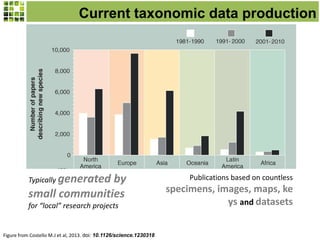
Publications based on countless
specimens, images, maps, ke
ys and datasets
Current taxonomic data production
Typically generated by
small communities
for “local” research projects
Figure from Costello M.J et al, 2013. doi: 10.1126/science.1230318
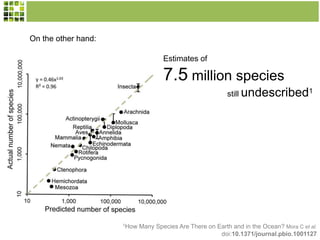
On the other hand:
Estimates of
7.5 million species
still undescribed1
1How Many Species Are There on Earth and in the Ocean? Mora C et al.
doi:10.1371/journal.pbio.1001127
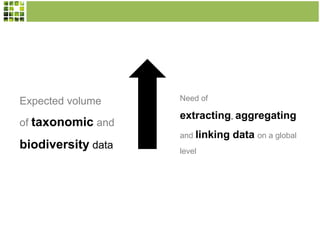
Expected volume
of taxonomic and
biodiversity data
Need of
extracting, aggregating
and linking data on a global
level
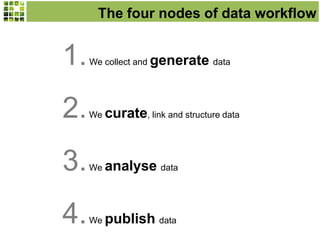
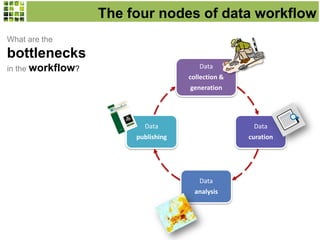
The four nodes of data workflow
1.We collect and generate data
2.We curate, link and structure data
3.We analyse data
4.We publish data
Data
curation
Data
analysis
Data
publishing
The four nodes of data workflow
Data
collection &
generation
What are the
bottlenecks
in the workflow?
Data
curation
Data
analysis
Data
publishing
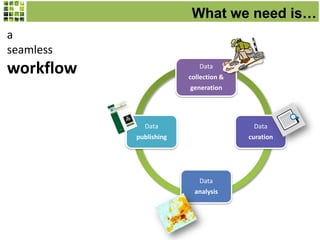
What we need is…
Data
collection &
generation
a
seamless
workflow
Cyndy Parr, Rob Guralnick, Nico Cellinese and Rod Page. TREE. doi:10.1016/j.tree.2011.11.001
This requires data, information & knowledge
to be…
• Digital
Not printed paper
• Openly accessible
Not behind barriers (e.g. paywalls)
• Linked-up
Not in silos
“Link together
evolutionary
data… by developing
analytical tools and
proper
documentation and
then use this framework to
conduct comparative
analyses, studies of
evolutionary process and
biodiversity analyses”
To achieve this…
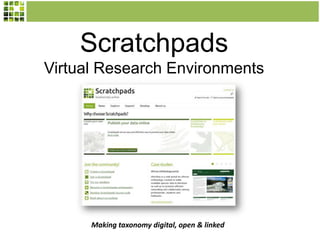
Scratchpads
Virtual Research Environments
Making taxonomy digital, open & linked
so…
what are
the
Scratchpads?
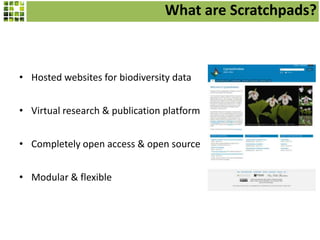
What are Scratchpads?
• Hosted websites for biodiversity data
• Virtual research & publication platform
• Completely open access & open source
• Modular & flexible
What are Scratchpads?
development of online research communities
facilitate
standardized environment of entering and curating data
through
sharing and interlinking
that allow
dissemination of research products
and
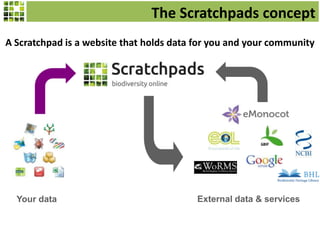
A Scratchpad is a website that holds data for you and your community
The Scratchpads concept
Your data External data & services
The Scratchpads concept
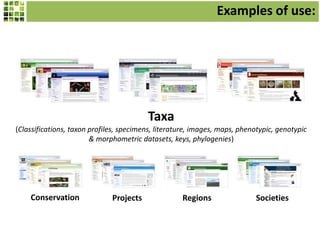
Taxa
(Classifications, taxon profiles, specimens, literature, images, maps, phenotypic, genotypic
& morphometric datasets, keys, phylogenies)
ProjectsConservation Regions Societies
Examples of use:
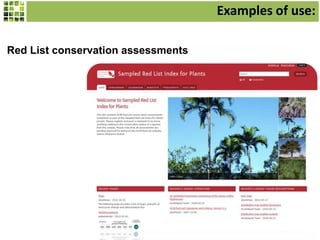
Red List conservation assessments
Examples of use:
Examples of use:
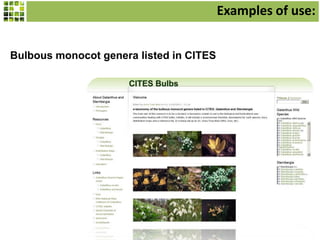
Bulbous monocot genera listed in CITES
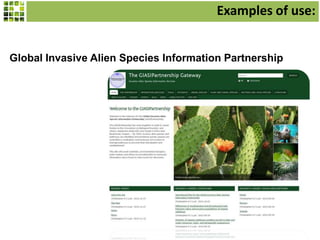
Global Invasive Alien Species Information Partnership
Examples of use:
Major integrated projects
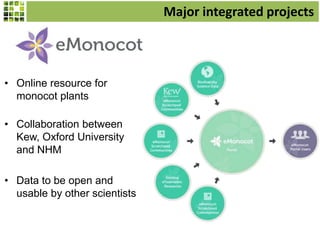
• Online resource for
monocot plants
• Collaboration between
Kew, Oxford University
and NHM
• Data to be open and
usable by other scientists
Major integrated projects
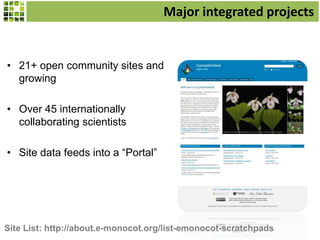
• 21+ open community sites and
growing
• Over 45 internationally
collaborating scientists
• Site data feeds into a “Portal”
Site List: http://about.e-monocot.org/list-emonocot-scratchpads
Major integrated projects
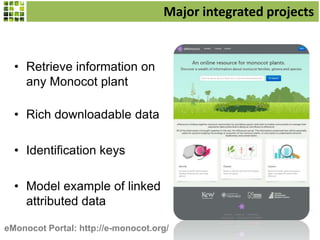
• Retrieve information on
any Monocot plant
• Rich downloadable data
• Identification keys
• Model example of linked
attributed data
eMonocot Portal: http://e-monocot.org/
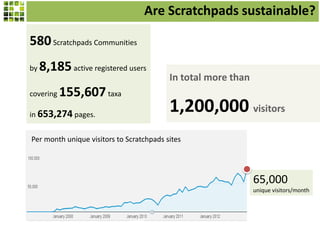
65,000
unique visitors/month
Per month unique visitors to Scratchpads sites
580Scratchpads Communities
by 8,185active registered users
covering 155,607taxa
in 653,274 pages.
Are Scratchpads sustainable?
In total more than
1,200,000 visitors
Are Scratchpads sustainable?
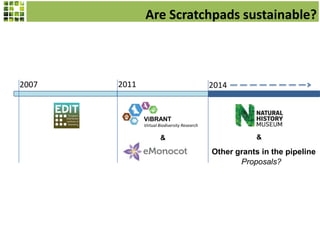
2007 2011 2014
ViBRANT
Virtual Biodiversity Research
& &
Other grants in the pipeline
Proposals?
the main
features
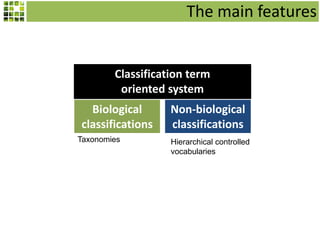
Classification term
oriented system
Biological
classifications
Non-biological
classifications
Taxonomies Hierarchical controlled
vocabularies
The main features
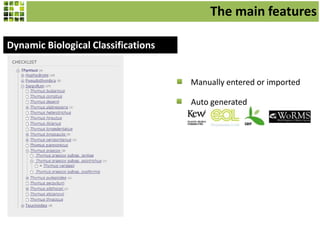
Dynamic Biological Classifications
Manually entered or imported
Auto generated
The main features
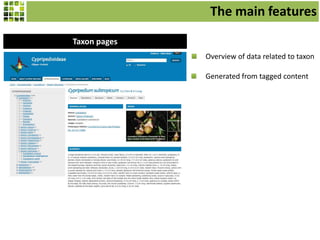
Taxon pages
Overview of data related to taxon
Generated from tagged content
The main features
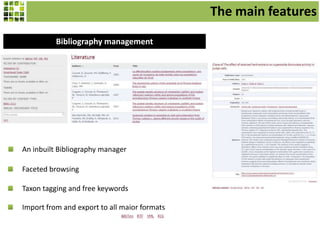
Bibliography management
Faceted browsing
An inbuilt Bibliography manager
Taxon tagging and free keywords
Import from and export to all major formats
The main features
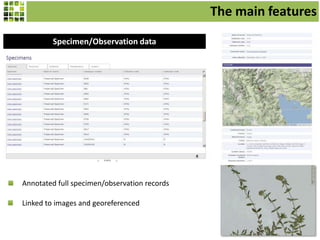
Specimen/Observation data
Linked to images and georeferenced
Annotated full specimen/observation records
The main features
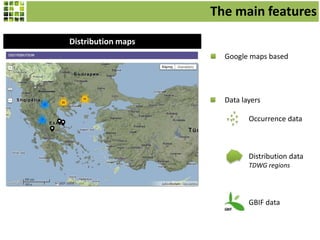
Distribution maps
Google maps based
Data layers
Occurrence data
Distribution data
TDWG regions
GBIF data
The main features
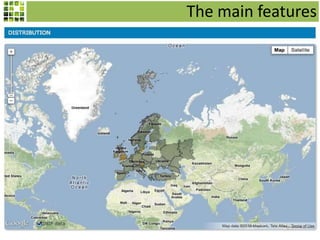
Example regional distribution
The main features
Character matrices – Key construction
Quantitative or qualitative characters
Auto generation of keys
Taxon based matrices
[Specimens based character matrices]
The main features
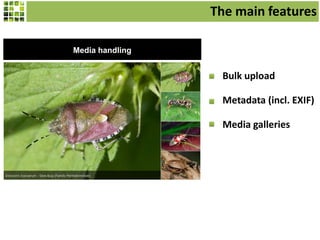
Media handling
Bulk upload
Metadata (incl. EXIF)
Media galleries
The main features
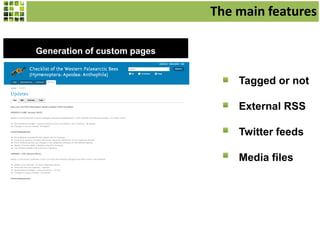
Generation of custom pages
Tagged or not
External RSS
Twitter feeds
Media files
The main features
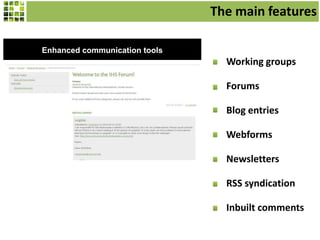
Working groups
Forums
Blog entries
Webforms
Newsletters
RSS syndication
Inbuilt comments
Enhanced communication tools
The main features
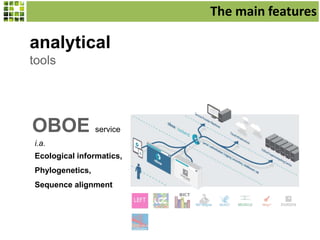
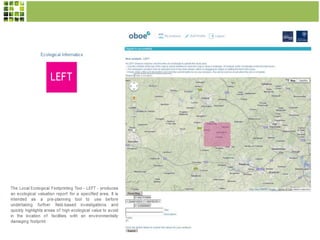
analytical
tools
OBOE service
i.a.
Ecological informatics,
Phylogenetics,
Sequence alignment
The main features
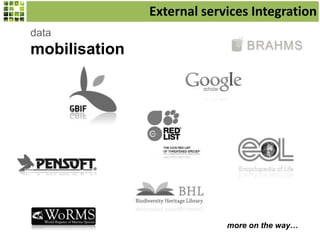
data
mobilisation
more on the way…
External services Integration
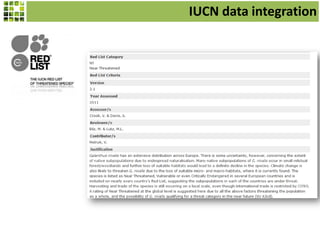
IUCN data integration
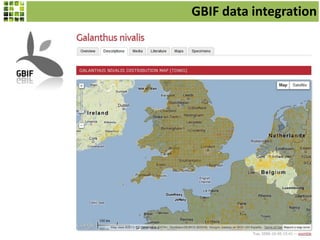
GBIF data integration
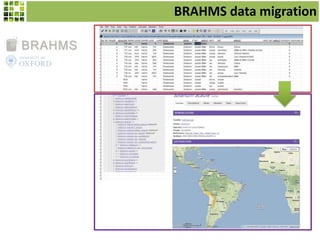
BRAHMS data migration
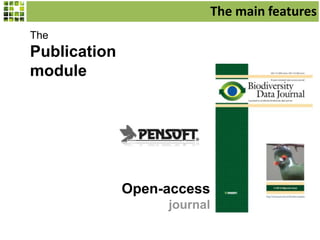
The
Publication
module
Open-access
journal
The main features
How do
Scratchpads
and
BDJ
interact?
Allow submission of
datasets
for publication
without
reformatting and restructuring
Working in a single environment
based on standardised XML schema
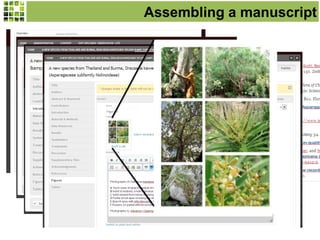
Assembling a manuscript
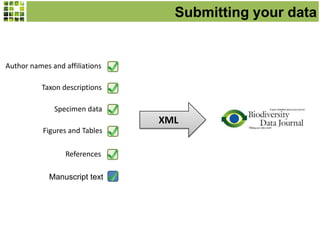
XML
Figures and Tables
References
Manuscript text
Submitting your data
Author names and affiliations
Taxon descriptions
Specimen data
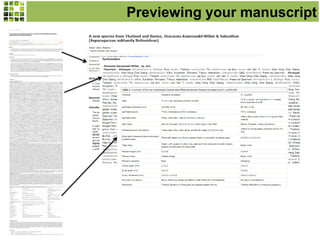
Previewing your manuscript
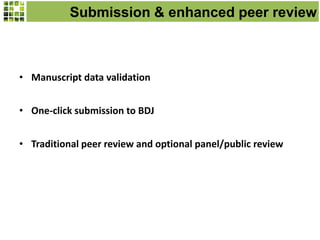
Submission & enhanced peer review
• Manuscript data validation
• One-click submission to BDJ
• Traditional peer review and optional panel/public review
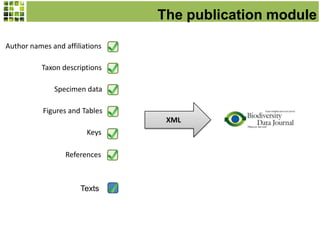
XML
Figures and Tables
Keys
References
Texts
The publication module
Author names and affiliations
Taxon descriptions
Specimen data
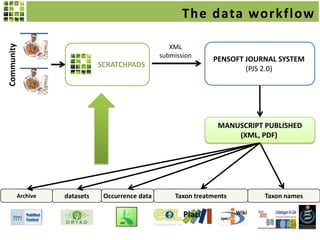
The data workflow
MANUSCRIPT PUBLISHED
(XML, PDF)
PENSOFT JOURNAL SYSTEM
(PJS 2.0)
XML
submission
SCRATCHPADS
Community
Taxon namesOccurrence datadatasetsArchive Taxon treatments
Plazi Wiki
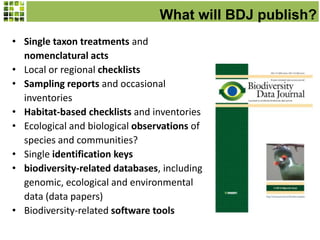
What will BDJ publish?
• Single taxon treatments and
nomenclatural acts
• Local or regional checklists
• Sampling reports and occasional
inventories
• Habitat-based checklists and inventories
• Ecological and biological observations of
species and communities?
• Single identification keys
• biodiversity-related databases, including
genomic, ecological and environmental
data (data papers)
• Biodiversity-related software tools
Scratchpads are an integrated system to
Enter, Curate, Mark-up, Link and Publish data
taxonomic workflow
in a single virtual environment
Scratchpads technical development
- Simon Rycroft, Ben Scott, Ed Baker, Alice Heaton & Katherine Bouton
Scratchpads outreach
- Laurence Livermore, Isa van deVelde & Dimitris Koureas
e-Monocot
- Paul Wilkin & the Kew team, Charles Godfray & the Oxford team
ViBRANT
- Vince Smith, Dave Roberts & Lucy Reeve
Pensoft
- Lyobomir Penev and the Pensoft team
Our 8000 users
Acknowledgements
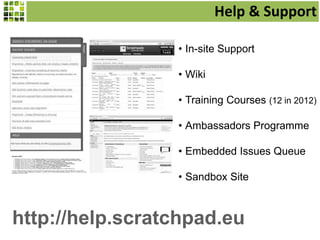
Help & Support
• In-site Support
• Wiki
• Training Courses (12 in 2012)
• Ambassadors Programme
• Embedded Issues Queue
• Sandbox Site
http://help.scratchpad.eu
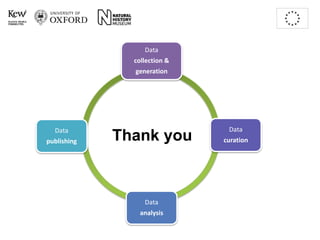
Thank you
Data
curation
Data
analysis
Data
publishing
Data
collection &
generation
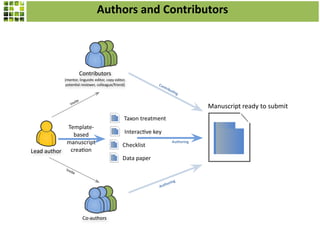
Authors and Contributors
Lead author
Contributors
(mentor, linguis c editor, copy editor,
poten al reviewer, colleague/friend)
Co-authors
Invite
Invite
Template-
based
manuscript
crea on
Taxon treatment
Interac ve key
Checklist
Data paper
Authoring
Authoring
Contribu
ng
Manuscript ready to submit
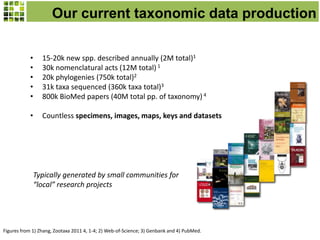
• 15-20k new spp. described annually (2M total)1
• 30k nomenclatural acts (12M total) 1
• 20k phylogenies (750k total)2
• 31k taxa sequenced (360k taxa total)3
• 800k BioMed papers (40M total pp. of taxonomy) 4
• Countless specimens, images, maps, keys and datasets
Our current taxonomic data production
Typically generated by small communities for
“local” research projects
Figures from 1) Zhang, Zootaxa 2011 4, 1-4; 2) Web-of-Science; 3) Genbank and 4) PubMed.

Scratchpads introductory presentation 45mins

Editor's Notes

  • #11 The Scratchpads platform is being developed for the last 5 years under this framework. To provide researchers with the necessary tools to make taxonomy digital, open and linked!To facilitate the development of virtual research environments
  • #22 In the project there are more than 21 eMonocot Scratchpads which have over 45 international collaborating scientists.The eMonocot Scratchpads cover over 15 families with more planned with additional workshops which will take place this year at Monocots V in New York.The Scratchpad to eMonocot Portal link is now active and available for the public to browse all the Scratchpad data combined with other external monocot resources.
  • #23 All of the information is brought together in the eMonocot portal. The information presented here will be especially useful for anyone studying the ecology or evolution of the monocot plants, or who wants to understand monocot biodiversity and conservation.The portal provides taxon descriptions, distribution maps, taxonomies and keys, all of which are downloadable and attributed to the author and contributing site.
  • #29 Intuitive professional looking layout.Easy to compile taxon pages without any knowledge of web design.Taxonomy provides the crucial backbone, linking content together and is easily updateable.On this page you can see the classification browser in the side bar, detailed nomenclatural information, images and a diagnostic summary.
  • #50 Prior to submission all data are validated to ensure there are no important missing fields.Once you have finished your manuscript there is a simple one-click submission process where all your specified authors and contributors are given access to the article in the Pensoft Journal System and will be updated on the review process.