LEARNING INTENTIONS
• Describe events at the Battle of Falkirk
• Explain why the Scots lost the battle
• Describe events after the Battle of Falkirk
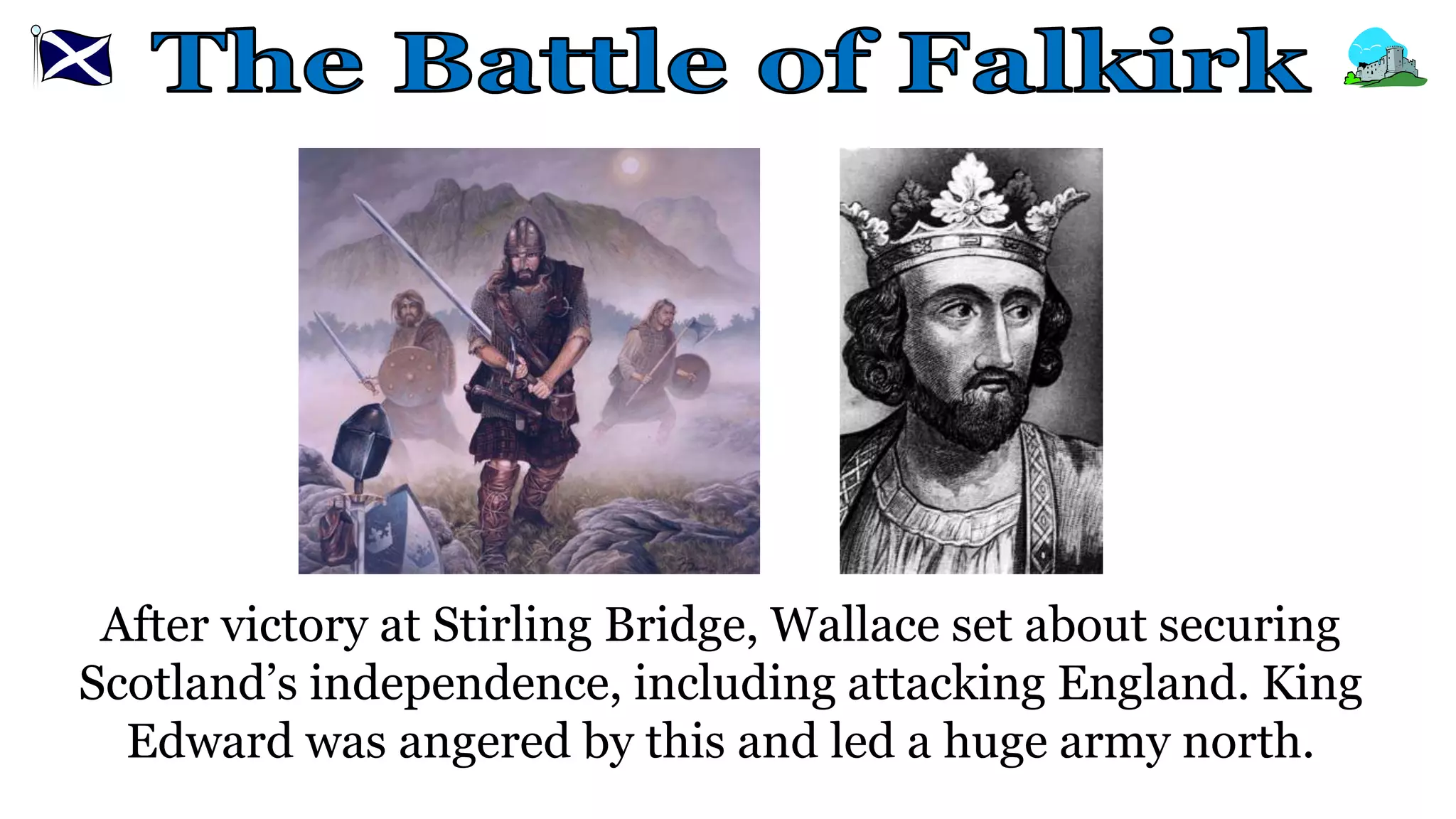
After victory at Stirling Bridge, Wallace set about securing
Scotland’s independence, including attacking England. King
Edward was angered by this and led a huge army north.
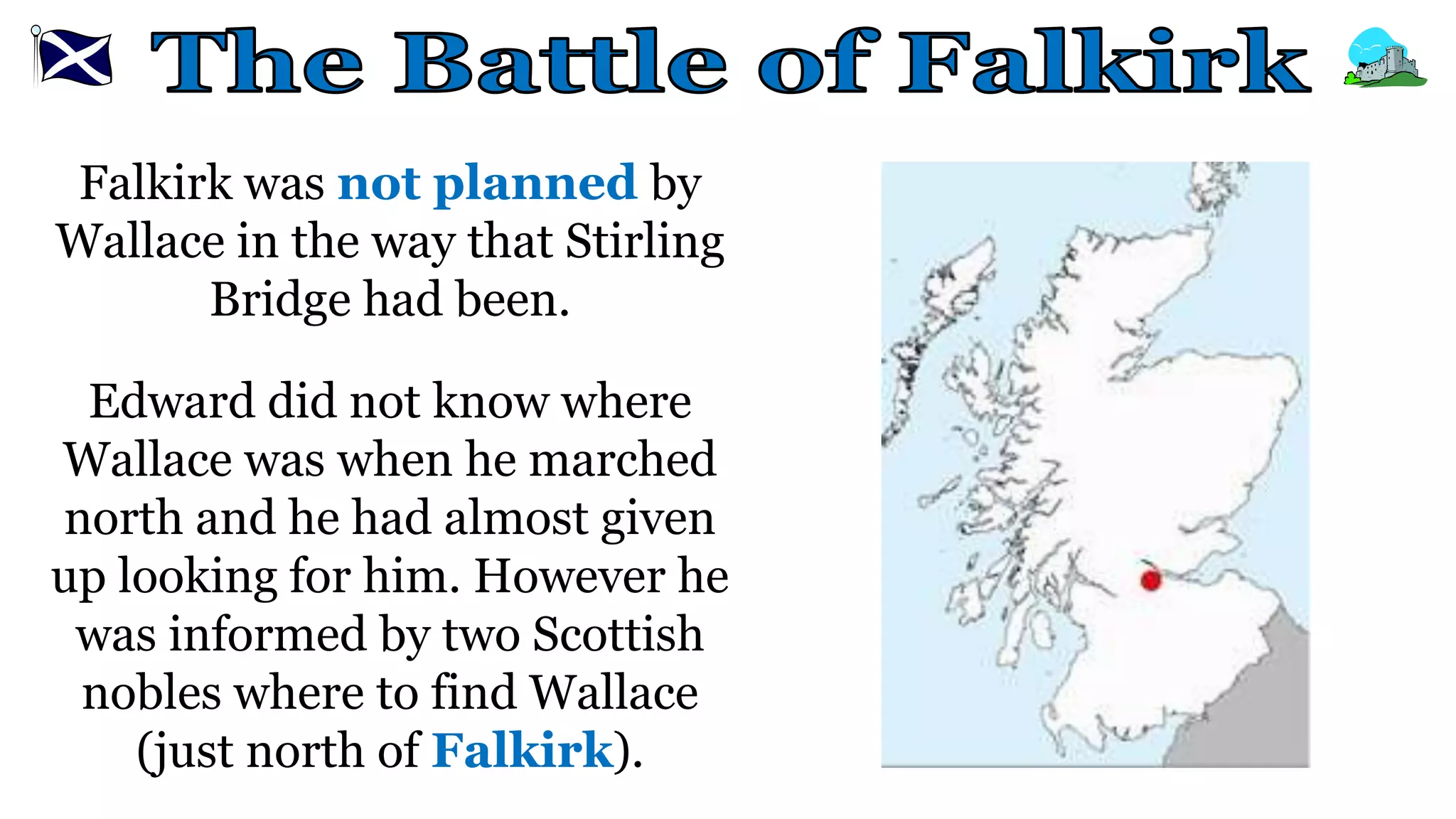
Falkirk was not planned by
Wallace in the way that Stirling
Bridge had been.
Edward did not know where
Wallace was when he marched
north and he had almost given
up looking for him. However he
was informed by two Scottish
nobles where to find Wallace
(just north of Falkirk).
Wallace’s plan had been to wait
until the English army headed
towards Edinburgh to get
more supplies.
Wallace hoped to attack small
groups of English soldiers,
including their rearguard. He
was surprised by Edward’s
decision to attack in July 1298.
The English army at Falkirk
was very different from
Stirling Bridge.
It was led by their king,
Edward, a very experienced
military leader. It was also
much larger – up to 2000
cavalry and also up to 12,000
soldiers (many with longbows).
The Scottish army was also
stronger than at Stirling
Bridge, although not as large as
Wallace had hoped.
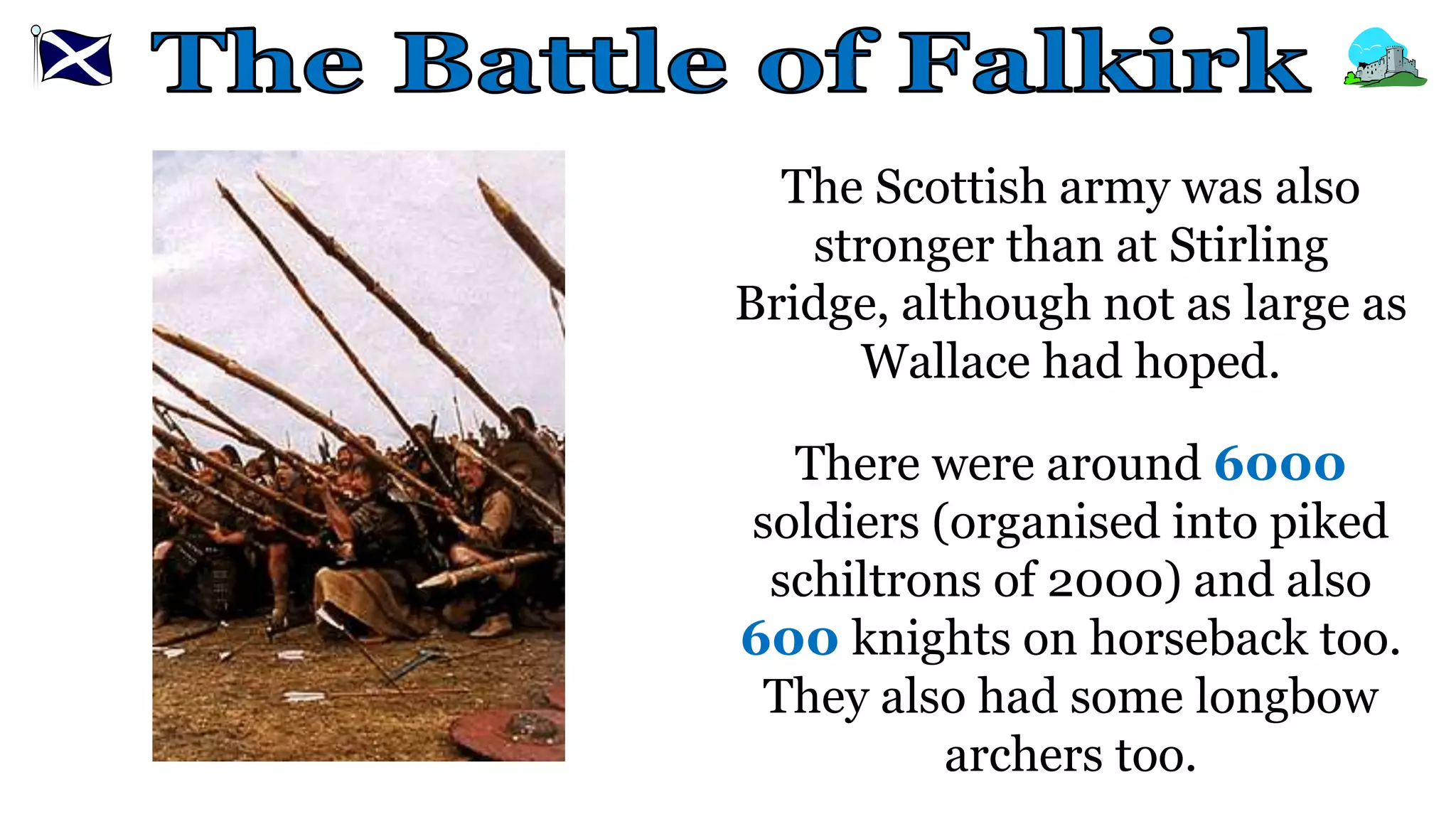
There were around 6000
soldiers (organised into piked
schiltrons of 2000) and also
600 knights on horseback too.
They also had some longbow
archers too.
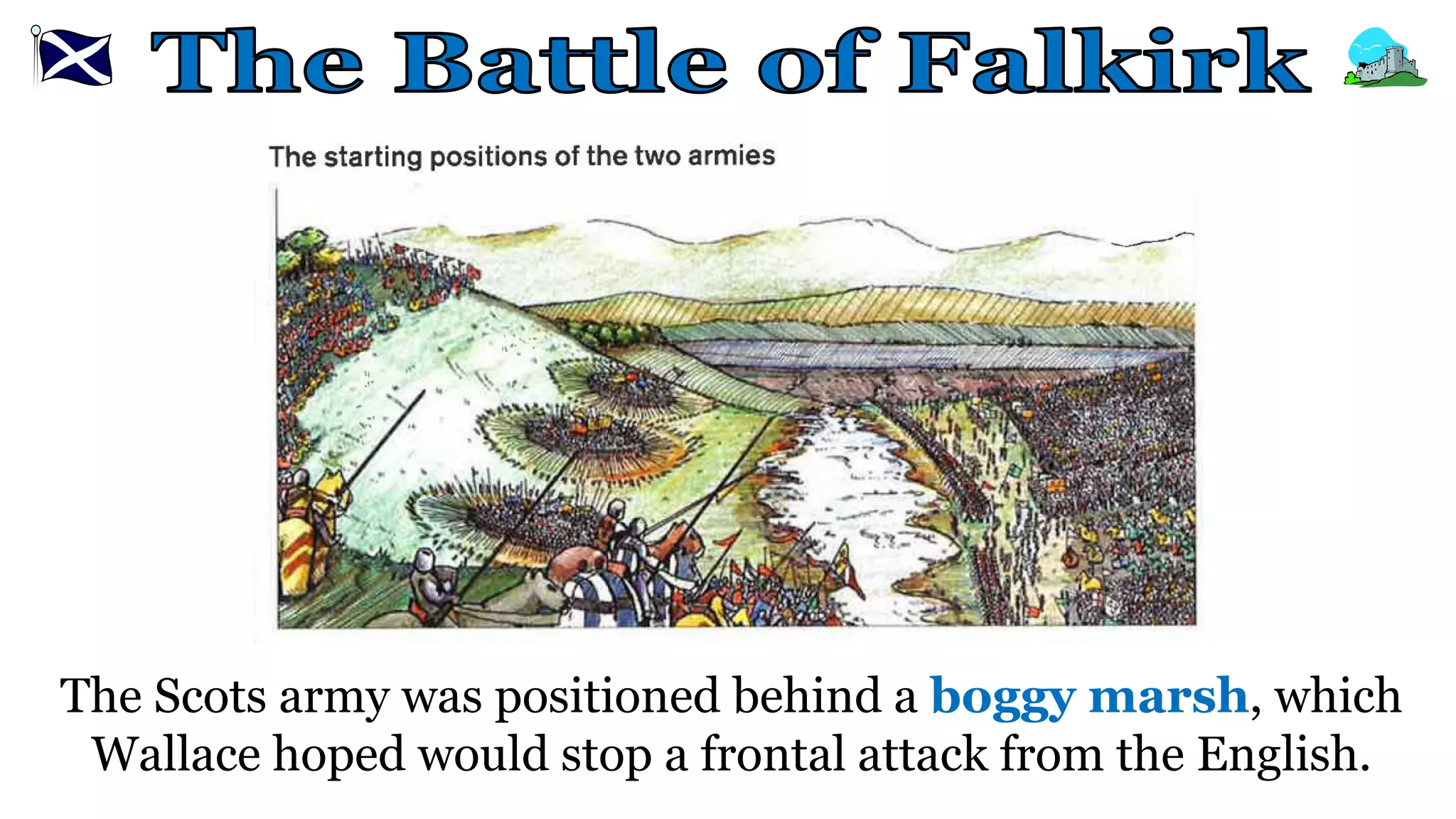
The Scots army was positioned behind a boggy marsh, which
Wallace hoped would stop a frontal attack from the English.
The English cavalry attacked the
Scots’ two flanks, allowing
them to avoid the boggy area.
The strength of the English
attack drove the Scots cavalry
from the battlefield.
Scotland’s schiltrons were now
undefended and at the mercy
of English archer attacks.
After the English archers
attacked, their foot soldiers did
the same, with the Scots either
being killed or fleeing (heading
towards the Callendar Wood).
Wallace and his commanders
also fled, burning Stirling Town
as did so, to try to stop it falling
into English hands. They found
safety in the Tor Wood.
There were many reasons for
the Scots’ defeat:
• Some claim the cavalry was
to blame, although most
accounts suggest they fought
bravely against a bigger army
• The timing was said to be a
problem; many believe the
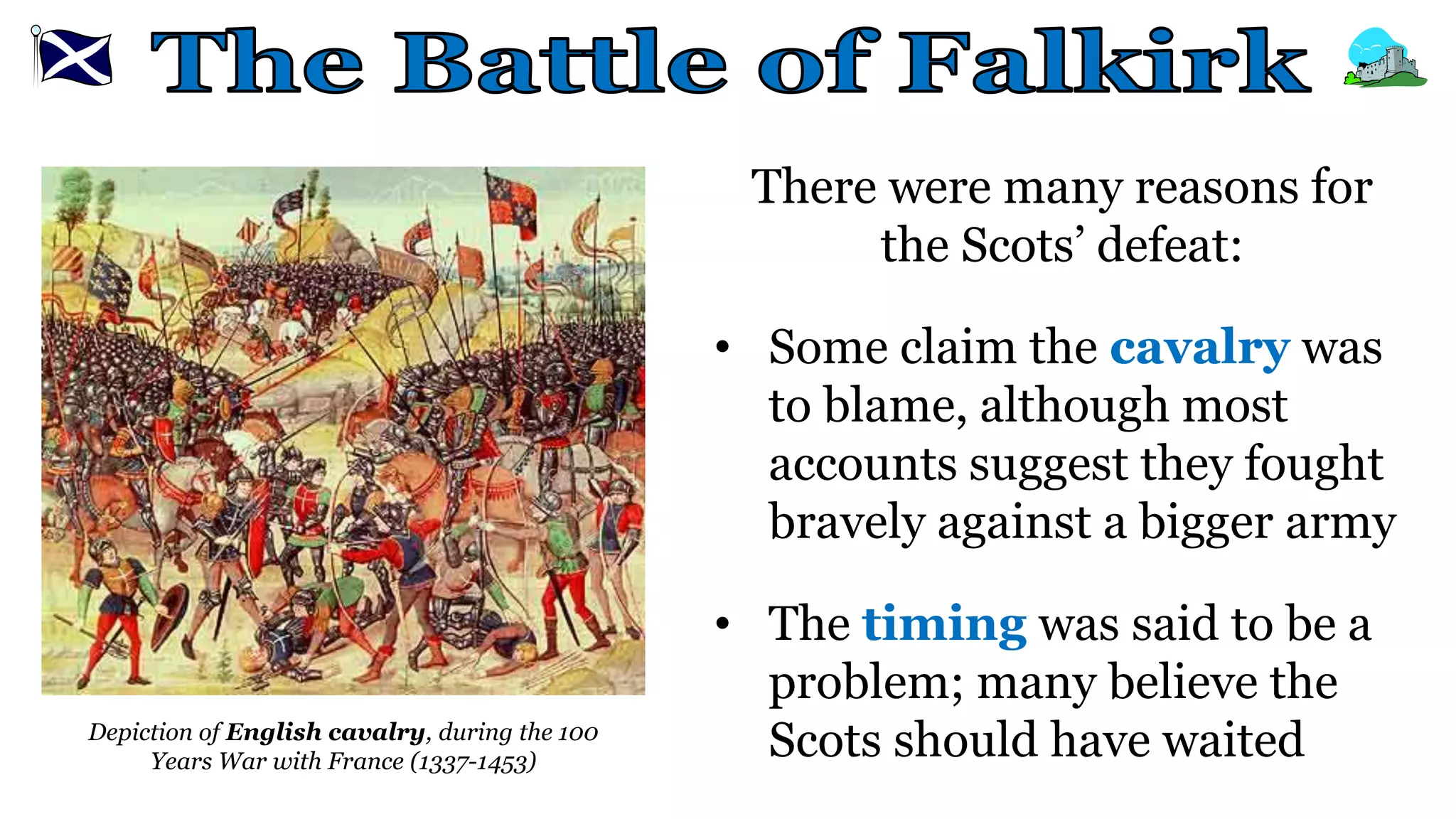
Scots should have waitedDepiction of English cavalry, during the 100
Years War with France (1337-1453)
• The location also hurt the
Scots. It meant the English
did not attack from the front
(which was the Scots’ best
defence) and that the
schiltrons could not move.
• The use of schiltrons was a
problem because they were
not mobile enough, so could
not attack the English
Wallace was also blamed for
defeat, with many saying his lack
of military experience meant the
Scots had poor tactics.
Shortly after the battle, Wallace
resigned his Guardianship of
Scotland. Two of the replacement
Guardians were John Comyn
and Robert the Bruce.
In the years after Falkirk, the
Scots found other ways to
oppose English rule.
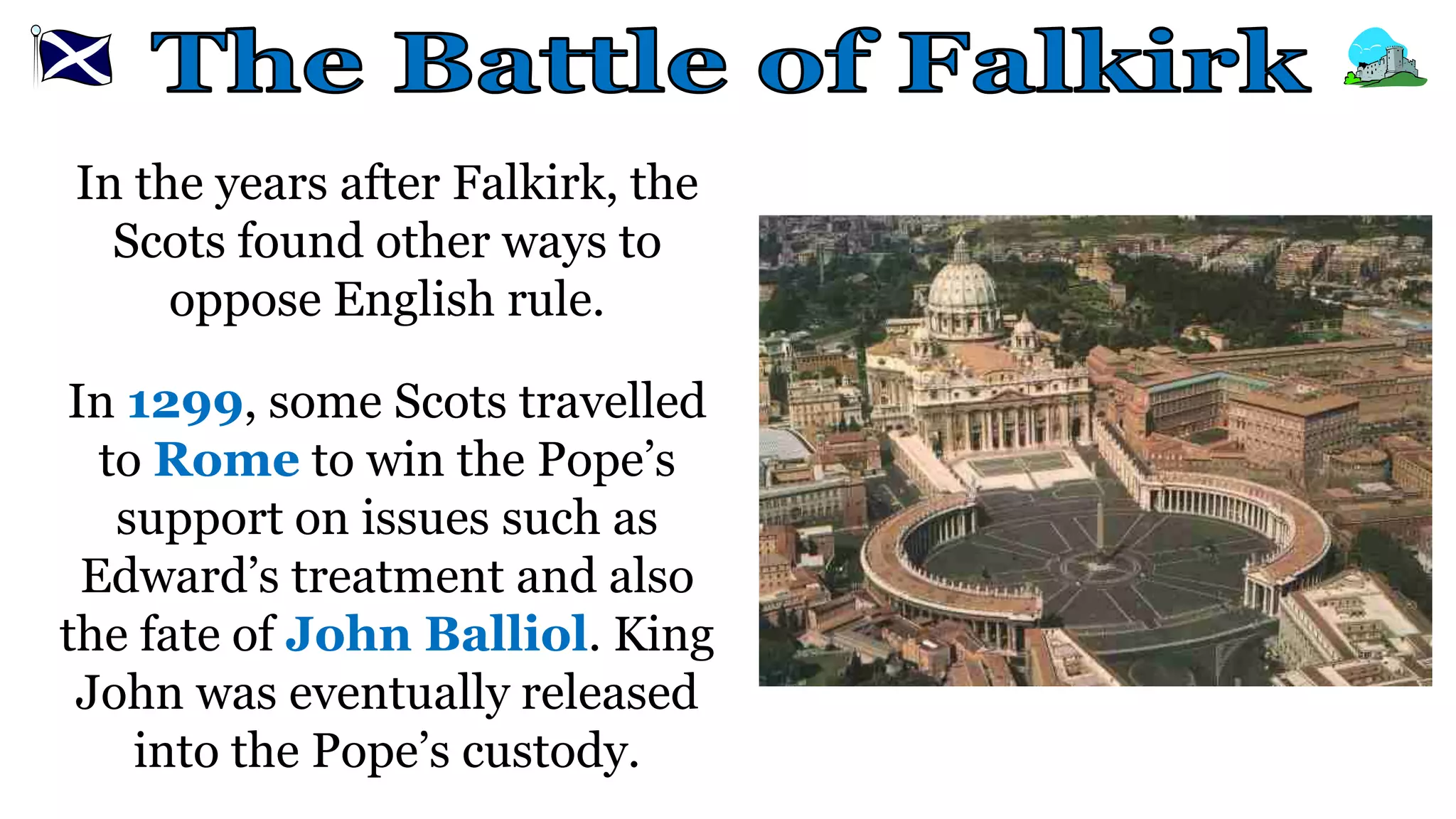
In 1299, some Scots travelled
to Rome to win the Pope’s
support on issues such as
Edward’s treatment and also
the fate of John Balliol. King
John was eventually released
into the Pope’s custody.
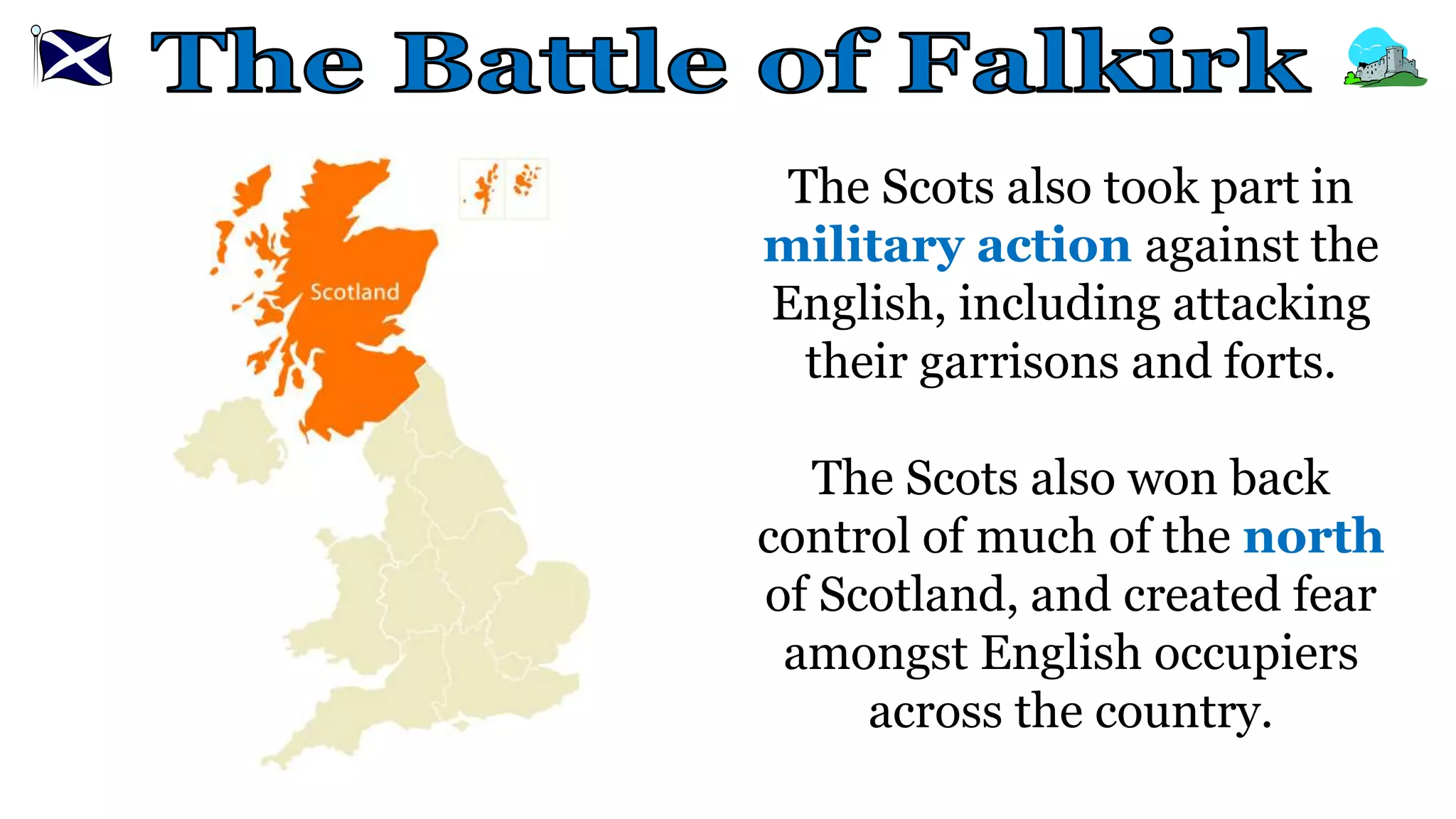
The Scots also took part in
military action against the
English, including attacking
their garrisons and forts.
The Scots also won back
control of much of the north
of Scotland, and created fear
amongst English occupiers
across the country.
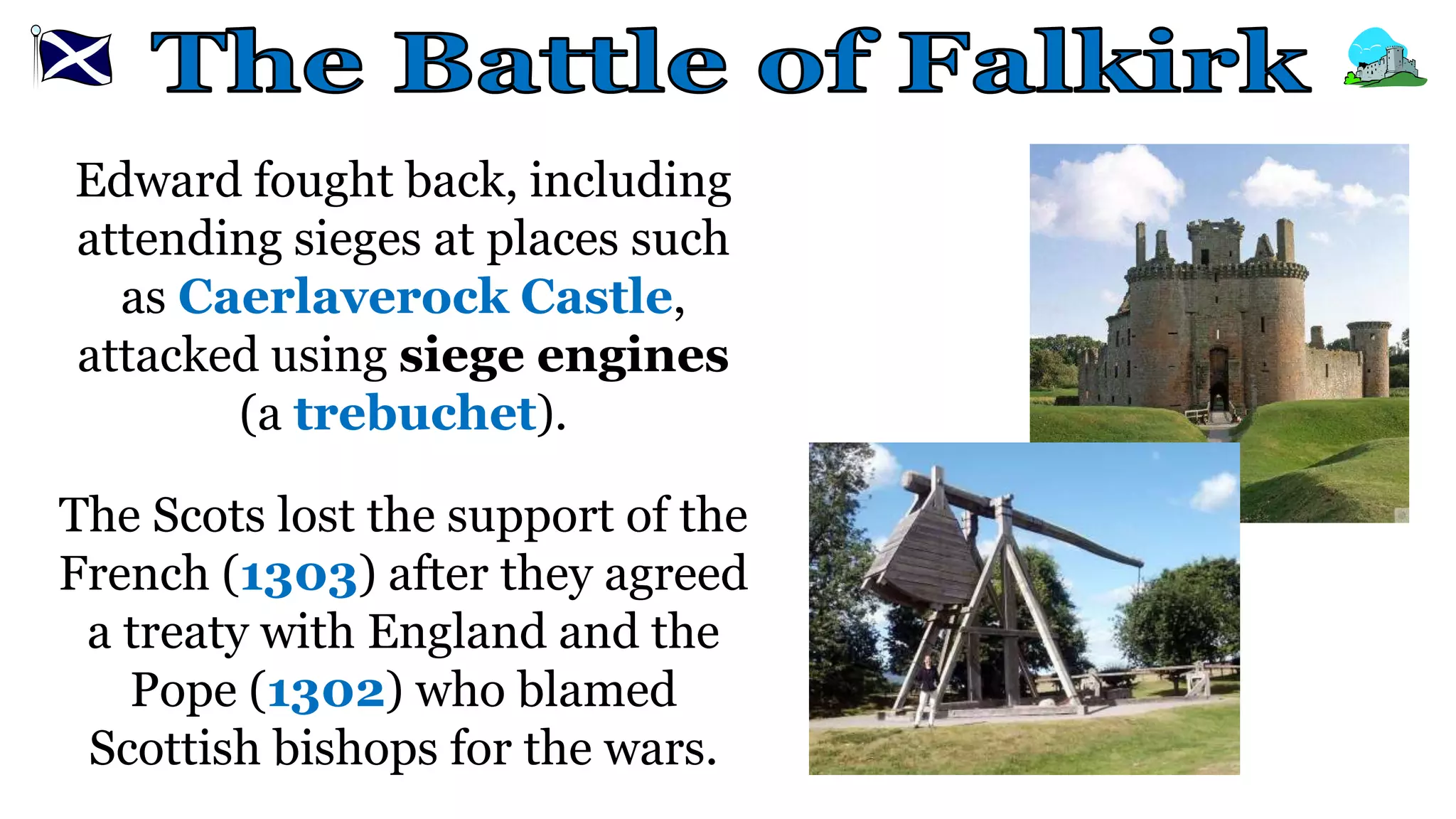
Edward fought back, including
attending sieges at places such
as Caerlaverock Castle,
attacked using siege engines
(a trebuchet).
The Scots lost the support of the
French (1303) after they agreed
a treaty with England and the
Pope (1302) who blamed
Scottish bishops for the wars.
Edward’s final invasion in 1303-
1304 saw him take control of
castles and towns across the
country, including Stirling
(attacked using the Warwolf
trebuchet).
Edward offered amnesty to
various Scottish leaders, allowing
them to keep their lands and also
promised to respect Scottish laws.
After 1297, little is known of
Wallace. It is suggested he
travelled to France and
Rome to try to win support
for Scotland’s case.
He returned to Scotland in
1303 but was hunted by the
English. Unlike other
Scottish leaders, he was not
offered amnesty.
In August 1305, Wallace was
betrayed by Sir John Menteith. He
was captured and taken to London
for trial.
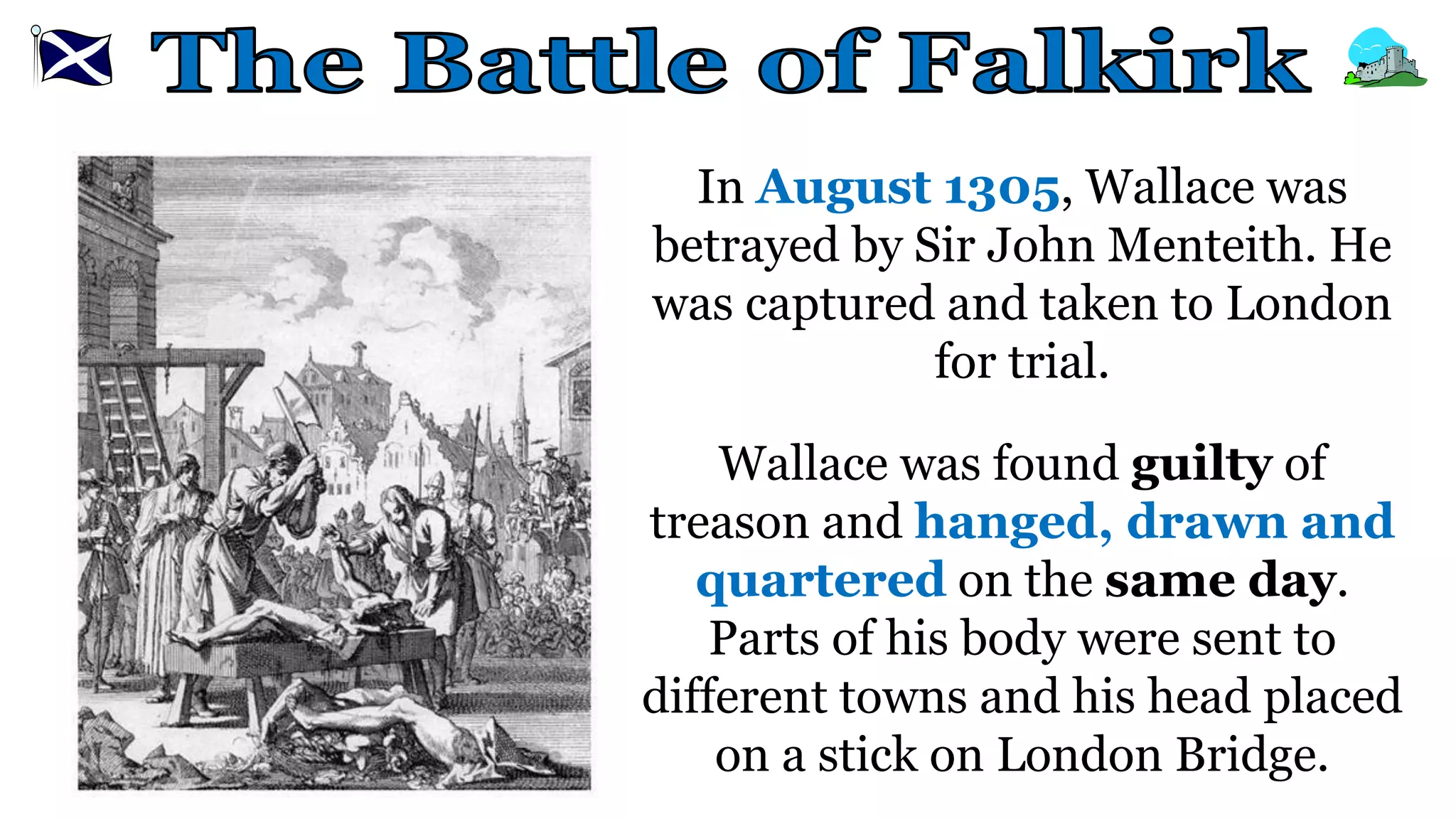
Wallace was found guilty of
treason and hanged, drawn and
quartered on the same day.
Parts of his body were sent to
different towns and his head placed
on a stick on London Bridge.

Scottish Wars of Independence - battle of falkirk and continuing resistance

  • 2.
    LEARNING INTENTIONS • Describeevents at the Battle of Falkirk • Explain why the Scots lost the battle • Describe events after the Battle of Falkirk
  • 3.
    After victory atStirling Bridge, Wallace set about securing Scotland’s independence, including attacking England. King Edward was angered by this and led a huge army north.
  • 4.
    Falkirk was notplanned by Wallace in the way that Stirling Bridge had been. Edward did not know where Wallace was when he marched north and he had almost given up looking for him. However he was informed by two Scottish nobles where to find Wallace (just north of Falkirk).
  • 5.
    Wallace’s plan hadbeen to wait until the English army headed towards Edinburgh to get more supplies. Wallace hoped to attack small groups of English soldiers, including their rearguard. He was surprised by Edward’s decision to attack in July 1298.
  • 6.
    The English armyat Falkirk was very different from Stirling Bridge. It was led by their king, Edward, a very experienced military leader. It was also much larger – up to 2000 cavalry and also up to 12,000 soldiers (many with longbows).
  • 7.
    The Scottish armywas also stronger than at Stirling Bridge, although not as large as Wallace had hoped. There were around 6000 soldiers (organised into piked schiltrons of 2000) and also 600 knights on horseback too. They also had some longbow archers too.
  • 8.
    The Scots armywas positioned behind a boggy marsh, which Wallace hoped would stop a frontal attack from the English.
  • 9.
    The English cavalryattacked the Scots’ two flanks, allowing them to avoid the boggy area. The strength of the English attack drove the Scots cavalry from the battlefield. Scotland’s schiltrons were now undefended and at the mercy of English archer attacks.
  • 10.
    After the Englisharchers attacked, their foot soldiers did the same, with the Scots either being killed or fleeing (heading towards the Callendar Wood). Wallace and his commanders also fled, burning Stirling Town as did so, to try to stop it falling into English hands. They found safety in the Tor Wood.
  • 11.
    There were manyreasons for the Scots’ defeat: • Some claim the cavalry was to blame, although most accounts suggest they fought bravely against a bigger army • The timing was said to be a problem; many believe the Scots should have waitedDepiction of English cavalry, during the 100 Years War with France (1337-1453)
  • 12.
    • The locationalso hurt the Scots. It meant the English did not attack from the front (which was the Scots’ best defence) and that the schiltrons could not move. • The use of schiltrons was a problem because they were not mobile enough, so could not attack the English
  • 13.
    Wallace was alsoblamed for defeat, with many saying his lack of military experience meant the Scots had poor tactics. Shortly after the battle, Wallace resigned his Guardianship of Scotland. Two of the replacement Guardians were John Comyn and Robert the Bruce.
  • 14.
    In the yearsafter Falkirk, the Scots found other ways to oppose English rule. In 1299, some Scots travelled to Rome to win the Pope’s support on issues such as Edward’s treatment and also the fate of John Balliol. King John was eventually released into the Pope’s custody.
  • 15.
    The Scots alsotook part in military action against the English, including attacking their garrisons and forts. The Scots also won back control of much of the north of Scotland, and created fear amongst English occupiers across the country.
  • 16.
    Edward fought back,including attending sieges at places such as Caerlaverock Castle, attacked using siege engines (a trebuchet). The Scots lost the support of the French (1303) after they agreed a treaty with England and the Pope (1302) who blamed Scottish bishops for the wars.
  • 17.
    Edward’s final invasionin 1303- 1304 saw him take control of castles and towns across the country, including Stirling (attacked using the Warwolf trebuchet). Edward offered amnesty to various Scottish leaders, allowing them to keep their lands and also promised to respect Scottish laws.
  • 18.
    After 1297, littleis known of Wallace. It is suggested he travelled to France and Rome to try to win support for Scotland’s case. He returned to Scotland in 1303 but was hunted by the English. Unlike other Scottish leaders, he was not offered amnesty.
  • 19.
    In August 1305,Wallace was betrayed by Sir John Menteith. He was captured and taken to London for trial. Wallace was found guilty of treason and hanged, drawn and quartered on the same day. Parts of his body were sent to different towns and his head placed on a stick on London Bridge.