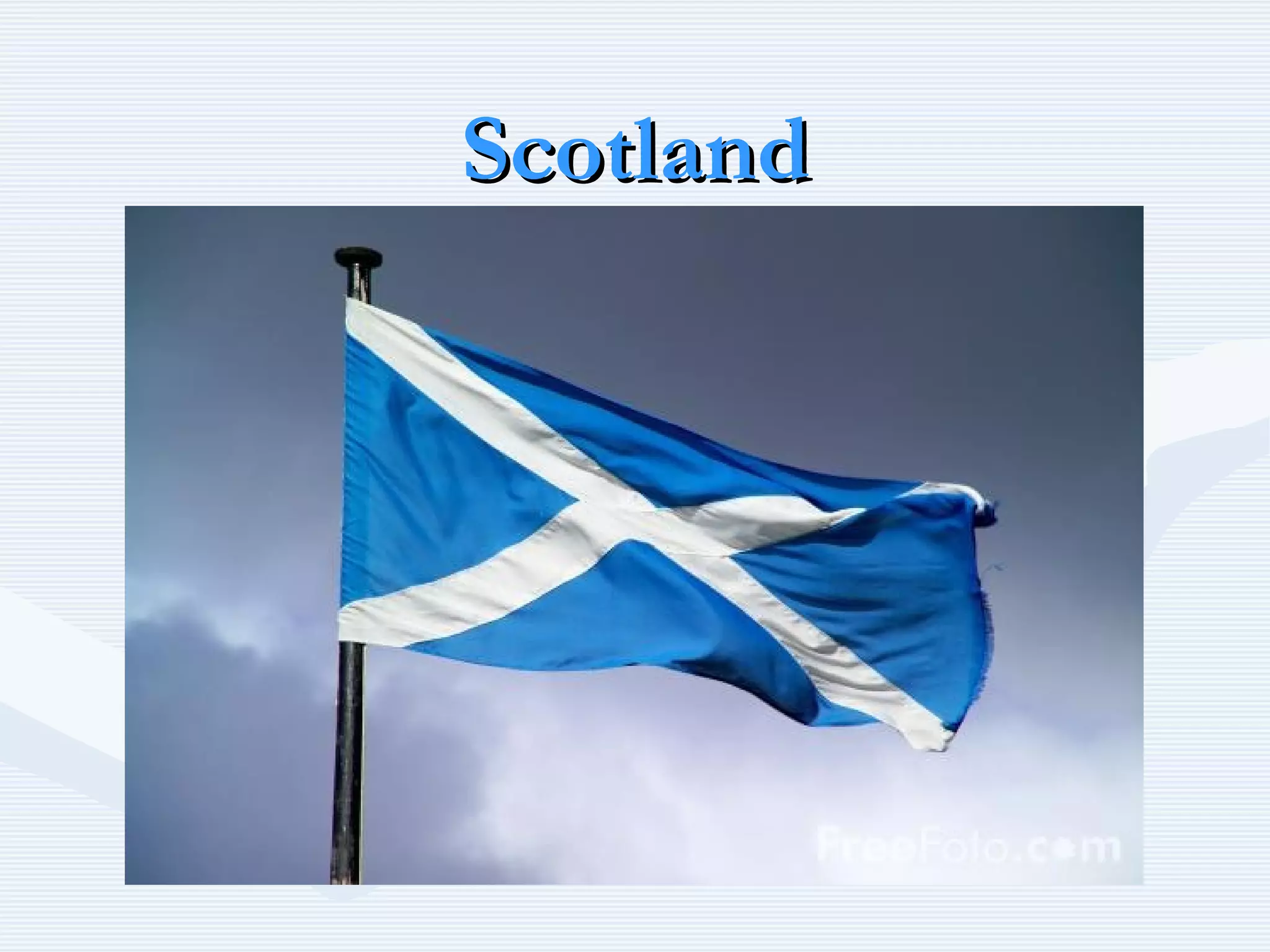
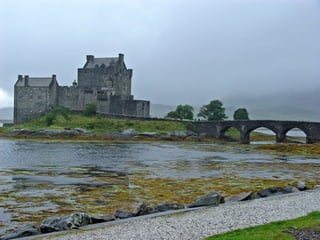
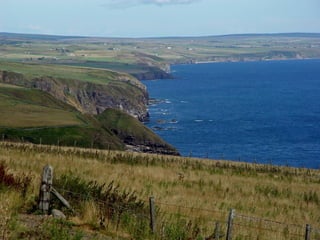
Scotland
Geography of Scotland

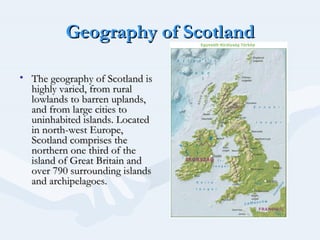
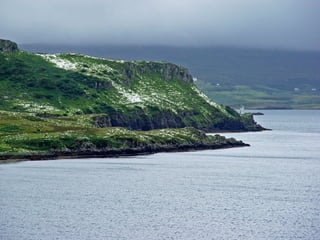
• The geography of Scotland is
  highly varied, from rural
  lowlands to barren uplands,
  and from large cities to
  uninhabited islands. Located
  in north-west Europe,
  Scotland comprises the
  northern one third of the
  island of Great Britain and
  over 790 surrounding islands
  and archipelagoes.
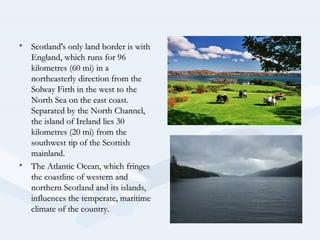
• Scotland's only land border is with
  England, which runs for 96
  kilometres (60 mi) in a
  northeasterly direction from the
  Solway Firth in the west to the
  North Sea on the east coast.
  Separated by the North Channel,
  the island of Ireland lies 30
  kilometres (20 mi) from the
  southwest tip of the Scottish
  mainland.
• The Atlantic Ocean, which fringes
  the coastline of western and
  northern Scotland and its islands,
  influences the temperate, maritime
  climate of the country.
• Landscape                       • Mountains

                                  • Scotland's mountains are
• Scotland's landscape contains     amongst its most defining
  dramtic variety, ranging from     natural features, particularly
  towering peaks - including        the Munros, the peaks higher
  the highest mountain in the       than 3000 feet (914.4 metres)
  UK - in the north to lush and     which draw walkers and
  gently undulating countryside     climbers from throughout
  in the south.                     the UK and Europe.
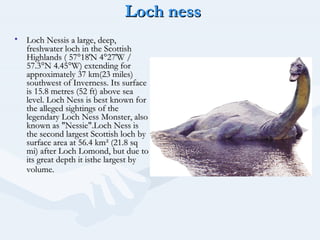
Loch ness
• Loch Nessis a large, deep,
  freshwater loch in the Scottish
  Highlands ( 57°18′N 4°27′W /
  57.3°N 4.45°W) extending for
  approximately 37 km(23 miles)
  southwest of Inverness. Its surface
  is 15.8 metres (52 ft) above sea
  level. Loch Ness is best known for
  the alleged sightings of the
  legendary Loch Ness Monster, also
  known as "Nessie".Loch Ness is
  the second largest Scottish loch by
  surface area at 56.4 km² (21.8 sq
  mi) after Loch Lomond, but due to
  its great depth it isthe largest by
  volume.
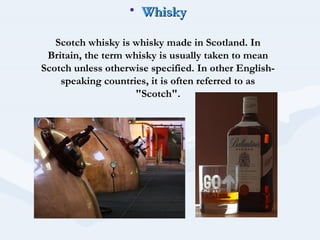
• Whisky

   Scotch whisky is whisky made in Scotland. In
 Britain, the term whisky is usually taken to mean
Scotch unless otherwise specified. In other English-
    speaking countries, it is often referred to as
                     "Scotch".
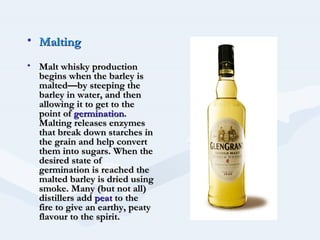
• Malting
• Malt whisky production
  begins when the barley is
  malted—by steeping the
  barley in water, and then
  allowing it to get to the
  point of germination.
  Malting releases enzymes
  that break down starches in
  the grain and help convert
  them into sugars. When the
  desired state of
  germination is reached the
  malted barley is dried using
  smoke. Many (but not all)
  distillers add peat to the
  fire to give an earthy, peaty
  flavour to the spirit.
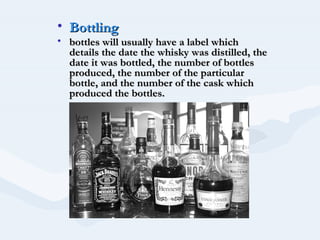
• Bottling
• bottles will usually have a label which
  details the date the whisky was distilled, the
  date it was bottled, the number of bottles
  produced, the number of the particular
  bottle, and the number of the cask which
  produced the bottles.
Bagpipe
• Bagpipes are a class of
  musical instrument,
  aerophones using
  enclosed reeds fed from
  a constant reservoir of air
  in the form of a bag.
  Though the Scottish
  Great Highland Bagpipe
  and Irish uilleann pipes
  have the greatest
  international visibility,
  bagpipes have historically
  been found throughout
  Europe, and into
  Northern Africa, the
  Persian Gulf, and the
  Caucasus.
• The term is equally correct in the singular or plural, although in
  the English language, pipers most commonly talk of "pipes.„

• Evidence of pre-medieval bagpipes is uncertain, but several
  textual and visual clues may possibly indicate ancient forms of
  bagpipes. A Hittite slab dating from about 1,300 BC at Eyuk
  depicts a possible representation of a bagpipe. Similarly, a
  possible textual reference to a bagpipe is found in 425 BC, in the
  play The Acharnians by the Greek playwright
  Aristophanes:Several hundred years later, Suetonius described the
  Roman Emperor Nero as a player of the tibia utricularis.[3]. Dio
  Chrysostom, who also flourished in the first century, wrote about
  a contemporary sovereign (possibly Nero) who could play a pipe
  ("aulein") with his mouth as well as with his "armpit". [4] From
  this account, some believe that the tibia utricularis was a bagpipe.
Scotland
Scotland

Scotland

  • 1.
  • 2.
    Geography of Scotland •The geography of Scotland is highly varied, from rural lowlands to barren uplands, and from large cities to uninhabited islands. Located in north-west Europe, Scotland comprises the northern one third of the island of Great Britain and over 790 surrounding islands and archipelagoes.
  • 3.
    • Scotland's onlyland border is with England, which runs for 96 kilometres (60 mi) in a northeasterly direction from the Solway Firth in the west to the North Sea on the east coast. Separated by the North Channel, the island of Ireland lies 30 kilometres (20 mi) from the southwest tip of the Scottish mainland. • The Atlantic Ocean, which fringes the coastline of western and northern Scotland and its islands, influences the temperate, maritime climate of the country.
  • 6.
    • Landscape • Mountains • Scotland's mountains are • Scotland's landscape contains amongst its most defining dramtic variety, ranging from natural features, particularly towering peaks - including the Munros, the peaks higher the highest mountain in the than 3000 feet (914.4 metres) UK - in the north to lush and which draw walkers and gently undulating countryside climbers from throughout in the south. the UK and Europe.
  • 8.
    Loch ness • LochNessis a large, deep, freshwater loch in the Scottish Highlands ( 57°18′N 4°27′W / 57.3°N 4.45°W) extending for approximately 37 km(23 miles) southwest of Inverness. Its surface is 15.8 metres (52 ft) above sea level. Loch Ness is best known for the alleged sightings of the legendary Loch Ness Monster, also known as "Nessie".Loch Ness is the second largest Scottish loch by surface area at 56.4 km² (21.8 sq mi) after Loch Lomond, but due to its great depth it isthe largest by volume.
  • 9.
    • Whisky Scotch whisky is whisky made in Scotland. In Britain, the term whisky is usually taken to mean Scotch unless otherwise specified. In other English- speaking countries, it is often referred to as "Scotch".
  • 10.
    • Malting • Maltwhisky production begins when the barley is malted—by steeping the barley in water, and then allowing it to get to the point of germination. Malting releases enzymes that break down starches in the grain and help convert them into sugars. When the desired state of germination is reached the malted barley is dried using smoke. Many (but not all) distillers add peat to the fire to give an earthy, peaty flavour to the spirit.
  • 11.
    • Bottling • bottleswill usually have a label which details the date the whisky was distilled, the date it was bottled, the number of bottles produced, the number of the particular bottle, and the number of the cask which produced the bottles.
  • 12.
    Bagpipe • Bagpipes area class of musical instrument, aerophones using enclosed reeds fed from a constant reservoir of air in the form of a bag. Though the Scottish Great Highland Bagpipe and Irish uilleann pipes have the greatest international visibility, bagpipes have historically been found throughout Europe, and into Northern Africa, the Persian Gulf, and the Caucasus.
  • 14.
    • The termis equally correct in the singular or plural, although in the English language, pipers most commonly talk of "pipes.„ • Evidence of pre-medieval bagpipes is uncertain, but several textual and visual clues may possibly indicate ancient forms of bagpipes. A Hittite slab dating from about 1,300 BC at Eyuk depicts a possible representation of a bagpipe. Similarly, a possible textual reference to a bagpipe is found in 425 BC, in the play The Acharnians by the Greek playwright Aristophanes:Several hundred years later, Suetonius described the Roman Emperor Nero as a player of the tibia utricularis.[3]. Dio Chrysostom, who also flourished in the first century, wrote about a contemporary sovereign (possibly Nero) who could play a pipe ("aulein") with his mouth as well as with his "armpit". [4] From this account, some believe that the tibia utricularis was a bagpipe.