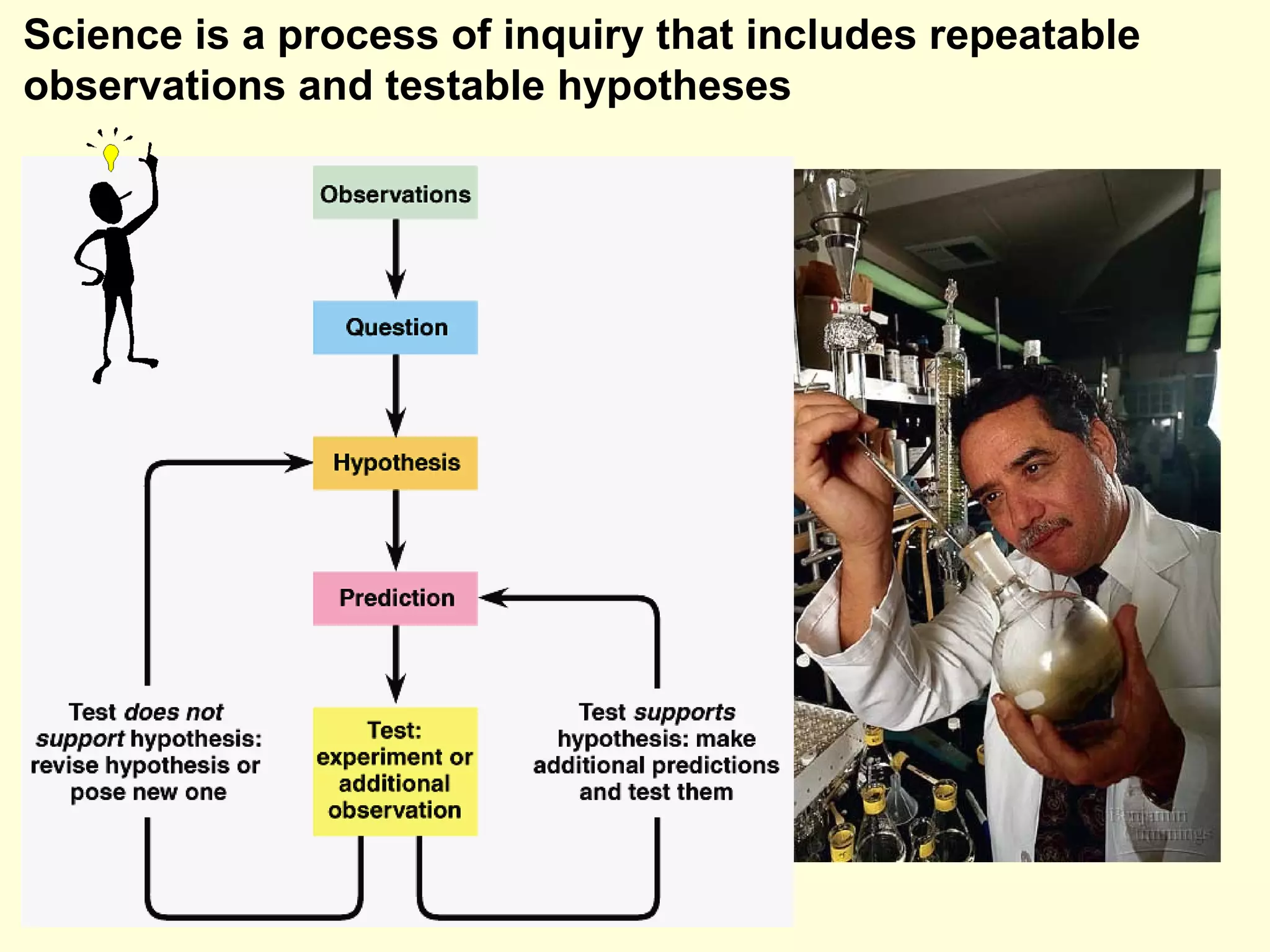
Science is a process of inquiry that includes repeatable observations and testable hypotheses
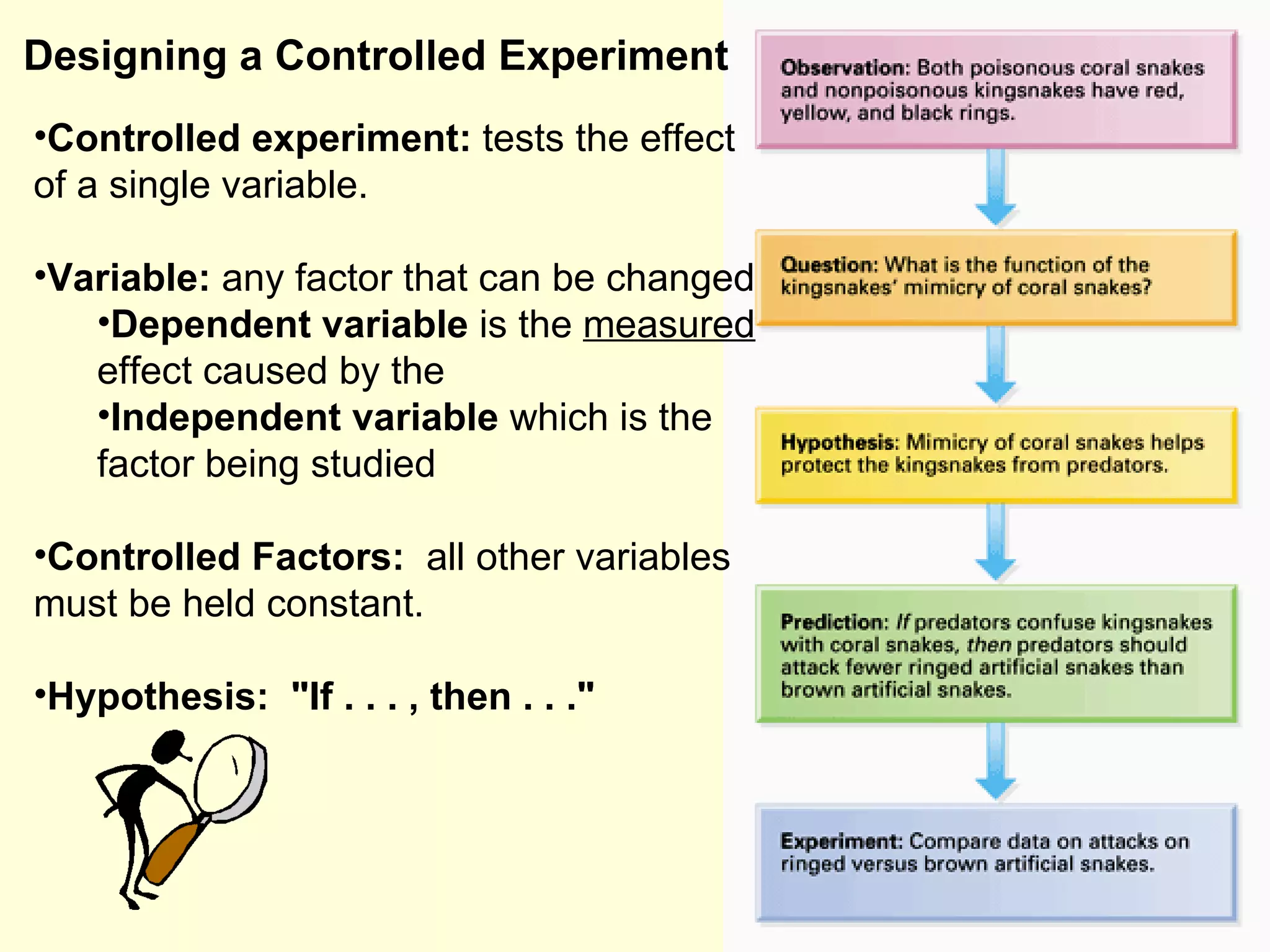
Designing a Controlled Experiment   Controlled experiment:  tests the effect of a single variable. Variable:  any factor that can be changed  Dependent variable  is the  measured  effect caused by the  Independent variable  which is the factor being studied  Controlled Factors:   all other variables must be held constant. Hypothesis:  "If . . . , then . . ."
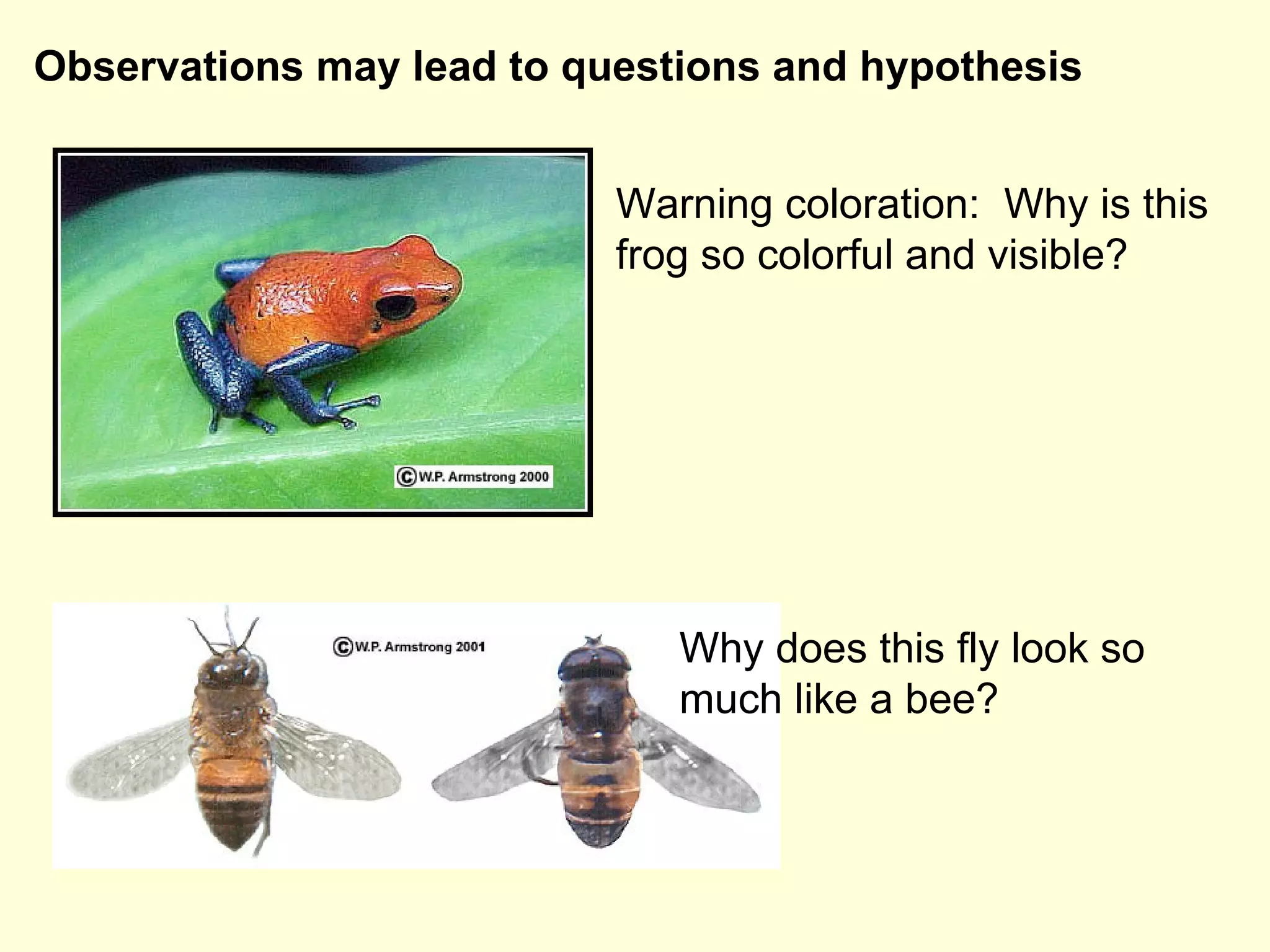
Observations may lead to questions and hypothesis   Warning coloration:  Why is this frog so colorful and visible? Why does this fly look so much like a bee?
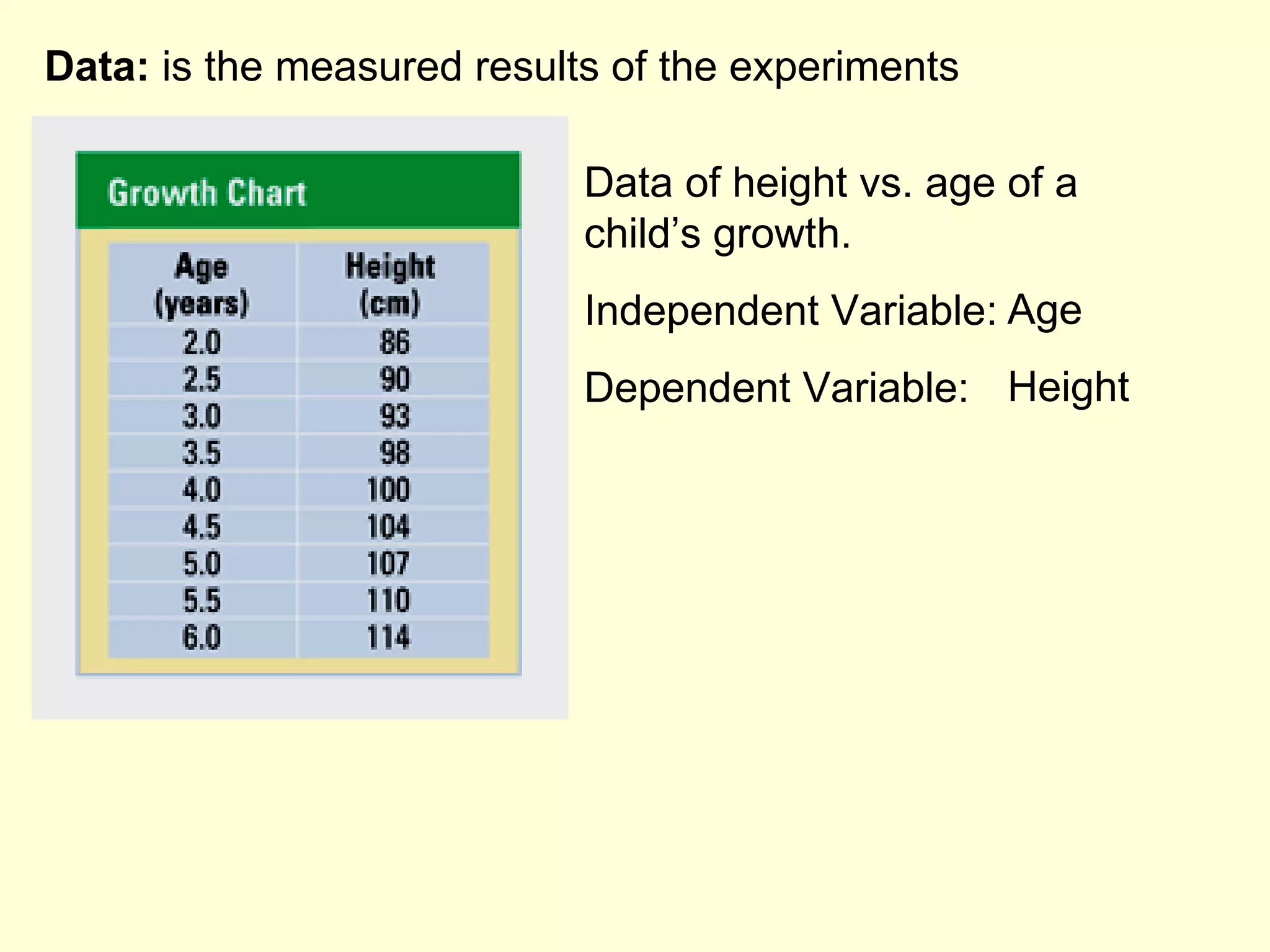
Data:  is the measured results of the experiments  Data of height vs. age of a child’s growth.  Independent Variable:  Dependent Variable: Age Height
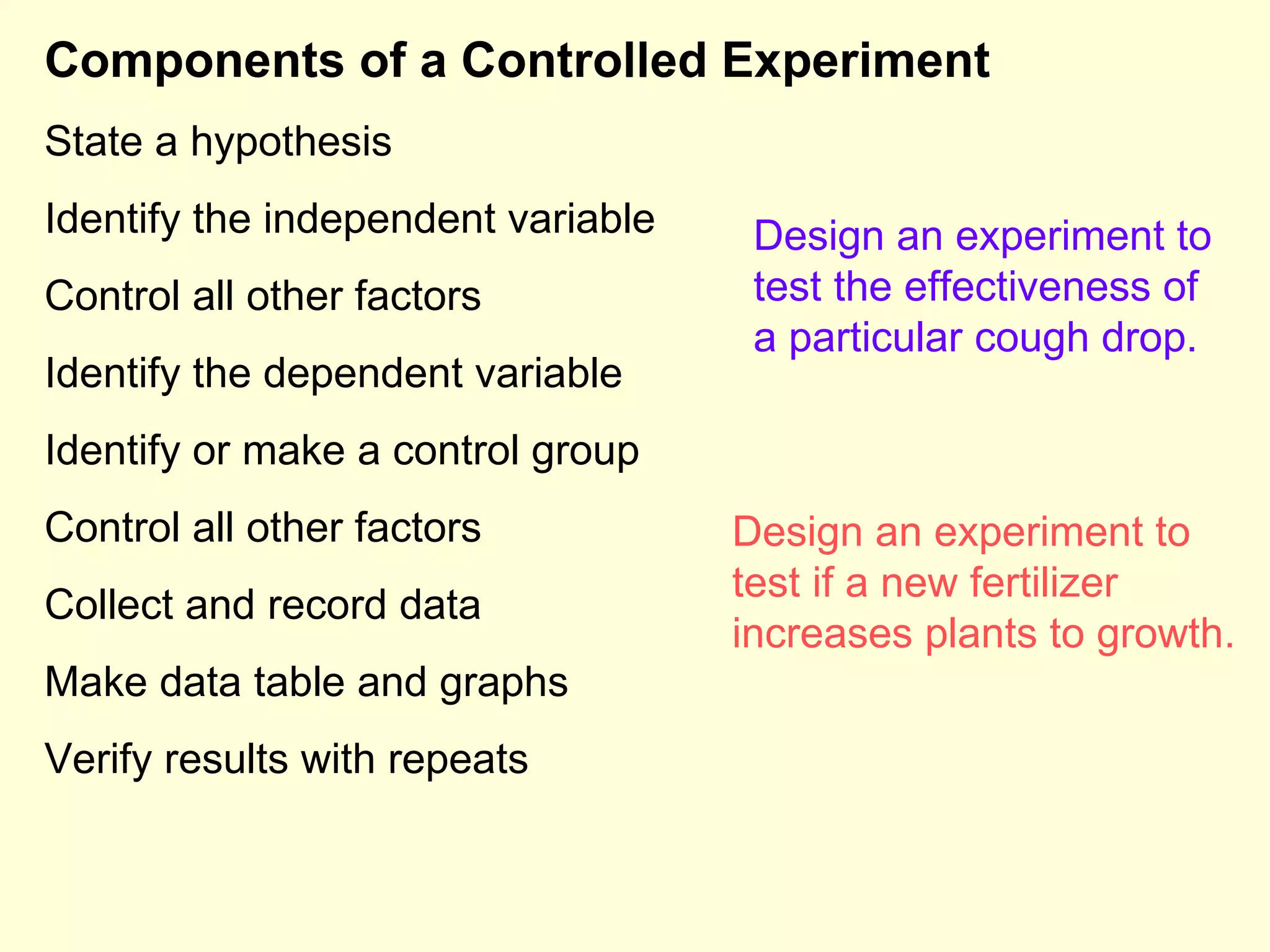
Components of a Controlled Experiment State a hypothesis Identify the independent variable Control all other factors Identify the dependent variable Identify or make a control group Control all other factors Collect and record data Make data table and graphs Verify results with repeats Design an experiment to test the effectiveness of a particular cough drop. Design an experiment to test if a new fertilizer increases plants to growth.
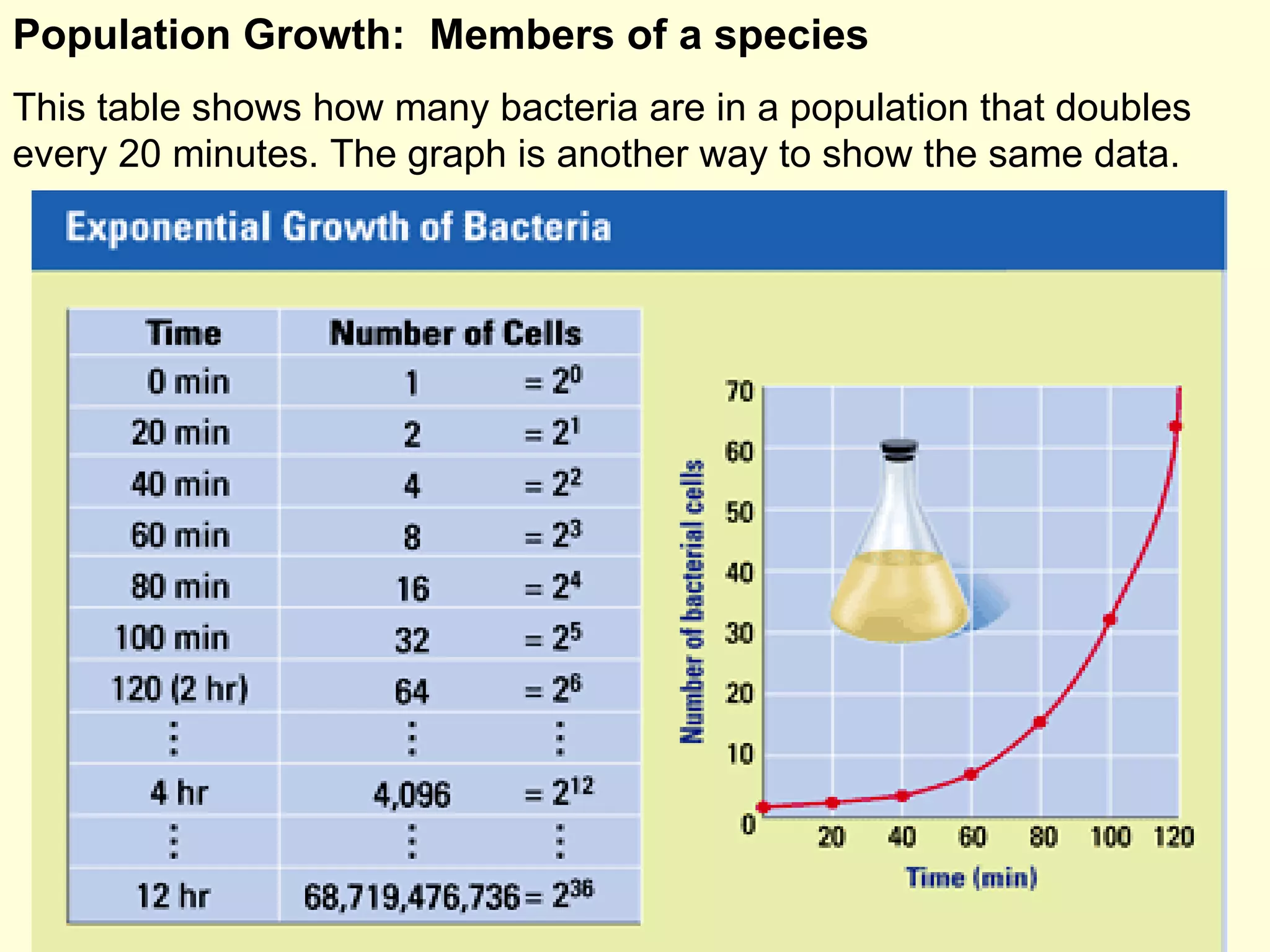
Population Growth:  Members of a species This table shows how many bacteria are in a population that doubles every 20 minutes. The graph is another way to show the same data.
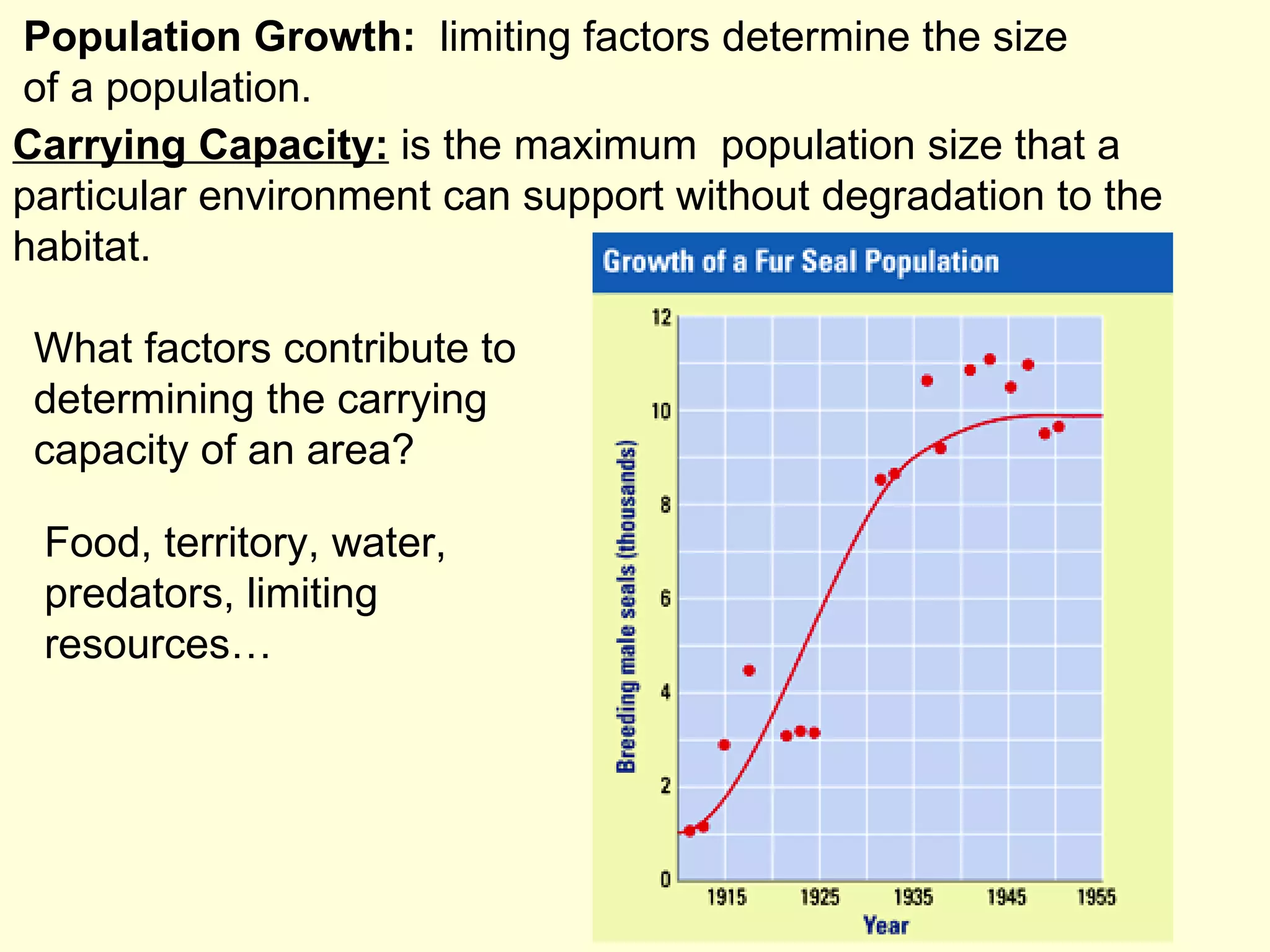
Carrying Capacity:  is the maximum  population size that a particular environment can support without degradation to the habitat. Population Growth:  limiting factors determine the size of a population. What factors contribute to determining the carrying capacity of an area? Food, territory, water, predators, limiting resources…
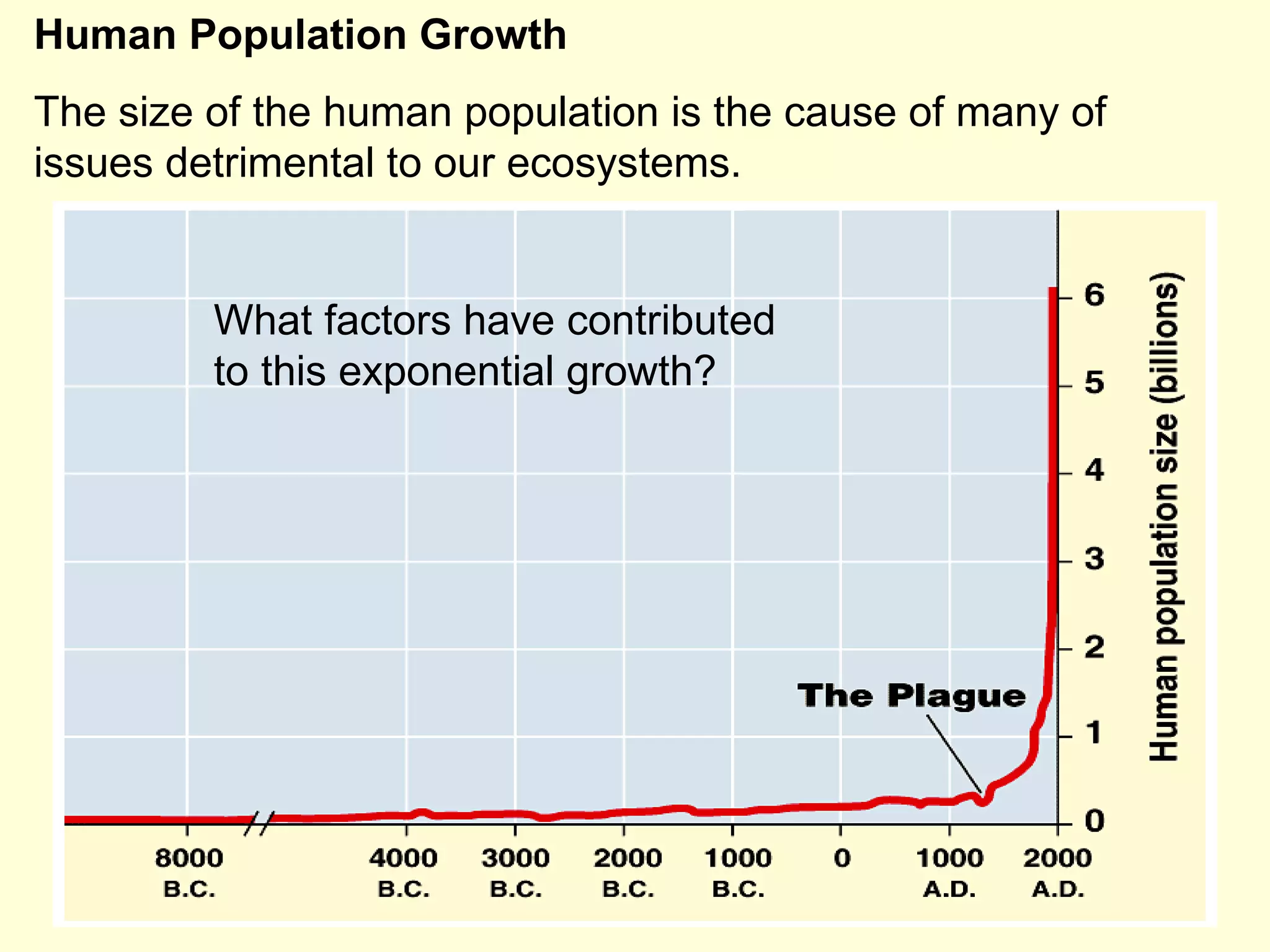
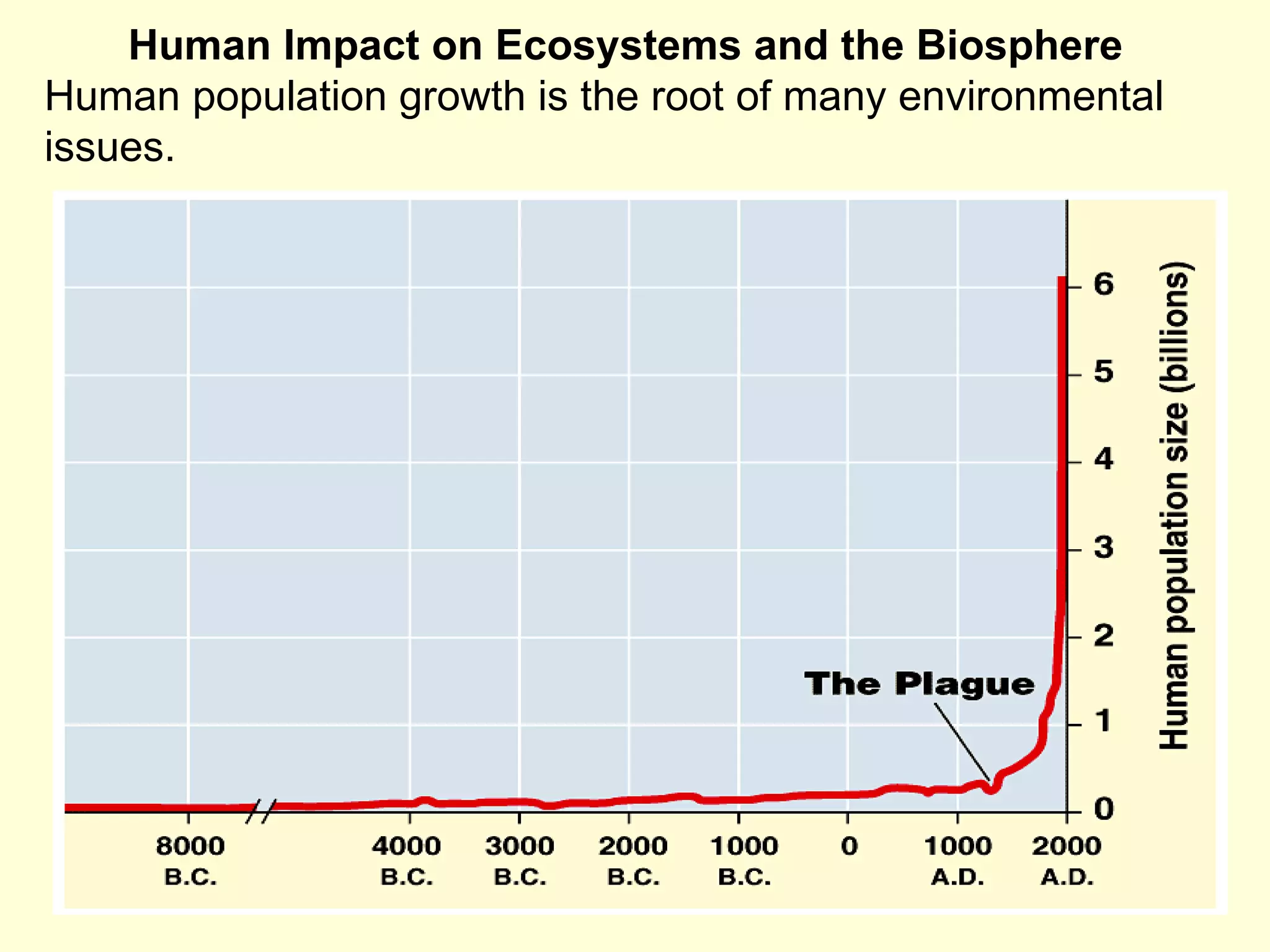
Human Population Growth The size of the human population is the cause of many of issues detrimental to our ecosystems. What factors have contributed to this exponential growth?
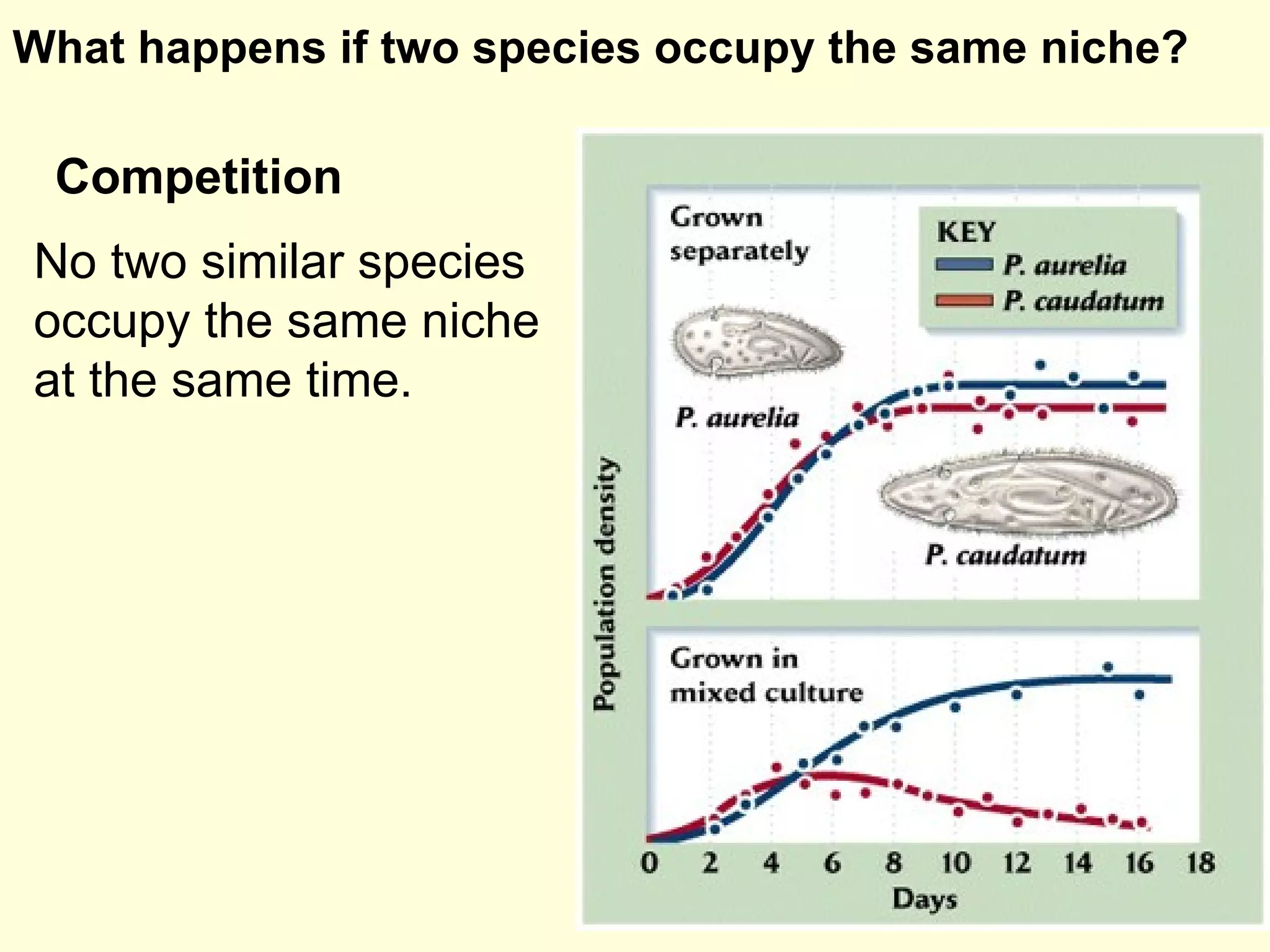
No two similar species occupy the same niche at the same time. What happens if two species occupy the same niche? Competition
Human Impact on Ecosystems and the Biosphere Human population growth is the root of many environmental issues.
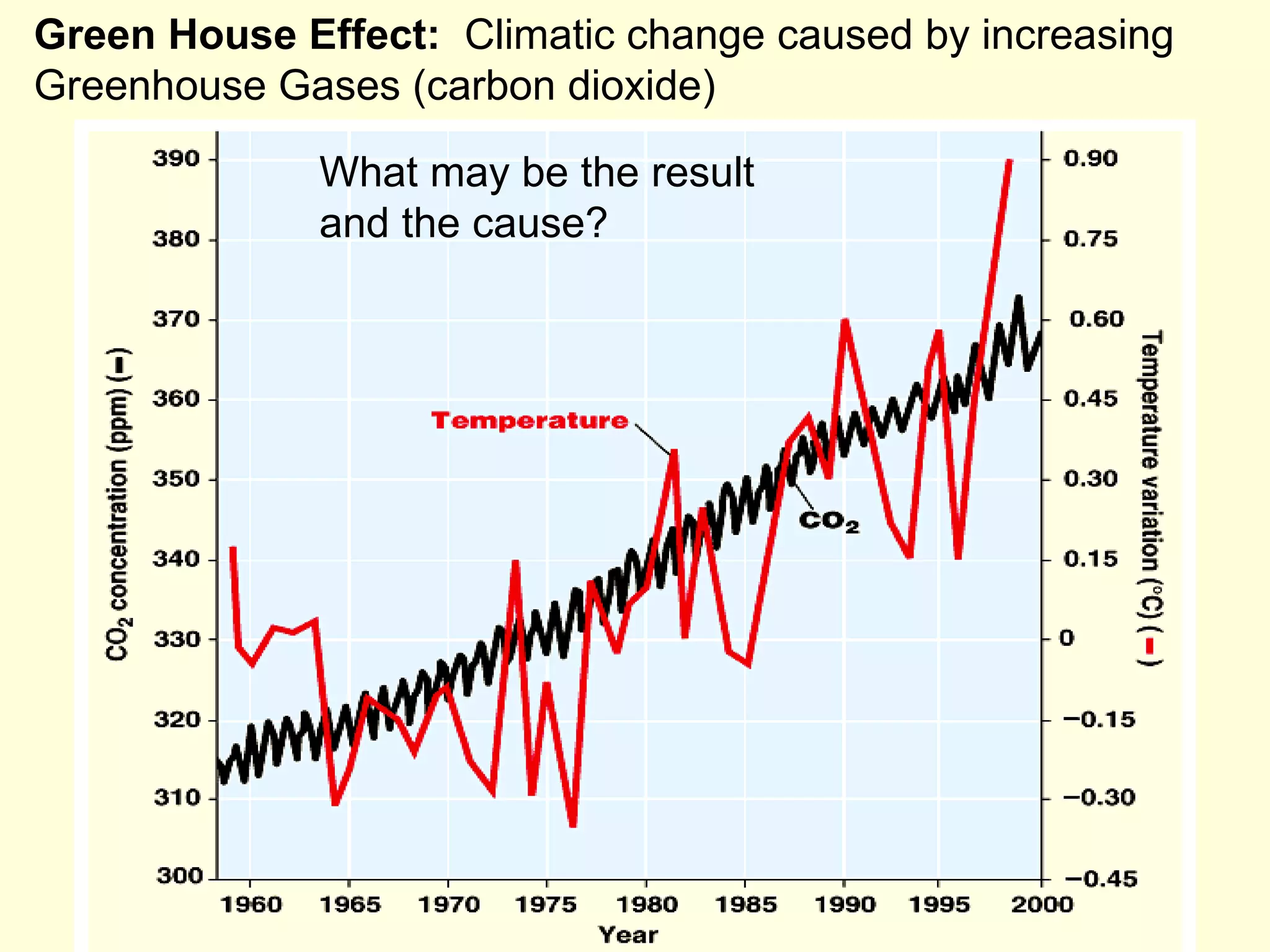
Green House Effect:   Climatic change caused by increasing Greenhouse Gases (carbon dioxide) What may be the result and the cause?

Scientific Method & Graphs

  • 1.
    Science is aprocess of inquiry that includes repeatable observations and testable hypotheses
  • 2.
    Designing a ControlledExperiment Controlled experiment: tests the effect of a single variable. Variable: any factor that can be changed Dependent variable is the measured effect caused by the Independent variable which is the factor being studied Controlled Factors: all other variables must be held constant. Hypothesis: "If . . . , then . . ."
  • 3.
    Observations may leadto questions and hypothesis Warning coloration: Why is this frog so colorful and visible? Why does this fly look so much like a bee?
  • 4.
    Data: isthe measured results of the experiments Data of height vs. age of a child’s growth. Independent Variable: Dependent Variable: Age Height
  • 5.
    Components of aControlled Experiment State a hypothesis Identify the independent variable Control all other factors Identify the dependent variable Identify or make a control group Control all other factors Collect and record data Make data table and graphs Verify results with repeats Design an experiment to test the effectiveness of a particular cough drop. Design an experiment to test if a new fertilizer increases plants to growth.
  • 6.
    Population Growth: Members of a species This table shows how many bacteria are in a population that doubles every 20 minutes. The graph is another way to show the same data.
  • 7.
    Carrying Capacity: is the maximum population size that a particular environment can support without degradation to the habitat. Population Growth: limiting factors determine the size of a population. What factors contribute to determining the carrying capacity of an area? Food, territory, water, predators, limiting resources…
  • 8.
    Human Population GrowthThe size of the human population is the cause of many of issues detrimental to our ecosystems. What factors have contributed to this exponential growth?
  • 9.
    No two similarspecies occupy the same niche at the same time. What happens if two species occupy the same niche? Competition
  • 10.
    Human Impact onEcosystems and the Biosphere Human population growth is the root of many environmental issues.
  • 11.
    Green House Effect: Climatic change caused by increasing Greenhouse Gases (carbon dioxide) What may be the result and the cause?