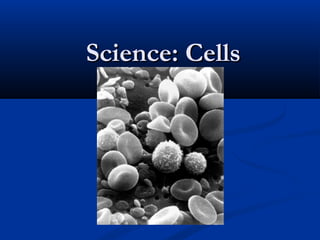


Science: CellsScience: Cells
Cells - IntroductionCells - Introduction
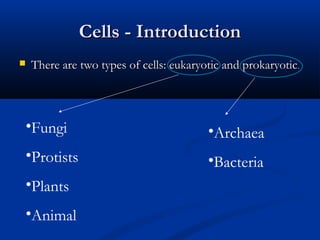
 There are two types of cells: eukaryotic and prokaryoticThere are two types of cells: eukaryotic and prokaryotic..
•Fungi
•Protists
•Plants
•Animal
•Archaea
•Bacteria
Eukaryotic cellsEukaryotic cells
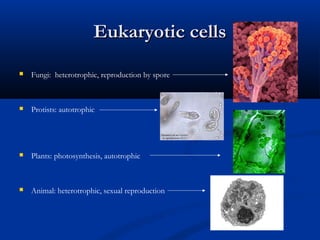
 Fungi: heterotrophic, reproduction by spore
 Protists: autotrophic
 Plants: photosynthesis, autotrophic
 Animal: heterotrophic, sexual reproduction
Prokaryotic cellsProkaryotic cells
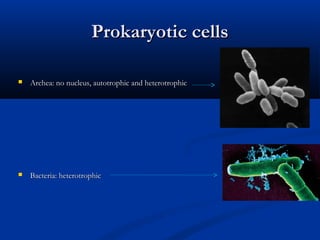
 Archea: no nucleus, autotrophic and heterotrophicArchea: no nucleus, autotrophic and heterotrophic
 Bacteria: heterotrophicBacteria: heterotrophic
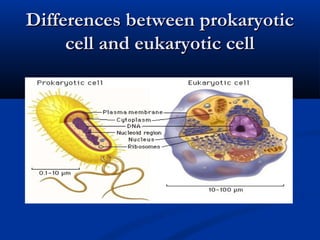
Differences between prokaryoticDifferences between prokaryotic
cell and eukaryotic cellcell and eukaryotic cell
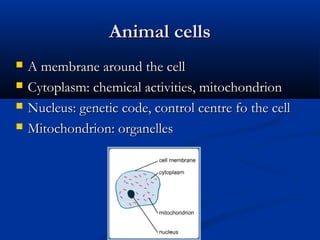
Animal cellsAnimal cells
 A membrane around the cellA membrane around the cell
 Cytoplasm: chemical activities, mitochondrionCytoplasm: chemical activities, mitochondrion
 Nucleus: genetic code, control centre fo the cellNucleus: genetic code, control centre fo the cell
 Mitochondrion: organellesMitochondrion: organelles
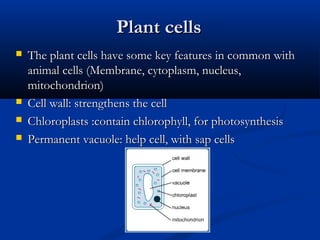
Plant cellsPlant cells
 The plant cells have some key features in common withThe plant cells have some key features in common with
animal cells (Membrane, cytoplasm, nucleus,animal cells (Membrane, cytoplasm, nucleus,
mitochondrion)mitochondrion)
 Cell wall: strengthens the cellCell wall: strengthens the cell
 ChloroplastsChloroplasts :contain chlorophyll, for photosynthesis:contain chlorophyll, for photosynthesis
 Permanent vacuole: help cell, with sap cellsPermanent vacuole: help cell, with sap cells
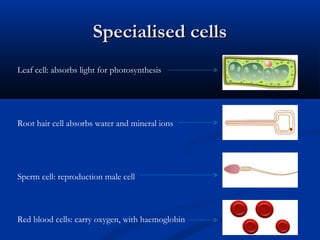
Specialised cellsSpecialised cells
Leaf cell: absorbs light for photosynthesis
Root hair cell absorbs water and mineral ions
Sperm cell: reproduction male cell
Red blood cells: carry oxygen, with haemoglobin
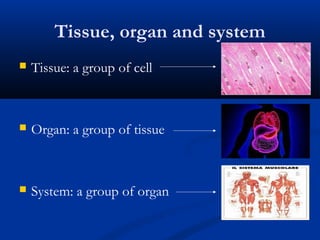
Tissue, organ and system
 Tissue: a group of cell
 Organ: a group of tissue
 System: a group of organ
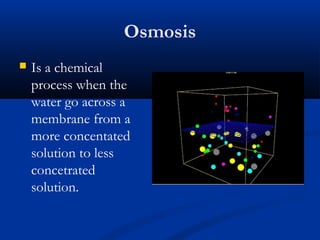
Osmosis
 Is a chemical
process when the
water go across a
membrane from a
more concentated
solution to less
concetrated
solution.
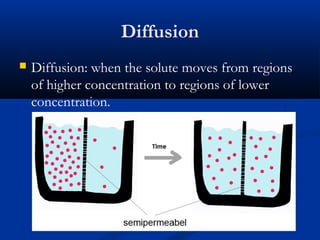
Diffusion
 Diffusion: when the solute moves from regions
of higher concentration to regions of lower
concentration.
Site on Web
 http://www.bbc.co.uk/schools/gcsebitesize/science
 http://it.wikipedia.org
THE END

Science

  • 1.
  • 2.
    Cells - IntroductionCells- Introduction  There are two types of cells: eukaryotic and prokaryoticThere are two types of cells: eukaryotic and prokaryotic.. •Fungi •Protists •Plants •Animal •Archaea •Bacteria
  • 3.
    Eukaryotic cellsEukaryotic cells Fungi: heterotrophic, reproduction by spore  Protists: autotrophic  Plants: photosynthesis, autotrophic  Animal: heterotrophic, sexual reproduction
  • 4.
    Prokaryotic cellsProkaryotic cells Archea: no nucleus, autotrophic and heterotrophicArchea: no nucleus, autotrophic and heterotrophic  Bacteria: heterotrophicBacteria: heterotrophic
  • 5.
    Differences between prokaryoticDifferencesbetween prokaryotic cell and eukaryotic cellcell and eukaryotic cell
  • 6.
    Animal cellsAnimal cells A membrane around the cellA membrane around the cell  Cytoplasm: chemical activities, mitochondrionCytoplasm: chemical activities, mitochondrion  Nucleus: genetic code, control centre fo the cellNucleus: genetic code, control centre fo the cell  Mitochondrion: organellesMitochondrion: organelles
  • 7.
    Plant cellsPlant cells The plant cells have some key features in common withThe plant cells have some key features in common with animal cells (Membrane, cytoplasm, nucleus,animal cells (Membrane, cytoplasm, nucleus, mitochondrion)mitochondrion)  Cell wall: strengthens the cellCell wall: strengthens the cell  ChloroplastsChloroplasts :contain chlorophyll, for photosynthesis:contain chlorophyll, for photosynthesis  Permanent vacuole: help cell, with sap cellsPermanent vacuole: help cell, with sap cells
  • 8.
    Specialised cellsSpecialised cells Leafcell: absorbs light for photosynthesis Root hair cell absorbs water and mineral ions Sperm cell: reproduction male cell Red blood cells: carry oxygen, with haemoglobin
  • 9.
    Tissue, organ andsystem  Tissue: a group of cell  Organ: a group of tissue  System: a group of organ
  • 10.
    Osmosis  Is achemical process when the water go across a membrane from a more concentated solution to less concetrated solution.
  • 11.
    Diffusion  Diffusion: whenthe solute moves from regions of higher concentration to regions of lower concentration.
  • 12.
    Site on Web http://www.bbc.co.uk/schools/gcsebitesize/science  http://it.wikipedia.org
  • 13.