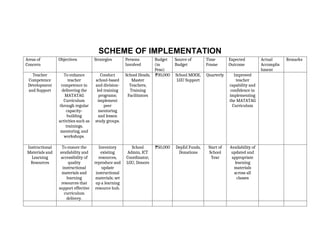
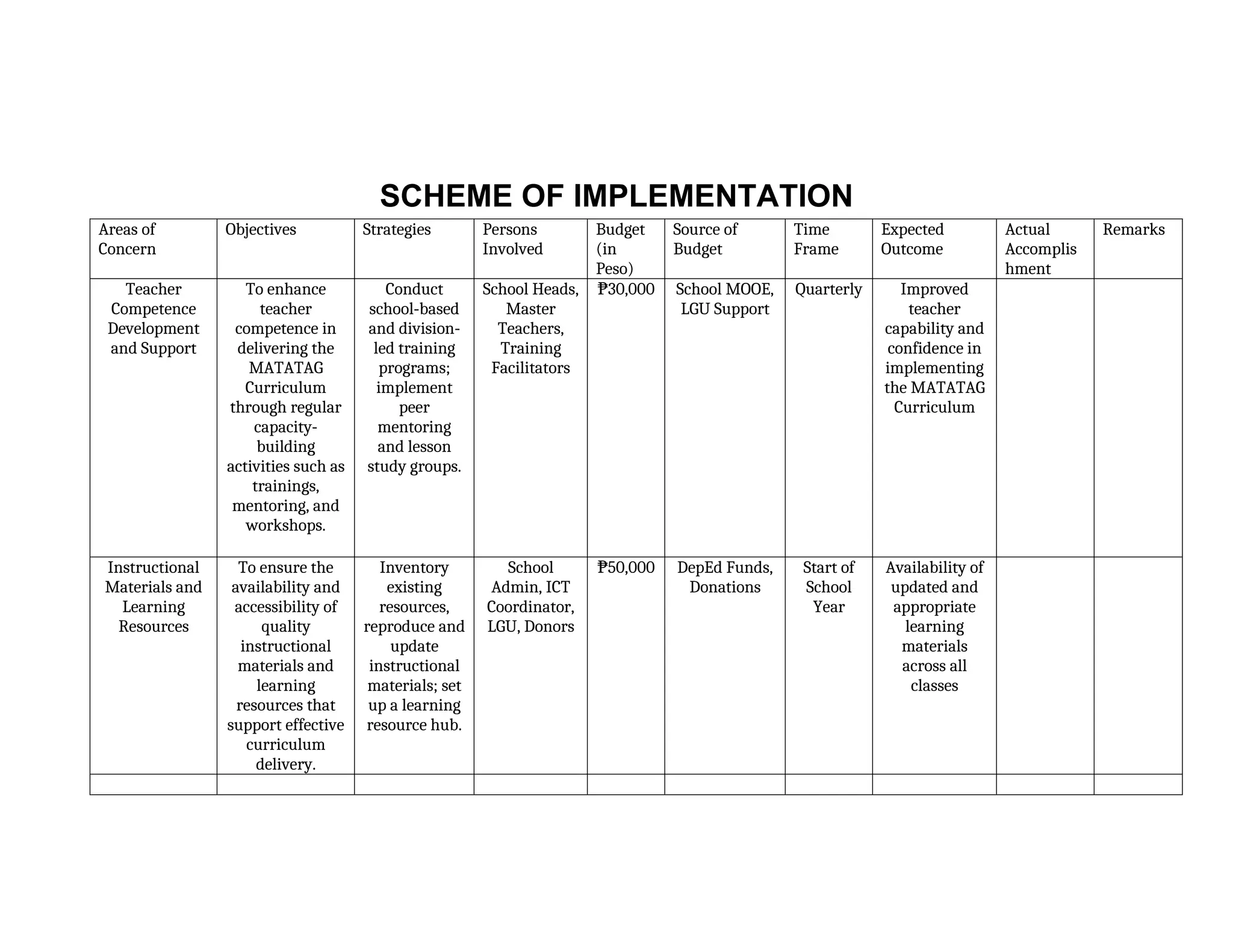
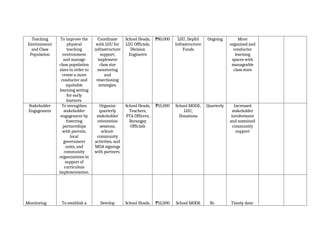
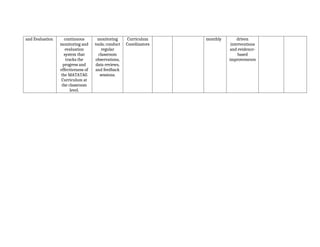
This is a sample scheme implementation based on my study. This is a proposed budget to school that can help the learners and teachers enhanced the learning and teaching process. The proposed budget aims to support the full implementation and continuous improvement of the MATATAG Curriculum, a key initiative of the Department of Education designed to address long-standing issues in the basic education system. This budget will be allocated across several core areas to ensure the curriculum’s effectiveness, relevance, and alignment with 21st-century competencies. Major components include the development and printing of updated learning materials and textbooks; capacity-building programs for teachers and school leaders; procurement of ICT equipment to support digital learning; creation of localized teaching aids; and monitoring and evaluation mechanisms to track curriculum outcomes. Funding will also support the development of inclusive learning modules catering to learners with diverse needs. This investment is crucial to ensure that the MATATAG Curriculum becomes a sustainable and transformative force in improving the quality of Philippine education. The Department of Education’s MATATAG Curriculum is a transformative reform in basic education that aims to make the learning process more relevant, focused, inclusive, and responsive to both national and global needs. To fully realize the benefits of this curriculum, a well-planned and adequately funded budget is essential. Below is a detailed explanation of how the proposed budget will support the curriculum and contribute to the long-term improvement of Philippine education:
1. Curriculum Design, Research, and Development
Why it matters: To ensure that the MATATAG Curriculum is rooted in evidence-based practices and continuously adapted to learners’ evolving needs.
How the budget is used: Funding will support curriculum developers, education experts, and consultants in designing age-appropriate and culturally relevant learning competencies. It also covers the review and streamlining of overly congested topics to allow mastery of foundational skills.
Impact: A sharper, more focused curriculum that reduces student overload while ensuring essential knowledge and skills are taught effectively.
2. Development and Distribution of Learning Resources
Why it matters: Even the best-designed curriculum cannot succeed without the proper learning materials.
How the budget is used: Funds are allocated for the printing and digital production of textbooks, teacher’s guides, learners’ modules, and supplementary materials in both English and local languages. Special focus is also given to indigenized and contextualized content.
Impact: Every student, including those in far-flung areas, will have access to quality, updated learning materials aligned with the new curriculum.
3. Teacher Training and Capacity Building
Why it matters: Teachers are the frontliners of curriculum implementation.


![Matatag Curriculum Plenary_Opening Program [Day 1].pptx](https://cdn.slidesharecdn.com/ss_thumbnails/plenaryopeningprogramday1-240729085529-f4dff39b-thumbnail.jpg?width=640&height=640&fit=bounds)


