McGraw-Hill © 2007 The McGraw-Hill Companies, Inc. All rights reserved.
Slide 1
SOCIOLOGY
Richard T. Schaefer
The Mass Media7
McGraw-Hill © 2007 The McGraw-Hill Companies, Inc. All rights reserved.
Slide 2
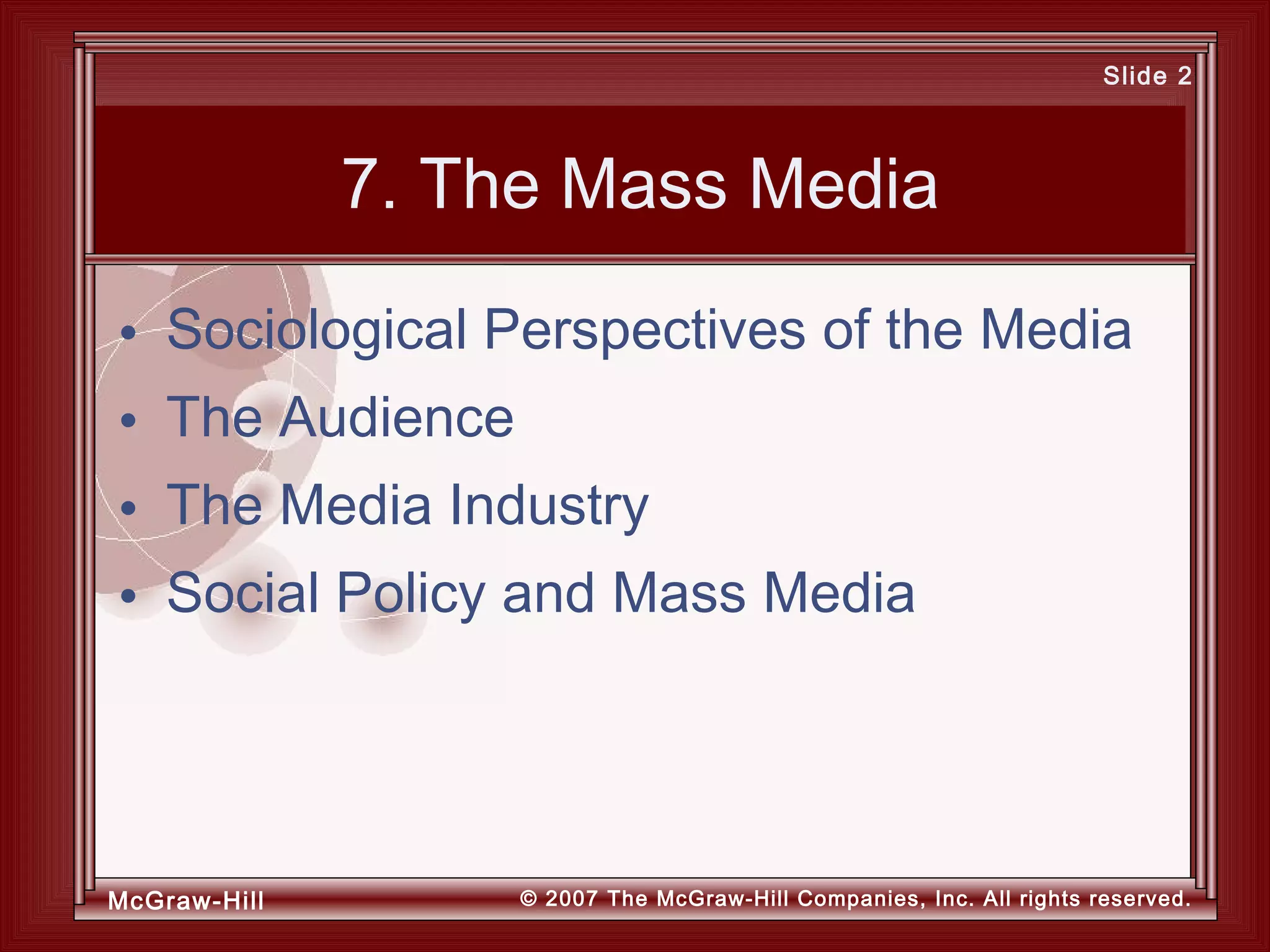
7. The Mass Media
• Sociological Perspectives of the Media
• The Audience
• The Media Industry
• Social Policy and Mass Media
McGraw-Hill © 2007 The McGraw-Hill Companies, Inc. All rights reserved.
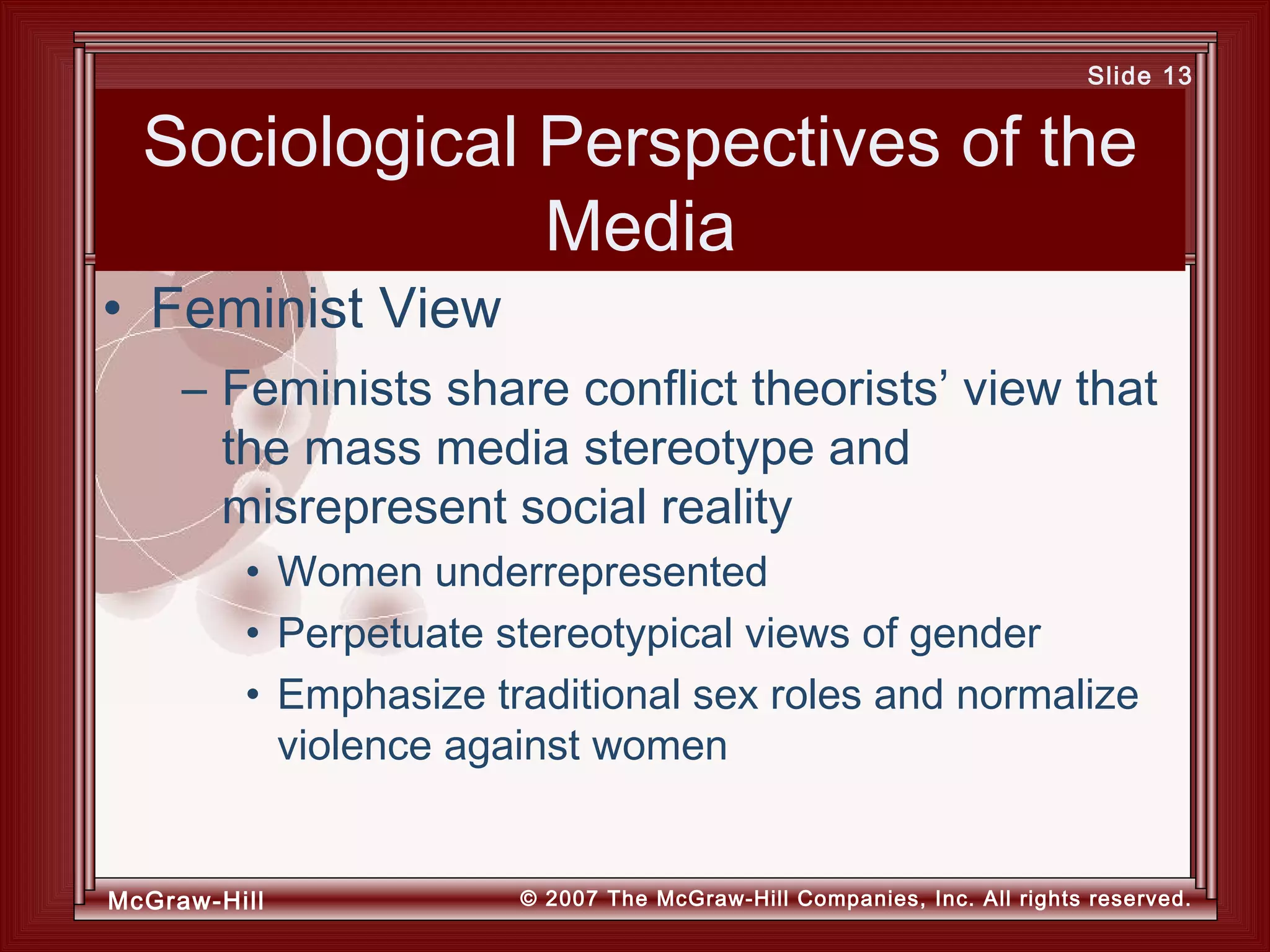
Slide 3
Sociological Perspectives of the
Media
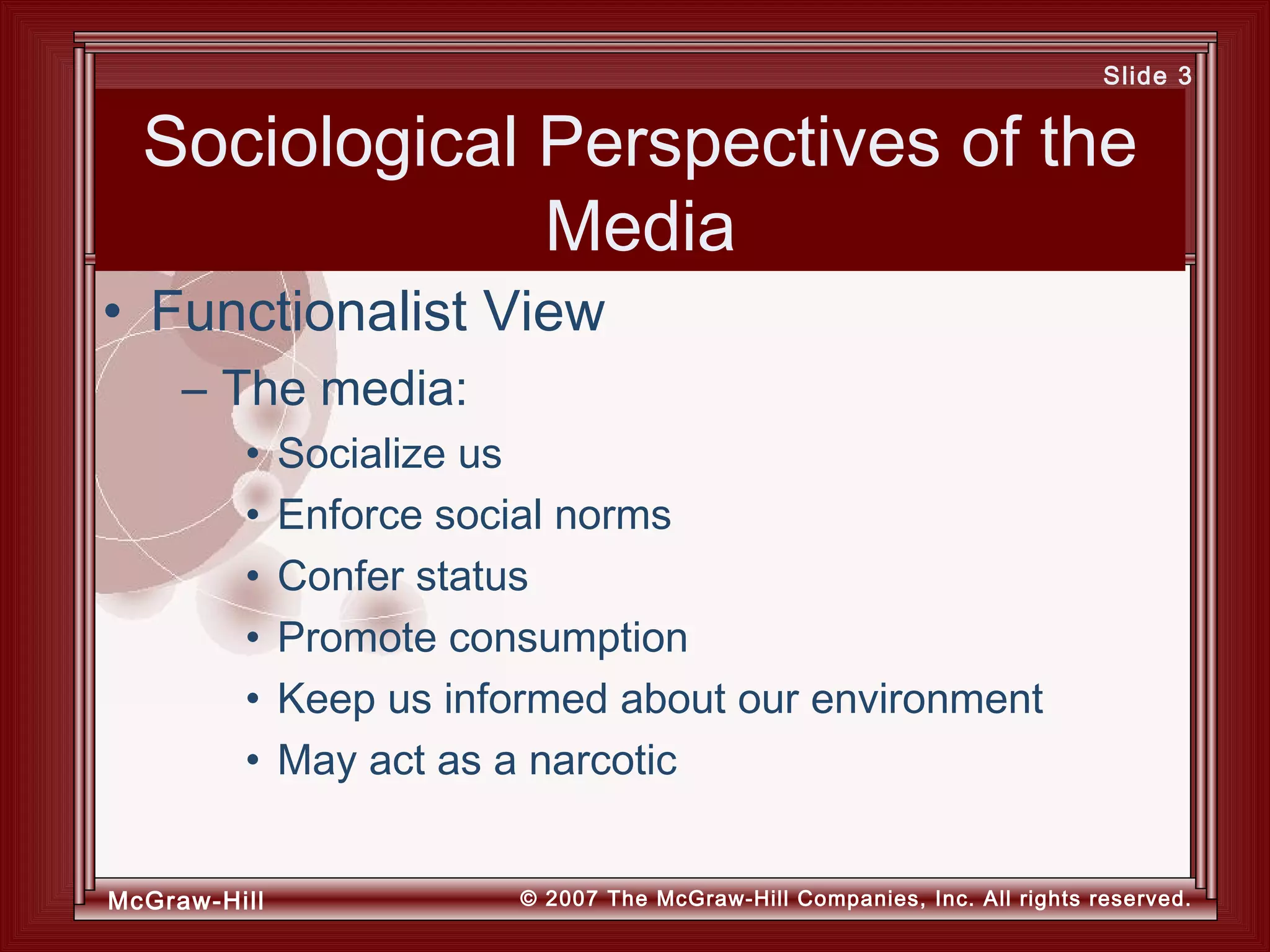
– The media:
• Socialize us
• Enforce social norms
• Confer status
• Promote consumption
• Keep us informed about our environment
• May act as a narcotic
• Functionalist View
McGraw-Hill © 2007 The McGraw-Hill Companies, Inc. All rights reserved.
Slide 4
Sociological Perspectives of the
Media
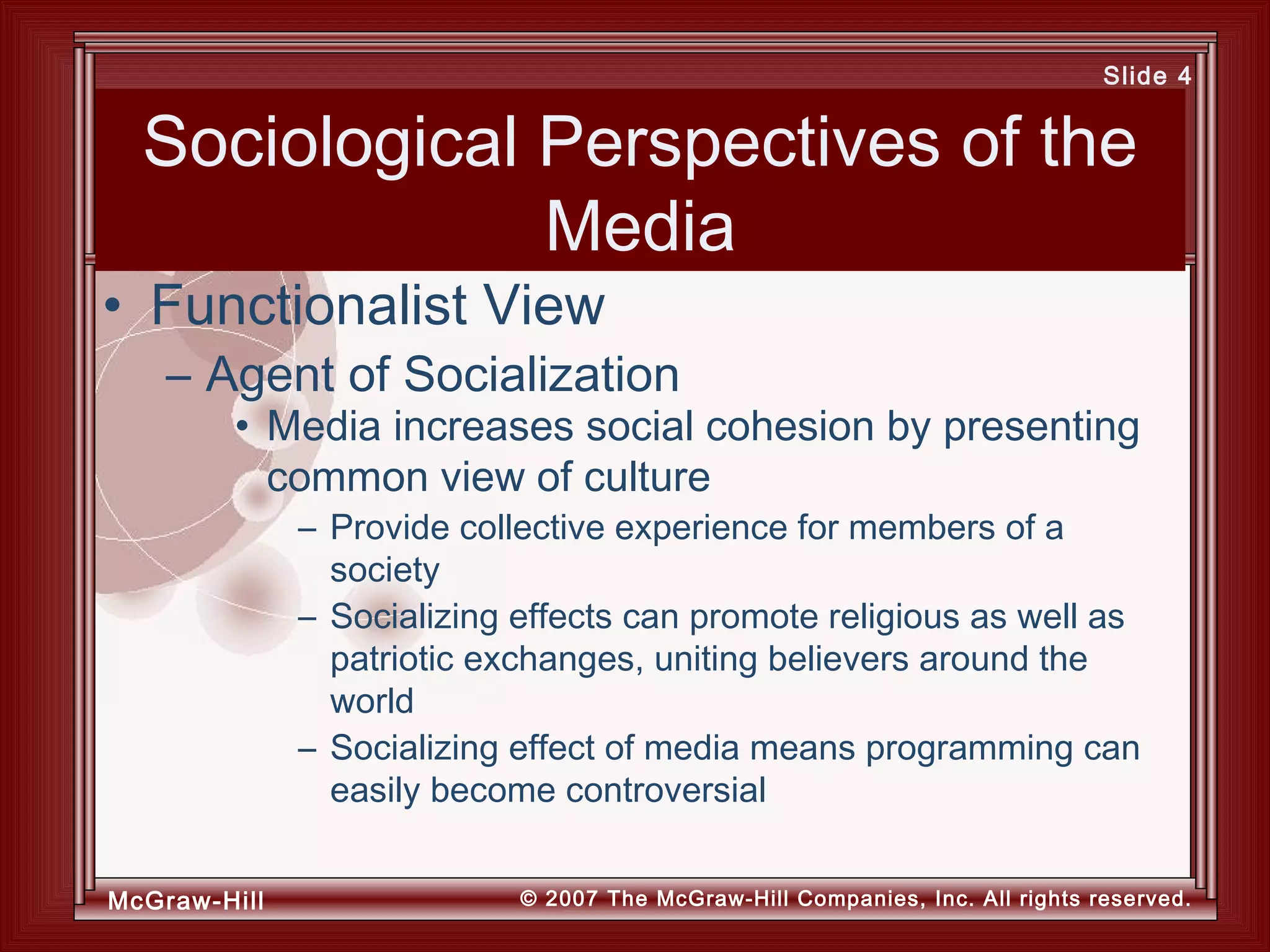
• Media increases social cohesion by presenting
common view of culture
– Provide collective experience for members of a
society
– Socializing effects can promote religious as well as
patriotic exchanges, uniting believers around the
world
– Socializing effect of media means programming can
easily become controversial
• Functionalist View
– Agent of Socialization
McGraw-Hill © 2007 The McGraw-Hill Companies, Inc. All rights reserved.
Slide 5
Sociological Perspectives of the
Media
• Media reaffirm proper behavior by showing
what happens to people who violate societal
expectations
– Conferral of Status
• Singles out one from thousands of other
similarly placed issues or people to become
significant
• Functionalist View
– Enforcer of Social Norms
McGraw-Hill © 2007 The McGraw-Hill Companies, Inc. All rights reserved.
Slide 6
Sociological Perspectives of the
Media
• Media advertising
– Supports economy
– Provides information
– Underwrites cost of media
• Functionalist View
– Promotion of Consumption
McGraw-Hill © 2007 The McGraw-Hill Companies, Inc. All rights reserved.
Slide 7
Sociological Perspectives of the
Media
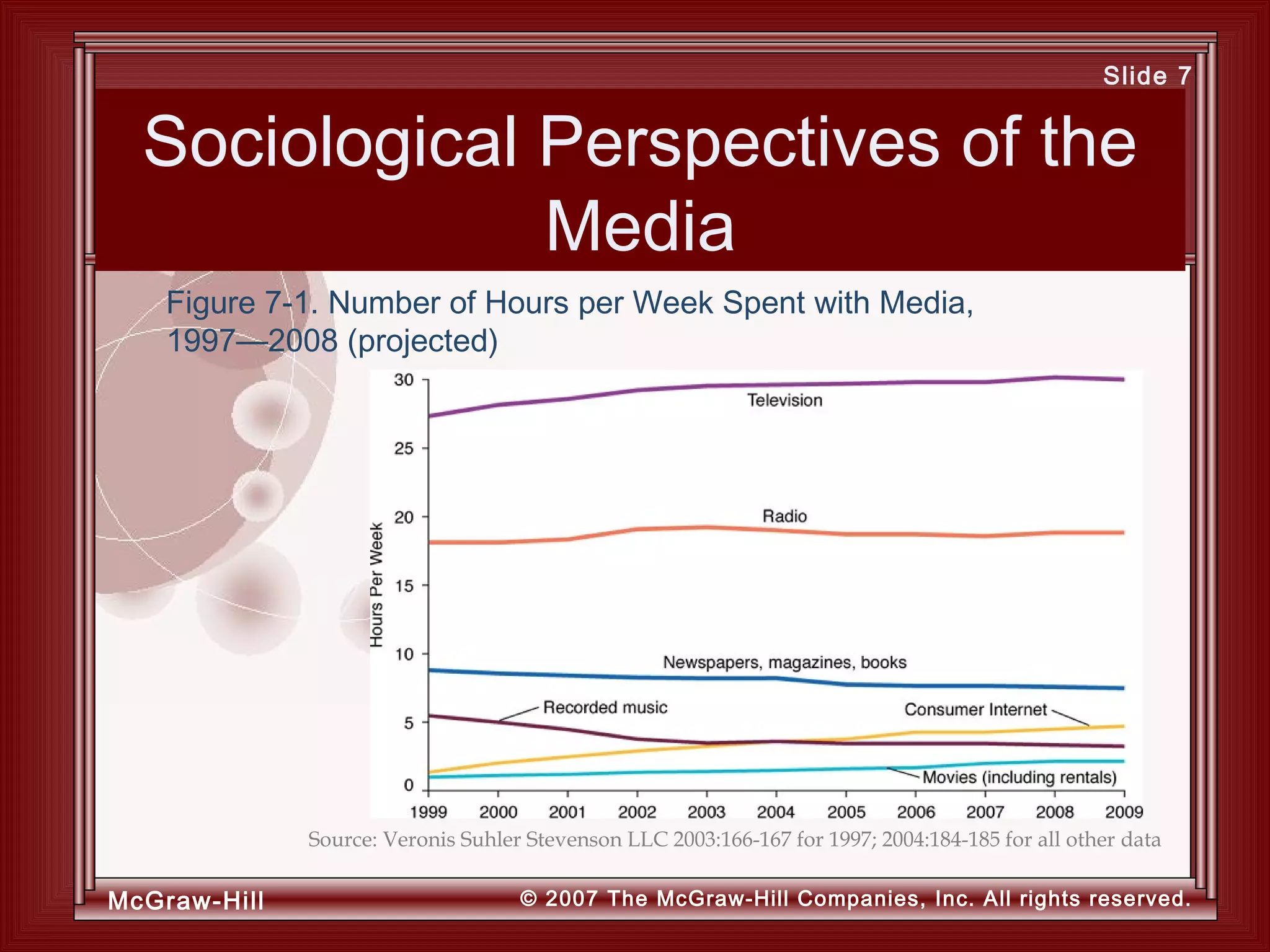
Figure 7-1. Number of Hours per Week Spent with Media,
1997—2008 (projected)
Source: Veronis Suhler Stevenson LLC 2003:166-167 for 1997; 2004:184-185 for all other data
McGraw-Hill © 2007 The McGraw-Hill Companies, Inc. All rights reserved.
Slide 8
Sociological Perspectives of the
Media
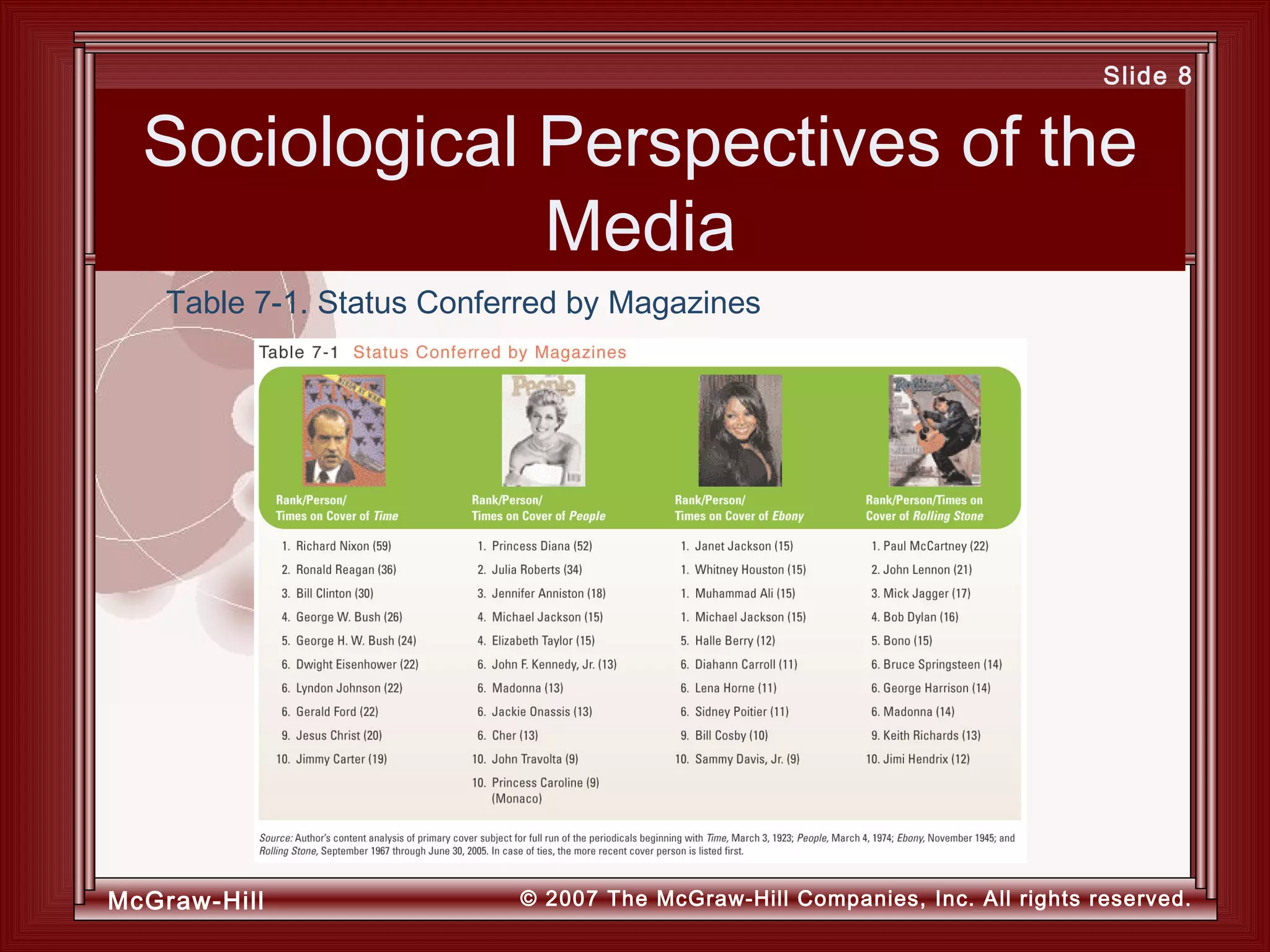
Table 7-1. Status Conferred by Magazines
McGraw-Hill © 2007 The McGraw-Hill Companies, Inc. All rights reserved.
Slide 9
Sociological Perspectives of the
Media
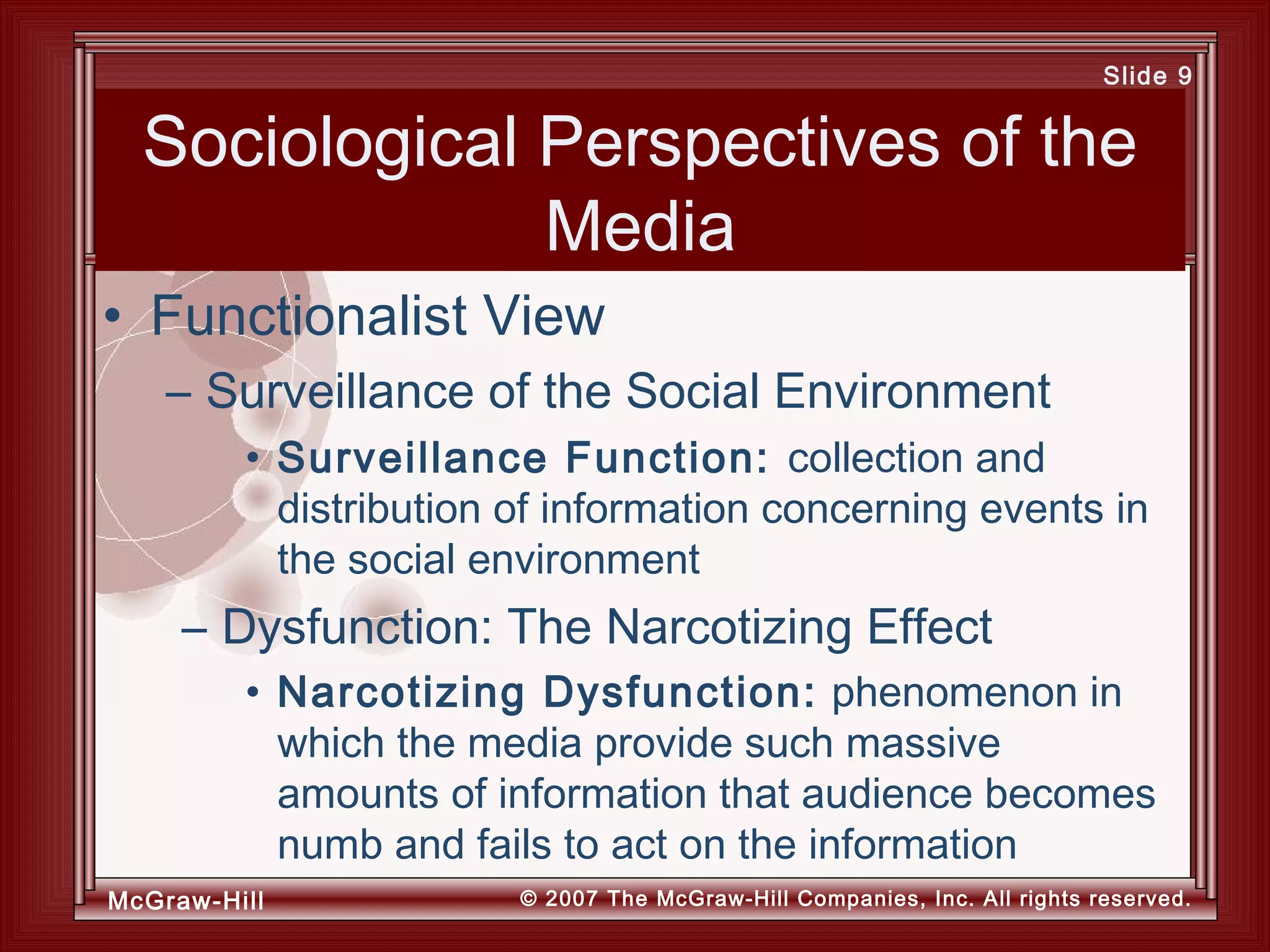
• Surveillance Function: collection and
distribution of information concerning events in
the social environment
– Dysfunction: The Narcotizing Effect
• Narcotizing Dysfunction: phenomenon in
which the media provide such massive
amounts of information that audience becomes
numb and fails to act on the information
• Functionalist View
– Surveillance of the Social Environment
McGraw-Hill © 2007 The McGraw-Hill Companies, Inc. All rights reserved.
Slide 10
Sociological Perspectives of the
Media
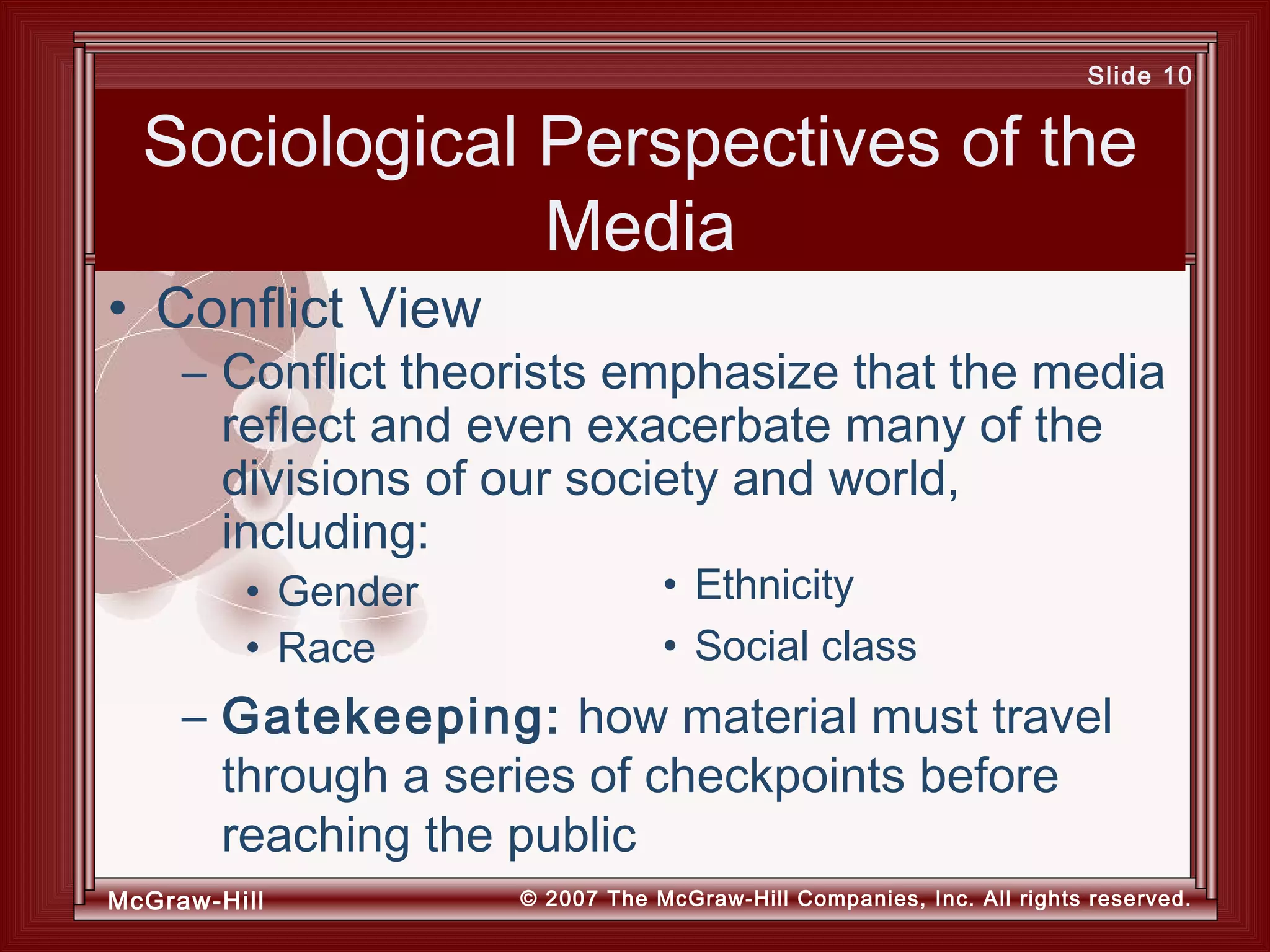
– Gatekeeping: how material must travel
through a series of checkpoints before
reaching the public
• Conflict View
• Ethnicity
• Social class
– Conflict theorists emphasize that the media
reflect and even exacerbate many of the
divisions of our society and world,
including:
• Gender
• Race
McGraw-Hill © 2007 The McGraw-Hill Companies, Inc. All rights reserved.
Slide 11
Sociological Perspectives of the
Media
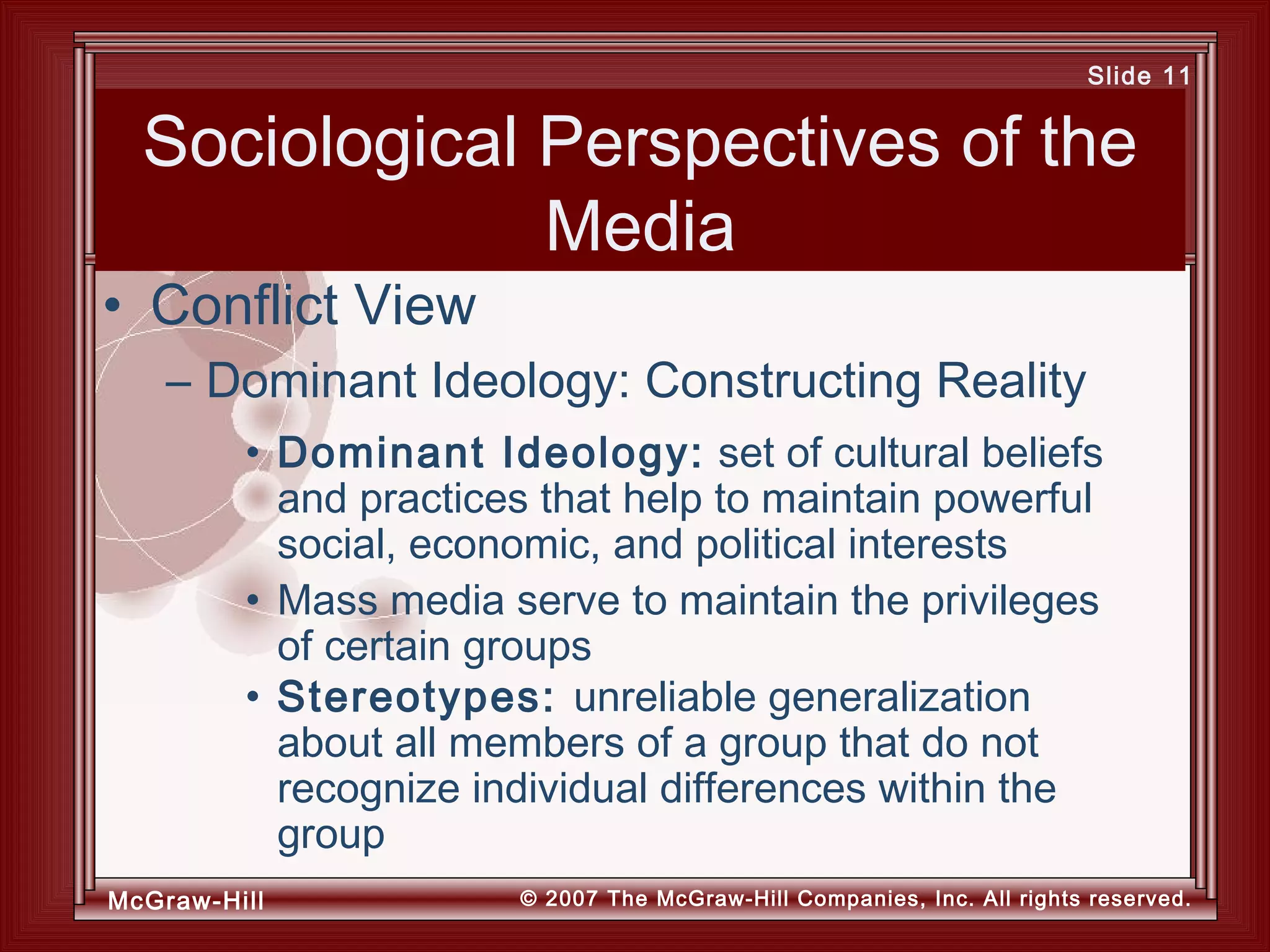
• Dominant Ideology: set of cultural beliefs
and practices that help to maintain powerful
social, economic, and political interests
• Mass media serve to maintain the privileges
of certain groups
• Stereotypes: unreliable generalization
about all members of a group that do not
recognize individual differences within the
group
• Conflict View
– Dominant Ideology: Constructing Reality
McGraw-Hill © 2007 The McGraw-Hill Companies, Inc. All rights reserved.
Slide 12
Sociological Perspectives of the
Media
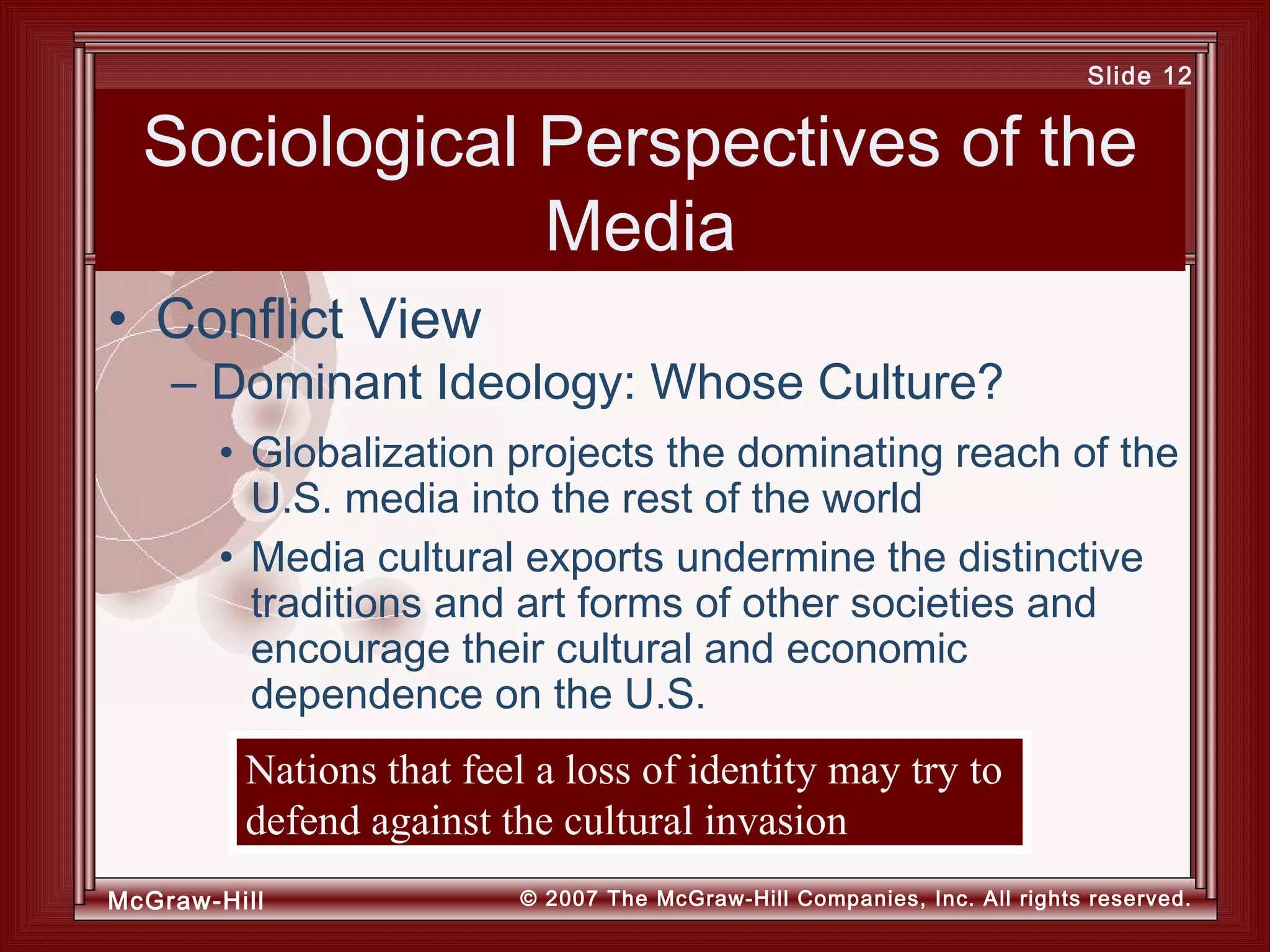
• Globalization projects the dominating reach of the
U.S. media into the rest of the world
• Media cultural exports undermine the distinctive
traditions and art forms of other societies and
encourage their cultural and economic
dependence on the U.S.
• Conflict View
– Dominant Ideology: Whose Culture?
Nations that feel a loss of identity may try to
defend against the cultural invasion
McGraw-Hill © 2007 The McGraw-Hill Companies, Inc. All rights reserved.
Slide 13
Sociological Perspectives of the
Media
– Feminists share conflict theorists’ view that
the mass media stereotype and
misrepresent social reality
• Women underrepresented
• Perpetuate stereotypical views of gender
• Emphasize traditional sex roles and normalize
violence against women
• Feminist View
McGraw-Hill © 2007 The McGraw-Hill Companies, Inc. All rights reserved.
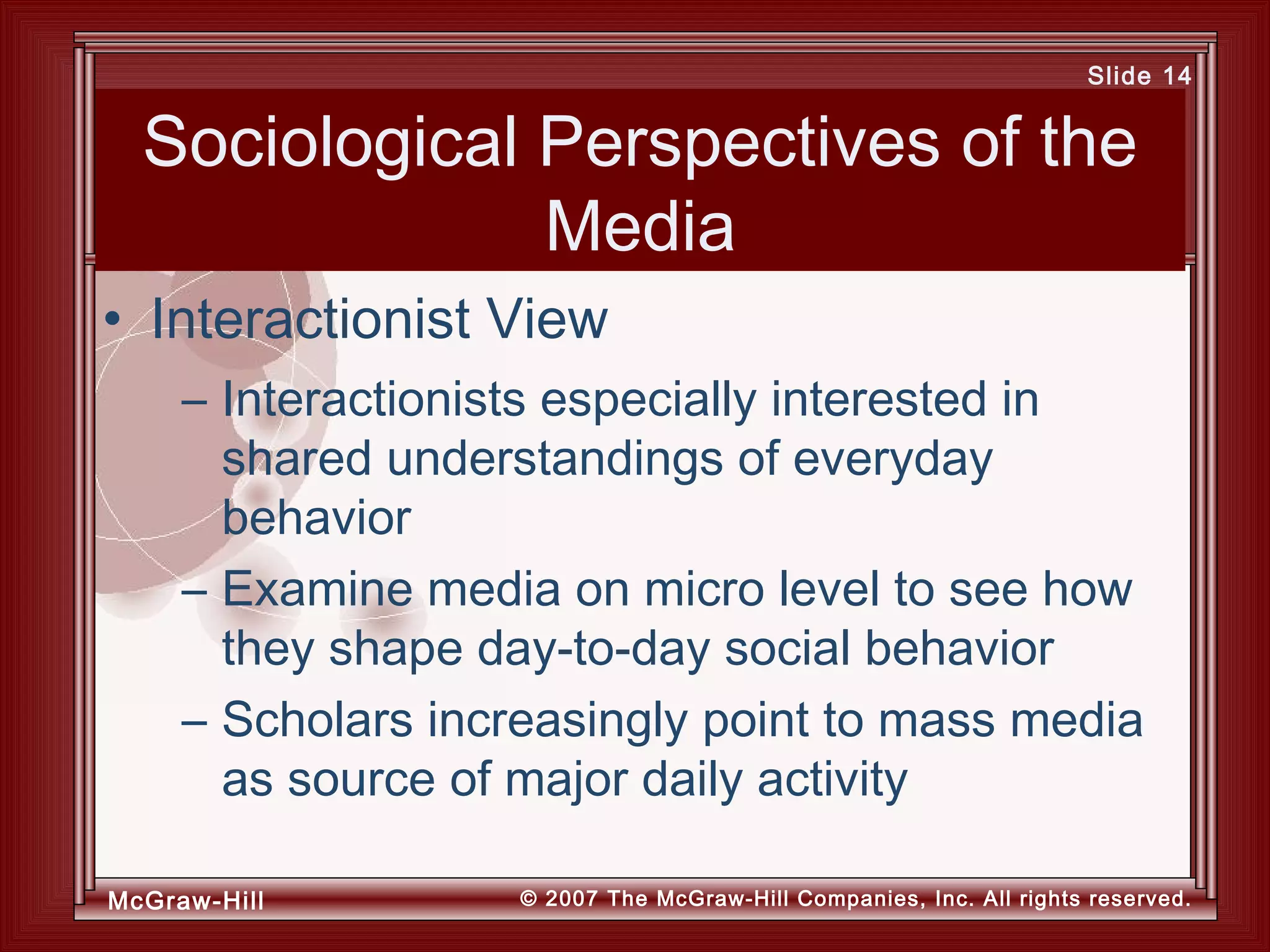
Slide 14
Sociological Perspectives of the
Media
– Interactionists especially interested in
shared understandings of everyday
behavior
– Examine media on micro level to see how
they shape day-to-day social behavior
– Scholars increasingly point to mass media
as source of major daily activity
• Interactionist View
McGraw-Hill © 2007 The McGraw-Hill Companies, Inc. All rights reserved.
Slide 15
Sociological Perspectives of the
Media
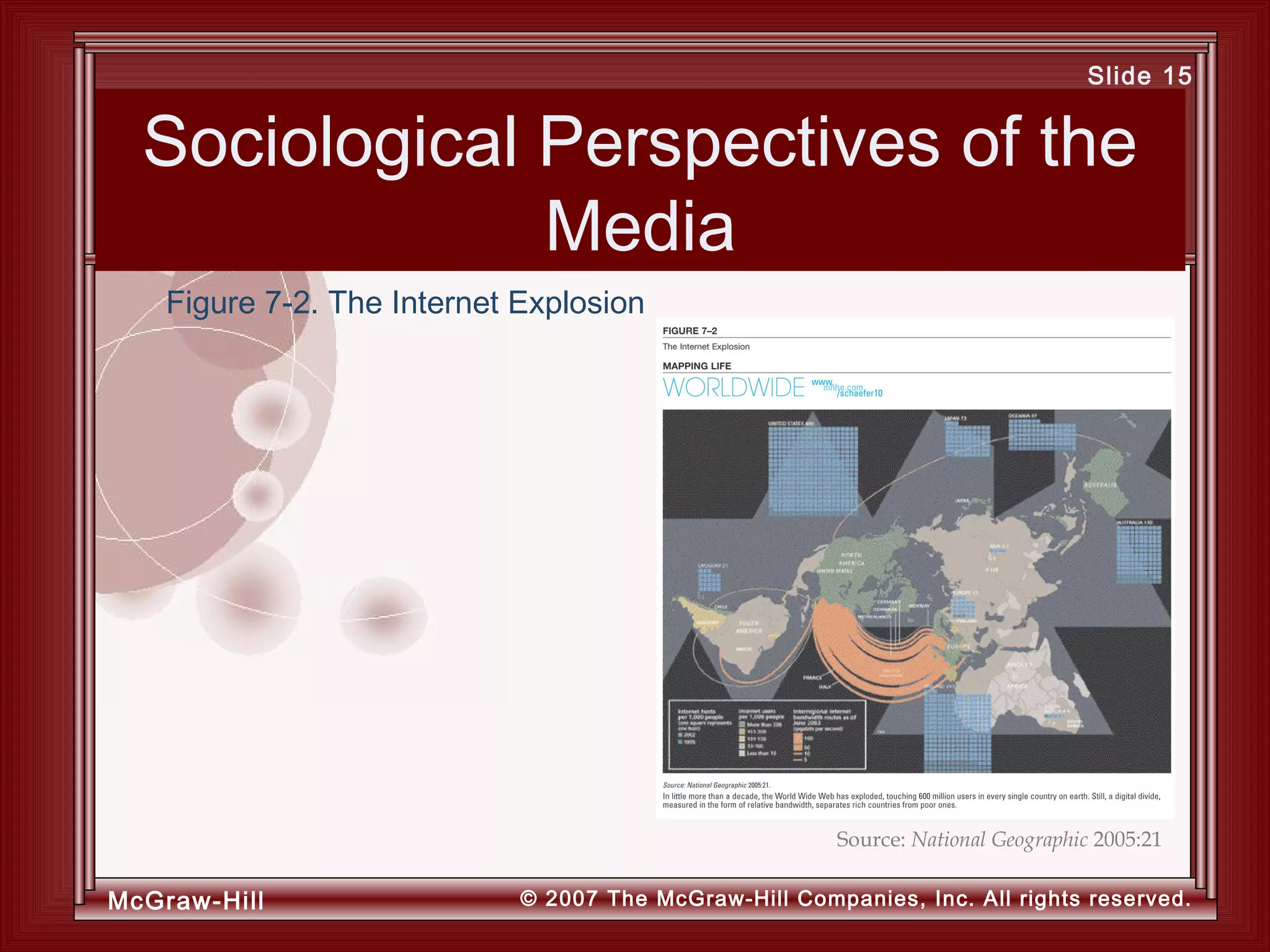
Figure 7-2. The Internet Explosion
Source: National Geographic 2005:21
McGraw-Hill © 2007 The McGraw-Hill Companies, Inc. All rights reserved.
Slide 16
Sociological Perspectives of the
Media
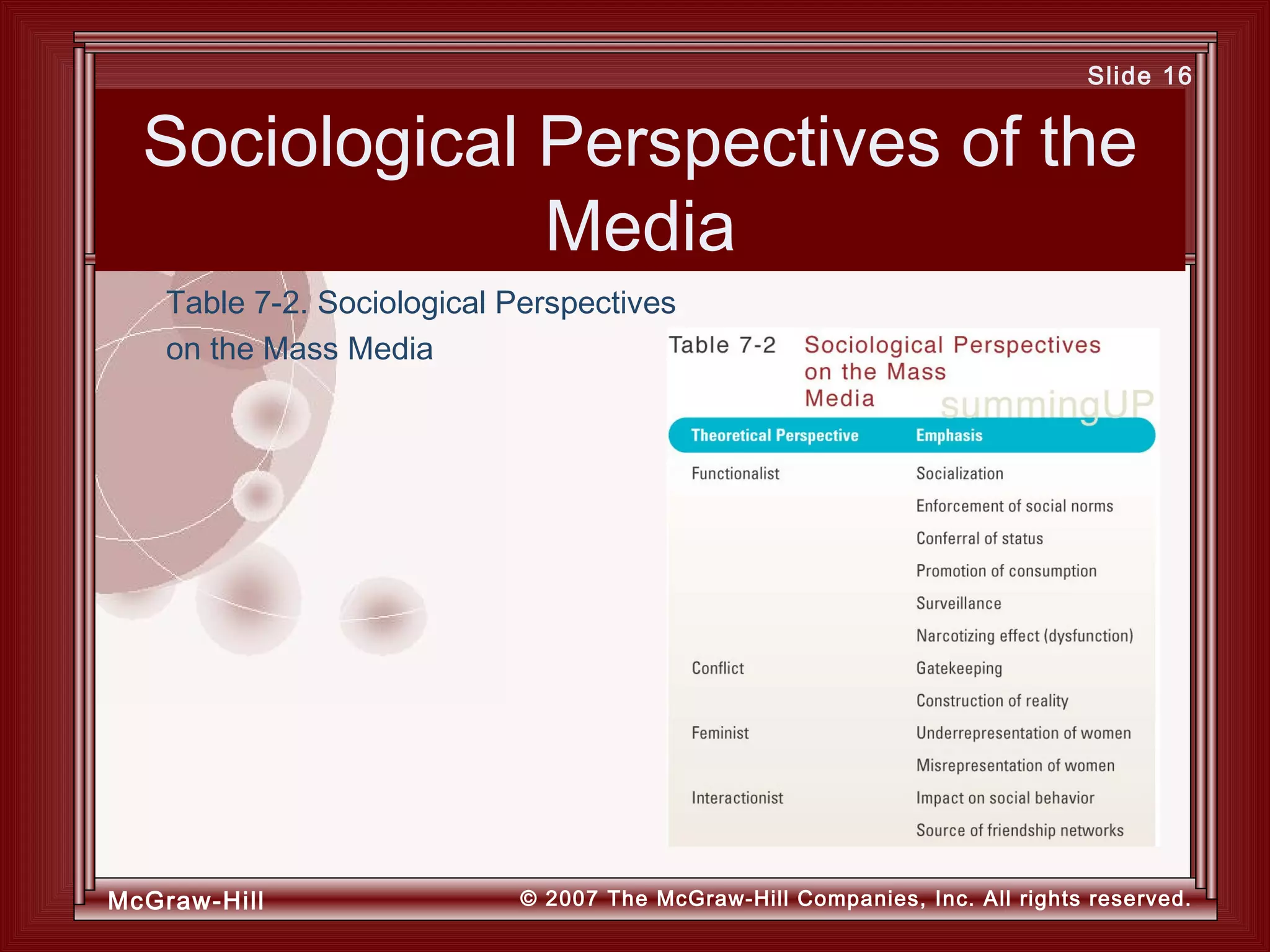
Table 7-2. Sociological Perspectives
on the Mass Media
McGraw-Hill © 2007 The McGraw-Hill Companies, Inc. All rights reserved.
Slide 17
The Audience
– Mass media distinguished from other social
institutions by necessary presence of
audience
– Identifiable, finite group or a much larger,
undefined group
• Who Is In the Audience?
McGraw-Hill © 2007 The McGraw-Hill Companies, Inc. All rights reserved.
Slide 18
The Audience
– Increasingly, media market themselves
to a particular audience
– The role of audience members as
opinion leaders intrigues social
researchers
• The Segmented Audience
Opinion leader: someone who, through day-
to-day personal contacts and communication,
influences opinions and decisions of others
McGraw-Hill © 2007 The McGraw-Hill Companies, Inc. All rights reserved.
Slide 19
The Audience
– Response often influenced by social
characteristics:
• Occupation
• Race
• Education
• Income
• Audience Behavior
McGraw-Hill © 2007 The McGraw-Hill Companies, Inc. All rights reserved.
Slide 20
The Media Industry
– Handful of multi-national corporations
dominate publishing, broadcasting, and
film industries
• The Media’s Global Reach
– Mass media have begun to create global
village in terms of communication
– Internet key to creating truly global network
• Media Concentration
McGraw-Hill © 2007 The McGraw-Hill Companies, Inc. All rights reserved.
Slide 21
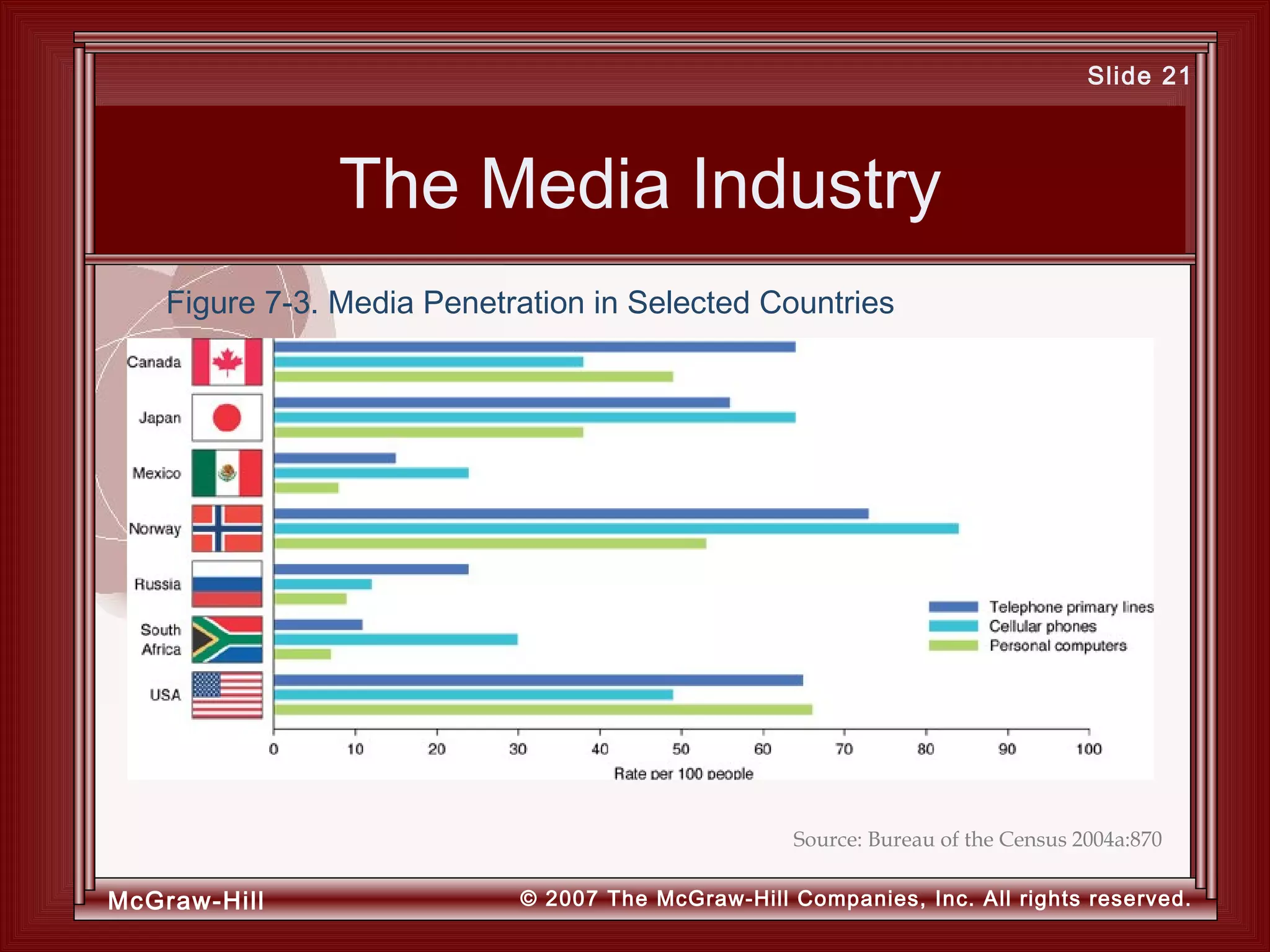
The Media Industry
Figure 7-3. Media Penetration in Selected Countries
Source: Bureau of the Census 2004a:870
McGraw-Hill © 2007 The McGraw-Hill Companies, Inc. All rights reserved.
Slide 22
Social Policy and Mass Media
• What effect does movie and TV violence have
on audiences?
• Does violence in the media lead people,
especially youth, to become more violent?
• Media Violence
– The Issue
McGraw-Hill © 2007 The McGraw-Hill Companies, Inc. All rights reserved.
Slide 23
Social Policy and Mass Media
• We spend great deal of time with the media
• Does watching hours of mass media with
violent images cause one to behave differently?
– Some studies linked exposure to media violence to
subsequent aggressive behavior
• Media Violence
– The Setting
It is important to recognize that other factors besides the
media are also related to aggressive behavior.
McGraw-Hill © 2007 The McGraw-Hill Companies, Inc. All rights reserved.
Slide 24
Social Policy and Mass Media
• If function of media is to entertain, socialize,
and enforce social norms, can violence be part
of that message?
• Even if viewer does not necessarily become
more violent from watching violent images,
there could be desensitization
• Media Violence
– Sociological Insights
McGraw-Hill © 2007 The McGraw-Hill Companies, Inc. All rights reserved.
Slide 25
Social Policy and Mass Media
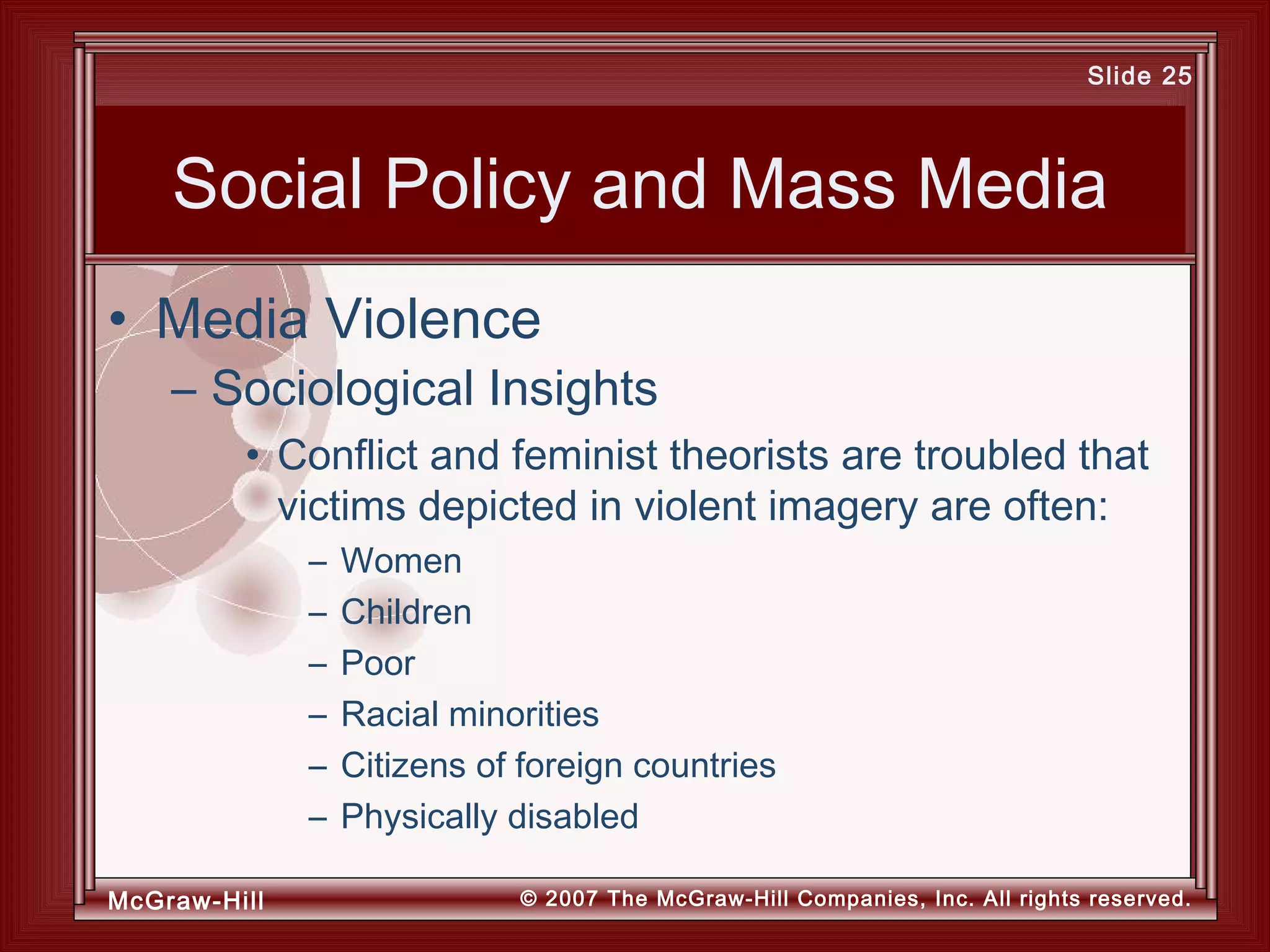
• Conflict and feminist theorists are troubled that
victims depicted in violent imagery are often:
– Women
– Children
– Poor
– Racial minorities
– Citizens of foreign countries
– Physically disabled
• Media Violence
– Sociological Insights
McGraw-Hill © 2007 The McGraw-Hill Companies, Inc. All rights reserved.
Slide 26
Social Policy and Mass Media
• Interactionists especially interested in finding
out if violence in media may then become script
for real-life behavior
• Media Violence
– Sociological Insights
McGraw-Hill © 2007 The McGraw-Hill Companies, Inc. All rights reserved.
Slide 27
Reluctance to pass laws regarded as censorship
Social Policy and Mass Media
• Policymakers responded to links between
violence depicted in media and real life
aggression:
– Public statements of support for family-oriented,
less-violent media content
• Media Violence
– Policy Initiatives
McGraw-Hill © 2007 The McGraw-Hill Companies, Inc. All rights reserved.
Slide 28
Social Policy and Mass Media
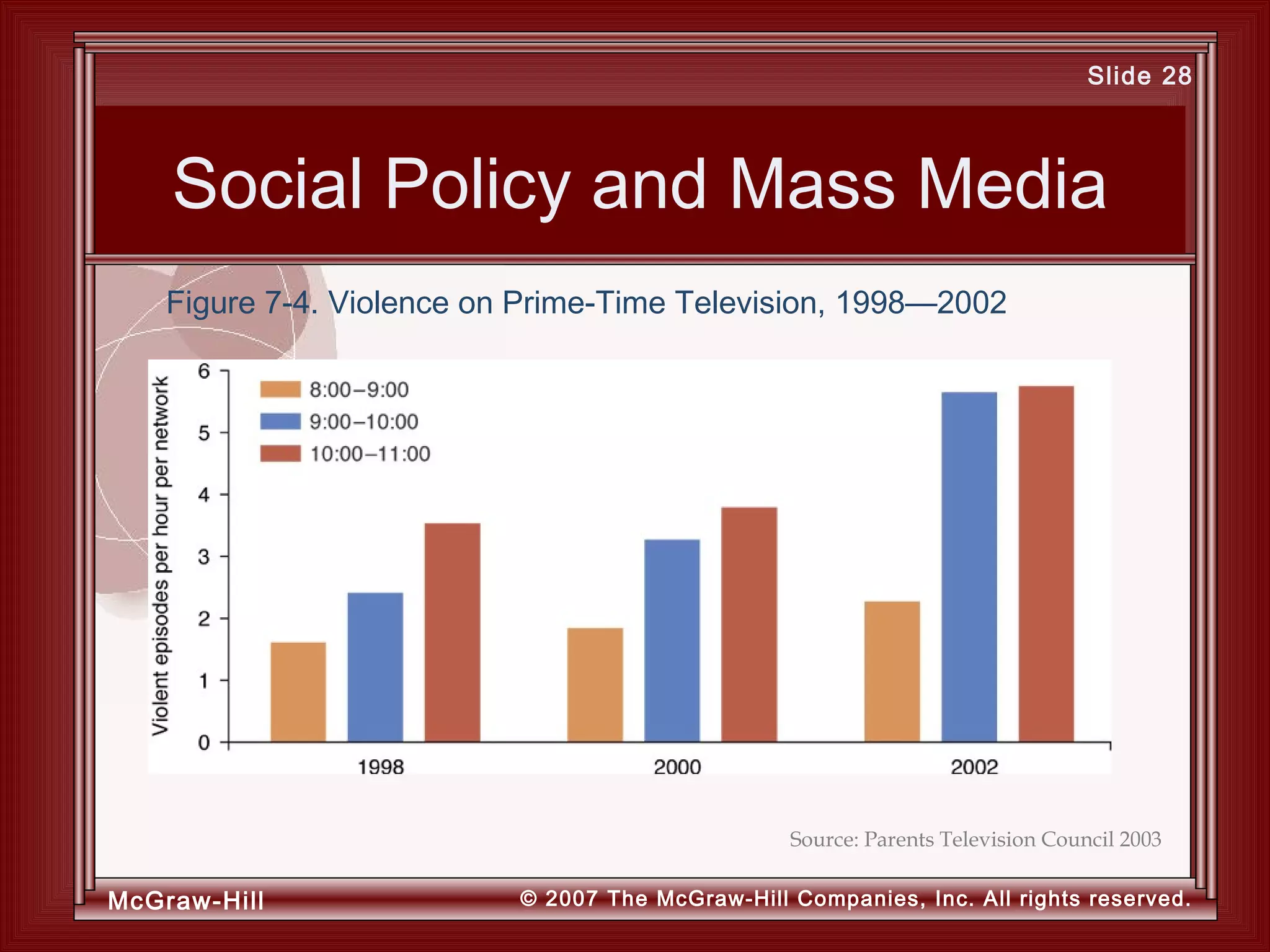
Figure 7-4. Violence on Prime-Time Television, 1998—2002
Source: Parents Television Council 2003

Schaefer10e ppt ch07

  • 1.
    McGraw-Hill © 2007The McGraw-Hill Companies, Inc. All rights reserved. Slide 1 SOCIOLOGY Richard T. Schaefer The Mass Media7
  • 2.
    McGraw-Hill © 2007The McGraw-Hill Companies, Inc. All rights reserved. Slide 2 7. The Mass Media • Sociological Perspectives of the Media • The Audience • The Media Industry • Social Policy and Mass Media
  • 3.
    McGraw-Hill © 2007The McGraw-Hill Companies, Inc. All rights reserved. Slide 3 Sociological Perspectives of the Media – The media: • Socialize us • Enforce social norms • Confer status • Promote consumption • Keep us informed about our environment • May act as a narcotic • Functionalist View
  • 4.
    McGraw-Hill © 2007The McGraw-Hill Companies, Inc. All rights reserved. Slide 4 Sociological Perspectives of the Media • Media increases social cohesion by presenting common view of culture – Provide collective experience for members of a society – Socializing effects can promote religious as well as patriotic exchanges, uniting believers around the world – Socializing effect of media means programming can easily become controversial • Functionalist View – Agent of Socialization
  • 5.
    McGraw-Hill © 2007The McGraw-Hill Companies, Inc. All rights reserved. Slide 5 Sociological Perspectives of the Media • Media reaffirm proper behavior by showing what happens to people who violate societal expectations – Conferral of Status • Singles out one from thousands of other similarly placed issues or people to become significant • Functionalist View – Enforcer of Social Norms
  • 6.
    McGraw-Hill © 2007The McGraw-Hill Companies, Inc. All rights reserved. Slide 6 Sociological Perspectives of the Media • Media advertising – Supports economy – Provides information – Underwrites cost of media • Functionalist View – Promotion of Consumption
  • 7.
    McGraw-Hill © 2007The McGraw-Hill Companies, Inc. All rights reserved. Slide 7 Sociological Perspectives of the Media Figure 7-1. Number of Hours per Week Spent with Media, 1997—2008 (projected) Source: Veronis Suhler Stevenson LLC 2003:166-167 for 1997; 2004:184-185 for all other data
  • 8.
    McGraw-Hill © 2007The McGraw-Hill Companies, Inc. All rights reserved. Slide 8 Sociological Perspectives of the Media Table 7-1. Status Conferred by Magazines
  • 9.
    McGraw-Hill © 2007The McGraw-Hill Companies, Inc. All rights reserved. Slide 9 Sociological Perspectives of the Media • Surveillance Function: collection and distribution of information concerning events in the social environment – Dysfunction: The Narcotizing Effect • Narcotizing Dysfunction: phenomenon in which the media provide such massive amounts of information that audience becomes numb and fails to act on the information • Functionalist View – Surveillance of the Social Environment
  • 10.
    McGraw-Hill © 2007The McGraw-Hill Companies, Inc. All rights reserved. Slide 10 Sociological Perspectives of the Media – Gatekeeping: how material must travel through a series of checkpoints before reaching the public • Conflict View • Ethnicity • Social class – Conflict theorists emphasize that the media reflect and even exacerbate many of the divisions of our society and world, including: • Gender • Race
  • 11.
    McGraw-Hill © 2007The McGraw-Hill Companies, Inc. All rights reserved. Slide 11 Sociological Perspectives of the Media • Dominant Ideology: set of cultural beliefs and practices that help to maintain powerful social, economic, and political interests • Mass media serve to maintain the privileges of certain groups • Stereotypes: unreliable generalization about all members of a group that do not recognize individual differences within the group • Conflict View – Dominant Ideology: Constructing Reality
  • 12.
    McGraw-Hill © 2007The McGraw-Hill Companies, Inc. All rights reserved. Slide 12 Sociological Perspectives of the Media • Globalization projects the dominating reach of the U.S. media into the rest of the world • Media cultural exports undermine the distinctive traditions and art forms of other societies and encourage their cultural and economic dependence on the U.S. • Conflict View – Dominant Ideology: Whose Culture? Nations that feel a loss of identity may try to defend against the cultural invasion
  • 13.
    McGraw-Hill © 2007The McGraw-Hill Companies, Inc. All rights reserved. Slide 13 Sociological Perspectives of the Media – Feminists share conflict theorists’ view that the mass media stereotype and misrepresent social reality • Women underrepresented • Perpetuate stereotypical views of gender • Emphasize traditional sex roles and normalize violence against women • Feminist View
  • 14.
    McGraw-Hill © 2007The McGraw-Hill Companies, Inc. All rights reserved. Slide 14 Sociological Perspectives of the Media – Interactionists especially interested in shared understandings of everyday behavior – Examine media on micro level to see how they shape day-to-day social behavior – Scholars increasingly point to mass media as source of major daily activity • Interactionist View
  • 15.
    McGraw-Hill © 2007The McGraw-Hill Companies, Inc. All rights reserved. Slide 15 Sociological Perspectives of the Media Figure 7-2. The Internet Explosion Source: National Geographic 2005:21
  • 16.
    McGraw-Hill © 2007The McGraw-Hill Companies, Inc. All rights reserved. Slide 16 Sociological Perspectives of the Media Table 7-2. Sociological Perspectives on the Mass Media
  • 17.
    McGraw-Hill © 2007The McGraw-Hill Companies, Inc. All rights reserved. Slide 17 The Audience – Mass media distinguished from other social institutions by necessary presence of audience – Identifiable, finite group or a much larger, undefined group • Who Is In the Audience?
  • 18.
    McGraw-Hill © 2007The McGraw-Hill Companies, Inc. All rights reserved. Slide 18 The Audience – Increasingly, media market themselves to a particular audience – The role of audience members as opinion leaders intrigues social researchers • The Segmented Audience Opinion leader: someone who, through day- to-day personal contacts and communication, influences opinions and decisions of others
  • 19.
    McGraw-Hill © 2007The McGraw-Hill Companies, Inc. All rights reserved. Slide 19 The Audience – Response often influenced by social characteristics: • Occupation • Race • Education • Income • Audience Behavior
  • 20.
    McGraw-Hill © 2007The McGraw-Hill Companies, Inc. All rights reserved. Slide 20 The Media Industry – Handful of multi-national corporations dominate publishing, broadcasting, and film industries • The Media’s Global Reach – Mass media have begun to create global village in terms of communication – Internet key to creating truly global network • Media Concentration
  • 21.
    McGraw-Hill © 2007The McGraw-Hill Companies, Inc. All rights reserved. Slide 21 The Media Industry Figure 7-3. Media Penetration in Selected Countries Source: Bureau of the Census 2004a:870
  • 22.
    McGraw-Hill © 2007The McGraw-Hill Companies, Inc. All rights reserved. Slide 22 Social Policy and Mass Media • What effect does movie and TV violence have on audiences? • Does violence in the media lead people, especially youth, to become more violent? • Media Violence – The Issue
  • 23.
    McGraw-Hill © 2007The McGraw-Hill Companies, Inc. All rights reserved. Slide 23 Social Policy and Mass Media • We spend great deal of time with the media • Does watching hours of mass media with violent images cause one to behave differently? – Some studies linked exposure to media violence to subsequent aggressive behavior • Media Violence – The Setting It is important to recognize that other factors besides the media are also related to aggressive behavior.
  • 24.
    McGraw-Hill © 2007The McGraw-Hill Companies, Inc. All rights reserved. Slide 24 Social Policy and Mass Media • If function of media is to entertain, socialize, and enforce social norms, can violence be part of that message? • Even if viewer does not necessarily become more violent from watching violent images, there could be desensitization • Media Violence – Sociological Insights
  • 25.
    McGraw-Hill © 2007The McGraw-Hill Companies, Inc. All rights reserved. Slide 25 Social Policy and Mass Media • Conflict and feminist theorists are troubled that victims depicted in violent imagery are often: – Women – Children – Poor – Racial minorities – Citizens of foreign countries – Physically disabled • Media Violence – Sociological Insights
  • 26.
    McGraw-Hill © 2007The McGraw-Hill Companies, Inc. All rights reserved. Slide 26 Social Policy and Mass Media • Interactionists especially interested in finding out if violence in media may then become script for real-life behavior • Media Violence – Sociological Insights
  • 27.
    McGraw-Hill © 2007The McGraw-Hill Companies, Inc. All rights reserved. Slide 27 Reluctance to pass laws regarded as censorship Social Policy and Mass Media • Policymakers responded to links between violence depicted in media and real life aggression: – Public statements of support for family-oriented, less-violent media content • Media Violence – Policy Initiatives
  • 28.
    McGraw-Hill © 2007The McGraw-Hill Companies, Inc. All rights reserved. Slide 28 Social Policy and Mass Media Figure 7-4. Violence on Prime-Time Television, 1998—2002 Source: Parents Television Council 2003