Social Media in Journalism
Monica, Kiara, Frank, Nathalie
5 Democratic Needs in Journalism
● Informs, analyzes, interprets and explains
● Investigates
● Creates public conversation
● Generates social empathy
● Encourages accountability
Rise of Social Media
● Twitter, Facebook, Instagram, etc.
● Easier than ever for journalist to achieve the 5 democratic needs
● Public/private discussion with people you may have not been able to converse
with
○ Public officials
○ Journalists
○ Public
Rise of Social Media
● Journalists are encouraged to..
○ Post rich media
■ Videos, photos, source clips
■ Engage with readers
■ Share links to their articles/important articles
Video Content on Social Media
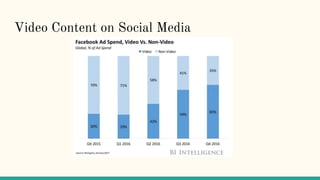
● Increased with the rise of smart-phones
● Increase viewers attention
● Increase amount of time viewers spend on websites
● Attracts large national advertisers
○ American Express, NBC, Walmart
○ Creates inventory to be sold to advertisers
■ Cost Per Thousand - Advertiser charges $25 for every 1000 viewers
Video Content on Social Media
Journalism Theories
● The introduction of social networking and social
media continued to fundamentally change
journalism,
- Focus is on social media and
the effect it has on society and they way we
communicate
● retain information
● Modern day newspaper
● A Pew research Center and
Knight Foundation study found
that nearly half of Facebook users
, or about one-third of the
population, consume news on the
largest social media platform.
- “News is a common but incidental
experience “
● Users went on social media for
other purposes, they often found
news. ( News is often shared on
Facebook, even for users who do
not often follow current events-
exposed to news)
Citizen Journalism
● Journalism shifts from mass communication to work that include User-generated content (UGC)
● Term used to describe any form of content such as :
- Video
- blogs
- discussion from posts
- digital images etc.
- UGC identified a shift in interest toward collaboration with audience members.
-
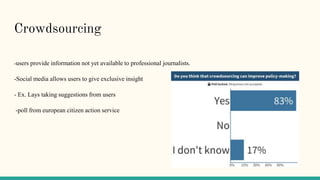
Crowdsourcing
-users provide information not yet available to professional journalists.
-Social media allows users to give exclusive insight
- Ex. Lays taking suggestions from users
-poll from european citizen action service
Micro-Blogging
Using outlets such as Twitter to push stories and interact with audience.
- Viewed as “Less Trustworthy/Credible”
- Interactions give audience members a “Quasi-Journalist” role by allowing them
to challenge news gatekeepers.
- According to the Harvard Business Review, micoblogging can enhance
productivity by allowing employees to rapidly exchange information and drive
solutions which would otherwise take much longer — and be far more expensive
to achieve.
Journalism Case Study
Wikileaks is a site known for using the internet as a means to leak information to
the global population.
- Has changed political media
Recently, Wikileaks found Julian Assange has been the target of Governmental
powers.
Successes
Social media has the power to influence, during the 2011 Tunisian and Egyptian
revolution figures like Activist, Media Outlets, and Journalist played a part in
kicking it off.
Bloggers
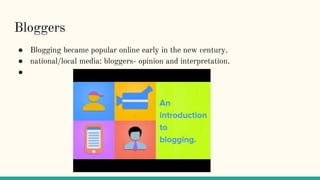
● Blogging became popular online early in the new century.
● national/local media: bloggers- opinion and interpretation.
●
Social Media Celebrity
● Opinion leadership & interest in entertainment push media content.
● Ex: Kony 2012 video; Oprah’s tweet (15%)
Failures
● Most significant problems Journalism faces -Paying for the enterprise
○ Declining subscriptions (newspaper)
○ Revenue loss- online competition
○ New technologies- layoffs
○ Replaced with online experienced employees
● Important points in news editorial content
○ Increasing amount of native advertising- sponsored tweets
○ Social media & word-of-mouth origination of news instead of through news media sources
Guess that social media site

Chapter presentation

  • 1.
    Social Media inJournalism Monica, Kiara, Frank, Nathalie
  • 2.
    5 Democratic Needsin Journalism ● Informs, analyzes, interprets and explains ● Investigates ● Creates public conversation ● Generates social empathy ● Encourages accountability
  • 3.
    Rise of SocialMedia ● Twitter, Facebook, Instagram, etc. ● Easier than ever for journalist to achieve the 5 democratic needs ● Public/private discussion with people you may have not been able to converse with ○ Public officials ○ Journalists ○ Public
  • 4.
    Rise of SocialMedia ● Journalists are encouraged to.. ○ Post rich media ■ Videos, photos, source clips ■ Engage with readers ■ Share links to their articles/important articles
  • 5.
    Video Content onSocial Media ● Increased with the rise of smart-phones ● Increase viewers attention ● Increase amount of time viewers spend on websites ● Attracts large national advertisers ○ American Express, NBC, Walmart ○ Creates inventory to be sold to advertisers ■ Cost Per Thousand - Advertiser charges $25 for every 1000 viewers
  • 6.
    Video Content onSocial Media
  • 7.
    Journalism Theories ● Theintroduction of social networking and social media continued to fundamentally change journalism, - Focus is on social media and the effect it has on society and they way we communicate ● retain information ● Modern day newspaper ● A Pew research Center and Knight Foundation study found that nearly half of Facebook users , or about one-third of the population, consume news on the largest social media platform. - “News is a common but incidental experience “ ● Users went on social media for other purposes, they often found news. ( News is often shared on Facebook, even for users who do not often follow current events- exposed to news)
  • 8.
    Citizen Journalism ● Journalismshifts from mass communication to work that include User-generated content (UGC) ● Term used to describe any form of content such as : - Video - blogs - discussion from posts - digital images etc. - UGC identified a shift in interest toward collaboration with audience members. -
  • 9.
    Crowdsourcing -users provide informationnot yet available to professional journalists. -Social media allows users to give exclusive insight - Ex. Lays taking suggestions from users -poll from european citizen action service
  • 10.
    Micro-Blogging Using outlets suchas Twitter to push stories and interact with audience. - Viewed as “Less Trustworthy/Credible” - Interactions give audience members a “Quasi-Journalist” role by allowing them to challenge news gatekeepers. - According to the Harvard Business Review, micoblogging can enhance productivity by allowing employees to rapidly exchange information and drive solutions which would otherwise take much longer — and be far more expensive to achieve.
  • 11.
    Journalism Case Study Wikileaksis a site known for using the internet as a means to leak information to the global population. - Has changed political media Recently, Wikileaks found Julian Assange has been the target of Governmental powers.
  • 12.
    Successes Social media hasthe power to influence, during the 2011 Tunisian and Egyptian revolution figures like Activist, Media Outlets, and Journalist played a part in kicking it off.
  • 13.
    Bloggers ● Blogging becamepopular online early in the new century. ● national/local media: bloggers- opinion and interpretation. ●
  • 14.
    Social Media Celebrity ●Opinion leadership & interest in entertainment push media content. ● Ex: Kony 2012 video; Oprah’s tweet (15%)
  • 15.
    Failures ● Most significantproblems Journalism faces -Paying for the enterprise ○ Declining subscriptions (newspaper) ○ Revenue loss- online competition ○ New technologies- layoffs ○ Replaced with online experienced employees ● Important points in news editorial content ○ Increasing amount of native advertising- sponsored tweets ○ Social media & word-of-mouth origination of news instead of through news media sources
  • 16.
  • 17.
  • 18.
  • 19.
  • 20.

Editor's Notes