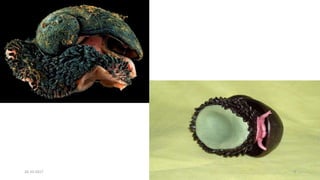
Scaly foot snail
By
Akash Karkar
En. No. 201604101110008
Introduction
• Deep in the Indian Ocean, near extremely hot hydrothermal vents or
black-smoker chimneys, where scalding hot water erupts in tall,
blacky columns, lives an extraordinary species of snail
called Chrysomallon squamiferum, commonly known as scaly-foot
snail.
26-10-2017 2
Habitat
• Mainly present at 2780 m depth in Indian ocean near hydrothermal vents.
• The snail, or gastropod, has adapted to survive the harsh conditions near the
vents. The water is full of hydrogen sulfide, which is twice as poisonous as
cyanide gas.
• In a tidy symbiotic match, the snail offers its interior as a home for bacteria,
which in turn make the proteins and carbohydrates that the snail uses for
food. The snail and its shell are about four centimeters long.
• There are 3 places from where they are collected:
• Kairei,
• Longqi,
• Solitaire26-10-2017 3
26-10-2017 4
Exoskeleton
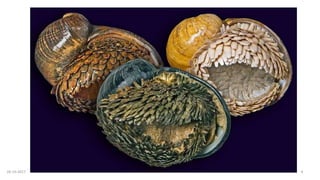
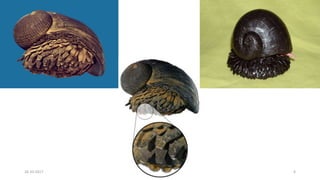
• The harsh environment has caused the snail to develop a unique
exoskeleton. Its outer shell is covered with a layer of iron, and its soft
fleshy foot that protrudes from the under the shell is protected by hard
mineralized scales made of iron sulphides. Scaly-foot is the only
animal on Earth known to utilize iron in this way.
• The water around the organisms are high in sulfides and metals, which
the snails have incorporated into their shells. The entire animal is
covered in iron compound, mainly pyrite, also known as “Fool’s gold”
and greigite. As greigite is magnetic, the animal actually sticks to
magnets.
26-10-2017 5
26-10-2017 6
Cont..
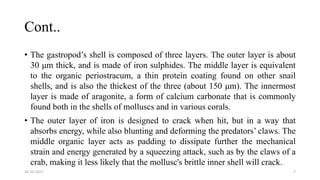
• The gastropod’s shell is composed of three layers. The outer layer is about
30 μm thick, and is made of iron sulphides. The middle layer is equivalent
to the organic periostracum, a thin protein coating found on other snail
shells, and is also the thickest of the three (about 150 μm). The innermost
layer is made of aragonite, a form of calcium carbonate that is commonly
found both in the shells of molluscs and in various corals.
• The outer layer of iron is designed to crack when hit, but in a way that
absorbs energy, while also blunting and deforming the predators’ claws. The
middle organic layer acts as padding to dissipate further the mechanical
strain and energy generated by a squeezing attack, such as by the claws of a
crab, making it less likely that the mollusc's brittle inner shell will crack.
26-10-2017 7
Sclerites
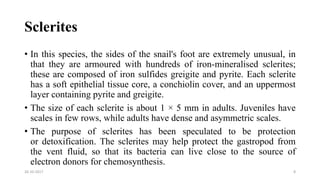
• In this species, the sides of the snail's foot are extremely unusual, in
that they are armoured with hundreds of iron-mineralised sclerites;
these are composed of iron sulfides greigite and pyrite. Each sclerite
has a soft epithelial tissue core, a conchiolin cover, and an uppermost
layer containing pyrite and greigite.
• The size of each sclerite is about 1 × 5 mm in adults. Juveniles have
scales in few rows, while adults have dense and asymmetric scales.
• The purpose of sclerites has been speculated to be protection
or detoxification. The sclerites may help protect the gastropod from
the vent fluid, so that its bacteria can live close to the source of
electron donors for chemosynthesis.
26-10-2017 8
26-10-2017 9
Endosymbiosis
• There are the bacteria inside the scaly-foot snail. It’s probably serving its host in
an even more important way: chemosynthesis. That’s a five-dollar word meaning
the snail isn’t eating food, but instead relying on bacteria for sustenance. Its
digestive system is practically non-existent, but it does have a gland—which is
1,000 times bigger than in other snails—where the bacteria live and produce food.
• These bacteria supply the snail with most of its nutrition and to accommodate
them the snail has developed a massive oesophageal gland, taking up over 9% of
its body mass! In turn the snail keep the bacteria alive and so has also developed a
huge circulatory system, including a supersized heart, to supply the oesophageal
gland with enough oxygen.
26-10-2017 10
26-10-2017 11
Thank U
26-10-2017 12

Scaly foot Snail

  • 1.
    Scaly foot snail By AkashKarkar En. No. 201604101110008
  • 2.
    Introduction • Deep inthe Indian Ocean, near extremely hot hydrothermal vents or black-smoker chimneys, where scalding hot water erupts in tall, blacky columns, lives an extraordinary species of snail called Chrysomallon squamiferum, commonly known as scaly-foot snail. 26-10-2017 2
  • 3.
    Habitat • Mainly presentat 2780 m depth in Indian ocean near hydrothermal vents. • The snail, or gastropod, has adapted to survive the harsh conditions near the vents. The water is full of hydrogen sulfide, which is twice as poisonous as cyanide gas. • In a tidy symbiotic match, the snail offers its interior as a home for bacteria, which in turn make the proteins and carbohydrates that the snail uses for food. The snail and its shell are about four centimeters long. • There are 3 places from where they are collected: • Kairei, • Longqi, • Solitaire26-10-2017 3
  • 4.
  • 5.
    Exoskeleton • The harshenvironment has caused the snail to develop a unique exoskeleton. Its outer shell is covered with a layer of iron, and its soft fleshy foot that protrudes from the under the shell is protected by hard mineralized scales made of iron sulphides. Scaly-foot is the only animal on Earth known to utilize iron in this way. • The water around the organisms are high in sulfides and metals, which the snails have incorporated into their shells. The entire animal is covered in iron compound, mainly pyrite, also known as “Fool’s gold” and greigite. As greigite is magnetic, the animal actually sticks to magnets. 26-10-2017 5
  • 6.
  • 7.
    Cont.. • The gastropod’sshell is composed of three layers. The outer layer is about 30 μm thick, and is made of iron sulphides. The middle layer is equivalent to the organic periostracum, a thin protein coating found on other snail shells, and is also the thickest of the three (about 150 μm). The innermost layer is made of aragonite, a form of calcium carbonate that is commonly found both in the shells of molluscs and in various corals. • The outer layer of iron is designed to crack when hit, but in a way that absorbs energy, while also blunting and deforming the predators’ claws. The middle organic layer acts as padding to dissipate further the mechanical strain and energy generated by a squeezing attack, such as by the claws of a crab, making it less likely that the mollusc's brittle inner shell will crack. 26-10-2017 7
  • 8.
    Sclerites • In thisspecies, the sides of the snail's foot are extremely unusual, in that they are armoured with hundreds of iron-mineralised sclerites; these are composed of iron sulfides greigite and pyrite. Each sclerite has a soft epithelial tissue core, a conchiolin cover, and an uppermost layer containing pyrite and greigite. • The size of each sclerite is about 1 × 5 mm in adults. Juveniles have scales in few rows, while adults have dense and asymmetric scales. • The purpose of sclerites has been speculated to be protection or detoxification. The sclerites may help protect the gastropod from the vent fluid, so that its bacteria can live close to the source of electron donors for chemosynthesis. 26-10-2017 8
  • 9.
  • 10.
    Endosymbiosis • There arethe bacteria inside the scaly-foot snail. It’s probably serving its host in an even more important way: chemosynthesis. That’s a five-dollar word meaning the snail isn’t eating food, but instead relying on bacteria for sustenance. Its digestive system is practically non-existent, but it does have a gland—which is 1,000 times bigger than in other snails—where the bacteria live and produce food. • These bacteria supply the snail with most of its nutrition and to accommodate them the snail has developed a massive oesophageal gland, taking up over 9% of its body mass! In turn the snail keep the bacteria alive and so has also developed a huge circulatory system, including a supersized heart, to supply the oesophageal gland with enough oxygen. 26-10-2017 10
  • 11.
  • 12.