SINGLE-USE
PLASTICS
We don’t need a handful of people
doing zero waste perfectly. We need
millions of people doing it imperfectly.
THE BASICS OF
PLASTIC
AROUND US
“It’s only one straw,” said 8 billion
people.-
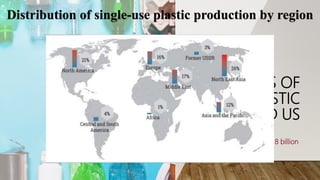
Distribution of single-use plastic production by region
PLASTIC:THE
JOURNEYTOTHE
OCEAN
5
The lifecycle of plastic
I
M
P
A
C
T
S
At G7 summit, PM Modi highlights India's large scale
efforts towards eliminating single-use plastic
7
India became the 62nd nation to join the deal.
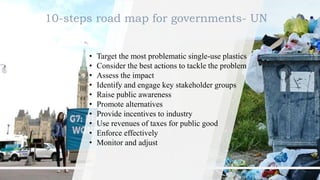
10-steps road map for governments- UN
8
• Target the most problematic single-use plastics
• Consider the best actions to tackle the problem
• Assess the impact
• Identify and engage key stakeholder groups
• Raise public awareness
• Promote alternatives
• Provide incentives to industry
• Use revenues of taxes for public good
• Enforce effectively
• Monitor and adjust
Transitioning to more eco-friendly alternatives can be a lengthy process. In the
meantime, strengthening circular thinking and waste management systems can
successfully help in reducing plastics pollution.

Single use plastic presentation

  • 2.
    SINGLE-USE PLASTICS We don’t needa handful of people doing zero waste perfectly. We need millions of people doing it imperfectly.
  • 3.
    THE BASICS OF PLASTIC AROUNDUS “It’s only one straw,” said 8 billion people.- Distribution of single-use plastic production by region
  • 4.
  • 5.
  • 6.
  • 7.
    At G7 summit,PM Modi highlights India's large scale efforts towards eliminating single-use plastic 7 India became the 62nd nation to join the deal.
  • 8.
    10-steps road mapfor governments- UN 8 • Target the most problematic single-use plastics • Consider the best actions to tackle the problem • Assess the impact • Identify and engage key stakeholder groups • Raise public awareness • Promote alternatives • Provide incentives to industry • Use revenues of taxes for public good • Enforce effectively • Monitor and adjust
  • 9.
    Transitioning to moreeco-friendly alternatives can be a lengthy process. In the meantime, strengthening circular thinking and waste management systems can successfully help in reducing plastics pollution.

Editor's Notes

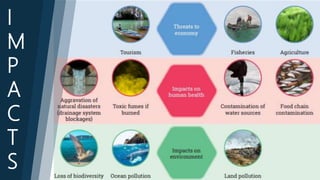
  • #2 Plastic is a miracle material. Thanks to plastics, countless lives have been saved in the health sector, the growth of clean energy from wind turbines and solar panels has been greatly facilitated, and safe food storage has been revolutionized. But what makes plastic so convenient in our day-to-day lives – it’s cheap – also makes it ubiquitous, resulting in one of our planet’s greatest environmental challenges. Our oceans have been used as a dumping ground, choking marine life and transforming some marine areas into a plastic soup. In cities around the world, plastic waste clogs drains, causing floods and breeding disease. Consumed by livestock, it also finds its way into the food chain. Plastic packaging accounts for nearly half of all plastic waste globally, and much of it is thrown away within just a few minutes of its first use. Much plastic may be single-use, but that does not mean it is easily disposable. When discarded in landfills or in the environment, plastic can take up to a thousand years to decompose.
  • #3 The good news is that a growing number of governments are taking action and demonstrating that all nations, whether rich or poor, can become global environmental leaders. Rwanda, a pioneer in banning single-use plastic bags, is now one of the cleanest nations on earth. Kenya has followed suit, helping clear its iconic national parks and save its cows from an unhealthy diet. Learning from the experience of countries that have introduced bans and regulations on single-use plastics, this assessment analyses what has worked well, what hasn’t, and why. The report is therefore a tool for policymakers who intend to introduce measures to regulate the production and use of disposable plastics. The assessment shows that action can be painless and profitable – with huge gains for people and the planet that help avert the costly downstream costs of pollution. In addition, action will drive the kind of innovation that will underpin the future global economy we need. Plastic isn’t the problem. It’s what we do with it. And that means the onus is on us to be far smarter in how we use this miracle material.
  • #8 The country had decided to better adapt to climate change by enhancing investments in development programmes in sectors vulnerable to climate change, particularly agriculture, water resources, Himalayan region, coastal regions, health and disaster management. Governments around the world are increasingly awake to the scale of plastic pollution. More than 60 countries have introduced bans and levies to curb single-use plastic waste. Plastic bags and, to a certain extent, foamed plastic products like Styrofoam have been the main focus of government action so far.
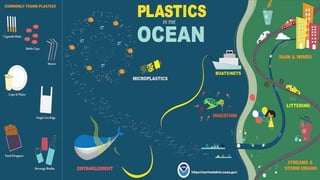
  • #10 Large amounts of single-use plastics are improperly discarded in dumpsites, in the environment, or burned out of necessity as cooking fuel, especially in countries with inadequate waste management systems and limited public awareness. Only a small percentage is disposed of properly in sanitary landfills, and an even smaller portion is recycled. From the case studies it is evident that the presence and impacts of mismanaged singleuse plastics are not solely characteristic of developing countries. To date for instance, the so called “knot plastic bags” used for fresh food handling (such as raw meat, fruits and vegetables, and fresh produce) are still the most practical and hygienic option available cross-borders, and there is no expectation of their imminent phase-out.