Page 1
Page 2
Page 3
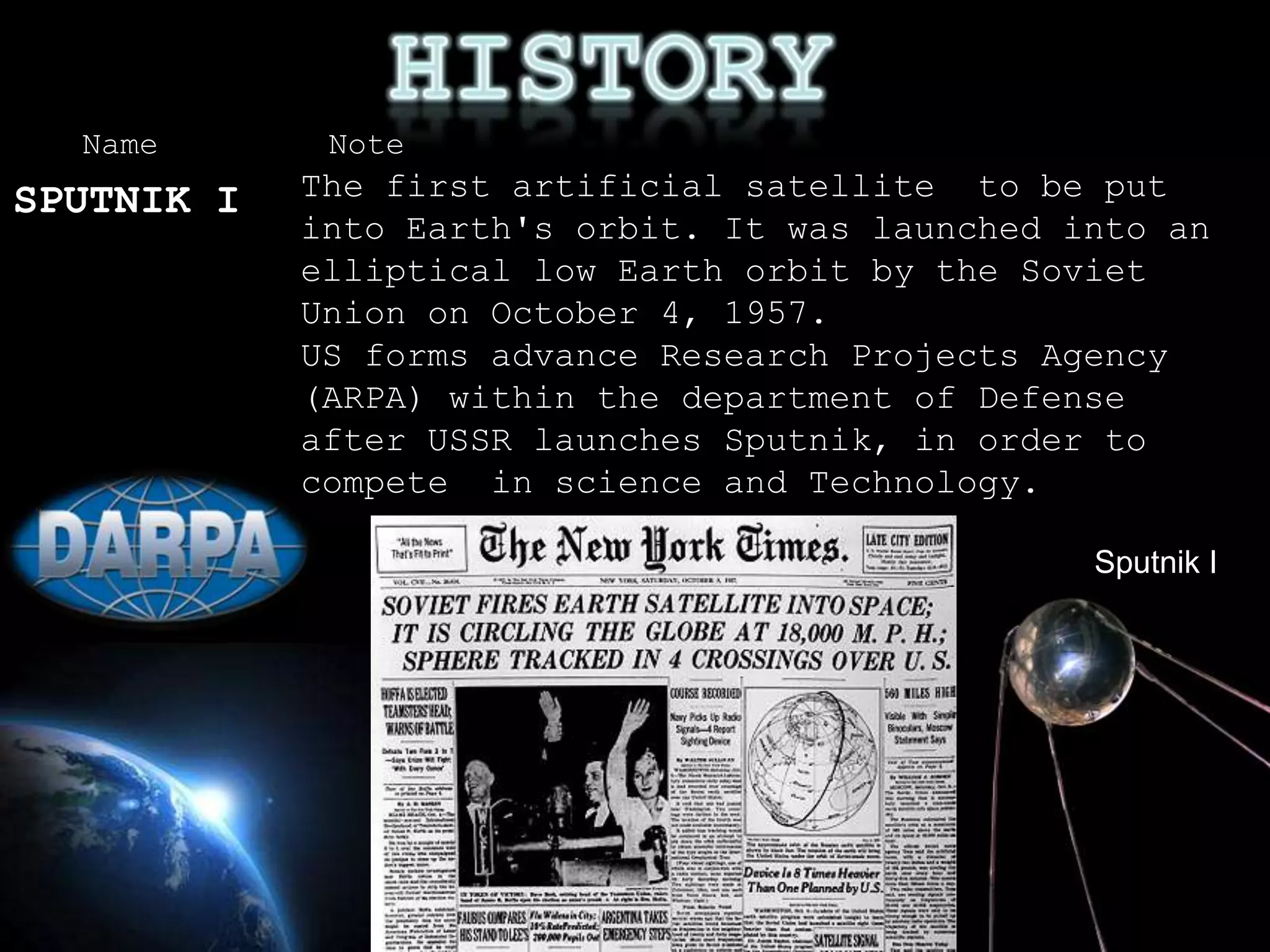
Name       Note
SPUTNIK I   The first artificial satellite to be put
            into Earth's orbit. It was launched into an
            elliptical low Earth orbit by the Soviet
            Union on October 4, 1957.
            US forms advance Research Projects Agency
            (ARPA) within the department of Defense
            after USSR launches Sputnik, in order to
            compete in science and Technology.

                                                 Sputnik I


                                                  Page 4
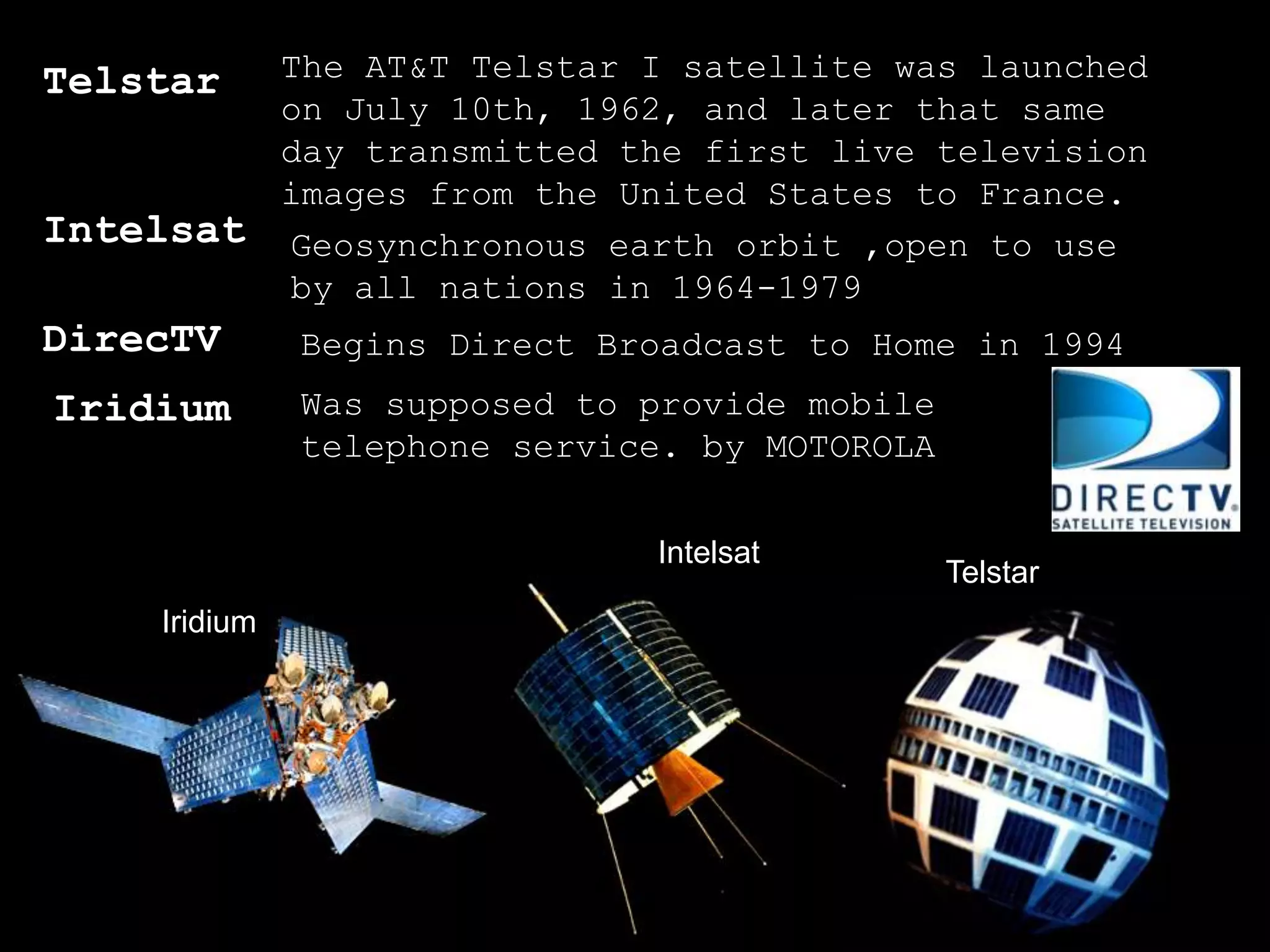
Telstar  The AT&T Telstar I satellite was launched
         on July 10th, 1962, and later that same
         day transmitted the first live television
         images from the United States to France.
Intelsat Geosynchronous earth orbit ,open to use
         by all nations in 1964-1979
DirecTV        Begins Direct Broadcast to Home in 1994
Iridium        Was supposed to provide mobile
               telephone service. by MOTOROLA


                               Intelsat
                                                Telstar
     Iridium


                                                          Page 5
Basics of satellite communication
Types of satellites
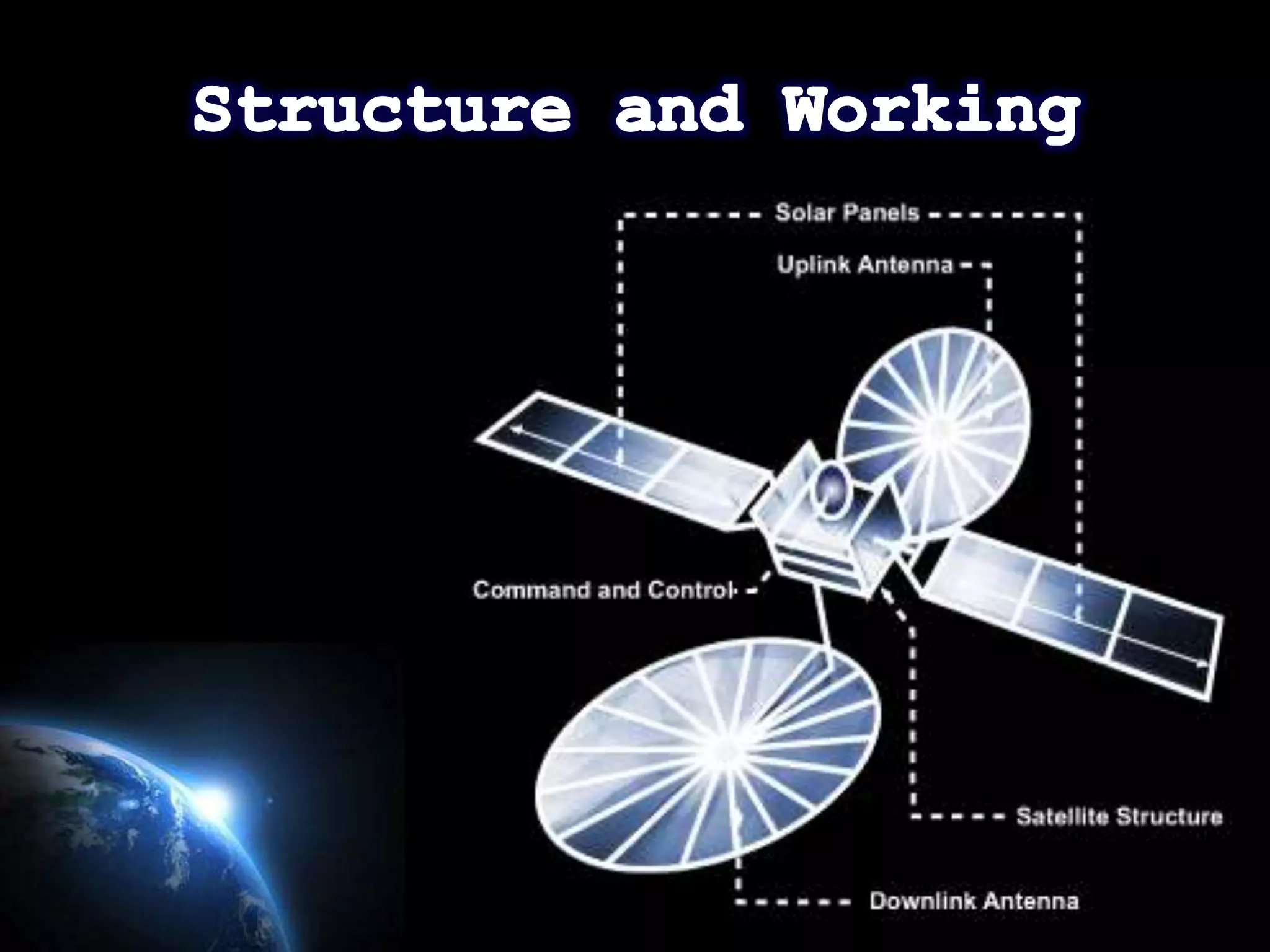
Structure & Working of satellite
Advantages & Disadvantages


                                     Page 6
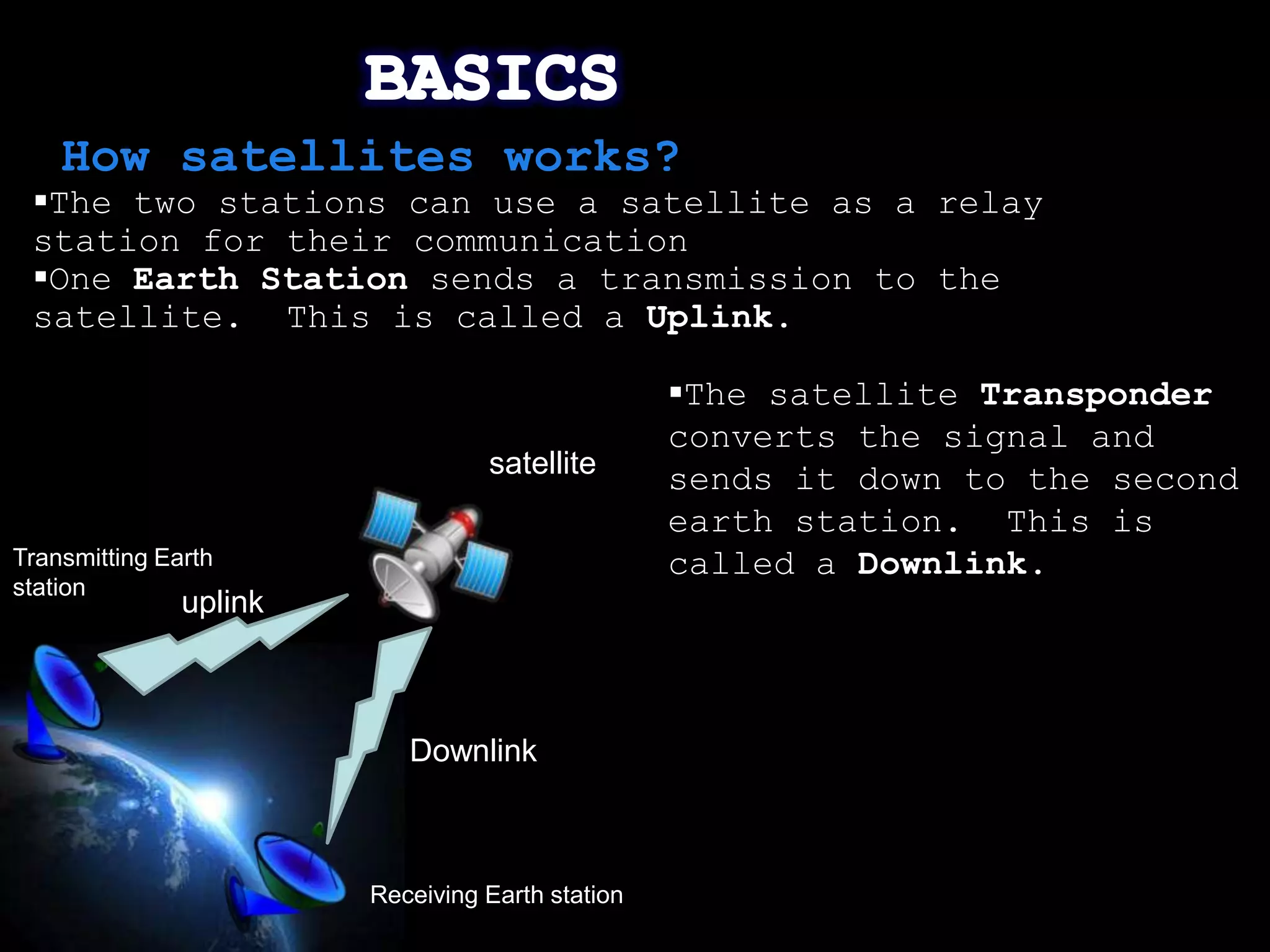
How satellites works?
 The two stations can use a satellite as a relay
 station for their communication
 One Earth Station sends a transmission to the
 satellite. This is called a Uplink.

                                                  The satellite Transponder
                                                  converts the signal and
                                  satellite       sends it down to the second
                                                  earth station. This is
Transmitting Earth                                called a Downlink.
station
               uplink


                           Downlink


                        Receiving Earth station
                                                                       Page 7
Page 8
Page 9
Page 10
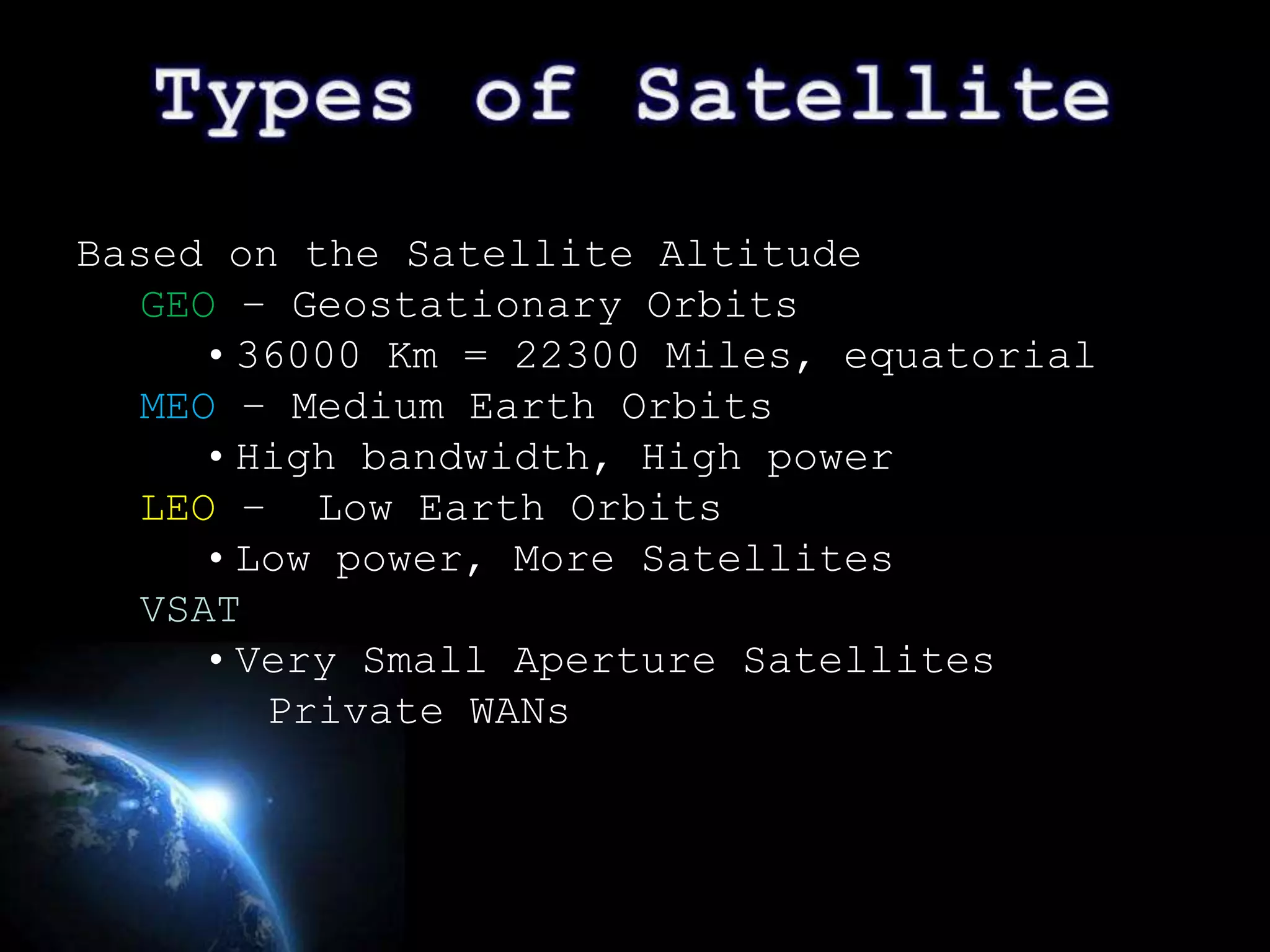
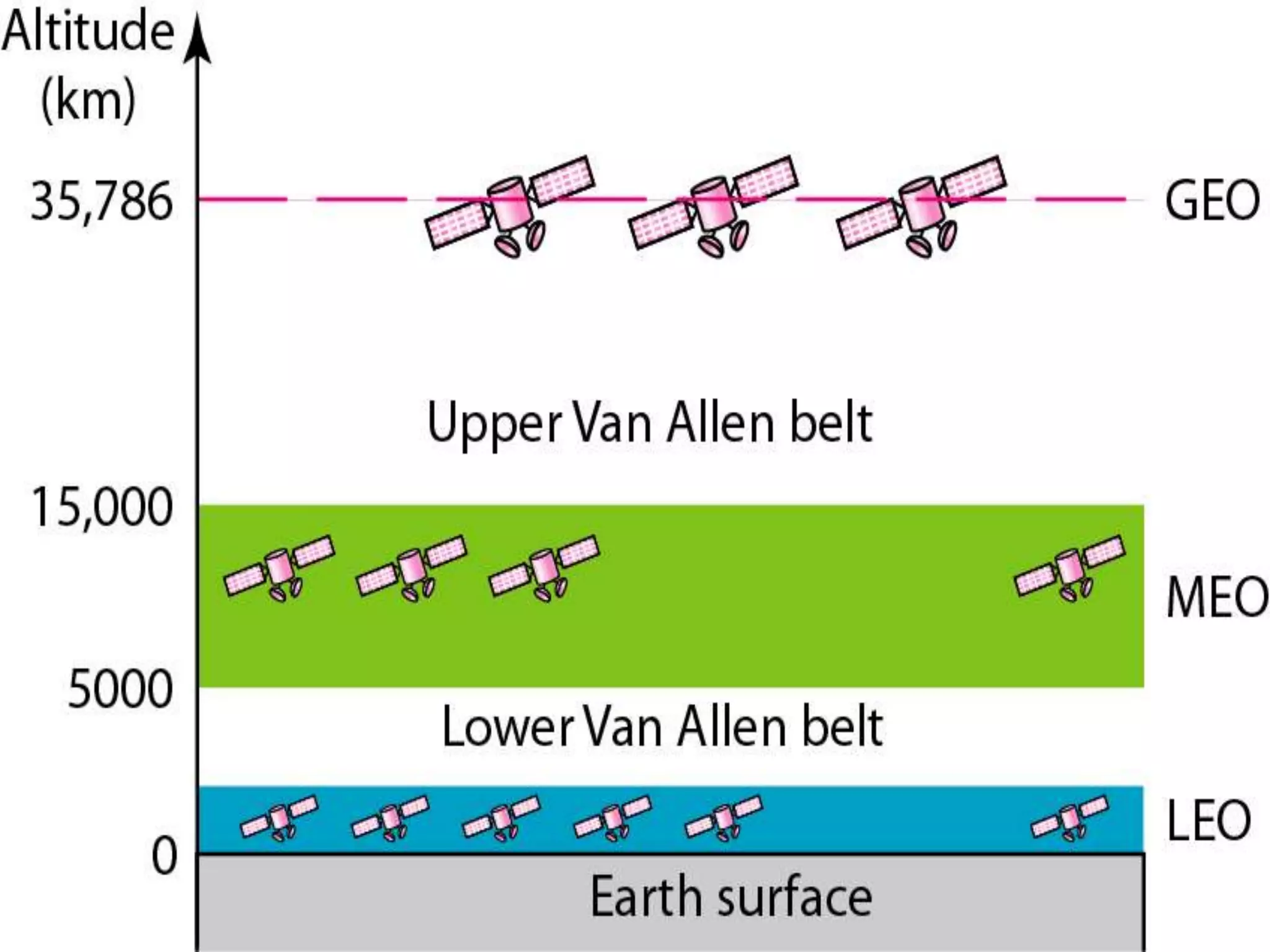
Based on the Satellite Altitude
   GEO – Geostationary Orbits
      • 36000 Km = 22300 Miles, equatorial
   MEO – Medium Earth Orbits
      • High bandwidth, High power
   LEO – Low Earth Orbits
      • Low power, More Satellites
   VSAT
      • Very Small Aperture Satellites
         Private WANs


                                             Page 11
Page 12
Basics: Advantages of
            Satellites
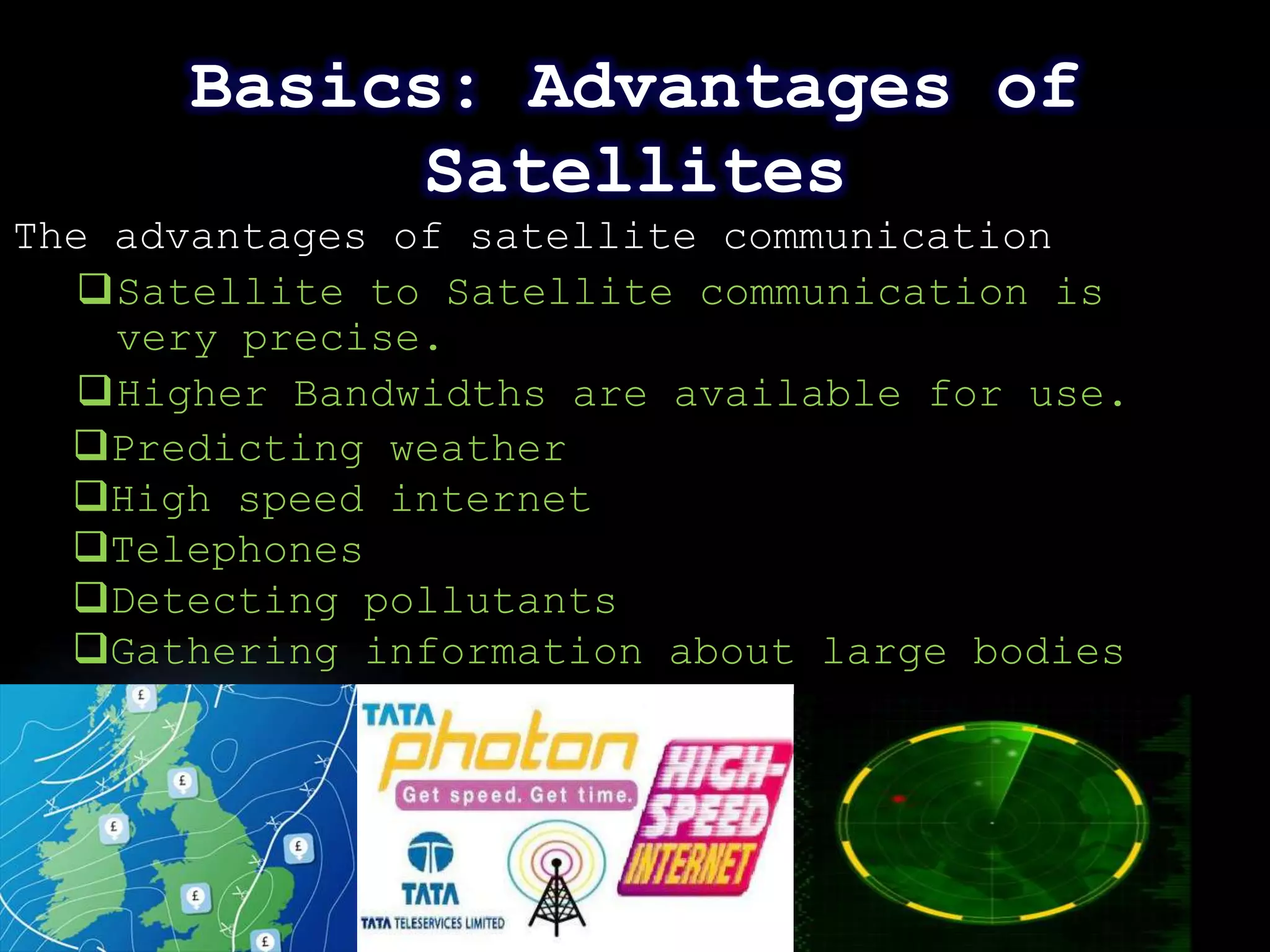
The advantages of satellite communication
   Satellite to Satellite communication is
    very precise.
   Higher Bandwidths are available for use.
  Predicting weather
  High speed internet
  Telephones
  Detecting pollutants
  Gathering information about large bodies


                                           Page 13
Disadvantages of
     Satellites
Cost to Provider
Cost to Consumer
Signal Delay
Unreliability


                     Page 14
Page 15
adeel_tc@hotmail.com 0315-4632432
                                    Page 16

Satellite communication

  • 1.
  • 2.
  • 3.
  • 4.
    Name Note SPUTNIK I The first artificial satellite to be put into Earth's orbit. It was launched into an elliptical low Earth orbit by the Soviet Union on October 4, 1957. US forms advance Research Projects Agency (ARPA) within the department of Defense after USSR launches Sputnik, in order to compete in science and Technology. Sputnik I Page 4
  • 5.
    Telstar TheAT&T Telstar I satellite was launched on July 10th, 1962, and later that same day transmitted the first live television images from the United States to France. Intelsat Geosynchronous earth orbit ,open to use by all nations in 1964-1979 DirecTV Begins Direct Broadcast to Home in 1994 Iridium Was supposed to provide mobile telephone service. by MOTOROLA Intelsat Telstar Iridium Page 5
  • 6.
    Basics of satellitecommunication Types of satellites Structure & Working of satellite Advantages & Disadvantages Page 6
  • 7.
    How satellites works? The two stations can use a satellite as a relay station for their communication One Earth Station sends a transmission to the satellite. This is called a Uplink. The satellite Transponder converts the signal and satellite sends it down to the second earth station. This is Transmitting Earth called a Downlink. station uplink Downlink Receiving Earth station Page 7
  • 8.
  • 9.
  • 10.
  • 11.
    Based on theSatellite Altitude GEO – Geostationary Orbits • 36000 Km = 22300 Miles, equatorial MEO – Medium Earth Orbits • High bandwidth, High power LEO – Low Earth Orbits • Low power, More Satellites VSAT • Very Small Aperture Satellites Private WANs Page 11
  • 12.
  • 13.
    Basics: Advantages of Satellites The advantages of satellite communication Satellite to Satellite communication is very precise. Higher Bandwidths are available for use. Predicting weather High speed internet Telephones Detecting pollutants Gathering information about large bodies Page 13
  • 14.
    Disadvantages of Satellites Cost to Provider Cost to Consumer Signal Delay Unreliability Page 14
  • 15.
  • 16.