Confused me staring at my code
S.O.L.I.D Principles
GOF Patterns
OOP Design Principle
Architectural Patterns
Key Objectives
• Business Requirement to design pattern , How do
we implement ?
• Do I really need to know All
– design patterns ?
– Architectural Patterns ?
• Understand Pattern Relationships and how they
have evolved.
• What is OOP ?
• What is a Design Patterns ?
• What is Software Architecture ?
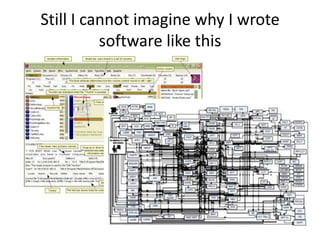
Still I cannot imagine why I wrote
software like this
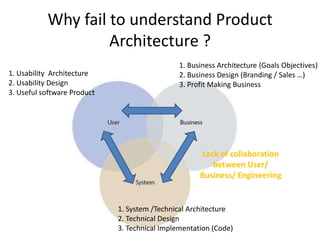
Why fail to understand Product
Architecture ?
1. Business Architecture (Goals Objectives)
2. Business Design (Branding / Sales …)
3. Profit Making Business
1. System /Technical Architecture
2. Technical Design
3. Technical Implementation (Code)
1. Usability Architecture
2. Usability Design
3. Useful software Product
Lack of collaboration
between User/
Business/ Engineering
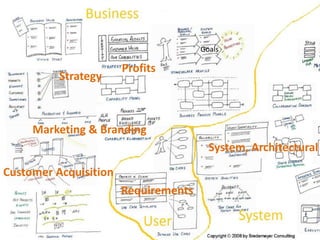
Strategy
Profits
Goals
Marketing & Branding
Customer Acquisition
Requirements
System, Architectural
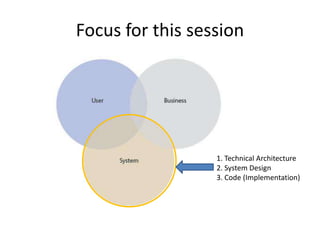
1. Technical Architecture
2. System Design
3. Code (Implementation)
Focus for this session
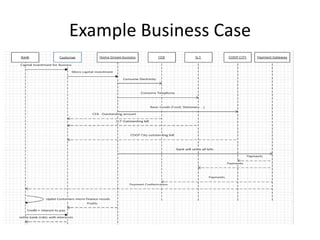
Example Business Case
Architecture Vs Design
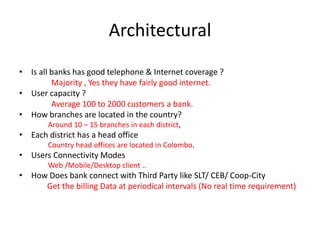
Architectural
• Is all banks has good telephone & Internet coverage ?
Majority , Yes they have fairly good internet.
• User capacity ?
Average 100 to 2000 customers a bank.
• How branches are located in the country?
Around 10 – 15 branches in each district,
• Each district has a head office
Country head offices are located in Colombo.
• Users Connectivity Modes
Web /Mobile/Desktop client ..
• How Does bank connect with Third Party like SLT/ CEB/ Coop-City
Get the billing Data at periodical intervals (No real time requirement)
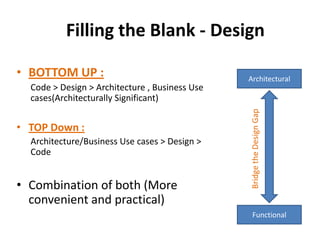
Filling the Blank - Design
• BOTTOM UP :
Code > Design > Architecture , Business Use
cases(Architecturally Significant)
• TOP Down :
Architecture/Business Use cases > Design >
Code
• Combination of both (More
convenient and practical)
Architectural
Functional
BridgetheDesignGap
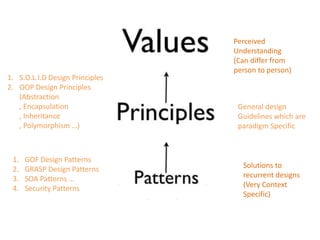
Perceived
Understanding
(Can differ from
person to person)
General design
Guidelines which are
paradigm Specific
Solutions to
recurrent designs
(Very Context
Specific)
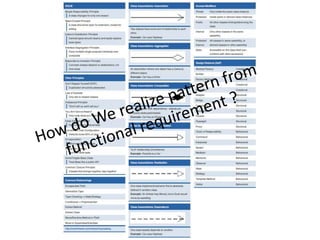
1. S.O.L.I.D Design Principles
2. OOP Design Principles
(Abstraction
, Encapsulation
, Inheritance
, Polymorphism …)
1. GOF Design Patterns
2. GRASP Design Patterns
3. SOA Patterns …
4. Security Patterns
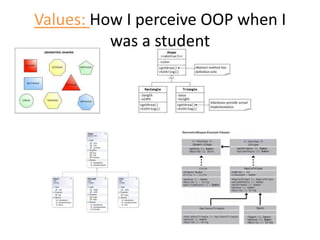
Values: How I perceive OOP when I
was a student
Principles: OOP Principles
• Abstraction
• Encapsulation
• Inheritance
• Polymorphism
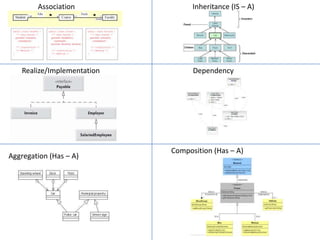
Inheritance (IS – A)Association
Realize/Implementation Dependency
Aggregation (Has – A)
Composition (Has – A)
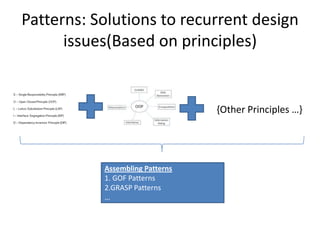
Patterns: Solutions to recurrent design
issues(Based on principles)
{Other Principles …}
Assembling Patterns
1. GOF Patterns
2.GRASP Patterns
…
Knowing patterns is good enough ?
• No , You have to have a way to apply ?
• Where do we start ?
• How do I do it ?
Pattern applying process
Minimal Viable First release
• Proof of Concepts for: Architecturally
significant use cases (Scenarios)
• Thin functional Slice : To cover end to end
integration of application layer in a functional
scenario. Functional Significant use case
12345
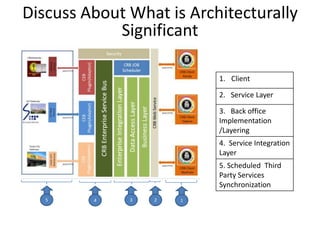
1. Client
2. Service Layer
3. Back office
Implementation
/Layering
4. Service Integration
Layer
5. Scheduled Third
Party Services
Synchronization
Discuss About What is Architecturally
Significant
User Stories
• As a Banking user
– Register new Customer
– Unregister Customer
– Modify Customer details
– Enable Customer Services (SLT, CEB , Coop-City …)
– Balance Inquiry
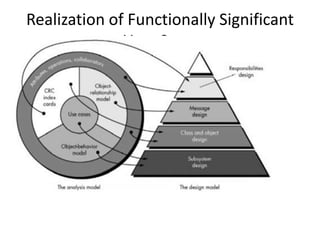
Realization of Functionally Significant
User Story
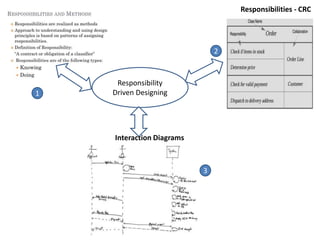
Interaction Diagrams
Responsibilities - CRC
Responsibility
Driven Designing1
2
3
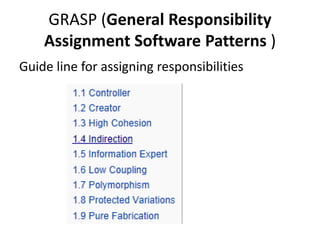
GRASP (General Responsibility
Assignment Software Patterns )
Guide line for assigning responsibilities
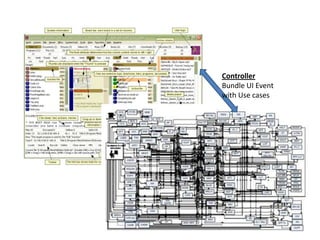
Controller
Bundle UI Event
with Use cases
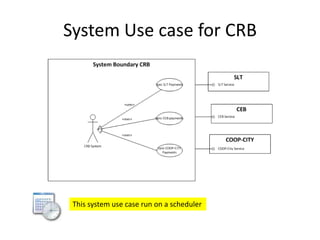
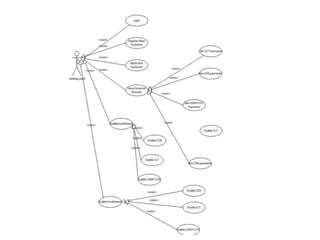
System Use case for CRB
This system use case run on a scheduler
High Cohesion /Low Coupling
• Epics -> Stories
• Refactor -> Complex Objects
• Refactor APIs into Segregated APIS
• Introduce Workflows into Aggregate APIs into
Process , User Stories
• Introduce mediators to minimize coupling
between objects
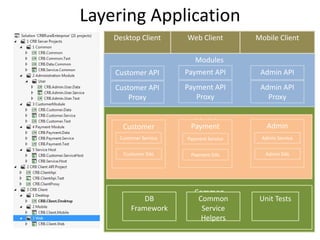
Layering Application
Common
DB
Framework
Common
Service
Helpers
Unit Tests
Modules
Customer
Customer DAL
Customer Service
Payment
Payment DAL
Payment Service
Admin
Admin DAL
Admin Service
Modules
Customer API
Customer API
Proxy
Payment API
Payment API
Proxy
Admin API
Admin API
Proxy
Desktop Client Web Client Mobile Client
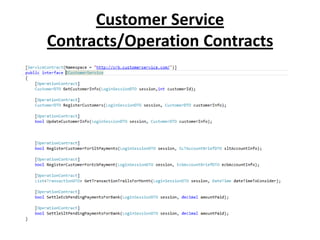
Customer Service
Contracts/Operation Contracts
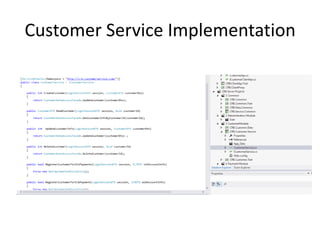
Customer Service Implementation
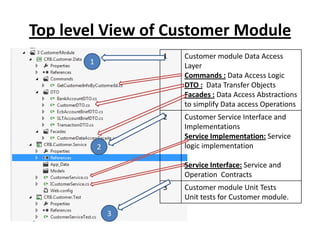
Top level View of Customer Module
1
2
3
1 Customer module Data Access
Layer
Commands : Data Access Logic
DTO : Data Transfer Objects
Facades : Data Access Abstractions
to simplify Data access Operations
2 Customer Service Interface and
Implementations
Service Implementation: Service
logic implementation
Service Interface: Service and
Operation Contracts
3 Customer module Unit Tests
Unit tests for Customer module.
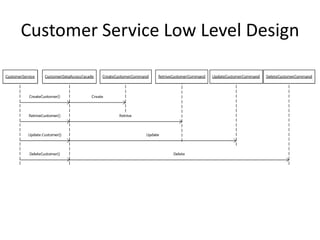
Customer Service Low Level Design
User of GOF Patterns in GRASP Process
• Creational Patterns
• Behavioral Patterns
• Structural Patterns
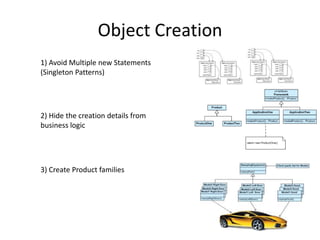
Object Creation
1) Avoid Multiple new Statements
(Singleton Patterns)
2) Hide the creation details from
business logic
3) Create Product families
Object Interaction

Same Patterns, Different Architectures

  • 1.
    Confused me staringat my code S.O.L.I.D Principles GOF Patterns OOP Design Principle Architectural Patterns
  • 2.
    Key Objectives • BusinessRequirement to design pattern , How do we implement ? • Do I really need to know All – design patterns ? – Architectural Patterns ? • Understand Pattern Relationships and how they have evolved.
  • 3.
    • What isOOP ? • What is a Design Patterns ? • What is Software Architecture ?
  • 4.
    Still I cannotimagine why I wrote software like this
  • 5.
    Why fail tounderstand Product Architecture ? 1. Business Architecture (Goals Objectives) 2. Business Design (Branding / Sales …) 3. Profit Making Business 1. System /Technical Architecture 2. Technical Design 3. Technical Implementation (Code) 1. Usability Architecture 2. Usability Design 3. Useful software Product Lack of collaboration between User/ Business/ Engineering
  • 6.
    Strategy Profits Goals Marketing & Branding CustomerAcquisition Requirements System, Architectural
  • 7.
    1. Technical Architecture 2.System Design 3. Code (Implementation) Focus for this session
  • 8.
  • 9.
  • 10.
    Architectural • Is allbanks has good telephone & Internet coverage ? Majority , Yes they have fairly good internet. • User capacity ? Average 100 to 2000 customers a bank. • How branches are located in the country? Around 10 – 15 branches in each district, • Each district has a head office Country head offices are located in Colombo. • Users Connectivity Modes Web /Mobile/Desktop client .. • How Does bank connect with Third Party like SLT/ CEB/ Coop-City Get the billing Data at periodical intervals (No real time requirement)
  • 11.
    Filling the Blank- Design • BOTTOM UP : Code > Design > Architecture , Business Use cases(Architecturally Significant) • TOP Down : Architecture/Business Use cases > Design > Code • Combination of both (More convenient and practical) Architectural Functional BridgetheDesignGap
  • 12.
    Perceived Understanding (Can differ from personto person) General design Guidelines which are paradigm Specific Solutions to recurrent designs (Very Context Specific) 1. S.O.L.I.D Design Principles 2. OOP Design Principles (Abstraction , Encapsulation , Inheritance , Polymorphism …) 1. GOF Design Patterns 2. GRASP Design Patterns 3. SOA Patterns … 4. Security Patterns
  • 13.
    Values: How Iperceive OOP when I was a student
  • 14.
    Principles: OOP Principles •Abstraction • Encapsulation • Inheritance • Polymorphism
  • 15.
    Inheritance (IS –A)Association Realize/Implementation Dependency Aggregation (Has – A) Composition (Has – A)
  • 16.
    Patterns: Solutions torecurrent design issues(Based on principles) {Other Principles …} Assembling Patterns 1. GOF Patterns 2.GRASP Patterns …
  • 17.
    Knowing patterns isgood enough ? • No , You have to have a way to apply ? • Where do we start ? • How do I do it ?
  • 18.
  • 19.
    Minimal Viable Firstrelease • Proof of Concepts for: Architecturally significant use cases (Scenarios) • Thin functional Slice : To cover end to end integration of application layer in a functional scenario. Functional Significant use case
  • 20.
    12345 1. Client 2. ServiceLayer 3. Back office Implementation /Layering 4. Service Integration Layer 5. Scheduled Third Party Services Synchronization Discuss About What is Architecturally Significant
  • 22.
    User Stories • Asa Banking user – Register new Customer – Unregister Customer – Modify Customer details – Enable Customer Services (SLT, CEB , Coop-City …) – Balance Inquiry
  • 23.
    Realization of FunctionallySignificant User Story
  • 24.
    Interaction Diagrams Responsibilities -CRC Responsibility Driven Designing1 2 3
  • 25.
    GRASP (General Responsibility AssignmentSoftware Patterns ) Guide line for assigning responsibilities
  • 26.
  • 27.
    System Use casefor CRB This system use case run on a scheduler
  • 28.
    High Cohesion /LowCoupling • Epics -> Stories • Refactor -> Complex Objects • Refactor APIs into Segregated APIS • Introduce Workflows into Aggregate APIs into Process , User Stories • Introduce mediators to minimize coupling between objects
  • 30.
    Layering Application Common DB Framework Common Service Helpers Unit Tests Modules Customer CustomerDAL Customer Service Payment Payment DAL Payment Service Admin Admin DAL Admin Service Modules Customer API Customer API Proxy Payment API Payment API Proxy Admin API Admin API Proxy Desktop Client Web Client Mobile Client
  • 31.
  • 32.
  • 33.
    Top level Viewof Customer Module 1 2 3 1 Customer module Data Access Layer Commands : Data Access Logic DTO : Data Transfer Objects Facades : Data Access Abstractions to simplify Data access Operations 2 Customer Service Interface and Implementations Service Implementation: Service logic implementation Service Interface: Service and Operation Contracts 3 Customer module Unit Tests Unit tests for Customer module.
  • 34.
  • 35.
    User of GOFPatterns in GRASP Process • Creational Patterns • Behavioral Patterns • Structural Patterns
  • 36.
    Object Creation 1) AvoidMultiple new Statements (Singleton Patterns) 2) Hide the creation details from business logic 3) Create Product families
  • 37.