Theories of School
Administration
This presentation provides an overview of the key theories that have
shaped the field of school administration, from classical management
principles to more modern, collaborative approaches.
sa by suchismita panda
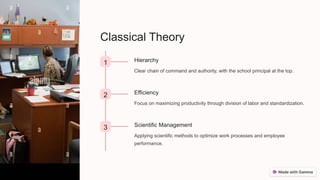
Classical Theory
1 Hierarchy
Clear chain of command and authority, with the school principal at the top.
2 Efficiency
Focus on maximizing productivity through division of labor and standardization.
3 Scientific Management
Applying scientific methods to optimize work processes and employee
performance.
Behavioral Theory
People-Focused
Emphasizes the importance
of human behavior and
psychology in
organizational
management.
Motivation
Focuses on understanding
and addressing employee
needs and motivations.
Collaboration
Encourages open
communication and group
decision-making processes.
Human Relations Theory
1 Interpersonal Dynamics
Recognizes the significance of
human interactions and group
dynamics in organizational
effectiveness.
2 Employee Satisfaction
Focuses on creating a positive work
environment to enhance employee
morale and productivity.
3 Participative Leadership
Encourages shared decision-making and employee involvement in problem-solving.
Systems Theory
Holistic Approach
Views the school as a
complex, interconnected
system rather than
isolated components.
Interdependence
Recognizes that changes
in one part of the system
can affect the entire
organization.
Adaptability
Emphasizes the
importance of the
school's ability to adapt
to changing
environments.
Contingency Theory
Context-Specific
Asserts that the most
effective administrative
practices depend on the
specific circumstances and
constraints of the school.
Flexibility
Encourages school leaders
to adapt their approaches
based on the unique needs
and challenges of their
organization.
Problem-Solving
Emphasizes the importance
of identifying and addressing
specific issues rather than
relying on a one-size-fits-all
solution.
Participative Theory
Shared Decision-Making
Involves teachers, staff, and stakeholders in the decision-making process.
Collaborative Leadership
Encourages a shared leadership approach, where the principal acts as a
facilitator.
Empowerment
Fosters a sense of ownership and investment among school community
members.
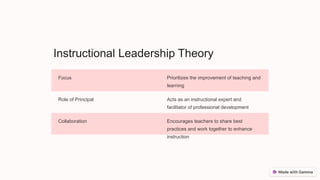
Instructional Leadership Theory
Focus Prioritizes the improvement of teaching and
learning
Role of Principal Acts as an instructional expert and
facilitator of professional development
Collaboration Encourages teachers to share best
practices and work together to enhance
instruction
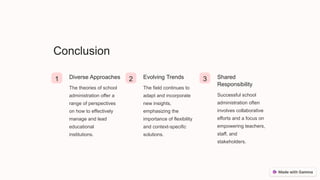
Conclusion
1 Diverse Approaches
The theories of school
administration offer a
range of perspectives
on how to effectively
manage and lead
educational
institutions.
2 Evolving Trends
The field continues to
adapt and incorporate
new insights,
emphasizing the
importance of flexibility
and context-specific
solutions.
3 Shared
Responsibility
Successful school
administration often
involves collaborative
efforts and a focus on
empowering teachers,
staff, and
stakeholders.

Salient features of school administration

  • 1.
    Theories of School Administration Thispresentation provides an overview of the key theories that have shaped the field of school administration, from classical management principles to more modern, collaborative approaches. sa by suchismita panda
  • 2.
    Classical Theory 1 Hierarchy Clearchain of command and authority, with the school principal at the top. 2 Efficiency Focus on maximizing productivity through division of labor and standardization. 3 Scientific Management Applying scientific methods to optimize work processes and employee performance.
  • 3.
    Behavioral Theory People-Focused Emphasizes theimportance of human behavior and psychology in organizational management. Motivation Focuses on understanding and addressing employee needs and motivations. Collaboration Encourages open communication and group decision-making processes.
  • 4.
    Human Relations Theory 1Interpersonal Dynamics Recognizes the significance of human interactions and group dynamics in organizational effectiveness. 2 Employee Satisfaction Focuses on creating a positive work environment to enhance employee morale and productivity. 3 Participative Leadership Encourages shared decision-making and employee involvement in problem-solving.
  • 5.
    Systems Theory Holistic Approach Viewsthe school as a complex, interconnected system rather than isolated components. Interdependence Recognizes that changes in one part of the system can affect the entire organization. Adaptability Emphasizes the importance of the school's ability to adapt to changing environments.
  • 6.
    Contingency Theory Context-Specific Asserts thatthe most effective administrative practices depend on the specific circumstances and constraints of the school. Flexibility Encourages school leaders to adapt their approaches based on the unique needs and challenges of their organization. Problem-Solving Emphasizes the importance of identifying and addressing specific issues rather than relying on a one-size-fits-all solution.
  • 7.
    Participative Theory Shared Decision-Making Involvesteachers, staff, and stakeholders in the decision-making process. Collaborative Leadership Encourages a shared leadership approach, where the principal acts as a facilitator. Empowerment Fosters a sense of ownership and investment among school community members.
  • 8.
    Instructional Leadership Theory FocusPrioritizes the improvement of teaching and learning Role of Principal Acts as an instructional expert and facilitator of professional development Collaboration Encourages teachers to share best practices and work together to enhance instruction
  • 9.
    Conclusion 1 Diverse Approaches Thetheories of school administration offer a range of perspectives on how to effectively manage and lead educational institutions. 2 Evolving Trends The field continues to adapt and incorporate new insights, emphasizing the importance of flexibility and context-specific solutions. 3 Shared Responsibility Successful school administration often involves collaborative efforts and a focus on empowering teachers, staff, and stakeholders.