Sales Mastery Closing More Sales at a Profitable Price
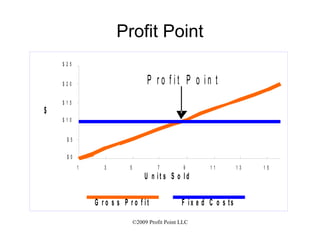
Profit Point
Sales and Profit Point Increase number of sales relative to the number of opportunities (Closing Rate) Increase the selling price of each sale (Average Sales Price)
Workshop Objectives Understand the sales process Learn how to increase perceived value Learn how to identify customer needs Learn how to effectively present solutions Learn how to gain commitment for a favorable exchange
Things You NEED to Know that are not Covered in this Workshop Your Profit Point How to set the right sales price Your target market  Your customers' psychographics (Why they buy) How to generate opportunities
What is Selling? Selling is a process that links problems to solutions It is the favorable exchange of goods, services and ideas
What you need to know about Selling Why people buy Your product's benefit You and your company How your product meets a customer's needs How to logically and effectively present ideas How to encourage a customer to make a decision
Getting a customer to buy Purchase decision is made when price is less than or equal to perceived value Value is established by the customer Based on how customer believes product will meet or exceed customer needs Is influenced by seller's belief in the product Move customer to buying decision by Lowering price Increasing perceived value
Defining Needs Implicit Needs Assumed Generally accepted Based on our perspective Explicit Needs Stated Definable Based on customer perspective
Know Your Product Features Advantages Benefits
Features Facts or characteristics of a product, service or company It is made of stainless steel We have been in business for 20 years
Advantages How the feature can be used to benefit a buyer and meet implicit needs It will last for many years We will be around if you have any needs
Benefits How the feature meets an EXPLICIT need expressed by the buyer You said you wanted it to last a long time.  Stainless steel will provide you the best longevity You indicated that you wanted a company that would be around to help with future needs
Know YOUR Product Features Advantages Benefits Select a core product or service you provide and list
Homework Identify all the products and services you can competently provide List all the features List all the advantages
Talk to Teach Select a topic that you know a lot about Tell your partner How and where it was learned? Who taught it? How long it took to learn? What is liked best about it? What is liked least about it.? How has knowing this subject been beneficial?
Listen to Learn Find a hobby or profession that your partner knows substantially more about than do you Record the answers to the following questions: How and where it was learned? Who taught it? How long it took to learn? What is liked best about it? What is liked least about it.? How has knowing this subject been beneficial?
What did you learn? Write down everything you remember about the other persons subject Compare the learning from both Which is more effective?
Persuasion Selling You are the expert and do most of the talking You have a product to sell Your presentation focuses on features, functions and benefits or the product Your job is to “convince” customers that they need and want the benefits of your product
Benefit Selling The customer is the expert and does most of the talking The customer has a need (although it may not be known yet to the customer) Your presentation focuses on asking pertinent questions to gain understanding of the specific and explicit needs Your job is to listen to the customer so that you can provide a personalized solution to the  customer’s explicit need
The Selling Process Setting an appointment Running the Sales Call Performing the work Follow up contact Referrals
Objectives of the Sales Call Obtain an order to perform work Advance the relationship towards an order
Four Stages of a Sales Call Opening Investigating Demonstrating Capability Obtaining Commitment
Opening Gain trust Find common ground Set and build expectations
Investigating Identify explicit wants and needs Determine constraints Identify areas where your product or service is compatible with needs Create sufficient emotion around solutions
Demonstrate Capability Sell yourself Establish credibility Differentiate Reinforce and build trust Create additional expectations
Obtain Commitment Demonstrate how your solution matches customer's explicit needs Overcome objections Gain approval to proceed
Effective Investigation is the Key You can't have a solution without a problem You can't know the problem unless you ask You won't get to the explicit need unless you know HOW to ask
SPIN Selling S ituation Questions P roblem Questions I mplication Questions N eed-Payoff Questions
Situation Questions Early in the selling cycle Build rapport Gather Information (background and facts) Increase understanding Identify potential problems Use sparingly to avoid “interrogation” Avoid potentially sensitive areas Listen for customer problem cues
Sample Situation Questions How long do you plan to live here? Why are you looking at building? Where do you plan to build? Have you used a builder before? What is your budget? Are you interested in financing options?
Problem Questions Probe for problems, difficulties or dissatisfaction with current situation Reveal needs Clarify intensity Gain shared understanding Don’t ask problem questions for which you have no solution!
Sample Problem Questions What challenges have you faced in choosing the right builder? Why is your present situation unfavorable? What do you view as your biggest obstacles in this project?
Implication Questions Identify consequences, effects or implications of situation Focus on consequences Personalize and emotionalize the consequences Create reasonable anxiety surrounding the problem
Sample Implication Questions What do you see as a potential problem if your contractor does not pull a building permit? What could be some challenges of working with an inexperienced contractor? How could choosing a contractor based solely on price lead to long-term and permanent problems?
Need-Payoff Questions Asks about the value, importance or usefulness of a situation Clarify explicit needs Are emotion-driven Elicit desire for a solution Offer to remove anxiety Withhold specific solution until making a formal proposal
Sample Need-Payoff Questions If we could get you into your new building before Spring, how would that help your summer sales? How would you feel knowing your contractor had 20 years of experience? Would you be interested in a solution that provided the extra space you need for expansion using your existing building lot?
Use SPIN to Match Your Partner to a New Work Vehicle
Use SPIN to Identify Explicit Needs in Your Partner's Business
Technical Investigation Blueprints Walk through Measurements Customer involvement Identify desired function and expectations
Demonstrate Capability Use a formal presentation process Be consistent Be professional Focus on “hot buttons” Don't cut corners Trust the process
Choosing the Right Contractor is a Long-term Commitment Little concerns can become large over time Quality issues Visible Hidden Safety issues Support issues
What Should You Look For? Contractors Appearance Character Licensed Insured Bonded Permits Experience Workmanship Reputation Products used Technique used
Company Overview ____ years' experience Training Licensed Insured Permits Availability Appearance
We Pay Attention to Details
Quality Matters Processes Materials
Quality Assurance Checklist
We Stand Behind our Work Our Work is Guaranteed
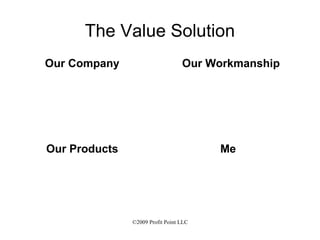
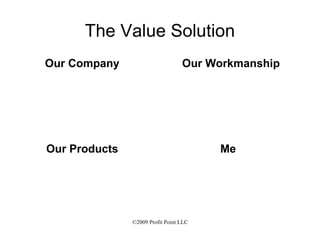
The Value Solution Our Company Our Products Our Workmanship Me
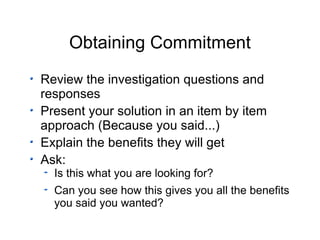
Obtaining Commitment Review the investigation questions and responses Present your solution in an item by item approach (Because you said...) Explain the benefits they will get Ask: Is this what you are looking for? Can you see how this gives you all the benefits you said you wanted?
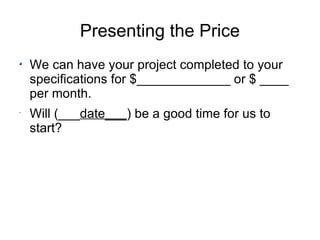
Presenting the Price We can have your project completed to your specifications for $_____________ or $ ____ per month. Will (___ date___ ) be a good time for us to start?
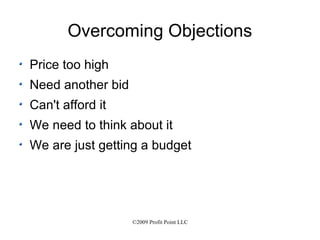
Overcoming Objections Price too high Need another bid Can't afford it We need to think about it We are just getting a budget
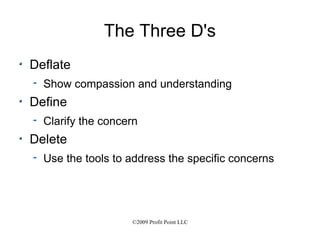
The Three D's Deflate Show compassion and understanding Define Clarify the concern Delete Use the tools to address the specific concerns
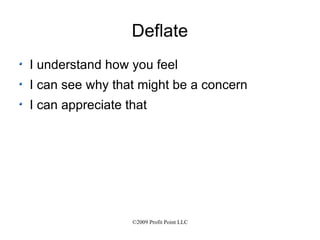
Deflate I understand how you feel I can see why that might be a concern I can appreciate that
Define Can you share your concerns with me?
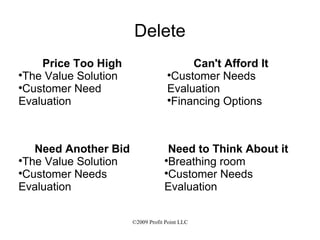
Delete Price Too High The Value Solution Customer Need Evaluation Need Another Bid The Value Solution Customer Needs Evaluation Can't Afford It Customer Needs Evaluation Financing Options Need to Think About it Breathing room Customer Needs Evaluation
Sale Call Review Use presumptive sale language Only propose products/services that are solutions to explicit needs Propose product/services as a solution to a specific need expressed by the customer Propose benefits, advantages and features in this order (remember that purchases are made on emotion and justified by facts)
The Contractor's Sales Call Introduction and Warm Up Customer Needs Evaluation Technical Analysis Presentation Needs-based Solution Gain Commitment
Choosing the Right Contractor is a Long-term Commitment
What Should You Look For? Contractors Workmanship
Company Overview ____ years' experience Training Licensed Insured Permits Availability Appearance
We Pay Attention to Details
Quality Matters Processes Materials
Quality Assurance Checklist
We Stand Behind our Work Our Work is Guaranteed
The Value Solution Our Company Our Products Our Workmanship Me

Sales Presentation - Kevin Nott

  • 1.
    Sales Mastery ClosingMore Sales at a Profitable Price
  • 2.
  • 3.
    Sales and ProfitPoint Increase number of sales relative to the number of opportunities (Closing Rate) Increase the selling price of each sale (Average Sales Price)
  • 4.
    Workshop Objectives Understandthe sales process Learn how to increase perceived value Learn how to identify customer needs Learn how to effectively present solutions Learn how to gain commitment for a favorable exchange
  • 5.
    Things You NEEDto Know that are not Covered in this Workshop Your Profit Point How to set the right sales price Your target market Your customers' psychographics (Why they buy) How to generate opportunities
  • 6.
    What is Selling?Selling is a process that links problems to solutions It is the favorable exchange of goods, services and ideas
  • 7.
    What you needto know about Selling Why people buy Your product's benefit You and your company How your product meets a customer's needs How to logically and effectively present ideas How to encourage a customer to make a decision
  • 8.
    Getting a customerto buy Purchase decision is made when price is less than or equal to perceived value Value is established by the customer Based on how customer believes product will meet or exceed customer needs Is influenced by seller's belief in the product Move customer to buying decision by Lowering price Increasing perceived value
  • 9.
    Defining Needs ImplicitNeeds Assumed Generally accepted Based on our perspective Explicit Needs Stated Definable Based on customer perspective
  • 10.
    Know Your ProductFeatures Advantages Benefits
  • 11.
    Features Facts orcharacteristics of a product, service or company It is made of stainless steel We have been in business for 20 years
  • 12.
    Advantages How thefeature can be used to benefit a buyer and meet implicit needs It will last for many years We will be around if you have any needs
  • 13.
    Benefits How thefeature meets an EXPLICIT need expressed by the buyer You said you wanted it to last a long time. Stainless steel will provide you the best longevity You indicated that you wanted a company that would be around to help with future needs
  • 14.
    Know YOUR ProductFeatures Advantages Benefits Select a core product or service you provide and list
  • 15.
    Homework Identify allthe products and services you can competently provide List all the features List all the advantages
  • 16.
    Talk to TeachSelect a topic that you know a lot about Tell your partner How and where it was learned? Who taught it? How long it took to learn? What is liked best about it? What is liked least about it.? How has knowing this subject been beneficial?
  • 17.
    Listen to LearnFind a hobby or profession that your partner knows substantially more about than do you Record the answers to the following questions: How and where it was learned? Who taught it? How long it took to learn? What is liked best about it? What is liked least about it.? How has knowing this subject been beneficial?
  • 18.
    What did youlearn? Write down everything you remember about the other persons subject Compare the learning from both Which is more effective?
  • 19.
    Persuasion Selling Youare the expert and do most of the talking You have a product to sell Your presentation focuses on features, functions and benefits or the product Your job is to “convince” customers that they need and want the benefits of your product
  • 20.
    Benefit Selling Thecustomer is the expert and does most of the talking The customer has a need (although it may not be known yet to the customer) Your presentation focuses on asking pertinent questions to gain understanding of the specific and explicit needs Your job is to listen to the customer so that you can provide a personalized solution to the customer’s explicit need
  • 21.
    The Selling ProcessSetting an appointment Running the Sales Call Performing the work Follow up contact Referrals
  • 22.
    Objectives of theSales Call Obtain an order to perform work Advance the relationship towards an order
  • 23.
    Four Stages ofa Sales Call Opening Investigating Demonstrating Capability Obtaining Commitment
  • 24.
    Opening Gain trustFind common ground Set and build expectations
  • 25.
    Investigating Identify explicitwants and needs Determine constraints Identify areas where your product or service is compatible with needs Create sufficient emotion around solutions
  • 26.
    Demonstrate Capability Sellyourself Establish credibility Differentiate Reinforce and build trust Create additional expectations
  • 27.
    Obtain Commitment Demonstratehow your solution matches customer's explicit needs Overcome objections Gain approval to proceed
  • 28.
    Effective Investigation isthe Key You can't have a solution without a problem You can't know the problem unless you ask You won't get to the explicit need unless you know HOW to ask
  • 29.
    SPIN Selling Situation Questions P roblem Questions I mplication Questions N eed-Payoff Questions
  • 30.
    Situation Questions Earlyin the selling cycle Build rapport Gather Information (background and facts) Increase understanding Identify potential problems Use sparingly to avoid “interrogation” Avoid potentially sensitive areas Listen for customer problem cues
  • 31.
    Sample Situation QuestionsHow long do you plan to live here? Why are you looking at building? Where do you plan to build? Have you used a builder before? What is your budget? Are you interested in financing options?
  • 32.
    Problem Questions Probefor problems, difficulties or dissatisfaction with current situation Reveal needs Clarify intensity Gain shared understanding Don’t ask problem questions for which you have no solution!
  • 33.
    Sample Problem QuestionsWhat challenges have you faced in choosing the right builder? Why is your present situation unfavorable? What do you view as your biggest obstacles in this project?
  • 34.
    Implication Questions Identifyconsequences, effects or implications of situation Focus on consequences Personalize and emotionalize the consequences Create reasonable anxiety surrounding the problem
  • 35.
    Sample Implication QuestionsWhat do you see as a potential problem if your contractor does not pull a building permit? What could be some challenges of working with an inexperienced contractor? How could choosing a contractor based solely on price lead to long-term and permanent problems?
  • 36.
    Need-Payoff Questions Asksabout the value, importance or usefulness of a situation Clarify explicit needs Are emotion-driven Elicit desire for a solution Offer to remove anxiety Withhold specific solution until making a formal proposal
  • 37.
    Sample Need-Payoff QuestionsIf we could get you into your new building before Spring, how would that help your summer sales? How would you feel knowing your contractor had 20 years of experience? Would you be interested in a solution that provided the extra space you need for expansion using your existing building lot?
  • 38.
    Use SPIN toMatch Your Partner to a New Work Vehicle
  • 39.
    Use SPIN toIdentify Explicit Needs in Your Partner's Business
  • 40.
    Technical Investigation BlueprintsWalk through Measurements Customer involvement Identify desired function and expectations
  • 41.
    Demonstrate Capability Usea formal presentation process Be consistent Be professional Focus on “hot buttons” Don't cut corners Trust the process
  • 42.
    Choosing the RightContractor is a Long-term Commitment Little concerns can become large over time Quality issues Visible Hidden Safety issues Support issues
  • 43.
    What Should YouLook For? Contractors Appearance Character Licensed Insured Bonded Permits Experience Workmanship Reputation Products used Technique used
  • 44.
    Company Overview ____years' experience Training Licensed Insured Permits Availability Appearance
  • 45.
    We Pay Attentionto Details
  • 46.
  • 47.
  • 48.
    We Stand Behindour Work Our Work is Guaranteed
  • 49.
    The Value SolutionOur Company Our Products Our Workmanship Me
  • 50.
    Obtaining Commitment Reviewthe investigation questions and responses Present your solution in an item by item approach (Because you said...) Explain the benefits they will get Ask: Is this what you are looking for? Can you see how this gives you all the benefits you said you wanted?
  • 51.
    Presenting the PriceWe can have your project completed to your specifications for $_____________ or $ ____ per month. Will (___ date___ ) be a good time for us to start?
  • 52.
    Overcoming Objections Pricetoo high Need another bid Can't afford it We need to think about it We are just getting a budget
  • 53.
    The Three D'sDeflate Show compassion and understanding Define Clarify the concern Delete Use the tools to address the specific concerns
  • 54.
    Deflate I understandhow you feel I can see why that might be a concern I can appreciate that
  • 55.
    Define Can youshare your concerns with me?
  • 56.
    Delete Price TooHigh The Value Solution Customer Need Evaluation Need Another Bid The Value Solution Customer Needs Evaluation Can't Afford It Customer Needs Evaluation Financing Options Need to Think About it Breathing room Customer Needs Evaluation
  • 57.
    Sale Call ReviewUse presumptive sale language Only propose products/services that are solutions to explicit needs Propose product/services as a solution to a specific need expressed by the customer Propose benefits, advantages and features in this order (remember that purchases are made on emotion and justified by facts)
  • 58.
    The Contractor's SalesCall Introduction and Warm Up Customer Needs Evaluation Technical Analysis Presentation Needs-based Solution Gain Commitment
  • 59.
    Choosing the RightContractor is a Long-term Commitment
  • 60.
    What Should YouLook For? Contractors Workmanship
  • 61.
    Company Overview ____years' experience Training Licensed Insured Permits Availability Appearance
  • 62.
    We Pay Attentionto Details
  • 63.
  • 64.
  • 65.
    We Stand Behindour Work Our Work is Guaranteed
  • 66.
    The Value SolutionOur Company Our Products Our Workmanship Me

Editor's Notes

  • #2 Use SPIN process to determine Industry b) Level of understanding c) Expectations d) Needs
  • #3 Review the basics of Profit Point