Sales Cloud + Service Cloud
for Optimized Relationship
Management
introductions
@donmink | @mikemilburn | @mikedannenfeldt
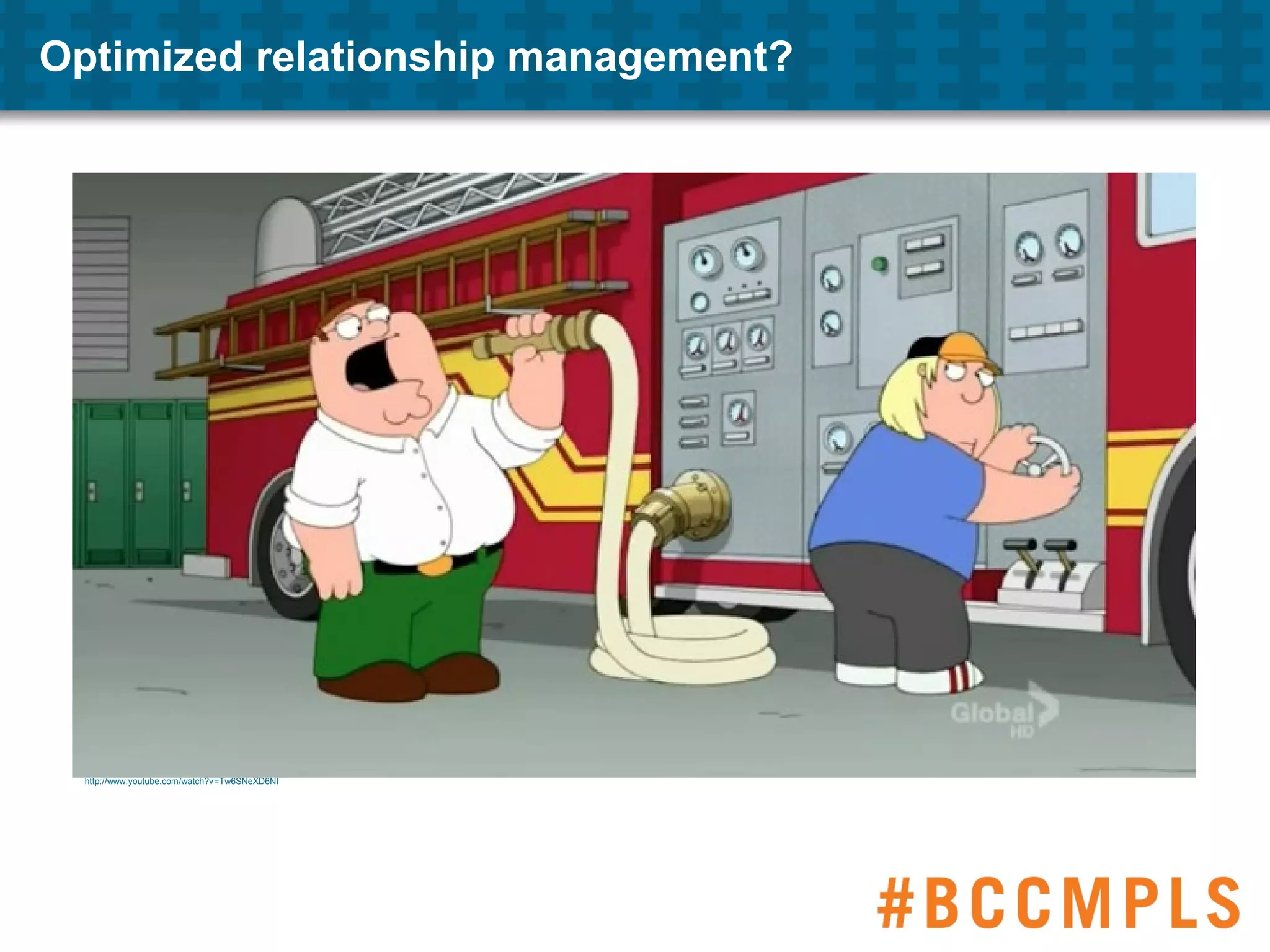
http://www.youtube.com/watch?v=Tw6SNeXD6NI
Optimized relationship management?
agenda
• Salesforce Sales Cloud
• Salesforce Service Cloud
• Transforming Sales & Service
• Optimization
• Q&A
Salesforce Safe Harbor
Safe harbor statement under the Private Securities Litigation Reform Act of 1995:
This presentation may contain forward-looking statements that involve risks, uncertainties, and assumptions. If any such
uncertainties materialize or if any of the assumptions proves incorrect, the results of salesforce.com, inc. could differ materially
from the results expressed or implied by the forward-looking statements we make. All statements other than statements of
historical fact could be deemed forward-looking, including any projections of product or service availability, subscriber growth,
earnings, revenues, or other financial items and any statements regarding strategies or plans of management for future
operations, statements of belief, any statements concerning new, planned, or upgraded services or technology developments
and customer contracts or use of our services.
The risks and uncertainties referred to above include – but are not limited to – risks associated with developing and delivering
new functionality for our service, new products and services, our new business model, our past operating losses, possible
fluctuations in our operating results and rate of growth, interruptions or delays in our Web hosting, breach of our security
measures, the outcome of any litigation, risks associated with completed and any possible mergers and acquisitions, the
immature market in which we operate, our relatively limited operating history, our ability to expand, retain, and motivate our
employees and manage our growth, new releases of our service and successful customer deployment, our limited history
reselling non-salesforce.com products, and utilization and selling to larger enterprise customers. Further information on potential
factors that could affect the financial results of salesforce.com, inc. is included in our annual report on Form 10-K for the most
recent fiscal year and in our quarterly report on Form 10-Q for the most recent fiscal quarter. These documents and others
containing important disclosures are available on the SEC Filings section of the Investor Information section of our Web site.
Any unreleased services or features referenced in this or other presentations, press releases or public statements are not
currently available and may not be delivered on time or at all. Customers who purchase our services should make the purchase
decisions based upon features that are currently available. Salesforce.com, inc. assumes no obligation and does not intend to
update these forward-looking statements.
Sales Cloud
@donmink | @mikemilburn | @mikedannenfeldt
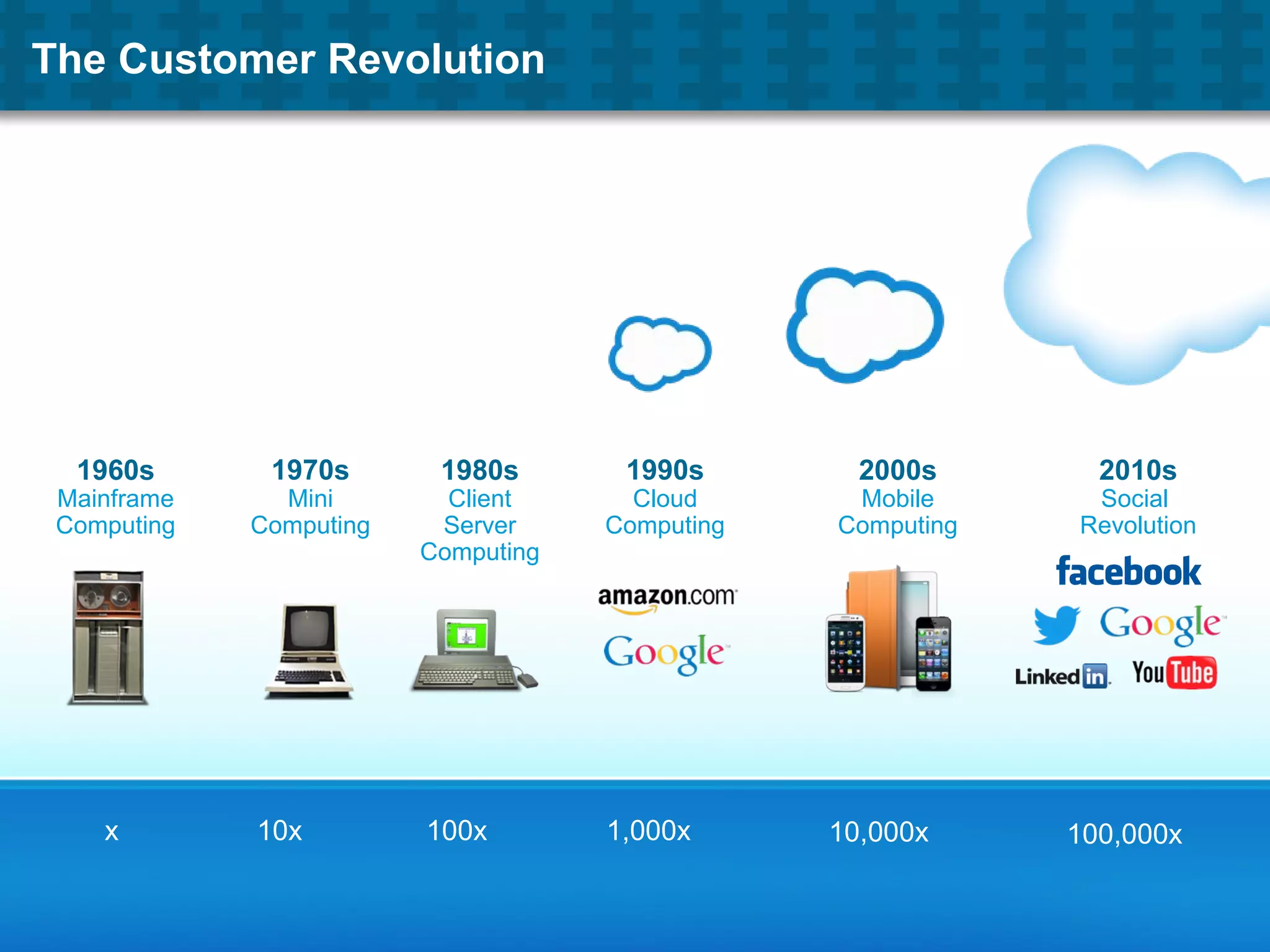
The Customer Revolution
1960s
Mainframe
Computing
1970s
Mini
Computing
1980s
Client
Server
Computing
x 10x 100x 1,000x 10,000x 100,000x
2010s
Social
Revolution
1990s
Cloud
Computing
2000s
Mobile
Computing
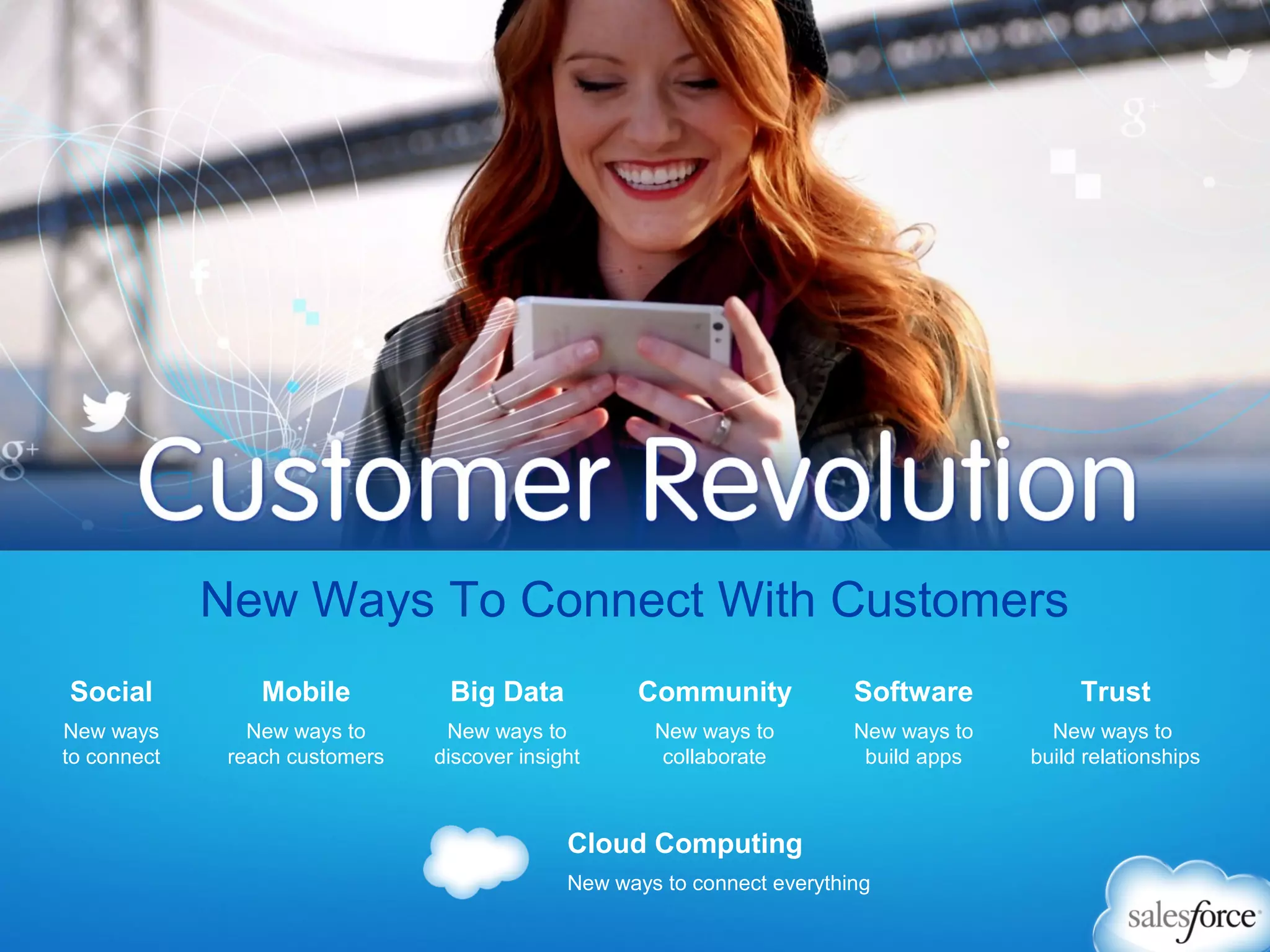
Cloud Computing
New ways to connect everything
New Ways To Connect With Customers
Social
New ways
to connect
Trust
New ways to
build relationships
Mobile
New ways to
reach customers
Big Data
New ways to
discover insight
Community
New ways to
collaborate
Software
New ways to
build apps
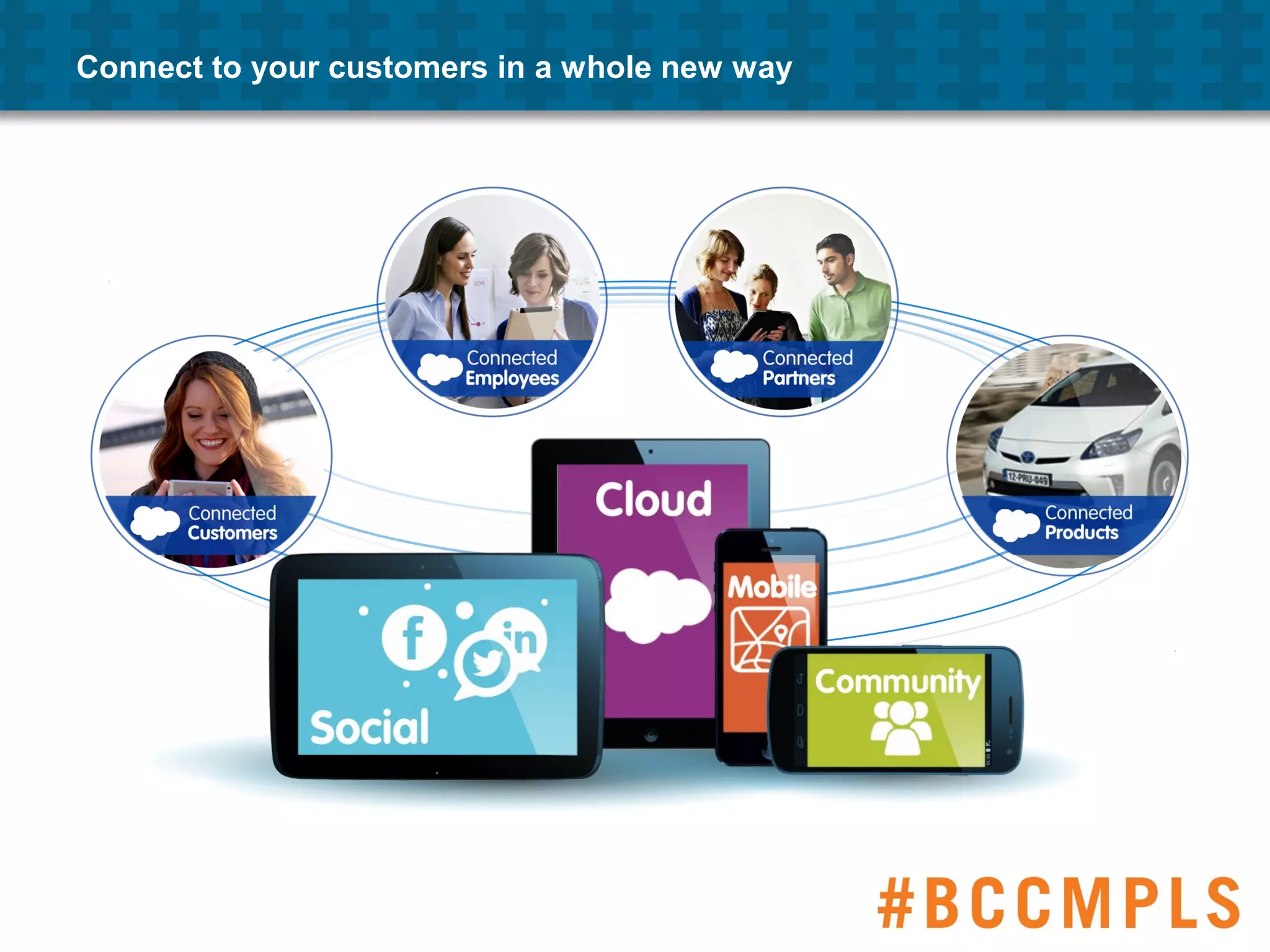
Connect to your customers in a whole new way
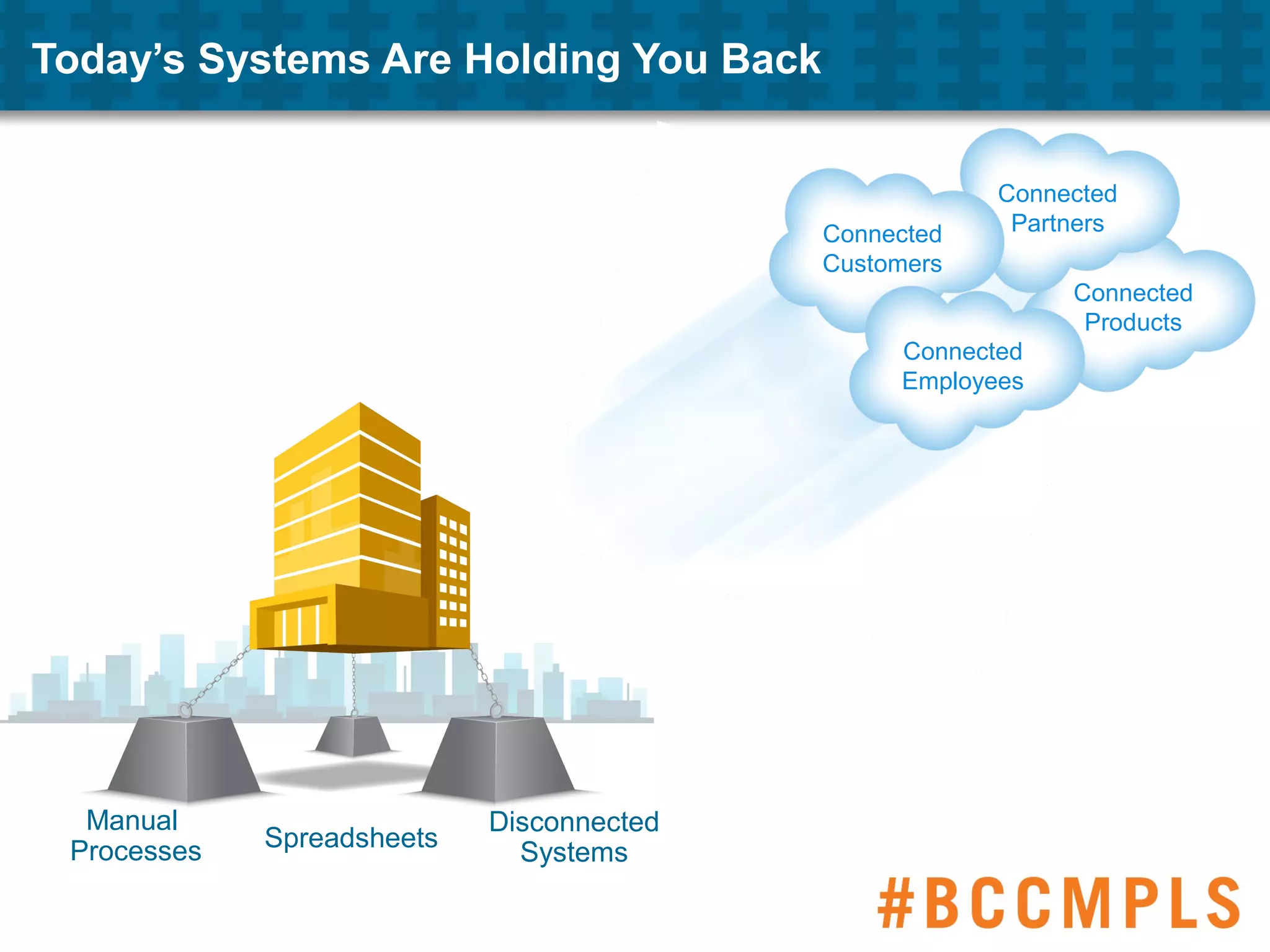
Today’s Systems Are Holding You Back
Manual
Processes
Disconnected
Systems
Spreadsheets
Connected
Products
Connected
PartnersConnected
Customers
Connected
Employees
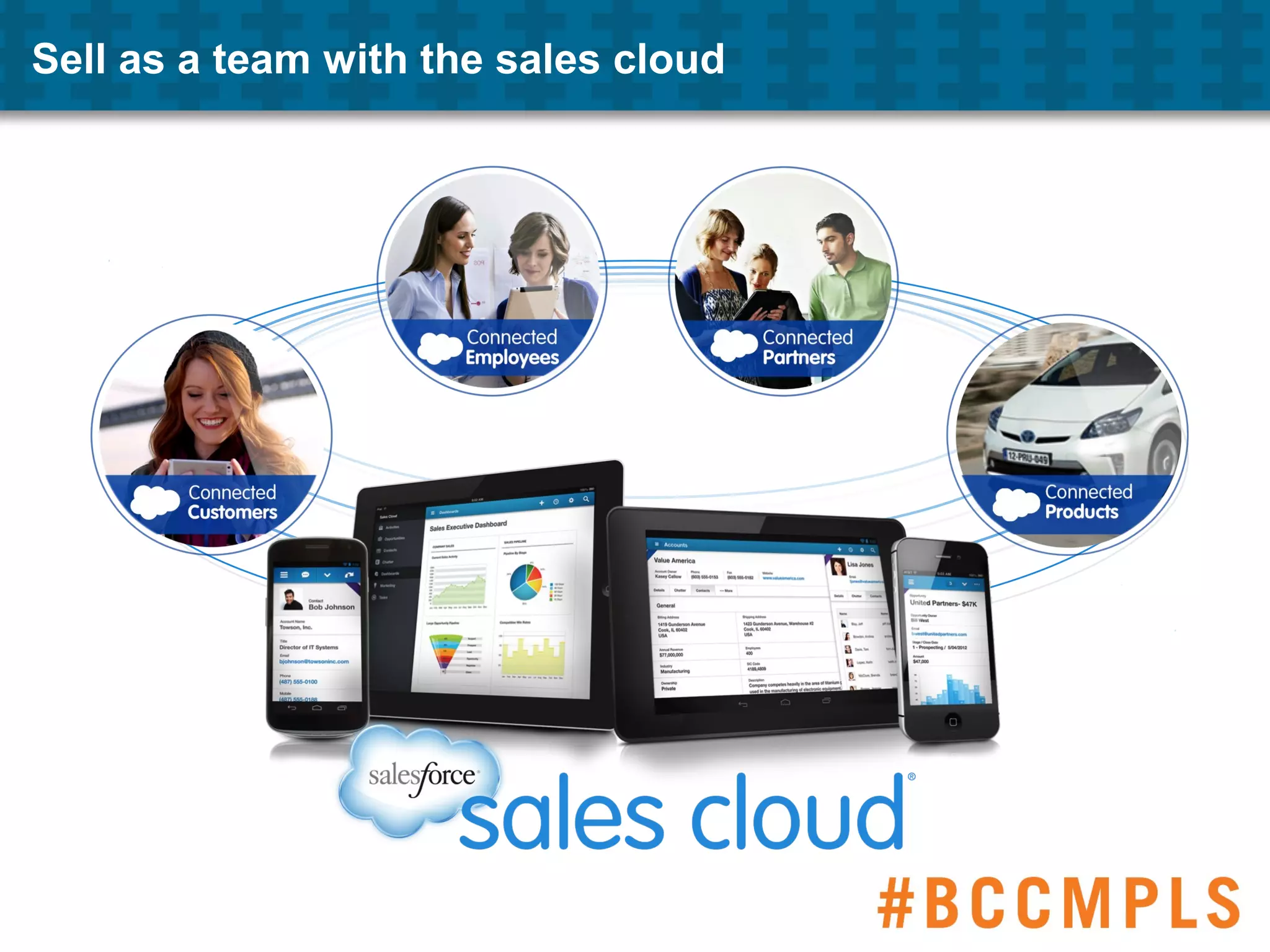
Sell as a team with the sales cloud
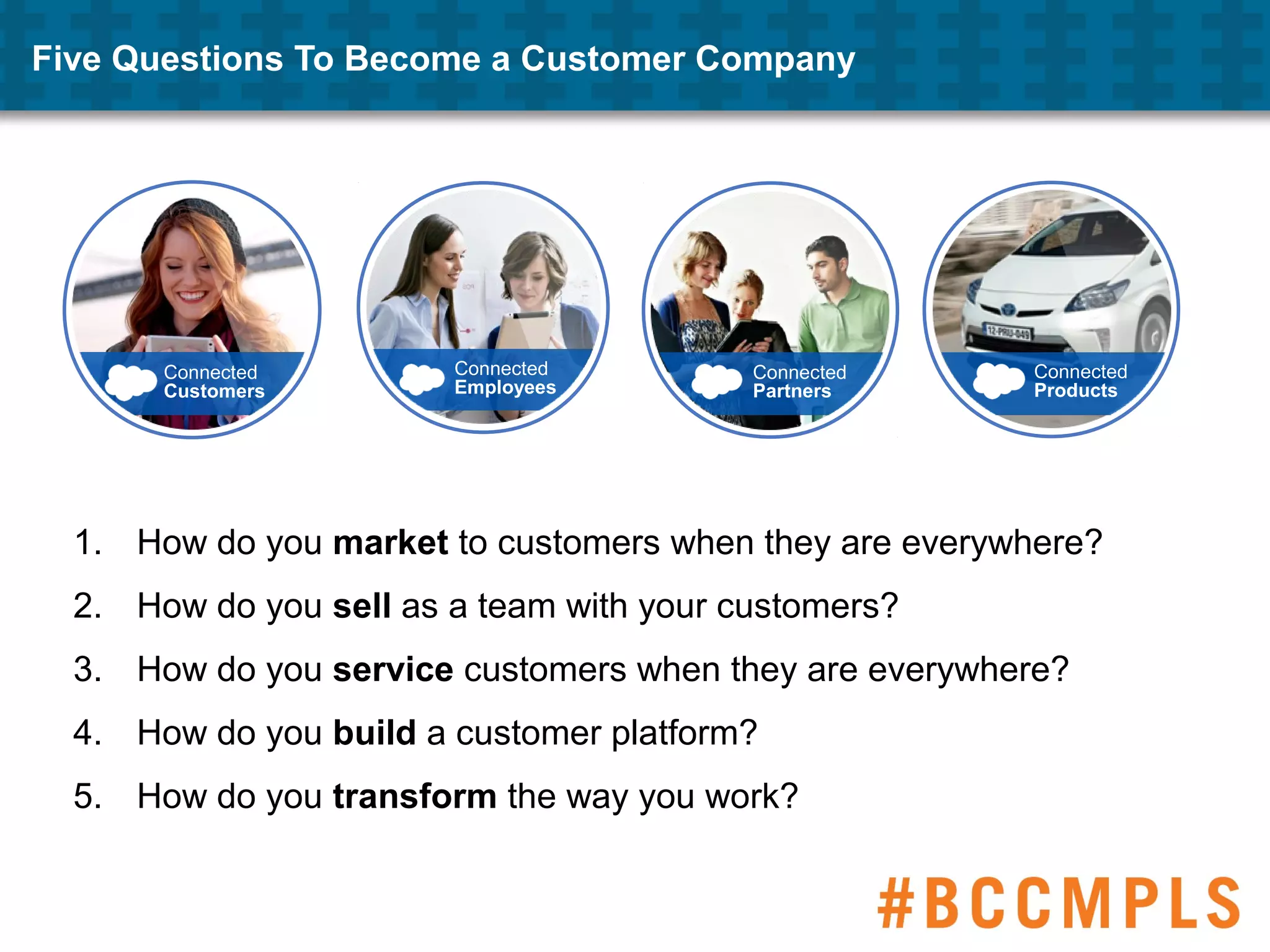
Five Questions To Become a Customer Company
1. How do you market to customers when they are everywhere?
2. How do you sell as a team with your customers?
3. How do you service customers when they are everywhere?
4. How do you build a customer platform?
5. How do you transform the way you work?
Connected
Products
Connected
Partners
Connected
Employees
Connected
Customers
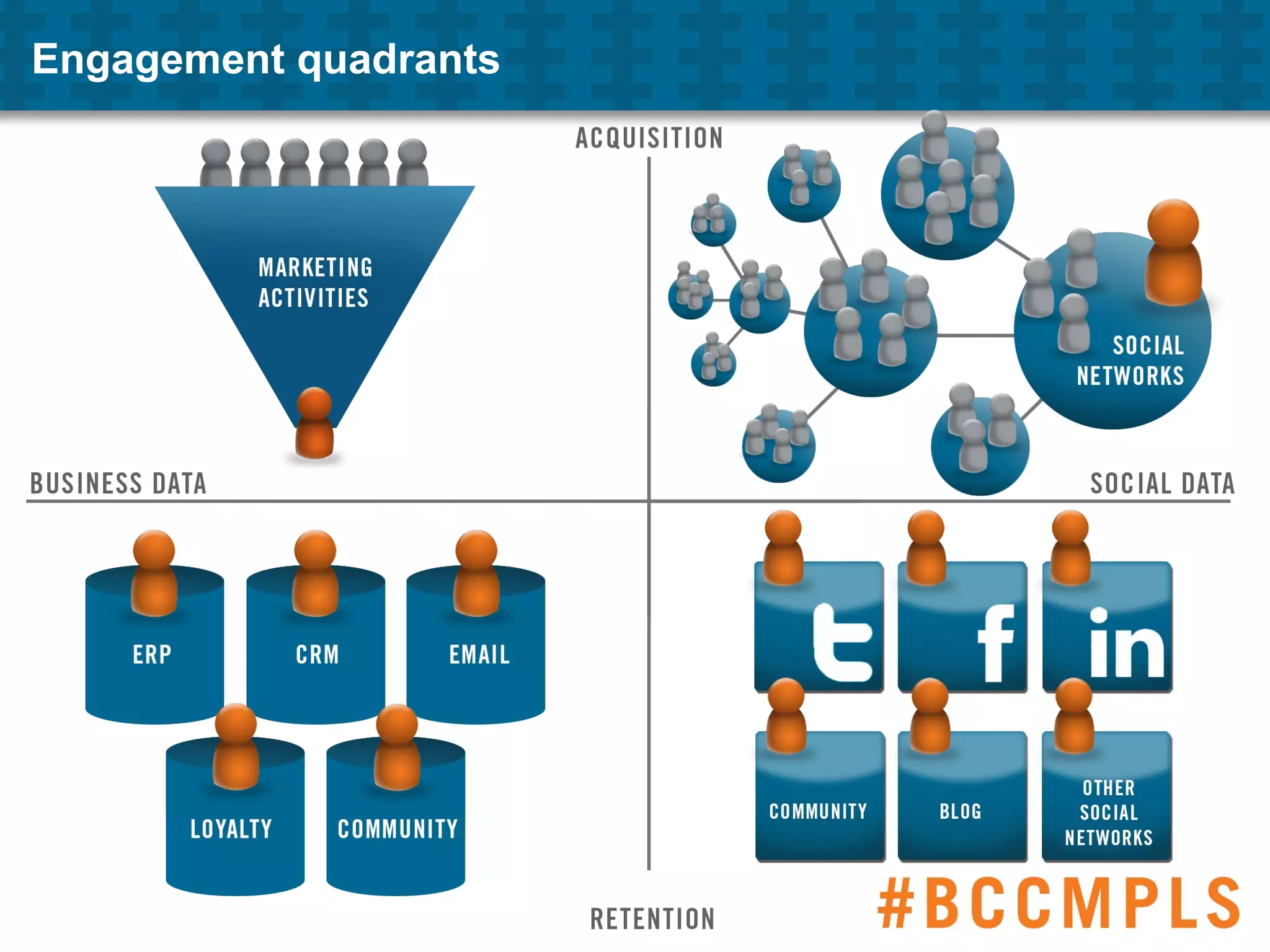
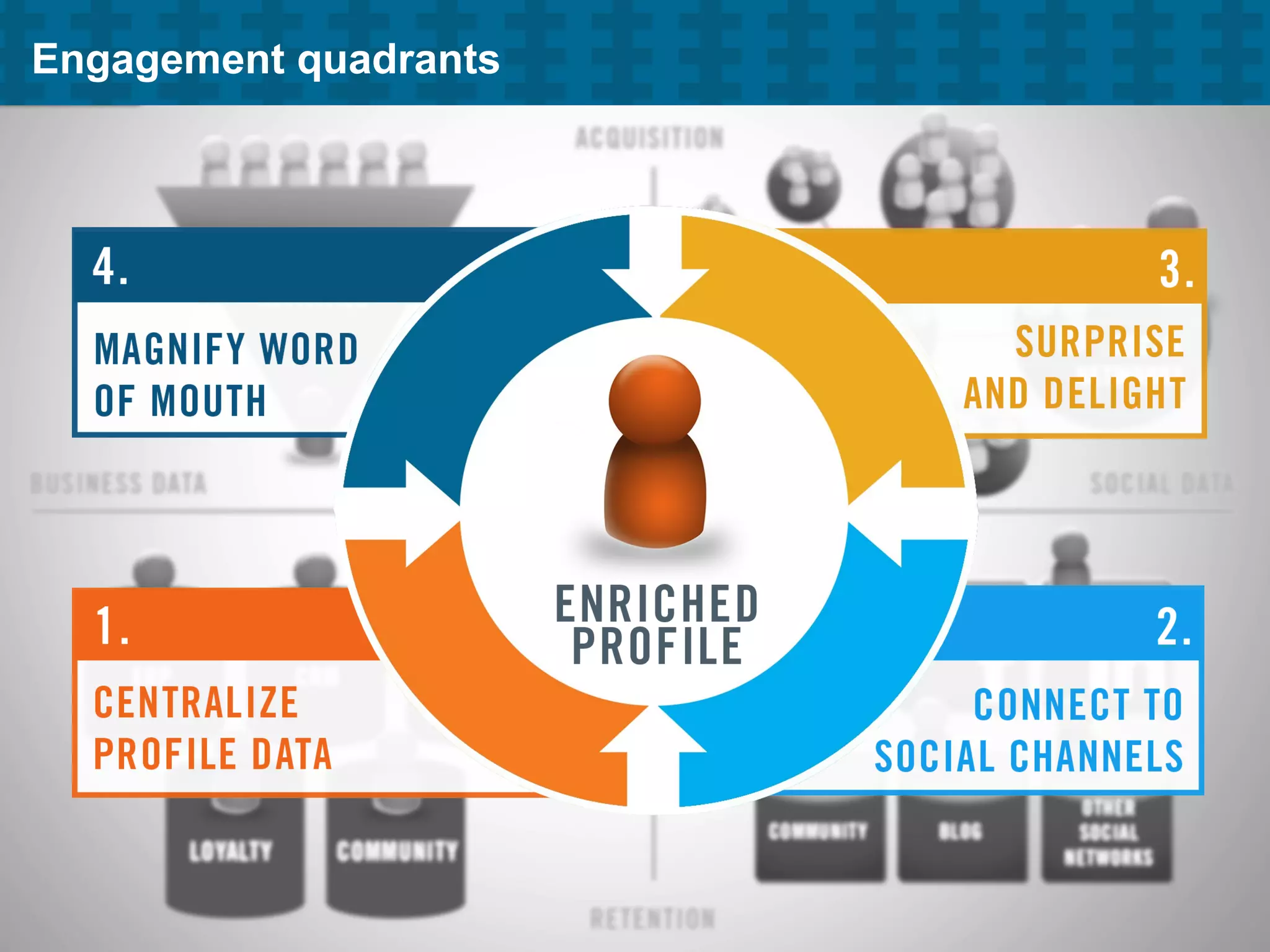
Engagement quadrants
Service cloudDelivering amazing service on every channel
@donmink | @mikemilburn | @mikedannenfeldt
Salesforce Service Cloud
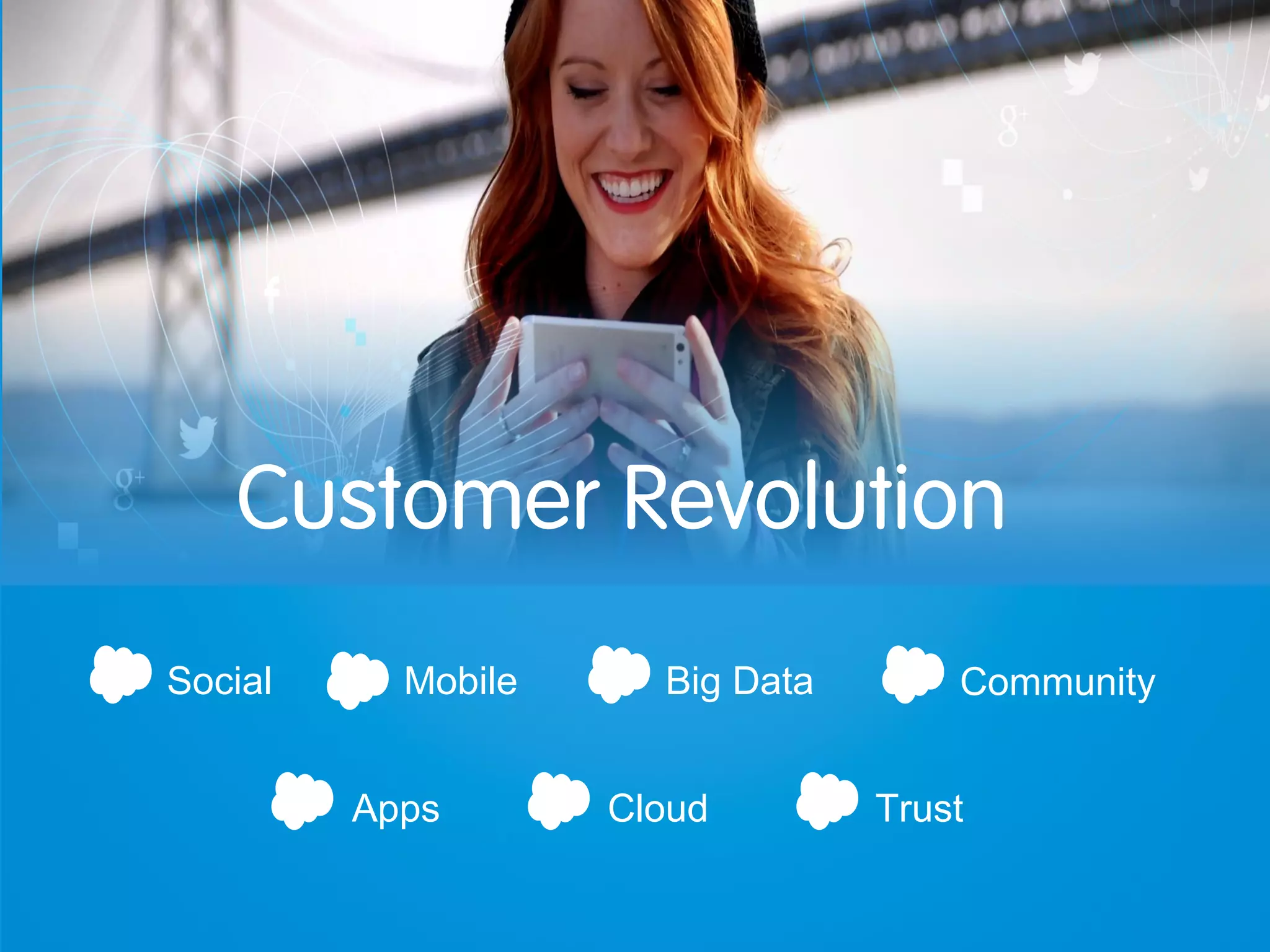
Social Mobile Big Data Community
Apps Cloud Trust
Customer Revolution
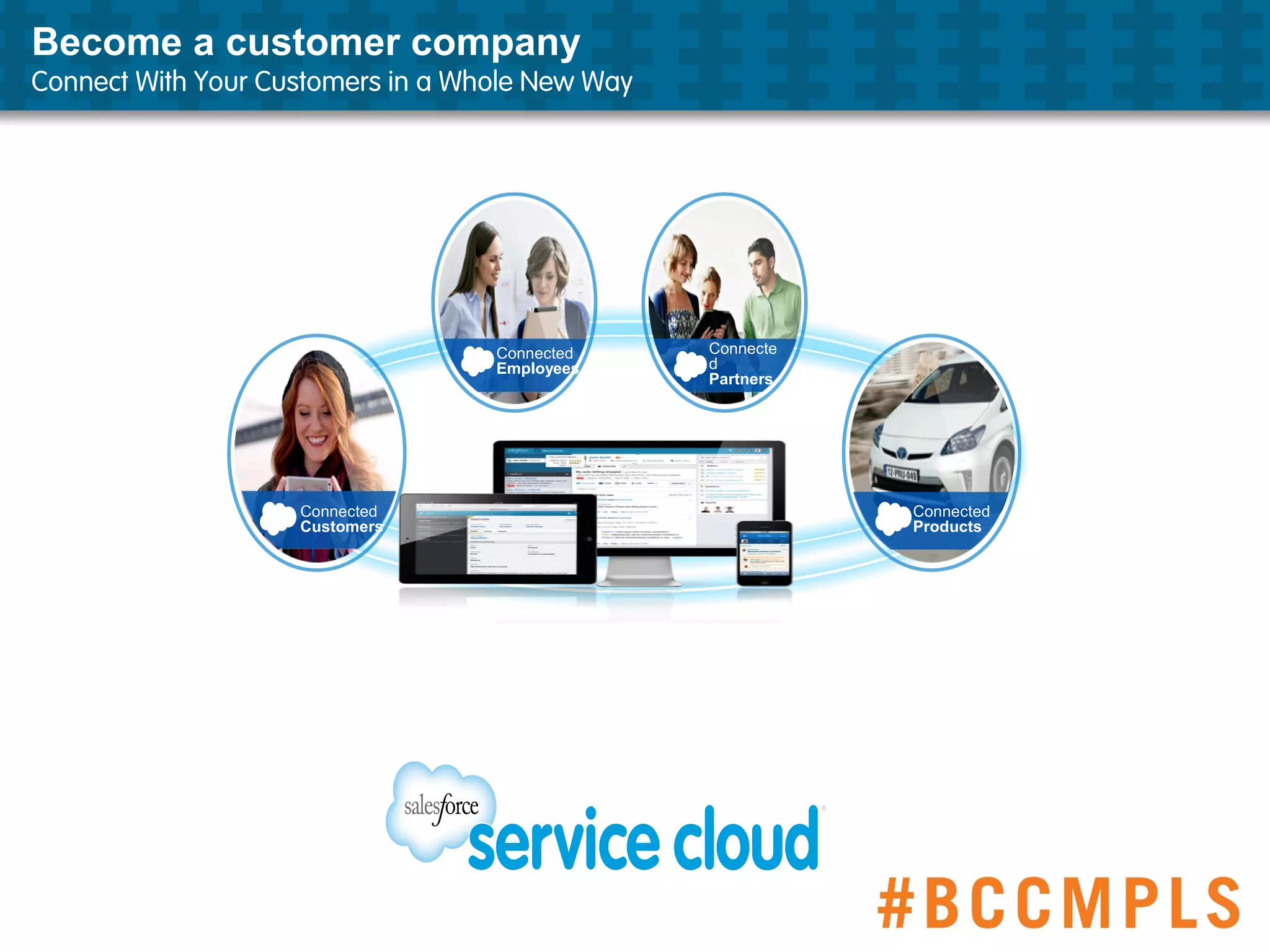
Connected
Products
Connected
Customers
Connecte
d
Partners
Connected
Employees
Become a customer company
Connect With Your Customers in a Whole New Way
Source: “The Future of Customer Service.” Forrester Consulting commissioned by salesforce.com, July 2012.
VP Customer
Service
CMO
CIO
92%Customer
Satisfaction
First Contact
Resolution
Average Speed of
Answer
Service Level Adherence
Agent Handle Time
Shifting priorities of customer service organizations
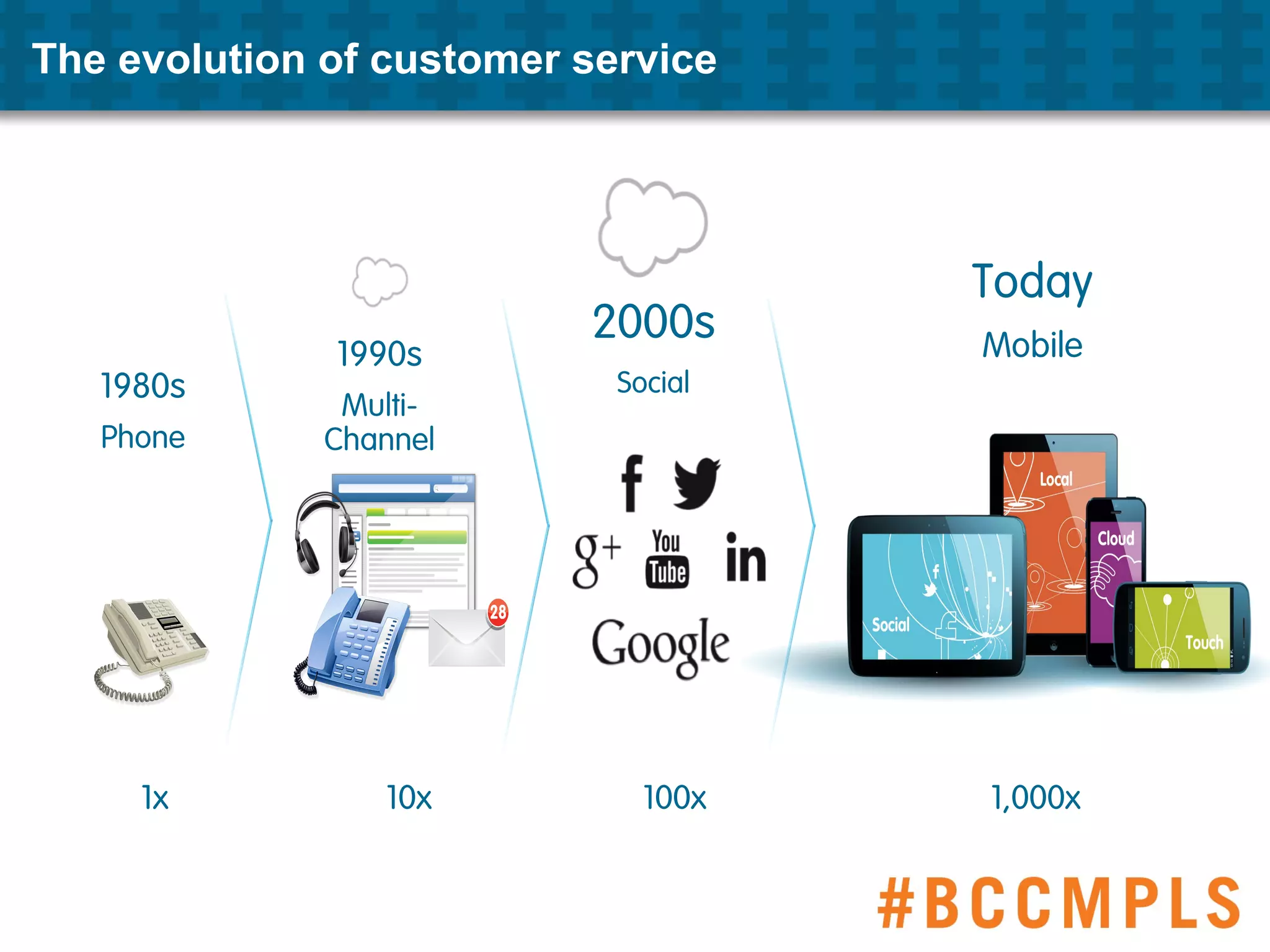
100x1x 1,000x10x
1980s
Phone
Today
Mobile1990s
Multi-
Channel
2000s
Social
The evolution of customer service
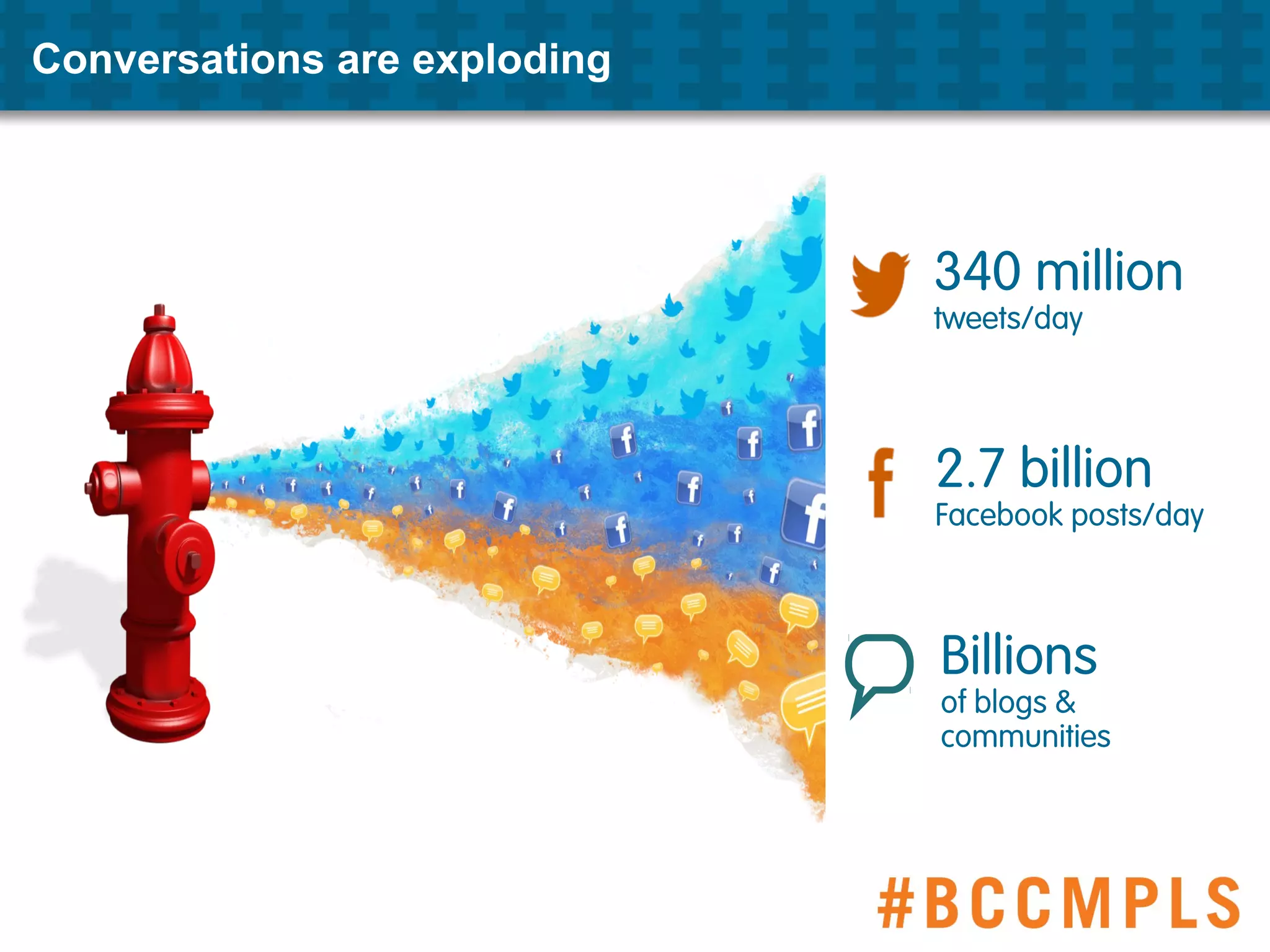
340 million
tweets/day
2.7 billion
Facebook posts/day
Billions
of blogs &
communities
Conversations are exploding
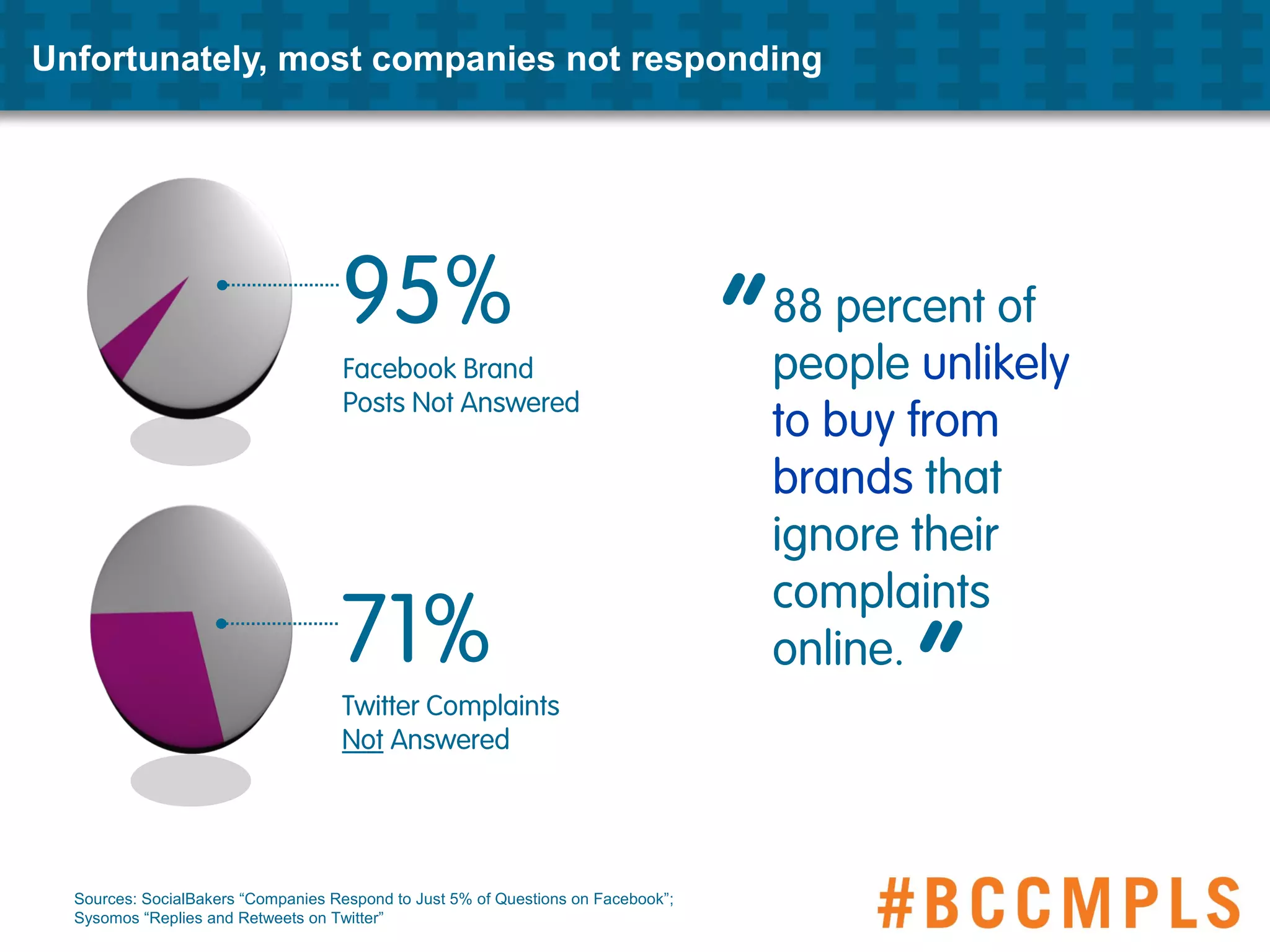
Sources: SocialBakers “Companies Respond to Just 5% of Questions on Facebook”;
Sysomos “Replies and Retweets on Twitter”
Twitter Complaints
Not Answered
71%
Facebook Brand
Posts Not Answered
95% 88 percent of
people unlikely
to buy from
brands that
ignore their
complaints
online.
“
“
Unfortunately, most companies not responding
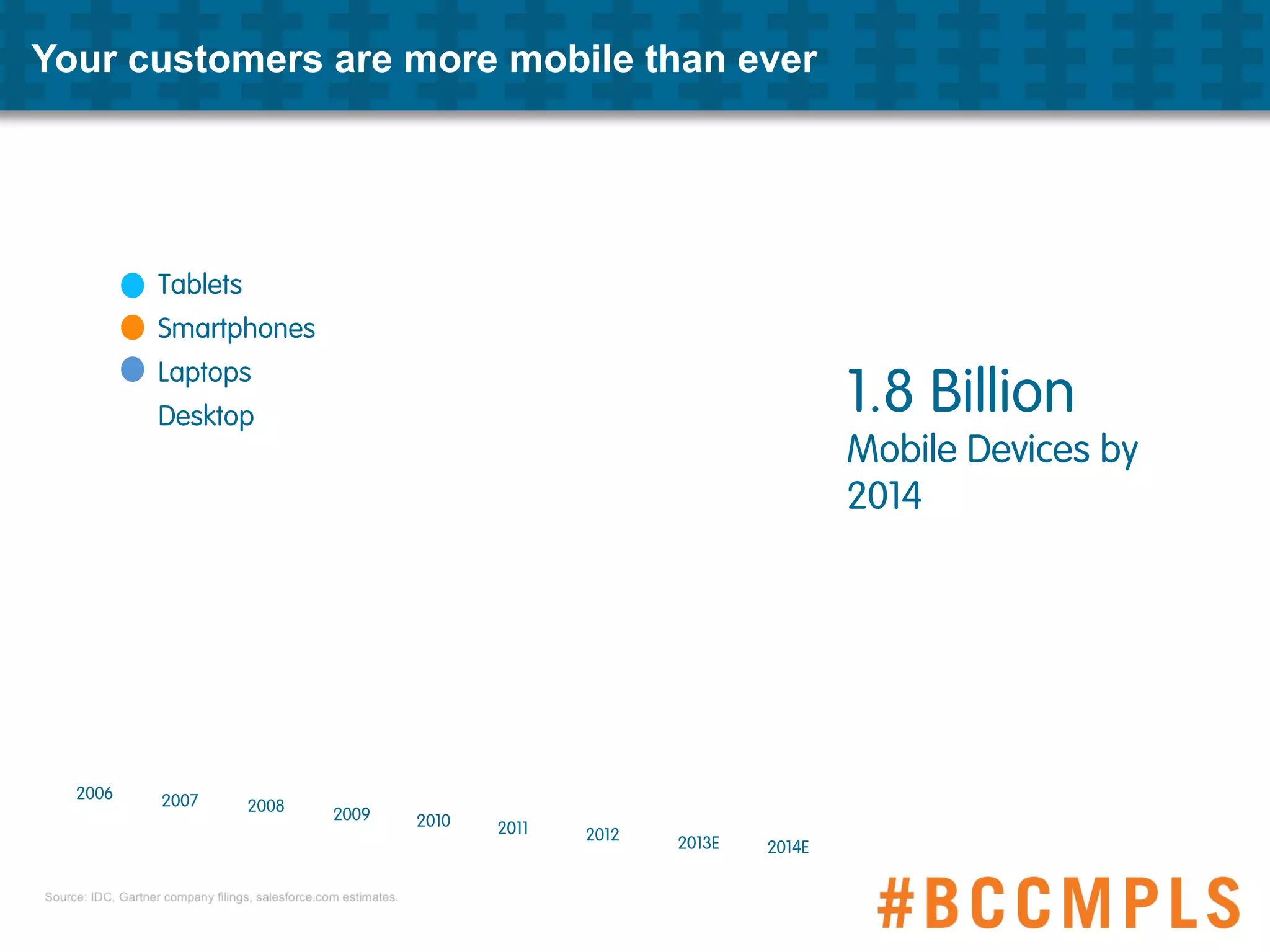
Tablets
Smartphones
Laptops
Desktop 1.8 Billion
Mobile Devices by
2014
2006
2010
2014E
2007 2008 2009
2011 2012 2013E
Your customers are more mobile than ever
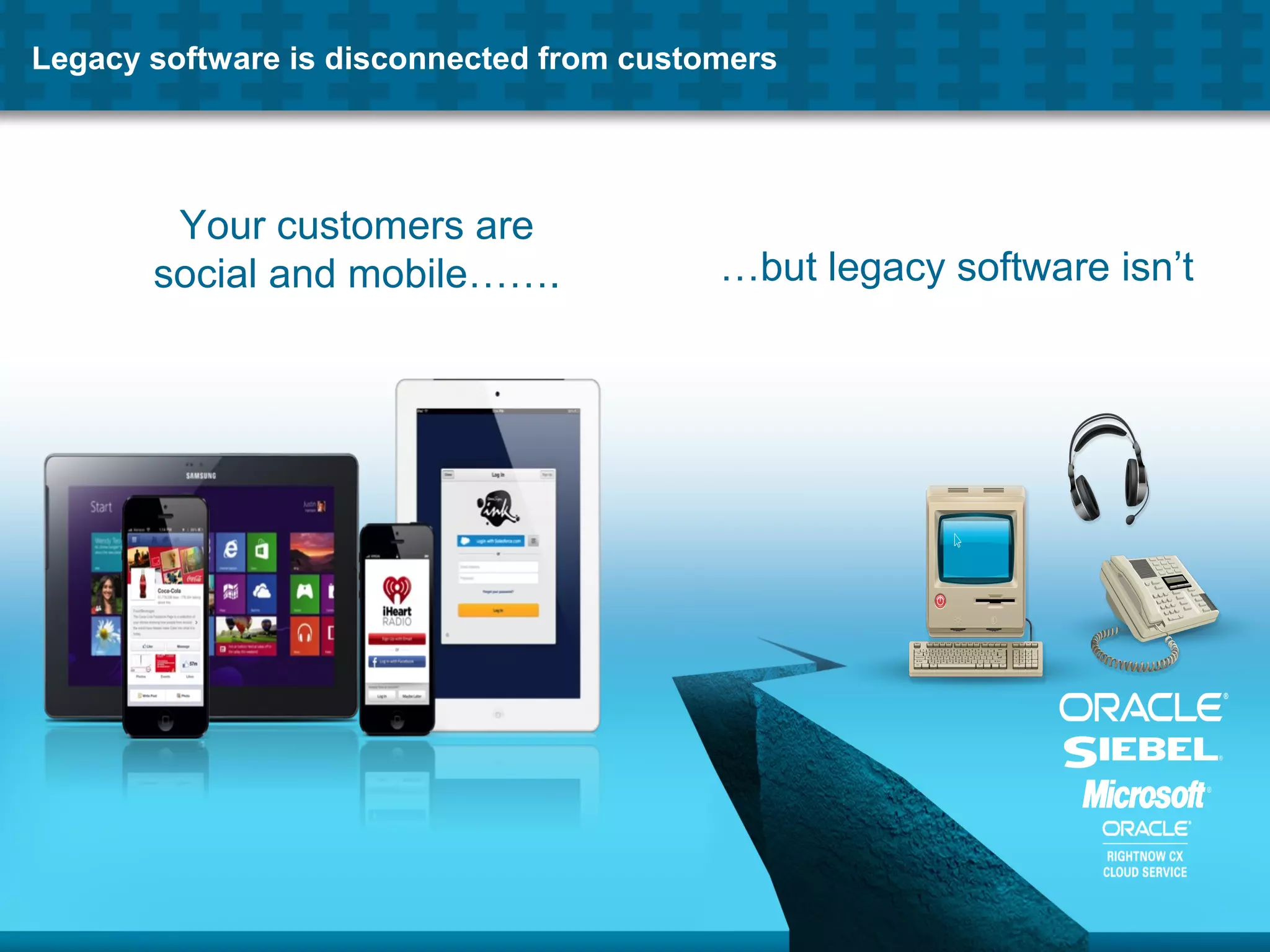
Your customers are
social and mobile……. …but legacy software isn’t
Legacy software is disconnected from customers
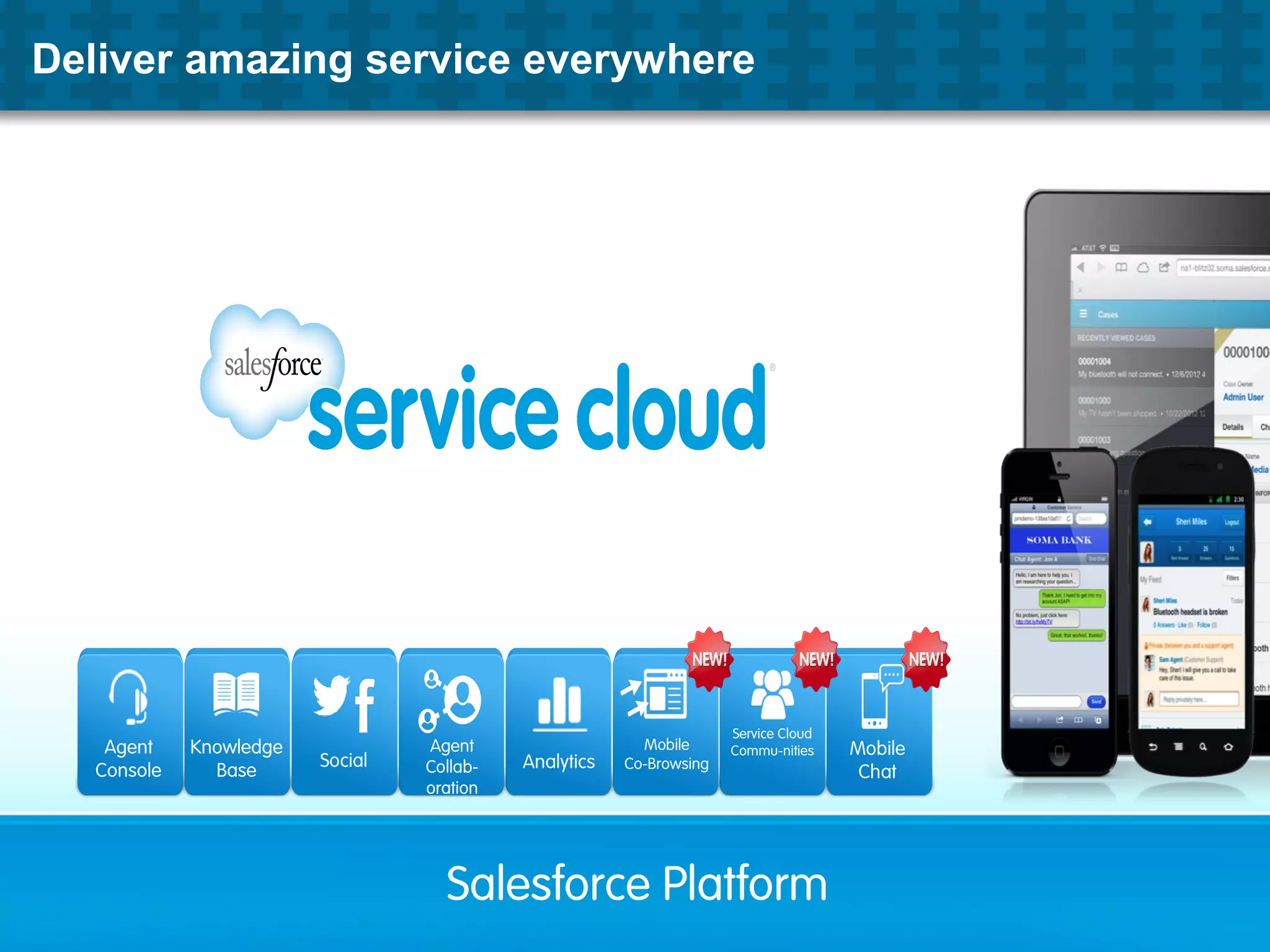
Agent
Console
Knowledge
Base Analytics
Agent
Collab-
oration
Social
Mobile
Chat
Service Cloud
Commu-nitiesMobile
Co-Browsing
Salesforce Platform
Deliver amazing service everywhere
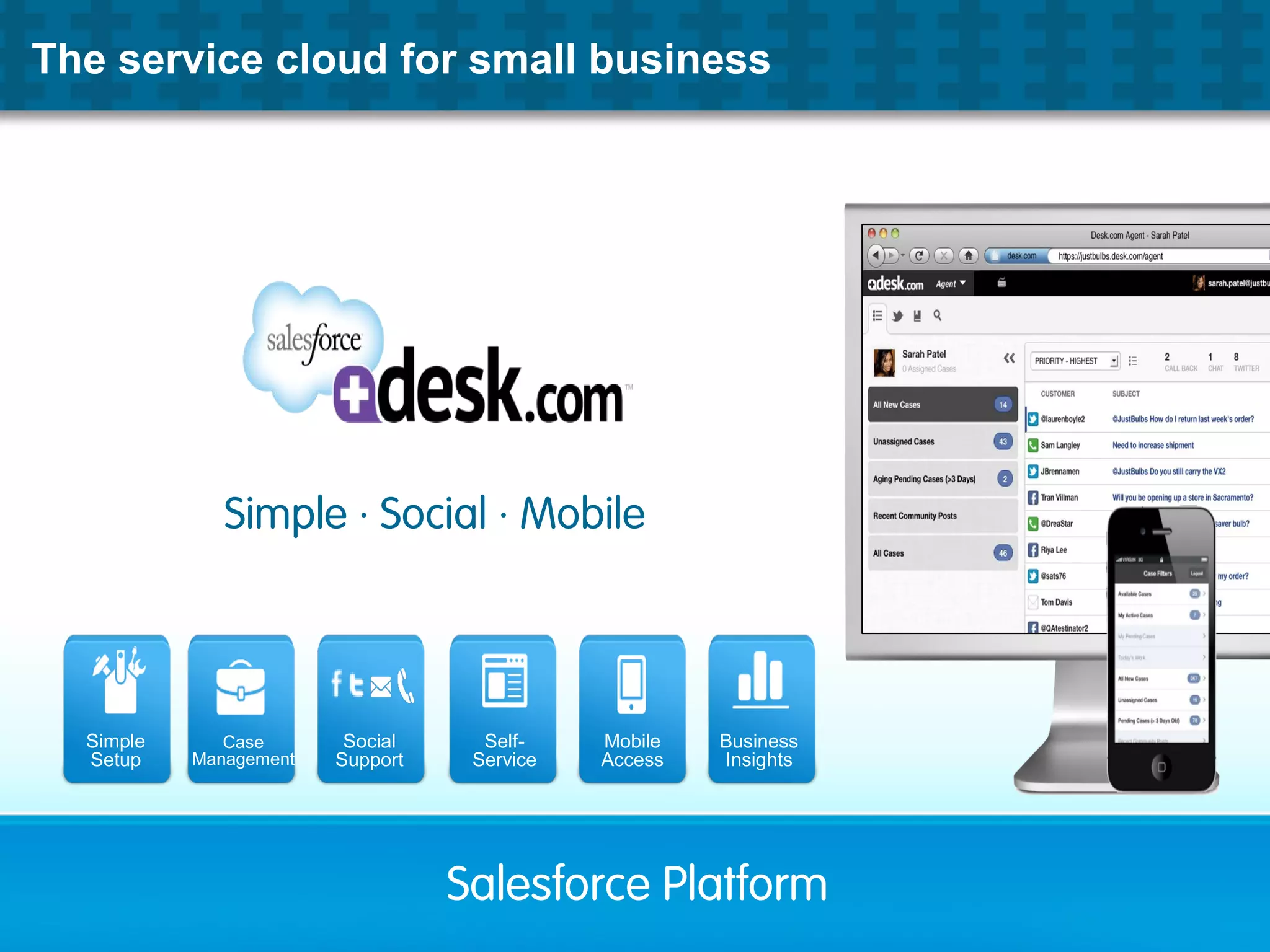
Simple ∙ Social ∙ Mobile
Salesforce Platform
Social
Support
Business
Insights
Mobile
Access
Simple
Setup
Case
Management
Self-
Service
The service cloud for small business
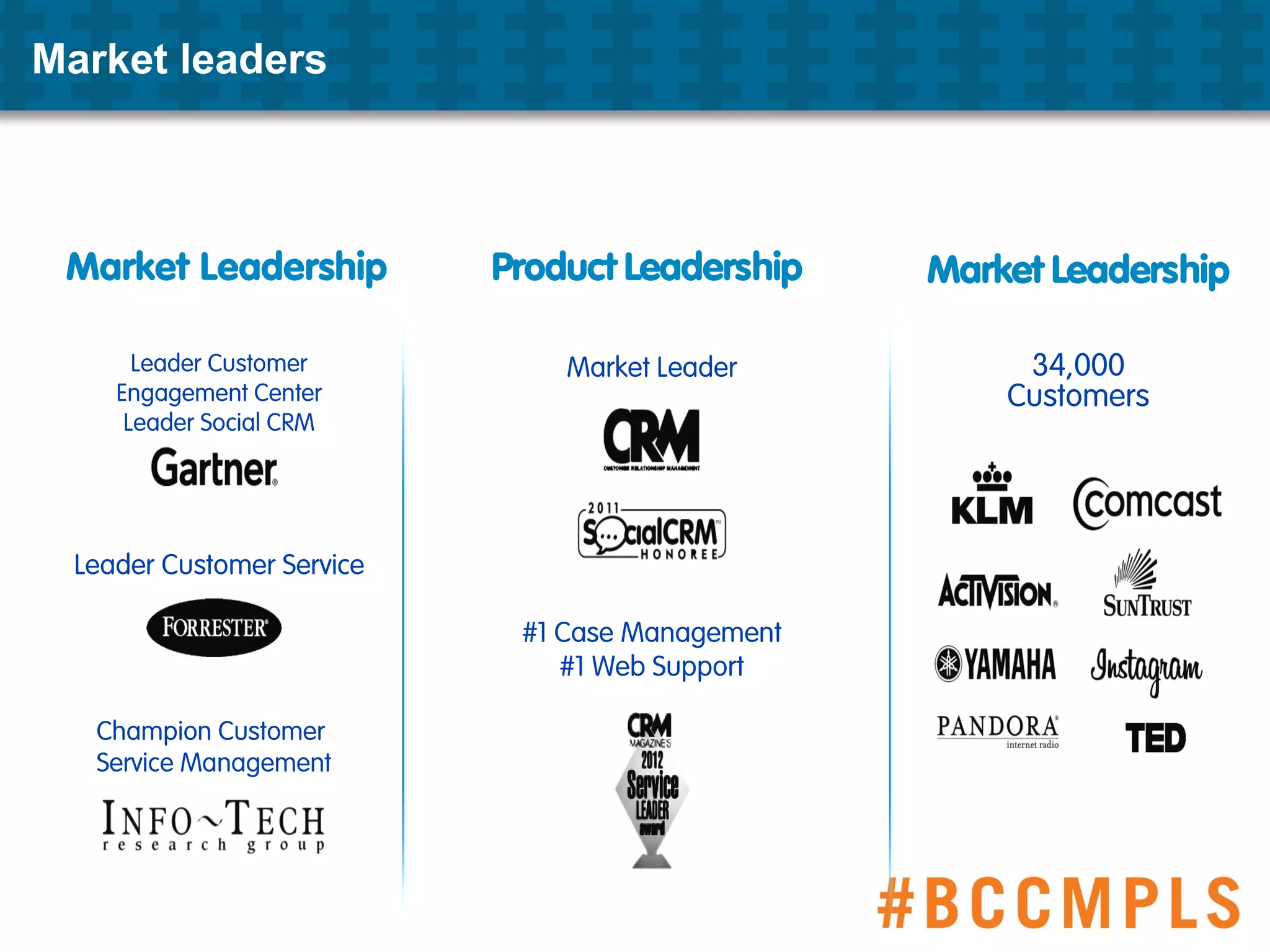
Market Leadership Product Leadership Market Leadership
Leader Customer
Engagement Center
Leader Social CRM
Leader Customer Service
Champion Customer
Service Management
Market Leader
#1 Case Management
#1 Web Support
34,000
Customers
Market leaders
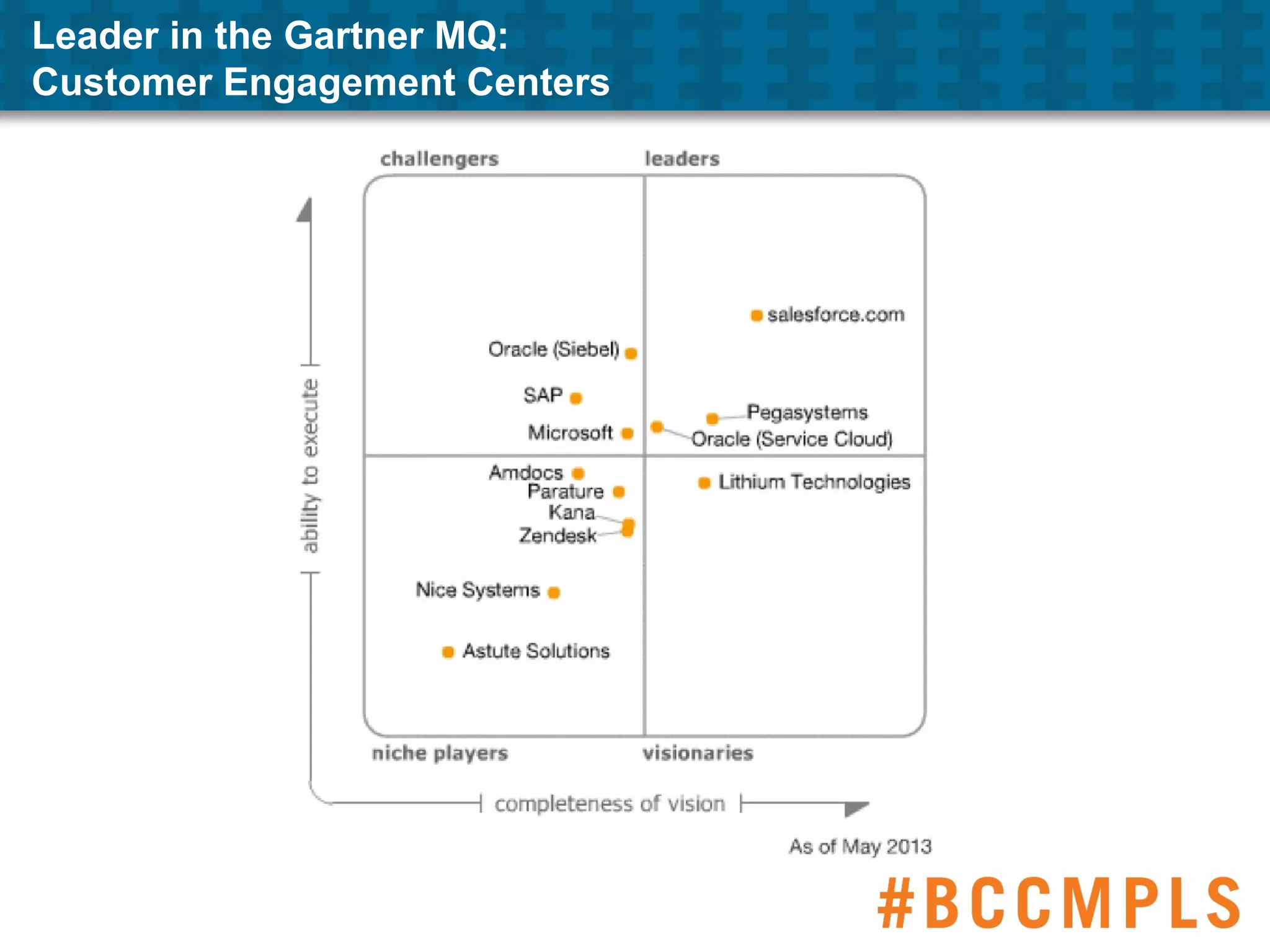
Leader in the Gartner MQ:
Customer Engagement Centers
Leader in the Gartner MQ:
Customer Engagement Centers
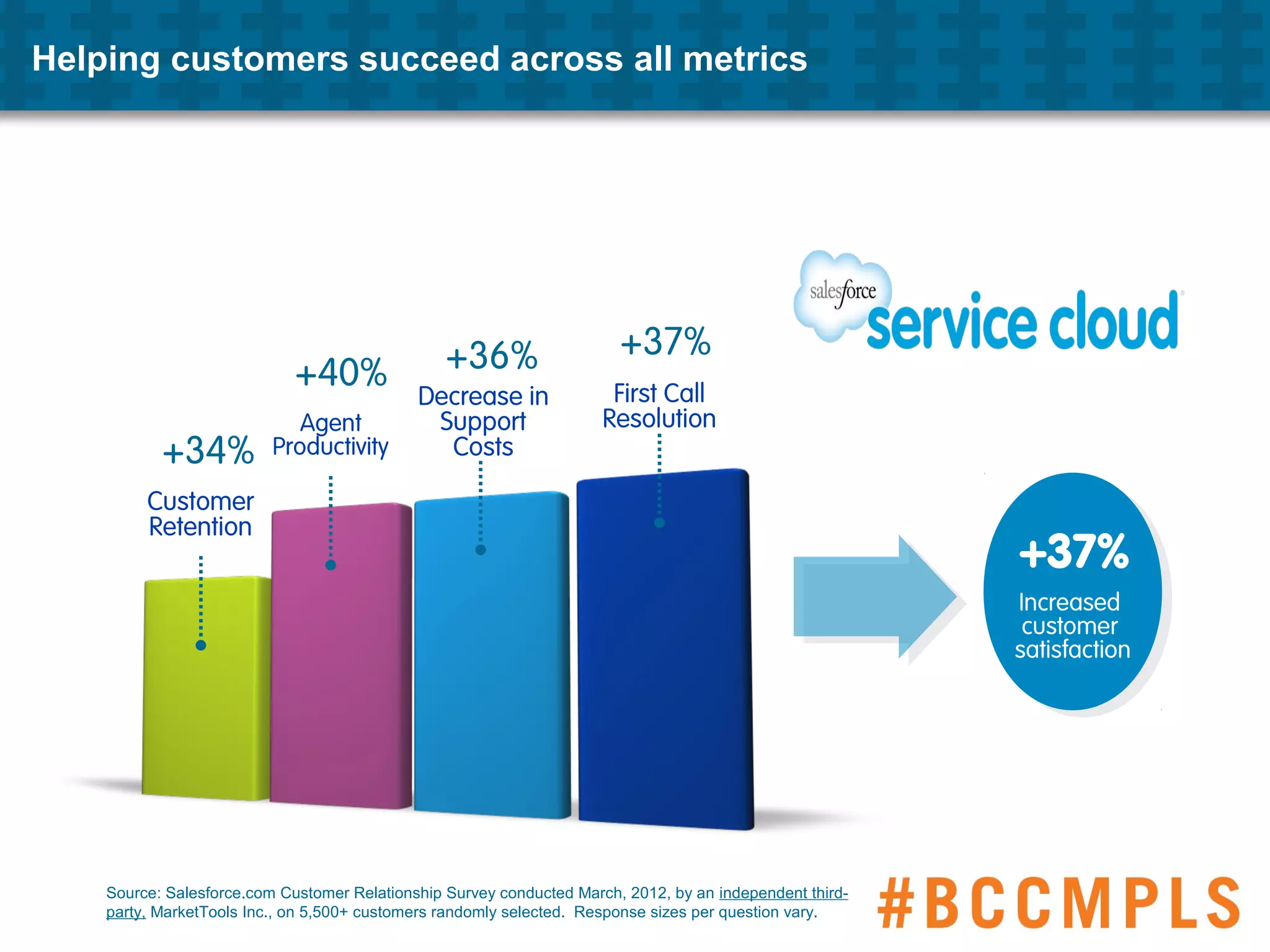
+37%
Source: Salesforce.com Customer Relationship Survey conducted March, 2012, by an independent third-
party, MarketTools Inc., on 5,500+ customers randomly selected. Response sizes per question vary.
Agent
Productivity
+40%
Decrease in
Support
Costs
+36% +37%
Customer
Retention
+34%
First Call
Resolution
Increased
customer
satisfaction
Helping customers succeed across all metrics
Social Mobile Big Data Community
Apps Cloud Trust
Customer Revolution
Optimization
@donmink | @mikemilburn | @mikedannenfeldt
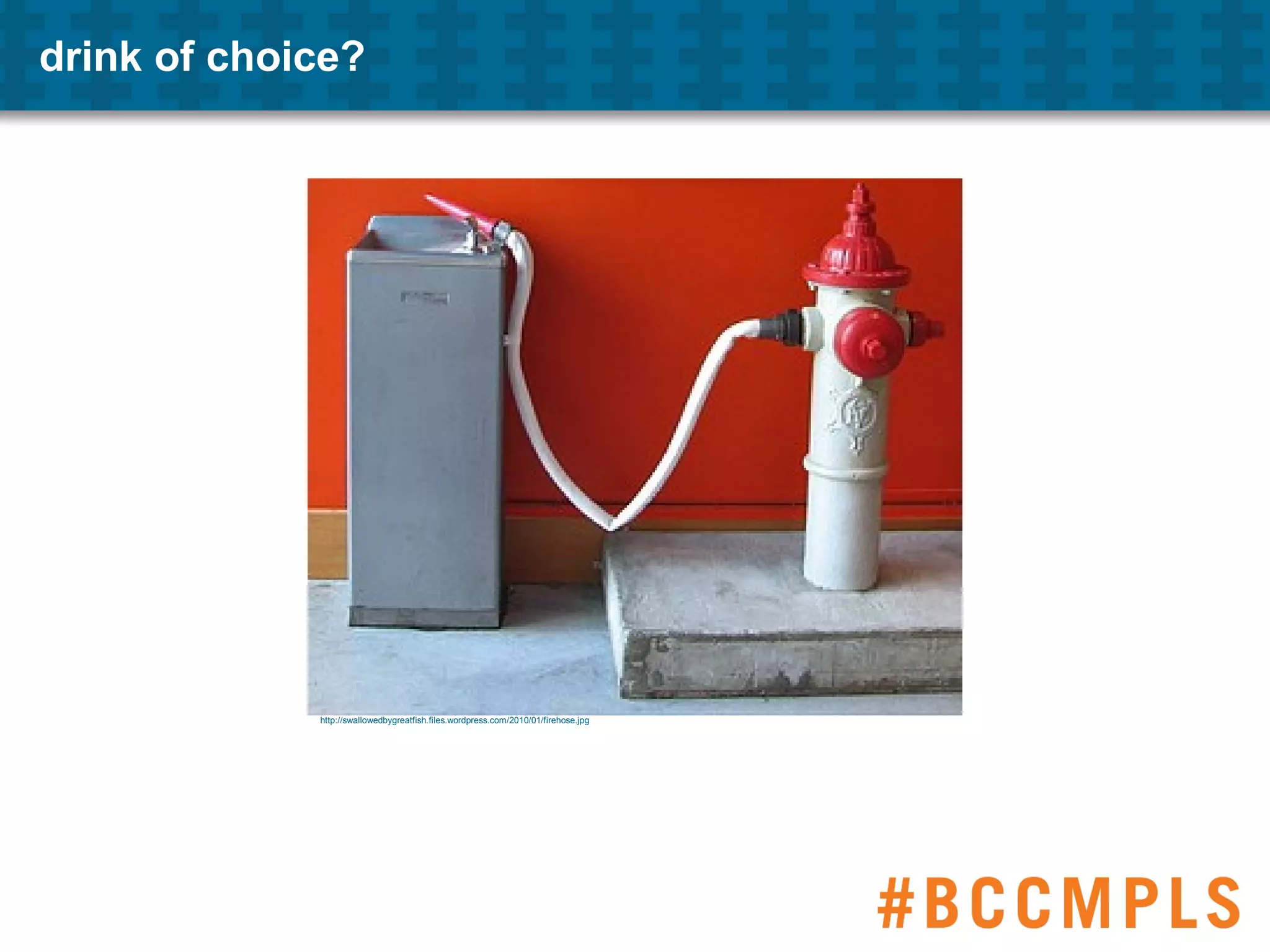
drink of choice?
http://swallowedbygreatfish.files.wordpress.com/2010/01/firehose.jpg
How/Where to focus?
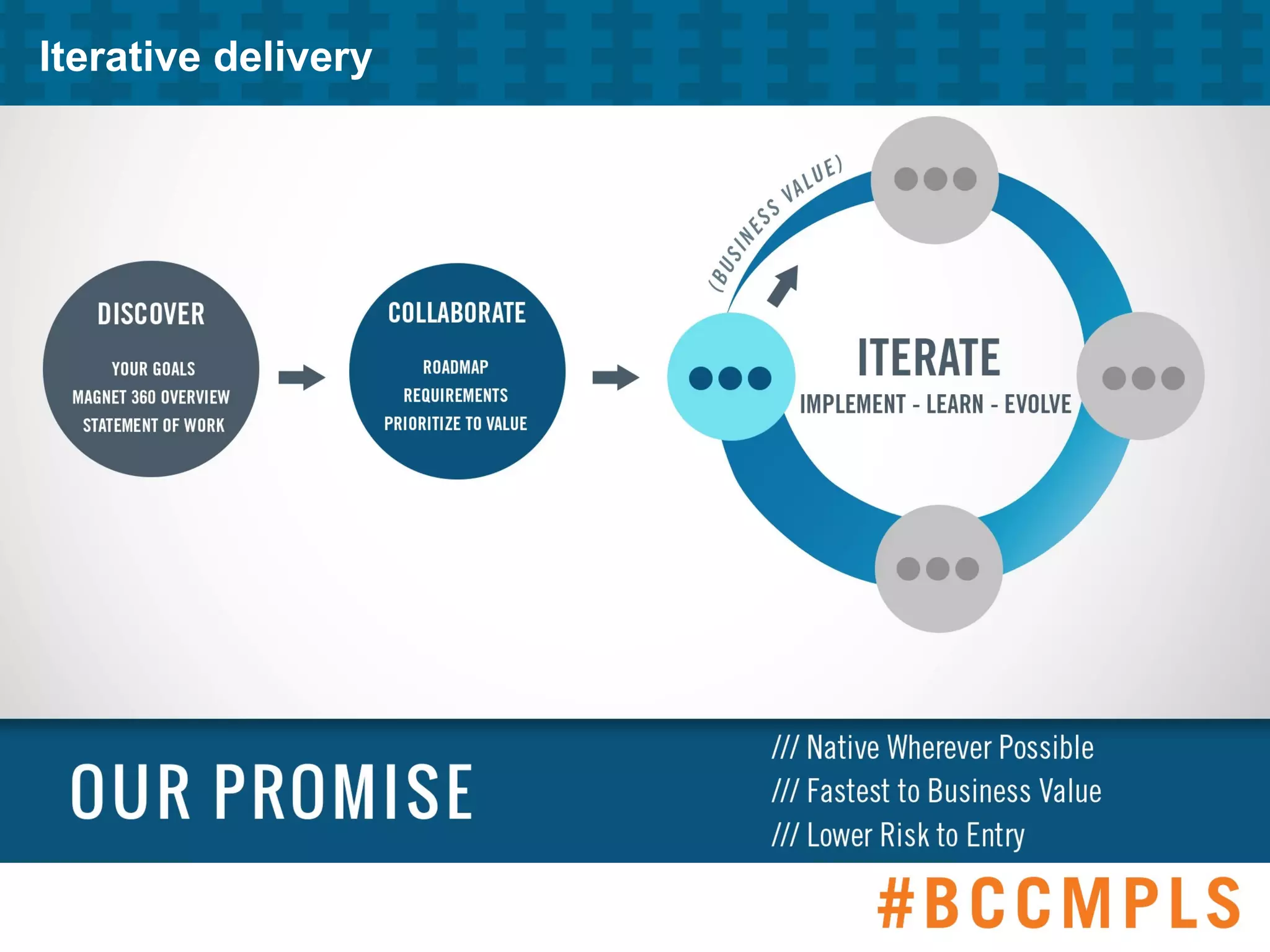
Iterative delivery
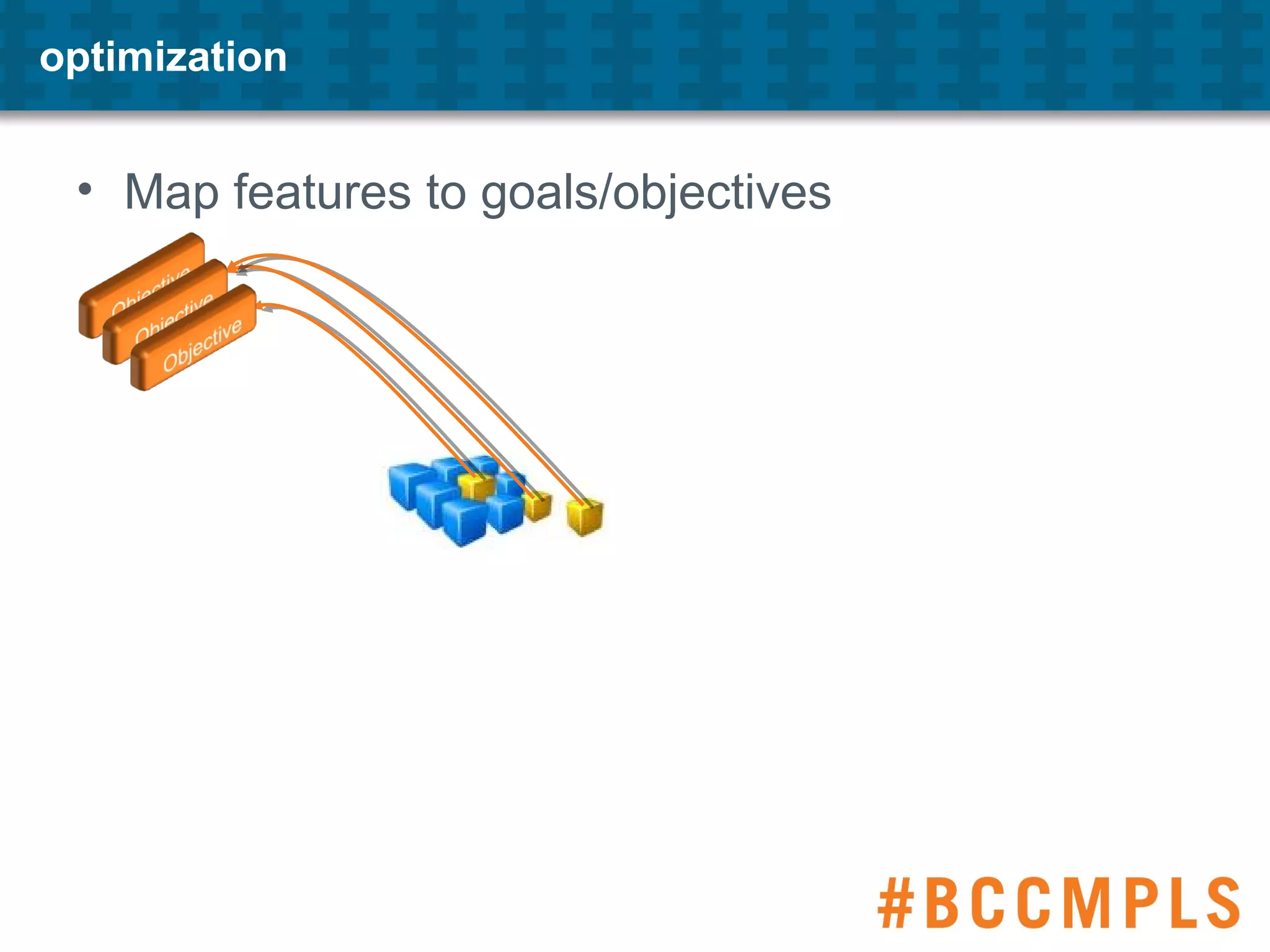
optimization
• Map features to goals/objectives
optimization
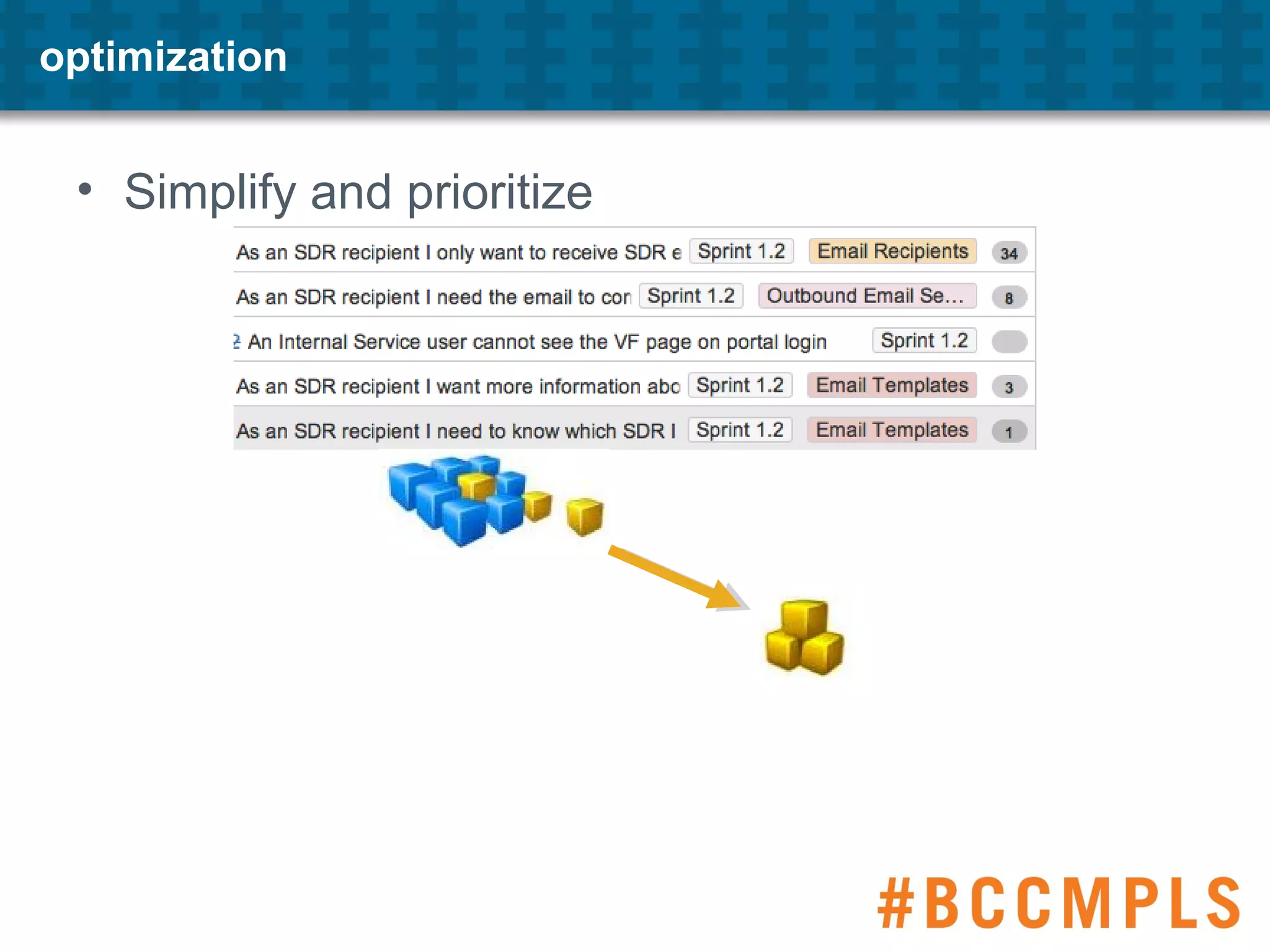
• Simplify and prioritize
optimization
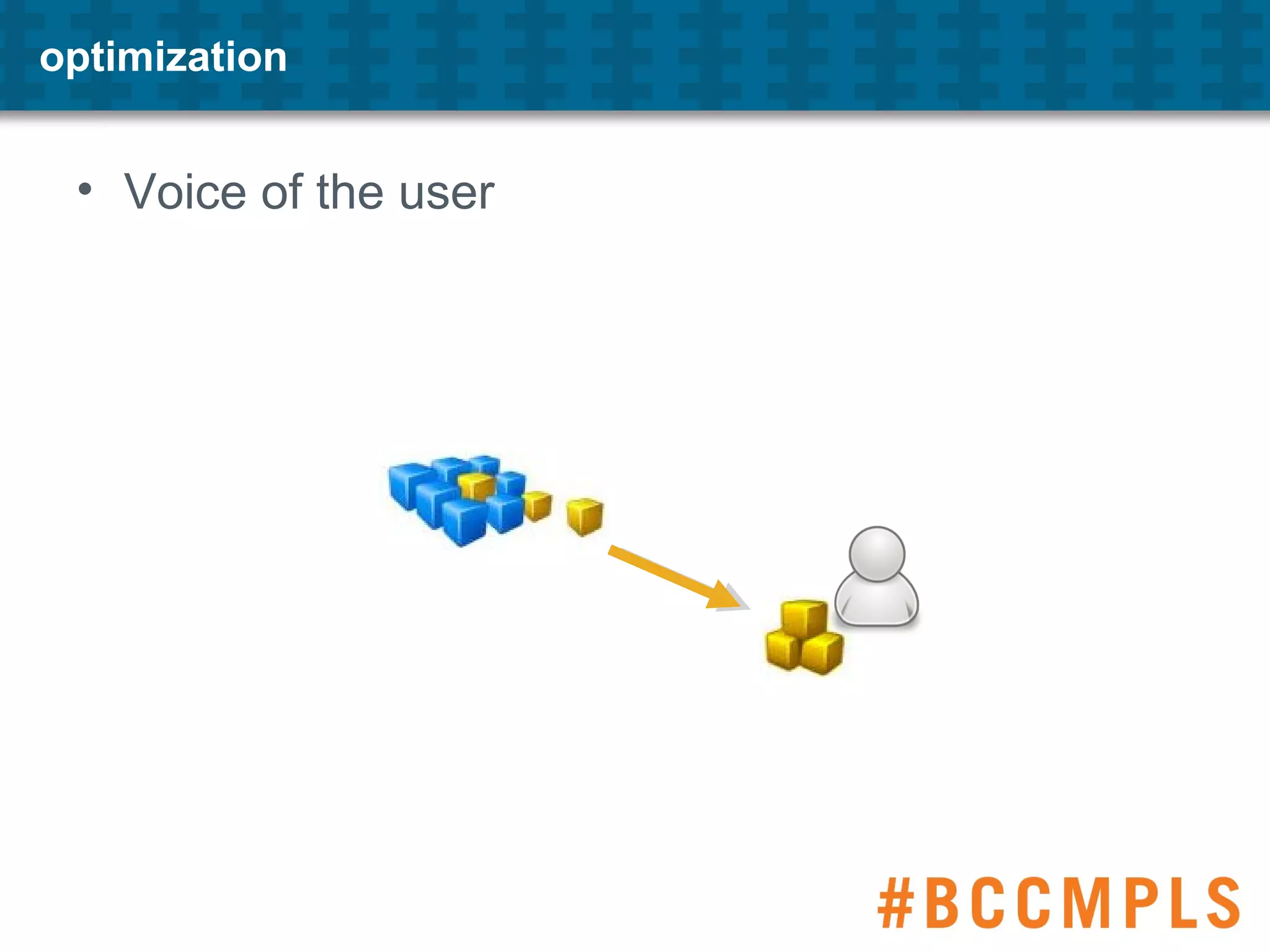
• Voice of the user
optimization
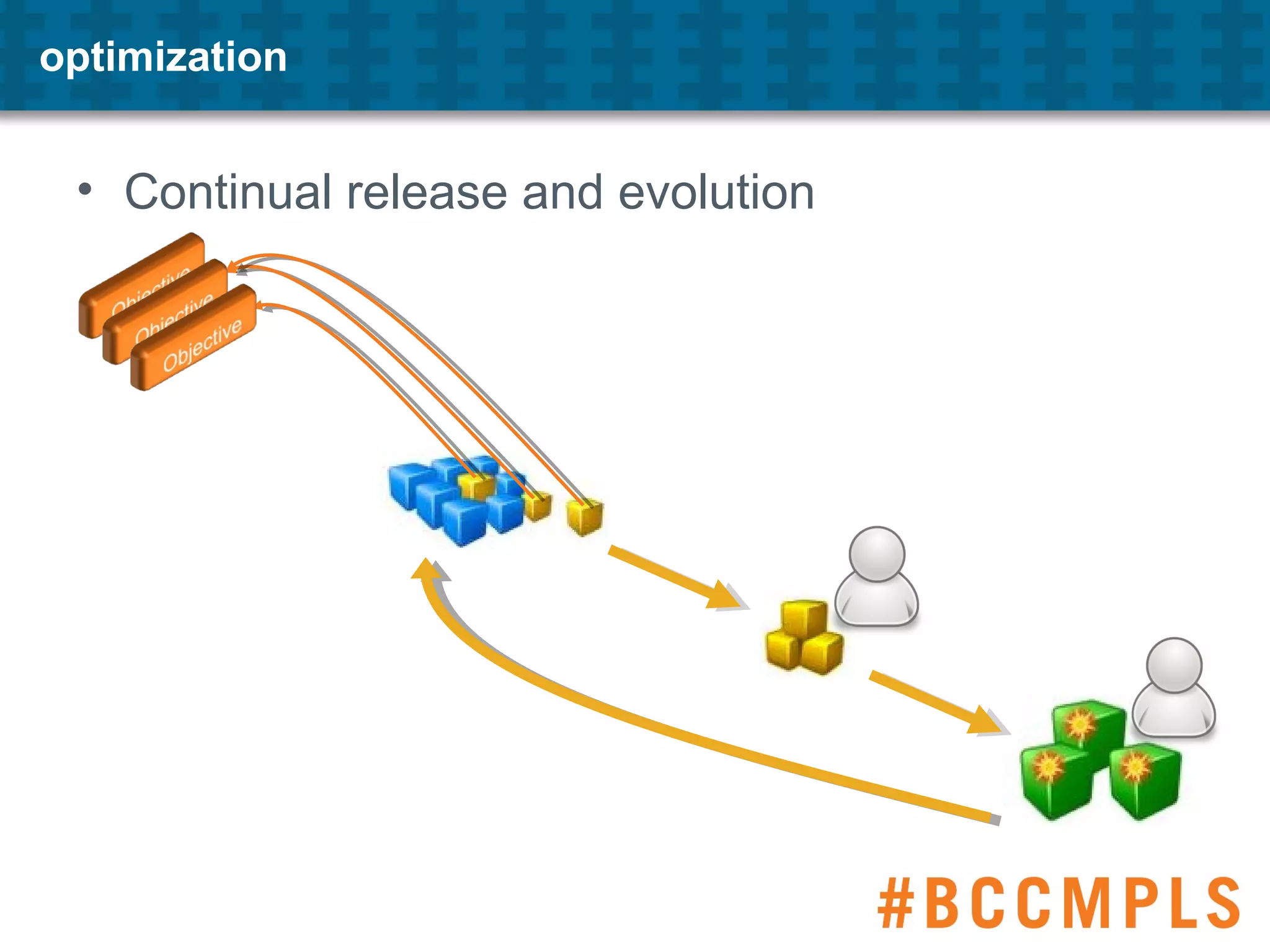
• Continual release and evolution
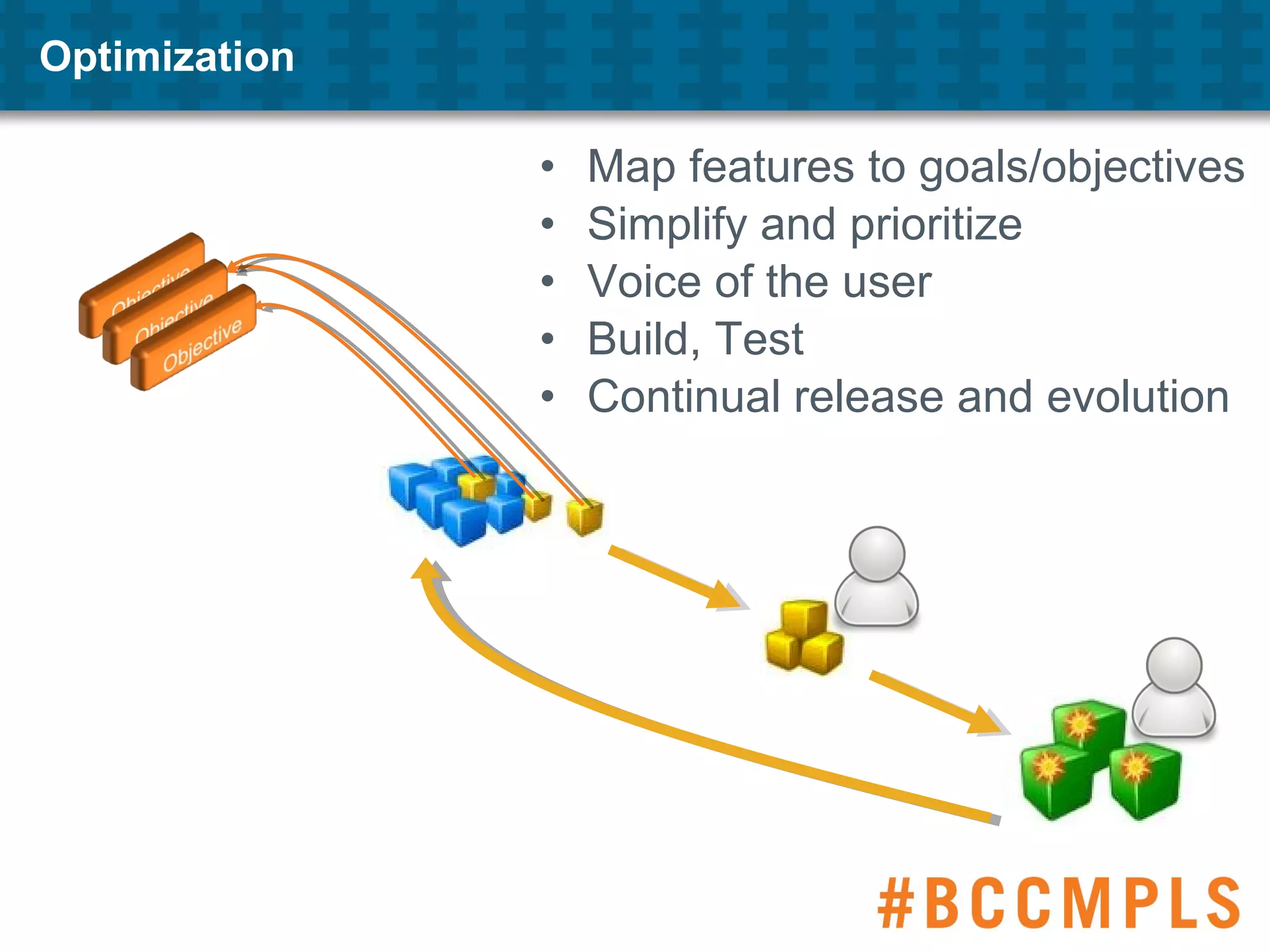
• Map features to goals/objectives
• Simplify and prioritize
• Voice of the user
• Build, Test
• Continual release and evolution
Optimization
drink of choice?
http://swallowedbygreatfish.files.wordpress.com/2010/01/firehose.jpg
Sales and Service Cloud

Sales and Service Cloud

Editor's Notes

  • #8 Every decade brings a major revolution in computing. We’ve seen the world shift from mainframe, mini, and client-server computing systems to cloud computing in the 1990’s. Companies like Amazon and Google, led the way in cloud computing and enabled companies like Salesforce.com to bring cloud computing to the enterprise. With cloud computing, we saw another major shift in the 2000’s with the advent of smartphones as companies like Apple and Steve Jobs showed us what was possible on a mobile device.. Mobile is no longer a ‘nice to have.’ It is now a ‘must have,’ and not just for consumers but for businesspeople as well. But it doesn’t stop there. The last few years have witnessed a groundswell in activity toward social media and social networking technologies. We see this in how people are connecting with other people on Facebook, or connecting with jobs on LinkedIn, You see it in how people are getting educated and finding out what’s most important to them by who they follow and the lists they subscribe to on Twitter. We call this the social revolution.
  • #10 When you harness these revolutions, you can become a customer company and connect with customers in a whole new way. Customer companies are not only connecting their customers, they are connecting employees together so they collaborate around customer accounts, problems, and ideas. Connected employees can solve problems faster and leverage expertise across your company. Customer companies are also connected with their partners, distributors, and suppliers so they can share customer information and better sell and service customers. Customer companies even have connected products. By connecting your products to your employees, your customers, and social networks, you can better service your customers. You can use product data for maintenance, marketing promotions, and sales opportunities. This is what a customer company looks like. You need to be more deeply integrated with your customers than ever before because that’s what they want, and it’s more possible and more exciting today than it ever was before.
  • #18 http://www.youtube.com/watch?v=KA3sExhR6PU&feature=c4-overview-vl&list=PLnobS_RgN7JaTl4VMKSWYxBHjMnbKIUau
  • #22 To add context to our discussion, lets take a look back at the evolution of customer service over the past 3 decades or so. In the 1980’s it was all about the call center and the 800 number. It was the first time that we really reached out and said “dear customer, we care” we care so much we are going to put a dedicated easy to remember phone number on the side of potato chip packets, tooth paste boxes and at the bottom of bank statements. Screaming “call us”! In the 1990’s we saw the emergence of the internet, cloud technology and a new channel of service, email. Lo and behold, the ‘call center’ matured to become the ‘contact center’. And everything was fine for the decade until something amazing happened. In the mid 2000’s the world went social. Like the internet in the mid 90’s, it changed everything. People were going to entirely new places to find answers to questions, by-passing the contact center and collaborating amongst their peers and like minded people who had purchased similar products and services. And now everything has gone mobile. And social and mobile stages of evolution have changed customer service forever.