Presentation on Summer
Internship Project
PRESENTED BY:-
Sagar Deshmukh
MMS 3rd Sem
A
PROJECT REPORT
ON
PRODUCTS & SERVICES OF
TJSB SAHAKARI BANK
Through
RAJEEV GANDHI COLLAGE OF MANAGEMENT STUDIES
NAVI MUMBAI
UNDER THE GUIDANCE OF
Porf.Mr. Dinesh Gabhane.
According to Indian Banking Companies Act 1949, “Banking
company is one which transacts the business of Banking which
means the accepting for the purpose of lending or investment
of deposits of money from the public repayable on demand or
otherwise and withdraw able by cheque, draft or otherwise.”
Nowaday’sbankingisnotinitstraditionalway,withtheadvancementoftechnology its
focusing onmore comfortofcustomer providingservicessuchas:
•Onlinebanking
•investmentbanking
•electronicbanking
•internetbanking
•pcbanking/mobile
•e-banking
TheimportanceofbankingsectorisimmenseintheprogressandprosperityofanyState
orcountry.
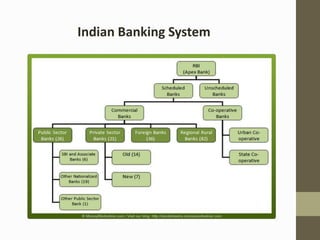
Indian Banking System
Co-Operative Bank
Cooperative banks are so-called because they are
organised under the provisions of the
Cooperative Credit Societies Act of the states. The
major beneficiary of the Cooperative Banking
is the agricultural sector in particular and the rural
sector in general.
The cooperative credit institutions operating in the
country are mainly of two kinds: agricultural
(dominant) and non-agricultural. There are two
separate cooperative agencies for the provision
of agricultural credit: one for short and medium-term
credit, and the other for long-term credit.
The former has three tier and federal structure.
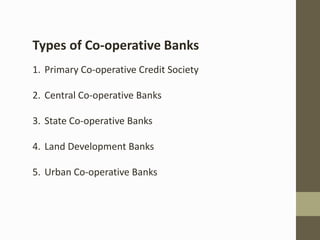
Types of Co-operative Banks
1. Primary Co-operative Credit Society
2. Central Co-operative Banks
3. State Co-operative Banks
4. Land Development Banks
5. Urban Co-operative Banks
ABOUT TJSB SAHAKARI BANK
With the modest beginning in 1972 in the co-operative field, the dynamism
infused by the Board of Directors, unflinching loyalties of clientele and devotion of
staff has propelled the sound foundation of The TJSB Sahakari Bank Ltd (TJSB) and
has emerged as one of the leading multi state scheduled co-operative Bank in the
country.
TJSB presently is catering to the needs of society through a close network
of 112Branches spread all over the city of Thane, Mumbai, Navi Mumbai, Nasik,
Pune, Satara, Aurangabad, Kolhapur, Nagpur, Akola, Amravati, Latur. In the state
of Gujrat, Goa & Karnataka. All these Branches have made remarkable progress on
all fronts in all these years.
TJSBbelievesthat"customerdelight"istheultimategoalandhasastrongbeliefthat
Customers&allStakeholderswholeheartedsupport,absolutefaithandtheirpatronagehas
largelybeenresponsibleforitsenviablegrowth.TJSBiscommittedtoprovidebankingwith
speed,comfortandconvenience.
Products & Services
1. Deposits
2. Accounts
3. Loans
4. Cards
5. Insurance
6. ATMs
7. E Banking Or Online Banking
8. Tele Banking
9. RTGS & NEFT
10. 8% Tax Saving Bonds
Deposits
1. FIXED DIPOSIT SCHEME
2. Tax Saver Fixed Deposits(KAR-BACHAT SCHEME)
3. QUARTERLY INTEREST DEPOSIT SCHEME
4. MONTHLY INTEREST DEPOSIT SCHEME
5. CASH CERTIFICATE DEPOSIT SCHEME
6. RECURRING DEPOSIT SCHEME
7. SHORT TERM DEPOSIT SCHEME
Account
1. Saving Bank Account(SB)
2. Current Account(CA)
3. Cash Credit(CC)
4. Overdraft Against Security(ODS)
5. Overdraft Against Deposit(ODD)
6. NRO Saving Bank Account
7. NRE Saving Bank Account
8. Saving Bank for Women(SBW)
9. Sanjeevani Cash Credit (SCC)
10. Saving Bank For Co-Op Housing Society(SBCHS)
Loans
1. Auto Finance (AMF-M)
2. SadaSavali (SS-M)
3. Property Loan (PRLN-M)
4. Professional Loan (PSLN-M)
5. Consumer Finance (KCF-M)
6. Working Capital (WCTL-M)
7. Gold Loan
8. Property Finance (PRFI-M)
9. VidyaSidhhi Education Loan (VS-M)
10. Traval Loan
Cards
1. TJSB Classic Debit Card
2. TJSB Platinum Debit Card
3. TJSB Rupay Debit Card
Insurance
The bank has entered into a strategic tie up with Max India Life Insurance Co. a
leading Co. in the Insurance business. With this, the bank will be able to
market various insurance products across the counter.
Tele Banking
SMS Banking
SMS Banking brings the Banking at your fingertips. Bank has introduced the
SMS Banking Facility for its customers.
Under SMS Banking following facilities are offered to the Customers.
• Latest Balance in the Account
• Details of the last 3 transaction OF the Account
• Cheque Return Alert
• Transaction Alert
• Term Deposit Maturity Alert
RTGS & NEFT
Inter Bank Transfer enables electronic transfer of funds from the account of the remitter in
one Bank to the account of the beneficiary maintained with any other Bank branch. There are
two systems of Inter Bank Transfer - RTGS and NEFT. Both these systems are maintained by
Reserve Bank of India.
RTGS- Real Time Gross Settlement- This is a system where the processing of funds transfer
instructions takes place at the time they are received (real time). Also the settlement of funds
transfer instructions occurs individually on an instruction by instruction basis (gross
settlement). RTGS is the fastest possible interbank money transfer facility available through
secure banking channels in India.
NEFT- National Electronic Fund Transfer- This system of fund transfer operates on a Deferred
Net Settlement basis. Fund transfer transactions are settled in batches as opposed to the
continuous, individual settlement in RTGS. Presently,
SWOT ANALYSIS
STRENGTHS
1. TJSB bank is a growing Co-operative Bank.
2. The bank has a network of 112 branches and 113ATMs
3. The bank has its presence in 8 cities and towns.
4. The banks equilibrium in growth and profit.
5. The Bank net profit Mar 2015 is 101.20 which has a increase of 8.21% growth
compared to 2014.
6. Tie up with Max Life Insurance.
WEAKNESSES
1. There are lot of financial product gaps in terms of performance as well as reaching
out to the customer
2. Less use of Internet Banking customer due lack of awareness.
REFERENCE
1. www.tjsb.in
2. google
Thank You

Sagar project ppt

  • 1.
    Presentation on Summer InternshipProject PRESENTED BY:- Sagar Deshmukh MMS 3rd Sem
  • 2.
    A PROJECT REPORT ON PRODUCTS &SERVICES OF TJSB SAHAKARI BANK Through RAJEEV GANDHI COLLAGE OF MANAGEMENT STUDIES NAVI MUMBAI UNDER THE GUIDANCE OF Porf.Mr. Dinesh Gabhane.
  • 3.
    According to IndianBanking Companies Act 1949, “Banking company is one which transacts the business of Banking which means the accepting for the purpose of lending or investment of deposits of money from the public repayable on demand or otherwise and withdraw able by cheque, draft or otherwise.”
  • 4.
    Nowaday’sbankingisnotinitstraditionalway,withtheadvancementoftechnology its focusing onmorecomfortofcustomer providingservicessuchas: •Onlinebanking •investmentbanking •electronicbanking •internetbanking •pcbanking/mobile •e-banking TheimportanceofbankingsectorisimmenseintheprogressandprosperityofanyState orcountry.
  • 5.
  • 6.
    Co-Operative Bank Cooperative banksare so-called because they are organised under the provisions of the Cooperative Credit Societies Act of the states. The major beneficiary of the Cooperative Banking is the agricultural sector in particular and the rural sector in general. The cooperative credit institutions operating in the country are mainly of two kinds: agricultural (dominant) and non-agricultural. There are two separate cooperative agencies for the provision of agricultural credit: one for short and medium-term credit, and the other for long-term credit. The former has three tier and federal structure.
  • 7.
    Types of Co-operativeBanks 1. Primary Co-operative Credit Society 2. Central Co-operative Banks 3. State Co-operative Banks 4. Land Development Banks 5. Urban Co-operative Banks
  • 8.
    ABOUT TJSB SAHAKARIBANK With the modest beginning in 1972 in the co-operative field, the dynamism infused by the Board of Directors, unflinching loyalties of clientele and devotion of staff has propelled the sound foundation of The TJSB Sahakari Bank Ltd (TJSB) and has emerged as one of the leading multi state scheduled co-operative Bank in the country. TJSB presently is catering to the needs of society through a close network of 112Branches spread all over the city of Thane, Mumbai, Navi Mumbai, Nasik, Pune, Satara, Aurangabad, Kolhapur, Nagpur, Akola, Amravati, Latur. In the state of Gujrat, Goa & Karnataka. All these Branches have made remarkable progress on all fronts in all these years.
  • 9.
  • 10.
    Products & Services 1.Deposits 2. Accounts 3. Loans 4. Cards 5. Insurance 6. ATMs 7. E Banking Or Online Banking 8. Tele Banking 9. RTGS & NEFT 10. 8% Tax Saving Bonds
  • 11.
    Deposits 1. FIXED DIPOSITSCHEME 2. Tax Saver Fixed Deposits(KAR-BACHAT SCHEME) 3. QUARTERLY INTEREST DEPOSIT SCHEME 4. MONTHLY INTEREST DEPOSIT SCHEME 5. CASH CERTIFICATE DEPOSIT SCHEME 6. RECURRING DEPOSIT SCHEME 7. SHORT TERM DEPOSIT SCHEME
  • 12.
    Account 1. Saving BankAccount(SB) 2. Current Account(CA) 3. Cash Credit(CC) 4. Overdraft Against Security(ODS) 5. Overdraft Against Deposit(ODD) 6. NRO Saving Bank Account 7. NRE Saving Bank Account 8. Saving Bank for Women(SBW) 9. Sanjeevani Cash Credit (SCC) 10. Saving Bank For Co-Op Housing Society(SBCHS)
  • 13.
    Loans 1. Auto Finance(AMF-M) 2. SadaSavali (SS-M) 3. Property Loan (PRLN-M) 4. Professional Loan (PSLN-M) 5. Consumer Finance (KCF-M) 6. Working Capital (WCTL-M) 7. Gold Loan 8. Property Finance (PRFI-M) 9. VidyaSidhhi Education Loan (VS-M) 10. Traval Loan
  • 14.
    Cards 1. TJSB ClassicDebit Card 2. TJSB Platinum Debit Card 3. TJSB Rupay Debit Card
  • 15.
    Insurance The bank hasentered into a strategic tie up with Max India Life Insurance Co. a leading Co. in the Insurance business. With this, the bank will be able to market various insurance products across the counter.
  • 16.
    Tele Banking SMS Banking SMSBanking brings the Banking at your fingertips. Bank has introduced the SMS Banking Facility for its customers. Under SMS Banking following facilities are offered to the Customers. • Latest Balance in the Account • Details of the last 3 transaction OF the Account • Cheque Return Alert • Transaction Alert • Term Deposit Maturity Alert
  • 17.
    RTGS & NEFT InterBank Transfer enables electronic transfer of funds from the account of the remitter in one Bank to the account of the beneficiary maintained with any other Bank branch. There are two systems of Inter Bank Transfer - RTGS and NEFT. Both these systems are maintained by Reserve Bank of India. RTGS- Real Time Gross Settlement- This is a system where the processing of funds transfer instructions takes place at the time they are received (real time). Also the settlement of funds transfer instructions occurs individually on an instruction by instruction basis (gross settlement). RTGS is the fastest possible interbank money transfer facility available through secure banking channels in India. NEFT- National Electronic Fund Transfer- This system of fund transfer operates on a Deferred Net Settlement basis. Fund transfer transactions are settled in batches as opposed to the continuous, individual settlement in RTGS. Presently,
  • 18.
    SWOT ANALYSIS STRENGTHS 1. TJSBbank is a growing Co-operative Bank. 2. The bank has a network of 112 branches and 113ATMs 3. The bank has its presence in 8 cities and towns. 4. The banks equilibrium in growth and profit. 5. The Bank net profit Mar 2015 is 101.20 which has a increase of 8.21% growth compared to 2014. 6. Tie up with Max Life Insurance. WEAKNESSES 1. There are lot of financial product gaps in terms of performance as well as reaching out to the customer 2. Less use of Internet Banking customer due lack of awareness.
  • 19.
  • 20.