Safety While
Construction &
Renovation
ARE YOU
AS SAFE AS
YOU
THINK?
Ask yourself
ASK YOURSELF THREE QUESTIONS.
QUESTION #1:
How could you get
Your life in danger?
QUESTION #2:
What could hurt you or
make you sick where you work?
Question #3:
What are hazards?
A hazard is
anything that
can
cut you
A hazard is
anything that
can
trip you
A hazard is
anything that
can
burn you
A hazard is
anything that
can
crush you
hurt your
hearing
A hazard is
anything that
can
A hazard is
anything that
can
hurt your
eyes
A hazard is
anything that
can
make you
sick
A hazard is
anything that
can
cause you
pain
 Chemical
 Physical
 Biological
 Ergonomic
Identify the Types of
Hazards
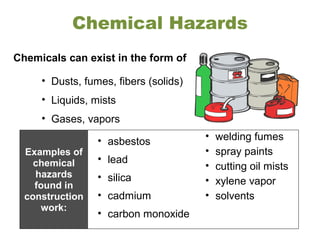
Chemical Hazards
Chemicals can exist in the form of
• Dusts, fumes, fibers (solids)
• Liquids, mists
• Gases, vapors
• welding fumes
• spray paints
• cutting oil mists
• xylene vapor
• solvents
Examples of
chemical
hazards
found in
construction
work:
• asbestos
• lead
• silica
• cadmium
• carbon monoxide
Physical Hazards
• Noise
• Vibration
• Temperature extremes
• Radiation
Physical hazards are different types of energy which
may be hazardous to workers.
Biological Hazards
Exposure may occur during demolition, renovation,
sewer work, work on air handling systems, or other
construction work from contact with contaminated or
disease-carrying
• soil
• water
• insects (mosquitoes, ticks)
• bird, bat droppings
• animals
• structures
Ergonomic Hazards
Ergonomic hazards can cause painful and disabling
injuries till example Musculoskeletal Disorders (MSDs) .
This following situation may causes these injuries:
• Heavy, frequent, or awkward
lifting
• Repetitive tasks
• Awkward grips, postures
• Using excessive force,
overexertion
• Using wrong tools for the job
or using tools improperly
• Using improperly maintained tools
As a Team member of LEVEL V DESIGN & BUILD,
SERVICE is our commitment:
Safety First
Every Partner
Respect for My Customers
Value of My Job
Integrity
Clear Communication
Eye to the Future
A New Pledge to
Serve
Safety First: I will focus
each day on safety: my
own, my teammates,
our workplace, our
work practices, and our
customers – the
traveling public – with a
“Target Zero” goal for
any and all safety
hazards.
• Safety is everyone’s responsibility.
• It is a moral and legal obligation of employers to provide
a safe working place and of employees to work safely.
• Employer’s duty of care to employees as covering the
following areas:
– safe system of work;
– a safe place of work;
– plant and machinery that is safe to use;
– competent supervision and/or suitable training; and
– care in the selection of fellow employees.
Focus on Workplace
Safety
Follow Hazard Signs
Your workplace has signs to remind you to be careful
How is air quality in your home?
Construction and Renovation
projects present a variety of
situations that may release
contaminants and pollutants that
can affect the indoor air quality
of a building.
• Inform employees about timing and site of renovation and also
suggest them to wear a dust mask, cover up head to toe and
many ways to keep pollutants away from your body.
• Develop a plan to identify areas when and where renovations
will happen and what types of contaminants could be released
and measures to minimize the presence of contaminants.
ays to protect your employee
• Seal off the room you are remodeling using double
layer plastic and also seal the furnace ducts to keep
dust out of the ducts and reduce airflow out of the
room.
• Always hire certified and licensed contractors who
know how to perform renovation projects in better
way.
• Ensure that constructors have proper protective
equipment for the job, such as respirator, gloves,
head protection and foot protection.
Use Protective
Gears
Participate in SAFETY Debates &
Discussions
• Talking about safety
• Asking questions about safety
• Making suggestions about safety
• A formal way to “participate” is to serve
 
Start Every Work Day the Safe
Way
Analyze the work to be done!
Identify the critical safety
procedures!
Decide what personal
protective
equipment is required!
 
Start Every Work Day the Safe Way
Step back 2 yards for 2 minutes and ask 
yourself:
“Am I focused and have I identified all the 
hazards?”
Level V Design & Build
115 Rivalda Road
Toronto, ON
MAIL US at:
info@levelvdesign.com
ANY QUERY??
JUST ASK US
##levelv##

Safety while construction & renovation

  • 1.
  • 2.
    ARE YOU AS SAFEAS YOU THINK? Ask yourself
  • 3.
    ASK YOURSELF THREEQUESTIONS. QUESTION #1: How could you get Your life in danger? QUESTION #2: What could hurt you or make you sick where you work? Question #3: What are hazards?
  • 4.
    A hazard is anythingthat can cut you
  • 5.
    A hazard is anythingthat can trip you
  • 6.
    A hazard is anythingthat can burn you
  • 7.
    A hazard is anythingthat can crush you
  • 8.
    hurt your hearing A hazardis anything that can
  • 9.
    A hazard is anythingthat can hurt your eyes
  • 10.
    A hazard is anythingthat can make you sick
  • 11.
    A hazard is anythingthat can cause you pain
  • 12.
     Chemical  Physical Biological  Ergonomic Identify the Types of Hazards
  • 13.
    Chemical Hazards Chemicals canexist in the form of • Dusts, fumes, fibers (solids) • Liquids, mists • Gases, vapors • welding fumes • spray paints • cutting oil mists • xylene vapor • solvents Examples of chemical hazards found in construction work: • asbestos • lead • silica • cadmium • carbon monoxide
  • 14.
    Physical Hazards • Noise •Vibration • Temperature extremes • Radiation Physical hazards are different types of energy which may be hazardous to workers.
  • 15.
    Biological Hazards Exposure mayoccur during demolition, renovation, sewer work, work on air handling systems, or other construction work from contact with contaminated or disease-carrying • soil • water • insects (mosquitoes, ticks) • bird, bat droppings • animals • structures
  • 16.
    Ergonomic Hazards Ergonomic hazardscan cause painful and disabling injuries till example Musculoskeletal Disorders (MSDs) . This following situation may causes these injuries: • Heavy, frequent, or awkward lifting • Repetitive tasks • Awkward grips, postures • Using excessive force, overexertion • Using wrong tools for the job or using tools improperly • Using improperly maintained tools
  • 17.
    As a Teammember of LEVEL V DESIGN & BUILD, SERVICE is our commitment: Safety First Every Partner Respect for My Customers Value of My Job Integrity Clear Communication Eye to the Future A New Pledge to Serve Safety First: I will focus each day on safety: my own, my teammates, our workplace, our work practices, and our customers – the traveling public – with a “Target Zero” goal for any and all safety hazards.
  • 19.
    • Safety iseveryone’s responsibility. • It is a moral and legal obligation of employers to provide a safe working place and of employees to work safely. • Employer’s duty of care to employees as covering the following areas: – safe system of work; – a safe place of work; – plant and machinery that is safe to use; – competent supervision and/or suitable training; and – care in the selection of fellow employees. Focus on Workplace Safety
  • 20.
    Follow Hazard Signs Yourworkplace has signs to remind you to be careful
  • 21.
    How is airquality in your home? Construction and Renovation projects present a variety of situations that may release contaminants and pollutants that can affect the indoor air quality of a building.
  • 22.
    • Inform employeesabout timing and site of renovation and also suggest them to wear a dust mask, cover up head to toe and many ways to keep pollutants away from your body. • Develop a plan to identify areas when and where renovations will happen and what types of contaminants could be released and measures to minimize the presence of contaminants. ays to protect your employee
  • 23.
    • Seal offthe room you are remodeling using double layer plastic and also seal the furnace ducts to keep dust out of the ducts and reduce airflow out of the room. • Always hire certified and licensed contractors who know how to perform renovation projects in better way. • Ensure that constructors have proper protective equipment for the job, such as respirator, gloves, head protection and foot protection. Use Protective Gears
  • 25.
    Participate in SAFETYDebates & Discussions • Talking about safety • Asking questions about safety • Making suggestions about safety • A formal way to “participate” is to serve
  • 26.
      Start Every WorkDay the Safe Way Analyze the work to be done! Identify the critical safety procedures! Decide what personal protective equipment is required!
  • 27.
      Start Every WorkDay the Safe Way Step back 2 yards for 2 minutes and ask  yourself: “Am I focused and have I identified all the  hazards?”
  • 28.
    Level V Design& Build 115 Rivalda Road Toronto, ON MAIL US at: info@levelvdesign.com ANY QUERY?? JUST ASK US
  • 29.