Safety on the farm
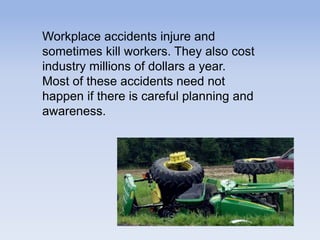
Workplace accidents injure and
sometimes kill workers. They also cost
industry millions of dollars a year.
Most of these accidents need not
happen if there is careful planning and
awareness.
Accidents are caused by hazards and
people who do not know how to
recognise, reduce or eliminate the
risk.
A hazard is anything which has the
potential to cause injury or sickness.
The identification and management of
workplace hazards is a joint responsibility
between you and your employer where you
must help each other to provide a safe
workplace for everyone.
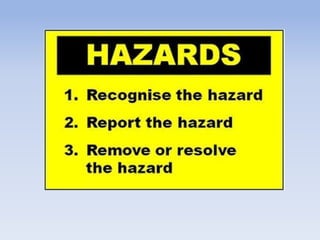
The three steps with dealing with a hazard
are:
Recognise the hazard
Report the hazard
Remove or resolve the hazard.
Hazards and Risks
Hazard
Anything that may cause an accident, injury or
illness. Hazards include things like a missing
belt guard, PTO shafts, grain dust, stock, high
noise levels and quad bike rollovers.
Risk
What can happen as a result of the accident,
injury or illness caused by the hazard
Hazard Identification
There are a number of hazards that can occur in moving, working
with or feeding livestock. These hazards need to be identified and
the risks involved minimised or preferably eliminated. Some of the
more common hazards include:
Manual handling - lifting feed, lifting stock, moving machinery
Animal handling - physically catching and treating animals
Dust inhalation - grain dust and yard dust
Noise - feed processing and mixing machinery.
Trips and slips - muddy, wet conditions.
Sun and heat - sunburn and heatstroke.
Machinery and moving parts.
Sharp edges - broken wires and rails etc.
Toxic substances.
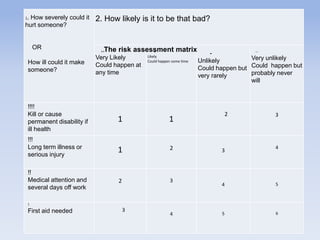
Hazards should be identified and the risk assessed so that the
higher risk activities can be dealt with before
WorkCover provides a Risk management
Assessment Matrix to assist in the assessment of
hazards in the workplace.
Hazards can be rated on a scale of 1 to 6 using
the risk assessment matrix.
1 is high risk
6 is low risk
Once a hazard has been identified and the risk
assessed, suitable control measures should be put
in place to eliminate the risk to employees’ health
and safety.
1. How severely could it
hurt someone?
OR
How ill could it make
someone?
2. How likely is it to be that bad?
++
Very Likely
Could happen at
any time
+
Likely
Could happen some time
-
Unlikely
Could happen but
very rarely
--
Very unlikely
Could happen but
probably never
will
!!!!
Kill or cause
permanent disability if
ill health
1 1
2 3
!!!
Long term illness or
serious injury
1 2 3
4
!!
Medical attention and
several days off work
2 3
4 5
!
First aid needed 3
4 5 6
The risk assessment matrix
Hierarchy of Control
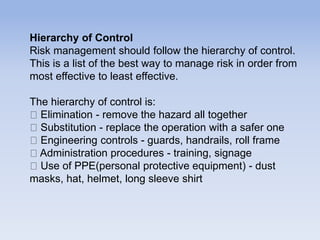
Risk management should follow the hierarchy of control.
This is a list of the best way to manage risk in order from
most effective to least effective.
The hierarchy of control is:
Elimination - remove the hazard all together
Substitution - replace the operation with a safer one
Engineering controls - guards, handrails, roll frame
Administration procedures - training, signage
Use of PPE(personal protective equipment) - dust
masks, hat, helmet, long sleeve shirt
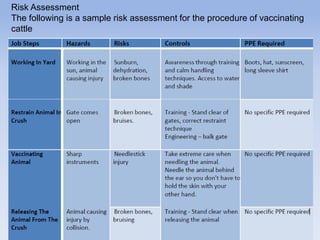
Risk Assessment
The following is a sample risk assessment for the procedure of vaccinating
cattle
Standard Operating Procedures - SOPs
Employers should provide a SOP (Standard
Operating Procedure). This is a document
outlining the correct operating procedures for
any given piece of equipment or operation.
These documents should be placed in a position
near the equipment or operation that they are
intended for, so that they can be easily read.
Responsibilities
Employers have a legal responsibility to ensure that the workplace
is a safe place to work.
Workers must cooperate with their employer by undertaking
training and following safe workplace policies and procedures.
If workers see a situation that could become dangerous to
themselves or others in the workplace, they must act to protect their
health and safety and report the matter to their employer or
workplace healthy and safety person.
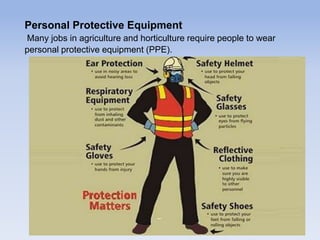
Personal Protective Equipment
Many jobs in agriculture and horticulture require people to wear
personal protective equipment (PPE).
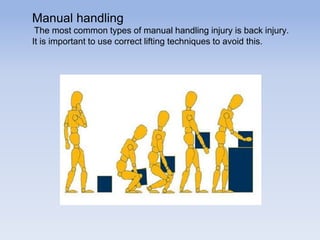
Manual handling
The most common types of manual handling injury is back injury.
It is important to use correct lifting techniques to avoid this.
Workplace emergencies
Each workplace should have written emergency
procedures. By knowing these and having practised them
regularly you will be much better placed to:
• protect yourself from harm or injury
• help others avoid injury
• aid someone who has been injured
• reduce the effects of an emergency situation.

Safety on the farm

  • 1.
  • 2.
    Workplace accidents injureand sometimes kill workers. They also cost industry millions of dollars a year. Most of these accidents need not happen if there is careful planning and awareness.
  • 3.
    Accidents are causedby hazards and people who do not know how to recognise, reduce or eliminate the risk. A hazard is anything which has the potential to cause injury or sickness.
  • 4.
    The identification andmanagement of workplace hazards is a joint responsibility between you and your employer where you must help each other to provide a safe workplace for everyone. The three steps with dealing with a hazard are: Recognise the hazard Report the hazard Remove or resolve the hazard.
  • 6.
    Hazards and Risks Hazard Anythingthat may cause an accident, injury or illness. Hazards include things like a missing belt guard, PTO shafts, grain dust, stock, high noise levels and quad bike rollovers. Risk What can happen as a result of the accident, injury or illness caused by the hazard
  • 7.
    Hazard Identification There area number of hazards that can occur in moving, working with or feeding livestock. These hazards need to be identified and the risks involved minimised or preferably eliminated. Some of the more common hazards include: Manual handling - lifting feed, lifting stock, moving machinery Animal handling - physically catching and treating animals Dust inhalation - grain dust and yard dust Noise - feed processing and mixing machinery. Trips and slips - muddy, wet conditions. Sun and heat - sunburn and heatstroke. Machinery and moving parts. Sharp edges - broken wires and rails etc. Toxic substances. Hazards should be identified and the risk assessed so that the higher risk activities can be dealt with before
  • 8.
    WorkCover provides aRisk management Assessment Matrix to assist in the assessment of hazards in the workplace. Hazards can be rated on a scale of 1 to 6 using the risk assessment matrix. 1 is high risk 6 is low risk Once a hazard has been identified and the risk assessed, suitable control measures should be put in place to eliminate the risk to employees’ health and safety.
  • 9.
    1. How severelycould it hurt someone? OR How ill could it make someone? 2. How likely is it to be that bad? ++ Very Likely Could happen at any time + Likely Could happen some time - Unlikely Could happen but very rarely -- Very unlikely Could happen but probably never will !!!! Kill or cause permanent disability if ill health 1 1 2 3 !!! Long term illness or serious injury 1 2 3 4 !! Medical attention and several days off work 2 3 4 5 ! First aid needed 3 4 5 6 The risk assessment matrix
  • 10.
    Hierarchy of Control Riskmanagement should follow the hierarchy of control. This is a list of the best way to manage risk in order from most effective to least effective. The hierarchy of control is: Elimination - remove the hazard all together Substitution - replace the operation with a safer one Engineering controls - guards, handrails, roll frame Administration procedures - training, signage Use of PPE(personal protective equipment) - dust masks, hat, helmet, long sleeve shirt
  • 11.
    Risk Assessment The followingis a sample risk assessment for the procedure of vaccinating cattle
  • 12.
    Standard Operating Procedures- SOPs Employers should provide a SOP (Standard Operating Procedure). This is a document outlining the correct operating procedures for any given piece of equipment or operation. These documents should be placed in a position near the equipment or operation that they are intended for, so that they can be easily read.
  • 13.
    Responsibilities Employers have alegal responsibility to ensure that the workplace is a safe place to work. Workers must cooperate with their employer by undertaking training and following safe workplace policies and procedures. If workers see a situation that could become dangerous to themselves or others in the workplace, they must act to protect their health and safety and report the matter to their employer or workplace healthy and safety person.
  • 14.
    Personal Protective Equipment Manyjobs in agriculture and horticulture require people to wear personal protective equipment (PPE).
  • 15.
    Manual handling The mostcommon types of manual handling injury is back injury. It is important to use correct lifting techniques to avoid this.
  • 16.
    Workplace emergencies Each workplaceshould have written emergency procedures. By knowing these and having practised them regularly you will be much better placed to: • protect yourself from harm or injury • help others avoid injury • aid someone who has been injured • reduce the effects of an emergency situation.